Tax Reform: Oyedele Admits Errors, Moves to Fix Gaps with Finance Law
Nigeria’s
Nigeria’s














Emmanuel Addeh in Abuja
The Nigerian National Petroleum Company Limited (NNPCL) recorded a modest revenue recovery in February 2026, posting a 4.2 percent increase to N2.68 trillion, up from N2.57 trillion in January.
Besides, data from the company’s February Monthly Report Summary released yesterday showed that crude oil production declined sharply due to renewed infrastructure constraints, falling to 1.51 million barrels per day in February from 1.64 million bpd in January. This indicated a 7.9 per cent month-on-month drop.
According to the data, profitability weakened significantly, with Profit After Tax (PAT) dropping to N136 billion in February from N385 billion in January, representing a steep 64.7 per cent decline.
This suggested that despite higher revenue, cost pressures and operational inefficiencies may have adversely impacted the margins of the national oil company.
Conversely, statutory payments to the federation rose sharply to N1.804 trillion in February, compared to N726 billion in January. This marked an increase of approximately 148.5 per cent, indicating a
significantly higher fiscal contribution despite the decline in profitability.
The improvement came after a steep 46.7 per cent revenue drop recorded in January, suggesting a partial stabilisation in earnings, but still below the N4.82 trillion peak seen in December 2025.
However, the NNPC attributed the February production shortfall to the outage of the Trans Forcados Pipeline (TFP) due to integrity issues, as well as start-up challenges at the Agbami Gas Turbine (GTC) 2 and 3 facilities following turnaround maintenance. Additional delays at the Sterling Ogualli flow station and ramp-
up constraints at Enyie wells, it said, further weighed on output. “February production performance was impacted by the combined effect of the outage of the Trans Forcados Pipeline (TFP) due to integrity issues; start-up challenges of Stardeep Agbami GTC 2 & 3 following completion of turnaround maintenance; delayed completion of the Sterling Oguali flow station; and production ramp-up constraints from Enyie wells due to sludge management issues, among other operational challenges,” it stated.
In contrast, gas production maintained its upward trajectory,
rising to 7,458 million standard cubic feet per day (mmscfd) in February from 7,283 mmscfd in January. This represented a 2.4 per cent increase, building on the 5.3 per cent growth recorded in January.
Gas sales also improved slightly, climbing to 4,893 mmscfd in February from 4,978 mmscfd in January, reflecting a marginal 1.7 per cent decline and suggesting some moderation in offtake despite higher production.
Overall, operational efficiency indicators showed mixed movements. Upstream pipeline availability declined to 93 per cent in February from 96 per cent
Former Vice President Atiku Abubakar has condemned the spate of violent attacks across the country, describing them as a threat to Nigeria’s peace, unity, and stability.
This is as he criticised President Bola Tinubu over recent comments comparing Nigeria’s fuel prices with those of other African countries, insisting that Nigerians are economically worse off despite paying less for petrol.
In a statement shared on his official X account
yesterday, Atiku denounced the “continued acts of terrorism and brigandage,” saying such violence against innocent citizens “must never be allowed to define who we are as a people.” He extended condolences to victims and affected communities and called on authorities to intensify efforts to address the security crisis.
“The foremost responsibility of any government is the protection of lives and property. It is therefore imperative that renewed urgency, coordination, and resolve be brought to bear in confronting this challenge and
restoring public confidence,” he said.
Atiku also acknowledged the United States government’s support in the fight against terrorism, stressing the need for sustained international cooperation.
The statement comes amid a fresh wave of deadly attacks across several parts of the country.
In Borno State, a coordinated assault on a military base in Benisheikh led to the killing of soldiers of the 29 Task Force Brigade under Operation HADIN KAI, including
Brigadier-General O.O. Braimah, with vehicles and buildings destroyed.
The North-east continues to face persistent insurgent threats from Boko Haram and its splinter groups, including the Islamic State West Africa Province, despite years of military operations.
In separate incidents over the Easter period, attacks on communities in Kaduna and Benue states left several people dead, and others abducted.
In Kaduna State, gunmen attacked churches in Ariko village, Kachia Local
in January, due to the impact of the TFP outage.
Similarly, the completion level of the much-talked-about Ajaokuta-Kaduna-Kano (AKK) pipeline edged up slightly to 93 per cent from 92 per cent in January, while the ObiafuObrikom-Oben (OB3) pipeline remained at 96 per cent. Also, retail performance improved modestly, with petrol availability at NNPC retail stations rising to 58 per cent in February from 54 per cent in January, suggesting a slight easing in downstream supply constraints.
online
Government Area, killing five worshippers and abducting 31 persons, while in Benue State, suspected armed herders killed 10 residents in Gwer East Local Government Area.
Other parts of the country also recorded violence, including renewed bandit attacks in Katsina State, where a policeman was killed, and an attack on the Awapul community in the Chibok Local Government Area of Borno State, where houses and shops were burnt.
At least 49 villagers were reportedly killed in coordinated attacks in Kebbi and Kwara
toward reopening the critical global oil route, even as fragile ceasefire talks with Iran intensify in Pakistan.
The US Central Command (CENTCOM) confirmed that two guided-missile destroyers, USS Frank E. Petersen and USS Michael Murphy, have transited the strategic waterway as part of efforts to remove mines allegedly laid by Iran’s Islamic Revolutionary Guards Corps (IRGC) and restore safe maritime passage.
The mine-clearing operation comes amid a heightened global concern over disruptions to energy supplies, as the strait, a vital artery for international oil shipments, has remained largely restricted since the outbreak of hostilities.
Despite the ceasefire reached earlier in the week, maritime traffic through the strait has remained severely limited, with reports indicating that only about 30 ships have successfully passed through the corridor.
CENTCOM Commander, Admiral Brad Cooper, said the mission is aimed at reopening the channel for global commerce.
“Today, we began the process of establishing a new passage, and we will share this safe pathway with the maritime industry soon to encourage the free flow of commerce,” he said.
US President, Mr. Donald Trump, also confirmed the development, stating that Washington had commenced clearing the waterway “as a
favour to countries all over the world,” even as conflicting claims persist over the extent of military gains.
The mine-clearing effort is unfolding alongside rare, highlevel diplomatic engagement between Washington and Tehran, with both sides meeting in Islamabad under a fragile ceasefire brokered by Pakistan.
While the US delegation to the meeting was led by Vice President JD Vance, Iran was represented by a high-level delegation led by Parliament Speaker, Mohammad Bagher Ghalibaf and Foreign Minister, Abbas Araghchi.
Sources indicated that it was the first the two nations held direct talks; an uncommon move for the two nations,
which have historically relied on intermediaries.
The talks, the first direct engagement of their kind in decades, have now progressed to an expert-level phase, involving technical discussions on key issues such as maritime security, nuclear activities, sanctions, and broader regional stability.
However, despite the diplomatic push, tensions remain elevated across the region.
Iranian authorities confirmed that the negotiations have now progressed to an “expert-level stage,” involving specialised committees focusing on economic, military, legal, and nuclear matters, as both sides work to finalise technical details.
As negotiations between both countries continue into the
midnight, President Trump told reporters today that it makes no difference to him if a deal is reached with Iran, as the US and Iran engaged in negotiations in Pakistan.
“Regardless of what happens, we win. We’ve defeated them militarily,” Trump said as he departed the White House.
He later added, “Whether we make a deal or not makes no difference to me.”
Asked about US intelligence that suggests China potentially aiding Iran, he indicated that Beijing will face consequences.
“If China does that, China will have big problems, OK?”
Vice President Vance is in Pakistan negotiating with Iranian officials, which the president acknowledged has been going
processes and multiple stages of review.
He said steps are underway to correct identified issues through a proposed finance bill and to realign the laws with their original intent.
The admission, coming months after the rollout of the sweeping reforms, signals a government effort to contain potential distortions that could undermine investor confidence quickly.
According to him, the reform agenda is anchored
on transparency, fairness, and clarity of purpose, rather than arbitrary enforcement.
He stressed that beyond the technical wording of statutes, the underlying policy intent must guide interpretation and implementation, warning that inconsistency in fiscal policy could send negative signals to both local and foreign investors.
According to a Nairametrics report, Oyedele pointed to distortions in the previous tax regime, noting that individuals could face an effective tax rate
of about 19 per cent, while incorporating the same business pushed the burden beyond 40 per cent, a structure he described as misaligned with global best practice.
He also cautioned against frequent policy reversals, arguing that stability remains a critical factor in sustaining investment flows.
With nearly half of Nigeria’s workforce earning below N70,000 monthly, he maintained that aggressive taxation of low-income earners would be inequitable and
counterproductive.
The need for a corrective bill stems from earlier concerns raised in the National Assembly.
In December 2025, a lawmaker, Abdulsammad Dasuki, flagged discrepancies between the gazetted versions of the tax laws and those passed by the legislature, pointing to material differences from what was debated and approved.
The contested provisions form part of a broader reform package signed into law by Bola Ahmed Tinubu, with implementation
commencing in January 2026.
Despite the emerging issues, the government insists that the reforms mark a significant shift towards a more balanced, growth-oriented tax system.
Key provisions include removing minimum tax requirements for loss-making businesses, a move aimed at preventing the taxation of capital rather than profit.
Essential goods and services such as food, education, and healthcare have also been exempted from Value Added
states, with Kebbi alone recording 44 deaths across multiple communities in Shanga Local Government Area.
The recent incidents have heightened concerns over worsening insecurity, particularly in rural areas frequently targeted by armed groups.
Atiku, however, expressed optimism that the country would overcome its challenges, saying, “Nigeria will endure, and with collective resolve, we shall prevail.”
on “for many hours.”
“We’ve totally defeated that country, so let’s see what happens,” Trump said. “Maybe they make a deal, maybe they don’t; it doesn’t matter. From the standpoint of America, we win.”
Meanwhile, Israeli Prime Minister Benjamin Netanyahu has warned that the military campaign against Iran is still ongoing, casting doubt on the durability of the ceasefire.
“The campaign is not yet over, but it can already be said clearly, we have achieved historic results,” Netanyahu said in a 13-minute televised address yesterday. He further claimed that Iran
Continued on page 9 Continued on page 9
Tax. At the same time, multiple tax laws have been consolidated into four principal laws, including the Nigeria Tax Act and the Nigeria Tax Administration Act.
The framework further seeks to shield low-income earners and small businesses, recognising their limited capacity to absorb additional tax burdens.
Analysts say this approach could broaden compliance over time by easing pressure on the most vulnerable segments of the economy.
The Nigerian capital market ended the first quarter of 2026 on a strong footing, with fresh listings on the Nigerian Exchange Limited surging to N1.2 trillion in the period, driven largely by federal and subnational bond issuances and aggressive capital raising by corporates seeking to reposition for growth and regulatory compliance.
Data obtained by THISDAY from the Exchange showed that federal government bonds, including Sukuk instruments, accounted for N317 billion of the total, while Lagos State Government bonds contributed N244.8 billion, underscoring sustained public sector reliance on the market to finance infrastructure and budgetary obligations.
The real momentum, however, came from the
corporate segment, where companies raised N642.7 billion, reflecting heightened activity by banks and manufacturing firms scrambling to meet the new minimum capital thresholds set by the Central Bank of Nigeria that ended in the review period as well as to fund expansion plans.
Among the standout issuances was the N300 billion FGN Roads Sukuk, alongside Presco’s N236.67 billion rights
issue, both of which reinforced investor appetite for large-ticket offerings.
The Lagos State Government also returned to the market with a N230 billion 10-year bond and a N14.8 billion green bond, reflecting a growing tilt towards sustainable financing.
Banking sector recapitalisation remained a dominant theme in the quarter, with United Bank for Africa Plc, First HoldCo Plc and Guaranty Trust Holding
Borno State Governor, Professor Babagana Zulum, has revealed that security forces had prior intelligence about the recent terrorist attack on the 15 Task Force Brigade in Benisheikh, Kaga Local Government Area, three days before it occurred.
The governor made the disclosure yesterday during a sympathy visit to the town, following the deadly assault that claimed the life of the Brigade Commander, Brigadier General O.O. Braimoh, along with several soldiers and civilians.
The attack, which took place in the early hours of Friday, targeted both the military formation and parts of the town, underscoring the persistent threat posed by insurgents in the North-east despite sustained counterinsurgency operations by Nigerian troops.
Describing the incident as shocking and deeply troubling, Zulum condemned the assault and called for an urgent review of military strategies to forestall similar occurrences.
“This is one of the most
surprising attacks that I have witnessed in recent times,” the governor said. “Credible intelligence about the impending attack had been available for approximately three days, and there is a need to reassess our security architecture to address emerging threats more effectively.”
the military formation, prompting concerns about the circumstances that allowed the attackers to strike despite prior warnings.
During his visit, Zulum questioned local authorities about their awareness of the intelligence. The chairman of the local government confirmed that such reports had indeed been received, a development that prompted the governor to lament the lapse that enabled the attack to proceed.
Benisheikh, located along the strategic Maiduguri–Damaturu highway, serves as the headquarters of Kaga Local Government Area and has long been a critical military and logistical hub in the fight against Boko Haram.
The town has witnessed
several insurgent attacks since the early years of the conflict, including a devastating assault in 2013 that resulted in heavy casualties and widespread destruction.
Although improved security measures and sustained military operations have restored relative calm in recent years, sporadic attacks continue to highlight the resilience of insurgent groups operating in the Lake Chad Basin.
Zulum emphasised the need for enhanced intelligence coordination, vigilance, and proactive measures to safeguard both military installations and civilian populations.
He assured troops of the Borno State Government’s continued support in their efforts to protect lives and property, reiterating his administration’s commitment to strengthening local security structures.
Company Plc collectively accounting for N251.6 billion in new listings.
GTCO alone raised N10 billion through a private placement, while UBA and First HoldCo recorded N157.8 billion and N83.7 billion, respectively, through rights issues and placements.
Outside the banking space, Dangote Cement Plc tapped the market with N119.9 billion in commercial paper issuances under its N500 billion programme, signalling deepening utilisation of shortterm instruments following the introduction of the CP framework by the Exchange.
Other notable listings included LFZC Funding SPV Plc’s N16.1 billion infrastructure bond, alongside smaller issuances by Zichis Agro-Allied Industries Plc, Morison Industries Plc, NGN Gram Limited, and Chapel Hill Denham Management Limited, reflecting broad-based participation across sectors.
Commenting on the performance, Group Managing Director of NGX Group, Temi Popoola, said the Exchange was evolving beyond a
traditional trading platform into a technology-driven capital mobilisation hub capable of supporting both public and private sector financing needs.
The Q1 performance builds on a strong 2025 outing, when listed banks raised about N2.25 trillion in response to the CBN’s recapitalisation directive.
Analysts say the surge in bond subscriptions reflects investor confidence in government securities, buoyed by attractive yields and improving macroeconomic stability.
They also point to increased liquidity, stronger domestic participation, and a gradual return of foreign portfolio investors as key drivers of market resilience. With the primary market posting a 29.35 per cent gain in the quarter and investor returns estimated at N29.83 trillion, market operators believe the Exchange is well-positioned to support the federal government’s ambitious $1 trillion economic target, provided policy consistency and investor confidence are sustained.
The President of the Nigerian Bar Association (NBA), Mr. Afam Osigwe (SAN), has urged courts to avoid complex phrases in their rulings and instead issue clear, unambiguous orders to prevent confusion and misinterpretation.
Osigwe made the call during a television interview at the weekend, where he expressed concern over the growing ambiguity in judicial
pronouncements, particularly in politically sensitive cases.
“I think, considering the confusion that is arising in our body polity in recent times, our courts should not make orders using such Latin maxims like status quo ante bellum or pendente lite.
“The court should make clear orders as to what it means so that there is no ambiguity. It (status quo ante bellum) creates confusion. We have rendered it almost meaningless.
“It has been stripped of any clear meaning, so our courts should avoid using such phrases and instead specify what orders they are making so that nobody will be left in doubt, and no administrative body will have to interpret it and try to give its own decision on it,” he stated.
Status quo ante bellum is a Latin phrase that means the situation as it existed before the war.
The NBA president further stated that vague court
orders often led to multiple interpretations, with different parties claiming victory.
“I see situations where people go away rejoicing that the order was in their favour, thereby giving room for mischief or for anybody to interpret it the way they want.
“Where a court has chosen to make an order, it should state clearly what it has set out to do and not hide behind any Latin maxims,” Osigwe added.
The African Democratic Congress (ADC) and former Vice President, Atiku Abubakar, have called for the immediate resignation of the Chairman of the Independent National Electoral Commission (INEC), Professor Joash Amupitan, citing concerns over his perceived
impartiality and the integrity of the electoral process.
The demand comes amid growing controversy surrounding claims that past comments attributed to Amupitan suggest political alignment with the ruling All Progressives Congress (APC), raising concerns among opposition figures about the neutrality of the electoral body
ahead of future elections.
In a strongly worded statement titled "Why Amupitan Must Resign Now’, the party’s spokesperson, Bolaji Abdullahi, described recent revelations linking the INEC Chairman to a pro-Bola Ahmed Tinubu tweet from 2023 as “a grave affront to the integrity of our electoral system.”
Also in a post shared on X yesterday by his media aide, Paul Ibe, Atiku accused the electoral umpire of harbouring sympathies for the APC, citing what he described as resurfaced social media posts allegedly linked to the INEC chairman.
On Friday, Amupitan, through his spokesperson, Adedayo Oketola, issued a
Michael Olugbode in Abuja
The federal government has ordered the Nigeria Immigration Service (NIS) to immediately withdraw or deactivate Passports of persons who have renounced Nigerian citizenship.
The Minister of Interior, Mr. Olubunmi Tunji-Ojo, gave the directive on behalf of the federal government.
He said some people have renounced their citizenship but still carry their documents.
“This directive applies to Nigerians whose requests for renunciation have formally been approved by the president,” the
minister said.
Tunji-Ojo maintained in a statement signed by his Media Adviser, Alao Babatunde, that the Ministry of Interior, saddled with the responsibility of citizenship integrity, derived the power from the provisions of subsections (1) and (2) of Section 29 of the 1999 Constitution (as amended).
He quoted the constitution as follows: “(1) Any citizen of Nigeria of full age who wishes to renounce his Nigerian citizenship shall make a declaration in the prescribed manner for the renunciation.
(2) The president shall cause the declaration made under
subsection (1) of this section to be registered. Upon such registration, the person who made the declaration shall cease to be a citizen of Nigeria”.
Tunji-Ojo added that once a person ceases to be a citizen of Nigeria, he can no longer carry any sovereign document of Nigeria, including the Nation’s passport.
The minister noted that this move is consistent with the passport and visa reforms undertaken by the Ministry in recent years.
He noted that the move aligns with ongoing passport and visa reforms introduced
by the Ministry of Interior, aimed at strengthening national security and improving identity management systems.
“We will continue to strengthen systems that secure Nigeria’s borders, prevent identity fraud, preserve the sanctity of Nigerian citizenship, and facilitate legitimate travel while preventing unauthorized or ineligible access,” the minister said.
The directive is expected to enhance the credibility of Nigeria’s travel documents and ensure that only eligible citizens enjoy the rights and privileges attached to Nigerian nationality.
The federal government has secured a $200 million loan from the African Development Bank (AfDB) Group to support the rollout of a 90,000-kilometre open-access fibre optic network across the country, in a renewed push to deepen broadband penetration and accelerate Nigeria’s digital economy.
The development, disclosed by the bank in a statement at the weekend and quoted by Nairametrics, is part of a broader $800 million sovereign financing package for the Digital Value Chain Infrastructure for Boosting Employment (D-VIBE) Project, also known as Project BRIDGE.
The initiative is designed to expand Nigeria’s existing fibre backbone from about 30,000 kilometres to 120,000 kilometres, with a target to connect all 774 local government areas to highspeed internet infrastructure.
Further checks showed that the AfDB facility complements $500 million funding from
the World Bank and $100 million from the European Bank for Reconstruction and Development, bringing total sovereign-backed financing for the project to $800 million. Overall project cost is estimated at $2 billion, with additional support expected from development grants and private sector investments.
rebuttal on claims that the INEC chairman was President Tinubu’s supporter, affirming he’s a neutral appointee, a requirement mandated by the constitution to protect the sanctity of the nation’s election space.
Oketola, in the statement, claimed that Amupitan “does not own or operate any personal account on X. He has at no time engaged in partisan commentary, nor has he ever associated himself with any political leaning or activity in his private or public capacity.”
However, the ADC said it would renew and escalate its civil disobedience action until the INEC chair leaves office.
It maintained that the INEC chairman must resign, saying that an electoral umpire must not only be independent but must also be seen to be independent beyond a reasonable doubt.
The party further expressed concern over reports of attempts to alter or erase digital records related to the matter, describing such actions as “a calculated assault on truth and accountability.”
“A man who manipulates records to save himself cannot be trusted to safeguard the mandate of millions,” the statement read.
Abdullahi argued that Professor Amupitan’s conduct, utterances, and the emerging digital evidence have fallen short of the standard expected of someone entrusted with conducting free and fair elections.
The party likened the situation to “a referee running around in the shirt of one of the teams he is supposed to officiate.”
It therefore demanded that Professor Amupitan resign immediately, warning that failure to do so would amount to “an insult to the Nigerian people
and a dangerous precedent for our democracy.”
He added that it will update its petitions to relevant institutions, including foreign governments and the Nigerian Bar Association (NBA), and will escalate its civil disobedience actions until the INEC Chairman steps down.
“The recent revelation linking a pro-Bola Ahmed Tinubu tweet of 2023 to the Chairman of the Independent National Electoral Commission, Professor Amupitan, is not merely disturbing; it is a grave affront to the integrity of our electoral system.
“In a democracy, the umpire must be above suspicion. He must not only be independent, but also he must be seen, beyond any reasonable doubt, to be independent. That is the minimum standard required of anyone entrusted with the sacred duty of conducting free and fair elections.
“However, more troubling is the desperate attempt to tamper with digital records, to erase evidence of his previous partisanship.
“This is not a trivial matter. It is a calculated assault on truth and accountability.
“A man who manipulates records to save himself cannot be trusted to safeguard the mandate of millions.
“Over the past few days, it has been repeatedly revealed that Professor Amupitan, by his conduct, his utterances, and now by incontrovertible digital evidence, has fallen far below the standard expected of an electoral umpire. The referee cannot be running around in the shirt of one of the teams he’s supposed to officiate in a match. This is why Professor Amupitan must resign.
It’s a contemptuous action, Turaki faction fumes
The faction of the People’s Democratic Party (PDP) loyal to the Minister of the Federal Capital Territory (FCT), Nyesom Wike, has assumed control of the Party’s National Secretariat in Abuja following its reopening by the Nigeria Police Force. Confirming the development in a statement yesterday, the National Working Committee
(NWC), led by Abdulrahman Mohammed, through its National Publicity Secretary, Jungudo Mohammed, cautioned that it would not tolerate any actions that could cause obstruction, disruption, or breach of peace at the secretariat in the future.
But in a swift reaction, the faction led by Tanimu Turaki (SAN) described the unsealing of the party secretariat by the police as contemptuous.
The PDP has been engulfed in a prolonged internal crisis, which escalated into a breakdown of order at its National Headquarters, Wadata Plaza, Abuja, on November 18, when a faction of the NWC led by Tanimu Turaki (SAN) and backed by Oyo State Governor Seyi Makinde and Bauchi State Governor Bala Mohammed, clashed with the Wike-aligned Mohammed-led faction of the Party.
Following months of legal battles, the Court of Appeal on March 9 settled the dispute in favour of Wike’s camp, nullifying the November 16 Ibadan convention endorsed by the governors.
In its reaction, the Mohammedled PDP praised the Nigeria Police Force for its professionalism and commitment to the rule of law, noting that the move reflects strong respect for constitutional
Vice President Kashim Shettima has visited Maiduguri, the Borno State capital, to commiserate with the Nigerian Army and the state government over the recent attack on military personnel in Benisheikh, which left several officers and soldiers dead, including Brigadier General Oseni Braimah.
The visit, made on behalf of President Bola Tinubu, was disclosed in a statement yesterday by the Senior Special Assistant to the President on
Media and Communications (Office of the Vice President), Stanley Nkwocha. Shettima said the fallen soldiers died in service to the nation, describing their sacrifice as one that underscored the cost of peace and security.
“These men wore the uniform for all of us. They stood to protect our communities, our families, and the future of our children. Their courage reminds us that peace and security often come at a very high cost,” he said.
He guaranteed continued federal government support, saying, “criminals will have no hiding place under President Bola Ahmed Tinubu.”
The condolence visit comes after a deadly midnight assault on a military base in Benisheikh, Borno State, where suspected Boko Haram and Islamic State West Africa Province fighters reportedly launched coordinated attacks on multiple military positions around 12:30 am on Thursday.
The attackers were said to have advanced in large numbers, targeting at least three military formations before pushing into nearby civilian areas, in what surviving soldiers described as one of the most intense assaults in recent months.
A soldier who survived the attack said the scale and coordination were unprecedented, noting that the attackers appeared to have studied military positions in advance.
Adedayo Akinwale in Abuja
The House of Representatives has reaffirmed the commitment of the National Assembly to support the Nigerian Armed Forces in the ongoing fight against terrorism and banditry across the country.
Speaking with journalists in Abuja on Saturday, the Deputy Spokesperson of the House, Hon. Philip Agbese, said the 10th National Assembly would continue to provide the legislative backing, funding, and oversight required to
strengthen the capacity of the military and other security agencies.
His remarks come in the wake of a recent deadly attack by terrorists on Nigerian Army troops in Benisheikh, a strategic town along the Maiduguri-Damaturu highway in Borno State.
The assault, reportedly carried out by insurgents linked to extremist groups operating in the North-East, led to the death of Brigadier General Oseni Braimah and several soldiers.
The attack underscored
the persistent threat posed by insurgents in the region, despite years of military operations aimed at degrading their capabilities.
Agbese said the legislature was not oblivious to the evolving nature of security threats confronting the country, noting that Nigeria continues to grapple with insurgency in the North-east, banditry in the North-West, kidnapping, and other forms of violent crime.
“The National Assembly will stand firmly with our armed forces and all security agencies to defeat terrorists and bandits
threatening the peace and unity of our country,” he said.
He praised the courage and sacrifice of troops on the frontlines, describing them as patriots who daily risk their lives to defend the nation’s territorial integrity.
The lawmaker said the House of Representatives would continue to prioritize defense and security in its legislative agenda, with an emphasis on adequate budgetary provisions, improved welfare for personnel, and enhanced intelligencegathering systems.
order and due process.
The statement read in part, “The National Working Committee of the Peoples’ Democratic Party hereby informs all members and the general public that the Party’s National Secretariat, Wadata Plaza, as well as The Legacy House, Maitama, have been unsealed by the Nigeria Police Force and handed over to the National Chairman, Hon. Abdulrahman Mohammed Takushara, and Senator Samuel Anyawu, National Secretary, in full compliance with duly issued court orders.
“The party commends the Nigeria Police Force for its professionalism and adherence to the rule of law. This action clearly demonstrates respect for constitutional order and due process.
“The party strongly warns that it will not condone any act capable of causing obstruction, disruption, or breach of peace at the secretariat again. All individuals and groups are advised to conduct themselves within the bounds of the law, as security agencies have been duly alerted to take necessary action against violators.
1,100 Abducted in Three Months as Amnesty International Warns Against Deepening Crisis in Northern Nigeria
Wale Igbintade
Amnesty International has said that Nigeria is grappling with a deepening abduction crisis, with at least 1,100 people kidnapped across northern states between January and April 2026, urging President Bola Tinubu to take urgent and decisive action to curb the escalating insecurity.
In a statement issued yesterday, the organisation said the wave of kidnappings, targeting rural communities and internally displaced persons (IDPs), has reached alarming levels, with victims frequently subjected to torture, starvation, rape, and other forms of inhumane treatment while in captivity.
The group noted that the abductions, largely driven by armed groups seeking ransom payments, have become increasingly widespread and brutal, with many victims held for months under harsh conditions.
According to it, Nigeria’s Director, Isa Sanusi, the group of gunmen across the country is
intensifying attacks on vulnerable communities, combining mass killings with large-scale abductions for financial gain. He added that available figures likely under-represent the true scale of the crisis.
The report detailed several major incidents across affected states.
On February 3, armed attackers invaded Woro village in Kaiama Local Government Area of Kwara State, killing about 200 people and abducting 176 others.
In Zamfara State, 150 people, mostly women and children, were abducted in early April during attacks on Kurfa Danya and Kurfan Magaji villages in Bukkuyum Local Government Area.
In Borno State, suspected Boko Haram fighters abducted more than 100 displaced persons working in the Kumbul forest near Mafa on March 19. Earlier, on March 3, the group attacked Ngoshe town in Gwoza Local Government Area, abducting over 400 people and laying siege to the community.
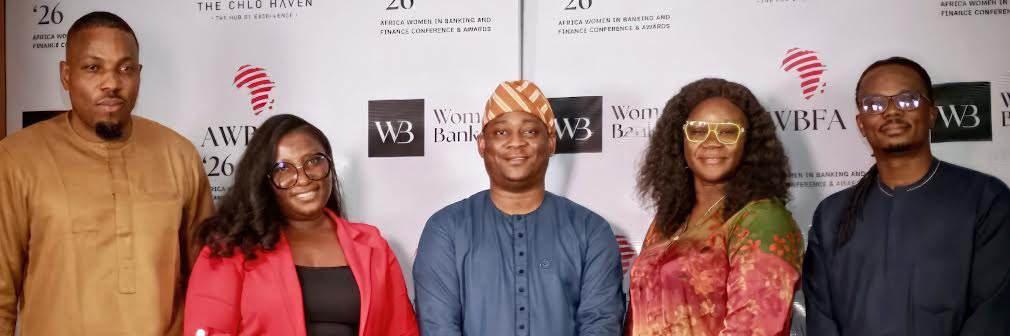
L-R: Chief Operating Officer, Chlo Haven Group, Mr. Cando Erege; Chief Executive Officer, Schola Andem; Managing Partner, Prince Dotun Akinwunmi; Head of Corporate Communications, Busola Dele-Davids; and Managing Partner, Henry Akpede, when Chlo Haven Group hosted the exclusive African Women in Business and Finance Awards (AWBFA) 2026 Press Briefing and official Local Strategy, Planning, and Execution Partners for AWBFA 2026 in Lagos…recently
Linus Aleke in Abuja
Security experts have urged the federal government to go beyond merely naming alleged terrorism financiers and ensure their swift investigation and prosecution to strengthen the fight against insecurity.
The call followed the government’s release of a list of 48 individuals and 12 corporate entities linked to terrorism financing, a move the security experts stressed must be matched with concrete legal actions.
The federal government yesterday released a list of 48 individuals and 12 corporate entities allegedly linked to terrorism financing in Nigeria
The list was published
on the Nigeria Sanctions Committee (NIGSAC) website as part of ongoing efforts to curb terrorism-related activities.
The disclosure highlighted intensified measures by authorities to identify and track persons and organisations suspected of supporting terrorist operations.
The publication included individuals and groups reportedly connected to various extremist organisations operating within and outside Nigeria.
The list disclosed the nationalities of those named, their specific roles, gender, or the terrorist groups they were allegedly connected to.
NIGSAC operates under
the authority of the Office of the National Security Adviser (ONSA), which coordinates its activities within the national security framework.
Its core mandates include the implementation of United Nations sanctionsparticularly those targeting terrorism financing - ensuring compliance with international obligations, and facilitating coordination among agencies such as financial intelligence, defense, and foreign affairs. Those named in the latest release included Abdulsamat Ohida, Mohammed Sani, Abdurrahman Abdurrahman, Fatima Ishaq, Tukur Mamu, Yusuf Ghazali, Muhammad Sani, Abubakar Muhammad, Sallamudeen Hassan,
Adamu Ishak, Hassana Isah, Abdulkarim Musa, Umar Abdullahi, Abdurrahman Ado, Bashir Yusuf, Ibrahim Alhassan, Muhammad Isah, Salihu Adamu, and Surajo Mohammad.
Others are: Fannami Bukar, Muhammed Musa, Sahabi Ismail, Mohammed Buba, Jama’atu Wal-Jihad, Ansarul Sudan (ANSARU), Islamic State West Africa Province (ISWAP), Indigenous People of Biafra (IPOB), Yan Group, Yan Group NLBDG, Adamu Hassan, Hassan Mohammed, Usman Abubakar, Kubara Salawu, Rabiu Suleiman, Simon Njoku, Godstime Iyare, Francis Mmadubuchi, John Onwumere, Chikwuka Eze, Edwin Chukwuedo,
Chiwendu Owoh, Ginika Orji, Awo Uchechukwu, Mercy Ali, Ohagwu Juliana, Eze Okpoto, Nwaobi Chimezie, and Ogumu Kewe.
The entities listed include: West and East Africa General Trading Company Limited, Settings Bureau De Change Limited, G. Side General Enterprises, Desert Exchange Ventures Limited, Eagle Square General Trading Company Limited, Alfa Exchange BDC, Alin Yar Yaya General Enterprises, K. Are Nigeria Limited, Suhailah Bashir General Enterprises, Igwe Ka Ala Enterprises, Seficuvi Global Company, and Lakurawa Sect.
Reacting to the development,
was “begging for a ceasefire” and described the country as weakened, while insisting that its nuclear capabilities would be dismantled either through agreement or “by other means.”
In a related development, Qatar’s Ministry of Transport said maritime navigation will fully resume for all types of vessels and ships in the Persian Gulf starting from
today, Sunday, April 12, 2026.
In a statement yesterday, the ministry said sailing will be permitted from 6 a.m. to 6 p.m. for all vessel types. It added that, in line with a previous announcement, vessels licensed for fishing are allowed to sail throughout the day.
The ministry urged operators to comply with the directive and to ensure all required safety and security equipment
is available and functioning before and during voyages, to maintain the highest levels of safety for all trips.
There has been no official statement from Iran, which controls the Strait of Hormuz, on whether there is any coordination with Qatar. The announcement comes as the United States and Iran hold talks in Pakistan aimed at ending the war in the Middle East.
Also, reacting to the meeting between Iran and the US, French President Emmanuel Macron said he has urged his Iranian counterpart to “seize the opportunity to pave the way for a lasting de-escalation.”
Macron, in a post on X yesterday, said he spoke to Masoud Pezeshkian and pushed for an agreement providing regional security
guarantees, with all countries involved. He says that he pressed the need for Iran to reopen the Strait of Hormuz, and also stressed the importance of a ceasefire, including in Lebanon.
The crisis has continued to reverberate beyond the Gulf, particularly in Lebanon, where ongoing hostilities involving Israel and Hezbollah have pushed the death toll past
Meanwhile, Atiku has criticised President Tinubu over recent comments comparing Nigeria’s fuel prices with those of other African countries, insisting that Nigerians are economically worse off despite paying less for petrol.
The chieftain of the African Democratic Congress (ADC) made his position known in a statement issued in Abuja by his Senior Special Assistant on Public Communication, Phrank Shaibu.
The response followed Tinubu’s remarks during a visit
to Bayelsa State on Friday, where the President urged Nigerians to be grateful that petrol prices in the country remain lower than in countries like Kenya, even as he acknowledged the hardship caused by rising costs and promised relief measures for vulnerable citizens.
Reacting, Atiku said the comparison was misplaced and failed to reflect the economic realities faced by Nigerians.
He said, “It is both curious and troubling that the President would isolate fuel prices as a metric of economic comfort
while ignoring the far more critical indicators of purchasing power, income levels, and cost of living.
“This selective reasoning betrays either a fundamental misunderstanding of economic realities or a deliberate attempt to deflect from policy failures.
“Yes, petrol prices in Nigeria may appear lower than in countries like Kenya or South Africa. But this comparison collapses instantly when placed against the backdrop of economic realities. Nigeria today is more expensive to live
in than Kenya, with the average cost of living significantly higher, despite lower fuel prices.”
Atiku further pointed to declining earning power among Nigerians, contrasting it with income levels in Kenya.
“More alarming is the collapse in earning power.
Kenya’s GDP per capita is nearly double that of Nigeria, and a minimum wage earner in Nairobi takes home the equivalent of about N170,000, more than twice Nigeria’s N70,000.
“In effect, while a Kenyan
earns more and pays more, a Nigerian earns far less and is forced to survive under crushing economic pressure. This is the reality the President chose to ignore.”
The former Vice President also criticised Nigeria’s wage structure, saying it fails to reflect regional economic disparities.
He stressed that affordability goes beyond pricing, warning that current economic conditions have worsened living standards.
“The implication is clear: affordability is not defined by price alone, but by the
former Commissioner of Police, Federal Capital Territory (FCT), Lawrence Alobi, emphasised that the principle of the public’s right to know remains fundamental, noting that Nigerians deserve to be kept informed about developments in their country and the steps being taken by the government to address insecurity.
He stressed that the matter was also one of public trust, adding that it goes beyond merely releasing names, saying the government, having identified individuals believed to have committed serious crimes, must demonstrate a firm commitment to justice for both the nation and victims of terrorism.
2,000, underscoring the broader regional stakes tied to the outcome of the US-Iran negotiations.
Analysts say the success of the mine-clearing operation and the outcome of the Pakistan talks will be critical in determining whether global shipping and energy markets can return to normal, or whether the region risks sliding back into deeper conflict.
relationship between income and expenditure. On this measure, Nigerians have never had it worse.”
“It is, therefore, deeply disappointing that at a time when citizens expect empathy, clarity, and decisive leadership, the President has chosen the path of statistical convenience.
“A government that relies on selective comparisons while its citizens grapple with rising poverty, inflation, and declining living standards risks appearing not only out of touch, but indifferent,” he stated.

Japan has reached out to Nigeria and several other oil-producing nations as it scrambles to cushion the impact of tightening supply, following disruptions in crude oil movement from Middle East countries.
To this end, Prime Minister, Sanae Takaichi, told a cabinet meeting that Japan will release the equivalent of 20 days’ worth of oil from May, in a bid to stabilise domestic supply as tensions in the Gulf continue to disrupt global energy flows.
Although the US and Iran have agreed to a temporary ceasefire in the conflict that erupted in late February, Tehran has yet to ease its near-total blockade of the Strait of Hormuz,
a chokepoint critical to global oil shipments, triggering one of the most severe supply disruptions on record.
For Nigeria, the development presents both an opportunity and a test of its capacity to respond to shifting global demand.
With production hovering around 1.5 million barrels per day in February, Nigeria has struggled to fully capitalize on supply gaps amid longstanding issues, including underinvestment. However, renewed demand from countries such as Japan could support higher utilization of existing capacity and incentivize upstream recovery.
The state-owned Nigerian National Petroleum Company Limited (NNPC Ltd) has
Zulum Donates N50m to Family of Lt. Col Killed by Terrorists
Borno State Governor, Professor Babagana Umara Zulum, has donated N50 million to the family of the late Lt. Col. OC Okolo, who lost his life during a Boko Haram attack at Mandaragirau in Biu Local Government Area of Borno State on February 16, 2026.
He recently made a similar intervention, donating N150 million to the families of three military officers who died in separate attacks across the state.
Governor Zulum reaffirmed his administration’s unwavering commitment to supporting families of officers and men who paid the ultimate price in defence of the nation. He also assured that he would continue to visit the families of other personnel killed or declared missing in action in the ongoing military operations.
The governor, represented by his Special Adviser on Security, Brigadier General Abdullahi Sabi Ishaq (rtd), donated the funeral service in Obinofia Ndiuno, Ezeagu Local Government Area, Enugu State, on April 10, 2026.
The cash donation was presented on behalf of the Borno State Government as part of Governor Zulum’s sustained support to families of fallen
heroes and those wounded in action in the ongoing counterinsurgency efforts.
Governor Zulum, on behalf of the government and people of Borno State, extended his heartfelt condolences to the bereaved family.
“My heartfelt condolences to the immediate family, friends, and colleagues of Lt. Col Okolo on his painful demise,” Zulum said. “Lt Col OC Okolo was a gallant, dedicated, and committed officer of the nation whose contributions will not be forgotten.” He prayed for the repose of the soul of the deceased and for God to grant his family the strength and fortitude to bear the painful loss.
Speaking on behalf of the family, Prof. Stanley Okolo expressed deep appreciation to Governor Zulum for the compassion and solidarity shown.
“Thefamilymemberswereparticularlytouched by the cash donation of N50m and the delegation sent from Maiduguri to attend the funeral service despite the short notice,” Stanley stated.
He also commended the Chief of Army Staff and the General Officer Commanding, 82 Division, for sending representatives.
in recent months ramped up efforts to stabilise output through security interventions and partnerships with private operators. Government officials have repeatedly stated ambitions to push production towards 2 million barrels per day in the near term, a target that could gain urgency amid the current market dislocation.
A Reuters report stated that Japan is dependent on the Middle East for some 95 per cent of its oil. It began releasing reserves unilaterally on March 16, in coordination with other nations, under a plan to ensure enough oil was available for 50 days.
The 20 days’ worth is additional.
As of April 7, Japan had enough oil in its reserves for 228 days, including 143 days in its public stockpile. The new release would come from the
public stockpile, Takaichi said.
Japan is conducting the new oil stockpile release independently, but will continue to coordinate with the International Energy Agency (IEA), Deputy Director General for immediate crisis management at the Ministry of Economy, Trade and Industry (METI), Narumi Hosokawa, told a briefing. Last month, Takaichi asked the IEA chief, Fatih Birol, for an additional coordinated release of oil stockpiles.
By May, Japan should be able to secure more than half of its oil imports via routes that do not include the Strait of Hormuz, Takaichi said on Friday, without naming the sources.
Japan is bringing in substitute oil supplies from the US, its closest ally, and those levels will be four times higher in May
than a year earlier, according to a document released by METI on Friday.
Last May, Japan imported around 189,000 barrels of oil per day from the US, or about 8 percent of its total crude oil purchases that month, according to customs data, and US officials have called on Japan to buy more.
Japan has also contacted other suppliers in countries such as Malaysia, Azerbaijan, Brazil, and Angola, METI said.
Tokyo is also using supplies from the Middle East that bypass the Strait of Hormuz, including from the Port of Yanbu on Saudi Arabia’s Red Sea coast and the Port of Fujairah in the United Arab Emirates.
The government has asked suppliers to sell fuel directly to sectors such as healthcare,
transportation, and agriculture, including green tea producers, livestock, and fisheries, Takaichi said on Friday. Nigeria’s crude grades, particularly Bonny Light and Qua Iboe, remain attractive in Asian markets due to their low sulphur content and relatively high yields of premium products. Increased Japanese interest could therefore tighten competition for these streams, especially as European buyers continue to diversify away from Russian oil. At the same time, Nigeria’s evolving refining landscape may influence export availability. The start-up and gradual ramp-up of the Dangote Refinery is expected to absorb a significant share of domestic crude over time, potentially reducing export volumes even as global demand rises.
Hammed Shittu in Ilorin and David-Chyddy Eleke in Awka
Amid the leadership crisis rocking the African Democratic Congress (ADC) at the national level, its Anambra, Osun and Kwara chapters yesterday held their congresses yesterday, electing their leaders.
In Anambra, Hon Chris McCool Nwosu was elected chairman.
Chairman journalist, media personality, and publisher of Courage Magazine, was elected by consensus at a congress, and the election was affirmed by all delegates of the party who converged on Awka, the Anambra State capital.
The party had initially moved three motions before the commencement of the election: a motion to dissolve the former state executive, a motion to adopt the outcomes of the ward and local government congresses held on Friday, and another to adopt a consensus method of election.
Nwosu was announced the
state chairman, alongside 35 other members, who now constitute the state executive of the party, and were sworn in immediately.
In his inaugural address, the newly elected chairman, Chairmans McCool Nwosu, promised to ensure party cohesion and urged members to demonstrate loyalty and steadfastness.
The congress was organised by members of the ADC State Congress Committee from Abuja, led by the Chairman, Ambassador Fidel Ayogu, with Queen Nkechi Okiyi as Secretary and Godson Okoye as a member.
The congress, however, was not monitored by officials of the Independent National Electoral Commission (INEC).
In Osun State, the exercise, held in Osogbo, the state capital, amid tight security, was attended by delegates from the 30 local government areas.
Police and Department of State Services operatives were in large numbers at the exercise venue.
The congress was supervised
by the Chairman oChairmanun ADC Congress Committee, Mudashiru Akinlabi.
At the event, a former Ilesa West Local Government chairman, Issa Adesiji, and Lani Baderinwa, who served as the state Commissioner for Information during the second term of former Governor Rauf Aregbesola, emerged as the party’s chaiparty’shairmantary, respectively, through consensus.
In his acceptance speech, the new Osun ADC chairman, Adesiji, called on the party’s execparty’sto prepare for the task of participating in the state’s August 15 governorship poll.
Adesiji, who declared that ADC must win the governorship poll, appealed to the party’s leadparty’s members to support the executives and work hard for the victory of its candidate, Najeem Salaam. He extolled the leadership qualities of the party’s governorship candidate, noting that he has the antecedent of serving
in a government that stands out, having served as Speaker of the State Assembly for eight years during the tenure of former Governor Aregbesola.
In his remarks, Osun ADC governorship candidate Salaam, who attended the event along with his running mate, Yemisi Agiri, assured the people that his administration would pursue real development across the state.
In Kwara State, the chapter held its state congress, affirming members of its executive council through a consensus arrangement.
Though congress didn’t produce the position of state chairman following disagreement between two aspirants, other officers emerged The contest for the chairmanship position pitched former Peoples Democratic Party (PDP) chairman, Hon. Babatunde Mohammed, against Elder Adetoro Adebayo, both of whom insisted on contesting the seat rather than adopting a consensus option.

The notion of international peace and security is ambiguous because the word ‘international’ is differently used to mean different things. As founded and interpreted by Jeremy Bentham in 1780, ‘international’ means what transpires between any two nations. Whatever occurs between two countries, and not among, that is not more than two, is necessarily bilateral. When more than two nations are involved, we can talk about relations among three entities (trilateral ties). When it is more than three but not up to a universal scale, we talk about plurilateral relationships (such as ECOWAS of 15 or 12, EC of 12, EU of 28 or 27, and an African Union of 54 countries). When relationships are at the universal scale, we talk about multilateral relationships, as it is with the United Nations and its agencies.
Most unfortunately, several observers often use ‘international’, which etymologically only meant bilateral or two countries, to imply global or universal. Regardless of this, international peace, be it at the bilateral, plurilateral, or multilateral, level, cannot exist or be sustainable because the various world orders that had been put in place until now have been predicated on conflicting and competing international politics. International politics is largely that of ‘order versus counter-order’, amounting to an ‘encounter and disorder.’ Consequently, the declared quest for international peace and security by the United Nations is, at best, a myth.
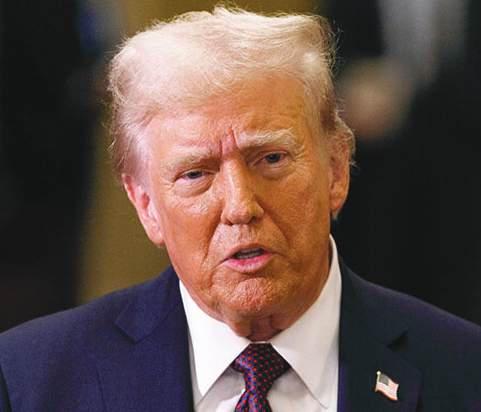
And perhaps more disturbingly, the United States under President Donald Trump is sustaining the myth with its threats-driven imposition of American hegemony and American-defined new world order. Most countries are quietly resisting it because of the United States’ open disregard for international law. By so doing, President Donald Trump has turned the United States into an unacceptable terrorist state that takes much delight in kidnapping sovereign heads of state and promoting national unilateralism to the detriment of collective solidarity. If the main joy of the United States under Donald Trump is that it is the most powerful country in the world, and therefore, the purpose of the power is to oppress and replace the United Nations with Donald Trump’s Board of Peace, never can there be peace and security.
The U.S.-Israeli aggression on Iran is the first pointer to a foreseeable war that may last longer than the 100-yeat old, not to talk about the 30-year old, war that dovetailed into the signing of the Treaty of Westphalia in 1648. The Treaty laid the foundations for the modern state system, but there is nothing to suggest that the United States and Israel, as epitomes of modern states, ever wanted any sustainable peace, particularly in the Middle East. The so-called U.S. 15-point agenda for ceasefire and the 10-point agenda put forward by Iran through Pakistan as an interlocutor, are a mockery of any possible peace and security. In fact, the politics of it and the pertinent issues raised by Iran do not at all lend much credence to the feasibility of peace and security, because they all conflict with the U.S. desires.
And true enough, the U.S. and Israel have always lent much credence to the postulation of Von Clausewitz that whoever wants peace should always prepare for war. For example, the U.S. and Israel live under a permanent fear of threats from self-chosen enemies to their sovereignty, and have therefore always gone beyond preparing for war. They actually kill and maim unarmed people within the framework of pre-emptive strikes contrarily to the spirit of legitimate self-defence. They are permanently in war with their perceived enemies and indirectly with the whole world. Unfortunately, the pre-emptive assaults are bastardising the image of the U.S. and Israel in an unprecedented manner.
First is the myopia that has come to characterise the pre-emptive aggression on Iran on February 28, 2026. The aggression was aimed at completely neutralising the nuclear capability of Iran. Both the U.S. and Israelis have claimed to have achieved all their military objectives. They have reportedly destroyed Iranian nuclear sites. Additionally, the leading Iranian physicists were targeted and killed in the wrong belief that there will be no more of them. This belief is most unfortunate. It is on record that Iran not only has about 94% literacy rate with 80% of them having Master’s degrees and PhDs, but also has ‘the most PhDs in Nuclear Physics than any country in the world,’ to borrow the words of Scott Ritter. This partly explains the meaninglessness of the future of the ceasefire negotiations that began yesterday in Islamabad to bring the current Israelo-American imbroglio with Iran to an end.

Admittedly, the U.S. and Israel can win the battle but the likelihood of their winning the war is, at best, remote. Put differently, it is very myopic of Israelo-American strategic policy makers to think that, by totally destroying military assets and not only killing the main Iranian physicists and other scientists, but also destroying the factories for uranium enrichment, the war has been thrown into the dustbin of history. This is an error of miscalculation. Many Iranians are studying, even in the United States. There are several other Iranian scientists the world over who are not against their government. Their knowledge is an idea and the idea cannot be easily destroyed. People can always disagree with an idea, but the disagreement does not necessarily put an end to the existence of the idea. They can always reunite in defence of their patrie. What can happen to the ceasefire negotiations is the likely stoppage and suspension of battle or hot war. It does not and cannot stop the aspect of cold war that has the potential to subsist for a longer time to come.
At the level of the ceasefire agenda, there is nothing to suggest the readiness of Iran to subject its sovereignty to any whim and caprice of the U.S. and Israel. Iran is asking for U.S. permanent guarantee of non-attack on Iran by the U.S. This means that there should never be any contemplation or dream of pre-emptive attack on Iranians. How does Donald Trump deal with this position? What is it that can change the perception of Iran as a threat to the U.S.? Will Israel, in the same vein, stop seeing Iran as an enemy? Israel is heavily bombarding Lebanon under the pretext of fighting the Hezbollah whereas the objective to seize new land for occupation. This cannot be helpful to sustainable peace and security.
Iran wants assurances of its right to full control of Strait of Hormuz. The Strait is located between Iran and Oman, linking the Gulf of Oman and the Persian Gulf. Its geo-political importance is generally explained by the fact that about 20% of global energy supplies pass through it daily. The closure of the Strait simply means stoppage of passage of about 20 million barrels of crude oil and products. In fact, it not only means countries like Saudi Arabia, Iran, Iraq, UAE, Kuwait, and Qatar
ThereisnoNewWorldOrderyet,initstruesense.WhatisemergingistheUnitedStatesNew World(USNWO)towhichseveralMemberStatesoftheinternationalcommunityareopposed.The USNWOistheimpositionof‘AmericaFirst’and‘MakeAmericaGreat’policiesofDonaldTrump.The policiesaredefinedbyissuanceofcoercivethreatsandpre-emptiveattacksonperceivedenemiesin disregardtotheprovisionsoftheUNCharter.IranwasaggressedbytheU.S.andIsraeltwicewhen therewereongoingpeacefulnegotiationsforpeacefulsettlementofthedispute.Thelastaggression onFebruary28,2026wasmeanttoneutraliseIranmilitarily.Infact,theU.S.madeitclearonMarch 6thatonlyunconditionalsurrenderofIranwouldbeacceptable.Toensurethis,Israelimissiles, drones,andbombshavedestroyedIraniannuclearassetsandpeopleinthousandsbutthedronesand missileshavefailedtodestroyIran’sstrategiccalculations.Iranresponded,afterlosingthebattles, withthediplomacyofStraitofHormuz,whichhasshowntobemorepotentaninstrumentofwar thanmissilesanddrones.ThisalsoopenedtheeyesofIranonhowbesttousetheStraitforlegitimate self-defenceandeconomicdevelopment.AlthoughallIsraelo-U.S.warobjectivesinIranhavereportedlybeenachievedastoldbyDonaldTrump,theachievementhasalsogenerateddomesticmilitary disorderliness.Morethan30U.S.GeneralshavereportedlydisobeyedDonaldTrump’smilitary directives.AccordingtoChuckBaldwin(libertyfellowshippmt.com),themilitaryGeneralshave refusedtoexecuteDonaldTrump’sorderstocommitwarcrimesandsendtroopstoIran.12ofthem havebeendismissed,includingtheCommanderofU.Sarmygroundforces.U.S.powerandgreatness isdestabilisingathomeandabroad.Itisnothelpfultothemaintenanceofpeaceandsecurity.

cannot export their goods, but will enhance a lot of revenues for Iran. This cannot but be a reason for Iran to insist on its position in Islamabad. Iran also wants to keep the right to enrich uranium for its nuclear programmes which can be for peaceful or belligerent purposes. The Nuclear Weapons States (NWS), which are also the Permanent-5 (China, France, Great Britain, Russia, and United States) of the United Nations Security Council (UNSC), want to be the exclusive nuclear powers in the world and do not want any other country considered their enemy jointly or severally to have any access to nuclear capability. Right from the time of informal negotiations for Nuclear Non-Proliferation Treaty as from 1963, and particularly as from 1965 when formal negotiations followed, France and China made it clear that they were not interested in the treaty because they did not want the treaty to limit their strategic independence. And true, they were still in the process of perfecting their nuclear capability system by then. Eventually, on March 9, 1992 and August 3, 1992, China and France lately signed the treaty respectively even though the treaty was already opened for signature in 1968. Countries that had the intention to acquire nuclear capability, such as India, Israel, and Pakistan, refused to sign it in 1968. The conventional view today is that the three of them have now successfully developed nuclear capability, but the problem of nuclear non-proliferation is yet to be generally and permanently resolved. Iran and North Korea are current cases of concern.
Iran also wants an end to the war on Iran and its allies, particularly in Lebanon. One issue in it is the problem of ‘Iranian Axis of Resistance’ (Hezbollah in Lebanon, Houthis in Yemen, and Hamas in Gaza), also referred to as the Iranian ‘forward defence’ in the struggle against the U.S. and Israel. In the eyes of Israel, the ‘Axis of Resistance’ is nothing more than an ‘Axis of Evil.’ In this regard, Iran, considering that any ceasefire must have a holistic character, claims that Lebanon falls squarely within the framework of the ceasefire to be negotiated in Islamabad, Pakistan but the U.S. and Israel deny this and are not showing preparedness to have it included on the agenda for negotiation.
More interestingly, there is the question of de-freezing Iranian assets and stopping all sanctions against Iran. Mohammad Bagher, Speaker of Iranian Parliament, has put the value of frozen Iranian assets at $120bn. Iran wants the freezing of its assets lifted as a condition for ceasefire negotiation in Pakistan. Iran also wants the removal of all U.S. sanctions on Iran, all UNSC and International Atomic Energy Agency (IAEA) resolutions against Iran. More importantly, Iran wants all its frozen assets returned, full compensation for damages of war paid, as well as removal of U.S. combat forces from the Middle East. Additionally, Iran has been insisting that there would not be any negotiations in the absence of ceasefire in Lebanon.
For the United States, the major point of concern is no enrichment of uranium in Iran, the Strait of Hormuz must not be closed and must not be under the control of Iran, and that ceasefire negotiations cannot extend to the allies of Iran. Iranian response is that only 15 vessels are allowed to pass through the Strait per day and that this is subject to payment of $2m transition fee. What is the fate of peace and security with this type of development?
U.S. New World Order versus Global Resistance
As noted earlier, there is no New World Order, stricto sensu, but there is an American New World Order being forcefully pushed to the world to consider and accept under a manu militari sanction. The U.S. New World Order (USNWO) is defined by President Donald Trump’s ‘America First’ and ‘Make America Great Again’ foreign policies, both of which require the subjugation of all other countries to the acceptance of the whims and caprices of the United States. There are many examples to illustrate our observation. First, on Thursday, April 9, 2026, President Trump threatened 50% tariffs on all countries supplying Iran with weapons (vide Reuters.com). In this regard, how do we justify the need for one sovereign state teaching another, not to say compelling, another sovereign state how to behave in international relations? Does the openly-declared imposition of sanctions against a sovereign state not negate the provision of Article 2(7) of the United Nations Charter on non-intervention in the domestic preserve of another sovereign state?
Secondly, there is the issue of Nuclear Non-Proliferation Treaty (NPT) done in 1968. Iran was a signatory to it, and by so doing, has the right to enrich uranium for civilian purposes. This right is enabled by the treaty. The U.S. is vehemently opposed to any enrichment of uranium in Iran. This is one major rationale for the various military strikes on Iran by Israel and the U.S. In the controversial ceasefire agenda given by the U.S. for negotiation, Americans want an end to ‘all uranium enrichment on Iranian soil.’ In the words of the U.S. Defence Secretary, Pete Hegseth, Iran would ‘never have a nuclear or the capability to get the path to one.’
In this regard, why should some countries be allowed or be helped to develop nuclear capability and some others will be prevented? Why should Donald Trump threaten and launch operation Epic Fury to ensure that Iran does not have a nuclear weapon when the same Iran is saying that building a bomb is never its own agenda? Does Trump’s threat to destroy the civilian energy and transportation infrastructure in Iran ensure the safety and security of Americans anywhere in the world?
Thirdly, the disagreement between the NWS and the Non-nuclear Weapons States (NNWS) of the world since 1968 is yet to disappear. The non-nuclear states viewed the NPT as most unfair, discriminatory, and as ‘nuclear apartheid,’ because they were unnecessarily barred from acquiring nuclear capability. Their request for a binding deadline for nuclear disarmament was also rejected by the NWS.
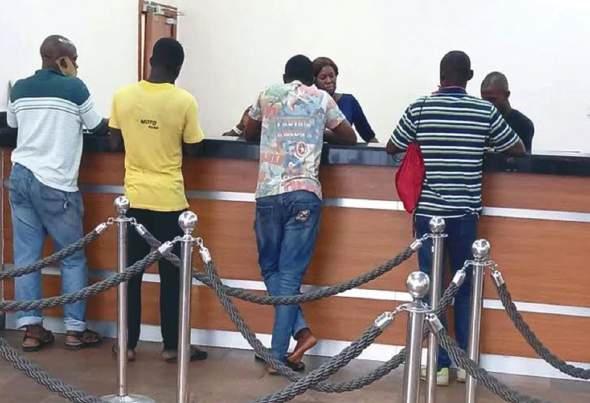
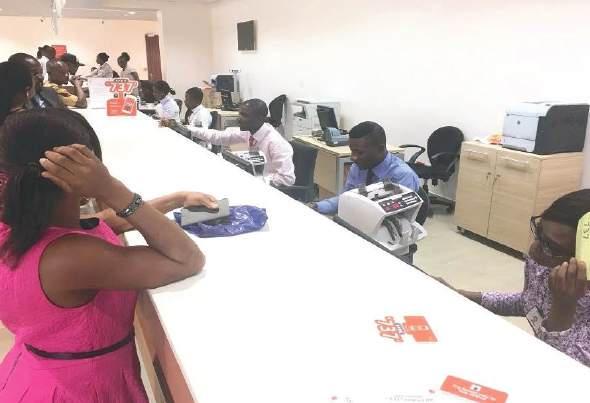
as trusted
Somewhere between the polished marble floors of Nigeria’s banking halls and the sleek interfaces of mobile banking apps, a silent heist is unfolding, not by masked intruders, but by the very custodians entrusted with safeguarding depositor funds.
When customers complain of mysterious deductions, of failed reversals that never return, of savings vanishing into thin air, they are often confronting the aftermath of a betrayal from within. The numbers are staggering, the methods brazen, and the human cost incalculable.
The financial hemorrhaging has reached epidemic proportions. Reports say Nigerian banks lost N52.26 billion to fraud in 2024 alone, representing a catastrophic 350% increase in losses over five years. Yet this headline figure masks a more sinister reality: while fraud incidents actually decreased in volume, the sophistication and severity of attacks have intensified. The perpetrators are no longer faceless hackers operating from distant servers; they are employees with staff IDs, names on payroll, and authorised access to the beating heart of banking infrastructure.
Consider the anatomy of the heist in Bank A (names withheld), a case study in institutional vulnerability. Wahab Adeyinka (not real name), a staff member in the electronic products team, exploited his legitimate access to process failed reversals, a routine function designed to help customers. Instead, he weaponised this trust, crediting merchant accounts with money that did not belong to them. The funds flowed first to his wife, Zainab’s account at a Nigerian bank, then cascaded through 34 intermediary accounts before dispersing into 1,190 secondary accounts across multiple institutions.
By the time the bank reported the breach to the Nigeria Police Force on March 25,
2024, the damage had metastasised from N12 billion to N40 billion.
Adeyinka vanished, but the paper trail remained. Court orders across Lagos and Jalingo froze accounts. Authorities recovered N1.17 billion, £35,070, and $392,818, alongside a property portfolio that reads like a real estate developer’s dream: plots in Itunu City, Lekki Peninsula, Amen Estate, and Abuja’s Life Camp. These were not the assets of a middle-class banker; they were the spoils of a systematic plunder of depositor funds. The recovery, while significant, represents mere crumbs from a feast that left thousands of customers financially devastated.
The Bank A case is not an aberration; it is a template. At a regional bank, three employees: Samuel Ihechukwu Asiegbu, Fabian Chizaram Onyeimachi, and Kingsley Kelechi Ejim, allegedly conspired with four external accomplices to manipulate internal banking data in January 2025. Their scheme diverted N8.5 billion through altered transaction records, exploiting the bank’s own infrastructure against it. When the EFCC arraigned the suspects before Justice Daniel Osiagor at the Federal High Court in Ikoyi, the charges painted a picture of institutional rot: insiders tampering with systems they were paid to protect.
The data tells a story of escalating internal complicity. The Nigeria Deposit Insurance Corporation (NDIC) first raised the alarm in 2018, documenting that fraud cases involving internal staff abuse surged from 231 in 2016 to 320 in 2017, 38.53% increase. That year, 26,182 fraud cases were reported across 26 banks, with internet and ATM-related fraud constituting 92.68% of incidents. While banks terminated 320 employees for fraud in 2017, the losses persisted, suggesting that dismissal alone is an insufficient deterrent.
The Financial Institutions Training Centre (FITC) Q1 2025 report reveals the evolution of this threat. While employee-related fraud
cases declined to 63 in Q1 2025 (from 91 in Q4 2024), and terminations dropped to 23 staff members, the financial impact of each incident has grown exponentially.
Banks lost N3.3 billion in Q1 2025 alone, a 137% increase from the previous quarter, despite 33.8% fewer reported cases. Fraud through bank branches, a channel requiring insider access, spiked to nearly N8 billion. The pattern is clear: fewer attacks, but far more devastating ones.
What enables this looting? The answer lies in obsolete governance structures. As financial analyst Chukwudi Izuchukwu observes, “If your system allows any single person to trigger financial transactions without a second approval layer, that is your vulnerability. Segregation of duties is not bureaucracy. It is what stands between your system and N40 billion walking out the door.” Yet Nigerian banks continue to operate with lax internal controls, single points of failure, and inadequate real-time monitoring.
The human toll transcends statistics. Behind every N40 billion heist are pensioners whose life savings evaporated, small business owners unable to pay suppliers, students unable to pay tuition fees, and families unable to access medical care. When a privileged staffer exploits a reversal function, they are not merely moving digital numbers; they are erasing futures. The “multiple deductions” customers face is often not a system glitch; it is the withdrawal slips of an insider economy feeding on depositor trust. Regulatory responses have been reactive rather than preventive. The Central Bank of Nigeria’s 2024 risk-based cybersecurity frameworks and the integration of BVN with NIN represent necessary but insufficient measures. The EFCC’s recovery of N9.7 billion, N6.7 billion, and N3.7 billion in separate operations demonstrates enforcement capacity, but recovery is not prevention. By the time funds are traced to
Akanbi
cryptocurrency conversions or real estate acquisitions, the original victims remain uncompensated.
The banking sector stands at an inflection point. The ongoing bank’s recapitalisation offers an opportunity to mandate security infrastructure investments alongside capital adequacy. But capital without governance is merely more money to steal.
Banks must implement mandatory dualauthorisation for high-risk transactions, AI-driven anomaly detection, and rotating access protocols that prevent any single employee from becoming a N40 billion vulnerability.
For customers, vigilance is essential but insufficient. When the threat emanates from within the fortress, no amount of password complexity or OTP protection can safeguard deposits. The burden of security must shift from individual depositors to institutional accountability. Banks must be compelled to disclose fraud incidents transparently, compensate victims promptly, and submit to independent security audits.
The alternative is the erosion of Nigeria’s digital banking gains. With POS transactions reaching N18 trillion in 2024 and mobile banking penetration at 80%, the infrastructure for financial inclusion is in place. But as the 2024 Nigeria Consumer Protection Survey found, nearly one in four digital financial service users experienced fraud or hidden charges, with only half pursuing formal complaints due to eroded confidence in redress mechanisms.
When depositors cannot trust their banks to protect them from their own employees, the foundation of financial intermediation crumbles. The N52.26 billion lost in 2024 is not merely a cost of doing business; it is a tax on trust, a penalty for inadequate governance, and a measure of institutional failure. The vaults are not being breached from the outside. The keys are already inside, and the clock is ticking.
www.thisdaylive.com

opinion@thisdaylive.com
The APC House of Assembly member representing Oshimili South in Delta State is making a
It is not the happiest of seasons for the All Progressives Party (APC).
The party is presently being castigated by journalists and civil society activists for attempting to impose a one-party state on Nigerians. Even so, there are elements within the APC that have since 2023 become shining examples of what good grassroots politics should be about.
Bridget Anyafulu, the APC House of Assembly member representing Oshimili South in Delta State is just one of them. There is a popular saying that all politics is local. Honourable Anyafulu is the very embodiment of this saying. Interestingly, the majority of her constituents live in Asaba, capital of Delta State. Even so, Anyafulu’s take on politics has a local, eyeball-to-eyeball flavour. From waste disposal to healthcare to seeing that roads in the inner part of the city are properly maintained, you will see Bridget Anyafulu on the road, taking the concerns of her constituents to the relevant authorities.
Most visitors to the constituency make the mistake of thinking that Oshimili South is composed of only Asaba city. There are the Oko towns and Okwe too, and here the concerns of the residents are largely rural and agricultural. Bridget Anyafulu visits Oko and Okwe regularly, speaking to farmers and other rural dwellers, finding out what their pressing needs are, and what they want her to do about it. She convenes village hall meetings, urging attendees to speak to her frankly and without inhibition. You will find her in simple dress, a smile playing on her dark lips, trying to put her rural constituents at ease so they could take her into confidence and unburden their concerns.
When the Delta State governor, Sheriff Oborevwori, took the momentous decision in 2025 to take the state government from the Peoples Democratic Party into the
ruling All Progressives Congress, some political analysists said that this was a foolhardy step. They pointed out that PDP had been the party of government in the state since 1999 following the return of democratic rule and that voters would punish Governor Oborevwori with their votes. Bridget Anyafulu was part of the mass movement from the PDP to the APC and some of her constituents also felt uneasy that she had abandoned PDP. But Anyafulu confidently assured her constituents that her movement to the APC along with her governor was a step she thought about deeply and carefully. It is not only that. Anyafulu felt that the majority of her constituents actually wanted her to defect, that PDP was deeply divided, and that it was only a matter of time before the political party fell apart altogether. Anyafulu’s timely move away
from the PDP has since been vindicated by events. The PDP has since imploded, with two main factions tearing at each other’s throat. If Anyafulu had waited until the PDP in Delta State collapsed on her head before she bailed out, critics would have dubbed her a political opportunist. Like her governor, she moved at the right time, and in moving, proved that she was a visionary and thoughtful politician. But moving into a political party is one thing and re-shaping the party to accommodate your political vision and principles is an entirely different thing altogether. Honourable Anyafulu has been quietly working, alongside Governor Oborevwori, to transform the APC in Delta State into a political party that listens to the concerns of ordinary Deltans. Take for example, Governor Oborevwori’s statement in late 2025 that Delta State had
been receiving increased federal allocation since 2023 and that he no longer had difficulty in executing public projects. This same sentiment is also at the heart of Bridget Anyafulu’s grassroots politics in Oshimili south. Although she is a legislator and not a member of the executive branch of government, she ensures that projects approved for her constituency are duly and promptly executed and that Asaba residents obtain satisfaction.
Asaba is a multi-ethnic and multireligious city, elements from as diverse as Urhobo, Itsekiri, Isoko, Ijaw and Igbo calling it home. Their needs and concerns are therefore multiple and diverse, warranting Bridget Anyafulu to be on her toes all the time and also adopting a flexibility that speaks to the city’s urban composition. Even so, Anyafulu adopts a hands-on, grassroots approach in dealing with any of her constituents that comes to her office looking for help. This is called ‘retail’ politics, a politics that sees the whole and yet is able to pay attention to the concerns of constituents in their individual needs. Retail politics is actually grassroots politics narrowed down to the individual and his or her concerns, and this is where Bridget Anyafulu excels the most.
To give just one example of Anyafulu’s brand of retail politics, she recently put out a public notice inviting all Asaba residents to Stephen Keshi Stadium for a heath check. They were to be examined by qualified doctors for signs of diabetes, high blood pressure and other noncommunicable diseases. Cynics would say that Anyafulu did this to curry votes because the 2027 general elections are near. But those who know her well explained that public healthcare in Asaba and environs has always been a matter close to her heart. Long before she became a legislator, she would visit hospitals in Asaba and inquire about patients who were unable to pay their bills and quietly pay it, without undue publicity. Yes, elections are around the corner once again and Nigerians will be called upon to exercise their franchise. The 2027 elections promise to be a particularly fractious one, more so as the cost of living bites ever higher and voters are casting about for political parties that best speak to their pressing concerns. Even so, they should think deeply, not really about political parties and their manifestoes, but about particular politicians who have demonstrated through thought and deed that their primary concern is their constituents and how to make them happy. Bridget Anyafulu is one such politician, an example of grassroots politics in Nigeria at its finest.

Editor, Editorial Page PETER ISHAKA
Email peter.ishaka@thisdaylive.com
The increasing use of face masks by security operatives poses a significant threat to public safety. The Anambra State Police Command noted last week that although certain security assignments may require tactical discretion, masking without authorisation erodes public trust, weakens accountability, and complicates inter-agency collaboration required between different security agencies. “The use of masks by operatives, particularly in non-operational or public-facing assignments such as VIP protection,” according to the State Commissioner of Police, Ikioye Orutugu “makes it difficult to verify legitimacy and could be exploited by criminal elements to perpetrate unlawful acts under the guise of security duties.”
The hooded security personnel who escort Very Important Personalities (VIPs) around may be trying to shield their identities from criminals. But problem arises when criminals themselves opt for masks as they quite often do. Even more worrisome is that wearing mask is fast becoming part of the costume of security personnel in Nigeria. We therefore agree with Orutugu on the need to halt the trend of security operatives concealing their identities in their public engagements.
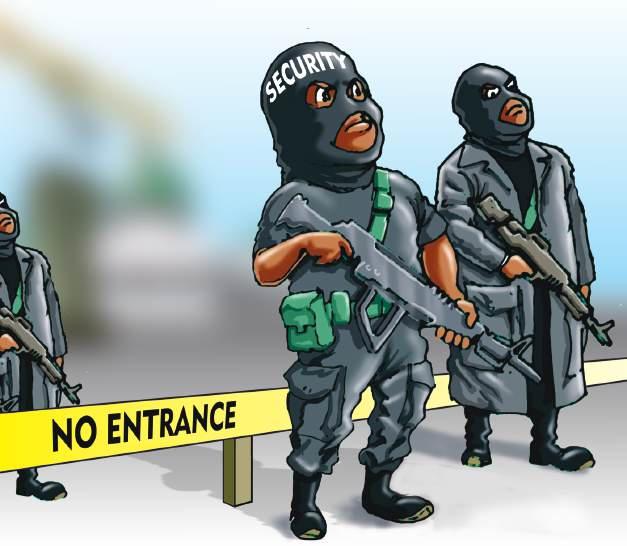
Many of them have been repeatedly cited as using intimidation, arbitrary arrests, and excessive use of force, particularly during protests and at checkpoints. We are particularly concerned as we enter the season of political campaigns when politicians and other VIPs usually make rowdy and colourful public outings surrounded by all manner of “security” personnel, mostly thugs in disguise. There is therefore an urgent need to contain the menace of hooded guards throughout the country. Masks, like tinted car windows, can hide unlikely dangers disguised as legitimate security guards. The use of masks by unauthorised persons should be considered a criminal infraction with heavy penalties warranting instant arrest and prosecution.
The Nigeria Police Act 2020 emphasises proper identification and uniform compliance to promote accountability, transparency, and the protection of citizens’ rights
Since we live in a society where insecurity is pervasive, those who are responsible for dealing with the challenge should not evade accountability. Yet that is the new normal in Nigeria. From the Economic and Financial Crimes Commission (EFCC) to the State Security Service (SSS) and private security guard companies, most of their operatives now opt for masks in their encounters with the public. In a situation where both private guards, official security personnel and unidentified criminals opt to wear masks, a sea of devious anonymity is created.
For many members of the public, it is becoming increasingly difficult to distinguish friends from foes, and between protectors and perpetrators of crimes. Besides, security personnel can easily be enticed into violent attacks if they know that they will not be recognised. Indeed, over the years, such operatives, often referred to as “unidentified gunmen” or “unknown security agents,” have stormed residential homes or blocked public areas with impunity.
SUNDAY NEWSPAPER
editor DAvIDSoN IRIekPeN
deputy editors FeSTUS AkANBI, eJIoFoR ALIke
Managing director eNIoLA BeLLo
deputy Managing director ISRAeL IwegBU
chairMan editorial Board oLUSegUN ADeNIYI
editor nation s capital IYoBoSA UwUgIAReN the oMBudsMan kAYoDe koMoLAFe
THISDAY NEWSPAPERS LIMITED
editor-in-chief/chairMan NDUkA oBAIgBeNA
group executive directors eNIoLA BeLLo, kAYoDe koMoLAFe, ISRAeL IwegBU
divisional directors SHAkA MoMoDU, PeTeR IwegBU ANTHoNY ogeDeNgBe
deputy divisional director oJogUN vICToR DANBoYI snr. associate director eRIC oJeH
associate director PATRICk eIMIUHI
controllers ABIMBoLA TAIwo UCHeNNA DIBIAgwU, NDUkA MoSeRI
director, printing production CHUkS oNwUDINJo to send eMail: first name.surname@thisdaylive.com
As we have argued repeatedly on this page, no matter the extent of provocation, a person in uniform must not resort to taking the law into their own hands. But due to the anonymity created by wearing hoods, several instances abound when those who carry arms on behalf of the state have brutalised members of the public. To that extent, it has become imperative that the police regulate the use of masks and other forms of disguise for security personnel on legal assignments. Private security guards should also be barred from wearing masks.
In a situation where these hooded persons also carry arms and given the widespread illegal arms in private hands, the indiscriminate use of masks by all manner of personnel further complicates an already bad situation. These criminal acts have also been drawing increasing attention to police officers who operate in civil dress (mufti). Some operate in plain clothes, jeans, or incomplete uniforms without visible name tags or ranks. They pose serious dangers to public safety and accountability. While plainclothes operations are in sync with intelligence gathering, their unregulated and widespread use—particularly at checkpoints— has led to abuse, confusion, and criminality.
The Nigeria Police Act 2020 emphasises proper identification and uniform compliance to promote accountability, transparency, and the protection of citizens’ rights. This culture of security personnel hiding their identity simply to evade accountability is a travesty in a democracy. And it must stop!
Letters in response to specific publications in THISDAY should be brief(150-200 words) and straight to the point. Interested readers may send such letters along with their contact details to opinion@thisdaylive.com. we also welcome comments and opinions on topical local, national and international issues provided they are well-written and should also not be longer than (950- 1000 words). They should be sent to opinion@thisdaylive. com along with the email address and phone numbers of the writer
Across many parts of Nigeria today, disasters no longer come as rare or unexpected events, they arrive with a disturbing sense of familiarity. From the annual floods that swallow homes and farmlands to the slow but steady advance of desertification in the north, communities are increasingly living on the edge of environmental uncertainty. What was once described as a global climate issue has now become a daily Nigerian reality, directly shaping how disasters occur and how they must be managed.
Climate change, driven largely by human activities such as deforestation, poor waste management, and rising carbon emissions, has intensified weather patterns across the country. Rainfall is becoming more erratic, temperatures are rising, and extreme weather events are occurring with greater frequency. In states like Kogi, Niger, and Anambra, flooding has evolved from a seasonal inconvenience into a recurring humanitarian crisis, displacing thousands and destroying livelihoods. At the same time, northern regions continue to battle desert encroachment, reducing access to fertile land and worsening food
insecurity.
These disasters extend far beyond physical destruction. They disrupt education, weaken local economies, and stretch already limited government resources. Families are forced to abandon their homes, children are pulled out of school, and communities are left struggling to rebuild with little support. In this context, disaster management is no longer just about emergency response, it has become a critical component of national development and stability.
Institutions like the National Emergency Management Agency (NEMA) have made significant efforts in coordinating relief interventions, raising public awareness, and supporting affected communities. However, the growing intensity and frequency of climate-related disasters reveal a deeper challenge: Nigeria’s disaster management approach remains largely reactive. While responding to emergencies is essential, it is no longer sufficient in a climate-altered reality where risks are constantly evolving.
One of the most pressing gaps lies in the disconnect
between early warning systems and community action. Although forecasts and alerts are increasingly available, many vulnerable populations either do not receive this information on time or lack the means to respond effectively. This highlights the need for a more inclusive and people-centered approach, one that ensures that information is not only generated but also understood and acted upon at the grassroots level.
To address these challenges, Nigeria must move toward a more proactive and integrated disaster management framework. Investing in climate-resilient infrastructure is a critical starting point. Improved drainage systems, flood control mechanisms, and proper urban planning can significantly reduce the impact of flooding in high-risk areas. Equally important is enforcing environmental regulations to prevent practices that worsen climate vulnerability, such as building on floodplains or indiscriminate deforestation.
However, perhaps the most underutilized asset in this effort is the energy and creativity of young people. As students and digital natives, the youth are uniquely
positioned to bridge the gap between information and action. Through campus-based climate awareness initiatives, social media advocacy, and community engagement, young Nigerians can serve as powerful agents of change. Establishing disaster awareness clubs in tertiary institutions, for instance, can create a network of informed individuals who not only understand climate risks but actively contribute to preparedness efforts within their communities. Technology also offers significant opportunities to transform disaster management in Nigeria. Mobile platforms can be used to deliver real-time alerts, while data analytics can help predict disaster patterns and improve response strategies. When combined with community participation, these tools can create a more responsive and adaptive system that minimizes loss and enhances resilience.
At the policy level, consistency and accountability must be strengthened. Nigeria has developed several frameworks on climate change and disaster Abdulhamid Abdullahi Aliyu, Abuja
• Otunba Gbenga Daniel
Former Ogun State governor and senator representing Ogun East Senatorial District, Otunba Gbenga Daniel in this interview with THISDAY defends President Bola Tinubu’s economic reforms, reflects on his legacy, assesses Dapo Abiodun’s leadership, and explains why he believes Nigerians should back Tinubu again at the polls
How has the journey been, politically? It all started by our appreciation of our state. Probably because we all lived in Lagos, we had a lot of exposure. We looked at developments in some of those conditions, and we felt that our state wasn’t there despite the fact that we have been lucky to have probably one of the most, or most of the prominent citizens from this part of the country. We thought why is it like this? Pa Ayo Adebanjo, Pa Abraham Adesanya and many others, who were leading the South-west, were all from Ogun State. We didn’t see commensurate development. We looked at a state like Lagos, all the people who are making waves, most of them are also from Ogun State. So, something appeared to be missing. And that’s why we thought this is a giant asleep and we must go and wake it up. That’s how it all started. Decades after, one can only feel quite excited about the dreams we had. I wrote a book at that time about the land of my dreams. That is not to apportion blame because people usually say you can only give what you have, but you can only give to the extent of your appreciation and understanding. Most people who came from here, they would just come whether to bury their dead. And once they finish burying, they are back
in Lagos. We thought that we could turn that around. And I think that looking at the situation 30 years later, Ogun State has been turned around. I believe that in all the indices that you can mention, the state has been significantly turned around. Of course, I didn’t do all the turning around, other people did their own bits. But I can say that I created that foundation. And I’m saying this with a sense of humility and appreciation. I remember that then I had all sorts of advice. “OGD, you can’t do everything. If it is the road you want to do, just concentrate on the road. If it is rural legislation you want to do, concentrate on rural legislation. If it is healthcare you want to concentrate on, concentrate on healthcare.”
There was no government before us, to a large extent, who faced all issues in the state squarely without leaving anything behind, whether you’re talking in terms of sport, education, rural or tourism development. We thought that the state should be in a hurry to develop. I must say that it was a lot of work, 24/7 mostly.
Why should Nigerians vote APC in 2027?
For the avoidance of doubt, in President Bola Tinubu, we have a highly intelligent president who also knows
Nigeria so well, probably because he has paid his dues over the years. I also, without any doubt, must also say that in terms of the economic rediscovery of this country, there isn’t probably anyone in the horizon who can say that he could have done it better. I also want to say that in terms of the boldness, the courage, there are also not many people who have taken the bull by the horn the way he did. I am not saying this because I want to flatter you. When we got into the 10th Senate, part of the resolution of the ninth Senate was that fuel subsidy should be removed. It was gone. So it was like a law. No more fuel subsidy. While we were working for the Atiku campaign, and you know I was very active in that, part of his blueprint was that for this country to move forward, fuel subsidy must go. And not only that, the Petroleum Industry Bill, in terms of the petroleum reform, also recommended that subsidy be removed. Don’t also forget that while I was working for the Atiku campaign, Peter Obi was the vice president. And his position also has been that we cannot continue to sustain fuel subsidy. Anybody who is anybody in terms of economic knowledge and management has come to the conclusion that it is not sustainable. But nobody had the political will to say that “here we are, let us begin again,” which was what he demonstrated on his first day. Expectedly, it came with a lot of hues and cries because it’s a new order, he’s changed
the status quo. Asiwaju saw this and felt that the first thing to do was put a stop to this. That naturally affected both the rich and the poor, especially the people who are, in quotes, stealing the wealth, the mafia, who are chopping from this subsidy. So they are fighting. Unfortunately, the poor also have to suffer because, of course, it has led to adjustment in the price of fuel and so on and so forth. It’s unfortunate, but for me it is also inevitable.
And what I think the president has also done is to now find ways of ameliorating, and that’s why you find all these social initiatives that are going on. But more than anything else, we have been one of the people who have been shouting that this sense of all powers in the centre should be brought back to the sub-nationals. And all of a sudden, there is virtually no state government that has not got probably three times or four times more than it used to have. The loss has now been put in the hands of the states and federal. It is not really a loss. It’s just that it’s a well distribution. And if properly done, the masses of the people should be able to check. You and I complained bitterly about the price of rice and dollars. However, in the last one year, we have seen a slow and gradual recovery. In the last one year, the indices are improving whether in inflation rate and so on and so forth. To that extent, the president got it right. Don’t let us talk about what has been going on in the last one or two weeks on the price of fuel, that is as a result of the war. And in a war environment, these things happen. It happened during the Gulf War, but beyond that we can see a gradual recovery in the system and more money in the hands of the subnationals. One of the richest men in Nigeria made a statement that he sees that the Naira is going to appreciate to over a thousand. I don’t want to mention names, but you know when people like that talk, they’re in the banks, they’re everywhere, they see what’s happening, they know what they’re talking about. I am even told that the continuous maintenance of the Naira at this stable rate is not because it couldn’t have appreciated. Because I say, okay, let it appreciate, that’s what we’re waiting for. But we now have a problem, people have stock. If you’ve gone to the bank to borrow money, for instance, to buy your goods, and you’ve paid $1,500, $1,600 to get your goods out there, you still have not sold. People are saying the price is too high. All of a sudden, the thing goes down to $1,000. So it means all of you have gone bankrupt already. So because of that, I’m told that we are the ones who are now trying to make sure that the process is slow and gradual, so that people who have stock, dispose of their stock so they don’t become bankrupt. So that is the policy that’s in the interest of the people. But if we don’t have people to explain it to them properly, we won’t know what’s happening. But if we allow the Naira to float, it’s clear that there is recovery, slow and gradual recovery. Whether you want to say that President Tinubu is lucky or not is a different story. But something is happening within the solid minerals industry that must not go unnoticed. Whether we like it or not, there has been a solid minerals ministry before. I don’t know whether the fortune smiling on Nigeria through him is because of the deliberate policy, but all of a sudden, Nigeria has started exporting more. And this single product economy, which has been a problem in the last few years, is now giving way that we now have a few other things that are not oil to export. That also has the tendency to stabilise the nation because once upon a time, people would say it is from my own wealth that your place is being developed. But now, those other people can now boast. I’m told that the entire Ilesa and Ijebu-Ode are standing on gold. I’m told that Zamfara is standing on lithium or gold and so on and so forth. All those things that some people are feeling in the past, that oh, we are the ones producing the wealth and the development, it’s no longer going to be so very soon. I think one way or the other, either as a result of deliberate policy or because it’s in the right place at the right time, good fortune is smiling on this country under President Bola Tinubu. I think it could be a combination of everything.
What was your relationship with all these people? Are you going to fight for your senatorial seat or relinquish it? And the current government wanted to demolish some of your properties. All of these depend on the perception of the
various individuals to the political process. I established earlier that my appreciation of our responsibility is very clear to me. In anything you do, the interest of the masses must come first. Your own personal interest becomes second. Let us look at the properties that you have spoken about. You would have noticed that I’ve not said anything till today. I think our duty as leaders is to be very responsive and responsible to the appreciation and expectation of the people. That is why you have not seen me make any fuss. If you do anything, rather than you see me fight, I just do what I am supposed to do. Go to court and try to see whether things can be resolved in court. I think I have gone through 30 different court cases against this government and the one before it, and I haven’t lost one. Even if we win, we don’t celebrate it because there was no issue ab initio. We can therefore place some of those things in the realms of politics. I have said to people that I have no issues with any one of them whatsoever. Ibikunle was my senator. We ran together in PDP. The only difference was that he felt that he could not wait for me to finish. He wants to be the governor after my first term. So even before I was sworn-in, he started campaigning. And it went on such that he contested against me in 2007. To God be the glory, I won the election. He went on fighting. And then God gave me victory in 2011. I have said to people that for me, Ibikunle is what I call Ajagungbade, somebody who fought and won the crown. I had no direct contribution to his election. In his own perception, he also felt that I was part of the reason why he didn’t become governor earlier. He had his own way of doing things. He didn’t think I was his friend. And so when he had the opportunity, he then began to fight me, I’ll say unfairly. But at the end of the day, you probably will have heard that, well, finally, we resolved. I’m the one that has been wounded. But the important thing, like I’ve said, I’ve done analysis for you of how life is. I think I’m a lucky man. I’m still alive in spite of all of that.
The current governor (Dapo Abiodun) will not be able to deny that I made contributions to his election. His own case is a bit different because I can say that without people like us and the grace of God, he probably wouldn’t have been governor. So, that one owes us. The minimum he can do for us is to give us respect, which he has chosen not to do. For whatever reasons he may have, that doesn’t erase history. At the end of the month, four of my books: ‘Daniel in the Lion’s Den’, ‘My March Through the Courts’ will be released. Those are specific, clear statements of history which were set, put in for the records. The current governor now has less than two years to go. For me, my own appreciation is that
a number of people in positions of authority get carried away. When I was governor, people had different views of how I played. But I can tell you a few little things. I refuse to answer the title of ‘executive governor.’ Because I feel that being governor is already executive. So when you keep rambling on ‘executive’, what is it all about?
The responsibility constitutionally for me as a governor is to look at how you can help the good, the bad, the rich, the not so rich, the poor. You have responsibility to all of them. Who didn’t fight me when I was governor? All sorts of spurious allegations. Did you hear me do anything to any one of them? If it’s too much, I would go to court. I did eight years as governor. He’s now in the seventh year. They can now compare seven years of OGD with seven years of our current governor. People can compare. And they can make their own decisions from there.
Did you see this crisis coming in the PDP since you jumped?
I didn’t jump. First, I have only been part of what we call the progressives and don’t also forget I was part of the AD-Afenifere. Why I went to PDP is because we saw potential that could be developed, and we didn’t see an opportunity within the framework of the party at that time to do it because of the way the party was set up. Not anybody’s fault. And I can’t also blame them because what they are doing or what they have done is within the framework of their understanding. Whether they are right or wrong, it is posterity that can finally decide that, but the party felt that “Gbenga, it’s not your turn yet.” So the road was closed. And I had a large number of young, articulate, vibrant, energetic people who had a dream about what we could do with Ogun State beyond what was going on. So that was the impetus that actually led us into moving. And don’t also forget, I’m one of the people who said, while we were in PDP, we hadn’t left Afenifere. Ideologically, we didn’t have any issue. You’ll recall that while in PDP, I was close to becoming the National Chairman of the party. I contested in the election and it was very clear that I was close to victory. And I was shocked, I don’t want to mention names. Somebody woke up one day and said, “Hey, you people, if you hand over this party to OGD, you are handing it over to … Don’t mind what’s going on. If you give the PDP to OGD, you are more or less….” And the man who actually said it now is actually one of the strong men in the current government. So, they pulled all their elders to please persuade me to step down. I had to step down in the morning without a fight. Thereafter, Atiku approached me to come and lead his campaign, which I did without any
regrets. Even while I was working for Atiku, he knew that I’m Tinubu’s person. When I ran Atiku’s campaign then, it was against Buhari for the presidential election. Both of them were Fulani. In my own opinion, one is a more liberal Fulani than the other. I still believe that Atiku is a more liberal Fulani than Buhari. Buhari can be described as some kind of fundamentalist. Atiku married from Malaysia, he lived his life in Lagos. Yes, but he’s still a Fulani. And at the end of that experiment, I delivered, he took the ticket and the party decided they wanted to enlarge the campaign and all of that. That’s fine. I’ve done my bit. Then, it was clear that Asiwaju was coming. If you remember the story, Tinubu was supposed to be the VP to Buhari. It didn’t happen. But I was politically intelligent enough to know that Asiwaju was coming. Then the unexpected happened in Ogun PDP, where I was. We were supporting Ladi Adebutu for governor, but he didn’t get the ticket. The party gave him the ticket; the court gave Kashamu the ticket. INEC said whatever the court said we must do. So, before you could say anything, Kashamu became the governorship candidate of the PDP. While that was going on, Asiwaju called me and said, “Have you read …?” And of course, you know that he had issues with his bosom friend, who was the outgoing governor. And so, once Asiwaju stepped in, the leaders of the community also came to me. So, before I knew what was happening, I had to provide some support for Dapo to become governor. Dapo having become governor, our people now came to me and said, “OGD, you can’t ask us to go and vote for a government that wins. Are you going to leave us like a sheep without a shepherd? Whatever you want to do, if you really want to protect our interest, you need to follow us there.”
Simultaneously, I was also aware that Asiwaju wanted to run. Of course, from where I’m coming from, I’m a Yoruba irredentist. Whatever anybody wants to say, I’m a nationalist, but first and foremost, I am a Yoruba man. And from the kind of battle that we fought together with Asiwaju, the battle of self-determination, emancipation of our people and so on and so forth, it is unthinkable that he would be on a ticket and I would do something else. It is not as if I jumped because I knew something was happening, but if you put it that way, it’s fair enough. Asiwaju was coming; we’ve had a long relationship. I believe in his politics, I appreciate his strength of character, and I appreciate what he stands for ideologically. It was unthinkable for me to do any other thing.
See concluded part on www.
Vanessa Obioha speaks with screenwriter Emmanuella Amidu about her latest project, the upcoming animated sci-fi series ‘Secrets of the Multiverse.’ Produced by Blessing Amidu and directed by Adebisi Adetayo of 3AD Animation, the project marks a significant milestone for Amidu, who began writing the screenplay at age 16 and completed it at 19. Now, she expands her creative role by stepping into the booth as part of the voice cast, taking on a character in the Hot Ticket Productions series.
You wrote the screenplay for Secrets of the Multiverse and also voiced a character in it. How does it feel stepping from behind the script into the world you created?
It feels surreal. Almost like a fairytale. I got to voice-act my favourite character and in more ways than one, I see myself in her. We’re both creators and not just that, there’s a reason behind everything we do. This specific character is extremely brilliant and I got to feel her brilliance as I voice acted. In another life, I’d probably be her.
Having lived with these characters as a writer, did that make voicing your character easier or did it come with its own challenges?
Writing my characters required me to go inside their heads, feel their feelings. Because I know who they are on a fundamental level, I’m able to properly articulate their emotions and their vocals to the best of my abilities.
Is this your first time voice acting? If so, what did your preparation process look like, and what surprised you most about the experience?
Yes, it was. To prepare, I read my lines over and over again, I imagined the scenes, and put myself in the Kreator’s shoes as I practised. To be honest, I was surprised to find that voice acting is quite hard. It takes a lot of time and passion and you have to be prepared to give it your all.
What was it like hearing your words performed—either by yourself or other cast members—for the first time? Did anything sound different from how you imagined it?
It’s been ecstatic seeing my work being animated. I am grateful I was able to be a part of the process in many ways other than writing. I got to supervise voice recordings and I got to see how excited the cast was as they trained and eventually as they recorded.
What do you hope audiences take away from ‘Secrets of the Multiverse’?
There are multiple lessons in ‘Secrets of the Multiverse.’ I couldn’t possibly list them all but one that’s very important to me is to always have fun. There will always be problems in life. They never stop. You just have to learn to keep enjoying your life as you navigate those problems. Otherwise, you’ll never be happy.
Vanessa Obioha
Art and fragrance will intersect this April as Seinde Signature unveils the Sarah Baker perfume collection in Nigeria with an immersive stage production.
In what the retailer describes as a firstof-its-kind launch, American perfumer Sarah Baker will introduce her latest scents — Va Va Vanilla and Velvet Vendetta — to the Nigerian market. The collection will be available exclusively at Seinde Signature stores in Lagos, Port Harcourt and Abuja.
Both fragrances, released in 2025, are rooted in oriental vanilla profiles. Va Va Vanilla features top notes of black cherry, cinnamon, espresso and martini, creating a gourmand blend that leans into coffee and cocktail accords. Velvet Vendetta, on the other hand, opens with smoke, dried fruits, pink pepper and nutmeg, offering a darker, spiced composition.
Seinde Signature has stocked Baker’s fragrances for nearly a year, with Peach’s Revenge emerging as a strong seller in Nigeria. Known for merging storytelling with scent design, Baker’s creations often draw from her background as a writer and multimedia artist. Her signature orange packaging pays homage to the San Francisco bridge, referencing her artistic roots.
It is this narrative-driven approach that has informed the Lagos launch, where Seinde Signature will present a stage play inspired by the perfumes. The concept aligns with Baker’s tradition of incorporating original screenplays into her fragrance releases. This has earned her
a devoted following among fragrance lovers and art aficionados.
According to the General Manager of Seinde Signature, Oreoluwa Olusola, each fragrance is conceived as a script.
“Because she is a writer, each fragrance has a script. In every bottle, there is a story, and the play takes its name from the perfume,” she said.
While the title of the production remains undisclosed, the play will weave together multiple storylines reflecting the themes of the featured fragrances.
Nollywood actor Deyemi Okanlawon will lead the cast, fresh from his UK theatre run in ‘Crown of Blood.’
“We’re bringing together the world of theatre and fragrance in a way that audiences haven’t experienced before,” Olusola added, noting that the performance is scheduled for April 19, which coincides with Okanlawon’s birthday.
For the actor, coming on the production is a match made in heaven.
“I’m very careful about the brands that I work with, because there aren’t a lot of brands out there that you see signifying African excellence. To find Seinde Signature doing this and bringing Sarah Baker and her brand into the market as well as crafting this innovative launch idea, is something that I fell in love with the minute I heard about it. Also, the fact that it’s happening on my birthday.”
Beyond Lagos, the launch will extend to Abuja with an event at Seinde Signature’s Perfume Bar, while Port Harcourt will host a VIP dinner.
In the noisy arena of Nigerian politics, the entrance of Dr. Bala Maijama’a Wunti into the Bauchi governorship race for next year’s election feels like a disruption. He is not the typical aspirant who trades in rhetoric or relies on the architecture of godfathers. Instead, he arrives with a hard hat, a spreadsheet, and a three-decade-long résumé of solving the unsolvable in the oil and gas sector.
This article does not seek to make a political argument for Wunti based on sentiment. It seeks to make an economic and managerial argument. In a state grappling with infrastructural decay, a troubled education system, and the need for rapid revenue generation, Bauchi does not need a poet. It needs a plumber. It needs a healer. It needs Bala Wunti.
Ethos of a Public Servant
Before the governorship hopeful emerged, there was the man. Orphaned early in life near the palace drums of Bauchi, Wunti learned that no one owes you a living. This harsh calculus shaped his worldview. Unlike those who inherit wealth or power, Wunti had to create value to survive.
His faith taught him patience. His circumstances taught him resilience. And his career taught him that integrity is not a moral luxury; it is an operational necessity. In the NNPC, where he rose through the ranks, Wunti became known not just as a fixer, but as a healer of broken assets. He looked at failing wells and saw opportunity. He looked at stalled projects and saw a lack of will.
That is the mentality he brings to Bauchi. Where others see a failing primary school, Wunti sees a human asset requiring a “turnaround.” Where others see an abandoned road, Wunti sees a logistical bottleneck requiring the “Alternative Evacuation Framework” he pioneered in the oil sector.
Proof of Performance: A Technical Masterclass It is one thing to claim competence; it is another to document it. In his own words, Wunti has detailed a catalogue of achievements that would humble even the most seasoned executives. These are not promises; they are facts.
Consider the deepwater sector. Wunti championed the resurgence of Bonga from circa 90,000 BOPD to over 145,000 BOPD. He didn’t just manage this asset; he revived it. He orchestrated turnarounds at Erha and Usan, two of the most complex deepwater operations
in West Africa. Onshore, he started production at OML 150 – Obodo and restored production at OML 18, Aiteo’s OML 29, Newcross’ OML 24, and Belema’s OML 55. Under his watch, Heirs Energies’ OML 17 saw production growth.
But the true test of a leader is how they handle the pipeline—the metaphorical and literal arteries of the economy. Wunti optimised the Soku plant and restarted the Asa-Rumuekpe line, a feat that had eluded others for years. He brought first gas from MPN JV operations after 50 years of dormancy. He delivered first oil from OML 143 Enyie Field and OML 157 Oguali Field.
Furthermore, he operationalised the Alternative Crude Oil Evacuation Framework, a strategic move that bypassed traditional bottlenecks. He resolved historical PSC disputes and renewed critical contracts, unlocking billions in investment. His introduction of NUIMS 360 and the e-mms brought digital transparency
to a notoriously opaque industry.
How does restarting the Asa-Rumuekpe line translate to governing Bauchi? The analogy is direct. Bauchi suffers from broken “pipelines”—whether in the allocation of fertilizer to farmers, the distribution of teachers to schools, or the flow of healthcare supplies to rural clinics. A technocrat like Wunti understands that these are supply chain problems. He has already proven his ability to manage massive financial audits and reporting on time. In Kolmani, he ensured the Integrated Development Project gained momentum, mobilising contractors and setting timelines. This is the discipline of project management. When Wunti says he will fix Bauchi’s water supply, he is not guessing. He is applying the same framework he used to guarantee over 800 MMSCFD of gas for domestic power generation.
What makes Wunti uniquely positive is his humility. In an era where politicians rent billboards and hire praise-singers, Wunti has historically told his beneficiaries to keep quiet. He celebrated the 1-billion-barrel milestone at Bonga without arrogance. He executed MOUs worth billions without press releases.
This is a dangerous trait in politics, where visibility is currency. But it is a healing trait for governance. A leader who does not need constant applause is a leader who can make tough, unpopular decisions. A leader who does not seek the spotlight is a leader who will fix the drainage in your street without demanding a statue.
As the governorship hopeful for next year’s election, Wunti represents a fork in the road for Bauchi. The other path is the familiar one: the career politician who views public office as a concession to be exploited. The Wunti path is the technocratic path: viewing the state as a distressed asset to be turned around.
Other communities handle this better. Kano treats its benefactors as institutions. Jigawa honours those who ease hardship. Gombe protects those who invest in people. If Bauchi rejects Wunti, the signal is clear: we prefer the noise of politics to the music of performance.
A Legacy of Healing
Wunti has remained composed through the early skirmishes of the campaign. No hired voices. No counterattacks. This is not weakness; it is the deep understanding that truth outlasts gossip. He knows that the value of the Nembe Crude Oil blend exports he enabled, and the $8 billion in FIDs he celebrated, are permanent markers on his record.
Bauchi is at a crossroads. It can choose the healer. It can choose the man who knows that decay does not roar—it whispers—and that the only way to stop the whisper is with the roar of restored production, whether of oil or of opportunity.
Bala Wunti is not just asking for a vote. He is offering a template. He is saying to the people of Bauchi: I fixed Bonga. I fixed OML 150. I fixed the Asa-Rumuekpe line. Give me the chance to fix our home. That is not a campaign slogan. That is a promise backed by a lifetime of proof.
The Nigerian Economic Summit Group (NESG) has said that any attempt to reverse the current economic reform momentum could set the country’s growth trajectory back to crisis-era levels of about 2 percent.
The group noted that Nigeria remained in a consolidation phase following a nearcollapse of the economy in recent years.
NESG Head of Research, Dr. Joseph Ogebe, who spoke at the NESG quarterly media engagement in Abuja, said that truncating ongoing reforms could also erode the macroeconomic stability gained during
the reforms.
He said, “What we see is that growth could go to around two to three per cent if the policies are reversed.”
Ogebe noted that while reforms implemented over the past 30 months had begun to yield results, reversing them would worsen fiscal pressures, weaken investment, and deepen poverty.
He stated that, though the country’s growth had improved from about 2.5 per cent in 2023 to 2.9 percent, and then to 3.9 per cent, with modest gains in per capita income, inflation had also eased from about 40 percent in 2023 to 15.06 percent in February 2026.
Notwithstanding the improvements ushered by the reforms, Ogebe said the gains remained largely at the macro level and had yet to translate into tangible benefits for citizens.
He described 2026 as a critical turning point, noting that “this year, 2026, is a make-or-break year” for consolidating reforms and ensuring that macroeconomic stability translates into improved livelihoods.
Ogebe maintained that the country must move beyond its current growth level of six per cent to reduce poverty significantly, noting that growth remains narrow and driven mainly by a few sectors, including finance, ICT, and oil and gas, while job-creating sectors
like agriculture and manufacturing still lag. He further warned against growing calls to reverse policy amid global uncertainties, noting that past subsidy regimes had forced the government to borrow to finance consumption rather than development.
He said, “We were actually borrowing to pay for the subsidy. No funds were available for capital and development projects. That is not where we should go now.”
NESG’s Chief Economist/Director of Research, Olusegun Omisakin, said Nigeria is currently in a consolidation phase following a near-collapse of the economy in recent years.
Mounthill Aviation Resource Limited has announced that it has attained 90 per cent certification from the Nigeria Civil Aviation Authority (NCAA), as it celebrated its second anniversary of obtaining an Air Operator Certificate (AOC).
The milestone was disclosed during the company’s AOC anniversary event held in Abuja.
Speaking at the occasion, the Chairman and Chief Executive Officer of Mounthill Aviation Resource Limited, Chinwe Florence Oti, said
the celebration marked two years since the firm officially secured its airline operating licence.
“Officially, we acquired our license two years ago, so that’s what we are celebrating. It’s been nice, excellent, it’s been back and forth, but by the grace of God we are here today,” she said.
Oti noted that the journey to obtaining the AOC was prolonged and challenging, dating back to 2010 when the company first commenced efforts to secure certification.
“We actually started in 2010. Along the way, we stopped. We started in 2015, and we stopped. Then, by the grace of God, this is 2026, 2024,
we finally did it,” she explained. She added that the company offers a range of aviation services, particularly targeting VIPs and high-net-worth individuals, with both domestic and international operations.
“On my license, I have up to nine fleets. We have had our private services since, but now that’s what we are celebrating, commercial. It’s been two years since we started commercials,” Oti said, stressing that the airline operates both locally and internationally.
Highlighting regulatory compliance, she said the company maintains a strong working
relationship with the Nigeria Civil Aviation Authority (NCAA) by adhering strictly to aviation rules.
“We have a good relationship because we go according to the book. We don’t violate; we do what the book asks us to do, we don’t cut corners; we do it the way the industry and the regulators want it,” she added.
Also speaking, the Account Manager of the company, Olajide Adeyelu, said Mounthill’s operational journey began with a permit for non-commercial flights before transitioning into full charter operations.
As Nigeria’s festival scene evolves into a more structured and investment-driven economy, Darey Art-Alade, the entertainer-turned-creative executive is positioning himself at the centre of that shift, designing an ecosystem that links audiences, creators and capital across continents. Vanessa Obioha writes
The year 2019 arguably marked a turning point for Nigeria’s entertainment industry. The scene was surging, particularly in December, when Lagos became a relentless circuit of festivals, concerts, exhibitions and fashion shows, leaving little room to catch one’s breath. What would later be christened Detty December was already taking shape, drawing Nigerians and Africans in the diaspora back home, mostly to Lagos, for a season of spectacle and indulgence.
At the same time, Nigerian music’s global appeal was accelerating, with the world beginning to embrace what is now widely known as Afrobeats. Entertainers recognised the rise of a lucrative live entertainment economy, and corporate organisations quickly aligned with it. Access Bank, for instance, sponsored the Born in Africa Festival (BAFEST), executed by Livespot360, the creative agency run by Darey Art Alade and his wife, Deola. The company also delivered one of the most talked-about events of the year, Livespot X Festival, headlined by Cardi B. It marked the rapper’s first visit to Nigeria, drawing an estimated 60,000 attendees to the sandy grounds of Eko Atlantic City in Victoria Island, Lagos.
It was not the first time Darey and his wife had hosted international acts in Nigeria. In 2013, Kim Kardashian made a brief appearance at his Love Like a Movie concert, to the chagrin of many attendees. Subsequent guests, including Kelly Rowland and Ciara, would go on to spend more time on stage.
But just as the industry was beginning to position itself as a pillar of Africa’s creative economy, COVID-19 brought everything to a halt.
“The entire live entertainment economy stopped overnight,” said Darey during a recent chat.
What the pandemic exposed, he explained, was an industry built more on momentum than structure.
“Pre-COVID, we were growing but a lot of it was built on vibes more than structure,” he explained. “Promoters figured things out event by event. Brands were spending, audiences showed up, but the underlying framework was fragile and most people didn’t know it yet. COVID made that very clear, very fast. When everything stopped, there was almost no safety net.”
What has emerged, he noted, is a more mature market.
“Audiences now expect more. They’ll pay a proper ticket price, but only if the experience justifies it. That pushed us toward the multiformat model: weaving concerts, fashion, nightlife, and industry programming into something that feels like more than a show. The diaspora piece has also hardened into something permanent. That December return is real, and it’s something we design around now.”
For Darey, the pandemic became an inflection point.
“That period forced us to ask whether we were building something with genuine structural depth or relying too heavily on the momentum of individual events. The answer required honesty and a rebuild.”
What followed was a diversification of projects. In 2022, Livespot360 ventured into TV production with the Real Housewives of Lagos and Last One Laughing Naija. It later launched the Livespot Entertarium as a permanent venue asset and introduced Entertainment Week Lagos as an industry platform. The latter has since expanded into Entertainment Week Africa (EWA) and EWA Creative Connect. Last December, Darey’s brainchild, Detty December Fest held and drew thousands to a sprawling, high-energy celebration in Lagos, with international acts like Busta Rhymes and Gunna headlining.
These pivots, he said, were not merely responses to COVID.
“They were the answer to a deeper question about what Livespot360 actually is.”
His evolution may seem surprising for an artist long celebrated for his music, but Darey’s trajectory has always extended beyond the stage. The son of late jazz icon Art Alade, he honed his craft early, moving through choirs, radio, and television before expanding into large-scale cultural production.
As Co-Founder and Chief Creative Officer of Livespot360, he has overseen projects developed in partnership with global

platforms and brands, including Amazon, Netflix, Disney, Meta, Fenty and the NBA. Together with his wife, he is building Livespot360 as an entertainment ecosystem, with Lagos positioned as its anchor.
Lagos, according to the power couple, already has the DNA of a world-class entertainment capital.
“The audience’s energy is electric, the talent pool is vast, and the cultural influence travels far beyond our borders,” said Darey. “Today, global artists are adding Lagos to their tour routes not as a symbolic stop, but as a commercially strategic one.”
However, he noted that sustained global competitiveness will require intentional investment.
“That means building more world-class venues, strengthening technical production capacity, and improving logistics systems so large-scale events can be executed with precision and efficiency.”
Deola offered another perspective, what she describes as “audience architecture.”
“Cities that dominate the global entertainment economy didn’t arrive there by chance,” she said. “They invested over decades in cultivating audiences through structured ticketing systems, sponsorship pipelines, tourism integration, and safety infrastructure. Lagos already has momentum and global curiosity on its side. The next phase is coordinated scaling.”
When government policy, private investment and creative enterprise align around culture as economic infrastructure— not just leisure—she added, Lagos can transition from a vibrant scene to a permanent fixture on the global stage.
There are signs that the Lagos State Government is beginning to recognise the economic value of the December season.
“The direction is genuinely encouraging,” he said. “Having the Federal Ministry formally back Detty December Fest 2025 wasn’t ceremonial. It signals a real shift in how the government is starting to see live entertainment.”
The ambition is to make Lagos a cultural capital that the world plans for year-round,” he concluded
“It’s people coming home, reconnecting with family, with a version of themselves that is specifically Nigerian. The spending that happens is a consequence of that, not the driver.”
This is where he said Livespot360 is intentional by ensuring the experiences are worthwhile. This thinking also informs EWA Creative Connect.
“The LA and London editions weren’t about tapping a diaspora market,” added Deola. “They were about acknowledging that the African creative conversation is happening everywhere, and building infrastructure so that energy flows properly in both directions.”
Overall, the couple sees Detty December as a season with a growing global identity.
He believes more needs to be done, particularly around tourism infrastructure such as bundled visa facilitation, cultural passes and accommodation incentives.
“A streamlined licensing framework for large-scale events would also remove friction that competing cities simply don’t face. And better data, a rigorous way to measure what the creative economy actually generates in real time, because that’s what makes the policy case undeniable.”
On infrastructure, he sees momentum but stresses urgency.
“Ilubirin where the Detty December Fest was held showed what’s possible. The Entertarium was our own bet on what a permanent venue should look like. The trajectory is right. We just need to accelerate it, and that’s something the government and the private sector can genuinely do together.”
For both Darey and Deola, Detty December is more than a festive period; it is a high-impact economic cycle.
“Aviation sees some of its highest seasonal load factors into Lagos in December. Hotels across the Island are at or near capacity. Fashion and retail experience a concentrated surge. Logistics, security, and production all see sharp spikes in employment and revenue. In a concentrated 25-to-30 day window, you see Lagos’s clearest case study for what a year-round cultural economy could deliver.”
Beyond the headline acts, Deola pointed to the less visible layer of the festival economy, its workforce. Each production, she noted, relies on a growing network of technical and creative professionals behind the scenes.
She added that EWA has trained over 2,000 young creatives in recent years, but acknowledged that the sector remains loosely structured, with formal certification and standardised systems still in development.
The Detty December story, however, is incomplete without the diaspora. But Darey is careful not to reduce it to economics.
“When people outside Nigeria hear Detty December, they’re not thinking about a specific event. They’re thinking about Lagos in a particular mode: music, energy, reunion.”
“Brand identities for cities are built, not discovered,” added Deola. “Dubai didn’t happen by accident. Carnival in Rio didn’t happen by accident. The Detty December Fest is our contribution to building deliberately.”
Looking back, Darey said many of his projects were born out of frustration.
“Love Like a Movie was us saying Lagos audiences deserve better than what they’re being offered. BAFEST with Access Bank proved that corporate Nigeria and the creative economy could build something together without either side compromising. The Livespot X Festival was us saying we belong on the same stage as anyone in the world.”
One gap however, persists: infrastructure.
“Not just venues, though we desperately need more good ones. The whole system. How events get financed, how artists move across borders, how tickets reach audiences. That plumbing still doesn’t exist properly, and until it does, we’re rebuilding from scratch every time.”
Platforms like EWA Creative Connect, he said, are designed to address that gap by connecting African creators with global financiers and distributors.
“The goal is to stop talking about potential and start closing deals.”
Looking ahead, Livespot360 is already developing the next phase of EWA 2026.
“We’re designing it as a fully integrated cultural universe where fashion, music, film, technology and immersive storytelling don’t just coexist but interact,” Darey said. “Great experiences should feel like a perfectly arranged composition.”
Detty December Fest 2026 is also in motion, with plans to make it more technologically advanced and globally magnetic. Livespot X Festival is set to return as well.
“The ambition is to make Lagos a cultural capital that the world plans for year-round,” he concluded.
If the pre-COVID era of Nigeria’s festival boom were driven by instinct and improvisation, the next phase, Darey suggests, will be defined by intention.
Desmond Elliot has represented Surulere Constituency I in the Lagos State House of Assembly since 2015. He won re-election in 2019 and again in 2023, completing three terms that give him about 12 years in office. Now, as 2027 approaches, there are indications he may seek a fourth term. That possibility has opened a debate within his constituency and his party, culminating in some resistance.
To understand the situation, it helps to remember that members of state assemblies represent local constituencies, pass state laws, and push projects that affect roads, schools, health centres, and other services. Moreover, performance is typically judged by visible results at the community level and access to political leadership.
Elliot’s rise has been supported by strong party backing, including alignment with senior APC figures such as Femi Gbajabiamila, a former Speaker of the House of Representatives and current Chief of Staff to the President. That support, combined with his public profile as an actor-turned-politician, helped him secure repeated victories.
The current resistance against Elliot’s continued service is reportedly coming from within the same constituency that previously backed him. Groups such as the Surulere Accountability Forum have openly opposed a fourth-term bid. Their argument is that after more than a decade, they expect stronger results in infrastructure, policy innovation, and local engagement. They describe his record as insufficient and are calling for a change in representation.
There are also internal divisions within the APC. Some party members support his return, citing experience and continuity. Others argue that the seat should rotate to a new candidate after three terms.
There is also the issue of public perception, where Elliot’s past comments during the 2020 #EndSARS protests still come up in discussions, especially among younger voters.
So, Elliot no longer seems to be running on familiarity alone but is being measured against time spent in office and expectations that have grown with it. The next decision will come from the same constituency that once made his rise possible.
...Amazing
Something important is unfolding in the Niger Delta, and it sits at the centre of Nigeria’s oil economy. It is a struggle over who controls pipeline surveillance contracts, and by extension, who controls access to oil infrastructure.
At the centre is Government Ekpemupolo, known as Tompolo. His company, Tantita Security Services, currently holds a N48 billion annual contract from the Nigerian National Petroleum Company to protect pipelines. That role places him in charge of securing assets that determine how much oil Nigeria can actually produce and sell.
This position did not emerge suddenly. Tompolo moved from militant leadership during the Niger Delta insurgency to a government-backed contractor after the 2009 amnesty. Today, he operates within local networks that many argue are effective at reducing oil theft, which previously cut national output by hundreds of thousands of barrels per day.
The contract is now under pressure as rival figures and groups push to split or reassign it. Their argument is simple: one operator should not control such a large security footprint. Behind that argument is a struggle for influence, access, and revenue.
Moreover, the stakes are high. Nigeria’s oil output has recently recovered to about 2.2 million barrels per day. Any disruption to pipeline security could reverse that progress. There are already warnings that if the balance shifts badly, tensions in the region could rise again.
At the same time, other issues are running alongside this conflict. The federal government is resolving long-standing disputes over oil blocks and state boundaries. Host communities continue to protest exclusion from infrastructure spending, while also dealing with environmental damage from spills and illegal refining.
So, can Nigeria maintain oil stability while competing interests fight over control of the system that keeps production running? Only time will tell.
Siminalayi Fubara’s move into the APC has changed the political structure in Rivers State, but it has not settled anything. Instead, it has created a clearer contest over who controls the party and who decides its direction towards 2027.
Tonye Cole is still very present in this contest, being aligned with the Emeka Beke faction, which has court recognition as the legitimate APC structure in the state. That legal backing is the man’s main advantage, allowing him to question the validity of Fubara’s entry, which came through the rival Tony Okocha faction. In simple terms, Cole is arguing that the governor joined through the wrong door.
All of this is because party structure determines candidate selection. If Cole’s position holds, he could influence who gets the APC ticket in 2027. That keeps him relevant, even without holding office.
At the same time, Cole has not stepped back from his own ambition. He has indicated interest in the governorship race
Yusuf Buhari, son of former President Muhammadu Buhari, has taken a step that changes how he will be seen in Nigeria’s political space. He has formally declared his intention to contest for a seat in the House of Representatives in 2027, targeting the Sandamu/Daura/ Mai’Adua Federal Constituency in Katsina State under the APC.
For many Nigerians, Yusuf is not a familiar political figure. Throughout his father’s eight years in office, he stayed largely out of public affairs. He did not hold government positions, avoided media exposure, and maintained a private routine that contrasted with the visibility often associated with presidential families.
Yusuf’s background is mostly personal and educational. He studied in the United Kingdom and graduated from the University of Surrey in 2016. He later married Zahra Bayero, a member of a royal family in Kano, which strengthened
his social and traditional standing in the north.
To clarify, the House of Representatives is the lower chamber of Nigeria’s National Assembly, where members represent specific constituencies and focus on lawmaking and oversight of government activities. Winning a seat depends heavily on local support, party backing, and recognition within the constituency.
In Yusuf’s case, early signals show structured support. APC stakeholders in his constituency have already endorsed him as their preferred candidate. Local party leaders describe this as a collective decision, although there are indications that the endorsement aligns with the position of the Katsina State governor, Dikko Radda. That kind of backing matters because party structure normally determines who secures the ticket before the general election even begins.
The move also makes observers wonder: Yusuf built his public image around distance
and continues to speak on the state’s political direction. His comments on Fubara’s position have been pointed. He has described the governor as constrained and urged him to reach a working arrangement with existing power blocs in the state. The result is that Cole is now both a participant in the contest and a gatekeeper within the party, which creates two possible paths: one path leads to negotiation, the second to conflict.
With the negotiation path, Fubara aligns with the Beke structure, and both sides reach a political understanding. This would stabilise the APC and reduce the risk of internal disputes. With the conflict path, legal battles over party legitimacy could escalate. Rivers APC has faced this before, most notably in 2019 when internal disputes kept it off the ballot.
Ultimately, it cannot end up in who wins. At least, not yet. The current tension is over who controls the party structure long enough to decide.
Buhari from politics; now he is stepping into a system that demands visibility, negotiation, and constant engagement. Will the next phase show this transition holding under political pressure? That’ll be interesting to see indeed.
Early positioning for the 2027 Lagos governorship has placed Obafemi Hamzat at the centre of succession talks. Nobody believes that this is accidental, given his record in government spanning over two decades, with roles across key ministries and direct involvement in policy execution. Within the current administration led by Babajide Sanwo-Olu, Hamzat has operated as both administrator and policy driver.
His profile rests on two clear strengths. First is technical competence. He has led reforms that digitised state processes and improved internal coordination. Second is political trust.
His alignment with President Bola Tinubu and the wider APC structure places him within the core decision-making circle. However, the path is not settled. A key issue is indigeneship. Sections of Lagos stakeholders are raising questions about cultural and ancestral identity in leadership selection. Hamzat’s family roots in Ogun State have entered that discussion. For some groups, this matters in defining who represents Lagos politically. There is also a second concern: political reach. Administrative experience does not always translate to electoral strength. Within party circles, there is increasing focus on candidates who can mobilise younger voters and maintain strong grassroots networks. This
introduces competition.
Names such as Tokunbo Abiru and Femi Gbajabiamila remain part of the wider conversation. Their presence signals that the race will not be decided by experience alone. Inside the APC, the debate is broader than any single candidate, centring on how the party chooses its flagbearer. Some prefer a controlled process that preserves internal order. Others argue for a more open system to test popularity before the general election. For voters, the issue is practical. Do they prefer continuity built on policy experience, or a shift toward candidates with stronger grassroots appeal?
That choice, more than individual ambition, will define Lagos 2027.
There is a certain calm that surrounds Ogiame Atuwatse III, the Olu of Warri. His presence carries weight without strain. Though influence is typically loud across African kingdoms, the Olu of Warri represents a different model—measured, controlled, and deliberate in both conduct and impact.
The king’s wealth is widely discussed, often placed among the highest traditional rulers of his generation. Yet what stands out is not the figure, but how it is handled. There is no obsession with display. The focus stays on structure, continuity, and long-term value.
His early business trajectory reflects a mix of access and execution. With guidance from his late father-in-law, Captain Hosa Okunbor, he entered the oil and maritime space at a high level. That entry point mattered, but sustaining relevance required discipline and strategic control.
Through roles in maritime security and energy logistics, he built influence within a sector central to Nigeria’s economy. These are not peripheral industries. They sit at the core of national revenue. His experience here now shapes how he engages power as a monarch.
Adebo Ogundoyin, the youngest Speaker in the history of Oyo State House of Assembly, has officially declared his candidacy for the 2027 Oyo State governorship election under the Peoples Democratic Party (PDP). It brings to mind the current belief among historians that young people never stop doing amazing things.
Ogundoyin’s announcement came on March 29, 2026. Following a unanimous endorsement from PDP stakeholders in his home zone of Ibarapaland, it was an announcement that gave credence to the young man’s strong early support.
At 39, Ogundoyin is positioning himself as a representative of youth inclusion, combining legislative experience with a forwardlooking development agenda. He unveiled a governance blueprint which emphasises accelerated economic growth, infrastructure expansion, educational improvement, and inclusive governance. The plan also outlines institutional strengthening and strategies
to consolidate the gains of Governor Seyi Makinde’s administration.
Ogundoyin has engaged in extensive consultations across Oyo, meeting traditional rulers, party leaders, and grassroots mobilisers in key zones, including Ibarapa, Oke-Ogun, Ogbomoso, and Ibadan’s five local government areas. A high-level meeting at the PDP state secretariat in Oke-Ado, Ibadan, drew influential figures such as Peter Ojedokun, Ademola Ojo, Yemi Taiwo, Moses Ojoawo, Funmilayo Orisadeyi, and Majekodunmi Aborode. These interactions aim to consolidate party structures and ensure coordinated mobilisation ahead of the primaries.
The Oyo State House of Assembly has formally endorsed Ogundoyin’s ambition, pledging statewide support and legislative mobilisation. PDP state Deputy Chairman, Wasiu Adeleke, commended the Speaker for his consistent and strategic engagement across all levels of the party.
His ascension in August 2021 brought that experience into a traditional institution with deep historical roots. At 37, he stepped into a throne that carries centuries of authority. What followed has been a careful blending of heritage and modern governance thinking.
Education plays a clear role in this balance. From Nigeria to the United States, his academic background in international studies, political science, and management created a wider lens. It allows him to interpret local realities within global systems.
His reign shows a consistent pattern: wealth as a tool, not an endpoint. The Iwere Development Trust Fund, backed by a major personal contribution, reflects this approach. It signals a shift from symbolic leadership to structured intervention in development.
Cultural identity has also gained renewed clarity under the Olu of Warri’s leadership. Festivals, institutions, and traditional systems are being repositioned, not as relics, but as active frameworks for social cohesion and economic relevance within the Niger Delta.
In a climate where many Nigerians assume that powerful figures avoid accountability, Pastor Tunde Bakare has taken a step that invites closer scrutiny. He confirmed that his church cleared a N4 billion principal loan owed to Wema Bank, part of a broader financing structure used to build the Citadel complex in Lagos. Other loans tied to the project had already been repaid.
To get the facts straight: the total project cost reportedly stood at about N12.1 billion. Roughly half came from contributions, while the rest came from multiple banks. The Wema facility became the focal point after earlier reports claimed the debt had risen and was unsecured. Bakare rejected those claims and pointed to specific properties used as collateral. The final repayment came through the sale of one of those assets.
Iyabo Obasanjo-Bello has moved from quiet positioning to open ambition. Her recent meeting with President Bola Tinubu is part of that shift, signalling access and, more importantly, placing her within current power conversations inside the APC.
Madam Iyabo is not a new entrant. She served as Ogun State Commissioner for Health and later as a senator. That history gives her familiarity with policy and administration. It also gives her a network that many first-time aspirants do not have. When she speaks about education, healthcare, and jobs, she does so from prior exposure, not theory.
However, her name carries a second layer that works both ways. Being the daughter of Olusegun Obasanjo guarantees recognition across Ogun State. It reduces the cost of introduction. At the same time, it raises expectations. Voters may ask whether her candidacy stands on its own strength or
continues an existing political legacy.
Madam Iyabo’s current strategy is direct. She is engaging stakeholders, securing endorsements, and presenting herself as experienced and ready. She has also made it clear she will not step aside. That position suggests a contested primary, not a negotiated ticket.
The internal contest is where the real test lies. Figures such as Noimot Salako-Oyedele and Solomon Adeola bring their own structures, alliances, and voter bases. This means her challenge is not only public acceptance but party arithmetic.
There is also a question that may not be obvious at first glance. Ogun politics often balances experience with local alignment and internal party loyalty. A strong profile alone does not secure the ticket; it must fit into existing power arrangements.
Madam Iyabo’s chances, therefore, depend on three things: how she converts recognition
The 2027 governorship race in Nasarawa is already active, even without an official campaign season. At the centre is Abdullahi Sule, who has confirmed that he has a preferred successor but has chosen to keep the name private for now. It is that decision that experts believe is influencing the entire contest.
On paper, the governorship race is open. In practice, the governor’s eventual endorsement could narrow the field quickly. This matters because the ruling APC is using direct primaries, meaning party members, not just delegates, will vote. Even with that system, influence from the top still carries weight.
The key issue is not the announcement but the method. The debt was not written off, nor was it transferred. Rather, it was settled through asset liquidation and structured financing. That distinction is important because it separates repayment from influence.
Bakare has built a public reputation around accountability, often criticising governance failures and corruption. He also has a political history, including a vicepresidential run. That background makes this moment more than a church update. It becomes a test of whether personal conduct aligns with public messaging.
There is still an unresolved part. Interest payments remain under negotiation. This means the process is not fully complete. However, the principal obligation, which carried the highest risk, has been cleared.
into votes, how she navigates party structure, and whether her message connects beyond established supporters.
The scale of competition is another thing. More than 28 aspirants are already within the APC, with additional contenders spread across PDP, SDP, ADC, and other parties. Figures such as Ahmed Wadada, Mohammed Abubakar, and David Ombugadu represent different blocs—legislative, security, and opposition-turned-insider. Another factor worth considering is the zoning debate. Sule has argued that Nasarawa West should produce the next governor, based on rotation across the state’s three senatorial districts. Nasarawa South held power for years, Nasarawa North currently holds it, and West has been out for over two decades. Not all stakeholders agree with this logic, which means zoning could unify some groups while dividing others.
There is also a risk factor that is easy to overlook. With this number of aspirants, defections are likely. Some candidates may leave the APC if they lose the ticket, creating stronger opposition platforms ahead of the general election.
For voters, three issues will likely decide the outcome. First is continuity—whether the next governor can sustain current investments. Second is structure—who controls party machinery at the state level. Third is acceptance—whether the eventual candidate can unite factions after the primaries.
At this stage, no single candidate dominates. The governor’s delayed endorsement, the zoning argument, and the crowded field mean the race remains fluid. The real contest will begin when internal party decisions start to close options.
I surprisingly had fun at the Kirikiri prison when I visited the place penultimate Thursday. I had been invited by a Christian fellowship to join them during the visitation. I was initially very hesitant, as prison was obviously not one of my most favourite places. But somehow sha, I found myself being conducted round the place. This was my very first time going into any such facilities. Prior to this, I used to just drive past the one in Ikoyi on my way to Lagos Polo Club to buy suya. The facility is very expansive, neat and well organised. The courtyard was made up of a big football field, a lawn tennis court, a hospital donated by Pastor Adeboye, and I also saw the National Open University. They have churches and mosques, as well as a skill acquisition centre
I already knew that something was not right. As I drove out of my second home at Magodo and approached the express road on my way to the Island, I had prepared my mind for heavy traffic, which is usually the case when Daddy comes around. But as I meandered and turned into the carriageway facing Iyana Oworo at the Oregun point, just in front of the FRSC office, I saw the whole road clear and empty. Aghhhhhh, I screamed, wetin happen? Was the event already over? Well, I thanked my stars and drove off. Later, I saw my kinsman, Brother Akpabio, with his Anang accent, cutting the tape for the commissioning of the iconic Opebi Link Road, and then I now understood why the traffic did not snarl. Daddy did not appear despite the fact that he was in Lagos and instead, sent brother Akpabio, who went and did an excellent job, reminding us that he once clubbed on Allen and the rest.
Now, we, the great supporters of SanwoOlu, are unsettled. Why did baba not come himself despite the fact that he was in Lagos enjoying the Lagoon breeze? His people have said that it’s because he
complete with a music studio. I was also taken round to the primary and secondary schools. The place looked like a big boarding school with the inmates strolling around and greeting each other, just generally feeling very “free” and relaxed. The difference between them and us is the tag they gave us to wear. We were severely warned that if we lost the tags, that was it. So, I tied mine to my testicles. We were obviously not allowed to go to the living quarters, which I heard was the real dark spot in the whole place. One could imagine, with the overcrowded nature of the place. Originally built for about 1,000 people, we learnt that it was now accommodating a little over 2,000. I met some very prominent Nigerians, including a former Bank MD, who recognised me and thought I was also an inmate.
was receiving security reports from all over the country, and as such, he could not make the 30-minute dash to cut the tape and go back to his security reports.
Mbok, this falls flat o, especially when you consider that we still went to eat dinner with King Charles despite that Borno massacre, so which kind of report will now stop this opening when we had just come back from “Eleyiland” where we went to open the airport.
If you ask me, I will deduce two reasons: Baba is still vexing, and the second one is the nature of the projects.
Mbok, why would a whole president on whose mandate we are all standing now leave everything to go and open a road that is not even as long as Fola Agoro in Shomolu or open a block of classrooms in Ajegunle? It’s like the projects were not heavy enough to warrant presidential attention.
But the real fear is that we are hoping that daddy is still not vexing small o. If this is the case, then all hands must return to deck in seeking total forgiveness o. Oya, all the Wolis, prophets and prayer warriors must resume work o. SanwoOlu remains my most favourite APC person, and he must not be left alone o. Me don dey fast and pray. Thank you.
I also met one of my actors who was serving a life sentence. This was such an experience that I recommend these visits for all Nigerians who are looking for a relaxing environment to relax from the hustle and bustle of being a Nigerian. A weekend stay at Kirikiri will just do the trick. Try it and thank me later. Kai.
bUKolA SArAKI: wHere IS THe flAMe?
Such a bright flame dimmed. What has gone wrong, sir? Let me speak to you directly. Where has the fire gone? You seem to have lost your spark as your voice is not heard any more these days. What happened to the ambition, the zeal to drive leadership and the strong mobilisation capacity? Why? What happened? Even in Kwara, you are not being heard, let alone at the national level.
Who or what castrated you like this o? What are you afraid of? Have you joined the mandate, and if you have, why are you not shouting there? You no longer send a signal of strength; you seem to be in a perpetual whimper. Nigeria is the worst for it because whatever is strong enough to cow such a powerful leader like you will certainly finish lesser leaders. Kai, Bukola Saraki of before? The one who held down Buhari as Senate President? Since you left, we have had left-footed Senate presidents. None has reached your zenith of purposeful leadership. This story is truly very sad, the eclipsing of a strong voice. What a pity. The very first time in recent history that Saraki is on the bench during an electoral season. Whatever led to this must be studied.
GbADebo rHoDeS-VIVoUr: I
Feel YoUr pAIN
I didn’t support him, did not vote for him, didn’t think and still don’t think that he has the depth to run Lagos or even run a local government. But his consistency is admirable. His insistence on running against the tide, when he could have just taken the easy road, is beginning to make me see him in another light. I watched him the other day on television, declaring that there is no pathway to a Tinubu victory, and I pitied him. He has a clean heart, but his inexperience and naivety are just so apparent. Which pathway is he still talking about when we all have given up and are hoping that we will not be standing on Seyi Tinubu’s mandate come 2030?
Mbok, 2027 don go, give up, leave am, pass out. We have been totally bought and sold. Our prayer is for Baba to pity us after his second term and say oya bring Obi’s grandson, and let us give him something to compensate his father for all the suffering he has suffered for Nigeria. It’s like Gbadebo does not know that we are in a monarchy. Mbok, as I am writing, I am even laughing sef. Kai, Nigeria, we truly hail thee.
ITUAH IGHoDAlo: A perFecT GeNTlemAN
As I write this, Pastor Ituah Ighodalo, the perfect gentleman pastor, will be celebrating his 65th birthday with a powerful colloquium that will have Chief Olusegun Obasanjo as its main speaker.
Let me quickly confess my small displeasure with this very handsome man of God. He had sent me the invite, complete with the poster announcing the event, and I was so happy that he remembered me. I started boasting – guys, pastor don invite me oooooo. I go wear my skirt go the place… and then the next thing I saw the same poster on so many other platforms. Kai, Pastor sent me a generic invite o. But I forgive him because the man represents a tendency that is becoming extant in our society these days. Principled, fair, engaging and a strong pillar for ultimate goodness. Pastor Ituah is someone not only well-liked and admired but also remains a strong tool for the reformation of our society. This is why he was not only invited to contribute an essay in the powerful coffee table book that I am about to publish, but also a powerful reason for Chief Obasanjo to leave his Abeokuta home and enter Lagos traffic to come and talk at his birthday.
Happy birthday, Sir, and I hope that this one that you gave me a generic invite, I hope you will not now exclude me from the inner party happening after the event. I am waiting and watching you with one eye, try me.
DorA AkUNYIlI: THe ImmorTAl AwAkeS
Please permit me to gloat. Last weekend at the Agip Recital
Hall of the MUSON Centre, we delivered the spectacular play ‘Dora.’
Dora depicts the life and times of the famous Dora Akunyili, former DG of NAFDAC and former Minister of Information. Mbok, let’s forget about the aesthetics of the production before I am accused of self-promotion and look at the character trait of this amazon which seems to remain very elusive to our present-day crop of leaders.
Dora was unmovable and unshakable in her quest to rid society of the malaise of fake drugs. She pursued this passion with vigour despite threats to her
life and that of her family. There is a scene when the pressure was too much, when her family elders came and asked her – What are we gaining from this Obasanjo work? And she stood resolute and unbending. We have learnt that she was the most decorated Nigerian with numerous awards from all over the world, and despite the threats and assassination attempts, she rid the system of counterfeiters and their poisonous products. She left a lasting legacy, and Nigerians really came out to celebrate her as over 4,000 people came out to see the play, which was written and directed by Dr. Toyin Ogundeji of
Judging from trajectory and history, this man would have been carefully chosen for a purpose. But it remains to be seen if he would toe the line of history or just eat the loaf of infamy and follow the pathway of his predecessors. Already, the signs are not looking encouraging as the opposition has started asking for his removal. I have been busy looking for money for my two plays – Dora and Kokoro, which were phenomenally successful – and as such have not been following the issues between INEC and ADC. I cannot really start throwing tomatoes at this gentleman, as some people have been pushing me to. But let me just state that the optics that we are all gleaning are not looking good, as the dark clouds of a “funny kind of experience” have started gathering.
Oga, I have never met you and as such do not know you, but this does not mean that I cannot give you good advice. The Nigeria of today is not the Nigeria of 2015. We are at the brink; a lot of things have gone down, and nerves are frayed. A credible election is the only solution to the crises we face, and anything short of that will be an unmitigated perch on the road to perfidy. History beckons to you to be ramrod straight and save Nigeria. Nigeria is in your hands, as my brother Tony Elumelu would say, it’s all yours to heal or throw in the final poke that will finally scatter us.
The choice is really yours, and I wish you well as you progress. Remember, the whole thing is in your hands – you either play the hero or play the villain; it’s all in your hands. Thanks.
the Obafemi Awolowo University. It is leaders like this that we truly need in Nigeria today, I tell you.
mY SINcere ApoloGIeS To cHIeF emekA ANYAokU
At over 90 years of age, Chief Emeka Anyaoku is a living legend and institution. So, when a man of that stature invites you to “tea,” you note it down and carry yourself to the place. You know Chief Emeka was Queen Elizabeth’s best friend, and the way he does his things is like the way they do it at Buckingham Palace.
“Edgar, can we do tea on the 26th of March, 2026, at 11am?” That was the text message I got almost three weeks before the date. Me, that I know my forgetful self, quickly sent the message to my scheduler. You know these Gen Z children and their phones and all of that. I said to him, “Please, if you forget to remind me, I will castrate you,” and he swore to his father’s name that he would remind me.
Mbok, that is how I got another text from Chief Anyaoku: “Edgar, what happened? I did not see you yesterday.” I screamed. Daniel forgot, kai. I apologised very profusely and begged for another appointment, and he gave me another date to call him to get a new appointment. Now, Nigerians, I am begging you guys to assist me in keeping that date, April 15, 2026. Please, I need you guys to all remind me on that said date to call the chief and ask for another appointment, before I go and forget again o. Kai, I can be so tardy, and this is why I have not won the Nobel Prize just yet. Help me.
DAkUkU peTerSIDe: THe FIreSIDe cHAT oF lIFe
Prolific essayist and author, Dr Dakuku Peterside, is the latest in a series of authors, including my brother, Azu Ishiekwene, who was the first guest to be invited to the growing National Content Development and Monitoring Board (NCDB) Book Reading and Leadership Dialogue soiree. Peterside’s book ‘Leading in a Storm’ has been receiving some very rave reviews, hence his being chosen for this much sought-after platform to provide insights into the book and his mission.
Dr. Dakuku, as I like calling him, together with my other brother and THISADY columnist, Magnus Onyibe, represent a new crop of essayists and writers. They are both so prolific that, between both of them, they can fill up a huge library with works and content.
Dakuku, a former DG of NIMASA and a former member of the House of Representatives, is a deep thinker with very clear insights as to leadership. If you are not lucky enough to have come across any of his writings, you are surely missing out because he possesses one of the brightest minds in our system today. Congratulations, my brother, even as I wish you a wonderful outing. Well done.

Across four striking images, Deborah Abosede Ibeme captures moments that leap with joy one instant and settle into quiet reflection the next, moments where physical toil meets a sense of transcendent grace. Okechukwu Uwaezuoke writes
Not surprisingly, it is the ebony-complexioned, braids-sporting maiden’s radiant expression that first grips the viewer.
In the black-and-white photograph “Joy in Every Bead”, her eyes are squeezed shut in delight, head tilted slightly back, and a wide, spontaneous smile spreads across her face. Shot from the shoulders up, she fills the frame, leaving little room for distraction. The background blurs into a soft, neutral haze, and shallow depth of field isolates her completely, until nothing remains but that unmistakable surge of joy.
One of Ibeme’s four works in the monthlong virtual exhibition After the Rains (April 1–30, Cistaarts, London), this portrait captures a fleeting, irresistible moment. Soft, directional light sculpts the maiden’s cheekbones and brow, turning monochrome into music: deep-black braids, luminous skin, and a full sweep of midtones that keep the image breathing. Focus rests on the eyes and cowrie-strewn braids, each bead catching light like a note in a visual melody, while texture becomes the colour in this quietly radiant world. Stripped of distraction, the portrait attains gravitas and intimacy without pandering or exoticising.
If the last photograph proclaims joy, “Silent Contemplation” gropes inwards. It dictates the pace at which the viewer is meant to engage. The subject’s head is bowed, eyes closed, lips softly parted yet still. There is no performance, no engagement with the camera—only an internal moment, quietly observed. Shot in tight profile, the frame crops close on the curve of a shaved head, the slope of the nose, and the long line of closed eyelashes, while the subtle geometry of a hoop earring and septum ring punctuates the composition. The background is a deep, matte black, offering no distraction and leaving the image psychological rather than documentary. Soft, directional light sculpts cheekbones and brow, letting shadows fall across the eye socket and jaw, while highlights retain luminous detail on melanin-rich skin. Texture becomes the story: the faint sheen of the lip, the smooth arc of the scalp, and the barely-in-focus strands of beads at the neck echo the composition’s quiet rhythm.
Technically confident and deliberately restrained, the photograph asks the viewer to slow down and linger in ambiguity. Contemplation is inherently unknowable—the closed eyes and downward tilt might suggest prayer, exhaustion, peace, or something else entirely. The intimate crop removes the body and environment, preserving the silent mood while abstracting the act of thought. Focus rests on the eyelashes and bridge of the nose, while remaining details dissolve into a gentle blur, lending the image a cinematic, almost painterly quality. Placed beside “Joy in Every Bead”,
it functions as a counterpoint: one celebrates outward expression, the other inward reflection. Its power lies in what it withholds, turning contemplation into a quiet, shared experience between subject and observer.
In contrast to these intimate, inward-focused portraits, “Strength of the River Mother” turns outward, positioning human endurance within a broader landscape. The image presents a woman from behind, balanced and upright as she bears a large calabash on her head while a child is secured to her back. Labour and care are inseparable here: mothering and working are intertwined, and the photograph does not treat them as distinct. Shot from behind, the woman’s face is hidden, directing attention to posture and burden. Her back is straight, shoulders engaged, arms framing the calabash in a vertical column of effort, while the child peers over her shoulder, almost facing the camera. That glance becomes the sole point of direct engagement, a subtle but powerful dynamic—the mother turned to the river and her work, the child half-turned towards the viewer.
The riverside setting situates the scene within a lived environment rather than a studio, while soft, diffused light renders tone and texture across dark skin, brown cloth, coral beads, and the worn calabash. The colours speak for themselves, linking mother and child through the subtle story told by the beads, each hinting at tradition, care, and ceremony. Focus rests on the woman’s back, the child’s face, and the beads, with background elements softened so as not to compete. The composition documents exertion without spectacle: the calabash is massive but balanced with ease, musculature visible yet understated. While the title risks mythologising, the image balances dignity and realism. The mother’s strength is both literal and emblematic, distributed across body, community, and environment, and made manifest in posture, care, and endurance. Following the inward- and outward-focused images, “Veiled Majesty” commands attention through abstraction and formal authority. The title acts as a decree, dictating how the photograph is to be read before the viewer even sees it. The subject’s face is entirely veiled by a massive, metallic-geometric Yoruba headdress, the gélé, leaving no eyes or mouth to guide empathy. What remains is posture, adornment, and form: the body becomes a sculptural armature for cloth and beads. Shot against a neutral studio backdrop, the composition is severe and symmetrical, the vertical axis running from the peak of the gélé through stacked necklaces to the wrapped torso. Soft, directional light sculpts fabric and skin, rendering dark tones with luminous precision. Every fold, shimmer of metallic thread, and strand of bead is deliberate; exposure is exacting, shadows rich yet detailed. Texture and form,
rather than expression or narrative, drive the image.
The veiling is the conceptual pivot. By removing the face, the photograph denies the usual entry points of portraiture—gaze and expression—offering majesty as archetype rather than personal trait. The beads, now pure ornament, declare status rather than function, while a small scar on the upper arm reminds the viewer that a human body underlies the idealised form. The image is simultaneously commanding and ambiguous: majesty exists in performance and presence rather than identity.
Compared to “Joy in Every Bead”, “Silent Contemplation”, and “Strength of the River Mother”, this portrait is the most abstract, the most controlled, and the least intimate. It asks whether majesty requires a person or merely the performance of it—and through formal precision, asserts that both can coexist in a single, striking image.
Together, the four portraits compose a nuanced exploration of presence, identity, and human expression. They move from outward laughter to inward reflection, from labour in context to the abstraction of form, tracing a spectrum of emotion, role, and ritual. Each photograph asserts control, whether through light, composition, or gesture, yet each allows the viewer space to engage, reflect, or project. Texture, adornment, and posture serve as recurring threads, but their function shifts—from joy to stillness, from infrastructure to symbolism—revealing Ibeme’s mastery of both technical and conceptual language. What unites them is a profound respect for the subject, a commitment to authenticity, and a clarity of vision. Together, they speak to the resilience, dignity, and artistry inherent in lived experience, inviting contemplation long after the gaze has moved on.

On first encounter with Hector Nnamdi Udoka’s body of work, one—if not carried away too quickly by wonder—finds oneself absorbed by the enthralling nourishment of ancient Uli draughtsmanship and devotion. And why not?
Udoka is, and he knows it, a fast-rising modern harbinger of Igbo cosmology and ancestry in visual art.
“The Igbo people are among the most oratorically endowed in existence,” he says. “That beauty of thought, which transforms into speech and becomes timeless proverbs, informs the way I interpret the art I create. The form, symbolism, and themes of my work are all deeply influenced by Igbo proverbial language.”
In a livid tone, he adds, “I use cultural analysis and storytelling to connect Nigerian traditions with contemporary societal trends across Africa, contributing to the dialogue around African art and culture. My aim is to provoke thought and inspire change through visual storytelling.”
There is a psychological intensity in his works—an artist who meticulously renders everyday people caught in their cocoon of living, in jagged moments of reckless abandon
that often go unnoticed. Through his mastery of line, these moments become palpable witnesses to the textures and contradictions of urban life—the raw meat of existence.
Movement is central. Lines, forms, and philosophy glide across Udoka’s electrifying playground of mark-making. This ceaseless motion mirrors the dynamics of human engagement, revealing the subtle connections that allow us to grasp the larger truths of existence. As an Igbo proverb reminds us: “You don’t stand in one
spot to film a masquerade.” So too with Udoka’s hybrid linescapes—the centre always holds, even when things seem loosened.
Udoka comes power-packed with lines, metaphors, and grit.
“Lines are the atoms of any drawing,” he recounts over WhatsApp. “A line starts a drawing, and a line ends it. I’m enamoured with them because they show the work behind every piece. It’s like looking at a finished house and seeing the masons, the labourers, and all who built it. Lines let me reveal the beginning, process, and finish of my art simultaneously.”
His pen creates marks—sometimes rugged,
broken, loose, thick, fluid like water, and occasionally precise like thoughtful stitches—imbued with energy and rhythm.
“I call my style the hybrid criss-cross technique,” the Enugu-based artist continues. “It’s more complex than conventional cross-hatching. My lines weave in multiple directions across layers. This mirrors one of my main themes: strength in numbers. I love how individual lines combine to form something profound. That process is deeply fulfilling.”
Regardless of how lines are flung, movement becomes the altar of his line-worship. The more migratory the journey of lines, the denser its narrative power. Udoka’s practice spans mediums and styles—from cement and wood sculptures to theatrical stained-glass compositions.
“I often create pieces on window shutters, a common feature in African architecture,” he notes, referencing his 2024 masterpiece Sunchild. “These evoke memories for those who, like me, grew up with louvre windows. I hope my art encourages reflection on the ideas I present.”
In Sunchild, a vibrant maiden in Igbo cultural attire smiles enchantingly, her hands raised in a celebratory pose. Criss-crossed lines subtly sculpt her features, manipulating chiaroscuro and form, transforming the work into a warm cyclorama of light, femininity, and the call of womanhood.
See concluded part on www. thisdaylive.com
Ekombi dancers, adorned in colourful costumes, glided across the exhibition hall at the opening of Timi Kakandar’s show at Quintessence, Victoria Island, Lagos, on March 28. For the audience, the moment felt almost cinematic—a visual juxtaposition of live dancers in Efik attire and their painted counterparts. Titled Efik Elegance: Onyonyo and the Art of Adornment, the exhibition celebrates visual splendour with deep cultural resonance.
Focusing on Onyonyo, a symbol of feminine nobility in Efik culture, the paintings trace an evolution that transcends historical relics, positioning the tradition as a living heritage rooted in identity.
Kakandar’s ten paintings are characterised by vibrant colours and intricate elements—coral beads, floral motifs, layered fabrics, and graceful figures—that function as emblems of dignity, cultural heritage, and pride. They present Efik women as both muses and sovereign figures. In this context, adornment becomes more than decoration; it is a language of power.
Efik Elegance thus frames beauty as a cultural asset. In “Dance of Sovereignty,” a poised figure in mid-motion captures a fleeting moment between gesture and performance.
“Regal Reverie” projects nobility through leaf motifs and feathered extensions; though depicted from the back, the figure exudes a commanding presence. In “Looking to Tomorrow,” Kakandar explores hope and continuity through a feminine figure with looped hair forms and textured sleeves, her gaze lifted upward.
In “Staff of Ceremony,” the figure radiates a ceremonial aura, holding a staff crowned with layered fabrics. The artist’s fidelity to historical detail is evident in the elaborate garment, reinforcing a strong sense of ritual presence.
Speaking at the exhibition opening, Kakandar reflected on the historico-cultural context of dress in the Niger Delta, tracing its evolution to Portuguese contact in the region.
“Over 150 years, the dressing of the people changed,” he said. “For the Efik, the Portuguese
elements of the 17th-century Victorian dress, albeit with modifications over time.
“For instance, the head covering echoes the Caucasian wigs of the past, which have since become cultural markers. The wig worn by one of the dancers earlier originates from that period. Kalabari chiefs who engaged with Europeans were similarly influenced by the Portuguese. It is a form of cultural appropriation. Through these paintings, I seek to tell part of our story, bringing to light an almost forgotten history.”
The artist further noted that, despite their beauty, such garments were often acquired in exchange for enslaved people taken by Efik traders. He explained that stronger communities raided weaker ones, capturing individuals who were then sold into slavery. The strength of Efik Elegance lies in its visual richness, celebratory tone, and unflinching acknowledgment of the complex heritage underpinning its aesthetic appeal.
Kakandar, a 1999 graduate of the University of Port Harcourt, has held over 30 exhibitions at home and abroad. He is renowned for his bold use of colour and his profound exploration of the human form.
Two new books celebrating Rivers State Governor Siminalayi Fubara and the late oil magnate, High Chief (Dr.) O.B. Lulu-Briggs, are scheduled for release in London on June 30, 2026.
The announcement was made by Burning Grass Associates, a Londonbased printing and publishing company, which said the publications are intended to commemorate Governor Fubara’s political trajectory and the enduring legacy of Lulu-Briggs, founder of Moni Pulo Nigeria Limited. The release of the Lulu-Briggs volume also coincides with what would have been his 96th posthumous birthday. According to the publisher, the Rivers State Government has been formally notified of the forthcoming book on Governor Fubara in a letter dated March 23, 2026, addressed to the
Chief of Staff at Government House, Port Harcourt. Titled Landmark Speeches & Extraordinary Letters to Governor “Sim” Fubara: International Guide to the Biggest Political Crisis in the History of Rivers State (Vol. 1), the book is positioned as a documentation of key moments surrounding recent political developments in the state.
In a similar vein, Moni Pulo Nigeria Limited was notified via a March 26, 2026 letter addressed to its Chairman/ Chief Executive, regarding the release of a commemorative volume on Lulu-Briggs. The book, titled Landmark Legacy & Extraordinary Tributes in Honour of High Chief (Dr.) O.B. Lulu-Briggs, OON, DCF, DSSRS (1930–2018): International Guide to the Continued Success Story of Africa’s Leading Indigenous Oil Company, Moni Pulo Nigeria Limited, highlights the late

businessman’s legacy and the growth of the company he founded. Burning Grass Associates described both publications as significant contributions to political and corporate history, offering curated speeches, letters, and tributes
that reflect the subjects’ influence and impact.
The publisher has also made available the front and back cover designs of the forthcoming books, ahead of their official unveiling in London.
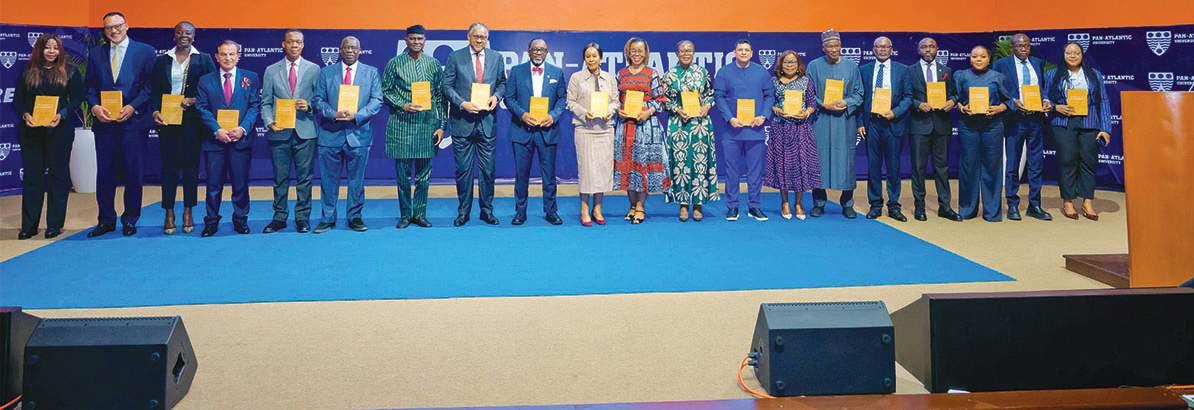
L-R: GM, MTNN, Ifeoma Utah; CEO, Open Data Access Centres, Dr Tunde Coker; Chair, Credit Registry, Mrs. Fatumatu Coker; VC, Wigwe University, Prof Marwan Al-Akaidi; DVC (Academic) PAU, Prof Uchenna Uzo,; DVC (Admin), PAU, Dr. Peter Bamkole; Chairman, Nigerian Sovereign Investment Authority, Segun Ogunsanya; Pro-Chancellor, PAU, Mr Odein Ajumogobia (SAN); Author, Prof Fabian Ajogwu (SAN);, CEO, DesignSpace, Mrs Ifeoma Ajogwu; VC, PAU, Prof Enase Okonedo; Dean, LBS, Prof Olayinka David-West; MD, Guinness Nigeria, Mr Girish Sharma; Chief HRO, MTNN, Esther Akinnukawe; President, Society for Corporate Governance Nigeria (SCGN), Mallam M.K. Ahmad; Director, SCGN, Tajudeen Ahmed; Managing Partner, KENNA, Ituah Imhanze; CEO, MODD Management, Mrs Chioma Okigbo; Chairman, Stanbic IBTC Bank, Mr. Yinka Sanni; General Counsel of Bank of Industry, Dr. Ibukun Omisore
“The Purpose of the Corporation,” the latest work by Professor Fabian Ajogwu (SAN), was presented to the public at the 2026 KENNA-Lagos Business School Lecture, held at the school in Lagos Business last week. The book introduces a set of governance frameworks designed to move corporate purpose from a stated position into a measurable, operational standard.
Professor Ajogwu, Senior Partner at KENNA and Professor of Corporate Governance at Lagos Business School, introduced key governance frameworks at the lecture. The Four Layers of Corporate Purpose (stated, generic, expected, and refined) gives boards a structured basis for assessing where an organisation’s purpose actually stands, beyond what has been written into a mission statement.
Regarded as the Ajogwu Framework for Governance (AFG) model, it establishes ethics as the foundational multiplier across six core governance components: Behavioural Governance, Conscious Capitalism, PurposeDriven Governance, Outcomes-Based Corporate Governance, Sustainability, and the Rule of Law
and Anti-Corruption. The model’s argument is precise: strengthen every other component, but if the ethical foundation is absent, the governance system will produce the appearance of purpose without its substance.
The Purpose Formula, another framework introduced, provides a method for evaluating whether a corporation creates genuine value for shareholders, people, and the planet, or extracts value from the stakeholders and systems it depends on.
Together, these tools address what Professor Ajogwu identified as the core governance failure of the current era: organisations that have declared purpose without the structural means to enact it.
The lecture was more than an intellectual gathering; it was a definitive call to action for corporate Africa.
For instance, the Director-General of the Securities and Exchange Commission, Dr. Emomotimi Agama, captured the essence of purpose-driven integrity: “Regulation can mandate transparency, but it cannot manufacture integrity. Professor Ajogwu demonstrates that when a corporation’s purpose is its pulse, compliance ceases to be a burden and becomes a byproduct. This is the definitive guide for boards ready to stop managing for the regulator and start leading
from within.”
For the Vice-Chancellor of the Pan-Atlantic University, Professor Enase Okonedo, who delivered the opening remarks and later reviewed the book, she examined the treatment of state-related enterprises (entities where government acts as both regulator and shareholder), noting that in such contexts, purpose must be explicit, and accountability must be built into governance from the start, not retrofitted after failures emerge.
Professor Olayinka David-West, Dean of Lagos Business School, welcomed attendees and observed that forums like the KENNA Public Lecture matter most for what they move participants to do after they leave.
On his part, President of the Society for Corporate Governance Nigeria, Mallam M. K. Ahmad, noted the book’s long-term institutional contribution: “Professor Ajogwu distils decades of scholarship into an accessible framework that will shape how we train directors and evaluate boards for years to come.”
The President and CEO of MTN Group, Ralph Mupita, spoke to the continental stakes: “Across African markets, the consequences of corporations that have not thought deeply about their purpose are clear. Professor Ajogwu provides the analytical tools to correct that
failure.”
Professor Mervyn E. King, SC, contributed the foreword, framing the book’s central concern simply: the corporation is among humanity’s most consequential inventions, and its impact depends entirely on the purpose assigned to it and the seriousness of the governance built around that purpose.
He described the four-layer framework as a diagnostic tool that identifies precisely where the gaps lie between what a company claims to be and what its conduct actually demonstrates.
The Executive Secretary/CEO of the Financial Reporting Council of Nigeria, Dr Rabiu Olowo, underscored the investor’s perspective: “Professor Ajogwu’s framework helps us assess which companies are built to endure. The insight that purpose creates value for shareholders, people, and planet, through multiple forms of capital, is one every investor must internalise.”
In a nutshell, the Purpose of the Corporation regarded as a comprehensive examination of corporate purpose, governance, and stakeholder responsibility. It provides practical insights for board members, executives, regulators, governance professionals, scholars, and all who are invested in the evolving expectations of corporate governance.
The Ecobank Smartphone Filmmaking Workshop, a key component of the iRepresent (iREP) International Documentary Film Festival, recently concluded its 2026 edition in Lagos.
The initiative, aimed at empowering young Nigerian creatives aged 18 to 25, highlighted the potential of mobile technology in high-quality storytelling.
Following a rigorous three-day intensive training led by industry giants like Tunde Kelani and Emmy-winner Joel Benson, the workshop culminated in a presentation ceremony where the top participants were recognised for their documentary projects.
The workshop offered substantial financial backing to help the winners further their
and Emmanuel Chidera; while Imo David
received
Other

Arowosola and Adio James Oluwapelumi. Other participants received some rewards including certificates of participation.
The programme provided a hands-on curriculum designed to bridge the gap between passion and professional execution. Key training modules included story development, mobile techniques, interview skills as well as post-production.
Key figures present during the festival included the principal facilitator and legendary filmmaker, Tunde Kelani; Emmy-winning VR/documentary filmmaker, Joel Kachi Benson and actor-filmmaker, Kunle Afolayan.
The collaboration between Ecobank and iREP underscores a shift toward democratising filmmaking. By rewarding mobile-first creators, the bank is positioning itself as a supporter of the “creator economy” in Nigeria. For the winners, the cash prizes serve as seed funding for their next projects.
SMS: 08066066268
The decision of the Court of Appeal to temporarily suspend the David Mark-led leadership of African Democratic Congress has again exposed the controversial nature of the rulings, which undermines confidence in the judiciary’s impartiality, Davidson Iriekpen writes
It is often said that no constitutional democracy anywhere in the world can thrive without a strong, credible and independent judiciary. The courts are not only meant to interpret laws but also to serve as the last hope of the common man, especially when democratic institutions fail or are manipulated. However, in recent years, Nigeria’s judiciary, particularly on electoral matters, has underperformed, leaving the public disillusioned, and democracy on shaky ground.
This disillusionment has deepened since the contentious 2023 general election where every activity suggests a desperate push toward a de facto one-party state. This has in the two years exacerbated disputes in political parties which have ended up in courts. That reality underscores a worrying lack of trust in the Independent National Electoral Commission (INEC), the electoral system, and, regrettably, in the judiciary itself.
In the last two weeks, one issue that has dominated discourse is the decapitation of the David Mark-led leadership of the African Democratic Party (ADC) by the Court of Appeal and INEC.
Currently, democracy seems to be in trouble in Nigeria, particularly now that the major opposition party in the country, the ADC, has been thrown into crisis. The same fate befell the Peoples Democratic Party (PDP), Labour Party and New Nigeria People’s Party (NNPP).
The ruling party, All Progressives Congress (APC), INEC, the judiciary and those who have vowed to hold the opposition political parties down for President Bola Tinubu in 2027 are seen as responsible for this new development.
Throwing the opposition into crisis has followed a regular pattern: The opposition will conduct a national convention and produce leadership; a faction will suddenly emerge, claiming that the people that won the leadership did not follow due process; another faction will go to court to get a declaration or an injunction; then the court will now deliver a confusing declaration, mostly in Latin - maintain status quo ante bellum. Whatever that means, the court itself cannot explain. Then INEC will assume confusion and the cycle continues, exposing how weak institutional guardrails, unclarified judicial orders, and overly cautious regulation can erode the foundations of multi-party democracy.
The current crisis took the same regular pattern. By the middle of 2025, crises had completely enveloped the former
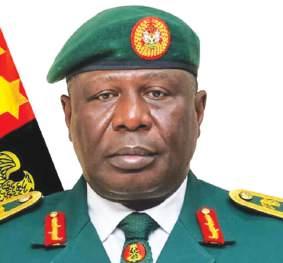
Justice Kekere-Ekun
ruling party, PDP. Leading members of the party decided that it was no longer a viable vehicle for their ambitions. In a country where independent candidacy is precluded, control of a party is the lifeblood of political ambition.
Those of them who desired to quit the PDP had two options. One was to register a new party. For this, they needed the approval of INEC but knew that the electoral umpire under the control of the ruling party was not going to register a new party capable of making the 2027 elections interesting. So, they settled for the second option - an existing party. For this project, they entered a deal with the then existing leadership of the ADC.
The background is simple: On May 17, 2025: A resignation letter was reportedly issued by the ADC Deputy National Chairman, Hon. Nafiu Bala Gombe; July 29, 2025: ADC NEC meeting, observed by INEC, dissolved Nwosu-led leadership with Gombe in attendance and installed a Mark-led caretaker structure; August 12, 2025: The alleged resignation was transmitted to INEC; September 2, 2025: Gombe who did not raise any objection, made a U-turn and filed suit at the Federal High Court, seeking recognition as acting National Chairman and restraining INEC from recognising the Mark-led leadership; September 4, 2025: Justice Emeka Nwite
declined interim injunctions but directed respondents to show cause.
Interestingly, in all of these, Mark was not party to that court case and no one applied to join him. When the application came up for hearing around September 4, the judge declined Gombe’s importuning and, instead, asked him to put all the defendants on notice to enable the court make an informed determination of the issues after granting all involved a hearing.
On September 9, 2025, INEC formally recognised Mark and Rauf Aregbesola as the new leaders of the party. This is important because it gave them access to the INEC’s portal for the purpose of certifying candidates on the platform of the party in Thereafter,elections.
Mark lodged an appeal at the Court of Appeal in which he questioned the power of the court to issue the order inviting the parties to respond to Gombe’s case. My friends who think they know Nigerian law advise – and I verily believe them – that this had them all scratching their heads.
Now, because he was not party to the original case at the High Court, Mark could not appeal against the decision except with permission of the court. He did not seek nor did he receive one. Having not done so, the conditions for a competent appeal did not exist and
the Court of Appeal had no business hearing the appeal.
On March 12, a three-man panel of the Court of Appeal headed by Justice Uchechukwu Onyemenam heard the case and issued their decision. In a 40-page judgment, Justice Onyemenam,“dismissed” the appeal with costs assessed at N2 million.
In his own decision, Okon Abang, the junior judge on the panel whose text ran into 15 pages, ruled that having not secured the permission required for him to appeal, Mark’s appeal was incompetent.
When the judgment was delivered, despite the array of lawyers on its payroll both on staff and as external solicitors, including its chairman, Prof. Joash Amupitan, a Senior Advocate of Nigeria (SAN) and professor of law, it took three weeks for the commission to interpret the judgment and come out with its views.
Surprisingly on April 1, 2026, it dropped a bombshell by announcing the withdrawal of recognition for the Senator Mark-led NWC of ADC while refusing to recognise Gombe as acting National Chairman, pending the substantive suit at the Federal High Court.
Amupitan did not stop there, he also advised the Mark-led NWC not to proceed with its planned national convention he had approved.
Analysts have argued that whether the status quo ante bellum is pre-Mark leadership or post, it is not INEC’s business, as it is still the internal affairs of ADC. According to them, what should concern the commission is a direct order on it by the court or the final decision of the Supreme Court, recognising a faction or nullifying everything done by a faction. This is where many suspect INEC’s position in the matter instead of seeking the court’s clarification.
Interestingly, it is the same INEC that took many months to obey the Supreme Court judgment on Labour Party. First, courts must recognise that in politically sensitive disputes, clarity is as important as neutrality. Preservative orders must define their baseline. Second, the electoral commission must balance caution with functional continuity. Where ambiguity exists, judicial clarification should take precedence over creating institutional vacuum.
While INEC’s role in the saga cannot be swept under the carpet, that of the Court of Appeal with its vague and incongruous ruling cannot be wished away.
Military officers are trained to kill terrorists, and not to pamper them; so, when the Chief of Defence Staff, General Olufemi Oluyede, recommended the treatment of terrorists with kid gloves, it sparked outrage.
Speaking during an Armed Forces lecture in Abuja, Oluyede suggested that “terrorists” should be given a chance to repent rather than being eliminated. He said while many Nigerians believe “terrorists” should be killed for their crimes, the military must still create a path for those willing to surrender.
Comparing terrorists to the prodigal son, who took his portion of inheritance from his father, left home, squandered it, and returned
home to his father, Oluyede argued that it is important to allow terrorists to repent of their own volition rather than killing them.
Nigeria has a constitution, if the country uses the Bible to forgive everyone, then what’s the need for the army? Let pastors be handling the security of the nation since it’s forgiveness that’s being used.
Framing terrorists as prodigal son by top security officials accommodates and tolerates criminality instead of confronting it. It also blurs the moral and legal boundaries required for an effective security response. The prevailing approach helps explain why efforts to curb killings have struggled to deliver results for years.
When a government begins to frame terrorists in familial terms, it blurs the moral and legal lines that must remain clear in any serious security response. It also shows that the federal government is not ready and unwilling to protect its citizens.
How can someone confirmed to have killed, displaced, and dehumanised citizens be treated with such dignity?
The rhetoric is nothing but an encouragement to the average Nigerian to commit evil, disturb the peace of communities, shed blood, and inflict pain on powerless and unarmed people, knowing fully well they may still be given a second chance to live as if they committed nothing.
The Inspector General of Police, Tunji Disu’s proposal for 60-month transition period in his 75-page framework on state police will not only frustrate President Bola Tinubu’s efforts to make state police a reality during his tenure but will also provide the opportunity for the next administration to jettison the scheme, Ejiofor Alike reports
It is common knowledge that before the current Inspector General of Police (IG), Tunji Disu took over from his predecessor, Kayode Egbetokun, the Nigeria Police authorities and the previ- ous IGs, including Egbetokun, were all opposed to the creation of state police.
At a meeting with former President Goodluck Jonathan in August 2012, retired IGs had declared that state police would only be an evil tool for state governors.
The retired police bosses told the then president that they were disturbed by the call for the creation of state police from certain Nigerians.
“We are of the opinion that the clamour is not in the interest of this nascent democracy,” the IGs said.
The ex-police chiefs – Muhammadu Yusuf; Sunday Adewusi; Gambo Jimeta; Aliyu Atta; Ibrahim Coomasie; Musiliu Smith; Tafa Balogun; Sunday Ehindero and Mike Okiro – warned that the establishment of state police would “bring us back to the days of ethnic militias where the OaaaaaaPC, MASSOB, Egbesu, ECOMOG and Yankalare held sway.”
In November 2023, Okiro, re-echoed his opposition to state police, saying that the decentralisation of the Nigeria Police Force would not achieve its desired objective.
Okiro spoke with journalists on the sidelines of the 2023 Convention of the Old Seminarians Association of Nigeria, hosted by the Clerk to the Senate, Chinedu Akubueze, in Abuja.
According to him, state police would translate to duplicating forces in the country, adding that the nation was not ready for that.
He wondered how the states and local government areas that could not effectively pay the salaries of their workers would be able to fund their own police.
Okiro insisted that the only way the state police could work was for Nigeria to embrace the Canadian model.
The Canadian model, according to him, would involve the states recruiting police
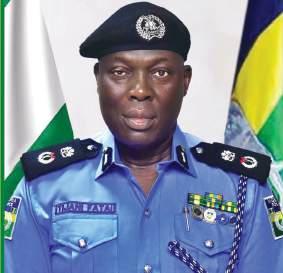
personnel who would be funded by the federal government.
“Before the advent of what we have now, we had ‘dandoka’, we had police in the West, and we also had police in the East.
“Local governments had their police, but because of the behav- iour of the local police officers, during the time of the former Head of State, General Yakubu Gowon, in 1971 or thereabout, he turned it to the Nigeria Police Force.
“I am opposed to the state police because of the benefit of hindsight—how they behaved in those days—unless you want to throw away the benefits of history,” he said.
Also, while speaking on ARISE News Channel in May 2025, Okiro also reiterated his opposition to state police. He insisted that state police would translate to duplicating forces in the country.
“It means that you are having 36 police forces in the country, and it will be difficult right now, for Nigerians; that kind of arrange- ment, maybe in the future,” he said.
Successive IGs have never hidden their disdain for state police. In fact, Egbetokun’s sudden resignation was allegedly linked to his opposition to the creation of state police, which President Bola Tinubu is very passionate about.
Sources close to the Louis Edet House Police Headquarters in Abuja claimed that Egbetokun was asked to resign for opposing his boss on state police. It would be recalled that even Egbetokun’s two predecessors - the late Solomon Arase and Sunday Ehindero, had cause to disagree with his position on state police.
However, in a bid to key into Tinubu’s agenda, Disu has submitted a 75-page Framework
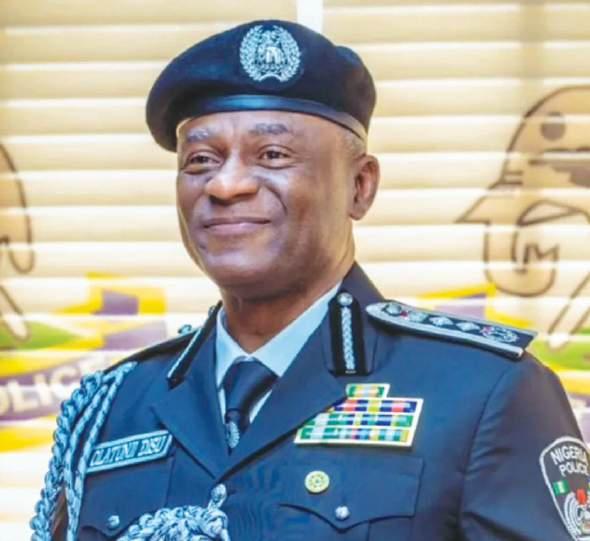
on the implementation of state police to the National Assembly.
Many believe that some of his recom- mendations in the 75-page document will frustrate Tinubu’s administration’s efforts to create state police and also expose the new security outfit to the same ills that made the federal police incapable of tackling violent crimes.
For instance, the new IG proposed a 60-month phased implementation roadmap. He also proposed that about 60 per cent of Nigeria’s existing police personnel would move to state police, while 40 per cent would remain within the federal structure.
The 60-month transition means the implementation will drag on for the next five years.
The implication is that state police will not be fully implemented within the life of Tinubu’s administration.
There is no guarantee that Tinubu’s successor will favour the creation of state police. A 60-month transition period will only give the next administration the opportunity to abandon the scheme.
Incidentally, Okiro has dramatically made a U-turn and threw his weight behind the creation of state police, rejecting the 60-month transition period.
Speaking on ARISE NEWS last week, the former IG argued that decentralising the force would significantly improve security. He however warned that the proposed five-year implementation timeline was too long.
“Five years is too long. While security reforms cannot happen overnight, the timeframe should be shorter and more realistic,” he stated.
Another pitfall in Disu’s proposal is the deployment of 60 per cent of the existing police personnel to the states.
Though Okiro supported this recom- mendation, many believe it will expose the state police to corruption, which is the bane of the current federal police.
Many have also supported Disu’s proposal on the ground that recruiting fresh hands in the states will take a longThistime.claim is also not correct because many states have trained Forest Guards, Civilian Joint Task Force, Neighbourhood Watch, and other local vigilantes that can be converted to state police personnel on short notice.
The National Assembly should identify other pitfalls in Disu’s proposal and dis- card them to ensure swift implementation of state police.
The Lagos State Police Command last said its operatives have arrested 47 suspects, recovered 14 vehicles and 14 different firearms and calibre of ammunition, among others from armed robbers, cultists and fraudsters within two weeks.
This feat, it added, was recorded under the new Commissioner of Police, CP Olayiwola Tijani, who assumed office on March 26, 2026.
Giving further details, Tijani said among the suspects was a notorious thug and suspected armed robber, Jamiu Yaya, at Canal area, Campus Street, Amukoko who had been on the wanted list. He said a follow up search at his residence led to the recovery of one locally made pistol, two live cartridges, one empty shell of K2 ammunition and suspected charms.
According to him, his largest haul of arrests was made on Sunday, April 5, 2026, when the operatives of the command arrested 21 suspects involved in cult-related activities.
Tijani said the suspects were apprehended at about 0300hrs at a hotel in Ajao Estate while celebrating the birthday of a notorious cult member known as “Actor,” who is currently at large.
Recovered exhibits, he added included one locally made cut-to-size single-barrel gun, Aiye cult-branded envelope, Aiye cult-branded plastic bottles, one laptop and 23 mobile phones. He said the suspects are currently in police custody, while efforts are ongoing to arrest the fleeing suspect.
Also arrested was a suspect who fraudulently acquired multiple exotic vehicles valued at over
₦520 million using deceptive financial instruments. It is hoped that CP Tijani’s crime-busting feat is not a one-off or show off. Hope he will sustain his fight to rid the state of crime.
In the past, residents have seen that when a commissioner of police is posted to the state, he would pretend to be effective in the first few months of arrival, then go to sleep throughout his tenure. This should be the case here. Crime-busting needs to be sustained.
Lagos is bleeding with crimes. There are many ungoverned spaces where thugs, cultists, miscreants live like kings, robbing, harassing, intimidating and disturbing public peace without challenge.
Most of the DPOs are tired or simply ineffective, leaving criminals to run amok.
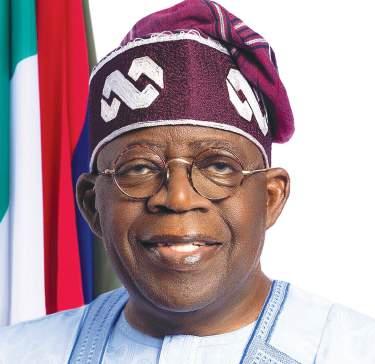
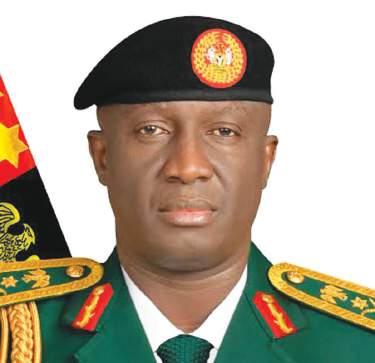
Last week’s killing of Brigadier-General Oseni Braimah and several soldiers in coordinated attacks by Boko Haram and ISWAP in Borno State has once again revealed that the insurgency war is far from abating, Wale Igbintade writes
The Commander of the 29 Task Force Brigade Headquarters, Brigadier General Oseni Braimah, and 17 soldiers were among the latest casualties in last Thursday’s coordinated attacks by suspected Islamic State of West Africa Province (ISWAP) fighters on military formations in Benisheikh, Kaga LGA, as well as Ngamdu and Pulka in Gwoza LGA of Borno State.
The insurgents reportedly invaded the three military formations with heavy gunfire and explosives, killing at least 18 soldiers and officers, including the General, and leaving several others critically injured.
Local sources in Benisheikh town told journalists that the insurgents reportedly fired at the military facility sporadically, causing numerous casualties.
They explained that civilians, other security operatives and scores of ISWAP terrorists were also killed during the simultaneous midnight attacks. According to sources, the insurgents attacked Benisheikh town and set many trucks and commercial vehicles ablaze. The assailants reportedly killed motorists and passengers who were in transit and stopped to pass the night in the town, due to the routine closure of the Maiduguri-Damaturu Road in the evening.
Other locals said the terrorists first launched the attack in Pulka and Bakin Ruwa at about 10:30pm on Wednesday, where they overran a military base, setting several pieces of hardware ablaze.
According to reports, the terrorists also looted food items from shops in Pulka town, and destroyed other facilities, including machines and equipment of a road construction firm, Decency Associates, where they set ablaze vehicles worth hundreds of millions of naira.
Brigadier General Braimah has added to the growing list of high-ranking military officers killed by Boko Haram and ISWAP terrorists in recent times.
In the past few weeks, the two terrorist groups have carried out a series of deadly and coordinated attacks on military and police formations across Borno and Yobe states, killing soldiers, police officers and civilians.
On February 16, 2026, Lt. Col. O. C. Okolo lost his life, alongside other soldiers during a Boko Haram attack at Mandaragirau in Biu Local Government Area of Borno State.
Last March, Boko Haram fighters ransacked Ngoshe town and launched simultaneous blasts at UMTH gate, Post Office and Monday Market in Maiduguri metropolis, killing at least 25 people and injuring several others.
The military also lost at least three command-
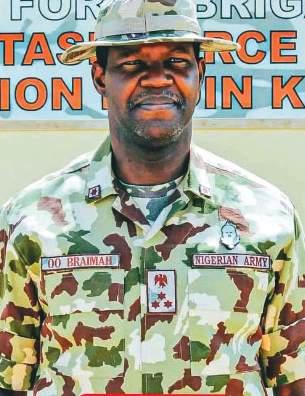
ing officers in charge of forward operations bases following attacks by Boko Haram and the ISWAP at different locations within seven days. The three commanding officers were
Major U.I. Mairiga, who headed the Mayenti base; Lt-Col Umar Faruq, commander of the Kukawa base and the 101 Brigade; and Lt-Col S.I. Iliyasu, who served in Konduga.
Major Mairiga was killed on March 1 when Boko Haram terrorists attacked his base in Mayenti, Bama LGA. On March 3, 14 soldiers were reportedly killed during a coordinated attack on a military base in Ngoshe, Gwoza Local Government Area. A senior military officer was killed, while more than 100 people were abducted.
On March 6, the Commanding Officer of the 222 Battalion in Konduga, Lt-Col Iliyasu, was killed along with several soldiers during another attack by Boko Haram insurgents. On the same day, some personnel, including one Lieutenant J.O. Ejeh, attached to the 21 Special Armoured Brigade, were also killed during an ambush.
On March 9, insurgents overran a military camp in Kukawa Local Government Area of Borno, killing the commanding officer, Lt-Col Faruq, alongside several soldiers.
On January 28, Boko Haram fighters attacked a military formation in Damasak, killing seven soldiers, including the commanding officer, during an ambush near the town. The terrorists reportedly ambushed a patrol
team, capturing the officer before executing him alongside other personnel.
Last November, in what could have been considered a sacrilege, the commander with the Nigerian Army’s 25 Task Force Brigade, Brig. Gen. Musa Uba, was killed by ISWAP fighters who then taunted Nigerian authorities by releasing footage about his death after he was captured.
Last week, the forest guards that was launched recently and deployed to some states across the country with the hope that it would be a game changer in the fight against insecurity, was hit when five of its personnel, including a commander, were killed by armed bandits in Nuku community in the Kaiama Local Government Area of Kwara State. It was gathered that the suspected terrorists, who stormed the community, also destroyed their motorcycles and burned down several buildings in the community.
It was also learnt that the patrol vehicles of the police in the area were set ablaze during the attack. Some members of the community said the area was thrown into confusion and panic as a result of the incident, leading to villagers running helter-skelter in search of a safe abode.
The frequent ambush attacks and raiding of military bases particularly in the North-east, North-west, and North-central, where the military is battling insurgency and banditry, are increasingly showing a worrying trend.
Meanwhile, President Bola Tinubu last week in a statement by his Special Adviser on Information and Strategy, Bayo Onanuga, expressed sadness over the loss of the soldiers, he urged the leadership of the Armed Forces and all soldiers on the frontline not to be discouraged, but to draw strength from the nation’s deep appreciation for their sacrifices. He called on Nigerians and the media to stand with the military in the fight against insecurity.
While many Nigerians on various social media platforms have urged the president to stop the killings of military officers, others have urged the government to place more priority on human lives like other countries.
Those who spoke with THISDAY emphasised the need to increase the resources and training available to security agents. This, they added, could include providing better equipment and weapons, as well as training in the latest tactics and techniques for dealing with terrorist groups and other emerging threats.
They also made a case for increased intelligence and surveillance capabilities that would help in tracking down those responsible for
the killings and bringing them to justice.
It was not only security personnel that suffered casualties as many civilians were also killed. For instance, in Kebbi State, the police confirmed that 44 persons were killed.
Also, no fewer than 61 bodies of security operatives and civilians killed in bandits’ attacks on Bagna and Erena communities in Shiroro Local Government Area of Niger State were been recovered.
Residents said the corpses were retrieved from surrounding bushes days after the abduction. Among the victims was the vigilante commander, identified as Manga. He was said to have been rescued alive after sustaining gunshot wounds during a gun battle with the attackers but later died from his injuries.
In Plateau State, eights persons were also killed on Thursday night when gunmen attacked Vole community in Kwatas district, Bokkos Local Government Area.
So alarmed with the loss of lives, the President of the Trade Union Congress (TUC), Festus Osifo, called on the Tinubuled government to immediately provide the state-of-the-art equipment and get the right technology for the frontline troops to confront the insurgents.
He said: “As you are fully aware, we’ve had challenges on issues bordering on insecurity in this country, maybe for over 15 years now. Since around 2010, we’ve had that challenge as a country, and it has persisted.
“You would recall that about a week plus ago, there was also another attack in Plateau State, in Angwan Rukuba, Jos North, where tens of Nigerians were killed. Yes, this is one death too many. It has been recurring over time, and this is a sad one that people were just on their own, celebrating and gunmen invaded them and started shooting at them and a number of them died.”
Osifo, who described the gruesome killing as disheartening, said it was time the federal government took decisive steps to save the lives of Nigerians.
“It is really sad to see Nigerians being killed like chickens. It’s really appalling to see Nigerians being killed in a way that people are being slaughtered. It is now becoming a norm that when people are killed, we only release press statements, we do a visitation, we go back and the next day it continues,” he said.
While acknowledging the valiant efforts of security agents, TUC president charged them to do more and implored the political class to provide them with the requisite tools to confront the terrorists.
Nigerian politicians have once again carried out another successful coup against the people. They have fired up a nationwide frenzy about the 2027 general elections just as the democratic space in which those elections will take place is dying. Those yearning for paradise had better hang their hopes up in the air. Paradise is hereby postponed till after the elections.
There is no point complaining about hunger in the land when abundant food is promised as a reward of the forthcoming elections. No point weeping over cost of electricity, basic drugs, transport fares or even mundane things like house rents and school fees. Let us just focus on the forthcoming election. After the elections, we will arrive at a place to find paradise waiting. It does not matter what promises were made by the ruling party in 2o22/23. Those ones have expired.
Even more pointedly, the entire rhetoric about the 2027 elections has been narrowed even further. It is now mostly about the political plight of President Tinubu. Specifically, it is all about whether Mr. Tinubu will be returned to power for a second term. The plight of democracy and the future of Nigeria’s democracy has now been made synonymous with the fate of Tinubu’s troubled mandate. Along with this second term narrative matter is the continued hegemony of the ruling APC. The ruling party has metamorphosed into a political behemoth. It is poised to impose a partisan monolith on the nation. It is now a political sin to challenge or criticize the excesses of the APC in its hardly hidden aspiration to go into the 2027 elections as a virtual one-party contestant.
The APC has gobbled literally all the state governors and their retinue of political attachees. It has stationed hatchet men in virtually all the other parties to ensure they remain in endless crisis while creating a façade of a multi -party democracy. In the interim, there seems to be a concerted operation to continuously weaken the other parties to a point where they can at best only put up a weak appearance during the election. Yet, a cardinal tenet of democracy is the existence of viable credible parties. A landscape in which rival parties are deliberately weakened by the party in power is an affront on democracy.
On their part, the opposition platforms are in a desperate struggle for survival. Easily the most credible group, the ADC, has been struck a lethal blow with its registration literally held in abeyance by an unholy alliance of the judiciary and the almighty INEC. Before it can behave like an opposition party, the ADC has now to return to court to fight for its very legal existence. You cannot oppose a ruling party politically when your party leadership is of questionable pedigree.
In all the raging brickbat about the 2027 elections, neither the government nor those politically opposed to it have spared a thought about the plight of democracy itself. The critical question, to my mind, is this: Can you have credible reliable elections when the major markers of democracy are in deficit? Yes and no.
The ideal of liberal democracy presupposes the existence of a society in which the ideals of a safe society, existence of authentic parties, freedom of expression through a free media, equitable judiciary, a credible electoral umpire and a definable civil society are present to a reasonable extent.
In recent years, a strange definition of democracy has emerged as authoritarian leaders hustle to be accommodated in the bandwagon of democracy. Something called “illiberal democracy” has emerged in places like Hungary, Russia and Turkey to an extent. In illiberal democracies, elections can be held as a seasonal ritual of democratic appearance. No need worrying about media freedom, partisan competition, citizens rights or the credibility of the electoral process and the agency that referees elections. All that is important is the fact of a scheduled election and the reality of a pre-determined outcome usually in favour of an authoritarian incumbent.
We are looking at Russian elections under the endless reign of Vladimir Putin. Opposition parties exist only in name. Opposition figures are hounded down, arrested, jailed and eliminated in prison. Vocal opponents are chased away or hounded into exile where state sponsored goons go after them with vials of poisonous substances. Vocal and influential journalists and opinion leaders are gunned down in broad daylight in public spaces to further traumatize and frighten the public. On result day, everybody already knows the outcome of the “election”! Democracy is alive. To every nation its own form of democracy- “appropriate democracy”.
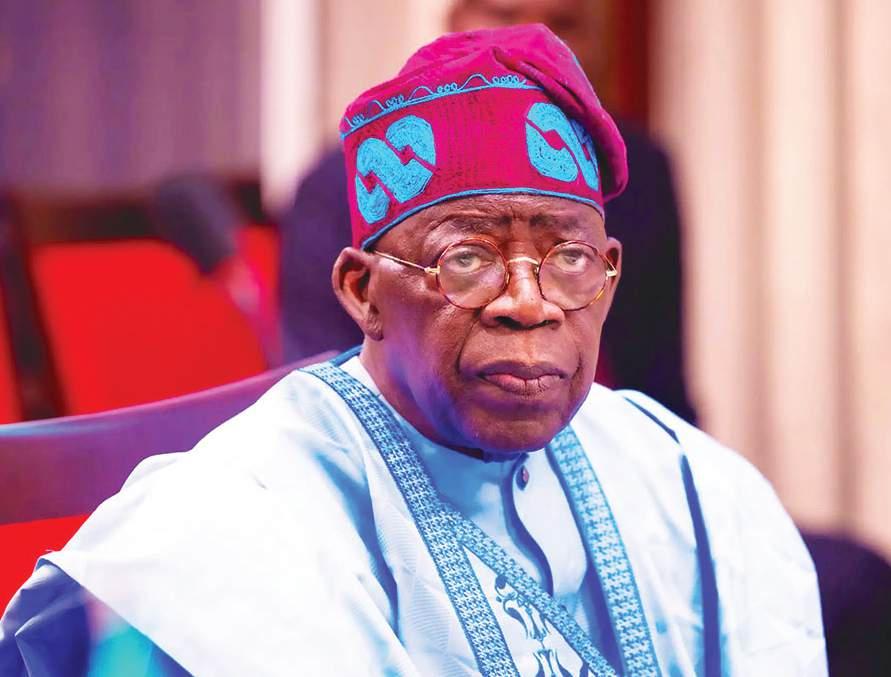
African has in recent times displayed its versions of this Russian template perhaps with less bloody sophistication. Uganda, Cameroun, Congo Brazzaville …
In today’s Nigeria, there is a creeping rehearsal of the curtailment of democracy as a concept and a culture. We may be hurtling towards an untidy African variant of illiberal democracy. Citizens freedom of movement throughout the length and breadth of the federation has been severely curtailed by a crippling insecurity. Major highways in the top half of the country are under the control of bandit squads, terrorist gangs and all manner of gun-wielding alternate power contestants. As we write this, the unrelenting insurgency of Boko Haram and its affiliates has struck again, claiming the lives of many armed forces personnel including a general.
In some parts of the country, even elected government officials at state level are openly denying fellow Nigerians freedom of access to and movement in their states for reasons of partisan political differences.
Freedom of expression and the very existence of an independent media is constantly under threat as officials at different levels of government. Federal Capital Territory Minister, Nyesom Wike, has openly threatened to shoot a television journalist if he could. The Governor of Niger State, Umar Bago, has found a hobby in routinely harassing, media houses, ordering the arrest and indefinite detention of journalists in his state. Between 2024 and 2026, he is on record to have shut down Badeggi FM, a private radio station, and openly threatened heavy reprisals against journalists who report facts about insecurity in parts of the state. In parts of the country, open media criticism of government officials has become an offence punishable with unwarranted indiscriminate police arrests and detentions.
A democracy with a doubtful electoral umpire is a joke. The reputation of INEC as an electoral umpire remains in tatters. The public hardly believes that INEC could ever be credible or independent. In fact, there is a street side belief that those who
go out to vote are merely fulfilling a seasonal ritual because INEC would end up announcing whatever results its paymasters want.
As we write, INEC is embroiled in needless controversy over the registration of the ADC, the umbrella platform of credible opposition politicians. INEC has been accused of relying on a suit filed by a party official who had long resigned to discredit the leadership of the APC and therefore deny the party registration. As things stand, the ADC cannot proceed with its congresses leading to a convention because its registration is now subject to an unwarranted litigation. Depending on the outcome of the judicial process, the fate of the ADC remains up in the air even as the ruling APC soars into uncontested dominance as the virtual single party for the 2027 contest. What is in the making is more like democracy by exclusion.
Most ordinary Nigerians hardly spare a thought about the judiciary. The common conception is that our judiciary is an instrument in the hands of the political class. More often than not, judgments on political cases are often determined in favour of incumbent powers in return for tenure, cash or material favours. While the judiciary is meant to maintain a certain independence, judges depend on the executive for their appointments, promotions and general welfare budget. In recent times, the executive has resorted to material blackmail of judges to keep their allegiance. Luxury quarters, expensive SUVs and lavish vacations are provided for judges without questioning. In the end, cases brought against incumbent executives tend to be predetermined in the courts of a badly compromised judiciary at federal and state levels. The widespread understanding in Nigeria is that whoever pays the judge owns the judgment.
Above all requirements, the existence of a democracy largely depends on the popularity of the sovereign’s mandate. The leader of a democracy derives his mandate from the populace. Therefore, the best democracies are those in which the leader is immersed among the people. In a republican sense, the leader is seen as one with the people. He actively and positively identifies with the lowest common denominator of the populace. He is seen to identify with the people in their moments of grief and elation. A sovereign that sees himself as above the people belongs more to an authoritarian realm than a democracy.
An alienated and distant sovereign is one sign that a democracy is dying. Barely a fortnight ago,
there was an orgy of killings in Jos, Plateau state. Over fifty lives were lost in an assault by bandits in an eruption that is a mere repeat of what has become a regular feature of the mid -section of the country. President Tinubu was naturally expected to visit Jos to empathize with the bereaved and the injured. Reportedly, the President travelled to Jos but arrived just in time for the airport to be closed for lack of runway lighting. He therefore took the most curious decision of a leader. He ordered that representatives of the affected community should meet and greet him at the airport lounge! What ensued was a show of shame.
Yet presidential spokespersons paid with public funds have stepped forward to justify and rationalize this affront on public sensibility. Leadership devoid of genuine compassion is an insult on the democratic ethos. On a number of previous occasions, Tinubu has had to be reminded during some of his numerous junkets abroad that he should at least respect the dead and the injured by either rushing back home or visiting on his return. These appeals have often fallen on deaf ears in utter disregard and disrespect for lives lost, injuries sustained or livelihoods erased by our all too frequent and uncontrolled violent eruptions of insecurity.
The usual knee jerk executive response has often been a presidential directive for the relevant service chiefs to relocate to the theatre of current tragedy. No one knows the efficacy of these reflex orders as the mayhem and killings repeat ever so often in the same places where service chief and commanders have been known to be ordered to relocate to! Both the insurgents and the victim public hardly take these presidential directive seriously. Nor does the larger public take threats to bring trouble makers to book. Soon after the threats, the killers and insurgents return with even greater ferocity and unleash more mayhem and spill more blood. So much for rituals of ineffectual power and presidential insensitivity backed by braggadocio.
What has emerged in Nigeria’s recent encounter with democracy is a curious situation. The rituals of electioneering have proceeded for years without attention to the evolution of a democratic society or its underlying culture. In that sense, Tinubu is merely continuing and deepening an inherited tradition. An election will be held in 2027. But the outcome will be a disservice to democracy properly understood.
Arsenal’s first Premier League title dream in 22 years was dealt a major blow as Alex Scott’s secondhalf strike gave Bournemouth victory at Emirates Stadium.
Defeat meant the hosts missed a chance to extend their lead at the top of the table to 12 points before second-placed Manchester City’s game against Chelsea on Sunday.
Mikel Arteta called for supporters to arrive early for an important match in the Gunners’ season and get behind the team, whose hopes of Carabao Cup and FA Cup silverware have been crushed in recent weeks.
But it was Bournemouth who looked the most at ease initially, and they punished Arsenal when Junior Kroupi finished off Adrien Truffert’s deflected cross from close
range for an early breakthrough.
The home side rallied after going behind and levelled when Viktor Gyokeres slammed in a penalty after Ryan Christie was punished for handball when trying to block a shot.
There was a tense atmosphere inside the stadium and Arsenal manager Arteta tried to force the contest in his team’s favour when he brought on the attacking trio of Eberechi Eze, Leandro Trossard and 16-year-old Max Dowman. But it was Bournemouth who produced a moment of quality to win the game when Alex Scott ran on to Evanilson’s flick on the edge of the penalty area and shot past David Raya to stun the silenced home fans.
It was a goal that ensured the Cherries extended their unbeaten run in the league to 12 matches, leaving Arsenal deflated.
Speaking after the match, Arteta said: “It’s extremely disappointing. It’s a big punch in the face; it’s about how we react now.
“Credit to them for what they did, they haven’t lost in 11 games for a reason.
“They got a lot of things right. When we had anticipation in the first half, when we regained the ball, we were far from efficient.
Super Eagles forward, Victor Boniface has opened up on depression after a tough period with injuries, weight criticism and failed moves. Boniface’s rise to the top of his career once felt unstoppable. The powerful striker had become a key figure for Bayer Leverkusen and looked set for even bigger stages. But over the past year, everything that could go wrong, almost has.
Now, the Nigeria international has spoken openly about his mental state after a difficult run of injuries, failed transfers and personal setbacks.
“Depression real die,” Boniface wrote on his X (formerly Twitter) page.
It was a short message, but one that captured the weight of a year that has tested him both physically andBoniface’semotionally.struggles began with injuries that repeatedly halted his progress. A groin problem in early 2024 required surgery and ruled him out of the Africa Cup of Nations. Later that year, a thigh injury suffered on international duty ended his season early.
Things worsened when knee problems resurfaced, forcing him to undergo surgery again in January 2026. The injury has kept him out for most of the current
In a notable advancement for Kenya’s urban and economic growth, NBA Champion, Masai Ujiri’s Zaria Group and Kenya Railways Corporation today formalized a landmark agreement with the signing of a long-term lease for the development of a modern indoor arena and adjacent mixed-use entertainment district.
The agreement, executed in the presence of His Excellency, Dr. William Samoei Ruto, President of the Republic of Kenya, establishes the framework for the development of a transformative mixed-use, arena-anchored district in the heart of Nairobi—positioning the capital as a leading center for sports, entertainment, culture, and commerce across East Africa.
At the core of the development is a modern, indoor, multi-purpose arena—designed to host international sports, concerts, conferences, and cultural programming at scale. The project is expected to create over 25,000 job opportunities annually, spanning construction, operations, events, hospitality, retail, and the broader creative economy.
This agreement reflects a shared
vision between the public and private sectors to unlock the economic potential of strategic infrastructure— leveraging Nairobi Railway City as a platform for long-term, inclusive growth. This marks a pivotal step in further realizing Nairobi’s future as a globally competitive city. By activating strategically located
land, this project is creating jobs, driving investment, and building infrastructure that will serve generations. The development is structured as a long-term agreement, aligning with Kenya’s national infrastructure priorities and the existing Nairobi Railway City master plan.
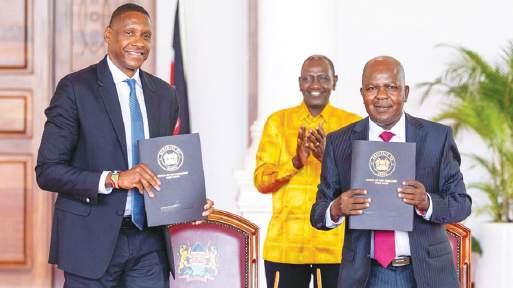
campaign, limiting his ability to regain rhythm and confidence.
Away from the pitch, he also endured a frightening personal ordeal. In October 2024, just hours after scoring a winning goal for Leverkusen, Boniface was involved in a serious car accident on a German highway. The vehicle was badly damaged, but he escaped with only minor injuries.
Just days earlier, he had been part of the Nigerian squad stranded for more than 15 hours at a remote airport in Libya, without food or water. The experience led the team to boycott their AFCON qualifier and added to an already stressful period.
His difficulties have also affected his career moves. A proposed transfer to AC Milan collapsed in August 2025 after medical tests raised concerns about his knee. Earlier in the year, a potential switch to Saudi side Al-Nassr also fell through.
Those failed deals, combined with his injury record, have seen his market value fall sharply and left him fighting to rebuild his reputation.
Boniface’s loan move to Werder Bremen was meant to offer a fresh start, but it has instead brought fresh challenges.
NRLA Set to Ignite Lagos with Africa All-stars Rugby Exhibition Match
The Nigeria Rugby League Association (NRLA) has announced the Africa Allstars exhibition match slated for Sunday, April 19, at Alaro City, Lagos, a landmark event showcasing the rise and unity of women’s rugby league across the continent.
The match will host a historic clash between the Africa All-Stars and Nigeria’s national women’s team, the Green Falcons, currently ranked among the top emerging rugby league nations globally.
This exhibition comes at a defining moment for African rugby league, following the Green Falcons’ extraordinary international breakthrough.
The team recently made history by defeating Kenya to qualify for the Rugby League World Series in Canada, becoming the first African women’s team ever to achieve this feat.
Building on that momentum, the Green Falcons delivered an outstanding performance on the global stage, finishing as silver medalists at the World Series, firmly establishing Nigeria and Africa as a rising force in international rugby league.
The Africa All-Stars team reflects the spirit of continental collaboration, bringing together elite female athletes from Nigeria, Kenya, Ghana, Côte d’Ivoire, and
Uganda. This diverse squad symbolizes a new era of opportunity, visibility, and excellence for women’s sport in Africa. The exhibition match is expected to draw international attention, with representatives from the International Rugby League in attendance, further underscoring the growing global relevance of the sport on the continent.
Beyond the game, the event represents a powerful statement of progress, celebrating African talent, inspiring the next generation of female athletes, and reinforcing Nigeria’s position at the forefront of rugby league development in Africa.
A Message from the Chairman, Nigeria Rugby League Association, Abiodun Olawale-Cole, “The Africa All-Stars Exhibition Match is more than a game, it is a celebration of how far we have come as a continent.
The Green Falcons’ historic qualification for the World Series and their silver medal finish on the global stage has shown the world what African talent is capable of.
Bringing together players from across Africa to face our national team here in Lagos is a powerful moment for the sport, and a glimpse into its future. We invite everyone to be part of this historic occasion.”
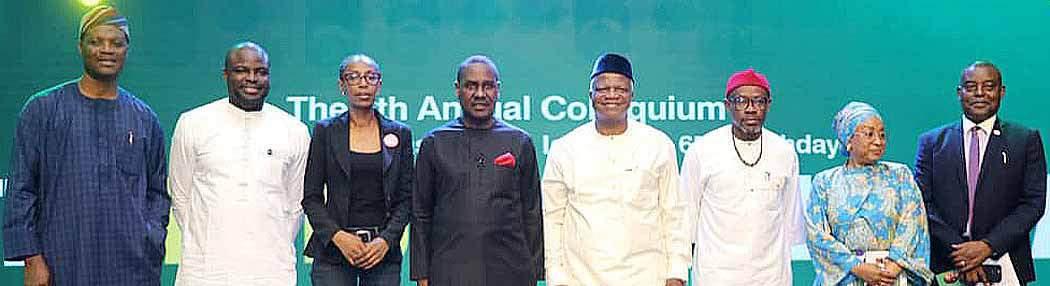
L-R: Founding Director, Centre for Housing and Sustainable Studies, University of Lagos, Professor Gbenga Nubi; Founding Partner of Future Africa, Mr. Iyinoluwa Aboyeji; Founding Executive Director, Enough is Enough Nigeria, Ms. Opeyemi Adamolekun; the celebrant and Senior Pastor, Trinity House, Pastor Ituah Ighodalo; representative of the Keynote Speaker, Chief Olusegun Obasanjo/Deputy CEO, Olusegun Obasanjo Leadership Institute, Professor Adedeji Daramola; Professor of Economics and Data Analytics, Lagos Business School, Pan-Atlantic University, Professor Bongo Adi; Senior Strategic Consultant for UN System Engagement in North-west Nigeria, Mrs. Maryam Uwais; and Director General, Nigerian Institute of International Affairs, Professor Egosa Osaghae, during the sixth Annual Colloquium in honour of Pastor Ighodalo on the occasion of his 65th birthday in Lagos…Friday
SIMONKOLAWOLELIVE!
simon.kolawole@thisdaylive.com, sms: 0805 500 1961
The Independent National Electoral Commission (INEC) has stirred a furore in the polity with the derecognition of the David Mark-led national officers of the African Democratic Congress (ADC). Alhaji Nafiu Bala had challenged the Mark leadership in court, maintaining that he did not resign as deputy national chairman and that the resignation of Chief Ralph Nwosu as chairman in 2025 meant he was automatically his successor. Mark asked the Court of Appeal to stop the suit, arguing that the Supreme Court already ousted court jurisdiction in the internal affairs of political parties. INEC, in its own defence, agreed with Mark. The appeal court sent the case back to the lower court for trial and ruled that “status quo ante bellum” be maintained. That is the matter we have been trying to settle.
What is “status quo ante bellum”? INEC said it means… wait, what did INEC even say? The commission said it does not want to recognise any faction until the court cases are exhausted. When you go to the INEC website, the column for the names of ADC’s national officers is populated with “by court order”. Was that the status quo ante bellum? “Status quo ante bellum” means “before the start of hostilities”. Was “by court order” the status before the hostilities? I think not. As far as we know, hostilities started after INEC recognised Mark as chairman. Bala was at his inauguration. If hostilities started before then, we do not know. INEC has effectively destroyed the “res” of the lawsuit by derecognising Mark even before the trial court could grant or deny a declarative relief.
rule Nigeria for a second term, and become, possibly, president for life,” he alleged.
INEC had boycotted the November 2000 Afenifere/ Falae convention that produced Mamman, preferring to recognise the one by the Ige/Song faction which elected Alhaji Adamu Ahmed Abdulkadir as chairman. Despite recognising Abdulkadir, Dr Abel Guobadia, the INEC chairman, still wrote to Mr Ufot Ekaette, the SGF, in February 2001 to declare that the AD was in factions. Section 68 of the 1999 constitution allows defectors to keep their elective positions if their party is divided. That Guobadia letter set the stage for the defection of three AD senators — Wahab Dosunmu (Lagos West), Yemi Brimo-Yusuf (Oyo North) and Fidelis Okoro (Enugu North) — to the PDP in May 2001. This, I believe, started a troublesome tradition in this era. Defections are now two for one kobo.
‘AMPUTATING’ AMUPITAN
There is a growing call by the opposition that Prof Joash Amupitan should resign as INEC chairman. Some Islamic clerics first asked him to resign days after his appointment in October 2025 because of his links to claims of Christian genocide in northern Nigeria. Just when he seemed to have survived it, a storm broke out over his derecognition of the David Mark-led leadership of the African Democratic Congress (ADC). There are now allegations that he is a supporter of the All Progressives Congress (APC) based on past tweets, which he has denied with a public statement. Every INEC chairman faces calls for resignation, but they usually enjoy the honeymoon period — unlike Amupitan. Wahala.
If we were to use some common sense here, what was before the appeal court was not the ADC leadership tussle. It was a challenge to the jurisdiction of the high court to entertain the matter since the Supreme Court had declared long ago, in a case involving the leadership crisis in the Peoples Democratic Party (PDP), that such internal matters are not for the courts to decide. But why did the appeal court order “status quo ante bellum” when nobody asked it for a declarative relief on the leadership tussle? Was the appeal court trying to assume the role of the trial court? I also found it laughable that Prof Joash Amupitan, the INEC chairman, suggested he was only being kind to the ADC with the derecognition to avoid a repeat of the Zamfara state fiasco of 2019. Yeah, right!
The ADC has been pointing accusing fingers at President Bola Tinubu and the APC over the crisis. Knowing how politics is played in Nigeria, I would not dismiss the allegation. In fact, I would expect Tinubu and the APC to take full advantage of the crisis to weaken the opposition. A cracked wall is an open invitation to a lizard to crawl inside. If I was in a position to advise the ADC leaders all along, I would have told them to accommodate Bala one way or the other. Even if to humour him, retain him as deputy chairman or something something “emeritus”. Burn all the bridges. What we are reading on social media — I can’t vouch for the authenticity, though — is that Bala felt snubbed and humiliated. The moment he became disgruntled, Tinubu and the APC would naturally smell blood. When this whole saga started, I had a feeling of
déjà vu. Nigeria seems to be permanently on auto replay. After his inauguration in May 1999, President Olusegun Obasanjo, who was elected on the platform of the PDP, immediately launched an operation to destabilise the opposition. First, he appointed Chief Bola Ige of the Alliance for Democracy (AD) as minister of power and steel, thereby sowing discord in the party that controlled the six south-west states. He thereafter appointed Alhaji Mahmud Waziri, chairman of the All Peoples Party (APP), as special adviser on inter-party relations. That, fellow Nigerians, marked the dawn of co-optation in the fourth republic. As at then, the APP (later rebranded All Nigeria Peoples Party, ANPP) controlled nine of the 19 states in the north. Obasanjo had been thoroughly embarrassed in his native south-west in the 1999 presidential election: he did not win a single state. The AD/APP alliance won all. Ahead of the 2003 elections, he sowed strife in the AD, capitalising on Ige’s bitterness that Chief Olu Falae was preferred to him in the nomination of the party’s consensus presidential candidate in 1999. As soon as Obasanjo saw the crack in the wall, he crawled into it with his full chest. Ige accepted the cabinet appointment without recourse to Afenifere, the pan-Yoruba group that used to call the shots in the AD. Obasanjo also appointed Mrs Modupe Adelaja, daughter of Chief Abraham Adesanya, the Afenifere leader, into his cabinet. Their hands became tied. But that was just the introduction to the Obasanjo blitzkrieg.
Ige began to demolish Afenifere. He organised a rival group, the Yoruba Council of Elders (YCE). An AD faction led by Comrade Adamu Song suddenly surfaced in November 1999, claiming to have taken over the party and announcing the dissolution of the national executive committee (NEC) led by Amb Yusufu Mamman. The crisis dragged on for ages. A frustrated Mamman issued a statement in November 2000 accusing Obasanjo of trying to turn Nigeria “into a one-party state”. He also accused Ige of plotting to carve out a section of the AD to guarantee Obasanjo a second term. “Obasanjo will stop at nothing to destroy the little democratic gains of the past 17 months on the altar of his ambition to
While Obasanjo continued to empower PDP members in the south-west to get a hold on the region ahead of 2003 elections, he also made sure to trick the AD into not fielding a presidential candidate. Gen Muhammadu Buhari’s stock was rising in the north as Obasanjo was accused of marginalising the region. Some important northern leaders in the PDP also said Obasanjo had promised to serve only one term in office. In the southeast, the clamour for an Igbo president was gathering pace, with the Movement for the Actualisation of the Sovereign State of Biafra (MASSOB) threatening secession. Meanwhile, the All Progressives Grand Alliance (APGA) was also formed to seek power shift to the south-east. Obasanjo’s second-term bid could end up in flames if the AD did not support him.
Obasanjo successfully sold these sentiments to the AD and Afenifere, who then agreed not to field a presidential candidate in order to boost his chances, but they also asked that all AD governors be returned. By the time the elections were done and dusted, the war-time general had outsmarted them all. He won all six AD states, getting over 92 percent in five of them. The PDP also captured the governorship in five of those states, leaving only Lagos for Tinubu. Actually, they did not willingly leave it: on the INEC website, Mr Funsho Williams, the PDP candidate, had been briefly declared winner. The full story is yet to be told. While AD leaders were bitter with Obasanjo, Abdulkadir openly rejoiced with him. And Obasanjo appointed Abdulkadir as special adviser on manufacturing.
Long story short, by the time Obasanjo left office in 2007, the PDP had taken control of 30 states. The AD and ANPP were gasping for breath. From 1999 to 2015, the PDP tried to stifle opposition. In 2006, Tinubu left the AD to found Action Congress. Buhari quit the ANPP to set up the Congress for Progressive Change in 2009. To their credit, both men remained steadfast as opposition. This eventually led to the birth of the APC in 2013. The rest is history. It is disheartening that our democracy is going round in circles — as if on auto replay. Interestingly, most of the ADC leaders today are PDP veterans who played this subterfuge game before. I expect them to plot their own countermoves. A strong opposition, no matter the obvious contradictions, is good for democracy.
GENERAL DOWN, AGAIN
Another general has been killed by Boko Haram. Brig-Gen Oseni Omoh Braimah, commander of the 29 Task Force Brigade, Operation HADIN KAI, was killed on Thursday when the terrorists hit their base in Benisheikh, Borno state. In November last year, Brig-Gen Musa Uba, commander of 25 Brigade, was captured and killed by the terrorists. The death of every Nigerian soldier is very sad and always painful, but when you start losing your generals in a war, it is more than worrisome. I am not a war expert, but it is very odd to lose generals this way. While I acknowledge and commend the efforts of our military in this war, there is definitely something they are not getting right. Rethink.
Senator Sani Musa (Niger East) on Tuesday asked communities to support security agencies in tackling banditry. While calling for intensified security operations, he asked all communities to “activate and sustain community watch systems to monitor movements and report suspicious activities promptly”. Is the problem really intelligence gathering? Is there any community in Nigeria that is not on security radar — including through police posts, government officials and traditional rulers? Why then do these communities still fall cheaply to bandit attacks? How is the intelligence processed and acted upon by the security agencies? We need to broaden this diagnosis. Troubling.
US President Donald Trump was furious with the CNN on Tuesday over what he called “fake news”. Following the announcement of a two-week ceasefire in the war on Iran, CNN reported that the Iranian leadership claimed victory after forestalling what Trump said would be “the end of a civilisation” with his threatened attacks on civilian infrastructure. Trump, pride injured, called the report “a fraud”, saying the Iranian statement did not contain any such claim. But from nowhere, Nigeria received a stray bullet. “The false Statement was linked to a Fake News site (from Nigeria),” he wrote. God, I hope this man will not come for our oil. Dear Trump, please have mercy. Hahahaha…