CBN: 30 Banks Have Scaled New Minimum Capital Thresholds, Vows to Maintain Close Supervision
James Emejo in Abuja and Nume Ekeghe in Lagos
The Central Bank of Nigeria
(CBN), yesterday, disclosed that 30 banks have met the new minimum capital requirements applicable to their respective
licence authorisations as of March 6, 2026.
The CBN further stated that in total, 33 banks have
raised additional capital through rights issues, initial public offerings (IPOs), and private placements as part
of the ongoing industry recapitalisation programme.
In a statement, CBN's Acting Director, Corporate
Communications, Mrs. Hakama Sidi Ali, said the
of the
Tinubu Approves Posting of 65 New Ambassadors, High Commissioners
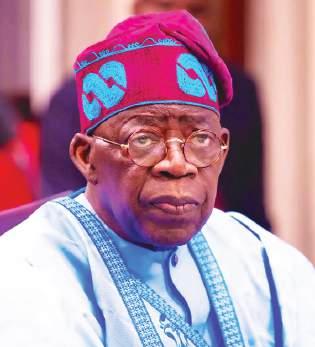
Directs foreign affairs ministry to commence induction course for new envoys ADC: Posting another blunder, evidence of incompetence Deji Elumoye and Chuks Okocha in Abuja President Bola Tinubu has approved the postings of 31 career and 34 non-career
ambassadors to various countries and the United Nations.
The African Democratic Congress (ADC) has criticised the Tinubu administration’s announcement of ambassadorial postings, describing it as a diplomatic blunder and a confirmation of the government’s storied Continued
US, Israel Ramp Up Iran Strikes, FG Urges Stranded Nigerians to Stay Put Until Ceasefire
Edun: Nigeria’s Economy Undergoing Correction
Insists rise in debt service not equal to fiscal recklessness Kyari: FG's policy efforts have crashed food prices by 50%
Ndubuisi
Francis, Michael Olugbode and James Emejo in Abuja
The Minister of Finance and Coordinating Minister of the Economy, Mr. Wale Edun, yesterday said recent trends in the nation’s economy did not indicate that the country was experiencing a fiscal collapse, but rather that it was undergoing what he
described as a fiscal correction. According to a media brief obtained from the office of the Minister, the current administration has chosen long-term sustainability over short-term illusion, adding that the distinction must guide public discourse going forward.
The explanation by Edun came the same day the Minister of Agriculture
“unconditional surrender” by Iran, the latest and broadest expansion of his goals for the conflict.
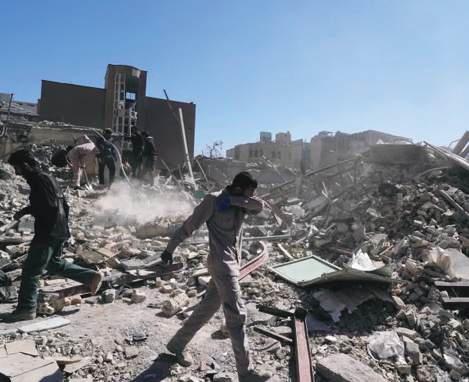
The war between the United States, Israel and Iran yesterday entered its seventh day, with attacks continuing across Iran and other countries in the Middle East. Iran continued its missile and drone attacks across the Gulf as Washington and Tel Aviv claim their campaign – codenamed Operation Epic Fury – was crippling Iran’s military.
Owing to this, the Nigerian government, through the Nigerians in Diaspora Commission (NiDCOM), explained that evacuation of citizens trapped in the Middle East as a result of the crisis will not be immediate as the situation in the region is being monitored.
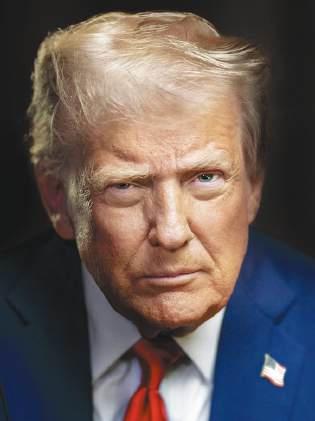
This comes as President Donald Trump declared yesterday that he would settle for nothing short of
incompetence.
The Senate had in December, 2025 confirmed the ambassadors-designate after the President submitted the names to the Red Chamber for screening and confirmation.
The non-career ambassadorsdesignate and their countries of posting include Senator Grace Bent: Lome-Togo; Senator Ita Enang - South Africa; Ikpeazu Victor - Spain; Nkechi Linda Ufochukwu - Tel-Aviv, Israel; Mahmud Yakubu -Qatar; Paul Oga Adikwu -The Vatican Holy See; Vice Admiral Ibok-Ete Ekwe Ibas - The Philippines; Mr. Reno Omokri -Mexico; Hon. Abasi Braimah - Budapest, Hungary; Mrs. Erelu Angela Adebayo -Portugal; Olumilua Oluwayimika AyotunwaTokyo, Japan, and Rt. Hon. Ugwuanyi Ifeanyi Lawrence
However, a new analysis by the Washington-based think tank Centre for Strategic and International Studies (CSIS) has revealed that the ongoing US military campaign against Iran is costing American taxpayers close to $890 million per day, highlighting the enormous financial burden of the conflict in its earliest stages.
Indications have also emerged that Russia is providing Iran with targeting information to attack American forces in the Middle East. This was the first indication that another major US adversary was participating — even indirectly — in the war, according to three officials familiar with the intelligence.
On the back of the conflict, Brent, the international oil benchmark, broke $90 per barrel as it jumped more than six percent to its highest level
– Greece.
Others are Chioma Priscilla Ohakim - Poland; Aminu Dalhatu -United Kingdom; Lt. General Abdulrahman Bello Dambazau - China; Hon. Tasiu Musa Maigari - Gambia; Olufemi Pedro - Australia; Muhammed Ubandoma Aliyu – Argentina, and Lateef Kayode Are – USA.
The approval also included Amb. Joseph Sola Iji - Russia; Senator Jimoh Ibrahim - UN Permanent Representative; Femi Fani-Kayode- Germany; Prof. Isaak Folorunsho Adewole - Canada; Ajimobi Fatima Florence -Austria; Mrs Lola Akande - Sweden; Ayodele Oke - France; Yakubu N. Gambo- Saudi Arabia; Senator Nora Ladi Daduut - South Korea; Onueze Chukwujika Joe Okocha SAN - Ireland;
and Food Security, Senator Abubakar Kyari, declared that the federal government’s efforts to contain food inflation have started to pay off, adding that prices of essential food commodities had dropped by 50 per cent nationwide.
Also, the federal government has reassured foreign investors that Nigeria’s business environment remains secure and conducive for their
since April 2024.
With rising crude oil prices, the Chief Executive Officer of Financial Derivatives Company (FDC), Mr. Bismarck Rewane, has advised the Central Bank of Nigeria to resist the temptation of utilising the high crude earnings to support the value of Naira.
Massive explosions hit several locations across Iran yesterday as the war entered its seventh day.
Israeli jets have bombed southern and eastern Lebanese towns as well as targeting the southern suburbs of the capital Beirut. At least 1,332 people have been killed in US and Israeli attacks on Iran since Saturday, and News Agency reported that two schools were hit by missiles in the town of Parand, southwest of the capital Tehran.
But Iran continued to target Gulf countries from the UAE to Qatar and Bahrain, while Israel’s Tel Aviv came under
Dr. Kulu Haruna Abubakar - Tunisia and Rt. Hon. Jerry Samuel Manwe: Port of Spain, Trinidad and Tobago.
The career Ambassadorsdesignate and their postings are Nwabiola Ezenwa Chukwumeka - Cote D'Ivoire; Besto Maimuna Ibrahim - Niamey-Niger; Monica Okwuchukwu Enebechi - Sao Tome, STP; Mohammed Mahmud Lele -Algeria; Endoni Syndoph Paebi - Burkina Faso; Ahmed Mohammed Monguno - Egypt; Jane Adams (Nee Okon) Micheal -Kingston-Jamaica; Clark-Omeru AlexandriaZambia; Chima Geoggrey Lioma David - Bamako-Mali; Odumah Yvonne Ehinosen
Equatorial Guinea; Wasa Segun Ige -Lebanon; Ruben Abimbola Samuel - Rome,
investments.
Continuing, Edun pointed out that the current reforms are structural, transparencydriven, discipline enforcing and growth-enabling.
The document titled, "Deepening Public Understanding of Nigeria’s Fiscal Position," was designed to correct misunderstanding arising from Edun's recent appearances before the
combined drone and missile attacks.
FG Urges Stranded Nigerians to Stay Put Until Ceasefire
Responding to THISDAY’s enquiries, spokesman for NIDCOM, Abdurrahman Balogun, confirmed that the federal government has received enquiries from Nigerians living in countries such as Iran, Qatar and the United Arab Emirates regarding potential evacuation arrangements.
Authorities, however, explained that immediate evacuation remains difficult due to widespread security risks and the closure of airspace in several parts of the region.
According to the commission, Nigerians in affected areas have been advised to remain indoors, follow official safety advisories issued by host governments, and maintain contact with Nigerian embassies until safe corridors for evacuation become
Italy; Onaga Ogechukwu Kingsley - Mozambique; Magaji Umar- DR Congo; Muhammad Saidu Dahiru -India; Abdussalam Habu Zayyad - Senegal; Shehu Ilu Barde - Ghana; Aminu NasirEthiopia; Abubakar Musa Musa -Chad; Haidara Mohammed Idris - Netherlands; Bako Adamu Umar - Morocco; Sulu Gambari Olatunji Ahmed -Malaysia; Romata Mohammed Omobolanle -Tanzania; Shaga John Shamah -Botswana; Salau Hamza Mohammed - Iran; Ibrahim Danlami - Kenya; Ibrahim Adeola Mopelola - Benin; Ayeni Adebayo Emmanuel - Belgium; Akande Wahab Adekola - Switzerland; Arewa (Nee Adedokun) Esther - Namibia; Gergadi Joseph John - Libreville-Gabon; Luther
CBN: 30 BANKS HAVE SCALED NEW MINIMUM CAPITAL THRESHOLDS,
remaining banks are currently undergoing the apex bank's routine verification process ahead of final confirmation of compliance within the recapitalisation timeline.
She noted that the CBN introduced the recapitalisation programme for the banking sector in 2024 to strengthen the resilience, stability, and longterm capacity of the financial system to support Nigeria's
economic development.
Sidi Ali said since the introduction of the policy, banks across the industry have taken steps to strengthen their capital base in line with the revised regulatory requirements, adding that the recapitalisation exercise was progressing steadily.
The CBN reiterated that the Nigerian banking system remained stable and sound.
The statement added that the "recapitalisation programme remains firmly on track and will further strengthen the capacity of the banking sector to support households, businesses, and sustainable economic growth.
"The Central Bank of Nigeria will continue to maintain close supervisory engagement with regulated institutions to ensure full compliance with prudential
National Assembly. Such issues centred around debt service trends, public debt growth, revenue performance, and capital expenditure execution.
It alluded to key misconceptions observed in public discourse, noting that the most widespread bordered on the lack of distinction between Federation Revenue
available.
He stressed that the federal government remains committed to protecting its citizens abroad and will activate evacuation operations once the security environment improves and transportation routes reopen.
Trump Demands ‘Unconditional Surrender’ by Iran
President Donald Trump yesterday demanded Iran’s “unconditional surrender,” as tensions in the Middle East escalate.
Iran has shown no interest, at least publicly, in surrendering. Instead, it has done the opposite, expanding the war to Arab states that host US bases.
“There will be no deal with Iran except UNCONDITIONAL SURRENDER,” Trump wrote on his Truth Social platform, when US strategic bombers were in action over Iran and intensive Israeli strikes in
Ogbomode Ayo-Kalata - Sierra Leone; Danladi Yakubu Nyaku - Sudan and Bello Dogon-Daji Haliru - Thailand.
According to a statement issued yesterday by presidential spokesperson, Bayo Onanuga, the Ministry of Foreign Affairs has already received agreement from the United Kingdom for the High Commissionerdesignate, Ambassador Aminu Dalhatu. Similarly, France has sent the agreement for Ambassador Ayo Oke.
The ministry has also conveyed the nominations of the other 62 designated envoys to all the countries concerned, including a request for their agreements in line with standard diplomatic practice.
and Federal Government Revenue.
Noting that Federation Revenue is not the same thing as Federal Government Revenue, it explained that nationally collected revenues are paid into the Federation Account and distributed monthly by the Federation Account Allocation Committee (FAAC) among the three tiers government.
Lebanon forced more than a million people to flee their homes.
His statement was the latest in the shifting goals Trump has laid out for the war, leaving his aides, and congressional allies, struggling to keep up and at times contradicting the president.
Trump declared on Saturday, in the opening hours of the US attack, that Iran’s people should rise up and overthrow their government.
But in the following days, both Secretary of State Marco Rubio and Defense Secretary Pete Hegseth have continued to emphasise that the United States was simply focused on assuring that Iran’s nuclear program was permanently destroyed, and that it no longer had the missile capability to attack Israel, its Arab neighbors, and perhaps someday America.
and capital requirements."
The Olayemi Cardoso-led Central Bank of Nigeria (CBN) had, on March 28, 2024, announced a two-year bank recapitalisation exercise which commenced on April 1, 2024. The 24-month timeline for compliance ends on March 31, 2026. The upward capital revision is expected to ensure that Nigerian banks have the capacity to take on bigger
The President has directed that the Ministry of Foreign Affairs should immediately commence the induction programme for the ambassadors-designate and High Commissioners. Meanwhile, in a statement by Mallam Bolaji Abdullahi, National Publicity Secretary of the ADC, the party said that publicly announcing the postings before securing the required agreement from host countries, as stipulated under the Vienna Convention on Diplomatic Relations, exposes Nigeria to diplomatic embarrassment.
risks and stay afloat amid both domestic and external shocks. It also means an increased liquidity position of banks, which will help broaden their loss-bearing capabilities. Specifically, the recapitalisation exercise requires a minimum capital of N500 billion, N200 billion, and N50 billion for commercial banks with international, national and
ADC also questioned why only 65 ambassadors were announced for Nigeria’s approximately 109 diplomatic missions, while the government remained silent about the other 44 missions without envoys.
regional licences, respectively. Before the new capital requirements were announced, many banks were operating with low capital levels despite the huge profits they were churning out, compared with their peers on the continent. For instance, commercial banks with international licences were only required to hold a minimum capital base of N25 billion.
Michael Olugbode in Abuja, Sunday Ehigiator, Dike Onwuamaeze in Lagos
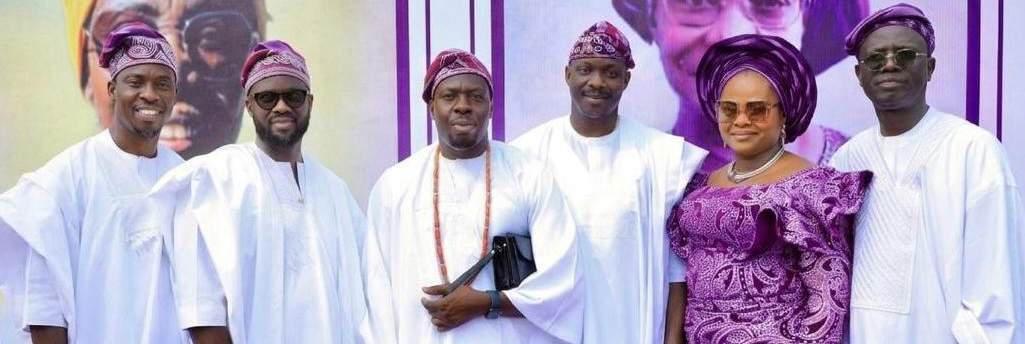
THE OKUNOWO BOYS BID MOM GOODNIGHT...
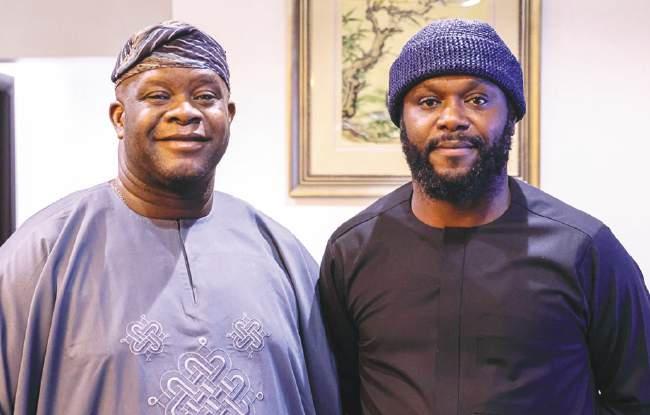
L-R: Children of the
Peter Obi: I'm Not Intimidated by APC's 30 Governors, I'll Contest 2027 Presidential Poll
Former Anambra State Governor, Mr. Peter Obi, has declared that he will contest the 2027 presidential election, and will not be intimidated by the large number of governors in All Progressives Congress (APC).
The former presidential candidate of Labour Party in 2023, said there have been several orchestrations meant to put him off the contest, but he will not be deterred.
Obi was in Nimo, Njikoka Local Government Area of Anambra State to grace the empowerment programme of the member representing Dunukofia, Njikoka, Anaocha federal constituency in the House of Representatives, Hon. George Ozodinobi, yesterday.
Addressing his supporters, Obi declared that Nigeria has
collapsed totally, and there was a need to redeem her. He said he has never been desperate to be president of Nigeria, rather he is desperate to see a Nigeria that works.
"Nigeria has collapsed and is already lying on the ground. Nigeria is not working because many rich Nigerians are hungry and greedy. They have everything they need, but still scavenging for more.
"This is an empowerment programme, but you will be surprised that many well-todo persons will come here to struggle for things they have no need for. Go to their compound and you will see better vehicles than the ones they are struggling for.
"This country is skewed against the poor, and that is why we are working to become president. We want a country where the son of a nobody can
$4.5bn Fraud Trial: Witness Tells Court EFCC Forced Him to Implicate Emefiele
Wale Igbintade
A defence witness, Henry Omoile, yesterday told the Ikeja Special Offences Court in Lagos that operatives of the Economic and Financial Crimes Commission (EFCC) allegedly compelled him to write a statement implicating Godwin Emefiele, the ex-Governor of the Central Bank of Nigeria (CBN).
Omoile, who is also the second defendant in the alleged $4.5 billion fraud case, testified before Rahman Oshodi, the trial judge of the Special Offences Court sitting in Ikeja, during a trial-within-trial to determine whether a purported confessional statement he allegedly made while in EFCC custody was obtained voluntarily.
While giving evidence, the witness told the court that he was shocked and traumatised
when his lawyer, Nnamdi Offiah, discovered that he was being compelled to write a statement in the absence of legal representation at the EFCC office.
According to Omoile, when his counsel questioned the situation and asked why his client was writing a statement without a lawyer present, the investigating officers allegedly ordered the lawyer to leave the interrogation room.
“The act of asking my lawyer to leave was shocking to me.
I was surprised, afraid and traumatised. I had to beg Mr. Azeez to allow me some time to recover from the shock,” Omoile told the court.
He further stated that his lawyer had not made any offensive remarks to the investigators but had merely sought clarification on why the statement was being taken without his presence.
become somebody without knowing anybody.
"I have always said that I'm not desperate to be the president of Nigeria, but I'm desperate to see a Nigeria that works.
"You all know that I'm now in ADC. People have been asking me why I left LP, but I told them that we have been in court in
Labour Party over leadership, and we have been securing favourable judgement, but INEC refused to recognise us, but when I left on 31 December, they recognised the same orders they were rejecting.
"You see all the things they have been tinkering with the constitution, some of them are
because they don't want me to contest. But I want to tell them that with their 30 governors, they should make the election free and fair and see who wins.
"I want to announce to you all that no matter what they do, I must contest the election.
Let them declare a free and fair contest, bring the ball to the
middle of the field and declare it started, and let’s see what happens," Obi boasted. The presidential hopeful thanked the lawmaker for the empowerment materials, insisting that such benevolence was the reason he insists only good politicians should be sent to Abuja as representatives.
Tinubu Inaugurates 11-Man Committee to Drive Grid Asset Management Company Incorporation
Deji Elumoye in Abuja
President Bola Tinubu yesterday constituted an 11-member committee to ensure the hitch-free incorporation of the Grid Asset Management Company Limited (GAMCO). The inauguration of the high-powered committee came barely 48 hours after the Federal Executive Council (FEC) at its inaugural meeting in 2026 approved the memo
presented by the President for the establishment of GAMCO to address power problems in the country.
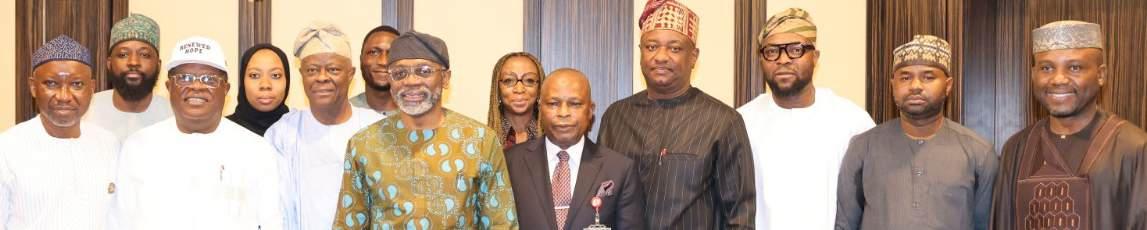
Chief of Staff to the President, Hon. Femi Gbajabiamila, is the Chairman of the Committee, with the Attorney General of the Federation and Minister of Justice, and the Ministers of Power, Works, and Finance as members.
Others include the Ministers of Communication and Digital Economy, Science, Technology
and Innovation, Aviation and Aerospace Development, the Minister of State (Petroleum), the Chairman of the Nigeria Revenue Service, and energy expert Professor Yemi Oke.
The Permanent Secretary of the Cabinet Affairs Office, Dr. John Chidiebere Ezeamama, is the committee's secretary.
The constitution of the committee followed the Federal Executive Council's approval for the establishment of the company at its Wednesday
meeting.
In proposing GAMCO, President Tinubu hopes to fasttrack a quick-fix solution to the endemic problems of stranded power, grid management and transmission in the country's electricity sector.
Gbajabiamila, who performed the inauguration on behalf of the President, said the committee was critical to the realisation of President Tinubu’s aspirations in Nigeria’s power sector.
ADC: Court Throws out Ex-Presidential Candidate, Kachikwu's Suit against David Mark-led
Leadership
Welcomes dismissal of Kachikwu case against party, urges Nigerians to register with ADC
Chuks Okocha and Alex Enumah in Abuja
Justice Joyce Abdulmalik of a Federal High Court in Abuja, yesterday, dismissed the suit filed by a former presidential candidate, Dumebi Kachikwu against the Senator David Mark-led leadership of the African Democratic Congress (ADC).
The ADC yesterday said that it welcomed the Federal High Court’s dismissal of a suit filed by Kachikwu and four others challenging the party.
Justice Abdulmalik predicated her decision on the grounds that the issue brought before her court borders on the internal affairs
of a political party which no court has jurisdiction.
Dumebi Kachikwu, Adikwu Elias, Etimbuk Umoh, Muhammad Khala, and Alakum William had dragged the Independent National Electoral Commission (INEC), ADC, Chief Ralph Nwosu, Senator David Mark, and Ogbeni Rauf Aregbesola, to court seeking the sack of the 2nd to 5th defendants as leaders of the ADC.
The suit marked: FHC/ ABJ/CS /1331/2025, was filed last year, while the National Welfare Secretary of the ADC, Nkemakolam Ukandu was joined as an interested party on October 3, 2025.
Ukandu had petitioned
Abdulmalik and the Chief Judge of the Federal High Court, Justice John Tsoho to the National Judicial Council (NJC), over what he claimed to be corrupt and biased tendencies in the manner the matter was being handled.
Besides the petition, Ukandu had also commenced legal action against the Chief Judge and Abdulmalik both at the Federal High Court and the High Court of the Federal Capital Territory (FCT), wherein he had sought an order directing Justice Abdulmalik to recuse herself from further hearing in the case brought by Kachikwu and others.
However, Justice Abdulmalik in a judgement yesterday, dismissed the suit stressing that
the issue of membership and leadership of a political party is voluntary and as such any aggrieved person should employ the internal mechanism of the party to resolve such grievances or at best, opt out and join other parties. She maintained that cases bothering on party membership and leadership are non-justiciable and as such, outside the intervention of her court. It would be recalled that the opposition coalition had last July, appointed David Mark, a former Senate president; and Rauf Aregbesola, ex-governor of Osun State; as interim National Chairman and Secretary respectively.
David-Chyddy Eleke in Awka
deceased, Bandele Okunowo Jrn, Tunde Okunowo, Bayo Okunowo, Olumide Okunowo; their cousin, Mrs. Oluwatosin Adeniyi, and husband/Chairman, THISDAY Editorial Board chairman, Olusegun Adeniyi, when the remains of late Mrs. Antonia Oluwewimo Okuneye were laid to rest in Shagamu, Ogun State...yesterday
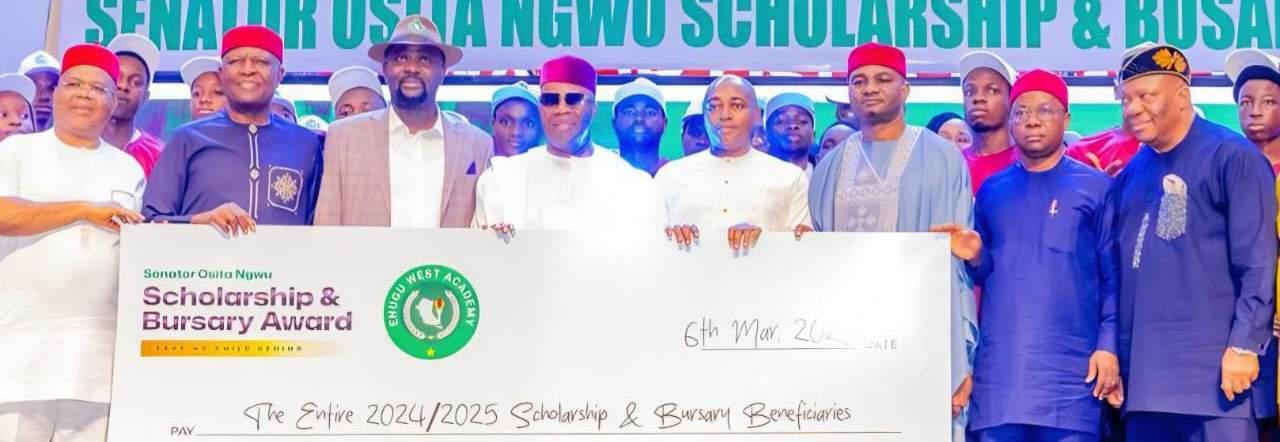
SCHOLARSHIP AND BURSARY AWARD...
L-R: Member House of Representatives, Hon Anayo Onwuegbu; CEO, Copen
Amaechi Escapes Gunmen Attack in Rivers as Thugs Raze ADC Secretariat
ADC: Don’t mistake our restraint for weakness, we will protect our party, members
political violence.
The immediate past Minister of Transportation, Mr. Chibuike Amaechi, yesterday, narrowly escaped gunmen attack on his way to his Ubima community in Rivers State, for his e-registration as a member of the African Democratic Party (ADC).
This was as ADC condemned the burning of its party secretariat in Ubima, Rivers State, describing the incident as a criminal attack on democracy and a dangerous escalation of
It was gathered that the gunmen suspected to be political thugs engaged the convoy of the leader of the ADC in Southsouth in a gun duel, between Ubima and a neighbouring Omuanwa community in Ikwerre Local Government Area of the state.
The suspected thugs had earlier set ablaze the Ward 8 office of the ADC in Ubima, Amaechi's hometown.
During the attack on Thursday night, it was further gathered that the thugs fired sporadically at the gate of the
Court Stops Ijaw National Congress Election Over Alleged Candidate Disqualification
Wale Igbintade
A Rivers State High Court sitting in Port Harcourt yesterday, halted the scheduled national election of the Ijaw National Congress (INC) slated for today (March 7), following an interim order of injunction restraining the organisation and its electoral committee from conducting the poll.
The order was granted by Justice S. H. Aprioku of High Court No. 8, Port Harcourt, in Suit No. PHC/719/CS/2026, filed by High Chief (Barr.) Macdonald Igbadiwei.
The claimant sued the Chairman and members of the INC Electoral Committee as well as the INC itself over what he described as a plot to exclude him from contesting for the position of National President in the forthcoming elections. Those listed as defendants include Francis Fedode Tabai, a retired Justice of the Supreme Court who chairs the electoral committee, HRM King Dr.
Seiyefa Koroye, Dr. Olobo Choice Jamaica, Mrs. Iyoropatei Victoria Odogbo, High Chief (Hon.) Joel Wodubamo Aigbekumo, Mrs. Immaculata Love Amaseimogha, Chief Dr. Ebizimoh Okolo, Dr. Major Iteimowei, Chief Dr. Eniatorudabo A. Harrison, Chief Godwin Efang, and Amaopuseniibo Shedrack Fubara.
The court granted an interim order of injunction restraining the defendants, their agents, servants, privies or anyone acting on their behalf from conducting the national elections of the INC scheduled for March 7, 2026, or any other date, pending the resolution of the dispute.
Justice Aprioku directed the parties to resolve the dispute through the organisation’s Internal Dispute Resolution Committee within seven days.
The judge further held that if the parties succeed in resolving the dispute internally, the court would abridge time for hearing of the matter.
family residence of the former minister. This happened after reports circulated about the homecoming of the former governor.
Earlier the same day, party members were allegedly attacked in Igwuruta Community in the same local government during a sensitisation programme.
However, while the community was yet to recover from the incident, yesterday, gunmen opened fire on the convoy of their son. Before Amaechi arrived at his community at about 12p.m., it was learnt that some suspected thugs had already mounted a road block, turning back every
bus identified carrying ADC members attending the visit.
The suspects who invaded the community with heavy gun shots to stop the former governor's visit, shot sporadically into the community and shattered Amaechi's family house gate with bullets.
While the armed thugs were shooting directly at the ADC leader on arrival to enter his community, the security operatives in the team in defense engaged the criminals.
But the thugs who could not continue engaging the trained security operatives were overpowered and fled into the bushes in the area.
Israel, Iran Envoys Clash over Terror Allegations, Islamic Movement in Nigeria
Suspected
terrorists abduct 10 persons in Kwara
Micheal Olugbode in Abuja, Erizia Rubyjeana and Hammed Shittu in Ilorin
IIsraeli Ambassador to Nigeria, Michael Freeman, yesterday alleged that Iran was actively spreading terrorism in Nigeria and backing extremist groups, linking Tehran’s influence to the Islamic Movement of Nigeria and wider destabilisation across West Africa.
But in a swift reaction, the Embassy of the Islamic Republic of Iran in Nigeria rejected the
Tinubu’s
allegation that Tehran was sponsoring terrorism in Nigeria and across the Sahel region.
This comes as suspected terrorists kidnapped 10 persons in Oro-Ago and Ahun communities in Ifelodun Local Government Area of Kwara State.
Speaking in an interview with ARISE NEWS yesterday, Freeman said Iran’s global agenda of terror has long been documented, and its operations now extend into African countries, including Nigeria.
“We know that there are
certain movements, for example, the Islamic Movement of Nigeria, which is sponsored and backed by the Iranian regime. And this is not me saying this we’ve seen that documented by the Iranian regime itself. Ayatollah Khomeini, the Supreme Leader, posted on X, his support and his backing. So that’s very open.
There are other areas as well that Iran is working to destabilise, not only Nigeria, but all of West Africa.”
Freeman, who addressed wider concerns about Iran’s military
ambitions, framed the current conflict in the Middle East as a necessary defence against Tehran’s threat to Israel. He said Iran’s nuclear programme, ballistic missile development, and long-standing policy of hostility made Israel’s actions justified.
“For 47 years, Iran has had a policy of ‘death to Israel, death to America,’” he said. “Its entire state structure has been sponsoring terrorism, sponsoring organisations around the world to kill Israelis, to kill Jews, to spread terror.
Spokesman, Bwala in Heated Al
Jazeera Clash Over Insecurity, Corruption
Folalumi Alaran in Abuja
A fiery television confrontation has put Nigeria’s worsening insecurity, rising poverty and corruption allegations back under international scrutiny after presidential spokesman Daniel Bwala clashed with journalist Mehdi Hasan in a tense interview on Head to Head -Al Jazeera programme. During the combative exchange, Bwala struggled to defend the record of President Bola Ahmed Tinubu as the Al Jazeera host confronted
him with figures on rising deaths, kidnapping, poverty and corruption under the current administration.
The interview quickly turned confrontational as Hasan pressed the presidential aide over claims by U.S. President Donald Trump that Christians were facing genocide in Nigeria.
While Bwala dismissed the allegation as misleading, he acknowledged that the country is battling widespread violence carried out by terrorists, insurgents and
criminal gangs.
“We believe there is targeted killing by insurgents, bandits and criminal elements against Nigerians — Christians, Muslims and others,” Bwala said, rejecting claims that the violence specifically targets Christians.
But Hasan pushed back, citing reports showing that insecurity has intensified since Tinubu took office in 2023.
According to conflict data referenced during the programme, more than 11,000 people were killed in
violent incidents in Nigeria in 2025 — up sharply from about 8,700 deaths recorded in 2023.
“That’s a 26 per cent increase since your party and your president came to power,” Hasan said.
Despite acknowledging the crisis, Bwala insisted the situation was not worsening, arguing that context matters when interpreting the figures. “I don’t agree that it is getting worse,” he said, even after the host repeated the casualty statistics.
Chuks Okocha in Abuja and Blessing Ibunge in Port Harcourt
Group/Chairman of the occasion, Dr. Ugo Chime; Senate Minority Whip, Osita Ngwu; President of the Senate, Godswill Akpabio; Deputy Governor of Enugu State, Ifeanyi Ossai; Speaker, Enugu State House of Assembly, Uche Ugwu, and Chairman, Senate Committee on Solid Minerals, Ekong Sampson, during the Senator Ngwu Scholarship and Bursary Award in Enugu… yesterday
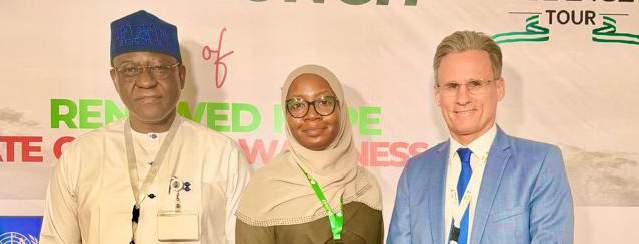
RENEWED HOPE CLIMATE CHANGE AWARENESS TOUR...
PSC Elevates Seven AIGs to Rank of DIG, Tasks Them on Professionalism
Linus Aleke
The Police Service Commission (PSC) has promoted seven Assistant Inspectors General of Police (AIGs) to the rank of Deputy Inspectors-General of Police (DIGs), a move aimed at strengthening the leadership cadre of the Nigeria Police Force.
This was as the Nigeria Police Force has dismissed allegations of National Youth Service Corps (NYSC) certificate forgery levelled against the Minister of Interior, Olubunmi Tunji-Ojo, describing them as unfounded.
Also, the founder of the New Dawn for Women and Community Intervention Initiative (NEWOMCII), Bolaji Raji, has said that officers and men of the Nigeria Police Force are among the least paid in the world.
According to the PSC, the promotions were based
on merit, seniority, service records, and performance in written examinations and oral interviews conducted at the Commission’s Corporate Headquarters in Abuja.
The newly elevated DIGs are Zachariah Fera Achinyan, (formerly AIG Zone 4, Makurdi), Zango Ibrahim Baba (AIG Department of Logistics and Supply), Isyaku Mohammed (AIG Armament, Force Headquarters, Abuja), Margaret Agebe Ochalla (AIG FCID Annex, Lagos), Mohammed Abdul Sulaiman, (AIG Police Accounts and Budget, Force Headquarters), Kenechukwu Onwuemelie, (AIG Zone 15, Maiduguri), and Umar Shehu Nadada, (AIG Zone 14, Katsina).
The promotions follow the recent elevation of DIG Fayoade Adegoke to the substantive rank of DIG and are intended to fill vacancies
left by the retirement of eight DIGs previously occupying these strategic offices.
Congratulating the officers, PSC Chairman DIG Hashimu Salihu Argungu (rtd), urged them to uphold the highest standards of professionalism, prioritise national security, and maintain a productive relationship with the Commission to support the continued development of the Force.
Members of the PSC Board who participated as examiners included Hon. Justice Paul Adamu Galumje, JSC (rtd), Dr. Taiwo Lakanu, DIG (rtd) and Chairman of the PSC Standing Committee on Police Matters, and Chief Onyemuche Nnamani, Secretary to the Commission.
In a related development, the PSC and the Nigeria Police Force officially co-opted the Police Community Relations
Committee (PCRC) as key partners in screening 50,000 constables, the largest single recruitment drive in the Force’s history.
The collaboration was formalised during a high-level stakeholders’ meeting in Abuja, ahead of the physical and credentials screening stage scheduled to commence on Monday, 9 March 2026, across all 36 states and the FCT.
Addressing the meeting, DIG Argungu praised the PCRC for their commitment to national security and tasked State Chairmen with verifying applicants’ character and indigene status to prevent infiltration by individuals with questionable backgrounds.
Responding on behalf of the PCRC National Chairman, Deputy National President (North), Amb. Wada Sadiq, pledged full support for the
IWD 2026: UN Warns Nigeria’s Democracy at Risk as Women Hold Just 3.9% of Seats
Michael Olugbode in Abuja
The Country Representative of UN Women to Nigeria and the Economic Community of West African States (ECOWAS), Beatrice Eyong, has warned that Nigeria’s democratic progress and development could remain stunted unless urgent action is taken to close the country’s widening gender inequality gap.
Speaking in Abuja during a media parley ahead of the 2026 commemoration of International Women’s Day, Eyong said Nigeria continues to face troubling disparities in women’s representation, safety and access to justice despite years of advocacy and policy commitments.
The global observance this year
is themed ‘Rights. Justice. Action.’
Eyong said the theme reflects a growing international concern that although women’s rights are widely recognised in law and policy, millions of women still struggle to experience those rights in their daily lives.
She particularly raised the alarm over Nigeria’s extremely low level of female political representation, revealing that women currently occupy just 3.9 per cent of parliamentary seats, one of the lowest rates anywhere in the world.
According to her, the imbalance not only undermines democratic inclusion but also weakens the country’s ability to make policies that reflect the needs of half of its population.
“Gender equality is
fundamentally a question of power, and the power gap in Nigeria remains stark,” Eyong said.
“When women are missing from decision-making tables, the consequences are visible in the policies we adopt, the priorities we fund, and the voices that remain unheard.”
Beyond politics, she said Nigeria continues to grapple with persistently high levels of gender-based violence, noting that many survivors still face enormous barriers in seeking justice.
She warned that violence against women is increasingly spreading into digital spaces, where technology-facilitated abuse has become a growing threat.
“Rights mean little without
justice,” she said. “Justice must be experienced in women’s safety, in their freedom from fear, and in their ability to seek protection and accountability wherever abuse occurs.”
To confront these challenges, Eyong said UN Women is intensifying advocacy for the Special Seats for Women Bill, a constitutional reform proposal aimed at guaranteeing women stronger representation in Nigeria’s legislative institutions.
She explained that the organisation is also working with the Federal Ministry of Women Affairs to strengthen the National Sexual Offender Database, a critical accountability tool designed to prevent convicted offenders from evading detection by moving between states.
exercise, promising vigilance and dedication to selecting credible Nigerians for the Force.
The meeting saw robust participation from PCRC State Chairmen, Zonal Coordinators, and key PSC Board members, reinforcing a collaborative approach to ensuring transparency and integrity in the recruitment process.
In another development, the controversy over NYSC certificate forgery levelled against the Minister of Interior, Tunji-Ojo, began when a coalition of civil society groups petitioned the Presidency, claiming the minister had provided conflicting information regarding his education and NYSC records.
Lucky Djebah Appointed Executive Director Rank Capital
Fred Ojeh
Rank, an integrated financial services and proprietary investment holding firm, has appointed Lucky Djebah as Executive Director, Investment, as part of its strategic expansion into wealth management and investment banking through Rank Capital.
The appointment, which takes immediate effect, aligns with Rank’s long-term objective of evolving into a full-scale financial institution focused on democratising wealth creation across African markets. Djebah will lead Rank
Capital’s entry into wealth management and investment banking, overseeing portfolio management across equities and treasury instruments while developing tailored investment strategies for high-net-worth individuals and corporate clients.
Djebah brings more than 15 years of experience in Nigeria’s financial sector. He previously served as Managing Director of Anchoria Securities Limited and Mainstreet Bank Securities Limited, and as Head of Investment Banking at Alpha Morgan Capital Advisory Partners Limited.
Maputo to Host The Pyne Awards Africa
Light Nwobodo
The much-anticipated return of The Pyne Awards Africa is set to take place in the vibrant coastal city of Maputo, Mozambique from 24th to 26th September 2026.
This was disclosed by Amaka Amatokwu-Ndekwu, Founder of The Pyne Hospitality Company and Convener of The Pyne Awards Africa.
The 2026 edition will be hosted in partnership with the Ministry of Economy of
the Republic of Mozambique, under the flagship “I Love Maputo” tourism campaign, a celebration of the city’s beauty, culture and world-class hospitality.
Branded under the event theme 'True to Excellence', The Pyne Awards Africa Maputo 2026 will spotlight Africa’s leading tourism and hospitality pioneers, honouring the individuals, brands and institutions that are raising the bar of service, innovation and impact across the continent.
in Abuja
L-R: Director, Administration, Julius Berger, Dr. Abdulaziz Kaita; Chief Risk Officer, Mrs. Shakira Mustapha, and Head, Strategic Business Development, Achim Becker, at the inauguration of the Renewed Hope Climate Change Awareness Tour by President Bola Tinubu, at the Presidential Villa, Abuja…recently
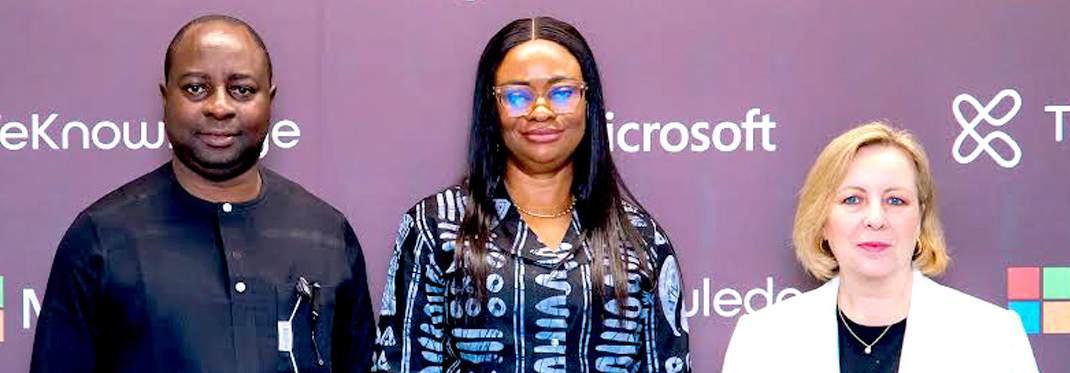
MEDIA BRIEFING...
Former Presidents, Mourners Honour Jesse Jackson
Emulate Jackson, foundation tasks activists, political leaders
Former presidents, music legends and thousands of people yesterday celebrated the life of the late Rev. Jesse Jackson as mourners gathered to honor his vision of social justice and advancing civil rights. This comes as a Nigerian
philanthropic organisation and non-political body, the Olu Pessu Foundation, tasked Nigerian activists and political leaders to emulate the late American civil rights activist by putting the interests of the masses uppermost in their hearts.
Jackson, one of the world's best-known Black activists
South Africa’s Mbatha Featured on Glo- sponsored African Voices
Internationally acclaimed South African actress Nomzamo Mbatha is guest on this week’s edition of Glo-sponsored African Voices Changemakers, the 30-minute magazine programme on Cable News Network International (CNN).
Mbatha sits down with CNN’s Larry Madowo for an exclusive interview while filming the final season of the hit television series Shaka iLembe. The interview was filmed at the historic Cradle of Humankind outside Johannesburg, where Mbatha reflects on her rapidly expanding global career and the legacy she hopes to build beyond the screen.
With growing international
recognition, Mbatha has appeared in two Hollywood productions and was named to the prestigious TIME100 Next in 2025, which celebrates rising global figures shaping the future. Beyond film and television, she is also breaking new ground in the beauty industry as the first South African woman to sign endorsement deals with global skincare brand Neutrogena and haircare brand Cream of Nature.
Mbatha also discussed the cultural significance of Shaka iLembe, her journey from South Africa to the global stage, and why giving back remains central to the legacy she hopes to leave behind.
Anglican Conservative Bloc Calls
for
Boycott
of Canterbury Leadership
A powerful group of conservative Anglicans yesterday, urged its members to boycott meetings convened by the Archbishop of Canterbury and halt any financial contributions to the current leadership, escalating a long-running rift within the church. The declaration by the Global Anglican Future Conference (GAFCON) - a grouping of conservative churches mainly from
Africa and Asia that claims to represent a majority of the world's Anglicans - follows a decision to establish a new council rivalling the current leadership.
Reuters reported that three days of meetings of GAFCON members in Nigeria have underscored the deep rifts within the Anglican Communion over theological and social issues, including the ordination of women and the inclusion of LGBTQ+ members.
who worked alongside Martin Luther King Jr., died at the age of 84 on February 17 in Chicago. According to the US Today, the city served as the Civil Rights Movement icon’s home base for decades. He moved to the city in 1964 to attend the Chicago Theological Seminary; later led Operation Breadbasket, an arm of King’s organization
focused on improving economic conditions for Black people; and launched his signature civil rights organization, the Rainbow PUSH Coalition.
Among those in attendance: Former presidents and first ladies Joe Biden, Jill Biden, Barack Obama, Bill Clinton and former Secretary of State Hillary Clinton. Musicians performing
at the event included EGOTwinner Jennifer Hudson and gospel legend BeBe Winans.
Many of the speeches touched on Jackson’s global impact but began with vignettes of how the late icon touched the speakers in their personal lives.
Obama spoke of watching Jackson debate Walter
Alleged Coup: Sowore, Wives of Detained Military Officers Protest
Human rights activist, Omoyele Sowore and the wives of detained Nigerian military officers yesterday, staged a protest in Abuja, demanding that authorities either charge the officers in court over the alleged coup plot against the federal government or release them.
The Nigerian Armed Forces reportedly detained at least 16 senior officers after the alleged coup plot.
The protesters yesterday, carried placards, calling on the administration of President Bola Tinubu to intervene in the matter.
Sowore and another activist and lawyer, Deji Adeyanju, families of those affected, appealed to the President to prevail on the military authorities to ensure due process in the handling of the case.
“We are not asking for a favour; we are asking for justice to be done. Charge our
CHANGE OF NAME
I formerly known and addressed as OKUNLOLA MARIAM OLUWAPELUMI, now wish to be known and addressed as GBADAMOSI MARIAM OLUWAPELUMI. All former documents remain valid. The general public should please take note. I formerly known and addressed as ABIAMUWE CHRISTIAN, now wish to be known and addressed as EYIN VICTOR CHRISTIAN. All former documents remain valid. The general public should please take note.
husbands to court if there is evidence, but if there is none, let them go free,” one of the wives said.
“For more than five months, our families have lived with uncertainty, fear, and unanswered questions.
Mondale in the race to win the nomination to be the Democrat’s candidate for president.
“The message he sent to a 22-year-old, child of a single mother with a funny name, an outsider, was that maybe there wasn’t any place, any room where we didn’t belong,” said Obama.
“He paved the road for so many others to follow. It was because of that path he had laid, because of his courage, his audacity, a young Black senator from Chicago's South Side would even be taken seriously as a candidate for the presidential nomination.”
Sylvester Idowu in Warri with agency report
L-R: Territory Director for Africa, TeKnowledge, Mr..Olugbolahan Olusanya; Chief Growth and AI Officer, Microsoft Middle East and Africa, Olatomiwa Williams, and Chief Executive Officer and President, TeKnowledge, Aileen Allkins, at a press conference to announce TeKnowledge’s expanded role as a delivery partner for
Phase 2 of Microsoft’s AI National Skilling Initiative in Nigeria held in Lagos… recently
•Tourism •Arts&Culture
How Iran War Impacts Global Tourism
The Middle East has been turned into a war theatre where human lives are no longer sacred since the United States and its ally, Israel, on February 28, attacked Iran on suspicion that the Islamic Republic was on the verge of producing nuclear weapons and ballistic missiles that could pose grave danger to the entire world. Iran’s Supreme Leader Ayatollah Ali Khamenei and others were killed in the early Saturday morning attacks.
The killing of Khamenei and subsequent destruction of vital infrastructure inevitably forced the Iranian government to resort to retaliatory attacks against Israel and Gulf States considered allies of the United States, such as the United Arab Emirates (UAE), Qatar, Saudi Arabia and others.
The ongoing war has brought tourism in the Middle East to its knees as thousands of flights and holidays have been cancelled. The raging war between US/Israel, and Iran is also having its toll on global tourism.
According to Euronews Travel, Iran’s war risks £40 billion loss in Middle East visitor spending.
It reported that governments have issued ‘no-go’ warnings or advice against all but essential travel for countries including Israel, the UAE, and Qatar, and a wide corridor of airspace remains closed in the region. Currently, travellers in tourism hotspots like Dubai and Doha are scrambling to get home on the limited number of rescue flights now being operated.
US President Donald Trump on Monday said the campaign in Iran had been projected to last four to five weeks but could “go far longer than that”.
Before the war in the Middle East and Gulf Region, Head of Marketing for the Middle East Travel Alliance, Ibrahim Khaled, a B2B company working with international tour operators and travel agents in the region, painted a good picture of growth. “We’ve been seeing steady (visitor) growth year over year, especially with all the new tourism investments happening across the region,” he said.
“Saudi Arabia is currently at about 10 per cent, but it’s growing incredibly fast since they opened up to leisure tourism in 2019. It’s definitely our most exciting up-and-coming destination.”
But the war between US/Israel and Iran has halted this trajectory. “For places that the US and UK governments have put on no-go or no-fly lists, we’ve unfortunately seen a ton of cancellations,” Khaled added. “Flights are disrupted, and trips to those specific areas are pretty much on hold.”
Also, a report by Tourism Economics on projections for the impact of the war on regional tourism tallies with the travel alliance’s outlook.
“We estimate inbound arrivals to the Middle East could decline 11 per cent-27 per cent year on year in 2026 due to the conflict, compared to our December forecast that projected 13 per cent growth,” said Director of Global Forecasting, Helen McDermott and Senior Economist, Jessie Smith.
“In absolute terms, this would mean a range of 23-38 million fewer international visitors compared to our baseline/ previous forecast, and $34bn-$56bn (£29bn-£48bn) loss in visitor spend. This includes
The war between United States/Israel and Iran is taking a heavy toll on global tourism, writes Charles Ajunwa
expected lingering sentiment impacts beyond the immediate conflict period.” The impact on tourism demand of this conflict, according to them, will be larger than that of the conflict last year.
It noted that this is due in large part to the retaliatory strike from Iran on neighbouring GCC countries, which are more established tourism destinations, as well as the wider airspace closures across the region than last year.
“Given the widespread retaliatory strikes by Iran over the weekend, sentiment effects are likely to be more widely spread across GCC countries,” the report said.
Tourism Economics also highlighted the Middle East’s role as a global transit hub, with its airports accounting for around 14 per cent of international transit activity.
The report said this would inevitably lead to knock-on impacts outside of the region, according to the group. “The current disruption will affect travel flows, which typically transit through the Middle East hubs, including major routes between Europe and the Asia-Pacific region.”
However, Gloria Guevara, President and CEO of the World Travel and Tourism Council, said that “travel and tourism has consistently demonstrated its resilience in the face of global challenges,” adding, “As a vital force for connection, economic stability and mutual understanding, the sector continues to adapt and respond responsibly during periods of uncertainty.”
Reacting to the war between the US/Israel and
Iran, tourism expert and Founder of Akwaaba African Travel Market, Mr. Ikechi Uko, said, “For me, war everywhere is bad and it’s unnecessary. But you know, we are not politicians and we are not leaders. They had their reasons for going to war. For those of us in the travel and tourism industry, you could see the consequences of these events happening in the Middle East.
“In Berlin, you need to see the number of aircraft that are parked at the tarmac both on Frankfurt and everywhere. There is travel chaos and tourism is the biggest business in the world and you could see the effect it is having on so many people’s businesses.
“ I went round the travel expo - ITB Berlin (International Trade Business) 2026, so many of those countries that normally would have been here in their large numbers cannot even move. It’s incredible, and it’s sad. The world just have to learn to do things properly.”
On how the war in the Middle East affects tourism promotions in Nigeria in particular and Africa in general, he said, “For now, Nigeria and Africa are safe. Flights are flying and I’m able to fly through an African airline to Germany, and people can move around. A lot of the Gulf carriers have parked their aircraft in Kenya and Egypt.
“So Africa is still open, but we can’t move around to the Middle East. And quite a lot of their people have cancelled their travel plans. A lot of Doha and Lebanon trips, I know operators who have cancelled quite a lot. But this allows Africa to attract more people as Summer is coming. The millions of people
who normally would go to the Middle East is an opportunity for them to come to Africa.”
On whether Africa has facilities to take in those leaving the Middle East and Gulf Region, Uko said, “Nigeria is not yet at that level to be a replacement to Dubai, Doha, or Beirut. But there are people that we can get. I know Kenya, Egypt, South Africa, Tanzania, Seychelles, Mauritius and Morocco will have a sold-out season because they offer immediate replacement. But Nigeria and West Africa our products are cultural and we don’t compare in those kind of tourism that people go to do in Dubai. But we are getting there. Slowly, we are building up and ranking up with the environment.”
On whether there will be penalties for attacks against airports, hotels, and other tourist locations considered safe havens in international law, he said, “I think war is never good. You can’t defend one and condemn the other.
“Someone burnt a school with 167 girls, burnt a handball team and killed 47 players. And if you now say someone else is bombing hotels, what of the guy who burnt schools? So both sides are wrong. Civilians should never be targets in a war, and hotels are usually safe places. Journalists stay in hotels, and they are preserved safe environment. But the war in the Middle East has been going on for the past five years; they target everything, and nothing is safe. Journalists, hotels, hospitals, and schools are targeted. It’s a senseless war.”
In the ongoing war, he said, there is little the World Tourism Organisation (WTO) could do in terms of sanctions.
“The WTO I don’t think have anything to do now except to advise people to stay safe and avoid those areas. You don’t know who is going to be dragged into the war. You saw how Cyprus has been dragged into the war. You don’t know who else could be dragged into this war. So the best thing is for people to avoid the whole Middle East environment and some part of South Mediterranean and other places for now. If the war keeps escalating, you might have what we call asymmetric warfare that goes beyond borders and starts doing more terrorism to countries that they think are friendly, and that is when it gets worse.”
Speaking on how to grow tourism in Africa to meet international standards, Uko said, “Africa is slowly recalibrating - Morocco, Egypt, and Rwanda are actually doing very well in the upper echelon of the market. Kenya still plays a very good role in what it’s good at and is trying to do more. Infrastructure from what I have seen in Ethiopia, I was there last month. It’s incredible how they have turned Addis Ababa. You wouldn’t believe how Addis Ababa looks now. So, Africa is doing the right things and Nigeria is pursuing the same goal. Ghana and so many other countries are moving in the right direction and hopefully, we will get there soon.”
Abimbola Adekoya: Women Driving Performance, Culture, Growth in Hospitality Industry
Mrs. Abimbola Adekoya currently serves as Director of Finance and Business Support at Lagos Continental Hotel, where she leads financial strategy and operational performance. In commemoration of this year’s International Women’s Day, Abimbola speaks about the transformative power of lifting others and lessons from her own journey navigating leadership spaces, among other issues. Charles Ajunwa brings excerpts:
How significant is this year’s International Women’s Day to you?
The International Women’s Day is more than a calendar event for me. It is a moment of reckoning, gratitude, and renewed commitment. This year’s theme, ‘Give to Gain’, resonates deeply. It captures the very essence of leadership: the more we invest in others, the more enduring the returns. It reminds me of the years of dedication, the quiet sacrifices, the bold decisions, and the unfinished work that still lies ahead. For women in leadership, it is both a celebration and a call to action.
How does the celebration affect the women at work and at home?
At work and at home, International Women’s Day does something powerful; it makes women feel seen.
It affirms our contribution not just within our families, but in the larger architecture of nation-building. In boardrooms, in kitchens, in guest service operations, in finance departments; women are driving performance, culture, and growth. A day like this reminds us that our impact matters, and that our voices are shaping industries.
Any activities to mark the day?
Yes. At Continental Hotels Group, we believe celebration must come with substance. To commemorate the day, we host conversations with senior associates both within and outside the organisation who will share their leadership journeys and industry insights. We organise health talks because wellness is foundational to productivity. And, of course, we create moments of joy and connection through engaging activities that strengthen our community.
Do you think women are better treated at the
Continental Hotels Group?
I am proud to say that Continental Hotels Group is deeply gender-equality conscious. We operate on a level playing field where performance, competence, and character define advancement and not gender.
What is the gender equality ratio and how many women are in top management positions in the group?
Currently, women make up 35 per cent of top management within the group. That is significant progress, but it is not the destination. It is a milestone.
Why are women yet to occupy top positions in hotels, especially executive chefs, and general managers?
The hospitality industry has seen women rise to General Manager positions, but the numbers are still modest especially in operationally intensive roles such as executive chefs and hotel general managers. The
truth is not a lack of capability; it is often a lack of opportunity, exposure, structured training, and visible sponsorship. We must intentionally create pathways for qualified and interested women. We must allow them step into challenging roles even when they are not 100 per cent certain. Growth often happens in motion. Confidence is built in the doing.
See concluded part on www.
Secretary General, UN Tourism, Shaikha Al Nowais
Adekoya
Trump
Time to stop the war...
In Praise of President Buhari
Justice for Women Accused of Witchcraft in Africa
WThen President Muhammadu Buhari took over the reins of power on May 29, 2015, Nigeria was sadly a broken state in many respects. As a result of many other factors including bad governance and untold level of corruption, government could not live up to its financial obligations to citizens and service providers at both the federal and state levels.
Indeed one of the first official assignments that President Buhari carried out was the approval of billions of Naira in bailout funds to enable state governors pay something as basic as workers’ salaries. Granting those bailout funds was a huge boost to national security because the pressure of arrears of unpaid monthly salaries building dangerously all over the country was a ticking bomb.
Ask the naysayers and they would readily remind you of how long it took President Buhari to appoint his ministers and how that contributed to collapse of the economy as if, without ministers, governance was frozen. But buying that narrative would amount to what a famous Nigerian writer, Chimamanda Adichie, termed “the danger of a single story”. Yet the whole story was that many of our citizens did not know how decrepit a state President Buhari inherited in 2015.
It was therefore necessary for him to take stock against the background of the fact that the departing government did not, reportedly, cooperate full well with the incoming government in terms of leaving workable handover notes. Although President Goodluck Jonathan was gracious in defeat, many of his appointees were still sulking over what they saw as their personal losses and therefore pulled all the stops to make things difficult for the Buhari government.
he theme of this year's International Women's Day, Give to Gain, underscores the imperative of intentional and collective generosity. It highlights the importance of contributing and helping address the deficits in the promotion and protection of women rights. This piece examines the intersection of intentional giving and accusations of witchcraft against women. Witchcraft has a female face. That is why the narrative of the occult is often framed as 'witchcraft', not 'wizardcraft'. Give to Gain is a clarion call to duty and responsibility. It is a proposition to share time and contribute resources for the furtherance and enhancement of womanity, the humanity of women. Persecution of women in the name of witchcraft in Africa is rife, and has persisted because the world, especially Africa, has refused to give. Humans have been reluctant to liberate women. This year's theme is a rallying cry to all people of conscience to act decisively and deploy expertise in combating gender inequities and abuse. It is a beckoning to Africans to augment efforts and advocacy initiatives against injustices and the degrading treatment of women accused of witchcraft.
The TSA policy, interestingly, was mooted by the PDP government but its penchant for imprudence and lack of accountability denied it the courage of implementing the policy. What the President literally did was to gather all the nation’s money into one box and locked it up with a big padlock and watched for any thief to come close.
Here are a few cases that illustrate a lack of giving and the imperative of intentional generosity in the fight against witch hunts and ritual attacks in Africa.
Who can blame the President for almost developing paranoia over the safeguard of the national treasury with revelations and reports of mind-boggling looting that took place in the 16 years of the PDP? With such disclosures of how billions meant for fighting insurgency in the Northeast ended up in the pockets of a few individuals while our gallant soldiers fought with bare hands and on empty stomach, President Buhari was duty bound to bring sanity and accountability back in national spending.
Let's examine the case of Obiageri Ottih. She is a 49-year-old woman from Imo State in southern Nigeria. She is a traditional/ indigenous religious worshipper. On Friday, February 27, she was charged in a magistrate's court for attempted murder and remanded in prison. What happened? In December, her
relatives, Vivian Ottih, Hilary Ottih, who is based in the US, and others accused Obiageri of 'Agwucraft'. They claimed that she introduced a traditional religious facility called Agwu or Agbara that was disturbing the peace in the family and community. These relatives asked Obiageri and the husband. Joseph Ottih, to remove the Agwu, but they refused. Hilary, Vivian, and other Christian family members brought vigilante and police officers from the Tigerbase unit who invaded Obiageri's compound and forcefully removed the Agwu. Obiageri and her family opposed and resisted the removal of the Agwu without success.
by the EFCC, President Buhari by his action has successfully brought back to the public consciousness the need to treat public funds with the highest level of transparency and accountability.
MAfter keeping treasury looters on their toes and at bay through the EFCC, particularly, President Buhari moved to curb unnecessary spending habits of the nation on what economists call articles of ostentation. Part of the disclosures of the President’s stock taking was how the country frittered away billions in foreign currency by importing goods, which can be produced at home. One of such items was rice, a major staple among Nigerians. By banning rice importation into the country, the President on one hand had saved the nation billions in foreign currency annually.
And, on the other hand, the President has boosted domestic production of rice and in the process had nudged the country into self sufficiency in food production. He also created millions of jobs for young people in the rice value chain.
A video recording of the raid shows police and vigilante members forcing their way into Obiageri Ottih's compound.
Even with the obvious and unpatriotic obscurantist behaviour of the PDP appointees and their supporters still in government hell-bent on making things difficult for Buhari, the President moved on with his methodical repair of a broken country. The first thing he did was to identify all possible sources of income to the nation and directed that all inflows be paid into one single account in line with the policy of Single Treasury Account (TSA).
Thus, under President Buhari, the Economic and Financial Crimes Commission (EFCC), which had remained comatose for years, was woken up to resume its duties. Apart from the trillions of Naira of looted funds and property recovered from corrupt politicians
Dupe Akindiya: HR with a Difference
What is most admirable about President Buhari and his government is its frugal management of scarce national resources to attain optimum goals.
Recall that since President Buhari stepped in the saddle, oil revenue dropped abysmally as if to sabotage him knowing all the big promises he made to citizens during his campaigns. But with the little resources that trickle in, the President is achieving what governments that received oil windfalls could not dream of.
Leo Igwe directs the Advocacy for Alleged Witches
Today, the trains are up and running daily from Abuja to Kaduna. And from Lagos to Ibadan a brand new rail track was started and completed; citizens are already commuting daily to and fro these two major cities in the country seamlessly as they reap from the dividends of democracy. And with the way this government is going, before 2023 when the President would leave, the entire country would be linked by rail with all of its economic advantages.
Ainofenokhai Ojeifo, Abuja
THE SATURDAY NEWSPAPER
EDITOR OBINNA CHIMA
DEPUTY EDITOR AHAMEFULA OGBU
MANAGING DIRECTOR ENIOLA BELLO
THE SATURDAY NEWSPAPER
DEPUTY MANAGING DIRECTOR ISRAEL IWEGBU
EDITOR YEMI ADEBOWALE
CHAIRMAN EDITORIAL BOARD OLUSEGUN ADENIYI
DEPUTY EDITOR AHAMEFULA OGBU
EDITOR NATION’S CAPITAL IYOBOSA UWUGIAREN
MANAGING DIRECTOR ENIOLA BELLO
THE OMBUDSMAN KAYODE KOMOLAFE
DEPUTY MANAGING DIRECTOR ISRAEL IWEGBU
CHAIRMAN EDITORIAL BOARD OLUSEGUN ADENIYI
EDITOR NATION’S CAPITAL IYOBOSA UWUGIAREN
MANAGING EDITOR BOLAJI ADEBIYI THE OMBUDSMAN KAYODE KOMOLAFE
THISDAY NEWSPAPERS LIMITED
EDITOR-IN-CHIEF/CHAIRMAN NDUKA OBAIGBENA
GROUP EXECUTIVE DIRECTORS ENIOLA BELLO, KAYODE KOMOLAFE, ISRAEL IWEGBU
THISDAY NEWSPAPERS LIMITED
DIVISIONAL DIRECTORS SHAKA MOMODU, PETER IWEGBU, ANTHONY OGEDENGBE
EDITOR-IN-CHIEF/CHAIRMAN NDUKA OBAIGBENA
DEPUTY DIVISIONAL DIRECTOR OJOGUN VICTOR DANBOYI
SNR. ASSOCIATE DIRECTOR ERIC OJEH
ASSOCIATE DIRECTOR PATRICK EIMIUHI
DIRECTOR, PRINTING PRODUCTION CHUKS ONWUDINJO TO SEND EMAIL: first name.surname@thisdaylive.com What a waste!
GROUP EXECUTIVE DIRECTORS ENIOLA BELLO, KAYODE KOMOLAFE, ISRAEL IWEGBU, IJEOMA NWOGWUGWU, EMMANUEL EFENI
DIVISIONAL DIRECTORS SHAKA MOMODU, PETER IWEGBU, ANTHONY OGEDENGBE
The Advocacy for Alleged Witches (AfAW) urges the Nigerian public to stop ritual attacks and killings because the notion of ritual money and wealth is completely baseless. AfAW is making this call following the reported arrest of suspected ritualists in Oyo State in southern Nigeria. The local media reported that members of the Western Nigeria Security Network, Amotekun, arrested suspected ritualists with the body parts of a 73-year-old man.
rs Dupe Akindiya is a group human resource manager of Daraju indus-tries Nigeria limited. She is transforming the Daraju industries. Recently, she introduced seamless HR practice where you can evaluate yourself anywhere in the world as a staff of Daraju industries. Mrs Akindiya gives directives to total package of rewards (direct/indirect pay perks, insur-ance, retirement) an employer offers for work. She attracts talent, moti-vates performance, ensures fairness, controls costs, and ensures legal compliance. She manages the employer-employee relationship, resolv-ing disputes and ensuring a positive environment where performance ini-tiatives can thrive. She sets objectives, identifies training needs, and rewards achievement. Appraisal results often determine pay raises, bonuses, and promotions, creating a clear link between effort, result and reward.
She also gives support and maintains the essential infrastructure that al-lows an organization to function effectively and achieve its predeter-mined objectives and goals.
Anjorin Adeolu Joseph, Lafia, Nasarawa State
Playing a Dangerous Game
TThe suspects, who were apprehended in the Boluwaji area in Ibadan, said that a Muslim cleric asked them to procure some human body parts for rituals. Ritual attacks are widespread in Nigeria. Irrational conceptions of how to make money or become wealthy and successful undergird these atrocities. Many Nigerians strongly believe in blood money, known in some local languages as Ogun Owo (Yoruba) or Ogwu ego (Igbo). They think that they could become rich, or successful through ritual sacrifice. Unfortunately, this is not the case. Ritual wealth has no basis in reason, science, or reality. Home movies known as Africa magic or Nollywood films have not helped matters. These movies continue to reinforce these mistaken notions and other superstitions. Families, churches, mosques, and other public institutions do not encourage the interrogation of these traditional occult beliefs. There are no robust efforts to criticize or dispel these irrational and paranormal claims in schools, colleges, and universities. So millions of Nigerians grow up blindly believing that they could make money through ritual sacrifice of human body parts. The belief has led many Nigerians to commit crimes and perpetrate atrocities. Many Nigerians have been jailed or are undergoing court trials due to ritualrelated attacks and murder.
here are a number of photos in the media of children climbing and having fun but the photos are horrifying. They are from near Qamishli, a Syrian city and show an unexploded missile with children climbing over them, seemingly without fear but probably in ignorance of the danger. What logic could allow this to happen or to not realise there must be a better way? These are innocent children and no one should place them or anyone else at risk, think about it Mr Trump.
Dennis Fitzgerald, Melbourne, Australia
Not too long ago, the police arrested some young Nigerians for stealing female pants, which they intended to use for ritual sacrifice. AfAW is asking all Nigerians to desist from ritual-related abuses because ritual money beliefs are baseless superstitions. Nigerian media, schools, and colleges should help educate and reorient the public. They should assist in reasoning Nigerians out of this killer-superstitious absurdity and nonsense. Leo Igwe directs the Advocacy for Alleged Witches (AfAW)
EMPOWERMENT
Zenith Bank: Advancing Quality Education Through Sustainable Investment
Driven by a deep commitment to national development, Zenith Bank Plc continues to champion education as a foundation for progress, investing in infrastructure, digital learning, scholarships, and in preparing Nigerian students for global opportunities,
writes Dike Onwuamaeze
On a humid afternoon in Ojota, Lagos, the laughter of students spills across freshly painted corridors. Inside a newly renovated classroom, rows of attentive pupils lean toward computer screens. Some for the very first time, curiosity flickering in their eyes as brightly as the monitors before them.
Not far away, in Dutse, Jigawa State, a similar quiet transformation is underway. In Maiduguri, resilience hums through the walls of a vocational training centre where young men and women are learning skills that can power a lifetime. Different cities. Different stories. One shared thread is the sustained investment in education by Zenith Bank Plc.
For the bank, education is strategy with a soul. It is also the conviction that national prosperity begins in the classroom, that opportunity must be widened deliberately, and that young Nigerians deserve not just access to schooling, but access to quality, dignity, and relevance in their learning environments.
Nigeria’s demographic strength, its youthful population remains one of its greatest assets. Yet without quality education, that asset risks becoming unrealised potential. Zenith Bank understands this dual reality. Over the years, the bank has invested millions of naira in transformative educational initiatives aimed at expanding access, modernising infrastructure, and equipping students with tools required to thrive in a digital, competitive global economy.
From ultra-modern ICT centres and fully equipped libraries to scholarship endowments and nationwide financial literacy programmes, the bank’s interventions reflect a comprehensive approach. It does not merely build structures; it builds ecosystems of opportunity.
This long-term commitment aligns with the United Nations Sustainable Development Goal 4 (Quality Education), which emphasises inclusive and equitable access to lifelong learning.
But beyond global frameworks lies the story of a child who can now complete an assignment online; the story of a teacher empowered with digital tools; the story of a graduate whose excellence is recognised and rewarded.
A learning environment shapes aspiration. Dilapidated walls and outdated resources can dampen enthusiasm; modern facilities can inspire confidence and curiosity. Recognising this, Zenith Bank has implemented large-scale infrastructure interventions across Nigeria, spanning rural and urban communities alike and ensuring that geography does not determine destiny. experience from States
In Dutse, the donation of a computer centre to Bamaina Academy has introduced students to digital literacy in a region where technological access was once limited. In Lagos, a fully equipped library facility in Isolo now serves as a sanctuary for focused study, its shelves lined with resources that invite exploration.
Tertiary institutions have also benefited significantly. From the donation of computers to Ebonyi State University in Abakaliki to ICT facilities at the University of Nigeria, Nsukka, Ambrose Alli University in Ekpoma, Mountain Top University, and Veritas University in Abuja, the Bank has prioritised higher education as a driver of national competitiveness.
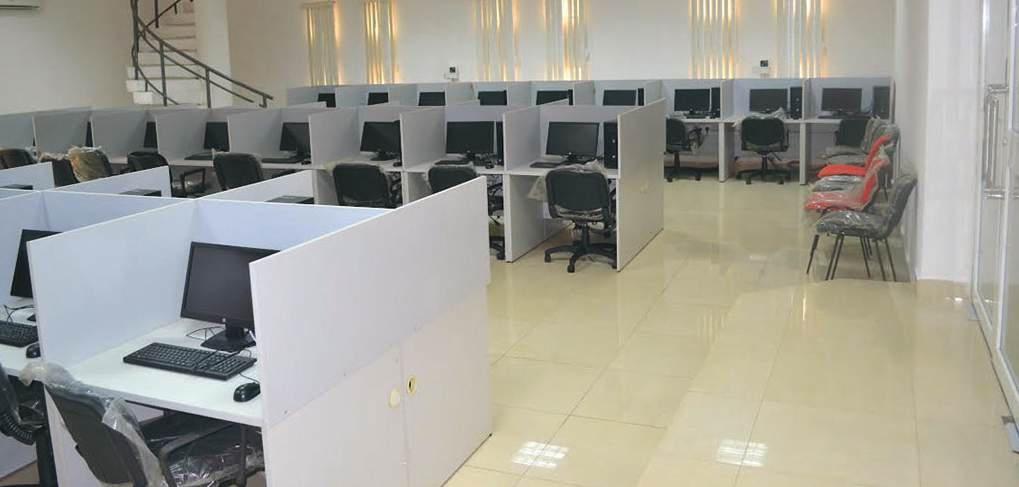
At Lagos State University in Ojo, an ultra-modern ICT Centre stands as a testament to forward-thinking partnership between corporate Nigeria and academia. In
Agbor, Delta State, students at the College of Education engage with technology in an environment designed for contemporary teacher training—multiplying impact as future educators carry digital skills into classrooms across the country.
These interventions are deliberate investments in digital inclusion. In a world where coding, data analysis, and digital communication are essential skills, bridging the digital divide is urgent.
Renovation of educational Institutions
Beyond new construction, Zenith Bank has embraced renovation as a powerful form of renewal.
At Ojota Secondary School in Lagos, adopted and revitalised by the bank, classrooms once marked by wear now offer students safe and inspiring spaces to learn. Similarly, Victoria Island Secondary School has undergone extensive renovation, reinforcing the message that public school students deserve world-class environments.
In Taraba State, three vocational training bungalows have been constructed to equip young Nigerians with practical, income-generating skills. Meanwhile, Hugallawa Primary School has benefited from comprehensive upgrades, strengthening foundational learning in a region where educational infrastructure often faces significant strain.
Each brick laid and each wall repainted signals belief in potential. It restores pride to communities. It reminds students that they are seen and valued.
Vocational Training
Not all students will pursue traditional academic routes. Recognising this, Zenith Bank has invested in vocational training facilities, including a flagship centre in Maiduguri. In a region impacted by conflict and economic disruption, the centre represents more than skill acquisition. It represents resilience. Here, young Nigerians learn trades that offer independence and stability—tailoring, carpentry, digital production, and other practical competencies that meet local and national needs.
By supporting vocational education, the bank acknowledges that sustainable development requires diverse pathways to success. When young people are empowered with employable skills, communities stabilise, and economic cycles strengthen.
Financial Support
Infrastructure alone cannot solve inequality. For many families, school fees remain a formidable barrier. Zenith Bank has therefore complemented its capital projects with targeted financial support designed to ensure that economic hardship does not derail ambition.
At Louisville Girls High School in Ijebu-Itele, Ogun State, a million-naira donation has supported improved learning facilities and the development of a sports complex. Beyond bricks and mortar, the intervention
advances gender equality by strengthening opportunities for girls to excel academically and athletically.
Similarly, Maryland Comprehensive Secondary School has received substantial funding for infrastructure upgrades that promote safe and inclusive learning environments. One particularly impactful initiative is the establishment of a scholarship endowment fund at Francis Catholic Secondary School, expanding access for underprivileged students and ensuring that merit, not financial capacity, determines educational progression.
In conflict-affected regions, support for the NorthEast Children’s Fund reinforces educational resilience, helping young learners rebuild continuity in their studies despite adversity. Through such partnerships, Zenith Bank contributes to reducing inequalities and restoring hope where it is needed most.
While access is critical, excellence deserves recognition.
Zenith Bank’s Academic Excellence Award for Best Graduating Students in select federal universities celebrates outstanding achievement and motivates others to strive higher. For award recipients, the recognition affirms years of discipline and sacrifice and communicates that academic rigour is valued.
Financial Literacy Drive
Quality education extends beyond textbooks. Through its nationwide Financial Literacy Drive, Zenith Bank introduces students to essential concepts such as saving, budgeting, responsible borrowing, and entrepreneurship. By demystifying finance early, the bank empowers young Nigerians to make informed decisions that promote long-term stability.
Across Nigeria, the cumulative impact of these interventions is tangible. Thousands of students now study in safer, better-equipped classrooms. Digital access has expanded across multiple tertiary institutions. Scholarships have unlocked opportunities for learners who might otherwise have been excluded. Gender equity has been reinforced through targeted support for girls’ education. Vocational training has provided alternative routes to empowerment.
Corporate social responsibility is most effective when it aligns with core values. For Zenith Bank, supporting education complements its broader commitment to national development. A well-educated populace strengthens economic systems, fosters innovation, and builds consumer confidence—creating a virtuous cycle that benefits society and business alike.
Behind every intervention is a human story. For instance, a secondary school student in Lagos who now completes research assignments online instead of relying solely on outdated textbooks; a university undergraduate who gains digital competence that enhances employability after graduation; a young woman whose scholarship ensures she remains in school despite financial strain; a vocational trainee who turns newly acquired skills into a micro-enterprise supporting an entire family.
As technology reshapes industries and global competitiveness intensifies, Nigeria’s educational
systems must evolve. Zenith Bank’s emphasis on ICT centres and digital inclusion anticipates this shift. By bridging digital gaps today, the Bank helps ensure that tomorrow’s workforce can innovate confidently on a global stage.
The bank is verifiably a leader in the deployment of various channels of banking technology, and the Zenith brand has become synonymous with the deployment of state-of-the-art technologies in banking.
Today, the bank is globally celebrated as a relentlessly forward-thinking institution, consistently setting the benchmark for digital banking across the Nigerian and African banking sectors, according to a report by International Banker.
Built upon the three principles of people, technology and service, the optimisation of experience and satisfaction across its vast customer base inspires Zenith Bank’s digitalisation strategy, which delivers innovative solutions that are consistently ahead of the local competition.
The bank can proudly boast of having deployed several firsts in cutting-edge offerings that continuously satisfy evolving customer preferences and are thus pioneering the digital-banking revolution transpiring across the country—and, indeed, the continent—at present.
These innovations include the deployment of the first offsite automated teller machine (establishing an ATM in a location outside the bank’s premises in 2003), real-time online banking across its entire branch network, transaction notifications via SMS (Short Message Service) and email, an online payment gateway and QR (quick-response) code payment system.
Today, some of its internet banking solutions include the *966# Banking, which is a convenient, fast, and secure way for its customers to access their bank account and perform banking transactions via non-smartphone without internet connectivity. This service is available to all individual account holders with any feature phones that run on the GSM platform.
Also, the Zenith Bank Mobile App enables customers to get access to their accounts 24 hours a day from wherever you are.
Conclusion
Indeed, advancing quality education requires patience, partnership, and persistence. It demands investment not just in infrastructure, but in belief that every child, regardless of circumstance, deserves a chance to thrive. Through sustained commitment to digital empowerment, infrastructure development, scholarship support, and academic excellence, Zenith Bank continues to play a pivotal role in shaping Nigeria’s human capital landscape.
In classrooms renewed and futures expanded, the bank’s philosophy finds the expression that education is not an expense, but an investment in destiny. And across Nigeria, from Lagos to Jigawa, from Maiduguri to Abakaliki, that investment is already yielding its most important dividend, which is hope.
Inside the Zenith Bank ICT centre at UNN
AFRICA WOMEN OF IMPACT AWARD 2026
ABOYADE FUNKE (SAN) Lawyer, Principal Partner, Aboyade & Co
UKEJE, NNENNA Politician, House of Representatives.
TILAHUN ALEMU, BETHLEHEM Entrepreneur, SoleRebels
ZILLE, HELEN Politician, Activist, Democratic Alliance (DA).
NIGERIA
SOUTH AFRICA NIGERIA
NIGERIA
NIGERIA
SOUTH AFRICA
NIGERIA
NIGERIA
NIGERIA
SOUTH AFRICA
NIGERIA
NIGERIA
SOUTH AFRICA
ETHIOPIA
NIGERIA
SOUTH AFRICA
SOUTH
NIGERIA
NIGER
Omotola Jalade-Ekeinde: Over-Sheltering Children Leaves Them Unprepared for Real World SHOWBIZ
It is not often that you see veteran Nollywood actress Omotola Jalade-Ekeinde make the news. But whenever she does appear, she comes with purpose, much like she did recently, reflecting on her remarkable career. It’s been three storied decades of her journey in the industry and the wife and beautiful mother of four is marking the occasion with her directorial debut – Mother’s Love - released on March 6, coinciding with the period of International Women’s Day 2026. Omotola speaks on her transition from acting to directing. She touched on her character, Labake while highlighting the personal and cultural significance of her latest project which explores the complex bonds between mothers and first daughters. Ferdinand Ekechukwu brings the excerpts:
What specific moment or experience made you realise this story needed to be told?
I visited Nigeria in December 2023 for Christmas, and a very beautiful friend of mine, Ruth Kadiri, a big deal in the YouTube ecosystem, mooted the idea of making a feature film to me. I had organised TEFFEST (The Entertainment Fair and Festival) in 2019, partnering with YouTube and Google, and she wondered why I hadn’t jumped on the current YouTube wave. In her words, “you pioneered this whole movement at some point. We’re doing very well in it now, and you’re not even a part of it”. I told her that I had only travelled home for a vacation, but she insisted that I produce a film, and she was persistent about it. So in March 2024, I consulted my team and discussed the feasibility of shooting a made- for-YouTube film. To my shock, we completed shooting in four days, despite enormous problems. That shocked me, because I didn’t think it was possible. Ultimately, I challenged my team to produce a feature that would go to cinemas. I decided to focus on a simple story. The first thing that came to my heart was a story about the mother-daughter dynamic, a story I’ve always wanted to tell. In previous iterations of Nollywood, we often showed crying mothers. I wanted to show a different kind of mother. My mother was very independent and very strong. I wanted to show that type of woman. I also drew energy from myself, as a mother, and from my own relationship with my first daughter, which in itself is very complicated. Having experienced these intergenerational complexities at both ends, I realised one common theme playing out: with first daughters, mothers always feel like they need to be extremely strict, because first daughters “lead” the others.
Part of the story is set against the backdrop of the National Youth Service Corps, an integral part of youth development and career trajectory. Was it a random decision, or was it something pivotal?
No, it’s just creative license. The weaving of the National Youth Service into the plot went with the theme of how she (her younger character) would have been able to start living anyway. Because the girl in the story was so sheltered, it was the easiest scenario where she’d be able to meet a boy from the other side of the tracks. We were trying to highlight the theme of parents who over-shelter their kids. They think they are doing something great for them, but in essence, they are not preparing them for the outside world. That’s another story, with so many other subjects that would have been nice to touch on.
How did the geography and local com- munities influence the story you were telling considering that the film was shot across various Nigerian locations?
The locations were very important, because the story itself is juxtaposition: we were work- ing with two extremes, the very rich and the extremely poor. In Nigeria, to be precise, the very rich live on Banana Island. And the interesting part is, just across the ocean and the bridge; you have the Makoko community, which is known worldwide as a squalid settlement. So I thought it was very important for us to shoot there. The dynamic was important: on one end of the ocean is extreme wealth, and on the other end is extreme poverty. So what are the odds that a child with a privileged background and a child from humble beginnings could meet in school, interact, and then fall in love? That contrast is central to the story. When you watch the movie, you will see that we play with people’s perceptions. There is often a belief that when you are from that kind of background, you must be unscrupulous or streetwise. But in this film, you will find a very different kind of person, which we do not show enough in Nigerian cinema.
What surprised you most about the transi- tion from actress to director?
I have worked as a co-director on other people’s projects and served as a consultant on several movies, so I have previously been involved behind the scenes. But this was different. This was totally my own project, and that meant full responsibility. And, as I mentioned earlier, considering how I even got started on this project, everything was on the mark. I did not have much time to think. Everything had to move quickly, and I had to stay on my feet. Shooting in Nigeria at the time added to the pressure. The national power grid had shut down, at least in Lagos, if not across the country, so there was almost no electricity. Then there was fuel scarcity, so we had to buy black-market fuel to keep things running. All this was happening while I did not have the luxury of months of pre-production. I had to keep thinking on my feet, making decisions as I went. I was both producer and director, so the pressure was immense. When I compare directing to acting, to be honest, I found that I actually preferred being a director. I felt more comfortable in that role, as if I was made for it. Ironically, what made things even tougher was the acting. Initially, I was not supposed to act in the film — we had cast another actress — but after we reviewed the final script, everyone insisted that I play the role. That added another layer of pressure, because I had already planned the production with the other actress in mind. Having to step into the role forced me to re-adjust everything. It even got to a point where I would forget I was acting in the movie. I was handling so many things that people would suddenly come up to me and say, “Director, your scene is ready”, and I would have to run off, do my makeup, and rush back to set.
Has this experience changed your perspec- tive on the stories you wanted to tell? Has it shaped or influenced the sort of stories you will focus on from here on and what is next for you as a filmmaker?
I have always been drawn to human stories. Even as an actor, I have consistently been part of projects that centre on human struggles and experiences, such as films like Alter Ego (2017), Lockdown (2021), and Ije (2010). I am very particular about the kind of movies I choose to work on, and that will not change. What this experience has done, however, is make me lean even more towards true-life stories, the kinds that have the power to influence or even change the future. At this point, I feel more comfortable telling stories inspired by real events or real people. I feel more connected to them, and I believe they resonate more deeply. Going forward, I am inclined to pursue stories like these in my own projects.
What do you hope local and international audiences take away from this film about contemporary Nigerian women, particularly those from privileged backgrounds who are questioning their place in society?
I think what audiences can take away from Mother’s Love, especially when it comes to contemporary women, is the understanding that women are flexible. There is no universally singular definition of what it means to be a woman. First and foremost, women are multi-tasking, and we are also multi-thinkers. In other words, we can adjust to whatever situation we find ourselves in. Most importantly, women are also very wise. We know when it is time to pivot. That is exactly what happens with my character, Labake. When it was time for her to switch, she did it so seamlessly you would almost not notice, but she knew that if she did not pivot, she would lose everything. So, I think it is about recognising that we know when to be a wife, and we know when to be a mother. We may not always get it right at first, but if we are given the opportunity, we will adjust and eventually get it right. People often think that independent or contemporary women cannot fulfill traditional roles in the African context. The assumption is that you are either one thing or the other, either
“tough” or “homely”. But that is not true. You can be all of it. You can be both soft and nurturing, and yet career-driven. You can take care of your home while also being sensitive, ambitious, and successful. It is possible. I know because I am an example of that balance.
Stories abound about women in Nollywood, who were on an upward trajectory, and then after a while, motherhood comes in the way, and they step back for some time. Then the blogs start asking, “What happened to this person?” It is tough, it is not easy, but it is possible. My message to my colleagues who have gone through that is this: it’s never too late. Come back whenever you are ready. Take the time you need to do whatever is essential to you, because everybody’s journey is different. I also don’t like the pressure that people put on women to fit into one narrative. If a woman needs to step away for a while to take care of her children, then that is what she needs to do. I step away from the media sometimes, too. I do it intentionally, and people ask, “Omotola, where are you?” But for me, it’s about prioritising my mental health. As women, it’s not easy to balance taking care of a man, a home, and children with
maintaining a career. So take the time you need, and when you are ready, come back. Your spot will always be there waiting for you. Nobody else can take it.
What influenced your decision to work with emerging talent like we see in the cast, since they are relatively young and from a different generation?
Lilian (Afegbai) is doing very well now; so her talent is not in doubt. Nosa (Rex) is doing very well on YouTube, and we needed him for his comedic prowess. Noray (Nehita) is relatively new; she’s only done a few projects, but we also needed someone who looked like me. When I saw her, that was the first thing, because the casting had to be believable. She needed a lot of grooming, but she worked very hard and caught up quickly. In my generation, we came in with passion and were very particular about discipline, which is not very easy to come by with the new actors now. So I tend to avoid those who lack a work ethic. I don’t care about popularity. I believe my name can carry a project. For me, it was important to find the right cast, to find disciplined actors, and to showcase people whom, as an actor myself, I would be proud to present to the world. So, it was not just about their acting, even though that was very important, but also about their personalities and how serious they are as artists.
Omotola Jalade-Ekeinde
AUTOWORLD
BBA Motors Nigeria Launches Zeekr 9X, First in Africa
BBA Motors Nigeria has announced the official arrival of the Zeekr 9X, marking the first unveiling of the vehicle in Africa.
The launch, during the week in Lagos, introduces a new era of premium electric mobility in Nigeria and positions the country as a strategic hub for advanced new-energy vehicles in West Africa.
The Zeekr 9X combines cutting-edge electric technology, intelligent driver assistance systems, and luxury design. Through this launch, BBA Motors aims to introduce Nigerian consumers to the next generation of intelligent vehicles while strengthening automotive trade between Africa and Asia.
The Zeekr 9X is a next-generation luxury SUV designed for performance, advanced technology, and sustainability. The vehicle introduces intelligent mobility features and premium design to the Nigerian luxury automotive market.
Key Features
• High‑performance electric drivetrain
• Intelligent driver assistance systems
• AI powered infotainment system
• Premium interior materials and craftsmanship
• Spacious executive seating and panoramic displays
The arrival of the Zeekr 9X in Nigeria marks the first African debut of the model and signals the growth of luxury electric vehicles in West Africa. Nigeria’s rapidly growing premium vehicle market makes it an ideal launch location for next-generation mobility.
BBA Motors Nigeria is an automotive import, distribution, and mobility solutions company focused on bringing high-quality vehicles to the Nigerian market. The company connects global automotive manufacturers with African consumers through efficient logistics, trusted service, and localized expertise.
The company’s Mission is “To ensure that highquality vehicles reach every Nigerian customer efficiently and safely, and the Vision is “To become Nigeria’s most trusted automotive import and distribution partner.
Also, BBA Motors, Nigeria’s leading comprehensive service provider for Chinese automotive brands, opened its flagship showroom in Lagos, marking the Nigeria debut of Zeekr 9X with first nationwide vehicle delivery.
BBA Motors new intelligent flagship showroom in Lagos also hosted the first exclusive offline preview of the Zeekr 9X luxury SUV in Nigeria, alongside the official delivery of the very first Zeekr 9X across the country. International superstar Mr. D Banj (also known as Bangalee), Professor Oyebanji Oyelaran Oyeyinka, former Director of the Regional Office for Africa of the United Nations Human Settlements Programme (UN-Habitat), Nigerian business leaders, heads of the financial, insurance and leasing industries, high-net-worth clients, ride-hailing platform partners, and representatives from Nigeria’s mainstream media gathered at the event to witness this key milestone in BBA MOTORS’ brand upgrade, the first local debut
of the world-renowned Zeekr 9X in Nigeria, and the landmark delivery of the first vehicle.
As a benchmark service provider for Chinese automotive brands in the Nigerian market, BBA MOTORS has long focused on three core business segments: sales of China-manufactured vehicles, short and long-term vehicle rental services, and ride-hailing fleet supply and operation. Backed by a stable supply chain directly from Chinese automakers, a comprehensive localized after-sales service system, and flexible customized financial solutions, BBA MOTORS fully covers all-scenario travel needs including daily commuting, business travel, commercial transportation, and ride-hailing operations.
Ms. REBECCA JIA, Founder and Chief Executive Officer of BBA MOTORS, said in her opening speech: “In the Nigerian market, our core mission is to bring world-class Chinese automotive products and thoughtful localized services to local users. The opening of this showroom is a brand-new starting point for our brand upgrade; the exclusive debut and first delivery of the Zeekr 9X is a key move for us to lay out the high-end new energy vehicle track and complete our product matrix. Moving forward, we will continue to provide Nigerian residents with a full range of options from daily commuter models to high-end luxury vehicles, and deliver customized end-to-end services including fleet procurement, leasing, maintenance for corporate clients and ride-hailing platforms, striving to become the most trusted comprehensive service provider for
Chinese automotive brands in the Nigerian market.”
As the core highlight of the opening event, the exclusive debut of the Zeekr 9X has attracted extensive attention from all guests and media in attendance. Zeekr is a global premium intelligent all-electric automotive brand under Geely Holding Group, which has taken the global market by storm with its industry-leading pure electric technology, outstanding intelligent experience, and premium quality. This event marks the first offline exclusive preview of the Zeekr 9X in Nigeria, through its authorized partner BBA MOTORS.
On-site product experts introduced that the Zeekr 9X on display is a flagship all-electric SUV deeply adapted for the African market, with comprehensive optimization for Nigeria’s local road conditions, high-temperature climate and user scenarios. Its core product highlights are as follows:
African-Customized electric Drive System, eliminating Range Anxiety with efficient Charging
The model is equipped with a high-safety ternary lithium battery, delivering a maximum CLTC-rated pure electric comprehensive range of up to 560 km and a combined range of 1250 km. It fully covers daily commuting within Lagos for a full week without charging, as well as intercity round trips between Lagos and Ibadan, Lagos and Benin City, completely eliminating range anxiety for pure electric vehicle users. The model supports a maximum 120kW DC ultra-fast charging, with 30% to 80% charge completed in just 28 minutes, and 120 km of
range added in 10 minutes. The customized stable thermal management system, optimized for Africa’s year-round hot climate, maintains battery charging and discharging efficiency, cycle life and ultimate safety even in environments above 40°C, perfectly adapting to Nigeria’s local climate.
exclusively Tuned High-Performance All-wheel Drive System, Adapted to Local Road Conditions
The Zeekr 9X Ultra version is equipped with a front and rear dual-motor intelligent four-wheel drive system, with a combined peak power of 310 kW, peak torque of 680 N·m, and 0-100 km/h acceleration in just 4.2 seconds, delivering abundant power for high-speed overtaking and hill climbing. The reinforced body and chassis structure, paired with European-standard high-end suspension, is exclusively tuned for Nigeria’s unpaved and potholed road conditions, with a 185mm minimum ground clearance. It balances ride comfort on urban roads and trafficability on unpaved surfaces, fully adapting to Nigeria’s diverse travel scenarios.
Flagship Intelligent Luxury Cockpit for All-Scenario Comfortable Travel
The model comes standard with Nappa leatherwrapped aviation-grade seats, with full ventilation, heating and massage functions for the front seats, and electrically adjustable rear seats. It is paired with a multi-zone independent constant temperature air conditioning system, active noise cancellation system and high-end NAIM audio system, creating a first-class travel experience. The panoramic intelligent cockpit is equipped with a 15.4-inch 2.5K HD central control screen, 10.25-inch full LCD instrument cluster and AR-HUD head-up display, supporting triple-screen linkage. It is also equipped with a full-scene intelligent voice interaction system that supports continuous conversation and offline wake-up, enabling hands-free control of navigation, media, air conditioning, vehicle settings and other functions, perfectly adapting to local driving habits.
Advanced Intelligent Driving and All-Round Safety Protection
The Zeekr AD advanced intelligent driving assistance system is equipped with 5 millimeter-wave radars, 12 ultrasonic radars, and 8 high-definition cameras, supporting 23 intelligent driving functions including Adaptive Cruise Control (ACC), Lane Centering Control (LCC), intelligent lane change assist, 360° panoramic imaging with transparent chassis, and automatic parking assist, greatly reducing driving fatigue during long-distance trips and urban congestion. The ultra-high-strength steel-aluminum hybrid body has a torsional stiffness of 36000 N·m/deg, with 6 airbags as standard, meeting global five-star safety standards. It is also equipped with a full set of active and passive safety systems including Automatic Emergency Braking (AEB), Blind Spot Monitoring (BSM), and tire pressure monitoring as standard, providing all-round safety protection for every trip.
More Firms Confirm Participation for 20th Lagos Motor Fair, Africa AutoParts Expo
Peparations are intensifying for the 20th Lagos Motor Fair and 13th Africa AutoParts Expo, scheduled to take place from March 17 to 19, 2026, at the Federal Palace Hotel, Victoria Island, Lagos, as more local and international companies confirm participation.
The exhibition will bring together leading brands in automobiles, spare parts, accessories, lubricants, additives, financial services, insurance and security technologies to showcase a wide range of modern products, innovations and services.
Chairman of the Organising Committee and Managing Director of BKG Exhibitions Limited, Mr. Ifeanyi Agwu, disclosed this during a media briefing in Lagos, noting that the event continues to attract strong interest from industry players across the globe.
According to him, the Lagos Motor Fair has evolved into a major international automotive marketplace where indigenous and foreign companies showcase their capabilities while exploring new business opportunities.
Agwu said more Nigerian companies have recently confirmed their participation, joining over 100 foreign firms already registered for the exhibition. The event
is expected to host companies from countries including Turkey, China, India, Germany and the United Arab Emirates, all presenting world-class automotive products and services.
He explained that the fair remains one of the largest gatherings of established automotive brands and emerging players, covering segments such as passenger cars, buses, trucks, spare parts, lubricants, accessories, financial services and automotive technologies.
“Virtually all the major brands in automobiles, spare parts, lubricants, financial services and insurance, as well as regulatory and policy-making agencies, are expected at this year’s fair. The response from industry stakeholders has been very encouraging,” he said.
Agwu added that the 2026 edition will witness a strong presence from members of the Motorcycle Manufacturers Association of Nigeria (MOMAN) and the Automotive Local Content Manufacturers Association of Nigeria (ALCMAN), following recent strategic partnerships with the organisers.
He noted that the exhibition provides an important platform to showcase the capabilities and growth potential of Nigeria’s automotive industry while encouraging investment into the sector.
Despite the economic challenges confronting the
automotive industry and the broader Nigerian economy, the organisers said they remain committed to sustaining the event as a forum for dialogue, collaboration and investment promotion.
“For more than a decade, the Lagos Motor Fair has served as a unique forum for assessing the capacity and future potential of Nigeria’s automotive sector. It remains one of the few platforms where industry stakeholders, policymakers, investors and consumers can interact directly and exchange ideas that shape the sector’s future,” Agwu said.
To attract wider participation, the organisers have intensified efforts to ensure strong attendance from institutional buyers, trade professionals, industry associations and individual consumers.
Agwu said the exhibition will highlight the significant investment opportunities available within Nigeria’s automotive industry and encourage both existing and potential stakeholders to take advantage of the platform.
As part of efforts to strengthen Nigeria’s position as a regional automotive hub, invitations have also been extended to trade groups and professional associations across West and Central Africa through the Nigerian Association of Chambers of Commerce, Industry,
Mines and Agriculture (NACCIMA).
“Our vision is to position Nigeria’s auto parts market as a major production, distribution and trading hub for West, Central and East Africa, with the long-term goal of serving the entire continent,” he said.
With the support of international partners in Turkey, the United Arab Emirates, China and India, more than 100 Original Equipment Manufacturers (OEMs) and dealers in auto parts and accessories are expected to participate in the exhibition.
The organisers said special emphasis is being placed on the spare parts segment of the industry because of its potential to stimulate cottage industries and create significant economic multiplier effects.
“Our focus on the spare parts sector is deliberate. It is aimed at encouraging the development of local manufacturing and strengthening value chains within the automotive ecosystem,” Agwu explained.
He added that bringing global manufacturers to Lagos will enable Nigerian and regional spare parts dealers to establish direct and lasting business relationships with original producers.
Beyond the exhibitions and business networking sessions, the organisers also promised an engaging experience for visitors throughout the three-day event.
L-R: Former Senior Special Adviser to the President on Industrialisation, African Development Bank, Professor Banji Oyelaran-Oyeyinka; CEO, BBA Motors, Mrs Rebecca Liyuanjia; and Mr. Oladapo Daniel Oyebanjo, a.k.a D’Banj, at the BBA Motors grand opening event held at the showroom in Lagos… recently
Nigerians Groan Under Digital Identity Regime
That Turns Basic Rights into Privileges
Nigeria’s human rights performance already ranks among the world’s weakest, at 120th of 143 countries globally and 23rd of 34 in Sub-Saharan Africa in the 2025 World Justice Project Rule of Law Index. Its digital identity system, conceived as a foundational pillar of the country’s emerging Digital Public Infrastructure, has further strained it. Designed to unlock access to rights and essential services, the National Identification Number has become a strict gatekeeper. Today, a valid and functional NIN is required for healthcare, education, banking, employment, telecommunications and social welfare. But for many of the over 126 million Nigerians whom the identity custodian, National Identity Management Commission (NIMC), said it has enrolled, this requirement is out of reach, because inevitable life events like marriage, relocation, or even NIMC’s own errors render their identities unusable. Advocates warn that conditioning citizens’ survival on a digital identity riddled with gaps, and no clear path to redress is a breach of fundamental human rights, reports Omolabake Fasogbon
While his classmates celebrated their matriculation, 18-year-old Seun Adewale stood aside.
The aspiring engineer would not join his peers at university that year, not because he was not enrolled or had a disciplinary issue, but because of a simple discrepancy in the arrangement of his name on his NIN record and Senior Secondary School Examination (SSCE) result. This prevented him from registering for Joint Admissions and Matriculation Board (JAMB) examination crucial for university admission.
JAMB had repeatedly warned that data supplied must tally with NIN record. Aware of the risk, Adewale moved to correct the error using NIMC’s self-service modification portal after the commission suspended in-person corrections. Despite paying N2,000, a fee NIMC had earlier promised would not apply to those whose errors originated from enrollment agents, the process failed Adewale repeatedly until registration closed.
“I tried several times but the portal repeatedly indicated “success,” yet my name remained unchanged,” he recalled.
Desperate, knowing his future depended on this fix, he visited NIMC’s Agbado/Oke-Odo LCDA Liaison Office in Lagos, one of those the commission directed citizens stuck on the portal to seek assistance.
“The official said it would have been easier to help if I hadn’t started the process. He assured to fix it, demanding N12,000, above the official N2,000 fee. I paid, but the error remained. I couldn’t register for the exam that year,” he said, his voice heavy with frustration.
Though counted among the enrolled Nigerians, Adewale was functionally invisible when it mattered most. His story is far from unique. For another NIN holder identified on X as Timothy, same modification failure cost him a scholarship.
Frustrated, Timothy vented on the microblogging platform, tagging NIMC: “I missed a scholarship because of you o. When your self-service portal logged me out. Almost a month now, I’m unable to delink my account.”
The duo’s ordeals are not isolated; they are reflection of daily reality across Nigeria, where identity gaps are steadily turning basic rights into privileges.
NIMC’s policy that widens exclusion net, tramples human rights
Digital identity is globally recognised as a core building block of Digital Public Infrastructure (DPI) alongside payments and data exchange systems. DPI is premised on resilience, universality and accessibility. It is meant to reduce friction, but lapses such as system downtime, portal failures, weak integration between NIMC and key agencies, and a near- impossible rectification of data have made that gateway impenetrable for many, leaving a mounting trail of forfeited opportunities, denied rights and stalled lives across the country.
These flaws, experts argue, justify decoupling essential services from identity validation, stressing the approach digitises exclusion.
Under NIMC’s 2024 policy, routine in-person corrections at physical centres were halted, with updates confined to a smartphonebased self-service portal. While intended to curb extortion and enhance security, this
procedure effectively excludes over half of Nigerians, who according to World Bank report, lack digital literacy and 72 percent of adults without smartphones, according to Research ICT Africa. Even then, the digitally skilled, like Adewale, remain trapped by glitches.
Visits to cybercafés and a range of enrollment agents uncovered a surge in data correction requests, a trend NIMC spokesman Dr. Kayode Adegoke confirmed to THISDAY runs into hundreds of thousands.
The commission further stipulated that correction accounts are uniquely tied to the original device and browser used at registration.
“Your self-service account is uniquely tied to the browser and device used during registration,” NIMC’s Spokesman, Adegoke declared in a public advisory.
Digital identity is grounded on the principle of resilience and universal access, Yet, NIMC’s rules restricting corrections to an exact device and browser used at initial registration run contrary to these very principles, locking out anyone who may have lost, damaged or cannot access the device.
Technology Researcher, Olufemi Ariyo described the approach as unjust and inaccessible, noting that database errors are inevitable often due to human evolving nature or even NIMC’s lapses, adding that “citizens should not suffer to correct them”.
“Digital identity should serve as a bridge, not a gatekeeper,” he argued in an opinion article published on The Cable. “When errors block access to essential services, technical failures become social injustice. It becomes a matter of fairness and inclusion.”
Approximately 94 million Nigerians remain unenrolled, Technology Policy Advisor, Jide Awe added, that many enrolled are as good as not, adding, “their identity only matters if it serves a purpose.”
From a human rights standpoint, Digital Rights Attorney, Olumide Babalola noted, “When the state creates a mandatory identification requirement but blocks meaningful correction, exclusion becomes state-caused harm.”
While the commission defended the framework on data security and prevention of unauthorised access, critics argue it exposes citizens the more and multiplies exclusivity, urging a flexible process that genuinely helps, rather than a purely technical one.
Beyond technical flaws, digital rights advocates warn the approach risks undermining protections guaranteed under Article 6 of the Universal Declaration of Human Rights, which guarantees legal identity.
Babalola warned, “Human rights standards are clear, no exclusion from services due to digital illiteracy, all digital systems must have non-digital alternatives, and accessibility must accommodate disabilities. A digital divide cannot become a legal divide.”
Global bodies, most notably the World Bank through the Identification for Development
(ID4D) initiative, have consistently backed Nigeria’s identity infrastructure, initially targeting 148 million enrollments, later extended its $430 million support facility until December 2026 to ensure every Nigerian holds a functional identity.
The federal government has repeatedly pledged no Nigerian will be denied verifiable identity, lived experiences tell otherwise, which experts warned diverge from the global financier’s goals and reduce chances of 2026 target.
Cost of correction: fish trader denied micro-loan to expand trade
If Adewale and Timothy, with their tech exposure and assistance from NIMC’s partners could not fix their data, rural dwellers and the tech-unaware stand slimmer chance. Among them is a fish trader known only as Mrs. Foluke, alongside 84 per cent of Nigerian graduates, who according to Phillips Consulting report lack digital literacy.
For Foluke who is neither literate nor owns a smartphone, meeting NIMC’s prerequisites for updating her address after relocation was impossible, a snag that cost her a micro loan to expand her business.
Hers underscores what technology researcher Ariyo termed “human variability” the normal life changes that rigid systems must anticipate. Human lives, Ariyo argues, are in constant flux. “People move, change, and marry, yet technology demands the consistency that life rarely provides.
“Identity systems must be designed in tune with safeguards for human variability and systemic and graceful error recovery”, he added.
Foluke remains counted in NIMC’s statistics, but functionally excluded.
On the ground realities
Foluke’s plight, in particular, led THISDAY to test NIMC’s promised remedy of centres designated to assist the digitally illiterate. A field visit to the one at the commission’s Lagos Head Office in Alausa, Ikeja, was revealing. THISDAY reporter, posing as a citizen without digital literacy seeking record modification, was denied entry at the security post. Access was granted only after persistent pleading, this is at the same centre NIMC designates as a last resort for those stuck.
“No one can assist you. Do it yourself on your phone,” the guard said bluntly.
A later referral to an official identified as Sodiq first requested N32,000 above NIMC’s advertised N28,574 fee for date of birth update, then dismissed the process when presented with a feature phone.
“You need a smartphone,” he said curtly. When asked about alternatives, he suggested borrowing an unused device or wait until one could be purchased.
A further plea for his own device was, predictably, refused, consistent with NIMC’s policy restricting modifications to the original enrollment device.
All of NIMC’s provided remedies, including a visit to its offices and liaison centres offer no real relief for the digitally unequipped, including Foluke, who lost a business expansion opportunity.
A 2023 EFInA survey on Access to Financial Services in Nigeria found 26 percent of Nigerian adults remain financially excluded, a gap experts traced to failures in digital identity access.
NIMC’s persistent portal failures strand Nigerians as complaints go unanswered, denying them access to essential services tied to national identity number
Deeper pain
From botched travel plans to disrupted mobile services, denied banking access and social services, the struggles are unending.
A cybercafé operator in Abule-Egba, Lagos, Mr. Adewale Toyin, revealed non-NIMC agents are now exploiting data correction glitches as business opportunity. FIJ media also reported scammers exploiting the same loophole with fake NIMC websites promising free corrections to target unsuspecting Nigerians.
“An admission seeker just left here before you came, asking if I do data modification,” Toyin stated.
The student, he explained, had been duped by a youth corps member who claimed connections at NIMC headquarters in Abuja.
“This was after weeks of unsuccessful attempts on NIMC’s portal to fix a name misspelt.
“Many of my colleagues now take advantage of innocent applicants. Some driven by profit won’t even warn students about risks of sitting for exams with invalid identity. Many of them are unaware. I won’t do that”, Toyin explained.
Recounting cases where failed and or delayed correction process had cost people once-in-a-lifetime opportunities, Toyin said the hardest-hitting for him was a man seeking army recruitment.
“Every portal attempt to correct his name redirected him elsewhere. Even NIMC agents couldn’t help on time. It became successful just a day after the recruitment portal closed,” Toyin narrated.
NIMC had promised quick and easy modification on its portal, but delays and outright failure persist. Spokesperson, Adegoke told THISDAY it was due to system maintenance, backend verification checks, and high traffic.
Official data reflects the strain: Monthly enrollment slowed to an average of 648,888 between January and September 2024, down from 1.05 million during the same period in 2023, a decline NIMC blamed on technical issues and capacity upgrades.
Away from technical failings, Awe who also founded Jidaw.com argued NIMC’s over reliance on technology and security at the expense of citizen support and engagement is a root cause. This, he added, allowed systemic failures to persist.
NIMC’s policy backfires, extortion Thrives More
Although NIMC’s spokesman, Adegoke insisted no front-end partner can modify portal
data, field findings suggest otherwise. During THISDAY’s visit to Abule-Egba, Lagos, a front-end partner known as Big Sam Venture demanded N62,000 fee for a date-of-birth correction, more than double the official N28,574, assuring payment guaranteed success.
Questioned on inflated fee, he replied, “Go and do it on your phone at the official price if you can. You’re here because you can’t. Others pay and get it done. We also pay to get it done.”
Similar to previous media reports, Cybercafé operator Mr. Toyin told THISDAY that successful modifications he knows of were done through backdoor agents, some allegedly linked to NIMC officials.
“But it’s a 50-50 gamble, if it fails, you lose your money,” he added.
Toyin stressed surge in modification requests is fuelling exploitation of masses.
A trend, Policy Advisor, Awe argued should prompt urgent policy review that addresses system design, institutional mindset, governance, and citizen inclusion.
NIMC reported a 40 per cent drop in extortion as of 2025, However, rigidity of current policy, coupled with widespread accounts of exploitation by both banned and accredited partners, suggests those gains may be eroding.
Identity Gaps, Rights Implica-
tions
Digital rights lawyers and tech policy advocates warn that the current trajectory risks
violating both domestic and international legal standards.
Under Nigeria’s Data Protection Act 2023, personal data must be accurate and up to date. Where citizens are practically blocked from correcting inaccuracies, legal redress may arise.
Beyond national law, experts cite obligations under the African Charter on Human and Peoples’ Rights, which guarantees legal recognition, non-discrimination and access to public services.
“A policy that disproportionately harms vulnerable groups violates equality guarantees,” said digital rights lawyer, Babalola.
He, like Awe, maintains that identity, beyond biometric capture, requires effective recognition, usability and accessibility.
“Where correcting identity errors remains practically impossible, placing access to essential services on an error-free identity directly breaches African Charter on Human and Peoples’ Rights.
“Specifically Article 5, guaranteeing legal status; Article 13, guaranteeing access to public services; and the non-discrimination protections under Articles 18(3) and 28”, he stated.
He added that rights-compliant identity systems must provide accessible administrative remedies like walk-in correction centres, device-independent modification options and clear timelines for resolving errors, none of which NIMC currently offers at scale.
Nigerians Groan Under Digital Identity Regime That Turns Basic Rights into Privileges Tinubu to Armed Forces: Intensify Efforts
Civilians Across Country
President Bola Tinubu has directed the armed forces to intensify their efforts to protect civilians nationwide and prevent attacks on military installations in the North East.
However, former Vice President Atiku Abubakar, in reaction, accused the administration of Bola Tinubu of focusing on political opponents and supporting ethnic militia groups instead of tackling insecurity.
Tinubu, also charged the military and other security agencies to work urgently to rescue those kidnapped by the terrorists.
The President, in a statement issued yesterday, by his Adviser on Information and Strategy, Bayo
Onanuga, expressed heartfelt condolences to the families of those affected by the recent terrorist attack by Boko Haram on the Ngoshe community in Gwoza Local GovernmentArea of Borno State.
Tinubu mourned the loss of innocent lives, including military personnel, and those caught in friendly fire during the aerial interdiction of fleeing terrorists by the Air Force.
He described the attack by the terrorists as a heartless assault on hapless citizens, urging Nigerians in Borno and elsewhere not to succumb to fear.
The President commended the military for their swift response, which led to the killing of scores of terrorists and their subsequent forced retreat.
Examination (UTME) as well as postgraduate students.
Governor Peter Mbah of Enugu State and the President of the Senate, Godswill Akpabio, yesterday, commended the senator representing Enugu West Senatorial District, Osita Ngwu, for disbursing N250 million in bursaries and scholarships to students from his constituency.
The scholarship and bursary scheme, now in its second year, was part of Ngwu’s Enugu West Academy initiative aimed at supporting students academically and financially.
Beneficiaries included candidates who participated in the Unified Tertiary Matriculation
In his remarks, Akpabio, who announced a N100 million donation to the Enugu West Academy, praised Ngwu for what he described as an uncommon commitment to education and youth empowerment.
“What Osita has done is an uncommon project. When you give a child a good education, he or she can go anywhere in the world,” Akpabio said.
He added that Ngwu had distinguished himself in the Senate, noting that his performance earned him appointment as one of the principal officers of the National Assembly of Nigeria.
Digital rights advocate, Gbenga Sesan cited Section 24(1)(e) of the Nigerian Data Protection Act, 2023, which requires personal data to be accurate and up to date.
“Where citizens are blocked from correcting inaccurate records, their rights have been violated and they can seek redress under the Data Protection Act of 2023,” he said.
Babalola warned Nigeria is ignoring a major lesson from Kenya. In 2021, Kenya’s digital identity system, Huduma Namba was declared partly unconstitutional over discrimination, exclusion risks and data protection concerns.
Lessons from global precedents
Nigeria’s identity challenges are not unique. Globally, digital identity systems have driven exclusion, offering lessons for Nigeria, policy expert, Ariyo said.
He stressed identity failures should be treated as systemic issues, not individual burdens.
Ariyo cited India’s Aadhaar programme, which initially locked millions out due to biometric mismatches, leading authorities to respond with grievance redress channels and alternative verification options.
Kenya’s Huduma Namba system expanded support centres and timelines for error resolution to address exclusion concern. As for Estonia which is regarded as world’s most advanced digital nation, its model permits secure online corrections and human review to fix data discrepancies.
Ariyo stated examples above reflect a rightscentred system genuinely designed to serve citizens. Rights attorney, Babalola noted that international lessons also place responsibility on funders.
“The World Bank must go beyond funding and embed safeguards into its support, including human rights impact assessments, digital exclusion audits, independent grievance mechanisms and mandatory offline alternatives.”
“Under international development finance standards, funders share responsibility to prevent foreseeable human rights harm,” he stated.
Policy advisor, Awe equally urged the global lender to prioritise functional identities over enrolment numbers, insisting support must reward usability, corrections and inclusivity. Until correction becomes as accessible as enrolment, experts warn millions may remain counted in databases but excluded in reality, legally identified, yet functionally invisible.
Nigeria Moves to Harness Women’s Entrepreneurial Strength to Drive AfCFTA Leadership
Nigeria has expressed its determination to take a leading role in the African Continental Free Trade Area (AfCFTA) by building a resilient, productive, and competitive economy through the large-scale unlocking of the productive capacities of women-led businesses.
The country aims to achieve this by promoting inclusion and expanding women’s access to finance, markets, and other economic incentives.
This position was revealed by ministers and key stakeholders during the Colloquium in Honour of Women’s Role in Industry, Trade and Investment themed “Positioning Nigeria to Lead Intra-African Trade,” which took place at the National Assembly Library Complex on Friday.
Delivering the keynote address, the Minister
of Industry, Trade and Investment, Dr. Jumoke Oduwole, stressed that conversations about Nigeria’s industrialisation and participation in intra-African trade must acknowledge the critical importance of harnessing and optimally utilising the enormous potential of women.
She explained that the AfCFTA has moved beyond being an idea to become an operational framework, describing it as a $3.4 trillion market serving 1.4 billion people and the world’s largest free trade zone by number of participating countries.
However, she emphasised that prosperity does not arise automatically from markets alone.
According to her, real economic growth depends on production, noting that trade agreements alone cannot industrialise nations without strong, competitive enterprises driving output.
I’m A Qualified Legal Practitioner, Not Certificate Forger
The Deputy Speaker of the House of Representatives, Hon. Benjamin Kalu has said that he remains a duly qualified legal practitioner and a respected public servant whose professional credentials have been examined at multiple stages of his career.
Kalu, in a statement issued yesterday by his Chief Press Secretary Levinus Nwabughiogu, noted that the allegations made by the Civil Society Groups of Good Governance (CSGGG) concerning Kalu’s attendance at the Nigerian Law School
remained unproven claims arising from a petition that has neither been substantiated nor determined by any competent authority.
He noted: “The Office of the Deputy Speaker of the House of Representatives, Hon. Benjamin Okezie Kalu has taken note of a press conference organised by a coalition led by the Civil Society Groups of Good Governance (CSGGG), wherein certain allegation s were raised concerning the Deputy Speaker’s National Youth Service Corps (NYSC) participation and his attendance at the Nigerian Law School.
Deji Elumoye in Abuja
Gideon Arinze in Enugu
Adedayo Akinwale in Abuja
Juliet Akoje in Abuja
President Tinubu
NIMC Insists ‘No identity, no inclusion’, yet its system frustrates Nigerians seeking identity
FAIRGROUND
MOyOsORE ADEBANJO:
Every Decision in My Office Is Driven by Community Needs
The Executive Chairman of Onigbongbo Local Council Development Area, Hon. Moyosore Adebanjo, combines academic grounding from the University of Lagos with a pragmatic, people-focused governing style. Since assuming office, he has prioritised measurable improvements in education, healthcare, infrastructure, youth empowerment, and social welfare, while strengthening local institutions for long-term sustainability. Adebanjo insists that every policy decision emerging from his office reflects the aspirations of residents. In this conversation with Azuka Ogujiuba, he outlines his vision for accountable, participatory and resilient local governance. Excerpts:
When you assumed office as Chairman of Onigbongbo, what specific leadership vision did you set, and how has that vision guided your key decisions so far?
On assumption of office as the Chairman of Onigbongbo LCDA, the specific leadership vision I remember was that I needed to make myself accessible to everybody, and not just those high up there as management staff or as leaders of my political party or senior community members of my LCDA. And that has really guided me in my feedback mechanism process to know what is actually happening and be on top of my game as a council chairman. That vision has really shaped my administration. So our decisions, or the decisions we make as a management or as leaders in that political office are very informed
When you took office as Chairman of Onigbongbo, what was the first major problem you identified, and how did you move to address it?
The problems I identified as council chairman couldn’t have been said to be just one. I had myriad problems ranging from infrastructural decay, provision of security, palliative measures for people who were disadvantaged within my community, catering for special people, people with special needs within my local government, and all of these people, I could tell you in the space of three months, were attended to.
What major infrastructural or social developments have been initiated or completed in Onigbongbo since you took office, and how do you measure their impact on residents?
I give an example of the Olushosun experience, where they had lacked water for the last 17 years. We took it upon ourselves to resolve it, and it’s still ongoing. Looking at the need to deploy community policing, which we have started, and then we enrolled over 250 community members in our free health insurance, particularly for our aged population. We also enrolled over 300 members of our community in our palliative intervention initiative, where we give some amount of money, tokens, every month, of about 50,000 Naira to community members. We also did our market storm, where we went to assist petty traders to upscale their businesses by giving them cash grants. These and many more are what we’ve done. And particularly roads too, that we attended to, from the Abiola Crest Road on Toyin Street to the dilapidated road of Olushosun, Ojota, to Afolabi Brown in Opebi, and a number of roads too.
How frequently do you engage directly with people at the ward and community level, and how do those interactions shape your decisions?
I do that daily. I run an open-door policy. People have access to my phone number, they have access to my email, they have access to my social media handles, and they have access to my office. I run an open-door office. There’s no day you come— except lately, that I now said you cannot see me on a Monday. Monday is a working day; it’s the first productive day of the week for me, and I also hold my management meetings. So I restrict people from seeing me on Mondays. But going forward, there’s no time you come, you won’t see me as a council chairman.
Since your assumption of office, what measures have been implemented to improve security,
social order, or community trust within the local government?
As we speak now, if you visit the website of Onigbongbo LCDA, we are recruiting 100 Onigbongbo Marshall members for our community policing within our local government. We have also started the deployment of their cabin offices. This is one to promote social order and security, and also to encourage young people to apply, get engaged, and be equipped to attend to their needs.
How do you reassure residents that decisions taken in your office are driven by community needs rather than political alliances?
Decisions taken in my office are purely driven by community needs because we have stakeholder engagement from time to time. We have the CDA representatives from time to time. They tell us what
to do. For instance, in Awoshe Estate, they told us where and when they wanted us to intervene in their matter. In Shonibare Estate, where we gave them tricycles, they told us what they wanted. At the GRA community where we revamped their security patrol vans, I mean, we go to communities to attend to their needs, and that’s the only way you can—they are the barometer through which we can adjudge our performance as a government.
What have been the most significant challenges you’ve faced as Chairman so far, and how has your leadership approach helped you navigate them?
Honestly speaking, the most significant challenge I’ve experienced so far is the way there’s no privacy. And there’s no closing time for anybody. It’s been a major challenge because, first and foremost, when
you are healthy as a leader, you can give your best. It’s a challenge I’m trying to manage, and I’m trying to streamline, God helping me.
Your relationship with Seyi Tinubu has drawn public attention—how would you describe this relationship, and how has it, if at all, influenced development opportunities for Onigbongbo?
Yes, my relationship with my principal, mentor, brother, benefactor, Mr. Seyi Tinubu, has really greatly helped me in no small means because, of course, it is through that relationship I’m able to be given the opportunity I’m presently occupying. And it has really helped me in attracting other benefits to the council. Truth be told, it’s a lot of responsibility when people look at you from the spectrum of the son of the president to say you have access to a lot, or you can command a lot, or you can change a lot overnight, and the demands are truly overwhelming. But day by day, we are trying to attend to such demands and meet those needs. And I’m trying my best, but I could tell you for a fact that my relationship with the son of our national leader, Mr. President, has really broadened my horizon on how to relate with people of different strata and socioeconomic backgrounds.
What practical steps has your administration taken to empower young people and create economic opportunities?
I just told you about the recruitment. We no longer contract our intervention projects, like the desilting of drainages. As we speak, it is ongoing. There are community members we employ to do that. We have also given out tricycles to support youth groups and community-based associations. We have also given employment opportunities. We have also helped to provide training opportunities for our young people. We have also given out laptops, gadgets to help those that are very proficient with social media or modern-day techniques to enhance their businesses. These and many more are things we are doing, and we have done.
See concluded part on www. thisdaylive.com
Girls Tag Unveils Mercy Johnson Okojie, Purity Okojie as Brand Ambassadors
Girls Tag, described as Nigeria’s first all-in-one period care pack for girls aged nine and above, has officially launched with Nollywood actress and philanthropist Mercy Johnson Okojie and her daughter, Purity Okojie, unveiled as brand ambassadors.
The product is being introduced by iBlend Services, appointed Regional Agency for Girls Tag, in partnership with its PR and marketing firm, Eddie MPR. The initiative aims to bridge longstanding gaps in menstrual health education and access to sanitary products, particularly for girls experiencing their first period with little preparation or support.
According to the promoters, Girls Tag was developed to replace the fear, confusion and stigma often associated with puberty with confidence, comfort and dignity. Beyond hygiene, the brand positions itself as a supportive care system, equipping parents with practical tools and language to guide early puberty conversations at home.
To deepen its connection with families, the brand announced a strategic ambassadorial partnership with Mercy Johnson Okojie and her daughter, a
collaboration designed to reflect authenticity and relatability for mothers and daughters navigating similar milestones.
Speaking on the partnership, iBlend Services expressed confidence that the mother-daughter bond
would resonate strongly with Nigerian households. Okojie described the initiative as a natural fit, noting that puberty can be an anxious phase for both parents and children.
She also revealed that her newly authored puberty guide, Youberty, will be included in every Girls Tag kit. The book is designed to help boys and girls aged 10 to 13 understand the physical and emotional changes associated with growing up.
Each Girls Tag care pack contains premium sanitary pads in various sizes, overnight period pants, panty liners, disposable sanitary bags, a discreet sanitary purse, and a copy of Youberty. The kit is tailored to support first-time and early period experiences while promoting proper hygiene and self-care.
The company disclosed that the product will be available nationwide in the second quarter of 2026 at select retail stores, pharmacies and malls, with direct delivery options through its website and social media platform, @girlstag.ng.
With its combined focus on education, dignity and accessibility, Girls Tag says it is poised to redefine menstrual health support for young girls across Nigeria.
Adebanjo
Tinubu
Mercy Johnson and daughter, Purity
2027: As Yahaya Bello Sets Sights on Kogi Central Senate Seat
Donatus Eleko
With preparations in top gear for primary elections in line with the revised timetable of the Independent National Electoral Commission (INEC), quite a number of outgoing and former governors are warming up to contest the Senate seats in their senatorial districts.
There have been particular conversations around the declaration of the immediate past Governor of Kogi State, Alhaji Yahaya Bello, in December 2025, following the reported calls on him by his constituents to vie for the seat.
Considering the apparent influence the former governor has among his people, despite the once heated face-off between him and the Economic and Financial Crimes Commission (EFCC) over alleged money laundering, many analysts opined that his kind of enduring politics needs be studied.
Some Kogi State indigenes described Bello as a towering political figure whose achievements in politics and governance paved the way for his continued relevance and influence in the All Progressives Congress (APC).
Stakeholders in Kogi Central said the former governor’s legacies across the state were indelible, adding that their overwhelming support for him, ahead of the next National Assembly elections, was borne out of this.
Many of them thanked President Bola Tinubu for Bello’s appointment as a member of the Finance Committee for the 2026 National Convention of the APC.
That, according to them, signals the former governor’s continued relevance within the ruling party’s structure as preparations intensify ahead of the major political gathering and forthcoming elections.
Hon. Muhammed Kabir, a stakeholder in Kogi Central, said the former governor’s senatorial ambition was a “done-deal”, noting that even other senatorial districts in the state could attest to the giant strides of his administration.
According to him, the former governor’s running battle with the EFCC could not diminish the people’s love for him because they see it as political.
Kabir said, “Yahaya Bello’s popularity cannot be taken away despite the fact that some people he outsmarted politically want to deliberately paint him black. That the EFCC is in court with him does not matter. Let them slug it out there.
“Before he became a governor, he was doing very well for himself and his community, Ebiraland as a whole and Kogi State at large. I have know him for the past 20 years. He is a very nice man that carries the people along.
“He is someone who has built many young people around him and in the state. He doesn’t discriminate. If you come to him, he will listen to you and assist you. He is the kind of person who will not say that you are from Okun, Igala or Ebira before attending to you. He treats everybody equally.”
Abdulmajeed Adam, another Ebira indigene, who resides in Abuja but votes in Ajaokuta, said
even after leaving office, people still thronged former Bello’s house.
He stated, “Despite the fact that this is Ramadan period, his house is usually filled with people everyday. Those around him say he sleeps between 1am and 4am because he attends to visitors all through the day and well into the night.
“If he was a bad person, people would not come around him again. Just look at the projects he did when he was in power across the three senatorial districts, they are massive and people love him for that and that is why they asked him to go to Senate. He is detribalised. He is an Ebira man but his driver for years has been an Igala man.”
Adam noted that the people of Kogi Central realised the impact of his interventions in the state and decided to call on him to serve through the Senate.
“In terms of his achievements in education, I can say they are unprecedented. He recruited 3,000 teachers and improved teaching quality in schools. He built so many schools and renovated others.
“Before Alhaji Yahaya Bello came to power, there were many out-of-school
children in Kogi. But today, through Yahaya Bello’s intervention, education is free. In terms of security, I can say he was the best governor.
“We have Conference Rice Mill in Kogi today because of Yahaya Bello. He worked across the three senatorial districts.
“Yahaya Bello built and renovated hospitals to world standard. He has not been travelling abroad for medical treatment. I know his personal doctors. So, he is just a man of the people and we are ready to ensure that he represents us in the Senate come 2027,” he said.
The Chief Scientific Officer at National Space Research and Development Agency, Dr Musa Bashir Adavuruku, described Bello as a detrabilised politician whose achievements speak volume.
“Alhaji Yahaya Bello is a man of the people, irrespective of where you come from; whether Christian, Muslim. He treats everybody equally. He is the kind of person I can give Grade A, especially with respect to his relationship with people and achievements when he was in office.
“What the people of Kogi enjoyed during his time was enormous and this is the reason why they want him to do more for them through the Legislative Arm of Government,”
Awo Memorial: Experts, Govt Officials Call
for Egalitarian Reforms to
Stakeholders at the 2026 Obafemi Awolowo Memorial Lecture have called for a radical return to the “scientific” and welfarist governance style of the late sage to navigate the country’s current socio-political headwinds.
The stakeholders made the call at the 2026 Awolowo Memorial Lecture, held yesterday, at Ikenne, Ogun State. The event served as a rallying point for policy experts, diplomats, and government officials to examine the intersection of leadership and national survival.
While delivering President Bola Tinubu’s greetings, the Minister of State for Health and Social Welfare, Dr. Iziaq Salako, described Chief Obafemi Awolowo as a “profoundly wise man” whose intellectual candle continues to illuminate the path for regional and national development. Salako noted that the current administration of Tinubu was cut from the same cloth of courage as the late Premier,
Salvage Nigeria
noting that recent reforms were necessary to pull the nation back from fiscal collapse.
He said, “Today, the socio-economic indexes are clearly showing that Nigeria is recovering from the inevitable radical economic surgery applied by Mr. President,” Salako stated, citing a 4.23 percent GDP growth rate in the second quarter of 2025.
The Minister further revealed that the administration’s health sector renewal initiative has already seen maternal mortality rate drop by up to 17 percent in high-burden local government areas, mirroring Awolowo’s priority for human capital.
However, the Chairman of the occasion and former Commonwealth Secretary-General, Chief Emeka Anyaoku, tempered the government’s optimism with a call for vigilance regarding the nation’s security and electoral integrity.
Anyaoku specifically pointed to the, “unrelenting insecurity” in states like Zamfara, Plateau, and Niger, urging the federal government to maintain Nigeria’s sovereignty even while
the don said.
The Country Head, Young Women of Africa, Ms. Idris Asmawu Omeiza, also shared her views about the achievements of Bello, which has made his influence in the state continue to grow.
She said he was the only former governor that brought Kogi to national limelight positively.
“If there is anything Kogi State ever had, it was having that person called Alhaji Adoza Yahaya Bello because Kogi politics and governance came to the limelight through him,” she said.
“Those days, before the coming of Yahaya Bello, we thought politics was for the old people. But, since his emergence as governor, we now know that politics could also be for young Nigerians,” she added.
On Bello’s towering political relevance, Omeiza stated, “The Kogi State we had 20 years ago is not the Kogi State of now. While anybody can walk around peacefully in Kogi State now is because of the security template established by Yahaya Bello.
“Yahaya Bello is needed in APC because of his capacity and his ingenuity. It is so clear that the issue he has with the EFCC is political. Even the President knows that Alhaji Yahaya Bello is someone who cannot easily compromise.
“Don’t also forget that he is one of the top five young, agile, strategic, accessible and useful personalities APC has presently,” she noted.
Another key leader in the district, Nuhu Philip, noted that it was not surprising that Bello made the list of the National Convention Committee of the APC.
“Beyond the noise around his face-off with the EFCC, Bello is a political force and a towering figure at that, not only in APC, but in the nation’s politics.
“This only goes to revalidate and reassert Bello’s growing influence within the APC and alignment with President Bola Tinubu’s political direction. This is a man who traversed the length and breath of this country mobilising support for the eventual victory of Asiwaju Bola Tinubu as President of Nigeria,” he said.
Other key pundits described Bello as “a political war general” who currently enjoys Kogi people’s support and love.
“Even though he is no longer in power in Kogi State, his people admire and support him. No political party that is serious about winning elections can discard such a person. When it comes to election strategies, leave it for Alhaji Yahaya Bello.
“As a performer in office, he commands a solid structure that has been built through years of executive control, party dominance, and strategic patronage.
“Bello’s political machinery remains formidable, deep-rooted and battle-tested-ready to retain influence and reassert supremacy in Kogi Central come 2027. I call him a political war general,” Paul Edime, a political scientist submitted.
Strong voices in the political circle of Kogi State revealed that Bello holds immense influence and commands great respect in the national APC fold because he is an asset to the party.
A leader in the Peoples Democratic Party in Kogi Central who did not want to be mentioned for personal reasons, described the senatorial hopeful as a “master strategist and election planner.”
“Even though I am not in the same political party with him, I know that Alhaji Yahaya Bello was at the forefront of the Renewed Hope in 2023 and contributed immensely to the victory of President Bola Tinubu.
seeking international collaboration to crush banditry.
“The international community will be closely watching the political party campaigns and the processes for the 2027 national elections,” Anyaoku warned, stressing the need for fairness in the results.
The Guest Lecturer, Prof. Wale Adebanwi of the University of Pennsylvania, delivered a intellectual treatise titled “Politics as Future-Making: Awolowo and Leadership as Theory of Action.” Adebanwi argued that Nigeria’s failure to achieve sustainable good leadership stems from a “prodigal political economy” that replaced productive agriculture with a culture of “sharing the national cake.” He identified four odds against the nation: the nature of state composition, a damaged political economy, the erosion of social virtues like Omoluabi, and a “grotesque” elite composition that hijacks democratic progress.
“Any leadership that fails to adopt a scientific approach to social problems is engaging in inexcusable ignorance and pigheaded stupidity,” the Professor declared, quoting Awolowo’s own philosophical stance.
Adebanwi challenged the current crop of leaders to view politics not as a search for power, but as a proactive process of “future-making” based on long-term planning and egalitarian principles.
He noted that if Awolowo were alive today, he would likely be convening experts to discuss the implications of Artificial Intelligence (AI) for the African continent, rather than focusing on the next election.
Bello
James Sowole in Abeokuta
Tinubu’s Visit: New Momentum in Nigeria, UK Cooperation
Temitope Ajayi
President Bola Tinubu will land at the airport on March 17, 2026, to begin a historic State Visit that will showcase to the world the unique bond that exists between Nigeria and the United Kingdom.
When the formalities of the visit begin on March 18, President Bola, in the company of his wife, Senator Oluremi Tinubu, he will be the fifth Nigerian leader to be so honoured at the highest level of diplomacy by the British Crown and the first to be hosted at Windsor Castle. The four previous Nigerian leaders were hosted at the Buckingham Palace.
This visit carries symbolism beyond ceremony. It reflects the steady evolution of a relationship shaped first by history, then by diplomacy, and now increasingly by commerce, investment, and shared global ambition.
Nigeria’s post-independence leader, Prime Minister Tafawa Balewa, the first to be invited on a State Visit by a British sovereign, was received on December 14, 1965, by Queen Elizabeth II in a move that signalled the preeminent status of Nigeria as the giant of Africa on a global stage, just five years after independence from British colonial rule. Eight years later, Queen Elizabeth II hosted General Yakubu Gowon, the Military Head of State, on June 12, 1973. That visit was followed by that of the first democratically elected President of Nigeria, Alhaji Shehu Usman Shagari, which began from March 17 through March 20, 1981.
By the time the fourth visit by a Nigerian leader took place in 1989, the country had, again, fallen under military rule after the short spell of the Shagari administration from October 1, 1979, to December 31, 1983. Queen Elizabeth II hosted General Ibrahim Babangida and his late wife, Mariam Babangida, to a spectacular State Visit that ended on May 12, 1989.
If the previous four State Visits elevated the special relationship between Nigeria and the United Kingdom, President Tinubu’s scheduled visit, which was first announced by the British Royal Family on February 10, 2026, is taking the bond between the two great nations to a new era of cooperation and shared values. It is worth stating that Nigeria is the only country in Africa whose leader will be hosted on a state visit by His Majesty’s govern- ment for the fifth time.
Only South Africa whose President has been received three times came close and the last was when President Jacob Zuma and his wife, Thobeka Zuma were hosted between March 3 to March 5, 2010. Other leaders of African countries such as Egypt, Ghana, Zimbabwe, Senegal, Morocco, Malawi, Liberia, Zambia and Tanzania, have only been hosted once.
Since its independence in 1960, Nigeria and the United Kingdom have enjoyed robust bilateral relations covering education, defence, trade, culture, technology, and sports. Security cooperation has also remained a central pillar of this partnership. The United Kingdom continues to support Nigeria
in areas such as counter terrorism training, intelligence collaboration, and military capacity building, particularly in efforts to stabilise parts of the country affected by insurgency and organised crime. This cooperation reflects the shared interest of both nations in regional stability and international security.Tinubu’s visit to the UK on the invitation of King Charles III, at a time the United Kingdom is redefining her global trade relationships following exit from the European Union, is not just another visit. It is a visit that speaks to the status of Nigeria as the world’s largest Black democracy and the biggest market in Africa. It is also coming on the heels of significant economic reforms initiated by President Tinubu to stabilise Nigeria’s economy, liberalise the foreign exchange market, reform the tax system, and reposition the country for investment-led growth.
Nigeria today stands at an inflection point where bold domestic reforms are beginning to align with a renewed diplomatic push to attract global capital, expand trade, and reposition Africa’s largest economy for long-term competi- tiveness. With a population projected to become the third largest in the world within the next three decades, Nigeria’s economic trajectory will increasingly shape the future of Africa’s growth story. As global investors look toward emerging markets for the next wave of growth, Nigeria is positioning itself to become one of the most consequential economic frontiers of the 21st century.
The post Brexit UK government continues to expand trade and market access for British goods and services through strategic bilateral partnerships around the world. Nowhere else in Africa will the UK seek to deepen coopera- tion more than with the continent’s largest market, where hundreds of British corporations have maintained a strong and profitable presence for more than a century.
Nigeria is the second largest trading partner of the United Kingdom in Africa with annual bilateral trade volumes estimated at eight billion pounds across energy, finance, education, technology, and retail. Nigeria’s trade and economic partnership with the United Kingdom have been significantly strengthened under the UK Nigeria Enhanced Trade and Investment Partnership (ETIP), which was signed in 2024 under the leadership of President Tinubu. Under the ETIP, the two countries designed a strategic framework to boost bilateral trade beyond current levels while removing barriers to commerce and expanding cooperation in sectors such as agriculture, technology, renewable energy, fintech, manufacturing, retail, and the creative economy. In an era where global supply chains are shifting and emerging markets are competing for capital, deeper economic cooperation between Nigeria and the United Kingdom presents opportunities for both nations to expand trade, investment, and innovation across multiple sectors.
Other key aspects of the ETIP include economic diversifica- tion and support for export-led economic activities. With ETIP, Nigerian exporters can effectively leverage the Developing Countries Trading Scheme (DCTS), which offers low to zero tariff access to the UK market for more than 3,000 products. The framework is also focused on job creation for the citizens of both countries by stimulating private sector investment, strengthening value chains, and supporting Nigeria’s broader economic reform agenda.
While Nigeria’s creative and cultural products are on global ascendancy, ETIP also provides a platform for structured cooperation in the creative industries through a specialised Technical Working Group.
The group will work to deepen collaboration in film produc- tion, music, fashion, digital media, and cultural exports while attracting more British investment into Nigeria’s fast-growing creative economy, which has emerged as one of the country’s most powerful drivers of youth employment, cultural influence, and soft Presidentpower.Tinubu’s State Visit is notable in several respects. He will be the first Nigerian leader to be honoured as a special guest of the British Royal Family since Nigeria returned to democratic rule in 1999.
In an interesting historical symmetry, it was the then Prince Charles, now King Charles III, who represented the British Government and Queen Elizabeth II at the inauguration ceremony of President Olusegun Obasanjo on May 29, 1999.
Ajayi is Senior Special Assistant to PresidentTinubu on Media and Publicity
L–R: Deputy Managing Director, Wema Bank, Oluwole Ajimisinmi; Chairman, Board of Directors, Wema Bank, Dr. Oluwayemisi Olorunshola; First Lady of Lagos State, Her Excellency, Dr. (Mrs.) Ibijoke Sanwo-Olu; and Managing Director/CEO, Wema Bank, Moruf Oseni, at the Wema Bank International Women’s Day event, held in Lagos, ...recently
L-R Head of ENI’s sub Saharan African Region, Mr. Mario Bello; Attorney General of the Federation and Minister of Justice, Mr Lateef Fagbemi; Minister of State, Petroleum Resources Oil, Senator Heineken Lokpobiri; during the singing of settlement and project agreement between Nigeria and ENI in Abuja, . recently
L-R: S LT Augustine Farominiyo of Nigerian Naval School of Music, Lt. Samuel Malachy, representing Commander Nigeria Amry Ordinance; Senior Pastor Trinity House, Pastor Ituah Ighodalo; and Squadron Leader Qudud Lawal, representing the Commander 631 Aircraft Maintenance Depot, Nigerian Airforce att the annual Armed Forces Remembrance and Thanksgiving service held at Trinity House in Lagos.. recently.
L-R: Assistant Pastor in Charge of Lagos Province 45, Pastor Taiwo Olatunbosun; Pastor in Charge of Marvelous Light Area, Pastor (Dr.) Cynthia Gregg; Her Husband, Hon. Gregg; and Pastor in Charge of Lagos Province 45, Pastor Godwin Obadan during the Inauguration and Dedication Service of Marvelous Light Area Headquarters Tagged: Days of Glory at Alaba, Lagos ….recently
Tinubu
FeATureS
Rise and Fall of Anambra’s ‘Billionaire’ Native Doctor, Akwa Okuko
David-Chyddy eleke digs into the past, mystery, rise and eventual fall of Mr. Chidozie Nwangwu, who was dubbed Anambra’s billionaire native doctor, otherwise called Akwa Okuko Tiwara Aki.
At the very height of his fame, Anambra’s billionaire native doctor, Mr. Chidozie Nwangwu, was highly feared, and believed to have supernatural powers that not only created wealth but also offered protection. Those who believed in him would tell you there was nothing impossible with him. His name, Akwa Okuko Tiwara Aki meant the chicken egg that breaks palm kernel.
Last week, the mystery behind this 29-year-old native doctor was finally broken as court pronounced jail term on him, with specific orders for his shrine to be demolished and for him to renounce whatever power existed in his shrine and his other charms.
The terms were agreeable to him as he had earlier pleaded guilty and entered a plea bargain with the state government.
The Anambra State High Court presided over by Justice Jude Obiorah was packed full with lawyers, journalists, friends, relatives, and sympathisers of Nwangwu as court made to commence reading the judgement in his case.
The native doctor was among the three who were arrested in February 2025 by operatives of the Agunechemba Security outfit, which had just been launched then.
Prof. Chukwuma Soludo, Anambra State Governor, had, at about the same time, launched the Anambra Homeland Security Law, which provided for the creation of Homeland Security, which the governor created under the name Agunechemba, effectively displacing the Anambra Vigilante Group (AVG).
Beyond this, Soludo also created a security operation codenamed Operation Udogachi, which comprised operatives of all security agencies in the state.
This was necessary then because of the heightened activities of separatist agitators, which was causing insecurity in the state.
Beyond this, the activities of native doctors was also very rife as they advertised their powers on social media, claiming they could prepare anyone against gunshots and also propel people to immense wealth.
Akwa Okuko was one of those deeply involved in the trade. Part of the homeland security law banned practice of ritual money and other such powers, necessitating the arrest of Akwa Okuko, who was also charged for aiding kidnappers.
Other native doctors arrested were Mr. Onyebuchi Okocha alias Onye Eze Jesus and Ekene Igbonekwu alias Eke Hit. All three had for a year been undergoing trial until last week when Akwa Okuko was sentenced.
The trial judge, Justice Jude Obiorah in the judgement in suit no. A/40C/2025, A/41C/2025 and A/42C/2025 said: “Under the Anambra Homeland law, anyone who claims to possess powers to heal, or make one rich through certain magical means like okeite is liable to two years imprisonment. Any person in the state who practices okeite or ezenwanyi is liable to six years in prison.”
Out of the eight count charge against the native doctor, he convicted him on counts three, four, five, six, seven and eight to two years in prison each, declaring that they will run concurrently. Also on counts one, five and eight, Justice Obiorah fined the accused for N20 million each.
He said: “The total fine sums up to N60million, but because of the remorse shown by the accused, the fine is now waived as such money in such circumstance is not needed by the state. He has spent 13 months in detention already, same will be computed into his sentence, so he will serve the 11 months of his sentence in Awka Correctional Centre, as against plea by his
counsel for him to serve in Agunechemba facility. This is because the Agunechemba facility does not have correctional facilities.”
The court however made orders that must be adhered to as atonement for his sins. The judge said: “The shrine of the defendant in Oba shall be destroyed, he shall from the date of release no longer practice okeite and must make public statement denouncing it. The statement shall be recorded in video. He will be made ambassador of youth reorientation and must make public statement cautioning youths against seeking wealth through supernatural means.”
The judgment marked the beginning of the end of Akwa Okuko. On same Friday, just hours after the judgment, operatives of Agunechemba Security Outfit were already at the home of the native doctor, where they ransacked his shrine, dismantling his gods and setting everything on fire. The items burnt included hundreds of earthenware, attached with people’s names, believed to be owners of the charms. This was not the end, as the very next day witnessed the arrival of a bulldozer that leveled what used to be a pilgrimage centre for wealth seeking young men and women.
At the height of his fame, 29 years Nwangwu who claimed to have started his work as a native doctor at 12 had under his control a large herd of young people, both online and physically. His presence at public functions were greeted with large followership, as he usually arrived in long convoy of cars, populated by fleets of expensive automobiles.
His knack for spraying naira notes at public functions was a major attraction. At most times, his method of spraying money was by throwing bales of naira notes at celebrants. For youths who watched these public displays, there was no way they could be convinced otherwise that his claims of having charms known as Okeite which could generate endless wealth were not true.
To them, his designers dresses, expensive cars, gold jewelries and many others were proof of the potency of his charms. It was also believed that kidnappers and drug lords came to him for charms that could make them resist gunshots or beat security
checks at terminals while carrying hard drugs.
True to this, in July 2023, when in the thick of a public function in his hotel, gunmen arrived and gunned down about three of his security men, while whisking him away, his followers simply laughed, believing he would return unharmed. He had however returned unharmed, but rumours had it that he paid dearly for his freedom.
Speaking about his return in one of his many videos, the native doctor had boasted that there were two things that were capable of saving a man. Charms and money. He boasted that he had both.
His hotel, Triple P Hotel and Suite, a posh destination located in Oba, Idemili South Local Government Area of Anambra State, is a beehive of activities during his heydays. It is a five-floor edifice with a rooftop drinking bar and a basement clubhouse, fitted with an expansive swimming pool, which also hosts a poolside bar where weekend events are held regularly. Those who know his operations say he had several kinds of charms with price tags for clients who wanted them. For example, he had charms like Okeite, Ibobo, Awele and many others. All these were variants of charms that produced wealth. As different as there were, so were their prices and the ingredients for making them. Those who claim to know describe Okeite as the most expensive, just as it is a fast money spinner. It was also said to be more expensive and could cost as much as N5million for Akwa Okuko to prepare it for a client.
There are, however, no records of the potency of such charms, especially as there exist evidence of some of his clients returning to him for a refund, insisting the charms never worked. On one occasion in 2022 or thereabout, a video surfaced of a young boy being flogged in his shrine for daring to constitute himself into a nuisance, while demanding for a refund, over the ineffectiveness of a charm he made for him. Akwa Okuko had reportedly ordered his boys to tie him up and flog him, while videotaping him, but when his actions caused uproar in on the internet, he summoned the boy and gave him back his money, claiming that it wasn’t a refund, rather a way to rehabilitate the young man, who he said was in dire straits.
On Friday, as he sat in the dock listening to his judgement with all the orders of the court attached to the judgment, it was obvious to him that he would never return to the socialite, revered witch doctor and celebrated billionaire that he used to be. At least, not with the order for him to renounce ritual practices and also be appointed ambassador of youth reorientation, with a charge to occasionally make recorded videos educating youths on the powerlessness of charms.
Currently, the native doctor is in the Correctional Centre, Amawbia, where he will spend the remaining 11 months of his jail term. This follows the refusal of the judge to entertain a plea for him to be remanded at the facility of Agunechemba Security Outfit, where he had been for 13 months.
www.thisdaylive.com
Nigerian Gospel Musicians Must Sing God’s Songs, Not Theirs, Says UK-Based Singer
Duro Ikhazuagbe
UK-based Nigerian gospel singer, Ayodeji Emmanuel, has urged gospel musicians in Nigeria to focus on spiritual inspiration rather than personal ambition, saying the greatest challenge in the industry is the failure of many artists to “hear God” before creating music.
Emmanuel, who began his music journey at Rhema Chapel, Yaba, Lagos, said gospel music should be driven primarily by divine direction, stressing that true impact comes when musicians align their songs with God’s message.
“The biggest challenge musicians face in Nigeria, in my own opinion, is hearing God,” he said. “I think people want to sing their own songs, not the song of God. God sings, and He puts melody in our hearts. We must be patient to hear His songs so that we can create the impact He wants to create.”
According to him, publicity and promotion are not the main hurdles in gospel music, insisting that songs inspired by God will naturally reach the global audience they are meant for.
“Publicity is not the challenge; once you sing His songs, the whole world will hear you,” he added.
Emmanuel, known to many as Brother Ayo, was an active member of the music department of Rhema Chapel while living in Lagos, where he served both as a lead singer and backup vocalist during church services. Driven by a desire to expand his musical expression, he released his single, Set Me on Fire, before relocating to the United Kingdom, where he has continued to pursue his calling.
Having performed and recorded music in both Nigeria
and the UK, Emmanuel said the gospel music environment abroad presents its own challenges.
Contrary to the perception that opportunities are easier in the United Kingdom, he noted that maintaining a vibrant Christian culture in the country can be difficult.
“The United Kingdom is much more difficult because Christianity here is regarded as a religion, not as a way of life,” he said. “Closeness to God is still a massive work in progress, but God is moving fast, and the time is now.”
Despite the challenges, Emmanuel said his spiritual journey has deepened since moving to the UK, shaping both his music and his personal calling.
His path has also been shaped by personal trials. During the COVID-19 pandemic in Nigeria, he faced a life-threatening health challenge within the country’s fragile healthcare system, an experience he says strengthened his faith and renewed his sense of purpose.
Reflecting on that period, he credits what he describes as divine mercy for his survival and the opportunity to continue pursuing his mission in music and ministry.
Beyond music, Emmanuel has expanded into writing. He recently authored his first book titled Move: It’s Time to Recover All, a project he said came after a moment of spiritual prompting.
“Music is my first love,” he said. “I started very early at the age of seven in Christ Apostolic Church. As a young man, you don’t really know yourself until you begin to explore the possibilities that God has placed inside of you.”
He explained that the inspiration to write came unexpectedly while listening to a sermon encouraging ministers and believers
to document their spiritual insights.
“One day, I was listening to a preacher who spoke about writing a book and encouraged men of God to write books and not just sit idle. At that moment, I heard the Holy Spirit say, ‘You need to write a book.’ That was when the inspiration came,” he said.
Although he had written drama sketches and playlets in his younger years, he admitted that publishing a book was not something he had seriously considered until he felt a clear spiritual prompting.
“Writing has always been inside of me,” he said. “But
www.thisdaylive.com
Emmanuel
Recapitalisation: Crunch Month for Banks
Nigeria’s banking sector enters a decisive phase as the Central Bank of Nigeria-led recapitalisation programme approaches a critical deadline, writes Omolabake
By March 31, the ongoing recapitalisation of banks driven by the Central Bank of Nigeria (CBN) will be over. Seen as one of the most ambitious exercises embarked on by the apex bank under the leadership of its Governor, Olayemi Cardoso, the feat will create bigger and highly sophisticated banks to drive the Federal Government’s $1 trillion target.
The apex bank has continued to champion a vision that upholds regulatory excellence and strengthens Nigeria’s financial system integrity and resilience. With N4.05 trillion already in the coffers of 20 banks, the exercise promises to be highly successful with greater impact on businesses and economy.
By this month-end, the ongoing recapitalisation of banks through capital raising will be concluded.
Not less than N6 trillion is expected to be raised by all the banks, when the exercise ends, but its gains will linger for decades.
One of its biggest gains remains the emergence of stronger and bigger banks ready to carry out big-ticket transactions to support businesses and the economy.
The CBN, under the leadership of its Governor, Olayemi Cardoso, believes that achieving sustainable economic growth requires strong support from the financial system. The financial sector regulator is, therefore, keen on aligning monetary and fiscal policies to achieve the government’s vision of growth for businesses and a $1 trillion economy size for the country.
For the apex bank chief, fostering a strong culture of compliance and strengthening risk management frameworks, the CBN’s leadership goal remains to protect Nigeria’s financial sector while ensuring its resilience and credibility locally and internationally.
To achieve these goals, the apex bank has reaffirmed its commitment to maintaining a transparent and resilient financial system by reinforcing regulatory compliance and risk management across Nigerian financial institutions.
Milestones assessment for recapitalisa‑ tion
Ahead of the March 31 deadline, Cardoso, in his last public update on the recapitalisation programme, confirmed that 20 banks have met their new capital requirements. He also indicated that other banks were raising funds.
Under the recapitalisation guidelines, beyond raising funds, banks are required to subject their new equity funds to capital verification before the clearance of the allotment proposal and release of the funds to the bank for onward completion of the offer process and addition of the new capital to its capital base. The CBN is the final signatory in a tripartite capital verification committee that included the Securities and Exchange Commission (SEC) and the Nigeria Deposit Insurance Corporation (NDIC).
The committee is saddled with scrutinising new funds being raised by banks under the ongoing banking sector recapitalisation programme.
Continuing, Cardoso said Nigeria’s banking system remains fundamentally sound and resilient, a cornerstone of our financial stability. “At the same time, we remain vigilant to emerging risks, including cyber threats, credit-concentration pressures, and operational vulnerabilities. These are being addressed through strengthened risk-based supervision and our ongoing transition to Basel III, which will further bolster resilience, improve capital quality, and strengthen liquidity monitoring,” he said.
The CBN boss disclosed that with just four months to the conclusion of the recapitalisation exercise, the recapitalisation process remains firmly on track.
“As we strengthen the capacity of our banks, stress-testing this year confirms that Nigeria’s banking sector remains fundamentally robust. Key financial soundness indicators overwhelmingly satisfied prudential benchmarks during the year,” Cardoso added.
He said the apex bank is reinforcing operational discipline to ensure the financial system serves all Nigerians reliably.
“Our starting point was a comprehensive, end-to-end review of the entire cash lifecycle: from production, to transportation, to distribution, and eventual access by consumers. This holistic assessment enabled us to address root causes rather than symptoms.
“As a result, we recalibrated our cash-printing models, issued guidelines on the optimal ATM-to-card ratio, strengthened requirements for CBN approval before ATM or branch closures, enforced sanctions on banks whose ATMs fail to dispense cash, and intensified supervision of payment agents and POS operators nationwide,” he said.
Speaking recently to bankers, Cardoso said the ethics and professionalism of bankers and treasurers are under constant scrutiny.
According to him, the apex bank introduced the FX Global Code for all authorized dealers and market participants to ensure full compliance with regulations.
He urged the Chartered Institute of Bankers of Nigeria (CIBN) to take the lead in upholding and demonstrating the
highest standards in the industry.
“At the Central Bank, we have intensified surveillance of market activities to ensure compliance and eliminate bad actors who attempt to undermine the system. Together, we must build a market based on strong governance and transparency. As regulators, we will maintain a zero-tolerance approach to compliance violations,” he said.
Country Director, World Bank in Nigeria, Matthew Verghis, underscored the importance of positioning recapitalisation as a tool for economic transformation as well as the strategic opportunities that lies ahead.
“A stronger banking system creates the foundation to finance Nigeria’s long-term ambitions — from empowering MSMEs and expanding productive capacity to unlocking large-scale infrastructure development. The opportunity before us is clear: to convert stronger balance sheets into deeper intermediation, greater resilience, and inclusive growth that accelerates Nigeria’s journey toward a more competitive and sustainable economy,” he said.
Head of Financial Institutions Ratings at Agusto & Co, Ayokunle Olubunmi, said many of the banks classified as being at an advanced stage of compliance have already secured the required funds.
“You’ll be shocked that a lot of those that the CBN said are at an advanced stage, some of them already have the funds with the CBN. What CBN is doing is verifying those funds. So, it’s not that they are still going in the markets looking for the funds. The bulk of them have actually raised the funds.”
Fasogbon
The Group Managing Director of United Bank for Africa (UBA), Oliver Alawuba had described the ongoing CBN bank recapitalisation policy as both timely and essential in positioning the financial system to meet the demands of a growing and globally competitive economy.
According to Alawuba, the initiative is expected to boost the resilience of the banking sector by strengthening its capacity to withstand economic shocks such as inflation, currency volatility and global geopolitical disruptions. He noted that the policy will also place Nigerian banks on a stronger footing to finance the country’s long-term economic transformation, including funding of large-scale infrastructure and industrial projects.
Alawuba further stressed that the recapitalisation policy goes beyond regulatory compliance. It is a forward-looking strategy aimed at equipping Nigerian banks to operate at the scale and sophistication required by a trillion-dollar economy. He said the move would enhance the sector’s ability to support traditional economic drivers such as oil and gas, agriculture and manufacturing, as well as emerging sectors such as fintech, green energy and infrastructure development.
“Nigerian banks need adequate capital buffers to meet the evolving demands of these sectors. Without this, the industry cannot effectively rise to the challenge,” he said.
Building resilient banking system
Cardoso earlier explained that within the banking sector, the sector remains robust with key indicators reflecting a resilient system. “The non-performing loan ratio remains within the prudential benchmark of five per cent, showcasing strong credit risk management. The banking sector liquidity ratio comfortably exceeds the regulatory floor of 30 per cent, a level which ensures banks are maintaining adequate cash flow to meet the needs of customers and their operations. The recent stress test conducted also reaffirmed the continued strength of our banking system,” he said.
To ensure that our banking system can effectively support the growth of our economy, efforts to strengthen banks’ capital buffers were announced in 2023 with a two-year implementation window.
“I am pleased to note that a significant number of banks have raised the required capital through right issues and public offerings well ahead of the 2026 deadline! I believe that the banking sector is in a strong position to support Nigeria’s economic recovery by enabling access to credit for MSMEs and supporting investment in critical sectors of our economy,” he said.
Cardoso explained that the banking sector remains robust, with key indicators reflecting a resilient system.
“The non-performing loan ratio remains within the prudential benchmark of five per cent, showcasing strong credit risk management. The banking sector liquidity ratio comfortably exceeds the regulatory floor of 30 per cent, a level which ensures banks are maintaining adequate cash flow to meet the needs of customers and their operations. The recent stress test conducted also reaffirmed the continued strength of our banking system,” he said.
“I am pleased to note that a significant number of banks have raised the required capital through rights issues and public offerings well ahead of the 2026 deadline. I believe that the banking sector is in a strong position to support Nigeria’s economic recovery by enabling access to credit for MSMES and supporting investment in critical sectors of our economy,” he said.
Major policy shifts lifting economy
Founder and Chief Consultant of B. Adedipe Associates Limited (BAA Consult), Prof. ‘Abiodun Adedipe, listed major policy shifts yielding positive results for the economy. He said that the CBN has eliminated strange arbitraging and roundtripping opportunity through the forex market reforms; through petrol subsidy removal, the Federal Government Remove crippling annual waste of US$10.7 billion and created environment for competition; bank recapitalisation is creating stronger and more capable banks to fund US$1 trillion economy while fiscal consolidation is plugging leakages, deploying technology and making government agencies more accountable and expanding fiscal space at sub-national. Continuing, Adedipe said the real game changer remains the tax reforms, capable of igniting regional competition (the secret behind Chinese economic renaissance) while the Nigerian Education Loan Fund, Consumer Credit Corporation, Recapitalized Bank of Agriculture, National Credit Guarantee Company Ltd, Single digit interest rate mortgage loans are major steps that should be taken to support sustainable economic growth.
Adedipe said that Nigeria’s economy is supported by large, youthful and rapidly growing population (estimated at 237.53 million in July 2025 and sixth largest in the world, median age at 18.1 years).
The country, he said, also benefits from rapid urbanization with 54.28 per cent in December 2023, up from 46.12 per cent in 2013 and 51.96 per cent in 2020, deepening internet penetration which is at 48.15 percent in April 2025, up from 45.57 per cent in August 2023 and 31.48 per cent in December 2018.
Fiscal‑monetary coordination
The CBN explained that monetary reform cannot be effective in a vacuum. Alignment with fiscal policy has strengthened Nigeria’s macro stability and yielded tangible results including reduced domestic borrowing costs, improved liquidity conditions, and more predictable fiscal operations.
Cardoso
SOCCER GLOBAL SOCCER
C H r ISTANT u S uCH e SHATT ere D D re AMS IN Sel H ur ST pA rk
After a productive spell in Spain where he registered five goals and eight assists in 41 appearances in all competitions for Getafe,the eggheads of Crystal Palace were tempted to bringtheNigerianonloantoSelhurstParklastsummer, butit’sbeenfarfromadreamstart for the 22-year-old.The Nigerian international has found opportunities hard to come by,as hehaslargelybeenrestrictedtosubstituteappearances,managingjust150minutesacross13 leaguematchesinthe2025/2026season.AndwithPalacehavingstrengthenedtheirattacking optionswiththeadditions,Uche’sinvolvementhasfurtherdeclinedsincetheturnoftheyear
Christantus Uche’s move from Getafe to Selhurst Park on a season-long loan was hailed by Crystal Palace Chairman, Steve Parish, saying: “I’m delighted to welcome Christantus to the club - he is an exciting young talent, who is also a full international.
“Christantus has already shown his capability during his time in Spain and everyone at the club is looking forward to seeing him thrive in south London.”
While Uche added: “This moment is unbelievable. I’m very lucky to be here today and this club is a big opportunity for me.”
However, it turned out to be that it was not what the 22-year-old had hoped for.
Since arriving at Selhurst Park, the Nigerian international has found opportunities hard to come by, having been restricted to substitute appearances and has managed just 150 minutes across 13 league matches in the 2025/2026 season.
His involvement has further declined since the turn of the year, particularly after Palace strengthened their attacking options with the additions of Jørgen Strand Larsen and Evann Guessand.
He has featured for only 67 minutes in five league matches since the start of 2026, slipping further down the pecking order. Although he remains settled in England, Uche is understood to be keeping his options open in a bid to secure more consistent playing time.
Several European clubs are monitoring his situation, with a potential return to Getafe among the possibilities ahead of the summer transfer window.
As the season progresses, the Nigerian forward will be eager to resolve his future and rediscover the form that made him one of La Liga’s standout performers last term.
Although he remains settled in England, Uche is understood to be keeping his options open in a bid to secure more consistent playing time.
Interestingly, eyebrows were raised at Crystal Palace after Uche was left out of the UEFA Conference League squad for the second half of the season.
The Nigeria international netted two goals in four European outings under Glasner in the first part of the campaign, with only Ismaila Sarr having more for Crystal Palace with three.
However, following the arrivals of Brennan Johnson, Evann Guessand and Jorgen Strand Larsen, the 22-year-old was dropped as the Eagles submitted their squad list for the knockout phase.
A story from the Evening Standard now shares how Uche is feeling at Selhurst Park after the snub, and surprisingly, the Nigerian is said to be happy in SE25.
Despite Glasner harshly dumping Uche from the UEFA Conference League squad and handing him just seven minutes of action since the end of the transfer window, the man from Owerri surprisingly remains content at the club.
Crystal Palace have an option to buy the former Moralo star for £17.3m at the end of
the season, although the attacker himself is able to havepes over his playing time before committing his future to the Eagles, which is understandable.
The Crystal Palace No.12 also showed a degree of loyalty to the club in January, as the Evening Standard claim he turned down offers from elsewhere in preference of fighting for his place under Glasner.
Glasner clearly does not seem to fancy Uche – whose treatment has stunned those in Spain, but with the Austrian leaving SE25 when his contract expires this summer, the man on loan from Getafe presumably fancies his chances of having a better experience under a new manager next term.
Crystal Palace might be able to repeat the Jean-Philippe Mateta trick with Uche.
It is unclear whether this was a deliberate ploy from Steve Parish and Dougie Freedman, but Crystal Palace were able to sign Mateta from Mainz back in January 2022 after an initial loan for less than the fixed purchase option of €15m (£13m).
Neither Roy Hodgson nor Patrick Vieira played the Frenchman much across the first 12 months of his 18-month loan from Mainz, and it seemed for all the world that he would be sent back to Germany as a devalued asset due to this lack of action.
However, six months before that 18-month loan ended, Crystal Palace managed to convince Mainz to agree to a permanent sale for a sum of £9m, with the German side presumably feeling their player had decreased in value during his
time on the sidelines in south London and it was better to sell sooner rather than later.
Getafe may struggle to sell Uche, who was also dropped against Bournemouth – this summer for £17.3m due to a similar experience under Glasner, although that could in turn help us haggle the Spanish side down on that fee this summer if the new manager wants to keep him around.
Meanwhile, Uche is weighing his options amid uncertainty over his future and interest from a number of clubs over a potential summer transfer.
Palace face a summer of uncertainty and Uche is keeping his options open.
Meanwhile, Crystal Palace are no longer obligated to sign Uche on a permanent basis, as the conditions for his mandatory transfer can no longer be met.
Following a standout debut season at Getafe, Uche moved to Selhurst Park on loan last summer.
At the time, the move was among the most controversial in Spanish football; Getafe were desperate to keep him but eventually succumbed to pressure just before the deadline to comply with La Liga’s stringent financial regulations.
The clubs agreed to a loan featuring a conditional permanent buyout clause, predicated on Uche making 10 Premier League starts.
Unfortunately, the transition to English football has been difficult. Uche has played a peripheral role for the Eagles this season, with starts becoming increasingly rare. In
fact, he is yet to feature in a Premier League starting XI this season.
Crystal Palace played their 29th game of the season against Tottenham on Thursday. Beyond the intensity of a London derby, the match held personal significance for Uche, as it marked the start of the final 10-game stretch of the campaign.
Having only appeared as a second-half substitute in the 3-1 victory, it is now mathematically impossible for Uche to reach the 10-start threshold required to trigger the permanent transfer.
Two leeds united players try to stop Christantus uche from advancing
GLOBAL SOCCER
Super Eagles Not Completely Out of 2026 World Cup Playoff Ahead of DR Congo, Says NSC
In spite of recent developments in which FIFA release listed DR Congo as one of the six teams to compete for the final two places at the expanded tournament 2026 World Cup, National Sports Commission, NSC,boss,MallamShehuDikko is still hopeful that Nigeria’s flag could still be hoisted in North America.
Nigeria’s chances of reaching the 2026 FIFA World Cup are still alive, according to Dikko.
Dikko says the country has not given up hope of returning to the qualification race despite recent developments that appeared to favour the Democratic Republic of Congo.
Earlier this week, many Nigerians feared the Super Eagles’ dream had ended after FIFA released details of the upcoming intercontinental playoffs. In the announcement, DR Congo were listed as one of the six teams expected to compete for the final two places at the expanded tournament.
Observers assumed that FIFA had already rejected Nigeria’s protest after confirming DR Congo asAfrica’s representative in the playoff event.
In an official accreditation notice to media, FIFAalso explained the format of the competition and confirmed the six countries that will take part in the playoff
Brentford’s Kayode Choose Azzurris Over Super eagles, But Still proud of Nigerian roots
Brentford’s long-throw specialist, Michael Kayode has revealed that he dreams of representing Italy at senior level, but has also highlighted that he is proud of his Nigerian roots.
Born in Borgomanero, Italy, to Nigerian parents Victoria and Anthony, the right-back has caps for Italy at U18, U19 and U21 levels.
The Italian Football Federation are believed to be in pole position ahead of their Nigerian
counterparts in the race for the services of Kayode, given that he is provisionally cap-tied to the four-time world champions and and would need to apply for a one-time change of association to represent the Super Eagles.
The defender is on the radar of managers Gennaro Gattuso and Eric Chelle, but he is prioritising playing for Italy, where he was born. It remains to be seen whether Kayode will earn his first senior
tournament in Mexico. However, Dikko believes the listing of DR Congo does not mean that FIFAhas already made a final decision on the country’s complaint.
call-up and make a cap-tying appearance when Italy face Northern Ireland in the 2026 World Cup playoffs this month.
Kayode is focused on achieving his ambition of representing the Azzurri and he’s aware that consistent performances at Brentford will be key to earning a call-up.
Speaking to The Athletic, Kayode said: “For every player, it’s a dream to be in the national team, especially now because of the qualifications for the World Cup. I really hope we qualify.
Falcons Defender, p lumptre Berates CAF over wAFCON postponement
Super Falcons defender, Ashleigh Plumptre has criticised the postponement of the 2026 Women’s Africa Cup of Nations (Wafcon), stating that such changes would not usually occur in other football tournaments. She made the comments during a video interview shared by BBC Match of the Day.
The Al-Ittihad defender spoke after the Confederation of African Football (CAF) confirmed that the tournament had been rescheduled from
Barcelona could still make a big signing this summer, according to former club president, Joan Laporta, who believes the Spanish giants have the financial strength to invest in a new star striker.
The Catalan club have been linked with several top forwards, including Nigeria and Galatasaray striker Victor Osimhen.
Reports from The Athletic suggest Osimhen is among the players admired by the FC Barcelona hierarchy. His pace, power and finishing
its original dates of March 17 to April 3, 2026, in Morocco, to July 25 to August 16, 2026. CAF said the change followed unexpected logistical and organisational issues after consultations with global football authorities and other stakeholders involved in the competition. Plumptre expressed disappointment with the timing of the postponement, saying, “It just wouldn’t happen for other tournaments in women’s football and especially
in men’s football. Last Wafcon wasn’t less important than this one just because it wasn’t qualification for a World Cup.”
She emphasised that continental competitions should maintain consistency regardless of external stakes attached to them.
However, she also acknowledged the significance of the expanded tournament format, which will now feature 16 teams competing for continental honours and World Cup qualification opportunities.
Says Club Has Capacity to Sign Osimhen
ability are seen as qualities that could suit the current Barcelona attack.
The Nigerian forward joined Galatasaray for a record transfer fee last summer and quickly became a fan favourite in Turkey. Osimhen has often spoken about his happiness at the club, but he has also made it clear that a move to one of Europe’s biggest sides could interest him.
Several clubs are believed to be watching his situation closely, including Bayern
Munich, Juventus and Chelsea. However, any transfer would be difficult. Galatasaray reportedly value the 27-year-old at more than €100 million, while his salary is said to be around €15 million net per season. With Barcelona currently following strict financial rules, meeting both demands could prove complicated. Despite the financial concerns, Laporta believes Barcelona are capable of making a major investment if the right opportunity appears.
Ethiopia’s Wachiso Wins
Men’s 400m as Champions Emerge in MTN CHAMPS Day 2
On the second day of action at the MTN CHAMPSAthletics Classics in Calabar, the focus shifted firmly to the finals of several events across the Cadet, Youth, Junior, and Senior categories, with several of them battling for podium places in front of an energetic crowd at the U.J. Esuene Stadium.
In the Senior Men’s 400m, Ethiopia’s Merdekios Wolde Wachiso produced a standout performance, improving his Personal Best (PB) to 46.64s to claim victory. Team MTN’s Ezekiel Asuquo finished 2nd with a Season’s Best (SB) of 47.02s, while Wisdom Alexander se-
cured 3rd place in 47.37s.
Team MTN’s Toheebat Jimoh opened her season in style, winning the Senior Women’s 400m in an SB of 54.73s. Her teammate Miracle Uwem Donald also ran an SB to finish 2nd in 54.78s, while Comfort James placed 3rd in 55.94s, having won the women’s 800m title the previous day.
Team MTN secured a 1–2 finish in the Junior Men’s 400m, with Michael Aniche winning in a new PB of 49.03s, ahead of teammate Prosper Ushie (49.37s). Faithwin Essien finished 3rd in 49.65s.
In the Junior Women’s 400m, Blessing Sekibo recorded a
massive PB of 55.23s to win the title by more than a second. Ihuoma Nwaelehia finished 2nd in 56.26s, while Chioma Edeh placed 3rd in 56.50s.
In the Youth Boys’ 400m, Eze Chukwuma Onyema of Oboro Secondary School won in 52.50s, ahead of Riliwan Chukwuebuka Saka of Isioma Onyeobi Asaba (55.19s) and Power Francis of Ritman College (55.45s). Success Onu of Emotan College cruised to victory in the Youth Girls’ 400m in 56.05s, finishing ahead of Grace and Gold’s Udoh Uwana (57.22s) and Era Girls’ Ezeh Chisom (57.60s).
Cross River Govt Kicks off MTN CHAMPS Season 4 in Calabar
The fourth season of the MTN CHAMPS athletics competition officially commenced with a vibrant opening ceremony at the UJ Esuene Stadium in Calabar, drawing young athletes, school representatives, sports officials, and enthusiasts from across the region on March 5, 2026.
The event was formally declared open by Hon. Peter Agbe Odey, Deputy Governor of Cross River State, who highlighted the importance of youth sports development and commended MTN Nigeria for its continued investment in
grassroots athletics.
In his remarks, the Deputy Governor noted that initiatives like MTN CHAMPS play a critical role in identifying and nurturing young sporting talents while also promoting healthy competition among students.
Also speaking at the ceremony, the Commissioner for Sports in Cross River State praised the championship for providing a platform for young athletes to showcase their abilities and pursue opportunities in athletics. He said, ‘’The state remains committed to supporting programmes that empower young people
through sports. We are proud that the first leg of CHAMPS S4 is happening in Calabar, next in Jos, and in Ibadan.’’
In addition, Onyinye IkennaEmeka, Chief Marketing Officer of MTN Nigeria, reiterated the company’s dedication to youth development through sports. ‘’With MTN CHAMPS, we are committed to building high-value young athletes. We believe in talent development.And we appreciate the people of Calabar for welcoming us back, most especially the Governor of Cross-River state, highlighted by the Deputy Governor of Cross-River state.’’
Chaos in the ring’: Amir Khan, Balmoral Group to Stage Historic Lagos Fight
Building on a breakout year forAfrican boxing, former world champion Amir Khan and Dr. Ezekiel Adamu’s Balmoral Group Promotions have unveiled a landmark event titled “Chaos in the Ring.”
Scheduled for Friday, May 1, 2026, the fight night will transform the Federal Palace Hotel into a global boxing stage, with the event set to be broadcast live worldwide on DAZN.
The show promises a unique blend of elite professional boxing and the continent’s first major influencer bout, positioning Nigeria as a growing powerhouse in African boxing. Promoters’Perspective
Speaking ahead of the event, Balmoral Group Promotions CEO, Dr. Ezekiel Adamu said the card was designed to spotlight the depth of boxing talent emerging from Africa.
“This isAfrica’s moment. We’ve built this card to showcase our own talent, the warriors who have come through the ranks here in Africa. We’ve teamed up once again with Amir Khan to put Nigeria on the map,” he said.
Khan, who now leads AK Promotions, echoed the sentiment.
“I’ve been in big fights around the globe, but the passion in Africa is something special. These fighters have heart, skill and fire. Lagos is going to be electric,” he said.
Leaders Face Fierce Challengers in Week 6 of Nathaniel Idowu-Ajegunle U14 League
The Nathaniel IdowuAjegunle Under-14 Football League is set for a pulsating Week 6 today, as five matches light up the Football Pitch.
With the race for the Super 4 playoff heating up, every kick, tackle, and goal will carry weight.
Ajegunle United Sporting Club, still smarting from a 2-2 draw against Fortune FA, open the day against Moree Wins Foundation FA at noon. Thompson Ellis will spearhead United’s attack, while Moree Wins
FA, desperate to end their winless streak, will be fighting for redemption.
At 1:00pm, Divinely Blessed FA take on Pure Talents FA. Pure Talents, riding high on the brilliance of Ajaloleru Yesir, aim to extend their winning run. But Divinely Blessed, fresh off a stunning 3-0 victory over Sharp Talent FA, will not be an easy prey.
Strong Dove FA, chasing a top-four spot, clash with Sharp Talent FA at 2:00pm. Ajadi Ibrahim, who netted the winner in Strong Dove’s last outing, will look to inspire his
side again, while Sharp Talent seek to upset the balance.
The 3:00pm fixture pits Michael May FA against Young 11 FA. With Young 11 reeling from back-to-back defeats, Michael May FA—led by the lively Gavour Marvellous—will be eager to capitalise and climb the table.
Then comes the headline act at 4:00pm: Fortune FA versus Bright Future FA. It’s a topof-the-table showdown, with Fortune FA’s Akinola Olajide in fine scoring form and Bright Future determined to dethrone the leaders.
Super eagles against Dr Congo during the CAF Africa world Cup qualifiers
One of the MTN Champs proudly posing with her return time
NSC boss, Mallam Dikko
Barca p resident, Laporta
COURTESY VISIT...
OBINNA CHIMA
Time to Reform the United Nations
The United Nations (UN) was created in 1945, following the devastation of the Second World War, with one central mission: the maintenance of international peace and security.
The UN tries to accomplish this by working to prevent conflict, helping parties in conflict make peace, deploying peacekeepers, and creating the conditions to allow peace to hold and flourish. The UN Security Council has the primary responsibility for international peace and security.
However, recent global developments have intensified calls for far-reaching reforms of the New York-based organisation. The conflict involving Iran and the attacks on the Middle East country by the United States and Israel, even while diplomatic negotiations were reportedly ongoing, raises fresh questions about the UN’s ability to restrain powerful nations.
At the same time, escalating wars and geopolitical tensions across several regions, especially with Russia's full-scale invasion of Ukraine now in its fourth year, continue to test the credibility of the international system. Yet in many of these situations, the UN appears unable to move beyond issuing press statements condemning the attacks.
Since the joint Israeli and US attacks on Iran and the Iranian retaliatory strikes on Israel and the Gulf Region last Saturday, the UN Secretary-General António Guterres and heads of UN agencies have been condemning the incident.
Guterres declared that the military escalation in the region undermines international peace and security, stating that all Member States must “respect their obligations under international law, including the Charter of the United Nations,” which prohibits “the threat of the use of force against the territorial integrity or political independence of any state, or in any other manner inconsistent with the Purposes of the United Nations.”
The UN Chief has also called for an immediate cessation of hostilities and de-escalation, warning that a failure to do so risks a wider regional conflict with grave consequences for civilians and regional stability.
Equally, the UN High Commissioner for Human Rights, Volker Türk, in his reaction, stressed that bombs and missiles are not the way to resolve differences but “only result in death, destruction and human misery.”
Yet beyond these strong words and repeated calls for restraint, the organisation has shown little capacity to enforce compliance or stop the escalating hostilities.
The unfortunate thing about the ongoing hostilities is that they commenced even as American and Iranian officials were participating in Omani-mediated talks aimed at preventing further escalation between the countries.
These actions represent grave violations of Article 2 of the UN Charter and international humanitarian law and further escalate a conflict whose human cost is borne overwhelmingly by the common people.
The strike on a girls’ primary school in Minab, Hormozgan Province, that killed over 160 schoolgirls and injured many others, the
targeting of civilians, educational facilities, and medical institutions constitute grave violation of international humanitarian law and human rights law.
Wars have dire economic consequences. For instance, tourism has been shattered. Travel plans around the region shelved. Oil prices have risen with Brent crude hovering around $85 per barrel. Gas prices are now higher, meaning more spending for the common man. Already in faraway Nigeria, the pump price of petrol has been adjusted upward, and citizens would bear the cost. Some countries, like Myanmar, are already preparing to ration oil and gas supplies. In the same vein, hundreds of thousands of migrant workers in Gulf countries are stranded and unable to return to their home countries. The ongoing war even worsens the situation in Gaza, where the entire 2.1 million population is facing prolonged food shortages, with nearly half a million people in a catastrophic situation of hunger, acute malnutrition, starvation, illness and death. In Lebanon, people are being displaced. This is why the UN must act fast to stop the ongoing hostilities.
History shows that bombing may remove rulers but rarely improves the lives of ordinary people. This is evident in countries such as Iraq, Afghanistan, and Libya.
Since the First World War, which saw the creation of the League of Nations in 1920 and thereafter, the UN, rules have been made to bring order to chaos, and human societies have long sought to craft and formalise them.
The Charter of the UN, its founding document, places emphasis on the territorial integrity and political independence of states. These widely agreed principles are meant to prevent war, especially wars of choice.
But the unequal nature of the Security Council, persistence of proxy wars and violent conflict have shown how enforcement of international law remains uneven, especially when powerful states act outside collective mechanisms.
That is why given the profound changes in global politics, economics and security since its establishment 80 years ago, the United Nations must reform its structures and processes to align its goals with present realities.
The world of 1945, when the organisation was created, is vastly different from that of the 21st century. Yet many of the UN’s institutional arrangements and decision-making mechanisms still reflect a bygone era, failing to adequately respond to the complex challenges and power dynamics that have emerged over the past several decades.
The main focus should be the reform of the Security Council, the most powerful UN institution with the most potential for bringing change. The UN Charter was written as a result of the bloodiest conflict in modern history, and what should be learnt from that is that the international system should not wait until after wars end to build institutions that ensure peace.
The UN Security Council should be the cornerstone of peacekeeping policy and the growing trend of unilateral interventions severely erodes the aspiration of collective security founded in the UN system. It also sets a dangerous precedent that larger powers can usurp smaller ones should they choose to do so.
They must work towards enthroning an international system where military intervention is not governed by the temperaments of individuals, as opposed to an international framework.
The world becomes a far less stable place when policy is based on the mood of a powerful President instead of multilateral decision-making.
Reforming the UN is necessary to restore predictability and legitimacy to international decision-making.
Finally, all parties must immediately cease hostilities and resume diplomatic dialogue, as there is no viable alternative to the peaceful settlement of disputes.
UNSecretary-General, António Guterres
First Lady of Nigeria, Senator Oluremi Tinubu (left), with the Speaker of the Lagos State House of Assembly, Rt. Hon. Mudashiru Obasa, during a courtesy visit to the First Lady in Abuja…yesterday