Troops repel terrorist attack in north-east, lose five soldiers, three CJTF members Security
NCDC: Nigeria 59% Ready for Ebola, But Can Contain Outbreak
Fifteen political parties have successfully met the Independent National Electoral Commission
(INEC) deadline for the conduct of presidential primaries ahead of the 2027 general election, while uncertainty surrounds the participation of the National
Democratic Party (NDP), which conducted its primary two days after the deadline. INEC had directed all registered political parties
1,000
to conduct their presidential primaries between April 23 and May 30, 2026, and submit the names of their candidates for the January 16, 2027 presidential election.
Although some parties and political actors challenged INEC's authority to determine the timing of internal party processes, most parties complied with the electoral body's timetable and produced their
Michael Olugbode in Abuja
More than 1,000 Nigerians living in South Africa have applied for voluntary repatriation amid escalating xenophobic attacks and growing antiimmigrant sentiment, raising fresh concerns over the safety of foreign nationals in Africa's most industrialised economy.
Nigeria's Ministry of Foreign Affairs disclosed that 1,094 Nigerians have so far registered to return home under a government-assisted repatriation programme, marking a dramatic increase from the 130 applicants recorded when the scheme was first introduced barely a month ago. The development comes as South Africa witnesses renewed
Continued on page 5
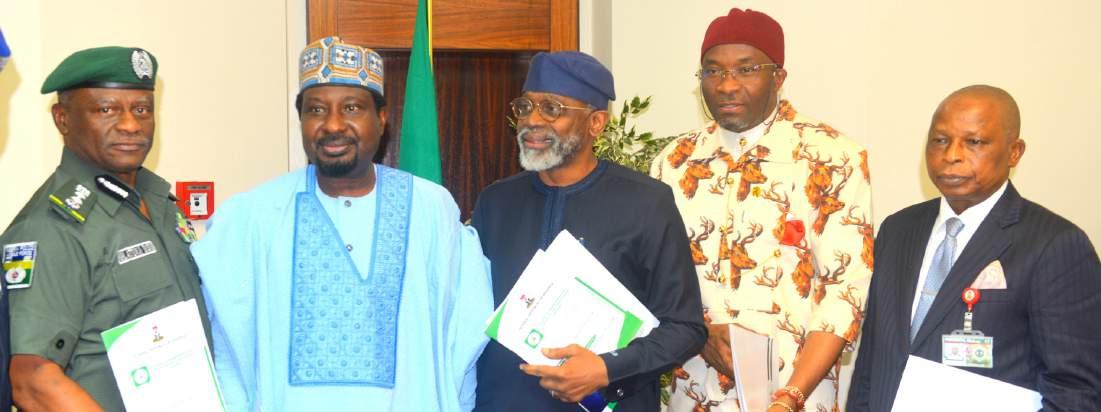
FAST-TRACKING STATE POLICE ON THEIR MINDS...
L-R: Inspector General of Police, Olatunji Disu; Deputy Senate President Senator Jibrin Barau; Chief of Staff to the President, Femi Gbajabiamila; Deputy Speaker, Benjamin Kalu and Minister of Justice and Attorney General of the Federation, Lateef Fagbemi (SAN), during











Deji Elumoye, Olawale Ajimotokan, Linus Aleke in Abuja, Sunday Ehigiator in Lagos, Fidelis David in Akure and Segun Awofadeji in Bauchi Vice President Kashim Shettima yesterday assured Nigerians
President Bola Tinubu
Chuks Okocha


wellness within reach
with W Health loan
The W Health Loan provides women with access to financing for eligible healthcare services










*Terms and conditions apply
Report: FG Missed Oil Revenue Target by N2.79trn in Q3 2025
Capital releases to MDAs stood at N780.28bn
Ndubuisi Francis in Abuja
The federal government recorded a total of N2.79 trillion oil revenue shortfall in the third quarter (Q3) of 2025, realising only N2.45 trillion or 31.87 per cent of the total projection for the quarter in the 2025 Budget.
However, non-oil revenue
performed better with N5.25 trillion (68.18 per cent), exceeding total projections, buoyed by improved Value Added Tax (VAT), Electronic Money Transfer Levy (EMTL), Independent Revenue, and Education Tax (TETFUND) revenue performance. This was disclosed in the Q3 Budget Implementation Report (BIR) for 2025.
The reluctance of the relevant authorities to release the BIRs as prescribed by the Fiscal Responsibility Act, 2007, has been a subject of controversy.
In the preface to the Q3 report, the Minister of Budget and Economic Planning, Senator Abubakar Atiku Bagudu, observed that revenue shortfalls persisted in both oil and non-oil receipts.
He said, "Total FG revenue stood at N7.70 trillion, and expenditure reached N8.03 trillion, resulting in a fiscal deficit of N328.57 billion, financed through privatization proceeds and domestic borrowing.
"Despite fiscal pressures, the government prioritised capital investment, highlighting the ongoing imperative to
strengthen domestic revenue mobilisation and ensure fiscal sustainability."
The report indicated that aggregate expenditure, which included Government Owned Enterprises (GOEs) and Projecttied Loans) totalled N8.03 trillion as against prorated N13.75 trillion.
Non-Debt Recurrent Expenditure stood at N2.66
15 PARTIES MEET INEC DEADLINE, FIELD PRESIDENTIAL CANDIDATES FOR 2027 POLL
candidates within the stipulated period.
With the conclusion of the primaries, attention is now shifting from intra-party contests to the broader campaign season, which is expected to commence on August 19, 2026.
Among the major contenders, President Bola Tinubu emerged as the presidential candidate of the ruling All Progressives Congress (APC) after defeating Stanley Osifo in the party's direct primary held on May 23. Tinubu is seeking a second term in office on the platform of continued economic reforms, infrastructure development, improved security and job creation.
Former Vice President Atiku Abubakar secured the presidential ticket of the African Democratic Congress (ADC) after defeating former Rivers State Governor Rotimi Amaechi and banker Mohammed HayatuDeen in the party's primary held on May 25. Atiku pledged to focus on economic revival,
anti-foreigner protests and violent attacks that have left several foreign nationals dead, forced hundreds to flee their homes and revived painful memories of previous waves of xenophobic violence that strained relations between Pretoria and several African countries, including Nigeria.
Officials said Nigerian and South African authorities are currently conducting a joint verification exercise to determine the eligibility of applicants before evacuation arrangements are concluded.
Foreign Affairs Ministry Spokesperson, Kimiebi Ebienfa, explained that the screening process would ensure that only qualified applicants benefit from the programme, while South African authorities have agreed to waive certain penalties related
citizens currently being held by bandits and terrorists, stressing that the administration remains unwavering in its commitment to restoring peace and security across the country.
Shettima, who also called on Nigerians to offer fervent prayers for peace, unity and national stability, said the federal government was intensifying efforts to tackle insecurity and protect lives and property. He assured that President Tinubu's
private-sector-led growth, restructuring, job creation and national unity.
The Nigeria Democratic Congress (NDC) ratified former Anambra State Governor Peter Obi as its presidential candidate on May 29. Obi, who was the Labour Party's presidential candidate in the 2023 election, promised to increase electricity generation and distribution by at least 10,000 megawatts within four years, while also tackling corruption, insecurity and unemployment.
Equally, Labour Party concluded its primary on May 30 and elected businessman Chibuzo Okereke as its presidential candidate. Okereke pledged to promote good governance, transparency, youth inclusion and economic opportunities while pursuing reforms in education and healthcare.
In the same vein, Oyo State Governor Seyi Makinde emerged as the presidential
to immigration violations for those approved for repatriation.
The sharp rise in the number of Nigerians seeking to leave South Africa underscores growing anxiety within migrant communities as hostility towards foreign nationals intensifies.
For many Nigerians, the decision to return home represents the collapse of dreams built over years of migration in search of better economic opportunities.
South Africa has long remained a preferred destination for African migrants because of its relatively advanced economy, attracting workers, traders, professionals and entrepreneurs from across the continent. However, periodic outbreaks of xenophobic violence have repeatedly threatened the country's image as a regional
administration would continue to deploy all necessary resources to ensure the rescue of victims and bring lasting peace to troubled communities across the nation. This comes as insecurity across the country appears not to be abating as security agencies continue to intensify efforts in several theaters of conflict.
Also yesterday, troops of Operation Hadin Kai successfully repelled a terrorist attack on a Forward Operating Base in
candidate of the Allied Peoples Movement (APM) during the party's primary in Ibadan on May 30. Makinde promised to expand economic opportunities, strengthen education, modernise infrastructure and improve security through institutional reforms.
The African Action Congress (AAC) returned activist and publisher Omoyele Sowore as its presidential candidate following its primary in Abuja on May 26. Sowore pledged a radical overhaul of governance, anti-corruption reforms, youth empowerment and increased investment in education and social welfare.
The Social Democratic Party (SDP) also submitted the name of its presidential candidate, Adewole Adebayo, to INEC following its primary election in Bauchi on May 9. Adebayo promised to focus on economic diversification, industrialisation, agricultural development and constitutional reforms.
economic powerhouse.
Recent attacks in the coastal town of Mossel Bay left several people dead and dozens of homes destroyed. Mozambican authorities confirmed that some of their citizens were among the victims, while hundreds of migrants from neighbouring countries have since sought refuge or returned home.
The latest crisis has reignited debates over migration, unemployment and social tensions in South Africa, where foreigners are frequently blamed by large numbers of indigenes for worsening economic hardship, crime and pressure on public services.
Campaigners and human rights organisations argue that migrants have become convenient scapegoats for deeprooted structural challenges
the North-East, thwarting an attempted breach by insurgents. However, the fierce engagement claimed the lives of five soldiers and three members of CJTF who paid the supreme sacrifice while defending their position against the attackers.
The situation has prompted security experts to call for more proactive measures to protect lives and property.
Shettima, who spoke at a special Jummat prayer
The People's Redemption Party (PRP) elected former Cross River State Governor Donald Duke as its presidential candidate on May 26. Duke promised to prioritise economic growth, tourism development, infrastructure and investment promotion.
The Peoples Democratic Party (PDP), however, remains divided. A faction aligned with the Minister of the Federal Capital Territory, Nyesom Wike, announced Senator Sandy Onor as its presidential candidate, while another faction associated with Kabiru Turaki declared former President Goodluck Jonathan as its candidate. Both candidates emerged through separate processes conducted in Abuja.
The National Rescue Movement (NRM) elected actress and film producer Esther Okereke as its presidential candidate, making her the party's first female
confronting the country, including one of the world's highest unemployment rates and widening inequality.
The situation has also triggered diplomatic concerns across Africa.
South African President Cyril Ramaphosa has condemned xenophobic attacks and reiterated his government's commitment to protecting all residents regardless of nationality. He announced plans to dispatch special envoys across Africa and beyond to reassure partner countries and strengthen diplomatic engagement over migration-related tensions.
Nevertheless, critics argue that repeated condemnations have done little to halt recurring attacks that have claimed dozens of lives over the years.
Nigeria and South Africa,
at the National Mosque to commemorate this year’s Democracy Day, where he led other political heavyweights in praying for the sustenance of Nigeria’s democratic ideals.
He reiterated that the sacrifices of past heroes that birthed and safeguarded the unbroken democracy Nigerians have been enjoying since 1999.
He also reaffirmed Tinubu's unwavering commitment to restoring peace and stability in
trillion in the review period, while debt service gulped N3.41 trillion, below projection by 4.80 per cent. According to the report, the fiscal deficit for the quarter was N0.33 trillion (below projection), financed mainly through privatisation proceeds and domestic borrowing.
presidential flag bearer. She pledged to prioritise security and economic development.
The Action Democratic Party (ADP) nominated Aliyu Abbas, a former political aide to Atiku Abubakar, as its presidential candidate, while the Action Alliance (AA) selected its National Chairman, Adekunle Rufai Omoaje, as its flag bearer.
Businessman and activist Gbenga Hashim emerged as the presidential candidate of the Accord Party, while Sunday Adenuga secured the ticket of the Because of Our Tomorrow (BOOT) Party unopposed.
The Young Progressives Party (YPP) adopted its National Women Leader, Anita Zugwai-Chukwu, as its presidential candidate. She emerged unopposed and pledged to work for national unity, economic growth and improved welfare for Nigerians.
The emergence of these candidates brings the number of parties that complied with
Africa's two largest economies, have experienced periodic diplomatic tensions arising from xenophobic violence. In 2019, widespread attacks on foreign nationals triggered retaliatory protests in Nigeria, leading to the evacuation of hundreds of Nigerians from South Africa and renewed calls for stronger protections for African migrants.
The current surge in repatriation requests suggests that many Nigerians no longer feel secure remaining in the country despite official assurances.
Analysts have warned that the unfolding situation could have significant economic and diplomatic implications if not urgently addressed.
Thousands of Nigerians contribute to South Africa's economy through businesses,
the country.
“I want to assure Nigerians of President Bola Tinubu’s unwavering commitment towards restoring peace and stability in the nation. President Bola Tinubu is working day and night to ensure the safe recovery of all children in the hands of bandits and terrorists.
“No matter how long the night is; it must give way to the light of dawn. Stormy as the weather may be, it will not rain
INEC's deadline to 15. Meanwhile, uncertainty has continued to trail the NDP after it announced Ada Fredrick as its presidential candidate on June 1, two days after the deadline for party primaries had expired. The development has raised questions about the party's eligibility to participate in the presidential election, although a suit challenging INEC's authority to impose timelines for party primaries is still pending before the Court of Appeal.
Addressing journalists in Abuja, the party's National Publicity Secretary, Dr. Emeka Wachuku, said Fredrick emerged through a consensus affirmation process conducted across the 36 states and the Federal Capital Territory.
Political observers say the fate of the NDP's presidential candidacy may ultimately depend on the outcome of the pending court case and INEC's final interpretation of its electoral timetable.
professional services and skilled labour, while remittances from migrants remain an important source of income for families back home.
For the families of those preparing to return, however, the immediate concern is safety. As authorities finalise arrangements for the voluntary evacuation programme, the growing exodus serves as a stark reminder that nearly three decades after the end of apartheid, xenophobia remains one of South Africa's most persistent and troubling social challenges.
The departure of more than 1,000 Nigerians may be voluntary on paper, but for many, it reflects a painful reality: the search for opportunity has been overtaken by the struggle for survival.
forever. The government remains irrevocably committed to restoring peace and stability in the nation,” Shettima said. He entreated Nigerians to put aside their differences, work together and pray for the stability of the nation, emphasising that the bonds that unite the country outweigh the differences that divide it.
In his sermon to the
MALTINA TEACHER OF THE YEAR COMPETITION...
NCDC: Nigeria 59% Ready for Ebola, But Can Contain Outbreak
The Director General of the Nigeria Centre for Disease Control and Prevention (NCDC), Dr. Jide Idris, has said that while Nigeria is not fully prepared for a potential Ebola outbreak, the country has the capacity to contain the disease if it enters its borders.
The NCDC boss disclosed that a recent assessment of the country’s readiness for an Ebola outbreak showed Nigeria’s preparedness level at about 59 per cent.
Speaking in Lagos yesterday amid concerns over Ebola outbreaks in parts of East Africa, Idris acknowledged
gaps in Nigeria’s preparedness but expressed confidence in the country’s response mechanisms.
“We cannot be 100 per cent prepared. It is not possible; not even America can claim that.
“But let me be frank with you: if Ebola comes into Nigeria, we will stop it with the current knowledge and systems we have now.”
According to him, “Our latest level of assessment puts us at about 59 per cent. But that’s quite variable. You can’t be 100 per cent prepared, but the essence is that we keep preparing because things change,” he said.
He added, “To be frank, we
Tegbe, Chinese Envoy Move to Deepen Nigeria-China Cooperation on Power, Infrastructure
Nigeria and China have intensified efforts to strengthen bilateral cooperation in key sectors of the economy, including electricity, infrastructure and industrial development, following highlevel talks between the Director General of the Nigeria-China Strategic Partnership (NCSP), Joseph Tegbe, and the Chinese Ambassador to Nigeria, H.E. Yu Dunhai.
The strategic meeting, held in Abuja, focused on expanding collaboration under the Nigeria-China Comprehensive Strategic Partnership framework and identifying practical areas of cooperation capable of accelerating Nigeria’s economic transformation and modernisation agenda.
During the discussions, Ambassador Yu congratulated Tegbe on his appointment and commended his contributions to advancing relations between both countries. He reaffirmed China’s commitment to supporting Nigeria’s
development aspirations and pledged continued cooperation in implementing agreements reached during the recent Forum on ChinaAfrica Cooperation (FOCAC) Summit in Beijing.
According to the ambassador, enhanced collaboration in power generation, electricity infrastructure and broader development projects remains critical to strengthening the comprehensive strategic partnership between the two countries and delivering tangible benefits to their citizens.
He emphasised that China remains committed to working closely with Nigeria in advancing strategic projects that promote economic growth, industrialisation and sustainable development.
Responding, Tegbe described China as one of Nigeria’s most important development partners and reiterated the federal government’s commitment to deepening relations with Beijing across critical sectors.
are not 100 per cent ready, but we are improving our readiness. This is a readiness that has to cover the whole country.”
Idris explained that Nigeria remains vulnerable to the importation of Ebola because of international travel, migration and the country’s extensive land borders.
According to him, “The
risk of importation is high, and that is why we are not relenting in our surveillance and preparedness efforts.”
He said the NCDC has deployed advisers to states across the federation to evaluate readiness levels and identify areas requiring urgent intervention.
“We have sent our advisers
to the states. They are assessing what is available, what is lacking and what needs to be strengthened,” he said.
The assessment, he noted, covers emergency operations centres, isolation facilities, laboratory capacity and the availability of critical medical supplies needed to respond effectively to any outbreak.
Idris also disclosed that authorities have stepped up monitoring at airports and other points of entry into the country, while efforts are ongoing to strengthen surveillance along Nigeria’s porous land borders. He stressed that the lessons learned from Nigeria’s successful containment of Ebola in 2014 remain invaluable.
Insecurity: Makinde Signs Executive Order to Restrict Commercial Motorcycle Operations
Oyo State Governor, 'Seyi Makinde, yesterday signed into law the Executive Order 002 of 2026, on the Regulations and Enforcement of Vehicle Registration and Traffic Management, thus restricting the operation of commercial motorcycle, otherwise known as Okada, between the hours of 10:30pm and 5:30am daily.
The executive order, Makinde noted, was part of the additional measures being taken by the state to improve security.
While signing the Executive Order in his office, the Governor noted that the move became necessary to strengthen the security architecture of the state and to also
ensure the enforcement of vehicle registration, regulations and traffic management in order to better protect lives and properties of the citizens in the state.
He added that the order became imperative following the discovery by the state government that unregistered vehicles and motorcycles were being used for criminal activities in the state, citing the example of the recent abduction of pupils and teachers in Oriire Local Government Area of Ogbomoso.
Assuring residents of the state and Nigerians of the safe return of the abductees, Governor Makinde maintained that the state government has been working with security agencies, urging
residents not to mistake the government’s silence for inaction, as the people in captivity are neither forgotten nor abandoned.
The Governor equally urged residents of the state to remain vigilant, united and resilient despite the current security challenges, charging them to rather respond with courage for collective results rather than be divided by fear.
He called on them to support and cooperate with the government and the security agencies by reporting any suspicious movement or act through the emergency number, 615, stressing that security remains a collective responsibility that requires the cooperation of all
citizens. The Governor commended all the security agencies for their support, dedication, sacrifice and swift responses to security issues in the state.
Makinde said, “We are living through very trying times. For over 20 days now, our teachers and pupils have remained in captivity in the hands of terrorists. Our thoughts and prayers remain with them and with their families who continue to endure unimaginable pain and uncertainty. As a government, we share in their anxiety and their hope and we remain committed to doing everything within our power to secure the safe return of every one of them.
Hamzat Appoints Obanikoro as Campaign DG for 2027 Lagos Guber Race
Sunday Ehigiator
The Governorship candidate of the All Progressives Congress (APC) for the 2027 Lagos State election and incumbent Deputy Governor, Dr. Kadri Obafemi Hamzat, has appointed former Minister of State for Defence, Senator Musiliu Obanikoro, as the Director General of his campaign organisation.
The appointment, announced yesterday, was widely seen as a strategic move to strengthen
Hamzat’s campaign structure ahead of the 2027 governorship election and further consolidate support across key political blocs within the ruling party.
Obanikoro, a former Lagos governorship candidate and influential political figure in the state, is expected to lead the coordination of Hamzat’s statewide campaign activities, stakeholder engagements and grassroots mobilisation efforts.
The announcement comes weeks after Hamzat emerged as the APC
governorship candidate for the 2027 election following the party’s primary election in Lagos.
The development is also being viewed as a further indication of the growing support behind Hamzat’s candidacy from major stakeholders within the Lagos APC, including President Bola Tinubu, Governor Babajide Sanwo-Olu and members of the Governance Advisory Council (GAC).
Among party leaders present during the announcement were Senator Ganiyu Solomon; Chief
of Staff to the President, Femi Gbajabiamila; member of the House of Representatives, James Faleke; Speaker of the Lagos State House of Assembly, Mudashiru Obasa, and other prominent APC figures in the state.
Political observers believe Obanikoro’s appointment could enhance Hamzat’s outreach across diverse political constituencies, given the former minister’s extensive experience in Lagos politics and his network across party lines.
Michael Olugbode in Abuja
Kemi Olaitan in Ibadan
Sunday Ehigiator
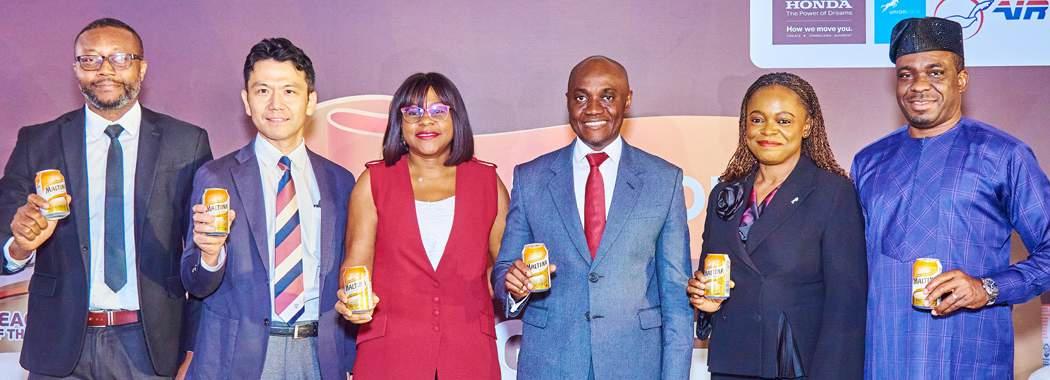
L-R: Advertising and Visibility Marketing Manager, Air Peace, Ikenna Nnabuife; Managing Director, Honda Automobile Western Africa Limited, Daisuke Mita; Portfolio Manager, Non-alcoholic Drinks, Nigerian Breweries Plc, Elohor Olumide-Awe; Corporate Affairs Director, Nigerian Breweries Plc, Uzodinma Odenigbo; Chief Brand and Marketing Officer, Union Bank of Nigeria Plc, Olufunmilola Aluko, and Company Secretary/Legal Director, Nigerian Breweries Plc, Uaboi Agbebaku, during the flag-off of the 12th edition of the Maltina Teacher of the Year Competition in Lagos recently
PHOTO: SUNDAY ADIGUN
BOOK UNVEILING...
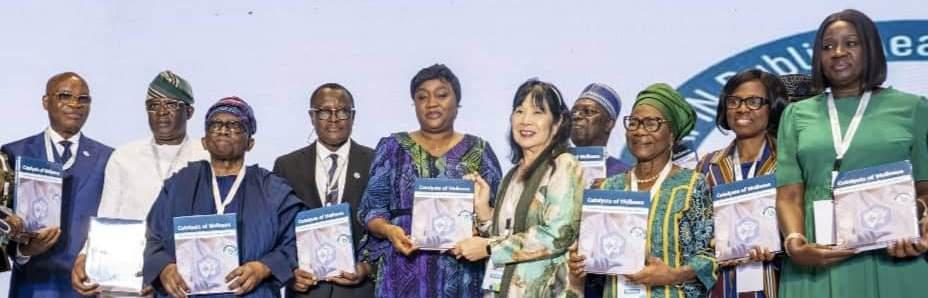
L-R: Chief Executive Officer, APIN Public Health Initiatives, Prof. Prosper Okonkwo; Commissioner for Health, Plateau State, Dr. Nicholas Ba'amlong; Former Minister of Health and Ambassador Designate to Canada, Prof. Isaac Adewole; Chairman of the Board of APIN Public, Prof. Oladapo Shittu; Representative of former President Goodluck Jonathan, Ms. Anne Iyonu; Prof. Phyllis Kanki, of Harvard School of Public Health; Pioneer Director-General of National Action Against AIDS, NACA, Prof. Ibironke Akinsete; Commissioner for Health, Oyo State, Dr. Oluwaserimi Ajetumobi, and Commissioner for Health, Ogun State, Mrs. Tomi Coker, at the unveiling of the book, 'Catalyst of Wellness: The Trailblazing Odyssey of APIN Public Health Initiatives', as part of events marking the 25th anniversary of APIN Public Health Initiatives in Abuja...recently
NDC Defends Primaries, Denies Imposition of Candidates
Launches reconciliation process after elections
Sunday Aborisade in Abuja
The Nigeria Democratic Congress (NDC) has dismissed allegations of irregularities and candidate imposition in its recently concluded presidential, governorship, National Assembly and State Houses of Assembly primaries, insisting that all contestants were given a fair opportunity to participate in the democratic process.
party's growing popularity across the country.
The party said claims that its primaries were manipulated were either borne out of ignorance of its constitution and guidelines or deliberate attempts by opponents unsettled by the
IIA Global Admits ICAN To CIA Challenge Exam Pathway
In a milestone achievement, the Institute of Internal Auditors (IIA Global) has paved the way for Nigerian professional accounting body, the Institute of Chartered Accountants of Nigeria (ICAN) to participate in the Certified Internal Auditor (CIA) Challenge Exam Pathway.
The history recognition marks the first time a Nigerian professional accounting body has been formally approved by IIA Global for eligibility under the CIA Challenge pathway. By this development, with effect from March 1, 2026, eligible ICAN members will now have access to the CIA Challenge Exam, an ‘’accelerated pathway designed for qualified accounting
professionals seeking to obtain the globally recognised CIA designation.’’
Regarded as the world’s only globally recognised certification for internal auditors, the Certified Internal Auditor certification is widely respected across multinational corporations, financial institutions, regulatory agencies and public institutions.
According to a statement signed by the Chief Executive Officer of IIA Nigeria, Don Umeha, candidates who successfully complete the consolidated examination and meet other IIA requirements will earn the same CIA designation awarded through the traditional three-part examination route.
MFM Suspends Vigils Nationwide Over Security Concerns
The Mountain of Fire and Miracles Ministries (MFM) has suspended all vigils and overnight programmes across its branches nationwide, citing growing security concerns in the country.
The directive, contained in an internal memo dated June 5, 2026, was issued by the Director of Administration at the church's International Headquarters in Lagos, Temitope A. Olawale.
According to the memo, all church programmes must now end on or before 8:00 p.m. until further notice as part
of precautionary measures aimed at protecting members.
The church explained that the decision was informed by the prevailing security situation across the country and the need to prioritise the safety and well-being of worshippers. It directed that where necessary, vigils should be converted into evening prayer meetings and concluded no later than 8:00 p.m.
"Where necessary, vigils may be converted to evening prayer programmes and must be concluded on or before 8:00 p.m.," the memo stated.
In a statement yesterday signed by the National Secretary of the party, Ikenna Morgan Enekweizu, the NDC maintained that its primary elections were conducted transparently and in line with its founding principles of consultation, inclusiveness and consensus-building.
The statement, titled ‘Understanding the Just Concluded NDC Primary Elections’, argued that the party deserved commendation for adopting an innovative model that emphasised stakeholder
engagement and consensusbuilding before the conduct of the primaries.
“The Nigeria Democratic Congress (NDC), the fastestgrowing political party in Nigeria, is founded on the principles of leadership, consultation, inclusiveness and consensus-building,” Enekweizu stated.
He explained that the process was particularly effective in the South-east geopolitical zone, where much of the criticism against the primaries originated.
According to him, the party relied on an established leadership structure associated
with its presidential candidate, Peter Obi, comprising prominent elder statesmen and political leaders serving as caucus heads in the five South-East states.
The caucus leaders include ex-NDDC Board Chairman, Chief Onyema Ugochukwu; former governor of Ebonyi State, Dr. Sam Egwu; former governor of Enugu State, Dr. Okwesilieze Nwodo; and former governor of Imo State, Chief Achike Udenwa. In Anambra State, the process was coordinated by Obi's political team.
Enekweizu said the caucus leaders were mandated to consult stakeholders,
build consensus and make recommendations based on the political realities in their respective states. He stressed that the arrangement did not deprive any aspirant of the opportunity to contest.
“This process was conducted without prejudice to the rights of any aspirant. Where aspirants disagreed with recommendations made by stakeholders or caucus leaders, they were free to test their popularity through the democratic process at the grassroots level, and this was duly accommodated,” he said.
Atiku Seeks Overhaul of Nigeria’s Counterterrorism Framework, Says Terrorists Learning from Every Attack
Chuks Okocha in Abuja
Former Vice President Atiku Abubakar has called for an overhaul of Nigeria’s counterterrorism framework, saying the federal government’s current approach is failing to keep pace with evolving security threats.
In a statement issued by Phrank Shaibu, his Senior Special Assistant on Public Communication, the presidential candidate of the African Democratic Congress (ADC)
said the spread of terrorism, banditry, and kidnapping beyond northern Nigeria showed that the country’s security architecture requires urgent reforms.
He said terrorists have continued to adapt their methods while government responses remain largely unchanged.
“The terrorists are learning from every attack. They study their successes and failures. They refine their tactics. They identify vulnerabilities. They adapt and strike again,” the statement reads.
“From Chibok to Oyo, from countless villages in the Northwest to communities across the Middle Belt and beyond, the pattern has become tragically familiar. An attack occurs. The nation mourns. Promises are made. Committees are announced.
According to him, the disturbing expansion of banditry, terrorism, and kidnapping across different parts of the country clearly demonstrates that the current counterterrorism framework is
no longer adequate for the scale and complexity of the challenge before the country. Atiku lamented that one of the major weaknesses of the federal government’s approach is the failure to systematically extract lessons from previous attacks and use them to prevent future incidents.
“It is now imperative that the federal government immediately initiates a comprehensive review of Nigeria’s national counterterrorism policy,” he added.
Ojude Oba Propels Culture, Economic Enterprise, Says Ladi Balogun
The Group Chief Executive of FCMB Group, Mr. Ladi Balogun, has described the Ojude Oba Festival as a driver of cultural celebration and economic enterprise.
Balogun noted this in his goodwill message at the grand festival held in Ijebu-Ode on Saturday, May 30, 2026.
An exhibition of the rich cultural values of the Ijebu people and Yorubas in general, the festival
showcased Regberegbe age-grade groups who paraded in elegant attires, singing and dancing, all in reverence to the Awujale royalty.
It, however, attracted participants from other parts of the country and the Diaspora, including celebrities who also contributed theatrics to the spectacles at the royal pavilion. They included Nollywood stars Eniola Badmus, Adeniyi Johnson, Mercy Aigbe, Femi
Branch, Idowu Phillips aka Mama Rainbow, and Dayo Amusa. While daughter-of-the-soil waka Queen Salawa Abeni and content creator Samuel Banks were also part of the carnival, the king of steeze himself, Farooq Oreagba, stormed the pavilion with his trademark charismatic horseback entrance.
The socialite, who is FCMB’s cultural ambassador, never disappointed in his commanding regalia and acclaimed candour.
According to Balogun, FCMB, which sponsored the fiesta, has been supporting it for about 20 years. He said, “For over 20 years, FCMB has remained a committed partner of the Ojude Oba Festival. Our support amplifies a longstanding belief in the importance of preserving heritage, strengthening communities, and creating opportunities for inclusive and sustainable growth.

Mission To Fela’s Resting Place
Afrobeat maestro and a voice for the downtrodden
Duty beckoned, and I found myself on the popular Gbemisola Street in Ikeja, the Lagos State capital and Nigeria's sprawling commercial nerve-centre. Gbemisola’s location in the neighbourhood of Allen Avenue and Opebi Way places it among the relatively upper crust environs of Ikeja. The entire area appreciated in value in the mid-1980s and 1990s.
The late Afrobeat King, Fela Anikulapo Kuti must have as well seen opportunities presented by the Allen-Opebi axis and opted for Gbemisola Street as residence. At the time, a lot was in the offing for the Opebi-Allen environ. Smart investors recognised it as a convenient and attractive hub for investment and running businesses. Businesses thrived by day and night - especially night life. Hotel and leisure businesses grew and have continued growing.
Through Fela, the Gbemisola community got planted on the Lagos entertainment map. He moved in with his large family of wives, workers and associates. Gbemisola lost its serenity to fans of the Afrobeat king and lovers of his music. The skunk of marijuana filled the air. Women of easy virtues found company. Alcohol and strong drinks were freely sold. If drug abusers were hounded elsewhere, certainly not at Gbemisola. The King of Afrobeat was in residence and compelled a little respect.
The women in Fela’s life weren’t few. They lived with him at Gbemisola. In the late 1970s, the nation learnt that Fela planned settling down with some of the women in his life. He had recognized their loyalty, entertainment worth, beauty and other endowments. He counted up to 27 and felt they would be able to withstand his virile libido. For him, marriage would confer on the young ladies, emotional security. They had been there for him musically and nursing his larger-than-life essence. On February 20, 1978, he consummated the marriage to the ladies. Never had a marriage been as advertised! Fela who was born October 15, 1938 lived with them till his voice was silenced by death on August 2, 1997, aged 58.
Fela who was recently honoured with a posthumous Grammy Lifetime Achievement Award, was Nigeria's biggest musical gift to the world. In his lifetime, his songs dominated the airwaves globally. In life
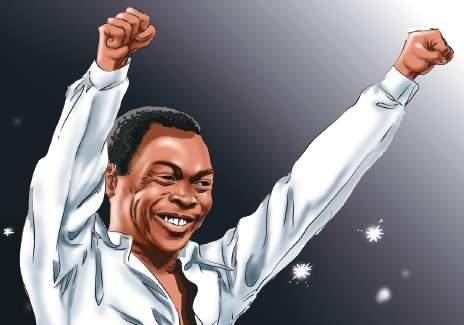
and in death, his lyrics introduced vocabularies like: Na suwegbe, na pako, yellow fever, palaver, gentleman, zombie, etc.
Growing up in Ojuelegba, Surulere area of Lagos in the 1970s, my path crossed that of the Afrobeat king a lot. His residence - the Kalakuta Republic, was a walking distance from my home. I recall several times, when traffic had to be halted so the King in underwears, riding on his donkey, would move from his home at Moshalashi to a near Hall at Empire. He was rich and a number of Range Rovers SUVs with his name or that of his band inscribed, adorning his compound.
Most of Fela’s musical releases were instant hits. His music showcased dexterity in handling instruments, his lyrics highly philosophical or political. He denounced living in the shadows of Caucasians, developments which he branded colonial mentality. He sang in protest of persecution by law enforcement agents, against corruption, social injustice and inequality.
He was a voice for the downtrodden. The poor saw in him, a hero who spoke against the oppressive establishment.
You couldn't avoid the intrusion of his philosophical songs and his mastery of his trade. The rich, the poor, all loved his mastery of the genre of music - Afrobeat. His lyrics made way into the hearts of his fans worldwide.
It wasn’t always an easy ride for Fela. Some of his songs, and handling of opiods got him into trouble with the government. It is claimed by some that there is hardly a more prosecuted or persecuted Nigerian, dead or alive, than Fela.
IN LIFE AND IN DEATH, HIS LYRICS INTRODUCED VOCABULARIES LIKE: NA SUWEGBE, NA PAKO, YELLOW FEVER, PALAVER, GENTLEMAN, ZOMBIE
His persecution got to a head when he had a brush with his neigbours - soldiers of Abalti Barracks, Ojuelegba on February 18, 1977. An altercation between Fela’s associates and military officers led to a fracas and arson. Several vehicles, equipment and properties were razed. A sore part of the incident was the molestation of his revolutionary mother, Mrs. Olufunmilayo Ransome-Kuti. Fela attributed her death to unknown soldiers in the album, "Unknown Soldiers." A teary Fela sang - Dem kill my mama, Dem kill my mama, Dem kill my mama... Egbe, author, agriculturist and clergy writes from Lagos, and can be reached via niyiegbe@gmail.com
God Thought The Universe Into Being
Quantum biology, consciousness science, and the ancient wisdom of Ifa are converging to tell us about reality and about ourselves, contends OLUSEGUN AYO-ADEBANJO
There is a question beneath every scientific discovery and every human life: why is there something rather than nothing and why does that something have the character of a mind? Three of the biggest puzzles in modern science are, I want to suggest, three expressions of that single question.
Three Crises, One Question.
The first is the ‘hard problem’ of consciousness why we feel anything at all. Neuroscience can map which neurons fire when you feel joy or pain. What it cannot explain is why there is any subjective experience at all why there is something it is like to be you, rather than just an information-processing system running in the dark.
The second is the measurement problem in quantum mechanics. The most successful physical theory ever devised describes a universe of pure potentiality particles existing in superpositions of all possible states simultaneously, until observed. The act of observation collapses that superposition into definite reality. But what counts as an observation? What does the collapsing? After a century of debate, nobody agrees.
The third is the fine-tuning of the
universe. The physical constants of nature gravity’s strength, the electron’s mass, the energy of empty space are calibrated with a precision so extraordinary that the slightest deviation would produce a universe with no stars, no chemistry, and no life. The odds against this occurring by chance are, on most calculations, incomprehensibly large.
Each crisis is, at its root, a question about the relationship between mind and physical reality and which one is more fundamental.
What If Consciousness Comes First? The thesis I am advancing is this: consciousness is not what the universe accidentally produced after fourteen billion years of mindless chemistry. It is what the universe fundamentally is. Matter, energy, space, and time are the expression of a primordial awareness. The universe is, in the most technically defensible sense available to post-quantum physics, the ongoing cognitive act of what the world’s great traditions have called God.
This is not a retreat from science. It is an argument from science itself. The physicist John Wheeler proposed the participatory universe: the cosmos is not a pre-existing object observed from the outside but a self-referential system
that brings itself into being through acts of observation “It from Bit,” his idea that reality comes from information. If physical reality is constituted by observer-participatory acts at its most fundamental level, then the boundary between thought and physical event is not sharp. A universe that requires observers to be real is a universe whose description converges on what theology has always asserted: mind is prior to matter.
Evolution Is Not Blind It Is Willed. The standard neo-Darwinian picture is not false, but it is deeply incomplete. The Cambrian explosion saw virtually all major animal body plans appear in a geological instant. Eyes evolved independently at least forty times. Echolocation developed separately in bats and dolphins. The same elegant solutions keep appearing across the tree of life as if evolution is navigating a possibility space whose shape was established in advance.
At the quantum level, where proton tunnelling in DNA may influence which mutations occur, the “randomness” of evolution is quantum randomness: not mere unpredictability but genuine ontological openness. If consciousness
participates in resolving quantum potentiality into actuality, then what looks from below like chance may, at the level of the ground of being, be intention. The universe is not running down toward disorder. It is building upward toward consciousness elaborating itself, through evolution, into ever-richer forms of awareness. The Jesuit paleontologist Teilhard de Chardin called this movement toward an Omega Point, the idea that evolution is moving toward ultimate consciousness. It is, I believe, correct.
Evil Is Not A Refutation It Is a Summons. The hardest objection is suffering. If the universe is the thought of a good God, why does that thought include the death of children and the long history of pain that saturates the natural world?
A God who is genuinely creative must create a universe that is genuinely open. Real openness means real risk. A universe in which only predetermined good outcomes could occur would not be creative; it would be a puppet show. The cost of authentic becoming is authentic suffering.
"Rex" Ayo-Adebanjo was a Harlan Fiske Stone Scholar and Articles Editor of the Columbia Business Law Review. S.adebanjo2025@gmail.com
NIYI EGBE pays tribute to Fela,
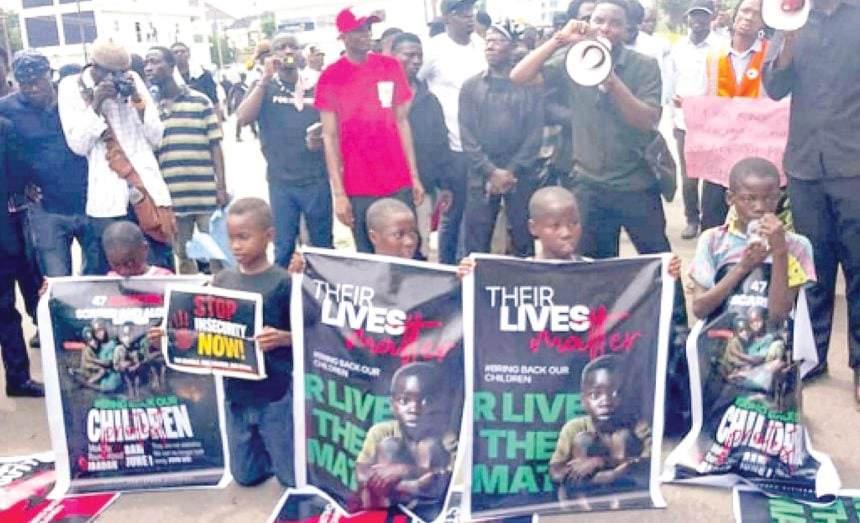
Waiting for the abducted children abd teachers...
Our Children Are Being Kidnapped…
In Praise of President Buhari
Suleiman Nagoda: A Courageous Leader
TWhen President Muhammadu Buhari took over the reins of power on May 29, 2015, Nigeria was sadly a broken state in many respects. As a result of many other factors including bad governance and untold level of corruption, government could not live up to its financial obligations to citizens and service providers at both the federal and state levels.
Indeed one of the first official assignments that President Buhari carried out was the approval of billions of Naira in bailout funds to enable state governors pay something as basic as workers’ salaries. Granting those bailout funds was a huge boost to national security because the pressure of arrears of unpaid monthly salaries building dangerously all over the country was a ticking bomb.
Ask the naysayers and they would readily remind you of how long it took President Buhari to appoint his ministers and how that contributed to collapse of the economy as if, without ministers, governance was frozen. But buying that narrative would amount to what a famous Nigerian writer, Chimamanda Adichie, termed “the danger of a single story”. Yet the whole story was that many of our citizens did not know how decrepit a state President Buhari inherited in 2015.
he hardship facing ordinary Nigerians has reached a breaking point, yet it continues to be treated as a background issue by those in power. Parents are living in fear as children are abducted from schools. Farmers can no longer work on their lands without the risk of being attacked or kidnapped. Entire communities are under siege, and for many, the basic right to live in peace and security feels out of reach. If the government cannot protect lives and livelihoods, then the claim of serving the people rings hollow.
alternatives, such as voting through our SIM lines using USSD codes. A SIM card is personal. Unlike PVCs that can be collected or duplicated, no one else has access to your line. If Nigerians can use USSD for banking, BVN verification, and government services, then a secure USSD voting system is not impossible. It would reduce vote buying, prevent PVC abuse, and return power to the voter.
It was therefore necessary for him to take stock against the background of the fact that the departing government did not, reportedly, cooperate full well with the incoming government in terms of leaving workable handover notes. Although President Goodluck Jonathan was gracious in defeat, many of his appointees were still sulking over what they saw as their personal losses and therefore pulled all the stops to make things difficult for the Buhari government.
by the EFCC, President Buhari by his action has successfully brought back to the public consciousness the need to treat public funds with the highest level of transparency and accountability.
WAfter keeping treasury looters on their toes and at bay through the EFCC, particularly, President Buhari moved to curb unnecessary spending habits of the nation on what economists call articles of ostentation. Part of the disclosures of the President’s stock taking was how the country frittered away billions in foreign currency by importing goods, which can be produced at home. One of such items was rice, a major staple among Nigerians. By banning rice importation into the country, the President on one hand had saved the nation billions in foreign currency annually.
And, on the other hand, the President has boosted domestic production of rice and in the process had nudged the country into self sufficiency in food production. He also created millions of jobs for young people in the rice value chain.
What is most admirable about President Buhari and his government is its frugal management of scarce national resources to attain optimum goals.
Stop Ritual Attacks and Killings
TThe result of ignoring these realities is already visible. Leaders emerging from the local government level to the federal level do not reflect the true choices of the people. When citizens believe their vote does not count, trust in democracy collapses.
Even with the obvious and unpatriotic obscurantist behaviour of the PDP appointees and their supporters still in government hell-bent on making things difficult for Buhari, the President moved on with his methodical repair of a broken country. The first thing he did was to identify all possible sources of income to the nation and directed that all inflows be paid into one single account in line with the policy of Single Treasury Account (TSA).
The TSA policy, interestingly, was mooted by the PDP government but its penchant for imprudence and lack of accountability denied it the courage of implementing the policy. What the President literally did was to gather all the nation’s money into one box and locked it up with a big padlock and watched for any thief to come close.
This suffering directly affects our electoral rights. When citizens are hungry, desperate, and unprotected, their ability to make free choices at the ballot is compromised. Today, many Nigerians surrender their Permanent Voter Cards in exchange for food, money, or so-called palliatives. Others give out their PVC serial numbers under false pretenses. Once those in power have access to these details, the voter’s right is taken away, and the outcome of elections no longer reflects the will of the people.
Recall that since President Buhari stepped in the saddle, oil revenue dropped abysmally as if to sabotage him knowing all the big promises he made to citizens during his campaigns. But with the little resources that trickle in, the President is achieving what governments that received oil windfalls could not dream of.
Ibrahim Bukar Tijjani, Borno State
Today, the trains are up and running daily from Abuja to Kaduna. And from Lagos to Ibadan a brand new rail track was started and completed; citizens are already commuting daily to and fro these two major cities in the country seamlessly as they reap from the dividends of democracy. And with the way this government is going, before 2023 when the President would leave, the entire country would be linked by rail with all of its economic advantages.
Ainofenokhai Ojeifo, Abuja
e need to encourage our leaders for their interest in the area of infrastructural development. I have come across some leaders who are only interested in how to squander the money entrusted in their care. I have also seen leaders with unquestionable character. In the same vein, I have seen Alhaji Suleiman Muhammad Nagoda (Ngilawa Lafia Bare-Bari), CEO of Nagoda Maidoya Ltd, a man for whom I have so much respect. He is an advocate of the masses. He has organized football competitions where youths exhibited their talents in Lafia and environs. At the football competition held at the popular Lafia Township Statdium, the competitors went home with fabu-
THE SATURDAY NEWSPAPER
THE SATURDAY NEWSPAPER
EDITOR OBINNA CHIMA
EDITOR YEMI ADEBOWALE
DEPUTY EDITOR AHAMEFULA OGBU
DEPUTY EDITOR AHAMEFULA OGBU
MANAGING DIRECTOR ENIOLA BELLO
MANAGING DIRECTOR ENIOLA BELLO
DEPUTY MANAGING DIRECTOR ISRAEL IWEGBU
DEPUTY MANAGING DIRECTOR ISRAEL IWEGBU
CHAIRMAN EDITORIAL BOARD OLUSEGUN ADENIYI
CHAIRMAN EDITORIAL BOARD OLUSEGUN ADENIYI
EDITOR NATION’S CAPITAL IYOBOSA UWUGIAREN
EDITOR NATION’S CAPITAL IYOBOSA UWUGIAREN
lous prizes in various categories. Alhaji Nagoda called on his colleagues to emulate his gesture on youth development. It is unusual to see such an unassuming business mogul. He is instrumental to the developments of major roads in Lafia, has made indelible marks in the area of education by purchasing GCE forms for less privileged and destitute students. He fought poverty, conquered it, fought the battle of life and emerged victorious. I opted to be his disciple because he believes in Allah and takes his prayers seriously. He weathered the storms of life and came out with happiness and joy.
Anjorin Adeolu, Lafia, Nasarawa State
Changing Your Mind and Tattoos
ATHE OMBUDSMAN KAYODE KOMOLAFE
MANAGING EDITOR BOLAJI ADEBIYI THE OMBUDSMAN KAYODE KOMOLAFE
Who can blame the President for almost developing paranoia over the safeguard of the national treasury with revelations and reports of mind-boggling looting that took place in the 16 years of the PDP? With such disclosures of how billions meant for fighting insurgency in the Northeast ended up in the pockets of a few individuals while our gallant soldiers fought with bare hands and on empty stomach, President Buhari was duty bound to bring sanity and accountability back in national spending.
The PVC system, which was meant to safeguard our vote, is now being weaponized against the same people it should protect. In many local communities, PVCs are collected in bulk before elections, and votes are cast in the name of people who never made it to the polling unit. This is not democracy. This is disenfranchisement of the poor and vulnerable.

THISDAY NEWSPAPERS LIMITED
THISDAY NEWSPAPERS LIMITED
EDITOR-IN-CHIEF/CHAIRMAN NDUKA OBAIGBENA
EDITOR-IN-CHIEF/CHAIRMAN NDUKA OBAIGBENA
GROUP EXECUTIVE DIRECTORS ENIOLA BELLO, KAYODE KOMOLAFE, ISRAEL IWEGBU, IJEOMA NWOGWUGWU, EMMANUEL EFENI
GROUP EXECUTIVE DIRECTORS ENIOLA BELLO, KAYODE KOMOLAFE, ISRAEL IWEGBU
DIVISIONAL DIRECTORS SHAKA MOMODU, PETER IWEGBU, ANTHONY OGEDENGBE
DIVISIONAL DIRECTORS SHAKA MOMODU, PETER IWEGBU, ANTHONY OGEDENGBE
DEPUTY DIVISIONAL DIRECTOR OJOGUN VICTOR DANBOYI
DEPUTY DIVISIONAL DIRECTOR OJOGUN VICTOR DANBOYI
SNR. ASSOCIATE DIRECTOR ERIC OJEH
SNR. ASSOCIATE DIRECTOR ERIC OJEH
ASSOCIATE DIRECTOR PATRICK EIMIUHI
ASSOCIATE DIRECTOR PATRICK EIMIUHI
CONTROLLERS ABIMBOLA TAIWO, UCHENNA DIBIAGWU, NDUKA MOSERI
CONTROLLERS ABIMBOLA TAIWO, UCHENNA DIBIAGWU, NDUKA MOSERI
s a young job seeker one of the many occupations that wasn't around then was tattoo removal. There was no need to remove football team logos, butterflies, messages in other languages that didn’t say what you thought or anyone's name, especially that person you once loved.
Thus, under President Buhari, the Economic and Financial Crimes Commission (EFCC), which had remained comatose for years, was woken up to resume its duties. Apart from the trillions of Naira of looted funds and property recovered from corrupt politicians
We must ask why Nigeria cannot explore more secure and personal
DIRECTOR, PRINTING PRODUCTION CHUKS ONWUDINJO
DIRECTOR, PRINTING PRODUCTION CHUKS ONWUDINJO TO SEND EMAIL: first name.surname@thisdaylive.com
TO SEND EMAIL: first name.surname@thisdaylive.com
Soon there will be an update, specific task, for the appropriately skilled person, removing the word 'Trump' from many, many buildings, documents and people's memories. The ability to also refine gold, especially in gilt form, would be seen positively. A training site, the J.F. Kennedy Memorial Center, is available to demonstrate your skills, although the task must be completed by June 12th.
Dennis Fitzgerald, 28 Landale St Box Hill, Vic., Australia
he Advocacy for Alleged Witches (AfAW) urges the Nigerian public to stop ritual attacks and killings because the notion of ritual money and wealth is completely baseless. AfAW is making this call following the reported arrest of suspected ritualists in Oyo State in southern Nigeria. The local media reported that members of the Western Nigeria Security Network, Amotekun, arrested suspected ritualists with the body parts of a 73-year-old man. The suspects, who were apprehended in the Boluwaji area in Ibadan, said that a Muslim cleric asked them to procure some human body parts for rituals. Ritual attacks are widespread in Nigeria. Irrational conceptions of how to make money or become wealthy and successful undergird these atrocities. Many Nigerians strongly believe in blood money, known in some local languages as Ogun Owo (Yoruba) or Ogwu ego (Igbo). They think that they could become rich, or successful through ritual sacrifice. Unfortunately, this is not the case. Ritual wealth has no basis in reason, science, or reality. Home movies known as Africa magic or Nollywood films have not helped matters. These movies continue to reinforce these mistaken notions and other superstitions. Families, churches, mosques, and other public institutions do not encourage the interrogation of these traditional occult beliefs. There are no robust efforts to criticize or dispel these irrational and paranormal claims in schools, colleges, and universities. So millions of Nigerians grow up blindly believing that they could make money through ritual sacrifice of human body parts. The belief has led many Nigerians to commit crimes and perpetrate atrocities. Many Nigerians have been jailed or are undergoing court trials due to ritualrelated attacks and murder. Not too long ago, the police arrested some young Nigerians for stealing female pants, which they intended to use for ritual sacrifice. AfAW is asking all Nigerians to desist from ritual-related abuses because ritual money beliefs are baseless superstitions. Nigerian media, schools, and colleges should help educate and reorient the public. They should assist in reasoning Nigerians out of this killer-superstitious absurdity and nonsense. Leo Igwe directs the Advocacy for Alleged Witches (AfAW)
What a waste!
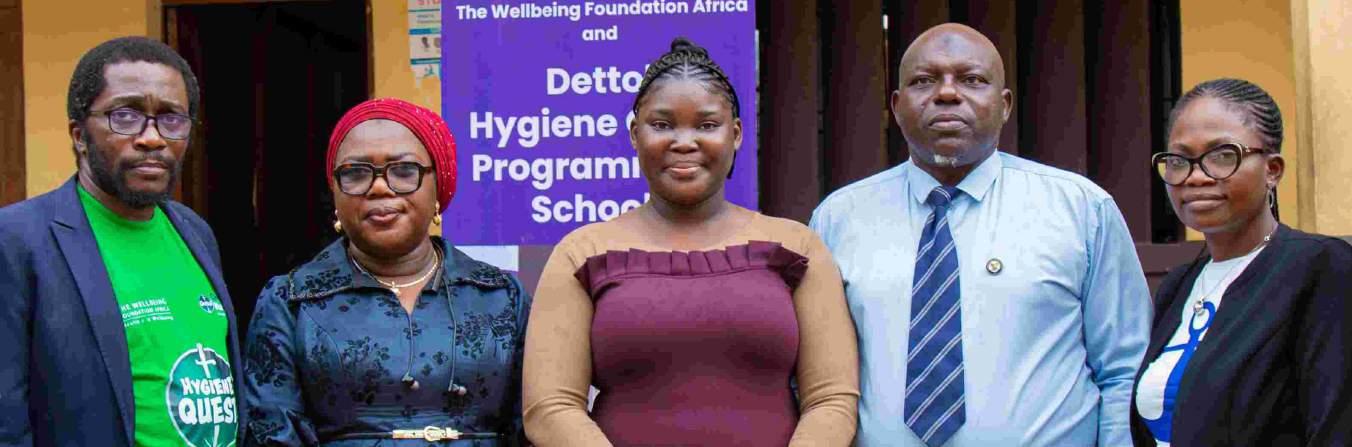
HYGIENE QUEST INITIATIVE...
PDP Leadership Crisis: Why Appeal Court Dismissed Challenge to Judgement Recognising Wike-led Caretaker Committee
The Court of Appeal in Abuja refused to entertain the appeal against a judgement of a Federal High Court in Ibadan, which recognised the Caretaker Committee of the Peoples Democratic Party (PDP), loyal to the Minister of the Federal Capital Territory (FCT), Mr Nyesom Wike, on the grounds, that the issue has become academic.
The three-member panel in a unanimous decision on Wednesday held that no benefit could accrue to any party in the appeal because the issue brought before the appellate court was tied to the November 2025 convention of the PDP which has already been settled by both the Court of Appeal and the Supreme Court.
Justice Uche Ogomoh of the
Federal High Court in Ibadan, had in a judgement nullified the November 15 and 16, National Convention of the PDP that produced the Tanimu Turaki-led faction of the party, for violating the valid orders of the court.
Justice Ogomoh had nullified the convention and went ahead to recognise the Caretaker Committee led by Abdulrahman Mohammed as the valid leadership of the PDP.
Displeased with this decision, the Turaki-led faction had approached the lower court to upturn the judgement.
However, Mohammed alongside the Secretary of National Caretaker Committee, Senator Samuel Anyanwu and the Chairman of the factional Board of Trustees (BOT) of the PDP, Mao Ohuabuwa, had filed an application asking the appellate court to dismiss the
#EndSARS: Coroner Gives LASUTH, DNA Centre 21 Days to Submit Reports on Body Linked to Pelumi Onifade
A Coroner's Court sitting in Lagos has ordered the Lagos State University Teaching Hospital (LASUTH) and the Lagos State DNA and Forensic Centre to produce critical reports that could help determine the identity and cause of death of a body believed to be that of journalist Pelumi Onifade, who disappeared while covering the #EndSARS protests in October 2020.
The investigating Magistrate, Mrs. Temitope Oladele, issued the orders during the resumed hearing of the inquest into the death of Onifade, a reporter with Gboah TV, who was reportedly arrested by policemen attached to a Lagos State Task Force while covering the protests and whose body was later found at the Ikorodu General Hospital
mortuary.
Details of the proceedings were contained in a statement issued yesterday by Mr. Idowu Adewale, Communications Officer of Media Rights Agenda (MRA), which instituted the legal action that culminated in the ongoing inquest.
Mrs. Oladele directed the Chief Medical Examiner of LASUTH to forward to the court within 21 days the autopsy report of an unidentified body tagged No. 1385, which is believed to be that of the late journalist.
The Coroner also ordered the Director of the Lagos State DNA and Forensic Centre to submit within the same period the DNA test result relating to the body after samples collected from the corpse and reference samples obtained from Onifade's parents were forwarded to the centre for analysis.
appeal for being academic, as the apex court which is the final court in the country has already resolved the issue surrounding the issue of the party's leadership.
Responding, the Turaki faction claimed that the Court of Appeal and the Supreme Court did not entertain the issue of the caretaker committee, arguing that the issue is "a live issue" before the appellate court.
They submitted among others that the recognition of the caretaker committee was not sought by any party before Justice Ogomoh, adding that the trial court went outside its powers to affirm the Mohammed-led PDP. Delivering ruling in the motion on Wednesday, the appellate court held that in so much as the said live issue was connected to the
November convention which has been nullified the appeal has become academic and cannot be adjudicated by the Court of Appeal, again.
In a Certified True Copy (CTC) of the ruling obtained by THISDAY yesterday, Justice Uchechukwu Onyemenam, who delivered the lead judgement, observed that the declaratory and injunctive reliefs being
pursued by the appeal pivot around the legitimacy of the November convention and the leadership organs purportedly thrown up by, or validated through the convention. "It is contended that this narrow issue was not expressly canvassed or resolved in CA/ ABJ/1695/2025 and SC/ CV/164/2026, and therefore still requires appellate interrogation.
Ojota–Opebi Link Bridge to Be Fully Opened This Month, Says Sanwo-Olu
Lagos State Governor, Babajide Sanwo-Olu, has announced that the Ojota–Opebi Link Bridge will be fully opened to the public before the end of the month, bringing relief to commuters and residents who had eagerly awaited the usage of this strategic infrastructure project.
Sanwo-Olu made the disclosure during an interactive session with media executives in Lagos, where he also reflected on his administration's achievements and formally introduced the State’s Deputy Governor,
Dr. Kadri Obafemi Hamzat, who recently emerged as the Governorship candidate of the ruling All Progressives Congress (APC) for the 2027 election.
Explaining the reason for the delayed opening of the bridge despite its inauguration by President Bola Tinubu in April this year, Sanwo-Olu said the state government decided to complete the installation of a major architectural feature before allowing full public access.
According to him, the structure, which is being installed by Julius Berger, the company that constructed the
bridge, would serve as an iconic landmark on the bridge and enhance its aesthetic appeal.
"Opebi Link Bridge, by the grace of God, will be fully opened this month. There was a reason. There is something we want Julius Berger to put on top of it and it is going to be installed from next week.
There was a delay due to its importation. It is going to be iconic. It is 30 metres high. It will go from the basement, and I bet you, you will all love it,” the governor said.
He explained that the government did not want to
open the bridge to motorists only to close it again for additional construction work.
"We didn't want people to start using it and then we stop them again because of the work. So, in about two weeks' time it should have been completed and you will love it," he added.
The Ojota–Opebi Link Bridge is one of the flagship projects of the Lagos State Government aimed at improving connectivity between key parts of the metropolis, reducing travel time, and easing traffic congestion on some of the city's busiest corridors.
Supreme Court Affirms Death by Hanging Sentence for Kidnapper
The Supreme Court has affirmed a death by hanging sentence handed down a convicted Delta-based kidnapper, Chelynor Halim.
The apex court in a unanimous judgement affirmed the death sentence shortly after dismissing Halim's appeal challenging the judgement of the Court of Appeal, which had affirmed his conviction and subsequent death by hanging by the trial court in 2017.
A five-member panel of the
apex court in their judgement yesterday, held that the appellant's appeal lacked merit and accordingly dismissed it.
Recall that a High Court in Asaba, Delta State, had in 2017, held that the evidence established Halim’s involvement in armed robbery and kidnapping.
The trial court had heard that the defendant, together with his accomplices, kidnapped one Joan Osemene on February 9, 2014, and took her to an unknown location in Ibusa, Delta State.
Halim, who allegedly slapped the victim and threatened her with a gun, later covered her nose with a cloth containing a substance that caused her to pass out.
At the scene, the gang leader, identified as Edozie Obude, allegedly grabbed the victim by the throat, struck her neck with a metal object, and ordered that she be thoroughly searched.
The victim, who testified during the trial, told the court that after the search the gang seized her ATM card and N10,000 in cash that she had on her.
Subsequently, the gang used the ATM card to withdraw N55,000 from the victim’s account. According to the victim, her hands and legs were tied and she was taken to another location where the gang abandoned her.
She eventually freed herself and escaped, running until she reached a major road. There she flagged down a motorcyclist to move farther from the area; that motorcyclist turned out to be the convict.
Omolabake Fasogbon
Alex Enumah in Abuja
Alex Enumah in Abuja
Wale Igbintade
L-R: Director of Programming and Reporting, The Wellbeing Foundation Africa, Dr. Osinachi Onyeoziri; Deputy Director, Lagos State Ministry of the Environment and Water Resources, Tayo-Badru Mobolaji; Brand Manager, Dettol, Reckitt West Africa, Toluwase Abikoye; Principal, Eko Akete, Aka Sheriff, and ACEO, Ministry of Basic & Secondary Education, Olorunfemi Taiwo, at the flag-off ceremony of Phase 3 of the Dettol Hygiene Quest Initiative held at Eko Akete Junior Secondary School, Lagos Island... recently


























READY FOR SERVICE...
FG Moves to Position Nigeria as Global Arbitration Hub, Reviews National Policy
Wale Igbintade
The federal government has intensified efforts to position Nigeria as a preferred destination for international commercial arbitration, unveiling plans to strengthen the country's legal and institutional framework to attract dispute resolution business from across the world.
Attorney General of the Federation and Minister of Justice, Prince Lateef Fagbemi, SAN, disclosed the initiative at the 10th ICC Africa Conference on International Arbitration held in Lagos, where leading arbitration experts, legal practitioners, policymakers and business leaders gathered to discuss the future of dispute resolution in Africa.
Represented by former President of the Nigerian Bar Association (NBA), Mr. Yakubu Maikyau, SAN, the
Attorney General said the federal government was committed to creating an environment that would make Nigeria a leading arbitration hub not only in Africa but globally.
He explained that one of the government's key objectives is to ensure that Nigeria emerges as
60 Years On, Aguiyi-Ironsi Family Hails Fajuyi’s Sacrifice, Calls for National Recognition
Sunday Ehigiator
The family of Nigeria’s first military Head of State, Johnson Aguiyi-Ironsi, has paid tribute to the late Francis Fajuyi, describing his death as a “supreme and heroic sacrifice” that remains one of the most enduring symbols of loyalty and national unity in Nigeria’s history.
In a letter of remembrance and solidarity addressed to the Fajuyi family ahead of the 60th anniversary of his death on July 29, 2026, the Aguiyi-Ironsi family said the late military
governor’s actions continue to inspire generations of Nigerians.
Chief Thomas Aguiyi-Ironsi, former Minister of Defence and son of the late Head of State, who wrote on behalf of the family, described Fajuyi as “a war hero who offered himself as a sacrificial lamb for the unity and integrity of the nation.”
The family recalled that Fajuyi, then Military Governor of the Western Region, was abducted alongside Aguiyi-Ironsi in Ibadan during the military counter-coup of 1966.
According to the letter, Fajuyi’s
Grenada Presents
refusal to abandon his guest and superior officer, despite the danger to his own life, reflected the highest ideals of loyalty, integrity and military brotherhood.
“Lt. Col. Fajuyi, in a defining moment of conscience, chose honour over personal safety and refused to abandon his guest and superior. His action transformed him into a national martyr whose legacy continues to inspire unity, courage and selfless service,” the family stated.
The Aguiyi-Ironsi family expressed sympathy with the Fajuyi family, acknowledging
the enduring pain of their loss while praying for strength, comfort and peace.
It also commended Nigerians, institutions and individuals who have continued to honour Fajuyi’s memory over the years.
The letter noted that such support serves as proof that “the sacrifice of a true patriot is never forgotten.”
Emphasising the significance of Fajuyi’s decision, the family stated: “He did not run. He did not hide. He chose to stand. In that sacrificial decision lay the essence of his greatness.”
Nigerian Investors Strategic Opportunities in Real Estate, Aviation, Financial Services
The Honorary Consul of Grenada in Nigeria, His Excellency E. Bidemi Sonoiki, has outlined the strategic investment opportunities Grenada presents to Nigerian investors in aviation, tourism, real estate, healthcare, education, agriculture, logistics and financial services.
Sonoiki said yesterday in Lagos that Grenada is also offering visa-free access to Nigerians in a
bid to facilitate business travel, tourism, educational exchanges and investment exploration.
According to him, Grenada is emerging as one of the Caribbean's most attractive destinations for investment with opportunities in trade, tourism, fintech, renewable energy, logistics and digital innovation as the country seeks to diversify its economy and attract new sources of investment.
He said that the relationship
between Nigeria and Grenada has evolved significantly in recent years, moving beyond historical and cultural ties to becoming a strategic partnership centred on investment, commerce, innovation, education and sustainable economic development.
Sonoiki said, "Today, Grenada presents a compelling opportunity for Nigerian investors and entrepreneurs looking to access new markets
beyond Africa.
"We are witnessing the emergence of a strategic economic corridor between Africa and the Caribbean, one that offers immense opportunities for trade, investment, tourism, education and business growth."
He said that the partnership between both countries gained momentum since the establishment of the Honorary Consulate of Grenada in Lagos in 2022.
a preferred seat for arbitration and other forms of alternative dispute resolution, attracting commercial disputes involving parties from Africa, Europe, Asia, the Americas and other regions of the world.
According to him, the federal government has already constituted a committee to review Nigeria's national arbitration policy as part of broader efforts to enhance the country's competitiveness in the global dispute resolution market.
The committee, which is chaired by Maikyau, is also reviewing the implementation of the Arbitration and Mediation Act to identify areas requiring reforms and improvements that would strengthen investor
confidence and reinforce Nigeria's reputation as an arbitrationfriendly jurisdiction.
"The objective is to attract disputes not only from within Africa but from across the globe to Nigeria as a preferred seat of arbitration," he stated.
Fagbemi commended the organisers of the conference and extended goodwill to the leadership of the International Chamber of Commerce (ICC), the ICC International Court of Arbitration, ICC Nigeria and participants from across the continent and beyond.
He further assured delegates that recommendations and resolutions emerging from the conference would receive serious consideration from his office.
PodFest Naija Returns September 25 with Nigeria's Leading Storytellers, Creators, Brands
The Muvmnt Studio, the creative force behind Nigeria's first podcast festival, has announced the return of PodFest Naija - A Festival of Stories, scheduled to take place on September 25, 2026, at Harbour Point, Victoria Island, Lagos.
Building on the success of its inaugural edition, PodFest Naija returns as the country's premier gathering for storytellers, podcasters, creators, brands, and culture shapers. The 2026 festival will feature a diverse lineup of influential voices who continue to shape conversations, communities, and culture across Nigeria and beyond.
Created as a convergence point for the storytelling ecosystem, PodFest Naija exists to celebrate, collaborate, innovate, and support
storytellers as they elevate their craft, a statement explained. Attendees can look forward to insightful conversations that explore the future of storytelling, evolving audience behaviours, emerging tools and platforms, and the power of authentic narratives.
Beyond the discussions, the festival offers opportunities for meaningful engagement with some of the country's most beloved creators and storytellers, who will share personal experiences and lessons from their journeys across specially curated themed stages.
"Storytelling remains the heartbeat of meaningful communication," Curator of PodFest Naija and Chief Executive Officer of AT3 Resources – The Muvmnt Agency, Tosin Adefeko said.
Dike Onwuamaeze
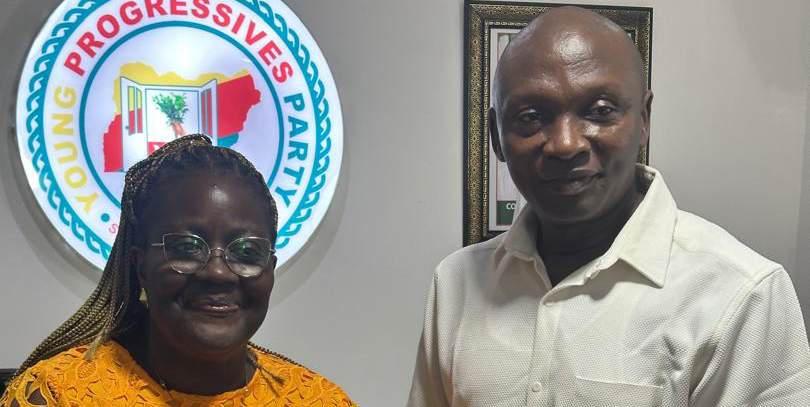
Mrs. Yembra Mohammed (left) with YPP General Secretary, Vidiyeno Bamaiyi, after picking up her nomination form and expression of interest for Bayelsa West Senatorial seat…recently
SHETTIMA: TINUBU WORKING TO SECURE SAFE RETURN OF ABDUCTED SCHOOLCHILDREN, OTHERS
congregation, the Imam of the National Mosque, Haroun Eze, urged Nigerians to remain patriotic and steadfast in defending the nation.
Also yesterday, Minister of Information and National Orientation Mohammed Idris joined millions of Nigerians in offering prayers for the nation as part of activities marking the 27th Democracy Day Celebration.
In a statement, he described the solemn Juma’at service as a reminder that Nigeria’s progress, unity and stability required not only good governance but also the prayers, support and active participation of all citizens.
"Under the leadership of President Bola Ahmed Tinubu, the federal government remains committed to strengthening democratic governance, promoting national unity and addressing the challenges confronting our nation," he said.
Troops Repel Terrorist Attack in North-East, Lose Five Soldiers, Three CJTF Members
Troops of Operation Hadin Kai successfully repelled a terrorist attack on a Forward Operating Base in the North-East, thwarting an attempted breach by insurgents.
In a statement, the Acting Media Information Officer of Joint Task Force (North East), Operation Hadin Kai, Lieutenant Colonel Haruna Sani, disclosed that the attack was launched in the early
hours of yesterday, against the Forward Operating Base (FOB) Mandaragirau under 25 Brigade, Sector 2, despite adverse weather conditions caused by heavy rainfall.
According to him, “Troops of Forward Operating Base (FOB) Mandaragirau under 25 Brigade of Sector 2, Operation Hadin Kai, successfully contained a terrorist attack in the early hours of this morning despite adverse weather conditions and poor visibility occasioned by heavy rainstorms.
The terrorists launched the attack at approximately 0300 hours and attempted to breach sections of the FOB under the extreme weather conditions.
“Determined troops responded with a fierce counter-offensive, decisively frustrating further incursions and inflicting casualties on the attackers. The counter-assault underscores the resilience of the troops at FOB Mandaragirau and reflects the courage and determination of our troops across the theatre.”
The military, however, confirmed that five soldiers lost their lives during the encounter.
“Regrettably, in the course of the battle, five gallant soldiers paid the supreme price during the intense firefight and closequarter engagement, while some equipment was also affected by the firefight. Their sacrifice embodies the highest traditions of service, courage and unwavering commitment to the defence of the nation,” the statement said.
Colonel Sani further disclosed
that three members of the Civilian Joint Task Force (CJTF) also lost their lives during the attack. He added that wounded personnel had been promptly airlifted by the Air Component Command and were in stable condition receiving medical treatment.
He noted that troops remain firmly in control of the base and continue to dominate the general area, while exploitation operations are ongoing to consolidate the gains achieved during the encounter.
Operation Hadin Kai also paid tribute to the fallen personnel, stating that it honours “their heroism and the bravery of all personnel who stood firm in the face of a determined but ultimately futile enemy assault”.
The statement added that the failed attack highlights the growing desperation of terrorist elements facing sustained military pressure across the North-East.
“These failed attacks further underscore the growing desperation of terrorist elements who continue to suffer devastating losses under sustained operational pressure. All necessary measures are being taken to protect communities and sustain relentless pressure with the deployment of additional troops and critical combat enablers throughout the North East Theatre,” it concluded.
The military clarification followed reports by some online platforms alleging that Boko Haram insurgents had overrun a military base along the Mandara–Buratai Road in
Borno State, killing at least eight soldiers and injuring several others during an attack carried out amid heavy rainfall.
Uba also disclosed that in a series of intelligence-led operations across Borno and Yobe States, troops recorded major breakthroughs against terrorist logistics networks.
At Benisheikh Market, troops, alongside Forest Guards arrested a suspected Boko Haram/ISWAP logistics supplier, Girema Aliko, 40, who had been on a watch list. He was intercepted while transporting 30 litres of Premium Motor Spirit (PMS) and later confessed to supplying fuel and other logistics to terrorist elements.
Similarly, troops of the 7 Division Provost Group arrested Mohammed Bulama, 25, at Ngawom, Muna Garage, within Maiduguri Metropolitan Council. Preliminary investigations linked him to terrorist elements, while the suspect reportedly expressed willingness to provide intelligence to support ongoing operations.
In another development, troops apprehended an absconded soldier, Private Umar Bema of the 50 Task Force Battalion, who allegedly deserted his unit with his personal weapon. Preliminary findings linked him to criminal activities, including robbery. His rifle and magazines were recovered, and he remains in custody.
Operations in Biu Local Government Area also led to the arrest of a suspected kidnapper and member of a criminal
syndicate. The suspect reportedly confessed to involvement in kidnapping, cattle rustling and other criminal activities, while revealing links between criminal groups and terrorist elements.
Further successes were recorded in Gubio, where troops intercepted a suspected terrorist logistics supplier transporting large quantities of food items intended for Boko Haram/ISWAP fighters.
In Adamawa State, troops working with local hunters arrested two suspected ISWAP members who confessed to participating in attacks and abductions in parts of Borno and Adamawa States. Troops also recorded progress in the ongoing surrender process as a fleeing Boko Haram/ISWAP member surrendered with two children in the Kukawa axis.
The Theatre Command said the cumulative impact of the operations has significantly weakened terrorist networks and logistics bases, reaffirming its commitment to protecting lives and property while sustaining security, peace and economic stability across the Northeast.
9-year-old Kidnapped in Ondo
In the Ondo kidnap of the nine-year-old, THISDAY gathered that the victim, identified as Olaosebikan Victor, was taken away by armed men who stormed the community in the early hours of Friday, unleashing terror on residents with sporadic gunfire.
The Police Public Relations Officer Abayomi Jimoh said the incident was reported at about 2:30 a.m. by two residents of the community, Mr. Olaosebikan Isaac and Mr. Joel Owalekan.
CHANGE
I formerly known and addressed as MAKONG OGBONGO BLESSING, now wish to be known and addressed as MAKONG GELLE BLESSING. All former documents remain valid. The general public should take note.
I formerly known and addressed as AD JOLLY UZOMA CHRIS, now wish to be known and addressed as ADUBA JOLLY UZOMA CHRIS. All former documents remain valid. The general public should take note.
I be formerly known, called and addressed as ONAOLAPO ABIODUN now wish to be known, called and addressed as ONAOLAPO ABIODUN JOSHUA. All former documents remain valid. The general public should please take note.
CONFIRMATION OF
My name is AJUNWA KEVIN UKADIUGWU born July 24, 1961, not KEVIN UKAAJUNWA. All former documents remain valid. Access Bank and general public please take note

Round Off or Round Up?
WE begin this mid-year edition with a goof from THE NATION ON SUNDAY GLAMOUR SOCIAL CIRCUIT of May 31: “…Chikwe’s post natal (post-natal) outing”
“Orlu Zonal Political Leaders (Leaders’) Forum: “…as he marks his 76th birthday anniversary today.”
THE NATION ON SUNDAY COMMENT Page of the above edition mounts the stage: “…fan the ember (embers) of discord among the people.”
THE GUARDIAN of May 15 takes over the baton today with two headline blunders: “NCC raises alarm (the alarm) on increasing threat to communication services”
“ExxonMobil invests $40bn on (in) hydrocarbon”
“At the induction ceremony (sic) of the new provost of Christ Church Cathedral, Lagos, the choir rounded up (off) in the induction ceremony (sic) by rendering an anthem.…” Even the Bible cannot confuse ‘round off’ with ‘round up’! There is a clear distinction between these phrasal verbs. Vide any standard dictionary for elucidation.
“Africa continues to experience sluggish economic growth because more than half of the countries in the continent are among the poorest nations in the world.”
Get it right: on the continent.
“But they point out that the organization had expended all its ammunitions…” ‘Ammunition’ is non-count.
“The Trans-Saharan Trade which broadened Kan’s fame and fortune dealt principally in slaves and traditional dye-clothings.” This way: ‘clothing’ does not admit any inflection.
“They had only been paying lip service (a hyphen, please) to the pursuit for agricultural self-sufficiency.” Get it right:
in the pursuit of….
“As they continue to sing… government may be forced to chew its words not too far from now…” Correct expression: swallow one’s (its) words; not ‘chew’.
“In a country where friends share no faith in each other; where the only objective is ‘me and my brother’ must carry the loots. “ ‘Loot’ is non-count.
“In spite of the air-condition in the car….” It’s called air-conditioner.
“Passport booklets scarcity worsen” Scarcity worsens.
“Furthermore, to check all manners of inhumanity to one another….” Standard idiomatic expression: all manner of…
The next grotesque blunder is from THISDAY of May 15: “His recent errands to Europe for the present administration and his utterances has prompted this essay.” Essay indeed! Verb plurality here is very clear (have; not has).
“There is bound to be conflicts and if need be wars…” An accord: there are bound to be conflicts…
“At every fora, that was mouthed even by those in the saddle now.” (Source: as above) This way: At every forum—singular: forum; plural: fora or forums
“Please switch off all lightings/ appliances after the days’ work.” (Notice on Vanguard Media Limited doors) I think pressmen ought to mind their language: the day’s work. Also, ‘lighting’ is uncountable.
“To compliment their lean financial purse.…” An example of malapropism: inability to distinguish between ‘complement’ and ‘compliment.’ Some writers need to go back to school!
“Food production has often failed to keep pace with population growth, while earning from export commodities have not done much.” Get it right: while earning from export commodities has (not have).
“What is your recommendation with
regards to that?” Either ‘as regards’ or ‘with regard to’ No irregularity!
“Cuba, Nigeria to strenghten cultural ties” Get it right: strengthen “Newspaper pages are repleted with such stories.…” Replete, gentlemen “Unfortunately, it was…who blew the lead open.…” It’s ‘lid’; not ‘lead’!
“But on Monday, hundreds of restive staff of the ministry laid siege around the entrance to the….” (THISDAY, May 31) Lay (laid) siege to; not ‘around’.
“Among other things, this has repeatedly given rise to late procession of examination particulars.” Get it right: late processing (not procession).
“But it soon done on the ring leader of the putsch that it was only partially successful.” Bad grammar can hinder a coup! ‘Dawned’ (not ‘done’)
“He died Wednesday evening in Abuja at Agura Hotel junction within the city in a ghastly motor accident.” When death results from a vehicular mishap, it becomes a fatal—not a ghastly—one.
“Heavy downpour almost marred proceedings….” ‘Downpour’ does not require any amplification (heavy, intense, et al)
“What tradition has joined together….” (THISDAY, May 31) ‘Join’ can elegantly perform the function of that Biblical phrase (‘join together’)!
“Consequent upon poor funding, the commission’s ability to acquire new vehicles have been greatly impaired.”
The syntactic arrangement here calls for ‘has’—not ‘have’.
“The research institutes should therefore take into cognizance the relevance of local needs, simplicity, economic viability and market acceptance when designing their produces.” ‘Produce’ is an uncountable entry.
“Its centrality as the link and gateway to the outside world make it all the more pervasive.” Its centrality…makes….
From one of my ardent readers: “It is
When Insecurity Sits At The Dinner Table
Not long ago, a friend sent me a photograph of a pot of stew.
Now, Nigerians send photographs of food all the time. Some do it to celebrate culinary excellence. Others do it to torment friends and relatives who may be surviving on garri and optimism. This particular photograph, however, came with a curious instruction: “Please zoom carefully. The meat is somewhere inside.”
I laughed. Then I stopped laughing. Because beneath the humour was a reality that millions of Nigerians now understand all too well. The country’s economic crisis is no longer something discussed only by economists, policymakers and television analysts. It has moved permanently into our kitchens, our markets and our dining tables.
Food has become one of the most accurate measures of how difficult life has become. The evidence is everywhere. Families that once bought a crate of eggs without much thought now purchase them in cautious instalments. Rice is increasingly treated with the kind of strategic planning once reserved for major family ceremonies. A pot of soup now requires financial calculations, consultations and, in some cases, divine intervention.
In today’s Nigeria, preparing certain meals can feel remarkably similar to executing a government project. Resources must be sourced. Stakeholders must be considered. Costs must be reviewed. And after completion, sustainability remains uncertain.
Of course, Nigerians are adapting, as they always do. We are a people with an almost supernatural ability to adjust to changing circumstances. We have mastered the art of stretching provisions beyond their intended lifespan. We know
how to make one loaf of bread perform duties for which it was never designed. We have elevated substitution to a national skill.
Indeed, the average Nigerian mother now possesses budgeting skills that could impress an international financial institution. Unfortunately, neither party has enough money.
Yet beneath the jokes lies a more troubling question. How did food become this expensive? The obvious answers are familiar enough. Inflation. Fuel costs. Transportation challenges. Exchange-rate pressures. Supply chain disruptions. They all matter. They all contribute.
But increasingly, there is another factor sitting quietly at the table with us. Insecurity.
The connection is easy to miss from the comfort of an urban supermarket or a neighbourhood market stall. But it exists. Somewhere in Benue, Plateau, Niger, Zamfara, Borno or countless other communities, a farmer decides that cultivating a portion of his land is no longer worth the risk. Somewhere else, an entire farming community is displaced by violence. Elsewhere, transporters avoid certain routes because the dangers outweigh the potential profits.
Months later, consumers hundreds of kilometres away find themselves staring in disbelief at the price of tomatoes, pepper, onions, beans or yam.
The chain may be long, but it is not complicated. When farmers cannot farm safely, food becomes scarce. When food becomes scarce, prices rise. When prices rise, families eat less or eat differently. And when that happens across an entire nation, food inflation ceases to be merely an economic issue. It becomes a social concern, a health concern and, ultimately, a security concern in its own right.
The irony is difficult to ignore. Nigeria remains blessed with vast agricultural
perhaps too late to object to ‘upliftment’ now. There is upliftment meaning uplift in the dictionary ((see World Book Dictionary, Page 2299). Besides, there are uplifting (adjective), uplift (verb) and uplifter its corresponding noun. More power to your elbow.” Thanks to this eagle-eyed follower.
In journalism, Gentlemen of the Press is the appropriate tag irrespective of gender. In the judiciary, In the Constitution, former Chief Justice Aloma Mouktar was the chairman (not chairwoman/person) of the National Judicial Council. This is not a matter of grammar.
“We maintain that the government must take the bull by the horn by empowering NDIC….” Formal structure: take the bull by the horns.
“…winner of the women’s cycling race power (powers) home under the rain….” This way: in the rain.
“FRSC must device its means and ways of self-sustenance.” Noun: device; verb: devise (excluding Americanism)!
“Everything was available in abundance at the party that was held somewhere in Victoria Island.” Famous folk celebrate on Victoria Island.
“Already the poor is financially emasculated.…” Even the rich are (not is) equally emasculated these days unlike before.
“It must also have taken into consideration that the case, if not satisfactorily managed, could become a precedence with latent domino effect.” Any lead writer worth his salt ought to appreciate the distinction between ‘precedence’ and ‘precedent’. Editorial writing is the hallmark of newspapering. And this: a domino effect or domino effects (depending on context).
potential. We have the land, the climate, the manpower and the markets. Yet many of those responsible for feeding the nation increasingly find themselves battling challenges that have little to do with farming and everything to do with survival.
No farmer should have to choose between cultivating crops and protecting life. No nation should become comfortable with such a choice. Sadly, we seem to be drifting towards that comfort.
Perhaps that is one of our most remarkable national traits. We adapt so effectively that we sometimes stop questioning the conditions that require adaptation in the first place. We celebrate resilience, and rightly so. Nigerians have earned every compliment for their perseverance.
But resilience should never become an excuse for accepting dysfunction. There is a difference between applauding people’s strength and ignoring the burdens they carry. The woman who feeds six people with resources meant for three deserves admiration. The fact that she must perform such miracles every day deserves scrutiny.
The young graduate who skips meals to save transport fare demonstrates discipline. The circumstances that make such sacrifices necessary deserve attention.
The retiree who carefully calculates every food purchase displays prudence. The economy that turns basic nutrition into a luxury item deserves interrogation.
Food occupies a special place in Nigerian life. We celebrate with it. We mourn with it. We negotiate over it. We express hospitality through it. In many homes, asking a visitor whether they have eaten remains one of the most sincere expressions of care.
That is why rising food insecurity strikes at something deeper than household budgets. It affects dignity.
There is a certain quiet anxiety that

comes with entering a market and discovering that yesterday’s budget has become today’s fantasy. There is a particular frustration in watching meals become smaller while expenses become larger. There is a subtle erosion of confidence when ordinary necessities begin to feel like privileges.
These are not merely economic statistics. They are human experiences. And that is perhaps what worries many Nigerians most. Not simply that food is expensive. But that expensive food is gradually becoming normal.
The danger of normalisation is that it dulls urgency. We begin to see extraordinary hardship as ordinary reality. We stop asking difficult questions because the answers seem too distant or too complicated.
Yet some truths remain simple. A nation that cannot adequately secure its farmers will struggle to feed its people. A nation that struggles to feed its people will eventually confront consequences that extend far beyond the marketplace. And a nation that allows food to become increasingly inaccessible to ordinary citizens is confronting more than an inflation problem.
It is confronting a quality-of-life problem. A security problem. And perhaps, at its core, a governance problem.
The next time someone jokes about the disappearing meat in a pot of stew, we will probably laugh. Nigerians always do. But after the laughter fades, it may be worth remembering that the joke is not really about meat. It is about the state of the nation.
AUTOWORLD
Carloha Nigeria Enhances 2026 Okpekpe International Marathon Experience With Innovations
Carloha Nigeria, the authorised dealer of Chery vehicles in Nigeria, played a significant role in enriching the experience of participants, spectators, and organisers at the 2026 Okpekpe International Road Race held on May 30, 2026, in Okpekpe, Edo State.
As part of its commitment to sports development, community engagement, and healthy living, Carloha brought innovation, excitement, and world-class mobility solutions to one of Africa’s most prestigious road races, helping to create a more engaging and memorable experience for the thousands of athletes and spectators who attended the event.
One of Carloha’s major contributions to the race was the deployment of the rugged Chery HIMLA pickup truck as the official carrier of the event’s giant race clock. Throughout the competition, the HIMLA ensured the seamless movement and visibility of the timing system, supporting race operations while demonstrating the vehicle’s durability, capability, and reliability under demanding conditions.
Beyond supporting race logistics, Carloha transformed the event venue into an interactive mobility experience by showcasing some of Chery’s latest innovations, including the all-new Tiggo 9, Tiggo 8 Pro, the futuristic iCAR electric
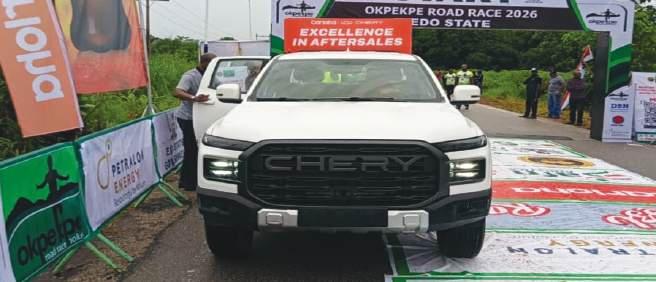
vehicle, and the versatile HIMLA pickup. These vehicles allowed attendees to engage directly with cutting-edge automotive technology while enjoying the excitement of the race.
A major highlight of Carloha’s participation was the extensive vehicle demonstration and test-drive programme made available to attendees. Hundreds of spectators, athletes, and visitors were able to experience firsthand the advanced safety features, premium comfort, intelligent technology, and superior performance of the Chery lineup. The
initiative added a unique experiential dimension to the event, giving guests an attraction beyond the sporting competition itself.
The Carloha pavilion quickly became one of the event’s most vibrant engagement hubs, attracting athletes, families, sports enthusiasts, business leaders, government officials, and traditional rulers. Visitors participated in interactive activities, received product information, explored vehicle features, and learned about sustainable mobility solutions, creating an atmosphere of excitement
and discovery throughout the race day.
Among the notable personalities who visited the Carloha stand was former Edo State Governor and distinguished political leader, Chief Adams Oshiomhole, who personally test-drove the iCAR electric vehicle. His participation generated excitement among spectators and further stimulated conversations around the future of electric mobility in Nigeria.
Former Deputy Governor of Edo State, Comrade Philip Shaibu, also visited the Carloha pavilion and commended the company for bringing innovative automotive experiences to the event and for supporting initiatives that promote sports, wellness, and community development.
Speaking on the company’s participation, Felix Mahan, General Manager of Carloha Nigeria, noted that the company’s objective was not merely to showcase vehicles but to contribute meaningfully to an event that promotes excellence, healthy lifestyles, and national pride.
“The Okpekpe International Road Race has become an important platform for celebrating athletic excellence and inspiring healthy living. At Carloha, we believe brands should contribute meaningfully to such initiatives. Our presence here was designed to enhance the overall event experience, support race operations, and give attendees access to innovative mobility solutions that improve everyday life,” he said.
Young Minds Drive Conversation at Toyota Motor Show
Toyota Nigeria Limited turned the spotlight on young minds on the second day of its ongoing Toyota Motor Show in Lagos, as students and young professionals engaged in a thrilling debate and quiz competition designed to promote automotive innovation and stimulate interest in technology-driven mobility solutions.
The youth-focused programme, held on Wednesday at The Podium, Lekki, attracted enthusiastic participants who showcased intelligence, creativity and analytical skills in contests that kept the audience captivated throughout the day.
The highlight of the event was a fiercely contested debate between two teams of young participants who impressed judges and spectators alike with their eloquence, confidence and ability to marshal convincing arguments.
After a closely fought contest, Team A, comprising Robinson Goodness, Esabu Blessing and Igbayisemore Tony, emerged victorious, narrowly defeating Team B made up of Akinware Breakthrough, Yusuf Rahimat and Dawn Ijaware.
The winning team received a cash prize of N600,000, while the runners-up went home with N300,000.
The quiz competition also generated excitement,
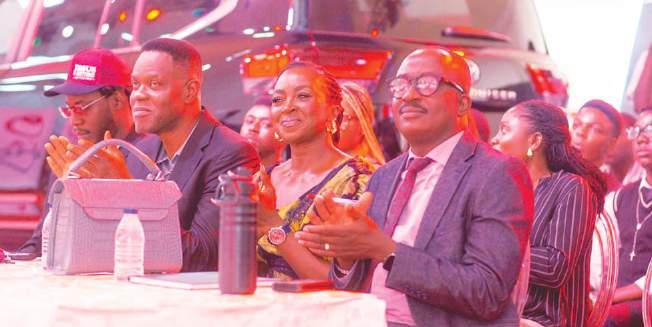
with six contestants battling through multiple rounds of questions. Three participants were eliminated in the opening stages before the contest narrowed to a gripping final round focused largely on Toyota
vehicle models and automotive knowledge. The audience watched in admiration as the finalists displayed remarkable speed, accuracy and composure in their efforts to outsmart one
another.
At the end of the contest, Feyisetan Tolase Emmanuel emerged champion and received N250,000, while Ayorinde Bolarinwa secured second place and was rewarded with N150,000.
Award-winning actor/social advocate, Kate Henshaw, who chaired the panel of judges, praised the contestants for their impressive performances and commitment to learning.
She expressed delight at the confidence, intelligence and creativity displayed by the young people, adding that the future remained bright when knowledge and innovation are encouraged.
Also on the panel was Toyota Nigeria Limited’s Head of Dealer Development and Special Duties, Henry Ojuoko, who said the programme reflected Toyota’s commitment to nurturing future innovators.
According to him, beyond selling vehicles, the TNL wants to inspire curiosity and encourage young Nigerians to explore opportunities in technology, mobility and innovation.
According to the organisers, the second day of the exhibition was deliberately dedicated to students and young professionals as part of efforts to raise awareness about automotive innovation and stimulate youth participation in discussions around the future of transportation.
How Kia is Making Electric Vehicles Accessible in Nigeria
As Nigeria accelerates conversations around cleaner energy, rising fuel costs and sustainable transportation, Kia Nigeria is positioning itself as one of the key drivers of electric vehicle adoption and green mobility solutions in the country.
For over 25 years, Kia Nigeria has built a strong reputation for durability, fuel efficiency, innovation and customer-focused mobility solutions. Today, the company is expanding that legacy into the electric vehicle space, helping Nigerians gain easier access to EV technology and alternative energy transportation.
With Jacky Hathiramani driving its forwardthinking vision, the company is investing heavily in mobility infrastructure, local vehicle assembly and flexible ownership solutions aimed at accelerating EV adoption across Nigeria.
“The future of mobility in Nigeria will be driven by innovation, sustainability and accessibility. At Kia Nigeria, we are focused on making electric vehicles and cleaner mobility solutions more practical and accessible for Nigerians,” said Jacky Hathiramani.
As fuel prices continue to impact transporta-
tion and business operations nationwide, more consumers and fleet operators are beginning to explore electric and alternative energy vehicles as cost-saving solutions. EVs offer significantly lower running and maintenance costs compared to traditional fuel-powered vehicles, making them increasingly attractive for both individuals and businesses.
To support this transition, Kia Nigeria has emerged as a verified EV manufacturer and certified CNG conversion centre in Nigeria, reinforcing its commitment to sustainable transportation and reduced carbon emissions.
The company is also driving local automotive development through its ultra-modern vehicle assembly facility in Lagos, which supports local production, job creation, skills development and technology transfer within Nigeria’s growing automotive ecosystem.
Beyond manufacturing, Kia Nigeria is tackling one of the biggest barriers to vehicle ownership and affordability. Through flexible vehicle finance schemes, the company is making it easier for more Nigerians to purchase brand-new vehicles, including newer energy-efficient and electric mobility solutions.
With growing awareness around green trans-

portation, cleaner energy and smart mobility, Kia Nigeria is not only helping Nigerians transition into the future of transportation but also playing a major role in shaping the country’s evolving electric vehicle landscape.
As the demand for sustainable mobility continues to rise, Kia Nigeria remains committed to delivering innovative, reliable and accessible electric vehicle solutions that meet the needs of modern Nigerian consumers and businesses.
L-R: TV Personality/Brand Influencer, Somadina Anyama (Soma); Head, Service, at the Toyota Nigeria Limited, Mr Sylvester Enwere; Actor/Social Advocate, Kate Henshaw, and Head, Dealer Development and Special Duties at TNL, Mr. Henry Ojuoko, on the Day 2 of the Toyota Motor Show in Lekki Lagos... recently
Chery HIMLA pickup truck leads 2026 Okpekpe International Road Race
Kia EV9 GT
From Festival Grounds to Cinema: Iwe Ala Brings Ojude Oba Story to Life
Scenes from the teaser will leave you wondering, considering the snippets that depict a familiar Nigerian festival.
On a second look, you think it’s a reel from the cultural showcase recently as it unravels scenes drenched in cultural symbolism. Fresh off the visual spectacle that was the 2026 Ojude Oba Festival, is the official trailer for ‘Iwe Ala’, the highly anticipated Ojude Oba inspired feature.
Sub-titled ‘The Book of Dreams’, ‘Iwe Ala’ explores the grandeur of Ijebu land’s famed cultural festival, intertwining it with deeply rooted themes of royalty, legacy, and betrayal. Set against the colourful backdrop of the celebrated cultural festival, the film dives into the story of a respected tailoring dynasty whose legacy begins
to unravel under the weight of betrayal, secrets, and family conflict.
And honestly, it looks like the kind of story that will keep audiences emotionally invested from beginning to end.
Directed by Adeoluwa Owu, Iwe Ala feels like more than just a family drama. It’s a celebration of culture, identity, and the generations of stories woven into Nigerian communities. The upcoming cultural epic promises a visually rich experience that honours the spirit of Ijebu land.
The film also arrives at a moment when audiences are increasingly embracing stories that celebrate Nigerian traditions while delivering compelling modern narratives.
Iwe Ala arrives in cinemas on June 12, 2026. Bringing this high-stakes cultural epic to life is a ensemble cast, including Mercy Aigbe, Owobo Ogunde, Dele Odule, Demola Adedoyin, Tobi
Makinde, Eniola Ajao, and Tolu Otebiyi.
But one notable casting choice has fans particularly excited on social media. Farooq Oreagba. After captivating audiences with his unforgettable festival appearances, seeing Oreagba step into a story so deeply rooted in culture and heritage feels like a natural progression, bringing the same effortless charisma that made him one of the festival’s most talked-about personalities, “King of Steeze”
“Culture stays beautiful when you show off for it,” he’s captured saying to a cast. “I will see you after the parade.”
From the fashion and cultural aesthetics to the emotional family dynamics at the heart of the story,
‘Iwe Ala’ appears ready to offer both spectacle and substance, a post enthused.
“One thing is certain: if the trailer is anything to go by, this is not just another Nollywood release. It’s a celebration of heritage, identity, family, and the enduring beauty of Ijebu culture.”
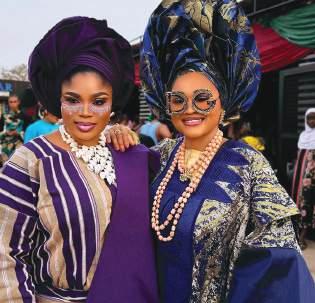
Afrobeats Takes Centre Stage as Four Nigerian Stars Feature in FIFA World Cup Album
Nigerian singer Asake has announced his ‘In God We Trust’ tour across Europe and North America following the record-breaking success of his album M$NEY. The 16-city run includes stops in London, Paris, Toronto, Atlanta, Los Angeles and Afronation Portugal. The tour follows the success of his album M$NEY, which broke Spotify records for an African album.
A four-month run across North America and Europe spanning 16 cities, the tour announcement was made on his official Instagram page on Tuesday to an excited reception from fans. The tour kicks off on July 4 and runs through to October 24, taking in some of the biggest music markets in the world. The ‘In God We Trust’ tour will cover a wide stretch of cities across two continents.
The North American run include Chicago, Toronto, Laval in Quebec, Brooklyn, Lowell, Atlanta, Miami,
Organisers of BBNaija have announced the official premiere date for the season 10 reunion show. The show’s teaser hinted at unresolved drama as former housemates return months after the final. MultiChoice Nigeria, a CANAL+ company, said the reunion show for the BBNaija ‘10/10’ season will premiere on Monday, 8 June 2026.
Hosted by media personality Ebuka Obi-Uchendu and featuring all 29 housemates, the show will air weeknights at 10:00 PM WAT on Africa Magic Showcase
The rich and timeless sounds of highlife music, deeply rooted in Nigerian culture and infused with the spirit of Africa, are set to resonate across multiple cities in the United States this summer as acclaimed highlife artiste Biyi Samuel and The June 20 Crew embark on a highly anticipated tour.
The cultural showcase is being facilitated by the creative vision of Samuel Ekundayo of Sammek Moments Arts and Culture Entertainment LLC, whose commitment to promoting African arts and music continues to create global opportunities for homegrown talents.
The tour is expected to reconnect audiences in the diaspora with the beauty and authenticity of live African music, bringing an immersive cultural experience directly to their communities. Renowned
Houston and Los Angeles, with a Colombia stop also on the schedule. While the European leg takes place in London, Brussels, Amsterdam, Berlin and
(DStv Channel 151 | GOtv Channel 8) and 10:30 PM WAT on Africa Magic Family (DStv Channel 154 | GOtv Channel 7). Each episode will be available on DStv Stream and GOtv Stream the following day.
The announcement comes months after the Season 10 finale on October 5, 2025, which saw Opeyemi Ayanwale, popularly known as Imisi, emerge champion with 42.84% of the public votes. The 23-year-old fashion designer and actress from Oyo State walked away with a grand prize of ₦150 million including ₦80 million in cash and a brand-new Innoson SUV.
The reunion is expected to address several unresolved issues from the season, including the disqualification of housemate Faith in the final week following a physical altercation with Sultana. The season also
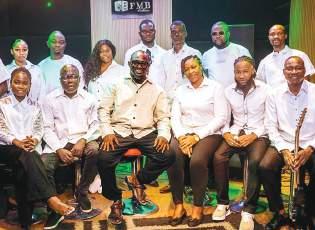
for his electrifying vocals, soulful melodies, vibrant instrumentation, and culturally inspired lyrics, Biyi Samuel has carved a niche for himself within the highlife genre. Together with The June 20 Crew, he has consistently demonstrated an ability to preserve
Paris, alongside a headline appearance at Afronation Portugal, one of the biggest Afrobeats festivals on the continent.
The tour follows the release of Asake’s fourth studio album, M$NEY, which dropped on May 1, 2026. “The 13-track project features collaborations with Tiakola, DJ Snake and Kabza De Small, and marked a noticeable shift in his sound to something more measured and cohesive compared to the chaotic energy of his earlier work,” a reviewer noted.
Adding that the evolution drew praise from some listeners and mild criticism from others who felt the crossover direction softened his edge. “Either way, the numbers displayed a much more interesting scenario. M$NEY secured the biggest opening week streams for an African album in Spotify history with 55.98 million streams, and set a new Spotify Nigeria opening-week record with 37.5 million streams.”
“M$NEY is a reflection of my spiritual and creative journey,” Asake said. “Everything flows from a place of gratitude to God and every moment that’s shaped me. The music explores different sonic elements, from orchestral sounds to dance
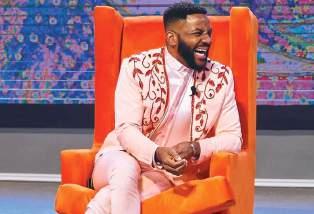
produced some of its most viral moments in years, including a spoon-related standoff that dominated X for days and a series of romantic entanglements that split fan bases across the continent.
America
the essence of traditional highlife while incorporating contemporary influences that resonate with audiences across generations.
Over the years, the artiste and his band have built a formidable reputation for delivering exceptional live performances. Their signature blend of rhythmic guitar arrangements, rich percussion, vibrant horn sections, and captivating vocal delivery has endeared them to fans both within and outside Nigeria. Through music that reflects everyday experiences, love, celebration, culture, and community, they have cultivated a loyal and growing fan base across different parts of the world.
Beyond his musical artistry, Biyi Samuel’s career has been marked by several award nominations and recognitions, further underscoring his contribution to the growth and preservation of highlife music. His songs and albums have also recorded impressive streaming and download figures across various digital platforms, reflecting the increasing demand for his unique sound and artistic vision.
beats. I stay true to myself but also weave in new creative expressions from my life experiences and personal evolution.”
The album follows a series of singles released throughout 2025, beginning with ‘Why Love’ in February, followed by ‘Badman Gangsta’ featuring Tiakola and ‘Worship’ with DJ Snake. The latter collaborations incorporate reworked samples and cross-genre production elements, extending Asake’s international collaborations.
Showing an impressive entry, the album also peaked at number one on the Apple Music UK Chart, making Asake the first African artist to have five different projects top that chart. M$NEY also marks a significant business milestone as it is Asake’s first full-length release under his independent label, Giran Republic, in partnership with EMPIRE.
Tems Releases Music
Video for ‘What You Need’ Off ‘Love Is A Kingdom’
Grammy-winning artist Tems comes to terms with the fact that she isn’t what her partner needs in the new music video for “What You Need,” directed by Ayinde Anderson. The song appears a standout track from her late 2025 EP, Love Is A Kingdom. While fans have had the song for a while, the new video, which drops early this week “adds a fresh emotional layer, bringing its themes of honesty, boundaries, and emotional clarity into sharper focus.”
The video starts in black and white, with Tems pulling a rope attached to a brick wall, smashing plates and sitting against the wall as she sings about the relationship.
As the video goes on, the visual eventually transforms to color. “I’m not what you need/ Get away from me,” she sings. The video is now available to watch on YouTube.
Tems previously expressed gratitude for the response to “What You Need,” which was released back in November. “To know that there are people out there that relate to this song and what I’ve experienced, honestly warms my heart!!” she wrote.

Eniola and Mercy
Biyi Samuel and the June 20crew
Ferdinand Ekechukwu
Tosin Clegg
Ferdinand Ekechukwu
Ferdinand Ekechukwu
Ebuka
Tems
Davido
Ferdinand Ekechukwu
Kelechi Anosike: PDP Remains the Best Thing that Happened to Abia State
As political activities ahead of the 2027 governorship election begin to gather momentum in Abia State, the candidate of the Peoples Democratic Party (PDP), Kelechi Anosike, insists that his party laid the foundation for Abia’s development and remains the best thing that has happened to the State. He also speaks on his plan for the State if elected. Charles Ajunwa brings the excerpts:
Aggrieved Abia PDP stakeholders described your emergence as the party’s governorship candidate as rude shock to them. What’s your take?
Maybe because they have not been following my growth and trajectory in the party. I joined PDP since 2005, and I worked closely with former President Olusegun Obasanjo. In fact, I did a book, one of his biographies, titled: ‘Olusegun Obasanjo, The Man, The Message, The Movement’. It’s a three-part book. And in 2006, I served as Chairman National Assembly’s Screening Committee sent to Plateau State. In 2007, 2009, late President Yar’Adua appointed me as a member of some presidential committees, including the one for the review of insurance law, which I did with late Professor Joe Irukwu and Prof. Osipitan. So I’ve been around. The PDP office in Nkwoegwu Ward of my party, I’ve been the one paying the rent all these years. In 2011, I ran for House of Representatives, and I was denied the ticket. I was given to Oluchi Ibechi. In 2008, I contested to be a member of National Working Committee of the party when I sought for the office of Deputy National Financial Secretary, the same convention that brought late Sir Vincent Ogbulafor. I was in that convention. So when I read one report saying that, ‘my emergence is the eighth wonder of the world, that we should study it’. I laughed it over. So I’m wondering where are they coming from. I want to state categorically that I’m a strong PDP member from my ward to state and national levels. So, it was easy having understood the dynamics. And I’m PDP both at heart and in spirit. It was easy for me when I come in to be able to get the ticket because I’m a real party man.
But your emergence seems to have divided the party. Are there efforts to pacify those that lost out?
It’s important to say that PDP is not divided. It’s one united big family. But in every competition, there must be a winner. Of course, those that failed to get the ticket will not be happy one way or the other. It’s human, emotions and so on. But I’ve reached out to them. I’ve called them. The party too, at that level, has reached out to them. So there’s an understanding and formidable cohesion is being built so that we go into the election as one united big family. In fact, in my acceptance speech, I extended the olive branch to them. That we should come together, one person must win. But we have a collective mission. That mission is to reposition our party to take back the Government House from the Labour Party.
Did you also reach out to other aspirants that lost out in the party’s primary election?
Yes. I have spoken to most of them, but I’ve not invited them yet. I intend to that soon when we are having stakeholders’ engagement, where party members will interface with one another. At that platform, we’ll be able to reach them and bring everyone together to join hands and reposition our party
Years of PDP in Abia still remain a subject of controversy. How do you intend to convince Abians to vote for the party again?
You see, there are a lot of misconceptions out there. PDP remains the best thing that happened to Abua State, and that’s the truth. And the PDP remains the most expansive and formidable party, both in Abia and in Nigeria.
Our leaders are doing their very best to reposition the party. I tell them that I’m presenting a new direction and a new mindset. Some misunderstandings about the party came from the paucity of funds available to the past PDP governments. And the windfall that the Labour government is witnessing now due to subsidy removal. All thanks to President Bola Tinubu’s economic policy on subsidy removal. So the amount of money that comes into Abia State monthly, is about what the last PDP government saw in four years. There’s much more money available now to do more work than
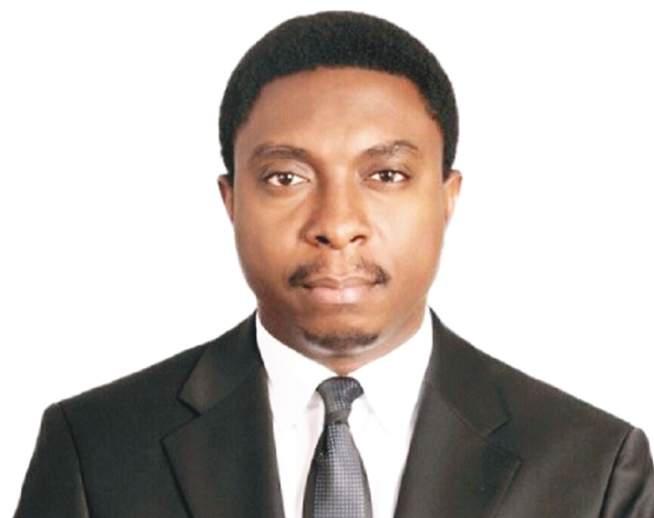
then. Apart from that, I tell them that I present a new energy and a new mindset. In fact, we have records of roads done by PDP. They far outnumber what is being done now. But you see, it’s a different thing when you are doing your job quietly, and someone decides to embrace social media to exaggerate what is being done. Even what is not on the ground is being recorded as being done somewhere. Take the example of the Smart Schools in 2024, not one is on the ground. There’s another one in Ukwa, they call it a recreational park. They claimed they spent billions, but nothing is on the ground. When the campaign starts, some of those facts will be made available to the public to see that PDP remains the best thing that can happen to the state.
Analysts have attributed the PDP’s loss to Labour Party in 2023 to poor performance. Do you agree, and what has changed?
I don’t know what they meant by poor performance. You assess a man based on the amount of money available to him. With little resources available to them, they still had the rice belts from Ubani to Isikwuato. And there were two rice mills functional. There was Osikapa Abia, home-grown rice Abians produced. All those things have fizzled out. The past governments set up the oil palm belt from Ukwa axis. All those things have fizzled out. There were holistic developments by past PDP’s governments. But this government has only centred on few road infrastructure with total neglect of all other aspects and indices of good governance. So I differ from that question. There was no poor performance, yes.
In your acceptance speech you promised to focus on agriculture and industrialisation. Can you throw more light on this?
I present a welfarist philosophy. I said the next government of Abia State will be welfare and care government based. I said that any Abian in need will be a priority, not a problem. I also said that we will build infrastructure, we will build lives. I also said that never again will any Abian go to bed with an empty stomach. There will be enough food for everyone. So the next government will be centred on welfare. And talking about welfare, there’s an economic welfare. I’m looking at prosperity and wealth creation. I’m looking at SME financing. I’m looking at skills acquisition. I’m looking at entrepreneurship grants. I’m looking at industrialisation, market expansion,
agricultural exports. Then we also have what I call social protection welfare. In the social protection welfare, I’m looking at protecting the vulnerable citizens. Then the beneficiaries will include widows, the elderly, persons with disability, orphans, poor households. Then I look at healthcare welfare. I’m looking at affordable healthcare. We’re looking at free maternal care, rural clinics, health insurance, drug subsidies, and mobile hospitals. Then when I look at educational welfare, I’m looking at human capital development. One of the programmes will include scholarships, teacher welfare, school rehabilitation, digital learning, and skills acquisition.
We’ll talk about youth welfare and empowerment. You know, there’s no programme now in the Abia State government centred on youth. There’s none. No opportunity for Abian youths. So we have what we call youth agog. So in this youth welfare empowerment, we’re looking at startup funding, tech hubs, and sports development. Youth employment, talent hunt. We’ll harness and develop talents in Abia and commercialise them, market them to the world, both in sports, in music, and in various aspects to keep Abia youths busy. What happens now is that as they’re graduating, they’re going to Lagos, Abuja, and Port Harcourt. Nobody wants to stay at home. So all of that will change.
The government will be more about women and youths. Women’s welfare and economic inclusion. So part of the programmes will include women’s enterprise funds, maternal health care, political inclusion, and cooperatives. Then we have workers’ welfare. In workers’ welfare, we’re talking about a motivated workforce. So the programme will include prompt salaries. I promised them that we’ll pay above minimum wage. The present government is struggling to pay. Ebonyi is paying N85,000 minimum wage. Enugu, N85,000. Imo, N104,000. But Abia State government is struggling to pay N70,000. They pay 60 in some cases. Then, pension reforms, housing support, health care coverage. We have what we call Pension Plus. Pension plus is, they get their pension as at when due. Then plus health care. There’s a reason why they’re called senior citizens. So with the cost of healthcare now most of them cannot even afford it. So their equity contribution to the health insurance is the number years they’ve served and retired. Then they go to hospitals, they get free medicals. So the government will subsidise their healthcare. Some state governments have misappropriated and misapplied the subsidy funds given
to them. The federal government gave it to them so that they can provide infrastructure and social welfare. So most of them focus on infrastructure, neglecting the social aspects. Then there’s rural welfare. In that rural welfare, it’s inclusive development. So we’re looking at programmes like rural roads. There are rural roads we want to open. For instance, in Ofeme now, there’s a road that connects to Isikwuato. This will also help in the transportation and distribution of agricultural produce. There’s a road that connects somewhere from Isiala Ngwa to Ikwuano. All those roads, we want to open them up.So while increasing accessibility, you’re also helping agricultural produce and development along those roads. Rural welfare includes those rural roads, electricity, water supply, and rural market expansion. Then there’s agricultural welfare. This is about food security. I mentioned the back-to-farm state policy- Operation Feed Abia. Everywhere will have a farm. There will be farm grants. I told you earlier about extension worker services. I used to enjoy their services then. Farmers were educated how to put fertiliser, best seedling and the best farm method to adopt. Those things are not available again. In fact, they used to have ADP along Osaa Road. So we intend to revive those things. We have some of those subsidised fertiliser farm settlements. M.I. Okpara started farm settlements. So we now have to digitalise the farm settlements we have to make them appealing to the youths to embrace agriculture. Then mechanised farming. Like in the villages now, if a particular area is to be farmed, they use manual labour to clear it. It will cost the state nothing to mechanise the clearing of sites. Just get those tractors and caterpillars they go there and clear the whole farmland. They already know the boundaries of their farms. So you save that cost from them. From the Ministry of Agriculture or the Ministry of Works, they send those things to various communities. Local governments will be functional. As part of the plans to make the youth make youths to embrace agriculture. There will be sporting facilities, innovation hubs, tech hubs, and so on. So, where they are farming, they still have access to the whole world while living in the farm settlements.
We have the housing welfare. I’m a mortgage expert, I have a PhD in housing and mortgages. It doesn’t cost much. Do you know that most civil servants are contributors to the National Housing Fund? Then can I shock you? You see, when they retire, they are more concerned about their pension being deducted by the government. Nobody pays attention to the NHF that was taken from the source. In fact, during my PhD presentation, they were surprised that those monies have gone. In fact, my Mum after she passed, I started asking for her own contribution too. They calculated it for me, and they would give it to me. The whole essence of the law setting up the National Housing Fund Act, is that you contribute so that government gives you a house and a mortgage. So that becomes your equity contribution. But do you know that over 90 per cent of civil servants retire and dash government’s money. And there’s no house, there’s no mortgage. But it was taken from source. So I will make sure that Abia civil servants who are contributors to National Housing Fund are able to access those funds. And get the other one, they augment from Federal Mortgage Bank, and get a house. So there’s housing welfare, affordable housing, mortgage schemes, slum upgrading. There’s justice and security, and welfare. Several persons are languishing as awaiting trial persons (ATPs). Most of them are innocent. Most of them were arrested at the scene of the crime. After the perpetrators have already gone, they just pack them and dump them. There was a particular case of a woman, her only child was picked up, nobody spoke for them. So all she wanted was to know who can help them release the boy before she dies. As they picked the boy, before the woman got sick, the woman eventually passed on. The boy was not released.
Anosike
Eze Madumere: When Leaders Focus More on Power Than Performance, the People Suffer
Former Deputy Governor of Imo State and Peoples Democratic Party candidate for Imo East Senatorial District, Eze Madumere, says Nigeria’s governance challenges stem from weak institutions, poor policy implementation and leadership that often prioritises power over service. He speaks on the country’s leadership deficit, his decision to leave the All Progressives Congress for the PDP, and why he believes responsive, people-centred governance remains the key to restoring public trust and national progress. Bennett Oghifo brings the excerpts:
You were in APC, you did not move to ADC or NDC but you choose PDP, why the choice of PDP?
PDP remains the most formidable and nationally accepted opposition party in Nigeria today. My decision to identify with the PDP was not based on mere political convenience, but on conviction, structure, and the vision the party still holds for the Nigerian people. I have been in governance and I understand what it takes to build institutions that can truly challenge bad leadership and restore hope to the people. The PDP, despite its challenges, still possesses the political spread, experienced leadership, grassroots connection, and democratic foundation needed to rescue Nigeria and reposition Imo State for progress. I did not move to ADC or any other platform because I believe that for real change to happen, there must be a strong, organised, and tested political structure. PDP has produced leaders, governed this nation successfully before, and still remains the party with the capacity to unite Nigerians across every divide. For me, politics should not be about jumping from one platform to another; it should be about commitment to the people and to a vision. I chose the PDP because I believe it offers the best opportunity to restore purposeful leadership, justice, equity, and development for our people. As a former Deputy Governor of Imo State, I have always stood for responsible leadership, and wherever I belong politically must reflect that same principle. My focus remains service to the people, and PDP provides the platform through which that vision can best be achieved.
Are you in the Wike-led faction or the Turaki-led faction of the PDP?
My position is very clear. With the Supreme Court judgement and the Certified True Copy already in the public domain, it is evident that there is no faction in the PDP. The PDP remains one united political party under one recognised national leadership. The party today is led by Hon. Mohammad Abdulrahman as the National Chairman and Senator Samuel Nnaemeka Anyanwu as the duly recognised National Secretary. That remains the authentic and constitutionally recognised leadership of our great party. So, I do not belong to any so- called faction. I belong to one indivisible PDP committed to rebuilding, strengthening, and repositioning the party for victory ahead of 2027. At this critical moment, what the party needs is unity, discipline, and collective commitment, not division or unnecessary labels. Our focus
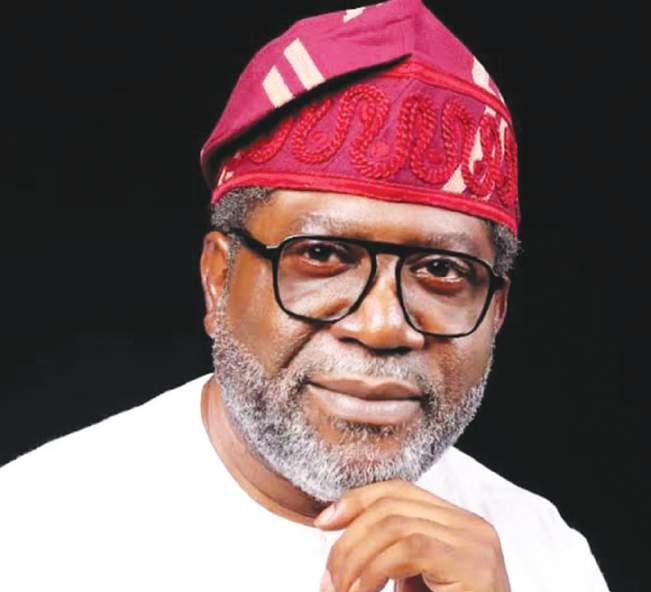
should be on providing credible leadership and restoring the confidence of Nigerians in the PDP.
You are not new in governance, what do you think is the problem with governance in Nigeria?
Having served as Chief of Staff and later as Deputy Governor of Imo State, I have had the privilege of understanding governance from both administrative and political perspectives. From my experience, one of the greatest problems with governance in Nigeria is the lack of continu- ity, sincerity, and people-oriented leadership. Governance should be about service, vision, and long-term development, but unfortunately, in many cases, personal interests and political
battles have taken precedence over the welfare of the people. When leaders focus more on power than performance, the people suffer the consequences. Another major challenge is the weak implementation of policies. Nigeria has brilliant ideas, talented individuals, and enormous resources, but the problem has always been translating policies into practical results that can improve the lives of ordinary citizens. Good governance is not about speeches; it is about measurable impact. We also have a problem with institutional weakness. Strong institutions, not just strong individuals, are what sustain development in any nation. When institutions are respected and allowed to function independently, there will be accountability, stability, and progress.
In my years in government, I learned that leadership must be built on listening to the people, carrying everyone along, and creating opportunities for both the young and old. Government must become more responsive, transparent, and compassionate. Nigeria has the potential to become a great nation, but that can only happen when leadership is driven by competence, patriotism, and genuine commitment to the people rather than personal ambition. That is the kind of leadership many Nigerians are yearning for today.
What would you say is the issue with the APC?
What I believe is that the APC government has gradually lost touch with the everyday realities facing ordinary Nigerians. Leadership is not just about making promises; it is about creating policies that positively impact the lives of the people. Today, many Nigerians are struggling with economic hardship, insecurity, unemployment, and the rising cost of living, and the people truly deserve better. One of the major issues with the APC is the disconnect between government policies and the welfare of the citizens. A responsible government must always carry the people along, listen to their concerns, and provide practical solutions that improve their standard of living. Unfortunately, many Nigerians feel abandoned and unheard. There is also the issue of internal democracy and inclusiveness. Democracy thrives when people are allowed to express themselves freely and when political structures accommodate differing opinions. Over time, many Nigerians have become disappointed because they believe the system has become less people-oriented. As someone who has served in government before, I strongly believe leadership should be built on accountability, competence, compassion, and genuine service to the people. Governance should inspire hope, create opportunities for the youth, empower businesses, and strengthen institutions. That is why the PDP has repositioned itself to provide credible leadership and a better alternative for Nigerians. The party is focused on rebuilding trust, restoring economic stability, strengthen- ing democratic values, and giving the people renewed hope for the future. Politics should not be about bitterness or personal attacks; it should be about presenting better ideas, better policies, and better leadership for the progress of our nation.”
See concluding part on www. thisdaylive.com
Aminu Kano’s Legacy Demands National Alliances, Not Regional Isolation
As Nigeria approaches 2027, a false narrative is being pushed by some elements that political alliances across regions are “anti-North”. Specifically, they argue that the emerging partnership between Sen. Rabiu Musa Kwankwaso and Mr. Peter Obi betrays Northern interest.
Cross-regional alliances are not new to Nigeria’s political trajectory. Our forefathers understood that Kano or any other region cannot thrive in isolation, and the talakawas cannot eat regional flags and survive.
Nigerians have already seen this movie. For eight years, late President Muhammadu Buhari, a Muslim from the North, chose a Pastor, Prof. Yemi Osinbajo, from the South-West as his running mate and Vice President.
Today, President Bola Ahmed Tinubu from the South-West has Sen. Kashim Shettima from
the far North as his running mate and Vice President.
The message is that no region can win alone. No region can govern alone. Nigeria only works when North and South stand and work together.
While some people are trying to bury historical facts for political gain, they forget that history holds the answers to many of today’s problems.
As Chinua Achebe said, “Until the lions have their own historians, the history of the hunt will always glorify the hunter.”
Dr. Yusufu Bala Usman, a Northern Nigerian historian, warned that, “History is not a playground for the ignorant. It is the memory of a people. To distort it is to kill the people twice.”
As Prof. Toyin Falola also said: “Those who control the present try to control the past. But facts, like seeds buried in the ground, will sprout.”
Even in the last election, former Vice President Alhaji Atiku Abubakar, who was the PDP presidential candidate in 2023, wanted to pick Mr. Peter Obi as his running mate. Today,
the same Atiku is expected to pick another Southerner as his running mate.
So, who is betraying the north? Is it Kwankwaso for aligning with Obi? Atiku or Shettima for being the Vice President to Tinubu?
That is democracy in action. Not regional sentiment. Not “ownership” of a country with over 250 million people.
The North is not the only region in Nigeria, and it can never be. We need other components to thrive. Our region suffers the anguish of Boko Haram attacks, banditry, kidnapping, religious violence, and more. Democracy means building consensus alliances across Nigeria. Not building walls. Not fanning sentiments and emotions that ignite hatred among Nigerians.
Today, the facts of Mallam Aminu Kano’s 1953 and 1979 alliances have sprouted in 2027, with alliances across regions and political parties
The record is clear: Mallam Aminu Kano built his legacy on bridges, not walls. In 1953, Mallam Aminu Kano’s Northern Elements Progressive Union NEPU formed a working alliance with Chief Obafemi Awolowo’s Action
Group AG in the Western Region. The goal was not personal power. The goal was free education, mass literacy, and justice for the common man.
Also, in 1979, Mallam’s Peoples Redemption Party PRP worked closely with Dr. Nnamdi Azikiwe’s Nigerian People’s Party NPP in the East. Again, the reason was the same: power must serve the poor, not elites.
Aminu Kano said it plainly then: “Our struggle is not North versus South. Our struggle is the talakawa versus the ruling class.”
For Aminu Kano and Kwankwaso, region was only geography. Caring for the ordinary Nigerian on the street, hungry, homeless, unsafe, and bare, was their major concern. The Kwankwaso-Obi conversation is not “anti-North”. It is in the tradition of Aminu Kano: a Northern leader building national partnerships and consensus for the nation’s security, jobs, and development. Kano and Nigerian markets need buyers from Lagos. Our farms need roads to Port Harcourt. Youth need investment from across Nigeria.
Madumere
Ahmad Sorondinki in Kano
Ose Oyamendan: Shaping Moral Imagination Through Documentaries
Oluchi Chibuzor
On June 12, 1993, Nigeria was set to conduct its first presidential election since a military coup d’etat in 1983. But the results of that election — which saw Social Democratic Party candidate Moshood Kashimawo Olawale Abiola (or MKO) appear to win the popular vote— were annulled by the military leadership of the time, which claimed the election was “corrupt.”
Abiola was subsequently jailed in 1994. Four years later, an American delegation flew to Nigeria to visit Abiola in jail and negotiate his release. Shortly after drinking tea with the visiting diplomats, he died.
An official autopsy, conducted by an international team of pathologists from the UK, U.S., and Canada, found “substantial evidence of longstanding heart disease” and ruled the death was from natural causes.
Ose Oyamendan, a journalist who had fled to America and joined Amnesty International following the military’s shutdown of the newspaper he wrote for, went on to become a filmmaker, releasing his documentary directorial debut, Aswat Acherim (Other Voices), in 2021.
The Nigerian-American filmmaker is based between Los Angeles, Lagos, and London. A graduate of the prestigious MFA program in Cinema-Television at the University of Southern California, He made his feature debut with Aswat Acherim, a critically acclaimed, award-winning documentary that captures the unlikely friendships forged between residents of Sderot, an Israeli border town, and their neighbors in Gaza.
His works have earned accolades at major international festivals, including Tribeca, Rome, and Houston WorldFest, and have reached global audiences through theatrical releases, television broadcasts, and top streaming platforms. He is an alumnus of the Fox Writers Initiative, Tribeca All Access and founder of Nollywood in Hollywood.
The Nigerian-American filmmaker also established the non-profit organisation, Nollywood in Hollywood, which included an annual film fest, seminars, training programs and networking events.
His latest documentary, MKO, which would premiere at Sheffield Doc/Fest on June 12 — the 33rd anniversary of the fateful Nigerian presidential election — and sees Oyamendan speaking with an assortment of participants with varying vantage points, ranging from the military general who annulled the election to members of Abiola’s family and various international diplomats and journalists, to explore the events of the time, and the questions that remain unanswered.
Here, Oyamendan shares his thoughts on the reasons behind the film, the vibrancy of the Nigerian filmmaking community, and the responsibility of storytellers in an increasingly fragmented media age.
“I am Black and in love with the stories we carry. I was born in Nigeria but partly shaped in America. That duality is not theoretical. It lives in my body. It hums in my memory. It is a rhythm, sometimes dissonant, sometimes beautiful, that guides how I see, how I listen, how I tell stories. Stories that stretch, that ache, that survived the crossing
of a vast and restless ocean. I wake up every day thinking of ways to lay a narrative bridge across that ocean.
“Documentary remains one of the most powerful ways the Black diaspora remembers its history and imagines its future. Through the medium, we preserve memory, reclaim identity, and affirm that our stories matter. One dream I am proud to see alive today is Nollywood in Hollywood, the non-profit initiative I founded in 2019 in partnership with two of America’s leading film institutions to showcase Nigerian films and talent. It is more than a platform; it is a cultural bridge across the ocean,” he explained.
Since then, Nigerian storytelling has entered an extraordinary period of growth. At home, cinema networks continue to expand. Last year at Cannes, Screen Nigeria launched as part of the country’s “Destination 2030: Nigeria Everywhere” initiative, signaling a bold commitment to exporting Nigerian culture to the world.
Box office revenue across West Africa continues to rise dramatically, proving the appetite for our stories is stronger than ever. Today, Nigeria stands as the second-largest producer of films in the world after India, an astonishing achievement for an industry built largely through grit, independence, and belief.
Yet alongside this momentum comes uncertainty. The promise of investment through streamer commissions has almost all but disappeared. Across the world, storytellers are confronting collapsing business models, shifting technologies, and systems increasingly controlled by algorithms rather than human connection. Audiences are fragmenting.
Traditional pathways are disappearing. But if there is one thing Nollywood understands, it is survival.
Speaking of survival, he said, “my journey into film was born in crisis about three decades ago. 1993 was a year that was meant to be the dawn of a new era for Nigeria, the world’s most populous Black nation. After years of military rule, the country stood on the cusp of democracy.
“I had just stepped into the world of journalism, a fresh college graduate working for Weekend Concord, Africa’s biggest-selling weekly paper.” Oyamendan added: “Moshood Kashimawo Olawale Abiola — MKO — emerged at a pivotal moment in Nigeria’s history, offering the nation a vision of its greatest future. He was the most charismatic man I had ever met — and I have met thousands through my work as a journalist, activist, and filmmaker. A billionaire businessman, philanthropist, and political force, MKO won what was Nigeria’s freest election, only to be imprisoned and silenced after the military annulled the results.
“When the press and dissent were crushed with bullets, I fled to America, where, working at Amnesty International USA, I became part of a high-stakes global battle to save Nigeria’s soul, uncovering global hypocrisy where oil interests outweighed human lives. Years later, during the 1998 oil crisis, an American delegation visited Abiola in custody. After sharing tea, he collapsed and died.
“Now, I have the privilege to tell this story to the world through MKO, our feature documentary about to make its world premiere at the Sheffield Doc Festival. Most of the key actors have refused to talk until now.
“MKO is an investigative documentary about a man, an election, and what we depict as the global conspiracy that robbed Africaás largest democracy of her elected leader. It is a story told by those who lived it — presidents, diplomats, politicians, activists, family members, and journalists. By a stroke of fortune, the premiere is on the anniversary of the election that upended Nigeria’s future: June 12.
“This pivotal moment in Africa’s history shows us how the crisis altered so many destinies— including my own. Dreams perished in tragic deaths and hopes were buried. Some of the hunted did live and planted new dreams — like Bola Ahmed Tinubu, a key opposition leader, who is now the current president of the country.
“In my case, I traded journalism for film, beating the narrow path of finding a global place for an African voice, looking for vehicles to transport narratives of the Black diaspora.
“Whether through Nollywood, Hollywood, or the bridges between them, what I view as my mission remains clear: to center Black voices, challenge forgetting, and help build a world where our stories are not merely seen, but deeply valued and celebrated.
“MKO is not just Nigerian history. It is a warning to the world. Art is never merely entertainment. Art is memory. Art is resistance. Art is survival. And as the global documentary industry shifts beneath our feet, the responsibility of storytellers becomes even more urgent. The stories we tell today will shape the moral imagination of tomorrow.”
Accessing Business Loans without Collateral
Omolabake
For millions of Nigerian small business owners, the question, “Do you have collateral?” has long been the end of the loan conversation.
The demand for collateral (an asset pledged as security in case the borrower defaults), such as a land title, car, or property in the borrower’s name, has made access to credit from traditional banks seem like a mirage.
Yet, capital remains the lifeblood of business, from the food vendor on the street to the tycoon who owns a business conglomerate.
According to the Small and Medium Enterprises Development Agency of Nigeria (SMEDAN), small and medium enterprises (SMEs) make up about 96 per cent of Nigerian businesses and contribute nearly half of the country’s Gross Domestic Product (GDP), but financing remains their major hurdle.
The World Bank estimates that more than 40 per cent of Nigerian SMEs cite lack of credit as a major constraint to growth, as most formal lenders still require collateral.
This reality, however, is beginning to shift, especially with fintechs springing up.
Every digital transaction now leaves behind a financial trail. Through bill payments, airtime purchases, POS receipts on the phone and other digital activities, one is unknowingly building a financial profile which lenders, particularly microfinance institutions and digital lending platforms, use for lending decisions.
They now use bank inflows, BVN verifica- tion, repayment history and mobile transaction patterns as the new collateral. Borrowers who
repay consistently are rewarded with higher loan limits and better terms.
Chief Executive of Regxta, a microfinance lender serving underserved communities, Bello Rukayat, disclosed that digital payment records help lenders make decisions based on evidence rather than assumptions.
She reiterated that transaction data provides insight into business performance, revenue patterns and cash-flow stability, making it easier to assess creditworthiness.
“This is the core of what is now called data-informed lending -using a borrower’s transaction history as a substitute for the collateral they do not have.”
In reviewing loan applications, Rukayat said digital lenders examine several signals, including how regularly money comes into a borrower’s account, consistency of transaction volumes, and repayment history where the borrower has previously accessed credit.
“Digital records allow us to analyse daily,
weekly and monthly transaction patterns.
We can identify peak sales periods, revenue consistency, expense behaviour and even customer concentration risks,” she added.
The National Identification Number (NIN) is also becoming central, tying borrowers to a verifiable identity and reducing fraud. Credit bureaus such as CRC Credit Bureau and First Central further strengthen the system by recording repayment data from banks and loan apps, creating a trail that future lenders can access with consent.
Hence, SME owners seeking loans without collateral now have several options to tap into.
Microfinance banks such as Lapo, Accion and Regxta lend to businesses without property, basing assessments on cash flow and repayment character. Digital platforms including Carbon, Fair Money and Moniepoint approve loans using BVN and transaction history, often within minutes.
Challenges, however, remain. Many businesses
still operate largely in cash and leave little or no digital record behind.
According to reports, approximately 26 per cent of Nigerian adults are financially excluded, with no access to useful, relevant and affordable formal financial services such as payments and savings.
“For this category without a verifiable transaction history or a confirmed identity, they are perceived as higher risk, even when their businesses are viable.
“Our response in this case is to onboard such customers physically, educate them on digital tools and gradually build their transaction history before introducing credit. It is a slower path, but it exists,” she stated.
Berkshire Asset Management Debuts in Nigeria’s Fund Management Market
Omolabake Fasogbon
offering investment research, advisory services and portfolio management.
With a vision to become a leading reference for digital investment solutions, BAML’s investment philosophy is built on long-term generational wealth development, focused execution and capital preservation.
The company said it is positioned to meet the investment needs of governments, corporates, high-net-worth individuals and retail investors,
The firm is led by a team of professionals with more than five decades of cumulative leadership experience across banking, capital markets, financial regulation, risk management and compliance.
The company noted that Nigeria’s rising middle
class, expanding pension assets, digital wealth platforms and growing retail investor awareness are creating opportunities for fund managers.
It said its strategy will combine disciplined investment approaches with a long-term view, in line with global best practices, to deliver returns to investors.
For Nigerian SMEs, therefore, the message is that their transaction history now matters as much as collateral. Consistent use of digital payment channels and timely loan repayment are simple pathways to accessing credit. Berkshire Asset Management Limited (BAML), a fund manager registered and regulated by the Securities and Exchange Commission, has formally announced its entry into Nigeria’s fund management space with a commitment to advance financial literacy and optimise capital allocation for economic development.
Chief Executive Officer, Mr. Adetola Odusote, disclosed that the company will leverage four pillars of technology, partnerships, advocacy and sustainability to develop innovative products and optimise operational efficiency.
Oyamendan
Fasogbon
Kumuyi at 85: Discipline, Distinctives and Disquisitions
Banji Ojewale
Vladimir Kuts was Russia’s unforgettable longdistance runner who, in a wildly combative career that lasted only three years in the 1950s, trashed the records for both the 5000 and 10000 metres in one single competition. He didn’t believe there was any limit to man created in the image of God. Any being with such Divine trappings couldn’t fail. They would strive to reinvent the wheel, march across dreaded territory and plunge wordsmiths into uncharted depths to attempt to capture their achievements.
Therefore, retiring from global athletics while still at his peak when there were no more challenges, Kuts worked as a coach in the Central Army Club in Moscow and declared his mission: to discover a boy who would run faster than himself. It was a tall call; nobody could match Kuts’ tenacity, iron will and speed in his day.
For many, it was illogical and inconceivable that a mentee would align with his lionised mentor’s agenda to outdo the legend. But the Russian Spartan didn’t rubbish race records resting on rational thinking. Nor on public opinion. Or on emotions.
In his 1976 book, ‘Kings of Sport,’ British author Steve Douglas recalls Kuts’ unbudging vision in his own words: “I am looking for a boy born with the mental power to force himself beyond the natural limits…But this is not enough. This power must then be developed, by his life, by his experiences and by his training. It is impossible to talk about limits where man’s capabilities are concerned.”
The Russian athlete lived out his assertion. Five days before the Melbourne Olympics in 1956, Kuts injured his chest in a car crash. The watching world thought it was over for the celebrated sportsman; he would need to be off the tracks to allow for days of hospitalisation and healing. He’d miss the race. But Kuts saw a larger universal summon from history and humanity, which must be honoured, summons higher than hearkening to localised and fleeting personal discomforts of the body. So, an hour after the crash, Kuts was on the field of training, preparing for the Melbourne race ahead.
Guess what happened on the day of the 10000 metres chase. Kuts took part and won with flourish, setting an Olympic record! The distinctive streak of discipline was at work!
This has been the same selfless, steely and stoic stretch walked by Pastor William Folorunso Kumuyi, Born on Friday, June 6, 1941, at Erin-Ile, in Osun State, Nigeria, but born again in Christ, by the Mercy of God, on April 5, 1964.
Now, whereas Kuts willed and donated himself and his accomplishments to the atheistic state and its agencies, Kumuyi released his into the hand of Heaven, which,
through the Salvation he got in Jesus Christ, has been unveiling a more profitable pursuit for a person’s body, spirit and soul, together with their accompanying skills, attainments, goals, etc.
The old cage that housed the laissez-faire young Kumuyi had to leave, to give way to a new unsparing home with no tolerance for doting fleshly indulgence.
Otherwise, the fresh life he had in Christ wouldn’t run its full and impacting course as desired by Heaven. The difference the redeemed life offers is that it brings discipline, distinction, diverted trajectory and demanding challenges that mustn’t be left unaddressed or allowed to be pampered by untrammelled passions. Salvation possession, profession and practice, without following up with a fierce intentional push for self-abnegation, would not give you dignity but disasters and delusional outcomes.
Thus, when we look at the life and times of Kumuyi, whether as we thank God now for his 85th natal anniversary, or it’s a discourse on one of his numerous Global Crusade with Kumuyi (GCK) breakthroughs in arduous missionary outreaches to far-flung regions of the globe, or when we’re asked to contribute to controversies naysayers never fail to drop on our laps about how the evangelist has been rubbishing and overthrowing tradition for the sake of the Gospel of Christ, or if there’s a return to the ancient history of why the Deeper Christian Life Ministry (DCLM) he founded in 1973 and has shepherded by God’s Grace for decades is unapologetically deploying the TV and allied technological pillars as effective evangelism weapons after he raised concerns about the screen’s negative content profile, or if it has to do with the cyclical purgative disciplinary actions in the Church, or it’s a matter of the social media robing Kumuyi and wife in japa garments and situating them somewhere in Europe or the Americas, or if it’s a case of dissecting Kumuyi’s sermons and discovering that, although you held court in a closet with Preacher Kumuyi, he came through as three great figures to overshadow you: a cross-carrying evangelist, an alliterationwielding neologist, and a citizen of the world with his soul already a denizen of Heaven, you always get to the inevitable conclusion that the man of God has emerged unbowed from a host of crushing blows because, after his Salvation and Sanctification experiences, he didn’t hibernate, or become a modern-day Rip Van Winkle.
He took to Apostle Peter’s counsel: soldier on after the ground-breaking spiritual redemption, and add the elements (virtues) of self-control that will give validity and credibility to your Christianity or profession of holiness or power of the Holy Ghost. Apostle Paul says possessing this indispensable trait of temperance saved him from being lost (cast away), the impressive castle in the background showcasing his voluminous toil for Christ notwithstanding.
Well, Pastor Kumuyi has his own story regarding this consuming power of discipline and the uncommon signa-
tures (distinctives) it has given him in his Ministry.
On Sunday, March 8, 2026, at Ahoada, Rivers State, in Nigeria’s South-south, during a GCK session, the man affectionately referred to as the Defender of the faith and Preacher (Ambassador) of holiness spoke of his secret. He told the gathering that morning: “I prioritise the inside man. I check the inner man. I don’t allow the one inside, moved by the flesh, to also move me. I control and subdue the flesh in order to faithfully fulfil my duties as a responsible Christian and leader and servant of Christ…” (Paraphrased)
Therefore, we miss the point, its import and the thrill, together with the lessons it promises if, in seasonally or annually honouring God for giving Kumuyi to humanity, we only celebrate the cleric’s Scripture-brand holiness, without acknowledging or probing his prevailing personal props. In other words, would the General Superintendent of the DCLM have come this far or earned Heaven’s attention that is guaranteeing him superlative Bible-age miracles and signs and wonders if he had a self-sabotaging libertine spirit warring against Heaven’s goals? Would the Lord have enlisted him in the noble army of those He is using to usher in millions of converted souls into His Kingdom through GCK this end time, if the pastor was a mere public churchman sentenced to loose living and licentiousness in private?
•OjewaleisawriterinOta,OgunState,Nigeria.
Ojude Oba 2026: Grand Celebration of Ijebu Heritage, Cultural Pride
Lanre Odukoya
In Ijebuland, culture is not merely remembered; it is lived. Every year, the ancient town of Ijebu-Ode transforms into a grand theatre of identity where history, prestige, fashion, music, commerce, and tradition converge in one of Africa’s most celebrated cultural gatherings. The Ojude Oba Festival is a living archive of a people’s story.
This year’s edition carried a significance that transcended celebration. For the first time in recent history, the revered festival was held without a reigning Awujale on the throne following the passing of Oba Sikiru Kayode Adetona on July 13, 2025, after an extraordinary 65-year reign that shaped modern Ijebuland. Yet, in honour of the late monarch’s wish that the festival should continue uninterrupted during any interregnum, the people gathered once again under the stewardship of the Regent of Ijebuland, Chief Sonny Folorunso Kuku.
Guinness Nigeria Plc through its culturally rooted brand, Orijin joined the people of Ijebuland in preserving and celebrating this rich cultural heritage. Recognising Ojude Oba as one of Nigeria’s most important expressions of indigenous identity, the company returned to the festival with experiences designed to celebrate culture, strengthen community connections, and honour the traditions that continue to define Ijebuland.
What unfolded was a remarkable demonstration of resilience. From dawn, the streets of Ijebu-Ode came alive with a dazzling display of colour and pageantry. Hundreds of regberegbe groups, elegantly adorned in intricately woven Aso-Oke and Damask, arrived in coordinated processions that showcased the creativity, prosperity, and unity for which the Ijebu people are renowned.
The famous horse-riding families delivered their customary spectacle, parading magnificent steeds through cheering crowds. The thunderous rhythm of talking drums reverberated across the town while cultural troupes, traditional dancers, and praise singers transformed every corner into a stage for heritage.
Dignitaries, business leaders, royalty, tourists, and members of the global Ijebu diaspora stormed the town in millions, reaffirming Ojude Oba’s position as one of Nigeria’s most important cultural and tourism assets.
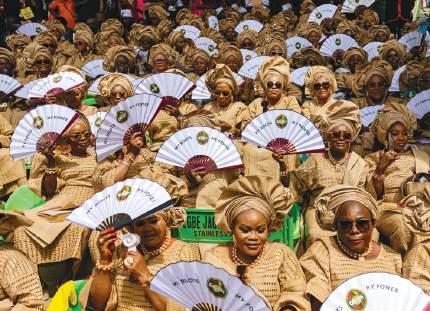
For Guinness Nigeria, participation in Ojude Oba extends beyond sponsorship. It reflects a broader corporate philosophy that recognises culture as an important vehicle for social cohesion, community development, and national identity.
Nowhere was this commitment more evident than at the Orijin Beer Village, located at the Itoro Local Government Secretariat.
Introduced last year, the Orijin Village returned in 2026 as one of the festival’s most anticipated attractions and proved it had earned that reputation.
Designed as a vibrant cultural destination, the expansive arena became a melting pot where generations connected through music, storytelling, entertainment, and shared experiences. Guests poured into the venue from across Ogun State and beyond. Families, returning indigenes, tourists, and culture enthusiasts filled the grounds, creating an atmosphere that reflected the warmth and hospitality for which the Ijebu people are known.
As evening descended, the Village transformed into a pulsating entertainment hub.
Veteran Fuji icon Adewale Ayuba thrilled audiences with a rich repertoire of timeless classics, including Bubble, Mr. Johnson, Bonsue, and his comeback hit Koloba Koloba. The performances triggered waves of nostalgia among older
guests while introducing younger audiences to the enduring appeal of Fuji music.
The excitement continued with energetic performances by Fujicologist, Jesse King, and DJ YK, whose sets kept the audience dancing deep into the night.
Social media influencers, including Jenny U.K., Sharonniah, Busayo_debs, and Heynikeh documented the festivities for thousands of followers online, extending the reach of the celebration far beyond Ijebu-Ode and ensuring that younger Nigerians experienced the festival through a contemporary lens.
For four thrilling nights, the exclusive Orijin Villages offered an elevated hospitality experience where guests enjoyed expertly curated beverage creations while immersing themselves in the cultural ambience that defined the celebration.
The result was a carefully balanced blend of modern execution and African authenticity - an experience that reflected both the spirit of Ojude Oba and the cultural positioning of the Orijin brand. According to Otunba Deji Osibogun, a member of the Ojude Oba 2026 Planning Committee, the contribution of Orijin has become increasingly important to the continued growth and relevance of the festival.
For Guinness Nigeria, the partnership aligns with a longstanding commitment to supporting platforms that celebrate Nigerian culture and create meaningful connections with communities.
Corporate Communications and Legal Director, Guinness Nigeria Plc, Rotimi Odusola, said the company’s involvement reflects its belief that businesses have an important role to play in preserving cultural institutions that define collective identity. Indeed, as the festival drew to a close and the lights gradually dimmed across Ijebu-Ode, one reality remained unmistakable. Ojude Oba continues to demonstrate that tradition can thrive in a rapidly changing world when institutions, communities, and responsible corporate citizens work together to sustain it.
In supporting the festival through Orijin, Guinness Nigeria did more than participate in a celebration. It reinforced the enduring relevance of culture as a force that unites generations, strengthens communities, and preserves the stories that define a people.
Ojude Oba
Pst Kumuyi
African Businesses Are Ready for the World-Is the World Ready for Them?
Ibukun Awosika
There is a question that comes up often when people discuss African trade and economic development: why, with so much talent and so many extraordinary products on this continent, do African businesses struggle to break into global markets? The question is fair. But the framing is wrong. The struggle is not about the quality of what Africa produces. It never has been.
The real constraint has been access; access to the right markets, the right buyers, the right distribution networks and the right platforms that give African products the visibility they deserve. When those access points exist, African businesses compete. When they do not, brilliant entrepreneurs and world-class products remain largely invisible to the global buyers who would otherwise pay a premium for them.
This is a problem that can be solved. It is, in fact, being solved.
The Gap Between Quality and Reach
Consider what African entrepreneurs are building today. Across Nigeria, Ghana, Kenya, Ethiopia, Senegal and the Caribbean, there are manufacturers, artisans, agri-processors, fashion designers and technology founders producing goods and services that meet or exceed international standards. Some of them are already exporting. Many more are ready to do so but lack the structured pathway to do so at scale.
The gap is not about product quality. It is about economies of scale, market intelligence, logistics infrastructure and perhaps most critically, the absence of a credible stage on which African businesses can present themselves to global buyers as commercial equals, not development projects.
Entrepreneurship is a vehicle of economic transformation. It creates employment, drives innovation, and generates the kind of multiplier effects that reshape entire communities. But its full potential is only realised when businesses can move beyond their immediate environments and reach the markets that will pay for what
they build. Getting there requires more than ambition. It requires the right infrastructure for trade. Standards, Structure, and the Right Stage
Scaling for export is not complicated, but it is demanding. It requires three things that African businesses are increasingly acquiring: standards, structure, and the right stage. Standards are non-negotiable for any business serious about global trade. International buyers require consistency, quality control, and the confidence that what they ordered will arrive as specified. African businesses that have invested in meeting those standards are already winning international contracts. Several Nigerian agri-processors, for instance, now supply European and Asian markets with certified, premium-grade products. The same is true in fashion, furniture, beauty, and technology.
template exists. The challenge is scaling it. Structure is what separates a good product from a scalable export business. Supply chain reliability, documentation, regulatory compliance, and logistics are not glamorous, but they are the difference between a business that grows and one that plateaus. Investment in building that structure, whether through private sector support, institutional programmes, or government facilitation, is one of the most important things that can be done to advance African trade at scale.
And then there is the question of stage. Even the most prepared, export-ready business still needs to be seen. It needs to be placed in an environment where serious buyers and investors are present, a curated, credible platform that does not just showcase African products but positions them in a commercial context that commands respect.
African Marketplace is one such platforms
where export-ready African and Caribbean businesses are intentionally positioned to meet global buyers, investors, and distributors within a curated, deal-driven commercial ecosystem. Built with the rigour of leading international marketplaces, it brings together some of the finest products, innovations, and ideas from across Africa and the diaspora, spanning industries from fashion and furniture to agribusiness, manufacturing, technology, and creative enterprise, and places them before global audiences ready to buy, invest, collaborate, and scale. African Marketplace exists because Africa does not need more sympathy; it needs the right infrastructure to compete globally, and a platform that recognises and presents its businesses for what they truly are: world-class.
Why Dubai, and What It Represents
This October, the African Marketplace returns to Dubai for its second edition, a three-day curated trade platform bringing together export-ready businesses, creatives, and innovators from across Africa and the Caribbean, and connecting them with global buyers, investors, policymakers, and distributors.
Dubai is a deliberate choice. With over 200 nationalities living and doing business in the city, and trade infrastructure connecting East and West, Africa and Asia, the Gulf and Europe, it is one of the most efficient commercial crossroads in the world. For African and Caribbean businesses seeking serious international market access, it is one of the most valuable rooms to be in.
The first edition demonstrated the commercial case. Products moved. Partnerships were established. Buyers who had never before considered African suppliers left with purchase orders and, in several cases, long-term supply agreements. That outcome is not an anomaly. It is what happens when African excellence meets a platform built to take it seriously.
The African Marketplace is not a development showcase or a cultural exhibition, though culture is very much part of what makes African and Caribbean commerce distinctive. It is a trade platform, designed with the same commercial rigour as any serious international marketplace. The distinction is important, because Africa does not need more platforms that present its businesses as beneficiaries. It needs platforms that present them as competitors and Awosika is the Founder, African Marketplace & Ibukun Awosika Leadership Academy Read full article online - www.thisdaylive.com
Push for Sustainable Community-owned Water System in Lagos
For years, residents of Isiwu and Eginrin Ekun in Lagos battled unsafe water and waterborne diseases. Now, Project SWIFT is delivering clean water through a community-owned model that promotes sustainability, accountability, local participation, and long-term management of critical WASH infrastructure. Sunday ehigiator writes
For years, many residents of Isiwu and Eginrin Ekun communities in Ikorodu North Local Council Development Area of Lagos State endured severe water shortages, relying on unsafe sources and travelling long distances daily in search of clean water.
Women and children bore the heaviest burden. Families relied on contaminated streams and poorly managed sources that exposed them to waterborne diseases, economic hardship, and social vulnerability.
But today, those communities are witnessing a transformation, thanks to Optimal Greening Foundation’s effort, as driven by Project SWIFT, the Sustainable Water Initiative for Future Transformation, which is an intervention designed to provide not just clean water infrastructure, but a long-term model for community ownership and sustainability.
According to the project document as provided by the organisation, it revealed that, “At Optimal Greening, our work has always been guided by the belief that people in underserved communities deserve the same dignity, health, and opportunity that access to clean water and proper sanitation provides.”
The initiative, commissioned on April 25, 2026, by Optimal Greening Foundation, represents a growing shift in how Water, Sanitation and Hygiene (WASH) projects are being implemented in Nigeria.
While many water projects focus mainly on infrastructure delivery, Project SWIFT was intentionally designed around sustainability and community participation.
The foundation noted that the project was “a continuation of our commitment to environmental sustainability and a step forward in how we
design, deliver, and sustain WASH solutions for communities that have long been left behind.”
The project combines industrial boreholes, solar-powered water treatment systems, and smart dispensing technologies to improve efficiency and reduce waste. But beyond the technology, the most important feature of SWIFT lies in its governance structure. “What makes SWIFT especially meaningful is our approach to Water, Sanitation and Hygiene (WASH), which goes beyond infrastructure to anchor sustainability in community development.”
The foundation explained further that the project was “intentionally designed to strengthen community ownership, with emphasis on capacity building to improve WASH service delivery and create systems that last long after the ribbons are cut at the commissioning ceremony.”
The Harsh Reality before SWIFT
Before the intervention, the realities in Isiwu and Eginrin Ekun reflected a broader WASH crisis affecting many underserved communities across Nigeria.
Optimal Greening revealed that its needs assessment showed “over 88 per cent of residents relied on unsafe water sources, placing families at serious risk of waterborne diseases and daily hardship.
“This need reflects the harsh reality that women and children have endured for years, with consequences on their health, productivity, education, income, dignity, and hope,” the foundation added.
In many rural communities, children often miss school because of long hours spent fetching water, while women lose valuable economic opportunities performing unpaid domestic labour tied to water collection. SWIFT seeks to reverse that pattern by bringing safe water closer to households.
Surviving a Major Funding Setback
One of the defining moments in the project’s journey came after a major disruption in funding.
Originally funded by USAID through the Lagos Urban Water Sanitation and Hygiene (LUWASH) Activity, Project SWIFT was designed as an 18-month initiative expected to end in December 2025.
However, the withdrawal of USAID support in early 2025 forced the project into a six-month pause. For many organisations, such a disruption could have marked the end of the intervention. But Optimal Greening decided otherwise.
“While many organisations facing the same shock chose to close their doors, Optimal Greening chose a different path,” the document stated. “We reaffirmed our commitment to the communities and worked to secure the funding required to get SWIFT back on track.” That determination eventually attracted new support. The Grundfos Foundation became the primary sponsor through its Community Engagement Grant, while the Vitol Foundation provided secondary support. Technical partners, including Hydrogenesis, Nextworks, and Naston Engineering, also contributed to implementation efforts.
Delivering Water, Restoring Dignity
Today, the impact of the project is already visible across the two communities. According to the foundation, “Project SWIFT delivers at least 30,000 litres of potable water daily, serving over 9,000 direct and 13,000 indirect beneficiaries.”
More than 2,000 households now have improved access to clean water. For many residents, this means an end to the exhausting search for water that once consumed large portions of daily life.
“SWIFT relieves the daily hardship of residents who previously spent time, money, and energy
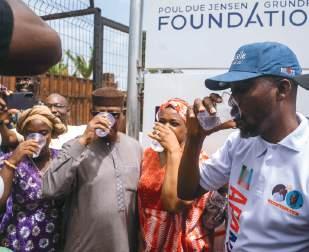
seeking water that should be available close to home,” the document stated.
The intervention is also expected to improve public health outcomes significantly. “Both Isiwu and Eginrin Ekun communities are better positioned to reduce waterborne diseases and increase productivity.”
The benefits extend beyond health alone. “Women and children, who often bear the heaviest burden of water scarcity, stand to gain socially and economically,” the foundation added.
Empowering Communities Through Leadership
A major component of SWIFT is its emphasis on community leadership and accountability. Over 100 members of Community Development Associations, WASH Committees, and Facility Management Teams participated in training sessions focused on governance, financial management, asset maintenance, and accountability.
The
Awosika
Facility Commissioning
Sanusi’s Disingenuous Drivel
Akintunde Akinwande-Albert
Democracy flourishes when public officials and governments at all levels are subjected to scrutiny. Criticism is healthy. Dissent is necessary. Yet, criticism acquires value only when it is rooted in facts, consistency and intellectual honesty.
On the other hand, when it abandons those foundations, it becomes little more than drivel dressed up as political commentary.
It is for this reason that a recent intervention by Mobolaji Sanusi, one time head of the Lagos State Advertising Agency (LASAA), deserves a response.
Not because every political opinion merits one, but because there are moments when misleading narratives must be confronted before they harden into accepted falsehoods.
Sanusi’s attempt to diminish the record of Governor Babajide Sanwo-Olu while simultaneously promoting his deputy, Dr. Obafemi Hamzat is one of such narratives.
Even more atrocious is the fact that he doubled down after his first missile was shot down by the whole of Lagos, who had eyes and could see the wonders around them. What he called his second and final word was an absolute twaddle, and represented without equivocation, the school of thought he belongs.
It is an argument riddled with contradictions. It is the product of a combination of political short-sightedness, inherent bile, and a remarkable disregard for facts that are visible across Lagos for all to see.
The first problem with Sanusi’s treatise is that it requires Lagosians to ignore reality. For nearly seven years, Lagos has witnessed some of the most ambitious infrastructure and governance interventions in its history.
The Blue Rail Line moved from decades of promises to actual operation. The Red Rail Line followed shortly thereafter. Road networks have been expanded and rehabilitated.
Housing projects have been delivered. Healthcare infrastructure has improved. Digital governance initiatives have expanded. Environmental interventions have intensified. Institutional reforms have strengthened public service delivery.
Perhaps nowhere is this transformation more visible than in the redevelopment of the Tolu Schools Complex in Ajegunle. What was once a symbol of neglect has been transformed into one of the largest and most modern public education facilities in Nigeria and perhaps, first of its kind in Africa in terms of student population and size.
With modern classrooms, ICT centres, science laboratories, robotics hubs, vocational training facilities, sporting infrastructure and dedicated facilities for persons living with disabilities, the project represents a powerful statement about the possibilities of public-sector investment in education.
These are not political slogans. They are tangible achievements. Nor are these accomplishments merely the products of partisan self-congratulation. Independent assessments have also recognised Lagos’ performance.
The 2025 Phillips Consulting State Performance Index ranked Lagos as Nigeria’s highest-performing state and awarded it the
distinction of being the only state in the federation to attain a five-star rating.
Such recognition was based on measurable indicators including governance, infrastructure, healthcare, education, economic management and service delivery. Then, you may ask Sanusi how he arrived at the outright trash he thought was an intervention?
No serious observer is suggesting that Lagos is perfect. No administration is without shortcomings. Not even the almighty United States of America.
But while the pressures of population growth, housing demand, transportation needs and urban management remain formidable, acknowledging them as challenges does not require the denial of achievements that are evident to residents and visitors alike. Yet this is precisely what Sanusi’s argument attempts to do.
More curiously, it does so while elevating Obafemi Hamzat as the preferred beneficiary of its conclusions. Herein lies the greatest contradiction. Hamzat has served at the highest levels of the administration throughout this period.
He has been a central participant in policy formulation, implementation and governance. If the administration deserves credit for its achievements, Hamzat shares in that credit. If the administration deserves condemnation, he cannot be insulated from responsibility.
Sanusi, therefore, cannot simultaneously market Hamzat as an experienced insider qualified for higher office and portray the government he helped lead as a monumental disappointment. Such a position is politically convenient but intellectually unsustainable.
More importantly, it is strategically reckless. The timing of this kind of rhetoric raises serious questions about political judgment, particularly given the realities currently confronting the All Progressives Congress.
Evidently across Nigeria, citizens continue to grapple with economic hardship and social frustrations. The rising cost of living, inflationary pressures and the painful consequences of ongoing reforms have generated understandable public discontent.
Whether justified or not, much of that frustration is directed at the ruling party and, by extension, President Bola Ahmed Tinubu. This is not an observation born of partisanship. It is a political reality.
Indeed, anyone paying attention to recent political history should recognise the dangers of complacency. The 2023 elections delivered a sobering lesson.
Lagos, long regarded as APC’s political fortress, experienced one of the most fiercely contested electoral cycles in its history. For the first time in many years, the assumption of automatic political dominance was seriously challenged. The message was unmistakable. Public sentiment matters. Voter frustration matters. Political goodwill cannot be taken for granted.
As the nation gradually moves towards another election cycle, those realities remain as relevant as ever. If anything, prevailing economic conditions make them even more significant. This is precisely why Sanusi’s intervention is so perplexing, “anti-party” in nature.
At a time when the APC requires credible examples of governance performance to reconnect with sections of the electorate, he appears determined to undermine one of the party’s strongest governance
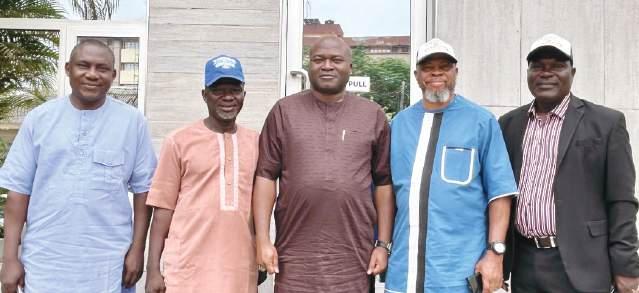
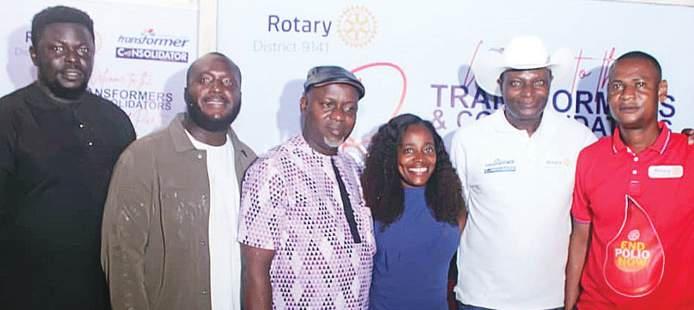
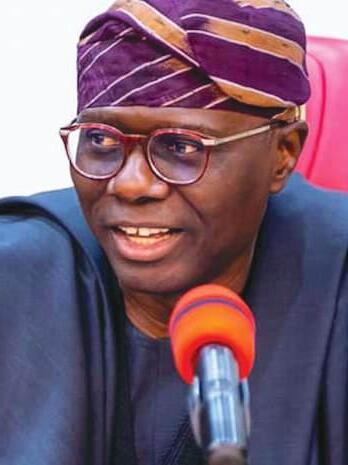
assets.
At a time when the party must persuade voters that it remains capable of delivering tangible results, he seeks to diminish one of the administrations that has the most substantial record of visible accomplishments.
Politics is ultimately about evidence. Political parties do not win elections solely by making promises. They win elections by demonstrating competence, pointing to achievements and persuading voters that they deserve another opportunity to govern.
In Lagos, Sanwo-Olu’s administration provides precisely such evidence.
The completion of the Blue and Red Rail Lines alone represents a transformational achievement that previous administrations discussed but could not fully deliver. The integration of rail, road and water transportation systems has fundamentally altered the conversation about mobility in Africa’s largest city. Lagos is living its true megacity status.
Beyond transportation, the administration has accumulated a record of notable firsts and significant milestones. Lagos emerged as the only five-star state in the 2025 Phillips Consulting State Performance Index. It has continued to consolidate its position as Nigeria’s leading technology and innovation hub.
*Akinwande-Albert works and lives in Lagos Read full article online - www.thisdaylive.com
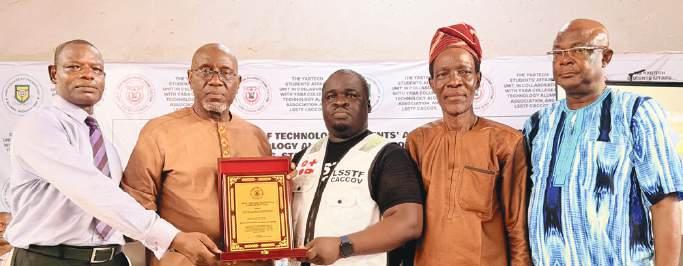
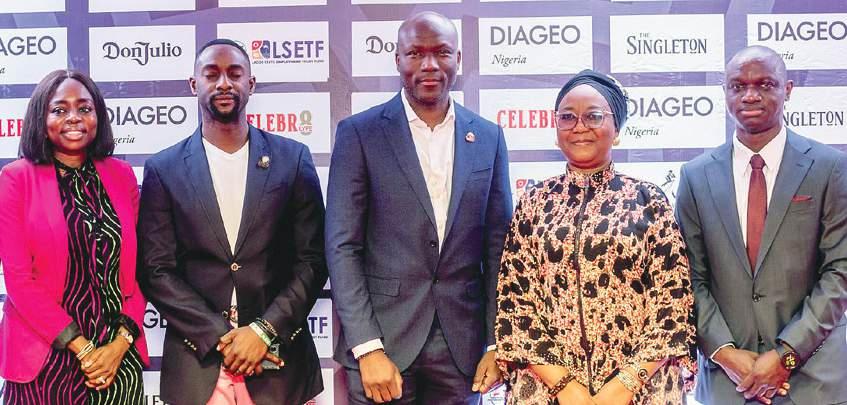
Sanwo-Olu
L-R: Head, LSSTF Monitoring Unit, Mr. Adeniran Samson Israel; Chieftain, All Progressive Congress, APC Agege, Hon. Sabitu Kamorudeen; Executive Secretary/CEO, Lagos State Security Trust Fund, LSSTF, Dr. Ayodele Ogunsan; Chieftain, APC Orile-Agege LCDA, Hon. Akinbode Odekunle and Chieftain, APC Orile-Agege LCDA, Engr. Adeniyi Adekoya during Agege APC Chieftains’ Courtesy and Thank you visit to the LSSTF’s CEO, Dr. Ogunsan on security infrastructure support in Agege….recently
L-R: Chairman, Yabatech Alumni Association, Mr. Salvador Olatunji; Dean Students Affairs, Yabatech, Alh. Rtn. Alaba Olalekan; State Coordinator, Lagos State Security Trust Fund Campaign Against Crime, Cultism and other Vices, LSSTF-CACCOV, Dr. Moses Oladimeji; National President, Yabatech College of Technology Alumni Association, Bidr. Olayemi Osibajo and Vice President, Yabatech College of Technology Alumni Association, Mr. Niyi Osibemekun during LSSTF-CACCOV presentation of souvenir to Dean of Students Affairs at the 2026 Yabatech Freshers’ Orientation Program and Campaign Against Cultism by LSSTF-CACCOV at Yabatech. In Lagos…recently
L-R: Executive Secretary, Lagos State Employment Trust Fund (LSETF), Feyisayo Alayande; Honourable Commissioner for Youth and Social Development, Lagos State; Mobolaji Abubakre Ogunlende; General Manager, Diageo West and Central Africa, Adebayo Alli; Head of Lagos State Agency for Mass Education, Oluwakemi Kalensanwo; Head of Corporate Relations, Diageo West and Central Africa, Godfrey Adejumoh, at Diageo’s Learning for Life (L4L) graduation ceremony in Lagos...recently.
L-R: Chairman, Yabatech Alumni Association, Mr. Salvador Olatunji; Dean Students Affairs, Yabatech, Alh. Rtn. Alaba Olalekan; State Coordinator, Lagos State Security Trust Fund Campaign Against Crime, Cultism and other Vices, LSSTF-CACCOV, Dr. Moses Oladimeji; National President, Yabatech College of Technology Alumni Association, Bidr. Olayemi Osibajo and Vice President, Yabatech College of Technology Alumni Association, Mr. Niyi Osibemekun during LSSTF-CACCOV presentation of souvenir to Dean of Students Affairs at the 2026 Yabatech Freshers’ Orientation Program and Campaign Against Cultism by LSSTF-CACCOV at Yabatech. In Lagos…recently
BACKPAGE CONTINUATION
THE ARMY, THE MEDIA AND NATIONAL INTEREST COMMUNICATION
focus on, while also calling out the military whenever their conduct is remiss in any way. For instance, many media men who were complaining the loudest about our security problem and the growing attacks on military facilities and the killing of senior officers in combat were shocked to hear at a public civil forum, some three weeks ago, that only seven per cent of the 2026 budget of the army had been released to the Service.
The information was greeted with cries of outrage in the hall. The army cannot embark on a public campaign, or openly speak about these challenges, but the media can. So, when uniformed commentators venture into the public domain to speak authoritatively on matters they don’t understand, it is easy to see many of them overstepping the bounds completely, and conspicuously in ways that may be considered irresponsible.
The elements of irresponsible media behaviour we can speak of in recent times include the publishing of unverified or false information, sensationalization of security incidents for attention or profit, the disclosure of sensitive military operational details, and the use of inflammatory language that could heighten public panic or ethnic tensions. It also includes failing to provide balanced coverage, or reportage, for security issues – especially for political reasons.
The expansion of the media and journalism space by the growth of online journalism and social media, makes it easy for information and fake news to spreads very rapidly, allowing inaccurate reports and claims to reach large massive audiences in seconds before there is any opportunity for proper verification. This can, and does, compromise military operations, especially regarding troop movements, strategies for specific engagement and operational locations. That is why we teach budding journalist that national security information is not a media scoop and should not be treated as such; as this may assist and empower criminal groups, insurgents, and terrorists.
The further effects of repeated mischievous circulation of inaccurate reports can weaken public trust in the army and other security institutions, negatively affect the morale of soldiers operating under difficult conditions, and create confusion and panic among citizens. It does reinforce hostile propaganda, which can be exploited by terrorist and criminal groups to advance their objectives.
oriented policing and problem-solving should be encouraged.
Our capacity to stop these senseless attacks and save lives is greatly reduced in the absence of fast, reliable, and useful intelligence. Intelligence must therefore be integrated into the planning process.
Equally, recent developments have renewed scrutiny of Nigeria’s Safe Schools Initiative, raising questions about the effectiveness of measures put in place to protect students more than a decade after the programme was launched. It also raises accountability concerns and the extent to which funds and security interventions earmarked for school protection have translated into safer learning environments, particularly in vulnerable communities.
The Safe Schools Initiative was introduced in 2014 following the abduction of more than 270 schoolgirls from Chibok, Borno State. It was unveiled by the then United Nations Special Envoy for Global Education, Gordon Brown, in partnership with the Nigerian Global Business Coalition for Education and private sector leaders during the World Economic Forum on Africa.
Under the administration of the late former President Muhammadu Buhari, the federal government initially committed $10 million to the Safe Schools Fund, an amount matched by private sector partners.
Also, Nigeria’s present security situation underscores the need to expedite the constitutional, legal and operational framework surrounding the establishment of state police.
For the record, responsible journalism is not the same thing as the avoidance of criticism of the military, no! It is simply the commitment to the verification of facts before publication, consulting multiple sources on touchy issues, distinguishing clearly between facts and opinions, paying attention to national security considerations in every media output, and correcting errors promptly when discovered. It is only in this way that professional journalism can strengthen both democracy and national security.
And that brings us to the issues of “national interest journalism”. It means disseminating information in a manner that informs the public while safeguarding national security, social stability, national values and democracy. In a period of insurgency, terrorism, or armed conflict, such as we have in Nigeria today, government communicators and media practitioners face the common challenge of balancing the public’s right to know with the need to avoid aiding hostile actors with compromising information. They all need to abide by the fundamental ABC principles of public communication.
Here is the simple framework, or ABC, of responsible communication and reporting in the present times. The A stands for Accuracy, as the foundation of credible communication and journalism. Without accuracy, journalism can cause public panic and fear, spread misinformation and rumors, undermine confidence in security institutions and offer propaganda opportunities and platforms for insurgent groups. The only counter to this, in the service of accuracy, is to always verify facts through multiple (and reliable) sources, especially casualty figures before publication. Avoid speculation and unverified claims, admit and correct errors promptly and transparently.
The B in the ABC of responsible journalism practice stands for Balance. This means presenting information fairly and objectively, allowing for different perspectives, while maintaining commitment to professional integrity. It means weighing all output on the scale of fairness, verifiability and broad national interests, while avoiding sensationalism and emotional manipulation of facts. It is such balanced reporting that prevents polarization and contributes to national cohesion during periods of insecurity.
Concerning the C in the ABC of responsible journalism, it is all about caution and discretion in determining what should go out and what
should not. Caution is essential when dealing with sensitive security information, because you cannot reveal troop movements or operational plans. To publish information that is detrimental to national security, endangers Service personnel or creates social tension among the civilian populace is actually an attempt to undermine the state. This can be put on the same pedestal as treason in certain circumstances
While caution does not mean censorship, it involves exercising sound professional judgment to ensure that information dissemination does not inadvertently assist those seeking to destabilize society. It is a form of self, and institutional, censorship for a higher purpose, rather than just concealment. The media has the duty of informing citizens about security developments, countering misinformation and fake news, encouraging public vigilance and resilience, promoting national unity and peaceful coexistence, while strengthening democracy by supporting informed public discourse.
These principles of Accuracy, Balance, and Caution (ABC). enable journalists, government communicators, and security agencies provide the public with reliable information while protecting national security and preserving democratic values. When properly applied, the framework contributes to informed citizenship, social stability, and the collective effort to overcome security challenges. In this way, the media retains its central role as the watchdog for gathering, processing, and disseminating information to the public in a responsively way.
In this era of terrorism, cyber threats, insurgency, and rapid digital communication, the media’s role intersects very closely, and very dramatically, with national information security. The challenge here lies in balancing the public’s right to know with the need to protect sensitive information that could threaten national security. The Freedom of Information Act, which is sometimes touted by some journalist with limited understanding of its full implications, does not override the overarching provisions of the constitution and other laws designed to safeguard the integrity of the state against any acts, plans, publications or intendments that may undermine, or overawe, it.
Concerns about national information security obliges the journalist to protect and prevent the dissemination of any piece of information
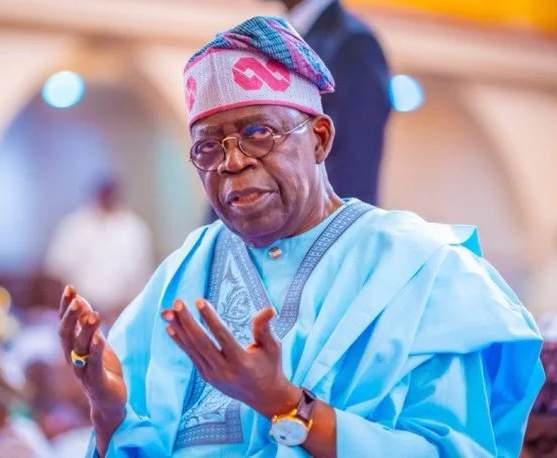
The general expectation is that state police would bring law enforcement closer to the people, enabling officers who understand local languages, terrain and community dynamics to
respond more effectively to emerging threats. More than ever, Nigeria needs stronger collaboration with its neighbours in the sub-region, across the continent, and around
that could undermine national interests in any form. This implies the protection of information, communication systems, sensitive data or other such material that could compromise national security from unauthorized access, manipulation, disclosure, or destruction. It also encompasses the protection of classified government information, security of military and intelligence operations, cybersecurity and critical infrastructure protection, refusal to promote misinformation and disinformation campaigns, and respect for citizens’ personal and national data.
The responsible journalist informs the Public without ignoring the law against character defamation, libel and public scandals. It means helping to verify facts, debunk rumors, and prevent the circulation of misleading narratives that may threaten national stability.
This task of the media also involves promoting public awareness of security obligations, educating the citizens about cyber security risks, subtle terrorism radicalization mechanisms and the fundamentals of national resilience. Knowledge of manipulated images and videos, coordinated disinformation campaigns, cybersecurity threats and online fraud are to be taken for granted for practitioners who are guided by the principles for Responsible Media Practice.
As a way out of the more recent excrescences in the media regarding the army, the following points should be noted: (1) Access to military facilities does not translate into the right to abuse established military traditions, (2) Journalists should consider the potential security implications of sensitive reports in their hands. (3) Coverage should present facts objectively and avoid inflammatory or stigmatizing language, (4) Media professionals should respect professional standards and avoid spreading rumors or propaganda, (5) Constructive engagement between media organizations and security institutions will improve information sharing while respecting press freedom.
The media is a critical stakeholder in national information security. Through accurate reporting, fact-checking, public education, and responsible journalism, the media contributes significantly to national stability and resilience. Irresponsible reporting, misinformation, and disclosure of sensitive information do not conduce to a balanced relationship between media freedom and national security considerations.
the world to break the cycle of insecurity and violence.
Similarly, Nigeria’s 1959 Firearms Act is outdated and insufficient to address contemporary realities. Some of its flaws are its outdated provisions for a modern security landscape; weak penalties that do not deter criminals; poor regulation of arms dealers and licensing; a lack of clear provisions on modern and military-grade weapons; weak monitoring and tracing mechanisms; an outdated enforcement framework; no clear provisions on community vigilante groups or non-state actors, as well as failure to address smuggling and porous borders. Therefore, reforming the existing firearms law to accommodate responsible personal ownership would send a clear message that Nigeria will no longer monopolise vulnerability while criminals monopolise force.
Clearly, the targeting of schoolchildren is a direct assault on public safety, education, and national stability and the President and his men must wake up and see the situation as a national emergency demanding urgent, decisive and sustained actions.
All in all, by leveraging intelligence, supporting law enforcement, building partnerships, and fostering a culture of awareness, we can stand united against terrorism and crime. Through unity, vigilance, and proactive engagement, we ensure our families, communities, and nation remain resilient and secure.
Tinubu
As Supreme Court Endorses Providus-Unity Merger
The Supreme Court’s approval of the Providus-Unity Bank merger has ended months of uncertainty, creating a stronger financial institution poised to deepen inclusion, strengthen lending, drive innovation, and support Nigeria’s economic transformation, writes Omolabake Fasogbon
The Nigerian banking industry has received a major boost following the Supreme Court’s final approval of the merger between Providus Bank and Unity Bank, a landmark decision that removes the last legal hurdle and ushers in a new era of growth, stability, and opportunity for stakeholders across the financial ecosystem.
The ruling not only brings an end to months of legal uncertainty but also signals a strong vote of confidence in the future of banking consolidation as a tool for building stronger institutions capable of supporting Nigeria’s development aspirations.
The apex court’s decision effectively closes a chapter that began with regulatory approvals from the Central Bank of Nigeria (CBN), endorsements by shareholders of both institutions, and extensive consultations among stakeholders.
By affirming the legality of the transaction and directing its completion, the court has provided certainty for investors, customers, employees, regulators, and the wider market.
The judgment also reinforces confidence in Nigeria’s legal and regulatory framework, demonstrating that strategic corporate transactions can receive the necessary institutional support to achieve successful outcomes.
For the banking sector, the merger represents one of the most significant consolidation transactions since the combination of Access Bank and Diamond Bank. It comes at a critical time when Nigerian banks are responding to new recapitalisation requirements introduced by the CBN, aimed at creating stronger institutions capable of financing larger projects and supporting economic growth.
The Providus-Unity merger is therefore widely regarded as one of the earliest and most important responses to the recapitalisation programme, offering a model for how banks can achieve scale, resilience, and competitiveness through strategic partnerships.
One of the biggest winners from the merger will undoubtedly be customers. The combination of Providus Bank’s cutting-edge technology and digital banking expertise with Unity Bank’s extensive branch network promises a significantly enhanced banking experience. Customers are expected to enjoy
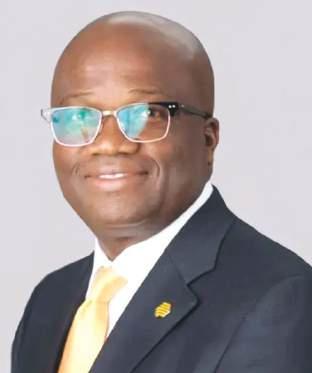
improved access to services through a nationwide network of approximately 230 branches, expanded digital banking channels, faster service delivery, and a broader range of financial products tailored to individuals, businesses, and institutions.
The merger also presents an opportunity to accelerate financial inclusion across Nigeria. Unity Bank’s strong presence in many rural and semi-urban communities complements Providus Bank’s technology-driven banking model. Together, the enlarged institution will be better positioned to bring financial services to underserved populations, helping more Nigerians gain access to savings products, credit facilities, digital payments, and other essential banking services. In a country where financial inclusion remains a key policy objective, this development could have far-reaching benefits for millions of citizens.
For businesses, the benefits are equally compelling. The enlarged bank will possess a stronger capital base and greater lending capacity, enabling it to finance
larger projects and support more enterprises across key sectors of the economy. Small and Medium Enterprises (SMEs), which form the backbone of Nigeria’s economy, are expected to benefit from increased access to credit and specialised financial solutions. The combined institution’s enhanced capacity to support agriculture, mining, hospitality, e-commerce, entertainment, and other emerging sectors could help unlock investment, stimulate production, and create jobs.
Shareholders also stand to gain significantly from the transaction. The merger is designed to preserve and enhance shareholder value by creating a stronger, more competitive institution with improved prospects for sustainable profitability.
Rather than viewing consolidation as a survival strategy, investors increasingly see it as an opportunity for value creation through economies of scale, operational efficiencies, expanded market reach, and improved profitability. The Supreme Court ruling has now provided the certainty necessary for shareholders to fully realise these benefits.
Employees of both institutions have reason for optimism as well. The banks have emphasised that the merger is not merely about combining balance sheets and assets but also about creating opportunities for people. By bringing together the talents, expertise, and experience of both workforces, the enlarged institution is expected to create a stronger platform for professional development, innovation, and career advancement. More importantly, the transaction is expected to protect jobs and livelihoods while creating opportunities within a larger and more dynamic organisation.
The merger’s significance extends beyond the immediate interests of customers, employees, and shareholders. At a broader level, it strengthens the resilience of Nigeria’s banking system. A stronger financial sector is essential for economic stability, investor confidence, and sustainable growth. By creating a bank with assets exceeding N5 trillion, deposits of more than N3 trillion, and a customer base of about 3.6 million, the transaction contributes to the development of institutions with the scale and capacity needed to compete in an increasingly complex and competitive environment.
The enlarged institution is also expected to play a critical role in supporting Nigeria’s ambition of building a trillion-dollar economy. Strong banks serve as engines of economic growth by mobilising savings, facilitating investments, financing infrastructure projects, and supporting businesses. With deeper capital strength and expanded reach, the merged entity will be better positioned to provide the financing required for transformative projects that can accelerate economic development and improve living standards across the country.
Business analyst Chika Mbonu described the Supreme Court’s approval of the merger between Providus Bank and Unity Bank as a landmark development that removes all lingering uncertainty surrounding the transaction and paves the way for the emergence of a stronger financial institution.
Speaking on ARISE News, Mbonu said the apex court’s ruling conclusively settled all legal disputes over the merger, providing clarity and confidence for shareholders, customers, regulators and the wider financial market.
“The Supreme Court ruling ends uncertainty over the Providus-Unity Bank merger. The merger is now fully legal, final and irreversible,” Mbonu said. He noted that the transaction had already secured approvals from shareholders, regulators and relevant authorities before becoming entangled in legal disputes that delayed its implementation.
The analyst said the merger offers substantial benefits to both institutions, describing Providus Bank as a technologically advanced lender seeking a broader national footprint, while Unity Bank brings an extensive branch network and established customer base.
Mbonu also highlighted the expected benefits for customers, noting that the merger would lead to improved banking services, wider branch coverage and enhanced digital platforms.
“Customers will have access to better technology and a larger branch network. The combined institution will be able to deliver improved services and greater convenience across the country,” he said.
Aircraft Age and Safety: Separating Aviation Facts from Public Perception
Many people have criticised certain airlines for operating what they describe as “old aircraft,” with some alleging that such airplanes pose a threat to safety. It is common to see passengers board a flight, inspect the seats and cabin interior, and, upon noticing worn-out fittings, loose panels, faded cabin panels, or taped sections, conclude that the aircraft is unsafe. Some even record videos and post them on social media, castigating the airline and warning others against flying on the aircraft.
While such concerns may appear understandable from a passenger’s perspective, a deeper understanding of aviation reveals that the age of an aircraft, by itself, is not a reliable indicator of safety.
In reality, many of the world’s safest airlines operate aircraft that are more than 15, 20, or even 30 years old. What determines whether an aircraft is safe to fly is not its age but whether it is properly maintained, regularly inspected, and operated in strict compliance with aviation regulations. Every airline would prefer to operate newer aircraft. Unfortunately, acquiring brand-new airplanes is extremely expensive, especially for airlines operating in challenging economic environments such as Nigeria. A new commercial jet can cost tens or even hundreds of millions of dollars. Beyond the purchase price, airlines must contend with financing costs, insurance, maintenance reserves, crew training, spare parts inventory, and foreign exchange challenges. Consequently, many airlines around the
world operate leased aircraft, some of which have previously flown for major international carriers. This is a normal and accepted practice within the aviation industry. In fact, several aircraft currently flying in Africa, Asia, Europe, and North America have changed operators multiple times during their service lives.
An aircraft may begin its career with a major airline in Europe or North America, spend several years flying thousands of passengers safely, and later be leased or sold to another airline elsewhere in the world. The fact that it has changed ownership does not make it unsafe.
The critical issue is not the age of the aircraft but whether it is properly maintained and operated in accordance with aviation regulations.
Aircraft are subjected to rigorous maintenance programmes throughout their operational lives. Unlike motor vehicles, which may remain on the road with little oversight, commercial aircraft operate under one of the most regulated maintenance systems in the world.
To remain airworthy, aircraft undergo several scheduled inspections and maintenance checks.
These include:
* Transit Checks – conducted before or after flights to ensure the aircraft is fit for the next sector.
* Daily Checks – routine inspections carried out every day.
* A-Checks – performed after a specified number of flight hours or flight cycles.
* B-Checks – less common today but historically conducted at regular intervals.
* C-Checks – extensive inspections requiring the aircraft to be grounded for several days while critical systems are examined.
* D-Checks (Heavy Maintenance Checks) – the most comprehensive inspection, during which the aircraft is almost completely disassembled, inspected, repaired, and rebuilt where necessary.
During these inspections, engineers examine the aircraft’s engines, landing gear, hydraulic systems, electrical systems, avionics, flight controls, fuselage, wings, and structural components. Advanced diagnostic tools are used to detect microscopic cracks, corrosion, metal fatigue, and other defects that may not be visible to the naked eye.
Components are repaired, overhauled, or replaced according to manufacturer specifications and aviation regulations. Many parts are removed and replaced long before they show signs of failure. In aviation, maintenance is largely preventive rather than reactive.
This explains why aircraft that are 20, 30, or even 40 years old can continue to operate safely. Some of the world’s most respected cargo carriers operate aircraft that have been flying for decades. Military aircraft often remain in service for half a century or longer because they undergo continuous inspection, upgrades, and refurbishment.
A good example is the Boeing 737 Classic series, many of which operated safely for more than three decades. Likewise, several cargo operators still use aircraft built in the 1980s and 1990s. These aircraft remain in service not because they are neglected but because they are maintained according to stringent international standards.
Another factor often overlooked by passengers is the difference between cabin appearance and aircraft safety.
A torn seat cover, faded carpet, scratched tray table, or patched interior panel may create the impression that an aircraft is old or poorly maintained. However, these cosmetic issues have little or nothing to do with the aircraft’s airworthiness. Safety inspectors and aviation engineers focus primarily on the aircraft’s critical systems rather than the appearance of the passenger cabin.
Of course, airlines should strive to maintain clean and attractive cabins because passenger comfort
matters. Nevertheless, a shiny new interior does not automatically mean the aircraft is safer, just as an older-looking cabin does not necessarily indicate a safety problem.
That said, older aircraft do present certain challenges.
As aircraft age, maintenance costs tend to increase. Components may become more difficult to source, inspections become more extensive, and engineers must devote more time to monitoring structural integrity. Older aircraft may also be less fuel-efficient than newer models, making them more expensive to operate.
In addition, older airplanes can experience more technical delays. This does not necessarily mean they are unsafe. On the contrary, many delays occur because maintenance personnel identify a fault and insist on correcting it before departure. What passengers sometimes perceive as inconvenience is often evidence that safety procedures are working exactly as intended.
This is one reason aviation professionals often say that a delayed aircraft is preferable to an unsafe aircraft.
Regulatory oversight also plays a vital role. Aviation authorities require airlines to comply with strict maintenance standards and routinely inspect their operations. Aircraft that fail to meet prescribed standards can be grounded until the deficiencies are corrected. Therefore, an aircraft’s safety depends not only on the airline but also on the effectiveness of the regulator overseeing its operations.
· Chukwuelobe (fredochu@yahoo.com) is a Lagos-based journalist and public affairs commentator.
Akpani
Fred Chukwuelobe
GLOBAL SOCCER GLOBAL SOCCER
Al HASSAN Yu S uf f inally Here to Stay?
Hisexploitsatclublevelisalwaysthereforeveryonetosee,however,establishinghimselfwithNigeria’sseniornationalteam hasbeenalmostablankingdream.JustwhenhethoughtanotheropportunityhadpassedhimbyduringSuperEagles2023 AfricanCupofNationscampaign,aninjurytoWilfredNdidiresulted in alatecall-upfortheformerRoyalAntwerpmidfielder, AlhassanYusuftojointheAFCONinCoteD’Ivoire.Afterabrilliantstarttothecampaign,injurystruckandhisdreamended. Sincethenhehasbeeninandoutoftheteam.WithhisperformanceattheUnityCupwherehescoredtwogoalsinthefinal againstJamaicaafteraninitialsplendidoutingagainstZimbabwe,YusufseemstohavewarmedhimselfintotheheartofSuper Eaglescoach,EricChelle.However,thebigquestionremainsiftheformerIFKGoteborgmancancash-inontheopportunity andmakehisnationalteam’splaceenduring
SuperEaglesmidfielder,AlhassanYusuf has lived in the shadows for much of his international career. Whenever Nigeria’s midfield was discussed in recent years the conversation usually centred on Wilfred Ndidi, Alex Iwobi, Frank Onyeka, Raphael Onyedika or, more recently, Fisayo Dele-Bashiru. Yusuf was often present in the squad, but rarely at the centre of attention.
Yet football has a habit of rewarding patience. On a memorable night at The Valley in London, the 25-year-old midfielder produced the finest performance of his international career, scoring twice as Nigeria defeated Jamaica 3-0 to retain the 2026 Unity Cup.
It was a stunning display from the New England Revolution star who had also impressed against Zimbabwe four days earlier. He didn’t score in that game but he showed his experience, authority, confidence and influence beside new boys Tochukwu Nnadi and Samson Tijani.
On the back of those performances, the Unity Cup may have changed everything for a player who has spent much of his Nigeria career waiting for opportunities.
Yusuf’s journey with the Super Eagles began under José Peseiro. The former Royal Antwerp midfielder was handed his major international breakthrough at the 2023Africa Cup of Nations in Ivory Coast. In Nigeria’s opening match against Equatorial Guinea, he looked fearless.
Despite making his tournament debut, he played with remarkable maturity. He covered ground aggressively, pressed opponents relentlessly and helped Nigeria control large parts of the midfield. Many considered him Nigeria’s standout performer during that game.
Then came the setback. A thigh injury he suffered during the tournament disrupted his momentum at the worst possible moment.
As Peseiro adjusted his system and Nigeria progressed deep into the competition, Yusuf found himself increasingly restricted to a supporting role.
Nigeria eventually reached the final before losing to hosts, Ivory Coast, but Yusuf’s opportunity to establish himself had already slipped away. The promise remained obvious but the consistent playing time did not.
Despite the constant change of Super Eagles coaches over the past couple of years, Ndidi remained the trusted defensive shield. Iwobi continued as the team’s chief creator. Onyeka offered energy and aggression, Onyedika emerged as one of the continent’s most exciting young midfielders while Dele-Bashiru added goals and attacking threat.
Breaking into that group was never going to be easy. As a result, Yusuf’s international career became a story of sporadic appearances rather than sustained opportunities.
He featured in a few AFCON qualifiers, World Cup qualifying matches and international friendlies, mostly as a substitute. He rarely enjoyed a prolonged run in the starting 11.
Even after moving to Major League Soccer with New England Revolution and maintaining strong club form, he often found himself watching crucial international matches from home or on the bench.
Under Eric Chelle, the situation initially changed a little. During several key World Cup qualifiers, Yusuf was either unused or limited to brief substitute appearances. Nigeria’s pursuit of World Cup qualification and the 2025 AFCON campaign largely revolved around more established names.
Yusuf looked destined, for long periods, to
remain one of the Super Eagles’ most dependable squad players rather than one of their central midfielders figures.
Then came the Unity Cup. The 2026 Unity Cup arrived at a difficult moment for Nigeria.
The Super Eagles had already suffered the disappointment of failing to qualify for the 2026 FIFA World Cup. Chelle used the tournament as an opportunity to experiment with personnel and assess players who had not enjoyed regular opportunities.
Yusuf grabbed that opportunity with both hands. His first major statement came in the semi-final against Zimbabwe.
Operating alongside Tochukwu Nnadi in midfield, he controlled the game’s rhythm from start to finish. Whenever Zimbabwe attempted to launch attacks, Yusuf was there to break them up. Whenever Nigeria needed to progress forward, he was available to receive possession and move the team up the pitch. He even got into good positions and could have scored a goal or two.
Nigeria won 2-0 and reached the final. Yet even that impressive display would soon be overshadowed as the best was still to come.
The Unity Cup final against Jamaica became the defining evening of Yusuf’s international career.
Only four minutes had been played when he struck. A long throw from Kenneth Igboke created confusion inside the Jamaican penalty area. The goalkeeper failed to deal with the danger and Yusuf reacted quickest, smashing the loose ball into the net.
It was his first goal for Nigeria. Instead of sitting back after the early breakthrough, he took control of the contest.
Throughout the match, Yusuf dominated the midfield battle. He helped Chelle’s men dictate the tempo with intelligent passing and movements. Jamaica struggled to establish a rhythm, because
Yusuf was constantly disrupting their attacks. Nigeria’s midfield belonged to him. When Moffi doubled the lead later in the match, the final was effectively decided. But Yusuf still had one more moment to deliver.
Deep into stoppage time, Philip Otele launched a counter-attack and found the midfielder on the edge of the penalty area. Yusuf remained calm, opened his body and curled a beautiful finish into the corner.
Yusuf scored twice, delivered a commanding midfield performance, making a firm statement that will be impossible for Chelle to ignore.
Football careers can change quickly. True, one outstanding performance does not automatically guarantee a starting place, but Yusuf’s Unity Cup displays may have altered the conversation around him.
More importantly, he solved problems Nigeria have struggled with for years. The Super Eagles often rely heavily on their attackers to create moments of magic. Against Jamaica, Yusuf demonstrated that he can contribute goals from midfield while still performing his defensive duties.
In his central midfield role, he offered energy without losing discipline, pressed without abandoning structure and attacked without neglecting his responsibilities. That balance is rare and those qualities may have warmed Yusuf into Chelle’s heart.
Sadly, Yusuf will not be able to prove his worth during the Super Eagles’ European tour this June. Chelle’s immediate plans suffered a setback as visa issues have ruled Yusuf out of the friendly matches against Poland and Portugal. The timing was unfortunate because the midfielder had arguably become one of the coach’s biggest success stories of the Unity Cup.
Yet the bigger picture remains encouraging.
Yusuf has been viewed for years as a useful squad member who could fill gaps when required. The Unity Cup may have changed that perception.
At The Valley, he looked like a player capable of becoming a cornerstone of Nigeria’s midfield rather than a backup option. After years on the fringes, Yusuf finally stepped into the spotlight.
And if he continues performing at the level he reached against Jamaica, Chelle may soon discover that leaving him out is no longer an option.
Yusuf himself has described Nigeria’s Unity Cup triumph over Jamaica as one of the proudest moments of his international career after scoring twice in the final.
“Scoring my first goals for the Super Eagles is a proud moment for me,” Yusuf said.
According to the midfielder, the atmosphere within the squad and the confidence shown by the coaching crew helped the players perform freely throughout the tournament.
“Thecoachgaveusconfidenceandbelievedinus,” he said.Yusuf also admitted he enjoyed playing in a moreadvancedmidfield role during the encounter against Jamaica.
“It was a different role for me, but I enjoyed it,” he noted.Themidfielderpraisedhisteammatesfortheir teamwork and intensity during the competition.
“Theteamworkedtogetherreallywell,”headded. “The team is beginning to develop chemistry and structure. He showed he can contribute more offensively too,” observers noted.
Little wonder former Nigeria caretaker coach, Augustin Eguavoen once said of him, “He has that quality I want.”
Born in Kano, Nigeria – the midfielder began his professional career at Nigerian side FC Hearts before moving to Allsvenskan outfit IFK Goteborg in 2018 after impressing at Gothia Cup in Sweden.
Alhassan Yusuf was at the heart of Super eagles midfield against Jamaica
Galatasaray Coach Explains Why Madrid, Man Utd, Others Are Scrambling for Osimhen’s Signature
Galatasaray assistant head coach, Ismael Garcia Gomez has explained the key qualities that set Victor Osimhen apart, amid transfer interest from several European clubs.
The Nigerian forward has emerged as a top transfer target for several of Europe’s top clubs ahead of the upcoming summer transfer window and his impressive performances for Galatasaray has played a major role in the growing interest.
The 27-year-old initially joined the Cimbom on loan in 2024 before the move was made permanent last summer.
Since then, he has continued to strengthen his reputation as one of the world’s most
prolific strikers, scoring 59 goals in 74 appearances across all competitions since arriving in Istanbul, helping the club to two league titles and a Turkish cup crown.
Osimhen’s future has become a major talking point ahead of the summer, with questions over where he will be playing next season due to the level of interest he has attracted in recent months.
The Nigerian forward has repeatedly expressed his desire to remain at the club beyond this season and has also developed a strong bond with Galatasaray supporters over his two-year spell. However, a fee in the region of €150 million could still be enough to tempt
the Turkish club into selling him this summer.
Speaking in an interview with Marca, Ismael Garcia praised Osimhen’s performances for Galatasaray and also highlighted the major qualities that makes his game different from other players.
“We have very top-level players, but in my opinion, Osimhen is among the world’s top 3–5 strikers”, the Spaniard said, via Forza Cimbom.
“He possesses an extremely high level and impressive physical strength: he presses, he defends… In addition, he has the ability to influence the opposing defence even in moments when he’s not heavily involved in the game.”
portugal Stars Admit Importance of Friendly Against Nigeria
Portugal stars, Ruben Dias and Jose Sá have emphasised the importance of their upcoming friendly against Nigeria as the European side continues preparations for the 2026 Fifa World Cup.
A Seleção das Quinas will take on the Super Eagles at the Estádio Dr. Magalhães Pessoa, Leiria next Wednesday, their second meeting in four years.
While Dias played the first half of Portugal’s 4-0 win over Nigeria in November 2002, the Wolverhampton Wanderers goalkeeper was an unused substitute.
Portugal are using the friendly against Nigeria to fine-tune their preparations and tactical approach ahead of their World Cup opener against the Democratic Republic of Congo, who secured their place at the tournament after narrowly defeating the Super Eagles in the final
of the African playoffs.
Speaking ahead of Portugal’s warm-up matches against Chile and Nigeria, goalkeeper Jose Sá stressed that both fixtures will play a vital role in helping the squad fine-tune its preparations before the tournament begins.
“These will be two very important games against Chile and Nigeria to prepare for the World Cup. We are focused on giving our best and preparing well for the first game in the competition,” Sá told A Bola.
Bassey, Iwobi Lose Fulham player of the Season Award to welsh Teammate
Super Eagles stars, Alex Iwobi and Calvin Bassey have missed out on Fulham’s Player of the Season award, with Welsh attacker Harry Wilson taking the top honour, Soccernet.ng reports.
Fulham are coming off a solid campaign that saw them secure an 11th-place finish in the Premier League.
Towards the final stretch of the season, the Cottagers were firmly in contention for a European spot, but a string of disappointing results saw them fall just two points short of a Europa League qualifica-
tion slot.
Following the end of the season, just like other clubs, they have begun rolling out their annual awards. Earlier this week, Fulham announced that Harrison Reed had claimed the Goal of the Season award, while yesterday, Harry Wilson was officially crowned the Player of the Season.
Harry Wilson claimed the top spot in the voting after securing 35.6% of the ballots.
Calvin Bassey, who won the award last season, enjoyed another impressive campaign at the heart of Cottager’s de-
fense. The Nigerian international finished second in the voting with 22.1%, while Raul Jimenez rounded out the top three with 13%.
Alex Iwobi failed to crack the top three despite a productive campaign. The Super Eagles star remained a key figure for the club, contributing four goals and three assists in 29 appearances.
However, Wilson’s output proved difficult to overlook, as the Welshman led the club in total goal contributions in the English top flight, tallying ten goals and seven assists across 36 appearances.
New Super eagles Invitee Sets off Transfer Battle Between
Super Eagles invitee, Zadok Yohanna has just become the most sought-after young African player in world football after Premier League giants, Manchester City and Chelsea joined the race to sign the teenager, Soccernet.ng reports.
The 18-year-old AIK Solna winger has attracted strong interest across Europe after an outstanding breakthrough
season in Sweden, but it is Premier League clubs that are currently leading the chase for his signature.
According to a TeamTalk report, both Manchester City, through the City Football Group, and Chelsea, through BlueCo, have opened discussions over a possible deal for the highlyrated youngster. Their arrival has intensified a contest that
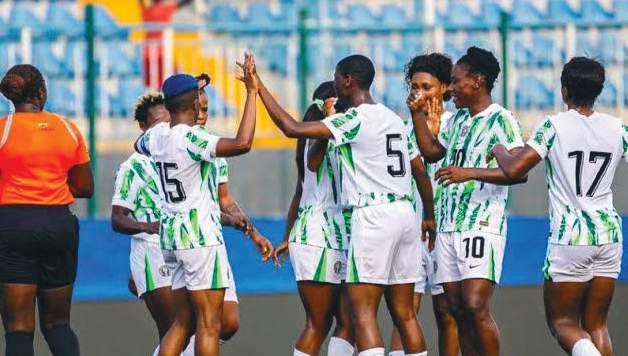
Super Falcons Send wAFCON Title warning After win Over Senegal
Nigeria’s Super Falcons continued their preparations for the 2026 Women’s Africa Cup of Nations with an impressive 2-1 victory over Senegal in an international friendly at the Remo Stars Sports Complex in Ikenne yesterday.
Goals from veteran striker Asisat Oshoala and Everton midfielder Toni Payne secured the win for Justine Madugu’s side in a match that largely reflected Nigeria’s superiority from start to finish.
Madugu handed goalkeeper Comfort Erhabor her senior Super Falcons debut,
with the young Portsmouth shot-stopper trusted between the posts. Up front, Oshoala spearheaded the attack alongside Francisca Ordega and Funmilayo Ijamilusi, while captain Rasheedat Ajibade, Christy Ucheibe and Payne operated in midfield.
The fixture is Nigeria’s fourth meeting with Senegal in the last decade and their first encounter since the Super Falcons recorded a 3-0 friendly victory over the Teranga Lionesses in 2018.
Just as they had done in previous meetings, Nigeria took control from the open-
ing whistle. The 10-time African champions dominated possession, pushed Senegal deep into their own half and created several promising opportunities.
Oshoala and Ijamilusi both came close during an opening period in which the Super Falcons repeatedly threatened but were unable to find a breakthrough.
Nigeria’s persistence eventually paid off shortly after the hour mark when the Super Falcons were awarded a penalty following sustained pressure on the Senegal defence. The centre referee spotted a handball incidence against Senegal and did not hesitate to award Nigeria the advantage.
Clubs Get $355m for Releasing Players for 2026 World Cup
Fifa has pledged to pay clubs $355m for releasing players to take part in the 2026 World Cup - and for allowing them to play in qualifying matches.
Clubs who have players competing at this summer’s tournament across the United States, Mexico and Canada have the potential to collect millions during the tournament as a result.
That is because of the Fifa Club Benefit Programme, designed to compensate clubs whose players are away with their national teams for weeks on end.
For the first time, Fifa is also
compensating clubs whose players contested the World Cup qualifiers.
Payments have been made to clubs for releasing players to feature at the World Cup since the 2010 tournament. The 2022 World Cup led to payments of $209m (£156m on current exchange rate), split between 440 clubs from 51 different nations.
Payments are made on a per player, per day basis. Essentially, the more players that a club has at a tournament and the longer they are there, the more money their clubs receive.
Of the $355m total club compensation pot, $250m (£187m)
is dedicated to the tournament itself.
Another $100m (£75m) is for the qualifying round matches, while the remaining $5m (£3.75m) will be allocated to the benefit of club football based on an agreement between Fifa and European Football Clubs (EFC) after the deduction of administrative costs related to the implementation of the programme.
From the day of release to attend the tournament, players earn clubs a fee of $5,000 (£3,730) per day until the day after their team’s final match of the tournament.
Zverev Beats Mensik to Set up Cobolli Final
• Andreeva, Chwalinska clash today in women’s showdown
Alexander Zverev moved to within touching distance of a maiden Grand Slam title, as the German fought past 26th seed Jakub Mensik 7-5 6-2 3-6 6-3 yesterday to reach the French Open final again.
The 29-year-old, who has lost three major finals, including one at Roland Garros two years ago, has looked sharp in Paris and faces Italian 10th seed Flavio Cobolli, after he was handed a semi-final walkover after compatriot Matteo Arnaldi pulled out
Man City, Chelsea
already includes Newcastle United and Brighton & Hove Albion.
Brighton were the first English club to make a significant move, agreeing personal terms with Yohanna and submitting an opening bid worth €23 million. Newcastle then responded with a superior offer valued at €24 million plus add-ons, placing themselves at the front of the queue.
FRENCH OPEN
due to a virus.
A tight opening set on a sunkissed Court Philippe Chatrier tilted Zverev’s way when he struck a backhand crosscourt winner n the 11th game to bring up a break point, and he nudged ahead with a delicate shot that Mensik sent into the net.
The world No 3 sent down a powerful ace to pocket the first set and asserted himself with an early break at the start of the second set, as the 20-year-old Mensik’s level
briefly dipped in his maiden Grand Slam semi-final. Sunday will be Zverev’s fourth slam final and second in Paris after he lost to Carlos Alcaraz from two-sets-to-one up two years ago. He came even closer in his maiden final against Dominic Thiem at the US Open in 2020, blowing a two-set lead and losing in a deciding tie-break, while he was well beaten by Jannik Sinner in the Australian Open final last year.
Udeze Reflects on Players’ Struggle Between Club and National Team
Former Super Eagles defender, Ifeanyi Udeze has revealed the intense battle between Greek club PAOK FC and the Nigeria Football Federation over his availability for international duty during his playing career.
Udeze, who made two appearances for the Super Eagles at the 2002 World Cup, made the revelation while reflecting on the difficulties many players encounter in balancing club commitments with the opportunity to represent the Super Eagles.
The former defender first gained international recognition at the inaugural UEFA-CAF Meridian Cup in Portugal in 1997, a tournament that also served as a platform for future stars such as Spain’s Xavi Hernandez and Portuguese legend Simao Sabrosa to showcase their talents on the global stage.
Speaking on the 5th House Podcast, Udeze recalled how he was forced to make a difficult decision shortly after joining PAOK, when he received an invitation to feature for the
national team at the Sydney 2000 Olympic Games.
According to the former leftback, the coach made it clear that accepting the invitation could jeopardise his place in the first team.
“Sydney 2000, I was supposed to be there because I just moved from one club to another. So, I have to establish myself as a first-team player there,” Udeze revealed.
“So, the coach called me when the invitation came to Sydney, is either you choose the national team or you choose to stay here?”
Osimhen
Super Falcons celebrating one of their two goals against Senegal yesterday
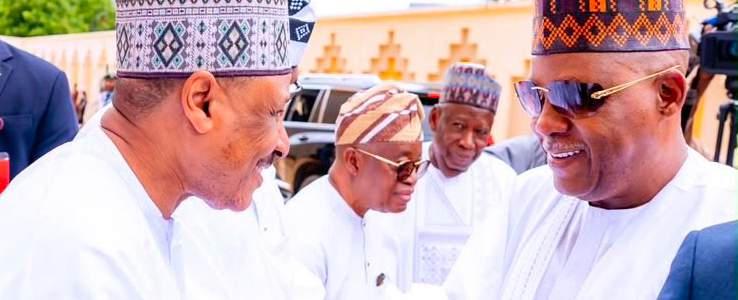
GLAD TO MEET YOU...
The Army, the Media and National Interest Communication
What does a journalist or the nation gain by procuring, spreading and generally propagating news and images that can only have a demoralizing effect on everyone? What does a responsible media practitioner gain by cheerfully advertising the worst possible piece of information about his country and the military personnel risking their lives to make that country secure for him to live in and practice his journalism?
Tensions had arisen in recent times, when media output by some specific individuals or organizations seemed to have taken the form of mischievous reportage, or outrightly deliberate attempts to cause disaffection. These instances, which actually deviate from the excellent work most media houses and media practitioners are doing in Nigeria, is perceived
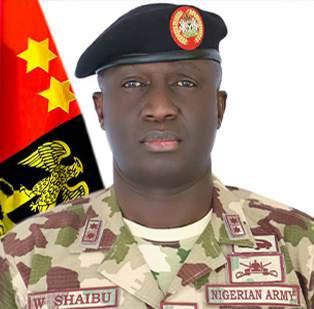
as irresponsible, inaccurate, sensational, or at least capable of undermining personnel moral
and military and security operations.
Video clips, misinformation, disinformation or distorted data masquerading as honest and objective reports all undermine us in ways that I propose to raise here today. So, let us look at the challenges of irresponsible media behavior that our fighting forces have to deal with in the face of grave national security challenges.
A sound relationship between the media and the military is vital in any democratic society. The former informs the public, holds institutions of state accountable and avoids the spread of news or information that could create social tension or undermine national security.
The later, on the other hand, is tasked with the very dangerous business of safeguarding, protecting and guaranteeing national security and maintaining the nation’s territorial integrity.
A few points to put on the table for the
media before we go further. The first is that we really do not have enough officers and foot soldiers to man the massive geographical profile of the Federal Republic of Nigeria. The second is that the army, in particular, is saddled with so many internal security issues that should ordinarily not be its business. The view has been expressed in some quarters that this is impacting negatively on the Service and actually “demobilizing” the army. The third point is that our fighting forces are overstretched, underequipped, underfunded and sometimes undermined by the irresponsible antics of politicians.
They are being made to look less professional, less patriotic and less competent than they really are by the challenges of the operating environment. These are issues the media can
Continued on page 27
Confronting Nigeria’s Growing Domestic Terror Threat
Nigeria’s deepening insecurity crisis has once again been thrust into the global spotlight with recent abductions of school children in Oyo, Borno and Zamfara States.
These unfortunate incidents have reignited painful memories of Chibok, Dapchi, Kankara and numerous other attacks on educational institutions across the country.
Whether driven by extremist ideologies, political agendas, or deeply rooted grievances, these acts aim to spread fear, disrupt daily life, and weaken our national unity.
Beyond the immediate anguish of the affected families is the increasing fear across the country, where parents send their children to school with apprehension, communities live
under the shadow of violent criminals, and confidence in the state’s ability to guarantee security continues to erode.
Terrorism and mass abductions in all their forms and tactics target the very foundations of our society and directly challenge our shared values of peace, justice, and human dignity. They aim to dismantle human rights, fundamental freedoms, and democracy. They also threaten the territorial integrity and security of nations and seeks to destabilise legitimate governments.
To address acts of domestic terror effectively, understanding the societal, political, and psychological factors driving radicalisation is essential. While it requires interventions to protect the people, assets and property, prevention of violent extremism needs to look beyond strict security concerns to development-related
causes and solutions.
There is a crucial role to be played by government at all levels, civil society, academics, religious leaders, and media outlets, in combating this menace.
While security agencies play a critical role in rescuing victims and pursuing perpetrators, lasting solutions must focus on addressing the underlying conditions that make communities vulnerable to recruitment by criminal groups, bandits, terrorists and other criminal networks.
Widespread poverty, youth unemployment, lack of educational opportunities, and social exclusion continue to create fertile ground for criminal elements to exploit frustrations and lure young people into violence.
Development-related counter-terrorism efforts that emphasise improving
conditions, strengthening institutions, and promoting good governance as part of a comprehensive security strategy must be embraced. This clearly means investing in quality education, creating jobs, expanding social welfare programmes, and ensuring that government services reach underserved communities, particularly in conflict-prone regions.
In addition, there is a need to adopt a unified approach, leveraging intelligence, community partnerships, and unwavering support for law enforcement and security professionals. Intelligence-led policing, a collaborative system based on improved intelligence operations and community-
Chief of Army Staff, Lt. Gen. Waidi Shaibu