Forbearance Burden: Nine Banks’ N3.24trn Exposure Wipes Out
Shareholders’ Dividends
Access holdings records N1trn profit, impairment charges rise to N523bn
Tokede
Access holdings records N1trn profit, impairment charges rise to N523bn
Tokede
Women’s group endorses governor, Tinubu’s re-election
Adedayo Akinwale in Abuja and Blessing Ibunge in Port Harcourt
In a bold political move that signals that another rift may be brewing in Rivers State, a coalition of elders and supporters has openly defied the direction of the Minister of the Federal Capital Territory, Nyesom Wike, by procuring the All Progressives Congress (APC) Expression of Interest and Nomination forms for
Governor Siminalayi Fubara. Daring Fubara’s estranged political godfather, the delegation led by a member representing Andoni/Opobo-
Nkoro Federal Constituency in the House of Representatives, Hon. Awaji-Inombek Abiante, disclosed that elders and leaders across Rivers State took the decision in the overriding interest of the people. This comes as a group,
Atiku, Obi knock govt, NLC, TUC set agenda ahead of 2027 States roll out support schemes amid mounting economic pressure NHRC warns workers at breaking point as fuel, living costs surge
Our Correspondents
President Bola Tinubu’s declaration of a national emergency on poverty and insecurity on May Day triggered a wave of demands from opposition leaders and organised labour for urgent, far-reaching reforms to address Nigeria’s deepening socio-economic challenges.
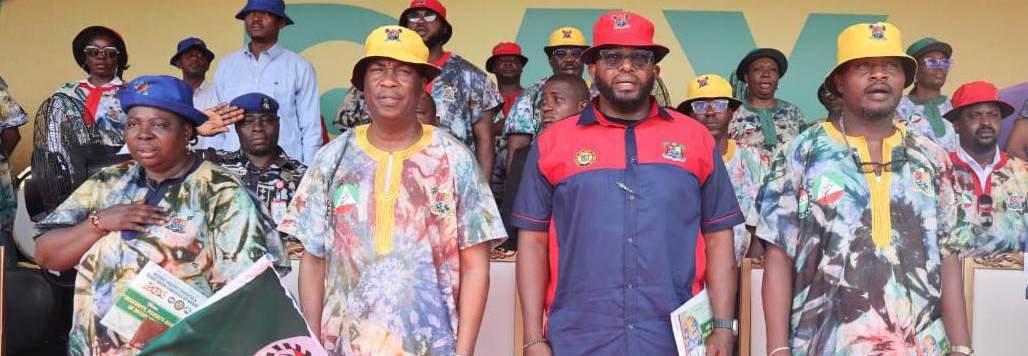
Tinubu, made the declaration yesterday in Abuja, in his address to the workers and labour unions during the 2026 May Day celebrations. This was as the two Labour centres in the country, the Nigeria Labour Congress (NLC) and







Kemi Olaitan in Ibadan
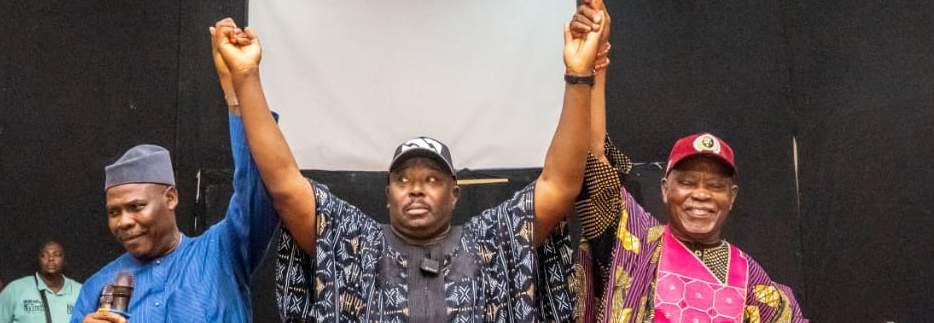
Acting in unison with the consensus approach adopted by leaders in Lagos and Ogun states, the leadership of the All Progressives Congress (APC) in Oyo State yesterday endorsed Senator Sharafadeen Alli as the party’s consensus governorship candidate for next year’s election, signaling a major step towards internal unity and strategic alignment.
The endorsement was ratified during a high-level leadership summit held in Samonda, Ibadan, where prominent party stakeholders across the state converged to deliberate on the party’s electoral strategy ahead of the next general election.
Speaking at the gathering, Senator Ayo Adeseun explained that the meeting was convened primarily to affirm Senator Alli’s candidacy and to build
consensus among party leaders.
According to him, the decision followed extensive consultations and was further reinforced by the position of President Bola Ahmed Tinubu.
According to a statement, Adeseun revealed that he had previously met with the President in Abuja, where Tinubu reportedly provided strong justification for backing Alli as the party’s standardbearer in Oyo State.
He emphasised that, as the national leader of the APC, the President’s preference carries significant weight and should be respected by party members.
“Mr. President remains the leader of our party, and his opinion on who flies the party’s flag must be given due consideration,” Adeseun stated, noting that Alli had already declared his intention to contest the governorship seat prior to the endorsement.
Similarly, another leader of the party, Alhaji Fatai Ibikunle, reaffirmed the position of the party leadership, disclosing that he also held discussions with President Tinubu, who, according to him, endorsed Alli as the preferred candidate for the 2027 election in Oyo State. Ibikunle called on other aspirants within the APC to align with the consensus decision in the interest of party unity and electoral success.
He stressed that internal cohesion would be critical for the APC to mount a formidable challenge in the forthcoming governorship race. The summit witnessed a large turnout of party leaders, stakeholders, and representatives from all geopolitical zones of Oyo State and from the 33 local government areas of the state, underscoring the significance of the endorsement.
the Trade Union Congress (TUC) insisted that they will only cooperate with any party that commits to their charter of demands on workers welfare especially security, free education, public healthcare among others as the 2027 elections draw near.
In their May Day messages, opposition leaders like Peter Obi called for choosing of leaders based on competence while David Mark, leader of the African Democratic Congress (ADC) promised a living wage for workers should his party take over power and former Vice President Atiku Abubakar knocked President Tinubu’s government for making life difficult for workers through inept leadership.The President, who was represented by the Secretary to the Government of the Federation, Senator George Akume, aligned his message with the global May Day theme on the Decent Work Agenda championed by the International Labour Organisation that there cannot be decent work where workers fear for their lives or
the Rivers Women Unite for SIM, in conjunction with the Renewed Hope Women of Faith in Politics, a coalition of women in the state, threw their weight behind President Bola Tinubu and Fubara’s re-election for a second term in office.
Speaking further, Abiante stressed that the action underscored popular confidence in Fubara’s leadership, insisting that the decision was driven purely by public sentiment rather than personal ambition or financial capacity.
Abiante maintained that the gesture was neither unusual nor unprecedented, describing it as part of Nigeria’s established democratic culture.
profit before tax crossed the N1 trillion mark for the first time to N1.01 trillion. The amount was a 16.2 per cent increase over N867.02 billion reported in the financial year ended December 31, 2024.
However, Access Holdings net impaired charges on financial assets rose to N523 billion in the year under review, from N245 billion in 2024, while total impaired loans rose to N468.04 billion from N368.22 billion. Furthermore, the ratio of impaired loans to gross risk
where wages cannot feed a family aligning.
Tinubu admitted that insecurity and poverty constituted “significant obstacles” but insisted his administration was tackling both with urgency. He referenced the launch of the Community Protection Guards Initiative, where over 45,000 young Nigerians were recruited to secure communities as one of the measures to address insecurity.
The President also highlighted a raft of economic and social interventions under his Renewed Hope Agenda, including expanded cash transfers reaching 15 million vulnerable households and lifting an estimated 7.5 million Nigerians out of poverty.
Tinubu added that legacy projects such as the LagosCalabar Coastal Highway and the Ajaokuta-Kaduna-Kano Gas Pipeline had generated over 600,000 jobs.
He said workers’ welfare was paramount for his administration, which has implemented a new national minimum wage, cleared
He stated: “This is not new. Even at the national level, stakeholders have, in the past, procured nomination forms for preferred candidates. It is a democratic tradition rooted in collective will.”
“It is not about how deep your pocket is. It is about what the people feel. And the people of Rivers State have made their position clear—they want continuity.”
The lawmaker further revealed that Fubara neither initiated nor influenced the move, insisting it was a spontaneous decision by stakeholders determined to sustain the current trajectory.
“He did not send us,”
assets declined to 2.68 per cent from 2.76 per cent, indicating that asset growth outpaced the increase in non-performing exposures.
Meanwhile, the total of N3.2 trillion loan loss provisions reported in 2025 was about 40 per cent increase, compared with the N2.33 trillion recorded in 2024.
Loan loss provision, which is also referred to as impairment charge, is an expense set aside to cover potential losses from unpaid loan, or a bad loan.
pension arrears, and reintroduced gratuity payments from January 2026.
He stated that over 800,000 informal sector workers had been enrolled in the micro pension scheme, while small businesses continued to benefit from a N200 billion MSME support fund.
Tinubu said: "There cannot be decent work where workers fear for their lives, where wages cannot feed a family, or where insecurity disrupts farms, factories, markets, and other economic activities. These hydra-headed challenges, the government notes, have been treated as a national emergency due to their impact on productivity, livelihoods, and the confidence of both workers and employers.
"The administration also acknowledged that insecurity and poverty remain major obstacles to building a peaceful Nigeria where citizens can “sleep with their eyes closed,” and to achieving the Decent Work Agenda as envisioned by the International Labour
Abiante said. “This is the voice of the people speaking through their leaders. We have come on their behalf.”
Abiante emphasised the governor’s leadership style, describing him as humble, people-oriented, and deeply attuned to the needs of ordinary citizens.
“This is a leader who understands the pains of his people and responds with action,” he added.
Highlighting the governor’s performance, the lawmaker pointed to what he described as visible progress in infrastructure, improved access to previously neglected communities, and renewed economic
The 2025 financial year presented unique regulatorydriven challenges. A directive by the CBN had required banks to exit the regulatory forbearance loan window and fully align with prudential loan classification standards.
The nine banks whose 2025 audited results were compiled by THISDAY were: Access Holdings Plc, Guaranty Trust Holdings Plc (GTCO), Wema Bank Plc, Stanbic IBTC Holdings Plc, Ecobank Transnational Incorporated (ETI), United Bank for Africa
Organisation."
Tinubu affirmed that the agenda was not merely an international framework but a national imperative, aligned with the vision of a country where hard work is rewarded, opportunities are accessible without discrimination, and every citizen can reach their full potential.
He assured labour unions that despite the challenges, the government would not relent in its efforts, as it is confronting the issues through deliberate, coordinated, and sustained actions, backed by targeted policies and the resilience of security personnel—some of whom have paid the ultimate price in the line of duty.
The President appealed to the NLC and the TUC to sustain dialogue and restraint in industrial disputes.
“Strike should be the last resort, not the first,” he said, urging collaboration to achieve lasting reforms.
Tinubu also extolled security forces for their sacrifices, which
opportunities, particularly in riverine areas.
“In places like Andoni, access was a long-standing challenge. Within months, that narrative changed,” he said. “Communities once cut off are now connected and positioned to contribute meaningfully to the blue economy,” he added.
Meanwhile, the Rivers Women Unite for SIM, in conjunction with the Renewed Hope Women of Faith in Politics, a coalition of women in Rivers State, have thrown their weight behind President Bola Tinubu and Governor Siminalayi Fubara for a second term in office.
The group, in a statement
Plc (UBA), and Zenith Bank Plc. First Holdings Plc and FCMB Group Plc were the only two banks with unaudited financial year statements for the period ended December 31, 2025.
Specifically, in the year under review, Zenith Bank recorded N742.19 billion impairment charges, an increase of 12.97 per cent from the N657 billion in 2024, while First Holdco in its unaudited results posted impairment charges of N748.13
guaranteed economic activities, linking improved safety directly to job creation and national growth.
He reaffirmed his administration’s commitment, noting Nigeria remained on course to defeat insecurity and reduce poverty, promising a future where “decent work is not a privilege for a few, but a reality for all."
Tinubu further explained that the federal government has adopted a multi-dimensional approach to mitigate poverty by developing policies focused on job creation, economic diversification and social protection.
He said: "Through targeted interventions in agriculture, small and medium enterprises, infrastructure development, and skill acquisition, we are laying a solid foundation for inclusive growth. These are evident in the government’s key 2024-2026 interventions and initiatives, namely the National Agricultural Growth SchemeAgro-pocket (NAGS-AP), the
yesterday, declared its support in a Praise Rally for the president and governor's reelection, describing the decision as timely and necessary for the continued implementation of their people-oriented and transformative agenda.
"Right now Rivers State is not in the hands of man, but in the hands of God. And it is only God that will lead us, that will protect us, that will give us the Renewed Hope to support our Governor, Sir Siminalayi Fubara, and the President of this country, President Bola Tinubu, and for us to continue to pray for them. Rivers women are for SIM, Rivers women are for President Tinubu," he added.
Dry Season Farming Schemes, the Mechanisation Drives, the Post-Harvest Management, the Financial Inclusion and support, anchored in the Bank of Agriculture, the Security for Farmers through the Nigeria Security and Civil Defence Corps (NSCDC) deployment of 10,000 Agro-Rangers to 19 states to protect farmers and farm produce from banditry, among others.
"To you our dear workers, I say this clearly; your welfare remains a priority. We are committed to improving working conditions, promoting fair wages, and ensuring that every Nigerian worker enjoys dignity, safety and equal opportunity in the workplace; hence, the recent reactivation of the payment of gratuity to Nigerian workers with effect from January 2026.
"As I proceed, let me pause to acknowledge a truth that we must not ignore; insecurity and poverty remain significant obstacles to achieving a peaceful
Continued on page 23
The group expressed confidence that both the President and Governor would continue to work towards a collective goal of improving Nigeria and Rivers State, which will be set on the path of prosperity, stability, and progress.
They further argued that denying the president and governor the opportunity to complete their progressive reforms would disrupt the gains already being made across various sectors in Nigeria and local government areas in Rivers State, urging everyone to exercise patience and support them in order to consolidate the achievements already made.
The average investors' returns on the Nigerian Exchange Limited (NGX increased to N56.6 trillion in the first four months of 2026 amid increasing fundamentals of listed stocks and improved economic outlook.
The market capitalisation that closed for trading in 2025 at N99.376 trillion, gained N56.6 trillion or 56.97per cent to close April 30, 2026 at N155.994 trillion, while the stock market major indicator, the NGX All-Share Index, moved from 155,613.03 basis points on December 31, 2025 to 242,277.81 basis points, representing an increase of 86,664.78 or 55.69 per cent as of April 30, 2026.
The latest milestone highlights the sustained momentum in Nigeria’s stock market, which continues to attract growing interest from both domestic and institutional investors.
The stock market in the first four months of 2026 has seen inflation figure to 15.38 per cent as of March 2026 from 15.15 per cent December 2025, and the Monetary Policy Rate (MPR) of the Central Bank of Nigeria (CBN) dropping to 26.50 per cent from 27.00 per cent December 2025.
Also, the stability in the foreign exchange market, National Pension Commission (PenCom) announcing an upward revision to the permitted allocation to ordinary shares for RSA Funds I, II, III and VI-active and FTSE Russell in April 2026 reclassification of Nigeria’s from unclassified to Frontier Market status in its interim review have played critical role in the stock market performance so far in 2026.
The Group Managing Director and Chief Executive Officer of Nigerian Exchange Group, Mr. Temi Popoola, had described the milestone as a
sign of growing confidence in Nigeria’s capital market.
He added that, “Nigeria’s ongoing reforms are
strengthening domestic capital formation, and the market is responding positively. Increased participation by local
investors, improving corporate fundamentals, and continued market modernisation are reinforcing the role of the
capital market as a catalyst for long-term wealth creation and sustainable economic growth.”
The federal government has approved the establishment of a Nigerian Aircraft Leasing Company, marking a major milestone in the ongoing transformation of the nation’s aviation sector.
The Minister of Aviation and Aerospace Development, Festus Keyamo, said this significant development followed the conclusion of the Federal Executive Council (FEC) meeting held yesterday.
The initiative entails the creation of a private-sectorled Special Purpose Vehicle (SPV), backed by the federal
government, designed to provide sustainable and structured access to aircraft for domestic and regional airline operators.
According to the minister, the establishment of the leasing company will fundamentally reshape aircraft acquisition in Nigeria and across Africa by offering a centralised, sovereignbacked platform through which airlines can access modern fleets. Keyamo in a statement issued yesterday by his SA Media and Communications, Tunde Moshood, said: "This initiative is a game-changer for our aviation industry. It eliminates the long-standing challenges Nigerian airlines face in accessing
aircraft on competitive terms and positions the country as a hub for aviation financing in Africa."
He added that the new leasing framework will significantly enhance fleet access for Nigerian carriers, allowing them to acquire aircraft through a single, credible, government-backed entity rather than navigating the complexities of individual financing arrangements. According to him, this access will also be extended to operators across West Africa and the broader African continent.
In terms of operational capacity, the initiative, he noted, is expected to strengthen the ability of local airlines to efficiently service domestic routes, reducing the
frequency of flight cancellations and delays. It will also empower Nigerian carriers to better compete with international airlines that currently dominate the market.
"Notably, the structure of the SPV ensures a zero-cost revenue model for the Federal Government. Through the Ministry of Finance Incorporated (MOFI), the government will hold equity and earn revenue without direct financial investment. Its primary obligation will be to provide sovereign guarantees to lessors and financiers, particularly in ensuring the repossession of aircraft when necessary.
Chuks Okocha, Sunday Aborisade in Abuja and Ibrahim Oyewale in Lokoja
The legally recognised Peoples Democratic Party (PDP) has clarified the outcome of the Supreme Court judgement on the leadership crisis plaguing the party, insisting that the Board of Trustees (BoT) led by Senator Adolphus Wabara had since expired and that Senator Mao Ohuabunwa assumed the chairman of the Board.
This was as the Kogi Central Senator, Natasha Akpoti-Uduaghan, has called on aggrieved members of the PDP to pursue reconciliation through dialogue, following
controversy trailing the recent judgement of the Supreme Court of Nigeria.
In a show of support, the State Working Committee of the Kogi State PDP has adopted and ratified an automatic ticket for return of Senator AkpotiUduaghan as the party’s sole candidate for the Kogi Central Senatorial District in the 2027 general elections. The Minister of Federal Capital Territory (FCT), Nyesom Wike-led PDP also said that there was no issue of expulsion of anyone canvassed before the Supreme Court.
Addressing journalists yesterday at the party’s secretariat in Abuja, the National
Publicity Secretary, Hassan Mohammed Jungudo, said, “We are here today to set the record straight and address the deliberate distortions being peddled by one Kabiru Turaki, SAN, and his associates regarding the Supreme Court judgement delivered on the 30th of April, 2026.
"Let it be clear and unambiguous that the Supreme Court judgement of yesterday only nullified the illegal Ibadan Convention and dismissed the appeal filed by the Turaki-led purported National Working Committee for lacking in merit.
"This remains the sole substance of the judgement, contrary to the false narratives
being circulated. The judgement did not uphold any suspension or expulsion of any officer of the party.
“The reason is simple: the issue of suspension or expulsion was never before the Federal High Court, let alone the Court of Appeal or the Supreme Court. It was neither canvassed at the Federal High Court nor formed part of the questions for determination at any level of adjudication," the spokesman of the party stated.
Speaking further, Jungudo said, "The apex court addressed only the matter before it, which is the validity or otherwise of the so-called 15th and 16th Ibadan Convention."
"Accordingly, throughout the Supreme Court judgement, there was no mention whatsoever of suspension or expulsion of any party officer.
"It is also important to state that there has never been a vacuum, obstruction, or absence of leadership in our party that presupposes an interim take over of the administration of the party by any authority. The leadership structure of the PDP remains intact, lawful, and fully operational under the able National Chairman, Hon. Abdulrahman Mohammed, and our indefatigable National Secretary, Distinguished Senator Samuel Anyanwu. Their positions remain duly
recognised." He further said, "What we are witnessing is a desperate attempt by a rejected group to twist the clear facts contained in the judgement of the Supreme Court in order to mislead the public and seek undeserved sympathy. I make it bold to say that the judgement is a public document which can be accessed by anybody to ascertain the content of the said judgement. "The same individuals who disobeyed valid court orders to conduct the illegal Ibadan Convention have continued in their pattern of lawlessness by assembling again, even after the Supreme Court has spoken."


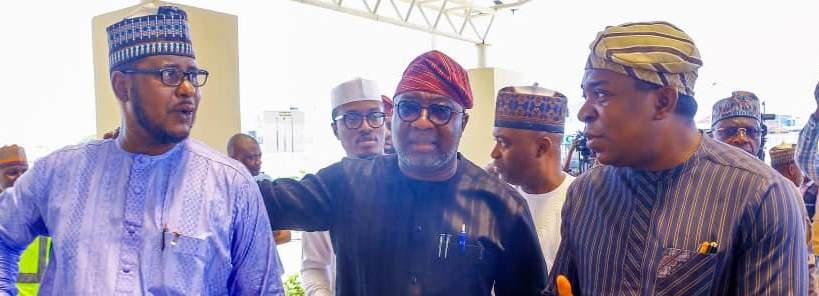
Aleke in Abuja Troops of the Joint Task Force (North East) Operation Hadin Kai (OPHK) in collaboration with elements of Sector 2 Stabilisation Force Brigade and the Civilian Joint Task Force, have eliminated 18 terrorists in Bulabulin Forest and cleared insurgent enclaves in the Timbuktu axis, forcing several others to flee with varying degrees of injuries.
Also, the military high command has issued a strong warning to notorious bandit leader Bello Turji, stating that he cannot evade capture indefinitely.
The coordinated offensive, conducted under Operation Desert Sanity V, was supported by assault air platforms from the Air Component Command.
In a statement, the Media Information Officer of Operation Hadin Kai, Lieutenant Colonel
Sani Uba, explained that the successes were recorded during two separate but coordinated engagements involving troops of Sector 2 in the Azir Bridge (Timbuktu axis) and Bulabulin Forest areas, in close synergy with the Air Component Command.
On the Bulabulin Forest axis, troops of Sector 2, working alongside the Sector 2 Stabilisation Force Brigade and the Civilian Joint Task Force, conducted clearance operations on terrorist enclaves located at Mar, Subdu, Yaro Lawanti, and Yaro Shuwari, as well as other adjoining areas within the Bulabulin Forest and along the Kamadogu Yobe stretch.
"All identified life-support structures were destroyed during the operation.
“Subsequent exploitation of the area led to the recovery of
Olusegun Samuel in
Governor of Bayelsa State, Senator Douye Diri, has directed the immediate removal of the paramount ruler of Ogboinbiri Community in Southern Ijaw Local Government Area, Chief Okosughe Benson Eseimokumo, following the intractable conflict in the community.
Governor Diri, who wielded the axe on Thursday during the April 2026 Praise Night at the King of Glory Chapel in Government House, Yenagoa, also directed the immediate dissolution of the Ogboinbiri council of chiefs, community development committee and the youth body.
The development followed Tuesday's violent dispute that led to the loss of life and arson attacks, prompting the state government to impose a dusk-to-dawn curfew in the community.
The Bayelsa governor equally directed his deputy, Dr. Peter Akpe, and the Commissioner for Local Government and Chieftancy Affairs, Chief Thompson Amule, to constitute an interim committee to oversee the affairs of Ogboinbiri pending the restoration of peace and security.
The state's helmsman charged the Commissioner of Police to ensure that all culprits directly involved in the incident be apprehended and brought to justice.
nine AK-47 rifles, three PKT anti-aircraft machine guns, five motorcycles, assorted ammunition, and materials used for the fabrication of improvised explosive devices, significantly disrupting terrorist logistics and operational capabilities within the axis," the statement said.
Similarly, along the Timbuktu
axis at the Wajiroko–Sabongari corridor, troops engaged terrorists with support from the Air Component Command of OPHK.
Demonstrating resilience and tactical discipline, the troops maintained their positions and effectively neutralised the insurgents.
Further exploitation revealed seven neutralised terrorists, while additional blood trails and body parts suggested higher casualties inflicted during the engagement.
Recovered items included AK-47 rifles, RPG tubes, a large cache of ammunition, bandoliers, and communication equipment.
Lieutenant Colonel Uba noted that the Air Component Command played a decisive role in both operations by providing sustained Intelligence, Surveillance, and Reconnaissance (ISR), which enhanced accurate target acquisition and real-time situational awareness for coordinated ground assaults.
Funmi Ogundare
The Minister of Education, Dr. Maruf Olatunji Alausa, yesterday, disclosed that the federal government will spend about N250 billion in 2026 to construct student hostels across tertiary institutions nationwide as part of efforts to improve welfare and expand access to education.
Alausa, who spoke to journalists at the groundbreaking ceremony for 1,500-bed hostel development project of Lagos State University (LASU), Ojo, said the intervention would deliver thousands of new bed spaces
through a mix of direct funding and public-private partnerships (PPP).
Breaking down the planned expenditure, the minister explained that about N100 billion would be used to build 500-bed hostels in roughly 50 universities at a cost of N2 billion each, while another component would fund 24 PPP hostel projects providing between 1,200 and 1,500 bed spaces per institution.
Under the PPP model, he said the government, through the Tertiary Education Trust Fund (TETfund), would contribute N1 billion, while private investors would
provide about N3 billion per project, amounting to nearly N96 billion for that segment.
In addition, Alausa noted that about N1 billion would be allocated to smaller hostel projects delivering at least 300 bed spaces in another 24 institutions.
“In total, we are committing about N250 billion in 2026 alone to deliver world-class student accommodation across federal and state tertiary institutions,” he said, adding that construction timelines range from less than 12 months for smaller hostels to about 24 months for larger PPP projects.
Alausa said the initiative
reflects the administration’s priority on youth welfare and education, stressing that inadequate accommodation remains a major challenge across Nigerian universities. He added that the government’s student loan scheme would also cover accommodation costs, ensuring that indigent students are not denied access to higher education.
According to him, over N200 billion has already been disbursed to institutions for fees, while about N50 billion has been provided as direct support to students under the scheme.
James Sowole in Abeokuta
The 2023 Governorship candidate of the Peoples Democratic Party (PDP) in Ogun State, Hon. Oladipupo Adebutu, has officially declared his intention to contest for the office of Ogun State Governor under the platform of the same party in the 2027 general elections.
Adebitu's declaration was conveyed in a letter addressed to the PDP leadership at both the state and local government levels made available to journalists
yesterday by his media aide, Afolabi Orekoya.
The letter dated April 30, 2026, was directed to the Ogun State Chairman of the PDP through the party Chairman of Odogbolu Local Government chapter.
In the letter, Adebutu expressed appreciation to party leaders and members for their continued support and loyalty, emphasising the need for unity and collective purpose as the party prepares for the forthcoming elections.
Adebutu, who previously flew the PDP’s flag in the last
gubernatorial election, reiterated his commitment to the party’s ideals and his determination to offer purposeful leadership to the people of Ogun State.
He highlighted his longstanding involvement in the party, noting his contributions and dedication to strengthening the PDP’s presence across the state.
Describing himself as a law-abiding citizen and loyal party member, Adebutu stated that his decision to once again seek the governorship position stems from a desire to build
on past experiences and deliver impactful governance.
He emphasised the importance of continuity, people-centered policies, and inclusive development as key pillars of his vision.
The PDP chieftain also called on party stakeholders to remain united and focused, stressing that internal cohesion would be critical to the party’s success at the polls. He assured members of his willingness to collaborate with all factions within the party to achieve a common goal.
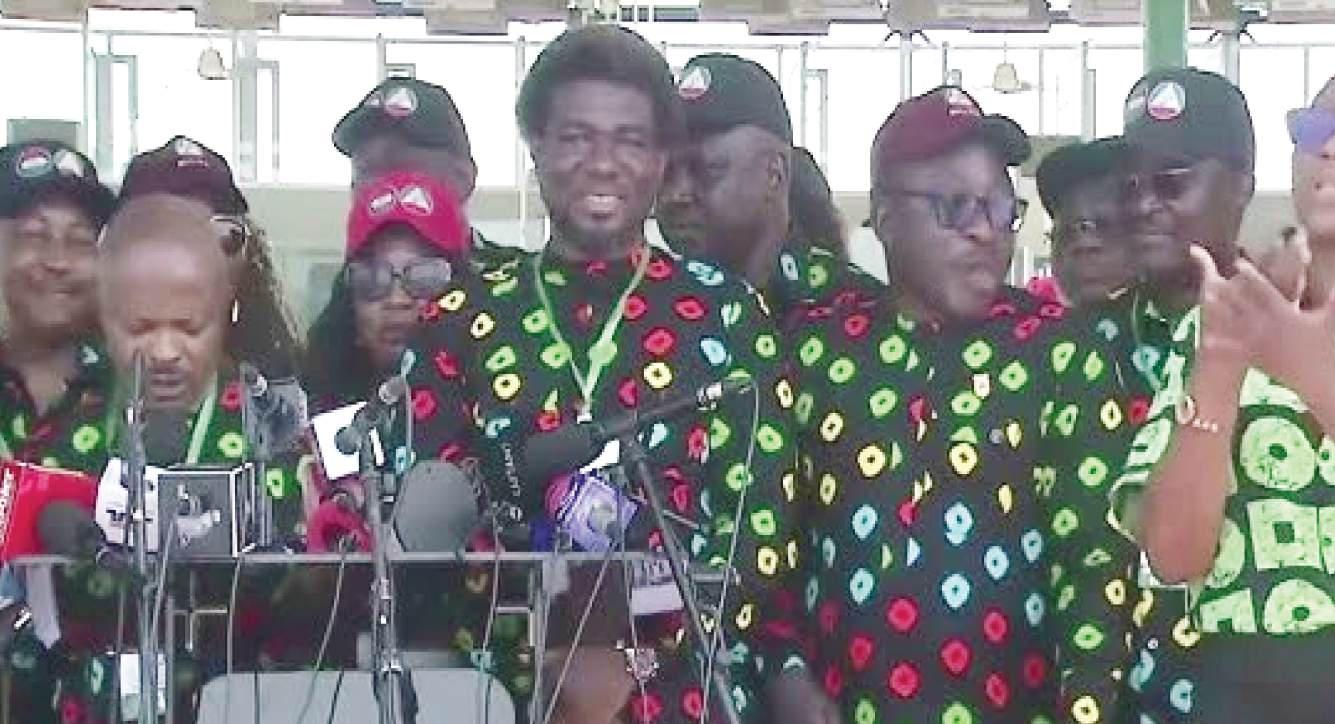
There is dignity in Labour...
“There is benefit in every kind of hard work…” – Proverbs 14:23.
When President Muhammadu Buhari took over the reins of power on May 29, 2015, Nigeria was sadly a broken state in many respects. As a result of many other factors including bad governance and untold level of corruption, government could not live up to its financial obligations to citizens and service providers at both the federal and state levels.
Atalented Nigerian musician, Adekunle Gold, in one of his popular songs entitled ‘Work’, encouraged people to work hard. This is in harmony with what God’s Word, the Bible, recommends at Ecclesiastes, chapter 9, verse 10, where it says: “Whatever your hand finds to do, do with all your might…”
Indeed one of the first official assignments that President Buhari carried out was the approval of billions of Naira in bailout funds to enable state governors pay something as basic as workers’ salaries. Granting those bailout funds was a huge boost to national security because the pressure of arrears of unpaid monthly salaries building dangerously all over the country was a ticking bomb.
Ask the naysayers and they would readily remind you of how long it took President Buhari to appoint his ministers and how that contributed to collapse of the economy as if, without ministers, governance was frozen. But buying that narrative would amount to what a famous Nigerian writer, Chimamanda Adichie, termed “the danger of a single story”. Yet the whole story was that many of our citizens did not know how decrepit a state President Buhari inherited in 2015.
salonians, chapter 3, verses 10 to 12 that “…if anyone does not want to work, neither let him eat….” This scripture condemns laziness. We need to work to make a living and provide for our families. Work provides the individual with the ability to be independent, to flourish, to develop, and most importantly, to find meaning in life.
IWork – whether paid or unpaid, is good for our health and wellbeing. It contributes to our happiness, helps us to build confidence and self-esteem, and can reward us financially. Work is an essential tool through which individuals can achieve their goals, flourish, and live happy, meaningful lives.
It was therefore necessary for him to take stock against the background of the fact that the departing government did not, reportedly, cooperate full well with the incoming government in terms of leaving workable handover notes. Although President Goodluck Jonathan was gracious in defeat, many of his appointees were still sulking over what they saw as their personal losses and therefore pulled all the stops to make things difficult for the Buhari government.
Even with the obvious and unpatriotic obscurantist behaviour of the PDP appointees and their supporters still in government hell-bent on making things difficult for Buhari, the President moved on with his methodical repair of a broken country. The first thing he did was to identify all possible sources of income to the nation and directed that all inflows be paid into one single account in line with the policy of Single Treasury Account (TSA).
Work has different dimensions, such as work for making a living and work for developing one’s talent and potential. For example, a little girl in one of the corners of the world who goes to kindergarten and learns how to count, draw, or write, is working. Likewise, an adult, who goes to his/her job every day, and gets paid for that, is also working. Thus, based on the age, circumstances, needs and desires of individuals, work, or labour, takes different shapes.
The TSA policy, interestingly, was mooted by the PDP government but its penchant for imprudence and lack of accountability denied it the courage of implementing the policy. What the President literally did was to gather all the nation’s money into one box and locked it up with a big padlock and watched for any thief to come close.
Who can blame the President for almost developing paranoia over the safeguard of the national treasury with revelations and reports of mind-boggling looting that took place in the 16 years of the PDP? With such disclosures of how billions meant for fighting insurgency in the Northeast ended up in the pockets of a few individuals while our gallant soldiers fought with bare hands and on empty stomach, President Buhari was duty bound to bring sanity and accountability back in national spending.
Work is a virtue and necessity, which requires the utilization of time and energy. Man is in control of his time and energy when he voluntarily and constructively works. The Bible emphasizes the importance of work when it says, among other things, at 2 Thes-
However, there are many problems seriously affecting work and workers in Nigeria today. These include: unemployment, poor remuneration/wages, poor working environment and conditions, and casualization of workers, among others. Many people experience poverty and unemployment through no fault of their own.
by the EFCC, President Buhari by his action has successfully brought back to the public consciousness the need to treat public funds with the highest level of transparency and accountability.
After keeping treasury looters on their toes and at bay through the EFCC, particularly, President Buhari moved to curb unnecessary spending habits of the nation on what economists call articles of ostentation. Part of the disclosures of the President’s stock taking was how the country frittered away billions in foreign currency by importing goods, which can be produced at home. One of such items was rice, a major staple among Nigerians. By banning rice importation into the country, the President on one hand had saved the nation billions in foreign currency annually.
And, on the other hand, the President has boosted domestic production of rice and in the process had nudged the country into self sufficiency in food production. He also created millions of jobs for young people in the rice value chain.
n the unfolding political drama in Nasarawa State ahead of the 2027 governorship race, one truth is becoming increasingly clear: leadership is not always about waiting for universal approval; sometimes, it is about making bold decisions that shape the future. This is precisely where Governor Abdullahi Sule has demonstrated uncommon courage in endorsing Senator Ahmed Aliyu Wadada as his preferred successor.
What is most admirable about President Buhari and his government is its frugal management of scarce national resources to attain optimum goals. Recall that since President Buhari stepped in the saddle, oil revenue dropped abysmally as if to sabotage him knowing all the big promises he made to citizens during his campaigns. But with the little resources that trickle in, the President is achieving what governments that received oil windfalls could not dream of.
Daniel Ighakpe, Farmer, Teacher and Health Worker, FESTAC Town, Lagos State
Ainofenokhai Ojeifo, Abuja
Thus, under President Buhari, the Economic and Financial Crimes Commission (EFCC), which had remained comatose for years, was woken up to resume its duties. Apart from the trillions of Naira of looted funds and property recovered from corrupt politicians
Today, the trains are up and running daily from Abuja to Kaduna. And from Lagos to Ibadan a brand new rail track was started and completed; citizens are already commuting daily to and fro these two major cities in the country seamlessly as they reap from the dividends of democracy. And with the way this government is going, before 2023 when the President would leave, the entire country would be linked by rail with all of its economic advantages.
The controversy triggered by this endorsement—especially the criticism from former governor Umaru Tanko Al-Makura—has generated heated debate across political circles. Yet, beyond the noise, a deeper and more objective analysis reveals that Governor Sule not only acted within his democratic rights but also exercised strategic foresight essential for continuity and stability in governance.
At the heart of the debate is a
THE SATURDAY NEWSPAPER
EDITOR YEMI ADEBOWALE
THE SATURDAY NEWSPAPER
DEPUTY EDITOR AHAMEFULA OGBU
EDITOR OBINNA CHIMA
MANAGING DIRECTOR ENIOLA BELLO
DEPUTY EDITOR AHAMEFULA OGBU
DEPUTY MANAGING DIRECTOR ISRAEL IWEGBU
MANAGING DIRECTOR ENIOLA BELLO
DEPUTY MANAGING DIRECTOR ISRAEL IWEGBU
CHAIRMAN EDITORIAL BOARD OLUSEGUN ADENIYI
CHAIRMAN EDITORIAL BOARD OLUSEGUN ADENIYI
MANAGING EDITOR BOLAJI ADEBIYI
Tsimple constitutional and political reality: every political leader has the right to support a candidate of their choice. Even critics concede this point. In fact, Al-Makura himself acknowledged that the governor “has every democratic right” to prefer a successor, even if he considers the move premature.
This acknowledgment is critical. It underscores that Governor Sule’s action is neither illegal nor unprecedented. Nigerian political history is replete with examples of outgoing leaders identifying preferred successors to sustain policy direction and governance momentum.
What makes Sule’s decision noteworthy is not just the act of endorsement, but the clarity of purpose behind it. By backing Senator Wadada early, he has signaled a desire for continuity—continuity in economic reforms, infrastructural development, and institutional strengthening that his administration has pursued since 2019.
Wada, Abuja
EDITOR NATION’S CAPITAL IYOBOSA UWUGIAREN
THE OMBUDSMAN KAYODE KOMOLAFE
EDITOR NATION’S CAPITAL IYOBOSA UWUGIAREN THE OMBUDSMAN KAYODE KOMOLAFE

THISDAY NEWSPAPERS LIMITED
THISDAY NEWSPAPERS LIMITED
EDITOR-IN-CHIEF/CHAIRMAN NDUKA OBAIGBENA
EDITOR-IN-CHIEF/CHAIRMAN NDUKA OBAIGBENA
TO SEND EMAIL: first name.surname@thisdaylive.com What a waste!
GROUP EXECUTIVE DIRECTORS ENIOLA BELLO, KAYODE KOMOLAFE, ISRAEL IWEGBU, IJEOMA NWOGWUGWU, EMMANUEL EFENI
DIVISIONAL DIRECTORS SHAKA MOMODU, PETER IWEGBU, ANTHONY OGEDENGBE
GROUP EXECUTIVE DIRECTORS ENIOLA BELLO, KAYODE KOMOLAFE, ISRAEL IWEGBU
DEPUTY DIVISIONAL DIRECTOR OJOGUN VICTOR DANBOYI
DIVISIONAL DIRECTORS SHAKA MOMODU, PETER IWEGBU, ANTHONY OGEDENGBE
SNR. ASSOCIATE DIRECTOR ERIC OJEH
DEPUTY DIVISIONAL DIRECTOR OJOGUN VICTOR DANBOYI
ASSOCIATE DIRECTOR PATRICK EIMIUHI
SNR. ASSOCIATE DIRECTOR ERIC OJEH
CONTROLLERS ABIMBOLA TAIWO, UCHENNA DIBIAGWU, NDUKA MOSERI
ASSOCIATE DIRECTOR PATRICK EIMIUHI
DIRECTOR, PRINTING PRODUCTION CHUKS ONWUDINJO
CONTROLLERS ABIMBOLA TAIWO, UCHENNA DIBIAGWU, NDUKA MOSERI
DIRECTOR, PRINTING PRODUCTION CHUKS ONWUDINJO TO SEND EMAIL: first name.surname@thisdaylive.com
n the Bible, Deuteronomy 7:15 says "The Lord will protect you from all sickness".
In America the man who thinks he is God, Donald Trump, says that Zambia has to make their minerals more available, at what cost is uncertain, in order to get antiretroviral treatment for HIV.
Isn't there an international law or presumption that aid should be provided, without conditions, when needed? Well if not, then there should be. Make that international law President Trump and the world will remember and honour you for a real reason.
he Advocacy for Alleged Witches (AfAW) urges the Nigerian public to stop ritual attacks and killings because the notion of ritual money and wealth is completely baseless. AfAW is making this call following the reported arrest of suspected ritualists in Oyo State in southern Nigeria. The local media reported that members of the Western Nigeria Security Network, Amotekun, arrested suspected ritualists with the body parts of a 73-year-old man. The suspects, who were apprehended in the Boluwaji area in Ibadan, said that a Muslim cleric asked them to procure some human body parts for rituals. Ritual attacks are widespread in Nigeria. Irrational conceptions of how to make money or become wealthy and successful undergird these atrocities. Many Nigerians strongly believe in blood money, known in some local languages as Ogun Owo (Yoruba) or Ogwu ego (Igbo). They think that they could become rich, or successful through ritual sacrifice. Unfortunately, this is not the case. Ritual wealth has no basis in reason, science, or reality. Home movies known as Africa magic or Nollywood films have not helped matters. These movies continue to reinforce these mistaken notions and other superstitions. Families, churches, mosques, and other public institutions do not encourage the interrogation of these traditional occult beliefs. There are no robust efforts to criticize or dispel these irrational and paranormal claims in schools, colleges, and universities. So millions of Nigerians grow up blindly believing that they could make money through ritual sacrifice of human body parts. The belief has led many Nigerians to commit crimes and perpetrate atrocities. Many Nigerians have been jailed or are undergoing court trials due to ritualrelated attacks and murder. Not too long ago, the police arrested some young Nigerians for stealing female pants, which they intended to use for ritual sacrifice. AfAW is asking all Nigerians to desist from ritual-related abuses because ritual money beliefs are baseless superstitions. Nigerian media, schools, and colleges should help educate and reorient the public. They should assist in reasoning Nigerians out of this killer-superstitious absurdity and nonsense. Leo Igwe directs the Advocacy for Alleged Witches (AfAW)
Dennis Fitzgerald, 28 Landale St, Box Hill, Vic

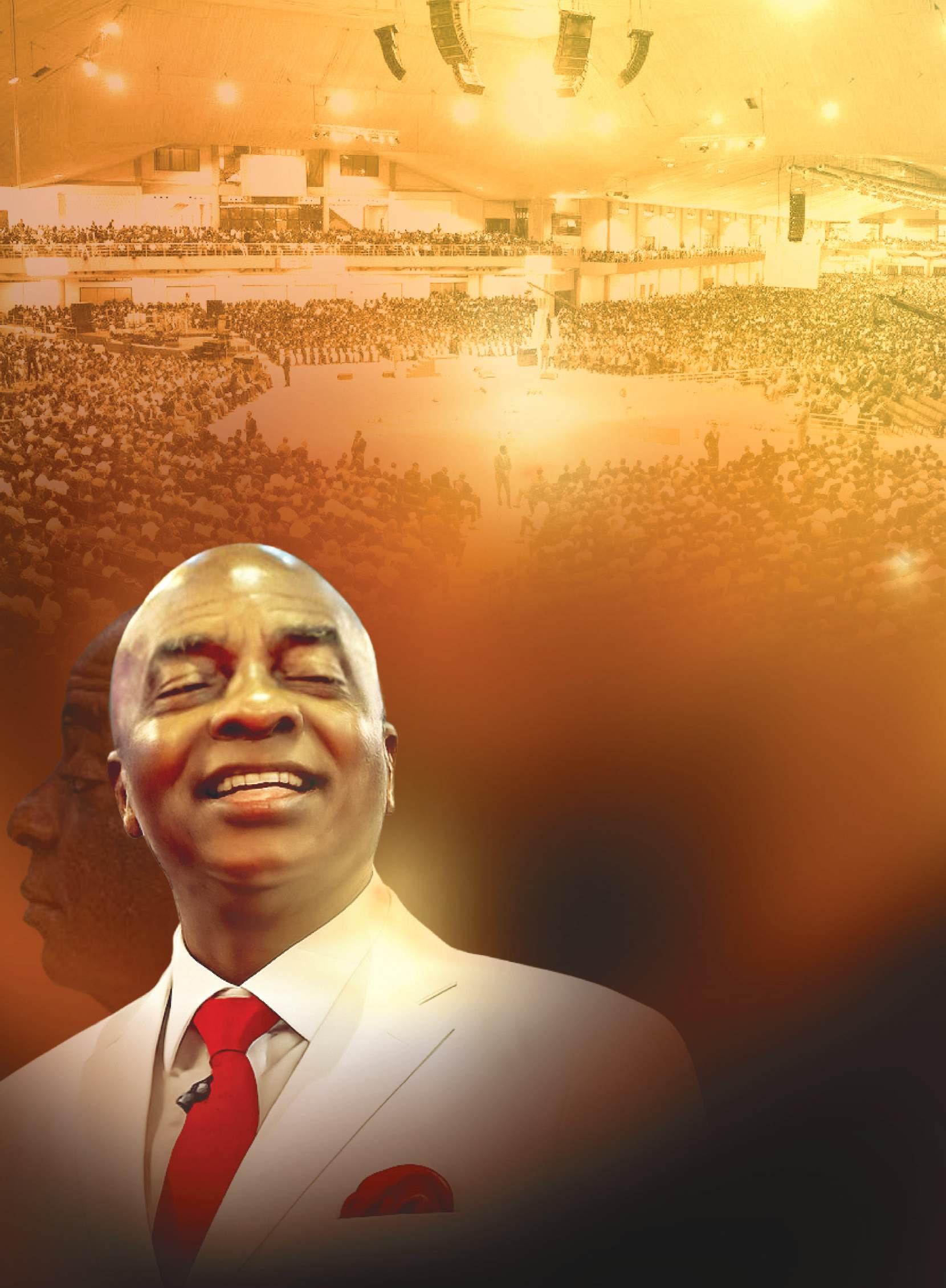





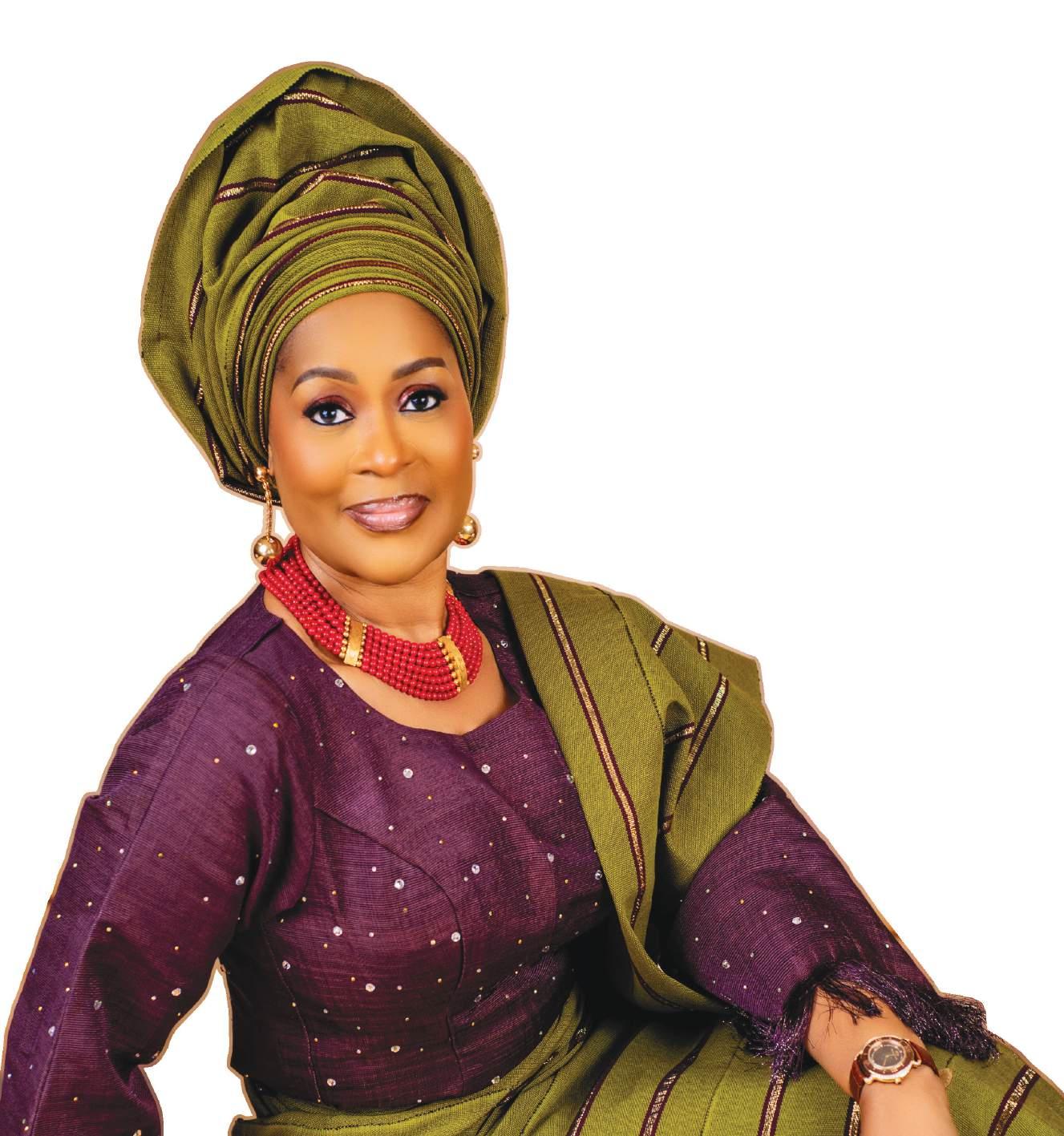




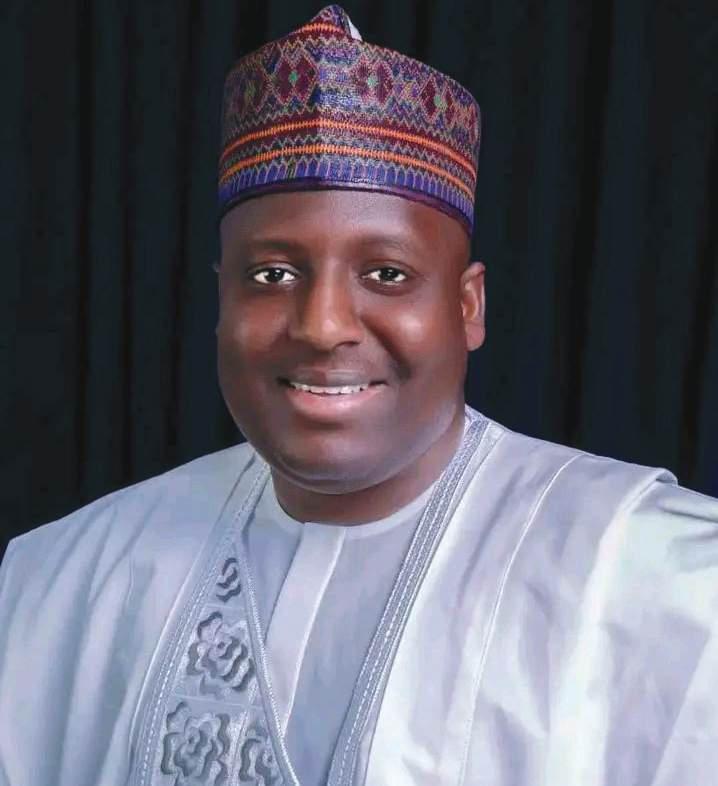
Bauchi State stands at a defining crossroads. The next governor must represent more than continuity; he must embody a decisive break from the past. The moment calls for new ideas, new thinking, and a fresh, youthful approach to governance. For the All Progressives Congress (APC), this is not just an opportunity, it is a test of whether the party can align itself with the evolving expectations of a changing electorate. That opportunity finds a compelling expression in Dr. Nura Manu Soro.
Across Nigeria, the political landscape is undergoing a quiet but powerful transformation. Young voters, women, and first-time participants are emerging as a dominant electoral force. They are increasingly disillusioned with recycled leadership and conventional political strategies that have failed to deliver meaningful progress. In 2027, their votes will not be swayed by familiar names alone, but by credibility, energy, and a clear vision for the future.
Bauchi is no exception. Dr. Nura Manu Soro represents the very essence of this generational shift. His candidacy is not simply about youthfulness as a slogan, but about competence infused with innovation. Young, intellectually grounded, and politically experienced, he offers a rare combination of qualities that resonate with both the aspirations of the electorate and the strategic needs of the APC.
His credentials are both practical and proven. As a key coordinator in the Tinubu/Shettima presidential campaign, he operated at the highest level of political organization, demonstrating an exceptional ability to mobilize grassroots structures, unify stakeholders, and execute complex electoral strategies. The results in Bauchi during the 2023 elections were not incidental, they were the product of deliberate planning, coordination, and leadership.
Bauchi’s emergence as the highest contributor to the APC’s presidential votes in the Northeast underscores this capacity. Delivering over 316,000 votes, more than any other state in the region, was a testament to a wellorchestrated grassroots network and a leader who understands the mechanics of electoral success.
But beyond campaign strategy lies governance experience.
As a former Commissioner of Finance, Dr. Nura Soro gained firsthand exposure to the realities of public administration. He operated within the core of state governance, managing fiscal priorities, navigating resource allocation, and contributing to policy direction. This experience distinguishes him from many firsttime aspirants; he is not learning governance from the sidelines but has already engaged with its complexities.
Equally important is his connection to the grassroots. Politics in Bauchi, as in much of Nigeria, is ultimately decided at the community level. Dr. Manu’s political network cuts across
wards, local governments, and demographic divides. His ability to mobilize diverse groups, youth, women, and traditional political actors alike, positions him as a unifying figure in a state often defined by fragmented political loyalties.
For the APC, the strategic implications are profound. Presenting Dr. Nura Manu Soro as its gubernatorial candidate would signal a clear departure from entrenched political patterns. It would demonstrate that the party recognizes the urgency of generational inclusion and is prepared to invest in leaders who reflect the future rather than the past. Such a decision would not only energize the party’s base but also expand its appeal to undecided and younger voters who are searching for representation that aligns with their realities.
The potential ripple effects extend beyond Bauchi. A youthful, credible candidate with a proven track record can generate momentum that strengthens the party’s overall electoral performance. When voters feel a genuine connection at the state level, their confidence in the party at the national level often increases. This synergy is critical in modern elections, where local and national dynamics are increasingly intertwined.
Moreover, the broader trend across Nigeria points in the same direction. Emerging
political movements in several states are driven by younger aspirants who are redefining engagement, communication, and leadership. The APC in Bauchi has a choice: to follow this trend cautiously or to lead it decisively.
History suggests that bold decisions, not cautious ones, shape electoral victories. The argument for Dr. Nura Manu Soro ultimately rests on three pillars: capacity, connection, and credibility. He has demonstrated the ability to deliver results, built networks that translate into votes, and earned a reputation that resonates across different segments of society. Few candidates can claim such a comprehensive profile at this stage in their political journey.
Bauchi does not merely need a new governor; it needs a new direction. A paradigm shift is not achieved through rhetoric alone, it requires leadership that reflects the aspirations of the present and the possibilities of the future. In Dr. Nura Manu Soro, the APC has a candidate who embodies that shift: a bridge between experience and innovation, between grassroots politics and strategic governance, and between the old order and a new political reality.
As 2027 approaches, the message is clear. Victory will not come from repeating old formulas, but from embracing change with clarity and conviction. For Bauchi, and for the APC, the time to act is now.
Michael Olugbode in Abuja
Nigeria’s anti-narcotics war recorded a major breakthrough in the Federal Capital Territory as the
National Drug Law Enforcement Agency (NDLEA) dismantled multiple drug hubs across Abuja and its outskirts, arresting 132 suspects and recovering over 220
kilogrammes of illicit substances in a sweeping two-week offensive. The operation, described as one of the most coordinated crackdowns in recent months, was
executed between April 11 and 25 by operatives of the Agency’s Directorate of Operations and General Investigation in collaboration with the FCT
Kayode Tokede
Guaranty Trust Holding Company Plc (GTCO) has released its unaudited financial statements for first quarter (Q1) ended March 31, 2026 with a profit before tax (PBT) of N302.9 billion.
The N302.9 billion PBT was about 0.9 per cent increase over the N300.26 billion reported in Q1 2025.
The PBT reported on Nigerian Exchange Group (NGX) and London Stock Exchange (LSE) was on the back of strong performance posted on the
billion in 2025, which was an increase of 75 per cent from the N42.29 billion recorded in 2024.
Equally, as stated previously, Access Holdings declared N523.55 billion net impairment charge on financial assets, which was about a 113 per cent increase over the N245.32 billion recorded in 2024.
Also, UBA declared N331.07 billion impairment charge for credit losses on Loans in 2025, representing an increase of 53 per cent from the N217 billion it reported in 2024.
In the same vein, in its audited results for the full year ended 2025, ETI announced N707.53 billion as impairment charges in 2025, up by 47per cent from the N480.57 billion reported in 2024. FCMB Group declared an N86 billion impairment charge in 2025, which was about 109 per cent increase compared with the N41.24 billion recorded in 2024, while Wema Bank posted about N25.7 billion impairment charge in 2025, representing an increase of 19 per cent from N21.6
core earnings lines of interest income and fee income which grew y-o-y by 17.5 per cent and 7.1 per cent respectively.
Earnings capacity was driven by 1.3 per cent growth in the Group’s Loan book (net) from N3.13 trillion as of December 2025 to N3.17 trillion in March 2026, enabled by 6.3 per cent growth in Deposit liabilities from N12.87 trillion to N13.69 trillion during the same period.
Total assets and shareholders’ funds closed at N18.7 trillion and N3.6 trillion, respectively.
Capital Adequacy Ratio (CAR) remained very strong, closing at
billion in 2024.
Nevertheless, among the banks, GTCO and Stanbic IBTC Holdings declared a significant decline in impairment charges in 2025. For instance, while GTCO declared N66.42 billion impairment charges in 2025, representing an increase of 51per cent from N136.66 billion in 2024, while Stanbic IBTC Holdings announced N14.22 billion impairment charges in 2025, a significant drop of 86 per cent when compared to N99.4 billion declared in 2024.
THISDAY checks also showed that the nine banks posted an estimated N6.35 trillion profit before tax in 2025, which was about 3.3 per cent decline over the N6.57 trillion reported in 2024. While banks increased their lending partly due to the CBN’s policy on loan-to-deposit ratio (LDR), which is put at 65 per cent, macroeconomic challenges in Nigeria and sub-Saharan African countries where some of the financial institutions have
39.5per cent, likewise asset quality improved as evidenced by IFRS 9 Stage 3 Loans which closed at 4.4 per cent in Q1-2026 (five per cent in December 2025). Also, Cost of Risk (COR) improved to 0.2 per cent from 2.2 per cent in December 2025.
The Group recorded growths across all its asset lines and continues to maintain a wellstructured, healthy liquid and diversified balance sheet in all the jurisdictions wherein it operates a Banking franchise, as well as across its Payments, Pension and Funds Management business verticals.
subsidiaries, disrupted economic activities and affected risk assets.
Capital market analysts stated that the growing impairment charges did not come as a surprise given the headwinds in the economy, stressing that banks are battling with rising inflation rate, unstable foreign exchange and hike in interest rate.
The Vice President, Highcap Securities, Mr. David Adnori, said banks operating in Nigeria, and other African countries recordedsignificant increase in impairment losses due to the macroeconomic challenges of 2025 despite the Nigerian economy showing notable signs of recovery and resilience.
According to him, the financial system demonstrated soundness, stability and resilience with the NPL at a modest ratio, stressing that banks have to make provision in case of uncertainties.
Speaking also, Investment Banker and Stockbroker, Mr. Tajudeen Olayinka, stated that the rising cost of risk of banks
Commenting on the results, the Group Chief Executive Officer of GTCO, Mr. Segun Agbaje, said: “Our Q1 2026 results mark a defining shift in the quality and composition of our earnings, with strong underlying performance across our core banking operations and increasing contribution from our ecosystem businesses.
"Building on the momentum from prior periods, we delivered solid growth across our core income lines, supported by disciplined execution and a well-diversified, strong, and healthy balance sheet.”
was a reflection of the weakening fundamentals of the economy.
“The NPL growth in some banks is higher in nominal terms, except that the double-digit growth in the loan book partly masked the effective rise in the NPL ratio,” he added.
He added that the percentage of stage two loans, which though performing but had shown stress and likelihood of delinquency over the near term, had increased across the industry.
“Therefore, deserving the conservative stance of banks and their auditors to proactively take a higher anticipatory impairment charge on such loans.”
In the meantime, Access Holdings Plc in a statement yesterday, explained that its 2025 full year results marked a significant turning point in its corporate journey as it shifts from a growth model defined by scale to one increasingly anchored on value creation, efficiency, and earnings quality.
Profit After Tax grew to
Strategic Command.
According to a statement by the spokesman of the antinarcotics agency, Femi Babafemi, the clear out followed weeks of intelligence gathering and surveillance targeting entrenched drug networks fuelling substance abuse and criminality in the nation’s capital.
He said the raids cut across some of Abuja’s most notorious hotspots, including Torabora Hills, Area 3, Gwarinpa, AYA, Durumi, Banex, Dei-Dei, Kubwa, Apo, Kwali, Gwagwalada, Wuse Zone 4, Garki Area 10, Jabi, and the Suleja axis, where heavily fortified drug joints and distribution points were uncovered and dismantled.
A breakdown of seizures revealed a dominant cache of 214.79 kilogrammes of skunk, alongside significant quantities of controlled and hard drugs, including Diazepam, Exol, Tramadol, Mogadon, Cocaine,
N743.045 billion in 2025, up from the N642.217 billion recorded the previous year.
Net interest income rose to N1.36 trillion, while net fees and commission income recorded a particularly strong growth of 40.9 per cent to N585.1 billion, reflecting increasing diversification in revenue streams.
Overall operating income after impairment grew by 23.9 per cent to N3.17 trillion. At the same time, the Group stated that it improved its cost discipline, with its cost-to-income ratio declining to 51.7 per cent from 56.7 per cent in 2024.
Returns also remained solid, with return on average equity at 18.4 per cent and return on average assets at 1.6 per cent, reinforcing the quality of earnings delivered during the year.
The Group stated that it delivered a resilient performance during the year, navigating a transitional operating environment while demonstrating the strength of its franchise and
Rohypnol, Methamphetamine, Ecstasy, and bottles of codeine syrup—substances authorities said are widely abused and linked to rising cases of addiction and violent crime.
The agency disclosed that operatives encountered stiff resistance in parts of Durumi Area 1 and the Suleja market axis, where suspected traffickers attempted to repel the raids. However, the superior coordination and tactical response of NDLEA officers neutralised the threats and dismantled the networks without casualties.
Briefing the agency’s leadership, Director of Operations and General Investigation, Ahmed Sule Ningi, praised the discipline and professionalism of the operatives, stressing that sustained enforcement is critical to consolidating the gains achieved and preventing a resurgence of drug networks.
the robustness of the governance structures it has built over time.
Group Managing Director/ Chief Executive Officer, Access Holdings, Innocent Ike, was quoted to have said: “Our 2025 performance reflects both the resilience of the Access franchise and the strength of the institution we have built over time.
“Despite a dynamic operating environment, we delivered strong earnings supported by diversified income streams, disciplined execution, and a continued focus on balance sheet optimisation.
“We have now entered a more deliberate optimisation phase, with a stronger emphasis on returns on capital, earnings quality, and long-term value creation.”
The balance sheet also recorded significant expansion, driven by strong deposit mobilisation and sustained customer confidence. Total assets increased by 24.3 per cent to N51.57 trillion, while customer deposits grew by 53.4 per cent to N34.56 trillion.

The urgent need to rebuild trust in the global information space took centre stage in Nigeria’s capital as world leaders and policymakers gathered for the launch of the International Media and Information Literacy Institute (IMILI), with top United Nations officials warning that misinformation now ranks among the most serious threats facing humanity.
Speaking at the landmark event held at the Presidential Villa, the United Nations Under-Secretary-General for
Global Communications, Melissa Fleming, delivered a stark message: ‘The world is grappling with a dangerously fractured information ecosystem that must be urgently reformed to safeguard peace, human rights, and sustainable development’.
“Our world urgently needs an information ecosystem it can trust—one that promotes peace, sustainable development, and human rights,” she declared, setting the tone for what many described as a defining moment in the global fight against disinformation.
Imo Community Protests Alleged Land Grab, Govt Denies Claim
Amby Uneze in Owerri
Worried by the massive acquisition of their ancestral farm land measuring approximately 200 hectares allegedly by the Imo State government, the people of Ugakwoche in Egbule Obube community in Owerri North Local Government Area have carried a peaceful protest demanding that the government should stop the move to acquire their remaining farm land.
However, in a swift reaction, the State Commissioner for Lands and Survey, Enyinna Onuegbu, dismissed the claims of the community, saying the government acquired the said land long ago for development, adding that there was no fresh acquisition of land by Imo State Government at that location.
Members of the community, made up of adults, youths, old and young mothers, and fathers matched from their village square to the over two kilometres of the affected farmland that stretched to the Sam Mbakwe International Cargo Airport major road, donning black attires and wielding different placards, crying and rolling on the ground to register their pain.
Some of the placards bored inscriptions such as: ‘All the land belonging to Ugakwoche is gone’, ‘No to land grabbers’, ‘Your Excellency, please come to
our rescue, our people are under siege, our ancestral farm land is gone, our children's future are in danger’, ‘we don't have another land to farm, do not bring criminality to our place because of no land for our youths to farm’.
Speaking for the Ugakwoche Village, its chairman, Pastor Cletus Opara, lamented that there was no formal discussion or memorandum of understanding between government and the community to acquire their remaining farm land, insisting that the recent entering into their land on Good Friday last month was an aberration and an affront to confront the people of the area who are known for peace abinitio.
He said, "We are here on a peaceful demonstration to register our anger over government action by using her agents to enter our remaining ancestral farm land and start bulldozing it without prior information to the community or any memorandum of understanding entered into.
"They had earlier acquired 100 hectares of our land for Nigerian Air Force Base and because that was for the public interest we allowed them, but right now coming back to acquire the remaining farm land we have without negotiation or due process means they want to kill us.
The institute, established under the auspices of UNESCO, is the first of its kind globally and positions Nigeria at the forefront of international efforts to combat the spread of false information and strengthen media literacy.
Fleming pointed to findings from the UN’s first-ever Global Risk Report released in 2025, which identified misinformation and disinformation as one of
the most underestimated yet rapidly escalating global threats. She noted that the crisis has already begun to erode public trust, destabilise societies, and weaken democratic institutions.
To confront this challenge, she highlighted the UN’s Global Principles for Information Integrity launched in 2024, built on five pillars: societal trust and resilience, healthy information incentives, public empowerment
through digital literacy, independent and pluralistic media, and transparency backed by research. At the heart of these principles, she emphasised, lies a firm commitment to human rights and the protection of individual freedoms in the digital age.
According to Fleming, the vision is to create an information ecosystem where people can freely express
themselves, make informed decisions, and maintain control over their data and online experiences without fear of manipulation or harm.
President Bola Tinubu, represented by Secretary to the Government of the Federation (SGF), Senator George Akume, described the establishment of IMILI as a historic milestone not only for Nigeria but for Africa and the global community.
Chuks Okocha in Abuja
Former presidential candidate and energy entrepreneur, Dr. Gbenga Olawepo-Hashim, has condemned the brutal attack on worshippers at Christ Apostolic Church (CAC) No. 2 in Eda Oniyo, Ilejemeje Local Government Area of Ekiti State, describing the incident as shocking and deeply disturbing.
Armed bandits, reportedly numbering about seven, invaded a revival gathering at approximately 7:30p.m., opened fire with sophisticated weapons, killed the invited pastor, and abducted no fewer than 13 worshippers.
Eyewitnesses said the attack lasted for about 40 minutes, throwing the community into chaos as residents fled for safety,
leaving the area largely deserted.
Reacting to the tragedy, Olawepo-Hashim expressed profound sorrow over the loss of life and the abduction of innocent worshippers. He extended condolences to the family of the slain pastor, the church, and the people of Eda Oniyo and surrounding communities.
“My thoughts and prayers
are with those abducted, and I stand in solidarity with their families at this painful time,” he said.
Olawepo-Hashim also raised concerns over the reported delay in security response despite distress calls made during the attack, noting that timely intervention could have significantly reduced the scale of the tragedy.
Linus Aleke in Abuja
Stakeholders have called for a more structured approach to diaspora remittances as a means of strengthening Nigeria’s local economy, urging Nigerians abroad to channel investments through partnerships with subnational governments across the country.
In addition, the stakeholders
encouraged diaspora professionals to mentor start-ups and support development efforts by investing in critical social infrastructure such as schools and hospitals.
The call was made by Washington-based Nigerians under the umbrella of the Diaspora Alliance & Coalition, which also identified key areas of opportunity including technology hubs, industrial
parks, agro-processing zones, clean energy districts, creative centres, modern resorts, and cultural corridors.
In a statement, the group’s leader, Barrister Emmanuel Ihim, urged state governments to create an enabling environment that would attract and sustain diaspora investments.
He commended the Governor of Abia State, Alex
Otti, for what he described as a governance model anchored on fiscal discipline, institutional accountability, and policy-driven reforms.
The group noted that while subnational governments play a decisive role in Nigeria’s economic outcomes, they are often assessed based on the gap between policy intentions and actual delivery.
A controversial move to suspend Special Adviser to the Senate President on Media and Publicity, Hon. Eseme Eyiboh, from the All Progressives Congress (APC) in Ward 9, Esit Eket Local Government Area of Akwa Ibom State has sparked backlash and legal
threats.
An Ex-Officio member of the ward, Edet Ben, has formally disclaimed the suspension process in a sworn affidavit before the High Court in Uyo, describing the exercise as fraudulent and non-existent. He stated that no meeting was convened on April 22, 2026, to deliberate on any
disciplinary action against anyone and denied ever attending or endorsing such proceedings.
Ben further alleged that his name and signature were falsely included in an attendance list tied to the purported suspension, disowning both the document and a related “Letter of
Suspension” addressed to party leadership both at the chapter and state levels.
In a separate notice, Ben demanded the immediate removal of his name, a public retraction, and cessation of further use of his identity without consent, warning of legal action if ignored beyond 24 hours.
Sunday Ehigiator with agency report
China has scrapped tariffs for all African countries, except Eswatini, which maintains ties with Taiwan.
As of December 2024, China had already implemented a duty-free policy for 33 leastdeveloped African nations. The policy now covers 53 countries, and will be in place until 30 April 2028. It is unclear what will happen after that.
According to the BBC, Beijing had boasted that it is the first major economy to offer unilateral zero-tariff treatment to Africa.
But analysts said while China was seizing the chance to enhance its soft power, they point out that tariffs are rarely the main obstacle for exporters in Africa which has a huge trade deficit with China.
"China is positioning itself as the trade liberaliser and Africafriendly economic partner, in contrast to Donald Trump and the US," says Lauren Johnston, a senior research fellow at the AustChina Institute.
The US had hit some African nations with tariffs of up to 30 percent in August, although most are now subject to a 10 percent tariff, after the US Supreme Court struck down many of the duties.
The expansion of China's zero-tariff regime could increase African agricultural exports,
which will "help to elevate rural incomes, improve rural productivity, and ultimately to reduce hunger and poverty", Johnston says.
But Sino-African trade is marked by a growing imbalance in China's favour, which means Chinese exports to Africa far exceed African exports to China, and that difference is widening.
Last year, Africa's trade deficit with China rose by 65% to about $102 billion.
Africa's exports to China are dominated by minerals and raw materials, such as crude oil and metallic ores.
Currently, China's main trading partners in the region include Angola, driven primarily by oil, the Democratic Republic of Congo, and South Africa.
However, a consistent duty-free regime across such a heterogenous continent could result in uneven gains, Johnston notes.
More developed, industrialised economies like South Africa and Morocco will be better positioned to expand exports, she said.
On its own, the zero-tariff policy does not address continent-wide needs for economic restructuring and infrastructure upgrading, adds Jervin Naidoo, a political analyst at Oxford Economics Africa.
"Many African economies still face structural constraints, such
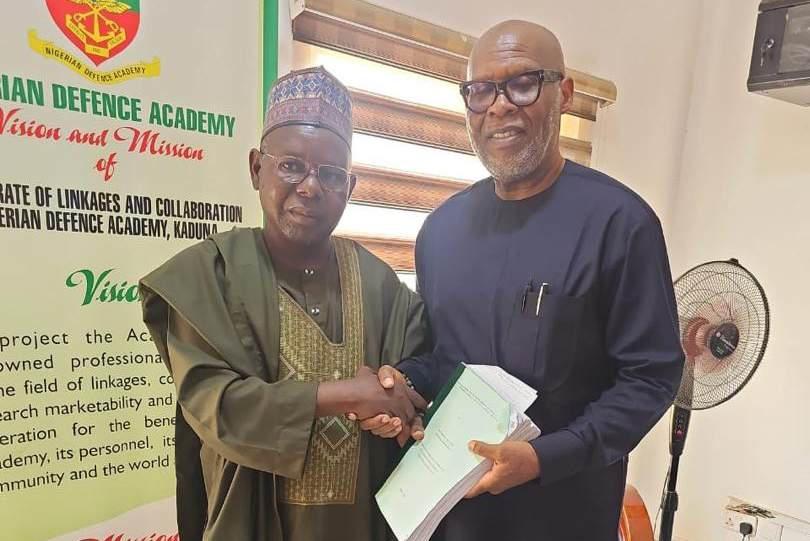
Former Director, Corporate Communications Department, Central Bank of Nigeria (CBN), Osita Nwanisobi (right) and External Examiner, Prof. Salisu Bala, of ABU, Zaria, during Nwasinobi’s successful defense of his doctoral thesis for the award of Ph.D. in Leadership and Strategic studies, at the Nigerian Defence Academy, Kaduna….recently
as limited industrial capacity, weak logistics, and a reliance on raw commodity exports, which tariff reductions alone cannot address," he added, Africa's exports to China are dominated by raw materials, such as cobalt, seen here in a factory in the Democratic Republic of Congo
OPPOSITION, LABOUR DEMAND ACTION AS TINUBU DECLARES HARDSHIP, INSECURITY EMERGENCY
Nigeria where the citizens can sleep with their two eyes closed and ultimately achieve the Decent Work Agenda as envisioned by the International Labour Organisation (ILO).
"To us as a government, the Decent Work Agenda is not just an international framework, it is a national imperative as it aligns with our national priorities, as well as a vision of a Nigeria where hard work is rewarded, where opportunities devoid of all forms of discrimination are accessible, and where every citizen can attain their full potential," he added.
President Tinubu said that government has launched the Community Protection Guards Initiative in partnership with State governments to further support the already existing legal and institutional security frameworks.
Speaking on job creation efforts, Tinubu said the federal government has directly created over 600,000 jobs for engineers, artisans, and labourers through the development of various infrastructures such as the Lagos-Calabar Coastal Highway, the Sokoto-Badagry Superhighway, and the Ajaokuta-Kaduna- Kano Gas pipeline.
He also said that the Presidential CNG Initiative has converted over 100,000 commercial vehicles, cutting transportation costs for workers by 40 percent, while N200 billion MSME intervention Fund has kept over 1 million small business afloat, protecting jobs in the informal economy.
In a joint May Day speech, delivered by the presidents of the NLC, Joe Ajaero and TUC, Festus Osifo, expressed concern over the level of insecurity and soaring inflation in the country. They said they are setting an agenda for politicians ahead of the 2027General election insisting that any candidate or party that refuses to commit to workers rights and keys issues like security, free education, public healthcare will not receive support of the workers. They lamented that many recent policies appear "to have achieved narrow technical targets at the expense of the Nigerian worker, the domestic producer, and the long-term development of the nation".
According to the Labour movement, the challenge lies in the structural weakness in the economy; one that produces Paper growth without jobs,
stability without prosperity, and reform without relief.
"Macroeconomic stability, we must emphasize, cannot be reduced to inflation rates, exchange rates, or capital inflows alone. True stability is reflected in secure jobs, rising wages, thriving local industries, and a government capable of providing essential services".
"What is urgently required is a shift toward a productiondriven economic strategy; one that prioritizes domestic industry, supports agriculture, and provides affordable credit to small and medium enterprises," they said.
While welcoming recent review of allowances accruable to federal civil servants as commendable, the labour centres urged federal government to urgently address the outstanding demands of the non- teaching staff of the federal tertiary institutions.
Continued online
CHANGE OF NAME
I, formerly known and addressed as OPEYEMI ABDULRAHEEM BELLO, now wish to be known and addressed as OPEYEMI BELLO. All former documents remain valid. General public should please take note.




In a banking landscape increasingly defined by scale, competition and digital disruption, the Managing Director/Chief Executive Officer of Nova Commercial Bank Limited, Mr. Jude Anele, says his financial institution is charting a different course — one rooted not in size, but in relevance. Fresh from a successful recapitalisation exercise, Anele insists the bank’s strategy is not about survival or aggressive expansion, but about building preference in a crowded market by focusing on the real drivers of Nigeria’s economy, which is everyday Nigerians, small businesses and underserved communities. For him, the future of banking lies beyond traditional collateralbased lending. Instead, Nova is pivoting towards cash-flow intelligence, relationship banking and deeper customer understanding. Anele notes that millions of SMEs, traders and operators across Nigeria remain excluded from formal banking, despite their central role in economic activity. Bridging this gap, he explains, is both a commercial opportunity and a national imperative. The bank’s expansion strategy, therefore, is deliberately targeted at areas where business demand is strong but banking services are limited. At the core of this approach is a ‘phygital’ model that seamlessly integrates digital innovation with physical presence. For Anele, digital transformation is the backbone of the bank’s entire operation. eromosele Abiodun brings the excerpts:
With the completion of recapitalisation, how would you describe Nova Commercial Bank’s new strategic position within Nigeria’s banking landscape?
Our position is clear: a well-capitalised, relationship-driven mid-tier commercial bank with the advisory depth of a merchant bank and the reach of a commercial institution. We are not chasing size; we are building preference. Our recapitalisation was not a survival exercise; it was the foundation for a deliberate growth agenda. We enter this phase with capital, a commercial licence, a strengthened leadership team, and a strategy built around the customers. Most commercial banks have underserved SMEs, retail clients, and business corridor.
What specific gaps or opportunities is the bank now better positioned to address post-recapitalisation?
Three gaps, specifically. First, SME credit, particularly in sectors and corridors where collateral-led credit models have excluded creditworthy businesses. Second, retail banking, serving everyday Nigerians through our Phygital model in communities where we already have commercial roots. Third, trade and supply chain finance, an area where our merchant banking heritage gives us structural advantage. These are not generic ambitions. They are specific gaps we have mapped and are building product solutions around.
How will the additional capital be deployed across lending, technology, and expansion priorities?
Three simultaneous tracks. Lending: we are growing our loan book with deliberate focus on SME and commercial credit, structured around cash flow intelligence rather than collateral alone. Technology: our ‘Phygital’ infrastructure requires continuous investment, our mobile platform, core banking systems, and data analytics capability are all being upgraded. Expansion: we are opening nine additional branches this year. These are not competing priorities, they are complementary. Every branch opening is supported by digital infrastructure; every technology investment improves the quality of our lending decisions.
To what extent will recapitalisation shift your risk appetite, particularly in corporate versus retail lending?
Recapitalisation expands our risk capacity, it does not change our risk philosophy. We are a relationship bank. That means our risk appetite is guided by the quality of our understanding of the borrower, not just the size of the ticket. In corporate banking, we will deepen existing relationships and selectively grow new ones where our advisory model adds value. In retail, our mass customization approach allows us to assess risk at category level with merchant banking depth — which is more intelligent than a generic retail scoring model. We are not choosing between corporate and retail. We are building a disciplined book in both.
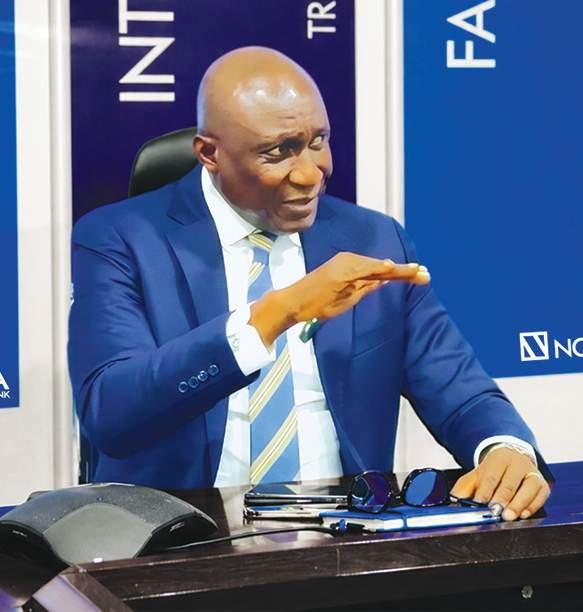
• Anele
What sectors will you prioritise for credit expansion, and why?
Five sectors, deliberately chosen. Manufacturing, Agro-processing — one of Nigeria’s highest-potential, most underfinanced sectors. Trade and commerce — the traders who move Nigeria’s economy have been chronically underserved by formal banking. Logistics — the invisible infrastructure of the Nigerian economy, with financing needs that standard bank products do not address well. And professional and technology services — a growing sector generating significant economic value with largely intangible assets that require creative credit structuring. Each of these sectors maps to communities where Nova Bank already has established relationships.
How is the bank balancing aggressive growth ambitions with prudent risk management in a volatile macroeconomic environment?
By not treating them as opposites. Our board-level risk management committee sets the risk appetite framework within which management operates. We have a tiered approval authority structure that ensures no single decision-maker carries disproportionate exposure. And our merchant banking heritage has trained us to understand that the most dangerous loan is not the large one — it is the one you do not understand. In a volatile macro environment, the answer is not to stop lending. It is to lend more intelligently — which is what our advisory model is built to do.
How does Nova plan to differentiate itself in an increasingly crowded and competitive banking sector?
On three dimensions that are genuinely hard to replicate. First, advisory intelligence — six years of merchant banking has built an institutional capability for understanding businesses deeply that most commercial banks simply do not have. Second, community presence with institutional rigour — we are entering markets with pre-built relationships and trust, not starting from zero with a branch and a marketing campaign. Third, mass customization — the ability to serve thousands of customers with the depth of understanding that was previously only available to individual merchant banking clients, delivered through technology. These are not marketing positions. They are structural advantages.
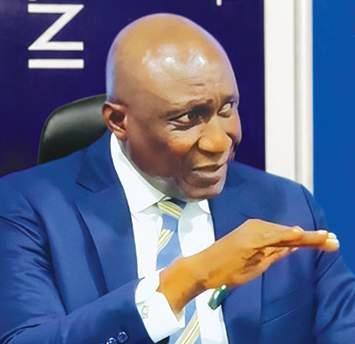
Are there plans to expand geographically within Nigeria?
Yes — and we are already executing. We currently operate seven branches and are opening nine additional locations before year-end, which nearly triples our physical footprint in Seven months. The expansion is concentrated where our existing commercial relationships are deepest and where the gap between banking supply and business demand is most acute. Each new branch is a deepening of an existing relationship, not an attempt to enter an unfamiliar market. Beyond that, our ‘Phygital’ model extends our effective reach far beyond our branch count — any Nigerian with a smartphone can
access Nova Bank wherever they are.
How critical is digital transformation to your post-recapitalisation strategy? It is not a strand of the strategy — it is the delivery infrastructure of the entire strategy. Our ‘Phygital’ model is the architecture through which we serve the full spectrum of Nigerian banking customers: those who want a seamless mobile-first experience and those who need the reassurance of a relationship manager in a branch. We are investing in core banking modernization, mobile platform development, data analytics for credit intelligence, and the digital onboarding infrastructure that will allow us to scale our customer base without proportionally scaling our cost base. The debate between
The Opekete Foundation yesterday, announced the opening of applications for the 4th Florence Bamidele Makanjuola (FBM) Scholarship for Women, the Foundation’s flagship initiative supporting academically promising young women from financially disadvantaged backgrounds across Nigeria.
Now in its fourth cycle, the FBM Scholarship has matured from a scholarship fund into a structured pathway. Each scholarship covers tuition for studies in Nursing, in Science, Technology, Engineering and Mathematics (STEM) education — but the award itself is only the entry point.
A statement yesterday, explained that every beneficiary the Foundation’s structured mentorship programmes are organised around a single guiding theme: Identity. Strategy. Excellence.
Scholars are paired with experienced women across the professions, supported through one-on-one sessions and full-cohort group work on financial literacy and career formation, and engaged in the Foundation’s national platforms long after the cheque clears.
Since the formalisation of the scholarship programme in 2021, the Foundation has reviewed more than 3,300 applications and awarded 47 scholarships across three cohorts — a deliberately measured pace, chosen to keep the depth of mentorship and follow-through that defines the FBM model. The fourth cohort will draw on lessons from those previous cycles, with strengthened financial-need verification and an expanded
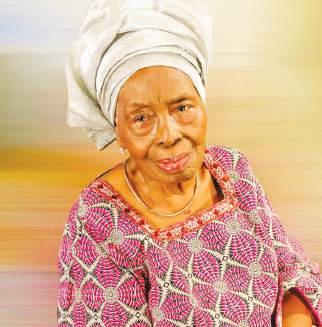
merit-based screening process designed for fairness, transparency, and rigour.
“The choice of fields is biographical before it is strategic. The scholarship is named in honour of the late Mrs Florence Bamidele Makanjuola, a nurse, educator, and mentor whose life’s work was the formation of young women, and whose calling shaped the disciplines the Foundation now funds.
“One of the first women of Imesi-Ile, Osun State, to be formally educated, Mrs Makanjuola travelled to the United Kingdom on scholarship to train as a nurse, an opportunity that defined her life and informed the kind of institution she would later build. She founded the Opekete Foundation in 2015 to expand educational access for indigent girls of Imesi-Ile origin and,
digital-first and branch-led banking is a false binary. We are engineering both into a single coherent experience.
How do you intend to improve cost efficiency while scaling operations?
Through the deliberate architecture of our expansion model. We are not building a high-cost branch network — we are building a ‘Phygital’ model where digital channels carry the majority of transaction volume and branches serve as relationship anchors for higher-value interactions. That ratio keeps our cost-to-serve per customer significantly lower than a branch-heavy model. We are also leveraging technology to automate routine processes — account opening; as witnessed during the media parley, basic customer resolution, compliance monitoring — which allows our human capital to focus on the advisory and relationship work that actually differentiates us. Sound equipment and shared infrastructure are also being treated as institutional capital investments rather than one-off event costs. Efficiency and quality are not in tension for us.
In what ways will recapitalisation enhance customer experience and service delivery?
Directly, in three ways. First, product expansion — a stronger capital base allows us to offer a broader range of products, including longer-tenor credit facilities and more complex trade finance structures, that were previously outside our capacity. Second, technology investment — our ‘Phygital’ platform improvements are capital-funded, and they directly improve the speed, reliability, and quality of every customer interaction. Third, talent — recapitalisation allows us to attract and retain the quality of talent that delivers genuinely differentiated service. But I want to be clear: enhanced customer experience at Nova Commercial Bank is not primarily a function of capital — it is a function of culture. We have built a culture of anticipatory service, where the standard is not responding well to customer problems but identifying and solving them before they arise.
What governance and internal control frameworks have been strengthened to match the bank’s new scale?
in time, for young women across Nigeria.
“Following her passing, the Foundation was formally restructured in 2021 under the stewardship of her granddaughter and trustees into the institutional platform it is today, with scholarship provision, mentorship, advocacy, and community engagement working as parts of a single mandate,” it stated.
What distinguishes the FBM Scholarship is the conviction that financial support, on its own, is not enough. Nigeria has many scholarship programmes; few are designed as long-term institutional commitments to a single, narrowly-defined cohort. The Foundation’s focus — only women, only in Nursing and STEM education and allied fields, only those with demonstrated financial need — is the discipline that allows depth.
Beneficiaries are supported across the duration of their studies, not for a single semester, and remain engaged through the alumnae of the Florence Scholars Programme. They are also active participants in the FBM Roundtable, the Foundation’s national platform for policy dialogue on girl-child education, and in the Foundation’s community and school outreach work in underserved areas, which expanded into rural Imesi-Ile, Osun State, the founder’s indigenous city in 2025.
The 4th cohort will be the first to enter under a fully matured programme architecture: a multi-year financial commitment, a structured mentorship curriculum, a national convening platform, and an outreach footprint that now reaches communities scholarship programmes seldom touch. Three cycles in, the institutional infrastructure is strong enough to expand the programme’s reach without compromising its quality.
Our governance architecture was not built for our previous scale — it was built for the scale we intend to become. Our board committees — covering risk, audit and compliance, finance, nominations, and human resources — operate as active oversight mechanisms, not ceremonial structures. Each is chaired by a non-executive director with specific domain expertise. We have a tiered approval authority framework that defines decision-making boundaries at every level of the organization. And our whistleblowing mechanism is domiciled with an independent third-party firm — entirely insulated from institutional influence. Corporate governance is not a compliance exercise for us. It is the structural conviction on which everything else is built. Any institution that lacks it will eventually fail — regardless of its capital position.
How are you preparing the bank to withstand external shocks such as currency volatility, inflation, and policy tightening?
Through four disciplines. First, portfolio diversification — our sectoral and geographic spread reduces concentration risk. Second, conservative foreign currency management — we maintain FX positions within tightly controlled risk limits, and our lending in foreign currency is matched to borrowers with genuine FX-earning capacity. Third, stress testing — our risk management framework includes regular scenario analysis against macro shocks, and our capital buffers are calibrated against those scenarios. Fourth, relationship depth — in a volatile macro environment, the banks that survive are the ones whose clients pick up the phone and talk to them honestly about emerging difficulties, rather than hiding problems until they become defaults. That kind of trust is built by relationship banks, not transactional ones. It is one of our most important risk management tools.
See concluded part on www.
Governor Biodun Abayomi Oyebanji’s infrastructure and institutional reforms have repositioned Ekiti as Nigeria’s emerging tourism powerhouse, writes Gbenga Sodeinde
In three years, Governor Biodun Abayomi Oyebanji has moved tourism in Ekiti State from the corner of official rhetoric to the centre of practical governance. His administration has not treated tourism as mere dancing, sightseeing, festivals and slogans. It has treated tourism as an economy, a policy field, a value chain, an investment window, a branding platform and a tool for community development.
What has happened in Ekiti under Oyebanji is the result of deliberate leadership, policy clarity, infrastructure support, institutional strengthening, destination promotion, private-sector confidence and a rare understanding that tourism cannot grow by noise alone. It grows by roads, airports, hospitality standards, investor assurance, community participation, cultural pride, public safety, destination opening, legal framework and consistent marketing.
One of the most strategic and courageous steps taken by Oyebanji was the sequestering of tourism from the Ministry of Arts and Culture and the creation of a dedicated Ekiti State Bureau of Tourism
Development under his direct supervision. He appointed a director general to oversee it. This was a deliberate governance reform which freed tourism from the usual bureaucratic congestion and gave it the executive attention required to function as an economic driver.
By creating the Bureau and placing it under his direct watch, the governor sent a clear message that tourism in Ekiti would no longer be treated as an appendage, a ceremonial department or a cultural afterthought. It would be treated as a serious development sector deserving speed, visibility, professional leadership and direct access to decision-making.
This single administrative decision became the foundation upon which many of the state’s tourism achievements were built. It gave Ekiti tourism speed. It gave it identity. It gave it a voice. It gave it access. It gave it direction. It created the institutional platform through which the Tourism Policy, Tourism Development Master Plan, destination opening, World Tourism Day celebrations, awards, branding, site promotion, stakeholder engagement and national visibility
were made possible.
This is why, within the period under review, Ekiti has become one of the most discussed subnational tourism models in Nigeria. The state has won repeated recognition as a highly active tourism destination, while Oyebanji himself has been honoured by respected travel, culture and tourism platforms, including the Travellers Award, Goge Africa Award and the South Africa tourism award. Ekiti also emerged as Most Active Tourism State in 2023, 2024 and 2025, a rare consistency which confirms that the state’s tourism rise is not a flash in the pan, but the product of sustained policy, visibility and action.
The significance of these awards is not in the plaques alone. Awards are only meaningful when they reflect evidence. In Ekiti’s case, the evidence is visible: the completion and commencement of commercial flight operations at the Ekiti Agro-Allied International Cargo Airport; the completion and inauguration of the Ado-Ekiti Ultra-Modern Bus Terminal; the activation of Ikogosi Warm Springs Resort through privatesector concession; the hosting of World Tourism
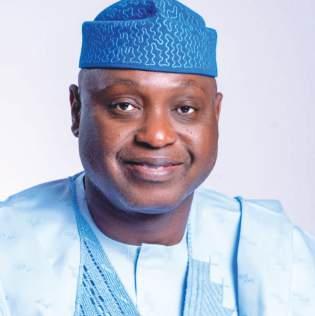
Day; the development of the Ekiti State Tourism Policy; the approval of the Ekiti State Tourism Development Master Plan 2025–2035; the opening up of tourism sites; the branding of Ekiti as a serious destination; and the creation of a tourism atmosphere across the state.
The Director General of the Nigerian Tourism Development Authority (NTDA), Ola Awakan, has paid a courtesy visit to the Igbobi-Sabe Kingdom, Yaba, as part of efforts to strengthen collaboration for cultural tourism development.
The NTDA delegation was received by His Royal Majesty, Oba Owolabi Adeyemi Adeshina Adeniyi (Maforunyomi I), the Onisabe of Igbobi-Sabe Kingdom, Yaba; Olori Mosunmola Anike Adeniyi; the Bales of the kingdom; and members of the White Cap Chiefs.
The visit commenced with a vibrant cultural procession by the revered Gelede Masquerades, showcasing the rich heritage of the community.
Addressing the delegation, the monarch applauded NTDA boss for honouring the invitation and commended his efforts in leveraging his office to drive innovation within
Nigeria’s tourism sector.
The monarch applauded the Awakan for his initiatives towards repositioning the country’s cultural heritage on a global stage.
Oba Adeniyi further expressed his interest in fostering a strategic partnership between the Igbobi-Sabe Kingdom and the NTDA, emphasising the community’s readiness to actively participate in ongoing efforts to develop and promote tourism across the country.
The NTDA boss stated that effective storytelling was essential to unlocking the value of cultural heritage, explaining that documenting and sharing the stories behind cultural elements such as the Gelede Masquerades and the ancient iroko trees would enhance their appeal to both local and international tourists.
Awakan further proposed featuring IgbobiSabe’s tourism assets in the ongoing NITOUREY Project, the first-ever tourism dedicated streaming platform in Africa aimed towards showcasing Nigeria’s rich and vibrant tourism assets to the world.
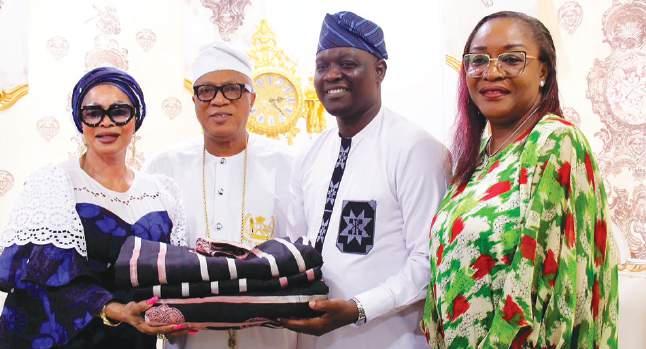
The Kano State Zoological and Wildlife Management Agency (KAZOWMA) has put measures in place to meet international standards with the state government vowing to reposition it as a major tourism and recreation hub in Northern Nigeria.
The newly appointed Managing Director of the agency, Musayyib Ungogo, who disclosed this said the move was part of a broader plan to diversify the state’s economy through culture and tourism.
He said the present administration under Governor Abba Kabir Yusuf is committed to a full revitalisation of the Audu Bako Zoo to restore its status as a premier tourism destination in Northern Nigeria.
In his inaugural address, Ungogo outlined plans to upgrade facilities at the Kano Zoological Garden, renovate existing infrastructure, introduce new animal species, and prioritise staff welfare to improve overall service delivery.
According to him, the plan includes restocking the zoo with more animals to replace depleted species and improve biodiversity.
Ungogo noted that the new acquisitions would be guided by conservation standards and the zoo’s carrying capacity.
“The government will upgrade feeding systems, expand veterinary services, and retrain handlers to meet modern wildlife management practices.”
The Managing Director promised to revamp and renovate enclosures, fix water and drainage systems, and upgrade visitor amenities such as walkways, rest areas, and toilets thorough out the zoo.
He further explained that the goal is to boost visitor numbers and revenue by making the zoo safer, cleaner, and more attractive to families, schools and tourists, adding that the administration expected the first phase of improvements to be visible within the coming months.
Kano zoological garden was established in 1972 and named after former military governor Audu Bako, the zoo was once one of Nigeria’s leading wildlife parks.
At its peak, it housed lions, elephants, ostriches, and rare antelopes, drawing school excursions and tourists from across Northern region and beyond.
Visitor numbers have drastically dropped in recent years due to poor maintenance, reports of animal deaths and competition from newer leisure spots across the country.
The former Director General of the National Council for Arts and Culture (NCAC), Otunba Olusegun Runsewe, has commended the National Association of Nigerian Travel Agencies (NANTA) for its contributions to the growth on tourism in Nigeria as the association marked its 50th anniversary. Runsewe in a statement, praised NANTA for understanding the role of journalism and travel journalists in the development of tourism in any country.
He applauded NANTA for recognising the contributions of the Association of Nigerian Journalists and Writers of Tourism (ANJET), and the Managing Director of Cre8tive Naija Media Group, Mr. Frank Meke, to the growth and development of tourism in Nigeria.
He said, “I am very happy that a body like NANTA understands the role the
travel journalists play in developing and marketing of a country as a destination. Specifically in Nigeria, I have been part of the industry for many years, and I understand the key role journalism and the travel journalists play in shaping perception and helping to create necessary awareness for the growth of the sector. Generally, the travel journalists craft narratives that inspire interest in a destination. Their contributions help to grow local economy and boost businesses.
“ANJET, for many years, has been dogged and resolute in the pursuit of growth and development of Nigerian tourism. It was this understanding that helped shaped my positive partnership and interaction with them while in office, and Nigeria was better for it. Together we positively put the country in the world tourism map. I am happy NANTA understands this and has honoured them with the award.”
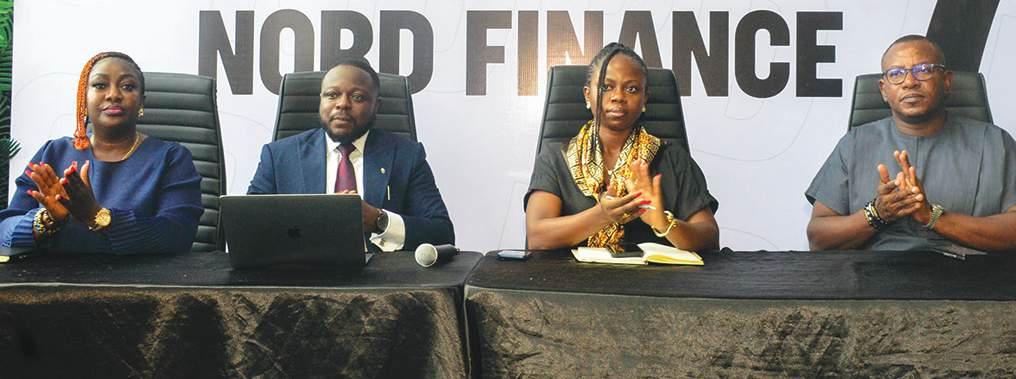
Nord Automobiles is targeting a major shift in Nigeria’s auto market with the rollout of a single-digit interest vehicle financing scheme, offering loans from as low as nine per cent to make brand-new cars more accessible to individuals and businesses.
The indigenous automaker said the initiative was designed to unlock demand for new vehicles and reduce the dominance of imported used cars, popularly known as Tokunbo.
The indigenous automaker unveiled the initiative, tagged Nord Finance, in Lagos on Tuesday, saying the plan would make vehicle ownership easier for individuals and businesses through flexible repayment options.
Chairman and Chief Executive Officer of Nord Automobiles, Mr Oluwatobi Ajayi, said the company was determined to change the long-standing culture of relying on used vehicles, which he described as costly to maintain, unreliable, and often unsafe.
“Our goal is to make more Nigerians drive brand-new vehicles,” Ajayi said.
“For too long, Nigerians have been used to Tokunbo cars. While tokunbo cars have played a role in improving access to mobility, there are growing concerns around their long term reliability, safety standards, and overall cost of ownership.
As we look to the future, it is important to gradually transition towards more structured, reliable, and locally supported vehicle solutions that can better serve Nigerians and strengthen our economy.
He said the financing package offers interest rates starting from 9%,
and repayment tenures of up to 48 months.
According to him, the arrangement allows buyers to spread the cost of a new vehicle over several years rather than paying huge lump sums upfront.
“This means that instead of looking for N10m or N15m at once to buy a vehicle, you can pay a smaller amount monthly and drive a reliable brand-new car,” he said.
“You do not have to worry about frequent breakdowns or visiting mechanics regularly, like many Tokunbo owners do.”
Ajayi explained that the scheme is being executed through Nord Finance Limited, a subsidiary of Nord Automobiles, in partnership with a commercial bank.
He noted that prospective buyers can access financing for any of Nord’s 11 passenger and commercial vehicle models, as well as four models under its electric vehicle brand, Tavet.
Nigeria remains one of Africa’s largest automobile markets, with annual demand estimated at about 500,000 vehicles. However, only a small percentage of that figure represents brand-new purchases, while the majority are imported used vehicles.
Ajayi said the company hoped the financing package would help convert a portion of the used-car market into demand for new, locally assembled vehicles.
“Nigeria is a very big market of over 200 million people, with demand for about 500,000 vehicles yearly. Unfortunately, only around 14,000 to 20,000 of those are brand-new vehicles, depending on the data source,” he said.
NThe Jetour X70 Plus distinguishes itself as a featurepacked SUV designed to deliver enhanced safety, comfort and performance for both drivers and passengers.
Built as an upgrade to the regular X70, the model combines advanced technology with premium convenience features that place it among the most well-equipped SUVs in its class.
To support ownership experience, Jetour Nigeria has accredited dealers across the country, including Elizade Nigeria Limited, New Era AutoVehicle Services Limited, Kojo Motors, Germaine Auto Centre, Tab Autos Limited, R. T. Briscoe Motors and Mandilas Autos.
Safety is a major highlight of the X70 Plus. The SUV comes fitted with an extensive airbag system, including driver, passenger, seat and curtain airbags, providing comprehensive occupant protection.
Electronic safety technologies such as the Vehicle Stability Control System help maintain balance on different road conditions, while HillStart and Hill-Descent Assist Control improve confidence on inclines.
The Electronic Parking Brake and Auto Hold system further enhance ease of use, especially in traffic.
Parking and maneuvering are made easier through a 360-degree panoramic camera system with 2D and 3D views, supported by front and rear parking sensors.
Security is reinforced with features such as

an auto lockout system and automatic door locking. The SUV’s 20-inch alloy wheels not only contribute to its bold stance but also improve ground grip and clearance across varying terrains.
The X70 Plus is equipped with advanced driving and convenience systems, including an electronic gear shifting system, smart entry and push-start ignition. Drivers can choose between Eco, Normal and Sport driving modes, while cruise control adds comfort during long journeys.
Inside the cabin, technology and comfort are brought together through a 10.23-inch LCD touchscreen with phone mirroring,
Bluetooth connectivity and a wireless charger. A panoramic roof enhances cabin openness, while the digital touchscreen air-conditioning system with automatic rear vents and air purification ensures a pleasant environment.
An eight-speaker audio system delivers improved in-car entertainment. Additional comfort features include power-adjustable seats with heating and ventilation, as well as electrically adjustable, foldable and heated outside mirrors for improved visibility in adverse weather.
LED headlamps and fog lamps enhance safety during night driving and in poor visibility conditions.
As part of activities marking its 30th Anniversary, Motoring World has called for urgent reforms to address the persistent lack of data transparency and restricted media access in Nigeria’s automotive industry.
Speaking ahead of the milestone celebration scheduled for June 4, the Publisher of Motoring World magazine and Chief Executive Officer of Motoring World Communications Limited, Femi Owoeye, said the growth and global competitiveness of Nigeria’s auto sector are being undermined by limited access to credible and timely information.
“For three decades, Motoring World has documented the evolution of Nigeria’s automotive industry. However, one major challenge has remained constant, the scarcity of reliable data and the culture of restricted access to information,” Owoeye stated. He noted that unlike more transparent markets such as South Africa, where industrywide sales figures are published regularly, Nigeria’s auto ecosystem operates largely without publicly available performance data.
“Automobile companies, franchise holders, and dealers continue to treat sales figures as confidential, often citing competitive reasons. While this may appear strategic, it ultimately limits industry visibility, weakens investor confidence, and undermines informed decision-making,” he added.
Owoeye also expressed concern over the role of key institutions, including the National Bureau of Statistics (NBS), whose automotive-related data releases are often delayed and limited in scope.
“As of the end of April 2026, first-quarter data is yet to be released. Meanwhile, there is no comprehensive reporting on local vehicle production or sales. This creates a significant gap for journalists, analysts, and policymakers,” he said.
He further highlighted the issue of selective media access, noting that not all motoring journalists, including members of the Nigeria Auto Journalists Association, are invited to key press briefings and industry engagements.
“This has resulted in a two-tier information system, where some journalists have direct access while others rely solely on press releases. That is not healthy for journalism or for the industry,” Owoeye stressed.
According to him, the consequences of these challenges extend beyond the media, affecting consumers, investors, and the broader automotive ecosystem.
“Without credible data and inclusive access, journalism becomes speculative, consumers remain uninformed, investors grow cautious, and policymakers operate with limited insight. Ultimately, the industry itself loses opportunities for growth and global relevance,” he said.
He urged stakeholders, including the Nigeria Automobile Manufacturers Association (NAMA), to establish a framework for periodic publication of industry data, while calling on the Federal Government of Nigeria to incentivize transparency through policy measures.
“We believe that transparency is not a threat to competition; it is a catalyst for growth. The future of Nigeria’s automotive industry depends on how well we embrace openness, accountability, and collaboration,” Owoeye concluded.
Motoring World’s 30th Anniversary celebration, which has already attracted the backing of leading auto industry stakeholders as well as government functionaries, is expected to bring together key stakeholders from across the automotive value chain, including manufacturers, assemblers, policymakers, and industry experts.
The Chairman of the Senate Committee on Finance, Senator Sani Musa, speaks with Sunday Aborisade on Nigeria’s fiscal health, revenue reforms, debt sustainability, and expectations from the new leadership of the Ministry of Finance. Excerpts:
Nigeria continues to grapple with revenue shortfalls and rising debt. How would you assess the country’s current fiscal health, and what urgent corrective measures are required?
Nigeria’s fiscal position is under strain, but it is also undergoing a necessary correction driven by ongoing reforms. For years, structural inefficiencies—particularly fuel subsidies, weak revenue mobilisation, and foreign exchange distortions—masked the true state of public finances while worsening debt vulnerabilities. The current reforms are restoring fiscal credibility. Subsidy removal, exchange rate unification, and efforts to widen the tax base are improving transparency and strengthening government capacity to meet obligations more sustainably.
The priority now is to consolidate these gains by accelerat- ing non-oil revenue through efficient tax administration, deepening expenditure discipline, and channeling savings into high-impact sectors such as infrastructure, agriculture, and social protection. Rebuilding investor confidence through policy consistency and institutional strengthening is equally critical.
With inflation and cost-of-living pressures rising, how can fiscal policy better complement monetary efforts to stabilise the economy?
There must be strong coordination between fiscal and monetary policy. Fiscal policy should prioritise targeted relief instead of broad subsidies by expanding social safety nets, supporting food production, and easing supply bottlenecks. Government spending must be disciplined and focused on productivity-enhancing investments that increase supply and reduce structural inflation. Improving revenue efficiency is also key to limiting deficit financing and easing pressure on monetary policy. Ultimately, fiscal policy should protect vulnerable groups, boost domestic production, and reinforce macroeconomic stability.
What structural weaknesses have persisted in Nigeria’s revenue framework?
Three major issues stand out: overdependence on oil revenues, a narrow and inefficient non-oil tax base, and
weak remittance performance from government-owned enterprises.
These challenges persist due to policy inconsistency, weak institutional capacity, entrenched subsidy regimes, and resistance to reforms that promote compliance and broaden taxation.
Nigeria’s tax-to-GDP ratio remains low. What reforms are being considered to expand the tax base?
The focus is on expanding the tax base, not increasing tax rates. This includes bringing more participants—especially from the informal sector—into the tax system through simplified frameworks, harmonising multiple taxes, and digitising tax administration to reduce leakages.
At the same time, low-income earners will be protected through exemptions, while nuisance taxes will be elimi- nated.
How can the government plug revenue leakages across key sectors?
Technology, transparency, and enforcement are critical. In oil and gas, there must be real-time tracking and full remittance enforcement. In customs, 100 per cent cargo scanning and automated systems should reduce human discretion.
For government enterprises, strict compliance with remittance obligations and regular audits are essential. Stronger data integration and sanctions will ensure all due revenues are captured.
What role does technology play in improving tax compliance?
Technology is central. Integrated databases across agencies can create a unified taxpayer view, helping to detect under-reporting. Digital tools such as e-filing, e- invoicing, and automated payments reduce inefficiencies and opportunities for evasion. This shifts the system from discretion-based to data-driven, improving transparency and revenue collection.
What are your expectations of the new Minister of Finance, Taiwo Oyedele?
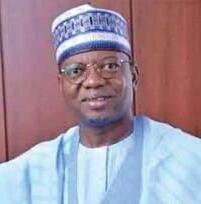
The expectation is that he should deepen fiscal reforms by expanding revenue through efficiency rather than increasing the tax burden. There must also be decisive action to plug leakages across oil, customs, and public enterprises.
Restoring investor confidence through policy consistency and transparency is critical. Debt management must also be handled prudently to avoid crowding out growth.
Given his strong background in tax policy and public finance, I expect him to sustain reforms that promote stability and economic growth.
How can the Ministry of Finance and the National Assembly collaborate more effectively?
Collaboration should begin from the policy design stage through structured consultations. There must be alignment on fiscal priorities, anchored on the Medium-Term Expenditure Framework.
Improved technical coordination and joint monitoring of implementation will also ensure timely passage and effective execution of reforms.
For Patricia Luhanga, Corporate Affairs Manager at the Electoral Commission of Zambia, leadership is not defined by titles or certifications, but by the ability to translate ideas into measurable institutional impact. Fresh from completing Cohort Five of the AIG Public Leaders Programme (PLP), Luhanga reflects on how the executive training reshaped her approach to public service, strengthened her reform instincts, and equipped her to drive systemic change within Zambia’s electoral framework. She spoke on leadership, reform, and why public servants must reclaim the discipline of reflection. Funded by the Aig-Imoukhuede Foundation and delivered by the Blavatnik School of Government at the University of Oxford, the programme is designed to empower senior public servants across Africa with the tools to initiate and sustain reforms that improve governance and service delivery. James e mejo brings the excerpts.
What was your experience at the AIG Public Leaders Programme?
Professionally, it has been transformative. It sharpened my ability to move beyond identifying institutional gaps to designing systems that anticipate risk rather than respond to crises. It also shifted my approach from managing communications to structuring communication governance.
On a personal level, it required humility. Interacting with public servants from across Africa revealed that many of our reform challenges are shared, regardless of sector or geography. It reinforced the idea that leadership is less about authority and more about disciplined practice.
Overall, the experience fundamentally reorganised how I think, plan, and operate within my institution.
What informed your participation in the programme, and how has your experience enhanced your capacity as a public officer?
I serve as Corporate Affairs Manager at the Electoral Commission of Zambia. My role sits at a critical point in public service, ensuring that institutional decisions are not only technically sound but also clearly understood and trusted by the public. The AIG Public Leaders Programme is a leadership development initiative for senior public servants across Africa. It brings together reform-oriented leaders to strengthen their capacity to diagnose institutional challenges, design practical solutions, and implement sustainable reforms.
I joined Cohort Five at a time when I was less interested in credentials and more interested in traction. In many cases, we understood what needed to be done institutionally, but lacked a structured space to pause, rethink systems, and act differently. The programme provided that balance between reflection and

execution.
What were the most important leadership lessons you gained from the programme?
One of the most impactful concepts was “leading from the middle.” In many public institutions, influence does not always reside at the top, yet meaningful change cannot emerge from the margins alone. Those positioned between strategy and implementation play a critical role in translating vision into systems and systems into practice.
Three elements stood out for me: the importance of structured diagnosis before reform; need for systems thinking to understand interconnected challenges, and focus on implementation within real-world constraints. The programme reinforced that leadership is not dependent on title. Sustainable reform is system-driven, not personality-driven.
What is your reform project about, and what makes it significant?
My capstone project focused on developing an Electoral Communication Risk Management Playbook for Zambia. The electoral environment is evolving rapidly, with increasing scrutiny and shifting public narratives. Traditional communication approaches are no longer sufficient to manage emerging risks such as voter register concerns, delimitation debates, and questions around electoral credibility. The key insight was that communication risk is cyclical—issues that are not addressed early tend to escalate later. To address this, we developed a Risk-Based Strategic Communication System covering the entire electoral cycle. It includes structured risk identification, escalation pathways, pre-approved messaging, interdepartmental coordination protocols, and performance benchmarks tied to response time.
We piloted the system during the Inspection of the Provisional Register of Voters, ensuring consistent and accurate messaging at the community level. Ultimately, credibility in electoral processes is built on predictability, transparency, and timeliness.
What insights emerged for you during the implementation of the project?
A few lessons stand out. First, the importance of testing before full implementation. Simulations helped us validate escalation thresholds and response timelines. Second, the need to formalise processes. Clearly defined roles and structured workflows replaced what had previously been ad hoc coordination.
Third, reforms must remain adaptable. What began as a communication initiative evolved to include automated tracking mechanisms to strengthen accountability. Finally, reform does not always require new resources. We started with internal capacity, which later attracted additional support.
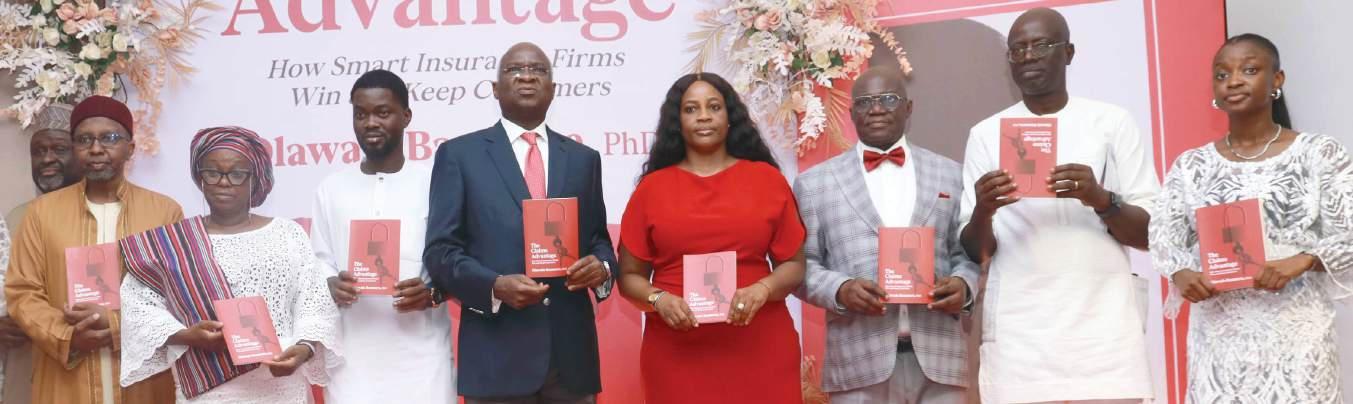
Claims advantage, claims settlement, claims management, claims processing: these are definitely familiar terms to those involved in the business of insurance, especially policyholders who seek to minimize risk, and manage uncertainties, by saving for the rainy day with the insurer whose main task is to take on large risks in exchange for otherwise small premiums. We live, inevitably, in a world of risks and uncertainties and as the world becomes more problematic with crises unpredictable either in business or personal lives, so does the role of insurance become more important. Insurance provides the individual with a safety net when life takes an unexpected turn, it is the art of preparedness, an act of hope, with the relationship between the insurer and the insured at the very centre of a significant interraction.
In this book, ‘The Claims Advantage: How Smart Insurance Firms Win and Keep Customers,’ the author, Dr. Olawale Banmore argues that claims matter, and explains why, and how claims can be managed efficiently and professionally to secure a competitive advantage.
When the unpredictable happens, a car that runs into an accident, a house that burns, a container that gets stuck at sea, in let’s say the Strait of Hormuz, as a result of conflict between Iran, Israel and the United States, sudden death in the family, the policyholder, or the beneficiary runs to the insurance company in the expectation that his or her claims will be settled to confer necessary leverage in the face of adversity.
Exactly how this process is managed is the single most critical determinant of customer trust, the reputation of the firm involved, its credibility, market share, and its success or failure. Trust deficit is thereby the biggest threat to the insurance industry in Nigeria and elsewhere. In a very competitive environment and business such as insurance, claims management is “the ultimate battleground” where the success or failure of an insurance firm is determined. Dr. Banmore discusses how insurance firms can achieve excellence in claims management: the challenges and the strategies.
This is the book of a theorist and a practitioner who combines theory with practical illustrations of what can be done better, making his writing all the more relatable to both insiders and outsiders to the art of insurance.
As he puts it: “Nigeria’s insurance industry stands at a critical inflection point. The challenges are real, deep-seated… However, the opportunities are equally substantial…It is
my hope that this book serves as both a wake- up call and a practical guide: a wake-up call to the urgency of transforming claims management from its current state of dysfunction to a level befitting a modern, customer-focused industry; and a practical guide offering concrete strategies, proven methodologies, and actionable recommendations that can be implemented immediately to drive measurable improvements.” (p. 15). This is precisely what Dr. Banmore offers: how Nigeria’s insurance business with a penetration rate around 0.5% of GDP, far below the global average and its market potential, can be re-awakened on a sustainable basis as a strategic driver of economic development. The book is divided into six chapters, running into 116 pages with a comprehensive and explanatory focus on How Insurance Claims are handled and why this matters, the performance of insurance firms and the claims advantage, the role of government policy and marketing in claims management, claims management in crisis situations, research findings and industry insights as well as future trends. Dr. Banmore writes with the authority of a scholar and a man of practical experience. His profile speaks for him, as eloquently as his writing.
With a Bachelor’s and a Master’s degree from the University of Ibadan, he also obtained an M.Phil and a Ph.D from Babcock University Ilishan-Remo, Ogun State.
In his professional journey in insurance, he worked with UNIC Insurance Plc, and moved on to First Chartered Insurance Co, Ltd., (where he became a Director in charge of West Regional), and later, Royal Exchange Plc where he spent 17 years, before becoming Managing Director, Royal Exchange Prudential Life Plc (2011 -2018) and Group Managing Director, Royal Exchange Plc (now REX Insurance) (2018 – 2020). He also later served as the Managing Director, STACO Insurance Plc (2022 -2025). Insurance was his life. This book is his legacy. He writes about a subject at the very core, indeed the raison d’etre of insurance, and in so doing he covers the field in a prose that is accessible and reader-friendly, completely shorn of jargons.
The Claims Advantage can be reviewed by simply reporting a number of quotable quotes from the book, of which there are many, but for the purpose of this review, it is perhaps advisable to focus on a few highlights. In discussing the fundamentals of claims management for example, the author notes that “trust is the foundation of the insurance business to achieve sustainable growth”. (p. 17).
Indeed, in Nigeria, the perception is that insurance
firms are quick to collect premiums but when it is time to pay claims, they come up with stories. When people do not trust insurers, why then should they buy insurance?
The reputation of the insurance firm is affected, but when claims are processed smoothly, efficiently and in a trustworthy manner, the result is customer satisfaction, increased customer acquisition in a business that relies heavily on word-of-mouth, stronger brand equity and market leadership.
The author recognises that there are challenges: fraud and misrepresentation, Nigeria is a country where claimants try to exploit loopholes in the system; regulatory bottlenecks and bureaucratic hurdles; outdated claims processing systems; low financial literacy and misinterpretation of policies on the part of policyholders.
But for every challenge, the book offers a multi-layered ap- proach as a solution, and proposes a call for change as to how insurance firms handle claims. This then becomes a practical manual on the how of the business, the nitty-gritty of claims management: how claims are planned to ensure efficiency and clear communication, claims control to prevent fraud, especially the use of technology and AI-driven fraud detection systems, claims monitoring and evaluation, claims payment in a speedy, fair, reliable, transparent and timely manner, and how technology can be leveraged at every stage.
In Chapter Three, the author discusses how the firm stands to gain multiple advantages if it learns to innovate and modernise, and deliver greater efficiency and satisfaction to its customers. Chapter Four discusses “the role of government policy and marketing in claims management.” The insurance industry in Nigeria is regulated, supervised and controlled by the National Insurance Commission, established by the NAICOM Act of 1997. The question that this author raises and addresses is how an insurance firm strikes a balance between compliance with regulatory requirements and customers’ claims, which he identifies as “a delicate balance” (p. 67). But even more interesting is the discussion of claims management in crisis situations in Chapter Five. Pandemics, natural disasters, and economic downturns occur when they would, such as floods, COVID-19, and hurricanes with a direct impact on claims processing. These disasters are often unforeseeable but when they occur, policyholders may look up to the insurer for relief. The author recommends this: “To pandemic-proof the Nigerian insurance sector, firms must rethink policy structuring and risk modelling” (p. 72). He also expects regulatory bodies like NAICOM to collaborate with insurers in such circumstances.
The Institute of Information Management Global Network has concluded its 2026 Australia Annual Conference, Induction and Investiture Ceremony in Brisbane, Queensland, with stakeholders calling for stronger ethical frameworks, institutional accountability and data resilience to sustain public trust in the rapidly evolving digital economy.
The one-day conference, focused on the theme, “AI-Driven Transformation: Strengthening Public Trust, Ethics, and Data Resilience in a Digital Australia.”
It attracted global thought leaders, technology policymakers, academics, enterprise executives,
senior data governance professionals and industry stakeholders who examined the opportunities and risks associated with the growing adoption of artificial intelligence.
Delivering the keynote address, Oyedokun Ayodeji Oyewole, International President/Chairman of IIM Africa, stressed the need for transparency, accountability and ethical responsibility in the deployment of artificial intelligence technologies.
Drawing from his experience in technology, policy and institutional leadership, Oyewole said the future of digital transformation would depend largely on the level of trust underpinning AI systems and the quality of
governance structures guiding their use.
According to him, “Artificial Intelligence is only as powerful as the trust that underpins it. As we accelerate digital transformation globally, we must ensure that our systems are transparent, accountable and ethically grounded. Data resilience and governance are no longer optional; they are strategic imperatives for sustainable development.”
He further highlighted the growing intersection between AI innovation, regulatory compliance and institutional trust, urging leaders across both public and private sectors to move beyond symbolic commitments to ethics and embrace deeply embedded
ethical cultures within their organisations.
Oyewole warned that in an era marked by unprecedented data expansion, weak governance frameworks could undermine the promise of digital transformation, while strong accountability systems would help ensure equitable, sustainable and trustworthy outcomes for citizens and institutions.
Also speaking at the conference, Ayodhya Wathuge, an Information Systems scholar and educator at Southern Cross University on Australia’s Gold Coast, examined the widening gap between AI ethics principles and their practical implementation across institutions and
industries.
Presenting a paper titled “From Principles to Practice: Building Trustworthy AI through Governance, Risk and Ethical Accountability,” Wathuge argued that although the proliferation of AI ethics frameworks represented positive progress, many organisations were yet to translate those principles into measurable governance practices. She noted that concepts such as fairness, transparency, explainability and accountability remained largely aspirational in many institutions rather than being integrated into AI development and deployment processes. According to her, achieving meaningful AI governance would require organisations to move beyond viewing compliance as a mere procedural obligation and instead adopt governance as a continuous and institution-wide discipline.
Omolabake Fasogbon
In Nigeria’s informal financial ecosystem, thrift savings schemes, popularly known as ajo, esusu, or cooperative contributions, have long served as a lifeline.
Across markets, offices, churches, and even WhatsApp groups, individuals pool fixed contributions, with each member taking turns to receive a lump sum. Built on trust and sustained by discipline, the system has endured for generations, however, enabling savings, and not creating growth in actual terms.
A thrift payout reflects months of financial discipline, while spending it returns individual tobacco starting point. But setting aside a portion for investment gives money a chance to multiply.
An economist, Jide Ojo noted that thrift systems encourage financial prudence and discipline by helping people set money aside rather than spend all they earn. On the other hand, investing such funds attract interest.
The Nigerian stock market remains one of the viable platforms for generating such returns. Data from the Nigerian Exchange Limited shows strong double-digit growth in recent periods, reinforcing equities’ role in wealth creation.
Although market performance fluctuates, broader trend highlights the advantage of investing over holding cash.
Capital markets expert, Yinka Edu while at a money fair conference in Lagos, recently advised that thrift can be taken a step further
by converting it into a wealth-building tool.
“A practical approach is to divide it, use part for immediate needs and commit the rest to investment,” she explained.
According to her, this approach allows participants meet financial obligations while building for the future, noting that even modest, consistent allocations can compound over time.
“Your money in the thrift is basically not growing. You’re just collecting. It’s a savings mechanism, but it’s not growing,” she stressed.
For many, access to the stock market remains constrained by fear and limited understanding. But Group Chief Strategy Officer of the Nigerian Exchange Group, Jumoke Olaniyan maintained the platform is open to all, irrespective of financial class.
She pointed to improvements in digital banking and investment infrastructure as key enablers. “The digital banking system has become central to how people operate. Many transactions now happen on mobile phones. This is enabling access for more Nigerians in formal financial systems as well as making investing more seamless,” she said.
Olaniyan added that access on the platform has also been matched with financial literacy, noting uninformed investors are more likely to make short-term, reactive decisions that could erode returns and increase market volatility.
She cited investor clinics, targeted workshops and the NGX Academy as initiatives aimed at bridging identified gaps.
With about 70 per cent of Nigeria’s market traders operating in the informal micro-enterprise space, according to the International Finance Corporation ( IFC), analysts note these women already demonstrate the discipline required

for equity investment, including consistency, patience and collective accountability.
Left is connecting these habits to opportunities that can deliver stronger returns.
Group Managing Director and Chief Executive Officer of the Nigerian Exchange Group, Temi Popoola, described the capital market as a
hub of resilience and innovation, noting that inflationary pressures have made equities an effective hedge. While the thrift system has been age-long, its output lags today’s inflation-driven economy, which expert advised a shift from mere fund rotation to strategic reinvestment.
Wema Bank, Nigeria’s oldest indigenous national bank, most innovative and pioneer of Africa’s first fully digital bank, ALAT, has simultaneously marked its 81st anniversary and the 9th anniversary of ALAT today.
Adopting a different approach from its grand 80th anniversary celebration in 2025, Wema Bank is set to celebrate its 81st anniversary this year by giving back to its customers. The bank’s anniversary celebration features rewards for customers on the ALAT App in celebration of ALAT at nine as well as rewards for Wema Bank customers at the launch event for the 5th Season of the bank’s 5 for 5 Reward Initiative, happening on the bank’s anniversary day today.
A statement explained that in line with the
Managing Director/ Chief Executive Officer of DataPro Limited, Mr. Abimbola Adeseyoju, has urged Nigerian students to harness technology and innovation to create value for themselves and overcome the mounting challenges in the nation’s economy, stressing that the future would favour only those who prepare deliberately for it.
Adeseyoju gave the charge during a visit to his alma mater, Christ School, Ado Ekiti, during the week, where he pledged support towards improving internet access and other technological facilities in the institution as part of efforts to strengthen digital learning and expand opportunities for students. He also donated copies of his autobiography, You Never Knew Me, to the school.
bank’s 81st anniversary theme, “Your Future of Possibilities, Powered by Wema Bank”, it would also rollout a specialised customer success initiative dedicated to helping different demographics of its customers to map out and build the future of their dreams.
From businesses to students, working class women, creatives and more, Wema Bank will provide tailored, practical and strategic insights and support that will help these unique demographics access better opportunities, receive useful support and make accelerated progress towards meeting their goals.
Commenting on the bank’s motive behind its approach to celebrating its 81st anniversary, Wema Bank’s MD/CEO, Moruf Oseni, said, “The world is rapidly evolving. Digital evolution and emerging technologies continue to present newer opportunities and realities.
“To thrive, one must be prepared to adapt where
Speaking to students during the visit, the DataPro chief said young Nigerians must move beyond conventional learning and position themselves for relevance in a rapidly changing world by combining education with vision, discipline, and practical life skills. He said, “You are living in exciting times, and you must decide the kind of life you want to live. Use the internet positively. Ensure that you have access to knowledge and use it well. Ultimately, your future is determined by your decisions.”
Adeseyoju noted that the objective of his visit was not merely to donate books and facilities but to inspire a new generation of students to appreciate the possibilities before them and pursue excellence with determination. According to him, his
needed and ready to leverage the possibilities ahead; and this is what we want to help our customers achieve. With millions of individuals and businesses in our care, we have a deep sense of responsibility towards helping them make meaningful progress and our 81st anniversary presents the perfect opportunity for us to deepen our efforts towards fulfilling that responsibility.”
He added: “We are building a smarter and more secure financial future for our customers, one where banking is effortlessly aligned with their goals, intelligently anticipating their needs and proactively providing the right solutions.
“Beyond banking solutions, we are curating opportunities, providing platforms, building an entire ecosystem engineered in the best interests of every unique Wema Bank customer. Our goal is for our customers to grow as we grow, to always be one step ahead, and to make accelerated progress towards their future of possibilities as
company remains committed to supporting the school in every way possible to sustain its culture of academic distinction.
Reflecting on his years at the institution, he described Christ School as a formative force in his personal and professional journey, saying the discipline, standards, and values instilled by the school gave him a competitive edge in life.
“When I got to university, I realised there could hardly be any institution quite like this school. Christ School played a very fundamental role in shaping me. It gave me a head start and prepared me for future challenges in ways I only came to appreciate later,” he said.
He further urged students to understand that education extends beyond classroom instruction, noting that the most enduring lessons of school life often manifest later in life through discipline, resilience, and character.
we journey with them.
“To every stakeholder who has been a part of Wema Bank’s 81-year journey: our investors, regulators, partners, esteemed customers and dearest employees; this anniversary is dedicated to you, and this is why we have chosen to celebrate this way. On behalf of the entire board and management of Wema Bank, I say THANK YOU for 81 historic years. We have, we are, and we will be with you, all the way. Happy 81st Anniversary to us all.”
Wema Bank has established a proven track record of empowering lives, supporting businesses and providing tailored solutions that meet real needs. From financial support to digital solutions, unique opportunities and customised service, Wema Bank continues to show that it is a Bank that truly cares, understands and is committed to helping individuals and businesses thrive and achieve their goals.
Adeseyoju also paid tribute to his parents for laying a solid foundation for his success, recalling that his father’s passion for knowledge and exposure to communication technology while working in the post office inspired a family-wide commitment to education and excellence.
He said the diversity of Christ School in his era, with students and teachers drawn from across Nigeria, helped shape his worldview and reinforced the values of unity, discipline, and national consciousness. He urged current students to preserve the institution’s rich heritage of excellence, adding that success in life would depend not merely on talent but on the values they choose to uphold.
“I want you all to take your lives seriously. Build your lives on discipline, integrity, and purpose. We will continue to support this school, and I wish you all the very best,” he added.
Bassey Ibom Bassey
SSeventy-three years into a life of uncommon consequence, Dr. Mike Adenuga Jr., appears less a man ageing than a force ascending—refined by time, yet unrestrained by it. His journey is not one of mere accumulation, but of orchestration: a deliberate composition of enterprise, influence, and enduring relevance.
To speak of his empire is to traverse continents of impact. In oil and gas, he has drawn wealth from the earth with the precision of a seasoned geometer. The launch of new crude blends and strategic alliances with global energy giants signal a mind that does not merely participate in markets but anticipates their evolution.
In telecommunications, his legacy is etched in fibre and frequency. Globacom did more than compete; it redefined the parameters of inclusion. By collapsing cost barriers and expanding access, it transformed connectivity into a shared national asset.
The Glo-1 submarine cable, stretching beneath oceans, stands as both infrastructure and metaphor—a bridge between isolation and integration, between potential and participation.
Yet, the architecture of Adenuga’s influence is not confined to commerce. It extends into the cultural bloodstream of the nation. His investments in film, music, and sport have not only amplified talent but dignified it.
From Nollywood to continental football, his patronage has functioned as both catalyst and compass, guiding industries towards global relevance.
There is, however, a subtler dimension to his greatness—one
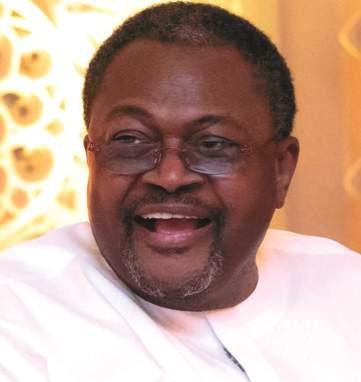
that eludes metrics. It is the discipline of restraint. Adenuga builds slowly, almost ceremonially, as though each venture must first
Milestones often invite reflection. Birthdays, especially, offer a pause to measure time not merely in years lived, but in lives shaped and systems influenced. This is especially true for David Ogbueli, who is celebrating his birthday. But instead of focusing on how old he is getting, it is more interesting to think about the impact he has had, not just building visible success, but the quiet, persistent architecture of transformation that his ministry has helped construct across continents. Come to think of it, that in an era obsessed with visibility, metrics, and viral impact, Ogbueli’s work represents something different and distinguishing, slower, deeper, and far more enduring. Yes, multitude within and outside the country who know him either closely or from a distance definitely can attest that it is common with him, as this happens to be the kind of influence that rarely trends but steadily alters the trajectory of individuals, institutions, and nations.To understand the global footprint of his work, one must first confront a fundamental shift he embodies, which emphatically is the redefinition of ministry itself. Through Dominion City International, founded from humble beginnings as a campus fellowship in 1991 at the University of Nigeria and
later formalised in 1995 in Enugu, Ogbueli has built what is now a vast global movement. With over 2,000 chapters spanning Africa, Europe, Asia, the Middle East, and the Americas, alongside regional offices in the United States, the United Kingdom, and Nigeria, Dominion City has evolved into far more than a church network, into a leadership engine with an ambitious ongoing vision across Nigeria and beyond.
What distinguishes this expansion is not just its scale, but its philosophy. Beyond running a church, Dominion City was never designed merely to gather people; it was built to raise leaders who transform society. One emerging fact today is that the philosophy has shaped a generation of professionals, entrepreneurs, public servants, and ministers who carry its influence into boardrooms, government institutions, and grassroots communities across the world.
At the heart of this ecosystem is a deliberate investment in human capital development. Verifiably, through platforms like the Dominion Leadership Institute, which has produced over 30,000 graduates globally, Ogbueli has undeniably and consistently built a leadership pipeline that addresses one of Africa’s most persistent challenges. These prevailing challenges are the deficit of capable, values-driven leadership. At this point, this narrative definitely contradicts societal beliefs that his curriculum must be confined to spiritual formation; rather, it will
earn its necessity. In this, he echoes the wisdom of antiquity: that true power is measured not by speed, but by sustainability. His personal style reinforces this philosophy. He is, by instinct and design, a man of the background—present yet unobtrusive, influential yet invisible. Even in moments of celebration, he resists the centre, preferring instead the periphery from which he can observe, calibrate, and ensure harmony. It is leadership rendered as quiet orchestration.
Philanthropy, in his world, is neither obligation nor ornament. It is instinct.
It flows without announcement, guided by an ethic that places dignity above display. Those touched by his generosity often speak not of the act itself, but of its timing—arriving precisely when hope seemed most fragile.
At 73, therefore, the narrative is not one of culmination, but continuation. His engagements across sectors and continents suggest a man still in dialogue with possibility. If anything, age has sharpened his clarity, deepened his patience, and expanded his horizon.
In an era inclined towards immediacy, Dr. Mike Adenuga Jr. represents the enduring virtue of deliberation. He reminds us that greatness is not an event, but a continuum; not a spectacle, but a structure patiently raised over time.
And so, as the years gather, they do not weigh upon him—they illuminate him. For in the quiet empire he has built, one finds not just wealth, but wisdom; not just success, but significance.
Bassey, a Telecommunications Consultant wrote in from Calabar, Cross River State
interest society to know that his agenda integrates systems thinking, governance, productivity, and ethical leadership, equipping participants to function effectively in complex environments.
This emphasis on leadership extends into a broader scope and platforms. One of them is the Global Leadership Forum, and it would be of interest that it is not just designed for spiritual pursuit, but it is a mentorship and training hub designed to enhance performance and productivity across sectors, including business, politics, ministry, and enterprise. It reflects Ogbueli’s conviction that transformation must be holistic, that transcendence and cutting across every sphere of human endeavor.
Yet leadership, in his framework, is incomplete without economic empowerment. Across his ministry network, initiatives have been structured to move individuals from dependency to productivity. This is evident in large-scale interventions such as a N1 billion entrepreneurship support fund introduced to equip participants with the resources, skills, and networks required to succeed in business and career pursuits. At leadership retreats and empowerment programs, thousands are trained in areas ranging from agriculture and food security to innovation, healthcare, and global enterprise.
Beyond structured programs, his personal actions reinforce this philosophy. has sparked widespread reactions following a remarkable act of generosity during a recent church service
From distributing financial support to individuals in need during church services to empowering teams within the ministry with significant financial gifts, as one recent such act sparked widespread reactions following a remarkable benevolence, gifting about 35 choristers N1 million each during a recent church service. With several other instances of generosity in the past, Ogbueli consistently underscores a critical principle that reveals that while immediate relief matters, sustainable change comes from enabling people to create value. In the course of one such intervention, which captures this ethos succinctly, he said that giving alone is not enough; people must be equipped to build.
With the right mindset, this approach aligns with a broader development truth that clearly states nations do not rise on charity, but on the strength of productive citizens. By embedding this mindset within a faith-based structure, Ogbueli is redefining how development can be pursued at scale.
Equally significant is his ability to mobilize faith as a development asset. It is an irony that in many parts of Africa and the global South, religious institutions remain among the most trusted social structures. Yet, their potential as vehicles for development often remains underutilized. Ogbueli’s model challenges that limitation by positioning the church as a hub for leadership incubation, economic activation, and social accountability.
Nwakaego, Chijioke Obed
Ohoba is an autonomous community in the Ohaji/Egbema Local Government Area of Imo State, located in southeastern Nigeria. It is composed of six villages: mkp, mkpoche, gg, Ezema (Eziama), mnwaanyi, and Alaka. It is recognised as a vibrant and ancient settlement with a rich cultural heritage, including unique traditions, customs, and language that distinguish it from neighbouring areas. As an oil-producing region, Ohoba has significant natural resources that have attracted industries and companies, yet the community has endured economic exploitation, marginalisation, and a lack of basic infrastructure despite its contributions to Imo State’s economy. The area is situated near 34 Artillery Brigade, Obinze Military Cantonment and shares boundaries with urban centres like Owerri, positioning it at the intersection of rural traditions and modern developmental pressures. In recent years, Ohoba has grappled with internal challenges, including leadership disputes over chieftaincy (Ezeship) and regency, as well as civil unrest stemming from unfulfilled infrastructural projects and youth agitations. These issues highlight broader concerns in Imo State regarding communal trust, security, and equitable resource distribution, with traditional Igbo values often invoked in efforts towards reconciliation.
A Kingdom in Transition
For nearly five decades, Ohoba was guided by HRH Eze
Philip nwka Anyanwu, titled Eze Chinyereugo IV, whose reign from 1976 until his death in March 2024 at the purported age of 108 made him one of Imo State’s longest-serving traditional rulers. His passing has unleashed a bitter succession dispute between rival factions— pro-Armstrong and pro-Stanley/ Gregory— plunging the community into a regency crisis that threatens to unravel the rotational Ezeship system carefully maintained across generations.
Before Eze P.O. Anyanwu’s 48 years on the throne (19762024), Ohoba’s traditional rulership had seen Ezeru Ogbuehi from mkp, Ifuru and Ochasi Ajukwara also from mkp, and Izhime Ihem Awulotu from mkpoche. This rotational framework, designed to ensure equity among constituent villages, now stands tested by modern political ambitions and fragmented leadership authority.
Oil Wealth, Local Poverty
Ohoba sits atop significant hydrocarbon deposits, hosting portions of the Assa North Gas Development Project (ANOH)—a joint venture involving Nigerian Agip Oil Company and Shell Nigeria Gas—with estimated reserves exceeding one trillion cubic feet. The community also falls within the catchment of Adapalm Nigeria Limited, a state-owned plantation established in 1975 spanning over 4,310 hectares, which employs thousands and contributes substantially to Imo’s palm oil output.
Yet residents echo a familiar Niger Delta lament: extraction without commensurate development. Despite generating derivation funds for the state government, Ohoba lacks reliable
electricity, potable water, and quality healthcare. The Assa-OhobaObosima road, initiated under a Memorandum of Understanding with ANOH Gas Processing Company in 2019, remains largely uncompleted, damaged by heavy industrial traffic. This abandonment sparked dramatic protests on November 18, 2025.
Youths, frustrated by the stalled road project contracted to Prospective Multi-link Limited (PML), impounded an excavator to demand action. The contractor’s decision to mobilise security personnel from Tiger Base and Obinze military cantonment escalated tensions dramatically. Gunfire erupted, killing an innocent passer-by, Mr. Onyewuchi Awlotu, and leaving multiple critically injured. Several youths remain detained, awaiting trial.
The Imo State government’s characterisation of Ohoba as a “violentprone community” has drawn sharp criticism from indigenes, who argue that systemic neglect and unfulfilled promises—not inherent lawlessness—fuel the agitations. The leadership vacuum, with a fractious President General and Youth President, has compounded the crisis, leaving no unified voice to negotiate with authorities.
Ohoba maintains a rich cultural identity anchored in Igbo traditions but marked by unique features. Its dialect incorporates two additional letters—”wh” and “zh”—beyond the standard Igbo orthography of 36 characters, a linguistic distinction residents fiercely protect.
Dike Onwuamaeze
In a sector often challenged by infrastructure constraints, policy uncertainties and operational bottlenecks, Transnational Corporation Plc, through its power subsidiary, Transcorp Power Plc, is steadily rewriting the narrative. It is proving that disciplined execution, strategic investment, and operational excellence can deliver both shareholder value and national impact.
At its 13th Annual General Meeting held in Abuja, the company not only celebrated another year of impressive financial performance but also rewarded investors with a substantial N41.2 billion dividend, reinforcing its position as one of Nigeria’s most resilient and high-performing power generation companies.
The dividend payout—comprising an interim dividend of N11 billion and a final dividend of N30 billion—reflects the company’s strong earnings capacity and commitment to delivering consistent returns to shareholders. Beyond the numbers, however, the announcement underscores a deeper story: that of a power company that has evolved from a once-distressed national asset into a leading player driving Nigeria’s electricity generation and economic progress.
Transcorp Power’s audited financial results for the year ended December 31, 2025, provide a clear picture of this transformation. Revenue rose significantly to N398.27 billion, up from N305.94 billion in the previous year, demonstrating sustained growth driven by increased generation capacity and improved operational efficiency.
This performance is particularly noteworthy in an environment where power generation companies continue to grapple with transmission limitations and grid-related challenges.
At the heart of this growth is a deliberate strategy anchored on capacity expansion and operational optimisation. The commissioning of an additional turbine, GT20, which added 100 megawatts to the company’s output, pushed its average available capacity from 417MW to 550MW. This milestone not only strengthened Transcorp Power’s generation profile but also enhanced its ability to meet growing electricity demand across the country.
Equally significant is the company’s commitment to financial discipline. During the year under review, Transcorp Power reduced its loan obligations by approximately N7 billion, a move that has strengthened its balance sheet and improved its profitability outlook. This prudent approach to debt management signals a company focused not just on growth, but on building a leaner, more efficient financial structure capable of sustaining long-term value creation.
Speaking at the AGM, Chairman Emmanuel Nnorom reaffirmed the company’s strategic focus on delivering sustainable value while contributing to Nigeria’s socio-economic development. His remarks highlighted a broader ambition—one that goes beyond profitability to encompass national impact. For
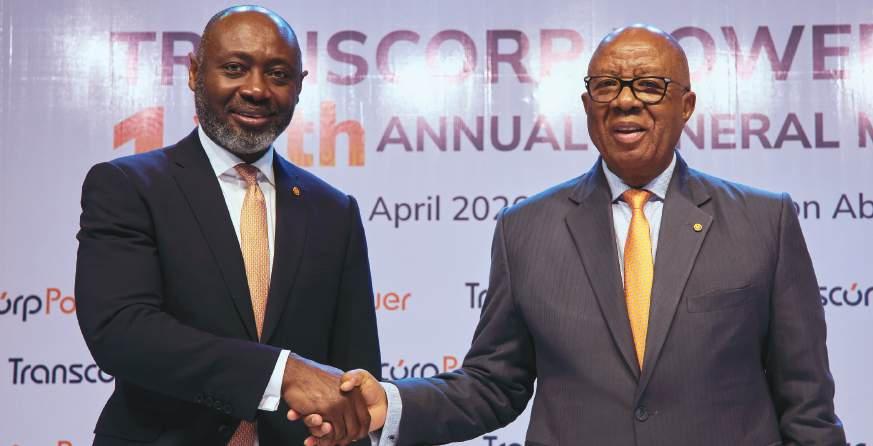
Transcorp Power, electricity generation is not just a business; it is a critical enabler of economic activity, industrial growth and improved quality of life.
Managing Director and Chief Executive Officer, Peter Ikenga, echoed this sentiment, emphasising that the company’s performance reflects its unwavering commitment to operational excellence and sustainable growth. Despite ongoing transmission challenges that continue to limit evacuation capacity across the sector, Transcorp Power has maintained strong performance, demonstrating resilience and adaptability in the face of structural constraints.
This resilience is rooted in a clear vision that dates back to 2012, when Transcorp Plc acquired the Ughelli Power Plant during Nigeria’s power sector privatisation. At the time, the plant was generating a mere fraction of its installed capacity, reflecting years of underinvestment and operational inefficiencies. However, through sustained investment, technical expertise and strategic management, Transcorp Power has successfully transformed the asset, increasing its generating capacity by over 500 percent.
Today, the Ughelli plant—one of the largest gas-fired power stations in Nigeria—boasts an installed capacity of 972MW and plays a critical role in the country’s electricity supply. Equipped with advanced infrastructure, including hydrogen
production and demineralised water systems, the plant exemplifies the company’s commitment to adopting modern technologies to enhance efficiency and reliability.
Beyond its operational achievements, Transcorp Power’s growth story is also defined by its people. The company continues to leverage a highly skilled and motivated workforce, whose dedication and expertise have been instrumental in driving performance. This human capital advantage, combined with a forward-looking strategy, positions the company as a thought leader in Nigeria’s evolving power sector.
Shareholders, for their part, have responded positively to the company’s performance. At the AGM, commendations poured in for the board and management, with investors praising the company’s resilience, transparency and consistent delivery of value. For many, Transcorp Power represents a rare example of a Nigerian power company that has not only met expectations but exceeded them.
However, the company’s journey has not been without challenges. Persistent issues related to grid infrastructure, including vandalism and transmission constraints, continue to pose risks to the sector. Shareholders at the meeting called for greater collaboration among stakeholders—government agencies, community leaders and industry players—to protect critical infrastructure and ensure the stability of the national grid.
Shehu Dahiru
Since assuming office on February 24, 2026, the Inspector-General of Police Olatunji Disu has launched a comprehensive campaign to pivot the Nigeria Police Force toward a culture of accountability and service. Central to this mission is the strengthening of internal oversight mechanisms, such as the revitalized Complaint Response Unit and the Independent X-Squad, which now investigate misconduct without interference.
This new era of command accountability ensures that Commissioners of Police are held personally liable for the discipline and conduct of personnel within their jurisdictions, effectively removing the shield of anonymity for rogue officers.
A defining achievement of Disu’s tenure is the dismantling of the “Keep In View” (KIV) culture, a bureaucratic loophole that had previously been used to bury sensitive criminal files. This reform was vividly demonstrated within the Police Monitoring Unit, where the new head, DCP Aliyu Abubakar, uncovered a suppressed case involving established criminal breaches that the previous administration had sidelined.
By immediately activating the file for prosecution, Abubakar’s team saved a case that would have otherwise been “permanently killed,” signaling a decisive end to systematic cover-ups. Complementing this is a strict enforcement of checkpoint bans, aimed at eradicating the public extortion that has long tarnished the image of the force.
IGP Olatunji Disu has implemented a rigorous realignment of operational responsibilities to dismantle the culture of administrative interference that previously allowed highranking officers to compromise criminal investigations for personal gain. Under the previous regime—most notably within the Southeast zone—it was a common and frustrating occurrence for senior officials to exploit their rank to “corner” sensitive cases.
By asserting their authority as the highest-ranking officers in a jurisdiction, these individuals would frequently seize control of lucrative or high-profile investigations, only to deliberately jeopardize or “kill” the case in exchange for illicit profits.
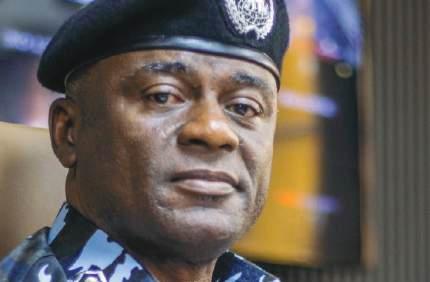
This systemic lousiness not only shielded criminals from justice but also deeply eroded the public’s trust in the police hierarchy.
To end this era of impunity, IGP Disu has established clear, non-negotiable boundaries regarding case management and jurisdictional interference. His reforms emphasize that rank no longer serves as a license to hijack the judicial process or bury incriminating evidence. By decentralizing oversight and empowering independent monitoring units, Disu has ensured that once a criminal breach is established, the file remains on a direct path to the legal department, regardless of the seniority of those attempting to intervene.
This strategic shift is specifically designed to sanitise zones like the Southeast, replacing the “highest-ranking officer” loophole with a standardised, transparent protocol that prioritizes the rule of law over the personal profits of top-tier brass.
Furthermore, IGP Disu is balancing these disciplinary measures with a robust focus on officer welfare and modernisation. By overseeing the merit-based promotion of over 33,000 personnel and advocating for better housing and pensions, the administration is working to insulate officers
from the temptations of corruption. This internal strengthening is paired with a “policing by consent” philosophy, which utilizes community partnerships and technological advancements—like forensic surveillance tools—to move away from exploitative manual patrols.
From the inauguration of state police steering committees to the celebration of National Police Day, these reforms represent a structural and moral rebirth intended to restore the ultimate dignity of the Nigerian officer.
On March 12, 2026, IGP Olatunji Disu signaled a profound shift toward institutional dignity by breaking a 16-year “jinx” with a formal ceremonial pull-out parade for his predecessor, Retired IGP Kayode Egbetokun.
This historic event marked the first time since IGP Ogbonna Onovo’s departure in 2010 that an outgoing police chief was accorded such a high-level symbolic honour, effectively ending a long era of unceremonious and abrupt transitions.
By reviving this tradition, Disu has moved to heal the institutional psyche of the Nigeria Police Force, replacing the culture of administrative friction with a new standard of professional continuity and mutual respect.
This gesture serves as a cornerstone for his broader vision: transforming the Force into a reputable organisation that honours its leadership history while embracing a disciplined, orderly future.
Complementing this symbolic restoration is the strategic appointment of DCP Anthony Okon Placid as the Force Public Relations Officer on March 8, 2026, a move that re-establishes the professional hierarchy and merit-based leadership essential for institutional integrity.
By elevating a seasoned veteran with nearly 30 years of service and elite training from NIPSS Kuru, Disu corrected years of “rank-to-office” deviations where lower-ranking officers held high-level strategic roles.
This appointment aligns the NPF’s communications with international standards and sister agencies like the Nigerian Army, leveraging Placid’s extensive experience in United Nations and African Union missions to champion human rights and transparency.
Read
Eguakun Nosakhare
First, let me make it clear: politics is not my goal. However, when a nation drifts to the edge of the precipice, the blame falls heaviest on those positioned to abate the root cause, but who chose complacency.
The Bible says in James 4:17, _”Therefore to him that knoweth to do good, and doeth it not, to him it is sin.”
For this reason, this reflection stems from personal observation of the trends in Nigeria’s political dynamics prelude to the 2027 Presidential Election. The political atmosphere is turbulent, with contestants and parties holding one another in contempt. Most unfortunate is the perceived obsession of some presidential aspirants who leap from party to party under the illusion of self-overestimation or intoxicated by public hype.
These crops of contestants bear the negative wages of the adage: The Mystic of Motion: When The Contestant Becomes a Boulder.
A painstaking breakdown of this idiom will not only add clarity and beauty to its metaphor but also reveal its politicomystical significance.
In mystic traditions, motion is sacred only when it follows a call. The dervish spins because God said turn. The pilgrim walks because there is a shrine. But there is a false mysticism: motion for motion’s sake. The contestant becomes a mystic of motion - always moving, never arriving. Each defection is framed as “divine leading,” each new platform as “fresh anointing.” Yet no altar is built, no covenant kept. The mystic without an altar is only a wanderer.
The Motion: Velocity Without Vision
Politically, motion should mean progress. A man moves from thought to plan, from plan to party, from party to policy, from policy to people. But when motion becomes the message, vision dies. The stone rolls uphill, downhill, side to side - gathering applause but not allies, headlines but not history. Velocity replaces veracity. The electorate, hypnotized by movement, mistakes displacement for direction. In physics and in politics, motion without mass moves nothing.
The Boulder: Weight Without Root
Here lies the satire and the warning. A rolling stone gathers no moss. But roll long enough, roll loudly enough, and the stone becomes a boulder. Now it is too heavy to lift, too round to stand, too smooth to build with. The boulder cannot
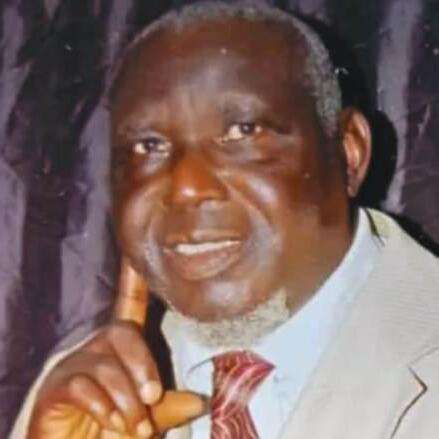
be planted - it has no root. It cannot be laid as foundation - it has no face. It is impressive in size, intimidating in noise as it moves, but useless for shelter. The contestant becomes a boulder: hyped beyond utility, famous beyond function. He can crush, but he cannot construct.
Politico-Mystical Significance:
This is the doctrine we must name. It teaches that relevance is residence, that trending is transforming, that a new party is a new destiny. Its sacraments are decampment, declaration, and denial of the last platform. Its congregation is the crowd that cheers every move but follows no movement.
The mystical danger: a nation mistakes the boulder for a cornerstone. The political danger: the boulder mistakes the echo of the valley for the voice of God.
Godly Motion Vs Boulder Motion: The Wilderness Test
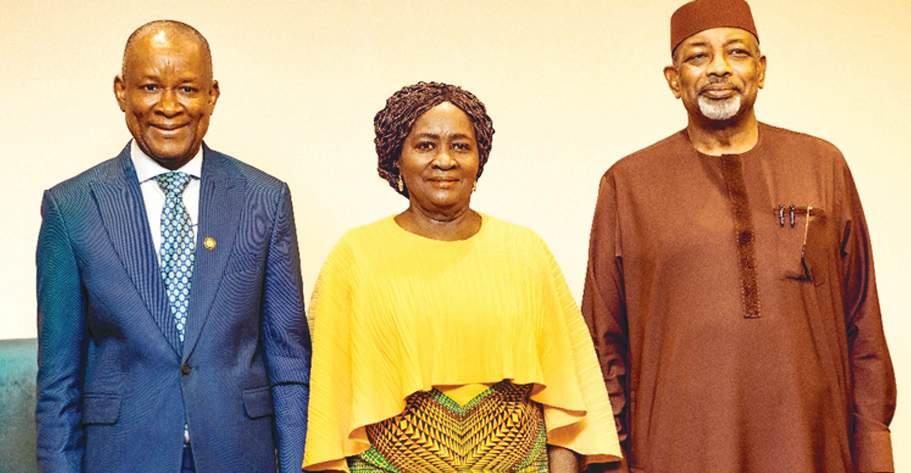
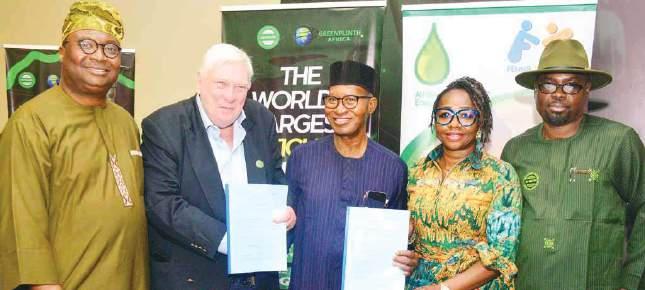
God Himself ordains motion, but always for productive significance. He broke the claws of stagnation over the children of Israel in the wilderness when He commanded them to move. “You have stayed long enough at this mountain” - Deuteronomy 1:6. And so they moved. But note this: Moses, Caleb, Joshua, and the congregation moved united under a common vision. None was a boulder. They were knit together under the leadership of Moses. In that unity lay their strength to overcome adversaries. Each man, with humility, aligned with the other as a supportive subordinate for effectiveness.
That is how it works, as ordained by God in Ecclesiastes 4:9: “Two are better than one; because they have a good reward for their labour.” The present parallel: In Nigeria’s political situation today, one watches with disaffection the neglect of this vital biblical wisdom among members of political opposition parties. For ego or other reasons, they find it difficult to harness the advantage inherent in this scripture - to forsake ego and agree on who should run and who should be running mate.
I quite commend the spirit behind the formation of the African Democratic Congress (ADC) as a coalition platform, but lament the present inability to agree on who should vice who. Rather than consolidate by reason of this biblical revelation, there is an exhibition of the boulder characteristic: large, loud, but rolling alone. Each stone insists on being the cornerstone, so none becomes foundation.
The boulder fears moss, yet refuses mortar. It will not be set beside another stone because it believes it is the whole temple. But Peter writes, “Ye also, as lively stones, are built up a spiritual house” - 1 Peter 2:5. A house is not one boulder. It is many stones, set. My counsel here is simple: acknowledge potential in others, throw away ego, and do the needful. Unity is not weakness. It is warfare. Two are better than one because two can watch each other’s back while facing the adversary.
But Amos 3:3 asks, “Can two walk together, except they be agreed?” So, dear ADC presidential contestants in the forthcoming 2027 election, if victory is your goal, mend your fences. 2027 is around the corner. A stitch in time saves nine. If the stitches of unity are not made now, the tearing later will require nine times the effort to mend. Let the mystics of motion become master builders. Let the boulders consent to be broken into building blocks. Only then does motion produce a monument. The true stone the builders rejected became the head of the corner because it stopped rolling and submitted to the Builder. Until the mystic of motion agrees to be set, he remains a boulderfeared by some, followed by many, but founded on nothing.
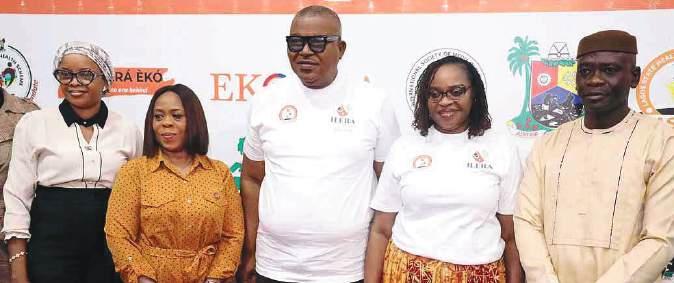
Simon Reef
Unlike in the past, when the Federal Ministry of Information and National Orientation was not manned by consummate professionals worthy of their positions, the inauguration of the President Bola Ahmed Tinubu-led administration on 29th May 2023 marked a defining moment in appointing a true professional to oversee the management of public information. Almost trapped in the hole of propaganda for the eight years former President Muhammadu Buhari ruled the country, the then Minister of Information, Alhaji Lai Mohammed, turned the public information into a propaganda machinery devoid of public trust.
Since the appointment of Hon. Mohammed Idris as Nigeria’s Minister of Information and National Orientation in August 2023, his ministerial footprints have left an inspiring moment in the nation’s information network, which was once supervised by persons whose professional calling was not only wanting but also placed the country’s reputation on edge. To demonstrate his capacity to perform and rise to the challenges of managing the information ministry, Idris has been honoured for sterling recognition of excellence in public communication, transparency and media relations.
Last Friday, in recognition of his performance as Information Minister, he was honoured with the Vanguard Image Maker award (2026) due to his commitment to building trust in government communication. Before his appointment, some Nigerians had always seen the Information ministry as managed as the chief propagandist. However, nearly three years after the serial entrepreneur and founder of media outfits has not only lived up to his promise never to lie to his fellow citizens, Idris has carved a niche in evolving templates for the smooth management of public information.
In acknowledging his authentic management of public communication, the Minister, in 2025, received the Nigeria Excellence Award in Public Service (NEAPS) for Public Communication and Transparency. The award, presented by the Secretary to the Government of the Federation on behalf of President Bola Tinubu, was in recognition of his contributions to national communication and public sector reforms by the BusinessDay newspapers. In yet another recognition of his role in the promotion of transparency and safeguarding press freedom, he was conferred with the NUJ Lifetime Achievement Award (2024) by the Nigeria Union of Journalists during the Press Freedom
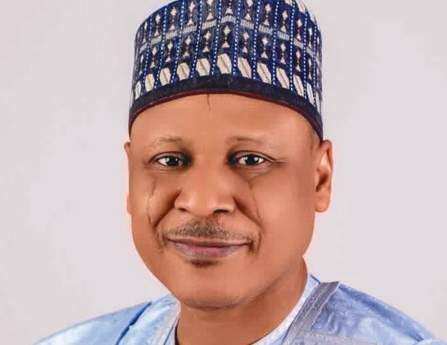
and Good Governance Award Night.
In another instance of his role in promoting transparency and safeguarding press freedom in the All Progressives Congress (APC), he was in 2025 conferred with the BAT Vanguard Award by the APC Support Group in recognition of his major contributions to Nigeria’s development and humanitarian values. In all of these awards and recognitions, the role of the minister as a strategic communicator and truth-speaking information manager is never in doubt. When, in August 2023, he vowed never to lie for the Federal Government, not many believed him, as the role of the Minister of Information had become synonymous with a propaganda apparatus in the defence of the government’s opinion. It was the loss of this confidence by previous ministers in charge of public information that weakened the efficiency of the public information, thus making citizens to doubt the sincerity in the capacity of the government’s information organs to deliver
on agency to deliver on their mandates.
Hon. Idris’ promise of ensuring peaceful resolution of all disagreements with negative and false reports by the media was tested early in July 2024, when a controversy broke out between Daily Trust and the federal government regarding the Samoa Agreement centered on a report that alleged that the government had signed a deal that endorsed LGBTQ rights in exchange for a $150 billion loan.
The core dispute in the claim, as reported by the newspaper, was that the agreement contained clauses mandating Nigeria to support LGBTQ rights as a condition for financial aid.
The government strongly denied this, insisting that the agreement contains no such provisions and is focused on economic development and climate change. In the end, the matter was referred to the National Media Complaints Commission (NMCC), which investigated the matter. The Ombudsman ruled against the newspaper, and Daily Trust eventually published an apology in October 2024, acknowledging the “sloppy reporting”
and a “misleading headline.”
Considering the actions or inactions of his immediate predecessor, not many gave the Minister a chance to roll back the negative impression some citizens have of the role of a how public information is managed. Nearly three years since he was appointed to oversee the nation’s public information, this founder of media outfits and consummate public relations expert has left nothing to chnace in ensuring citizens understand the dynamics behind policies and challenges faced by government.
Though the promise of renewed hope by the Tinubu Presidency remains entangled in the web of insecurity and hardship caused by current economic reforms that have seen millions of Nigerians swimming against the tide of gushing poverty, it is to the credit of Hon. Idris that citizens still have hope amidst the despair, but still believe that the future is worth fighting for.
Born 60 years ago, on May 2, 1966, the child who later became Minister of Information undertook his primary and secondary education in Kontagora and Rijau, Niger State. After bagging a degree in English at the Usman Danfodio University, Sokoto, in 1987, he proceeded to acquire a master’s degree at the Bayero University Kano, where he taught Communications Skills between 1989 and 1991. Hon Idris taught English and Communication Skills at the Federal College of Education (FCE), Katsina, from 1989 to 1994. Idris’ footprints in the field of public relations, as shown by many appointments, have earned him many laurels.
As Minister for nearly two years, Idris has evolved templates in ensuring creative management of public information where both the government and the media are engaged in dialogue in surmounting challenges that have contributed to weakening government and public perception of government affairs. Like the peaceful resolution of the Samoa Agreement clearly shows, there are no issues that cannot be tackled, as long as there is the will. Unlike in the past, when adversarial engagement between government and media in the management of public information, information has become something to be disseminated transparently and not through falsehood.
Reef, a media practitioner, can be reached via: simonreef927@gmail.com
Seyi Bakare
This week, political watchers paid close attention as the senator representing Ogun East in the National Assembly, Chief Gbenga Daniel, purchased nomination forms at the All Progressives Congress (APC) national headquarters in Abuja. Said the senator: “Today, I picked up my nomination and expression of interest forms as I seek to return to the Nigerian Senate, continuing my efforts to provide effective and responsive representation for the people of Ogun East Senatorial District under the platform of the APC ahead of the 2027 general elections.”
This was because, only a few days earlier, party leaders and key stakeholders in Ogun East Senatorial District, the district that Daniel currently represents in the Red Chamber, had openly and enthusiastically endorsed the Ogun State Governor, Prince Dapo Abiodun, for the same position, and the ruling party’s law allows state chapters to adopt such a consensus arrangement if they so wish. Already, that arrangement has produced the APC governorship candidate for the 2027 election in the state.
The 2027 Ogun East senatorial race promises to provide political drama, in large part because the two contenders are former friends turned foes. When Daniel had the privilege of becoming the Governor of Ogun State between 2003 and 2011, it was Abiodun that he had faced in a keenly contested primary. At the time, Daniel was moving from the then ruling party in
the state, the Alliance for Democracy (AD) to battle it out with Abiodun in the Peoples Democratic Party (PDP), of which Abiodun was a founding member in the state.
Although Abiodun was one of the leading figures of PDP at the time, certain forces within the party favoured Daniel, and he went on to win the primary. And immediately Daniel won, Abiodun reportedly collapsed his structures into Daniel’s campaign team, donated his offices, and provided substantial financial resources for the election. In the eight years that Daniel held sway, Abiodun reportedly never approached the government to ask for any support.
Daniel’s reign in Ogun State was, however, not stellar. Among other drawbacks, it was characterised by in-fighting between the executive and the legislature.
Given the crisis that engulfed Ogun State at the time, it seemed inevitable that Daniel would not produce a successor. Given the factionalisation of his party, the PDP, Daniel allegedly floated another party, the PPN and sponsored a candidate, but it was Ibikunle Amosun, an opposition candidate, who won the race to the Oke Mosan Government House.
During the 2019 general election, though, Daniel received some political revival as he was appointed DG of the Atiku Abubakar presidential campaign organisation under PDP. But he began to sing a different tune immediately Atiku lost the election. The leadership of the APC got in touch with him and declared that for him to remain relevant in the next
dispensation , he had to align himself with the ruling party, the APC. That was how he came to join the APC about three days to Abiodun’s governorship election, which the latter APC won.
During the 2019 governorship election, Abiodun did not perform well in Daniel’s territory. At the time, the House of Assembly ticket was won by the APM, the party being sponsored by former Governor Ibikunle Amosun. According to political watchers, Abiodun never bothered about this development, and actually even made excuses for his long-term friend. He would in fact go on to fulfill all the promises he made to Daniel: getting his hotel and other property back, free access to the state, and the payment of all his withheld allowances as a former governor. And shortly after Daniel was stabilised, Abiodun reportedly incorporated some of his (Daniel’s) lieutenants into his government, forming a government of coalition for unity and peace in the state. Suddenly, Daniel, a dead commodity in the Amosun years, bounced back into political reckoning. But there was more to come. The then Senator representing Ogun East, Lekan Mustapha, was one of the leading contenders for the senatorial race, but Abiodun and the late Awujale of Ijebuland pleaded with them to step down for Daniel, arguing that a former governor of the state should not be disgraced. Daniel got the ticket. His political revival was complete. But
No sooner had Daniel got the ticket than he started working
against the government.
Daniel today faces the prospect of karma, as he faces his beneficiary in the Ogun East 2027 race. Many have accused him of smearing the governor in the media space, calling media editors and giving them false information to assassinate his character. Daniel was in fact said to have been invited to the meeting where Abiodun’s consensus candidacies was announced, but he reportedly came to the venue with three fully loaded coaster buses. This, party leaders were said to have rebuffed, insisting that only Daniel could enter the meeting, which was strictly for delegates. Party insiders said Daniel immediately began addressing his prearranged media people on video, condemning the action. According to an APC source,
“All major stakeholders, from ward to local government, to state, were there. But as usual, he’s always seen himself above party leadership. That’s why, even within the last three years, he has not integrated his supporters into the APC structure in the state. He has never had a relationship with them; he has only carried on with his Gateway foundation.”
It is expected that before the end of next month, the people of Ogun East will speak loudly about who they believe we will give them quality representation. In this regard, many believe that Daniel’s acts of sabotage and subversion have already ruled him out of the race, and may return him to the oblivion of the Amosun years. Bakare, a political analyst, sent this through seyibakr@aol.com Read
but the essential point is to establish that it is so.
In addition, I did not go into the matter of our political evolution. Even then, he could have presented the universally accepted finding about “the evolution of the Nigerian political party system and its culmination into the repetitive trend towards one party dictatorship”. Professional historians are still at daggers drawn on the matter. I won’t join them. Akin admitted that Chief Anenih, was “a politically astute former police officer”. He stated, further, that the man “…leveraged his career to forge a national network of connections, effectively using the police force as a means to navigate the political sphere”. Then he added this: “His pedigree in the police institution provided a fertile ground for keeping tabs on influential or potentially influential individuals and the cultivation of a secondary career in mafia-style political racketeering”.
He moves from admitting Anenih’s pedigree, his capacity and professional discipline in keeping records he considers important to a moral judgment about a “mafia-like political racketeering”. And I state this in response: another point of view, besides the writer’s, is conceivable, possible and even justifiable regarding the issue under reference. To that extent, I have no further comment.
This is what I had to say on this page during the public exchange of divergent views about Abba Kyari, President Buhari’s former Chief of Staff: “The person you see as your class teacher is known as “husband” by another. His role as ‘class teacher’ does not exist with the person who calls him husband. The person you greet “Good morning Hon. Minister” every morning is seen as “mother” by another and called “Auntie” by others. Her school mates call by one mischievous, and possibly suggestive, nickname; while her contractor who missed a contract he had hoped for in her ministry calls her “that wicked woman.”
I went further to ask in that article, titled “Kyari: Issues in Existential Myopia”, I asked: “Does any of these titles, which are actually role-determined, tell us everything about anyone? In answering this question, we must bear in mind that the role-determined persona projected as we do one thing or the other
in life does not always reflect, or even suggest, who we really are. They do not always show what moves us, our core values and the things we would get up to if we are sure that no one is watching. This explains the fact that an erudite professor of ethics, who has given world-acclaimed expositions on great ethical theories and practices, could be a terrible pervert. It also explains why the kindest parishioner, who is a doting father, loving husband and philanthropist, could also simultaneously be the leader of a murderous armed robbery gang”.
Thus, for me, when Akin my friend says that “It is a misunderstanding and exaggeration to imply that Anenih would have made a difference to the crisis that has typically buffeted the PDP, described him as a “keen and disciplined political opportunist”, and added that “his political acumen was always coupled with opportunism”” I ask: are we dealing with solid facts or personal opinion and speculation?
When the writer capped his observation here by saying that Chief Anenih “would likely have shifted allegiance to the APC in 2015 had he remained politically active”, I asked myself why pure speculation should cloth itself as truth and a valid moral judgment.
Concerning the request that we “Ask Shehu Yaradua, Ibrahim Babangida, Olusegun Obasanjo, Umaru Yaradua and Goodluck Jonathan”, I dare say that these men would have their views on their respective encounters with Anenih, just as other would have different accounts of the same encounters.
To categorically assert that “Without the shield and protective custody of incumbent power, he certainly would not have gone far in national political reckoning” is to discountenance his own personal capacities that must have made successive leaders to find him useful. To say “he certainly would not have gone far” is a claim I am reluctant to endorse in any way whatsoever.
My article submitted that Anenih’s life-long exposure to human affairs and deep knowledge of the country, with relationships that spanned geographical, religious and other boundaries, gave him great advantages when and where it
For Dangote, Africa is further impoverishing its population of over 1.4 billion people by exporting raw materials and importing finished products.
As part of efforts to reverse the trend, his new refinery plan can reshape fuel supply, deepen regional integration, and accelerate the continent’s push towards industrial self-sufficiency.
He explained: “I can commit the two presidents (Ruto and Museveni) that are here. If they support the refinery, we’ll build the identical one that we have in Nigeria, 650,000 barrels. It will (work). There’s nothing that can stop it. We have done the one in Nigeria, and that’s why we’re taking the bold move, which we have started already.
“Piling has started. We’re building that one to a scale. 1.4 million barrels a day will be the largest refinery in the world. That’s number one. Number two, we’ll have 10 per cent of the entire United States of America’s refining capacity. And this is coming with a lot of petrochemicals.”
When completed, the joint refinery is expected to serve Tanzania, Kenya, Uganda, South Sudan, and the Democratic Republic of Congo. The facility is expected to process crude from across the region, supported by shared pipeline infrastructure to improve efficiency and reduce costs.
According to Dangote, consistency in government policy and strong institutional support would be critical to unlocking such large-scale investments. He stressed that uncertainty and reversals in policy had over the years discouraged long-term capital deployment across Africa.
Additionally, the Dangote Group plans to invest $40 billion across sectors, including refining, petrochemicals, fertiliser, and manufacturing, by 2030.
Dangote explained, “I want to just go into the market, and where I stand is that all Africans should invest (in the Dangote refinery). And we’ll be paying dividends in dollars. But my commitment today here is that if we agree with the three, four governments
mattered. I also said that his capacity for strategic engagement, especially from the angle of power politics, as distinct from being in political office, gave him an aura and influence that would have made a difference if it existed in today’s PDP.
Akin does not quite dispute this, but he maintains that my “fanciful declarations” about the PDP being where it is today because it did not have “men like Anenih, or individuals who can play the various roles he played for the party when it really mattered” is out of order. He insists that the success of the PDP at the 1999, 2003, 2007 and 2011 presidential elections cannot be attributed to Anenih’s leadership. He should have added that I did not say so, that no leaders, acting alone, wins a war.
When the writer said: “What is not an exaggeration was that he was an effective enforcer of whatever decisions were taken by his principals, hence the befitting sobriquet of Mr. Fix it”, and when he added “He was exercising the delegated powers and authority of superiors who were nearly all conveniently incumbent presidents”, Akin is on point. I ask: would Chief Anenih’s superiors, being incumbent presidents, finding him useful be a negative? If several incumbent presidents choose to work with the same person, and not at gun point, they must have their reasons.
It certainly wasn’t fair, in my view, to dismiss Anenih’s role in the Second Republic victory of the National Party of Nigeria (NPN) in the old Bendel State and attribute it to a generalised deployment of the “landslide and bandwagon” ideology of the party in the 1983 general elections to which Anenih acted as “local enforcer”.
Ditto for his role and impact in the building of what turned out at the time to be Nigeria’s first people-owned and real national party, the Social Democratic Party (SDP). While admitting that Anenih played a significant role in the consolidation of SDP as an agent of Shehu YarÁdua his godfather at the time, he accused Anenih of being instrumental to the internal subversion of Abiola’s June 12 1993 presidential victory.
Akin did not mention how Abiola’s political reflexes contributed significantly to the post-June-12 events.
here about the refinery, we will lead and we’ll make sure that that refinery is built within the next four or five years.”
Equally important was his call for deeper regional integration. Trade within Africa remains unnecessarily difficult, with visa restrictions and bureaucratic barriers limiting movement.
Industrialisation, regional integration, and domestic investment are interconnected pillars of Africa’s future. A refinery in East Africa is about creating jobs, strengthening supply chains, and building economic linkages across borders. It is about ensuring that Africa’s resources benefit Africans first.
Of course, challenges remain. Policy inconsistency, infrastructure gaps, and political risks continue to deter long-term investments. Dangote himself acknowledges that large-scale projects of this nature require strong institutional backing and stable regulatory environments. Without these,
does not eliminate their fiscal impact. It merely reallocates, reveals, or reclassifies it within the system. A failure to treat them as a unified fiscal architecture leads inevitably to partial reforms, policy reversals, and analytical confusion.
The true structural constraint confronting the Nigerian state, therefore, is not the absence of revenue, but the persistent failure of revenue capture, recognition, and constitutional routing within a coherent fiscal system.
Theoretical Anchors: What the Critics Ignore Nigeria’s fiscal repositioning is not ad hoc. It is grounded in established principles of public finance that are too often absent from public commentary.
The first is the intertemporal budget constraint. Fiscal sustainability is defined not by current cash availability, but by the relationship between the present value of future revenues and the present value of obligations. Subsidy removal improves this trajectory. It strengthens solvency over time. But it does not relax short-term liquidity constraints.
The second is the Tanzi Effect. In an inflationary environment, lags in revenue collection erode real
fiscal capacity. Nominal revenues may rise, yet their purchasing power declines. This explains the apparent paradox in which government receipts increase while fiscal pressure intensifies.
The third is the role of quasi-fiscal operations.
A substantial portion of Nigeria’s fiscal activity— particularly in the oil, foreign exchange, and power sectors—has historically occurred off-budget, been netted at source, or embedded within opaque cost structures. These practices distort fiscal visibility and create the illusion of scarcity where the real issue is misclassification and leakage.
A central criticism of recent reforms is that they have “tightened” fiscal space. This observation is correct, but the conclusion drawn from it is not.
Exchange rate alignment, for example, improves allocative efficiency and enhances long-term competitiveness. Yet in the short term, it raises the domestic currency cost of external obligations and increases pressure on import-dependent expenditures.
Similarly, the removal of price distortions in fuel and electricity reveals costs that were previously hidden within the system. This is not policy failure.
It is the inevitable transitional consequence of restoring macroeconomic equilibrium.
Every serious reform compresses before it expands. What is being experienced is not deterioration, but adjustment—the necessary tightening that precedes sustainable fiscal expansion.
Nigeria’s fiscal architecture embeds a fundamental asymmetry that distorts both incentives and outcomes. Revenues, once recognised, are largely pooled and distributed through the Federation Account. However, key fiscal obligations remain heavily concentrated at the Federal level. These include external debt servicing, exchange rate stabilization costs, and legacy quasi-fiscal burdens arising from fuel, electricity, and financial sector interventions.
His trip to the US without telling even his Deputy, and his justification of same by saying that a bird does not warn another that the hunter’s stone is hurtling towards them before fleeing for safety did not help matters.
He also did not mention the statement of the Ooni of Ife on national television, after meeting with Babangida and the cream of the Yoruba Nation. His “We met with the man. We asked him what happened, we spent many hours with him, and the man was making a lot of sense. Yes, he was talking sense”.
The later attempt to deny this statement failed because the NTA simply replayed the recorded statement, with South West Elders surrounding the Ooni as he spoke.
Does the description of Anenih as “a connoisseur of power who knew how to position himself as indispensable to the quests of his sponsors to capture and retain political power, mostly incumbent rulers” amount to an indictment? To say that he lacked “autonomy of influence”, but “was as strong as his superiors wanted him to be” is not an indictment either.
When we are further told that “His political career reflects a dependency on the existing power structures, akin to the role of a consigliere in organized crime—strategically positioned but ultimately subordinate to those in command” I ask: is it not the absence of this that has brought the PDP to where it is today?
And would it be the better for it if it had one?
As for the evolution of the Nigerian political state and its history, that would be a matter for another day. For now and on the matter under reference here, I have this to say:
Public comments about individuals, living or dead, will always present interesting perspectives across a wide spectrum. So, whence and where does the voice of the people become “The Voice of God”? Not on matters of this nature.
Chief Tony Anenih has lived his life and gone. Let us all live ours, hopefully living for something and being remembered for something eventually.
even the most ambitious plans can falter.
“Foreign investors will never come because the foreign investor is smarter than us, so they won’t come. They can only come when they see that we are committed, we are serious, and we are investing our own money. When you invest your own money, they will join you. So, once you start, other people will come in,” he said at a recent forum in Washington, D.C.
The important takeaway from Dangote’s message is that outsiders will not build Africa’s future. It will be built by Africans who are willing to invest, innovate, and take responsibility for their own development. This requires a mindset shift. As the continent continues to grapple with questions of growth, inclusion, and sustainability, voices like Dangote’s serve as both a reminder and a challenge.
If Africa is to move from promise to prosperity, it must embrace the kind of bold, long-term thinking that Dangote represents.
The result is a structural divergence: revenue is shared, but adjustment costs are centralized.
Subnational governments benefit immediately from increases in distributable revenue, while the Federal Government bears the burden of macroeconomic correction and system stabilization. This creates a misalignment between fiscal authority, responsibility, and risk. This asymmetry is not incidental. It is embedded in the current fiscal design.
Its consequences are far-reaching. It generates political resistance to necessary reforms, creates fiscal illusion at subnational levels, and imposes persistent pressure on federal solvency. It also weakens collective ownership of national adjustment measures.
The issue, therefore, is not merely the volume of distributable revenue, but the architecture of fiscal federalism itself. Until this structural imbalance is addressed, reforms will continue to yield uneven outcomes and incomplete stabilization.
NOTE:
Oluchi Chibuzor
Nigeria’s banking industry has moved beyond the era of capital raising into a more defining phase where the real test is not how much was raised, but how effectively that capital will be deployed to drive growth, stability and economic transformation.
The completion of the recapitalisation exercise marks a turning point, shifting attention from balance sheet strengthening to the broader role banks must now play in powering the economy.
With a combined N4.65 trillion injected into the system within 24 months, Nigerian banks have emerged from the exercise with significantly stronger capital buffers, improved resilience, and enhanced capacity to take on larger and more complex financial transactions.
Even the International Monetary Fund (IMF) at the recently held Spring Meetings in Washington, recognised the strategic importance of Nigeria’s recently concluded bank recapitalisation exercise, stating that the programme is already yielding positive results.
The Fund noted that the exercise was a timely and appropriate policy decision, particularly against the backdrop of persistent volatility in global oil supply.
According to the IMF, such uncertainties in the global economy made it essential for financial institutions to maintain strong capital buffers capable of absorbing shocks during periods of stress. It explained that a well-capitalised banking system enhances the capacity of banks to support monetary policy objectives, including inflation control, while also sustaining economic growth projections over the medium term. The Fund further indicated that Nigeria’s strengthened banking sector is now better positioned to support its two-year growth outlook, with the IMF projecting steady expansion and improved macroeconomic stability. It added that the recapitalisation has reinforced confidence in the country’s financial system and created a stronger foundation for economic resilience.
The Washington-based institution also noted that the increased capital buffers are already playing a vital role in shielding the financial system from external shocks. It emphasised that maintaining strong fiscal positions remains critical for emerging economies seeking to navigate volatile global capital flows and reduce exposure to sudden market disruptions, especially amid ongoing oil price fluctuations linked to the Middle East crisis.
Speaking during the presentation of the Global Financial Stability Report at the meetings, the IMF Financial Counsellor and Director of the Monetary and Capital Markets Department, Tobias Adrian, stated that the benefits of recapitalisation become most evident during periods of economic stress.
He said, “Concerning bank recapitalisation, it is in times of stress where the value of bank capital really comes to the fore. So, what we are aiming at for global financial stability is a banking sector that is capitalised against adverse shocks.”
Adrian further noted that the capital raised by Nigerian banks would be particularly valuable in safeguarding the financial system during turbulent periods, as it strengthens their ability to withstand external pressures.
He said: “Of course, it’s in times of stress where the value of bank capital really comes to the fore, right? So, what we are aiming for is a banking sector that is capitalised against adverse shocks. So yes, bank recapitalisations are very welcome and are paying off, particularly in times of stress.”
No doubt, the reform, driven by the CBN under Olayemi Cardoso, has effectively redefined the scale at which banks are expected to operate, aligning the financial system with the country’s ambition of building a $1 trillion economy.
The recapitalisation thresholds—N500 billion for international banks, N200 billion for national banks, and N50 billion for regional players—have fundamentally altered the competitive landscape. Banks that once operated comfortably with relatively modest capital bases have now been compelled to rethink their strategies, strengthen governance structures, and reposition for a more demanding operating environment.
Post-recapitalisation, the Nigerian banking sector is no longer defined by survival or compliance, but by capacity and opportunity. The immediate impact is evident in improved Capital Adequacy Ratios across the industry, with most institutions now operating above global Basel benchmarks. This stronger capital position enhances the ability of banks to absorb shocks, manage risks more effectively, and extend credit with greater confidence.
Equally important is the restoration of trust. For depositors and investors, a well-capitalised banking system provides reassurance that financial institutions are stable, secure, and capable of safeguarding funds. This renewed confidence is critical, as it encourages savings mobilisation—the foundation upon which banks perform their core function of financial intermediation.
The real significance of recapitalisation, however, lies in what comes next. With stronger balance sheets, banks are now better positioned to finance sectors that have long been underserved. Infrastructure, manufacturing, agriculture, and small and medium enterprises (SMEs) all stand to benefit from increased access to credit. These sectors are central to Nigeria’s economic diversification agenda, and their growth is essential for job creation and long-term development.
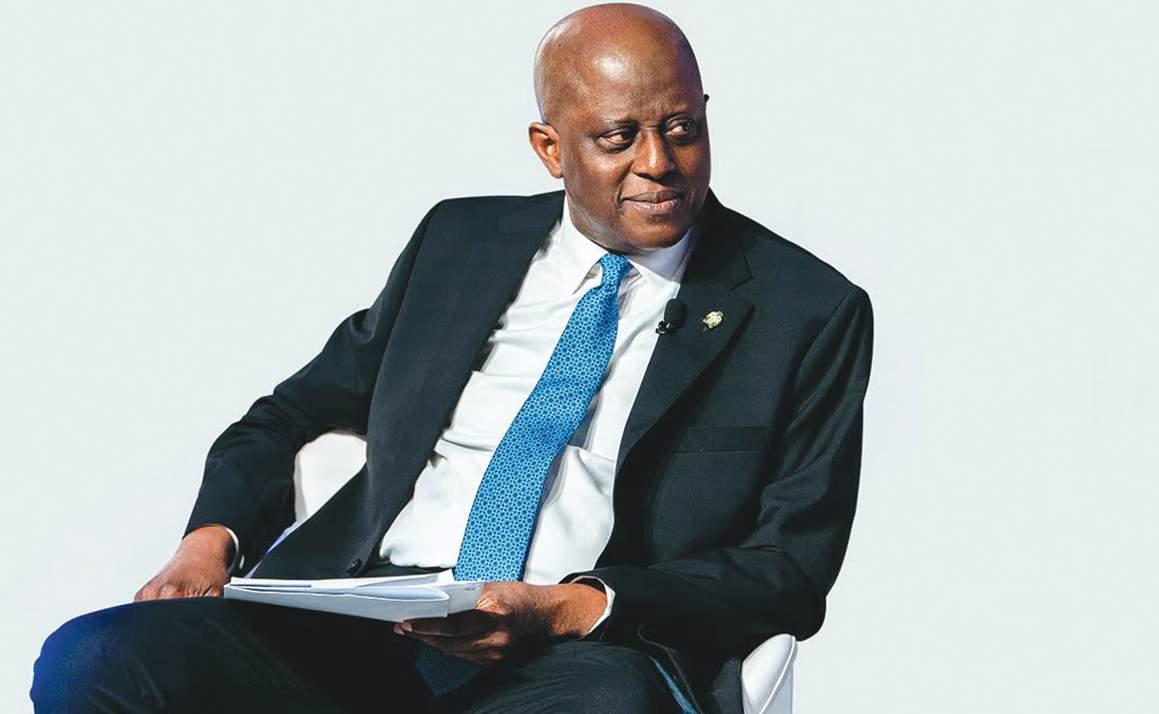
Yet, the challenge remains substantial. Historically, a disproportionate share of bank lending has been concentrated in the services sector, leaving critical areas such as agriculture and manufacturing underfunded. The post-recapitalisation era presents an opportunity to correct this imbalance, ensuring that credit flows more equitably across the economy.
Director, Banking Supervision, CBN, Dr. Olubukola Akinwunmi, pointed out that the recapitalisation exercise was designed to strengthen confidence.
He said recapitalisation, “ensures that the banking system is resilient and capable of safeguarding depositors’ funds, giving Nigerians peace of mind when they engage with financial institutions. When that confidence exists, banks are able to mobilise more savings. And when banks mobilise more savings, they can perform their core function more effectively—financial intermediation. This simply means lending to economic agents, including businesses and households.
“When banks lend to businesses, those businesses can expand. Entrepreneurs are able to access financing for viable, bankable projects and ideas. As businesses grow, they create employment opportunities, which in turn improves incomes and livelihoods.”
The Centre for the Promotion of Private Enterprise (CPPE) urged the CBN and the fiscal authorities to see the reconnecting of the banking system to the real economy as the next critical phase of financial service sector’s reform.
The organisation decried a situation where the services sector accounts for about 55 per cent of total banking sector credit, while manufacturing, agriculture and Small and Medium Enterprises (SMEs) are receiving about 14 per cent, five per cent and one per cent respectively, saying that this is inconsistent with Nigeria’s aspirations for economic growth.
The Chief Executive Officer of CPPE, Dr. Muda Yusuf, explained: “The ultimate success of this reform will be determined not just by stronger balance sheets, but by the extent to which the banking system supports investment, enterprise, job creation and economic transformation. At this critical juncture, the priority must shift from capital adequacy to economic impact. Nigeria needs not just stronger banks, but banks that work for the economy.”
He also urged the CBN to incentivise long-term financing for productive sectors, promote a more balanced sectoral allocation of credit, expand access to consumer credit to stimulate aggregate demand and address the crowding-out effects of public sector borrowing.
Indeed, the regulators are keenly aware that stronger capital alone will not guarantee improved outcomes. This is why the recapitalisation exercise has been accompanied by tighter regulatory oversight and enhanced risk management frameworks. The central bank has introduced more stringent capital verification processes to prevent the injection of questionable funds and has reinforced anti-money laundering compliance standards to strengthen governance across the sector.
In addition, banks are now required to adopt more robust credit risk frameworks, conduct regular stress testing, and maintain adequate capital buffers under varying economic scenarios. These measures are designed to prevent a repeat of past cycles where excess liquidity led to reckless lending
and eventual instability.
For industry observers, the Nigerian banking sector has demonstrated that it can undergo major structural reforms without triggering systemic shocks—a testament to both regulatory discipline and market maturity.
Looking ahead, the focus is increasingly shifting towards impact. Analysts and stakeholders are emphasising the need for banks to translate their enhanced capacity into tangible economic outcomes. This includes increased lending to productive sectors, support for entrepreneurship, and financing for long-term projects that can drive industrialisation.
There is also a growing expectation that banks will play a more active role in regional and global markets. With stronger capital bases, Nigerian financial institutions are better positioned to participate in cross-border trade, support businesses under the African Continental Free Trade Area (AfCFTA), and attract foreign investment.
At the same time, customers are anticipating a more responsive and innovative banking experience. Improved capital should enable banks to invest in technology, enhance service delivery, and reduce the cost of financial services. Faster dispute resolution, more flexible products, and greater accessibility are among the benefits expected in this new phase.
However, experts caution that the journey is far from complete. The ultimate success of recapitalisation will depend on how effectively banks deploy their capital to support the real economy. As noted by analysts, stronger balance sheets must translate into increased investment, job creation, and improved living standards.
There is also the need to address structural constraints that could limit the impact of the reform. Issues such as high interest rates, policy uncertainty, and infrastructure deficits continue to pose challenges to credit expansion. Addressing these factors will require coordinated efforts between monetary and fiscal authorities.
Nonetheless, the outlook remains positive. The recapitalised banking system provides a solid foundation for growth, offering the financial strength needed to support Nigeria’s economic ambitions. With improved governance, enhanced risk management, and renewed investor confidence, the sector is better equipped to navigate both domestic and global uncertainties.
In many ways, this moment represents a reset for Nigerian banking—a transition from a period of cautious consolidation to one of proactive expansion and strategic impact. The industry is no longer just a custodian of deposits; it is a catalyst for growth, innovation, and development.
As banks begin to deploy their strengthened capital, the true benefits of recapitalisation will become more visible across the economy. Businesses will gain access to funding, industries will expand, and new opportunities will emerge. For individuals, this could mean better access to credit, improved financial services, and enhanced economic prospects.
Nigeria’s banking sector now stands at a critical juncture. The recapitalisation exercise has laid the groundwork, but the next phase will determine its legacy. If effectively harnessed, this renewed financial strength could drive a virtuous cycle of growth—one where stronger banks lead to stronger businesses, and ultimately, a stronger economy.
What is clear is that the era of undercapitalised banking is giving way to a new reality—one defined by scale, resilience, and possibility. And as this transformation unfolds, the impact will extend far beyond the financial sector, shaping the trajectory of Nigeria’s economic future.


As recent as last season, two-capped Super Eagles defender, Emmanuel Fernandez was strugglingwithPeterboroughUnitedintheEnglishEFLLeagueOne,whichisthethirdtier of football in England. In the summer transfer window, he joined Glasgow Rangers for a paltrysumof3.5millionpoundsandhassinceestablishedhimselfasakeyfigureintheheart oftheIbroxdefence,culminatinginnotonlyemergingasRangersPlayeroftheYearbutalso being recognised in the 2025/2026 SPFLTeam of the Season.Beyond personal awards,the defenderisaimingtowintheleaguetitleinhisfirstseasoninScotland
Over the weekend, Glasgow Rangers official website informed that Emmanuel Fernandez has been voted Rangers Men’s Player of the Year for the 2025-2026 season, and the two-capped Nigeria international collected the final award during Rangers’ 2026 Player Awards in Glasgow on Sunday evening.
Asummer signing from Peterborough United, the commanding defender has emerged as a standout performer for Danny Röhl’s side, scoring five goals in 23 Scottish Premiership appearances while also playing a key role in the team’s 12 clean sheets in the division.
The 24-year-old made his debut in the Europa League this term, and was on target in the Scottish League Cup against Alloa Athletic.
His rise to prominence is all the more remarkable considering he was competing in the third tier of English football just a year ago.
He was the only Rangers player named in PFA Scotland’s Premiership Team of the Year for 2025-2026.
Renowned for his composure and physical presence, the centre-back has delivered a string of commanding performances, while also proving dangerous in attacking set-piece situations. His consistency and impact have made him a fan favourite among the Light Blues faithful.
The newest Super Eagles superstar revealed that an inclusion in the team of the season wasn’t something he expected to happen in his first-ever top-flight season.
“It was a bit of a shock to be in the Team of the Year as I started playing a bit later in the season,” the former Brentford man said, as revealed by Rangers’ official website.
“To be named in it, I am so grateful to my teammates and the staff, as well as the other players in the league for voting for me.
“I didn’t expect it, but to do it in my first season here, to get that recognition is a moment I won’t forget.
“Spain (the pre-season training) was one of the best things we have done.
“I spoke to players, maybe, I didn’t speak to as much before the trip. It was good for team bonding and it was nice to play in the heat – you don’t get much of that here.
“We all enjoyed it,” Fernandez concluded.
Fernandez’s season with Rangers could get even better if they usurp Hearts in the race for the SPFL title at the end of the season.
Indeed, Super Eagles have congratulated the defender, following his emergence as Player of the Year at Rangers FC.
Reacting to the accolade, the Nigeria national football team took to their official X account to celebrate the achievement, writing: “Congratulations @EFernandez17_ on winning the Rangers Men’s Player of the Year Award last night.”
With the PFA Scotland Team of the Year and Rangers’ Men’s Player of the Year award in the bag, Fernandez has set his sights on a strong finish to the season with Rangers FC, insisting that delivering the Scottish Premiership title would be the ideal send-off for long-serving captain James Tavernier.
The Nigerian defender, speaking via the club’s official platform, addressed the emotional weight of Tavernier’s decision to leave Ibrox after 11 seasons, an announcement that has reverberated through the dressing room at a critical stage of the campaign.
Rangers remain firmly in the title race, and Fernandez made it clear that while the squad is motivated to honour their departing captain, the focus must remain on immediate objectives.

“We all know what we need to do until the end of the season and it would be the perfect send off for him, but we have to take it one game at a time,” Fernandez said.
“It was tough when he told us and we were a bit shell-shocked. We all congratulated him and showed him love and we want to bring something back for him.”
Tavernier’s exit marks the end of an era at Rangers. Since joining in 2015, he has been a central figure in the club’s modern resurgence, leading them to domestic success and European competitiveness, while establishing himself as one of the most consistent performers in the league.
For Fernandez, the captain’s influence has been personal, as much as professional.
The defender, who joined Rangers from Peterborough United, revealed that Tavernier played a key role in helping him adjust to the expectations and scale of the club.
“I feel since I came here that he has been in my corner, he has supported me when I needed it,” he said.
“When I signed, I didn’t understand the size of the club, but his calm leadership carried me through.”
Fernandez recalled a defining moment early in his Rangers journey, when Tavernier’s encouragement helped shape his breakthrough.
“I remember when the gaffer came in, we played Hibs away and Tav spoke to me and told me I would get my opportunity.
“The game after that against Livingston I played and that moment from Tav lifted me up. I knew I had his trust.”
He went on to describe Tavernier’s leadership style as understated but effective, built on trust rather than volume.
“He isn’t a shouter, he makes it easy for players and he makes you think you can play your
game.
“On the pitch you know what he gives to the team, as well as his leadership, which is amazing.”
Despite the impending departure, Fernandez expressed confidence in the squad’s ability to maintain standards.
“We will miss him a lot. He has been here 11 years, he knows the league, how to be at Rangers.
“But we have other characters who can step up, who know how to be at Rangers.”
Rangers have been on a positive run, losing just once in recent matches, positioning themselves as genuine contenders in the title race.
“We have been on a positive run, everyone knows we have a real opportunity,” he added.
Meanwhile, the 6ft 5in defender’s aerial dominance, composure on the ball and impressive performances have caught the eye of several top clubs across Europe.
Rangers are braced for significant interest and are reportedly set to demand at least £25m – with some sources suggesting a higher valuation up to £35m – for the centre-back, who has three years left on his contract.
Manager Rohl has praised Fernandez as a role model for the club’s development strategy and hopes to keep him, but the club may find it difficult to resist substantial Premier League bids.
Peterborough also have a sell-on clause attached to any deal, which will drive Rangers’ asking price upwards.
Arsenal lead the domestic pursuit, with the Gunners closely monitoring the giant defender as a potential reinforcement for their backline.
Chelsea have also shown keen interest, while West Ham United are actively linked and could make a concrete approach.
Everton complete a notable Premier League contingent keeping tabs on his progress.
In Europe, Bundesliga sides Borussia Dortmund and Bayer Leverkusen have registered strong admiration, with some sources indicating they were among the earliest to show interest.
Belgian outfit Club Brugge are understood to be seriously pursuing the player, while Dutch clubs Ajax and Feyenoord have been mentioned as potential suitors, too.
Earlier whispers even connected Fernandez with Bayern Munich, though that link has been cooled by sources. Fernandez himself has spoken positively about life at Rangers and recently encouraged teammates to commit long-term, suggesting he is settled for now.
However, a record-breaking fee for the club could tempt Rangers to sell, particularly if it helps fund further squad investment.
Rangers’ model is to buy low and sell high, so should a bid match their expectations, it will be accepted.
Their current record sale is defender Calvin Bassey, who joined Ajax for an initial £19.6m (rising to £22.5m with add-ons) in July 2022.
However, Rohl has urged the defender to stay for at least one more season, considering he could play in the biggest stage of European football, for one of the biggest clubs in the world.
“In terms of Manny (Fernandez), he knows what he has here. He’s developed very quickly. We should not forget that one year ago he was playing in League One.
“Now he plays for a big club.And if everything goes well and we get what we want, maybe he can play next year in the highest competition (Champions League),” the 36-year-old concluded.
On the international stage, Fernandez came off the bench to make his Nigeria debut in a friendly against Iran on March 27, before finding the net on his first start four days later in a 2–2 draw with Jordan.

Former Chelsea midfielder, Emmanuel Petit has tipped Super Eagles striker, Victor Osimhen to end The Blues’, long standing No 9 problem, saying the Nigerian striker has the personality and mentality needed to succeed at Stamford Bridge and follow in Didier Drogba’s footsteps.
Chelsea have struggled for years to replace the impact of Drogba, with a series of highprofileforwardsfailingtodeliver consistently at Stamford Bridge. The club’s No.9 shirt has become symbolic of that problem, with several strikers unable to handle the expectations that come with leading the line in west London.
Osimhen has now emerged as one of the names linked with solving that long-running issue. The Nigerian forward remains highly rated across Europe de-
spite his temporary departure from one of the continent’s top leagues. Petit believes Osimhen possesses the mentality required to succeed where others have struggled and could finally end the perceived “curse” surrounding the club’s No.9 role.
PetithighlightedhowtheBlues havestruggledtofindasuccessful number 9 since the Drogba era. And the French legend asserted thatOsimhenwouldbetheperfect man to break the curse.
“Victor Osimhen is doing well with Galatasaray but when he left Napoli, I was hoping that he was going to come to the Premier League, I have no idea why he chose Galatasaray,” he speaks in Andy’s Bet Club.
“Since Drogba, I think there’s been a curse around the number nine at Chelsea. I think it’s different with Osimhen because this
Chelle’s unity Cup plan Suffers Setback as Injury Knocks Czech-based Striker, Lawal Out Super Eagles coach Eric Chelle will be unable to call upon Czech-based striker Salim Fago Lawal for this month’s Unity Cup in London.
The Malian tactician is expected to use the tournament at the Valley to assess new players of Nigerian descent, as well as previously invited individuals who have had limited opportunities at international level. Lawal falls into the latter
category, having played only a peripheral role at the 2025 Africa Cup of Nations. He remained an unused substitute in four matches and made just a brief one-minute appearance on his competitive debut against Uganda.
According to Czech regional newspaper Plzeský deník, the forward will remain sidelined until the end of the 2025–2026 season, effectively ruling him out of the
guy has a really big personality and character, he could be the man to break that curse.”
Petit believes Osimhen’s character and aggressive style make him uniquely suited to the demands of the Premier League and the expectations placed on Chelsea’s main striker.
“The way he plays on the pitch is a pain for defenders,” he added. “This guy is very aggressive. He has something to prove. After he left France for Napoli, he did great in Italy. But then he was fighting with the president of Napoli, and then he went to Galatasaray.”
“I think Osimhen has many seasons to play at the highest level. So I think that could be something very, very good for the Premier League. I think he has the character, the personality, and the background to play in the Premier League.”
Unity Cup as well as upcoming friendly matches against Poland and Portugal.
The striker has not featured for FC Viktoria Plze since sustaining an injury in the opening minutes of a league fixture against Bohemians.
The setback also saw him miss out on selection for the March international fixtures against Iran and Jordan.
Prior to his injury, the former Flying Eagles forward made nine appearances for Viktoria Plze, scoring twice.
Nottingham Forest head coach, Vitor Pereira has provided an encouraging update on the fitness of Super Eagles defender, Ola Aina ahead of Monday’s Premier League clash against Chelsea.
The Nigerian defender was forced off with an injury concern during Thursday night’s 1-0 win over Aston Villa in the UEFAEuropa League semifinal first leg encounter.
Aina started the match and was very effective on the right side of Forest’s defence, although his side were dealt a big blow when he had to come off in the 75th minute. The right-back had been on the end of a rash challenge
from Aston Villa defender Lucas Digne and could not continue further, before he was eventually replaced by Zack Abbott.
The 29-year-old has made 28 appearances across all competitions for Nottingham Forest this season and has been a key figure in the squad since returning from a hamstring injury that sidelined him earlier in the campaign.
Nottingham Forest face Chelsea in a crucial Premier League fixture on Monday night as they continue their push to secure survival ahead of next season.
The Tricky Trees sit five points above the relegation
zone, but still need to pick up points from their remaining four matches to guarantee safety.At the same time, they must also keep one eye on Thursday’s Europa League semifinal second leg clash.
Aina’s injury initially raised serious concern for Vitor Pereira, especially given the number of players already sidelined and the defender’s importance to the team during this decisive stage of the season.
However, speaking during his pre-match press conference ahead of the Chelsea fixture, Vitor Pereira revealed that Aina could recover in time to feature in that encounter and even shared a playful interaction with the Nigerian defender.
Five members of a gang who were sent to prison for illegally streaming Premier League games have been ordered by the court to return their profits, worth £3.75m.
In May 2023, Mark Gould, described by the judge as the driving force behind the illegal streaming service Flawless TV, and four other members, were sentenced to more than 30 years in prison between them, in what
was the world’s largest piracy sentencing.
Their business involved more than 50,000 customers and resellers, as well as 30 employees, with the operation generating in excess of £7m between 2016 and 2021.
Gould, originally sentenced to 11 years in prison, was this week ordered by Derby Crown Court to forfeit the proceeds of his criminal activities and return
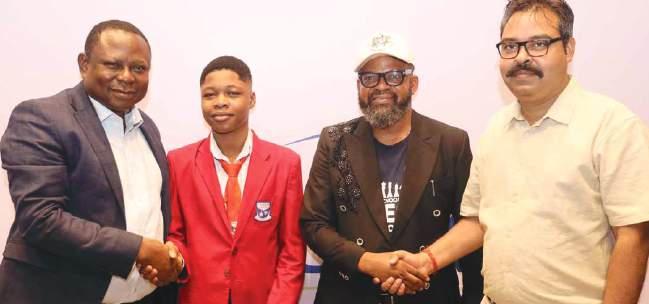
A total prize pool of 20 million will be at stake when the Ecobank National Schools Team Chess Championship returns for its third edition in Lagos, underlining growing investment in grassroots chess development in Nigeria.
The championship, scheduled for 7 to 8 May at the Ecobank Pan African Centre (E-PAC), is expected to feature not less than 1,500 pupils and students representing 300 schools from across the country.
Organisers say the prize structure reflects a deliberate effort to reward excellence, while encouraging wider participation among young players.
The winning team in the primary school category will receive 2 million, while the secondary school champions will go home with 2.5 million. In addition to team prizes, individual performers across all five boards will also be rewarded, ensuring
recognition for standout talents within each team.
Speaking at a press conference, Vice President of the Nigeria Chess Federation, Adeyinka Adewole, said the growing financial commitment to the competition highlights its importance in developing future chess champions.
“This is targeted at primary and secondary school students between the ages of 7 and 18. That is where we can discover the grandmasters of tomorrow,” he said.
Mr Adewole noted that beyond the prize money, the championship offers young players a pathway into competitive chess, aligning with global standards set by FIDE.
Each participating school will field a team of five players, with entries expected from at least 15 states. The competition remains open, provided participants meet age and school eligibility requirements.
Ecobank’s Segment Head for Education, Faith and So-
cial Services, Adekunle Adewuyi, described the prize pool as part of the bank’s broader commitment to youth development.
“Chess is a powerful educational tool. It sharpens critical thinking, problem-solving and discipline. Through this initiative, we are preparing young Nigerians not just for competition but for leadership roles in the future,” he said.
Also speaking, Head of Brand Management and Experiential Marketing at Ecobank, Tomilola Fetuga, said the financial incentives are designed to complement the intellectual benefits of the game.
“Chess builds discipline, teamwork and intellectual capacity. The rewards attached to this competition help motivate students while reinforcing these values,” she said. Since its inception, the championship has witnessed steady growth, with participation rising significantly between its first and second editions. Organisers say the introduction of a strong prize structure has contributed to increased interest among schools and young players.
The Chairman of the Marketing and Sponsorship Committee of the Nigeria Basketball Federation, Ugo Udezue, has made a review of the D’Tigress WNBA Tour and described it as a longterm investment for the team.
The Nigerian women’s national basketball team, D’Tigress, will be rounding off their playing tour of the USA with the game against WNBA team, Portland Fire, on May 3 in Portland. This match follows the first two against the LA Sparks on April 25th, which ended 8963 for the Sparks, and the April 27th match played against the Minnesota Lynx, which the Nigerian ladies lost 88-79.
The NBBF presented a team of 21 players, with just about seven of them from the teams that won the last Afrobasket and the World Cup qualifiers in France last February, and

D’Tigress standing tall this, Udezue explains, was very deliberate.
He said, “My assessment of D’Tigress’ WNBATour. The tour is a perfect blend of confidence, hope, and long-term vision for our team. What we are witnessing is not just competition – it is the intentional building of the future. “The integration of youth into this group is exactly the kind of injection needed to
sustain excellence and elevate our programme for years to come. This is how great teams evolve by balancing experience with emerging talent in real, competitive environments.”
The AFA Sports CEO insists that the Federation was looking largely at the future while arranging the tour.
He added, “While some may be focused on immediate results, we are looking beyond the scoreboard. This tour is about growth, exposure, and identifying the next generation of leaders for Nigerian basketball.
“And from what I’ve seen, the future is not just promising, it is exciting.”
D’Tigress have not lost a game to any African team since the summer of 2015, and they are preparing for the 2026 FIBA World Cup that will be held in Germany in September.
£2.35m within three months or face a further prison sentence of 10 years.
Similar proceedings have been instigated against four other defendants from the case who were ordered to pay back a total of more than £1.4m or also risk longer prison sentences.
The total sum of £3.75m is the second largest figure ordered in the UK against the operators of an illegal streaming service.
Chivas Regal recently hosted an exclusive matchday experience that celebrated positive vibes, lifestyle, the passion and collective spirit of football, in continuation of its belief that success is a shared celebration, reflecting the brand’s campaign, “I Rise, We Rise’, Chivas Regal.
The Chivas Watch Party, which brought together football lovers, cultural tastemakers, and stylish fans for a celebration, rewarded Nigerian fans with iconic Arsenal jersey signed by some of its players, that redefined the matchday
experience during a recent Premier League match between Man City and Arsenal.
The event hosted by Excel Joab, whoinhistraditionalvoice mesmerizinggimmicksensured thatfromarrivaltofinishfanswere kept on their knees and nerves in the tense Chivas Watch Party.
The matchday experience also witnessed specially engraved bottles offered to the fans.
Foraneventthatissynonymous withChivasScotchwhiskeybrand, hostesses styled as referees to the immersivefanzonesandmixology lounges,capturedtheatmosphere
of the game.
The partnership between Chivas Regals and Arsenal FC offers amazing values, not just about an individual rising, but one rising up with your team, with your crew, and with your clique, a wholesome experience.
For the winner of Do2dtun challenge, Solomon Okeuhie, who won a signedArsenal jersey, an engraved bottle of Chivas regal, and an invite to the watch party, “the event is worthwhile as I have never dreamed of winning and being celebrated on a podium like this in my life.”
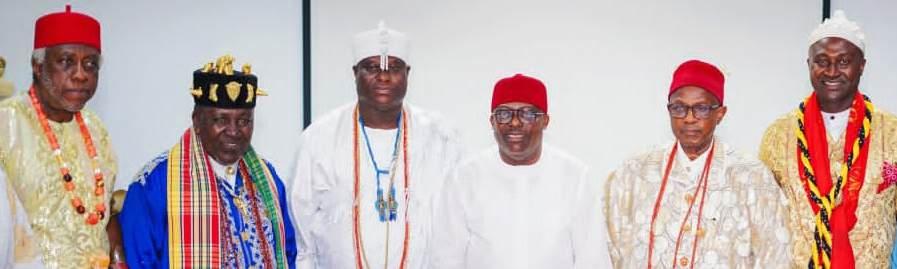
L- R: Eze Obosi, Igwe Chidubem Iweka III; Eze Udo II of Amaifeke, Eze Emmanuel Chukwuemeka Okeke; Ooni of Ife, Adeyeye Enitan Ogunwusi; Governor Siminalayi Fubara of Rivers State; Obi of Obinugwu, Eze Cletus Ilomuanya, and Eze Aro, Dr. Eberechukwu Oji, during a crucial meeting of the Southern Nigeria Traditional Rulers Council held in Port Harcourt ...recently
The response of my friend and colleague, Akin Osuntokun, to my piece, “Because PDP Lacks a Tony Anenih Today”, which appeared on this page on the 3rd January presents an alternative perspective on the role and impact of Chief Tony Anenih as a political variable of confirmed significance and value in the life of the party. I speak of alternative perspectives because everyone’s point of view on any matter will always be coloured by his interests, values, experiences, expectations, the information available to him, and his stakeholder preferences.
As writers, commentators and perhaps advocates,
we stand under the perpetual scrutiny of Herodotus, the acclaimed Father of Modern History, who said that every writer presents events according to how the he, (1) actually witnessed them happening at the time, (2) how he rightly or wrongly remembered and interpreted them, (3) what he heard and believed from others, or (4) how “partiality” swayed him to write.
While Akin and I may or may not have been swayed by our respective partialities, I believe that we both set out to present a point view we believe did justice to the matter in question. What is open
Tto argument for me, however, is his attempt to put the stamp of truth, or “superior correctness” on his own perspective.
He submits in his response titled, A “Misrepresentation of Tony Anenih”, that my position on both Anenih’s significance and the condition of the PDP today is “…a total misreading of the evolution of the Nigerian political party system and its culmination into the repetitive trend towards one party dictatorship”. This may well be true,
Continued on page 35
here are moments in history when bold ideas challenge an entire continent to rethink its future. That moment may well be unfolding now, as Africa’s richest man and President of the Dangote Group, Alhaji Aliko Dangote unfolds his vision to industrialise the continent.
Speaking at a presidential panel at the “Africa We Build” summit in Nairobi, alongside Kenyan President, William Ruto, as well as Ugandan President Yoweri Museveni, last week, Dangote said his group is ready to build in East Africa a refinery comparable to the
650,000 barrels-per-day facility in Nigeria, provided there is strong policy backing and alignment from governments across the sub-region.
His refinery in Nigeria, already exporting fuel to Europe, offers a glimpse of what is possible when Africa begins to add value locally. The $20 billion facility is a testament to the power of domestic value addition.
Today, it stands as Nigeria’s most concrete example yet of how strategic industrial investment could unlock the full value of the country’s natural resources. Against the backdrop of ongoing instability in the
Middle East and its implications for global energy supply and price volatility, the Dangote Petroleum Refinery has emerged as a stabilising force and an African-led solution to global energy challenges.
The private sector-led refinery stands as a monumental demonstration of strategic foresight, industrial courage and African self-reliance.
It also shows that the continent is not short of resources or talent, but of coordinated vision and execution. By proposing a similar investment in East Africa, Dangote is effectively asking a critical question: why should Africa remain a supplier of
raw materials when it can be a producer of finished goods?
The proposed East Africa project is expected to be completed within four years, especially if East Africa’s regional leaders cooperate, Dangote stressed, kicking against Africa’s long-term practice of exporting raw materials.
The move comes amid rising intra-African energy trade, with Dangote’s refinery already exporting about 1.1 billion litres of aviation fuel to Europe.
Nigeria’s contemporary fiscal discourse has been captured by a convenient but fundamentally flawed proposition: that the removal of subsidy—particularly petrol subsidy—yields an immediate fiscal windfall. This claim is not merely inaccurate; it is analytically indefensible. Subsidy removal does not create liquidity. It eliminates a distortion. It corrects a mispricing. It improves the trajectory of public finance. But it does not, in itself, generate a stock of cash available for discretionary expenditure. To suggest otherwise is to confuse accounting relief with fiscal capacity.
regime across three critical domains: fuel pricing, foreign exchange management, and electricity tariffs.
More fundamentally, the subsidy debate in Nigeria has been improperly framed. It is often presented as a narrow question of petrol pricing. In reality, Nigeria has operated a multi-layered subsidy
Each of these represents a variant of the same fiscal phenomenon—the underpricing of scarce economic resources, with the resulting cost absorbed by the state, whether explicitly, implicitly, or opaquely.
An artificially low exchange rate, for instance, functions as an implicit subsidy on imports and privileged access to foreign exchange. Underpriced
electricity tariffs generate persistent market shortfalls that must be financed through budgetary support and quasi-fiscal interventions. Petrol subsidies, historically the most visible, are simply the most politically salient manifestation of a broader pricing distortion framework.
The removal or adjustment of these subsidies