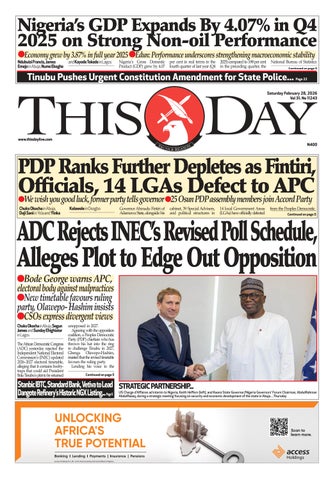
2025 on Strong Non-oil Performance
We
ADC Rejects INEC’s Revised Poll Schedule, Alleges Plot to Edge Out Opposition
Bode George warns APC, electoral body against malpractices
New timetable favours ruling party, Olawepo- Hashim insists CSOs express divergent views
unopposed in 2027.
The African Democratic Congress (ADC) yesterday rejected the Independent National Electoral Commission’s (INEC) updated 2026–2027 electoral timetable, alleging that it contains boobytraps that could aid President Bola Tinubu’s plot to be returned
Agreeing with the opposition coalition, a Peoples Democratic Party (PDP) chieftain who has thrown his hat into the ring to challenge Tinubu in 2027, Gbenga Olawepo-Hashim, insisted that the revised timetable favours the ruling party.
Lending his voice to the
Continued on page 5
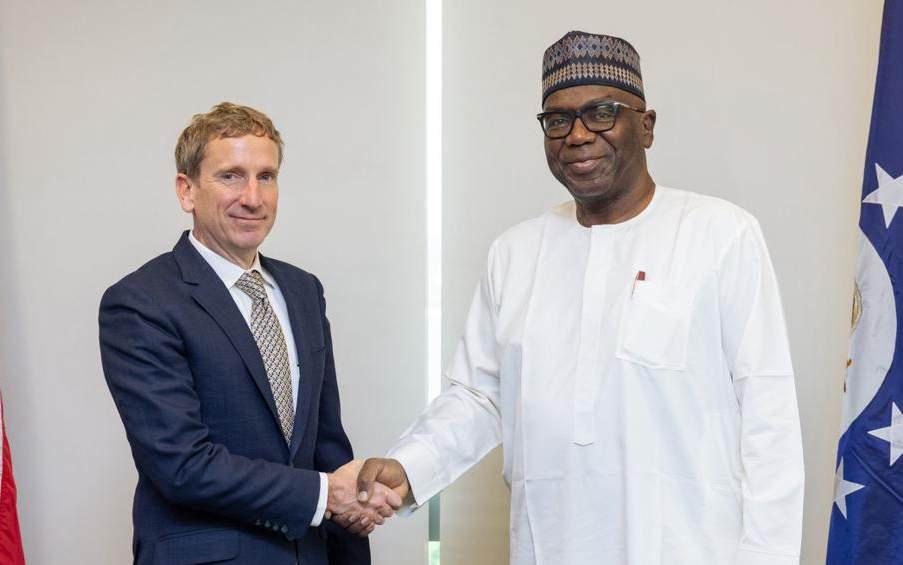




Chuks Okocha in Abuja, Daji Sani in Yola and Yinka Kolawole
Ndubuisi Francis, James Emejo in Abuja, Nume Ekeghe
Chuks Okocha in Abuja, Segun James and Sunday Ehighiator in Lagos





Stanbic IBTC, Standard Bank, Vetiva to Lead Dangote Refinery’s Historic NGX Listing
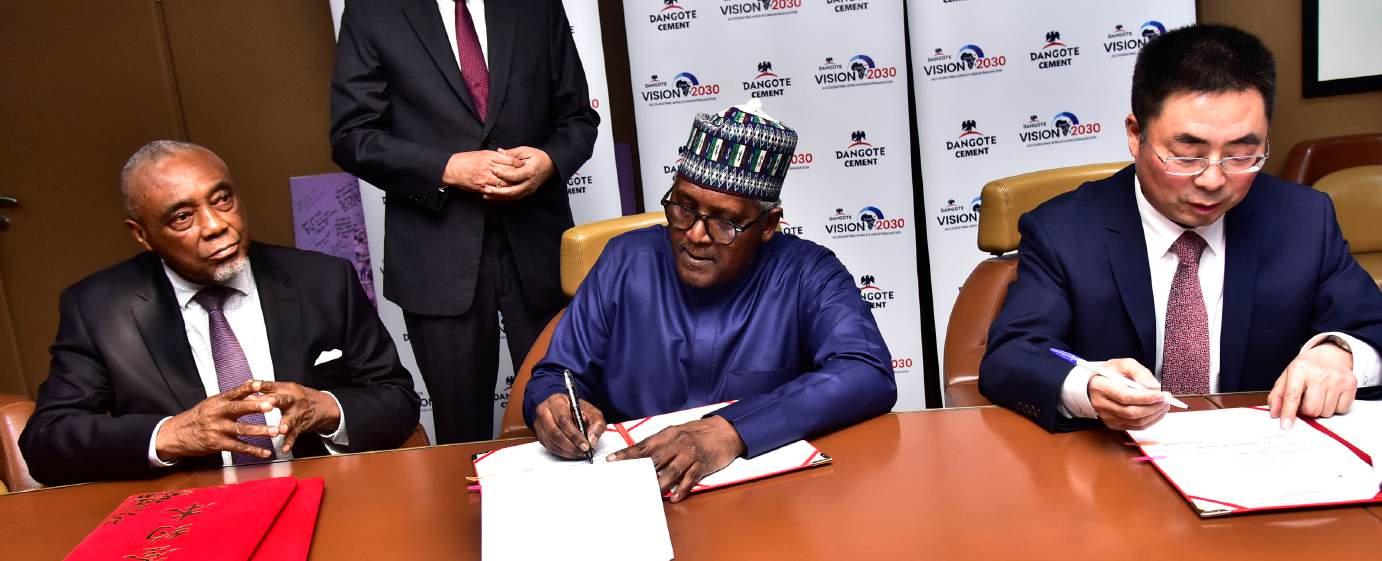
Dangote, Chinese firm, Sinoma sign $1bn
Kayode Tokede, Sunday Ehigiator and Peter Uzoho
As the Dangote Refinery prepares for its landmark listing on the main board of the Nigerian Exchange Limited (NGX), indications emerged yesterday that Stanbic IBTC Capital, a leading investment bank in Nigeria and a member
issue, another PDP chieftain, Chief Bode George, warned the All Progressives Congress (APC) and INEC to desist from cheating and any form of malpractice during the election.
Also, civil society organisations (CSOs) called for concern for the elections to go beyond the new dates and focus on how the action can lead to a credible election based.
However, human rights and electoral Advocates, Yiaga Africa backed INEC on the new dates, pointing out that the electoral body did the right thing by picking new dates for a seamless conduct of elections.
Specifically, the ADC flagged the new compliance requirements under Sections 77 and 82 of the Electoral Act 2026, which unfairly burden opposition parties while giving undue advantage to the ruling party.
In a statement signed by its National Publicity Secretary, Mallam Bolaji Abdullahi, the
Party (PDP) to the ruling All Progressives Congress (APC).
In a related development, 25 members of the Osun State House of Assembly elected on the platform of the PDP, yesterday formally announced their defection to the Accord party.
A statement issued by the speaker's Chief Press Secretary, Olamide Tiamiyu, confirmed that the decision was reached during a parliamentary meeting.
Following the defection, the convener of All Democratic Alliance (ADA) and League of Northern Democrats, Dr. Umar Ardo has said that the reported defection of Ahmadu Fintiri, Governor of Adamawa State, from the PDP to the
(NBS) disclosed yesterday.
of the Standard Bank Group, alongside First Capital and Vetiva Capital Management, are to serve as advisory firms. The much-awaited listing on the NGX is expected to position the refinery to unlock significant domestic and foreign investor interest while reshaping the depth and valuation dynamics of
party said the requirement for political parties to submit a comprehensive digital membership register by April 2, 2026, ahead of primaries scheduled between 23 April and 30 May 2026, creates a near-impossible hurdle that could exclude other parties from fielding candidates.
The ADC contended that with this requirement, among others contained in what it termed as obnoxious Electoral Act 2026, “the so-called reform has effectively become an instrument of exclusion to clear the field for President Tinubu.”
According to Abdullahi, ''What has been presented as a routine administrative schedule of the upcoming general elections is in fact, a political instrument carefully structured to narrow democratic space and strengthen the hand of the incumbent administration ahead of the 2027 general elections.
''According to the timetable,
APC will not save his political career, adding that it represents a deeply repugnant episode in Adamawa state politics. This is as the PDP waved Fintiri bye and wished him good luck in his newfound party.
In a statewide broadcast in Yola, Fintiri, announced that his decision was driven by the need to fast-track development and act in the best interest of Adamawa State residents.
Fintiri's defection came 48 hours after the Speaker of Adamawa State House of Assembly, Bathiya Wesley, resigned from PDP alongside 13 other lawmakers. This move is expected to give APC control of Adamawa State, which was previously held by PDP.
the NGX.
President of the Dangote Group, Alhaji Aliko Dangote, last week disclosed that the shares of Dangote Refinery would be listed on the NGX within the next four to five months.
Dangote made this known during a tour of the refinery by the Group Chief Executive
party primaries are to be conducted between 23 April and 30 May 2026, just 55 to 92 days from today.
“However; what is more significant is that pursuant to Section 77(4) of the Electoral Act 2026, political parties are required to submit their digital membership registers to INEC not later than 2 April 2026.
''That is only 34 days away.
Section 77(7) further provides that any party that fails to submit its membership register within the stipulated time “shall not be eligible to field a candidate for that election.”
It further stated: “These are not house-keeping rules. They are deliberately constructed barriers to exclude opposition from partaking in the coming election.
''It is significant to note also that Section 77(2) of the Electoral Act 2026 prescribes that the digital register of members must contain their name, sex, date of birth, address, state, local
The governor cited the desire to ensure welfare and development for Adamawa residents as the reason behind his defection, stating, "This defection is anchored on the desire to ensure the welfare and development of our people."
Also, Members of the Adamawa State Executive Council pledged their loyalty and commitment to Governor Ahmadu Umaru Fintiri as he joined the APC.
In a statement, the commissioners announced their decision to follow Fintiri to the APC, citing his exemplary leadership and commitment to the development of the state.
The Chairman of
Officer of Nigerian National Petroleum Company Limited (NNPC), Bayo Ojulari, and other top executives of the state-owned oil firm.
Dangote had unveiled a landmark plan to list a 10 percent stake in his $20 billion refinery on the NGX this year.
He further announced that the company is currently
government, ward, polling unit, National Identification Number (NIN), and photograph in both hard and soft copies, while Section 77(6) prohibits the use of any pre-existing register other than the one that contains the specific information above.
“According to this law, failure to meet these requirements would result in disqualification,'' Abdullahi stated.
He said, ''what makes this requirement of digital membership particularly insidious is that the ruling party had commenced the process of this registration since February 2025, long before it became a requirement of the law.
“This is not a product of foresight, but insider knowledge. They knew what was coming. They therefore had one whole year to carry out an exercise that they expect other political parties to execute in one month, during which they must collect, process and collate vast digital data and
commissioners Forum, Alloycious Babadoke praised Fintiri's governance, stating that he has elevated the state to an enviable height, making it a development model. They commended his qualities in governance, which have provided a conducive working environment and enabled them to perform their duties effectively.
At a separate occasion at the Deputy Governor's office in Yola, the Chairman of Special Advisers Forum, Hon. Bala Buba Jada pledged to collaborate with the commissioner and follow Fintiri wherever he goes.
The Chairman, ALGON, Hon Sulieman Gangkuba, also announced that 14 local
in discussions with market regulators to facilitate future dividend payouts in US dollars, offering a hedge against the persistent challenges posed by currency volatility.
Dangote highlighted that his team was collaborating closely with both the NGX and the Securities and Exchange Commission (SEC) to finalise
transmit same to INEC by the deadline under the threat of total exclusion. This is more or less a practical impossibility.
''Democratic competition is based on a level-playing field that does not give any advantage to the contestants.
“A system where one party takes advantage of incumbency to give itself a one-year headstart on a requirement that other parties only became aware of when it is almost too late is a rigged and corrupt system,'' he added.
“ADC will not do anything that will appear to confer legitimacy on a fraudulent system. We are reviewing our options, and will make this known in the coming days.
''We call on civil society, democratic stakeholders, and patriotic Nigerians across party lines to scrutinise this timetable and join us in demanding fairness, because no democracy can endure if the rules that govern it are written to suit
councils have defected to the APC, with seven others to follow suit. Gangkuba praised Fintiri's leadership, describing him as a capable leader who listens to his people. He commended Fintiri's style, saying it has earned him the respect and loyalty of his constituents.
Meanwhile, Ardo, while carpeting the defection in a statement, said, ''This move, devoid of ideological conviction or principles, exemplifies the cynical culture of political opportunism that continues to debase democratic norms in Nigeria. Defections undertaken for personal protection rather than public service insult the mandate freely given by the people
the structure for the proposed initial public offering (IPO). Commenting on the names of advisory firms in the Dangote Refinery listing on NGX, the Chief Operating Officer of Investdata Consulting Ltd. Mr. Ambrose Omordion stated that the three firms over the years have played a critical role in major listing the Exchange.
pre-determined outcomes'', the ADC spokesman stated further.
Olawepo-Hashim Faults INEC on New Timetable
PDP Chieftain, Gbenga Olawepo-Hashim, faulted the Chairman of INEC, Joash Amupitan on the revised timetable.
Addressing journalists at a press conference in Abuja, Hashim rejected the adjusted schedule for party primaries released by INEC, describing it as an overreach. He alleged that it was structured to favour the APC.
According to him, INEC does not have the authority to dictate when political parties should conduct their primaries. “It’s not the business of INEC to dictate to parties when they should conduct nominations of candidates for elections,” he added.
and erode trust in democratic institutions.''
He further said, ''Adamawa people know serious financial misappropriations undertaken by the Fintiri regime in his years of locusts. Already, the Governor faces a pending 5-counts charge of corruption, money laundering and fraud before the Federal High Court, Abuja. ''While the law must take its course and due process be respected, no change of party colours can either substitute accountability or save him from being prosecuted. Neither can political realignment launder reputations nor extinguish legitimate scrutiny.''
Equally, the naira strengthened across the foreign exchange (FX) market in February, posting gains at both the official and parallel windows amid improving dollar liquidity and sustained policy support.
According to the GDP Q4, 2025 report, on annual basis, the country recorded a growth
Minister of Finance and Coordinating Minister of the Economy, Mr. Wale Edun, said the performance underscored strengthening macroeconomic stability and the tangible impact of the federal government’s economic reform programme under the leadership of President Bola Ahmed Tinubu. This emerged as data compiled by THISDAY showed that investors' average return on the Nigerian stock market increased significantly by N24.4trillion in the first two months of 2026 amid growing fundamentals and impressive corporate earnings by listed companies.
rate of 3.87 per cent in 2025, compared with 3.38 per cent in 2024.
In the quarter under review, aggregate GDP at basic price stood at N122.81 trillion in nominal terms compared to N113 58 trillion in the preceding quarter.
Aggregate GDP recorded a nominal growth of 17.55 per cent when compared with N104.47 trillion in Q4 2024.
However, real GDP stood at N63.97 trillion in Q4 compared with N57.03 trillion in the
preceding quarter, the statistical agency stated.
The non-oil sector led the growth in the review period, contributing 97.13 per cent compared to 96.56 per cent in Q3 and 97.20 per cent in Q4 2024.
The services sector contributed 55.92 per cent to GDP compared to 55.87 per cent in the corresponding quarter of 2024.
However, the oil sector contributed 2.87 per cent to total real GDP in Q4 compared
to 3.44 per cent in Q3 and 2.80 per cent in Q4 2024.
Overall, the oil sector contributed 3.53 per cent to growth in 2025, higher than 3.38 per cent in 2024.
Also, in Q4, average daily oil production increased to 1.58 million barrels per day (mbpa), compared to 1.64 mbpd in Q3 and 1.54 mbpa in the same quarter of 2024.
However, agriculture contributed 28.66 per cent to aggregate GDP in real terms in Q4 compared to 31.21 per
cent in the preceding quarter, and 28.68 per cent in Q4 2025.
Overall, the sector contributed 27.55 per cent to GDP in 2025 from 27.81 per cent in 2024.
The manufacturing sector contributed 8.34 per cent to GDP compared to 8.06 per cent in Q3 and 9.27 per cent in Q4 2024. In 2025, the sector contributed 8.46 per cent compared to 8.85 per cent in 2024.
UK Mobile Network, Lebara, Targets Digital Innovation, Competition in Nigeria’s Telecoms Market
Sunday Okobi
Nigeria’s telecommunications sector has received a fresh boost as Lebara Nigeria officially marked its entry into the market with a highprofile soft launch, a move which stakeholders described as a step toward deeper competition, inclusion, and digital innovation in Nigeria.
The event, attended by government officials, diplomats, regulators, financiers, and industry leaders, and held in partnership with the UK Department for Business and Trade and the British High Commission in Lagos yesterday, signalled the arrival of the British-owned mobile virtual network operator (MVNO) brand into Africa’s largest telecoms market.
At the event, the Minister
of Art, Culture, Tourism, and the Creative Economy, Hannatu Musa Musawa, said the launch represents more than the debut of a new telecoms brand.
“Today’s event signifies the immense opportunities that exist within our cultural and tourism sectors,” she said, noting that the milestone builds on an existing understanding between the ministry and Lebara aimed at leveraging technology to empower Nigeria’s creative talents.
Musawa reaffirmed the ministry’s commitment to collaborating with private sector partners to transform the arts, culture, tourism, and creative industries into sustainable drivers of economic growth.
On his own, the British Deputy High Commissioner in Lagos, Jonny Baxter, described
COAS: Nigeria Must Deploy Advanced Air Power, Drones to Win Modern Wars
military moves to control fertiliser distribution in North-east
The Chief of Army Staff (COAS), Lieutenant General Waidi Shaibu, has emphasised that achieving operational superiority in modern warfare requires the seamless integration of advanced aviation platforms and unmanned aerial systems, supported by responsive administrative frameworks.
Also, the Nigerian military has unveiled plans to regulate the distribution of fertiliser across the North-east theatre of operations in a bid to prevent its diversion for the production of Improvised Explosive Devices (IEDs).
Lieutenant General Shaibu said the expansion of the Nigerian Army Aviation wing remains a central pillar of the Army’s ongoing modernisation drive and a decisive force multiplier in addressing
Nigeria’s evolving security challenges.
The COAS made this known during a strategic visit by the Permanent Secretary, Ministry of Defence, Mr. Richard Pheelangwa, to Army Headquarters in Abuja.
According to a statement issued by the Acting Director of Army Public Relations, Colonel Apollonia Anele, Lieutenant General Shaibu stressed that sustained policy backing and predictable resource allocation are critical to maximising the operational impact of air power.
He noted that the ongoing expansion of Army Aviation capabilities, alongside enhancements in unmanned aerial systems, has significantly improved response times, precision engagement and situational awareness across various theatres of operation.
the launch as a reflection of deepening UK–Nigeria cooperation in the digital economy.
According to him, “Lebara operates as a mobile virtual network operator, delivering services by leveraging existing telecommunications infrastructure while introducing
innovative offerings to consumers.”
Baxter highlighted the role of regulatory reforms, supported by the UK Government’s Digital Access Programme, alongside the Nigerian Communications Commission (NCC) initiatives in enabling the MVNO licencing
framework that made Lebara’s entry possible. He said, “The new MVNO licensing regime demonstrates how good policy reform can open markets, lower entry barriers and enable new business participation — all to provide better services for consumers.”
The High Commissioner added that Nigeria’s rapidly expanding digital economy made it the first African country to partner the Lebara brand, describing affordable and reliable connectivity as essential infrastructure for commerce, financial transactions, and inclusive growth.
Kalu: Why Abia APC Opted for Harmonised Congresses
Congress Chairman threatens to arrest aspirants parading fake forms Ononogbu writes Yilwatda to save party
Boniface Okoro in Umuahia
Deputy Speaker of the House of Representatives, Rt. Hon. Benjamin Okezie Kalu, has explained that the Abia State chapter of the All Progressives Congress (APC) opted for harmonised party congresses to strengthen and unite the party.
This was as the state Chairman, Dr. Kingsley Ononogbu, in a letter to the party’s National Chairman,
Prof. Nentawe Yilwatda, titled ‘Salvaging Abia APC – Appeal For Justice’ requested his intervention “to ongoing attempt to undermine and unlawfully hijack the structure of Abia State chapter of our great party through unconstitutional means.”
Addressing party faithful at the Renewed Hope Partners (RHP) office in Umuahia before the rescheduled congresses in the state, Kalu said the decision to
go for harmonised congresses was reached during a meeting between Abia APC stakeholders and members of the National Working Committee (NWC) in Abuja.
It would be recalled that Ward and local government congresses could not hold in Abia on February 18 and 21, 2026, respectively, as earlier scheduled due to some irregularities, including multiplicity of
forms in circulation, prompting prominent stakeholders to fly to Abuja where they met with the NWC to resolve the contending issues.
The Deputy Speaker revealed that the party’s highest decisionmaking body had directed a single congress form be used in each state to promote harmony and unity but expressed surprise that multiple forms were flying around in the state.
FG Attributes Nationwide Power Cuts to Gas Supply Constraints
The federal government has again blamed the ongoing nationwide rationing of electricity by Distribution Companies (Discos) on severe gas supply constraints to Nigeria's roughly 20 thermal power plants.
Although a statement in Abuja by the management of the Nigerian Independent System Operator (NISO) did not indicate
the cause of the gas shortages, it however stated that only 43 per cent of the required gas needed to power the thermal plants is currently available.
“We hereby notify the general public and all market participants that the current average available generation of approximately 4,300MW is primarily due to inadequate gas supply to thermal generating stations.
“Given that thermal plants
account for the dominant share of Nigeria’s generation mix, any disruption or limitation in gas supply directly affects available generation capacity and overall grid output. Consequently, the current energy allocated to Distribution Companies (Discos) reflects the reduced supply available on the grid,” NISO emphasised.
Besides, NISO, which manages the nation's electricity grid stated
that available operational data indicates that thermal power plants collectively require an estimated 1,629.75 million standard cubic feet (MMSCF) of gas per day to operate at optimal capacity.
However, as of February 23, 2026, it explained that actual gas supply to the stations stood at approximately 692.00 MMSCF, representing a significant shortfall in daily gas supply requirements.
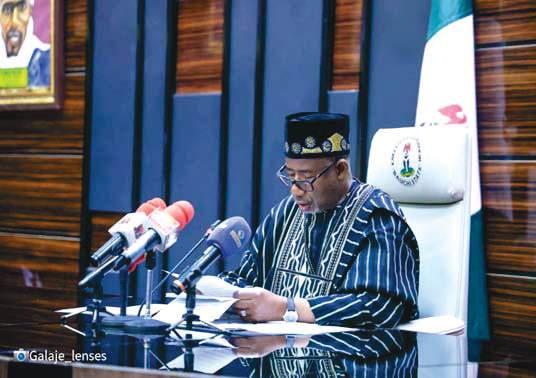
Bandit Attacks: Bala Mohammed Donates N50m To Alleviate Suffering of Displaced Persons
Segun Awofadeji in Bauchi
Bauchi State Governor, Senator Bala Abdukadir Mohammed, has announced donation of the sum of N50 million as a palliative for thousands
of people who have been displaced by the activities of armed bandits from communities in Gwana District of Alkaleri Local Government Area of the state.
The governor announced the donation yesterday when
he visited the people who have now become Internally Displaced Persons (IDPs), who fled their homes and are now taking shelter at the Central Primary School in Kashere, Akko Local Government Area of Gombe State.
The displaced persons were from Gwana, Mansur, Digare and surrounding areas, where armed bandits reportedly invaded several villages, killed, maimed and abducted innocent people, forcing residents to flee.
AIEDs:
Emmanuel Addeh in Abuja
Linus Aleke in Abuja
COURTESY VISIT...
MTN
Posts
N5.2trn Revenue
in 2025 Full Year, Reaffirms Position as Nigeria’s Biggest Non-oil Taxpayer
MTN Nigeria Communications Plc has reaffirmed its position as a critical driver of the country's non-oil economy, posting a service revenue of N5.2 trillion in its 2025 audited financial results.
The reported N5.2 trillion revenue is nearly 55 per cent increase over N3.36 trillion reported in 2024.
The telecommunication giant closed 2025 with N1.7trillion profit before tax, about 408.2 per cent increase over N550.3 billion loss before tax in 2024.
Beyond the impressive top-line growth, the company emphasised that its financial success is deeply intertwined
with national development, standing firmly as the country's largest corporate taxpayer and ensuring its profitability directly funds the federal government's infrastructure and social welfare programs.
In 2025, the company reported N583.18 billion tax income, representing a 289.1 per cent increase when compared to N149.89 billion declared in 2024.
The 2025 financial year was described as a remarkable period of recovery and resilience for the firm. CEO, Dr. Karl Toriola, noted that 2025 marked a significant turning point with a return to profitability and a resilient balance sheet, which ultimately supported "accelerated
Alleged Forgery: Court Admits Ozekhome, Another to N10m Bail Each
Alex Enumah in Abuja
Justice Chizoba Oji of a High Court of the Federal Capital Territory (FCT), Maitama, yesterday granted bail in the sum of N10 million each to Senior Advocate of Nigeria (SAN), Mike Ozekhome and his co-defendant, Ponfa Useni, standing trial on alleged forgery.
Justice Oji admitted them to bail while delivering ruling in their bail applications argued by their respective lawyers.
The Office of the Attorney General of the Federation (OAGF), yesterday arraigned the defendants on a 12-count criminal charge bordering on alleged forgery of documents, including an international passport and an irrevocable power of attorney to lay claim to a property in London, allegedly procured unlawfully by the late General Jeremiah Useni.
network investment to enhance quality of service and user experience."
To back up its commitment as a leading corporate citizen, MTN revealed that it invested a
staggering N1.0 trillion in Capital Expenditure (CAPEX) in 2025 in network expansion.
This massive CAPEX deployment serves as physical proof of its economic patriotism,
ensuring that billions in retained earnings are poured directly back into building base stations, laying fibre optics, and creating thousands of local jobs.
Furthermore, the company's
leadership highlighted that its ability to aggressively fund its CAPEX obligations while navigating economic storms is an indicator that government policies are working.
FG Pledges Support for Nigeria Press Council's National Economic, Tourism Compendium
Deji Elumoye in Abuja
Vice President Kashim Shettima has pledged the federal government’s support for the Nigeria Press Council's national compendium on economic and tourism potentials across the country.
He also described President Bola Tinubu as a friend of the media and a firm believer of independence of the press.
delegation from the Nigeria Press Council (NPC) led by its Executive Secretary and Chief Executive Officer (CEO), Dr. Dili Ezughah, on a courtesy visit to the State House.
Noting that the President has remained a friend of the media, Shettima recalled how Tinubu had used his personal resources to assist media organisations.
remains firm believer of press freedom
other support mechanisms. He is also a publisher. So, he knows the ecosystem very well, and he believes in the independence of the press.
is very pivotal in really pushing this country forward," he stated, emphasising why a buy-in from the governors is pivotal to the book project.
“For the past three years, have you heard of any harassment of journalists? His tolerance threshold is so high that people who are making incendiary remarks are allowed to have their day for peace to reign in the country,” he stated.
Since, the prosecution led by Rotimi Oyedepo, SAN, did not oppose the request, the judge accordingly granted the request.
As part of the conditions for bail, Justice Oji, ordered the defendants to provide one surety each, who must own landed property in the FCT, adding that defendants must deposit their international passports with the court.
Taking into consideration the fact that the proceedings took place yesterday, Justice Oji held that the defendants can go to their houses should they be unable to meet the bail conditions, but must return on Monday to do so, failing which they would be sent to prison.
Recall that the federal government had on Tuesday filed fresh forgery charge against the senior lawyer,
They pleaded not guilty and their lawyers; Tayo Oyetibo, SAN, and F. R. Onoja (SAN), subsequently moved their bail applications.
This, the Vice President said, explains why the Tinubu administration has, in the past three years, continued to promote an environment that is conducive for journalists to carry out their duties without harassment.
Shettima disclosed this in Abuja when he received a
According to him, people have been making libelous and provocative utterances, with incisive vituperations, against the administration and are allowed to get away with them because the President is very tolerant.
“The President is a friend of the media. He used to assist them from his personal resources, with newsprints and
Pledging presidential support for the Council’s bid to get official national endorsement of the publication it is currently working on, Shettima also promised to appeal to governors of the 36 states of the federation to key into the project.
"The subnationals own the land, own the people. Their role
The Vice President further noted that the national compendium titled, ‘Nigeria: Documenting the Economic and Tourism Profiles of the 36 States and the FCT’, is a welcome development, expressing hope that the publication would sell Nigeria to the world.
“If you go to other countries, you will see similar books at the airport stands. In terms of the quality of the job, the writings are so top-notch that we can embrace it as our national treasure, and see to it that it is massively printed and circulated to our embassies,” Shettima observed.
MAN Hails UNIDO on Repositioning Nigeria’s Manufacturing Sector
Dike Onwuamaeze
The Manufacturers Association of Nigeria (MAN) has commended the United Nations Industrial Development Organisation (UNIDO) for its concerted efforts to reposition the Nigerian manufacturing sector for sustained growth through the adoption of leading global practices and methodologies.
This commendation was given during the ‘MAN National Stakeholders
Sensitisation Workshop of the GEF-UNIDO Industrial Energy Efficiency (IEE) and Resource Efficient Cleaner Production (RECP) Project’, which was held this week in Lagos State.
The Director, Research and Economic Policy Division, MAN, Dr. Oluwasegun Osidipe, in his welcome address during the workshop said that “the implementation of the GEFUNIDO Industrial Energy Efficiency, Resource Efficiency and the Cleaner Production Project marks a defining
moment in our collective journey towards sustainability.
“It represents an essential moment for us as leaders in the manufacturing sector, where we have the opportunity, and indeed the responsibility, to champion sustainable practices that not only drive growth but also preserve our planet for generations to come.”
He, however, noted that embedded within these challenges are opportunities to innovate, optimise, efficiently utilise resources and to lead the way towards a more sustainable future.
He said, “As we embrace the principles of energy efficiency, we will not only be reducing our carbon footprint but also mitigating environmental degradation and saving on energy costs.
Osidipe said that the challenges posed by energy inefficiency are multifaceted, encompassing not only economic considerations but also environmental impacts and social implications.
Kayode Tokede
Shettima: Tinubu, friend of the media,
Ponfa Useni (aka Tali Shani) and a former minister in the military era, General Jeremiah Useni (now deceased).
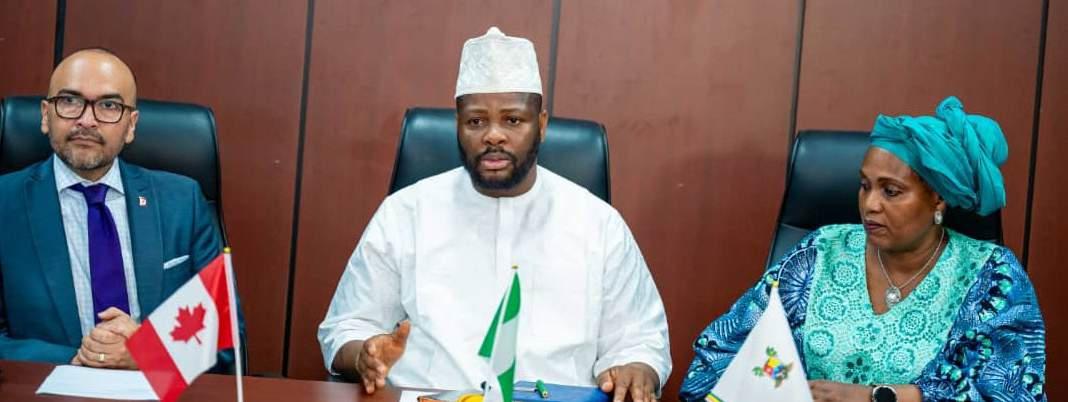
L-R: Canadian Deputy High Commissioner, Carlos Rojas-Arbulu; Special Adviser to Lagos State Governor on Tourism, Arts, and Culture, Mr. Idris Aregbe, and Lagos State Permanent Secretary, Ministry of Tourism, Arts, and Culture, Mrs. Bopo Oyekan-Ismaila, during a courtesy visit to the Ministry by the Deputy High Commissioner of Canada, in Alausa, Ikeja... recently

Is Russia Immune To Media Scrutiny In Africa?
Adangerous precedent is emerging across Africa’s diplomatic and media landscape: the public targeting of individual journalists by foreign missions for simply asking difficult questions. The recent pattern of responses from the Russian Embassy in Nigeria toward African journal ists and media platforms raises deeper concerns, not only about geopolitics but also about press freedom, sovereignty, and the dignity of African voices.
Bullying a single African journalist through official diplomatic channels is not merely a disagreement; it is an intolerable affront to free expression. Journal ism exists to question power, whether domestic or foreign. When embassies shift from presenting facts to publicly discrediting individuals, the implication is clear: criticism will be punished personally rather than debated professionally. Today it is one journalist; tomorrow it could be an entire media ecosystem.
In recent months, respected outlets, including Pre mium Times, THISDAY, The Guardian Nigeria, and Leadership Newspaper, have faced unusually harsh diplomatic rebukes after publishing critical analyses. Prominent commentators such as Azu Ishiekwene and Richard Akinnola, as well as Oumarou Sanou, have also been singled out. Instead of counter-evidence, the response has often been personal accusations and insinuations of hidden sponsors. That approach undermines constructive dialogue and erodes trust in diplomatic engagement.
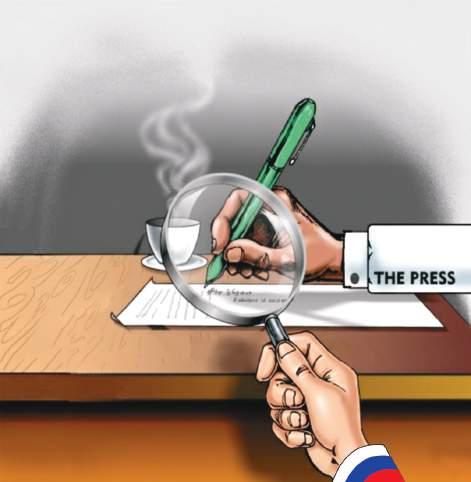
Let us be clear: journalists are human and can make mistakes. Professional reporting welcomes correction. If the facts are incorrect, present evidence, make the data open, and allow readers to judge. Insults, calumny and attempts to destroy professional reputations are not rebuttals; they are attempts to silence scrutiny. No foreign government should expect immunity from questioning on African soil.
Africa’s position in the evolving global order must remain principled and independent. Africans are not invested in the confrontation between Russia and the West; it is not our war. A genuine Pan-African perspective demands equal scrutiny of all external powers. If tomorrow credible evidence emerges that Britain, France, America, China or any other actor is recruiting Africans into foreign conflicts under deceptive pretence, the same criticism must apply. The principle is simple: African lives are not expendable tools in geopolitical struggles.
No African journalist should be silenced for doing his work, writes OUMAROU SANOU INSULTS, CALUMNY AND ATTEMPTS
Reports of African nationals—including Nigerians—fighting and dying thousands of miles away in
foreign wars raise serious ethical and security questions. Whether through informal networks, deceptive job offers, or shadow recruitment channels, African citizens are being drawn into conflicts that do not belong to them. Journalists who expose these risks are not attacking any nation; they are protecting their fellow Africans from exploitation and preventable tragedy. Kenya's recent stance offers a compelling example. Kenyan authorities publicly condemned the recruitment of their citizens into foreign conflicts and moved to close illegal agencies while seeking diplomatic explanations. That response signals a broader African awakening: governments must prioritise the safety and dignity of their citizens over the sensitivities of powerful partners. Nigeria and other African states would do well to adopt similar vigilance.
Beyond individual cases lies a deeper philosophical question. Neocolonialism today is not defined by flags or territorial control but by influence, dependency and narrative domination. Great powers—East or West—sometimes behave as though African voices must align with their geopolitical agendas. This assumption is unacceptable. Africans have their own interests, challenges and aspirations. We are not puppets in anyone’s strategic theatre.
Respect in diplomacy must be reciprocal. If a foreign embassy publicly attacked a journalist by name inside Moscow, Paris or Washington, would it be considered acceptable conduct? Sovereignty demands mutual respect, not selective outrage. African countries deserve the same diplomatic courtesy that global powers expect at home.
At the same time, African journalism must remain grounded in professionalism and evidence. Responsible reporting strengthens credibility and protects the integrity of public discourse. But professionalism cannot thrive in an atmosphere of intimidation. When journalists are targeted individually, the chilling effect extends far beyond the targeted individual; it discourages others from investigating sensitive issues of public concern.
The response from Africa’s media community must therefore be collective. Silence in the face of intimidation risks normalising it. Journalists, editors and civil society organisations should stand together to defend the right to ask difficult questions without fear of diplomatic retaliation. Protecting a single journalist ultimately concerns protecting the profession and safeguarding the democratic space.
Sanou is a social critic, Pan-African observer and researcher focusing on governance, security, and political transitions in the Sahel. sanououmarou386@gmail.com
E.j. Anosike: Carrying Nigeria Into The World
Nigerian-American
NGOZI IBE pays tribute to Ejimofor Anosike, Nigerian-American professional football player
forward Ejimofor “E.J.” Anosike is making headlines on the China basketball scene after earning top honours at the 2026 National Basketball League (NBL) All-Star Weekend, further cementing his growing global profile and reinforcing the expanding global presence of Nigerian athletes in international basketball. Anosike, who plays for the Hong Kong Bulls (HK JinNiu) in China’s NBL, was voted a starting All-Star and emerged as the leading foreign player vote-getter ahead of the showcase event. The 2026 NBL All-Star Weekend, held in Zunyi, Guizhou Province, brought together the league’s standout performers, with the main All-Star Game staged at the Zunyi Olympic Sports Center Gymnasium. He crowned the weekend by winning the 2026 NBL Slam Dunk Contest, a moment that symbolised both athletic brilliance and growing fan admiration in one of Asia’s fastest-rising professional leagues. Yet Anosike’s journey extends beyond trophies. It is a story of identity, movement, and meaning, of growing between continents while remaining
firmly rooted in culture.
Born in Staten Island, New York, and raised between the United States and Nigeria, Anosike’s early life unfolded far from elite sporting facilities. His sense of belonging was shaped in Okija, Anambra State, in markets, welding workshops, and family compounds where responsibility came early.
As a child, he worked as nwa-boy for his uncle, a welder, and assisted his aunt in market trading, experiences that formed the discipline and humility that would later define his professional mindset. In an exclusive interview, he reflected: “Being Igbo shaped everything. Your name, your character, your integrity, they matter. Where you come from carries responsibility.”
That grounding followed him into collegiate basketball in the United States, where his rise was marked not only by athletic development but by academic and personal distinction. At Sacred Heart University, he evolved rapidly, earning recognition as the Northeast Conference’s Most Improved Player before rising to All-Conference honours. By
2020, he had established himself among the league’s elite, receiving First Team All-NEC recognition alongside national honours including NABC All-District and Lou Henson All-America selections — achievements that placed him among the most respected mid-major players in college basketball.
Equally notable was his academic excellence. Named NEC Winter ScholarAthlete of the Year and placed on the conference academic honour roll, Anosike embodied the rare balance between scholarship and sport that would later define his professional philosophy.
His transfer to California State University, Fullerton marked a defining turning point. There, he emerged as the Big West Conference Newcomer of the Year and First Team All-Big West selection, culminating in a dominant 2022 conference tournament run that earned him Tournament MVP honours. After leading his team to the championship, he wrapped himself in a Nigerian flag on national television, an image that travelled widely across Nigeria and
the diaspora, transforming a personal celebration into a cultural statement about identity and representation. From College Standout To Global Professional
Anosike’s transition into professional basketball quickly confirmed his international value. Early success came with a breakout performance in Asia, where he was named KBL Cup MVP in 2022, signalling his readiness for the global stage.
His professional journey would soon span multiple continents, each stop adding new layers to his reputation. In Canada, he earned All-CEBL Second Team recognition, while his performances in Europe elevated him further, culminating in Belgian Forward of the Year honours and selection to the All-BNXT First Team in 2024. During the same period, he delivered a record-setting 34-point performance at the ENBL Final Four, earning AllStar recognition and reinforcing his reputation as a high-impact scorer in elite competition.
Ibe, a Journalist, writes from Abuja
In Praise of President Buhari
Abuja Original Inhabitants Deserve Political Priority
WFor over five decades, since the creation of Abuja as Nigeria’s Federal Capital, the original inhabitants have borne the heaviest cost of the nation’s unity project. Their ancestral lands were taken in the name of national progress, with promises of resettlement, compensation, and full integration into the new city. Half a century later, much of that promise remains unfulfilled.
hen President Muhammadu Buhari took over the reins of power on May 29, 2015, Nigeria was sadly a broken state in many respects. As a result of many other factors including bad governance and untold level of corruption, government could not live up to its financial obligations to citizens and service providers at both the federal and state levels.
Indeed one of the first official assignments that President Buhari carried out was the approval of billions of Naira in bailout funds to enable state governors pay something as basic as workers’ salaries. Granting those bailout funds was a huge boost to national security because the pressure of arrears of unpaid monthly salaries building dangerously all over the country was a ticking bomb.
Across the Federal Capital Territory (FCT), indigenous communities continue to experience displacement, loss of farmlands, cultural erosion, and economic uncertainty. While Abuja has grown into a modern global capital, many of its original hosts remain spectators to prosperity built on their former homes.
As one elder in Gwagwalada put it: “We gave Nigeria our land so the country could be one. But fifty years later, we are still waiting to be treated as equal stakeholders.”
interventions and recurring promises, one truth remains: the resettlement and compensation process was never completed.
Ask the naysayers and they would readily remind you of how long it took President Buhari to appoint his ministers and how that contributed to collapse of the economy as if, without ministers, governance was frozen. But buying that narrative would amount to what a famous Nigerian writer, Chimamanda Adichie, termed “the danger of a single story”. Yet the whole story was that many of our citizens did not know how decrepit a state President Buhari inherited in 2015.
It was therefore necessary for him to take stock against the background of the fact that the departing government did not, reportedly, cooperate full well with the incoming government in terms of leaving workable handover notes. Although President Goodluck Jonathan was gracious in defeat, many of his appointees were still sulking over what they saw as their personal losses and therefore pulled all the stops to make things difficult for the Buhari government.
It is within this injustice that calls for political inclusion, particularly the right of first refusal in both elective offices and political appointments, must be understood. This is not ethnic entitlement. It is restorative justice.
From inception, Abuja’s development plan anticipated large-scale resettlement and compensation. Yet population figures were underestimated, implementation faltered, and thousands of families were left in limbo. Entire communities were absorbed by urban expansion; others faced repeated displacement without full compensation.
The TSA policy, interestingly, was mooted by the PDP government but its penchant for imprudence and lack of accountability denied it the courage of implementing the policy. What the President literally did was to gather all the nation’s money into one box and locked it up with a big padlock and watched for any thief to come close.
Who can blame the President for almost developing paranoia over the safeguard of the national treasury with revelations and reports of mind-boggling looting that took place in the 16 years of the PDP? With such disclosures of how billions meant for fighting insurgency in the Northeast ended up in the pockets of a few individuals while our gallant soldiers fought with bare hands and on empty stomach, President Buhari was duty bound to bring sanity and accountability back in national spending.
Advocacy groups now estimate that over two million indigenous people across nine tribes and 17 chiefdoms have been affected by this systemic neglect. Despite legislative
Thus, under President Buhari, the Economic and Financial Crimes Commission (EFCC), which had remained comatose for years, was woken up to resume its duties. Apart from the trillions of Naira of looted funds and property recovered from corrupt politicians
This struggle is not merely emotional, it is constitutional. Section 299 of the 1999 Constitution states that the Constitution shall apply to the FCT “as if it were one of the States of the Federation.”
In addition, Section 14(3) , the Federal Character Principle, mandates that governance and appointments must reflect fairness, inclusion, and a sense of belonging among all groups in Nigeria.
Harassment of Joseph Ottih and Family
Tby the EFCC, President Buhari by his action has successfully brought back to the public consciousness the need to treat public funds with the highest level of transparency and accountability.
After keeping treasury looters on their toes and at bay through the EFCC, particularly, President Buhari moved to curb unnecessary spending habits of the nation on what economists call articles of ostentation. Part of the disclosures of the President’s stock taking was how the country frittered away billions in foreign currency by importing goods, which can be produced at home. One of such items was rice, a major staple among Nigerians. By banning rice importation into the country, the President on one hand had saved the nation billions in foreign currency annually.
Together, these provisions mean two things clearly: The FCT is constitutionally equal to other states, its indigenous people must not be politically marginalised, while indigenes across Nigeria can contest elections in their home states and enjoy priority in appointments,
Even with the obvious and unpatriotic obscurantist behaviour of the PDP appointees and their supporters still in government hell-bent on making things difficult for Buhari, the President moved on with his methodical repair of a broken country. The first thing he did was to identify all possible sources of income to the nation and directed that all inflows be paid into one single account in line with the policy of Single Treasury Account (TSA).
Stop Ritual Attacks and Killings
he Advocacy for Alleged Witches urges the governor of Imo State, Senator Hope Uzodinma, to call the Tigerbase police station to order following the continued persecution and harassment of Joseph Ottih and his family. Joseph Ottih is a blind man and a traditionalist from Oguta, in Imo State. His wife and son are languishing in detention at the moment for trumped up charges.
And, on the other hand, the President has boosted domestic production of rice and in the process had nudged the country into self sufficiency in food production. He also created millions of jobs for young people in the rice value chain.
What is most admirable about President Buhari and his government is its frugal management of scarce national resources to attain optimum goals. Recall that since President Buhari stepped in the saddle, oil revenue dropped abysmally as if to sabotage him knowing all the big promises he made to citizens during his campaigns. But with the little resources that trickle in, the President is achieving what governments that received oil windfalls could not dream of.
Dr. (Mrs.) Jumai Ahmadu, Founder/President, Helpline Social Support Initiative, Abuja
Today, the trains are up and running daily from Abuja to Kaduna. And from Lagos to Ibadan a brand new rail track was started and completed; citizens are already commuting daily to and fro these two major cities in the country seamlessly as they reap from the dividends of democracy. And with the way this government is going, before 2023 when the President would leave, the entire country would be linked by rail with all of its economic advantages.
Ainofenokhai Ojeifo, Abuja
THE SATURDAY NEWSPAPER
EDITOR OBINNA CHIMA
DEPUTY EDITOR AHAMEFULA OGBU
MANAGING DIRECTOR ENIOLA BELLO
THE SATURDAY NEWSPAPER
DEPUTY MANAGING DIRECTOR ISRAEL IWEGBU
EDITOR YEMI ADEBOWALE
CHAIRMAN EDITORIAL BOARD OLUSEGUN ADENIYI
DEPUTY EDITOR AHAMEFULA OGBU
EDITOR NATION’S CAPITAL IYOBOSA UWUGIAREN
MANAGING DIRECTOR ENIOLA BELLO
THE OMBUDSMAN KAYODE KOMOLAFE
DEPUTY MANAGING DIRECTOR ISRAEL IWEGBU
CHAIRMAN EDITORIAL BOARD OLUSEGUN ADENIYI
EDITOR NATION’S CAPITAL IYOBOSA UWUGIAREN
MANAGING EDITOR BOLAJI ADEBIYI THE OMBUDSMAN KAYODE KOMOLAFE
THISDAY NEWSPAPERS LIMITED
EDITOR-IN-CHIEF/CHAIRMAN NDUKA OBAIGBENA
GROUP EXECUTIVE DIRECTORS ENIOLA BELLO, KAYODE KOMOLAFE, ISRAEL IWEGBU
THISDAY NEWSPAPERS LIMITED
DIVISIONAL DIRECTORS SHAKA MOMODU, PETER IWEGBU, ANTHONY OGEDENGBE
EDITOR-IN-CHIEF/CHAIRMAN NDUKA OBAIGBENA
DEPUTY DIVISIONAL DIRECTOR OJOGUN VICTOR DANBOYI
SNR. ASSOCIATE DIRECTOR ERIC OJEH
ASSOCIATE DIRECTOR PATRICK EIMIUHI
DIRECTOR, PRINTING PRODUCTION CHUKS ONWUDINJO TO SEND EMAIL: first name.surname@thisdaylive.com What a waste!
GROUP EXECUTIVE DIRECTORS ENIOLA BELLO, KAYODE KOMOLAFE, ISRAEL IWEGBU, IJEOMA NWOGWUGWU, EMMANUEL EFENI
DIVISIONAL DIRECTORS SHAKA MOMODU, PETER IWEGBU, ANTHONY OGEDENGBE
DEPUTY DIVISIONAL DIRECTOR OJOGUN VICTOR DANBOYI
CONTROLLERS ABIMBOLA TAIWO, UCHENNA DIBIAGWU, NDUKA MOSERI
SNR. ASSOCIATE DIRECTOR ERIC OJEH
DIRECTOR, PRINTING PRODUCTION CHUKS ONWUDINJO
ASSOCIATE DIRECTOR PATRICK EIMIUHI
TO SEND EMAIL: first name.surname@thisdaylive.com
CONTROLLERS ABIMBOLA TAIWO, UCHENNA DIBIAGWU, NDUKA MOSERI
TIn December, the police raided the premises of Joseph Ottih. They forcefully removed his Agwu (deity) following complaints and petitions from christian relatives, Vivian Ottih and her brother Hilary Ottih, who lives in the US. As a traditional religious practitioner, Joseph Ottih had traditional religious objects, which they said were spiritually disturbing the peace in the family and community. In January, the police arrested Joseph's wife, Obiageri, put her in the trunk of a car, and detained her for five days. The family paid N150,000 before she was released. Meanwhile, the Tigerbase police unit has refused to charge the case to court; they have been inviting and extorting money from the Ottihs. They have seized the phone of Joseph Ottih, lured the son, Uchenna, to the station, and detained him. The police tried to arrest his daughter, Favour, without success. They are trying to arrest his other children for detention and extortion of money. Leo Igwe directs the Advocacy for Alleged Witches
Can or can't? Why the difference?
There is a photo of Hillary Clinton released from the closed Congress hearing. This was not meant to happen. There are many files not released from the Epstein documents. This is meant to happen?
Why the difference? Is it just the difference between Republicans and Democrats and their way of operating?
Dennis Fitzgerald, Melbourne, Australia
he Advocacy for Alleged Witches (AfAW) urges the Nigerian public to stop ritual attacks and killings because the notion of ritual money and wealth is completely baseless. AfAW is making this call following the reported arrest of suspected ritualists in Oyo State in southern Nigeria. The local media reported that members of the Western Nigeria Security Network, Amotekun, arrested suspected ritualists with the body parts of a 73-year-old man. The suspects, who were apprehended in the Boluwaji area in Ibadan, said that a Muslim cleric asked them to procure some human body parts for rituals. Ritual attacks are widespread in Nigeria. Irrational conceptions of how to make money or become wealthy and successful undergird these atrocities. Many Nigerians strongly believe in blood money, known in some local languages as Ogun Owo (Yoruba) or Ogwu ego (Igbo). They think that they could become rich, or successful through ritual sacrifice. Unfortunately, this is not the case. Ritual wealth has no basis in reason, science, or reality. Home movies known as Africa magic or Nollywood films have not helped matters. These movies continue to reinforce these mistaken notions and other superstitions. Families, churches, mosques, and other public institutions do not encourage the interrogation of these traditional occult beliefs. There are no robust efforts to criticize or dispel these irrational and paranormal claims in schools, colleges, and universities. So millions of Nigerians grow up blindly believing that they could make money through ritual sacrifice of human body parts. The belief has led many Nigerians to commit crimes and perpetrate atrocities. Many Nigerians have been jailed or are undergoing court trials due to ritualrelated attacks and murder. Not too long ago, the police arrested some young Nigerians for stealing female pants, which they intended to use for ritual sacrifice. AfAW is asking all Nigerians to desist from ritual-related abuses because ritual money beliefs are baseless superstitions. Nigerian media, schools, and colleges should help educate and reorient the public. They should assist in reasoning Nigerians out of this killer-superstitious absurdity and nonsense. Leo Igwe directs the Advocacy for Alleged Witches (AfAW)





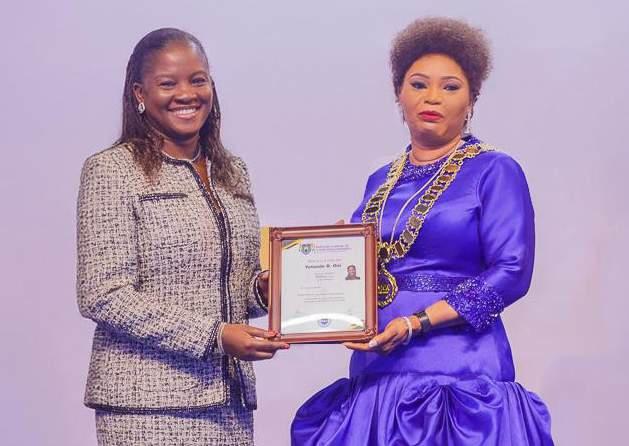
AFRICA WOMEN OF IMPACT AWARD 2026
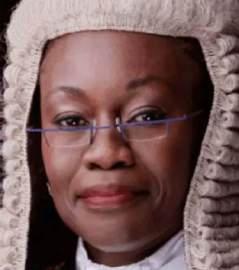
ABOYADE FUNKE (SAN) Lawyer, Principal Partner, Aboyade & Co
AFOLABI, BOSEDE (PROFESSOR) Obstetrician, Gynaecologist, Academic, UNILAG.

ART ALADE, DEOLA Entrepreneur / Entertainment Executive, Livespot 360,
ONIKEPO Lawyer / Editor, THISDAY Lawyer.
ABUZEID, IMAN (DR) Physician / CEO Incredible Health
Lawyer Dentons ACAS-Law
AWOSIKA, IBUKUN (DR) CEO, The Chair Centre Group

ADAMOLEKUN YEMI Activist, Enough is Enough,
TOYIN (DR) Physician/CEO, Cityblock Health.
BADEJO-OKUSANYA, OYINKAN (SAN) Lawyer, Africa Law Practice NG & Co.

FUNKE (SAN) Lawyer, Arbitrator/ Independent Consultant


AJAYI,
ADETIBA, KEMI Filmmaker / TV Director, Kemi Adetiba Visuals
AGBOR, FUNKE (SAN)
ADEKOYA,
AKINLUYI, TOSIN Managing Director, Morgan Stanley.
CHINELO ANOHU Founder/CEO Mutandis Africa Group
BARTLEY, SYLVIA (DR) Neuroscientist, Morehouse School of Medicine.
BELO OSAGIE, MYMA Lawyer / Co Founder Udo Udoma & Belo-Osagie.
BRAITHWAITE,
BROWN, OLA (DR) Doctor / Investor Healthcare Investment Group.
BUHARI, AISHA Former First Lady Federal Republic of Nigeria.
BYANYIMA, WINNIE Executive Director UNAIDS
CHARWAY, SHENIECE Music Industry Executive Head of Black Music & Culture EMEA, YouTube.
COKER-ODUSOTE, ABISOYE (ENGR) CEO, NIMC
COKER, TOLU Designer/Artist Tolu Coker
DABIRI, ABIKE Politician/ Chairman, NiDCOM
DAHIRU AHMED, Aishatu Politician / CEO Binani Air.
DANGOTE, HALIMA Executive Director Dangote Group.
NIGERIA
NIGERIA
NIGERIA
NIGERIA
NIGERIA / USA UK
NIGERIA NIGERIA NIGERIA
SUDAN
AFRICA WOMEN OF IMPACT AWARD 2026
DIOP, BINETA (DR) Senior Envoy African Union Commissioner.

GURIB-FAKIMM, AMEENAH (DR) Biodiversity Scientist, Politician ImpactHER / World Agriculture Forum.
FLORENCE (Senator) Politician. The Governing Council.

DLAMINI, JUDY (DR) Business Leader, Author University of the Witwatersrand.
EDUN, AMY ADWOA Philanthropist The Cripps–Appiah–Edun Family.
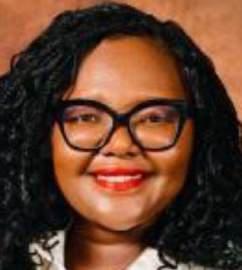
GWARUBE, SIVIWE Politician, Minister Of Basic Education.
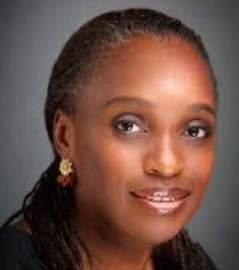
JOHNSON, OMOBOLA (DR) Fmr Minister of Communications /Chairperson Global Alliance.
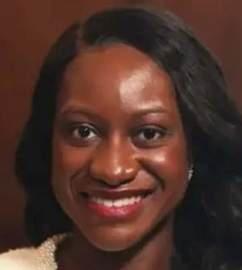
Financial
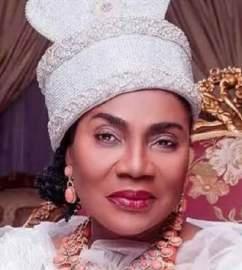
DOSUNMU, ERELU ABIOLA Queen Mother Erelu Kuti IV of Lagos.
EKE-ALUKO, BIODUN (DR) Consultant Paediatrician, Entrepreneur. The Premier Specialists Medical Centre.

JOSEPHINE Managing Director, Morgan Stanley Europe.
KABA, NIALÉ Economist, Politician, Minister of Foreign Affairs and Int’l Cooperation for Côte d’Ivoire.
Entrepreneur
DRUMMOND, CAMILLE Accountant, British Petroleum
EYESAN, MEYIWA Commission Chief Executive, Economist Nigerian Upstream Petroleum Regulatory Commission.
KEMI Specialist Obstetrician & Gynaecologist. WARIF
PATRICIA (PROFESSOR) Sociologist, Ethicist University Of Oxford.


Business

DUROTOYE, TARA Beauty Entrepreneur, CEO House of Tara.
FAYEMI, BISI Former First Lady, Author, Gender Advocate Ekiti State Government.
EDO-OSAGIE, ANITA Oil & Gas Executive First E&P.
HARRIMAN,
IBRU,
IDIGBE, ELIZABETH Lawyer / Managing Partner, Punuka Chambers.
ITA-GIWA,
KINGORI,
KINGORI, VANESSA (MBE)
Executive, Media Leader Google UK & Ireland.
KUKU, BANKE Textile Designer, Fashion Entrepreneur. Banke Kuku.
KYEI, AFUA
Executive Bank of England.
LUHABE, WENDY
Women Investment Portfolio Holdings.
MADONSELA, THULI Lawyer, Stellenbosch University
MADUEWESI, OKE Entrepreneur, Zaron Group
SENEGAL
NIGERIA NIGERIA
NIGERIA
MAURITIUS
SOUTH AFRICA
NIGERIA NIGERIA
SOUTH AFRICA
NIGERIA
NIGERIA
IVORY COAST
SOUTH AFRICA UK
NIGERIA
NIGERIA
SOUTH AFRICA
NIGERIA
AFRICA WOMEN OF IMPACT AWARD 2026
MAYNARD, PAMELA Technology Executive, Microsoft MCAPS.

MOS-SHOGBAMIMU, SHOLA (DR) Activist, Solicitor of England and Wales.
ODINKEMELU, AKU Banker, Arbitrator, Policy Maker Central Bank of Nigeria.
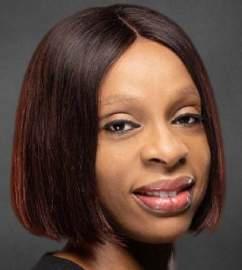
OKOLI, CHIZOMA Deputy Managing Director, Access Bank PLC.
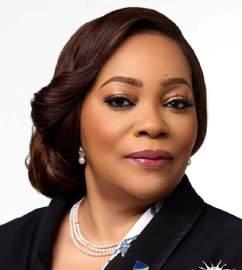
ONWUGHALU, AMAKA Chairman, Fidelity Bank

MEADE, MONICA Chartered Cyber Security Professional. Mastercard.

MOSAKU, WUNMI Actress Oscar Nominee
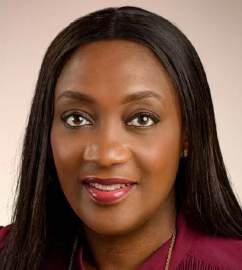
ODUNSI, DUPE (DR) Haemato-Oncologist Marcelle Ruth Cancer Centre & Specialist Hospital.

OKOLLOH, ORY Lawyer, Activist, Investor Verod-Kepple Africa Ventures
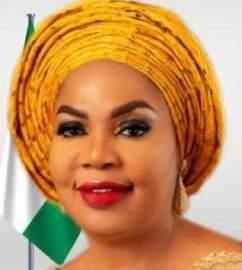
ONYEJEOCHA, NKEIRUKA (PhD) OON Politician, Public Administrator. Minister of State, Labour &Employment
MENSAH, ANNE Television Executive, Producer Netflix UK.

NCUMISA, LIHLE JILATA (DR) Neurosurgeon, Mediclinic Morningside.
ODUSOTE, OLUGBEMISOLA (DR) Lawyer, Nigerian Law School
OLORUNSHOLA OLUWAYEMISI (DR) Chairman, WEMA Bank
CHINELO Advocate / Painter
MOLOI MOTSEPE, PRECIOUS (DR) Businesswoman, Philanthropist, Doctor. Motsepe Foundation
NDHLUKULA, DIVINE Entrepreneur, SECURICO
OGUNBANJO,MOSUNMOLA Architect MOE+ Art Architecture

OLOWE, OLAMIDE Entrepreneur / Investor, Topicals

People Director Sky
MOON, MARION ATIENO Agricultural Expert PFSCU.
NEWTON-KING, NICKY Chairman Stellenbosch University
NIKE Fashion Entrepreneur, Ruff n Tumble.
OMAGHOMI, EVA Strategic Communications Expert The Household of King Charles III and the Queen Consort.
OGUNLESI,
ORAMAH,
OSEI-NSAFOAH, CLAUDIA
OSENI, ODIO Creative Director Odio Mimonet.
NIGERIA
AFRICA WOMEN OF IMPACT AWARD 2026
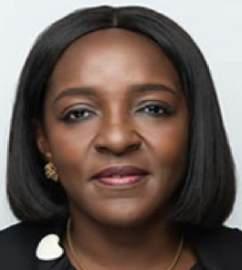
OSIME, IFEYINWA Chairman, Access Bank
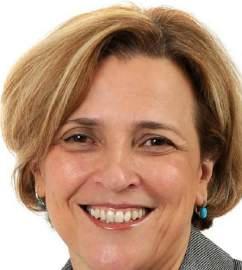
RAMOS, MARIA Economist, Standard Chartered.
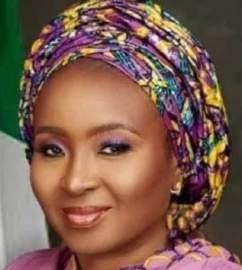
SHINKAFI, FATIMA Executive Secretary, Solid Minerals Development Fund (SMDF).
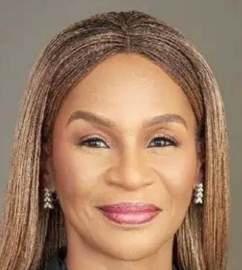
TINUBU, BOLA Lawyer, Philanthropist Cece Yara Foundation.
USORO, MFON EKONG Former Director General, NIMASA.
OTEH, ARUNMA Economist, Finance Executive Saïd Business School, University of Oxford.

REID, HANNAH People Director, Apple.
SONGWE, VERA (DR) Economist / Chairperson Liquidity and Sustainability Facility.

TINUBU, LAYAL VEntrepreneur, Philanthropist, CEO Tots Toys / Noella Foundation.
WILLIAMS DE BRUYN, SOPHIE Anti-apartheid Activist. African National Congress Women’s League.
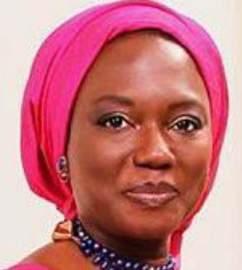
OYEBODE, AISHA (DR) Lawyer/Activist / CEO Murtala Muhammed Foundation.

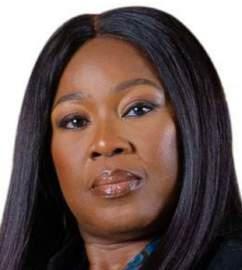
STAN EKEH, CHIOMA CEO, Technology Distribution, TD Africa.

REWA Finance Professional, Visual

PRETTY OPERATIC SOPRANO The Metropolitan
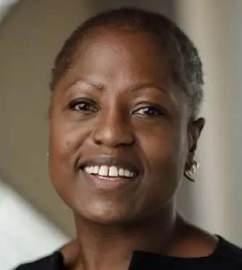
PAUL, SANDRA Lawyer Kingsley Napley.
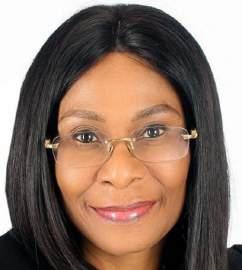
RHODES-VIVOUR, ADEDOYIN (SAN) Lawyer/ Founding Partner Doyin Rhodes-Vivour & Co.
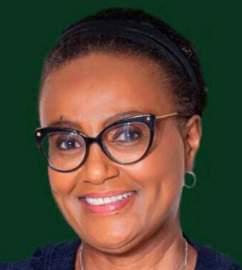
SWAZI TSHABALALA, BAJABULILE Finance Executive, Strategic Consultant. Kupanua Investments.
AFRICA
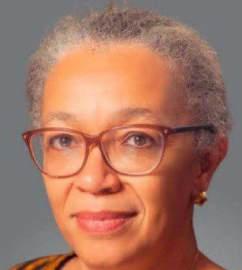
UDOMA, SALLY Former General Counsel Chevron.
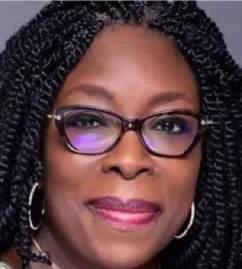
YOUSSOUFOU, ZOUERA Philanthropist / CEO, Aliko Dangote Foundation.
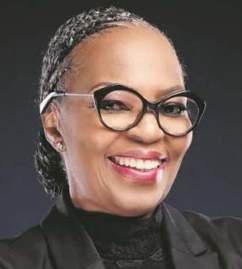
Entertainment
RHODES OKUNBOR, ADESUWA Investor / Entrepreneur, Aruwa Capital Management.
UDOJI,
Artist Chapel Hill Denham.
YENDE,
Opera.
PHILISO, NOMSA CEO General
Multichoice Group.
SHASORE, GBEMI Executive Publisher & CEO Quramo Publishing / Quramo Productions.
UKEJE, NNENNA Politician, House of Representatives.
TILAHUN ALEMU, BETHLEHEM Entrepreneur, SoleRebels
ZILLE, HELEN Politician, Activist, Democratic Alliance (DA).
NIGERIA
SOUTH AFRICA
NIGERIA
NIGERIA
SOUTH AFRICA
NIGERIA
NIGERIA
NIGERIA
SOUTH AFRICA
NIGERIA
NIGERIA
SOUTH AFRICA
ETHIOPIA
NIGERIA
SOUTH AFRICA
SOUTH
NIGERIA
NIGER
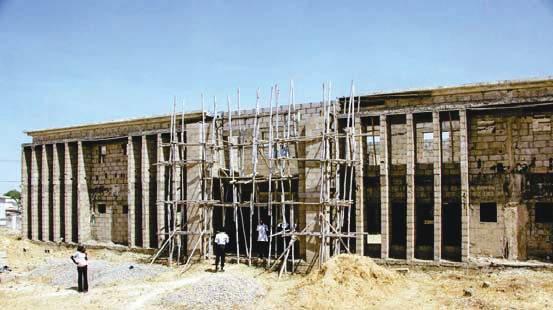
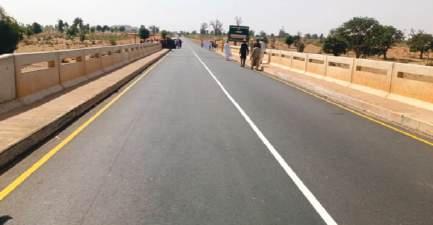
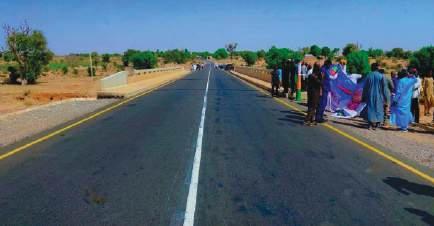
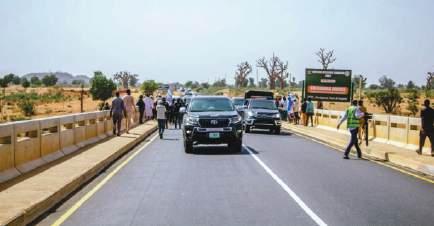
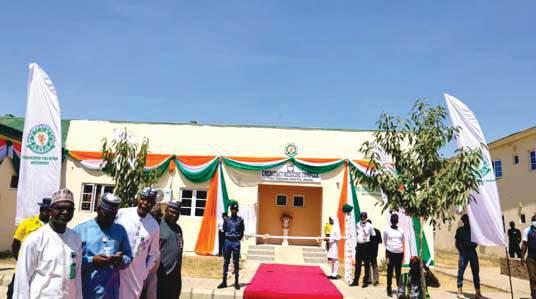
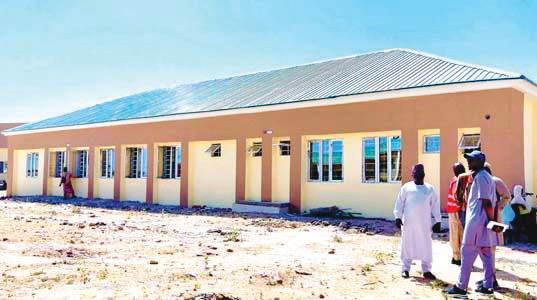
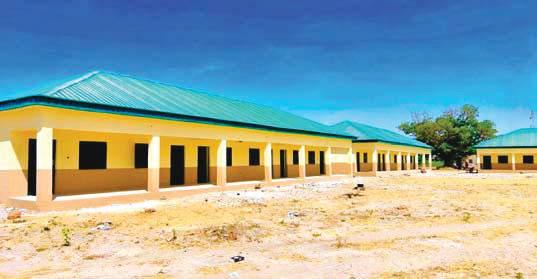
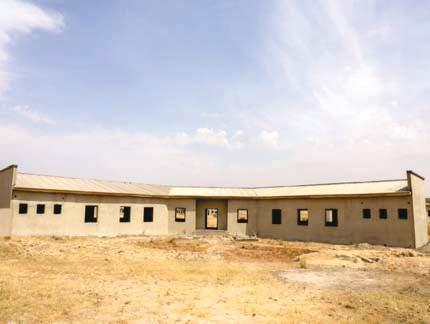
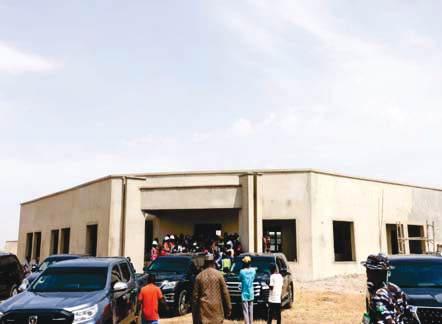
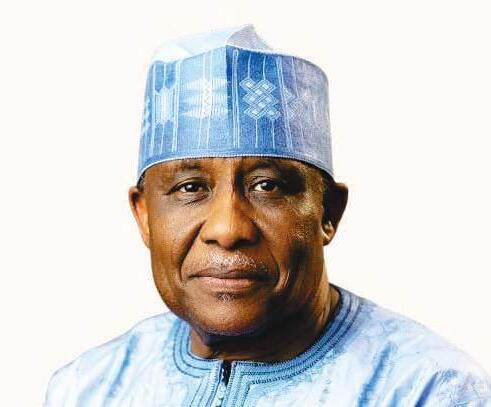

Kalajanga bridge
Bara bridge
Tashan turmi bridge
GRENADA NATIONAL RESORT
CEREMONY...
Tinubu Pushes Urgent Constitution Amendment for State Police
structured to prevent abuse as witnessed in times past.
PPresident Bola Tinubu yesterday charged members of the House of Representatives to as a matter of urgency consider constitutional amendments that would pave the way for the establishment of state police.
Also yesterday, the President issued fresh directives to the nation’s security agencies to intensify and reinforce operations in Alkaleri Local Government Area and other affected parts of Bauchi State.
A Senior Advocate of Nigeria, Prof. Itse Sagay, described the move to create state police as a “very good idea” that could significantly improve security in Nigeria, stressing that states willing to establish their own police forces should be allowed to do so.
According to the President, the amendment of the constitution to enable State Police, must be
Tinubu spoke at an interfaith breaking of fast hosted for the leadership and members of the House at the State House, Abuja, where Muslim and Christian lawmakers gathered in a symbolic show of unity during the Ramadan and Lenten seasons.
The interfaith breaking of fast was the third in its series, following the one hosted by the President for all state governors on Monday and for the leadership and members of the Senate on Wednesday.
Making a strong case for state policing, the President stressed that decentralising security architecture is essential to effectively tackle emerging threats, but cautioned against a wholesale or poorly structured approach.
“If security is local, we just have to work together to put pressure on our public to accept the need for state police.
“Amend it, not a straight free fall for everybody. Tie it in a way that will not be abused, like in the past. A good legislature must learn from the past to cure the present. On that, I’m ready to work with you”, he said.
The President’s remarks signal a renewed push for constitutional reform aimed at devolving policing powers, an issue that has remained contentious in national discourse for years.
Describing the turnout at the event as a reflection of national cohesion, Tinubu said the gathering underscored the importance of unity across party, religious and regional lines.
He said: "It’s a very great honour for me to imagine this beautiful turnout to share in the joy of breaking of the fast both for the Muslims and Christians alike. You don’t celebrate anything else, but this unity given to us by Almighty God".
The President, in a lighter
mood, joked about asking the lawmakers to pay for the dinner, before commending the Speaker for his leadership and the House for its cooperation with the executive arm.
“I thought I will charge you to pay for the dinner, but nevertheless, you indirectly paid for it. You spoke very well. You spoke as a team leader, a very good leader, and I'm happy to listen to you,” he said, praising the “richness” and “consciousness” of the representation in the chamber.
Reminiscicing on the early days of his government, Tinubu expressed appreciation to the legislators for standing by his reform agenda, particularly during the difficult period following the removal of fuel subsidy and the floating of the naira.
His words: "It was very difficult at the beginning for people to realize the direction of my thinking. But I’m glad one thing didn’t happen; with
Anambra Native Doctor, Akwa Okuko Sentenced to Two Years in Prison, Shrine to Be Demolished
David-Chyddy Eleke in Awka
Popular Anambra native doctor, Mr. Chidozie Nwangwu also known as Akwa Okuko has been sentenced to two years in prison. Nwangwu was in February
2025 arrested by operatives of Agunechemba Security outfit on allegation of aiding and abetting kidnapping and money rituals, among others.
The native doctor was then arrested alongside two other of his colleagues, one Mr. Okocha also known as Onyeze Jesus and Mr. Ekene
Igbonekwu, also known as Eke Hit.
All three have been undergoing trial, while being remanded in the custody of Agunechemba Security outfit, but yesterday, judgement was read on Nwangwu by Justice Jude Obiorah on suit no. A/40C/2025, A/41C/2025
and A/42C/2025, after he pleaded guilty to charges against him.
Reading the judgement, Justice Obiorah revealed that the native doctor had earlier pleaded guilty to the charges against him and also entered a plea bargain with the state government.
Lafarge Africa Rewards Trade Partners at Customer, Transporter Awards
the heat from the critics, none of you came to me to say, can you reverse the removal of subsidy, or can you change the foreign exchange flotation of naira? None of you”.
According to him, the National Assembly’s backing at a time of intense public criticism provided the necessary encouragement to push ahead with policies that are foundational to the country’s economic recovery.
“You collaborated, you joined together as a team. You just gave me the inspiration to move on, because the heat was high voltage from the critics, but today, we are better off for it,” the President added.
On security, Tinubu acknowledged ongoing challenges
across the country and noted that lawmakers, as grassroots representatives, are often directly confronted by constituents over local security issues.
“I see some of you on television going to your localities and face challenges. Now you know, more than anybody else, that security is local”, he said.
Earlier, Speaker of the House of Representatives, Hon. Tajudeen Abbas, who led his colleagues to the dinner, reaffirmed the legislature’s support for the President’s policies and leadership.
Acvirding to him: "Every member you see here, whether from the majority or from the minority, believes in what you are doing, believes in the direction of this government".
NUPRC Supervises Transfer of OLO Oilfield HCDT to Aradel
The Nigerian Upstream Petroleum Regulatory Commission (NUPRC) yesterday announced that it presided over the formal handover of the OLO Oilfield Host Community Development Trust (HCDT) from TotalEnergies to Aradel Holdings Plc.
A statement in Abuja by the commission's Head, Media and Strategic Communication, Eniola Akinkuotu, said the development marked a milestone in the implementation of the Petroleum Industry Act (PIA) and the NUPRC's commitment to protecting host community interests during operator transitions.
The ceremony, which held at the NUPRC headquarters in Abuja, according to the statement, brought together senior officials from the commission, TotalEnergies,
Aradel Holdings, and representatives of the OLO host community to formally complete the transfer of settlor responsibilities under the trust, ensuring that community development work already underway continues without interruption.
“The OLO HCDT was established in line with the PIA's mandate requiring operators to contribute 3 per cent of their operating expenditure of the previous year toward host community development.
“Between 2023 and 2025, the trust has enabled the completion of more than 100 community projects, spanning water supply, electricity, road infrastructure, education, and healthcare with a further 40 projects currently ongoing. Taken together, these initiatives have directly improved the lives of over 25,000 residents across the host communities,” the NUPRC added.
Emmanuel Addeh in Abuja and Peter Uzoho in Lagos
Deji Elumoye in Abuja and Boluwatife Enome in Lagos
Lafarge Africa Plc has celebrated its outstanding trade partners at the 2025 Customer and Transporter Awards held in Lagos, recently.
ceremony brought
L-R: Chairman,
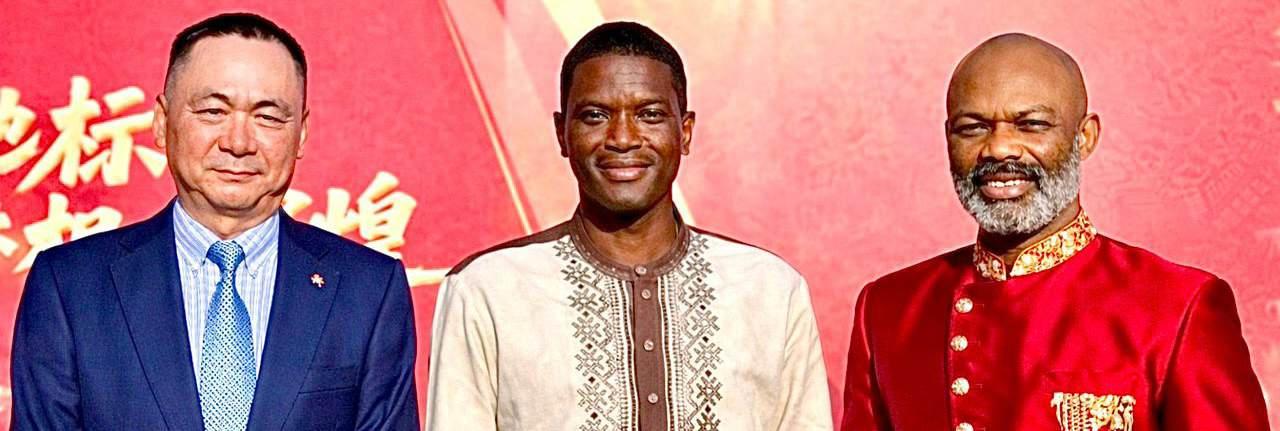
Hengsheng Group, Yuan Fa Lee; Prime Minister of Grenada, Dickon Mitchell, and Chairman, Optiva Capital Partners, Franklin Nechi, at the Grenada National Resort Topping-Out Ceremony marking the completion
a significant milestone…recently
RETIREMENT AND THANKSGIVING SERVICE...
CONFERMENT OF NICA FELLOWSHIP...
Court Grants Malami, Son N200m Bail in Terrorism Charge
Justice Joyce Abdulmalik of a Federal High Court, Abuja, yesterday admitted the immediate past Attorney General of the Federation (AGF) and Minister of Justice, Abubakar Malami, SAN, and his son, Abdulaziz to bail in the sum of N200 million in the alleged terrorism and illegal firearms possession charge brought against them by the Department of the State Services (DSS).
Malami and his son were however ordered to be remanded at Kuje Prison pending the
perfection of their bail conditions.
Meanwhile, the court refused to recognise the earlier bail granted them, including Malami's wife, Hajia Asabe Bashir, in the alleged money laundering charge brought against them by the Economic and Financial Crimes Commission (EFCC).
While Malami and his son were ordered to be taken to Kuje Prison in Abuja, the judge ordered that his wife, Asabe be taken to Suleja Prison in Niger State.
Recall that Justice Emeka Nwite of a Federal High Court, Abuja, who had sat as a vacation judge, had on January 7, admitted the
Winners Emerge in Evarichane Strength, Fitness Contest
Sunday Ehigiator
Rufus Emmanuel, Temidayo
Oluwole and Adekunle
Adebayo have emerged winners at the maiden Test of Strength and Fitness competition organised by the Evarichane Hope Foundation as part of its grand opening ceremony held yesterday in Lagos.
Emmanuel clinched the first prize of N250,000 after an impressive display of strength and endurance, while Oluwole secured the second position to take home N150,000. Adebayo
finished third, earning N100,000 in the keenly contested event. In a move aimed at encouraging broad participation, the foundation also rewarded every contestant with N10,000 for taking part in the competition.
Speaking at the event, the Chairman of the Foundation, Ekhorutomwen Richard Segun, described the contest as more than a show of physical ability, stressing that it was designed to build community and redirect young people toward productive ventures.
Winners Emerge Nationwide in NIVEA’s N3bn Promo
Omolabake Fasogbon
NIVEA’s N3 billion national consumer promotion has entered its sixth week, rewarding more Nigerians receiving cash prizes and other rewards at the ongoing campaign.
At the Week Six raffle draw held recently, Popoola Roseline from Ibadan and Alhaji Ibrahim from Kaduna were among 10 consumers who won N1 million each.
The promotion, which runs for 12 weeks, offers cash prizes, vouchers and airtime to consumers who purchase
selected the brand's body lotion products and enter a code via mobile phone.
Roseline commented that the prize would help her raise capital for a planned business. As for Ibrahim, the money would support his livestock business during the Ramadan season.
So far, about 60 consumers have won N1 million each since the beginning of the exercise, while 300 participants received N50,000 shopping vouchers. Also, approximately 400,000 participants have received N1,000 airtime rewards through the instant win category.
defendants to bail in the sum of N500 million naira each.
Justice Nwite had in his ruling in the defendants bail application stated that he based his decision on the interest of justice, despite the seriousness of the allegations against the defendants.
Although the case was reassigned to Justice Obiora Egwuatu, after the end of vacation, however, following the withdrawal of Egwuatu from the case it was reassigned to Justice Abdulmalik, for fresh trial.
At yesterday's proceedings, the defendants pleaded not guilty to all 16 counts of criminal charge of money laundering read to them. Responding, Malami's lawyer,
Joseph Daudu, SAN, drew the court's attention to the January 7 bail granted by Justice Emeka Nwite of the same court, adding that his clients had already perfected their bail.
He therefore urged the court to adopt the same bail conditions on the ground that the Federal High Court is one in Nigeria and in the interest of justice.
Although the counsel to EFCC Jibrin Okutepa, SAN, confirmed the grant and perfection of the bail conditions, Justice Abdulmalik held that the proceedings before Justice Emeka Nwite had been legally terminated and that fresh bail applications must be filed. Attempt by Daudu to move
oral bail applications was rejected by the judge.
Consequently, Justice Abdulmalik fixed March 6 for argument on the bail applications and trial.
Malami, Abdulaziz and Asabe, were accused of conspiracy and concealment of proceeds of unlawful activities running into billions of naira.
According to the charge, the defendants were said to have committed the various alleged offences between November 2015 and June 2025.
The commission in the suit filed by Mr. Jibrin Okutepa, SAN, claimed that the funds allegedly acquired unlawfully
were used for the purchase of luxury properties in Abuja, Kebbi, Kano, and other locations. In count one, Malami and his son were said to have between July 2022 and June 2025, "procure Metropolitan Auto Tech Limited to conceal the unlawful origin of the total sum of N1, 014, 848, 500.00 in the Sterling Bank Plc Account No. 0079182387," when they reasonably ought to have known that the said sum formed proceeds of unlawful activities and thereby committed an offence contrary to Section 21(c) of the Money Laundering (Prevention and Prohibition) Act 2022 and punishable under Section 18(3) of the same Act."
Insecurity: Police Urge Religious Leaders to Suspend Vigil in Ondo, Arrest 286 Suspects
Fidelis David in Akure
The Ondo State Police Command has advised religious leaders across the state to suspend night worship activities following rising security concerns, particularly after the abduction of worshippers during a midnight service in Uso.
Commissioner of Police, Adebowale Lawal, gave the warning yesterday while briefing journalists in Akure on recent crime trends and police operations in the state.
The advice followed the kidnapping of six members of a Celestial Church during a midnight service on Wednesday at a church located along the Uso–Owo Expressway in Uso, within the Owo Local Government Area.
challenged person, describing the incident as disturbing and avoidable.
Lawal disclosed that the victims included pregnant women and one physically
55 Ghanaians Killed in RussiaUkraine War, Minister Reveals
At least 55 Ghanaians have been killed fighting in the war in Ukraine, with two others currently held as prisoners of war, Ghana's Foreign Affairs Minister has revealed.
On a trip to Kyiv, the BBC quoted Samuel Okudzeto Ablakwa, to have said about 272 Ghanaians were believed to have been lured into the conflict since 2022, citing Ukrainian authorities.
Ablakwa described the figures as "depressing and frightening," saying Ghana "cannot turn a blind eye to these heartbreaking statistics".
He did not say whose side the Ghanaians had been
fighting on but Ukraine's Foreign Minister had said on Wednesday that more than 1,700 people from 36 countries in Africa had been recruited to fight for Russia.
The 55 Ghanaians is the highest number of casualties from a single African country to have been officially confirmed in the UkraineRussia war.
Local media in Cameroon had reported that 94 of its nationals have died in the conflict, but the authorities have not commented on these figures. Two South Africans and at least one Kenyan have died in the conflict.
Ablakwa said the casualty figures were "not just numbers, they represent human lives, the hope of many Ghanaian families and our nation."
He said the Ghanaian government was committed to "tracking and dismantling all dark web illegal recruitment schemes" as well as launching intensive public awareness campaigns to prevent the country's youth from being drawn into the conflict.
"This is not our war and we cannot allow our youth to become human shields for others," he added.
“I do not know when a church became a maternity home or hospital. If someone is pregnant, the best place should be a hospital or maternity home,” he said. He explained that one of the worshippers was rescued shortly after the incident and an informant was arrested, while the kidnappers reportedly demanded N100 million ransom for the release of the remaining victims. According to Lawal, night religious activities pose monitoring challenges for security operatives. “It is easier for us to monitor religious activities during the day than at night. We have advised religious leaders—Muslim, Christian and traditional worshippers to suspend night worship for now because of the prevailing security challenges.”
CHANGE OF NAME
I formerly known and addressed as ONYEME JOY IFEOMA, now wish to be known and addressed as EKENE JOY IFEOMA. All former documents remain valid. The general public should please take note.
Alex Enumah in Abuja
Dr. Samson Abiodun Atolagbe (left), being assisted by his wife, Dr. Alice Abiodun Atolagbe to cut the cake during the reception after the retirement and thanksgiving service for him at Winners’ Chapel, Alegongo Akobo, Ibadan… recently
MD/CEO, Union Bank of Nigeria, Mrs. Yetunde Oni (left) and the New President/Chairman of Governing Council, National Institute of Credit Administration (NICA). Mrs. Markie Idowu, at the conferment of NICA Fellowship on Oni in Lagos… yesterday
Chris AlAbi:
studying by lanterns inspired My s chool-building Mission
The Proprietor of Ronik Group of Schools, Chief Chris Alabi, said that at a very young age, he had vowed that he would surmount any hurdle to invest in education solely to provide good quality education in the system. In this interview with Sunday Okobi, Alabi reaffirms his passion and commitment to quality education, highlighting the challenges encountered, as well as the motivation behind the establishment of his various schools in Lagos
Can you take us back to your early years and your background?
I was born in Oyo, Oyo State, in 1945. I lived with my maternal parents, who were strong Baptist members. We lived together in the Mission House; they brought us up in the Christian faith from the outset. I started at the First Baptist School, Oyo, and then moved to Sapele in the Old Western Region to finish my primary education in 1959 at the Nigerian Baptist Convention School, Sapele. And then moved to Iree Baptist High School, now in Osun State, as one of the pioneering set, but that was in the Western State at that time. I was one of the pioneering set of students in 1959. Thirty-three of us entered the school then, but I think fewer than 20 of us successfully finished, because it was a six-year programme at that time.
What about your secondary school education?
My secondary school education was a sixyear programme, before they changed it to five years. I spent six years then moved from there to Olivet Baptist High School, and after that I got admission to the University of Ife, Osun State, but I decided to go to the University of Ibadan to study Sociology, and came out with First Class. I got a postgraduate scholarship, but I decided I was not going to be a teacher or a lecturer, or a civil servant. I said I was going to go into the business world. So, when I finished in 1971 at the University of Ibadan, I decided to work with the company of the late Chief Ashamu of blessed memory. He was my mentor. He had a conglomerate. I worked with him because he was the one who sponsored my university education all through. My father was his teacher, and so it was like paying back, because he wasn’t expected to even go to school. After all, he was one of the sons of those Oyo Mesi, the chiefs. I joined his company on July 1, 1971, as a Sales Representative. That company was involved in the sales and marketing of explosives, including industrial and commercial explosives; these were explosives used for blasting granite and for seismic operations, coal mining, petroleum exploration, and others. So, that was the journey. I was there for 10 years, and I decided to move out.
Why didn’t you like teaching or being a civil servant?
Because the pay was poor, they were not well remunerated at all.
Were there people who motivated you?
Yes. One of them was my mentor, Chief Ashamu, and a lot of my colleagues, too. You know, then, before you finish your university education, in the final year, companies would come to the university to recruit graduates. And because of my grade, I was lucky to have been invited by Lever Brothers, but I decided on my own to work for Chief Ashamu. I wanted to have those experiences of working with a big company like that, and I loved that particular section, like the account or marketing department. In the Ashamu Group, we were into real estate, mining, shipping, and all kinds of things; so, definitely, you would have a lot of experience working there.
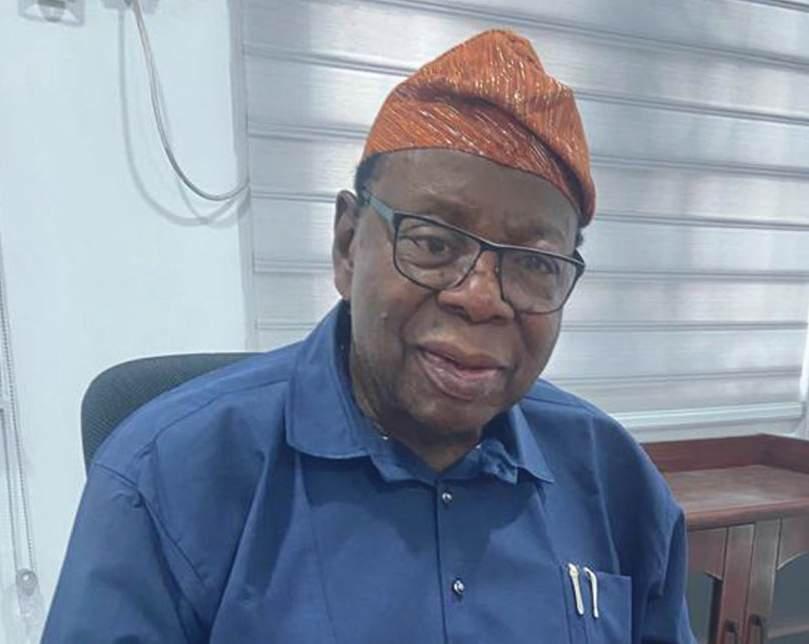
Could you tell us about your schools and what inspired you to establish them?
You see, at the time I was to go into secondary school, virtually all the examinations for admission into big schools like Kings College, Igbobi, Olivet, and others had ended, and their admissions had closed. So, there was this school that was just starting, and because my father knew the principal that was to start the school, late I. A. Adedoyin, he decided that I enter the school (the Baptist High School, Iree), and for good six years there was no electricity and no pipe-borne water, so we were fetching water from the well and reading with lanterns-of course the Aladdin lamps of those days. I saw the situation, and I rejected it. When I moved to Olivet Baptist High School, it was a different ball game from what we had there. So, I vowed that whatever it takes, I must invest in education, solely to have a very good quality education. That was the motivation behind the establishment of various schools in Lagos. Besides, when I got to Lagos, I started living in Isolo, then moved to Mangoro; but when I moved to Ejigbo, I saw a lot of parents trying to get their children to school across from Ejigbo to Isolo, Mushin, and other
distant areas (just to get an education). So, I got this plot of land, and I said, instead of building a guest house there, I would build a school, at least to really relieve the parents that were accompanying their kids to schools of that stress, and to give a good standard of education. So, right from the very word go, I decided to build high-standard schools that would meet their (parents’) aspirations. That was the motivation behind these schools’ creation.
There is a huge preference for private schools these days, maybe for social status. Many parents now prefer to take their children to private schools, as opposed to public schools, and this is really affecting the public schools.
What do you have to say about this?
The growing interest in private education is real, but it is important to understand the reason for this. Parents are not necessarily choosing private schools because they are fashionable, but because they see consistency, accountability, safety, learning outcomes, etc. In many cases, private schools have been able to respond more quickly to changing educational needs, curriculum demands, parents’ expectations, and
others. The perception that private schools are expensive should be viewed from the spectrum of the quality of services provided. Not all schools charge premium fees; affordability should be viewed in relation to value. Definitely, some people would have a reason to prefer a particular school over others. Therefore, before you go into building schools, you must appreciate the fact that it’s not an investment you can begin to receive returns quickly; so, it is a long-term investment, if at all, for benefits or return on investment. And the kind of money you would invest in such a project is huge, definitely to provide quality education that would create that preference. And whenever quality is provided, there’s a high price attached to it, and that is one of the reasons you charge high tuition fees, at least to be able to provide and sustain quality services for the students. Even if you are not getting returns on investment, you still need to continue to maintain the quality of infrastructure that are one puts into the investment. And again, you have to be sure you pay the teachers very well, too, because you find out that one of the motivations for good quality service delivery is the salary you pay the teachers. For you to get
• Alabi
Super Saturday
Chris Alabi: Education Is a Calling, Not Quick-profit Business
As the proprietor of Ronik Polytechnic, Secondary and Primary Schools, what are the challenges you have encountered since their establishment?
There are so many challenges in running a school. However, I’ll try to explain a few. Firstly, the challenge of government policy is another remarkable thing to point out, because you really need to have several licences to operate a school. Again, the challenge is actually getting building approval for the infrastructure you want to use from the Town Planning authorities. In addition to that, you need to get different licences and approval from various government authorities; then, of course, you need funding. You wouldn’t be able to charge for what you have put into it, as appropriate to the investment you have put in. Then, you’ll see a lot of obstacles from the environment. For example, maybe you want to improve the road network to your schools, and the local government authorities would not allow that to happen, even though they won’t do it anyway. So, those are some of the immediate impediments, but the greatest challenge in our case was when we wanted to start the polytechnic. To really get the approval took a long time, as well as many hurdles we had to cross. So, these are the various challenges we faced.Also, remember that to attract good lecturers, you have to be able to have sufficient cash flow to meet those requirements. Generally, private schools’ proprietors face the following challenges, among others, which include operational costs, teacher retention, regulatory demands, and economic pressure on parents. However, these can be surmounted through strong governance, prudent financial management, continuous staff development, constructive engagement with regulators and stakeholders to ensure sustainability without compromising quality.
Every day, private schools are springing up in Nigeria, and the people are beginning to question their motive. Some are asking if it has now become a business centre. As a stakeholder and top player in the education sector, what’s your take on this?
This concern is understandable. Education by its nature requires purpose, patience, and long-term commitment. When schools are set
• Alabi
up solely as short-term profit ventures without adequate structure, governance, or educational philosophy, it can undermine public confidence in private education as a whole. It is important to avoid generalisation. Alongside new entrants, there are institutions like Ronik Schools that have been in existence for over thirty years, that are built on clear values, strong governance, and commitment to learning outcomes rather than quick outcomes. Sustainable schools invest in qualified teachers, continuous training, and well-defined administrative and oversight structures. These structures help to provide strategic direction. A lot of people thought that establishing schools was a money-making business; it’s when they get into it that they realise that you have to put in a lot. You must have a passion for quality education for potential students. So, people actually rent houses to start school, and after some time, they can’t pay for the rent anymore, and they withdraw. It is funny that we have this kind of situation where everyone just thinks that it is easy to just start a school and get students
to attend it, whether they are giving quality education or not, they don’t mind.
Many Nigerians believe that the standard of education in the country has actually fallen compared to when you were at the University of Ibadan. What solutions can you proffer to help curb this decline?
Well, the government is trying these days, but they still have a lot to do by way of actually encouraging private schools at least to move on, because there are so many obstacles. Talking about the standard of education generally, it has fallen because a lot of corruption is going on in our society. Teachers are not well paid and so forth. And the government, especially during the military era, didn’t actually care so much about education, and so the standard started falling. Inspection of schools was not actually thoroughly done, and you just find out that everything was just going down because there was no good policy direction for schools in Nigeria to really move on. Lastly, restoring high educational standards requires a return to the fundamentals, including well-trained and motivated teachers; strong school leadership, relevant school curricula; effective supervision; a culture that values learning and discipline; and consistent policies and accountability.
What is the selling point of Ronik schools?
Why should parents prefer to bring their children to your school, in terms of quality education and extracurricular activities?
First of all, we provide a conducive environment. Right from the word go, we did not cut corners in the buildings. Then, most importantly, are the laboratories; we made sure that all that was needed to deliver quality education was in there. For example, in our comprehensive school, we have a swimming pool, a sports court, and many other facilities. We also focus on sports and several other attractions, like quality teachers, who we pay very well in order to be happy and confident working for us, and improving the standard we have laid down.
What have been the achievements of the schools since they were established?
The most important aspect is the academic standard. Right from the outset, in the secondary
school, I can’t think of any year we didn’t score 100 percent; you can check the record. And that has to do with the quality-of-service delivery. We started in 1988; we started the nursery and primary school in 1988. The secondary school was started in 1990, and the polytechnic was established in 2000. The journey has been quite long.
Do you think you have been successful in managing the school?
Oh, we have been very successful because we’ve not had any infringement on the government policy, and students who graduated from our schools have been excelling in their various areas, and all over the world, you would see them making an impact. And in all the fields of endeavor, they are there, including engineering and others.
Since humans don’t stop improving, where do you see your institutions in the future? What are the plans for the schools in the future?
Well, for the nursery and primary schools, as well as for the secondary school, we are focusing on actually making sure that we do not only teach English, but we have added French and Chinese. Any student in our school should be able to have at least the ability to speak those three languages – English, French, and Chinese. And as you can see, now, the economy of this country is to some extent stagnated, and the Chinese community is actually becoming very largely in charge of some economic sectors. So, to key into that, one must be able to communicate in the language to have leverage. Also, the e-learning is our focus; that is, the computer and the Artificial Intelligence (AI); those are the things we are focusing on currently. We are also looking at how we can partner with some foreign schools of good standard, so that at least we can benefit from their quality service delivery. Right from the very word go, we instituted total quality management as one of our aims to really run the school. In our schools, we ensure good corporate governance, and everything is well organised.
Mentoring Next Generation Communicators
David-Chyddy eleke reports that as a way to mentor next-generation journalists, Chukwuemeka Odumegwu Ojukwu University, Anambra State, organised a lecture for Mass Communications students, geared towards catching them young
The lecture hall of the mass communication department of Chukwuemeka Odumegwu Ojukwu University (COOU) was last week filled to capacity as students if the department gathered for their annual lecture, where the head of department deliberately choose topic that will spur the students to the reason they are engaged in the study, which is to graduate into journalists that will educate, inform society and most importantly hold government to account without fear.
The event carefully brought together industry professional, Arise TV Analyst, Anchor and Journalist, Dr. Constance Ikokwu to meet with members of the academia in the university to share ideas with the students. The idea was to blend the practical aspect of the profession they aspire to, with the theoretical part, which they are impacted with by their trainers.
Speaking on the topic, ‘Stories That Matter: Media, Power, Responsibility,’ Ikokwu brought industry experience to bear, as he took the students through the practical rudiments of journalism and the impact their works could make in society.
From the power of storytelling as a journalist to how their stories can shape narrative, Ikokwu graduated to their role as watchdog of the society among others, bringing to their consciousness what is expected of them as studies as journalists.
She said: “In every society, stories shape the way people understand the world around them. They influence how citizens interpret power, injustice, conflict, identity, and even hope. Journalism and mass communication therefore go far beyond simply reporting events; they help define meaning. A story is not just a collection of facts.
“A story is a narrative that carries a message,
and every journalist must constantly ask: what is the message behind what I am reporting? This is why journalism is not merely a profession but a civic duty. The stories journalists choose to tell—or ignore—have real consequences for society.
“At its core, journalism shapes how societies understand major issues. Stories determine how people interpret crises, how they see leaders, and how communities respond to injustice.
“When journalists frame an issue in a particular way, they influence public perception and public reaction. History itself is shaped by the stories that are preserved and the ones that are forgotten. This responsibility places enormous weight on the work of journalists and communicators. What you report today could influence how future generations understand an event, a conflict, or even an entire nation.”
Beyond these, she insisted that media can also drive justice and social awareness, citing the killing of George Floyd in the United States in 2020 as a case study.
She also stated that another key function of journalism is agenda-setting.
She held the view that issues become urgent when they dominate headlines and constitute public discussion, and conversely, when the media remains silent about an issue, society may ignore it, even if it affects millions of people.
“In this way, silence can be as powerful as coverage”, she stated.
She gave several other examples including the #EndSARS protests in 2020, and how police brutality fueled the protest and was gingered by the continued sustenance of the topic in the media.
She continued: “One of the most important responsibilities of journalism is giving a voice to the voiceless. In many societies, powerful individuals and institutions already have
platforms, resources, and influence.
“They have microphones. They can shape narratives in their favor. Those at the margins of society—such as displaced people, victims of conflict, or vulnerable communities—often lack such platforms. Journalism helps amplify their stories and bring their struggles into public view.
“In Nigeria, investigative reporting on internally displaced persons (IDPs) has shown how powerful storytelling can be. Media reports exposing hunger, corruption, and poor living conditions in displacement camps forced attention from government agencies. Without these stories, the suffering of thousands might have remained invisible.
“Journalism, in such cases, becomes a bridge between forgotten communities and the wider society.
“Beyond amplifying voices, journalism also plays a critical role as a check on power. The media is often referred to as the Fourth Estate, standing alongside the executive, judiciary, and legislature as a pillar of democracy. Its responsibility is to question authority, demand accountability, and expose abuse of power. When journalists investigate wrongdoing, they help protect citizens from exploitation and injustice.
“Investigative work has revealed numerous abuses in institutions that were supposed to protect and educate people. Undercover reports exposing bribery, academic corruption, and exploitation of students demonstrate how journalism can bring hidden problems into the open. When such stories are told, institutions are forced to respond, reforms are demanded, and victims are no longer ignored. Journalism, in these moments, acts as a safeguard for society.
“However, the power of the media also comes with great danger if used irresponsibly. Journalism can heal, but it can also harm. Poor reporting, misinformation, or sensationalism can inflame
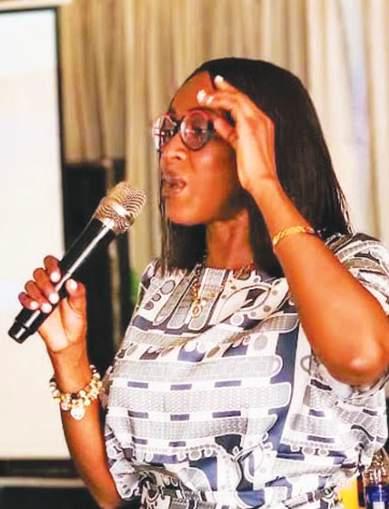
tensions, destroy reputations, and even lead to violence. History offers many examples of this danger.
“Misinformation during elections can be equally dangerous. False results, manipulated videos, and ethnic propaganda can heighten tensions and deepen divisions. In Nigeria’s history, narratives surrounding past conflicts, including claims about the origins of certain coups or ethnic blame, have shaped perceptions and fueled mistrust.
“When unverified information spreads during crises, it can worsen panic and inflame ethnic tensions. This is why responsible journalism must prioritize accuracy over speed, context over sensationalism, and humanity over the desire for attention or clicks.
Constance Ikokwu
‘Tokunbo’ Now Formal Entry
LET us refresh our minds—lest we forget—by listing Nigerian words that were recently internationalized before returning to our didactic session. A total of 29 Nigerian words and expres- sions have been included in the latest updates of Oxford English Dictionary. Some of the words included are: ‘Ember Month’, ‘Danfo’, ‘Non-indigene’, ‘Guber’, ‘Tokunbo’, ‘Mama Put’, ‘Kannywood ‘Next Tomorrow’, among others. How I wish the late language activist, Pa Bayo Oguntunase, was alive to savour this unprecedented manifestation!
Now the comprehensive list: Agric, adj. and n.: “Of, relating to, or used in agriculture; = agricultural adj. Now chiefly West African”
Barbing salon, n.: “A barber’s shop.”
Buka, n.: “A roadside restaurant or street stall with a seating area, selling cooked food at low prices. Cf. bukateria n., mama put n. frequently used as a modifier…”
Bukateria, n.: “A roadside restaurant or street stall with a seating area, selling cooked food at low prices. Cf. buka n., mama put n.” Chop, v.6, Additions: “transitive. Ghanaian English and Nigerian English. To acquire (money) quickly and easily. Frequently in negative sense: to misappropriate, extort, or…”
Chop-chop, n.2: “Bribery and corruption in public life; misappropriation or embezzlement of funds. Also as a modifier.” Additions: “Now chiefly Nigerian English and East African. To eat money: to acquire money dishonestly; to misappropriate, extort, or embezzle funds. Cf. chop v.6…”
Danfo, n.: “A yellow minibus that carries passengers for a fare as part of an informal transport system in Lagos, the largest city in Nigeria. Also as a…”
To eat money, in eat, v.,
Ember months, n.: “The final four months of the calendar year (September to December), esp. considered together as a period of heightened or intense activity.”
Flag-off, n.: “The moment at which a race, esp. a motor race, is flagged off (see flag v.4 additions a); the start of a race. Now chiefly Indian English and…” Flag, v.4, Additions: “to flag off. Transitive (usually in passive). To direct (a driver) to start a motor race, esp. one in which the competitors start at intervals, by…”
Flag, v.4, Additions: “to flag off. Transitive. Indian English and Nigerian English. In extended use: to start (an event or undertaking).”
Gist, n.3, Additions: “Nigerian English.
Idle chat, gossip. Also: an instance of this, a rumour or piece of gossip.”
Gist, v.2: “transitive. To reduce (a text, document, etc.) to its essence or gist; to condense, summarize, or précis.”
Guber, adj.: “Of or relating to a governor or governorship; = gubernatorial adj.”
Kannywood, n.: “The Nigerian Hausa-language film industry, based in Kano; Kano regarded as the centre of this industry. Cf. Nollywood n.” K-leg, n.: “In singular and plural. A condition in which one or both of a person’s knees are turned inwards, resulting in a noticeable gap between the feet when…”
Mama put, n.: “A street vendor, typically a woman, selling cooked food at low prices from a handcart or stall. Also: a street stall or roadside restaurant run by…”
Next tomorrow, n. and adv.: “The day after tomorrow.”
BACK To oUR LANGUAGe CLINIC:
“The Dozzy Foundation on Health is yet another testament of (to) your selfless service to humanity.”
“The Foundation speaks volume (volumes) of your passion for the health and well being (well-being) of the downtrodden.”
“We pray that God in his (His) infinite goodness will grant you many more years and good health.”
“As we look forward to the Tokyo 2020 Olympics, it is good for us to focus in (on) areas we have competitive advantage.”
“For the fast-approaching Tokyo games, which would commence in (on) July 24, it is doubtful that our fate would be much different.”
“…both our male and female teams failed woefully (abysmally) to qualify….”
Finally, we take the last entry from the Editorial under review: “That is why smart nations do everything possible to maximize their potentials (potential or potentialities) in sports.” ‘Potential’ is uncountable, unlike ‘potentiality’
“...the Supreme Court put to rest every other discussions.” (Politics & Power, January 9) Either every other discussion or all other discussions, depending on context.
Wrong: “people-oriented government” Poser: is there any government that is beast-oriented or object-oriented? All governments—bad and good—are people-oriented.
“Incorporating ESG principles into jobcreating businesses ensure (ensures) sustainable business operations….”
Some media professionals ignorantly use the phrase ‘armed bandits’ almost on a daily basis: “The Zamfara State Government’s effort towards finding lasting solution to armed banditry and cattle rustlings suffered a setback as...” The dictionary defines a bandit as “a member of an armed gang that robs
Herculean Tasks Before Tunji Disu
When an institution and the citizens it is meant to protect begin to look at each other with mutual suspicion, something fundamental has broken. That, in plain language, is the present chord between Nigerians and the Nigeria Police Force: stretched, frayed and perilously close to snapping.
Most Nigerians do not see the police as friends. They do not instinctively run towards an officer in distress; they step aside, wary. The uniform evokes not reassurance but calculation. “How do I avoid trouble?” has replaced “How do I get help?” That inversion is tragic for any republic.
Into this brittle atmosphere steps Acting InspectorGeneral of Police, Tunji Disu, decorated by President Bola Tinubu with the charge to make the Force “better than he met it”. The President spoke of discipline, professionalism and restored public confidence. Disu, visibly moved, promised zero tolerance for corruption and an end to impunity. Fine words. Necessary words. But in Nigeria, words have long competed unsuccessfully with experience.
Let us be honest about that experience. For years, the Nigeria Police has been dogged by allegations and documented cases of brutality, torture, extrajudicial killings, misuse of firearms, extortion at checkpoints and collusion with criminal elements. Banditry, terrorism and kidnapping have flourished in parts of the country despite heavy deployments. The #EndSARS protests did not emerge from thin air; they were the eruption of accumulated grievance.
Even recruitment has been questioned. The disturbing perception - sometimes echoed by insiders - is that the process is compromised by patronage, local politics and insufficient psychological vetting. It has been alleged that community recommendations sometimes prioritise loyalty over suitability. When standards slip at the entry gate, the rot does not remain at the gate; it walks in, armed.
Disu is not unaware of this terrain. Born in 1966, enlisted in 1992, he has served across operational commands, notably as Commander of the Rapid Response Squad in Lagos, and later as head of
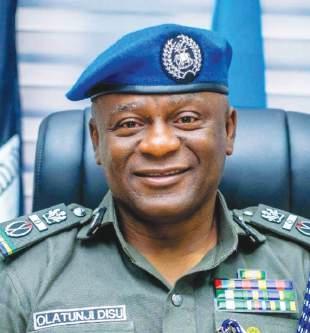
the Intelligence Response Team. He inherits not just Africa’s largest police force, but arguably one of its most distrusted.
The tasks before him are immediate, shortterm and structural. Immediately, he must signal that the era of performative discipline is over. Internal affairs mechanisms must move from ornamental to operational. Officers credibly accused of misconduct must face swift, transparent investigations. Outcomes should not be whispered within barracks; they should be communicated to the public. If a constable extorts, the nation must know he has been sanctioned. If a senior officer abuses authority, rank must not become insurance.
Short-term, the Force requires retraining on a scale that borders on revolutionary. Human rights compliance cannot be a PowerPoint slide at a workshop; it must be a measurable performance metric. Intelligence-led policing, forensic capacity, digital evidence handling and data-driven crime mapping should cease being aspirational buzzwords. Criminals have modernised. The police cannot continue with analogue reflexes in a digital age. Welfare also demands urgent attention. Poor remuneration, dilapidated barracks and inadequate equipment create fertile ground for corruption.
people”. It means a bandit is usually armed; therefore the word “armed” to qualify him is out of place. On the contrary, a robber is someone who “takes property from a person or place illegally”. A robber may or may not bear arms. If he does, he is an armed robber liable to the death penalty upon conviction. As we can see, the distinction between a robber (armed or unarmed) and a bandit is clear.
The nation’s premier independent radio station, RayPower, reported in the business segment of its Nigeria Today newscast on Thursday, February 19, that the country “SLIDED into recession...” Its editors and correspondents, and indeed media professionals, should note that SLID is both the past tense and past participle of SLIDE. It is not in the same word class as GLIDE and GLIDED.
“Police arraign alleged fake lawyer in court” Where else would they have arraigned the buffoon? Yank away ‘in court’!
“2 jailed 4 years over (for) rape”
“The Lord shall increase you more and more, you and your (our) children.”
“We rejoice with you on your 65 (65th) birthday….”
“Not only do we rejoice with the celebrant (celebrator) for partaking in abundant grace….”
“He will grant you strenght (strength), good health and wisdom.”
“…as you strive to contribute your quota in (to) building a more vibrant democracy for the benefit of our dear country.”
“With people (a person) like you working with our dear president and other patriotic Nigerians….”
An officer who cannot feed his family is more vulnerable to compromise. Reforming welfare is not indulgence; it is strategy.
Beyond the operational lies the philosophical: the police must relearn their role. They are not an occupying force. They are not revenue collectors. They are not enforcers for the powerful. Constitutionally, their mandate is clear - protection of life and property, prevention and detection of crime, maintenance of public order and enforcement of law. In practice, that clarity has often blurred.
Disu has said the citizen is the boss. That statement must not remain ceremonial. Community policing should move beyond slogans. Local engagement forums, transparent complaint channels and civil society partnerships must become routine. Trust is built in small, consistent interactions - not grand speeches at Force Headquarters.
And then there is 2027. The next general elections will test the police’s neutrality and professionalism. In previous cycles, security agencies have been accused of partisanship, selective enforcement and intimidation. If the police are seen as extensions of political machinery rather than guardians of order, public confidence will erode further. Disu must draw a bright, unmistakable line between policing and politicking.
Yet even the most determined IGP operates within structural constraints. Nigeria runs a centralised police system in a vast, heterogeneous federation. Calls for state policing have grown louder, driven by arguments that localised forces would respond more effectively to community-specific threats. Critics warn of potential abuse by state governors. Proponents argue that decentralisation, with proper safeguards, enhances accountability and responsiveness.
This debate can no longer be postponed. Fasttracking constitutional amendments towards a carefully designed state policing framework deserves serious, bipartisan engagement. A hybrid model - combining federal standards with state-level operational autonomy - may offer a path forward. Oversight mechanisms, independent complaint commissions and funding guarantees must be embedded to prevent abuse.
Centralisation has not insulated the Force from politicisation; it has merely concentrated its vulnerabilities. Disu’s tenure, potentially

extending to 2030 under the amended Police Act’s four-year provision, provides a window for meaningful reform. But time alone does not guarantee transformation. Leadership must be matched by political will, budgetary commitment and legislative support.
President Tinubu has pledged full backing. That support must translate into more than ceremonial decoration. It must include resources for training, technology, welfare and independent oversight. It must also include tolerance for uncomfortable reforms that may unsettle entrenched interests within and outside the Force.
There is also the matter of succession culture. Disu’s elevation reportedly triggers the retirement of several senior officers, in line with tradition. Institutional continuity should not become collateral damage of hierarchy. Reform must outlive personalities.
Ultimately, the Herculean task before Disu is not merely crime reduction. It is moral rehabilitation. He must persuade Nigerians that the badge symbolises service, not swagger. That a checkpoint is for safety, not settlement. That reporting a crime will not result in secondary victimisation. That the rule of law is not elastic depending on the suspect’s connections.
This will not be achieved overnight. Decades of distrust cannot be erased by a single tenure. But visible, consistent change can begin to soften hardened perceptions.
Nigeria does not need a perfect police force. It needs a professional one - disciplined, accountable, modern and humane. If Disu succeeds even partially, he will not only justify the President’s confidence; he will restore a measure of faith in an institution essential to any functioning democracy.
If he fails, God forbid, the gulf between uniform and citizen may widen beyond easy repair. And that is a risk no serious nation should contemplate lightly.
Disu
•Tourism •Arts&Culture
How Nigeria’s Festive Season Reshapes Tourism Ecosystem
The Naija7Wonders Meeting 3.0 hosted by the organisers of Akwaaba African Travel Market and convened by travel promoter, Ikechi Uko, brought together tourism, travel and hospitality stakeholders to strategise on improving coordination and profitability of Nigeria’s December tourism season.
The President of the National Association of Tour Operators (NATOP) and Chief Executive Officer of Grand Express Tour Centre (GET), Alhaja Bolaji Mustapha, attributed the growing success of Nigeria’s Detty December tourism phenomenon to years of groundwork by Nigerian tour operators.
Mustapha said inbound travel packages were completely sold out in December 2025, reflecting unprecedented demand from both the diaspora and international visitors.
“December was extremely busy. Inbound travel sold out completely, and Lagos witnessed weddings back-to-back throughout the period,” she said.
She highlighted the increasing international appeal of Nigerian social and cultural events, citing a wedding in Lagos that recorded a large turnout of guests from Rwanda as evidence of Nigeria’s rising profile as a festive travel destination.
The NATOP President, however, noted that the Detty December boom also came with challenges. One of the major issues was congestion at airports, driven by the massive influx of Nigerians in the diaspora returning home for the festive season.
Another key challenge, she said, was the sharp increase in accommodation costs, with apartments and hotels charging significantly higher rates during the peak period. She stressed the need for better collaboration between tour operators and hotel owners, urging both parties to work towards subsidised and contract-based rates ahead of the 2026 Detty December season.
Looking ahead, the NATOP President revealed that tour operators are already working on strategies to make Detty December 2026 more organised and globally competitive. Among the plans is the rollout of professionally produced welcome videos aimed at foreign visitors, similar to tourism promotion initiatives adopted by Kenya following the visit of global internet sensation IShowSpeed.
She also emphasised the importance of early communication, encouraging international travellers to book their trips through licensed tour operators well ahead of time.
Mustapha called on government at all levels to intensify efforts to develop and upgrade tourism sites across the country, noting that Detty December has evolved beyond being a Lagos-centric event. “Detty December is no longer just about Lagos. It is now a national tourism phenomenon that can showcase Nigeria’s rich cultural heritage if properly supported,” she said.
According to her, with sustained private-sector collaboration and stronger public-sector backing, Detty December could become one of Africa’s most powerful tourism brands, driving economic growth, job creation and global visibility for Nigeria.
Different stakeholders have continued to add their voices on how Detty December impacts the tourism sector in Nigeria, writes Charles Ajunwa
Nigeria has mapped over 850 traditional festivals, boasts 1,400 kilometres of coastline, 12,000 hotel rooms and 37 airports and airstrips — yet remains at the “very beginning” of unlocking a multi-billion-dollar cultural tourism economy, Director General of the National Council for Arts and Culture, Obi Asika, has said.
Asika argued that Nigeria’s creative and cultural assets — if properly packaged, digitised and monetised — could rival traditional revenue sources.
“We have indexed over 850 festivals already. If you brand them, merchandise them, build products around them, this is a multi-billion-dollar segment,” he said.
He added that beyond traditional festivals, Nigeria’s contemporary cultural events could push the total number of festivals above 3,000 when fully counted and structured.
According to him, Nigeria’s tourism ecosystem is stronger than widely perceived. “We have 37 airports and airstrips. We have 12,000 hotel rooms. We have 1,400 kilometres of virgin beach, less than 20 kilometres properly developed. The base assets are there,” he said.
He also revealed that hotel occupancy in major Nigerian cities averages between 75 and 80 per cent, while an estimated 100 million Nigerians travel at least 100 kilometres annually — meeting the global definition of domestic tourism.
Asika announced that the Federal Executive Council has approved a national framework known as “Niger Season”, designed to calendarise cultural and tourism events across all 36 states and the Federal Capital
Territory to position Nigeria as a 12-month destination.
The initiative, he said, seeks to integrate federal and subnational efforts while encouraging private sector investment in festivals, heritage sites and waterfront development.
“The biggest resource Nigeria has is the Nigerian,” Asika stated. “Once we back the Nigerian, we will win.”
Asika defended pricing spikes during the season, noting that hotel rates in global cities such as New York can rise by as much as 600 percent during peak events.
He said that Nigerians should avoid excessive negativity about the festive season pricing.
“Anywhere in the world that becomes hot, prices go up. During the United Nations General Assembly in New York, prices can rise 600 percent. That’s global reality,” he said.
He maintained that Detty December did not emerge by accident but is the result of years of investment by both private promoters and state governments. He referenced the early ‘One Lagos’ initiative launched in 2015 and longstanding events such as the Calabar Carnival, now over two decades old.
According to Asika, festive activity during the last Christmas season extended beyond Lagos, with significant participation in Enugu, Abuja, Jos, Port Harcourt, Uyo and Calabar.
He cited industry data estimating that Lagos nightlife alone generated $900 million in 2024. Extrapolated across roughly 40 major cities nationwide, he suggested nightlife could represent a $3 billion segment of the
economy.
Acting Chief Operating Officer and Head of Aeronautics and Cargo at MMA2, Remi Jibodu, revealed that daily foot traffic at the Murtala Muhammed Airport Terminal 2 climbed to about 15,000 people per day during the 2025 Detty December period, reflecting an unprecedented surge in passenger movement driven largely by returning diaspora Nigerians.
Jibodu, an aviation expert, said the domestic terminal experienced an unprecedented festive rush, describing the airport as both a gateway infrastructure and an emerging tourism touch point during peak travel periods.
According to him, many of the travellers were Nigerians returning from abroad, with several connecting from international flights to cities hosting December entertainment and cultural activities. He noted that the influx exceeded projections and placed pressure on terminal facilities, including departure halls and passenger amenities.
However, he said emergency response systems and rapid operational adjustments ensured that no major incidents were recorded.
To manage passenger flow, the terminal expanded premium departure services and optimised VIP lounge access, particularly for business class and diaspora travelers.
He added that the festive rush also boosted commercial activity within the airport, with restaurants, transport services and charter flight operations recording increased patronage. “Feedback from returning diaspora travellers indicated improved passenger experience and infrastructure, with some noting significant changes since their last visits,” he said.
Looking ahead, Jibodu stated that airport management has adopted data-driven planning to better anticipate year-end demand, with preparations beginning earlier in the calendar year.
Jibodu projected that increased airline capacity, relatively moderated fares and improving economic conditions could drive even higher passenger volumes in the next festive season. He emphasised that aviation remains a critical enabler of Nigeria’s December tourism economy, positioning the airport not only as a transit hub but also as a first point of hospitality experience for visitors.
The Permanent Secretary of the Lagos State Ministry of Tourism, Arts and Culture, Mrs. Bopo OyekanIsmaila, said that Lagos witnessed a tenfold increase in tourist arrivals during the 2025 Detty December season, with more than 45,000 visitors recorded weekly at Badagry beaches and economic activity estimated in billions of Naira.
Continental Hotels Group Empowers Women on IWD 2026
The Continental Hotels Group Nigeria, as part of its corporate social responsibility (CSR), has announced plans to empower its female staff to mark this year’s International Women’s Day, emphasising the power of altruism and reciprocity with its ‘Give to Gain’ theme.
Its flagship properties in Abuja and Lagos will host a series of events, showcasing its commitment to gender equality, professional development, and women’s empowerment.
The celebration is a milestone in Continental Hotels Group’s ongoing dedication to creating an equitable workplace where women can thrive. The events promise to be engaging, inspiring, and uplifting for all participants.
The IWD celebration features a range of activities, including expert-led talks, panel discussions, and gifts for women staff. The expert-led talks will cover topics
such as mental health, work-life balance, and holistic well-being strategies tailored to the demands of the hospitality industry.
Cluster Director of Sales and Marketing Continental Hotels, Richard Mutanda, expressed his enthusiasm: “Let’s celebrate the strength, resilience, and achievements of our incredible women at Abuja Continental and Lagos Continental hotels. Together, we foster a culture of empowerment and mutual support.”
According to him, “The panel discussions will feature female leaders from within Continental Hotels and external guests, sharing real-life stories of empowerment, mentorship, and the reciprocal benefits of contributing to others. The discussions will explore how giving time, support, and resources can lead to personal fulfillment, career advancement, and community building.
“The gifts for women staff are a heartfelt gesture of appreciation, symbolising the hotel’s gratitude for their dedication and contributions. The gifts include wellness kits, personalised tokens of recognition, and vouchers for self-care experiences.
“The celebration is not limited to the core events.
Participants can look forward to a diverse array of activities, including team-building games, creative workshops on personal branding and leadership, and networking opportunities to connect with peers and mentors.
“The health and fitness sessions, led by certified trainers from the hotel’s Health and Fitness team, will focus on fitness and healthy living. The sessions will include cardio workouts, mindfulness practices, and stress management techniques, promoting physical health and well-being.
“The ‘Give to Gain’ theme encapsulates the essence of IWD 2026, emphasising that acts of generosity yield mutual benefits. It encourages individuals to invest in others, recognising that such contributions not only uplift communities but also enhance personal growth, resilience, and satisfaction.”
“By investing in their staff’s development and well-being, Continental Hotels Group aims to set a benchmark for inclusivity in Nigeria’s hospitality sector. The group’s commitment to empowering women is a testament to its dedication to creating a more equitable workplace,” Mutanda added.
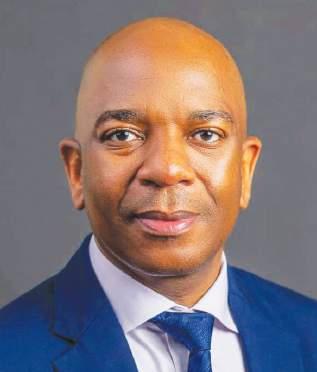
Mustapha
Asika
Charles Ajunwa
Mutanda
Auto World
Mikano Motors Partners Autochek Africa for Access to New Vehicle Ownership, Smarter Financing
Mikano Motors has entered a strategic partnership with Autochek Africa, Nigeria’s leading digital automotive and financing platform, to fundamentally change how Nigerians discover, evaluate, and own new vehicles.
The partnership will be formally launched at a press conference on Friday, February 27, 2026, at 10:00 AM, at the Mikano Motors Showroom, 65 Adeola Odeku, Victoria Island, Lagos.
Effective immediately, customers can browse the full Mikano Motors lineup, including Changan, Maxus, and other brands within its portfolio on a dedicated Mikano Motors Virtual Showroom hosted on the Autochek platform. From a single interface, buyers can compare models side-by-side, apply for structured automotive loans, explore flexible payment plans, and receive faster credit decisions, completing key stages of the purchase process without stepping into a showroom.
For Mikano Motors, the collaboration is an extension of its ownership philosophy.
“Our focus has always been on delivering not just new vehicles, but a complete ownership experience. That includes up to six years’ warranty or up to 200,000 kilometres, nationwide aftersales support, and the confidence that comes from a 33-year legacy of trust,” said Joelle Haykal, Group Executive Director of Mikano Motors. “Our vehicles are built for Nigerian roads engineered for durability and performance, so our customers always drive with peace of mind. This partnership allows us to combine premium
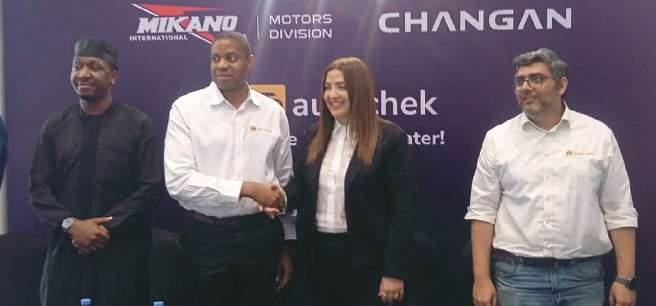
mobility with smart financing solutions, giving customers greater flexibility, confidence, and control over how they own a vehicle.”
For Autochek Africa, the partnership deepens its footprint with a marquee OEM partner and extends the reach of its embedded financing infrastructure to Mikano’s established customer base across Nigeria.
“The demand for vehicles in Nigeria has never been the issue; access to financing has,” said Etop Ikpe, Chief Executive Officer at Autochek Africa. “Our partnership with Mikano Motors is designed to close that gap. By combining Mikano’s premium vehicle portfolio with our
embedded financing technology, we are unlocking access to multiple banking partners with fast approvals so that anyone can find an offer that suits them, allowing more Nigerians to own brand-new cars with confidence.”
The launch of the Mikano Motors Virtual Showroom on Autochek marks a broader shift in how premium automotive brands are positioning themselves in Nigeria’s digital economy. As consumers increasingly expect to initiate and manage major purchases online, the integration of physical showroom quality with digital accessibility sets a new benchmark for the industry.
Why Jetour G700 is Ultimate 900HP Disruptor
Forget everything you thought you knew about “sensible” hybrids.
The Jetour G700 has arrived, and it didn’t just enter the room—it kicked the door down, waded through a river, and parked itself on the throne of the premium SUV world.
If a luxury penthouse and a monster truck had a high-tech love child, this would be it.
Design: The Art of Intimidation
At first glance, the G700 is a monolith of modern engineering. Measuring nearly 5.2 meters long, its silhouette is a masterclass in “Boxy Chic.” With its towering stance, matrix LED headlights, and a grille that looks like it could swallow a lesser hatchback whole, the G700 commands respect before you even click the key fob.
It doesn’t just have “road presence”; it has its own gravitational pull.
Performance: Physics? what Physics?
Underneath that shimmering paint lies the heart of a titan: the Kunpeng Super Hybrid CDM-O system. We’re talking about a 2.0L turbocharged engine paired with dual electric motors that churn out a mind-bending 904 horsepower and 1,135 Nm of torque.
0–100 km/h: 4.6 seconds. (Yes, in a vehicle

this size).
Total Range: A staggering 1,400 km.
wading Depth: 970 mm.
While others are checking the weather, you’re essentially driving a luxury submarine.
Whether you’re executing a “Tank Turn” in the dunes or cruising at highway speeds with the silence of a library, the G700’s adaptive suspension and triple differential locks ensure you’re always the master of your domain.
The Interior: A First-Class Flight for Six Step inside, and the “rugged” exterior gives way to “ultra-luxe” serenity. The dashboard is dominated by a 35.4-inch 3K panoramic display—a digital horizon
that makes your home TV look like a calculator.
“It’s not just a cabin; it’s a sanctuary. From the Nappa leather massage seats to the 18-speaker Lexicon audio system with Dolby Atmos, every inch is designed to insulate you from the chaos of the outside world.”
The “wow” Features:
Military-Grade Assistance: Some editions even feature rear turboprops for 3,000 N of additional thrust to get you out of the deepest mud.
On-Board Fridge: A built-in drawer that keeps your champagne at a crisp -6°C or your espresso warm at 50°C.
Oxygen Generator: Heading to the mountains? The G700 literally breathes for you with an external oxygen supply for high-altitude health.
The Verdict
The Jetour G700 isn’t just a car; it’s a statement of intent. It proves that you don’t have to choose between the grit of a desert-crosser and the grace of a limousine. It is the king of the “Travel+” philosophy—built for those who want to see the world without ever leaving their comfort zone.
The established luxury titans should be very, very nervous. Where to get one? At our accredited dealerships: Elizade Nigeria Limited, New Era AutoVehicle Services ltd, Kojo Motors, Germaine Auto Centre, Tab Autos Ltd, R.T. Briscoe Motors and Mandilas Motors.
Leaders’ Summit Returns, As 20th Lagos Motor Fair and 13th Africa Autoparts Expo Holds
Momentum is building ahead of the 20th Lagos Motor Fair and 13th Africa Autoparts Expo, as organisers announce progress on the preparations for what promises to be a landmark edition of West Africa’s flagship automotive exhibition. The three-day event is scheduled to hold from March 17 to 19, 2026, at the iconic Federal Palace Hotel, Victoria Island, Lagos.
At a media briefing in Lagos, the Chairman of the Organising Committee and Managing Director of BKG Exhibitions Limited, Mr. Ifeanyichukwu Agwu, described the forthcoming edition as a defining moment for the region’s automotive ecosystem.
“We have curated a truly all-inclusive event to ensure a rewarding experience for every stakeholder,” Agwu said. “This milestone 20th edition will be significantly different—rich in content, broader in participation, and intentionally designed to elevate the fair from a trading platform to a catalyst for industrial and economic transformation.”
Autoparts Market Leaders’ Conference Returns
A major highlight of this year’s programme is the return of the Autoparts Market Leaders’ Conference/Summit, following its successful debut in 2025. Conceived as a high-level strategic forum, the summit seeks to foster cohesion among traders, importers, distributors, manufacturers, and policy influencers within Nigeria’s vast automotive component sector.
With Nigeria widely regarded as a dominant force in the Sub-Saharan African autoparts market, the summit aims to strengthen collaboration and create a unified leadership structure capable of driving long-term growth.
The 2026 edition will convene under the theme: “Transforming the Automotive Component Parts Industry in Nigeria: Leadership Strategies for Growth and Sustainability.” Through expert-led presentations and panel discussions, participants will interrogate pressing issues shaping the industry’s future, including local manufacturing expansion to reduce import dependence, the establishment of a central leadership framework to enhance operational efficiency, strategic partnerships with Original Equipment Manufacturers (OEMs) to guarantee consistent access to quality parts, and improved supply chain management supported by structured bulk procurement systems.
Organisers say the summit is designed as a premier networking and knowledge-sharing platform, providing market leaders with direct engagement opportunities with participating OEMs. Attendees are expected to gain actionable insights, access to key decision-makers, and practical strategies for scaling their businesses in an increasingly competitive environment.
A Global Automotive Marketplace
Beyond the conference halls, the exhibition floor will reflect the international scope of the fair. Major vehicle manufacturers, auto dealers, financial institutions, insurance providers, and oil and gas companies have confirmed participation, reinforcing the fair’s position as a comprehensive automotive marketplace.
According to Agwu, more than 100 OEMs from Asia, Europe, and the Americas have confirmed their presence, ready to showcase cutting-edge products, technologies, and innovations across the automotive value chain.
Carloha Unveils Chery Himla with Class-Leading Cargo Space
Carloha Nigeria, the authorised dealer of Chery vehicles in the country, officially unveiled the Chery Himla pickup brand at a landmark launch event at the Orange Island, Lekki, Lagos on February 19, 2026.
The Himla marks Chery’s entry into the Nigerian pickup segment, positioning pickups not just as transport tools but as high-efficiency mobile business assets for commerce, agriculture, logistics, and regional trade.
As Nigeria’s economy expands and user expectations evolve, pickups are increasingly expected to deliver productivity, reliability, and operational efficiency. The Himla is designed to meet this shift, offering entrepreneurs and
businesses a next-generation workhorse that enables scaling with fewer trips and reduced operating costs.
According to Mr Sola Adigun, Managing Director of Carloha Nigeria, “Today’s launch represents a key milestone, with Himla engineered to enhance efficiency and productivity for security outfits, farmers, logistics operators, entrepreneurs and others.”
A key highlight of the Himla is its class-leading 1,276-litre cargo bed (1,530 mm × 1,620 mm × 515 mm), designed to accommodate standard industrial pallets and support “one-trip loading.” Its optimised chassis and suspension minimise wheel arch intrusions, creating a flatter, more usable cargo space. Integrated side and rear steps further simplify loading and unloading, improving workflow efficiency in demanding commercial environments.
Built on a high-strength ladder frame with reinforced rear-spring suspension, Himla delivers a rated payload exceeding 1,000 kg while maintaining stability and safety under heavy loads. It also offers an impressive 3-ton towing capacity, making it suitable for hauling heavy equipment, refrigerated containers, and caravans across logistics, construction, agriculture, and lifestyle applications. For rugged terrains, the Himla features advanced 4x4 capability and 265 mm ground clearance, ensuring durability and control on rough job sites and remote rural roads. It is available in ICE, catering to diverse user needs. Key features include premium leather seating, a 15.6-inch central touchscreen and 9.2-inch dashboard display, enhanced rear-seat comfort, cargo anchoring points, and advanced driver assistance systems in higher-end models.

l-r: Head of operations, Mikano Motors, Syam Abdulkadir; CEo, Autochek Africa, Etop Ikpe; Group Executive director Mikano International, Joelle Haykal; and Chief technology officer, Autochek, Chetan Seth, at a press conference to announce their auto finance partnership, held in lagos, yesterday
the Jetour G700
the Chery Himla pickup line-up
Appraising Peggy Onwu’s Legacy at Ikoyi Golf Club 1938
Peggy Onwu’s tenure as Lady Captain of the Ladies Subsection of Ikoyi Club 1938 redefined elite golf culture, blending sporting excellence with sustainability, youth empowerment, and broader community impact, writes Sunday Ehigiator
WhenPeggyOnwustepped onto the podium to deliver her farewell address as Lady Captain of the Ladies Subsection of Ikoyi Club 1938, the moment carried a quiet symbolism.
It marked the culmination of a transformative chapter that reshaped how golf, leadership, sustainability, and social responsibility intersect within one of Nigeria’s most prestigious recreational institutions.
From the outset of her administration, Onwu made it clear that her leadership would be driven by a philosophy that transcended sport.
Anchored on her signature theme, ‘Go Beyond; Reach It, Live It, Play It’, her tenure would go on to redefine the Ladies Section’s engagement with environmental advocacy, youth empowerment, and community development, while strengthening women’s participation in competitive golf.
As she bows out, members reflect on her legacy, widely regarded as progressive, inclusive, and visionary.
Peggy’s Vision
Onwu assumed office at a time when global sporting institutions were increasingly expected to demonstrate social relevance beyond athletic excellence. Her leadership quickly aligned with this emerging global trend.
Her early declarations as Lady Captain revealed her determination to reposition golf as a vehicle for broader societal impact. She emphasised sustainability, biodiversity preservation, and environmental responsibility as critical pillars of her administration, thereby birthing her administration’s theme: ‘Go beyond golf.
For Onwu, maintaining the golf course extended beyond preserving aesthetics. She consistently described the Ikoyi Club golf course as an ecological habitat that required deliberate conservation efforts, including protection of lakes, wildlife, and plant species.
Her leadership philosophy gradually transformed the Ladies Section into an advocacy

platform for environmental consciousness, drawing praise from members and environmental stakeholders alike.
Sustainability and Environmental Advocacy
Perhaps the most defining hallmark of Onwu’s tenure was her environmental sustainability drive. Recognising that golfers spend hours on the course and often generate plastic waste through hydration and refreshments, she introduced structured waste management initiatives across the course.
Strategically placed receptacles encouraged responsible waste disposal, significantly reducing plastic pollution. Members and club officials observed a visible transformation in sanitation levels across the course, with environmental
Ihad reason last July to do a postscript to the list of alumni of the University of Ilorin who were conferred with honours as part of activities commemorating the golden jubilee of the institution. True there were deserving former students of the institution who were recognised, some omissions were, however, too glaring, too loud to be ignored.
Among others, I questioned the oversight of the immediate past Governor of Kwara State, Dr. Abdulfatah Ahmed. He remains the only alumnus of the citadel, which prides itself as the “Better By Far” university, to have made it to this exalted public office. I equally queried the non-listing of Dr. Abdulfatai Omotayo Buhari, who is equally the first and only Senator of the Federal Republic of Nigeria, to have come through the mills of Unilorin, the way we abbreviate our revered alma mater.
To be sure, Buhari is a serving, fourth-term member of the national assembly. He cut his teeth in the House of Representatives, as bannerbearer for Ogbomoso North, Ogbomoso South and Ori-Ire federal constituency of Oyo State, between 2003 and 2007. He returned as Senator representing Oyo North District in 2015, perhaps the largest in sheer landmass and number of local government areas, 13, of the 33 councils in greater Oyo State.
He was reelected in 2019 and 2023, respectively and his political career has remained on the ascendancy. The listening leadership of the University of Ilorin under Professor Wahab Olasupo Egbewole, SAN, responded to my observation in my widely published addendum to the July 2025 awards, at the institution’s “50th Anniversary Alumni Colloquium Day and
Award Presentations,” last November. Former Governor Ahmed and Senator Buhari topped the list of deserving honorees.
Since his graduation with an honours degree in Business Administration from Unilorin in 1985, Fatai Buhari has had very broad-based experience in the private and public sectors which prepared him for his contemporary preoccupations in public service. In Unilorin, we knew him as a “quadrangular student” whose daily itinerary was the lecture room, library, cafeteria, “makeshift football pitch” where we regularly played improvised “five-a-side” and the hostel. He cut his teeth in the erstwhile UTC/ SCOA Motors Ltd, one of Nigeria’s foremost automobile distribution companies. He ascended to the level of Deputy General Manager, (DGM) Marketing in the organisation, garnering awards and plaudits for impacting the books of the company.
The strategically adventurous Buhari incorporated his own vehicle distribution outfit, ABADAT Motors Ltd in 2000, with its headquarters in Abuja to take advantage of opportunities provided by the outset of the nation’s Fourth Republic.
In 2003, he was elected to represent the three local governments of Ogbomoso North, Ogbomoso South and Ori-Ire, in the House of Representatives. Despite being a first timer, Buhari made a very good impression on his constituents. He was famous for accessibility, humility and generosity, refusing to be distracted by the allure of high office which was the Waterloo of some of his colleagues. He refused to be infested by the bug of resentment for telephone calls, a potent malaise of many public servants and never tired to walk his guests to the elevators whenever they came calling. He was in the “green chamber” till 2007, when, like the proverbial ram which took several steps
awareness gradually becoming part of the club’s culture.
However, her sustainability drive extended beyond the club grounds. Under her leadership, the Ladies Section launched climate sensitisation campaigns targeted at schools within Ikoyi and surrounding communities. These initiatives combined environmental education with practical tree planting exercises designed to instil long-term ecological responsibility among students.
One of the most impactful outreach programmes involved collaboration with the Lagos State Office of Sustainable Development Goals, during which hundreds of seedlings were donated to schools, reinforcing environmental awareness among young Nigerians.
Onwu’s administration also cultivated
Fatai Buhari: Excellent Fit for ‘Agodi 2027’ TribuTe
backwards before lunging forward, to recharge for the future.
Ever in the business of self-development and redevelopment, Buhari returned to the classrooms of the Ahmadu Bello University (ABU), Zaria, and the University of Abuja (now rechristened Yakubu Gowon University), where he obtained a Masters in Business Administration in 2009, and a Doctorate in Public Policy in 2013, respectively. He thus strategically recalibrated for higher, future service. Indeed, his experience was sought by the former Oyo State Governor, the late Senator Abiola Ajimobi, who appointed him to serve as Commissioner for Local Government and Chieftaincy Affairs between 2014 and 2015. It was the same year, 2015, that Fatai Buhari was elected to represent Oyo North Senatorial Zone in the Nigerian Senate, a tacit vote of confidence in him for his services to his people and his state, in previous capacities.
Senator Fatai Buhari has been Vice-Chairman, Senate Committee on Industry, 2015 to 2019; Chairman, Committee on ICT and Cybercrime, and Land Transport, variously between 2019 and 2023, and is the incumbent Chairman of the Senate Committee on Aviation. On his present brief, Buhari has been both an activist and a proactive parliamentarian.
Worried about the trend where airlines with a very limited number of serviceable aircraft stretched themselves flying multiple routes, Buhari in October 2024, hinted that the Senate was articulating a bill to regulate the activities of routes plied by “airlines with three or fewer aircraft.” He spoke in Lagos at the 2024 edition of the South West Regional Air Transportation Summit. He expressed worries at the bitter experiences of passengers who flew such airlines that refused to codeshare. The Senate Committee on Aviation under Senator Buhari
thousands of seedlings sourced from seeds within the club environment, demonstrating a sustainable model of biodiversity preservation and community collaboration.
Expanding Golf’s Social Relevance
Beyond environmental advocacy, Onwu broadened the scope of the Ladies Section’s activities by introducing educational and empowerment programmes.
Her administration organised enlightenment sessions addressing tax reforms, financial literacy, and digital banking security. These programmes reflected her belief that the Ladies Section should function as a platform for knowledge exchange and personal development.
She also explored initiatives linking environmental sustainability to economic empowerment. One notable proposal involved collecting seeds from trees within the club environment and distributing them to women entrepreneurs for oil extraction and commercial production. The initiative demonstrated her innovative approach to combining environmental preservation with livelihood creation.
Another defining element of Onwu’s legacy is her passionate commitment to youth development, particularly among young girls.
Throughout her tenure, she championed the introduction of golf as a developmental tool for children, emphasising its role in building mental resilience, strategic thinking, discipline, and confidence.
One of her most ambitious initiatives is the proposed establishment of a golf training academy for girls aged five to eighteen. The academy is envisioned as a long-term programme designed to equip young players with technical skills while nurturing leadership and self-confidence. Her youth development commitment also built upon earlier programmes she championed, including national children’s golf tournaments that expanded awareness of the sport among younger demographics.
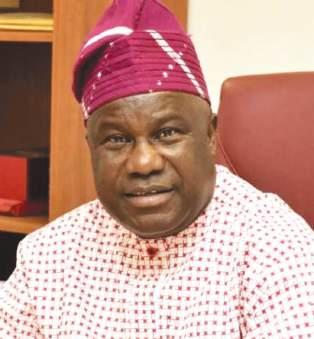
has equally launched rigorous inquiries into the sector to address public aggravations over safety standards, regulatory lapses, and the treatment of passengers.
Renowned for his strong advocacy for industry transparency and consumer protection, Buhari once warned that the government “will not tolerate procedural gaps or enforcement failures that undermine safety, professionalism or public trust in the aviation system.”
Last November, Buhari served notice of a pending public hearing on substance abuse following allegations against Nigerian pilots. He noted on that occasion that the safety of lives and overarching national interest made it compelling to have a public inquest into accusations of hard drug ingestion by pilots.
• Olusunle, PhD, Fellow, Association of Nigerian Authors, (FANA), teaches Creative Writing at the University of Abuja
Tunde Olusunle
Onwu
Buhari
PersPective
This Billionaire Traded Glam for Mission to Industrialise Nigeria
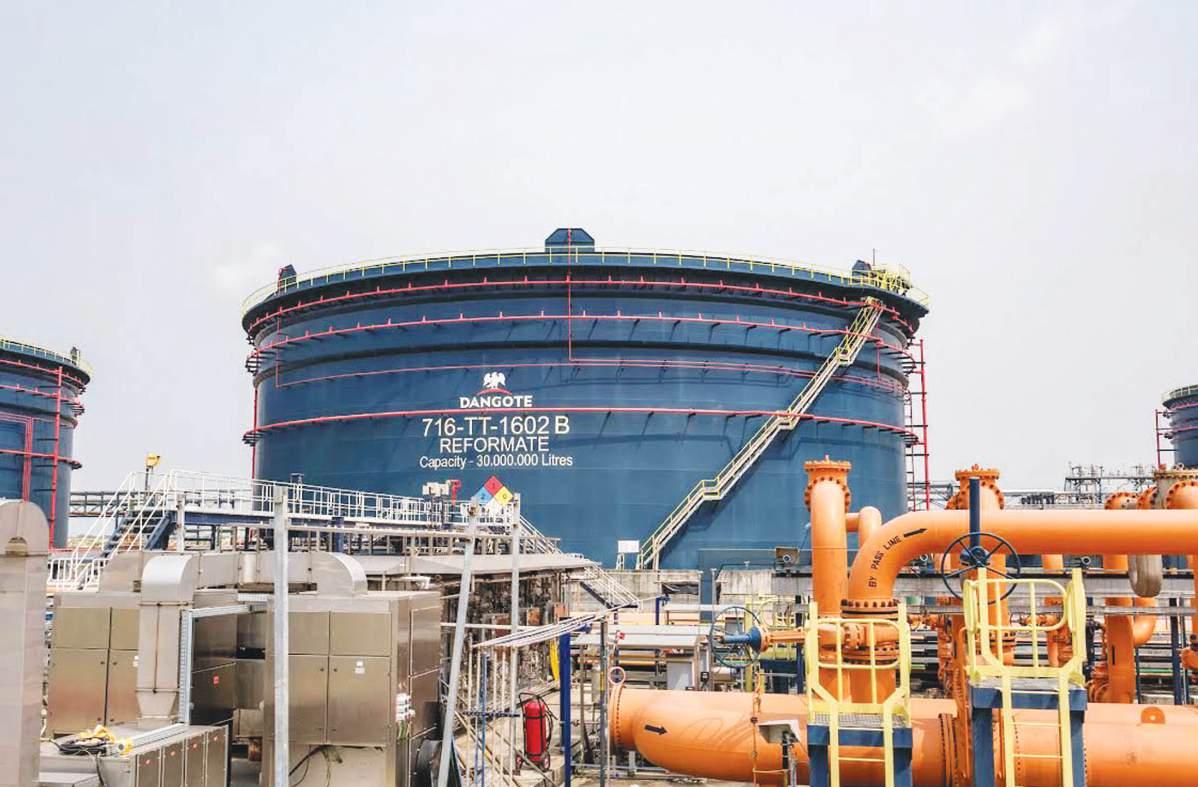
The richest man in Africa works from a construction trailer in a dusty parking lot. The billionaire, Aliko Dangote, said he once had multiple homes in several countries, a nightlife of fancy parties, a Rolls-Royce and a Ferrari. Then, roughly two decades ago, he got serious about industrialisation, he said.
Mr. Dangote, now 68, said he sold the cars and the homes abroad and built sugar refineries. He bought a majority stake in a salt-refining company. He built cement factories, first across Nigeria, then in Senegal, Ethiopia, Tanzania and beyond. Then came fertilizer and polyurethane factories.
This work of proving the continent is capable of large-scale industrialization done by one of its own was much more important to him than the life of luxury.
“Some of us,” he said, “need to rescue the country.”
Now, Mr. Dangote’s latest achievement is finally up and running: a sprawling new refinery in Nigeria, a nation that for decades has exported the vast majority of its crude oil.
Long criticised as a monopolist in the industries he focuses on, the man whose grandfather made his fortune in peanut trading doesn’t want to stop with oil, or even with Nigeria. Mr. Dangote wants to break into the steel industry, to spread electricity to more people, to build more ports — to industrialise all of Africa.
His role model for future expansion is the Indian multinational conglomerate Tata Group, which produces things like black tea and semiconductors.
His factories, he said, will also help curb joblessness amid Africa’s youth boom. In Nigeria, the most populous nation on the continent, 40 to 50 million people will need jobs by 2030, according to the World Bank.
Already, his refinery is producing 650,000 barrels of crude oil per day. Mr. Dangote says that output will be double in the next year.
He announced over the weekend plans to list shares in the refinery locally. But first, he needs to solve infrastructure problems and address corruption in the oil industry, both of which stand in the way of bringing enough of the nation’s ample supply to his refinery, he said.
Until then, his refinery, a labyrinthine behemoth on a campus about 45 miles from his company’s Lagos headquarters, has sometimes supplemented Nigerian crude with imports from the United States and other countries.
On a recent afternoon at his industrial campus, a fidgety Mr. Dangote was seated at a long table in a trailer, ushering in his next appointment before the previous one was finished. There’s not a minute to spare while trying to conquer Nigeria’s biggest problems.
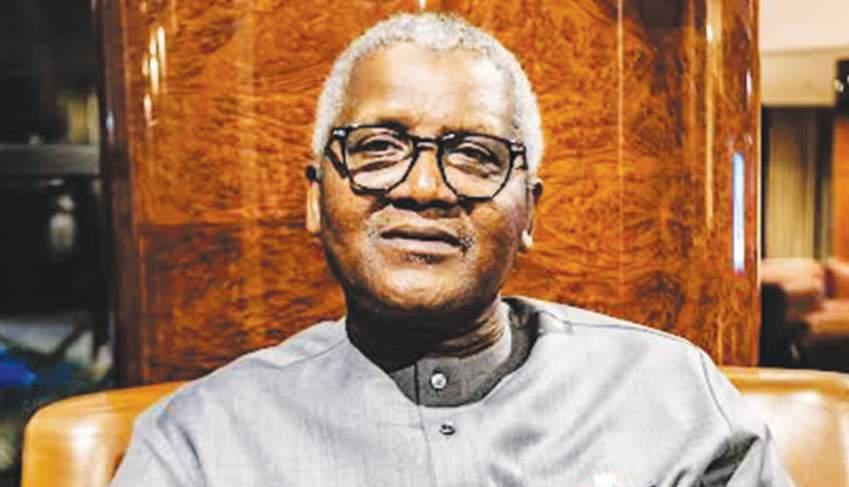
Mr. Dangote dreams of a day when gasoline courses through his country’s veins so fluidly that no one has to endure the long lines that have plagued Nigeria, where gasoline deliveries are hobbled by bad roads and illicit sales.
Current and former colleagues use the same word to describe Mr. Dangote: hard-working. Bucking traditional gender norms, he has given executive-level roles to his three children, all daughters.
Some of Mr. Dangote’s indulgences come through in his work. He throws lavish company parties, where he gives away prizes like vehicles to top employees and top customers. Clips of him clapping and singing along to performers circulated online after the annual party for his cement business last month.
Mr. Dangote, who is divorced, likes to spend time with his eight grandchildren, and says his idea of a vacation is doing “normal person” things, like going for a jog or window shopping at a mall.
For years, he would unwind after the workday by inviting friends to his house, a mini-mansion on Victoria Island in Lagos, replete with mahoganycolored pillars, an aquarium in the dining room, a pool and giant terraces. (He also owns a home in Kano and rents a home in Abuja.) But recently he decided to pare back his social life to a tight, weekends-only schedule from 4 p.m. to 10 p.m. on Saturdays and noon to 10 p.m. on Sundays, he said.
“Work and fancy life, they don’t go together,” Mr. Dangote said. “So, we have to sacrifice to a point.”
His workday often continues at his home, where on a recent evening Mr. Dangote, in a gray caftan and pants with the Dangote Group
logo on it, nestled in a brown leather couch pit in his living room. A box of Rice Krispies was on a dining room table, and the TV was tuned to CNN. He nibbled dates as he met with workers who oversee operations for his three corporate jets.
Mr. Dangote, whose fortune Forbes estimates at $26.2 billion, has built his empire on manufacturing the basics.
Unlike other multinational chief executives who are thinking about remaking their entire industries to support future innovations, he said he is focused on the tasks before him, skeptical of some newfangled technology. He compared the hype around artificial intelligence to the cheerleading surrounding the release of the first Nokia phones, which are becoming obsolete.
“This field is getting, you know, out of hand,” he said.
Nigerian anti-graft officials in 2023 accused Mr. Dangote’s firm, along with 51 other companies, of receiving preferential foreign exchange rates from a former Central Bank chief. Mr. Dangote himself was not implicated, and his company has denied wrongdoing.
Critics complain Mr. Dangote has a nearmonopoly on many of the staples of life. Almost any construction site in the country is scattered with bags of Dangote-branded cement; grocery shelves are stocked with Dangote-branded flour and sugar. His wealth, critics say, was built on government subsidies and tax breaks.
Mr. Dangote insists he merely took advantage of what government officials offered, because he is building up the country.
“Nobody dared to do it, so we did it,” he said.
His chief example is his $20 billion refinery. The tax-subsidized zone where Mr. Dangote built the complex turned out to be swampland,
something he did not know until construction started in 2016.
He pushed on, clearing the land and backfilling it with 65 million tons of sand. He imported 10,250 trucks from China after he couldn’t find a Nigerian firm with a big enough inventory, then built a jetty for ships to unload them, he said. He built a 23-mile, 10-lane expressway leading from the refinery to a port, using tax credits to finance the construction.
“The luck that we had, both me and my executive team, is that we didn’t know what we were doing,” he said. “We said that, ‘No, we cannot fail, we must deliver.’”
The poor state of Nigeria’s roads is one challenge of getting crude to the refinery. A bigger challenge, Mr. Dangote said, is corruption. Middlemen reroute crude, with trucks sometimes disappearing across the border where thieves sell the fuel and pocket the cash.
He has launched a legal and public relations battle against what he calls the “mafia situation” in Nigeria’s oil business, suing the Nigerian Midstream and Downstream Petroleum Regulatory Authority, which regulates and licenses refining activities. He said the regulator was favoring imports more than domestic production and implied that its chief executive, Farouk Ahmed, was illicitly skimming profits, which Mr. Ahmed has denied.
The public glimpsed a gloves-off side of Mr. Dangote in a December news conference, where he listed each private school that the children of Mr. Ahmed attended in Switzerland.
“Four children in the most elite schools in the world,” Mr. Dangote said, still in disbelief. “I sent my own daughters to secondary school in Nigeria.”
Mr. Ahmed, in a December statement, said the tuition was paid for in part by scholarships and with money from his own father. Mr. Ahmed said his personal and professional activities “will withstand any legitimate inquiry.”
Mr. Dangote’s oil ambitions hit a snag last year after some 800 workers were fired because of sabotage allegations, triggering union protests. The workers were eventually reinstated.
The refinery employs 30,000 people, about 80 percent of whom are Nigerian. Many managerial positions are held by international workers, which Mr. Dangote said would change in time as he trained more locals. His expansion plans will increase the work force to about 65,000 people, he said.
In December, Mr. Dangote’s foundation announced plans to offer 45,000 scholarships, 10,000 of which will be exclusively for female students in secondary school or college.
“What’s our legacy?” he asked, posing a question to himself. “Our legacy is to provide what we need.”
Fuel capacity storage tanks at Dangote refinery
PhotoS: Taiwo Aina
Dangote
Dionne Searcey
Lessons on Ethical Leadership, Reputational Risk from Epstein Disclosures
The release of millions of pages of documents linked to convicted sex offender Jeffrey Epstein by the United States Department of Justice has triggered renewed scrutiny of political, corporate, and institutional leadership across multiple jurisdictions. While the legal implications vary by individual, the broader governance lesson is unmistakable: in an era of permanent transparency, association alone can generate material reputational risk.
Within weeks of the disclosures, several high-profile figures across business, academia, diplomacy, and public life stepped down from roles or faced investigations after previously undisclosed connections came to light. Most have not been accused of criminal wrongdoing. Yet the reputational consequences have been immediate and, in some cases, career-defining.
This moment illustrates a structural shift in leadership risk. Reputation is no longer determined solely by personal conduct; it is increasingly shaped by networks, affiliations, and judgment about whom leaders choose to engage.
Leadership Exposure in a Transparency Era
Public attention intensified following reports concerning Prince Andrew, the British royal formerly known as the Duke of York. According to widely reported accounts, he was detained for questioning by Thames Valley Police in connection with allegations related to misconduct in public office. He was released pending further investigation and has not been charged.
Statements attributed to King Charles III emphasised that legal processes should proceed independently, while political leaders, including Keir Starmer, reiterated the principle that no individual is above the law. Public commentary also emerged from figures such as Donald Trump and victims’ advocates, including Maria Farmer. Regardless of eventual legal outcomes, the episode underscores a central governance reality: reputational exposure often precedes judicial resolution. For boards and institutions, perception risk can be as consequential as proven misconduct.
When Association Becomes Liability
The disclosures also drew attention to leaders in corporate and academic environments whose past interactions with Epstein raised questions about judgment and ethical boundaries.
Among those reported in media accounts were former executives and advisers connected to major institutions such as Goldman Sachs, including lawyer Kathy Ruemmler. Legal industry attention focused on Brad Karp of Paul Weiss, while academic scrutiny extended to economist Lawrence Summers, who also stepped down from a board role at OpenAI amid institutional review processes.
Crucially, many such departures have occurred without criminal allegations. The driver has been reputational incompatibility with leadership roles rather than legal culpability.
Political reverberations have also been reported across Europe, involving figures such as diplomat Peter Mandelson, Norwegian official Mona Juul, former prime minister Thorbjørn Jagland, and French public figure Jack Lang, linked to the Arab World Institute. Reports also referenced resignations connected to international organisations, including the UNHCR.
The pattern is consistent: institutions are responding to perceived ethical risk even in the absence of judicial findings.
Institutional Failures and Financial Governance
The disclosures have also revived scrutiny of financial institutions that maintained relationships with Epstein despite internal compliance concerns.
Investigations and settlements involving banks such as JPMorgan Chase and Deutsche Bank highlighted deficiencies in monitoring, escalation, and risk governance. Regulatory findings suggested that commercial incentives and client value sometimes outweighed ethical risk considerations.
For boards, the implication is significant. Reputational crises rarely arise from a single decision; they typically reflect cumulative governance failures, weak escalation cultures, and insufficient challenge from oversight functions.
The Nigerian Dimension: Proximity Is Not Guilt
The disclosures also referenced business interactions involving individuals connected to Nigeria. Reports noted correspondence involving Nigerian-born executive Jide Zeitlin and suggested potential introductions to global figures, including Ngozi Okonjo-Iweala and Muhammadu Sanusi II. Both have publicly stated they had no contact with Epstein.
Other Nigerian names reportedly appeared in commercial or third-party communications, including industrialist Aliko Dangote and former public officials such as Okey Enelamah, Rotimi Amaechi, and Akinwumi Ambode. No Nigerian individual has been charged with wrongdoing related to these disclosures.
The distinction is essential. Mention does not imply misconduct. However, the episode demonstrates how global business networks can create unexpected reputational exposure, particularly in interconnected markets.
For African institutions, this reinforces the need for rigorous partner due diligence and ongoing reputational monitoring across jurisdictions.
Governance Lessons for Boards and Leaders
Several lessons emerge with clarity.
First, due diligence must be continuous. Background checks at appointments are insufficient. Boards must evaluate patterns of association, ethical judgment, and behavioural indicators over time. Second, the boundary between personal and professional conduct has narrowed. Leaders’ social networks, gifts, affiliations, and private engagements can create organisational risk even when legally permissible. Third, risk monitoring must operate at the relationship level. Financial institutions and corporations increasingly need analytics capable of identifying network-based exposure across geographies. Fourth, culture matters as much as compliance. Where commercial value overrides ethical challenge, reputational failures become more likely.
The deeper truth is that reputation is no longer owned by individuals alone. It is co-produced by everyone with whom they choose to associate.
A Defining Moment for Ethical Leadership
The Epstein disclosures represent more than a scandal involving prominent individuals. They mark a transition in how leadership risk is understood.
Reputational contagion can cross borders, sectors, and institutions with unprecedented speed. Titles, influence, and past achievements offer limited protection once public trust erodes.
Organisations that recognise this shift and embed ethical judgment into governance frameworks will strengthen stakeholder confidence. Those that do not may discover that reputational risk, once triggered, is both swift and unforgiving.
Aluya, a public policy analyst, writes from Lagos.
Advertising Debt: Why ARCON’s Payment Rule Matters for Media Survival
The latest chapter of the long-running dispute in the Nigerian advertising industry was written during the week. It saw the Advertising Regulatory Council of Nigeria (ARCON) responding in justifiably muscular fashion to the Advertisers Association of Nigeria (ADVAN) over the latter’s call on President Bola Tinubu to halt the ongoing reforms in the advertising industry. Thus, what started as a policy disagreement has made it to the table of the President. At the centre of the dispute is not simply regulatory philosophy, but money. More specifically, it is the long-standing problem of advertising debt and the crippling effect of delayed payments on Nigeria’s media establishments. For years, agencies have been caught in a structural squeeze. Advertisers commission campaigns. Agencies execute them and place media bookings. Media houses publish or broadcast. But payment almost always never flow as scheduled. In many cases, agencies wait 90 to 120 days. In others, they wait longer. Some invoices are disputed after submission. Others are quietly deferred. In the worst cases (these are many), they are never fully settled. The consequence is predictable. Agencies, already obligated to media organisations and production vendors, carry the financial exposure. Media houses, particularly local print, radio and independent television stations, whose operations are already operating on tight margins, experience cash flow strain that
leaves many in ICU-worthy state of health. Salaries are delayed. Capital investment stalls. Newsrooms shrink. Debt accumulates across the value chain. The debt problem is not anecdotal. Industry executives privately acknowledge that outstanding advertising receivables run into tens of billions of naira at any given time. A senior media executive in Lagos described the situation bluntly: “When advertisers delay, agencies delay. When agencies delay, we bleed.”
The impact is not theoretical. It directly affects newsroom operations, newsprint purchase in case of newspapers, equipment upgrades and the capacity to produce content at scale. Globally, payment discipline in advertising is treated as a structural necessity. In the United Kingdom, industry bodies such as the Institute of Practitioners in Advertising have long advocated defined payment cycles to protect agencies and media partners.
In the United States, standard contract frameworks promoted by the American Association of Advertising Agencies encourage structured billing timelines and clearer allocation of financial risk. The logic is simple. Media cannot function as involuntary lenders to large corporations.
In Nigeria, however, delayed settlement became normalized. The imbalance was baked into the power asymmetry. Advertisers control the accounts. Agencies depend on account retention. Media houses depend on agency flows. That structure leaves agencies castrated. The know that they risk losing business if they
push for payment too aggressively. So, they are forced to accept protracted delays and absorb financing costs. It is a system that functioned for those with leverage and emasculates those without it.
ARCON’s introduction of a mandatory 45-day payment cycle is, therefore, a main ingredient of the ongoing advertising industry civil war.
The directive requires advertisers to settle agency invoices within 45 days and prescribes penalties where delays occur. The objective is straightforward: restore liquidity to the ecosystem and prevent debt from cascading downward. ADVAN has framed the directive as regulatory overreach. In its letter to the President, it warned of a hostile business environment, declining media spend and excessive compliance burdens. It argued that the 45-day threshold interferes with private contracting freedom and imposes financial rigidity in a difficult macroeconomic climate. But the argument must be examined against the backdrop of media sustainability. Nigeria’s media sector already operates under significant economic pressure. Rising production costs, currency volatility and shrinking advertising margins have combined to weaken balance sheets.
The Reuters Institute Digital News Report consistently highlights the financial vulnerability of media markets in developing economies, noting that advertising volatility directly undermines newsroom stability. When advertising debts are extended or
defaulted, media establishments effectively finance corporate marketing.
That inversion of financial responsibility is unsustainable. ARCON’s position, which I am in full agreement with, is that payment discipline is not a punitive instrument but a stabilising mechanism.
The regulator’s statutory authority derives from the ARCON Act No. 23 of 2022, which establishes it as the sector’s enforcement body. It is not a trade association. Its mandate is to impose standards where market behaviour distorts the ecosystem. ADVAN, by contrast, exists to defend the commercial interests of advertisers. Tension between regulator and industry lobby is, therefore, structural, not surprising.
Beyond payment timelines, the reforms include formalised disengagement procedures. Historically, some advertisers switched agencies without ensuring that outstanding media obligations were cleared.
Agencies were left exposed to media debt even after losing the account. Media houses, in turn, pursued agencies rather than advertisers, creating a chain of unresolved liabilities. ARCON’s directive requires all financial obligations to be settled before account migration. The principle is basic financial hygiene. Close liabilities before opening new engagements. For media operators burdened by legacy debt, this provision is particularly significant.
The dispute also touches on the Advertising Offences Tribunal, established under the ARCON Act to enforce compliance. ADVAN has questioned its constitutionality. However, recent Federal High Court rulings have affirmed its statutory foundation. Sector-specific tribunals are not unusual in Nigeria.
Mudiaga Aluya
Epstein
Bayo Ajetumobi
feATureS Bodo-Bonny Road: From Vision to Historic Landmark
Dike Onwuamaeze
Nestled in the heart of Nigeria’s Rivers State and even before its completion, the Bodo-Bonny Road, being constructed by Julius Berger Nigeria Plc stands today as a landmark infrastructure achievement, a symbol of perseverance through decades of planning, engineering challenges, and funding setbacks.
Last December, my journalistic curiosity caused me to travel the road still under construction then, with only 5km to go.
It was a smooth journey with the palpable excitement being demonstrated by all commuters spoken to, underscoring the significance of the new road to them.
Like they chorused to a question as to the cause of their excitement, a businessman, Preye James, who said he hailed from Koro Koro Tai community in Gokana Local Government Area in Rivers state, retorted,“at least, it is now bye bye to long risky journeys by boat, canoe or ferry across the turbulent rivers in this area.”
Stretching roughly 37.9 kilometres, Bodo-Bonny Road is the first federal road to directly connect the Mainland Rivers State to Nigeria’s key economic hub of oil and gas facilities, Bonny Island.
According to findings, the idea for a road linking Bodo in Gokana Local Government Area and Bonny Island dates back many decades, with sketches and proposals, surfacing as far back as the early post-independence era.
Then residents of today’s Bonny Island traditionally depended on rivers, creeks, wooden boats, ferries, and later motorised crossings, which were slow, costly, and often dangerous, to commute between and among the communities.
Thus, the persistent logistical challenges made the road project a burning desire for community leaders, businesses, and government until December 2014, when the Federal Government formally awarded the contract for the Bodo-Bonny Road project.
Three years after then in October 2017, construction finally commenced under Julius Berger Nigeria Plc which was appointed as the main contractor with a tripartite financing framework comprising, federal government funds with contributions from Nigeria Liquefied Natural Gas Limited, NLNG, supporting the project as part of a partnership arranging tax credits and financing incentives. This model marked a milestone in Nigeria’s infrastructure financing, fusing public and private capital.
No doubt, constructing such a road through the swampy, marsh-laden terrain between Bodo and Bonny was no ordinary civil engineering. Majorly, the landscape which comprised, lowlying, muddy and unstable soil conditions, numerous waterways requiring bridges and channels, tidal zones and shifting creek beds complicating earthworks must have tasked the contractors.
The entire highway spanning roughly is meant to be the first direct land link between Bonny Island and the mainland without reliance on boats or helicopters. The bridge works were constructed to be among the most complex parts of the project because the road traverses swamps, tidal creeks, and soft soils, requiring significant foundation and drainage engineering.
The road project was designed to include multiple bridge structures because it crosses several waterways, creeks, and marshy terrain. The major ones among the structures are the 750m long Opobo Channel (River) Bridge which is a long main bridge spanning the Opobo waterway; the Nanabie Creek
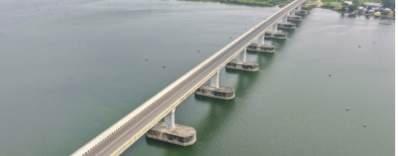
Bridge, which is a major creek bridge of roughly 640 m long and the 550m long Afa Creek Bridge.
But beyond the three major creek/rivers bridges, the project includes a network of smaller and service bridges including, 9 mini bridges constituting smaller crossings over drainage channels or minor watercourses, one pipeline crossing bridge that safely pass over existing pipeline infrastructure and culverts and other engineered structures that manage water flow and embankments across swamp and tidal zones.
To tackle this, the design by Julius Berger incorporated major and mini bridges to span creeks and channels. Among the most challenging were the Alpha Creek Bridge, multiple mini-bridge crossings and integral structures across the Opobo Channel
The Project Manager and Julius Berger’s Tim Nippert did not mince words in describing the efforts employed by the company to construct the iconic project.
He said,“special soil stabilisation and dredging techniques were employed to create a solid foundation for the road embankments.”
However, periods of slowing and partial halts when funding issues arose affected the project’s speed; but government interventions and renewed commitments helped sustain progress.
Thus, the project was able to hit several landmarks like bridges completion and main road embankments, asphalting of sections and preparation for pavement, as well as temporary openings during local festivals and celebrations, highlighting its social value
This was enabled by Senate and House of Representatives’ oversight committees and related federal government officials routinely inspecting the works, underscoring the strategic importance of the road for regional socio-economic integration.
Last December 8, 2025, the federal government officially opened the Bodo-Bonny Road for temporary public use.
President Bola Ahmed Tinubu, speaking through the Minister of Works, described the development as a transformative
As Lithium Mining Reshapes Life in Nasarawa Community
Just beyond the quiet outskirts of Nasarawa Toto in Nasarawa State, where farmers once rose at dawn to tend cassava fields and fishermen cast their nets into narrow streams, a new sound now defines the morning air — the metallic grind of industrial machinery.
Two to three kilometres from clusters of mud-brick homes and farmlands, a sprawling lithium processing facility hums with activity. Conveyor belts roll relentlessly. Heavy-duty trucks thunder in and out. Fine dust occasionally rises into the sky, settling over nearby vegetation. To some residents, it signals long-awaited opportunity. To others, it carries uncertainty.
A Global Mineral, A Local Reckoning
Lithium — once a relatively obscure mineral — has become indispensable to the global clean energy transition. It powers batteries used in electric vehicles, smartphones and renewable energy storage systems. As international demand surges, mineral-rich nations are fast becoming strategic players in a high-stakes economic shift.
Nasarawa State has emerged as a focal point of this ambition. The federal government recently commissioned what is described as the country’s first and largest lithium processing plant in the state, constructed by the Chinese firm Avatar New Energy Materials Co., Ltd.. The facility reportedly boasts a production capacity of 4,000 metric tonnes daily.
Another Chinese firm, Canmax Technologies, has pledged over $200 million to build an additional lithium processing plant in the state — underscoring the scale of foreign-backed mineral investments reshaping Nigeria’s Middle Belt.
During a recent meeting with Chinese investors, President Bola Ahmed Tinubu reportedly commended their investment drive and encouraged them to take advantage of Nigeria’s vast market and comparatively low-cost labour — remarks
that have drawn mixed reactions among policy watchers and civil society actors.
On paper, the outlook is promising. Mining offers prospects for job creation, infrastructure upgrades and expanded government revenue. Roads leading into some communities have improved. Young men now work as plant operators, drivers and security personnel. Yet beneath the optimism lies a more complex reality. The Voices of Concern
The civil society organisation Corporate Accountability and Public Participation Africa (CAPPA) has cautioned the federal government against pursuing industrial-scale lithium mining without strong environmental safeguards and community protections.
In a statement, CAPPA warned that Nigeria risks repeating patterns of ecological degradation seen in other extractive sectors if oversight remains weak. The group cited longstanding governance gaps in the mining sector, arguing that mineral resource control — constitutionally vested in the federal government — has often sidelined host communities from decision-making processes.
“We are concerned about the implications of these lithium investments for communities, given the systemic flaws inherent in Nigeria’s mining governance,” said Akinbode Oluwafemi, CAPPA’s Executive Director.
He noted that while Nasarawa State has reportedly secured mining licenses covering tin, gold and lithium, final decisionmaking authority over mineral resources rests with the federal government — a structure critics say creates accountability gaps.
CAPPA also questioned the level of transparency surrounding the environmental impact assessment of the Nasarawa lithium project, particularly amid ongoing discussions to amend the Nigerian Minerals and Mining Act to strengthen oversight and community inclusion.
The organisation further raised alarm about reports of informal and unregulated lithium extraction in parts of the country, warning that poorly supervised mining activities
achievement, ending decades of difficult river crossings and expensive helicopter travel to Bonny Island.
For now, the road is open to light vehicles from early morning to early evening, 7am through 7pm, while heavy trucks and two-wheelers await full completion slated for 2026.
When fully completed and finally commissioned, the BodoBonny Road is poised to deliver multi-layered benefits including; improved access to Bonny Island, home to Nigeria’s LNG and related energy investments, cost reductions for movement of goods and people, boost in commerce and trade across Rivers State, better linkage to healthcare, schools, and markets for resident communities, inter-communal cooperation and general socio-economic integration and growth.
Current Status
The BBR including major bridges across the Opobo Channel and other watercourses, has reached substantial completion and it is now open for temporary public use ahead of formal commissioning soon.
The federal government officially flagged off the temporary opening of the 37.9 km route, including the bridge structures, as part of efforts to ease travel between Bodo and Bonny Island. At the time of opening, project completion was reported at about 90.98 percent, meaning most major components, including bridges are finished, though final works were still in progress mid last week.
Today, as this writer journeys from Km 0 over the bridges through to NLNG on Bonny Island, a decades-old idea to a nearly 38-kilometre corridor of opportunity, the Bodo-Bonny Road is more than just tarmac and bridges.
It represents a journey of ambition, engineering excellence, financial innovation, and community aspirations. As Nigeria moves toward full completion and expansion, the road stands as a landmark testament to what sustained commitment and collaborative infrastructure partnership can achieve.
have been linked to insecurity, environmental damage and rural displacement.
In communities near the facility — including parts of Udege Development Area — residents describe subtle but troubling changes.
Farmers complain of dust settling on crops. Others speak of wastewater discharge and unusual substances appearing in local waterways.
Some residents allege that since December 2025, lithium-related spillage has affected parts of their river systems. According to them, the water has at times appeared whitish, raising fears of contamination.
Mohammed Amadu, a local resident, said community members who bathed in the river sometimes reported feeling feverish afterward.
“When people take their bath there, they feel unbearably feverish and fall sick for about one or two weeks,” he alleged, adding that many residents now avoid using the river water.
Another resident, Ibrahim Suleiman, called on the federal government to intervene, stating that appeals to the state authorities had yet to produce visible action.
Michael Olugbode
A mining site
Opobo Creek Bridge on Bodo-Bonny Road, last week
PeOPLe
Akintunde Ayeni :
Business Without Continuity Plan Already dead
On a humid Monday evening in Idimu, after dinner, Chairman of Yemkem International, Dr. Akintunde Ishola Ayeni, sat calmly behind his mahogany desk, his white kaftan pristine. In that quiet office, tradition met modern vision. For 45 years, he has given Nigeria’s herbal medicine a disciplined, institutional backbone. What followed was more than an interview. It was a journey into heritage, healing, and legacy, writes Adedayo Adejobi
On a humid Monday evening, as the light in Idimu softened into a pale amber and Lagos briefly loosened its grip on the day, the reporter arrived at the headquarters office complex just after six.
Dinner had been taken quietly, without flourish or interruption. Plates were cleared with efficiency, and the man at the centre of the space remained seated, composed, as though the passing hours had learned patience in his presence. The day’s labour was done. What followed was something more enduring. Memory, meaning, and legacy.
As always, Dr. Akintunde Ayeni was dressed in his signature white kaftan and matching cap, a visual constant that has followed him across decades of public life. He sat behind a broad brown mahogany executive desk, its surface polished to a muted sheen.
Behind him, wooden cabinets with glass panels lined the wall, holding files, records, and the quiet evidence of a life spent building institutions rather than moments.
The lighting was soft and even, deliberate rather than theatrical. Everything in the room spoke of order, discipline, and experience. Nothing felt accidental.
He sat upright in a high backed chair, leaning forward slightly as he spoke, his hands moving in controlled, economical gestures. This was not a performance. It was instruction. There was no urgency in his voice, no need to impress. Authority, in his case, had been earned too long ago to require reinforcement. Forty five years of practice rested easily on his shoulders, supported by a lineage that stretches back more than five centuries.
Lately, he explained, life has been dominated by production. What was once an ambitious network of 48 branches across Nigeria had been reshaped by hard lessons. Fraud crept into offices from Lagos to Ibadan, from Akure to Maiduguri. Court cases followed. Trust collapsed. Then terror arrived. Boko Haram attacks forced the closure of northern branches entirely.
“Today, we operate mainly from Abuja,” he said calmly, not as retreat, but as recalibration shaped by survival.
This contraction marked a turning point. Consultation, once the defining feature of the brand, gave way to large-scale production. The consulting room yielded to the factory floor. Contract manufacturing for NAFDAC-approved individuals and companies became a central pillar. Franchising followed. “This new model reduced the burden,” he explained. “Ambition has not reduced. It has matured.”
There was a time he envisioned a thousand branches by 2010, two hundred in Lagos alone. The vision was clear. The execution faltered on human weakness. “You cannot be everywhere at once,” he reflected.
• Ayeni
“So you trust people. But who are those people? Credible, honest, sincere? Nigeria is full of collapsed businesses not because of poor ideas, but because of poor character.”
Yet age seems to have little claim on him. Many describe his presence as ageless, an energy that defies the slow erosion common to long leadership. He credits God, discipline, and restraint.
“Seventy percent of profit has always gone back into the business,” he said.
In the early years, trade fairs were decisive. His stand drew thousands, where others attracted dozens. Money flowed, but indulgence did not.
“Where some spent, I reinvested. That is why today we have the biggest herbal medicine production facility in Nigeria.”
This was never a casual inheritance. His interest in traditional medicine began at six years old, seated beside his late father, watching preparations, memorising ingredients without notes, sent to markets to return with exact items, never once erring. His father, a renowned herbalist and spiritualist, treated infertility, chronic illness, and cases that hospitals had abandoned. Patients returned bearing gifts, clothes, food, and gratitude. Money was incidental. Healing was central.
Traditional medicine, he insists, was dismissed not because it lacked power, but because it lacked documentation. Nigeria’s forebears were researchers,
nSCdC dismantles illegal Arms Factory, Arrests Four in katsina
The Katsina State Command of the Nigeria Security and Civil Defence Corps (NSCDC), has uncovered and dismantled a suspected illegal arms fabrication factory and arrested four suspects in Kore Village, Batagarawa Local Government Area of the state.
In a statement issued to THISDAY yesterday, by the Command’s Public Relations Officer, SC Buhari Hamisu, said the operation was carried out on Thursday at about 10:00 a.m. following credible intelligence received by the command. He said the Special Rapid Response Squad of the Command raided the illegal arms factory and arrested Haruna Lawal, 28 years; Badamasi Kabiru, 50 years; Hamza Lawal, 30 years and Sagir Abba, 25 years, while producing the firearms. Hamisu said: “The following exhibits were
recovered from the suspects, eight locally made skeletal rifles, five locally made pistol grips, four locally made magazines, one butt of local rifle, five local butts of local rifle, 20 pieces of locally made magazine parts, 21 pieces of metal.
“Others include, one carbide, one hurk saw, three hammers, one spanner, one player, one handsaw, one grinder, two gas cylinders, one welding machine, two motorcycles and 24 notes.”
He explained that the arrested suspects are currently undergoing investigation to uncover other members of the syndicate and possible buyers of the fabricated weapons.
He assured that due process would be followed in prosecuting those found culpable, while reiterating the command’s commitment to combating illegal arms proliferation and other criminal activities, including vandalism and economic sabotage.
venturing into forests, testing leaves, roots, and bark long before laboratories existed. “Our forefathers were the real doctors,” he said. “They researched, formulated, and administered.” China documented its medicine centuries before Christ. Nigeria did not. That absence still haunts the field.
When he entered the public arena in the early 1990s, scepticism was fierce. Innovation followed necessity. A bitter diabetes remedy posed a challenge until he adapted capsule technology, refilling shells with herbal powder. “It was not chemistry,” he stressed. “It was technology.” That distinction later became central to his confrontations with regulators and critics.
During the COVID 19 pandemic, his sense of responsibility sharpened. Fear was global. He focused on immune-boosting formulations, convinced that the body possesses an innate capacity to heal if properly supported. Organic food, herbal balance, internal resilience. Immune support products emerged in liquid and capsule form. Collaboration with the Ooni of Ife followed, including bitter leaf capsules.
“The goal was not to replace emergency medicine,” he explained. “It was to strengthen the body so it could fight.”
Debate around scientific validation persists, and he does not deny it. Instead, he calls for structural support. Nigeria, he argues, needs a national botanical garden to preserve medicinal plants. Today, raw materials depend on rural markets and ageing women traders.
Knowledge risks extinction. Pandemics, he warns, will recur. “Herbal medicine works like soldiers in the body,” he said. “Any invader that enters, they fight it.”
His lineage stretches back more than five hundred years. Grandfathers and great-grandfathers, hunters and healers. Stories of extraordinary powers surface, though he draws firm boundaries. Herbal medicine, he insists, must be separated from occult practice. His own journey involved rebranding and focus. Spiritual consultation once dominated his work. Later, he chose to professionalise natural remedies and present them to the modern world.
Today, his children are involved in the business. One studied pharmacy in Ireland, accounting and finance in Paris, and is now studying traditional medicine. Pride is evident, but measured. “A business without continuity is already dead,” he said. Knowledge must move forward or vanish.
Personal loss has tested him deeply. His wife of 35 years passed away a year ago. Grief lingers, but faith steadies him. “I have seen bombings, financial loss, and now this,” he said quietly. “Life is a journey designed by God. You cannot escape it.” Acceptance, not denial, has become his refuge.
In quieter moments, solace comes from delegation, from watching his children step forward, from knowing the structure he built can now stand without constant supervision.
Public perception has shifted dramatically. Once mocked, he is now recognised locally and internationally as a pathfinder. NAFDAC approvals, televised confrontations with sceptics, and the establishment of Nigeria’s first traditional medicine complex have secured his place.
Looking ahead, he believes Nigeria’s role in global traditional medicine is only beginning. Natural remedies are resurging worldwide. Side effects have eroded confidence in purely chemical solutions. Surgery and emergency care remain the strength of Western medicine, but beyond that, he argues, traditional medicine has proven its worth.
To young Nigerians, his counsel is restrained. ‘‘Be ambitious, but patient. Destiny unfolds over time. Speed without grounding invites distortion. Discipline, spirituality, and commitment matter more than haste.’’
When asked how he wishes to be remembered, his answer is unadorned. ‘‘As a leader in traditional medicine. As someone God used to establish and legitimise the field in Nigeria.’’
“My legacy will speak for itself,” he said.
If he could make one appeal to the government, it would be simple. ‘Fund traditional medicine. Support research, documentation, and export. Nigeria is sitting on a multi-billion-naira industry rooted in its own soil.’
The future, he says calmly, is already here. It only needs to be taken seriously.
MasterChef nigeria Announces Judges for Cooking Contest
Nigeria has officially joined the global MasterChef franchise, with organisers unveiling a N73 million prize for the inaugural cooking competition.
The initiative aimed at showcasing Nigerian culinary ingenuity to the global community while contributing to the country’s economic growth.
Speaking at a press conference introducing the judges, MasterChef Nigeria showrunner, Niyi Oyedeji, described the competition as a bold statement positioning Nigeria within the global fine dining conversation.
Oyedeji said the judges, Founder of Red Dish Chronicles Culinary School, Chef Stone and Founder of Cooking Jar, Chef Eros would spearhead the search for Nigeria’s next culinary talent.
He added that their esteemed global reputations informed their selection and will strengthen the programme’s objectives.
“MasterChef is not just another TV production. It is a celebration of our culinary heritage and a
declaration that Nigeria now has a place on the global fine dining platform,” he said.
The Nigerian edition becomes the 71st adaptation of the franchise, which currently airs in about 70 countries across 200 territories worldwide.
Oyedeji disclosed that the call for entries, which closed this week, attracted a huge response within the three-week window, underscoring Nigerians’ passion for culinary excellence.
He added that the 13-episode season would premiere on April 26, 2026, airing on Africa Magic Family and Africa Magic Showcase, with headline sponsorship from Tolaram Group and Sonia Foods.
“Between 10 and 15 contestants will advance to the first season following a multi-stage audition process, including video submissions and live cook-offs.
“The winner of the inaugural season will receive N73 million in cash, the title of Nigeria’s first MasterChef, and global exposure with mentorship opportunities,” Oyedeji said.
Francis Sardauna in Katsina
Orashi Project: Securing Imo’s Power Sovereignty
Oluchi Chibuzor
When Hope Uzodimma stood before residents in Owerri to inaugurate the first phase of the Orashi Electricity Project, it was more than the unveiling of a substation. Against the backdrop of Imo State’s 50th anniversary celebrations, the Governor had described the project as a gift to the people and one designed not merely to light homes, but to reset the economic destiny of the state.
For decades, electricity in many parts of Nigeria has been defined by uncertainty, flickers of hope interrupted by long stretches of darkness, businesses powered more by diesel generators than by the national grid.
In Imo, as in other States, this generator-driven economy inflated costs, stifled productivity and drained household in- comes. That was why the inauguration of the 15MVA, 33/11KV Injection Substation under the Orashi Electricity Company Limited signalled a deliberate break from that past.
“Power changes everything,” Uzodimma declared. “With the commissioning of the Orashi Electricity Company Limited 15MVA, 33/11KV Injection Substation in Owerri, Imo is not just adding infrastructure, we are securing energy sovereignty.”
Energy sovereignty, a phrase that resonates strongly in today’s Nigeria, speaks to more than megawatts. It implies control, stability and the capacity of a State to determine its economic rhythm without being perpetually hostage to external disruptions.
For Imo, the Orashi Power Project represents the first tangible stride toward that goal. The foundation of this breakthrough lies in the Electricity Act of 2023, signed into law by Bola Tinubu.
The Act decentralised Nigeria’s power sector, granting states the authority to invest directly in electricity generation, transmis- sion and distribution. It marked a structural shift in a sector long dominated by federal oversight.
“If not for this visionary law, we would not have been here today,” Uzodimma said, openly crediting the President for enabling states to take initiative. He also thanked the federal government for approving the transfer of the previously aban- doned Ohaji-Egbema power plant to Imo State — a move that strengthens the long-term prospects of the Orashi framework.
The Minister of Power, Adebayo Adelabu, described the Orashi commissioning as evidence that Nigeria’s electricity reforms are working. According to him, decentralisation has already attracted more than $2 billion in private sector invest- ment nationwide since 2023.
“Reliable power supply is not just infrastructure; it is an economic enabler,” Adelabu said. In that simple assertion lies the broader meaning of what Imo is attempting: to convert reform
into results.
At the heart of Phase One is a 15-kilometre 33KV transmission line stretching from Egbu to New Owerri, complemented by a 45-kilometre distribution network. Together with the 33/11KV injection substation, these facilities are designed to stabilise electricity supply across the Owerri axis, covering residential neighbourhoods, markets, public institutions and industrial clusters.
For small business owners — welders, tailors, cold-room operators, hairdressers, cybercafé operators and artisans — the implications are immediate. In many cases, monthly generator fuel expenses have historically exceeded staff salaries. The cost of diesel or petrol often dictated whether a shop opened at all.
With improved grid reliability, operating costs are expected to decline. Lower overheads mean higher margins, reinvestment opportunities and potentially, job creation. Uzodimma framed it clearly: the project lowers energy costs, boosts investor confidence and equips small enterprises with the stability they need to thrive.
Beyond the State capital, the vision extends to all 27 local government areas.
A Memorandum of Understanding between Orashi Electricity Company Limited and the Imo State Government commits the integrated power provider to statewide expansion. The ambition is not incremental improvement, but systemic transformation.
Orashi Electricity Company Limited positions itself as more than a distribution company. It is conceived as an integrated provider involved in generation, transmission and distribution — a comprehensive approach that aligns with global best practices in energy management.
Its vision is to emerge as Nigeria’s leading integrated power company, recognised for excellence, innovation and sustainability. Its mission is to revolutionise Nigeria’s energy landscape by delivering reliable, affordable and sustainable electricity solutions.
Technical partnerships underpin this aspiration. The Chief Executive Officer of Madkour Holding, Mustapha Madkour, whose firm serves as a technical partner, described the commissioning of the injection substation as a symbol of cooperation and strategic collaboration in strengthening Imo’s infrastructure backbone.
Infrastructure of this scale demands not only capital but also technical expertise, operational discipline and long-term maintenance planning. By integrating interna- tional technical support with local policy direction, Imo is attempting to blend global standards with state-level ownership.
Electricity has a multiplier effect that extends well
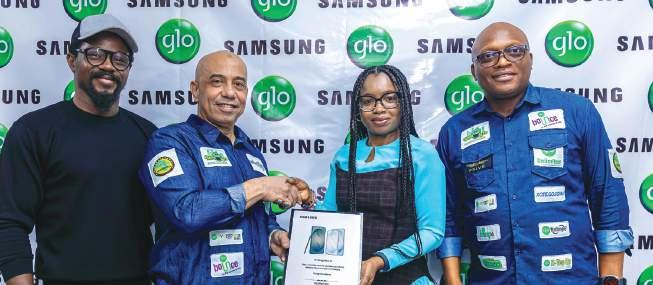
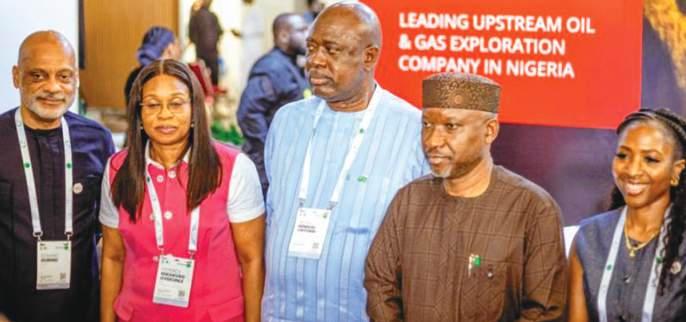
beyond illumination. It influences industrial output, agricul- tural processing, healthcare delivery and digital innovation. In hospitals, consistent power ensures uninterrupted medical procedures and cold storage for vaccines. In schools and tertiary institutions, it enhances research capacity and digital learning. In technology hubs, it supports data centres, coding labs and startupImo’secosystems. broader development initiatives appear aligned with this energy push. The Skill-Up Imo programme, which has reportedly trained 65,000 young people in digital skills, requires stable electricity to sustain momentum. Technology-driven entrepreneurship cannot flourish in darkness.
Similarly, hospitality and conference infrastructure — includ- ing the rehabilitated Concorde Hotel and the Emmanuel Iwuanyanwu International Conference Centre — depends heavily on dependable power supply to attract national and international events.
In this sense, Orashi is not an isolated project; it is an enabling platform for other sectors.
Infrastructure projects often falter not because of engineering flaws, but because of inconsistent political commitment. Uzodimma has consistently framed the Light Up Imo initiative as a cornerstone of his administration’s legacy.
The Imo Progressives Movement (IPM), through its National Convener Eugene Dibiagwu, recently expressed satisfaction with the scale of development across the state’s three senatorial zones, citing the Orashi Power Project among key achievements. Energy sovereignty is not secured by commissioning cer- emonies alone. Sustainability requires responsible consumption, prompt bill payment and infrastructure protection. Uzodimma has urged residents to safeguard installations and comply with payment obligations to ensure financial viability.
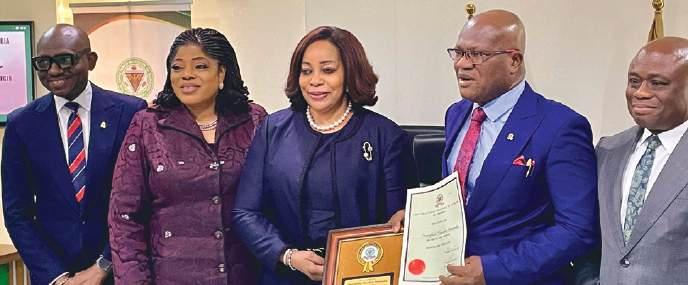
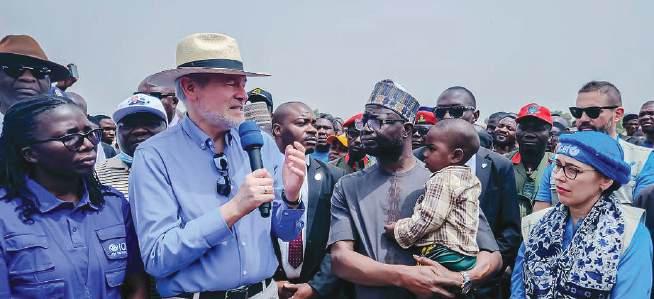
L-R: Samsung’s Product Manager, Sellout Platform, Samsung Electronics, West Africa, Solomon Osibeluwo; MD, Gloworld, Mohammed Rabie, receiving an award plaque presented to Globacom for its commitment to excellence by the Group Head, Samsung Electronics, West Africa, Joy Tim–Ayoola, and Head, Gloworld Sales, Oghenemaro Ugoje at the exclusive pre-order masterclass for the Samsung S26 series in Lagos…recently
L-R: Chief Financial Officer, Lekoil Nigeria Limited, Edward During; Permanent Secretary, Ministry of Petroleum Resources, Patience Nwakuso Oyekunle; Minister of State for Petroleum Resources (Oil), Heineken Lokpobiri; Minister of State for Petroleum Resources (Gas), Ekperikpe Ekpo, and Corporate Communications Manager, Lekoil Nigeria Limited, Bolade Owoeye, at the recently concluded 2026 Nigeria International Energy Summit (NIES) in Abuja
L-R: Registrar /Chief Executive Officer, CIBN, Akin Morakinyo, ACIB; MD/CEO, Fidelity Bank Plc, Dr. (Mrs.) Nneka Onyeali-Ikpe, OON, FCIB; Chairman, Fidelity Bank Plc, Mrs. Amaka Onwughalu, FCIB; President/Chairman of Council, CIBN, Prof. Pius Deji Olanrewaju, Ph.D., FCIB, and Past President, CIBN and Executive Director, Fidelity Bank Plc, Dr. Ken Opara FCIB, during a strategic meeting at the Bankers House, VI Lagos…. yesterday
L-R; Chief of Mission of IOM Nigeria, Dimanche Sharon; , European Union Ambassador to Nigeria, Gautier Mignot; Honourable Minister of Humanitarian Affairs and Poverty Reduction, Dr Bernard Doro; and UNICEF Country Representative Wafaa Saeed, as the minister led high-level joint mission to Benue State IDPs to assess ongoing humanitarian interventions and strengthen collective response to the centre in Borno…..recently
A mining site
BACKPAGE CONTINUATION
WHEN THE CONFOUNDED KEEP QUITE
mask the misery in the land: (4) Limited public understanding of the meaning of political parties, a political culture of electoral irregularities and representation by fraudulent success; (5) Incredibly high preference for survival politics rather than responsible leadership; and (6) A delusional political opposition that is set to continue with its lamentational approach to political opposition, rather than strategic engagement. It is difficult to believe today that the government can really do much about the value of the Naira, despite declarations to the contrary. Terrorism and general insecurity have laid waste massive farmlands, reduced farmers’ access to their farms and their farm produce, and are outrightly wiping out or chasing away large farming communities.
When financial outflows into the agricultural sector do not yield the expected returns due to insecurity, the projected gains in terms of food availability, food security and forex earnings from food exports go up in smoke.
For traders and others, the problem is “replacement cost”, which I once discussed on this page. To understand the replacement cost narrative, let us suppose that you sell bicycles. If you buy fifty bicycles at twenty thousand Naira each, that would mean that you spent one million naira to stock up your shop. If you sell the bicycles at twenty-five thousand naira each, it will mean that you have made a profit of two hundred and fifty thousand Naira on your current batch of bicycles. It is up to you, whether to save your profit, use it to marry more wives, buy more bicycles or simply replace the exact number of bicycles you bought and sold off earlier.
But what if, after you have sold your 50 bicycles, you find out that the price of bicycles has tripled? This will force you to three times the amount of money you spent before, to buy the same number of bicycles! Thus your “replacement cost” has moved up. If you do not have that amount of money, your business will shrink automatically.
You will then be forced to rent a smaller shop space and also sack not less than half of your workers. That will make more people jobless. It will also increase the number of parents who cannot pay
school fees, etc., etc. Which then further means that most sellers who still have some old stock will do “anticipatory” mark-up, because of the difference between their original “procurement cost” and the new replacement cost.
Is that not part of our reality today? Are our foreign exchange problems of today not connected with our taste patterns, limited productivity, elite excesses and poorly integrated national planning? Can a nation with a predominantly consumption-driven economy suddenly catapult itself into the Neverland of foreign exchange El Dorado?
The Igbo man will tell you that you do not borrow money in order to take the Ozo title, or to marry a wife. If you borrow for either of these endeavours, the twin problems of repayments and maintenance will keep you poor for a long time, if not forever.
Are we producing enough to save the Nigerian economy? Is our foreign exchange capacity not constrained because we are not producing, or exporting enough? What is the impact of our energy problems on overall national productivity? If I must buy an electricity generating set to start a pepper grinding business, the demand for generating sets will remain. So will expenditure headings that need not exist.
That is why I think that we should look a little more closely at what I call the unemployability index. Yes, unemployability index!
We know of the employment index. We also know of the unemployment index. But we pay no attention to the unemployability index.
We speak of the employed as people who are engaged in some type of employ, for wages or profit. They may be working for an individual, an organization or for themselves. The unemployed are taken to be those who “have nothing doing”. Is a bandit, kidnapper, or armed robber unemployed?
If you spent six years to obtain a university degree in architecture and you cannot get a job in an architectural firm, or open up your own practice, and you run into a friend who knows of a vacancy in a small hotel, which needs a receptionist. You jump at the job, lest you perish. You are then
LEGALISING GUN OWNERSHIP
psychological evaluation could serve as a deterrent and complement overstretched security forces, particularly in remote communities where response times are slow.
The primary purpose of government is the welfare and security of the people as provided for and enshrined in the constitution. But where, daily, hundreds of people are kidnapped with huge amounts paid for ransom and those not lucky killed, then the need for citizens to defend themselves becomes urgent and an unavoidable reality.
Nigeria’s 1959 Firearms Act is outdated and insufficient to address contemporary realities. Some of its flaws are its outdated provisions for a modern security landscape; weak penalties that do not deter criminals; poor regulation of arms dealers and licencing; a lack of clear provisions on modern and military-grade weapons; weak monitoring and tracing mechanisms; outdated enforcement framework; no clear provisions on community vigilante groups or non-state actors, as well as failure to address smuggling and porous borders.
A lawmaker representing Osun East in the Senate, Francis Fadahunsi had last
underemployed in two distinct senses. In the first sense your capacities completely outclass every demand the hotel will ever make of you as a receptionist. In the second sense, the hotel does not even have enough rooms, or human traffic, to task just your ability to be awake and alert in the hotel’s front office.
And the underemployed are simply too many in Nigeria today. They range from graduates who cannot find what to do, to artisans and workmen whose skills are not being sought by a weather-beaten populace that is writhing in economic anguish and gnashing of teeth.
The unemployable are made up of graduates and non-graduates. Students who obtain university degrees by paying their teachers from start to the point of graduation cannot be employed for anything in their fields of study. A person who did not acquire any vocational skills, or even develop muscles in order to serve as a bouncer or load bearing tout in the market, is also unemployable in that sense.
These people must be “retooled” for value, or they will remain eternally useless to the society and also to themselves; in terms of engaging meaningfully in immediate and remote economic environments. Butt they can become criminals, because of the low entry requirement for these “professions”.
The absolutely unemployable are those who lack economically acceptable survival skills, in terms of the ability to provide goods or services, as well as the type of citizenship education that would make them rule-governed members of their society. They need to be retooled at two levels: the economic and the axiological.
The ignored unemployability index is not readily acknowledged in clear terms and it not being planned for in Nigeria today. The government “empowerment programmes” and job creation initiatives are not tracking their impact or trajectory in real terms. We are all pretending that the millions of beggars all over the federation do not exist. Is anyone tracking job losses and juxtaposing them against claims about job creation, to be sure they are not all cancelling out each other?
By the look of things, not much is changing for the better, despite claims to the contrary.
Matters seem more likely to get much worse, before they get any better. Check out the security situation, an eight-point agenda that we now hear nothing about. Think of ongoing, but reduced, oil theft; when someone is paid billions of Naira every month to protect the pipelines.
All things considered, unemployable Nigerians have become an absolute majority today. This includes intelligent graduates who actually studied for, and got, their academic qualifications, but whose “unemployability” stems from a moral handicap. Their education, socialization and engagements exposed them mostly to the wrong values about leadership, public office, service delivery and much more. If you “employ” them to manage anything, they will go there to serve their personal interests.
See what unemployability has morphed into? Look around you again and answer this question: Is it correct to say that the major crisis facing the Nigerian State today is the failure to work out, and be guided by, the unemployability index in everything it is doing today?
Values create the right mindset for substantive citizenship, rather than nominal citizenship. In our New World Order, wherein anyone with a cell phone and a social media handle is automatically a media owner, broadcaster, Editor-in-Chief and even a television station by himself, we need a rallying call for a gathering of wits. But who will make the call? Who is making it? Who even thinks that such a call is necessary?
The issues and problems raised here demand some reflection. They are cheerfully mutating, and not disappearing. Many more are popping out of every street corner by the hour. The space is being progressively taken over by the unemployable, as loyalty is being withheld from the Nigerian State. This is perhaps understandable when we consider that, in many cases, we have official marauders and state-decorated insurgents passing themselves off as leaders and statesmen in government houses all over the federation.
But one thing is clear: It would be a great mistake silence for acquiescence, or agreement, is a potentially volatile situation.
November, urged the National Assembly to enact a law that would enable responsible Nigerians to bear arms, especially now that the country is grappling with worsening security challenges. Fadahunsi, while advancing arguments on the need to allow responsible Nigerians to bear arms, said not less than 120 countries across the globe have legalised arms bearing by the people.
Before Fadahunsi, the lawmaker representing Delta North senatorial district, Ned Nwoko, had, through a bill he sponsored, also called for the introduction of legislation to allow civilians own and carry firearms.
For Nwoko, “It’s evident that the existing security measures have not been sufficient in safeguarding legally own guns. Allowing law-abiding citizens to possess firearms could potentially provide a sense of security and a means to protect themselves and their families from immediate threats.
“If the bandits, terrorists, and criminals know that where they are visiting to attack or destroy property and steal, the people around there have sophisticated weapons, as they have, they will caution themselves.”
Therefore, legalising firearms for responsible citizens can serve as a critical measure to enhance personal security and deter criminal activities.
As Ihejirika pointedly observed in that interview, insecurity in Nigeria, “is like when cancer has spread. When cancer spreads, treatment is not easy. Now that it has spread, drastic measures would be required. Any nation that waits would be overwhelmed. The battle is like a race; it is not like a wrestling match. If you pause, the enemy keeps moving.”
While those against legalising gun ownership have cited the country’s legal and institutional weaknesses, as well as concerns about emotional restraint, as reasons for their opposition, the grim reality of unrelenting attacks across communities suggests that the greater danger lies in leaving law-abiding citizens perpetually defenceless in the face of heavily armed criminals who operate without resistance. I do not believe that legalising the regulated carrying of firearms by responsible Nigerians will plunge the country into anarchy. On the contrary, empowering vetted and trained citizens to defend themselves would signal
a decisive shift from passive victimhood to lawful self-protection.
A regulated framework that allows responsible citizens access to firearms would not promote chaos, but would introduce deterrence, making criminal incursions far more costly and far less certain of success. However, firearms ownership should be strictly tied to mental fitness certification by qualified medical practitioners, comprehensive background checks, mandatory training, and periodic renewals. Sanity, temperament, and accountability must be the pillars of any licensing regime. A controlled system that distinguishes between lawful possession and criminal misuse would strengthen order, not weaken it. Therefore, the onus now rests on the National Assembly to act decisively by passing the self-defence and firearms ownership regulation bill sponsored by Nwoko.
Reforming the existing firearms law to accommodate responsible personal ownership would send a clear message that Nigeria will no longer monopolise vulnerability while criminals monopolise force.
ANALYSIS
Of CBN’s Credibility and Market Expectations
James
emejo writes that the latest monetary policy rate cut by the Central Bank of Nigeria reaffirms the bank’s
commitment to drive the orthodox monetary policy standards, and enshrine trust, transparency, credibility and rules-based administration under Mr. Olayemi Cardoso’s watch.
After a long haul at a restrictive monetary policy regime to rein in inflation, the Central Bank of Nigeria (CBN), earlier in the week, decided to reduce the Monetary Policy Rate (MPR), the benchmark interest rate by 50 basis points to 26.5 per cent from 27 per cent.
After the two-day meeting of the Monetary Policy Committee (MPC) in Abuja, the apex bank however, retained the Standing Facilities Corridor (SFC) around the MPR at +50/-450 basis points, and left the Cash Reserve Requirement (CRR) for Deposit Money Banks (DMBs), Merchant Banks (MBs), and non-TSA public sector deposits unchanged at 45 per cent, 16 per cent, and 75 per cent respectively.
Since the CBN Governor, Mr. Olayemi Cardoso’s assumption of office in September 2023, the bank had increased interest rate over five times amid an aggressive inflationary regime that peaked at over 35 per cent, partly fueled by an unprecedented liquidity injection into the economy by the previous CBN administration.
Background to tightening policy regime
Cardoso said he inherited loans and advances to the economy, which stood at about N40 trillion, of which CBN interventions accounted for about 25 per cent, noting that excess liquidity injections – through unorthodox monetary policy - were responsible for the distortions, including high inflation, given that the injections were not properly managed.
He pointed out that the CBN currently lacks the capacity to manage direct interventions and would rather focus efforts on its primary mandate to control inflation, stabilise prices, and ensure a stable economic environment.
Cardoso also inherited about $2.4 billion out of the acclaimed $7 billion outstanding foreign exchange liabilities of the federal government, which were not valid for settlement, adding that the bank had settled verified FX requests, which amounted to $2.3 billion, while total outstanding FX obligations at the time stood at about $2.2 billion.
He noted that part of the headline $7 billion outstanding FX claims, was fraudulent, citing the outcome of a forensic audit by Deloitte Management Consultant, which was commissioned by the apex bank.
It was on the premise of the historic liquidity surplus in the economy, which drove up inflation amid a lower output that the CBN governor decided to pursue a contractionary monetary policy trajectory to curb rising prices which had already weakened the Naira among other adverse consequences.
Cardoso was at the time under pressure to reduce MPR, which was at over 18 per cent when he took over to stimulate growth and save the economy. But he remained adamant to these pleas, particularly from the real sector operators.
The CBN governor, who was bent on reestablishing the orthodox monetary policy regime, argued that growing the economy was needless at a time when inflation was excessively high.
At a point, while addressing a group of investors, he explained that whatever gains they made will be eroded if inflation was not dealt with headlong.
Essentially, inflation becomes harmful to growth and investment when it is high, volatile, or unpredictable as it tends to create uncertainty for businesses, and long-term contracts
become harder to price while investment returns are more difficult to estimate among other implications for individuals and economy in general.
Cardoso, who chose to stick to the CBN’s mandate of monetary and price stability had explained that he was not against supporting growth but would rather take care of the threat posed by inflation to price stability.
state clearly and unequivocally that I have nothing against interventions. It is done all over the world; in times of crisis, intervention does take place, and so, I am not saying it is necessarily a bad thing. I am just saying that it needs to be done in a well thought out manner and in a manner that does not distabilise the economy.”
Disinflation offers relative calm
Cardoso however, pointed out that said the MPC’s decision to cut MPR by 50 basis points was premised on a balanced evaluation of risks to the inflation outlook, which suggests that the ongoing disinflation trajectory would continue - largely supported by the lagged transmission of previous monetary tightening, sustained exchange rate stability, and enhanced food supply.
The MPC particularly took into account the sustained deceleration in year-on-year headline inflation in January 2026, marking the 11th consecutive month of decline. It noted that deadline inflation (year-on-year) eased to 15.10 per cent in January 2026, from 15.15 per cent in December 2025, reflecting a moderation across both the food and core components.
Not yet
Uhuru
Cardoso, however, cautioned that while the outlook indicated that the current momentum of domestic disinflation will continue in the near term, increased fiscal releases including election-related spending could pose upside risk to the outlook. He noted that the outlook indicated that the current momentum of domestic disinflation will continue in the near term.
According to him, “This is premised on the lagged impact of previous monetary policy tightening, sustained stability in the foreign exchange market and improved food supply.
“However, increased fiscal releases including electionrelated spending could pose upside risk to the outlook.”
Analysts’ perspectives
Members of the Organised Private Sector (OPS) and analysts, were quick to welcomed the 50-basis-point reduction in MPR by the central bank, describing the cut as a ‘cautious’ step by the bank amid concerns over the durability of disinflation trends, and urged the government to further derisk the business environment.
The private sector had all along pressed Cardoso to reduce interest rates even when it looked like inflation was abating.
But the CBN governor stuck to his guns – insisting that until prices dropped to appreciable levels, the apex bank will not cut the MPR.
This was why the latest rate cut excited the real sector in particular. They however, expressed worry that despite the
NPC Has Confirmed Walida’s Age to Be 22, Says Women Affairs Minister
Walida Abdulhadi, the woman at the centre of the controversy over the alleged abduction of a minor and relationship with an operative of the Department of State Services (DSS), for whom she birthed a baby girl, is 22 years old, the Minister of Women Affairs, Hon. Imaan Sulaiman-Ibrahim, has confirmed.
The minister said the confirmation was on the heels of the verification of Walida’s birth records by the National Population Commission (NPC).
According to a statement, the Minister disclosed this on Thursday, in Abuja, on the heels of reports that the DSS on Wednesday night released Walida and her newly- born baby to the Governor of Jigawa State, Alhaji Umar Namadi.
Addressing journalists shortly after holding a private session with Walida at the DSS headquarters, the minister said the Nigerian government is a signatory to several international laws and conventions protecting the life and rights of
citizens, including women and children.
She stated that her ministry was aware of the threats to Walidi’s life, stressing, “her safety remains the overriding priority in all decisions concerning her.”
She stated, “Her continued stay in the custody of the Department of State Services has been voluntary, following credible threats to her life. Walida’s wellbeing has also been independently assessed by the Nigerian Medical Association, confirming that her health and safety are being appropriately safeguarded.”
On the issue of age, the Minister said, “Let me reaffirm that Walida’s age has been officially verified by the National Population Commission; she is 22 years old. By the provisions of the Child Rights Act and the Constitution of the Federal Republic of Nigeria, a child is defined as anyone under 18 years.”
MasterCh
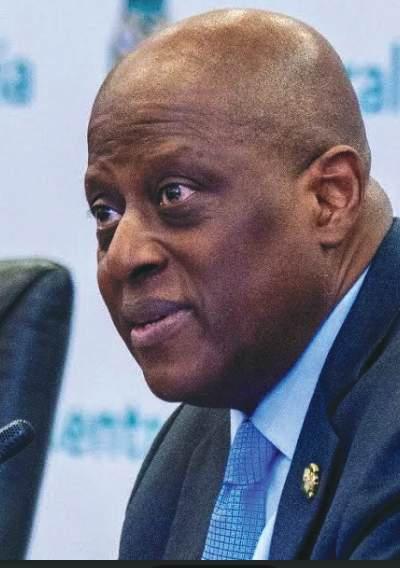
recent interest rate cut, the prevailing interest rate environment remained restrictive for the real sector, limiting access to affordable credit and dampening expansion plans.
The President, Abuja Chamber of Commerce and Industry (ACCI), Chief Emeka Obegolu, described the reduction as “cautiously optimistic step toward easing financial pressures on businesses and supporting economic recovery”, signaling growing confidence in Nigeria’s disinflation trajectory and macroeconomic stabilisation. He said the adjustment of the asymmetric corridor around the MPR was a technical but important reform aimed at improving interbank market efficiency and strengthening policy effectiveness. Obegolu said the chamber anticipates that the policy mix will reduce financing costs and improve credit availability to the real sector, support private sector expansion and job creation, sustain exchange rate stability and investor confidence as well as encourage prudent fiscal liquidity management and transparency. He told THISDAY, “While commending the CBN for its balanced approach, ACCI urges continued coordination between monetary and fiscal authorities to ensure that easing financial conditions translate into real sector growth.”
APC Derides Coalition of Opposition, Says Critics Mourning Loss of Privilege, Not Nigerians’ Welfare
Deji Elumoye in Abuja
The ruling All Progressives Congress (APC) has flayed the coalition of opposition parties over their recent criticisms of the federal government, accusing them of acting out of self-interest rather than genuine concern for Nigerians.
National Secretary of the APC, Senator Ajibola Bashiru, while reacting to opposition’s briefing in Abuja, said their outcry was driven by loss of access to state resources, not a commitment to national development.
Answering questions from newsmen yesterday, after meeting with President Bola Tinubu at the State House, Abuja, Bashiru said the critics were, “mourning the end of an era” in which public funds were allegedly siphoned through systemic loopholes.
He said: “They are not crying for the average Nigerian or for the development of our people. They are crying because they have lost the privilege and opportunity to continue to plunder the resources of the Nigerian people.”
The erstwhile Osun Senator argued that reforms introduced by Tinubu’s administration have disrupted entrenched interests that previously benefited from subsidy regimes and financial leakages.
He maintained that measures taken in the past two and a half years, including fiscal and monetary reforms, have strengthened public finances and improved macroeconomic indicators.
According to him, rather than acknowledge the reforms, opposition figures have resorted to “theatrics,” claiming their protests were rooted in frustration over diminished political leverage.
Cardoso
GLOBAL SOCCER GLOBAL SOCCER
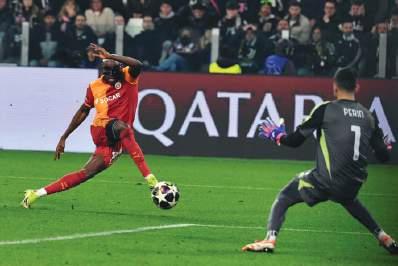
GLOBAL SOCCER
pAul O N uAc H u
l e ADIN g Turk ISH gOA l pOAc HIN g pAck
When goal scoring is mentioned in theTurkish Super Lig, at least in the past three seasons,onenamethatreadilycomestomindisVictorOsimhen.Thatmayhowever change this season as a new Sheriff seems to be in town in another Nigerian.In 21 league matches played, Paul Onuachu leads the goals scorer chart with 18 goals therebyplacingTrabzonsporincontentionfortheSuperLigtitle
Super Eagles striker, Paul Onuachu yesterday extended his sensational scoring streak to seven consecutive matches, as Trabzonspor defeated Fatih Karagumruk 3-1 in their Turkish Super Lig encounter. He scored the first goal to keep Trabzonspor third in the Super Lig standings with 51 points.
Onuachu has now scored in seven consecutive Süper Lig matches, marking the longest scoring streak of his Trabzonspor career across his two spells at the club.
His previous personal best was a run of four successive league games between 20 September and 18 October 2025, when he scored against Gaziantep FK, Fatih Karagümrük, Kayserispor and Çaykur Rizespor.
The encounter burst into life midway through the first half, producing three goals in a frantic five-minute spell.
The 31-year-old forward positioned himself perfectly in the centre of the box before dispatching a right-footed finish to put Trabzonspor ahead.
His clinical effort sealed what ultimately stood as the winning goal, capping a blistering first-half surge from the visitors.
The goal takes his tally to 18 in 21 league appearances, further strengthening his position among the division’s most prolific scorers.
In doing so, he has already eclipsed the 15 goals he managed in 21 league outings during his previous loan spell at the club in the 2023/24 campaign.
Just recently, Onuachu won the Turkish Süper Lig Goal of the Week award, he won the accolade for his superb strike in Trabzonspor’s 3-2 defeat to Fenerbahçe at the Papara Park penultimate weekend.
The Nigerian international has won a number of individual accolades this season.
The Africa Cup of Nations bronze medallist claimed the Goal of the Month awards in August and September, and was also named Turkish Süper Lig Player of the Month for October.
However, Turkish football expert, Erdal Ho has criticized the Super Eagles striker, claiming his inability to press effectively makes him a tactical liability.
Onuachu has arguably been the standout performer in the Süper Lig this season. Since joining Trabzonspor from Southampton in a €5.7 million deal, he has been the catalyst for the club’s title charge.
The marksman has proven he possesses the technical flair to match his physical presence, scoring several spectacular goals born out of pure ingenuity.
Thanks to his clinical finishing, the Black Sea Storm currently sit third in the Turkish top flight with 51 points from 24 games.

While Onuachu has undoubtedly elevated the team’s quality, Erdal Ho believes the Nigerian is only thriving because coach Fatih Tekke, has tailored his playing system specifically to mask his flaws.
According to Ho, the Super Eagles star struggles with pressing and loses the ball too easily—an issue he believes would be a significant problem for most modern, high-intensity teams.
“If you’re playing with Onuachu, you’re a man down in defense,” Ho said.
“You can’t pressure with Onuachu, and when you do, he finds space easily. Onuachu loses the ball a lot with his back turned. He’s a great goal-scorer, but if he’s playing, your midfield and wings need to be top-notch.”
Despite the criticisms, Onuachu remains one of the most important players at Trabzon. He has been involved in more than a third of the team’s goals in the league.
Onuachu made Trabzonspor history in February by becoming the first foreign player to score in both league meetings against Samsunspor in a single Super Lig season. He was also named the best player in the Turkish Super Lig for October and has claimed the Goal of the Month award twice this season.
He will look to continue banging in the goals for Trabzonspor until the end of the season as they challenge for the title.
Onuachu is delivering the most efficient season of his Süper Lig career with Trabzonspor, turning steady production into outright dominance.
The Nigerian striker has already eclipsed his 2023 to 2024 campaign, scoring more goals in fewer matches and sharpening every measurable aspect of his game.
His height and physicality made him one of the league’s most difficult forwards to contain in aerial duels, and he quickly became the team’s focal point in attack. This season, he has evolved from a target man into a complete finisher.
His minutes per goal have improved slightly to 101, but the more telling figure is his 0.84 goals per game average.
That jump reflects sharper movement, quicker decision-making and improved efficiency in converting chances. He is not merely waiting for service.
He is creating separation, attacking space earlier and finishing with greater composure.
Trabzonspor have scored 45 goals in 23 league matches. Onuachu has delivered 17 of them, accounting for 37.2% of the team’s output.
More than one in every three league goals
belong to him. In a side that has struggled for consistency at times, his production has provided stability and belief.
His influence stretches beyond the league. Across all competitions, Onuachu has scored 34 goals in 46 official matches for Trabzonspor.
He is not padding statistics in comfortable victories. He is scoring when matches are tight, when pressure is high and when Trabzonspor need a response.
paul Onuachu scored his 17th Super lig goal against gaziantep
GLOBAL SOCCER
Computer Predicts Osimhen’s Form to Decide Galatasaray, Liverpool Clash
Gemini AI has predicted the outcome of the highly anticipatedUEFAChampionsLeague Round of 16 clash between Galatasaray and Liverpool, and the results suggest a thrilling encounter at the RAMS Park.
Following the recent draws that paired the Turkish giants against the English heavyweights, fans and analysts have been divided on who will progress.
Galatasaray secured their spot in the knockout stages after an impressive showing against Juventus in the playoffs, while Liverpool entered the draw as one of the favorites to lift the trophy in 2026.
According to the data-driven projections, the match is expected to be decided by the narrowest of margins, with the home-field advantage in Istanbul playing a massive role in the simulation’s output.
Gemini’s algorithm emphasizes that Galatasaray’s chances of an upset rests almost entirely on the form of their talismanic striker, Victor Osimhen.
The Nigerian international has been in sensational form, and the model heavily weights his previous experience against the Reds.
Inthereversefixtureduringthe group stages, Osimhen proved to
be the difference-maker, finding the back of the net with a clinical finish that stunned the Anfield crowd.
His ability to exploit the high defensive line used by Liverpool makes him the most dangerous player on the pitch for the Turkish side.
For Galatasaray to defy the odds and eliminate the six-time champions, Osimhen must replicate his heroics from their last meeting.
Gemini predicts that the 27-year-old forward will be the focal point of every attacking transition, using his pace and aerial prowess to unsettle the Liverpool center-backs.
pitch Invader Tackles Messi in Inter Miami Game
Argentina captain, Lionel Messi was hauled to the ground by a pitch invader during Inter Miami’s friendly win against Independiente del Valle in Puerto Rico.
Messi, who was brought on as a half-time substitute, was wrestled to the turf by a spectator with two minutes remaining of normal time.
Several fans had already invaded the pitch in order to
get close to Messi, who was taking a selfie with one when another grabbed the former Barcelona playmaker around his waist.
Security were quickly on the scene, with Messi, the fan and one security guard hitting the ground in a clinch.
Messi appeared unharmed and made his way over to the other side of the pitch as security reinforcements arrived.
He netted from the penalty spot
in the 2-1 win, with Santiago Morales scoring Miami’s other goal.
The match had originally been scheduled for 13 February but was cancelledbecauseMessiwasstruggling with a hamstring injury.
Miami, who are co-owned by David Beckham, started their Major League Soccer (MLS) season with a 3-0 defeat by LAFC last weekend.
They face a trip to state rivals Orlando City tomorrow
f ulham Get Chukwueze’s b oost Ahead of Spurs Visit
Fulham manager, Marco Silva has offered a positive update on the fitness of Samuel Chukwueze ahead of the Premier League showdown with Tottenham Hotspur on Sunday.
The Nigerian international missed last weekend’s 3-1 victory over Sunderland at the Stadium of Light due to an injury sustained during the week.
Speaking to the media, Silva confirmed that Chukwueze has resumed training this
week as he prepares for the Spurs encounter.
we’re going to make a decision after that,” he added.
“Saša (Luki), (Samuel) Chukwueze and the others have been in and out of contention. But they’ve had a good week. (Antonee) Robinson is back in sessions with the team,” Silva was quoted as saying by Fulham’s official webpage.
The Portuguese manager added that final decisions on the squad will be made after the team’s next training session. “We another session and
wolves Halt Aston Villa’s Top-four Quest
The Premier League’s bottom club Wolves stunned third-placed Aston Villa with a 2-0 win at Molineux thanks to goals from Joao Gomes and Rodrigo Gomes.
In a wet West Midlands derby in Wolverhampton, the home side showed more appetite for the fight throughout as Villa struggled to impose themselves.
Joao Gomes’ fine finish set up the win, and his namesake Rodrigo sealed it on the break deep into stoppage-time.
The victory for Rob Edwards’ side means they overhaul Derby’s all-time Premier League low points haul, ending any lingering fears of
that particular ignominy and bringing some long-awaited joy and relief for the home supporters - at the expense of their neighbours.
Villa had probed in the first half without causing Wolves too many problems. The out-of-form Ollie Watkins had a shot blocked. Pau Torres headed wide. Douglas Luiz volleyed at Jose Sa. Wolves’ best opening came when the returning Toti Gomes miscued his shot.
Unai Emery tried to ignite things with a double change on the hour but it was Wolves who found the breakthrough following a slick attacking
Osimhen, Lookman Get English Opponents in Champions League R16
The UEFA Champions League draws were held yesterday, and the remaining contenders in the round of 16 now know their respective paths to the quarterfinals.
Nigeria still boasts three representatives in the competition: Victor Osimhen with Galatasaray, Ademola Lookman with Atletico Madrid, and Nathan Tella with Bayer Leverkusen. While all the Nigerians left expected formidable opponents, Osimhen and Tella appear to have drawn the toughest assignments of the group.
In the confirmed fixtures, Osimhen and his Galatasaray teammates will face Liverpool. Interestingly, the Nigerian striker mentioned just
on Wednesday that he hoped to avoid the Reds; however, he must now prepare for a high-stakes battle against the Premier League giants.
Both teams already met this season at Rams Park, and it was the Cimbom that ran out with a shocking 1-0 victory, courtesy of an Osimhen strike. Galatasaray will be looking to repeat that feat. Ademola Lookman, meanwhile, seems to have a more favorable path as Atletico Madrid prepares to face Tottenham Hotspur.
The London side has struggled significantly this season, surprisingly finding themselves in a domestic relegation battle. Lookman and his side will undoubtedly look
to capitalise on Spurs’ current lack of form.
For Nathan Tella, Bayer Leverkusen will trade tackles with English giants, Arsenal. This presents a massive challenge for Die Werkself, as the Gunners are arguably the best team in the world at the moment. Tella and his teammates will need to perform at their absolute peak to secure a result over the two legs.
In the other draws, Spanish giants Barcelona will play Newcastle United, Champions PSG will take on Chelsea, Real Madrid face Manchester City, Atalanta trade tackles with Bayern Munich, and surprise packages Bodo Glimt will square up against Sporting CP.
Owoyemi Set to Change Sports Betting Landscape with PunterClash
One of the major criticisms against gaming in Nigeria over the years has been the lack of means to control users excesses as to how much they can lose. But that is about to change now with the introduction of PunterClash into the Nigeria betting market.
PunterClash, which was officially introduced into the Nigerian market after its launch on February 22, 2026, is introducing a speed bump that will check users excessiveness.
Owoyemi said, “We felt for a long time gambling in Nigeria has been one directional, stakers can only bet against the house and we feel the time has come for that to change and that was what brought about PunterClash.
On how to play on PunterClash, Owoyemi said all that is needed is just to sign on PunterClash.
The experience is not much different from other gaming platforms. The system is just what gamers are used to before, there is just a little shift in the experience.
He noted that two things really make PunterClash different from
other betting platforms, which are responsible gaming and pier to pier game.
“PunterClash has a mission, one responsible gaming is at the heart of all PunterClash does. We ensure our customers demonstrate responsibie behavior. On a normal sports book platform you can lose as much as N50 million if you have so much to lose but on PunterClash that will not be possible because we have something we call tiers, similar to what they have in OPay, where they have tier 1 to tier 3 of different kinds of banking.
Chukwueze, who joined the Cottagers on loan from AC Milan over the summer, has been in sensational form this season.
After two challenging campaigns, he has managed three goals and four assists in 13 Premier League appearances.
His potential return would be a significant boost for Fulham as they aim to continue their impressive run following the win over Sunderland.
move out of kilter with their miserable season. Adam Armstrong’s cute lay-off was perfect for Joao Gomes to fire home.
Chants of ‘1-0 to the Championship’ rang out around Molineux and though Villa pushed, finally introducing Tammy Abraham, Wolves defended bravely and scored the next goal with just about the last kick as substitute Rodrigo Gomes beat Emi Martinez on the break.
Wolves remain doomed but could enjoy inflicting a major blow on their neighbours whose form has dipped ahead of a big clash with Chelsea on Wednesday. Manchester United could be ahead of them by then, the grip on a top-four finish loosened.
In a chat with THISDAY Newspapers during the launch, Founder PunterClash, Richard basketball Africa League Announces 12 Teams, Group phase Schedule
The Basketball Africa League (BAL) has announced the 12 teams and group phase schedule for the 2026 BAL season, which will tip off on Friday, March 27 at the SunBet Arena in Pretoria, South Africa.
The league’s sixth season will feature the top 12 club teams from 12 African countries playing a total of 42 games across the Kalahari Conference group phase from March 27 – Sunday, April 5 in Pretoria, the Sahara Conference group phase from Friday, April 24 – Sunday, May
3 at the Prince Moulay Abdellah Sports Complex in Rabat, Morocco, and the Playoffs and Finals from Friday, May 22 – Sunday, May 31 at BK Arena in Kigali, Rwanda.
The 12 teams include Dar City – the first-ever BAL participant from Tanzania – first-time BAL participants JCA Kings (Côte d’Ivoire), Maktown Flyers (Nigeria), Johannesburg Giants (SouthAfrica) and ClubAfricain (Tunisia), 2024 BAL champion Petro de Luanda (Angola) – the only team to have qualified for all six BAL seasons – and 2023 BAL champion Al Ahly (Egypt). The rest are; Fath Union Sport Rabat (FUS Rabat; Morocco) Al Ahly Ly (Libya), Armée Patriotique Rwandaise Basketball Club (APR; Rwanda),ASC Ville de Dakar (Senegal), Nairobi City Thunder (Kenya), and Petro de Luanda (Angola)
“Welcoming five new teams into the BAL family is a powerful sign of the league’s continued growth, the impact it is having on the African basketball ecosystem, and the incredible talent developing across the continent,” said BAL President Amadou Gallo Fall.
NFF Confirms Okonkwo’s International Switch in Progress
Former Arsenal goalkeeper, Arthur Okonkwo’s international switch to Nigeria remains unfinished, despite growing expectations that he could soon join the Super Eagles setup.
The Nigeria Football Federation (NFF) has clarified that the paperwork for his change of allegiance is still in progress and has not yet been finalised by FIFA.
Recent speculation sug-
gested that the former Arsenal shot-stopper was already cleared to represent Nigeria, but senior NFF officials have now moved to cool the excitement.
While Okonkwo is firmly on the federation’s radar, the governing body insists the process is ongoing and that no official approval has been granted yet.
NFF Head of International Competitions, Dayo Enebi,
stressed that Okonkwo’s case is still being handled by the relevant authorities.
“The process is still ongoing and has not been completed yet,” Enebi said Footy Africa. “Okonkwo is one we are looking at, but as of today, his international switch has not been concluded.”
Enebi further revealed that the goalkeeping prospect is among several players being considered as the coaching crew looks to reinforce key areas of the squad.
Osimhen’s goal ensures Galatasaray ticket to the round of 16 of Champion League
founder punterClash, richard Owoyemi, Director, blandine Mampouya, CfO, Azeez Salami and Chief people Officer, busola Lawal
okey.ikechukwu@thisdaylive.com
When the Confounded Keep Quite
When I met a particularly voluble defender of the political and economic condition of the Nigerian state at a public function last week and he again went on bout how much things were improving by the minute all over the federation, I asked him: “How are your cousins, and members of your extended family faring?” I asked, further: “Would you say you see the dramatic improvement you are talking about in the real Nigerians, not those of us in big cities and big houses pretending to be talking about the actual condition of Nigerians?’’ I felt constrained to ask him these questions because our people say that when majority the people keep quite
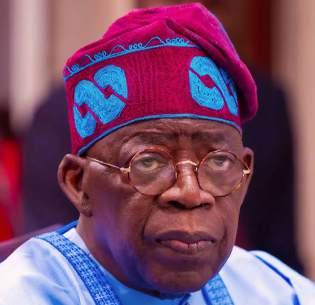
instead of shouting that there is a snake on the raffia roof, it is either because they
are too tired to shout or they know that nothing will come of their shouting. Our people also say that when the elders and titled men are the only ones saying that all is well in a famished society without being challenged by anyone, every sensible observer should begin to smell the wind for danger.
I submit here that nothing is more disturbing in a nation than to have a situation wherein most people no longer believe, or disbelieve, whatever officialdom has to say. The people, not the counterpart group of office and power seekers opposing officialdom, have disengaged, but not in any form of open physical, or verbalized, confrontation. They are just there. Apathetic, yet living. Inundated with “facts and figures” about how their lives has improved, yet
CHIMA
vehemently convinced that lies have been elevated to the pedestal of inviolable truth. You see it everywhere and nowhere in particular. You can feel it in the very air you breathe. As I write, we have the foregoing confronting us as a nation and a people: (1) An economically and politically insensitive environment that is killing big business and not providing enough germinating space for the small ones; (2) A political elite that is largely driven by blind acquisition, consumption and a proclivity for incomprehensible handling of official misconduct: (3) A declining national productivity that is masked by voodoo statistics that cannot simultaneously
Continued on page 35
Legalising Gun Ownership
“Arms proliferation is not good, but if you cannot take the arms from the hands of criminals, then why should you deny arms to those who are mature and whom you can even trust?
So, a man who has worked in Federal Civil Service up to the level of a Chief is not trusted to be trained and armed?
“Not to talk of the Federal Road Safety Commission (FRSC). The FRSC was established because of accidents and to rescue people. But today, the safety we are talking about is to be protected on the road from kidnappers and other
criminals. So, why are we wasting time in training and equipping them (FRSC officials)? And then, if you are arming one vigilante, why can’t you arm the other?”
The above quote from Nigeria’s former Chief of Army Staff (COAS), Lieutenant General Azubuike Ihejirika (retd), during a recent interview with THISDAY captures a growing frustration over the relentless killings across the country. From the north, south, east, and west, the insecurity in the country appears to be spiralling out of the control of an overwhelmed security architecture.
The grim reality is that scarcely a day passes without reports of Nigerians murdered, mostly in rural communities,
attacked in places of worship, ambushed on their farms, roads or abducted in large numbers by criminal gangs operating with alarming audacity.
In fact, latest data compiled from media reports by the HumAngle Tracker showed that at least 524 people lost their lives in various tragic incidents across Nigeria in January. A large number of the deaths were caused by terrorists’ killings, while others were as a result of conflict and humanitarian crises and road accidents. As troubling as that number is, it does not capture the amount of those physically injured due to violent attacks, the mental burden that survivors suffer due to the loss of
and
well
economic and social cost of terrorist activities. This increasingly brazen attacks and killings have since attracted global attention.
The former COAS’ argument is a challenge to what is seen as an imbalance in Nigeria’s security architecture, as while criminals operate freely with sophisticated weapons, law-abiding citizens remain largely defenceless with deepening public vulnerability.
Advocates of regulated gun ownership argue that a tightly controlled licensing regime anchored on strict background checks, mandatory training and
Tinubu
Governor Sheriff Oborevwori of Delta State (left), with the widow of APC chieftain, Senator Peter Nwaoboshi, during the funeral mass for the late Senator at Saint Augustine Catholic Church, Ibusa, Oshimili North Local Government…yesterday SAMUEL JIBUNOR