Analysts Warn Fresh US 12.5 Per Cent Tariff Will Hurt Nigerian Exporters
Urges Level Playing
Governors, Security Experts Back Army Division
Expansion, Demand Intelligence-led War on Insecurity
Emir hails president Experts warn against recruiting repentant terrorists into military Seek increased funding for logistics, equipment, training
and
The decision by President Bola Tinubu to expand the Nigerian Army from eight to
Budget Office: How Expenditure Controls Blocked Payment of N1.3bn to Fake Agency
Insists payroll, overhead, capital votes never matured into lawful spending Declares Budget Office ordered Finance Ministry, Accountant-General to halt payments Pledges full cooperation with probe
James Emejo in Abuja
The Director General, Budget Office of the Federation (BoF), Mr. Tanimu Yakubu, yesterday insisted that no public funds were released to the controversial Presidential Economic Advisory Council/ Presidential Foreign Intervention Promotion Council (PEAC/ PFIPC), adding the country's expenditure control mechanisms prevented budgetary provision from translating into actual spending.
Appearing before the House
of Representatives’ Committee probing the matter, Yakubu, in a detailed clarification on the council's appropriation in the 2026 budget, said although the National Assembly approved funds for the body, the legal and administrative conditions required to access public funds were never fulfilled.
He stressed that the appropriated amount remained only a statutory provision and never became an expenditure, stating that the country's public
Linus Aleke in Abuja
Hammed Shittu in Ilorin
2027: INEC Pledges Credible Polls, Abdulsalami Urges Level Playing Field
Adedayo Akinwale in Abuja
The Chairman of the Independent National Electoral Commission (INEC), Prof. Joash Amupitan, yesterday assured Nigerians that the commission would conduct free, fair and credible elections in the 2027 general election, despite operational and legal challenges confronting the electoral process. The assurance came as former
Head of State and Chairman of the National Peace Committee (NPC), Gen. Abdulsalami Abubakar (rtd), urged the electoral umpire to remain impartial, provide a level playing field for all political parties and resist undue pressure ahead of the polls.
Abdulsalami gave the charge when Amupitan, accompanied by the Commission's National
Commissioners paid him a courtesy visit at his residence in Minna, Niger State.
The INEC management team also visited another former Head of State, Gen. Ibrahim Babangida (rtd), at his Minna residence.
The former Head of State urged the commission to ensure that all elections are free, fair and credible, stressing that the success of Nigeria's democracy
depends largely on the integrity of the electoral process.
He advised the INEC chairman and his team to remain steadfast, ignore distractions and faithfully uphold the oath of office they swore to.
Abdulsalami said: "The INEC Chairman cannot do this job alone, but the buck stops with you. I am absolutely sure that you will abide by the oath you
took. "You must do justice to all and sundry. All political parties are yours; you do not have any political party to call your own. "So, I wish you well and advise that you close your ears and shut your eyes, because no matter what you do, political parties will have a go at you and claim you have done something wrong. That is the
nature of Nigerians. I hope and pray you take it in good faith because our democracy depends on all of you."
Describing the office of the INEC chairman as one of the most demanding in the country's democratic architecture, Abdulsalami said Amupitan's appointment came at a critical period in Nigeria's democratic journey.
GOVERNORS, SECURITY EXPERTS BACK ARMY DIVISION EXPANSION, DEMAND INTELLIGENCE-LED WAR ON INSECURITY
modern military capabilities.
This comes as the Chief of Army Staff (COAS), Lieutenant General Waidi Shaibu, yesterday called for greater private sector investment in national security and military infrastructure, describing stronger partnerships between the Armed Forces and corporate organisations as critical to enhancing operational effectiveness, improving personnel welfare and accelerating national development.
In a related development, troops of Sector 2, Operation Hadin Kai (OPHK), in collaboration with the Yobe State Hunters Group, have apprehended five suspected kidnappers and recovered
finance safeguards worked exactly as designed by stopping the release of funds before any payment could occur.
The controversy followed the discovery that the 2026 Appropriation Act contained budgetary provisions for the PFIPC, triggering widespread public debate over the council's legal status and how it found its way into the federal budget.
The Nigerian Police Force last week arrested Adeniyi Adeyemi, the disowned Director-General of the non-existent Presidential Foreign Intervention Promotion Council (PFIPC).
Adeyemi’s arrest came hours after Justice Mohammed Umar of the Federal High Court in Abuja issued a warrant for his arrest following an oral application by the prosecution lawyer, Wisdom Madaki.
This was after the federal government accused Adeyemi of operating the purported PFIPC,
exchange earnings. They described the action as a fresh challenge for exporters, particularly manufacturers and small businesses seeking access to the US market.
While some analysts linked the move to the Trump administration's broader protectionist trade agenda, others urged the federal government to strengthen labour standards and diversify export destinations. They also cautioned that failure to address these concerns could further erode Nigeria's position in global trade.
The United States yesterday imposed a 12.5 per cent tariff on imports from Nigeria over what it described as the country’s failure to effectively prohibit the importation
weapons during an intelligenceled operation at Jegalari Village in Fune Local Government Area of Yobe State.
Tinubu approved the expansion of the Division on Thursday as part of efforts to strengthen national security and enhance the Army's ability to respond more effectively to emerging threats.
According to a statement by the Special Adviser to the President on Information and Strategy, Mr Bayo Onanuga, the decision underscored the administration's commitment to building a more robust and responsive military capable of safeguarding lives, property and Nigeria's territorial integrity.
Owing to this, the governors,
an agency the government had said does not exist.
The controversy became public after Chief of Staff to the President, Femi Gbajabiamila disowned Adeyemi and the PFIPC and President Bola Tinubu ordered the ICPC to probe the matter.
Owing to this, the budget office came under scrutiny over its role in the appropriation.
However, Yakubu maintained that his office neither created nor established the council, insisting that it merely discharged its statutory responsibility by costing personnel requirements based on official government instruments already issued by the appropriate authorities.
According to him, "not one kobo" of the personnel allocation was drawn, while neither the overhead nor capital provisions matured into lawful releases.
He said, "An appropriation is authority in law to make
of goods produced with forced labour, a move expected to put additional pressure on Nigerian exporters and policymakers.
The new tariff, announced by the Office of the United States Trade Representative (USTR), was part of a broader trade measure affecting 60 economies investigated under Section 301 of the US Trade Act.
The action follows months of investigations into the labour practices of America’s major trading partners.
According to the USTR, Nigeria falls into the category of countries that have not “imposed and effectively enforced a prohibition on the importation of goods produced with forced labour,”
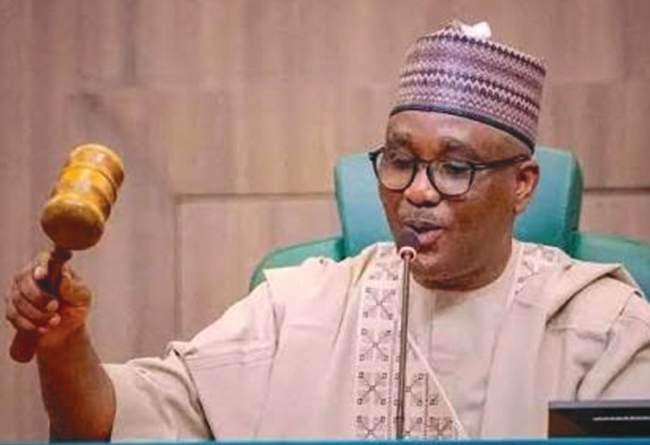
under the aegis of the Nigeria Governors’ Forum (NGF), yesterday lauded President Tinubu’s creation of four new Army divisions across the country.
NGF’s Chairman and Kwara State Governor, Alhaji AbdulRahman AbdulRazaq, in a statement issued in Ilorin, stated that the decision to create four new divisions was the largest single expansion of the Nigerian Army in modern history, adding that the bold step showed the President’s renewed commitment to security of lives and property.
“We wholeheartedly welcome this development, including the president’s approval for the Army to hire 28,000 new personnel and acquire more critical military
provision for an expenditure. It is not a cheque. It is not a warrant. It is not cash released from the Treasury. Before money can move, other conditions must be met. Different institutions must act. Each must complete its own part. If one condition fails, the chain stops. That is what happened here.
"Until Financial Clearance is issued, a personnel provision remains a figure in the budget. It cannot create employees. It cannot place anyone on payroll. It cannot produce a salary payment."
The DG Budget explained that public debate had wrongly assumed that once an appropriation appeared in the budget, the beneficiary automatically gained access to the funds.
According to him, appropriation merely provides legal authority for possible expenditure and should not be
thereby attracting a higher tariff rate of 12.5 per cent.
By contrast, countries such as India, Indonesia, Malaysia, Mexico and the United Kingdom will be subjected to a lower 10 per cent tariff after implementing or committing to enforce import bans on goods linked to forced labour.
The USTR said the investigations, launched in May 2026, involved more than 1,600 written submissions, public hearings featuring over 100 witnesses, and consultations with more than 45 governments before the final determination was reached.
In a Federal Register notice, the agency stated that Nigeria’s exports would attract the 12.5 per cent
assets. We are confident that this initiative will enhance the government’s counterterrorism and anti-banditry efforts," the governors said.
They pledged their continued support for and collaboration with the President on national security and all other issues of national development.
“The Forum again urges citizens to continue to support government and security forces to strengthen security in every part of the country, including giving timely information to the security agencies,” they added.
Also yesterday, the Emir of Ilorin and chairman of the Kwara State Traditional Rulers Council, Alh, brahim Sulu-Gambari, commended Tinubu for
mistaken for a warrant, cash release or payment from the treasury.
Yakubu explained that before any government agency could spend public funds, several statutory institutions must independently complete their responsibilities, including approvals relating to establishment, remuneration, financial clearance, warrants, cash backing and procurement.
He further noted that because the expenditure process was deliberately divided among different government institutions, no single office could create an agency, recruit staff, approve salaries, release funds and authorise expenditure simultaneously.
According to him, the PEAC/ PFIPC case never progressed beyond the appropriation stage because the chain of approvals required under Nigerian public finance laws never opened.
tariff, except for products covered under specified exemptions.
It stated: “Based on the findings in the investigation of Nigeria, considering the public comments, testimony, and the advice of the Section 301 Committee, as well as the advice of advisory committees, and in accordance with the specific direction of the President, the Trade Representative has determined to impose 12.5 percent tariffs on products of Nigeria, except as provided in Annex I and Annex II, Part A, of this Notice.
“The Trade Representative has determined, in accordance with the specific direction of the President, that the tariff rate to be applied, and the scope of tariffs and exemptions, are appropriate
approving the establishment of the new 9 Division Headquarters of the Nigerian Army in Ilorin, Kwara State.
The Emir described the decision as a landmark move that will significantly enhance national security, strengthen internal security operations, and improve the safety of lives and property in Kwara and Niger states.
In a statement issued yesterday, by his spokesman, Dr. Abdulazeez Arowona, SuluGambari said the expansion of the Nigerian Army’s structure was a welcome development.
He noted that the establishment of the Division in Ilorin was a clear demonstration of Tinubu’s commitment to
Providing details, Yakubu disclosed that although the council initially requested about N3.85 billion for personnel costs, the budget office rejected that estimate and independently computed personnel requirements using approved government staffing templates and salary structures.
That exercise, he said, produced a personnel estimate of N802.98 million, which eventually formed part of the Executive Budget proposal and was subsequently appropriated by the National Assembly.
He maintained that the figure was an independent fiscal determination by the budget office and not a negotiated reduction of the council's request.
Yakubu further explained that despite the appropriation, financial clearance — the mandatory approval required before recruitment and salary
to obtain the elimination of the acts, policies, and practices determined to be actionable in the investigation.”
The latest measure comes after US President Donald Trump invoked Section 122 of the Trade Act of 1974 to impose a temporary universal tariff on imports following a US Supreme Court ruling that blocked his administration’s broader tariff initiative under the International Emergency Economic Powers Act.
US Trade Representative Jamieson Greer said the action was intended to encourage trading partners to adopt stronger safeguards against forced labour.
“President Trump recognises that decades of moral suasion have
decentralising command and control, strengthening border security, and ensuring faster military response to emerging threats.
The Emir added: “This development will not only boost security in our dear state and the entire North-Central region, but will also create more opportunities for our youths and contribute to the socio-economic development of Kwara State.” Equally, security and defence experts welcomed Tinubu's approval for the expansion of the Nigerian Army from eight to 12 divisions and the recruitment of an additional 28,000 personnel, describing the move as a timely response to Nigeria's evolving security challenges.
payments can commence — was never issued.
He said the clearance could not be granted because critical statutory conditions remained outstanding.
Among them, he noted, was the fact that the 2026 appropriation bill had not yet received presidential assent until March 31, 2026, while the National Salaries, Incomes and Wages Commission (NSIWC) had also not completed confirmation that the proposed staffing and remuneration structure complied with approved public service compensation frameworks. He emphasised that without financial clearance, no recruitment could legally take place, no employee could be enrolled on the Integrated Payroll and Personnel Information System (IPPIS),
Continued on page 15
not eradicated forced labour from global supply chains,” Greer said. “The United States has had a forced labour import ban for nearly a century. It’s well past time for our trading partners to do the same.”
The USTR clarified that the tariffs would not apply to certain exempted products, including raw materials whose restriction could trigger domestic supply shortages, goods capable of causing economy-wide disruptions, products unavailable in sufficient quantities within the United States or from alternative sources, and selected goods from countries that have already adopted or pledged to implement forced labour import bans.
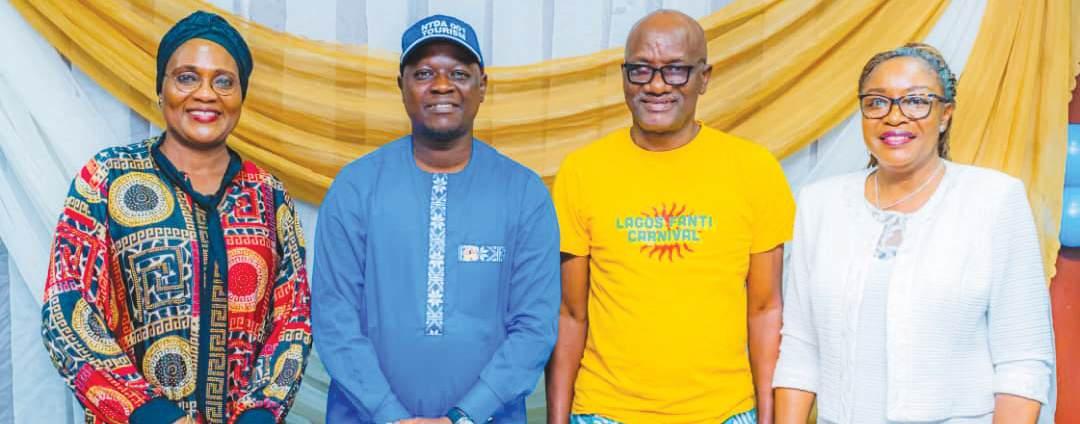
COURTESY VISIT...
L-R:
of
Arts and
NGX: Domestic Investors Account for N8.4trn Stock Trades
Amid growing investor confidence and strong corporate earnings by listed companies, domestic investors— comprising retail and institutional investors —traded stocks worth an estimated N8.4 trillion on the Nigerian Exchange Limited (NGX) in the first half of 2026. The figure represents a 176.2 per cent increase from the N3.06 trillion recorded by domestic investors during the corresponding period in 2025.
According to the NGX's Domestic & Foreign Portfolio Investment Report, domestic institutional investors accounted for N5.06 trillion in transactions during H1 2026, representing
a 218.9 per cent increase from N1.59 trillion in H1 2025. Retail investors traded N3.39 trillion, up 130.4 per cent from N1.47 trillion recorded in the same period last year.
The report showed that domestic investors have continued to dominate trading activities on the Nigerian stock market, a trend attributed to reforms introduced by key capital market regulators.
Analysts attributed the sharp growth in institutional investors' transactions to the National Pension Commission's (PenCom) decision in February 2026 to raise equity investment limits for pension funds.
The policy has injected fresh liquidity into the stock market,
MOUAU Recruitment Scandal: 127 Staff Sacked After Five Months Without Pay
Boniface Okoro in Umuahia
Controversy has continued to trail the federal government’s employment waiver granted to Michael Okpara University of Agriculture Umudike (MOUAU), following the sack of 127 out of 553 staff recruited in a recent employment exercise, five months after resumption. It was gathered that while the federal government approved the recruitment of 426 staff for the immediate past administration of the university, management issued appointment letters to 618 persons. However, only 553 of them were captured on the Government Integrated Financial Management Information System, GIFMIS, in Umudike.
Though the new intakes were issued legitimate appointment
letters and assumed duties in April, they were redeployed to various offices where they worked for five months without salaries before being asked to surrender their identity cards on July 16, 2026.
An affected staff, Eze Ejike, alleged unfair treatment during a chat with journalists, insisting that they were legitimately employed by the institution but subsequently laid off after five months of service without pay. Ejike, in company of other affected workers, said they were issued legitimate appointment letters dated January 14, 2026 and assumed duties in April.
In a statement by the Concerned Staff of MOUAU, the workers explained that their recruitment began after vacancies were advertised in October 2025.
contributing to the significant appreciation in the share prices of several blue-chip companies. On February 9, 2026, PenCom revised the investment limits for ordinary shares under RSA Funds I, II, III and VI (Active).
The commission amended Section 9 of its investment regulations, increasing the maximum equity allocation for RSA Fund I from 30 per cent to 35 per cent; RSA Fund II from 25 per cent to 33 per cent; RSA Fund III from 10 per cent to 15 per cent; and RSA Fund VI (Active) from 25 per cent to 33 per cent.
Investors on the Nigerian
stock market recorded strong returns in the first half of 2026, with market capitalisation rising by N47.84 trillion, despite market volatility in the final month of the period.
The gains marked one of the strongest first-half performances by the NGX in recent years, driven largely by price appreciation in banking, consumer goods, industrial and oil and gas stocks.
Market analysts attributed the rally to improved corporate earnings expectations, attractive fixed-income yields, which supported overall investor confidence, and positioning
in H1 2026
ahead of the second-half earnings season.
Overall, total transactions by both domestic and foreign investors stood at N9.61 trillion in H1 2026, representing a 129.1 per cent increase from N4.19 trillion recorded in H1 2025.
The NGX report also showed that foreign investors traded N1.16 trillion worth of equities during the period, a marginal 2.2 per cent increase from N1.14 trillion in H1 2025.
With total market transactions of N9.61 trillion in H1 2026, domestic investors accounted for 87.93 per cent of trading activity, up from 72.92 per cent
in H1 2025. The share of foreign investors declined from 27.08 per cent to 12.07 per cent over the same period. The report further noted that over a 19-year period, domestic transactions increased by 160.8 per cent, from N3.56 trillion in 2007 to N9.27 trillion in 2025, while foreign transactions rose by 329.9 per cent, from N615.6 billion to N2.65 trillion during the same period.
According to the report, domestic transactions accounted for about 78 per cent of total market transactions in 2025, while foreign transactions represented 22 per cent.
Justice Ibrahim Ahmad Kala of the Federal High Court in Lagos has adjourned till October 5, 2026, the arraignment of the Managing Director/Chief Executive Officer of Loft & Keys Ltd and Loft & Keys LLC, Dubai, Austin Albert, and his associate, Jinadu Musbau Olalekan, over allegations of forgery, money laundering, unlawful transfer of funds and an alleged N460.75 million fraud.
The judge had earlier fixed July 23 for their arraignment after
the matter first came before the court on June 7. However, the arraignment could not proceed because the first defendant, Albert, was absent.
Defence counsel, Abdulhakeem Adio, told the court that the amended charge had only just been served on him and that Albert was outside Nigeria.
At the previous sitting, Justice Kala directed the defence counsel to ensure that his client was present in court at the next adjourned date.
When the matter was called on Thursday, prosecution counsel, G. T. Nev, from the Force Headquarters, Abuja, announced his appearance for the prosecution. Abdulhakeem Adio appeared for the two defendants, while Ogechi Abu of the International Federation of Women Lawyers (FIDA), leading three other lawyers, alongside Oluniyi Adeniyi of J-K Gadzama LLP, appeared for the nominal complainant.
The prosecution informed the court that it had filed an
amended charge on July 13, 2026, pursuant to Section 216 of the Administration of Criminal Justice Act (ACJA), 2015, and stated that the matter was scheduled for the defendants' plea.
Although the defence initially objected to the amended charge, the objection was withdrawn after the court's intervention. Explaining Albert's absence, Adio told the court that his client was undergoing major surgery in Dubai and apologised on his behalf.
NBA Postpones Election Indefinitely Over Protest
Blessing Ibunge in Port Harcourt
The Port Harcourt branch of the Nigerian Bar Association (NBA) has postponed its election indefinitely over protest by aggrieved lawyers.
The election was fixed for
yesterday but the crisis disrupted the process as voters were sighted demonstrating that it would not hold alleging manipulation.
The crisis attracted heavy security presence at the NBA House in Port Harcourt venue, who tried to ensure there was
no violence associated with the protest.
As the protest lingered some officials tried to calm aggrieved lawyers but the poll was postponed indefinitely to prevent a possible breach of the peace.
As at press time, the committee was yet to announce a new date for the election. One of the candidates for the position of Social Secretary, Chilezie Orlu-orlu alleged that the Electoral Committee failed to comply with the bye-law of the branch by not publishing the register ahead of the election.
Kayode Tokede
Lagos State Permanent Secretary, Ministry
Tourism,
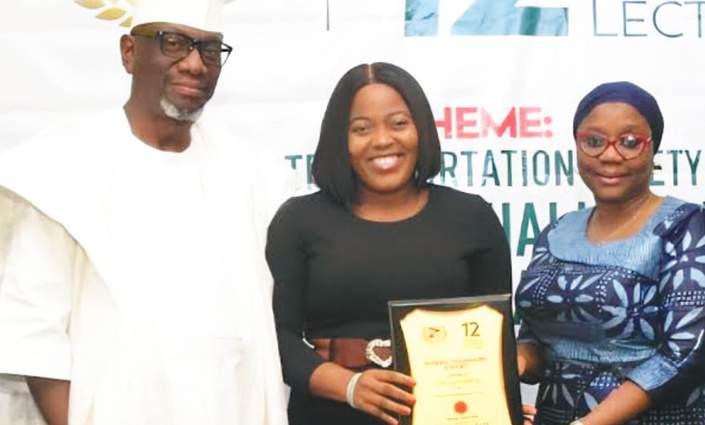
Culture, Mrs. Bopo Oyekan-Ismaila; Director General, Nigerian Tourism Development Authority, Dr. Olayiwola Awakan; Director, Administration and Human Resources, Lagos State Ministry of Tourism, Arts and Culture, Mr. Taoreed Dosunmu, and Acting Coordinator, Nigerian Tourism Development Authority (South-west Zone), Mrs. Angela Uponi, during a courtesy visit held at the Ministry's Conference room, Alausa, Ikeja... recently
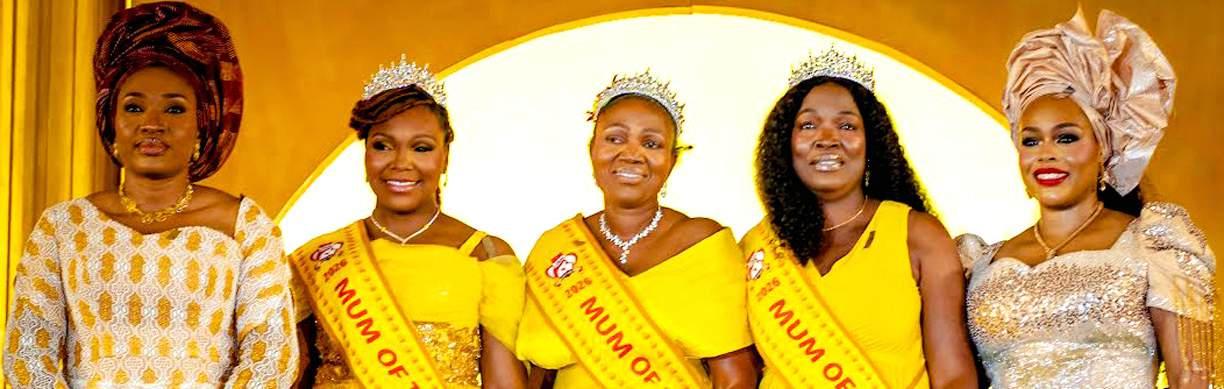
MUM OF THE YEAR COMPETITION...
2027: Otti Says Southeast Governors Can't Decide for Voters, Group Faults Tinubu’s Endorsement
Abia State Governor, Dr. Alex Otti, has said that when the time comes Nigerians will decide who will be elected President in 2027, stressing that Governor Hope Uzodinma of Imo State cannot speak for his colleagues in the South-east region on the issue.
This was as the Igbo Leaders of Thought (ILT) has lambasted the South-east governors for indulging in unbridled sycophancy by attributing every project executed in the region to President Bola Tinubu. Otti made the remarks while responding to questions during the July 2026 edition of his monthly media chat, tagged ‘Governor Alex Otti Speaks to Abians’, held at Michael Okpara Auditorium, Thursday night.
He was reacting to a comment credited to Governor Uzodinma to the effect that the South-east governors have resolved to support President Tinubu’s re-election in
2027, because he has caused great development in the South-east through execution of projects, including roads, rail development and the South East Development Commission.
The Imo governor said his brother governors agreed to support Tinubu’s re-election because of the development he has brought to the region.
However, Otti, while maintaining that Uzodimma had the right to express his personal opinion, said the decision on who becomes president in 2027 would ultimately be made by the electorate.
“If he (Uzodinma) said that, it is his right to say it as a governor and as an individual, but he can’t speak for everybody. I’m sure that at the appropriate time, people will take their decision,” Otti said.
The Abia governor equally made it clear that he was a member of the Labour Party and that his party has it owns Presidential and Vice Presidential candidates for 2027 poll.
“My party is Labour Party. And Labour Party has its own
2027: CSO Moves to Strengthen Citizens' Participation, Launches iReportINEC Platform
Alex Enumah in Abuja
A civil group, the Tap Initiative for Citizens Development, in its bid to encourage citizens participation as well as deepen electoral accountability has introduced a digital platform for the monitoring and reporting elections.
The platform, iReportINEC, launched in collaboration with the National Endowment for Democracy (NED), and the National Election Accountability Consortium (NEAC), is designed to enhance citizen participation, promote electoral transparency, and strengthen accountability within Nigeria's electoral system.
A statement signed by the Executive Director of Tap Initiative for Citizens Development, Mr. Mbasekei Martin Obono, observed that
the platform marks an important milestone in the effort towards deepening democratic governance by providing citizens with an accessible and secure platform to report electoral issues, monitor the implementation of electoral reforms, and engage constructively with the electoral process.
He said, "iReportINEC is an innovative civic technology platform that enables citizens to document and report electoral incidents, complaints, and observations throughout the electoral cycle. The platform allows users to submit reports on issues such as voter registration challenges, electionday irregularities, campaign violations, electoral violence, vote-buying, and other concerns that may affect the integrity of elections."
presidential and vice-presidential candidates. To the extent that we have candidates, we support them,” he said.
Otti stressed that he was not opposed to President Tinubu seeking a second term, saying that the President was constitutionally entitled to recontest for a second term.
“Am I against the President running for a second term? Absolutely no. He has a right to run for a second term, and others who also want to run have a right to run,” he said.
The governor noted that in a democracy, any qualified candidate was entitled to seek elective office, while voters remain the ultimate
decision makers.
“At the end of the day, it’s the ballot box…. that will determine what happens,” he stated.
He also restated his support for some of the President’s economic policies, including removal of petrol subsidy, saying he had consistently argued against subsidising consumption long before he became governor.
He reasoned that fuel subsidy encourages corruption, saying “subsidizing consumption is not the way to go.”
Otti also revealed that the South-east states and parts of the South-south are parleying on how to develop a regional rail network to boost connectivity and economic
integration. He said Abia has not pursued its plan to build a light rail due to issues of connectivity.
According to him, the state was discussing with other South-east states and some states in the Southsouth to see how they can jointly embark on building a railway that could connect the region.
Meanwhile, the ILT composed of prominent intellectuals, traditional rulers and stakeholders from the South-east zone, came hard on the governors in a statement signed by its President, Professor Elochukwu Amucheazi, and Secretary, Professor Jerry Chukwuokolo.
"Unfortunately, some Igbo governors in order to curry federal favour are now telling us that all
the infrastructures that they have put in place wouldn't have been possible without the support of the President," the ILT said. According to the group, the governors undermine their own mandate to deliver democracy dividends to the people when they continue crediting the President with every project they have executed.
"For instance, apart from the concessioning of the Akanu Ibiam International Airport, the Enugu State governor attributes the smart school project to President Tinubu's support. Similarly, the Ebonyi State governor attributes the ICT University that was started by Engr. Dave Umahi to the President.
Adeleke Campaign Urges UK, Global Observers to Closely Monitor Osun Poll
Alex
The Imole Campaign Council (TICC), the campaign organisation of Osun State Governor Ademola Adeleke, yesterday appealed to the United Kingdom, international observer missions and civil society organisations to closely monitor the August 15 governorship election. It also reiterated its confidence in the chance of Governor Adeleke winning the governorship election in Osun,
noting that the daily influx of members of the All Progressives Congress (APC) into the Accord is a pointer to where the people stand as far as the upcoming election is concerned.
The Imole Campaign Council warned that the outcome would serve as a critical test of Nigeria's democratic institutions ahead of the 2027 general elections.
The TICC stated this after submitting a petition to the British High Commission in Abuja.
The council alleged that the Nigeria Police Force in Osun State
had become compromised and called for heightened international scrutiny to ensure the conduct of a free, fair and credible election.
Addressing journalists, the council's spokesperson, Mr. Pelumi Olajengbesi, a legal practitioner, described the forthcoming governorship poll as one whose credibility would have implications beyond Osun State.
He said it would reflect the country's readiness to conduct transparent elections in 2027.
According to him, the council's petition to the British High
Commission was prompted by concerns over the conduct of security agencies in the state, particularly the police. Olajengbesi said, "The coming election in Osun State is important to Nigeria and the entire world. It is a major test of the integrity of INEC, a major test of the integrity of the Inspector-General of Police and, beyond that, a major test of the integrity of our institutions to know if we are prepared enough to conduct free, fair and credible elections ahead of the 2027 general election."
Oborevwori Rewards Delta Student With N20m for Winning World Spelling Bee Championship
Delta State Governor, Sheriff Oborevwori, has rewarded Master Great Chinedu Okediashi with N20 million for emerging winner of the World Spelling Bee Championship in China, describing the feat as a testament to the state's sustained investment in education.
The governor announced the cash reward yesterday in Asaba while receiving the
championship trophy from the student and officials of the Ministry of Secondary Education at Government House.
Oborevwori said the global victory reaffirmed that Delta State's deliberate investments in education were yielding tangible results, stressing that education remained the greatest legacy parents and governments could
bequeath to future generations.
According to him, while material wealth could be lost, education remains a lifelong asset that cannot be taken away.
The governor said, "We don't play with education in Delta State because it is the greatest legacy anyone can give to a child. Wealth can disappear, but education remains with you throughout
your lifetime. That is why we continue to invest heavily in education."
He noted that Delta had consistently distinguished itself in international academic competitions, recalling that Delta State produced members of the Nigerian team that won the World Schools Debate Championship in Doha, Qatar, last year.
Emmanuel Ugwu-Nwogo in Enugu and Boniface Okoro in Umuahia
Enumah, Sunday Aborisade in Abuja and Yinka Kolawole in Osogbo
L-R: Marketing Director, FrieslandCampina WAMCO Plc, Maureen Ifada; winners of the Three Crowns ‘2026 Mum of the Year’ competition, Olaide Adesina; Omotola Ade-Onojobi; Hajara Omoniyi; and Marketing Manager, Three Crowns, Chioma Igwe, at the Three Crowns 2026 Mum of the Year Grand Finale held in Lagos… recently
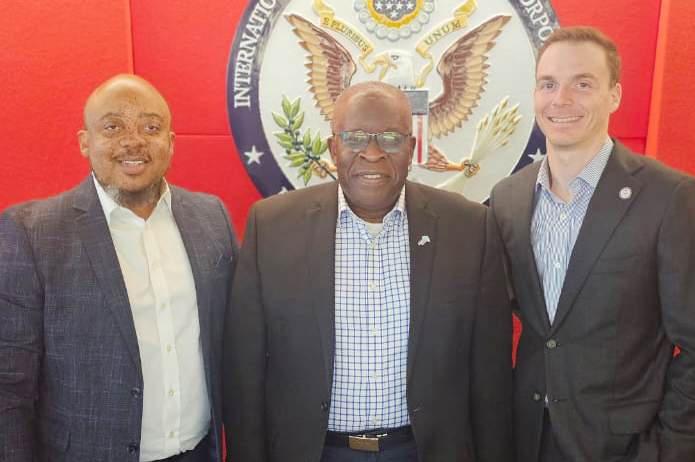
STRENGTHENING STRATEGIC ENERGY PARTNERSHIP...
L-R: Director, US International Development Finance Corporation (DFC), Ayo Fashina; Executive Vice Chairman/Chief Executive Officer, Proton Energy, Oti Ikomi, and Matt DeLeonardis of the DFC, during a meeting between DFC and Proton Energy in Washington DC, USA… recently
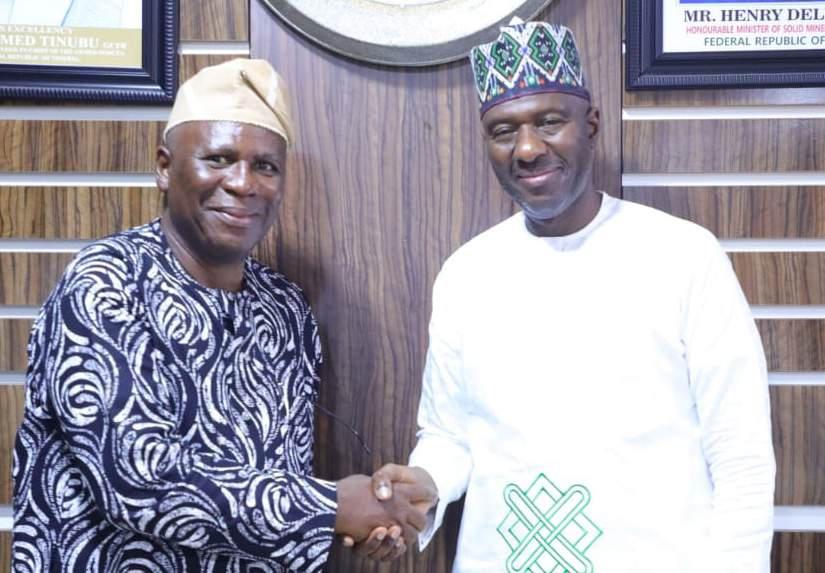
STEEL SECTOR DIALOGUE...
Director General National Steel Raw Materials Exploration Agency, Kolawole Michael (left) and Permanent Secretary, Federal Ministry of Steel Development, Amb. Nura Abba Rimi, at a strategic Steel sector Dialogue in Abuja…recently
Atiku to Obasanjo: Don't Use the Dead to Settle Political Scores
Former Vice President and presidential candidate of the African Democratic Congress (ADC), Atiku Abubakar, has faulted former President Olusegun Obasanjo's latest allegations against him, describing them as a desperate attempt to rewrite history and confer political advantage on his preferred candidate ahead of the 2027 presidential election.
Obasanjo in a statement on Thursday titled, ‘Reply to Your Inaccurate Posture: ‘How Obasanjo Deceived Us in 2003’, where he rejected former Ogun State Governor, Chief Olusegun Osoba’s account of the political events leading to the 2003 general elections, had also alleged that
his former Vice President, Atiku, masterminded an impeachment plot against him through the then Speaker of the House of Representatives, the late Ghali Umar Na’Abba. The alleged plot began while he was away from the office on a Friday.
Obasanjo claimed that former Vice President invited Na’Abba to his office and allegedly provided him with N5m to commence impeachment proceedings. “And that takes me to Na’Abba’s impeachment you glowingly talked about. And the way you wrote about it, talking about remorse would suggest stack ignorance on your part or being an accomplice. And both were possible.
“Na’Abba’s impeachment began at the presidency by
the Vice-President, who on a Friday when I was out of the office, invited Na’Abba to his office and convinced him, as he had convinced himself and some others but of insignificant number, that I should have only one term as President and this was the act of a man I brought up from governorship to Vice President.
“From the first day as VicePresident, he raised campaigners
for his presidency. On the Friday, he invited Na’Abba; he gave him N5 million to begin his impeachment work. It was all noted, recorded and reported to me by my Chief of Staff, a professional intelligence officer,” Obasanjo said.
But in a statement issued by his Senior Special Assistant on Public Communication, Phrank Shaibu, Atiku said the former President's decision to accuse
him of bribing the late Rt. Hon. Na'Abba to impeach him was not only reckless but fundamentally unfair to a man who is no longer alive to defend his name.
"As Africans, we understand the solemn duty of speaking truthfully about the dead. It is therefore deeply troubling that former President Obasanjo has chosen this moment to allege that I gave the late Rt. Hon. Ghali Umar Na'Abba a bribe to impeach him.
"If this allegation were true, why did he never make it while Rt. Hon. Na'Abba was alive? Why wait until the only man who could confirm or refute the claim has departed this world? By invoking a deceased man as the principal witness to such a grave allegation, former President Obasanjo has denied Nigerians the opportunity of hearing the other side of the story.
Matawalle Warns Opposition Against Inciting Nigerians
Kayode Tokede
BUA Cement Plc has released its half-year (H1) unaudited financial statements for the period ended June 30, 2026 with profit before tax of N324,4 billion, about 79 per cent increase over N214.8 billion reported in the half year (H1) ended June 30, 2025.
The company reported N728.9 billion revenue in H1 2026, a 25.6per cent growth from N580.3 billion as at the end of the corresponding period ended 2025.
This strong performance was attributable to growth in the “new market” business segment, continuing cost containment across operations, sustained fiscal discipline in our treasury function and a stable foreign currency environment.
Growth in the “new market” segment recorded increased contribution to revenue, year-on year(y/y), and over the preceding
quarter.
Cost containment measures resulted in a 4.4 per cent decline in direct cost per ton (y/y), including a 0.6 per cent decline between the first two quarters of this year. Year-on-year, the Company’s Operating Ratio (OR)1 declined to 49.1 per cent (H1 2026), from 57.9 per cent (H1’2025).
Considering these appreciable gains, Return on Asset (ROA) increased to 21.4per cent in H1 2026 (up from 15.4per cent in H1 2025), underpinned by higher margins and improved asset turnover.
By extension, Return on Equity (ROE) increased to 52.4per cent (H1 2026), up from 37.8per cent in H1 2025.
EBITDA rose to 54 per cent in H1 2026 from 46.3per cent at the end of the corresponding period. Overall, Earnings per Share (EPS) increased to N9.59 (H1’2025: N5.34).
The Minister of State for Defence, Dr. Bello Mohammed Matawalle, has urged opposition politicians to desist from actions and comments capable of inciting Nigerians against the constitutionally elected government of President Bola Ahmed Tinubu, warning that such conduct does not advance democracy but only heats up the polity ahead of 2027.
In a statement issued yesterday by his Personal Assistant on Media, Ahmad Dan-Wudil, the minister
described as “unfortunate” the reported decision by former Vice President Atiku Abubakar to engage a foreign lobbying firm in the United States to circulate decades-old documents relating to President Tinubu. “Such actions neither advance Nigeria's democracy nor address the pressing challenges confronting the nation,” Dan-Wudil quoted the Minister as saying.
Matawalle, according to the statement, said rather than seeking to tarnish Nigeria’s image abroad and undermine the Presidency, opposition leaders should
channel their energy toward supporting government efforts to tackle insecurity, strengthen national unity and improve the welfare of Nigerians. He stressed that the Presidency remains a national institution and a symbol of the country’s sovereignty that deserves respect irrespective of political affiliations.
The minister further declared that no foreign government or lobbying firm would determine Nigeria’s democratic choices or alter the mandate freely given by Nigerians. “Our political differences must never come at the expense of our country's
image and collective interest,” Dan-Wudil quoted him. Drawing attention to recent international engagements, Matawalle noted that President Donald Trump had commended President Tinubu’s leadership and acknowledged Nigeria’s progress in strengthening security cooperation and combating terrorism. The media aide said the Minister described the commendation as a reflection of “the growing confidence in Nigeria's efforts under President Tinubu” and urged patriotic citizens to work together instead of promoting divisive narratives abroad.
Okocha
Presidential candidate of the Accord Party and CoChairman of the Movement for Democratic Renewal (MDR), Dr. Gbenga Olawepo-Hashim, has declared that Nigeria cannot be renewed without its workers, describing organised labour as the indispensable force for rebuilding the country's democracy and restoring accountable governance.
Olawepo-Hashim made the declaration at the formal
launch of the Movement for Democratic Renewal (MDR) in the Federal Capital Territory, held at the Nigeria Labour Congress (NLC) Labour House, Abuja, in collaboration with the NLC FCT Council.
The event brought together labour coordinators from affiliate unions, labour leaders and democratic stakeholders to inaugurate the movement in the FCT and mobilise support for a nationwide campaign for democratic renewal, responsible leadership and National restoration.
Represented by his Chief of Staff, Mr. Kamaldeen Adebayo Sanni, Olawepo-Hashim said workers must no longer be seen merely as voters during elections but as equal partners in governance, policy formulation and National development.
"Nigeria cannot be renewed without its workers. Workers are not just voters; they are nation builders. They must become equal partners in governance, policy making and national development," he declared.
He outlined the Movement's priorities, including expanding economic opportunities through entrepreneurship, technology, vocational skills and agricultural value chains; improving access to quality education and digital literacy; strengthening affordable healthcare; protecting citizens through institutional reforms; and promoting leadership based on competence, integrity and merit.
Onuminya Innocent in Sokoto
Chuks
in Abuja
Chuks Okocha in Abuja
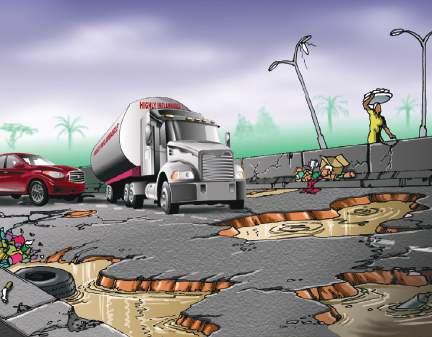
Kogi East Arteries Of Pain
JONATHAN JIBRIN argues for federal intervention in road infrastructure
The recent approval by the federal government of 27 major road projects worth over ₦3.9 trillion across 15 states has once again exposed the painful reality of the continued neglect of Kogi East (Igala/ Bassa land).
While many parts of the country are celebrating the rehabilitation and construction of critical federal roads, the people of Kogi East have once again been left with nothing but broken promises, abandoned projects, and highways that have become enduring symbols of government neglect.
The Ayangba–Dekina–Shintaku federal road has deteriorated to a deplorable state. The Otuocha–Ibaji–Idah Road, which serves thousands of people in our riverine communities, remains largely impassable. The strategic Itobe–Ayangba–Ankpa–Otukpa federal road continues to claim lives, damage vehicles, and stifle economic activities. The Aloma–Akpanya–Enugu-Ezike Road, despite being awarded for construction, has been abandoned without explanation. The Idah–Nsukka Road has also become a death trap after years of neglect.
These roads are far more than stretches of asphalt. They are the arteries that sustain commerce, agriculture, education, healthcare, and the movement of people and goods. Their poor condition has imposed enormous hardship on farmers, traders, students, transporters, businesses, and countless families across Kogi East.
It is therefore difficult to understand why, in a national infrastructure programme running into trillions of naira, Kogi East was once again left out. Such exclusion raises legitimate questions about fairness, equity, and the place of our people in Nigeria's development agenda.
The people of Kogi East are not asking for special treatment. We are asking for fairness. We are demanding that the constitutional principle of equitable development be upheld. We are demanding that our contributions to national development—through our taxes, our votes, and our unwavering commitment to the Nigerian
Tproject—be reflected in visible federal investment in our region.
As the 2027 general elections approach, political leaders will once again visit our communities seeking support. They will make fresh promises and ask for our votes. This time, however, the people of Kogi East must remember that democracy is sustained by accountability.
Our votes are valuable. They must never again be exchanged for empty rhetoric, political sentiment, or promises that disappear after elections. Every candidate and every political party seeking the mandate of our people should clearly state their plans for addressing the decades-long infrastructure deficit in Kogi East. Commitment must be demonstrated through concrete policies, measurable actions, and verifiable results.
We therefore call on all elected representatives from Kogi East, political office holders, traditional rulers, community leaders, youth organisations, women's groups, and every patriotic son and daughter of Igala land to unite in demanding immediate federal intervention in our road infrastructure.
Our appeal is simple, reasonable, and just: the federal government should review the allocation of infrastructure funds and ensure that at least one of these critical road projects is included for immediate execution. Kogi East deserves to benefit from the same national development efforts being extended to other parts of the country.
WHILE MANY PARTS OF THE COUNTRY
ARE CELEBRATING THE REHABILITATION AND CONSTRUCTION OF CRITICAL FEDERAL ROADS, THE PEOPLE OF KOGI EAST HAVE ONCE AGAIN BEEN LEFT WITH NOTHING BUT BROKEN PROMISES
The era of silence must come to an end. The era of accepting neglect as our destiny must also end. We must speak with one voice—not through division or hostility, but through lawful, peaceful, and democratic engagement. United in purpose, we must continue to demand justice, fairness, and equal treatment within the Nigerian federation.
The Igala people have waited long enough. Our patience should never be mistaken for weakness. Our loyalty should never be rewarded with neglect.
Kogi East deserves better. Jibrin writes from Abuja
The Passing Of Vincent Omasheho Muoghereh
ONOAWARIE EDEVBIE pays tribute to Muoghereh, clergyman, educator and community leader
he passing of His Lordship, Right Revered Muoghereh, on April 5, 2026, reminds me of the first time I met him at his residence, the Bishop’s Court, Ughelli. I had the opportunity to do so at the invitation of a mutual elder statesman, now the HRM Simpson Obruche, the Odionrode of Uwherun. His Lordship was quick to establish rapport with me when he revealed that his wife, Blessing, like me, hails from Afiesere, a nearby village in Ughelli. A few years later, I had another opportunity to cross his path, this time to pay the clergy homage when I was given the privilege in 2014 to prepare a citation on behalf of Urhobo Historical Society, to honor him, for his services to the Church and Urhobo people. That citation was delivered eleven years ago but I still find what was said to be valid not only as a fair description of his personality but also a true reflection of the times we now live. I therefore, hereby seek the indulgence of a caring public, to repeat here, perhaps for posterity what I wrote about an Honorable man as follows: Vincent Muoghereh was elected the Bishop of the Anglican Diocese of Ughelli in 1998, extending a rich
family history of service to the Anglican Church. As the pioneer Bishop of the Ughelli diocese, he built one of the best organized Administrative Bishop Courts in Nigeria, through which he was able to champion the cause of expanding the work of the Anglican Church and its services in Urhoboland. His parents had also worked for the church. His father, Stephen Ọgbọ Muoghereh who worked besides many of the early Christian missionaries in Western Niger Delta, became an Anglican school teacher and later a public health worker. Stephen Muoghereh and his team of fellow health workers were responsible for maintaining public dispensaries and carrying out sanitary inspections of various Urhobo communities for the purpose of protecting public health in the area. Dorcas Muoghereh, Vincent’s mother was appointed the leader of Adam Anglican Preaching Society (AAPS) in Uwherun area. The AAPS, an evangelical movement founded by Evangelist Cornelius Igbudu of Araya in Isoko was said to have created waves of mass conversions of many from their traditional religion to the Church Missionary Church (CMS). Besides, Vincent’s mother also served
as the leader of the ushers in their home Church, Saint Thomas’s CMS (Anglican) Church, Uwherun.
The journey into the priesthood as an avenue for public service started for Vincent Muoghereh during his years as a student at James Welch Grammar School (JWGS), Emevor. In taking this path, he was thus following the examples of his parents before him. The school, the first of its kind in Isoko, was founded in 1957 and named in honour of an early English missionary and educator, James William Welch. Vincent was among the 30 pioneer students enrolled when the school opened its doors on January 25, 1957. The missionary, who had some theological training with emphasis on education in West Africa, came to Nigeria in 1924 and was on hand to implement the provisions of the New Education Ordinance and Code that was introduced in 1926 by the colonial administration in Nigeria. James Welch had to deal with a lack of teachers and by 1929, he had succeeded in building only two schools, one in Ozoro in Isokoland and other at Uwherun, Vincent’s hometown in Urhoboland. Even James Welch himself at a time had to take over as the Headmaster of the
CMS School at Uwherun. He was to solve the manpower problem by running a series of 10-week crash programs to train local people to become teachers. Vincent’s father, Stephen Muoghereh who used to live with James Welch as a personal aide, was believed to be among those who benefited from the crash programs. As a result, James Welch was able to establish by 1931 a string of more CMS schools in various areas of Isoko. A major part of the mission of the British-based Society had been to use education as a tool for the evangelization of the people. James Welch had to leave for England for further studies. He came back to Nigeria with the same level of pioneering zeal to establish the Department of Religious Studies at the University College, Ibadan when the College was opened in 1948.
The founding of JWGS can therefore be seen as a continuation of the efforts of Christian missionaries to expand the benefits of education beyond the mandate of Education Ordinance of 1926. The ordinance had limited the educational work of missionaries to the establishment of primary schools. Prof Edevbie is of the Urhobo Historical Society
How Best to Honour Chinua Achebe
In Praise of President Buhari
A State Banquet for Bandits
WWhohen President Muhammadu Buhari took over the reins of power on May 29, 2015, Nigeria was sadly a broken state in many respects. As a result of many other factors including bad governance and untold level of corruption, government could not live up to its financial obligations to citizens and service providers at both the federal and state levels.
global literary fame.
Indeed one of the first official assignments that President Buhari carried out was the approval of billions of Naira in bailout funds to enable state governors pay something as basic as workers’ salaries. Granting those bailout funds was a huge boost to national security because the pressure of arrears of unpaid monthly salaries building dangerously all over the country was a ticking bomb.
Ask the naysayers and they would readily remind you of how long it took President Buhari to appoint his ministers and how that contributed to collapse of the economy as if, without ministers, governance was frozen. But buying that narrative would amount to what a famous Nigerian writer, Chimamanda Adichie, termed “the danger of a single story”. Yet the whole story was that many of our citizens did not know how decrepit a state President Buhari inherited in 2015.
doesn't know Chinua Albert Achebe, the writer of the literary classic, Things Fall Apart? He is one of the founding fathers of the modern African literature. An alumnus of the University of Ibadan, his contemporaries in the writing enterprise include, but not limited to, Wole Soyinka, John Pepper Clark, and Christopher Okigbo. As a writer, he produced works in all the genres of literature. His forte was in the area of prose, however. Achebe, whose ouvre teems with works, which are classics, deserves to be honoured, even posthumously.
Aside literature, for which he's widely known, Chinua Achebe was a politician. During the NigeriaBiafra civil war, which lasted from 1967 to 1970, he was an emissary of peace for Biafra. And in the second republic, he was an active member of the People's Redemption Party (PRP), a party with a socialist leaning. It was a party of the talakawas or the commoners. Achebe's identification with the party revealed a side to his personality: he had empathy for the poor.
It was therefore necessary for him to take stock against the background of the fact that the departing government did not, reportedly, cooperate full well with the incoming government in terms of leaving workable handover notes. Although President Goodluck Jonathan was gracious in defeat, many of his appointees were still sulking over what they saw as their personal losses and therefore pulled all the stops to make things difficult for the Buhari government.
by the EFCC, President Buhari by his action has successfully brought back to the public consciousness the need to treat public funds with the highest level of transparency and accountability.
LAfter keeping treasury looters on their toes and at bay through the EFCC, particularly, President Buhari moved to curb unnecessary spending habits of the nation on what economists call articles of ostentation. Part of the disclosures of the President’s stock taking was how the country frittered away billions in foreign currency by importing goods, which can be produced at home. One of such items was rice, a major staple among Nigerians. By banning rice importation into the country, the President on one hand had saved the nation billions in foreign currency annually.
ast month, Dr. Bashir Kurfi, an academic and security expert went on air to make some jarring revelations. According to him, some pilgrims sponsored to Mecca for this year’s Hajj by the Katsina State government were well-known bandit leaders.
And, on the other hand, the President has boosted domestic production of rice and in the process had nudged the country into self sufficiency in food production. He also created millions of jobs for young people in the rice value chain.
What is most admirable about President Buhari and his government is its frugal management of scarce national resources to attain optimum goals.
Recall that since President Buhari stepped in the saddle, oil revenue dropped abysmally as if to sabotage him knowing all the big promises he made to citizens during his campaigns. But with the little resources that trickle in, the President is achieving what governments that received oil windfalls could not dream of.
Stop Ritual Attacks and Killings
Tterrorism, their government appears clueless. With the amount of information it gathers and receives, there is no doubt that the government has high-level intelligence on many of those causing the insecurity crippling Nigeria. Yet, the government appears unable or unwilling to do anything about them.
Not surprisingly, in the fourth republic, he rejected a national honour on the grounds that his home state of Anambra had been turned into a fiefdom by bad political leaders.
Even with the obvious and unpatriotic obscurantist behaviour of the PDP appointees and their supporters still in government hell-bent on making things difficult for Buhari, the President moved on with his methodical repair of a broken country. The first thing he did was to identify all possible sources of income to the nation and directed that all inflows be paid into one single account in line with the policy of Single Treasury Account (TSA).
The TSA policy, interestingly, was mooted by the PDP government but its penchant for imprudence and lack of accountability denied it the courage of implementing the policy. What the President literally did was to gather all the nation’s money into one box and locked it up with a big padlock and watched for any thief to come close.
Who can blame the President for almost developing paranoia over the safeguard of the national treasury with revelations and reports of mind-boggling looting that took place in the 16 years of the PDP? With such disclosures of how billions meant for fighting insurgency in the Northeast ended up in the pockets of a few individuals while our gallant soldiers fought with bare hands and on empty stomach, President Buhari was duty bound to bring sanity and accountability back in national spending.
Thus, under President Buhari, the Economic and Financial Crimes Commission (EFCC), which had remained comatose for years, was woken up to resume its duties. Apart from the trillions of Naira of looted funds and property recovered from corrupt politicians
It is worthy of note that his novel, Things Fall Apart, published by Heineman publishers in 1958, blazed the trail in novel writing in Africa. His novels, namely Things Fall Apart, Arrow of God, and No Longer At Ease, are a trilogy. They explore the theme of culture contact, which was brought about by the British people's colonization of Nigeria. And they are anthropological works that encapsulate the Igbo cosmology and cultural practices. His other works like Anthills of The Savannah, Girls At War, Beware Soul Brother, and There Was A Country are good books, which thrill literature aficionados from different parts of the world. Little wonder, Achebe was tipped countless times to win the Nobel prize for literature. The prize eluded him during his life time, however. But winning that coveted and prestigious prize is not the only benchmark or criterion for determining a writer, who has achieved
Chiedu Uche Okoye, UruowuluObosi Anambra State
Today, the trains are up and running daily from Abuja to Kaduna. And from Lagos to Ibadan a brand new rail track was started and completed; citizens are already commuting daily to and fro these two major cities in the country seamlessly as they reap from the dividends of democracy. And with the way this government is going, before 2023 when the President would leave, the entire country would be linked by rail with all of its economic advantages.
Ainofenokhai Ojeifo, Abuja
Following the jarring revelation, the Katsina State government was swift to act. Dr. Kurfi was arrested by the police and put on trial. A couple of days after his arrest, the Department of State Services announced that it had arrested some bandit leaders at the Katsina airport as they returned from Hajj.
The most painful fact for Nigerians as they navigate existence in a country ravaged by insecurity is that in the face of rampaging
THE SATURDAY NEWSPAPER
THE SATURDAY NEWSPAPER
EDITOR YEMI ADEBOWALE
EDITOR OBINNA CHIMA
DEPUTY EDITOR AHAMEFULA OGBU
DEPUTY EDITOR AHAMEFULA OGBU
MANAGING DIRECTOR ENIOLA BELLO
MANAGING DIRECTOR ENIOLA BELLO
DEPUTY MANAGING DIRECTOR ISRAEL IWEGBU
DEPUTY MANAGING DIRECTOR ISRAEL IWEGBU
CHAIRMAN EDITORIAL BOARD OLUSEGUN ADENIYI
CHAIRMAN EDITORIAL BOARD OLUSEGUN ADENIYI
EDITOR NATION’S CAPITAL IYOBOSA UWUGIAREN
EDITOR NATION’S CAPITAL IYOBOSA UWUGIAREN
MANAGING EDITOR BOLAJI ADEBIYI
THE OMBUDSMAN KAYODE KOMOLAFE
THE OMBUDSMAN KAYODE KOMOLAFE
THISDAY NEWSPAPERS LIMITED
THISDAY NEWSPAPERS LIMITED
EDITOR-IN-CHIEF/CHAIRMAN NDUKA OBAIGBENA
EDITOR-IN-CHIEF/CHAIRMAN NDUKA OBAIGBENA
GROUP EXECUTIVE DIRECTORS ENIOLA BELLO, KAYODE KOMOLAFE, ISRAEL IWEGBU, IJEOMA NWOGWUGWU, EMMANUEL EFENI
GROUP EXECUTIVE DIRECTORS ENIOLA BELLO, KAYODE KOMOLAFE, ISRAEL IWEGBU
DIVISIONAL DIRECTORS SHAKA MOMODU, PETER IWEGBU, ANTHONY OGEDENGBE
DIVISIONAL DIRECTORS SHAKA MOMODU, PETER IWEGBU, ANTHONY OGEDENGBE
The callous criminals who comb Nigeria’s rural areas terrorizing communities have a clear game plan. They know where and when people are most vulnerable, and so they strike while the iron is hottest.
They slaughter farmers, abduct women and children, and burn down entire communities.
Kene Obiezu is a lawyer and writer
And so the greatest sporting event ever, finishes with a good, although not outstanding, game. Let's hope this is the last time it is held in America.
The increased number of teams, from 32 to 48, decreased the overall standard of matches. There were teams playing that were not up to standard, although Cape Verde with only half a million people drew all their first round matches including against Spain the final winner and pushed Argentina to a 3-2 result. There were problems from the American viewpoint, holding games in the heat, the President successfully asking for a red card decision to be reviewed, and the booing of President Trump at the final. Dennis Fitzgerald, 28 Landale St, Box Hill, Vic Australia
he Advocacy for Alleged Witches (AfAW) urges the Nigerian public to stop ritual attacks and killings because the notion of ritual money and wealth is completely baseless. AfAW is making this call following the reported arrest of suspected ritualists in Oyo State in southern Nigeria. The local media reported that members of the Western Nigeria Security Network, Amotekun, arrested suspected ritualists with the body parts of a 73-year-old man. The suspects, who were apprehended in the Boluwaji area in Ibadan, said that a Muslim cleric asked them to procure some human body parts for rituals. Ritual attacks are widespread in Nigeria. Irrational conceptions of how to make money or become wealthy and successful undergird these atrocities. Many Nigerians strongly believe in blood money, known in some local languages as Ogun Owo (Yoruba) or Ogwu ego (Igbo). They think that they could become rich, or successful through ritual sacrifice. Unfortunately, this is not the case. Ritual wealth has no basis in reason, science, or reality. Home movies known as Africa magic or Nollywood films have not helped matters. These movies continue to reinforce these mistaken notions and other superstitions. Families, churches, mosques, and other public institutions do not encourage the interrogation of these traditional occult beliefs. There are no robust efforts to criticize or dispel these irrational and paranormal claims in schools, colleges, and universities. So millions of Nigerians grow up blindly believing that they could make money through ritual sacrifice of human body parts. The belief has led many Nigerians to commit crimes and perpetrate atrocities. Many Nigerians have been jailed or are undergoing court trials due to ritualrelated attacks and murder. Not too long ago, the police arrested some young Nigerians for stealing female pants, which they intended to use for ritual sacrifice. AfAW is asking all Nigerians to desist from ritual-related abuses because ritual money beliefs are baseless superstitions. Nigerian media, schools, and colleges should help educate and reorient the public. They should assist in reasoning Nigerians out of this killer-superstitious absurdity and nonsense. Leo Igwe directs the Advocacy for Alleged Witches (AfAW)
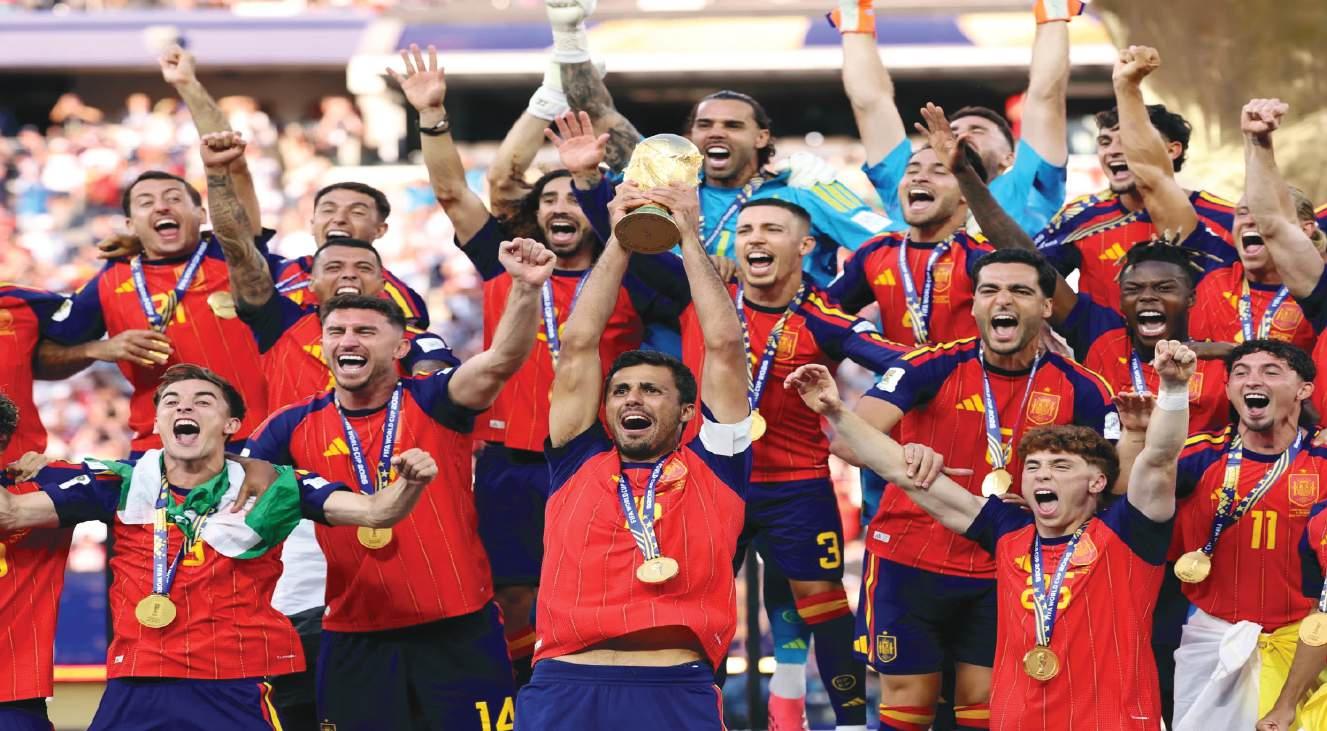
Sweet victory....
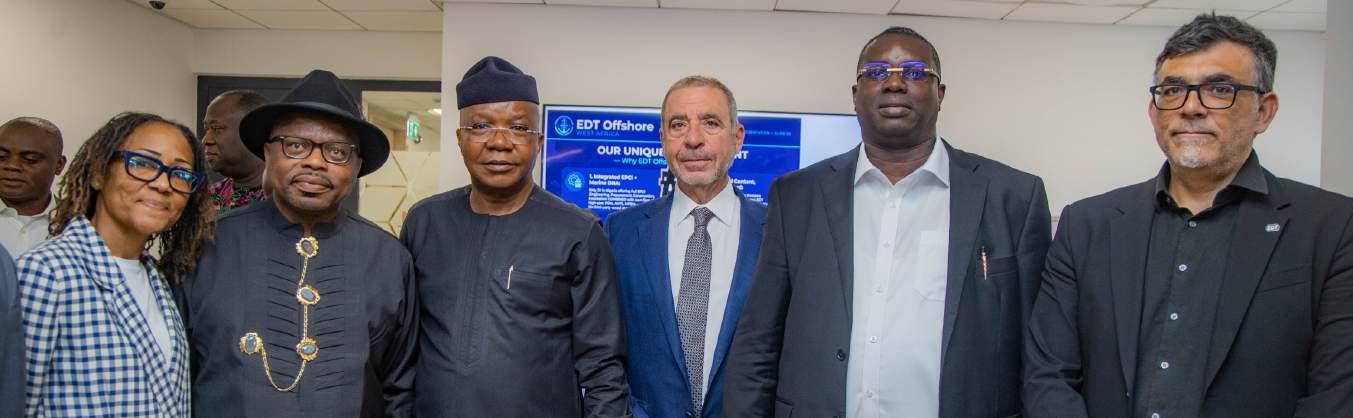
EDT OFFSHORE WEST AFRICA
UNVEILING...
Sanwo-Olu, Media Leaders Harp on Credible 2027 Polls, Celebrate Jakande's Enduring Legacy
Lagos State Governor, Babajide Sanwo-Olu, media executives, academics and democracy advocates, recently, paid tributes to the late Alhaji Lateef Jakande, the first civilian governor of Lagos State and pioneer President of the Nigerian Guild of Editors (NGE), while calling for reforms and stronger collaboration among stakeholders to guarantee credible
elections in 2027.
The occasion was the fourth edition of the Lateef Jakande Memorial Lecture, organised by the Nigerian Guild of Editors (NGE) in Lagos, with the theme, ‘The Media, INEC, Voters and the Path to Credible Elections’.
The event attracted publishers, editors, journalists, students, academics and other stakeholders who reflected on
Jakande’s enduring contributions to journalism, governance and Nigeria’s democratic development.
Represented by the Lagos State Commissioner for Information and Strategy, Gbenga Omotoso, Governor Sanwo-Olu described Jakande as an embodiment of integrity, professionalism and selfless service whose life continues to inspire both journalists and political office
holders.
According to him, Jakande demonstrated that journalism remains one of the strongest foundations for effective leadership.
“Jakande is a lesson to all of us. He was loyal to the people of Lagos and loyal to journalism.
“He demonstrated that journalists are not only good writers and broadcasters but can also become excellent
Nigerian-American Engineer Develops World’s First Braid-Assist Robot, Raises $7m
Erizia Rubyjeana
A Nigerian-American engineer and Harvard University graduate, Yinka Ogunbiyi, has developed what is described as the world’s first braid-assist robot, HaloBraid, designed to reduce the physical strain on hairstylists and improve efficiency in salons. According to information shared about the innovation, HaloBraid assists with the braiding process, helping stylists save time while easing the repetitive physical demands associated with hair braiding. The innovation has reportedly attracted significant investor
interest, raising $7 million in funding. More than 7,000 salons have also joined the waiting list to adopt the technology.
The robot is being promoted as an innovation with global potential, highlighting the growing role of technology in transforming the beauty industry and improving
Streamsowers & Köhn to
productivity for professional hairstylists.
Ogunbiyi, a NigerianAmerican engineer and Harvard graduate, is credited with leading the development of the product, which aims to modernise hair-braiding services through robotics and automation.
Host Symposium on Nigeria's Investment Future
One of Nigeria's leading commercial law firms, Streamsowers & Köhn (SSK), will convene business leaders, legal practitioners, regulators and investors later this month to explore strategies for strengthening the country's economy and positioning Nigeria as Africa's
leading investment destination.
The symposium, scheduled for Thursday, July 30, 2026, forms part of activities marking the firm's 20th anniversary and is expected to provide a platform for high-level discussions on Nigeria's economic future amid increasing global uncertainties.
With the theme, ‘Nigeria's Path to Economic Resilience and Investment Leadership in a Volatile Global Environment’, the event will examine practical solutions to the economic, legal and regulatory challenges affecting investment flows, while identifying opportunities capable of driving
sustainable economic growth.
A key focus of the symposium will be the opportunities presented by the African Continental Free Trade Area (AfCFTA) and strategies for maximising its benefits to enhance Nigeria's competitiveness and attract greater investment.
Tech4Dev Earns ITU Global Recognition
Kehinde Oladunjoye
Technology for Social Change and Development Initiative (Tech4Dev), a leading global nonprofit advancing digital inclusion and economic prosperity, has been named a WSIS Prizes 2026 champion by the International Telecommunication Union (ITU) for its flagship Women Techsters programme, Africa’s
largest women in technology programme currently implemented across 30 African countries.
Presented during the World Summit on the Information Society (WSIS) Forum 2026, the recognition in the ICT Applications: E-Employment category acknowledges Tech4Dev’s Women Techsters programme for equipping
women and girls with future ready digital skills and creating pathways to employment, entrepreneurship, and leadership in the digital economy.
The recognition marks a proud and defining moment for Nigeria, with Tech4Dev becoming the only Nigerian private organisation recognised at the WSIS Prizes 2026, where 72 champions were recognised
across 18 WSIS Action Line categories. The achievement reflects Tech4Dev’s sustained impact in expanding access to digital opportunities, creating economic prosperity, and strengthening inclusive digital ecosystems across Africa through strategic partnerships with governments, development institutions, and the private sector.
administrators and outstanding public servants.
“Journalism prepares people for leadership. Jakande showed us that if you make a journalist a soldier, he will be a better soldier. If you make a journalist a governor, he will be a better governor.”
Sanwo-Olu also expressed concern over the increasing spread of fake news and misinformation, warning that the proliferation of smartphones should not be mistaken for journalism.
He noted that while established
media organisations invest huge resources in gathering and verifying news, digital platforms continue to benefit financially from their content without adequate compensation.
“I urge the media to work with the federal government to ensure that Big Tech companies fairly compensate media organisations for the value they derive from their content.
“Without financial sustainability, media organisations will struggle to continue performing their democratic responsibilities.”
Experts to Chart Future of Trust in Digital Finance as Bridgforte Unveils Report
Oluchi Chibuzor
Experts from across Africa, Europe and the Americas will converge virtually on Tuesday, July 28, for the launch of a new policy report by Bridgforte that seeks to redefine how trust is built and sustained in increasingly digital financial systems.
The report, Trust Architecture in Platform-Led Finance, will be unveiled at a 100-minute virtual event featuring regulators, policymakers, financial institutions, fintech executives, development partners and researchers. The Deputy Governor of the South African Reserve Bank (SARB), Nomfundo (Fundi) Tshazibana, will deliver the keynote address.
According to a statement from Bridgforte, the organiser, the report examines one of the most pressing governance challenges confronting the financial sector as financial services become faster, more digital and increasingly delivered through interconnected platforms rather than individual institutions.
The framework argues that while financial inclusion has significantly expanded access to financial services, sustaining public confidence has emerged as the defining challenge for the next phase of digital finance.
Founder of Bridgforte and
former Deputy Governor of the Central Bank of Nigeria, Aishah Ahmad, said although financial inclusion had transformed millions of lives by expanding access, confidence in digital financial systems remained unfinished business.
"Financial inclusion has transformed millions of lives by expanding access. The unfinished work is confidence. Digital financial systems must now prove themselves worthy of public trust. That is the defining challenge for policymakers, regulators and industry leaders alike," she added.
The launch will also feature an introduction by Ahmad on the origins of the research, followed by the unveiling of the policy framework and a presentation of the report by Ms. Ladipo.
A panel of industry leaders will discuss the report's findings from different perspectives across the financial ecosystem. Panelists include Dr. Diane Karusisi, Chief Executive Officer of Bank of Kigali; Uzoma Dozie, Founder of Sparkle and former Chief Executive Officer of Diamond Bank; Odunayo Eweniyi, Co-founder of PiggyVest; and Professor Chiso Ndukwe-Okafor, Executive Director of the Consumer Advocacy and Empowerment Foundation.
Sunday Ehigiator
L-R: Corporate Director, EDT Offshore West Africa Limited, Dr. Ibiene Ogolo; Senior Technical Adviser to the Executive Secretary, Nigerian Content Development & Monitoring Board (NCDMB), Engr. Austin Uzoka; Chairman of EDT Offshore Board, Mutiu Summon; Board Director , Darios Melas; Board Director, Samuel Diminas and Technical Director, John Stamoudakis, during the unveiling of EDT Offshore West Africa at Lagos...yesterday
PHOTO: KUNLE OGUNFUYI
Tinubu Urges Diaspora Doctors to Return Home, Rebuild Nigeria's Healthcare
Deji Elumoye and Michael Olugbode in Abuja
President Bola Tinubu has urged Nigerian medical doctors and other healthcare professionals in the diaspora to return home and lend their expertise to the ongoing transformation of the nation's healthcare sector under the Renewed Hope Agenda.
Tinubu made this call yesterday when he received in audience a delegation of Nigerian Diaspora Medical Associations Worldwide led by the Chief Executive Officer of the Nigerians in Diaspora Commission (NIDCOM) Hon. Abike Dabiri-Erewa, as part of the 2026 National Diaspora Day Celebration at the State House, Abuja.
The President acknowledged that Nigeria needs the knowledge, innovation, experience and patriotism of its highly skilled professionals abroad to build
a resilient and world-class healthcare system for all citizens.
He said, “It is a very great joy to see that you are coming back to facilitate your single motivation to help your country meet the needs of our people, the medical outreaches; seeing indivisible commitment to humanity is part of your singular oath and commitment in life. I thank all of you.
“I have been through that journey, I'm home now and I can tell you there's nowhere like home. Some people built the society where you are; they have their hands on their plough, their focus was to develop their nation and their continent."
Tinubu recalled how he came to Nigeria after his experiences with Deloitte and Touche and working with Mobil (company) and eventually came to Nigeria to contribute his quota to nation building.
He reaffirmed that the Renewed Hope Agenda places healthcare at the centre of national development, stressing that the Federal Government is implementing far-reaching reforms to strengthen primary healthcare, expand access to quality medical services and encourage greater collaboration with Nigerian
professionals in the diaspora.
The President said this would be achieved through sustained investments in medical education, research, digital health infrastructure, improved welfare and policies to reverse the trend of brain drain.
According to him, “So many of you have seen the hazard of
Oil Price Eases to $89.81 After $100
the other side of the world. You have experienced the challenges and you have come back home to feel it and seal it. Poverty and lack of development is a challenge to Africa but what do you see as a Nigerian? This is the heart of Africa. And I have interacted with many of you, my friends who are still out there to
try to attract them home.
“The best way to demonstrate to you is for me to commit myself to my agenda, the Renewed Hope, so that the hope of Nigerians of having better environment, better education, better development and prosperity can be realised.
Spike as OPEC Pledges More Supply
DAPPMAN alleges import permit curb fuelling high petrol cost in Nigeria
Peter Uzoho
Global crude oil prices retreated yesterday after a sharp rally pushed Brent above $100 per barrel on Thursday, offering brief relief to a market still rattled by Middle East supply risks and domestic pump price pressures in Nigeria.
Brent crude declined by three per cent to $96 per barrel, while
West Texas Intermediate (WTI) fell 2.58 per cent to $89.81 per barrel, data showed.
The pullback came a day after Brent and WTI surged to $100.67 and $92.19 per barrel, respectively, following attacks by Houthi militants on Saudi-linked oil tankers that heightened concerns over the security of global energy supply routes.
Some respite however emerged after the Organisation of the Petroleum Exporting Countries (OPEC) pledged to increase supply.
Reuters reported that Saudi Arabia, Russia, Iraq, Kuwait, Algeria, Kazakhstan and Oman were expected to raise their combined September production target by 188,000 barrels per day.
In Nigeria, the volatility has
BUDGET OFFICE: HOW EXPENDITURE CONTROLS BLOCKED PAYMENT OF N1.3BN TO FAKE AGENCY
and no salary payment could lawfully be processed.
He also stressed that personnel appropriations are never transferred as lump sums to agencies but are instead paid monthly into the accounts of verified employees after all regulatory conditions have been met.
He explained that since no staff were recruited and no payroll records were created, no personnel expenditure arose
Addressing concerns over the council's N200 million overhead allocation, Yakubu explained that overhead provisions equally do not translate automatically into cash releases.
He said such funds require treasury warrants and cash backing from the Federal Ministry of Finance and the Office of the Accountant-General of the Federation before any payment can be made.
According to him, when questions later emerged
regarding the council's legal status, the budget office formally advised both institutions to withhold every payment instrument that could support any release. Consequently, he said, the overhead allocation remained only a provision in the Appropriation Act and never became cash available to the council.
Yakubu also dismissed claims regarding the council's N300 million capital allocation, explaining that capital votes are subject to an entirely separate procurement regime involving procurement planning, Ministerial Tenders Board approvals, compliance with the Public Procurement Act, Certificates of No Objection where applicable, Treasury warrants and cash backing.
He said none of the statutory processes was initiated or completed. According to him, no procurement commenced,
no contracts were approved, no warrants were issued and no capital expenditure took place.
Yakubu pointed out that the episode demonstrated the strength rather than the weakness of the country's public financial management system.
He said each component of the appropriation encountered a separate layer of statutory control, with personnel expenditure halted at the financial clearance stage, overhead expenditure stopped before warranting and cash backing, and capital expenditure prevented from reaching procurement approval.
He maintained that the safeguards collectively ensured that no public money left government coffers, adding that the controls did not discover a loss after the event, but prevented the event.
Yakubu maintained that the controversy highlighted the need for Nigerians to distinguish
clearly between appropriation and expenditure, stressing that parliamentary approval alone does not create an automatic entitlement to public funds.
He said government spending only occurs after every institution responsible for approvals, regulation, financial clearance, treasury authorisation and procurement has fulfilled its legal obligations.
According to him, the PEAC/ PFIPC case proved that the system functioned as intended by preventing expenditure before it could occur.
He therefore, stressed that no personnel expenditure to recover because none was ever incurred, while the overhead and capital allocations equally never matured into lawful releases, nothing that the "money never moved because the controls held".
He said, "The personnel provision stopped at Financial Clearance. The overhead
provision stopped before warranting and cash backing. The capital provision stopped before procurement approval and release. Each part met a different safeguard. Each safeguard held."
"The system is designed this way because public finance cannot rest on trust alone. It rests on proof, sequence and divided authority... In the PEAC/PFIPC case, that sequence did not fail. It stopped the expenditure before it began. The money never moved because the controls held."
He reaffirmed the budget office determination to sustain cooperation with any lawful investigation by providing all relevant records, computations and official correspondence to establish that no unlawful expenditure arose from the controversial appropriation.
According to Yakubu, "When the three provisions are placed side by side, the record is plain. The personnel provision stopped
kept petrol prices elevated. Dangote Refinery’s gantry price for Premium Motor Spirit (PMS) now stands at N1,215 per litre, while Nigerians buy the product at between N1,200 and N1,300 per litre in Lagos and other major cities, according to market checks.
Depot owners and marketers raised prices last week after crude’s initial jump.
at Financial Clearance. The overhead provision stopped before warranting and cash backing. The capital provision stopped before procurement approval and release.
"Each part met a different safeguard. Each safeguard held. The Budget Office made its own personnel calculation instead of adopting the Council’s unsupported request. It withheld Financial Clearance when the conditions were incomplete.
"When doubts later arose about the legal status of the Council, it asked the Federal Ministry of Finance and the Office of the Accountant-General of the Federation to stop all payment instruments."
He added, "The wider system then did what it was built to do. Payroll was never activated. Overhead was not converted into an annual cash release. Procurement did not commence. Treasury instruments did not mature into payment.
Father. Anthony Onyema, at the launch of the CALM Clinic in Lekki, Lagos…recently
Ferdinand Ekechukwu- 08035011394 Email:
Ngozi Nwosu Opens Up on Health Struggles, Appeals for Support
With just three posts on her social media account so far this year, few would have suspected that Nollywood actress, Ngozi Nwosu had been going through a difficult time, let alone battling a serious health condition, which she finally opened up about this Thursday.
In a heartfelt 75-second video shared on her Instagram page, Nwosu spoke about her ongoing health struggles, describing the physical and emotional toll they have taken on her life. The veteran screen icon also made a public appeal for support, explaining that the worsening situation had compelled her to seek help from fans, colleagues, and well-wishers as she continues her fight toward recovery.
Captioning the video, she wrote: “My fans, friends, family and colleagues, this was really hard for me to do, but I can’t keep quiet anymore. I need urgent life-saving surgeries. Please don’t
scroll past. Share this post and support if you can. God bless you, and may you and yours never experience this affliction.
“Please contact my legal representative/ management for more details. The total amount needed for all surgeries is N30,000,000. Account details attached: Nwosu Ngozi Mary, 6955527149, Moniepoint MFB.”
Shortly after the post went live, colleagues and fans flooded the comment section to sympathise with her and pray for her speedy recovery, while others tagged individuals and prominent personalities they hoped could come to her aid.
Nwosu’s courageous decision to speak publicly about her health serves as a reminder that even the most celebrated public figures can face deeply personal battles away from the spotlight.
Her appeal has not only drawn attention to her immediate need for financial assistance but has also reignited conversations about the importance of providing sustained support for veteran actors whose immense contributions have shaped Nigeria’s film industry. It is a moment that calls for compassion, solidarity, and collective action as one of Nollywood’s enduring icons embarks on the road to recovery.
Burna Boy Sets Record as
Ferdinand Ekechukwu
Fresh from making history as the first African artiste to perform at the inaugural FIFA World Cup Halftime Show, co-headlining the 11-minute set alongside global music icon, Shakira, in New Jersey, Afrobeats superstar, Burna Boy appears to have emerged the continent’s most decorated and commercially successful artiste at the moment with, 14.46 equivalent million album sales, according to Chartmaster reports.
Burna Boy becoming the best-selling African artiste of all time is a story of global impact, consistency, and the sheer weight of his talent, which has positioned him among the greatest musicians of the 21st century.
Data analysis confirmed he remains the number 1
African Artiste of All Time
best-selling African artiste of all time, incorporating his studio LP, digital singles, and streaming equivalents.
Leading the charts with nine historic Billboard Hot 100 entries by an African and surpassed the previous record with 46.84 million global monthly listeners on Spotify.
His collaboration with Shakira on the official FIFA World Cup anthem, “Dai Dai,” made him the first African artiste to top both the Billboard Global 200 and the Spotify Global Music Video. “Dai Dai,” surpassed 800 million combined streams across Spotify and YouTube Music.
According to figures released after the tournament, the song recorded more than 200 million streams on Spotify and over 600 million views on YouTube Music, making it the most successful official World Cup anthem during the competition.
Ranking as Africa’s best-selling artiste with 14.46 million equivalent album units, according to global
music data platform, Chartmasters, Burna Boy’s 14.46 million equivalent album units are derived from a combination of album sales, physical and digital single sales, and streaming equivalents, rather than pure album purchases alone. Nigerian music news platform, The Debut Hub, announced the development in a post on its official X handle, @thedebuthub, citing data from Chartmasters. For the Grammy-winning artiste, the record adds another major international achievement to a career that has seen him emerge as one of Africa’s biggest musical exports, while further expanding his influence on the global stage. Burna Boy’s commercial exploits extend beyond the chart alone, as he’s also Africa’s best-selling touring artist. The record adds another major international achievement to a career that has seen him emerge as one of Africa’s biggest musical exports, while further expanding his influence on the global stage.
Portable, Charles Okocha, Idowest, Mr Real to Headline ‘Chaos in the Ring’
Street-pop singer Portable, actor Charles Okocha, and musicians Idowest and Mr Real will headline the next edition of ‘Chaos in the Ring’, a celebrity and professional boxing event scheduled for July 31 at the Balmoral Convention Centre, Victoria Island, Lagos.
Organised by Balmoral Promotions in partnership with DAZN and powered by Bet9ja, the event is expected to bring together professional boxers, celebrities and entertainment enthusiasts for a night of combat sports and entertainment.
According to the organisers, tickets for the event are now on sale as preparations intensify for what is being billed as one of the biggest boxing nights in Lagos.
The headline attraction will be the muchanticipated celebrity boxing contest between Portable and Charles Okocha, a matchup that
Lagos night scene, with its vibrant highenergy ecosystem where entertainment, culture and lifestyle intersect, will witness one of its most ambitious music experiences yet as Roadblock, Africa’s definitive Afro-Electronic Dance Music (ADM) event, returns on December 19, 2026, with its biggest and most immersive production to date. Billed to headline the upcoming event is DJ Heaven Sam. Renowned for pushing the boundaries of live entertain-
Portable and Charles Okocha
has generated significant interest on social media and among fans. Also on the card is the long-awaited showdown between Idowest and Mr Real, who are expected to settle their
ment in Nigeria, Roadblock has become one of the country’s most anticipated dance music experiences. The event fuses Afro-inspired electronic music with world-class stage design, immersive storytelling, and high-energy crowd moments that have made it a cultural staple.
In a statement made available to the press, the organisers said, “This year, Roadblock is set to live up to its bold theme: “Vibe Lagos. Vibe The World.” Over 6,000 ravers are expected to converge for one unforgettable night, dressed in the event’s signature all-white or all-black dress code, as Lagos is transformed into “The Biggest Club on Earth.”
At the center of Roadblock 2026 is a spectacular new
long-running rivalry inside the ring.
The organisers said weeks of face-offs, media appearances and promotional activities have heightened anticipation for the event, with
stage experience. The statement further stated that the festival will debut a 36-foot illuminated “Broken Earth” stage and a hydraulic DJ platform capable of lifting performers 30 feet into the air — creating a breathtaking “Ascension” moment designed to redefine live dance music in Africa.
Guests can also expect cinematic lighting, stunning visual effects, immersive performers, and signature confetti moments that have become synonymous with the Roadblock brand. It announced internationally acclaimed Afro-electronic DJ Heaven Sam as one of the headline acts for the 2026 edition, promising revelers and nightlife enthusiast mind-blowing light shows and immersive experience.
both celebrity bouts attracting widespread attention ahead of fight night.
Beyond the celebrity contests, the event will also feature professional boxing bouts, including a clash between Lekan Muibi and Godday Appah. At a recent press conference, both fighters engaged in a tense face-off, signalling their readiness for the contest.
Speaking on the significance of the event, the Chief Executive Officer of Balmoral Promotions, Ezekiel Adamu, said the initiative is part of the company’s broader vision to position Africa as a major player in global combat sports.
In a post on Instagram, Adamu described the July 31 edition as “a significant milestone in our vision of connecting Africa to the world by building Africa’s combat sports ecosystem and creating global impact in the process.”
He added: “Beyond the fights, we are creating a platform for global storytelling, showcasing African talent, attracting international partnerships, and unlocking economic opportunities across the continent.”
Tosin Clegg
Tosin Clegg
Nwosu
Burna Boy Heaven
Ferdinand Ekechukwu
Chioma Ajunwa: 10 Moments That Shaped My Life
Defying all expectations, Chioma Ajunwa leaped into history at the Atlanta Games, capturing Nigeria’s first Olympic gold medal. She reflects on 10 defining moments of her life in this chat with Kunle Adewale
1I take pride in being the only female athlete to have played football at the highest level when I represented Nigeria at the 1991 FIFA Women’s World Cup in China and also represented the country in the long jump at the Olympics. It’s a rare combination. I started playing football very early in my life with my brothers. I was even a better player than they were. I cut short my football career because there was a certain coach who didn’t like to field me.
2. Winning Olympic gold in the long jump event in Atlanta in 1996 will always remain memorable, though I didn’t realise its impact until I got to Nigeria. Nobody gave me a chance. On the day of the long jump final, the officials were only interested in going to watch the football final the following day. In fact, after I won the gold, I didn’t know what it meant to be an Olympic champion until I returned to Nigeria.
3. Meeting my husband was also a day I won’t forget easily. I met my husband in Japan during one of the jumping events I went for. During those events, Nigerians living in Japan came to cheer us on at the stadium and also attended the party organised for the athletes. A group of Nigerians came into our hotel while we were eating at the cafeteria. They introduced themselves to us and we exchanged numbers. My prospective husband was among the three that called. He kept on calling, sending me prayers and Bible verses. That was how it started. At the end of the event, when I was about to return to Nigeria, he told me that he would send his people to see me. I said, “For what?” He told me he was going to marry me. I thought it was a joke, but it happened.
4. In spite of the several challenges I have come
across
life, getting a promotion to the rank of Deputy Commissioner of Police (DCP) by the Police Service Commission (PSC) in the Nigeria Police Force
Inside Idowu Santana Band’s Blueprint for Timeless Live Music
Stories by Tosin Clegg
In an era where technology increasingly shapes the sound of modern music, the Idowu Santana Entertainment Band has remained committed to proving that authentic musicianship, cultural identity, and exceptional live performance still command a powerful place on the global stage. Under the leadership of its founder and lead singer, Ojo Idowu Gbenga, popularly known as Idowu Santana, the band has evolved into one of Nigeria’s most respected live entertainment groups, blending tradition with innovation while championing the richness of African musical heritage.
Founded on a passion for preserving indigenous African music, the band was established with a clear mission: to celebrate the continent’s cultural identity while presenting it in a way that resonates with audiences across generations and cultural backgrounds. Rather than chasing musical trends, the band has built its reputation on creating performances that inspire unity, evoke memorable experiences, and foster a deep appreciation for African culture.
For Santana, leadership extends far beyond standing behind the microphone. As the band’s lead vocalist and creative director, he plays a central role in shaping its artistic vision, overseeing musical arrangements, and maintaining the professional standards that have become synonymous with the group’s performances. While encouraging every member to contribute creatively, Santana has ensured that collaboration never comes at the expense of the band’s distinctive identity, cultivating an environment where excellence and authenticity coexist.
The band’s journey has been defined by performances that continue to strengthen its reputation within Nigeria’s live music landscape. Among its most memorable milestones was its appearance at Felabration, one of Africa’s most celebrated music festivals. Performing before such diverse audiences reinforced the band’s ability to captivate listeners through exceptional stagecraft, refined artistry, and an unmistakably African sound. Each major performance has not only expanded the band’s reach but has also affirmed its position as a dependable live act capable of engaging audiences across different settings.
What distinguishes the band is its commitment to preserving authentic African music while embracing thoughtful innovation.
Drawing inspiration from highlife, Afrobeat, juju, and
contemporary gospel influences, the band combines traditional rhythms with modern live instrumentation to produce performances that feel both timeless and contemporary. Rather than relying heavily on studio production, the group places exceptional emphasis on live performances, believing that genuine artistry is best experienced through the interaction between performers and audiences.
Its creative process reflects the same philosophy. Songs often emerge from cultural stories, personal experiences, or melodies that resonate with everyday life before evolving through collaborative rehearsals, during which every musician contributes to the arrangement. This collective approach ensures that each composition is not merely recorded but carefully developed into a performance capable of connecting emotionally with audiences.
Recognition has followed years of consistency and professionalism. Invitations to perform at prestigious events, alongside honours and recognitions from Fresh FM, the OSSAR Awards, the Heritage Awards, and the PERA Awards, have acknowledged the band’s growing influence within the entertainment industry. Yet, for Santana, the greatest achievement lies not in trophies but in the enduring trust earned from audiences, clients, and communities who continue to embrace the band’s work.
Beyond entertainment, the Idowu Santana Entertainment Band has become an important cultural ambassador. Its performances have provided a platform for celebrating Nigerian traditions, strengthening community ties, and introducing younger audiences to the enduring beauty of indigenous music.
By creating experiences that bridge generations and cultures, the band has demonstrated that music can preserve heritage while remaining relevant in a rapidly evolving world.
As Nigeria’s creative industry continues to gain international recognition, the band represents a compelling example of how authenticity remains a powerful competitive advantage. Its story is one of cultural preservation, disciplined artistry, and an unwavering commitment to excellence. By remaining true to its roots while embracing new opportunities, the band continues to prove that African music, performed with passion and integrity, possesses a timeless appeal capable of resonating far beyond its place of origin.
is a pleasing feat.
5. Receiving a three-bedroom flat at the Babatunde Raji Fashola Housing Estate, Iponri, from Governor Babajide Sanwo-Olu — which was promised to me by the Lagos State Government 25 years ago — was also very important because I had lost hope by then.
6. Giving birth to a set of triplets after years of marriage is something I cannot forget in a hurry. I got pregnant like any normal woman before I was delivered of the babies.
7. At 18, I gained admission into the university but was unable to register due to my mother’s inability to pay my tuition. I opted to train as an automobile mechanic instead, but abandoned the idea following my mother’s disapproval. Later in life, I earned a bachelor’s and a master’s degree in Sports Administration and Management.
8. Getting a surprise retirement party from close associates and colleagues in the force to mark my exit from active service after 35 years, along with the glowing tributes paid to me, is something I will forever appreciate.
9. I pride myself on giving back to society through the ‘Chioma Ajunwa Foundation’, which was established in 2017. With the foundation, talents across the country are being discovered and nurtured.
10. Receiving an award in the Global Sports Competition category in 2014 is something that will always excite me. I’ll always be excited to be honoured for the second time after 14 years of outstanding performance in sports development in the country. It makes me feel great. I will always be grateful to President Goodluck Jonathan and Nigerians for the Centenary Award given to me in the Global Sports Competition category.
With ‘The Challengers,’ Imasuen Unveils VFD’s Origin Story
On a day occasioned by seasonal rainfall, and slightly a threat to an already timed event, it turned out quite impressive the number of guests, made up of book lovers, policy makers, media personalities, and lovers of enterprise who converged for the public presentation and landmark launch of ‘The Challengers’, a compelling book already being placed high in the canon of African business literature by critics. Written by acclaimed novelist and entrepreneur Dr. Eghosa Imasuen, ‘The Challengers departs from typical corporate speak to tell the raw, true story of the VFD Group founders, every detail reflected the spirit of resilience, ambition and collaboration that defines the book itself. The colorful event marks Imasuen’s return to writing after a 14-year hiatus following his best-selling novel, Fine Boys. Highlights of the event held at Radisson Blu Anchorage Victoria Island, spans engaging conversations, networking and book signings by the author, with copies on offer at the venue. Imasuen, who after a stint managing the
publishing house Kachifo Limited, and co-founded Narrative Landscape Press with Anwuli Ojiogwu, presented this tour de force of narrative nonfiction in a style uniquely his.
With host, Isabella Adediji, the atmosphere unfolded as an immersive celebration of ideas rather than a conventional book launch. Renowned book reviewer, Kunle Kasumu, praised the book “for reading less like a business case study and more like a compelling corporate thriller, filled with memorable characters, dramatic turning points and timeless lessons on leadership and governance.”
Published by Narrative Landscape Press, the 14-chapter book tells the extraordinary true story of how five friends: Nonso Okpala, Adeniyi Adenubi, Mobolaji Adewumi, Gbenga Omolokun and Azubike Emodi came together in the aftermath of the 2008 global financial crisis to build what is today the multi-billionnaira VFD Group.
Rather than celebrating the myth of the lone genius entrepreneur, the book champions something even more compelling: the transformative power of trust, shared purpose and equal partnership.
in
Ajunwa
Ajunwa
Ferdinand Ekechukwu
Eghosa Imasuen with Chude
The New Push for Akwete Fabric
For centuries, Akwete fabric has stood as a proud symbol of Igbo craftsmanship and cultural identity. Today, renewed government support, fresh investment and growing private sector interest are breathing new life into the iconic handwoven textile, writes Charles Ajunwa
The revival of Akwete fabric, one of Nigeria’s oldest indigenous textiles, appears to have entered a defining moment. Long celebrated as a symbol of Igbo craftsmanship but constrained by limited production and weak commercialisation, the centuries-old handwoven fabric is now attracting unprecedented government attention, fresh investment and private sector interest.
With the intervention of Nigeria’s First Lady, Senator Oluremi Tinubu, and the Abia State Government’s ambitious plans to modernise production, many believe Akwete is poised to reclaim its place not only as a cultural treasure but also as a globally competitive fashion and creative industry brand.
On Tuesday, the Governor of Abia State, Dr. Alex Otti, accompanied by his wife, Priscilla, government officials and traditional rulers received the wife of the President, Senator Tinubu, who was in the state to see first-hand and give support to local women who weave the popular Akwete cloth, which is indigenous to the people of Akwete town, also known as Ndoki town in Abia South.
This traditional Igbo weaving processes sisal, hemp, raffia, cotton or other fibres into finished products. While the coarse raffia materials are used by masquerades and in the past as headgear for warriors among other uses, the hemp material was used to weave towels, ropes and handbags. The more comfortable and colourful spun cotton is used to weave cloth for everyday wearing. Akwete cloths contain many motifs. Today, Ndoki women continue to produce Akwete cloth for a wide, global market.
The First Lady at Akwete, not only canvassed the preservation of the rich heritage of Nigerians for posterity and prosperity, she donated N2 billion to the state for the development of the Akwete production site in Abia State.
According to her, the tradition of Akwete handmade fabric was dear to the hearts of women, who made it, adding that they should be encouraged to pass it on to the next generation.
“It is a sacred craft done with love, patience,
endurance and that should not be desecrated. When we saw a building there, we said we would lift the structure. We can build on it, which will tell the story.
“For the women of Akwete, I heard your cry, am here to announce to all Nigerians and the Igbo should take Akwete to the nations. For me and all the notable sons of Igbo land, rise up to preserve this,” she said.
She added, “Our young people need to also be encouraged to get used to our tradition and cultural outfits. It is the culture that raised me and there is nowhere that I stand in the world without wearing African wears.
“These women while they hold their craft very dear, it is a spiritual thing for them, one of the good things that I saw, were young people in their families doing exact thing.
“I love traditional outfits because our tradition, our culture tells who we are, the moment we lose that, we won’t remember where we come from.”
Governor Otti thanked the First Lady for
“inviting herself” to Abia, noting that her visit came at a strategic time as the state has been engaging Akwete women since 2023 to break barriers of tradition and scale production.
“We believe, just like you do, that there is a lot that Akwete can do. If we don’t accept technology and move very swiftly, others will take over the market. Today you have Akwete being made in India and China,” Otti said.
Otti said Abia had designed a proposal for a production hub for Akwete women and would submit it to the First Lady for possible partnership.
For the Abia First Lady, Mrs. Priscilla Otti, the visit was historic as it was the first time a Nigerian First Lady came in person to support Akwete weavers.
“For me it is deeply personal. Akwete cloth was among the most treasured gifts presented to me during my traditional marriage over 30 years ago. Behind every thread is the creativity and resilience of an Abia woman.”
Otti had pledged to promote the local fabric, Akwete, in the state when a delegation from Ethnocentrique Limited paid him a courtesy visit. Otti, who commended the organisation’s ongoing efforts to boost the state’s shoe and garment industry, said it aligned with his administration’s vision.
Apart from emphasising on the need to apply technology in the production of the local fabric, Otti said it would improve product’s quality, and reduce production costs.
He said a legislation would be out together to ensure that Abians patronise Akwete fabric.
“The Akwete market looks like an oligopolistic market just like you said; where daughters, mothers and grandmothers handle the business. It doesn’t go beyond that, we need to find a way to expand it.
“While not deriding what they have done, we can always improve by applying technology, so that cost of production will become cheaper by the time you have large scale production.
“We can also pass a legislation that ensures that people use it and it must be available for people to get it,” Otti stated.
Otti, who thanked the team for choosing Aba for the programme, noted that the global cotton, textile and garment space remains a lucrative industry worth $1.8 trillion, with significant shares controlled by countries like the United States, China, Bangladesh, and Vietnam.
The Founder and Chief Executive Officer of Ethnocentrique Limited, Mrs. Irunna Ejibe, said that the group was in Aba since May last year to skill up support for 5,000 young people and activate the local economy in a programme tagged ‘Fashion Future Programme’.
She said Abia State was chosen because of the place and status of Aba as the heart of fashion in West Africa, adding that, there is now a visionary government in Abia that came prepared to change the story of the state.
Ejibe, who presented Akwete fabric to the governor, had invited him to participate in the 2025 fashion show held at Aba.
Theophilus Netufo: Collaboration Remains Key to Sustainable Business Growth
Ikeja Hotel Plc is doing well on the Nigerian Stock Exchange. What do you attribute that to?
It’s because of our strategic management and the focus of the board and management.
There is power in collaboration. You see, divided we fall. United we stand. So, what we are doing, our management style changed. We deliberately and consciously involved human relation management in the conduct of business. We carry everybody along and that’s why we are seeing this level of progress. If the hotel is making progress, then the company too will make progress because the hotel makes the money. The company manages the money and directs how the company will move forward. So, with the application of our public strategy and how we drive the company to promote profitability, to promote acceptability to promote positive perception of our business.
How do we achieve that?
We achieve that by being a complianceoriented organisation. When you comply with the rules of the game, then whatever you put to people, we are confident. Investors will have confidence. Above all, we are not slacking our management. Whatever we do, we take good care of all the stakeholders. We are paying tax to the government. We are promoting and looking to the welfare of our staff.
You held your AGM on Monday, how did this positive outlook impact on your shareholders?
You see, we’re also making good returns to our shareholders. For this year, at our AGM on Monday, July 20, we declared 30 Kobo dividends, and it was 15 Kobo last year. As of today, the price of the share in the market is 47 Naira per share. So as we
Collaboration remains the cornerstone of sustainable business growth, according to the Group Managing Director and Chief Executive Officer of Ikeja Hotel Plc, Mr. Theophilus Eniola Netufo, who believes organisations achieve lasting success when leadership, employees, investors and other stakeholders work towards shared goals. Speaking on the company’s strong performance and rising investor confidence, he stressed that teamwork, sound corporate governance and strategic management are critical to building resilient and profitable businesses. Charles Ajunwa brings the excerpt:
are making progress, we are also taking care, guarantee returns to all the stakeholders. All these, will come together to promote
the business, the acceptability of the business, the strength of the business. And the business has no other way than to respond by moving forward, and by making progress.
Why is Ikeja Hotel investing in sustainability, clean energy at this point in time?
You see, that is the way to go. Enough of pollution, enough of risk of health hazards, and you know we are in the hospitality industry, so we take care of human beings from across the globe. So we must move with time and ensure that we stop these destruction agents in the area of carbon and non-renewable energy facilities that we use. In Nigeria today, in the area of sustainability, our hotel is leading. And this can be testified to by the awards we have been winning as the best hotel in the area of sustainability in the past three years. We just collected one a few weeks ago. So we have no choice than to invest in sustainability to promote the good of the society and to make the environment a
safe place for all.
You inaugurated the first gas generator at Sheraton Lagos Hotel. Are there trained hands to maintain the facility considering its Hi-Tech demands?
Yes. It requires a lot of skill and upgrade of technology. So, we are doing a lot of upskilling in our company, especially in our hotel. We have visited one abroad to participate in some discussions at the international level on sustainability. Currently, the owning company, Ikeja Hotel Plc is involved with the Republicans of Nigeria to go into voluntary adoption of sustainability in the conduct of our business.
Rather than for us to wait until the year 2028 that is prescribed by the statute. So, a lot of our staff are now getting certified and more will become certified. We are also building our engineering team to ensure that they can cope with the technology requirements of this process. And above all, it is our lifestyle in our hotel to go green and to do all that we can by way of training, by way of practice, to ensure that we become environmentally friendly. We want to be friends of the environment and promote the good of the environment and by extension, the well-being of human beings living in society.
Akwete fabrics
Netufo
What consumers should Know about Bonus Offers
Omolabake Fasogbon
AFacebook group had recently posted a toothpaste brand on the platform to seek public reviews. What followed was mixed reactions. Several users expressed dissatisfaction with the product, with many dismissing the brand’s claims but still bought it because of the free toothbrush bundled with it.
Some of the comments accompanying the posts read: “I buy it because it’s cheap and comes with a free toothbrush; It doesn’t whiten teeth; I think people buy it because of the toothbrush and It’s affordable.”
Consumers’ love for freebies dates back to time immemorial, and the reasons are not far-fetched: Nigerians, as the saying goes, love free things, so much so that they often place a higher value on them, even when the financial benefit is little or none, as the experience above and several studies have corroborated.
Beyond this frenzy, economic realities have continued to widen the gap between incomes and rising cost of living that squeezes households’ purchasing power.
A 2025 report by Enhancing Financial Inclusion and Advancement (EFInA) titled, “Nigeria’s Financial Health Crisis: A Nation Living on the Edge “found the country is experiencing an unprecedented financial health crisis, with about 82 million adults living in severe financial distress and struggling to meet their basic needs.
At the same time, brands are indirectly leveraging this consumer vulnerability to grow their bottom line through promotional bonus offerings, making it even more important for consumers to exercise caution and wisdom in taking decisions.
Though a mixed bag, the motives behind a brand’s “buy one, get one free” gesture or complementary gifts are rarely altruistic. The
MARKeT NewS
logic is simple. Promotional activities strongly drive consumer purchasing decisions across Africa, stated consumer intelligence firm NielsenIQ, which noted that this behavior is mostly triggered by inflation.
Studies have found this tactic as highly rewarding for businesses and less costly than an outright discount on products. It helps drive sales, fosters customer loyalty, builds retention, increases repeat-purchase rates, and even persuades customers to buy larger pack sizes.
Reinforcing the value that bonus bring to businesses, CEO of the promotional products
company,
promotional
investment
Based on research compiled by his company, Black maintained that freebies are a cost-effective strategy for brands looking to improve reach and retention.
“Promotional products create a physical connection between a brand and its audience. Unlike digital ads that disappear in seconds, these items stay in people’s lives and continue to deliver impressions. Businesses are starting to realise that it’s not just about reach; it’s about staying power,” he said.
For consumers, brand perks can indeed increase the value of a purchase, lower its effective cost and save money on complementary items when they are quite relevant. However, experts warn not allowing excitement to overwhelm purchase judgment.
This is because buyers equally risk attracting the opposite of anticipated gains.
A study titled “Zero as a Special Price: The True Value of Free Products,” published in Marketing Science, found that consumers often develop disproportionately positive emotions toward free products, overvaluing them far beyond their actual monetary worth.
The Consumer Advocacy Foundation of Nigeria (CAFON) understood this risk and cautioned consumers against falling for deceptive promotions.
In a post on its Facebook page, the organisa- tion cautioned:
“Sometimes, discounts aren’t really discounts. Sometimes, ‘limited stock’ isn’t limited. And sometimes, the product advertised is nowhere to be found when consumers show up.”
The foundation further enjoined consumers to ask critical questions before jumping at an offer.
“Is the discount genuine? Are there hidden conditions? Is the advertised product actually available? A good promotion should help consumers make informed choices—not pressure them into making rushed decisions. A good promotion should help consumers make informed choices—not pressure them into making rushed decisions,” CAFON emphasised. Ultimately, giving in to bonus offers should end at a first thought. Consumer win only if promotion helps them spend less on what they already needed, rather than more on what they never intended to buy.
Therefore, before falling for the next big sale on Jumia, Konga, or anywhere else, be sure choices are genuinely essential and avoid being lured by mouthwatering deals which may end in impulse.
Nigeria Still Attracts 60% of French Investment in W’ Africa
Stories by Omolabake Fasogbon
Despite economic headwinds, Nigeria has retained its position as the leading destination for French investment in West Africa, accounting for about 60 per cent of France’s investments in the sub-region.
The European nation has equally absorbed over 16,000 Nigerian workers across more than 100 companies in the country, with plans to create more jobs as its investment portfolio expands.
Consul General of France in Lagos, Laurent Favie said the development underscores France’s long-term confidence in Nigeria’s economy,
revealing ’Energy’ as the core of its investments in Africa’s largest economy.
Favie, who spoke at the French National Day celebration further reaffirmed his country’s confidence in the Nigerian economy, noting that the continuous business alliance between both nations has positively impacted the populace.
He reflected on France’s long-standing relationship with Nigeria spanning 17 years, citing impacts across sectors and different parts of the country.
He explained that the National Day remains significant as it celebrates the strength of the partnership between the two countries, as well as achievements of Team France in collaboration
Samsung Targets One-tenth
Technology company, Samsung is targeting a 10 per cent share of the premium smartphone market with its foldable lineup by 2028.
The company disclosed this in Lagos during a press briefing to unveil its latest foldable devicesGalaxy Z Fold8 and Fold8 Ultra, marking the eighth generation of its foldable smartphones.
Already a leader in the foldable smartphone segment, Samsung said the new devices, equipped with features tailored to evolving consumer needs, would strengthen its position in the premium
with the Nigerian government.
Team France comprises key institutions instrumental to implementing France’s development programmes in Nigeria and deepening ties between both economies. They include Business France, the Economic Department, AFD Group with Proparco and Expertise France, French Foreign Trade Advisors, the Franco-Nigerian Chamber of Commerce, and the France–Nigeria Business Council, among others.
Favie said Team France has birthed numerous partnerships and Memoranda of Understanding that support job creation, entrepreneurship and sustainable economic growth.
According to him, key collaborations between
the two countries extend to vocational training, digital and technological innovation, creative industries, e-sports, higher education and student mobility.
He said, “The French Development Agency (AFD) has also invested over €3.3 billion in 57 projects across 23 Nigerian states over the past 17 years, including more than €1.1 billion through its private-sector arm, Proparco. The interventions, which now extend to all 36 states and the Federal Capital Territory, have seen over one million Nigerians benefit from improved access to safe drinking water, alongside investments in electricity, rural infrastructure and agricultural markets.”
of Premium Smartphone Market
smartphone market while accelerating wider adoption of foldable devices.
Head of Marketing Communications, Oge Maduagwu projected sustained growth for the global foldable smartphone market, estimating annual growth of about 20 per cent, with sales expected to double by 2028.
Acknowledging increasing competition, Maduagwu said Samsung remains resolute, describing rivalry as a driver of innovation.
She stressed that the company’s priority is to
Appeal Court Reaffirms CITN’s Regulatory Role in Nigeria’s Tax Practice
The Court of Appeal, Lagos Division has reaffirmed the Chartered Institute of Taxation of Nigeria (CITN) as the sole statutory authority empowered to regulate the practice of taxation in Nigeria.
In a judgment delivered on July 15, 2026, the appellate court dismissed the appeal filed by Chief Afolabi Igbaroola and others against the Federal Inland Revenue Service (now Nigeria Revenue Service), CITN and others. The appeal challenged the judgment of the Federal High Court, Lagos Division delivered on May 21, 2019.
The decision upholds an earlier May 21, 2019 ruling by the Federal High Court, Lagos Division, effectively sustaining the framework that mandates professional accreditation by CITN for tax practice in Nigeria.
Commenting on the judgment, Registrar and Chief Executive of CITN, Mrs. Afolake Oso, said the ruling reinforces the Institute’s statutory mandate under the CITN Act to regulate taxation practice in Nigeria.
expand consumer adoption of foldable devices.
Highlighting the new models’ features, Product Manager, Mobile Experience, Stephen Okwara explained the devices stand out for their enhanced power, agentic AI capabilities and advanced camera system.
He said: “More than 60 per cent of users consume content on their devices. With this in mind, the Galaxy Z Fold8’s display ratio has been designed around how people naturally consume content throughout the day. By adapting the screen to
the content, the device delivers a more immersive experience, while the Ultra represents Galaxy’s highest standard of performance, capability and innovation.”
Speaking on the Galaxy Z Fold8 Ultra, Okwara said it represents Samsung’s most advanced foldable design to date.
Also speaking, Head of Mobile Experience, Joy Tim-Ayoola, urged customers to register on the Samsung Care platform to enjoy comprehensive device protection and more affordable repair services.
NIPR: Strategic Public Relations
Will Bolster
Resilience
Perfect Imprints, Patrick Black argued that
items deliver a higher return on
(ROI) than conventional advertising.
VIew poINT
Beyond the Brawl: What the Iyabo Obasanjo-Yayi
Friction Reveals About Ogun’s Political Realignment
“I
n some obvious ways, the whole episode is sad: the situation should never have descended into insults. But in other ways, the moment revealed something fundamental: transactional politics.
In an era of sound bites, viral outrage, and performative politics, what happened between Senator Iyabo Obasanjo and Senator Solomon Olamilekan Adeola (famously known as Yayi) should not surprise us. In political optics, public altercations are rarely just personal; they are symptomatic of broader structural shifts. The political brawl may appear on the surface as another episode of viral outrage. Yet, as the electoral cycle approaches and the political temperature rises across Ogun State, the episode serves as a clarifying lens through which to view the changing dynamics of politics and power. It is simply friction between legacy establishment dynamics and a modern, strategy-driven ground game.
Nearly a decade ago, I analyzed this emerging dynamic in an article published in THISDAY Newspaper on March 10, 2017, titled “Senator Adeola in an Age of Disruptive Politics.” Drawing on former British Prime Minister Tony Blair’s dictum—“Outrage is easy; strategy is hard. Outrage provides necessary motivation. But only strategy can deliver victory”—I argued that Adeola was systematically redefining voter engagement in Ogun State.
As a stakeholder with personal roots cutting across the three geopolitical zones of the state—with a mother from Ilaro, a father from Abeokuta, and a wife from Ijebu—my interest in the governance of our dear state is both personal and professional. As a policy advisor and entrepreneur, I am essentially concerned about how policy initiatives can drive economic growth, make the state a destination for businesses, and attract people seeking a great place of residence.
In that 2017 piece, I wrote that “Yayi is moving away from the traditional ways of connecting and interacting with voters. An early bird in political campaigns with unusual money in his wallet, town hall meetings, field organizers approach, conclaves with influencers, and mixed media have been used by Yayi to get to where
he is… Interestingly, political establishments in Ogun State, where Yayi now has a superior ground game, building political infrastructure to become the
next governor, are not looking through the prism of Yayi’s politics; they are stuck with the old ideas of regions and endorsements of the establishment.”
With just a few months until the elections, the temperature in politics is rising, but the tension this time in Ogun State politics is healthy for democracy. At least we now know what happened in the kitchen that burnt the palace.
Of course, the public mood is supportive of Senator Adeola’s response to blackmail politics. But the challenge before him is to continue to focus on building coalitions and prioritizing what matters to the people of Ogun State. Selectively focusing on this will be essential to his success, not only at the polls but when he starts to govern the state.
Indeed, few figures in Nigeria’s politics have cut through the noise quite like Senator Adeola, who epitomizes industrial grit and now stands as a quiet model of renewal. What makes Adeola remarkable is not the flash of his campaigns or the polish of his rhetoric, but the steady, almost old-fashioned wisdom that marked him long before he ever sought higher office. Voters didn’t just elect him to his previous and current political offices—they adored the version of leadership he genuinely represented: thoughtful, substantive, and rooted in lived experience rather than ideology.
Adeola’s ascent began not as a career politician, but as an accountant who knows what the outcome of a budget line item will mean for business and people. As a gubernatorial candidate, he entered the race at a time when his state needed someone of his pedigree to build more than roads, but economic prosperity leveraging its abundant resources. While others chased national headlines with culture-war theatrics, Adeola ran on something simpler and rarer: practical problem-solving. His first campaign for the Ogun West Senate seat emphasized listening tours—hundreds of them—where he took notes more than he gave speeches.
Community Marriage in Kebbi: A Social Investment Program
Emmanuel Fadola
In recent years, the practice of community marriages, popularly known as Auren Gata or mass weddings—has become an increasingly important social intervention in several Nigerian states, including Kebbi.
Through the Nanas Foundation, the Wife of the Governor of Kebbi State, Hajiya Nafisa Idris, has partnered with the state government to organise and support these mass wedding programmes. The initiative consistently attracts widespread public attention and debate. Unfortunately, much of the discussion is driven by assumptions, misinformation, and sensational narratives rather than a genuine understanding of the cultural traditions, economic realities, and Islamic values that underpin the programme. As a result, its many positive outcomes are often overshadowed.
Not a New Tradition Community marriage is not a recent innovation. Traditional rulers across Northern Nigeria have long supported marriages for those who could not afford the associated costs. Today, governments, philanthropists, civil society organisations, and charitable foundations have expanded this tradition into structured social investment programmes.
In Kebbi State, applicants are drawn from all 21 local government areas through a screening process. Successful couples receive comprehensive support, including premarital health screening, enrolment in the State Health Insurance Scheme, payment of dowry (sadaki), wedding attire (lefe), household furniture, start-up business equipment, and cash grants to help them begin married life. Critics often focus on issues such as beneficiary selection, programme costs, or competing development priorities. While these concerns deserve consideration, they should be weighed alongside the programme’s broader social and economic benefits.
Marriage Strengthens Society
Strong marriages are the foundation of stable families, and strong families are the building blocks of prosperous societies. When husbands and wives support one another with love, patience, responsibility, and mutual respect, children are more likely to grow up in healthy environments where moral values are nurtured and opportunities are expanded. Families built on cooperation and shared responsibility are better positioned to plan for the future, raise productive citizens, reduce social problems, and contribute meaningfully to community development.
In this sense, supporting marriage is also an investment in long-term social stability.
Economic Benefits
Marriage is often one of the largest financial commitments a family undertakes. According to estimates by the National Bureau of Statistics, even a modest wedding in Northern Nigeria can cost between N2 million and N6 million when expenses such as the bride price (sadaki), bridal trousseau (lefe), the wedding ceremony (fatiha), accommodation, furniture, and household essentials are provided.
Ordinarily, these costs are borne by the groom, his family, the bride’s family, and extended relatives. By bringing together hundreds of couples under one programme, economies of scale significantly reduce costs while allowing government, philanthropists, and civil society organisations to provide coordinated support. Beyond reducing immediate financial burdens, the programme also equips newly married couples with start-up capital and business tools. This empowers them to become economically productive from the outset, creating households capable of generating income, supporting their families, and contributing to the wider state economy. Strong families, therefore, strengthen both society and
Residents spoke of years of neglect by previous governments, failing schools, and families leaving for brighter prospects elsewhere. Adeola’s response was never a slogan; it was data-driven pilots: workforce retraining tied directly to local needs, incentives for small business owners and manufacturers to stay and expand, and education reforms that prioritized vocational paths alongside college tracks.
In his current ambition, critics initially dismissed him as too earnest and an impostor from Lagos. He reminded them of his cradle years in Ilaro, explaining that his return to his root was for good governance. His campaigns gained momentum precisely because they felt authentic. He refused backdoor politics, opting instead for transparent town hall meetings streamed live without heavy editing. Supporters praised his courage and willingness to return home to help a state that needed him more than Lagos did – a rare political humility for someone who had Lagos’s most critical voting population under his influence as a senator representing Lagos West.
It is no surprise that by the time he announced his gubernatorial bid, Adeola had cultivated a coalition that transcended traditional divides: a constituency that appreciated his focus on trade skills, suburban families seeking better schools, and elected officers across the state – including former and current councilors, House of Assembly members, senators, and governors – drawn to his emphasis on people-oriented, efficient government rather than expansive spending. None of this is to say Adeola is without flaws or critics. Some have pointed to a road project funded in Ogun West with money from the National Commission for Almajiri and Out-of-School Children Education (NCAOOSCE). Detractors are querying other matters.
economic development.
The Religious Perspective
Marriage occupies a central place in Islam, as it does in other major religions, including Christianity, Judaism, Hinduism, and Buddhism, which together account for about 70 percent of the world’s population. Islam encourages marriage as a means of preserving faith, promoting social stability, and strengthening families. The marital relationship is founded upon mawaddah (love),
rahmah (mercy), trust, modesty, and mutual respect. The Qur’an beautifully describes spouses as “garments for one another” (Qur’an 2:187), symbolising protection, comfort, closeness, and dignity.
Islam also teaches that discussions about marriage and family should be approached with wisdom, fairness, and respect. Cultural practices should be evaluated through the lens of authentic Islamic teachings rather than through prejudice or ridicule.
Adeola
Yayi
Iyabo Obasanjo
Shinkafi-Bagudu
Ashiru: Reputation, Integrity Are Nigeria’s Missing Leadership Assets
As Nigeria grapples with governance challenges, weak public communication and declining public trust in institutions, former Ogun State Commissioner for Commerce and Industry and Chairman of Odu’a Investment Company Limited, Otunba Bimbola Ashiru, believes the country must return to the fundamentals of leadership: integrity, reputation and effective communication. In this interview with Sunday ehigiator, the Convener of the Duke’s Masterclass speaks on why the initiative was conceived, why decision-makers must embrace global best practices, the importance of strategic crisis management, and why he believes ministers should do more to communicate government policies and achievements. Excerpts.
You have worked in banking, government and investment management. How have those experiences shaped your leader ship philosophy?
My upbringing played a major role. My father always encouraged us to be confi dent. He told us never to feel intimidated by anyone, regardless of where we found ourselves. He also taught us that whatever we did, we should strive to create a niche for ourselves. Throughout my career, I have tried to live by those principles.
Whether I was in banking, government or investment management, integrity remained my guiding principle. People who worked with me know that I believe in teamwork. I don’t believe leadership is about one person. You must consult people. You must carry people along. You must listen. No one has a monopoly on knowledge. Those principles have helped me throughout my career.
What leadership qualities do you consider most important?
Integrity comes first, then teamwork, consultation, humility. Leadership is not about building a personal empire or seeking public praise. It is about serving people. It is about creating value. When I was in government, I never made decisions based on personal interest. I always asked myself whether the decision would benefit the people. That approach earned me respect because people knew I wasn’t pursuing personal gain. Even today, many people I worked with still relate to me because relationships built on trust last beyond public office.
You often refer to integrity as the foundation of leadership. Why?
This is because without integrity, leadership eventually collapses. People may admire your intelligence. They may admire your energy. But if they cannot trust your character, those other qualities become meaningless.
Integrity influences every decision you make. It determines how you treat people. It determines whether you keep your promises. It determines whether people are willing to follow you. Leadership is ultimately about trust. And trust is built on integrity.
You have also spoken about declining values in society. Is that a major concern for you?
Very much so. Nigeria needs to return to strong values. We need honesty. We need discipline. We need accountability. Corruption is not only about stealing money. It is also about abandoning ethical standards. When people stop doing the right thing simply because no one is watching, society begins to deteriorate. That is why value reorientation is so important.
If you had the opportunity to advise President Bola Tinubu directly, what would you tell him?
The first thing I would say is that his team must communi cate more effectively. Government communication should not rest on the shoulders of the President alone. Every minister should become the face of his or her ministry. Every ministry should regularly explain what it is doing, the challenges it is facing and the progress it is making. People appreciate transparency. When citizens understand what the government is doing, they are more likely to support reforms, even when those reforms are difficult. Communication is not an optional responsibility; it is part of governance. The President has appointed capable people. Those people must also speak to Nigerians and carry them along. Today, information travels faster than ever before. Unfortunately, false information also travels very quickly. Social media has changed the communication landscape completely. Artificial Intelligence has made it even easier for people to create stories that are not true. That is why governments and organisations must become more proactive.
Nigerian leaders pay attention to?
Leadership must become more responsive. People expect leaders to act quickly during difficult situations. Whether it is insecurity, economic hardship or any other crisis, citizens want to know that their leaders understand what they are going through. They also want reassurance that solutions are being pursued. Leadership is not only about making decisions. It is also about giving people confidence.
Confidence comes from honesty, transparency and consistency. These are qualities that every leader should cultivate.
What inspired the Duke’s Masterclass, and what vision drives the initiative?
The Duke’s Masterclass was conceived to educate people on how things should be done. As the name implies, a masterclass represents the highest level of learning. The idea is to expose people, particularly decision-makers, to best practices that have worked across the world. When you look at the faculty we have assembled, you will understand what we are trying to achieve. We have people like Chief Emeka Anyaoku, a veteran diplomat, former Commonwealth Secretary-General; former ministers, former advisers to British Prime Ministers and distinguished corporate leaders. These are individuals who have excelled in their chosen professions and whose experiences can help shape better leadership in Nigeria.
Nigeria has practised democracy for over two decades, but we are still struggling to get many things right. From my own experience, having served twice as Commissioner in Ogun State, I can tell you that our civil servants are highly intelligent and competent. The problem is not necessarily the people; it is often the leadership approach. If you come into government believing that you know everything and you dismiss the institutional knowledge of career officers, they will simply withdraw their cooperation. Leadership is about mutual respect. It is about collaboration and teamwork. One of the things we are trying to achieve through the Duke’s Masterclass is to encourage leaders to respect institutions, build consensus and learn from people who have practical experience. When I worked in the private sector, performance evaluation was based on what we called a 360-degree assessment. Your superiors assessed you, your colleagues assessed you, your subordinates assessed you, and you also assessed yourself. That process helped people identify their strengths and weaknesses. That is the kind of culture we need in Nigeria; a culture where people are willing to learn, improve and work together.
What distinguishes the Duke’s Masterclass from other leadership platforms?
If you fail to communicate, someone else will communicate for you. And once misinformation gains ground, correcting it becomes much more difficult. Communication has therefore become one of the most important responsibilities of leadership.
Beyond communication, what other challenges should
Initially, many masterclasses were organised for students and young professionals. While those are useful, we realised that if we truly want to change society, we also have to educate those making decisions. These are the people shaping public policy, running institutions and leading organisations. If they understand best practices and embrace them, they can transform governance and corporate leadership.
Why do you think Nigeria needs this kind of intervention now?
Many platforms simply organise conferences where people make speeches and leave. That is not what we are doing. The Duke’s Masterclass is about practical learning. It is about bringing together accomplished individuals who have successfully managed governments, businesses and institutions. We are not interested in theoretical discussions. We are interested in practical solutions.
Nigeria and New Demands of Regional Leadership
The international environment is placing a heavier responsibility on Nigeria. Regional security cooperation has weakened, competition for energy finance and technology has intensified, and humanitarian funding is contracting even as domestic needs increase. Three developments this week show why Nigeria must combine leadership with discipline, strengthening its capacity to act without assuming obligations it cannot sustain.
On 14 July, the United Nations Security Council reviewed the political and security situation in West Africa and the Sahel. The following day, Nigeria’s Permanent Representation to the UN convened a discussion on energy access and just transitions during the UN High-Level Political Forum in New York.
In Abuja, the federal government and the United Nations also began a transition towards stronger Nigerian leadership of humanitarian planning and coordination. These events occurred in different policy areas, but they point to the same reality: Nigeria is being required to carry greater responsibility as external support becomes less predictable.
The Security Council discussion exposed the urgency of the regional security challenge. Terrorist and criminal networks are becoming more sophisticated and increasingly able to operate across borders, even as dialogue slowly resumes between ECOWAS member states and the Alliance of Sahel States after a prolonged period of strained relations. Nigeria is directly exposed to both trends.
The threat is particularly acute in the Central Sahel and northern Nigeria, where armed groups are using drones, encrypted communications and cryptocurrencies while strengthening links with transnational organised crime. No national security strategy can contain a threat that crosses borders, exploits poorly governed spaces and benefits from fractured regional cooperation.
The reopening of the Kamba border crossing between Nigeria and Niger on 9 February was cited at the Security Council as evidence that renewed dialogue is producing practical results. The crossing restores an important commercial route, but its significance goes beyond trade.
The political rupture between both governments could not erase the geographic, commercial and security ties between their people. Nigeria and Niger share border communities, trade routes and exposure to armed groups, making practical cooperation unavoidable even while political differences remain unresolved.
The administration’s effort to reopen channels with
Niger reflects the balance Nigeria must maintain across the region. We must defend constitutional government without allowing political disagreements to disable the security and commercial cooperation demanded by geography.
Cutting off practical engagement with the Sahel states would weaken border security and disrupt legitimate trade. Abandoning democratic principles in the name of security would equally damage the regional order Nigeria has spent decades helping to sustain.
The credible course is structured engagement. Reopened borders must be supported by stronger intelligence sharing, coordinated patrols, customs cooperation and joint action against arms trafficking and terrorist financing. Nigeria’s leadership will depend on whether it can restore functional cooperation while remaining clear about the political divisions that continue to shape the region.
The second development placed energy firmly within foreign policy. At the UN High-Level Political Forum, Nigeria’s Permanent Representation, working with the UNDP Independent Evaluation Office and Germany’s Institute for Development Evaluation, convened a discussion on energy access and just transitions in Africa.
The session addressed off-grid energy, affordability, infrastructure, investment, industrial decarbonisation and green jobs, all of which place the energy transition firmly within foreign policy. Transition is now a contest over finance, technology, critical minerals, supply chains and where future industries and jobs will be located. Countries that control investment and processing capacity will capture most of the value, while those that continue to export raw materials and import finished technologies risk reproducing the same dependency under a greener label.
Nigeria should reject any climate framework that treats electricity access and industrialisation as secondary concerns. Our participation in the energy transition must produce affordable finance, technology transfer, domestic processing and reliable power. A transition that lowers global emissions while African factories remain without dependable electricity, developing countries accumulate expensive debt, and manufacturing and employment remain concentrated elsewhere cannot be considered just.
The New York discussion was useful because it placed these concerns before international institutions and development partners. Its significance, however, will depend on what follows. Nigeria needs bankable projects, stronger transmission and distribution systems,
decentralised energy solutions and partnerships that can power farms, workshops, hospitals and factories. Diplomatic access creates an opportunity, but national institutions must be prepared to convert that access into investment and infrastructure.
The third development concerns humanitarian responsibility. At a Nigeria-UN joint workshop in Abuja, discussions began on transferring greater responsibility for humanitarian planning, coordination and financing to Nigerian institutions. Nigeria also intends to lead the preparation of its 2027 humanitarian plan with technical support from the UN system. This transition is taking place as donor funding contracts while humanitarian needs rise. The United Nations has warned that nearly 35 million Nigerians could face hunger in 2026, even as humanitarian agencies are being forced to respond with fewer resources. Nigeria should assume greater leadership of its humanitarian response, but that transition must be phased, financed and tied to clear institutional benchmarks.
National ownership cannot become a diplomatic expression for the withdrawal of international assistance before domestic systems are ready. Nigeria can only take effective control of humanitarian response through predictable funding, reliable data, efficient procurement, stronger coordination between federal and state authorities, and clear accountability for delivering assistance to affected communities. International partners should not transfer responsibilities faster than national institutions can absorb them.
Taken together, these developments show that external partnerships remain necessary, but they cannot substitute indefinitely for Nigerian and African capacity. Nigeria also cannot finance every regional security need, development project or humanitarian obligation alone. Its foreign policy must therefore build coalitions that share costs, preserve cooperation across political divides and ensure that international partnerships strengthen domestic institutions rather than replace them.
Nigeria cannot depend indefinitely on external actors to secure its neighbourhood, finance its development or respond to emergencies within its borders. neither can it absorb these responsibilities alone. The goal is to organise effective regional cooperation, negotiate partnerships that expand national capability and ensure that greater responsibility is matched by adequate resources.
In the present international environment, Nigeria’s leadership will depend on whether it can build coalitions that protect its interests, strengthen its institutions and deliver results without exhausting its capacity.
-Oshodi is Senior Special Assistant to President Tinubu on Foreign Relations and Protocol
Rebuilding Confidence in Nigeria’s Electricity Market
Nigeria’s electricity sector has long been caught in a cycle of ambitious reforms constrained by persistent financial fragility. Successive policy interventions have sought to expand generation, strengthen regulation and attract private investment, yet the market has continued to struggle under the weight of mounting payment obligations, chronic liquidity shortages and declining investor confidence. The result has been an electricity industry that holds enormous economic potential but has found it difficult to sustain commercial viability.
Against that backdrop, the Federal Government’s proposed Series 2 Power Sector Bond, valued at approximately N729 billion, represents more than another financing initiative. It is part of a broader attempt to restore confidence in the financial architecture of Nigeria’s electricity market by addressing legacy obligations, improving liquidity and reinforcing commercial discipline across the value chain.
Those objectives framed discussions at the Federal Government Investors’ Forum, last Tuesday in Abuja, where policymakers, market operators, investors and financial advisers gathered to examine the proposed bond and the wider reforms supporting it. The conversation extended well beyond debt refinancing. It centred on whether Nigeria’s electricity market can finally build the financial credibility required to unlock
sustained private investment.
The challenge confronting the sector is well known. While reforms have expanded private participation in generation and distribution, the financial relationships underpinning the market have remained under severe strain. Revenue shortfalls, tariff mismatches, subsidy obligations and payment defaults have combined to create a persistent liquidity crisis. As debts accumulated across the electricity value chain, the capacity of market participants to invest, maintain infrastructure and improve service delivery weakened.
That reality has significant implications beyond the power sector itself. Manufacturers absorb higher operating costs through self-generation. Small and medium-sized enterprises face higher production expenses and reduced competitiveness. Investors price uncertainty into financing decisions, while households continue to bear the economic consequences of unreliable electricity supply.
It is against this backdrop that the Federal Government is pursuing a more structured financial response.
Speaking at the forum, Oyedele Taiwo, Minister of Finance and Coordinating Minister of the Economy, in a keynote address presented the proposed bond as part of a broader programme to stabilise the electricity market and reinforce ongoing economic reforms. Rather than treating the sector’s financial difficulties as isolated challenges, he situated them within the wider objective of strengthening macroeconomic stability, restoring investor confidence and creating conditions for sustainable economic growth.
His presentation underscored the importance of resolving legacy financial obligations through transparent, market-based instruments capable of improving confidence among both domestic and international investors.
That message resonated throughout the forum. Participants repeatedly returned to a central proposition: a commercially viable electricity market cannot emerge if financial obligations remain unresolved and confidence continues
to erode.
The proposed bond seeks to confront that challenge by refinancing legacy liabilities that have constrained the sector’s financial performance for years. By replacing accumulated obligations with a structured capital market instrument, government hopes to improve liquidity while providing greater certainty to market participants.
Equally significant is what the initiative says about the direction of electricity reform. Rather than relying solely on periodic fiscal interventions, policymakers are increasingly turning to capital market solutions that encourage stronger financial discipline and clearer commercial relationships. The institutional dimension of that reform was highlighted by Johnson Akinnawo, of Nigerian Bulk Electricity Trading Plc (NBET). He explained that restoring liquidity is not simply about settling outstanding obligations; it is about rebuilding confidence in the market’s financial architecture so that contractual commitments can once again command credibility. According to him, the proposed financing programme forms part of broader efforts to reposition the sector and strengthen the commercial foundations of the electricity market.
That distinction is important. Liquidity provides immediate relief, but institutional credibility determines whether the relief becomes sustainable. Investors ultimately assess not only the availability of financing but also the predictability of market rules, the integrity of contractual arrangements and the consistency of policy implementation. The capital market therefore occupies an increasingly important place in Nigeria’s electricity reform agenda.
Tinubu
Tegbe
Ademola Oshodi
Dahiru Ali
Abia State Leadership Academy: A Governor’s Bold Investment in a Nation’s Soul
Since the inauguration of the administration of Dr. Alex Otti, Governor of Abia State, the State has returned decisively and irreversibly to the national limelight. In a remarkably short span of time, Otti has demonstrated with unmistakable clarity what transformational leadership truly means in practice. From modern road infrastructure to smart schools, from newly commissioned hospitals to a rejuvenated civil service, from restored public confidence to renewed investor interest, the Governor has repositioned Abia State far beyond even the expectations of his most ardent supporters. What was once dismissed as a state weighed down by decades of under- performance is today a subject of admiring commentary in national and international conversations on governance.
Yet, amid this impressive catalogue of visible achievements, there is one initiative that quietly, yet powerfully, sets this administration apart from every comparator, and perhaps even from most sub-national governments across Africa.
That initiative is the Governor’s deliberate decision to invest in shaping the character, competence, and leadership capacity of the next generation of Abians. Clearly, such long-term investment does not reflect an administration chasing short- term optics, nor is it a project designed for the applause of the present moment. This is the work of a leader who is thinking about generations yet unborn.
It is the work of a leader who understands that the enduring greatness of any society is determined not by the monuments it erects, but by the quality of the men and women it produces.
The Abia State Leadership Academy (ASLA) was established with a bold and unambiguous mandate to instill ethics, values, and practical leadership skills in both emerging and established leaders. Far from being a routine training centre, ASLA has been designed as a strategic institution and a centre of excellence charged with cultivating the intellectual capacity, ethical grounding, and civic consciousness required to sustain long-term development in Abia State and beyond.
The Academy’s flagship initiative, the ASLA Youth Leader- ship Bootcamp, is a fully residential programme targeted at young Abians between the ages of sixteen and twenty. It is a rigorous, immersive experience designed to raise a generation of young people who are alive to their civic responsibilities, grounded in the virtues of empathy, diligence, and integrity, and equipped with the tools of critical thinking, innovation, and disciplined execution.
The programme is anchored on a simple but powerful con- viction, and one that Governor Otti himself has championed throughout his public and private life. It is the conviction that
Otti
transformational leaders are not born, but shaped. They are shaped by knowledge, sharpened by discipline, refined by values, and forged in the fire of purpose.
When the Academy opened applications for the 2026 Youth Leadership Bootcamp, the response was nothing short of extraordinary. Over 7,000 candidates applied for the 1,000 available spots. This overwhelming show of interest speaks not only to the hunger of our young people for meaningful opportunities, but also to the growing confidence in the administration’s ability to deliver programmes of genuine, transformative value. Behind that number lie stories of young men and women in senior secondary schools, early undergraduates, and recent school leavers, all reaching for a chance to be shaped into something greater than their immediate circumstances might suggest. That is the true measure of the Academy’s promise. It is not merely a training programme, but also a beacon of hope for a generation that, for too long,
has been told what they cannot become.
It is easy, perhaps too easy, to measure the success of governments by the roads they build, the schools they construct, and the hospitals they equip. These are very important and necessary markers of development, and Governor Otti has delivered handsomely on all of them. But, sometimes the enduring test of any administration lies in something far less visible and far more consequential. Even the finest institutions can crumble if placed in the hands of people without character.
What outlives every administration is the quality of the people it has shaped. By establishing the Abia State Leadership Academy, Governor Otti has made a decision that reflects deep reflection about the kind of society we need to build. He has chosen to invest in the one asset that appreciates over time and compounds across generations: human character.
Clearly, this is the mark of a statesman, not merely a governor. It is the difference between leaders who manage the present and leaders who plan and build for the future. Governor Otti is building the future through his firm determination to help shape the character and worldviews of the next generation for good.
The curriculum of the bootcamp is intentional and carefully constructed to embody the values the Academy seeks to transmit. It emphasises integrity, because a society without honest citizens cannot sustain democratic governance. The curriculum also emphasises discipline, because personal discipline is the invisible foundation upon which all national development ultimately rests.
It emphasises empathy, because leaders who cannot feel the pain of the people they serve will, sooner or later, betray them. It emphasises innovation, because tomorrow’s challenges cannot be solved with yesterday’s thinking. It emphasises civic responsibility, because a nation is only as strong as the sense of duty its citizens carry. And above all, it emphasises transformational leadership, because Abia, Nigeria, and the world need leaders who serve, not rulers who reign.
These are not abstract virtues confined to textbooks, but they are the daily disciplines that will shape how tomorrow’s engineers build our infrastructure, how tomorrow’s doctors care for our sick, how tomorrow’s judges dispense justice, how tomorrow’s entrepreneurs create wealth, and how tomorrow’s public servants steward the affairs of state.
Democratising Health Diagnostics Through Technology, Policy, Partnership
Olayemi Dawodu
Universal Health Coverage cannot become a reality while millions of Nigerians remain without access to timely, accurate and quality diagnostic services. Until quality diagnosis reaches every community, particularly those in underserved and rural areas, equitable healthcare will remain an unfinished national agenda.
For decades, the Nigeria’s healthcare conversations have centred on hospitals, medicines, doctors and health insurance. While these are essential, they overlook a fundamental truth: every effective treatment begins with an accurate diagnosis. When diagnostic services are unavailable or unreliable, diseases are detected too late, treatment decisions are delayed or inaccurate, healthcare costs increase and lives are unnecessarily put at risk.
That is why diagnostic healthcare must move from the margins of policy discussions to the centre of Nigeria’s health reform agenda. Nigeria must place diagnostics where they belong—at the centre of national policy.
The issue is straightforward. Pathology should be democratised. Every Nigerian, whether living in a bustling city or a remote rural community, deserves access to quality diagnostic services that produce accurate, reliable and trusted results.
Democratising pathology does not mean installing sophisticated laboratory equipment in every village. It means ensuring that each community has access to technologies appropriate for its setting and capable of producing results that are validated, verified and properly calibrated. The objective is not to make every laboratory look the same but to ensure every patient has the same confidence in the diagnosis they receive.
Artificial intelligence, automation and digital diagnostic platforms are already improving laboratory medicine by reducing pressure on limited manpower, shortening turnaround times and extending specialist expertise beyond urban centres.
One innovation I strongly believe Nigeria should embrace
is telepathology. As a pathologist, I see it as one of the most practical ways to tackle the unequal distribution of specialist services across the country.
For decades, specialist expertise has remained concentrated in major cities while many rural communities have had limited access to quality pathology services. Telepathology allows diagnostic samples collected in remote locations to be transmitted electronically to specialist pathologists for interpretation, removing geography as a barrier to quality diagnosis.
A simple example is cervical cancer screening. Community health workers can be trained to collect Pap smear samples, prepare and scan the slides before transmitting them digitally to specialist pathologists for reporting. A woman living in an underserved community can therefore benefit from expert diagnostic interpretation without travelling long distances in search of specialist care.
Technology alone, however, cannot transform healthcare. Expanding access to diagnostics requires collaboration that goes beyond the health sector. Telecommunications, communications infrastructure, digital technology and education all have important roles to play. If we truly want quality diagnostics to reach the last mile, this must become a coordinated national effort rather than the responsibility of healthcare institutions alone.
The next step depends on policy. Innovation changes lives only when governments create the environment that allows it to flourish. Policymakers, regulators, healthcare professionals and technology experts must work together to develop practical frameworks that support the deployment of emerging diagnostic technologies.
Encouragingly, practical examples already exist. Telemedicine kiosks developed in partnership with state and local governments are helping to bring healthcare services closer to underserved communities. They are solar-powered, operate in different languages and demonstrate that workable solutions
are already available.
What they require now is stronger government support and clearer regulatory frameworks. Telemedicine policies are evolving, but they need to be accelerated so that innovation can move beyond isolated initiatives and become part of routine healthcare delivery across the country.
The COVID-19 pandemic reinforced an important lesson for me: preparedness begins long before a crisis.
• Prof. Kalu, FCA, is the President of the Abia State Leadership Academy
Kenneth Kalu
Dawodu
How Cardoso is Positioning Economy for Stronger Growth Amid Tough Reforms
James emejo writes on the recent decision by the Central Bank of Nigeria to retain all key monetary policy parameters
The renewed conflict in the Middle East has emerged as the biggest external threat confronting monetary authorities worldwide.
Higher crude oil prices, supply chain disruptions and renewed inflationary pressures have forced several central banks to reassess earlier expectations about inflation and interest rates.
For Nigeria, these developments have complicated the CBN’s own inflation projections.
Cardoso admitted that the bank had expected inflation to be firmly on course towards single digits by early 2027 after recording 11 consecutive months of disinflation.
That trajectory, however, was interrupted by shocks that neither Nigeria nor most global policymakers anticipated.
Rather than dismiss the impact of those developments, the CBN Governor, Olayemi Cardoso, acknowledged that the external environment had fundamentally changed.
The conflict has lasted much longer than expected, making inflation management more difficult.
Yet, despite these pressures, he insisted the economy has demonstrated remarkable resilience.
That resilience, according to him, reflects reforms implemented jointly by fiscal and monetary authorities, stronger policy coordination and improved macroeconomic management. It is this resilience that largely informed the MPC’s decision to maintain the Monetary Policy Rate at 26.5 per cent instead of tightening further or beginning premature easing.
Stability as Bigger Achievement
Perhaps Cardoso’s strongest message was that Nigeria has moved beyond the era of chronic macroeconomic instability. For him, stability itself is now the country’s biggest economic asset.
He argued that without stable prices, a more predictable foreign exchange market and stronger reserves, investment cannot flourish and economic expansion becomes difficult. The governor maintained that the painful reforms implemented in recent years have created the platform upon which future growth will rest.
Although many Nigerians are yet to feel the full benefits, he expressed confidence that the economy is gradually moving in the right direction. His argument is supported by several indicators highlighted after the MPC meeting.
External reserves rose to $52.52 billion as of July 17 from $50.47 billion at the end of May, providing import cover of about eleven months—well above international benchmarks. Headline inflation also eased marginally to 15.91 per cent in June from 15.93 per cent in May, ending three consecutive months of increases.
Core inflation moderated more significantly as exchange rate stability continued to reduce imported inflation.
Although food inflation remains elevated because of supply constraints, the overall inflation trend suggests previous monetary tightening is beginning to produce results. For Cardoso, these developments validate the difficult policy decisions taken over the past two years.
Reforms Paying Off Despite Delayed Inflation Target
The governor did not shy away from admitting that the CBN’s earlier timeline for returning inflation to single digits has shifted.
Instead, he attributed the delay almost entirely to external developments beyond Nigeria’s control.
The important point, however, is that the underlying direction has not changed. According to him, inflation is still moderating, albeit gradually, indicating that monetary policy remains effective. He also emphasised that inflation cannot be defeated by monetary policy alone.
Persistent structural rigidities—including supply bottlenecks and food production challenges—require stronger collaboration between fiscal and monetary authorities.
Martha Solomon: How New AI Technology Can Cut Production Costs for Farmers
Fall Armyworms usually devastate farming and negatively affect farmers’ bottom line, especially in the northern part of Nigeria. But Martha Solomon, the General Manager of Prexea Technologies Limited and also the Project Lead of Sentinel X, the latest agricultural technology from the United States, says the technology not only fights Fall Armyworms, but also strengthens the crop’s defence and immune systems. Oluchi Chibuzor brings the excerpts:
Many, except farmers directly affected, don’t know much about Fall Armyworms. What do they do to crops, especially maize?
Let me just sumarise it: they destroy the crop, maize and ensure farmers don’t get expected returns from their investments and labour.
In our discussion prior to this chat, you mentioned Sentinel X as a new agricultural technology. Can you throw light on it?
Sentinel X is an innovative agricultural technology developed by Informiton, our US partners who are the technical lead and owner of Sentinel X model. Sentinel X is an innovative crop protection technology to help farmers protect crops from Fall Armyworm (FAW) through early detection of crop stress and activation of the plant’s natural defense mechanisms. Unlike conventional approaches that rely heavily on repeated pesticide applications, Sentinel X sup- ports healthier crop development by stimulating the plant’s own protective response, helping to reduce crop damage while lowering production costs and minimising environmental impact.
You know this is a new technology and there might likely be resistance, especially from farmers used to insecticides. How has the reception been?
Before we go ahead to do anything, what we did was to carry out a trial in Nigeria the technology had been deployed in Kenya and it was working. So in the agricultural sector, seeing is believing. You can’t just bring a model
or product in which you have not confirmed to be working. So we decided to carry out a trial in two states: Kaduna and Kano to see the effect of this Sentinel X. Over time the monitoring and evaluation report showed this technology works and the effect was so, so glaring. Let me also add that Sentinel X is the overall technology. But there are two products in one. One is the Sentinel X Pest Control which is meant to replace insecticides. So the name is Sentinel X Pest Control which is actually the alternative for insecticides. It could be recalled that we did
trial for both of them. So apart from Sentinel X Pest Control, there is also Sentinel X Crop Booster; which is more or less like a fertiliser. People think it is just one technology. No, it is not. When we get to the commercialisation stage, we would be selling both but in three different packages. In other words, farmers can buy the Sentinel X Pest Control alone, buy the Sentinel X Crop Booster alone or buy both. So it is three packages. Though naturally, we will always advise our farmers buy the two together.
Why do you advise that?
The Sentinel X we have now is primarily for Fall Armyworm in maize. But the Sentinel X Crop Booster can be used for any agricultural produce. And because of the massive success of the pilot scheme, we have been getting a lot of calls from the ministry, farmers that we should make it available. Even the Sentinel X Pest Control can also be used against Absoluter, the pest that affects tomato.
Is this technology an insecticide and how does it work?
It is not like an insecticide but the use of photonic light rays. It uses an AI tool to activate these light rays and make the plant activate its own natural defense mechanisms to become resistant to this Fall Armyworm. So, we are not applying anything nor using any synthetic or physical chemicals as we all know. What we do is that since the plants have their own physiological defensive mechanism, we are only activating them to become resistant to this Fall Armyworm.
That cooperation, he stressed, has become even more important in the current environment.
The MPC similarly welcomed the federal government’s renewed commitment to policy coordination and implementation of reforms capable of strengthening macroeconomic fundamentals.
Among these is Executive Order 9, which the committee believes could further improve fiscal outcomes.
The CBN also encouraged continued efforts to raise crude oil production while unlocking opportunities in solid minerals and other productive sectors to diversify government revenue.
why CBN Is Standing Firm on exchange Rate Reforms
Another major takeaway from Cardoso’s engagement with journalists was his firm defence of Nigeria’s foreign exchange reforms.
Despite periodic calls for official intervention to influence the naira’s value, the governor insisted the central bank would remain committed to a transparent, market-driven foreign exchange framework based on willing buyer-willing seller principles.
In his view, exchange rates should ultimately reflect economic fundamentals—not administrative targets. Oil earnings, non-oil exports, foreign direct investment and domestic productivity will determine where the currency settles over time.
Cardoso said, “Again, our view is one of continuing on the path that we have embarked upon, and that is to ensure that we have a market that is transparent, liquid, and based on a willing buyer, willing seller framework. That’s it.
“Now, where that price settles—and don’t forget that price is a moving target—is a function of a number of different factors. Where it eventually settles cannot happen without fundamentals kicking in. Oil and non-oil exports, foreign direct investment, domestic productivity to reduce imports—all those things need to kick in.
“But we are very comfortable at the central bank that we have a fully functional market. A market that is open. A market that is transparent. A market where, on some days, turnover exceeds one billion US dollars.
“It is also a market that is responding positively to the things we are doing as the central bank. A very important point is that, at the present level, the country does need a competitive currency and, from every indication, the current levels support competitiveness.”
He argued that the market has become considerably more transparent and liquid, with daily turnover exceeding one billion dollars on some trading days.
Importantly, Cardoso believes the present exchange rate provides Nigeria with a competitive currency capable of supporting exports and broader economic competitiveness. Rather than focusing on defending a particular exchange rate level, the CBN appears more interested in maintaining credibility, transparency and liquidity in the market.
Cardoso
Solomon
10th House at Three: Achievements, Challenges and Road Ahead
Last week, the 10th House of Representatives unveiled the third year legislative scorecard. While it used the event to highlight the achievements of the Green Chamber, it didn’t fail to mention its shortcomings and areas of improvements, Adedayo Akinwale writes
The House of Representatives recently gave an account of its stewardship in the last three years since its inauguration, during the 2026 National Assembly Open Week and the unveiling of the third-year legislative performance. The Open Week was conceived not as an exercise in selfcongratulation, but as an act of accountability. Though, openness is not a courtesy the Green Chamber extends at its pleasure; it is an obligation it owes to those it serves.
Following the standard set by the 9th Assembly, Nigerians were hopeful of a good performance from the 10th Assembly. While Nigerians were not expecting the Green Chamber to perform miracles, the expectation placed a huge burden on the 10th House. It was expected that if the 10th Assembly could not surpass the achievements of the 9th Assembly, it should at least match it.
There is no gainsaying that the 10th House has recorded substantial achievements within three years, however, it hasn’t been immune from controversy and scandal too.
For instance, the 10th House has faced multiple controversies, ranging from signature forgery disputes to corruption probes involving executive officials and legislative committees.
In 2025, the House Committee on University Education was implicated in an alleged extortion racket alongside Senate committees, purportedly demanding N8 million from federal universities in exchange for passing the 2025 budget.
Nevertheless, the House denied the claims and cleared its committees without a formal public probe, drawing backlash.
Recently, the House erupted into a rowdy session after lawmakers alleged that their signatures were forged on documents nominating minority leadership positions. This led to internal wrangling over lawmakers allegedly compromising their opposition mandates. At the end of the day, the issue was resolved and Hon. Fred Agbedi emerged as the Minority Leader.
Three-year Scorecard Bills
Despite some setbacks, between 14 June, 2023 and 4th June, 2026, the House received 2,747 bills — the highest three-year intake of any House since 1999. The overwhelming majority were members’ bills (2,595, or 94.5 per cent), with 57 Executive Bills (2.1 per cent) and 95 bills transmitted from the Senate.
Interestingly, the dominance of private-member initiative is the defining feature of the 10th House’s legislative character and a marked shift from earlier Assemblies, in which Executive Bills made up a far larger share.
Motions and Matters of Urgent Public Importance
Across three years, the House considered 1,320 motions, of which 1,302 (98.6 per cent) were referred to committees and 460 (34.8 per cent ) were presented as Matters of Urgent Public Importance.
In the third session the urgency intensified: 121 of roughly 220 motions (55 per cent) were MUPIs, a figure independently confirmed against the Third-Session Motions’ record, signalling a chamber increasingly used to respond to immediate national concerns. The distribution of motions tracks the House’s stated priorities: social-sector concerns lead (458 motions; 34.7 per cent), followed by national security (255; 19.3 per cent), economic growth (186; 14.1 per cent) and good governance (178; 13.5 per cent.)
Petitions
The petitions system is a direct channel between citizens and the House, and its intake demonstrates real accessibility.
As such, in three years, 857 petitions were referred to the Committee on Public Petitions between June 2023 and June 2026, from civil servants, retirees, students, NGOs, professional associations and communities, on grievances ranging from wrongful termination and unpaid pensions to land disputes and abuse
of power. But resolution has lagged badly.
Of the 857, 209 were concluded (180 closed, 27 struck out, two withdrawn) and 648 remained pending as at June 2026, a clearance rate of roughly 24 per cent. The Committee laid 55 reports and considered 50.
It should be noted that motions and the resolutions adopting them are the House’s most immediate instrument, but they are advisory, not binding, and their impact depends on executive compliance. According to the House committeemonitoring data, only 46 per cent of resolutions are acknowledged as implemented.
Oversight of the executive
Over three years, committees undertook 766 oversight engagements: 135 familiarisation and courtesy visits, 480 oversight and inspection visits, 84 investigative hearings and public hearings.
Recoveries and results
The clearest oversight results came from the Public Accounts Committee, chaired by Hon. Bamidele Salam. In March 2025 the Committee reported cumulative recoveries of unremitted royalties and taxes from oil and gas companies of N 50.1 billion (about $33.44 million), with
further sums under reconciliation and a 20-day ultimatum for an additional $23.2 million. By Democracy Day 2025, the Speaker, Hon. Tajudeen Abbas commended the committee for recovering over N 61.5 billion from erring companies.
Oversight Function
The House acknowledged that oversight activity was highly uneven: a minority of committees account for most engagements while many conduct few or none, and a significant number fail to submit the quarterly reports the Standing Orders require. Second, follow-through is weak, only 46 per cent of House resolutions are acknowledged as implemented by the Executive.
The House’s own internal review conceded that “oversight activities remained partially funded by the very MDAs under scrutiny, making some committees hesitant to initiate confrontational probes.”
It was against this background that civil-society voices questioned whether the House exercises robust oversight over the Executive.
Speaking during the opening ceremony of the 2026 NASS Open Week, Abass said: “Where we have served the nation well, the Scorecard records it. Where we have fallen short, it records that also.
Who Should Regulate Nigeria’s Social Media?
Nigeria’s digital economy has reached a turning point. Senate Bill 648 has opened a debate that goes beyond social media, asking who should take responsibility for the platforms shaping everyday Nigerian life. Adedayo Adejobi writes
For years, Nigeria’s conversation about social media has usually started from the same place, control. Who should regulate it? What should be allowed online? How should harmful content be handled?
But Senate Bill 648 introduces a different question, one that is less about restricting the internet and more about demanding responsibility from the companies that have become central to Nigeria’s digital life.
Sponsored by Senator Ned Nwoko, the bill is coming before the Senate Committee on ICT and Cybersecurity for public hearing at a time when social media platforms are no longer just communication tools.
They have become offices, marketplaces, newsrooms, classrooms and sources of income for millions of Nigerians. That reality is what makes the conversation around the bill more complicated than a simple argument about regulation.
The proposal seeks to require major social media platforms operating in Nigeria to establish physical offices within the country. At first glance, that may appear like a straightforward demand. But beneath
it is a much bigger debate about accountability, economic value and the relationship between global technology companies and the societies where they operate.
Nigeria has one of the most active digital populations in Africa. Young Nigerians have built businesses on social platforms, created communities, launched careers and reached audiences that traditional media and older business models could never have offered.
A fashion designer can find customers online.
A content creator can build an income from an audience spread across continents. A small business owner can market products without renting a physical shop.
The digital economy has opened doors. But the same platforms that create these opportunities also make decisions that can affect people’s livelihoods. An account suspension, a content removal decision or a technical problem can have serious consequences for someone whose business depends on online visibility.
For many users, getting answers can be frustrating. The companies may have millions of Nigerian users, but their decision-making
is trying to address.
According to Nwoko, ‘‘The argument behind the bill is not simply that technology companies should have a physical address in Nigeria. The deeper issue is whether companies benefiting from Nigeria’s huge digital market should have stronger local engagement and clearer responsibilities.’’
‘A physical presence could create opportunities for more direct communication between platforms, users and regulators. It could improve conversations around consumer complaints, online safety and business concerns. It could also open discussions around employment and technology transfer.
Supporters believe a stronger local footprint from major platforms could encourage more investment, partnerships and knowledge sharing within Nigeria’s technology ecosystem.’
But those expectations require careful examination.
‘An office alone does not automatically create jobs or transform an economy. The value comes from what happens after companies establish that presence. Will they invest in local talent? Will they support Nigerian innovation? Will they build systems that respond better to local realities? Those are the questions that matter.’
Nigeria has experience with ambitious policies that sound impressive on paper but become difficult during implementation. The success of any regulation will depend on clarity, enforcement and the balance between protecting citizens and maintaining an environment where technology companies are willing to invest. That balance is where the real debate lies.
Abbas
Akpabio
Power, Not ‘Grease’, to Elbow
YOU are welcome to this special edition: “Herdsmen (Herdsmen’s) attack: Okpebholo inaugurates security, boundary committees” “…who have commenced investigation on (into) the case since the video surfaced online.”
“Action Collective raises alarm (the alarm) over plot against Natasha”
“…the Almighty God will take you to higher pedestal.” Either a higher pedestal or higher pedestals.
“Igbo group urges FG to consider restructuring amidst (amid) rising insecurity in Benue”
“Why more accidented (accident) vehicles are flooding Nigeria”
“More grease (power) to your elbow.” Don’t grease The Bull, please.
“The worst human being is a policeman or soldier who will take arms from his own formations and sell it (them) or hide it (them)….”
Maritime: “Apapa Customs remits N1.875trn into (to) FG’s coffers in 10 months”
“Ladies of St. Mulumba Nigeria to hold annual convention in…” Where, please?
“We extend our heartfelt condolences to the entire family of late (the late) Senator…”
“Nothing will work as long as we keep tying the level of exchange rate to our consumptions.” The last word in the extract is uncountable.
“…were the one (ones) going to Parliament (unnecessary capitalization).”
“We decry the national embarrassment cased her by the gross negligent (negligence) of duty by AFN and NOC officials.”
“Trade policy yielding result as balance hit (hits) N6.5trn…”
“Forced retirement: Police officers lament IG’s non compliance (non-compliance) with court (court’s) ruling”
“All eyes on Reps over constitution
review exercise” Please delete ‘exercise’ in the interest of word economy.
Yet another set of headline foibles: “KWASU partners USA, China (Chinese) coys on solar energy”
“Kogi farmers’ association allege (alleges) diversion of N1bn agric fund”
“Do they know it’s International Women’s Day” What of the question mark?
“Somalia (Somali) president attacked by al-Shabab”
“…you have raised the bar of governance which will ever remain difficult for mediocre (mediocrities/mediocrists/ the mediocre) to attain….” (Full-page advertisement) ‘Mediocre’ is an adjective.
“Benue 2027: PDP at crossroads over governorship candidate” This way: at a/the crossroads
“Nigerians are, however, skeptical about the level of compliance to (with) the laws guiding the scheme….”
“The governing council, members, management, staff & students of Osun College of Education, Ilesa (another comma) felicitates (how?)….”
“As a symbol, your strides lead the way and inspires (what is going on here?) the hope of a brighter and rewarding future.” (Half-page advertorial by the above institution)
“Any one (sic) with useful information (police cliché: would it have been useless information?) about his where about (sic) (whereabouts) should….” (Full-page advertorial by the FIRS)
Daily Independent online of July 23 circulated headline and body flaws: “Those who say Ibadan don’t (doesn’t) serve gov twice are poor students of history”
“LASU students, JAF protest over (against/at/about) fee hike”
Let us extend our searchlight to Leadership of July 23: “…work for the restoration of peace in (to) northern Nigeria.”
From the editorial to opinion page: “…the citizenry still needs (need) his
enormous wealth of experience to stir us to path of rectitude.”
“All Anambra (All-Anambra) LG soccer championship set to kick off”
“…we had been invited on (to/for) a facility tour by the governor.”
“I thought the governor would ride in his official car, or join us in the bus as many other governors have (had) done on trips to other states.”
“We went round Owerri metropolis, seeing state of the art (state-of-the-art) schools….”
“Issues in the Chibok schoolgirls abduction” A syntactic surgery: Issues in Chibok schoolgirls’ abduction
“Royal father disowns vigilante (vigilance) group” (DAILY TRUST, July 23)
The Guardian of July 22 toyed with morphological truth: “Parents of abducted female students of the Government Girls (Girls’) Secondary School….” The Guardian must be underestimating its readers’ intelligence: would it have been male students in a girls’ school?
“The aggrieved and traumatised (traumatized, preferably) parents spoke at (on) the premises of the destroyed school when….”
“Umar, Southern Taraba leaders trade words over frequent crisis (crises)”
“Nigeria has best disease surveillance (disease-surveillance) system in Africa”
“SURE-P assures over funding of EastWest road” Who did the agency assure?
“…the ordinary poor man in the street….” The ‘man in the street’ does not require any embellishment!
Finally from The Guardian: “…the NJC is a body which every lawyer revere (reveres).”
Next is The PUNCH of July 22 with this faux pas: “FG wants African Leadership of July 22 circulated dozens of inaccuracies: “He said about 150 parents have (had) made spirited attempts last week in search of the abducted girls….”
“He said government has (had) brought food items to the town for….”
“…the case against the Nigerian was
When Glitches Become Normal
There is something far more dangerous than a failed election. It is a nation that gradually becomes comfortable with failed electoral processes. The first provokes outrage; the second breeds resignation. And once a people begin to expect technical failures, procedural confusion and disputed outcomes as normal features of elections, democracy itself starts losing its moral authority.
The controversy surrounding the recent Nigerian Bar Association presidential election should concern more than lawyers. Whether the eventual winners are truly the rightful winners is, in many respects, a separate matter. What deserves wider national reflection is how a process meant to showcase professional excellence became overshadowed by complaints about technology, administration and transparency. In the end, the conversation shifted from leadership to logistics; from ideas to infrastructure; from mandate to mechanics. That is never a healthy outcome.
The NBA is not just another association. It is the body that daily interrogates constitutionalism, due process and the rule of law. If an institution populated by some of the country’s brightest legal minds could find itself struggling with confidence in its electoral process, then the rest of us should pause before dismissing the episode as an isolated professional disagreement.
Perhaps the most disturbing aspect is not that glitches occurred. Technology, after all, is designed by human beings and remains susceptible to human error. Networks fail. Servers overload. Software develops unexpected vulnerabilities. Even the world’s most sophisticated digital systems occasionally stumble. The real question is different: how prepared are institutions to anticipate failure, communicate honestly when it occurs, and restore confidence through transparent corrective measures?
Too often in Nigeria, the answer is painfully familiar. We improvise before elections, apologise during elections and rationalise after elections. Somewhere in between, public confidence quietly slips away.
We have become a nation of post-event explanations. Every institutional failure arrives with a ready-made excuse. The server became overwhelmed. The network provider experienced difficulties. The portal developed unforeseen complications. Results were delayed by technical challenges. Consultants are reviewing the incident. Lessons have been learnt. Until the next time. It is almost becoming a national ritual.
The danger lies not merely in defective systems but in defective expectations. When citizens begin every election already anticipating glitches, delayed accreditation, missing names, malfunctioning portals or contradictory announcements, they unconsciously lower the standard they demand from institutions. We start celebrating elections that merely avoid catastrophe instead of insisting on processes that inspire confidence. That is a perilous place for any democracy.
Ironically, electronic elections themselves are not the problem. Around the world, they have demonstrated remarkable capacity to improve speed, accessibility and accuracy when supported by credible institutions. Estonia has spent nearly two decades refining internet voting through robust digital identity systems, independent audits and relentless public education. Brazil has invested consistently in secure electronic voting backed by extensive testing and transparent verification. India, governing the largest electorate on earth, deploys electronic voting machines supported by multiple layers of physical safeguards, randomisation procedures and cross-party scrutiny. None of these countries arrived at success through wishful thinking or glossy press releases. They built public trust patiently, one election at a time. Technology, in other words, cannot compensate for institutional weakness. Indeed, it often exposes it.
Nigeria’s challenge has never been a shortage of brilliant engineers, software developers or election experts. Our recurring weakness lies elsewhere: an unhealthy relationship with planning and accountability. We embrace innovation without adequately stress-testing it. We announce readiness before achieving readiness. We underestimate
serious on the ground (grounds) that he had confessed that….”
“FCT suspends controversial ‘park and pay’ policy” No controversy: ‘park-andpay’ policy
“MASSOB strikes out ex-Gov Obi’s name from awardees list” Get it right: awardees’ list
“UN raises alarm (the alarm) over ethnic slaughter in South Sudan”
“…restoring sanity in (to) the land….”
The next three wrongdoings are from the opinion pages: “…unless they steal because the varsity has been prized (priced) out of the reach of the poor.”
“…Tinubu to take the bull by the horn (horns).”
“I want to wholeheartedly congratulate President Bola Tinubu for (on/upon) keeping his word….”
“Untold story of E. K. Clark (Clark’s) son’s kidnap, freedom”
“…as you project the vast potentials (potential) of ‘ndi-Anambra’, we wish to appreciate our governor….”
“…Chukwu on his 52nd Birthday anniversary….” Either 52nd Birthday or 52nd Anniversary (the two words cannot co-function).
“Sex enhancing drugs everywhere” Insight: Sex-enhancing drugs everywhere (Otherwise, it will be sex that will be enhancing the drugs)!
“Pomp and glamour as Lagos Traders (Traders’) Cup kicks off” Sports: either pomp and ceremony or pomp and circumstance or just pomp Vanguard of July 18 goofed two times: “He can still warm (worm) himself to his benefactor in the true spirit of love and reconciliation.”
“…as Kogi and Benue states have experienced it at one time or the other (one time or another).”
predictable risks and overestimate our capacity to improvise solutions when difficulties emerge. Then we hope public relations will repair what preparation failed to prevent.
Unfortunately, confidence is easier to lose than to regain. That is why institutions must begin treating electoral credibility as a process rather than an event. Every electronic election should undergo rigorous independent technical audits before polling begins. Systems should be subjected to simulated attacks, heavy traffic and multiple failure scenarios long before election day. Backup mechanisms must exist for every critical stage. Independent observers should include not only lawyers and administrators but also respected cybersecurity professionals. Most importantly, institutions must communicate promptly, honestly and consistently whenever problems arise. Silence breeds rumours; delayed explanations breed suspicion.
There is another lesson here for the Independent National Electoral Commission. The NBA election is not INEC, and the scale is obviously incomparable. Yet both share one indispensable commodity: public trust. Every controversy that undermines confidence in one electronic voting process inevitably influences public perception of the next. As Nigeria inches towards another general election cycle, every institutional election conducted today becomes, in effect, a rehearsal for 2027.
INEC should therefore resist the temptation to study only its own experiences. It should carefully examine every significant electronic election conducted by professional bodies, universities, trade associations and political parties. Successes deserve replication; failures deserve forensic examination. Wise institutions learn from their own mistakes. Great institutions learn from everyone else’s as well.
The NBA, for its part, should resist defensiveness. Credible organisations are not diminished by acknowledging shortcomings; they are strengthened by confronting them openly. An independent post-election technical review, publicly released
with clear recommendations and implementation timelines, would reassure members that institutional integrity matters more than institutional pride. Beyond the legal profession lies an even bigger national lesson. Democracies do not collapse only through coups, dictatorship or constitutional vandalism. Sometimes they erode quietly, through accumulated tolerance for mediocrity. Citizens begin accepting what they once challenged. Institutions begin repeating mistakes they once promised to correct. Leaders become more adept at explaining failure than preventing it.
That quiet normalisation should worry us far more than any temporary software malfunction. For nations, as for individuals, standards seldom collapse overnight. They decline gradually, concession after concession, excuse after excuse, glitch after glitch. Before long, what should have provoked outrage merely attracts weary shrugs and resigned laughter. “Only in Nigeria,” we say, as though national underperformance were a cultural inheritance rather than a correctable choice. We deserve better than elections whose greatest achievement is surviving themselves. We deserve institutions that inspire confidence before, during and after every vote. Democracy is not strengthened simply because somebody wins. It is strengthened when even those who lose can honestly say the process deserved their trust.
That is why the greatest danger before us is not the occasional glitch. It is the day we stop expecting excellence altogether, and begin treating avoidable failure as another familiar feature of the Nigerian landscape. The day glitches become normal is the day democracy quietly begins to malfunction.
FURTHER ON THE AFRICAN
by the U.S. Army Southern European Task Force, Africa that brings together African military leaders with U.S. and partner nations. Thus, the ALFF is not a military exercise or combat operation, but a professional conference where military leaders exchange ideas. They discuss security challenges, and engage with the defense industry to explore equipment and technology options that could improve the capabilities of African land forces.
To that extent, we can describe the ALFF as a premier strategic defense event that brings together Chiefs of Army, senior military leaders, and global defense innovators. The recent 3rd edition in Port Harcourt showcased a military expo, or defense exhibition, as a trade show where governments, military leaders, and defense contractors display military hardware, weapons technology, and advancements in security systems.
This 3rd ALFF, which was previously called the International Defence Exhibition and Conference (IDEC), came across as Africa’s largest and most influential land forces event. Its hosting under the patronage of the Nigerian Army as a strategic defence conference saw Chiefs of Army and senior military leadership from African and non-African nations, coming together to address the continent’s most pressing security challenges; from terrorism and insurgency to border protection and organized banditry.
The foregoing, I believe, should suffice as answers to all the questions raised by callers, except one. And that is the question of whether I was deliberately targeted by the organizers who invited me, for deliberate embarrassment and possible humiliation. The answer is “no”. I do not see what anyone stood to gain by that, especially after specifically inviting me, and having me play the assigned roles we agreed upon. I simply put it down to logistics tardiness and, possibly, the limited experience of the officer relating with me on the matter; whose people management skills was simply appalling.
For anyone who may still be thinking that it was personal, let me cite the even far worse experience of another individual who was invited like me, for the event. The person in question is
LAND FORCES
FORUM
Mr. Kayode, who reached out to share his very confounding experience on the same matter. He was contacted for the event via a text message thus: “Hi, Mr. Kayode. Great to connect with you! I am Eman, Project Manager for the upcoming Africa Land Forces Forum, taking place on 4-6 July 2026”. The text continued: “I would like to explore the opportunity to have you join us as an esteemed speaker at the forum and share your expertise with our audience of senior military leaders, government officials, and global defense industry stakeholders”.
In conclusion the text said: “Please let me know if you can schedule a brief call to discuss this further. Thank you so much”. Eman Kayode replied “Good morning, Eman. Thank you so much for your message. Yes, I am available to chat today. You can fix a time for the call”.
Then Eman replied: “Thank you for your kind response and for your interest in the Africa land Forces Forum. We are delighted to hear that the event themes align with your expertise. I will be sharing the full event details and speaking information with you via email so you can review everything ahead of our call and we can then discuss the opportunity further”.
“Could you please share your preferred email address to send the details? Etc”.
Kayode later received an email, forwarding the brochure. As he was looking forward to his participation, he got this message, to cement it all: “We will place you in the topic you selected, and we are truly honoured to have you with us”.
The above was Kayode’s last communication with Eman, before he got this new message from him: “The person currently handling the Port Harcourt NADCEL programme is Serah (A UAE phone number included). She will be able to provide you with the latest updated and assist you further”.
Notwithstanding, Mr. Kayode was in Port Harcourt for the ALFF event. He has not received any phone call, text message, email, or queries about how he came to Hort Harcourt and went back.
Going back to my own experience, the
WILL AGARACHA STILL COME BACK?
that shaped the person? Or will distance eventually become disconnection?
These questions are becoming increasingly important in a world defined by unprecedented human mobility. They are also deeply relevant to Nigeria and, perhaps more specifically, to the Igbo national experience.
My view is simple: Distance must never become disconnection.
Home is not merely a place on a map. It is a responsibility, a memory and a moral claim on our attention. It is the place whose future should still matter to us even when our postcode has changed. It is the compound where our name has history and the village where our fathers are known, and where our children may one day be asked, “Whose son are you?”
As we say, “Onye na amaghi ebe mmiri bidoro tibe ya, agaghi ama ebe oga akwusi” (A person who does not know where the rain began to beat him will not know where it stopped.) For that reason, I believe the diaspora must not merely remember the homeland. The diaspora must help build it.
And as we build from afar, we must carry home within us—in values, culture, conduct, investment and the raising of the next generation.
Why It Matters
The diaspora already matters enormously to Nigeria. According to the World Bank, Nigeria received approximately $22 billion in personal remittances in 2025. Those funds pay school fees, cover hospital bills, settle rent, restart businesses and stabilise families. They represent one of the major channels through which opportunity flows into millions of households.
But this is where the conversation must go further. If we reduce the diaspora to remittances alone, we underestimate its value. The diaspora is not merely a source of foreign exchange. It is a source of knowledge, institutional exposure, global networks, standards, reputation and cultural influence. The International Organisation for Migration (IOM) has
communication with Serah began with “Hi Prof Okey, hope you’re doing well. I’m Serah, Project Director of the 3rd African land Forces Forum, taking place from July 4-6 July alongside NADCEL 2026 in Port Harcourt”.
She explained that she was advised to contact me, as “someone who would effectively moderate a Panel Session” on “Leveraging AI and Autonomous Systems for Border Security, Counter-Terrorism and Internal Security”, with the military Chiefs of some African Countries as my panel discussants. This was a day before the event and I could see that she, or her organization, was in a bit of a situation. I accepted, after pointing out that this was a disruption of some preplanned events; but which could wait.
As we discussed further about this particular engagement, the short notice and other issues connected with the ALFF and national security in Africa generally, she expressed some astonishment and asked to consult with her colleagues and get back to me. She did. Only to ask if I would be gracious enough to be part of the second day. Not only that, but for me to also present the Lead Paper on the topic: “Countering Asymmetric Threats in Evolving Security Landscapes: Adaptation as Way Forward”.
Aghast, I reminded her that this would mean three full days of my time and that I was not thinking of all that less than an hour ago. I gave some perspectives on the matter, but her focus was on my personally being the lead speaker. I eventually accepted, mainly because it had to do with our military, or so I thought, and also because they appeared to be in desperate need of a rescue.
When I asked about the logistics, including Honorarium, she sounded truly astonished. She explained that it was not their practice at ALFF to pay Honorarium, but that they would usually cover transportation, accommodation and feeding. It was my turn to not only be astonished but to feel scandalized. She consulted with her colleagues, got back to me and said that they were hamstrung, that it was not their usual practice. Finding that they were really in a bind on this
matter of Honorarium, and seeing that there was no time, I accepted to come to Port Harcourt, etc. When I contacted her on arrival at Port Harcourt airport, I got this text message: “Ok great. Pls can you take a cab from the airport”. Since no destination was given, I replied: “To where?” – no response. Three minutes later I sent this “Could you please send the address”. Another three minutes later I got “J Signature”. The rest, as they say, is now history.
Let me say, for the record, that most of the criticism I’ve also heard from other quarters, and participants in particular, about ALFF 2026 has been more about its execution and the somewhat unpleasant message it projected alongside NADCEL, than about its strategic objectives. The strongest public criticisms include the perception that it appeared to prioritize image over concrete operational realities.
Questions about logistics and resource allocation reared its head in connection to the handling of many issues affecting invitees. The concern here is that if indeed the ALFF actually has a tradition of covering only the transportation, accommodation and feeding costs experts when they are invited to its programmes, then this is one of its greatest flaws, as an organization that depends on first-rate human capital for its continued progress and credibility;
There was also the question of limited visibility of any practical outcomes. The ALFF dialogue on counter-terrorism, force modernization, intelligence sharing, and regional cooperation, with participation from military leaders from numerous countries was relatively underreported. Some observers felt that the forum emphasized discussions and exhibitions more than concrete agreements, procurement decisions, or measurable follow-up actions.
Being primarily a defense and industry event for military leaders, government officials, and defense companies, it has been argued that there was limited engagement with academics, civil society, or independent security experts who could have broadened the discussion on security challenges. But this latter view is open to argument.
repeatedly highlighted the role diaspora communities play through skills transfer, reintegration support and community development.
When I speak about building the homeland from afar, I am therefore not advocating only for the transfer of money. I am arguing for the transfer of exposure, discipline, values, networks, excellence and experience. Nations are not built only by budgets. They are built by people who refuse to become strangers to the places that formed them.
Migration, Change and Continuity
As I outlined earlier, the homeland, our homeland, is changing—gradually, but unmistakably.
The patterns of migration I described previously, are reshaping communities. People move in search of opportunity, security and livelihoods. New social and economic relationships are emerging. Communities are becoming increasingly multicultural but interconnected.
There is exchange—of language, habits, culture and ideas.
People learn to navigate differences. Economic activity follows movement. New relationships form. New opportunities emerge.
Many of these changes are beneficial. Properly managed, migration can deepen markets, stimulate economic activity and strengthen inter-ethnic, national and international understanding and foster social integration. People are far more likely to understand one another when they live, trade, work and build together than when they remain separated by distance and assumptions.
But even positive change deserves attention.
As we say in Igbo: Ihe na-agbanwe agbanwe, o naghi eti mkpu. (What is changing does not shout.)
This observation is not an argument against change. It is a reminder that societies are often transformed gradually. The changes that eventually shape communities rarely arrive with announcements. They emerge through thousands of small decisions, interactions and adaptations. While the examples I draw are largely from the
Southeast and the Igbo experience, the underlying challenge is increasingly national. Across Nigeria, communities are being reshaped by mobility, demographics, urbanisation and economic change. The question is not whether change will happen. It will. The question is whether we are intentional about the values and institutions that guide it and how we are positioned to steer the change to a predetermined desirable or at least manageable outcome.
As we say in Igbo: Ka abia k’abia,mere na mbe epughi odu (Procrastination in taking actions prevented the tortoise from having a tail). Also we say “ Anu gba ajo oso,agba ya ajo egbe” (A prey that proves complicated to the hunter will receive the hunter’s complicated hunting arsenal)
A Note of Urgency
The erosion of identity does not begin with loss; It begins with neglect. Across the world today, cultures are disappearing—not in dramatic collapse, but in quiet transition. Languages are fading, traditions are thinning, and collective memory is weakening. Entire civilisations are slowly transitioning into history. This is not theoretical.
Consider the Ainu people of Japan. Once a distinct civilisation with its own language, traditions and worldview, they are now fighting to preserve elements of an identity that previous generations may have assumed would survive naturally. The decline did not come through sudden destruction. It occurred gradually, as language transmission weakened and assimilation became the norm. Other extinct and near extinct ethnic groups abound in our hemisphere and even in our continent from which we must draw important lessons about ethnic survival and civilizational sustainability. Yes, cultures disappear. Not in a moment. But in a process.
UNESCO estimates that nearly 40 per cent of the world’s languages are endangered. When a language dies, what is lost extends beyond vocabulary. Memory is lost. Philosophy is lost. History is lost. Identity is lost.
What is not preserved is eventually replaced. What is not transmitted is eventually forgotten. No society plans for this outcome. It happens slowly. Respectably. Gradually. Until one day, what was once identity becomes memory.
That is why development cannot be reduced to economics alone; it is also about continuity and generational transfer of identity.
As we say in Igbo: “Mberede nyiri dike, mana mberede k’eji ama dike”. (Unforeseen circumstances constrain the brave man but overcoming them defines the strong man). Also, we say “Oburu na afo n’atu egwu,ogaghi ebu uzo”. (If the stomach were fearful of its role in the human body, it would refuse to be in front).
Why the Diaspora Must Help Build the Homeland
The first reason is gratitude. Every one of us started somewhere. We began in families, communities, villages and towns that gave us identity before the world gave us opportunity. Whether we admit it or not, we are products of places and people who invested in us long before we could repay them. Our journeys were made possible by resources from parents, from families, from extended families, from communities or from proceeds of local opportunities.
The second reason is economic. If remittances are already significant, imagine what could happen if they became more intentional, more structured and more development focused. Much of diaspora support remains reactive. It is often directed towards medical emergencies, school fees, rent obligations, funerals and immediate family needs. Such support is necessary and compassionate. Yet compassion alone does not build systems. The larger question is how we move from emergency support to productive investment, from isolated generosity to coordinated development, and from paying bills to building institutions.
NOTE:
AUTOWORLD
CFAO Assists Bethesda Child Support Foundation Community Impact Initiative
Winpart by CFAO, in partnership with CFAO Solidarity, has provided financial support to the Bethesda Child Support Foundation as part of a broader initiative aimed at strengthening community development and social impact across the regions where CFAO operates.
The contribution will support the Foundation’s efforts to provide care, protection, education, and development opportunities for vulnerable children, helping to improve their well-being and future prospects.
As part of this initiative, CFAO Solidarity and Winpart by CFAO donated €7,000 and ₦1 million to support the activities of the Bethesda Child Support Foundation.
Speaking at the donation event, Mr. Kunle Jaiyesimi, Deputy Managing Director of CFAO Mobility Nigeria, emphasized the importance of corporate citizenship and the role of businesses in fostering sustainable community development.
“At CFAO, we believe that business success must go hand in hand with social responsibility. Our support for the Bethesda Child Support Foundation reflects our commitment to backing initiatives that create meaningful and lasting impact in the lives of children and communities,” he said.
This project is one of several social initiatives selected and supported by CFAO Solidarity, the Group’s employee-led solidarity programme, which supports impactful community projects across the various countries and communities where CFAO operates.
Through partnerships with credible organisations, CFAO Solidarity contributes to positive social change and helps improve the lives of vulnerable populations.
Eric Fantodji, General Manager of Winpart by CFAO, reaffirmed the company’s commitment to giving back to society. He said “the work being done by the Bethesda Child Support Foundation is truly inspiring. We are honoured to support a cause that provides care, hope and opportunities to children who deserve the chance to build brighter futures. Through CFAO Solidarity, we are proud to be part of a wider movement
supporting impactful community projects across our areas of operation.”
Receiving the donation on behalf of the Foundation, Barr. Olamide Adeleye expressed appreciation for the support and highlighted the positive impact it will have on the organisation’s programmes and beneficiaries.
“We are deeply grateful to Winpart by CFAO and CFAO Solidarity for their generosity and belief in
our mission. This support will contribute significantly to the welfare, development, and empowerment of the children under our care”, she said. The initiative underscores CFAO’s broader commitment to sustainable development and community engagement, demonstrating how strong partnerships between businesses and social institutions can generate lasting impact for future generations.
Jetour Nigeria Wins Auto Brand of The Year Award at 12th Transport Lecture
Jetour Nigeria has officially cemented its status as a powerhouse in the nation’s automotive industry, taking home the coveted Auto Brand of the Year award at the 12th Nigeria Transport Lecture and Awards.
Hosted by Transport Day Media at the Radisson Blu Hotel in Ikeja, Lagos, the high-profile event gathered top-tier stakeholders from the transport, logistics, and automotive sectors to celebrate the trailblazers driving Nigeria’s mobility sector forward.
A Rapid Rise to the Top
The award highlights Jetour Nigeria’s explosive growth trajectory, soaring market acceptance, and unwavering commitment to tech-driven vehicles and premium after-sales support.
Speaking on the decision to honour the brand, Mr. Frank Kintum, Publisher of Transport Day Media, noted that Jetour’s disruptive impact on the market made it impossible to ignore.
"The Jetour brand has made a remarkable impact on the Nigerian market since its introduction, and they have consistently sustained that momentum," Kintum stated. "It was therefore difficult to overlook the brand for this prestigious recognition."
Power of Authenticity
This latest accolade underscores Jetour Nigeria's position as the sole authorized distributor of the global brand. Officially appointed by Jetour International in 2022, the company holds the exclusive rights to import, distribute,
L-R: National President of the Chartered Institute of Logistics and Transportation, Dr. Boboye Oyeyemi; Jetour Nigeria Executive, Adeola Oluwakemi; and the representative of the Hon. Minister of Marine and Blue Economy, madam Yussuf Rasheedat, at the 12th Nigeria Transport Lecture event held at Radisson Blu Hotel, Ikeja, Lagos… recently
and service the entire Jetour lineup in Nigeria.
To protect consumer investments, Jetour Nigeria has built a comprehensive automotive ecosystem. By purchasing through the official network, customers are
Global Recognition/Diverse Lineup Jetour Nigeria’s aggressive market strategy isn't just
winning local awards, it’s turning heads globally. At the 2026 Jetour Global Conference, Jetour International presented the Nigerian team with the Market Share Leadership Award 2025, crowning it the brand's top-performing market in Africa.
This joins an already packed trophy cabinet, which includes the Nigeria Auto Journalists Association (NAJA) New Entrant of the Year, Fastest Growing Auto Brand, and the NAJA Car of the Year for the sleek Jetour Dashing. Jetour's rapidly expanding portfolio caters to a new generation of Nigerian drivers, blending rugged capability with eco-conscious innovation-the Flagship- G700 stands at the apex of the lineup as a luxury off-roader that delivers highly efficient running costs thanks to its advanced Plug-in Hybrid Electric Vehicle (PHEV) powertrain.
The SUVs & Crossovers are the X50, X70 Plus, X90 Plus, T1 and the award-winning Dashing. Rugged & Hybrid Capability-The rugged Jetour T2 (alongside its PHEV variant) and the X70 PHEV. Nationwide Reach via elite Dealerships
To ensure seamless, nationwide access to sales and premium maintenance, Jetour Nigeria operates through a carefully selected network of seven authorized dealership partners. These remain the only entities officially recognized by both Jetour International and Jetour Nigeria to sell and service Jetour vehicles across the country, they are: Elizade Nigeria Limited, New Era Autovehicle Services Limited, Kojo Motors, Germaine Auto Centre, R.T. Briscoe Plc, TAB Autos Limited, and Mandilas Motors.
TSS Motors Launches Forland T5 Mini Truck
Transit Support Services Ltd.
(TSS Motors), one of Nigeria’s reputable commercial vehicle assemblers and marketers, has rolled out Forland T5 – a new mini truck range designed to bring tremendous relief to the last-mile delivery segment of the country’s distribution industry.
Although it is usually the shortest stage of the delivery chain, the last mile remains the most expensive and complex aspect of logistics, accounting for a significant percentage of transportation and shipping costs.
However, TSS has come to the rescue with the introduction of the T5 truck series, assembled at its factory in Enugu. The company is passing on to operators in the last-mile delivery business the
cost-saving advantage of local vehicle production.
Commenting on the expected impact of Forland T5, TSS Senior Sales Executive, Miss Blessing Aluh, acknowledged that businesses have long been seeking practical solutions to the high cost of final stretch deliveries.
“But, with our Forland T5, the much-awaited solution has come to Nigeria. TSS has come to the rescue with the T5 truck specially adapted for last-mile delivery because of its low maintenance cost. It is guaranteed to reduce those high operating costs and make deliveries more efficient,” Aluh stated.
According to her, the T5 series is manufactured to very high-quality standards by Forland, Foton’s specialised light truck division.
The vehicle is powered by an 82-kilowatt DAM 15R petrol engine, renowned for its fuel efficiency and low emissions. It is available with either a
box body or a cabin-and-chassis configuration to suit different business needs.
For instance, a cabin-and-chassis Forland truck allows buyers to construct and mount various custom bodies on the vehicle, like flatbed, boxed body, drop-side, refrigerated body, mobile clinic, and mobile vending booth (for selling food, snacks, and beverages on the go), etc.
The truck comes standard with an airconditioned cabin that comfortably accommodates two occupants—the driver and a salesperson. It features a manual transmission and hydraulic brakes.
To accommodate varied needs, TSS is offering T5 in 1.5-tonne and 2-tonne variants, while a 2.5-tonne CNG/petrol engine option is also available.
As with its other Forland products, TSS Motors has assured that the vehicle is backed with
comprehensive nationwide after-sales support, including a one-year or 100,000-kilometre warranty.
With the local assembly and introduction of the mini truck, TSS has made last-mile delivery vehicles more affordable, with the flat bed version (without a box body) selling for less than N16 million.
Aluh explained that customers can either purchase the flat bed type and build a body that suits their business requirements or buy a model already fitted with a box body.
“What this means is that you can build your box body elsewhere or customise it the way you need it. But, we also supply box bodies,” she said.
Depending on a customer’s requirements, TSS can also arrange bank financing options, allowing payment for Forland vehicles to be spread over an agreed period.
L-R: Director of Operations and Pastoral Care, Bethesda Child Support Foundation, Mrs Lanre Abu; representative of the founder, Bethesda Child Support Foundation, Barrister Olamide Adeleye; General Manager, Winpart by CFAO, Mr. Eric Fantodji; and Deputy Managing Director, CFAO Mobility, Mr Kunle Jaiyesimi, at the presentation of Financial support from CFAO Solidarity and Winpart by CFAO to Bethesda Child Support Foundation in Lagos... recently
GLOBAL SOCCER
l e S le Y u goc H ukwu
Fatherland Beckons After France Snub
Having played for France at various age-grade levels, Nigeria-eligible Lesley Ugochukwu is on the verge of switching international allegiance. Now 22 years old and with a senior invitation to Les Bleus very remote,his chances of makingtheFrenchsquadlookhighlyimprobableandtheSuperEaglesisnow anoption,andaccordingtoFIFArules,heisstilleligibletostarforNigeria
The eggheads of the Nigeria Football Federation (NFF) have long been pursuing the former Chelsea midfielder, Lesley Ugochukwu, to convince him to switch his international allegiance from France to Nigeria. Meanwhile, the Super Eagles head coach, Eric Chelle has publicly kept the door open for the 22-year-old mid-fielder to represent Nigeria.
Born in Rennes to Nigerian parents, Ugochukwu has represented his country of birth at U18, U19, U20, U21 and U23 levels.
The 22-year-old became provisionally cap-tied to France after making his competitive debut for their youth team in a European U19 Championship qualifier against Kazakhstan in November 2022.
Lesley hopes to earn a place in France’s senior squad in the near future, making it a challenging task for the Nigeria Football Federation to persuade him to switch his allegiance to Nigeria.
However, that might change now as the player with dual nationality is set to switch allegiance to Nigeria now and the Malian-born Super Eagles coach, Chelle will get a new option to pick from.
This comes as the former Chelsea midfielder, Ugochukwu has taken his first few steps to switch allegiance from France to Nigeria.
The 22-year-old midfielder was born in France to Nigerian parents, and he represented France at youth level.
However, he is 22 now and cannot play youth-level football anymore. He is due for the senior team, but he is yet to get an official call-up to the senior team, Les Bleus. But according to FIFA rules, a player can still switch allegiance to Nigeria. As a result, the Super Eagles door is still open.
It appears that the former Chelsea man is willing to try that route. In the summer, he was in Nigeria, and was even spotted playing football with Super Eagles star Kelechi Iheanacho in Owerri.
Now, reports have emerged that he has started the process of acquiring his Nigerian passport which will make him a bonafide Nigerian.
Once Ugochukwu gets his Nigerian passport, the next thing for him will be to switch his nationality with world
football governing body FIFA so he can start playing for the Super Eagles.
A player of Ugochukwu’s profile would be a good fit for Chelle’s system and he can give Nigeria a few good years.
The 22-year-old is originally a defensive midfielder, but he is more of a box-to-box player. He is physically strong, has composure on the ball, and is a decent carrier. The Rennes academy product also has the work rate which is needed to thrive in Chelle’s system.
His switch to the Super Eagles would provide healthy competition and depth in Nigeria’s midfield, and he can also chip in with the odd goal.
Meanwhile, Galatasaray have confirmed former Chelsea midfielder Lesley Ugochukwu has joined them on loan from Burnley in a deal that could eventually be worth £25.5m.
The Turkish club said in a statement that they have agreed to pay a £3m loan fee this season for the Clarets’ record signing.
They also have the option of mak -
ing the deal permanent next summer for another £22.5m or his transfer becomes obligatory if Ugochukwu makes 25 appearances.
Burnley need to sell after being relegated from the Premier League and Ugochukwu flew into Istanbul from Paris penultimate Monday night on a private jet to complete the deal.
The former France Under-21 international has passed a medical and Galatasaray say he has agreed a contract worth £2.25m a year.
Ugochukwu, 22, told Galatasaray’s YouTube Channel: “I’m proud to be here. I’m very happy. I’ve come to a very big team. Since I was a kid, I’ve always wanted to play for big clubs. Coming to this big club completes this happiness for me. I can’t wait to meet our fans and get to know everyone.”
Burnley paid a club record £25m for Ugochukwu when they signed him from Chelsea last summer.
Ugochukwu, who spent the 2024-25 campaign on loan at Southampton, made 35 Premier League appearances
last season under former manager Scott Parker in their unsuccessful campaign to avoid relegation. How well Ugochukwu will fit into the Super Eagles when he finally completes his international switch remains to be seen.
l S occer
ugochukwu
Nigerian Para Powerlifters Set Three World Records to Win Gold Medals
Nigeria’s Folashade Oluwafemiayo, who is the reigning Commonwealth world and Paralympic champion set a new world record to win the second gold medal for Team Nigeria at the ongoing Para powerlifting event of the 2026 Commonwealth Games here in Glasgow, Scotland.
In all, Nigeria led the Para Powerlifting event with two gold and two silver medals last night.
All the medalists received 5000 gold, 2000 for silver. They were paid the winning bonuses immediately they left the podium by the Chairman of the National Sports Commission, Malam Shehu Dikko and the Director General of the commission, Hon. Bukola Olopade.
Oluwafemiayo didn’t leave anyone in doubt about her readiness to win the women’s para weightlifting heavyweight category. As lady captain of Team Nigeria, Oluwafemiayo, she kicked off her campaign in the +86 category with 165kg, then the 172kg which was a new World Record.
Not satisfied, the Nigerian lady went for another world record in barely 10 minutes after erasing her previous record. This time, Oluwafemiayo did the unimaginable, lifting 175kg to a rancorous applause from the full house that included the Chairman of the National Sports Commission, Malam Shehu Dikko, Director General of the commission, Hon. Bukola Olopade and several other top officials of the NSC.
Another Nigerian lady, Rita Ferdinand settled for the silver with a World record lift and a total of 128.2kg. She started with 158kg to break the world record
in the +79kg category to take the silver.
Australia’s Hani Watson picked the bronze medal with a distant 111.5kg.
Earlier in the Men’s Lightweight category Nigeria’s Roland Ezuruike lost the gold medal to home boy Mark Swan through body coefficient. They both lifted a total of 153.9kg each.
Ezuruike’s mistake was going for another world record when he only needed to stay with his capacity which would have fetched him the gold.
For 50-year-old Ezuruike, there was no reason to be downbeat despite losing the gold by the narrowest of margins to an athlete half his age.
“This is sport for me - he’s a champion and I’m also a champion,” Ezuruike said. “We scored the same thing (but) I made a mistake, that’s why I missed the gold medal. If not, I could have been the champion.
“But so far so good, I thank God that I am on second place.”
Malaysia’s Bonnie Bunyau Gustin took the bronze with a total lift of 153.5kg.
The Women’s Lightweight podium was also a Nigerian
affair as Esther Nworgu took the gold with a total of 119kg while favourite, Esther Oyema settled for the silver with 115kg. Nworgu lifted 123 kg to set a new Games record, finish ahead of teammate Oyema while English lady, Olivia Broome, was third with 106.6kg. Also yesterday, Nigeria’s 3x3 basketball team was in action as at press time.
Team Nigeria’s Medal
Gold 3
Silver 3
Bronze 0
Total 6
Nigeria’s medal winners
Folashade Oluwafemiayo
– Women’s Heavyweight Para Powerlifting (World Record – 134.8kg)
Rita Ferdinand – Women’s Heavyweight Para Powerlifti ng (World Record – 128.2kg)
Esther Nworgu – Women’s Lightweight Para Powerlifti ng (Games Record – 119.0kg)
Esther Oyema – Women’s Lightweight Para Powerlift ing (115.5kg)
Roland Ezuruike – Men’s Lightweight Para Powerlift ing (153.9kg)
Abdulwahab in Tears after Crashing Out of Boxing event
Team Nigeria’s boxing campaign at the Glasgow 2026 Commonwealth Games began on a disappointing note yesterßday evening after Abdulramon Abdulwahab suffered a unanimous points defeat to Uganda’s Nuhu Batte in the Men’s 65kg Round of 32 at the SEC Hall 5. Abdulwahab found the experienced Ugandan difficult to break down throughout the three-round contest as Batte
controlled the exchanges with cleaner combinations and superior ring management. At the end of the bout, all five judges scored in favour of the Ugandan, handing Batte a convincing 5-0 unanimous decision victory and ending the Nigerian’s campaign at the first hurdle. Abdulwahab was in tears after the bout. He was however consoled by DG of the NSC, Hon. Bukola Olopade with
cash, urging him to return to training to perfect his act in next competition.
“You are a good boxer but lacked the technique for scoring in amateur boxing like this. I noticed that all your punches were not hitting targets to score. You don’t need to cry, go back to learn more for you to become a medalist, “ observed the DG who is all over the venues, watching almost all Nigerian athletes in action here in Glasgow 2026.
From Childbirth to WAFCON: Ex-international Okobi’s Fight Against Nigerian Women’s Football Biggest Myth
Former Levante midfielder, Ngozi Okobi-Okeoghene has revealed that many Super Falcons players are afraid to get married because they fear it could cost them their place in Nigeria’s national team.
The 32-year-old, who has won four Women’sAfrica Cup of Nations (WAFCON) titles and earned 75 international caps, made the comments while speaking to BBC Sport Africa as Nigeria prepare for the 2026 WAFCON in Morocco.
Okobi knows the challenges first-hand. She married her husband, OkeogheneAhmed in 2017 and continued repre-
senting Nigeria shortly after her wedding. Years later, she stepped away from football because of a high-risk pregnancy, missing the 2023 FIFA Women’s World Cup and the Paris 2024 Olympic Games.
After seven years of marriage, she welcomed her first child, a baby boy named Nathan in September 2024 in Canada. Five months later, in February 2025, she began an intense fitness programme to regain match sharpness before making her return to competitive football in June 2025. She came off the bench in the 83rd minute for Ottawa Rapid
FC in Canada’s Northern Super League, completing a remarkable comeback only eight months after giving birth.
Her performances eventually earned her a recall to the Super Falcons by head coach, Justin Madugu in early 2026 for friendly matches against Cameroon and Senegal. Okobi-Okeoghene has been included in Nigeria’s squad to the 2026 WAFCON in Morocco, where the record 10-time African champions are drawn in Group C alongside Malawi, Zambia and Egypt.
2026 WAFCON Sunday Algeria v Senegal Morocco v Kenya
Amokachi Backs Springsoca Mainland Summer Camp to Discover Future Football Stars
Nigerian football legend and former Super Eagles striker, Daniel “The Bull” Amokachi, has endorsed the Springsoca United Mainland Summer Camp, tagged “Legends Meet Future Stars 2.0,” describing the initiative as a vital platform for identifying, nurturing and inspiring the next generation of football talent in the country.
The Mainland Summer Camp – Legends Meet Future Stars 2.0 - will hold from August 10 to 16, 2026, at the Legacy Pitch, National Stadium, Surulere, Lagos. Open to players between five and 23 years, the camp would feature Amokachi
as its ambassador.
The 1994 Africa Cup of Nations winner and Olympic gold medallist said structured grassroots development remains the bedrock of producing future national team players and professional footballers, urging young participants to take full advantage of the opportunity.
Speaking in support of the programme, Amokachi, in a statement, encouraged aspiring footballers to approach the camp with discipline, commitment and a determination to improve both on and off the pitch.
“Every great football career begins with an opportunity. The
Springsoca United Mainland Summer Camp provides young players with the environment to learn, develop, compete and believe in their dreams. I encourage every participant to make the most of this experience because the future belongs to those who prepare for it today,” he was quoted to have said.
Organised by Springsoca United Academy, the camp is designed to provide a comprehensive football development experience through elite coaching, technical and tactical training, character development, and mentorship from experienced football professionals.
Six Inter-Ethnic Peace Football Tournament Unveiled in Delta
Sylvester Idowu in Warri
Peace advocate and environmental activist, Sheriff Mulade has unveiled the Delta Ethnic Peace and Unity Cup 2026, a football tournament designed to strengthen inter-ethnic harmony andpreventconflictamongcommunities in Delta State.
The biennial tournament, organised by the Centre for Peace and Environmental Justice (CEPEJ) in collaboration with the
Africa 4 Peace SportsAcademy, kicks off on 16 November, marking the International Day for Tolerance.
It expands the former Ijaw/ Itsekiri Peace and Unity Football Tournament, introduced after the Warri crisis to rebuild trust between the two groups, into a six-way contest featuring teams representing the Ijaw, Itsekiri, Isoko, Ika, Ndokwa and Urhobo nationalities.
“The tournament is aimed at
promoting peaceful coexistence among the ethnic groups, discovering and nurturing talented footballers at the grassroots, encouraging youth empowerment through sports, and using football as a tool for socio-economic development and social inclusion,” Mulade said.
He said the competition had evolved beyond football into a platform for peace-building, conflict prevention and community development.
NSSF Boss, Joseph elected First Africa Continental president
The Nigeria School Sport Federation - (NSSF) has announced that the President of NSSF, Mrs. Olabisi Temitope Joseph, has been elected as the International School Sport Federation - ISF Continental President for Africa.
The election took place on Tuesday, 21st July 2026 during the 2026 ISF GeneralAssembly in Belgrade, Serbia.
A total of 82 countries attended the General Assembly with 79 votes cast from across the globe.
“With this election, Mrs. Olabisi Temitope Joseph becomes the first female in Africa and the first in the history of the International School Sport Federation (ISF) to attain this prestigious continental position.
“This historic achievement is a testament to Nigeria’s growing leadership and influence in school sports development across Africa and the world.
“On behalf of the NSSF Executives, State Coordinators, Management, Staff and the entire Nigerian Students, we cel-
Joseph
ebrate this milestone and pledge our full support as she takes on this continental responsibility to advance school sports for African children,” NSSF said.
l-r: Silver medalist, rita Ferdinand; world record holder, Folashade Oliwafemiayo; and Hani watson of Australia at the presentation of medals to winners in the women’s heavyweight category of the para powerlifting event of the 2026 Commonwealth Games in Glasgow, Scotland... yesterday night
Amokachi
• Idris wins Nigeria’s third gold medal • Dollar rain for medalists with promise for more to motivate others
GLAD TO MEET YOU...
okey.ikechukwu@thisdaylive.com
Further on the African Land Forces Forum
Following the article “The Army, NADCEL 2026 and ALFF”, which appeared on this page last Saturday, many have called to ask questions on one aspect of the article or the other. The most recurring four questions are: (1) What is the African Land Forces Forum (ALFF)? (2) Is the ALFF a sort of joint platform of the armies of African countries, excluding the Navy and Airforce of the nations concerned? (3) Was it the ALFF that organized the 2026 Nigerian Army Day Celebration (NADCEL), which held in Port Harcourt? (4) Were the issues I raised about the mishandling of my involvement an isolated event targeting me as a person, or were there any cases of similar treatment?
First, the ALFF. It is an international defense and security conference that brings together army chiefs, senior military officers, government officials, defense companies, researchers, and security
serves as a platform
for strategic dialogue, military cooperation, and the showcasing of innovations and breakthroughs in defense technology. That is why it is often accompanied by exhibitions.
The advertised core objectives include the strengthening of cooperation among African armies, the sharing of lessons on counterterrorism, counterinsurgency and border security. It extends to peacekeeping, dialogues on modernization of land forces, as well as new equipment and military doctrine. Over, and in addition to, the foregoing is the project of connecting African militaries with defense manufacturers and technology providers through the exhibitions and business meetings occasioned at the forum.
The most current edition of the ALFF was held from 4–6 July 2026 in Port Harcourt, and was hosted under the patronage of NADCEL as the strategic defense forum of NADCEL 2026. That is perhaps why it started immediately after the formal
CHARLES NWODO
conclusion of the former, focusing on terrorism, insurgency, border security, organized crime, force modernization, intelligence, and defense innovation. The conference and the accompanying international defense exhibition where companies displayed military vehicles, surveillance systems, communications equipment, drones, and other technologies, were all part of the complete package. I found it curious that many of the people who called me after last week’s article were asking whether the ALFF was the same thing as the African Land Forces Summit (ALFS). This is understandable, given that their names are similar. But they are not the same.
While the ALFF is an industry-supported defense forum, hosted in partnership with African militaries, such as the 2026 edition hosted by the Nigerian Army, the ALFS is an annual forum organized
Continued on page 27
Will Agaracha Still Come Back?
Let me start with a fairly familiar story. In the immediate aftermath of the Nigeria civil war, Igbo land or what is now referred to as the Southeast was like an expanded refugee camp. Families returned to completely destroyed homes and homes that were not demolished were looted and businesses were totally shut down. So, for the average household survival was a daily battle and every young man or woman took up the responsibility to go out in search of food items, in search of menial jobs, in search of any opportunities just to provide for the households. The itinerant hustler that takes off regularly in search of much needed relief for the household was nicknamed “Agaracha”.and who will always come back with goodies no matter how far and how long away a trip takes.
So “Agaracha must come back “became a popular slogan to capture the desperate survival strategy of Igbos following the sufferings and economic blockade imposed by the Nigeria government. Almost every Igbo family had an Agaracha that disappears for several days and weeks and sometimes for months. Today another type of Agarachas have emerged as part of the global migration phenomenon and we ask “Will Agaracha Still come back”?
Migration is one of the defining realities of our time.
From the Southeast and indeed from all over Nigeria and Africa, people are leaving home in search of opportunity, education, security and economic advancement. From London to Toronto, Houston to Johannesburg, Dubai to Berlin, Bangkok to Manila, Jakarta to Beijing, millions of Africans
now live, work and raise families beyond the continent’s borders. So migration as an individual response to socio economic or climatic pressures or wars and social strife is now a reality that the world has come to accept.
Across Alaigbo, in the Southeast of Nigeria, many families are without their family heads and important family members, some communities have lost whole families and even entire clans to migration. By the same token, in many communities in our homeland migrants from other states in Nigeria are now fully integral to the demography and socio-cultural milieu of our Igbo communities. And these changes are real and ongoing.
These changes are visible in our markets and cultural settings, in our foods that are becoming different, in our dialects that are mutating, in our traditional practices that are vanishing, and
long held values, identity and ethos that are diffusing progressively. But these are the internal dimensions of the migration challenge.
According to our people, ”Onye n’amaghi ebe osi puta, agaghi ama ebe on’eje (He who does not know where he comes from will not know where he is going). Also we say that “Onwere isi ahuru, were kwaba okpu” ( Those that make caps or head covers designed them to satisfy the need to cover the head and according to the features of the head)
Yet beneath the economics of migration lies a deeper question.
Will the person who relocates from the homeland remain connected? Will success acquired elsewhere strengthen the homeland
experts to discuss the future of land warfare and security in Africa. It
Chief of Army Staff, Lt. Gen. Waidi Shaibu
Ambassador of Saudi Arabia to Nigeria, Yousef Mohammed Albalawi (left), being welcomed by President Bola Tinubu during a courtesy visit to the President at the Presidential Villa Abuja.... yesterday