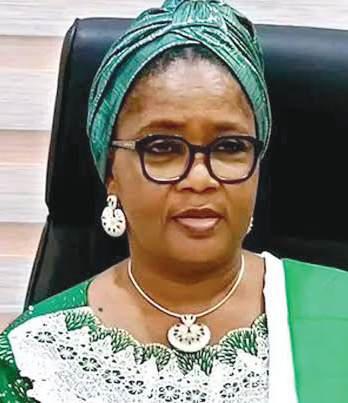
Former Nigerian Minister of Petroleum Resources, Diezani Alison-Madueke, has criticised British law enforcement
authorities following her acquittal on bribery charges, saying the 13-year investigation
by the United Kingdom’s National Crime Agency (NCA) devastated her life, reputation
www.thisdaylive.com
Battujo Get Landmark 40 Years Jail Terms
Troops repel ISWAP attack, inflict heavy losses on insurgents in Buratai counter-offensive Shettima visits NIPSS, orders security overhaul after deadly attack
the mother and
of notorious terrorism kingpin, Battujo, after finding them guilty of terrorism-related
Ekiti Decides: Oyebanji, Oluyede
13 political parties jostle for governorship seat
EU monitors warn against vote-buying, violence
SDP denies withdrawing from race Police deploy personnel, tactical assets Bye-elections hold in six states
Chuks Okocha, Sunday Aborishade, Linus Aleke in Abuja, and Gbenga Sodeinde in Ado-Ekiti
Today, no fewer than 1.02 million registered voters in Ekiti State will head to the polls in a high-stakes contest that will shape the state's political and developmental trajectory for the next four years, as they
decide who among the array of contenders will emerge victorious and occupy the Oke Ayoba seat of power.
Although 13 political parties are participating in the governorship election, pundits suggest that the race is largely a contest between the ruling All Progressives Congress (APC)
Continued on page 5
STRENGTHS
• Incumbency advantage.
• Endorsement by President Bola Tinubu, APC leadership.
• Backing of all former Governors WEAKNESSES
• Burden of rising cost of living
• Opposition criticism over economic hardship
• Allegations of intimidation, politically motivated arrests
STRENGTHS
• Candidate of the main opposition party
• Positioned as a credible alternative to the incumbent
• May benefit from voter dissatisfaction with economic conditions WEAKNESSES
• Division in his political party
• Inability to mount a united challenge against the APC
• Loss of Ayo Fayose's support
• Erosion of traditional PDP strongholds
Deji Elumoye, Alex Enumah, Linus Aleke in Abuja and Yemi Kosoko in Jos The Federal High Court in Abuja, yesterday, handed
BIODUN OYEBANJI WOLE OLUYEDE
Israel, Hezbollah Agree to Ceasefire in Lebanon
Israel and Iran-backed Hezbollah agreed to a ceasefire yesterday, after an escalation in hostilities in Lebanon sorely tested the United States-Iranian interim deal to end the wider Middle East conflict.
A senior Israeli official and two Hezbollah sources confirmed the ceasefire to Reuters, which a U.S. official said was due to begin at 4 p.m yesterday.
“If Hezbollah does not attack
us, then for us it is not a time of war,” the Israeli official said. Israeli forces would remain in southern Lebanon, the official told Ruters.
Two Lebanese security sources said Israel carried out a dozen airstrikes in the first hour after the ceasefire came into effect, but none were recorded after 5 p.m.
An Israeli military official confirmed that there had been no strikes since 5 p.m. but
denied that Israel had carried out a dozen strikes after 4 p.m. At around 8 p.m Lebanon's National News Agency (NNA) said a drone strike killed two people on a motorbike on a southern Lebanese highway.
The Israeli military did not immediately respond to a request for comment on the drone attack.
Israeli airstrikes had killed at least 47 people in Lebanon since midnight, the Lebanese
health ministry reported. Israel reported four of its soldiers killed in south Lebanon in one of the deadliest Hezbollah attacks of the war.
The Iran deal requires the United States, Iran, and their allies to declare an immediate and permanent termination of military operations on all fronts, including Lebanon. Violence has picked up over the course of the week after initially abating when the agreement was first
announced.
Hezbollah lawmaker Hassan Fadlallah earlier told Reuters that Iran had informed the group that talks with Washington could not continue without a comprehensive ceasefire.
The senior U.S. official told Reuters that the ceasefire was worked out by negotiators for the U.S. and Qataris with help from Iran.
"Hezbollah and Israel have agreed to a ceasefire," the U.S.
official said. “We understand that after the exchange of fire earlier today, Israel and Hezbollah are now in a ceasefire."
Israel, which was not consulted in the negotiations that led to this week's U.S. memorandum of understanding with Iran, has bristled at the apparent requirement that it halt its campaign in Lebanon, which it invaded after Hezbollah fired across the border in solidarity with Tehran on March 2.
MOTHER, SISTER OF LATE TERRORISM KINGPIN, BATTUJO GET LANDAMRK 40 YEARS JAIL TERMS
to extremist activities.
The judgement came same day troops of the Joint Task Force (North East) Operation Hadin Kai (OPHK) successfully repelled coordinated attacks by Islamic State West Africa Province (ISWAP) terrorists in Borno State, before launching a decisive counter-offensive that inflicted heavy losses on the insurgents.
Also yesterday, Vice President Kashim Shettima, made an emergency visit to the National Institute for Policy and Strategic Studies (NIPSS), Kuru, Plateau State, where he ordered an immediate and sweeping reinforcement of security following a deadly breach that left two soldiers and a police officer dead.
In the Federal High Court in Abuja, Justice Hauwa Yilwa handed both mother and sister the jail terms shortly after convicting both of them on terrorism related charges.
According to the charge, the two women were said to be
and the Peoples Democratic Party (PDP), with other parties seeking to upset the dominance long enjoyed by the State's two major political platforms.
Also, yesterday, the European Union Support to Democratic Governance in Nigeria (EUSDGN) Election Observation Hub issued a strong warning against activities capable of undermining the credibility of the election.
This is as the Social Democratic Party (SDP) yesterday alleged that the Independent National Electoral Commission (INEC) was preventing it from deploying polling agents for today's governorship election, even as it firmly denied reports that it had withdrawn from the contest.
While politicians are at it, the Police said it has deployed its men and assets to ensure a peaceful contest and assured of safety of lives and property towards a credible, free and fair polls.
INEC also said yesterday that it was fully prepared to conduct
subjected her to years of emotional and psychological distress despite her insistence that she had committed no wrongdoing.
mother and sister respectively of the late terrorist’s kingpin, Kachallah Ibrahim Battujo. Battujo, was reportedly killed by Nigerian security forces, on June 10, 2026, in a forest near Iluke in Kabba/Bunu Local Government Area of Kogi State.
Shortly after their arraignment both women pleaded guilty to Counts 2, 4 and 5 of the five-count terrorism-related charge read to them in the open court.
The court however freed them in Counts 1 and 3, which bordered on receiving N490,300 from Battujo, fully aware it was proceeds of terrorism, as well as Count 3, which was on their sponsored holy pilgrimage with the proceeds of terrorism.
During the proceedings, the Director, Public Prosecution of the Federation, Mr Oyedepo Rotimi, SAN, urged the court to strike out both counts, but convict them on the others.
According to Count 2, both
bye-elections in six states today.
The bye-elections would hold in Dawaki Kudu/ Warawa Federal Constituency in Kano State, and Zuru State Constituency in Kebbi State. Others are in Ondo South Senatorial District in Ondo State, Rivers South East Senatorial District in Rivers State, Nasarawa North Senatorial District in Nasarawa State, and Enugu North Senatorial District in Enugu State.
The Ekiti election which holds today, comes after months of intense campaigns, endorsements, political realignments and grassroots mobilisation and has now shifted from campaign grounds to polling units across the 16 local government areas of the state.
With over 1.02 million Permanent Voter Cards (PVCs) collected from a registered voter population of 1.059 million, voter readiness in Ekiti ranks among the highest recorded in recent electoral history of the country.
INEC though accused of not
women, "aided and abetted the activities of Battujo, a known bandit Kingpin and passed information through telephone conversations to the said Battujo, and thereby committed an offence contrary to and punishable under section 26 of the terrorism (Prevention Prohibition) Act, 2022."
In addition to pleading guilty to Count 2, Battujo's mum pleaded guilty to Count 5 which bordered on concealment of information on the terrorism activities of her son.
On her part, Halima, who is sister of the eliminated terrorist kingpin, in addition to pleading guilty to Count 2, also pleaded guilty to Count 4 which also bordered on concealment of information that her brother illegally acquired firearms which she saw when she visited his forest camp.
While the punishment for each of the Counts is 20 years, Justice Yilwa ordered that the sentences run concurrently,
laying a level playing field by SDP, has declared its readiness for the election, while security agencies have activated extensive operational plans aimed at ensuring a peaceful, credible and orderly process.
Although 13 political parties are participating in the governorship election, political realities suggest that the race for Oke Ayoba is largely a contest between the ruling APC and the PDP, with other parties seeking to upset the dominance long enjoyed by the state's two major political platforms.
As voting commences across 2,445 polling units, attention is focused primarily on Governor Biodun Abayomi Oyebanji of the APC, Chief Wole Oluyede of the PDP, Engr. Oluwadare Bejide of the African Democratic Congress (ADC) and Opeyemi David Falegan of the Accord Party.
However, the strengths, structures and electoral prospects surrounding each candidate differ considerably.
after which the convicts will undergo rehabilitation.
Troops Repel ISWAP Attack, Inflict Heavy Losses on Insurgents
Troops of the Joint Task Force (North East) Operation Hadin Kai (OPHK) have successfully repelled coordinated attacks by ISWAP terrorists in Borno State, before launching a decisive counter-offensive that inflicted heavy losses on the insurgents.
The military operation, which took place in the Buratai axis of Biu Local Government Area, highlighted the growing effectiveness of the synergy between ground troops and air assets in ongoing counterterrorism efforts across the North-East.
In a statement, the Acting Military Information Officer of OPHK, Captain Mohammed Goni, disclosed that the terrorists launched multiple attacks on military positions at Dusten Kura and along Chara
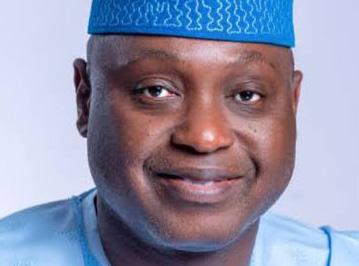
APC: Governor Biodun Oyebanji
Oyebanji enters the election as the candidate widely viewed as the frontrunner given the power of incumbency. Since assuming office in October 2022, he has built a reputation for political accommodation, consensus-building and inclusive governance, while his administration points to achievements in infrastructure, education, healthcare, agriculture, tourism, workers' welfare and pension payments.
Beyond governance, the governor's greatest political asset appears to be the broad coalition that has rallied behind his re-election bid. He enjoys the support of President Bola Ahmed Tinubu, the APC leadership, members of the National Assembly, local government officials, traditional rulers and several socio-political groups.
More significantly, former
Road in the early hours of 19 June 2026.
According to him, the troops swiftly detected the attempted incursion through actionable intelligence and responded with overwhelming force.
“In the early hours of 19 June 2026, ISWAP terrorists launched multiple attacks on troops' locations at Dusten Kura and Chara road in Buratai, Biu Local Government Area of Borno State. The alert troops, supported by robust intelligence, promptly detected the incursion and responded with superior firepower in a well-coordinated air and ground counter-attack,” he said.
Captain Goni attributed the success of the operation largely to the timely intervention of the Air Component of Operation Hadin Kai and the effective deployment of Intelligence, Surveillance and Reconnaissance capabilities, alongside precision-strike platforms of the Nigerian Air Force.
Governors - Niyi Adebayo, Segun Oni, Kayode Fayemi and Ayodele Fayose - have publicly endorsed his re-election, creating what many observers describe as the broadest political alliance assembled in Ekiti's democratic history.
The APC also retains formidable grassroots structures across the state's 177 wards, backed by an experienced election-day mobilisation network capable of translating political support into votes. Nonetheless, the ruling party faces challenges associated with the broader national economic climate, including inflation and the rising cost of living, issues opposition parties have repeatedly highlighted during the campaign.
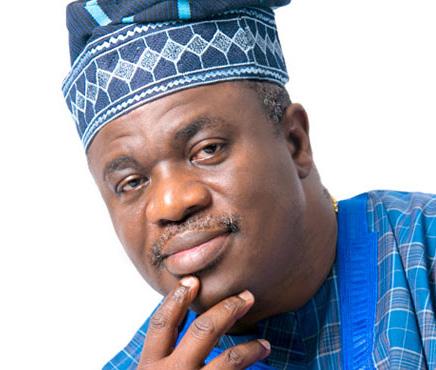
PDP: Wole Oluyede
For the PDP and its candidate, Chief Wole Oluyede, the election presents an opportunity to regain political relevance in a state where the party once enjoyed
“The prompt and effective employment of the Air Component of OPHK, particularly Intelligence Surveillance and Reconnaissance as well as precision strike platforms from the Nigerian Air Force, proved decisive.
The precision air support integrated seamlessly with ground forces, disrupted the terrorists' assault and inflicted heavy casualties on the attackers, forcing them to flee in confusion.
“It is worthy to note that no casualties were recorded on own troops, while the terrorists suffered significant losses in personnel and equipment,” he added.
The military spokesperson said the latest operational success underscores the high level of preparedness of OPHK forces and reinforces the Theatre Command’s
Continued on page 10
significant dominance.
Oluyede campaigned on promises centred on road rehabilitation, wealth creation, job opportunities, youth empowerment and economic revival, presenting himself as a credible alternative to the incumbent administration.
While the PDP remains the state's principal opposition platform and retains pockets of loyal support, internal disagreements arising from its primary election weakened party cohesion and complicated efforts to mount a united challenge against the APC.
Perhaps the most significant setback to the PDP's prospects has been the decision of Fayose to endorse Oyebanji rather than his party's candidate.
Political analysts believe the development altered electoral calculations across several communities traditionally regarded as PDP strongholds.
Continued on page 16
A jury at Southwark Crown Court on Wednesday found the former minister not guilty of five counts of accepting bribes
“I’ve not been allowed to travel. I’ve not been allowed to work. They destroyed my reputation and my integrity,” she said.
and conspiracy to commit bribery, bringing to an end a legal battle that began with her arrest in 2015.
Alison-Madueke, who served as Nigeria’s petroleum minister between 2010 and
2015 and was the first female president of the Organisation of the Petroleum Exporting Countries (OPEC), described the experience as traumatic.
“When your freedom is taken away from you, it has
a very deep impact upon you psychologically,” she said.
“I knew that I had never done anything nefarious and I had never done any of the heinous things I was being accused of doing.”
Prosecutors had alleged that Alison-Madueke received lavish benefits from wealthy oil businessmen seeking government contracts, including
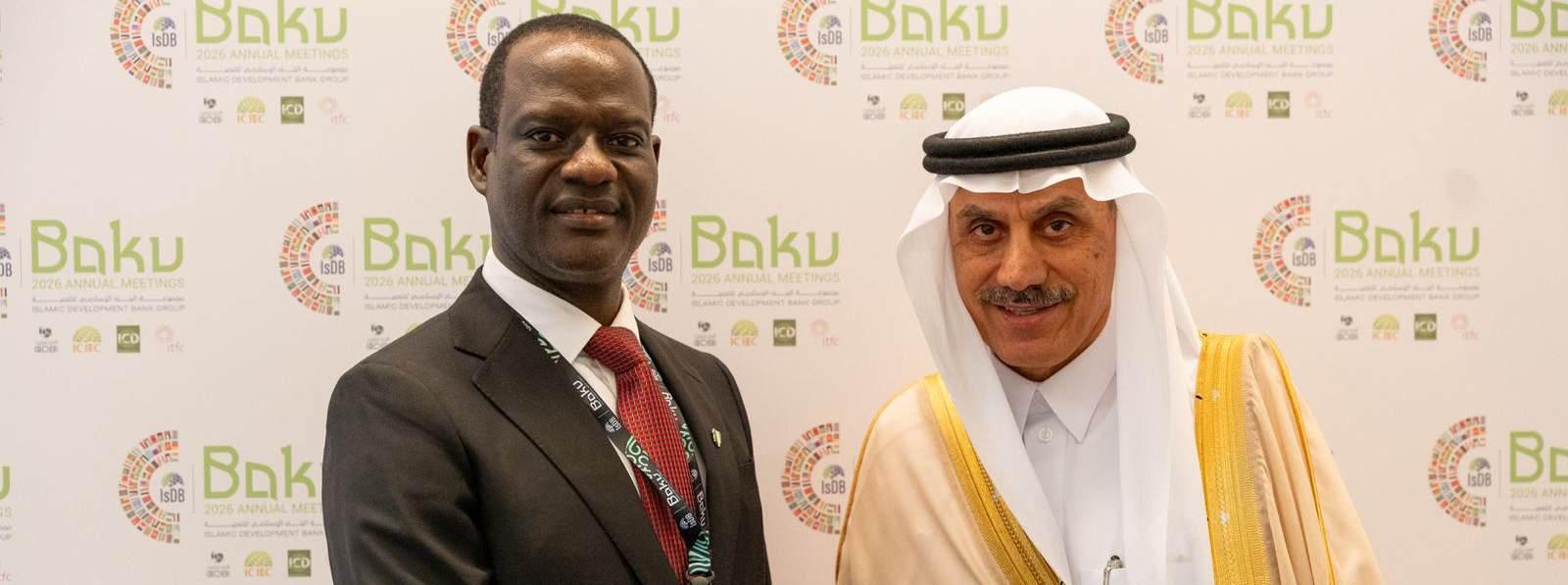
DISCUSSING NIGERIA’S ECONOMIC DEVELOPMENT PRIORITIES...
L-R: Minister of Finance and Coordinating Minister
the
External Reserves Climb to $51bn, Gain
Nume Ekeghe
Nigeria’s gross external reserves have crossed the $51 billion mark gaining $13.3 billion over the past 12 months due to the country’s strengthening external position and growing confidence in its foreign exchange market.
Data from the Central Bank of Nigeria (CBN) showed that gross external reserves rose to $51.04 billion as of June 18, 2026, compared with $37.74 billion recorded on June 18, 2025. The latest figure represents a year-on-year increase of $13.30 billion, translating to a 35.2 per cent growth over the period.
Since touching $48.32 billion on May 6, 2026, Nigeria's external reserves have recorded an unbroken upward streak, gaining roughly $2.72 billion over the past six weeks to cross the $51 billion mark. The
latest increase comes shortly after THISDAY reported that the reserves had reached their highest level in 17 years, underscoring the strength of the ongoing accumulation cycle.
A year’s review on the reserves shows that in June 2025, reserves stood within a narrow band of between $37.66 billion and $37.74 billion before closing the month at $37.21 billion.
The first significant acceleration occurred in July 2025, when reserves rose from a monthly low of $37.18 billion to a high of $39.36 billion, crossing the $39 billion mark for the first time during the review period.
Momentum strengthened further in August 2025 as reserves advanced from $39.81 billion to $41.31 billion, pushing above the $41 billion threshold.
By September, the buffers
Ebola Outbreak Spreads in DR Congo, Uganda as Cases Hit 894, Deaths Reach 204
The Ebola outbreak continues across DR Congo and Uganda, with cases rising to 894 and deaths reaching 204 across affected regions. This was disclosed during a webinar, where Wessam Mankoula, Acting Head of Emergency Preparedness and Response, Africa Centre for Disease Control and Preparedness, also noted that 74 patients have recovered since the outbreak was officially declared on May 15. According to Mankoula, Uganda’s situation has remained relatively contained, with 19 confirmed cases and two deaths, translating to a
10.5 per cent fatality rate. He added that seven people have recovered and that all known contacts have been fully listed within a single affected health zone in Kampala. He explained that the epidemic in the DRC is driving most of the caseload, with Ituri Province identified as the main hotspot. The region has reported 91 confirmed cases and accounts for nearly 78 per cent of all deaths recorded in the country.
Mankoula also highlighted growing concern over insecurity in North Kivu, saying limited access for health responders has worsened surveillance gaps, reduced contact tracing, and contributed to a higher fatality rate in the area.
$13.3bn in One Year
expanded again, moving between $41.42 billion and $42.35 billion, while October saw reserves climb from $42.41 billion to $43.20 billion.
The upward trend continued through November 2025, when reserves traded within a range of $43.26 billion to $44.67 billion, before reaching a new band of
$44.86 billion to $45.50 billion in December.
The pace of accumulation remained firm in January 2026, with reserves rising from $45.57 billion at the beginning of the month to a high of $46.28 billion.
February marked one of the strongest monthly increases
during the period under review. Reserves surged from a monthly low of $46.59 billion to $49.69 billion, representing a gain of more than $3 billion within a single month.
That momentum carried into March 2026, when reserves briefly crossed the $50 billion threshold, touching
a high of $50.03 billion before easing slightly towards month-end.
April witnessed a mild correction, with reserves moving between $48.36 billion and $49.18 billion, while May saw renewed growth as reserves advanced from $48.34 billion to $49.58 billion.
NDPC Investigates INEC over Breach of Emeka Ike's Personal Data
commission's third anniversary.
The Nigerian Data Protection Commission (NDPC) has disclosed that it is investigating the Independent National Electoral Commission (INEC) for data breach which led to the recent release of Emeka Ike's personal data by the media aide to the Federal Capital Territory (FCT) Minister, Lere Olayinka. NDPC National Commissioner, Dr. Vincent Olatunji, disclosed this at a media roundtable in Abuja, yesterday, as part of the
He said, "We are investigating the INEC and Lere Olayinka on the data breach that has to do with Emeka Ike's personal data that has been made public by Lere Olayinka.
"Look at the likely outcome that we now prioritise the one of INEC, which is really sensitive. We are moving towards elections. It speaks to the credibility of the database. It's of utmost urgency, and we are moving immediately.
"Emeka Ike is downstairs now to speak. INEC were here last week, and they were here again
this week. No matter who you are, we invite you.
"No matter how big you are, we invite you, and we take the necessary actions. Even look at Meta, the way we handled it.
TikTok, Temu, Remita, Sterling Bank.
"But we have to be very diligent and not push out a wrong narrative out there until even when you go to court, until you are proven guilty.
You can't pronounce anybody guilty. So that's why we are very meticulous in the way we carry out investigations. And we
don't really push out. We are investigating."
On the commission's achievements in the past four years, he said it generated over N8 billion for the federal government, adding that it has also created an ecosystem worth $12 billion.
Olatunji also said that the commission is currently working with the National Universities Commission (NUC) to incorporate data protection in the nation's educational curriculum and other sections of the society.
UN Envoy Raises the Alarm over Insecurity in Nigeria
Michael Olugbode in Abuja
The United Nations Special Rapporteur on Freedom of Religion or Belief, Nazila Ghanea, has raised fresh concerns over Nigeria’s worsening security crisis, saying repeated killings, mass displacements and the absence of justice have left many victims viewing their experiences as persecution and even genocide.
Presenting her preliminary observations at the end of an 11-day official visit to Nigeria,
Ghanea painted a grim picture of communities trapped in endless cycles of violence, where villages are razed, livelihoods destroyed and survivors repeatedly displaced with little hope of justice or return.
She said while her mission focused on freedom of thought, conscience and religion, almost every engagement she held across the country was dominated by stories of insecurity, killings and fears over the inability of authorities to adequately protect lives and
property.
According to her, the violence has evolved beyond isolated incidents to become a widespread national emergency affecting numerous parts of the country.
The UN envoy disclosed that communities described horrifying experiences, including mass arson attacks that forced survivors into internally displaced persons’ camps with no prospects of returning to their homes or farms.
She said in some rural
communities, bandits had allegedly compelled residents into so-called peace agreements under which communities surrendered farmlands and produce and, in some instances, women were reportedly taken at will by the attackers. Ghanea noted that impunity and a lack of accountability appeared to have entrenched the violence and encouraged its spread, with many communities repeatedly experiencing killings and destruction while perpetrators escape justice.
Goodness Anunobi
Oghenevwede Ohworiole in Abuja
of
Economy, Mr. Taiwo Oyedele; and President of the Islamic Development Bank (IsDB), Dr. Muhammad Al-Jasser, during a discussion on Nigeria’s economic development priorities, held on the sidelines of the 2026 IsDB annual meeting at the Convention Centre in Baku, Azerbaijan…recently
PROJECT INAUGURATION...
Baku 2026: Taiwo Oyedele Calls for Stronger Collaboration with IsDB for Affordable Financing
Bank president restates commitment to support sustainable devt, partnership with Nigeria, Qatar, Syria
The Minister of Finance and the
called for a stronger collaboration with organisations like the Islamic Development Bank (IsDB) Group to attain sustainable prosperity, raise affordable finance for development and corporate
Daughter in Police Net for Allegedly Killing Her Grandmother in Katsina
Francis Sardauna in Katsina
Operatives of the Katsina State Police Command have arrested a 20-year-old woman, Aisha Muktar Hassan, for allegedly killing her 97-year-old paternal grandmother, Hajiya Ummukhulsum Hassan, following a domestic altercation in Daura Local Government Area of the state.
The incident, according to the command, occurred on June 12, 2026, at about 7p.m., after the squabble between the suspect and the late nonagenarian turned violent.
The Command's Public Relations Officer, DSP Abubakar Sadiq Aliyu, said in a statement that the matter was reported to Sabon Garin Daura Police Station at about 8p.m. by the suspect's father, Muktar Muhammad Hassan, 39. Aliyu, in the statement, said the police operatives promptly responded to the scene and found the victim unconscious in a pool of blood in her Daura residence.
The statement further disclosed that the suspect was arrested during the course of investigation and had confessed to committing the offence.
organisations, and support small and medium businesses in Nigeria.
This was as President of the IsDB Group, Dr. Muhammad Al Jasser, reaffirmed the Bank’s commitment to strengthening partnerships and supporting sustainable development across its member countries, especially Qatar, Syria, and Nigeria, at the ongoing IsDB Group Annual Meetings in Baku, Azerbaijan.
A separate meeting between the Minister of Finance and Coordinating Minister of the Economy, Oyedele and President of the IsDB Group, centred on further deepening the longstanding partnership between Nigeria and the IsDB Group.
The minister, who disclosed this to THISDAY after participating in a dialogue session tagged: ‘Investing in Resilience
and Long-term Development in the Sahel Region’, said that Nigeria needs to focus on the purpose of this year’s IsDB meeting to achieve positive economic impact and inclusion, particularly for young people and women in Nigeria.
According to Oyedele, “We need to work together. Collaboration is the way to go, and that’s the whole idea of belonging to institutions and
organisations such as the IsDB.
“Let’s focus on the purpose of this AGM, with the issues that have to do with sustainable prosperity; how to raise affordable finance for economic development as well as supporting corporate organisations; issues around small businesses, economic impact and inclusion, particularly for young people and women in Nigeria.”
PDP: Wike Faction Moves to Tackle Suit Seeking Recognition of Turaki-led Interim Leadership
Hearing in a suit seeking to compel the Independent National Electoral Commission (INEC) to recognise the Interim National Working Committee of the Peoples Democratic
SMDF Launches EMERGE Programme to Boost
Mineral Exploration
The Executive Secretary and Chief Executive Officer of the Solid Minerals Development Fund (SMDF), Hajiya Fatima Umaru Shinkafi, on Wednesday unveiled the Early-Stage Mineral Exploration and Research Grant Endowment (EMERGE) Programme, a new funding initiative designed to unlock investment in mineral exploration, critical minerals development and research across Nigeria.
Speaking at the launch of the programme in Abuja, Shinkafi said EMERGE was created to address one of the most persistent challenges facing the mining sector—the shortage of
early-stage capital for exploration and research.
She explained that the competitively awarded grant facility would provide catalytic funding to explorers, universities and research institutions, enabling promising projects to advance from concept to commercial viability. According to her, the initiative forms part of a broader strategy by the SMDF to reposition mining finance, de-risk investments and attract private capital into the solid minerals sector.
Shinkafi also disclosed that the Fund’s partnership with the Africa Finance Corporation (AFC) had facilitated a landmark 1.5 million metric tonnes-per-annum alumina
refinery project, which she described as the largest funding commitment in the history of the SMDF and the biggest mining investment ever recorded in Nigeria.
She said the project is expected to significantly boost national output, increase Gross Domestic Product, generate foreign exchange earnings and deepen local value addition in the mining industry.
“The SMDF exists to unlock financing across the full life of a mineral project. EMERGE strengthens the earliest link in that chain by funding exploration and research, while initiatives such as the alumina refinery secure value addition and returns at the top of the chain,” she said.
(PDP) led by Tanimu Turaki, was stalled yesterday owing to requests for joinder applications.
It would be recalled that the Senator Adolphus Wabara-led Board of Trustees (BoT) of the PDP had dragged the electoral umpire to court over its failure to upload the names of the Turaki-led Interim NWC members on its website.
Also following the Supreme Court's nullification of the November 2025 Ibadan Convention that produced the Turaki-led national leadership of
the PDP, last April, the Wabara-led BOT had put in place the interim leadership to run the affairs of the PDP, pending the election of new leaders.
Presently, names of PDP officials on the website of INEC are those who emerged from the PDP's convention held in Abuja, in March this year.
Dissatisfied, the plaintiffs which included the BoT Secretary, former Niger State Governor, Muazu Babangida Aliyu; exMinister of Information, Prof. Jerry Gana and PDP chieftain,
Olabode George as 1st to 4th plaintiffs; former Minister of Women Affairs, Hajiya Maryam Ciroma; another ex-Minister of Women Affairs and Social Development, Hajiya Zainab Maina; member of BoT and NEC, Dame Esther Uduehi and the PDP are asking the court for an order directing the INEC, to forthwith, update its records and publish on its official website the interim NWC of the party as forwarded to it by the plaintiffs and its National Executive Committee (NEC).
COAS to New Recruits: Take Fight to Bandits, Kidnappers, Other Criminal Elements
Linus Aleke in Abuja
The Chief of Army Staff (COAS), Lieutenant General Waidi Shaibu, has tasked graduating recruits under the Nigerian Army’s Restore Hope initiative to remain steadfast in the fight against banditry, kidnapping and other forms of criminality threatening national security. The charge was delivered during the graduation ceremony of the Restore Hope programme for the 90 Regular Recruit Intake at the
Depot Nigerian Army Shooting Range in Zaria.
According to a statement by the Acting Director of Army Public Relations, Colonel Apollonia Anele, the Army Chief reminded the recruits that they are joining the service at a critical moment in the nation’s history, when criminal groups continue to inflict hardship on citizens through abductions and the destruction of lives and property.
Addressing the graduating recruits, Lieutenant General
Shaibu stressed the need for professionalism, discipline and adaptability in confronting contemporary security threats.
“The security challenges confronting Nigeria today are complex, uncertain and ambiguous. Terrorism, banditry and other asymmetric threats demand not only courage, but also intelligence, discipline and strategic thinking. The era of relying solely on conventional responses to unconventional threats is behind us,” he said.
Folalumi Alaran in Abuja
Sunday Okobi in Baku, Azerbaijan
Coordinating Minister of the Economy, Taiwo Oyedele, has
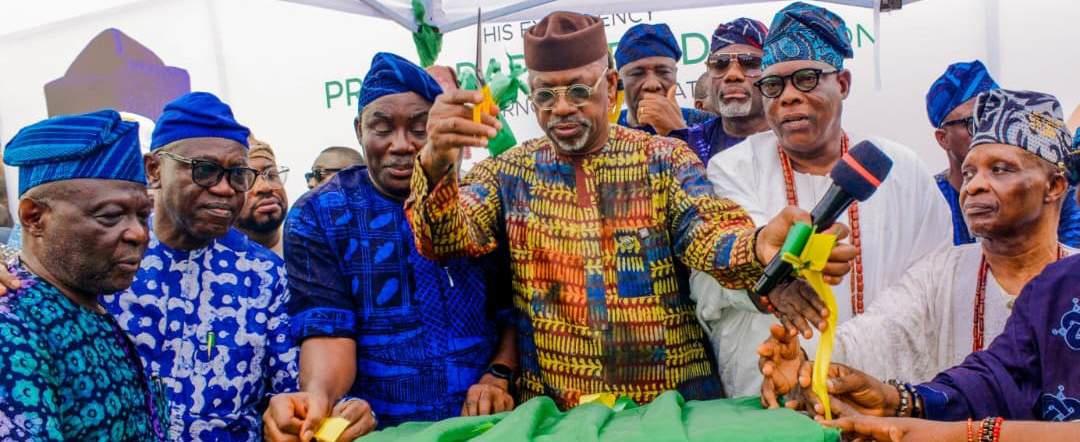
L-R: Commissioner for Works and Infrastructure, Engr. Ade Akinsanya; Secretary to the State Government, Mr. Tokunbo Talabi; Speaker, Ogun State House of Assembly, Rt. Hon. Oludaisi Elemide; Governor Dapo Abiodun; Elese of Ilese-Ijebu, Oba Oluremi Obayomi and the Obiri of Ayepe, Oba Adebisi Okunbanjo, during the inauguration of the Stadium-Luba-Tam Balogun Road in Ijebu-Ode Local Government…yesterday
Alex Enumah in Abuja
Party
STRENGTHENING PARTNERSHIP...
In Fresh Suit, INEC Asked to Deregister NDC
NDC ratifies suspension of member in Benue
declared that there is no pending litigation or appeal challenging the party’s registration.
The protem Director of Organisation for All Democratic Alliance (ADA), Ahidjo Karlahi, has slammed a suit against the Nigeria Democratic Congress (NDC), seeking its deregistration by the Independent National Electoral Commission (INEC).
This was as the Benue State Working Committee of the NDC had ratified the suspension of Mr. William Adoyi Enenche with immediate effect.
The suit asking for deregistration of NDC, which was filed last week Tuesday before a Federal High Court sitting in Abuja and marked FHC/ABJ/ CS/1115/2026, was assigned to Justice Mohammed Umar by the Chief Justice of FHC, Justice Tsoho.
THISDAY gathered that the national leader and founder of the NDC, Seriake Dickson, had
Dickson, who spoke during the maiden national convention of the party that was held at the Angeles Event Centre and Mall, Abuja, insisted that it is legally recognised and united ahead of the 2027 general elections.
But in the originating summons filed by Karlahi, ADA leader said NDC as a political party has not fulfilled the mandatory constitutional and statutory conditions prescribed under Sections 221-225A of the Constitution of the Federal Republic of Nigeria, 1999 (as amended) and Sections 75 and 79 of the Electoral Act, 2022. Karlahi, who joined INEC and NDC as 1st and 2nd defendants respectively in the suit, argued that the NDC was not listed among the prequalified associations for formal application in the 2025
Fashola to Deliver Lecture on Governance Reform at 2026 NBA Ikeja Law Week
Wale Igbintade
Former Lagos State Governor, Babatunde Fashola, SAN, will deliver a keynote address at the 2026 Annual Law Week of the Nigerian Bar Association (NBA), Ikeja Branch, where governance reform, economic policy and institutional accountability will dominate discussions.
The Chairman of the Annual Law Week Planning Committee, Chukwudi Enebeli, disclosed this yesterday during a press conference in Lagos.
Enebeli said Fashola would speak on the theme, ‘Law, Leadership and the Ballot: Governance Beyond Politics’, during the opening plenary of the Law Week themed ‘Altering the Status Quo: Going Against the Norm’.
The event is scheduled to hold from June 19 to June 25 at the Lagos Marriott Hotel, Ikeja.
According to him, Fashola’s
keynote address will draw on his experience as a two-term governor of Lagos State and former Minister of Works and Housing, focusing on governance models that emphasise performance, institutional continuity and sustainable development beyond electoral cycles.
“This year’s programme is designed to stimulate critical conversations on Nigeria’s governance challenges and explore practical solutions to institutional inefficiency, public accountability and national development,” Enebeli said.
A major highlight of the Law Week will be the Business Forum, themed ‘Accelerating the Future of the Nigerian Economy’, which is expected to convene policymakers, economists, business leaders and financial experts to examine the country’s economic outlook and growth prospects.
political parties’ registration exercise.
According to him, NDC bypassed every mandatory step in the registration process, and as such, it should not be registered as a political party in the country.
He said, “The NDC was not listed among the prequalified associations for formal application in the 2025 political parties’ registration exercise.
“The NDC was not listed among those associations that paid the mandatory N2,000,000.00
administrative fee and received access codes to the INEC’s Application Portal for the 2025 registration exercise.
“The NDC did not access INEC’s dedicated Political Party Registration Portal during the 2025 registration exercise which is the only way to fill the Form EC15A.
“The NDC did not hence fill INEC’s mandatory form EC15A, which is the only valid means of formally applying for registration as a political party.
“The NDC was not listed
among the pre-qualified political associations published by INEC as having applied. These are not mere allegations – they are matters of public record.”
The ADA chieftain urged the court to declare the continuing validity of the NDC’s registration as unconstitutional, illegal, unlawful, ultra vires, null and void.
He added, “My suit respectfully prays the court to in essence: declare that the Constitution does not permit an entity that never
AfCFTA: Nigeria Partners
satisfied constitutional conditions for registration to be registered and to continue enjoying the status of a political party.
“Declare the continuing administrative recognition of the NDC by INEC as unconstitutional and unlawful.
“Set aside the continuing recognition of NDC’s Certificate of Registration issued by INEC. Order INEC to halt its continuing recognition of NDC from its official register of political parties.
to Expand Regional Cargo Corridor
The Federal Ministry of Industry, Trade and Investment (FMITI), in partnership with RwandAir, yesterday formally flagged off the expanded Nigeria–East and Southern Africa Air Cargo Corridor, which is a major step in Nigeria’s practical implementation of the African Continental Free Trade Area (AfCFTA) under President Bola Ahmed Tinubu’s administration.
A statement issued by the FMITI stated that through this
partnership, cargo rates on the routes operated by RwandAir are set at under $2 per kilogram across five destinations, in order to reduce the cost of moving Nigerian goods into key African markets for Nigerian exporters holding an AfCFTA Certificate of Origin issued by the Nigeria Customs Service (NCS).
These destinations are export routes from Nigeria to Kigali, Rwanda; Lusaka, Zambia, and Harare, Zimbabwe. Others are Nairobi, Kenya, and Johannesburg, South Africa routes.
The ministry said that
before the establishment of the corridor, many Nigerian exporters faced cargo costs ranging from $3 to as high as $10 per kilogram for goods shipped to East and Southern Africa, which limited their competitiveness and constraining access to regional markets.
“The expanded corridor directly addresses this challenge by providing faster, more affordable and more predictable logistics options for Nigerian businesses,” the FMITI said. It, therefore, encouraged Nigerian exporters, business
associations, logistics operators and MSMEs to take full advantage of the corridor to scale Nigerian products across African markets.
Speaking at the flag-off ceremony in Lagos, the Minister of Industry, Trade and Investment, Dr. Jumoke Oduwole, described the partnership as another concrete demonstration of Nigeria’s commitment to making the AfCFTA work for businesses.
Oduwole said, “Our goal is clear: to make it easier and cheaper for Nigerian businesses to trade across Africa.
Court Dismisses Alleged Farmland Degradation Suit against Construction Company
A High Court of Justice of Kaduna State has dismissed a suit seeking to stop a company, Datum Construction Nigeria Ltd from carrying out its activities at a quarry site in Kujama, Kaduna State, over allegations of farmland degradation.
Justice Edward Andow in a judgement held that the suit filed by an alleged farmland owner, Shekwogaza Joseph Audu, was unmeritorious.
The judge also held that while Audu may have genuine concerns regarding the damage to his land, he had completely failed to present the quality of evidence required by law to sustain his claims.
Although the judgement was delivered on June 8, 2026, a Certified True Copy (CTC) sighted by THISDAY on Thursday in Abuja, showed that Datum Construction Nigeria Ltd was the sole defendant in the suit marked: KDH//KAD/409/2021.
Among reliefs sought by the plaintiff included; a declaration that the company's continuous rock blasting and other quarry activities had grossly undermined and affected the value of his land.
Audu further sought a declaration that the environmental impact of the defendant's activities had also damaged soil water quality for farming and function through the earth thereby making farm unproductive and crop yielding in his land untenable and further devaluing the land.
He, therefore, sought an order that the firm shall remove any object and cease any activity that affects his right to enjoy peaceable possession, occupation and use of his land.
Audu also prayed the court for an order awarding the sum of N5 million against the company as damages for causing the degradation and for undermining the land quality which had led to loss in food quality and production due to its activities.
Dike Onwuamaeze
Alex Enumah in Abuja
Chuks Okocha in Abuja and George Okoh in Makurdi
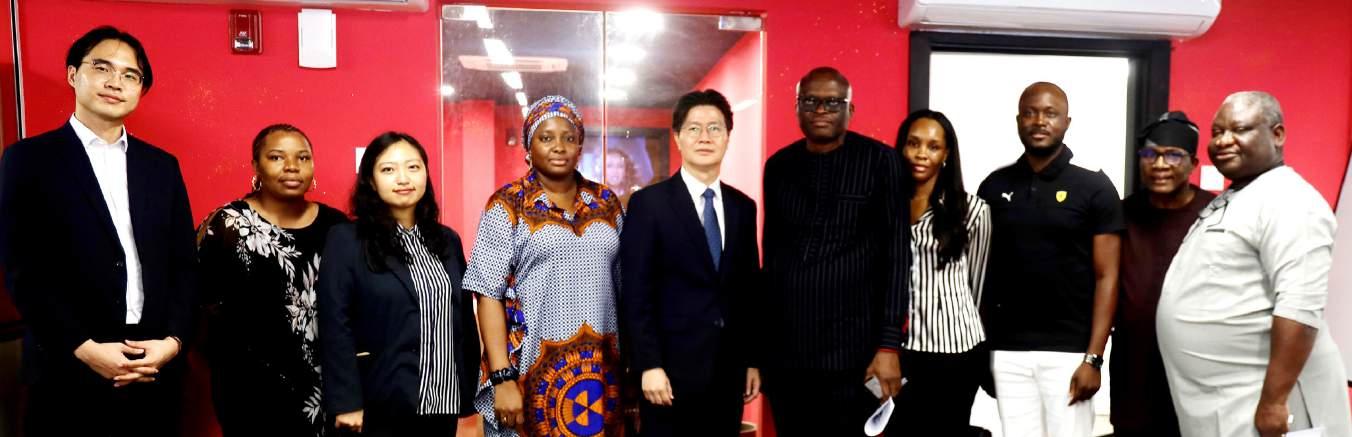
L-R: Public Relation Manager, Korean Cultural Center Nigeria (KCCN), Mr. Lee Gwangmin; Administrative Staff, KCCN, Jennifer Ezeonyeasi; Event Manager, KCCN, Ms. Lee Yunjin; Chief of Staff to the Chairman/Editor -in - Chief, THISDAY/ Arise Media Group, Fauziya Ali Mohammed; Director, KCCN, Jeon Ju-Ho; Managing Director, THISDAY Newspapers Limited, Mr. Eniola Bello; Director, Arise Global Media Limited, Mrs. Chinwe Obaigbena; Director, Operations and Strategy, Arise Global Media Limited, Mr. Abdulmuizz Bello; The Ombudsman, THISDAY/ Arise Group, Mr. Kayode Komolafe; and Director, Arise Global Media Limited, Mr. Joseph Ushigiale, during a courtesy visit by the KCCN team to the THISDAY/ Arise head office office in Lagos… yesterday PHOTO: ETOP UKUTT
INVEST LAGOS 3.0...
Nigeria at Critical Crossroads in Fight Against Drug Menace, UNODC Warns
Michael Olugbode in Abuja
The United Nations Office on Drugs and Crime (UNODC) has warned that Nigeria has reached a critical juncture in its fight against illicit drugs and must simultaneously confront long-standing drug-related challenges while adapting to emerging threats posed by synthetic substances, sophisticated trafficking networks and digital
illicit markets.
The warning came yesterday in Abuja during a joint press briefing by the National Drug Law Enforcement Agency (NDLEA) and the UNODC to unveil activities marking the 2026 World Drug Day.
Speaking at the event, UNODC Country Representative, Mr. Cheikh Toure, represented by the Deputy Country Representative, Mr. Danielo
Campisi, said the global drug problem was not static but rapidly evolving, making it imperative for Nigeria and the international community to adopt innovative and forward-looking responses.
“Nigeria stands at a critical point where it must address long-standing challenges while adapting to new realities,” he said.
According to him, no single
institution possesses the capacity to tackle the complexities of the global drug problem alone, stressing that progress would depend on partnership, shared responsibility and sustained action.
“The problem persists, but it is not insurmountable. The challenges are evolving, but so are our solutions, and our response must be united, informed and forward-looking,”
Oduwole: FMCG Sector Key to Nigeria’s $1trn Economy Vision
Sunday Ehigiator
The federal government has identified Nigeria’s Fast-Moving Consumer Goods (FMCG) sector as a critical pillar in its drive towards building a $1 trillion economy, revealing that more than 40 million Micro, Small and Medium Enterprises (MSMEs) currently power about 80 per cent of retail transactions across the country.
determination to sustain relentless pressure on terrorist elements operating within the region.
He further assured that troops would continue aggressive offensive operations aimed at degrading insurgent capabilities, restoring lasting peace and safeguarding communities across the North-East.
Captain Goni also called on the public to remain vigilant and continue providing timely and credible intelligence to security agencies, noting that community support remains critical to the overall success of counterinsurgency operations.
Minister for Industry, Trade and Investment, Dr. Jumoke Oduwole, disclosed this yesterday while speaking at the official unveiling of the Nigeria FMCG Sector Insight Report 2026 and the seventh anniversary celebration of OmniRetail in Lagos.
According to the minister, the FMCG sector remains one of the clearest reflections of how Nigeria’s economy functions
Shettima Visits NIPSS, Orders Total Security Overhaul After Deadly Attack
Vice President Kashim Shettima yesterday made an emergency visit to the National Institute for Policy and Strategic Studies (NIPSS), Kuru, Plateau State, where he ordered an immediate and sweeping reinforcement of security following a deadly breach that left two soldiers and a police officer dead.
Standing at the shattered section of the perimeter fence where gunmen infiltrated the institute in the early hours of Tuesday, Shettima declared that the federal
daily, linking agriculture, manufacturing, logistics, retail and technology in ways that directly impact millions of citizens.
“Nigeria’s FMCG sector is far more than a commercial category. It is one of the clearest reflections of how our economy works every day. It connects agriculture to manufacturing, manufacturing to logistics, logistics to retail, retail to
government would not allow a repeat of the attack on what he described as “Nigeria’s strategic intellectual nerve centre.”
“No future attack must find us unprepared,” he said, revealing that President Bola Tinubu had directed the activation of emergency security measures across the facility.
The Vice President met with NIPSS management, staff, and participants of Senior Executive Course 48, praising their composure and courage during the assault.
“When darkness came to the gates of this institute, it expected fear. Instead, it met courage,” he said, assuring families of the slain
millions of Nigerians, and of course, all enabled through technology,” she said.
Oduwole noted that behind every product on a shelf exists an extensive value chain comprising farmers, processors, manufacturers, transporters, warehouse operators, wholesalers, retailers, market women, entrepreneurs, financial institutions and technology providers.
officers that the government would take responsibility for their welfare.
Plateau State Governor Caleb Mutfwang, in a solemn goodwill message, said the attackers attempted to undermine not just an institution but a symbol of national identity.
“You have defended a significant part of our national history,” he said, announcing immediate state interventions including improved perimeter lighting and patrol logistics for the Kuru–Vom axis, which hosts several national institutions.
NIPSS Director-General, Prof. Ayo Omotayo, briefed the Vice President on the incident,
Toure added. He reaffirmed UNODC’s commitment to supporting Nigeria through evidence-based interventions, innovation, human-centred approaches and enhanced international cooperation aimed at protecting communities from the devastating impact of illicit drugs. The warning came as the NDLEA announced a weeklong programme of activities to commemorate this year’s World Drug Day under the theme, ‘The World Drug Problem: Persisting Issues, New Challenges, Innovative Responses’.
Nigeria Embraces S-100 Data Revolution to Drive Safer Seas, Blue Economy Growth
Linus Aleke in Abuja
The Hydrographer of the Federation and Chief Executive Officer of the National Hydrographic Agency (NHA), Rear Admiral Olumide Fadahunsi, has underscored Nigeria’s commitment to modernising maritime operations through the adoption of S-100 data services, describing the initiative as a transformative step towards safer navigation, enhanced maritime governance and sustainable Blue Economy growth.
Addressing a press
conference in Abuja ahead of the 2026 World Hydrography Day (WHD) celebration, Rear Admiral Fadahunsi said this year’s theme, ‘Transforming How Ocean Data is Shared’, reflects a global shift towards digital, interoperable and standardised ocean-information systems. He explained that the theme aligns with the International Hydrographic Organisation’s (IHO) drive to accelerate the uptake of S-100-based data services, particularly S-101 Electronic Navigational Charts (ENCs) and S-102 Bathymetric Surface products.
TERMS
confirming that security agencies had reinforced personnel, intensified surveillance, and strengthened access control.
He appealed for a special Federal Government intervention to upgrade the institute’s security architecture, including, institute-wide CCTV surveillance with command-and-control capability, solar-powered perimeter lighting, additional patrol vehicles and deployment of more military and security personnel
Omotayo described the fallen officers as “brave men whose patriotism prevented a far more devastating outcome.”
Representing Senior Executive
Course 48, Dr. Toyin Sanni said the attack had strengthened their resolve.
“No retreat, no surrender. We will complete this programme,” she said.
Another participant Dr. Kabir Abba expressed confidence in security operatives resilience and reaction to repelled the attack which enhanced security of participants and Institute.
The Vice President’s visit came a day after a delegation from the Inspector-General of Police, led by DIG Isiaku Mohammed, announced plans to establish a permanent police outpost at NIPSS to bolster security around the institution.
L-R: Deputy Chief of Staff to Lagos State Governor, Mr Sam Egube; Minister of Humanitarian Affairs and Poverty Reduction, Dr. Bernard Doro; Lagos State Commissioner for Tourism, Arts and Culture, Mrs. Toke Benson-Awoyinka, and Commissioner for Commerce, Cooperatives, Trade and Investment, Mrs. Folashade Ambrose-Medebem, at the Invest Lagos 3.0, organised by Lagos State Ministry of Commerce, Cooperatives, Trade and Investment in collaboration with Commonwealth Enterprise and Investment Council in Lagos... recently
Deepening Investment In Education
Lagos State is focused on building a resilient, inclusive, and future-ready education system, writes
TAYO OGUNBIYI
The administration of Mr. Babajide Sanwo-Olu clearly understands the key role education can play in transforming society. This explains the decision of the administration to make education a foremost part of its developmental agenda. Under the current administration, concerted efforts have been made to develop and sustain basic education. This is quite understandable because basic education is the foundation of every educational system.
The increase in budgetary allocation for education, no doubt, signifies the intention of the Sanwo-Olu-led government to use education as the most effective channel to drive its ‘Greater Lagos’ vision. Therefore, the pursuit of developing an educational system that is able to think critically, innovate, and provide solutions towards a more sustainable pattern of living has become a noticeable part of the administration’s agenda.
To begin with, the academic setting in the State is witnessing a dramatic change in terms of personnel and infrastructure. The State’s BOS Education Transformation Plan (BOSETP) is an evolving initiative that is building networks and encouraging partnerships with different sectors to provide an enduring and sustainable education in the State.
In setting the stage for this transformation, Governor Sanwo-Olu inaugurated a special committee on Rehabilitation of Public Schools (SCRPS) with the mandate to ensure that all public schools are conducive for learning. In the past year, much progress has been recorded in the intervention programme as more schools have received a significant facelift, while new blocks of classrooms are being built in rural communities.
For instance, between 2025 and 2026, the government established 15 new public schools in underserved communities, while 47 existing schools were fully rehabilitated. These interventions have increased the total number of upgraded schools to over 400 statewide.
In addition, 1,416 new classrooms were constructed, and more than 223,000 pieces of furniture were distributed to schools, significantly reducing overcrowding and improving the learning
environment.
One of the flagship projects is the transformation of the Tolu School Complex in Ajegunle into a modern educational hub, reflecting the government’s commitment to providing safe, functional, and inspiring learning spaces.
These infrastructural efforts are not only addressing population growth but also enhancing access to education, especially for children in previously underserved areas.
To ensure public schools are well-maintained, the government is co-opting the Head Teachers and Principals of primary and secondary schools, respectively, to take responsibility for proper upkeep.
Equally, the Lagos State Infrastructure Asset Management Agency (LASIAMA) is working with other relevant government agencies to ensure existing and new infrastructure in the public schools are being properly maintained.
The contribution of the rehabilitation programme to the socio-economic outlook of the state is huge. It has become a veritable source of employment for many who earn a living through working at the construction sites. Conservatively put, a total number of 18,000 people are directly involved in the project, both directly and indirectly. And as the government continues to expand the scope of the programme, more hands are being employed.
Recognising teachers as the backbone of any education system, the government has intensified efforts to strengthen human capital in the sector. Some 2,768 teachers were recruited to improve the student-teacher ratio across public schools. In addition, 9,456 teachers benefited from various professional development programmes, workshops, and welfare initiatives.
WITH SUSTAINED INVESTMENTS IN INFRASTRUCTURE, TEACHER CAPACITY, DIGITAL INNOVATION, AND STUDENT WELFARE, THE STATE IS STEADILY TRANSFORMING ITS PUBLIC EDUCATION SYSTEM INTO ONE THAT IS ACCESSIBLE, EQUITABLE, AND GLOBALLY COMPETITIVE
Central to this effort is the Teachers' Digital Hub, an online platform designed to equip educators with modern teaching methodologies, digital tools, and remote learning resources. Continuous teacher training is essential to sustaining education reforms and ensuring that classroom delivery aligns with global standards.
Ogunbiyi is Director, Public Enlightenment & Communication Relations, Ministry of Information & Strategy, Alausa, Ikeja
‘That We May Have Light’
"That we may have light" is the title of the Inaugural lecture delivered by Professor Peter Olabisi Oluseyi, Professor of Electrical Power and Energy Systems, at the Ade Ajayi Auditorium of University of Lagos, chaired by The Vice Chancellor, Professor Folasade Ogunsola. For Oluseyi, the 21st century human dignity could best be measured by the power supply made available to every human being so as to allow them optimise their capacity and in turn "upload" into the GDP grid of the world. For now it is appalling that the average light available to a Nigerian is 17 Watts, just to light a bulb whereas in USA it is 1,480 watts, China 740 watts. Cote d'Ivoire is 39 Watts. In effect 40% of Nigerians do not have access to electricity, and even the 13,000+ MW installed capacity in Nigeria, only 4,500MW reach end-users. A proof that the Nigerian manpower capacity is running below 15% of its enormous potential. With such electricity infrastructure layout the expected $1 trillion GDP come 2030 could only be a chimeric intent.
Electricity supply could be made 'organic' at worst, and still make Nigerians unleash their economic
VICTOR
C.
ARIOLE
argues that a smart grid system could make a difference
potential, relative to their industrial and geographic positioning if well planned. It could also be systemically developed with great investment attraction beyond organic reach to give Nigeria an optimal GDP that transcend far above its current GDP of about $350 billion. The 20th most industrialised nation among the G-20 is currently Netherlands with $1.15 trillions and a population of about 18.5 million people.
In effect, what will make a small country both in population and space be more prosperous than Nigeria of 220 million people if not power supply and effective planning and organization?
Hence Oluseyi in his research efforts work on "Building Resilient Electricity systems" driven by the "Bus system" planning; and, at best, emulating the Egyptian "Smart Grids" model. For the bus system that moved from 31-bus system to 50-bus system, Gombe, Maiduguri, Yola, Kano and Makurdi are identified as the weakest buses where no generator or local power injection source intervene to feed the grid. They are also "located at the far ends of long radial transmission lines, with high impedance; resulting in poor
voltage support, increased transmission losses, and reduced network stability". It is like managing the transmission process on what is currently known as Bands A, B, C, E. The question is how to operate a circuit breaker that could work out such supply based on relative industrial capacity of such zones − application of "Thermal Mechanism" to trigger power cut when too much current is flowing into such zones or "Magnetic Mechanism" that instantly snaps the switch open when power surge occurs.
There are so many such intervention systems that could be made available to the Nigerian worst-case scenario electricity supply system wrestling with "deep-rooted structural challenges including grid instability, multiple system collapses, gas supply shortages and vandalism, which makes the transmission segment incapable of transporting generated power efficiently and often losing 60% of peak generation as wheeling constraints interference.
To the Chinese engineers who make such equipment and Chinese Government concern for their people who make it possible for a Chinese to enjoy up to 740 Watts in average
compared to Nigeria's 17, it is all about investment in electricity infrastructure. Both smart grid which relates to best scenario electricity supply and the omnibus Nigeria's type that is unreliable, must source from Chinese experience of equipment maintenance or replacement. Nigeria must see good in the smart grid process. To the Chinese it is installing along the chain High Voltage switch gears and Low Voltage switch gears, Power Transformer, Rectifier Transformers, Arc Furnace Transformers and lower KV Distribution Transformer. They could be Dry-type or Oil-immersed type depending on how engineers evaluate it. According to them, Dry-type works with low voltage flow while Oil-immersed works with high voltage flow.
This is where the government must listen to the Engineers and do the needful so that we may have light. It is all about planning and organising well what is available to you. Even as stochastic in behavior the current electricity supply seems, good organization could help in making it work. Ariole is a Professor of French and Francophone Studies University of Lagos
To be forewarned....
A Doomed Reconciliation Mission
In Praise of President Buhari
Nadada: A Gallant Police Officer
NWigeria has become one long fairytale. Every day it is from one salacious news item to the other until it borders on the ferocious.
hen President Muhammadu Buhari took over the reins of power on May 29, 2015, Nigeria was sadly a broken state in many respects. As a result of many other factors including bad governance and untold level of corruption, government could not live up to its financial obligations to citizens and service providers at both the federal and state levels.
The greatest challenge to living in Nigeria today is insecurity. The animals who prowl the unguarded forests of Northern Nigeria are multiplying quickly and amplifying their cruelty. But the greatest danger is that they are getting bored.
Indeed one of the first official assignments that President Buhari carried out was the approval of billions of Naira in bailout funds to enable state governors pay something as basic as workers’ salaries. Granting those bailout funds was a huge boost to national security because the pressure of arrears of unpaid monthly salaries building dangerously all over the country was a ticking bomb.
They are getting bored with picking off poor, vulnerable villagers, dragging them deep into the forests to mutilate them. They are getting bored with raping women. They are getting bored with the size of their stomping grounds in Northern Nigeria.
Recently, when 50 frail elders from Magamin Diddi village in the Magami/Faru Ward of Maradun Local Government Area of Zamfara State gathered scraps of what is left of their courage and dignity to go for what was dubiously called a reconciliation meeting with the bandits, their status swiftly changed from peace veterans to victims before they could even bat an eyelid.
Ask the naysayers and they would readily remind you of how long it took President Buhari to appoint his ministers and how that contributed to collapse of the economy as if, without ministers, governance was frozen. But buying that narrative would amount to what a famous Nigerian writer, Chimamanda Adichie, termed “the danger of a single story”. Yet the whole story was that many of our citizens did not know how decrepit a state President Buhari inherited in 2015.
It was therefore necessary for him to take stock against the background of the fact that the departing government did not, reportedly, cooperate full well with the incoming government in terms of leaving workable handover notes. Although President Goodluck Jonathan was gracious in defeat, many of his appointees were still sulking over what they saw as their personal losses and therefore pulled all the stops to make things difficult for the Buhari government.
So, they are spreading their tentacles and their flanks. They are ruthlessly ambitious. They want more than the North. They dream of trampling an entire country under their terrorist boot heels.
Confronted by a pack of ravenous wolves whose insatiable bloodlust is the stuff of legends, an impotent Nigerian government has developed palpitations and wobbly legs. All it appears to do beyond half-hearted fisticuffs is wave olive branches instead of a ragged red rag in the face of the rugged filth who defy Nigeria’s security, sovereignty, and integrity.
The TSA policy, interestingly, was mooted by the PDP government but its penchant for imprudence and lack of accountability denied it the courage of implementing the policy. What the President literally did was to gather all the nation’s money into one box and locked it up with a big padlock and watched for any thief to come close.
Who can blame the President for almost developing paranoia over the safeguard of the national treasury with revelations and reports of mind-boggling looting that took place in the 16 years of the PDP? With such disclosures of how billions meant for fighting insurgency in the Northeast ended up in the pockets of a few individuals while our gallant soldiers fought with bare hands and on empty stomach, President Buhari was duty bound to bring sanity and accountability back in national spending.
DEven with the obvious and unpatriotic obscurantist behaviour of the PDP appointees and their supporters still in government hell-bent on making things difficult for Buhari, the President moved on with his methodical repair of a broken country. The first thing he did was to identify all possible sources of income to the nation and directed that all inflows be paid into one single account in line with the policy of Single Treasury Account (TSA).
by the EFCC, President Buhari by his action has successfully brought back to the public consciousness the need to treat public funds with the highest level of transparency and accountability.
IG Umar Shehu Nadada has distinguished himself amongst senior officers of the Nigeria police. Nadada, who hails from a humble family in Rano Local Government of Kano State, is renowned to have worked assiduously to defend the nation.
After keeping treasury looters on their toes and at bay through the EFCC, particularly, President Buhari moved to curb unnecessary spending habits of the nation on what economists call articles of ostentation. Part of the disclosures of the President’s stock taking was how the country frittered away billions in foreign currency by importing goods, which can be produced at home. One of such items was rice, a major staple among Nigerians. By banning rice importation into the country, the President on one hand had saved the nation billions in foreign currency annually.
And, on the other hand, the President has boosted domestic production of rice and in the process had nudged the country into self sufficiency in food production. He also created millions of jobs for young people in the rice value chain.
The gifts they bore to appease Nigeria’s insatiable gods of terrorism did not even make the terrorists reject the reconciliation moves and send them away. This is the country Nigeria has become, and these are the consequences of dereliction and corruption it must now contend with.
Kene Obiezu is a lawyer and writer
DIRECTOR, PRINTING PRODUCTION CHUKS ONWUDINJO TO SEND EMAIL: first name.surname@thisdaylive.com What a waste!
Thus, under President Buhari, the Economic and Financial Crimes Commission (EFCC), which had remained comatose for years, was woken up to resume its duties. Apart from the trillions of Naira of looted funds and property recovered from corrupt politicians
Instead of moving in to decisively crush the terrorists while dismantling the vast network of their supporters and sympathizers, the government treats them with trepidation, preaching reconciliation, rehabilitation, deradicalization, and reintegration.
What is most admirable about President Buhari and his government is its frugal management of scarce national resources to attain optimum goals. Recall that since President Buhari stepped in the saddle, oil revenue dropped abysmally as if to sabotage him knowing all the big promises he made to citizens during his campaigns. But with the little resources that trickle in, the President is achieving what governments that received oil windfalls could not dream of.
He has built a respected paramilitary career that earns him commendations for his resilience, dedication, leadership, discipline and unwavering commitment to national service.
He is officer in charge of Department of operations for the Nigeria police. He fought terrorists and bandits in the volatile areas of the northeast, north central and northwest of Nigeria, sacrificing so much for the country to be at peace.
Today, the trains are up and running daily from Abuja to Kaduna. And from Lagos to Ibadan a brand new rail track was started and completed; citizens are already commuting daily to and fro these two major cities in the country seamlessly as they reap from the dividends of democracy. And with the way this government is going, before 2023 when the President would leave, the entire country would be linked by rail with all of its economic advantages.
Ainofenokhai Ojeifo,
Abuja
THE SATURDAY NEWSPAPER
THE SATURDAY NEWSPAPER
EDITOR YEMI ADEBOWALE
EDITOR OBINNA CHIMA
DEPUTY EDITOR AHAMEFULA OGBU
DEPUTY EDITOR AHAMEFULA OGBU
MANAGING DIRECTOR ENIOLA BELLO
MANAGING DIRECTOR ENIOLA BELLO
DEPUTY MANAGING DIRECTOR ISRAEL IWEGBU
DEPUTY MANAGING DIRECTOR ISRAEL IWEGBU
CHAIRMAN EDITORIAL BOARD OLUSEGUN ADENIYI
CHAIRMAN EDITORIAL BOARD OLUSEGUN ADENIYI
EDITOR NATION’S CAPITAL IYOBOSA UWUGIAREN
EDITOR NATION’S CAPITAL IYOBOSA UWUGIAREN THE OMBUDSMAN KAYODE KOMOLAFE
MANAGING EDITOR BOLAJI ADEBIYI THE OMBUDSMAN KAYODE KOMOLAFE
THISDAY NEWSPAPERS LIMITED
THISDAY NEWSPAPERS LIMITED
EDITOR-IN-CHIEF/CHAIRMAN NDUKA OBAIGBENA
EDITOR-IN-CHIEF/CHAIRMAN NDUKA OBAIGBENA
GROUP EXECUTIVE DIRECTORS ENIOLA BELLO, KAYODE KOMOLAFE, ISRAEL IWEGBU, IJEOMA NWOGWUGWU, EMMANUEL EFENI
GROUP EXECUTIVE DIRECTORS ENIOLA BELLO, KAYODE KOMOLAFE, ISRAEL IWEGBU
DIVISIONAL DIRECTORS SHAKA MOMODU, PETER IWEGBU, ANTHONY OGEDENGBE
DIVISIONAL DIRECTORS SHAKA MOMODU, PETER IWEGBU, ANTHONY OGEDENGBE
DIRECTOR, PRINTING PRODUCTION CHUKS ONWUDINJO TO SEND EMAIL: first name.surname@thisdaylive.com
Stop Ritual Attacks and Killings
Indeed, his gallantry has stood him out among his equals.
TNadada has also built synergy amongst Nigerian Correctional service, Nigerian Immigration, Nigerian fire service, Nigeria Security and Civil Defence Corps and other paramilitary agencies in Nigeria. Specifically, he has done exceptionally well assisting the Nigeria police and civil agencies in maintaining law and order.
Nadada is a detribalised Nigerian, and religiously tolerant. He is man of destiny who is sworn to alleviate the suffering of the less privileged. He held numerous strategic positions, including Commissioner of Police (CP) for Nasarawa State and Commissioner of Police for Kastina. Anjorin Adeolu Joseph, Lafia, Nasarawa State
Food for Thought
She Advocacy for Alleged Witches (AfAW) urges the Nigerian public to stop ritual attacks and killings because the notion of ritual money and wealth is completely baseless. AfAW is making this call following the reported arrest of suspected ritualists in Oyo State in southern Nigeria. The local media reported that members of the Western Nigeria Security Network, Amotekun, arrested suspected ritualists with the body parts of a 73-year-old man. The suspects, who were apprehended in the Boluwaji area in Ibadan, said that a Muslim cleric asked them to procure some human body parts for rituals. Ritual attacks are widespread in Nigeria. Irrational conceptions of how to make money or become wealthy and successful undergird these atrocities. Many Nigerians strongly believe in blood money, known in some local languages as Ogun Owo (Yoruba) or Ogwu ego (Igbo). They think that they could become rich, or successful through ritual sacrifice. Unfortunately, this is not the case. Ritual wealth has no basis in reason, science, or reality. Home movies known as Africa magic or Nollywood films have not helped matters. These movies continue to reinforce these mistaken notions and other superstitions. Families, churches, mosques, and other public institutions do not encourage the interrogation of these traditional occult beliefs. There are no robust efforts to criticize or dispel these irrational and paranormal claims in schools, colleges, and universities. So millions of Nigerians grow up blindly believing that they could make money through ritual sacrifice of human body parts. The belief has led many Nigerians to commit crimes and perpetrate atrocities. Many Nigerians have been jailed or are undergoing court trials due to ritualrelated attacks and murder.
ome story headlines seem so silly until you actually read the articles and they become rather sad stories. The incident may seem trivial but it shows how humans can make the wrong choices. The Vietnamese police have rescued over 400 stolen cats that were destined for restaurants. Yes, people can be so desperate for food that this could be tolerable but they wouldn't be going to restaurants. Yes, there are too many cats but sterilisation by vets would be more humane.
The loss of some families pets is a concern but the real issue is the availability of simple, nutritious food for everyone that people can admit to eating.
An article on improved food production and distribution would be wonderful, although probably not as interesting.
Dennis Fitzgerald, 28 Landale St Box Hill, Vic., Australia
Not too long ago, the police arrested some young Nigerians for stealing female pants, which they intended to use for ritual sacrifice. AfAW is asking all Nigerians to desist from ritual-related abuses because ritual money beliefs are baseless superstitions. Nigerian media, schools, and colleges should help educate and reorient the public. They should assist in reasoning Nigerians out of this killer-superstitious absurdity and nonsense. Leo Igwe directs the Advocacy for Alleged Witches (AfAW)
NewSXTrA
Tinubu: Wike Has Not Disappointed Me
Deji Elumoye, Olawale Ajimotokan and James in Abuja
President Bola Tinubu yesterday extolled FCT Minister Nyesom Wike, saying he had never disappointed him.
Tinubu, represented by Vice President Shettima Kashim, delivered the endorsement at the inauguration of Collector Road CN2 (Emmanuel Okanla Boulevard) and other road networks in Katampe District, Abuja.
The President observed that social life in the nation’s capital, Abuja, was gradually returning, while criminal hideouts are disappearing.
He attributed the development to good governance that delivers security, mobility, and dignity, just as he applauded the Minister of the Federal Capital Territory (FCT), Nyesom Wike, for delivering on the assignment he gave him to make Abuja a true capital city.
The President noted, on day-eight of the commissioning exercise of infrastructure projects to mark the third year of his administration that the former Rivers State governor had exceeded expectations, saying he had justified the confidence reposed in him through urban renewal and improved security that has helped to revive Abuja’s nightlife and economic activities.
Tinubu said: “When I gave him the assignment to make Abuja a true capital city, I knew his track records. Wike, you have not disappointed Mr. President.
“From transforming abandoned roads into new boulevards, to delivering water projects and judicial quarters, you work day
and night. You do not give excuses; you give results. The people of the FCT call you ‘Mr. Project’ for a reason.”
Tinubu described the newly completed road as a symbol of the administration’s determination to restore confidence in governance through visible development.
He asserted that the significance of the CN2 extends beyond its physical structure as it shows Nigerians that the Renewed Hope Agenda is translating into tangible results.
“My fellow residents of Abuja, we did not stop at the road. We installed solar streetlights. this road is a testament to the Renewed Hope Agenda. Nigeria is working again. The economy we met was gloomy. Today, you see transformation. A road like CN2 is more than concrete. It is hope. It tells every Nigerian that government can deliver. It tells our youth that this country belongs to them.”
Tinubu lauded FCT Minister Wike’s performance, noting that he knew the former Rivers State governor’s track record before giving “him the assignment to make Abuja a true capital.
“Wike, you have not disappointed Nigerians. From abandoned roads to new boulevards, from water projects to judicial quarters, you work day and night. You do not give excuses. You give results. The people of the FCT call you “Mr. Project” for a reason. Well done,” he praised the minister.
The President thanked the people of Katampe and Mabushi districts for their patience during construction of the road,
and for believing in his government, even as he said Renewed Hope is not a slogan but the road they are seeing, the light on their street, and the time they now save.
In his remarks, Wike said the Katampe road project was conceived to close a critical infrastructure gap that had become apparent following the completion of adjoining road networks.
“Last year, when Mr. President commissioned the Gishiri road and the bridge linking Maitama, this road did not even exist. We identified the missing link and immediately moved to address it because infrastructure must be holistic,” he said.
Wike added that the project had already unlocked significant real estate development in Katampe, attracting investors and stimulating economic activities.
He said: “People say nothing is happening in Nigeria, but when you look around Abuja and see construction sites everywhere, new buildings emerging daily and businesses investing heavily, the evidence speaks for itself.”
He also referenced the administration’s efforts to extend development beyond the city centre into satellite communities, adding that another major milestone would be recorded on Monday with the commissioning of a strategic water supply project in Karu, designed to improve access to potable water in satellite towns.
In her vote of thanks, Minister of State for FCT, Dr. Mariya Mahmoud, said the project reflects President Tinubu’s vision of using infrastructure as a catalyst for economic growth, social inclusion and improved quality of life.
IGP Appoints Okokon Edem New Police Spokesperson House to Minority Caucus: Despite Security Challenges, Military Recording Operational Successes
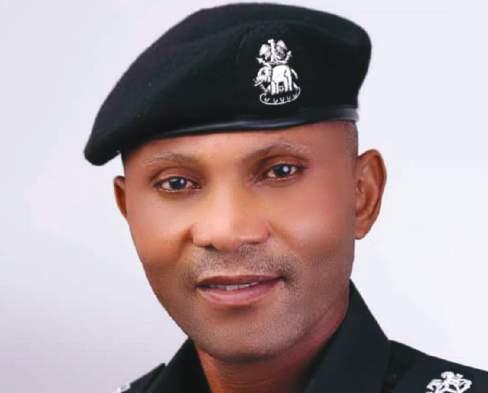
The Inspector-General of Police, Olatunji Disu, has approved the appointment of CSP Anietie Okokon Edem Iniedu, as the new Force Public Relations Officer (FPRO) of the Nigeria Police Force.
The appointment was announced in a statement by the outgoing Force Public Relations Officer, DCP Anthony Placid, who described CSP Iniedu as an experienced and accomplished police officer with a strong background in public communication, operational policing, intelligence management, institutional accountability and administration.
A native of Etinan Local Government Area of Akwa Ibom State, CSP Iniedu holds a Bachelor of Science degree in Pure Chemistry from the University of Uyo. Over the course of his career, he has undertaken several professional courses in investigative interviewing, crime scene management, human rights-based policing, strategic communication and intelligence analysis. Before his appointment as Force spokesperson, CSP Iniedu served as Head of the Complaint Response Unit (CRU) at the Force Headquarters in Abuja. In that role, he coordinated public
complaint management and spearheaded initiatives aimed at enhancing transparency, accountability and public confidence in the Nigeria Police Force.
He also previously served as Public Relations Officer at the Police College of Information Technology, Kobape, Ogun State, in addition to holding various operational and administrative appointments across the country.
His extensive policing experience includes service as Operations Officer at Maisandari Division in Yobe State Command, Area Crime Officer at Umuahia Area Command in Abia State, Staff Officer at the IGP Secretariat, Force Headquarters, and Second-in-Command of the 50 Police Mobile Force Squadron in Kubwa.
CSP Iniedu also served as Officer-in-Charge of the Force Headquarters Situation Room, where he supervised the coordination and dissemination of crime and security information nationwide.
The Inspector-General of Police expressed confidence in the new Force Public Relations Officer’s ability to lead the Force Public Relations Department effectively, noting that his wealth of experience and professional expertise would further strengthen the Nigeria Police Force’s strategic communication efforts.
The House of Representatives has said in spite of the current security challenges across the country, security agencies are recording successes at various theaters of operations.
The House stated this while reacting to the recent statements attributed to its Minority Caucus concerning the security situation in parts of the country and the need for effective national response to evolving threats.
Its Spokesman, Hon. Akintunde Rotimi in a statement yesterday, noted that while the Green Chamber recognised that security remained a matter of urgent national concern, the issues raised reflect genuine public anxieties and underscore the need for sustained vigilance, coordinated action, and continued collaboration across all arms of government.
The House reiterated that Nigeria’s security challenges did not emerge overnight and cannot be resolved through isolated interventions.
Rotimi added that the National Assembly, working with the Executive and security institutions, have continued to strengthen the national security framework through legislation, appropriation, and oversight aimed at improving operational effectiveness, intelligence coordination, troop welfare, and national preparedness.
He said: “The House notes ongoing interventions and operational outcomes reported by security agencies across different theatres, including efforts to degrade criminal networks, rescue abducted persons, and stabilise vulnerable communities. While challenges persist in some areas, these outcomes point to steady progress that must be consolidated.
“Public discourse on security must remain anchored on a balanced appreciation of context, trends, and historical developments.
“Nigeria has experienced both severe security setbacks and periods of improvement, and a fair assessment must recognise both realities while focusing on strengthening what works and addressing gaps.”
L-R: Representative of the Commissioner of Police, Lagos State Command, ACP Oluwatoyin Kazeem; Director, Administration, Lagos State Security Trust Fund, LSSTF, Mr. Adegbola Lewis; Board Member, LSSTF, DIG Agboola Oshodi-Glover Rtd and Comptroller, Nigerian Correctional Services, Lagos Command, Comptroller George Daramola during the opening ceremony of the June edition of LSSTF’s 2-Day Statewide Inter-Agency Training for Security Operatives in Lagos…recently
L-R: General Manager, Globus Training and Advisory Ltd, Mr. Desmond Nnebue; Training Facilitator, Dr. Wale Adeagbo; Nigerian Army Officer, Lt. Masaud Ubaidab Salihu and Director, Administration, Lagos State Security Trust Fund, LSSTF, Mr. Adegbola Lewis during the presentation of Certificates and closing event of the LSSTF’s 2-Day Statewide Inter-Agency Training for Security Operatives in Lagos....yesterday....SUNDAY ADIGUN
L-R: International Policy Advisor, State of California Transportation Agency, Mr. Bonny Ntaga; Chief Executive Officer, Portland Gas Limited, Hon. Folajimi
Lai Mohammed; State Secretary of Transportation, California State, Toks Omishakin and Business Consultant, Mr. Akin Olaoye, during the official visit of the California State Secretary of Transportation and his Team to Portland Gas Limited, at Interstate Bus Terminal, Ojota, Lagos………recently
L-R: His Royal Majesty, the Onidi Oke of Odike Kingdom, Oba Saheed Ifalohun Odusanya; the Iyaloja-General of Nigeria/ celebrant, Mrs. Folashade Tinubu-Ojo; and His Imperial Majesty, Oba Sulaiman Adeshina Raji, Ilufemiloye Ashade 1, the Oniba Ekun of Iba Land, during the birthday of Mrs. Tinubu-Ojo, in Lagos..recently
Linus Aleke in Abuja
Adedayo Akinwale in Abuja
OHCSF Approves NIMC’s First-ever Scheme of Service, Introduces New Career Cadres
Michael Olugbode in Abuja
The Office of the Head of the Civil Service of the Federation (OHCSF) has approved the National Identity Management Commission’s (NIMC) first-ever Scheme of Service, marking a major institutional milestone aimed at strengthening the commission’s operational efficiency and enhancing career development opportunities for its workforce.
The approval, described by the commission as a landmark achievement, is expected to provide a comprehensive framework for NIMC’s operations, clearly defining staff cadres, promotion pathways, organisational structure, job responsibilities, qualification requirements and professional standards.
The commission said the new Scheme of Service aligns with Public Service Rules and international best practices
in career progression and institutional development.
NIMC attributed the achievement to the reform initiatives being championed by its Director General and Chief Executive Officer, Abisoye Coker-Odusote, noting that the development reflects her strategic vision of repositioning the commission into a modern, efficient and globally competitive institution.
According to the commission,
EKITI DECIDES: OYEBANJI, OLUYEDE IN TWO-HORSE RACE
ADC: Oluwadare Bejide
The ADC, represented by Oluwadare Bejide sought to position itself as a credible thirdforce alternative, campaigning on themes of accountability, governance reform and economic transformation.
Although his candidacy has generated interest among some young voters, professionals and politically independent citizens, analysts note that governorship elections in Ekiti are often determined by organisational strength, ward structures, grassroots penetration and vote-protection capacity—areas where the ADC remains at a disadvantage compared to the APC and PDP.
Accord: David Falegan
Similarly, Accord Party candidate Opeyemi David Falegan has attracted visibility through an energetic social media presence and messaging targeted at younger voters. However, observers contend that online popularity has yet to translate into the extensive grassroots network required to compete effectively in a statewide governorship election.
EU Monitors Warn Against Vote-buying, Violence
In a pre-election assessment released yesterday, the EU-SDGN described the Ekiti governorship election as a critical test of Nigeria's new Electoral Act 2026 and a major indicator ahead of the 2027 general elections.
The hub, which comprises six civil society organisations including The Kukah Centre, Yiaga Africa and the International Press Centre, noted that the election would involve 13 political parties competing for votes across 2,445 polling units in the state's 16 local government areas.
While commending INEC for completing most of its preelection activities, including the configuration of BVAS machines and deployment of election personnel, the observers expressed concern that the mock accreditation exercise did not test transmission to the INEC Results Viewing Portal (IReV), a critical component of election transparency.
The observers also identified several potential risk factors that could threaten the credibility of the election.
Among the concerns raised were alleged vote-buying schemes involving pre-funded bank accounts and the collection of voters' PVC and National Identification Number details in some local government areas, including Irepodun/Ifelodun, Ikole, Ikere, Ekiti East and Ekiti West.
The observation hub further warned about the spread of misinformation and inflammatory political content across social media platforms, particularly Facebook, WhatsApp, TikTok and X, noting that unverified claims regarding cloned Permanent Voter Cards had the potential to create confusion and heighten tensions.
Security concerns were also highlighted, with the observers identifying Ado-Ekiti as vulnerable to urban electoral violence, while Ikole, Moba and Ilejemeje local government areas were flagged for possible cross-border criminal activities.
The group equally expressed concern about the participation of women and persons with disabilities, urging stakeholders to ensure that vulnerable groups were not excluded from the electoral process through economic coercion, voter inducement or inadequate access to assistive voting facilities.
EU-SDGN Hub called on INEC to ensure the timely opening of polling units, seamless electronic transmission of results and full deployment of election monitoring systems.
Political parties were urged to respect the provisions of the Peace Accord, accept the outcome of the election or pursue grievances through lawful channels, while security agencies were advised to remain professional, impartial and avoid excessive use of force.
Police Step Up Security, Deploy Personnel, Tactical Assets
Beyond the candidates, one of the defining features of the 2026 governorship race has been the relatively peaceful atmosphere that characterised the campaign season. Unlike some previous elections in the state, which were marked by heightened tensions and
the new Scheme of Service is anchored on the DG’s five-point agenda and her people-centred leadership approach, which prioritises institutional excellence and human capital development in line with President Bola Ahmed Tinubu’s Renewed Hope Agenda.
At the formal presentation ceremony, the Deputy Director, Scheme of Service, Organisational Design Department in the OHCSF,
political confrontations, this year's contest has unfolded in a largely calm environment, notwithstanding allegations and counter-allegations between the ruling party and the opposition over claims of intimidation and politically motivated arrests.
The PDP has repeatedly accused security agencies of targeting its members, while the state government has dismissed the allegations and insisted on its commitment to a peaceful and credible electoral process.
Several local government areas are expected to play decisive roles in determining the outcome of the election. Ado-Ekiti, because of its voter population, remains the most critical battleground, while Ikere, Ikole, Oye, Ijero and Ido/ Osi are also expected to exert considerable influence on the final result.
Particular attention is also likely to focus on Afao-Ekiti, the hometown of Fayose. Historically regarded as a PDP stronghold, the community now finds itself at the centre of a unique political test following Fayose's endorsement of the APC candidate.
How voters in the town respond could provide important insight into the former governor's continuing influence on Ekiti politics.
Security agencies have meanwhile intensified preparations for the poll.
Commissioner of Police Abayomi Shogunle confirmed the deployment of a multi-layered security framework, reinforced by
Mr. Imirhe Gabriel Nwagolo, commended NIMC for its commitment to institutional excellence.
He noted that the commission is among a select few federal agencies that have successfully secured approval for a dedicated Scheme of Service, describing the feat as an indication of its commitment to strengthening its internal systems and workforce management.
Speaking on behalf of the
senior police officers coordinating operations across the state.
Personnel have been stationed at polling units, collation centres and identified flashpoints to ensure the protection of voters, election officials and electoral materials throughout the exercise.
The Inspector-General of Police, IGP Olatunji Rilwan Disu has also assured members of the public that all personnel deployed for election duty have been adequately briefed on their responsibilities and rules of engagement and will discharge their duties professionally, impartially, and in accordance with the law.
The Nigeria Police Force warned that electoral offences and any act capable of undermining the integrity of the electoral process will be dealt with in accordance with the Electoral Act and other extant laws.
It urged residents to remain law-abiding and conduct themselves peacefully throughout the election period.
It also urged eligible voters to go out peacefully and exercise their constitutional rights without fear or intimidation, while also cautioning against the spread of unverified information capable of causing panic or disrupting public order.
The police reassured residents of Ekiti State of its commitment to the protection of lives and property and the conduct of a free, fair, credible and peaceful election.
By the close of voting and
Director General, the
expressed appreciation to
of
Office of the Head of the Civil Service of the Federation for the approval. She described the development as “a laudable and significant milestone” and reiterated the commission’s commitment to the full and effective implementation of the Scheme.
the conclusion of collation, Ekiti voters will deliver the final verdict and determine who occupies Oke Ayoba for the next four years.
The SDP has however insisted that its governorship candidate, Isaac Adebayo Alade, remains on the ballot and is fully participating in the election while accusing INEC of alleged exclusion.
In a statement issued by its National Publicity Secretary, Araba Rufus Aiyenigba, the SDP described reports of its withdrawal from the race as false and misleading, urging voters and the general public to discountenance them.
According to the party, its National Chairman, Prof. Sadiq Umar Abubakar Gombe, and the National Working Committee reaffirmed that the SDP remains a contestant in the election and that Alade is the party's duly nominated candidate recognised by INEC.
"The Ekiti electorate and members of the general public are hereby assured that the SDP is listed on the ballot and its candidate, Ambassador Isaac Adebayo Alade, remains strongly in contention for the election," the statement said.
The party noted that Alade was among the governorship candidates who participated in and signed the INEC peace accord ahead of the poll.
The SDP also rejected claims that it had exited the race, maintaining that the reports were intended to mislead voters ahead of the election.
Head
Human Capital Management at NIMC, Mrs. Rhoda Jackden,
the
L-R: Vice-Chancellor, University of Benin, Prof. Edoba Omoregie, SAN; Chairman, Board of Trustees, UNIBEN Trust Development Fund (UNIBEN-TDF), Osagie Ize-Iyamu; Minister of Education, Dr. Tunji Alausa, and Pro-Chancellor, University of Benin, Prof. Umaru Shuaibu, during a courtesy visit to the minister in his office in Abuja…recently
GLAD TO MEET YOU...
Jimoh Ibrahim: Africa’s Exclusion from Security Council Unjust, Nigeria Pushing Reform Agenda
Ademide Adebayo
Ahead of the 81st session of the United Nations General Assembly, Nigeria has reaffirmed its commitment to the UN Charter and the UN-80 Reform Agenda, while renewing calls for Africa’s permanent representation on the UN Security Council.
Speaking in an interview with ARISE News, Nigeria’s Permanent Representative to the United Nations, Amb. Jimoh Ibrahim, said the country’s recommitment to the UN reflects confidence in the organisation and its future
CHANGE OF NAME
I formerly known and addressed as AYUBA RISIKAT OLUBUNMI, now wish to be known and addressed as SHOMORIN RISIKAT OLUBUNMI All former documents remain valid. The general public should take note.
I formerly known and addressed as FAITH ENENU STEPHEN, now wish to be known and addressed as FAITH ENENU CHIMA All former documents remain valid. The general public should take note.
role in maintaining global peace.
He explained that Nigeria signed the recommitment on behalf of President Bola Tinubu, stressing that the country remains firmly committed to international peace and cooperation.
Ibrahim strongly criticised Africa’s exclusion from permanent membership of the Security Council, describing it as unjust given the continent’s global demographic weight.
“It is quite unjust, very unheard of to say that Africa, who has a population of 25 percent of the entire world, have no seats in the Security Council of the United Nations,” he said.
He added that Africa’s lack of representation has contributed to insecurity on the continent, arguing that the structure of global decision-making must reflect present-day realities rather than the post-1945 order.
According to him, “we are thinking that one of the reasons why we have insecurity in Africa is because Africa is not represented… because if you understand the working
of the United Nations Security Council, it means a lot.”
The envoy insisted that reforms are overdue, noting that Africa’s 54 countries must have a voice at the highest level of global security governance.
“Now that we are in the contemporary 21st century, I think Africa must have seats in the UN,” he said.
On Nigeria’s position, Ibrahim said the country was actively pushing for a seat at the Security Council as part of broader efforts to restore its international standing.
“Nigeria is a giant of Africa… we want to return to that glory, and we must have the seats in the Security Council,” he said. He added that discussions on
reform are ongoing within UN structures, and argued that the UN80 reform agenda would lack credibility if Africa remains excluded.
“This seat is imperative to the continuation of the United Nations… and the UN80 reform agenda of the UN will never have a place if Africa has no seat in the Security Council,” he said. On global security challenges, including wars in Sudan, Gaza and Ukraine, Ibrahim said the Security Council operates within the realities of international politics.
“In international relations, three things are very important: interest, politics, and power,” he said.
Athena Observatory Deploys Real-time Electoral Data System for Ekiti Poll, Signals Poll
Michael Olugbode in Abuja
The Athena Election Observatory (AEO) has unveiled a strengthened post-election audit system featuring near real-time result capture for the Ekiti State governorship election scheduled for Saturday, in what analysts describe as one of the most significant upgrades yet in independent electoral monitoring in Nigeria.
The initiative, driven by the Athena Centre for Policy and Leadership, comes alongside preparations to release long-
awaited audit reports on the 2026 governorship elections in Ondo and Anambra states under a newly enhanced analytical framework designed to improve accuracy, speed, and evidentiary depth.
At the core of the upgrade is a redesigned data architecture that introduces stricter verification protocols, enhanced data-quality controls, and expanded analytical capacity. The system is expected to reshape how election data is captured, validated, and interpreted in the immediate aftermath of
polls.
For the Ekiti election, the Observatory will deploy more than 200 trained data-entry and quality assurance personnel in a coordinated operation aimed at capturing polling unit results in near real time as they are uploaded to the Independent National Electoral Commission Result Viewing Portal (IReV).
Unlike previous audits where data capture commenced after the completion of elections, the new model allows structured real-time aggregation of results as they become publicly
ALISON-MADUEKE: 13-YEAR INVESTIGATION RUINED MY LIFE, FAULTS UK PROBE
luxury goods worth about £2 million from Harrods, chauffeurdriven vehicles and access to expensive properties in London and Buckinghamshire.
However, throughout the trial, defence lawyers argued that crucial documents that could have supported her innocence had disappeared in Nigeria.
According to AlisonMadueke, the missing records included receipts showing that payments made on her behalf by oil businessmen had later been reimbursed.
“Those items were taken away by our intelligence forces,” from her residence in Abuja in 2015, she said, adding that she has no knowledge of what
became of the documents.
The former minister also questioned the handling of the investigation by both Nigerian and British authorities.
“There’s a bit of blame everywhere,” she said when asked who was responsible for the failures in the case.
“The Nigerian authorities need to look into the processes and practices that they deploy in these cases.”
She further argued that international law enforcement agencies needed to exercise greater caution when pursuing investigations in politically sensitive environments.
“The long arm of the law when you go into other
countries, particularly in politically motivated cases, needs to have a lot more sensitivity,” she said.
Alison-Madueke suggested that she became a target because she was perceived as an easy subject for prosecution despite her efforts to reform Nigeria’s oil sector.
“I was the first female to enter this sort of position as Petroleum Minister and as head of OPEC in a very misogynistic society,” she said.
“The NCA should have taken a step back and looked with a little more depth at the truth of the situation on the ground.”
Responding to her criticism,
the NCA defended its conduct, stating that it had carried out a “long-running, in-depth and complex investigation” that was regularly reviewed by prosecutors and investigators.
The agency said it worked closely with international partners throughout the probe and respected the verdict reached by the jury.
Alison-Madueke’s brother, Doye Agamas, was also acquitted of conspiracy to commit bribery charges, while oil industry executive Olatimbo Ayinde was cleared of bribery and bribery of a foreign public official.
Despite her acquittal in the UK, questions remain over
assets linked to the former minister. In 2023, the United States Department of Justice announced the recovery of approximately $53 million in assets seized from two oil businessmen named in the UK proceedings, alleging that Alison-Madueke had used her influence to direct lucrative oil contracts to their companies.
Rejecting the allegation, she said she had never been given the opportunity to challenge the claims in court.
“I was never given the opportunity to fight that because I wasn’t even charged,” she said, insisting that all contracts followed due process. She also dismissed
available—marking a shift from retrospective analysis to near-immediate electoral data tracking.
The Chancellor of the Athena Centre for Policy and Leadership, Osita Chidoka, described the development as a major step in strengthening evidence-based electoral assessment in Nigeria.
He said the credibility of elections is not determined solely by the voting process but also by the transparency and quality of post-election evidence available for scrutiny.
suggestions that assets recovered by Nigeria’s Economic and Financial Crimes Commission (EFCC) had been directly linked to her.
“The assets that have been forfeited were not actually traced directly to me,” she said.
“I don’t know what has happened to these matters at all. It’s now that I’ll have the freedom to find out what exactly has gone on there.”
The acquittal marks a significant legal victory for Alison-Madueke, who has consistently maintained her innocence throughout one of the most high-profile corruption investigations involving a former Nigerian public official.
L-R: Alake of Egbaland, HRM Oba Adedotun Aremu Gbadebo III; Hotel Manager, Abuja Continental, Bruce Potter; Amb. Toye Okanlawon, and Revenue Director, Olatunde Ariyo, during the Royal Father's visit to the hotel...recently
OmOtayO ajirOtutu:
Parents, Schools must Spot Early Signs of Drug abuse Before it’s too Late
As the world marks the International Day Against Drug Abuse and Illicit Trafficking next Friday, Consultant Clinical Psychologist and Head of Psychological Services at the Federal Neuro-Psychiatric Hospital, Yaba, Lagos, Dr. Omotayo Ajirotutu, has urged parents, schools and communities to recognise early signs of substance abuse among youths. In this interview with Sunday ehigiator, he advocates early detection, mental health support and timely intervention. Excerpts:
Many drug abuse interventions seem to begin only after a person has developed a serious addiction.Why do you think society often waits until the rehabilitation stage before taking action?
One of the biggest challenges in addressing substance abuse is that society tends to focus on visible crises rather than early warning signs. Addiction often receives attention only when it begins to affect a person’s health, education, employment, relationships, or involvement with the law. At this point, the problem is difficult to ignore.
Unfortunately, preventive measures such as substance abuse advocacy, support, emotional education, parental guidance, and early screening programs often receive less investment because their benefits are not immediately visible. There is also a widespread misconception that experimentation is a normal phase that young people will naturally outgrow. As a result, opportunities for early intervention are missed. From a clinical perspective, substance abuse should be viewed as a public health issue that requires proactive prevention programmes and strategies. The most effective interventions should occur before dependency develops, not after significant psychological, social, and physical damage has already set in.
Based on your experience, what are some of the earliest warning signs of substance abuse that families, schools, and communities frequently overlook?
In clinical practice, substance abuse rarely begins suddenly. It is usually preceded by subtle behavioural, emotional, and social changes that are often dismissed as normal adolescent development. Some of the earliest warning signs include increased secrecy, unexplained mood swings, declining academic performance, withdrawal from family activities, changes in friendship groups, reduced motivation, and loss of interest in previously enjoyed activities.
Sleep disturbances, frequent requests for money without clear explanations, irritability, and a growing tendency to isolate oneself may also emerge. Physical and verbal aggression could also be noticed: drastic weight loss, poor hygiene, bloodshot eyes or pupils, changes in sleep patterns, slurred speech, mood swings, and neglect of responsibility.
Parents and teachers sometimes attribute these changes solely to adolescence, stress, or personality differences without exploring underlying causes. Another overlooked sign is emotional distress. Young people who are struggling with anxiety, sadness, anger, or low self-esteem may begin seeking unhealthy coping mechanisms.
Early recognition of these warning signs creates valuable opportunities for support before occasional substance use progresses into a more serious pattern of abuse.
The conversation around drug abuse often focuses on the substances themselves. What psychological factors make some young people more vulnerable to experimenting with drugs in the first place?
While substances are often the focus of public discussions, the real question is why some young people feel motivated to experiment with them. Psychological vulnerability plays a major role.
Adolescence and early adulthood are periods marked by identity formation, emotional sensitivity, and a desire for acceptance. Young people who struggle with low self-esteem, emotional regulation difficulties, chronic stress, loneliness, or feelings of inadequacy may be more likely to view substances as a solution to their discomfort.
Curiosity and sensation-seeking tendencies can also increase risk, particularly among individuals who naturally seek excitement or novelty. Additionally, young people who lack healthy coping skills may use substances to escape emotional pain, social anxiety, academic pressure, or family conflict.
Drug use is often less about seeking pleasure and more about seeking relief. Understanding these psychological drivers is essential if we are serious about designing prevention strategies that address root causes rather than symptoms.
How significant are issues such as peer pressure, family instability, trauma, anxiety, depression, and low self-esteem
Omotayo Ajirotutu: Parents, Schools Must Spot Early Signs of Drug Abuse Before It’s Too Late
in driving drug use among adolescents and young adults?
These factors are extremely significant and frequently interact with one another. Peer pressure may influence the initial decision to experiment with substances, but deeper psychological and environmental factors often determine whether the use continues. Family instability, including conflict, neglect, inconsistent parenting, or lack of emotional support, can leave young people vulnerable to seeking comfort and belonging elsewhere. Trauma, whether from abuse, violence, loss, or adverse childhood experiences, is one of the strongest predictors of future substance misuse. Anxiety and depression can also increase risk when individuals use substances as a way to manage emotional distress.
Low self-esteem further compounds vulnerability because it can make young people more susceptible to negative influences and poor decision-making. In many cases, substance use represents an attempt to cope with unresolved emotional pain. Effective prevention, therefore, requires more than drug education; it requires addressing the psychological and social conditions that place young people at risk.
With young people spending an increasing amount of time online, what role do social media and digital spaces play in shaping attitudes toward drug use and risky behaviours?
Social media and digital platforms have become powerful influences on how young people perceive themselves and the world around them. These spaces can shape attitudes toward drug use by normalising behaviours that may once have been viewed as risky or socially unacceptable. Through influencers, music content, entertainment, peer-generated posts, and viral trends, substance use is sometimes portrayed as glamorous, exciting, or harmless. Repeated exposure can reduce perceptions of risk and create the impression that such behaviours are common or socially desirable. Digital spaces can also intensify peer influence because validation often comes through likes, comments, and online approval. Furthermore, young people who experience loneliness, anxiety, or low self-esteem may be particularly vulnerable to messages that promise escape, belonging, or status. While social
media can be a valuable tool for education and prevention, it can also contribute significantly to the normalisation of risky behaviours if left unmonitored.
From a prevention standpoint, what practical steps should parents take to identify and address potential risks before occasional drug use progresses into dependency?
Parents play a critical role in prevention because they are often the first line of defence against substance abuse. One of the most effective
strategies is maintaining open, non-judgmental communication so that children feel comfortable discussing challenges, peer influences, and emotional struggles. Parents should pay attention to behavioural changes such as secrecy, declining academic performance, shifts in friendship groups, mood instability, and unexplained financial requests. It is equally important to understand a child’s emotional well-being, as unresolved stress, anxiety, or low self-esteem can increase vulnerability to substance use. Setting clear expectations regarding drugs and alcohol
My Tasty Naija Food Festival Returns Bigger
in
2026, Expands to London, Manchester
TheMyTastyNaijaFoodFestival is set to return bigger in 2026, expanding to two major cities in the United Kingdom following the success of its inaugural edition held in London last year.
The second edition of the festival, which celebrates Nigerian food, culture and community, will hold in London on July 5, 2026, at Eutopia Warehouse, Barking, while the Manchester edition is scheduled for July 11, 2026, at Nigerian House Manchester.
Convener of the festival, Mr. Abass Tijani, popularly known as DJ Abass, said the vision behind My Tasty Naija was to showcase Nigeria’s rich culinary heritage and promote cultural
exchange across the UK and beyond.
According to him, the festival has grown from a successful London event in 2025 into a broader platform aimed at taking Nigerian cuisine and culture to different cities across the UK, with plans to eventually extend the experience to Nigeria and other parts of the world.
“Our YouTube show features Nigerian restaurants from London and across the UK. The goal is to take the festival experience to different cities each year and eventually to Nigeria and other parts of the world,” Tijani said.
He disclosed that this year’s edition is expected to attract about 3,000 participants in London and another 1,500 attendees in Manchester, reflecting growing interest in Nigerian cuisine and cultural experiencesamongdiversecommunitiesintheUK.
Visitors to the festival are expected to enjoy a variety of Nigerian delicacies, live entertainment, cultural displays, exhibitions and networking
opportunities. Organisers also announced the return of the popular My Tasty Naija Junior Chef Competition and Food Competition, which featured prominently in the maiden edition.
The 2026 festival is being sponsored by Nigerian Eats UK and GeeftMe, a digital fundraising platform designed to facilitate secure and transparent donations to verified causes in Nigeria.
Organisers have opened registration for vendors, competition participants and attendees, noting that spaces are limited and urging interested participants to register early.
The festival, themed around celebrating Nigerian food, culture and community across the UK, is expected to bring together food enthusiasts, entrepreneurs, cultural groups and members of the Nigerian diaspora for what promises to be a vibrant showcase of Nigeria’s culinary diversity and heritage.
FRC Calls for Establishment of Strong Institutions for Sustainable Economic Growth
The Executive Secretary and Chief Executive Officer of the Financial Reporting Council (FRC), Dr. Rabiu Olowo, has called for the establishment of strong institutions to ensure sustainable economic growth.
Olowo who stated this while delivering a keynote address at the 7th International Conference organised by the Department of Accountancy of Nnamdi Azikiwe University, Awka, argued that progressive development can no longer be achieved through isolated
Olowo said economic transformation required the working together of the various sectors for sustainable technological innovations.
He observed that with the world experiencing technological regulation, Nigerian universities must adapt to the changing realities.
He said: “We have all heard about Sustainable Development Goals, SDG, but unfortunately there is no country in Africa that can meet that goal by 2030. Some states are catching up, but the reality is that the same way we could not meet the target of the Millennium Development Goal of 2000, we will not meet the SDG by 2030.
“History offers numerous examples of nations endowed with abundant resources and favourable demographics that nevertheless
while maintaining a supportive relationship creates a healthy balance of accountability and trust. Parents should also model positive coping strategies, encourage healthy recreational activities, and seek professional guidance when concerns arise. Early conversations and timely intervention are far more effective than waiting until problematic behaviours become deeply established.
Schools are often the first institutions outside the home to observe behavioural changes in young people. What systems should schools have in place to detect and respond to early signs of substance abuse?
Schools occupy a unique position because they interact with young people daily and can often detect changes that families may miss. An effective school-based prevention system should include trained counsellors, mental health professionals, and teachers who are equipped to recognise early warning signs of substance use. Schools should establish confidential referral pathways that allow students to seek help without fear of punishment or stigma. Routine mental health screenings, wellness programmes, and evidence-based substance abuse education should be integrated into the school environment. Strong communication channels between schools and parents are also essential to ensure concerns are addressed collaboratively. Additionally, schools should promote resilience-building programs that teach emotional regulation, problem-solving, stress management, and healthy decision-making. Prevention efforts are most effective when schools move beyond disciplinary approaches and adopt a supportive framework that prioritises early identification, intervention, and psychological well-being.
In your view, are the current drug prevention efforts in Nigeria sufficiently focused on early intervention, or are we still largely operating a reactive system that responds after the damage has been done?
While important efforts have been made by government agencies, healthcare providers, schools, and community organisations, Nigeria’s approach remains largely reactive rather than preventive. Much of the public attention is directed toward rehabilitation centres, law enforcement operations, and treatment services after substance abuse has already become severe. Early intervention programs, although growing, are not yet sufficiently widespread or coordinated. Many schools lack adequate counselling services, mental health resources remain limited, and public awareness campaigns often focus more on the dangers of drugs than on identifying risk factors before substance use begins. Additionally, stigma surrounding mental health and addiction can discourage families from seeking help early. A more effective national strategy would prioritise preventive education, youth mental health services, family support programs, community-based interventions, and early screening initiatives. Addressing risk factors before addiction develops would ultimately reduce both human suffering and the long-term economic burden associated with substance abuse.
What would an ideal early-warning and support system look like for identifying atrisk youths before they require rehabilitation or psychiatric intervention?
failed to achieve sustainable development. Conversely, countries with relatively limited resources have transformed themselves into economic powerhouses through effective institutions, technology, sound governance, strategic investments in human capital, and commitment to transparency and accountability.
“In the absence of reliable financial information, markets become inefficient. Capital is misallocated. Investors become reluctant to commit resources. Economic opportunities are lost. The consequences of poor financial reporting have been demonstrated repeatedly through corporate collapses and financial scandals across different parts of the world. In nearly every instance, the erosion of confidence preceded the destruction of value.
An ideal early-warning system would be proactive, multidisciplinary, and communitydriven. It would involve collaboration between families, schools, healthcare providers, religious institutions, youth organisations, and government agencies. Schools would conduct routine mental health and behavioural screenings, while trained counsellors would provide early support to students showing signs of distress. Parents would receive education on recognising warning signs and fostering healthy communication with their children. Healthcare facilities would offer accessible youth-focused mental health services without stigma or excessive cost barriers. Community organisations and faith-based groups would provide mentorship, recreational opportunities, and safe environments where young people can build resilience and social connections. Importantly, the system would focus not only on substance use itself but also on the underlying factors that increase vulnerability, such as trauma, anxiety, depression, family conflict, and social isolation. The goal would be to intervene early, support emotional well-being, and prevent escalation before intensive treatment becomes necessary.
See
Oluchi Chibuzor
David-Chyddy Eleke in Awka interventions.
Ferdinand Ekechukwu- 08035011394 Email: ferdi_adthisday@yahoo.com
SHOWBIZ
Dayo Adeleye: People Discover New Sounds, New Influences, New Ways of Experiencing Music
Lagos-based cultural platform - The Group Collective - is focused on underground electronic music, immersive experience design, and community-led creative programming. Through its V Series, a curated beach rave and music experience set in Lagos, the collective has built a growing reputation for producing emotionally driven rave experiences that merge Afrohouse, visual storytelling, experimental staging, and alternative nightlife culture into one cohesive world. Ahead of its V6: The Sixth Sense edition, its organiser Dayo Adeleye shares insight on the upcoming event which spans a creative ecosystem and a collaborative platform, engaging DJs, filmmakers, designers, projection artists, photographers, and cultural curators across Lagos’ emerging underground scene. Ferdinand Ekechukwu brings the excerpts:
Can you speak to us about the V series and how the idea was born?
The V Series is a communityled beachfront electronic music experience curated by The Group Collective, a Lagos-based creative collective focused on bringing people together through culture, art, music, and shared experiences. At our core, we create concepts that unite tribes and spotlight creatives. We believe some of the most meaningful experiences happen at the intersection of sound, art, and community and the V Series is our purest expression of that philosophy. The idea itself came from a moment of clarity. I was surrounded by some of my favourite people at an after party when it dawned on me that we could build something for us, by us, that served a much bigger purpose than entertainment. That we could create a platform where people felt seen, where creatives could thrive, and where community was the headline. House music became the conduit. Community became the mission. Looking back, it’s incredible to see how far we’ve come in less than two years.
How do you foster a dedicated electronic music community in an Afrobeats-dominated city?
First, I have to acknowledge the people who came before us and helped build the foundation of the electronic music scene in Lagos. What we’re experiencing today is the result of years of work by communities, selectors, curators, and promoters who created a structure people could trust, participate in, and eventually build upon. Secondly, I don’t believe music has to compete. One of the beautiful things about
culture is that taste evolves. People discover new sounds, new influences, and new ways of experiencing music. Sometimes, all it takes is hearing two worlds collide for your perspective to expand. What we’re seeing today is a growing, curious audience. They’re willing to explore electronic music while still appreciating the sounds they grew up with. The genres aren’t at war; they’re in conversation. Our role has been to create a space where that exploration can happen collectively. The V Series provides an environment for people to discover, appreciate, and celebrate electronic music together, and that shared experience is what keeps the community growing. Shout out to Olmeca Tequila Nigeria for helping us achieve this for the 6th time.
V1 was the spark, and V5 was the fifth dimension. How did the initial vision for an extended, multi-sensory beach rave change from your first event to a full 24-hour journey?
We started V1 as a small, intimate gathering for about 50 people. It ended up pulling close to 200, which told us immediately that the idea had its own momentum. From there, it naturally stretched into something more expansive, less of a party, more of a full experience. It’s been shaped by trial, feedback, and constant tweaking, but also just a desire to keep refining what the moment can feel like.
Your ethos states: “Respect the Space. Respect the Music. Respect Each Other.” How do you actively enforce this culture of immersion and consent on a chaotic beachfront?
We rely on structure, team, SOPs, and people who understand the assignment. But more importantly, the experience is designed in a way to reinforce that
ethos on its own. By the time people arrive, the culture is already set. It just needs to be held, not forced.
What was the biggest logistical nightmare that forced these upgrades?
Moving everything across water in the early editions was the biggest reality check. Costs, timing, and coordination all hit harder than expected. It affected everything from sponsor interest to how scalable the experience could be. At some point, we had to redesign the structure completely so the ecosystem could actually function properly.
Running a 20-hour beach rave means battling the elements (tides, heat, sand, and salt). What specific technical challenges go into protecting the sound equipment and vendor areas in such an environment?
The environment doesn’t forgive you, salt, sand, heat, and tides, all of it. Early on, we learned fast that standard setups won’t survive there. So, we started building for it: better protection for gear, elevated staging, cleaner cabling runs, and more stable power systems. For V6, there’s less reaction, more preparation from the start.
From the first track to the final set, how do you map out the energy arc of the crowd over 20 hours?
I’ve learned this by being closer to DJs and curators, really understanding how they think and what they bring emotionally. It helps me place people intentionally. Each DJ isn’t just a slot; they’re responsible for a specific feeling in the journey. Once you see it like that, the arc becomes very deliberate.
GRAMMYs Unveils Five New Categories Ahead of 2027 Ceremony
Ferdinand Ekechukwu
The Recording Academy, organisers of the Grammys has announced a set of updates ahead of the 69th ceremony, which is scheduled to air on February 7, 2027. The changes touch everything from how new artists qualify to how voters cast their ballots, and a few of them are significant enough to reshape who gets nominated and who gets recognised. It introduces five new categories while also implementing more flexible eligibility rules for the Best New Artist category. The updates are part of a broader effort by the Recording Academy to reflect the evolving global music landscape and ensure a wider range of genres and artists are recognized. The changes will take effect at the ceremony scheduled for February 2027. According to the Academy, the expansion
was designed to better represent international sounds, genre fusion, and traditional musical forms that have often been underrepresented in major award categories. The additions place a stronger focus on global pop movements, songwriting excellence, collaborative performances, and heritage-driven music styles.
Among the new categories is Best Asian Pop Music Performance, marking a significant milestone as the GRAMMYs’ first dedicated recognition of Asian pop music. This category will honor performances from major Asian markets, including K-Pop, J-Pop, and C-Pop, particularly recordings that feature meaningful use of Asian languages and highlight artistic excellence within the genre.
Other new categories include Best Latin Song, which recognises songwriters of newly written Latin music predominantly in Spanish; Best R&B Collaboration or Duo/Group Performance, celebrating modern R&B performances that
may incorporate hip-hop, pop, and electronic influences; Best Traditional Pop Vocal Performance, honoring standout interpretations of classic and standards-based pop music; and Best Traditional
Folk Album, which recognizes recordings rooted in traditional folk styles, including ballads, shanties, protest songs, and other community-based musical traditions passed down through generations.
Ferdinand Ekechukwu
After receiving permission from his family, filmmaker Omoni Oboli is dedicating the entire proceeds of her movie “The First Lady” (the film that sparked their friendship over a decade ago) to the family of the late actor Alexx Ekubo.
The movie is available for viewing on the Omoni Oboli TV YouTube Channel.
Taking to her Instagram page, the actress and producer expressed gratitude to God for the success of the funeral.
Omoni announced that in Alex’s memory and to honour his legacy, she is releasing her movie, The First Lady, and donating the proceeds to his family.
Omoni noted how Alex came, saw and conquered. She said he will forever be in her heart and affirmed her love for him. “We’ve laid our bestie Alexx to rest in the glory of God. Thank you, Jesus! “In his memory and to honour his legacy, I am releasing our movie THE FIRST LADY on Omoni Oboli TV on YouTube by 5pm. The proceeds will go to the family, so please help us share widely.
Love you all so much, besties Alexx Ekubo! You came, you saw! You conquered! You are forever in our hearts, bestie. Love you forever.”
Alexx’s death pulled a large number of sympathisers, including family, friends and colleagues from the film industry and beyond to his final resting place in Arochukwu, Abia State, on Thursday. The 40-year-old screen star passed away on May 11, 2026, following a battle with metastatic kidney cancer.
Viral videos from the funeral service captured the emotional moment the actor’s casket was brought in, drawing tears from family members and prominent colleagues who travelled to the Southeast to pay their final respects.
The burial drew an array of notable personalities from the entertainment, political class, business sectors, and other eminent dignitaries.
Adeleye
Omoni
Grammys
Olayiwola Awakan: Tourism Thrives on Perception, Reputation, Effective Communication
Director General, Nigerian Tourism Development Authority, Dr. Olayiwola Awakan, speaks on efforts to transform Nigeria’s tourism industry. Charles Ajunwa brings excerpts
To promote tourism through film and storytelling, the Nigerian Tourism Development Authority set up engagement with key players across the creative industry. Can you throw more light on this?
Tourism and storytelling are naturally interconnected. Around the world, films, documentaries, music, and digital content have proven to be powerful tools for destination marketing. On assumption of office, I have always mentioned that Nigeria is a microcosm of stories, and this soft power should be leveraged for tourism promotion. Our engagement with sister agencies like the National Film and Video Censors Board, Nigerian Film Corporation, National Troupe of Nigeria, sub-national government and other key players in the creative industry is aimed at leveraging Nigeria’s rich cultural heritage, landscapes, festivals, and historical assets through compelling narratives that can attract both domestic and international visitors.
NTDA is working to build strategic partnerships with filmmakers, content creators, producers, media organisations, and cultural stakeholders to ensure that Nigerian stories are authentically told and projected to global audiences. Through these collaborations, we intend to position Nigeria not just as a destination to visit but as a destination to experience through its people, culture, and creative expressions.
You came up with the idea of NITOUREY, a project designed to showcase Nigeria’s rich cultural and tourism heritage to a global audience through compelling multimedia storytelling. What’s the level of buy-in from stakeholders?
The response from stakeholders has been highly encouraging. NITOUREY was conceived as a digital platform to bridge the gap between Nigeria’s vast tourism assets and the global audience that increasingly consumes travel content online. As the first tourism dedicated streaming platform to revolutionalise the ecosystem in Nigeria and beyond, we have received positive interest from state governments, tourism operators, cultural institutions, content creators, development partners, and private-sector organisations. Many stakeholders recognise the importance of digital storytelling in today’s tourism ecosystem
and have expressed willingness to contribute content, collaborate on campaigns, and support the project’s implementation. We remain committed to ensuring that NITOUREY becomes a collective national platform that reflects the diversity and richness of Nigeria’s tourism offerings. As a digital platform, we are partnering with the private sector like the JM Misa Inc and Tourcliq Creatives as well as our sister agency, the National Information Technology Development Agency (NITDA) to deliver a national streaming platform for economic development. This we believe will be fully unveiled by His Excellency, President Bola Tinubu, GCFR.
As part of efforts to strengthen collaboration for cultural tourism promotion, you visited Igbobi-Sabe Kingdom. Can you throw more light on the visit?
The visit to Igbobi-Sabe Kingdom was part of NTDA’s broader strategy of engaging traditional institutions as custodians of Nigeria’s cultural heritage. Traditional rulers and communities play a critical role in preserving cultural assets, festivals, historical sites, and indigenous knowledge that form the foundation of cultural tourism. Also, in the NTDA Act there’s established Local Government Tourism Committee (LGTC) to be headed by the Local Government Chairman where traditional rulers are part of that committee basically for identifying tourism attractions within their localities and preservation of same.
Our discussions focused on opportunities for preserving and promoting the kingdom’s cultural heritage, strengthening community participation in tourism development, and exploring ways to package cultural assets for both domestic and international tourism markets. But specifically, we are planning to expand the scope of Gelede Festival into a global cultural tourism product. The visit also reinforced the importance of communitybased tourism as a sustainable tool for economic development and cultural preservation.
NTDA recently joined forces with the Nigerian Institute of Public Relations (NIPR) to advance tourism in Nigeria. What informed such a decision?
Tourism thrives on perception, reputation, and effective communication. The partnership with NIPR is therefore a strategic one aimed at strengthening the image and visibility of Nigeria
as a preferred tourism destination. NIPR brings extensive expertise in strategic communication, reputation management, stakeholder engagement, and public advocacy. Through this collaboration, we intend to develop innovative communication strategies that will promote Nigeria’s tourism assets, improve destination branding, and encourage greater domestic and international tourism patronage. It is a partnership driven by a shared commitment to national development and economic diversification. In specific terms, we are collaborating with them on the Global Public Relations Forum that will host experts across over 150 countries in Nigeria. This partnership also will allow these PR experts across the world to participate in the Naija Flavour International Tourism (NAFITO) Expo, which NTDA has curated with relevant stakeholders in private sector. These events of global reputation will hold in November.
Also, tourism communication is important especially at destinations and attractions that appear injurious to prospective tourists as DOs and DON’Ts at such destinations. This is vital for the integrity of the destination and the safety of the tourists
Insecurity poses a great threat to the promotion of major cultural festivals across
Promoting Nigerian Culinary
Journalists and social media influencers recently were taken on a guided tour of Nestle Nigeria Plc, Agbara Factory, where they observed first-hand, how Maggi culinary is produced in compliance with international best practices, and regulations put in place by the National Agency for Food and Drug Administration and Control (NAFDAC) and Standard Organisation of Nigeria (SON). The team on arrival, was received by the Factory Manager, Mr. Talla Fall, who described the factory as the largest in Africa, producing over 200,000 tonnes of Maggi annually. Fall said Nestle Nigeria Plc always ensure safety of staff and consumers of their products, noting that “People are our biggest assets, we don’t joke with it.” “Maggi is famous not just because of colour, but because of quality. People are buying it because they trust us. And why they trust us is the quality of our product. We used to say that the ‘consumers can close eyes because we will open our eyes to make sure that
Participants at the Maggi cooking contest
we give them the right product’,” he added.
Category Development Manager, Maggi, Ifeoluwa Seyi-Obembe, said “consumers are more concerned more than ever before about their health and wellness. They want to know whether they’re making the right choices when it comes to food. They want to be sure that whatever ingredients they’re using to make their meals is actually of good quality.
“They want to understand how it’s made, to ensure that they’re also taking the right meals and also ensuring that their families eat heathy. So this is why today, the factory visits is not just a factory visit. It’s an immersive experience, really to show you what is behind the brand Maggi. They don’t know what’s behind the scenes. And you have an opportunity today to see what’s behind the scenes.
the country. Huge revenues are lost because tourists are afraid of losing their lives. What practical steps have you taken to address this issue?
Security remains a key consideration in tourism development globally, and Nigeria is no exception. While NTDA is not a security agency, we work closely with relevant security institutions, state governments, local authorities, and event organisers to promote safer tourism experiences. Our approach includes encouraging destination risk assessments, advocating improved security coordination during major tourism events, promoting tourism destinations with established safety measures, and supporting stakeholder capacity building on safety and crisis management. We are also strengthening collaboration with state governments to improve infrastructure, visitor information systems, and emergency response mechanisms. Also, at NTDA we have a department called the National Travel Bureau which is saddled with the responsibility of curating tours and also liaising with tour operators that are accredited by her. Tourists and visitors alike are encouraged to through both NTB and accredited tour operators for guaranteed security at destinations and easy monitoring by NTDA.
“To also see the people, the processes, and all that we do to ensure that whatever is getting to the hands of the consumers is of the utmost quality and also ensuring that we have transparency, which is very key for us. We show you why we do what we do and also how we do it in real time,” she said.
According to her, every meal begins with people, “So it’s really about the people, the people behind the scenes. You’ll also have to agree that food is more than just what we eat. It’s how we connect with our families, our friends, and also how we pass culture on from one generation to another. When it comes to Maggi, the Maggi story doesn’t begin with the cube. It actually begins with the people behind everything.
“For us as a brand, our major purpose is really to help people to cook fresh food that they love and believe in every single day. For us, we want to ensure that we are meeting the functional and emotional needs of our consumers. That talks about how we enable the consumers to cook with fresh ingredients, and also ensuring that when they are done cooking, they have a deep satisfaction that they made the right meal.
“We pride ourselves as a resourceful ally in your quest for everyday food goodness. You see, everyone wants to make delicious meal. You don’t enter the kitchen to make a meal that is not sweet. Every consumer today, they have one simple goal, to ensure that whatever meal they make is of good taste and not only tasty but also affordable, convenient, and also very balanced.
Awakan
Charles Ajunwa
Why nigerian Businesses Fail safety audit
Omolabake Fasogbon
From 1974 to 2025, Nigeria recorded no fewer than 600 building collapse incidents, according to the Building Collapse Prevention Guild (BCPG). Beyond the lives lost, these tragedies have left businesses ruined, while the economy has not been spared.
In two decades, an estimated $3.2 trillion worth of property has been lost to building collapse in the country. Lagos was once reported to have lost about N66.37 billion to collapsed buildings within 24 months.
In 2024, a 27-year-old factory worker in Ogun State was crushed to death by an engine roller after slipping on a machine. Such incidents are not uncommon in factories. In the same year, the Nigeria Social Insurance Trust Fund (NSITF) processed about 22,350 workplace compensation claims, paying N90 million to one injured worker, N76 million to the family of a deceased worker and N31 million in medical bills for another.
These are not isolated events. Experts say they are the visible consequences of safety compromises rooted in decisions taken much earlier in boardrooms, procurement offices and project planning rooms.
Across industries, companies are losing money in ways that often go unnoticed. This time around, not from inflation or foreign exchange pressures, but operational safety failures.
CEO of Safety Consultants and Solutions Providers Limited (SCSP), Antonia Beri noted many organisations have safety policies on paper, but weaknesses built into projects from planning through daily operations leave them vulnerable to disruptions, regulatory penalties and costly losses.
Beri, speaking amid renewed concerns over workplace safety following the N25 million compensation awarded to a Lagos factory worker who lost an arm in an industrial accident, argued that safety is not merely a compliance issue but a financial one.
She maintained that safety audits remain a
MARkeT NewS
fundamental business imperative
“The most successful organisations recognise that safety is not merely a compliance requirement. It is a business discipline that must be embedded into every stage of an asset’s lifecycle,” she said.
Pitfalls of safety audits
Drawing from years of field experience, Beri observed safety failures begin long before a facility is built.
She faulted the tendency of investors to prioritise production targets and profitability, with little attention to safety and asset integrity.
“When hazards are overlooked at the planning stage, risks become built into the project itself. From a business perspective, this can prove costly. Eliminating risks during design is far cheaper than correcting them after a facility becomes operational. What appears to be cost savings at the outset often
turns into a much larger expense later,” she said. She identified some misses that plunge organizations into costly crisis thus:
Safety ignored at planning stage
According to Beri, many businesses focus heavily on cost, schedules and production targets while leaving safety considerations till later.
The consequence is that risks become embedded in projects from inception, making them far more expensive to eliminate when operations commence.
weak leadership commitment
Poor leadership commitment is deemed a major driver of audit failure. Beri noted approved safety policies are often not matched with the resources and oversight required for implementation.
The consequences extend beyond regulatory sanctions. Weak safety culture can lead to compensation claims, production disruptions and reputational damage.
Poor asset integrity management
Another major gap highlighted is poor management of critical assets. Many businesses continue to operate ageing equipment without structured inspection programmes or proper condition monitoring.
Pressure vessels, pipelines, electrical installations, lifting equipment and fire protection systems all require regular checks.
“Safety audits frequently uncover overdue inspections, undocumented equipment conditions and inadequate management of safety-critical elements,” Beri observed.
The implications go beyond compliance issues. Equipment failure can halt production, trigger emergency spending, increase insurance costs and expose companies to compensation liabilities. Data by NSITF illustrate the scale of such risks.
Repairing only after breakdown
Many companies still operate a “repair when broken” philosophy. While this may appear cheaper in the short term, reactive maintenance often creates the conditions for unexpected failures and adverse audit findings.
Cutix Steps up Quality Drive, Unveils Fire-Resistant Cable
Stories by Omolabake
Driven to address growing threats of substandard wires, West African manufacturer, Cutix Plc has unveiled new fire-resistant product in the Nigerian cable market valued at over N200 billion annually.
Headquartered in Nnewi, Anambra State, the firm is reaffirming its commitment to reshaping local cable
and wire manufacturing landscape through innovations that blend safety, infrastructure resilience, and industrial growth.
It stressed that its latest officially tagged Halogen - Free Flame Retardant (HFFR) insulation technology, is designed to prevent fire outbreaks in homes and offices.
“Unlike cables with inflammable additives and lead insulators, Cutix’s HFFR insulator starves active flames
of fuel, extinguishing them naturally within seconds and preventing fire spread beyond 250 millimetres”, the firm informed.
Speaking on the new addition, Acting Chief Executive Officer of the company, Uche Igbokwe said it was designed out of the firm’s dedication to maintaining global manufacturing standards.
“Cutix Plc is a legacy company built on unyielding integrity. Every product leaving our assembly floor surpasses
rigorous international standards. Real quality does not compromise, and we refuse to lower our engineering benchmarks or pricing for world - class standards. Our mission is to secure Nigerian homes, and that security starts with our refusal to cut corners,” she said.
Igbokwe added that the company’s retail policy was designed to protect customers and partners from market inefficiencies.
Falcon Aero Names New Chairman in Regional, Global Growth Drive
Falcon Aerospace Limited is intensifying expansion beyond the sub-region into key African economic hubs, as part of moves to strengthen its international presence and mobilise capital for growth.
The company said the move will deepen connectivity across Africa, while positioning business aviation as a driver of economic development on the continent.
In advancing this objective, the firm appointed veteran pilot and seasoned aviation administrator, Captain
Folayele Akinkuotu as Director and Chairman of its Board of Directors.
Chief Executive Officer of Falcon Aero, Erika Achum reiterated that the appointment comes to intensify the company’s continental and international ambitions.
He described Akinkuotu as one that embodies the institutional memory and regulatory backbone of African aviation, adding his distinguished background, especially with the apex regulators positions the company to revolutionise business
aviation.
Chief Operating Officer of Falcon Aero, Tejumade Salami added that Akinkuotu appointment was timely.
“His arrival signals a bold new phase for our cross-border ambitions. This is coming at a cru cial time when our continental expansion requires stronger alignment between corporate agility and stringent inte rnational regulatory standards.
“We are certain his chairmanship will serve as a catalyst for broader
industry advocacy, demonstrating how private aviation operators can collaborate effectively with regional regulatory frameworks to drive economic growth, strengthen regional connectivity, create high-value jobs and accelerate seamless market integration across Africa”, Salami stated.
Accepting the new challenge, Akinkuotu pledged full commitment at ensuring the airline delivers seamless, safe, and premium aviation mobility.
Fire: Expert Charges Lagos on Preparedness Beyond Compliance
Amid recurring fire outbreaks in Lagos, fire safety expert, Anthonia Beri has stressed the need to match regulatory compliance with adequate preparedness to prevent future disasters in the state.
Her insights will anchor discussions at the second Lagos International Fire Safety Conference (LIFSC 2.0), kicking off on August 12, themed “Leveraging Technology and Community Engagement to Prevent Fires”.
Beri, an engineer and CEO of Safety Consultants
and Solutions
Providers Limited, will deliver a presentation titled, “Beyond the Checklist: What Real Safety Looks Like.”
She argued that many buildings may possess the required certifications and still be ill-prepared to handle fire emergencies.
According to her, compliance should not be mistaken for preparedness, noting that the ability to respond effectively during emergencies depends largely on factors such as occupant awareness, clearly
defined evacuation routes and regular emergency drills rather than documents displayed on walls.
She noted that poor maintenance of safety systems, inadequate testing, lack of regular drills and weak leadership commitment to safety are among the factors responsible for many fire safety failures.
“Every building owner should be able to answer three critical questions before an emergency occurs: whether occupants know what to do, whether installed safety systems will function when needed and
whether such systems have been tested recently,” she informed.
She stressed that regular testing of asset and accountability are essential, describing safety as a continuous process rather than a one-off exercise. The conference is expected to bring together building owners, developers, facility managers, emergency responders and other safety professionals to discuss strategies for strengthening fire prevention and safety practices in the state and the country at large.
Fasogbon
Antonia Beri
Folashade Tinubu-Ojo: A Journey of Leadership, Influence
When Mrs. Folashade Tinubu-Ojo was announced as the successor to the late Alhaja Abibatu Mogaji, reactions were swift and divided.
For many observers, the appointment appeared too weighty for a relatively young woman. Critics questioned her age, experience and readiness for a position that had been occupied for decades by one of the most respected market leaders in Nigeria.
At the time, few imagined that the young woman stand- ing in the shadow of a towering legacy would eventually grow into one of the most influential market leaders in the country.
Yet, more than a decade after her installation as Iyaloja- General of Lagos in 2013, Folashade Ojo Tinubu’s story has become one of resilience, adaptation and leadership growth.
Born into a family deeply connected to politics, commerce and community service, her journey was never going to be ordinary. However, inheriting a title is one thing; earning the confidence of thousands of traders is another.
The late Alhaja Abibatu Mogaji had built a formidable reputation as a champion of market women and a respected figure in Nigeria’s political and economic space. Naturally, comparisons were inevitable.
But rather than compete with the memory of her predecessor, Folashade chose a different path. She focused on building relationships, strengthening existing structures and gradually developing her own leadership identity.
Her early years in office were characterized by intense scrutiny. Every decision was analysed. Every public appear- ance attracted attention. Yet, she remained focused on the task before her.
Those close to the market association recall how she immersed herself in the affairs of traders, attended meetings across various markets and sought to understand the complexities of managing one of the largest informal economic networks in the country.
Over time, the skepticism began to fade. The young woman, many dismissed as inexperienced, gradually evolved into a respected voice within the market com- munity. Her tenure witnessed increased engagement with government agencies, stronger advocacy for traders, and greater participation of women in leadership structures.
Her influence eventually extended beyond Lagos. Today,
Public service often produces visible figures. It rarely produces enduring ones. The distinction is important. Visibility is a function of the office. Endurance is a function of character. One arrives with an appointment; the other is earned through conduct. In a society where public trust is frequently tested, those who sustain credibility over time become more than officials. They become symbols of what institutions can be at their best.
As CSP Sola Jejeloye marked his 50th birthday on June 19, the occasion offers more than an opportunity for celebration. It invites reflection on a career defined by uncommon discipline, unwavering principles, and a style of leadership that has consistently placed duty above convenience.
In the architecture of contemporary policing in Lagos, Jejeloye occupies a distinctive place. He belongs to a category of officers whose influence extends beyond rank and designation. His impact has been felt not merely through the offices he has held, but through the standards he has insisted upon. Over the years, he has earned a reputation as a meticulous professional, a methodical strategist, and a no-nonsense law enforcement officer
Tinubu-Ojo
her name resonates among market leaders in several states, reflecting the broad reach of her office and the relationships she has cultivated across the country.
Perhaps the most remarkable aspect of her story is the transformation of public perception. What many initially
whose commitment to order has never been subject to negotiation.
Today, as Commander of the Rapid Response Squad, one of the most visible and strategically important formations within the Nigeria Police, he oversees a force of approximately 3,000 personnel. It is a responsibility that demands not only operational competence but also the capacity to inspire discipline across a vast chain of command. Those who have observed him closely understand that his effectiveness stems from a quality that cannot be manufactured. He leads from conviction.
Long before his current assignment, Jejeloye distinguished himself as Chairman of the Lagos State Task Force. It was a role that placed him at the intersection of governance, urban management, public order, and political scrutiny. Few positions attract as much attention. Even fewer demand such resilience.
His tenure was marked by difficult decisions and complex assignments. Among the most notable were the enforcement exercises involving structures erected along canals and drainage alignments across Lagos. Such operations are rarely popular. They involve competing interests, emotional tensions, and intense public scrutiny. Yet, they are often necessary for the preservation of
urban infrastructure and environmental sustainability.
What stood out during those periods was not merely the execution of policy but the manner in which Jejeloye approached his responsibilities. He demonstrated an understanding that leadership is not the pursuit of applause. It is the willingness to act when action is required, even when the consequences are politically inconvenient or personally demanding.
This sense of duty has become one of the defining features of his career.
Born and rooted in the values of Ilorin, a city renowned for its culture of discipline, learning, and moral restraint, Jejeloye carries himself with a certain understated seriousness. There is a quietness about him that should not be mistaken for softness. Beneath it lies an unwavering commitment to principles. His value system is perhaps the most compelling aspect of his story.
In an era increasingly shaped by expediency, he remains guided by ideas that many consider old fashioned but which remain essential to meaningful leadership. Integrity. Accountability. Professionalism. Respect for process. Fidelity to duty.
These are not concepts he invokes for effect. They are principles reflected in the consistency of his actions.
considered a daunting assignment for a young woman is now widely regarded as a role she has grown into with confidence and competence.
Beyond market administration, she has become associated with initiatives supporting youth development, women empowerment, and community welfare. These interventions have helped redefine the modern role of the Iyaloja as not merely a market leader but a social and economic advocate.
Her political influence has also attracted attention. While she rarely seeks the spotlight, her endorsements, interventions, and support for causes and individuals have often generated significant interest within political circles. For instance, to commemorate her birthday early this week, she did in a unique way by organising a special prayer for Nigeria, her parents, and Lagos State. The event, which was organised in memory of her late grandmother and predecessor, Alhaja Abibatu Mogaji, attracted Islamic clerics across all the South-West states.
Of course, it was also attended by dignitaries, scholars, and market women from various states. The speaker of Jigawa State House of Assembly, Rt. Hon. Haruna Aliyu Dangyatin and the wife of Lagos State Deputy Governor, Alhaja Lateefat Oluremi Hamsat, were special guests of honour.
The clerics, who took turn to pray for Nigeria, Lagos and the first family, charged all Nigerians, regardless of their religious beliefs, to see payer for their dear nation as a collective responsibility that should be given special priority.
A Professor of Islamic Studies at the University of Abuja, who also doubles as Chief Imam of Ansar-Ud-Deen, Abuja chapter, Prof. Musa Olaofe, described President Tinubu as a man of foresight who believes in Nigeria.
Colleagues often describe him as clinical in his approach to assignments. Every detail matters. Every operation requires preparation. Every decision must be grounded in facts rather than impulse. It is a methodical style that has earned him respect within the policing community and beyond it. Yet discipline alone does not explain his enduring relevance. What distinguishes Jejeloye is his understanding that authority carries a moral obligation. He recognises that the power vested in public institutions must ultimately serve the public good. This awareness has shaped the way
he approaches leadership, balancing firmness with responsibility, enforcement with accountability. The result is a professional identity that commands respect without seeking admiration.
For many Lagos residents, particularly those familiar with the complexities of maintaining order in one of Africa’s largest and most dynamic cities, Jejeloye represents a reassuring possibility.
Jejeloye
Nigeria’s Long Journey to Single Digit Inflation
Ummie Kabir
The Monetary Policy Committee (MPC) of the Central Bank of Nigeria (CBN) recently released the communique of its 305th meeting and third sitting this year.
The committee unanimously voted to retain the monetary policy rate (MPR), which benchmarks interest rates in the country, at 26.5 percent. Though interest rates do not directly appear in the consumer price index (CPI) basket, but they influence inflation severally as it drives inflation through demand, affects inflation through the foreign exchange rates and shape inflation expectations.
The apprehension which trailed the MPC stance was slightly doused by the CBN Governor, Olayemi Cardoso when he noted in the communique that “although inflation has increased marginally for two consecutive months, the committee believes the trend is temporal and largely caused by external shocks.”
It was also heart-warming to hear from Cardoso that “the current macroeconomic environment will return the country to disinflationary trend in due course based on a comprehensive assessment of risks to the outlook.”
According the apex bank boss, “the MPC recognises its transitory nature and remains confident that the current macroeconomic environment is sufficiently robust to support a return to disinflation.” The committee believes the spillovers from the Middle East crisis, which have placed upward pressure on energy prices, transportation costs, and logistics globally would ease off.
The Committee further passed message of hope that “the impact of the crisis on the Nigerian economy has been minimal due to the benefits of prior policy reforms.”
As things stand, inflation is no longer the number one enemy of only the poor, as all and sundry, be it household, manufacturing and businesses at macro level, bear the brunt. For the poor, there is no guarantee that his meagre earnings would fetch the same quantity and quality of goods and services by his next visit to the market. While businesses can no longer plan as their forecasts are often disrupted.
The National Bureau of Statistics (NBS)
said Nigeria’s headline inflation rate rose to 15.69 percent year-on-year in April 2026, up from 15.38 percent in March, driven primarily by rising food, transportation, and logistics costs.
While this reflects a significant drop from the 34 percent peaks of 2024, unceasing structural challenges, foreign exchange volatility, and imported energy shocks continue to obstruct the Central Bank of Nigeria’s goal of attaining a six percent to nine percent range.
Nigeria’s journey to single-digit inflation remains a tortuous marathon. No doubt, a formal inflation targeting regime with a published target of 6 – 9 percent gives businesses and households a desirable reference point for pricing, wages, and investment. However, wrestling inflation to such an appreciable level is still far off the mark. Although the CBN and Ministry of Finance insist the disinflation course will remain steady despite global headwinds, bodies like the Nigerian Economic Summit Group (NESG) projects that single-digit inflation will not fully stabilise until 2029.
The World Bank has also cautioned that hitting a single-digit target in the short term may be unrealistic without resolving domestic supply and production constraints.
Achieving this target is an arduous task against several entrenched and systemic hurdles notably large informal and uncoordinated sector, policy reversals and global shocks. After nearly a year of steady disinflation, headline figures ticked upward in April of 2026. This reversal was primarily driven by food and energy costs attributable to the conflict in the Middle East, alongside structural deficiencies in the system.
Structural bottlenecks such as infrastructural deficits, supply chain disruptions, and insecurity in major agricultural belts are responsible for the constrain in local food supply and severely limit near-term disinflation.
In order to curtail inflationary pressures, the CBN relied heavily on monetary tools over the years. Those tools work by reducing money supply or making money more expensive. This reduces demand and curtails price hikes. Traditionally, the CBN actually deploys orthodox methods and sometimes combine with unorthodox techniques to rein in inflation. Such orthodox methods include
the monetary policy rates (MPR) or the benchmark interest rates, cash reserves requirements (CRR), Liquidity Ratio and open market operations (OMO). Other popular measures include loan to deposit ratio (LDR), foreign exchange unification, credit control, moral suasion and to some extent, the recently concluded bank recapitalisation exercise which helps to douse inflation under tight policy regime.
However, there are limitations to the efficacy of these measures especially considering the peculiarities of Nigeria’s socioeconomic landscape. The country still has huge informal sector which gives rise to excessive lag in the monetary policy transmission mechanism ranging from six to 12 months in many instances.
Another area accounting for the limited efficacy of the orthodox tools is the supply shocks in food and energy. Both,
largely accounted for the 15.69 percent in April 2026 driven by food and fuel from insecurity and Middle East conflict despite the tight measures put in place by the CBN. More than 50 percent of Nigeria’s consumer price index (CPI) is food. If insecurity keeps farmers away from farmlands in the food production belts or natural disasters like drought or floods wipe out crops, raising rates won’t grow foodstuffs. Increase in monetary policy rates can only shrink demand but can’t increase supply spontaneously.
Nigeria’s inflation is driven not only by monetary factors but also by deep-rooted supply-side shocks: insecurity in food-producing regions, energy deficits, exchange rate volatility, and weak infrastructure.
Building Wealth in Volatile Markets
outperforming inflation.
Inflation Is the Silent Wealth Destroyer
Margaret Agbonlahor
Nigeria’s economic environment has become increasingly complex for investors. Inflationary pressures, currency fluctuations, interest rate adjustments, and global uncertainties have created a market landscape where traditional investment assumptions no longer hold.
Yet amid this volatility lies an important reality: wealth can still be built consistently when investors adopt smarter, more disciplined strategies.
For many Nigerians, volatility often triggers fear-driven financial decisions. Some move entirely into cash positions. Others chase speculative returns in unfamiliar assets. Many postpone investing altogether while waiting for “better conditions.” Unfortunately, this approach often creates a bigger long-term problem because inflation steadily erodes purchasing power while idle capital loses value over time.
The truth is that volatile markets are not merely periods of uncertainty. They are also periods of opportunity for investors who understand how to position strategically.
According to the World Bank, Nigeria’s economy recorded its strongest growth in nearly a decade in 2024, driven by ongoing reforms and improved fiscal conditions. However, inflationary pressures and exchange rate instability continue to shape investor sentiment and household financial realities.
Understanding the New Investment Reality
The Nigerian investment landscape has changed significantly over the past few years. Rising interest rates, elevated Treasury bill yields, and tighter monetary policy have reshaped investor behavior across asset classes.
In 2025, Nigeria’s fixed-income market saw strong investor participation as yields on government securities became increasingly attractive. Treasury bills and bonds continued to attract institutional and retail investors seeking relatively safer returns in an uncertain environment.
At the same time, equity markets experienced periods of strong performance, particularly in banking and financial services stocks, as investors sought instruments capable of
One of the biggest threats facing Nigerian investors today is inflation. Many individuals still assess investment performance based purely on nominal returns without considering real returns after inflation. An investment generating 15 percent annually may appear attractive, but if inflation exceeds that return, the investor is effectively losing purchasing power. This is why smarter investing begins with understanding the difference between preserving money and preserving value. Historically, many Nigerians have relied heavily on savings accounts or low-yield deposits as primary wealth preservation tools. In today’s environment, that approach is increasingly insufficient for long-term financial growth. Investors must therefore prioritise instruments capable of generating inflation-adjusted returns over time. This requires balancing liquidity needs with long-term capital appreciation objectives.
Diversification Is More Important Than Ever
One of the most effective strategies for navigating volatility is diversification.
Market uncertainty affects asset classes differently at different times. Fixed-income instruments may outperform during periods of high interest rates, while equities may deliver stronger long-term growth during economic recovery cycles. Real assets may provide inflation protection, while foreign currency exposure may help reduce exchange rate risks. The goal of diversification is not to eliminate risk. That is impossible. The objective is to avoid overexposure to a single risk source.
Nigerian investors increasingly recognize the importance of building balanced portfolios across multiple asset classes rather than concentrating capital in a single asset class. This is particularly important in volatile economies where policy changes, currency movements or inflation shocks can rapidly alter market conditions.
Cardoso
Agbonlahor
Grouse About, Not ‘Against’
YOU are welcome to the weekend of my birth, June 19 precisely! To use Nigerian parlance, all readers of mine must ‘show me love’!
“…on his emergence as the vice chairman of the Southern Nigeria Governors (Governors’) Forum.”
“…speak volume (volumes) of your capabilities.” This error-ridden advertorial was signed by five lawmakers!
“…despite the fact that our party performed creditably well.” Delete ‘well’—it is an overkill. You either use ‘creditably’ or ‘well’ as both cannot co-function.
“…the financial institutions, especially those listed on the Nigerian Exchange Limited (another comma) are positioning to….”
“This emerged as the SEC yesterday, released its framework to….” Either a comma before ‘yesterday’ or none at all to avoid a disruption of the subject and the verb—there must be a joint relationship.
“…as listed commercial banks give investors opportunity (an opportunity or opportunities) to own a….”
“…is renowned for her electric music genre, comprising of soul….” Electrocute ‘of’!
Daily Independent online of May 28 fumbled abysmally: “There are times necessity breed (breeds) invention….”
“…uncontrolled contract awards and flagrant disobedience to (of) financial regulations….”
Lastly from the above edition: “Proffer solution to Boko Haram menance first” Spell-check: menace.
Vanguard of May 26 indulged in Boxing Day malapropism: “Gbagi itches (inches) closer to becoming first African in Rotary’s Arch Klumph Society”
“We wish to announce the sudden death of our friend…which sad event took place on…in a ghastly motor accident.” (THE
GUARDIAN, May 23) When an accident results in death, it is fatal (not ghastly).
A recurrent blunder: “4 arrested over 62-yr-old man’s death” (Vanguard, May 23) No tiresomeness from error regularity: ‘arrest’ takes ‘for’ (not ‘over’).
“Why we’re promoting artistes of yesteryears” Nigeria’s weekly magazine: yesteryear. The same thing applies to ‘heyday’.
“Our grouse against NHIS, by community pharmacists” (THE GUARDIAN, June 10) My grouse about (not against) media language abuse….
“Before it used to be between 40 to 60.”
(THE GUARDIAN, May 17) Even The Flagship? Either from 40 to 60 or between 40 and 60. No muddle, gentlemen.
“Explosions in the African continent” Conscience, Nurtured by Truth: Explosions on the African continent.
“In the presidential polls (a comma) President…failed to score the mandatory 50 per cent of the vote to be declared outrightly elected” ‘Outrightly’ is perverse American English. The standard version is ‘outright’ which functions both as an adverb and an adjective. We cannot continue agonizing over semantics.
“On May 29, the governor added another feather to his cap when….” (Daily Trust, June1) Stock expression: added (no need for another) a feather in (not to) one’s (his) cap.
“Solutions that create more social trauma and dislocations than is (are) currently the case will not be preferred over (to) solutions that minimize the same.” I prefer compere to (not over) master of ceremonies.
“The three parties that demanded for the restructuring of the electoral body are….” (Daily Independent, May 16) As a verb, ‘demand’ does not take ‘for’ except in a noun form.
“Given the robust profiles of majority (a majority) of the INEC commissioners, there
is every hope that the commission may get its acts together in the next elections.”
A review: a majority of…and the fixed expression: get its act (not acts) together.
The following blunders are from Leadership of December16: “Hong Kong, as a colony, is made up of the harbour that is reputed to be one of the busiest in the world comprising of some outlying settlements, ceded to Britain by China in 1842.”
This can’t be a challenge: ‘comprising’ does not require ‘of’.
“I feel the permanent solution is not in importing fuel from abroad….” (Vanguard, May 16) The importation couldn’t have been from within these shores!
“Their roles and participation in the furtherance of dictatorship has (have) seriously.…” (Source: as above)
“Issues bothering on meeting employers’ obligations to employees in form of salary….” There is a sharp distinction between ‘bothering’ and ‘bordering’, which applies here.
“While contesting the alleged sale of the bakery and its ultra-modern equipments….” ‘Equipment’ is uncountable.
“The frequency with which administrations are changed at the grassroot level makes it difficult for any sustainable development to be accomplished.” Immutable: grassroots makes.
“Given the robust profiles of majority of the INEC commissioners, there is every hope that the commission may get its acts together in the April elections.” A review: a majority of…and the fixed expression: get its act (not acts) together.
“The impression seems to have gained ground that the voter registration was just another white elephant project, a wasteful jamboree.” Get it right: just white elephant. All the trash about ‘project, a wasteful jamboree’ is simply pleonastic.
“Just imagine if all the money which was sunken into the Ajaokuta steel project.…” Tense mix-up: yank away ‘sunken’ for
State Police: Necessary Risk or Risky Necessity?
There are moments in the life of a nation when an idea that once appeared controversial suddenly becomes inevitable. State police appears to have reached that threshold in Nigeria. After decades of heated arguments, political suspicion and constitutional foot-dragging, both chambers of the National Assembly have now moved decisively towards one of the most consequential security reforms since the return to democratic rule in 1999. The overwhelming vote in the House of Representatives and the broad support in the Senate suggest that something fundamental has shifted in our national psychology. Perhaps it is simply that insecurity has finally become everyone’s problem.
For years, the clamour for state police was often dismissed as a sectional agenda or a dangerous proposition capable of creating “governors’ armies”. But every fresh report of mass abductions, marauding attacks, school invasions and entire communities living at the mercy of criminals has steadily weakened the arguments against decentralised policing. There comes a point when a nation must admit that doing the same thing repeatedly while expecting a different outcome is not strategy. It is foolish stubbornness.
The truth is uncomfortable. A single, centralised police force headquartered in Abuja and expected to effectively police more than 220 million people spread across nearly one million square kilometres was always going to struggle. It is not necessarily a question of incompetence. It is a question of arithmetic and geography. Nigeria’s security challenges have become too diverse, too localised and too adaptive for a one-size-fits-all policing model.
Banditry in Zamfara is not identical to cult violence in Rivers. Kidnapping along the Abuja-Kaduna corridor does not present precisely the same security demands as farmer-herder conflicts in Benue or piracy in the Niger Delta. Every state has its peculiar security ecosystem, local intelligence networks, social dynamics and criminal patterns. Yet, we have persisted with a command structure that often places operational authority hundreds of kilometres away from the communities under threat.
The appeal of state police therefore rests on a simple proposition: security works best when those
responsible for maintaining order understand the terrain, know the communities, can gather intelligence quickly and are directly answerable to the people they protect. In principle, the proposal makes eminent sense.
To be fair, the architects of the proposed legislation have not approached the matter casually. The bill attempts to build safeguards into virtually every stage of the process. A state cannot simply wake up and announce the creation of a police force. There must be enabling legislation passed by the State House of Assembly and compliance with nationally prescribed standards. Commissioners of Police cannot be unilaterally appointed by governors. The National Police Council remains involved in vetting and oversight. State Police Service Commissions are designed to include representatives of the Nigerian Bar Association, the Nigerian Union of Journalists, the Nigeria Labour Congress, traditional rulers and human rights bodies.
On paper, these provisions are thoughtful and reassuring. Yet, Nigerians have learnt to be suspicious of paper assurances. Our country has never suffered from a shortage of beautiful laws. Our difficulty lies in implementation and institutional culture.
The principal fear surrounding state police remains valid. Could some governors weaponise state police against political opponents? The concern is hardly academic. We have seen local government structures captured by state executives. We have witnessed traditional institutions bullied into compliance. We have watched legislative assemblies transform themselves into departments of protocol and applause. We have seen anti-graft agencies selectively energised and conveniently sedated. Why should citizens automatically assume that state police would be immune from similar pressures?
A governor armed with coercive powers and unconstrained by effective institutions could potentially turn state policing into an instrument of intimidation. Opposition figures may suddenly discover unusual traffic violations. Protesters may become enemies of public order. Journalists could find themselves attracting curious security attention. Elections could become more complicated affairs than they already are.
These fears are not imaginary. Neither, however,
‘sunk.’
“I escaped death by a hair’s breath” No lexical mayhem: a hair’s breadth.
“I detest the idea of somebody being nun talk less of my own daughter.” ‘Talk less’ is Nigerian English employed in place of ‘not to talk of’ or ‘let alone’ which are standard entries.
“The PDP has expressed serious concern at the fire outbreak, describing it as suspicious.” Just delete ‘outbreak’ on grounds of redundancy.
“Nigeria in search for (of) an enduring political structure…”
“NGO sensitises (sensitizes, preferably) girls on (to) engineering, STEM-related activities”
“…or through these number….” EFCC please take note: this number or these numbers
“We urge that that it will (should) be sustained.”
“For instance, NLC would (should) have opposed land border closure by the immediate past government when it was clear that in Nigeria….”
“Zamfara, C’River, Adamawa, Ogun top cholera cases (case) list”
“Chief Whip stages walk out (walkout) to protest Senate president’s out-of-order ruling”
“The management of the radio station, in a statement (how else?), said his body has (had) been deposited at the Federal Medical Centre….”
“The trustees of Royal Sports Club International, Abuja (another comma) felicitate with (felicitate) you as you mark the Golden (sic) age of 50.” Write right: ‘of 50’ is an overkill!
“13 teams battle for glory as activities build-up (build up)”
are the dangers of maintaining the status quo. Entire communities are currently under-policed. Intelligence gathering is frequently weak. Response times are often painfully slow. Governors, who are constitutionally designated as chief security officers of their states, routinely discover that they possess impressive titles but limited authority. Citizens naturally direct their anger towards governors during security crises, yet the governors themselves frequently lack operational control over the policing architecture within their territories. It is rather like appointing someone captain of a ship and withholding access to the steering wheel.
The question therefore is no longer whether decentralisation carries risks. Every exercise of power carries risks. The question is whether the risks of reform are greater than the dangers of inaction. Judging by our present circumstances, that answer increasingly appears to be no.
Still, if state police must succeed, additional safeguards are imperative. First, appointments into senior positions should involve transparent and competitive processes, with clearly published eligibility criteria and fixed tenures protected from arbitrary dismissal. Security institutions perform better when officers owe loyalty to the law rather than to political benefactors.
Second, state police budgets should be subject to rigorous legislative scrutiny and annual public reporting requirements. Secretive institutions operating with armed powers and weak accountability mechanisms are invitations to abuse.
Third, independent civilian complaints bodies should be established in every state, with powers to receive petitions, investigate misconduct and make binding recommendations. Citizens must possess avenues of redress outside the very institutions accused of wrongdoing.
Fourth, recruitment should reflect local diversity and be protected against ethnic, religious and political monopolisation. No community should perceive a state police force as belonging exclusively to one section of the state. The moment policing becomes identified with one ethnic bloc, one religion or one political tendency, public trust collapses.
Fifth, there should be periodic federal and judicial reviews of state police operations, with measurable benchmarks on professionalism, human rights compli-
ance and operational effectiveness. Autonomy should never mean absence of accountability.
Finally, there must be severe constitutional consequences for proven misuse of state police powers. Governors and senior officials who deploy security institutions for partisan persecution should face sanctions significant enough to deter future abuses.
The larger truth, however, is that no policing architecture can compensate for decades of social and economic neglect. Security crises do not emerge from thin air. They feed on unemployment, collapsing industries, educational dysfunction, social dislocation and governance failures. Millions of young Nigerians leave schools and universities each year and encounter an economy that often has little use for their talents. Frustration becomes vulnerability, vulnerability becomes exploitation, and exploitation sometimes mutates into criminality.
State police may improve response and intelligence capabilities, but it cannot substitute for governance. A nation cannot arrest its way out of every security crisis. Yet we must start somewhere. The proposed reform is not foolproof. No honest observer can claim otherwise. It carries risks. It will require vigilance. It will demand mature institutions and responsible political leadership. There will undoubtedly be attempts at manipulation and abuse.
But there also comes a time when fear of possible misuse should no longer paralyse necessary action. Nigeria’s security landscape has changed dramatically. Our policing philosophy must evolve accordingly. Perhaps the better question is not whether state police can be abused. Almost every institution in Nigeria can be abused. The real question is whether we can summon enough wisdom, safeguards and civic vigilance to ensure that an imperfect reform becomes better than an increasingly inadequate status quo. That is the test before us. And if our present insecurity has taught us anything, it is that the luxury of doing nothing expired a long time ago.
What Is Akpabio’s Sin?
Ken Harries
There are few spectacles more embarrassing in politics than a man arguing passionately against himself while pretending to be attacking someone else. Psychologists call this cognitive dissonance. The rest of us call it eating your own words without choking. It is a difficult performance. The audience remembers the speech made earlier out of conviction, the newspapers preserve the quotes, and the politician is left insisting that black is white and that he has always believed the reverse of what he said. This is a classic Catch-22 situation.
Senator Adams Aliyu Oshiomhole is presently engaged in such a trial. He finds himself confronted not by Senator Godswill Akpabio, but by a far more formidable adversary: his own words. The evidence against him is not supplied by his enemies. It is supplied by his own mouth. The falcon cannot bear the falconer.
In May 2025, Oshiomhole stood on the floor of the Senate and delivered one of the most effusive endorsements ever offered by a senator to another. Under Akpabio’s leadership, he posited, opposition politicians were joining the APC voluntarily and happily. The atmosphere in the Senate had become more cordial. Political tensions were easing. Defections were taking place without intimidation, coercion or conflict. Then came the line that would become impossible to forget. “Mr Senate President, I thought that you would enter the Guinness Book of Records.”
For Oshiomhole, Akpabio’s leadership was not merely effective but profound. It was exceptional. He described it as “truly uncommon and increasingly uncommon.” He praised Akpabio’s patience, warmth and ability to attract political opponents through persuasion rather than pressure. He spoke admiringly of the Senate President’s smile and suggested that his leadership style had succeeded where others had failed. This was not a routine parliamentary courtesy. It was lavish public endorsement and heartfelt sentiments.
Indeed, Oshiomhole went even further to contextualise his praise of Akpabio. He reminded his audience of his reputation as someone who always speaks out of conviction, and added that public figures had an obligation to acknowledge
success when they saw it. That was Oshiomhole speaking. That was Oshiomhole’s standard. That was Oshiomhole’s record. That was Oshiomhole being Oshiomhole. Now, fast forward to June 2026.
Appearing on a podcast, the same Oshiomhole launched one of his strongest (and strangest) attacks yet on Akpabio. Among other claims, he alleged that the Senate President’s daughter had secured employment at the Nigerian National Petroleum Company Limited through improper influence and outside normal procedures. The allegation was serious and spurious. It was also, according to Akpabio’s colleagues, completely false.
The Senate President’s Spokesperson stated that it is trite that whoever alleges must proof. He asserted further that none of Akpabio’s children work at NNPC or any of its subsidiaries. Suddenly, the issue was no longer about Akpabio.
The issue became a test of Oshiomhole’s integrity and conscience.
How does a former labour leader, former governor, former national chairman of the ruling party and serving senator make such a damaging allegation without first establishing a basic fact: whether the person in question even works where he claims? More troubling still was Oshiomhole’s own explanation for the allegation: “Somebody told me.”
Those three words should worry every Nigerian. Not because politicians should never raise concerns about public institutions. They should. Not because powerful people should be shielded from scrutiny. They should not. But because a democracy cannot function when public accusations are built on hearsay rather than evidence.
The low standards expected from a roadside gossip are not the standards expected from a senator of the Federal Republic. And that is what makes this episode so disappointing and worrisome.
Like the first Adam, this Adams gave Eve
the apple of lies and digested it. Adams should have known better. He is not an ordinary politician. His place in Nigeria’s political history compels him to be more circumspect in his communication. He rose through the labour movement to become one of the country’s most recognisable public figures. He challenged military rule. He led workers’ struggles. He governed Edo State. He chaired the APC at a critical period in its development. Few public figures have accumulated such political capital. Yet the path he toed which made Oshiomhole formidable now appears increasingly to be covered with indignity and less than noble motives.
For much of his career, he thrived on confrontation. There was always a cause to champion, an adversary to challenge or an institution to hold accountable. That instinct served him well when it was anchored in facts and robed with decency.
The danger comes when confrontation becomes an end in itself. Then the need to fight begins to outweigh the need to verify. Then attention becomes more important than accuracy. Then the line between advocacy and recklessness begins to disappear. The contradiction in Oshiomhole’s treatment of Akpabio is therefore impossible to ignore.
A little over a year ago, he was publicly suggesting that Akpabio deserved a place in the Guinness Book of Records. Today, he paints him with tar brush as a beneficiary of nepotism. A little over a year ago, he praised Akpabio’s leadership as a model of political inclusion and persuasion. Today, he portrays him as a leader whose conduct deserves public suspicion. A little over a year ago, he was urging Nigerians to acknowledge what was working. Today, he is making allegations that appear incapable of surviving basic scrutiny and integrity test. What changed? Did new evidence emerge? Did Akpabio suddenly become a different person? Or is something else at work? Some observers point to Oshiomhole’s growing frustration with developments within the Senate itself, particularly debates around the chamber’s rules and leadership structure. Whether that explanation is accurate or not, it highlights an uncomfortable reality about Nigerian politics and politicians’ sweet descent. Too often, political disagreements that should remain institutional become personal. Policy disagreements become personality conflicts. Procedural disputes become vendettas. Legitimate criticism becomes a vehicle for settling scores. And when that happens, truth is usually the first casualty.
Benson Konbowei and the Push for Grassroots Development in Bayelsa Central
Ebikitin Ebidoughebofa
Representing ecologically vulnerable and geographically fragmented aquatic terrains requires an approach to governance that transcends orthodox legislative boundaries. This paper analyses the infrastructural and human capital development paradigms implemented within the Bayelsa Central Senatorial District under the stewardship of Senator Benson Konbowei. By examining the execution of the 2024/2025 constituency project matrix through the conceptual lenses of infrastructural subsidiarity, the capabilities approach, and human security, this study illuminates how localized, low-noise legislative interventions mitigate systemic state omissions in the Niger Delta. The findings demonstrate that targeted sub-national interventions— ranging from decentralized renewable energy grids to marsh-resilient civil engineering and localized social safety nets—effectively bridge the structural gap between peripheral coastal communities and central governance frameworks.
The Political Ecology of the Aquatic Periphery
The Niger Delta region of Nigeria presents a complex nexus of vast natural resource wealth and profound environmental vulnerability. Within this geopolitical theater, Southern Ijaw Local Government Area (SILGA)— historically demarcated as one of
the largest local government areas in the federal republic—serves as a critical case study in political ecology.
Characterized by a fragile riparian and marine landscape where land mass yields continually to riverine networks and oceanic tides, the district exists in a state of perennial geographic precarity.
To effectively execute legislative representation within an environment where human settlements are structurally isolated by water requires a departure from standard, top-down legislative models. It demands a specialized form of governance rooted in absolute geographic empathy and administrative precision.
Historically, peripheral coastal populations within the Niger Delta have suffered from systemic spatial marginalization, where the high fiscal cost of marine engineering often serves as a bureaucratic justification for state neglect. This article evaluates the structural interventions implemented within Bayelsa Central Senatorial District, documenting how localized legislative mandates can be leveraged as instruments of targeted socio-economic equity.
Institutional Trajectory: From Grassroots Subsidiarity to Executive Synthesis
The efficacy of contemporary legislative interventions within the district is directly linked to an institutional trajectory grounded in grassroots governance. Senator Benson Konbowei’s bureaucratic evolution offers an empirical blueprint for sequential leadership
development within a developing federation.
From Local Councilor (MicroLevel Grievance Articulation) to LGA Chairman (Sub-National Macro-Infrastructure Delivery). And he became Member of the State House of Assembly and Eventually Speaker, State House of Assembly (Legislative Institutionalism). He now became Secretary to the State Government (Executive Policy Synthesis) and finally, Federal Senator (National Resource Alignment & Subsidiarity).
The Councilor Phase: Entering governance at the lowest tier of the formal institutional hierarchy, Konbowei’s early tenure was defined by the direct articulation of localized, micro-level grievances unique to coastal and riverine communities. This phase highlighted the limitations of hyper-localized municipal governance when decoupled from broader fiscal frameworks.
The Executive Local Government Chairmanship: Transitioning to the position of Local Government Chairman allowed for the operationalization of administrative autonomy. During this period, governance moved from mere grievance reception to the direct execution of public works across riverine environments.
State Legislative and Executive Consolidation: Serving a historic eight-year tenure as Speaker of the Bayelsa State House of Assembly, followed by a tenure as the Secretary
Konbowei
to the State Government (SSG) within Governor Douye Diri’s “Prosperity Administration,” provided deep insight into the state’s legislative and executive functions. This comprehensive exposure across municipal, legislative, and state executive domains established the administrative framework necessary for high-impact federal legislative representation. Consequently, the three-year legislative footprint under review avoids performative politics, focusing instead on a methodical approach to human security and structural development.
Ebidoughebofa writes from Yenagoa, Bayelsa State Read full article online - www.thisdaylive.com
Harries is an Abuja-based Development Communication Strategist
Akpabio
NIGERIA IS ONLY COUNTRY WE HAVE, LET US UNITE TO DEFEAT TERROR BACKPAGE CONTINUATION
terrorist groups. The use of fake news on social media to propagate false narratives has served to encourage terrorists and other criminal groups.
The success of one terrorist group encourages another, and unless we have a rethink, we will continue to promote this crisis.
I urge the armed forces and security agencies
to continue their efforts, resolve and firmness in this fight and not to be discouraged. I urge Government should in every manner continue to take decisive actions and resolve to bring tragedy to an end.
Nigeria is the only country we have. I joined the army to defend it with my life. I am a firm
THOUGHTS ON A QUESTIONABLE CONFERENCE
the obvious pain, in unconditional obedience to the Will of God.
The chorus among those who knew him, both professionally and personally, is: “He was a good man”. As I write, his wife, Hajia Amina Rabe Abubakar, who survived the ordeal of days of uncertainty and privation is currently recuperating; after being rescue by security personnel.
While acknowledging that it was obviously against this backdrop of grief, sense of bewilderment, sympathy and respect for the memory of the deceased that the “friends, colleagues and associates” of the late senior officer made their public statements, one is constrained to point out that a greater sense of propriety would have been advisable. Their concern about insecurity, especially in the face of such a heavy loss, is understandable. But the timing, implications for the conveners personally, as well as the purpose and substance of the media output arising therefrom left many who gathered a few days ago to review issues surrounding that unfortunate incident wondering what exactly the organizers hoped to achieve.
Where were these friends of Rabe from the moment he was kidnapped, until his unfortunate demise? That was when needed them, assuming there was anything in the form of material intervention that would have ameliorated the situation.
Three things were in the air when Rabe was abducted alongside his wife by bandits. First, the nation followed the tragic developments with great concern, wondering how anyone would be so daring as to abduct an army general, and even detain him upon knowing his identity. The second was that Nigerians expected his friends and associates to quickly rally and make visible efforts towards securing his release.
The third was that the public believed also that there must be some ongoing efforts to rescue him, but with great care being taken to avoid massive collateral damage, in the form of civilian casualties. We did not see his now-visible friends in public in some form of mobilization, evident engagement with the authorities, or any structured interventions on his behalf. Then, all of a sudden, they were talking
about stronger security institutions without telling anyone exactly what they meant by that.
I personally find it unacceptable that senior military personnel, serving or retired, should, in anyway whatsoever, be seen mouthing the hollow chatter about “security architecture” we often hear from many ignorant politicians. That has been the pattern in the last fifteen years.
For the record, it is much easier to gather before television cameras after a tragedy, look badly shaken and concernedld, make general statements about national security and go home feeling important and believing that one has done something, than to actually do something worthwhile in the circumstances. The more impactful and far more meaningful thing is to stand forth, and in support of a colleague, when there is still an opportunity to influence events.
If these retired officers undertook significant efforts behind the scenes it might have made a difference, who know. So, if anything, they owe the public an explanation. What they were doing from the moment the news broke is not in the public domain. Their sudden, organized, emergence after the General’s death inevitably raised questions and invites scrutiny.
The timing of the conference is another issue. The gathering was held after Rabe’s demise. His wife had also already been rescued through the efforts of security forces. So, what practical purpose is served by the conference? Was it to help them organize a funeral, or organize support for his wife and family? The conference offered little indication of any concrete supportive initiatives, or ideas.
If it was it intended to honour his memory, then why did discussions quickly drift into broader political narratives that appeared only tangentially connected to the tragedy? What was particularly striking here was how quickly attention shifted from the late General Abubakar to arguments about regional perceptions of insecurity, selective outrage and the politics surrounding security discourse.
For one media report carry the headline as “Stop Blaming North For Insecurity, Rtd Generals Tell Nigerians”, it must mean that this entire engagement
REPENTED TERRORISTS AND NIGERIA’S FUTURE
at the Hajj Camp in Maiduguri and acquired various skills.
“Their way back from the bush began with a call from their colleagues encouraging them to surrender, embrace peace, and re-unite with their parents,” Ishaq said.
He added that those affected had hitherto exited from the bush and reported to the nearest military location for initial profiling, and those with weapons surrendered them to the troops.
While the Borno State Government, just like some other states in the northern part of the country, say programmes of this nature, which align with the Nigerian Army’s ‘Operation Safe Corridors,’ have persuaded thousands of insurgents to abandon violence and embrace peace, it reignites a national debate over the wisdom and long-term implications of granting former terrorists a second chance.
Beyond the emotional outrage it has provoked, the development raises profound questions about justice for victims, safety of communities, effectiveness of deradicalisation, and ultimately, what kind of future Nigeria seeks to build in its battle against terrorism.
The issue, therefore, is about balancing peace with accountability and determining whether reconciliation can secure a more stable and united Nigeria. It also raises difficult questions about national security and morality.
For over a decade, terrorism has left deep scars across the country. Thousands of innocent Nigerians have been murdered. Women have been widowed. Children have been orphaned. For instance, in Oyo recently, a teacher was beheaded by his abductors, just as several others
believer in a united and peaceful Nigeria. At my age, it was and is still my dream that we hand over to our children a united and prosperous nation.
I appeal to all our citizens to remain calm and law abiding. The task ahead requires our collective vigilance. I pray for comfort to the
raised this uncomfortable but unavoidable question: “Was the conference truly about General Abubakar, or was his death merely the occasion for advancing pre-existing and as-yet-unclear narratives and motives?
At the aforementioned discussion on this matter, several participants who expected such a gathering to focus on his life, his service, lessons from his ordeal, support for his family, and recognition of those who contributed to the rescue of his wife wondered why their conversation revolved around the familiar talking points that have featured repeatedly in political speeches and public debates on insecurity.
One would also have expected greater emphasis on what led to the rescue of Hajia Amina Rabe Abubakar, what delayed it, etc. They would even then have been in a position to, after professional consultations with serving colleagues, helped in ensuring that tragic events do not overshadow public education on the courage, professionalism and sacrifice of those involved in difficult operations.
What makes the episode even more surprising is the calibre of the individuals involved. These are not ordinary citizens unfamiliar with matters of statecraft, public policy, security management or strategic communication. They are men who have occupied important public offices, served at strategic levels of national responsibility, worn senior military ranks, represented government institutions and participated in decision-making processes that shaped public affairs.
Several of them also hail from the same state as the late general and were therefore expected to appreciate the personal and emotional dimensions of the tragedy. If anyone should understand the importance of timing, judgement and strategic in communication in moments of crisis, it ought to be members of this group.
Their collective experience should have informed a more constructive response—one centred on supporting the family, honouring the deceased, commending those who secured the rescue of his wife and advancing practical recommendations for preventing similar tragedies.
It is difficult to escape the conclusion that the
families of our fallen heroes.
Once again, my family and I remain deeply grateful for your support. May Allah help us rebuild our dear country. God bless Nigeria.
•Gen. Abubakar is a Former Head of State, Federal Republic of Nigeria
organizers ought to have known better. Their experience and standing should have guided them towards actions and utterances capable of making a tangible difference, either during the late general’s captivity or in supporting his family after the tragedy. Instead, what emerged was a public intervention that many may regard as ill-timed, poorly conceived and disconnected from the immediate concerns arising from General Abubakar’s death.
One cannot help but wonder what the late General Abubakar himself would have made of the spectacle. A professional soldier who devoted his life to service, discipline and national unity might well have expected his friends and colleagues to rally around him during his hour of need, not after his death. Rather than becoming the focal point of a campaign for his rescue, he became the subject of a conference convened only when there was nothing left to rescue except his memory.
Indeed, many Nigerians may feel that if the late general could speak today, he would be deeply disappointed that individuals claiming to be his friends chose to find their voices only after his death. At a time when solidarity, advocacy and collective action might have mattered most, there was little public sign of such efforts.
The tragedy is therefore not merely that a distinguished officer lost his life, but that those who now claim friendship appeared absent during the period when that friendship was needed most.
The fundamental issue, though, is not whether retired officers should express themselves the way they did. At the end of the day, Nigerians are entitled to ask some simple questions.
Until convincing answers are provided, many will continue to view the conference as an exercise that came too late, achieved nothing, tried to politicize security and raised more questions than it resolved. It is a sad irony that a gathering purportedly organised in honour of a fallen officer may ultimately be remembered less for celebrating his life and service and more for raising troubling questions about the judgment, timing and purpose of those who claimed to speak in his name.
have been killed in Borno, Kogi, Kwara and Zamfara STATES, among others, over the years. We have seen communities in Niger, and Kwara States displaced. Schools have been destroyed. Farms have been abandoned. Dreams have been buried. Families have been shattered.
With all these painful memories and enduring scars, can a nation truly heal when those who inflicted such unimaginable pains are rewarded with freedom, rehabilitation and opportunities, while victims and their families remain trapped in grief, poverty and neglect?
How will many of our gallant soldiers that bear visible marks from battles with bandits and others with distasteful memories feel seeing those that harmed them asked to walk freely? What message are we passing to families of those soldiers that paid the ultimate price in service to our country? These questions which are begging for answers, speak to the future of Nigeria.
Violent crimes in their myriad forms, leave an indelible mark on individuals and society as a whole. They are pervasive forces that touch lives in ways both seen and unseen, often with consequences that ripple far beyond the initial act. The bruise fades, but the invisible wounds carved by violence can echo through generations, reshaping minds, breaking bodies, and unravelling the very fabric of communities. These victims deserve justice. They deserve support. They deserve to know that the country values their pain. Unfortunately, the current policy on repented terrorists sends a different message.
Rear Admiral Dickson Olisemelogor, a retired
naval officer, in a recent newspaper interview, captured it aptly when he warned that such reintegration programmes could be a ploy by perpetrators of insurgency to gather intelligence and infiltrate security agencies.
He explained: “The idea of reintegrating de-radicalised deviants into society is good. However, what I see in our own case is disengagement rather than deradicalisation. The boys are pulled out of their groups and given some soft landing by engaging them in various government agencies without addressing the causes of their anger. To me this is a big mistake.
“Deradicalisation entails changing the person’s ideology and must be seen over a period of time that the person has actually changed. Additionally, the person’s grievances must be addressed like issues of unemployment, land dispute, religious intolerance, etc.
“As far as I am concerned, most of the so-called repentant Boko Haram boys are not de-radicalised because they come out when military pressure or hunger knocks hard on them. Some are purposely sent to gather intelligence and infiltrate security agencies. This is the reason they return to their old group or even form a new terror group once they have the opportunity.”
Also, a Kano-based businesswoman, Aminat Saudi, who reportedly lost six of her relatives in Borno State due to activities of the insurgents, questioned the moral balance of the programme. She said: “Aside from fears that this repentant approach could be part of the terrorists’ strategy to infiltrate sectors of the economy, no one is talking about the victims of their wicked act.
“What happens to the families of those killed by the repentant terrorists? What happens to the houses burnt, farmland destroyed and those who are living with parts of their bodies dismembered? Who refunds the ransom paid by victims of these so-called repentant terrorists? Until these questions are addressed, the Safe Corridor philosophy won’t be seen as anything other than being sympathetic to terrorists.”
Indeed, no country can build lasting peace by ignoring the cries of victims. Peace without justice is merely silence.
The family whose breadwinner was slaughtered does not easily understand why the killer should receive rehabilitation and empowerment. The widow whose husband was executed before her eyes struggles to comprehend why those responsible should be reintegrated into society without visible consequences. The child who lost both parents may see such policies as a betrayal.
Several countries in Africa battling violent crimes have experienced recidivism among former extremists whereby some of those that claimed to have repented later went back to join their former terror groups and became a problem to the society. We cannot afford such risks.
Terrorists who genuinely repent should face transparent judicial processes. Confessions should be verified. Accountability should be visible. Restitution should be explored where possible and if possible, the communities should have a voice in decisions affecting them. Real peace is built on justice, trust and accountability, because a country that appears to reward perpetrators of violent crimes weakens social trust.
AUTOWORLD
TVS Motors Strengthens Nigerian Footprint
With a wide portfolio of products and enhanced network presence, TVS Motor Company is set to scale up its operations in the Nigerian market.
TVS Motor Company (TVSM), part of TVS VENU, a global leader in the two and three-wheeler segments, has announced a new partnership for distribution of its products and services across Nigeria.
TVS Motor Company has entered a strategic partnership with Enviable Tricycle Auto Parts Ltd as an additional distributor to increase the scale of its operations across theAscountry. part of the partnership, Enviable Tricycle Auto Parts Ltd, a leading mobil- ity and automotive solutions company with an established distribution network and growing operational footprint across Nigeria, will further strengthen TVS Motor Company’s presence in Nigeria and enhance access to TVS Motor Company’s proven global product portfolio and world class customer service to the discerning Nigerian two wheeler and three wheeler consumers and enthusiasts.
The partnership combines TVS Motor Company’s globally acclaimed products with Enviable’s growing distribution, service and market development capabilities, creating a strong platform for sustainable growth in Nigeria’s mobility sector.
As part of its renewed commitment to the Nigerian market, TVS Motor Company through Enviable Tricycle Auto Parts Ltd will increase its network footprint from the current 17 outlets to 47 outlets – making it one of the widest 2-wheeler and 3-wheeler
Ajay Garje, during the official announcement of a new strategic partnership between TVS and Enviable Tricycle and the commissioning of the new Enviable Tricycle mobility facility in Ikorodu, Lagos... recently
networks in Nigeria. With new Exclusive 3S (Sales, Service & Spares) network across strategic hubs, TVS and Enviable Tricycle Auto Parts Ltd are expected to offer superior customer experience that it is popularly known for globally.
Nigeria and the larger African region have been central to growth of the international business of TVS Motor Company, accounting for 25% of overall sales in financial year 2025. Africa is also the single largest region, accounting for more than half of global operation revenue and nearly 70% of export unit volumes.
Announcing the partnership, Peyman Kargar, President – International Business, TVS Motor Company, said, “Nigeria is a strategically important market for TVS Motor Company and has been our stronghold. Our focus continues on building a scalable footprint in the region, strengthening customer experience, and creating sustainable long- term value with evolving global mobility ecosystems.”Commenting on the partnership, Ituma Chukwuemeka Enviable, Managing Director, Enviable Tricycle Auto Parts Ltd, stated, “This partnership is a defining moment
for Enviable Tricycle Auto Parts Ltd. It reflects our growing role as a key execution partner in Nigeria’s mobility ecosystem. By combining our nationwide distribution capabilities with TVS Motor Company’s globally trusted product portfolio, we are positioned to deliver improved access, stronger service reach, and enhanced value to customers across the country”.
With the expanded network, TVS Motor Company intends to also increase its product portfolio in the markets and is expected to launch newer products across multiple forms and segments, offering technologically advanced, high quality mobility solutions to a wide spectrum of Nigerian customers.
TVS Motor Company (BSE:532343 and NSE: TVSMOTOR), part of TVS Venu, is a reputed two and three-wheeler manu- facturer globally, championing progress through sustainable mobility with four state-of-the-art manufacturing facilities located in India and Indonesia. Rooted in our 100-year legacy of trust, value, and passion for customers, it takes pride in making internationally accepted products of the highest quality through innovative and sustainable processes. TVS Motor is the only two-wheeler company to have won the prestigious Deming Prize. Our products lead in their respective categories in the J.D. Power IQS and APEAL surveys. We have been ranked No. 1 Company in the J.D. Power Customer Service Satisfaction Survey for four consecutive years. Our group company Norton Motorcycles, based in the United Kingdom, is one of the most emotive motorcycle brands in the world. TVS Motor Company endeavours to deliver the most superior customer experience across 90 countries in which we operate.
Geely Galaxy Unveils EV Vehicles in Nigeria, Partners TIM Motors
Geely Galaxy, the premium newenergy vehicle brand under Geely Auto Group, has made an official entry into the Nigerian market through a strategic partnership with TIM Motors.
Geely, which also owns globally recognised brands including Volvo Cars, Polestar, and Lotus, is one of China’s leading automotive manufacturers and a major force in the country’s transition to new-energy mobility.
In a special event in Lagos yesterday, the company unveiled three Geely Galaxy models, the EX5 EM-i, the EX5, and the EX2, designed to meet diverse customer needs across the Nigerian market.
The EX5 EM-i is a smart family SUV that combines petrol and electric power for extended driving range of more than 1000km, reduced fuel consumption, and lower emissions. For Nigerian families who want to spend less time at the fuel station and more time on the road, the EX5 EM-i delivers. The EX5 is a valuefocused mid-size SUV with a premium, tech-forward interior and over 430 km of driving range. The EX2 is an all-electric subcompact hatchback built for the realities of city life. Affordable, intuitive to drive, and remarkably efficient, it is the answer for commuters tired of fuel queues and rising running costs.
Geely has built a strong reputation for innovation, quality, and intelligent vehicle technologies across both
New Energy Vehicle (NEV) and Internal Combustion Engine (ICE) markets. It ranks seventh globally by annual vehicle sales, with over 3.4 million units sold, placing it among the world’s most successful automotive manufacturers. Its footprint continues to grow across international markets.
With Nigeria standing as one of Africa’s most
Jetour X90 Plus Redefines Space, Safety, Premium Family Driving in Nigeria
In Nigeria’s increasingly competitive SUV market, where space, comfort and value drive purchasing decisions, the Jetour X90 Plus is emerging as a strong reference point in the mid-size family SUV segment. Designed for families and upwardly mobile professionals, the model blends generous cabin space, refined interior comfort, advanced safety systems and efficient turbocharged performance into a well-rounded premium offering.
Positioned as one of the most spacious SUVs in the country, the X90 Plus combines versatility with modern styling.
A statement by Jetour Nigeria Mobility Services says its accredited dealers spread across Nigeria are Elizade Nigeria Limited, New Era AutoVehicle Services Limited, Kojo Motors, Germaine Auto Centre, Tab Autos Limited, R. T. Briscoe Motors and Mandilas Autos.
Its exterior design features a bold hexagonal grille, sleek LED headlamps and a confident road stance
that gives it a contemporary and upscale appearance. Powering the X90 Plus are two turbocharged engine options.
The 1.6-litre turbo engine delivers 197 horsepower and 290 Nm of torque, while the more powerful 2.0-litre turbo variant produces 254 horsepower and 390 Nm of torque. Both engines are paired with a smooth 7-speed dual-clutch transmission and front-wheel drive, offering strong acceleration, efficiency and suitability for both city driving and long-distance travel.
With dimensions of 4,858mm in length, 1,925mm in width and 1,780mm in height, the SUV has a commanding presence and translates this size into exceptional interior space.
Inside, the seven-seat cabin is finished with premium materials, soft-touch surfaces and tasteful wood accents. Generous legroom and headroom across all rows make it ideal for large families, while a panoramic sunroof enhances the sense of openness.
compelling growth markets for new-energy mobility, Geely Galaxy’s entry signals a long-term commitment to the continent.
General Manager of the Passenger Vehicle Business Unit at TIM International, Leon Zhan, expressed excitement about the brand’s arrival, confirming that the company is fully prepared to support ease
of ownership and deliver reliable aftersales service through its nationwide network of service centres, spare parts availability, and warranty coverage.
“Electric vehicles represent the future of driving in Nigeria, and we are proud to bring that future closer to Nigerian consumers as the exclusive local partner of Geely Galaxy, a brand built on EV innovation, technology, and performance. We have financing arrangements in place to ease vehicle ownership, alongside a full aftersales support structure covering spare parts and warranty servicing,” Zhan said.
Geely Galaxy enters Nigeria with products engineered to address what customers have long been asking for: lower fuel costs and vehicles that work within local infrastructure realities. The brand’s offerings are designed to balance performance, affordability, and efficiency across its model range.
TIM Motors was appointed as Geely Galaxy’s exclusive general distributor in Nigeria on the strength of its continental sales network and its track record of customer support across Africa, giving Nigerian buyers the assurance of a partner who understands the local market.
The appointment reflects a commitment to making every customer interaction, from purchase to aftersales, seamless and reliable. TIM Motors’ proven experience across the African auto industry and its understanding of local customer needs are seen as central to Geely Galaxy’s success in Nigeria.
Mitsubishi Motors Celebrates One Year of New L200 Pickup in Nigeria
Massilia Motors Nigeria, the sole authorised distributor of Mitsubishi Motors in Nigeria and a joint venture of the CFAO Group and the Chanrai Group, has announced a special anniversary pricing offer on the new Mitsubishi L200 pickup truck to mark one year since its launch into the Nigerian market.
The offer, available across all L200 variants, sees pricing start from N42,000,000. With limited stock available, prospective buyers are advised to act promptly to secure their preferred variant.
The new Mitsubishi L200 arrived in Nigeria with an impressive international pedigree. It was honoured with the Design Car of the Year at the 2024–2025 Japan Car of the Year Awards, recognised for its bold “Beast Mode” exterior design and highly functional
interior. It also claimed Best Mid-size Pickup at the 2024 Arab Car of the Year Awards, acknowledged for its performance and overall reliability.
One year since its launch, the L200 has established itself as a trusted workhorse across the construction, agriculture, mining, and logistics sectors - industries that demand durability, load capacity, and reliable performance across varied terrain. Built on Mitsubishi’s decades of pickup engineering, the L200 combines operational toughness with the comfort and technology standards expected of a modern commercial vehicle.
According to the company, buyers can be assured that ownership extends beyond the vehicle itself. As an ISO-certified organisation committed to Service Excellence, Massilia Motors Nigeria provides genuine spare parts, certified aftersales support, and a standard warranty of 3 years or 100,000 km — whichever comes first - across all its facilities.
Geely Galaxy EX5 EM-i
L-R: Managing Director, Enviable Tricycle Auto Parts Ltd, Chukwuemeka Ituma; Chairman, Enviable Group, Obinna Iyiegbu; Regional Business Head, West Africa 2, TVS Motor Company India, Prashanth Sanglikar; and Cluster Head Sales, West Africa 2, TVS Motor Company India,
GLOBAL SOCCER GLOBAL SOCCER
GLOBAL SOCCER
wI lfre D N DIDI f uture Hangs in the Balance
Barely a year with Istanbul giants, Besiktas, after his €8m move from Leicester City,Super Eagles Captain,Wilfred Ndidi may be on the move again amid tempting Saudi Arabian clubs offers, in spite of having an impressivefirstseasonwiththeTurkishside
If reports making the rounds is anything to go by, Super Eagles Captain, Wilfred Ndidi could be on his way out of Beikta despite making an impact for the Istanbul giants during the 2025-26 season, as several Saudi Pro League clubs are reportedly preparing to make lucrative offers for the Super Eagles midfielder.
Ndidi only joined the Turkish giants from Leicester City in August 2025 in a deal worth around €8 million, but his impressive performances have quickly increased his market value. Ndidi established himself as a key figure in midfield during the campaign, making 31 appearances across all competitions and becoming one of the first names on the team sheet.
Although the 29-year-old remains under contract until June 2028, Beikta are understood to be open to selling if interested clubs meet their valuation. The Istanbul club are reportedly seeking at least €10 million and could hold out for offers closer to €15 million. Apart from interest from Saudi Arabia, Ndidi has also been linked with a return to top-level European football, with Manchester United among the clubs reportedly monitoring his situation.
The Premier League side made an approach for the Super Eagles captain during the January transfer window but were turned down by Besiktas, who were reluctant to lose one of their most important players in the middle of the season.
However, Turkish outlet, Fanatik reports that the English club have revived their pursuit ahead of the summer window.
“Interest from Manchester United has not faded, and the club are said to be monitoring Ndidi closely ahead of a potential renewed move towards the end of the season,” the report stated.
With 220 Premier League appearances, alongside seven goals and 14 assists, the 29-year-old remains a proven option at the highest level, and his €10m valuation is viewed as a potential bargain.
Fanatik further indicated that a possible deal could involve Altay Bayindir, as discussions between both clubs may again include the goalkeeper as part of a swap arrangement.
“Talks between the clubs could again include Bayindir, as the Turkish side are expected to strengthen their goalkeeping department,” said the Turkish outlet.
According to a report by Kartal Record, the Turkish club are willing to part ways with Ndidi and hope to make a profit on the €8m they paid Leicester City for his services last summer.
Ndidi made a significant contribution during his debut season in Turkey, but Besiktas’ disappointing campaignandsubsequentmanagerialchangehave cast doubt over his long-term future at the club.
Ndidi emerged as a potential short-term solution to United’s midfield concerns.
TheNigerianinternational’snamewasproposed during the winter window, with former United striker Ole Gunnar Solskjær understood to have recommended the midfielder, following their time working together in Turkey.
Ndidi was reportedly keen on a move to Old Trafford, even if it meant cutting short his stay in Istanbul.
However, despite visible gaps in midfield depth, United was said to have swiftly dismissed the proposal.
Transfer expert Fabrizio Romano confirmed that theapproachwasmadeandquicklyrejected,revealing on the Here We Go podcast: “I can tell you that Wilfred Ndidi, former midfielder from Leicester, now at Beşiktaş, was offered as an opportunity to Man United.”
“Alow-cost opportunity. The player was very keen on the move, but Man United decided immediately not to proceed.
“They had the chance to do something like a low-cost opportunity, but they decided against it.”
United had also been linked with Ndidi during the summer of 2025, when a relegation clause made him available for £9.5m, following Leicester City’s drop from the Premier League. However, no deal materialised at the time.
With the summer transfer window approaching, Saudi Arabian clubs are reportedly monitoring the situation closely as they look to strengthen their squads with experienced international players.
Following an underwhelming campaign, Besiktas parted ways with coach Sergen Yalçın and have since appointed Vincenzo Italiano as his replacement.
Meanwhile, with uncertainty growing over Ndidi’s future, Besiktas have already begun planning for a possible departure by opening talks with Fiorentina over Italian midfielder Rolando Mandragora.
The move is being strongly backed by new Besiktas manager Italiano, who worked closely with Mandragora during his time at Fiorentina, as per TgrtHaber. The coach reportedly sees the 28-year-old as the ideal player to take over the holding midfield role should Ndidi leave this summer.
Besiktas value Mandragora at around €9 million and are unwilling to exceed their budget. If Fiorentina demand a higher fee, the Turkish side could propose a loan deal with an option to buy.
Mandragora enjoyed an impressive 2025/26 Serie A season, making 34 league appearances while contributing seven goals and three assists. His defensive discipline, passing range and tactical understanding have made him a priority target for Italiano as Besiktas prepare for every possible outcome regarding Ndidi’s future.
A former Nigeria youth international, Ndidi arrived in Europe in 2015 and has since only played for three clubs; Genk, Leicester City and Besiktas.
With Besiktas new manager keen on signing a holding midfielder whom he once worked with and Saudi clubs scrambling over Ndidi’s signature, it remains to be seen if the Nigeria international would still remain in Istanbul come kickoff of the new season in August.
wilfred Ndidi quashes an opponent move in the Turkish Super lig
GLOBAL SOCCER
2026
USA Books Knockout Place with Win Over Australia
The United States took a huge step towards winning their World Cup group as they beat Australia 2-0 with a dominant, high-energy performance in front of a boisterous sellout crowd in Seattle.
The US secured consecutive wins at a World Cup for the first time since 1930, and will be confirmed as group winners if Turkey fail to beat Paraguay later today.
The tournament co-hosts were without talisman Christian Pulisic because of a calf injury, but subjected Australia to severe pressure in the first half which resulted in two goals.
Australia defender Cameron Burgess inadvertently stabbed
the ball into his own net in the 11th minute after US striker Folarin Balogun had raced to the byeline and squared across the face of goal.
Mauricio Pochettino’s side doubled their lead minutes before half-time when Alex Freeman reacted quickest to a deflected Sergino Dest strike to nod past Australia goalkeeper Patrick Beach. The goal was awarded following a video assistant referee (VAR) check after initially being flagged offside. Balogun scored twice in the US’ 4-1 win against Paraguay on matchday one, and impressed again despite spurning an opportunity early in the second half when played through on goal.
Australia hardly threatened
after Mohamed Toure saw a low shot saved 40 seconds into the match, but improved in the second half after the introduction of Nestory Irankunda at the break.
The 20-year-old was a surprise omission from the starting XI after scoring in the 2-0 win against Turkey, and showed his danger when he charged down the wing and squared for Cristian Volpato who fired over.
The intensity of the US’ press understandably eased up as the second half progressed, but Socceroos captain Harry Souttar was unable to convert from a knockdown from a free-kick.
The US will face a third-place finisher in the round of 32 if they finish top of Group D.
Morocco Keeps world Cup Momentum, Defeats Scotland 1–0
Morocco yesterday took a smart three points against Scotland in FIFA World Cup Group C, winning 1-0 at Gillette Stadium in Foxborough. Ismael Saibari scored after just two minutes, capping a flowing move set up by Brahim Díaz. In front of 64,146 fans, that early strike stood up through a committed, at times cagey, contest. Scotland pushed after the break but never found a shot on target. Moroccocontrolledlongspells with 59% possession and the sharper chance profile. They
finished with a 12-6 shot edge and a 0.97 to 0.54 advantage in expected goals.Scotlandbattledwellinduels and tackles yet lacked precision in the final third. Sofascore’s live data had Saibari as Player of the Match, fitting for a display that balanced end product with steady link play. The decisive moment landed quickly. In the second minute, Brahim Díaz slipped a neat assist into Saibari, who finished clinically for 1-0. It was Morocco’s only big chance converted, but it set the tone. Scotland responded with aggression and energy, especially
in midfield duels, yet struggled to translate pressure into clean looks. Morocco’s attacking shape consistently found lanes down the right and through half-spaces. They created three big chances and struck the woodwork once, while Scotland registered one big chance and missed it. TheAtlas Lions also posted more touches in the box by 26 to 20 and two through balls to Scotland’s zero. Even with late pressure and six minutes of added time, Scotland could not force a shot on target, which ultimately told the story.
england Coach Hints on Saka’s Doubt Against Ghana
England head coach Thomas Tuchel has hinted that Bukayo Saka is unlikely to be in contention to start against Ghana on Tuesday.
Saka came off the bench in the 4-2 World Cup win over Croatia on Wednesday, and immediately provided an assist to fellow substitute Marcus Rashford, who slotted home England’s fourth.
Before the tournament, Tuchel said Saka would require managing through the open-
ing stages because of what is understood to be an Achilles tendinitis issue.
On Monday, Saka insisted he was ready to play and was prepared to “gamble” on his fitness to help the team during the World Cup.
However, Tuchel says the Arsenal attacker is unlikely to start until the final group game against Panama in New Jersey on 27 June. He said: “Bukayo is ready and will get more and more
Argentine TV presenter resigns After Falsely reporting Missi’s Father’s Death
An Argentine television presenter has resigned after falsely reporting that the father of Lionel Messi had died during Argentina’s first World Cup game.
Florencia Pena made the claim during a live broadcast onArgentine streaming channel Luzu TV followingArgentina’s opening group game win over Algeria.
“I don’t want to bring bad news, but Messi’s father has just passed away. It was sudden. In the middle of the World
Cup,” Pena said while hosting the show.
The report quickly spread on social media before Pena clarified that the information had not been confirmed.
The Messi family later issued a statement confirming that the player’s father, Jorge Messi, is receiving medical treatment for an undisclosed health condition.
Thestatementsaidthe68-yearold is under medical supervision and recovering, while criticising speculation surrounding his health and calling for privacy
Adepoju Questions Osimhen’s Leadership Quality to Captain Super eagles
Former Super Eagles midfielder, Mutiu Adepoju believes Victor Osimhen has not yet shown the qualities needed to become captain of Nigeria’s national team, despite the striker’s outstanding achievements in a Super Eagles shirt.
The decision to name a new Nigeria captain surfaced after long-serving leaders William Troost-Ekong and Ahmed Musa stepped away from international football before the 2025 Africa Cup of Nations. Their departures left head coach Eric Chelle with the task of appointing a new permanent captain for a squad
filled with experienced stars.
The Galatasaray forward is one of the team’s most influential figures, both in the dressing room and on the pitch, and has established himself as Nigeria’s leading attacking force over the past several years.
However, Chelle eventually handed the captain’s armband to Wilfred Ndidi, while Osimhen and Moses Simon were named vice-captains. Osimhen still had opportunities to lead the team, captaining Nigeria in AFCON matches against Uganda and Morocco when Ndidi was unavailable.
Although many sup -
porters believed Osimhen’s status as Nigeria’s biggest star made him the natural choice for captaincy, Adepoju insists leadership demands far more than football ability. When asked whether Osimhen should lead the Super Eagles, the former midfielder was clear in his assessment.
“Leadership requires more than talent,” Adepoju said via PM Parrot. “A captain must possess playing quality, leadership ability, emotional control, and the capacity to represent and unite the team both on and off the pitch. Anyone who cannot tolerate others or control their behaviour cannot effectively lead.”
etoro Bassey, Ogunjobi, Michael, Abua in 47th CBN Senior Tennis Final Today
All is now set for the grand finale of the 47th edition of the Central Bank of Nigeria Open Senior Tennis Championship holding at the tennis courts of the Moshood Abiola National Stadium, Abuja.
The men’s single’s defending champion and championship seed 3,Michael Emmanuel, who played himself into the final for the second consecutive
time back-to-back will face Nigeria’s current No. 1 and tournament top seed, Abua Cannice while women’s seed 5, Bassey Etoro, and seed 6, Ogunjobi Success, will battle it out in the women’s single’s final.
To get to the final, Etoro Bassey defeated EmmanuelEssien Bright 2-1 ( 6-0, 1-6, 6-4 ) while Ogunjobi Success sent ladies top seed, Mohammed
Khadijat packing beating g her 2-1 ( 6-4,4-6, 6-1 ). Playing in the men’s single’s semi-finals, top seed, Abua Cannice who is eyeing his first CBN Senior Tennis trophy, out- stroked seed 8, Yusuf Abubakar, in two straight sets, 6-3, 6-4 while the defending champion and tournament seed 3, Michael Emmanuel beat Jimoh Joseph 2-6, 6-4, 6-1 to come face to face with with Cannice.
ready. I think once we go to the last game of this group he will be ready.”
Saka has been carrying the issue for some time, and while there was concern behind the scenes at Arsenal about the niggle they deemed their forward fit enough to start regularly during their triumphant title run-in.
It is understood that Saka’s ongoing Achilles issue has not deteriorated since the climax of the domestic season.
during a difficult period.
Pena apologised publicly and said the information had been passed to her during the programme as if it was verified news.
“I apologise to the Messi family,” shesaidinastatement.“Iamdeeply ashamed to have been involved in this mistake.”
The 51-year-old television personality and actress now says she was given unverified information. RESULTS
1-0
St. Jude Girls Secondary School, King Amakree Academy, Win MILO Atlantic Conference andboys’categoriesrespectively.
The road to the 26th MILO BasketballChampionshipNational Finalscontinuedwiththesuccessful conclusionoftheAtlanticConference, the third regional conference of the championship, held at the Stephen Keshi Stadium, Asaba, Delta State, where St. Jude Girls Secondary School,Amarata,BayelsaState,and KingAmakreeAcademy,RiversState, emerged champions in the girls’
For26years,MILOhasremained committedtoyouthdevelopment throughschoolsports,usingbasketballasaplatformtoinspirediscipline, teamwork,resilienceandconfidence amongyoungpeople.Thisyear,over 13,000schoolsappliedtoparticipate in the MILO Basketball Championship nationwide, reflecting the continued growth and relevance oftheplatform.
Nine schools in each category
competed with passion and determination for a place at the National Finals,withonlytheregionalchampionsadvancingtothenextstage of the competition.At the end of the contest, St. Jude Girls Secondary School emerged champions in the girls’ category after defeating Urhobo College 46–25, while King Amakree Academy secured the boys’ title with a hard-fought 47–44 victory over Urhobo College.
10th Chief Nkwoji Memorial Golf Tournament Holds Today In Aba
The 10th edition of Chief Mike Nkworji (OKPATAOZUORA) Memorial Golf Tournament will tee off today, June 20, 2026 at the Aba Sports Club 1926 Golf Section, Aba, Abia State.
Over 200 amateur golfers across the country and beyond, as well as professionals are teeing off at the tournament. Ladies Handicap29-36andProfessional Golfers played yesterday while others will play today at the golf tournament instituted to honour the late Nkwoji, a philanthropist and exemplary humanist. His wife Iyom Ongodi, and son Obi who are ardent golfers are also participating.
The memorial event is being organised by the golf section of the club under the leadership of the new Captain, Sir Bona Anyadiaso in collaboration with the family of the late Chief Nkwoji who have continued the philanthropy of their late father.
The tournament will tee off between 7am and 10am, just as the day’s activities will culminate with the symbolic hole 19 event scheduledfor3pmwhilewinners will be presented with trophies and other prizes.
According to the organisers of the tournament, “After his passingaway10years ago, the family has continued to brighten his legacy in the golf community.
Chief Nkwoji raising the trophy won as a Green Jacket Master
“As evidenced by motorised tractor donation, the caddy house with food vendors court, annual sponsorship of this tournament and many other philanthropic moves.
“I tion been team, media “Even part to in Luzu. “I wrong.” Luzu disciplinary saying information was Nicolas producer, regret the channel, tion unacceptable. “For has of all has
sible, The scored over emotional he personal The criticism porters the
it “Trash “outrageous fied which the concern the believe they hand”.
campaign
uSA’s Alex Freeman celebrates after scoring his side’s second goal against Australia
Osimhen
Light Nwobodo
L-R: Lagos State Governor, Babajide Sanwo-Olu; 2027 African Democratic Congress’ Vice Presidential Candidate, Rotimi Amaechi, and Governor, Central Bank of Nigeria, Olayemi Cardoso, during the 90th birthday, 60th priestly ordination anniversary and 55th episcopal ordination anniversary of His Eminence, Anthony Cardinal Olubunmi Okogie, held at the Holy Cross Cathedral, Lagos…recently
ABDULSALAMIABUBAKAR
Nigeria Is Only Country We Have, Let Us Unite to Defeat Terror
I, General Abdulsalami Alhaji Abubakar (GCFR), on this occasion of my 84th birthday wish to appreciate all Nigerians for all their love and support all through these years.
On this special day, I have had to pause and reflect over the state of things in our dear country. As an officer of the Nigerian Army, the recent tragic death of General Rabbe, along with that of so many others, marks a defining moment for us as a country. This is very significant to me having served
in the Armed Forces of Nigeria, fought in
Nigeria Civil War and led Nigerian troops in peace keeping operations in other countries. I acknowledge that many nations of the world are passing through series of economic and security challenges, and Nigeria is no exception. What is needed now is to support efforts to maintain order in the country.
It is clear that the success of attaining this objective must be inclusive. The armed forces and all other security agencies have been very strong in the fight against terrorism. But this is not their fight alone. Every citizen has a stake
OKEY IKECHUKWU
EDIFYING ELUCIDATIONS
okey.ikechukwu@thisdaylive.com
and it is my plea that Nigerians unite to fight against terror. Over the years, politicization of security matters has worsened the situation and this has brought us to where we are today. Let us join forces with Government and Security agencies at all levels to defeat these evil ones, who do not recognise ethnicity, religion, political party, communal life or other forms of identity. Propaganda for political and other selfish gains is also giving oxygen to
Continued on page 27
Thoughts on a Questionable Conference
After reading the media reports on a conference organized by retired military officers described as associates of late Major General Rabe Abubakar (rtd.) calling for “comprehensive reforms” of Nigeria’s security architecture, following the retired general’s death in the hands of bandits, the question that came to my mind was this: “Are these gentlemen paying close attention to what they were saying, as military professionals?
In their call for “stronger security institutions, improved collaboration among security agencies, and increased investment in intelligence gathering and border control” did they think through the implications of their blanket statement and what it says about them in real terms?
But let us, before addressing the issues arising from the press conference, first extend our heartfelt condolences to the family, friends, colleagues and associates of the late Major General Rabe Abubakar. This was a fine officer and decent gentleman I knew
personally. Professional, softspoken and totally bereft of any military swagger. My first contact with him was during a television programme, when he came on a joint talk show as military spokesperson. His tragic death in the hands of criminals offends our every sense of what is right and is a painful loss to his loved ones and to a nation he served with distinction throughout his military career. As a retired officer, his place as part of the reservoir of human capital and institutional memory for national development, and even the training of
military personnel, has been denied the nation by this unfortunate incident.
The nation has lost a patriot whose years of dedicated service to the defense and security of the country deserve to be remembered with honour and gratitude. We pray for him as a departed fellow human whose good deeds mark him out. We also pray that his family, friends and all those mourning him today find the strength and fortitude accept
Repented Terrorists and Nigeria’s Future
The recent decision by the Borno State Government to reintegrate 720 men who were formerly alleged to have been involved in acts of terrorism, their 992 spouses, and 2,050 children, who were said to have repented, deradicalised and rehabilitated in Maiduguri, has continued to attract outrage. According to the state government, during the programme, the repentant insurgents were made to swear by the Holy Quran never to return to their old ways before they were given a second chance in their communities.
well as the country in general.
The Special Adviser to Governor Babagana Zulum on Security, Brig-Gen Abdullahi Ishaq (rtd), said, the event marked another milestone in the Borno Model Non-Kinetic approach to the fight against terrorism in the Northeast as
“It has been a success story since 5th July 2021, when the good people of Borno State, under the stewardship of our dynamic leader, Prof. Babagana Umara Zulum, agreed to forgive and accept their sons who are willing to drop arms and embrace peace.
“Today, the Borno Model is adjudged to be one of the most effective non-kinetic programmes
in the history of mankind, with over 350,000 persons that willingly exited the bush and surrendered to the military.
“A total of 720 men, 992 spouses, and 2,050 children who had repented and surrendered to troops are to be reintegrated after many of them were deradicalised, disarmed, and rehabilitated