Jet Fuel Price Surge Sparks Calls for FG To Suspend Aviation Charges
Airline operators temporarily shelve plan to suspend operations Keyamo appeals
Airline operators temporarily shelve plan to suspend operations Keyamo appeals
Sunday Ehigiator with agency report
The price of oil plunged sharply and two U.S. stock indexes hit all-time highs yesterday, after Iran’s foreign minister said the Strait of Hormuz was open for commercial vessels.
U.S. crude oil plunged 11.4 percent to $83.85 per barrel, its lowest level since March 10, while Brent crude slid nine percent to $90.38 per barrel.
Yesterday was the secondlargest one-day drop since the war began for both U.S. and Brent crude oil.
“In line with the ceasefire in Lebanon, the passage for all commercial vessels through Strait of Hormuz is declared completely open for the remaining period of ceasefire,

















Chuks Okocha in Abuja
Former Vice President Atiku
Abubakar and President Bola Ahmed Tinubu have ignited a fresh debate over Nigeria’s privatisation policy, with Atiku and his political party, the African Democratic Congress (ADC), yesterday responding to Tinubu’s criticism of the Atiku’s role in
on the coordinated route as already announced by Ports and Maritime Organisation of the Islamic Rep. of Iran,” NBC News quoted Abbas Araghchi, to have written in a post on X yesterday.
It was not immediately clear if the reference to a “coordinated route,” meant that ships would need to pay a toll to Iran, as some have reportedly done in recent weeks. It was also not immediately clear if ships in the region, which have been threatened and attacked, would trust this announcement.
Shortly after the Iranian minister’s post, President Donald Trump celebrated the news with his own post on Truth Social, which read: “IRAN HAS JUST
trillion budget for this year earmarked N4.799 trillion for statutory transfers and N15.8 trillion for debt service.
It allocated N15.4 trillion to recurrent expenditure and N32.2 trillion to the Development Fund for Capital Expenditure.
According to the statement, with capital expenditure accounting for about 50 per cent, the 2026 budget underscores the administration’s continued commitment to economic stability, national security, infrastructure development, and inclusive growth.
The allocations reflect a strategic balance between statutory obligations, debt servicing, recurrent expenditure, and capital investments critical to driving productivity and improving the quality of life for Nigerians.
With the 2026 Appropriation Act coming into force on April 1, the federal government will commence full implementation in line with the Renewed Hope
charges in the sector, airline operators, who have threatened to suspend all flight operations from April 20, may be forced to pass on higher costs to passengers, further straining an already fragile industry.
Specifically, they pointed out that 35 percent of airfare in Nigeria is government charges and advised the Ministry of Aviation to see that the Federal Airport Authority of Nigeria (FAAN) and other agencies in the industry reduce their levies, taxes on all local airlines, flight tickets,
the privatisation exercise he supervised while in government.
While Atiku dismissed President Tinubu as lacking the proper understanding of the principles of privatisation, the ADC said the President should be worried about losing re-election as he would be up against suffering Nigerians in 2027.
ANNOUNCED THAT THE STRAIT OF IRAN IS FULLY OPEN AND READY FOR FULL PASSAGE. THANK YOU!”
However, Trump, in a second post, said that “the Naval blockade will remain in full force and effect as it pertains to Iran, only, until such time as our transaction with Iran is 100 percent complete.”
GasBuddy analyst Patrick De Haan wrote on X that the shift in oil prices could quickly translate to lower gas prices.
“This could accelerate sending fuel prices lower starting this weekend with the national average likely falling below $4/gal to perhaps $3.65-$3.85,” De Haan wrote.
As of yesterday afternoon, the average price per gallon
Agenda.
The President, therefore directed MDAs to ensure disciplined, transparent, and efficient utilisation of allocated re,sources, with a strong emphasis on value for money and timely project delivery.
He commended the leadership and members of the National Assembly for their diligence, cooperation, and patriotism in expeditiously considering and passing the budget.
Tinubu reaffirmed the importance of sustained collaboration between the Executive and Legislative arms of government in advancing national development objectives.
He further assured Nigerians of his administration’s resolve to deepen fiscal reforms, enhance revenue generation, and prioritise investments that will stimulate economic growth, create jobs, and strengthen social protection mechanisms.
Additionally, the President has
for at least three months in the first instance for the sustenance of the airlines’ business and support their growth.
This comes as the Airline Operators of Nigeria (AON) yesterday announced the temporary suspension of plans by its members to shut down operations in the aviation sector from Monday, following an intervention by the Minister of Aviation and Aerospace Management, Festus Keyamo, who had appealed to the operators to exercise restraint in
Atiku railed at Tinubu, accusing him of hypocrisy, historical distortion, and political desperation, following the President’s criticism of the former Vice President on Thursday.
President Tinubu, while hosting leaders and coordinators of the Renewed Hope Ambassadors in Abuja, had taken a swipe at some opposition figures.
was $4.09, according to AAA, and has been declining a few cents each day this week. Oil prices remain elevated, however, even given yesterday’s drop. Since the start of the war, the price of U.S. crude oil has been up 25 percent, and it’s up more than 45 percent since the start of the year.
The S&P 500 ended yesterday, up by 1.2 percent to record a more than 4.5 percent gain this week. The Nasdaq Composite ended the trading day up 1.5 percent, to post a 6.8 percent gain for the week. Both closed at new record highs.
The Dow also jumped, ending on Friday higher by 868 points, or 1.8 percent, and the Russell 2000 index closed up 2.1 percent. Yesterday, marked
assented to the Appropriation (Repeal and Enactment) (Amendment) Bill, 2026, which extends the implementation period of the capital component of the 2025 Appropriation Act from March 31, 2026, to June 30, 2026.
The extension will ensure the full and effective utilisation of appropriated funds, particularly for critical infrastructure and development projects that are at advanced stages of implementation across the country.
It will also enable Ministries, Departments, and Agencies (MDAs) to consolidate ongoing works, enhance project completion rates, and maximise value for public expenditure.
Commenting on the Appropriation Act, the President, Capital Market Academics of Nigeria (CMAN), Prof. Uche Uwaleke, described its signing into law as a significant fiscal milestone and a more deliberate attempt to align public spending with the country’s long-term
their plan to increase airfares or stop operations over the matter, promising that the federal government would address the problem.
A reliable source in the Aviation Ministry told THISDAY that the federal government would look into the suggestion to temporary suspend charges and levies for operators in the sector.
“They may not be as straightforward as they seem, but we'll look at all options,” the source who pleaded anonymity
Tinubu had questioned the records of those criticising his administration, saying many of them have held strategic positions in the past without delivering lasting results.
While not mentioning any name, he had alleged, “If you look at one of them, no one without history among them – no one without history. The
the third straight week of gains for all three major indexes.
U.S. Treasury yields also moved sharply lower. The yield on the 10-year U.S. government bond fell to 4.24 percent, its lowest level since March 18.
Stocks across Europe also rallied higher on the Iranian minister’s announcement, with the Stoxx 600 index rising 1.4 percent. Germany’s DAX jumped 2.2 percent, stocks in France rose two percent, and the benchmark FTSE 100 index in the U.K. rose nearly one percent.
European leaders, who were holding a summit when the announcement from Iran emerged, cautiously welcomed the news.
“Under international law, transit through waterways like the Strait of Hormuz
development priorities.
However, he underscored the need to prioritise and ensure that the ambitious capital allocations translate into tangible outcomes.
He urged the federal government to focus on highimpact, economically viable projects while ensuring that funds are released in a timely manner to avoid implementation delays.
Uwaleke, who is also the Director, Institute of Capital Market Studies, NAasarwa State Unifiersity, Keffi (NSUK) told THISDAY that it was important to commend the clear prioritisation of critical sectors such as security, infrastructure, education, and health.
He said, "Allocations of N5.41 trillion to defense and security, N3.56 trillion to infrastructure, N3.52 trillion to education, and N2.48 trillion to health signal a recognition of the foundational role these sectors play in stabilizing the economy and improving citizens’ welfare.
added.
However, the Nigerian Midstream and Downstream Petroleum Regulatory Authority (NMDPRA) yesterday dismissed concerns over an impending scarcity of aviation fuel, insisting that the country currently holds a combined 74 days of supply sufficiency across inland and refinery stock.
The AON had complained about the high prices of aviation fuel, which they put at N3,100 per litre.
The operators had said they
head was the chairman of the privatisation council of Nigeria in this country one time.
“He privatised the steel industry in Delta. Is it working today? No. Is anything they privatised working today? They want to privatise another man’s political party. That one says no.”
But in a statement issued on his behalf by his Senior
must remain open and free of charge,” said the E.U.’s top diplomat, Kaja Kallas, in a post on X. “Any pay-for-passage scheme will set a dangerous precedent for global maritime routes.”
French President Emmanuel Macron and U.K. Prime Minister Keir Starmer, who were leading the summit, also welcomed the news.
But Macron said securing the strait needed to be done by a neutral and independent party.
“The strait should be reopened immediately with no tolls and no restrictions,” Starmer added.
Two of the world’s largest shipping companies also responded cautiously.
“Since the outbreak of the conflict, we have followed
In a country where insecurity, infrastructure deficits, and human capital challenges have long constrained growth, this focus is both necessary and timely.
"Perhaps the most notable structural shift in the 2026 budget is the allocation of N32.2 trillion, nearly 50 per cent of total expenditure, to capital projects.
"This marks a welcome departure from previous fiscal cycles where recurrent expenditure dominated, often at the expense of investments that drive productivity and growth.
"A capital-heavy budget, if effectively implemented, has the potential to stimulate economic activity, crowd in private investment, and lay the groundwork for sustainable development. In this context, the decision to extend the implementation of the capital component of the 2025 budget to June 2026 is both pragmatic and justified."
Given that many projects are
would adjust their fares to reflect the high cost of aviation fuel, adding that if nothing was done to bring down the cost of the product, they may be forced to suspend operations by Monday.
Special Assistant on Public Communication, Phrank Shaibu, Atiku, who chaired the National Council on Privatisation, during the administration of President Olusegun Obasanjo, described Tinubu’s remarks as a “reckless tirade” that exposes “a troubling pattern of hypocrisy and historical amnesia.”
the guidance of our security partners in the region, and the recommendation so far has been to avoid transiting the Strait of Hormuz,” Maersk said in a statement. “Any decision to transit the strait will be based on risk assessments and close monitoring of the security situation.”
Hapag-Lloyd said “there are still some open questions,” but that its “crisis committee is in session and will try to resolve all open items” in the next 24 to 36 hours.
“If all open issues are cleared (i.e. insurance coverage, clear orders of Iranian government/ military about the exact sea corridor to be used and the sequence of ships leaving) we would prefer to pass the strait as soon as possible,” the company’s statement said.
already at advanced stages of completion, he argued that the extension provides Ministries, Departments, and Agencies (MDAs) the opportunity to consolidate ongoing works, avoid waste, and maximise value for public expenditure.
According to him, abruptly terminating funding in March 2026 would have risked leaving critical infrastructure projects stranded, thereby undermining both fiscal efficiency and public confidence.
On the revenue side, Uwaleke said he was cautiously optimistic that the targets set out in the budget may be realised, adding that global oil prices have remained above the budget’s reference benchmark, largely influenced by geopolitical tensions, including developments in the Middle East and the continued strategic importance- and recent stability- of the Strait of Hormuz.
The operators had earlier in the week written to the Energies Marketers Association of Nigeria (MEMAN) in a letter dated April 14, 2026, urging them to bring down the cost of aviation fuel. They had argued that while crude oil price increased by 30 percent, the marketers increased the price of a litre of aviation fuel by 300 percent, adding that if there was no adjustment to the cost of the product, they might consider suspending operations on April 30, 2026.
Owing to this, industry analysts and stakeholders who spoke with THISDAY, urged the federal government to suspend the charges and taxes paid by domestic airlines in order to help them sustain their operations, following the disruptions caused by the conflict in Iran.
the
Former Minister of Transportation, Rotimi Amaechi, has explained his motivation for seeking the presidency in 2027, declaring that his deep understanding of Nigeria’s challenges and track record in public office make him the right candidate to lead the country.
Amaechi, who spoke on a television programme monitored yesterday, said his decision to run is driven by conviction that he possesses the experience and capacity needed to fix the nation’s problems.
“I don’t care who else is running. I’m running because I’m a Nigerian candidate. Because I know the Nigerian problem. And I can solve the Nigerian problem,” he said.
The former governor of Rivers State pointed to his record in government, particularly in infrastructure development, as evidence of
his competence.
He highlighted achievements in the rail sector and port development during his tenure as minister, noting that these projects demonstrated his ability to deliver on critical national needs.
He also asserted that he had contributed to tackling insecurity while in office, adding that his performance distinguishes him from other aspirants ahead of the 2027 general elections.
Amaechi, a chieftain of the African Democratic Congress (ADC), criticised the administration of President Bola Tinubu, arguing that economic conditions have deteriorated and that Nigerians are grappling with widespread hardship.
“Everybody is suffering, everybody is looking for food to eat. People can’t buy fuel, can’t travel. The airlines are threatening to increase the cost
NDLEA Secures 974 Drug Convictions in Three Months, 11 Kingpins Bag 254 Years in Prison
The National Drug Law Enforcement Agency (NDLEA) has recorded a major breakthrough in its anti-narcotics campaign, securing 974 convictions across the country within the first quarter of 2026, including 11 high-profile drug traffickers who collectively received 254 years in prison sentences.
Data released by the agency showed that between January and March 2026, a total of 974 offenders were convicted and sentenced for drug-related offences. Of this figure, 899 were male and 75 female convicts. Monthly breakdown indicates 265 convictions in January, 316 in February, and 393 in March, reflecting a steady escalation in enforcement outcomes.
Among those convicted are 11 identified drug kingpins whose cases were prosecuted across
various divisions of the Federal High Court nationwide, following NDLEA operations targeting trafficking networks and illicit drug distribution chains.
One of the most prominent convictions involved Italy-based businessman, Adegbite Solomon, also known as “Obama,” who was sentenced by the Federal High Court in Lagos to a cumulative 130 years in prison after being found guilty on a 15-count charge. The court also ordered the revocation of his pharmacy licence, forfeiture of two pharmacy outlets, and the seizure of funds in multiple bank accounts to the federal government.
In another case, 32-year-old Ridwan Animashaun was handed a 25-year sentence by the Federal High Court in Ibadan, Oyo State. The convict had previously been jailed for a drug-related offence in 2022, marking him as a repeat offender.
of transportation; everything is skyrocketing,” he said.
He further questioned the President’s performance on key campaign promises, particularly in the power sector.
“For Christ’s sake, President Tinubu does not have the right to speak, he doesn’t. He
Sunday Aborisade in Abuja
President of the Senate, Godswill Akpabio, has called for a stronger strategic alliance between Nigeria and Senegal as part of efforts to reinforce regional stability, deepen democratic governance, and accelerate economic cooperation across West Africa.
Akpabio, according to a statement by his Media
promised power and said if he doesn’t give power, they should not vote for him. Nigerians are waiting to vote him out,” Amaechi added.
Beyond economic concerns, Amaechi alleged efforts to weaken opposition forces, stressing the need for
democratic institutions to function independently.
“Whether free, fair or not free, if we are on the ballot, President Bola Tinubu will lose the election. The problem is he does not want a strong candidate on the ballot,” he stated.
Amaechi is one of several prominent figures within the ADC positioning for the 2027 presidential race.
Other key opposition figures include Atiku Abubakar, Peter Obi, Rabiu Kwankwaso, Nasir el-Rufai, and Rauf Aregbesola.
Stanbic IBTC Holdings Plc yesterday announced its audited results for the year ended December 31, 2025, with profit after tax of N380.80 billion, up by 69 per cent from N225.31 billion reported in the previous.
The lender on the Nigerian
Office yesterday, made the call while receiving the Speaker of the Parliament of Senegal, Amadou Mame Diop, and his delegation on the sidelines of the 152nd Assembly of the Inter-Parliamentary Union.
He described both countries as “brother nations bound by history, culture, and shared destiny,” stressing that closer collaboration between their legislatures was critical to
advancing peace and institutional stability in the sub-region.
The Senate President reiterated Nigeria’s longstanding leadership in conflict resolution efforts in West Africa, citing interventions in troubled spots such as Guinea-Bissau, and pledged that the country would continue to work with Senegal and other partners to sustain peace and democratic order.
According to him, stronger parliamentary engagement between Abuja and Dakar would play a pivotal role in shaping governance outcomes and strengthening democratic institutions across the region. He noted that Nigeria’s bicameral National Assembly remains central to the country’s democratic framework and a key driver of accountability and policy direction.
Exchange Limited (NGX) also announced that it recorded N551.76 billion profit before tax in 2025, which was about 82 per cent growth from the N303.80 billion in 2024.
Amid the increase in profit, the management of Stanbic IBTC Holdings proposed a final dividend of N4 per ordinary
share of 50 kobo each, that is, N63.61 billion.
From the financial position, the group declared total assets of N8.62 trillion in 2025, which was about 25 per cent increase, compared to N6.91 trillion in 2024.
Net loans & advances closed 2025 at N2.38 trillion, up by one per cent from N2.35 trillion in 2024, just as its Non-performing loan to total loan ratio closed at 3.4 per cent from 4.2 per cent in 2024. As Customer Deposits moved from N3.01 trillion in 2024, an increase of about 45 per cent when compared to N4.37 trillion in 2025.
Deji Elumoye in Abuja
Director General and National Coordinator of the Renewed Hope Ambassadors (RHA), Senator Hope Uzodimma, who is also the Governor of Imo State, has announced the
appointment of 16 Directors that will head the Directorates of the RHA.
President Bola Tinubu had in November 2025 designed the RHA as the vehicle to disseminate the activities and achievements of the
Renewed Hope Agenda of the administration to every part of the country in a build-up to the 2027 election campaign.
RHA has Uba Sani, Governor of Kaduna State, as Deputy Director General;
Mohammed Inuwa, Governor of Gombe State, as Secretary and Hon. James Abiodun Faleke as Deputy Secretary. The RHA structure contains six Zonal Coordinators, 37 State Coordinators and 774 Local Coordinators.
Washington DC
The Central Bank of Nigeria (CBN) in collaboration with the Financial Markets Dealers’ Association (FMDA), yesterday announced the introduction of the Nigerian Overnight Financing Rate (NOFR) as a new benchmark for the country’s money market, in a move aimed at enhancing transparency and strengthening monetary policy transmission.
This comes as the Minister of Finance and Coordinating Minister of the Economy, Mr. Wale Edun, yesterday said Nigeria’s global economic standing was improving, as the country’s reform programme gains credibility among international stakeholders. He also stressed that investor confidence was rebounding steadily, maintaining that public debt remains sustainable.
Also, the Governor, CBN, Mr. Olayemi Cardoso, said
The Independent National Electoral Commission (INEC) has concluded the second phase of the nationwide Continuous Voter Registration (CVR) exercise ahead of the 2027 general elections.
The commission said the Phase II of the exercise came to a close on yesterday, recording a total of 3,748,704 completed registrations across the country.
INEC Director, Voter Education and Publicity, Mrs. Victoria Eta-Messi, in a statement issued yesterday, however clarified that the commission notes that the figures are preliminary and subject to further verification.
She noted: “The figure contained in the commission's weekly update for week 14 of the second phase of the exercise comprises both online pre-registrations and in-person completions at designated centres nationwide, reflecting sustained public participation in the voter registration process
ahead of the 2027 general election.
“A breakdown of the registrations shows that 2,259,288 Nigerians completed their registration through the online pre-registration portal, while 1,489,416 finalised their registration physically.
“With the conclusion of the registration phase, INEC has now shifted focus to the display of the Register of Voters for Claims and Objections, a critical stage in ensuring the accuracy and credibility of the voter register.
“The display exercise will take place at designated centres nationwide from 20th to 26th April 2026, providing an opportunity for citizens to verify their details and raise objections where necessary.”
The commission urged all Nigerians who registered during the second phase to take advantage of this window to confirm the accuracy of their information and assist in identifying ineligible entries, including duplicate registrations, deceased persons and noncitizens.
Nigeria’s external reserves remain well above international benchmarks and should not be a source of concern, stressing that recent movements are normal within a market-driven foreign exchange system.
The CBN, announced the new rate already in use, in a statement signed by its Acting Director of Corporate Communications, Mrs. Hakama Sidi Ali. It explained that it was designed to align Nigeria’s
financial system with global best practices in short-term interest rate benchmarks, while improving price discovery and consistency in the pricing of money market instruments.
According to the apex bank,
the NOFR was expected to deepen Nigeria’s financial markets by promoting transparency, boosting investor confidence, and strengthening risk management across the financial system.
Eromosele Abiodun and Nume Ekeghe in Washington DC
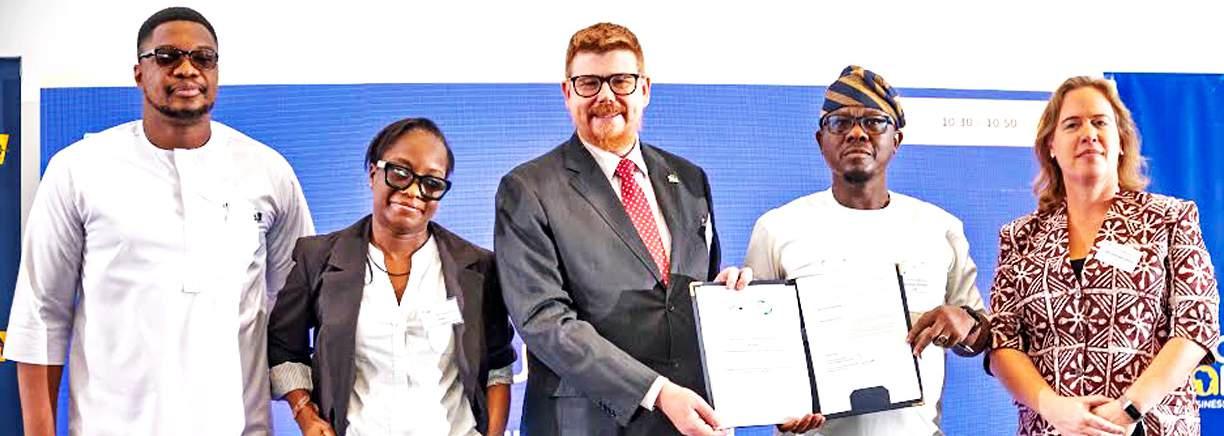
Nigeria has formalised a $500,000 contribution to the third phase of AFRITAC West 2 (AFW2), reinforcing its commitment to regional capacity development and policy strengthening across West Africa.
The signing ceremony, held on the sidelines of the IMF/ World Bank Spring Meetings in Washington, brought together senior officials from the International Monetary Fund
(IMF) and the Central Bank of Nigeria (CBN), underscoring a partnership that both sides say is delivering tangible results.
AFRITAC West 2, which includes Cabo Verde, The Gambia, Ghana, Liberia, Nigeria, and Sierra Leone, entered its Phase III in August 2024. Nigeria’s latest contribution marks a continuation of its financial and institutional support for the centre, which focuses on building expertise in macroeconomic management, monetary policy, and financial supervision.
Speaking at the event, Director of the IMF’s Institute for Capacity Development (ICD), Catriona Purfield, described the contribution as more than financial support, framing it instead as a strategic investment in human capital.
“I want to thank you for Nigeria’s contribution to the AFRITAC West. Not only does this signal your deep commitment to the centre itself, but it also sends two other very important signals.
One is the value that you place in investing in your people, and I’m not using contribution, I
say investment, because it is investment in developing the capacity of our people in policy. And I think it does that.
“The second is that it really signals to those who also met us, who need these centres, our donor partners, that you are so committed to it. It is so important they see that. So, thank you for that.”
Also speaking, IMF African Department Deputy Director, Montfort Mlachila, said Nigeria’s contribution sends a strong signal to both development partners and beneficiary countries about the value of the programme.
Chuks Okocha in Abuja
Apparently to avoid being caught with technical and legal implications of the several ongoing court cases against its congresses and national convention, the African Democratic Congress (ADC) has told its newly elected state executives and other officers to stay off office for now.
The party insisted that the current leadership remains firmly in charge until the transition is formally completed.
The move is aimed at averting confusion and a possible power tussle, as the party insists on a clear, orderly handover process, with inauguration fixed for May 12, 2026, or any later date it may officially announce.
The clarification came in a statement yesterday by the party’s National Publicity Secretary, Bolaji Abdullahi.
According to Abdullahi, “The tenure of all newly elected state executives and other party officers shall not commence until the expiration of the tenure of the
current executives and their formal inauguration by the party on May 12, 2026, or on any later date that may be officially communicated.
“For the avoidance of doubt, all existing executives remain the duly recognised officers of the party until the completion of this constitutional transition process,” the party said.
It also put incoming officials, especially at the state level, on notice against actions that could stir tension or create parallel lines of authority within the party.
“Accordingly, all newly elected executives, particularly at the state level, are advised to take note and desist from any action, representation, or conduct that may contravene this clear constitutional directive or create confusion within the Party structure,” the ADC said.
The party reaffirmed that it will stick strictly to its rules as the transition unfolds.
“The ADC remains committed to orderliness, discipline, and strict adherence to its constitution and democratic processes,” it added.

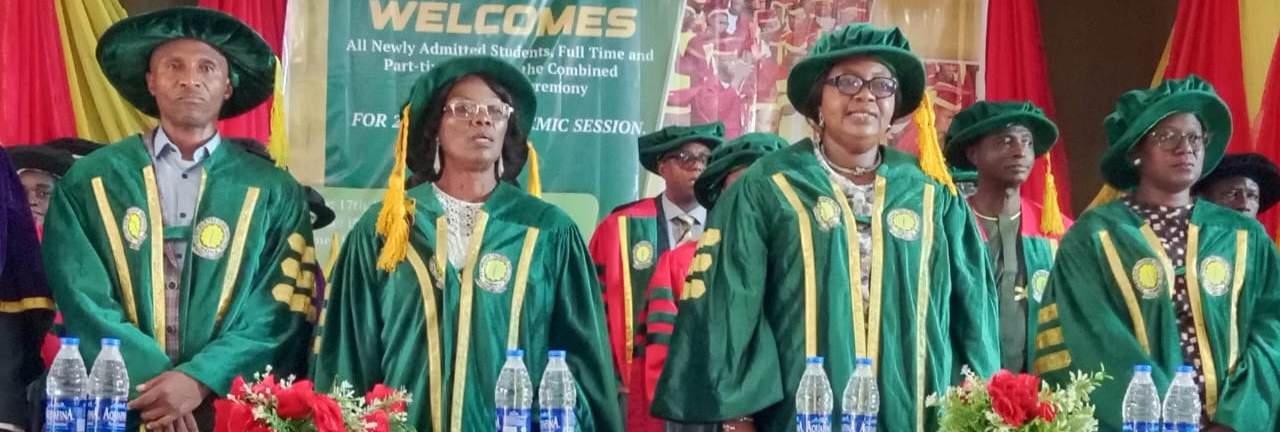
L-R: Deputy Director Academics, Petroleum Training Institute (PTI), Mr. Onyekachi Anyianwu; Director Library & Infotech, Mrs. Gina Ohuabunwa; Representative of the Principal/Chief Executive/Director Research and Development, Dr. Tina Isichei and Director of Science, PTI, Mrs. Maureen Wysh, during 2025/2026 matriculation of the PTI held in Delta State… yesterday
Cracks down on fake ambassadors, criminalises unauthorised use of diplomatic titles
Michael Olugbode in Abuja
The federal government has secured approvals to deploy 25 newly cleared ambassadors by the National Assembly to their countries of service.
It has also moved decisively to protect the sanctity of Nigeria’s diplomatic system, declaring the unauthorised use of ambassadorial titles a criminal offence punishable under the law.
This will further deepen Nigeria’s diplomatic footprint worldwide, marking a significant step in the country’s renewed foreign policy drive. The spokesperson of the Ministry of Foreign Affairs, Kimiebi Ebienfa, disclosed this yesterday in Abuja while briefing journalists on key developments within the ministry and Nigeria’s ongoing diplomatic engagements.
He revealed that the process has advanced considerably, with the government already securing over 25 formal acceptances—known in diplomatic circles as agrément—from host countries. The approvals signal that the receiving nations have completed due diligence and formally consented to the appointment of Nigeria’s nominees.
Insists DPP reports cleared him of any wrongdoing Kwara PDP berates governor over alleged move to trivialise long-settled matter
Former Senate President, Dr. Bukola Saraki, has denied any alleged connection with the 2018 Offa robbery incident, describing attempts to link him to the crime as politically motivated and baseless.
He maintained that previous investigations into the Offa robbery case had exonerated him, citing legal advice from the Director of Public Prosecution (DPP) in the Office of the Attorney General of the Federation.
In the same vein, the Kwara State chapter of the Peoples Democratic Party (PDP) yesterday accused the state Governor, Alhaji
AbdulRahman AbdulRazaq, of attempting to reopen and politicise the long-settled Offa robbery case in what it described as a bid to tarnish the image of former Senate President, Dr. Saraki. Saraki, in a statement yesterday, also took a swipe at Governor Abdulrazaq, accusing him of orchestrating a smear campaign to tarnish his reputation.
According to the former Senate President, “For the benefit of the general public, let me categorically state that I have nothing to do directly or indirectly with any case of armed robbery or any criminal matter, whatsoever.” He further described the move to reopen allegations
against him as “a desperate ploy by a drowning politician,” adding that it amounted to “dirty politics taken too far and too low.”
The DPP, according to Saraki, failed to establish any evidence that linked him to the Offa robbery incident.
According to him, “the DPP stated that ‘this office is unable to establish from the evidence, a nexus between the alleged offence and the suspects’,” noting that a subsequent review also found no prima facie case against him for criminal conspiracy, armed robbery, or culpable homicide.
He stressed that based on the DPP’s findings, suspects arrested in connection with the robbery were prosecuted
and convicted, with the case currently before the Supreme Court.
The former Kwara governor alleged that the renewed accusations followed his recent criticism of the state government’s handling of insecurity, suggesting that the move was aimed at deflecting attention.
“Ordinarily, my attitude should be to shrug it off and say that we will meet in court since I know I have nothing to do with the incident,” he said, adding that public concern necessitated his response.
Saraki also accused the state government of withholding key documents, including the DPP reports, while promoting the allegations in the media.
Olusegun Samuel in Yenagoa
The South South Reawakening Group (SSRG) has called on President Bola Tinubu to release the budgetary provision appropriated in 2026 for the South South Development Commission (SSDC), which it described as “grossly
inadequate”.
The group in a statement in Yenagoa, the Bayelsa State capital, said there is a need to increase the budgeted amount. Insisting that a larger percentage of it should be released quickly for the commission to effectively get off the ground.
The statement signed by its Convener, Joseph
Ambakederimo, posited that the timely release of a substantial portion of the budgetary provisions to the management of the commission for project execution would go a long way in stabilising the commission in the future and also enable the region to begin to see remarkable improvements
in infrastructure.
"Therefore, we make this appeal to President Bola Tinubu to direct the Minister of Finance and the Coordinating Minister of the Economy, Mr. Wale Edun, to promptly release funds due to the South South Development Commission, which will invigorate the region's economy.
Describing the development as a critical milestone, Ebienfa announced that a high-level induction programme for the envoys has been scheduled to hold from April 26 to 29, 2026. He said the exercise would serve as a strategic orientation platform, preparing the ambassadors for the complex demands of representing Nigeria’s interests abroad.
“We have received more than 25 agreements from countries where ambassadordesignates have been sent. With the induction programme scheduled for later this month, deployment will commence immediately after the exercise,” he stated.
According to him, “the
induction will go beyond ceremonial briefings, focusing on the practical realities of modern diplomacy, including bilateral engagement strategies, conduct and protocol in host countries, economic diplomacy, and alignment with Nigeria’s foreign policy priorities under President Bola Ahmed Tinubu.” He added that in line with diplomatic tradition, spouses of the envoys would also participate in aspects of the programme, reflecting their supportive role in representing the country’s image and values overseas.
While most of the ambassador-designates are expected to proceed to their duty posts immediately after the induction, Ebienfa noted that a few postings may still be subject to final administrative clearance.
Court Summons Doris Ogala Over Alleged Cybercrime Offences Involving Pastor Okafor
The federal government has initiated criminal proceedings against Nollywood actress Doris Ogala over alleged cyberstalking, false publications, and attempted extortion involving cleric Chris Okafor.
Court documents show that the charges were filed before the Federal High Court, Lagos Judicial Division, in Charge No. FHC/L/220C/2026: Federal Republic of Nigeria v. Doris Ogala, and are pending before Justice Aluko.
In a formal correspondence dated April 7, 2026, the Directorate of Public Prosecutions of the Federation (DPPF), Federal Ministry of Justice, confirmed that the charges followed a review of the police investigation and legal advice issued by the office.
The DPPF also requested the Nigeria Police Force, Zone
2 Command, Onikan, Lagos, to serve the defendant with the charge and secure her attendance in court for arraignment scheduled for April 14, 2026. The document noted that the defendant is currently on administrative bail. Contrary to the narrative projected on social media, the actress is being sought in connection with a pending criminal suit instituted against her by the federal government. According to the charge sheet, the federal government filed a four-count charge against Ogala under the Cybercrimes (Prohibition, Prevention, etc.) Amendment Act, 2024.
In Count One, the prosecution alleged that Ogala, between September 2024 and March 2026, knowingly published nude and intimate photographs of Okafor on social media without his consent.

NIGCOMSAT is on the rise as Nigeria’s strategic asset, writes DANJUMA AMODU
Nigeria has had a satellite in space since 2011, covering the continent and serving as the backbone of a quietly growing national space programme. For much of that time, the infrastructure’s potential far exceeded its utilisation. The satellite was operational and capacity was available, but the full weight of what it could deliver for ordinary Nigerians had yet to be unlocked.
Jane Nkechi Egerton-Idehen arrived in 2023 with a clear mandate to change that.
She became Managing Director and Chief Executive Officer of Nigerian Communications Satellite Limited (NIGCOMSAT) in 2023, taking over at a moment when President Bola Ahmed Tinubu's Renewed Hope Agenda had placed digital infrastructure at the centre of Nigeria's economic ambitions. The satellite's broadcasting capacity was barely half-utilised. Its broadband service, which could connect schools, hospitals, and businesses across the country, had lost most of its commercial customers. The organization’s income came almost entirely from government contracts. There was no programme supporting Nigerian startups, no partnerships with the country's mobile networks, and little public profile to speak of. A national asset with enormous potential was waiting to be fully activated.
Two years later, most of that has changed.
The number of television channels available through NIGCOMSAT's platform has grown from 45 to 150, and the audience receiving its signal has expanded from two million to seven million Nigerians. In addition to this, NIGCOMSAT, recognizing the strategic importance of satellite infrastructure in achieving nationwide coverage, partnered with the National Broadcasting Commission (NBC) to provide satellite backbone services for the Digital Switch Over (DSO) programme for Nigerians. Through its headend, teleport, and satellite capabilities, NIGCOMSAT is enabling Nigeria’s transition from analogue to digital broadcasting. Sales revenue has more than tripled within her two-year tenure. The organisation that once operated largely within government circles is now working with MTN, IHS, Hotspot, INQ, and Reanna to bring mobile network coverage to rural communities that the big telecoms had never been able to reach, using satellite technology to deliver connectivity to areas where laying ground cables is either too expensive or impractical. The Nigerian
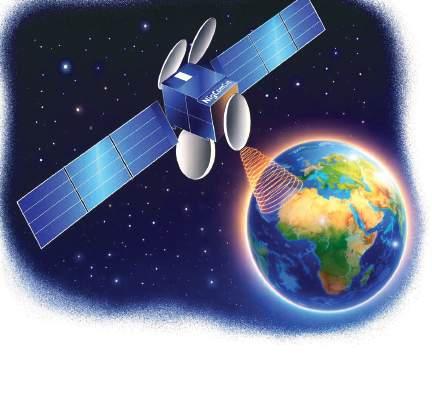
ANavy can now communicate while its vessels are at sea. Health facilities in underserved communities are now being connected. State governments that had no prior relationship with NIGCOMSAT have come to the table. At Satellite Week 2026 in Abuja last month, Dr Bosun Tijani, Minister of Communications, Innovation and Digital Economy and NIGCOMSAT's supervising minister, captured the stakes plainly. "Satellite technology sits at the centre of the digital transformation we are witnessing globally," he said. "It is not abstract. It determines how a child in a rural community accesses the internet, how farmers make critical decisions, and how governments respond to emergencies." He also noted that Nigeria is the only West African country with its own communications satellite, a distinction that carries both responsibility and opportunity.
Perhaps her most deliberate long-term investment has been the NIGCOMSAT Accelerator Programme, which she launched in 2024 on a simple premise: Nigerian entrepreneurs could build businesses on top of the country's satellite infrastructure if someone gave them the access and support to try. As part of her commitment to fostering digital innovation and homegrown technological solutions, the programme is designed to support startups leveraging satellite and space-based technologies to create transformative solutions across healthcare, security, fintech, robotics, education, and telecommunications. More than 80 startups have come through the programme in two years, and the results on the ground are tangible. InnoviaLab built drones and data-gathering nodes for anti-banditry operations. One Click Med, from Cohort 2, has used NIGCOMSAT's VSAT infrastructure to connect two rural hospitals that previously had no reliable communications link, with both hospitals now actively using the solution.
WE INVEST IN SPACE BECAUSE WE ARE INVESTING IN EDUCATION, BRINGING BROADBAND TO SCHOOLS ACROSS NIGERIA
At Satellite Week 2026, the third generation of startups took the Demo Day stage, pitching solutions in flood detection, agriculture, education, and logistics to investors and government officials in the same room. More than 500 young Nigerians have been trained in satellite technology across Adamawa, Jigawa, Cross River, and Enugu States as part of the same effort, with women making up over 40 per cent of participants in each programme.
Amodu is a journalist and public analyst based in Abuja
Olamaboro river, not Anambra, is the correct name, contends FIDELIS ACHOBA
ccording to Samuel Onuha Udeala the name Anambra emanated from Anam riverine clan of Igbo people who were fishing at the mouth of Olamaboro river at the time of colonial penetration into the hinterland via the inland waterways. “Anam”, therefore, means a group of riverine people while “bra” means branch. In other words, the river branched into the river Niger. This is a complete misrepresentation of the river’s original name Olamaboro whose source is Ogo-Aji in Ankpa Local Government Area of Kogi State. The flow from Ogo-Aji means a valley of water body from Ankpa Local Government Area. Ogo-Aji is a phrase in Igala.
This article wants to buttress the fact that the naming of the River in question is a misrepresentation of historical fact by the colonisers who through simplistic analogy gave the river the name River Anambra instead of Olamoboro River which could have gone in line with its geographical originality as the article will prove to us as it unfolds.
Importance of place naming in socio economic relations among groups can never be overemphasized. This is because it has historical, social, economic and
anthropological relevance within African milieu. William Shakespeare, in showing the usefulness of naming says: What is in a name? Brutus asks, what should be in that Caesar? Why should that name be sounded more than yours? Write them together: Yours is as fair a name. Sound them: it doth become the moth as well (Julius Caesar ACT 1 SCII pp141 -145). What’s in a name? That which we call a rose by another name will smell as sweet (Romeo and Juliet ACT1 SC V pp.43-44). William Shakespeare, thus, demonstrates that there is more to a name than its sounds and its usage for identification. In Africa, names serve what Erikson calls an “ingrouper”. Borok and Tubi define names as “markers”, which distinguish persons and places. From a given name, it is possible to determine not only the ethnic groupings and linguistic affinity, but it also reveals a lot about the name bearer. African names also designate personality, status, occupation or destiny. For Africans, there is an ontological relevance of names because they portray the interconnectedness of persons to the family and community. This is because names have both temporal and spiritual meanings in Africa.
This could be the false reason while the oil on the Olamaboro basin was wrongly given to Anambra State under President Goodluck Jonathan without proper historical assessment. However, this was reversed by Supreme Court under President Muhammadu Buhari. The judgment therefore was that, the oil belongs to the two states - Kogi and Anambra. This was a milestone victory for the people of Kogi state. It should be noted that the above colonial misrepresentation is not peculiar to Olamaboro River alone. It also happened in East Africa when Nyasa Lake, the source of the longest River in the world christened the name Lake Victoria, named it after the Queen of England that gave the charters for the British colonial occupation of Africa. But, in the case of river Niger, the River that Olamaboro River feeds got its name from a Berber wood Nigerous meaning a huge body of water. The colonial masters met the name and as such could not have renamed it. Some other rivers were named after some deities such as river ogun, Ovia River and so on. Among many African people, the identification of a person’s name with his or her status is perhaps more seri-
ously affirmed at the various rites of passage. Scholars like Ehusani (1991), Tubi (2015) and Borok (2018) observe that an individual normally gets a new name or cognomen at various rites associated with passage of life such as traditional naming ceremony, puberty rites, chieftaincy rites, sacral rites, cultic rites, and even as in the case of the Babu-Kusu of Kenya at marriage. Thus, change of names implies a change of personality or status. To Africans, to confer a name is to confer a personality, an identity and a destiny. In Africa and among the Ebira for instance, a child is not considered a member of the community until the naming ceremony which occasion him or her to be formally brought out is done. The above reasons could explain why the issues of toponyms have become a protracted problem in Africa.
Africans attach great importance to the names of settlements much as they do to human names. The topography of an area includes physical elements like hills, water bodies, vegetation and buildings.
Dr. Achoba is of the Department of History and International Studies, Federal University Lokoja
What a waste!
WEhen President Muhammadu Buhari took over the reins of power on May 29, 2015, Nigeria was sadly a broken state in many respects. As a result of many other factors including bad governance and untold level of corruption, government could not live up to its financial obligations to citizens and service providers at both the federal and state levels.
encouraged Mr E to petition the police, and he did.
Indeed one of the first official assignments that President Buhari carried out was the approval of billions of Naira in bailout funds to enable state governors pay something as basic as workers’ salaries. Granting those bailout funds was a huge boost to national security because the pressure of arrears of unpaid monthly salaries building dangerously all over the country was a ticking bomb.
Ask the naysayers and they would readily remind you of how long it took President Buhari to appoint his ministers and how that contributed to collapse of the economy as if, without ministers, governance was frozen. But buying that narrative would amount to what a famous Nigerian writer, Chimamanda Adichie, termed “the danger of a single story”. Yet the whole story was that many of our citizens did not know how decrepit a state President Buhari inherited in 2015.
fforts to end witchcraft accusations and persecution will amount to nothing and yield no significant results if police officers do not change their ways and stop obtaining money from accused persons through force and threat in Ebonyi State. Ebonyi is a hotbed of abuses linked to witchcraft beliefs. Accusations are rampant. Jungle justice and trial by ordeal are perpetrated with impunity. Accused persons cannot access justice. The situation is dire and dangerous. The Advocacy for Alleged Witches (AfAW) is working and campaigning to address these violations, combat impunity, and ensure consequences for abusers and perpetrators.
It was therefore necessary for him to take stock against the background of the fact that the departing government did not, reportedly, cooperate full well with the incoming government in terms of leaving workable handover notes. Although President Goodluck Jonathan was gracious in defeat, many of his appointees were still sulking over what they saw as their personal losses and therefore pulled all the stops to make things difficult for the Buhari government.
But the IPO and his colleagues have been extorting money from him to date. At every point, the IPO demands a huge sum of money, and Mr E pleads and begs for a slightly reduced sum. The officer always threatens to abandon the case if the accused person does not pay up. In the case of Mr E, the IPO has extorted about two million naira. To arrest the suspects, the IPO complained that the place was in a remote area, and he would go with a crack squad and a police vehicle. He forced Mr E to cough up N350,000. Incidentally, the police team came back without making any arrests.
Tby the EFCC, President Buhari by his action has successfully brought back to the public consciousness the need to treat public funds with the highest level of transparency and accountability.
here are scandals, and then there are moments that shake the moral spine of a society.
After keeping treasury looters on their toes and at bay through the EFCC, particularly, President Buhari moved to curb unnecessary spending habits of the nation on what economists call articles of ostentation. Part of the disclosures of the President’s stock taking was how the country frittered away billions in foreign currency by importing goods, which can be produced at home. One of such items was rice, a major staple among Nigerians. By banning rice importation into the country, the President on one hand had saved the nation billions in foreign currency annually.
And, on the other hand, the President has boosted domestic production of rice and in the process had nudged the country into self sufficiency in food production. He also created millions of jobs for young people in the rice value chain.
What is most admirable about President Buhari and his government is its frugal management of scarce national resources to attain optimum goals.
The unfolding case involving some leaders of a Celestial Church in the quiet Agonvi Sea Beach axis of Badagry, belongs firmly in the latter category. It is not just the allegation itself—11 kilograms of skunk reportedly concealed in a vehicle—but the unsettling contradiction it presents: a life of public piety shadowed by alleged private complicity in crime.
Recall that since President Buhari stepped in the saddle, oil revenue dropped abysmally as if to sabotage him knowing all the big promises he made to citizens during his campaigns. But with the little resources that trickle in, the President is achieving what governments that received oil windfalls could not dream of.
Tmerely the quantity of drugs, but the deliberate concealment. That single act strips away the comfort of doubt. It suggests awareness, intention, and a troubling duality that demands reflection beyond the individuals involved.
Leo Igwe directs Advocacy for Alleged Witches.
Even with the obvious and unpatriotic obscurantist behaviour of the PDP appointees and their supporters still in government hell-bent on making things difficult for Buhari, the President moved on with his methodical repair of a broken country. The first thing he did was to identify all possible sources of income to the nation and directed that all inflows be paid into one single account in line with the policy of Single Treasury Account (TSA).
The TSA policy, interestingly, was mooted by the PDP government but its penchant for imprudence and lack of accountability denied it the courage of implementing the policy. What the President literally did was to gather all the nation’s money into one box and locked it up with a big padlock and watched for any thief to come close.
Who can blame the President for almost developing paranoia over the safeguard of the national treasury with revelations and reports of mind-boggling looting that took place in the 16 years of the PDP? With such disclosures of how billions meant for fighting insurgency in the Northeast ended up in the pockets of a few individuals while our gallant soldiers fought with bare hands and on empty stomach, President Buhari was duty bound to bring sanity and accountability back in national spending.
But the police are frustrating the efforts to end witch hunting in the state. Police officers are hell-bent on extracting funds from the victims. Every step to get the police to intervene, to act, and help enforce laws against witch hunts is marked by extortion of money from the accused. This despicable state of policing can be illustrated by two ongoing cases in the state: the cases of Mr E and Mr T. The two people are from the Ohaukwu area of the state. In the case of E, his accusers attacked him and burnt down his house. They beat him into a coma and dumped him on the roadside. Mr E later regained consciousness, and some good-hearted individual took him in, helped him, and nursed his wounds. Someone brought his case to the attention of the Advocacy for Alleged Witches, and AfAW
Thus, under President Buhari, the Economic and Financial Crimes Commission (EFCC), which had remained comatose for years, was woken up to resume its duties. Apart from the trillions of Naira of looted funds and property recovered from corrupt politicians
When news of the arrest filtered into the public space through a press statement by the NDLEA’s Director of Media and Advocacy, Mr. Femi Babafemi, reactions were swift and layered—shock, disbelief, anger, and, for some, a quiet sense of betrayal. The detail that stands out is not
Today, the trains are up and running daily from Abuja to Kaduna. And from Lagos to Ibadan a brand new rail track was started and completed; citizens are already commuting daily to and fro these two major cities in the country seamlessly as they reap from the dividends of democracy. And with the way this government is going, before 2023 when the President would leave, the entire country would be linked by rail with all of its economic advantages.
Ainofenokhai Ojeifo, Abuja
THE SATURDAY NEWSPAPER
THE SATURDAY NEWSPAPER
EDITOR OBINNA CHIMA
EDITOR YEMI ADEBOWALE
DEPUTY EDITOR AHAMEFULA OGBU
DEPUTY EDITOR AHAMEFULA OGBU
MANAGING DIRECTOR ENIOLA BELLO
MANAGING DIRECTOR ENIOLA BELLO
DEPUTY MANAGING DIRECTOR ISRAEL IWEGBU
DEPUTY MANAGING DIRECTOR ISRAEL IWEGBU
CHAIRMAN EDITORIAL BOARD OLUSEGUN ADENIYI
CHAIRMAN EDITORIAL BOARD OLUSEGUN ADENIYI
EDITOR NATION’S CAPITAL IYOBOSA UWUGIAREN THE OMBUDSMAN KAYODE KOMOLAFE
EDITOR NATION’S CAPITAL IYOBOSA UWUGIAREN
MANAGING EDITOR BOLAJI ADEBIYI THE OMBUDSMAN KAYODE KOMOLAFE
THISDAY NEWSPAPERS LIMITED
THISDAY NEWSPAPERS LIMITED
EDITOR-IN-CHIEF/CHAIRMAN NDUKA OBAIGBENA
EDITOR-IN-CHIEF/CHAIRMAN NDUKA OBAIGBENA
GROUP EXECUTIVE DIRECTORS ENIOLA BELLO, KAYODE KOMOLAFE, ISRAEL IWEGBU
GROUP EXECUTIVE DIRECTORS ENIOLA BELLO, KAYODE KOMOLAFE, ISRAEL IWEGBU, IJEOMA NWOGWUGWU, EMMANUEL EFENI
DIVISIONAL DIRECTORS SHAKA MOMODU, PETER IWEGBU, ANTHONY OGEDENGBE
DIVISIONAL DIRECTORS SHAKA MOMODU, PETER IWEGBU, ANTHONY OGEDENGBE
DEPUTY DIVISIONAL DIRECTOR OJOGUN VICTOR DANBOYI
DEPUTY DIVISIONAL DIRECTOR OJOGUN VICTOR DANBOYI
SNR. ASSOCIATE DIRECTOR ERIC OJEH
SNR. ASSOCIATE DIRECTOR ERIC OJEH
ASSOCIATE DIRECTOR PATRICK EIMIUHI
ASSOCIATE DIRECTOR PATRICK EIMIUHI
CONTROLLERS ABIMBOLA TAIWO, UCHENNA DIBIAGWU, NDUKA MOSERI
CONTROLLERS ABIMBOLA TAIWO, UCHENNA DIBIAGWU, NDUKA MOSERI
DIRECTOR, PRINTING PRODUCTION CHUKS ONWUDINJO TO SEND EMAIL: first name.surname@thisdaylive.com
DIRECTOR, PRINTING PRODUCTION CHUKS ONWUDINJO TO SEND EMAIL: first name.surname@thisdaylive.com
The office of a pastor is not ceremonial. It is a position anchored in trust, one that places its occupant at the intersection of faith, vulnerability, and human struggle. In many communities, the pastor is more than a preacher; he is a confidant, a counselor, a moral compass. When such a figure is entangled in allegations that directly contradict the very values he is meant to uphold, the damage transcends personal failure—it becomes institutional.
For the congregation, the impact is deeply personal.
Aernan Lubem, Makurdi, Benue State
As the Monty Python team stated "He's not the Messiah, he's a very naughty boy!" although I doubt they could have imagined Donald Trump posting a meme of himself as God.
he Advocacy for Alleged Witches (AfAW) urges the Nigerian public to stop ritual attacks and killings because the notion of ritual money and wealth is completely baseless. AfAW is making this call following the reported arrest of suspected ritualists in Oyo State in southern Nigeria. The local media reported that members of the Western Nigeria Security Network, Amotekun, arrested suspected ritualists with the body parts of a 73-year-old man. The suspects, who were apprehended in the Boluwaji area in Ibadan, said that a Muslim cleric asked them to procure some human body parts for rituals. Ritual attacks are widespread in Nigeria. Irrational conceptions of how to make money or become wealthy and successful undergird these atrocities. Many Nigerians strongly believe in blood money, known in some local languages as Ogun Owo (Yoruba) or Ogwu ego (Igbo). They think that they could become rich, or successful through ritual sacrifice. Unfortunately, this is not the case. Ritual wealth has no basis in reason, science, or reality. Home movies known as Africa magic or Nollywood films have not helped matters. These movies continue to reinforce these mistaken notions and other superstitions. Families, churches, mosques, and other public institutions do not encourage the interrogation of these traditional occult beliefs. There are no robust efforts to criticize or dispel these irrational and paranormal claims in schools, colleges, and universities. So millions of Nigerians grow up blindly believing that they could make money through ritual sacrifice of human body parts. The belief has led many Nigerians to commit crimes and perpetrate atrocities. Many Nigerians have been jailed or are undergoing court trials due to ritualrelated attacks and murder.
The meme is so offensive to Christians in so many ways including the simple fact that Jesus wasn't an orange skinned person and the fighting planes overhead doesn't help. Not knowing which way up to hold a Bible also doesn't seem divine.
It might be time for Donald to take religion out of this war and in general or else he might find when playing golf that God can actually hit one iron with a lightning strike.
Dennis Fitzgerald, Melbourne, Australia
Not too long ago, the police arrested some young Nigerians for stealing female pants, which they intended to use for ritual sacrifice. AfAW is asking all Nigerians to desist from ritual-related abuses because ritual money beliefs are baseless superstitions. Nigerian media, schools, and colleges should help educate and reorient the public. They should assist in reasoning Nigerians out of this killer-superstitious absurdity and nonsense. Leo Igwe directs the Advocacy for Alleged Witches (AfAW)


Ehigiator
Troops of the Nigerian Army have arrested 15 suspected oil
thieves for attempting to siphon crude oil from a vessel supplying the Dangote Refinery in Lagos. This was as the operatives of the Kwara State Police Command intercepted 98 rounds of live
Funmi Ogundare
The Republic of Korea in partnership with UNICEF Nigeria, yesterday, launched a targeted programme to reach an estimated 2.2 million unvaccinated children with life-saving vaccines, as part of efforts to close immunisation gaps across the country.
The initiative, unveiled in Badagry, Lagos, is aimed at identifying and immunising zero-dose children in six states; Lagos, Ogun, the Federal Capital Territory, Bauchi, Niger and Adamawa, where gaps in vaccine coverage remain significant.
In her remarks, the UNICEF Nigeria Country Representative,
Wafaa Saeed, said the programme would focus on children in urban slums, border communities and other hard-to-reach areas often excluded from routine health services. She explained that the initiative would operate through national and state health systems to improve vaccine delivery, rebuild community trust and ensure broader access to immunisation.
Saeed noted that key interventions include community mobilisation, systematic tracking of children who miss vaccinations, and integrated health service delivery to identify and reach unvaccinated children wherever they reside.
Out-of-School Children: UBEC Returns 700,000 to Classrooms, Distributes 15m Learning Kits Nationwide
The Universal Basic Education Commission (UBEC) said it has returned over 700,000 out-of-school children back to school.
Executive Secretary of the commission, Aisha Garba, disclosed this in Abuja, during the distribution of instructional materials to FCT public basic schools organised by the FCT UBEB in collaboration with the commission.
According to her, returning students back in school by UBEC was made possible by the support of the ministers of Education.
Garba, who noted that education remains the cornerstone of national development, maintained that UBEC is committed to ensuring that every child, regardless of background or circumstance, has access to quality education. She stated that the commitment is reflected in their interventions nationwide, such as: "UBEC has advanced inclusive education initiatives through partnerships with all 37 SUBEBs and the FCT, focusing on infrastructure, teacher development, structured pedagogy, teaching aids, and digital learning tools."
ammunitions concealed in a bag of garri along Ajase-Ipo Road in Irepodun Local Government Area of the state.
In another development, the Kogi State Police Command said it foiled a kidnapping attempt along Kabba Ayere Road, rescued one victim, recovered an 18-passenger bus and subsequently arrested seven suspected kidnappers.
The arrest of 15 suspected oil thieves for attempting to siphon crude oil from a vessel supplying the Dangote Refinery in Lagos which took place in the early hours of yesterday, was disclosed in an operational report released yesterday by the military---.
According to the report, the suspects were apprehended during a coordinated operation targeting illegal oil activities
around the supply routes linked to the refinery.
Military authorities said the suspects were intercepted while allegedly trying to siphon crude oil from a supply vessel en route to the refinery, a critical facility in Nigeria’s downstream petroleum sector.
According to the report, the operation underscores ongoing efforts by security agencies
Kayode Tokede
In a move designed to deepen market liquidity, enhance price discovery, and broaden investor access, the Nigerian Exchange Limited (NGX) yesterday announced the expansion of its trading hours from 9:00 a.m. to 4:00 p.m. (WAT).
A statement issued by the Head, Group Communications and Partnerships, NGX, Mr. Clifford Akpolo stated that the trading hours take effect from Monday, 27 April 2026.
According to the statement, the Securities and Exchange Commission (SEC) approved the extension as trading activities on NGX shifts its opening earlier from “9:30 a.m. to 9:00 a.m. and extends the close from 2:30 p.m. to 4:00 p.m., marking a significant evolution in the Exchange’s market structure.
“The extended trading window will provide greater flexibility for investors, improve responsiveness to market-moving information, and support broader
participation across the market.
He added,“The development builds on the momentum of Nigeria’s recent reclassification to Frontier Market status by FTSE Russell, reinforcing NGX’s global positioning and enhancing its attractiveness to a broader pool of domestic and international investors.
“This reform reflects strong regulatory collaboration and underscores the Securities and Exchange Commission’s continued commitment to advancing market development initiatives.
Ahmad Sorondinki in Kano
First Lady Oluremi Tinubu will be in Kano for three days to launch the North-west zone 'Energised Commercialisation Now', an initiative of the Federal Ministry of Science, Technology and Innovation. This was announced at a world press conference by the Kano State Commissioner for Information and Internal Affairs, Ibrahim Waiya. He said the event will commence on April 23 and end on April 25 with various activities to take place across
the state.
The federal and state governments, private sector, stakeholders as well as all the governors and first ladies of the North-west states are expected to join the First Lady at the three-day event.
Also to attend the event are universities and polytechnics in the region, research institutions, innovators, inventors as well as manufacturers, among others.
Some of the activities at the three-day visit highlighted by the commissioner include the official launch by the First
Lady that will be followed by a high level panel discussion on federal-state energy for innovation and industrialisation as well as a mini exhibition of selected innovations, all coming up on the first day of the visit.
In the second and third days respectively, there would be a technical evaluation clinics academia-industry roundtable, consolidation of an investmentready innovation pipeline and finally the innovators will meet investors and the signing of memorandum of understanding will take place.
to clamp down on crude oil theft and pipeline vandalism, which have continued to impact Nigeria’s oil production and revenue.
It indicated that the suspects are currently in custody and undergoing preliminary investigation, after which they are expected to be handed over to relevant authorities for prosecution.
The Dangote Refinery, located in Lagos, is a major industrial project expected to significantly boost local refining capacity and reduce the country’s dependence on imported petroleum products. Meanwhile, the Kwara State Police Command said the concealed ammunition were found inside an unregistered Toyota Previa vehicle entering the state from Kogi State.
Speaking at a press conference in Ilorin, the state Police Commissioner, Mr. Adekimi Ojo, said the discovery was achieved through the operatives of the command during stop and search operations along the Ajase-Ipo Road.
He said the successes were a result of intelligence-led policing and collaboration with other security agencies.
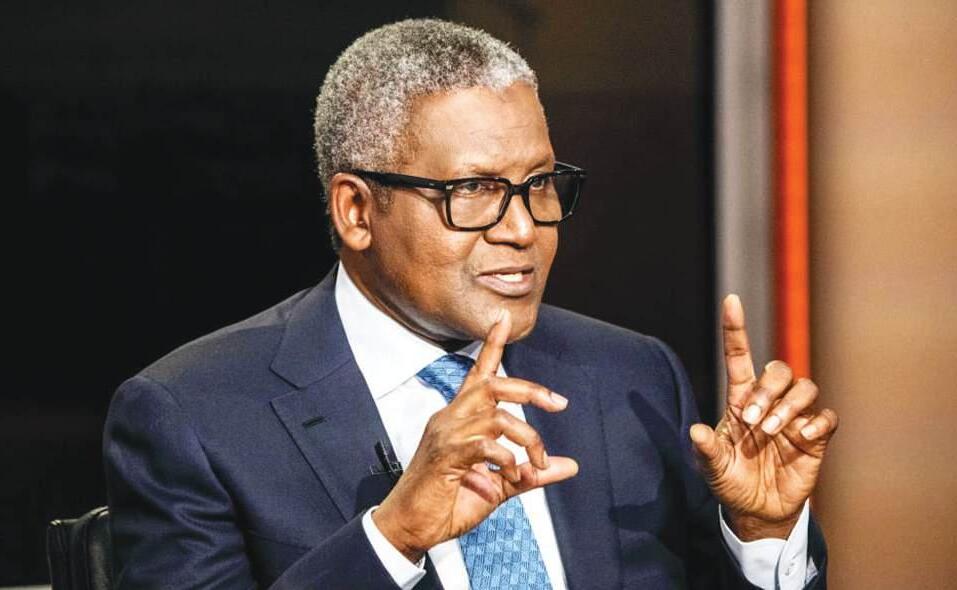
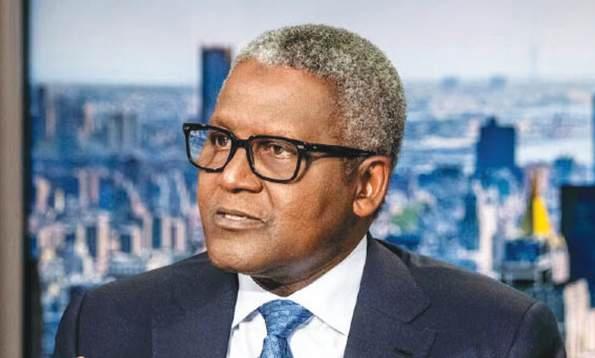
Africa’s richest man, Aliko Dangote is championing a bold vision for Africa’s economic independence and shared prosperity. At a time when the continent continues to grapple with underinvestment and external dependence, the Founder and President of the Dangote Group is making a compelling case for homegrown capital and leadership. From transforming energy supply with his mega refinery to pushing for industrialisation across sectors, Dangote insists that Africa’s future must be driven by Africans themselves. In this wide-ranging conversations during an African Investment Forum organised by the Atlantic Council on the sidelines of the ongoing IMF/World Bank Spring Meetings in Washington, he spoke on investment, self-sufficiency, and why profit must be tied to purpose, declaring that true success lies not in wealth accumulation, but in meeting Africa’s needs and inspiring others to follow. Nume ekeghe brings the excerpts:
You recently said that the Dangote Refinery is actively supplying not just Nigeria, but also West, Central, and even East Africa. Can Africa become energy independent and sovereign?
Well, Africa will become self-sufficient, maybe in the next couple of years, maybe by 2028. At the moment, we (Dangote Refinery) are not only serving Africa; we are the major supplier of jet fuel to the UK as we speak. We also export gasoline to the UK. There’s nothing that we are not actually producing in terms of quality. So, we have 650,000 barrels per day, which we tested; we have been able to achieve about 661,000 barrels per day. And that’s way more than what the country, Nigeria, can take. In fact, during this crisis, we have saved a lot of other African countries that
demanded for assistance. And we are getting calls every day. What we are doing, really, is giving African countries first choice. Yes, I know it’s an open market, but this refinery was set up not to target any other market, but to target African markets. So, what are we doing going forward? As you asked, we have a very ambitious programme across all our businesses. We are looking at areas where we have a lack of investment in Africa, like infrastructure. We are building the deepest port, with an 80-meter draft. We are starting with two kilometres, and we are going to keep expanding. Our intention is to have the largest port in Africa. Today, the biggest issue that we have, especially in Nigeria, is that we have critical minerals, but we cannot export these critical minerals because we don’t have the infrastructure. There is no capacity in the ports that we have. We mainly have Apapa and Tin Can, the two major ports, which are congested.
There is a third port opposite our refinery in Lekki, but this new port only handles containers. So, what we are trying to do is to open the country by allowing people to export all these sorts of minerals that they have, even though the intention is for us to make sure we process our own minerals before exports. It is the reason that we are talking to countries like Zambia and others about power. We are not in power, but we are generating a lot. In the next few years, we are going to add about 2,000 megawatts. We are now at about 1,500 megawatts.
But going forward on the refinery, let me start with the refinery. We are taking the refinery to 1.4 million barrels per day. And that will make us the largest refinery in the world.
What about the main challenges? You mentioned the infrastructure gaps?
The infrastructure gap—we have already covered all that because we had to build a port. We had to do a 10-lane road, over 100 kilometres, to decongest the area. The only thing that we did not do there is the air we breathe. But we have done all the infrastructure, and that is why, when you look at this expansion that we have — because for us to make the land habitable, we had to actually de-bush the whole place. The place is 30 million square meters, so it’s not a small issue.
And what about the skills?
For our group, in total, we have about 150,000 people now directly, we have about 34,800, and then the rest as indirect. There are some countries where labour laws are very strict. So what we do is that we have contractors that we subcontract to run those operations, because we don’t want to be dealing with so many issues in terms of government policies and so on.
Apart from that, we have challenges in polypropylene. We have about a million tonnes now. We are taking it to 2.5 million tonnes, and then we realised that there is a big shortage of fertilizer. When the Ukraine-Russia war started, the Chairman of the African Union was then President Macky Sall of Senegal. He had to go and beg Russia to see how we could get supplies. And since that day, the Dangote Group announced that no, it will never happen again. So, we are doing 12 million tonness of urea. And very soon, in Congo Brazzaville, we will start doing potash and phosphate. So, we want to go to a minimum of 20 African countries.
You are operating across the continent. What about the African Free Trade Area? Does it help you support these crosscontinental efforts?
We are operating based on regional markets, for example, a country like Ethiopia says, we like fertilizer. So, what do we do? We are building 3 million tonness there—whether it’s enough or too much—but they have neighbouring countries that they can assist. They found gas, so we are doing that. So, the Africa Free Trade Area will work, but it can only work when the regional markets work. The regional markets must work first, because the dotted points across these regional markets, if they are not working, you cannot have one single market.
And you also have to remember that there are a lot of international interests, I’m sorry to say, international interests not wanting to see Africa grow. So, that is why I keep asking what is even our legacy, what do we want to leave behind?
How do you see the support of African governments to the business sector? And what advice would you provide to international partners who want to invest in Africa?
Firstly, on support from African governments, some governments are very supportive, and some of them don’t really understand exactly what to do and we are very busy trying to make them understand that anywhere you set up a business, at the end of the day, the major beneficiary is government. Because today, government—you can go now, you want to run for election or do whatever—you will say you want to doA, B, C, D, but as a government, you cannot actually create jobs. The only engine of growth is the private sector that would raise money and even borrow money to create jobs. So, if you don’t partner with the private sector, it is like trying to clap with one hand. You then look like a sick person. So, they actually have to partner with us. So, it
is just like, we haven’t really had any refinery in Africa for many years. Even the ones started in other countries have not been succeeding because there are so many interests preventing that. Today, the biggest refinery ever built was by Saudi Aramco, 460,000 barrels. Because we are not government, we are private sector, we now said we want to build something 50 per cent more than that. Even the licensors—UOP, part of Honeywell—said, “Mr. Dangote, you are crazy.” I said no, let’s sit down and make it possible. We took 76 engineers to Chicago. About 340 engineers that had been working, with a minimum experience of about 28 years. I said, work out something—how can we do that? Government will not be able to do that, but when the government lays down policies that make investment attractive, then you move in and do it.
For the second question, foreigners will invest, but they are very smart people. When you talk about risk, they want to look at it 10 times. So how can we de-risk that? The only way is for Africans to lead and show that the risk is a perceived, not a real risk. If I’m not investing in Africa, I cannot convince anyone else outside the continent to
invest. So, I must invest to show that this risk is a perceived risk. Of course there is no where there is no risk – China, Asia, -there are risks, but you have to know how to mitigate this risk. But that is why I keep advising some of my friends that in terms of cash, there might be some of them who have more money than me. So, I tell them, don’t keep that money in a foreign bank, bring it home and invest. The place is good. Bring it back home. We have this problem of always looking for investors. Foreign investors will not come because they are smarter than us. They can only come when you invest your own money, when they see that we are committed and that we are serious. Then, they will join you. As they say, two heads are better than one—once you start, others will follow. Another issue is fragmented capital markets in Africa. We have said this refinery is for Africa and we are doing quite a lot. Between now and 2030, we are going to invest about $40 billion. We want to be the first African company in the top 100 globally, with $100 billion in revenue. It is a tall order, but it is possible. We like challenges—we set targets we struggle to meet, and this one is very easy—we will meet it.
We are in Washington, DC, for the Spring Meetings—how would you assess relations between Africa and the United States? The relationship is there, but right now the US is very busy. They are not yet focusing on Africa. But the future is Africa. You don’t do things for today—you do things for the future and for decades to come. With the Iran war, for example, it has shown that people must diversify risk. Countries that depended on Kuwait or others for gas and petroleum are now under pressure. They must mitigate that risk. When Africans get serious, all these talk about potential will be realised. These potential are there, but we must work to realise them. As of 2007, Nigeria used to produced less than two million tonnes. Under Kayode Fayemi as Minister of Solid Minerals, production grew to 65 million tonnes—and it’s still growing. But the entire Saudi Arabia produces about that level today. So what seems impossible in Africa is actually possible—and we will lead in making it happen.
See concluded part on www. thisdaylive.com
Hon. Dayo Bush Alebiosu is the Commissioner for Waterfront Infrastructre Development in Lagos State. He is also the first son of Otunba Busura Adedeji Alebiosu. In this interview with journalists on his father who will be 90 years old soon, he bares his mind on some of the things that made his father a strong force in politics and the secrets behind his success over the last five decades. Bennett Oghifo brings the excerpts:
To you personally, who is Baba Bush Alebiosu?
He is a lot of things rolled into one. Growing up, I used to wonder why he was so tough. At some point, I even asked my mum if he was truly my father because of how firm he could be. But looking back now, I am deeply grateful for that upbringing. He was intentional about moulding us. His level of wisdom, experience, and understanding is something I find remarkable. When you engage him, he already has an idea of where you are coming from, yet he allows you to express yourself. He listens, and more importantly, he bows to a superior argument. That is one quality I truly admire. He has a very strong personality, not someone you can push around, yet his heart is incredibly large. When he stands with you, he is fully committed. He doesn’t turn back. He believes in what he believes in and pursues it relentlessly until results are achieved.
How would you describe him as a father and mentor?
He has been everything: a father, a mentor, and a solid rock. If I had the opportunity to choose again, I would choose him over and over. Over time, our relationship has evolved. A father protects you, but a mentor exposes you to risks in a controlled way so you can grow. That is who he has become to me. He gives you
the freedom to think. I like to call it “intelligent independence.” He listens for understanding, not just to respond. And when emotions are high, I have learnt to step back and engage him when he is ready for logical conversation. He also instilled values that have become part of who I am, integrity, punctuality, and discipline. He never jokes with his health, he has never been late to a meeting, and he never makes promises he cannot keep.
What are some early life lessons you learnt from him?
One lesson that has stayed with me all my life came from a childhood experience. I once gave a classmate money to buy something for me, and when he didn’t deliver, I confronted him physically. My father saw what happened and corrected me. Instead of fighting, he told me I should have exercised patience and even prayed for the person. At the time, I didn’t understand it. But as I grew older, especially in business, I realised the wisdom in that advice. He wired us to think differently, to see solutions, not just problems. For him, every problem has a solution; you just need to look closely.
Did you always know he was influential in the community and Lagos politics? Honestly, I grew up in it. It was like water around me. I saw people constantly around him. He served as a councillor in 1976, was elected into the Lagos State House of Assembly in 1979,
and re-elected in 1983. So, his influence was not something I “discovered”, it was something I lived with. Over time, I came to understand the depth of it. He is a natural problem solver. I have watched him handle situations repeatedly with precision. That is what I call “perfect practice.” Not just doing something over and over, but doing it the right way consistently.
How would you describe him as a politician?
He is unique and highly principled. The first thing he stands for is fairness. He has an incredible ability to detect issues before they escalate, almost like a radar. He is also very resilient. Once he commits to something, he stays with it until results are achieved. That staying power is something I have inherited. He believes leadership is about sacrifice and listening. He often says a good leader must be ready to sacrifice for the people and must listen to them sincerely. Character is everything to him. He values relationships deeply and understands that alliances are built on long-term interests, not convenience.
Can you share a significant example of his impact in public service?
One that stands out is his role in addressing land issues in Kosofe. At a time, about threequarters of the area was under government acquisition, which could have displaced many residents. He fought to ensure people were
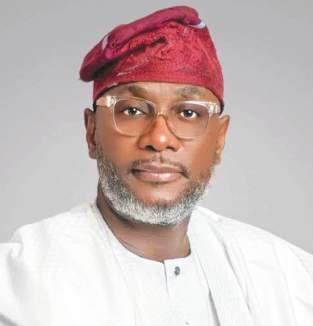
not unfairly burdened. Instead, they were allowed to regularise their ownership at a very minimal cost, about N1,000 at the time. Today, those same properties are worth tens or even hundreds of millions of naira. That, to me, is real empowerment, touching lives in a way that changes their future. He also played key roles in the creation of Kosofe Local Government and its subsequent divisions into Agboyi-Ketu and Ikosi-Isheri. His contributions to grassroots development are significant.
What about his influence behind the scenes?
He is a very private person. He doesn’t like publicity and prefers to work quietly. Many of his contributions are not in the public domain. But if you look at structures like the Governance Advisory Council, you will understand the kind of role he has played in ensuring political stability in Lagos State over the years. He believes in leading from behind and letting the results speak.
MIDST criticisms over the country’s rising debt profile as well as the burden to service such debts.” Modern trend: amid—not amidst. Also while—not whilst; amongst (among).
“Payback period is between 3-10 years.” (Full-page advertisement by Access Bank) More than banking: between 3 and 10 or from 3 to 10.
“With a heart of felicitation and love, I wish to congratulate (I congratulate) my husband… over (on/upon) his merited doctorate award.”
“Your diligent nature and tenacity of purpose has (have) singled you out for recognition.”
“…but you have shown the world that good things comes (why?) to those who work for it (them).”
“NPFL title: Imama leads Rangers to promise land (sic)” Sports journalists: (the) Promised Land (take note of the capitalization)
“In spite of the current division amongst (among) members of the terrorist group….” ‘Amidst’, ‘amongst’, ‘whilst’, ‘join together’, ‘log of wood’, ‘heavy downpour’ (the list is endless!)…belong to ‘old school’! Just ‘join’, ‘log’ and ‘downpour’—no padding!
“His present command and control (commandand-control) tactics must end.”
“…argues that ‘foreign terrorists’ are being treated with kid’s gloves.” Get it right: kid gloves
“I am sure those of them that participated in both competitions will tow (toe) the line of reasoning.”
“IGC sets (set) for 2026 Corporate Challenge Cup”
“Biafra asks Igbo to switch-off (switch off) phones….” Phrasal verbs do not admit hyphenation.
“…while incidences of diseases and death (deaths) have worsened.” Please note that even as ‘incidence’ is countable, it is usually singular.
“Lagos is a vibrant city with enormous potentials.” Either ‘potentialities’ or just ‘potential’ (without any inflection)
The next set of solecisms is from a full-page congratulatory advertorial by the Plateau State Government: “Celebrating one of Plateau’s quintessential legal luminary (luminaries)!”
“Your several (many) years of practice and
public service as commissioner…for about nine years has (have) no doubt….”
Preferably ‘many’
“I am no doubt confident that Plateau State, the National Assembly where you now serve as a (an) honourable member….”
“Ashes to beauty (Ashes-to-beauty) story of the camera”
“…brings to the fore issues concerning some non-governmental organizations set up under the pretext of helping the needy but turn out to be scams”
“If a guy likes me and he’s going online to check for my status….” Delete ‘for’ because it is redundant
“FG seeks China (Chinese) cooperation to tackle piracy in entertainment industry”
“Strenghtening (Strengthening) commitment”, but straightening
“He is a bogeyman who pushes, shoves, pulls, elbows and even scratch (scratches) players on the face….”
“CPC to clampdown on illegal microfinance banks” Phrasal verb: clamp down (two words).
“An acknowledged scholar, a distinguished statesman and a team leader per excellence” This way: leader par excellence.
“New trends in electioneering campaigns” Just electioneering or political campaigns ‘Electioneering campaign’ is sheer verbiage! ‘Electioneering’ encompasses campaign and other related electoral issues.
“Some countries have taken tobacco manufacturers to court for the damages their products cause.” The will to die: ‘damage‘ is uncountable, except in reparative applications for indemnity.
“With the launching (launch preferably) of the poverty alleviation (a hyphen) programme by the Federal Government, not a few Nigerians desire to see it effectively in place. “
“…what happened was that somebody filed a writ of summon.” This way (singular): a writ of summons; plural: summonses.
“It is the Federal Board that is always
guilty of that, because it is them who take riff-raffs as welfare officers.” ‘Riff-raff’ is uncountable.
“Modern technology has reduced the world into (to) a hamlet where the inhabitants are their brothers’ keepers.” This way: brother’s keeper (fixed idiom), irrespective of the number of people involved.
“The coincidence in the timing of all those sleazy gossips in soft-sell magazines and the beginning of his fashion parade….” ‘Gossip’, in this context, is uncountable.
“More overaged players for youth soccer” Get it right: overage players.
“Residents of some of the troubled spots in South Africa in disarray” Witness to lexical mayhem: trouble spots.
“…rummaging all the bags and ransacking every nook and corner.” Stock expression: nook and cranny.
“The police requires (require) a redeemer who can uplift the Force from the battering it (they) suffered during the long years of militarization.”
“I inquired from those that appear to know and they said that the president is (was) roaming the country in the name of campaigns.”
“There is (are) no electricity, no security, no water, no roads, no health facilities in Nigeria.”
“Foreign companies will be falling over themselves (one another) to come and invest here if we get the 2027 elections right.”
“...given the lame-duck posture of the opposition parties, the APC simply held sway from the onset (outset).”
“Reactions on (to) the Pope’s visit, however successful, were mixed in Egypt, a country inhabited by a predominantly Muslim population.”
“Prior to the Pope’s visit, Egyptian Catholics have (had) opted out of the….”
“The first part was published last week Friday.” Monday politics: either last Friday or Friday, last week.
“Vigilante (vigilance) groups, committed to the enforcement of the by-law, are being set up.”
“Some of these areas include producing enough food to feed our teaming (teeming) population.”
“Rather, the money, including the N200 million per state released for special purposes, was diverted to other uses.” We certainly do not need the last three words in the extract, having been taken care of by ‘diversion’.
There is a moment many Nigerians abroad know too well. It often begins politely enough - at an airport counter, an embassy desk, or during a routine verification process. Documents are presented. Names are checked. Then comes that subtle pause. Not long enough to be confrontational, but just enough to be noticeable.
The passport has been opened. And suddenly, the conversation changes.
It is not always said outright, but it is often felt. Extra questions. Longer scrutiny. A second look at documents already examined. Sometimes, a quiet consultation with a colleague. In more awkward moments, a carefully worded request for “additional clarification” - a phrase that has come to mean many things, none of them particularly flattering.
This is the unspoken tax of being Nigerian abroad. It is not codified in law. It does not appear on any official tariff. Yet, it is paid daily - in time, in dignity, in opportunity.
For years, Nigerians have carried this burden with a mix of resilience and reluctant humour. We joke about it. We swap stories. We develop strategies. Which documents to present first. How to answer questions. When to smile. When to remain silent.
But beneath the coping mechanisms lies a serious issue: the growing cost of national identity in a globalised world.
A passport, ideally, should be a key - a simple document that confirms who you are and where you come from. In practice, it has become something more complex. It is now a signal. A marker. In some cases, a trigger for suspicion before engagement.
To be clear, Nigeria is not the only country whose citizens face scrutiny abroad. Immigration systems everywhere are designed to assess risk. But what distinguishes the Nigerian experience is the consistency of that scrutiny across different
geographies and contexts.
From visa applications that demand exhaustive documentation and confounding cash, to airport screenings that stretch patience, to financial transactions subjected to heightened verification, the pattern is familiar.
And it raises an uncomfortable question: what exactly are foreign systems seeing when they see Nigeria?
Part of the answer lies in perception. Nations, like individuals, develop reputations over time. These reputations are shaped not only by official policy, but by the collective behaviour of citizens, the credibility of institutions, and the consistency of governance.
When stories of fraud, irregular migration, and regulatory loopholes become associated - fairly or unfairly - with a country, they begin to influence how that country’s citizens are treated. Perception, in this context, becomes policy.
But perception alone does not explain everything. There is also the issue of state capacity - specifically, the ability of a government to support and protect its citizens beyond its borders. This is where Nigeria’s challenges become more pronounced.
For a significant period, the country operated without fully staffed diplomatic missions in many parts of the world. Ambassadorial positions remained vacant. Consular services were stretched. Response times slowed. Nigerians abroad found themselves navigating complex systems with limited institutional backing.
In practical terms, this meant longer waits for passport renewals, reduced access to emergency support, and fewer channels for resolving disputes or misunderstandings.
In reputational terms, it sent a different kind of signal: that the country itself was not fully present. Diplomacy is not just about high-level meetings and ceremonial visits. It is about everyday representation. It is about having competent officials on the ground who can engage, clarify, and, when
“Unless the detonating mechanism of extremist religious chauvinism is diffused” Get it right: defused (not diffused).
“They have decided to sheath their machetes and seek vengeance no more. “ Noun: sheath; verb: sheathe.
“…business downturn resulting to (in) drivewandering.”
“…the rapaciousness of project contractors increase (increases) the country’s debt burden.”
“Senior civil servants’ union berate junior counterparts” Inside business: union berates.
“It’s the poet feared most, knowing fully (full) well that one of the….”
“The agitated crowd, who had been whipped to hysteria, demanded for his head.…” To avoid mayhem, delete ‘for’, from the extract.
”…and which provides a noble and humanistic framework for relations between the state and citizens in (on) our continent.”
“But in the welter of these realignment of forces…” Re-thinking development: this realignment of forces.
“The fear along the room and corridor (corridors) of power of a sovereign national conference.…”
“It is not in doubt that most of the commuters in the luxurious (luxury) buses that ply.…”
“…Aba traders constitute a large proportion of the passengers on commercial aircrafts (aircraft) that fly....”
“Major reorganization of the Nigeria Customs Service (NCS), which may lead to mass retirement and sack of its men and officers, now looms.” Get it right: a major reorganization or major reorganizations, as context demands.
“One of the most outrageous abuses occured…” Spelling in the lurch: occur, occurrence, occurred.
“I do not buy the argument that the advent of electronic mails and network computers have rendered postal services obsolete.” Not yet time for structural proximity: the advent of electronic mails and network computers has (not have).
“In doing this, however, he must be faithful to the mandate of the ECOWAS Heads of Government under whose platform he operates.” Agenda: on (not under) whose platform he operates.
necessary, defend the interests of their citizens.
When that presence is weak or delayed, citizens feel it first. But eventually, so does the country’s image.
There is also a more subtle dimension to this issue - the internal contradiction between how Nigeria presents itself and how it is experienced externally.
At home, the narrative is often one of potential. Africa’s largest economy. A cultural powerhouse. A nation of talent, resilience, and global influence. These are not empty claims. Nigerian excellence is visible across industries - from technology to entertainment, academia to entrepreneurship.
Yet, at the point of international interaction, that narrative often collides with a different reality. A Nigerian professional may be globally competitive, but still face disproportionate hurdles in mobility.
A Nigerian student may secure admission into a top institution, but struggle with visa processes that question intent. A Nigerian entrepreneur may offer value, but encounter barriers rooted in risk perception rather than actual conduct.
This gap between potential and perception is where the real cost lies. It is a cost paid not only in inconvenience, but in lost opportunities. Delayed partnerships. Abandoned applications. Missed connections. Over time, these individual losses accumulate into a broader national disadvantage.
There is, of course, a temptation to respond defensively - to attribute all external scrutiny to bias or prejudice. And while bias certainly exists in global systems, it would be intellectually dishonest to ignore the internal factors that contribute to Nigeria’s image challenges.
Reputation is rarely built on a single narrative. It is the sum of many signals - governance quality, institutional reliability, regulatory enforcement, and, yes, citizen behaviour.
Addressing the cost of being Nigerian abroad therefore requires more than diplomatic negotiation. It requires domestic coherence. First, there must be consistency in governance.

Policies must be predictable. Institutions must function. Regulatory systems must inspire confidence. When a country demonstrates internal order, external trust often follows.
Second, diplomatic infrastructure must be strengthened - not as an afterthought, but as a strategic priority. Embassies and consulates are not symbolic outposts; they are operational centres of national presence. Staffing them with competent professionals, ensuring timely appointments, and equipping them with resources is essential. Third, there must be a deliberate effort to align national branding with national reality. It is not enough to project an image of excellence; that image must be supported by systems that reinforce it.
Finally, there is a role for citizens themselves. While it is unfair to judge an entire population by the actions of a few, it is equally true that collective reputation is shaped by individual conduct. Upholding standards, respecting laws, and projecting professionalism abroad are not just personal virtues - they are national contributions. Still, even as these long-term solutions are pursued, the immediate reality remains. For millions of Nigerians abroad, the experience of carrying their nationality comes with an added layer of effort. Extra documentation. Extra explanation. Extra patience.
It is a quiet burden, often borne without complaint, but deeply felt. And it leads to a simple, pressing question. In an increasingly interconnected world, where mobility and perception shape opportunity, how long can a nation afford for its citizens to carry such a cost? Because a passport should open doors - not become the reason they hesitate to open.
Abia State is gearing up to unlock and harness her enormous tourism potential, writes Boniface Okoro
Abia is blessed with surfeit of tourism sites and unlocking its potential would translate to huge economic growth, cultural revival and sustainable transformation of the state.
Since coming to power in 2023, the Dr. Alex Otti administration has been evolving different blueprints on how to actively promote tourism in the state through various initiatives.
The government is working on developing around 17 tourism sites, including the Azumiri Blue River and creating leisure parks in Umuahia, Aba, and Ohafia. The government is also engaging with the federal government to retrieve management of some tourism sites, especially the Ojukwu Bunker and National War Museum, both in Umuahia.
Governor Otti, had hinted last year, during the 65th birthday celebration of Zigima music exponent and icon, Bright Chimezie, that plans were underway to establish an entertainment village in the state, with a focus on creative enterprise and entertainment.
To further boost tourism, government has commenced reconstruction of the abandoned five-star Enyimba Hotel in Aba, being handle by world hospitality brand, Radisson Blu.
As quickly as it settled down, the government moved to identify over 55 potential tourism sites and is working on eco-tourism hubs and digitisation of the heritage sites.
On the 55 viable heritage sites, the Commissioner for Information, Okay Kanu, said, “In a bid to identify its heritage and memorial sites, the Abia State Ministry of Arts, Culture and Creative Economy recently embarked on an expository trip round the state during which it discovered over 55 unique and viable heritage sites.
“Notable among the sites are the Ulochukwu cave in Alayi, Bende LGA, the Mazi Okorie Orji’s
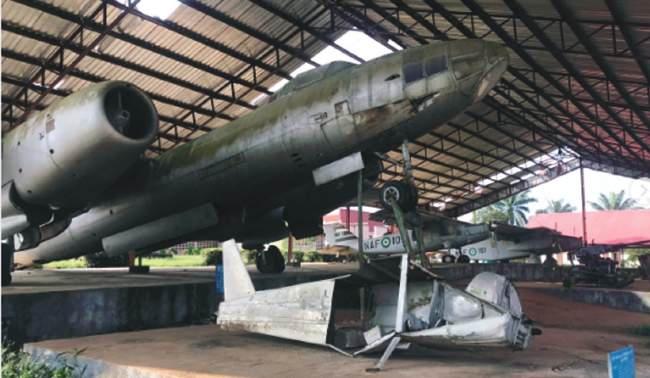
Compound in Arochukwu, Ntugbo, Oloko Ikwuano, where participants in the famous Aba Women Riots of 1929 were tried.”
Concerning the sites, the Commissioner for Arts, Culture and Creative Economy, Matthew Ekwuribe, said that the state was blessed with lots of eco-friendly tourism sites, which, if properly harnessed, would make tourism viable in Abia, with huge potential to boost the state’s internally-generated revenue. He added that the tourism sector was open for private sector participation.
Last Tuesday at a joint press briefing, both Kanu
and Ekwuribe, announced that immediate commencement of renovation, retrofitting and upgrade of three tourist sites, namely Arochukwu Waterfall, Ojukwu Bunker and National War Museum. Kanu announced that the decision to retrofit Arochukwu Waterfall, to be done in phases, was taken by the State Executive Council.
“In a strategic move to boost the tourism potential of the state, council has approved the first phase of the retrofitting of the Arochukwu Waterfall in Ibom as part of efforts to enhance the tourism value of the waterfall as a tourist site.
“This first phase will cover the development of key visitor infrastructure and this includes entrance Gates, Souvenir Shops, Town Stand, Bush Bar and Convenience facilities, to improve accessibility and comfort, as well as overall tourist experience for visitors,” the Commissioner stated.
The Arochukwu Waterfall, often called “Ogba N’ Nkume” or the 79 Steps Waterfall, is a historical natural wonder located in Amanagwu village. Linked to the infamous Long Juju slave route and Ibini Ukpabi shrine, it was used for judgment and rituals during the Atlantic slave trade.
The fall is accessed via 79 stone steps carved into the hillside. These steps were constructed during the British colonial era for a water project that was later abandoned.
Today, it is recognised as a tranquil, scenic spot for tourists, attractive for hiking, offering a mix of natural beauty and historical significance.
The move to renovate and upgrade Ojukwu Bunker to international tourist site has been a year’s journey, a collaboration with the federal government through the National Commission for Museums and Monuments (NCMM).
In July last year, Ekwuribe announced that the federal government has given approval to Abia State government to renovate and upgrade the facility.
Announcing what was perceived as a major milestone in the Abia government’s march towards boosting tourism in the state then, the Commissioner for Information said: “We are also pleased to announce key milestones that continue to transform the state’s cultural, historical and creative landscape in line with the government’s vision for the arts, culture, and creative economy of the state.
Ugwu-Nwogo
Enugu State has taken steps to realise its dream of developing its vast tourist potential and tap the economic benefits derivable from tourism. The State Governor, Peter Mbah, recognises tourism as a major contributor in his vision to build a $30 billion economy.
In the 2026 budget, a total amount of N22.5 billion was set aside for the development of tourism sites and infrastructure in Enugu State.
To this end, the state is expecting both local and foreign investments in the tourism sector and has continued to create the enabling environment to spur the growth of tourism.
Governor Mbah has become the chief marketer of the state’s tourism potential, canvassing for investors to put their money in the sector and reap bountiful dividends.
Last month, Mbah took advantage of his being in President Bola Tinubu’s entourage during the state visit to the United Kingdom and vigorously
marketed Enugu’s tourism potential to foreign investors.
On the sidelines of the state visit, Mbah got a veritable platform at the UK-Nigeria Project Agglomeration Compact 2026 delivered by Mutandis Africa, a pan-Afrivan investment and trade facilitation platform. The event which was held in the House of Lords, was put together in collaboration with the Dr. Zaach Adedeji-led Nigeria Revenue Service (NRS).
Mbah seized the moment and spoke on the huge investment opportunities in every sector of Enugu’s economy, including the tourism sector. He stated that Enugu’s location is already an enabler for tourism growth.
“In tourism and hospitality, Enugu’s natural landscape, a hilltop city surrounded by waterfalls, caves, and arable scenery, is being repositioned as a destination for both leisure and business travel,” he said.
The governor noted that new hotels, an international conference centre and revitalised resorts were being developed to support his vision for exponential growth of the tourism sector in the state.
According to the Commissioner for Budget and
Planning, Mr. Chris-Roberts Ozongwu, the state would spend “N5 billion for repositioning of lakes.”
Diamonds and Pearls Travels, a Lagos-based travel company, has taken steps to correct all the negative narratives painted about African destinations by foreign tourists.
Africa, in terms of landscape, has in abundance millions of thrills for every visitor that steps on its soil. It is the world’s second-largest continent, spanning 54 nations, more than 2,000 languages, and landscapes that range from the Sahara’s dunes to the beaches of Zanzibar, from Morocco’s medinas to Mount Kilimanjaro. It is home to some of the oldest civilisations ever recorded, extraordinary wildlife, and hospitality that rivals anywhere in the world.
Managing Partner and co-Founder at Diamonds and Pearls Travels, Wonuola Olatunde-Lamidi, said the stereotypes were because Africa doesn’t have a “backup plan”.
“It is the destination, and what clients return with is often the same reaction, ‘I had no idea’,” she noted.
Also worried why many underrate Africa as a destination, David Olatunde Lamidi, who is also a managing partner and co-founder at Diamonds and Pearls Travels, said: “That is the sentence we hear most often. And every time we hear it, we are reminded of exactly why we do this, not because Africa needs our help to be extraordinary, it has always been extraordinary, but because the story has not been told well enough.”
For Lamidi, the company’s mission is about
These include Opi lake. Iheneke lake, Nike lake, Ani-Ozalla lake, Nwachi Iyi-Umuaguinyi lake, Ahuruma-Adu Ngene/Ukwu Ngene Una Deep black lake Ehuhe.
He said that the completion of the International Conference Centre (ICC) Hotel would full N5 billion while N4 billion was set aside for repositioning of waterfalls located at different parts of the state. The waterfalls include, Awhum waterfall, Iyinzu waterfall, Nwonwo waterfall, Awgu, Opi waterfalls, OpiOzom/Osum waterfalls, Elugwu Akwu Oji-River, as well as Ezimo Cave, and Ngwo Pine forest, limestone Cave and waterfall.
In addition, N3 billion is to be spent for construction of water and amusement park at different locations across the state, N3 billion for designation and upgrading of Enugu State Museum at the old legislative assembly, Enugu, while N2.5 billion would be spent for completion of tourist/film parks.
The state has also embarked on the revitalisation of long abandoned recreational parks in the capital city. Recently, the hitherto decapitated Ngwo Park, Uwani, came alive to embrace of residents who have been yearning for leisure parks.
demystifying travel and dismantling the idea that Africa is difficult or inaccessible. “There is a perception that Africa is complicated to get to, complicated to navigate, complicated to enjoy,” he said. “We built Diamonds and Pearls Travels to dismantle that perception, because it is simply not true.”
In the same vein, Mayowa Obasanya, junior partner at Diamonds and Pearls Travels, said: “What I have seen accompanying clients across these destinations is that Africa does not just meet expectations, it dismantles them entirely and builds something better in their place. People arrive curious and leave converted, and that transformation never gets old to witness.”
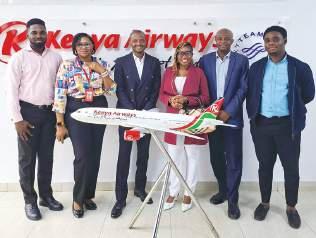
For Diamonds and Pearls Travels, that transformation is the point, not simply to help people visit Africa, but to help them see it properly in all its scale, beauty, complexity, and brilliance.
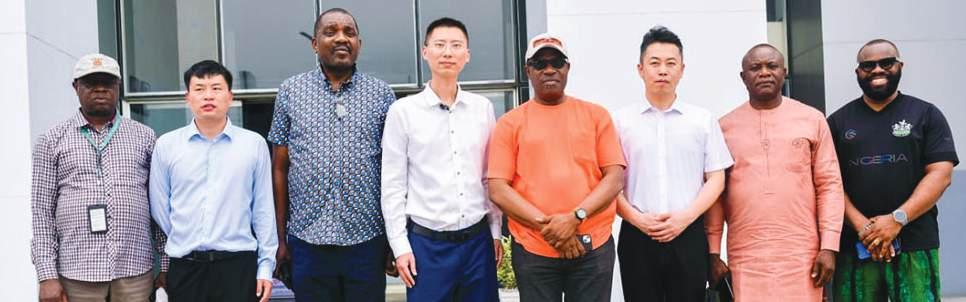
Coscharis Motors, the leading representative of various automobile global brands in Nigeria in strategic partnership with Asia Star, a leading Chinese electric vehicle (EV) bus manufacturer, is advancing its mission to deliver cleaner and sustainable mobility solutions across Nigeria.
Following the successful deployment of Asia Star EV buses to Abia State, the Asia Star team recently visited Coscharis Motors facilities in Lagos as their partner in Nigeria on a working engagement aimed at deepening their strategic collaboration and optimizing performance delivery in the Nigerian market.
Receiving the Asia Star team on behalf of Coscharis Motors, Mr. Ufuoma Umukoro who is the Director of Sales and Aftersales welcomed the Chinese partners that the visit really showed
the importance of the new partnership to both parties to deliver value in the new terrain of delivering quality electric vehicles to the Nigeria market. In his words, Umukoro said, “The Asia Star team’s visit allowed us to align more closely on our shared goals and values. From insightful discussions to an extensive tour of our showrooms, aftersales facilities, and assembly plant, this engagement underscores our commitment to continuous improvement, innovation, and delivering top-quality electric mobility solutions to Nigerians.”
The leader of the Asia Star team, Mr. Will Shi, Business Manager for Africa and the Pacific Region, Overseas Marketing through their interpreter was excited with what he and his team saw in terms of serious investment on well laid showrooms, well equipped aftersales workshops and an ultra – modern Assembly Plant during the visit. According to Shi, “this
visit is to confirm the pedigree of our new partner in Coscharis that can help us deliver quality electric vehicles into the Nigerian market and we can confidently affirm with what we’ve seen so far that we have the right partner in Coscharis to complement our own pedigree in the automotive industry”.
As a wrap of the visit, the leader of Coscharis Motors’ Technical team for the EV business, Mr. Chukwu Opara equally gave some feedback updates on the recently delivered EV buses to Abia State government towards the enhancement of delivering a joint customer satisfaction model in order to grow the EV business for more collaboration that will eventually deliver more sales opportunities for both organizations.
The visit reflected the dedication of both Coscharis Motors and Asia Star to fostering excellence in EV deployment, ensuring
The commercial vehicle segment of Nigeria’s automotive industry may be on the verge of significant growth as Chery, one of China’s leading automobile manufacturers and exporting champion for 23 consecutive years among all Chinese passenger vehicle manufacturers, considers a strategic expansion of its commercial vehicle portfolio in the country.
This development was disclosed by Mr. Kim Luo, Country Director, Passenger Cars at Chery International, during a high-level business visit to Carloha Nigeria, the authorised distributor of Chery vehicles in Nigeria.
Speaking during the visit, Mr. Kim noted that the company’s growing footprint in Nigeria—driven by the increasing acceptance and rapid market penetration of its passenger vehicle lineup—has created a strong foundation for further investment. He emphasised that Nigeria remains a key strategic market for Chery’s long-term growth in Africa.
“The Nigerian market has shown remarkable potential and resilience. The positive reception of our passenger vehicles has given us the confidence to explore deeper investments, particularly in the commercial vehicle segment, where we see strong demand and growth opportunities,” he stated.
The proposed expansion is expected to introduce a range of durable, high-performance commercial vehicles tailored to meet the unique needs of Nigerian businesses, from logistics and transportation to construction and enterprise operations. This move aligns with Chery’s global vision of delivering innovative mobility solutions across diverse markets.
Carloha Nigeria, which has played a pivotal role in establishing the Chery brand locally, welcomed the development as a significant milestone for the Nigerian automotive landscape. The company reiterated its commitment to deepening its investment in Nigeria through expanded operations, enhanced after-sales support, and customer-centric initiatives.
Mr Sola Adigun, Managing Director of Carloha Nigeria, remarked:
“This planned expansion underscores not only Chery’s confidence in Nigeria but also our shared commitment to contributing meaningfully to the growth of the automotive sector. We are proud to be at the forefront of this journey, bringing world-class automotive solutions closer to Nigerian consumers and businesses.”
Carloha currently offers a variety of Chery passenger vehicles, including sedans, SUVs, and Pickup trucks, in ICE, hybrid, and full-electric models. It also offers the industry-acclaimed CarlohaCare 6-6-7, which represents a 6-year warranty, 6 years free service and a 7-day repair promise for all Chery sedan and SUVs purchased from Carloha.
Industry analysts suggest that increased participation by global automotive players like Chery could catalyse growth across the value chain, stimulate job creation, and improve access to modern, efficient transport solutions in Nigeria.
As Nigeria continues to position itself as a hub for automotive innovation and investment in West Africa, the collaboration between Chery International and Carloha Nigeria signals a strong vote of confidence in the country’s economic potential and the future of its mobility ecosystem.
Chery is a globally recognised automotive brand headquartered in China, known for its innovation, quality engineering, and expanding international presence across passenger and commercial vehicle segments. Chery has been the export champion among all Chinese passenger vehicle manufacturers for 23 consecutive years.
Carloha Nigeria is the official distributor of Chery vehicles in Nigeria, committed to delivering premium automotive products and services while driving growth in the local automotive industry.
operational efficiency, and accelerating the adoption of sustainable transportation solutions across the country.
Coscharis Motors is a leading automotive company in Nigeria, representing globally respected brands like Jaguar LandRover, BMW, Grenadier, Ford, Renault and Geely across sales, aftersales, and assembly plant. The company is committed to providing innovative mobility solutions while promoting sustainability and excellence in service delivery.
Petrol leaks from cars primarily due to damaged or aging components in the fuel system, such as rusted fuel lines, cracked rubber hoses, leaking fuel injectors, or a damaged fuel tank. Other common causes include a faulty gas cap allowing vapor to escape, or overfilling the tank, which spills fuel from the filler neck.
Common Causes of Fuel Leaks
•Fuel Line Corrosion/Damage: Metal lines rust, and rubber hoses dry out/ crack over time, accelerated by road salt and debris.
•Damaged Fuel Tank: Punctures from road debris or corrosion can cause the tank to leak.
•Fuel Injector Leaks: Faulty seals or cracked injectors can leak gasoline directly into the engine compartment.
•Bad Gas Cap: A loose, damaged, or poorly sealed gas cap fails to maintain pressure, allowing fumes or liquid to escape.
•Fuel Pump Failure: The fuel pump can leak, particularly around its gaskets and seals.
•Overfilling the Tank: Filling past the automatic shut-off can overwhelm the system, causing overflow, especially if the filler neck is damaged.
Symptoms of a Petrol Leak
•Strong Petrol smell around the car, especially when parked.
•Liquid puddles under the vehicle.
•Reduced fuel efficiency and poor engine performance.
•Check Engine Light or gas cap warning light.
Important Safety Note: Petrol leaks pose a severe fire risk and should be addressed immediately by a professional mechanic.
(Source: Reddit)
Ferdinand Ekechukwu
Decades after his passing, legendary music icon Fela Anikulapo-Kuti has continued to make waves with his work, art, and influence across the globe. Barely a couple of months after bagging the Grammy Lifetime Achievement Award this year, a landmark moment for African music is set to take center stage as the Afrobeat originator is inducted into the 2026 Rock & Roll Hall of Fame class.
Alongside Fela Kuti, Nigerian-born British singer Sade Adu was inducted into the 2026 Rock & Roll Hall of Fame class, unveiled last Monday night in the United States of America, for their lasting influence on music and culture.
The induction is a formal acknowledgement by one of music’s most established institutions that African artists actively participate in the global story of popular music.
The Rock & Roll Hall of Fame is regarded as one of the highest honours in the global music industry, recognising artists whose work has significantly shaped the evolution of rock and popular music across generations, while also serving as a museum that preserves and documents global music history.
The induction ceremony is scheduled to take place on November 14 at the Peacock Theatre in Los Angeles. The iconic musician, activist, and creator of Afrobeat, Fela Kuti also made history in January as the first African musician to receive the Grammy Lifetime Achievement Award, nearly 30 years after his death.
Fela joins the Hall under the Early Influence Award category; a distinction reserved for pioneer artists whose work laid the groundwork for the evolution of popular music, reshaped musical direction and cultural expression globally. Others recognized include Celia Cruz, Queen Latifah, MC Lyte, and Gram Parsons.
In the Performer category, Sade joins a diverse lineup that includes Phil Collins, Billy Idol, Iron Maiden, Joy Division/New Order,
Oasis, Luther Vandross, and Wu-Tang Clan, reflecting the Hall of Fame’s recognition of artists who have shaped rock, soul, R&B, and alternative music across decades.
Sade, whose full band identity blends jazz, soul, and R&B influences, is celebrated for a timeless catalogue that has sold millions of records worldwide. The group’s music is widely regarded for its emotional depth and signature sound, which has remained
As the 2027 elections draw nearer, wife of renowned Fuji music icon, Abass Akande Obesere has disclosed plan to contest for the House of Representatives seat for Ibadan North East/South East Federal Constituency.
His wife, Alhaja Sekinat Tolanikawo Akande, made this announcement a few days ago and has gotten the full support of her husband in pursuing this noble act of service.
The Fuji icon has since taken to his social media platform to champion her cause, urging fans and supporters to contribute in any way
they can toward helping her achieve this goal. He further rallied backing to ensure she secures the party ticket at the primaries, emphasizing the importance of collective support in strengthening her political ambition.
Speaking during her declaration at St. Cyprian’s Primary School, Oluyoro, Oke-Oga, Ibadan, Akande confirmed that she will be running on the platform of the All Progressives Congress (APC). Akande, who is also known as Eruobodo 1, said she is committed to delivering effective representation and improving the welfare of constituents if elected.
She further promised to bring hope, ensure good representation, and promote gender balance.
She said, “I am here today to declare my inten-
tion to contest for the House of Representatives seat for lbadan North East/ South East Federal Constituency. This decision was made out of my love for my people, because I love to speak on behalf of people and l am a people-oriented person.”
Sequel to her interest in politics, Sekinat has contributed immensely to her community especially when it comes to women and the girl child. Over the years, she has been actively involved in initiatives aimed at empowerment, education, and social support, consistently using her platform to uplift vulnerable groups and promote inclusive development within her community.
influential across generations.
Becoming the first Nigerian artist to receive the honour, Fela Kuti is described by the Hall of Fame as a revolutionary figure who fused jazz, West African rhythms, and soul to pioneer Afrobeat, while using music as a tool for political expression and social commentary.
Born Olufela Olusegun Oludotun RansomeKuti in 1938, he rose to prominence after forming his band Koola Lobitos in London and later developing Afrobeat after exposure to African American jazz, funk, and civil rights-era influences in the United States.
He is credited with transforming music into a vehicle for resistance, with works such as Expensive Shit and Water No Get Enemy reflecting both artistic innovation and political criticism. Other honourees in the Musical Excellence category include Rick Rubin, Arif Mardin, Jimmy Miller, and Linda Creed, recognised for shaping modern music production and songwriting.
However, global stars including Shakira, Mariah Carey, Lauryn Hill, New Edition, and Pink did not make the final list despite being nominated. The Rock & Roll Hall of Fame stated that eligibility requires artists to have released their first commercial recording at least 25 years prior, with selections made by industry professionals, historians, and past inductees.
The 2026 class has been described as one of the most diverse in the institution’s history, reflecting its continued expansion beyond rock into global, cross-genre musical recognition. Organisers said more than 1,200 artists, historians, and music industry professionals participated in the voting process.
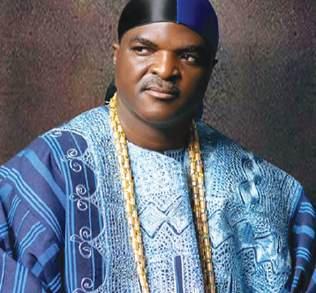
In a bold and visionary move to empower the next generation of environmental leaders, a non-governmental organization, the Tilda Goes Green Foundation (TGG) has officially launched the TGG Campus Eco Challenge, a transformative initiative designed to inspire, engage, and mobilize students across tertiary institutions to take decisive action towards environmental sustainability.
Spearheaded by renowned actress, filmmaker, and environmental advocate Matilda Gogo Lambert, the Campus Eco Challenge is more than a competition— “it is a movement calling on young Nigerians to rise, innovate, and become custodians of the planet.” Participants will engage in various activities such as environmental awareness campaigns, waste management and recycling initiatives. Other activities include tree planting and biodiversity conservation, climate advocacy and digital storytelling, and sustainable lifestyle promotion. The flagship edition of the TGG Campus Eco Challenge has commenced in tertiary institutions across Rivers State, including Ignatius Ajuru University of Education, Rivers State University (RSU), and the University of Port Harcourt (UNIPORT).
The TGG Campus Eco Challenge promises to extend nationwide as part of TGG’s broader vision to scale impact across Nigeria. The Grand Finale will be hosted across two different campuses, bringing together finalists, stakeholders, and partners for a

high-impact celebration of innovation, sustainability, and youth-driven change.
As the founder and president of Tilda Goes Green Foundation, Lambert disclosed that the TGG Foundation pledged to empower and reward excellence among students, offering: N1,000,000 grand prize; N500,000 second prize; and N300,000 third prize. Additional consolation prizes for outstanding participants and certificates of participation for all applicants.
With climate change, pollution, and environmental degradation posing increasing threats to communities, the TGG Campus Eco Challenge seeks to harness the creativity, passion, and influence of young people to drive real solutions from the grassroots level. “This is not just about awareness; it is about action,” said Lambert.
From Hollywood soundtracks to the GRAMMY ballot, the artist known as “Sammy Wonder” is harmonizing the world. The international singer and songwriter BJ Sam is proving that harmony is more than just a musical term; it is a global movement.
His latest anthem, “Chukwu di mma,” is currently echoing across international airwaves, drifting from radio stations into living rooms worldwide. The track pairs rich choral harmonies with high-energy African rhythms, inviting every “tribe and tongue” into a breathtaking unison that blends Igbo, English, French, Zulu, Swahili, and Lingala.
From Backstage to the Global Stage Before stepping into the international spotlight, BJ Sam was a powerhouse behind the scenes of the Nigerian music industry, managing stages for icons like Wizkid and Davido. Today, his vision has transitioned from local industry management to global cultural diplomacy.
His cinematic sound has already captured the attention of Hollywood; his track “Mon Amour” was selected by legendary director Lloyd Kaufman for the film Heart of Fatness. Most recently, his anthem “Don’t Worry, Everything Will Be Fine” reached a career milestone by appearing on the ballot for GRAMMY® consideration in the Best Global Music Performance category.
A Portfolio of Icons
BJ Sam’s global resonance is anchored by an unparalleled portfolio of collaborations with over 100 international stars. His work features a “Who’s Who” of talent, including Oscar nominee Paul Raci, Bollywood legend Jaspinder Narula, and Grammynominated pianist Charu Suri. These partnerships underscore his unique ability to command respect across vastly different cultural landscapes. “When voices across the continents collide in harmony, they spring forth radiant brilliance to the universe,” says BJ Sam.
Nigeria’s digital payment initiatives have transformed domestic payments, particularly for retail transactions, yet these systems have their challenges, writes Omolabake Fasogbon
For years, foreign exchange (forex) access and crossborder payments have remained a major constraint for Nigerian manufacturers, whether paying for inputs or receiving payments for exports. The impact of this runs deep, especially in an economy heavily reliant on imported raw materials.
Despite recent reforms, including the Electronic Foreign Exchange Matching System (EFEMS) and the unification of forex windows, up to 49 percent of manufacturers’ forex requests through official channels remained unmet in Q3 2025, according to the Manufacturers Association of Nigeria (MAN)’s 2025 CEOs Confidence Index (MCCI).
Cross-border transaction frictions further compound these challenges, which are primarily driven by forex constraints and high operating costs. At a G-24 Technical Group meeting in Abuja this February, Central Bank of Nigeria (CBN) Governor, Olayemi Cardoso acknowledged inefficiencies, ranging from settlement delays and fragmented systems to high forex charges and high remittance costs.
World Bank data show remittance costs to Sub-Saharan Africa hover around 8–9 percent, the highest globally and far above global average of 6.49 percent and the G20’s three percent target for 2027.
Informal channels can be costlier, reaching up to 12 percent per transaction, according to Kenyan news platform, Citizen Digital. The consequences have been severe, and are worsening amid global economic tensions.
Haunted by Operators’ Payment Nightmares, Adeyemi Pauses Expansion
In 2022, the collapse of Kenfrancis Farms, founded by Ifeanyi Okereke, spotlighted the human cost. His six-year-old agribusiness folded after persistent shortages crippled its ability to source raw materials.
“Cost of production continues to rise when we pay heavily for energy, water, logistics, port demurrage and then sourcing foreign exchange from the black market at high rates,” he lamented.
Four years on, those conditions have not eased; they have intensified even after reforms.
For industry veterans like Executive Director, Universal Luggage Limited, and a past Chair of MAN, Apapa, Lagos, Frank Ike Onyebu, even digital payment rails fall short of his international demands.
Onyebu said he often resorts to third-party intermediaries and informal swaps to effect foreign payments.
“For Instance, if I’m buying from China and there’s a Chinese trader here who needs naira, I pay him locally and he pays on my behalf. The exchange rates are unfavorable and the process isn’t ideal, but business must move, I know of many people who do same”, he said.
MD/CEO of FAE Limited, Funlayo Bakare-Okeowo, still carries the frustration of waiting six weeks for an export payment from Cotonou. By the time the money dropped, inflation had made it worthless, she said.
“At first, I suspected the customer, but it was a failure of the bank transfer system,” she explained. “These delays stifle our cash flow, disrupt operations, and strain client relationships. International payment remains incredibly cumbersome. I must say”
The above experiences killed Femi Adeyemi’s morale. Adeyemi, who runs a mid-scale textile business in Itori, Abeokuta Ogun State, had desperately considered expanding into regional markets. But harrowing stories from close allies snuffed out this dream, denying both him and Nigeria the chance for greater revenue and growth.
“I’ve heard and seen shipments stall, suppliers walking away after delayed payments, and contracts collapsing under sudden exchange rate spikes and complex banking processes. These scare me a lot. I’ll reconsider scaling abroad only when these narratives change,” he said.
Many others share Adeyemi fears. The National Bureau of Statistics (NBS) reported that foreign investment in the sector fell by approximately 46% in 2025, dropping from $1.43 billion in 2024 to $773 million in 2025.
Again, MAN reported that 335 manufacturing companies became distressed and 767 shut down in 2023, with over 800 company closures recorded in 2024. In 2025 alone, the sector lost 18,935 jobs, up from 10,891 in the same period in 2024, driven by soaring input costs and limited forex access.
Recent data signals no relief. Nearly half of manufacturers now source forex outside the CBN’s official window at higher rates, echoing the pressures that forced businesses like Okereke’s to close.
Beyond shutdowns, reliance on informal forex markets exposes firms to volatile costs, fraud risks, and uncertain payment timelines.
For the economy, it means reduced foreign direct investment, stunted formal sector growth, and a substantial loss in tax revenue,
experts noted.
Traditional payment rails hurt, digital ones still sting
Not a few international payment hurdles spring from lapses in traditional banking rails. Despite new solutions, restrictions tied to the banking system persist. Operators still grapple with unpredictable costs, complex documentation, currency volatility, and opaque multi-layered structures where banks and regulators control access even after funds are committed.
A key strength of digital payment is ‘speed’, but it usually does not translate to certainty.
Multiple studies, including those by the Financial Action Task Force (FATF) and the Bank for International Settlements (BIS) highlight lapses in digital rails. Findings by these studies show that while digital rails speed up initiation, settlement delays persist as payments move through traditional banking systems, where compliance checks and jurisdictional rules often flag or stall transactions particularly across African corridors.
For manufacturers, these lapses translate into delayed production, strained supplier ties, missed shipping deadlines, and heightened FX exposure. Collectively, they weaken productivity and cost Nigeria billions annually, which CBN Governor, Cardoso warned is excluding millions from global commerce.
The disputed $2.4 billion forex forward backlog with the CBN further highlights foreign exchange liquidity constraints.
Analysts note that Nigeria’s traditional banking system, with its complex layers, often introduces fees and delays that raise costs for manufacturers in trade finance.
The Director General of MAN, Segun Ajayi- Kadir hinted that completed import and production cycles as far back as 2024 remain trapped, causing players to face naira liabilities estimated between N30 billion and N50 billion.
Chief Executive Officer of Verto,Ola Oyetayo argued the way forward lies in an integrated financial system, such that combines modern technology, harmonised regulation, and interoperability.
How digital payment corridor sidelines B2B transactions, manufacturers
Stakeholders, including banking regulators, have touted modern digital payment rails as the cure for cross-border inefficiencies, positioning them as the next frontier for global competitiveness.
Indeed, Nigeria has embraced this shift, launching several digital initiatives to streamline payment such as: the Nigeria Inter Bank Settlement System (NIBSS), NIBSS Instant Payments (NIPs), National Payment Stack and the Pan African Payment and Settlement System (PAPSS), and eNaira adoption among others.
But experts contend these innovations, particularly NIBSS and NIPs, remain limited for cross-border and large-scale trade use cases.
At its core, DPI rests on interoperability, inclusivity, open access, and trust frameworks which when properly implemented, enable payment systems that are faster, predictable and scalable across borders. While NIBSS and NIP have improved domestic payment access, their limited cross-border functionality highlights a gap in fully realising DPI’s potential for interoperability and scalability across borders.
Drawing on nearly a decade’s experience of leading Verto, a fintech focused on forex and cross-border payments in Africa, Oyetayo noted that domestic payment systems remain fragmented and largely skewed toward consumers.
“NIBSS and NIP primarily facilitate consumer to business and person to person transactions,” he said, urging integration of rails for business to business payments, trade finance, and supply chain management at the scale manufacturers require”, he said.
A 2026 International Trade & Research Centre(ITRC) report titled ‘Cross-border Digital Payments and Identity in Nigeria under the AfCFTA’ reinforced his concern, warning that Nigeria’s underdeveloped B2B cross border payment systems are undermining Nigeria’s ability to fully leverage AfCFTA, particularly in interoperability, automated verification, and seamless trade flows.
Ajayi-Kadir added that while fintech solutions have improved forex transactions, existing infrastructure still struggles with manufacturers’ high volumes, urging stronger regulatory support.
Globally, interoperable payment solutions have delivered results.
Examples from India’s Unified Payments Interface (UPI) and Brazil’s Pix, as cited by CBN Governor, Cardoso showed how government mandating interoperability and open access can lower costs and expand access and improve payment efficiency.
Both countries are now global benchmarks, with UPI processing over 21 billion transactions monthly, according to National Payments Corporation of India (NPCI) and PIX nearing eight billion, according to a 2025 study by Brazilian payments firm, EBANX.
However, Cardoso cautioned that without local coordination, digital payment systems risk fragmentation across jurisdictions, a lapse Oyetayo said is already evident, with businesses still facing delays and transaction limits.
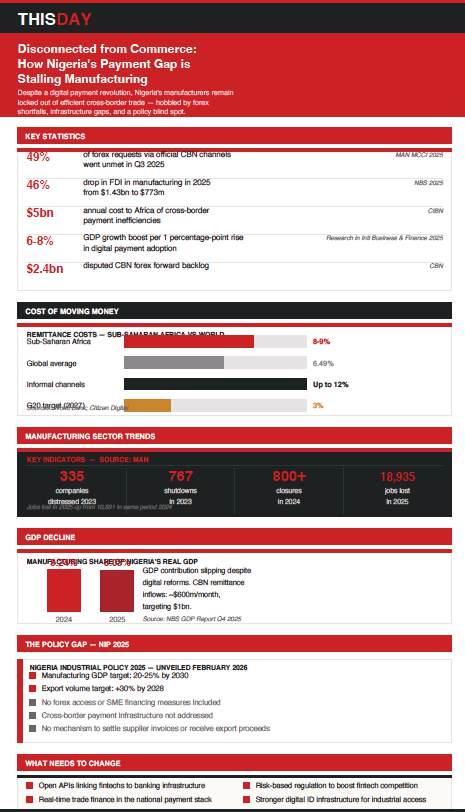
FG’s solutions scratch surface, ignore root
Following the barrage of payment related issues due to Nigeria’s heavy dependence on imports, Oyetayo stressed that urgently fixing payment infrastructure to seamlessly connect players to the global economy is non-negotiable.
In the first half of 2025 alone, Nigeria spent N3.53 trillion importing raw materials, according to RMRDC’s Prof. Nnanyelugo Ike Munonso.
President of Chartered Institute of Bankers of Nigeria, CIBN, Pius Olarenwaju added inefficiencies in cross border payments cost Africa an estimated $5 billion annually.
Oyetayo argued that a more integrated payment system offers foundational solutions, yet FG’s new industrial policy to address sector’s fallout ignores this, relying on insufficient payment corridors.
Formally unveiled in February 2026, the Nigeria Industrial Policy (NIP) 2025 aims to raise manufacturing’s GDP share to 20–25% by 2030 and boost export volumes by 30% by 2028.
But Oyetayo maintained the policy lacks tailored financing for SMEs and fails to address forex and cross border payment access.
“Even exports depend on reliable, cost-effective access to international suppliers and buyers,” he said, adding that the policy sets output targets without addressing how manufacturers will access forex, settle supplier invoices, or receive export proceeds.
He stressed the need for integrated financial infrastructure that embeds real time trade finance, automated invoice matching, and rich-data messaging directly into the national stack.
“This enables efficient global procurement, optimises working capital, and supports rapid scaling through seamless international trade and treasury management”, he asserted.
DPI as Fix for cross- border trade frictions
By integrating verifiable identity, data exchange and payment rails, DPI replaces sluggish, paper-bound legacy systems with a real-time, automated trade engine.
This aligns with Oyetayo’s push for a borderless African corridor, where every manufacturer, regardless of size can leverage instant, transparent, and low-cost cross-border payments to compete on the global stage.
He explained that this pathway to shared progress becomes achievable when regulators prioritise open APIs that allow fintech platforms to integrate seamlessly with existing banking infrastructure.
“This enables local manufacturing more sustainable, protects unit costs, stabilises pricing, and improves operational speed through real time payments”, he stated.
A report by Miden on ‘State of Business Payments in Nigeria and Africa 2025’ highlights a demand for payment solutions that integrate natively with Enterprise Resource Planning (ERP) and accounting suites.
Yusuf Abdullahi Adekanbi
In every generation, politics eventually reaches a moment when the old order begins to yield to a new political imagination. That transition rarely arrives with dramatic declarations; it emerges gradually through demographic shifts, economic pressures, and the rise of individuals whose stories begin to mirror the aspirations of a younger society. Nigeria, today, stands at one of the most significant demographic crossroads in the world. The country’s population has surpassed 200 million people, and most of that population is young. According to projections from the United Nations (UN) and national demographic reports, more than 60 per cent of Nigerians are under the age of 30, while roughly 70 per cent of the population is under 35 years old.
This demographic structure means that Nigeria is not simply a young nation—it is a youth-driven society whose political future will inevitably be shaped by its younger generations.
Yet, for decades, Nigeria’s leadership structure did not reflect this reality. While young people formed the largest voting bloc and the most active campaign mobilisers, they remained significantly underrepresented in positions of political authority. Research from the National Bureau of Statistics (NBS) estimates that over 52 million Nigerians fall within the youth category of 18–35 years, a population larger than the total population of many African countries. Despite this demographic dominance, young Nigerians occupy only a small fraction of elected offices across the country.
The imbalance became so evident that it triggered one of the most important political reforms in Nigeria’s recent democratic history. In 2018, the National Assembly passed the Not Too Young To Run Act, a constitutional reform designed to remove age barriers that had historically prevented younger citizens from contesting political offices.
The reform reduced the minimum age for several elective positions. Eligibility for the House of Representatives and State Houses of Assembly dropped from 30 years to 25, while the age requirement for governorship and the Senate fell from 35 to 30, and the presidency from 40 to 35. The legislation fundamentally altered the psychological landscape of Nigerian politics by sending a powerful signal that leadership was no longer legally restricted to older generations. The impact was immediate.
In the elections that followed the reform, reports indicate that more than 1,500 candidates under the age of 35 contested seats in the House of Representatives, representing roughly a quarter of the entire candidate field. Although
only a limited number ultimately secured seats, the reform succeeded in dismantling a long-standing barrier to youth political ambition.
But laws alone do not create movements. Structural reforms may open doors, but it takes visible leadership to convince people that those doors can be walked through. Across Northern Nigeria, a new generation of emerging political figures has begun to embody that possibility.
Among them is the 36-year-old Abdulrahman Bashir Haske, whose grassroots political activities have caught attention in recent times.
Originating from Adamawa State, a region with a long tradition of producing influential political leaders, Haske represents a profile that resonates strongly with the younger generation now seeking space within Nigeria’s political landscape. His path into public life did not begin through the traditional machinery of party politics but through enterprise and economic engagement.
Educated at the American University of Nigeria, he built business interests in sectors closely tied to the economic realities of Northern Nigeria, including agriculture, logistics, and energy. These sectors are particularly significant in a region where agriculture alone employs millions of young people and remains one of the largest contributors to regional livelihoods.
Through agricultural support initiatives and youth empowerment programmes, his outreach has extended across Adamawa’s 21 local government areas, connecting economic empowerment with civic participation. Such programmes resonate strongly in a country where economic challenges continue to shape youth political consciousness. Recent national reports indicate that over 1.7 million young Nigerians enter the labour market every year, while unem- ployment and underemployment remain persistent concerns for the youth population.
These realities have transformed political engagement among young Nigerians from a distant civic duty into a question of economic survival and generational op- portunity.
Adamawa itself has become an important testing ground for this evolving political energy. Historically regarded as one of northern Nigeria’s politically influ- ential states, the region has recently witnessed a visible expansion of youth-driven civic conversations. Political forums, student organisations, and community platforms across the state’s local governments have increasingly focused on leadership renewal and generational inclusion.
This shift is not limited to Adamawa alone. Across northern states such as Kaduna State, Kano State, and Bauchi State, youth-led political platforms and civic
networks have grown steadily over the past decade. Young professionals are declaring interest in legislative positions, contesting local government seats, and seeking leadership roles within political parties.
Yet the structural imbalance between demographics and representation remains stark. Data from parliamentary records shows that within Nigeria’s Senate, only seven of the 106 senators are aged 45 or younger, highlighting the limited presence of younger leaders in national legislative institutions.
This disparity has fuelled a growing national debate about generational representation. Youth advocacy groups have even begun demanding that, at least, 50 per cent of seats in legislative institutions be occupied by younger Nigerians as the country approaches future elections.
It is within this broader national conversation that figures like Abdulrahman Bashir Haske and others are gaining symbolic significance. His rise reflects the possibility that Northern Nigeria may be entering the early stages of a generational political shift.
Read full article online - www.thisdaylive.com
The passing of my mother, Mama Olive Sulola Adejobi, marks the close of a life both remarkable and deeply influential, writes
There are lives that unfold gently without spectacle, yet leave an imprint so enduring that their absence alters the texture of the world they once inhabited. The life of Reverend Mother Superior Olive Sulola Adejobi was of this rare order. To have known her was to encounter a presence at once composed and commanding, tender yet exacting, deeply spiritual yet firmly grounded in the realities of daily life.
She did not announce herself. She did not need to. Her authority was not borrowed from position alone, though she held many, but from the steady integrity with which she lived. In an age increasingly drawn to noise, she remained resolutely anchored in substance.
Born into a generation that understood endurance as a necessity rather than a virtue, she came of age with a clarity of purpose that would define her nearly century-long journey. Her marriage in April 1948 to Primate Emmanuel Adeleke Adejobi marked the beginning of a partnership that would shape not only a family but a movement within the Christian faith. Together, they laboured in ministry with a shared conviction that faith was to be lived, not merely professed.
In those early years, the work was neither easy nor predictable. Mission fields stretched across West Africa and beyond, from Ghana and Sierra Leone to the United Kingdom and the United States. Churches were planted, communities nurtured, and lives transformed. Through it all, she stood not behind her husband, but beside him, a co-labourer in the truest sense. If he preached the message, she embodied it.
Her contribution to The Church of the Lord, Aladura Worldwide, was both visible and unseen. She helped establish institutions that would endure, seminaries, schools, and places of worship. Yet her more profound work lay in formation. As Provost of
Revd Mother Adejobi
theological seminaries, she did not merely teach doctrine. She shaped character. Students came to her for instruction and left with something deeper, a disciplined understanding of faith as a lifelong commitment. She possessed a rare ability to see beyond the surface. Those
who studied under her often spoke not only of her intellectual rigour but of her personal investment in their lives. She noticed their struggles and intervened quietly when needed .And on more than one occasion, ensured that financial hardship did not derail a calling. For her, ministry was not abstract. It was personal. At home, that same sense of responsibility defined her. The Adejobi household was not simply a residence; it was an institution of its own. Order was expected, not as an aesthetic preference but as a reflection of discipline. Cleanliness, punctuality, truthfulness, these were not negotiable ideals. They were daily practices.
Her children grew up within a structure that could at times feel exacting. Yet it was a structure rooted in care. She believed deeply that character was formed in the details of ordinary living. Homework was reviewed with precision, report cards scrutinised, and standards maintained with unwavering consistency. Education mattered but so did moral formation. Religious instruction was not confined to church; it was woven into the rhythm of the home. Prayer stood at the centre of her life. It was not symbolic nor occasional. It was habitual, disciplined and deeply personal. Her nights often began where others ended. From midnight into the early hours, she prayed, naming each child, grandchild, and great grandchild remembering friends, church members and even the wider world. Her intercessions were not hurried. They were deliberate, carried out with a seriousness that reflected her belief that prayer was both duty and priviledge. Even in advancing age, when physical strength began to wane, her commitment did not diminish. If anything, it deepened. Convincing her that posture did not define prayer required gentle persuasion. For most of her life, reverence meant kneeling, or even prostrating. Such was the depth of her devotion.
For Hon. Akarachi Etinosa Amadi, representing Mbaitoli/ Ikeduru Federal Constituency in the House of Representa- tives, politics is not a game of power but a platform for impact. He acknowledges that while Nigeria’s challenges are real, they are far from insurmountable, provided leadership is deliberate, focused, and people-centred. Fresh from a mega empowerment programme where he distributed 500KVA transformers, vehicles, and farm tools, Amadi underscores his commitment to grassroots development, community engagement, and practical solutions that translate policy into measurable improvements. Sunday ehigiator brings the excerpts:
Who is Akarachi outside politics, and what would you say has been your toughest moment since joining active politics?
Outside politics, I am simply a young man who wants to help and make a difference. I am a family man who believes everyone has a role to play and I try to lead by example, contributing in any way I can to support my community. Being in politics comes with daily challenges, and my toughest moments are those reminders that we are not yet where we want to be. I am results-driven, and each day highlights the work that still lies ahead, requiring courage and determination to keep moving forward. There isn’t a single defining moment that shapes this struggle; it is the ongoing process of facing challenges and finding ways to overcome them. Each day offers an opportunity to reflect on progress, learn from setbacks, and refine approaches to better serve the people. Ultimately, my focus is on perseverance and pushing further until we achieve the goals we aspire to. The journey may be demanding, but it is also a chance to grow, make tangible impacts, and leave a meaningful legacy for the community.
Do you see politics as a calling or a career?
I see politics simply as a means to serve and contribute to the security, safety, and productivity of our country. Whether under a monarchy or a democracy, the goal remains the same: to make a meaningful impact. In our democratic system, politics is the tool to bring the change we desire, and I have a calling to serve my people in any capacity, both during and beyond holding office. Even before running for elections, I have been active in serving my community, and I will continue to lend my voice, hands, and resources toward the betterment of society. Politics is not limited to public office; it is part of everyday life. Every woman raising children and every man influencing friends or the community is engaging in politics by shaping the world around them. We are all part of a political system, whether or not we formally align with a party. What matters most is allegiance to our country and our people. By working together across divides, we can create the society we envision. Politics should not be seen as alien; it is a shared responsibility to collaborate for the common good. Nigeria is blessed with immense resources, talent, and potential. Our challenge is to unite, cultivate these resources, and steadily build the country we aspire to. Even if the full vision takes years to achieve, consistent effort will ensure that future generations inherit a nation they can be proud of, especially as we address regional challenges like those in the South-East.
Godfatherism is often cited as a major challenge in Imo State politics. Do you see yourself affected by this dynamic?
I do not believe we are in a situation of Godfatherism. Historically, the South-East has been very democratic, and our focus has always been on the bigger picture, ensuring security, creating an enabling environment, and fostering integration both within Nigeria and globally. While mentorship plays an important role, it is not the same as Godfatherism. I have learnt from and have been guided by people who came before me, and I respect the lessons they imparted.
Their guidance shapes how I work and serve my community every day. The South-East is on the rise, and we are poised to achieve significant progress as a geopolitical zone. By building on the foundations laid by previous leaders and focusing on our collective potential, we can continue to be a critical pillar in Nigeria’s development.
Given the criticisms and protests faced by the APC at the federal level, do you think these challenges could impact your chances if you decide to run for re-election in 2027?
Criticism is a normal part of any democratic process, and it provides an opportunity to learn and improve. As an engineer, I see every system as having an efficiency factor; no system is perfect. Criticism helps identify gaps so we can adjust and move forward. We acknowledge the challenges and are actively learning from them. These issues will not affect my chances or those of anyone running under the APC, because every party, from PDP to others in power, has faced similar hurdles. What matters is how we navigate these challenges and stay focused on progress. Politics is always intertwined with party dynamics, but our priority remains delivering results and creating opportunities. By facing problems head-on, negotiating obstacles, and keeping the path toward development clear, we continue to work for the benefit of our constituents and the nation.
Being young doesn’t always mean different. How is your leadership different, and how do you balance party loyalty with constituents’ needs?
You’ve given me what I call a complex equation to solve. I’m going to dissect it. The party manifesto, the APC manifesto, is the people’s manifesto. If you are true to the service of the people, you are true to the service of the manifesto. For me, what we’ve tried to do is always do people-oriented projects, people-oriented politics, and people-oriented policies, because at the end of the day, we are nothing without the people. Being young or being old does not matter. When I won my election, people focused on my age, but for me, it was about inspiring the youth that you can do this. Being a Reps member has nothing to do with age; it has everything to do with capacity and the will to serve. There is no vacuum in any system. If we do not occupy the space, someone else will. I must thank those who have supported youth inclusion, my governor, Senator Hope Uzodimma, and others. My loyalty to the party aligns with my loyalty to the people because the party supports people-oriented policies. We must also begin to ask questions at the local government level because funds now go directly to them. Citizens must ask what is being done with those funds.
You recently launched a Mega-Empowerment programme, distributing over 63 sets of 500KVA transformers and other resources to your constituents. How do you plan to ensure these initiatives are sustainable and continue to benefit the community in the long term?
It’s a problem we have. I’ve always said that Nigeria’s problem is not just leaders; the leaders are from the people, and the people themselves. We have looked at what to do, and we have seen that the problem with most empowerment is that they are done at a central location. So most times, these items do not even get back to the communi-
ties. What we decided to do was the launch of the empowerment programme for 63 communities. I was talking with some of my advisors, and they said the number 63 is quite odd. Why didn’t you round up the number? And I said it is because I have 63 communities in the federal constituency. So went to each of these communities, met with the traditional rulers, the religious rulers, and leaders of the communities, and took the empowerment materials to them. They nominated candidates that they believed were deserving of those things. The transformers that are going to boost electricity supply; the location will be picked by the communities. The tractors will be used by farming communities in a rotational system. The farm tricycles will empower farmers who previously relied on crude methods to move produce. Now they can transport tonnes of produce to the markets.
The principle is taking development from the centre directly to the communities and ensuring that the ripple effect spreads across wards, local governments, and the entire constituency.
You were recently recognised as Legislator of the Year. Beyond the long list of bills to your credit, which of these do you believe will most fundamentally change the daily lives of the people you represent?
It was indeed a pleasure to have been recognised by Champions Newspaper as the Legislator of the Year. I do not think any of those bills are less than anyone, because people don’t realise that to make a change, every step counts. For instance, we are talking about Nigeria as a young country that is 70 percent youth demographic. Again, you must empower the youth, and the best way to do that is through education. You cannot have a case where the Joint Admissions and Matriculation Board has an exam that is written yearly, but again, we do not have enough schools to take this population that comes out of the secondary schools. And people write them, and they have to write them again the next year. So one of the things that we also want to do for the youth population is to ensure that the validity of the JAMB exams goes beyond one year. Have people write that exam once and know that they can use the result to get into school two or three years later. So it might seem like a small bill, but again, it’s something that’s going to reshape not just the lives of those youths but the lives of Nigeria as a whole. That committee is meant to serve Nigeria as a whole. It is meant to boost our food security. It is meant to ensure that we have the sustainability of life in the marine ecosystem. It is meant to ensure that the balance between trade, commerce, industry, and the natural habitat of Nigeria, there is a balance. The biggest route for trade is the marine system, the oceans, and the inland, and we have to liaise with the relevant agencies, do our oversight functions, and get stakeholder engagement. Because one of the things that we fail to do is we need to get and give up to the stakeholders, use that to formulate policies. We just went on a retreat where we had NIMASA, we had the Navy, and we had all the
relevant agencies come to formulate policies. That is because sometimes certain policies that favour one agency might not favour the other. So we find the middle ground that would not only create employment for Nigerian youth, but also create the relevant industries that would be supported. Certain policies, while you are trying to bring in foreign direct investments might also affect the local market and might also affect the competitiveness of our Nigerian small and medium-scale enterprises. So you are going to look for a balance between growing your local farmers, growing SMEs, and also bringing in the much-needed foreign exchange and foreign direct investments into the system so that it is going to be a win-win, where our people, their businesses are growing, the Nigerian economy is growing, and the foreign investors are coming with the much-needed technology transfer to boost our practices across the marine and blue economy sector.
Is the empowerment programme limited to APC members?
I do not represent just APC members. I represent the entire federal constituency: children, the elderly, the clergy, and everyone in between. Hunger and poverty do not recognise party lines, and our responsibility is to serve all Nigerians. These empowerment programs have been designed to reach every community, irrespective of political affiliation, while also acknowledging that the party provided the platform to contest elections. Winning the mandate from the people of Mbaitoli/ Ikeduru federal constituency means carrying everyone on board. Our focus is not on statistics or party politics, but on delivering tangible results through well-planned, step-by-step approaches. Like building roads, which takes time, national and local challenges require phased solutions to ensure continuity and stability in policies and programs. We have already made significant progress across several sectors. Over 3,000 people are being registered under the National Health Insurance Scheme to access free healthcare. We are building five primary healthcare facilities and equipping them, constructing 23 classroom blocks, providing educational materials, and establishing smart schools that combine primary, secondary, and skills acquisition programs to prepare students not just for employment but to create jobs. Security and grassroots development are also priorities. We are deploying equipment to community vigilantes and police divisions to address local insecurity. The overarching goal is to empower communities, support economic growth, and foster a sustainable development model that benefits all residents of the constituency. Change takes time, like planting crops or palm trees; results are not immediate. But with faith, patience, and collective effort, we are confident that the work we are doing today will leave a better Nigeria for our children and future generations. I encourage everyone to be the change within their families and communities because building the nation of our dreams is a shared responsibility.
artificial-intelligence-driven productivity, or renewed trade tensions could significantly weaken growth and destabilise financial markets,” the IMF said in its latest report.
Global oil supply plummeted by 10.1 million barrels a day in March, “the largest disruption in history,” the International Energy Agency (IEA) revealed in its latest oil market report.
The IEA has sharply downgraded its forecast for global oil supply, which it now expects to exceed demand by just 441,000 barrels a day, versus 2.4 million barrels a day in its March report.
The IMF now expects global growth of 3.1 percent in 2026, a 0.2 percentage point downgrade from its January forecast. This modest revision assumes that the war will be “relatively short-lived,” it said. Global inflation is also seen rising to 4.4 percent this year.
IMF Managing Director, Kristalina Georgieva,
warned of deepening supply disruptions from the closure of the Strait of Hormuz, saying that the war can trigger new demand for $20 billion to $50 billion in financial support that could include new loans and augmentation of some of the global lender’s 39 existing country financing programmes.
She said the disruptions to oil supplies are “not going to evaporate overnight, even if the war ends tomorrow. Why? Because a tanker is a slow-moving vessel, it would take 40 days to get all the way to Fiji. So we need to be prepared that the impact of the supply disruptions in the weeks ahead is going to be deeper.”
Georgieva added: “Had we not had this war, we would have seen one small upgrade of our growth projections. Instead, all roads now lead to higher prices and slower growth.”
Also, World Bank President, Ajay Banga,
* Fuel subsidy removal (May 2023): eliminated a multi-trillion-naira fiscal drain, freeing up revenues for subnational allocations and deficit reduction.
* Exchange rate unification: collapsed multiple FX windows into a single market-reflective rate—an essential step flagged for years by the World Bank and International Monetary Fund. (The actual “Ponzi scheme” that benefited a few with privileged access through arbitrage.)
* FAAC disbursements have risen materially post-subsidy removal, improving state-level fiscal liquidity.
These are not theoretical positions. They are structural actions with verifiable fiscal impact.
From Insider Comfort to Outsider Outrage
There is a pattern here that is too glaring to ignore. For years, the rent-seeking architecture of Nigeria’s economy—subsidy leakages, FX arbitrage, policy opacity—created space for a certain kind of “expert”: visible, vocal, and perpetually adjacent to power, yet rarely accountable for outcomes.
Now, that architecture is being disrupted. And suddenly, the volume of outrage has gone up. This is not a coincidence. It is a reaction.
When a system that once rewarded commentary begins to prioritize structural correction, those who thrived in the old order often rebrand themselves as its fiercest critics. Not out of principle—but out of displacement.
Meanwhile, early macro signals are adjusting:
* Oil revenue remittances have improved post-subsidy removal and reforms in NNPCL transparency frameworks.
* External reserves stability has strengthened relative to pre-reform volatility cycles.
* Debt service-to-revenue pressure has begun easing marginally as fiscal leakages
are curtailed.
The “Ponzi Scheme” Claim: A Collapse of Serious Thinking
Let’s be blunt. Calling a national reform programme a “Ponzi scheme” is not provocative—it is intellectually hollow.
A Ponzi scheme is built on deception and zero value creation. Nigeria’s reforms—however painful—are attempting to:
* eliminate fiscal leakages
* restore price discovery in the FX market
* rebuild macroeconomic credibility
If anything resembled a Ponzi structure, it was the previous regime of:
* borrowing to sustain consumption.
* subsidising inefficiency at scale.
* masking structural weakness with artificial stability.
An economy that sustained the likes of Utomi and his “Patitio’s gang” of economic bucaneers. Utomi’s analogy does not expose the present—it exposes a troubling looseness in his analytical discipline.
He ignores the fact that investor-facing fundamentals are being reset:
* FX backlog clearance efforts have improved confidence among foreign portfolio investors.
* Repatriation conditions—a long-standing investor concern—are gradually normalizing.
Under the Tinubu administration, policy signaling now aligns more closely with orthodox macroeconomic frameworks.
Noise Without Substance
What is most striking is not the criticism—it is the emptiness behind it.
Utomi offers:
* no coherent alternative framework.
* no credible sequencing model.
* no fiscal pathway that avoids the very crisis he warns about.
in reflecting on the impact of the conflict, said, “It’ll still take a few months for things to come back to where they were.”
“So we have to prepare for a few months of some destabilization for these countries,” he said.
Banga said the World Bank has prepared a “war chest” plan to provide countries with varying levels of funding, depending on how long the conflict drags on.
“Thanks to our crisis toolkit, our countries can get about $20 to $25 billion immediate access, like literally tomorrow morning, without new approvals,” he said.
If the war continues for the next five or six months, that figure could rise to $60 billion, he said.
Equally, Finance chiefs from the Group of Seven industrial powers agreed to do everything possible to stabilise the global economy amid
Just declarations. Just alarm. Just noise. For someone positioned as a thought leader, this is a remarkably thin offering. In contrast, reform-linked institutional moves are underway:
* Tax reform architecture (2025 Acts) aimed at broadening the base and improving compliance efficiency.
* e-invoicing rollout for large taxpayers— enhancing transparency and revenue assurance.
* Customs modernization and AEO programme—improving trade facilitation and compliance.
These are systems-level interventions—not soundbites.
The Familiar Playbook: Alarm, Amplify, Exit
We have seen this pattern before:
1. Declare impending collapse.
2. Use dramatic language to command attention.
3. Avoid the burden of proposing solutions.
4. Harass Goverment into putting you on some commitee, think-tank or council to correct it all.
It is a performance—one that thrives in media cycles but adds little to policy depth. Yet the data trajectory, while imperfect, is not static:
* GDP growth has remained positive, avoiding contraction despite reform shocks.
* Non-oil revenue performance (VAT and CIT) has shown upward momentum.
* Subnational fiscal space has expanded due to higher distributable revenues.
There is also an underlying tension that cannot be ignored. This administration has not leaned on the usual circle of media
considerable uncertainty brought on by the war. Japanese Finance Minister Satsuki Katayama told reporters in Washington that many central bankers appeared to favor a wait-and-see stance on monetary policy.
She said, “I believe there was a shared understanding that we need to do our best to defuse the situation, including ensuring freedom of navigation in the Strait of Hormuz.” Ultimately, this crisis reinforces the fact that there can be no lasting economic stability without geopolitical peace. The real challenge today is to move beyond statements and take coordinated, decisive actions to contain the fallout. The longer the conflict persists, the deeper the strain on already fragile economies and vulnerable populations. In an interconnected world, the price of war is no longer confined to borders as it is global, immediate, and increasingly difficult to contain.
intellectuals and policy commentators who, for years, occupied advisory and influence corridors within our national polity. And since then, some of those voices have grown increasingly strident—less analytical, more combative.
Utomi’s latest intervention fits that pattern uncomfortably well. When relevance is no longer assured, outrage often becomes therapeutic.
Meanwhile, reform continuity is being institutionalized:
* Medium-term fiscal frameworks now reflect post-subsidy realities.
* Targeted social intervention programmes are being recalibrated to cushion reform shocks.
* Investment promotion efforts are aligning with a more transparent FX and pricing regime. Nigeria’s reforms are not beyond criticism. But they are on track and trackable. They demand scrutiny, refinement, and stronger social cushioning.
But what Professor Utomi has offered is not scrutiny. It is not even rigorous dissent. It is amplification without depth. Critique without responsibility. Rhetoric without rigor. And in a moment that demands serious thinking, that kind of intervention is not just unhelpful—it is a distraction masquerading as insight—especially when set against a reform programme that, for the first time in years, is confronting the structural contradictions that voices like his long circled, but never resolved.
Utomi may do well to consider maintaining a dignified silence, hide his vacuousness and let President Tinubu do his work. Counsel is welcome, distraction is not.
•Dare is Special Adviser to President Tinubu on Media and Public Communication
Governor of Gombe State Mohammed Inuwa Yahaya. Also at the event were Governors Mai Mala Buni (Yobe), Nasir Idris (Kebbi), Francis Nwifuru (Ebonyi), Sheriff Oborevwori (Delta), Usman Ododo (Kogi), Abiodun Oyebanji (Ekiti), Hyacinth Alia (Benue), Agbu Kefas (Taraba) and Monday Okpebholo (Edo).
What the RNH leaders and ambassadors said at the event was both interesting and inspiring.
Governor Uzodinma: “Our purpose is to brief Mr President on how far we have gone with this national assignment, to present the substance of the work already done, and to reaffirm that the structure he graciously created is not only alive but active, coordinated, and already creating measurable political and civic dividends across the nation.
“At the regional level, activities have begun in earnest. All the structures of all the local governments have been inaugurated, as in the electoral wards. We have kick–started the process of enumeration up to the polling unit level. We are continuously harvesting data during enrolment, taking the messages to the markets, schools and professional groups, women platforms and faith-based and grassroots political structures.”
Deputy DG and Kaduna Governor Uba Sanni:
“We have all it takes to take the message of renewed hope to every ward, local government and state. We have not done enough. I believe we have to do more. We have to continue telling our story. If we don’t tell our story, other people will tell the story their own way.
“No President in the history of Nigeria has supported the sub-nationals like President Tinubu. The opposition is not out to contest election; their agenda is anarchy. And that is the reason why governors, ministers, LG chairmen must take the message of renewed hope to the grassroots. We in the North are the major beneficiaries. And the ministers, heads of agencies must speak out.”
RHA Secretary and Gombe Governor Inuwa: “We have what it takes, and we must deliver. All the ambassadors should go out. Governor Biodun Oyebanji spoke of President Tinubu’s support for the sub-nationals and how he is lucky to be a governor at this time. I was governor before 2023 and I’m governor now doing my second term, I know the difference better because I have experienced the two periods.”
RHA North-West Zonal Coordinator and
former Governor of Katsina State Aminu Masari: “We know very well that reformers are always finding it extremely difficult at the beginning. More especially, if you are reforming in a society that is very difficult to understand, and some are willing to make people not to understand.”
Commending President Tinubu for taking hard but necessary reforms that leaders before him could not, he said: “Nigeria has become better for it. You have done so much, Mr President, but don’t allow noisemakers to distract you. Your bashings are not for you alone. Even your detractors know that you have done well.
“Will anyone come tomorrow and say he will reverse the removal of fuel subsidy or return the nation to multiple foreign exchange rates?”
Ex-Senate President Anyim Pius Anyim: “We are aware of the strategic importance of our assignment. The opposition is orchestrating mischief through misinformation and fake news. But we are ahead of them.
“The appointment of a political field marshal like Governor Uzodimma as Director-General is also strategic. A dynamic team leader, with him we are in the right direction.”
Ex-Nasarawa Governor Tanko AlMakura:
“No President was as prepared for the job as President Tinubu. That is why his policies were well thought out and redeeming the country.
“With the government’s policies and RH agenda, we have all become homogenous in our commitment to the success of this administration.”
Former Delta Governor Okowa: “President Tinubu has re-engineered the economy. The sub-national governments can now breathe and breathe well.
“The best way to educate our children is to educate them, sound education. Mr. President thank you for giving us the student loan scheme, NELFUND. Thank you for bringing this about.
As of March this year, 1.16 million students had benefitted according to official statistics.”
Others who spoke at the event included APC National Chairman, Prof. Nentawe Goshwe Yilwatda and Governor Abiodun Oyebanji of Ekiti State.
•Rahman, Senior Special Assistant to the President on Media and Special Duties, is the Director of Communications, Renewed Hope Ambassadors
April 4, 2026 broke into our consciousness as if it was a regular day, but it didn’t take long to notice that there were factors that set it apart from others. First, the weather was undecided, fluctuating from the threat of rain to bright and lightly sunny skies. It also birthed a passing rainbow, though fleeting, but almost like a pointer to the colours the day that the celebration would soon usher in.
At the Atan Abam primary school, venue of the festival, event planners had effected the skills of a makeup artist on the face a a beautiful bride on the venue. Overlife-sized banners bearing pictures of past festivals as if to confirm the transition and evolvement of the ceremony. The music stand was like a world-class artist was about performing an event and to ensure that there was no failure or glitch, the DJ blared music at deafening decibels while fashion crazy youths gyrated to the beats.
The field was lined with stands representing all 27 villages that make up Abam Onyerubi as well as stands for clans of common ancestry with Abam, like Ohafia, Edda, Abiriba and Arochukwu. They were all later to make cultural presentations, which added unforgettable colour to the event.
As wide as the Atan Abam square is, visitors and participants at the occasion found it difficult getting parking space. Convoys and individual visitors had to do double parking along Ndi Oji road, Ndi Agwu road and the Igwu road that stretched nearly two kilometres each way. That testifies to the turn out for the event which had almost gone extinct till Unubiko Foundation set up by Chief James Umeh, the Ike Abam and Ike Abia revived it.
Masked security men who accompanied dignitaries and their principals were everywhere, brandishing weapons of different descriptions, while the police in their regular uniforms, soldiers, civil defence, and even Road Safety officials who attended led to a clash of orders due to the traffic snarl that attended the response for the event. It was just the spirit of peace that Abam represents that saw to the no physical clash by the different outfits that graced the occasion. Even with those, they had a hectic day controlling the crowd.
The embrace of the revival needs no narration, as though it started small, it soon blossomed into the carnival it has become.
Each stand and village or Abam kins that attended came with its own cultural troupe for presentation,
which, though it took time, made the 2026 edition exceptionally colourful.
Before Chief Umeh dressed to attend the occasion, he, with his entourage, went to the Igwu River which is the pivot upon which the Ekponiboro revolves, as it is a celebration of the wealth the people of Atan Abam made from using the inland waterways to trade from near villages and market centers in Akwa Ibom like Efi Ayong up to Calabar which hosted the biggest conurbation. It was from the river that they loaded agricultural goods and sold at trade forts like Ikot Offiong, Ikot Obioko, Ntundang, Creek town among others. Umeh went to the river and boarded a wooden boat, which was being used for the journey that took them days. He thought boarded a smaller version of it called Epepe whereas the ones that were used to carry heavy goods were known as Okoboro. With Akpara Ogugu (bamboo sticks) used to paddle in depths where the water bed can be reached with the sticks before transiting to Adam (paddles) for deeper portions; he was taken round the Anyim river of Atan Abam. Some of his visitors who could hold their fears joined him in the boats. While some of
them sat steady, some out of fear were so visibly shaking that they nearly capsized the boat. At the end, it was a good experience for them while Chief Umeh explained to them that his forebears braced the dangers of the route to accumulate wealth with the Ekponiboro representatives.
Back from the demonstration, he walked back to his mansion and dressed for the occasion. By the time he approached the venue, words had reached the DJ, and they started hailing him and reeling out all his social interventions from scholarships both locally and internationally to building free estates for those adjudged unable to afford their own houses, distribution of food items, schools renovations and provision of boreholes and health institutions.
With beneficiaries thronging the venue, movement became slow while all troupes wanted to display for him. No gainsaying that all the groups that attended went back richer than they came, courtesy of Chief Umeh. He not only provided entertainment for all but also fed everyone.
The Ekponiboro Committee, which planned the
event, did a marvelous job as several improvements were noticeable.
After the performance of the invitees, the sun, which had brightened the day, had started showing signs of fatigue with weakened rays and as if in a telepathic communication, the signature tune of Ekponiboro sounded in the distance. Every other troupe scrambled to leave the arena as it doesn’t share space with any other masquerade or performer. It is usually armed with a schimitter which while happy and not facing any challenge, sheaths in its scabbard. It soon appeared in the horizon with shouts of appreciation of its multi-coloured apparel.
It made its way into the field, offered greetings to elders, made boasts of how he married his two beautiful women whose faces are engraved on the head of the masquerade from his wrestling prowess. Then the demonstration of the harsh conditions under which the journey was undertaken, as sometimes their boats would capsize with all the goods. Though each contingent had divers that usually go to the bottom of the river to retrieve as many items as they could to mitigate such losses.
While some paddle, others were armed with axes and cutlasses with which they cleared the route, in case trees fell across their route to obstruct movement or when the underbelly of the boat hooks on to an obstacle, they would send men underwater to free it from such.
Also, the feeding style is not the same as a man relaxing on his dining table, food is cooked on board and eaten in a hurry to make the journey in the required number of days to meet the market, especially the white merchants who patronised them.
An addition to the 2026 celebration was the demonstration of trading with white men when most of them weren’t literate in English. They employed interpreters who sometimes misrepresented what the white man said. That sometimes cut into their gains or enriched the middlemen.
After the sterling performance of the Ekponiboro, Chief Umeh mounted the rostrum, with a designer paddle in his hand, beaming with satisfaction for a successful outing. He thanked everyone who attended and as usual, announced largesse for each group.
The highlight of the occasion was when he announced that his foundation, which placed all students from Atan Abam on scholarship up to PhD level, was being extended to all 27 villages in Abam. The applause was roaringly deafening with some openly wondering how he had such a heart of gold. Thereafter, the music and other entertainment stretched into the night and expectations became rife of when the next edition and what it holds for the people will arrive.

Since arriving at the RiyadhAir Metropolitano in February,Ademola Lookman has built a reputation for delivering in big games.He scored in his debut against Real Betis in the Copa del Rey. However, it was with his two-goal contribution (scored one and assisted another) againstBarcelonainthesemi-finalsoftheCopadelReythatheactuallyannouncedhimself toAtléticofans.TheNigerianmust,however,havewrittenhisnameindeliblyintheheartsof Atletico faithful,as it was his goal that took the Los Rojiblancos to the semifinal of the UEFA Champions League after finding themselves 2-0 down early in the first half in the quarterfinals against Barcelona, which led to the question of whether the Super Eagles winger is indeed the missing jigsaw inAtletico puzzle.Across all competitions,he has become one of Atlético’smostimportantattackingplayers,with10goalscontributionsinjust15matches
Ademola Lookman is not new to putting up exceptional performance on big European nights. Followers of the beautiful game would not forget in a hurry his hat-trick in the 2024 final of the UEFA Europa League against Bayer Leverkusen in Dublin, who until that night were yet to lose a game and thereby securing for Atalanta their first major trophy since 1963.
For Atletico faithful however, Lookman’s performance on Tuesday night’s UEFA Champions League quarter final against Barcelona at the Riyadh Air Metropolitano would remain indelible in their hearts.
After beating Barcelona 2-0 at the Nou Camp in the first leg penultimate week, Atletico Madrid are the overwhelming favourite to book the semi final ticket. Against all odds however, it took Barca just 24 minutes to level up proceedings, but Lookman came through for the home side, as he scored seven minutes after Barcelona second goal to send the Los Rojiblancos to the semi final.
Sharing his thoughts after he played the key role as Atlético Madrid booked their place in the semi-finals of the UEFA Champions League after edging past Barcelona 3-2 on aggregate, in a tense and dramatic night at Riyadh Air Metropolitano in Madrid, Lookman told TNT Sports as per Al Jazeera, “It was a rollercoaster, with us going 2-0 down, and then it was a game of two halves, really. We stuck in there,
and we got through to the semis.”
While Ademola Lookman’s goal was important for the result, it also placed him among Nigeria’s football greats.
With that strike, he became only the fourth Super Eagles player to score in a Champions League quarter-final. He now joins a special group that includes Victor Osimhen, Samuel Chukwueze, and Obafemi Martins.
Reflecting on that moment, he said: “As the game is going on, you are playing and the momentum changes and moments happen and then the pause (for the injury to Barcelona Femin Lopez) – it kind of switched us back into gear, and we were able to create a few chances, and we got the goal, and we tried to continue in that way in the second half.”
Expressing his delight at both the result and the team’s collective effort: “I’m very, very happy, of course, to play in this competition and to be here. It shows the credit to the staff, team, everybody in terms of the work and dedication, and the quality as well in this squad,” Lookman told CBS Sports Golazo.
“It wasn’t easy today but everybody dug in and everyone showed their hard work.”
Atletico showed resilience after falling two goals behind, demonstrating composure under pressure to claw their way back into the tie.
“Definitely going 2–0 down is not easy. They had the momentum at that time, and Juan comes up with a massive save against Fermín. Key moments like that give everybody belief to keep going — you will get your moments.”
Revealing the message in the dressing room at halftime, Lookman said: “To stay positive. Stay positive in the work in terms of what we believe in, knowing again we’ll get the moments for sure and we did.
“In the end, we got the result that we wanted and that’s the most important thing.”
Atletico Madrid will face either Arsenal or Sporting CP in the semi finals, and Lookman gave little away on his preferred opponent.
“In the semi-finals of the Champions League, whoever you get is a top team, whoever passes,” he concluded.
Former Super Eagles head coach, Sunday Oliseh labelled his compatriot the difference maker for Atletico Madrid in the contest.
“Talk about being an absolute influential player! I am extremely happy for Lookman. His goal made the difference. He is also showing so much maturity that is quite remarkable,” Oliseh posted on X.
For Atletico Manager, Simeone, he expressed satisfaction with the Nigerian’s performances so far, while also suggesting there is still more to come from him in the months ahead.
“He’s still evolving, he’s improving a lot defensively which makes him even more important and of course he’s carrying more weight in the team”, the Argentine said post-match.
“He’s brilliant offensively, he’s very courageous and he’s very good in one on one. Since I’ve been at the club,
we’ve never had players like that with those features and well, we are betting everything on playing almost four forwards. Giuliano is a winger, he’s almost a forward and when he attacks, he’s an extra forward and when we attack we played from the heart.
“The amount of running we did was unbelievable and Lookman’s offensive importance giving pace to the team when he was on the ball. We need more from him, he has more in his tank and we’ve seen it in Nigeria and well, he’s always played great”, Simeone concluded.
Since joining Atlético, Lookman has made a strong impact, and this goal, his sixth for the club, could be his most important yet. It not only sent his team into the semifinals for the first time in 10 years but also moved him up the list of Nigeria’s top scorers in the competition. Only Victor Osimhen and Obafemi Martins have scored more goals than Lookman in Europe’s premier club competition.
Now, there is even more history within reach. Only two Nigerians have ever scored in a Champions League semi-final; Finidi George and Obafemi Martins. Lookman now has the chance to become the third when Atletico Madrid face Arsenal.
Galatasaray have handed a major boost to their title hopes by including Super Eagles striker, Victor Osimhen in the squad for today’s league match against Gençlerbirlii.
The Nigeria striker has not played since March after suffering a forearm fracture during a Champions League game against Liverpool, but he is now back in training and ready to play a part.
His return comes at a crucial time in the Turkish Süper Lig season. With just five matches left, Galatasaray are under pressure to maintain their narrow lead
at the top of the table. Their advantage has been cut to just two points, and any slip could open the door for fierce rivals Fenerbahçe.
Osimhen’s importance to the team has been clear throughout the campaign. Before his injury, he was in excellent form, scoring 19 goals and providing seven assists in 29 appearances across all competitions. His energy, movement and finishing have made him the focal point of Galatasaray’s attack.
However, there is still some caution around his return. Although the striker
umar Sadiq to win Copa del rey Gold Medal if Lookman’s Altleti Lose in Today’s Final
Whatever be the outcome of today’s Copa del Rey final between Atletico Madrid and Real Sociedad a Super Eagle would be carting away a gold medal.
Ademola Lookman is expected to feature for Atletico Madrid as they face Real Sociedad and the Nigerian star has been a standout performer for Los Rojiblancos, and he will be eager to lead his side to victory against the Txuri-Urdin.
Should he succeed, he will become the first Nigerian player to win the Copa del Rey since Emmanuel Amunike achieved the feat in 1997.
Conversely, if Atletico Madrid falls short, Lookman will become the first Super Eagles player since Finidi George to earn a runnersup medal in the competition.
Meanwhile, Real Sociedad will be desperate to snap their 10-game winless streak against Atletico Madrid at the Estadio
Super e agle, Fernandez Named in p FA Scotland premiership Team of the Year
Super Eagles defender, Emmanuel Fernandez has been named in the PFA Scotland Premiership Team of the Year for 2025-2026, capping an outstanding debut campaign with Rangers.
The Nigeria international, who arrived at Ibrox during the summer transfer window, has emerged as one of the club’s most consistent performers, overcoming early-season doubts to establish himself as a key figure in the Rangers backline.
Despite his slow start, the 24-year-old has since grown into his role, earning plaudits
for his composure in possession, ability to build play from the back, and solid defensive displays.
Beyond his defensive responsibilities, the centre-back has also made a significant impact in attack, scoring six goals in 28 appearances across all competitions, an impressive return for a defender.
His performances have not gone unnoticed, with Fernandez included in the PFA Scotland Premiership Team of the Year alongside Paul McGinn of Motherwell, as well as Craig Halkett and Harry Milne of Heart of Midlothian.
is back in full training, medical staff are keen to avoid any risk of re-injury. Reports suggest he may not start the match and could instead be introduced later, possibly for a short spell. He is also expected to wear a protective brace on his arm if he features.
Despite that, Osimhen’s presence in the squad alone is a big lift for the team. During his absence, Galatasaray struggled for consistency, winning just one of their last three league matches. That dip in form allowed their closest challengers to close the gap and increase the pressure heading into the final stretch.
de la Cartuja. In their last 10 encounters, Diego Simeone’s men have secured five wins and five draws, suggesting a hard-fought battle lies ahead.
While Real Sociedad does not currently have a Nigerian on their active roster, there is a strong possibility that a Nigerian striker will receive a gold medal should they manage to defeat Atleti.
Although Umar moved to Valencia during the January transfer window, he was an integral part of the Real Sociedad squad for the first half of the season.
Reacting to the recognition, Fernandez expressed his delight at being honoured in his first full season in Scottish football.
“I am delighted to be included in the PFA Scotland Team of the Year, and it means a lot to me,” Emmanuel said to Rangers official website. “I have enjoyed my debut season with Rangers, and it has gone better than I ever dreamed it could.” The defender also paid tribute to his manager, Danny Röhl, and the club’s coaching staff for their support throughout the campaign.
“I would like to thank the gaffer and his coaching staff for believing and trusting in me, my teammates for all their support, as well as our amazing fans who have backed me since I joined the club,” he added.
Coventry sealed their return to the Premier League after 25 years away after a 1-1 draw at Blackburn. It looked as though the promotion party was going to be delayed when Ryoya Morishita put Blackburn ahead early in the second half at Ewood Park.
But Bobby Thomas rose late to head in a free-kick to get the point they needed to get over the line.
Now, after three relegations,
15 different permanent managers (including Mark Robins twice) and four differentgrounds, Coventryareabackinthebigtime.
Coventry were on the front foot early on but Rovers should have hit the front in the 13th minute when Ryan Alebiosu’s delightful cross found the onrushing Yuki Ohashi six yards out but he headedstraight at Carl Rushworth.
The Sky Blues were nullified by their disciplined hosts
but a deft Ephron Mason-Clark pass freed Jack Rudoni in the 27th minute and he skilfully evaded two tackles beforeblastingintothe side netting.
Rovers drew first blood in the 54th minute but it was messy from Coventry asAlebiosu was allowed to cut inside and Frank Onyeka could only divert his effort into the path of Morishita, who superbly steadied himself before lashing in from eight yards via a Thomas deflection.
In its quest to raise the standard of tennis in Nigeria, the Tennista Foundation Inc on Thursday unveiled plans to connect promising young Nigerian tennis players with international opportunities, such as scholarship placements in the United States, as the second edition of its Junior Tennis Tournament ends today.
The three-day competition, which started on April 16, ends today, at the Lagos Country Club in Ikeja.
The competition opened with high-energy matches featuring hundreds of participants in both male and female categories.
Speaking ahead of the opening games, the Foundation’s
President, Michael Nwoseh, said the tournament was part of a broader effort to raise the standard of youth tennis in Nigeria while creating pathways for academic and athletic advancement abroad.
“We are working to establish partnerships with schools in the United States to secure collegiate tennis scholarships for these players.
“In collaboration with the American Business Council, we aim to support both their academic and sporting careers, “ Nwoseh said.
Reflecting on the success of the inaugural edition, Nwoseh noted the introduction of the U-12 mini category alongside
the U-16 divisions for boys and girls, a move designed to expand participation and nurture talent from an earlier age.
“We are building on last year’s success and are grateful to the management of Lagos Country Club for providing a platform to host this competition,” he added.
The tournament will be concluded today, with winners in both categories receiving educational grants and tennis equipment. According to Nwoseh, the top prize includes 150,000, a racket valued at $260, as well as tennis balls, bags, and other items. Runners-up will receive 100,000 alongside similar rewards.
Over 100 students from schools across Lagos were introduced to advanced rugby techniques and career pathways yesterday as the Nigeria Rugby League, in partnership with the Australian High Commission, staged a developmental clinic at the Mobolaji Johnson Arena.
The one-day programme, organised in collaboration with the Lagos State Sports Commission and the Lagos State Rugby Association, was part of a broader effort to deepen grassroots participation and strengthen the sport’s growing profile in Nigeria.
Participants were taken through practical sessions
aimed at improving their understanding of the game, while sporting equipment including rugby balls, boots and jerseys were distributed to encourage continued engagement. Organisers also used the platform to emphasise the importance of balancing sports with education.
Speaking at the event, Ade Adebisi, Vice Chairman of Nigeria Rugby League and Chairman of the Lagos State Rugby Association, described the initiative as a strategic step in expanding the sport’s reach within school systems.
“This is a collaboration between the Australian High Commission, Lagos
State Sports Commission, Nigeria Rugby League and Lagos State Rugby Association. It’s more for school development,” he said.
It was a thrilling and actionpacked final day at the Lekan Salami Stadium, as the last set of medals were decided to bring the curtains down on the MTN CHAMPS Grand Final in Ibadan.
Bernice Onoriode delivered one of the standout performances of the meet in the Youth (U-17) Girls’ 100m final, storming to a new Personal Best (PB) of 11.88s (0.3). The young sprinter displayed remarkable consistency throughout the competition, recording PBs in all three rounds. She finished ahead of Team Beacon Power Services’ (BPS) Rebecca Enilolobo, who equalled her own PB of 12.07s for Silver, while Rodia Ibrahim claimed Bronze in 12.16s.
In the Youth Boys’ 100m final, Team MTN’s Fervent Edet powered to victory in 11.10s
Jesudemilade
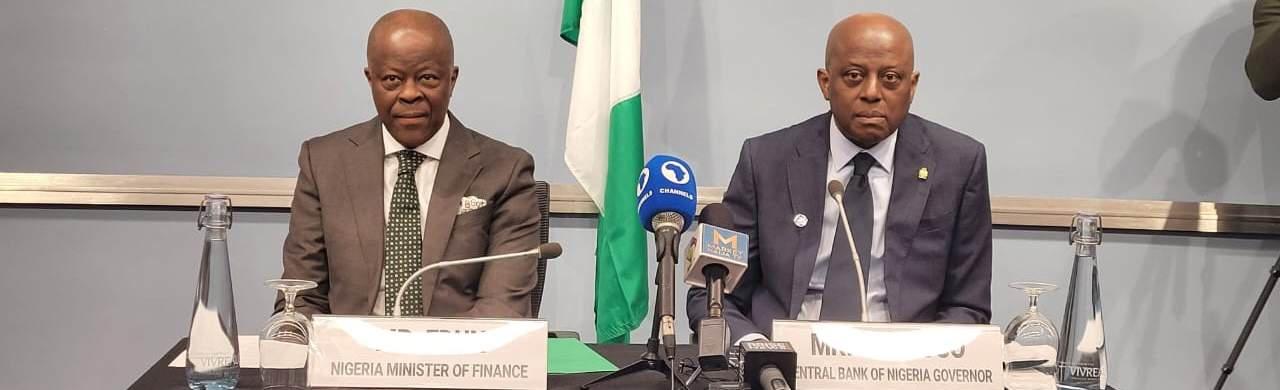
The conflict that sparked across the Middle East after the United States and Israel launched wideranging strikes on Iran, killing the country’s supreme leader on February 28, is a stark reminder of the far-reaching spillovers of violent conflict in today’s integrated global economy. Beyond the suffering of those in countries directly affected, the full-blown conflict has further destabilised the global economy — from food to fertilizer. Between increasing
oil prices, exports caught in the bottleneck or Trump
delayed caused by the closure of the Strait of Hormuz, which was reopened yesterday, and widespread security concerns throughout the Middle East, many of these consequences have had a ripple effect on nearly every aspect of daily life for households and economies around the world.
The war, which has shown that the world is much more interconnected, has seen global leaders attending the ongoing Spring Meetings of the International Monetary Fund (IMF) and World Bank in Washington DC, United
States, calling for peace to achieve stability and restore confidence, while seeking coordinated policy responses to contain the mounting economic fallout.
The IMF warned that the world may be headed for a global recession if energy and supply disruptions due to the war drag on.
“A longer or broader conflict, worsening geopolitical fragmentation, a reassessment of expectations surrounding
Continued on page 27
Professor Pat Utomi has once again chosen to dance naked in the public square, playing to the gallery with a familiar cocktail of grandstanding and gloom. This time, he has come to dismiss the reform programme of President Bola Ahmed Tinubu as “ridiculous,” “poorly structured,” and, in a flourish of intellectual overreach, a “Ponzi scheme.”
At this point, the issue is no longer what
Utomi is saying. The issue is why his interventions consistently collapse under the weight of their own exaggeration, under the slightest scrutiny or interrogation.
Any reflective — indeed, discerning — mind would note that, after all these long years of sophistry and vacuous pontifications, all Utomi can possibly point to as his bonafides or bragging rights in the civic space today are the ruins of Volkswagen Automobile Ltd and BankPHB where his much touted “academic
wizardry” was exposed as “Ponzi scheme”.
An Economy of Words, Not Results
Utomi’s public persona has long rested on the alarmist aura of a “political economist.”
But strip away the titles, the panels, and the endless commentary, and a more uncomfortable question emerges: where is the evidence of all his posturings in the public space?
Nigeria’s economic distortions did not emerge in a vacuum. They were sustained over
decades by a rotating class of commentators and advisers who:
* theorized dysfunction instead of dismantling it
* intellectualized failure instead of correcting it and, crucially, found relevance within a broken system.
Utomi was not outside that ecosystem. He was part of it. Contrast this with measurable shifts under the current reform cycle:
It was President Bola Tinubu’s inaugural meeting with the leaders and coordinators of the Renewed Hope Ambassadors, the main vehicle for his 2027 re-election campaign. Held on Thursday April 16 at the Presidential Villa, Abuja, the President delivered an outstanding speech at the meeting, challenging the ambassadors to boldly discharge their assignment while sparing no word for the opposition that is riding roughshod on the country’s legal system.
whether it favours us or not.
“You represent the conscience of a nation that wants to break the shackles of poverty and hopelessness. This is a lifetime opportunity to break the shackles of poverty and ignorance,’’ the President told the ambassadors, adding, “we cannot submit to disobedience of a lawful order of the court; we must embrace the judiciary,
“We submit to this principle of democracy, separation of powers, and understanding of the dynamics of it, and the nationhood that Nigeria is, that we must build one country. That’s what Renewed Hope is all about. You must give them that hope. There’s no other path for us to attain national greatness other than to build one common vision for the progress and prosperity of our people. That is what we must do,’’ he added.
In attendance at the meeting were Vice President Kashim Shettima, All Progressives Congress National Chairman Nentawe Yilwatda, Deputy Director-General and Governor of Kaduna State Uba Sani and RHA National Secretary and