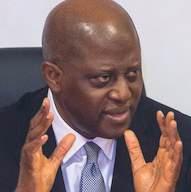
Severe in Sokoto, Bauchi, Zamfara, others To boost confidence, transparency, Cardoso unveils revised FX manual Policy takes effect June 1, warns operators against misconduct
James Emejo in Abuja
The Consumer Price Index (CPI), which measures the rate
of change in prices of goods and services, increased to 15.69 per cent in April compared to 15.38 per cent in March, the National
Bureau of Statistics (NBS), disclosed yesterday.
The latest inflation report was released on the same day
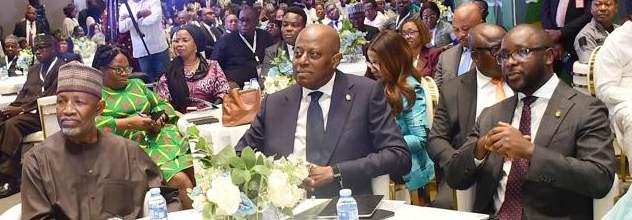
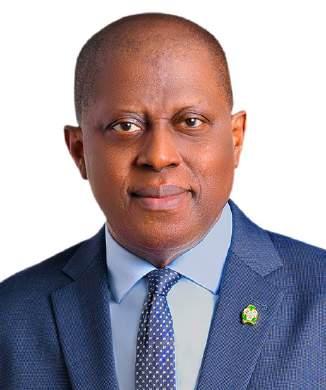
the Governor of the Central Bank of Nigeria (CBN), Mr. Olayemi Cardoso, officially launched the fourth edition of
the bank’s Foreign Exchange Manual, positioning it as a cornerstone of ongoing reforms aimed at deepening liquidity,
and
www.thisdaylive.com
APC shifts House of Reps primaries amid challenges Party disqualifies 4 Fubara’s loyalists in Rivers Don’t stake your children’s school fees on primaries, Uzodimma tells aspirants
With eight months to the 2027 general elections, political activities across the country have gathered momentum as major political parties move to conclude critical stages of their candidate selection processes.
The ruling All Progressives Congress (APC) begins its primaries in several states today, with aspirants contesting for the party’s tickets for the 360 House of Representatives constituencies across the country.
At the same time, the two factions of the Peoples Democratic Party (PDP) — one led by Tanimu Turaki and the other loyal to the
Minister of the Federal Capital Territory, Nyesom Wike — are making separate arrangements for their supporters, while the African Democratic Congress (ADC), the National Democratic Congress (NDC), Labour Party (LP) and other political parties have intensified preparations for the polls.
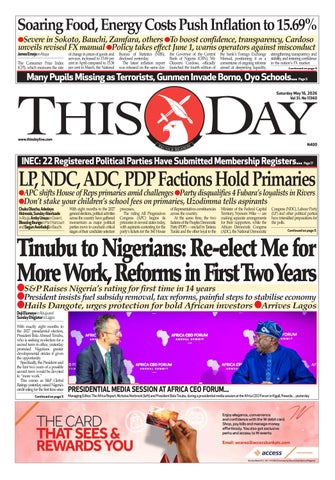
Tinubu to Nigerians: Re-elect Me for More Work, Reforms in First Two Years
to stabilise economy Hails Dangote, urges protection for bold African investors Arrives Lagos
Deji Elumoye in Abuja and Sunday Ehigiator in Lagos
With exactly eight months to the 2027 presidential election, President Bola Ahmed Tinubu, who is seeking re-election for a second term in office, yesterday promised Nigerians greater developmental strides if given the opportunity.
Specifically, the President said the first two years of a possible second term would be devoted to “more work.”
This comes as S&P Global Ratings yesterday, raised Nigeria's credit rating for the first time since
Chuks Okocha, Adedayo Akinwale, Sunday Aborisade in Abuja, Amby Uneze in Owerri, Blessing Ibunge in Port Harcourt and Segun Awofadeji in Bauchi
wellness within reach
with W Health loan
The W Health Loan provides women with access to financing for eligible healthcare services
*Terms and conditions apply
Many Pupils Missing as Terrorists, Gunmen Invade Borno, Oyo Schools
Vice principal, students abducted
Muhammad Sabiru in Maiduguri and Kemi Olaitan in Ibadan
Many pupils of a primary and junior secondary school in Mussa village, Askira-Uba Local Government Area of Borno State, were yesterday abducted by suspected Boko Haram/ISWAP terrorists who invaded the community.
This comes as gunmen yesterday invaded Community High School, Ahoro-Esinele, in Oriire local government area of Oyo State, abducting an unspecified number of students during a brazen attack that has thrown the community into panic.
In Askira-Uba Local Government Area, residents of the village confirmed the
incident, saying the terrorists stormed the area in the early hours of Friday and carried out the attack.
The deputy speaker of Borno State House of Assembly, Rt Hon. Abdullahi Askira, confirmed to journalists that the school was invaded by terrorists, but details were still sketchy.
“Yes, I can confirm to you that some suspected terrorists
LP, NDC, ADC, PDP FACTIONS HOLD PRIMARIES
But sensing some acrimony in the APC after the primaries, Imo State Governor Hope Uzodimma, urged aspirants from the State seeking tickets for the Senate, House of Representatives and House of Assembly to embrace loyalty, discipline and sacrifice, and not to stake their children’s school fees on the party’s primaries.
APC Begins Primaries amid Consensus Crisis
It was gathered that APC leaders made frantic efforts to adopt a consensus arrangement as the major mode of selecting candidates, but many aspirants across the country opposed the move.
Against this backdrop, the party resolved to conduct direct primary elections in all wards to pick candidates, including in areas where consensus arrangements were initially proposed.
With the consensus arrangement failing in most states, the ruling party is expected to conduct direct primaries in 8,809 wards across the 774 local government areas today, allowing all registered party
2012, citing higher oil prices and the country’s improved capacity to refine and export crude oil.
The credit rating agency upgraded the nation’s long-term sovereign rating by one notch to “B” from “B-”, five levels below investment grade. The global rating agency noted that higher oil production and prices, the large increase in domestic refining and export capacity, and the 2023 decision to liberalise the exchange rate were boosting Nigeria’s economic growth and balance of payments position.
In a statement, it stated that, as a sizable net exporter of crude oil and an emerging producer of refined petroleum products, Nigeria was less exposed to the
For the NBS report, this is the second increase in headline inflation after 13th consecutive months of disinflation.
The spike may not be unconnected to the impact of global headwinds occasioned by the current war in the Middle East between the US -Israel and Iran, leading to higher energy prices among others.
According to the CPI report for April, month-on-month, the headline index stood at 2.13 per cent compared to 4.18 per cent
members to participate.
Investigations showed that about 821 aspirants purchased forms to contest for APC House of Representatives tickets, while over 2,500 aspirants were screened for House of Representatives, Senate, and governorship positions by the party.
While governors reportedly preferred consensus arrangements to allow their loyalists secure tickets, aspirants opposed to such arrangements insisted on direct primaries.
A party source said: “It is evident that while many states have agreed on consensus for most House of Representatives seats, there are places where we have to conduct direct primaries. The second option requires extensive logistics, including security arrangements and ensuring that card-carrying members participate in the process.”
The APC was initially expected to conduct House of Representatives primaries yesterday. However, the party announced a postponement of the exercise to today.
The National Publicity Secretary of the party, Felix Morka, in a
spillover effects of the Middle East conflict than most regional peers.
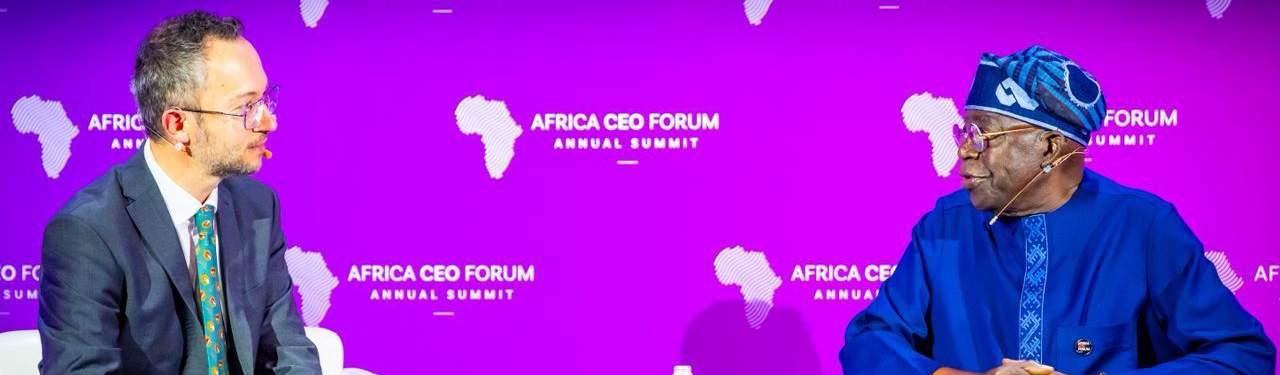
Tinubu, who spoke at an interview session at Day Two of the Africa CEO Forum in Kigali, Rwanda, for the umpteenth time rose in stout defence of the removal of fuel subsidy and unification of the foreign exchange market in the first few days of his government in 2023.
Tinubu also called on African governments to support and encourage indigenous investors willing to take major business risks capable of transforming the continent, citing the President of the Dangote Group, Alhaji Aliko Dangote, as a prime example of visionary African enterprise.
in March.
Year-on-year, food inflation stood at 16.06 per cent compared to 24.68 per cent in April 2025.
However, month-on-month, the food index was 3.63 per cent, representing a 0.54 per cent decline compared to 4.17 per cent in the preceding month.
The statistical agency attributed the moderation in food inflation to changes in average prices of millet whole grain, yam flour, ginger, beef, garri, yam tuber, pepper, cray fish, cassava tuber,
riding on motorcycles invaded primary and junior secondary schools in Mussa village this morning.
“Information at my disposal was that many of the students fled into the bush, but I don’t have details of those abducted yet.
“It is also disheartening that the incident took place barely a few minutes after troops on
statement explained that the dates for Senate, State House of Assembly, governorship, and presidential primaries remained unchanged.
According to the revised timetable, House of Representatives primaries will hold today; Senate primaries on Monday, May 18; State House of Assembly primaries on Wednesday, May 20; and governorship primaries on Thursday, May 21, 2026.
Checks revealed that the decision to shift the House of Representatives primaries was due to unresolved issues arising from the screening of some aspirants, as well as logistical challenges involving officials expected to monitor the exercises in various states.
Despite the commencement of the primaries, the APC had yet to release the final screening results. However, party officials said aspirants with issues arising from the screening had been contacted and most concerns addressed.
Stakeholders in the Ile-Oluji/ Oke-Igbo/Odigbo Federal Constituency have warned against turning the House of
Representatives ticket into what they described as a political compensation package for loyalists.
In a statement jointly signed by Mr. Famakinwa Gbolahan and the Youth Leader, Akinlaja Oluwaseun, the stakeholders reacted to reports that Hon. Mathew Oyerinmade, popularly known as MATO, who had earlier pursued the Ondo South Senatorial ticket, was now being considered for the House of Representatives race after failing to gain momentum in the Senate contest.
Uzodimma Warns Aspirants against Desperation
Imo State Governor Hope Uzodimma urged aspirants from the State seeking tickets for the Senate, House of Representatives and House of Assembly under the APC to embrace loyalty, discipline and sacrifice, and not to stake their children’s school fees on primaries.
Speaking during a meeting with aspirants, leaders and stakeholders of the Party in the State at the Banquet Hall of Government House, Owerri, Uzodimma
patrol left the community; this signifies that the insurgents or the attackers were spying on the movement of troops before they struck,” he added
The Police Public Relations Officer, ASP Keneth Daso, did not respond to calls put to him to get more details on the attack.
Mussa is a remote village and shares a border with Sambisa Forest, an enclave and hideout
described politics as “not a lottery but a game of courage,” stressing that “some people will win and some will not.”
The Governor who warned against desperation, urged aspirants to remain committed to the party before, during and after the primaries, saying “there is a need for loyalty to the Party. That is what our partisan democracy requires.”
Uzodimma acknowledged that political contestation could be akin to a game, he also warned aspirants to weigh all the risks before throwing their hats in the ring, warning, "don't use the money meant for your children's school fees to buy form if you cannot bear the risk."
He also called for respect for zoning and equity principles, noting that the party would adopt Option A4 voting system in the primaries to ensure transparency and avoid accusations of favoritism where consensus did not work.
As a guide for a successful and rancour-free exercise, Uzodimma advised aspirants and stakeholders to respect equity and rotation formula where such exists in their communities, and assured that the
WORK, REFORMS IN FIRST TWO YEARS
President Tinubu yesterday, arrived Lagos after his threenation visit to France, Kenya and Rwanda. The President, whose official presidential plane, Nigeria Air Force 1, touched down around 7:12 pm at the Presidential Wing of the Murtala Muhammed International Airport, Ikeja, was received by the Governor of Lagos State, Babajide Sanwo-Olu; Deputy Governor, Femi Hamzat; Chief of Staff to the President, Hon Femi Gbajabiamila; Speaker of the Lagos State House of Assembly, Hon Mudashiru Obasa, along with other government functionaries
The President while speaking earlier at the Forum, described the fuel subsidy removal and FX
Similarly, core inflation, which excludes the prices of volatile agricultural produce and energy, stood at 15.86 per cent, year-onyear in April compared to 26.05 per cent in the same month of 2025.
However, month-on-month, the core index stood at 1.03 per cent in April, compared to 4.03 per cent in the preceding month.
unification as critical measures that were painful, but necessary and needed to keep the nation's economy afloat. The President likened the pains associated with the reforms to childbirth, saying temporary hardship would ultimately produce long-term benefits for Nigerians.
“It is difficult, it is painful, but it is just like the human reproduction process. A woman carries a pregnancy, enjoys the pain of labour, and has a very big smile when she sees a live child,” Tinubu said.
Tinubu declared: “It is a fake life to think you can, in a global economy, continue the subsidy that is wasteful. It’s an encouragement to falsification of
Year-on-year, urban inflation stood at 15.40 per cent and 1.86 per cent month-on-month in April compared to 3.16 per cent in the preceding month.
Also, rural inflation stood at 16.36 per cent year on year in April, while month-on-month, the index stood at 2.80 per cent from 6.73 per cent in March.
of terrorists.
Meanwhile, gunmen yesterday invaded Community High School, Ahoro-Esinele, in Oriire local government area of Oyo State, abducting an unspecified number of students during a brazen attack that has thrown the community into panic.
APC Committee for the conduct of primaries as well as Appeal Committee have also been set up to deal with the exercise and handle grievances arising from the primaries.
The Governor regretted that the number of aspirants to the different office was quite large hence the need for reason to apply in ensuring that the primaries are conducted in a manner that it will turn out to be a win-win situation for the State and the Party. “We don’t want Imo State to go back to Egypt,” he added.
The State Chairman of the All Progressives Congress (APC), Chief Austin Onyedebelu reaffirmed the Party’s commitment to unity, reconciliation, and electoral success ahead of future elections, noting that the State Executive Committee had taken steps to reposition the Party for “greater efficiency, unity and service.”
Posters bearing the image of former Minister of Transportation
papers, smuggling, and that is a very critical situation for the country."
He recalled that prior to the reforms, many states were struggling to meet basic obligations, including salary payments.
According to him, “Of the 36 states, 27 of them were unable to pay the salaries of the workers. Where is the money? You are oil-producing, you are earning, you are giving fuel, you have no refinery that is functional. It is not possible to continue that trend."
Envisaging his possible reelection in 2027, the President projected that the first two years of a possible second term
in office would be devoted to “more work".
He insisted that his administration would continue to pursue difficult, but necessary reforms aimed at resetting Nigeria’s economy and securing the future of the coming generations.
Tinubu said the philosophy guiding his administration was rooted in decisive leadership and the courage to take difficult decisions in the interest of the people.
His words: “Do more work. More challenges are there. The world won’t wait for anybody. You have to continue to reset and
Month-on-month, however, the highest price increases were recorded in Niger (5.66 per cent), Kano (4.50 per cent), and Plateau (4.39 per cent), while Bayelsa (0.64 per cent), Enugu (0.98 per cent), and Rivers (1.02 per cent) recorded the lowest rise.
Year-on-year, food inflation was highest in Enugu (32.67 per cent), Kwara (30.77 per cent), and Adamawa (30.14 per cent), while
At the state level, year-on-year, headline inflation was highest in Sokoto (25.74 per cent), Bauchi (22.52 per cent), and Zamfara (22.03 per cent), while Edo (5.91 per cent), Borno (6.72 per cent), and Jigawa (7.04 per cent) recorded the lowest rise in prices.
Borno (1.67 per cent), Jigawa (6.17 per cent), and Taraba (7.19 per cent) recorded the slowest rise in food prices.
Month-on-month, food inflation was highest in Niger (8.53 per cent), Bauchi (6.78 per cent) and Kogi (6.72 per cent), while Kebbi (0.23 per cent), Katsina (0.47 per cent), and Bayelsa (1.29 per cent) recorded the slowest rise in food prices.
Rotimi Amaechi Posters Flood Bauchi
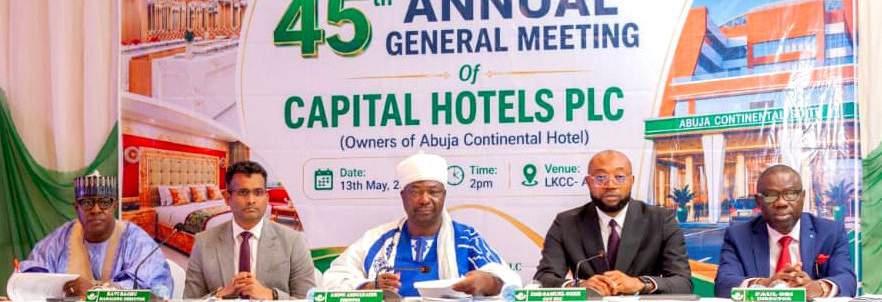
56TH ANNUAL GENERAL MEETING...
2027: Court Slams Plaintiff N1m for Frustrating Hearing in Suit against Jonathan's Eligibility
Fixes May 18 for definite hearing
A Federal High Court in Abuja, yesterday, fined an Abuja-based lawyer, Johnmary Jideobi, the sum of N1 million for "frustrating" hearing in the suit he filed, challenging the legality of former President Goodluck Jonathan's participation in the forthcoming general elections.
The court based the decision on the plaintiff's failure to serve the suit on the respondents over six months after filing the same, as well as absenting himself from Monday's proceedings without communicating with the court or other parties, including coming late to court at Friday's hearing.
Jideobi had approached the court to issue an order restraining
Jonathan from presenting himself to any political party as a candidate for the 2027 election.
Besides, he wants the court to stop Independent National Electoral Commission (INEC) from accepting, processing or publishing Jonathan’s name as a presidential candidate.
When the matter was called yesterday, neither the plaintiff nor his lawyer was in court, leading to Jonathan's lawyer, Chief Chris Uche, SAN, calling on the court to strike out or dismiss the suit for lack of diligent prosecution.
However, while the court was about to react to Uche's submissions, plaintiff's lawyer, Ndubuisi Ukpai, announced his presence and apologised for his late coming.
One of the leading figures in the opposition coalition within the African Democratic Congress (ADC) and former DirectorGeneral of the Progressive Governors Forum (PGF), Mallam Salihu Mohammed Lukman, has unveiled the coalition party’s 12-point policy principles and manifesto ahead of the 2027 general elections, promising sweeping reforms aimed at tackling governance, economic and security challenges facing the country. Lukman said the manifesto, adopted during the party’s National Convention held on April 14, 2026, was designed to provide Nigerians with a new governance framework anchored on accountability, institutional reforms and citizen-centred policies.
Among the major highlights of the manifesto are commitments to establish an independent electoral management system free from executive interference, promote a zero-impunity state, strengthen fiscal responsibility, ensure value-for-money governance and introduce a living wage system tied to productivity and labour reforms. In a detailed article released yesterday in Abuja titled, “ADC and New Framework of Electoral Campaign,” Lukman explained that the party’s policy direction was built on three major pillars: ensuring that every government policy directly improves citizens’ welfare; addressing Nigeria’s problems through coordinated institutional reforms rather than ad hoc interventions; and implementing humane economic reforms that would not worsen citizens’ hardship.
Ukpai, who drew the court's attention to some pending applications before the court, argued that the plaintiff is still within time to respond to Jonathan's counter-affidavit, but was reminded that the court ordinarily ought not to have heard him, following his disregard for the court.
Trial judge, Justice Peter Lifu, recalled how the court had bent back to grant his request for adjournment, only for him to be absent on the adjourned
date without any reason and communication.
When Jonathan's lawyer urged the court to proceed with the hearing on grounds that the plaintiff appeared not to be serious with the case, the court however explained that in the interest of fair hearing he would be forced to adjourned again, because the 2nd defendant, the Independent National Electoral Commission (INEC) was not in court and even the 3rd defendant, the Attorney General
of the Federation (AGF's) was represented by a counsel, he did not file anything before the court as a respondent.
Reacting, the AGF's lawyer, J. D. Esho informed the court that the 3rd defendant was yet to be served with the suit, a development which infuriated the court.
The judge further expressed anger and disappoinment that the plaintiff failed to serve the suit on any of the respondents since last October when the suit was filed.
While condenming the conduct of the plaintiff Justice Lifu subsequently ordered him to pay Jonathan the sum of N1million as cost, for bringing him to court and yet frustrate hearing in the matter.
"I have carefully and painstakingly considered all the submissions and prayers of the learners counsel in this matter.
"As this court has earlier ruled and ordered, this case has a character of politics.
Dangote Refinery Sues FG, Petrochemicals FZE Over Fuel Import Licences
Alleges regulatory breach of existing Federal
Wale Igbintade
Dangote Petroleum Refinery and Petrochemicals FZE has instituted a fresh suit at the Federal High Court in Lagos seeking to invalidate fuel import licences issued to petroleum marketers and the Nigerian National Petroleum Company Limited (NNPC Ltd), in what appears to be a renewed legal challenge over Nigeria’s downstream petroleum market structure.
Court records indicate that the matter, Suit No: FHC/L/ CS/857/2026, has been assigned to Justice Chukwujekwu Aneke of the Federal High Court, Lagos Judicial Division.
However, the substantive court filings have not yet entered the public domain as of press time.
The development was first reported by Reuters, which said Dangote Refinery is asking the court to set aside import permits issued or
High Court order
renewed by the Nigerian Midstream and Downstream Petroleum Regulatory Authority (NMDPRA) on or about 6 May 2026.
The licences, according to the refinery, were granted in breach of an existing court order directing parties to maintain the status quo.
In the motion on notice, the plaintiff is relying on sections 6, 36(1) and 287 of the 1999 Constitution (as amended), alongside Order 26 Rules 1 and
2 of the Federal High Court (Civil Procedure) Rules 2019, and the inherent jurisdiction of the court.
The refinery is specifically seeking “an order setting aside all import licences issued and/ or renewed on or about 6 May 2026” by the defendants, through the NMDPRA, arguing that the regulatory actions contravene an earlier order of the court made on 29 April 2026, which directed parties to preserve the status quo as at 2 April 2026.
Desmond Elliot Apologises to Gbajabiamila, Denies Political Rift
Sunday Ehigiator
Lawmaker representing Surulere Constituency I in the Lagos State House of Assembly, Desmond Elliot, has apologised to the Chief of Staff to the President, Femi Gbajabiamila, amid lingering political tensions linked to the Lagos Assembly leadership crisis. Elliot, during an appearance
on TVC’s Your View yesterday, described Gbajabiamila as his political mentor and appealed for forgiveness if he had offended him in the course of political activities.
The apology followed recent comments by Gbajabiamila, who disclosed that he nearly lost his position as Chief of Staff over allegations linking Elliot to the political turmoil surrounding the
Lagos State House of Assembly speakership tussle involving Mudashiru Obasa.According to Gbajabiamila, President Bola Tinubu had summoned him during the crisis and confronted him with intelligence reports alleging Elliot’s involvement in moves to destabilise the Assembly. The former Speaker said he defended the actorturned-politician and insisted
he was not part of the plot. Reacting, Elliot maintained that he had no personal issue with Gbajabiamila and reiterated his loyalty to him.
“Our leader is a compassionate leader. Children sometimes err. If I have erred in any way, my leader, I am sorry,” Elliot said while seeking support for his fourth-term ambition in the Assembly.
Chuks Okocha in Abuja
Alex Enumah in Abuja
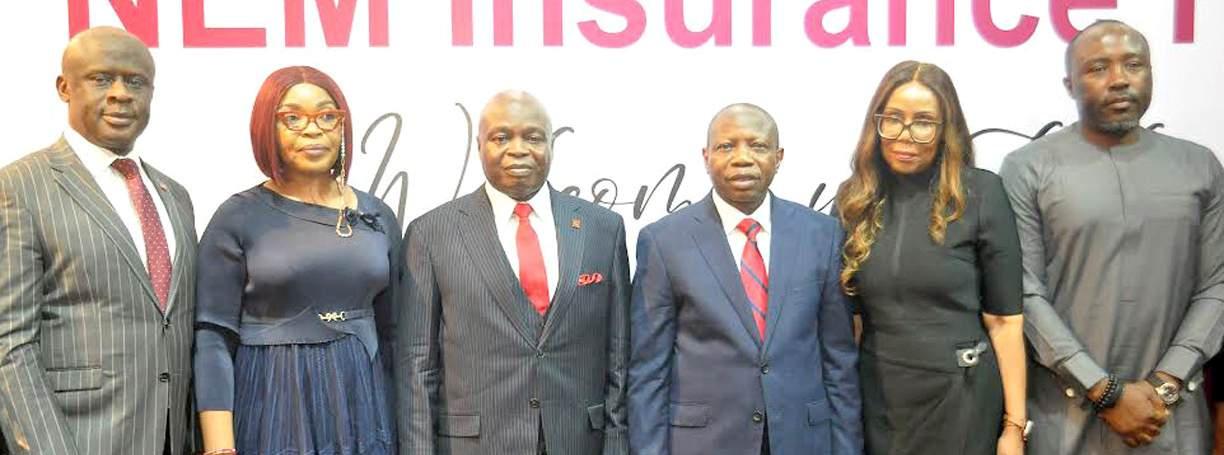
L-R: Executive Director, Finance and Investment, NEM Insurance Plc, Idowu Semowo; Company Secretary/Legal Adviser, Ifunanya Iwuagwu; Managing Director/CEO, Andrew Ikekhua; Group Chairman, Tope Smart; Director, Daphne Dafinone, and NonExecutive Director, Kelechi Okoro, during the 56th annual general meeting of NEM Insurance Plc held in Lagos… yesterday
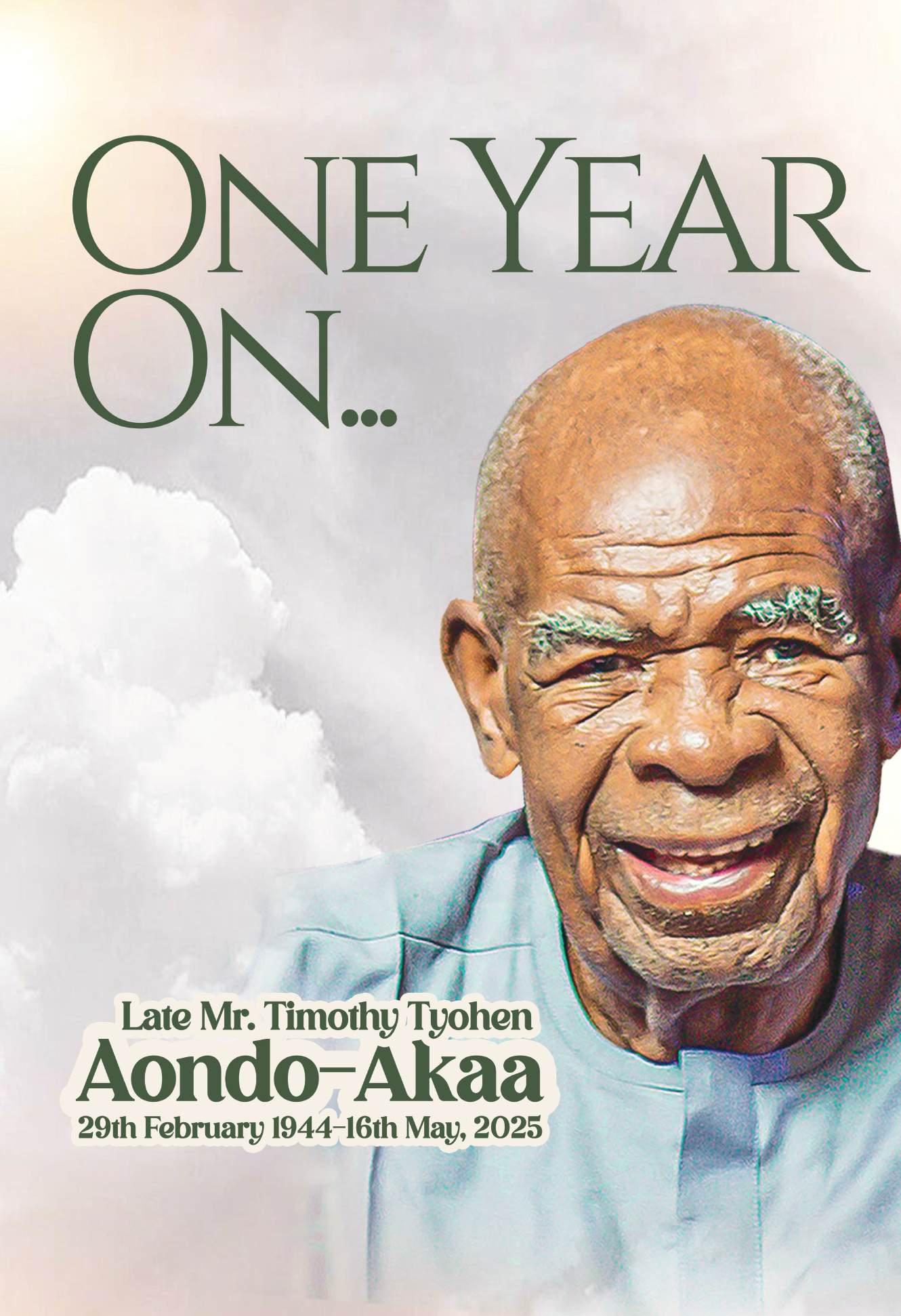
Robert Tyohen Aondo-A kaa
For the Aondo-A kaa Family
NATIVE ARTICLE PROPOSAL
What is a Native Article?
ARISE NEWS is Africa’s leading business and financial news website, providing a unique blend of international and pan‑African business and economic news.
Native Article is the innovative way of strategically packaging content to blend in with editorial.
This allows for content to appear as more credible, as it reads naturally without the marketing agenda of the company coming across as obvious.
How it works
Client to provide Arise News with an article, Arise News Editorial team will then re‑write this to fit the consumer content behaviour.
The Article will be posted on the website, and the article page will have full advertiser branding.
The Article link will be embedded on the homepage for one week.
The article will get a social post dedicated to drive users to the article page on the day it is released.
Troops Neutralise Five Terrorists, One Foreign Mercenary Fighter, Lose 3 Soldiers In N’East
Linus Aleke in Abuja and Onuminya Innocent in Sokoto
Troops neutralised no fewer than five terrorists and a foreign mercenary fighter during an attack on a military location in the North-east, while three soldiers were killed in the encounter.
Also troops of Sector 2, Joint Task Force North West Operation FANSAN YAMMA recorded operational success as they successfully neutralised three terrorists at Doumbourum Village and recovered arms.
Military authorities also revealed that terrorists operating
across Adamawa, Borno, Taraba, and Yobe states procure part of their logistics supplies from neighbouring Cameroon.
According to the military, troops of Operation Hadin Kai on 8 May 2026 intercepted a terrorist logistics convoy along the Banki-Kumshe Road in Bama Local Government Area of Borno State while the convoy was crossing from Cameroon into Nigeria.
The interception reportedly forced the insurgents to flee and abandon their supplies.
In a statement on Friday, the Director of Defence Media Operations, Major General
DIAN Moves to End Nigeria’s Over-Reliance on Foreign Defence Equipment
Linus Aleke in Abuja
The Defence Industries Association of Nigeria (DIAN) has unveiled a strategic roadmap aimed at ending Nigeria’s overreliance on foreign defence equipment through increased local production of arms, ammunition, and other military hardware.
The initiative was unveiled in Abuja during the association’s General Meeting, where stakeholders outlined measures designed to strengthen indigenous defence manufacturing capacity and enhance national security.
In a communiqué issued after the meeting and signed by the General Secretary of the association, Engr. Kola Balogun, yesterday in Abuja,
DIAN said the strategy was focused on accelerating selfreliance in defence production through innovation, industrial collaboration, and enhanced indigenous capacity.
According to the communique, the full implementation of the Defence Industries Corporation of Nigeria (DICON) Act 2023 remains central to achieving the objective.
Balogun noted that the Act provides the framework for local manufacturing, technology transfer, reduced dependence on imports, foreign exchange conservation, and job creation.
The association also disclosed that more than 18 new members had been admitted into DIAN, a development it said reflected growing investor confidence in Nigeria’s defence industrial sector.
Michael Onoja, said items recovered from the convoy included bicycles, jerrycans of fuel, surgical drips, assorted medications, motorcycle parts, phone batteries, food items, and other sundry materials.
“On the same date, troops deployed at Buni Gari in Gujba LGA of Yobe State repelled a
large-scale, multi-wave terrorist assault on their camp. After the engagement, troops neutralised five terrorists, including one foreign national and recovered a General Purpose Machine Gun (GPMG), an AK-47 rifle, an RPG tube with accompanying bombs, over two thousand rounds of assorted ammunition,
and cash. Regrettably, three soldiers paid the supreme price in the encounter.
“On 9 May 2026, surrendered family members of terrorists including adult females and minors from Yaganari village in Bama LGA of Borno State were profiled and processed by troops. On 13 May 2026, following an air interdiction mission around the Mandara Mountains, troops intercepted and rescued six women and children among abductees of Ngoshe community held since the attack on 3 March 2026, reuniting them with their families.”
Police Dismiss, Prosecute Five Officers Over Alleged Armed Robbery, Kidnapping, Other Professional Misconduct
Linus Aleke in Abuja
The Nigeria Police Force has dismissed no fewer than five inspectors following an orderly room trial over allegations of armed robbery, kidnapping, extortion, and other forms of professional misconduct.
Police authorities also disclosed that three inspectors and one corporal attached to Zone 16 Headquarters in Yenagoa, who were
implicated in similar crimes, are currently at large.
According to the police, the action is in line with the Inspector-General of Police’s zero-tolerance stance on professional misconduct.
The Inspector General of Police, Mr. Olatunji Disu, had upon assumption of office vowed not to spare any officer found guilty of violating professional ethics and the policing code of conduct.
Announcing the dismissal in a statement yesterday, the Force Public Relations Officer, DCP Anthony Placid, said:
“The Nigeria Police Force has reaffirmed its commitment to discipline, accountability, and institutional reform with the dismissal, arrest, and prosecution of police personnel found involved in cases of conspiracy, armed robbery, kidnapping, extortion, stealing, and abuse of office in Rivers State and its environs.
“The Force notes that the actions of the affected officers represent a gross betrayal of the ethics, standards, and professional values of the Nigeria Police Force. The leadership of the Force under the Inspector-General of Police, IGP Olatunji Disu, remains resolute in its determination to identify, expose, and remove criminal elements from within the institution, irrespective of rank or position.
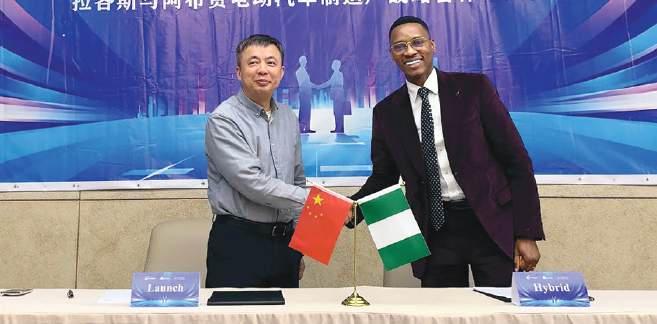
Shettima Launches CNG, Electric Vehicles Initiative In Kano
Vice President Kashim Shettima has launched a fleet of Compressed Natural Gas (CNG) and electric vehicles in Kano State as part of efforts to expand affordable and cleaner transportation across Northern Nigeria.
The launch marked the first phase of the initiative, which included 15 CNG-powered vehicles comprising 10 fully CNG vehicles and five dual-fuel vehicles capable of
running on both petrol and gas—as well as seven electric vehicles. Additionally, 200 CNG-powered tricycles were unveiled to further support mass transit in the region.
Representing the Vice President at the event, Senator Hassan Hadejia, Deputy Chief of Staff to the Vice President, said the activation of the CNG programme in Northern Nigeria would maximise impact due to the region’s vast transportation network,
described as the largest in West Africa.
The Vice President commended Kano State Governor Abba Kabir Yusuf for his commitment and for creating an enabling environment ahead of the project’s formal rollout.
Governor Yusuf, in his remarks, reaffirmed his administration’s readiness to collaborate with the federal government, the Presidential Initiative on CNG (PI-CNG), the electric vehicle programme,
and genuine private investors to strengthen the transportation and energy sectors.
He stressed that Kano State would continue to provide policies that encourage business growth, economic expansion, and job creation.
The governor also expressed appreciation to President Bola Ahmed Tinubu for introducing the initiative, noting that it would significantly reduce transportation costs and ease mobility challenges for residents.
L-R: Technical Partner, KWS Garment Factory Production Village, Ali Dannawi; Wigwe & Partners Legal Representative, Chioma Agoro; CEO/Chairman, KWS Garment Factory Production Village, Ms. Folake Akindele; Managing Director, Kwara Garment Factory, Bukola Adedeji, and Kwara State Commissioner for Ministry of Business, Innovation & Technology, Damilola Yusuf Adelodun, during the signing of Memorandum of Understanding (MoU) at the Kwara Garment Factory, Ilorin, Kwara State... recently
Ahmad Sorondinki in Kano
A remarkable performance...
WIn Praise of President Buhari
Teenagers and Mental Health
Ahen President Muhammadu Buhari took over the reins of power on May 29, 2015, Nigeria was sadly a broken state in many respects. As a result of many other factors including bad governance and untold level of corruption, government could not live up to its financial obligations to citizens and service providers at both the federal and state levels.
Indeed one of the first official assignments that President Buhari carried out was the approval of billions of Naira in bailout funds to enable state governors pay something as basic as workers’ salaries. Granting those bailout funds was a huge boost to national security because the pressure of arrears of unpaid monthly salaries building dangerously all over the country was a ticking bomb.
Ask the naysayers and they would readily remind you of how long it took President Buhari to appoint his ministers and how that contributed to collapse of the economy as if, without ministers, governance was frozen. But buying that narrative would amount to what a famous Nigerian writer, Chimamanda Adichie, termed “the danger of a single story”. Yet the whole story was that many of our citizens did not know how decrepit a state President Buhari inherited in 2015.
It was therefore necessary for him to take stock against the background of the fact that the departing government did not, reportedly, cooperate full well with the incoming government in terms of leaving workable handover notes. Although President Goodluck Jonathan was gracious in defeat, many of his appointees were still sulking over what they saw as their personal losses and therefore pulled all the stops to make things difficult for the Buhari government.
cross the world, mental health concerns among young people are increasing at an alarming rate. In the United Kingdom, projections and public health discussions continue to warn about a growing mental health burden among teenagers within the next decade. In Nigeria, the signs are already visible on the streets, in markets, motor parks, campuses, and even in homes. Many young people move through life carrying emotional exhaustion, confusion, anxiety, and hopelessness behind forced smiles. In several Nigerian cities, especially within the South-East, governments and institutions have begun to respond to the growing crisis. In Anambra State, administrations from Willie Obiano to Charles Soludo have supported rehabilitation efforts for mentally distressed individuals removed from the streets. The rehabilitation centre at Nteje became symbolic of a deeper societal concern: the increasing number of people losing emotional and psychological stability.
Even with the obvious and unpatriotic obscurantist behaviour of the PDP appointees and their supporters still in government hell-bent on making things difficult for Buhari, the President moved on with his methodical repair of a broken country. The first thing he did was to identify all possible sources of income to the nation and directed that all inflows be paid into one single account in line with the policy of Single Treasury Account (TSA).
The TSA policy, interestingly, was mooted by the PDP government but its penchant for imprudence and lack of accountability denied it the courage of implementing the policy. What the President literally did was to gather all the nation’s money into one box and locked it up with a big padlock and watched for any thief to come close.
Who can blame the President for almost developing paranoia over the safeguard of the national treasury with revelations and reports of mind-boggling looting that took place in the 16 years of the PDP? With such disclosures of how billions meant for fighting insurgency in the Northeast ended up in the pockets of a few individuals while our gallant soldiers fought with bare hands and on empty stomach, President Buhari was duty bound to bring sanity and accountability back in national spending.
Likewise, popular Lagos-based evangelist Ebuka Obi established a large rehabilitation and mental wellness facility in Aguleri, reportedly commissioned with state recognition. Various tertiary hospitals and trauma rehabilitation centres across Anambra and other parts of Nigeria are also investing heavily in psychological recovery and emotional care. These developments reveal one undeniable truth – “the Nigerian mind is under pressure.” The challenge becomes even more disturbing when teenagers are considered. Many adolescents today live under intense emotional strain. Anxiety among young people is no longer caused only by poverty or academic pressure. It is increasingly propelled by habits, peer pressure, unhealthy associations, addiction to validation, social comparison, and the desperate pursuit of acceptance.
Thus, under President Buhari, the Economic and Financial Crimes Commission (EFCC), which had remained comatose for years, was woken up to resume its duties. Apart from the trillions of Naira of looted funds and property recovered from corrupt politicians
A teenager who constantly measures his or her worth through
by the EFCC, President Buhari by his action has successfully brought back to the public consciousness the need to treat public funds with the highest level of transparency and accountability.
After keeping treasury looters on their toes and at bay through the EFCC, particularly, President Buhari moved to curb unnecessary spending habits of the nation on what economists call articles of ostentation. Part of the disclosures of the President’s stock taking was how the country frittered away billions in foreign currency by importing goods, which can be produced at home. One of such items was rice, a major staple among Nigerians. By banning rice importation into the country, the President on one hand had saved the nation billions in foreign currency annually.
And, on the other hand, the President has boosted domestic production of rice and in the process had nudged the country into self sufficiency in food production. He also created millions of jobs for young people in the rice value chain.
What is most admirable about President Buhari and his government is its frugal management of scarce national resources to attain optimum goals. Recall that since President Buhari stepped in the saddle, oil revenue dropped abysmally as if to sabotage him knowing all the big promises he made to citizens during his campaigns. But with the little resources that trickle in, the President is achieving what governments that received oil windfalls could not dream of.
social media applause, expensive lifestyles, unrealistic beauty standards, or criminally acquired wealth will naturally suffer emotional instability. The mind was not designed to survive endless comparison and unhealthy competition. Yet many youths now wake every day feeling inadequate because they believe they are behind others in appearance, popularity, relationships, or financial success. Peer pressure has become one of the strongest invisible forces destroying youthful mental balance. Many young people no longer ask what is right, noble, or healthy. Instead, they ask what is trending, fashionable, or socially rewarding. In the process, they surrender their individuality and emotional stability to public opinion. Some enter destructive relationships, dangerous habits, substance abuse, internet fraud, gambling, or reckless lifestyles simply to avoid rejection.
Unfortunately, the emotional consequences are severe. Anxiety grows when identity is borrowed from unstable environments. Depression deepens when purpose is replaced with performance.
Obiotika Wilfred Toochukwu,
Today, the trains are up and running daily from Abuja to Kaduna. And from Lagos to Ibadan a brand new rail track was started and completed; citizens are already commuting daily to and fro these two major cities in the country seamlessly as they reap from the dividends of democracy. And with the way this government is going, before 2023 when the President would leave, the entire country would be linked by rail with all of its economic advantages.
Ainofenokhai Ojeifo, Abuja
THE SATURDAY NEWSPAPER
EDITOR YEMI ADEBOWALE
DEPUTY EDITOR AHAMEFULA OGBU
MANAGING DIRECTOR ENIOLA BELLO
Awka, Anambra State
DEPUTY MANAGING DIRECTOR ISRAEL IWEGBU
BELLO
CHAIRMAN EDITORIAL BOARD OLUSEGUN ADENIYI
DEPUTY MANAGING DIRECTOR ISRAEL IWEGBU
EDITOR NATION’S CAPITAL IYOBOSA UWUGIAREN
CHAIRMAN EDITORIAL BOARD OLUSEGUN ADENIYI
MANAGING EDITOR BOLAJI ADEBIYI
THE OMBUDSMAN KAYODE KOMOLAFE
EDITOR NATION’S CAPITAL IYOBOSA UWUGIAREN THE OMBUDSMAN KAYODE KOMOLAFE
THISDAY NEWSPAPERS LIMITED
THISDAY NEWSPAPERS LIMITED
EDITOR-IN-CHIEF/CHAIRMAN NDUKA OBAIGBENA
EDITOR-IN-CHIEF/CHAIRMAN NDUKA OBAIGBENA
GROUP EXECUTIVE DIRECTORS ENIOLA BELLO, KAYODE KOMOLAFE, ISRAEL IWEGBU, IJEOMA NWOGWUGWU, EMMANUEL EFENI
DIVISIONAL DIRECTORS SHAKA MOMODU, PETER IWEGBU, ANTHONY OGEDENGBE
GROUP EXECUTIVE DIRECTORS ENIOLA BELLO, KAYODE KOMOLAFE, ISRAEL IWEGBU
DEPUTY DIVISIONAL DIRECTOR OJOGUN VICTOR DANBOYI
DIVISIONAL DIRECTORS SHAKA MOMODU, PETER IWEGBU, ANTHONY OGEDENGBE
DIRECTOR, PRINTING PRODUCTION CHUKS ONWUDINJO TO SEND EMAIL: first name.surname@thisdaylive.com
DIRECTOR, PRINTING PRODUCTION CHUKS ONWUDINJO TO SEND EMAIL: first name.surname@thisdaylive.com
NIMC and Extortion in Aniocha South
Stop Ritual Attacks and Killings
ITwrite to complain about the continual extortion of residents of Aniocha South Local Govt Area of Delta State who go to NIMC office to register for National Identity Cards or do corrections of names.
he Advocacy for Alleged Witches (AfAW) urges the Nigerian public to stop ritual attacks and killings because the notion of ritual money and wealth is completely baseless. AfAW is making this call following the reported arrest of suspected ritualists in Oyo State in southern Nigeria. The local media reported that members of the Western Nigeria Security Network, Amotekun, arrested suspected ritualists with the body parts of a 73-year-old man.
The officials ask people to pay between N3000 and N10,000 to either register or do change of names for newly married women. They also ask people to contribute money to buy fuel for generator. Their attitude to work discourages people from going to register. This is not good.
Feyisetan Akeeb Kareem, Ogwashi-Ukwu, Delta State
Friends and Foes
We see President Trump being greeted by President Xi Jinping in China. There was lots of smiling, military precision and many words of praise from Trump. There were probably similar speeches from Xi but they weren't shown on the TV I watched.
The suspects, who were apprehended in the Boluwaji area in Ibadan, said that a Muslim cleric asked them to procure some human body parts for rituals. Ritual attacks are widespread in Nigeria. Irrational conceptions of how to make money or become wealthy and successful undergird these atrocities. Many Nigerians strongly believe in blood money, known in some local languages as Ogun Owo (Yoruba) or Ogwu ego (Igbo). They think that they could become rich, or successful through ritual sacrifice. Unfortunately, this is not the case. Ritual wealth has no basis in reason, science, or reality. Home movies known as Africa magic or Nollywood films have not helped matters. These movies continue to reinforce these mistaken notions and other superstitions. Families, churches, mosques, and other public institutions do not encourage the interrogation of these traditional occult beliefs. There are no robust efforts to criticize or dispel these irrational and paranormal claims in schools, colleges, and universities. So millions of Nigerians grow up blindly believing that they could make money through ritual sacrifice of human body parts. The belief has led many Nigerians to commit crimes and perpetrate atrocities. Many Nigerians have been jailed or are undergoing court trials due to ritualrelated attacks and murder.
There seemed to be a powerful, strong, sane leader who knew where his country was heading and standing beside him was Donald Trump. There have been concerns about the leadership of Xi but nothing like that which Trump faces.
If Trump could take some guidance from Xi the US might be a better country although if he follows all of what Xi does it will be a story of horror and pain for all.
All countries need strong but honest leadership and perhaps they should look elsewhere than China.
Dennis Fitzgerald, 28 Landale St, Box Hill, Vic, Australia
Not too long ago, the police arrested some young Nigerians for stealing female pants, which they intended to use for ritual sacrifice. AfAW is asking all Nigerians to desist from ritual-related abuses because ritual money beliefs are baseless superstitions. Nigerian media, schools, and colleges should help educate and reorient the public. They should assist in reasoning Nigerians out of this killer-superstitious absurdity and nonsense. Leo Igwe directs the Advocacy for Alleged Witches (AfAW)
HAPPY MARRIED LIFE...
Alake: Tinubu’s Reforms Will Overcome Decades of Corruption, Economic Instability
The Minister of Solid Minerals Development, Dele Alake, has declared that the ongoing reforms under President Bola Ahmed Tinubu will overcome decades of corruption, economic instability, weak institutions and underdevelopment in Nigeria.
Speaking in Abuja at the maiden edition of the Solid Minerals Excellence Awards 2026, Alake said previous administrations lacked the political will to implement critical reforms needed to reposition the country’s economy.
According to him, the Tinubu administration remains committed to carrying out difficult but necessary reforms aimed at securing long-term national development rather than short-term political gains.
The minister explained that the current economic hardship
being experienced across the country represents a painful but necessary transition required to build a stronger and more sustainable economy.
Drawing comparisons with reforms previously introduced in Lagos State, Alake noted that similar policies initially faced resistance before transforming the state into one of Africa’s largest economies through improved revenue generation, institutional efficiency and strategic planning.
Speaking on developments in the solid minerals sector, the minister said the federal government had identified mining as a key pillar of the Renewed Hope Agenda and the country’s economic diversification drive aimed at reducing dependence on oil revenue.
He stated that the ministry had embarked on comprehensive reforms
NAPTIP Secures Life Jail for Two Abuja Guards over Six-year Abuse of Minor
The National Agency for the Prohibition of Trafficking in Persons (NAPTIP) has secured the conviction and life imprisonment of two security guards for the prolonged sexual abuse of a minor in Abuja, in what authorities described as a major breakthrough in the fight against sexual and genderbased violence in Nigeria.
The convicts, James Sule, 30, and Adamu Yau, 25, were sentenced to life imprisonment without the option of fine by Hon. Justice S.M. Mayana of the Federal Capital Territory High Court after they were prosecuted under the provisions of the Violence Against Persons (Prohibition) Act.
The judgement followed years of investigation and
trial arising from allegations that the victim, whose identity was withheld, was repeatedly abused from the age of six.
According to details presented in court, the incidents began in 2016 at the family’s residence in Lugbe, Abuja, when Sule, who worked as the family’s security guard at the time, allegedly lured the child into a toilet under the guise of helping her avoid punishment after she damaged a household item.
Investigators said the child was threatened into silence, allowing the abuse to continue for several years. Court records further indicated that Sule later introduced another guard, Adamu Yau, and a third suspect identified simply as Mohammed, who is still at large.
targeting illegal mining, insecurity, weak regulation, dormant licences and lack of transparency in the sector.
According to him, the digitisation of mining operations and licensing processes has improved transparency, simplified access to licences and attracted thousands of new investors and operators into the sector.
Alake further disclosed that the government reviewed dormant mining licences and strengthened compliance measures to ensure mining assets contribute directly to national development.
He added that over 2,000 trained personnel had been recruited and deployed under the Mining Marshals initiative to combat illegal mining and
protect mining communities nationwide.
The minister said the initiative has already resulted in several arrests and prosecutions, while many operators have pledged to comply with government regulations.
He also stressed the need for Nigeria to prioritise local value addition and industrialisation, noting that Africa’s mineral
resources had historically been exploited for the benefit of foreign economies since the colonial era.
According to him, the federal government was now encouraging local processing of minerals to stimulate industrial growth, create jobs, improve technology transfer and increase the sector’s contribution to the Gross Domestic Product.
Illiteracy Deepens in North Despite Huge Donor Funding, FG Warns
The federal government has expressed deep concern that despite attracting nearly 80 per cent of development partners’ investments in Nigeria’s education sector over the last decade, two geopolitical zones still record the country’s worst literacy and numeracy levels.
Minister of Education, Dr. Tunji Alausa, disclosed this in Abuja during a stakeholders’ workshop on the Nigeria Education Data Infrastructure (NEDI), warning that poor learning outcomes
in the affected regions raise serious questions about the effectiveness and sustainability of donor-funded interventions.
Although the minister did not specifically mention the regions, data from the National Bureau of Statistics (NBS) indicate that the North-west and North-east currently rank lowest in literacy rates nationwide.
Alausa said the disturbing trend highlights the urgent need for accurate, harmonised, and technology-driven education data capable of guiding government policies, resource allocation, and
intervention strategies.
“As we look at our data, the total amount of development bank financing investment and development partners’ investment, about 80 per cent of those investments in the last 10 years, has gone to two geopolitical zones in the country. And those two zones have the lowest percentage of numeracy and literacy rates in the country,” the minister stated.
He explained that the Nigeria Education Data Infrastructure initiative was conceived to overhaul education data management
by strengthening data collection, analysis, storage, and dissemination across all levels of the sector.
According to him, the platform will provide policymakers and stakeholders with credible statistics to monitor progress, identify gaps, and ensure fairer distribution of educational investments nationwide.
Alausa stressed that the federal government remains committed to repositioning the education sector through technology-driven reforms and stronger institutional coordination.
Atiku Calls for El-Rufai’s Immediate Release Before Eid Kabir
Former Vice President, Atiku Abubakar, has called on federal and Kaduna State governments to immediately release former Kaduna State Governor, Mallam Nasir el-Rufai, condemning his continued detention, especially at a time when Muslims across Nigeria are preparing for the sacred Eid Kabir celebrations.
He described the development as cruel, unjustifiable, and deeply troubling, noting that it’s a disturbing assault on civil liberties, democratic decency, and
the rule of law, raising grave concerns about the deployment of state power to intimidate perceived political adversaries.
This was contained in a statement issued by Atiku’s Senior Special Assistant on Public Communication, Phrank Shaibu, who described the continued detention of the former Kaduna State Governor as politically provocative, and wholly inconsistent with the principles of justice, democracy, and basic human decency.
According to Atiku, “At a time when millions of Muslims
across Nigeria and around the world are preparing to celebrate Eid Kabir — a sacred season of sacrifice, compassion, forgiveness, and family reunion — it would be unconscionable for any government to weaponise state power in a manner that denies a citizen his liberty without just cause, particularly in circumstances that raise legitimate concerns about political persecution.
“Mallam el-Rufai, regardless of political differences or shifting alliances, remains a Nigerian citizen entitled to the full
protection of the Constitution, including his rights to dignity, liberty, and due process.
“Democracy does not grant the government the licence to punish dissent, settle political scores, or deploy coercive institutions as instruments of intimidation.
“The federal government and the Kaduna State authorities must understand that selective justice is injustice. The credibility of any democracy is measured not by how it treats loyalists, but by how it treats perceived opponents.
Kuni Tyessi in Abuja
Chuks Okocha in Abuja
Folalumi Alaran in Abuja
Michael Olugbode in Abuja
Okunlola Kehinde Odusote (right) and Folahanni Julius Fagbule, during their marriage at Our Saviour’s Church, Tafawa Balewa Square, Lagos…recently
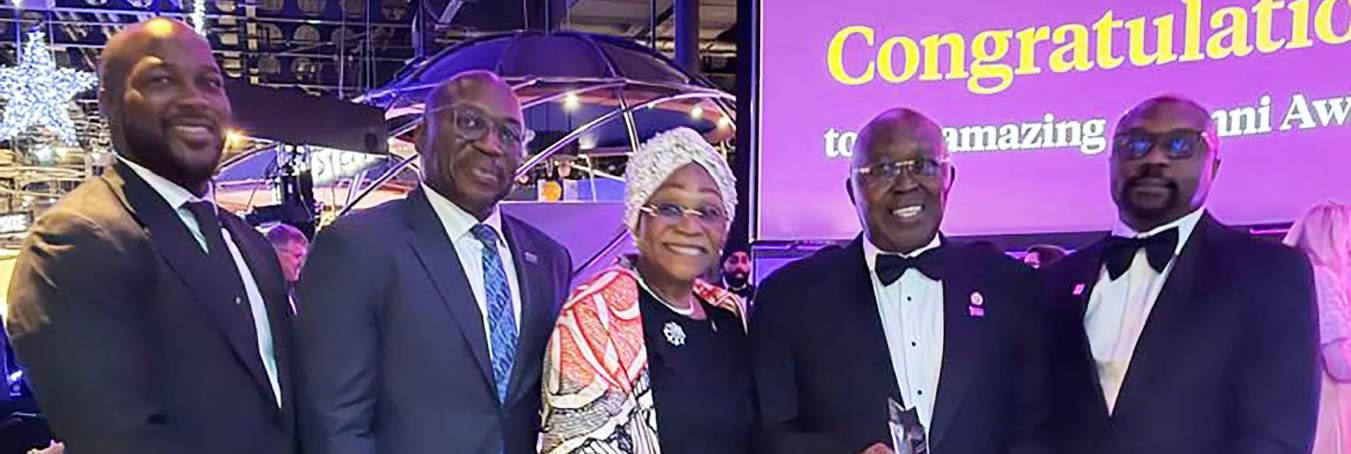
UNIVERSITY OF LEICESTER 2026 ALUMNI AWARDS DINNER...
Makanjuola Receives UK Varsity Alumni Award
Sunday Ehigiator
The Chairman of Caverton Offshore Support Group Plc, Mr. Remi Makanjuola, was on Thursday night presented the Lifetime Achievement Award of his alma mater, the University of Leicester, United Kingdom. A letter by the Alumni Relations Officer, Victoria Kirk, to Makanjuola read thus: “We received some fantastic nominations across our award categories, with nominations for this specific award category made by colleagues at the university and reviewed and
judged by the Advancement Awards Sub-Committee.”
Accepting the award at the ceremony in Leicester, Makanjuola paid tributes to his parents, teachers, mentors and others who helped shape his life and career trajectory.
“My hope is that every student walking these halls today will one day stand where I stand and feel the same gratitude.”
Before the award presentation,
“I feel humbled because this kind of achievement goes beyond what one person has done,” Makanjuola said.
TCN Inaugurates 330kv Transmission Line in Edo
Felix Omoh-Asun in Benin
The Transmission Company of Nigeria (TCN) yesterday inaugurated the Ihovbor/Benin and Ihovbor/Ajaokuta 330kV Turn-In-Turn-Out Transmission Line Project.
The MD/CEO of TCN, Engr. Sule Ahmed Abdulaziz, said the project was to strengthen the nation’s transmission network in an effort to evacuate more bulk electricity from
the transmission substation to distribution load centres across the country.
Speaking during the inauguration, Abdulaziz explained that the project involves the strategic linking of the existing Benin/Ajaokuta 330kV transmission line to the Ihovbor transmission substation, creating two new transmission routes with a total length of 14 kilometres.
"With the completion of
this strategic project, we have increased the operational flexibility of the transmission network and strengthened the resilience of power delivery within Benin corridor by this connection to the power plant," he said.
He emphasised that the project grants TCN the ability to efficiently evacuate power generated by the Azura Power Plant and the Niger Delta Power Holding Company
plant. “This has equally helped in alleviating transmission bottlenecks, enhanced system reliability, while allowing the distribution companies access to more bulk electricity for its customers nationwide, Abdulaziz further noted.
Stressing the importance, the MD said with the nation’s grid system, the new transmission line will enable more efficient wheeling of bulk electricity to any part of the country.
TINUBU TO NIGERIANS: RE-ELECT ME FOR MORE WORK, REFORMS IN FIRST TWO YEARS
rethink, challenge the intellectual curiosity of you as a government,” the President said when asked what he would focus on if reelected for a second term.
“The philosophy I came with in governance is believing that the hallmark of a transformative leader is the ability to make decisions, do what needs to be done, at the time it has to be done, on behalf of the people".
He also defended taxation as a necessary instrument for development, arguing that citizens who demand modern infrastructure and social services must be prepared to contribute through taxes.
“Nobody wants to pay taxes ordinarily. Taxation is not friendly to the wealthy, to the middle class, and to the poor. Every human being expects development, but the question they don’t answer is, how do you pay for it?
“You want a very good highway, but you don’t want it to go through your land. You want a good hospital and don’t want to pay taxes. How do you care for the vulnerable? How do you protect the future of the children?”
the President asked.
Tinubu further explained that tax-paying was a critical civic responsibility, declaring that “a citizen that pays taxes is a citizen, whether corporate or individual.”
Shedding more light on what he described as early gains from the reforms, the President said the economy had become more stable and predictable, enabling better planning by businesses and households.
“Today, there is a very bright light at the end of the corner; the economy is stable, the Naira is stable, predictable, planners can do a reasonable budget, they can plan their lives well."
Tinubu also disclosed that the government was implementing direct cash transfers to poor households while also supporting education through grants and allowances for indigent students.
“For those students ordinarily who would stay out of school because their parents cannot afford school fees, they are now in school. I’m even giving them allowances and upkeeps for their school."
The President said his government’s focus on industrial
policy was not necessarily on “protection” but on support for businesses capable of creating jobs and stimulating domestic production, citing Dangote Refinery and BUA Group as examples of local enterprises deserving government backing.
Tinubu explained that his administration approved the sale of crude oil to the refinery in Naira to ease operational difficulties and reduce pressure on foreign exchange.
“You don’t have to go through letter of credit and bureaucracy and make foreign exchange difficult for him. Give it to him in Naira,” he said.
The President also defended the ongoing Lagos-Calabar Coastal Highway project, describing it as part of a broader national integration and economic inclusion agenda.
According to him, the road would connect Nigeria’s eastern corridor to Lagos and unlock tourism and investment opportunities across the coastline.
He declared that his philosophy was Nigeria first, explaining that
locally produced cement and steel were deliberately prioritised for the project to stimulate domestic industries.
Commenting on national unity, Tinubu said Nigeria’s diversity should be a source of strength rather than division.
“All of us together as Nigerians must be patriotic to understand that you have no control over where you are born. Your parents could be Igbo, my parents could be Yoruba; you have no control of that. Where you find yourself is your home. This country is ours. We must build it together."
On regional security and diplomacy, the President stressed the importance of pragmatic partnerships and collaboration with neighbouring countries and global powers.
“Security challenges will always be there. Those are things you cannot do alone. You can’t operate the world in isolation."
He maintained that Nigeria still retained its strategic influence and leadership role in West Africa and on the continent.
a citation of Makanjuola was read to the audience: “Mr. Aderemi Makanjuola, OON, is an accomplished Nigerian businessman, philanthropist, and University of Leicester alumnus whose life’s work has shaped entire sectorsfrom finance and aviation to education and national development.
“Born in Lagos, he graduated from the University of Leicester with a BA in Economics in 1976 before completing an MSc in Management Science at the University of Manchester. His academic journey in the UK laid the foundation for an extraordinary career defined by leadership, generosity, and nation-building.
“With more than two decades in banking and finance, Mr. Makanjuola held senior roles including Executive Vice-Chairman of Devcom Merchant Bank and Chairman of International Commercial Bank Senegal S.A. His
entrepreneurial vision led him to found the Caverton Offshore Support Group Plc, which has become one of West Africa’s most important providers of marine and aviation logistics. He also contributed to public security as Chair of the Lagos State Security Trust Fund, helping to strengthen the safety infrastructure of Nigeria’s largest state.
“A defining element of Mr. Makanjuola’s legacy is his transformative impact on education and opportunity creation. He has donated multiple 500-seater lecture theatres to universities across Nigeria, dramatically improving access to quality learning environments. His philanthropy extends to scientific advancement through the establishment of state-of-the-art Molecular Biology Diagnostic Laboratories at Lagos State University College of Medicine and Edo State University, Uzairue.
Katsina Rolls Out N328 Million Scholarshipfor650MedicalStudents
Inaugurates DDR committee to drive peace, reintegration efforts
Francis Sardauna in Katsina
The Katsina State Government has disbursed N328,123,392.35 for phase I of the 2026 Medical Students' Allowance Scheme for 650 medical students across 33 accredited universities within and outside the shores of Nigeria.
It has also inaugurated the state Disarmament, Demobilisation and Reintegration (DDR), Peace and Security Committee to coordinate peacebuilding and non-kinetic security interventions in the state.
The General Manager of the Katsina State Hospital Services Management Board (KTHSMB), Dr. Muhammad Nazir Shehu, who revealed this in a statement signed
by the Board Secretary, Abu Usman, said Governor Dikko Umaru Radda has approved the initiative, which reaffirms his government's commitment to strengthening human capital development in the health sector.
He explained that the allowance, which covers medical students across the 33 universities, is designed to alleviate financial constraints faced by the benefitting students during their academic and professional training.
"This is a strategic investment by the Katsina State Government to build a competent, resilient, and service-oriented healthcare workforce capable of meeting the evolving health needs of Katsina State and the nation,” he added.
L-R: Rotimi Makanjuola, Olabode Makanjuola, Wife of the Awardee, Alhaja Yoyinsola Makanjuola; Awardee/Chairman, Caverton Offshore Support Group, Mr. Aderemi Makanjuola, and Niyi Makanjuola, when Aderemi Makanjuola was honoured with a Lifetime Achievement Award by his Alma Mater, The University of Leicester, during the 2026 Alumni Awards Dinner ceremony held at The National Space Centre, Leicester, United Kingdom…Thursday
THIS IS OUR SCORECARD...
Alleged N36m Fraud: EFCC Arraigns Social Media Influencer, Blessing CEO in Lagos Court
The Lagos Zonal Directorate 1 of the Economic and Financial Crimes Commission (EFCC), Awolowo Road, Ikoyi, on Friday, arraigned social media influencer and relationship therapist, Okoro Blessing Nkiruka, popularly known as
Blessing CEO, before Justice D.I. Dipeolu of the Federal High Court sitting in Ikoyi, Lagos, over an alleged N36 million fraud.
She was arraigned on a two-count charge bordering on obtaining money by false pretence and stealing, involving the sum of N36,000,000.
Interswitch Unveils Platform to Transform Ticketing, Nigeria’s Transport Sector
Interswitch, one of Africa’s leading integrated payments and digital commerce companies, has announced the launch of its Ticket Vending Platform (TVP), a comprehensive digital solution designed to transform ticketing, streamline operations, and enhance service delivery across Nigeria’s interstate transport sector.
Developed as both an operational management system and a digital
marketplace, the platform enables transport operators, particularly small and medium-scale businesses, to digitise their end-to-end processes while connecting to a broader customer base through the Quickteller ecosystem. With TVP, operators can seamlessly create and manage routes, oversee terminal activities, track sales, and access realtime performance insights from a single, centralised platform.
At the commencement of proceedings, defence counsel, P.I. Nwafor, told the court that the defendant had already refunded part of the alleged proceeds to the nominal complainant.
“We have an application to make. The defendant approached the nominal complainant and refunded N24 million out of the N36 million,” he said.
He added that discussions
were ongoing to resolve the outstanding balance.
“We are asking for a short adjournment to resolve the outstanding balance.
The nominal complainant agreed that if the balance is paid, they can prevail on the EFCC to drop the case,” he said.
However, prosecution counsel, S.I. Suleiman, objected, insisting that the EFCC was not privy to any settlement discussions.
“The complainant here is the Federal Government of Nigeria, and we are here for the arraignment. We urge that the defendant take her plea, as that is the business of the day,” he said.
In his ruling, Justice Dipeolu held that settlement discussions could continue even while the charge was pending.
“The defence and the nominal complainant can have discussions even during the
pendency of the charge. It does not affect the proceedings before the court. The defendant will take her plea,” the judge ruled.
One of the counts stated that the defendant allegedly obtained N36 million from Mrs. Ifeyinwa Nonye Okoye between July 14 and 17, 2024, under the false pretence of leasing a six-bedroom duplex in Lekki, Lagos, which she knew to be false.
Anglican Church to Nigerians: Don’t Lose Hope Despite Hardship
Sunday Aborisade in Abuja
The Anglican Communion yesterday used its 13th Synod in Abuja as a platform to address Nigeria’s worsening economic and security challenges, urging citizens not to surrender to despair while calling on the Church to play a more active role in rebuilding the country.
PDP FACTIONS HOLD PRIMARIES
Chibuike Amaechi for President have surfaced across major streets in Bauchi State, ahead of the 2027 presidential election.
Amaechi, who holds the traditional title of Dan Amanan Kasar Hausa of Daura, has previously served as Speaker of the Rivers State House of Assembly, Governor of Rivers State and Minister of Transportation.
The posters were placed at strategic places, including roundabouts, electrical poles and signboards along major streets within the state capital.
Usman Ibrahim, a supporter of ADC in Bauchi metropolis, said "as you can see , the posters prominently display Amaechi’s portrait, because he is a truly quintessential and exemplary leader, detribalised Nigerian. I can describe him as the only person to be trusted and the only man for the job.”
The posters appeared at key locations across the Bauchi metropolis, including Ahmadu Bello Way, Awalah round about, Wunti Flyover, Jos road roundabout , Bauchi club, Nasarawa Gate round about emirs Palace roundabout. They were also visible along major streets of Railway Road, Sabon Titin Karofi, and Kofar Dumi street, among others.
The display of the posters attracted noticeable attention, with motorists and pedestrians slowing down to view them, particularly around the Awalah roundabout, where early-morning traffic experienced brief disruptions. Amaechi contested in the APC presidential primary in 2022, finishing second behind President Bola Tinubu.
ADC, NDC, PDP Factions, LP Commence Screening
Like the APC, the ADC, the NDC, PDP, and LP have also commenced screening of aspirants seeking various elective offices ahead of the elections.
The PDP remains divided into two factions. The faction led by Tanimu Turaki released an amended timetable ahead of its primaries. According to the factional National Publicity Secretary, Ini Ememobong, and National Organising Secretary, Theophilus Dakas Shan, the amendment became necessary following appeals from stakeholders and aspirants across the country.
According to the revised timetable, the sale of forms ends on May 15, submission of completed forms closes on May 18, while screening of aspirants will hold on May 19, 2026. Aspirants for National and State Assemblies will
Speaking at the opening session of the Synod of the Church of Nigeria (Anglican Communion) in Abuja, the Primate, Henry Chukwudum Ndukuba, said the current realities of insecurity, hunger and poverty require Christians to go beyond prayers by supporting vulnerable citizens and promoting peace within
be screened in their respective states, while governorship and presidential aspirants will be screened in Abuja.
The National Working Committee of the Wike-led faction also approved a committee to screen all presidential aspirants.
Former Abia State Governor, Okezie Ikpeazu, was named chairman of the committee.
According to the National Organising Secretary, Bature Umar, screening for House of Representatives, Senate, and governorship aspirants took place on May 13 and 14, while governorship primaries are scheduled for May 24 and the presidential primary for May 26. Appeals arising from the exercise will be heard on May 30.
The LP in a statement by its National Publicity Secretary, Ken Eluma Asogwa, also released its timetable and schedule of activities for the conduct of its 2026 primaries.
their communities.
The Synod, themed, ‘The Priesthood of All Believers: Equipping God’s People for the Work of Ministry’, brought together bishops, clergy and hundreds of delegates from across the country amid growing concerns over the nation’s economic difficulties and social instability.
According to the party, the sale of nomination forms began on May 6 and will end on May 16, while submission of completed forms will hold between May 17 and 18. Screening of House of Assembly and governorship aspirants will take place on May 20, while National Assembly and presidential aspirants will be screened on May 22.
Similarly, the NDC announced the commencement of the sale of Expression of Interest and Nomination Forms for aspirants seeking elective positions on the party’s platform.
According to the party, sale of Expression of Interest Forms commenced on May 13 and will end on May 18, while screening and interviews of aspirants will hold from May 19 to May 21.
The party said sale of Nomination Forms would begin immediately after the screening
Ndukuba said despite the hardships confronting Nigerians, there was still cause for hope and national renewal. “In a time when people are suffering, in a time of insecurity, fear, hunger and poverty, it is necessary for us to make ourselves available not only to God but also to the people around us,” he said.
exercise and end on May 23, while completed forms must be submitted on or before May 25.
The NDC added that appeals arising from the screening process would be entertained on May 25 and 26, while primary elections for various elective offices are scheduled for May 27 and 28. The presidential primary election is slated for May 29 in Abuja.
The party also stated that aspirants for State Houses of Assembly would be screened in their respective states, while National Assembly and presidential aspirants would be screened at the party’s national headquarters.
The NDC noted that its approved nomination fees remained among the lowest among major political parties in the country. Female aspirants and persons living with disabilities are expected to pay discounted fees across all categories.
Wale Igbintade
Rotimi
L-R: Director, Capital Hotels PLC (Owners of Abuja Continental Hotel), Nurudeen Abubakar; Managing Director, Bachu Ravi; Director and Acting Chairman, Alhaji Abdulkadir Aminu; Company Secretary, Eme Samuel Ozeh; Director, Chief Paul Obi, SAN, at the company’s 2026 Annual General Meeting held in Abuja...recently
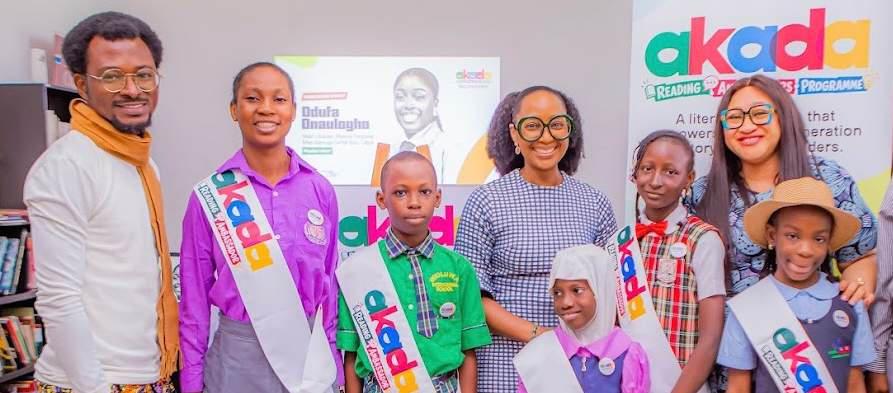
READING AMBASSADORS’ INDUCTION...
INEC: 22 Registered Political Parties Have Submitted Membership Registers
Adedayo Akinwale in Abuja
The Independent National Electoral Commission (INEC) has revealed that all the 22 registered political parties have successfully submitted their membership registers to the Commission in compliance with the Electoral Act 2026.
Chairman, Information and Voter Education Committee, Mohammed Haruna, in a statement issued yesterday
said the submission followed the extension granted by the Commission after political parties raised concerns during a meeting on Tuesday, March 24, 2026, regarding the timeline provided in the Revised Timetable and Schedule of Activities for the 2027 General Election.
He added, “The Commission is pleased to note that all registered parties submitted their registers as of 8th May 2026, two days
before the extended deadline.”
Haruna recalled that following a meeting with political parties, the Commission, in a statement issued on the 27th of March 2026, adjusted the deadline for the submission of party registers from 21st April 2026 to 10th May 2026 to
align with the provisions of Section 77(4) of the Electoral Act 2026 and the actual dates fixed by political parties for their primaries.
He noted that political parties were accordingly allowed to conduct their primaries within the approved period from 23rd
April 2026 to 30th May 2026, while the register of party members was required to be submitted to the Commission not later than 21 days before the conduct of their respective primaries.
Haruna said, “INEC wishes to state that all registered political parties complied
with the requirement within the extended timeframe and will subject the submitted registers to the necessary verification processes in line with the law.”
The Commission said it remained committed to the conduct of free, fair, credible and inclusive elections.
Council of Enugu Town Unions, 583 Communities Endorse Mbah for Second Term
Gideon Arinze in Enugu
The Enugu State Council of Presidents General has endorsed the Governor of Enugu State, Dr. Peter Mbah, for a second term in office, citing what they described as his sterling leadership and uncommon transformations
CHANGE OF NAME
I, formerly known and addressed as JOLLY UZORMA ADUBA, now wish to be known and addressed as JOLLY UZORMA CHRIS ADUBA. All former documents remain valid. General public should please take note.
as appeared on my NIN. Henceforth, wish to be known and addressed as IGWE GODGIFT AWUDU. All former documents remain valid. The relevant authorities should please take note.
LOSS OF
THIS IS TO INFORM THE GENERAL PUBLIC THAT LT COL PAUL EDOR OBI (RTD) OF ROAD 3, H13B, VGC, LEKKI, LAGOS, REPORTED THE LOSS OF STATUARY RIGHT OF OCCUPANCY (R OF O), RECERTIFICATION ACKNOWLEDGEMENT AND PAYMENT RECEIPTS PERTAINING TO PLOT NO. 593 WITH FILE NO. CR11229 SITUATED AT GWARIMPA II CO3, FCT, ABUJA. ALL EFFORTS TO TRACE THE MISSING DOCUMENTS PROVED ABORTIVE. IF FOUND, PLEASE RETURN TO THE NEAREST POLICE STATION. ALL AUTHORITIES CONCERNED AND GENERAL PUBLIC TAKE NOTE.
across all sectors of the state.
The Council, which represents 583 autonomous communities that make up the state, also endorsed President Bola Tinubu for re-election, commending him for making more resources available to the states to execute projects that touch the lives of the people, also citing the concession of the Akanu Ibiam International Airport and the embarkation on strategic projects that would transform the economy of the state and the South-east.
They passed the vote of endorsement during a courtesy
visit to Mbah at the Government House, Enugu, on Thursday.
Speaking at the event, the Chairman of the Association, Chief Arinze Ogbodo, extolled Governor Mbah’s inclusive and grassroots-sensitive administration, noting the administration’s adoption of the 260 political wards as the basis for the distribution of democracy dividends.
Ogbodo cited the construction of 267 Smart Green Schools and 260 Type 2 Primary Healthcare Centres, 260 Farm Estates, improved security through the government’s investment
in high-tech infrastructure, revival of moribund assets, and many ongoing and completed road projects opening up rural communities.
“Consequently, the Enugu State Council of PresidentsGeneral of Town Unions, on behalf of the 583 autonomous communities in Enugu State, unanimously adopts you for a second term in office as the Governor of Enugu State in recognition of your outstanding performance, transformational leadership, and unwavering commitment to the development of Enugu State.
PremiumTrust Bank Empowers 13 Entrepreneurs With N50 Million In Business Grants
In a bold and heartfelt demonstration of its commitment to positively impacting lives and communities, top Nigerian lender, PremiumTrust Bank, recently partnered with the Hallelujah Challenge Corporate Social Responsibility team to reward 13 entrepreneurs and small business owners with a total of N50 million in business grants.
The grant award ceremony, which took place at the Hallelujah Challenge Centre in Lagos, marked a defining moment in
the Bank's ongoing mission to improve lives and strengthen the economic foundations of communities across Nigeria.
The initiative, which is more than a financial gesture, is a statement of belief that small businesses are the engine room of the Nigerian economy, and that investing in the people who run them is investing in the future of the nation at large.
The partnership between PremiumTrust Bank and the Hallelujah Challenge aligns
with the bank's mission to enrich lives and strengthen communities through targeted, practical initiatives. Recognised globally as a forum where faith and community intersect, the Hallelujah Challenge has become an agent of social change, facilitating payment of school fees, hospital bills, and supporting humanitarian programs in previous editions. For PremiumTrust Bank, aligning with this platform was a strategic decision.
L-R: Children’s Author, Ayo Oyeku; Owomi Joy of Bright Achievers School; Nelson Marvelous of God’s Heritage School; Convener, Akada Children’s Book Festival, Mrs. Olubunmi Aboderin Talabi; Muhammed Ajah of Hopic School; Soile Zohirah of Bayt-Ul-Ilmi Young Academy; Founder of Purple Shelves, Amarachukwu Chimeka; and Sophia Durojaiye of Millhouse Schools at the Akada Children’s Book Festival Reading Ambassadors’ Induction Ceremony held in ikoyi Lagos…recently
YOU are welcome to our language clinic: “Man arrested for parading half naked girls” There is nothing like ‘half naked’, but scantily-clad girls. ‘Half naked’ is ungrammatical Nigerian English.
“Trailer crushes 2 to death in Benue” I am always amazed when I come across this kind of headline. Is it possible for a trailer to CRUSH someone and the person survives? Except there is divine intervention, that cannot be possible! Therefore, trailer crushes 2 in Benue
“FG plans review of revenue sharing (revenue-sharing) formula
“May his gentle soul rest in perfect peace.” (Full-page advertorial by Government of Enugu State of Nigeria) Yet another local interjection: “rest in perfect peace”. Which ‘peace’ is imperfect? The standard entry is ‘rest in peace (RIP)’.
“…on the occasion of his centenary birthday anniversary yesterday….” Please delete ‘anniversary’ which is encapsulated in ‘birthday’.
“Payback period is between 3-10 years.” (Full-page advertisement by Access Bank) Access more funds for your passion: between 3 and 10 years or from 3 to 10 years
“As long as life and memory lasts (last) (a coma) you are always in our hearts.”
“Rest on in the bossom (bosom) of the Lord....”
“Achuba said the feud has (had) led to the stoppage of his salaries….”
“But Owelle Okorocha has consistently maintained that he was been (being) witch-hunted.”
“Leboku festival: Cross River partner (partners) 12 communities”
“Flying Eagles invitee (player) joins Watford” Still on Nigerian creations: there is no such word (invitee) in formal writing.
“Condolence by in-laws, friends and well-wishers continue” Get it right: condolence continues or condolences continue
“…disclosed that there was no way he could have stolen what was non-existence (non-existent).”
Abuja’s melting point (pot) of darkness, light”
“Something happened recently in Oyo State few (a few) days ago….”
“SIFAX Group invests…on (in) cane”
“WebTv stations now require license (licence) to broadcast in Nigeria.” Truth & reason: licence (noun—which should apply here) and license (verb) in Standard English. The excerpt is an American corruption of the word which, rather unscholarly, makes no distinction between the noun and verb forms!
“…should be licensed to bring sanity into (to) the industry.”
(Source: as above)
“Borno governor meets with Tinubu over upsurge in Boko Haram attacks” Delete ‘with’ on grounds of its redundancy in the context.
“The fraudsters, majority based in Nigeria, were involved in a series of coordinated (would it have been uncoordinated?) scam (scams) running into millions of dollars fraudulently obtained from victims in the United States and other parts of the world.”
“My medical background often impact (impacts) on the kind of movies I produce”
“I thank President Bola Tinubu, GCFR (another comma) whose benevolence and love for Akwa Ibom State has (have) been demonstrated in (by) this appoint-
ment….” ‘Love’ is a gargantuan entity on its own and cannot be collapsed into singularity with another equally phenomenal concept as typified by ‘benevolence’.
“Your achievements in our dear state, especially in the area of good governance (another comma) have been very impactful in (on) the lives of our people.”
“…but also solve the (sic) youth unemployment problem, reduce poverty and create wealth.” ‘Unemployment’ is a problem on its own and does not require any otiose embellishment like ‘problem’! A rewrite: but also solve youth unemployment, reduce poverty and create wealth.
“…I heartily congratulate our worthy and outstanding brother on your (his— going by the context of the message) as the (a) minister-designate Federal Republic of Nigeria.
Wrong: well deserved appointment
Right: well-deserved appointment
The same thing applies to this: “God fearing man”—which means, as it is, that God fears man! Get it right: Godfearing man.
“…as you have always make (made) something out of nothing….”
“Experts urge government to introduce more market friendly (marketfriendly) reforms”
“How to check influx of smuggled goods—Stakeholders” (Source: as above) Instead of ‘smuggled goods’, use ‘contraband’, which, by the way, is uncountable.
“PPA: Magodo residents commend Ikeja Electric over (for) improved power supply”
“…yes I admit that most of them are from my tribe (ethnic group)….” ‘Tribe’ is derogatory!
“Nobody was surprised because it is (they are) his usual antics more so for a man well known for his theatrics.”
The President Nigeria Still Needs Make-believe, Not ‘Make-belief’
Four years ago, as Nigeria stumbled uncertainly towards the 2023 elections, I raised a series of questions that now return with even greater urgency and discomfort. Questions about sacrifice, leadership, civic apathy, corruption, insecurity, institutional weakness, and the dangerous normalisation of suffering.
Looking back today is not an exercise in nostalgia. It is an autopsy. Because, painfully, many of those fears were not exaggerated. If anything, they were conservative.
Back then, Nigerians were exhausted by the Buhari years - the drift, the excuses, the insecurity, the economic paralysis, the endless waiting for competence to emerge from carefully polished propaganda. Citizens hoped that 2023 would offer a meaningful reset. Some prayed for competence. Others simply begged for relief.
Today, in 2026, the national mood is more complicated. The anger remains. The weariness has deepened. The hunger has become more democratic.
Nobody needs long economic grammar anymore to explain Nigeria’s condition. The market woman understands it. The commercial driver understands it. The fresh graduate understands it. Even the once-comfortable middle class now understands it with frightening intimacy.
When people who once debated investment portfolios are now discussing the price of garri with visible anxiety, you know the country has entered dangerous emotional territory.
In 2022, many Nigerians still carried fragments of optimism. The elections ahead looked like an opportunity to interrupt the cycle of recycled incompetence and entrenched entitlement. The youth appeared energised. Political conversations escaped beer parlours and invaded campuses, churches, salons, taxis and market stalls. Then came the elections, the controversies, the courtroom dramas, the accusations, the explanations - and finally, the weary surrender that usually follows our political contests. Nigeria moved on because Nigeria always
moves on. But moving on is not the same thing as healing.
What has happened since then is the slow deepening of a dangerous national fatigue. Nigerians are no longer merely frustrated; many are emotionally exhausted. The country has stretched the patience of its citizens so aggressively that survival itself has become a profession.
The frightening thing is how quickly abnormality becomes culture here. We now celebrate things that should embarrass us. Citizens applaud uninterrupted electricity as though witnessing a scientific breakthrough. Stable fuel supply becomes breaking news. Bread prices rise so often that consumers no longer react with outrage - only resignation.
Everything has become “management”. People manage transport. Manage feeding. Manage rent. Manage healthcare. Manage hope. And perhaps that is the greatest tragedy of modern Nigeria: a nation blessed outrageously by nature but managed perpetually like an emergency ward.
The old middle class - once the emotional stabiliser of the country - is collapsing quietly.
Salaried professionals now live from debit alert to debit alert. Families once planning holidays abroad are now debating whether to reduce the number of eggs in breakfast. Graduates with respectable jobs still depend on relatives to survive month-end pressures.
Yet official language remains curiously detached from lived reality. Citizens are told to be patient. To sacrifice. To endure reforms. Fair enough. Serious economic restructuring is never painless. But leadership loses moral authority when sacrifice appears one-sided. Nigerians can endure hardship better than most nations; history proves that repeatedly. What citizens resent deeply is visible inequality in suffering.
The ordinary citizen is lectured about discipline while political office holders display extravagant comfort with theatrical confidence. Convoys multiply. Public luxuries expand. Government officials speak casually about figures capable
“Uzodinma reassures on new Imo” Who did he reassure?
“The struggle for the creation of Enugu State came into (to) limelight following the sustained agitation against social justice meted
“The feeling is that many don’t want to be seen to take a position which would be interpreted as confrontational and as such they have resulted (resorted) to lobbying prominent figures outside government to….”
“These 17 luxury cars and SUVs of the former governor which will make any Arabian Sheik grin (green or green with envy) are parked in his GRA Jos adopted home.
“The actual name of the person expected to chairman (chair/preside over) this occasion is….”
Wrong: atimes; right: at times (two words)
“Those who have the power to release the suspect but are passing the bulk (buck) to the courts should be informed that it is against the national interest to refuse to release….”
“The former Minister of Finance, Dr. Ngozi Okonjo-Iweala, explained that it was not the first time that banks would be liquidated and that the history of bank failure in the country dated (dates) back to 1958 or 1959.” Note: dates back to or dates back from is a stock expression.
“In reaction to the leaflets being circulated, the Kano State Commissioner of Police…made a radio and television broadcast telling the people to ignore the leaflets which he described as the handiwork of mischieve (mischief) makers.” Special note: make-believe (not make-belief).
of transforming entire communities. And somehow, citizens are expected not to notice. But they notice. That is why trust has become Nigeria’s scarcest national resource.
People no longer automatically believe politicians, institutions, parties, agencies or promises. Every announcement is interrogated for hidden meanings. Every policy is analysed for who truly benefits. Every speech competes against years of accumulated disappointment.
This distrust did not emerge overnight. It was cultivated carefully across decades of broken promises, abandoned projects, selective justice, elite impunity and political theatre masquerading as governance. And insecurity continues feeding this national anxiety.
Four years ago, we worried about kidnappings, terrorism, separatist violence, communal clashes, and the frightening erosion of public confidence in state authority. Today, those fears have not disappeared. They have merely evolved and spread.
Entire communities now live under permanent tension. Farmers fear their farmlands. Travellers rehearse emergency phone calls before interstate journeys. Parents investigate school security before educational quality. Rural economies shrink under fear and displacement.
Meanwhile, many official responses still sound suspiciously bureaucratic - as though the country is reading press statements while citizens are reading obituaries.
No nation can achieve meaningful prosperity while insecurity becomes psychologically normalised. But perhaps the most dangerous consequence of prolonged hardship is emotional hardening.
People become numb. Compassion weakens. Outrage fades. Citizens begin adapting to conditions that should provoke collective resistance. That is how societies quietly decay from within.
Once upon a time, Nigerians mobilised passionately around national issues. Students marched. Labour unions paralysed governments. Intellectuals confronted dictatorships. Journalists risked detention. Civil society organisations
inspired ideological engagement.
Today, survival has reduced many citizens to exhausted spectators of their own decline. Not because Nigerians are naturally apathetic - far from it. Rather, repeated disappointments have convinced many that outrage changes little. After every scandal comes another scandal. After every promise comes another explanation. After every “new beginning” comes another recycled disappointment.
And politicians understand this fatigue perfectly. That is why emotional manipulation remains one of the most successful strategies in Nigeria. When performance becomes difficult to defend, they deploy identity. Tribe. Religion. Region. Historical grievances.
Suddenly, elections stop being about competence and become spiritual warfare. The poor defend rich politicians simply because they share language or prayer patterns. And the elite smile quietly behind closed doors.
Yet beneath all the noise lies a simple truth many Nigerians now understand instinctively: this country desperately needs leadership with competence, courage, empathy and urgency. Not perfection. Not messiahs. Not miracle workers. Just leadership genuinely interested in governance beyond election victories and power retention. Most importantly, Nigeria still needs leadership capable of restoring belief. Because nations do not survive merely on budgets and policies. They survive on collective faith - the belief that tomorrow can improve through honest effort and fair opportunity.
That faith is weakening dangerously in Nigeria. Young people increasingly view relocation not as ambition, but as escape. Families encourage children to “find a way out” with the urgency once reserved for emergency evacuations. That should trouble any serious leadership class.
Alain St. Ange: Seychelles-Nigeria Bilateral Meeting Will Deepen Cultural, Economic Ties
Seychelles Ambassador at Large and tourism expert, Alain St. Ange, speaks about the latest move by Nigeria and Seychelles to deepen cultural and economic exchanges, outbreak of Hantavirus and implications for travels and tourism in Africa, among other issues. Charles Ajunwa brings excerpts
Seychelles and Nigeria at the sidelines of the Africa Forward Summit in Nairobi, held a bilateral meeting where both countries focused on the cultural and economic exchange driven by the travel industry. Can you elaborate on the outcome?
The Seychelles Minister of Foreign Affairs, Barry Faure and the Nigerian Minister of Foreign Affairs, Bianca Odumegwu-Ojukwu, met in Nairobi on the sidelines of the Africa Forward Summit. It is known that Seychelles and Nigeria have enjoyed strong friendly ties for a very long time and this latest bilateral meeting centred on cultural and economic exchanges. The Seychelles main newspaper, ‘Nation’reported that this Nairobi meeting was an opportunity for both countries to explore new frontiers for diplomatic and economic partnership with a determination to hold a follow-up meeting in the near future to draft a formal roadmap for renewed partnership that could or should become a model for intra-Africa cooperation.
The world again is hit by a new virusHantavirus. How did African leaders at the summit react to this health challenge considering
its likely impact on the continent’s travels and tourism sectors?
Africa remains aware of the new virus- Hantavirus but remains conscious that this virus is more localised and is not anything like COVID was. The important message coming out in bilateral meetings throughout this Summit is that Africa does not lose sight on the narrative by Africa for Africa to ensure that the continent is not picking up challenges that have nothing to do with its states. In short, Africa must claim back its narrative.
The hospitality sector in Africa is still at lowest ebb in terms of standard facilities. What’s the way out?
The continent does not have set standards to guide the hospitality sector of its Member States. Everyone does a bit of what they like. Countries dependent on tourism as an industry for its economy developed standards for its hospitality network going as far as issuing a hotel classification grading scheme. But Seychelles has tourism as its bread and butter and remains conscious that it must get it right for its tourism industry. Maybe it is time to start exploring an Africa Wide standard and
hopefully Nigeria and Seychelles could explore this thought at its next bilateral meeting.
Stakeholders have called for more collaboration and partnerships to develop Africa’s tourism sector. What’s your take?
Stakeholders are right. This is a needed call. Alone everyone is vulnerable but united; everyone is strong and more robust. When collaborations and partnerships in tourism will exist, this will strengthen aviation and the Hubs in Africa will benefit as tourism destinations of the continent will see successes in visitor arrivals numbers and economic benefits.
Seychelles’ tourism potential over the years have been well-managed to the extent that the sector attracts foreign direct investments. Are there lessons for African countries still struggling?
Seychelles believes in its tourism industry and goes out of its way to ensure its industry works. The islands know that air access remains the foundation for its tourism industry, and it moves and navigates between its small national
airline and international players offering good air access to the four corners of the world. When tourism works as an industry, this attracts foreign direct investments. A working tourism industry becomes that catalyst to bring investments to the islands. Tourism, it must be remembered, is not a just another Government Department; it must be seen, approached and respected as the country’s economic infrastructure and respected as such and its front line team heard at all times.
English, Igbo, Yoruba, Hindu, Hausa Top Language Productions as NFVCB Classifies 304 Films
The National Film and Video Censors Board (NFVCB) has approved and classified a total of 304 films between January and April 2026, reflecting sustained growth in Nigeria’s film industry and reaffirming the Board’s commitment to effective regulation of the sector.
The amount represents an increase over the 267 films classified within the corresponding period in 2025. In the first four months of 2025,
the Board classified 25 films in January, 58 in February, 114 in March and 70 in April.
According to the 2026 classification statistics, January recorded the highest number of approved films with 102 classifications, followed by 83 in February, 77 in March and 42 in April.
The language distribution of the 304 films classified during the review period shows English language productions leading with 201 films, followed by Igbo with 44 films, Yoruba with 42, Hindi with 9, Hausa with 5 and Bini with 3. Further analysis of the classification
categories indicates that the majority of the films fell within the “15” and “18” age ratings, reflecting prevailing themes and creative trends in contemporary film productions. The classification distribution is as follows: G: 10 films, PG: 16 films, 12/12A:18 films, 15:157 films, and 18:103 films.
Commenting on the performance, the Director, Film Censorship and Classification, Deborah Malgwi, reaffirmed commitment of the Board to promoting responsible storytelling, professionalism and the continued growth of the Nigerian film industry in line with national values and international best practices.
She further noted that the increase in film
Iwari Brown: Tourism Is Powerful Tool for Cultural Exchange, National Devt.
Chief Executive Officer and Founder of Anufly Travels and Toursm, Iwari Anuoluwapo Brown, speaks about Nigerian tourism products, especially traditional and cultural festivals that showcase the rich heritage, culture, and diversity of Nigeria, among others. Charles Ajunwa brings excerpts:
You have been taking tourists on guided tours within and outside Nigeria. Can you share your experience?
Over the years, I have had the privilege of taking tourists on guided tours both within Nigeria and internationally, and the experience has been deeply rewarding and impactful. My journey in tourism has exposed me to different cultures, people, traditions, and destinations, while also giving me the opportunity to promote the beauty of Nigeria to the world.
One of the most fulfilling parts of my experience is showcasing Nigeria’s rich tourism potential — from our cultural heritage and traditional festivals to nature, food, music, and hospitality. I have actively promoted cultural tourism events, especially festivals such as Osun-osogbo, World Egungun Festival-Ibadan, Olojo Festival, Ojude Oba Festival, Carnival Calabar to mention but a few that preserve and celebrate African traditions. Seeing international and local tourists appreciate our culture always reminds me that tourism is a powerful tool for cultural exchange and national development.
Handling tours outside Nigeria has also broadened my perspective as a seasoned travel operator. Organising trips across Africa and beyond has taught me the importance of proper planning, customer satisfaction,
adaptability, and understanding different travel needs. Every destination comes with its own unique experience, and helping travellers create unforgettable memories
is something I take seriously.
Tourism for me is beyond business; it is about connecting people, creating experiences, and changing perceptions about destinations — especially Nigeria and Africa as a whole. Through every trip and every tour, I continue to learn, grow, and contribute my quota to the development and promotion of tourism.
Nigeria still remains attractive to both local and foreign tourists who want to explore. What are the attractions?
Nigeria is a richly blessed country, blessed in culture and its diversity, blessed in traditional practices and also adorned with so many naturally landscaped attractions. Nigeria is so big. I will segment the attractions into the different zones. Attractions from the South-west Region include: Olumo Rock, Olumirin Waterfall, Aiyekunugba Waterfall, Arinta Waterfall, Ikogosi Warm Spring of cold and warm water, Abanijorin Mountain, suspended Iyake Lake on Ado Hills, Idere Hill and Idanre Hills. Other attractions attached to history in South-west are: Bowers Tower, Cocoa House, Opaoranmiyan, Moremi, Ajasoro Monument, Susan Wengers Home, Badagry-Point of No Return and many others.
In the South-east zone, you have the Awhum Waterfall, Oguta Lake, Ogbunike Cave, Nike Lake, Orsu Waterfall Awgunta, Arochukwu Waterfall, Akpoha
classification activities underscores the resilience and expanding capacity of Nigeria’s creative industry, particularly in local content production and distribution.
Malgwi further reminded filmmakers that film classification remains a critical regulatory mechanism designed to protect children and vulnerable audiences from unsuitable content while also providing necessary viewing guidance to parents, guardians and the general public. She also commended filmmakers, producers and stakeholders across the value chain for their continued cooperation and compliance with the Board’s regulatory framework.
Crush Rock, Agulu Lake Ikirike Hill, Crush Rock, Azumini Blue River, Ezimo Waterfall, Ogba Ukwu Cave and Waterfall, Owerre Ezikala, Ululo Lake Ugbo. Attractions attached to history are War Museum and Ojukwu Bunker.
From South-South zone, you have Obudu Mountain Resort, Grotto Waterfall, Igaga Waterfall, Twin Waterfall, Cataract Waterfall, Agbokim Waterfall, Kwafalls, Mfamsong Waterfall, Afi Mountains. And some attractions in history include: Mary Slessors Home , Creek Town, National Museum Calabar Slave Museum (Point of No Return), Fineman Nature Park, Orashi Forest Reserve.
In the Northern/North-central Region you have Owu Waterfall, Yankari Game Reserve, Yusufari Desert, Ramin Saura, Matsirga Falls, Gurara Falls, Mambilla Plateau, Gbi Lake and many others.
What challenges do you encounter?
Working in the tourism and travel industry comes with its own challenges, especially when organising guided tours both within Nigeria and internationally. One major challenge I have encountered is logistics and coordination — managing flights, hotel bookings, transportation, visas, and tour schedules for different travellers at the same time. In this industry, even a little mistake can affect an entire trip experience. I have tackled this by improving planning systems, working with reliable partners across the continent, and always having backup plans in place. Another challenge is changing perceptions about tourism in Nigeria. Many people underestimate the tourism potential of the country or focus only on negative narratives. Also as Nigerians we are yet to really appreciate what tourism is all about, As someone passionate about promoting Nigerian tourism products, culture, and festivals, I have consistently used social media, storytelling, and organised experiences to showcase the beauty, hospitality, and uniqueness of Nigeria to both local and international travellers.
St. Ange
Light Nwobodo
Brown
Chery Demonstrates Global safety Leadership at Auto China 2026
Carloha Nigeria, the authorized dealer of Chery vehicles in Nigeria, has reaffirmed its commitment to delivering safer, smarter, and familyfocused mobility solutions to Nigerians following the successful conclusion of the 2026 Chery Global Summit and the Beijing International Automotive Exhibition held in China.
The Carloha Nigeria delegation joined global distributors, partners, and key automotive stakeholders at one of the world’s largest automotive gatherings, where Chery showcased its latest innovations, advanced safety technologies, and future-forward mobility vision.
At the summit and exhibition, Chery officially unveiled its new global brand philosophy, “For Family,” a strategic direction designed to position the brand beyond automobile manufacturing into a mobility-focused brand centered on safety, comfort, innovation, and practical family mobility solutions. The philosophy strongly aligns with the expectations of the Nigerian market, where reliability, durability, spaciousness, and safety remain major considerations for families and professionals seeking modern mobility solutions.
One of the major highlights of the exhibition was the global unveiling of the all-new Chery TIGGO V, which attracted significant international attention for its advanced safety engineering and intelligent technology features. Built with a body structure comprising 76 percent high-strength steel and aluminum,
Launch Design, Hybrid Motors Seal Deal on EV Manufacturing Plants in Lagos, Abuja
the TIGGO V is equipped with Advanced Driver Assistance Systems (ADAS), intelligent emergency braking systems, battery protection technologies, and multiple active and passive safety innovations designed to improve driver confidence and passenger protection across varying driving conditions.
Speaking on the significance of the event, the Managing Director of Carloha Nigeria, Sola Adigun, stated that the exhibition further
strengthened confidence in Chery’s long-term vision for the Nigerian and African markets. According to him, “Nigerian customers are increasingly demanding globally competitive vehicles equipped with intelligent safety technologies, premium comfort, fuel efficiency, and modern designs, all of which were prominently demonstrated throughout the Chery showcase in Beijing.”
Launch Design, Hybrid Motors partner on Lagos, Abuja EV Manufacturing plants
Launch Design Shanghai and Hybrid Motors Nigeria have signed a strategic partnership agreement to establish electric vehicle (EV) manufacturing plants in Lagos and Abuja, marking a major step toward advancing Nigeria’s automotive and clean mobility ambitions.
The agreement, signed in Shanghai on May 8, 2026, will support the production of “Acely,” Hybrid Motors Nigeria’s homegrown vehicle brand developed for Nigerian road conditions and driving needs.
The partnership brings together Hybrid Motors Nigeria’s local market expertise and Launch Design Shanghai’s global automotive engineering capabilities, with both companies describing the collaboration as a transformative move for Nigeria’s industrial and automotive sectors.
Speaking during the signing ceremony, Chief Executive Officer of Hybrid Motors Nigeria, Mr. Jubril Arogundade, said the project represents a strong commitment to building a sustainable automotive future for Nigeria.
“This partnership is more than a business agreement; it is a commitment to building Nigeria’s automotive future,” Arogundade said.
“With Acely, we are proving that world- class vehicles can be conceived, designed, and assembled right here in Nigeria, by Nigerians, for“OurNigerians.collaboration with Launch Design brings world-class engineering expertise directly into
our operations, ensuring that Acely meets the highest international standards while remaining authentically Nigerian.”
Chief Executive Officer of Launch Design, Mr. Wang Xun, described the partnership as a major opportunity to help develop Africa’s automotive manufacturing ecosystem.
“Launch Design is proud to partner with
Hybrid Motors Nigeria in this transformative venture,” he said.
“Our turnkey engineering capabilities, combined with Hybrid Motors’ deep un- derstanding of the Nigerian market, create a powerful formula for success. Together, we are not just building vehicles, we are building an industry.”
Oyeyemi Delivers 10th Anniversary Lecture
The Publisher of City Business News Online, Mr Moses Ebosele, has announced plans to commemorate the organisation’s 10th anniversary with a high- level lecture scheduled for Thursday, June 25, 2026, at Rockview Hotels, Apapa, Lagos by 10:00am.
Speaking ahead of the anniversary celebration, Ebosele said the milestone reflects a decade of impactful Business News reporting, commitment to credible business Journalism, industry-focused reporting, and support for economic development in Nigeria.
He disclosed that the highlight of the event would be a keynote lecture titled: “Logistics As The Engine Room Of Nigeria’s Economy,” to be delivered by Dr Boboye Oyeyemi, OFR, mni, NPOM, FCILT. Dr. Oyeyemi, a respected authority in transportation and logistics management, is the immediate past Corps Marshal of the Federal Road Safety Corps (FRSC) and the current President of the Chartered Institute of Logistics and Transport (CILT).
According to Ebosele, the anniversary event is expected to attract key stakeholders from government, the private sector, industry regulatory agencies, and the media. Among dignitaries and organisations expected at the event are the founder of ABC Transport PLC, Mr Frank Nneji, the Nigeria Customs Service (NCS), Nigerian Ports Authority (NPA), the Nigerian Maritime Administration and Safety Agency (NIMASA), Nigerian Shippers’ Council (NCS), representative of Banks, foremost auto firms, among others.
Ebosele noted that the event would also provide a platform for meaningful discussions on the role of logistics, transportation, and supply chain systems in driving Nigeria’s economic growth and competitiveness. He expressed appreciation to staff, readers, partners, stakeholders, and advertisers for their support over the past decade, reaffirming City Business News’ commitment to excellence, professionalism, and impactful journalism.
ABC Transport Launches Centre to preserve 33 Years of innovation, Excellence
In a remarkable celebration of legacy, innovation, and corporate heritage, ABC Transport Plc officially unveiled its Historic and Archive Centre on Thursday, April 30, 2026, at the company’s Corporate Head Office in Owerri, Imo State.
The launch, which coincided with the birthday celebration of the company’s Founder, Mr. Frank Nneji (OON), marked another historic milestone in the 33-year journey of one of Nigeria’s most innovative and diversified transport and logistics companies.
Founded on February 13, 1993, ABC Transport Plc has grown from a visionary transportation company into a nationally recognized brand known for pioneering modern transport solutions, operational excellence, and customerfocused innovation within Nigeria and across West Africa. The newly commissioned Historic and Archive Center was established to document, preserve, and showcase the rich history and transformational journey of the company over the decades. The centre houses an extensive collection of historical artefacts, awards, photographs, archival
documents, video recordings, and memorabilia from some of the company’s most defining moments.
Among the notable exhibits are memorabilia from the commissioning of the very first ABC coach, the launch of Nigeria’s first ultra-modern transport terminal, the expansion into regional operations through Coach West Africa, and several landmark achievements that helped redefine road transportation and logistics services in Nigeria.
Over the course of its 33-year history, ABC Transport Plc has recorded several groundbreaking milestones, including:
• 1993 – Launch of the company’s first Owerri to Lagos route
•1996 – Introduction of ABC Cargo Express services
•1998 – Launch of Sleeper Coach Services
•1999 – Partnership with NIPOST for mail transportation services
• 2000 – Establishment of the Driver Training Academy and commencement of E-ticketing services
• 2001 – Commissioning of the first ultra-modern transport terminal in West Africa, located in Abuja.
Chief Executive Officer, Launch Design, Wang Xun (left); and Chief Executive Officer, Hybrid Motors Nigeria, Jubril Arogundade, during the signing of a strategic partnership agreement to establish Electric Vehicle (EV) manufacturing facilities in Lagos and Abuja, in Shanghai, recently
L-R: Rev Fr Emma Ehioma; Hon Princewill Ugochukwu Amuchie, member representing Aboh Mbaise in the Imo State House of Assembly; the Group MD of ABC Group, Mr. Jude Nneji; and founder of ABC Group, Mr. Frank Nneji, at the inauguration of the ABC Group Historic & Archive Centre in Owerri which coincided with the birthday of the Founder… recently
Oyeyemi
How Nollywood Star, Linda Ejiofor Made History at 2026 AMVCA
Ferdinand Ekechukwu
When actress Linda Ejiofor-Sulaiman played the character Ejura in ‘The Meeting,’ the first feature film off the stables of The Audrey Silva Company (TASC), which has Nollywood star Rita Dominic and her business partner, lawyer and filmmaker, Mildred Okwo as Head honchos, it was like a major triumph for the actress.
‘The Meeting’ with original story by Tunde Babalola and directed by Mildred Okwo is an amazing movie, which is a worthy representative of the new Nollywood. The award-winning romantic comedy introduced Linda to the big screen, making her fictional dream of a movie star in the soap opera Tinsel come true.
Fast-forward to the 9th of May, 2026, at the 12th edition of the Africa Magic Viewers’ Choice Awards (AMVCA), held at Eko Hotels and Suites, Linda became the biggest star of the night, winning the 2026 AMVCA awards for Best Lead Actress and Best Supporting Actress.
The Nollywood star made history by being the first actress to win both Best Lead Actress and Best Supporting Actress in the same night. The
Months before the news of his death on Tuesday, actor Alexx Ekubo had noticeably disappeared from social media, a space where he was popular. More so, not much was seen or heard of him in the film industry,
remarkable feat was achieved on the continental stage, where the biggest names in African film and television gathered to celebrate outstanding achievements in the industry.
Linda clinched the Best Lead Actress award for her powerful performance as Ijeoma in The Serpent’s Gift, an Igbo-language drama directed by Kayode Kasum. In the film, she portrays a grieving widow who must navigate family politics and protect her late husband’s legacy.
She later returned to the stage to receive Best Supporting Actress for her role as Adama in The Herd, a Daniel Etim-Effiong’s directorial debut. Visibly emotional during her acceptance speech, Linda reflected on a prayer she made three years ago.
“I remember three years ago, I prayed to God and told Him that I wanted a role that would challenge me, and God did it. He answered me. Thank you, God, for giving me this opportunity to stand here. Thank you to AMVCA for this platform,” she said.
Receiving her second award of the night, Linda became even more emotional as she thanked her family, fans and especially her husband, Ibrahim Suleiman. “To my beautiful husband, thank you. Because of your love, I was able to transcend into that role and still find myself. To my fans, loved ones, family, and inner circle, I love you. This means a lot,” she said.
Before her win, achieving a “double” in acting categories was considered unprecedented at the AMVCA. While actors have been nominated for multiple roles in the past, such as Genoveva Umeh being a contender in the same year, Linda is the first to actually take home both trophies
Linda’s victories came ahead of some competitive categories that included some of Nollywood’s biggest names, including Funke Akindele, whose performance in ‘Behind The Scenes’ had generated strong online conversations, same for Bimbo Akintola for her role in To Kill A Monkey.
Other nominees included Bisola Aiyeola for Gingerrr, Sola Sobowale for The Covenant, and Gloria Anozie-Young for Mother Of The Brides. Widely celebrated for her versatility and emotional depth, Linda first gained prominence through the long-running television series Tinsel.
Over the years, she has delivered memorable performances in films such as The Meeting, Chief Daddy, and the 4th Republic. Linda rose to national fame with her role in the popular M Net series ‘Tinsel.’
In 2015, Linda won the Best Supporting Actress at the AMVCA for her performance in ‘The Meeting,’ which established her as a rising star. Married to fellow actor Ibrahim Suleiman, Linda was born in Lagos and is originally from Isuikwuato in Abia State.
Linda Ejiofor
With her historic AMVCA win, Ejiofor-Suleiman has added another defining chapter to a career that reflects Nollywood’s growing global reach and ambition. Linda shared the spotlight at the 12th AMVCA with Uzor Arukwe, who won the highly coveted Best Lead Actor.
Alexx Ekubo: A Devastating Death
thus raising concerns among his fans and other celebrities in the entertainment space, some of whom actually reached out to know his whereabouts.
Many had repeatedly questioned why the actor had suddenly stayed away from the public eye for a long time. His last post on Instagram was reportedly made in December 2024, following a silence that triggered widespread speculation about his status and well-being. Some mischievously insinuated, attributing it to heartbreak, after reports emerged that his engagement had been called off.
While reports of his absence continued to stoke concerns and reactions, the actor kept his life private at that moment, until rumors of a serious medical condition began circulating shortly after in early 2025. Earlier in 2022, the late actor briefly trended after he chronicled his journey between Texas, Mexico, and the Bahamas, enjoying boat rides and ziplining.
He wrote, “I’ve always wanted to be on a cruise ship & sail around the world, now I’m on the largest cruise ship #WonderOfTheSeas, sailing to a new country. What a life I’ve been given, my God, I’m Blessed.” Ekubo, known for
Oluwadarasimi Oyindamola Omoseyin is steadily emerging as one of the most dynamic young creatives shaping the future of Nigeria’s entertainment and wellness industries. The actress, filmmaker, entrepreneur, and certified medical aesthetician, represents a new generation of talents who are successfully blending creativity, business, and cultural identity into one powerful personal brand.
Since launching her acting career in 2019, Oluwadarasimi has continued to attract attention for her versatility and emotional depth on screen. Her performances across a range of Nollywood productions, particularly on YouTube and digital streaming platforms, have showcased her ability to interpret diverse characters with authenticity and confidence. Whether appearing in romance, family drama, or culturally driven stories, she has built a growing reputation as an actress capable of connecting deeply
with audiences. A graduate of the University of Lagos, where she earned a degree in Public Administration, Oluwadarasimi has approached her career with both discipline and strategic vision.
Rather than limiting herself to acting alone, she expanded into content creation and filmmaking, taking greater control of the stories she wants to tell and the impact she hopes to create in the entertainment industry. Her transition into film production became evident with the release of Ohun Ikoko, her debut production launched on her YouTube platform, SimiGold TV.
The project served as a defining moment in her career, introducing her not only as an actress but also as a storyteller passionate about preserving and promoting indigenous narratives. Through culturally rooted storytelling, she has continued to explore themes that celebrate tradition, language, and identity while making them accessible to modern audiences.
The success of her work has earned her increasing recognition within Nollywood. One of the highlights of her growing career is her nomination for Best Indigenous Actress at the T.A.M.P Awards.
his suave, charismatic and charming personality, would shock the industry, putting all discussions emanating from the recent AMVCA awards ceremony on hold.
The news of his death, which was announced via a post, was credited to popular talent manager and filmmaker Sam Olatunji. “Breaking News: Popular Nigeria Actor “ALEX EKUBO” is Dead!!!!!!” Olatunji was reported to have shared via his Facebook page. Torrents of tributes have since flooded social media platforms from across Nigeria, describing him as a kind-hearted, jovial and exceptionally talented actor.
His death has left many devastated, especially his colleagues and other celebrities and friends who had hoped to see him make a return to the screen. Aside from tributes, reactions have continued to pour in following the actor’s untimely demise. Social media posts by his close friends, and trending reports, claimed he died after a prolonged battle with cancer.
Incidentally, some social media users dug up a 2011 post on X (formerly Twitter) where he wished that cancer were eradicated from the world. “I hope to see a day when Cancer would be just a Zodiac Sign,” the post reads. This had left many wondering if he had been fighting cancer for the past 15 years. “Stage 4
cancer is often considered the end of life because it is metastatic. Meaning it has spread from the primary site to distant organs, making it difficult to eradicate, highly resistant,” a post reads. However, someone posited that he probably didn’t have it at the time. “He didn’t have it then, but it’s possible he lost someone to it, hence that post,” she noted. Surprisingly, his family announced in an official statement shared via his Instagram page on Wednesday that Alexx Ekubo died after battling advanced metastatic kidney cancer, describing it as a “brief but courageous battle.”
“It is with profound sadness that we announce the passing of our beloved husband, son, brother and friend, Alexx Ikenna Ekubo-Okwaraeke,” the statement read. According to the family, the late actor endured his health challenges with “remarkable strength, unwavering faith and enduring hope,” while believing that one day his testimony would be shared publicly. Born and raised in Nigeria, a stint as the first runner-up in the 2010 Mr. Nigeria contest had set Ekubo on the path to fame emerging through his roles in several blockbuster Nollywood productions, becoming one of the most recognisable faces in the African film industry. He made his acting debut in a 2005 production, ‘Sinners in the House’.
Sanmi Michaels, one of the leading figures in contemporary highlife music, is set to take his sound to the United States this summer alongside his Rockers Band. In preparation for this tour, Samuel Ekundayo of Sammek Moments Arts and Cultural Entertainment LLC takes center stage, poised to give many across the US a dose of Michael’s musical artistry, as this would further cement his place at the top of the genre.
The highlife maestro and his band are known for blending rich traditional rhythms with modern production, which has helped build a loyal following across Nigeria and beyond.
Many are drawn to the authenticity and energy of his live performances, which he also plans to replicate even better during his tour.
The promoter has also revealed that the upcoming tour will span multiple cities, showcasing not just his catalogue, but the depth and dynamism of his band’s instrumentation.
Expected off his performances are some of the
songs off his albums released between 2020 and 2026 are expected to be off his performances, such as Elite Owambe Experience, Osuba, Mokore, Serio, Owo Oluwa, and Osuba. His rise has been powered by a string of successful singles that have consistently dominated radio airplay and streaming platforms.
Sanmi Michaels has confidently shared that fans across the US should expect something magnificent and special as he and his band will be offering the very best of good music.
He further stated that, “It’s been weeks into months of preparations and planning, and we all know what that means. It’s going to be magic and an experience many won’t get relieved of in a long time.”
Over the years, his tracks as well as albums have topped charts earning him multimillions of naira in revenues across digital and streaming platforms. His work has also enjoyed impressive chart runs, often climbing to top positions and remaining there for extended periods. Attesting to his work and how far he has come with his band he boasts of nominations, recognitions and wins from Yomafa Global Award, Maya Awards among other prestigious awarding platforms.
Ferdinand Ekechukwu
Rebecca Israel
Tosin Clegg
Alexx Ekubo
Ngozi Ekeoma: Quiet Architecture of Power, Purpose
At 54, Ngozi Ekeoma does
not simply mark time, she defines it. In boardrooms and beyond, her influence moves with quiet authority, shaping enterprise, nurturing vision, and reimagining what wealth and leadership can mean, writes Adedayo Adejobi
At 54, Ngozi Ekeoma stands not merely as a figure of accomplishment, but as an institution of influence, a woman whose presence carries the calm authority of one who has not only built success, but refined it into legacy. There is, about her, an air that resists noise and spectacle, preferring the measured cadence of substance instead.
In a world often enamoured with fleeting triumphs, she represents something rarer, a sustained philosophy of impact. To encounter her story is to engage with a portrait of discipline shaped by vision. Her leadership at Nepal Group has become a reference point in contemporary African enterprise, not because it shouts, but because it delivers.
Under her stewardship, the organisation has evolved into a platform where business is not treated as a narrow pursuit of profit, but as a broader instrument of transformation.
She has cultivated an ecosystem that respects innovation, rewards diligence, and insists on integrity as a non-negotiable currency.
Her ascent has never been accidental. It is the product of deliberate choices, each one anchored in foresight. Those who observe her closely often remark on her ability to read beyond the present moment. She possesses a strategic instinct that allows her to anticipate shifts in markets, policy, and human behaviour. This instinct has enabled her to navigate sectors that many would consider complex, if not forbidding, and yet she moves through them with a quiet certainty, turning challenges into platforms for expansion.
Yet, it is not only her command of enterprise that defines her. At the heart of her work lies a deeply held belief about wealth. For Ngozi, wealth is neither ornamental nor abstract. It is purposeful. It must circulate,
uplift, and endure. Her philosophy rejects the notion of accumulation without consequence. Instead, she advocates for a model of wealth creation that is inclusive, sustainable, and anchored in value. It is a philosophy that resonates strongly in a continent where the question is no longer whether wealth can be created, but how it can be made meaningful.
This clarity of thought has allowed her to operate across sectors with unusual coherence. Whether engag-
ing with business leaders, policymakers, or emerging innovators, she brings a perspective that bridges divides. She understands the language of commerce, yet she is equally fluent in the imperatives of governance and the urgency of social development. It is this ability to move seamlessly between worlds that has elevated her from executive to stateswoman of industry.
There is, however, another dimension to her story, one that reveals the depth beneath the distinction. Beyond boardrooms and strategy sessions lies a life shaped by relationships, by the quiet negotiations of partnership, and by a commitment to values that cannot be quantified.
Her marriage to Ekeoma Eme Ekeoma, often spoken of with admiration, is not presented as a spectacle, but as a study in balance. It is a partnership built on mutual respect, shared purpose, and an understanding that strength is often found in complementarity rather than competition.
In this, her husband emerges not as a central figure in her narrative, but as a steady presence, a reminder that even the most formidable individuals draw from wells of support that are both intimate and enduring. Their union offers a subtle yet powerful counterpoint to her public achievements, suggesting that the architecture of success is rarely solitary. It is, instead, a carefully tended collaboration.
Those who know her speak of a woman who listens as intently as she leads. It is an understated quality, yet it may well be one of her greatest strengths. In listening, she gathers insight. In reflection, she sharpens judgement. And in action, she demonstrates a consistency that commands respect. She does not chase relevance; she embodies it.
Her influence extends into the realm of human development, where she has quietly invested in people, ideas, and possibilities. She recognises that institutions are
only as strong as the individuals who sustain them. As such, she has devoted time and resources to nurturing talent, particularly among young professionals who might otherwise be excluded from opportunity. It is a commitment that aligns with her broader philosophy, that progress must be shared if it is to be sustained.
At 54, the temptation might be to frame her story as one approaching its summit. That would be a misreading. If anything, this moment feels like a point of refinement, a stage at which experience and vision converge with even greater clarity. She is no longer simply building, she is shaping. She is not only leading, she is defining what leadership can look like in an era that demands both competence and conscience. There is a certain elegance in the way she carries her influence. It does not overwhelm. It does not insist. It simply exists, undeniable and effective.
This is perhaps what gives her story its broader appeal. For business leaders, she represents strategic excellence. For technocrats, she embodies disciplined thinking. For innovators, she offers a model of how ideas can be translated into lasting structures. For government actors, she provides a case study in how private enterprise can align with public good. And for the wider public, she stands as proof that ambition, when guided by principle, can yield results that transcend the individual.
As she marks her 54th year, there is a sense that her legacy is still in motion. It is not confined to what she has achieved, but extends into what she continues to influence. The institutions she has strengthened, the people she has empowered, and the ideas she has advanced all form part of a continuum that will outlast any single moment of recognition.
Pasquale Fiore: Nigeria Offers Huge Business Growth Opportunities
Managing Director and CEO of Heliconia Park Hotel & Suite LTD, Pasquale Fiore, speaks to Raheem Akingbolu about the sophistication of the Lagos market and how the city’s dynamism has provided unique opportunities for players in the hospitality sector to explore, compete and contribute well to the economy
What is your view about Nigeria’s business landscape and Lagos in particular?
Succinctly speaking, Nigeria is a fantastic business environment with a lot of opportunities and potential for business growth. Like every country, Nigeria has its challenges but they are surmountable for innovative and forward-looking brand owners. In particular, the people are great, welcoming and sophisticated. Lagos as a city, on the other hand, is the heartbeat of commercial activities, where dining and social culture continue to evolve. It’s our belief, therefore, that the scale and diversity of the Lagos market required a more structured approach to service and delivery. This explains why Heliconia Park Hotel is extending its footprint beyond accommodation into a more layered hospitality experience. With the launch of Oasis Gourmet Restaurant and Pool Bar, our brand has thus introduced a new dining destination that reflects our commitment to comfort, quality, and thoughtful design.
Heliconia Park has grown steadily in recent years. How does Oasis Gourmet Restaurant and Pool Bar fit into that journey?
Oasis Gourmet Restaurant and Pool Bar is a continuation of the direction we have been building towards. From the beginning, our focus has been on creating complete experiences. Hospitality does not stop at accommodation, and dining plays a central role in how people engage with space. This allows us to extend the Heliconia Park experience in a more considered way. It brings another layer to what we offer and strengthens the overall identity of the brand without moving
away from what has always defined us.
What inspired the launch of Oasis Gourmet Restaurant and Pool Bar at this time?
Over time, we observed that guests were looking for more than convenience. They wanted a refreshing space with comfort and attention to detail, like the experience we provide across Heliconia Park Hotels. We are launching Oasis Gourmet Restaurant and Pool Bar at out Lagos Heliconia Park Hotel & Spa now because it reflects our readiness to meet that expectation at the right standard. It was important for us to launch only when we were confident that the experience we offer would feel wholesome and consistent with the brand.
Heliconia Park is known for “Comfort & Luxury.” How does Oasis Gourmet Restaurant and Pool Bar bring this idea to life?
Like with Heliconia Park Hotel, we have created an environment that is refined and easy to enjoy. At Oasis Gourmet Restaurant and Pool Bar, this reflects in the design, the service, and the overall atmosphere. All guests can experience quality dining without any sense of formality that feels distant. The experience remains relaxed and familiar, which is central to how we define luxury.
Lagos has a competitive dining scene. What distinguishes Oasis Gourmet Restaurant and Pool Bar?
Lagos is a strong and dynamic city with a wide range of options. We respect that and understand that expectations are high. For us, the focus has been on creating a space with a clear identity. What distinguishes Oasis Gourmet Restaurant and Pool Bar is the consistency across every
element. The food, the service, and the ambience are aligned to deliver a complete experience. It is not about doing many things but doing the right things well.
How does the restaurant complement the broader Heliconia Park Hotel Lagos experience?
It strengthens the experience in a more deliberate way. Heliconia Park Hotels has always been designed as a complete environment, and Oasis Gourmet Restaurant and Pool Bar brings dining into that ecosystem with more intention. It allows us to offer a fuller experience within one space, without relying on external options. It also opens up Heliconia Park as a brand in a new way. Guests no longer need to stay overnight to engage with the brand. People can come in, dine, spend time, and experience the environment on their own terms, which adds a different kind of accessibility to what we offer.
Beyond hotel guests, who is Oasis Gourmet Restaurant and Pool Bar designed for?
It is designed for both our guests at Heliconia Park Hotel and the public who are looking for a different kind of dining environment. It is a space that works for business meetings, quiet dinners, and social occasions. The intention behind Oasis Gourmet Restaurant and Pool Bar is to create a place that feels accessible, while still maintaining a strong sense of identity.
What kind of dining experience can guests expect?
The focus is on a well-executed, contemporary dining experience built around quality ingredients and thoughtful preparation. The menu leans international, with a clear emphasis on consistency,
presentation, and flavor, rather than trying to do too many things at once.
People are more conscious of the overall experience. We have taken that into account and created an experience that feels unhurried. It is a place where guests can sit comfortably, have conversations, and spend time without pressure. The pace, the service, and the setting all work together to create something that feels considered rather than overstated.
Design plays an important role in Heliconia Park properties. How does that translate into Oasis Gourmet Restaurant and Pool Bar?
At Oasis Gourmet Restaurant and Pool Bar, design is used to create a sense of separation from the city. The space is intentionally set up to feel quiet and removed, even within Lagos. It gives guests a chance to step away from the usual pace and settle into a more relaxed environment. There is a strong connection between the indoor and outdoor areas.
Ekeoma
Fiore
Examining Lagos’ Digital Tax Trap
Since 2022, the Lagos State Internal Revenue Service fully transitioned to a digital tax filing system, with a stricter penalty for defaulters. Studies, however, show that a significant number of businesses powering the state’s informal sector lack digital skills, limiting their engagement with e-tax systems, reports Omolabake Fasogbon
Mr Waheed Adisa is a property link agent, a block moulder and a building material trader whose combined businesses fetch him more than N1 million monthly. He automatically exceeds the annual turnover threshold of N12 million, which is exempt from paying tax under the new presumptive tax regime.
Being taxable, Adisa is required to pay one per cent tax on his turnover and declare his total annual income from all sources, as mandated under Sections 13 and 14(3) of the Nigeria Tax Administration Act (NTAA) 2025.
The sections require every taxable individual to file annual income returns with the relevant tax authority on their own initiative, declaring income from all sources, while employees are also expected to file separately in addition to their employers’ PAYE returns.
The filing process, which involves submitting tax returns and related documents to tax authorities, is also mandatory for individuals earning below the specified threshold to ensure fairness and transparency, although their tax liability may be zero, according to Special Adviser to the Executive Chairman of LIRS, Abideen Akande.
But Adisa, who is not digitally literate, fears he lacks the capacity to navigate the LIRS-designated portal, the mandatory channel for tax filing by self-employed individuals, business owners, professionals and informal sector operators.
“I know my business and I am willing to do what the law requires, but all these online processes confuse me. I honestly don’t know where to start,” Adisa lamented.
Digitised filing leaves over 50% of Nigerians behind
More than 50 per cent of Nigerians lack basic digital skills and are unable to use data services, according to a 2021 World Bank report in “Data for Better Lives”.
Yet, LIRS insists a designated online platform remains the only approved channel for filing tax returns. Many, like Adisa, remain vulnerable under the law and exposed to consequences.
A primary school certificate holder, Adisa developed an early passion for business from his late father. While he uses a smartphone, he falls within the 68 per cent of Nigerians whom the World Bank says can only operate smartphones at a basic level.
Beyond making calls, receiving payments and exchanging WhatsApp messages, mostly with the help of trusted allies, his phone usage remains limited.
“Most times, it is even my children that help me use WhatsApp and carry out some bank transactions. I don’t really understand many of the phone features. I struggle with them a lot,” he said. Adisa’s plight means he risks LIRS sanctions for defaults he didn’t intend, as available filing channels weren’t built for his skill level. Such defaults, which include failure to file returns or submitting incomplete or false information, attract a N100,000 fine in the first month and N50,000 for every subsequent month the violation continues.
He will likely avoid sanctions if LIRS finalises its USSD filing platform, said to be awaiting regulatory approval, which he considers easier to use.
In April 2026, the LIRS instituted legal action against an undisclosed number of individuals and 45 firms over tax default, amid concern that digital illiteracy may be a contributing factor among affected individuals.
The Nigeria Labour Force Survey (NLFS) Q2 2024 report published by the National Bureau of Statistics (NBS) established a strong link between low education and informality, stating that workers with no formal education account for 99 percent of informal jobs in Nigeria, while 97.9 per cent have only primary education.
Mustapha et al., in a study titled “Integrated E-tax Filing Management System on Tax Compliance Behaviour in Nigeria”, identified digital literacy, access to technology and trust in e-filing systems as critical factors influencing tax compliance.
Still, a survey by Research ICT Africa under the “ After Access 2022–2023: Nigeria Project” found that 72percent of adults do not own smartphones. The findings reinforce one message: low-tech filing channels remain essential for inclusive tax compliance
State Promises Inclusive Channels, Rollout Unclear
Acknowledging a digital skills gap exists, Special Adviser to the Executive Chairman of LIRS, Abideen Akande, told THISDAY in
an interview that the state has begun developing a USSD-based filing platform awaiting the Nigerian Communications Commission (NCC)’s approval. Deployed, this will fulfil the accessibility and inclusivity principle of DPI.
Filing enables both taxpayers and the tax authorities to reconcile income and with USSD, Akande said taxpayers will be able to generate a Taxpayer Identification Number(TIN), locate nearby tax offices, and access basic guidance on filing.
DPI anchors on the foundational pillars of digital identity systems, digital payments and data exchange layers enabling government operations, including revenue collection. When integrated, these pillars streamline the government’s push to formalise the informal sector, leveraging the foundational National Identification Number (NIN) to assign tax identities and effectively widening tax net.
In the publication “How Digital Public Infrastructure Could Transform Tax Administration in Africa”, the International Centre for Tax and Development (ICTD) asserts DPI can strengthen digitised tax administration, drive compliance, inclusion, and revenue mobilisation, but warns that poor implementation can limit impact.
It is against this background that LIRS said it opted for a USSD platform to align its digital shift with inclusivity.
“The USSD platform is designed to make tax filing more inclusive by providing a simple, mobile-based option for taxpayers who lack smartphones, reliable internet or digital skills. It targets informal sector operators, artisans, traders, and other low-tech individual taxpayers. The goal is to remove access barriers, improve voluntary compliance, and broaden participation in the tax system”, he said.
While this initiative has been welcomed, the rollout date remains uncertain, leaving low-tech taxpayers in limbo.
Akande disclosed that deployment depends on regulatory approvals and telecom integration. “Because these processes involve external stakeholders, deployment will follow once all technical integrations are fully concluded,” he noted.
While he maintained physical centres exist to provide guidance and support through digital channels, studies, including the World Bank’s, corroborated by findings with players show many are deterred by queues, long distances, poor accessibility, and time burdens, all of which stifle compliance.
Judith Monye and Oyintare Abang of KPMG in “Taxing the Informal Sector—Nigeria’s Missing Goldmine,” published in Bloomberg Tax, argued low tech channels like USSD are viable for non-digitally savvy taxpayers to meet their obligations wherever they are.
“The USSD function can be enhanced to include chatbot and voice assistants in the taxpayer’s language to help them navigate the services and find information they need from the platforms”, the duo counselled.
Informal, Yet Invaluable
The informal sector remains the nation’s goldmine, hence, intensified efforts to integrate it into the tax base, one which DPI is enabling.
According to Moniepoint’s 2024 Informal Economy report, the sector accounts for over half of Nigeria’s economy and GDP as of 2024. Lagos leads the charge, hosting 16% of the national informal economy.
While Lagos contributes roughly 22 percent to the national GDP, the World Bank’s 2023 Lagos Diagnostic Study estimates the informal sector drives about one-third of the state’s economy.
Experts are convinced that perfecting formalisation, leveraging digital payments and structured onboarding could improve Nigeria’s tax-to-GDP ratio, boost tax income and strengthen public finances.
With the one percent presumptive tax now addressing historical barriers like poor record-keeping, informal operators are left with little or no excuse for non-compliance.
Akande reiterated that compliance is vital, noting that failure to file annual returns weakens the tax database and obscures taxable income.
“It limits visibility over taxable income and contributes to revenue leakages and weak fiscal planning. This also makes it harder for the government to design fair interventions because large segments of economic activity remain undocumented”.
However, a 2025 study by Udefi et al. titled “Factors Influencing
Tax Compliance among Small and Medium Enterprises (SMEs) in Lagos State” found that process complexity still discourages many, suggesting simplified technology to drive voluntary filing.
Cart before the horse
Development economist, Prof. Chiwuike Uba hailed tax digitisation as a significant administrative step but condemned penalising taxpayers before achieving full digital inclusion. He argued that compliance should be driven by fairness and trust rather than raw enforcement. “When taxpayers must use inaccessible channels, enforcement feels coercive rather than legitimate. This shifts behavior from voluntary participation to reluctant reaction.”
In a diverse economy like Lagos, where many informal players lack digital literacy, Uba warned that premature enforcement could backfire, deepening distrust and encouraging resistance. He observed that comparable emerging economies pair digital platforms with assisted filing mechanisms from day one.
“Excluding segments of the population leads to inaccurate data, which then skews fiscal and budget planning”, he warned. He insisted that penalties are only justifiable when compliance is realistically accessible to all, calling for the immediate rollout of USSD channels.
Like Uba, the National President of the Association of Small Business Owners in Nigeria (ASBON), Femi Egbesola, remarked that the current approach prioritises penalties over equity. He noted that many small business owners are unable, not unwilling, to comply. Conversely, tax expert, Dr Titilayo Fowokan, argued that penalties exist legally to prevent willful default. She asserted that the current regime has encouraged compliance, as taxpayers act to protect their earnings. While acknowledging that the law exempts most digitally excluded from taxation, she maintained that a lack of digital literacy is no excuse.
“There are various avenues for compliance, including hiring experts or visiting tax stations. With the current level of public enlightenment, ignorance is no longer a defence”, she stated.
Phased enforcement Recommended
The Chief Executive Officer of Centre for the Promotion of Private Enterprise (CPPE), Dr. Muda Yusuf, argued that the stance of the tax authority clashes with the harsh realities of the operating environment, just as ASBON’s President, Egbesola, called for phased enforcement of punitive measures.
Yusuf noted that despite the introduction of presumptive tax, a vast proportion of micro and small enterprises still struggle to understand tax filing.
“Many do not maintain accounting records, lack audited accounts, and possess limited digital or financial literacy.
“Many are even stark illiterates,” he lamented.
He urged the government to suspend penalties and prioritise extensive public enlightenment and capacity building instead.
The CPPE boss also advised a shift in strategy toward creative, flexible, and innovative methods to promote compliance.
“The objective should be to bring these enterprises gradually into the tax net in a manner that is practical, inclusive, and sensitive to their limitations,” he said.
He flayed early enforcement of penalties, noting that tax education, financial literacy and digital capability remain very low.
He added that the current political climate demands even greater caution. “Many lack the technical support needed to comply with conventional tax procedures, and several cannot afford professional accounting services. These are the realities of our economy; tax policies must be calibrated to reflect them,” Yusuf admonished.
Aligning with Yusuf, Egbesola urged the state to extend filing deadlines, acquaint players with digital channels, and reduce penalties to more reasonable figures.
FeATureS
NECO @ 25: Transforming Assessment Through Technology, Capacity Building
As the National Examinations Council marks 25 years, Kuni Tyessi writes that its chosen theme for the silver jubilee, ‘Educational Assessment in a Changing World,’ goes beyond Nigeria to capture innovations, seek solutions to present challenges and create opportunities for the African continent.
When the National Examinations Council (NECO) was established in 1999, Nigeria needed an indigenous body to conduct senior secondary examinations and reduce the pressure on a single examining body. Twenty-five years later, NECO has grown into one of Africa’s largest assessment agencies, administering exams to over 1.5 million candidates annually and shaping how educational assessment responds to a rapidly changing continent.
The theme, “Educational Assessment in a Changing World: Innovations, Challenges, and Opportunities for Africa” is more than a slogan. It is the reality confronting NECO as it balances scale, credibility, and technology in a system serving a young, digital-first population.
The theme frames NECO’s anniversary not just as a celebration of Nigeria’s second-largest examination body, but as a moment to examine how large-scale assessment can evolve across Africa in response to technology, rising candidate numbers, and shifting learning needs.
From National Mandate to Continental Relevance
NECO was created to conduct the Senior Secondary Certificate Examination (SSCE) and the National Common Entrance Examination (NCEE), among others. What began as a national mandate has expanded in scope and capacity. The Council now operates zonal and state offices across Nigeria, with a network of examiners, supervisors, and IT personnel trained to manage mass assessments.
Capacity building has been central to that growth, particularly under the leadership of its Registrar and Chief Executive Officer, Prof. Dantani Ibrahim Wushishi, whose tenure has ensured that NECO invests in training over 20,000 examiners and supervisors nationwide, standardising item development processes, and strengthening its research and data departments to improve test validity. Partnerships with tertiary institutions and international assessment bodies have further exposed staff to global best practices in psychometrics and item banking.
Pioneering CBT in Nigeria’s Mass Exami- nation System
One of NECO’s most visible milestones is its adoption of
Computer-Based Testing (CBT). The Council began piloting CBT for its SSCE External in 2017, starting with objective papers. By 2023, NECO had expanded CBT to cover objective and essay components for some subjects, using a hybrid model that combines on-screen questions with offline answer capture where needed.
The shift to CBT which will take off fully in the next national exams will amongst other benefits, reduce logistical strain, shorten the marking cycle, and has created limited opportunities for malpractice. According to Prof. Wushishi, the introduction of e-marking and CBT has cut result release time from over 90 days to as low as 45 days in some years.
“CBT is not just about technology. It is about changing the culture of assessment,” a senior NECO official said at the 25th anniversary symposium. “We are building systems that can scale, that are data-driven, and that give candidates a fairer experience.”
Rising Candidate Numbers and Expand- ing Reach
NECO’s candidate numbers tell the story of Nigeria’s demographic pressure and growing demand for certification. From 574,000 candidates in the year 2000, enrollment crossed 1.2 million by 2015 and reached over 1.5 million in 2024. The increase is driven by both population growth and NECO’s acceptance across private and public schools nationwide.
The Council has also expanded access for diaspora and out-of-school candidates through its SSCE External and BECE programs. Special provisions for candidates with disabilities, and partnerships with correctional facilities reflect an attempt to make assessment more inclusive.
Innovations Meeting African Realities
Beyond CBT, NECO has rolled out e-registration, e-result checking, and digital certificate verification to reduce fraud and improve access. The Council’s e-verify platform now allows universities and employers to confirm results in real time, addressing a long-standing challenge in Nigeria’s education ecosystem.
NECO has also begun experimenting with item banking and computer-adaptive testing for smaller-scale assessments, positioning itself to move toward more flexible, on-demand testing models. These innovations are critical as Africa’s
education systems grapple with high candidate volumes, limited infrastructure, and the need for faster feedback.
Persistent Challenges and the Road Ahead
The journey has not been without hurdles. Erratic power supply, uneven internet access, and the cost of scaling CBT remain significant barriers, especially in rural areas. Malpractice, though reduced, persists in new forms through technology. Funding constraints also limit the speed of infrastructure upgrades and examiner training. Yet these challenges point to opportunities. NECO’s experience offers a model for other African countries looking to build credible, large-scale assessment systems without relying solely on external bodies. Its work on localising item development, training indigenous examiners, and adapting CBT to low-bandwidth environments is already being studied by peers across West Africa.
As NECO marks 25 years, the focus is shifting from survival to leadership. The Council has signed MoUs with regional bodies to share expertise in test development and data analytics. The goal, officials say, is to help position Africa as a producer, not just a consumer, of assessment standards.
Strengthening Nigeria-China Ties Through Industrial Partnership
The recent visit of Sinotruck Group Vice President, Mr. Zhao Hua, to Nigerian Sinotrucks Limited highlighted the growing economic and cultural relationship between Nigeria and China, demonstrating how industrial partnerships are increasingly strengthening bilateral ties between both countries, writes Adedayo Adejobi writes
When the Vice President of Sinotruck Group, Mr. Zhao Hua, arrived at the headquarters of Nigerian Sinotrucks Limited, the occa- sion carried the familiar appearance of a high-level corporate visit. Yet beneath the formal handshakes, executive briefings and ceremonial exchanges lay something deeper and more revealing about the changing character of international business relationships in the modern era.
What unfolded during the visit was not merely a meeting between business partners, but a moment where commerce, diplomacy and cultural appreciation converged in a manner that reflected the growing maturity of economic ties between Nigeria and China.
Inside the company’s branded corporate environment, the atmosphere was warm and relaxed. Executives exchanged smiles, shared observations and moved beyond the rigid formality that often defines international corporate engagements. The defining moments of the visit came through the presentation of symbolic African artefacts, including a richly crafted traditional mask and a ceremonial drum, both of which carried meanings far beyond decoration.
In many African traditions, the mask represents identity, continuity, wisdom and heritage. It embodies the memory of a people and the dignity of culture passed from one generation to another. The drum, meanwhile, has long served as a symbol of communication, unity and celebration across communities. By embracing these cultural expressions with visible curiosity and appreciation, the visiting delegation demonstrated an understanding that successful partnerships are not built on contracts alone. They are strengthened through respect for history, people and shared human experience.
Photographs taken during the engagement captured this atmosphere vividly. In one moment, Mr. Zhao Hua stood beside his Nigerian counterpart, Managing Director of Nigerian Sinotrucks Limited, Mr. Alfred Okugbeni, while jointly displaying the African mask.
Both men smiled with the ease of long-standing associates rather than distant business negotiators. In another, executives exchanged a traditional drum with visible enthusiasm, transforming
what could have been a routine ceremonial gesture into an authentic expression of goodwill and mutual regard.
Speaking during the visit, Mr. Zhao Hua described the relationship between both companies as one built on mutual trust, long-term cooperation and shared ambition.
“We do not see Nigeria simply as a market,” he said. “We see Nigeria as a strategic partner with enormous industrial and economic potential. What Nigerian Sinotrucks Limited has built over the years demonstrates professionalism, resilience and deep understanding of local realities. That is why this partnership continues to grow stronger.”
He added that the warmth displayed during the cultural exchange reflected values that transcend business transactions.
Yet beyond the symbolism and ceremonial warmth, the visit also became an opportunity to reflect on the remarkable growth story of Nigerian Sinotrucks Limited itself, a journey defined by resilience, adaptability and an increasingly ambitious long-term vision for Nigeria’s industrial future.
For Okugbeni, the company’s Managing Director, the past
fifteen years have represented far more than the expansion of a commercial enterprise. They have reflected the painstaking work of building trust, technical credibility and operational reliability within one of the world’s most demanding business environments.
Looking back on the company’s evolution, he identifies the stablishment of its after-sales service architecture as one of its most transformative milestones. Nigerian Sinotrucks Limited remains the only accredited distributor in the country operating under the comprehensive “4S” framework, encompassing showroom operations, spare parts supply, survey, sales and servicing. In practical terms, this means customers are not merely sold trucks, but are supported through an integrated ecosystem designed to sustain operational efficiency long after purchase.
“That structure has become one of the foundations of our credibility,” Okugbeni explained. “Clients want reliability, continuity and technical support. We understood very early that selling trucks alone was not enough. We needed to build confidence around service delivery and long-term operational support.”
That commitment to service has earned the company significant institutional confidence. Today, Nigerian Sinotrucks Limited manages the maintenance of more than trucks belonging to multinational corporations and major fast-moving consumer goods companies operating across Nigeria. In a sector where downtime directly translates to economic loss, such responsibility reflects a high level of technical competence and organisational discipline.
The company’s philosophy, however, extends beyond fleet sales and maintenance contracts. At the centre of its long-term vision lies an unmistakable commitment to localisation and human capital development.
Okugbeni acknowledges that full backward integration within the truck manufacturing industry remains extraordinarily difficult due to the complexity and specialised nature of automotive components. Yet rather than retreat from the localisation conversation, the company has chosen to invest heavily in technical knowledge transfer and workforce development.
Musa
Delegates from China and Nigeria pose with Vice President of Sinotruck Group China, Mr Zhao Hua and Managing Director of Nigerian Sinotrucks Limited, Mr Alfred Okugbeni during the Vice President’s official visit to the company’s headquarters in Nigeria.
Omolara Akanni: Nigeria Must Elevate Cancer Care to National Health Priority
Following the rising rates of cancer-related deaths in Nigeria and growing concerns over inadequate awareness and early detection, Omolara Akanni, a data analyst with years of experience working across fintech and operations, has called for stronger national attention to cancer prevention and management. A Chemical Engineering graduate of the University of Lagos who conducted a Cancer Data Analysis in Nigeria from 2009 to 2016, Akanni spoke exclusively with Sunday Okobi on the causes and preventive measures against the spread of cancer and the urgent need for sustained awareness campaigns. Currently pursuing a Master’s degree in Data Analytics and Visualisation at Morgan State University, United States, her work focuses on translating complex datasets into practical insights that influence policy, business decisions, and public understanding
From your data collection and analysis on cervical and prostate cancer in some states in Nigeria, what do you see or perceive as the causes of the disease?
My research focused on cancer cases reported across selected Nigerian states between 2009 and 2016. To be transparent, I approached this as a data analyst, not a medical practitioner. So, while the data clearly show where the burden is heaviest, the causes I will speak to are drawn from the medical research that informed my project. For cervical cancer, the leading cause is a persistent infection with the human papillomavirus, commonly known as HPV. Other contributing factors include early sexual activity, multiple sexual partners, smoking, and a weakened immune system. What stood out for me in the data is that Nigerian women between the ages of 45 and 60 were the most affected, which points to years of an undetected condition that a simple Pap smear could have caught much earlier. Prostate cancer, on the other hand, is closely tied to age, family history, and lifestyle factors such as obesity, a diet heavy in red and processed meats, and a sedentary routine. Men of African descent are also statistically more likely to develop it, and the data reflected this clearly: prostate cancer was the most diagnosed cancer in Nigerian men in my dataset, with the highest concentration between ages 65 and 75. Beyond the biological causes, I believe two cultural realities quietly fuel both diseases in Nigeria. The first is silence: women are rarely encouraged to talk openly about reproductive health, and men avoid prostate checks because of discomfort or pride. The second is access: vaccination, screening, and routine check-ups are still not part of everyday healthcare for most Nigerians. Cancer thrives in that silence and in that gap.
What is your suggestion on how the government, via the Ministry of Health and other public health agencies, can help curb the deadly disease?
The Ministry of Health and other public health agencies can move the needle significantly by treating cancer as a national priority rather than a niche health concern. The most practical place to start is prevention, and that means making it free and accessible. The HPV vaccine alone can prevent the vast majority of cervical cancers when administered to girls between the ages of 9 and 14. From the Instagram awareness survey I ran during this project, 53 percent of the women who responded had not received either the HPV or the cervical cancer vaccine. That is a wide gap, and it is one we can close. Free vaccination drives in schools and primary healthcare centres, alongside subsidised Pap smears for women and PSA tests for men over 50, would change the picture in a few years. The second priority is awareness, and the key is meeting people where they are. Information has to travel in local languages, on radio, on television, on social media, in markets, and in religious centres, not only in English-language journals or hospital posters. The government should also invest in updating the national cancer registry, because the dataset I worked with was from 2009 to 2016, and that was the most recent comprehensive public record I could find. We cannot fight what we are not measuring. Subsidising treatment, equipping more cancer centres across the six geopolitical zones, and training more oncologists would also mean that a diagnosis no longer automatically translates into financial ruin or hopelessness for the average Nigerian family.
As an expert in this field, how will your survey or research help fight the prevalence of the disease in these states, and what is your overall piece of advice to victims of cancer?
What I hope my work contributes is a clear, honest picture of where we stand and a way to make the numbers personal. Charts and dashboards have a quiet power: when a woman sees that breast cancer most commonly affects ages 35 to 45, she might do a self-examination this week. When a man sees that prostate cancer dominates after 65, he might raise the conversation with his father or uncle.
My Tableau visualisation and the Instagram survey that accompanied it were never meant to replace clinical research. They were meant to be a doorway, the kind that gets people curious enough to ask the next question, book the screening, take the vaccine, or share what they learned with someone they love. If even a fraction of the people in these states act on it, the prevalence numbers in the next registry will look very different.
To anyone currently fighting cancer, or walking that journey with a loved one, please hold onto this truth: a diagnosis is not the end of your story. From my research, breast cancer detected early has an 86 percent five-year survival rate. Prostate cancer detected early sits at 99 percent. Even cervical cancer is at 60 percent. These are not just statistics; they are reasons to keep showing up for treatment, to ask hard questions of your doctors, and to lean on your community. Cancer is heavy enough on its own, so please do not carry the silence around it as well. Talk to your family, find a support group, and care for both your body and your mind. And for everyone reading who has not yet been diagnosed, the most powerful thing you can do this year is book a check-up. Early detection remains, by far, the strongest weapon we have.
What drew you to this project in the first place? Why cancer?
The honest answer is that a single headline triggered it. I was reading the
newspapers and saw that Nigeria records over 120,000 new cancer cases every year, and the figure stayed with me. I kept asking myself how many of those people knew the warning signs in time, how many had access to a screening, and how many were quietly losing their lives because no one had ever told them cancer could be survived. That question refused to leave me, so I decided to build something that could put the numbers in front of people in a way they could actually feel. I am a data analyst by training, so visualisation is the language I speak best. I figured that if I could turn the official records into a clear, interactive dashboard, alongside a simple awareness survey on Instagram, even one extra person might book a check-up, take the vaccine, or share what they learned with someone they love. That was the only goal of the project. Anything beyond that is a bonus.
How did you introduce the project to your Instagram community in May 2024, and what did your Instagram awareness survey reveal that worried you most?
A few results from the survey stopped me in my tracks. Fifty-three percent of the women who responded had received neither the HPV vaccine nor the cervical cancer vaccine, which means more than half were unprotected against a largely preventable disease. Thirty-two percent could not remember the last time they did a breast self-examination, and another 6 percent had not done one since the previous year. On the men’s side, 40 percent of respondents had not received the Hepatitis B vaccine, which is one of the key risk factors for liver cancer, and a small percentage did not even know what the vaccine was. Forty-four percent of all respondents also said they do not exercise regularly. And remember, these were the women who chose to respond. People who follow health and data content on Instagram are already more curious about their wellbeing than the average woman on the street. If the gap looks this wide for them, I am almost afraid to think about what the picture looks like for the millions of Nigerian women who never come across content like mine. The survey results referenced are: Breast self-examination: 32
percent could not remember. Hepatitis B vaccine: 40 percent had not received it, and exercise frequency: 44 percent do not exercise regularly.
What surprised you most in the data, and were there any limitations?
The biggest surprise was how badly we are tracking ourselves. The most recent comprehensive public dataset I could find ran from 2009 to 2016, and even that one covered only a selection of states. There is nearly a decade of cancer data in Nigeria that is either not collected, not digitised, or not made publicly available. As a data analyst, that was painful because the country is essentially making decisions without an up-to-date map of the problem.
On the findings themselves, what stood out was how cleanly the gender split came through. Breast and cervical cancers dominated among women, while prostate and liver cancers dominated among men, with very little overlap. The age windows were also tighter than I expected, which is actually a hopeful finding, because it means awareness campaigns can be targeted with real precision rather than spread thin. The main limitations of my work are that the dataset is older than I would like and that several states had insufficient data and had to be excluded for consistency. A national, current registry would change everything.
For the everyday Nigerian who cannot afford expensive screening, what is a practical first step?
The good news is that the most powerful earlydetection tools cost almost nothing. A monthly breast self-examination, which any woman can learn from a five-minute video online, has helped countless women catch lumps early. Knowing your family history is another free tool-if cancer runs in your family, your doctor needs to hear that the very first time you walk in, because it changes the screening schedule that gets recommended. For men, simply mentioning prostate concerns at any clinic visit, even one for an unrelated complaint, costs nothing but can save a life.
Beyond that, lifestyle is the largest free intervention available to us. Reducing processed meats, smoking, and alcohol, staying active, and prioritising sleep all, lower cancer risk across the board. Vaccinations are also increasingly available at primary healthcare centres at subsidised rates, and many state-level campaigns offer them at no cost during awareness months. I always encourage people to take advantage of those windows when they come. The real first step is to stop assuming that cancer is a problem for other people, in other families, in other states. It is not!
Lastly, in what way or manner can Nigerian families start having these difficult conversations about cancer?
The easiest way in is to lead with curiosity, not fear. Instead of opening with a warning to a parent or sibling, share something you learned: an article, a chart, a story, or a survey result. People listen better when they feel informed rather than scolded. Once the door is open, gentle questions tend to follow naturally. Has anyone in our family had cancer? When last did you go for a general check-up? Have you heard about the HPV vaccine for the girls in the house?
Cancer carries a lot of cultural weight in Nigeria, and the silence around it often comes from love, not from carelessness. People stay quiet because they are afraid of jinxing things or of worrying the people they care for. But that silence is exactly what makes late diagnoses so common. We need to keep saying, kindly and patiently, that talking about cancer does not invite it. Awareness invites survival!
Akanni
Why Nigerian Banks Still Do Not Lend to SMEs
Michael Oladejo
Nigeria does not mainly have an SME importance problem. It has a banking allocation problem. The country keeps returning to the same public conversation because mainstream credit still does not reach smaller businesses at anything close to the scale the economy requires.
Recapitalisation raised the wider question of capital allocation. This is the SME version of that same test. If Nigerian banks say small business matters but still do not build the credit model needed to lend to it properly, then the market has not solved the problem. It has only described it. The official response itself tells the story.
In December 2025, the World Bank approved a new $500 million FINCLUDE programme for Nigeria to expand finance for small businesses. According to the Bank, the programme is expected to mobilise about $1.89 billion in private capital, expand debt financing to 250,000 MSMEs, issue up to $800 million in guarantees to catalyse lending, and extend the average maturity of MSME loans to about three years. That should make the banking industry uncomfortable.
When public schemes of that scale keep returning, the problem is no longer just a lack of awareness. It is that domestic credit intermediation is still not doing enough unaided.
Banks Are Not Being Irrational
This argument should not be reduced to lazy slogans about banks refusing to lend. Many lenders are cautious for commercially understandable reasons. A large part of the SME market is still hard to see clearly. Financial records are uneven. Cash flows are often weakly documented. Collateral is frequently informal or poorly perfected.
Recovery can be slow, costly, and uncertain. In that environment, caution is not madness. It is a pricing response to weak visibility. That is why the phrase “SME risk” often hides a more precise problem. The real issue is not that every small business is inherently unbankable. The issue is that too many banks still do not have enough reliable data, enough sector-specific underwriting discipline, or enough recovery confidence to separate the stronger borrowers from the weaker ones at scale. SME risk is real.
SME blindness is often self-inflicted. This matters because risk is not only a borrower characteristic. It is also a capability question inside the bank. If a lender cannot read cash flow properly, cannot track collateral properly, cannot monitor early stress properly, and cannot recover efficiently when a facility deteriorates, then even a decent borrower can look too dangerous on paper.
The System Still Rewards Safety
Even when banks have the appetite to do more, the wider system still makes caution look rational. Government paper, better known corporates, shorter tenor facilities, and lower information cost exposures are easier to book, easier to defend, and easier to monitor than thousands of smaller credits that each need more work. In many internal capital allocation decisions, treasury comfort still beats patient SME underwriting.
The result is a market that rewards balance sheet safety more clearly than productive intermediation. A bank can talk about supporting enterprise and still find that its most convenient risk-adjusted choices sit elsewhere. That is why recapitalisation on its own was never going to fix the SME credit gap. More capital helps only if institutions are willing and able to use it in ways that widen real economy credit rather than simply reinforce defensive asset allocation.
The CBN’s own agriculture page still says less than five per cent of banks’ credit goes to the sector. That single statistic does not describe the whole SME market, but it captures the deeper pattern. If one of the country’s most employment-rich and economically strategic sectors still receives less than 5 per cent of bank credit, then the problem is not a lack of speeches about inclusion. It is a credit allocation model that still finds productive risk too easy to avoid. Nigerian banks do not only have an SME risk problem. They also have an SME visibility problem and an incentive problem.
The Macro Setting Is Also Working Against Productive Credit
The problem is not only inside the banks. The wider macro setting is also making productive credit harder to price and harder to sustain. As of 5 May 2026, the CBN’s most recent MPC decision, taken on 23 and 24 February 2026, had reduced the Monetary Policy Rate to 26.5 per cent while retaining the standing facilities corridor at +50 and -450 basis points around the MPR.
The NBS homepage, as at 5 May 2026, was still showing headline inflation at 15.38 per cent. That is lower than the worst of the previous cycle, but it is still a high inflation environment for small businesses trying to borrow and for banks trying to hold risk through volatility.
That high-rate environment shows up directly in lending conditions. The CBN’s official weekly lending-rate disclosure for 9 January 2026 showed prime and maximum lending rates across sectors already sitting in the high 20s, 30s, and in some cases above that. In that kind of market, many SMEs simply do not want the debt, and many banks do not want the marginal credit risk either. The same logic extends beyond SMEs. It also discourages some longer-tenor corporate lending where cash flows are less immediate, project risk is harder to monitor, or payback depends on a steadier macro backdrop.
This is the part that often gets missed in public debate. High inflation not only hurts households, it changes credit behaviour across the system. It pushes up working-capital needs, weakens demand visibility, makes pricing harder for borrowers, raises the probability of repayment stress, and shortens the time horizon on which lenders feel comfortable making commitments. When that happens, even banks that want to lend more into the real economy start preferring credits that reprice faster, mature faster, or carry less monitoring burden.
That is why the issue is not just whether banks are charging too much. It is that the whole environment makes longer-tenor productive lending harder to underwrite with confidence. An SME borrowing at those rates has to generate extraordinary margins simply to service the debt. A mid-sized corporate with an expansion project has to believe demand, exchange rates, input costs, and execution risk will all stay manageable long enough to justify the borrowing. Many will step back. Many banks will step back with them.
Liquidity is also not absent from the system. It is being parked. With the February 2026 corridor, the Standing Deposit Facility effectively left banks able to place surplus liquidity overnight with the CBN at about 22.0 per cent and no credit risk. Dated reporting based on CBN financial data showed banks’ and merchant banks’ SDF placements at about N52.6 trillion in January 2026, N61.11 trillion in February, N128.9 trillion in March, and N92.32 trillion in April.
Read full article online - www.thisdaylive.com
SO&U at 36: Building Creative Legacy That Endures
Oluchi Chibuzor
Thirty-six years after it first took shape in Lagos as a bold creative idea, SO&U stands today as one of Nigeria’s most enduring marketing communications agencies, shaped by vision, sustained by people, and defined by a legacy of brand influence that has outlived industry cycles and economic shifts.
What began as a small collective driven by creative ambition has grown into a multi-generational institution that has helped shape advertising practice in Nigeria.
Across changing market realities, leadership transitions, and evolving consumer behaviour, SO&U has remained steady, not by accident, but through a deeply rooted culture of creativity, discipline, and relationship-building.
As the agency marks this milestone, voices from founders, pioneers, and former staff reflect on a journey that is as much about people and culture as it is about campaigns and clients, revealing how an idea became an institution that continues to influence the direction of the industry.
For Toye Arulogun, a pioneer staff member between 1990 and 1996 and now Executive Vice Chairman of The Tall & Wide Company Limited and Executive Producer at Life Radio 107.5FM Ibadan, the anniversary represents something far greater than business survival.
He describes the journey as “no mean feat,” particularly within Nigeria’s often unpredictable economic landscape.
In his words, SO&U was built on a founding vision strong enough to withstand “the vagaries and dynamics of Nigeria’s economy” over 36 years.
He recalls a beginning shaped by constraint but powered by conviction. There were challenges - funding limitations, staffing gaps, and infrastructure hurdles, but what defined the early years was not scarcity, but momentum.
Even improvised moments, like media purchase orders written on makeshift surfaces, became symbols of a movement already in motion.
What carried the agency forward, he explains, was a shared sense of purpose, vision, energy, and an almost contagious hunger for success across every level of the team.
“Kudos,” he says, not merely as a closing remark, but as
recognition of a journey still unfolding.
His recollection of culture is even more vivid. SO&U was not just a workplace; it was a shared existence. People worked late, learned fast, and lived close to their craft, bound together by creative ambition and camaraderie.
In his telling, it was a family long before it became a brand.
Mrs. Idorenyin Toye Arulogun, former Account Executive at SO&U and now Chief Executive Officer of Tita Edibles Ventures, offers a reflection shaped by what the agency instilled in its people.
For her, the 36-year milestone evokes pride, excitement, and gratitude. She describes SO&U’s growth as remarkable, particularly given the intensity and constant evolution of the industry it operates in. Yet what stands out most in her account is not scale, but structure in an environment defined by inclusion.
She speaks of a workplace where hierarchy did not silence voices, where contribution was expected regardless of position, and where young professionals were entrusted with responsibility early enough to accelerate their growth.
No one felt like “just a junior staff member.” Everyone was part of the work, part of the pressure, and part of the wins.
Her description of culture is simple but telling: she misses the energy, the celebration of wins - big or small - and the unity that followed every new account.
Success, in her memory, was never individual. It was shared. Dr. Gbenga Badejo, Managing Partner of Gbenga Badejo and Co., views the agency’s evolution through a professional and structural lens, but arrives at a similar conclusion about consistency.
He describes SO&U’s growth as one built on early strength in financial services communications, which later expanded into FMCG and broader sectors with disciplined intent.
What has sustained the agency, he notes, is not expansion alone, but consistency in delivering on its brand promise.
He also highlights a more systemic strength: deliberate investment in people development.
SO&U, he explains, made early decisions to expose creatives to broader business disciplines like strategy, negotiation, and management thinking. The result was not just better advertising professionals, but more complete business thinkers.
This internal discipline, he observes, extended beyond the agency itself, as alumni went on to shape the wider marketing communications ecosystem.
Tony Archibong distils the agency’s essence into three words: creative, assertive, enduring. For him, SO&U’s longevity is rooted in its obsession with solving client problems and not merely producing communication. Creativity was always tied to function. It had to work, not just impress.
He points to a strong customer service orientation and a disciplined commitment to delivering solutions that directly influence client business outcomes.
That, he suggests, is why clients stayed and why referrals became a natural extension of the agency’s reputation.
Read full article online - www.thisdaylive.com
Cardoso
Ufot
2027: Yahaya Bello’s Growing Influence Rattles Opponents in Kogi Central
Sunday Ehigiator
The people of Kogi State have reiterated their support for the Kogi Central Senatorial bid of former Governor Yahaya Bello, saying his continuous interventions and impacts are unequalled in the history of the state. According to them, the unity and peace the former governor fostered among tribes and diverse ethnic groups in Kogi during his eight years in office have been sustainable and one that would remain indelible in their hearts.
Some of the critical voices in the Confluence State heaped praises on Bello for his positive influence on the people, recalling how his tenure as governor significantly fostered unity among the state’s diverse ethnic groups, primarily the Ebira, Igala, and Okun, under the “EBIGO” (Ebira, Igala, Okun) concept.
The indigenes said this against the background of the panic mode that has been sent to detractors’ camps, which has made them resort to cloning the cover pages of Nigerian newspapers in their desperation to sell misleading narratives about the former governor.
“Former Governor Yahaya Bello came into power at a very critical time in the annals of Kogi. It was a time the people practised politics of ethnic sentiment, class and religion. It was a time when insecurity held sway in the country and Kogi was not an exemption. But, the moment Governor Bello emerged, he turned things around and united every ethnic group. His EBIGO initiative brought about the “Kogi First” agenda where people start seeing themselves as one and making all efforts to see Kogi grow,” the Country Head, Young Women of Africa, Ms. Idris Asmawu Omeiza said.
Stakeholders in Kogi hailed Bello as a “unifier” and “bridge builder.”
They said he pioneered an inclusive governance approach by appointing individuals to key positions from tribes other than his own (Ebira), a development they said had continued to endear him to the people of the state, adding that no politics of bitterness would be allowed to rob Kogi Central of the right representation.
According to them, Bello still enjoys wide influence in Kogi, owing to his infrastructure spread. They said his administration redistributed developmental projects across all three senatorial districts to ensure
equal development and reduce feelings of marginalisation.
Keen political observers also noted that Bello’s name was engraved in the good books of the people the moment he dismantled the longstanding political dominance of a single ethnic group, and allowed for a more balanced power structure, which has been instrumental to the enduring peace and unity in Kogi.
They cited the 2023 governorship election as evidence of Bello’s success in unity, where the Kogi agenda was reportedly prioritised over individual tribal interests.
By strengthening the state’s security apparatus, stakeholders noted that the former governor significantly reduced tribal clashes and ensured a peaceful coexistence among the different communities.
Analysts posited that Bello’s positive impacts, penchant for enthroning peace, and detrabilised candour had been felt beyond Kogi State. They recalled how the former governor intervened and prevented what could have resulted into “war” when some Northern youths had mobilised, ready for reprisals against the South after a clash with some westerners.
In early 2021, Northern traders had banned the sending of food items to the South West. Observers noted that the situation was fast degenerating until Bello intervened and convinced the Northern youths to allow peace to reign.
For Ahmadu Jibril, a lecturer at Ahmadu Bello University, “Yahaya Bello is one of the best things that has happened to Kogi State. He may not be the best of human beings, but he is the best that has happened to Kogi State in the corridors of power.”
Jibril argued that through security, education, infrastructure, and political stability vis-à-vis interethnic cohesion and youth empowerment, Bello built solid bridges that had not only engendered oneness among Kogites but also reduced ethnic bigotry.
“His Excellency, Former Governor Yahaya Bello, happened to be a governor when insecurity was worse. Okene-Lokoja was believed to be a strong hub of insecurity. Surprisingly, in his first term, he was able to crush insecurity in the state. He demolished the strongholds of ISWAP/
Boko Haram and ensured that culprits faced the wrath of the law.
“When governors respond when terrorists strike, during Yahaya Bello’s time, war was taken to the strongholds of terrorists, and he crushed them, and ever since, the people of Kogi have been sleeping with their two eyes closed and relating better.
“I can recall vividly that the Defence Headquarters held a press conference, praising Yahaya Bello for making their job easier,” Jibril, a Pharmacist by training, noted.
He disclosed how Bello made “a child of nobody to become somebody”, adding that he touched lives and transformed the fortunes of many residents through his massive job employments, infrastructural projects such as good roads, well-equipped primary, secondary and tertiary hospitals, and universities.
Emphasising on the way Bello restored unity among the people of Kogi, Jibril stated that the former governor achieved this through his nonnepotistic approach.
“One of the best contractors he (Bello) had is an Igala man. There is no way a governor would do that and the people won’t love him. He was the only governor who had the opportunity of appointing about six first-class traditional rulers in Kogi after their demise, and there was no protest by the people in these changes,” he said.
Former Governor Bello has a divine touch of stabilising the social and cultural heritage of the people. A man that is closer to the people, maintained a people-centric leadership approach as a governor, who is intentional about fostering peace and unity in Kogi, respects the traditions and culture of the people, will surely be influential and loved by all,” he said.
“There is no way you can unite the people than by strengthening their heritage. Former Governor Bello has been able to marry people from different ethnic groups. You can see his results in the elections in Kogi State, for you to know how influential he is across the state. He dare to say again that he is loved by so many.”
Jibril said the ruling All Progressives Congress had been recording electoral successes in Kogi, owing to the goodwill of Yahaya Bello.
“The party (APC) was stable and strong when
he (Bello) was governor and even till now. He delivered APC for President Bola Ahmed Tinubu, he delivered APC for President Muhammadu Buhari.
“The APC had always won all our elections, back to back. Out of three senators, we (Kogi) have two, we have seven House of Representatives; in the Assembly, we have a major majority, and it is a statement that we are on ground and APC has been relatively stabilised.
“Which leader has been able to do this in recent times if not Yahaya Bello? When you have a political party being accepted by all local governments, it means something, and that Yahaya Bello is accepted,” he submitted.
Analysts are of the view that Bello’s enduring public acceptance sinks deeper with the people of Kogi Central, where he hails from.
“If his people in Kogi Central, having realised the impacts of his interventions, can call on him to represent them in the Senate, then no one needs a soothsayer to tell us that he would emerge victorious in the senatorial contest,” a political pundit in Kogi said.
Read full article online - www.thisdaylive.com
L-R: Operation Officer, RRS Lagos, SP Olusegun Aliyu; Director, Admin, Lagos State Security Trust Fund, LSSTF, Mr. Adegbola Lewis; Executive Secretary/CEO, LSSTF, Dr. Ayodele Ogunsan; Commander, RRS Lagos, CSP Shola Jejeloye and Deputy Commander, RRS Lagos, SP Ayo Oyebade during the donation of Bulletproof Vests, Helmets and parade by the RRS personnel with the newly donated Anti-Riot Kits by LSSTF at the RRS command in Alausa Secretariat, Ikeja......yesterday
L- R; Candidate for Vice Chairmanship of NBA Benin Branch elections, Edwin Jackson; Oghenetega Praise Esuakpe; The celebrant and former Vice Chairman NBA Benin Branch, Paula Agbale; Past Chairman NBA Benin Branch, Nosa Francis Edo-Osagie and Past Treasurer of NBA Benin Branch, Stella Agoha, during the 50th golden Birthday Anniversary of Paula Agbale at her residence in Benin city... recently.
L-R: Commander, NNS Beecroft Nigerian Navy, Commodore Aiwuyor Adams-Aliu; Executive Secretary/CEO, Lagos State Security Trust Fund, LSSTF, Dr. Ayodele Ogunsan; Commander, 9 Brigade Nigerian Army, Brig Gen Ayokunle Owolabi and Commander, 651 Base Services Group Nigerian Air Force, Air Commodore Mohammed Imam during the donations of Bulletproof Vests and Helmets to the three Services by LSSTF at the LSSTF’s Headquarters Alausa Secretariat Ikeja....yesterday
L-R: Member, State Officer, National Union of Road Transport Workers (NURTW), Jamiu Inabere; Member, Lagos State House of Assembly, representing Ikorodu Constituency I, Hon. Gbolahan Ogunleye and Leader, NURTW, Ikorodu branch, Waliu Daini, during the endorsement of Hon. OGUNLEYE, for a second term, as Member Lagos State House of Assembly, in Ikorodu……..recently
Bello
book revIew
Leadership, Youth and Africa’s Path to Progress
Kuni Tyessi in Abuja
In the 100-page ‘Destiny: The African Child Abroad,’ author Modupe Adekunle takes readers on a reflective journey into pre-colonial Africa, evoking memories of a continent rich in culture, communal living, oral tradition and indigenous systems of justice before the disruptive impact of colonialism and the transatlantic slave trade.
Structured in two parts, the book combines imagination with historical consciousness to reconstruct Africa’s past and examine its present realities.
Adekunle vividly portrays how elders preserved history, entertained younger generations and imparted values through oral storytelling. She also highlights the beauty of communal life, reverence for deities and the effectiveness of traditional justice systems that once defined many African societies.
Although the transatlantic slave trade has been extensively documented in literature, film and academic discourse, Adekunle revisits the painful history through fictional characters such as Alade and Ademidun.
By doing so, she offers a fresh emotional perspective while drawing parallels between Africa’s pre-colonial, colonial and post-colonial experiences.
The author argues that modern Africa, in embracing modernity and individualism, has gradually drifted away from the communal values that once formed the foundation of African identity. Her concern is not merely historical; it is deeply contemporary and political.
Focusing largely on Nigeria as a microcosm of Africa, Adekunle explores the contradictions of a nation often described as the “Giant of Africa” because of its population, military strength and regional influence. Through symbolism and subtle commentary, she critiques the failures of leadership and governance in present-day Nigeria.
Against the backdrop of the anticipated 2027 elections, the book serves as a cautionary tale about leadership and the consequences of poor political choices. The 15 boys aboard the slave ship symbolise ordinary Nigerians, particularly the youth, who are often misled into trusting leaders lacking credibility and vision.
Through their experiences of hunger, suffering and inhumane treatment on the ship, Adekunle mirrors the harsh realities faced by many Nigerians today — poverty, insecurity and hopelessness — while political elites continue to thrive in comfort and privilege.
The slave traders in the narrative become symbolic representations of leaders who mortgage the future
of the nation for personal gain.
Adekunle further draws comparisons between the helplessness of enslaved Africans and the vulnerability of Nigeria’s youth, many of whom are exposed to banditry, terrorism, insurgency, cybercrime and other social vices.
According to the author, these challenges persist largely because the ruling class remains insulated from the consequences of poor governance.
While the accessible language and bold typography suggest the book is aimed primarily at young readers and students, its ideological undertones hint at a broader political message.
Adekunle appears to advocate social awakening and reform, though not through violent revolution. Her call for change is rooted instead in enlightenment, historical awareness and data-driven reflection.
The book contains extensive documentation of
African countries, their colonial histories, independence dates and population figures as of 2026, reinforcing the argument that Africa possesses the human and natural resources necessary for transformation.
Adekunle also celebrates Africans in the diaspora who have excelled despite systemic challenges. By referencing global figures such as Oprah Winfrey, Maya Angelou and Barack Obama, she inspires readers to believe in the inherent greatness of Africans regardless of background or circumstance. For her, true liberation begins with mental emancipation.
The second part of the book contrasts Africans who were forcibly displaced during slavery with modern Africans willingly leaving the continent in search of greener pastures. Adekunle critiques the growing “Japa” phenomenon, arguing that Africa’s continued brain drain weakens the continent while strengthening foreign economies.
She insists that meaningful progress can only come when African leaders move beyond dependence on importation and consumption to prioritise production, industrialisation and exportation.
Equally important, she argues, is investing in Africa’s youthful population, fertile land and abundant natural resources.
Although the book contains a few punctuation errors, these do little to diminish its overall impact. Adekunle’s deliberate use of symbolism, allegory and other literary devices enriches the narrative and strengthens its social commentary.
Ultimately, ‘Destiny: The African Child Abroad,’ reinforces the enduring idea that literature serves as a mirror of society. Through its blend of fiction and historical documentation, the book revisits critical themes such as slavery, post-colonialism, bad leadership, elections, youth empowerment and liberation. It is a thought-provoking work that deserves commendation and can be recommended, particularly for young readers seeking a deeper understanding of Africa’s past, present and future.
Before venturing into banking, Adekunle began her legal career at the chambers of Gani Fawehinmi. She later spent nearly two decades in the banking sector with Zenith Bank Plc. She is currently the Managing Director and Chief Executive Officer of SDGL Limited and Doves Synergy Limited, both consulting and training firms.
She is also the Senior Partner at AMNZ Solicitors, a law firm specialising in corporate and land law. A coach and prolific writer, Adekunle has authored several books, with ‘Destiny: The African Child Abroad,’ standing as her second publication.
Behind the Curtain: Lessons in Vision, Enterprise, National Identity
In ‘Behind the Curtain,’ Dapo Adelegan offers more than a memoir. He delivers a reflective, almost philosophical exploration of entrepreneurship, vision, and Nigeria’s place in the global imagination. Written in a conversational yet deeply introspective tone, the book blends personal anecdotes with practical insights, producing a work that sits comfortably between business manual and national commentary.
From the outset, Adelegan establishes a central motif: ideas often appear quietly, but their real power lies in the courage to pursue them. His recollection of conceiving the now-iconic Lekki SunSplash—dismissed at the time as unrealistic—captures the recurring tension between vision and societal doubt. As he notes, discouragement is inevitable, but conviction remains the decisive force.
The author’s narrative gains strength in its insistence on deferred gratification, a principle he argues is increasingly rare among young entrepreneurs. By choosing not to monetise his first concert, he created scale and visibility, demonstrating a strategic patience that underpins many of his successes. This lesson, subtly woven into his storytelling, forms one of the book’s most compelling takeaways.
Adelegan’s concept of the “invisible bag of solutions” stands out as a defining intellectual contribution. He frames entrepreneurship not as blind optimism but as disciplined foresight—the ability to anticipate
obstacles and prepare multiple responses in advance. This emphasis on mental rehearsal and strategic depth distinguishes the book from more simplistic motivational texts.
Equally significant is his exploration of articulation.
In Adelegan’s view, ideas do not succeed on merit alone; they must be communicated with clarity, conviction, and narrative force. He argues persuasively that investors first “buy” the individual before the product, making personal credibility and storytelling indispensable tools in business.
The book also offers a rich account of innovation within the Nigerian context. Adelegan’s introduction of electronic billboards into a challenging infrastructural environment illustrates his ability to identify and exploit first-mover advantage. His strategic foresight—securing agency rights and anticipating market competition—reveals a mind attuned not just to ideas but to systems and structures.
Beyond business, Behind the Curtain evolves into a broader meditation on Nigerian entrepreneurship. Adelegan situates enterprise within the realities of a society shaped by limited institutional support, arguing that necessity has produced resilience and ingenuity. His reflections on the Igbo entrepreneurial spirit and the broader Nigerian capacity for reinvention are particularly insightful, presenting a counter-narrative to prevailing stereotypes.
The author’s nationalistic undertone becomes more pronounced in later chapters, where he chronicles efforts to project Nigeria positively on
the global stage through the “Made in Nigeria” initiative. His conviction that nations must tell their own stories resonates strongly, especially in an era where perception often shapes economic opportunity.
However, the book is not without its limitations. At times, Adelegan’s reliance on personal philosophy leans toward anecdotal generalisation, leaving certain arguments insufficiently interrogated. His optimism about the transformative power of individual vision occasionally underplays structural constraints that continue to challenge entrepreneurs in Nigeria. Yet, these shortcomings do little to diminish the overall impact of the work.
Perhaps the most enduring message of Behind the Curtain lies in its call for adaptability in a rapidly changing world. Adelegan’s assertion that the 21st century belongs to those who can build multiple streams of value—rather than rely on a single career path—reflects a keen understanding of global economic shifts.
Ultimately, Behind the Curtain is a thoughtful and engaging contribution to Nigeria’s growing body of entrepreneurial literature. It is a book that speaks not only to business leaders but also to a generation navigating uncertainty, urging them to combine vision with preparation, courage with strategy, and ambition with national purpose.
In a landscape crowded with motivational rhetoric, Adelegan offers something more substantial: a lived philosophy of enterprise anchored in experience, reflection, and an enduring belief in possibility.
Bennett Oghifo
GLOBAL SOCCER GLOBAL SOCCER
Bigger Stage BeckOnS
V I cTor oSIMH e N Bigger Stage Beckons
LessthanaweekafterinspiringGalatasaraytoanunprecedentedfourstraightTurkishleague title,themediahasbeenawashastoSuperEaglesstriker,VictorOsimhen’snextdestination with top European clubs rumoured to be circling. Even Gala’s Vice President, Abdullah KavukcuisnotrulingouttheNigerianjumpingshipbutclaimedthe€150millionpricetagon himmightnotbeenoughafteralltowoothe27-year-oldfromtheRAMSPark.He,however, admittedthattheAFCONbronzemedallist’swishwouldberespected
Last Saturday, Super Eagles striker, Victor Osimhen inspired Galatasaray to a fourth straight Turkish league title as he scored twice to guide the Yellow-Reds to a 4-2 victory against Antalyaspor in a performance that outlines the former Napoli’s impressive campaign for Gala, with the Nigerian forward now boasting 22 goals and eight assists across all competitions this season.
However, it may be the last season the Rams Park faithful may be seeing the former African Player of the Year in their yellow and red colours as European football super powers are set to price their jewel away.
Meanwhile, Galatasaray’s Vice President, Abdullah Kavukçu has made a bold claim amid rumours regarding a potential summer exit for Osimhen, declaring that he would personally reject a staggering €150 million bid for the Nigerian international.
Amid ongoing transfer speculation linking the prolific striker with a blockbuster move to Barcelona and other European heavyweights, rumours recently circulated that the Turkish giants had officially slapped a €150 million price tag on their prized asset.
When directly questioned about this rumoured valuation by the press, Kavukçu provided a definitive, personal stance on the matter. “Would you sell Osimhen for 150 million euros? As Abdullah Kavukçu, I wouldn’t sell him, but the final decision rests with our president and board of directors.”
A potential record-breaking investment.
The interest from Europe’s elite arrives amid Osimhen’s incredible impact in Istanbul, having just successfully spearheaded Galatasaray to the Süper Lig title, securing the club’s fourth consecutive domestic crown and their historic 26th overall.
This sustained dominance completely vindicates the club’s unprecedented financial gamble from the previous summer. Last summer, Galatasaray shattered the Turkish football transfer record by reaching an agreement to pay Napoli a massive €75 million fee to secure his services on a permanent, four-year contract following his initial loan spell.
Having firmly established himself as the undisputed centrepiece of a historic, titlewinning dynasty, extracting the 27-year-old forward from Rams Park presents an incredibly daunting financial challenge for Barcelona or any other prospective suitor.
However, Arsenal’s interest in Osimhen has been confirmed by Galatasaray, with Gunners director, Andrea Berta being told just how much a deal would cost for the striker.
“When you sell him, you also need to find a replacement player. That’s very important, Kavukcu told HT Spor, via habersarikirmizi. com.
“The Arsenal sporting director came here recently and even he was surprised that we were paying these amounts. Their budget is €800m. We will have a budget of €500m this year.”
“Osimhen will continue. We expect to generate approximately 22 million euros from it,” he added. “The Osimhen transfer has added a lot to us; we have reaped the rewards of our ambition.”
Meanwhile, Real Madrid have reportedly placed Osimhen on their summer shortlist as the club draws closer to appointing Jose Mourinho as their next head coach.
The Spanish giants are preparing for a major rebuild after a turbulent campaign with the Portuguese manager already identifying the Nigerian international as the forward he wants
to spearhead his attack.
Mourinho has long admired Osimhen. The pair first crossed paths in Serie Awhen the striker was at Napoli and Mourinho managedAS Roma. He has previously likened Osimhen to Didier Drogba, the powerful forward he signed during his spell at Chelsea.
Madrid believe Osimhen’s arrival would allow Kylian Mbappe and Vinicius Jr to operate more dangerously in aerial situations, where both are considered most dangerous.
Interestingly, former Super Eagles striker, John Utaka has urged Osimhen to consider leaving Galatasaray this summer amid strong interest from Europe’s biggest clubs, including Real Madrid and Barcelona. However, Utaka believes the final decision should prioritise Osimhen’s ambitions. “It all depends on the player,” Utaka said on Brila Media’s Breakfast Show ‘No Holds Barred with Ifeanyi Udeze’.
“This is a two-way conversation. I mean, Osimhen needs to talk to the board, and then if the two parties agree, he might carry on. It all depends on if the player wants to leave or stay.
The former Montpellier star was more direct with his personal recommendation, suggesting Osimhen could win even more trophies at one of Europe’s top clubs.
“Personally, I will plead with the player to go. But you also have to look at the football side; is it going to benefit you financially and trophy-wise? If where he is going to allow him to win trophies, then he should go.”
He gave strong backing to a potential move to Real Madrid, especially if Mourinho takes charge.
“100 percent, if I were Osimhen, I will go. Because Mourinho has seen something in him that made him request for Osimhen in the first place.”
Osimhen has enjoyed another fine season for Galatasaray, scoring 22 goals across all competitions, in another league-winning campaign. Indeed, Galatasaray midfielder Mario Lemina has described Osimhen as the most complete striker he has encountered in his entire career. According to him, the Super Eagles forward’s relentless pressing, sheer physicality, and tireless work rate distinguish him—often dropping deep to assist in midfield rather than solely focusing on scoring.
“Victor Osimhen is the world’s best striker,” Lemina stated. “He is the most complete striker I’ve seen in my life. He’s a special one.”
Lemina describe Osimhen a “warrior”. “He always wants to win,” he added. It, however, remains to be seen if Osimhen wants to remain a big fish in a small pond or wants to play on the same stage with the big boys.
Victor osimhen and teammates celebrate fourth straight Turkish League title
GLOBAL SOCCER
Blow for Super Eagles as Brentford’s Defence Ace, Kayode Opts for Azzurris
Brentford‘s right-back, Michael Kayode has decided on his international future after a long-drawn-out saga about a potential switch to the Super Eagles of Nigeria.
The 21-year-old joined the Bees from Italian side Fiorentina last summer for €17.5m, and has featured in all but one of Brentford’s games this season, showing consistency and versatility.
Last month, it was reported that top officials of the Nigeria Football Federation were preparing a direct meeting with the defender after receiving approval from head coach Eric Chelle.
BorninItalytoYorubaparents, Kayode is eligible to represent Nigeria since he hasn’t gotten
a call-up from the Italian senior side. He’s also not oblivious to the green and whites’ interest.
“I’m happy that the Nigerian people are happy for me. The opportunity to play for both is amazing,” the youngster previously said.
Legendary Italian goalkeeper, GianluigiBuffonpreviouslyurged the Italian FAto tie Kayode to Gli Azzuri before he changes his mind.Whileacall-uptothesenior team is yet to happen, the former Fiorentina defender revealed he knows where his heart is.
“I will always give priority to Italy: even at youth level, I grew up wearing the Azzurri shirt,” Kayode told Tuttosport.
“I hope to achieve this dream as soon as possible, but I have no doubt about which path to
Falconets Draw Spain, China for 2026
FIFA u20 women’s world Cup in poland
Nigeria’s U-20 national team, the Falconets, will face Spain, China and tournament debutants, New Caledonia in Group F of the 2026 FIFA U-20 Women’s World Cup.
This development comes after FIFAconducted the official draw yesterday in Łód, Poland.
The 24-team competition will take place from September 5 to September 27 across four Polish host cities of Łód, Katowice, Sosnowiec and Bielsko-Biała.
AsAfrica’s undisputed powerhouse, the Falconets will hope to
make another deep run in one of women’s football’s biggest youth tournaments.
Nigeria qualified for the finals after surviving a tense African qualifying series against Malawi earlier this year. Moses Aduku’s girls secured a 3-2 aggregate victory over the East Africans after winning the first leg 2-0 in Ikenne before suffering a nervy 2-1 defeat in Lilongwe during the return fixture.
The draw has now handed Nigeria one of the most competitive groups in the tournament.
choose.”
The 21-year-old also added that he had discussions with former Italy coach, Gennaro Gattuso before the World Cup play-offs in March, but he wasn’t eventually called up.
“Yes, we also had dinner with other [Italian] Premier League players,” Kayode admitted.
“I was doing well, I felt involved even without being called up for the play-offs.
“For now, I’m only focused on qualifying for Europe with Brentford. We can aim to qualify for the cup until the end, so we don’t want to let our guard down. “TheAzzurri shirt would be an enormous achievement, unthinkable until a few years ago, but I’ll think about it in a few weeks.”
Spain arrived in Poland as one of the favourites to win the title after several years of dominance in women’s youth football. Their technical style, possession-based approach and strong academy structure have made them one of the toughest opponents at agegrade level in recent tournaments. China also carry significant pedigree into the competition. TheAsian side are known for their organisation, tactical discipline and experience on the international stage,whileNewCaledoniawillbe one of the tournament’s unknown sides as they prepare for their firstever appearance at the FIFA U-20 Women’s World Cup.
Chelle Gets Iwobi’s Boost Ahead of poland, portugal Friendlies
Super Eagles midfielder, Alex Iwobi has handed a major boost to both Fulham and the Nigeria national team after being cleared to return to action following injury.
Fulham manager, Marco Silva confirmed the Nigerian midfielder has resumed full training and is back in contention for Sunday’s Premier League clash against Wolverhampton Wanderers.
Iwobi had been sidelined with a hamstring injury he sustained during the first half of Fulham’s goalless draw against Brentford at the Gtech
The organisers of the Okpekpe International 10km Road Race have announced the appointment of Dr Adebukola Bojuwoye as the head of the medical unit for the 11th edition of the prestigious event, scheduled for Saturday, May 30, in Okpekpe, Etsako East Local Government Area of Edo State.
Community Stadium.
The injury forced the former Arsenal F.C. midfielder to miss Fulham’s last three league matches against Aston Villa, Arsenal and Bournemouth.
Speaking during his prematch press conference, Silva expressed delight over the midfielder’s recovery and highlighted his importance to the team.
“Alex is back in contention for the game,” Silva said. “Last week, he had some training sessions with us. This week, throughout the week, he’s been working with us. It’s
As medical director, his responsibilities will include overseeing emergency medical response, coordinating first aid stations along the course, ensuring athlete safety, and supervising medical volunteers and paramedics.
ecobank Schools Chess Championship Catalyst to Nigeria’s First Grandmaster
Though Nigeria has been participating in global chess competitions for over five decades, yet a Grand Master, which is the symbol of elite mastery of the game, is yet to emerge from the country.
So Ecobank is set to change this with the yearly Ecobank National Schools Team Chess Championship which ended with its third edition, penultimate Friday.
On May 8, during the six-round rapid chess competition, which featured 106 schools from across the country competing in primary and secondary school categories inside a packed hall filled with more than a thousand students, coaches, parents, and officials at the 2026 Ecobank National Schools Team Chess Championship, there was strong belief that the long wait for a Nigerian first Grand Master was finally nearing an end.
The optimism was not merely about trophies or prize money. It was about the emergence of a new generation of young players whose talent, exposure, and competitive opportunities are reshaping the future of Nigerian chess.
Leading that conversation was Vice President of the Nigeria Chess Federation, Adeyinka Adewole, who described the championship as a critical foundation for Nigeria’s grandmaster
ambition.
“Nigeria has been part of the world body for over 50 years, and we have not produced a grandmaster. It is bad,” Mr Adewole said candidly after the tournament.
“But we want to be the first in West Africa, actually, to produce a grandmaster. I believe those grandmasters are in this hall today.”
That belief was reinforced by the performances witnessed during the six-round rapid chess competition, which featured 106 schools from across the country competing in primary and secondary school categories.
At the centre of the tournament’s success story was Platform Schools, Ipaja, Lagos, which retained its secondary school title for the second consecutive year, claiming the championship trophy and a 2.5 million cash prize.
The school’s rise has become one of the defining narratives of the competition. Platform Schools finished second in the maiden edition, won the title last year, and successfully defended it this year.
For Mr Adewole, that consistency reflects a deeper culture of development.
“So this was actually a wonderful event, the third edition. And it’s so impressive that you have a consistent winner where you have Platform School,” he said.
“So, which means they are actually doing something different.”
He revealed that some of the school’s standout players are still in junior secondary classes, with one already carrying a chess rating close to 1900 — a level rarely attained at such a young age.
“One of them has a very high rating of 1900, which you always have such a rating at a much higher age. So at 13 years, 14 years, having a 1900 rating actually means a lot for Nigeria,” he said.
Beyond competition, the championship increasingly reflects a broader educational and developmental vision.
Speaking at the closing ceremony, Ecobank’s Segment Head for Education, Faith and Social Services, Adekunle Adewuyi, described chess as a tool for leadership and character formation.
“At Ecobank, we strongly believe that chess nurtures leadership. Every move matters. Every decision has consequences,” he said.
“Success requires patience, planning, adaptability, and courage. The same values needed to navigate and thrive in today’s rapidly changing world.” The championship, sponsored by Ecobank Nigeria, also received support from partners, including Schoolmate, Frutta Juice and Services Nigeria Ltd, New Cross Exploration & Production Limited, and CZI.
For new sponsor, Adesuwa Nwokedi of New Cross Exploration & Production Limited, the event aligned with a long-term investment in youth development.
been a good week for him.”
The Portuguese tactician also described Iwobi as one of Fulham’s most influential players due to his versatility and quality on the ball.
“He’s a big player for us, definitely,” Marco explained. “He’s a player who’s very versatile, who canplayinmanydifferentpositions. He’s also a player that can add extra quality in the decision making.
“In all aspects of the game he’s a key player for us and he’s shown it again this season. It’s a boost. Definitely, it’s a boost,” he added.
Nigerian Fans Celebrate Maktown Flyers’ BAL Debut
As the Basketball Africa League’s (BAL) Sahara Conference tipped off in Rabat, Morocco, basketball fans gathered at Ikeja City Mall in Lagos recently, for a watch party celebrating Nigeria’s Maktown Flyers’ first-ever BAL victory.
Maktown Flyers also controlled the boards, outrebounding JCA Kings 55-47. Jonathan Cissé led JCA Kings with 15 points.
(Rwanda), Petro de Luanda (Angola), Al Ahly Ly (Libya) and Dar City (Tanzania) secured qualification for the BAL Playoffs, scheduled to take place from 22–31 May 2026 in Kigali, Rwanda.
Dr Bojuwoye, a seasoned medical professional with extensive experience in road running events across Nigeria, is expected to bring added value to the race through his expertise.
His role is critical in safeguarding the health of both elite and recreational runners, as well as spectators.
In addition to unveiling its new medical director, the organisers also announced five corporate partners for Okpekpe road race Appoints Dr Bojuwoye, unveils partners for 11th edition the 2026 edition.
The Development Bank of Nigeria (DBN), Petralon Energy, Razzl Drink, Dan Oil, and Carloha Motors have joined as sponsors, reflecting the race’s growing appeal across diverse sectors of the Nigerian economy.
The Okpekpe race, organised by Pamodzi Sports Marketing Company, has steadily risen in prominence since becoming the first road race in Nigeria to earn World Athletics label status in 2015.
The Flyers defeated fellow BAL debutants JCA Kings of Côte d’Ivoire 76-68, led by Jawad Adekoya, who scored 20 points, and Tyrell Corbin, who recorded 13 points, five rebounds and seven assists.
The9jaboy
The watch party drew 100 fans, who came together to watch the game live, connect with fellow supporters and share a collective viewing experience that brought the excitement of the BAL closer to home.
The Sahara Conference follows the conclusion of the Kalahari Conference in Pretoria, South Africa, where RSSB Tigers
The Maktown Flyers lost to home team FUS Rabat 72-97 on Sunday night and will face ASC Ville de Dakar on Wednesday to continue their quest for one of the top four spots in the Sahara Conference, which would secure their qualification for the BAL Playoffs in Kigali.
16-team Grassroots Football Tournament Ends Tomorrow
A16-team grassroots football competition organised by a Nigerian travel brand, The9jaboy, which began on Wednesday in Lagos as part of efforts to discover young talents and promote youth development will end tomorrow.
The tournament, an initiative of popular travel creator and media personality, McDolly Ogundana, widely known as The9jaboy, was
designed to provide opportunities for young footballers to showcase their talents while encouraging discipline, community engagement, and positive youth participation.
According to the organisers, the initiative reflected the brand’s commitment to investing in grassroots development beyond digital content creation and travel advocacy, noting that the tournament brought together football lovers, community leaders, and residents, particularly from Ebute Metta, where the founder hails from.
The9jaboy has gained popularity for documenting African travel experiences and promoting global mobility for Nigerians and Africans through digital storytelling, documentaries, and travelrelated content.
Falconets set for Spain, China challenge
platform School emerges winner of 2026 ecobank National Schools Team Chess Championship
CBN FX MANUAL LAUNCH...
OBINNA CHIMA
Nigerian Banks and the Regulatory Haircuts
Having navigated the hurdles of recapitalisation, Nigerian banks are now facing a new challenge: regulatory haircuts, which have put earnings under pressure.
The Central Bank of Nigeria’s (CBN) 2025 directive, which required banks to exit the regulatory forbearance loan window and fully align with prudential loan classification standards, was aimed at achieving a deeper clean-up of the banking system, improving asset quality, restoring transparency, and reinforcing long-term financial stability.
Loan loss provision, also referred to as an impairment charge, is an expense set aside to cover potential losses from unpaid loans (bad loans).
Owing to this, almost all the banks had to make provisions for impaired and non-performing loans, with the tier-one banks accounting for the largest share of the regulatory-induced charges.
Focusing on Nigeria’s five largest banking groups — Zenith Bank, Access Bank, Guaranty Trust Holding Company Plc (GTCO), United Bank for Africa Plc (UBA), and First Holdco— their respective impairments surged significantly in the 2025 financial year, placing considerable pressure on profitability despite strong growth in gross earnings and interest income.
First HoldCo Plc was the worst hit, posting impairment charges of N826.3 billion in its delayed audited 2025 results released on the Nigerian Exchange Limited (NGX), representing a 93.8 per cent increase over the N426.29 billion recorded in 2024.
Equally, Zenith Bank recorded N742.19 billion impairment charges, an increase of 12.97 per cent from the N657 billion in 2024, while Access Holdings declared N523.55 billion net impairment charge on financial assets, which was about a
113 per cent increase over the N245.32 billion recorded in 2024.
In the same vein, UBA declared N331.07 billion impairment charge for credit losses on Loans in 2025, representing an increase of 53 per cent from the N217 billion it reported in 2024, while GTCO recorded a significant decline in impairment charges in 2025 of N66.42 billion, from N136.66 billion in 2024.
Despite the short-term earnings shock, the country’s tier-one lenders demonstrated resilience.
For instance, Zenith Bank Plc’s audited group financial results for the full year ended December 31, 2025, showed that the Group recorded gross earnings of N4.19 trillion in 2025, representing a six per cent year-on-year growth from N3.97 trillion in 2024. Despite a five percent drop in its profit before tax to N1.26 trillion, profit after tax grew slightly to close at N1.04 trillion.
Also, UBA in its audited financial results for the year ended December 31, 2025, the Group also delivered gross earnings of N3.09 trillion from the N3.19 trillion recorded the
previous year. Its profit before tax, however, dropped to N423 billion in the year under review, compared with N803.7 billion the previous year, also resulting to drop in profit after tax, from N766.5 billion last year, to N404.7 billion this year.
Equally, Access Holdings Plc’s audited results for the financial year ended December 31, 2025, revealed that the financial institution’s profit before tax stood at N1.01 trillion. The amount was a 16.2 per cent increase over N867.02 billion reported in the financial year ended December 31, 2024. Profit After Tax grew to N743.045 billion in 2025, up from the N642.217 billion recorded the previous year.
GTCO’s audited financial statements for the year ended December 31, 2025, showed profit before tax of N1.23 trillion. GTCO’s 2025 profit after tax came in at N865.75 billion against N1.02 trillion recorded in 2024. First Holdco’s posted profit before tax of N220.28 billion, which was a decline by 72 per cent, compared with the N781.88 billion reported in 2024, while profit after tax fell to N147.25 billion, which was a 78 per cent decline from the N663.499 billion reported in 2024.
Overall, the aggressive recognition of impairments may ultimately position the banks for healthier earnings growth, stronger asset quality, and improved shareholder returns in the years ahead. The policy is expected to reshape the banking sector and strengthen discipline.
CBN Governor, Olayemi Cardoso, believes the apex bank’s new riskbased framework will serve as a critical anchor for financial system stability, ensuring that recent banking sector recapitalisation translates into real resilience and renewed investor confidence.
Post-recapitalisation, the CBN has shifted regulatory focus towards stronger
risk management, tighter governance standards, and enhanced financial discipline across the sector. tronger regulatory safeguards and macroprudential policies are expected to preserve financial stability and prevent speculative excesses.
As part of this approach, the apex bank introduced stricter limits on related-party lending to curb insider abuses, while reinforcing expectations on transparency, board independence, and improved disclosure of financial and governance information.
A key pillar of the post-recapitalisation framework is the adoption of risk-based capital requirements, which align banks’ capital positions more closely with the level of risks they undertake. The framework marks a clear departure from the era of regulatory forbearance and reflects the CBN’s transition towards a stricter, risk-focused supervisory regime.
For Cardoso, given the position of the banking system and the pivotal role it plays in the economy, the regulatory measures are expected to result to an elevation in the standards of corporate governance observed across corporations in Nigeria.
Indeed, as Nigeria’s banking industry enters a new regulatory cycle, the ability of the tier-one banks to sustain investor confidence will depend not just on profitability, but on discipline, prudent lending, and a stronger risk management culture.
The recent spike in impairment charges serves as a reminder that aggressive balance sheet expansion without rigorous credit oversight can quickly erode earnings and shareholder value. Going forward, the banks must also resist overreliance on excessive customer charges as a revenue strategy and instead deepen innovation and responsible banking practices that support long-term growth and public trust.
L-R: Newly appointed Deputy Governor of the Central Bank of Nigeria (CBN), Mr. Lamido Yuguda; Governor, Mr. Olayemi Cardoso, and Deputy Governor, Economic Policy, CBN, Dr. Muhammad Sani Abdullahi, at the launch of the fourth edition of the CBN Foreign Exchange Manual, in Abuja…yesterday