Iran War: Concerns Mount in Nigeria, Others
Trump administration underestimated Iran war’s impact on Strait of Hormuz, says report
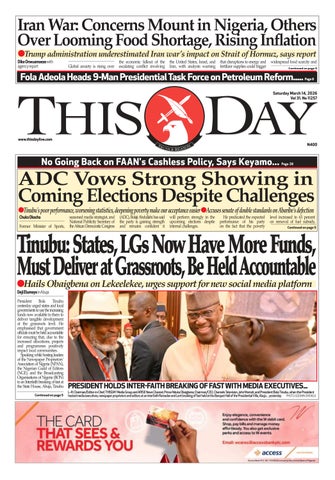
Trump administration underestimated Iran war’s impact on Strait of Hormuz, says report
Tinubu's poor performance, worsening statistics, deepening poverty make our acceptance easier Accuses senate of double standards on Abaribe's defection Chuks Okocha Former Minister of Sports, seasoned media strategist, and National Publicity
Deji Elumoye in Abuja
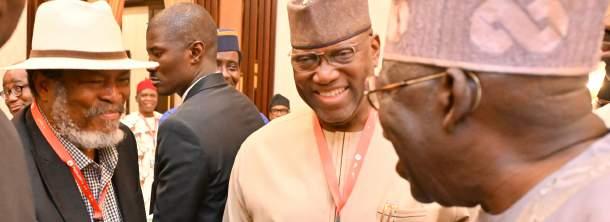
President Bola Tinubu yesterday urged states and local governments to use the increasing funds now available to them to deliver tangible development at the grassroots level. He emphasised that government officials must be held accountable for ensuring that, due to the increased allocations, projects and programmes positively impact local communities.
Speaking while hosting leaders of the Newspaper Proprietors’ Association of Nigeria (NPAN), the Nigerian Guild of Editors (NGE), and the Broadcasting Organisations of Nigeria (BON) to an Interfaith breaking of fast at the State House, Abuja, Tinubu



Ndubuisi Francis in Abuja
The Federation Account Allocation Committee (FAAC) yesterday shared a total sum of N1.894 trillion to the three tiers of government for February 2026, from a gross revenue of N2.230 trillion.
The disbursement took place at the monthly meeting
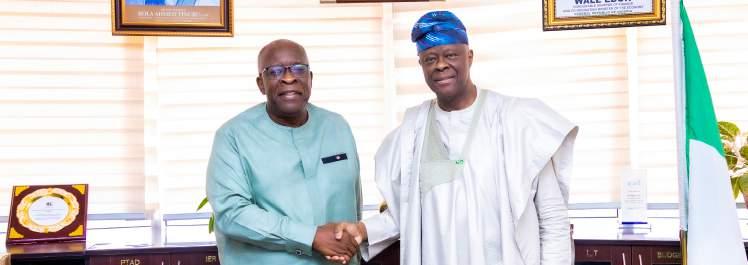
of the committee, chaired by the Minister of Finance and Coordinating Minister of the Economy, Mr. Wale Edun From the N1.894 trillion distributable revenue, comprising Gross Statutory Revenue of N1.274 trillion, and Value Added Tax (VAT) of N619.119 billion, the federal government received N675.086
billion, the 36 states received N651.525 billion, while the 774 local government councils got N456.467 billion.
Oil producing states received N110.949 billion as 13 per cent Derivation, (13 per cent Mineral Revenue).
Citing the communique issued at the end of the meeting, the Assistant Director,
Information and Public Relations, Mrs. Uloma Amadi, said the sum of N77.302 billion was for the cost of collection, while N259.078 billion was allocated for Transfers Intervention and Refunds.
The Gross Revenue available from VAT for the month of February was N668.450 billion as against N1.083 trillion
distributed in the preceding month, resulting in a decrease of N414.710 billion.
No reason was given for the significant drop in VAT receipts.
From the stated amount, the sum of N26.738 billion was allocated for the cost of collection and the sum of N22.593 billion given for
Transfers, Intervention, and Refunds.
The remaining sum of N619.119 billion was distributed to the three tiers of government, of which the federal government got N61.912 billion, the states received N340.515 billion while local government councils got N216.692 billion.
TINUBU: STATES, LGS NOW HAVE MORE FUNDS, MUST DELIVER AT GRASSROOTS, BE HELD ACCOUNTABLE
used the occasion to address growing concerns about the impact of global technology companies on the traditional media industry.
Equally, he pledged his government's support for initiatives to protect Nigeria's media ecosystem against any known foreign influence.
The President referenced local initiatives such as Lekeelekee, a new social media platform designed to redefine the future of digital communication and challenge Western dominance in the African and global tech space, recently launched by the Chairman/Editor-in-Chief, THISDAY Media Group and ARISE News Channel, Prince Nduka Obaigbena, as examples of innovation that deserve encouragement.
Tinubu said: “Don’t mind the screaming sometimes. I’m glad the Duke is sponsoring Lekeelekee while we are talking about Google and external interference in our affairs.
“We will run with the stick with you and say ‘Nigeria we hail thee.’ We will survive the challenges.”
The President urged Nigeria’s media industry to help deepen the country’s federal system by shifting greater attention to the activities of state and local governments, insisting that development must be driven at all tiers of governance.
The President called on the media to also demand accountability, development and service from other tiers of government, saying the federal government reform policies have made more funds available to the federating units.
Addressing media executives and editors, Tinubu said the recent reforms that guarantee direct funding for local governments have created a new opportunity for grassroots development, adding that the press must play a critical role in ensuring accountability at that level.
“We’ve opened up the principle of federalism to the extent that local governments are now getting their money. But how they use it is in your hands. Don’t bombard me alone; look out to the local government too”, the President said.
He added that state governments are also benefiting from improved fiscal space and must be scrutinised accordingly.
“Equally the sub-nationals are enjoying the freedom. Today, no state is borrowing to pay the salaries of employees,” he said.
The President stressed that governance and national progress require collective responsibility among leaders, institutions, and citizens, noting that the media remains an indispensable partner in nation-building.
“We can complain that it is not enough. We can complain we are not where we should be, but we have to manage what we have to sustain today, survive tomorrow and make progress. It is a collective responsibility
for you, me, and those people that we assign”, Tinubu said.
The President acknowledged the challenging operating environment facing media organisations but commended journalists and publishers for their role in informing and educating the public.
“There is no morning that I leave my house without going through the papers,” he said, describing newspaper reading as an “addiction” that keeps him abreast of national developments.
Tinubu also reflected on the early criticisms that greeted some of his administration’s major economic reforms, including the removal of fuel subsidy, explaining that difficult decisions were necessary to prevent economic collapse.
“At the time, we had to confront the subsidy; Nigeria was teetering on the edge of bankruptcy. Leadership comes with the responsibility of making decisions when they ought to be taken; otherwise, it is a failure”,
he said.
The President said that despite the initial hardships that followed the reforms, the country has begun to stabilise economically.
“Today I can stand proudly before you that we are back from that brink,” he said, recalling a period when Nigeria struggled with soaring inflation, exchange rate instability and debts owed to international airlines.
Tinubu promised to address tariffs on newspaper and broadcasting materials to empower the media industry to discharge its constitutional role effectively.
He commended the media owners, editors, and journalists for their commitment to informing, educating and keeping citizens abreast of developments, as well as providing employment and livelihoods for thousands of Nigerians.
The President said responsible leadership must take appropriate decisions at the right time,
added to the slipshod economic policies of President Bola Ahmed Tinubu, which he said foisted unprecedented suffering on Nigerians.
He said this while speaking with ARISE NEWS yesterday in an interview and in a separate statement he later issued.
Justifying his confidence, Abdullahi noted, “A lot more people are growing more confident to join the party, having seen the direction that the party is going. Yet, there are still challenges, but we are confident that our party is waxing stronger by the day. So, the election is just a few months down the line, but we are very, very confident that we’ll do well in the election.”
Speaking on the defection of Senator Enyinnaya Abaribe from the All Progressive Grand Alliance (APGA), to the ADC, Abdullahi
argued that the controversy around Abaribe’s defection was politically motivated and hypocritical.
“You see, it’s part of the APC’s duplicitousness. And why will I say this? When people decamped from NNPP to join APC, was there fractionalisation within the NNPP? The answer is no. So, it’s okay when people join APC from whatever party, regardless of the situation in that party, but when they want to leave their original party to join ADC or any opposition party, then they begin to nitpick on this. And Senator Enyinnaya Abaribe has made it clear that APGA has suspended him since last year. So, effectively, as we speak, he does not have a political party. So, on what grounds will you deny him the right to find a political party that he wants?”, he asked.
Speaking further on Abaribe, Abdullahi said the Senator had the right to join the ADC after suspension by the APGA since the constitution does not recognise independent candidates.
“If he says that his party has suspended him and he does not have a political party and he chooses to go to ADC, so on what grounds will you say he cannot find a political party for himself? Does the constitution recognize independent candidates?”, he questioned.
The Media Strategist said that the ADC was structurally and operationally ready to welcome defectors and manage election challenges.
“For the people coming to our party, we are more than ready to welcome them. It’s a big tent, and that’s why it’s a coalition, and we are hoping it will even
get bigger. So we are inviting all opposition parties—that the only way we can present a formidable front as an opposition party is for everybody to come together as long as we believe in the same thing. So we are ready structurally, and we are ready in terms of our ability to manage the competitions that would arise ahead of 2027.
We are prepared,” he declared.
“I mean, for Senator Abaribe, the Senate has adjourned to April, so there is sufficient time to deal with that. But we don’t envisage any obstacle. It’s a political party, and by its definition, a political party is to manage these kind of issues and developments. So there is nothing untoward about it, and we’re going to deal with it. So just for the record, as we stand, Senator Ireti Kingibe is not suspended from the African Democratic Congress.”
Addressing Kingibe’s suspension, Abdullahi said the matter was about following proper party procedures, not the allegations themselves, noting ward-level suspensions without national approval was invalid.
“It’s not about the material particulars of the allegations against her, it’s about the process of suspending an individual from the party. If—I’m not saying she’s guilty of those things or not—but if you are suspecting her or you are laying allegations against her for those things, then you make your presentation through the appropriate processes and procedures and mechanism of the party”, he said.
Responding to APC’s criticism of the ADC, Abdullahi said that the ruling party’s criticism highlights his party’s rising
adding that anything to the contrary amounted to failure. He acknowledged the hard but critical decisions his administration had to take to save the nation from bankruptcy.
“Leadership must, as a matter of responsibility, make decisions at the best time. Yes, I accepted my predecessor's assets and liabilities because I applied for the job and was given the job. So I have to do it. But if anybody tells you it's easy, it's a lie. I thank you for your criticism at the beginning of the administration. You challenged me. Thank you for inspiring and challenging me at a critical moment in my life.
“But having asked for the job and got it, I can't look back other than to make corrections as I move along. We had to save the nation and bring it back from the brink. Can you imagine a nation that owes airlines for ticket reimbursements and faces galloping exchange rates and inflation?
relevance and credibility as a serious opposition party.
“Sometimes you even wonder if the APC realise that they are now a ruling party or they still think in terms of opposition. Because when you find a ruling party criticizing the opposition party, you wonder which party is actually the opposition. And they’ve spent considerable time paying so much attention to the African Democratic Congress which we should ordinarily feel flattered, right?
“You know, so we’re okay, let them continue to say what they want to say. We’re happy, we’re enjoying the limelight. Now they’re paying attention. They thought we’d go away, but now we’re not going away. We’re here, sitting in the room”, he assured.
rising inflation.
The war is already pushing up oil prices and threatening key shipping routes such as the Strait of Hormuz, raising fears of higher transport, farming and food production costs worldwide.
Owing to this, experts in agriculture and economics have urged the Nigerian government to take proactive measures that would mitigate the negative
effects of scarcity of fertiliser on the country’s food security.
This comes as a report yesterday indicated that the Pentagon and National Security Council significantly underestimated Iran’s willingness to close the Strait of Hormuz in response to US military strikes while planning the ongoing operation, according to multiple sources familiar with the matter.
The experts who spoke on the looming food shortage warned that lack of access to fertilizer by farmers during this planting season in Nigeria could lower food production, plunge the country to high food costs and reverse the gains recorded in decelerating food price inflation in the country.
These views were expressed by the Chief Executive Officer of CPPE Dr. Muda Yusuf; Acting
Chairman, Lagos State Chapter of All Farmers Association of Nigeria (AFAN), Mr. Shakin Agbeyewa, and the Agric Sectorial Group Chairman, Lagos Chamber of Commerce and Industry (LCCI), Mr. Omotunde Banjoko, in separate interviews with THISDAY yesterday.
Yusuf said the ongoing war in Iran was disrupting the shipment of fertilizer and threatening Nigeria with a
looming food security risk. He, therefore, said the government should urgently consider targeted and timebound fiscal concessions on critical fertilizer inputs and production-related charges in order to moderate the rise in domestic fertilizer prices.
Yusuf said: "This is a serious concern because fertilizer is one of the most important productivity-enhancing inputs
in agriculture.
"The ongoing conflict has already unsettled global fertilizer markets, especially the market for urea, while the wider disruption in the Gulf and the closure of the Strait of Hormuz are creating significant supply and logistics pressures across energy, shipping and input markets."
Deji Elumoye in Abuja
President Bola Ahmed Tinubu has okayed the establishment of a Presidential Petroleum Reform and Value Optimisation Taskforce to design and sequence the next phase of structural reforms in Nigeria's petroleum sector.
Presidential spokesperson, Bayo Onanuga, in a statement issued yesterday named cofounder of Guaranty Trust Bank and founder and chairman of the Fate Foundation, Fola Adeola, as the Task Force's chairman.
As chairman, he will coordinate the group's work and ensure the timely delivery of its mandate.
Other members of the Taskforce are: Ademola Adeyemi-Bero, Osagie Okunbor, Abubakar Suleiman, Adaeze Aguele, Farouk Gumel,
Phillipa Osakwe-Okoye and Seyi Bella while Mofoluwasho Fadayomi will serve as secretary.
The Taskforce, as constituted, is a timebound, high-level executive working group tasked with producing execution-ready reform blueprints that will consolidate ongoing reforms, unlock capital within the petroleum sector, and strengthen Nigeria's position as a leading global energy investment destination.
The initiative reflects the President's commitment to transforming Nigeria's petroleum industry into a more competitive, transparent, and value-maximising sector capable of driving long-term economic growth, macroeconomic resilience, and industrial development.
It will operate as a technical
Blessing Ibunge in Port Harcourt
Rivers State Governor, Siminalayi Fubara, has announced plans to inaugurate the Agba-Ndele Bridge project, alongside the adjoining 14-kilometre Ndele-OmofoAgba-Ndele Road, in May 2026.
Governor Fubara disclosed the plans yesterday, during an inspection tour of the projects located in Emohua Local Government Area of the state.
The road also connects communities in Abua/Odual Local Government Area of Rivers State.
The governor, who expressed satisfaction with the level of progress achieved on the project since his last visit to the site about a year ago, highlighted the strategic importance of the bridge.
He said, "This bridge is called the Agba-Ndele Bridge.
It connects the Abua section to the Emohua section. I am really happy that today, you can see for yourself that the bridge is fully completed.
"But the beauty of this job will be appreciated more when the other 14 kilometres, the Ndele-Omofor-Agba-Ndele Road is completed. That is when you will see the actual beauty of this road."
The governor also commended the contracting firm, Setraco Nigeria Limited, for its professionalism and commitment to the project timeline.
“I want to commend the contractor, Setraco for a good job. It is a good job considering the time we came here and what we have seen today. They were really committed and they have shown that they truly have the professional expertise to deliver at the right time," he said.
reform body rather than a representative committee, engaging industry operators, regulators, investors, and civil society as consultees while focusing on actionable policy design and implementation strategies.
According to the statement, the Taskforce will report directly to the President and provide monthly progress memoranda.
An interim report will be submitted after three months, while the final outputs are expected within six months of inauguration.
President Tinubu expects the Task Force to deliver three major reform blueprints. One of the deliverables is the Implementation Toolkit for Immediate Structural Fixes – including draft legislative amendments, executive instruments, and institutional restructuring proposals. The second deliverable is the Capital and Liquidity Acceleration Blueprint, aimed at unlocking $5–10 billion in sectoral liquidity while safeguarding Nigeria's sovereign interests.
Alex Enumah in Abuja
Justice It would be recalled that the court had last week adjourned to March 10, to enable the INEC boss to appear before it to purge himself of contempt charge, in respect of an order regarding the leadership of the National Rescue Movement (NRM).
The adjournment was
following a request by INEC's counsel, Muktar Bawa, who had assured that Amupitan would physically appear in court to purge himself of contempt charges against him.
The court however did not sit on March 10, and the matter adjourned to March 13.
When the matter was called, the INEC boss was
not in court and his team of lawyers led by Suleiman Ibrahim, SAN, challenged the jurisdiction of the court to hear the matter, on the grounds that the alleged contempt was not committed in the face of the court.
He therefore urged the court to decline jurisdiction.
However, this request was opposed by counsel to NRM,
Oladimeji Ekengba, who urged the court to punish the alleged contemnor in his absence. He argued that contrary to the submission of INEC's lawyer, civil contempt is different from criminal contempt, adding that, "this is a case of disobedience of court order not an action personal to the judge."
Alex Enumah in Abuja
The trial "denovo" (starting afresh) of former governor of Jigawa State, Alhaji Sule Lamido and his two sons, Aminu and Mustapha Lamido, over allegations of fraud has been scheduled for April 1, 2026.
New trial judge, Justice Peter Lifu of the Abuja Division of the Federal High Court, yesterday announced April 1, for the
fresh arraignment of the three defendants alongside companies linked to them, in the alleged corruption and fraud charge.
The Economic and Financial Crimes Commission (EFCC), is prosecuting the defendants over alleged fraud to the tune of N1.35 billion.
Although the fresh arraignment was scheduled to hold yesterday, their counsel, Mr. Joe Agi, SAN, apologised for their
not being in court explaining that information about the trial came on Thursday evening.
He said that the former governor and his children are resident in Kano and could not make it to the court because of the distance and lateness of the notice of hearing.
The senior lawyer thereafter undertook to produce the accused persons on the adjourned date to face their trial.
Responding, EFCC's lawyer, Mr. Chile Okoroma, SAN, expressed surprise that the three defendants were not in court having been served with the notice of trial.
Meanwhile, Okoroma disclosed that the EFCC had written a letter to the Chief Judge of the Federal High Court, requesting the continuation of trial by the former Judge, Ijeoma Ojukwu.
Chuks Okocha in Abuja
A chairmanship aspirant in the ongoing state Congresses in Anambra State, Chief Amaechi Onowu, has appealed to the Minister of the Federal Capital
Territory, Nyesom Wike, to save the Peoples Democratic Party (PDP) in the state from what he alleged as the tyrannical and dictatorial tendencies of the State Caretaker Committee led by Chief Casimir Ajulu.
He alleged that Ajulu wants to impose himself as the next chairman of the party in the state.
Onowu said in the spirit of equity and zoning in the state, the office of the state chairman
was zoned to the Central Senatorial District, which he comes from, but Ajulu, who comes from the north, wants to use his office and impose himself as the next chairman of the party in the state.
of Finance and
VISIT...
Onyebuchi Ezigbo in Abuja
The Secretary to the Government of the Federation, Senator George Akume, has said the country requires leadership orientation that emphasises service to the people.
He said that what Nigeria needs at the moment are citizens whose consciences are guided by values and whose actions are anchored in integrity and compassion.
Akume's declaration came just as the National President of the Catholic Laity Council of Nigeria, Sir Ambrose Obioha, charged Catholic faithfuls to be champions of the social values in every sphere of life.
In his speech at the Flag Off of the 2026 Catholic Laity Week in Abuja on
Thursdays, Akume said that faith is not merely a private conviction, but a living commitment that must find expression in social, economic and political life of society.
He said that such commitment to values is important at a time when the nation is confronted with complex challenges ranging from economic pressures and social inequalities, to questions of justice, peace and national cohesion.
The SGF, whose speech was read by the Permanent Secretary, Cabinet Office, Dr. John Ezeamama, said the principles embodied in Catholic social teachings offer a powerful moral compass capable of guiding individuals, communities and institutions towards
The Nigerian Safety Investigation Bureau (NSIB) has released its preliminary investigation report on Arik Air Flight W3740 and said that catastrophic failure of a fan blade in the left engine led to its explosion and diversion of the flight to Benin Airport on February 11, 2026.
NSIB said the aircraft, a Boeing 737-700 with registration mark, 5N-MJF, was enroute from Murtala Muhammed International Airport, Lagos, to Port Harcourt International Airport when the incident occurred during climb to about 07:35a.m.
The aircraft, with 87 souls onboard, had just passed flight level 260 and was climbing toward FL290 when the crew heard a loud bang followed by
intense vibration and grinding noise from the number-one engine.
The agency reported that the malfunction caused the aircraft to veer left and begin losing speed, forcing the crew to disengage the autopilot and stabilise the aircraft manually.
After confirming severe damage to the engine, the crew shut it down in line with emergency procedures and declared a Mayday.
Air traffic control advised the crew to divert to the nearer Benin Airport in Benin City, where the aircraft landed safely about 30 minutes later.
All passengers and crew disembarked without injuries.
NSIB said a post-incident inspection revealed extensive damage to the left engine and surrounding airframe.
a more equitable and compassionate society.
He said, "Nigeria today needs citizens whose conscience is guided by values, whose leadership
is inspired by services, and whose actions are anchored in integrity and compassion.
"The church has long been a steadfast voice in promoting these values,
and the Catholic priests have consistently demonstrated their commitment to the moral and social advancement of our country."
Akume said that Catholic
Laity occupies a unique and strategic position in the society as professionals, entrepreneurs, educators, public servants, community leaders and national builders.
Chuks Okocha in Abuja
The 2023 presidential candidate Labour Party (LP), Peter Obi, has denied allegations made by President Bola Tinubu’s Special Adviser on Policy Communication, Daniel Bwala, claiming he attempted to recruit him for the 2023 presidential election campaign. Also, the Obidient Movement has dismissed claims by former senator Dino Melaye that Labour Party’s
2023 presidential candidate, Obi, lacks the capacity to unite Nigeria, insisting that the former Anambra State governor remains the right leader for the country.
Obi, yesterday, said the accusation did not merit a response, insisting he had no dealings with Bwala and would not engage in what he described as “transactional politics.”
The former Anambra State governor clarified this in a
remains
statement issued in Abuja by his media aide, Ibrahim Umar, amidst intensifying exchanges between political figures regarding the 2023 general election.
The statement read, “Normally, we would not dignify Bwala’s baseless accusations with a reply, given his well-documented history of dishonesty. However, we feel it is necessary to address this matter for the benefit of the public, who may be misled.
“Obi has made it clear that he excludes individuals like Bwala from his political activities and any form of transactional politics that sustain people like him in political circles. The Obi that Nigerians know and appreciate will never engage in such practices. He would rather allocate resources to provide desks for children in Bwala’s village than pay him to concoct falsehoods for public consumption.
Sunday Ehigiator
Zenith Bank has partnered with Visa to introduce the Visa Signature Card, a premium payment product designed to serve affluent customers with enhanced global lifestyle benefits, travel privileges and exclusive merchant offers.
Speaking during the unveiling, General Manager, Retail Group, Zenith Bank, Emmanuel Lanre Oladimeji, said the initiative was aimed at strengthening the bank’s long-standing focus on high-value customers and expanding the range of premium financial solutions available to them.
According to him, “What we are launching today is to scale up what Zenith Bank is already known for. We serve the affluent customers of the market today and we have existing products specifically designed for this customer base.”
He added that the collaboration with Visa represents a deeper level of engagement with the bank’s globally mobile clientele.
Pharmacists under the aegis of the Association of Community Pharmacists of Nigeria (ACPN) have adopted a framework to deepen the practice of the community pharmacists in the country, promote professional competence.
ACPN explained that the initiative through the
Community Pharmacists Assessment and Career Progression Institute (CPACPI) was aimed at advancing community pharmacy practice as key centres for primary healthcare delivery. The framework was presented at a stakeholder engagement meeting convened
by ACPN recently in Abuja, received the endorsement of stakeholders from the health and pharmaceutical sectors as a positive project that will transform community pharmacy practice in the country.
Over 100 participants from broad stakeholders in the pharmaceutical and health sectors, including representatives from government institutions, regulators, development partners, professional associations and private sector organisations, with discussions centred on improving Nigeria’s community pharmacy practice.
Adedayo Akinwale in Abuja
President of the Senate, Godswill Akpabio, yesterday, inaugurated the All Progressives Congress (APC) Convention Sub Committee on Programmes and Events, with a charge on members to work assiduously for the success of the convention.
This was as the Minister of Defence and Chairman 2026 All Progressives Congress (APC) National Convention Security Committee, Gen. Christopher Musa, has
assured that the committee would develop and coordinate a comprehensive security framework that would guarantee the safety of all participants throughout the duration of the convention.
Also, the Tinubu Support Group (TSG) is set to hand over campaign vehicles to 109 senatorial coordinators.
Speaking at the inaugural meeting of the sub Committee in Abuja, Akpabio told the members, "It is a privilege to be recognised by the ruling APC. The leadership of the
party under Professor Yelwata Natawe, has done well by assembling experienced hands as members of the Programmes and Events sub Committee, therefore, we should not have any issues in this committee as far as performance is concerned"
In a statement by Special Assistant to Senate President on Media, Jackson Udom, Akpabio said, "Let us remember why we are here. We will do our job in a way that the stage and venue will not be rowdy. We will not
allow repetition of speeches. We will take cognisance of the six geopolitical zones in order to allow the sub-nationals to showcase what they have done for the people as governors."
Akpabio also used the inauguration to reaffirm the commitment of the National Assembly to national development by supporting the programmes of the current administration led by Asiwaju Bola Ahmed Tinubu.
"The National Assembly will continue to support the agenda of the President Tinubu-led
Olawale Ajimotokan in Abuja
Minister of the Federal Capital Territory (FCT), Nyesom Wike, has ordered the arrest of a developer Alhaji Kabiru Sahara and immediate demolition of illegal structures erected on diplomatic lands reserved for Thailand, Japan, Palestine Liberation Organisation (PLO), Syria, Austria, Switzerland, Serbia and Montenegro, Bulgaria, Senegal and Somalia in Katampe Extension District, Abuja.
He issued the directive yesterday on the appropriated foreign mission lands during an inspection tour of several ongoing infrastructure projects in Abuja, including road works linking Wuse to the Central Area, a road near the Body of Benchers Complex, the Tungan-Madaki road off the airport corridor and upgrade works around the City Gate.
He said Sahara, a private developer, had encroached
upon the Diplomatic Zone to erect buildings without authorisation from the Federal Capital Development Authority (FCDA).
“This land was allocated to various embassies. Somebody just came here, took the land and started developing it on his own without approval from the FCDA. We cannot allow this kind of land invasion to continue,” Wike said.
The affected area was originally partitioned on
March 18, 2008, to serve as the residences of several embassies and also reserved for the Power Holding Company of Nigeria for a 132/133KV power station.
The minister, who expressed outrage at the audacity of the encroachment, said the Department of Development Control had been directed to remove all illegal structures while the FCT Administration had begun notifying the missions to take possession of their allocated land.
Bitget, the world’s largest Universal Exchange (UEX), has introduced a major structural upgrade to its trading interface, elevating traditional financial assets such as stocks, commodities, and forex into a standalone product category alongside crypto trading.
The update reflects a broader shift in how exchanges are evolving as crypto infrastructure
increasingly supports global financial markets. Across the industry, exchanges have begun adding traditional assets to their platforms, including equities, indices, and precious metals. While this trend signals growing maturity in digital asset markets, many platforms continue to treat traditional assets as secondary features within crypto-focused trading environments. Bitget’s latest update takes a different
approach by restructuring the platform to give traditional financial products equal prominence. The platform now separates crypto trading and traditional asset trading into distinct core navigation sections, enabling users to access each market through dedicated interfaces tailored to their trading behaviors and risk profiles.
The change reflects the growing convergence between digital assets and traditional
finance. While the global crypto market currently represents roughly $2.4 trillion in value, traditional financial markets span nearly $900 trillion across equities, commodities, foreign exchange, and other instruments. As tokenization technologies and real-world asset (RWA) infrastructure mature, an increasing share of traditional financial activity is expected to move onto blockchain-based settlement layers.
government in his efforts towards taking the country out of the woods. President Tinubu met what can be described as foamy economy. He had to put up his thinking cap by harmonising the exchange rate and the removal of the fuel subsidy, which was a drain pipe on the economy. "He has also put in place the tax reforms, which has increased National revenue from the non oil sector through the National Revenue Service (NRS) and has equally led to more money for the sub nationals."
Woodhall Capital, one of the leading African investment and financial advisory firms, recently hosted a dinner reception in Lagos in honour of Prof. Benedict Oramah, former President and Chairman of the Board of Directors of the African ExportImport Bank (Afreximbank).
The exclusive gathering brought together the leadership of Woodhall Capital and distinguished guests to celebrate Professor Oramah's transformative contributions to African trade and economic development.
The event, according to a statement, served as a formal recognition of a leader whose visionary stewardship has fundamentally reshaped the continent's financial and commercial landscape. In attendance were key figures from Woodhall Capital's governance structure, including Mr. Akin Akinfemiwa, Chairman of the Woodhall Capital Group Board of Directors; Mr. Adejare Rasheed Olaoluwa, Director; and Mrs. Mojisola Hunponu-Wusu, President of Woodhall Capital Group.
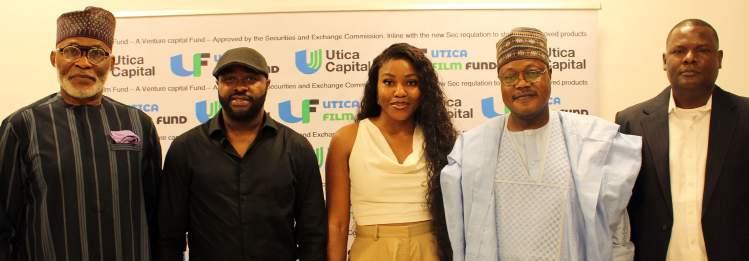
Utica Capital Limited has announced the opening of project submissions for the Utica Film Fund, a N20 billion venture capital fund designed to provide structured financing for Nigeria’s film and screencontent industry, widely known as Nollywood.
Approved by the Securities and Exchange Commission (SEC), the Fund aims to support commercially viable film projects and film-industry businesses while introducing institutional investment standards to one of Africa’s fastest-growing creative sectors.
Nollywood is among the world’s largest film industries
by volume and remains a key contributor to Nigeria’s creative economy. Producing thousands of films annually, the sector generates employment, expands Nigeria’s cultural exports, and contributes to the country’s broader economic diversification.
The Utica Film Fund is structured as an institutional investment vehicle designed to bridge the longstanding financing gap within the industry. By combining venturecapital discipline with sector expertise, the Fund aims to unlock long-term value across the film production and screencontent ecosystem.

TUNDE OLUSUNLE urges Daniel Bwala to learn more about his craft
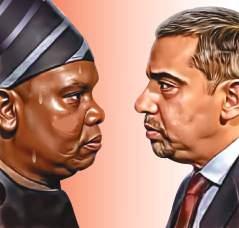
Mehdi Hasan, the tough-grilling *Al Jazeera* inquisitor, did more than marinate and barbecue Daniel Bwala on global television, Friday March 6, 2026. You had to sympathise with Bwala the kind of hiding he received on global television that day, even while being concurrently embarrassed by his crass incompetence. Hasan by the way, is the *Al Jazeera* reincarnate of Stephen Sackur, the erstwhile host of *BBC Hardtalk* between 2004 and 2025. Sackur, like Tim Sebastian before him, was famous for his prosecutorial, hard-punching approach to engagements, which compelled his guests to confront discomforting truths. It didn't matter to Mehdi Hasan that Bwala’s middle name is indeed *Hassan* with one consonant more than his variant of the same name.
For those who may not know, Bwala loves the limelight, he covets grandstanding and exhibitionism, a fact confirmed by Mehdi Hasan at that wholesale deconstruction. Such predilection is called *sè ka rimi* in Yoruba. It would translate as "make I do make dem see me" in Nigerian pidgin. Bwala shared a video clip of his "research and rehearsal" for his ill-fated *Al Jazeera* appearance before the programme. He needed Nigerians to know that beyond the commonplace "WASCE," "NECO" and similar local examinations he had faced on our home-based television stations, he was poised to write the very tough "Cambridge" higher school certificate examination, in London.
Despite my four decades in media practice and scholarship, I couldn't recognise any face in the motley crowd Bwala assembled in the conference room in the widely publicised video of his fervid preparation for Mehdi Hasan. Some of us are "old school" these days, you never know. While working for President Olusegun Obasanjo between 1999 and 2007, I was interviewed on quite a number of foreign stations including the BBC and VOA on a number of occasions. I never needed a rehearsal. Indeed, the impromptu-ness of some invitations barely gave you time to catch your breath before being hoisted on global networks. We survived the furnaces of such conscriptions just by being comported, perspicacious and professional.
Mehdi Hasan denied Bwala the opportunity to revel in his pastime as he left the London studios of *Al Jazeera,* for his return flight to Abuja. Poor boy, he was bruised, bludgeoned, bloodied. Typical Bwala would have taken selfies in the luxurious comfort of the "first class" sitting area on the flight that was
Fbringing him home and plastered the internet with his images. Ever showy, he always wants the rest of us to appreciate how hard he's working for us and how he's enjoying on our behalf. Obasanjo by the way, officially consigned us to the "economy class" on commercial flights in our time. We were, however, at liberty to upgrade to business class at our own cost. That's how austere *Baba* was.
Bwala has a proclivity for making a show of his privileged circumstances at every given opportunity. One wonders in which media reference book he gleaned that promotion of self, for the image maker, must proceed apace with the projection of one's principal. While serving as Special Adviser to the President of the Senate in the Ninth Assembly, Senator Ahmed Lawan, Bwala always wanted the world to see him nestling in the immediate space of the nation's *Numero Trois.* Back in 2022 after ditching Lawan for former Vice President Atiku Abubakar, the flagbearer of the Peoples' Democratic Party, (PDP) at the 2023 elections, Bwala suffused the social media with photographs of his holiday in France and Dubai with Atiku. Mehdi Hasan allowed him return like a rain-ruffled chick.
Bwala is everything a spokesman should not be. He is presumptuous, self-opinionated and deluded. He celebrates and serenades himself at every given opportunity, rather than speak for his employer. I stumbled on an interview he had with Vanessa Obioha of THISDAY in May last year and this is how he described himself: "I have two decades of unmatched public communication skills anchored on sound knowledge of governance, law and diplomacy. The knowledge of law and advocacy is the icing on the cake because it helps me to know the legal implications of all issues I communicate on behalf of my principal." Without interrogating the grammaticality of Bwala’s *ijala* here, I find this boastfully preposterous, utterly vainglorious and needlessly self-serving.
IT'S NOT EVERY INVITE TO THE RING THAT A PROFESSIONAL FIGHTER HONOURS, THOUGH. THE NIGERIAN EXHORTATION, "SHINE YOUR EYES" CANNOT BE MORE APPOSITE
Bwala seems to think he's the first person who was ever spokesperson to a President. He thinks he's the best thing that ever happened to public communication. While I do not intend to rival him in vacuous self-promotion, I probably need to drop it here that exactly 34 years ago this month when I was just 27, I was already Director of Information and Public Affairs to the Governor of my state.
Olusunle, PhD, Fellow of the Association of Nigerian Authors, (FANA), teaches Creative Writing at the University of Abuja
rom the ancient Persian world to the Swahili coast of Africa, the story of Iran is not merely political—it is civilizational. The current conflict therefore raises questions not only about power, but about history, justice and humanity itself.
In Africa, a well-known proverb captures a timeless truth: “When two elephants fight, it is the grass that suffers.” Across the wider African continent, this saying reminds us that when powerful actors collide, it is ordinary people—families, children and communities—who bear the greatest cost.
Today, as tensions escalate across West Asia and military strikes attributed to the United States and Israel target the Islamic Republic of Iran, the world is witnessing a confrontation that extends far beyond the calculations of geopolitics.
To strike Iran is not merely to confront a modern state. It is to challenge one of the oldest living civilizations on Earth—a civilization whose cultural, intellectual and spiritual influence has shaped vast regions of the world for more than three thousand years.
Long before the modern geopolitical map of the Middle East existed, the
The attack on Iran raises difficult questions, argues SYED REZA JAFARI
Iranian plateau had already produced organized states, complex administrative systems and vibrant intellectual traditions. From the Achaemenid Empire of Cyrus the Great to the flourishing cultural centers of Shiraz and Isfahan, Persian civilization helped shape literature, science, philosophy and political thought across the Mediterranean world, Central Asia and the Indian Ocean basin.
Unlike many later imperial powers whose expansion relied on colonization, resource extraction and the brutal transatlantic slave trade, Persia’s historical influence travelled largely through knowledge, trade and cultural exchange.
This legacy of interaction links Iran not only to Asia but also to Africa.
Centuries before European colonial powers partitioned the African continent, Persian merchants were already sailing the monsoon winds of the Indian Ocean toward the Swahili coast.
They arrived not as conquerors but as traders, scholars and cultural intermediaries.
From present-day Somalia to Mozambique, Persian traders established networks of commerce and intellectual exchange with the Swahili city-states.
Maritime knowledge, architecture, poetry and urban culture travelled across these routes alongside textiles and spices.
The interaction was never one-sided. African societies reshaped and integrated these influences into their own traditions, creating a distinctive Afro-Asian cultural synthesis that still characterizes the region today.
Even the Kiswahili language, rooted in Bantu linguistic traditions, reflects centuries of interaction with Persian and other Indian Ocean cultures.
In this sense, the story of Iran is not distant from Africa—it is intertwined with it. In 1979, Iran once again became the stage for a unique historical transformation. The Islamic Revolution did not attempt to erase Iran’s ancient past. Instead, it sought to frame a deeply rooted civilization within a moral vision centered on justice, independence and the defense of the oppressed.
Imam Ruhollah Khomeini, the founder of the Islamic Republic, articulated a political philosophy that placed the protection of the Mustazafin—the oppressed and marginalized—at the heart of the revolution’s mission.
One of the most enduring expressions
of this principle was his declaration of the last Friday of Ramadan as International Quds Day, inviting people around the world to remember the plight of the Palestinian people.
This ethical perspective continued under the leadership of Ayatollah Sayyid Ali Khamenei, who consistently framed the Palestinian question not merely as a geopolitical dispute but as a matter of moral responsibility and global justice.
For many observers, this unwavering support for Palestinian rights remains one of the central sources of tension between Iran and its adversaries.
Jerusalem: A Sacred City for Humanity : From the perspective of religious scholarship, Jerusalem—known in Arabic as Al-Quds—occupies a unique place in the spiritual geography of humanity. It is sacred not only to Muslims but also to Christians and Jews.
Within its ancient walls stand some of the most revered sites of the Abrahamic traditions: Al-Aqsa Mosque, the Church of the Holy Sepulcher, and the Western Wall. Jafari is Cultural Attache, Cultural Expert Embassy of the Islamic Republic of Iran in Abuja
WOhen President Muhammadu Buhari took over the reins of power on May 29, 2015, Nigeria was sadly a broken state in many respects. As a result of many other factors including bad governance and untold level of corruption, government could not live up to its financial obligations to citizens and service providers at both the federal and state levels.
And not a few people who violated the sit-at-home order were mowed down by gunmen. The killing of people who purportedly violated the sit-at-home directive given by IPOB struck fear into the hearts and minds of the people.
Indeed one of the first official assignments that President Buhari carried out was the approval of billions of Naira in bailout funds to enable state governors pay something as basic as workers’ salaries. Granting those bailout funds was a huge boost to national security because the pressure of arrears of unpaid monthly salaries building dangerously all over the country was a ticking bomb.
Ask the naysayers and they would readily remind you of how long it took President Buhari to appoint his ministers and how that contributed to collapse of the economy as if, without ministers, governance was frozen. But buying that narrative would amount to what a famous Nigerian writer, Chimamanda Adichie, termed “the danger of a single story”. Yet the whole story was that many of our citizens did not know how decrepit a state President Buhari inherited in 2015.
ne of the corollaries of the rendition of Nnamdi Kanu to Nigeria was the declaration of Monday, the first work day in the week, as a work free day in the south-east by the leadership of the proscribed Independent People of Biafra (IPOB). Leaders of the separatist group gave the order in 2021. Nnamdi Kanu was the leader of IPOB until his incarceration. Before he was brought back to Nigeria from Kenya, he used diverse methods, both orthodox and unorthodox, to agitate for the creation of the state of Biafra. He wanted, and perhaps still wants, a separate country to be carved out of Nigeria for the people of the southeast and other Igbo people, who live in states, which are contiguous to the Southeast.
It was therefore necessary for him to take stock against the background of the fact that the departing government did not, reportedly, cooperate full well with the incoming government in terms of leaving workable handover notes. Although President Goodluck Jonathan was gracious in defeat, many of his appointees were still sulking over what they saw as their personal losses and therefore pulled all the stops to make things difficult for the Buhari government.
It is an understatement to say that he was a thorn in the flesh of the Nigerian political leaders, whom he ridiculed, criticized, and caricatured. His separatist messages, which highlighted the mistreatment of the Igbo people in Nigeria, endeared him to his ethnic compatriots.
by the EFCC, President Buhari by his action has successfully brought back to the public consciousness the need to treat public funds with the highest level of transparency and accountability.
But people's observance of the IPOB's sit-at-home directive had caused us incalculable damage. As schools did not open on Mondays, teachers were unable to teach their pupils and students all the topics contained in the schools' curricula and syllabuses. As a result, the shortchanged students were ill-prepared for such school examinations as SSCE, NABTEB, NECO, UTME, and others. That accounted, partly, for the abysmal performances recorded by students in the examinations, then.
Middle East has once again found itself at the center of global attention, as cycles of conflict, retaliation and political tension continue to dominate international headlines.
After keeping treasury looters on their toes and at bay through the EFCC, particularly, President Buhari moved to curb unnecessary spending habits of the nation on what economists call articles of ostentation. Part of the disclosures of the President’s stock taking was how the country frittered away billions in foreign currency by importing goods, which can be produced at home. One of such items was rice, a major staple among Nigerians. By banning rice importation into the country, the President on one hand had saved the nation billions in foreign currency annually.
And, on the other hand, the President has boosted domestic production of rice and in the process had nudged the country into self sufficiency in food production. He also created millions of jobs for young people in the rice value chain.
TAt the heart of the issue lies a painful but familiar reality: destruction is often easier to initiate than to repair. Cities can be shattered in moments, but rebuilding trust, stability, and human lives takes generations. The consequences of war extend far beyond the battlefield, touching families, economies, and the fragile fabric of society.
What is most admirable about President Buhari and his government is its frugal management of scarce national resources to attain optimum goals.
Recall that since President Buhari stepped in the saddle, oil revenue dropped abysmally as if to sabotage him knowing all the big promises he made to citizens during his campaigns. But with the little resources that trickle in, the President is achieving what governments that received oil windfalls could not dream of.
Chiedu Uche Okoye, Uruowulu-Obosi, Anambra State
Even with the obvious and unpatriotic obscurantist behaviour of the PDP appointees and their supporters still in government hell-bent on making things difficult for Buhari, the President moved on with his methodical repair of a broken country. The first thing he did was to identify all possible sources of income to the nation and directed that all inflows be paid into one single account in line with the policy of Single Treasury Account (TSA).
The TSA policy, interestingly, was mooted by the PDP government but its penchant for imprudence and lack of accountability denied it the courage of implementing the policy. What the President literally did was to gather all the nation’s money into one box and locked it up with a big padlock and watched for any thief to come close.
Who can blame the President for almost developing paranoia over the safeguard of the national treasury with revelations and reports of mind-boggling looting that took place in the 16 years of the PDP? With such disclosures of how billions meant for fighting insurgency in the Northeast ended up in the pockets of a few individuals while our gallant soldiers fought with bare hands and on empty stomach, President Buhari was duty bound to bring sanity and accountability back in national spending.
But his pro-Biafra rhetoric irked and unsettled the Nigerian leaders to no end. So he was renditioned to Nigeria. Not surprisingly, the defanged IPOB leadership gave the directive that every Monday should be work free day in the southeast of Nigeria so as to show solidarity with him. Since then, and until recently, most towns in Anambra state were turned to ghost towns on Mondays. People would stay indoors on Mondays to avoid being attacked by the enforcers of the sit-at-home directive.
Thus, under President Buhari, the Economic and Financial Crimes Commission (EFCC), which had remained comatose for years, was woken up to resume its duties. Apart from the trillions of Naira of looted funds and property recovered from corrupt politicians
For decades, the region has remained a focal point of geopolitical struggle, where local disputes often evolve into broader confrontations that affect global stability.
he Advocacy for Alleged Witches (AfAW) urges the Nigerian public to stop ritual attacks and killings because the notion of ritual money and wealth is completely baseless. AfAW is making this call following the reported arrest of suspected ritualists in Oyo State in southern Nigeria. The local media reported that members of the Western Nigeria Security Network, Amotekun, arrested suspected ritualists with the body parts of a 73-year-old man.
“When you break it, you must fix it; and when it bleeds, it leads the headlines. That is the painful reality of the Middle East conflict,” says political commentator Onuesoke, reflecting on the persistent turmoil in the region.
The phrase captures a troubling truth about modern conflicts. Violence often attracts the world’s attention only when tragedy unfolds. Images of destruction, displaced civilians, and humanitarian crises quickly dominate global media coverage.
Today, the trains are up and running daily from Abuja to Kaduna. And from Lagos to Ibadan a brand new rail track was started and completed; citizens are already commuting daily to and fro these two major cities in the country seamlessly as they reap from the dividends of democracy. And with the way this government is going, before 2023 when the President would leave, the entire country would be linked by rail with all of its economic advantages.
Ainofenokhai Ojeifo, Abuja
THE SATURDAY NEWSPAPER
EDITOR YEMI ADEBOWALE
OLUSEGUN ADENIYI
DEPUTY EDITOR AHAMEFULA OGBU
MANAGING DIRECTOR ENIOLA BELLO
EDITOR NATION’S CAPITAL IYOBOSA UWUGIAREN THE OMBUDSMAN KAYODE KOMOLAFE
DEPUTY MANAGING DIRECTOR ISRAEL IWEGBU
CHAIRMAN EDITORIAL BOARD OLUSEGUN ADENIYI
EDITOR NATION’S CAPITAL IYOBOSA UWUGIAREN
MANAGING EDITOR BOLAJI ADEBIYI THE OMBUDSMAN KAYODE KOMOLAFE
THISDAY NEWSPAPERS LIMITED
EDITOR-IN-CHIEF/CHAIRMAN NDUKA OBAIGBENA
GROUP EXECUTIVE DIRECTORS ENIOLA BELLO, KAYODE KOMOLAFE, ISRAEL IWEGBU
THISDAY NEWSPAPERS LIMITED
DIVISIONAL DIRECTORS SHAKA MOMODU, PETER IWEGBU, ANTHONY OGEDENGBE
EDITOR-IN-CHIEF/CHAIRMAN NDUKA OBAIGBENA
DEPUTY DIVISIONAL DIRECTOR OJOGUN VICTOR DANBOYI
GROUP EXECUTIVE DIRECTORS ENIOLA BELLO, KAYODE KOMOLAFE, ISRAEL IWEGBU, IJEOMA NWOGWUGWU, EMMANUEL EFENI
SNR. ASSOCIATE DIRECTOR ERIC OJEH
ASSOCIATE DIRECTOR PATRICK EIMIUHI
DIVISIONAL DIRECTORS SHAKA MOMODU, PETER IWEGBU, ANTHONY OGEDENGBE DEPUTY DIVISIONAL DIRECTOR OJOGUN VICTOR DANBOYI
CONTROLLERS ABIMBOLA TAIWO, UCHENNA DIBIAGWU, NDUKA MOSERI
SNR. ASSOCIATE DIRECTOR ERIC OJEH
DIRECTOR, PRINTING PRODUCTION CHUKS ONWUDINJO
ASSOCIATE DIRECTOR PATRICK EIMIUHI
TO SEND EMAIL: first name.surname@thisdaylive.com
CONTROLLERS ABIMBOLA TAIWO, UCHENNA DIBIAGWU, NDUKA MOSERI
Yet the long, difficult process of rebuilding communities and fostering peace rarely receives the same sustained focus. Sunny Onuesoke, Warri
AThe suspects, who were apprehended in the Boluwaji area in Ibadan, said that a Muslim cleric asked them to procure some human body parts for rituals. Ritual attacks are widespread in Nigeria. Irrational conceptions of how to make money or become wealthy and successful undergird these atrocities. Many Nigerians strongly believe in blood money, known in some local languages as Ogun Owo (Yoruba) or Ogwu ego (Igbo). They think that they could become rich, or successful through ritual sacrifice. Unfortunately, this is not the case. Ritual wealth has no basis in reason, science, or reality. Home movies known as Africa magic or Nollywood films have not helped matters. These movies continue to reinforce these mistaken notions and other superstitions. Families, churches, mosques, and other public institutions do not encourage the interrogation of these traditional occult beliefs. There are no robust efforts to criticize or dispel these irrational and paranormal claims in schools, colleges, and universities. So millions of Nigerians grow up blindly believing that they could make money through ritual sacrifice of human body parts. The belief has led many Nigerians to commit crimes and perpetrate atrocities. Many Nigerians have been jailed or are undergoing court trials due to ritualrelated attacks and murder.
s the energy prices rise sharply, the support for the 'war' against Iran eases. Even calling this a war is a uncertain descriptor. America and its friend Israel are bombing the daylights out of Iran who is returning the attack on Israel and a number of countries that are 'friends' of America or at least have a base there. The definition of friend and foe now seem almost interchangeable as the US has allowed some Russian oil to flow so that energy prices won't escalate and Republicans can hope they won't get the blame and lose a number of midterm seats.
Dennis Fitzgerald, Melbourne, Australia
Not too long ago, the police arrested some young Nigerians for stealing female pants, which they intended to use for ritual sacrifice. AfAW is asking all Nigerians to desist from ritual-related abuses because ritual money beliefs are baseless superstitions. Nigerian media, schools, and colleges should help educate and reorient the public. They should assist in reasoning Nigerians out of this killer-superstitious absurdity and nonsense. Leo Igwe directs the Advocacy for Alleged Witches (AfAW)
“HE said the salvation of the country cannot (could not) be found in any of the existing political parties.”
“7 LGAs violentprone (violenceprone) in Bayelsa elections—NGO”
“Pa Ukoha was a selfless community leader, (otiose comma) who committed his personal resources to the upliftment (uplift) of Igbere community.”
“Otti handsover (hands over) 65 security vehicles to police”
“Here are the personalities that grace (graced) the occasion.”
“Two of England’s most successful clubs will on tomorrow (delete ‘on’) go head-to-head in the Premier League as Manchester United take on Liverpool.”
“Incessant fuel tanker fire (fires) worries (worry) Obi of Onitsha”
“…so that our people will live a prosperous, safe and secure lives (life) in their environment (environments)….”
“…as cost of raw materials skyrocket (skyrockets)”
“RUGA: Why farmers, herders (herders’) crisis (crises) persist—Don”
“Even a child in this nation knows that the police derives (derive) its (their) enabling and operational authority from the dictates of the Centre….” The paper’s Metro Section institutionalized this same lexical bondage in one of its headlines: “In Kano, Police allegedly shoots (sic) tanker driver over bribe” Its Editorial was equally not left out in this particular police howler: “Nigerians would no doubt be happier to hear from the Nigerian Police what it is (they are) doing to enhance its (their) capacity….”
“The ban on tinted glasses is even more reprehensible because the security benefits it can deliver is (are) far from certain.”
“Gov, Reps demand his arrest over (for) inciting comments on 2027”
“A week’s trail on the heels of pirates reveal (reveals) how Nigerians lose billions of Naira to the kingpin….”
“Court remands Edo lawmaker in prison over unlawful possession of firearm” The lawmaker was remanded in custody—not in prison!
“That is why the Presidency must show more leadership and tact before jumping into a battle just because it thinks it has the power to crush the enemy—real or imagined.” Get it right: the enemy—real or imaginary.
“Nigerian scientists have failed woefully.” THE SUNDAY INTERVIEW: …have failed abysmally (not woefully)
“Let me also make this point that our scientists have not done creditably well over the years.” No overkill: either creditably or well.
The final entry from last week’s edition of this medium: “Insurgents await ransom, assure on ex-minister’s safety” ‘Assure’ is a transitive verb. It must take an object.
“Restoring sanity on (to) the road should be the first tangible step if he is serious about….”
“The result was that what was supposed to be a consensus agreement willingly entered into by….” ‘Consensus agreement’? Next time, just choose one.
“It was flurry of activities in Abuja last week.…” A flurry or a hive of activity….
“The minister said government’s desire to licence (sic) a second carrier is born out of the…” General view: borne out.
“Knowing fully well that Abacha was a key factor in the Babangida regime.…” Intelligent commentary: knowing full well.
“What is good for the goose should be good for the gander.” Fixed expression: what is sauce for the goose is sauce for the gander.
“Some blind beggars on a street in Lagos Island” Beggars in a street on (not in) Lagos Island.
“…Catholic cardinals who converged at (on) the Vatican for a three-day meeting….”
“Manhunt begins for killers of award winning (award-winning) police chief.”
“…writes (writes to) the president to intimate him of (to) the hardship ravaging the land.”
“The civil servants have got pay rise, yet their purchasing power have (has) been decimated.”
“The ITSC equipment was damaged early this week by a heavy rainstorm....” In the interest of telecoms, delete ‘heavy’-–which is contextually otiose, just like ‘heavy downpour’!
“Every moneybag (moneybags) wants you to know when he is celebrating….” ‘Moneybag’ is the sac used
in putting money, while the owner is a moneybags.
“A professional must update his knowledge in his chosen career otherwise he becomes a mediocre.” The way we write: otherwise he becomes a mediocrity or mediocrist. ‘Mediocre’ is an adjective that cannot function as a noun except in a collective manner (the mediocre).
“The emergence of vigilante (vigilance) groups to combat the activities of men of the underworld is only symptomatic of lack of faith in the ability of the police to guarantee….”
“NLC suspends siege on (to) First Bank, as NUJ lays siege to Daily Champion over non-payment of six-month salary”
“The assurance from the IGP is therefore supposed to act as a soothing balm.” Is a balm not supposed to soothe? Does it do the opposite?
“…it will be much more so with one involving a police personnel.” ‘Personnel’ is a collective term. Use ‘policeman’, ‘officer’ or ‘cop’.
“But how do we prevent hunger next year when politicians will engage themselves (one another) in a do or die (do-or-die) battle for re-election.”
“VP condemns do or die politics” This way: do-or-die politics.
“The race to Government House in Kano has began in earnest as….” Without any effort: The race has begun….
“…those who would have uttered (what?) them reduced everyone to spectators while they reached for each other’s throats.” Get it right: each other’s throat or one another’s throat (depending on context).
“After all, as they say, ‘what is good for the goose is good for the gander’ ’’. What is sauce for the goose is sauce for the gander.
“Knowing what to wear and how to compliment (complement) it goes a long way….”
“The state, therefore, does not deserve the treatment being currently meted to it”. Classical expression: being meted out to it.
“Chief of Naval Staff advocates for increased productivity via industrialization” When used as a verb, ‘advocate’ does not admit ‘for’. Let us avoid verbiage in headline casting: Naval Chief advocates increased productivity.
“For the university to recommend that students
Or perhaps we should ask more bluntly: Is Nigeria quietly drifting toward a one-party democracy?
In a country where politics often resembles a high-stakes football league - complete with last-minute transfers, sudden red cards and dramatic comebacks - the latest move by Zamfara State Governor, Dauda Lawal, from the Peoples Democratic Party (PDP) to the ruling All Progressives Congress (APC) may appear, on the surface, to be just another routine transfer window manoeuvre. After all, Nigerian politicians change clubs (parties) with a frequency that would make European football agents proud.
Yet this particular defection carries deeper implications. With that move, the APC now controls 31 of Nigeria’s 36 state governorships. For a political party barely fifteen years old, this is a remarkable feat. But it also raises an uncomfortable question that Nigerians must begin to confront with some seriousness: when political dominance becomes this overwhelming, are we still operating within the healthy boundaries of a competitive democracy?
Political scientists will tell us that democracy thrives on contestation. It thrives when opposing ideas clash, when rival parties challenge policies, and when governments remain aware that voters have viable alternatives. Without those conditions, the democratic ecosystem begins to weaken.
What Nigeria appears to be witnessing is not merely political growth for the ruling party; it is the gradual erosion of meaningful political competition.
The official explanation for Governor Lawal’s defection follows a familiar script. There were consultations with stakeholders. There were internal crises within the PDP. There was the need for stability and cooperation with the Federal Government. And, naturally, there was the noble commitment to accelerate development for the people of Zamfara.
One almost expects a standard template circulating among political aides: Insert “consultations”, add “development”, garnish with “unity”, and announce defection.
But behind these carefully worded explanations lies a reality many Nigerians understand perfectly well. Political survival, access to federal resources, and protection from political vulnerability often play
a far more decisive role in these calculations than ideological conviction or programme alignment.
The irony, of course, is that voters rarely get consulted when these political migrations occur. Many citizens cast their ballots based on party manifestos, campaign promises, and ideological positioning. Yet once elected, many politicians treat the party platform as a removable accessory - something to discard whenever the political weather changes.
In mature democracies, such behaviour would trigger fierce institutional consequences. In some countries, defecting lawmakers automatically lose their seats and must return to voters for a fresh mandate.
The logic is simple: the electorate voted for a candidate under a particular party banner. If that banner changes, the people must be given the opportunity to decide again.
Nigeria’s constitutional provisions on defections remain ambiguous enough to allow generous interpretation - an ambiguity that politicians have mastered with impressive creativity.
The result is a curious democratic paradox. Voters choose parties during elections, but politicians choose parties after elections.
For opposition parties, the implications are even more troubling. A political system where one party dominates the executive landscape across nearly the entire federation creates structural disadvantages for challengers. Access to resources, visibility, and patronage networks becomes uneven. Over time, this imbalance can weaken the ability of opposition parties to organise, mobilise and present credible alternatives.
The danger here is not merely electoral imbalance; it is the gradual normalisation of political inevitability. When citizens begin to believe that one party will always win regardless of circumstances, voter enthusiasm declines, political debate weakens, and democratic accountability suffers.
African political history offers cautionary tales in this regard. Many post-independence governments began as dominant parties
should pay for the damages while they have….” A common mistake: except in legalese, ‘damage’ cannot be pluralized.
“…rather than investigating and finding out who were involved and check against future re-occurrence: Beyond recurrence, can an event yet to take place happen in the past?
“…the university is pointing its accusing fingers in the direction of the lecturers.” True idiom: point a/the finger. No inclusion of ‘accusing’ or inflection of ‘finger’.
“It is our belief that we members of the alumni association of our Alma Mata (Alma Mater) have unique roles to play in the restoration of sanity on our university campus.” It is…restoration of sanity to (not on) our campus.
“Isn’t it funny that it is the beak with which a bird builds it’s (sic) nest that it uses to scatter it.” Possessive: its
“…the AU summiteers concentrated almost exclusive (sic) on the political independence and liberation of countries in (on) the continent.”
“Monday’s action, which started at dawn, was as a result of the breakdown of series of negotiations…” An agendum: a series of negotiations.
“According to investigations, the deceased was said to be resting alone in his room at about 9.p.m….” Every reporter should be decisive based on timing which description to use: either at or about 9 p.m. The two cannot co-function.
“According to the source, the institution has a very high percentage of failure in the last academic year.” Reported speech: the institution had (not has). “… that the authorities of the institution was (were) still waiting the result of the police analysis of the bomb”. “…in the next three years, its per capital income would have ...” This way: per capita income.
“Then it was catalogue of misses for the Super Eagles.” In the spirit of qualification: a catalogue of misses.
enjoying widespread popular support. Over time, however, unchecked dominance often evolved into complacency, institutional capture, and in some cases outright authoritarianism.
From Ghana in the early decades after independence to several one-party systems that later emerged across the continent, the pattern was disturbingly familiar: political competition diminished, dissent became inconvenient, and ruling parties increasingly equated their survival with national stability.
Nigeria, to its credit, escaped the worst of those trajectories after the return to civilian rule in 1999. The country experienced genuine political alternation when the ruling PDP lost power in 2015 to the APC - an event widely celebrated as a milestone in democratic consolidation.
But political alternation only remains meaningful when the possibility of it continues to exist.
If the opposition becomes so fragmented and weakened that electoral competition is no longer credible, democracy may technically survive - but its spirit begins to fade.
Some optimists argue that Nigeria’s political culture is too diverse, too noisy, and too unpredictable to ever become a true one-party state. Ethnic balances, regional interests, and powerful political personalities constantly reshape alliances. Today’s ruling coalition could easily become tomorrow’s opposition.
There is merit in that argument. Nigerian politics has always been fluid rather than rigidly ideological. Alliances shift. Political godfathers quarrel. Ambitions collide. And when those collisions occur, new political arrangements often emerge.
Yet fluidity alone cannot substitute for institutional strength. The question therefore becomes whether opposition parties can overcome their internal divisions and present a credible coalition capable of challenging the current balance of power in 2027.
Coalition politics is not new in Nigeria. The APC itself emerged from a coalition of opposition parties determined to end the PDP’s long dominance.
If history is any guide, political coalitions become viable only when opposition leaders are willing to sacrifice personal ambitions for collective strategy. That, unfortunately, has rarely been the strongest feature of Nigerian political behaviour.
Still, political pressure has a way of producing unlikely partnerships. If the current pattern of defections continues and opposition structures

continue to weaken, the instinct for survival may eventually push rival parties toward collaboration. Lessons from Europe and the Americas offer additional perspective. Dominant parties do emerge in democratic systems - from the Conservatives in Britain during certain eras to the Democrats in parts of the United States. However, strong institutions, independent electoral bodies, and internal party competition often prevent dominance from becoming permanent monopoly.
In Nigeria, the challenge is not merely political competition but institutional resilience. Electoral credibility, judicial independence, and legislative autonomy remain essential safeguards against democratic imbalance.
For now, the APC’s growing control of the governorship map may represent strategic political success. But democracy requires more than the triumph of one party. It requires the sustained existence of credible alternatives.
Without that balance, politics risks becoming less like a competitive match and more like a ceremonial parade. And Nigerians know the difference.
The irony is that ruling parties themselves should worry about such imbalance. When opposition disappears, internal party factions often become the new opposition. Power struggles move inward. Rival camps emerge. And governance becomes hostage to internal battles rather than public accountability.
In other words, when the field becomes a one-team match, the real contest simply shifts to the dressing room.
As the road to 2027 slowly unfolds, Nigerians must watch these developments with a mixture of realism and vigilance. Political defections may be routine, but their cumulative effect can reshape the entire democratic landscape.
After all, democracy is not judged by how comfortably the ruling party governs; it is judged by how easily power can change hands when citizens decide it should.
If you’ve ever watched ‘My Flatmates,’ you know Chief Donatus—the older, sometimes bewildered, always hilariously opinionated housemate whose timing and delivery make even the simplest lines unforgettable. Off-screen, that same wit drives Bethel Njoku, the comedian who knows the Nigerian stage like the back of his hand. Njoku talks about why passion, not popularity, keeps Nigeria’s comedy industry alive, how discipline shapes his craft, and why the secret to laughter is more than just being funny. Obinna Chima brings the excerpts:
Take us back to the beginning. What first inspired your journey into comedy, and at what point did you realise it could become a serious career?
For me, comedy is something that I was born with. It’s in my lineage. I am from Mbaise and we are known for entertainment. We are a lively and expres- sive kind of people. So, I would say it is in us. I also come from a lively lineage. My late mum had the highest sense of humour, and I got that from my mum. As time went on, I started drawing closer to the art. My mother wanted me to study medicine, while my father wanted me to study Engineering. You know how parents at that time wanted their children to pursue professional careers. Comedy and art as professions were still emerging. They didn’t know it would grow as big as it has today. I ended up studying Theatre and Performing Arts at the University of Jos. I also have a Diploma in Theatre and Performing Arts. I got the inspiration from my family.
What role did the likes of Julius Agwu play in all of this, and what is the most valuable lesson you learnt from him?
At the level of professional comedy, I got a lot of support from Julius Agwu. I owe him that honour. Julius happened to be a friend to my cousin, Sam. Sam also studied Theater Arts, but they were far ahead of me. While he was at the University of Jos, Julius Agwu was at the University of Port Harcourt, also studying Theater Arts. I got to know Julius when I was doing my Diploma. So, I watched them perform while I was still in school. I remember I told Julius that I wanted to do stand-up comedy, and he said I must complete my education before working with him. Julius actually inspired me, and that was why I waited until I finished my degree before venturing into the industry. I worked with Julius Agwu and from there I worked with Basket Mouth, a had a stint with AY, I have done a lot with Okey Bakaassi and also with Ali Baba. I learnt something from each of these persons and I also exchanged value during the period I worked with them.
How would you describe your style of comedy?
My brand of comedy is analytical. It is spontaneous, and it is something that comes with training. That is because I had a formal way of understanding how this art is. I had formal training. I didn’t just jump into it. I take a lot of structure around my performance. I still script jokes up till tomorrow, and I have no apology about that because that was how I was taught. You must be prepared. But if you get there and you see that it is an audience where you can play around with spontaneity, you can do your thing. But before I get there, I must have a script. So mine is analytical, and I will not take away the fact that some materials come as divine. In total, I make sure that I open up my mind to all things. My sense of observation is highly key because I was trained in that.
The Nigerian comedy industry has grown tremendously in the past two decades. From your perspective, what key factors have driven this growth?
I must say a lot has happened in the industry, and a lot also affected things that happened. Back in the days, there was no social media. So, we saw a situation whereby if you want to be popular in Adamawa, you had to travel to Adamawa so that you would be known there. At that time, it was manual, and we sank in a lot of commitment into growing the industry. Sometimes you will travel for a show in Kano, without knowing that the show had been cancelled. That was because communication wasn’t as advanced as it is today. So, when digital media came in and communication improved, the industry took a different turn. Back then, we used to have ‘A Night of a Thousand Laughs,’ and we
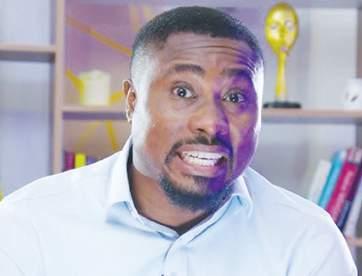
would just have six performances, and the people would sit down, no purchasing of tables, theatre style, and everybody would enjoy and laugh. As time went on and as the economy was stifling, people started looking for ways to advance their business; they started introducing table tickets, VIP tickets, VVIP tickets, and all other classes of tickets to raise money. But we must understand that by the time you segregate the audience, those who are really your main fans would begin to feel that they are not appreciated much. As we speak now, finding a sponsor for your show is very difficult. We now have a situation whereby you have to look out for some rich people of yours to buy a table, and the feeling is that your power of purchase is in their hands. You see a situation whereby a show is slated for 5pm, it doesn’t start until the Chairman of the occasion walks in at around 10 pm. So, the value and the etiquette of the trade have dissolved. They might not want to hear this, but it is the truth. I have been in the business for over 20 years now, and I can tell you how it was when I got in, the dynamics, and things that have taken place. Back then we didn’t have issues of people stealing someone’s joke to go and perform
at shows. Then it was more of hard work, unlike what we have today. Another thing is that because we don’t have a regulator, it is now like an all-comers’ affair, and people just do whatever they wish and get away with it.
How do you think the industry can be sanitised?
We must understand that there is no trade, no sector, or business that doesn’t have those kinds of challenges. It is everywhere. But a regulatory body will be better. If we can get that it will go a long way to sanitise the industry. But the problem with a regulatory body, as we have seen with the Actors’ Guild and the rest of them, is that people most of the time go there for personal gains and purposes. I believe that as time goes on, passion will remain. At the end of the day, those with passion will remain in the industry.
You began your comedy career on radio, then transitioned to live stand-up. Now that you’re back on radio, what motivated that move?
Like I said before, stand-up comedy at some point in time was just basically what we do on stage. Comedy can be transmitted
through different modes and means. At those early stages, radio was an experiment we tried on Raypower FM, and it was like a wildfire. Whether you like it or not, it is not everybody who has the opportunity to watch you on stage. It was an opportunity for what is called ‘transit comedy,’ which is comedy on the move. I was doing that on the radio at that time and we discovered that those in traffic were really enjoying it, and those whose means of communication was just radio had an opportunity to experience what we were doing. They say radio is a blind man’s medium because you don’t know who is listening. Some people cannot afford to watch me on stage or on television, but they listen to me daily. So, radio complements my other aspects.
Tell us about your character, ‘Chief Donatus,’ on the TV show ‘My Flatmates’, and how you came up with the name? I remember nine years ago, Basketmouth reached out to me to say he would need me on his sitcom. It had already started, and it was in its second season. I told him it was not going to be possible, and he appealed to me to just find time to shoot two episodes with them. After that, M-Net, which commissioned the programme, refused to let me go. They said the character must remain. So, he told me that for the character, they just wanted me to be an older person who would come to squat with younger people, who probably must have travelled abroad, to somewhere in Asia. So, decided to go for the name Donatus, which sounds like an old name and we also chose Bangladesh. So, I started filling the character.
With skits and social media becoming the in-thing now, and the young acts exploring them to break even, are those in traditional comedy like the stand-up genre under pressure to produce content? Yes, you have to be under pressure. But it now depends on how you take your pressure. The pressure is there because it is not the regular. It is not the way it should be. Some of the skits you watch are mostly from people’s jokes, and with the advent of social media, they travel faster. So, when eventually somebody sees you performing that joke on stage, they assume you copied from the skit. That is the challenge, and what it means is that you have to move faster than you used to be to catch up. For some of us, we also shoot skits, which is what I studied in school. I have virile skits, and so I don’t think such pressures can affect me. I understand that things were changing, and I was also moving with the trend. But for those who were not prepared for the change, you just have to equip yourself.
Tosin Clegg
For years, AY Live has set the standard with sold out shows at home and abroad. From premium experiences to unmatched production the show has served nothing but excellence, artistry and creativity. What began as a comedy show has now become a movement, a culture and now a legacy. On April 5th, he is set to make this year’s edition bigger and stronger just as the theme suggests, ‘Against All Odds.’
But in commemoration of this year’s edition the comedian has decided to do something different.
According to him, “One thing I have realised over the years is that the people who create the loudest laughter, the real excitement and the unforgettable moments at shows are often the fans who buy regular tickets.
“But today, many of them can no longer afford it. And even when they can, transportation to and
from the venue becomes another challenge. So I decided to do something about it. I am inviting 50 friends to buy 50 tickets each for Nigerians who have always dreamed of attending AY Live, but have never had the opportunity. Just imagine the joy of someone experiencing AY Live for the very first time.
“I will be tagging some friends who I believe can help make this happen. If you are willing to join this movement and sponsor tickets, please send me a message. Together, we can give thousands of Nigerians a night of laughter this Easter.”
This gesture is quite a commendable one as the times in Nigeria now seems to be overwhelming.
With the current price of petrol, projected rise in food and other commodities, rent increases among other things having a good time to unwind and not worry could be healing beyond one’s imagination.
For years, the show has remained a symbol of laughter, excellence, and unforgettable entertainment. The lucky 50 as well as other guests are set to experience an explosive edition of AY Live.
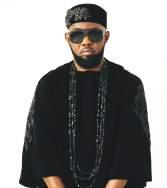
Actress Sandra Eze is not one of your regular faces but often makes an impression when given the opportunity in the entertainment scene in Nigeria. Also an OAP, TV show host, and model, Sanzye, as she’s fondly called, has taken a path in tune with her career desires and aspirations. She speaks to Ferdinand ekechukwu, revealing that, contrary to some opinion, she didn’t quit acting and would be crazy to have done that if she had. She shares her thoughts on the industry and more about her personality. Excerpts:
What have you been up to lately?
I’ve been gathering experiences, a lot of it, which mostly involved building stronger relationship with God. I just got back from a very long holiday/retreat and prior that, I spent over two years in Abuja studying as a student in Koinonia School of Ministry and serving in the sanctuary department. I’m grateful I got to be mentored by Apostle Joshua Selman. I also worked briefly in the corporate world as a Business Development Assistant.
At some point of recent, one thought you have ‘japa’? Do you have any of such plan?
(Laughs out loud), After the last elections, it is safe to say that Nigeria finally broke me. However, I haven’t ‘Japa’, I’m still here. I went away to breathe and reset. I must confess though, I am very attracted to the ease of living abroad, it automatically rids you of all the aggression and masculine energy you’ve carried on as Nigerian. Like the basic things we cry for in major cities, people in the ghetto have it… just pay your bills. Be disciplined with savings and investments, then you’ll be fine.
Can you take us back a bit into your journey in the industry?
My journey started with radio hosting, grew into TV and metamorphosed into acting. I didn’t know I would love acting, I didn’t even know I had it in me. I still love media and I have a co-host on WAYS show, but I don’t think I want to be another Christian Amanpour anymore, and I also embraced the fact that I may never work with CNN. Dreams die, sometimes because you’re not well positioned for it or because you lack the resources or because you’re not favoured by the gatekeepers.
Has there been a time you ever thought of quitting acting?
I really love acting; I love the thrill of being someone else for a short while. However, as a Christian, I’m also aware that there were roles I could never play. Contrary to what I hear people say, I didn’t leave the scene because I wanted to. I would be crazy to do that. I had finished a supporting role on Am Brethren, my face was on billboards and all over TV screens across Africa. I was getting more calls, more
Queen Blessing Ebigieson, National President of the Association of Movie Producers of Nigeria (AMP), has been sworn in as the Chairman of the Federation of Registered Nollywood Guilds and Associations, effective March 7, 2026.
This development marks a significant milestone in the Nigerian film industry, with Ebigieson’s leadership expected to further strengthen collaborations among industry stakeholders, government, diaspora communities, and wellwishers of the industry.
In a statement released by AMP Public Relations, Ebigieson pledges to use her new role to foster unity, promote innovation, and drive growth within Nollywood, enhancing its global presence.
“I want to thank all guilds and associations for electing me as the chairman of the Federation of Registered Nollywood Guilds and Associations. I am elated and believe this would spur me to unite all guilds and drive growth and inclusion within Nollywood. Thank

scripts, better pay. It was a great season for my career and my purse. And then I filmed Maskers Season 2 because I had committed and couldn’t afford to disappoint the producer. After that, I disappeared from the scene. You would think I was living baby girl life in Abuja… a whole story for another day.
Can you take us through your background, family, growing up, and fond memories of your childhood and how it shaped you?
I’m from Igboukwu in Anambra State. I’m the second. My parents separated so we were thrown apart to live with and serve different relatives…that hurt, a lot. As a child I was super sensitive and quiet. I read a lot and laughed a

scandal?
I just stay on my lane. My mentor would say “you are born looking like your parents but you die looking like your decisions”. I weigh my decisions and rule out anything that doesn’t align with the woman I’m becoming be it romantic interests or promotion deals or whatever.
Apart from acting, what other art form do you indulge?
I sing pretty well, and I enjoy dancing; most people don’t know that. I’m picking an interest in painting too.
What’s your take on celebrity marriages, considering that celebrity couples don’t last as most would believe?
lot… I don’t do both as much anymore. Looking back, I realize parents can passionately love their child and still not know how to handle their sensitivity. I was bullied a lot, such that I ran away from boarding school. I was ready to die on the streets then face another day with the bullies and wicked seniors. Eventually I was moved to Command Secondary School Enugu where I learnt to speak up and stand my ground. My fondest childhood memories were all during Christmas, with my siblings and cousins. I’m deeply grateful to have them as relatives and friends. I guess maybe that’s why I’m naturally happiest in December.
How have you managed to stay out of
you for having confidence in me,” says the national president of AMP. Other executives elected include Alh. Shehu Hassan Kano as Vice Chairman, Alhaji Toyin Uthman as Secretary and Chief James Oguejiofor as Public Relations Officer.
The election has been met with enthusiasm from industry stakeholders, and groups who anticipate positive changes and advancements under her leadership.
Meanwhile, congratulatory messages continue to pour in for the newly elected Chairman of Federation of Registered Nollywood Guilds and Association, Ebigieson. The latest of the messages comes from the National Leadership of the National Association of Okpella Students (NAOS).
NAOS noted that her emergence into this noble position is a clear testament to her dedication, leadership capacity and the immense contributions you have consistently made to the growth and development of the Nigerian film industry, widely known as Nollywood.

Most of us don’t understand marriage yet. We are very self-oriented. We study for everything else but enter marriage on auto pilot. I read a book on marriage by the Late Timothy Keller and it was an eye opener. Marriage is beyond chemical reactions and butterflies. And that’s tricky because in celebrity world everyone is hot! And most of us are trying to get a relationship that elevates our status or gets us through doors. Yes, you need a purpose partner, but that’s just one course in the marriage institution. There are very few people getting it right. Marriage is a journey of death, healing, pleasure, commitment, accountability and sacrifice. That’s hard! It’s hard to figure out how complex electronics work without consulting the manual. One man is complex, two humans with different families, experiences, age, sex, exposure etc. merging together is even way more complex. We need God the author to make it work or at the barest minimum, a truck load of wisdom and forbearance. Love and attraction is not enough.
Do you think Nollywood with its recent offerings is in the right direction? What are some of the changes you crave in the sector?
Oh yes. There have been a lot of great developments lately. There is more structure, better pay, more streaming platforms, disciplined entertainment executives that don’t ask for sex, affordable film schools, better scripts… I don’t like that we are fast embracing raw nudity on screen. I believe we are capable of telling beautiful stories without incorporating nudity. They did it in the past and the level of success they attained, with their clean content, most filmmakers are yet to hit that mark. I would like to see more representation in the global film industry. Some of us are going for it! Joseph Benjamin was in Green Leaf, Ayoola was cast in Chosen Season 4, Diana Yekini was in Heart of Stone… that’s super cool! Even more impressive is the recognition we’re receiving at international film festivals. Also, cinematography and SFX in recent films like Ahanna, Jagun Jagun, Gangs of Lagos, Anikulapo… is impressive. We are finally telling our story. I must praise the executives at the frontline shattering these doors: Mo Abudu, Kemi Adetiba, Filmone, Play Studios. They put in the work, they should get their credit. In addition, I would love to see more production tailored for kids and family consumption. And I like that independent producers can now put out their contents on YouTube and make a ton from it. It’s good for actors too, more funds equal more production. Viewers are happy, producers are happy, cast and crew are working and happy.
What’s that role you look forward to play compared to the previous characters you have assumed?
I’ve done a lot of leads on TV, I don’t have a role in my head yet, I just want to break into film and the box office. Actually, I’d love to do an epic.
The Chief Executive Officer of Patient Academy International, Kunle Thomas, is calling for stronger patient accountability mechanisms within Nigeria’s healthcare system, stressing that improving patient experience and transparency is critical to addressing persistent challenges in the sector. While also introducing ‘My Voice, My Health’, a new digital platform designed to enable Nigerians report and document their healthcare experiences, Thomas said the country must begin to prioritise patient feedback as a critical tool for reform. Sunday ehigiator brings the excerpts:
What’syourtakeonthe state of Nigeria’s health sector?
Nigeria’s health sector still has a lot that needs to be done. Yes, there is a lot being done already, and there are efforts on the part of the government to improve. We are aware, for example, of the body that was recently set up to look at clinical governance and examine what happens when things go wrong within the system. That is very welcome, but it is still very recent, particularly regarding issues of medical negligence. When you look at clinical governance as a whole, patient experience, and related issues, these developments are encouraging, but there is still a lot more that needs to be done. Listening to patients and members of the public, you get the sense that things are still very far from what they should be. I have spent about 25 years in the UK working within the health sector. I worked with the National Health Service, heading various departments across acute hospitals, general hospitals, mental health services, and ambulance services. When I compare what I am used to with what is available here, we still have a long way to go. That said, my expectation is not that Nigeria must replicate exactly what exists in the UK or other Western countries. What I expect is evidence that we are serious about moving things forward and fixing the obvious problems that exist. Recent events have drawn attention to the deficiencies in the system. For example, when someone is involved in a serious accident, the expectation is that an ambulance will attend to them immediately. There are critical interventions that should happen before the patient even reaches the hospital. Missing those steps can reduce the chances of survival and recovery. When international figures are involved in such incidents, people around the world take notice and begin to ask questions. They wonder why an ambulance was not involved and whether the emergency response system is functioning effectively. Those kinds of optics are not very good because they suggest that the country lacks a reliable emergency system.
Another case that drew attention was the tragic death of the son of writer, Chimamanda Ngozi Adichie. I understand that some doctors involved in the case were recently suspended. That suggests something may have gone wrong. There are still issues around facilities, equipment, and staffing. When I talk about staffing, I am not referring only to numbers, although the numbers are also a challenge. Many Nigerian doctors are leaving the country for opportunities abroad. Even those who remain often face poor welfare conditions. I speak regularly with doctors. One of my co-directors is a consultant anaesthetist with over 30 years of experience, and we also have board members who are physicians based in the United States and the UK. When Nigerian doctors travel abroad, they often excel because the systems there support them with good facilities, proper welfare, and fair remuneration. There are also strict rules regarding working hours. Until recently, some doctors here were expected to work up to 72 hours on call. Resident doctors had to push for reforms to reduce those hours. Imagine a doctor who has already worked 50 hours continuously and is then required to
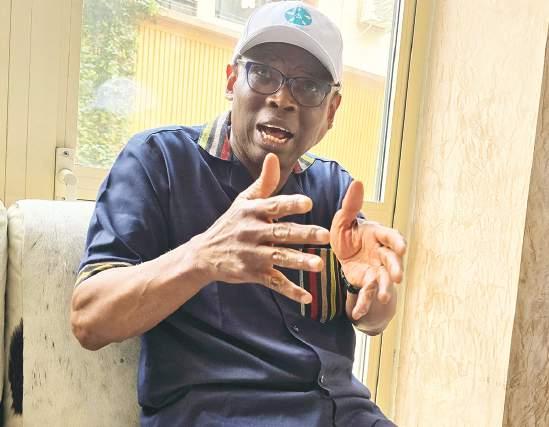
perform a major surgery. That doctor is already exhausted, and the chances of making mistakes increase significantly, no matter how skilled they are. These are some of the systemic problems that still need to be addressed.
Given your experience in the UK’s NHS, what is your organisation bringing to Nigeria?
Patient Academy International focuses on patient experience, clinical governance, patient and public engagement, and health communication. Our work looks at everything relating to how patients are treated within the healthcare system. For instance, if patients receive poor service, what happens? What is the complaint process? How is feedback gathered, and how is that feedback used to improve services? In advanced healthcare systems, the responsibility for improving healthcare does not lie solely with clinicians or hospital administrators. Patients and their families are also involved. For example, when a hospital wants to recruit a chief executive or a senior consultant, patient representatives sometimes sit on the interview panel. These individuals are not clinicians, but they bring
the perspective of people who have used the service. International bodies such as the World Health Organisation identify three pillars that determine healthcare quality. The first is clinical outcomes. If someone comes to the hospital with a serious health problem, how effectively was that problem treated? The second is safety. Patients should not go into the hospital for one issue and leave with a new infection or complication. The third is patient experience, which concerns how patients are treated throughout the process.
In the UK, for example, there were cases where hospital-acquired infections such as MRSA became widespread. That forced the government to invest heavily in infection control, including strict hand hygiene practices and empowering patients to question healthcare workers who did not sanitise their hands before treatment.
How will these ideas be applied in Nigeria?
One of the first initiatives we are launching is an online platform called My Voice, My Health. This platform allows any member of the public, healthcare worker, or regulator to provide feedback about their experience with any healthcare facility. Whether it is a general
hospital, specialist hospital, diagnostic laboratory, or primary healthcare centre, users can submit their feedback. Many Nigerians experience problems in healthcare facilities but do not report them formally. Instead, they complain to friends or express their frustrations on social media, where the information disappears quickly. Our platform provides a centralised repository for these experiences so they can be analysed and used to improve healthcare services. The system includes analytics that allow us to identify patterns in the data. For example, we can determine the most common complaints within a certain period and identify the areas where hospitals are performing well. Policy makers, including officials at the Federal Ministry of Health, can then use this information to guide reforms and improve healthcare delivery. The platform also allows users to submit voice notes in local languages such as Yoruba or Igbo, which can be transcribed into English. This ensures that language barriers do not prevent people from sharing their experiences.
You emphasise co-production in healthcare. What does that mean?
When we say co-production, essentially, what we are saying in a very simple way, is making patients work hand-in-hand with hospital management, with clinicians, to make services better. But what you often have is not that. Even in advanced countries, they are beginning to perfect that as well. That is because the first thing that tends to happen in most departments is that they have an idea, the technical guys come in, the clinicians come in, and they say, okay, this is what we’re going to do, this is what we’re doing, right? We will bring in patient representatives who will sit around. So, you set up sub-committees that will work on any project you are trying to do. And we now bring patients and their carers who have been using that service that you are trying to reform. We bring those people who use those services to come and sit around the table. Even if you have a committee of, say, six, we can bring in just two patient representatives to join that six, making eight. And so they sit together, and the clinicians and the technical guys will start talking, and the patient will say, ah, okay, that sounds very nice, but have you thought of, because the last time my mother was here, or the last time I was here, this happened to me, this happened, and if we had had this, this would have been better. I say, “ Oh, thank you very much. And this is how that co-production works. So, it’s not that after everything is done, without patient involvement, you call the patient to come in. So, when you design and plan together with them, it becomes a true co-production, and that makes it so much better for everybody.
In 2023, you published the book ‘Dear Patients: A Medical Guide to Patient Experience,’ what inspired that?
So, ‘Dear Patients: A Medical Guide to Patient Experience,’ as you rightly said, was published in the UK in 2023. And the main purpose, of course, despite the advancement in the UK, I mean, you know, lessons have been learned every day, right? I mean, in the same Western world, you have seen nurses and doctors who become serial killers, and I’m sure you guys have had several cases, right? Where, I mean, you know, a recent one, well, not too recent, the nurse is in jail now, she’s a paediatric nurse, who
• Thomas
basically was, you know, giving injections, giving medications to patients that would make them, you know, almost on the point of death, and she was rushing as they want to save them, and we all know that she’s the one that’s causing this. Because, you know, they have this mentality of they want to come in as a saviour, they want to come in as the one that will save the day, and all the rest of it. And in some cases, some of these patients die, you know. And so, it took a while for their colleagues and the system to say, because they are recording this, and say, okay, when this person is on shift, this seems to be happening whenever she’s on shift, what’s going on? So, it took a while. And when some colleagues were raising concerns to say, I’m going to manage, well, but they were being dismissed. Even in the UK, they were being dismissed that, no, no, no, no, no, it cannot be, you know. It was later on when it kept on happening, and then they felt that, look, we need to do something about this. And they started looking at all the data, they started looking at what was going on, and then
they realised that actually, so much evidence just started pouring in, because you can’t accuse somebody of something very serious. They will sue you, sue the hospital, sue, and walk away with it. So, they gathered the evidence, they did all the research, and they realised that, yes, they have enough evidence to prosecute her. And she’s in jail now; she’s been in jail for a while. So, another one, a doctor in this instance, he didn’t clear my head at the moment, but he was a GP, a general practitioner. And they were highly, you know, these are people with what I call a professorial look, you know. Shipman, that’s it, Dr Shipman, you know. So, he was a doctor for many of his patients, mostly elderly patients, right? And what happened, many of them were basically being essentially killed, you know, by the person they trusted that was there to save them, that they trusted so much. So, he was a highly regarded man in society, a doctor of so many years’ experience, highly regarded and loved in the community. But because he was working, he moved away from a big practice where he was working, and he was working as a lone practitioner. So, that’s why it took some time before the authorities were able to really get him. It would have been easier if he were working in a big practice; other people would have, you know, identified the problem. But anyway, he was eventually not, and he actually died in jail, committed suicide in jail, you know. So, these are some cases to show that even in the West, you have cases that are very serious. But the difference between the West and here, from my experience now, is that we don’t keep quiet. People don’t keep quiet in the West. Accountability. And the accountability doesn’t just come from the management, it comes from patients, it comes from the public, and it comes from even staff, right? If you read some of the articles I’ve recently written, the whole concept of whistleblowing is very strong in the UK, and I’m sure in most countries in the West. Whistleblowing is a policy, a policy in hospital management that allows staff, that gives staff the liberty to, you know, privately and publicly come to report their colleagues that they have seen that are doing things that can harm patients or that are, you know, unethical or any other misconduct, right? That’s what all this is about.
So, yeah, the book looks at different things. It looks at what patient experience is all about, and how we can use the data that we gather in patient experience, in surveys, and in tool complaints. There are many data systems and datasets available, not only from complaints or compliments but also from regular surveys. So, you actually have to go out deliberately and survey.
The government does its own survey annually on so many things. There is a separate survey for maternity services, a separate survey for inpatients, and a separate survey for outpatients in the UK. So, there are so many different surveys nationally done, right?
But hospitals now have, and other health facilities now do their own local surveys. So, you have a lot of data. And that data, obviously, is not just data for the sake of data. It’s data to be able to analyse that data and say, how do we use this data to continue to, you know, improve services. And that is the bottom line.
What legal backing exists for your new platform?
Well, the platform provides support in several ways. Firstly, it helps patients navigate the healthcare system by directing them to the appropriate regulatory bodies. So, if you are not sure who to report to or what your rights are, we guide you through that. Secondly, we offer advisory services where experienced clinicians review complaints and suggest possible solutions. That way, patients can understand the clinical aspects of their complaints and what realistic outcomes might be. Thirdly, we can provide advocacy by acting as intermediaries between patients and healthcare providers to help resolve disputes. We don’t take sides, we’re not here to sue anybody, we’re here to broker solutions. Our role is really to broker resolutions where possible rather than encourage litigation. But if a case cannot be resolved, the patient may choose to pursue legal action independently. That’s entirely up to them.
See concluded part on www. thisdaylive.com
The Oluyin of Iyin Ekiti, Oba Adeola Adeniyi Ajakaiye, speaks to Raheem Akingbolu on the level of preparedness put in place by the Iyin community ahead of the take-off of the newly established Federal University of Technology and Environmental Sciences (FUTES)
What were you doing before you ascended the throne?
I had my early life in Iyin and I had my primary school education there. My dad was a teacher, a headmaster in the village. After primary school, I went to Christ School, arguably one of the best schools around then, not only in Ekiti but also around Nigeria. For my university education, I attended Obafemi Awolowo University; the great Ife. After my university education, I had a stint as a teacher in Lagos, where I taught at St. Gregory’s College, Lagos.
So you were once a teacher?
Yes, for a few years. I later quit and went for a Post-graduate Diploma. On completion of the programme, I came to my then home state, Ondo State, and joined the Civil Service as an auditor. I was in Ondo State for about two and half years before moving to the National Provident Fund (NPF). It’s now known as Nigeria Social Insurance Trust Fund. I was there until around 2003, when we were rationalised. I used to be a comrade, and so because we were questioning the authority of our management and the rest, some of us were rationalised, but I moved. Eventually, I became the General Manager, Public affairs, Federal Airport Authority of Nigeria. Unfortunately, some political issues crept in, and I was rationalised again. I came back, and went into some media communications activities. I was already enjoying this when fate played a favourable hand, and one of my cousins, Babatunde Omotoba, was appointed Minister of Aviation of the Federal Republic of Nigeria. So, he appointed me as Executive Director, Admin,
Federal Airport Authority of Nigeria (FAAN). I was there for two years. By that time, I had become a member of E-11, a leading socio-political group in Ekiti. The association was allowed to run Fountain Hotel and I was fortunate to be appointed the Manager. We ran it effectively until another administration came and scuttled the arrangement. I went into private business but following the demise of my brother and predecessor, His Royal Majesty, Oba Adeola Adeniyi Ajakaiye, Oyinyosaiye Uyin III, my family beckoned on me to come home and participate in the Oluyin selection exercise.
But there was a contest and many people felt it was wrong for another Ajakaiye to have shown interest at all?
Yes, but don’t forget that each community has its cultural way of selecting an Oba. In Iyin, the door was thrown open to any male member. Before Oba Ajaikaye, there had been Owolabi I and II. It will also interest you that another Owolabi also slugged it out with the Baba I succeeded. So that allowed me to participate like others in the exercise.
From General Adeyinka Adebayo to Otunba Niyi Adebayo down to the former Minister Omotoba and Senate Leader, Opeyemi Bamidele, Iyin appears to be a lucky town when it comes to having the right person in the right place. What’s the magic?
There is no magic other than the fact that God loves Iyin. Let me just give you one simple analysis that would take care of your curiosity. For instance, you just mentioned Iyin. There is no second that will pass that we will not give praise to God here. There is no time that Iyin’s name will not be mentioned. So, to us, we believe
spiritually that God is answering our prayers, and Iyin is so unique in the sense that we were so deliberate about our development and God is enabling us. It will interest you also that this modern Iyin came into being in 1950.
Did you say modern Iyin?
Yes, just 75 years ago. Before then, we were scattered. We were still Iyin. But you see us scattered about half kilometres away from ourselves. But we still have the same king. So in 1949, our founding fathers that we refer to as the seven wise men met and decided on bringing us together. They were students and teachers in Christ School. They agreed that it would be better for all of us to come together.
That was a kind of geographical amalgamation?
Yes, we were brought into one location instead of being scattered here and there. Before then, our forefathers tried, but for one reason or another, nobody wanted to leave their own abode to meet others. But we thank God that in 1950, those students and teachers, the seven wise men, made it happen.
Were they able to pull it through?
They pulled it through and we came together. Fortunately, all those people who owned this place (the current location of Iyin), gave us free of charge. They made it mandatory that we must move. Everybody must move. So we came. How prepared is Iyin for the imminent population surge that would come with the Federal University of Technology and Environmental Sciences (FUTES)?
First, we are peace-loving people here and
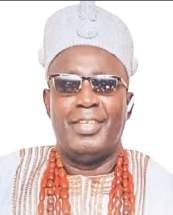
perhaps that’s why foreigners thrive and love to be with us. It can only get better with our current status as a university town. We love our residents and we don’t disturb them. There is no foreigner that will come to Iyin that will want to leave because we see them as our own. They enjoy equal rights and sometimes, they are more favoured than indigenes. As you observed, we have many accomplished sons and daughters, and we have recorded first in many areas of human endeavours. We had the first military governor, first executive governor, first Chief Justice of Ekiti, first professor of Architecture in the whole West Africans sub-region, Leader of the Senate and a former Director General of NYSC. Besides, just recently, one of our daughters returned as an ambassador and another one on her way to another country as envoy. We have a lot of them, but it’s by God’s grace that we are where we are.
See concluded part on www. thisdaylive.com
Ugochukwu Obi-Chukwu, the Founder of Nairametrics, speaks on how Nigeria can convert rising global oil prices into fiscal stability amid geopolitical tensions. He also discusses investor behaviour during global uncertainty and the need for consistent economic policies to attract capital. Beyond macroeconomics, he highlights the importance of financial literacy, wealth creation, and long-term planning as his organisation prepares for its 2026 Money Fair, aimed at helping Nigerians navigate today’s evolving economic realities. omolabake Fasogbon brings the excerpts:
With escalating tensions in the Middle east driving volatility in global crude prices, how can Nigeria translate these higher oil prices into fiscal stability?
This is a tricky one because higher oil prices alone do not automatically translate into fiscal stability for Nigeria. For Nigeria to truly benefit from higher crude prices, two things must happen. First, the conflict would need to be somewhat protracted so that elevated prices are sustained for a meaningful period. Second—and perhaps more importantly—Nigeria must be able to increase its crude oil production. Historically, Nigeria has struggled to fully capitalise on oil price rallies because our production has often fallen below our OPEC quota due to issues such as pipeline vandalism, oil theft, and underinvestment in upstream infrastructure. If Nigeria is able to increase output while prices remain elevated, the impact could be significant. Higher oil revenues would strengthen government earnings, increase foreign exchange inflows, and potentially rebuild fiscal buffers that have been under pressure for over a year. At the moment, the federal government’s fiscal position is constrained largely because of high debt servicing costs. Interest payments now consume a substantial portion of government revenues, leaving limited room for capital spending. So in short, higher oil prices present an opportunity—but Nigeria will only truly benefit if production rises and revenues are efficiently captured.
In periods of geopolitical uncertainty, global investors typically move toward safe-haven assets. How can this affect foreign portfolio inflows into Nigeria, and what should policymakers prioritise to maintain investor confidence?
Geopolitical uncertainty almost always triggers a flight to safety in global capital markets. Investors tend to move their funds into assets such as U.S. Treasuries, gold, and other developed-market securities. For emerging markets like Nigeria, this often means reduced capital inflows. Nigeria has already struggled to attract significant foreign direct investment since the COVID-19 pandemic. Annual FDI inflows have remained relatively modest
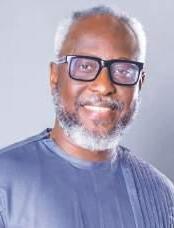
compared to the size of the economy. That is why the government has been pushing several market reforms aimed at improving investor confidence and attracting foreign capital. However, when geopolitical tensions escalate globally, investors typically delay investment decisions. Uncertainty increases risk perception, and capital flows tend to retreat from emerging markets back into safe-haven economies. This can slow foreign portfolio investment inflows into Nigeria’s bond and equity markets. To maintain investor confidence during such periods, policymakers must prioritise policy consistency, exchange rate stability, and transparency in economic reforms. Investors can tolerate risk, but they struggle with unpredictability. The more credible and predictable Nigeria’s economic policy environment becomes, the better positioned the country will be to attract global capital even in volatile times.
Nairametrics is organising its 2026 Money Fair. Can you talk to us about it and what participants should expect?
The Nairametrics Money Fair is an annual initiative designed to help Nigerians better understand how to use money effectively. We are currently in a reform-driven economic environment where many things are changing—exchange rates, interest rates, inflation dynamics, and even investment opportunities. In such an environment, financial knowledge becomes extremely important. Our view is simple: in times of economic transition, those who understand money tend to adapt and thrive, while those who do not risk falling behind. The Money Fair brings together regulators, investors, financial experts, asset managers, and entrepreneurs to discuss practical ways people can build wealth, protect their savings, and make smarter investment decisions. Participants should expect a mix of panel discussions, expert sessions, and practical insights covering everything from personal finance to capital market investing, entrepreneurship, and long-term wealth building. Ultimately, the goal is to equip Nigerians with the knowledge and tools needed to navigate today’s economic realities and build financial resilience.
This year’s theme focuses on wealth, investment, savings, and endowment — why are these pillars particularly urgent in Nigeria’s current economic climate?
Nigeria is currently undergoing one of the most significant economic transitions in decades. Reforms such as fuel subsidy removal, exchange rate liberalisation, and broader fiscal adjustments have reshaped the economic landscape. While these reforms are necessary for long-term growth, they also create short-term pressure on households. Inflation has eroded purchasing power, and many Nigerians are realising that simply earning an income is no longer enough. The conversation must shift toward how people manage, grow, and preserve wealth. That is why the pillars of wealth, investment, savings, and endowment are particularly relevant today. Savings create financial stability. Investments allow money to grow faster than inflation. Wealth creation provides long-term economic security. Endowment ensures that financial
The Nigerian Institute of Management (Chartered) has called for intensified planning and professional management practice to help organisations anticipate and navigate economic shocks.
The institute reiterated this at a press briefing ahead of its 65th anniversary and the unveiling of the anniversary logo, noting the call was necessary amid tensions disrupting global economies.
President and Chairman of the Council of the institute, Abimbola Ayuba, stated that an increasingly interconnected global economy means businesses and institutions can no longer operate in isolation from international developments.
He cited current volatility in the economy, charac-
terised by rising fuel prices and increasing operational costs for businesses, noting, for example, that tensions around the Strait of Hormuz have created ripple effects across global supply chains.
He explained further that restrictions affecting the strategic maritime corridor have forced vessels to take longer alternative routes through the Indian Ocean and around South Africa before heading towards Europe, significantly extending shipping timelines.
“What used to take about 10 to 15 days may now take as much as 28 days. The extended journey inevitably drives up transportation costs and the overall cost of doing business globally.”
He noted that such developments highlight why
managers must constantly monitor global trends and build systems that allow organisations to anticipate disruptions and adjust strategies quickly.
“To prepare our members for this reality, the institute focuses on making them forward-looking, monitoring global events, analysing possible scenarios and equipping them to take informed decisions,” he said.
Ayuba noted that the institute has spent decades building professional management capacity in Nigeria, providing advisory services, training programmes and research that help organisations understand the implications of global economic shifts and develop risk-mitigation strategies.
Provider of integrated electro-mechanical solutions, JMG Limited, has called for stronger industry-academia collaboration to help address Nigeria’s engineering skills gap.
The firm stated this while hosting engineering students from the University of Lagos (UNILAG) on an educational tour of its production facility in Lagos, as part of activities marking the 2026 World Engineering Day for Sustainable Development, themed “Smart Engineering for a Sustainable Future through Innovation and Digitalization.”
A total of 13 engineering students from the Faculty of Engineering, UNILAG, accompanied by two representatives of the Nigerian Institution of Mechanical Engineers (NIMechE) participated in the tour which exposed them to modern engineering practices within an industrial environment.
The students were taken through key production processes at the facility and gained insights into how engineering innovation, smart systems and digital technologies are being deployed to support sustainable industrial
development.
Speaking, Plant Manager, Production at JMG, Fouad El Chami, noted that practical industry exposure remains key in preparing young engineers for the demands of modern engineering practice.
He maintained that engineering education should extend beyond classroom instruction, to include real industrial experience that exposes students to how innovation, technology and problem-solving are applied in real-life production environments.
progress can extend across generations. These pillars reflect a complete financial journey—from earning money, to growing it, and eventually preserving it for future generations.
How is the Money Fair designed to move people from financial awareness to actual wealth creation, especially for young professionals and first-time investors?
One of the biggest gaps in financial education is the difference between knowledge and action. Many people understand basic financial concepts but still struggle to translate that knowledge into real investment decisions. The Money Fair is structured to bridge that gap. Beyond discussions about financial literacy, the sessions are designed to expose participants to practical tools, platforms, and investment opportunities. Young professionals and first-time investors will hear directly from asset managers, fintech platforms, capital market operators, and experienced investors who will share actionable insights on where opportunities exist and how to participate responsibly. The goal is to demystify investing and show that wealth creation is not only for high-net-worth individuals. With the right discipline, information, and access to credible platforms, many Nigerians can begin their investment journey earlier than they think.
Savings culture in Nigeria has historically been weak. What conversations or tools will the Fair introduce to help families build sustainable financial discipline?
Savings culture in Nigeria faces two major challenges. First, inflation has historically eroded the value of savings. When people feel their savings lose value quickly, they naturally become less motivated to save. Second, many households operate with little financial planning, often focusing on short-term needs rather than long-term financial security. At the Fair, we want to shift that mindset by introducing conversations around structured savings, budgeting, and financial planning.
Japan Tobacco International Nigeria (JTI Nigeria), a subsidiary of JTI Worldwide, has reinforced commitment to gender equity and inclusive leadership, noting it remained crucial to sustainable business success.
General Manager of JTI Nigeria, Abdallah Simba stated that empowering women in a workplace is not just a social responsibility but a strategic business decision.
He affirmed that the organization has consis- tently invested in policies and programmes that support employee development and productivity. He said these measures were designed to ensure that employees, regardless of gender, can thrive and contribute meaningfully to business
“Whengrowth.women have equal access to opportunities, leadership pathways and professional development, businesses benefit from broader perspectives, stronger teams and better decision-making.
“As a Top Global Employer for ten consecutive years, JTI has built a reputation for fostering inclusive workplace cultures anchored on merit, fairness, and equal opportunity. These commitments have translated into structured talent development initiatives, mentorship op- portunities, flexible work arrangements, and a strong focus on building leadership capability across all levels of the organization”, he said. He added that beyond internal culture, the company’s stance reflects broader trends in corporate governance.
Jetour Nigeria is currently disrupting the compact Sports Utility Vehicle (SUV) segment with the X50 model.
The Jetour X50 stands out as a featurerich compact SUV, designed to deliver a high level of safety, technology and comfort for everyday driving.
Built with a strong focus on occupant protection, the vehicle is equipped with multiple airbags for the driver and passengers, ensuring all-round safety while on the road.
Supporting these passive safety features are advanced electronic systems that enhance stability and control. Vehicle Stability Control helps the SUV remain balanced in challenging conditions, while the Electronic Parking Brake and Auto Hold system improve ease of use in traffic and during parking.
Driver confidence is further boosted by the availability of a 360-degree surrounding camera and parking sensors, which provide improved visibility in tight spaces.
Jetour Nigeria, stating that the X 50 SUV can be obtained from any of its accredited dealers spread across Nigeria- Elizade Nigeria Limited, New Era AutoVehicle Services Limited, Kojo Motors, Germaine Auto Centre, Tab Autos Limited, R. T. Briscoe Motors and Mandilas Autos, affirmed the reliability of the model.
To address common on-road safety concerns, the X50 incorporates a range of intelligent driverassistance features. Blind Spot Detection reduces the risk of unseen vehicles, while Lane Change Assist and Rear Traffic Alert offer added protection during lane changes and reversing.
Additional security features such as automatic door locking, an alarm system and power windows contribute to peace of mind.
Inside the cabin, comfort and convenience take centre stage. Smart entry with a push-start button simplifies vehicle access, while selectable drive modes—Eco, Normal and Sport—allow drivers

to adapt performance to different driving conditions. Cruise control adds extra comfort on longer journeys. The infotainment system features a 10.5-inch display with Bluetooth connectivity, voice command, phone mirroring, Apple CarPlay and Android Auto, ensuring seamless connectivity on the move.
A wireless charger keeps devices powered without cables. Premium interior appointments include leather seats, a power-adjustable driver’s seat, automatic air conditioning with rear vents, an electric sunroof option and a six-speaker audio system.
Power comes from a 1.5-litre turbocharged
four-cylinder engine paired with a dual-clutch transmission, offering a balance of responsive performance and fuel efficiency. With its aerodynamic design and practical five-seat layout, the Jetour X50 combines modern features with everyday usability, backed by reliable after-sales support and technical assistance.
As the global automotive industry accelerates toward electrification, a new generation of vehicles is emerging – combining advanced technology, bold design, and uncompromising safety. One of the most exciting entrants in this space is the iCAUR V23, a fully electric, retro-styled off-road SUV developed by Chery, which has recently achieved a prestigious 5-Star safety rating from the ASEAN New Car Assessment Programme (ASEAN NCAP).
This innovative electric SUV was recently introduced to Nigerian audiences when Carloha Nigeria, the official representative of Chery in the country, showcased the vehicle at the Oriental Hotel, Lagos, during the celebration of the Chinese New Year in Nigeria.
Felix Mahan, General Manager, Marketing at Carloha Nigeria, while speaking about the vehicle, described it as a bold statement about the future of electric mobility.
“The iCAUR V23 represents a new direction for electric mobility – one that appeals not only to environmentally conscious drivers but also to adventure seekers and urban explorers. It is designed for the young-at-heart, tech-forward, and adventurous individual. This masterpiece is simply put, Born to Play,” he said.
Retro Design Meets Modern electric engineering
The iCAUR V23 stands out immediately for its distinctive retro-inspired styling. With its boxy proportions, upright stance, and rugged exterior cues, the vehicle channels the classic spirit of traditional off-roaders while integrating contemporary design elements.
Its compact yet muscular build gives it a commanding road presence, making it equally suited to city streets and off-road terrain. The SUV measures approximately 4,220mm in length, 1,915mm in width, and 1,845mm in height, with a wheelbase of 2,735mm, providing a balance of agility and interior space.
Inside the cabin, modern digital technology takes centre stage. The vehicle features an 8.8-inch digital
instrument cluster and a 15.4-inch infotainment touchscreen, delivering an intuitive and connected driving experience. The system is powered by a high-performance chipset and supports smart connectivity features including Apple CarPlay.
Powerful electric Performance
Beneath the floor, the iCAUR V23 houses advanced electric powertrain technology designed for both efficiency and performance.
The SUV is available in two main configurations:
Rear-Wheel Drive (2WD): Producing about 136 PS (100 kW) with 180 Nm of torque, powered by a 59.9 kWh lithium iron phosphate battery that offers a driving range of up to 401 km (NEDC).
Intelligent All-Wheel Drive (iWD): Featuring dual motors producing 211 PS (155 kW) and 292 Nm of torque, paired with an 81.8 kWh battery capable of delivering up to 501 km of range.
The vehicle also supports Vehicle-to-Load (V2L)
capability, allowing it to power external devices—an especially useful feature for camping, outdoor work, and emergency situations.
5-Star ASeAN NCAP Safety Rating
Safety is one of the strongest highlights of the iCAUR V23. The electric SUV recently earned a 5-Star rating under the ASEAN NCAP 2021–2025 testing protocol, scoring 91.02 points overall.
The rating was based on four major safety categories:
Adult Occupant Protection: 39.71 points
Child Occupant Protection: 16.67 points
Safety Assist Technologies: 17.14 points
Motorcyclist Safety: 17.50 points
This performance places the V23 among the top-rated vehicles tested under the current ASEAN NCAP protocol and makes it one of the first fully electric off-road SUVs evaluated under the programme.
Built with Advanced Structural Protection
The vehicle’s strong safety performance is sup-

ported by its robust construction. The V23 uses a cage-type body structure composed of approximately 70 percent high-strength steel, providing excellent rigidity and crash protection.
Equally important is its advanced Battery Management System (BMS), which incorporates high-voltage protection and liquid-cooled thermal regulation to keep the battery pack safe and stable—even during extreme conditions or collisions.
The iCAUR V23 also features a comprehensive Level 2 Advanced Driver Assistance System (ADAS) designed to improve both safety and driving convenience.
Standard safety technologies include:
Autonomous Emergency Braking (AEB)
Front Collision Warning (FCW)
Lane Departure Warning and Lane Departure Prevention
Adaptive Cruise Control
Blind Spot Detection
Rear Cross Traffic Alert
Traffic Jam Assist
Door Opening Warning
In addition, the SUV comes equipped with six airbags, Electronic Stability Control (ESC), and Anti-lock Braking System (ABS) as standard safety features.
A Glimpse into the Future of electric SUVs
The iCAUR V23 demonstrates how modern electric vehicles are evolving beyond simple urban mobility tools. By combining retro-inspired design, rugged off-road capability, long-range electric power, and top-tier safety, the SUV reflects the next phase of innovation in the global EV market.
For markets like Nigeria, where interest in electric mobility is gradually increasing, the V23 represents a glimpse into the future—an EV that does not compromise on adventure, style, or safety.
As the automotive industry continues its shift toward electrification, vehicles such as the iCAUR V23 show that the transition can be both exciting and practical, bringing together cutting-edge technology with the timeless appeal of a classic off-road machine.
Sheik Makanjuola Alli-Balogun (Alli-Oloko), was a man of means during his lifetime. He was blessed with money, power and influence. And almost a century after his demise, he remains in the spotlight. Loved, respected and celebrated, the love feels eternal, and today, generations born 93 years after his demise can hear his name and feel his impact.
On Sunday, March 8th, 2026, Alli-Oloko ‘resurrected’ in Lagos when his descendants under the Alli-Balogun Memorial Foundation mobilised resources and successfully refurbished their progenitor’s 100-year-old Alli Balogun Wasinmi Mosque in Lagos Island.
The re-opening of this masterpiece, boasting a modern architectural design, is a demonstration of urban regeneration, historical preservation, commitment to the Islamic faith, and a celebration of legacy.
The modern architecture of the mosque blends functional spaces for prayers with symbolic, artistic, and historical elements featuring domes, pillars, minarets, and courtyards. Talk about a mosque incorporating sustainable materials, glass, steel, and wood as modern designs while maintaining traditional, geometric and calligraphic ornamentation with sustainable values. Standing as an imposing edifice on Nnamid Azikiwe (formerly Victoria Street) is the newly refurbished Alli Balogun (Alli-Oloko) Wasinmi Mosque built in 1925 by a wealthy, religious leader, philanthropist and family man, Sheik Aliu Makanjuola AlliBalogun.
Known for immense wealth, Islamic faith, and philanthropy, the Alli-Balogun family remains influential in Lagos and beyond, especially as a prominent, historical Lagos dynasty originating from the late 19th-century merchant and philanthropist, Sheikh Alli Makanjuola Balogun (Alli-Oloko) who lived between 1830 and 1933.
Born in 1830 to a Nupe Prince of Tapa ancestry and an Awori lady of Isale Eko extraction, Sheik Aliu Alli-Balogun was reputed to be one of the wealthiest in his era. A religious and affluent man, Alli-Balogun was renowned for his business acumen and opulent lifestyle and his humanitarian gestures touched many in his domain and beyond.
Based on his level of impact, it is not so surprising that nearly a century after his exit from the side of existence, he remains an iconic, revered and honoured personality, not just by his descendants but the entire Lagos Muslim community.
It was the reason Lagos Island stood still for Makanjuola Alli Oloko on Sunday, March 8th, 2026, when his descendants, led by the chairperson of the Alli-Balogun Memorial Foundation, converged for the reopening of the refurbished 100-year-old mosque built by the iconic figure.
Founded a century ago by their visionary Baba Alalubarika, as Sheik Makanjuola Alli-Balogun is also known, the excitement was palpable on the faces of many present, including distinguished Nigerian lawyer and elder statesman, Alhaji Lateef
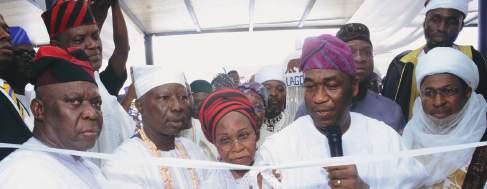
Femi Okunnu, SAN; Lagos State Deputy Governor, Dr. Kadri Obafemi Hamzat; former Lagos State governor, Babatunde Raji Fashola, SAN; Senator Gbenga Ashafa and the who-is-who in Lagos Island, the Lagos Muslim community and others.
For them, it was not just a celebration of a legacy by a man who was infinitely passionate about his religion but who also fully devoted his resources to promoting community good.
Also among dignitaries at the ceremony were Prince Mosediq Adeniji Kazeem, Representative of the Oba of Lagos/Opeluwa of Lagos, Chief Lateef Aderibigbe Ajose; Great Grand-daughter of Alli-Balogun, Alhaja Lateefat Yoyinsola Makanjuola; her husband, Mr. Aderemi Makanjuola; and Chief Imam of Lagos State, Fadilatul-Shaikh, Engr. Sulaimon Oluwatoyin Abu-Nolla. Others were Alhaji Rafiu Adisa Ebiti, Mr. Jamiu Alli-Balogun, Alhaji MonsurOmokehinde Alli Balogun, Chairman, AlliBalogun Descendants Union; and Otunba Nurudeen Ojora, among others.
In his remarks, Hamzat said: “This is legacy. A house of worship for Muslims to pray in. And as our Imams have always told us, there are a few things that you can leave behind which will be your reward after death. This is one of them, may Almighty Allah grant Aljana Firdaus to him and all those that are supporting us today.
“Baba has done his own, and I am sure he has gotten the blessings of Almighty Allah. So, it’s for those of us who are here now to continue to pray in a good environment. So, we thank Almighty Allah that we are able to gather here today, and it reminds us as Muslims that we are at the forefront of great things in this state and we should not forget. We should never forget.
“And therefore, when you mention Lagos, we should not
Development stories are often told in fragments, one project here, a ribbon-cutting there. What has unfolded in Enugu North over the last two years is different. It is a coordinated, data-led transformation that treats education, health, mobility, security, and revenue as a single system.
At the centre of this approach is Peter Mbah, whose governance philosophy has shifted the state from episodic interventions to strategic execution, repositioning Enugu as a reference model for subnational development in Nigeria.
Enugu North Senatorial Zone, made up of six local government areas and 102 of Enugu State’s 260 wards, has become the clearest laboratory for this strategy. Rather than concentrating development in select urban pockets, the administration adopted a ward-by-ward framework that prioritises equity, inclusivity, speed, and measurable outcomes. The result is a scale of impact previously unseen in the zone or anywhere else in Enugu State.
At the core of the transformation is a deliberate investment in human capital as infrastructure. Across all 102 wards, three foundational assets are being delivered simultaneously: Smart Green Schools, Type-2 Primary Healthcare Centres, and Farm Estates. This triad targets learning, wellbeing, and productivity, ensuring that growth is inclusive and generational.
The numbers are instructive. Each Smart Green School, designed with modern classrooms, digital learning tools, and sustainable features, costs N1 billion, amounting to N102 billion invested directly in education.
The 102 Type-2 Primary Healthcare Centres, at about N100 million each, represent N10.2 billion committed to first-level, accessible healthcare. These projects alone total over N112 billion in Enugu North, an unprecedented concentration of capital in education and health.
Placed against the state’s fiscal capacity, the strategy becomes clearer. With Enugu State budgets of N521 billion in 2024 and
N971 billion in 2025, committing such a significant share to one zone’s human capital was a conscious decision. It reflects a belief that long-term competitiveness begins with educated children, healthy communities, and productive youth, not with short-term optics. Beyond social infrastructure, the administration focused on movement and connectivity, recognising that economies grow when people and goods can move efficiently. The 44.1-kilometre Penoks–Abakpa–Ugwogo–Opi–Nsukka Road, speeding to completion by October 2026, is reshaping travel patterns, reducing logistics costs, and reconnecting rural communities to urban markets. What once took hours would now take minutes; what was once isolated would now be integrated. Urban order and commercial efficiency have also been prioritised. The ultra-modern Nsukka Transport Terminal at Ogige has introduced structure, safety, and predictability to public transport operations. Complementing it is the planned 5,000-shop market at Nguru-Nsukka, designed to relocate traders affected by terminal construction while expanding formal retail capacity. Together with the proposed ultra-modern transport terminal at Obollo-Afor, these assets position Enugu North as a growing logistics and trade corridor within the South-East. These investments have generated immediate and cascading economic effects. Construction activities engaged thousands of engineers, artisans, suppliers, and service providers, injecting liquidity into local economies. As facilities become operational, they create permanent employment for teachers, healthcare workers, administrators, and maintenance staff. The farm estates extend this impact into agriculture, opening pathways for youth agripreneurship, processing, storage, and value-chain development, with implications for food security and rural income.
Security and social stability have been treated as economic variables, not peripheral concerns. Through coordinated security management and stakeholder engagement, the disruptive Monday sit-at-home culture was dismantled across Enugu North and the wider state. The effects were immediate: schools
be behind. We must be at the forefront to say these are the things we have done to foster good relationships. When Mama was talking, she said some of the people who contributed are Christians. In our community, we don’t divide ourselves based on religion and may Almighty Allah continue to allow peace to reign in our state.”
Speaking at the event, the great-granddaughter of the deceased and wife of Mr. Aderemi Makanjuola, Chairman of Caverton Offshore Support Group, Mrs. Lateefat Yoyinsola Makanjuola, said she was overwhelmed with joy.
“It is pleasing to inherit such an edifice. A house of worship. This is a monument. I mean, you cannot quantify a building right in the heart of Lagos Island to be 100 years plus and nothing happened to it. When you look around the pillars, the structures that it holds, including the first floor, the minaret, it is fantastically unbelievable.“They are till intact. We just changed a few things. Initially, we thought it would take us a year or two because of the magnitude of repairs but we were able to do it under one year. This is a historic house of worship that has stood as a beacon of faith and unity for over 100 years. For us as a family, we are very proud to have something that has stood the test of time. 100 years is not a short period, and we believe that the edifice will stand for the next 100 years.”
In his message, Fashola said: “It is not just a mosque, it’s not just a building. It’s a very important piece of the history of Lagos in the pre-colonial era, and it should last beyond that, just as you have seen buildings last hundreds of years in other parts of the world. Instructive also, as the Management Committee and Board of Trustees told us, this was an initiative that was supported not just by Muslims but also by Christians.
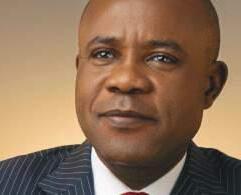
reopened consistently, markets stabilised, transport resumed, and investor confidence improved.
With stability restored, Nsukka’s natural landscapes, cultural heritage, and academic environment are once again accessible, reviving tourism and strengthening the zone’s identity as an education and knowledge hub.
Institutional inclusion has also deepened. For the first time since its establishment, the University of Nigeria Nsukka got a Vice-Chancellor from the zone. Beyond symbolism, this milestone reflects a broader emphasis on merit, representation, and local ownership of institutions—critical ingredients for sustainable development.
Equally significant has been the overhaul of public finance management. Illegal taxation by non-state actors, long a burden on traders and transporters, has been dismantled. In its place, technology-driven revenue systems now capture taxes transparently, block leakages, and protect citizens from exploitation. The result is a stronger revenue base for Nsukka and Enugu at large, enabling reinvestment without increasing the burden on ordinary people.
•
Charles Ajunwa
The 2026 Hotel Chain Development
Pipelines in Africa report has revealed a record 123,846 rooms across 675 hotels and resorts. This represents year-on-year growth of 18.6 per cent, or 12.2 per cent on a same-store basis. While the overall pipeline reflects strong continental expansion, the data showed that development activity was increasingly concentrated in a small number of dominant markets. The top 10 countries now account for 79 per cent of total pipeline rooms and more than 75 per cent of new signings, reinforcing their growing influence on Africa’s hotel development trajectory.
Egypt led with 45,984 rooms across 185 properties – more than one third of the entire African pipeline and over four times the number in second-placed Morocco with 10,606 rooms across 75 properties. While Nigeria was third with 8,480 rooms across 57 properties.
Together, Egypt and Morocco accounted for more than 45 per cent of total pipeline rooms, and their share continued to grow due to the high volume of new signings. Egypt alone recorded 39 new deals last year and anticipates 33 openings in 2026, reinforcing its sustained development momentum.
Managing Director of W Hospitality Group, Trevor
Ward said: “The data clearly show that Africa’s hotel development story is being driven by a handful of high-performing markets, with Egypt firmly at the forefront in both signings and projected openings.
“Beyond overall scale, the pipeline status data reveal that execution momentum is currently strongest in East Africa. Ethiopia and Kenya both have nearly 80 per cent of their rooms under construction, closely followed by Tanzania at 77.5 per cent. “
This compares with significantly lower proportions of projects under construction in markets such as Nigeria and Cape Verde. While North Africa dominates in overall volume, East Africa is leading in terms of projects actively progressing toward completion and near-term delivery.
Trevor Ward added, “What stands out this year is the strength of East Africa in terms of projects moving forward. Kenya, Ethiopia and Tanzania show some of the highest construction ratios on the continent, which suggests that this is where we are likely to see new supply coming through in the short to medium term.”
At the operator level, development activity remains highly concentrated among a small number of global brands. Marriott International leads with 31,782 rooms, followed by Hilton and Accor, with the Big Five global chains – including IHG and Radisson Hotel Group – accounting for around 80 per cent of all pipeline hotels and rooms across Africa.
Although more than 65,000 rooms are forecast
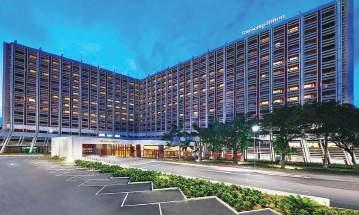
Nestle Nigeria Plc recently launched its ‘Nestle for Good’ campaign to tell its story of a 65-year journey, writes Charles Ajunwa
Nestle Nigeria Plc has been operating in Nigeria for the past 65 years, and its key brands - Maggi, Milo, Golden Morn, Nescafé and Nestle Pure Life, have become household names, especially at homes, offices, malls, markets, hospitality such as hotels, restaurants, recreational centres and other institutions across the country.
The company’s Head Office, nestled within the quiet ambience of Industrial Avenue, Ilupeju, Lagos, recently launched the ‘Nestlé for Good’, a nationwide campaign highlighting its impact across nutrition, inclusive growth, and environmental stewardship in Nigeria.
The company’s value chain impacts educational tourism, science tourism, agricultural tourism, food tourism, landscape tourism, and health tourism. It has also continued to support the country’s creative sector especially content creators, influencers, movie actors and actresses as part of its corporate social responsibility (CSR).
Managing Director, Nestle Nigeria PLC, Mr. Wassim Elhusseini, at the media launch, said creating shared value for the company is not just a programme, not just a tick in the box, but it’s the way the company does business, emphasising that the company will continue to focus on building thriving communities, empowering individuals, and families.
According to Elhusseini, “Nestlé has been part of Nigerian households for more than six decades, earning a place at family tables, in lunch boxes and at key life moments.
“This presence is a privilege and it comes with responsibility. When a company operates at scale, when it reaches millions of people every day, it must hold itself to a higher standard.
“It must be accountable not only for its products, but also for the broader impact it has on society, communities, and on the environment.
“Economic performance and social progress are not competing priorities; they are interconnected. Creating shared value is not a programme but the way we do business.”
The Corporate Communications, Public Affairs and Sustainability Lead at Nestlé Nigeria Plc, Victoria Uwadoka, said Nestle products are used in hospitality outlets such as hotels and restaurants.
“As my MD said in his speech, there’s a lot of responsibility on us. Yes, we know the tourism industry

L-R: Corporate Affairs Manager, Nestle Nigeria PLC, Toju Egbebi; MD/CEO, Kamary Nutrition Consult representing the Chairman, Lagos chapter, Nutrition Society of Nigeria, Mrs. Amaka Okwesilieze Nwaora; Corporate Affairs and Sustainability Lead, Nestle Nigeria, Victoria Uwadoka; Managing Director, Nestle Nigeria, Wassim Elhusseini; and Assistant Director, Industrial Development Department, Federal Ministry of Industry, Trade and Investment, Mrs. Esther Abimbola Popoola, at the launch of Nestle for Good campaign held in Lagos
is very important. But you must agree with me that the problems are multiple and we cannot solve everything. So we need to focus on some areas. That’s why our focus is on nutrition, thriving communities, because if the community is thriving, then you can talk about tourism.
“Part of the work we do, when we’re talking about protecting the environment, we had a project that we tried to work on, and we’re still working on it, to clean up the waterways so that the rivers can flow freely. If the environment is clean is well-irrigated, then you can talk about tourism. Not when somebody wants to drink water, he/she has to go many miles to get water. So we focus on these areas. We know that as that improves with the communities, then those who are the drivers of tourism can work on that. We can add whatever we can to support that. But that’s not our core focus.”
She added, “What we do in the creative industry is more of a collaborative effort because you know that the creative industry is wide. It’s vast because you know that content creators, when it comes to videos, have those who are influencers. The thing with content creators, influencers, they have an audience, and we give them support as long as the audience aligns with Nestle’s audience. We have started to work with some influencers and content creators bringing them into our ecosystem to help us tell our stories
more creatively.
“They help us tell our stories more impactfully, help us tell our stories in ways that actually resonate with the community, because it’s one thing to tell your story, there’s no one-cup fix there. So different ecosystems, different audiences are reached in different ways. So that’s what we’ve started to do. You will see the influencers working with Nescafé, the influencers working with Maggi, and influencers working with Milo as well. In the core North, we’re selecting different influencers because consumers are everywhere not just in the West.
“And as I mentioned before, when you improve living standards within a community, then you’re encouraging tourism because if a tourist comes, where’s water? Where’s the green area? Because tourists are not coming to see the same thing that they see in their environment. So I think that by improving communities, it’s also a creative opportunity for those communities to become tourist attractions.”
Uwadoka said apart from empowering youth, women, “Nestle for Good is a campaign that helps to bring together all of Nestle’s interventions to create shared value within the communities in which it operates. So this helps us to tell our story of how we are empowering communities to be more resilient.
“How are we protecting the environment and how are we empowering individuals and families through different
projects. These projects include scholarship schemes, technical training, summer capacity building, access to water, grain quality development, and empowerment of farmers. So this campaign is a platform for some of those beneficiaries to tell their story about how our interventions are making an impact in their lives, in their families, and in their communities. That’s what the campaign is about.
“What I always say is that data does not lie. If you look at the data on where we are and where we want to go, then we wouldn’t need to tell you why there is a focus on women and the girl-child. Of course, there is focus on everybody else, but we need to pay special attention to this group because if we don’t, we’re actually losing the benefit of having about 50 per cent of our own community as a social system. We’re losing 50 per cent representation.
“That’s what this is about. It’s not just about what you do, what you don’t do. I’m sure that my fellow women here would like to say, we don’t want handouts, we don’t want special treatment. We just want a level playing field. Then you just let us go. That’s all we are asking for.”
On high cost of Nestle products, she said, “The high cost of Nestle products is relative because you have to look at the inputs, you have to look at the quality, you have to look at what goes into providing that quality nutrition. Yes, we know that the cost of inputs across Nigeria, across all sectors, across everything, not just food and beverages, has really increased. But, you know, as an organisation, we’re doing the best that we can. I can speak for Nestle.
“Why do we do farmer capacity building? It’s so that we can get grains, we can get the inputs, we can get the legumes, and so that keeps our costs at a minimum, because we’re not depending on importation solely for all our raw materials. So what I’ll promise you is that we will keep doing our best as things change, as things transform, because we want to give access to nutrition to everybody. Accessibility, affordability those are key priorities for us. We will continue to work to really optimise our operations so that we can keep prices at the point where the nutrition that we want to be for everybody is accessible to everybody. That’s the best that we can do within the environment in which we operate.”
On unlocking the power of food to address challenges such as malnutrition, food insecurity, and health issues beyond the awareness programmes, she said, “This campaign is not a new project. It is to talk about the things that we’re doing, the new programmes that we’re doing on the ground, the work that we do with dairy farmers, and the work that we do with grain farmers in the field. We are there every day.
“We have a project called Regenerative Agriculture that is ongoing, which has admitted over 20,000 farmers already in the field.”
Inside a quietly elegant apartment in Victoria Garden City, Lagos, where guitars rest like sentinels and a microphone stands ready for the next rehearsal, Elijah Odiakose speaks about music with the calm precision of an executive and the passion of an artist. As the founder and driving force behind Coolice Band, he has built more than a live music outfit. He has engineered a cultural enterprise that blends artistry with discipline, style with substance, and performance with purpose, Adedayo Adejobi writes
On a humid Lagos Tuesday afternoon inside a tastefully arranged apartment in Victoria Garden City, the air hums with quiet intention. A bass guitar leans against a charcoal wall. A compact keyboard rests beside a framed award plaque. Through the window, filtered sunlight touches polished floors, catching the metallic sheen of a studio microphone placed almost ceremonially in the corner. This is not just a residence. It is part sanctuary, part strategy room, part rehearsal den. It is where Elijah Odiakosa, founder and driving force behind Cool Ice Band, thinks.
The Cool Ice Band, known for their high-energy performances and their ability to connect with audiences of all sizes, are fast growing and steadily becoming one of the biggest names in Nigeria’s live music scene — courtesy of Elijah Odiakosa’s rising career, continued influence, and resounding success in the industry.
But Lagos does not hand out dreams easily. For every spotlight, there are a thousand dark rooms. For every applause, countless rejections. The journey from a modest background in Benin to Nigeria’s commercial capital is rarely romantic. It is crowded buses at dawn, uncertain accommodation, missed meals, unpaid gigs, and nights where doubt whispers louder than ambition. It is watching others rise faster, losing trust in people you once called partners, and learning quickly that talent alone is never enough in a city that tests both character and capacity. Yet it is also the city where resilience can rewrite destiny — if one endures long enough.
When he left Benin, his homestead, 10 years ago, he carried one mission: to build and run a band of talented young musicians capable of delivering unique and exciting musical experiences. True to that mantra, he has done more than just a good job — and he is not resting on his oars.
“The journey has been long and tough,” Elijah reflects. “There were moments of uncertainty, moments of betrayal, moments when things didn’t go as planned. But we endured. We kept our focus. We stayed committed to the vision. The dream is unfolding, but we are not there yet. There is still so much work to do.”
For a man not showing signs of slowing down, his clientele now cuts across generations. From older patrons who appreciate classic arrangements to millennials drawn to the band’s youthful energy, Cool Ice has
become a favourite among Nigeria’s elite for both corporate and private events. With almost a decade of showmanship behind them, the band remains one of the most in-demand live acts in the country.
“We are not just another band,” Elijah says, seated comfortably yet alert, his voice measured, his gaze direct.
“We are a mood, a movement, and an experience.”
The statement lands with the clarity of someone who has rehearsed not the line, but the philosophy behind it. Cool Ice Band is not built on noise. It is built on design.
As the name implies, Cool Ice is cool, calm and calculated. In an industry where many live bands compete on sheer volume and spectacle, Cool Ice competes on atmosphere. The name itself suggests a paradox, smooth yet piercing, composed yet explosive.
“Much like ice,” Elijah explains, “our music is smooth and cool, but when it hits, it cuts through with precision. We are calm in our preparation, but on stage, there is fire.”
That balance of temperament and intensity has defined their rise. Over nearly a decade, Cool Ice Band has evolved from a dream sketched in ambition to one of Nigeria’s most respected live music outfits, performing at corporate galas, celebrity weddings, government functions, and high-profile private events. Widely regarded as one of the top live bands in Nigeria, they have built a reputation for professionalism, creativity, and a unique musical style that blends vintage influences with contemporary flair.
Elijah is not flamboyant. His authority is quiet, his sentences intentional. His leadership style mirrors the brand personality he has carefully engineered: cool with substance, modern but not reckless, magnetic without being forced.
“I believe music should be timeless, accessible, and deeply moving,” he says. “Trends are exciting, but substance lasts longer than hype.”
That belief has shaped a band that blends old-school classics, pop sensibilities, funk rhythms, Afrobeat textures,
More than 20 women gathered in Broadstairs, Kent, in the United Kingdom for a two-day community training on hair styling and makeup artistry to celebrate International Women’s Day.
The event was also meant to empower women through practical skills and creative expression.
The initiative was organised by Slique Beauty Bar, House of Comfort CIC, founded by community advocate and beauty professional Ijeoma Glory-Emeh, in collaboration with Lilian Opara (Éclarya Hair and Beauty Ltd).
The event, which was professionally covered by SlickPhotography Ltd, who spent two days capturing the inspiring moments, learning sessions, and transformation of the participants.
The programme brought together women from across the community in a welcoming and supportive environment where they could learn new skills, build confidence, and connect with others.
The first day of the event focused on hair styling techniques, while the second day was dedicated to makeup artistry.
All products and tools were provided for participants, allowing every student to gain hands-on experience and practical knowledge throughout the sessions.
The training was organised in recognition of International Women’s Day 2026, whose global theme, “Give to Gain,” highlights the idea that when communities invest in women through education, skills, mentorship, and opportunities.
The benefits extend far beyond individuals to families and society as a whole.
The Founder, Ijeoma Glory-Emeh, said the initiative was rooted in a lifelong passion for community service.
“I have always been passionate about supporting people in my community. “From a young age, I found joy in helping others grow, and that passion has stayed with me. Creating spaces where women can learn new skills, feel confident, and support each other is something that means a lot to me.”
Participants described the training as inspiring and empowering, with many saying they left feeling more confident and empowered.
“The transformation over the two days was truly beautiful to see.
“The women walked in curious and eager to learn, and they left feeling inspired, empowered and happy with new knowledge they can use personally or professionally,” Ijeoma added.
The event also received special support from the local community, with the Mayor of Broadstairs attending the first day of the programme alongside his wife to show encouragement for the initiative and the women participating.
For the organisers, the training represents more than just a beauty class, it is part of a broader vision to create opportunities that empower women and strengthen the community.
The project first launched in 2025 and continues to grow as more people become aware of its impact.
Organisers hope to expand the initiative in the future, reaching even more women through similar empowerment programmes.
“This is just the beginning,” Ijeoma said. “Our goal is to continue creating opportunities that help people in our community grow, become more confident, and feel empowered to pursue their dreams.”
jazz undertones, and contemporary dance energy into one seamless sonic experience. The approach is eclectic, but never chaotic. Transitions are curated. Arrangements are thoughtful. Performances are immersive. Inside the VGC apartment, conversation drifts toward professionalism. For Elijah, talent alone is insufficient. Reliability is non-negotiable.
“We take pride in every detail,” he says. “From punctuality to sound checks to coordination with event planners. Excellence is not accidental. It is engineered.”
In a country where event timelines can shift unpredictably, this discipline has become a competitive advantage. “Clients trust us because we remove anxiety from the equation,” Elijah adds. “We do not just show up to play; we show up to deliver confidence. When organisers know you understand their audience and respect their time, you become more than entertainers — you become partners.”
It is perhaps this mindset that earned Cool Ice Band the Live Band of the Year recognition at the 9th Annual Nigeria Achievers Awards in September 2023. Standing at the podium that evening, Elijah described the award as a milestone rather than a destination.
“This is a dream come true for us,” he said during his acceptance speech. “It is a testament to our talent and potential. We have been working hard for this for a long time, and it is amazing to see it pay off.”
Back in his apartment, reflecting on that night, he smiles lightly. “Awards are validation, but they are also reminders,” he says. “They remind you that people are watching your standard. Once you are recognised, the responsibility doubles. You cannot afford to drop the bar.”
Indeed, 2025 proved both challenging and fruitful for Elijah as band leader. Not held back by industry pressures, but driven by a deep sense of purpose and strong business acumen, he made one of his boldest strategic decisions yet: investing in a state-of-the-art multi-million naira live and digital recording studio in the heart of Lagos.
“With growth comes pressure,” he notes. “2025 tested our structure, our patience, even our finances at some point. But challenges force you to think bigger. That studio was not just an investment in equipment, it was an investment in longevity.”
With 2026 already starting on a strong note, the studio stands as a dream realised, a testament to his drive, talent, and long-term vision.
“This has been years in the making,” he says. “To finally open a space that supports both live instrumentation and digital production is deeply fulfilling. But more importantly, it positions us for the future.”
Designed to serve established artists and emerging talent alike, the studio reflects his ecosystem mindset.
“The future of music is hybrid,” Elijah explains. “Live energy and digital reach must coexist. We want to bridge that gap.”
If Cool Ice represents performance excellence, the studio represents infrastructure — a step toward building platforms rather than simply occupying stages.
Elijah is also fast being recognised for offering a platform to emerging talents. A former member of the Cool Ice Band went on to win the 2024 edition of Big Brother Naija, a journey that began within the band’s ecosystem.
“We believe in nurturing potential,” Elijah says. “Seeing someone grow from our platform to national recognition reinforces our responsibility to keep mentoring. Success is sweeter when it is shared.”
Yet beyond ambition and enterprise lies something more personal. When the conversation turns to family, his tone shifts — softer, grounded.
“My family is everything to me,” he says quietly. “They are the bedrock of my success. The stability and love I receive at home give me the strength to pursue everything else. I value and cherish my family deeply. I would not trade my wife and children for anything in this world.”
See concluded part on www.
The current predicament of the opposition Peoples Democratic Party (PDP) appears to vindicate the warnings of a former President of the Senate, Abubakar Bukola Saraki, who had long foreseen the unfolding crisis, writes Adedotun Oluwaseyi.
As Nigeria steadily moves closer to the 2027 general election, the nation’s major political parties are already working to consolidate their internal structures, strengthen alliances, and present coherent alternatives to voters.
Yet, within the PDP, the conversation is not about expansion or strategy. It is about survival.
The party that once governed Nigeria for sixteen uninterrupted years now finds itself struggling with recurring internal crises, factional disputes and legal battles that threaten its ability to function as a credible national opposition let alone an aspiring ruling party.
But beneath the immediate conflicts lies a deeper institutional problem: the party’s recurring tendency to ignore wise counsel until events unfold exactly as predicted.
Within PDP’s long and complicated history, a former senate President and two-term governor of Kwara State, Dr. Abubakar Bukola Saraki, has proven to be one out of a few figures in the party with the institutional memory and crisis-management experience.
Saraki’s influence within the party has rarely been defined by dramatic public confrontations. Rather, it rests on a quieter political capital: the ability to anticipate institutional risks before they fully manifest.
Nonetheless, the paradox of PDP’s current predicament lies in the fact that the party that repeatedly turns to Saraki during moments of turbulence has not always demonstrated the discipline required to heed his advice.
The seeds of the present crisis can be traced to the aftermath of the 2023 general elections. The party emerged from the contest deeply fractured.
The lingering confrontation between the presidential candidate, Atiku Abubakar, and the political bloc associated with the Minister of the Federal Capital Territory, Nyesom Wike, left the party sharply divided.
Public exchanges among party leaders became increasingly bitter. Members questioned the legitimacy of the leadership. Factions openly challenged decisions of the party.
It was within this volatile environment that the PDP Governors’ Forum and former governors constituted a sevenmember reconciliation committee in May 2025, appointing Saraki as chairman. The committee’s assignment was clear: reconcile aggrieved leaders, stabilise the party and prepare the ground for a national convention capable of restoring unity.
Through extensive consultations with governors, lawmakers and party stakeholders across the country, the Saraki-led committee succeeded in achieving something that had seemed almost impossible at the time: it lowered the political
temperature within the PDP.
Hostile rhetoric slowed. Factions paused open confrontation. Even the political camp aligned with Wike (the G-5),arguably one of the most assertive blocs within the party, moderated its public posture during the reconciliation process. Within party circles, this shift was widely interpreted as a reflection of Saraki’s credibility across competing factions. But the reconciliation effort did more than simply calm tensions. It produced recommendations aimed at preventing the crisis from resurfacing.
Central to those recommendations was the need for restraint in disciplinary actions that could inflame factional tensions. The committee emphasised the importance of resolving disputes surrounding sensitive party offices, especially the office of National Secretary, through political dialogue rather than confrontational measures.
It also stressed that major structural decisions should only follow broad consultations among stakeholders.
Perhaps most importantly, the committee warned against actions capable of triggering legal disputes that could later undermine party conventions or other major internal processes.
These recommendations were designed to create a fragile but workable framework for stability while deeper reconciliation continued. However, many of these proposals were ignored.
Instead of consolidating the fragile calm that had emerged from the reconciliation process, the party soon returned to familiar patterns of suspensions, counter-suspensions and escalating leadership disputes.
The controversy surrounding the office of National Secretary involving Samuel Anyanwu eventually moved from internal party deliberations into the courtroom. What might have been effectively kept as a manageable political disagreement gradually evolved into a legal confrontation capable of destabilising the party’s institutional structure.
It was within this fragile atmosphere that Saraki issued what would later appear to be one of the most prophetic warnings in the party’s recent history.
As preparations intensified for the controversial convention scheduled for Ibadan, the Oyo State capital last December, Saraki cautioned that the party was proceeding on dangerous ground.
“There are conflicting court orders in relation to the validity of the scheduled convention,” he warned, adding: “As a result, there is no assurance as to whether the conduct and outcome of the convention will stand.”
His concern was not speculative. Nigerian political jurisprudence contains numerous examples where courts have overturned party conventions conducted under contested legal circumstances
Saraki, therefore, advised the party leadership to suspend the convention and instead establish a caretaker committee that could temporarily stabilise the party and create space for reconciliation.
“My advice… is that the only solution available to us now is for the party to set up a Caretaker Committee to steer the affairs of the party for the time being,” adding that such a step represented “the path to true reconciliation and stability.”
But the warning did not carry the urgency it deserved within sections of the party leadership. At the centre of the momentum pushing forward with the convention was Governor Seyi Makinde of Oyo State, whose growing influence within the PDP had placed him at the heart of the party’s internal power configuration.
For many observers, the insistence on proceeding with the convention despite unresolved disputes reflected the confidence, perhaps even the impatience, of a rising leadership bloc unwilling to defer to the experience of leaders, who had previously managed similar crises within the party.
Consequently, in the calculations of internal power politics, experience was quietly set aside, but Saraki himself made his opposition unmistakably clear.
“It is clear that going ahead with the National Convention in Ibadan… will only serve to further fuel the present crisis. Therefore, going ahead with the convention as scheduled is a waste of effort. It does not have my support.”
By Ademola Oshodi
The global trade environment is shifting in ways that Nigeria cannot afford to read passively. What is taking shape is not simply a competition among major powers, nor merely a question of market access. It is a reordering of how Africa is being positioned within competing trade architectures.
The United States has reauthorised the African Growth and Opportunity Act (AGOA) only through 31 December 2026, with retroactive effect to September 2025, while China has announced zero-tariff treatment from 1 May 2026 for imports from 53 African countries with which it maintains diplomatic relations. Taken together, these moves point to a wider reality: external trade preferences are becoming more fluid, more strategic, and more visibly tied to geopolitical calculation.
For Nigeria, the appropriate response is not to frame this as a binary choice between external partners. That would be too narrow, and strategically unhelpful. The more important lesson is that trade can no longer be treated as a secondary track running alongside diplomacy. It must be approached as one of the core instruments through which national interest is secured. In a world where market access is shaped by changing preference regimes, tariff recalibration, and wider geoeconomic competition, foreign policy and trade policy can no longer operate in separate compartments.
The temporary extension of AGOA is instructive for precisely this reason. It preserves access, but only for a short horizon. That offers relief, not certainty. It keeps the door open for eligible African exporters, but it does not create the kind
of medium-term predictability that firms, investors, and industrial planners ordinarily require when making decisions on sourcing, standards, production, and long-term market entry. The issue, then, is not whether AGOA remains useful. It does. The issue is that temporary preference is not the same as durable strategy.
China’s new zero-tariff regime carries a different, but equally important, implication. It potentially widens access to one of the world’s largest markets. But access by itself does not guarantee advantage. The countries best placed to benefit will be those that can meet standards, solve logistics constraints, scale production, and move beyond raw commodity dependence toward more value-added exports. The opening is real, but the distribution of gains will not be automatic. It will depend on readiness. That is why China’s decision to remove tariffs on imports from 53 African countries should be read not simply as a concession, but as a test of African export competitiveness.
This is where Nigeria’s strategic challenge becomes sharper. Nigeria is too large, too economically significant, and too diplomatically consequential to approach passively. Yet the task is not simply to seek access wherever it can be found. It is to build the institutional means to use access well. Economic diplomacy should not be measured by the number of frameworks a country belongs to, or by how many openings are referenced in official communiqués. It should be measured by whether firms can actually enter markets, whether export volumes diversify, whether value addition improves, and whether trade relationships deepen resilience rather than reinforce dependence. Nigeria is not starting from zero. The country
has already taken important steps to strengthen its AfCFTA posture, including gazetting its provisional schedule of tariff concessions in April 2025 and publishing a market intelligence tool to support exporters. That trajectory gained further expression on 9 March 2026 with the signing of the IATF2027
Host Country Agreement between Nigeria, Afreximbank, the African Union Commission, and the AfCFTA Secretariat, confirming Lagos as host of the fifth Intra-African Trade Fair in November 2027. President Tinubu has also publicly emphasised the importance of more efficient African borders and stronger intra-African trade under AfCFTA. These are important foundations because they recognise a basic truth: in a more competitive trade environment, information, connectivity, and market access are not peripheral matters. They are part of state capacity.
The next step is to build a more integrated doctrine of trade statecraft. That begins with aligning foreign policy, trade policy, and industrial policy much more deliberately than before. When the external environment shifts, whether through a short AGOA extension, a new Chinese tariff regime, or broader changes in global trade rules, the state should be able to answer a set of practical questions quickly. Which Nigerian sectors are best positioned for the affected markets? Which products can scale within a realistic time horizon? What standards, certification, or logistics barriers remain? Which trade missions and embassies should be tasked with targeted market-opening work? A country that cannot answer such questions in an organised way will struggle to convert preference into performance.
A second requirement is sharper sectoral discipline. Not every export opportunity carries the same
strategic value. Nigeria should pay particular attention to sectors where expanded market access can support domestic upgrading rather than merely accelerate the export of raw output. That means closer attention to agro-processing, light manufacturing, selected industrial goods, and minerals where downstream value addition is possible. The point is not to dismiss commodity exports. It is to avoid allowing favourable preference regimes to lock Nigeria more deeply into a pattern in which it exports primary products while importing higher-value goods and capabilities.
A third requirement is institutional coordination. Trade diplomacy cannot sit with one ministry alone, just as export readiness cannot be left entirely to private firms. This moment calls for closer alignment among Foreign Affairs, Trade and Investment, Finance, Customs, standards authorities, export-promotion institutions, and sector regulators. This is especially important because the emerging trade environment is not only about tariffs. It is also about rules of origin, customs efficiency, certification, logistics, dispute resolution, and the practical ability of firms to move goods reliably across borders. There is also a wider African dimension that Nigeria should not neglect. If China is widening tariff-free access for 53 African countries while the United States is extending AGOA only for a limited period, African states will increasingly operate in a more competitive external environment in which market access is offered, adjusted, and interpreted through broader geopolitical calculation. In such a setting, intra-African trade becomes even more important, not as a slogan, but as a stabilising foundation. The stronger African trade platforms become, the less exposed African economies will be to the policy cycles and preference uncertainty of larger external powers.
The broader lesson is that Nigeria should approach this moment neither with anxiety nor with passivity, but with strategy.
Dr. Victor Adoji reflects on his journey from a distinguished career in corporate communications at Zenith Bank to active participation in politics. Driven by a desire to bridge governance gaps and expand opportunities for his people, he discusses lessons from his political contests, governance challenges facing Kogi East, and the urgent need for economic inclusion. Adoji also outlines his vision for unlocking his senatorial zone’s potential through trade, infrastructure, youth mainstreaming, and data-driven development strategies, while advocating a shift in Nigerian politics from personality-driven contests to policy-focused leadership. Oluchi Chibuzor brings the excerpts:
You built a distinguished career in corporate communications at Zenith Bank before venturing into politics. What inspired that transition from the corporate world to public service?
Thank you for acknowledging that I built a distinguished career in banking. It is a healthy recognition and endorse- ment for me. My myriad private sector experiences, especially those garnered from one of Africa’s most successful financial behemoths, Zenith Bank, opened my eyes to so many voids in public service receivables and deliverables in Nigeria, but particularly how they affect Kogi Easterners. So, for me, one of the reasons for the transition, therefore, is my fanatical desire to positively impact Nigeria’s development and the well-being of the citizens through the auspices of participation via the application of what has worked elsewhere as well as the implementation of some novel ideas that could work without extant peculiarities. Also, to get the opportunity to fill some of the identified voids and expand the corridors that would create further and better opportunities for millions of Nigerians especially those living in rural areas.
Having contested both the governorship and the Kogi East senatorial ticket under the Peoples Democratic Party (PDP), what lessons did those political journeys teach you about leadership and the realities of Nigerian politics?
I should put on record that I didn’t go the whole stretch when I ran for Governor. I stepped down for a more experienced aspirant before the primary election. As for my Senatorial expedition under the PDP, I now know what it means to win an election but lose the collation. This oxymoron has been lucidly explained in the book titled “Wars, Guns & Votes with the rider, “Democracy in Dangerous Places,” by Paul Collier, who went further to lampoon our plutocratic and Kakistocratic dimensions of democratic practices. Put comically, in our genre of politics, it’s not rare for a tortoise to outrun a Cheetah in a race.
Lessons I have learnt will include that anyone can steer the ship, but it takes informed acumen to chart the right course. One must create alternatives because it is commonplace for great individuals to be rejected and ignored by inimical system rules that do not exist in actual fact. Another lesson I learnt is that most people see politicians like books. The irony is that they largely focus on the cover; a few may read the introduction, another few may know the actual content, but the majority just don’t care. This is the reason we keep waiting for Godot. It has also taught me that strength isn’t about how much you can handle before you break, but about how much you endure after you’re seemingly disadvantaged. No matter what you do, people will always misjudge you. Someone will always question your genuine decisions based on their ulterior perceptions. Someone will always doubt you without reason or justification. But you must be focused and determined to keep your head above water. One sinister aspect of politics is that no one plays the victim more than those who either deliberately or inadvertently caused the basis for the damage in the first place
Many people describe you as a bridge-builder who promotes peace and stability in Kogi East. How did you cultivate that reputation, and why is it important in the region today?
Firstly, I am a professional in politics and therefore, I view politics as a vocation and a call-to service unlike the prevailing situation of “call-to-be-served”. Verifiably, I’m not a non-starter and evidently, I’m not desperate for office even when my desire to upend the unacceptable poverty and inequality in our clime is at a fanatical level. Against these underlayment, the least I can do is build partnerships and collaborate with all relevant concerns to achieve success and I think therein lies the fillip you have loosely coined bridge- building and I must thank you for this honest feedback.
How would you assess the overall performance of the current administration in Kogi State, particularly in areas such as infrastructure, security, and economic development?
Like with other sub-nationals across the country, Kogi is work-in-progress and challenges and deficits exist. While some of the challenges are a result of the trickling effects from around the neighboring States, I am super confident that the other shortfalls can be mitigated by real cooperation and psychological reorienta- tion and reinforcement of all parties within the communion.
From your perspective, what are the most urgent governance challenges facing Kogi East today?
Nigeria must realise that Kogi East holds the key to truly open- ing up the country and transitioning Nigeria into a virile Nation. On the back of that, we must reckon that the reason our garden isn’t growing may be that every time a flower blooms, we cut it perhaps to prove that we are exceptional gardeners.
Do you believe the political and governance structure in Kogi State adequately reflects the interests of all its senatorial
districts?
Impermanence is a constant and vicissitudes are its fuel. In other words, nothing is cast in stone. So, finding the answer to this very important issue and adjusting where necessary is one of the reasons I am in the ring. Do not forget the saying that, clarity does not come before but from action that is well thought out and legitimately applied.
What policy areas do you believe require immediate reforms to unlock the development potential of the state?
Ensuring that the citizens are financially included in align- ment with protocols that convert them into virile economic agents. Mainstreaming youths, young adults and women against the backdrop of a functional understanding of value-chain creation and the escalation of our absolute and relative advantages which are numerous; institutionnalising SMEs beginning with internalizing healthy and thriving externalities, and identifying and integrating relevant sectors or localities into either national or international trade and logistics equations. We must seek to answer the question, how do poverty and inequality happen then walk back the trail to mitigate missteps.
If elected to represent Kogi East Senatorial District, what would be your top three legislative priorities?
I will open up Kogi East as per trade and logistics; move away from the failed attempt at youth empowerment by engendering a regime and regimen of youth mainstreaming. Just recently, a young man, Mc Jekabeche, rode a bike from Kogi State to Lagos State and the fact that it is not headline news says a lot about our pariah status as one of the biggest ethnic nationalities in Nigeria. That must change unconditionally. A major albatross to our growth and development as Kogi Easterners, is the dearth of data upon which strategies and decisions are based. Therefore, one of my cardinal objectives would include adopting design-thinking protocols to establish a bureau for data mining, and analytics to end the era of groping in the dark, leverage our location as a nexus to influence the opening-up of Kogi-East by influencing the building of connections from Idah to Aganabode, Bassa to Shintaku, Abejukolo to Toto and the access through Ibaji that terminate in Anambra/ Enugu. These I am super-confident will be sustained by laying the foundation for evolving a Kogi-East Development Plan which will be superintended by a Trusteeship Council. How would your experience in corporate strategy and communications shape your approach to lawmaking and representation in the National Assembly of Nigeria? We have people who, though with sincere intentions, wrongly focus on analysis when it is analytics that is required. Having been a definitional contributor to the metastasis of Zenith Bank, the onus is partly on me to replicate same at the district, regional and national levels. My years in the corporate world taught me metacognition, the relevance of the pheromone trail and how to swim with the Sharks in achieving great and uncommon results; I hope I get the opportunity to escalate those. My job is just to create the platform for better people to prevail and engender opportunities for the weak to have their say in a manner that adds to society’s overall progress.
Nigerian politics is often criticised for being personalitydriven rather than policy-driven. How would your campaign differ?
That is the reason, in my case I have replaced the traditional manifesto with a social contract with the people. It is also the reason I abhor plutocracy and despise Kakistocracy. In the end, someone must bell the cat even if the person becomes a victim at the end so long as the majority is redeemed. I am a willing tool for the needed renaissance. The issue is where do we fit into in all of these. I can confirm to you that everything begins in our minds. Our power lives in how we choose to think, feel, and respond. Even more, most limits are self-imposed stories and to upset the inertia we must be resolute, long suffering and selfless. I should ad that, no amount of wordsmithing can solve our challenges; we must dirty our hands and get the job done You have been described as someone committed to peace, unity, and progress in your community. What specific initiatives have you supported to promote stability and development in Kogi East?
All, except those not known to me, initiatives for peace, unity, and progress are easy bait for me. And that will never change. If I must cultivate insurrection to achieve any political mileage then it becomes self-seeking and deceptive. Unfortunately, some people see this as a weakness, not knowing it’s the greatest of all strengths. In the words of a civil Rights Leader, Martin Luther King, “Returning violence for violence multiplies violence, adding deeper darkness to a night already devoid of stars.” I won’t be a party to more darkness in a night already devoid of stats.
Youth unemployment remains a serious concern across Nigeria. What strategies would you champion to create opportunities for young people in your district?
I was listening to a futurist some time ago, and he claims there will be stagflation and deflation in the next four years. He said that goods worth $100,000 today will be worth $10,000 then. But I know that no matter how cheap things become, there will still be the rich and the poor. I was hoping he would answer the question. In the age of hyper-abundance, as it is now termed, what would differentiate the wealthy and the impoverished? The answer would have helped me to answer your question, but in the absence of that, two things: Mainstreaming and process ownership
Outside politics, how do you balance public life with personal interests, family, and reflection?
By adopting what the medics call triaging and focusing on the things I can control
Looking ahead to 2027 and beyond, what legacy would you like to leave for the people of Kogi East and Kogi State as a whole?
That I made lives, living better through enhanced opportuni- ties and merit-based livelihoods that rewards both hard-work and smart-work. According to my Oga, “a champion is defined by results achieved and not excuses tendered” wherein he also admonished that we must not “view resources or an inadequate infrastructure as impediments” but opportunities. I shall be so guided. All said, what does an escalator say when it stops working? I shall use the stairwell if need be.
Hector Igbikiowubo
In the space of two weeks, the Dawes Island marginal field has transformed from a symbol of regulatory dispute into a test case for Nigeria’s upstream investment climate. A landmark Federal High Court judgment has nullified the 2020 revocation of Eurafric Energy Limited’s licence, reinstating the company as the legitimate operator of the asset.
Hot on the heels of that ruling came confirmation that Toronto-based REIN Capital has reinstated a US$109 million lending facility for the field’s development, backed by Bay Street financier Michael Wekerley.
Yet rather than welcoming the return of international capital to a Nigerian marginal field, the African Energy Chamber (AEC) has condemned the court’s decision as “judicial overreach,” warning that it undermines investor confidence and the “drill or drop” philosophy underpinning the Petroleum Industry Act (PIA).
The Chamber’s intervention, however, conveniently glosses over the circumstances that led to the licence revocation in the first place and the conduct of the regulator that made this litigation inevitable.
The Court’s Finding: A Regulatory Process Undone
On January 29, 2026, Justice A. Awogboro of the Federal High Court in Lagos delivered a sweeping judgment in Suit No. FHC/L/ CS/628/2021. The court held that the Ministry of Petroleum Resources’ 2020 revocation of the Dawes Island licence was “unlawful, null and void,” ordering the Nigerian Upstream Petroleum Regulatory Commission (NUPRC) to immediately reinstate Eurafric Energy as the licence holder.
The judgment also set aside the subsequent award of the field to Petralon 54 Limited and voided the Farm-Out Agreement executed between Petralon and the Nigerian National Petroleum Company Limited (NNPC), holding that the agreement was “founded on a defective and unlawful title.”
What did the court find? The evidence showed that Dawes Island was originally awarded to Eurafric Energy, which held majority equity and operated the asset. In line with industry practice, Eurafric admitted Tako E&P Solutions Limited as a technical and financial partner.

in turn, ceded part of its interest to Petralon 54 Limited, resulting in a joint venture structure in which Eurafric retained majority equity and operational control.
Critically, the court heard evidence that the relationship between the joint venture partners deteriorated when Petralon and Tako allegedly failed to meet their technical and financial commitments under the Farm-In Agreement. Eurafric maintained it was forced to shoulder a disproportionate share of funding to prevent licence termination.
By April 2020, when the marginal field licence was revoked, the joint venture had reportedly produced over 62,000 barrels of crude oil, and Eurafric had invested several millions of dollars in the asset’s development—facts the court noted were not in dispute.
The AEC’s Convenient Narrative
The African Energy Chamber has presented a very different account.
In a strongly worded statement, the AEC described the ruling as “an affront to Nigerian companies that are trying to develop marginal fields” and “a clear example of judicial overreach”.
The Chamber stands “firmly with the Ministry and Petralon,” calling for the issue to be resolved in favour of the current operator.
The AEC raises three main objections. Firstly, the court applied provisions
Linus Aleke in Abuja
The Federal Character Commission (FCC) has declared zero tolerance for job racketeering, reiterating its commitment to fairness, transparency and equity in the recruitment processes of federal ministries, departments and agencies (MDAs).
The Commission emphasised that employment opportunities
in the federal public service must be distributed fairly among all states and regions in accordance with the federal character principle. It stressed that no individual or group would be allowed to manipulate the recruitment process for personal gain.
Speaking during a meeting with journalists of Nsukka extraction in his office in Abuja, the Commissioner representing
Enugu State at the FCC, Hon. Peter Ogbonna Eze, acknowledged that the Commission had previously investigated allegations of job racketeering within the system.
According to him, the investigations revealed that such practices had occurred in the past, but noted that the current leadership of the Commission is determined to put a permanent end to them.
of the PIA enacted in August 2021, retroactively to events that occurred in 2019 and 2020. Second, that, treating approximately 62,000 barrels produced during a well test as evidence of commercial production misunderstands upstream practice (checks revealed that this volume was sold and royalty paid to the government). Third, relying on an unsigned farm out agreement to establish an enforceable legal interest departs from contract law principles.
What the Chamber’s statement omits is any acknowledgment of Petralon’s conduct as revealed in court proceedings.
The court heard evidence that Petralon, originally a minority partner in the joint venture, allegedly lobbied regulators through secret petitions and backdoor communications to secure sole ownership of a field in which Eurafric held a majority stake and operator status.
Further controversy arose over crude oil produced during the interim period after the reaward. Eurafric alleged that Petralon sold crude oil without disclosure to joint venture partners and withheld financial records, allegations that led to a separate court action, Suit No. FHC/L/CS/1686/2022, in which the court compelled Petralon to disclose crude sales and financial information to the affected parties.
The House of Representatives Committee on Public Petitions of
the 9th Assembly conducted its own inquiry into the dispute. In its report, the Committee affirmed the existence of the joint venture, faulted the exclusive re-award of the field to Petralon, and described the situation as “inequitable and irregular.” It recommended the restoration of the licence to its pre-revocation status “in the interest of fairness, peace, and national economic interest”.
None of these features in the AEC’s condemnation of the court. The legal question before the court was not whether Petralon had performed. It was whether the regulatory process that transferred the asset from the original joint venture to Petralon exclusively was lawful. The court found it was not.
This distinction matters. As one industry lawyer told BusinessDay, “The solution is not to exclude courts from oversight. It’s to ensure courts have the expertise and frameworks to make informed decisions that uphold both the rule of law and sound energy policy”.
The Dawes Island case places the NUPRC in an unenviable position. An appeal has been filed by Petralon, with a stay of execution pending determination by higher courts. The Commission must now decide whether to actively defend the appeal or accept the High Court’s finding that its predecessor acted unlawfully.
This is not merely a legal question. It is a question of regulatory credibility.
International investors are watching closely. Global energy companies compete with other African producers, Angola, Ghana, Senegal, and others for limited exploration and development capital. Perceptions of regulatory instability or capricious legal environments can quickly redirect investment flows.
The PIA was designed to provide clarity and predictability. It established clear rules for licence administration, including the “drill or drop” philosophy that requires operators to develop assets within specified time frames or risk losing them. These are sound policy objectives that should command broad support.
But sound policy objectives do not excuse flawed regulatory implementation. If the DPR’s
The Abia Think-Tank Association (ATTA) has announced plans to hold its 2026 symposium in Lagos, on March 21, 2026, with a focus on evaluating the southeastern state’s preparedness to take advantage of Nigeria’s evolving economic landscape.
The event, scheduled to take place at Bola Memorial Hall, Mobolaji Bank Anthony Way, Ikeja, Lagos, near Sheraton Hotels, would
commence at 11:00a.m. prompt.
In a statement signed by the President of ATTA, Sam Ohuabunwa, the association said the symposium would hold under the theme: ‘Renewed Nigeria’s Economic Resurgence: Is Abia Prepared?’.
According to the statement, the gathering would examine how Abia State can position itself to benefit from Nigeria’s ongoing economic reforms,
investment inflows, and growth opportunities.
“The symposium will explore key policy frameworks, infrastructure development priorities, private sector partnerships, and practical strategies for achieving sustainable subnational progress in Abia State,” the statement noted.
The Governor of Abia State, Alex Chioma Otti, is expected to attend as Chief Guest of Honour.
Minister of Aviation and Aerospace Development, Festus Keyamo, yesterday said there was no going back on the Federal Airport Authority of Nigeria (FAAN) cashless policy across major airports in Nigeria. This was as the Managing
Director of FAAN, Olubunmi Kuku, yesterday also inspected the rollout of the hybrid payment system at the tollgate of Murtala Muhammed International Airport, Lagos.
Keyamo gave the hint at the Nnamdi Azikiwe International Airport (NAIA) Abuja, during his on the spot assessment following implementation of
David-Chyddy Eleke in Awka
A health specialist, Dr. Ngozi Okonkwo, has warned about the prevalence of cardiovascularrelated ailments among rural dwellers in Anambra State.
Okonkwo who is a consultant family physician with Nnamdi Azikiwe University Teaching Hospital, Nnewi, Anambra State, stated this yesterday during a health outreach organised by the member representing Idemili North/South Federal Constituency in the House of Representatives, Hon. Uchenna Harris Okonkwo.
The health expert who is the team lead of other medical experts at the outreach said
The Lady Captain of the Ladies Golf Section of Ikoyi Club 1938, Mrs. Annie Eimiakhena, has unveiled ‘Enjoy Life, Enjoy Golf, Impact Lives’ as the theme guiding the section’s activities for the year.
Eimiakhena announced the theme during the inaugural kitty event held recently to mark the commencement of her tenure as Lady Captain.
Speaking at the event, she said the gathering was essentially to formally welcome her into office and set the tone
they were in Idemili South for the first leg of the twoday programme, to attend to patients from all the seven towns in the local government, with a focus on cancer, eye check and cardiovascular diseases.
She however raised the alarm over the number of people suffering cardiovascular-related ailments, yet remained unaware of their health status, which she said was grave danger.
"Over 50 per cent of the people we have conducted checks on are suffering from cardiovascular diseases. You will see people with blood pressure of 170, 180 and even 200, yet they are unaware. This could be very dangerous.
for the year ahead.
“Our theme for this year is ‘Enjoy Life, Enjoy Golf, Impact Lives’,” Eimiakhena said.
She described the year ahead as one filled with exciting programmes and social activities aimed at strengthening camaraderie among members while promoting the sport.
“We are going to have an exciting year, we’re going to have a beautiful year. We have a lot of activities lined up, a lot of fun things coming up, games and beautiful things,” she said.
the hybrid system the country adopted following Mr. President's directive to suspend the strict application of the cashless system because of its challenges.
According to him, "We decided to go back to the drawing boards to see what we can do for now. One, to still make sure we collect revenue. And secondly, to ensure that we
ease the traffic. And that is why we came up with this hybrid system now. So for those who have bought the cards before, the cashless cards, that once they buy the cards, go straight into TSA, the federation account. "Those people still have their cards to use. For those who have not bought and who are not accustomed to the new system,
we allow them a very minimal number of people to still use cash until we fully migrate to the cashless system. Look, there is no going back on the cashless system.
"For those who think they can frustrate the cashless system because they like the system of collection of cash, we have passed that stage. In fact, there
Michael Olugbode in Abuja
Chairman of the National Tax Policy Implementation Committee (NTPIC), Joseph Tegbe, has said Nigeria’s new tax regime is structured to reduce the financial burden on workers and small businesses while strengthening the country’s fiscal stability and economic competitiveness.
Speaking at the BusinessDay Tax Reform Conference 2026 themed ‘Navigating the New Tax Regime: What It Means for Your Wallet’, Tegbe described the reforms as the most far-reaching restructuring of Nigeria’s tax system in decades. He noted that the initiative is aimed at simplifying tax processes, promoting fairness, and creating an environment that supports economic expansion.
According to him, the reforms are anchored on four major legislations — the Nigeria Tax Act, 2025, Nigeria Tax Administration Act, 2025, Nigeria Revenue Service (Establishment) Act, 2025 and the Joint Revenue Board of Nigeria (Establishment) Act, 2025 — which collectively introduce a more coordinated and transparent tax administration framework.
Tegbe explained that the new structure provides targeted reliefs for individuals and small enterprises, ensuring that lowincome earners and emerging businesses are not overburdened by taxation.
Under the new regime,
individuals earning below N800,000 annually will be exempted from personal income tax. Workers will also benefit from a rent relief allowance of up to 20 per cent, capped at N500,000, among other incentives designed to ease financial pressure on households.
Small businesses are equally positioned to gain from the reforms. Companies with annual revenues below N100 million and assets not exceeding N250 million will be exempted from Company Income Tax, while nano-enterprises with annual earnings below N12 million will not be required to pay income tax.
Despite these relief measures, Tegbe stressed that individuals and businesses within the exempted thresholds must still maintain proper documentation of their earnings and comply with the requirement to file tax returns.
He noted that beyond the tax reliefs, the reforms will also strengthen institutional coordination among key agencies including the Nigeria Revenue Service, the Joint Revenue Board of Nigeria, the Tax Appeal Tribunal and the Office of the Tax Ombud. He added that increased digitalisation of tax processes will improve transparency, efficiency and compliance across the system.
is a federal government directive effect memo on it saying that no federal agency should ever collect cash. So we have very limited time to do this hybrid system."
Speaking further, Keyamo asserted, "We are going to go cashless. In fact, at the last Federal Reserve Council meeting, Mr. President gave me a deadline. He was very clear. "He was very clear that I have a deadline. He said, ‘Minister of Aviation, you have a deadline to go fully cashless’. And the moment Mr. President has pushed me, I will also push those under me. Before Mr. President sacks me, I will sack other people too. I will sack other people too. Because before now, I left implementation fully to FAAN.
"So the nitty-gritties were worked out by FAAN. But as minister, I take full responsibility. But now, since we got to this point, as minister, I had to take full control.
"That is why I am here today, because I would not leave my fate in the hands of any other person. And that is why I am here today to take my own fate into my hands.
Julius Berger Nigeria Plc has demonstrated its commitment to being socially responsible as its Academy marked the successful completion of its Batch 2025 Vocational Training Programme with the graduation of 36 trainees across key technical disciplines, including carpentry, masonry, and plumbing.
A statement explained that the initiative underscored the company’s continued commitment to skills development, youth empowerment, and sustainable capacity building within its host communities.
Delivering his address at the ceremony, the Director,
Administration, Dr. Abdulaziz Isa Kaita, described the occasion as more than a graduation ceremony, but a celebration of purpose and measurable impact. He emphasised that Corporate Social Responsibility must be measurable, sustainable, and impactful, noting that the Vocational Support Programme clearly meets these standards.
Kaita stated that the graduation of Batch 2025 trainees does not mark the end of their journey, but rather the beginning explaining that the company’s vision is to scale the initiative sustainably, ensuring that more Nigerian youths acquire certified technical
skills that contribute meaningfully to the economy. Highlighting the broader economic value of vocational excellence, he noted that skilled artisans reduce dependence on imports, improve construction quality, enhance productivity, and create microenterprises, adding that this is how grassroots economic transformation begins.

For whatever a foreign coach may have achieved for Nigerian football, the Late Adegboye Festus Onigbinderemainedanunrepentantadvocateofindigenouscoachesforthecountry’snationalteams andgrassrootsfootballdevelopmentastheanswertotheproblemsconfrontingNigerianfootball,as againsttherelianceonNigeriansofEuropeandescents,somethingtheModakekehighchiefdescribed as‘reapingwherewedidnotsow’.WiththedemiseoftherespectedformerCAFandFIFAinstructor Mondayevening,KunleAdewalerecallswhatthemanstoodfor
Though his failing health recently was sparsely reported in the news, death however held grip of Nigeria’s foremost football coach and administrator, Chief Adegboye Festus Onigbinde on Monday evening at the age of 89.
The passage of the Modakeke High Chief and the first indigenous Nigerian coach of the Super Eagles, was announced by one of his daughters, Mrs Bolade Adesuyi, in a statement.
“We announce the passing of this great man, a Modakeke High Chief, the first indigenous Nigerian Super Eagles coach, father, husband, grand father, Chief Festus Adegboye Onigbinde who passed unto the great beyond a couple of minutes ago,” screamed the statement from the family.
While he was alive, the Super Eagles Coach to the 2022 World Cup co-hosted by Japan and South Korea was an astute believer in home grown coaches for the country’s national teams, while he also strongly advocated for the development of grassroots football as a final solution the problem Super Eagles was always confronted with rather than relying heavily on European players of Nigerian descent to play for the senior national team.
When erstwhile President of the Nigeria Football Federation, NFF, Amaju Pinnick was championing his VIP recruitment policy for the Super Eagles, whereby lobbying any young European player of Nigerian descent to star for the national team, Onigbinde was highly critical of the policy, describing the move as NFF trying to reap where it did not sow.
The respected former CAF and FIFA’s Technical Study Group member did not subscribe to the idea of wooing players of Nigerian descent to don the national team colours, berating the NFF for always going after already-made stars abroad instead of developing the abundant talents in Nigeria.
When Tammy Abraham spurned Super Eagles to star for England’s Three Lions, inspite of Pinnick’s assurance to soccer loving Nigerians that the England-born will surely play for Nigeria, Onigbinde wondered then, why the federation would wish to reap where it did not sow, saying that Abraham was born and developed in England and should be obliged to play for England.
“Yes, we should beg them since there is no meaningful, functional developmental programme at home. It’s the football federation’s fault. If we have a functional development programme, no player would be in a position to take the country for a ride. Ideally, the nucleus of the national team should be home-based. That is what I have always said, but nobody seems to be interested in listening to my advice,” a furious Onigbinde had said.
He said the rejection of Nigeria by Abraham should make the NFF eggheads wakeup to their responsibilities.
“Why won’t the young man make the statement on social media? I do not really blame him. What happens to the many talents in the Nigerian league back home? There are good players of Nigerian descent abroad quite alright but it seems they are practically begged to represent Nigeria now.
“South Africa came to beat us on our ground with nine home-based players in their line-up, and we got the result we deserved with our foreign based players,” the Madakeke high chief stated.
Onigbinde’s believe in injecting the national team with young talented home-based players with the drafting of players like Ademola Adeshina, Paul Okoku and the likes to the senior national team.
Adesina got his national call-up when he was discovered by one of the coaches of the then Green Eagles, Eto Amaechina, during the 1981 National Sports Festival in the old Bendel State.
“I was in the contingent as a sprinter but
Coach Adegboye Onigbinde said since I played football for Osogbo NEPA, I would be useful to the football team. I was on the reserve bench in a match involving Oyo State and Niger State and we were trailing Niger by 3-1 and I was called upon and I scored three goals and we eventually won the match 4-3. After the festival, I was invited to the national camp and after the screening I made the grade and was selected to play in the 1982 Africa Cup of Nations.
For Okoku, he said it was Onigbinde that drafted him and five of his colleagues from the U20 to the senior national team after returning from the 1983 U20 World Championship. When Late Stephen Keshi won the AFCON in South Africa in 1983, the former CAF and FIFA instructor was one of the first to congratulate him saying: “I am happy that Keshi was able to beat my record. This has vindicated me on my hard stance that Nigerian coaches are better. I continued urging him to be focused when he reached out to me because distractions could get him off the tracks. It is a victory for him and all African coaches,” he said.
Onigbinde’s footprints was seen beyond Nigeria and Africa, as he also took his coaching expertise to Trinidad and Tobago.
Therefore, when Emmanuel Amuneke was appointed coach of Tanzania, Nigeria’s 1985 U20 World Cup bronze winner, Christian Obi, indeed charged the eggheads of the NFF to reconsider its stand on Nigerian coaches, just as he traced Amuneke’s appointment to some of the inroads built by Onigbinde.
Obi said: “I must emphasize that Amuneke is not the first Nigerian coach that would take appointment outside the shores of the country. WhenAdegboye Onigbinde took over as manager of Trinidad & Tobago, their football was in crisis but he (Onigbinde) gave them timeline to stabilize their football and before the expiration of the timeline he had begotten for them a good and stabilized national team.”
The late coach indeed traced the turning point of his career to a chance encounter in the early 1960s with Nigeria’s legendary footballer Teslim Balogun.
Onigbinde regarded Balogun, better known as “Thunder”—as the greatest footballer Nigeria had ever produced.

Manchester United forward
Bryan Mbeumo has praised Super Eagles defender Calvin Bassey, describing him as one of the toughest opponents he has faced in his career.
Bassey has built a strong reputationinthePremierLeague as a powerful and reliable centreback. The Fulham defender is known for his strength, pace and ability to read the game well. These qualities make him extremely difficult for attackers to beat, whether the battle is on the ground or in the air.
During a recent appearance on the Zack Nani show, Mbeumo spoke openly about how
difficult it is to play against the Nigerian international.
According to him, Bassey stood out in the matches they playedagainstFulhambecauseof his physical power and defensive intelligence.
“Calvin Bassey, damn. I think he really stood out in games. Even the two previous games against them, he was solid,” Mbeumo said.
“Yeah, Calvin Bassey is a beast, the guy is a beast. He’s too strong, it’s crazy, and on top of that he’s fast too. It’s not cool to play against him.”
Mbeumo is not the first top Premier League striker to praise Calvin Bassey. Earlier,
Manchester City goal machine Erling Haaland also spoke about the Nigerian defender and how strong he is.
Haaland made the comments after facing Fulham in an exciting Premier League match that ended 5-4 in favour of Manchester City. The Norwegian striker highlighted the physical battle that players face in England’s top flight.
Haaland explained that the Premier League is far more physical than the Bundesliga, where he previously played for Borussia Dortmund. He used Bassey as an example of the kind of defender attackers must deal with.
Ademola Lookman has stepped into a different kind of spotlight after featuring in a creative collaboration between Atlético Madrid and Netflix to promotetheupcomingfilm‘The Immortal Man’.
The film continues the story of thegloballypopularPeakyBlinders series and will once again feature actorCillianMurphyasthefamous gang leader Tommy Shelby.
Atlético Madrid joined forces
with the streaming giant to create a uniquepromotionalcampaignthat blends football with the dark and stylish world of the Peaky Blinders universe.Theideaistoconnectsport, entertainment and pop culture in a way that reaches fans across the world.
As part of the campaign, Lookman appeared in a short promotional video alongside some of the club’s biggest stars. The Nigerian forward was joined
by Antoine Griezmann and Koke, with the players dressed in outfits inspired by the famous Birmingham gang from the series.
The video shows the Atlético stars stepping into a setting designed to look like Birmingham in the early 1900s, the time period where the Peaky Blinders story takes place. The club’s home stadium, the Riyadh Air Metropolitano, was even transformed to match the gritty style of the series.
Super Eagles and Fulham midfielder, Alex Iwobi has revealed some of the habits drawing the Nigerian Football Federation back from excellence in terms of treating their players.
The 29-year-old was born in Lagos, Nigeria, but was moved to England before he was a year old. As such, the ex-Arsenal man has dual nationalities.
Iwobi played for England at the youth level before switching international allegiance to don the green and white colours of Nigeria in 2015.
Speaking on the High Performance podcast, the former
Everton man revealed how he was initially shocked by the lackadaisical approach the NFF showed towards the welfare of the players, considering he was used to something different in England.
“Playing for England and playing for Nigeria are two very different things. In England, things are stricter. Whenever you’re at St George’s, or you’re at the hotel, no one’s allowed to come in.
“The schedule was strict, alongside the food and the sleep regime. In Nigeria now, I have to watch what I say.
“Sometimes, your flight is
not booked properly, you have to do that yourself, and when you land, the people at the airport are not ready to pick you up.
“So, you have to sometimes make your own way. The hotels are okay, but sometimes the light goes out, and you don’t have anywhere to charge your phone.
“My uncle and my dad said to me to try Nigeria once. It took a lot of convincing at the time for me to try the U-23 side.
“The pitches we played on had half grass, half astro-turfs and a bit of sand. The coaches were strict in the sense that if you miss a pass, you’re not just called out for your mistakes; you have to do a lap around the pitch.
Pep Guardiola has said the Premier League title race will be “over” if his Manchester City side drop points at West Ham on Saturday.
Second-placed City sit seven points behind leaders, Arsenal though with a game in handnine games remaining compared to Arsenal’s eight. The sides also meet in a potentially
pivotal fixture at Etihad Stadium on 19 April.
However, Guardiola is not looking beyond this weekend, saying: “Now it’s West Ham. The Premier League is the most difficult title.
“We’re still there, knowing that if we drop points it will be over.
West Ham are battling at the other end in the table
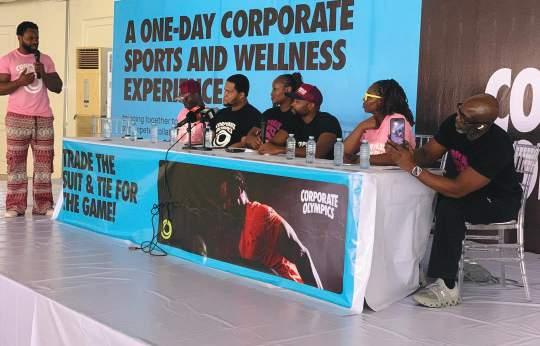
Over 5,000 professionals across different sectors are expectedtogatherattheLandmark Event Centre, Lekki, Lagos, for the maiden edition of the Corporate Olympics scheduled for May 1, as organisers seek to promote wellness, networking and a healthier work-life balance among corporate employees.
The event, organised by Work and Wellness Ltd, was unveiled at a press conference in Lagos where the organisers outlined activities planned for the oneday sporting festival.
Speaking at the briefing, the Technical Director of the event, Trebla Albert, alongside the Director of Experience, Engagement and Media, Ekemeni Ekerette, described the initiative as more than a sporting contest, noting that it is designed to celebrate the human energy that drives corporate productivity.
According toAlbert, Nigeria’s
corporate ecosystem is set to witness a unique blend of business, wellness and competitive spirit when the Corporate Olympics makesitsdebutattheLandmark Event Centre.
He explained that the event is designed as a landmark gathering that will bring together professionals from some of Nigeria’s leading organisations for a day of sporting challenges, wellness activities and collaborative competition.
“The Corporate Olympics is more than a sporting event; it is a movement that celebrates the human engine behind business performance,” Albert said.
Project Manager of the event, Daniel Maduneme, said the initiative is structured to simulate a mini Olympic-style competition where corporate teams compete across several sporting categories.
“Corporate Olympics is a
fusion. We want to simulate a mini Olympics by combining the traditional sporting house competitions where teams compete in different sports categories,” Maduneme said.
“But this time it will be in an Olympic format, where medals will be awarded for each game andpointswillbetrackedthrough participation ratings on a live leaderboard.”
Maduneme added that the event is expected to draw professionals from organisations across about 12 industries, ranging from large corporations to smaller enterprises.
Beyondthecompetitiveaspect, he said the event will also serve as a networking platform for professionals across different levels within the corporate structure.
“You will be meeting people from other organisations, interacting and connecting while competing,” he said.
Balmoral Group Promotion and Amir Khan Promotions on Thursday unveiled a symbolic Peace Fight between Ezra Arenyeka and Godday Appah as the headline attraction of Chaos in the Ring, scheduled for May 1, at the Balmoral Hall, Federal Palace Hotel, Victoria Island, Lagos.
The bout, which will double as a WBO cruiserweight title fight, was announced at a World Press Conference in Lagos on Thursday, where promoters revealed a card designed to blend elite boxing with a powerful social message.
CEO of Balmoral Group Promotion, Ezekiel Adamu, explained that the Peace Fight was conceived to channel the long-running tensions between the Ijaw and Itsekiri communities — two groups historically associated with youth unrest

— into a sporting contest rather than street conflict.
“What we are preaching here basically is we don’t want to fight with guns, we don’t want to fight with weapons anymore, we want to settle the score in the ring,” Adamu said.
Arenyeka represents Delta State, home of the Itsekiri, while Appah flies the flag for Bayelsa State and the Ijaw community. Adamu described both fighters
as highly motivated, saying they are “very fired up” heading into the contest.
Beyond the Peace Fight, the card features an entertainment bout between popularskitmakerCarterEfeandcontroversial musician Portable, withAdamu confirming that all fights on the night are structured as 50-50 contests. Adamu also reaffirmed the broader ambition behind the Chaos in the Ring franchise — positioning it as a platform to showcase Nigeria’s finest boxing talent to a global audience.
and find themselves in the relegation zone, below 17thplaced Nottingham Forest on goal difference only.
However, their results have improved lately and the Hammers have lost just one of their past five Premier League matches.
Guardiola knows Nuno Espirito Santo’s side are fighting for points, but the Spaniard said City “are desperate too”.
The Premier League enters another decisive weekend with pressure building across the table. Arsenal continue to strengthen their grip on the title race, while the contest for European places remains tightly packed, highlighted by a high-stakes meeting at Old Trafford.
Today’s programme begins at 4:00pm as Sunderland host Brighton. Sunderland boosted their survival hopes
with a hard-fought victory at Leeds, while Brighton will look to respond after pushing Arsenal in a narrow defeat.
The visitors should dominate possession, but Sunderland will rely on home support and quick transitions to claim vital points.
At 6:30pm, league leaders, Arsenal welcome Everton to the Emirates. Arsenal have won three straight league matches and hold a comfort-
able lead at the summit. Everton arrive encouraged by their recent victory over Burnley, though facing the league’s most consistent side presents a far sterner test. Also, at 6:30pm, Chelsea face Newcastle in a meeting between two sides chasing European qualification. Chelsea impressed with a strong league win over Aston Villa last weekend, while Newcastle carry confidence after a notable victory against Man United.
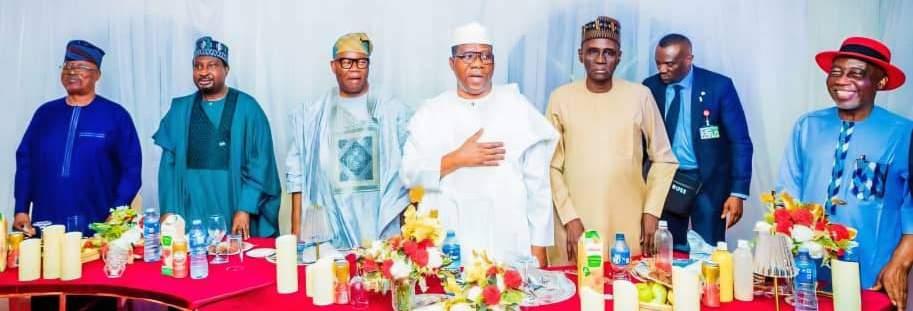
We see them as wars, weather catastrophes, Climate Change and much more. We mostly do not consider them as symptoms of anything other than human political quarrels and struggles for political and economic supremacy. We do not link any of what is going on all over the world today with any “old fashioned” ideas about signs of the last judgment, no!
With one misfortune tumbling in on another, even before anyone has fully gotten a bearing on the present, with terrible things coming in quick succession, and with phenomenal speed and with monumental consequences, an ever-growing circle of demographic groups are at the end of their wits. And, anon, the number of individuals, leaders and institutions that can explain, control or manage what is going on keeps dwindling by the hour.
Did the scriptures, and many ancient prophesies say anything about a time in human affairs when there would be “wars and rumors of war, distress of nation, increasing natural disasters, brother fighting against brother, pestilences, strange diseases, and much more”? The Arabs and the Israelis, the descendants of two brothers born by the Abraham, are at war as I write. They have been for a long time now.
Incurable diseases are on the increase everywhere. So are natural disasters, and every other thing mentioned in prophetic writings and the Bible as signs of the end-times and the Last Judgment. But that is a matter for another day.
For today, let us look at two events: one pastcontinuous, while the other is present-continuous. The second has to do with frightening evidence from everyday science about the long-term cosmic events, indicating that the earth is in trouble, and that everyone in it today should expect all manner of unplanned, and unexpected changes and challenges. The changes are expected to be monumental, essentially catastrophic in terms of its impact on the life we know on earth today and likely to upturn everything that is currently sustaining the many illusions holding our world together at the moment.
Concerning the past-continuous, it was pointed out on this page on the eighth day of January, 2025, that the multiple planetary alignments of year 2025 was not for nothing. There was the January 21 spectacle, the Main Event of January 25 and the one of February 28. Then came the April 15 morning alignment of Neptune, Mercury, Saturn and Venus, before the August 11 morning alignment of Mercury, Jupiter, Venus, Uranus, Neptune and Saturn! Why?
The rare alignment of January 25 was preceded by another, which occurred three days earlier. Why the buildup, after the January 21 large
alignment of Mars, Jupiter, Uranus, Neptune, Venus, and Saturn?
If, as stated in the aforementioned article, “The alignment of several planets is believed to amplify the energies of these planets, prompting changes, introspection, opportunity, and transformation across the globe and across all zodiac signs”, what did the last years cosmic spectacle portend?
Also, if “Rare planetary alignments have been historically linked with significant energy shifts, with implications for people’s emotions, political and social transformations, changes in the physical environment, upheavals in nature, new twists in relationships and possible global changes, then there is much that need to be explained about in what is happening all over the world today.
Going back to the present continuous we mentioned earlier, scientists just reported that a laboratory machine in Colorado that can accurately measure time, without losing a single second in 300 million years, has detected something unsettling.
“Our dear planet finished a rotation 1.59 milliseconds earlier than it should”; meaning that the Earth is spinning faster now than at any point in more than half a century of this atomic timekeeping. This is not a small-time difference for a machine that counts 9 billion vibrations per second. And is it a coincidence that everything is moving faster, happening faster, beginning and ending faster everywhere today”
Following the scientific view that the history of the earth shows a continuous redistribution of mass over time, due to both human and natural activity, the question today is: What is affecting the earth’s rotational energy”? If the earth is speeding up, something must be pushing the rotation faster. And what if whatever is responsible for this is not just one thing alone, but several things acting simultaneously, and pulling in different directions? It might be something from deep inside the planet,
on the surface of the earth, the atmosphere above, of from the wider cosmos beyond the earth. But we have no idea.
So, what is pushing the Earth faster? What invisible hands are at work here? Are they all connected in such a way that even scientists cannot unravel the complexity and probably build explanatory models for them? The Earth is spinning faster! The atomic clocks caught it. And science is yet to find out why.
A 2023 study published in the journal Nature Geoscience, of researchers analyzing decades of seismic wave data, discovered that the earth’s inner core had changed its behaviour: that it was rotating slightly faster than the rest of the planet. This phenomenon, known as super rotation, boils down to the simple fact that the inner core was outpacing the surface by a tiny but measurable amount of time. Then it stopped, suggesting that the inner core had decelerated; and now matched the rotation rate of the outer layers. But scientific authorities are divided on the truth of this explanation.
But one thing is clear, namely: A change in the earth’s inner core’s rotation affects the outer core, the outer core affects the mantle and the mantle affects what happens on the surface; and sometimes vice versa. Thus, the melting of an Ice Mountains on the surface of the earth will lead to a redistribution of weights globally.
If the Greenland ice sheet, which has about 2.6 million cubic kilometers of frozen water, melts global sea levels would rise by about seven meters. If the Antarctic ice sheet, which is far lager, and which aggregates enough water to raise sea levels by almost 60 meters, melts, the released water will alter the coastline of every continent on Earth; and even submerge many nations.
When water and weight storehouses that have been relatively stable for thousand years, and which sat at the poles, held their mass and consistently contributed predictably to the planet’s inertia, melt, a lot will change. That inertial stability is gone, as the waters are flowing towards the equator and redistributing the earth’s weight further from the axis of rotation as the ice melts. And many things are giving right now!
When kilometers of frozen water that were pressing down on the bedrock enough weight to depress the earth’s crust by hundreds of feet melt away, the weight is lifted and the land begins to rise slowly, incrementally in a process that is still happening right now; as the ice poles are melting. And this will bring earthquakes and much more.
As for human impact on all of this, consider for how long we have been drawing water from natural water tables and underground aquifers. Much of this extracted affects the global mass. The construction of dams all over the world for decades has also led to the entrapment of large
amount of water in reservoirs, altering the weight of the dammed environment and has helped in modifying the overall global mass in some way. What is emerging is not the image of an earth that is controlled by just one variable, element of force. The complexity of the situation is further complicated by the fact that there are also interacting magnetic fields everywhere; all making no mean contributions to the overall confusion.
This is what was said in an article title “5G Controversy Needs Honest Science”, which appeared on this page some six years ago: “It is a fact of science that everything on earth gives out a definite radiation. It is also a fact of science that what we call “matter”, like a table, or even our bodies, is just pure energy vibrating at a specific frequency. It is the frequency and rate of vibration that creates what we call shape, size, texture, etc.”.
The article continued: “These particles also generate small electrical impulses, creating some sort of “field” around objects, even if only at a microscopic/atomic level for some of them. The human aura, for instance, is the result of electrical impulses, which continue from the subatomic level until they emerge as our electromagnetic field. What we eat, how we live and where we live can alter our aura significantly. So, using the term loosely if you like, electromagnetic fields are inevitable for all existents”.
Still on this, it was said here; “The man-made sources of electromagnetic field include X-rays, various kinds of higher frequency radio waves, via TV antennas, radio stations or mobile phone base stations. And you also have the challenge from outer space. The Toyota company had to recall about nine million pieces of its Camry brand between 2009 and 2011, because of what it termed “sticky pedals.” While the mechanical explanations for the problem were being addressed, Denis Chow of the Livescience publication, pointed out that the problem may have been created by: “… cosmic ray radiation from deep in the cosmos, which has been known to plague vulnerable data and memory chips in electronics.” He added that “… investigators might find it useful to examine a far-out culprit: cosmic ray radiation”.
So, when a world we have mentally constructed as having a predictable 24-hour day begins to present the prospect of errors in calculation of time, if means that there is a lot to rethink. With human activity as part of the causative factors, and in fact a major causative factor, in addition to cosmic and intergalactic radiations, days and nights are likely to have even more crises of “duration”.
The point here is this: What is going all in the world today is largely non-physical, but we are looking at the physical and symbolic manifestations of phenomena whose nature and origins we do not really know: but which will consume so many like “A Thief in the Night.”