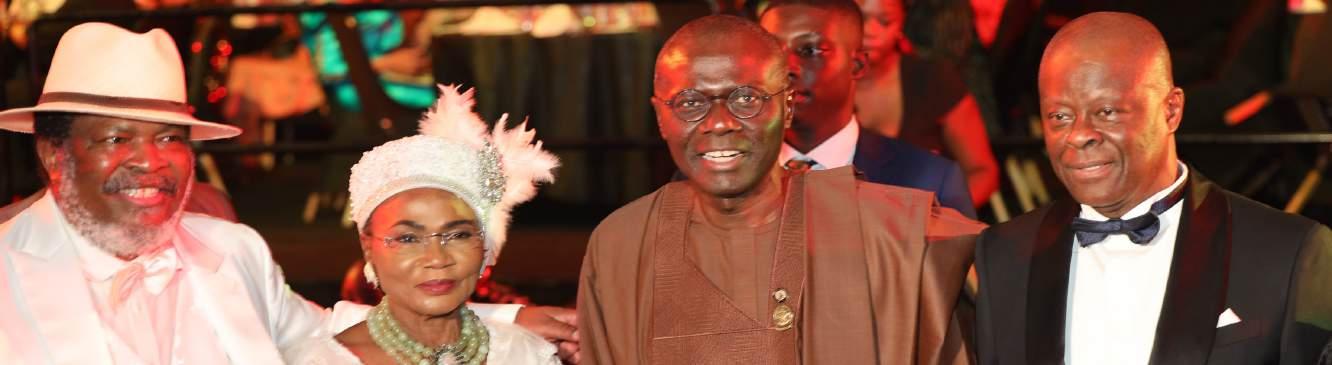
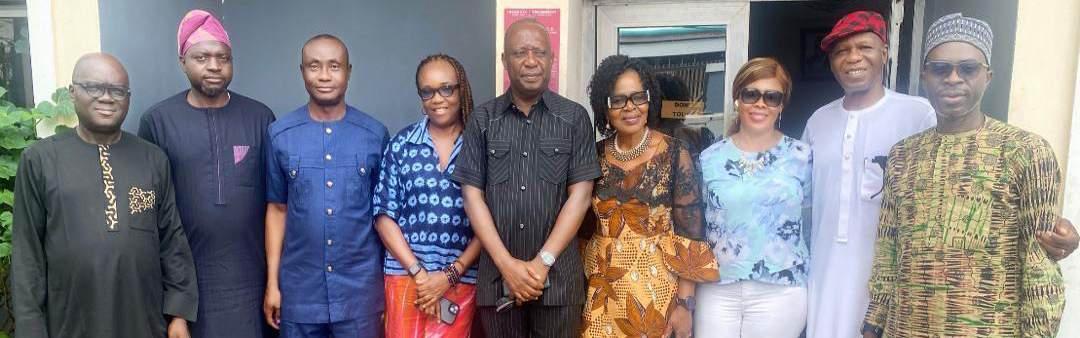
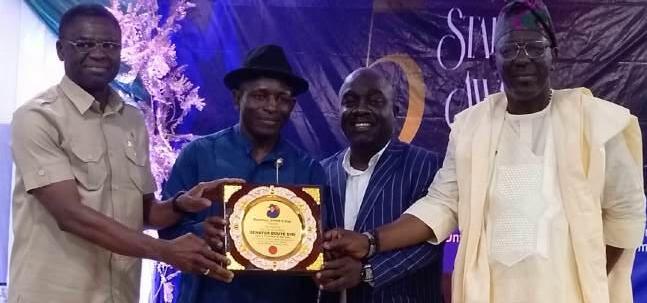
African Women Celebrate Strength, Call for Change at ARISE’s Women of Impact Award
We have nothing to refund to FG, NNPC insists Ad-hoc panel set to tour controversial multi-billionnaira frontier exploration projects Governors call for stronger oversight of federation revenue streams Senate may invite Tinubu over N210tn discrepancy in NNPC audited accounts Sanwo-Olu, Edun, Obaigbena, Ooni of Ife, Oramah, others applaud awardees
FAAC Reconciliation: NNPCL, Consultants Fail to
Emmanuel Addeh in Abuja Mojtaba Khamenei, the second son of the late Iranian Supreme Leader, Ayatollah
Chiemelie Ezeobi, Mary Nnah, Vanessa Obioha and Esther Oluku From governance to business, healthcare, technology and the
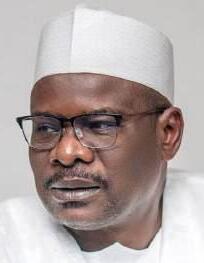
Walk Your Talk, Declare Emergency on Nation’s Security, Ali Ndume Tasks Tinubu
Stands on frontloading of military budgets
Deji Elumoye in Abuja
Former Senate Leader, Senator Ali Ndume, has advised President Bola Tinubu to follow through on his promises on the declaration of emergency on the country's security.
Tinubu had last November declared a nationwide security emergency and ordered additional recruitment into the armed forces.
Ndume's call came after
last week's killing of residents of Ngoshe in Borno State and abduction of over 100 women and children by the Boko Haram sect. Boko Haram, in cahoots with Islamic State of West Africa Province (ISWAP), carried out the coordinated attacks last Wednesday, in Ngoshe community in Gwoza Local Government Area of Borno State, where they killed some soldiers, the chief Imam of the town, and
some community elders.
According to reports, the terrorists first attacked a military base belonging to the 82 Division Task Force Battalion before storming the community and an Internally Displaced Persons (IDPs) camp.
Commenting on the issue on an interview with newsmen in Abuja yesterday, Ndume, who incidentally represents the affected community in the senate,
tasked Tinubu to mandate the security forces to carry out consistent clearance operations in areas like Lake Chad, Sambisa Forest, and Mandara mountains.
He said those areas were havens for insurgents, from where they launched their consistent attacks.
The ranking senator also urged the president to regularly brief Nigerians on his efforts to surmount banditry and insurgency in
the three northern zones.
Ndume stated, "Government should walk its talks on emergency by engaging in coordinated and sustainable attacks on the targets, especially in the North-east. They should carry out consistent clearance operations in Lake Chad, Sambisa forest and the Mandara because the recent attacks were well coordinated by the insurgents.
"For example, the Ngoshe
massacre was carried out by the insurgents from the Mandara mountains, assisted by others from Sambisa and the Lake Chad, using their known routes, including the Mandara mountains, Lake Chad, and Sambisa.
Nigeria’s long-running effort to reconcile oil revenues due to the Federation Account has hit another obstacle after Nigerian National Petroleum Company Limited (NNPC Ltd) and Periscope, the consultants engaged by the federal government and governors to review the company’s accounts, failed to agree on a $42.3 billion liability believed to be owed to the federation.
The disagreement was disclosed in the FAAC PostMortem Sub-Committee Report for February 2026, seen by THISDAY, which reviewed outstanding reconciliation issues involving revenues generated by key government agencies.
Members of the clerical body responsible for selecting Iran’s highest authority announced the decision, calling on Iranians to rally behind him and preserve national unity, with the assembly saying Khamenei had been chosen through what it described as a “decisive vote”.
The body urged citizens across the country, “especially the elites and intellectuals of the seminaries and universities”, to pledge allegiance to the new leadership
The document indicated that attempts to reconcile crude oil revenue remittances between the national oil company and consultants working on behalf of the federation had yet to produce a mutually agreed figure.
The $42.3 billion is aside from the N210 trillion discrepancy currently being investigated by the National Assembly. Senate yesterday signalled that President Bola Tinubu might eventually be invited to answer questions in his capacity as Minister of Petroleum Resources over the staggering N210 trillion discrepancy uncovered in the Audited Financial Statements (AFS) of NNPC.
Chairman of Senate Public Accounts Committee, Aliyu Wadada, gave the hint on Sunday. According to the FAAC report,
and safeguard unity at a critical moment for Iran.
The move could lead to a further escalation of the war, given that Donald Trump had already acknowledged that Mojtaba Khamenei was the most likely successor and made clear he considered such an outcome unacceptable.
Mojtaba Khamenei’s elevation marked the first time since the 1979 Islamic revolution that Iran’s supreme leadership has
the reconciliation exercise was designed to determine the accurate amount of oil revenue due to the Federation Account by comparing NNPC’s records with those generated by independent consultants.
However, both parties were unable to align their calculations regarding the $42.3 billion, stalling the reconciliation process.
The document stated, “Recall that the NNPCL and Periscope Consultants were mandated to meet and harmonise their figures before presentation to the Sub-Committee. During the Sub-Committee's last meeting, NNPCL reported that they are yet to agree with Periscope Consulting regarding the underremittances of $42.373 billion to the Federation.
“The NNPCL representative
passed from father to son. It is a development likely to ignite debate inside Iran about the emergence of a dynastic system in a state founded explicitly to overthrow hereditary rule after the shah.
Ayatollah Ali Khamenei, who ruled for 37 years, was killed in a US-Israeli strike on Tehran on February 28, on the first day of the war with Iran.
For many analysts, Mojtaba Khamenei’s appointment is a symbolic move designed to make
stated that they still maintain their earlier position that the company has nothing to refund to the Federation Account. The Sub-Committee gave them a deadline to meet and reconcile their differences and report back before the next FAAC Plenary meeting. This assignment is work in progress.”
The development means that the authorities have not been able to conclusively establish the exact volume of funds that should have been remitted by the state-owned oil company to the Federation Account, from which revenues are shared among the federal, state and local governments.
The FAAC Post-Mortem SubCommittee, which is responsible for examining discrepancies in federation revenues and improving transparency in the
the regime still appear strong and determined not to bow to western pressure.
The 56-year-old cleric has never held elected office nor formally occupied a senior position within Iran’s government. He has spent much of his life at the centre of power in Iran while remaining largely out of public view.
Born in 1969 in the north-eastern city of Mashhad, Khamenei was raised within the political and clerical world that emerged after
revenue-sharing framework, stated that the unresolved differences between NNPC and the consultants had delayed the completion of the reconciliation exercise.
The report explained that the committee had reviewed several revenue-related matters during the period under consideration, including reconciliation efforts involving government agencies, deductions made from federation revenues, and the status of various outstanding financial issues affecting FAAC allocations.
Oil revenues represent one of the most critical sources of funding for Nigeria’s public sector, and unresolved discrepancies in remittances have historically created tensions between federal authorities and subnational governments that
the 1979 revolution. As a young man he studied theology in the seminaries of Qom and reportedly took part in the final stages of the Iran-Iraq war, the UK Guardian reported.
Unlike many figures in Iran’s leadership, Khamenei never pursued elected office or a prominent government role. Instead, he gradually became an influential presence inside his father’s office, where he was widely seen as part of a small
depend heavily on monthly FAAC allocations.
Beyond the dispute over NNPC remittances, the committee also reviewed other financial matters affecting the Federation Account. A critical issue examined by the sub-committee involved the controversial financing of frontier exploration activities by NNPC.
Under the provisions of the Petroleum Industry Act (PIA), the national oil company has the responsibility to fund exploration in frontier basins aimed at expanding Nigeria’s oil and gas reserves.
The committee stated, “NNPCL has provided all the work carried out within the basins together with the
circle managing political access to the supreme leader. Over the years he cultivated close relationships with conservative clerics and elements of the Islamic Revolutionary Guards Corps (IRGC), a connection analysts say strengthened his standing within the system. His name surfaced publicly during the disputed 2009 presidential election, when
AFRICAN WOMEN CELEBRATE STRENGTH, CALL FOR CHANGE AT ARISE’S WOMEN OF IMPACT AWARD
the continent including Nigeria, Kenya, South Africa, Zimbabwe, Ethiopia, Mauritius, Sudan, Côte d’Ivoire and Niger.
In her opening remarks, Eka Obaigbena, said, the award was not merely to mark a date but to honour the undeniable force of African women, recognising their work, brilliance, sacrifice and the quiet yet determined ways they continue to reshape societies.
She noted that in Africa, womanhood has never simply been a passage but an architecture of building, rebuilding, creating, healing, negotiating, transforming and, above all, enduring.
According to her, long before their stories were formally recorded or celebrated, African women were already holding community meetings and steering progress across the continent. Yet, she observed that
recognition has often lagged behind their immense contributions, despite their visible impact in boardrooms, classrooms, courtrooms and farms.
She added that such contributions were rarely gathered into one shared moment of acknowledgement, stressing that the ARISE News Women of Impact Awards was intended to change that by paying tribute to 100 women in honour of International Women’s Day. Among the honourees were South African anti apartheid activist, Sophie Williams De Bruyn; Chief Executive Officer of TD Africa Distributions Ltd, Chioma Stan Ekeh; Founder of Aruwa Capital Management, Adesuwa Rhodes Okunbor; and paediatrician and Co Founder of Premier Specialists’ Medical Centre, Dr. Ehimwema Eke Aluko, among others.
Beyond celebrating their achievements, many of the awardees used their acceptance speeches to call for change and reflect on the role of women in shaping society.
Former Executive Director of Enough is Enough Nigeria, Yemi Adamolekun, urged Nigerians to reflect on the kind of country they want to build.
“I do challenge us to think about the kind of country that we want to live in, the one we want to leave our children, and the one we want the world to celebrate in the coming days,” she said.
Williams De Bruyn, who received a standing ovation, called on women to continue to uplift one another and build a legacy for future generations.
“I accept this award as testament to the power of collective action and the impact that we can have when we work
towards a common goal. As an activist with the privilege of working across sectors—trade unions, academia, media—and I see first hand the difference we can make when we collaborate.
“As an African woman, I am proud to be part of the continent that is shaping the world and the future. We are not just shaping Africa, we are shaping the world and we are doing it with vision, dedication, excellence and purpose. And to the younger generation I’d say you are the future. The future is bright.
“Don’t be afraid to dream big, to take the risks and to push boundaries. Your voice matters and your contribution is crucial. Be inspired by the women who came before you. Be the inspiration of the women who would come after. This award is not just a recognition of my journey. It is a call to action.
Lets work together for a healthy future and let’s set a legacy to be remembered for generations to come.”
Dr. Eke Aluko also stressed the importance of investing in the next generation, saying: “If we look after our children, we secure our future.”
Rhodes Okunbor, who emphasised the importance of financial support for women entrepreneurs, said: “The best support to give women is to back them with capital. Because when women have access to capital and leadership, the entire society is transformed.”
One of the most rousing remarks of the evening came from Stan Ekeh, who acknowledged the critical role women play and advised men that empowering women “is not charity, it is strategic wisdom.”
Founder of Women at Risk International Foundation
(WARIF), Dr. Kemi DaSilva Ibru, dedicated the award to women and girls facing abuse. She added: “This award this evening is not for me. I stand in the gap for the countless women and girls at risk. Many of them enduring horrific violence daily and forced to remain silent. This award is for them. We see you, we hear you, and we are here for you.”
Chairman of Fidelity Bank, Onwughalu Amaka, who was also honoured, reaffirmed her commitment to strengthening the financial services sector and expanding impact beyond the banking industry.
Founder of Flying Doctors, Dr. Ola Brown, while reflecting on her long standing commitment to improving healthcare across Africa, said the award has really “made me more determined to
Emmanuel Addeh and Sunday Aborisade in Abuja
Ndume
These Frequently Asked Questions below provide a clear over view of Nigeria’s new tax law coming into effec t in 2026. They are designed to help individuals and businesses understand the key changes, who they apply to and how the new rules will affec t filing, payments and compliance.
WHO IS ELIGIBLE TO PAY TAX IN NIGERIA?
WHAT IS THE NEW RENT RELIEF?
Any individual or entity that earns income or derives economic benefit in Nigeria and abroad is eligible and required to pay tax.
WHAT IS A TAX IDENTIFIC ATION NUMBER ( TIN)?
A TIN is a unique identifier issued by FIRS or SBIR and is required for all tax-related transactions.
WHO IS REQUIRED TO FILE TAX RETURNS?
Nigerian residents aged 18+ with income from Nigerian sources including employees, self-employed individuals, and non-residents earning from Nigeria must file returns.
C AN I PAY TAXES IN ANY BANK BR ANCH?
Yes. Approved banks can collect payments for all tax types and tax offices.
WHY DOES IT TAKE LONG TO GET A TAX CLEAR ANCE CERTIFIC ATE ( TCC )?
A TCC is issued only after all taxes for the past 3 years are fully paid. The standard two-week processing time starts from the date of application, not the date of payment.
WHAT IF I FAIL TO FILE OR PAY TAXES ON TIME?
Late filing or late payment attracts penalties and interest charges.
WHO DOES THE NEW 2025 TAX LAW APPLY TO?
Resident individuals are taxed on worldwide income; nonresidents are taxed on Nigerian-sourced income.
WHAT IS THE TAX R ATE FOR LOW-INCOME EARNERS?
Individuals earning N800,000 or less per year are fully exempt from personal income tax.
ARE TR ANSFERS AND DEPOSITS INTO MY BANK ACCOUNT AUTOMATIC ALLY TAXED?
No. Transfers and deposits are not taxable by themselves, but the source of the income may be taxable.
From 2026, individuals can claim 20% of annual rent (up to N500,000) as rent relief, provided actual rent is declared to tax authorities.
WILL SMALL COMPANIES PAY TAX?
Companies with N50 million or less in annual turnover are exempt from Companies Income Tax (CIT).
ARE AGRICULTURE COMPANIES TAXED?
Agriculture businesses, including crop farming, livestock, cocoa processing, forestry, and dairy enjoy a 5-year tax holiday.
WHAT IS THE C APITAL GAINS TAX R ATE (CGT )?
CGT is a flat 30% on chargeable gains from asset disposal
HOW ARE NON-RESIDENT COMPANIES TAXED?
Non-residents are taxed on income sourced from Nigeria. If profits are hard to verify, FIRS may apply a minimum tax of 4% on Nigerian income.
ARE GAINS FROM CRYPTOCURRENCIES TAXABLE?
Yes. The 2025 Act applies CGT to digital asset disposals, including cryptocurrencies.
WHAT IS THE CURRENT VAT R ATE?
VAT remains 7.5%. Non-resident suppliers (e.g., ecommerce platforms) must register and remit VAT in Nigeria.
IS INCOME FROM BONDS OR GOVERNMENT SECURITIES TAXABLE?
No. Income from federal or state government bonds is fully exempt.
BE A LAW ABIDING CITIZEN. PAY YOUR TAX.
Fagbemi: Resolution of 15-year OPL 245 Dispute Will Reposition Nigeria's Economy
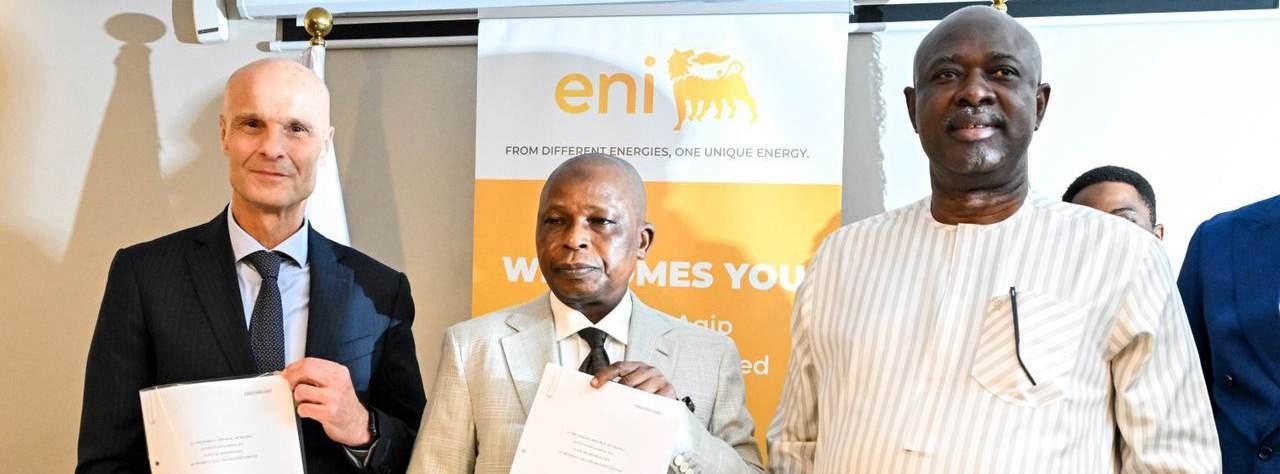
Attorney General of the Federation and Minister of Justice, Lateef Fagbemi, has said that resolving the 15 year-old dispute over OPL 245 will reposition the economy and strengthen the country's fiscal muscle.
He also praised President Bola Tinubu's visionary leadership, which enabled the breakthrough. Fagbemi, who spoke at the weekend after the signing of the legal agreement that brought the dispute to an end in Abuja, described the development as a milestone in repositioning Nigeria’s economic landscape.
He said: "The agreement marks a turning point for Nigeria’s oil and gas sector after more than two decades of legal battles and international
arbitration".
The federal government reached the settlement with Eni and Nigerian Agip Exploration Limited (NAEL), effectively ending the protracted dispute over OPL 245.
Fagbemi emphasised that resolving the dispute over OPL 245 will recalibrate the national economy and bolster the federal government's fiscal position. According to him, early in the administration, Tinubu directed that all disputes over the oil block be resolved amicably in the best interests of the Nigerian people.
"The clear vision and deep commitment of President Tinubu provided the political will required to bring closure to this protracted dispute.
The agreement demonstrates Nigeria’s commitment to transparency, accountability, and
the rule of law," he emphasised.
The Justice Minister explained that the settlement, which will culminate in a Consent Arbitral Award, not only resolves a complex international dispute but also restores Nigeria’s credibility as a responsible partner in global business.
He further highlighted several strategic economic benefits expected from the resolution, including the removal of legal and fiscal uncertainties that previously hindered the development of the oil block.
"This development will pave the way for large-scale investments, stimulate job creation, and reinforce Nigeria’s position as a leading energy producer in Africa," he said.
Fagbemi also noted that projected revenues from the asset could now be included in the country’s medium-term
He added that resolving the dispute through negotiated settlement rather than prolonged arbitration underscores Nigeria’s commitment to alternative dispute resolution and enhances the country’s credibility in international commercial and arbitration circles.
“This settlement sends a clear signal to the global community that Nigeria is open for business and committed to fairness and respect for contractual obligations,” he said.
The Attorney General also commended key institutions and stakeholders that contributed to the successful resolution, including the Ministry of Petroleum Resources, the Nigerian Upstream Petroleum
Oando Wins Equality, Diversity, Inclusion Award at IMT Summit
Emmanuel Addeh
Oando Plc, Africa’s leading integrated energy solutions company, has been named Equality, Diversity and Inclusion (EDI) Champion of the Year at the West Africa Industrialisation, Manufacturing and Trade Summit (West Africa IMT) 2026.
The recognition, the company said in a statement yesterday, highlights its efforts to foster an inclusive workplace and strengthen representation across the industrial and energy ecosystem in Nigeria and beyond.
The award was presented at the Summit’s Gala Dinner and
Awards ceremony held at the Landmark Event Centre, where organisations across the region were honoured for excellence in driving industrial growth and transformation.
Oando emerged as the winner in a competitive category that included Coleman Wires and Cables, Nigeria Machine Tools Limited, Ecobank Togo, and Unilever Côte d'Ivoire.
According to the statement, the recognition reflects Oando’s progress in building a diverse workforce, with women currently representing 43 per cent of the company’s employees, a milestone that underscores its focus on
inclusive talent development within traditionally maledominated energy and industrial sectors.
Quoting a Veriv Africa report, the statement said that women make up approximately 18.6 per cent of the workforce in the Nigerian energy sector, with females in leadership roles being even lower, often around 7 per cent to 8 per cent in certain subsectors. While female participation in renewables is slightly higher (ranging from 22 per cent to 37 per cent), overall, women face significant underrepresentation, particularly in technical STEM roles, it stated.
The award was received
by
Kanyinsola Mba, General Manager, Human Capital Management & Services, alongside Ayodele Peregrino, Employee Relations Manager.
In her acceptance remarks, Kanyinsola expressed appreciation to the organisers. Speaking on behalf of the company’s employees, she dedicated the recognition to the organisation’s workforce, popularly known as the #HumansOfOando, noting that the company remains committed to fostering an inclusive workplace where representation continues to grow, with a long-term aspiration to achieve a 50:50 gender balance or greater.
Regulatory Commission (NUPRC), the Nigerian National Petroleum Company Limited (NNPC), the Economic and Financial Crimes Commission (EFCC), and international partners such as Eni and Shell.
He emphasised that the settlement represents the triumph of dialogue over conflict and national interest over narrow considerations. “With this agreement, Nigeria can now move forward with confidence, ensuring that the development of OPL 245 becomes a source of prosperity for the nation and future generations,” Fagbemi further said.
Meanwhile, the Minister of Solid Minerals Development, Dele Alake, has credited the rapid growth of Nigeria’s solid minerals sector to Tinubu's reforms.
According to Alake, the gains include an increase in the sector's contribution to the Gross Domestic Product (GDP), more foreign direct investment and the country's rising profile as the best destination for mining.
Speaking through the Director-General, Mining Cadastre Office, Obadiah Nkom, at the just concluded Prospectors and Development Association of Canada (PDAC) conference held in Toronto, Canada, the minister emphasised Nigeria's readiness to partner with credible investors committed to responsible and sustainable mining in the country.
Addressing participants at the 27th Annual African Mining Breakfast, a high-level platform convening African ministers, industry leaders, and global investors for sustained dialogue on unlocking the continent’s mineral wealth, he spoke on the need for synergy among African countries to unlock the vast potential in the sector.
The ministry's delegation also participated at the International Mines Ministers Summit that had in attendance representatives from France, Chile, Saudi Arabia, DRC, Cameroon, Sierra Leone, Canada, Egypt, Australia, IGF, World Economic Forum (WEF), amongst others.
Alake expressed the commitment of the federal government to promoting value addition within the solid minerals sector, stressing that Nigeria has moved beyond merely exporting raw minerals to emphasising local processing in order to ensure maximum beneficiation for citizens and the nation’s economy. He also underscored the importance of stronger crossborder integration within the mining industry, adding that establishing structured agreements and coordinated policies would help unlock greater opportunities for trade, investment and shared infrastructure development across borders.
“Integration does not fail because Africa lacks frameworks. It fails because projects stall between borders. A mine may be viable in one country, but the rail link, the power line, or the processing facility sits across the border. And no one institution takes responsibility for stitching these pieces together," he said.
"I want to charge development finance institutions and strategic investors to go beyond funding local investments in isolation and start funding regional linking systems", Alake said, assuring that Nigeria was ready to anchor such corridors. “We have the data, the reforms and the political backing and all we need right now is capital that is structured for integration,” the minister explained.
Deji Elumoye
Alaran in Abuja
in Abuja
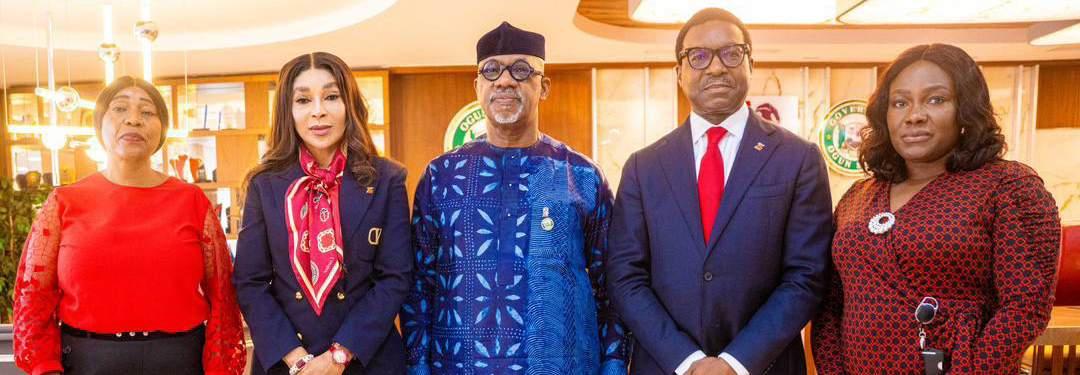
WHEN THE MANAGEMENT TEAM OF ZENITH BANK VISITED ABIODUN...
L–R: Assistant General Manager, Zonal Head, South West 3, Mrs. Joke Akinosi; Group Managing Director/Chief Executive Officer, Zenith Bank, Dame (Dr.) Adaora Umeoji; Ogun State Governor, Prince Dapo Abiodun; Executive Director, Zenith Bank, Mr. Akin Ogunranti; and Mrs. Afolake Ogunfowora during the visit of the management team of Zenith Bank to the Ogun State Governor at his office, Oke Mosan, Abeokuta… recently
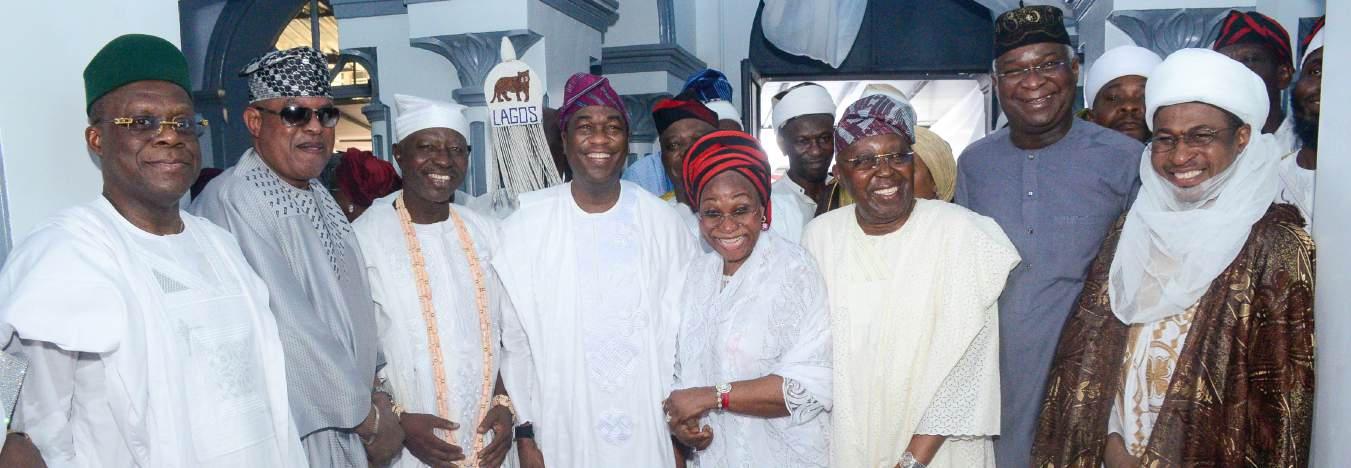
UNVEILING OF THE 100-YEAR-OLD REFURBISHED ALLI BALOGUN WASINMI MOSQUE...
L–R: President, Ansar-Ud-Deen Society of Nigeria, Prince Mosediq Adeniji Kazeem; former Managing Director/Chief Executive Officer of the Federal Housing Authority (FHA), Senator Gbenga Ashafa; Representative of the Oba of Lagos/ Opeluwa of Lagos, Chief Lateef Aderibigbe Ajose; Deputy Governor of Lagos State, Dr. Kadri Obafemi Hamzat; Great Grand-daughter of Alli-Balogun and wife of the Chairman, Caverton Offshore Support Group, Alhaja Lateefat Yoyinsola Makanjuola; her husband, Mr. Aderemi Makanjuola; former Governor of Lagos State and former Minister of Works and Housing, Mr. Babatunde Raji Fashola (SAN), and Chief Imam of Lagos State, Fadilatul-Shaikh Sulaimon Oluwatoyin Abu-Nolla, at the unveiling of the 100-year-old refurbished Alli Balogun Wasinmi (Alli-Oloko) Mosque in Lagos...yesterday
Dele Oye: Proposed
National Single Window Could Attract
$3bn Logistics Investment, $18m in Efficiency Savings
Says NSW should be domiciled in NIPC, not NRS
Chairman, Alliance for Economic Research and Ethics (AERE), Hon. Dele Oye, said the proposed customs National Single Window (NSW) could unlock about $3 billion in logistics investment and generate about $18 million in annual efficiency savings for the country.
Oye said if implemented with strong private sector participation, the platform held enormous economic potential for the country.
He, however, faulted the government's decision to domicile the NSW in the Nigeria Revenue Service (NRS), rather than Nigeria Investment Promotion Council (NIPC).
The NSW is a centralised
digital trade platform that enables importers, exporters, and freight forwarders to submit all regulatory documents (permits, manifests) through a single portal.
It integrates various government agencies’ systems to streamline trade, aiming to reduce clearance times to 24 hours, allowing users to submit, process, and receive approvals for international trade documentation in one place rather than visiting multiple agencies.
The platform, which is set to go live on March 27, marks a shift towards modernising trade and logistics, integrating agencies, like Nigeria Customs Service (NCS), National Agency for Food and Drug Administration and Control (NAFDAC), Standards Organisation of Nigeria (SON),
SERAP Drags FG to ECOWAS Court Over Phone-Tapping Regulations
The Socio-Economic Rights and Accountability Project (SERAP) has instituted proceedings against the federal government at the ECOWAS Community Court of Justice, challenging the legitimacy of mass phone-tapping regulations.
The suit, designated ECW/ CCJ/APP/11/26, was filed on Friday in Abuja, contesting the Lawful Interception of Communications Regulations 2019, which the organisation alleges permits unwarranted surveillance of private communications.
The case follows allegations by former Kaduna State Governor, Nasir El-Rufai, that a phone conversation involving National Security Adviser, Nuhu Ribadu, was intercepted, SERAP stated.
In the suit, the organisation is seeking a declaration that the government’s failure to withdraw
the regulations is a breach of Nigeria’s international human rights obligations, specifically the rights to privacy and freedom of expression.
SERAP also wants the court to order the government to withdraw the regulations and begin a legislative process to ensure that any interception framework complies with international human rights standards.
According to the group, the rules establish a broad surveillance system that could allow authorities to intercept communications on grounds such as national security or economic wellbeing without sufficient judicial oversight.
SERAP warned the regulations could be abused against journalists, civil society groups, political opponents and election observers, especially as Nigeria prepares for the 2027 general elections.
and Nigerian Ports Authority.
“But here lies the paradox: Nigeria has chosen to domicile this trade facilitation tool under its tax authority rather than its trade promotion agency,” Oye said, in a statement.
He stated, “This makes Nigeria an outlier. When Singapore pioneered the world's first Single Window in 1989, TradeNet, it placed it under
the Trade Development Board, an economic agency focused on competitiveness, not revenue collection.
“Ghana's successful GCNet operates as a Public-Private Partnership with 60% private ownership. Rwanda, while using its Revenue Authority, ensures deep integration with the Rwanda Development Board. Nigeria's model risks conflating trade
facilitation with tax enforcement.”
He said NRS secured legislative backing through Nigeria Tax Administration Act 2025, embedding NSW within a fiscal rather than economic framework.
Oye explained that while Dr. Zacch Adedeji's leadership at NRS had driven unprecedented inter-agency collaboration, the “question remains: can a tax agency truly prioritise trader
convenience over revenue maximisation?”
He said, “When I was National President of NACCIMA, I sounded the alarm. Speaking at the 2024 NEXHUB Export Conference, I appealed to President Bola Tinubu for increased private sector involvement and a restructuring of the National Steering Committee to be more inclusive.
NGE Inaugurates Committee on Research, Training, Publications
Sunday Ehigiator
The Nigerian Guild of Editors (NGE) has inaugurated a Research, Training and Publications Committee as part of efforts to enhance professional capacity, promote journalism scholarship and keep members informed on emerging issues in the media industry.
The committee, chaired by the Deputy Vice-Chancellor of Paul University Awka, Chinyere Stella Okunna, comprises seasoned journalists and media professionals
drawn from academia, media management and publishing, and it is expected to serve a two-year term.
Other members of the committee include former Managing Director and Editorin-Chief of The Sun, Tony Onyima; media entrepreneur and Founder/Chief Executive Officer of Omalicha FM, Angela Agoawike; Senior Editor and member of the Editorial Board of THISDAY, Iyobosa Uwugiaren; and Weekend Editor of The Guardian, Kabir Alabi Garba.
Speaking during the inauguration ceremony,
President of the NGE, Eze Anaba, said the Guild attached great importance to the committee’s assignment and had carefully selected its members to ensure a blend of academic scholarship and industry experience.
According to him, the committee was constituted to help bridge the gap between academic training and professional practice in Nigeria’s media industry.
“The membership of the committee was carefully selected to reflect this aspiration of bridging the gap between the
town and gown. I do not doubt that members will deploy their collective expertise to advance the Guild’s intellectual and professional mandate.”
Anaba explained that the committee would focus on promoting knowledge, skills and best practices in journalism through research, training and publications. He noted that the body would conduct and support research on issues relevant to journalism and media practice, including studies on readership, viewership and listenership trends.
XLCreativeHub Opens Entries for Screenwriting Competition, Residency
XLCreativeHub has called on screenwriters and storytellers to submit synopses of their original feature-length film scripts for its Screenwriting Competition and Creator Residency.
The announcement was made on the organisation’s website on Sunday.
The management said submissions would close on
16 March, while judges would review entries between 17 and 20 March.
It added that six finalists would be selected and announced on 20 March, with the entire event streamed live on XLCreativeHub’s YouTube channel.
According to the organisers, the judging panel includes
Halima Odiegwu, Emil Guruba and Kehinde Joseph.
The statement noted that shortlisted finalists would participate in a Screenwriting Residency scheduled to hold in Abuja from 22 to 28 March.
It added that public voting for the winner would commence on 28 March and end on 6 April,
while the overall winner would be announced on 7 April 2026. The statement read, “We are pleased to invite screenwriters and storytellers to submit a synopsis of their original feature-length film script for consideration in the prestigious XLCreativeHub Screenwriting Competition and Creator Residency.
Chuks Okocha in Abuja
James Emejo in Abuja
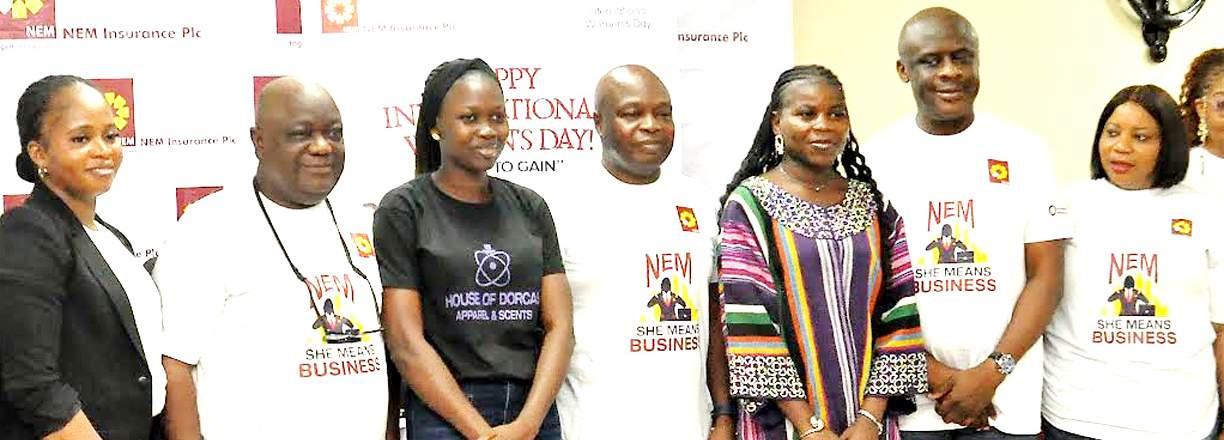
PRESENTATION OF N250,000 GRANTS TO WINNERS IN THE THIRD EDITION OF THE NEM...
Abubakar Kyari: FG Has Provided N700bn Risk Cover to Farmers, Generated N2.43bn Premium Income, Paid N200m Claims
Says FG's policy efforts crashed essential food prices by 50% Stakeholders seek improved spending on agriculture
James Emejo in Abuja
Minister of Agriculture and Food Security, Senator Abubakar Kyari, has disclosed that the Nigerian Agricultural Insurance Corporation (NAIC) had provided N700 billion risk cover to support 199,275 farmers, generating N2.43 billion premium income within the last two years.
The minister also stated that the corporation paid N200 million in claims to boost farmers' resilience.
He spoke at the 2026 ministerial stakeholders’ engagement retreat on agricultural transformation over the weekend in Abuja.
Kyari further declared that the federal government’s efforts to contain food inflation had started to
pay off, adding that prices of essential food commodities had dropped by 50 per cent nationwide.
This, he said, was in contrast to previous years when food prices skyrocketed way beyond what most Nigerians could afford.
He said the government's efforts had also attracted millions of dollars in investments across various agribusiness ventures, injecting much-needed capital into the sector and stimulating economic growth.
The minister said, "This support has not only boosted agricultural productivity but also created jobs, increased incomes, and enhanced the overall competitiveness of Nigeria’s agribusiness sector, paving the way for a more prosperous and sustainable
Bloomberg Mayor’s Challenge: Benin Wins $1m Global Innovation Prize
Felix Omoh-Asun in Benin
Benin City, the Edo State capital, has won a $1 million innovation award after emerging among the top cities globally in the prestigious Bloomberg Mayor’s Challenge,
The recognition pushed up Benin City on global recognition as a city of innovation and urban leadership, highlighting the city’s capacity to develop bold and practical solutions to pressing public challenges, particularly in healthcare delivery.
According to a statement by Patrick Ebojele, the Chief Press Secretary to the Edo State Governor, Senator Monday Okpeholo, “the global competition attracted participation from over 600 cities worldwide, with only 25 cities across 20 countries making the final list. Notably, Benin City stood out as one of only four cities in Africa to achieve this
milestone.”
Reacting to the development, Governor Okpebholo described the achievement as a reflection of the state government’s commitment to innovation and the ongoing efforts to strengthen healthcare systems across Edo State.
“This recognition is a testament to innovation, resilience, and the unwavering commitment of our team to transform healthcare delivery in Edo State. It reinforces that bold ideas from Benin City can compete — and win — on the global stage,” Governor Okpebholo said.
The governor congratulated the Edo State Ministry of Health and the entire team that worked tirelessly on the initiative, noting that the award demonstrates the state’s growing reputation as a hub for forward-thinking governance and impactful public sector reforms.
agricultural future.
“These efforts reflect our commitment to improving food security and the overall well-being of citizens. We are working to sustain this trend by
addressing high input costs to ensure food remains accessible and affordable.”
This came as stakeholders urged the federal government to boost current funding to the
sector than it spends on security, noting that when jobs are created through agriculture, it will naturally reduce insecurity across the country.
Kyari however, noted that
by prioritising agriculture as a key driver of economic growth, the government's efforts are yielding results.
Continued online
AFRICAN WOMEN CELEBRATE STRENGTH, CALL FOR CHANGE AT ARISE’S WOMEN OF IMPACT AWARD
put as much energy as I can into continuing to collaborate with a lot of the doctors, scientist, healthcare experts, healthcare economists, healthcare financing experts and to continue this journey of improving healthcare in Nigeria and in Africa.
“I’d like to thank Arise Group for recognising my work. This recognition has made me even more determined to do more. I’d also like to say thank you to my husband. It’s our 10th year of marriage. Last year I took 150 flights raising capital for healthcare in Africa. He stood with me every step of the way. He is the biggest support I have in my life.”
Senior Envoy to the African Union Commissioner, Dr. Diop Bienta, reflected on three decades of advocacy for women and peace across the continent.
“I came here carrying 30 years of experience of women, who knocked on doors that were never designed to open for them. Women who built movements and, with conviction and commitment, helped make peace possible across Africa. This award belongs to them — all of them.
“Tonight is also a milestone I cannot let pass without recognition. This year marks 30 years since I founded Femmes Africa Solidarité (FAS) in Geneva, Switzerland, with the vision that Africa cannot build a peaceful continent while women’s bodies are used as weapons of war.
“What began as a vision has grown into a movement and a powerful institution that has helped reshape the legal, political and diplomatic landscape for
women across the continent.
“Through FAS, we fought for a framework that tells African women clearly: your dignity is not negotiable, your body is not a battlefield, and your voice belongs in every room where decisions are made. We fought for women’s seats at the peace table — not as a courtesy or a token, but because no peace can endure without women’s leadership.
“Over the years, the world has come to see that African women are not merely victims of conflict, but architects of peace and development. I have witnessed them rebuild villages after war, negotiate ceasefires where few expected them, raise children in displacement camps, and still show up to shape the future.
“My work, including 15 years with the African Union and the past decade as Special Envoy on Women, Peace and Security, is inseparable from the journey of FAS. Yet the struggle continues, because the legal instruments that guarantee women’s rights must not only be signed, but fully implemented — in every village, every courtroom and every household.”
Chief Executive of the Nigerian Upstream Regulatory Commission, Mrs. Oritsemeyiwa Eyesan, who was represented, expressed appreciation for the recognition and pledged continued commitment to excellence in the oil and gas regulatory sector.
Deputy Managing Director of Access Bank Plc, Chizoma Okoli, also commended all women within the bank who continued to break barriers and
make their voices count.
Entrepreneur Tolu Coker credited her success to the support of her family and emphasised that empowering women requires tangible support.
She said the recognition was not about her alone but about the female entrepreneurs her firm supports, stressing that the most impactful way to empower women is by providing them with capital and real support, which she believes can transform society.
Chairman and Chief Executive Officer of the Nigerians in Diaspora Commission (NiDCOM), Hon. Abike Dabiri Erewa, called on women to support one another and remain confident in their abilities.
“We are strong, we are determined, and we turn up for being women. Let’s claim our space, believe in our values and principles, and never let anything hold us down.”
Also, speaking, HRH Abiola Dosunmu, the Queen Mother of Lagos, advised women to remain focused and resilient.
“It’s not easy, but it’s worth it. Being in the public domain, this place, for this length of time, I’m almost 80, it’s not easy at all. And it’s not going to be easy when you’ve got to remain focused, strong, determined to own your own space.”
Minister of State for Labour and Employment, Nikeiruka Onyejeocha, highlighted the often overlooked contributions of women, adding that, “Behind every successful man, there’s a woman. Most of them are not known, not seen. But I know that behind every successful
man, there must be a woman.”
Former lawmaker Nnenna Ukeje encouraged more women to take up leadership positions.
“It’s never crowded at the top. The world has enough space for many more women. As we go into elections, I encourage more women to step up to the space. There’s not enough of us, but the space is open for all of us,” she said.
Humanitarian advocate Fatima Shinkafi dedicated her award to victims of a tragic poisoning incident in Zamfara State.
“I accept this award with a sense of responsibility and humility. I’d like to dedicate this award to the 400 women and children that died of poisoning in Zamfara state. It was an influence to my work, I said to myself, never again on our watch should that happen and that has inspired me to a large extent,” she said.
The evening ended on a high note as singer Asa serenaded guests with some of her hit songs.
Dignitaries present at the event included the Ooni of Ife, Oba Adeyeye Enitan Ogunwusi; Lagos State Governor, Babajide Sanwo Olu; Minister of Finance and Coordinating Minister of the Economy, Wale Edun; Professor Benedict Oramah, immediate past President and Chairman of the Board of Directors of the African Export Import Bank.
Also round were the Managing Director of Providus Bank, Walter Akpani; Special Adviser to the President on Policy and Coordination and Head of the Central Delivery Coordination Unit, Hadiza Bala Usman; and lawyer Adesua Dozie, among others.
L-R: Winner, NEM 'She Means Business' contest, Olivia Chisom Kanu; Executive Director, Technical, NEM Insurance Plc,Mr. Adeyemi Mayadenu; winner, NEM 'She Means Business' contest, Dorcas Egbedara; Managing Director, NEM Insurance Plc,Mr. Andrew Ikekhua; winner, NEM 'She Means Business' contest, Eniola Mary Robert; Executive Director, Finance and Investment, NEM Insurance Plc,Mr. Idowu Semowo; and General Manager, Corporate Services, NEM Insurance Plc, Mojisola Teluwo, during the presentation of 250 thousand Naira grants each to three winners in the third edition of the NEM ‘She Means Business’ contest as part of the 2026 International Women’s Day celebration, held at NEM House, Lagos ... recently
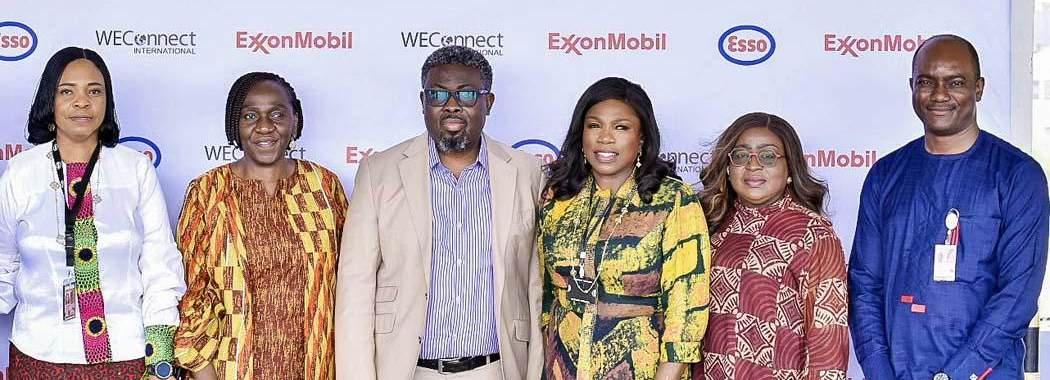
EXPLORATION AND PRODUCTION IN COLLABORATION WITH WECONNECT INTERNATIONAL...
Hope Rises for PDP as Olawepo-Hashim’s Shuttle Diplomacy Brightens Prospect of Truce
Chuks Okocha in Abuja
After months of public tension, legal disputes and factional manoeuvring within Peoples Democratic Party (PDP), fresh signs of reconciliation are emerging following what party insiders describe as a carefully coordinated mediation effort led by Dr. Gbenga Hashim, a presidential aspirant in the party.
Multiple sources within the party confirmed that Hashim, a founding member of PDP in 1998 and a former presidential candidate, had been quietly engaging key stakeholders across rival blocs in a bid to halt escalating internal divisions and reposition the party ahead of future electoral contests.
Officials familiar with the process said the reconciliation initiative began in January with consultations involving leaders of the Turaki group, before extending to discussions with Mallam Abdulrahman, a prominent
figure within the faction often associated with Minister of the Federal Capital Territory (FCT) AND former Rivers State governor, Nyesom Wike.
Sources said the conversations were substantive and focused largely on the political and institutional consequences of prolonged litigation within the party.
Hashim was said to have emphasised the risks associated with sustained court battles, warning that extended judicial confrontation can erode the party’s institutional stability and weaken its electoral preparedness.
Insiders stated that the thrust of the mediation effort was not personal rapprochement but the safeguarding of the party’s structural integrity.
In a move widely interpreted as invoking the authority of the party’s founding generation, Hashim also consulted former Heads of State, Olusegun Obasanjo and Ibrahim Babangida,
both influential figures in PDP’s early years.
Although neither elder statesman publicly commented on the consultations, sources indicated that their counsel centred on unity, stability, and national competitiveness as essential pillars for the party’s revival.
Party insiders said the consultations helped reinforce the perception that the mediation was an institutional effort rather than a factional manoeuvre, particularly as Hashim is not widely associated with any of the competing factions.
Developments in the legal arena also appeared to be reinforcing the push for reconciliation.
During the hearing of an appeal at the Court of Appeal sitting in Ibadan on Wednesday, the justices reportedly advised the parties involved in the dispute to consider reconciliation, emphasising the importance of political stability and internal
dispute resolution within political parties.
Last weekend reportedly marked a significant turning point. Intensified backchannel communications between key figures on both sides culminated in what sources described as an agreement in principle to begin harmonizing positions irrespective of pending court rulings.
The factions, insiders said, were prepared to deepen internal consultations and move toward structured, face-to-face engagement.
While formal documentation of the understanding had yet to be finalised, the mood within party circles appears to have shifted.
“The temperature has dropped,” a senior party official said. “People are talking again.”
Another party source described the prevailing sentiment more broadly.
The source said, “The mood in the party is reconciliation, whatever the expected decision
The GoNigeria Initiative, a civic engagement platform backed by the ANAP Foundation, has expanded its mandate beyond voter mobilisation to include advocacy for electoral reform, protection of free speech, judicial independence and improved security, as part of efforts to strengthen Nigeria’s democratic institutions.
The group said the decision followed growing concerns that democracy in Nigeria cannot be sustained by elections alone but requires stronger institutions, protected rights
and a secure environment that encourages citizen participation and accountable governance.
In a statement issued by its Convener, Atedo Peterside, GoNigeria said the initiative was originally conceived to promote citizen participation in elections, particularly among young Nigerians.
The initiative is supported by a group of prominent public figures serving as advocates, including Muhammadu Sanusi II, Matthew Kukah, Osita Chidoka, Aisha Yesufu, Arunma Oteh, Ayisha Osori, Folarin Falana, Tony Rapu, Yemi Adamolekun, among
others.
The platform, according to the statement, previously focused on encouraging eligible voters to register with the Independent National Electoral Commission (INEC), obtain their Permanent Voter Cards (PVCs) and participate actively in the electoral process.
However, it noted that Nigeria’s democratic journey requires broader reforms that address deeper institutional weaknesses affecting the credibility of elections, the rule of law and citizens’ freedoms.
According to the group, electoral reform remains
central to democratic legitimacy because elections serve as the primary mechanism through which citizens choose their leaders. It argued that recurring challenges such as vote-buying, intimidation, manipulation of results and weak electoral administration have often eroded public confidence in Nigeria’s democratic system.
The initiative stated that strengthening electoral processes would help ensure credible leadership selection, expand political participation, reduce post-election disputes and enhance accountability in governance.
of the Court of Appeal early next week.
Many members’ political careers depend on it. Those aspiring to the House of Assembly, governorship, House of Representatives, and Senate all understand that their ambitions depend on having a stable and united party.”
Political analysts observe that the timing of the reconciliation push may prove strategic.
PDP’s recent performance in Area Council elections, they stated, demonstrated the resilience of the party’s grassroots machinery. However, party leaders acknowledge that cohesion at the top remained critical to sustaining momentum at the base.
“The structure is strong. What
was missing was cohesion,” a party member said. Observers say the emerging truce can mark more than the end of a crisis. It may represent a broader recalibration aimed at restoring PDP’s credibility as a consolidated opposition platform ahead of the next electoral cycle. For Hashim, who previously served as Deputy National Publicity Secretary of PDP, the initiative signalled a renewed assertion of influence by founding members within a political organisation increasingly shaped by newer power blocs. His consistent advocacy for an out-of-court resolution appears to have resonated with stakeholders concerned about institutional fatigue and public perception.
Tinubu Felicitates Ex-Senate Leader, Victor Ndoma-Egba At 70 Describes him as a
distinguished patriot
Deji Elumoye in Abuja
President Bola Tinubu has rejoiced with former Senate Leader, Senator Victor NdomaEgba (SAN) aa he clocked 70 on Sunday, March 8, 2026.
Ndoma-Egba represented Cross River Central Senatorial District in the Senate for three consecutive terms from 2003 to 2015.
The President, in a release issued on Sunday by his Adviser on Information and Strategy, Bayo Onanuga, described Ndoma-Egba as a patriot and statesman who distinguished himself in the legal profession and the National Assembly.
Tinubu extolled the virtues of the Senate Leader of the 7th National Assembly for his outstanding interventions during critical moments, such
and statesman
as when the country was in the throes of a leadership crisis and the Senate rose to the occasion.
The President stated: “I rejoice with family, friends and associates of one of the finest legal luminaries and statesmen in the country on this important milestone of turning 70.
“Senator Ndoma-Egba has served the country well in many capacities. He has been a stabilising force in public service and politics. It is on record that he remains the first and only lawyer to date to earn the prestigious title of Senior Advocate of Nigeria while in the Senate.
“I congratulate Ndoma-Egba on his 70th birthday and wish him more years and good health as he continues to serve Nigeria and humanity.”
L-R: Event Coordinator, Esso Exploration and Production Nigeria Limited, Pauline Ekong; Partnership Lead, Africa, WEConnect International, Freda Owinga; Executive Director, Development, Esso Exploration and Production Nigeria Limited, Etabuko Abirhire; Participant/ Group Chief Executive Officer, JSK Consulting Group, Janet Adetu; NCD Manager, Esso Exploration and Production Nigeria Limited, Yetunde Ipadeola; and Procurement and Nigerian Content
Development, Esso Exploration and Production Nigeria Limited, Ikechukwu Ogbu, during the ‘Meet the Member Buyer Session’ hosted by Esso Exploration and Production Nigeria Limited(ExxonMobil) in collaboration with WEConnect International held in Lagos ...recently
Emmanuel Addeh in Abuja
Statement of Financial Position as at 31 December 2025 Statement of Profit or Loss and Other Comprehensive Income for the Year Ended 31 December 2025 Report of the Independent Auditor on the Summar y Financial Statements
accompanying summar y financial statements are consistent in al material respects, with the audited financial statements, in accordance with the requirements of the Companies and Allied Matters Act and the Financial Reporting Council of Nigeria (Amendment) Act, 2023. Summary financial statements
The summary financial statements do not contain all the disclosures required by the IFRS Accounting Standards, the Companies and Allied Matters Act and the Financial Reporting Council of Nigeria (Amendment) Act, 2023 applied in the preparation of the audited financial statements of the Company Therefore, reading the summary financial statements and the auditor's report thereon, is not a substitute for reading the audited financial statements and the auditor's report thereon. The summary financial statements and the audited financial statements do not re�ect the e�ects of events that occurred subsequent to the date of our report on the audited financial statements
The audited financial statements and our report thereon
We expressed an unmodified audit opinion on the audited financial statements in our report dated 27 February 2026. That report also includes the communication of key audit matters Key audit matters are those matters that, in our professional judgement, were of most significance in our audit of the financial statements of the current period.
Directors responsibility for the summary financial statements
The directors are responsible for the preparation of the summary financial statements in accordance with the requirements of the Companies and Allied Matters Act and the Financial Reporting Council of Nigeria (Amendment) Act, 2023. Auditor's responsibility
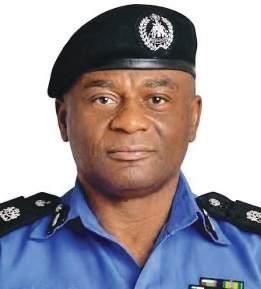
As IGP Disu Outlines New Operational Strategies for Internal Security...
Inspector-General of Police, Olatunji Disu, has unveiled a new policy direction aimed at strengthening professionalism, accountability, and operational effectiveness within the Nigeria Police Force, writes linus Aleke.
The Inspector General of Police, Olatunji Rilwan Disu, has outlined new operational strategies and a clear policy direction aimed at repositioning Nigeria Police Force to better address the country’s evolving security challenges.
Central to this vision, according to the police chief, is the need to strengthen professionalism, discipline and intelligence-driven policing across the Force. He emphasised that the Police must adapt to modern security realities while remaining firmly committed to its core mandate of protecting lives and property.
Equally important, he noted, is the need to reinforce accountability and rebuild public confidence in policing. Disu stressed that improved police-community relations will serve as a major pillar of the new policy framework guiding his administration.
According to him, strengthening internal oversight mechanisms, enhancing officer welfare and fostering greater public trust will be critical to improving operational effectiveness and ensuring that the Police Force remains responsive to the needs of citizens across the country.
Disu made these remarks recently in Abuja while addressing Senior Police Strategic Managers during his maiden meeting with them as the 23rd Indigenous Inspector-General of Police. “This administration will act firmly, fairly and transparently to deter misconduct, reinforce discipline and restore public trust in Nigeria Police Force,” he said. “At the same time, discipline must go hand in hand with capacity building.”
To achieve this objective, the IGP said the Force will undertake a comprehensive review of its recruitment processes to ensure that only individuals of sound character, competence and commitment are admitted into Nigeria Police Force. “Our training curricula across all police institutions will be modernised and continuously updated to reflect emerging security realities, evolving criminal tactics and global best practices in law enforcement,” he added.
Beyond entry-level training, Disu emphasised that his leadership will place strong emphasis on continuous professional development, specialised skills acquisition and periodic retraining to ensure officers remain effective, confident and professional in the discharge of their duties. “A modern Police Force cannot be anchored on outdated methods,” he noted. “It must be adaptive in strategy, knowledgeable in approach, technologically proficient and forward-looking in outlook.”
Another key component of the operational reform agenda, he said, is the full implementation of community policing across the country.
“Community policing will be a central pillar of our operational philosophy,” Disu stated. “Policing cannot succeed in isolation from the communities we serve.”
He therefore directed Commissioners of Police across commands and formations to prioritise sustained engagement with traditional institutions, community leaders, youth groups and civil society organisations.
“Security is a shared responsibility, and partnership is our greatest force multiplier,” he said.
While reaffirming the strategic role of the Police in Nigeria’s security architecture, Disu maintained that the Force remains the lead agency in the management of internal security.
“The Nigeria Police Force remains the lead agency in the internal security management of our nation,” he said, noting that preserving and strengthening this primacy must be pursued with clarity of purpose, strategic focus and institutional discipline.
Against the backdrop of increasingly complex security challenges, the IGP stressed
that the Force cannot afford reactive or fragmented approaches to policing.
“We will therefore re-engineer our operational strategies to fully embrace intelligence-led, evidence-based and technology-driven policing models,” he said.
Under the new approach, priority will be given to strengthening intelligence architecture, enhancing inter-unit coordination and improving information sharing across commands and formations.
Disu also disclosed that the Force will deliberately invest in modern investigative tools, including digital and cyber forensics, data analytics, surveillance technologies and scientific crime-scene management.
Such investments, he explained, will help ensure that policing becomes more proactive rather than reactive. “By doing so, we will stay ahead of evolving criminal networks, disrupt transnational threats and reinforce Nigeria Police Force as a capable, modern and credible lead agency in the nation’s internal security
architecture,” he said.
Beyond operational reforms, the IGP placed strong emphasis on the protection of human rights and the restoration of citizens’ confidence in Nigeria Police Force. He reiterated that the Police must remain, above all, the people’s police.
Disu warned that abuse of office by officers will not be tolerated under his leadership, adding that personnel found wanting will face appropriate consequences.
“I stand before you fully conscious of the weight of this responsibility and the high expectations of our officers, our nation and the Nigerian people,” he said. “The Nigeria Police Force exists to serve the people, protect the nation and uphold the rule of law. These are not abstract ideals; they are daily obligations.”
According to him, the authority of the Police is not derived solely from statutory powers but also from the level of trust the public places in the institution. “Our authority derives not merely from statute but from public trust,” he noted. “Once that trust is weakened, our effectiveness is diminished.” Under his leadership, he assured, professionalism, accountability and transparency will not merely remain slogans but will become operational standards.
Strengthening internal oversight mechanisms, enhancing officer welfare and fostering greater public trust will be critical to improving operational effectiveness and ensuring that the Police Force remains responsive to the needs of citizens across the country.
The IGP acknowledged that policing today operates under intense public scrutiny, particularly in an era of instant communication and heightened civic awareness.
“In an era of heightened public scrutiny and instant communication, every action of the Police reflects instantly on the entire Force and, indeed, on Nigeria itself,” he said.
He warned that misconduct, abuse of power, corruption, extortion and unlawful arrest or detention—no matter how isolated—erode public confidence and tarnish the image of the institution. “Let me be unambiguous: such conduct will not be tolerated,” Disu stated. He therefore urged senior officers to lead by example by enforcing discipline and upholding the highest ethical standards.
“As leaders, we must continually remind ourselves of an enduring truth: authority is strongest when it is exercised with restraint, fairness and sound judgement,” he said.
While the uniform confers lawful power, he stressed that the legitimacy of the Police ultimately depends on the conduct, decisions and behaviour of officers.
Respect for human rights, he added, must remain fundamental to professional policing and central to sustaining public trust.
“Every Nigerian, irrespective of status, belief or background, must be treated with dignity, fairness and respect,” he said.
Disu warned that any conduct that undermines these principles weakens public confidence and erodes institutional legitimacy.
“To restore and sustain public confidence in Nigeria Police Force, our internal accountability mechanisms will be strengthened, revitalised and insulated from undue influence,” he added.
He disclosed that key oversight bodies within the Force, including the Force Provost, the Complaints Response Unit and the X-Squad, will be empowered to operate decisively and independently in investigating cases of misconduct, corruption or abuse of authority. “The message must be clear: no officer is above the law,” he declared.
According to him, citizens must feel safe and encouraged to report wrongdoing, while officers must understand that loyalty to the institution does not extend to shielding misconduct. “Under this leadership, there will be no sacred cows,” he said, stressing that rank, seniority or position will not shield any officer from disciplinary action.
Officers found culpable, he added, will face swift and appropriate sanctions, including dismissal and prosecution where necessary.
Disu also spoke extensively on the role of the Police in safeguarding Nigeria’s democratic process as the country prepares for the 2027 general elections. “As we approach the 2027 General Elections, our responsibility to the nation becomes both heightened and non-negotiable,” he said. He noted that the credibility of the electoral process, the stability of Nigeria’s democracy and the confidence of the Nigerian people will depend largely on the conduct of the Police as the lead agency in election security management.
“In the discharge of this duty, the Police must be firm in enforcing the law, impartial in its decisions, professional in its conduct and strictly neutral in all electoral engagements,” he stated. The Force, he said, will secure the electoral process before, during and after the elections while protecting democratic institutions, electoral officials, voters and critical infrastructure.
The aim, according to him, is to ensure that every Nigerian can exercise civic rights freely, peacefully and without fear or intimidation.
NOTE: Interested readers should continue in the online edition on www.thisdaylive.com
IGP, Olatunji Disu
The Transformation of DSS Under Oluwatosin Ajayi FOCUS
When Adeola Oluwatosin Ajayi assumed office as Director General of the Department of State Services (DSS) in August 2024, expectations were mixed. Nigeria’s secret police had long struggled with public perception problems, often associated with heavy-handed operations, secrecy, accusations of political interference, among others. The task before Ajayi was therefore not only to manage intelligence operations but also to reshape the culture and public image of one of the country’s most powerful security institutions.
But within a short period into his tenure, the changes within the DSS have begun to attract attention. Under Ajayi’s leadership, the service has been widely described as undergoing a quiet but significant transformation, one that combines professionalism, intelligence-led operations, human rights sensitivity, and institutional reforms.
From giving the agency a more humane public face to promoting non-partisanship and strengthening internal discipline, Ajayi’s tenure is increasingly being seen as a turning point in the evolution of Nigeria’s internal intelligence architecture, writes Emmanuel Addeh.
Giving DSS A Human Face
One of the most noticeable shifts under Ajayi has been the attempt to humanise the DSS and soften its historically rigid public image. For decades, the agency was often perceived by the public as a fear-inducing institution. Ajayi’s leadership style has begun to gradually change that perception. His approach emphasises engagement with communities and respect for civil rights alongside intelligence gathering, rather than brute force.
These measures signal a shift from an era when intelligence agencies were frequently criticised for arbitrary detentions. Instead, the DSS is increasingly presenting itself as a professional institution that balances national security with respect for democratic norms.
Closely linked to this transformation is Ajayi’s effort to dismantle the long-standing reputation of the DSS as a “Gestapo-style” organisation.
Historically, critics accused the agency of aggressive tactics such as dramatic raids, public display of weapons, and outright intimidation of suspects. Under Ajayi, however, there has been a deliberate attempt to reduce such optics and emphasise intelligence-driven operations rather than theatrics. A case in point is the recent one between renowned Professor of Economics, Pat Utomi and the Federal Government.
Instead of deploying intimidation tactics, Utomi was simply charged to court where the judiciary eventually gave certain pronouncements, leading to a resolution of what could have added to the tension in the Nigerian polity. It’s the same scenario with activist, Omoyele Sowore, who’s also currently in court with the secret police.
Raising DSS Pensions to Reflect Current Realities
Another significant reform credited to Ajayi is the effort to improve the welfare of retired officers of the DSS by working assiduously to get approval for the adjustment of their pensions to better reflect current economic realities.
For many years, retirees of several security agencies in Nigeria complained that their pensions had failed to keep pace with inflation and the rising cost of living. Former intelligence officers, many of whom spent decades in covert national security operations, often found themselves struggling financially after leaving service.
After assuming office, Ajayi moved to address the issue by initiating measures aimed at reviewing and increasing pension payments for DSS retirees. The adjustment was designed to ensure that officers who had dedicated their careers to protecting the country could maintain a dignified standard of living after retirement.
The move was widely welcomed within the intelligence community, where morale among serving officers is closely tied to how retired personnel are treated. By prioritising the welfare of retirees, Ajayi sent a clear signal that the institution values the sacrifices of its personnel long after their years of active service have ended.
Beyond immediate gains, security experts note that such reforms also have operational benefits. When officers are confident that their post-service welfare will be protected, they are more likely to remain committed, disciplined, and loyal during their years in active duty.
In the traditionally secretive world of intelligence
services, welfare policies often remain out of public view. Yet within the DSS, Ajayi’s decision to align pensions with contemporary economic realities has been seen as an important step toward strengthening institutional loyalty and reinforcing the sense of belonging among both serving and retired personnel.
Compensation for Long-term Detainees
Another important development associated with the leadership of Ajayi has been the effort to address the longstanding issue of prolonged detention without trial, a matter that had historically generated criticism of the DSS.
For years, civil society groups and human rights advocates raised concerns that some suspects held by the DSS remained in custody for extended periods without the conclusion of investigations or the commencement of court proceedings. Such situations often damaged the public perception of the agency and reinforced accusations of abuse of power.
Upon assuming office, Ajayi was said to have initiated internal reviews of a number of inherited detention cases, particularly those involving suspects who had been in custody for extended periods. The reviews were aimed at determining whether continued detention was justified or whether such individuals should either be formally charged in court or released.
In some instances, several detainees who had spent lengthy periods in custody without conclusive evidence against them were released after the review process. In addition, steps were taken to facilitate monetary compensation or remedial measures for individuals who had been unjustly held for extended periods. These actions were seen by observers as part of efforts to reform the operational culture of the DSS and align it more closely with constitutional guarantees of personal liberty and due process.
Beyond the legal implications, the review and compensation initiative carried symbolic
significance. It signalled a willingness by the leadership of the agency to acknowledge past shortcomings and correct them where necessary.
Building Intelligence-driven Organisation
Ajayi’s background as a career intelligence officer has also influenced the operational philosophy of the DSS. Having joined the service in the 90s and risen through various operational and leadership roles across several states, Ajayi brought decades of intelligence experience to the position.
According to associates and former colleagues, Ajayi believes effective intelligence work depends heavily on cultivating human networks and community engagement rather than relying solely on surveillance technologies.
This approach has encouraged deeper collaboration with local communities, traditional leaders, and grassroots networks in order to obtain early warning signals about potential security threats. In many ways, this represents a return to classical intelligence practice where relationships and trust form the backbone of national security operations.
Non-partisanship
Another major hallmark of Ajayi’s tenure has been the effort to reinforce the political neutrality of the DSS.
Nigeria’s intelligence services have sometimes been accused in the past of being used as tools in political contests. Ajayi has sought to change that narrative by insisting on professionalism and adherence to institutional mandates rather than partisan interests.
Observers note that under his watch the agency has been more careful to avoid actions that could be interpreted as politically motivated. The emphasis has instead been on intelligence work that protects national stability irrespective of political affiliations.
This professional posture has been widely commended by stakeholders who believe that security institutions must maintain neutrality in order to preserve democratic legitimacy.
One such example involved attacks on supporters of presidential candidate, Peter Obi, recently in Edo state. The DSS was reported to have moved swiftly to identify and apprehend individuals suspected of involvement in the politically motivated violence.
The significance of such actions lies not merely in law enforcement but in the message they send: that the DSS will act against threats to public order regardless of the political identities of those affected.
Removing Bad Eggs
Institutional reform within the DSS has not been limited to operational changes. Ajayi has also prioritised internal discipline and accountability. Security agencies often struggle with internal misconduct, ranging from abuse of authority to corruption. Addressing such issues requires both administrative reforms and leadership resolve. Under Ajayi, efforts have been made to strengthen internal oversight mechanisms and remove officers whose conduct undermines the credibility of the service. While such actions rarely receive public attention due to the confidential nature of intelligence work, insiders suggest that disciplinary processes have become more robust. By enforcing internal discipline, Ajayi is attempting to build a culture of professionalism that strengthens the integrity of the institution. In fact, in one fell swoop, the DSS recently dismissed 115 personnel as part of ongoing internal reforms to improve professionalism, accountability, and integrity. The staff were fired over a period for various offences including corruption, misconduct, and, in some cases, sabotaging operations.
Strengthening Public Confidence in DSS
The cumulative effect of these reforms has been the gradual rebuilding of public trust in the DSS. Observers note that Ajayi’s leadership style emphasises professionalism, accountability, and measured communication. This approach has helped reposition the agency as a modern intelligence institution rather than merely an instrument of coercive power.
By combining operational efficiency with respect for human rights, Ajayi is redefining the role of intelligence agencies in democratic societies. Such trust is critical because intelligence agencies depend heavily on cooperation from the public. Without public confidence, gathering reliable information becomes significantly more difficult.
A Quiet Reform Agenda
Unlike some public officials who pursue reform through loud announcements, Ajayi’s approach has been described as that of a “quiet reformer.” His strategy appears to focus on gradual but steady institutional change rather than dramatic public campaigns. This method may be particularly suitable for intelligence institutions where discretion and operational secrecy are essential.
By emphasising professionalism, human rights awareness, internal discipline, and community engagement, Ajayi is gradually redefining the operational culture of the DSS. Through reforms aimed at humanising the agency, Ajayi has begun reshaping the identity of Nigeria’s secret police.
Oluwatosin Ajayi
FEaturEs
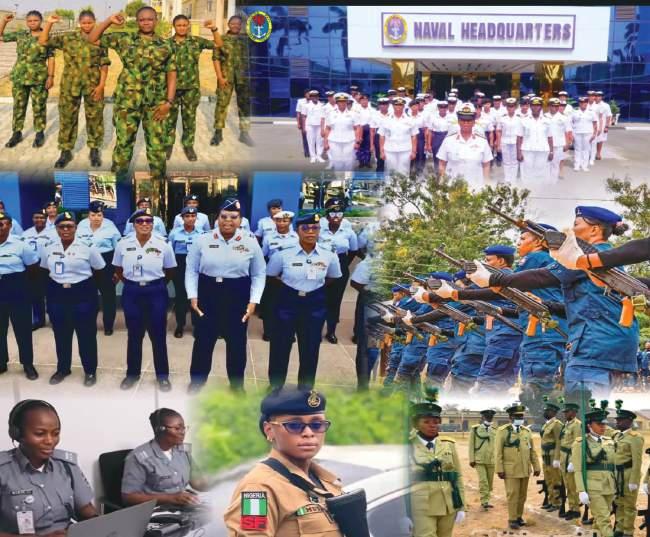
2026 IWD: Spotlight on Women in Nigeria’s National Security Architecture
As the world marked International Women’s Day 2026 on March 8, Chiemelie Ezeobi shines the spotlight on the growing contributions of women across Nigeria’s security architecture- from the Armed Forces and intelligence community to the Nigeria Police Force and paramilitary agencies. Once largely confined to support roles, women are now increasingly visible in operational, technical and leadership positions, helping to shape national defence and public safety
International Women’s Day (IWD) is celebrated globally every year on March 8 to recognise the achievements and contributions of women in social, economic, cultural and political spheres, while also advocating gender equality, inclusion and the empowerment of women and girls across the world.
The day also serves as a call for collective action to accelerate progress toward equal opportunities for women in all sectors of society.
Across Nigeria’s national security architecture, the message resonated strongly in 2026 as attention turned to the increasing role of women in the Armed Forces, the intelligence community, the Nigeria Police Force and several paramilitary agencies.
From every cockpits to every command and control centres, division, brigades, hospitals, units, classrooms, to even operational theatres, women across the security services have undoubtedly stepped into the spotlight as institutions marked the day with tributes to their growing impact on national defence and public safety.
Women in Nigeria’s National Security Architecture
Nigeria’s national security structure is a vast ecosystem that includes the Armed Forces, intelligence agencies, law enforcement and paramilitary services, all working together to protect the nation.
At the intelligence level, agencies such as the Department of State Services (DSS), the National Intelligence Agency (NIA) and the Defence Intelligence Agency (DIA) play critical roles in gathering and analysing intelligence for national security. These agencies operate alongside the Office of the National Security Adviser (ONSA), which coordinates strategic security policies and responses.
Beyond intelligence gathering, several paramilitary organisations contribute to internal security and public safety. These include the Nigeria Security and Civil Defence Corps (NSCDC), Nigeria Immigration Service (NIS), Nigeria Customs Service (NCS), Nigeria Correctional Service (NCoS), Federal Fire Service (FFS), National Drug Law Enforcement Agency (NDLEA) and the Federal Road Safety Corps (FRSC).
Across these institutions, women are increasingly occupying strategic operational, technical and leadership roles, contributing to the country’s security architecture in ways that were once largely dominated by men.
Breaking Barriers Across Nigeria’s Security Services
Once largely confined to support roles, women are now increasingly visible in operational, technical and leadership positions across Nigeria’s security services, helping to shape national defence and public safety.
From commanding operational units and piloting aircraft to intelligence gathering, maritime patrol and frontline policing, female personnel are steadily redefining their place within the country’s security architecture.
Their growing presence reflects not only years of institutional reforms but also a recognition that competence, professionalism and dedication, rather than gender, are the true pillars of effective service.
Rising Profile of Women in the Armed Forces
Within the Armed Forces of Nigeria, the 2026 International Women’s Day celebration highlighted the steady rise of female officers and personnel across the Nigerian Army, Nigerian Navy and Nigerian Air Force.
The commemoration, themed “Give to Gain – Generosity, Collaboration and Collective Uplift,” became more than a symbolic observance.
Instead, it served as a platform to spotlight the quiet but powerful rise of women whose courage, competence and professionalism continue to reshape the operational landscape of the military.
Across the services, female personnel are now involved in a wide spectrum of duties ranging from combat support roles and aviation operations to engineering, intelligence, logistics and medical services.
Nigerian Army: Advancing the Role of Women in Military Operations
The Nigerian Army under the leadership of the Chief of Army Staff, Lieutenant General Waidi Shuaibu, has continued to expand opportunities for women through training, career progression and leadership appointments, reflecting a broader effort to strengthen inclusiveness within the service.
Over the years, its female personnel have distinguished themselves in military intelligence, medical corps, signals, logistics and aviation support, while also representing the country in international military engagements.
For the NA, female personnel are no longer limited to traditional support duties but are actively involved in operational planning, field missions and command responsibilities across various theatres of operation. Women soldiers are deployed in counter insurgency operations in the North East, internal security operations across the country and in United Nations peacekeeping missions.
Nigerian Navy: Service Beyond Gender
In the Nigerian Navy, the leadership used the occasion to commend the growing contributions of female officers and ratings across naval operations.
In a message marking the day, the Chief of the Naval Staff, Vice Admiral Idi Abbas, praised the dedication and professionalism of women serving in the Navy.
“Today we join the global community
to commemorate International Women’s Day 2026 and proudly recognise the remarkable contributions of the women serving in the Nigerian Navy.
“This year’s theme, Give to Gain, reflects the daily reality of our female officers and ratings and carries a powerful message that resonates deeply with our values as a service. It reminds us that true progress and collective success are achieved when individuals willingly give their talents, energy and commitment for the benefit of others and the nation.
In the Nigerian Navy, our women embody this spirit every day.
“Through their sacrifices, professionalism and steadfast devotion to duty, they give their best in service to Nigeria and in doing so, the Navy and the nation gain strength, capability and pride. Indeed, the service of our female personnel is not defined by gender but by competence, sheer will and dedication to duty. Across our ships, bases and joint operations theatres, female naval personnel continue to distinguish themselves in diverse and critical roles.
“From safeguarding our maritime domain at sea to providing operational support ashore and contributing to engineering, logistics and medical services, their dedication continues to enhance the operational effectiveness of the Nigerian Navy.
“Beyond our shores, our female personnel have also represented Nigeria in United Nations peace support operations and other international engagements with distinction. Their contributions also reflect the enduring spirit of our motto, Onwards Together, which reminds us that the strength of our Navy lies in unity, teamwork and mutual respect.
“It underscores the principle that men and women serving side by side, each contributing their unique skills and perspectives, propel the service forward towards greater excellence. On behalf of the Nigerian Navy, I commend every woman in uniform for their enduring sacrifice and invaluable service.
“You are valued, respected and vital to the success of our mission. Together,
we will continue to give so our nation can continue to gain. Happy International Women’s Day celebration 2026. We give our time, we give our strength, we give our skills and we give our loyalty so that the Navy — and the nation — may gain.”
Nigerian Air Force: Strengthening Operational Excellence for Female Personnel
The Nigerian Air Force also celebrated the role of its female personnel, highlighting their contributions to aviation operations, logistics, intelligence and leadership. According to the service, women remain an integral part of its operational effectiveness and future growth.
In his heartfelt speech, the Chief of Air Staff, Air Marshal Sunday Aneke said: “In commemoration of International Women’s Day 2026, themed ‘Give to Gain – Generosity, Collaboration and Collective Uplift,’ the Nigerian Air Force celebrates the exceptional courage, professionalism and dedication of its women, whose contributions continue to strengthen operational excellence across every sphere of service.
“Their commitment to duty, teamwork and leadership reflects the very spirit of this year’s theme, demonstrating that through generosity of purpose, collaboration and mutual support, we achieve greater progress together.
“The Nigerian Air Force remains steadfast in its commitment to empowering women, fostering equality and creating opportunities for every female officer and airwoman to thrive and contribute meaningfully to the defence of our nation.”
Nigeria Police: Breaking Barriers in Law Enforcement
Within the Nigeria Police Force, the International Women’s Day celebration focused on the resilience and courage of female police officers serving across the country.
The Force emphasised that women officers continue to play vital roles in maintaining law and order while breaking barriers within the policing profession.
The Inspector General of Police, Olatunji Disu said: “The Nigeria Police Force joins the global community in celebrating International Women’s Day 2026, a day dedicated to recognising the strength, resilience, and accomplishments of women across all aspects of life.
“In honor of this year’s theme, ‘Rights. Justice. Action. For ALL Women and Girls,’ we commend the courageous women within the Nigeria Police Force who serve with unwavering dedication, bravery, and excellence. They are breaking barriers and upholding justice, making invaluable contributions to the safety and security of our nation.
“Together, we strive to create a society where every woman is respected, protected, and empowered to achieve her fullest potential.”
A Future Built on Inclusion
As Nigeria continues to strengthen its security institutions, the contributions of women across the Armed Forces, intelligence community, police and paramilitary agencies remain increasingly visible.
Their presence reflects not only progress in gender inclusion but also the evolving reality of modern security operations where competence, discipline and leadership define service above all else.
In barracks, air bases, naval ships, intelligence units and police commands across the country, the story of women in Nigeria’s security services continues to unfold as one defined by courage, professionalism and a commitment to national service.
Female personnel breaking barriers across Nigeria’s security services
Oluwadunsin Sanya Interrogates the Future of Digital Journalism at Financial Times Conference
Digital media professional and Head of Editorial and Innovation at BellaNaija, Oluwadunsin Sanya, was among featured speakers at the Financial Times “News in the Digital Age” Conference in London, joining global media executives and thought leaders to interrogate the rapidly evolving future of journalism. At the high level forum, she addressed shifting audience behaviour, the rise of AI driven news consumption and the urgent need for innovation in digital publishing, drawing attention to Nigeria’s dynamic media landscape while challenging newsrooms to rethink strategy, storytelling and long term relevance in an era increasingly defined by algorithms and artificial intelligence. Chiemelie Ezeobi reports
Digital media professional and Head of Editorial and Innovation at BellaNaija, Oluwadunsin Sanya recently took the stage as a speaker at the Financial Times “News in The Digital Age” Conference in London, United Kingdom, contributing to high-level conversations on the evolving future of journalism and digital media innovation.
Oluwadunsin Sanya, who serves as a leading voice in Nigeria’s digital media ecosystem, joined international media executives and thought leaders to discuss how audience behavior has shifted dramatically in the social media era, and what this means for newsrooms, publishers, and content platforms worldwide.
The session explored key themes including the shift from homepage-driven traffic to algorithm-driven discovery, the rise of short-form, platform-native storytelling, audience loyalty in an era of constant scrolling, and the future of community-building in digital publishing.
The panel also examined Nigeria’s rapidly evolving media landscape, referencing the Next Gen News 2 research, which found that 33% of Nigerian respondents — the largest share of any country surveyed — often receive news from AI programs.
Responding to this shift, Sanya encouraged digital platforms to move beyond traditional Search Engine Optimisation (SEO) and begin embracing what she described as Generative Engine Optimisation (GEO).
“People are gradually shifting from traditional search engines and web browsers to AI chatbots to find answers to their questions. Before, people would go to Google and other search engines for answers to their questions.
Today, people are
asking ChatGPT
and Gemini these questions instead. This means, in today’s world, we’re not only
creating content for people, but also for the AI tools that deliver information to them,” she said.
She also shared how BellaNaija has achieved success by taking a positivity and solutions-focused approach to stories, noting that audiences are tired of always reading about problems. Now, they want to read solutions too. “The world is hard enough”, she joked, “they want to read happy, inspiring stories”.
Finally, she encouraged media professionals to go beyond the present into thinking of what news would look like in the future. She said, “Today, we’re here to talk about News in the Digital Age, but to remain innovative, we must look into future trends and think of what news would look like in years to come. Look at the Next Gen News that shares what audiences would want in 2030, that is thinking ahead. Beyond asking ourselves what news looks like in today’s digital age, we must also ask what it would look like in the future and prepare for that.”
SHE Safety and Health Initiative Bags Wema Bank EMPOWERHER Award
Non-profit organisation, SHE Safety and Health Initiative, has bagged the Wema Bank SHE EMPOWERHER Award in recognition of its efforts in promoting the safety, health, and empowerment of women and girls in Nigeria.
The award was presented during the Wema Bank International Women’s Day celebration held on Wednesday, where the organisation also received a seed grant of two million naira to support and expand its initiatives aimed at improving the wellbeing of women and girls. Founder, SHE Safety
and Health Initiative, Mabel Abel-Onaiwu, while receiving the award, described the recognition as an encouragement to continue the organisation’s mission of equipping women and girls with essential health and safety knowledge.
She noted that over the years, SHE Safety and
Health Initiative has remained committed to empowering women and girls through safety education, emergency preparedness training, health advocacy, and community-based interventions designed to help women live healthier and safer lives.
“This recognition is deeply appreciated. It
shows that the work we have been doing to promote the health, safety, and wellbeing of women and girls is being seen and valued,” she said.
She added that the organisation remains committed to expanding its reach and impact while also welcoming strategic partnerships with institutions and
organisations that share the vision of building safer and healthier communities for women and girls.
She also expressed gratitude to Wema Bank for the recognition and support, noting that the grant will help extend its outreach and deepen its impact in communities across Nigeria.
L-R: Jack Davenport, Co-Founder at Goalhanger, Lauren Saks, Co-Founder of Local News International, Oluwadunsin Sanya, Head of Editorial & Innovation at BellaNaija and Aled John, Group Strategy Director at Financial Times
Oluwadunsin Sanya Speaking on Emerging News Voices at Financial Times, London
Esther Oluku
The
AN UNCONVENTIONAL BONANZA
Oborevwori gives N175bn to drive grassroots development, writes RAPHAEL TAMUNOTONYE
See page 21
ECONOMICS OF GLOBAL TENSION AND SMALL BUSINESS
TIMI OLUBIYI contends that the crisis in the Middle East calls for a more diversified, production-driven, and self-reliant economy
See page 21
EDITORIAL
WORSENING PLIGHT OF DISPLACED PEOPLE
success of the newly appointed ambassadors will depend on their ability to transcend political controversies and focus on advancing Nigeria’s national interests, argues
FELIX OLADEJI
AMBASSADORIAL APPOINTMENTS AND FUTURE OF STRATEGIC DIPLOMACY
The recent approval of 65 ambassadorial postings by President Bola Ahmed Tinubu has once again drawn attention to the enduring intersection of politics and diplomacy in Nigeria’s foreign policy architecture. The announcement, which includes notable political figures such as Reno Omokri assigned to Mexico and Femi Fani-Kayode posted to Germany, has triggered a familiar national conversation about the nature, purpose, and direction of Nigeria’s diplomatic representation abroad.
Ambassadorial appointments in Nigeria are rarely viewed as routine administrative decisions. Instead, they often carry deeper symbolic and political meanings. They reflect the priorities of the administration in power, the internal dynamics of political patronage, and the broader question of how Nigeria positions itself in an increasingly competitive global order. In a country where politics frequently intersects with institutional governance, diplomacy has historically served as both a professional domain and a political instrument.
The latest ambassadorial list illustrates this duality clearly. Out of the 65 approved envoys, a mixture of career diplomats and non-career political appointees has been selected. This approach is not unique to the current administration; successive governments in Nigeria have maintained a similar balance between career foreign service officers and political nominees. Yet each new list inevitably revives the question of whether Nigeria’s diplomatic corps should remain a hybrid institution or transition toward a more strictly professionalized structure.
To understand the significance of these appointments, it is necessary to consider the evolving nature of diplomacy itself. Diplomacy in the twenty-first century has expanded far beyond the traditional tasks of maintaining bilateral relations or attending ceremonial state functions. Today’s ambassadors operate within a global system defined by economic competition, technological innovation, transnational security threats, climate diplomacy, migration policy, and complex geopolitical rivalries.
In such an environment, ambassadors are not merely representatives of their governments; they are strategic actors responsible for promoting trade, attracting investment, strengthening security cooperation, and shaping international narratives about their countries. For a nation like Nigeria Africa’s largest economy and most populous state the stakes of effective diplomacy are particularly high.
Countries increasingly deploy ambassadors who possess specialized expertise, deep understanding of international institutions, and the capacity to navigate complex diplomatic negotiations. Career diplomats typically acquire these competencies through years of training, postings, and institutional experience within the foreign service. Their professional formation equips them with the diplomatic protocols, negotiation skills, and cultural intelligence necessary to represent national interests effectively.
This reality explains why critics often express concern when political figures are appointed to ambassadorial positions. They argue that diplomacy is too important to be treated as an extension of domestic political reward systems. According to this perspective, ambassadorial appointments should prioritize professional competence above political loyalty in order to strengthen Nigeria’s diplomatic effectiveness.
However, the argument is not entirely one-sided. Supporters of political appointments maintain that ambassadors ultimately represent the political leadership of the country. As such, individuals who are ideologically aligned with the president and who enjoy political trust may be better positioned to advance the administration’s foreign policy agenda. Political ambassadors, they contend, can act as direct channels of communication between the presidency and foreign governments, ensuring that diplomatic messaging reflects the priorities of the government in power.
The presence of figures like Reno Omokri and Femi Fani-Kayode in the newly approved ambassadorial list therefore reflects a broader historical pattern rather than a sudden departure from precedent. Nigerian governments have long appointed politicians, former ministers, party loyalists, and influential public figures to diplomatic roles. These appointments often serve multiple
purposes: rewarding political allies, balancing regional representation, and leveraging the public visibility of wellknown figures in international settings.
Yet the effectiveness of such appointments ultimately depends not on the political identities of the individuals involved but on their ability to perform the complex responsibilities associated with modern diplomacy. The real measure of success lies in whether Nigeria’s ambassadors can translate their postings into tangible national benefits.
Consider the strategic significance of the countries involved. Germany remains Europe’s largest economy and a central pillar of the European Union. Nigeria’s diplomatic presence in Berlin therefore carries immense importance for trade relations, technology partnerships, climate cooperation, and development financing. Germany is also a major player in global environmental policy an area increasingly relevant to Nigeria’s economic and ecological future.
Mexico, another key posting, occupies a strategic position within the global economy. As one of the largest economies in Latin America and a member of the United States-Mexico-Canada trade framework, Mexico represents an important gateway to North American markets and hemispheric diplomacy. Strengthening Nigeria’s engagement with Mexico could open new opportunities for economic collaboration, cultural exchange, and multilateral cooperation.
Beyond these specific countries, Nigeria’s broader diplomatic network serves as a critical platform for advancing national interests in areas such as security cooperation, energy diplomacy, diaspora engagement, and global governance. Nigerian ambassadors must therefore operate as multifaceted actors part negotiator, part economic envoy, part cultural representative, and part political strategist.
This reality highlights a deeper challenge within Nigeria’s foreign policy system: the need to align diplomatic appointments with a coherent national strategy. For decades, Nigeria has projected itself as a regional leader in Africa and an influential voice within international institutions. The country played prominent roles in peacekeeping operations across the continent, championed anti-apartheid struggles during the Cold War, and contributed to the establishment of several multilateral frameworks.
Oladeji writes from Lagos
Oborevwori gives N175bn to drive grassroots development, writes RAPHAEL TAMUNOTONYE
AN UNCONVENTIONAL BONANZA
In a bold move that underscores his commitment to inclusive governance and grassroots development across Delta State, Governor Sheriff Oborevwori has gone beyond the statutory allocations from the federation account to local government councils. He has in addition to whatever comes from the federation account, allocated a whopping N7 billion to each of the 25 local government areas in the 2026 Budget, specifically, to boost rapid development across the state at the local level. By allocating N7 billion to each of the 25 Local Government Areas (LGAs) in the 2026 budget, Oborevwori is empowering grassroots communities to drive their own development agendas. This initiative, totaling a staggering N175 billion, is designed to address critical needs in infrastructure, health, education, and other sectors, ensuring that the dividends of democracy reach the nooks and crannies of the state.
According to Mr Charles Aniagwu, the Commissioner for Works (Rural Roads) and Public Information, who made this known while featuring as a guest in a national television, the allocation represents an unprecedented escalation from previous budgets and positions Delta as a model for grassroots empowerment in Nigeria. At a time when President Bola Tinubu's Renewed Hope administration is vigorously advocating for local government financial autonomy, Oborevwori's approach stands out as a beacon of genuine federalism. In some states, governors are allegedly finding creative ways to circumvent this autonomy, maintaining control over local funds and stifling grassroots initiatives. Reports from various quarters suggest that these maneuvers include joint accounts or indirect deductions that undermine the independence of LGAs. Such practices not only contradict the spirit of the Renewed Hope agenda but also deprive rural populations of the resources needed to tackle local challenges. In stark contrast, Delta State under Oborevwori is not just complying with the push for autonomy but amplifying it. By dedicating substantial state funds directly to LGAs, the administration is fostering financial stability at the local level, enabling councils to plan and execute projects tailored to their unique needs. This empowerment ensures that development is not top-down but community-driven, spreading prosperity to even the most remote areas.
The genesis of this extraordinary allocation can be traced back to the Oborevwori administration's progressive budgeting strategy. As Aniagwu explained, the journey began in 2024 with an initial N1 billion per LGA, aimed primarily at enhancing rural connectivity. Recognizing the transformative impact of these funds, the governor increased the allocation to N2.1 billion in the 2025 budget. Now, in 2026, the ante has been upped significantly to N7 billion per council. This breakdown includes N3 billion specifically for expanding rural road networks, with an
additional N4 billion for interventions in health, education, and other human capital development priorities. When multiplied across the 25 LGAs, this amounts to N175 billion strictly for local-level projects, separate from statewide initiatives. Aniagwu described this as "unprecedented," noting that no other state in the federation is dedicating such significant resources directly to grassroots development.
This move not only accelerates progress but also instills a sense of ownership among local leaders and residents, who can now address peculiarities in their communities without undue reliance on the state capital.
One of the most visible strides of the Oborevwori administration has been in rural infrastructure, particularly roads. Delta's rural communities, often characterized by challenging terrains and seasonal flooding, have long suffered from isolation. Poor road networks hinder access to markets, schools, and healthcare facilities, thus accentuating the circles of poverty. The administration's focus on rural roads is changing this narrative. With the initial N3 billion per LGA earmarked for road expansion, communities are witnessing the construction and rehabilitation of feeder roads that connect farms to urban centers. These projects are not mere cosmetic fixes; they are strategic investments that boost agricultural productivity, facilitate trade, and stimulate local economies. Aniagwu highlighted how the governor's assessment of previous allocations led to this escalation, emphasizing the need for greater results. By integrating road development with other sectors, the administration is creating synergies that amplify impact. For instance, improved roads mean faster emergency responses in health crises and easier access to educational institutions, weaving a tapestry of interconnected progress.
Beyond infrastructure, the Oborevwori government has made remarkable advances in healthcare, a sector pivotal to human capital development. The additional N4 billion per LGA complements an already robust statewide allocation of over N16 billion for health. This funding is addressing multifaceted challenges, from infrastructure upgrades to manpower shortages exacerbated by the global migration of medical professionals.
Tamunotonye, a Development Economist and Good Governance Advocate, writes from Asaba, Delta State
TIMI OLUBIYI contends that the crisis in the Middle East calls for a more diversified, productiondriven, and self-reliant economy
ECONOMICS OF GLOBAL TENSION AND SMALL BUSINESS
The ongoing tensions in the Middle East may seem geographically distant from Nigeria, but the economic effects are already being felt in very real and personal ways across many countries including Nigeria. For ordinary Nigerians, the impact shows up in rising fuel prices. So, we may be experiencing increased transportation fares, higher food costs, and a volatile naira if the unrest continues. Remember, electioneering season is almost here, politicians may face a far more complex environment than in previous cycles. With current reality, voters may have less patience, interest and may be more economically stressed, and more focused on immediate survival than long-term projections which the elections stand for.
The first and most immediate effect of global tension anywhere is usually a spike in crude oil prices due to fears of supply disruption. Ordinarily this should appear like a positive impact for Nigeria as an oil-exporting country because higher oil prices should increase government revenue. But the benefit is often limited by our production challenges, oil theft, pipeline vandalism, and largely the pegged Organization of the Petroleum Exporting Countries (OPEC) output quotas. In reality, Nigeria may not produce enough oil to fully take advantage of high prices. At the same time, higher global oil prices generally increase the cost of imported refined fuel, shipping, insurance, and manufactured goods. Since Nigeria still imports a significant portion of what we consume from abroad these higher global costs may quickly translate into domestic inflation if the trend continues. The result will be painful, small businesses will struggle even more with operating expenses, transport costs, and majorly transaction cost will climb further. Already many households are already battling many challenges but the current reality will have their purchasing power shrinking even more. Inflation in Nigeria is not just a statistic; it is the daily reality of families and businesses who must continue to spend even more for the same needs and services. In an economy where food inflation is already high any additional imported inflation would worsen hardship and deepens poverty levels.
Another major effect is on foreign exchange stability, and campaign financing itself could also be affected in the coming elections if the global tension is not tamed early enough. Whenever global tensions rise, investors move their funds to safer markets and this often weakens emerging market currencies, and Naira is not immune. A weaker Naira makes imports even more expensive, which could further fuel inflation. It may also increase the cost of servicing Nigeria’s external debt, putting more pressure on government finances. The global uncertainty that we will experience in the coming weeks
to months may likely reduce foreign portfolio investment in Nigerian equities and bonds. Investors may prefer to wait and see how things unfold. This cautious sentiment would slow capital inflows to the capital market and into our economy, and the outcome is better imagined. Companies that rely heavily on imported raw materials are especially vulnerable to exchange rate volatility that will come with current reality.
If tensions in the Middle East escalate further for instance through a broader regional conflict involving major oil producers or a prolonged disruption of key shipping routes, oil prices may even surge further, global inflation could intensify, and financial markets could become more volatile. In such a scenario, Nigeria might see temporary revenue gains but inflation could accelerate faster than income growth. The Naira could face renewed pressure, and interest rates might remain high as monetary authorities attempt to control inflation. Poverty levels could worsen real time because as real wages fail to keep pace with rising prices, living below poverty line increases. Youth unemployment, already a concern, may increase if businesses cut back on hiring due to uncertainty. In extreme cases, prolonged global instability could even disrupt remittance inflows and compounding domestic economic stress when expectations are not met. However, within this difficult environment lies an opportunity. Global instability reinforces an important lesson: Nigeria must reduce its vulnerability to external shocks. Overdependence on crude oil exports leaves the country exposed to geopolitical events thousands of kilometers away. True resilience will come from diversification of revenue base. Government must accelerate investment in local refining capacity to reduce dependence on imported petroleum products. Strengthening domestic agriculture is critical to reducing food imports and improving food security. Supporting small and medium enterprises as well through access to credit, low interest loans and infrastructure can stimulate local production and job creation.
Dr. Olubiyi is an expert in Entrepreneurship and Business Management
Editor, Editorial Page PETER
ISHAKA
Email peter.ishaka@thisdaylive.com
WORSENING PLIGHT OF DISPLACED PEOPLE
All stakeholders should do more to alleviate the suffering of the poor
The disclosure last week by Governor Umaru Mohammed Bago that more than 300,000 persons have been displaced across 10 local government areas (LGAs) of Niger State due to persistent insecurity should worry authorities in the country. But the challenge of internal displacement goes beyond Niger State. Nigeria is credited with the third highest number of IDPs in Africa - a continent that is reputed to have the largest number of IDPs in the world. With banditry becoming a way of life in many parts of the country, the spate of attacks on rural communities has gradually brought the average citizen to the Hobbesian state where life has become brutish and short. The level of insecurity in many of these communities has made it practically difficult for farmers to continue to engage in agricultural production.
startling abuses to which women and girls are subjected in the camps. We acknowledge the limitations of government, given lean resources. But we must find ways to ameliorate the problems of the most vulnerable in our society.
We appeal to all critical stakeholders to help tackle the diminishing quality of life in the IDP camps where the rate of mortality and malnutrition is unacceptable. Government, donor agencies and NGOs should also address the cases of low rate of vaccination in the camps amid allegation of shortfall in intervention by corresponding agencies. There are also health and other issues. Some of the people in these camps suffer from post-traumatic stress disorders and an increased rate of infectious diseases. Many children in these camps do not have access to education, placing their future at risk.
The conditions in most of these IDP camps are dire, harsh and increasingly becoming critical
Meanwhile, the real problem is not only that the terrorists and bandits are growing in numbers and challenging authorities, but that they are also displacing rural inhabitants from their communities. And with that, the number of IDPs is also on the rise. It is estimated that more than two million people, of which women and children, constitute about 80 per cent are affected by the continued widespread insecurity and hostilities in the country. To worsen matters, the conditions in most of these IDP camps are dire, harsh and increasingly becoming critical.
Apart from massive food shortages, the victims are imperilled by several risk factors. Dislodgement of populations and resettlement in makeshift locations create atmosphere of overcrowding, economic and environmental degradation, poverty, lack of safe water, and poor waste management, all of which promote communicable diseases and make life unbearable for the displaced citizens. There are also reports of the
T H I S D AY
EDITOR SHAKA MOMODU
DEPUTY EDITOR WALE OLALEYE
MANAGING DIRECTOR ENIOLA BELLO
DEPUTY MANAGING DIRECTOR ISRAEL IWEGBU
CHAIRMAN EDITORIAL BOARD OLUSEGUN ADENIYI
EDITOR NATION’S CAPITAL IYOBOSA UWUGIAREN
THE OMBUDSMAN KAYODE KOMOLAFE
T
EDITOR-IN-CHIEF/CHAIRMAN NDUKA OBAIGBENA
GROUP EXECUTIVE DIRECTORS ENIOLA BELLO, KAYODE KOMOLAFE, ISRAEL IWEGBU
DIVISIONAL DIRECTORS SHAKA MOMODU, PETER IWEGBU, ANTHONY OGEDENGBE
DIRECTOR, PRINTING PRODUCTION CHUKS ONWUDINJO TO SEND EMAIL: first name.surname@thisdaylive.com
Letters to the Editor
The challenges arise probably because of the ineffectiveness of the several agencies of government saddled with the responsibility of soothing the pains of the IDPs, and massive corruption. After all, it is on record that relief materials meant for the IDPs have been diverted to the open markets for sale to the public by officials of government. Also notorious is the fact of misappropriation of funds meant for the relief of the displaced persons. By diverting scarce resources meant for the most vulnerable of our people, life is being made increasingly difficult for them. This challenge must be addressed.
The dire situation of the displaced persons is amply captured in a recent report by the United Nations Office for the Coordination of Humanitarian Affairs, which stated that “The vulnerable host populations are in critical need of humanitarian interventions that include food, water, sanitation, protection, education, shelter and health services.” While we enjoin authorities in the country to work for the restoration of lasting security, it is important that Nigerians in the IDP camps are not abandoned to their fate.
Letters in response to specific publications in THISDAY should be brief (150-300 words) and straight to the point. Interested readers may send such letters along with their contact details to opinion@thisdaylive.com. We also welcome comments and opinions on topical local, national and international issues provided they are well-written and should also not be longer than (750- 1000 words). They should be sent to opinion@thisdaylive. com along with photograph, email address and phone numbers of the writer.
INTERNATIONAL WOMEN’S DAY : GIVE TO GAIN
As we celebrate International Women’s Day, we wish to activate its message with the 2026 theme, “Give to Gain,” which reminds us that empowerment is not a competition — it is a collaboration. It is not about one woman rising alone, it is about women rising together.
When one woman gives mentorship, she gains legacy. When one woman shares opportunity, she gains impact. When one woman lifts another, society rises.
This philosophy is not new to Helpline Social Support Initiative. Since our establishment, Helpline has been rooted in one clear objective: to provide structured support that moves women from vulnerability to visibility, from dependency to dignity, and from survival to sustainability.
Over the years, we have been giving to transform lives. We have supported widows not just with temporary relief, but with empowerment tools, helping them start small businesses, rebuild confidence, and regain economic independence.
We have trained girls in digital literacy and emerging
skills, ensuring that they are not left behind in a rapidly evolving technological world. And we have facilitated mentorship connections between experienced professionals and young women seeking direction. We have provided emotional support, community networks, and safe spaces where women can rediscover their voice.
And what have we gained? We have gained resilient entrepreneurs. We have gained confident young leaders. We have gained transformed families. We have gained stronger communities.
Because every time we give intentionally, we multiply impact. This is why this year’s theme, “Give to Gain,” aligns perfectly with one of Helpline’s core objectives: building sustainable empowerment through mentorship and shared opportunity. Empowerment is most powerful when it is transferred. Charity may solve a moment, but mentorship builds a movement. Therefore, as we launch the Helpline 30-Day Mentorship Circle, we are institutionalizing what we have always believed — that structured giving creates
measurable growth. This Mentorship Circle will continue in homes, in offices, in markets, in classrooms, and in digital spaces. It will continue in conversations, in guidance, in introductions, and in opportunities shared.
We must move from celebration to action — from speeches to structure, from applause to accountability. Every woman must ask herself: What am I willing to give? Is it my time? Is it my knowledge? Is it my network? Is it my encouragement? And what greater future can we gain together if we all commit to giving intentionally? The true wealth of a nation is not in oil or infrastructure. It is in empowered women who empower others. When a widow regains her dignity, a family stabilizes. When a girl learns digital skills, a generation advances. When a professional mentors another woman, leadership multiplies. That is the Give to Gain principle.
Dr. Jumai Ahmadu, Founder/President, Helpline Social Support Initiative (HSSI), Abuja
This Week In Tech
Tech Top 5 News
Biometric Fraud Surge: How AI, Deepfakes Are Targeting Digital Identity Systems
Anew report has revealed that biometric fraud is among the fastest-growing threats in Africa’s expanding digital economy.
According to the 2026 Digital Identity Fraud Report released by Smile ID, nearly 65 per cent of digital fraud attempts in West Africa now involve biometric spoofing.
The report signals a major shift in cybercrime tactics. Instead of relying on forged identity documents, attackers are increasingly exploiting weaknesses in biometric authentication systems, especially those used for facial recognition and digital onboarding.
The report, titled ‘From Selfies to Signals: Identity Enters the Security Era’, explains that criminals now use AI-generated deepfakes, stolen identity images and automated scripts to bypass verification systems used by banks, fintech firms and digital payment platforms.
In 2025 alone, Smile ID detected more than 100,000 injection-style cyberattacks every month. These attacks bypass phone cameras entirely by feeding pre-recorded images or synthetic facial data directly into identity verification systems through emulators and virtual devices.
Despite the growing threat, mobile security tools are becoming an important line of defence. The report noted that nearly 90 per cent of fraud attempts blocked in 2025 were detected using mobile device intelligence, compared with 68 per cent in 2024.
Artificial intelligence has made these attacks easier to scale. Deepfake-based identity fraud allows cybercriminals to automate account takeovers and perform high-value transactions with minimal human intervention.
The findings are based on an anonymised analysis of more than 200 million identity verification checks across 35 countries and 37 industries, highlighting the scale of the threat facing financial services and cybersecurity infrastructure worldwide.
Nigeria’s Data Economy Explodes as MTN, Airtel Earn N3.6tn from Internet Usage
Two of Nigeria’s largest operators, MTN Nigeria and Airtel Nigeria, generated more than N3.6 trillion in combined data revenue in 2025, according to their latest financial disclosures. The figures show how mobile internet services have overtaken traditional voice calls as the main source of telecom income.
MTN Nigeria alone recorded N2.8 trillion in data revenue, representing a remarkable 74.5 per cent increase from the N1.6 trillion posted in 2024. The company attributed the surge to rising smartphone adoption and the increasing demand for video-based digital services.
Chief Executive Officer Karl Toriola said the company witnessed a 34 per cent rise in data traffic, while average data usage per subscriber climbed to 13.1 gigabytes per month.
A similar trend was observed at Airtel Nigeria, which reported N838.6 billion in data revenue, a 67.4 per cent increase from the previous year.
The telecom operator said the average data usage per customer rose to 10.7 gigabytes per month, driven by growing smartphone penetration, which has now reached 54.1 per cent of its customer base.
Industry analysts say the explosion of short-form video platforms such as TikTok and Instagram Reels is one of the biggest drivers of data consumption among younger Nigerians.
Meanwhile, data from the Nigerian Communications Commission shows that
Rayo Hambolu: The Techpreneur Building Structure to Solve Project Chaos in Digital Workplace
Nigeria recorded its highest ever monthly internet usage in December 2025, when data consumption reached 1.38 million terabytes.
To keep up with the surge, telecom operators are making heavy investments in infrastructure. MTN disclosed that it spent N1 trillion on network expansion in 2025, while Airtel is accelerating the rollout of fibre infrastructure across major cities and underserved regions.
Google Expands AI Search to Yoruba, Hausa in Push for Inclusive Artificial Intelligence
Google has expanded its artificial intelligence search capabilities in Nigeria by adding support for Yorùbá and Hausa, two of the country’s most widely spoken languages.
The update allows users to interact with AI-powered search tools, including AI Overviews and AI Mode, in their native language to ask questions and receive quick summaries of online information.
According to Google, the new language support forms part of a broader strategy to make AI technology more inclusive across Africa, where linguistic diversity has historically limited access to digital tools.
With the latest update, Google’s AI search features now support 13 African languages, including Kiswahili, Amharic, Afrikaans, Somali and Wolof.
The company says the move will allow millions of users to interact with search engines more naturally. A student in Kano, for example, can now ask complex questions in Hausa and
As conversations around innovation and leadership intensify during International Women’s Day, Nigerian tech entrepreneur Rayo Hambolu is quietly building a platform to solve a problem many businesses struggle to recognise.
Hambolu is the founder of SabiTrack, a project management and productivity platform designed to bring structure and accountability to teams working across different locations.
In an increasingly digital work environment where projects are often managed through scattered emails, spreadsheets and messaging platforms, Hambolu argues that many failures stem from operational disorganisation rather than lack of talent.
“Too many projects fail not because people lack skill,” she said. “They fail because there is no clear system for tracking progress and accountability.”
SabiTrack was created to centralise project information in one place so that individuals and organisations can clearly see what tasks are pending, who is responsible for each deliverable and what work has already been completed.
Hambolu describes the platform as a response to what she calls “operational chaos,” a situation in which teams struggle with unclear responsibilities, vague timelines, and fragmented communication.
The platform operates on what she calls the ACT principle: Accountability, Clarity and Transparency. Accountability ensures that each team member understands their role, clarity defines what successful delivery looks like, and transparency allows everyone involved to track progress in real time.
The inspiration for the platform did not begin in a corporate boardroom but during a period of personal reflection. Growing up as the first of six children, she naturally took on the role of organiser within her family, coordinating activities and ensuring responsibilities were clearly defined.
That instinct later shaped her professional journey in project management systems.
receive AI-generated answers, while a trader in Ibadan can conduct searches entirely in Yorùbá.
The announcement comes amid rapid AI adoption in Nigeria, particularly among students, entrepreneurs and content creators.
Recent research conducted by Google in partnership with Ipsos shows that Nigerians are among the fastest adopters of AI productivity tools globally, using them for learning, business development and creative work.
Nigeria Tightens Cybersecurity Rules as Telcos Must Report Cyberattacks in Four Hours
Nigeria is strengthening its digital security architecture as regulators introduce stricter rules for reporting cyber incidents across the telecommunications sector.
The Nigerian Communications Commission has directed telecom operators and internet service providers to report any cyberattack or network breach within four hours of detection.
The directive forms part of a new Cyber Resilience Framework designed to improve national cybersecurity preparedness and protect critical communications infrastructure.
Under the regulation, which will take effect in February 2027, operators must notify the commission within four hours after detecting an incident. They must continue to provide updates every four hours until the attack is contained and submit a detailed confirmation report within 24 hours.
Regulators say the framework is
necessary because telecom networks have become the backbone of the digital economy, supporting services such as mobile banking, online payments, digital government platforms, and internet connectivity.
The policy also requires telecom operators to establish Security Operations Centres, specialised facilities that continuously monitor network activity for signs of cyber threats.
Each company must also appoint a cybersecurity lead responsible for coordinating with the regulator’s Computer Security Incident Response Team to share intelligence and respond quickly to security threats.
In addition to these measures, telecom companies are now required to inform customers within 48 hours if a data breach exposes personal information.
Nigeria Launches GIS Digital Postcode System to Power Logistics, E-Commerce Growth
Nigeria is modernising its address infrastructure with the introduction of a GISenabled digital postcode system designed to improve logistics, e-commerce, and emergency response services.
The nationwide platform was recently approved by the Federal Executive Council under President Bola Tinubu and will be developed in collaboration with the Nigerian Postal Service.
According to the Minister of Communications, Innovation and Digital Economy, Bosun Tijani, the system will replace Nigeria’s inconsistent addressing structure with a standardised alphanumeric postcode linked to geographic coordinates.
Glo and Consistency: How Staying Focused Deepened Brand Equity in Telecom Market POLITY
Kayode Akinyemi
In the fast-evolving world of telecommunications, where technology, ownership structures, and consumer expectations change rapidly, brand consistency has become one of the most valuable yet elusive corporate assets. Nigeria’s telecommunications industry, which has undergone multiple transformations over the past two decades, provides a compelling case study of how stability, focus, and corporate patriotism can deepen brand equity. Among the operators that emerged after the liberalisation of the sector, Globacom Limited stands out as a rare example of sustained brand consistency and indigenous corporate commitment.
From the early days of fixed-line telephony dominated by the Nigerian Telecommunications Limited (NITEL) to the advent of the Global System for Mobile Communications (GSM), Nigeria’s telecom market has witnessed dramatic shifts in ownership, branding, and market leadership. Yet, amid the turbulence, Globacom has maintained a singular identity, coherent brand philosophy, and a stable corporate presence, entrenching itself as one of Africa’s most recognisable telecom brands.
Before the liberalisation of Nigeria’s telecom sector in 2001, communication was largely controlled by NITEL, the state-owned monopoly that provided fixed-line telephony services. Access to telephone lines was limited, infrastructure was underdeveloped, and telephony remained a luxury enjoyed by a privileged few.
The introduction of GSM in 2001 changed the landscape entirely. Private operators such as MTN and Econet Wireless (later Zain and now Airtel) entered the market, ushering in an era of competition, innovation, and consumer choice. However, in the early years, mobile communication remained expensive and exclusive. SIM cards sold for as high as N30,000, while early mobile phones such as Samsung handsets and Nokia models were priced beyond the reach of the average Nigerian.
Telecommunication, at that time, was still a privilege rather than a necessity. Globacom’s entry into Nigeria’s telecom market in 2003 marked a defining moment. Unlike earlier entrants that focused on establishing market presence through network rollout, Globacom adopted a disruptive strategy that directly addressed consumer pain points.
The introduction of per-second billing was a watershed moment in Nigeria’s telecom history. At a time when subscribers were billed per minute regardless of call duration, Glo’s per-second billing model was revolutionary. It immediately won consumer goodwill and forced competitors to revise their billing systems.
This innovation transformed mobile communication from a luxury into an affordable utility, accelerating mass adoption of GSM services and reshaping consumer expectations across the industry.
One of the most remarkable aspects of Globacom’s corporate journey is its unwavering brand identity. While other telecom brands underwent multiple ownership changes and rebranding exercises, Globacom maintained a single name, logo, and brand philosophy for more than two decades.
In contrast, unlike other brands in the sector, Globacom has remained Glo—a consistent,
Mike Adenuga
recognisable, and trusted brand. For over 22 years, the brand has retained its identity, reinforcing consumer trust and loyalty. In marketing communications, consistency is a critical driver of brand equity, and Glo’s steadfast identity has served as a cornerstone of its corporate reputation.
Rebranding crises underscore the strategic value of brand consistency in a highly competitive industry. While ownership changes and corporate restructuring are sometimes inevitable, frequent rebranding can dilute brand equity, confuse consumers, and weaken corporate identity.
In contrast, Globacom’s unwavering brand identity over two decades highlights the power of stability and focus in building enduring brand equity. Globacom’s story is also one of corporate patriotism. As one of the few indigenous telecom operators in Nigeria, the company has consistently projected itself as a Nigerian brand with a pan-African vision. This positioning has resonated with consumers who value local enterprise and national economic participation.
Beyond telecom services, Globacom has invested significantly in Nigeria’s economy, including infrastructure, technology, and real estate. Unlike some multinational operators that rely heavily on leased facilities, Globacom is known for owning substantial physical assets, including offices and network infrastructure. This long-term investment strategy reflects confidence in Nigeria’s economy and a commitment to sustainable corporate presence. Such investments also contribute to job creation, technology transfer, and local capacity building, reinforcing the company’s role as a corporate citizen.
The Nigerian telecom market is
one of the most competitive in Africa, characterised by price wars, regulatory challenges, and rapidly evolving technology. In such an environment, maintaining strategic focus is often difficult. Globacom’s ability to stay focused on its core brand promise— affordable communication, data leadership, and African identity—has been a key factor in its sustained relevance.
The company’s consistent messaging around connectivity, youth empowerment, sports sponsorship, and digital inclusion has created a coherent brand narrative. Campaigns such as “Rule Your World,” “We Live Where You Live,” “Glo with pride”, “Powering ambition”,and “unlimited” have reinforced Glo’s positioning as a brand that understands and reflects African lifestyles.
Brand equity is built through repeated positive interactions, consistent messaging, and reliable service delivery. Globacom’s integrated marketing communication strategy—combining advertising, sponsorships, public relations, and digital engagement—has played a crucial role in deepening its brand equity.
The company’s sponsorship of sports, particularly football, has strengthened emotional connections with consumers across Africa. By aligning with the Confederation of African Football (CAF) and local leagues, Glo positioned itself as a pan-African brand, extending its reach beyond Nigeria and enhancing its continental presence.
In further demonstrating its commitment as a proudly Nigerian brand and a patriotic corporate entity, Globacom redefined corporate advertising in Nigeria by deliberately foregrounding indigenous creative talent in its brand communication.
The company was among the earliest telecommunications operators to deploy
Nollywood actors, musicians, and cultural icons as brand ambassadors and advertising protagonists at scale, thereby localising corporate storytelling and strengthening emotional connections with Nigerian consumers.
By institutionalising celebrity endorsement within the indigenous creative ecosystem, Globacom contributed significantly to the commercialisation and global visibility of Nollywood and Nigeria’s music industry. Industry analysts note that the company’s endorsement strategy helped revive veteran actors, empower emerging talents and professionalise celebrity branding, with ripple effects on advertising revenues, job creation and the creative sector’s growing contribution to Nigeria’s GDP.
Furthermore, Glo’s investments in data infrastructure and broadband capacity have positioned it as a key player in Nigeria’s digital ecosystem, contributing to internet penetration, digital commerce, and content consumption. In particular, the brand’s investment in Glo 1 submarine cable, which ensures sufficient bandwidth for the West Africa sub-region, has attracted stakeholders’ commendations. In branding theory, consistency is often described as the bridge between brand promise and consumer perception. By maintaining a stable identity and coherent messaging, Globacom has reduced brand confusion and strengthened consumer recall. The green colour, distinctive logo, and unified messaging have become deeply embedded in Nigeria’s communication landscape. This consistency has also benefited the marketing communications industry. Advertising agencies, PR firms, and media planners have been able to build long-term strategies around the Glo brand, contributing to the growth and sophistication of Nigeria’s creative industry.
Despite its achievements, Globacom, like other operators, faces challenges including regulatory pressures, infrastructure costs, competition from fintech and over-the-top (OTT) platforms, and evolving consumer expectations However, its strong brand equity and loyal subscriber base provide a solid foundation for future growth.
As Nigeria transitions into a digital economy driven by broadband, fintech, and artificial intelligence, telecom operators must redefine their roles beyond voice and data services. Globacom’s emphasis on infrastructure investment and digital connectivity positions it to play a strategic role in Nigeria’s digital transformation.
Globacom’s journey illustrates a powerful lesson in corporate branding: staying focused and consistent can deepen brand equity in ways that frequent rebranding cannot. In an industry marked by volatility and rapid change, Glo’s unwavering identity, patriotic positioning, and sustained investment in Nigeria’s economy have set it apart as a corporate icon.
More than two decades after its entry into Nigeria’s telecom market, Globacom remains not just a service provider but a symbol of indigenous enterprise, corporate resilience, and African pride. Its story underscores the strategic value of brand consistency and serves as a blueprint for companies seeking to build enduring brands in emerging markets.
•Kayode Akinyemi, a fellow of Nigeria Institute of Public Relations (NIPR) writes from Lagos
BUSINESS WORLD
RATES AS AT M ARC h 6,2026
Report: Economic Productivity Rebounded in February
Dike Onwuamaeze
Nigeria’s economic productivity returned to growth in February at 53.2 after deteriorating to 49.2 in January. This is according to the Purchasing Managers’ Index (PMI) of Stanbic IBTC Bank for the month of February 2026, which stated that, “Renewed rise in new orders fed through to an accelerated increase in business activity.”
It said: “After dipping below the 50.0 no-change mark in January, the headline PMI recovered from the reading of 49.7 to 53.2 in February. As
such, the latest data pointed to a solid monthly improvement in the health of the private sector. Except for January’s blip, business conditions have improved continuously since December 2024.”
It added: “The rate of growth in output among Nigerian companies regained momentum in February, after having eased in January. Business activity was up markedly, and to the largest degree in four months. Output has risen continuously since the end of 2024. Panellists often reported higher customer numbers, with new product offerings
and competitive pricing also helping to support growth. A rebound in wholesale & retail activity meant that all four monitored sectors recorded a rise in February.”
The PMI further reported that an improvement in the strength of the currency helped lead to an easing of inflationary pressures, with both purchase costs and output prices rising at the slowest rates in just over six years.
It said new orders returned to growth in February, with anecdotal evidence pointing to improving customer demand and better product
affordability.
The report said, “The rise in new business, higher customer numbers and new product offerings helped lead to a rejuvenation in growth of output, which increased markedly and at the fastest pace in four months. All four monitored sectors saw activity rise as wholesale & retail posted a renewed expansion.”
The growth momentum also buoyed employment as, “Higher new orders led firms to expand their staffing levels again, and at the fastest pace since last October. Employment has now
increased in nine consecutive months.”
The PMI stated that “A stronger currency led to a marked easing in the pace of purchase cost inflation in February. The latest rise in purchase prices was the weakest in just over six years. Where inflation was recorded, panellists linked this to higher prices for animal feed and raw materials. Meanwhile, cost-of-living payments to workers meant that staff costs continued to rise.”
It added, “With the rate of purchase cost inflation softening, firms also raised their output prices at a much
weaker pace. Here too, the rate of inflation was the weakest since January 2020.”
Commenting on the PMI’s report, The Head of Equity Research West Africa at Stanbic IBTC Bank, Mr. Muyiwa Oni, said; “After the dip seen in January, Nigerian private sector returned to growth, with the headline PMI settling higher at 53.2 points in February from 49.7 in January. This was in line with higher customer demand, which drove higher new product offerings at competitive pricing.
eromosele abiodun
The federal government has dismissed concerns that Nigeria’s public finances are deteriorating, insisting that the country is not facing a fiscal collapse but undergoing a difficult yet necessary fiscal correction following years of structural distortions in the management of public revenue and expenditure.
The government made the clarification via a statement
issued by the Federal Ministry of Finance in Abuja and signed by the Special Adviser to the Minister of Finance and Coordinating Minister of the Economy on Media and Communications, Dr. Ogho Okiti. The statement, titled, “Deepening Public Understanding of Nigeria’s Fiscal Position: Context and Background,” explained that recent concerns over low capital releases to ministries,
departments and agencies (MDAs) stem largely from misunderstanding the structure of Nigeria’s fiscal system, particularly the difference between Federation finances and the finances of the federal government.
According to the ministry, although federation revenues may appear relatively stable in aggregate, the federal government’s share can
fall significantly below projections when oil revenue underperforms.
The clarification followed recent appearances by the Minister of Finance and Coordinating Minister of the Economy, Mr. Wale Edun, before the Senate and the House of Representatives in defence of the 2026 budget proposals, where lawmakers sought explanations on fiscal performance and capital expenditure
execution.
The ministry cited sharp oil and gas revenue shortfalls as a key factor affecting the Federal Government’s fiscal position in recent years.
“In 2025, projected federation oil and gas revenue stood at N37.4 trillion. However, actual inflows were only about N7 trillion, representing a performance rate of just 19 percent.
The ministry noted that if the projections had been realised, the Federal Government alone would have received roughly N15 trillion more in revenue.
“Because oil revenue allocation favours the federal government more heavily than other revenue streams, such shortfalls tend to impact federal finances disproportionately.
Currency Outside Banks, Currency in Circulation Decline
Currency outside the banking system and total currency in circulation recorded marginal declines in January 2026, reflecting a moderation in cash demand after the seasonal surge associated with year-end spending.
Latest money and credit statistics released by the Central Bank of Nigeria (CBN) showed that currency outside banks fell by 3.66 per cent to N5.21 trillion in January 2026, from N5.41 trillion recorded in December 2025. Similarly, currency in circulation declined slightly by 0.03 per cent to N5.73 trillion in January 2026, compared with N5.73 trillion in December 2025, suggesting that overall liquidity conditions in the
economy remained broadly stable despite the post-festive adjustment.
The figures indicate that cash held outside the banking system continues to dominate Nigeria’s monetary landscape, underscoring the country’s persistent dependence on physical cash for transactions, particularly within the informal sector.
The decline in January followed the typical seasonal pattern in which currency demand rises sharply during the festive period and eases at the beginning of a new year as consumer spending slows and households as well as businesses return excess cash to the banking system.
A review of currency held outside the banking system over the past year shows a fluctuating but generally elevated trend. In
HP: Cyber Criminals Leaning on AI Hacking Techniques to Target Users
The HP Research has warned that attackers now employ AI vibe- hacking techniques in infection scripts to trick targets into executing malware.
The latest threat, contained in the insight report issued by the research team, said
attackers leaned on AI for speed, modularity and automation and were also assembling campaigns using modular malware components that enable rapidly built, adapted, and customized attacks.
December 2025, currency outside banks rose sharply to N5.41 trillion, reflecting the year-end liquidity build-up driven by festive spending, increased retail transactions and higher cash withdrawals
by households and businesses.
Prior to the December spike, cash outside banks stood at N4.91 trillion in November 2025, compared with N4.65 trillion in October, reflecting a gradual
Group
Eromosele Abiodun
Deputy
Chinedu Eze
Comms/e-Business
Asst. Editor, Energy
Emmanuel Addeh
Asst. Editor, Money Market
Nume Ekeghe
Correspondents
KayodeTokede(CapitalMarkets)
James Emejo (Finance)
Ebere Nwoji (Insurance)
Reporter Peter Uzoho (Energy)
It warned that many of these AI-assisted attacks are also slipping past enterprise defences. The report provided an analysis of real-world cyberattacks, helping organisations keep up with the latest techniques used by cybercriminals to evade detection and breach PCs in the fast-changing cybercrime landscape.
The reserchers, led by the Principal Threat Research, HP Security Lab, Alex Holland, noted that cyber criminals use AI to generate ready-made infection scripts – known as vibe-hacking – to automate malware delivery.
It observed that in one campaign, a link within a fake invoice PDF triggered a silent download from a compromised site before redirecting victims to trusted platforms, like Booking.com.
accumulation of cash toward the close of the year.
Earlier in the second half of 2025, currency outside banks showed a mixed trajectory. It stood at N4.46 trillion in August 2025, after moderating
slightly to N4.42 trillion in July, while June recorded N4.49 trillion and May stood at N4.63 trillion, suggesting intermittent adjustments in cash demand amid evolving economic conditions.
Oduwole Urges Women to Lead with Strategy, Courage
Nume Ekeghe
The Minister of Industry, Trade and Investment, Dr. Jumoke Oduwole, has urged Nigerian women to approach leadership and economic participation with strategy, courage and long-term thinking as they seek to expand their influence across business and public life.
Oduwole made the
call in Lagos during the ‘VioletsForHer’ International Women’s Day gathering hosted by i-invest, where leaders from finance, government, media and entrepreneurship came together to discuss how women can strengthen their economic power.
Oduwole reflected on her personal leadership journey and the realities of navigating positions of influence,
emphasizing that power requires clarity, discipline and strategic thinking.
“If you are not agenda-setting, you are on the menu,” she said, highlighting the importance of shaping conversations rather than reacting to them. She noted that women must approach their careers with a strong sense of purpose and long-term vision.
The keynote address was delivered by Dr. Nneka Onyeali-Ikpe, Group Managing Director/CEO of Fidelity Bank Plc, who spoke on the importance of self-empowerment and preparation in achieving professional and financial success. According to her, women must take deliberate ownership of their growth and consistently invest in knowledge and capability.
Forum Deliberates on Driving Collective Advocacy for Insurance Sector Transformation
Issues bothering on driving collective advocacy for the transformation of Nigeria’s Insurance Industry was the thrust of discussions at the 2026 Insurance Sector Transformation Consultative Forum held in Lagos.
The forum which brought together policymakers, regulators, and industry leaders to Chart Path for
growth and reform of the insurance industry was aimed at accelerating reforms, rebuilding consumer trust, and unlocking the full potential of Nigeria’s insurance industry.
Organised by EnterpriseNGR in collaboration with the Nigerian Insurers Association and the Lagos Chamber of Commerce and Industry, discussants at the
forum emphasised the urgent need for coordinated reforms, stronger industry collaboration, and innovative approaches to expand insurance adoption and improve public confidence in the sector.
The discussants underscored the importance of collective action across regulators, policymakers, insurers, brokers, and other stakeholders to address
structural barriers limiting insurance penetration and to strengthen the sector’s contribution to Nigeria’s economic development. They also examined the key factors responsible for low adoption of insurance products in Nigeria as limited consumer awareness, trust deficits driven by claims disputes, and inefficiencies in customer experience.
Firm Unveils Corporate Farm Initiative to Boost Agricultural Investment
Origin Automobile Works (OAW), a subsidiary of Origin Tech Group Nigeria, has launched a transformative Corporate Farm Model Initiative aimed at unlocking large-scale agricultural investment, boosting productivity, and strengthening food security across Nigeria.
Emma Okonji
Having successfully trained 3,000 Nigerian youths in Artificial Intelligence (AI) skills in the first phase of Microsoft’s AI National Skilling Initiative in Nigeria, with a good number of the trainees placed in reputable jobs, TeKnowledge, a global
The initiative, unveiled in Lagos, attracted a distinguished audience
expert technology services company, has announced an expanded role as an implementation and delivery partner for the second phase project.
The partnership is part of a broader effort to strengthen national workforce readiness and support inclusive adoption of AI in Nigeria, by training
including government officials, agribusiness leaders, financial institutions, and representatives of farmer associations, all united by the shared goal of accelerating Nigeria’s agricultural transformation.
10,000 youths in AI skills, including women.
Speaking at a press conference in Lagos to announce the second phase project, Territory Director for Africa at TeKnowledge, Mr. Olugbolahan Olusanya, said: “Nigeria stands at a defining moment in its digital journey. AI is no longer a
Speaking at the launch, the Executive Chairman of Origin Tech Group, Prince Samuel Joseph, said the initiative was conceived to transform agriculture from a subsistence activity into a value-driven commercial enterprise.
future concept, it is a present opportunity.”
Chief Growth and AI Officer, Microsoft Middle East and Africa, Olatomiwa Williams, said: “Africa has an incredible opportunity to become not only a participant, but a builder and co-creator in the global AI economy.”
Raheem Akingbolu
Olawale Ajimotokan
Nume Ekeghe
Ebere Nwoji
L–R: Media Personality, Idia Aisien; Associate Partner, Ernst & Young, Olayinka Oyetunji; CEO, Five28, Funto Ibuoye; Group Managing Director/CEO, Fidelity Bank Plc, Dr. Nneka Onyeali-Ikpe; Minister of Industry, Trade and Investment, Dr. Jumoke Oduwole; COO, i-invest, Tobi Olusoga; Group Executive, Parthian Group, Ndidi Ukaonu and Media Executive, Esther Alade at the i-invest #VioletsForHer Women’s Day event in Lagos… recently
Owoturo: Registrar Industry Growth Has Been Challenging
The Managing Director/Chief Executive Officer of Coronation Registrars, Mr. Seyi Owoturo in this interview with Kayode Tokede speaks on the need to deepen youth participation in the Nigeria’s capital market and unlock infrastructure financing, the registrar industry growth and how about 85–90 per cent of industry activity is controlled by roughly four major registrars. Excerpts
How would you describe the current state of Nigeria’s registrar industry in terms of growth, margins, and competition?
The registrar industry is quite unique within financial services because we do not create transactions — we participate in transactions created by other segments of the capital market.
Issuing houses generate activity through M&A, acquisitions, public offers, and other corporate actions. Those activities then produce business for registrars. So our growth is directly tied to overall market activity.
Growth has been challenging. Last year, there was only one new equity listing. There were multiple follow-on offers — especially bank rights issues — but fresh listings were limited. The bond market was also subdued due to high interest rates.
On competition, about 85–90per cent of industry activity is controlled by roughly four major registrars. However, because transactions are limited, pricing has become very aggressive. It is almost a price war. Since the service is somewhat commoditised, firms compete on efficiency and shareholder experience. At its core, registrar business is a scale business — it thrives on volume.
We saw significant commercial paper issuances last year. Why didn’t that translate into major business for registrars?. Commercial papers are typically private placements targeted at institutional investors — sometimes just 20 to 30 participants. Compare that to a public offer on the Nigerian Exchange (NGX), where you may have tens of thousands of investors. The difference is scale. When participation is broad, registrars have more work and greater billing capacity. With limited institutional participation, the volume simply isn’t there. It remains a volume-driven business.
Kayode Tokede
Signature Bank Limited has increased its capital base to N52 billion, exceeding the Central Bank of Nigeria’s (CBN) prescribed minimum capital requirement of N50 billion for regional commercial banks. The increase followed the successful completion of a rights issue, positioning the Bank in full alignment with
Kayode Tokede
Neimeth International Pharmaceutical Plc has posted a staggering 211 per cent growth in net profit in its unaudited report for the fourth quarter ending December 31, 2025.
The results submitted to the Nigerian Exchange Limited (NGX) showed a strong recovery from a loss of N885.33 million in 2024 to a profit of N982.11 million in 2025.
Operating profit surged significantly from N18.886 million to N2.7 billion ,a
Is there a risk the capital market becomes overstretched as government increasingly turns to it for funding?
Capital always seeks opportunity. There is sufficient capital — domestically and internationally. Nigerians hold substantial assets abroad and are among the largest crypto participants globally. If even a fraction of that capital is redirected into productive investments, the impact would be transformative.
the regulatory expectations under the ongoing banking sector recapitalisation exercise.
Commenting on the milestone, the Chairman of Signature Bank, Tijjani Borodo, said the successful capital mobilisation reflected the confidence of shareholders and investors in the Bank’s governance structure and strategic direction.
“The successful
14,257per cent jump..
Profit before taxation grew by 274 per cent from a loss of N854.546 million in 2024 to N1.48 billion in 2025 business year. Sales revenue stood at N7.37 billion, a significant increase of 64 per cent from N4.49 billion in 2024.
Explaining the excellent growth trajectory of the company, Managing Director /CEO, Mr.Valentine Okelu in a statement said strategic planning, prudent spending and cost effective and efficient route to market combined to earn Neimeth the results
The key is confidence, predictability, and strong regulation. If those exist, capital will flow.
What major shifts have occurred in the sector over the past five years, particularly around digitisation?
The transformation has been significant, especially post-COVID. Before the pandemic, AGMs were entirely physical. Post-trade processes like dividend payments and shareholder engagement were largely manual.
COVID forced rapid digitisation. Trading on the NGX did not stop for one day. Companies began holding virtual and hybrid AGMs. Today, investors participate in AGMs from anywhere in the world.
The primary market has also evolved.
The MTN public offer was fully digital, onboarding about 130,000 new investors seamlessly. Investors submitted their BVNs and bank details digitally, received shares in their CSCS accounts, and began receiving dividends without visiting a registrar.Today, our broker interactions are fully digital, and about 75–80% of shareholder engagement is digital. We continue to invest heavily in technology.
Unclaimed dividends remain a recurring issue. How serious is it, and who is responsible?
We must approach this with context. Nigeria’s total unclaimed dividends are about N200 billion. When compared to national budgets or infrastructure projects running into trillions, that figure is relatively small.
Over the past 12 years, unclaimed dividends represent about 3–3.5per cent of total declared dividends — and that includes legacy companies like First Bank Holdings, Nestlé Nigeria,
execution of this rights issue demonstrates the strong commitment of our shareholders to the Bank’s long-term vision. With a strengthened capital
of social media impersonation and scammers.
NativeID is launching a free digital identity platform designed to consolidate scattered business contact details into a single, verified page, effectively shielding SMEs from the rising wave
For the average Nigerian business owner, the complimentary card has long been the gold standard of professional trust. But in an era where paper cards are easily lost, the old ways of sharing
Kayode Tokede
CRC Credit Bureau is redefining digital credit management with the launch of the CRC Mobile App, a smart, secure platform designed to give customers seamless access to their credit information and essential financial services, all in one place.
Beta Glass Plc, a leading glass container manufacturer in West and Central Africa and a member of Helios Investment Partners, has
Cadbury Nigeria, and Unilever Nigeria.
If you focus on newer companies like Airtel Africa, MTN Nigeria, Dangote Cement, and Seplat — companies listed after the BVN era — the figure drops to below one per cent . In fact, MTN has paid over N1 trillion in dividends since listing, with less than N500 million unclaimed.
This is largely a legacy issue from the pre-BVN era.
If someone bought shares 20 years ago, never updated their records, and perhaps passed on, dividends will accumulate. Unlike banks, capital market accounts are not formally classified as dormant.
Do registrars deliberately frustrate investors? I have no evidence of that. As former President of the Institute of Capital Market Registrars, we invited complaints and promised disciplinary action where necessary. I did not receive a single formal complaint. Yes, we must continue reducing unclaimed dividends — but perspective is important.
What practical steps have you taken to reduce unclaimed dividends?
At Coronation Registrars, we implemented system-based solutions. For example, if an investor mandates bank details for one company and later buys shares in another company we manage, we automatically extend the mandate through internal mapping systems. Through this approach alone, we paid out approximately N4.3 billion last year that might otherwise have remained unclaimed.
Youth participation in the capital market remains low. Why?
Young people today want speed — instant onboarding and quick returns. The traditional capital market attracts patient capital.
foundation, we are better positioned to support enterprise development, promote inclusive growth, and deliver sustainable value to all our stakeholders,” he said.
contact details are becoming a liability. According to Product Manager at NativeID, Esther Ukachi, the fragmentation is the primary entry point for fraud.
“Imagine a customer trying to reach a business. They find one phone number on Instagram, another on a flyer, and an old address on their Google Business Profile. Sometimes they even find many social media accounts with the same name, making it difficult to tell which one is the real page and not one created by scammers,” Ukachi said.
Building on this vision, CRC has officially launched its newly enhanced CRC Mobile App, reinforcing its commitment to digital innovation, improved customer experience, and expanded financial accessibility.
announced changes to its Board of Directors, including the exit of four members and the appointment of four new non-executive directors.
In a statement made yesterday, the company
Speaking at a press conference in Lagos, the MD/ CEO of CRC Credit Bureau, Dr. ‘Tunde Popoola, stated that “the new mobile app reflects the organisation’s broader digital transformation strategy and its commitment to delivering innovative solutions that empower customers.
disclosed that Mr Emmanouil Metaxakis, Mr Vassilis Kararizos, Mr Serge Joris, and Mr Gagik Apkarian have stepped down from the board.
“The Board expresses its sincere gratitude for their dedicated service and strategic guidance, which have been instrumental to the Company’s growth. We wish them continued success in their future pursuits,” the company said.
Owoturo
Emma Okonji
Sunday Ehigiator
NSDC, BOI Establish N10bn SPAF Fund to Boost Sugar Production
Sunday Ehigiator
The National Sugar Development Council (NSDC) and the Bank of Industry (BOI) have established a N10 billion Sugar Project Acceleration Fund (SPAF) aimed at supporting the development of greenfield sugar projects across Nigeria.
The fund is designed to provide financing and technical support to viable sugar projects, to accelerate the emergence of a sustainable and competitive sugar industry in the country.
The initiative was unveiled during an interactive session hosted by the NSDC, where officials of the council and BOI engaged prospective project promoters who are expected to benefit from
the facility.
Speaking at the event, Executive Secretary and Chief Executive Officer of the NSDC, Kamar Bakrin, said the establishment of the fund was informed by the need to help project promoters develop bankable sugar projects capable of attracting large-scale financing.
“Here is a reality that every serious project promoter knows: Capital availability, on its own, will not result in sugar production,” Bakrin said.
He explained that although development finance institutions and impact investors are willing to fund agro-industrial ventures across Africa, many projects fail to attract funding because they are not properly structured or prepared to meet financing standards.
Also speaking, Hadiza Shuaib, who led the BOI delegation to the meeting, said the Bank of Industry would serve as the fund manager for the facility, while the NSDC would provide sector leadership and technical guidance.
She said the bank would be responsible for credit appraisal, risk management, loan disbursement, monitoring and evaluation, as well as account closure after repayment.
“As Fund Manager, BOI will ensure that projects are properly structured, risks are effectively managed, and funds are deployed responsibly. We are also strong advocates for skills development, because financing alone is not sufficient to deliver sustainable outcomes,” she said.
Champion Breweries Meets Free Float Requirement of NGX
Champion Breweries Plc
(“the Company”) has notified its shareholders and investing public that it has received confirmation from NGX Regulation Limited (NGX RegCo) that it is now in full compliance with the minimum free float requirement for companies listed on the Main Board of Nigerian Exchange Limited (NGX), having successfully increased its free float to above 20 per cent.
“Consequently, the Below Listing Standard (BLS) Compliance Status Indicator previously displayed beside the Company’s name across the NGX platforms will be removed by NGX RegCo,” it said in a statement.
“This development follows
the recently concluded Public Offer and Rights Issue, which has enabled the Company to meet the requirements of Rule 3.1.4 of the Exchange’s Rules Governing Free Float Requirements, well ahead of the extended deadline of 31 October 2026 earlier approved by the Nigerian Exchange Group (NGX or the Exchange).
“The completed capital raises, successfully approved by the Securities and Exchange Commission, are currently in the final stages of CSCS account crediting. All applicants under the Rights Issue have now been credited with their new shares, while crediting for applicants under the Public Offer is ongoing,” the statement reads.
“This milestone transaction, having achieved the primary objective of the acquisition of the Bullet portfolio, has achieved the additional benefit of achieving full compliance of the Exchange’s liquidity and free float requirements.
“The Board and Management of Champion Breweries Plc thank the investing community for their continued support of the Company’s long-term vision and extend special appreciation to NGX RegCo for its guidance as the Company works with the Registrars and the Central Securities Clearing System Plc (CSCS) to complete the share crediting process,” it added.
Interswitch Unveils New Brand Marketing Campaigns
Raheem Akingbolu
Interswitch, one of Africa’s leading integrated payments and digital commerce companies, has hosted an exclusive screening & media parley event to premiere a brand new Television Commercials for its flagship consumer brands, Quickteller and Verve, alongside corresponding integrated marketing communication assets (across TV, Radio, OOH and digital formats) for the respective brands.
The dual-brand campaign launch reinforces Interswitch’s long-standing belief that payments should be a seamless, intuitive part of everyday life, empowering Africans to move, transact, and thrive without friction.
In the words of Executive Vice-President for Marketing & Communications at Interswitch Group, Cherry Eromosele, “Together, these two brand campaigns for our flagship consumer brands at Interswitch essentially reflect our continued commitment to driving financial inclusion, enabling commerce, and championing African ambition at scale…”
Elucidating further, she added, “We couldn’t be prouder of how far Verve has come. From becoming Africa’s most successful indigenous card scheme to fostering vibrant lifestyle communities, Verve represents confidence in our own story. This campaign is our way of celebrating Africans who are boldly enjoying the good life, on their own terms. Similarly, Quickteller, our digital payments platform continues to serve as a trusted
payments platform that enables Africans to transact seamlessly, and with the new Quickteller TVC, we salute this energy and ‘can-do’ spirit, capturing the role that the brand, Quickteller, plays in facilitating intuitive transaction experiences at the speed of thought, for our users across multiple transaction channel touchpoints.”
Also speaking at the launch, Divisional Head for Brands, Communications, Content & CSR, Tomi Ogunlesi, explained that both campaigns will be deployed through a coordinated 360-degree media rollout across key African markets, leveraging high-impact television placements, dynamic digital storytelling, engaging radio spots, strategic outdoor installations, and immersive social media activations.
The price of OPEC basket of twelve crudes stood at $63.14
(ORB) is made up of the following: Saharan Blend (Algeria), Djeno (Congo), Zafiro (Equatorial Guinea), Rabi Light (Gabon), Iran Heavy (Islamic Republic of Iran), Basrah Medium (Iraq), Kuwait Export (Kuwait), Es Sider (Libya), Bonny Light (Nigeria), Arab Light (Saudi Arabia), Murban (UAE) and Merey (Venezuela). OPEC DAILY BASKET PRICE
Stock Market Gains N2.67trn on Oil& Gas Stocks Rally
Kayode Tokede
The Nigerian stock market last appreciated by N2.67trillion in its week-on-week (WoW) performance over sharp rally in the Oil and Gas sector.
The NGX All-Share Index rose 2.15 per cent WoW to settle at 196,968.15basis points, bringing year-to-date returns to 26.58 per cent
Also. market capitalisation of listed companies moved to N126.43 trillion, up from N123.76 trillion the previous week.
The surge added an estimated N2.67 trillion to investors’ wealth, reflecting sustained confidence in the domestic market.
The Oil and Gas sector emerged as the standout performer, climbing 9.43 per cent during the week.
The rally was driven by strong buying interest in Aradel Holdings and Oando, fueled by rising crude oil prices and escalating geopolitical tensions in the Middle East.
Brent crude climbed to around $84 per barrel, while West Texas Intermediate crude rose to about $78 per barrel, marking the fifth consecutive day of gains. Supply disruptions, attacks on oil tankers, and slowed shipping through the Strait of
Hormuz tightened global crude availability, boosting sentiment for energy equities. In addition, the surge in oil prices could improve Nigeria’s foreign exchange inflows and government revenue, making the sector particularly attractive to investors.
Industrial Goods also posted strong gains, rising 3.89 per cent, supported by renewed interest in Premier Paints Nigeria, Lafarge Africa, and
Dangote Cement. Consumer Goods recorded a modest 1.12 per cent increase, driven by buying in PZ Cussons Nigeria and Cadbury Nigeria, while the Banking sector inched up 0.24 per cent on renewed interest in Stanbic IBTC Holdings, Zenith Bank, and Guaranty Trust Holding Company.
The Insurance sector, however, declined 1.88 percent as selling pressure persisted
in AXA Mansard Insurance, Universal Insurance, and Cornerstone Insurance. At the stock level, Fortis Global Insurance led the gainers with a remarkable 58.5 per cent jump, followed by Premier Paints Nigeria with a 32.7 per cent gain, Eterna Oil and Gas with 28.7 per cent, Nigerian Exchange Group with 21.7 per cent, and United Africa Company of Nigeria with 20.6 per cent.
PRICES FOR SECURITIES TRADED AS OF MARCH 5/26
A Mutual fund (Unit Trust) is an investment vehicle managed by a SEC (Securities and Exchange Commission) registered Fund Manager. Investors with similar objectives buy units of the Fund so that the Fund Manager can buy securities that willl generate their desired return.
An ETF (Exchange Traded Fund) is a type of fund which owns the assets (shares of stock, bonds, oil futures, gold bars, foreign currency, etc.) and divides ownership of those assets into shares. Investors can buy these ‘shares’ on the
floor of the Nigerian Stock Exchange. A REIT (Real Estate Investment Trust) is an investment vehicle that allows both small and large investors to part-own real estate ventures (eg. Offices, Houses, Hospitals) in proportion to their investments. The assets are divided into shares that are traded on the Nigerian Stock Exchange.
GUIDE TO DATA:
Date: All fund prices are quoted in Naira as at 5 March 2026, unless otherwise stated.
Offer
Busi N ess Special
Nwaochei: Three Million Barrels Push Central to Nigeria’s Macroeconomic Stability, Energy Security
Mr. Francis Nwaochei is the Chairman, Society of Petroleum Engineers Nigeria Council, a critical oil and gas professional group. In this conversation with Peter Uzoho, Nwaochei talks about the upcoming 2026 Oloibiri Lecture Series & Energy Forum, current reforms in Nigeria’s energy sector, Nigeria’s quest to surpass three million barrels per day oil production target by 2030, amongst other issues. Excerpts:
Nigeria is targeting over three million barrels per day in oil production. Beyond the numbers, what does this target mean for national economic stability and energy security?
Nigeria’s drive to surpass three million barrels per day(bpd) oil production by 2030 is not merely symbolic; it is central to strengthening macroeconomic stability and national energy security. At current production levels of approximately 1.6–1.7 million bpd, including condensates, fiscal revenues remain highly sensitive to oil price shocks, reserve fluctuations, and planning uncertainty. Achieving and sustaining three million bpd would create more stable revenue streams to finance infrastructure, healthcare, education, and economic diversification.
Increased output would also secure feedstock for domestic refineries, reduce fuel imports, and expand gas-to-power supply. With disciplined asset optimization, digital innovation, and coherent policy alignment, this ambition is entirely attainable.
The theme of Oloibiri Lecture Series and Energy Forum (OLEF) 2026 emphasises harmonising digitalisation, capital, and policy. Why is policy alignment now more critical than ever for Nigeria’s oil and gas sector?
Nigeria’s oil and gas industry is at a decisive inflection point: technology and capital alone cannot deliver results without enabling policy, and aligning these forces is now urgent. The OLEF 2026 theme underscores that sustaining production beyond three million barrels per day will depend on intelligent optimisation of existing assets using digital twins, Artificial Intelligence (AI)-driven maintenance, and strategic data management. However, fragmented regulation and inconsistent frameworks deter long-term investment. Policy must incentivize innovation, streamline approvals, and ensure regulatory stability. Through SPE Nigeria Council platforms like OLEF 2026, stakeholders converge to harmonize digitalization, capital, and governance—unlocking efficient operations, stronger returns, and durable national value.
What specific policy reforms are still required to fully unlock Nigeria’s upstream production potential?
With the Petroleum Industry Act (PIA) 2021 and recent Executive Orders on direct remittance and cost discipline in place, the priority is rigorous execution. The framework is structurally sound; success now depends on governance discipline, institutional capability, and transparent performance metrics. Strict compliance with approval timelines, activation of digital investment incentives, innovation-friendly joint operating structures, and strengthened asset security are critical. While inter-agency coordination has improved, capacity gaps remain. Through research papers, stakeholder workshops, and OLEF 2026, the SPE Nigeria Council will advance practical, evidence-based strategies to reinforce implementation and sustain reform momentum.
In a competitive global energy market, what must Nigeria do to attract and retain long-term investment in oil and gas?
Nigeria must intentionally position itself as a global technology leader in energy. The trajectories of China and India show how sustained STEM investment drives scale and competitiveness, while the United States of America demonstrates the power of technological dominance. Nigeria must therefore move beyond revenue-focused policy and cultivate world-class technical expertise.
As the 2025 Licensing Round attracts significant capital, lessons from past bid underperformance must inform a more enabling technical environment, prioritizing rigorous technical evaluations before commercial bids to unlock up to two billion barrels of oil equivalent. With $5.3 billion in 2025 inflows and $8 billion in recent FIDs, Nigeria can further win by aligning digitalization, ESG standards, and stable fiscal frameworks, an objective central to OLEF 2026.
How can government create greater confidence for investors amid global energy transition pressures?
By framing the energy transition as a strategic opportunity rather than a constraint, Nigeria can strengthen investor confidence. Government signals matter: maintaining fiscal stability while introducing targeted, time-bound incentives for flaring reduction, gas monetization, methane management, and digital efficiency will accelerate lower-carbon operations. Ongoing reforms under the PIA and recent Executive Orders reflect this pragmatic direction. Equally critical are transparent revenue systems and credible decarbonisation pathways that position Nigerian barrels as responsibly produced. Through technical committees and industry forums, SPE Nigeria Council advances science-based collaboration, digital monitoring standards, and operational best practices—demonstrating
that production growth and responsible development can progress together.
What role should fiscal stability and regulatory clarity play in helping Nigeria achieve its production and revenue goals?
Treating the energy transition as an opportunity requires clear macroeconomic discipline and coherent energy and fiscal policies, including targeted incentives for flaring reduction, gas monetization, and methane management. Initiatives such as the Nigerian Gas Flare Commercialisation Programme, awarding permits to 28 companies and targeting $2 billion in investment while significantly reducing emissions, alongside the Upstream Petroleum Decarbonisation Template effective January 2025, demonstrate practical progress. The ongoing PIA review and direct-remittance directive further enhance transparency and investor confidence.
Through a science-driven platform, the SPE Nigeria Council supports digital monitoring standards and best practices that transform compliance into competitive advantage, strengthening long-term capital attraction and sustainable energy leadership.
To what extent is coordination between government agencies and industry operators affecting production growth today?
Coordination between regulators and operators has improved steadily, easing bottlenecks that delay well interventions, facility upgrades, and new developments.
Reforms and the NUPRC’s Project One Million Barrels initiative have accelerated approvals, reactivated dormant assets, and lifted production toward 1.8 million bpd. However, security and communityrelated disruptions still require deeper
collaboration.At OLEF 2026, stakeholders will examine whether post-PIA frameworks enable intelligent operations. Through joint technical committees, shared digital systems, and structured escalation channels, SPE Nigeria Council members help strengthen alignment—unlocking material production gains within the near term.
Do you believe current policies sufficiently support indigenous operators, who now control a significant share of Nigeria’s assets?
Current reforms have produced historic progress, with indigenous operators now delivering over 50 per cent of national output after significant onshore and shallow-water divestments by IOCs—adding nearly 200,000 bpd. This marks a decisive shift in sector leadership.Sustaining competitiveness requires deliberate policy backing. Performance-driven local content reforms highlighted at Nigeria International Energy Summit seek to cut costs and boost capacity. Expanded financing access, structured technology transfer, and stronger digital and ESG capabilities remain essential. Through targeted training and technical platforms, the SPE Nigeria Council strengthens indigenous participation across the value chain.
As Nigeria pursues higher production, how can policy makers ensure that growth aligns with global environmental standards and climate commitments?
Embedding environmental performance into the definition of “new barrels” ensures production growth is inseparable from measurable sustainability outcomes. Policymakers can mandate flaring reduction targets, digital methane monitoring, and associated gas commercialization as conditions for field approvals. This aligns with the Nigerian Gas Flare Commercialisation Programme, where permits were issued to 28 companies targeting major gas capture, emissions reduction, power generation, and investment inflows, alongside the Decade of Gas agenda and NNPC’s Gas Master Plan expansion targets. SPE Nigeria Council members are deploying AI-driven emissions tracking and digital leak detection to deliver verifiable ESG results. Responsible growth is not optional—it is the only credible pathway to sustained three million bpd production leadership.
What policy incentives could accelerate responsible operations, reduce emissions, and promote gas development as a transition fuel?
Targeted fiscal incentives are critical to accelerating gas development and emissions reduction. Accelerated depreciation for gas infrastructure and digital monitoring systems, royalty relief tied to verified flaring elimination, and tax credits for CCUS pilots can materially shift investment behaviour. Recent Value-Added Tax (VAT) waivers on liquefied natural gas (LNG, compressed natural gas (CNG), and clean cooking equipment, alongside proposed royalty incentives for marginal assets, reinforce this direction and complement the Decade of Gas and NGFCP objectives.
Nwaochei
COURTESY VISIT...
Bagudu: No Meaningful Development Without Accurate Population Data
James Emejo in Abuja
Minister of Budget and Economic Planning, Senator Abubakar Bagudu, has declared that meaningful development cannot occur without accurate information about the country’s population.
He said the government must understand where people
live, their living conditions, and the opportunities available within their communities, stressing the importance of reliable population data for sustainable national development.
The minister spoke over the weekend during a familiarisation visit by the Chairman of the National
Population Commission (NPC), Dr Aminu Yusuf, who led a delegation of federal commissioners and senior officials to the ministry’s headquarters in Abuja.
Bagudu, who congratulated Yusuf on his appointment, assured the commission of the federal government’s support, stating that the
President Bola Tinubu-led administration recognises the strategic importance of credible population data in addressing Nigeria’s development challenges and shaping effective public policy.
He stated that meaningful development cannot occur without accurate information about the country’s population,
Varsity to Set Up N50bn Endowment Fund for Medical Research
Group applauds Tinubu's economic policies
Oghenevwede Ohwovoriole in Abuja
Chancellor of the European University Abuja (EUN), Nicolas Ukachukwu, disclosed at the weekend that the institution has assembled a group of investors for N50 billion research endowment fund to make it a centre of research.
Ukachukwu made the disclosure while at the median matriculation of the EUN on
Saturday in Abuja.
Before the first set of matriculants will graduate in five years, he stated the school would have become a research centre in Nigeria.
"We set up this university to be a centre for research and the N50 billion endowment fund will be on special categories of research and particular special disciplines.
"So, we're going to now be able to research things that
actually can help on the technical side, on the medical side, on other areas where you can take a particular study, a particular case from zero to the end.
"Like medicine, you know, there's a journey from the time you discover it to the time you take it to clinical tests, to the time when we will not take it to admittance and it becomes a drug you can be able to put in the market.
"It takes a lot and it requires
a special skill and centre and equipment to make it happen and then that's what we want to achieve here in different disciplines," he said.
He assured that whatever money is invested in the project will yield profits.
"I can't call people, including myself for us to put down together N50 billion there. I'm a businessman, so whatever business I start I take it to the point of profitability," he said.
NDDC Sensitises Stakeholders against Public Infrastructure Vandalism in C'River
The Niger Delta Development Commission, NDDC, has appealed to the people of Cross River State to take ownership of, and protect public projects established by the Commission in their various communities. Making the appeal in Calabar at a capacity building programme at for stakeholders, the Cross River state Director
of the NDDC, Daniel Ajunwa said that "over the years, the commission has offered several intervention programs in the state. But if you go and take a very good look at what is happening, what is on ground, it appears as though NDDC is not doing much. But, if you catalogue NDDC programs over the years, you will agree with me that NDDC has embarked on several intervention programmes that
ordinarily would help to alleviate sufferings in our communities, and sustain and improve lives in our communities".
He said the lack of taking ownership of NDDC projects by the communities remains a serious challenge.
"That mentality, that orientation, has to change. They have to see the project as their own," he said.
He advised youths to make effort to protect in their
communities, saying, "If it means coming together and forming groups, vigilante groups, to take care of these programs, take care of these Projects."
An expert and consultant with the commission, Dr. Carol Bichene Ebuta, said that more than 50 percent of NDDC projects in the Niger Delta region since the inception of the commission have been vandalised by hoodlums.
noting that the government must understand where people live, their living conditions, and the opportunities available within their communities.
According to him, dependable demographic data remained essential for national planning, fair resource distribution, and the development of policies that address citizens' needs.
In a statement, he said, “If we truly want to solve Nigeria’s problems, we must be deliberate about understanding and organising our resources, especially our people."
He emphasised that meaningful development
cannot occur without accurate information about the country’s population, noting that the government must understand where people live, their living conditions, and the opportunities available within their communities.
Bagudu further noted that Nigeria’s expanding population presents a substantial development opportunity if managed effectively.
Drawing comparisons with countries such as China and India, he explained that large populations can become powerful drivers of economic growth when backed by effective planning and strong institutions.
PSC Dismisses Alleged Monetisation of Police Promotion as Unfounded Falsehood
Linus Aleke in
Abuja
The Police Service Commission (PSC) has firmly dismissed claims of monetisation in police promotions as an unfounded falsehood, describing the allegations as a reckless attempt to tarnish the reputations of both the Commission and the Nigeria Police Force.
In a statement, the Head of Protocol and Public Affairs of the Commission, Torty Njoku Kalu, expressed concern over a report by a popular online news outlet alleging that senior officers paid N5 million each to secure promotion to the rank of Assistant Commissioner of Police (ACP).
The Commission emphasised that police promotions are merit-based, transparent, and conducted in strict accordance with established guidelines.
Kalu challenged the news
organisation to provide verifiable evidence to substantiate its claims or face the matter in court.
“The Commission categorically denies these unfounded allegations in their entirety,” Kalu said, “and regards the report as a deliberate attempt to mislead the public and damage the integrity of the Commission.”
Contrary to the publication’s narrative, the promotion of officers from Chief Superintendent of Police (CSP) to ACP followed due process under the Commission’s statutory framework. As the body responsible for the appointment, promotion, and discipline of police officers— except the Inspector-General of Police—the PSC conducts all activities with the highest levels of transparency, adherence to Public Service Rules, and best practices.
Bassey Inyang in Calabar
Female Chief Executive Officers of Federal Government of Nigeria Agencies led by Hon. (Dr) Abike Dabiri-Erewa(fifth right) during a courtesy visit to the National Chairman of All Progressives Congress (APC), Professor Nentawe Yilwatda(middle), to pledge support and grassroots mobilisation for the re-election of President Bola Ahmed Tinubu in Abuja…recently
DAY 2 OF THE GREEN CONFERENCE 2026...
Saraki: Youth, Women Central to Kwara’s Future Growth, Begins Free Feeding at Iftar
Hammed
Shittu in Ilorin
A former Senate President, Dr. Abubakar Bukola Saraki,weekend, said the youths and women remained a central to the political future of the Kwara State and Nigeria in general ahead of the 2027
elections in the country. He, therefore, urged them to remain steadfast and united against all odds that may hinder their future.
Saraki stated this in Ilorin during the ongoing consultations and interactions with various stakeholders in the state
Tunji-Ojo, Sanwo-Olu,
ahead of the 2027 election in the state.
Various youth and women groups drawn from different parts of the state converged at the Ilorin GRA country home of Saraki for a meeting amid move of reinforcing his longstanding commitment
Soludo,
to youth inclusion, women empowerment, and grassroots political engagement.
According to his Press Officer on Local Matters, Abdulganiyu Abdulqadir, the engagements formed part of Saraki’s broader Ramadan interactions
Afe Babalola Lead List for 2026 Face of Africa Leadership Award
Sunday Ehigiator
The Minister of Interior, Olubunmi Tunji-Ojo; Governor of Lagos State, Babajide Sanwo-Olu; Governor of Anambra State, Chukwuma Charles Soludo; and legal icon and founder of Afe Babalola University, Afe Babalola (SAN), are among prominent Nigerians selected for the 2026 Face of Africa Leadership Award for Governance and Public Service Excellence scheduled to hold in London on April 2, 2026. The event is scheduled to be held at King’s College London from 2:00 p.m. to 8:00 p.m. The Publisher, Editorial
Board and Management of Triangle International Magazine, Femi Salako, through a statement yesterday, announced the list of awardees after what it described as a rigorous review of the track records of nominated individuals across various sectors.
Other notable recipients include the Minister of Youth Development, Ayodele Olawande; Governor of Imo State, Hope Uzodimma; Governor of Zamfara State, Dauda Lawal; and Senator representing Delta Central, Ede Dafinone of Delta State.
Also on the list are Group Managing Director of Sahara
Group, Kola Adesina; public sector expert Lekan Ajisafe; insurance professional and philanthropist Olori Aderonke AdemiluyiOgunwusi; Executive Director, Technical Services at the Rural Electrification Agency, Umar Abdullahi Umar; Managing Director/Chief Executive Officer of the Niger Delta Development Commission, Samuel Ogbuku; and member of the House of Representatives of Nigeria, Gboyega Nasir Isiaka.
According to the organisers, the award recognises exceptional leadership, integrity and measurable impact in governance, public service and
socio-economic development within the past year.
The board said it had formally approved the nominations and selections for the 2026 edition of the award and confirmed that all recipients had been duly notified and their attendance confirmed.
The organisers noted that the platform remains committed to celebrating excellence and documenting inspiring leadership stories across Africa.
“This award, over the years, celebrates real hard work and success stories, honours them and documents them for real-time reference,” the statement said.
with stakeholders and grassroots groups, reflecting his enduring belief that the youth and women remain central to the future of Kwara State and Nigeria.
Saraki emphasised that young people remained the backbone of the state’s future and a critical pillar in the journey toward building a more prosperous Kwara and Nigeria.
He urged the youth to remain focused, organised, and committed to constructive participation in the democratic process, noting that leadership renewal and sustainable development depend largely on the energy, ideas, and commitment of the younger generation.
Meanwhile, the Abubakar Bukola Saraki Foundation(ABSF) has said it would in the last 10 days of Ramadan, commence its annual Ramadan Iftar free meals feeding for Muslims observing the fast across the country.
The foundation said the move was part of its commitment to supporting underserved communities and that it would cut across
seven states and the Federal Capital Territory(FCT) Abuja.
A statement issued by the foundation Executive Director, Dr. Audu Idowu Musa, stated that, "the initiative, a regular feature of the Foundation’s Ramadan activities, is designed to support vulnerable members of the Muslim community and ensure that more people can break their fast with a nutritious meal during the holy month.
"This year’s programme will take place in Niger, Sokoto, Bauchi, Borno, Kaduna, Plateau, and the Federal Capital Territory (FCT), where meals will be provided daily in two mosques per state, with 100 fasting Muslims expected to benefit per mosque each day.
The statement added that, "In Kwara State, where the Foundation has traditionally maintained its widest outreach, the feeding programme will be held in 52 mosques across the state and will provide meals for thousands of Muslims during this period.
Police Get New Spokesperson, DCP Anthony Placid
Linus Aleke in Abuja
The Inspector-General of Police, IGP Olatunji Rilwan Disu, has approved the appointment of Deputy Commissioner of Police (DCP) Anthony Okon Placid as the new Force Public Relations Officer (FPRO) of Nigeria Police Force. The appointment effectively puts to rest recent media speculation surrounding
the alleged removal of the former Force spokesperson, Benjamin Hundeyin, which had circulated widely on online platforms without official confirmation.
Reports trending on Thursday, March 5, 2026, had suggested that the Force spokesperson had been removed from office, despite the absence of any formal communication from the police authorities.
However, formally announcing the development in a statement on Sunday, the outgoing Force Public Relations Officer, Benjamin Hundeyin, Assistant Commissioner of Police, described DCP Placid as a seasoned officer with extensive experience in administration, operations, intelligence, training and international peacekeeping.
Born on 2 December 1970 in
Uyo, Akwa Ibom State, DCP Placid hails from Mbiokporo Nsit in Nsit Ibom Local Government Area of the state.
He holds a Bachelor of Science degree in Geography and Regional Planning from the University of Uyo and a Master of Arts degree in Law and Diplomacy from the University of Jos.
He also studied Law at the National Open University of Nigeria for a Bachelor of Laws
(LL.B).
Placid was enlisted into Nigeria Police Force as a Cadet Assistant Superintendent of Police at the Police Academy, Kano, in 1996 and was subsequently commissioned in August 1998.
Over the years, he has attended several professional and international training programmes, including the United Nations Peace Operations Specialised Training
(POST), where he obtained certifications in Police Studies, Military Studies, Gender Awareness, International Humanitarian Law, Human Rights and Civilian Protection. He also participated in the UNITAR Senior Leadership and Peacebuilding Course in Kenya. Throughout his career, DCP Placid has served in several strategic positions within and outside Nigeria.
L–R: Co founder/Group Managing Director, GreenPlinth Africa Limited, Mr. Victor Fodeke; Director General, Niger State Agency for Green Economy Initiatives, Mr. Daniel Habila Galadima; Commissioner for Environment and Climate Change, Niger State, Mr. Abubakar Musa; Director General, National Council on Climate Change, Dr. Omotenioye Majekodunmi; President and Chief Executive Officer, GreenPlinth Africa Limited, Mr. Olawale
Akinwumi; and Director, Northern Operations, GreenPlinth Africa, Mr. Usman Besse during the signing of a memorandum of agreement between the Niger State Government and GreenPlinth Africa Limited during Day 2 of The Green Conference 2026 in Lagos, yesterday
PDP Holds NEC Meeting Thursday Ahead of Court of Appeal Consolidated Judgement
Govs urge members, supporters to be calm Abba Moro: I’ll never leave the PDP
Chuks Okocha and Segun Awofadeji in Abuja
In anticipation of the Court of Appeal Judgement on the consolidated appeals, the Tanimu Turaki-led Peoples Democratic Party (PDP) has scheduled various meetings of the organs of the party beginning from Wednesday.
The National Executive Committee (NEC) meeting is scheduled to take place Thursday this week.
According to the PDP, barring any further development, the
Court of Appeal sitting in Abuja would deliver judgement on the consolidated appeals on the leadership crisis rocking the party.
In the notice of meeting signed by the National Secretary of the the party, Ambassador Taofeek Arapaja, the PDP said, ''Please take notice that the following meetings of the organs of the Peoples Democratic Party shall hold as follows: ''47th national caucus meeting, Date: Wednesday, 11th March, 2026, Venue: Tatari Ali House, Asokoro, Abuja, Time: 11 a.m
''The 84th Board of Trustees meeting , Date: Thursday, 12th March, 2026, Venue: Tatari Ali House, Asokoro, Abuja Time: 11 a.m ''103rd national executive committee, NEC meeting, Date: Thursday, 12th March, 2026, Venue: Tatari Ali House, Asokoro, Abuja, Time: 2 p.m,'' the national Secretary of the PDP said.
The members of the respective organs were invited to attend accordingly.
This, nonetheless, the PDP Governors’ Forum PDP-GF
under the chairmanship of Senator Bala Abdulkadir Mohammed and the Governor of Bauchi State, has told party members and faithful to remain calm as they awaited the ruling of the Appeal Court today, Monday, March 9, 2026, on the leadership crisis within the party.
“We stand at a defining moment for our democracy. The judiciary, as the custodian of justice, carries the weight of ensuring fairness, impartiality, and the preservation of national stability. Whatever the decision may be, the PDP reaffirms its
respect for the judicial process and its commitment to peace.
“The PDP has always been a cornerstone of Nigeria’s democratic journey. Our party has governed, opposed, and contributed to the strengthening of institutions that protect the rights of citizens. We urge our members, supporters, and indeed all Nigerians to remain calm and disciplined in their reactions to the ruling.
“Our collective response must reflect maturity and a deep respect for the rule of law. We call on all party
members and leaders to show maximum restraint, calm and be law-abiding before, during and after the judgment as leadership will meet immediately to review the judgment and chart the necessary post- judgment line of action.
“Democracy thrives on diversity of voices, competition of ideas, and the ability of citizens to choose from credible alternatives. The PDP will continue to embody these values.
First Lady, Akpabio, Seadogs, UBA, Other Leaders Mark International Women’s Day
Mrs. Tinubu says empowering women not act of charity but investment in nation's future
Deji Elumoye, Chuks Okocha, Sunday Aborisade in Abuja, Segun Awofadeji in Bauchi, Sunday Ehigiator, Kayode Tokede in Lagos, David-Chyddy Eleke in Awka, Blessing Ibunge in Port Harcourt, Ibrahim Oyewale in Lokoja
Prominent Nigerians from different walks of life, including First Lady, Senator Oluremi Tinubu, yesterday, celebrated International Women’s Day with emphasis on the role of women in nation-building.
Mrs. Tinubu, who stressed the importance of the womenfolk, said empowering women was not an act of charity but a collective investment in the country's future.
In a message to mark the 2026 International Women's
Day on Sunday, the first lady emphasised the need to empower women in all ramifications for the overall benefit of the country.
Mrs. Tinubu stated, "Today, on International Women’s Day 2026, I join millions of Nigerians and the global community in celebrating the strength, courage, tenacity, and achievements of women and girls across Nigeria and around the world.
"This year’s theme, ‘Rights. Justice. Action. For ALL Women and Girls’, reminds us that empowering women is not an act of charity; it is an investment in our collective future.
“When we give women access to education, healthcare, economic empowerment, leadership platforms, justice and equity, we gain stronger families, more prosperous communities,
and a more inclusive nation. When women rise, Nigeria rises! Happy International Women’s Day!"
Akpabio: We’ll Continue to Support Policies Expanding Opportunities for Women
President of the Senate, Godswill Akpabio, celebrated Nigerian women for their resilience, sacrifices and contributions to nation-building, pledging that the National Assembly would continue to support policies that expand opportunities for women in economic and political spheres.
In a message, Akpabio said Nigerian women were central to the stability of families and the progress of society, stating that their efforts and sacrifices
often go unrecognised, despite their immense impact.
The senate president, in a statement issued by his Special Adviser on Media and Publicity, Eseme Eyiboh, praised women for the role they played as mothers, wives, professionals and leaders, describing them as indispensable pillars of society.
“Your relentless efforts can never go unnoticed. I remain the biggest beneficiary of the love, care, compassion and sacrifice of a woman. My mother gave her all to raise me to become what I am today,” he said.
Yahaya: We’ll Continue to Promote Policies Aimed at Women’s Access to Opportunities
Gombe State Governor, Alhaji Muhammadu Inuwa Yahaya, assured women that
his administration would continue to promote policies and programmes designed to expand women’s access to opportunities, resources, and support systems that addressed their unique needs and challenges.
In a message to commemorate the 2026 International Women’s Day, Yahaya said the occasion provided an opportunity to celebrate the invaluable contributions of women to society, as well as to reflect on the challenges they continued to face, and to strengthen efforts toward addressing them.
He described women as indispensable partners in the demanding task of nationbuilding, stating that the Gombe State government has taken deliberate steps to promote inclusiveness by appointing women into key positions across
the executive, legislative and judicial arms of government. According to the governor, the efforts demonstrate the administration’s firm belief in gender mainstreaming and its resolve to empower women as critical stakeholders in governance and development.
In a press release issued by Director-General, Press Affairs, Ismaila Uba Misilli, Yahaya encouraged women across the state to remain confident, focused and resilient, urging them to continue to harness their talents, skills, and natural nurturing abilities in contributing to the growth and progress of society.
UBA Excited to Host Special Edition
Foundation,
Advisory Committee of Flony Foundation, Auwal Ibrahim Musa (Rafsanjani); and Founder/Chief Executive
Fatima Musa Jauro during the foundation’s advocacy visit to CISLAC executives in Abuja… recently
PHOTO: ENOCK REUBEN
FIRST LADY, AKPABIO, SEADOGS, UBA, OTHER LEADERS MARK INTERNATIONAL WOMEN’S DAY
United Bank for Africa (UBA) Plc said all was set to host a special edition of its impactful quarterly UBA Business Series, which would focus on celebrating and empowering the modern woman, with the theme, “gen w- The Evolved Woman.”
The session, scheduled to hold this week, would bring together an array of accomplished female leaders and professionals who would share insights, experiences and practical strategies for navigating ambition, leadership, and growth in today’s dynamic environment.
The session would also be streamed live across all UBA digital platforms, and interested participants can register to attend virtually or in person via this link: on.ubagroup.com/tfig.
This edition of the Business Series aims to move the conversation around women intensely forward, highlighting a new generation of women who are not simply seeking opportunities but confidently creating them.
Seadogs Seeks Greater Inclusion for Women
National Association of Seadogs (Pyrates Confraternity) joined the global community in celebrating women and calling for greater inclusion of women in political leadership and governance.
In a statement by Cap’n of the National Association of Seadogs, Dr Joseph Oteri, the organisation said the day provided an opportunity to recognise the resilience, achievements, and invaluable contributions of women to societal development, while also reflecting on the persistent challenges that continued to limit their full participation in leadership.
Oteri stated that although women were central to family stability, community development, and national progress, their representation in Nigeria’s political leadership remains alarmingly low.
He said, “International Women’s Day is not only
a celebration of women’s achievements but also a reminder that the journey toward gender equality is far from complete.
“Nigerian women contribute immensely to our nation’s development, yet their representation in political leadership remains disproportionately low.”
Soludo
Wants More Women in Politics
Anambra State First Lady, Dr Nonye Soludo, urged women to become more actively involved in politics and decision-making processes to ensure their voices were represented in governance.
Soludo, Founder of Healthy Living initiative, in a statement in Awka, emphasised the need for women to move from the side-lines to the centre of national conversations on gender equality and development.
According to her, there is the need for greater commitment and practical actions to achieve meaningful progress.
“Women must take the lead in shaping their future by participating actively in politics and occupying spaces where key decisions affecting society are made,” she said.
MRA Wants
Govt to Address Challenges Impeding Women’s Access to Information
Media Rights Agenda (MRA) called on the federal and state governments to take measures to address various challenges in the information ecosystem, which impeded access to information and the full enjoyment of the right to information by women in Nigeria.
The group stated that no meaningful progress could be achieved for Nigerian women while the gates to public information remained locked against them by bureaucratic secrecy and other barriers.
In a statement by Programme Officer at MRA, Ms Ayomide Eweje, the group said, “Access to information is not just a legal right but serves as a critical tool for survival, empowerment
and equality for women as it enables them to make informed decisions, exercise and claim their rights, and participate fully in social, economic, and political life.”
Eweje explained that access to information was a vital factor in improving the socio-economic status of women, allowing them to contribute effectively to the economy.
Nenadi Usman Praises Women’s Resilience
Interim National Chairman of Labour Party (LP), Nenadi Usman, extended greetings to women across the world, particularly Nigerian women, as they commemorated International Women’s Day.
In a goodwill message, Usman praised Nigerian women for their resilience, dedication, and contributions to national development.
She stated that the annual celebration provided an opportunity to recognise the role of women in society and renew commitments towards advancing their rights and opportunities.
The former senator also reiterated the need for stronger legislative and policy frameworks to promote greater inclusion of women in governance and decision-making processes, stating that the push for increased participation of women in leadership positions is a key cause she championed during her tenure in the senate.
IPC Seeks Removal of Limiting Barriers
International Press Centre (IPC) advocated the removal of barriers limiting women's participation in advancing democracy, strengthening media institutions, and promoting inclusive governance.
It also urged decision-makers to invest in women’s leadership and economic independence, recognising that when women thrive, the society prospers.
The views were contained in a press statement signed by IPC’s programme officer, Melody Akinjiyan, in
commemoration of International Women’s Day (IWD) 2026, and copy of which was made available to THISDAY in Lokoja on Sunday
IPC joined the global community in celebrating the resilience, achievements, and invaluable contributions of women across all spheres of society.
it stated, "Women continue to play vital roles in advancing democracy, strengthening media institutions, and promoting inclusive governance.
“However, persistent barriers still limit their participation in decision-making spaces, media leadership, and democratic processes.
“These challenges range from gender inequality in political representation to limited access to platforms where women’s voices can shape national and global discourse.”
WELA Seeks Protection of Women’s Right
Women Empowerment and Legal Aid (WELA) called for stronger action to protect the rights of women and girls in Nigeria.
In a statement, the organisation urged governments, institutions, and citizens to move beyond advocacy and ensure the enforcement of laws that protect women.
Founder and Chairperson of WELA, Funmi Falana (SAN), said the day served as an opportunity to highlight the rights of women and girls, including reproductive rights, maternal rights, mental health rights, and other fundamental freedoms guaranteed under the Nigerian constitution.
Falana stated that while the constitution guaranteed equality before the law, women still faced discrimination in workplaces, communities, and even within their homes.
“Women and men are equal before the law. When a woman is treated as less than her male counterpart in the workplace, in society, or even within the home, it is a violation of her rights,” she said.
Bauchi, UNICEF Celebrate Women
Bauchi State Government, in collaboration with United Nations Children's Fund (UNICEF), celebrated the 2026 International Women's Day, highlighting the significance of women's access to quality education and healthcare services in nation-building.
Speaking yesterday, Executive Chairman of Bauchi State Primary Healthcare Development Board, Dr. Rilwanu Muhammad, emphasised the importance of recognising women's rights and empowerment.
"The United Nations has set aside today and tomorrow every year to recognise the place of women and ensure they have the right to life, employment, and justice," Muhammad said.
He mentioned various initiatives undertaken by Bauchi State Government to promote women's empowerment, including the approval of six months' maternity leave for pregnant mothers, provision of flexible hours for breastfeeding, among others.
He, however, stated that the maternity leave policy was yet to be ratified by the state House of Assembly.
BWSO Highlights Commitment to Women
Bala Wunti Support Organisation (BWSO), in a statement by its Chief Communication Officer, Abubakar Al-Sadique, highlighted the enduring commitment of Dr Bala Wunti to the advancement and wellbeing of women across Bauchi State.
According to the statement, Wunti has consistently championed initiatives aimed at supporting women — particularly widows, divorcees, young girls, and other vulnerable groups—through humanitarian assistance, economic empowerment programmes, and communitybased interventions designed
to improve livelihoods and restore dignity.
The statement said recent interventions through BWSO, including the distribution of food items to vulnerable women during the Ramadan period, and IDPs from Alkaleri hosted in Kashere, Gombe State, reflected Wunti’s firm belief that empowering women was fundamental to building strong families, stable communities, and a prosperous society.
“As someone who has his eyes on the next fifty years of development in Bauchi State, Dr. Bala Wunti has articulated a series of forward-looking programmes designed to uplift the standard of life of women across the state,” the statement said.
Uzodimma: Women Are Indispensable Partners in Our Collective
Advancement
Imo State Governor, Hope Uzodimma, described women as indispensable partners in the collective advancement of the society.
Taking to his social media platforms to celebrate women, Uzodimma wrote., "Across communities, women continue to demonstrate resilience, leadership, and dedication in shaping a more inclusive and progressive society.
"I join the world over in celebrating International Women’s Day 2026, extolling women and acknowledging their immense contribution to societal growth and nationbuilding.
"In Imo State, our women have continued to drive this transformational progress, and their contributions are yielding remarkable impact across our social, economic, and civic spaces.
"Through their enterprise, advocacy, and commitment to community development, they remain indispensable partners in our collective advancement. To this end, I proudly celebrate them and encourage them to continue steadfastly on the path to #GiveToGain.”
INAUGURATION OF GUILD RESEARCH, TRAINING AND PUBLICATIONS COMMITTEE...
ADC: History Will Be Harsh to Akpabio, Certificate Forgery Will Be APC’s Legacy
African Democratic Congress (ADC) has criticised Senate President Godswill Akpabio over comments dismissing the opposition’s objections to Electoral Act 2026 and claiming to have done the right thing.
Akpabio had while speaking during a reception for the wife of the president, Mrs. Remi Tinubu, in Uyo on Saturday, said he was excited and knew he had made the right law when opposition
parties complained.
However, reacting in a statement by its National Publicity Secretary, Mallam Bolaji Abdullahi, ADC said the opposition did not complain for the sake of it, but because provisions had been introduced into the law that were designed to cripple other political parties, undermine the country's democracy, and lower Nigeria’s standing in the eyes of the world.
The party said the senate president should expect the harsh
judgement of history for his role in foisting the 2026 Electoral Act on Nigerians, especially the aspect of the law that removed certificate forgery as grounds for challenging election results, which would it said remain the enduring legacy of the ruling party.
ADC said if the laws had been agreeable to the opposition and did not elicit any complaint, those would have been the wrong laws.
According to ADC, ''The
embedded logic of this statement exposes the subterfuge behind the entire business of the Electoral Amendment. It was all designed to make the ruling party and the President happy.
''Amendments are made to laws in order to make them better in meeting national aspirations and advancing the collective best interests of citizens towards achieving a better society.
“It is only in a rogue democracy, or more precisely,
in a kakistocracy such as the one we are in today, that the legislature would sit down to make laws that actually lower society’s ethical standards.
''How can any self-respecting person be happy with himself for presiding over the making of a law that now says the election of an individual can no longer be challenged on the grounds of certificate forgery as provided in Section 138 of the Electoral Act 2026, even though this is in direct
IRAN PICKS MOJTABA, KHAMENEI’S SON AS NEW SUPREME LEADER, OIL PRICE EXCEEDS $115
reformist figures accused him of playing a role in supporting the security crackdown that followed mass protests. But he has never discussed the issue of succession publicly.
To his supporters, Mojtaba Khamenei represents continuity with the ideological line established by Ayatollah Ruhollah Khomeini and maintained by his father. To critics, his rise raises uncomfortable questions about the concentration of power – and the possibility of hereditary leadership in a state founded in revolt against monarchy.
Trump: New Leader Won't Last
amount expended on the projects. However, the ad-hoc committee arranged for a visit to some of the basins as requested by the sub-committee for transparency and accountability purposes.
“The sub-committee awaits the ad-hoc committee's report on the outcome. This assignment is still work in progress.”
A recent report by THISDAY indicated that NNPC received over N453.455 billion in the 12 months of 2025 alone from the newly established Frontier Exploration Fund (FEF).
The figure represented 30 per cent of the total Production Sharing Contract (PSC) profit realised from oil during the year, in line with statutory provisions that allocate the funds to frontier exploration.
But earlier yesterday Trump said that Iran’s next supreme leader was “not going to last long” if Tehran did not get his approval first. He has called Mojtaba Khamenei an “unacceptable” choice.
Besides, in a post on X, the Israeli military said it would continue pursuing every successor of Ali Khamenei and that it would pursue every person who sought to appoint a successor for him.
In the same vein, fighting between Israel and Iran intensified over the weekend. Iranian strikes hit energy infrastructure across the Gulf and Israeli attacks have targeted oil storage and fuel
The frontier exploration fund is designed to finance hydrocarbon exploration activities in Nigeria’s frontier basins, areas outside the traditional Niger Delta producing belt where commercial discoveries have yet to be fully established. These include Chad Basin in the North-east, Sokoto Basin in the North-west, Bida Basin in North-central Nigeria, Benue Trough, and parts of the Dahomey basin. However, with Executive Order 09 published by the Tinubu administration weeks ago, the fund will now go directly to the federation account.
Minister of State for Petroleum Resources (Oil), Senator Heineken Lokpobiri, had raised posers over the use of the exploration fund, prior to the executive
facilities inside Iran. It also came as a fresh wave of Iranian strikes hit the Gulf on Sunday, with Saudi Arabia, the United Arab Emirates, Qatar, Bahrain and Kuwait all reporting attacks. Saudi Arabia said it intercepted 15 drones, while strikes in Bahrain caused “material damage” to an important desalination plant. Two people were also killed on Sunday and 12 others injured after a projectile fell on a residential location in Al-Kharj, a city in Saudi Arabia, the Saudi Civil Defense said.
According to reporting by the Washington Post, Fox News, and other US media organisations,
order. Lokpobiri accused some individuals of improper use of FEF.
He said while the fund was created to finance frontier basin oil exploration, it had not been deployed effectively for that purpose.
The minister stressed the need for accountability, saying and the money should be directed genuinely for exploration activities aimed at increasing Nigeria’s reserves.
At the time, Nigerian Upstream Petroleum Regulatory Commission (NUPRC), the erstwhile approving authority, responded specifically to allegations that it was withholding the fund from the national oil company. The commission categorically denied the claims,
Russia has been providing Iran with intelligence that could help it target US military assets in the region. The Guardian was unable to confirm this.
The recent attacks on Gulf states appear to highlight a clash within Iran’s leadership, contradicting remarks made on Saturday by the president, Masoud Pezeshkian, who apologised to countries on the Arabian peninsula and suggested strikes against them would end, provided their airspace and US bases were not used against Iran.
But Pezeshkian’s pledge not to strike Gulf states appeared to have exposed rare public rifts within the ruling elite with Iran’s leadership
explaining that the fund is not held by NUPRC but in a Central Bank of Nigeria (CBN) account.
NUPRC said it merely evaluated submitted work programmes and approved disbursements based on certified activities, and that it had already released significant amounts, over $185 million and N14.9 billion, to NNPC.
Besides, among the issues discussed were deductions associated with governmentbacked initiatives, such as infrastructure financing arrangements, which allowed companies to invest in public projects in exchange for tax credits.
The report indicated that the relevant ad-hoc committee had continued to review
showing signs of strain, as officials of the regime scrambled to explain and reinterpret the president’s words, which appeared to anger the country’s more conservative factions.
Oil Prices Surge Above $115.08 Per Barrel
Similarly, the price of oil surged past $100 per barrel on Sunday, the first time it crossed that mark since Russia’s 2022 invasion of Ukraine, as investors worried that the war in Iran would mean prolonged restrictions on Middle Eastern oil flows.
THISDAY's checks showed last night that Nigeria's
the deductions in order to determine their legitimacy and ensure that the appropriate amounts were credited to the Federation Account.
The committee also assessed the status of various accounts associated with the federation’s revenue management system. They include special accounts that hold funds generated from statutory charges and other government revenue streams before they are distributed through the FAAC allocation process.
As part of its work, FAAC Post-Mortem Sub-Committee said it organised a retreat aimed at reviewing broader issues affecting revenue administration within Nigeria’s fiscal system. Participants
contradiction to Sections 66, 107, 137, and 182 of the Constitution, which clearly disqualify anyone who has presented a forged certificate to the Independent National Electoral Commission (INEC) from holding public office?
“This amended legislation does not only create a troubling constitutional conflict, it also shows how far a desperate political party like the APC would go in bringing the country down to its level.”
benchmark, Brent Futures rose to $115.08 per barrel while US crude futures also rose to $115.08 per barrel. While the rise may substantially increase Nigeria's foreign exchange earnings, on the downside, it will raise local fuel prices and by extension inflation. Already petrol price has exceeded N1,000. Also, CNN reported that Dow futures, meanwhile, dropped 851.6 points, or 2 per cent. S&P 500 and Nasdaq futures fell 1.73 per cent and 1.65 per cent, respectively, as concerns persisted that shocks to the energy market will stoke inflation in the US.
at the retreat examined the economic environment within which federation revenues were generated, including the performance of different sectors of the economy and the challenges facing revenue collection agencies.
Discussions also focused on possible reforms that could strengthen transparency and accountability in the management of the Federation Account.
According to the report, the retreat provided an opportunity for stakeholders to assess the effectiveness of existing policies governing federation revenue administration and identify areas where improvements could be made.
Chuks Okocha in Abuja
President, Nigeria Guild of Editors, Eze Anaba (middle) with Prof. Chinyere Stella Okunna, Chairman of the Guild Research, Training and Publications Committee (4th right); Dr. Tony Onyima (2nd right); Ms. Angela Agoawike (4th left); Dr. Iyobosa Uwugiaren (left); Dr. Kabir Alabi Garba (2nd left); Mr. Onuoha Ukeh (3rd left); Ms Rose Moses (3rd right) and Mr. Gabriel Akinadewo (right) at the inauguration of the committee in Lagos, at the weekend
ROad iNaUGURaTiON…
L-R: Member representing Oshimili South in the Delta State House of Assembly, Bridget Anyafulu; Director-General, Delta State Capital Territory Development Agency, Patrick Ukah; Oshimili South Council Chairman, Kelvin Ezenyili; Delta State Governor, Sheriff Oborevwori; Deputy Governor, Monday Onyeme and Leader of the State House of Assembly, Emeka Nwaobi, during the inauguration of the 4.8km Oko/Amakon/Oko-Obiakpu road in Oshimili South Local Government…recently
Tension in Kwara as Suspected Terrorists Abduct Housewife, Son in Fresh Attack
Hammed shittu in Ilorin
Palpable tension has reportedly ensued over the weekend when Suspected terrorists have reportedly stormed the ancient town of Ndeji in Edu Local Government Area of Kwara State, abducting a housewife and his son to an unknown destination in a fresh attack on the area.
The incident, according to THISDAY checks, happened
last Saturday night when the people of the town were said to be preparing to sleep. It was gathered that the suspected terrorists were said to be shooting sporadically before they whisked away their victims to an unknown destination.
A member of the town, who spoke on the condition of anonymity, told journalists on Sunday that the suspected terrorists were fully armed with sophisticated weapons when
Wike Ratifies Appointment of 1,659 FCTA Workers
Olawale ajimotokan in abuja
FCT Minister, Nyesom Wike, has confirmed the appointment of 1,659 staff members of the Federal Capital Territory Administration (FCTA).
A statement yesterday by the Senior Special Assistant Public Communications and Social Media to the FCT Minister, Lere Olayinka, said those whose appointments were confirmed were among the 2,281, who sat for the confirmation examination conducted by the FCT Civil Service Commission on February 28, 2026.
Olayinka quoted the
Chairman of the FCT Civil Service Commission, Emeka Ezeh, as saying that some of the workers who sat for the confirmation were employed as far back as 2016 and 2019.
“The 2, 512 candidates were invited to present themselves for confirmation examination but only 2,281 turned up for the examination.
“A total of 224 officers were absent, fueling suspiction that they could be ghost workers.
“Some of the workers, who sat for the confirmation were employed as far back as 2016 and 2019, while others were employed shortly before Wike assumed office in August 2023,” he said.
Lady Abimbola Puddicombe is Dead
A retired Principal and Director of Personnel with the Lagos State Government, Lady Abimbola Pudicome is dead. She served as principal in many Lagos schools including Surulere Girls Secondary School and later the Pioneer Principal of Adebola Baptist High School, Surulere.
Mrs. Puddicombe nee Adegbola, was also a Zonal Director, Director of Personnel Matters, and Acting Tutor General with the Lagos State Government.
According to the a statement, a service of songs/commendation was held yesterday at the Ereko Methodist Cathedral, Idumota, Lagos. There will be Christian Wake on Wednesday, March 11, at City Mission Methodist Church, 1 Ade Thanni Street off Tafawa Balewa Crescent, Surulere, Lagos from 5.00p.m. Funeral service will be held on Thursday, March 12, at City Mission Methodist Church, Surulere, Lagos at 10.00a.m.
they stormed the town.
He said: “Most of us started running from one end to another as there are no security operatives to protect us.
“As soon as they started their nefarious action, some of us decided to run into a
nearby bush for cover, but in the end, the suspected terrorists overpowered a housewife and his son, and they were later taken away to an unknown destination.”
He, however, urged the federal and state governments
to come to their aid, as they cannot sleep with their two eyes closed in the area again.
He also said that this latest incident has created fear among residents of communities, as the cases of kidnapping and banditry have been on the rise
in recent months. Recently, suspected terrorists had killed at least two residents, abducted a trader, and shot a little girl during a violent invasion of Gbugbu community in the Edu local government area of the state last week.
Two Top Niger Govt Officials Continue to Languish in Kidnappers’ Den
Laleye dipo in Minna
Two top officials of the Niger State Government have continued to languish in kidnappers’ den five months after they were abducted by suspected gunmen.
This is even as the relations of the victims had paid N70million ransom to the kidnappers.
The officials, Alhaji Ahmed Mohammed, a member of the State Independent National
Electoral Commission (SINEC), and Alhaji Alhassan Bawa Niworo, Chairman of the Niger State Ward Development Project, were kidnapped on the Mokwa – Ibbi-New Bussa road on September 29, 2025.
After they were kidnapped, the gunmen first asked for a ransom of N30 million which the families paid, but they were not released.
It was after collecting the first ransom that the
kidnappers asked for another N40 million which was also paid, yet the victims continue to be held by the bandits.
Now the bandits are asking for a whopping N150 million before the release of the victims threatening that the duo would be slaughtered if the demand was not met.
A relation of one of the victims, Alhaji Ayuba Abubakar, said after the bandits collected the second
ransom, “the next thing was that we saw the body of the driver who was abducted along with our brother. “We are afraid that the same faith may befall the commissioner if urgent steps are not taken; we are afraid more now that the last time they spoke to us was a month ago, they threatened to kill him if we did not bring more money, and since then we have not spoken to them.”
Diaspora Group Seeks Return to Regional Police System
Emmanuel Ugwu-Nwogo in Enugu
A United States-based socio-political advocacy organisation, Ndi Igbo Worldwide Union, has called for the return to the regional police system instead of the state police, which the federal government intends to implement.
The call was made in a statement signed by the duo of Mazi Ben Nwankwo, president, and Chief Charles Edemuzo, secretary, saying
that adopting a regional police structure remains “the proven path to security, justice, and national progress.
“The World Ndigbo Union stands firmly with millions of Nigerians who are weary of endless insecurity, bloodshed, kidnappings, banditry, and the daily erosion of trust in our national institutions.
“As the debate on decentralising policing intensifies, with President Bola Tinubu rightly urging constitutional amendments
for state police, we assert unequivocally that State Police is not the answer.
Regional police, modeled on the successful architecture of 1955–1966, is the minimum requirement for meaningful reform,” the statement read.
NIWU acknowledged that President Bola Tinubu’s push for state police was “well-intentioned” but noted that it “diverts precious time and resources from the “more viable path” to security, which is regional police structure. Regionalism
worked before; it can work again,” the group stated, arguing that state police is prone to political manipulation and abuse by state governors. In advocating regional police, NIWU noted that “Nigeria’s most progressive, productive, and peaceful era occurred between 1955 and 1966, when the Northern, Western, and Eastern Regions operated with substantial autonomy, including their own regional police forces.”
Faith Leaders Back VAPP Implementation in Katsina
Francis sardauna in Katsina Faith leaders in Katsina State have pledged their support for the implementation of the Violence Against Persons Prohibition (VAPP) Act, as part of efforts to tackle the prevailing cases of gender-based violence and protect vulnerable groups in the state.
The commitment was made during an advocacy and capacity-building workshop that brought together
religious leaders and women representatives to strengthen awareness and promote community-level action on the law.
Organised by Gender Awareness Trust (GAT), the workshop equipped the participants with advocacy and peer education skills to strengthen grassroots efforts aimed at combating GenderBased Violence (GBV) and improving access to survivor support services.
With funding from Women Aid Collective (WACOL), the training is being conducted through the organisation’s Empowering Christian Women and Leaders of Culture for Prevention and Response to Gender-Based Violence in Nigeria project.
Declaring the one-day training open, the Executive Director of Gender Awareness Trust (GAT), Dr. Lydia Umar, said it was designed to strengthen the knowledge,
skills, and leadership capacity of participants to address gender-based violence within their communities.
She noted that the overall objective of the training was to strengthen the capacity of leaders to conduct effective advocacy, implement peer education initiatives, and coordinate strategic advocacy visits that would support enforcement of the VAPP Act at community and local government levels.
MONDAYSPORTS
Osimhen Warns Galatasaray Teammates Liverpool Wont Be Easy
Duro Ikhazuagbe
Ahead of tomorrow’s UEFA Champions League Round of 16 first leg clash with Liverpool at Rams Park in Istanbul, Victor Osimhen, has warned his Galatasaray teammates that the tie won’t be easy but did not rule out victory if they do the right things on Tuesday.
The Super Eagles striker scored Galatasaray’s only goal winner in an Istanbul Derby Saturday night against Wilfred Ndidi’s Besiktas to move the Turkish Lig champions to 61 points, four points clear of second-placed Fenerbahçe at 57.
Osimhen admitted he would have loved to avoid the Premier League champions at this stage of the competition, but it was not to be so.
“The victory against Besiktas will of course lift us, but we need to keep our feet on the ground,” he warned.
“Liverpool are a strong and ambitious team.
“We will be playing at home, which is an advantage for us.
“If we’re careful, along with the lessons from playing together against Besiktas, I am confident we will do well too, even if it won’t be easy.
“We’ll fight for it, the Super
La Liga: Akor Adams on Target as Rayo Vallecano Hold Sevilla
Nigerian international striker Akor Adams was on the scorer’s sheet in Sevilla’s 1-1 draw against Rayo Vallecano on Sunday night in the Spanish LaLiga.
Sevilla that were home at their Estadio Ramón Sánchez Pizjuán, first break on the counter led to the game’s first goal.
The home side broke through the right, and ex-Chelsea fullback Cesar Azpilicueta swooped a cross into the box, which was tapped home by Akor Adams for his seventh league goal this season.
Two minutes later, the exMontpellier striker had the chance to double the lead after
he was played in by Alexis Sanchez, but the resulting attempt was wide.
Sevilla grew into the game, and Adams had another chance to score a second goal, but missed in quick succession.
Rayo Vallecano then drew level five minutes after the restart. Fran Perez won a foul on the edge of the Sevilla box after he was infringed by Azpilicueta.
The resulting free kick was placed into the top corner by the 23-year-old Spanish winger.
This season, Sevilla under Matias Almeyda watch, have found it hard to secure a consistent run of wins.
Eagles Vice captain stressed ahead of the Last 16 clash in Istanbul.
Last year, Galatasaray pipped Liverpool in the group stage of the Champions League in Istanbul with Osimhen the match winner from the penalty spot.
Going into the Tuesday clash with Liverpool promises to be another bruising battle as Galatasaray will rely on their prized striker to get the job done, the way he did against Besiktas at the weekend.
Osimhen headed home Leroy Sane’s corner in the 39th minute and that proved to be the difference between the two Istanbul rivals.
The goal was Osimhen’s 11th in the Super Lig this season.
Tuesday’s Champions League Last 16 tie is scheduled to kickoff Tuesday @6.45pm.
Nigeria Picks 10 Boxers for 2026 C’wealth Games in Glasgow
Nigeria’s boxing hopes for the 2026 Commonwealth Games in Glasgow have taken shape, with 10 fighters securing qualification at the national trials staged at the Brai Ayonote Boxing Sports Complex, National Stadium, Lagos.
The four-day event, organised by the Nigeria Boxing Federation (NBF), drew 128 boxers—121 men and 27 women—competing across 10 weight categories. Each
champion earned a coveted ticket to represent the nation at the Games.
Among the standout performers was 2023 African Games gold medalist Patricia Mbata. The UK-based construction engineer, who narrowly missed out on the Paris 2024 Olympics, reaffirmed her determination by defeating national champion Blessing Orakwe 5–0 in the women’s +70kg final. Her victory was one of five tickets claimed by
female boxers.
Joining Mbata in the women’s squad are Happiness Udoette, who edged Fathia Gafar 3–2 in the 51kg; Kadijat Ajibola, who outclassed Aishat Gbadamosi 4–1 in the 57kg; Damilola Sodipe, who dominated Abibat Ismail 5–0 in the 65kg; and Celestine Edoka, who floored Queen James 4–1 in the 70kg.
The men’s division also produced gripping contests. Diaspora boxer Kenneth
Anigboro, based in Yorkshire, UK, claimed the 90kg crown after a tense 3–2 victory over Abiodun Adesoja. Michael Ogunremi impressed with a 5–0 win over Habeeb Owazeem in the 55kg, while southpaw Wahab Abdulrahman defeated Ridwan Saliu 4–1 in the 65kg. Folly Hassan secured the 70kg ticket with a 4–1 win over Precious Nwoha, and Joseph Daniel advanced in the 80kg after a walkover against Fara Sleeraf.
Igoche Mark, a prominent basketball promoter and initiator of the Mark D’ Ball Basketball Championship, has revealed his first task as president of the Nigeria Basketball Federation (NBBF) will be to broker unity among stakeholders in the sport.
Speaking with newsmen in Abuja over the weekend, Mark emphasised the importance of peace and unity for progress, saying, “The first thing I will do when elected as president of NBBF is to unite the house.
We must come together because a house divided
against itself cannot stand.”
He added, “Every individual in this sport has something unique to offer. We are very versatile; there’s no place you go to in the world without seeing a Nigerian doing exploits in the basketball ecosystem.”
Mark expressed his intention to channel energy towards developing the game at home, stating, “We must be intentional by channeling all our energy to positively develop the game at home, and that responsibility falls on me when elected as president of NBBF.”
Governor of Bayelsa Senator, Senator Douye Diri, was at the weekend honoured with “Best Sports Governor Award” for his administrations development of sports infrastructure in the state.
The governor who was represented at the second edition of the annual Newstap/ SWAN Five Star Award by the state’s Commissioner for Sports, Hon. Daniel Igali, was honoured
along with the DG/CEO National Institute for Sports, Comrade Phillip Shaibu; Chief Executive Officer of Nilayo Sports Limited, Mrs. Yetunde Olopade; Grassroots Football Promoter/ Philanthropist,
Chief Robert Daniel Onyeani; and Proprietor of Yacateco Boxing Promotions who also doubles as Vice President of Nigeria Boxing Federation, Hon. Omolei Yakubu Imadu. Speaking at the event, Director General of National Institute for Sports (NIS), Comrade Philip Shaibu; Director General of National Sports Commission, Hon. Bukola Olopade; and the Special Adviser to the President on Grassroots Sports, Adeyinka Anthony Adebayo all commended the Bayelsa governor for transforming sports infrastructure in the state which has led not only to the reduction of youth restiveness in the oil producing state but has positioned the state as one of the leading sports centres of excellence.
Victor Osimhen...Warns Galatasaray teammates Liverpool will not come cheap
IT’S ALL ABOUT CONTEXT
crosses from one distant camp to another. That is because he lacks the wisdom of the late ASUU President Dr. Mahmud Tukur Modibbo, who once said in the 1980s that many people are wrong to think of the political spectrum as linear when in reality, it is semi-circular. The extreme ends, he said, are actually nearer to each other than people think; that it is the political center that is far away from the extremes. It is easier for a Communist to become a Fascist than to become a liberal. It is therefore easy to cross from one extreme to another, because the gap is so close.
People are saying that Daniel Bwala’s perspective of things changed completely when he slid from the opposition to the power circles. Is that an offense? Look, if you are a pedestrian who believes that all motorists are reckless and are trying to knock down pedestrians, the day you own a car, will your perspective not change, to now believe that all pedestrians are illiterate and do not know the simple rules of crossing a road? The same person who, as a tenant, believes that landlords are wicked and heartless, the day he becomes a landlord, will he not believe that tenants are scammers who are always cooking up ways to dodge paying rent on time?
Mehdi Hasan tried to make a mountain out of a molehill of Bwala’s 2022 statement, when he was in the opposition, about the two bullion vans that were once seen in President Tinubu’s Bourdillon Street house on election eve. Bwala is absolutely right; who said the sight of bullion vans alone is the evidence of vote buying? Did you peer inside the vans and saw what was
actually in there? It is because you don’t know Nigeria. Many times when you see a bank bullion van charging through our streets with sirens blaring and a policeman lashing at motorists with a whip, there is not a kobo in it. It is probably out to deliver groceries to the bank manager’s house because his wife said dinner prep is behind schedule.
Even the statement Bwala once made that President Tinubu and his people formed a militia, what was wrong with that? Is that not a compliment in Nigerian politics? Which serious politician in Nigeria ever goes around without a personal militia? I remember the story of a certain gubernatorial candidate in Nigeria who once said that as he was sitting in his house at 3am on the eve of party primaries, waiting for morning, his opponent sent thugs, who invaded his house and carted away all his money. The question I asked him was, why were you sitting alone at 3am on election eve, with no thugs guarding your house? Is that what you wanted a veteran politician like Asiwaju Bola Tinubu to do, in a hot place such as Lagos, without OPC militia men at the gate?
I agree completely with Bwala that insecurity has not increased in Nigeria under the Tinubu Presidency, that it is only a matter of calling a glass of water half empty instead of half full. Those of us who have been around in Nigeria for a while, we know that there is almost no armed robbery today, only kidnapping, cattle rustling, banditry and insurgency. Even the kidnapping that people say is now an epidemic, is it not the fault of MTN,
NIGERIA'S OIL OPTIMISM PROBLEM
At one point, a Governor arrived armed with the constitution and proof that what we were doing was not following the constitution strictly in the way the savings mechanism operated.
It was a fair legal observation. We noted it but continued.
Not out of disregard for the law, but because we understood the alternative. The federation had just experienced what happens when oil revenue collapses and there are no buffers.
Institutional perfection was less urgent than fiscal survival.
The governors understood that as well. Across political parties and regions, there was broad agreement that stable allocations were better than volatile windfalls. It is worth recalling that moment today. Because discussions about oil prices in Nigeria often drift into fantasy. When prices rise, we assume prosperity will follow. When prices fall, we assume disaster is inevitable. In reality, the relationship between oil prices and Nigeria’s economic fortunes has always been far more complicated.
The Fantasy We Keep Returning To
Today the optimism has returned.
The war in the Middle East has pushed crude prices upward again, and the familiar prediction is back: If oil reaches $100 per barrel, Nigeria will finally breathe.
But that assumption deserves a more sober examination.
Higher oil prices can create opportunities for Nigeria, but they do not automatically translate into prosperity. Revenue depends not just on price, but on production. Fiscal relief depends not just on earnings, but on discipline. And in a fully deregulated energy market, rising crude prices can just as easily translate into higher petrol prices for Nigerian households.
Reality One: Production
Nigeria’s budget assumptions often tell a more optimistic story than reality. Government plans may assume output
Glo, Airtel and 9Mobile? If not because of these networks, how could a bandit kidnap anyone on the highway, then be able to reach his family and negotiate for ransom, down to giving instructions on where to drop the money? When the PDP government was bringing GSM in 2001, didn’t it think of the security implications? You now blame APC for the kidnap epidemic.
Bwala was very right when he disputed Mehdi’s quoting statistics from Amnesty International, and said Amnesty always says bad things about everybody. They never see the good side of things. When it said that 22,000 Nigerians were killed in violent attacks in 2025, again that was a case of half empty and half full glasses. Why didn’t they say 239,978,000 Nigerians out of 240 million were not killed last year, a very big kudos to Nigeria Police? Bwala even asked Mehdi, how many Americans were killed last year? For our information, fifty murders take place in USA every day. Indeed, the country has been declared as “the most homicidal nation in the world.” So why is Donald Trump not bombing Memphis, Tennessee, adjudged to be “the most violent city in America,” and instead chose to bomb Sokoto State, a very peaceful place?
I even saw some people criticizing Daniel Bwala for saying he did not know that the Aljazeera interview was going to touch on his past. He is right. Mehdi Hasan himself, can he withstand a probe of his past by the likes of the aggressive Italian journalist Oriana Fallaci, who once tried to provoke Ayatollah Khomeini during an interview? Can Mehdi Hasan make
approaching two million barrels per day, but actual production has struggled to reach those levels in recent years due to oil theft, pipeline vandalism, and years of underinvestment in upstream infrastructure. If a country produces fewer barrels than planned, higher prices cannot fully compensate for that shortfall. Price multiplied by low output does not produce a windfall. It produces improvement.
Reality Two: The Refinery Changes the Equation — But Not Everything
For decades Nigeria lived with an extraordinary paradox: a major crude oil producer that imported most of its refined petroleum products. That system meant that when global oil prices rose, Nigeria paid twice—earning more from crude exports but spending heavily to import expensive refined fuel.
available to us his WhatsApp chats, and let us see if his wife will be happy with what she sees? Context is very important, as Bwala said. Why have we not had a Jeffrey Epstein scandal here in Nigeria? It is only adult women accusing some ministers and senators of harassing them. The only under-aged girl abducted in Nigeria was by a security officer, who spirited her away from Jigawa to Abuja. We have many billionaires in Nigeria, but none of them was said to have smuggled an under-aged girl into a yacht or a private plane, and shipped her off to a private island.
Those people on social media who are saying Daniel Bwala should resign after the Aljazeera “debacle,” they don’t know what they are talking about. Resign for where? All the people who have said far worse things in Nigerian media interviews, from the one who said a minister was “invited to come and eat,” to the one who described an upcoming election as “a do or die,” to the one who said “telephones are not for the poor,” and even the one who said “stealing is not corruption,” which one of them ever resigned? Okay, if you resign, who will feed your family, when every day there are reports of rising food prices and even this war in the Middle East is causing fuel prices to rise? Look, it is all a matter of context. In 1996 when US Republican candidate Robert Dole told his mother he was running for president, she said, “Is Presidency more important than sitting at the dinner table and eating together with your family?” Is fidelity to a political group more important than feeding your family?
products based on replacement costs and global market dynamics. The removal of fuel subsidies means there is no longer a government buffer absorbing those increases. When crude prices rise, pump prices rise.
Domestic refining still delivers important benefits. It keeps more economic activity within the country, reduces foreign exchange pressures from fuel imports, and strengthens parts of the industrial base. But it does not disconnect Nigeria from global oil markets.
What the Realists Know
The realists understand this. Oil may reach $100. It may even go higher depending on how geopolitical tensions evolve.
The emergence of large-scale domestic refining, particularly the Dangote refinery, is beginning to change that equation — and that deserves acknowledgement. Nigeria now has the capacity to refine significant volumes of its own crude domestically, reducing dependence on imported petrol and lowering the demand for scarce foreign exchange.
That is a major structural shift for the economy.
But it has also created a new misunderstanding. Many Nigerians assume that domestic refining will shield them from global oil price shocks. It will not.
In a deregulated market, the price of refined fuel still reflects the price of crude. If crude rises sharply, the cost of producing petrol rises as well. Refineries—whether in Rotterdam, Houston, or Lekki—must price their
But Nigeria’s prosperity will still depend on the same fundamentals it always has: producing more oil, managing revenue prudently, and resisting the temptation to treat every price spike as permanent. Because the real lesson of the $28 crisis was not how painful low prices can be. It was how dangerous it is to build an economy that only works when oil is expensive.
PS
But if the windfall does come, I have a view about where it should go first: public transport. The daily friction of commuting is an invisible tax on every working Nigerian, falling hardest on those who can least afford it. A serious public transport investment, using an oil windfall as seed capital for long-term infrastructure, connects workers to jobs, reduces the cost of living for households without cars, and — unlike recurrent spending — leaves something behind when the windfall is gone.
That is what discipline looks like. Not distributing the surplus. Building something with it.
•Kemi Adeosun – A former Minister for Finance writes from Lagos
Dangote
SIGNING OF AGREEMENT ON RESOLUTION OF DISPUTE OVER OPL 245...
MAHMUDJEGA
VIEW FROM THE GALLERY
It’s All About Context
Since Friday evening when Mehdi Hasan’s Head to Head interview with Special Adviser to the President on Policy Communication Barrister Daniel Bwala was aired on Aljazeera, the social media scene in Nigeria has been awash with words such as “humiliation,” “disgrace,” “unprepared”, “evasive,” “volte face,” “hypocrisy” and “resignation.” I intend to become the only person in Nigeria who will defend our brother Bwala from the sneak foreign/ local social media lynch mobs and put everything in its proper context.
Those who are saying that Daniel Bwala has been humiliated by Aljazeera interviewer Mehdi Hasan, do they know what is the meaning of humiliation? Just because one overzealous foreign journalist was firing rapid-fire questions at you, did not give
you a list of the questions in advance and was not giving you the chance to respond,
is that what you call humiliation? For proper context, why not say that Daniel Bwala humiliated Mehdi Hasan by sitting tight and refusing to be provoked by his questioning?
Look, Bwala could have responded in different ways to the inquisition, sorry, questioning. Not too long ago, I was watching a video clip from an interview on Egyptian television. Even though I understand only the little Arabic I learnt in our primary school textbook Kitabul Adafal, I could see that the discussion was very heated. Suddenly, the man being interviewed, obviously provoked by the questioning, stood up, walked across the studio and grabbed the interviewer by the neck. Why won’t we appreciate Bwala for not doing the same and grabbing Mehdi Hasan’s neck? Bwala is of heavy body
KEMI ADEOSUN
THE DESK
build while Mehdi Hasan is slight, and I did not see any British Bobbies in that studio.
One of the most provocative questions was why Daniel Bwala, once a fierce spokesman of the opposition to President Bola Tinubu and his ruling APC party, accepted an appointment and is now one of the Presidency’s most vociferous spokespersons and defenders. Why not? Is he the first person in the world who went from the opposition to the ruling party? The old wag in the British House of Commons who invented the phrase cross-carpet, you mean he didn’t know what he was talking about?
This man Mehdi seemed to think that it is a moral depravity when a person
Nigeria's Oil Optimism Problem
Last week someone said to me, with visible relief, “This war is good for Nigeria. Oil will reach $100..”
It was not a cynical remark. It was hopeful. In Nigeria, hope often arrives disguised as oil prices.
One of the things I like about economics is that—unlike law, medicine, or engineering— everyone can have a go. There is no licensing authority before you offer an opinion. No board exams before you pronounce on inflation, interest rates, or the future of oil prices. Economics invites participation. It is like answering those exam questions that say: “Critically discuss, giving reasons for your answer.” Everyone has a view. Everyone has a theory.
But experience teaches you that the oil price conversation must always be anchored in reality.
When the Floor Fell Out
In 2016 I sat in a very uncomfortable seat when oil prices collapsed to about $28 per barrel.
At the time, Nigeria’s production costs were roughly $21 per barrel, and 33 states could not pay salaries. Workers went months without pay. Government finances were stretched to the limit. Every conversation about oil prices suddenly moved from theory to survival.
I say this not to elicit sympathy. It is simply context.
Even when prices later began to recover, the experience left a deep imprint. The
crisis had exposed how fragile the system was. The relief of higher prices did not erase the memory of salary arrears, emergency meetings, and the constant fear that the federation might simply run out of cash.
My team spent many nights with the Chairman of Governor’s Forum, H.E Abdulaziz Yari trying to work out creative solutions to steer the nation through recession. Perhaps that is why, when recovery came, many of us remained cautious—even slightly traumatised by the scarcity we had just lived through.
Building the Buffers
The Excess Crude Account had been established in 2004 to manage exactly the type of fluctuations we were seeing.
At its height it held over $20bn and helped the nation through the 2008 global crisis. By 2015 we inherited a balance of $2.04bn, and as soon as oil prices recovered we resumed contributions.
In addition to building it to $2.45bn by the time I exited,
we developed a system to smooth FAAC revenues.
The idea was simple: stability mattered more than windfalls.
In months when oil revenues exceeded expectations, we quietly saved a portion. In leaner months, we released those buffers to keep FAAC allocations steady and ensure states could meet their most basic obligations—especially salaries.
Bwala
L–R: Chief Executive Officer, Eni, Mr. Claudio Descalzi; Attorney General of the Federation and Minister of Justice, Mr. Lateef Fagbemi; and Minister of State for Petroleum, Senator Heineken Lokpobiri during the signing of an agreement on the resolution of the dispute over OPL 245 in Abuja… recently