Supreme Court's Verdict Restores Nestoil, Neconde's Control, as Senior International Lenders Move Against FBN Trustees
A consortium of international senior lenders is set to return to court on June 22, 2026, in a decisive move to challenge what they describe
as unlawful actions by First Bank Nigeria Trustees and its appointed Receiver-Manager. The International senior lenders in Suit No FHC/L/
CS/2545/2025 are alleging serious breaches of fiduciary duty and trust, including the creation of unauthorized security interests without
their consent. They are seeking far-reaching reliefs— among them, the invalidation of the disputed security, the removal of FBN Trustees, and
the complete ouster of the purported Receiver-Manager.
This comes on the heels of the landmark Supreme Court judgment of June 1, 2026, which fundamentally altered the landscape of the dispute. In a decisive ruling, Continued on page 5
ADC: Court Begins Accelerated Hearing in Suit against David Mark's Leadership Today
Party chieftain asks judge to recuse self over pending petition at NJC Our party won’t collapse into existing ones to win elections, says Bolaji Abdullahi
Tinubu: We Won’t Surrender to Terrorists, Bandits, We’ll Rout Them, Free Our People
Insecurity threatening Nigeria's democratic gains, kidnapping of children national tragedy, Akpabio warns Troops overrun terrorists' most fortified enclave in Mandara mountains, rescue 360, repel Lakurawa attack in Sokoto, foil multiple kidnappings, rescue victims in major 48‑hour security sweep across Plateau, Kaduna Ndume hails rescue of 360 Borno abductees, Karimi optimistic plot to destabilise Nigeria will fail NAF launches aerial surveillance to rescue Oriire School pupils, teachers
on page 5
Hammed Shittu in Ilorin and Alex Enumah in Abuja
Story
expor tdeskdepar tment@zenithbank.com
Adeniyi Courts Diplomats, Top Govt Officials as Customs Expands Global Partnerships, Trade Cooperation
Move aims at stronger border collaboration, others
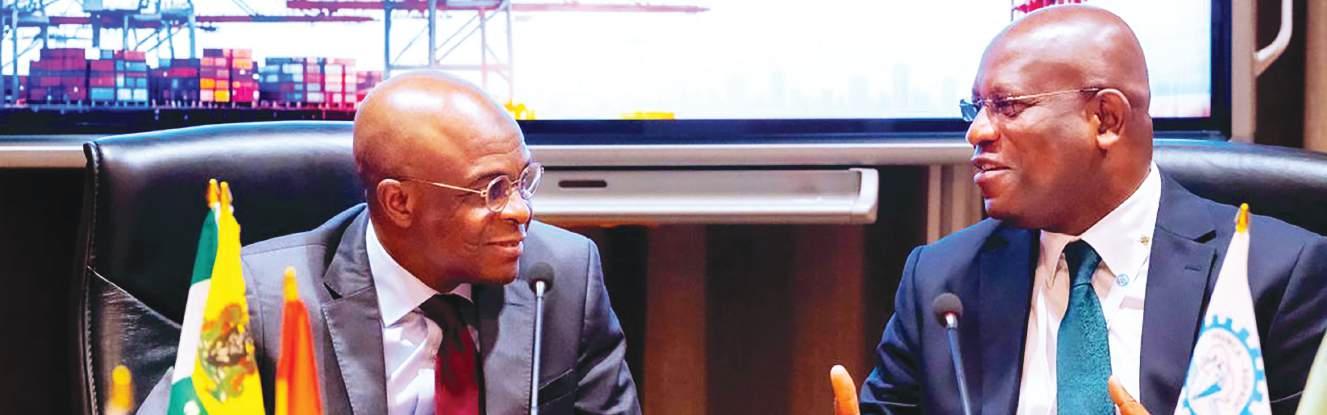
James Emejo in Abuja Comptroller-General (CGC) of Nigeria Customs Service (NCS), Mr. Adewale Adeniyi, has intensified efforts to deepen international cooperation and trade relations with the expansion of structured partnerships with more than 20 customs administrations across the world.
Adeniyi disclosed the development at a high-level
diplomatic cocktail reception hosted by the service in Abuja. It was attended by ambassadors, high commissioners, heads of missions, senior government officials, security chiefs, and members of the customs management, who gathered to discuss areas of mutual cooperation.
The engagement underscored the service's growing emphasis on international collaboration as
“The government of Nigeria shall never succumb to terror, banditry or any form of criminal intimidation,” Tinubu declared.
President Bola Tinubu has assured Nigerians that his administration is determined to defeat terrorists and bandits, and secure the release of all persons held captive across the country.
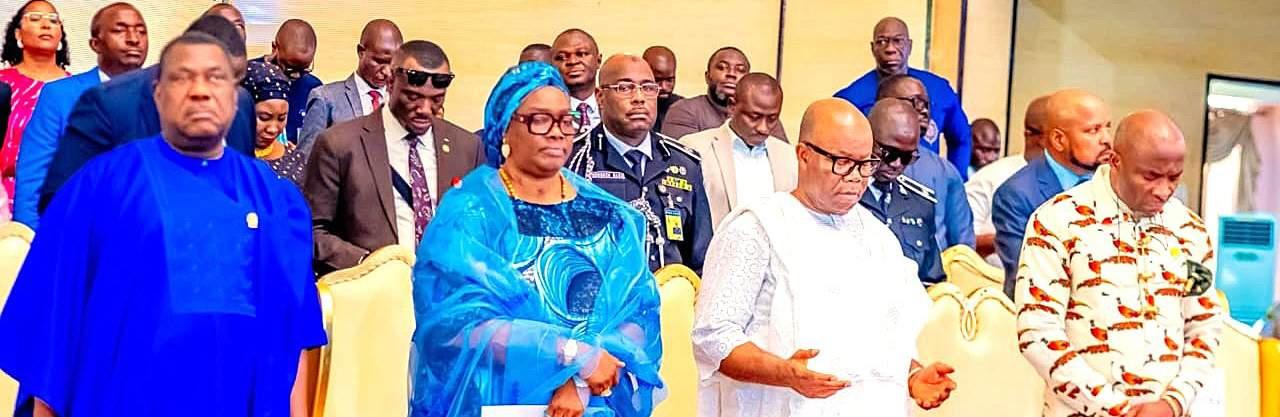
Tinubu gave the assurance yesterday during the National Inter-Denominational Church Service held at the National Christian Centre, Abuja, as part of activities marking the 2026 Democracy Day celebration.
The president, whose message was delivered by Secretary to the Government of the Federation (SGF), Senator George Akume, also assured citizens of efforts to ease the economic burden on the country.
He emphasised that the safety of Nigerians was a top priority of the federal government, describing recent attacks and abductions as painful reminders that more work remains to be done.
He also explained that the safe return of all persons in captivity was a national priority, stating that security agencies and relevant institutions are being supported with the necessary resources to protect lives, secure communities, and preserve Nigeria’s territorial integrity.
exchange their various processes for and against the suit.
Meanwhile, a chieftain of ADC, Nkemakolam Ukandu, asked the judge to withdraw from further hearing in the suit, citing a petition filed against him and Chief Judge of the Federal High Court, pending at the National Judicial Council (NJC).
Ukandu, who is Welfare
The SGF affirmed the president's unwavering commitment to his constitutional responsibilities, saying he is ready to “double his efforts” to ensure that the socio-economic difficulties currently confronting Nigerians are substantially reduced through the delivery of sustainable democratic dividends.
Acknowledging the hardship facing many households, Akume said the government was fully aware of the economic strain, insecurity, kidnappings, and displacement affecting several communities across the country.
“Government is sensitive to all these pains, shares in these pains and has heard your cries,” he said, adding that Tinubu is leading efforts to address the challenges with compassion and a strong sense of responsibility.
He congratulated Nigerians on 27 uninterrupted years of democratic rule since 1999 and described the milestone as a testament to the resilience, commitment and sacrifices of citizens who fought for the restoration of democracy.
He also paid tribute to prodemocracy activists and patriots of the June 12 struggle, saying many endured persecution, injury, and even death in the quest to secure democratic governance
Secretary of ADC, predicated his motion for recusal on four grounds, saying, "The subject matter of the petition and the suit is on grounds of corruption, abuse of judicial powers, disobedience to court orders, and bias by Hon. Justice John Tsoho and Hon, Justice Peter Lifu against the applicant."
The request came barely 24 hours after the applicant filed a
a key pillar for improving trade facilitation, strengthening border management, and enhancing institutional effectiveness.
Adeniyi expressed appreciation to members of the diplomatic community for their support in advancing bilateral relations and global trade cooperation with Nigeria.
He reaffirmed the commitment of the service to supporting diplomatic missions operating in
for the country.
With the 2027 general election inching closer, the SGF appealed to young Nigerians not to allow themselves to be used as tools of thuggery, political violence, misinformation campaigns, ethnic abuse or religious intolerance.
He urged Nigerians to eschew violence, hate campaigns, and divisive rhetoric, warning that democracy must never be reduced to a battleground.
“Do not rent out your conscience for money, drugs, political patronage or online applause. Your future is worth more than any politician’s temporary convenience,” Akume said.
He also tasked religious leaders, traditional rulers, civil society organisations, the media and families to promote tolerance, peaceful coexistence, and responsible conduct as the country moved towards another election cycle.
Akume reiterated the country's commitment to democratic ethos, interfaith harmony and peaceful coexistence with the international community, insisting that despite prevailing challenges, the country’s democratic institutions remain strong and resilient.
He applauded members of the armed forces and other security agencies for their sacrifices in safeguarding the country and sustaining democratic rule.
The SGF urged Nigerians to
suit against NJC, Chief Judge of the Federal High Court, Justice John Tsoho, and Lifu, accusing them of corruption, disobedience to the orders of the Supreme Court, as well as manifest bias.
The request came barely 72 hours after National Secretary of ADC, Ogbeni Rauf Aregbesola, filed a similar suit asking Lifu to recuse himself from the party’s leadership suit over alleged “lack
the country, stressing that sustained engagement is essential in fostering stronger relations between Nigeria and its international partners.
The CGC said NCS had continued to broaden its global reach through formal collaboration arrangements with customs administrations across different jurisdictions, with a focus on knowledge sharing, capacity building, and operational cooperation.
honour the sacrifices of June 12 heroes by working towards a nation where elections were peaceful, leaders accountable, communities secure, and every citizen could live with dignity.
The Democracy Day Service, which had the theme, "God of hope, actualise our dreams," was attended by dignitaries from all walks of life, including Senate President, Godswill Akpabio; Deputy Speaker, House of Representatives, Rt. Hon. Benjamin Kalu; Minister of Foreign Affairs, Bianca Odumegwu-Ojukwu; and Head of Civil Service of the Federation, Mrs, Didi Walson-Jack.
Akpabio: Insecurity Threatening Democratic Gains, Kids Kidnapping National Tragedy
President of the Senate, Godswill Akpabio, yesterday, warned that rising insecurity across the country posed a serious threat to Nigeria's democratic gains, urging citizens to work with security agencies to defeat terrorism, kidnapping, and violent crimes.
Speaking at the interdenominational church service held to mark the 2026 Democracy Day celebration, Akpabio said communities continued to face attacks while farmers, travellers, and ordinary citizens lived
of confidence” in the judge’s impartiality.
Aregbesola, in the motion on notice dated and filed June 1, by his lawyer, Mohammed Sheriff, stated that the constitution guaranteed every litigant a hearing before an independent and impartial panel. He accused Lifu of bias in his ruling in a separate suit filed by the Incorporated Trustees of the
According to him, closer collaboration among customs authorities, diplomatic missions and security institutions has become increasingly important in addressing emerging trade and security challenges, while supporting revenue mobilisation and economic competitiveness.
He stated that customs administration now functioned within a highly interconnected global environment, making Adeniyi trust, information exchange, and collective responsibility indispensable for effective border governance and compliance management.
under the shadow of fear and uncertainty.
He described the abduction of innocent citizens, particularly children, as a tragedy that had deeply wounded the country's conscience.
Akpabio stressed that government remained committed to securing the release of all those held captive and restoring peace across the country.
He said, "The government remains steadfast in its determination to secure the freedom of those in captivity, defeat the forces of terror and criminality, and restore peace to our communities.
"We shall continue to act, continue to pray, and continue to persevere until our children are safely returned and our nation is secure."
The senate president stressed that the fight against insecurity could not be left to government alone, calling on Nigerians to remain vigilant and support security agencies with useful information.
He stated, "The struggle against terrorism, kidnapping, and violent criminality requires the vigilance, cooperation and moral resolve of all Nigerians.
"Let communities remain vigilant. Let citizens cooperate with our security agencies. Let families refuse to shield criminals.
And let us continue to lift this nation before God."
National Forum of Former Legislators vs. INEC & 6 others; where ADC was the third defendant.
Ukandu, in the Motion on Notice dated and filed June 5, submitted that it would be in the interest of justice and respect for the protection of the sanctity of the judiciary that Lifu recused himself from the suit and/or transfer the case file of the
Akpabio disclosed that the plight of kidnapped children resonated strongly with him because of his personal experience during the Nigerian Civil War, when he and his sister were separated from their mother for several days amid hostilities in Ikot Ekpene.
Recalling the traumatic episode, he said the experience gave him a glimpse of the anguish suffered by parents whose children were held in captivity.
"That is why my heart breaks for every child in captivity and every parent who lies awake through the long hours of the night, not knowing whether a son or daughter is safe, hungry, frightened or even alive," he said.
The senate president attributed the country's democratic stability, partly, to prayers and divine intervention.
He paid tribute to religious leaders and the Church for their role during the country's struggle for democratic governance, recalling that Nigeria Prays Movement helped sustain hope during the years of political uncertainty.
According to him, democracy's legitimacy rests not only on periodic elections but also on its ability to improve the lives of ordinary citizens through accountable and people-centred governance.
matter back to the Chief Judge or stay further proceedings in the matter pending the hearing and determination of the petition before NJC.
An aggrieved National Deputy Chairman of ADC, Nafiu Bala Gombe, had approached the court for an order restraining the Mark
the apex court set aside the Court of Appeal orders that had previously provided the legal cover for the ReceiverManager’s actions.
Those orders had been aggressively relied upon to justify sweeping enforcement measures, including attempts to assume control over Nestoil and Neconde’s assets. With their nullification, the legal
foundation for those actions has effectively collapsed and all assets and accounts of Neconde and Nestoil unfreezed.
Crucially, the Receiver’s powers had already been placed on hold by an earlier order of the Federal High Court dated December 1, 2025. The Supreme Court’s judgement has now reinforced
that position by vacating all the legal basis for any continued assertion of authority over the companies. At the heart of the senior lenders’ case is a compelling argument: that there was no legal trigger to justify FBN’s appointment of a receivermanager in the first place.
It is also significant that the Supreme Court did not merely
set aside the interim orders—it delivered a strong rebuke of the Court of Appeal for exceeding its jurisdiction and misusing ex parte processes to grant sweeping asset control without affording Nestoil and Neconde a fair hearing. That criticism underscores the seriousness of the procedural breaches that underpinned the attempted
enforcement. Today, the position is clear and unambiguous. Control of assets, accounts, and operations has been fully restored to Nestoil and Neconde. The ReceiverManager is on hold, his authority suspended and under direct legal challenge, while the very security supporting his appointment
is now under intense judicial scrutiny. Today, one fact is no longer in doubt: the Supreme Court’s ruling has dismantled the legal scaffolding that enabled the attempted takeover and reaffirmed the primacy of due process. For Nestoil and Neconde, it marks a powerful reassertion of lawful corporate control.
Segun Awofadeji in Bauchi, Olawale Ajimotokan, Sunday Aborisade, Linus Aleke in Abuja, Kemi Olaitan in Ibadan, Onuminya Innocent in Sokoto and Ibrahim Oyewale in Lokoja
PRESENTATION OF A DUMMY TICKET TO THE WINNER OF REXONA 2026 WORLD CUP...
L-R: Brand
of a
ticket to the
Alliance Report Carpets Banks for
N91.1tn at CBN, Starving
Raises concerns over fiscal sustainability
James Emejo in Abuja
A report by Alliance for Economic Research and Ethics (AERE), yesterday, criticised commercial banks for abandoning their core intermediation role to support economic growth, as N91.1 trillion remained sterilised at the standing deposit window of Central Bank of Nigeria (CBN).
The report lamented the
scale of idle liquidity parked at CBN, stating that this does not represent financial strength, but a structural failure of credit allocation. It added that the country's real sector was being systematically starved of capital.
Separately, AERE also raised concerns over the sustainability of the country's fiscal position, warning that despite improvements in government revenue, persistent
leakages, rising debt obligations, and weak capital spending continued to undermine budgetary effectiveness.
The policy advocacy group said recent fiscal indicators suggested that government revenues were improving and budget deficits were narrowing. But it stressed that the gains remained too insufficient to offset mounting spending pressures and the growing
Economy of Credit
burden of debt servicing.
AERE stated, “The N91.1 trillion is not a sign of banking strength. It is a symptom of banking failure — a failure of intermediation, a failure of purpose, and a failure of national duty."
AERE is a policy think-tank chaired by Hon. Dele Oye, former National President, Nigerian Association of Chambers of Commerce,
Umahi: FG to Delist Contractors Refusing to Mobilise Without Advance Payment
Minister satisfied with quality of work on Mararaba–Keffi road
The federal government has vowed to weed out road contractors who fail to mobilise to project sites until they receive advance payments, warning that non-performing firms could be delisted from future contracts.
Minister of Works, David Umahi, gave the warning at the weekend during an inspection of the portion of the Mararaba-Keffi road project
handled by China Harbour Engineering Company(CHEC), where he also threatened sanctions against ministry officials who fail to enforce construction guidelines.
Umahi said the government would begin reviewing the performance of contractors handling federal road projects, stressing that only firms willing to invest and work while awaiting payments would be retained.
“From next week, we are
going to weed out contractors, whether indigenous or foreign, who are not committed. Some of them have as many as 25 contracts awarded before we came on board. If you are not ready to invest while waiting for federal government payments, then you are not part of the progress of this country,” he said.
According to the minister, some contractors have continued to benefit from government projects for
decades without demonstrating commitment to timely delivery. “We will remove those contractors who only wait for advance payments before working. Some have been benefiting for over 30 years,” he added.
The minister however noted that JRB commenced work on an intervention project without receiving advance payment after funding challenges delayed progress on a major dual carriageway project.
Industry, Mines, and Agriculture (NACCIMA).
Oye is the immediate past Chairman of Organised Private Sector of Nigeria (OPSN) and Chairman of Nigeria-Türkiye Business Council (NTBC).
The report said, “The banks have a choice: self-regulate, reintermediate, and remember their source or face intervention that will be neither gentle nor forgiving.”
It highlighted what it described as a “cosmetic drop” in CBN standing deposit facility placements from N92.32 trillion in April 2026 to N91.1 trillion in May, stating that the marginal decline obscures a far more troubling structural reality.
The report said deposits surged to N128.9 trillion in March 2026, before moderating slightly in subsequent months, but still reflected an extraordinary liquidity concentration at the apex bank.
The report estimated that banks cumulatively placed N425.86 trillion with CBN in the first five months of 2026 alone — a figure described as “an almost 700 per cent yearon-year increase” compared to the same period in 2025.
“This is not banking. This is financial mercantilism — the capture of state-derived liquidity for private gain, with minimal productive intermediation,” the report said.
At the same time, borrowing from CBN’s Standing Lending Facility (SLF), reportedly, collapsed by 94.9 per cent, to N2.2 trillion from N43.42 trillion, reinforcing what the report called a system where banks no longer needed to lend to survive.
The report maintained that much of what was recorded as banking strength was, in reality, illusory, and identified three categories of “contingent assets” that distorted balance sheet realities.
First, according to the report, were performance bonds and guarantees tied to government contracts, which were largely risk-free fiscal obligations repackaged as banking assets.
The other were delayed government payments and forbearance arrangements, which the report described as “deferred public liabilities masquerading as productive credit”.
NLC Drags Nigeria Before ILC Over Alleged Anti-Labour Practices
Onyebuchi Ezigbo in Abuja
Nigeria Labour Congress (NLC) has tabled a petition at the ongoing International Labour Conference (ILC) in Geneva, Switzerland, against the federal government and some states over alleged violations of trade union conventions.
NLC said workers in Nigeria had continued to face persistent
violations of the right to organise and that of Collective Bargaining Convention.
In an address presented by NLC President Joe Ajaero, the labour movement alleged that trade union leaders were being threatened, assaulted, intimidated, arrested or victimised for carrying out legitimate trade union activities.
Ajaero stated, "We appear
before this committee because workers and their organisations in Nigeria continue to face persistent violations of the Right to Organise and Collective Bargaining Convention, 1949 (No. 98).
"The violations before us are not isolated incidents. They constitute a pattern of interference, intimidation, violence and discrimination directed against workers and
their organizations in contravention of the obligations imposed by Convention No. 98.”
NLC requested the ILC committee to find that Nigeria was in breach of its obligations under Articles 1, 2 and 4 of Convention No. 98.
Ajaero said, "We further request the committee to urge the government of Nigeria to:
end the occupation of the NLC Secretariat in Edo State and restore full control of the premises to the congress; cease all forms of interference in the internal affairs of trade unions and work with the legitimate leadership of the NLC in the state.”
It also urged the committee to prevail on the Nigerian government to always respect
court decisions relating to trade union leadership disputes, including those concerning the National Union of Road Transport Workers (NURTW); guarantee the safety and protection of trade union leaders and members; and conduct independent investigations into acts of anti-union violence and intimidation.
Emmanuel Addeh in Abuja
Manager, Rexona, Olaide Olumide; winner of the Rexona 2026 World Cup Consumer Promotion, Fatima Ahmad; Head, Communications, Sustainability and Corporate Affairs, Unilever Nigeria Plc, Zainab Obagun; and content creator/influencer, Hauwa Lawal, during the presentation
dummy
winner of the Rexona 2026 World Cup Consumer Promotion at Ebeano Supermarket, Lagos, yesterday
Heirs Energies' $750 Million Financing Emerges Best Oil, Gas Deal of the Year
Peter Uzoho
Nigerian independent energy firm, Heirs Energies Limited, has been recognised on the global stage after its landmark $750 million dual-tranche Senior Secured Reserve-Based Lending (RBL) facility was named the Best Oil & Gas Deal of the Year at the EMEA Finance Project Finance Awards 2026.
The award presented to the company on June 3, in London, recognised one of the largest financings secured by an indigenous African energy company.
Heirs Energies announced the recognition in a statement issued yesterday, saying the transaction reflects the vision of its Chairman and billionaire businessman, Mr. Tony Elumelu, who believes that African institutions and African-
led businesses can successfully mobilise capital to unlock the continent's resources, advance energy security, and create long-term economic value.
Executed with the African Export-Import Bank (Afreximbank), the $750 million financing was structured to accelerate field development, optimise production, and support Heirs Energies' long-term growth ambitions, while maintaining disciplined capital management.
Commenting on the recognition, Chief Executive Officer of Heirs Energies, Mr. Osa Igiehon, said, "This recognition reflects the confidence that African and international financial institutions continue to place in Heirs Energies, our strategy, and our long-term vision.
"The transaction demonstrates that indigenous African energy
Dangote Cement Deploys AI, Telematics to Enhance Transport Safety
Dangote Cement Plc has intensified its road safety and transport management initiatives through the deployment of artificial intelligence-driven solutions, automated inspection technologies, and enhanced telematics systems aimed at improving operational efficiency and reducing road traffic crashes.
The company said the expanded programmes are designed to strengthen performance, governance, accountability, and compliance with road safety standards across its transport operations.
In a statement issued by the company’s Branding and Communications Department and signed by its spokesman, Anthony Chiejina, Dangote
Cement said the initiatives cover key operational areas, including performance monitoring, governance standards, driver competency development, journey management protocols, technology-enabled safety systems, and regular recertification processes.
The company added that the programme also incorporates mandatory drug and alcohol screening, strategic partnerships, environmental, social and governance (ESG) commitments, sustainability initiatives, and community impact programmes.
According to the statement, the Federal Road Safety Corps (FRSC) recently commended Dangote Cement for its proactive safety interventions, which have contributed to a reduction in road traffic crashes involving its trucks.
companies can successfully structure and execute world-class financing solutions that support investment, growth, and value creation. We are proud to receive this award and grateful to our financing partners, advisers, and stakeholders whose support made it possible."
Executive Vice President, Global Trade Bank at Afreximbank, Mr. Haytham ElMaayergi, said, “We are truly honoured that the US$750 million dual-tranche Senior Secured Reserve-Based Lending facility for Heirs Energies has been recognised as Best Oil & Gas Deal of the Year by the EMEA Finance Project Finance Awards."
ElMaayergi added that the recognition underscored the importance of well-structured, Africa-focused financing in supporting indigenous energy companies with strong governance, high-quality assets and clear long-term growth
plans.
According to him, Afreximbank is proud to support this landmark transaction, which demonstrates how African financial institutions can help mobilise capital for strategic businesses that advance energy security, production capacity, and sustainable value creation across the continent.
"We congratulate Heirs Energies and all the partners involved in the transaction and are pleased to see this important financing recognised on such a respected international platform", ElMaayergi said.
In his remarks, Executive Director and Chief Financial Officer of Heirs Energies, Samuel Nwanze, stated, "This award validates the strength of the transaction and the confidence our financing partners placed in Heirs Energies.
"The facility was designed to support our long-term growth
strategy, enabling continued investment in field development, production optimisation, and sustainable value creation. We are pleased to see the transaction recognised on such a respected global platform."
The financing, according to the statement, represented a major milestone in Heirs Energies' evolution from acquisition-led financing to a capital structure aligned with the long-term development profile of its reserves.
It further reinforced the company's position as a leading indigenous energy producer and demonstrated the ability of African institutions to finance transformational African businesses.
The EMEA Finance Project Finance Awards recognises outstanding transactions across Europe, the Middle East, and Africa, celebrating excellence, innovation, and impact in project
and structured finance. Heirs Energies is the operator of the Oil Mining Lease (OML) 17, which it acquired in 2021, marking the first successful divestment transaction that took place post Petroleum Industry Act (PIA) regime. Since assuming operatorship in 2021, the company has more than doubled oil production to over 50,000 barrels per day and tripled gas production to over 135 million standard cubic feet per day.
Heirs Energies contributes approximately five per cent of Nigeria's oil production and five per cent of domestic gas supply, helping to advance energy security, economic growth and sustainable development across Africa.
Afreximbank is a Pan-African multilateral financial institution mandated to finance and promote intra- and extra-African trade.
CSO Decries Loss of 240,000 Barrels of Crude Oil to Niger Delta Spillage
Blessing Ibunge in Port Harcourt
A group under the aegis of –We, The People - has regretted that over 240,000 barrels of crude oil are spilled annually in the Niger Delta environment, calling for urgent action to end routine gas flaring in the region.
Executive Director, We The People, Ken Henshaw, made the assertion in his presentation titled "Living in Danger: Health Harms of Fossil Fuel Extraction in Nigeria's Niger Delta", in commemoration of World Environment Day 2026, at the weekend in Port Harcourt, Rivers State.
Henshaw said the Nigerian government must address
the devastating health, environmental, and social consequences that decades of fossil fuel extraction have imposed on frontline communities to save more lives.
The programme highlighted the health and ecological threats posed by gas flaring in the Niger Delta, and demanded immediate government action.
Henshaw stressed that for decades, communities across the Niger Delta have lived in the shadow of gas flare stacks, stressing that “Day and night, flames have burned beside homes, schools, farms, rivers, and fishing settlements, releasing methane, carbon dioxide, particulate matter,
and other pollutants into the atmosphere”.
He said "over 240,000 barrels of crude oil (over 38 million liters) are spilled in the Niger Delta annually. Some of the communities visited traced their illnesses in the area to the oil spill. Presently, there is over 178 active gas flare points all over the region".
According to Henshaw, “Niger Delta remains one of the most resource-rich regions in the world. Yet it has also become one of the regions most burdened by the environmental and social costs of hydrocarbon extraction.
“Oil and gas production have generated enormous wealth for governments and corporations,
while many communities closest to extraction sites continue to experience environmental degradation, poor health outcomes, declining livelihoods, and inadequate public services.
“Today, the people suffers respiratory illnesses, skin conditions, eye problems, declining agricultural productivity, acid rain, contaminated water sources, and the destruction of local ecosystems.
“Farmers speak of reduced crop yields. Fisherfolk describe disappearing fish stocks and polluted waterways. Families recount generations growing up under the glow and noise of flare stacks that never seem to stop burning”.
Sunday Ehigiator
THE STORY OF OJUDE OBA...
L-R: Farooq Oreagba; Eniola Ajao; Mrs. Olawumi Fajemirokun, Executive Producer; former President Olusegun Obasanjo; and Mercy Aigbe, at the private screening of the movie, Iwe Ala, the story of Ojude Oba, for Obasanjo at the Olusegun Obasanjo Presidential Library, Abeokuta... recently
CPPE: Senate Passage of SSBs Bill Risks Becoming Tax on Production, Investment, Employment
Urges House of Representatives to reject bill
Dike Onwuamaeze
Centre for the Promotion of Private Enterprise (CPPE) has expressed shock and deep concern over Senate's passage of the Sugar-Sweetened Beverage Tax Bill, which it described as anti-growth that could risk becoming a tax on production, investment, and employment.
The views were expressed yesterday by Chief Executive Officer of CPPE, Dr. Muda Yusuf, in a public statement, titled, "CPPE Urges House of Representatives to Reject Sugar Beverage Tax Bill."
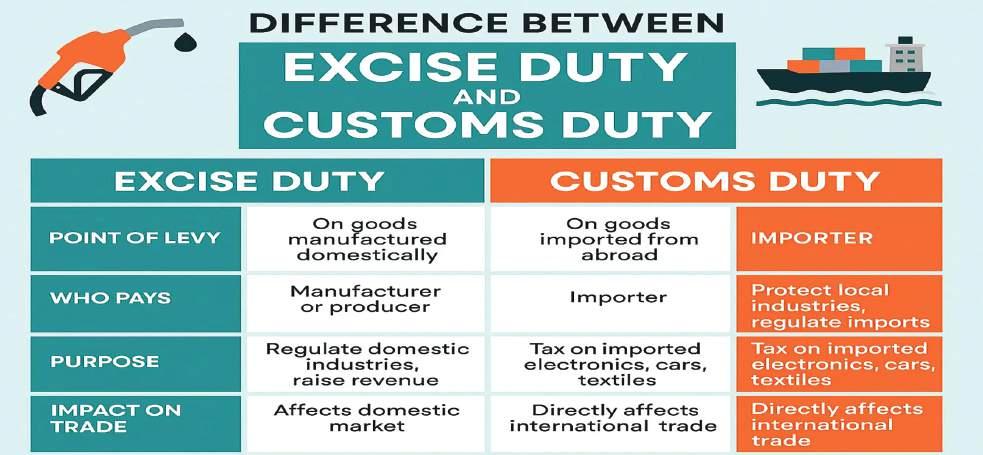
The bill, as passed by Senate, proposed replacing the current flat N10-per-litre excise duty on non-alcoholic SSBs with a percentage-based levy tied to prevailing retail price of the products.
The bill also earmarked a portion of the revenue to be derived from the excise duty for health promotion and disease prevention.
However, CPPE expressed shock that the senate would pass the bill despite overwhelming objections from private sector stakeholders, especially Manufacturers Association of
WASPAN Urges FCCPC to Respect Court Orders, Rejects Claims on DEON Litigation
The Wireless Application Service Providers Association of Nigeria (WASPAN) has called on the Federal Competition and Consumer Protection Commission (FCCPC) to fully comply with subsisting court orders and desist from what it described as attempts to misrepresent the ongoing litigation surrounding the Digital Economy Operations Network (DEON) Consumer Lending Regulations 2025.
In a statement issued by its Chairman, Regulatory and Partnership, Osa Umweni, WASPAN expressed concern over reports published in national newspapers on June 6, 2026, which quoted sources within the FCCPC as making claims that allegedly distorted both the parties involved in the court case and the substance of the dispute before the Federal High Court.
According to the association, it became necessary to place the facts on public record in order to correct what it
termed misleading narratives surrounding the litigation.
WASPAN clarified that it was the association itself, representing Nigerian valueadded service providers, that instituted Suit No. FHC/L/ CS/760/2026 before the Federal High Court in Lagos.
The association noted that it is being represented in the matter by Kemi Pinheiro OFR, SAN, LLD, FCIArb., of Pinheiro LP.
The association further recalled that on April 15, 2026, Justice Ambrose Lewis-Allagoa granted four interim injunctions restraining the FCCPC from enforcing or implementing the disputed provisions of the DEON Regulations against WASPAN members.
The court orders, according to WASPAN, also barred the commission from interfering with the services of its members, imposing sanctions for non-compliance, or issuing directives under the regulatory framework pending the determination of the substantive issues before the court.
Nigeria (MAN). It urged the House of Representatives to decline concurrence to the bill.
CPPE said, "The proposed legislation is fundamentally antigrowth. It penalises production, discourages investment, threatens jobs and imposes additional costs on already burdened consumers.
"The House of Representatives has historically demonstrated sensitivity to the welfare of citizens and the concerns of productive enterprises.
"We urge members to uphold that tradition by rejecting this legislation in the interest of manufacturing sustainability, employment preservation, investment confidence and policy coherence.
"At a time when businesses and households are struggling with unprecedented cost pressures, the economy needs relief, not additional taxation; support for production, not
policies that weaken enterprise; and reforms that create jobs, not measures that put them at risk."
Yusuf said the bill sought to impose an additional layer of taxation on non-alcoholic beverage manufacturers, thereby worsening cost pressures across the value chain at a time when the federal government's policies were focused on easing the cost of doing business and revitalising manufacturing, Yusuf stated, "The bill is ill-timed, insensitive to prevailing economic realities, and inconsistent with the federal government’s commitment to reducing the tax burden on businesses.
"At a time when manufacturers are grappling with elevated energy costs, high interest rates, exchange rate pressures, logistics challenges, weak consumer purchasing power, and multiple taxes and levies, the imposition of an additional excise
tax on non-alcoholic beverages would further erode industrial competitiveness and weaken investment prospects."
He also said the bill on SSBs was a threat to manufacturing, jobs and value chains development, as the food and beverage sub-sector was one of the strongest pillars of Nigeria’s industrial economy, accounting for a significant proportion of manufacturing output and jobs.
According to him, the subsector's extensive linkages with agriculture, packaging, logistics, retail trade, hospitality and distribution made it a powerful engine of inclusive economic activity.
Yusuf said, "The non-alcoholic beverages subsector is a major contributor to this ecosystem and should be supported, not burdened with additional taxation.
"Any additional tax burden on the industry would inevitably
increase production costs, raise consumer prices, weaken demand, reduce capacity utilisation and threaten jobs across the value chain.
"At a time when the economy needs stronger industrial growth, this Senate proposal risks becoming a tax on production, investment and employment."
Yusuf also highlighted the apparent policy inconsistency in the bill, as its content ran contrary to the spirit of the ongoing fiscal and tax reforms designed to create a more investment-friendly business environment.
Yusuf stated, "The 2026 fiscal policy framework already provides for an excise duty of N10 per litre on non-alcoholic beverages."
He said, "Further escalation of the tax burden through additional legislation would create policy inconsistency, heighten regulatory uncertainty and undermine investor confidence."
Abiru: Capital Market Growth Requires Stronger Policy-Regulator Collaboration
Receives Nairametrics Legislative Excellence Award for financial sector advancement Commends stakeholders' role in deepening investor confidence, economic growth
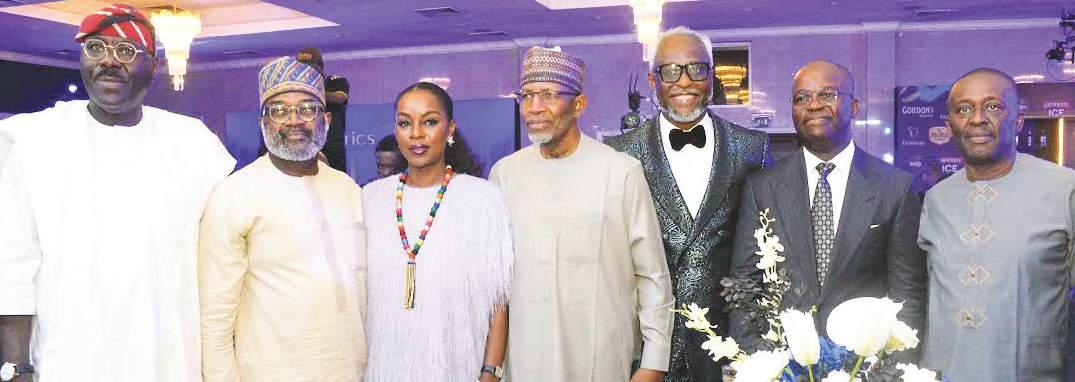
The Chairman of the Senate Committee on Banking, Insurance and Other Financial Institutions, Senator Mukhail Adetokunbo Abiru, has stressed the need for sustained collaboration among policymakers, regulators, market operators and investors to strengthen Nigeria's financial system and accelerate economic growth.
Abiru, who is the senator representing Lagos East Senatorial District, made the call in Lagos while receiving the Legislative Excellence Award for
Financial Sector Advancement at the 2026 Nairametrics Capital Market Awards.
The senator, according to a statement by his Media Office on Sunday in Abuja, said the recognition underscored the importance of collective efforts in building a resilient and globally competitive financial ecosystem capable of attracting investments, deepening investor confidence and creating opportunities for Nigerians.
According to him, stronger partnerships among key stakeholders remain critical to advancing reforms that will enhance the efficiency of
Nigeria's capital market and support long-term economic transformation.
Abiru, a former banking executive, described the award as a reflection of the contributions of numerous stakeholders committed to the growth and development of the country's financial services sector.
He reaffirmed his commitment to promoting legislative initiatives and policies aimed at strengthening the capital market, improving financial stability and driving sustainable economic development.
The lawmaker also commended operators and
regulators in the financial services industry for their continued dedication to expanding and modernising Nigeria's capital market.
He noted that a vibrant and resilient capital market remained indispensable to achieving the country's economic aspirations and ensuring long-term prosperity.
The Nairametrics Capital Market Awards recognise individuals and institutions that have made significant contributions to the growth, stability and advancement of Nigeria's capital market
Bennett Oghifo
Sunday Aborisade in Abuja
and the broader financial sector.
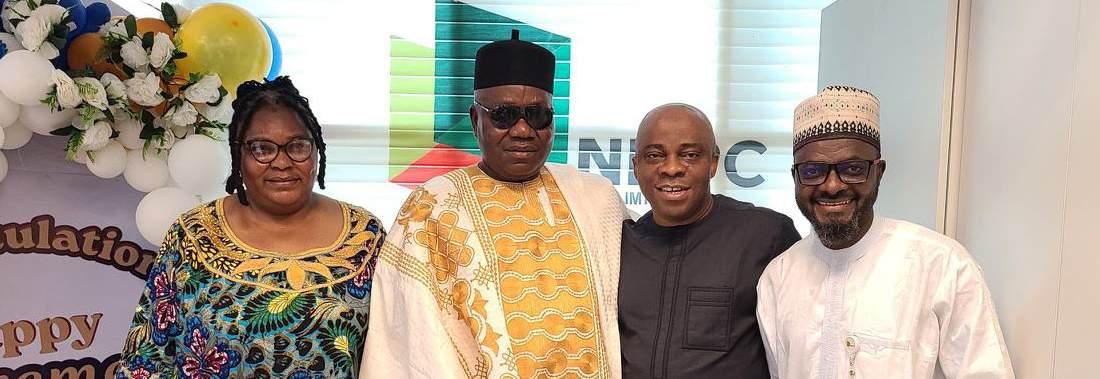
L-R: Mrs. Dorothy Ehiarinmwan; her husband, Mr. Mathew Ehiarinmwan, Accountant, Oil Billing and Reconciliation, NNPCL Benin City; Mr. Tajudeen A. Karim, Financial Controller, NNPCL Benin City; and Mr. Abdel R. Mohammed, Manager, Tax Compliance and Reporting, NNPCL Benin City, at a send forth organised in Benin City at the weekend in honour of Mr. Ehiarinmwan following his retirement after attaining the statutory 35 years of service
Y2025 ENTRANCE MEETING WITH LAGOS STATE AUDITORS AND TOURISM MINISTRY...
World Environment Day: Climate Change Threat to Sustainable Development, Says FG
Yar'Adua foundation advocates climate education
Emmanuel Addeh in Abuja and Blessing
Ibunge in Port Harcourt
The federal ministry of environment has warned that climate change remains one of the greatest threats to sustainable development, with Nigeria facing increasing risks of flooding, desertification, biodiversity loss and other environmental challenges.
Director of the Department of Climate Change, Federal Ministry of Environment, Iniobong Abiola-Awe, made the disclosure in a goodwill message delivered at the weekend at the 2026 World Environment Day commemoration organised by the Shehu Musa Yar'Adua Foundation in Abuja.
The event was held in collaboration with the Office of the Deputy Speaker of the
House of Representatives, YouthHub Africa, and Centre for Climate Action Innovation & Engagement.
Speaking on the theme:
“The Climate of Our Cities: Urbanisation, Creativity and Climate Resilience in Nigeria,” Abiola-Awe said developing countries such as Nigeria are particularly vulnerable to climate-related risks due to rapid population growth, urbanisation pressures, infrastructure deficits and other developmental challenges.
According to her, rising temperatures, ecosystem degradation, sea-level rise, extreme weather events and growing socio-economic vulnerabilities are increasingly threatening sustainable development globally.
She noted that Nigeria’s rapidly expanding urban population presents both
opportunities and challenges, stressing that many cities are already experiencing heightened vulnerability to flooding, urban heat stress, waste management problems, air pollution, coastal erosion and the loss of critical ecosystems.
Represented at the event by Uduak Ekpa of the Department of Climate Change, Abiola-Awe said these realities underscore the urgent need to integrate climate resilience into urban planning, infrastructure development and governance systems.
She said the federal government has recognised climate action as a national development priority through the implementation of the Climate Change Act 2021 and other policy frameworks aimed at promoting low-carbon development and enhancing
resilience.
Abiola-Awe highlighted ongoing efforts under Nigeria’s Nationally Determined Contributions, Energy Transition Plan and National Adaptation Plan Framework, noting that the ministry continues to collaborate with stakeholders across government, the private sector, academia, civil society and development partners to advance practical climate solutions.
The director also emphasised the importance of innovation and creativity in tackling climate challenges, saying technology, entrepreneurship, storytelling, arts and design have become powerful tools for raising environmental awareness and driving behavioural change.
In an interview, Director of Programmes and
Radiation: NUPRC, NNRA Collaborate on Cutting Multiple Regulations
The Nigerian Upstream Petroleum Regulatory Commission (NUPRC) has said it is partnering with the Nigerian Nuclear Regulatory Authority (NNRA) to cut down overlapping rules and regulations enforced by both organisations to cut radiation in the oil and gas sector.
During a meeting between the Commission Chief Executive, NUPRC, Oritsemeyiwa Eyesan, and the Director General and Chief Executive of the NNRA, Dr. Yau Idris, at the NUPRC headquarters in Abuja, both chief executives agreed that this will reduce the overall cost of
operations.
While the NUPRC regulates the technical, commercial and operational aspects of oil and gas exploration and production, the NNRA oversees the possession, use, transportation and disposal of radioactive sources while also facilitating the beneficial use of radiation technologies across various sectors of the economy.
In her remarks, Eyesan said there was indeed a need to tackle regulatory gaps and the multiplicity of rules and regulations in the oil and gas industry in order to improve the ease of doing business.
“The only way we can safeguard investments is to
reduce our cost of operations and when you have multiplicity of laws, the likelihood is that you will have higher costs because each law normally will come with its own fee and charges,” she said.
Eyesan nominated senior officials from the commission that will work closely with the NNRA on the task ahead. “We have identified critical areas on both sides and we believe that as we collaborate, we can close existing gaps,” she said.
Responding, the DG of the NNRA stated that given that the upstream petroleum sector is one of the largest users of radioactive sources and ionising
and radiation-emitting equipment in Nigeria, particularly for well logging, industrial radiography and nucleonic gauging, the NNRA relies on the cooperation of the NUPRC in order to fulfil its mandate.
“The goal is a single window approach, where both agencies share information rather than requiring operators to submit the same data twice,” he said.
Idris further stated that since oil and gas extraction often brings Naturally Occurring Radioactive Materials (NORM) to the surface, the NNRA seeks the assistance of the commission to ensure that operators conduct radiological impact assessments.
Administration at the Shehu Musa Yar'Adua Foundation, Vivian Emehelu, said the foundation considered it important to commemorate World Environment Day because of the visible effects of climate change across the country.
“As much as some people might like to say there is no such thing as climate issues, we can see the evidence around us, from the flooding
currently taking place to what was one of the hottest seasons we have experienced before the rains properly started,” she said.
Emehelu noted that rapid urbanisation, deforestation and the loss of green spaces were contributing to environmental challenges, adding that while economic growth was important, citizens must learn to enjoy its benefits in a sustainable manner.
Cancer Survivors in Nigeria Facing Financial Hardship, Stigma, Says NCS
The Nigerian Cancer Society (NCS) has said that many cancer survivors in Nigeria are still confronted by several challenges including stigma and financial hardship.
It noted that while advances in cancer diagnosis and treatment have improved survival outcomes globally, surviving cancer does not mark the end of the journey.
A statement by the President/ CEO Nigerian Cancer Society, Prof. Abidemi Omonisi, to commemorate the National Cancer Survivors' Day (NCSD) 2026, said that access to survivorship care remains limited in many parts of Nigeria.
"For many survivors in Nigeria, life after treatment presents a new set of challenges that often receive inadequate attention.
"Cancer survivors in Nigeria continue to face significant financial hardship arising from high out-of-pocket healthcare expenditures, limited health insurance coverage, loss of
income, and the economic burden placed on families during and after treatment.
"Many survivors exhaust their savings, incur debts, or struggle to meet basic needs while attempting to access essential follow-up care," it said. NCS said that beyond the financial burden, survivors "frequently encounter persistent physical and medical complications including chronic pain, fatigue, lymphedema, infertility, sexual and reproductive health challenges, nutritional difficulties, and long-term side effects associated with cancer treatment".
According to the Society, many cancer survivors also experience anxiety, depression, fear of recurrence, post-traumatic stress, and emotional exhaustion, often without access to adequate psychosocial support services.
"Social stigma remains a major concern. Misconceptions that associate cancer with curses, witchcraft, punishment, or hopelessness continue to fuel discrimination and isolation in some communities," it said.
Emmanuel Addeh in Abuja
L-R: Director, Audit Unit, Lagos State Ministry of Tourism, Arts and Culture, Mrs. Adenike Adebajo; Director, Finance and Accounts Department, Lagos State Ministry of Tourism, Arts and Culture, Mr. Oladehinde Jubril; Director, Administration and Human Resource, Lagos State Ministry of Tourism, Arts and Culture, Mr. Taoreed Dosunmu; Lagos State Permanent Secretary, Ministry of Tourism, Arts and Culture, Mrs Bopo Oyekan -Ismaila; Director, Audit, Office of Lagos State Auditor General, Mrs. Olutola Omobola Koko; and Deputy Director, Auditor, Office of Lagos State Auditor General, Mr. Babafemi Sikiru Bakare, during Y2025 Entrance Meeting with Lagos State Auditors and Tourism Ministry, held at the Conference Room, Alausa, Ikeja... recently
Onyebuchi Ezigbo in Abuja
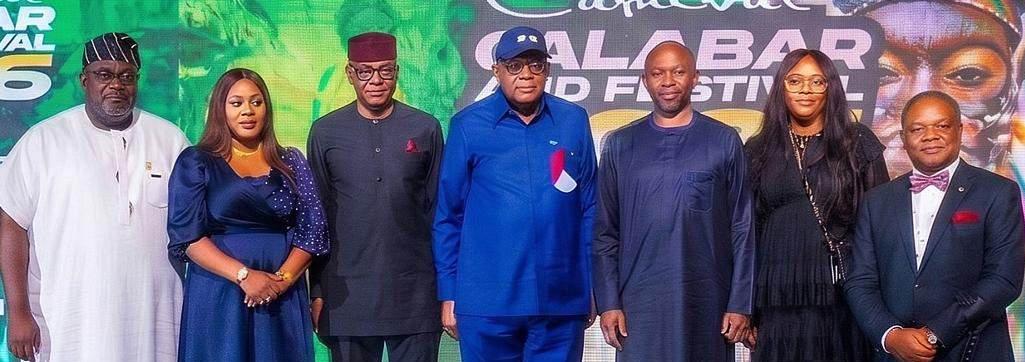
UNVEILING OF 2026 CALABAR CARNIVAL FESTIVAL...
Nigeria Risks EITI Sanction as Board Declines 12-month Validation Extension Request
Global transparency initiative insists on July 1 date Says funding challenge not exceptional ground for deferment NEITI cites inadequate financing for inability to meet deadline
The Board of the Extractive Industries Transparency Initiative (EITI) has rejected Nigeria's request for a one-year extension of its validation exercise by 12 months, insisting that the process must commence on July 1, 2026.
In the decision published by the EITI Board on its website, it cited the absence of exceptional circumstances to justify the request by Nigeria, stressing that the reasons advanced by Nigeria did not meet the criteria required for granting an extension.
The request was submitted by the National Stakeholders Working Group (NSWG), the governing board of the Nigeria Extractive Industries Transparency Initiative (NEITI), which argued that budgetary constraints and fiscal deficits had delayed funding for the procurement of
an Independent Administrator to produce the country's 2024 EITI Report.
NEITI informed the EITI Secretariat that the report, which it considers critical to demonstrating Nigeria's progress in implementing the 2023 EITI Standard, would now not be ready until October 2026.
Essentially, EITI validation, which is held between two and four years, is the organisation's quality assurance mechanism to assess a member country’s performance, level of compliance with its standards in terms of transparency; review of stakeholder engagement and measurement of outcomes and impact.
The implementing country is required to receive a fixed score out of 100, based on six categories of progress, with the risk of either being suspended
from the group temporarily for receiving a “poor” score, or being delisted for a “very poor” overall score, for failure to make progress in two subsequent validations or targeted assessments.
However, the EITI Board said the reasons advanced by Nigeria did not meet the criteria required for granting an extension.
“The justification for the request for extension relates to budgetary constraints affecting the finalisation and publication of the 2024 EITI Report. NEITI notes that the report would provide a better basis for an assessment of Nigeria’s progress in implementing the 2023 EITI Standard.
“The International Secretariat considers that these reasons do not constitute exceptional circumstances as defined under the Board’s criteria, as the 2023 EITI Report is still timely and an appropriate basis for Validation.
Moreover, the issues of allocation of resources and budgetary constraints are well within the control of the government to address,” EITI decided.
While dismissing Nigeria's reasons for requesting the deferment, the organisation said that Nigeria's case was not exceptional enough, according to EITI rules, to accede to the request.
“The EITI Board is of the view that there are no exceptional circumstances. Furthermore, the MSG is currently well functioning, which is a key improvement from the previous validation. The MSG (multi-stakeholder group) can prepare the templates based on the 2023 EITI report, supported by a well-staffed secretariat,” EITI stated.
Besides, the board warned that postponing the exercise could create additional challenges, noting that elections expected in
Airlines’ Profit Slumps by 50% Due to Middle East Disruptions, High Fuel Prices, Says IATA
The International Air Transport Association (IATA) has disclosed that airlines would end the 2026 with a profit of $23.0 billion, which is half of the projected $41 billion and attributed the slump to the Iran war and high fuel prices.
IATA made this known when it presented its latest global financial outlook at the on-going 82nd IATA Annual General Meeting and World Air Transport Summit taking place in Rio de Janeiro, Brazil.
IATA stated that airlines are expected to achieve a combined total net profit of $23.0 billion
in 2026, which is roughly half the previously projected $41 billion. It is also roughly half the $45 billion net profit estimate for 2025.
The global body also disclosed that the net profit margin is expected to be 2.0% in 2026, roughly half the previously projected 3.9%. It is also less than half the 4.2% estimate for the 2025 net profit margin. Also, net profit per passenger transported is expected to be $4.50, half the $9.10 achieved in 2025 and operating profit in 2026 is expected to be $48.0 billion (down from $76.4 billion in 2025) for a net operating margin of 4.1% (down from
7.2% in 2025).
IATA also disclosed that return on invested capital (ROIC) is expected to be 4.3% (down from 6.6% in 2025).
The association noted this is below the 8.5% estimated weighted average cost of capital, remarking the gap highlights again the structural weakness of the airline industry where profitability shocks quickly erode capital efficiency.
It stated the total industry revenues are expected to reach $1.165 trillion in 2026 (up 9.4% on the $1.065 trillion in 2025); the passenger load factor is forecast to continue to set record highs with airlines expected to
fill 84.0% of all seats over the year. That is an improvement on 83.5% in 2025.
Also, passenger numbers are expected to reach 5.1 billion in 2026 (up 2.4% on 2025), while cargo volumes are expected to reach 71.7 million tonnes in 2026 (up 0.2% on 2025).
“War-related disruptions in the Middle East and rising fuel costs have shifted the outlook for airlines to the worse. Globally, airlines are expected to see profitability halve compared to 2025. Profits will shrink from $45 billion in 2025 to $23 billion this year. And margins will shrink from 4.2% to 2.0%.
2027 may lead to the dissolution and subsequent reconstitution of the multi-stakeholder group, potentially disrupting the process.
“There is a risk in delaying the validation to next year. Elections scheduled in early 2027 will likely lead, as previously, to the disbanding of the MSG.
Reconstituting the MSG will take time and is likely to lead to turnover from key government
representatives.
“Instead, the objective of the international secretariat is to have an expedient assessment which would allow for MSG comments under the sitting MSG, to avoid further disruption and delays. The MSG may always request the validation committee to consider updated disclosures from the 2024 EITI report during the MSG commenting period,” it pointed out.
SCOAN Commemorates Five Years of T.B. Joshua’s Legacy with Global Tribute Event
Thousands of worshippers, ministers, dignitaries and partners from across the world gathered at The Synagogue, Church of All Nations (SCOAN) in Lagos, Nigeria, to commemorate the fifth anniversary of the transition to glory of Prophet T.B. Joshua in a moving celebration themed, “Rejoicing With the Saints.”
Broadcast live on Emmanuel TV to a global audience, the event brought together people from different nations, cultures and backgrounds in honour of a man whose life, ministry and humanitarian works continue to inspire millions around the world. Hosts, Femi Branch and Seraphine Dogbe, guided the audience through an evening marked by worship, testimonies and tributes, reminding participants that although Prophet T.B. Joshua passed on five years ago, his influence continues to resonate across continents through the lives he touched and the values he championed.
The celebration featured
powerful musical ministrations from internationally acclaimed gospel artistes. American gospel singer Byron Cage led worshippers in songs of thanksgiving, while Christina Shusho ushered the congregation into a profound atmosphere of praise and worship.
Zambia’s Kings Mumbi Malembe further heightened the celebratory mood with energetic praise sessions, while Brian Courtney Wilson drew hearts into deeper worship through soul-stirring renditions focused on gratitude and God’s faithfulness.
One of the highlights of the evening was the Conversation Corner, hosted by Vimbai Mutinhiri, which showcased the global reach of Prophet T.B. Joshua’s ministry.
Distinguished guests from different parts of the world shared personal experiences and memorable encounters with the late prophet, recounting how his counsel, prayers and humanitarian interventions impacted their lives and communities.
Emmanuel Addeh in Abuja
Chinedu Eze
L-R: Special Adviser to the Governor of Cross River State on Events, Effiong Ekpeyong; Regional Head, Zenith Bank Plc, Ekanem Asuquo; Deputy Governor of Cross River State, Rt. Hon. Peter Odey, PhD; Governor of Cross River State, Senator Prince Bassey Edet Otu; Managing Director and Chief Executive Officer, T2, Obafemi Banigbe; Chief Executive Officer, Okhma Global Limited, Mary Ephraim-Egbas; and Chairman, Carnival Calabar Commission, Gabe Onah, during the theme unveiling event for the 2026 Carnival Calabar and Festival held in Lagos... recently
NATIONAL PRESS CONFERENCE ON THE STATE OF THE NATION...
Director, Legal Services, Office of the National Security
and
Gov Sani, Defence Minister, CAN Hail President's Education Reforms as Tool to Defeat Banditry, Terrorism
DSS boss, friends donate school to Kaduna Christian community
Kaduna State Governor, Senator Uba Sani, Minister of Defence, General Christopher Musa (rtd), and the Christian Association of Nigeria (CAN) have commended President Bola Tinubu's education reforms, describing quality education, citizenship and community cooperation with security agencies as critical tools in the fight against banditry, terrorism and other security challenges confronting the country. The commendations were made during the commissioning of Kaduna Christian Academy, a faith-based school donated to the Christian community in Kaduna by friends of
the Director-General of the Department of State Services (DSS), Mr Oluwatosin Adeola Ajayi.
The initiative follows a similar intervention in May 2025, when friends of the DSS Director-General donated an Islamic school to the Muslim community in Danbushiya, Chikun Local Government Area of Kaduna State.
Describing the academy as a strategic non-kinetic intervention, the Minister of Defence said national defence extends beyond military deployments, intelligence gathering and air power, stressing that lasting security can only be achieved through education and social development.
"When we speak of national defence, the instinct is to focus on boots on the ground, air power or intelligence gathering. However, true and lasting security is anchored on one critical element: the defeat of ignorance and the conquest of hopelessness. This school is a weapon of mass instruction in the right hands," he said. Musa commended the DSS for complementing its traditional security responsibilities with community development initiatives, noting that the agency had demonstrated that internal security goes beyond surveillance and arrests to include building public trust and creating opportunities for future generations.
According to him, an educated and enlightened population provides a stronger defence against extremism, criminality and social instability than force alone. He added that the academy would equip children with academic knowledge, critical thinking abilities and sound moral values.
The minister also urged parents to prioritise education, recalling his humble beginnings and emphasising that every child has the potential to attain the highest levels of achievement through hard work, education and divine grace.
He further noted that Kaduna State had recorded notable improvements in security
Disease Eradication: Harvard Varsity Lauds Floating of NASENI-Troment Factory
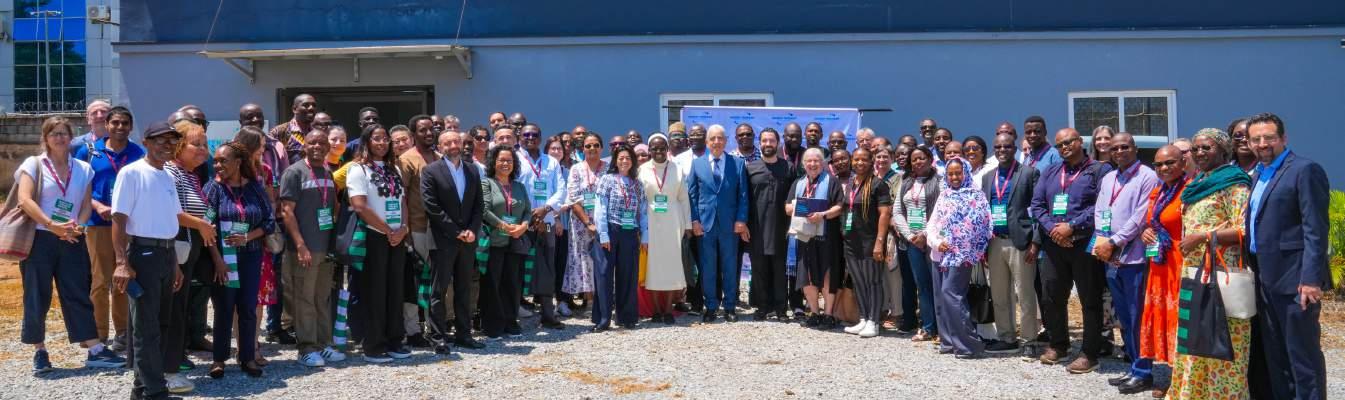
About 85 global medical professionals, scientists and policymakers participating in the ‘Science of Defeating Malaria’, leadership development course and initiative from Harvard University, USA, have commended the establishment of NASENI-Troment Biotechnologies factory as pivotal to eradicating malaria and infectious diseases in Nigeria and Africa.
While touring the multi-million dollar factory yesterday, the team, impressed by the facility for the production of rapid diagnostic
tests (RDTs), said it was a good move to establish a 100 per cent Nigerian-owned diagnostic brand.
Chief Executive Officer and Co-Founder, NASENT-Troment Biotechnologies, Mr. Selim Hani, in a presentation stated that the factory is a strategic partnership between the National Agency for Science and Engineering Infrastructure (NASENI) and Troment Nigeria Limited aimed at strengthening Nigeria’s healthcare sovereignty through local production of diagnostic technologies.
“This facility built from ground zero in the last 18 months, focuses on manufacturing of RDTs and in-vitro diagnostic (IVD) products, enabling early detection of major infectious and public health diseases.
Diagnostic test kits under the N-CheckUP brand will be produced to test Malaria, Hepatitis B & C, HIV ½, Pregnancy, COVID-19 Antigen, Typhoid, Syphilis, Blood Glucose among others.
“It is designed to produce 600 million diagnostic kits per
year. It will reduce Nigeria’s (and West Africa) reliance on imported medical diagnostics while improving accessibility and affordability across the country and the African region,” he added.
Technical Partner, NASENITroment Biotechnologies, Dr. Engin Narinc, said “this facility is Africa’s first fully localised Rapid Diagnostic Test (RDT) kit factory. From concept to full-scale launch, our end-to-end production process is designed to deliver world-class diagnostic solutions built entirely in Africa, for Africa.”
and governance through the combined efforts of the Federal, State and Local Governments, while commending Governor Sani for promoting inclusion, development and peaceful coexistence.
Musa also praised the resilience and peaceful disposition of the people of Southern Kaduna, urging them to resist attempts by divisive
elements to undermine unity and harmony in the area. Emphasising the importance of public participation in security efforts, he said security agencies could not defeat bandits and terrorists without the support of citizens, warning that criminal groups often rely on local collaborators for information, logistics and other forms of assistance.
NCC Applauds Ministerial Initiative on Girls ICT Empowerment
Hosts 185 students on industry excursion tour
The Nigerian Communications Commission (NCC) has commended the Minister of Communications, Innovation and Digital Economy, Dr. Bosun Tijani, for championing initiatives aimed at empowering the younger generation with digital knowledge and skills, especially the Nigerian girls.
Speaking while conducting 185 contestants of the 2026 National Girls in ICT (NG-ICT) Competition on a tour of the National Communication Museum domiciled at the Commission in Abuja, the Executive Vice Chairman (EVC) of the NCC, Dr. Aminu Maida, said the initiative also aligns with the Commission's digital literacy advocacy.
The contestants were selected by the Ministry across the country's geo-political zones for competition to promote digital inclusion and inspire greater participation of girls
in Information and Communication Technology (ICT) and other Science, Technology, Engineering and Mathematics (STEM) disciplines.
The visit to the Commission by the students formed part of activities organised by the Minister under the National Girls in ICT Programme, an initiative aimed at bridging the gender gap in the technology sector by equipping young girls with digital skills, mentorship opportunities and exposure to innovation.
Maida, who was represented by the Director, Research and Development Department, Babagana Digima, noted that the museum tour was designed to create a link between the old and new generations in Nigeria’s telecommunications journey, helping young people appreciate the sector’s transformation from analogue systems to the current digital revolution.
Sanwo-Olu, Oyedele, Others to Speak at Lagos Summit
The Governor of Lagos State, Babajide Sanwo-Olu as well as the Minister of Finance, Taiwo Oyedele, are among the highprofile speakers confirmed for the third edition of the Lagos Investment Summit. Also expected to speak are the Co-Chair of the Lagos State Finance and Investment Council (LFIC), Aigbojie Aig-Imoukhuede, and Chief Executive Officer of Moniepoint Group, Tosin Eniolorunda. Organised by the Lagos State Government in partnership with the Commonwealth Enterprise and Investment Council (CWEIC), the summit
is expected to bring together policymakers, business leaders, investors and development partners to discuss strategies for attracting investment, accelerating economic growth and strengthening Lagos' position as a leading investment destination in Africa.
Themed: “Lagos: Business Gateway to Africa”, the summit will feature a lineup of sessions focused on Lagos as Africa’s Global Gateway, the Future of Technology and Innovation, Unlocking Investment, Building the Cities of the Future, Global Partnerships for Growth, Talent, Creativity and Culture, and
Energy and Sustainability.
The summit is designed to position Lagos as Africa’s premier destination for investment, trade, innovation, infrastructure development, and economic partnerships.
The two-day summit, themed around unlocking investment opportunities and accelerating sustainable economic growth, will bring together high-level participants from across the public and private sectors to explore opportunities in technology, infrastructure, energy, manufacturing, finance, creative industries, and urban development.
Linus Aleke in Abuja
L-R:
Adviser (ONSA), Zakari Mijinyawa; Permanent Secretary, Federal Ministry of Information and National Orientation, Dr. Binyerem Chigbonwu Ukaire; Minister of Information
National Orientation, Mohammed Idris; Director, Defence Information, Major General Samaila Uba; and Force Public Relations Officer, DCP Anthony Okon Placid, shortly after a press briefing by the Minister on pressing national issues in Abuja, last Thursday . PHOTO: ENOCK REUBEN
FEDERAL REPUBLIC OF NIGERIA
RIVERS STATE GOVERNMENT
PORT HARCOURT WATER CORPORATION
SPECIFIC PROCUREMENT NOTICE (SPN)
Invitation for Bids [IFB] Goods (One-Envelope Bidding Process
IFB Number: PHWSSP/AFDB/G/ICB/2026/004
Employer: Port Harcourt Water Corporation, Port Harcourt, Rivers State
Project: Urban Water Sector Reform and Port-Harcourt Water Supply and Sanitation Project
Contract title: Procurement of additional Mechanical Water Meters and Standard Household Connection Automated Water Dispenser (Prepaid Make) of different sizes for: Household Connections, Boreholes and Community Kiosks
Country: NIGERIA
Loan No. / Grant No.: 2000130011585
Procurement Method: Open Competitive Bidding (Intenational) (OCBI)
LCBN No: PHWSSP/AFDB/G/ICB/2026/004
Issued on: June 8, 2026
1. The Federal Republic of Nigeria has received Financing from the African Development Bank towards the cost of Urban Water Sector Reform and Port Harcourt Water Supply and Sanitation Project. It is intended that part of the proceeds of this loan will be applied to eligible payments under the contract for the Procurement of additional Mechanical Water Meters and Standard Household Connection Automated Water Dispenser (Prepaid Make) of different sizes for: Household Connections, Boreholes and Community Kiosks
2. The Port Harcourt Water Corporation now invites sealed bids from eligible bidders for the execution of the Procurement of Pipes, Fittings and Materials for Water Distribution and Provision of Connections for Water Meters to Households and Kiosks in Rumuola, Moscow, Borokiri and Diobu
3. Bidding will be conducted through the Open Competitive Bidding (International) (OCBI) procedures as specified in the Bank's [African Development Procurement Framework Bank, Standard Bidding Document Goods (One-Envelope Bidding Process) August 2021] and is open to all Bidders as defined in the Procurement Framework.
4. Interested eligible Bidders may obtain further information f r o m C h i e f I b i b i a O ; Wa l t e r w i t h e m a i l a d d r e s s : watsanworks.phwssp@gmail.com and inspect the Bidding document during office hours (8:00 A.M. - 4 P.M.) on weekdays only at the address given below
5. The Bidding document in English may be purchased by all eligible Bidders upon payment of a nonrefundable fee of NGN600,000.00 or an equivalent of US$400.00 The method of payment will be in Cheque or Bank Draft, made o u t i n f a v o r o f P O R T- H A R C O U R T WA T E R CORPORATION. The document will be sent by courier on demand.
6 Bids must be delivered to the address below on or before Monday, July 20, 2026; Time: 10:30 AM. Electronic Bidding will not be permitted. Late Bids will be rejected. Bids will be publicly opened in the presence of the Bidders' designated representatives and anyone who chooses to attend at the address below on Monday, July 20, 2026; Time: 11:00 AM.
7. All Bids must be accompanied by Bid Security of:
8. Attention is drawn to the Procurement Framework requiring the Borrower to disclose information on the successful bidder's beneficial ownership, as part of the Contract Award Notice, using the Beneficial Ownership Disclosure Form as included in the bidding document.
9. The address referred to above is:
The Managing Director
Attention: Chief Ibibia O' Walter JP Port-Harcourt Water Corporation, 6 Water Works Road, Port Harcourt, Rivers State, Nigeria E-mail: watsanworks.phwssp@gmail.com
IFB Number:
FEDERAL REPUBLIC OF NIGERIA
RIVERS STATE GOVERNMENT
PORT HARCOURT WATER CORPORATION
SPECIFIC PROCUREMENT NOTICE (SPN)
Invitation for Bids [IFB] Goods (One-Envelope Bidding Process
PHWSSP/AFDB/G/NCB/2026/10
Employer: Port Harcourt Water Corporation, Port Harcourt, Rivers State
Project: Urban Water Sector Reform and Port-Harcourt Water Supply and Sanitation Project
Contract title: Supply and Installation of Solar Power System for the Port Harcourt Water Corporation
Country: NIGERIA
Loan No. / Grant No.: 2000130011585
Procurement Method: Open Competitive Bidding (National) (OCBN)
LCBN No: PHWSSP/AFDB/G/NCB/2026/10
Issued on: June 8, 2026
1. The Federal Republic of Nigeria has received Financing from the African Development Bank towards the cost of Urban Water Sector Reform and Port Harcourt Water Supply and Sanitation Project. It is intended that part of the proceeds of this loan will be applied to eligible payments under the contract for the Supply and Installation of Solar Power System for the Port Harcourt Water Corporation
2. The Port Harcourt Water Corporation now invites sealed bids from eligible bidders for the execution of the Supply and Installation of Solar Power System for the Port Harcourt Water Corporation
3. Bidding will be conducted through the Open Competitive Bidding (National) (OCBN) procedures as specified in the Bank's [African Development Procurement Framework Bank, Standard Bidding Document Goods (Two-Envelope Bidding Process) August 2021] and is open to all Bidders as defined in the Procurement Framework.
4. Interested eligible Bidders may obtain further information f r o m C h i e f I b i b i a O ; Wa l t e r w i t h e m a i
d d r e s s : watsanworks.phwssp@gmail.com and inspect the Bidding document during office hours (8:00 A.M. - 4 P.M.) on weekdays only at the address given below
5. The Bidding document in English may be purchased by all eligible Bidders upon payment of a nonrefundable fee of NGN600,000.00 or an equivalent of US$400.00 The method of payment will be in Cheque or Bank Draft, made o u t i n f a v o r o f P O R T- H A R C O U R T WA T E R CORPORATION. The document will be sent by courier on demand.
6. Bids must be delivered to the address below on or before Monday, July 6, 2026; Time: 10:30 AM. Electronic Bidding will not be permitted. Late Bids will be rejected. Bids will be publicly opened in the presence of the Bidders' designated representatives and anyone who chooses to attend at the address below on Monday, July 6, 2026; Time: 11:00 AM.
7. All Bids must be accompanied by Bid Security of:
8. Attention is drawn to the Procurement Framework requiring the Borrower to disclose information on the successful bidder's beneficial ownership, as part of the Contract Award Notice, using the Beneficial Ownership Disclosure Form as included in the bidding document.
9. The address referred to above is:
The Managing Director Attention: Chief Ibibia O' Walter JP Port-Harcourt Water Corporation, 6 Water Works Road, Port Harcourt, Rivers State, Nigeria.
E-mail: watsanworks.phwssp@gmail.com
Email: deji.elumoye@thisdaylive.com
Troubling Silence Before the 2027 Polls
Iyobosa Uwugiaren writes that the current atmosphere in Nigeria doesn’t signal a nation that is gearing up for general elections—a defining democratic exercise.
Ordinarily, a few months before a general election, the country’s political space should be awash with political activities: debates, policy conversations, voter education campaigns, party mobilisation, and visible preparations by the Independent National Electoral Commission (INEC). The atmosphere should signal a nation gearing up for a defining democratic exercise.
However, there is a growing sense of uncertainty and unease. Beyond the routine political statements and partisan rhetoric by political actors and political parties, there appears to be little evidence of the level of preparedness expected ahead of an election that will determine the future of over 250 million citizens.
This perception may not entirely reflect reality. Electoral preparations may indeed be taking place behind the scenes. Political parties may be quietly strategizing and plotting, while the electoral body may be implementing operational plans away from public attention. However, democracy thrives not only on processes but also on public confidence. And confidence is precisely what appears to be in short supply currently.
To be sure, several factors are fueling public scepticism: growing and persistent insecurity across many parts of the country, doubts about the credibility and independence of the electoral management body, the near absence of internal democracy within political parties, voter apathy, economic hardship, and a widening trust deficit between citizens and government and political institutions. Together, these issues raise important questions about Nigeria’s readiness for another electoral cycle.
The first and perhaps most visible challenge is insecurity. With the growing criminal activities of bandits and terrorists, no democracy can conduct credible elections in an atmosphere of fear. Across various parts of the country, people continue to grapple with banditry, terrorism, kidnapping, communal violence, and other forms of criminality. Entire local government areas in some regions have experienced repeated attacks, displacement of residents, and disruption of economic activities.
The implications for elections are profound. Citizens who fear for their safety are not likely to participate in political activities, attend campaigns, or vote on election day. Electoral officials may find it difficult to deploy personnel and materials to volatile areas. Political parties
may be unable to campaign freely in certain states. Most importantly, insecurity creates conditions in which voter suppression can occur, either deliberately or indirectly—thereby creating room for massive rigging of elections.
No doubt, Nigeria has faced security challenges during previous elections, especially since 1999; but the scale and complexity of current threats make the situation particularly concerning. The question is not simply whether elections can be held, but whether they can be conducted in a manner that guarantees inclusiveness, fairness, and equal participation across the 36 states of the federation, including Abuja.
Closely related to insecurity is the issue of public trust in the electoral process. Elections are not judged solely by the outcome; they are judged by the credibility of the process that produces the outcome. Even the most technically sound election can lose legitimacy if citizens perceive the process as compromised, as is currently the case.
In recent years, conversations about the credibility of Nigeria’s electoral system have intensified. While reforms have been introduced to improve transparency and technology has been deployed to strengthen electoral integrity, public confidence remains fragile. Delays in the transmission of results during previous elections, controversies surrounding electoral procedures, and allegations
of political interference have left lingering doubts in the minds of many citizens.
The challenge for the electoral body is therefore not only administrative but also psychological. INEC must do more work to convince Nigerians that it possesses both the capacity and the will to conduct elections that reflect the genuine choices of voters.
This requires transparency, consistent communication, operational efficiency, and demonstrable independence from partisan influence. Its link to crises in some opposition parties is unhelpful. Public confidence cannot be demanded; it must be earned. Where there is a history of disputed elections, allegations of manipulation, and judicial reversals of electoral outcomes, citizens naturally become more sceptical. Rebuilding trust requires more than official assurances. It requires visible actions that inspire confidence.
Another major concern is the state of internal democracy within political parties. Ironically, many parties that seek to govern democratically often struggle to practice democracy within their own structures. Candidate selection processes are frequently marred by allegations of imposition, manipulation, exclusion, and the dominance of powerful political actors.
The recent primaries by the ruling All Progressives Congress (APC), which witnessed unprecedented manipulation of the process, are a setback in the several attempts to deepen democracy in the country.
The consequences are far-reaching. When party members believe that nominations are predetermined or controlled by a few individuals, internal participation declines. Competent aspirants may be sidelined in favour of candidates with political connections or financial influence. Internal disputes often
The coming months will therefore be critical. The electoral body must intensify efforts to reassure citizens and demonstrate preparedness. Security agencies must develop effective strategies to protect voters, electoral officials, and election infrastructure. Political parties must embrace greater transparency and internal accountability.
lead to defections, litigation, and fragmentation within parties.
More importantly, the erosion of internal democracy weakens the wider democratic culture. Elections are supposed to provide citizens with meaningful choices among candidates who emerge through fair and competitive processes. When party primaries lack credibility, the legitimacy of the entire electoral chain is undermined.
Nigeria’s political parties must therefore confront a fundamental question: how can they credibly advocate democratic governance while neglecting democratic principles within their own organisations? Strengthening internal democracy is not merely a party matter; it is a national democratic imperative.
Economic hardship also casts a long shadow over the electoral environment. Millions of Nigerians are struggling with rising living costs, unemployment, inflation, and declining purchasing power. For many citizens, daily survival has become a more pressing concern than political participation. Ask many Nigerians today, and the likely answer you might get is: “Who politics help?”
This situation presents a paradox. Economic difficulties often increase the need for political engagement because government policies directly affect citizens’ welfare. Yet hardship can also deepen political disengagement. People who feel abandoned by the system may lose faith and confidence in the ability of elections to improve their circumstances. The danger is that widespread frustration can create fertile ground for voter apathy. Citizens may conclude that elections change governments but not governance. Such cynicism represents a serious threat to democratic consolidation. Democracy depends not only on institutions but also on citizen participation. When people stop believing that their votes matter, the democratic project itself becomes vulnerable.
Adding to these concerns is the growing crisis of political credibility. Across the political spectrum, many Nigerians perceive little ideological distinction among major parties. Politicians frequently switch affiliations with remarkable ease, often without offering coherent explanations grounded in policy or principle.
Amupitan
Mark
Dickson
FEaturEs Nigerian Navy @70: Celebrating Seven Decades of Operational Excellence
The Nigerian Navy has concluded a week-long celebration marking its 70th anniversary, providing an opportunity to reflect on its remarkable transformation from a modest coastal force of 11 patrol boats into one of Africa's largest naval forces with over 150 active vessels and platforms. Through a series of events, including international engagements, community outreach programmes, the Seapower for Africa Symposium, the inauguration of the Combined Maritime Task Force, the International Fleet Review and the Ceremonial Sunset, the Navy showcased its operational achievements, expanding capabilities and unwavering commitment to maritime security. The celebrations also highlighted optimism for the future under the leadership of the Chief of Naval Staff, Vice Admiral Idi Abbas, whose vision is anchored on modernisation, regional cooperation, technological innovation and a stronger role for the Navy in protecting Nigeria's maritime interests and supporting national development. Chiemelie Ezeobi reports
From a modest beginning as a small maritime force equipped with a handful of vessels, the Nigerian Navy has grown into one of Africa's most capable and respected naval services. Over the past seven decades, it has transformed from a coastal defence outfit into a modern, multi-mission force playing a critical role in safeguarding Nigeria's maritime domain, protecting national economic interests, supporting regional security, and contributing to international maritime cooperation.
Humble Beginnings
Although the Nigerian Navy started from humble beginnings, the service has come a long way from its origins as the colonial Marine Department of the Royal Navy, which operated only a few coastal boats. Today, it has evolved into one of the leading navies not only in the West African subregion but also in the Gulf of Guinea (GoG) and across sub-Saharan Africa as the largest naval force in Africa with over 150 active vessels and platforms.
The origin of the Nigerian Navy can be traced to the Colonial Marine Department of the Royal Navy, established in 1887 as a quasi-military organisation. The department combined the responsibilities now performed by the Nigerian Ports Authority, the Inland Waterways authorities and the modern Nigerian Navy until the end of the Second World War in 1945.
In 1956, a government policy statement led to the establishment of the Nigerian Naval Force. On June 1, 1956, the Nigerian Naval Defence Force (NNDF) commenced operations with 11 assorted ships and craft, comprising two survey vessels, Petrel and Pathfinder; two training boats, Dignity and Nymph; one patrol craft, Challenger; three VIP boats, Valiant and Frances with her launch; one tug, Trojan; and one general purpose launch, Jade.
On August 1, 1956, the first naval legislation was passed by the House of Representatives and received assent on September 5, 1956, from Sir James Robertson, the Governor General. The Nigerian Navy Ordinance subsequently led to the designation of the NNDF as the Royal Nigerian Navy.
In 1963, when Nigeria became a republic, the prefix "Royal" was dropped and the service became known as the Nigerian Navy. However, the Ordinance that established the Navy had several limitations, the principal one being the restriction that confined naval operations to only three nautical miles, which at the time represented the country's territorial waters.
These shortcomings were addressed by the post-independence Navy Act of 1964. The Act removed the principal limitation on the Navy's operations within Nigeria's territorial waters. Although the Navy possessed only a handful of patrol boats during its formative years, it has since grown into a formidable multi-mission maritime arm of the Armed Forces of Nigeria, undertaking a wide range of wartime and peacetime responsibilities.
Roles and Responsibilities
In accordance with the 1999 Constitution of the
Federal Republic of Nigeria and the Armed Forces Act, Cap A20, the Nigerian Navy is charged with the defence of Nigeria's territorial integrity at sea. Its responsibilities span the full spectrum of military, policing and diplomatic functions.
These roles include enforcing and assisting in the enforcement of customs, immigration, anti-bunkering, fisheries protection and pollution control laws, as well as implementing national and international maritime laws to which Nigeria is a signatory. The Armed Forces Act further empowers the Navy to coordinate the enforcement of all national and international maritime laws acceded to by Nigeria.
Other statutory responsibilities include the production of nautical charts, coordination of national hydrographic surveys, and the promotion, coordination and enforcement of maritime safety regulations within Nigeria's territorial waters and Exclusive Economic Zone (EEZ).
Past Icons of the Navy Often referred to as Icons of the Navy, the Chiefs of the Naval Staff since inception include Captain F.W. Skutil, who served as CNS from 1956 to 1958, and Commodore
A.R. Kennedy, who held the helm of affairs from 1958 to 1964. Others were Vice Admiral J.E.A. Wey from 1964 to 1973; Vice Admiral N.B. Soroh from 1973 to 1975; and Vice Admiral M.A. Adelanwa from 1975 to 1980.
Not left out are Vice Admiral A.A. Aduwo, who served from 1980 to 1983; Vice Admiral A.A. Aikhomu from 1984 to 1986; Vice Admiral Patrick Koshoni from 1986 to 1990; Vice Admiral Murtala Nyako from 1990 to 1992; Vice Admiral D.P.E. Omatsola from 1992 to 1993; and Rear Admiral S. Sa'idu, who was appointed in 1993 and removed the same year.
Others after him include Rear Admiral A.A. Madueke from 1993 to 1994; Rear Admiral O.M. Akhigbe from 1994 to 1998; Vice Admiral J. Ayinla from 1998 to 1999; Vice Admiral V.K. Ombu from 1999 to 2001; Vice Admiral S.O. Afolayan from 2001 to 2005; Vice Admiral G.T.A. Adekeye from 2005 to 2008; and Vice Admiral I.I. Ibrahim from 2008 to 2010. I.I. Ibrahim was succeeded by Vice Admiral O.S. Ibrahim, who served from 2010 to 2012. Vice Admiral D.J. Ezeoba took over in 2012 and handed over to Vice Admiral Usman Jibrin in 2013. In 2015, Vice Admiral Ibok Ete Ibas took over as the 20th Chief of the Naval Staff and handed over to Vice Admiral A.Z. Gambo in 2021, who handed over to Vice Admiral Ikechukwu Emmanuel Ogalla in 2023, who in turn handed over to the
current CNS, Vice Admiral Idi Abbas in 2025.
Platinum Jubilee
As expected, the platinum jubilee celebrations of the Nigerian Navy featured a packed itinerary from May 21 to June 4, 2026, showcasing the service's operational achievements, international partnerships, and commitment to national development.
The anniversary programme was structured around community outreach activities, naval engagements, international conferences, and ceremonial events that reflected the Navy's seven decades of service to the nation.
The chain of events commenced on May 21 with the anniversary launch and International Press Conference at Naval Headquarters in Abuja. The celebrations also featured special Juma'at prayers and interdenominational church services held across naval formations and units nationwide.
On May 25, the Navy opened its doors to members of the public through the popular "Sail with the Nigerian Navy" initiative. The sea trip experience and static fleet displays, according to the Director of Information, Navy Captain Abiodun Folorunsho, attracted more than 2,000 civilians who boarded naval ships in Lagos, Port Harcourt, Warri, and Calabar, providing a rare opportunity for citizens to interact directly with naval personnel and platforms.
As part of preparations for the major events, friendly foreign naval vessels from Benin Republic, Brazil, Cameroon, Côte d'Ivoire, and Ghana arrived at Lagos Harbour on May 29 to participate in the International Fleet Review.
International Maritime Exercise
As part of the anniversary was the International Maritime Exercise, with Nigerian Navy Ship KADA as one of the participating ships. According to the Commanding Officer of NNS Kada, Captain Ali Ignatius Ejeh, the exercise was an opportunity for the Nigerian Navy to once again demonstrate its capabilities.
During the exercise, a series of emergency drills designed to test readiness for real-life contingencies at sea included firefighting exercises, man-overboard procedures, Visit, Board, Search and Seizure (VBSS) operations, as well as activities targeted at combating Illegal, Unreported and Unregulated Fishing, commonly referred to as IUU Fishing.
International Fleet Review
One of the major highlights of the anniversary celebrations was the International Fleet Review held on Monday, June 1, 2026, in Lagos.
President Bola Ahmed Tinubu presided over the event, which brought together naval ships from Nigeria and participating foreign countries in a display of maritime capability, professionalism, and international cooperation. The review underscored the Nigerian Navy's growing role as a leading maritime force in the Gulf of Guinea and highlighted the importance of collaboration in securing regional waters against piracy, sea robbery, illegal fishing, and other maritime crimes.
The event featured an aerial combat display,
Clockwise: President Bola Tinubu; the Chief of Naval Staff, Vice Admiral Idi Abbas with others at the International Fleet Review; the three newly commissioned Nigerian Navy Ships- OLOIBIRI, MAMBILA and GURARA; and opening ceremony of the two-day Seapower for Africa Symposium (SPAS) 2026
a fleet sail-past and a showcase of Nigerian and foreign naval assets, highlighting international maritime cooperation and naval capability.
While speaking, President Tinubu praised the Nigerian Navy for eradicating piracy in Nigerian waters and significantly reducing crude oil theft and other maritime crimes, just as he noted that improved surveillance systems, rapid response mechanisms and enforcement operations had strengthened maritime security, supported increased oil production and contributed to economic growth.
The President also described the Nigerian Navy as the most formidable naval force in Africa, commending its transformation from a colonial marine force into a modern and sophisticated naval service.
In turn, the Chief of Naval Staff, Vice Admiral Idi Abbas, highlighted the Nigerian Navy's growing collaboration with navies around the world, noting that sustained international cooperation has contributed to maintaining the Gulf of Guinea's zero-piracy status and advancing collective maritime security objectives.
The CNS further underscored the Navy's increasing adoption of modern technologies, including unmanned aerial vehicles and artificial intelligence. According to him, these innovations have significantly improved the service's ability to detect and respond rapidly to security threats within Nigeria's maritime domain.
At the event were Lagos State Governor, Mr. Babajide Sanwo-Olu; Chairman, Senate Committee on Navy, Senator Gbenga Daniel, who represented Senate President Godswill Akpabio; Minister of Defence, Mohammed Badaru Abubakar; National Security Adviser (NSA), Mallam Nuhu Ribadu; Chief of Defence Staff (CDS), General Christopher Musa; Chief of Army Staff (COAS), Lieutenant General Olufemi Oluyede; Chief of Air Staff (CAS), Air Marshal Hassan Abubakar; Inspector General of Police (IGP), Kayode Egbetokun; Nigeria's Ambassador to the Philippines, Vice Admiral Ibok-Ete Ibas; and former Chief of the Naval Staff (CNS), Vice Admiral Awwal Gambo (rtd), among others.
Others included icons of the Navy, state governors, members of the Federal Executive Council, ambassadors, high commissioners, foreign heads of navies and coast guards, and captains of industry. The day ended with a gala night a the Eko Convention Centre
Reviewed Ships
To the admiring glare of guests and dignitaries, ships sailed out for review. Nigeria was represented by NNS OLOIBIRI, commanded by Commander E.L. Olayiwola; NNS MAMBILA, commanded by Captain A.O.C. Ehanmo; NNS GURARA, commanded by Captain U.F. Anthony; NNS CALABAR, with Lieutenant B.Y. Lawal serving as Officer in Charge; NNS OSUN, with Lieutenant Q.W. Ofor serving as Officer in Charge; NNS ANDONI, commanded by Commander S.D. Defwan; NNS CHALAWA, commanded by Commander J. Emmanuel; NNS ZUR, commanded by Commander N. Mohammed; NNS NGURU, commanded by Commander K. Oye; NNS SOKOTO, commanded by Commander U.A.F. Ephraim; NNS EKULU, commanded by Commander A.Y. Adesokan; and NNS ABA, commanded by Captain Y.A. Shelleng. Other Nigerian vessels included NNS IKOGOSI, commanded by Commander S. Yakuby; NNS KARADUWA, commanded by Commander D.E. Onyemaeze; NNS OJI, commanded by Captain J.O. Okoroafor; NNS IBENO, commanded by Captain O.O. Izokpu; NNS SHERE, commanded by Commander C.M. Egwaikhide; NNS FARO, commanded by Captain B.O. Omotayo; NNS KANO, commanded by Captain A.E. Aderinto; NNS IKENNE, commanded by Captain J.O. Edegware; DB ABUJA, commanded by Captain U.F. Abdullahi; DB LAGOS, commanded by Commander A. Ahmadu; NNS CENTENARY, commanded by Commander N.E. Etuk; and NNS KADA, commanded by Captain A.I. Ejeh. Ghana was represented by Ghana Navy Ship PRU, commanded by Lieutenant Commander Joshua Hughes Addison; Benin Republic Navy Ship PENDJARI, commanded by Lieutenant Commander Mathieu Codjo Zanmassou; Brazilian Navy Ship ARAGUARI, commanded by Commander Anselmo Azevedo da Silva; Cameroon Navy Ship LA SANAGA, commanded by Lieutenant Commander Kamche Franck Freddy; and Ivorian Patrol Vessel VAILLANCE, commanded by Lieutenant Commander Kouakou Djaiblond Dominique-Yohann.
Commissioning of Three New Ships
Another landmark event during the anniversary celebrations was the commissioning of three new ships — NNS Oloibiri, NNS Mambila and NNS Gurara — into the Nigerian Navy fleet. The addition of the platforms is expected to enhance the Navy's operational reach, maritime surveillance capabilities, and ability to protect Nigeria's vast maritime domain.
The commissioning further demonstrated the Federal Government's commitment to strengthening naval capacity and ensuring the Navy remains adequately equipped to address emerging security challenges within the nation's territorial waters and the wider Gulf of Guinea.
Training and Induction of Nigerian Navy Marines
At the fleet review, the CNS announced the training and induction of the inaugural batch of 328 Nigerian Navy Marines. The newly established elite force is expected to strengthen the Navy's capacity to combat terrorism, enhance maritime security and address inland security challenges.
Gulf of Guinea Combined Maritime Task Force Operationalisation
The celebration also witnessed the operationalisation of the Gulf of Guinea Combined Maritime Task Force (CMTF-GoG), a major regional security initiative aimed at fostering collective maritime security among participating nations.
The pioneer member countries include Nigeria, Côte d'Ivoire, The Gambia, Ghana, Liberia, and Sierra Leone. Headquartered in Lagos, the task force is designed as a standing operational force that remains on constant readiness to respond to maritime security threats across the Gulf of Guinea.
Led by Nigerian Navy Commodore Mohammed Shettima, the launch of the CMTFGoG marked a significant milestone in regional maritime cooperation and reflected a growing African-led approach to addressing maritime crime through a permanent collaborative framework. It also reinforced the Nigerian Navy's leadership role in advancing maritime security initiatives within the region.
Seapower for Africa Symposium
From Tuesday, June 2 to Wednesday, June 3, 2026, naval chiefs, policymakers, technology experts, and dignitaries from across Africa and beyond converged on the Eko Convention Centre, Lagos, for the sixth edition of the Seapower for Africa Symposium (SPAS) 2026 to deliberate on maritime security and emerging technologies.
Themed "Leveraging Technology for
the symposium concluded with the presentation of the Symposium Declaration of Intents.
Heads of Navies Bilateral Talks
On both days of the symposium, heads of navies held bilateral talks, focusing on regional maritime security, intelligence sharing, and fleet modernisation in the Gulf of Guinea, with reaffirmed commitments to collective security frameworks, maritime domain awareness, and joint operations in the Gulf of Guinea.
THISDAY gathered that the bilateral dialogues were driven by the central SPAS 2026 theme with a strong emphasis on joint operations against piracy, illegal fishing, and crude oil theft. In attendance were senior naval leadership, defence ministries, and global maritime security partners.
Exhibition
One of the side attractions of the SPAS was the presence of over 50 global and regional maritime and defence industry exhibitors.
Key exhibitors, sponsors, and participants who showcased their platforms, technologies, and services included Proforce Intelligence Systems Limited, RTCOM Defense, Mantrac, Falcon Eye, Israeli Shipyard, United Bank for Africa, Sifax Group, Zenith Bank, Nigerian Navy Holding, Nigerian Navy Cooperative, and the Nigerian Navy Hydrographic Unit, alongside others.
Enhanced Maritime Security in Africa," Bello Muhammed Matawalle, Minister of state for Defence, emphasised that navies remain critical to global trade and economic stability, noting that the transnational nature of maritime threats requires stronger partnerships among African nations and international stakeholders.
In turn, Vice Admiral Idi Abbas, described the symposium as an important forum that has, since 2004, fostered dialogue and cooperation among maritime stakeholders in advancing security across Africa's waters. He noted that maritime challenges have become too complex for any single nation to tackle alone and called for stronger collaboration among navies, coast guards and law enforcement agencies in line with the African Integrated Maritime Strategy 2050.
The day also featured a technical session on "Innovative Surveillance Technologies for Improved Maritime Domain Awareness," moderated by Vice Admiral El Ogalla (Rtd) of Nigeria, with three presentations from AVM OC Ubadike of Nigeria, who spoke on Unmanned Aerial System Technologies in Maritime Surveillance; Dr. Bolarinwa Balogun of Nigeria, who spoke on the Optimisation of Satellite Technology for Improved Maritime Situational Awareness; and Rear Admiral Patrick Hayden (Rtd) of the USA, who addressed "Artificial Intelligence and Integration of Big Data in Maritime Surveillance."
The second strategy session focused on "Capacity Building in Emerging Technologies for Improved Maritime Security," moderated by Vice Admiral DJ Ezeoba (Rtd) of Nigeria, with speakers including Vice Admiral Vinay Badhwar (Rtd) of India, who spoke on Training Designs for Skill Acquisition in Emerging Technology; Dr. Ian Ralby of the USA, who spoke on Partnerships with Technology Providers and Institutions; and Dr. Paul Adalikwu of MOWCA, who addressed Future Trends in Emerging Technology Capacity Building.
On day two, the third and final strategy session, themed "Strategies for Improved Emerging Technology Adoption in Maritime Security," was moderated by former Nigerian Navy CNS, Vice Admiral AZ Gambo (Rtd), with speakers including Rear Admiral Said Zebakhe of Morocco, representing the CNS, presenting his paper on "Policy and Regulatory Development for Emerging Technology Integration in Maritime Security"; Vice Admiral Monde Lobese of South Africa, addressing "Collaboration and Stakeholder Engagement in Technology Adoption"; and Professor Aykut Olcer of Sweden, speaking on "Incentives for Innovation and Technology Adoption."
Wrapping up the two-day SPAS with interaction and questions from participants,
Other exhibitors showcased prototypes of platforms with indigenous defence capabilities, locally manufactured armoured vehicles, AIdriven surveillance and advanced mobility solutions, AI Integration Command Systems, Digital Command Systems, as well as Marine Mobility and Engine Technologies.
Ceremonial Sunset and Award Night
In line with tradition, the Nigerian Navy wound up activities marking its 70th Anniversary with a Ceremonial Sunset Parade and Award Night in Lagos, showcasing its professionalism and celebrating seven decades of service to the nation.
Held at the Naval Dockyard, Victoria Island, Lagos, the Ceremonial Sunset — one of the most revered traditions in naval history — featured the lowering of the naval ensign at sunset, a band march-off and military honours witnessed by dignitaries, military leaders, former Chiefs of Naval Staff, foreign naval representatives and captains of industry.
The event culminated in a Dinner and Award Night at the Eko Convention Centre, where the Minister of Defence, General Christopher Musa (Rtd), commended the Nigerian Navy for its contributions to maritime security, the protection of oil and gas assets, anti-piracy operations and support to internal security efforts, which he said has strengthened Nigeria's blue economy and enhanced trade and investment opportunities.
Meanwhile, Vice Admiral Idi Abbas, congratulated 31 officers and ratings honoured across seven award categories, while highlighting the Navy's role in creating a safer maritime environment, which has helped boost confidence in Nigeria's maritime sector and contributed to increased maritime revenue.
Earlier, the Chief of Policy and Plans, Rear Admiral A.I. Olodude, said the awards recognised officers and ratings who distinguished themselves through gallantry, innovation and dedicated service.
Among those honoured were Commodores M.M. Braimah, A.O. Odejobi and Toju Vincent, who received the Long Flying Medal (Pilots) Award. Other recipients included Commodore E.R. Ekuma, Captain C.O. Obute and Seaman Fireman Alhassan, who sustained severe injuries while fighting insurgents during military operations.
The Navy also honoured widows of fallen personnel in recognition of the sacrifices made by their husbands in service to the nation.
Having marked its 70 years of service, the Nigerian Navy's journey from the Colonial Marine Department to a formidable maritime force stands as a testament to resilience, professionalism and continuous transformation. With sustained investments in personnel, platforms, infrastructure and technology, the service under Vice Admiral Abbas remains well positioned to strengthen maritime security, protect Nigeria's vast blue economy and project stability across the Gulf of Guinea and beyond in the years ahead.
Clockwise: Dignitaries and heads of navies at the Ceremonial s unset and award Night; the CN s and panelists at s Pas ; Vice admiral a bbas at the exhibition; CN s and NN officers during the Heads of Navies Bilateral talks with Ivory Coast Navy
FTC AND THE RISE OF INDIGENOUS STOCKBROKING
Financial Trust Company represents a defining chapter in Nigeria’s financial history, argues SOLA ONI
See page 21
REDEFINING FINTECH TECHNOLOGY
A young Nigerian founder’s work with Paylinc is attracting attention, writes TAYO OGUNBIYI
See page 21
Despite some hiccups, there is a quiet turnaround of the sector for good, contends BASHIR IBRAHIM HASSAN
WHAT TELECOM MEANS TO THE ECONOMY
One year to the end of President Bola Ahmed Tinubu's first term in office, as Nigerians and indeed the wider world assess the administration's scorecard, a pertinent question arises: who are the biggest contributors to the success stories being recorded?
A very strong candidate is Aminu Maida, Executive Vice Chairman/CEO, Nigerian Communications Commission (NCC). Listen to what Mr President himself said in the run-up to the third anniversary of his inauguration: "We took decisive action to stabilise the telecommunications sector, which remains one of the most important drivers of modern economic growth."
The President noted that this intervention, coming after years of severe operational pressures and declining investment, has gradually restored confidence in the sector. According to him, telecom operators are expanding networks, investing in infrastructure, recruiting Nigerian talents and widening digital access across the country. "A connected Nigeria is a more competitive Nigeria," Tinubu said, adding that digital infrastructure is now essential to commerce, education, innovation and national productivity.
Indeed, this optimism is corroborated by the National Bureau of Statistics (NBS), which recently reported that Nigeria's telecommunications sector recorded its strongest real gross domestic product (GDP) growth in the first quarter of 2026, reinforcing its position as one of the country's most resilient economic engines despite broader macroeconomic pressures.
According to NBS, the Telecommunications and Information Services sector expanded by 12.24 per cent in real terms year-on-year in Q1 2026, accelerating sharply from 7.82 percent in the corresponding period of 2025 and 4.04 per cent in Q1 2024. The performance made telecommunications one of the fastest-growing sectors in the Nigerian economy and a key contributor to overall GDP growth of 3.89 percent during the quarter.
The figures highlight a sector that has moved beyond post-pandemic recovery and into a new phase of structural expansion. Growth is increasingly being driven by rising data consumption, deeper broadband penetration, fintech adoption, enterprise digitisation, cloud services, and growing demand for the digital infrastructure underpinning artificial intelligence, e-commerce, and Nigeria’s broader technology ecosystem.
What is particularly notable is that telecoms is expanding three times faster than the overall economy. As businesses, financial institutions,
government agencies, and consumers become increasingly dependent on digital platforms, telecommunications is evolving from a standalone industry into critical national infrastructurepowering productivity, financial inclusion, innovation, and economic competitiveness across multiple sectors.
This is the kind of news that defines successful administrations. It is the kind of news that governments point to when they argue that reforms are beginning to yield results. And Maida, who has shown since his appointment on October 11, 2023 that he is equal to the task entrusted to him, deserves his share of the applause.
Telecommunications, on a massive scale, is changing Nigerians' lives for the better. It powers commerce, banking, education, healthcare, entertainment, social interaction, public administration and the everyday productivity of millions of Nigerians. It is difficult to imagine modern Nigeria functioning without it. Yet where is the applause for the monumental impact it is making? Why, instead, is the loudest conversation often about the "poor network" that regularly hampers mobile telephony services?
To be sure, those frustrations are real. Nobody enjoys dropped calls, sluggish internet speeds or intermittent connectivity. Consumers are right to demand better service. But public frustration sometimes obscures a larger truth: beneath the complaints and the occasional outages, one of the most significant transformations in Nigeria's economy is quietly taking place.
For many Nigerians, dropped calls, poor connectivity and slow internet speeds have become accepted inconveniences of modern life. However, what is often missing from public discourse is an appreciation of the structural challenges involved in delivering reliable telecommunications services in a country of more than 200 million people spread across vast and
diverse terrain.
It is also easy to overlook the fact that the NCC under Maida has been guided by principles of fairness, firmness and forthrightness in carrying out its responsibilities as the nation's telecommunications regulator. "I think there is a lot that we can do better," he admits. "So, using the right regulatory framework, we can change things." That statement is important because it reflects neither complacency nor defensiveness. Rather, it reflects an understanding that regulation must evolve continuously to meet changing realities.
In an era where many public officials seek visibility, Maida appears more interested in results. Like his late father, Maida Wada, the respected journalist and former managing director of the News Agency of Nigeria (NAN), Aminu Maida goes about his duties with little fanfare. He is self-effacing, quietly efficient and guided by a strong sense of professionalism in confronting intricate and multidimensional challenges.
Before his appointment as Executive Vice Chairman/CEO of the NCC, Maida served as Executive Director, Technology and Operations at the Nigeria Inter-Bank Settlement System (NIBSS), where he oversaw critical technology infrastructure supporting the cuntry's financial ecosystem.
Prior to that, he was Chief Technology Officer at ARCA Payments Network. Earlier still, he worked with British Telecom as a Lead Consultant and with Cisco Systems in the United Kingdom. This combination of telecommunications, technology and payments experience has proven valuable in understanding the increasingly interconnected nature of Nigeria's digital economy. Over the past two years, improving Quality of Service has become a central regulatory priority for the Commission.
What perhaps distinguishes him is a clear understanding of the role of regulation in driving growth, innovation and consumer protection. He has also been quick to acknowledge the productive working relationship he enjoys with Dr. Bosun Tijani, minister of Communications, Innovation and Digital Economy.
"My Minister has done the work for us," he once remarked. "He released a strategic blueprint almost immediately upon assumption of duties. So, for me, what I have to do is very clear, what I have to achieve is very clear and I have a clear direction," Maida said of Tijani. That clarity could not have come at a more important time.
Hassan writes from Abuja
Financial Trust Company represents a defining chapter in Nigeria’s financial history, argues SOLA ONI
FTC AND THE RISE OF INDIGENOUS STOCKBROKING
During my time at The Guardian covering the capital market in the early 1990s, Financial Trust Company (FTC), Nigeria’s first indigenous stockbroking firm, stood out as a major player in the financial system. Founded by the late Otunba Olufemi Ajayi, a foremost respected figure in Nigeria’s financial czar, will be always remembered for his pioneering contributions to the development of indigenous stockbroking.
Incorporated 50 years ago, the company’s recent golden jubilee anniversary, hosted by the founder’s son, Omoniyi Ajayi, its Chairman and Group Managing Director, offers an opportunity to reflect on the evolution of indigenous stockbroking in Nigeria. At a time when expatriate institutions and foreign commercial interests dominated the financial landscape, FTC marked a shift towards economic nationalism, professional development, and greater local ownership of financial services. Licensed by The Nigerian Stock Exchange (now NGX) on July 8, 1977, the firm emerged as a trailblazer when Nigerian participation in formal capital market activities was still limited.
A brief look at history shows that first three stockbroking firms in Nigeria were promoted by foreigners. Nigerian Stockbrokers Limited, was licensed on May 2, 1961. It was followed by Capital Trust Limited on October 25, 1968, and ICON Stockbrokers Limited on November 30, 1973. However, following the emergence of FTC in July 1977, City Securities Stockbrokers Limited (now CSL Stockbrokers Limited), founded by the late financial savvy, Otunba Olasubomi Balogun, was licensed on November 4, 1977, becoming the second indigenous stockbroking firm to operate on the Exchange. Today, Nigeria has over 100 indigenous stockbroking firms.
Otunba Ajayi also played a key role in the transformation of the Nigerian Institute of Stockbrokers Incorporated into the Chartered Institute of Stockbrokers (CIS). He led a delegation of stockbrokers to engage President Ibrahim Babangida during the campaign for the institute’s charter, which ultimately resulted in the enactment of Act 105 of 1992.
Before independence and in the early post-colonial era, Nigeria’s capital market was heavily controlled by foreign firms that primarily served colonial commercial interests. Nigerians had limited access to investment opportunities, while local businesses faced significant challenges in raising capital. In that context, the emergence of indigenous financial institutions like FTC marked a revolutionary step toward financial inclusion and economic self-determination.
The Company distinguished itself not only as a Nigerian-owned enterprise but also through its commitment to professionalism, investor education, and active market participation. It demonstrated that Nigerians could successfully manage sophisticated financial operations such as
stockbroking, investment advisory services, and capital mobilisation. This helped challenge the perception that complex financial services were the exclusive domain of foreign experts.
The company also helped build confidence among local investors who previously saw the stock market as foreign, distant, or elitist. Through its operations, FTC demystified stock trading for ordinary Nigerians, encouraging broader participation in equity investment and promoting a culture of wealth creation through share ownership. In doing so, it contributed significantly to the democratisation of financial opportunities.
Perhaps one of its most enduring impacts was the pathway it created for subsequent indigenous stockbroking firms. Its success provided proof that Nigerian-owned firms could compete effectively if grounded in integrity, competence, and strategic vision. This encouraged a new generation of indigenous financial professionals who went on to become key players in the sector.
Financial Trust Company also contributed to the localisation of Nigeria’s stockbroking industry. It challenged the dominance of foreign firms and supported the development of local expertise in securities trading and investment management. As more indigenous firms emerged, competition increased, improving service delivery, expanding market access, and broadening investor participation across the capital market.
Another important contribution of FTC was its role in strengthening professional standards within the emerging industry. At the time, indigenous firms faced skepticism regarding their capacity to uphold transparency and discipline. However, FTC and similar firms prioritised ethical practices and corporate governance, helping to build trust in local institutions and attract investor confidence.
Its emergence also aligned with Nigeria’s broader post-independence economic objectives, which emphasized indigenous participation in key sectors.
Oni,
an Integrated Communications Strategist, Chartered Stockbroker, Commodities Broker and Capital Market Registrar, is the Chief Executive Officer of Sofunix Investment and Communications
A young Nigerian founder’s work with Paylinc is attracting attention, writes TAYO OGUNBIYI
REDEFINING FINTECH TECHNOLOGY
Across continents, technology entrepreneurs are redefining how individuals and businesses send, receive, and manage money in an increasingly connected digital economy.
In recent years, Nigeria has earned global recognition as one of Africa’s leading technology hubs. From financial technology and e-commerce to artificial intelligence and software development, Nigerian innovators have consistently demonstrated an ability to solve complex problems through creative and scalable solutions.
Among the rising innovators helping to shape this new era is Oluwasemilore Emmanuel Aina, a young Nigerian founder whose work with Paylinc is attracting attention within international fintech circles.
Through a combination of technological innovation, strategic thinking, and an ambitious vision for digital financial inclusion, Oluwasemilore is building a platform that seeks to bridge gaps in modern payment systems while creating new opportunities for users across multiple markets.
His journey reflects a broader story that is increasingly becoming familiar across the global technology landscape: the rise of Nigerian entrepreneurs whose innovations are competing on the world stage and demonstrating that Africa is not merely consuming technology but actively creating it.
Often described by industry observers as a Paylinc expert, this young entrepreneur has distinguished himself through his deep understanding of payment infrastructure and digital transaction systems.
His expertise extends beyond simply developing software. It involves understanding the complex intersection of technology, user behavior, compliance requirements, security protocols, and financial regulations that shape the modern fintech ecosystem.
The financial technology sector is one of the most competitive industries in the world today. New startups emerge regularly, while established financial institutions continue investing heavily in digital transformation initiatives. In such an environment, standing out requires more than technical competence; it demands innovation, adaptability, and a clear understanding of emerging market needs.
This is where Paylinc seeks to carve out its niche. At its core, Paylinc represents an attempt to simplify and enhance financial interactions in a world where cross-border transactions remain challenging for many users.
Despite tremendous advances in digital banking and payment technology, millions of people and businesses still encounter obstacles when moving money internationally. These challenges often include high transaction fees, lengthy processing times, limited accessibility, and regulatory complexities.
By focusing on digital efficiency and user-centered experiences, Paylinc aims to address some of these longstanding challenges while creating an ecosystem that encourages participation and engagement.
What makes the platform particularly interesting to industry watchers is its operational structure. Unlike many traditional payment platforms that focus exclusively on transaction processing, Paylinc integrates payment functionality with a broader referral-based ecosystem designed to stimulate organic growth and user participation.
This approach has generated considerable interest within fintech communities because it combines elements of payment technology, digital networking, and community engagement into a single framework.
Industry analysts often describe the model as innovative yet inherently complex. The reason lies in the reality that modern fintech platforms operate within a highly regulated environment where compliance, security, transparency, and operational integrity are essential.
Building any financial platform requires careful navigation of evolving regulations, cybersecurity risks, consumer protection requirements, anti-money laundering obligations, and data privacy standards. These considerations become even more important when a platform seeks to operate across different jurisdictions and international markets.
The platform’s evolution has also drawn comparisons with some of the early pioneers of modern fintech. During the formative years of financial technology, companies such as Plaid helped transform the industry by creating infrastructure that connected financial institutions with emerging digital applications.
Those early innovators operated during a period when digital banking integrations were still developing, and financial APIs had not yet become mainstream.
Today’s fintech environment is significantly different.
Ogunbiyi is Director, Public Enlightenment & Community Relations, Ministry of Information & Strategy, Alausa, Ikeja, Lagos
Editor, Editorial Page PETER
ISHAKA
Email peter.ishaka@thisdaylive.com
TACKLING YOUTH UNEMPLOYMENT
There is need to realign the nation’s educational curriculum with needs of the economy
The ‘State of the Nigerian Youth Report 2025,’ recently released by Plan International Nigeria in collaboration with ActionAid Nigeria, found that youth unemployment now stands at 53 per cent. That translates to about 80 million young Nigerians without jobs. “This represents shattered dreams and wasted talent. Unless urgent action is taken, Nigeria risks losing its greatest asset,” the report of these two reputable international non-governmental organisations working with vulnerable and excluded people and communities warned. That half of the nation’s labour force is idle is bad enough. But worse and extremely dangerous is the fact that more than the majority of that army of idle citizens is peopled by those between the ages of 15 and 35. Even if some people may dispute the figures from Plan/ActionAid Nigeria, available reports from the National Bureau of Statistics (NBS) also confirm a consistent pattern of worsening unemployment in the country.
bulge at a period of dwindling resources has put the country in a very difficult and potentially explosive situation. Nigeria, the seventh most populous country in the world, has a fertility rate that far outstrips its economic growth.
Figures available paint a dire situation of millions of Nigerian youths roaming the streets looking for work but finding none. The situation is compounded by the economic environment that has necessitated a situation in which rather than hire, many private enterprises now fire their staff. Joblessness and frustrations are evidently fuelling the sense of youthful volatility and indeed the frequent cases of unrest across the country.
The level of insecurity in many of the communities has also made it practically difficult for farmers to continue to engage in agricultural production
The danger of such a high level of idleness among millions of young persons is already manifesting in the high level of crimes in virtually every corner of the country. And it should concern all relevant stakeholders. Even without conducting any research on the issue, it is a notorious fact that most of the people who ride in motorcycles to kidnap school children are youths who if otherwise meaningfully engaged might have been unavailable for those anti-social endeavours that now make the country very insecure.
Harping on the danger of this state of affair, former President Olusegun Obasanjo once sounded a note of warning. He said his greatest fear for Nigeria and indeed, the African continent, was “youth explosion as a result of anger, frustration, unemployment and lack of opportunities.” Yet, as dire as that prediction sounded, Obasanjo was only emphasising the worries that have preoccupied many critical stakeholders for quite a while. An uncontrolled demographic
T H I S D AY
EDITOR SHAKA MOMODU
DEPUTY EDITOR WALE OLALEYE
MANAGING DIRECTOR ENIOLA BELLO
DEPUTY MANAGING DIRECTOR ISRAEL IWEGBU
CHAIRMAN EDITORIAL BOARD OLUSEGUN ADENIYI
EDITOR NATION’S CAPITAL IYOBOSA UWUGIAREN THE OMBUDSMAN KAYODE KOMOLAFE T H I S D AY N E W S PA P E R S L I M I T E D
EDITOR-IN-CHIEF/CHAIRMAN NDUKA OBAIGBENA
GROUP EXECUTIVE DIRECTORS ENIOLA BELLO, KAYODE KOMOLAFE, ISRAEL IWEGBU
DIVISIONAL DIRECTORS SHAKA MOMODU, PETER IWEGBU, ANTHONY OGEDENGBE
DIRECTOR, PRINTING PRODUCTION CHUKS ONWUDINJO TO SEND EMAIL: first name.surname@thisdaylive.com
Unfortunately, the response from the authorities to these challenges remains incoherent. Despite all the rhetoric about job creation, the tilt is still towards heavy government participation by way of bubble political jobs as governors appoint thousands of idle special assistants. Besides, incentives for private sector and youth participation are scanty just as a credit regime to drive the sector does not exist. The level of insecurity in many of the communities has also made it practically difficult for farmers to continue to engage in agricultural production. And with rural dwellers denied access to their farms and other sources of legitimate livelihood, it is little surprise that Nigerians are reeling from soaring food prices.
Of more fundamental imperative, however, is that we must urgently realign the nation’s educational curriculum with the needs of the economy. Even though there are many well educated young men out there in the street, it has been said with some measure of justification that many of the school leavers are actually unemployable with regard to their training and skills. It has therefore become necessary that our educational training curriculum at all levels incorporate skills acquisition and entrepreneurial development so that graduates leave school with the capacity to create wealth rather than seeking jobs that are not there.
Letters in response to specific publications in THISDAY should be brief (150-300 words) and straight to the point. Interested readers may send such letters along with their contact details to opinion@thisdaylive.com. We also welcome comments and opinions on topical local, national and international issues provided they are well-written and should also not be longer than (750- 1000 words). They should be sent to opinion@thisdaylive. com along with photograph, email address and phone numbers of the writer.
BORNO ARMY BASE ATTACK AND SECURITY STRATEGY
The killing of five soldiers and three CJTF members during a Boko Haram attack on a Nigerian Army base in Borno is a painful reminder that the war on terror is far from over. Eight lives lost in a single assault is not just a statistic - it is a tragedy for families, for the military, and for a nation still struggling to secure the Northeast.
This attack raises urgent questions about the state of our military installations in the region. How did a terrorist group armed with gun trucks and explosives manage to breach an army base? Are our forward operating bases adequately fortified, manned, and equipped to withstand coordinated attacks? The frequency of raids on military positions suggests that insurgents still have the capacity to plan and execute complex operations. We must also ask about intelligence. Successful at-
tacks on military targets do not happen without some level of planning and movement. Did our security agencies have prior warning of this raid? If not, what gaps exist in intelligence gathering and sharing within the theater of operations? If yes, why was the base still vulnerable?
The role of the Civilian Joint Task Force deserves commendation. Three CJTF members died fighting alongside soldiers. These civilian volunteers continue to risk their lives with little recognition and often inadequate equipment. What is government doing to better protect, train, and support them? Their sacrifice should not be in vain.
Beyond Borno, this incident signals that Boko Haram and ISWAP remain a threat across the Lake Chad region. What is the current assessment of their strength?
Are our counter-terrorism operations matching the evolving tactics of these groups? Nigerians deserve honest updates, not periodic reassurances that “normalcy has returned.”
We call on the Defence Headquarters to provide a full account of the attack: how it happened, what lessons have been learned, and what steps will be taken to prevent a repeat. We also urge the government to ensure that families of the fallen soldiers and CJTF members receive immediate support and compensation. Until we see real progress in dismantling insurgent networks and securing military assets, Borno will continue to bleed. The time for generic statements has passed. Nigerians need action, transparency, and results. Ibrahim Bukar Tijjani, Borno State
RATES AS AT J UNE 5,2026
Kayode tokede
MTN Nigeria Communications Plc and 27 other blue-chip firms listed on the Nigerian Exchange Limited (NGX) declared an estimated N1.02 trillion income tax expenses in the first quarter (Q1) ended March 31, 2026, representing an increase of 25 per cent when compared to N820.45 billion declared in the corresponding period of 2025.
The firms cut across the financial sector, cement manufacturing companies, Fast Consumer Moving Goods (FCMG), power, Oil & gas, telecommunication,
among others.
Aside from paying the statutory 30 per cent income tax, companies operating in Nigeria are meant to pay Education tax, National Information Technology Development Agency (NITDA) tax and Nigeria Police Trust Fund levy.
The tertiary education tax is imposed on every Nigerian company at the rate of 2.5 per cent of the assessable profit for each year of assessment, while the Act that established the Nigeria Police Trust Fund was meant to receive funds from a levy of 0.005 per cent of the net profit of companies operating a
business in Nigeria and other various sources, which will be utilized for the training and welfare of personnel of the Nigerian Police Force.
THISDAY analysis of the 28 firms’ unaudited result and accounts for Q1 2026 released on NGX, revealed that MTN Nigeria Communications Plc paid the highest tax expenses, followed by Seplat Energy Plc and Dangote Cement Plc.
The telecommunication company posted N190.92 billion income tax expenses in Q1 2026, about 177 per cent increase over N68.97billion reported in
Q1 2026.
THISDAY had reported that MTN Nigeria in 2025 declared N583.18 billion income tax expenses, up by 289.07 per cent from N149.89 billion declared in 2024.
The company, however, closed Q1 2026 with profit before tax of N546.42 billion,169.6 per cent increase over N202.65 billion in Q1 2025.
Seplat Energy posted N176.6 billion income tax expenses in Q1 2026, representing a decline of 36.7 per cent from N279.26billion in Q1 2026 while Dangote Cement announced N100.07 billion
income tax expenses in Q1 2026, a decline of 2.6 per cent from N102.73 billion reported in Q1 2025.
Of the 28 companies, eight financial institutions that include Guaranty Trust Holding Company Plc (GTCO), seven others, remitted about N332.51 billion to revenue agencies in the period under review. This is about 58.9 per cent from N209.25 billion in Q1 2025. GTCO paid the highest income tax expense in the period under review followed by Access Holdings Plc.
GTCO in Q1 2026 declared N84.76billion income tax expenses, which
is 100.2 per cent increase over N42.35billion in Q1 2025 while Access Holdings declared N55.67billion income tax expenses in Q1 2026, up by 39 per cent from N40.03billion in Q1 2025.
Despite significant increase in income tax expenses, the companies posted N3.81 trillion profit before tax in Q1 2026, up by nearly 30 per cent from N2.93trillion reported in Q1 2025.
MTN Nigeria led the chart with the highest profit, followed by Zenith Bank Plc.
Nume Ekeghe
Nigeria’s financial system is set for another wave of liquidity in June, with an estimated N10.90 trillion expected to flow into the market, driven largely by Open Market Operations (OMO) maturities, the Financial Markets Dealers Association (FMDA) has said.
FMDA who stated this in its Monthly Market Report projected that June inflows would be about 3.51 per cent higher than the N10.53 trillion recorded in May, with OMO maturities accounting for the largest share of expected liquidity injections. According to FMDA, OMO maturities are expected to
reach N7.77 trillion in June, representing about 71 per cent of total projected inflows. Treasury bill maturities are estimated at N995.81 billion, while Federal Government bond coupon payments are projected at N278.99 billion. The report also estimates FAAC distributions to the federal, state and local governments
at about N1.8 trillion.
“Looking ahead, an estimated N10.90 trillion in inflows is projected for June, about 3.51per cent higher than May levels. OMO maturities are expected to account for about 71per cent of total inflows, though the ultimate liquidity impact may be moderated by subsequent CBN sterilisation activities,”
the report stated.
The positive liquidity outlook comes despite aggressive monetary management by the Central Bank of Nigeria (CBN) during May. FMDA noted that average system liquidity rose by 7.76 per cent to N5.22 trillion even as the apex bank withdrew an estimated N12.06 trillion through liquidity management operations. The report said, “Average system liquidity increased by 7.76 per cent in May to N5.22 trillion, despite the CBN withdrawing an estimated N12.06 trillion through liquidity management operations during the period.”
Sanwo-Olu: Nigeria Needs Strong Institutions for Effective
Emma Okonji
Lagos State Governor, Babajide Sanwo-Olu has stressed the need for Nigeria to build strong institutions that are accountable to the people, with focus on good governance.
He said this during the BCG Lagos Office 10th Anniversary celebration, at the weekend in Lagos.
Governance, Accountability
Speaking during the ‘Thought Leadership Engagement’ session with the governor, Sanwo-Olu stressed the need for strong institutions and effective governance.
According to him, “The major takeaway should be that we must have strong institutions. We must rely on our public sector governance structure. We must be accountable. We need to be able to carry our local assets and create capital for ourselves. It’s only when we start this journey that people can join us and help
Experts Advocate Regulatory, Policy Practice to Support Business Resilience
Emma Okonji
Policy intellectuals, corporate leaders, and senior public officials have called for a collaborative private-public approach to unlocking the immense potential of the newly unveiled National Industrial Policy (NIP) 2025, stressing that the country must now transition from policy design to tangible industrial output and commercial scale.
The charge was given at the high-level Policy Breakfast Session hosted by top-tier commercial law firm, Udo Udoma & Belo-Osagie (UUBO), held in Lagos. The
event, themed “Translating Nigeria’s New Industrial Policy into Productivity: Navigating Legal & Regulatory Bottlenecks,” also served as the platform for the formal inauguration of the firm’s Government Relations and Public Policy (GRPP) Practice Group.
Speaking at the event, the Senior Partner of UUBO, Mr. Aniekan Ukpanah, noted that the creation of the GRPP practice was driven by a strategic imperative to guide corporate boards through rapidly evolving regulatory and political landscapes.
ITGOV to Drive Critical Conversations on Nigeria’s Digital Infrastructure
As Nigeria accelerates the implementation of key digital transformation initiatives, stakeholders from government and the technology sector will converge in Abuja next month for ITGOV 2026, a conference aimed at advancing discussions on the country’s digital public infrastructure agenda.
The annual IT Governance Conference, organised by Tranter IT Infrastructure Services Limited and
powered by ManageEngine, will hold in Abuja, under the theme: “Building Nigeria’s Digital Public Infrastructure for Economic Growth, Security, and Governance Efficiency.”
Speaking ahead of the event, the Chief Executive Officer of Tranter IT Infrastructure Services Limited, Dr. Emmanuel Lare Ayoola, said the country has entered a decisive phase in its digital transformation journey.
us realise it, and Lagos has all the potential to build strong institutions that will promote effective governance.”
]He said government must be able to own up its responsibility, stand up, and transparently discuss issues
with the citizens through effective communication, even when mistakes were made in the process, because leadership is about accepting responsibility.
“Governance should be keen about poverty
reduction, ensuring that the security, safety of man and property are not challenged.
Governance must focus on building an economy that is for everybody, hence the Lagos State project this year, is a project of shared prosperity, which is very deliberate and intentional, and our projects have moved seven-fold in seven years, backed by consistent communication and ensuring that it works for a larger number of your people,” Sanwo-Olu said.
MTN Defends Data Depletion, Assures Customers of Better Service Quality
Emma Okonji
MTN Nigeria has offered explanations on why telecoms customers experience fast data depletion on their mobile devices.
The telecoms company also assured customers of fresh plans to increase investment on telecoms infrastructure
upgrade in order to achieve uninterrupted customer service experience on its network.
MTN made the defence and gave the assurance during a public customer forum in Lagos, tagged: ‘Data On Trial’ (DOT), designed to offer explanations to consumers’ complaints about fast data depletion.
Addressing participants at the public forum, the Chief Executive Officer of MTN Nigeria, Karl Toriola, encouraged participants and prosecutors representing different subscriber constituencies to feel free in asking questions concerning their feelings about data depletion and their experiences in service quality. One of the prosecutors, who identified himself as Timi Agbaje, demanded to know why subscribers’ data deplete too fast on the MTN network, and further asked if MTN had resolved such complaints in favour of the subscribers in the last 12 months.
Okonkwo to Deliver 14th Convocation Lecture
Chinedu Eze
The Chairman of United Nigeria Airlines, Prof. Obiora Okonkwo, will deliver the 14th Convocation Lecture at Afe Babalola University, Ado-Ekiti.
Okonkwo will also be awarded with honorary
degree from the institution at this year’s ceremony slated for October.
A letter from the Chancellor of the University, Afe Babalola, stated that the university’s Senate had approved Okonkwo to deliver the lecture on Tuesday, October 20, 2026, at the Alfa Belgore Multipurpose
Hall in the university.
The honorary degree conferment is scheduled for the finale the following day, Wednesday, October 21.
Okonkwo will be among three Nigerians to receive honorary degrees at the event.
According to the Chancellor, the awards will be conferred on
individuals who have impacted humanity in various ways. In the letter, Afe Babalola cited Okonkwo’s track record as the basis for his selection, saying: “With your antecedents and pedigree, you are certainly the right person to be invited to deliver the 14th Convocation Lecture.
FAAN Commences Management Retreat to Promote Efficiency
Chinedu Eze
The Managing Director and Chief Executive of the Federal Airports Authority of Nigeria (FAAN), Olubunmi Kuku, has officially declared open the 2026 FAAN Management Retreat, themed
“Consolidating Gains and Institutionalizing Sustainable Growth, today, 5th June, 2026.”
The three-day retreat will bring together FAAN’s senior management team to evaluate the Authority’s transformation journey, strengthen institutional
capacity, and align strategic priorities with emerging global aviation trends and industry best practices.
Day One of the retreat focused on critical discussions around positioning FAAN for the future through sustained reforms, examining global and African airport development trends, enhancing process standardization and performance management across Nigeria’s airports, and advancing infrastructure modernization and operational efficiency.
ESET Strengthens Cybersecurity Awareness across Lagos MDAs
Emma Okonji
ESET Nigeria has successfully concluded a cybersecurity awareness training programme for staff of the Lagos State Ministries, Departments and Agencies (MDAs), reinforcing the state’s commitment to building a resilient and
cyber-aware public sector workforce.
Held at the Staff Clinic Hall, Alausa, Ikeja, the training, themed: ‘Cybersecurity in 2026: Defending Against Modern Threats in a Digital Workplace’, brought together government personnel from various MDAs to gain practical insights into emerging cyber
threats and modern security best practices.
The programme addressed key cybersecurity challenges expected to shape the threat landscape in 2026, including artificial intelligence-driven attacks, deepfake-enabled fraud, advanced phishing schemes, ransomware, identity theft, cloud security
risks, and supply chain compromises.
Speaking at the event, Deputy Director, Ministry of Science and Technology, Mr. Kadri Shamusideen, emphasised the importance of cybersecurity awareness as government services continue to undergo digital transformation.
L–R: President of the Port Management Association of West & Central Africa (PMAWCA) and Managing Director Nigerian Ports Authority (NPA), Dr. Abubakar Dantsoho and the SecretaryGeneral of PMAWCA, Mr. Jean-Marie KOFFI during the Mid-Term Session of the Board of Directors of PMAWCA/Statisticians Network Meetings which held in Lagos… recently
Massimo De Luca: Nigeria and Europe Must Build Long-term Investment Partnerships
The European Union and the Federal Government of Nigeria will convene the 10th Nigeria–EU Business Forum on 25 June 2026 in Lagos, bringing together senior policymakers, investors, development finance institutions, and business leaders from Nigeria and Europe. Ahead of the Forum, the Head of Cooperation of the European Union Delegation to Nigeria and ECOWAS, Massimo De Luca, speaks on the evolving Nigeria–EU economic relationship, investment priorities, private sector engagement, and the role of the Forum in advancing long-term economic cooperation between both partners. Oluchi Chibuzor presents the excerpts
The Nigeria–EU Business Forum is returning for its 10th edition. Why is this year’s Forum particularly significant?
Because the global economic conversation is changing rapidly, and partnerships are becoming increasingly strategic. Across the world, governments, investors, and businesses are reassessing supply chains, energy systems, digital infrastructure, industrial capacity, and long-term investment priorities. In that environment, Nigeria remains one of Africa’s most important economies and a major market for future growth.
The Nigeria–EU Business Forum reflects the evolution of the relationship between Nigeria and the European Union from traditional development cooperation towards deeper economic and investment partnerships. This is no longer simply a conversation about cooperation. It is increasingly a conversation about competitiveness, investment, infrastructure, innovation, and long-term economic opportunity. The 10th edition therefore comes at an important moment for both Nigeria and Europe.
What is the European Union seeking to achieve through this year’s Forum?
The objective is straightforward: strengthen economic cooperation through practical engagement between investors, businesses, policymakers, and financial institutions. The Forum is designed to move conversations from interest to implementation. We want to support commercially viable partnerships, deepen investor confidence, showcase opportunities across strategic sectors, and create direct engagement between decisionmakers and the private sector.
The European Union sees Nigeria as a strategic partner with significant longterm potential driven by entrepreneurship, innovation, demographics, and regional influence. The EU is already one of Nigeria’s largest economic partners, with European Foreign Direct Investment (FDI) stock
estimated at over €38 billion, constituting roughly one-third of Nigeria’s total overall FDI stock. European companies maintain a strong long-term presence, primarily concentrated in manufacturing, logistics, storage, and energy, bringing investment, technology, industrial expertise, and global market experience.
The Forum creates a platform where those strengths can connect in a practical and results-oriented way.
How would you describe the Nigeria–EU economic relationship today?
It is broad, strategic, and increasingly future-focused. The European Union remains one of Nigeria’s largest trading and investment partners, but the relationship today extends far beyond trade volumes. We are seeing growing cooperation across energy, digital infrastructure, manufacturing, healthcare, transport, agribusiness, and innovation ecosystems.
European companies have maintained a long-standing presence in Nigeria because they recognise the scale of opportunity and the long-term importance of the market.
At the same time, Nigeria’s economic trajectory increasingly reflects sectors where Europe has strong investment capacity and technical expertise, particularly renewable energy, sustainable infrastructure, industrial value chains, digital systems, and green growth. What matters now is how to accelerate implementation, strengthen confidence, and scale partnerships capable of delivering long-term economic value.
Why is there such strong emphasis on private sector participation at this year’s Forum?
Because sustainable economic growth is ultimately driven by
enterprise, investment, productivity, and innovation. Governments create enabling environments, but businesses create industries, technologies, jobs, and scalable economic solutions.
One of the defining realities of today’s global economy is competition for investment. Investors are increasingly focused on markets where there is clarity, ambition, policy direction, and long-term opportunity.
The Nigeria–EU Business Forum is therefore designed to bring together the actors capable of shaping investment outcomes: governments, development finance institutions, investors, regulators, entrepreneurs, and business leaders.
Importantly, the Forum is also structured around practical engagement. Investors want access to opportunities and decision-makers. Businesses want partnerships. Policymakers want to understand constraints affecting growth and competitiveness. The value of the Forum is that it creates one platform where those conversations can happen directly and constructively.
How does the Forum connect with the European Union’s Global Gateway strategy?
Global Gateway reflects the European Union’s long-term investment approach to infrastructure, clean energy, digital connectivity, transport, health systems, education, and sustainable value chains that work for the people and the planet.
It is built around the idea that strong economies require strong systems, trusted partnerships, and sustainable investment.
In Nigeria, this is already translating into cooperation across renewable energy, digital infrastructure, healthcare, education, and connectivity. The Business Forum provides an opportunity to connect those priorities with businesses, investors, and institutions interested in
long-term engagement. What distinguishes Global Gateway is its emphasis on quality investment, transparency, sustainability, and mutually beneficial partnerships. The objective is not simply to finance projects. It is to support economic ecosystems capable of driving resilience, competitiveness, industrial growth, and long-term prosperity.
Which sectors do you believe present the strongest opportunities for Nigeria–EU cooperation?
Energy remains one of the most important. Reliable energy access is fundamental to industrialisation, manufacturing, digital growth, healthcare, productivity, and economic competitiveness. Nigeria’s renewable energy sector, particularly off-grid and distributed energy solutions, continues to present major investment opportunities. Over time, we have supported the market from the mini-grids rural electrification projects, towards increasingly larger scale investments in solar and hydropower. Digital transformation is another important area. Nigeria has one of Africa’s most dynamic technology ecosystems, with significant potential across connectivity, fintech, innovation, artificial intelligence, and digital entrepreneurship. Our engagement in projects such as BRIDGE (90Kkm of fibreoptic cable rollout across the country), 3MTT (digital skills development for youth), or Omniverse summit with the Nigerian Innovation Support Network are only a few highlights of the growing partnership in this area.
Agribusiness also remains strategically important because of its links to food systems, exports, processing, manufacturing, and employment. The EU agro-food companies already have a strong footprint in Nigeria, but we increase our efforts in sectors such as dairy and cocoa to develop Nigerian agriculture growth and economic diversification potential.
Massimo De Luca
CETA Bill at Third Reading: Is Nigeria About to Tax Away Jobs, Investment and Growth?
Benjamin Akanji
As the Customs and Excise Tariff (Amendment) Bill (CETA) 2025 advances to third reading in the Senate, Nigeria is approaching a critical economic decision. The bill is now on the verge of passage at a time when businesses are grappling with some of the most difficult operating conditions in decades.
This is not simply a debate about taxation or public health. It is a question of economic priorities. At a time when governments around the world are strengthening domestic industries, protecting jobs, and building economic resilience, Nigeria must decide whether it wants to support production or impose additional burdens on those already producing.
The timing could hardly be more consequential.
Across the world, countries are increasingly acting in their own economic interests. Governments are subsidising manufacturing, securing supply chains, and taking deliberate steps to protect strategic sectors. Economic resilience and domestic production have become central pillars of national competitiveness.
Nigeria should be moving in the same direction.
Instead, lawmakers are considering legislation that could increase costs for one of the country’s most structured and compliant manufacturing sectors at a time when producers are already under significant pressure.
Nigeria is not an economy with deep industrial buffers. High inflation, exchangerate volatility, rising energy costs, and elevated interest rates continue to place enormous strain on businesses. Since mid-2023, the naira has lost substantial value, significantly increasing the cost of imported machinery, raw materials, packaging, and other production inputs. Consumers are spending less, while businesses are paying more to produce. In such an environment, policy decisions that increase pressure on productive sectors can have lasting consequences. Once factories scale down, investments are postponed, or jobs are lost, rebuilding industrial capacity becomes far more difficult.
The manufacturing sector already faces unreliable power supply, logistics challenges, multiple taxation, regulatory uncertainty, and foreign exchange
pressures. These are not industries operating under ideal conditions. They are businesses striving to remain competitive while sustaining millions of jobs directly and indirectly.
Any policy that further increases costs without addressing these structural challenges risks discouraging investment, slowing production, and accelerating the shift of economic activity into the informal sector. Few sectors demonstrate what is at stake more clearly than the beverage industry.
The sector supports an extensive value chain that includes agriculture, packaging, transportation, distribution, retail, and thousands of small and medium-sized enterprises. When policies affect the beverage industry, the effects extend far beyond manufacturers and reach countless businesses and families across the country.
It is also one of the most heavily taxed sectors in Nigeria. Government tax receipts from the industry increased from N123 billion in 2022 to N127 billion in 2023, accounting for a significant share of corporate income tax and value-added tax collections. Few sectors illustrate more clearly the extent to which compliant manufacturers already contribute to government revenue.
Advancing additional excise taxes under current economic conditions risks imposing immediate economic
“Nigeria is not an economy with deep industrial buffers. High inflation, exchange-rate volatility, rising energy costs, and elevated interest rates continue to place enormous strain on businesses. Since mid-2023, the naira has lost substantial value, significantly increasing the cost of imported machinery, raw materials, packaging, and other production inputs. Consumers are spending less, while businesses are paying more to produce. In such an environment, policy decisions that increase pressure on productive sectors can have lasting consequences. Once factories scale down, investments are postponed, or jobs are lost, rebuilding industrial capacity becomes far more difficult.
costs while offering uncertain public health outcomes.
Supporters of CETA frequently cite alignment with international health recommendations and guidance from organisations such as the World Health Organization (WHO). While the WHO plays an important role in global public health, Nigeria must be careful not to confuse global recommendations with local realities.
There is no conclusive evidence establishing sugar-sweetened beverages as the primary driver of non-communicable diseases, particularly in developing economies such as Nigeria. Obesity and related health conditions are influenced by a range of factors, including overall diet, physical activity, healthcare access, urbanisation, and socioeconomic conditions.
Treating a complex public health challenge as though it can be addressed primarily through higher taxes on a single product category risks oversimplifying the problem.
Nigeria’s own consumption data raises further questions about proportionality. Per capita sugar consumption remains below the WHO’s recommended annual threshold and significantly lower than levels recorded in several other African countries. This raises an important question: is the proposed response proportionate to the problem it seeks to address?
International experience offers little certainty. In several countries where sugar-sweetened beverage taxes have been introduced, consumption patterns have often shifted rather than disappeared, while evidence of sustained reductions in obesity or non-communicable diseases remains mixed.
Public health outcomes are rarely achieved through isolated fiscal measures alone. They typically require coordinated action involving education, healthcare, nutrition awareness, preventive care, and lifestyle interventions.
Health policy does not exist in isolation from economic policy.
Policies that are technically sound in theory can produce unintended economic consequences in practice. Increased production costs can lead to reduced investment, slower growth, and fewer employment opportunities. Ultimately, no international
organisation bears responsibility for the Nigerian worker who loses a job or the local factory that scales back operations. That responsibility rests with Nigeria.
The Senate’s advancement of CETA also raises questions about policy alignment.
The bill appears difficult to reconcile with the President’s Fiscal Policy and Tax Reform Agenda, which seeks to broaden the tax base rather than place additional pressure on a relatively small group of compliant taxpayers. Nigeria’s challenge is not low taxation. It is a tax system in which a limited number of formal businesses carry a disproportionate share of the burden while large segments of the economy remain outside the tax net.
The contradiction becomes even more apparent when viewed alongside the Nigerian Industrialisation Policy 2025, which seeks to increase manufacturing’s contribution to GDP through competitive production, value-chain development, import substitution, and enterprise growth.
Policies that increase costs and uncertainty for manufacturers risk undermining these objectives before they have the opportunity to deliver results.
As CETA reaches third reading, the window for reflection is rapidly narrowing. Yet this is precisely the moment when lawmakers must ask a fundamental question: what kind of economy does Nigeria want to build?
The issue is not whether public health matters or whether industries should be regulated. Both are important. The issue is whether Nigeria should impose additional burdens on productive sectors at a time when the country’s most urgent economic priorities are job creation, industrial growth, investment attraction, and economic recovery.
The Senate still has an opportunity to pause, reassess, and ensure that CETA aligns with Nigeria’s economic realities and long-term development goals.
History rarely remembers legislation by its intentions. It remembers the consequences.
As lawmakers consider the final stages of this bill, they face a choice that extends beyond taxation. It is a choice about jobs, investment, industrial growth, and the future competitiveness of the Nigerian economy.
At a time when countries around the world are fighting to strengthen domestic production, Nigeria cannot afford to weaken its own.
• Benjamin Akanji a public affairs analyst wrote from Lagos
The End of Silence: Why Nigerian Companies Are Fighting Back Against Fake News
Seyi Bakare
Misinformation has become one of the defining risks of the digital age. Today, a false claim can spread rapidly across platforms, shape public perception, influence commercial decisions, and damage reputations long before the facts have a chance to catch up. Increasingly, however, organisations are demonstrating that misinformation need not go unchallenged.
A media platform issued a full retraction and apology to Oando Plc and its Group Chief Executive, Mr. Wale Tinubu, admitting that a widely circulated story had not been sufficiently verified and fell short of accepted editorial standards. The apology, published in Leadership and Nigerian Tribune newspapers, acknowledged shortcomings in the publication's editorial process, admitted that the affected parties were not given adequate opportunity to respond, and unreservedly retracted the story.
The significance of the incident extends beyond the apology itself. It reflects a growing willingness among Nigerian companies to challenge false narratives that carry reputational, commercial and investor consequences. In recent years, companies and business leaders have increasingly challenged false and misleading narratives through public rebuttals, legal action and demands for corrections. Businessman Tony Elumelu's response to false reports concerning his marriage attracted national attention and demonstrated how seriously reputational attacks are increasingly being treated. Similarly, Guaranty Trust Bank has taken legal and public steps to challenge false claims capable of undermining confidence in the institution and its leadership.
The reasons are not difficult to understand. The modern information
Wale Tinubu
ecosystem moves at extraordinary speed, allowing misleading claims to reach vast audiences long before the facts emerge. For organisations whose reputations influence stakeholder trust, investor confidence and commercial relationships, allowing misinformation to circulate unchecked can carry significant consequences. Increasingly, companies are recognising that protecting the integrity of the public record is not simply a communications responsibility, but a business imperative.
For publicly listed companies, the implications can be even more serious. False information can
THIS HAS GOT TO WORK
from somewhere else, knowing nothing, starting over. Multiply that across thirty six states time and time again and you understand the routine operation of a federal policing system built on transferability. And transferability — the career mechanism that moves officers away from communities at the moment their knowledge is becoming useful — is not merely an administrative inconvenience. It is the structural destruction of institutional local knowledge.
The officer who knows he will be transferred has no incentive to build the community relationships that generate information. Transferability is the structural destruction of local knowledge. There is a principle in criminology so basic that it barely gets stated: all crime is local. A kidnapping in Zamfara is not solved from Abuja. A robbery in Osun does not yield its perpetrators to an officer with no relationship with the area. Add a reporting line that bypasses state and local government entirely, and you have a system
structurally designed to underperform.
I recall when the then-Governor of Zamfara declared that he was no longer the Chief Security Officer of his state. Nigeria went for him. But what he was saying, inelegantly, was structurally correct. He was pointing out that the Commissioner of Police was not reporting to him or accountable to him. He was identifying, with the bluntness of someone at the end of his patience, a system that pays, promotes, and directs centrally while expecting it to solve local problems.
What IPPIS Revealed
The picture from the outside was troubling enough. What we found on the inside was worse.
When I served in Finance, one of the most difficult tasks my team faced was cleaning our payroll. We inherited the Integrated Payroll and Personnel Information System — IPPIS project. It was designed to bring discipline to exactly this kind of
influence investor sentiment, create uncertainty among shareholders, strain relationships with regulators and business partners, and distort public understanding of a company's governance, performance, and strategic direction. In a market environment where confidence is often as valuable as capital, misinformation is no longer merely a public relations challenge. It is a business risk.
Importantly, this trend should not be mistaken for hostility towards criticism. Constructive scrutiny remains essential to a healthy society. Businesses should be questioned. Their actions should be analysed.
exercise; it required physical capture of bio data. What it revealed, once we deployed a BVN-based data matching exercise to support the capture process, was a system that had quietly organised itself around the absence of accountability.
Many, many officers were not where they had been posted. When, in the absence of capture, we removed them from the payroll, they began to resurface: the officer assigned to Yobe whose family was in Abuja and had stayed there; the married woman transferred to Osun with her children in Lagos. Informal arrangements — sometimes negotiated, sometimes simply tolerated — had freed paid officers to go wherever life had taken them, while their official postings existed only on paper.
The system is not merely operationally inefficient. It feeds under-policing. The community in Yobe that was nominally being served by an officer living in Abuja was not receiving policing. It was receiving a line item in a federal budget. What the IPPIS exercise taught me about the depth
Journalists, civil society organisations, investors and members of the public all have an important role to play in holding organisations accountable.
The issue is not criticism. The issue is accuracy. There is a clear distinction between rigorous reporting based on verified facts and the publication of claims that cannot withstand basic verification. One strengthens accountability and public discourse. The other weakens trust in both institutions and the information ecosystem.
This is why the Oando case carries significance beyond the company itself. The publication's public acknowledgement that its story was insufficiently verified and failed to meet editorial standards serves as a reminder that accuracy remains the foundation upon which credible journalism is built. Equally, the decision to issue a formal retraction demonstrates that accountability should apply across the information chain, including to those responsible for publishing and amplifying news.
For media organisations, the lesson is straightforward. Speed should never come at the expense of verification. For social media users, it is a reminder that sharing unverified information can have consequences that extend beyond clicks, impressions, and engagement metrics. For businesses, it demonstrates that protecting corporate reputation in the digital age requires more than communication. It requires vigilance, evidence and, when necessary, decisive action.
The broader significance of this emerging trend is not that companies are becoming more aggressive. It is that facts are becoming more vigorously defended. That should be welcomed by investors, journalists, businesses, and the public alike. Because trust, whether in institutions, markets or media, rests on a simple but indispensable principle: the truth matters.
of Nigeria's security problem has stayed with me since.
Who Pays — and Who Decides
The knowledge problem and the money problem are the same problem, expressed through different ledgers. The federal government owns the payroll entirely: salaries, allowances, and overhead set and administered centrally, independent of where an officer actually serves or whether he serves at all. But the things those officers need to function on the ground — the patrol vehicles, the daily fuel, the body armour, the welfare support — are largely borne by state governments. States donate the cars the federal police drive. States pay the diesel that keeps them running. States supplement the equipment, the gadgets, even the bullets that the federal funding releases consistently fail to cover. The result is curious on paper and
Omosehin: Insurance is Important to Traders, Transporters,
Ebere Nwoji
The Commissioner for Insurance, Mr Ayo Olusegun Omosehin, has said that insurance need in Nigeria was not limited to large corporations or government but more important to traders, transporters, artisans, farmers, small business owners, professionals, landlords, tenants, students, and families.
He stated this while delivering his good will message at the 2026 CEOs’ Retreat and Unveiling of the Nigeria Corporation of Insurance Brokers’ (NCRIB) awareness and penetration project at Umuahia, Abia State.
The commissioner, commended the leadership of the NCRIB for selecting Abia State as the launchpad for the insurance awareness initiative and for sustaining the vision of deepening insurance awareness and enlightenment across
Nigeria. He noted that the significance of the event lied not only in its practical value, but also in the choice of Abia as the pilot state.
According to him, Aba occupies a proud place in Nigeria’s industrial history as a city long associated with enterprise, craftsmanship and manufacturing excellence. He said it was therefore fitting that a project designed to deepen insurance awareness, protect businesses and strengthen investor confidence should began in a state with such a strong legacy of production and commercial energy.
“This initiative is therefore not only timely but also strategic and impactful. Distinguished ladies and gentlemen, insurance is far more than a financial product; It is protection; It is confidence; It is peace of mind; It provides a structured mechanism through which individuals, families, businesses, and
governments can recover from unforeseen events and financial disruptions.
Omosehin however said for insurance to truly serve its purpose, it must first be understood.
“People need to know what insurance is, how it works, the types of protection available, and their rights and responsibilities as policyholders. They must also appreciate how insurance safeguards the assets and livelihoods they have worked hard to build over time.This is why education, awareness, and public enlightenment are indispensable,” he said.
According to Omosehin, for the people of Abia State, awareness of insurance and the tangible benefits it offers will encourage traders in Aba and the entrepreneurs in Umuahia to protect their shops, goods, and businesses, and their assets.
Sterling One Foundation, Others Launch 1M Trees Initiative
Nume Ekeghe
Sterling One Foundation, in partnership with Africa Finance Corporation (AFC), the Nigerian Defence Academy (NDA), Sterling Bank, and Fifth Chukker Resort, has launched the One Million Trees Planting Initiative in Kaduna as part of efforts to tackle climate change, restore degraded ecosystems, and strengthen community livelihoods across Nigeria.
The initiative, unveiled to mark World Environment Day, is designed as a largescale reforestation and landscape restoration programme aimed at addressing deforestation, biodiversity loss, land degradation, and other environmental challenges.
With a target of planting one million trees over the coming years, the programme is expected to become one of the country’s largest collaborative tree-planting efforts, while also creating economic opportunities for local communities, particularly women, who will be actively involved in planting, nurturing, and maintaining the trees.
capture, and community development while contributing to Africa’s broader sustainability ambitions.”
Chief Executive Officer of Sterling One Foundation, Olapeju Ibekwe, said the initiative goes beyond tree planting to support long-term environmental and social development.
Speaking at the launch, President and Chief Executive Officer of AFC, Samaila Zubairu, said the project reflects the importance of partnerships in addressing climate challenges.
He said, “Climate resilience requires bold action and strong partnerships. The One Million Trees Initiative demonstrates how collaborative efforts can deliver measurable environmental and social outcomes. AFC is proud to lead an initiative that advances ecosystem restoration, carbon
“The One Million Trees Initiative is more than a tree-planting campaign; it is a commitment to restoring our environment and investing in the future of our communities. We recognize that climate action must be both inclusive and sustainable. By combining ecosystem restoration with community participation and economic empowerment, particularly for women, we are creating a model for long-term impact that will benefit generations to come,” she said.
TVET Conference to Unlock Opportunities for Nigerian Youth
In a bid to unlock opportunities for Nigeria’s growing youth population the National Technical and Vocational Education and Training (TVET) has concluded plans to hold its 2026 conference that will also advance skills, create employment opportunities, and have industrial growth.
Convened by the Federal Ministry of Education and Lagos State Government through Lagos State Technical and Vocational Education Board (LASTVEB), the conference themed, “Harnessing TVET as a Pathway to
Employment: Building a System for Employability, Inclusion, and Green Growth in Nigeria” will bring together key stakeholders from across government, industry experts, development partners, academia, and civil society organizations, to strengthen coordination and accelerate reforms within Nigeria’s TVET ecosystem.
The 2026 conference, it said in a statement, represents a unique opportunity to transform ongoing reforms into coordinated, scalable, and sustainable actions
that respond to labour market demands and unlock opportunities for Nigeria’s growing youth population.
“This event is supported by the German, Swiss, Korean, and French governments and organised in cooperation with Agence Française de Développement (AFD) and other development partners, including the Delegation of the European Union (EU) to the Federal Republic of Nigeria and ECOWAS, United Nations Educational, amongst others,” it said.
following: Saharan Blend (Algeria), Djeno (Congo), Zafiro (Equatorial Guinea), Rabi Light (Gabon), Iran Heavy (Islamic Republic of Iran), Basrah Medium (Iraq), Kuwait Export (Kuwait), Es Sider (Libya), Bonny Light (Nigeria), Arab Light (Saudi Arabia), Murban (UAE) and Merey (Venezuela).
Stock Market Depreciates by N4.91trn in First Trading Week of June
Kayode Tokede
The Stock market section of the Nigerian Exchange Limited (NGX) has decapitated by N4.9 trillion in the first trading week in June 2026.
This is coming in the week T+1 settlement cycle was launched to enhance efficiency, reduce risk, and improve global competitiveness.
The market capitalisation that opened for trading in June 2026 at N160.509 trillion, dropped by N4.9 trillion to close last week at N155.593 trillion.
Out of the five trading days, the stock market saw a consistent downward movement except for its closing transaction on Friday. Profit taking in blue chip listed stocks such as MTN Nigeria
PRICES FOR
Communications Plc, among others weaken investors return.
The market capitalisation had opened June 2026, dropping by N1.8 trillion on surge investors’ profit-taking in BUA Cement Plc, Red Star Express Plc, First Holdco Plc, Oando Plc and Zenith Bank Plc.
It also suffered another heavy downward performance midweek, dropping by N2.28
trillion to make it the third consecutive decline, on investors profit-taking in MTN Nigeria Communications, 42 others.
Consequently, the NGX All-Share Index (NGX ASI) dipped by -3.11 per cent or -7,792.16 basis points to close at 242,593.31 basis points last week from 250,385.47 basis points when the stock market opened for trading in June
2026. This brings the NGX ASI performance to 55.90 per cent in its investors Year-to-Date (YtD) performance.
The index had gained 3.35 per cent in May 2026, the lowest gain on a monthon-month performance and 60.90 per cent in its first five months growth.
Capital market analysts have expressed mixed feelings over
the N4.8 trillion WoW drop in market capitalisation. Investment Banker & Stockbroker, Tajudeen Olayinka said, “I think the traditional buy-side of the market, who are largely institutional investors, are still trying to grapple with the risk and huge resource requirement that prefunding transactions may demand from them under a T+1 settlement cycle.
TRADED AS OF JUNE 5/26
FG, IMO SEAL PACT ON FEDERAL MEDICAL CENTRE, OKIGWE...
Governor Hope Uzodimma of Imo
Babachir Lawal: Certain Interests Plotted My Removal as SGF, ADC Must Remove Atiku
Ex-VP's camp react, says former SGF going bunkers
Chuks Okocha in Abuja
A former Secretary to the Government of the Federation, Babachir Lawal, has revealed how certain Northern interests plotted his removal from office under former President Muhammadu Buhari.
In a post on his Facebook page, Lawal said his close relationship with Buhari annoyed so many people who were beginning to fear the late former president was grooming him for something higher.
He said the contract to get him out was awarded to some Northern Senators, who proceeded to subcontract the assignment to their very wellknown legislative hatchet men.
According to him, the legislative hatchet men recruited some sympathisers and
collaborators in the executive branch of government and in the press.
He added that Buhari would not listen to the high powered delegation they sent to him in this regard, stressing that they had to get him out of the seat of the very SGF at all costs.
“They did all manners of things to make sure that I was removed. They felt that Buhari had no business appointing me because I was from the small tribe of Kilba and a Christian.
“I will save them the shame by not naming them here because the main contractor himself later apologised to me in the presence of three of our common friends.
“As a good Christian that I strive to be, I forgave him right there at the meeting and it has remained so ever since,” Lawal said.
The former SGF said Nigerians had a responsibility to interrogate the character and competence of those seeking the presidency.
“No, it is my right to interrogate the character and competence of someone who seeks to be my president. He is free to step down his ambition if he does not want to be so queried,” he said.
Lawal reiterated his opposition to Atiku’s presidential ambition and urged the ADC to consider presenting another candidate.
“Indeed I would urge ADC to replace this man with a more qualified candidate if they want to have any hope of winning the presidential election before INEC timetable runs out on them,” he said.
The former SGF said Nigerians have a responsibility
to interrogate the character and competence of those seeking the presidency.
But reacting, Atiku's Media aide, Paul Ibe, said, "We read with amusement but concern for the mental state of former SGF Babachir Lawal, his latest attempt at revisionism of his disgraceful public service record and failed efforts to cause the rigging of the ADC presidential primary.
“It is becoming obvious that Babachir Lawal is going bunkers possibly from the abuse of booze. Instead of addressing the issue of his ignominious role in presiding over a scam in which he allegedly extorted money to deliver the presidential ticket, but failed because those charged with the responsibility of conducting the election stopped him in
Vacate Wadata Plaza Now, PDP Professionals Tell Members Loyal to Wike
The Conference of Professionals in the Peoples Democratic Party (PDP), has warned the Abdulrahman Mohammed-led group to immediately vacate the Wadata Plaza, National Secretariat of the PDP or be ready to be evicted with legitimate force.
In a statement by the national coordinator of the PDP Professionals, he said the warning followe the unambiguous judgment delivered by Justice Uchechukwu, JCA, of the Court of Appeal in APPEAL NO. CA/IB/M.90/2026.
According to Obinna
Nwachukwu, ''This judicial pronouncement has effectively stripped the recalcitrant elements of any legally recognisable authority, exposing their continued occupation of the party’s office as a brazen act of lawlessness, trespass, and political imposture.''
He said, ''For public elucidation and avoidance of doubt, we make the following clarifications. The Court of Appeal, in resolving a Notice of Objection to the appearance of Dapo Durosaro, Esq. for the PDP and Ambassador Umar Iliya Damagum (National Chairman), thoroughly ventilated the constitutional mechanics of our party.
“The core question before the Court was whether A.K. Ajibade, SAN, remained the National Legal Adviser with the power to donate legal authority to external actors. The Court of Appeal soundly resolved the matter, establishing the following undeniable legal facts.”
He further stressed that the Court affirmed that upon the suspension of A.K. Ajibade, SAN, on November 1, 2025, he completely lost all authority conferred on him by the PDP Constitution.
The Court explicitly ruled that, “Any exercise of the power conferred on a party official by the party's constitution,
while a suspension subsists, is an exercise in futility.”
On the legitimacy of the leadership of the party, the PDP Professionals said, ''The Court validated the decision of the 608th National Working Committee (NWC), which legally directed the National Directorate of Legal Services to take over the functions of the office and subsequently brief Dapo Durosaro, Esq. to represent the Party and the National Chairman.''
The PDP Professionals stated that the Court noted that even though Ajibade's suspension elapsed after one month, his tenure of office completely expired in December 2025.
his tracks, Babachir Lawal has resorted to personal attacks against Atiku Abubakar.
“Babachir Lawal may have been preoccupied with hitting the sauce but it is public record that the Waziri had always spoken against terrorist and banditry attacks and shown empathy to communities that were attacked.
“Despite the fact that Atiku Abubakar is Fulani from Adamawa, in the North East region, the ADC presidential candidate in the 2027 election, has frequently spoken out and forcefully too in condemnation of terrorist and banditry attacks and the escalating wave of kidnappings across Nigeria.
Saraki Tackles PDP Factional Guber Hopeful, Candidate Reacts, Discloses Plan
Hammed Shittu in Ilorin
A former President of the Senate, Dr. Abubakar Bukola Saraki, weekend, said the purported ambition of his former Chief of Staff (CoS) and factional governorship candidate of the Peoples Democratic Party (PDP) under the Taminu Turaki leadership in Kwara State, Alhaji Ladi Hassan, was driven by personal ambition and not by principle.
Hassan had while unveiling his blue print said Saraki was no more his political leader and that he was determined to strengthen democratic governance in the PDP.
A statement issued in Ilorin by the former Senate President, by his Press Officer on Local Affairs, Mallam Abdulganiyu Abdulqadir, stated that, Saraki had been his political leader for 25 years, describing the statement as evidence that Hassan benefited from the Saraki political structure throughout his career.
Saraki said, “Alhaji Hassan only chose to distance himself from the political group after failing to secure the PDP governorship ticket ahead
of the 2027 elections where he participated and signed consensus arrangement for the emergence of Engineer Sulaiman Bolakale Kawu as the PDP gubernatorial candidate for the next year general election in the state. He argued that Hassan remained loyal to Saraki while occupying several strategic political positions allegedly facilitated for him during the period.
“When Mr Hassan was appointed commissioner under my administration administration, I was his leader then.
"When he was appointed Chief of Staff to then Governor Saraki, Saraki was his leader. When he was appointed as Mandate Secretary in the Federal Capital Territory (FCT), a federal appointment influenced by Dr Saraki, he had no reason to leave the Saraki group,” he said.
Saraki recalled that Hassan had previously exited the Saraki political camp after an unsuccessful governorship bid in 2018 but later returned following the intervention of party elders and community leaders.
State with the Minister of State for Health and Social Welfare, Dr. Iziaq Adekunle Salako, after the Federal and State Governments signed the pact on the Federal Medical Centre, Okigwe, at the Government House, Owerri... recently
Chuks Okocha in Abuja
UNVEILING OF THE CORONA SCHOOL'S TECH HUB....
L-R:
Uzodimma, Ododo Mobilise Igbo, Kogi People in Ekiti for Oyebanji’s Second Term
PDP concerned over political climate in state ahead of governorship poll
Gbenga Sodeinde in Ado Ekiti
The Chairman of the Progressive Governors’ Forum (PGF), Governor Hope Uzodima of Imo State, alongside his Kogi State counterpart, Alhaji
Usman Ododo, weekend, rallied members of the Igbo and Kogi communities in Ekiti State to support the re-election of Governor Biodun Oyebanji in the June 20 governorship election.
The two governors spoke at two separate events held in Ado Ekiti, where they drummed up support for Oyebanji, whom they described as “an impactful leader, whose administration had impacted positively on the lives
of the people of Ekiti.”
Uzodimma spoke at the annual cultural day celebration of the Igbo community in Ekiti held at the Ekiti Parapo Pavillion, Ado Ekiti, while Ododo spoke at a stakeholders’ engagement
2027: Accord Party Unveils Lagos Guber, Senatorial Candidates
Reaffirms Olawepo-Hashim's presidential bid
Chuks Okocha in Abuja
The Lagos State chapter of the Accord Party (AP), has officially unveiled its candidates for the 2027 general election, presenting its governorship candidate, three senatorial candidates, and other aspirants for legislative positions.
It also reaffirmed its endorsement of Gbenga
leadership from parading themselves as leaders of ADC pending the hearing and determination of his suit challenging their leadership. He had also asked the court to issue another order against the Independent National Electoral Commission (INEC), restraining it from recognising the Mark leadership.
But, in his ruling in the interlocutory application, Justice Emeka Nwite ordered Gombe to put the defendants on notice so that they could appear before the court to show cause why the application should not be granted.
Rather than appearing before the trial court to show cause, the defendant appealed to the Abuja division of the Court of Appeal, challenging the jurisdiction of the trial court to dabble into the matter they described as internal matters of ADC.
The appellate court, in
Olawepo-Hashim as the party's presidential candidate for the 2027 presidential election.
The unveiling ceremony, held in Lagos, featured the presentation of Certificates of Return to candidates contesting various elective positions.
Speaking at the event, the Lagos State Chairman of the Accord Party, Dele Oladeji,
dismissing the appeal for lacking in merit, ordered accelerated hearing in the suit and further ordered all parties to maintain status quo ante bellum.
Dissatisfied, Mark approached the Supreme Court for an order setting aside the status quo ante bellum order, as well as another order declaring that the two lower courts erred in law by entertaining Gombe's suit being a subject matter of the internal affairs of ADC.
While the apex court had in its judgement set aside the order for status quo ante bellum, the five-member panel returned the matter to the trial court for accelerated trial.
However, the trial could not proceed on May 8 due to a request by the plaintiff for a transfer of the case from the former judge, Justice Emeka Nwite.
Besides, the former judge had adjourned the suit indefinitely,
said the presentation of certificates formally confirmed the emergence of the party's candidates and marked the commencement of campaign activities ahead of the 2027 election.
Oladeji, who is also the party's candidate for Lagos West Senatorial District, described the occasion as a significant milestone
pending the submission of the Certified True Copy (CTC) of the judgement of the Supreme Court as well as the decision of the Federal High Court Chief Judge (CJ), Justice John Tsoho, on the letter of the plaintiff seeking the transfer of the case to another judge.
Following a recommendation by NJC for the appointment of Nwite as a Justice of the Court of Appeal, the matter was reassigned to Lifu; a development that led to a petition against the chief judge and Lifu at NJC, as well as the current suit marked: FHC/ ABJ/ CS/ 1165/2026.
The applicant, in the suit, alleged that ADC would not get justice in the court of Lifu owing to his alleged relationship with Minister of the Federal Capital Territory (FCT), Nyesom Wike, whom he accused alongside the ruling All Progressives Congress (APC) of plotting to destroy
in the party's efforts to provide Lagosians with a credible political alternative.
"Today is significant because it affirms the candidates of the Accord Party in Lagos State for the 2027 general election. We are issuing Certificates of Return and formally presenting them as the party's candidates for the forthcoming elections," he said.
opposition political parties in the country.
Abdullahi: ADC Won’t Collapse into Existing Political Parties to Win Elections
National Publicity Secretary of ADC, Mallam Bolaji Abdullahi, said the party would not collapse into any of the existing political parties, formed before it, for election victory.
Abdullahi, a former Minister of Youths and Sports, stated this in Ilorin, weekend, when he hosted members and leaders of ADC in Kwara State to mark the just concluded Eid-el-Kabir celebration.
Abdullahi said ADC would welcome alliance with any of the parties based on political ideology.
Abdulahi, who is also a former Commissioner for Education in Kwara State,
hosted by the Ebira, Igala and Okun people to strengthen their partnership with Ekiti State government and to publicly proclaim their support for Oyebanji’s re-election.
Addressing the Igbo community, Uzodinma described Oyebanji as a bridge-builder and an inclusive leader, who has created a peaceful and businessfriendly environment for all residents irrespective of their ethnic or religious background.
He urged the people to reciprocate the goodwill by giving him overwhelming support at the June 20 governorship election.
Uzodimma said continuity would enable Oyebanji to consolidate his impressive developmental strides and sustain the prevailing atmosphere of peace, unity and prosperity in Ekiti State.
“My dear good people of Igbo
said the party elected credible candidates at its primaries for the House of Assembly, House of Representatives, Senate, and governorship, adding that members of the party in the state are increasing on daily basis.
He also said the party would embrace members from other parties willing to join the opposition party, adding, "Our door is wide open."
The ADC spokesperson urged the electorate to rally round the party in the 2027 general election to rescue the country from the prevalent insecurity and economic crunch.
Abdulahi said ADC was capable of solving the challenges of insecurity in the country. He added that the ruling APC had caused untold hardship among Nigerians due to its economic policies.
He stated, "Reported cases of kidnapping, banditry and
indigenes in Ekiti State, I bring greetings from the National leadership of our party APC, and President Bola Ahmed Tinubu.
“I am here not only to witness this annual cultural day but to also thank you for you for supporting our party, because the support you have given to Governor Oyebanji is the support you are also giving to APC and the President.
“Our presence here today is to act as a witness that all the good things the Governor has done for you in Ekiti is appreciated and what we are saying today is that because Governor Oyebanji has done well, he should continue for the next four years and I want to assure you that for the next four years, he will double the inclusion he has given to you during the first four years,” he said.
killing have taken a serious toll on people in various states of the country and this had brought a lot of serious concern. This must stop and ADC is capable of causing the necessary change to move Nigeria forward."
While calling on members of the party to brace up for the tasks ahead, he also urged Nigerians to mobilise people to ensure electoral victory for ADC in the 2027 polls.
The party’s spokesperson, who assured members that ADC would form government in Kwara and Nigeria in 2027, said, "We have qualified and experienced candidates. We don't have candidates that have been to EFCC before."
He called for the support of the electorate, saying the tasks at hand are not only for candidates, as the change in leadership cannot occur without the support of the people.
Chief Executive Officer, Corona Schools, Mrs. Adeyoyin Adesina; Member, Corona Board of Trustees, Mr. Adedotun Sulaiman; Member, Corona Board of Trustees, Chief Odunayo Olagundoye; President, Corona Board of Trustees, Dr. Myma Belo-Osagie; Chairman, Corona Schools Governing Board, Mr. Olaniyi Yusuf; and Corona Alumni Trustee, Mr. IK Mbagwu, at the unveiling of the school's Tech Hub in Lagos, last Friday
PHOTO: SUNDAY ADIGUN.
SAFE HERITAGE CREST ACADEMY TEN YEARS ANNIVERSARY...
TINUBU: WE WON’T SURRENDER TO TERRORISTS, BANDITS, WE’LL ROUT THEM, FREE
Akpabio acknowledged the economic hardship being experienced by many Nigerians, stating that President Bola Tinubu has directed that this year's Democracy Day celebration be observed in a low-key manner in recognition of the challenges facing citizens.
He urged Nigerians to remain patient with ongoing reforms, expressing optimism that the sacrifices being made would ultimately yield positive outcomes.
Addressing young Nigerians, the senate president called for greater participation in the democratic process. He urged young people not to abandon the political space, but to engage actively in shaping the country's future.
Akpabio stated, "We hear you. Your concerns are real. Your aspirations are legitimate. Your desire for a better nation is justified.
"Nigeria does not need your withdrawal. She needs your participation, your ideas, your creativity, your courage, your enterprise and your faith in the possibility of national renewal."
Akpabio also cautioned against divisive politics, insisting that Nigeria's diversity is one of its greatest strengths.
He urged political leaders and citizens alike to promote national unity and work towards a common destiny, saying no part of the country can prosper in isolation from the others.
Celebrating 27 years of uninterrupted democratic governance, Akpabio called for continued prayers for Tinubu, National Assembly, the judiciary, the armed forces, and other public institutions.
He expressed confidence that Nigeria would overcome its current challenges and achieve greater democratic progress.
Troops Overrun
Terrorists' Most Fortified Enclave in Mandara Mountains, Rescue 360
Troops of Joint Task Force (North East), Operation Hadin Kai (OPHK), overran one of the most heavily fortified terrorists' enclaves in the Mandara Mountains area of southern Borno State and
rescued 360 abductees in one of the most significant hostage recovery operations conducted in the North-east theatre in recent times.
The successful operation was carried out by OPHK Special Forces and troops of Sector 1, who penetrated a Jama’atu Ahlis Sunna Lidda’awati wal-Jihad (JAS) stronghold deep within the mountainous terrain and secured the release of scores of men, women and children held captive under harsh conditions after being abducted from several communities, particularly within the Ngoshe axis.
In a statement, Acting Media Information Officer of Joint Task Force (North East) Operation Hadin Kai, Lieutenant-Colonel Haruna Sani, said the operation was the culmination of weeks of painstaking intelligence preparation, covert reconnaissance and detailed operational planning.
Sani said the successful rescue highlighted the growing operational reach, intelligence dominance, and tactical superiority of OPHK in denying terrorists freedom of action and protecting vulnerable populations across the theatre.
He said the operation was launched following the receipt of credible and corroborated intelligence from multiple sources identifying the precise location of the hostages and exposing an extensive insurgent support network sustaining the enclave. He stressed that this prompted OPHK intelligence elements to commence an extensive target development process involving the integration of Human Intelligence (HUMINT), Signals Intelligence (SIGINT), and persistent Intelligence, Surveillance and Reconnaissance (ISR) operations conducted through unmanned aerial systems and long-range reconnaissance patrols.
Sani stated, "Through sustained intelligence gathering and analysis, commanders developed a comprehensive understanding of the terrain, insurgent dispositions, defensive arrangements, movement patterns and the condition of the abductees.
“This intelligence-driven approach enabled the force to accurately map the objective area, identify vulnerabilities
within the terrorist network and significantly reduce risks to the hostages during the rescue mission.
“A major breakthrough was subsequently achieved through the successful penetration of the terrorist network by carefully cultivated intelligence assets operating under the supervision of OPHK military intelligence personnel.
“These assets provided timely and actionable intelligence on the exact locations of the abductees, the disposition of insurgent commanders, internal security arrangements and planned relocation routes.”
Sani added, “At the same time, carefully coordinated information and psychological operations created uncertainty and mistrust within the insurgents' ranks, weakening their cohesion and disrupting command and control structures.
“The resulting intelligence advantage provided OPHK with situational awareness and enabled commanders to shape the operational environment well before the commencement of the assault phase.
“The operation achieved complete tactical surprise, overwhelming the terrorists before they could mount an organised response.
“Faced with the speed, precision and overwhelming combat power of the advancing troops, several insurgents abandoned their positions and fled into the surrounding mountainous terrain, while others surrendered."
Sani stated that the hostages were swiftly secured, medically screened, and evacuated from the objective area.
He stated, "Regrettably, two infants succumbed to exhaustion caused by the extremely challenging mountainous terrain and the hardships endured during their prolonged captivity.
“The remaining rescued abductees were successfully evacuated to safe locations for medical treatment and humanitarian support, marking a major operational success and a significant setback for the terrorist group."
Troops Repel Lakurawa Attack in Sokoto, Rescue Kidnapped Farmers
Troops of Operation Fansan Yamma foiled an attack by Lakurawa terrorists in Magonho community of Tangaza Local Government Area of Sokoto State.
The operation was carried out to flush out terrorists’ enclaves in the area, according to a credible security source, who spoke to newsmen on Sunday in Sokoto.
The source, who pleaded anonymity, disclosed that one civilian sustained gunshot injury during the encounter. He added that the prompt intervention of the troops prevented what could have been a larger casualty and destruction of property in the border community.
“The vigilance and quick response of troops saved lives and properties,” the source stated, stating that the military have intensified active measures to secure the area.
The source urged residents to cooperate with security agencies by providing timely information.
In a related development, troops of 8 Division, Nigerian Army, based in Sokoto also foiled a bandits’ attack at the Forward Operating Base in Tidibale village, Isa Local Government Area, which targeted farmers.
A security source revealed that two farmers, who had been kidnapped during the attack, were rescued by the soldiers. The victims were immediately taken to the General Hospital in Isa for medical attention and were said to be responding to treatment.
The source attributed the success of both operations to the professionalism and courage of the troops on ground. He said the swift response of the soldiers averted what could have been a tragic outcome for the affected communities.
According to him, the terrorists suffered heavy losses during the encounters.
Though the exact number of casualties on the enemy side could not be confirmed, as operations were still ongoing at the time of filing this report.
The source said military authorities reassured residents
OUR PEOPLE
of Tangaza and Isa that proactive measures had been put in place to prevent further incursions by Lakurawa and other criminal elements operating along the Nigeria-Niger border.
Mohammed Orders Inquiry into Darazo Killings, Directs Security Reinforcement
Bauchi State Governor, Senator Bala Mohammed, visited Lanzai community, in Darazo Local Government Area, to commiserate with victims of a recent communal clash between Lanzai and Dosho communities.
Mohammed described the incident as unfortunate and unacceptable. He said lives were lost and property destroyed in a conflict involving people from the same ethnic and religious background.
Seven lives were lost to a farmer-herder clash in Lanzai Dosho villages, Darazo Local Government Area of Bauchi State.
Police said there was a violent clash between the locals, which resulted in loss of lives and destruction of property.
A statement by the spokesperson of Bauchi State Police Command, SP Nafiu Habib, on Thursday, stated that the incident occurred on Monday, June 4, about 09:20am.
He explained that the command received a distress report that suspected “Fulani men attacked farmers who were applying local fertiliser on their farm at the outskirts of Lanzai, Lanzai Community, Darazo LGA.”
Mohammed, yesterday, announced the constitution of an Administrative Committee of Inquiry to investigate the causes of the crisis and identify those responsible for the violence.
He warned residents against taking laws into their hands, and stressed that anyone found culpable would be brought to justice.
The governor also directed security agencies to maintain a strong presence in the affected communities while the government worked towards restoring lasting peace.
He announced the donation
of relief materials to victims and called on traditional rulers, family heads and community leaders to promote dialogue and peaceful coexistence.
Speaking during the visit, Bauchi State Commissioner of Police, Sani Aliyu-Omolori, said the clash could have been prevented through stronger cooperation between security agencies and community stakeholders.
Aliyu-Omolori disclosed that security operatives had restored calm to the area and would sustain deployments until normalcy was fully restored.
Emir of Darazo cautioned residents against taking the law into their hands, while the District Head of Lanzai gave an account of the incident and appealed for lasting peace among the affected communities.
Idris Directs Immediate Review of State’s Security Architecture
Kebbi State Governor, Nasir Idris, directed an immediate review of the state’s security architecture following renewed attacks by armed bandits on communities.
The directive was issued at the weekend during an emergency security meeting held at Government House, Birnin Kebbi, to assess the situation and strengthen response measures.
In a statement by his special adviser on communication and strategy, Abdullahi Zuru, Idris said the emergency session was convened to evaluate recent attacks and fashion out stronger strategies to curb the menace
The statement said all heads of security agencies in the state, including the Brigade Commander, Commissioner of Police, Director of State Security Service, and Commandant of the Nigeria Security and Civil Defence Corps, attended the closed-door meeting.
Addressing participants before the meeting went into a closed session, Idris expressed deep concern over the resurgence of notorious bandit groups, particularly the Lakurawa faction, in Wasagu Chiefdom and parts of Argungu Emirate.
L-R:
Arolasafe; Chief Operating Officer, Bamidele Arolasafe; and Administrator of the School, Bolanle Moses, during the 10th anniversary of
Heritage Crest Academy in Abuja at the weekend PHOTO: ENOCK REUBEN
AS A NEW ENUGU RISES
introspection.
Ndi Nkanu and Ndi Enugu East, four years ago, you did something that defined an era. You did not simply present a candidate. You presented a vision to the state. Enugu had grown accustomed to managing its limitations, and you dared to imagine something different.
In the build-up to the election of 2023, you went from community to community carrying a bold message – that Enugu could be more than it had become.
This required courage. Indeed, hope always requires courage. It is easy to place your faith in what already exists. It is much harder to place your faith in something that has not yet taken shape.
At that time, there were no Smart Green Schools to point to. No Enugu Air. No International Conference Centre. No Presidential Hotel. No International Hospital. No transport terminals. No CNG Buses. The list goes on.
No visible proof that a different future was on its way. And because you were willing to take that leap of faith, something remarkable happened: An entire state began to rediscover its confidence. People started lifting their hearts again. Our young ones began imagining a future beyond survival. Communities that had waited years for change started seeing evidence with their own eyes.
When I came into office, I signed a Citizens' Charter. This was a promise between government and the people. It set clear goals for what government would deliver – better schools, better healthcare, greater security, economic opportunity and a total elimination of poverty – and we made those commitments public so that citizens could hold us accountable.
Our people are our greatest asset. The challenge has never been a lack of talent, intelligence or determination. The challenge has been creating the conditions in which those gifts can flourish. Across our communities, for example, too many children still grow up carrying burdens that belong to adults. No child should have to choose between helping their family survive today and building a future tomorrow. No community should watch talent go unrealised because opportunity never arrived.
We are here to invest in education, healthcare, infrastructure and jobs. Not as projects in themselves, but because our responsibility is to help our people live fuller, safer and more hopeful lives. There is something I want us to understand clearly today. The Enugu we knew three or four years ago is gone. That old idea of Enugu as a state waiting only for salary week, a state whose economy rose and fell with public sector payments, a state where young people looked outward because they could not see enough possibility at home – that story is changing. And because the story is changing, our hearts and minds must change with it. A people can live so long inside limitation that they begin to mistake it for reality; that this is how things are; and how things have always been. That mindset is a dangerous inheritance. It makes poverty feel permanent and disorder feel normal.
But Ndi Nkanu, look around you. Ndi Enugu East Senatorial District, we are no longer talking about possibility as theory. We are seeing evidence with our own eyes: Smart Green Schools in every ward; Healthcare moving closer to families; Roads connecting communities; Water returning where people waited too long; Modern transport terminals served by air-conditioned buses with Wi-Fi; Enugu Air opening new pathways to the world; Investors arriving; Conferences coming; Businesses taking a fresh look at Enugu.
A few days from now, we will break ground to build a 660MW coal-fired power plant that moves us closer to a future where our people no longer plan their lives around darkness. In a literal sense, the lights will go on in Enugu – permanently. For many years, our people dreamed of leaving. Those in the rural areas dreamed of reaching the city. Those in the city dreamed of Lagos, those in Lagos dreamed of Europe, America – anywhere that seemed to offer more opportunity. And I understand that dream. I have lived it. When people do not have security and basic amenities and means to provide, ‘Japa’ becomes a form of survival. But I don’t want that for our children. I want to bring opportunity home. Which is why we are bringing the world to Enugu.
The conference centre, the airports, the transport terminals, the roads, the schools, the buses, the investments in power and healthcare, the moribund factories revived – these are not isolated projects. Together, they form an ecosystem. They create the conditions in which businesses can grow, jobs can be created, families can prosper and communities can thrive.
I must also acknowledge His Excellency President Bola Ahmed Tinubu, GCFR, for the courage of his reforms under the Renewed Hope Agenda. By taking difficult decisions and freeing up resources that had long been trapped in an unsustainable subsidy system, he has given the states greater agency, both in the responsibility and the resources to act.
Gone is the temptation to accept a state handout and focus only on immediate relief. Yes, there is always pressure to spend everything today and leave tomorrow to take care of itself. But lasting prosperity is built differently. Any farmer understands this. Before there can be a harvest, there must be investment in the soil. There must be planting before cultivation and then patience.
We are still at the planting stage – and we must hold our nerve. President Tinubu has created the conditions for it. He understands that states must be given greater agency, and that regions once distant from the centre must be brought into closer partnership.
Through support for aviation, transport and road infrastructure, energy, regional development and economic reform, the Federal Government has become a willing partner in Enugu's transformation.
Our responsibility has thus been simplified: To make good use of that opportunity. Some people may still want to reduce this gathering to a narrow question. They may say this needs to be about Nkanu alone.
I understand why people speak that way. Every clan wants to feel seen. Every community wants to know that its son remembers home. Every zone wants to know that it has not been forgotten.
So, let me say this plainly: I know where I come from. I know my people. Before I became Governor, I had already invested personally in communities here. I had built hospitals, funded universities, and invested in roads. I had begun planning larger educational projects because I wanted to see more light in this place.
But the moment I took the oath of office, my circle of responsibility became the entire state. The child in Nsukka, who goes to school hungry, is also my child. The mother in Udi who needs healthcare is also my responsibility. The farmer in Awgu who needs a good road to the market is also part of my duty of care. And closer to home, a young person in Nkanu who dreams of technology and enterprise must see that the whole state is being arranged to support that dream.
Our ancestors understood this better than many of us do today. Which is why we commonly say: Igwe bu ike (There is strength in numbers, Otu osisi anaghi eme ohia (One tree does not make a forest), and Aka nri kwoo aka ekpe, aka ekpe akwoo aka nri (The right hand washes the left, and the left hand washes the right and they are both clean).
Nkanu rises when Enugu rises. Enugu rises when the South East rises. The South East rises
when Nigeria finds its strength. And Nigeria’s strength will help Africa take her rightful place in the world. That is why provincial thinking cannot carry the future we are building. It is too small for the times we are living in.
What we are building, both here in Enugu and across Nigeria, is still young. Like any child taking its first steps, it requires protection. We are living through a period of profound change, and moments of national heartbreak will inevitably arise. We see the pain caused by terrorism, insecurity and the suffering they inflict on families and communities.
But we must be careful not to allow fear, panic, rancour or division to become a second victory for those who seek to destabilise us. It is precisely at moments like these that a nation must draw closer together.
This is not the time for finger-pointing, political opportunism or tearing down those charged with the responsibility of improving the situation. This is the time for steadiness, unity and resolve.
The Nigeria we are building will not emerge overnight. Like any worthwhile harvest, it demands patience, discipline and the confidence to stay the course even when the work is difficult. Our responsibility now is to protect what has been planted, and give it every chance to grow.
Some threats come from outside. Others begin closer to home. The first is poverty of imagination – that voice in your head that says nothing can truly change; that tells you to settle for less because disappointment is familiar.
The second is small politics. The politics of bickering, ego, bitterness, and personal ambition dressed up as public concern.
Another danger is provincial thinking: the idea that one part of the state can prosper while the rest remains weak. That thinking may sound attractive in the moment, but in development it is a dead end.
Then there is complacency. We have seen progress. People are beginning to breathe easier. The state is gaining confidence.
But history is full of people who grasped at the prize too soon; people who won the battle but then lost the war.
Seven months from now, in January, we will face another election. This is not the moment to drift. A people who are building something precious must remain alert.
Political cowboys will surface. Some will bring noise; some will bring anger; some will bring division. We will bring results. Our answer must be clarity. Our answer must be unity. Our answer must be the work.
We have won important battles, but the larger war against poverty and insecurity, is far from over.
Three years ago, many people were watching to see whether this journey would survive the first contact with reality. Today, the evidence is around us. The question is no longer whether change is possible. The question is whether we have the discipline to protect it.
Ndi Enugu, we are at a rare moment in the history of our beloved state. Tomorrow Is Here must not remain the slogan of one administration. It has to become the culture of a people. It must live in how communities protect public assets; in how young people think about opportunity; in how leaders approach duty and service; in how
citizens refuse to be distracted by those who seek power without purpose.
Ndi Nkanu, you did not send your son to Lion Building so that he would think small. You asked for a chance to show what leadership from this zone could offer the whole state.
That is what we have tried to do. And by the grace of God. What we are beginning – we will finish. And amid all the grand plans and big ambitions, let us remember what this is really about.
Behind every reform is a simple hope: that a child can go to learn on a full stomach, return home safely to their family, and see a future here in Enugu.
If I leave office and that condition remains unresolved in Enugu State, then I will have failed. No number of roads, buildings or speeches can equate to lifting the dignity of ordinary people. We raise the profile of the state so we can attract investment. We attract investment so we can grow the economy. We grow the economy so we can fund schools, healthcare, water, power, jobs and opportunities. We create opportunity so we can put food on the table and live well.
My dear people, the choice before us is clear. We can continue building a state that thinks boldly and includes everyone. We can prove that politics can still be guided by principles over personality. We can show that development does not have to be only about prestige projects.
They are investments in people, made possible by a national vision that gives states the resources and the responsibility to shape their own future. Or shall we allow small thinking to creep back in, dressed in familiar language, whispering to us that the future should be reduced to faction, resentment and narrow interest?
I know the choice Ndi Nkanu will make. I know the choice Ndi Enugu will make. Because you have seen enough now to know the difference between noise and work.
So today, I thank you for standing with me again; for standing with this project. Speak for it in your communities. Defend it in your meetings. Explain it to those who have not yet understood the scale of what is happening. Bring more people into the fold. Let us think like builders, not spectators. Let us carry ourselves like a people who know that history is watching.
A new Enugu is being born. It is rising from Nkanu to Nsukka, from Udi to Awgu, from our villages to our cities, from this state into the South East, from the South East into Nigeria, and from Nigeria into the wider world. That is the journey before us.
If we stay united, disciplined and faithful to the work, generations after us will look back and say: This was the moment our people refused limitation. This was when Enugu changed direction. This was when Tomorrow truly came home.
God bless Ndi Nkanu.
God bless Enugu State.
God bless the Federal Republic of Nigeria. Thank you.
•Being a speech delivered by Governor Mbah at the Ofu Obi Mega Rally organised by Enugu East Senatorial Zone to endorse him and President Tinubu for a second term in office
WHAT WILL YOU VOTE FOR?
the courts and INEC], then you cannot possibly vote for him.
What are the available criteria by which a Nigerian voter can make his 2027 decision? First of all, you must decide for yourself if the people currently in power satisfy your wishes, whether you want to retain them in power for another term or whether you want to throw them out and look for a substitute. In other words, in Nigerian parlance, whether you want continuity or change.
A voter who opts for continuity must be satisfied with the current security situation or at least, with the effort being made to combat insecurity, insurgency, kidnapping, banditry and terrorism; he or she must evaluate the state of the economy and cost of living or at least with the effort being made to address them; and must be reasonably satisfied with the political optics in terms of messaging, empathy, quality of appointments, balancing and fight against corruption.
A voter who decides to go for the opposition in next year’s election still has a problem because as at now, there are at least a dozen opposition candidates. In every African election where the incumbent government was defeated, an irreducible minimum condition is the unity of the opposition. In Nigeria we had the perfect example in 2015, when four main opposition parties united. Two months ago at a meeting in Ibadan, opposition leaders pledged to unite behind a single candidate. They have not yet done so, but it is possible they may do so later this year.
A voter may decide to cast his vote based on fidelity to a certain political party. Old and well established political parties have certain advantages over new ones. Some voters in Nigeria have loyally voted for certain political parties as a family tradition, or because it is the
fashionable thing to do, or due to peer pressure, due to personal benefit, or due to compelling social reasons. During the Open Ballot voting of the Babangida era, a man arrived at a polling station with a large number of supporters to queue up for SDP, only to see that NRC chieftains brought his sick and elderly father-in-law to stand at the head of their queue. He quickly ducked out but pleaded with his supporters to go ahead and join the SDP queue, which they refused, saying if he as the leader will not join the queue, they too will not.
For many a Nigerian voter, given the ideology-bereft, program-free, open entry and open exit, amalgam of strange bed fellows nature of our political parties, other criteria come into sharp focus, such a region and religion. Much reference is made in the media about “North-South rotation principle” of the Nigerian presidency, but no one can produce a paper where it is written, so it is not really etched in many voters’ minds. Probably because of this belief however, one newspaper calculated that 13 current presidential candidates are from the South while two are from the North. That is even because one, Gbenga Olawepo-Hashim, was disowned by his Accord Party after he reportedly “won” the primaries.
Trouble is, some Nigerian voters are not satisfied to vote on the basis of a very large area such as South or North. Some Northern voters still want to know if the candidate is a Far Northerner or a Middle Belter, while many a Southern voter wants to know if the candidate is Yoruba, Igbo or a Niger Deltan. Even within some smaller areas, many a voter will still go further down to a specific tribe, state, or clan.
Gender could be the determining factor for some voters. As it is, only one political party, Young Progressive Party, has fielded
THIS HAS GOT TO WORK
damaging in practice. A state government that funds the operational capacity of a federal force has no formal say in how that force is deployed, who commands it, or what its priorities are. The money flows one way. The authority flows the other. When the force fails to perform — and it frequently does — neither tier has a clean line of accountability to answer for it. The federal government points to its payroll. The state government points to its vehicles. The community that was robbed, or kidnapped, or ignored, points at no one in particular, because no one in particular is responsible. Where a government pays, it should govern. Where it does not govern, it should not be paying. The current arrangement violates both principles simultaneously. Estimates suggest that Nigeria loses approximately fifteen billion dollars annually due to the combined drag of conflict, displacement, and lost agricultural productivity. Buried inside that number is the cost of intelligence never accumulated, networks never built, and informant relationships never developed — because the officer who might have built them was posted elsewhere, or was never there at all.
What the Rest of the World Knows
Britain published a Policing White Paper in January 2026, described as the most significant reform of policing in England and Wales for a generation. The central anxiety was not under-resourcing or corruption. It was the erosion of local accountability.
A decade earlier, the Metropolitan Police had merged its 32 borough command units into 12 larger units in the name of efficiency. Baroness Casey's subsequent review found the decision had damaged local knowledge and community trust. Britain tried centralising. It is now formally reversing course.
The United States never made that structural mistake. American policing is constitutionally and practically local — approximately 18,000 separate agencies, each accountable to the community it serves. A robbery in Memphis is a Memphis matter. The principle reflects a settled understanding that an officer who expects to remain in a community will invest in it differently from one who answers upward to a distant command and has no long-term stake in local outcomes.
The Accountability Gap
The objection I hear most often to state policing in Nigeria is not the efficiency argument but the political capture argument:
a female candidate, Anita Zugwai-Chukwu. Women make up roughly half of our 93 million voters. If only all of them will vote for a female candidate while the 14 men in the race split their votes, State House will be brimming with fashionable head ties, designer handbags, colourful make ups and high-heeled shoes by May next year. There are Nigerian voters who hate to be on the losing side and will decide who to vote for based on the number of votes the candidate garnered in a previous election. Since Bola Ahmed Tinubu got 8.7 million votes in the 2023 election, Atiku Abubakar got 6.9 million and Peter Obi got 6.1 million votes, many a voter will hedge his bets by voting for one of them [or all three of them], never mind that each election has a different set of circumstances.
For some voters, a candidate’s running mate is a very important factor. NDC party’s candidate Peter Obi, for one, is clearly hoping to reap from the cult-like, though geographically narrow following of his running mate Rabi’u Kwankwaso, who got 1.4 million votes in the 2023 election. For another candidate, the incumbent who is foot-dragging on announcing the choice of his running mate, any miscalculation could drive the entire North East, or even the whole Far North, into the waiting hands of the ADC candidate.
I suspect there are some voters in Nigeria, old women especially, who will want to vote for a candidate because he has contested many times. One person on the 2027 ballot has been trying for 33 years to become president. It reminds me of an elderly prince in Zamfara who had been praying for 40 years to become the village head of his home village. He finally said, “Oh Allah, I have been praying to you for 40 years to make me the village head. Please give it to me so that You
that state police will become instruments of governors, used against opponents and inconvenient citizens. This concern is serious and must be taken seriously. It is not, however, an argument against state policing. It is an argument for the design of state policing — for the oversight structures, the independent complaints mechanisms, and the judicial checks that prevent political weaponisation. The federal police force has not been immune to political direction. The question is never whether abuse is possible, but whether the structures exist to constrain it.
Nigeria’s constitution has not yet been fully amended to permit state police. The proposal has gained significant political momentum, and a constitutional amendment process is under way. The framework now being debated is therefore not merely a legal technicality, but the foundation on which any future state-policing system will stand.
What remains is the harder work: designing an oversight architecture that is functional rather than merely formal, and building the political will to implement it in a way that serves communities rather than those who govern them.
This Has Got to Work
Nigeria's fifteen-billion-dollar annual
will rest and I will rest.”
At least some [sophisticated] Nigerian voters will say they are waiting for candidates’ policies and programs before they make their choice. They will be waiting for Godot. In 2015, an APC team of intellectuals rolled out a mouth-watering program to be accomplished within three months, only for the party to disown it once it was ensconced in power. One candidate’s most famous inauguration day decision to abolish fuel subsidy was not found in his election program. The most solemn promise, to provide stable power supply, is still a work in progress.
Where candidates in Nigeria do not have clear programs, they resort to banalities, such as good looks, flamboyant dress and beauty of wives. In 1983, Mohammed Abubakar Rimi climbed the podium and said all Nigerian women will vote for NPP because of the handsome looks of Jim Nwobodo and himself. Many Nigerian voters like dazzle; standing on an Awka street one day in 1983, in broad daylight, I was nearly blinded by the shine of Nwobodo’s ring as he waived from inside his car. All the people standing there with me were happy; “It is Jim’s diamond ring!”
And then, many voters are captivated by dazzling oratory. In this election cycle however, there are no dazzling orators. No man of timber and caliber K.O. Mbadiwe; no philosopher king such as Bola Ige; no fiery speaker like Aliyu Sabo Bakin Zuwo; no master of Greek and Latin like Abdulkadir Young-Sidi, and no Yusuf Maitama Sule, who can say the same thing in twenty different ways.
The final and, for many voters, the most decisive criterion for choice of candidate to vote for, is Stomach Infrastructure, the Indomie, rice, salt and sugar distributed by campaign workers from house to house the night before the election.
security cost is not simply the price of crime. It is partly the price of a policing architecture designed, at its structural foundation, to remain a stranger in every community it serves. The officer with no local language, no local relationships, and no long-term stake in local outcomes is not a failure of individual character. He is the predictable product of a system that was never designed to accumulate the thing that makes policing effective: roots. The constitutional amendment process is now under way — the political argument has been won, and the Presidency has confirmed the framework will be completed before the next election cycle.
This has got to work. Not because the politics are easy — they are not. Not because the design is simple — it is not. But because the current arrangement is demonstrably failing, and the evidence of what works is available in every country that has tried to solve the same problem. All crime is local. It is past time our policing response was too.
•Kemi Adeosun is a former Minister of Finance of the Federal Republic of Nigeria and former Commissioner for Finance of Ogun State. She is the founder of Nidacity. com and the Dash Me Foundation. She writes from Lagos.
NAIRAMETRICS CAPITAL MARKETS AWARDS…
L-r: Honourable Commissioner for Finance,Lagos State, mr abayomi oluyomi; deputy managing Partner, templars/ advisory Board member, nairametrics, Chike obianwu; Senior Special assistant to the President on Entrepreneurship development, Chalya Shagaya; deputy Governor, Financial System Stability directorate, Central Bank of nigeria (CBn), mr. Lamido yuguda; Founder/CEo nairametrics, Ugodre obi-Chukwu; Chairman, Senate Committee on Banking, Insurance & other Financial Institutions, Sen. adetokunbo abiru and Chairman, national Pension Commission, opeyemi agbaje at the send edition of nairametrics Capital market awards in Lagos…recently
Cracks in Osun APC as another
Omisore’s Ally Resigns from Party
Yinka Kolawole in osogbo
A chieftain of the All Progressives Congress (APC) in Osun State, Kolawole Ismaila, has resigned from the party.
A letter dated 7/6 2026 and made available to the Chairman of APC, Iperin/ Eyinde Ward 10, Ila- Orangun in Osun State, which was sighted yesterday by THISDAY in Osogbo, read: “ I hereby write to resign my membership of the All Progressives Congress
(APC) for personal reasons, peace, inner mind rest, and self-respect.
Hon Kolawole Ismaila was one of the strong pillars in Omisore’s camp in APC before he resigned from the party. Meanwhile, ahead of the forthcoming governorship election in Osun State, the state chapter of the APC has stated that the party is unshakeable with the waves of resignations of some members of the party in the state “which is orchestrated to give a false impression that would have
CMS Grammar School Marks 167 Years of Educational
Nigeria’s oldest secondary school, CMS Grammar School, Lagos, has celebrated its 167th anniversary, bringing together alumni, education stakeholders, and members of the Old Grammarians Society from within and outside the country.
The anniversary, held on Saturday, June 6, featured an annual lecture and thanksgiving service organised by the Old Grammarians Society.
Delivering an exhortation titled, “The Secret of Africa Rising,” Pastor Olubi Johnson stressed the importance of transformative education and a supportive
learning environment in driving Africa’s future development.
“It’s not just an academic institution. It was an institution that God himself in his sovereignty founded to give Africa a chance, so to speak,” Pastor Johnson said.
He noted that despite historical challenges faced by the continent, including slavery and colonial exploitation, education remains a key driver of progress.
“These men who wrote the school song said Africa will surely rise at a time in history where it didn’t seem possible,” he added.
WED: Students Plant 400 Trees in Enugu, Nsukka
Students from 20 schools in Enugu and Nsukka planted 400 trees to commemorate World Environment Day (WED) 2026 and promote environmental sustainability.
The celebration formed part of the pilot phase of the climate education campaign, “Rooted in Action: Growing Green Generation,” in Enugu State.
The initiative was organised by the Office of the Senior Adviser to the Governor
on Climate Policy and Sustainable Development. It was implemented in collaboration with the Office of the First Lady and the Ministry of Environment and Climate Change.
UNICEF Enugu Field Office provided funding support for the programme.
The event aligned with the World Environment Day 2026 theme, “Inspired by Nature. For Climate. For Our Future.”
a debilitating effect on the chances of the governorship candidate of the party, Asiwaju Munirudeen Bola Oyebamiji AMBO, on August 15, 2026,
election.
“What is playing out within the progressive party in the state is that God is answering the collective supplications of
the members and supporters of the party that those entities who would constitute a clog to the victory of our governorship candidate should fall by the
wayside. So that when such happens, reliance on members that may not be there when the need arises would have been obviated.”
CCAF Bemoans Africa’s Backwardness, Calls for Africa Memorial Day Celebration
Seguin James
Anon-governmental organization ( NGO), Correct Connect Africa Foundation (CCAF) has called on African leaders to set aside a day as Africa Memorial Day to be recognised as a continental day of remembrance, reflection, celebration and renewal.
The Executive Guardian & Chief Advocate, CCAF, Fr. Aleakwe Odior, made the call during the celebration of 2026 Africa Memorial Day (AMD) organised by the NGO in Lagos. With the theme, “Political Leadership and Governance in Africa – What is the End Product?” The call for the
AMD is to be observed in every African nation and every African Diaspora community around the world. The event was attended by traditional custodians, government officials, scholars, artists, activists, partners and schoolchildren.
In his welcome address, the Convener, Fr Odior said:
“We are here for more than a ceremony. We gather because memory is a political act. People who cannot account for their past cannot govern their future. And the silence around our history has cost us dearly - in identity, in self-determination, and in the quality of those we place in power.
Anambra Lawmaker Sues APGA, INEC Over Primary Election
David-Chyddy Eleke in awka
An aspirant of the All Progressives Grand Alliance (APGA), Innocent Ojike, has filed a suit challenging the outcome of the party’s primary election for the Oyi State Constituency seat ahead
Nume Ekeghe
The Group Managing Director and Chief Executive Officer of Nigerian Exchange Group Plc (NGX Group), Temi Popoola, has said Nigeria’s capital market must move beyond simply generating wealth to ensuring that prosperity is inclusive, sustainable and built
of the 2027 general election. Ojike, who currently represents Oyi Constituency in the Anambra State House of Assembly, is contesting APGA’s declaration of Kosisochukwu Ibemesi as the winner of the primary election conducted on May 23, 2026.
on strong governance.
Speaking at the 2026 Nairametrics Capital Market Awards in Lagos over the weekend, Popoola said the future strength of the Nigerian economy would depend not only on its ability to create wealth but also on how that wealth is generated, shared and sustained.
The suit, marked FHC/ AWK/CS/173/2026, was filed at the Federal High Court in Awka by his counsel, Reuben Atabo (SAN). APGA, Ibemesi, and the Independent National Electoral Commission (INEC) were listed as defendants in the case.
According to the court filings dated June 4, Ojike claimed that he secured the highest number of lawful votes cast during the primary election, polling 3,524 votes. He maintained that he was duly declared the winner by what he described as the legally recognised Returning Officer, Dr. Nnewaluem James.
Addressing regulators, investors, market operators and business leaders, he described the capital market as a critical platform for mobilising capital into productive sectors, supporting innovation, creating jobs and driving long-term economic development.
“When we talk about wealth creation, the question is no longer whether wealth can be created. The more important question is how it is created, who participates in it, and what impact it leaves behind,” he said. Popoola noted that global investors are increasingly directing capital towards markets that demonstrate transparency, resilience and sound governance.
Onigbongbo LCDA, Brampton Partner on Youth Devt
Jonathan Eze
The Chairman of Onigbongbo Local Council Development Area (LCDA) of Lagos State, Moyosore Adebanjo, has initiated a partnership with the City of Brampton in Ontario, Canada, to promote innovation, youth
development, environmental sustainability, and economic growth in the area.
The collaboration followed an official visit by an Onigbongbo delegation to Brampton at the invitation of the city’s Mayor, Patrick Brown.
The delegation included
the Leader of the Legislative Council, Francis Nkwo Banwuzia, and the Council Manager, Abiodun Osineye.
According to a statement from the council, the visit culminated in the establishment of institutional ties between both municipalities, creating opportunities for cooperation
in governance, innovation, and community development. One of the key outcomes of the engagement was Brampton’s commitment to work with Onigbongbo LCDA on innovative recycling initiatives and knowledgesharing programmes aimed at improving waste management.
MONDAYSPORTS
Injured Ogbu for Scan Today as 22 Eagles Train Ahead Clash with Portugal
Super Eagles defender, Igho Ogbu, who got injured in training in Lisbon on Saturday ahead the International Friendly with Portugal on Wednesday will undergo scan today to determine the extent of his injury.
Team’s medics earlier yesterday suspected that the Slavia Prague defender in the Czech Republic, had ruptured his left achilles’ tendon. He’s now doubtful for the clash with Portugal.
Super Eagles Media Officer, Promise Efoghe, confirmed his injury and the plan to have him do a scan today to confirm the gravity of his injury.
“injured Igho Ogbu is still in the Super Eagles camp. Disregard reports he’s gone back to Prague.
He will undergo a scan here in Lisbon on Monday (today),” the Media Officer stressed last night.
He also confirmed that 22 players trained on Sunday evening under the watch of Head Coach, Eric Chelle.
After Super Eagles were forced to a last-gasp draw by hosts Poland last Wednesday with defender Przemysław Wisniewski firing the thunderbolt in the fifth minute of stoppage time to rescue a dramatic 2-2 equaliser, the three-time African champions will on Wednesday take on World Cup-bound Portugal.
The Portuguese on Wednesday night saw off Chile 2-1 as part
Itemuagbor Hails Okphebolo as Edo Proves Nigeria Safe for Sports
Edo State Governor, Senator Monday Okphebolo, has been praised for providing the enabling environment that ensured the successful organisation of the 11th edition of the World Athletics Gold Label Okpekpe International 10km Road Race, held penultimate Saturday in Okpekpe, Etsako East Local Government Area.
Mike Itemuagbor, Chief Executive Officer of Pamodzi Sports Marketing, organisers of the race, said in a statement that flawless security arrangements were critical to delivering another hitch-free edition.
He stressed that without the backing of the Edo State government, securing the hilly
and rustic town of Okpekpe for the event, it would have been impossible.
“I really want to appreciate the Governor of Edo State, His Excellency, Senator Monday Okphebolo, for ensuring, like his predecessors, that we had another edition of the race without any security hitch or incident,” Itemuagbor said.
He noted that fears had been raised before the race about potential security challenges, but the governor’s proactive measures reassured organisers and participants alike.
Security, he added, is as vital as logistics, sponsorship and athlete preparation in staging an international race that draws global attention.
Gara-Gombe Absolves Gusau of Blames Over Eagles Failure to Qualify for World Cup
President of the Nigeria Football Federation (NFF), Alhaji Ibrahim Musa Gusau, has been absolved of blame for why the Super Eagles did not qualify for the FIFA World Cup starting in North America on Thursday.
Sports Administrator, Ahmed Shuaibu Gara-Gombe, insisted yesterday that Gusau should not be solely blamed for why the Super Eagles failed to qualify for the 2026 FIFA World Cup.
Gara-Gombe stressed further that enemies of Nigeria within the football ecosystem were the
principal architects of why the Super Eagles could not make the cut to the World Cup, just as it happened in 2022 for the edition hosted by Qatar.
Although he’s pained that Nigeria is missing the Mundial back-to-back, Gara-Gombe pointed accusing fingers at those who are calling for the head of Gusau right now over the failure.
The fire-spitting Gara-Gombe said the same people that Gusau was shielding are the same individuals truly responsible for the Eagles’ qualification failure.
of the build-up for the 2026 World Cup.
Cristiano Ronaldo led out Portugal, who were reduced to 10 men after AC Milan star Rafael Leao was sent off in the first half for indecent behaviour along on a Chilean player.
Ronaldo’s effort in the first half was chalked off for offside.
Portugal finally made their dominance count in the second when they opened scoring in the 58th minute through Guedes.
Bruno Fernandez doubled the home team’s advantage on 79 minutes, before Chile pulled a goal back late on.
Akpe Hails UEFA for Inviting Bayelsa Gov, Pinnick as Special Guests at Champions League Final
Duro Ikhazuagbe
The Director General of the Prosperity Cup, the biggest grassroots football tournament in the country, Ono Akpe, has hailed UEFA for extending invites to Bayelsa State Governor, Senator Douye Diri and former NFF and FIFA Council Member, Mr Amaju Melvin Pinnick OFR ROI, as Special Guests at this year’s UEFA Champions League final in Budapest, Hungary.
Both Diri and Pinnick were the only Nigerian VIPs at the Champions League final between PSG and Arsenal that the French team won in penalty shootouts a fortnight ago.
Akpe told THISDAY at the weekend that it was something special to be singled out for recognition and be invited as VIP to the Champions League final that was the global centre of attention that weekend.
“It is something special. I considered it a great honour to single out our Bayelsa Governor, His Excellency, Senator Douye Diri and former FIFA Council Member, Mr Amaju Melvin Pinnick OFR ROI, who is now the Presidential Advisor
to the CAF President as well as Deputy Chair of FIFA Men’s National Teams, to be invited as special guests of UEFA in Budapest,”observed Akpe.
He insisted that nothing in the Nigerian constitution forbids a sitting governor from attending the biggest European club football competition final, most especially when invited as guests of UEFA.
“The two gentlemen should be celebrated by Nigerians for being singled out to be invited to the final by UEFA.
“For the information of those who perhaps did not know the background of our Bayelsa State Governor Diri, he
is a former Nigerian Football Federation Board Member; a former Sports Commissioner in Bayelsa and someone who has funded football and sports more than most governors in the 36 states of the federation.
“As I speak with you, Governor Diri has invested in two stadiums: the 30,000-capacity stadium at Igbogene and the 5,000-capacity stadium at Sampou in Kolokuma/Opokuma LGA in addition to the Samson Siasia Stadium in Yenagoa.
The 5,000 capacity stadium in Sampou will be inaugurated early next year ahead of our hosting the National Sports Festival in 2027.”
French Open: Zverev Overcomes Cobolli for First Grand Slam Title
Alexander Zverev finally landed the Grand Slam title that threatened to elude him by overcoming Flavio Cobolli and his own nerves to win a tense French Open final in five sets.
The 29-year-old German secured his first, long-awaited major triumph with a 6-1 4-6 6-4 6-7 (5-7) 6-1 victory over 10th seed Cobolli on Sunday evening in Paris.
After losing his three previous Grand Slam finals, second seed Zverev became increasingly tight against an opponent playing in
his first championship match. That was in marked contrast to the start of the match, with Zverev racing through the first set and quickly reasserting his authority after Cobolli snatched the second.
But the stress levels increased for Zverev in a dramatic fourth set where he twice fell a break down, produced a series of costly double faults and needed electrolytes to fight off cramp. Cobolli could not serve the fourth set out at 5-4 up and blew his first set point in the
tie-break by framing a simple forehand volley, but recovered to force a decider.
Both men continued to show anxiety in a final set which veered between entertaining and excruciating to watch.
Zverev made slightly fewer errors to move a double break ahead at 3-0 and dragged himself over the line as the 24-year-old Cobolli ran out of steam.
World number three Zverev is the first man other than Jannik Sinner or Carlos Alcaraz to win a Grand Slam singles title since 2023.
Prominent sports investor, Hon. Kunle Soname, is set to headline the upcoming public presentation of a new book tackling the future of Nigerian sports. Soname, Founder and Chairman of ValueJet Airlines and Bet9ja, will serve as Chief Launcher for the official unveiling of Perspectives on Sports Development in Nigeria: Challenges and Ways Forward.
The book is authored by Emmanuel Edem Ikpeme, Ph.D., FISM, MON, a long standing Deputy General Secretary of the Nigeria Football Federation (NFF) and sports psychologist to the Super Eagles.
Dr. Ikpeme contributed to back-to-back podium finishes with the national team, including a silver medal at the 2024 Africa Cup of Nations and a bronze at the 2026 edition.
The event will be held under the chairmanship of Senator John Owan Enoh, Minister of State for Industry and the immediate past Minister of Sports Development.
Leading the Nigerian sports community to the event will be National Sports Commission Chairman, Mallam Shehu Dikko, alongside Director General, Hon. Bukola Olopade and the top echelon of the board and management of the NFF.
Organisers confirmed that a delegation from the author’s home state of Cross River, led by Governor Senator Bassey Otu and Deputy Governor Rt. Hon. Peter Odey, will be in attendance.
Other dignitaries expected include FCT Minister, Barrister Nyesom Wike, Imo State Governor, Senator Hope Uzodimma and Lagos State Governor, Babajide Sanwo-Olu.
Alexander Zverev...celebrating winning his first grand slam title in Roland Garros on Sunday afternoon
Bayelsa State Governor, Senator Douye Diri (left) and Special Advisor to FIFA President, Amaju Melvin Pinnick...at the UEFA Champions League final venue in Budapest penultimate weekend
Gusau (left) and Gara Gombe
Book for Launch in Abuja
VISIT TO NASENI-TROMENT FACTORY FOR ERADICATION OF DISEASES ...
CEO/Co-Founder, NASENI-Troment Biotechnologies, Dr. Selim Hani (11th from right) and some staff members in a group photograph with members of Science of
course and initiative during their visit to the factory in Abuja ... yesterday
MAHMUDJEGA
VIEW FROM THE GALLERY
What Will You Vote For?
At the end of the parties’ primary election season last month, we have an estimated sixteen candidates lined up to contest next January’s presidential election. I said “estimated” because as at now, nobody can say with certainty what the final number will be. One because, some parties are fielding more than one candidate and there is no knowing at this stage which one of them, if any, will be on the ballot; some registered parties are waiting for the courts to annul INEC’s election timetable and give them more time to nominate their candidates;
at least one party, Accord, has disowned the man announced as its presidential
candidate; at least one party, APGA, has adopted the candidate of another party, APC, as its own; and some of the presidential candidates, of one PDP faction and of one ADC faction, are suspected to be clones who will later step down for another party’s candidate.
Just like the multiplicity of candidates has caused confusion on the political scene, among party “supporters” running helter skelter to identify the winning side, in the courts, on INEC’s website, in the social media and in the pockets of big businessmen who must make donations in anticipation of later patronage, there is also confusion
KEMI ADEOSUN
THE DESK — FINANCE, POLICY & THE VIEW FROM THE STREET
Lin the mind of the ordinary voter as to who to vote for, and why. The why comes before the who; a voter must first work out his main motivation for casting a vote, and then determine which, if any, of the available candidates fits the bill. “Available candidates” is very important becomes in this liberal “democratic” arrangement, a voter might know the ideal person that he wants to see running the country, but if that person is not on the ballot as sponsored by a registered political party [and, for that matter, a party faction authorized by
Got to Work
et me say it plainly at the start, because it is the only honest place to put it: there are no easy solutions to complex problems. Anyone who tells you otherwise is selling something — a manifesto, a slogan, a ministry brief that arrived at the right moment. Security in Nigeria is a genuinely hard problem with deep roots, competing interests, and a history of interventions that have each carried their own unintended consequences. I say this not to lower expectations, but to raise the quality of the conversation.
how Nigeria polices itself. The architecture. Because the architecture is broken in ways that no amount of goodwill or additional recruitment will fix.
All Crime Is Local
With that caveat firmly in place: I want to share what I know from following the money, and what it reveals about the structural inefficiency at the heart of
Imagine a senior officer posted from Enugu to Kano. He does not speak Hausa. He has no relationship with the mosques, the markets, the community
elders, the informal networks through which information about crime actually moves. He is starting from zero. Within three years, before those roots have had a chance to take hold, he is transferred again. The intelligence clock resets. The relationships dissolve. A new officer arrives
As a New Enugu Rises
My dear Ndi Nkanu and Ndi Enugu East Zone, Today is personal. I stand before you as Governor of Enugu State – yes. But today, I also stand before you as your son. There are moments in public life when politics
becomes secondary to something deeper. We gather as a people, elders come, young people raise their voices, and you realise that what is happening is not just an event. It is a shared moment. It is family speaking to itself. Many of our respected elders insisted they must be here – their age or physical difficulty
regardless. Some came in a wheelchair. I am deeply touched and humbled by this show of love and affection. When elders come, they are not merely attending a rally. They are bearing witness. Seeing our revered elders here is truly heartwarming. Thank you for your wise counsel and inspiring leadership.
Last week, we held a solemn celebration of my administration’s third-year anniversary. This event today feels much like an icing on the cake. But, I’m not here to reel out our scorecard. Yet, an occasion such as this is an opportunity for