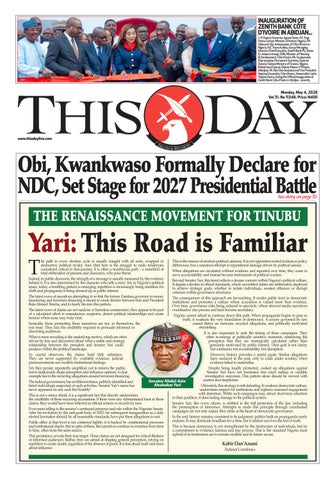
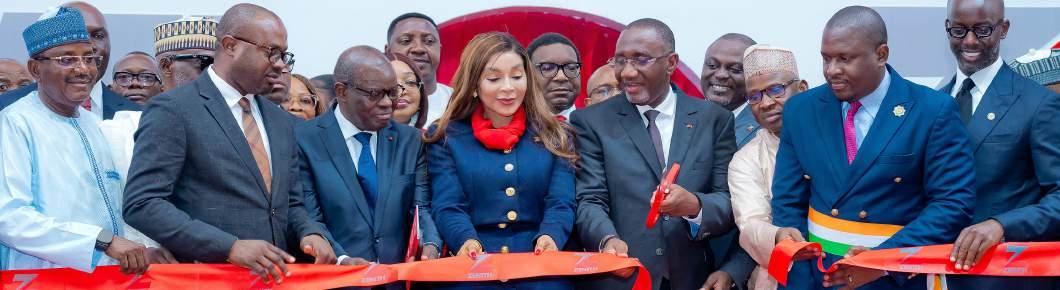
Obi, Kwankwaso Formally Declare for NDC, Set Stage for 2027 Presidential Battle
THE RENAISSANCE MOVEMENT FOR TINUBU
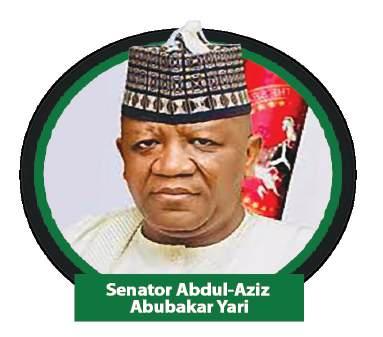
Yari: This Road is Familiar
The path to every election cycle is usually fraught with all sorts, wrapped in destructive political rivalry. And chief here is the struggle to undo tendencies considered critical in that journey. It is often a treacherous path – a minefield of total obliteration of persons and characters, who pose threat.
Indeed, in public discourse, the strength of a message is usually measured by the evidence behind it. It is also determined by the character who tells a story. Yet, in Nigeria’s political space, today, a troubling pattern is emerging, repetition is increasingly being mistaken for truth and propaganda is being dressed up as public interest.
The latest wave of narratives attempting to re-link the former Zamfara governor to money laundering and terrorism financing is meant to create friction between him and President Bola Ahmed Tinubu, and it clearly fits into this pattern.
The latest wave of claims are not random or harmless commentary; they appear to be part of a calculated effort to manufacture suspicion, distort political relationships and create tension where none may truly exist.
Ironically, those promoting these narratives are not, in themselves, the real issue. They lack the credibility required to persuade informed or discerning audiences.
What is more revealing is the underlying motive, which are often driven by fear and discomfort about what a stable and strategic relationship between the president and Senator Yari could produce within the political landscape.
To careful observers, the claims hold little substance. They are never supported by verifiable evidence, judicial pronouncements nor credible institutional findings.
Yet, they persist, repeatedly amplified, not to inform the public, but to maliciously shape perception and influence opinion. A clear example lies in the recurring allegations around terrorism financing.
The federal government, has at different times, publicly identified and listed individuals suspected of such activities. Senator Yari’s name has never appeared on any such list.Notably!
This is the essence of modern political calumny. It is not opposition rooted in ideas or policy differences, but a sustained attempt at reputational damage driven by political unease. When allegations are circulated without evidence and repeated over time, they cease to serve accountability and instead become instruments of political warfare.
Beyond Senator Yari, this trend reflects a deeper concern within Nigeria’s political culture. It signals a decline in ethical standards, where unverified claims are deliberately deployed to achieve strategic goals, whether to isolate individuals, weaken alliances or disrupt cohesion within governance structures.
The consequences of this approach are far-reaching. It erodes public trust in democratic institutions and promotes a culture where accusation is valued more than evidence. Over time, governance risks being reduced to spectacle, where skewed media narratives overshadow due process and facts become secondary.
This is not a minor detail, it is a significant fact that directly undermines the credibility of these recurring accusations. If there were any substantiated basis to these claims, they would have been reflected in official actions or records by now.
Even more telling is the senator’s continued presence and role within the Nigerian Senate.
After his invitation by the anti-graft body in 2023, his subsequent inauguration as a duly elected lawmaker should, by all reasonable standards, have put these allegations to rest. Public office at that level is not conferred lightly; it is backed by constitutional processes and institutional checks. But in spite of these, the narratives continue to resurface from time to time, often from the same source.
This persistence reveals their true target. These claims are not designed for critical thinkers or informed audiences. Rather, they are aimed at shaping general perception, relying on repetition to create doubt, regardless of the absence of proof. It is less about truth and more about influence.
Nigeria cannot afford to continue down this path. When propaganda begins to pass as truth, it weakens the very foundation of democracy. A society governed by law cannot thrive on rumours, recycled allegations, and politically motivated storytelling.
It is also important to note the timing of these campaigns. They often re-emerge at politically sensitive moments, reinforcing the perception that they are strategically calculated rather than genuinely motivated by public interest. Their goal is not clarity, but confusion; not accountability, but disruption.
However, history provides a useful guide. Similar allegations have surfaced in the past, only to crash under scrutiny when evidence failed to materialise.
Despite being loudly promoted, cooked up allegations against Senator Yari have not translated into court rulings or credible investigative outcomes. This pattern alone should be viewed with caution and skepticism.
Ultimately, this strategy is self-defeating. It weakens democratic culture, undermines respect for institutions and replaces reasoned engagement with distortion. While such campaigns may attract short-term attention to their peddlers, it does lasting damage to the political system.
Senator Yari, like every citizen, is entitled to the full protection of the law, including the presumption of innocence. Attempts to erode this principle through coordinated campaigns are not only unjust, they strike at the heart of democratic governance.
In the end, history remains consistent in its judgment: politics built on propaganda rarely endures. It may dominate headlines for a time, but it seldom survives the test of truth.
This is because democracy is not strengthened by the destruction of individuals, but by a commitment to evidence, fairness and due process. That is the standard Nigeria must uphold if its institutions are to remain credible and its future secure.
Kabir Dan’Azumi National Coordinator

Gross earnings
Interest and similar income
Interest and similar expense
Net interest income
Impairment charge on financial and non‑ financial instruments
Net interest income after impairment loss on financial and non‑financial instruments
Net income on fees and commission
Trading income
Other operating (loss)/income
Depreciation of property and equipment
Amortisation of intangible assets
Personnel expenses
Other Operating expenses
Profit before tax
Income tax expense
Profit for the period after tax
Other comprehensive income꞉
Items that will never be reclassified to profit or loss꞉
Fair value movements on equity instruments at FVOCI
Impact of adopting IAS29 on 1 January
Total items that will not be reclassified to profit or loss
Items that are or may be reclassified to profit or loss꞉
Foreign currency translation differences for foreign operations
Fair value movements on debt securities at FVOCI
Other comprehensive income/(loss) for the period net of taxation
Total comprehensive income(loss) for the Period
Profit/(loss) attributable to꞉ Equity holders of the parent Non‑controlling interests
Total comprehensive income/(loss) attributable to꞉
Equity holders of the parent Non‑controlling interest Earnings
Jim Ovia, CFR (Chairman) FRC/2013/CIBN/00000002406
Dame Dr Adaora Umeoji, OON (Group Managing Director/CEO) FRC/2024/PRO/DIR/003/967545
Durosinmi Abiodun Akanbi (Chief Financial Officer) FRC/2013/ICAN/00000001308
(Mrs.)
2,219,767 1,108,558 3,942,973 ‑ 3,942,973 24,560,606 5,891,436 3,893,729 94,477 2,450,381 1,416 8,167,344 2,339,994 34,625 1,756 328,884 ‑ 329,007 69,372 23,602,421 18,114,919
19,901,538 20,535 594,113 2,013,692 1,072,543 3,700,883 ‑ 3,700,883 23,602,421

Nwapa, Anthony Akindele Ogunranti, Adamu Saliu Lawani, Louis Odom | Non‑Executives꞉ Engr. Mustafa Bello, Dr Al‑Mujtaba Abubakar, MFR, Omobola Ibidapo‑Obe Ogunfowora (Ph.D), Peter Olatunde Bamkole (Ph.D), Mr. Chuks Emma Okoh, Dr. Juliet Ehimuan, Pamela Yough, Dr. Rislana Abdulazeez
wellness within reach
with W Health loan
The W Health Loan provides women with access to financing for eligible healthcare services









*Terms and conditions apply
OPEC Announces 188,000 Bpd Oil Output Increase for June
Fitch sees no near-term impact of UAE exit from cartel
Emmanuel Addeh in Abuja
The Organisation of Petroleum Exporting Countries (OPEC) alongside its allies OPEC+ has agreed an increase in oil output of 188,000 barrels per day, the cartel said yesterday, as it pushes on with production in the first meeting since the loss of its key member, the United Arab Emirates (UAE).
The group of major oil producers announced it would increase June production by slightly less than May’s output hike of 206,000 bpd. Sunday’s figure excludes the UAE's share of output, which officially departed OPEC on May 1.
The seven countries which will be involved in the production hike included: Saudi Arabia, Russia, Iraq, Kuwait, Kazakhstan, Algeria, and Oman. Nigeria which has a quota of 1.5 million bpd has for a long time been unable to meet its allocation.
“In their collective commitment to support oil market stability, the seven participating countries decided to implement a production adjustment of 188,000 barrels per day from the additional voluntary adjustments announced in April 2023,” OPEC said in its statement.
Oil supply has been choked since the Iran war began on February 28, as the Strait of Hormuz – a vital shipping route for global oil and gas supplies –has remained effectively closed, a CNBC's report said.
Oil prices fell at the weekend after Iran sent an updated
peace proposal to mediators in Pakistan, raising hopes again that a settlement with the U.S. is still possible. The seven OPEC+ members will meet again on June 7, the statement said.
U.S. crude oil futures fell 3 per cent to close at $101.94 per barrel, while the international benchmark, Brent crude, lost nearly 2 per cent to settle at $108.17. Both are nearly 78 per cent higher since the start of 2026.
U.S. President Donald Trump said on Saturday he had been told about the concept of a deal with Iran, but was waiting for the exact wording, while warning there was still the possibility of restarting strikes on the country if Tehran misbehaves.
Reuters quoted a senior Iranian official as saying on Saturday that an Iranian proposal so far rejected by Trump would open shipping in the Strait of Hormuz and end the U.S. blockade of Iran while leaving talks on Iran’s nuclear program for later.
Concerns around production were amplified further on Tuesday with news of the shock departure of the UAE, the cartel’s third-largest producer.
The Gulf state concluded that exiting the group was in its national interest following a comprehensive review of its production policy and capacity, the Energy Ministry said in a written statement.
The UAE had played an influential role in OPEC’s decisions over nearly six decades and was the group’s third-largest oil producer in February, behind Saudi Arabia and Iraq.
Efficiency Becomes the New Growth Frontier for Access Holdings
Access Holdings Plc is reinforcing its strategic focus on efficiency, positioning cost discipline as a key driver of long-term value creation.
The Group’s 2025 financial results showed gross earnings of N5.53 trillion and profit before tax exceeding N1 trillion, alongside an improvement in the cost-toincome ratio to 51.7 percent from 56.7 percent in the prior year.
According to Innocent C. Ike, Group Chief Executive Officer of Access Holdings Plc, this marks a critical shift in how the organisation defines and delivers growth.
“The next phase of our journey is not just about growing bigger, but about becoming more efficient and effective,” Ike said. “Efficiency is now a core driver of value.”
The Group highlighted
ongoing efforts to streamline operations, simplify structures, and strengthen coordination across its diverse businesses.
“Large organisations can easily become complex,” Ike noted. “Our focus is ensuring that complexity does not dilute performance. Every part of the business must justify its role in value creation.”
Access Holdings also reiterated its commitment to disciplined capital deployment.
“Growth only creates value when it delivers strong returns,” Ike added. “We are being more deliberate about where and how we invest.”
The Group affirmed that execution, accountability, and measurable outcomes remain central to its strategy.
“Our goal is not to reduce scale, but to sharpen it,” Ike said. “Efficiency and value are now inseparable.”
Meanwhile, credit rating firm Fitch has said that last week's decision by the UAE to withdraw from OPEC would have no immediate impact on the country's metrics, although it could boost its oil revenues in the longer term.
"In the near term it doesn't make any difference at all," Paul Gamble, Fitch's head of Middle
East sovereign ratings, said of the OPEC exit, citing the effective closure of the Strait of Hormuz's huge impact on its oil exports.
Once the strait fully reopens, though, Gamble said the UAE was likely to ramp up oil exports, given it would no longer be limited by OPEC decisions.
That would help its "balance sheet" although diversifying the
economy away from oil and an improvement in the "geopolitical risks" are still likely to be needed to lift the UAE's AA- stable credit rating.
Fitch's score is already one notch lower than both S&P Global and Moody's respective ratings on the country, Reuters said.
"I don't think it (an increase in oil exports) would put any upward pressure on the rating," Gamble said, although "it would definitely help the sovereign balance sheet." He added that he viewed the UAE's recent request for a currency swap line with the U.S. as a "proactive" move, albeit a "surprise" timing-wise given the huge amount of liquid assets that the UAE has.
Exxon, Chevron’s Q1 Earnings Down 46%,
37%
Emmanuel Addeh in Abuja
Amid stalled crude oil deliveries and supply disruptions in the Middle East, oil giants, Exxon Mobil and Chevron have reported drops in profit in the first quarter of 2026 despite surging oil prices.
Exxon’s quarterly earnings fell to $4.2 billion from about $7.7 billion the same quarter last year, a decline of about 46 per cent, while Chevron’s profits fell to $2.2 billion from about $3.5 billion, down about 37 per cent. Still, both companies beat Wall Street expectations.
However, America’s two largest oil companies are still expected to eventually reap the benefits of soaring oil prices, which reached levels unseen since 2022 this week as the war in Iran continues, Reuters reported.
Despite Soaring Oil Prices
In a prepared statement, Exxon said that “timing effects” and volume impacts in the Middle East reduced reported earnings; when excluding those effects, the company reported $8.8 billion in profit. At Chevron, unfavourable timing effects totaled about $3 billion for the quarter, according to the company.
“One of the things that we called out in our press release was the timing,” Darren Woods, Exxon’s chair and chief executive officer, said in an interview. “As you close the quarter in the volatile market, you book the hedges, the paper, but the physical barrels are in inventory until they get delivered.
“ So you get this deferred profit that we wanted to basically highlight, and make sure that our investors understood that the work that
we’re actually doing to meet the demands today are resulting in benefit not necessarily booked in the quarter,” Woods added. At the start of the war, Donald Trump declared on Truth Social: “The United States is the largest Oil Producer in the World, by far, so when oil prices go up, we make a lot of money.”
Certain oil and gas companies are already reaping the benefits. BP announced that its profits more than doubled in the last quarter, crediting “exceptional oil trading” for its highest quarterly profit since 2023 – an announcement that led advocacy groups and some European finance ministers to call for greater taxes on windfall profits.
Other earnings reports indicate that it may take longer for oil companies to report clear gains. ConocoPhillips, a partner in Qatar’s state gas
company, cut its forecast annual output due to disruptions in Qatar’s liquified natural gas operations caused by the war. Iranian attacks on QatarEnergy LNG’s export plant will take years to repair, state energy officials have said. Chevron and Exxon’s stock jumped at the start of the war but eased in April as the US and Iran agreed on a ceasefire and the reopening of the strait of Hormuz. And Lockheed Martin, a key defense contractor with the federal government, initially saw its stock jump 25 per cent since the start of the year, but has since dropped to roughly the same levels. Meanwhile, gas prices at the pump continue to climb, with the current average reaching $4.39, up from $3.187 a year ago. Americans are also facing fears of elevated inflation and slow job growth amid turmoil in the Middle East.
Nigeria's Oil Industry on Spotlight as OTC Begins Today in Houston
The Nigerian pavilion at the Offshore Technology Conference (OTC) 2026 in Houston, Texas, United States will be officially opened today (Monday) to showcase to the global energy investment community the opportunities that now exist in the country's oil and gas sector.
The Nigerian delegation and participants at the yearly event are being coordinated by the Petroleum Technology Association of Nigeria (PETAN) with strong partnerships from oil companies, government agencies and other stakeholders.
This year’s edition with the theme: "Steering Offshore Energy Innovation into the Future", holds from May 4--7,
2026, at the NRG Park, in the ever-busy city of Houston.
THISDAY learnt that the Nigerian pavilion will be declared open by top industry stakeholders including the Minister of State for Petroleum Resources (Gas), Ekperikpe Ekpo; Chief Executive Officer of the Nigerian Upstream Petroleum Regulatory Commission (NUPRC), Oritsemeyiwa Eyesan; Senior Technical Adviser to the Executive Secretary of the Nigerian Content Development and Monitoring Board (NCDMB), Austin Uzoka; and the Chairman of the Petroleum Technology Association of Nigeria (PETAN), Wole Ogunsanya amongst others.
The OTC is widely regarded as the most influential platform for offshore energy dialogue,
deal-making, and innovation, and this year is more than routine participation for PETAN and Nigeria operating and service companies who have demonstrated expertise, resilience, and technical capacity to compete on the global stage.
The event marks a deliberate and strategic return aimed at strengthening Nigeria’s position within the global energy value chain.
PETAN said it is returning to OTC 2026 with sharper alignment and a more defined objective—ensuring that Nigerian companies are not just present, but actively engaged and recognized as credible global partners.
“We have seen firsthand how global energy decisions are shaped at OTC. This year, we are going back to ensure indigenous Nigerian capacity is not just present—but recognised, engaged, and heard. We are taking our businesses to the table where real partnerships are formed", he said.
He said the association's activities will be anchored at the Nigerian Pavilion, built around the theme: “Africa’s Energy Transformation: Scaling Investment, Technology, and Local Capacity for Sustainable Growth.”
The pavilion is designed as a hub for investment conversations, technical showcases, and direct engagement between Nigerian
Chairman of PETAN, Wole Ogunsanya underscored the importance of this year’s participation, noting that OTC remains a critical arena where global energy decisions take shape.
Peter Uzoho in Houston, Texas

EMP 19
Train at EXPORT M AN AGEMENT PROGRAMME 19
and enhance your expor t market and funding-access readiness

9am5pm daily June 15–19,
Programme Overview
Lagos Business School (LBS), Km 22, Lekki-Epe Expressway, Ajah, Lekki, Lagos.
Mode of Deliver y: Hybrid 2026
Programme Outline
The EMP has been subsidized by Fidelity Bank to provide a practical and comprehensive platform for understanding the fundamentals of non-oil expor ts. It equips par ticipants with insights into emerging expor t oppor tunities, including the benefits presented by the African Continental Free Trade Area (AfCFTA), alongside other policies & initiatives designed to promote expor t development in Nigeria.
R e c e n t g l o b a l d eve l o p m e n t s c o n t i n u e to re s h a p e s u p p l y chains, trade flows, and demand patterns across international markets, creating new oppor tunities for countries that are able to compete effectively in expor t markets.
For Nigeria, strengthening non-oil expor t capacity remains critical for expanding foreign exchange earnings, deepening par ticipation in global value chains, and unlocking sustainable economic growth.
Expor ts therefore remain a key driver of foreign exchange generation, job cre ation, weal
economic development.
Programme Objective
T o s t r e n g t h e n n o n - o i l e x p
sustainable expor t capabilities among Nigerian businesses, Fidelity Bank Plc in Par tnership with Lagos Business School established the Expor t Capacity Building Programme. This 5-day programme is designed to provide par ticipants with the knowledge, tools, and practical skills required to:
♦ Develop & scale expor t businesses in line with global best practices
♦ Access and compete in international markets
♦ Leverage the oppor tunities under the AfCFTA Treaty
♦ U t i l
mechanisms available in Nigeria
Target Audience
T
prospective expor ters, and financiers of expor ts, expor
government agencies, logistics service providers amongst others.
FEE N495,000 Inclusive of VAT
♦ Overview of Nigeria’s expor t landscape
♦ Expor t Finance Instruments
♦ Assessing Readiness & Potential to Become a Successful Expor ter
♦ Business Negotiation Strategies
♦ A c c e s s i n g E x p o r t M a r k e t
Countries, etc.
♦ Definition and implementation of the activities required to make a product market-ready
♦ Expor t documentation and Compliance Requirements
♦ Understanding, Selection and Implementation of Supply Chain Management for Expor ts
♦ Expor t Development Processes and Business Systems
♦ Understanding the AfCFTA Treaty and its Oppor tunities
Payment Details
Bank: Fidelity Bank Plc
Collections Account
Account Number: 5020131070
(please send payment information via email to the email
Enquiries & Registration
Nkechi Iwegbu 0802 478 2906 niwegbu@lbs.edu.ng
Facilitators
Umar Idris 0907 040 0317 uldiris@lbs.edu.ng
Prof. Frank Ojadi - LBS Faculty
Dr. Uche Attoh - LBS Faculty Key industry exper ts in expor t trade
Financial Management specialists Regulatory authorities
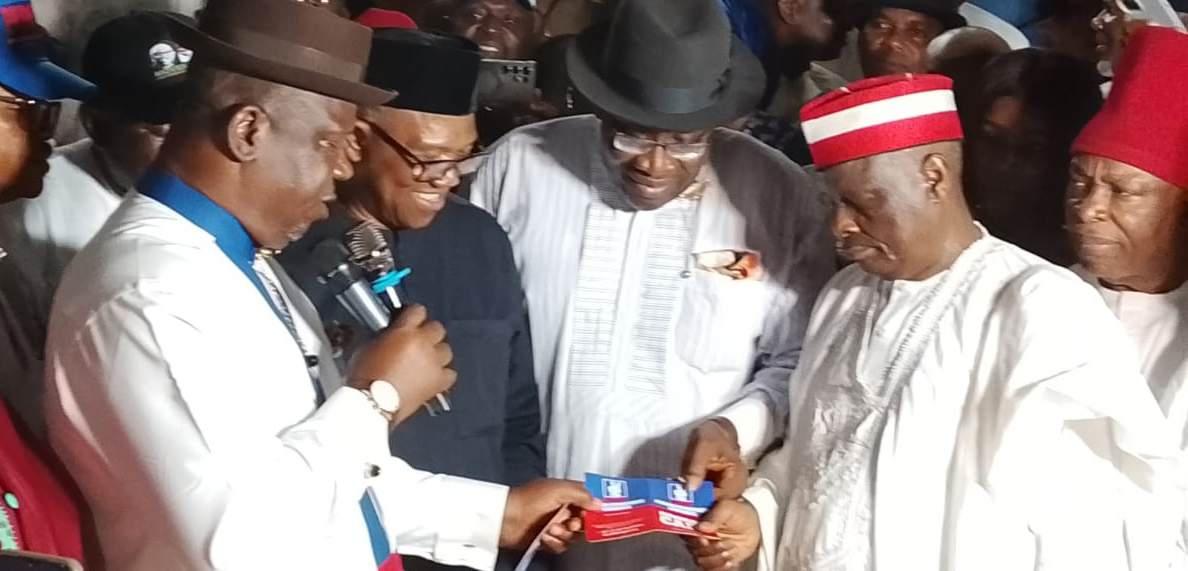
OBI, KWANKWASO PICK NDC MEMBERSHIP CARD...
Ewalefoh: MMA2 Dispute Resolution Signals
New Era for PPPs, Boost to Investor Confidence
James Emejo in Abuja
The Director-General, Infrastructure Concession Regulatory Commission (ICRC), Dr. Jobson Oseodion Ewalefoh, has commended President Bola Tinubu for resolving the long-standing concession dispute over the Murtala Muhammed Airport Terminal Two (MMA2) in Lagos, describing the move as a major boost to investor confidence.
Ewalefoh, in statement said the resolution underscored the administration’s commitment to upholding the sanctity of contracts, which remains a critical factor in positioning Nigeria as a credible and reliable investment destination.
He noted that respect for contractual agreements remained fundamental to building trust among investors, as it guarantees protection of investments within a stable and predictable regulatory environment.
According to him, the president’s intervention represented a decisive breakthrough in a dispute that had persisted across multiple administrations.
The MMA2 impasse stemmed from disagreements between the federal government, through the Federal Airports Authority of Nigeria (FAAN), and BiCourtney Aviation Services Limited over the execution of the public-private partnership
(PPP) concession agreement.
The dispute largely revolved around clauses on exclusivity and the development of competing or complementary infrastructure within the airport corridor.
Ewalefoh explained that the resolution followed a coordinated process involving the Federal Ministry of Aviation and Aerospace Development, FAAN, BiCourtney Aviation Services Limited, and the ICRC, which provided regulatory concurrence in line with established PPP guidelines.
He said the outcome had removed restrictive provisions and restored clarity to the concession framework, thereby opening the door
for new aviation infrastructure projects in Lagos, including the proposed Lekki Airport, as well as other commercial and support facilities.
The ICRC boss said, “With the removal of these constraints, Nigeria can now fully explore critical aviation projects that had been stalled, creating new opportunities for growth and investment.”
He emphasised that the development sends a strong signal to both local and international investors that the government is committed to resolving complex disputes through a transparent and forward-looking approach.
He said, “When investors see that a dispute of this magnitude can be resolved
Net-Zero Shipping: Oyetola Advocates Fairness, Equity for Developing Countries
Nigeria has called on the global maritime community to prioritise fairness, equity, and adequate support for developing economies in the push towards net-zero emissions in international shipping.
Speaking at the 84th session of Marine Environment Protection Committee (MEPC 84) of International Maritime Organisation (IMO) in London, Minister of Marine and Blue Economy, Adegboyega Oyetola, reaffirmed Nigeria’s support for decarbonisation. But Oyetola said such support depended
on frameworks that reflected the economic realities of developing nations.
In a statement on Sunday by his Special Assistant on Media, Balaji Akinola, Oyetola stressed that achieving net-zero emissions by 2050 must align with sustainable development goals.
On the side-lines of MEPC 84, the minister also held strategic meetings with Secretary-General of IMO, Arsenio Dominguez, and President of Saudi Arabia’s Transport General Authority, H.E. Fawaz Al Sehali.
During the engagements, Oyetola reaffirmed Nigeria’s
commitment to deeper collaboration across key maritime priorities.
The discussions focused on strengthening cooperation in maritime security, capacity building, blue economy development, and advancing a fair and inclusive energy transition.
Oyetola reiterated Nigeria’s commitment to a constructive and mutually beneficial partnership with IMO anchored on shared goals, such as maritime safety, institutional capacity development, and sustainable blue economy growth.
Dominguez expressed
appreciation for the hospitality extended to him during his recent visit to Nigeria, particularly his meeting with President Bola Tinubu.
He described the engagement as a clear demonstration of Nigeria’s strong commitment to maritime governance.
The IMO secretary-general also commended Nigeria’s leadership in enhancing maritime security in the Gulf of Guinea, highlighting significant progress in efforts to reduce piracy and improve regional coordination.
According to him, Nigeria’s experience offers valuable lessons for other regions.
effectively, it reinforces confidence in policy stability, regulatory certainty, and respect for agreements—key pillars for successful PPPs."
He further noted that the resolution would deliver tangible economic benefits, including improved infrastructure utilisation, enhanced operational efficiency, and increased revenue generation for the government.
Ewalefoh also lauded the Minister of Aviation and Aerospace Development, Chief Festus Keyamo, for his leadership and role in facilitating the resolution, describing his engagement as instrumental to achieving the breakthrough. He commended all stakeholders involved for their collaboration and commitment, which he said made the milestone possible.
Cleric Seeks Good Governance, Urges Nigerians to be Patient
The founder of Dominion Chapel International Churches, JohnPraise Daniel, has called on Nigerians to remain patient amid current economic challenges while urging political leaders to embrace responsible governance and deliver on their promises.
He made the call at the weekend in Abuja during an interview session marking his 66th birthday celebration.
Speaking on his life and ministry, the cleric expressed gratitude to God, describing his journey as one sustained by divine grace, and noting that his 66 years of life and 50 years in Christian ministry reflected God’s faithfulness.
Reflecting on his ministry’s growth, Daniel said it had recorded significant impact across families and nations.
“We’ve seen families restored. We’ve seen churches built and opened in different countries of the world apart from just Nigeria. And we’ve seen help come to people in different ways and different capacities,” he said.
He stressed that true success in life is not measured by material possessions but by impact on others. “You will not be remembered for the number of cars you have. You will not be remembered for the number of houses you acquired, but you will be remembered for the impact you made,” he said.
The cleric also used the occasion to speak on Nigeria’s economic and political situation, commending workers for their endurance in the face of hardship.
“I want to say to Nigerian workers, I want to thank them for their patience. They have endured a lot of hard times and adjustments, especially with this new administration,” he said.
According to him, the country is passing through difficult but temporary conditions. “When the day is about to break, the night is darkest. Some of the things we are going through as a nation are birth pains. I am sure God will soon give us a great new nation,” he added.
Kasim Sumaina in Abuja
L-R: Chairman of the National Democratic Congress (NDC), Senator Moses Cleopas; Mr. Peter Obi; National Leader of the NDC, Senator Seriake Dickson; Senator Rabiu Kwankwaso and the Senator representing Anambra Central, Victor Umeh, when Obi and Kwankwaso joined NDC in Abuja ...on Sunday
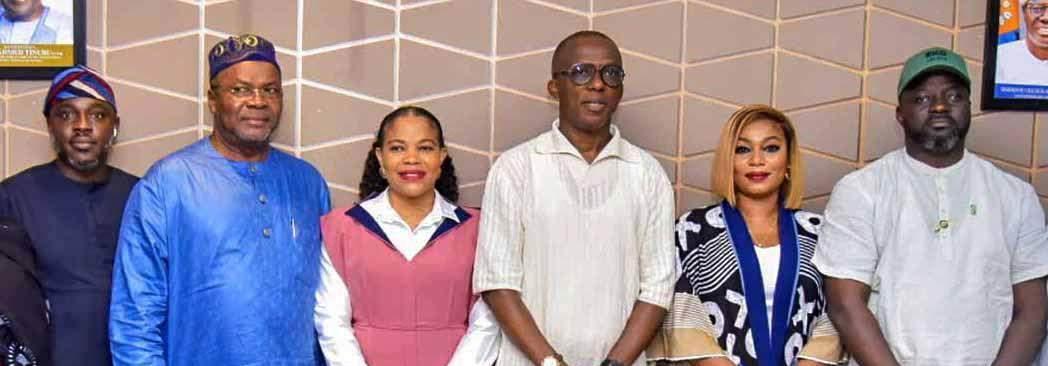
LAFARGE WASTE-TO- VALUE INITIATIVE...
At Induction, CITN Urges Integrity, Competence to Drive Tax Reforms
James Emejo in Abuja
Chartered Institute of Taxation of Nigeria (CITN) has charged newly inducted members to uphold the highest standards of professionalism and play a central role in advancing the country’s ongoing tax reforms.
CITN gave the charge as it formally admitted a fresh cohort of associates at its 54th induction ceremony in Abuja. President/Chairman of
Council, CITN, Mr. Innocent Ohagwa, described the induction as a defining moment not only for the new members but also for Nigeria’s evolving fiscal landscape.
Ohagwa said the admission of new professionals reflected a renewal of institutional strength at a time when the country’s tax system was undergoing far-reaching transformation.
According to him, the enactment of new tax laws,
EU, UNICEF Launch €1m Drive to Return 20,000 Conflict-Hit
Sokoto Children to School
programmes to help them catch up with peers.
A major education lifeline has reached Sokoto State as the European Union and UNICEF roll out a €1 million intervention to bring over 20,000 conflictaffected children back to safe classrooms over the next two years.
The programme, funded by the European Union’s humanitarian arm (ECHO), targets children aged 5 to 17 living in internally displaced persons camps and host communities across Sokoto State, where insecurity has disrupted schooling for thousands.
Announcing the initiative, UNICEF said the partnership will expand access to quality education and life skills for vulnerable children, while strengthening the state’s education system to withstand future shocks and crises.
A key component will be community-led enrolment campaigns to identify and register out-of-school children.
Those who have missed years of learning will be placed in accelerated learning
For children already in school, the project will provide remediation support aimed at building foundational literacy and numeracy skills and improving overall learning outcomes, especially for pupils affected by trauma and displacement.
Beyond academics, the programme places strong emphasis on safety and wellbeing. It will promote safe school practices to protect children from violence, abuse, and exploitation in and around learning spaces.
To improve the learning environment, the intervention will rehabilitate water, sanitation, and hygiene facilities in target schools. WASH and environment clubs will also be established to promote hygiene and create healthier classrooms.
Teachers will not be left out. The initiative includes training in basic pedagogy and crisis-sensitive teaching methods, equipping educators to respond to trauma, mental health concerns, and the psychosocial needs of displaced children.
including the Nigeria Tax Administration Act, 2025, has expanded the role of certified tax professionals.
Ohagwa stated that only duly accredited practitioners were now recognised to represent taxpayers before authorities.
He said, “There is perhaps no better time to be a tax professional than now."
He stressed that individuals, businesses, and institutions increasingly required expert guidance to navigate the changing regulatory environment.
Ohagwa emphasised that competence, ethical conduct, and professionalism had become non-negotiable benchmarks for relevance, adding that the
institute has strengthened its recertification standards to reflect these expectations.
He urged members to support ongoing reforms not just in words but also in practice, by guiding clients with integrity and ensuring strict compliance with tax laws and regulations.
In his welcome address, Chairman of CITN’s Membership and Professional Conduct Committee, Dr. Yemi Sanni, described the induction as a watershed moment for the profession, coming at a time when comprehensive tax reforms introduced in 2026 were reshaping administration, policy, and practice.
Sanni that the reforms—
covering new administrative frameworks, harmonisation of tax laws, and restructuring of tax authorities—required the active participation of professionals to succeed.
He said, “The reforms, desirable as they are, will not implement themselves."
He stressed that tax practitioners had a critical role in supporting revenue mobilisation, protecting businesses, and promoting investment.
He told the inductees that their admission conferred both privileges and responsibilities, urging them to demonstrate discipline, competence, and strict adherence to th institute’s code of ethics.
Sanni described taxation as “the profession of choice” in Nigeria’s current economic climate, stating that it remains central to government financing and national development.
Registrar/Chief Executive of CITN, Mrs. Afolake Oso, said the new inductees had met rigorous standards and were now part of a body statutorily empowered to regulate tax practice in Nigeria. Oso highlighted the institute’s mandate to set professional standards, promote research, and ensure ethical compliance, stressing that mechanisms, such as Investigation Panel and Disciplinary Tribunal, remain in place to address misconduct.
Tinubu Departs Abuja for a Two- week Three-nation Diplomatic Tour
To attend strategic summits in Kenya, Rwanda
Deji Elumoye in Abuja
President Bola Tinubu on Sunday departed the nation's capital, Abuja, on a two-week long three-nation diplomatic trip to France, Kenya, and Rwanda. The three-nation visit is aimed at strengthening Nigeria’s global partnerships and advancing key economic reforms, according to the presidency.
The president’s official aircraft, Nigeria Air Force 1, took off from Presidential Wing of Nnamdi Azikiwe International Airport about 2pm.
He was seen off at the airport by top government officials, including Chief of Staff to the President, Hon Femi Gbajabiamila; member representing Ikorodu Federal Constituency in the House of
Representatives, Hon. Babajimi Benson; and Director of Protocol at the Ministry of Foreign Affairs, Ambassador Ibrahim Sule Dan Agundi.
The trip, which will take the president, first, to France, is expected to culminate in his participation at key international gatherings in Kenya and Rwanda.
In Kenya, Tinubu will attend the Africa-France Summit
scheduled for May 11 to May 12, co-chaired by Emmanuel Macron and William Ruto. The summit, themed, “Africa Forward: Africa-France Partnerships for Innovation and Growth,” will focus on critical issues, including energy transition, green industrialisation, digital transformation, climate action, and the restructuring of the global financing architecture.
Labour Party Unveils Primary Timetable
Gives Alex Otti free guber nomination form Offers concession to women, youths aged 25 to 30, persons living with disabilities
Chuks Okocha in Abuja
The Labour Party has officially released its timetable, schedule of activities, and nomination fees for the 2026 primary elections ahead of the 2027 general election. In a press statement by its
National Publicity Secretary, Ken Eluma Asogwa, the party said the schedule aligned with provisions of the Constitution of the Federal Republic of Nigeria, the Electoral Act, and the guidelines issued by the Independent National Electoral Commission.
According to the timetable, the sale of nomination forms would begin on May 6, 2026, and close on May 16, 2026, while submission of completed forms is scheduled for May 17 and 18.
Screening of aspirants will take place between May 20 and May 22, followed by the publication of results on May 23. Appeals and petitions arising from the screening process will be handled between May 24 and May 25, with the final list of cleared aspirants expected on May 26.
L-R: Communications and Public Affairs Manager- South West, Lafarge Africa Plc, Oluyemi Bakare; Permanent Secretary, Office of Environment Services, Lagos State Ministry of the Environment & Water Resources, Dr. Gaji Omobolaji Tajudeen; Head of Communications, Brand & Events Lafarge Africa Plc, Ginikanwa Frank-Durugbor; Honourable Commissioner, Ministry of the Environment and Water Resources, Lagos State, Mr. Tokunbo Wahab; Commercial Manager, Geocycle, Lafarge Africa Plc, Temitope Dosumu, and Special Adviser to the Executive Governor of Lagos State on Environment, Engr. Olakunle Rotimi-Akodu, during a press conference to announce Lafarge Africa's Geocycle partnership with the Lagos State Government on Waste-to-Value Initiative in Lagos ... recently
Onuminya Innocent in Sokoto
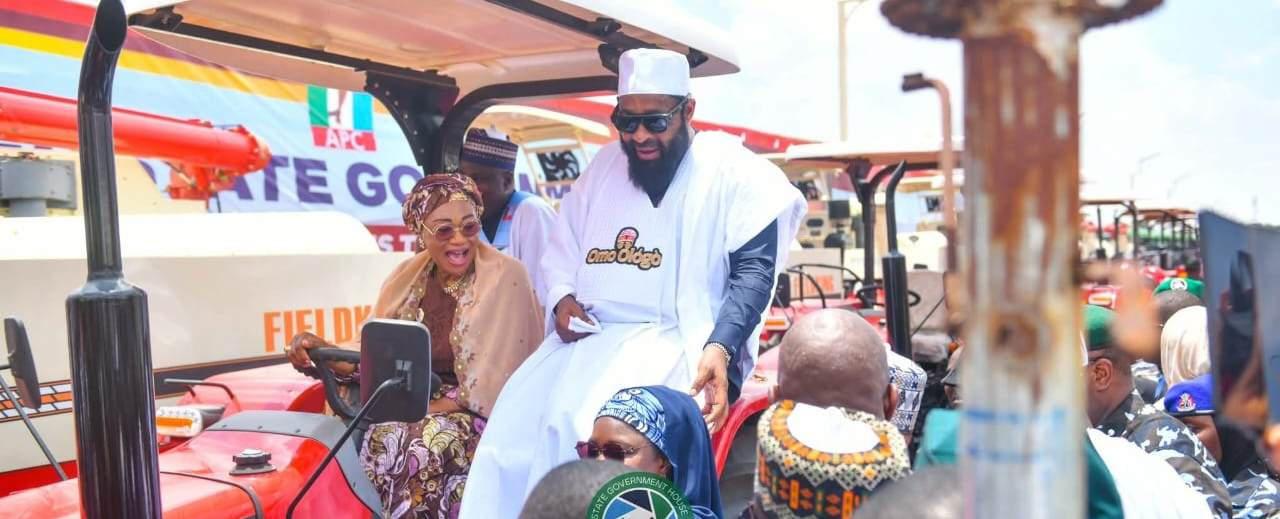
FIRST LADY FLAGS OFF 2026 FARMING SEASON IN NIGER...
FG Summons South African Envoy as NIDCOM Demands Better Protection of Nigerians
Urges calm, end to profiling of Nigerians
Sunday Ehigiator
The Federal Government has summoned the Acting High Commissioner of South Africa to Nigeria, Bobby Moroe, to a meeting over renewed xenophobic protests and attacks on Nigerians living in South Africa, as the Nigerians in Diaspora Commission (NIDCOM) also demanded better protection for citizens living in the country.
In a statement by the Ministry of Foreign Affairs, the envoy was invited to a meeting scheduled for today, Monday, May 4, 2026, at the ministry’s headquarters in Abuja.
“The Ministry of Foreign Affairs of the Federal Republic
of Nigeria has extended an invitation to the Acting High Commissioner of the Republic of South Africa for a meeting scheduled to take place on Monday, May 4, 2026, at the Ministry’s headquarters in Abuja,” the statement read.
It said the meeting would serve to formally convey Nigeria’s “profound concern” over developments that could strain bilateral relations.
“The objective of this engagement is to formally convey the Nigerian Government’s profound concern regarding recent events that have the potential to impact the established cordial relations between Nigeria and South Africa,” it added.
Navy Strengthens Maritime Security, Enhances Capacity to Combat Sea Pirates
Blessing Ibunge in Port Harcourt
The Nigerian Navy’s Central and Eastern Naval Commands embarked on Exercise Fleet Sentinel, a joint operation aimed at strengthening maritime security and enhancing the capacity to combat crime within national and regional waters.
The exercise was flagged-off at the weekend, aboard NNS Kada at the Bonny Anchorage, Rivers State, by the Chief of Naval Staff (CNS), Vice Admiral Idi Abbas.
Exercise Fleet Sentinel comes barely hours after successful conclusion of Exercise Obangame Express 2026, a multinational maritime security operation involving navies from West and Central Africa, as well as Europe.
Speaking at the flag-off, Vice Admiral Abbas said
the exercise was designed to address emerging maritime threats within the Nigerian Navy’s constitutional mandate.
Represented by the Chief of Naval Safety and Standards, Rear Admiral Pakiribo Anabraba, Abbas said "In an era defined by asymmetrical maritime challenges, it is imperative that the Nigerian Navy remains fully prepared to support both national and regional maritime initiatives of the federal government.
“The exercise, aptly codenamed Fleet Sentinel, reflects our resolve to maintain a vigilant watch over our maritime domain.”
He explained that the exercise would enhance cooperation and coordination among participating units, while improving proficiency in fleet manoeuvres, technical operations, small arms firing, and ceremonial drills.
The ministry noted that discussions would focus on “the ongoing demonstrations by various groups within South Africa and the documented instances of mistreatment of Nigerian citizens and attacks on their businesses.”
While acknowledging growing outrage among Nigerians, the government urged restraint.
“The Ministry is aware of the growing discontent among Nigerians concerning the treatment of their nationals in South Africa. Nevertheless, it implores the Nigerian public to remain calm and reiterates the Federal Government’s commitment to protecting the rights and well-being of Nigerian citizens residing in South Africa,” it stated.
Meanwhile, NIDCOM has called on the South African government to take urgent steps to better protect Nigerians and other black immigrants, citing escalating violence and fear among affected communities.
Abuja Hosts Ground-breaking Forum on Peacebuilding, Climate Resilience
Michael Olugbode in Abuja
Abuja is set to become the centre of a critical global conversation as policymakers, climate experts and peacebuilding practitioners converge for the 2026 Peer Learning Forum on Peacebuilding and National Adaptation Plan (NAP) Processes, opening on May 5 at the Abuja Continental Hotel.
The three-day forum, co-hosted by the Federal Government of Nigeria and the NAP Global Network, is drawing participants from across Africa and beyond at a time when the intersection between climate change and conflict is becoming increasingly difficult to ignore.
From the shrinking Lake Chad Basin to farmer-herder tensions worsened by erratic rainfall, Nigeria itself sits at the frontline of climate-induced security challenges.
The forum comes against a growing global recognition that climate change is not only an environmental issue but also a threat multiplier.
Across the Sahel and other fragile regions, rising temperatures, desertification and resource scarcity have intensified competition over land and water, often fueling violence and displacement.
Governments are now under pressure to design adaptation
strategies that do more than protect ecosystems—they must also stabilise communities and prevent conflict.
It is within this context that National Adaptation Plans (NAPs) have emerged as a key policy tool under international climate frameworks, enabling countries to identify vulnerabilities, prioritise interventions and build long-term resilience.
However, experts have increasingly argued that traditional adaptation planning has not sufficiently accounted for conflict dynamics, particularly in fragile and violence-affected settings.
Bringing together
representatives of African country NAP teams, ministries responsible for environment, security and peacebuilding, as well as technical experts and development partners, the gathering aims to rethink how adaptation policies are designed and implemented.
Discussions are expected to focus on the realities of implementing NAP processes in conflict-prone regions, where weak institutions, insecurity and limited resources often undermine well-laid plans.
Participants will also examine how climate adaptation efforts can be deliberately aligned with peacebuilding strategies.
Delta Community Accuses NEPL, Elcrest Exploration and Production Nigeria Limited, OML 40 Gbetiokun Field of Subverting PIA
Sylvester Idowu in Warri
Ureju Community Council of Elders in Warri North Local Government Area of Delta State has accused the management of NNPC Exploration and Production Nigeria Limited (NEPL) and Elcrest Exploration and Production Nigeria Limited, of subverting the Petroleum Industry Act, PIA, as it relates to the composition of members of Board of Trustees
(BoT) of OML 40 Gbetiokun field, Agura Host Communities Development Trust (HCDT).
The Council, in a statement over the weekend, stated that under the PIA, only the elders’ council of a community, has the mandate to recommend person(s) as members of BoT and not any faction “of the so-called trust executive who is in court over constitutional issues” the management of NEPL and Elcrest E&P Nigeria
Limited appears to be dealing with.
The Olare-Aja (Oldest man) of Ureju Community Council of Elders, Pa. Thompson Adini Jarikpe, Pa, D. E. T. Ekpoto and Pa, Omereyemi Rone Orugboh , who signed the statement, disclosed that the oil-rich community, duly recommended Godwin Igho Erewa to the management of NEPL and Elcrest E&P Nigeria Limited as member of BoT
of OML 40 Gbetiokun field, Agura Host Communities Development Trust. According to signatories, the company’s management has yet to feedback Ureju community on the recommendation of Godwin Igho Erewa, “only to propose a phantom 5-year budget, enveloped with projects that were not communitydriven and wasteful, because most of the projects would amount to duplication.”
Senator Oluremi Tinubu (left) and Governor Mohammed Umaru Bago symbolically drove a tractor at the flag off of the 2026 farming season in Niger State, yesterday
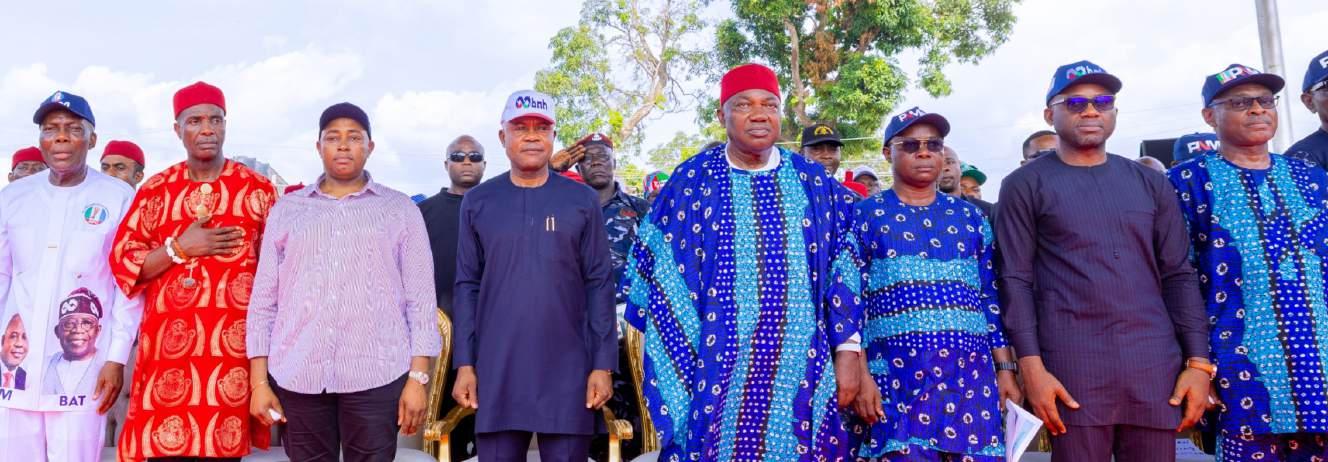
MASSIVE ENDORSEMENT...
2027: Citing Visible Results, Nsukka Zone Endorses Tinubu, Mbah at
a Massive Rally
Donates N102m for Mbah’s nomination form Mbah flags-off 52.2km Nguru-Lejja-AkuAkpakume Nze- Egede-Affa-Eke
Gideon Arinze
Leaders, stakeholders, and people of Enugu North Senatorial District (Nsukka Zone) have endorsed President Bola Tinubu and Governor Peter Mbah of Enugu State for a second term in office, citing measurable realities and numerous outcomes of their governments.
The zone, comprising six of the 17 local government areas of Enugu State - Nsukka, Igboeze North, Igboeze South, Udenu, Uzo Uwani, and Igbo Etiti - also presented a cheque for the sum of N102 million for Mbah’s reelection nomination form.
They said the Tinubu and Mbah administrations had made unprecedented positive contributions to the growth and development of the zone, listing critical infrastructural transformations and Prof. Simon Ortunaya’s appointment as the first indigenous Vice Chancellor 65 years after the
founding of the University of Nigeria, Nsukka (UNN).
Deputy Governor of Enugu State, Barr. Ifeanyi Ossai; former governor, Hon. Ifeanyi Ugwuanyi; Chairman, Enugu State Traditional Rulers Council, Igwe Samuel Asadu; Chairman of the rally organising committee, Chief Ikeje Asogwa; thought leaders, youths, and women groups declared their total support for Tinubu and Mbah during a mega endorsement rally at Nsukka Township Stadium on Saturday.
In an endorsement proceeding presided over by former federal lawmaker, Senator Chukwuka Utazi, the people unanimously endorsed the President, observing that with the President’s partnership with Mbah, “we who were once far off have been brought near and integrated into the mainstream of the Nigerian project, with all its benefits.”
This was sequel to a
Road, others Promises seed money to Ogige traders
motion proposed by the House Member representing Igboeze North/Udenu Federal Constituency, Hon. Dennis Agbo, and seconded by Hon. Mark Obetta (Nsukka/Igboeze South Federal Constituency).
Hon. Agbo listed the resumed funding and ongoing construction of the Oturkpo –Obollo Afor – 9th Mile Enugu Expressway, Enugu – Port Harcourt dual carriageway, expedited work on the Enugu – Onitsha Federal Expressway, the successful concession of Akanu Ibiam International Airport, the creation of the South East Development Commission, and the recent promise to accelerate work on the Port Harcourt – Enugu rail line as part of the grounds for Tinubu’s endorsement.
“Oha Nsukka also noted that President Bola Ahmed Tinubu has made it possible for our state to be connected to the National Gas Grid to unleash
our buoyant gas resources and ultimately confirm our status as an oil-producing state for full derivation advantage,” he said.
He added that Tinubu had addressed the decades of marginalisation and exclusion suffered by the South East by appointing several sons of Enugu State and Nsukka into prominent positions Ndigbo were hitherto excluded from.
Also, the Deputy Speaker of the Enugu State House of Assembly, Hon. Ezenta Ezeani, in another motion seconded by Hon. Chukwuma Ekwueme (Uzo-Uwani State Constituency), observed that Mbah had “demonstrated uncommon leadership, improved security architecture, and massive infrastructural transformation across urban and rural communities.”
He listed critical infrastructure such as the ongoing dualisation of the Enugu – Opi Nsukka Road, upgrade of the State
Xenophobic Violence in South Africa Violates Rights of Nigerian Migrants, Says Prof Emelonye
Wale Igbintade
As xenophobic attacks intensify across major cities in South Africa, an international human rights scholar, Professor Uchenna Emelonye, has called on the Nigeria government, Economic Community of West Africa States (ECOWAS), and civil society organisations to urgently scale up advocacy and response efforts.
Emelonye warned that the
violence constituted a systematic violation of the fundamental rights of migrants, particularly Nigerians.
In a press statement, Emelonye, a scholar at Bournemouth University and former United Nations Senior Human Rights Envoy, condemned the violence against foreign nationals as grave and multiple breaches of international, regional, and domestic human rights laws.
“These are not isolated incidents of public disorder. They represent systemic infringements on the fundamental rights of African migrants, including Nigerians lawfully residing in the country,” he stated.
He stated that the attacks, characterised by killings, physical assaults, and destruction of property, violated the right to life and personal security.
He described the targeting of individuals based solely on their foreign status as xenophobic discrimination, undermining the rights to dignity and equality. According to him, the looting and destruction of migrantowned businesses infringe on the right to property and livelihood, while the forced displacement of victims amounts to constructive expulsion, which violates their rights to freedom of movement and residence.
University of Medical and Applied Sciences (SUMAS) at Igbo-Eno, 102 of the 260 Smart Green Schools, and 102 of the 260 Type 2 Primary Healthcare Centres, among other interventions by Mbah.
“These are not promises. These are visible, measurable realities. Leadership is not judged just by intentions, but by outcomes. And when a leader delivers, continuity becomes not just desirable, but necessary,” he stated.
Speaking, Mbah commended the people for endorsing Tinubu, saying gratitude is the mother of all virtues.
“Let me take you three years back. You told us you wanted your own as the Vice
Chancellor of UNN. So, your endorsement of the President matters because he was the leader who broke this 65-yearold jinx,” he declared. He said he was on course to transforming Nsukka into an economic engine and a viable education centre capable of retaining her products, assuring that the Enugu - Ugwogo Nike – Opi - Nsukka Road would be completed and commissioned by October 2026.
“We have concluded the feasibility studies, and we are soon going to start the construction of a 135.5km rail line. It is going to integrate the state’s economy and ease the movement of goods and services.
history to provide free artificial limbs for amputees.
The Osun State Government has initiated a large-scale humanitarian program aimed at providing artificial limbs for 1,000 amputees in the state.
The disclosure was made by Kamil Aransi, the Special Adviser on Special Needs to Governor Ademola Adeleke, over the weekend in Osogbo. It would be recalled that the Osun State Discrimination Against Persons with Disabilities (Prohibition) Law, 2024, signed by Governor Ademola Adeleke on June 10, 2024, guarantees key rights and benefits for persons with disabilities, including access to free health insurance.
Aransi noted that Adeleke is the first governor in the state’s
He added the intervention will restore mobility and dignity to beneficiaries across the state, underscoring the government’s commitment to inclusive governance.
“The first phase, the Measurement and Assessment Camp, runs from May 7-9, 2026, at SOB Conference and Events Center starting 7:30 a.m. daily,” Aransi stated. “Beneficiaries will receive detailed medical assessments to determine the prosthetic limb best suited to their needs.”
Aransi urged prospective beneficiaries to register and schedule appointments by calling or texting 08038044318 or 08137991959, noting that walk-in services will not be permitted.
L-R: Chairman, All Progressives Congress, APC, Enugu State, Dr. Martin Chukwunweike; National Deputy Chairman (South), APC, Dr. Ben Nwoye; Deputy Governor of Enugu State, Barr. Ifeanyi Ossai; Governor of Enugu State, Dr. Peter Mbah; former Governor of Enugu State, Hon. Ifeanyi Ugwuanyi; Speaker of Enugu State House of Assembly, Hon. Uchenna Ugwu; Minister of Innovation, Science and Technology, Dr. Kingsley Udeh, SAN, and Chairman the Organising Committee, Chief Ikeje Asogwa, during a mega rally by Enugu North Senatorial District at Nsukka Township Stadium to endorse President Bola Tinubu and Governor Mbah for a second term in office, weekend
Yinka Kolawole in Osogbo

THE RENAISSANCE GRADUATE PROGRAMME 2026
ABOUT THE PROGRAMME
At Renaissance Africa Energy Company Limited, we are not just building an energy company; we are shaping the future of Africa’s industrialisation and energy security. At the heart of this transformational ambition are our people.
Our inclusive, high-performance, and collaborative culture is designed to help you thrive. You will be empowered to build critical skills, take on meaningful responsibilities, and contribute to impactful, real-world energy projects that matter.
As a Graduate Trainee at Renaissance Africa Energy Company Limited, you will join a community of forward-thinking professionals committed to innovation, sustainability, and excellence. Together, you will help drive Africa’s energy security and industrial growth – responsibly and sustainably – while laying the foundation for a rewarding, purpose-driven career.
This programme offers more than a career start. It provides a platform to develop, contribute, and grow into a future leader, helping to power Africa’s progress.
Accelerated Development:
Fast-track your growth through structured, highimpact programmes within the Renaissance Graduate Academy, designed to strengthen your technical expertise and develop transformative leadership capability.
WHO WE ARE LOOKING FOR:
Diverse Exposure:
Broaden your perspective by working collaboratively with colleagues from diverse disciplines, cultures, and backgrounds across the organisation.
Graduates with a bachelor’s degree obtained at Second Class, Upper Division (2:1) and above in the following disciplines:
Engineering: Electrical, Chemical, Mechanical, Material/Metallurgical, Civil/Structural, Petroleum.
Computing, IT & Data: Computer Science, Information Technology, Software Engineering, Data Science/Analytics, Information Systems, Cybersecurity, Artificial Intelligence, other IT/ computing disciplines.
Geosciences & Earth Sciences: Geology, Geophysics, Earth Sciences, Applied Geophysics, Geoinformatics, Geomechanics.
Natural & Applied Sciences: Mathematics, Statistics, Physics, Chemistry, Environmental Science, other science disciplines.
Excellent communication skills (verbal and written) Strong analytical skills, with the ability to work effectively as part of a team.
MUST have completed the NYSC programme with a valid certificate or exemption letter issued not earlier than 2023.
Please note that applications submitted without the required documents will not be processed.
HOW TO APPLY:
At Renaissance , you will join a diverse team of seasoned energy professionals who are committed to supporting your growth. You will be encouraged to challenge ideas with your unique perspectives, bring fresh thinking to the table, and contribute meaningfully to real-world energy projects that address some of Africa’s most critical energy challenges.
Our culture is anchored on a strong ‘learner mindset’, designed to help you unlock your full potential. Within a supportive, high-performance environment guided by our core values of Collaboration, Respect, Integrity, Safety, and Performance (CRISP), you will gain hands-on experience and develop in-demand technical and professional skills.
From day one , you will have opportunities to apply your ideas, learn from industry experts, and build capabilities that will accelerate your growth today, while positioning you for a successful and impactful future as a leader in the energy sector.
Holistic Support:
Invest in your long-term success through continuous support for your professional development, career development, and personal well-being.
Industry-Led Learning:
Build strong business acumen and technical skills by learning directly from experienced professionals and industry leaders shaping Africa’s energy future.
All applications must be completed and submitted online. APPLICATION
I Prospective applicants should:
Log on to: www.renaissanceafrica.com
Click on “ Careers ”
Read about the Graduate Programme and Click on “ Apply Now ”.
Attach/upload copies of relevant documents along with the application on the Portal.
MANDATORY DOCUMENTS:
Copy of a one-page Curriculum Vitae (CV).
Copy of bachelor’s degree certificate, and master’s degree certificate if applicable.
Copy of NYSC Completion or Exemption Certificate
Copy of Government-Issued Birth Certificate or Passport Data Page
Please do not upload any documents other than those expressly specified. All required documents must be submitted in PDF format only.
An Applicant should submit only ONE application; multiple submissions will result in automatic disqualification.
Renaissance does not charge any fees at any stage of the recruitment process. All applications are completely free of charge.
Due to the high volume of applications, only applicants who are successful at each stage of the recruitment process will be contacted.

Please, note that only applications submitted through the official Renaissance Job Portal will be considered valid. To avoid scams or fraudulent links, applicants are strongly advised to apply exclusively via the official portal on our website: www.renaissanceafrica.com 1
Applicants are strongly advised to carefully review their application for accuracy and completeness before final submission. An y false, incorrect, or misleading information provided at any stage of the recruitment process will lead to disqualification, irrespective of when such information is discovered.


BENEFITS OF THE RENAISSANCE GRADUATE PROGRAMME
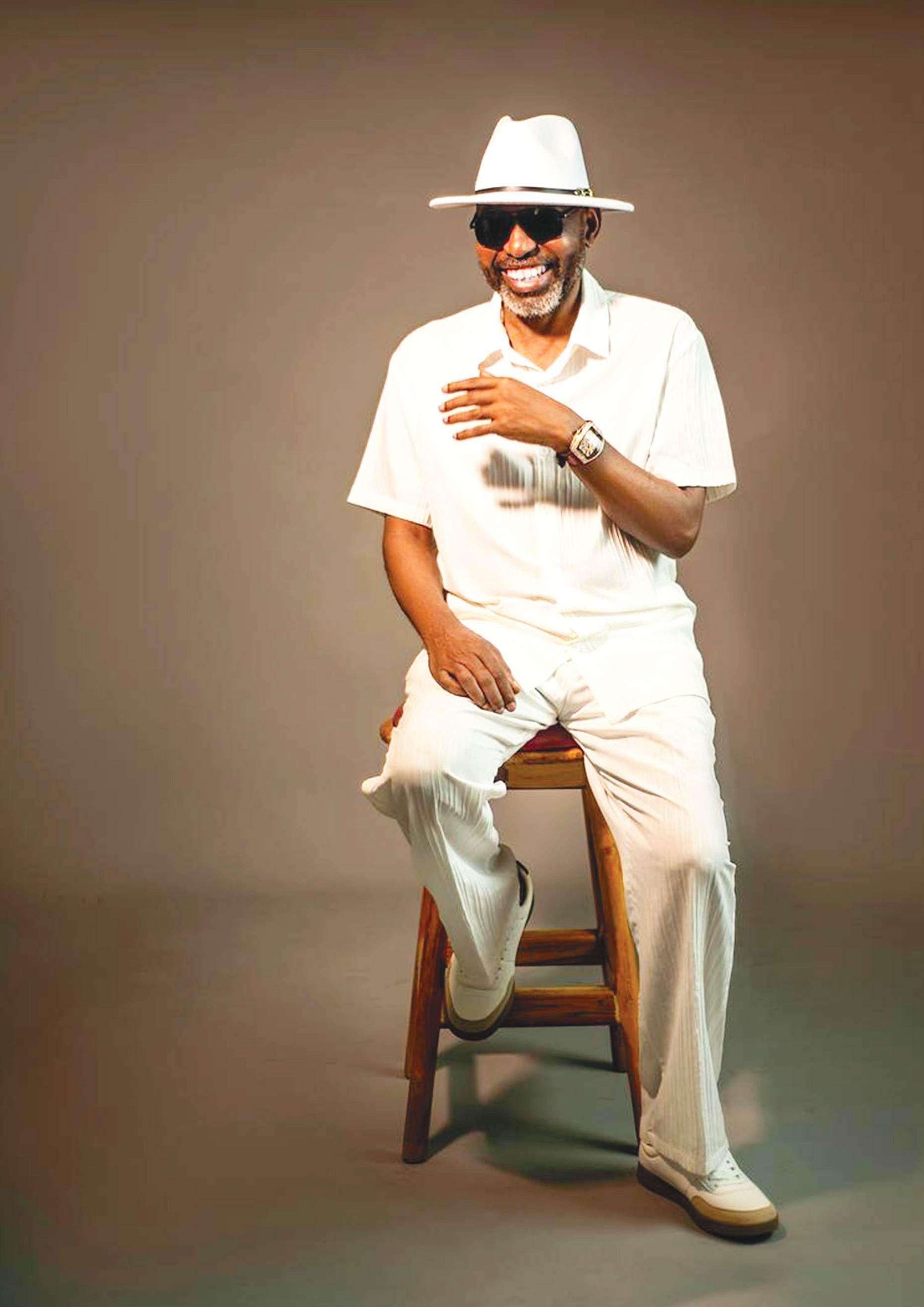



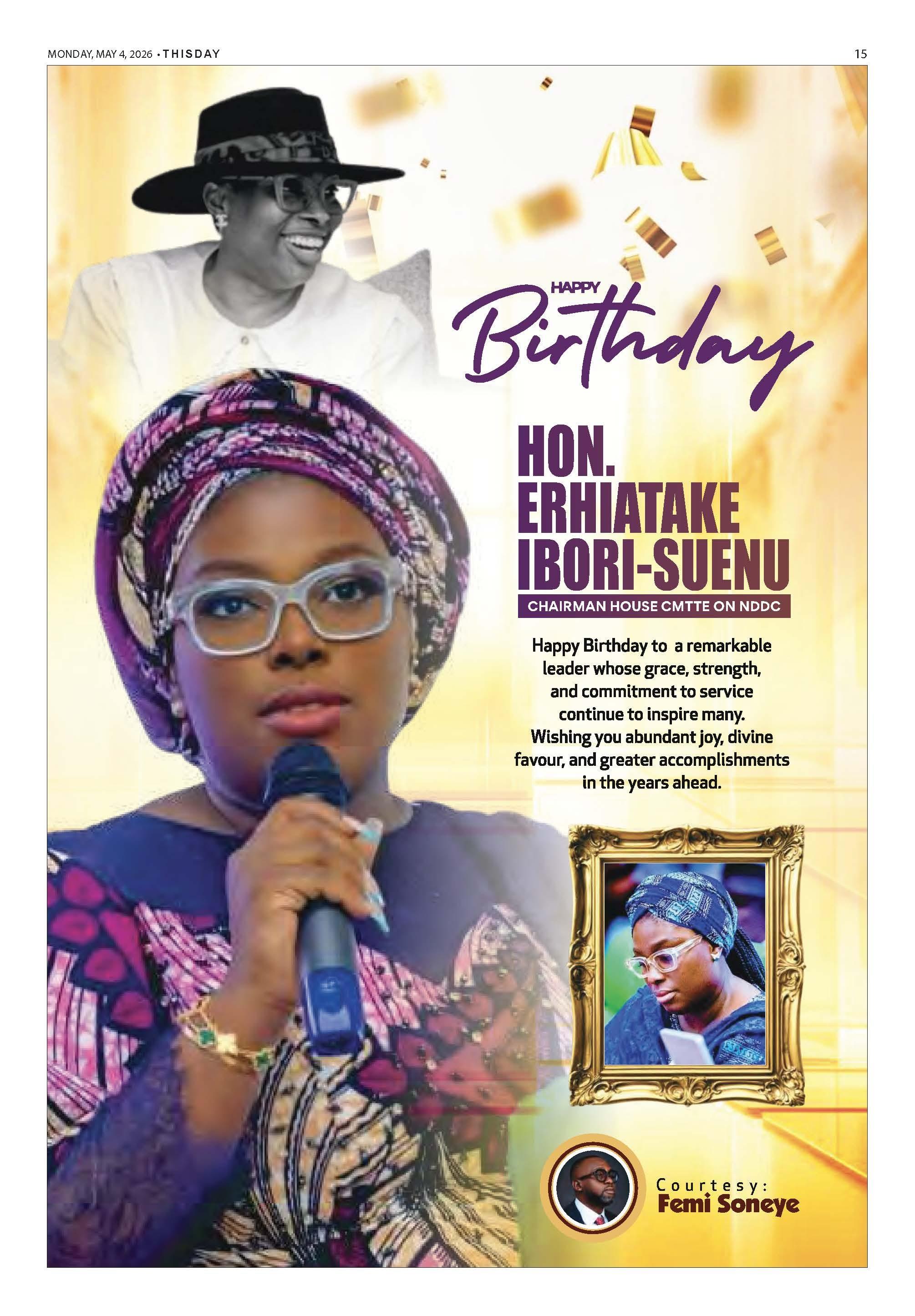
Today, we celebrate not just your birthday, but the incredible impacts you have made to humanity.
Happy birthday, Leader
Hon. Erhiatake

Chairman, House of Representatives Committee on Niger Delta Development Commission
Signed꞉

As S’Court Verdict Keeps ADC’s 2027 Hope Alive...
For teeming supporters of the african Democratic Congress, Thursday april 30, 2026 would remain a date to be cherished for a very long time when the Supreme Court came not just to their rescue but confirmed that the judiciary is indeed the last hope of the common man, writes Alex Enumah.
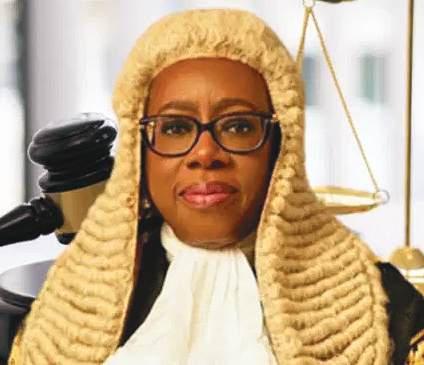
The courtroom of the Supreme Court was filled to the brim on Thursday April 30, with litigants, lawyers, observers as well as supporters of the African Democratic Congress (ADC), despite very strict security measures to curtail the number of persons gaining access into the courtroom. Immediately outside the courtroom, hundreds of ADC supporters who also besieged the headquarters of the apex court to witness what could be described as a make or mar verdict of the apex court stood patiently for hours, praying for a favourable decision.
Tension heightened for nearly two hours, especially when the apex court in a split judgment of three-to-two dismissed the appeal of the Tanimu Turaki-led faction of the Peoples Democratic Party (PDP), that had hoped to overturn the unfavourable judgment of the Court of Appeal and the Federal High Court judgments against the convention that produced their leadership.
However, relief and hope came the way of millions of supporters of the ADC immediately the apex court disagreed partly with the decision of the appellate court, and went further to clear the coast by setting aside the order that threatened the presence of the ADC in the 2027 general elections.
The apex court in the course of the delivery of its unanimous judgment declared, “...the order of status quo ante bellum” issued on March 12, 2026, by the Court of Appeal, Abuja, “was unnecessary, unwarranted and improper”.
Justice Mohammed Garba, who delivered the lead judgment held that the lower court was wrong to have raised the issue of a preservatory order “sou moto” (on its own, not requested by any party in the matter), and subsequently issued the status quo ante bellum order. While explaining that preservatory orders are usually issued by a court to avoid foisting a fait accompli on the court, or to protect the subject matter before a court, the apex court held that the trial court was still in control of the proceedings and as such the appellate court was out of place to issue any preservatory orders.
According to the judgment, the appellate court haven dismissed the issue of jurisdiction brought by the appellant and also ordered accelerated hearing of the suit at the trial court, ought to have ended the matter there.
“The directive made (status quo ante bellum) after striking out the appeal and issuing an accelerated hearing was unnecessary, unwarranted and improper”, Garba held, adding that, “it is hereby set aside”.
Meanwhile, the apex court stated that the appellate court was in order when it dismissed the appeal for being incompetent and ordered parties to return to the trial court for accelerated hearing. According to the apex court, the appellant at the lower court improperly raised the issue of jurisdiction which has not been determined at the trial court.
“The court below was right to hold that the appeal was incompetent...it also robs this court the jurisdiction to hear it”, Justice Garba held.
Haven resolved the first two issues against the appellant, the apex court subsequently made an order directing the return of the case back to the Federal High Court, for continuation of hearing. They predicated their decision on the grounds that the trial court neither granted nor refused the order of interlocutory injunction restraining INEC from recognizing the Mark leadership nor restrained them from parading themselves as leaders of the ADC, but held that the respondents should appear before the court to show cause why they should not be restrained.
The verdict no doubt brought great joy and fresh hope to the ADC and its million supporters across the country, especially when the Independent National Electoral Commission, within minutes
of the court judgment restored the names of the David Mark-led leadership on its official website and portal, as leaders of the ADC.
With the verdict of the apex court directing all parties back to the trial court, the Mark-led leadership can now conveniently submit their membership register to INEC, and organize primaries for the selection of their flag bearers in the 2027 general elections, while at the same time defend their leadership before the courts.
Recall that an aggrieved member of the ADC, Mr Nafiu Bala Gombe, had last year dragged the Mark-led leadership to court, accusing them of hijacking the party structure. Pending the hearing of his suit, the plaintiff filed a motion exparte, praying the court to restrain INEC from according recognition to the Mark-led ADC and another order restraining Mark and his executive members from parading themselves as leaders of the ADC.
However, the trial judge, Justice Emeka Nwite after hearing the applicant, who is a former Deputy National Chairman of ADC, and his lawyer, Michael Agber, on September 4, 2025, refused the three prayers sought in the ex-parte application. The judge rather directed the applicant to put all the defendants on notice to show cause why the motion should not be granted and adjourned the matter until September 15, 2025, for the defendants to show cause.
The defendants in the suit marked: FHC/ ABJ/CS/1819/2025, are the ADC; Interim National Chairman of the ADC, David Mark; Interim National Secretary, Rauf Aregbesola; INEC and former ADC national chairman, Chief Ralph Nwosu.
In the unanimous judgment delivered by Justice Mohammed Garba, the Supreme Court
The speedy hearing and determination of the appeals surrounding the leadership of the two major political parties has once again showed that the judiciary is not just the hope of the ordinary citizen but the bastion of democracy and is capable of providing stability in the polity if and when the need arises.
held that the appellate court was right when it dismissed the appeal of David Mark for lacking in merit and also ordered accelerated hearing at the trial court.
Garba however faulted the appellate court for going ahead to issue a preservative order, after striking out the appeal for being incompetent. Besides, the Supreme Court berated the appellate court for raising the issue of preserving the res (subject matter of the case) on its own (somoto) and then issuing an order directing parties to maintain status quo ante bellum.
Reacting, David Mark had approached the appellate court to challenge the jurisdiction of Nwite to entertain the suit by Gombe in the first place. While insisting that the trial court cannot entertain the suit by Gombe, for being an internal matter of the ADC, Mark also argued that the trial court became functus officio when he refused the grant of the restraining order against the Mark-led leadership.
But, the appellate court in its judgment last month dismissed Mark’s appeal and returned the case to the trial court for accelerated hearing. The appellate court in addition ordered all parties in the suit to maintain status quo ante bellum, pending the hearing and determination of the suit at the trial court.
Relying on the status quo ante bellum order, INEC subsequently de-recognized the Mark leadership as well as removed their names from its official website and portal.
Miffed by the de-recognition of its leadership, the ADC, had ran to the apex court to challenge the appellate court’s ruling and also filed a motion for the stay of the execution of the status quo ante bellum order. Besides, they urged for accelerated hearing in the matter.
But, the Supreme Court in its wisdom however ordered parties to file in all their processes and ordered accelerated hearing in the appeal. At the hearing on April 22, Mark’s lawyer, Jibrin Okutepa (SAN) had urged the apex court to allow the appeal, recalling that the apex court had in a March 21, 2025 judgment put an end to the issue before the court, when it held that, “no court has jurisdiction to entertain cases bordering on internal affairs of political parties”.
NOTE: Interested readers should continue in the online edition on www.thisdaylive.com
Mark Kekere-Ekun
AUDITED RESULTS FOR THE YEAR ENDED DECEMBER 31, 2025
The Board of Directors of Access Holdings Plc is pleased to announce the Group's audited results for the year ended 31 December 2025


FEaturEs Spotlight on CP Fatai's Crackdown on Crime in Lagos
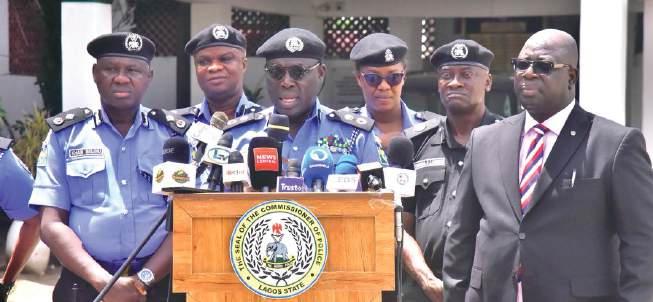
InApril2026,theLagosStatePoliceCommandintensifieditsoffensiveagainstcriminality,recordingawaveofarrestsandrecoveries across key flashpoints in the state. From dismantling street crime networks in Lekki to apprehending suspected kidnappers, cultists, and armed robbers in multiple locations, the operations reflected a strategy anchored on intelligence and rapid response. According to the state Commissioner of Police, CPTijani Olayiwola Fatai, the successes underscore the command’s commitment to protecting lives and property while sustaining public confidence in policing. Chiemelie Ezeobi reports
In a month defined by swift interventions, coordinated intelligence, and visible enforcement, the Lagos State Police Command rolled out what it describes as a decisive push against criminality across Nigeria’s busiest city.
From Lekki to Ikorodu, Festac to Lagos Island, the command’s operations in April 2026 paint a picture of a security architecture leaning heavily on intelligence-led policing and rapid response.
At the centre of this effort is the Commissioner of Police, Lagos State Command, CP Tijani Olayiwola Fatai, who is walking the talk in line with the pledge he made when he assumed office as the 42nd police helmsman in Lagos on March 26, 2026, to make the state increasingly hostile to criminal elements.
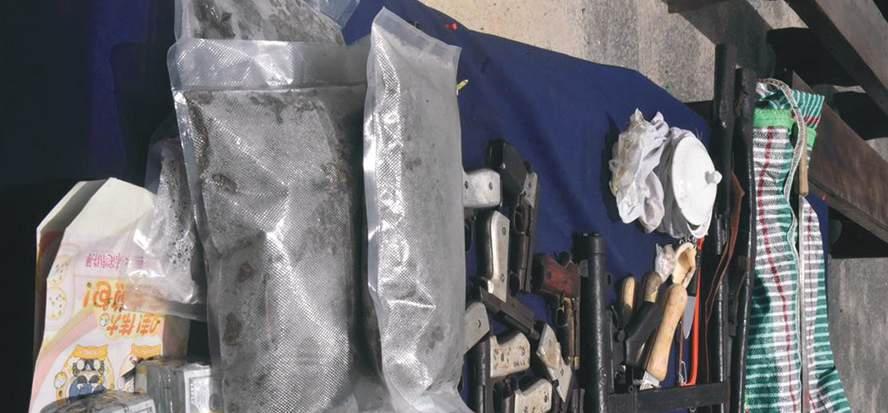
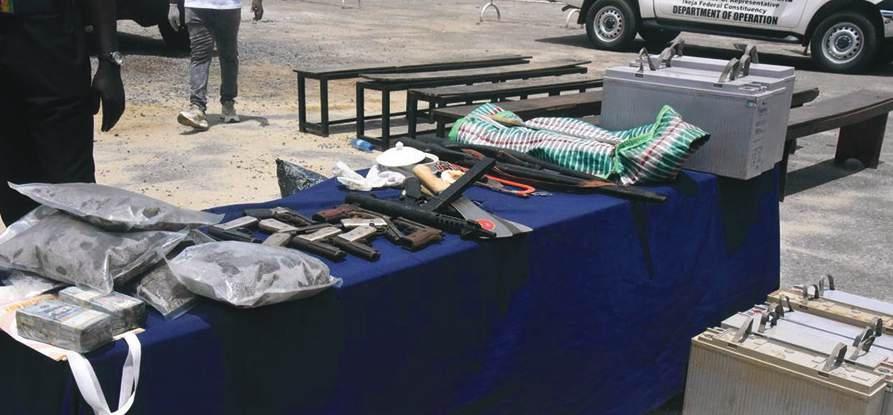
Within the period under review, the command recorded the arrest of 118 suspects and the recovery of a significant cache of weapons and illicit items, including eleven locally fabricated Baretta pistols, one English Baretta pistol, two dane guns, nine telecom power batteries, 21 bags of substances suspected to be Indian hemp, and assorted charms.
On these scorecard, CP Fatai said: "The Lagos State Police Command remains steadfast in its constitutional responsibility of protecting lives and property across the state through proactive policing, intelligence-led operations, strategic deployments, and swift response to criminal activities.
“These achievements further reaffirm our resolve to rid Lagos State of criminal elements and sustain peace, safety, and public confidence in policing."
Raid of Criminal Hideouts and Arrest of Street Urchins
One of the most sweeping operations of the month unfolded on April 27, 2026, across Ilasan, Lekki, and Maroko. Acting on coordinated intelligence, operatives arrested 58 suspects linked to street crimes, including traffic robbery and harassment of residents.
According to CP Fatai, the suspects were “alleged to have been responsible for phone snatching, armed attacks, and intimidation of innocent members of the public within the Lekki corridor.”
Various weapons used in perpetrating these crimes were recovered, with investigations ongoing ahead of prosecution.
Arrest of Suspected Kidnappers and Murderers
In Ikorodu, a separate intelligence-led operation led to the arrest of two suspects, Elijah Emmanuel, 23, and Tony Ekwane Oghanetega, 21, in connection with kidnapping and murder.
CP Fatai disclosed that preliminary investigations linked the suspects to the killing of 17-year-old Thomson Omokhafe Adams on April 22, 2026. He further revealed that “the suspects had earlier kidnapped and murdered a female victim on November 30, 2025, during which a ransom of ₦300,000 was paid by the victim’s family.”
The arrests, he noted, underscore the command’s commitment to tracking violent offenders across timelines.
Arrest of Serial Telecom Vandals and Recovery of Nine Power Batteries
The command also struck at economic sabotage with the arrest of a telecom vandalism syndicate responsible for large-scale infrastructure theft.
Following intelligence from Glo Nigeria regarding the theft of over 650 power assets, operatives arrested Orji Emeka in Ikeja. His confession led to the arrest of Obiagwu Kingsley in Alausa and Oluwatosin Sani
in Ikorodu.
CP Fatai confirmed that “nine telecom power batteries were recovered,” describing the operation as a critical disruption of a network undermining essential services.
Arrest of Eight Suspected Cultists
In the early hours of April 22, operatives conducted a targeted crackdown in Iwaya, resulting in the arrest of eight suspected cultists.
The commissioner stated that the suspects were “linked to ongoing unlawful society activities within the area,” adding that investigations are ongoing to apprehend fleeing members and uncover broader networks.
Arrest of Suspected Armed Robber and Recovery of Stolen Items
Swift police response was again on display on April 28 at Ayetoro Bus Stop, where a robbery incident involving three suspects on a motorcycle was reported.
Operatives moved quickly, leading to the arrest of Destiny Garuba, 25. CP Fatai noted that efforts are ongoing to apprehend the remaining suspects
involved in the attack.
Arrest of Suspected Armed Robbers and Cultists
A more complex case unfolded in Ilasan following the killing of Emmanuel Obioson on April 12. Detectives launched an intensive investigation that led to the arrest of five suspects linked to the crime.
The suspects, Promise Israel, Bright Aniedi, Fabulous John, Meshack Obili, and Owolabi Idris, were identified as members of the Aiye Confraternity, while the deceased was said to belong to the Eiye Confraternity.
“It was further discovered that one Lukman, currently at large, allegedly shot the deceased in the head, while another suspect, Aluge, used a stone to smash his head,” CP Fatai revealed, adding that efforts are ongoing to apprehend fleeing suspects.
Arrest of Suspected Cultists and Armed Robbers Operating across Lagos Island
On April 20, operatives arrested 20 suspects linked to cult-related violence and armed robbery across Lagos Island.
The suspects, believed to be members of the Aiye and Eiye confraternities, were connected to violent attacks recorded on April 10. CP Fatai confirmed that the case
will proceed to court upon conclusion of investigations.
Arrest of Suspected Armed Robber On Anthony Bridge
At Anthony Bridge, a suspected robbery attempt was foiled on April 22 with the arrest of 19-year-old Umar Muhammad Abubakar Sodiq.
He was found in possession of a cutlass, and further investigation led to the recovery of two locally fabricated Baretta pistols. “The suspect is in custody while investigation continues,” CP Fatai stated.
Arrest Of Suspected Cultists In Ajao Estate.
In Ajao Estate, a coordinated operation on April 19 led to the arrest of Emmanuel Ogbu, 38, and Obumneke Iromaka, 40.
During interrogation, Ogbu admitted to being an ex-convict previously jailed for cult-related offences in 2018 and confessed to returning to criminal activities after serving his sentence.
Arrest of Suspected Cultists and Street Miscreants – Festac Axis
In Festac, six suspects were arrested during a raid targeting cult-related violence in a hotel. Those arrested include Bashiru Ajibase, Covenant Edet, Jireh Essker, Akwuobi Emmanuel, Akingboju Opeyemi, and Dennis Omoniyi. CP Fatai disclosed that Omoniyi “confessed to belonging to a dreaded cult group operating within Festac and its environs.”
Arrest of Suspected Gun Runners and Recovery of Beretta Pistol
Efforts to curb the proliferation of firearms led to the arrest of Mustapha Mohammed and Sanusi Musa, both aged 20, for unlawful possession and attempted sale of a firearm. According to CP Fatai, “Mustapha Mohammed contacted Sanusi Musa to source for a buyer for the firearm,” leading to their arrest during the transaction. A Beretta pistol was recovered, while investigations continue to apprehend the alleged principal suspect, Umaru Naeem, said to be based in Kaduna.
Recovery of Firearms, Ammunition and Vehicles during Operational Activities
Beyond individual cases, the Command sustained a broader mop-up operation targeting illegal arms across Lagos.
CP Fatai stated that “Police operatives across various formations recorded notable successes through coordinated intelligenceled operations,” leading to the recovery of additional firearms and items linked to criminal activities.
“These recoveries further underscore the command’s proactive determination to rid Lagos State of illegal firearms, disrupt criminal networks, and enhance public safety."
A Renewed Assurance of Safety
While giving renewed assurance of safety, CP Fatai emphasised the importance of public cooperation in sustaining the momentum.
“This successful operation is a clear demonstration of the effectiveness of intelligence gathering and prompt police action. The command wishes to assure Lagosians that criminal elements will find no safe haven anywhere within the state.” He urged residents to continue providing timely and credible information, assuring that all suspects will be charged to court upon conclusion of investigations.
In a city where the rhythm of daily life rarely slows, April’s policing outcomes suggest a deliberate tightening of the net, one that the Lagos State Police command appears determined to sustain.
L-R: DCP Khan Salihu, DC Administration; ACP Aka Shittu; CP Fatai Tijani; Command PPRO, SP Abimbola Adebisi, ACP Ehindero Lawrence, AC Operations; and DCP Dayo Akinbisehin, DC SCID
Some of the illegal drugs, arms and ammunition recovered by the command
Kayode tokede
Following the reduction in the Monetary Policy Rate (MPR) to 26.50 per cent from 27 per cent by the Monetary Policy Committee (MPC) of the Central Bank of Nigeria (CBN), banks and merchant banks’ deposits with the CBN dropped by 28.4 per cent to N92.32 trillion in April 2026 as against N128.9 trillion in March 2026.
According to the CBN financial data, banks and merchant banks’ deposits in February 2026 stood at N61.11 trillion, a 16.18 per cent increase when compared
to N52.6 trillion deposited in January 2026. Banks deposit excess cash with CBN using the Standing Deposit Facility (SDF) window as it comes with attractive interest overnight, making it a preferred option for banks to earn risk-free returns.
According to analysts, the decision by banks and merchant banks to cut their deposits with the CBN can be attributed to the recent cut in the Monetary Policy Rate (MPR) to 26.50 per cent in February 2026 from 27 per cent 2025. Also, this was driven by
the lower opportunity cost of holding cash with the CBN compared to lending it out in the market.
The Monetary Policy Committee (MPC) of the CBN in February 2026 had retained the Standing Facilities Corridor around the MPR at +50/-450 basis points.
Analysts at Cordros Research in a report after the November 24-25 MPC meeting stated that by adjusting the asymmetric corridor to +50/-450 basis points (Previous: +250 basis points/-250 basis points) around the MPR indicates
a reduction in interest rates for the SLF and the SDF to 27.5 per cent (Previous: 29.5 per cent) and 22.5 per cent (Previous: 24.5 per cent), respectively.
“The adjustment is expected to ease monetary conditions and strengthen banks’ private sector credit expansion, ”they explained.
The analysts added, “Going into 2026, we expect inflation to continue easing as key drivers unwind, including sustained naira stability, better harvest outcomes and relatively stable petroleum prices. Nonetheless, in line with the
MPC’s price stability goal and given that inflation is likely to remain in double digits in 2026, we believe the pace of interest rate cuts will likely remain measured.”
THISDAY analysis of the CBN data showed that in the first four months of 2026, Nigerian banks and merchant banks have deposited an estimated N334.95 trillion, indicatingabout 14,802 per cent or N2.25 trillion Year-on-Year (YoY) increase.
Conversely, banks and merchant banks borrowed an estimated N2.2 trillion from CBN in the first four months of 2026, a 94.9 per
cent decline when compared to N43.42 trillion in the first four months of 2025. Nigerian banks and merchant banks borrowed from the CBN through its Standing Lending Facility (SLF) window when in need to meet critical overnight obligations.
With an estimated N334.95 trillion deposit in the first four months of 2026, analysts attributed the growth to high credit risk concerns and a preference for the safety of the regulator window rather than lending into the real sector.
A total of 25 listed companies on Nigerian Exchange Limited (NGX), led by MTN Nigeria Communications Plc, accounted for 89.96 per cent of the bourse’s total market capitalisation as of April 30, 2026, underlining the growing dominance of blue-chip stocks in the ongoing equity market rally.
Data compiled by THISDAY showed that the 25 firms jointly contributed N140.34 trillion to the NGX’s total market capitalisation of N155.99 trillion in the first four months of the year, as sustained bullish run in equities continued to deepen market concentration around the exchange’s largest and most liquid counters.
The Nigerian stock market
has gained significant momentum in 2026, buoyed by improving macroeconomic indicators, policy reforms, and stronger-than-expected corporate earnings, with total market capitalisation expanding by N56.6 trillion between January and April.
At the forefront of the rally is MTN Nigeria, which emerged as the most capitalised stock
on the exchange after its market value surged to N19.21 trillion at the close of trading in April.
The telecoms giant’s share price climbed from N511 at the end of 2025 to N915 per share by April 30, representing a 79.06 per cent appreciation and lifting its valuation from N10.73 trillion.
The rally followed
a dramatic earnings turnaround by the telecom operator, which posted N1.7 trillion profit before tax in 2025, reversing a N550.3 billion loss recorded in 2024, while revenue rose nearly 55 per cent to N5.2 trillion from N3.36 trillion.
Trailing MTN Nigeria on the market capitalisation ranking is BUA Foods Plc, valued at N17.41 trillion,
followed by Dangote Cement Plc at N16.37 trillion and BUA Cement Plc at N14.16 trillion.
Other heavyweight stocks include Airtel Africa Plc (N11.35 trillion); Aradel
Kayode tokede
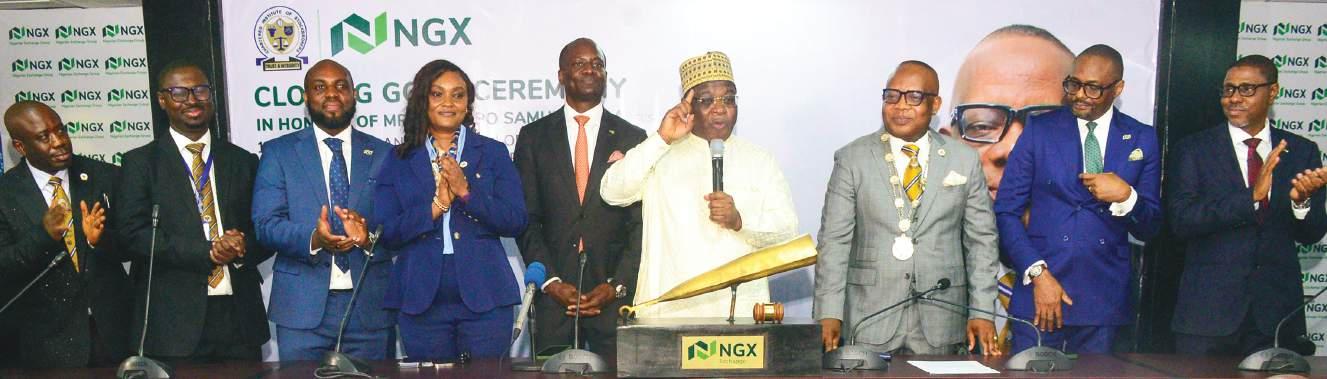
COB Maintains Downward Slide to N5.19tn, CIC Eases
Currency outside banks (COB) and currency in circulation (CIC) declined for the second consecutive month in February 2026, reinforcing early signs of a gradual return of liquidity into the formal financial system.
Latest data from the Central Bank of Nigeria (CBN) showed that COB moderated to N5.19 trillion in February 2026, down from N5.21 trillion in January and significantly below the N5.40 trillion recorded in December 2025, when cash levels peaked.
Similarly, CIC declined to N5.71 trillion in February, compared with N5.73 trillion in January, extending the easing trend after months of sustained expansion.
On a year-on-year basis, however, COB remains elevated relative to N4.51 trillion in February 2025, reflecting persistent structural demand for cash despite ongoing monetary tightening and policy efforts to deepen digital payments.
A broader look at the past 12 months underscores the persistence of high cash levels, even as recent data points to early moderation.
In February 2025, COB stood at N4.51 trillion, before rising steadily through the year amid inflationary pressures and increased cash demand. By mid-year, cash outside the banking system had crossed the N5 trillion threshold, reflecting both precautionary hoarding and transaction-driven demand in a high-cost environment.
The build-up intensified
in the final quarter of 2025, with COB reaching an alltime high of N5.40 trillion in December, driven by seasonal spending, liquidity injections, and limited trust in electronic
Emma Okonji
The Association of Telecommunications Companies of Nigeria (ATCON) has stressed the need for local content development in Nigeria in order to enhance sustainable growth.
Members were of the view that by empowering local Internet Service Providers
payment channels during peak transaction periods.
Since then, COB has edged lower declining to N5.21 trillion in January 2026 and further to N5.19
trillion in February marking the first sustained pullback in months.
A similar pattern is evident in CIC. From relatively lower levels in early 2025,
total currency in circulation expanded consistently through the year, mirroring both monetary growth and structural cash dependence in the economy.
Nume
Linkage Assurance Plc delivered a striking rebound in profitability in the first quarter of 2026, with earnings buoyed largely by a sharp expansion in investment income, even as underwriting performance showed only modest growth. The insurer’s unaudited results
for the period ended March 31, 2026, showed profit after tax surged by 748 per cent to N6.25 billion, from N736.3 million in the corresponding period of 2025. Profit before tax (PBT) rose in similar fashion, climbing 689 per cent to N6.57 billion, compared to N833.2 million a year earlier.
Group Business Editor
Eromosele Abiodun
Deputy Business Editor
Chinedu Eze
Comms/e-Business Editor Emma Okonji
Asst. Editor, Energy
Emmanuel Addeh
Asst. Editor, Money Market
Nume Ekeghe
Correspondents
KayodeTokede(CapitalMarkets)
James Emejo (Finance)
Ebere Nwoji (Insurance)
Reporter Peter Uzoho (Energy)
The standout highlight is the company’s profit after tax (PAT), which soared by 748 percent to N6.25 billion, up from N736.3 million in the corresponding period of 2025. Similarly, profit before tax (PBT) jumped by 689 percent to N6.57 billion, compared to N833.2 million a year earlier.
Commenting on the results, Daniel Braie, Managing Director/CEO of Linkage Assurance Plc, said the company is strategically positioned to deepen customer confidence through quality service delivery and prompt claims settlement.
“What we have promised as an insurer is to be there for our customers when they need us. That is why we prioritise claims and ensure they are delivered promptly,” he said.
(ISPs) and the Small and Medium Enterprises (SMEs), Nigeria could unlock her digital and economic future, while enabling industry sustainable growth across the country.
Speaking during the association’s Annual General Meeting (AGM), which was held in Lagos, the CEO, Broadbased Communications Limited,
Mr. Chidi Ibisi, said local content must be properly understood as a tool for economic growth rather than protectionism.
He explained that local content was about building capacity, strengthening participation, and ensuring sustainable development.
Ibisi noted that SMEs remained the backbone of modern economies,
accounting for over 98 per cent of businesses in Nigeria and contributing more than 50 per cent of GDP.
According to him, while foreign investment remains critical in capital-intensive sectors like telecoms, it must be deliberately tied to local participation, skill development, job creation, and retention of economic value within Nigeria.
Allied Firm Gets Shareholders Approval to Raise N50bn
Kayode Tokede
Zichis Agro Allied Industries Plc has obtained shareholders approval to raise N50 billion additional capital through debt finance or equity raising by public offers, rights issue or a combination of both.
The shareholders during the company’s 3rd Annual General Meeting (AGM) in Ogun State, also approved the management’s decision
Kayode Tokede
Access Holdings Plc and Coronation Group commemorated World Art Day through a landmark virtual session held in partnership with Tate Modern, one of the world’s leading cultural institutions.
to issue up to N5 billion debt finance by issuance of a commercial paper and acquiring 2,000 acres of land at a total cost of N5.5 billion.
In addition, a final dividend of N0.20 per ordinary share of 50kobo and a bonus issue of one ordinary share for every one existing shares held was approved by shareholders who attended the AGM.
Speaking at shareholders, the Chairman of Zichis Agro
The event, titled, “In Conversation with Osei Bonsu: Inside Nigerian Modernism,” spotlighted the global significance of Nigerian modernism and reinforced a shared commitment to democratising access to art.
Opening the session, Chief Communications
Allied, Mr. Hezekiah Adejoh noted that the dividend and bonus payout to shareholders aimed to enhance shareholders value, improve liquidity and reinforce investors confidence in the company’s long-term growth prospects
He expressed that the 2025 financial year was characterized by a challenging macroeconomic environment, with persistent inflationary pressures, foreign exchange
and Marketing Officer of Coronation Group, Ngozi Akinyele emphasised the enduring value of art in shaping society and identity: “We recognise that true wealth of a nation lies in three forms of capital- financial capital, cultural capital, and intellectual capital as championed by
volatility and rising operating costs impacting businesses across Nigeria and within the agro-industrial sector.
“These challenges were accompanied by opportunities driven by increasing demand for local production, heightened focus on food security, huge export gap to earn foreign currency and most importantly government support in boosting the agriculture sector,” he said.
Aig-Imoukhuede Chairman, Access
and
While financial capital builds prosperity, cultural and intellectual capital give that prosperity meaning. One strengthens institutions, while the other shapes identity and inspires dialogue.
SCAN Condoles with NPA Over Death of Photographer
The Shipping Correspondents Association of Nigeria (SCAN) has expressed deep sadness over the death of the Nigerian Ports Authority (NPA) official photographer, Paul Erakhifu, popularly known as “Texas.” SCAN extended its heartfelt condolences to the management and staff of the NPA, as well as the family
of the deceased, describing his passing as a painful and significant loss.
Erakhifu reportedly slumped and died on Friday, May 1, after attending a departmental strategic meeting of the NPA and later participating in an excursion in Lagos.
In a statement jointly signed by the President of SCAN,
Moses Ebosele, and Secretary, Shulammite Olowofoyeku, the association said it was shocked and saddened by the sudden passing of the veteran photographer.
The association described Erakhifu as a friendly personality who related well not only with colleagues in NPA but also with members
of the maritime media community.
“We were deeply saddened to hear about the demise of Paul Erakhifu. He was a fine, talented, and highly professional photographer who vividly showcased the activities of the Nigerian Ports Authority through his lens,” the statement said.
Aigboje
Holdings
Coronation Group.
Ekeghe
Nume Ekeghe
L-R: Registrar and Chief Executive, Chartered Institute of Stockbrokers (CIS), Ayorinde Adeonipekun, 2nd Vice President, Dr Akeem Oyewale; Chief Executive Officer, NGX Regulation, Olufemi Shobanjo; 1st Vice President, CIS, Fiona Ahimie; Group Chief Executive Officer, NGX Group Plc, Temi Popoola; Chairman, Umaru Kwairanga; 13th President and Chairman of Council, CIS, Oluropo Dada; Chief Executive Officer, Nigerian Exchange Limited (NGX), Jude Chiemeka and Managing Director, Central Securities Clearing System (CSCS) Plc, Shehu Shantali when the NGX honoured Dada in Lagos… recently
Al Hajeri: UAE–Nigeria Partnership Defined by Resilience and Shared Vision for Growth
In this interview, the Minister of State, United Arab Emirates, Saeed Al Hajeri speaks on UAENigeria trade, UAE’s economic linkages with Africa and why the war in the Middle East will not derail its strategic commitments and interests. Oluchi Chibuzor presents the excerpts
UAE-Nigeria trade has continued to expand, with non-oil trade reaching multi-billion-dollar levels in recent years. What has enabled the UAE to maintain such consistency and reliability as a trade partner? Also, in times of global uncertainty, supply chain disruptions are often inevitable. How have trade flows with Nigeria and West Africa been impacted by the conflict?
The UAE–Nigeria partnership is defined by resilience and a shared vision for growth. We see significant opportunities to deepen cooperation, particularly in infrastructure, logistics, energy, and other sectors that drive long-term economic development. This consistency is underpinned by the UAE’s globally connected economy and one of the world’s most competitive business environments, enabling us to navigate disruptions and safeguard both public and private sector investments.
External pressures will not alter this course. We have long prepared for scenarios such as this. Our infrastructure has been strengthened, alternative export routes – including pipelines bypassing the Strait – are in place, and supply chains remain fully operational. Strategic reserves are secured, our non-oil economy accounts for approximately 75 per cent of gross domestic products (GDP), and S&P has reaffirmed the UAE’s AA rating with a stable outlook.
As a result, trade flows with Nigeria and across West Africa have remained stable and uninterrupted, supported by reliable logistics, flexible supply chains, and strong connectivity through our ports and aviation networks. We remain closely engaged with regional developments. A ceasefire, on its own, is not enough. Any sustainable resolution to this war must address Iran’s full range of threats: its nuclear capabilities, ballistic missiles and drones, affiliated terrorist proxies, and the complete and unconditional reopening of the Strait of Hormuz.
This is critical, given the Strait’s central role in global trade and energy flows. A significant share of the world’s energy supplies transits through the Strait of Hormuz each day. Approximately 30 percent of fertilizers essential for global food production also move through this corridor. Around 25 percent of global gas flows originate from the Gulf, alongside nearly 70 percent of its petrochemical output, all passing through this critical route along with essential goods linking markets across continents. For many African economies that depend heavily on seaborne trade, disruptions quickly translate into higher costs, supply chain pressures, and increased economic uncertainty.
The international response has been unequivocal. UN Security Council
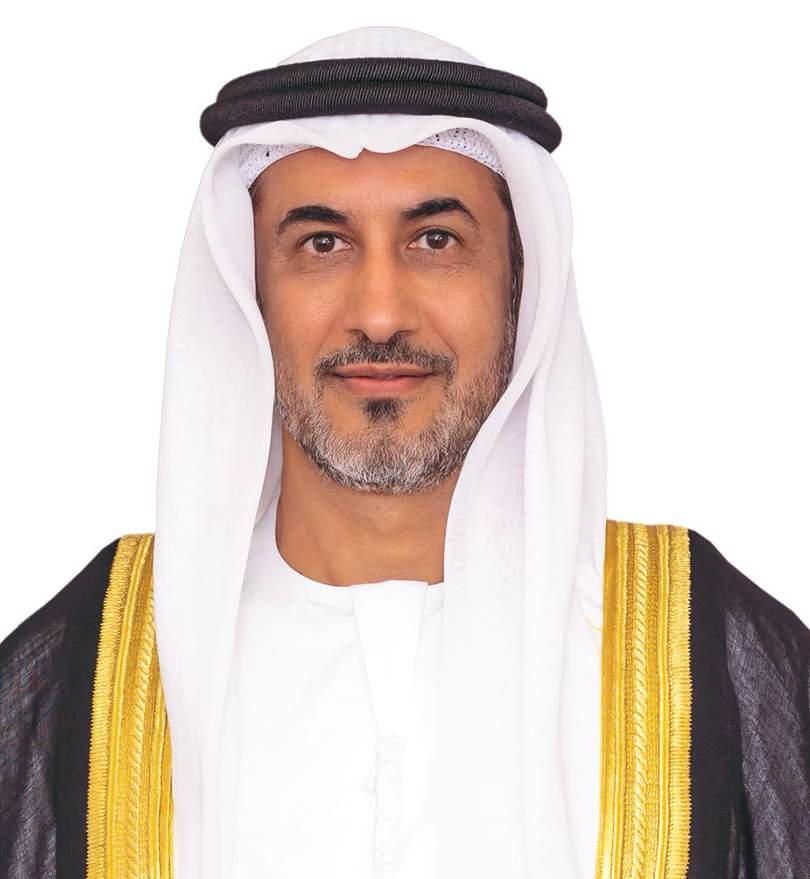
Resolution 2817, co-sponsored by 136 countries, condemned these unprovoked attacks in the strongest terms and demanded their immediate cessation. The International Maritime Organisation (IMO), backed by more than 115 Member States, likewise condemned threats to maritime security and underscored the imperative of preserving freedom of navigation in the Strait of Hormuz.
In addition, the UN Human Rights Council, in a resolution supported by over 100 states, called for full, effective, and prompt reparations to victims, including those affected by attacks on energy systems and essential services. The International Civil Aviation Organization has also warned that such actions pose a serious risk to international aviation safety. Taken together, these actions send a clear and unified message: the international community will not tolerate attacks on sovereignty, civilians, or critical infrastructure.
The UAE is an important investor in Nigeria and West Africa – will the UAE continue to invest in the country and continent? How is the UAE sustaining investor confidence and deepening its footprint in Nigeria despite broader regional headwinds?
The UAE’s ties with Africa go beyond geography – they are built
on deep historical, human, and cultural connections. Over time, these ties have grown into a strong partnership based on mutual trust, respect, and a shared vision for a more prosperous future for our peoples. Today, that partnership spans more than 50 African countries and extends across sustainable energy, food security, infrastructure, education, digital transformation, artificial intelligence, and healthcare – sectors that matter not only for economic growth, but for the daily lives and long-term resilience of our communities.
Despite more than 2,800 terrorist missile and drone attacks launched by Iran against the UAE, our economic fundamentals remain strong. Our non-oil sectors account for approximately 75 per cent of GDP, and sovereign wealth funds hold around $2.49 trillion in assets, providing a strong foundation for continued outward investment and reinforcing confidence among global partners. Daily life and economic activity continue uninterrupted. Hospitals remain fully operational; cargo continues to move through our ports; and flights continue to depart from our airports. Between 1 and 12 March 2026 alone, more than 1.4 million passengers passed through UAE airports.
The UAE’s economic linkages with Africa remain stronger than
ever. We are deepening investments that strengthen resilience, ensure food and energy security, and drive long-term growth across the continent. This trajectory is further reflected in the steady expansion of trade ties, particularly with key partners such as Nigeria, when non-oil trade has witnessed significant growth, from approximately $1.3 billion in 2020 to nearly $4.9 billion in 2025. These figures underscore not only the strength for our economic engagement, but also the growing diversification of UAE – Africa partnerships. Recent developments in our region underscore a broader challenge to what the UAE represents: a model of coexistence, tolerance, and economic openness that has shown that prosperity can take root even in a complex environment. It is this vision of stability and growth that is being tested.
With the recent momentum around trade agreements such as the Comprehensive Economic Partnership Agreement (CEPA) and initiatives like the UAE’s USD 1 billion AI for Development program targeting Africa, how do you see UAE–Nigeria partnerships evolving beyond trade into long-term economic transformation?
The UAE–Nigeria partnership is evolving beyond trade toward long-term economic transformation, driven by innovation, technology, and strategic investment, within a framework of cooperation that fosters mutual prosperity for our peoples. Over the past few years, we have concluded in a record time more than 35 Comprehensive Economic Partnership Agreements globally, including with ten key African economies.
These agreements go beyond trade – they create platforms for innovation, investment, and deeper economic integration. In parallel, through our USD 1 billion “AI for Development in Africa” initiative, launched at the G20 Summit in South Africa, we are investing in the technologies that will shape the future – supporting AI projects that boost economic and social development, strengthen digital ecosystems, and unlock new pathways for sustainable growth.
The UAE is clear: this war will not derail our strategic commitments and interests. Investments in infrastructure, renewable energy, logistics, and digital connectivity remain at the core of our shared vision for the Global South. The UAE reaffirms its commitment to being a reliable, long-term partner to Africa, through a framework of cooperation that fosters mutual prosperity. We are not simply extending a hand in partnership – we are building bridges to a shared future for generations to come.
Al Hajeri
Tax Ombud Urges Media to Educate Nigerians on Fiscal Reforms, Taxpayer Rights
Oluchi Chibuzor
The Tax Ombud/Chief Executive, Office of the Tax Ombud, Dr John Nwabueze, has underscored the role of the press in propagating the ongoing fiscal reforms by the administration of President Bola Ahmed Tinubu.
During a chat with newsmen in Lagos, he urged journalists to help educate the taxpaying public on the role of the Office of the Tax Ombud particularly regarding the process for filing complaints or grievances on tax matters and obtaining redress without costs.
For easy access to its services, Nwabueze said the Office is on the verge of unveiling its website and a toll-free call center.
Nwabueze said the office was founded as an independent, impartial body to protect taxpayer rights, resolve grievances, and promote fairness in tax administration.
LASAA Launches
He stressed that the creation of the Office offers a new pathway for Nigerians to participate actively and eagerly in the nation’s economic development.
According to the Tax Ombud, the establishment of the office demonstrates Nigeria’s commitment to a modern, people-focused tax system that balances domestic revenue needs with justice and due process.
This, he said, not only encourages voluntary compliance but also aligns with the broader reforms of President Tinubu’s Renewed Hope Agenda, which seeks to reposition taxation as a tool for inclusive development and shared national responsibility.
Noting that the tax system must be fair, responsive and just to be effective, Nwabueze explained that the Office of the Tax Ombud acts as a bridge between taxpayers and the tax and revenue authorities, providing accessible dispute-
resolution mechanisms essential to public trust and effective governance.
Nwabueze commended President Tinubu, for leading a transformative tax reforms that are rooted in fairness, inclusiveness, and sustainability for revenue growth and economic prosperity adding that at the core of the reforms” lies a renewed social contract – one in which taxpayers are not passive partakers, but active partners in nation-building”.
Further, the Tax Ombud acknowledged the Minister of Finance and Coordinating Minister of the Economy, Mr. Taiwo Oyedele for his leadership in the reform process.
Fielding questions, Dr Nwabueze explained that his office neither “determines tax liability, nor has it replaced the courts or the Tax Appeal Tribunal” but was rather established to ensure that tax administration is conducted in a fair, transparent, and accountable manner.
Digital Directory, Unveils App to Simplify Operations
Lagos State Signage and Advertisement Agency (LASAA) has launched a digital directory for practitioners and billboard assets, alongside the LASAA One App, to simplify advertising services in the State.
Speaking at the launch in Lagos, the Managing Director, Prince Fatiu Akiolu, said the initiative provides a digital backbone for the growing Out-ofHome (OOH) advertising sector.
“For years, the Outof-Home landscape has grown in scale and complexity. What we
introduce today is a digital backbone that brings structure to that growth,” he said.
Akiolu explained that the digital directory and the app translate regulation into a searchable and transparent system where practitioners can be clearly identified, assets verified, and engagement with the Agency made simpler and faster.
“It is a system where practitioners can be identified with clarity, where assets can be verified with confidence, and where engagement
with the Agency becomes simpler, faster, and smarter,” he said.
He noted that the directory serves as a credible register of practitioners and advertising assets across Lagos, while the app gives stakeholders access to LASAA’s services anytime and anywhere.
Also speaking, Head of Client Service and Registration, Mr. Temitope Akande, said the initiative was driven by the need for more precise, transparent and efficient regulation in a fast-growing megacity like Lagos.
Africa Prudential Launches Initiative to Transform Shareholders’ Experience
Africa Prudential Plc has unveiled Sabivest, a digital shareholder and investment management application designed to enhance access to investment opportunities and streamline portfolio management for investors.
The app was launched at a high-level event in Lagos on April 30, 2026, where key stakeholders in the financial services sector converged to examine evolving trends in Nigeria’s capital market.
Speaking at the unveiling, the Chairperson of Africa Prudential Plc, Mrs. Christabel Onyejekwe, described Sabivest as a strategic innovation aimed at delivering a unified investment experience for both
individual and institutional investors.
According to her, “Sabivest was developed to provide individuals and institutions with a unified ecosystem where they can seamlessly access, monitor, and grow diversified financial assets through a single interface. This milestone reinforces our position as a leader in driving innovation within the capital market.”
In her remarks, the Managing Director of the company, Dr. Catherine Nwosu, explained that the platform, which is currently available for download on iOS and Android platforms, was developed in response to persistent challenges confronting investors, particularly within emerging markets. She identified issues such as fragmented investment
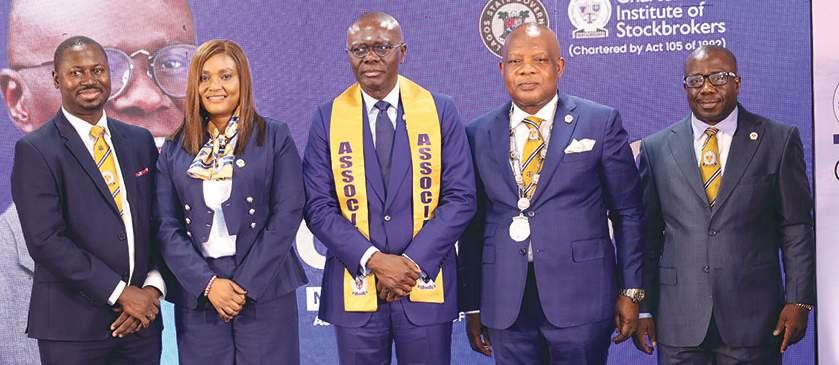
accounts, limited access to diverse financial instruments, inadequate portfolio visibility, and difficulties in tracking dividends and corporate actions as key pain points the solution seeks to address.
“Sabivest aggregates multiple investment products and services, enabling investors to maintain real-time visibility and control over their investments through a centralised dashboard,” she said.
Nwosu added that the application offers a suite of features, including consolidated portfolio views, real-time performance monitoring, asset allocation insights, electronic dividend management, and access to an interactive investment community.
L-R: 2nd Vice President, Chartered Institute of Stockbrokers (CIS), Dr Akeem Oyewale; 1st Vice President, Fiona Ahimie; Governor of Lagos State, Babajide Sanwo-Olu; 13th President and Chairman of Council, CIS, Oluropo Dada and Registrar and Chief Executive, Ayorinde Adeonipekun during the Induction of Governor Sanwo-Olu as Associate Member of CIS in Lagos…recently
The price of OPEC basket of twelve crudes stood at $63.14 a barrel on Monday, according to OPEC Secretariat calculations.
The OPEC Reference Basket of Crudes (ORB) is made up of the following: Saharan Blend (Algeria), Djeno (Congo), Zafiro (Equatorial Guinea), Rabi Light (Gabon), Iran Heavy (Islamic Republic of Iran), Basrah Medium (Iraq), Kuwait Export (Kuwait), Es Sider (Libya), Bonny Light (Nigeria), Arab Light (Saudi Arabia), Murban (UAE) and Merey (Venezuela). OPEC DAILY BASKET PRICE As At 24 t H n OV e M be R , 2025
2025FY: Shareholders Laud NGX Results, Urges Continued Focus on Growth
Kayode Tokede
The shareholders of Nigerian Exchange Group Plc (NGX Group), have commended the board and management for the group’s performance and strategic direction, urging continued focus on growth and long-term value creation.
At the Group’s 65th Annual General Meeting (AGM) held in Lagos, the shareholders
approved the audited financial statements for the year ended 31 December 2025, alongside key resolutions including a final dividend of N2.00 per share, a one-for-three bonus share issue, and the corresponding increase in share capital.
The shareholders acknowledged the group’s disciplined execution and its role in strengthening the Nigerian capital market, noting that recent developments reflect
a more structured and betterregulated market environment.
Speaking during the meeting, the President, New Dimension Shareholders Association, Patrick Ajudua, commended the leadership of the Group for delivering a strong financial outcome, noting that the results reflect both improved market conditions and deliberate strategic execution. “The numbers speak to a business
that is gaining strength and direction,” he said.
Similarly, the Chairman of the Progressive Shareholders Association of Nigeria, Boniface Okezie, lauded the Group’s commitment to innovation and infrastructure development. “The market is becoming more forwardlooking, supported by strong leadership at the Group level. Initiatives around market infrastructure and
participation are yielding results, and this is positive for investors,” he noted.
Commenting during the AGM, Chairman of NGX Group, Umaru Kwairanga, appreciated shareholders for their continued support and reaffirmed the Board’s commitment to sustainable value delivery. He said, “The progress recorded reflects the strength of the Group’s strategy and the
performance of its operating businesses. As a Board, our responsibility is to ensure disciplined oversight, uphold strong governance standards, and position NGX Group to deliver sustainable, long-term value to shareholders.”
The group managing director/chief executive officer, Mr. Temi Popoola, focused on execution priorities, noting that the Group is positioning for scale.
PRICES FOR SECURITIES TRADED AS OF APRIL 30/26
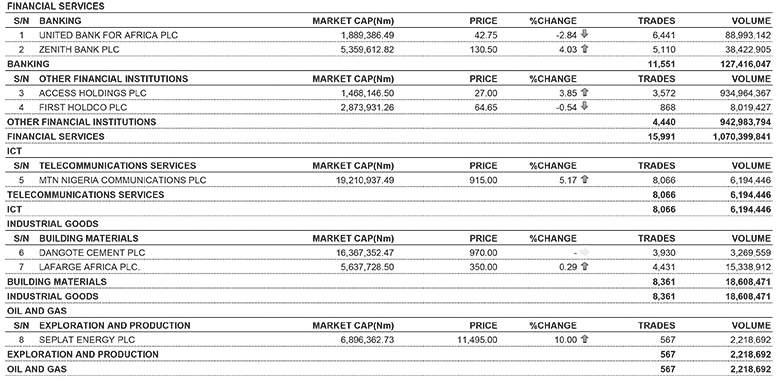
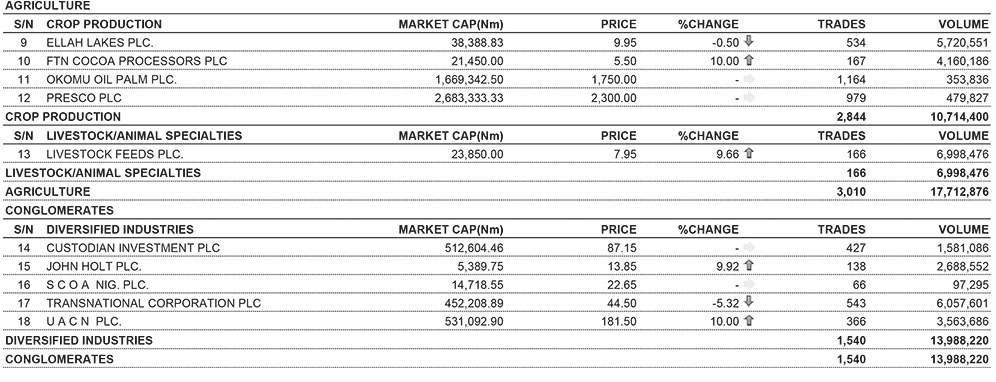
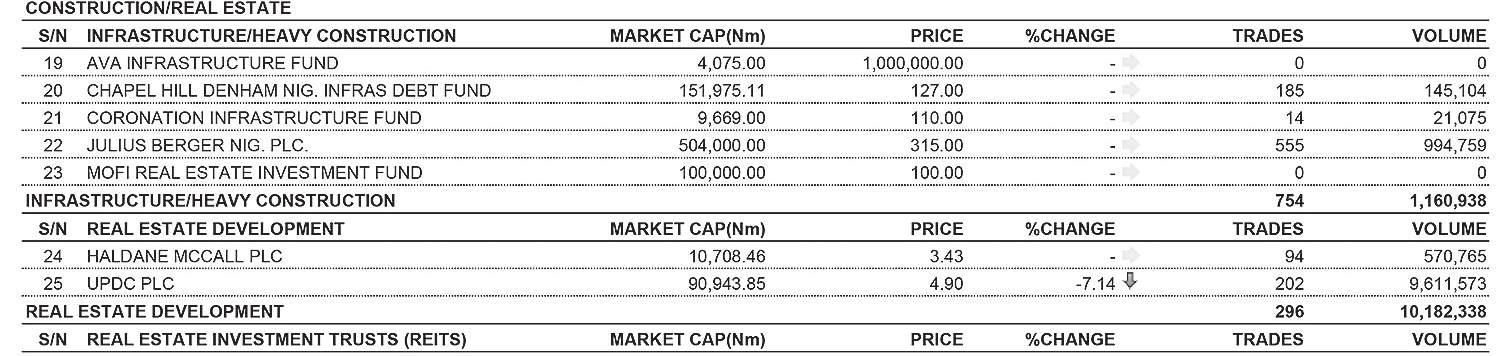
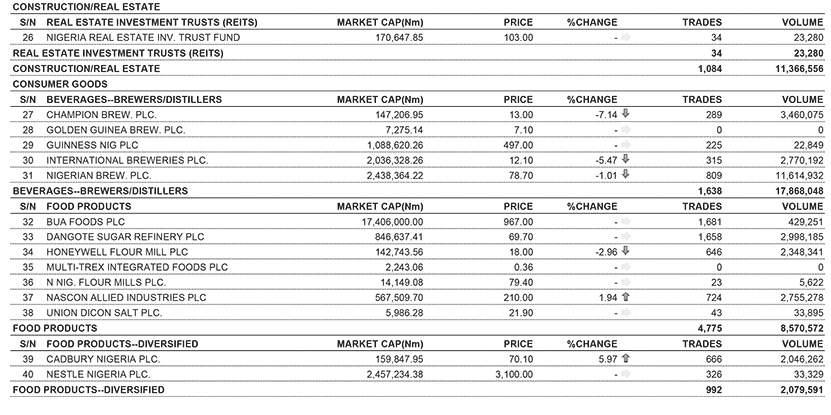
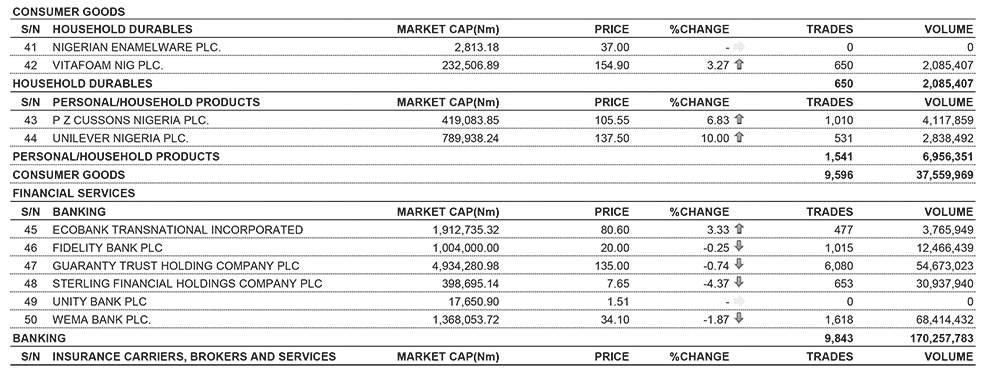
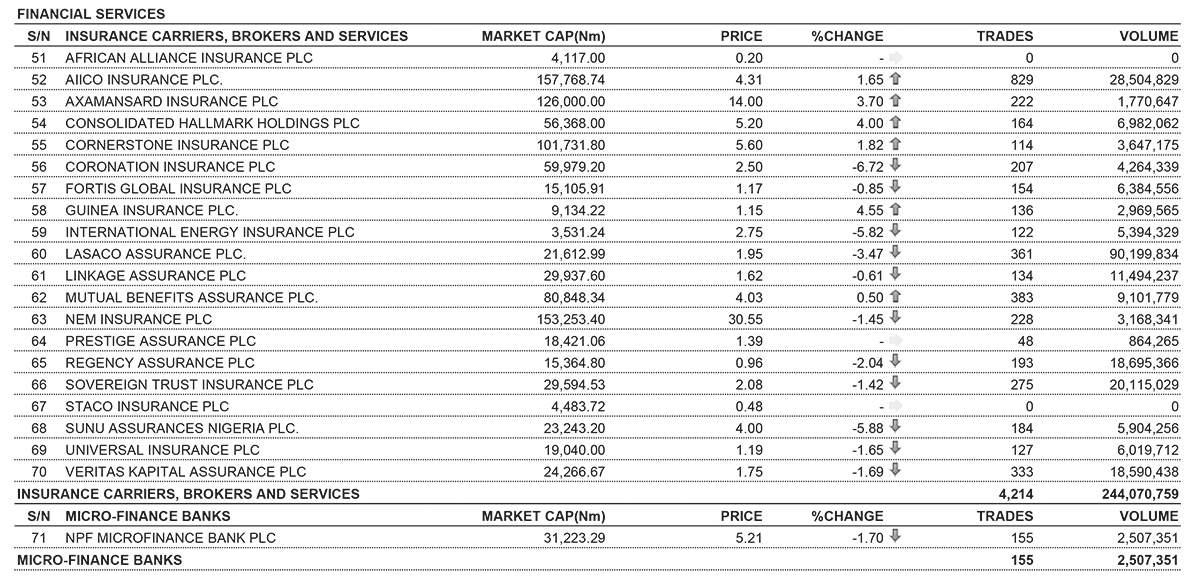

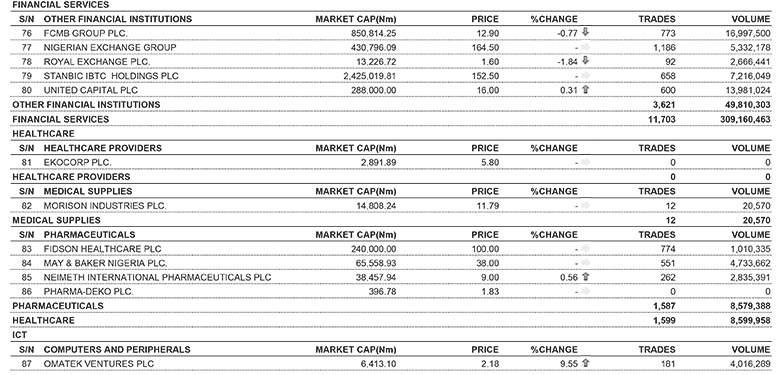
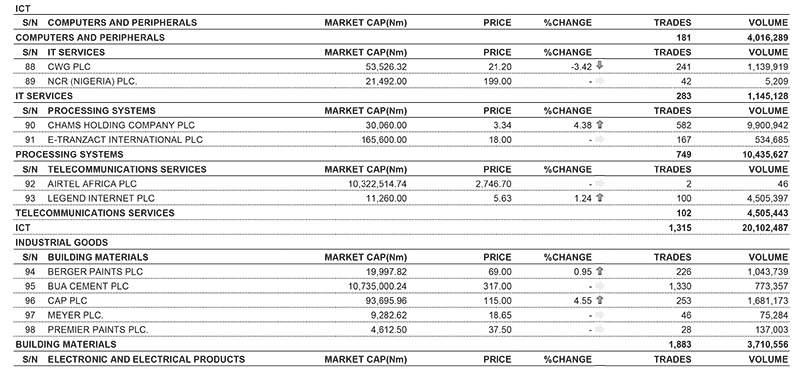
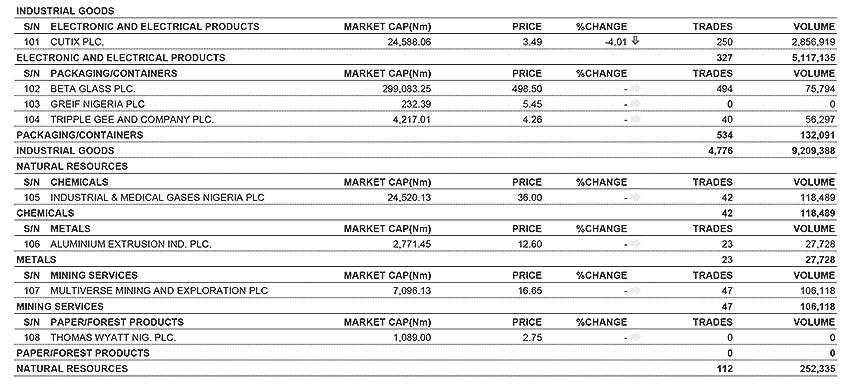
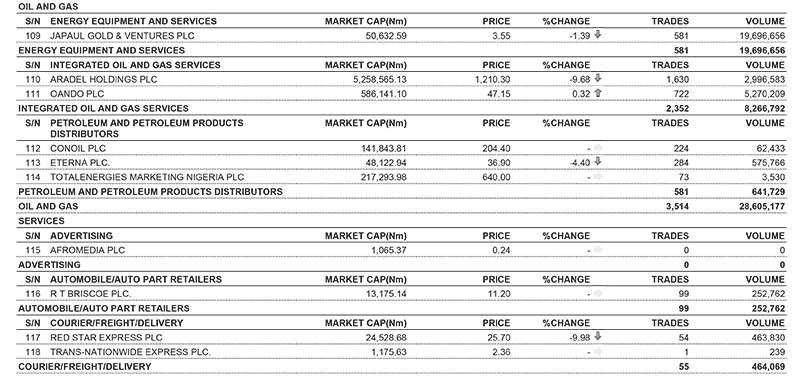
With Last Week’s Supreme Court Judgment PDP’s Participation in 2027 General Elections in Doubt FOCUS
Why Wike’s faction cannot celebrate
For the first time in 28 years, the Peoples Democratic Party (PDP), a one time ruling party and major opposition party may not be on the ballot, when Nigeria conducts her next general elections scheduled for early January 2027.
This is owing to last Thursday’s judgment of the Supreme Court which put to rest the leadership tussle in the party. The judgment which on one hand quashed the hope of the faction of the Oyo State Governor, Seyi Makinde, on the other, has put into jeopardy that of the faction of the Minister of the Federal Capital Territory (FCT), Nyesom Wike.
Following the judgment of the Court of Appeal which sacked the Tanimu Turaki-led faction of the PDP, the Wike group then went ahead to hold their own convention on March 28 and 29, the convention subsequently produced the Abdulrahman Mohammedled National Working Committee of the PDP. This faction had fixed the last week of May for the conduct of primaries for the selection of their presidential candidate as well as other elective offices.
But, all that seem to be fading away now immediately the Supreme Court dismissed the cross appeal filed by the faction. The cross appeal specifically set out to reverse the unanimous judgment of the Court of Appeal, which in March affirmed the suspension of the party’s Legal Adviser, Kamaldeen Ajibade, SAN. Unfortunately, both the majority and minority judgments of the Supreme Court in their separate judgments dismissed the cross appeal for “lacking in merit”.
Although the justices in their individual judgments did not go beyond stating that the cross appeal was dismissed for lacking merit, the implication of the dismissal of the cross appeal means that the judgment of the Court of Appeal having not been set aside or stayed remains valid and binding.
Recall that the appellate court in its March judgment voided the Ibadan convention that produced the Tanimu Turaki-led PDP, on grounds among others, that the convention was conducted in blatant disobedience of a valid order of the Federal High Court. Before the appellate court arrived at that position, it dismissed a preliminary objection brought by the Wike faction challenging the legality of Chief Chris Uche, SAN to file the appeal on behalf of the appellants; the Turaki-led faction. The three-member panel of justices of the Court of Appeal in their March judgment had held that Ajibade cannot legally represent the PDP in the matter because “As at December 10, when he filed the Notice of Appeal”, he was under suspension.
The Turaki faction had approached the appellate court to challenge the judgment of Justice James Omotosho of the Federal High Court, Abuja, which on October 31, 2025, restrained the PDP from proceeding with the convention slated for November 15 and 16, 2025, until it conducted proper congresses in areas congress was allegedly not held, as well as another judgment of Justice Peter Lifu, which on November 14, barred the PDP from conducting the said convention until an aspirant, the former governor of Jigawa State, Sule Lamido, was allowed to purchase nomination form and participate in the convention.
At the hearing of the appeal, Ajibade who was recognized by Justice Omotosho as the legal representative of the PDP at the trial court had objected to Chief Chris Uche, SAN representing the PDP, insisting he is the one clothe with legal authority to represent the PDP at the appeal.
However, his objection was dismissed on account of his suspension from the PDP. “By leave of this Court, the Appellant placed before the Court as fresh evidence the Notice evidencing the suspension of A.K. Ajibade, SAN as National Legal Adviser of the Appellant on November 1, 2025. That evidence was duly admitted pursuant to the principles governing reception of fresh evidence on appeal as restated by the Supreme Court.
“The legal effect of that fresh evidence is that, as at December 10, 2025 when Appeal No. CA/ ABJ/1728/2025 was purportedly filed by A.K. Ajibade, SAN, he had ceased to hold the office of National Legal Adviser of the Appellant. An agent whose authority has been lawfully terminated cannot bind the principal.
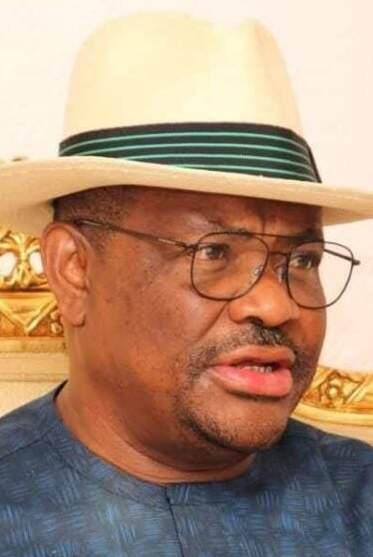
“Accordingly, any process filed in the name of the Appellant by a person who had ceased to possess the authority to act on its behalf is incompetent”, the appellate court had held.
Perhaps, sensing the danger posed by the verdict of the appellate court, the Wike faction filed a cross appeal seeking to overturn the decision of the appellate court voiding all processes filed and actions taken by Ajibade and by extension all those suspended alongside with him.
Delivering ruling in the cross appeal, both the majority and minority judgments held that, “The cross appeal is also lacking in merit and it is also dismissed”, thereby putting in jeopardy the fate of the Wike faction.
Recall that the Wike faction in its bid to prevent an alleged vacuum at the expiration of the tenure of the Ambassador Iliya Damagun-led PDP had inaugurated a national caretaker committee led by Abdulrahman Mohammed as chairman and Senator Samuel Anyanwu as Secretary.
Anyanwu as scribe of the PDP played a crucial and constitutional role in the appointment of Abdulrahman Mohammed as Acting National Chairman of a faction of the PDP, and was also a member of the National Caretaker Working Committee that organized the March 28 and 29 National Convention, that produced the current national officers of PDP, said to be loyal to the Minister of the Federal Capital Territory (FCT), Mr Nyesom Wike.
Specifically, Anyanwu had signed the letter to the Independent National Electoral Commission (INEC) appointing Abdulrahman Mohammed as acting National Chairman on November 3, 2025, while under suspension.
Therefore, going by the appellate court’s judgment which voided all actions taken by Ajibade under suspension, it implies that the inauguration of the caretaker committee as well as March convention in Abuja which produced the Mohammed-led leadership is a nullity because Anyanwu lacked the legal authority to undertake all those actions while his suspension subsists.
The Wike faction cannot be said to be unaware of the threat of the appellate court judgment on their legitimacy as well as their survival, as Anyanwu few weeks ago had approached the appellate court to also challenge the judgment of a High Court of the FCT, which affirmed his suspension and subsequent expulsion from the PDP.
The National Working Committee (NWC) of the PDP had on November 1, 2025, suspended Anyanwu as well as the faction’s National Legal Adviser, Kamaldeen Ajibade, National Organising Secretary, Bature Umar and National Auditor,
Okechukwu Osuoha from the party.
Anyanwu in the Notice of Appeal filed on April 10, 2026 by his lawyer, K. C. O. Njemanze, SAN, is praying the appellate court to set aside the judgment of the lower court and annul the recommended expulsion from the party.
In the nine grounds notice of appeal, Anyanwu argued that Justice Halilu erred in law when he held and declared that, “the plaintiff’s failure to exhaust the internal remedies provided by the PDP Constitution rendered his suit premature and incompetent, “and the jurisdiction of this court is thereby ousted”.
In another ground, the appellant submitted that the trial court erred when it when it held that the plaintiff’s claims do not fall within any recognized exception, adding that, “claimant invites the court to determine the propriety of acts undertaken by an organ of a political party pursuant to its constitution. This court cannot do that”.
Amongst the reliefs sought include an order allowing the appeal, set aside the order of the lower court striking out plaintiff’s suit and, “to enter judgment in favour of the appellant”.
Recall that the Chief Ikimi seven-member Committee had on March 10, 2025 recommended the expulsion of Senator Anyanwu from the PDP for anti-party activities following findings arising from petitions by some party members. The NDC Report indicated that Anyanwu declined to appear before the committee to defend himself against anti-party activities.
Displeased, Anyanwu had instituted legal action against the NDC and the former NWC led by Ambassador Iliya Umar Damagun at the High Court of the Federal Capital Territory, Abuja.
In the suit marked: CV/1050/2025, Anyanwu had prayed the court to set aside the findings, decision and recommendation of the Committee on the ground that it lacked competence to determine allegations made against him.
He further urged the court to invalidate the decision of the committee claiming that it constituted a violation of his fundamental right to fair hearing under the constitution of the PDP.
But, the court in its verdict dismissed the case for want of jurisdiction on the grounds that Anyanwu’s claims are non-justiciable intra-party disputes while also affirming that they lacked merit.
The judge held that, “a careful examination of the Originating Summons, the affidavit in support thereof and the documentary exhibits relied upon by the Plaintiff shows that the Plaintiff failed to establish any basis upon which this Court can interfere with the disciplinary proceedings of the 2nd defendant.
“The evidence before the court discloses that the Plaintiff was duly invited to appear before the National Disciplinary Committee of the 2nd defendant but failed to take advantage of the opportunities afforded him. It is settled in law that a party who deliberately refuses or neglects to utilise an opportunity to be heard cannot subsequently complain of denial of fair hearing.
“Furthermore, the plaintiff did not demonstrate that the National Disciplinary Committee acted outside the powers conferred on it by the Constitution of the 2nd Defendant nor did he show that the procedures adopted was fundamentally defective or in breach of natural justice. Courts do not act as appellate bodies over the internal disciplinary mechanism of voluntary associations, once the procedure adopted substantially complies with the rules governing such bodies.
“The plaintiff, having alleged illegality, bias and unconstitutionally failed to place sufficient material before this court to justify the extraordinary intervention of the Court in the internal affairs of the 2nd defendant” the Court held.
Meanwhile the Turaki faction of the PDP has commenced move to sack the Mohammed-led faction on grounds of the alleged illegal actions by Anyanwu. The faction had in a letter dated April 16, 2026, called for the immediate withdrawal
of recognition of Anyanwu as both a member and National Secretary of the PDP.
The letter which was addressed to the chairman of INEC, Prof Amupitan, cited the January 12, 2026, judgment of the FCT High Court, delivered by Justice Halilu in Suit No. FCT/HC/CV/1050/2025, which dismissed Anyanwu’s case and upheld his expulsion from the PDP.
In the letter by the PDP’s lawyer, Abdullahi Ibrahim, SAN, the Turaki faction claimed that Anyanwu lost his membership from the date of his expulsion and therefore lacks the legal authority to act on behalf of the party in any capacity.
“Senator Samuel Anyanwu has ceased to be a member and officer of the Peoples Democratic Party and has no competence to act on behalf of the party in any capacity whatsoever since his expulsion…
“By implication, the judgment dismissing his case remains subsisting and in force, and the commission has a constitutional obligation to enforce, comply with, and implement the judgment”, the letter read, observing that the electoral body does not need the prompting of the PDP, to act.
Not satisfied, the Turaki faction on April 20, approached the FCT High Court, for the issuance of Form 48 (Notice of Consequences of Disobedience of Court Order) against Anyanwu and INEC’s boss. The motion warned the defendants that they risk imprisonment if they fail to comply with the January 12, 2026, judgment of the court which dismissed Anyanwu’s suit against his expulsion from the PDP.
The motion reads, “Take notice that unless you stop further disobedience and comply forthwith/obey the judgment/order of the High Court of the Federal Capital Territory, Abuja, made on January 12, 2026, which dismissed the suit of Anyanwu challenging his expulsion from the Peoples Democratic Party, you will be guilty of contempt and you will be liable to be committed to prison.”
The move was similar to that of former Abia State governor, Orji Uzor Kalu. Recall that the Supreme Court had on May 8, 2020, nullified the trial of Kalu, and others, who were in December 2019, convicted and sentenced for a N7.1billion fraud. Kalu was not a party to the appeal at the apex court which voided their conviction but, benefitted from the apex court verdict after he applied for an enforcement of the judgment of the apex court.
Despite the judgment of the Supreme Court which nullified the conviction of Kalu, his firm and his then commissioner of finance, the authorities of the correctional service refused to release him, until his lawyer approached the Federal High Court, Lagos to order his release from custody.
The Turaki faction has already taken necessary steps to void all actions taken by Anyanwu under suspension. In the event INEC concedes, then that is the end of the road for the Wike faction, especially since the apex court dismissed the cross appeal voiding all processes and actions taken by Ajibade under suspension.
Although, the Board of Trustees (BOT) of the PDP under Adolphus Wabara had assumed leadership of the PDP, to avoid leadership vacuum, however, wether their leadership would be recognized by INEC is one thing, and wether the BOT would be able to put in place a caretaker committee that would be able to conduct congresses and convention as well as primary within the timeframe of INEC is another thing entirely.
A five-member panel of justices of the apex on Thursday April 30, dealt a deadly blow to the hope and aspirations of the PDP in respect of the 2027 general elections. The verdict which automatically marked the end of the road for Governor Seyi Makinde of Oyo State and has faction of the PDP, also jeopardize the chances of the Wike faction.
The apex court in a split judgment of three-to-two in the main appeal, voided the convention that produced the Tanimu Turaki-led faction on the grounds that it was conducted in blatant disobedience of a valid court order. The court similarly threw out the cross appeal by Wike faction, for lacking in merit.
Alex Enumah in Abuja
Wike
DEEPENING COOPERATION TO JOINTLY PROMOTE WEST AFRICA’S DEVELOPMENT:
Writing a New Chapter in China-ECOWAS Relations PERSPECTIVE
By Yu Dunhai, Chinese Ambassador to Nigeria and to ECOWAS
On April 28, 2026, the China-aid ECOWAS Headquarters Building was officially handed over. This magnificent modern building, known as the “Eye of West Africa,” is the second international organization office facility built by China in Africa after the African Union Conference Center and Office Complex.
As Chinese Ambassador to Nigeria and to ECOWAS, I had the honor and privilege of handing over the commemorative key of the building to H.E. Dr. Omar Alieu Touray, President of the ECOWAS Commission, personally witnessing this important moment that will be forever recorded in the history of friendly cooperation between China and ECOWAS.
Since the formal establishment of relations in the 1990s, China and ECOWAS have upheld the principles of mutual respect, equality, mutual benefit, and win-win cooperation. We have deepened political mutual trust, strengthened practical cooperation, expanded cooperation in peace and security, and intensified people-to-people exchanges, actively building a strategic partnership that has become a model of South-South cooperation. Looking back over more than half a century of standing together through thick and thin, the profound friendship between China and ECOWAS remains as fresh as ever and continues to thrive with strong vitality.
Political mutual trust forms the important foundation for the healthy development of China-ECOWAS relations. China respects ECOWAS’s independently chosen path of development and supports ECOWAS in playing a leading role in West African affairs. In 2003, the Chinese government formally appointed a representative to ECOWAS, concurrently served by the Chinese Ambassador to Nigeria, opening a new chapter in China-ECOWAS relations. High-level interactions between the two sides are frequent. We maintain close coordination within multilateral frameworks such as the Forum on China-Africa Cooperation (FOCAC) and the African Union, and hold similar positions on issues including climate change, food security, and global governance reform. China has repeatedly reaffirmed its support for ECOWAS in advancing the regional integration process, respects the right of regional countries to independently resolve their internal affairs, and opposes external interference in West Africa’s internal affairs. ECOWAS and its member states firmly adhere to the one-China principle and have provided strong support to China on issues regarding its core interests and major concerns.
Practical cooperation serves as the core driving force for upgrading the quality and efficiency of China-ECOWAS relations. Leveraging the FOCAC and the Belt and Road Initiative, bilateral cooperation has extended from traditional infrastructure such as roads and ports to new areas including the digital economy, green energy, and modern agriculture, with outcomes benefiting thousands of
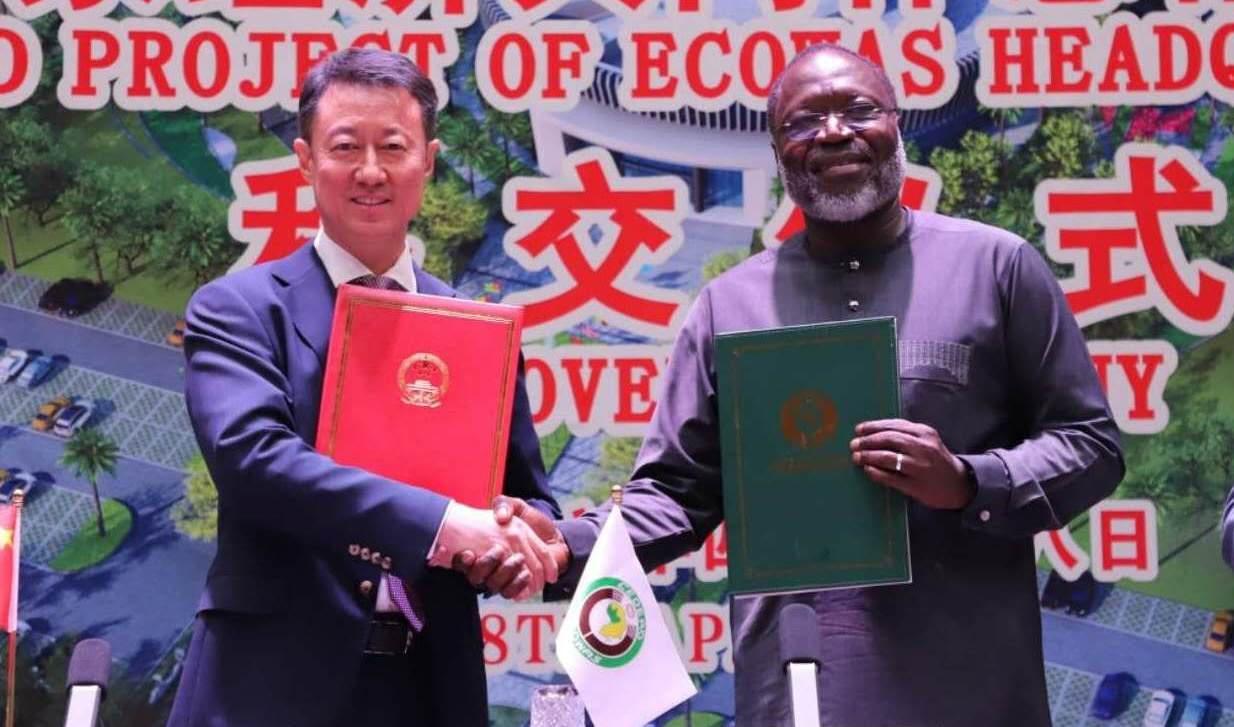
households across West Africa. China has announced that starting from May 1 this year, it will fully implement zero-tariff treatment for 53 African countries with diplomatic relations with China, significantly lowering the threshold for West African products to enter the Chinese market. Chinese agricultural experts have taken root in West Africa, promoting high-yield crop cultivation techniques and water-saving irrigation models to help the region enhance its food self-sufficiency. Through technical training, capacity building, and material assistance, China supports ECOWAS in improving its integrated governance capabilities in areas such as public administration, customs supervision, and disaster response, injecting strong momentum into regional sustainable development. Cooperation in peace and security is an important guarantee for the steady and long-term development of China-ECOWAS relations.
ECOWAS plays a key role in regional peacekeeping, stability maintenance, and crisis mediation. China consistently upholds the common, comprehensive, cooperative, and sustainable security concept and actively supports ECOWAS in enhancing its independent security capabilities. Since the 1990s, China has participated in United Nations peacekeeping operations in West African countries such as Liberia, Sierra Leone, and Côte d’Ivoire, making important contributions to the restoration of peace and stability in the region. China actively supports ECOWAS in building capacity for counter-terrorism, stability maintenance, border control, and humanitarian assistance, helping the region address security risks at their root. China advocates that development is the fundamental solution to security issues.
By promoting economic cooperation and improving people’s livelihoods and employment, China helps lay a solid social foundation for long-term peace and stability in West Africa, achieving a virtuous cycle between security and development. People-to-people exchanges serve as a bridge connecting the hearts and minds of China and ECOWAS.
Exchanges in education, culture, tourism, media, youth, and other fields between the two sides have become increasingly close. China continues to provide government scholarships to ECOWAS member states, training a large number of localized talents for West Africa. Every year, hundreds of West African youth travel to China to pursue further studies in fields such as engineering and technology, medical and health sciences, agricultural science and technology, and public administration. Chinese medical teams have long been stationed in West Africa, carrying out disease prevention and treatment, medical training, and emergency rescue. They have fought side by side with the West African people in combating public health emergencies such as the Ebola epidemic and COVID-19. Activities such as mutual visits by cultural groups, art exhibitions, and film and television exchanges have enhanced mutual understanding, with China’s intangible cultural heritage and West Africa’s traditional music and dance complementing each other brilliantly.
Against the backdrop of a turbulent international situation and the accelerated advancement of African integration, China-ECOWAS relations are ushering in broader prospects for development. China is ready to work with ECOWAS to seize development opportunities, tackle common challenges, and push
bilateral cooperation to a new level in the following four aspects:
First, we will continue to deepen political mutual trust, maintain regular communication at all levels, improve institutionalized cooperation platforms, strengthen coordination and collaboration in multilateral affairs, and jointly safeguard the common interests of developing countries.
Second, we will promote the quality upgrading of practical cooperation, strengthen the alignment between China’s 15th Five-Year Plan and ECOWAS’s Vision 2050, fully release the benefits of zerotariff treatment, and promote industrial upgrading and economic diversification in West Africa.
Third, we will jointly safeguard regional peace and stability, strengthen cooperation in non-traditional security fields, pursue security through development and ensure development through stability, and help West Africa achieve lasting peace and security.
Fourth, we will cultivate deeper roots of people-to-people friendship, take the opportunity of successfully hosting this year’s “China-Africa Year of People to People Exchanges” to expand in-depth exchanges in the humanities field and enhance mutual understanding and affinity between the peoples of the two sides. Deep roots lead to lush fruits; fertile soil produces brilliance. The friendly cooperation between China and ECOWAS has been tempered by time and its foundation has become ever more solid. Looking ahead, the tree of China-West Africa friendship will surely grow with luxuriant branches and leaves, bearing abundant fruits. I firmly believe that the new chapter in China-ECOWAS relations that we jointly write will make even greater contributions to building a closer China-Africa community with a shared future and to promoting development and prosperity in West Africa and across the entire African continent.
L-R: The Chinese Ambassador to Nigeria, Yu Dunhai with the ECOWAS President, Dr. Alieu Omar Touray at the recently handing over of the newly constructed ECOWAS Headquarters in Abuja, built and donated by the Chinese Government

LEADERSHIP IN TIMES
OF CRISIS
In the face of rising insecurity, President Tinubu is leading from the front, argues USMAN OLOWOLAYEMO
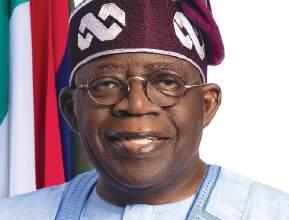
THE VALUE OF NRS HEADQUARTERS ARABINRIN
ADERONKE argues the edifice is a tool for efficiency, coordination, and accountability
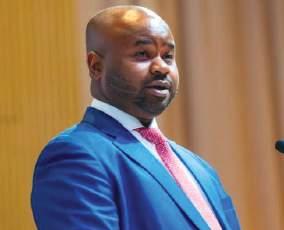
A defined portion of the oil windfall should be allocated to a Niger Delta Restoration and Development Fund, contend RICK STEINER & FAMOUS OBEBI FAMOUS
WHEN OIL PRICES RISE, THE NIGER DELTA PAYS
War raises the price of oil. It always has. It always will.
Today, tensions involving Iran, United States and Israel have pushed global oil prices sharply upward. In Nigeria, from a 2026 benchmark of about $60 per barrel, prices have spiked with Bonny Light reportedly selling for $113. For oilproducing nations, this is a windfall. For Nigeria, it is more than that. It is a test of leadership. The question is simple. Who benefits from this windfall?
For decades, Nigeria has lived off oil. Yet the region that produces this wealth, the Niger Delta, remains one of the most degraded environments in the world. Oil spills. Gas flaring. Dead rivers. Polluted farmlands. Broken livelihoods. This is not new. What is, perhaps, new is the opportunity now before the country.
Nigeria is earning more from oil today than it planned for in its 2026 budget. That excess revenue is not accidental. It is the direct result of global conflict. It is, in every sense, unearned profit. The economic term is clear: windfall.
The moral question is even clearer. Should this windfall be treated as routine income? Or should it be used to correct a historic injustice?
Understanding the Windfall: Nigeria operates a benchmark oil price in its budget. Any revenue earned above that benchmark is meant to be saved in the Excess Crude Account. This mechanism was designed to protect the economy from volatility and to build reserves in times of high prices. The logic is sound. But sadly, the execution has been weak.
At the same time, oil companies operating in Nigeria pay taxes, including Petroleum Profits Tax, which flows into the Federation Account through the Central Bank of Nigeria. When oil prices rise, company profits rise. Government revenue rises too. In moments like this, there are, therefore, two streams of gain: Increased government earnings from higher oil prices and Increased profits by oil companies operating in Nigeria. Both are tied directly to the same event: a global crisis.

Yet there is no clear policy directing how this extra money should be used. It simply dissolves into the general pool of public finance. Shared. Spent. Forgotten. That is the problem.
A Region That Paid the Price: The Niger Delta has carried the burden of Nigeria’s oil economy for close to seventy years. Since oil was first discovered in commercial quantities in 1956, the region has endured continuous environmental damage. The scale is staggering. The Seventh decade should be a time of freedom. Even the Holy Book says slaves should be set free by the seventh year.

The United Nations Environment Programme report on Ogoniland remains one of the most detailed environmental assessments ever conducted. It found widespread contamination of soil and groundwater. It estimated that full restoration could take up to 30 years.
That is one part of the Niger Delta.
The challenge across the wider region is far greater. Independent assessments and advocacy reports have suggested that restoring heavily impacted states like Bayelsa would require billions of dollars annually over many years. This is not just an environmental issue. It is economic. It is social. It is political.
Communities have lost their sources of income. Youth unemployment remains high. Trust in government is weak. Conflict has followed. The Niger Delta is not poor because it lacks resources. It is poor because its resources have been extracted without adequate reinvestment.
What Other Countries Do Differently: Nigeria is not the only country that depends on oil. But it is one of the few that has struggled to convert oil wealth into broad-based development.
Consider Norway. Norway saves a significant portion of its oil revenue in the Government Pension Fund Global. This sovereign wealth fund is now one of the largest in the world, valued at over a trillion dollars. It was built on a simple principle: temporary resource wealth must be converted into permanent financial assets for future generations.
Now consider, also Alaska. Alaska operates the Permanent Fund. A portion of oil revenue is saved and invested. The returns are paid directly to residents as annual dividends. This creates a visible link between resource wealth and citizen benefit.
Even in the current climate of rising oil prices, there is active debate in the United States about imposing a windfall profits tax on oil companies. Legislative proposals such as the “Big Oil Windfall Profits Tax Act” have been introduced in Congress to capture excess gains
linked to global conflict. The logic is straightforward. Extraordinary profits should attract extraordinary responsibility.
In United Arab Emirates, oil revenues have been used to build infrastructure, diversify the economy, and create global cities like Dubai. Oil was not merely consumed. It was transformed.
These countries differ in size, politics, and history. But they share one habit: they plan.
Nigeria, once again, is at a familiar intersection. We have seen this movie before. During the Gulf War oil price surge of the early 1990s, crude oil earnings rose sharply. Estimates in public commentary placed Nigeria’s additional earnings in the billions of dollars. At the time, questions were raised about how transparently those windfall revenues were managed.
Some accounts and political commentary suggested that about $12billion was not clearly accounted for by then President Ibrahim Banangida in ways that translated into visible development outcomes. And now, the same moral challenge brazenly confronts President Bola Ahmed Tinubu. Will he balk under the weight of indifference and political defiance or will he topple the applecart of injustice and do what Napoleon could not do?
The controversy has remained part of Nigeria’s political memory. It is not simply about numbers. It is about trust. It is about how a country handles unexpected wealth. The lesson is simple. Windfalls without transparency disappear quickly. And when they disappear, so does public confidence.
The Weak Counterargument: There is a familiar argument in Nigeria. It goes like this: the country imports refined petroleum products at high cost. Therefore, any gains from higher crude oil prices are offset by the cost of imports. This argument is as incomplete as it is indefensibly preposterous.
First, Nigeria still earns significant revenue from crude oil exports. Higher global prices increase those earnings directly.
Second, oil company profits within Nigeria also rise with global prices. These profits are taxable.
Third, the importation challenge is itself a policy failure. It cannot be used as a justification for inaction in another area.
Professor Steiner is a prominent environmental advocate and marine conservationist from Alaska, while Famous is a public affairs analyst from Nigeria’s oil-producing region
In the face of rising insecurity, President Tinubu is leading from the front, argues USMAN
OLOWOLAYEMO
ARABINRIN ADERONKE argues the edifice is a tool for efficiency, coordination, and accountability

LEADERSHIP IN TIMES OF CRISIS THE VALUE OF NRS
In moments of national uncertainty, leadership is not tested but revealed. For Nigeria, a country long burdened by cyclical security challenges, the weight of governance often rests heavily on the occupant of the presidency. Yet, in the face of rising insecurity and a chorus of critics, President Bola Ahmed Tinubu has chosen not to retreat, but resolve. His recent declaration, that insecurity will not terminate his presidency, speaks not just to political defiance, but to a deeper, more enduring philosophy of leadership anchored on courage, conviction, and continuity.
Nigeria’s security landscape is undeniably complex. From insurgency in the North-East to banditry in the NorthWest and communal unrest in parts of the North-Central, particularly on the Plateau, the challenges are multi-layered and deeply rooted. These are not crises born overnight, nor are they amenable to simplistic, short-term solutions. They are the product of decades of structural imbalances, governance gaps, and, in some cases, deliberate destabilisation efforts by entrenched interests.
It is within this context that President Tinubu’s remarks must be understood. When he asserted that insecurity would not be used as a tool to force him out of office, he was not merely speaking as a politician preparing for re-election. He was articulating a broader resistance to a pattern, one where crises are amplified, politicised, and weaponised to undermine legitimate authority.
There is a long history, both in Nigeria and elsewhere, of political actors exploiting insecurity for strategic gain. Such tactics often involve magnifying failures, downplaying progress, and creating a narrative of helplessness around incumbent administrations. In Tinubu’s case, his suggestion that “agents” and “enemies” seek to leverage insecurity to destabilise his government reflects a recognition of this pattern. It is a warning that beyond the visible threats of violence, there are also invisible battles being fought in the realm of perception and political maneuvering.
Critics may argue that such statements deflect from the government’s responsibility to ensure security. But this interpretation misses a crucial point. Acknowledging the existence of politically motivated destabilisation does not absolve the state of its duties; rather, it underscores the need for a more nuanced and comprehensive response. Security, after all, is not just about boots on the ground, it is about intelligence, strategy, and the ability to anticipate and neutralise both physical and ideological threats.
What distinguishes Tinubu’s approach, however, is his refusal to be cowed by the enormity of the challenge. His self-description as a “stubborn politician” may, at first glance, seem flippant. But in reality, it conveys a critical leadership trait: resilience. In a country where public office
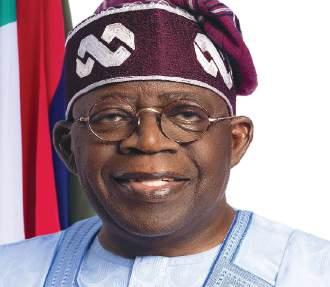
holders often succumb to pressure, whether from political adversaries, public opinion, or systemic inertia, resilience becomes a vital currency.
This resilience is not without precedent. Tinubu’s political journey has been marked by sustained opposition, strategic recalibration, and eventual triumph. From his days as a pro-democracy activist to his tenure as governor of Lagos State and his role in shaping national political alignments, he has consistently demonstrated an ability to navigate adversity. It is this historical context that lends credibility to his current stance. Moreover, his administration’s efforts to support security agencies should not be overlooked. While challenges persist, there is evidence of increased coordination among security forces, renewed investment in intelligence gathering, and attempts to address the socio-economic drivers of conflict. These efforts may not yield immediate, dramatic results, but they represent a shift towards a more holistic security framework.
Equally important is the President’s insistence on continuity. By declaring his intention to seek a second term, Tinubu is signaling that the work of governance cannot be truncated by crises. This is a significant departure from a political culture that often equates difficulty with failure. Instead, it reinforces the idea that complex problems require sustained engagement and long-term commitment.
There is also a psychological dimension to this posture. Leadership, particularly in times of crisis, is as much about perception as it is about policy. A leader who appears overwhelmed or uncertain can inadvertently embolden adversaries and erode public confidence. Conversely, a leader who projects determination and clarity can inspire resilience among citizens and signal strength to both domestic and external actors.
Tinubu’s message, therefore, serves multiple audiences. To his supporters, it is a reassurance that the administration remains focused and undeterred. To his critics, it is a challenge to engage constructively rather than exploitatively. And to those who may seek to destabilise the nation, it is a clear indication that their efforts will not achieve their intended outcome.
Olowolayemo writes from the Federal Capital Territory, Abuja
HEADQUARTERS
I sat through the opening address at the commissioning of the Nigeria Revenue Service headquarters with a mix of curiosity and cautious optimism. Nigerians mostly regard government speeches often leaning heavily on ceremony and praise, but this one felt different. It was deliberate, structured, and most importantly, anchored in policy implementation and formulation. It did not just celebrate a building. It attempted to explain a shift in how Nigeria thinks about revenue, governance, and institutional delivery.
What stood out immediately was the framing. The Executive Chairman did not present the headquarters as a trophy project. He described it as the physical expression of a broader fiscal transformation. That distinction matters. Nigeria has seen too many impressive structures that do little to improve systems. This speech tried to convince us that this one is different. It positioned the building as a tool for efficiency, coordination, and accountability.
The most compelling part of the address was its emphasis on reform as a system, not a slogan. The reference to the consolidation of over sixty tax laws into a more coherent framework signals a serious attempt to simplify Nigeria’s tax environment. For years, businesses and individuals have struggled with overlapping obligations, inconsistent enforcement, and a lack of clarity. A streamlined system improves compliance not by force, but by making it easier to understand and participate. That is how sustainable revenue is built.
There was also a clear effort to separate revenue growth from increased tax burden. This is an important policy signal. The speech suggests that recent improvements in revenue performance are being driven by better administration, wider coverage, and stronger governance rather than simply raising taxes. This is awesome news for the greater development of the country. It means government is focusing on plugging leakages, capturing previously untaxed activity, and improving efficiency within existing structures.
From a revenue collection standpoint, the implications are significant. A more coordinated tax system reduces duplication and waste. Improved remittance processes ensure that what is collected actually reaches government accounts. The mention of enhanced transparency mechanisms points to a system that is becoming more traceable and less prone to discretion. These are the kinds of changes that quietly but steadily increase revenue without creating additional pressure on citizens.
The speech also touched on the National Single Window initiative, which is a critical reform in trade facilitation. Anyone familiar with Nigeria’s ports understands how inefficiencies and delays translate into lost revenue and higher costs. Digitising and integrating trade
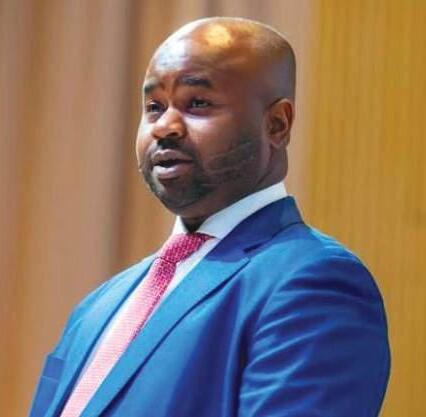
processes can significantly reduce leakages, improve compliance, and increase government earnings from imports and exports. It also has a broader economic effect by making Nigeria a more attractive destination for investment.
Another notable policy direction is the move to sell crude oil in Naira. While still evolving, the intention is clear. It aims to reduce pressure on foreign exchange, stabilise the local currency, and improve fiscal predictability. If implemented effectively, it could help align Nigeria’s revenue flows more closely with its domestic economic reality.
What ties all these elements together is coordination. The speech repeatedly returned to the idea that reform is not isolated. Tax policy, trade systems, public finance management, and energy reforms are being treated as interconnected parts of a single fiscal ecosystem. This is perhaps the most encouraging takeaway. Nigeria’s biggest policy challenge has often been fragmentation. When reforms happen in silos, their impact is limited. When they are aligned, they reinforce each other.
On a personal level, I found the tone of the speech measured but confident. It acknowledged that reform is difficult, technical, and sometimes contested. That honesty made it more credible. It did not pretend the journey was smooth. Instead, it argued that persistence and clarity of purpose have begun to yield results.
The real test, however, lies ahead. Buildings can inspire, but they do not deliver outcomes on their own. The value of this headquarters will be judged by how it improves service delivery, strengthens compliance, and builds trust between citizens and the state. Nigerians want to see a system that is fair, predictable, and efficient. They want to know that revenue collected translates into visible public value.
This is why the speech matters. It sets expectations. It frames the headquarters not as an endpoint, but as a foundation. It tells us that reform should be measurable, not just announced.
Arabinrin, Technical Assistant on Broadcast Media to the Executive Chairman of the NRS, writes from Abuja
Editor, Editorial Page PETER ISHAKA
Email peter.ishaka@thisdaylive.com
COPING WITH THE HEAT WAVES
There is need to heed the NiMet advice
To survive the current heat wave that is cutting across the country, the Nigerian Meteorological Agency (NiMet) has suggested some tips which include drinking more water to keep hydrated, avoiding alcoholic and caffeinated drinks and reducing intake of food rich in protein because they increase metabolic heat. They also recommend eating a lot of fresh food, fruits and vegetables, monitoring blood pressure and taking cold baths before going to bed at night. This is in tandem with prescriptions from the World Health Organisation (WHO) which says the number of people exposed to extreme heat is growing exponentially due to climate change.
In Nigeria, there is limited research on the impact of chronic (sustained) exposure to high temperatures and humidity. With urban and rural poor disproportionately exposed to overheating due to low quality housing and lack of access to cooling, it goes without saying that most Nigerians are exposed to this challenge.

es accompany heatwaves and disrupt health facilities, transport, and water infrastructure. Ordinarily, heat can affect health through a variety of direct and indirect mechanisms. Extended periods of high day and nighttime temperature conditions create cumulative stress on the human body, increasing the risk of illness and death from heat exposure.
The heat we currently experience across the country neither reduces in the morning nor at night. To cushion its effects and prevent avoidable deaths, NiMet has urged the public to take essential precautions. Besides drinking plenty of water, people are advised to remain in well-ventilated or air-conditioned spaces where possible, wear hats, sunshades, and sunscreen when outdoors. Light, breathable clothing keep infants cool and well-hydrated, but never to leave them in a closed, parked vehicle. A step outside a cooled environment can bring immediate discomfort.
Light, breathable clothing keep infants cool and well-hydrated, but never to leave them in a closed, parked vehicle
Awareness among health workers and the public also remains insufficient of the health risks posed by heat. But there are reports from many of the cities that residents have resorted to several survival methods, including taking the risk of sleeping outside their houses. We urge the health authorities to adjust their guidance, planning, and interventions to account for increasing heat exposures. Health professionals should also be prepared to manage the acute increases in admissions associated with heatwaves. Practical, feasible and often low-cost interventions at the individual, community, organisational, governmental and societal levels can save lives.
According to experts, heatwaves can acutely impact large populations for short periods of time, often trigger public health emergencies, and result in excess mortality and cascading socioeconomic impact like lost work capacity and labour productivity. They can also cause loss of health service delivery capacity, when power shortag-
EDITOR SHAKA MOMODU
DEPUTY EDITOR WALE OLALEYE
MANAGING DIRECTOR ENIOLA BELLO
DEPUTY MANAGING DIRECTOR ISRAEL IWEGBU
CHAIRMAN EDITORIAL BOARD OLUSEGUN ADENIYI
EDITOR NATION’S CAPITAL IYOBOSA UWUGIAREN THE OMBUDSMAN KAYODE KOMOLAFE
T H I S D AY N E W S PA P E R S L I M I T E D
EDITOR-IN-CHIEF/CHAIRMAN NDUKA OBAIGBENA
GROUP EXECUTIVE DIRECTORS ENIOLA BELLO, KAYODE KOMOLAFE, ISRAEL IWEGBU
DIVISIONAL DIRECTORS SHAKA MOMODU, PETER IWEGBU, ANTHONY OGEDENGBE
DEPUTY DIVISIONAL DIRECTOR OJOGUN VICTOR DANBOYI
SNR. ASSOCIATE DIRECTOR ERIC OJEH
ASSOCIATE DIRECTOR PATRICK EIMIUHI
CONTROLLERS ABIMBOLA TAIWO, UCHENNA DIBIAGWU, NDUKA MOSERI
DIRECTOR, PRINTING PRODUCTION CHUKS ONWUDINJO
TO SEND EMAIL: first name.surname@thisdaylive.com
Letters to the Editor
The World Meteorological Organization (WMO) has consistently warned that record greenhouse gas concentrations are driving global temperatures towards increasingly dangerous levels. In recent weeks Nigerians have seen evidence of that across the country where temperatures are rising and the heat is so intense that it gives burning sensation. Last week, the Nigerian Meteorological Agency (NiMet) decried the escalating heat waves ravaging everywhere, including in coastal areas, saying it could lead to heat stress. This can occur due to a combination of factors, including high temperatures, humidity, poor ventilation, dehydration, clothing, and physical exertion. Unfortunately, as NiMet warns, the situation may not get better soon even when the negative health impact of heat is predictable and largely preventable with specific public health and multi-sectoral policies and interventions. The WHO has issued guidance for public health institutions to identify and manage extreme heat risks. Action on climate change combined with comprehensive preparedness and risk management can save lives now and in the future. The warning calls for urgent mitigation and adaptation strategies to stem avoidable deaths.
Letters in response to specific publications in THISDAY should be brief (150-300 words) and straight to the point. Interested readers may send such letters along with their contact details to opinion@thisdaylive.com. We also welcome comments and opinions on topical local, national and international issues provided they are well-written and should also not be longer than (750- 1000 words). They should be sent to opinion@thisdaylive. com along with photograph, email address and phone numbers of the writer.
IN PRAISE OF KAYODE FAYEMI
In a time when political loyalty is often fleeting and leadership is frequently measured by short-term gains, the story of John Kayode Fayemi stands out as a compelling case study in foresight, conviction, and strategic leadership. This reflection is not written from the standpoint of a politician, but from that of an observer, one whose proximity to political actors has revealed the intricate dynamics, quiet negotiations, and power plays that shape outcomes behind the scenes.
Ekiti State has witnessed the leadership of several governors over the years, yet few have left a mark as distinctive as Fayemi. His approach to governance extended beyond administration into the deliberate cultivation of talent and the nurturing of future leaders.
Among his most notable political decisions was the identification and elevation of Abiodun Oyebanji, the current Governor of Ekiti State.
The emergence of Oyebanji did not occur by chance.
It was the product of a carefully guided process rooted in trust, observation, and strategic planning. During Fayemi’s second-term transition period in 2018, the groundwork for future leadership became increasingly evident.
Committees were formed, alliances strengthened, and individuals positioned, not always publicly, but often through quiet, deliberate coordination.
It was within this environment that a working relationship began between key actors, facilitated directly by Fayemi himself. Instructions were clear, roles were defined, and collaboration was encouraged. Oyebanji, who would later serve as Secretary to the State Government (SSG), demonstrated administrative competence and political alignment that reinforced Fayemi’s confidence in him.
However, what distinguishes Fayemi’s leadership is not merely his ability to govern, but his willingness to invest political capital in others, even in the face of opposition. When internal party pressures mounted against Oyebanji’s
candidacy, Fayemi remained resolute. His commitment did not waver, reflecting a leadership style grounded in long, term vision rather than immediate convenience.
Today, as Oyebanji occupies the governorship, the relationship between mentor and successor has become a subject of public discourse.
Questions have emerged about political alignment, loyalty, and evolving alliances within the state’s political structure.
These developments highlight a broader reality of politics: that transitions of power often reshape relationships, sometimes in unexpected ways.
At the center of current conversations is also the political positioning around figures such as Ayo Arise, whose support by Fayemi has sparked debate within party circles.
Dr Kayode Olasekun, Clinical Psychologist, Dallas, TX.
Osun 2026: No Room for Bloodshed, Says APC Candidate, Oyebamiji
Yinka Kolawole in osogbo
Ahead of the 2026 governorship election in Osun State, the All Progressives Congress (APC) candidate, Asiwaju Bola Oyebamiji(AMBO), yesterday assured residents of a peaceful electoral process, declaring that there will be no room for bloodshed, violence, or harassment of voters and residents of the state.
Oyebamiji, who stated this in his hometown, Ikire, during ‘Victory Prayer’ organised by Irewole Muslim Community yesterday, also expressed confidence that he will win the gubernatorial poll billed for August 15, 2026.
He noted that his gubernatorial ambition is ordained by God, assuring the residents that “prosperity of the state is guaranteed under my leadership, and I will never disappoint you.”
According to him, “I want to tell you that you should not be perturbed because violence and chaos will not be recorded before, during, and after the election, and there won’t be bloodshed. I want to assure you that no one will harass you. During the election, there will be adequate security for the people of the state for free and fair elections.
“Our government will do so well in every sector, including security, education, health, workers’ welfare, youth empowerment, and job creation, among others. To civil servants, all your benefits will be given to you under my government, and I will approve training and other entitlements for them. APC is not frivolous, hence you will enjoy under our government.”
He recalled that as the managing director of Osun
Dangote Promises More Job Opportunities
Ibrahim Oyewale in Lokoja
The Dangote Group has stated that its widening business footprint across Nigeria and the rest of Africa is set to yield significant employment opportunities.
This was contained in a statement issued by the Corporate Affairs Unit and made available to journalists in Lokoja yesterday.
The Regional Director and Special Adviser to the President of Dangote Group, Fatima Wali-Abdurrahman, said new jobs and new roles are being created as the company expands its investments and scales up its operations across its Strategic Business Units.
Dangote Group is Nigeria’s second-largest employer of labour after the federal government.
The Group President and Chief Executive of the company, Aliko Dangote, noted last week in Lagos that expanding the Dangote Petroleum Refinery from 650,000 barrels per day to 1.4 million could draw in as many as 95,000 skilled workers at the peak of construction.
Wali-Abdurrahman, who was represented by the company’s National Assembly Lead, Hon. Shuaibu Abdullahi, said Nasarawa State is home to Dangote’s biggest Backward Integration project in the sugar sector, the Nasarawa Sugar Company Limited (NSCL).
State Investment Company Limited (OSICOL), he increased the salaries of the agency’s workers four times in a year, and made the state venture into the oil and gas business, including housing.
Earlier, in his sermon, a cleric, Sheikh Abdulbasit
Katibi-Bello, lauded the Minister of Marine and Blue Economy, Adegboyega Oyetola, for honouring the plea of the late Akire of Ikire to back Oyebamiji to become the governor of Osun State, and prayed earnestly for the emergence of Oyebamiji as
Daji
The Adamawa State Police Command has recorded a breakthrough in its fight against kidnapping after its operatives arrested a 20-yearold suspected member of a syndicate terrorising communities in Song Local Government Area.
The state Police Public Relations Officer (PPRO), SP Suleiman Yahaya Nguroje, while confirming
the arrest in a statement yesterday, noted that acting on credible intelligence, detectives from the State Intelligence Department arrested Mohammad Kasimu Iliyasu of Doruwa Village last Saturday. The suspect was picked up during a targeted operation aimed at dismantling violent criminal networks in the Song axis.
He said the police investigations revealed that Iliyasu confessed to being
the eighth governor of Osun State on August 15, 2026. He said, “Before Oyebamiji was nominated as the governorship candidate of APC, he had been doing so well for everyone, and he never sectionalized any group or community. I want to urge everyone to support his ambition for a brighter Osun State.”
Also, the Chairman of the Irewole Muslim Community, Ademola Lasisi, urged the youths to go out en masse to vote for Oyebamiji as the governor of the state.
Police Nab 20-Year-Old Suspected Kidnapper in Adamawa
part of a kidnapping gang operating in the area. He named five other members of the syndicate who, according to him, are armed with two AK-47 rifles and have been involved in multiple abductions.
According to the PPRO, the 20-year-old also admitted to participating in the abduction of one Alhaji Rabiu Haruna.
He told investigators the gang collected N15million and two Boxer motorcycles valued at
Million Seven Hundred Thousand Naira as ransom before releasing the victim. He said that the Adamawa State Police Command said the arrest was the result of sustained intelligence-led operations designed to rid the state of kidnapping and other violent crimes. The Command described the breakthrough as part of ongoing efforts to secure lives and property in the state.
Group Donates N1bn, Buses for Tinubu, Adeola, Abiodun Elections
James Sowole in abeokuta
A political support group in Ogun State, Yayi Support Movement (YPM), has donatedN1 billionn for the mobilisation and camping of the 2027 election of President Bola Ahmed Tinubu, the All Progressives Congress (APC) consensus candidate for the state, Senator Olamilekan Adeola, and Prince Dapo Abiodun, the Ogun East senatorial district consensus candidate.
The YPM, which already has a presence in the 26 state constituencies of Ogun State, also presented 27 buses for the prosecution of the campaign for APC candidates in the forthcoming elections.
The donation was made at an event held at the Ake
Anyaoku Leads Conversations on Crisis Mgt at the Duke’s Masterclass
The Duke’s Masterclass has announced its highly anticipated 2026 International Masterclass on crisis and reputational management, scheduled to hold later this year across a dual-location platform in Abuja on the 22nd of October 2026 and London March 22nd 2027.
With the theme, “Definitive Strategies in Robust Crisis &
Reputational Management,” the Masterclass is designed as a high-level, closed-door executive programme targeted at top decisionmakers, policy drivers, and influential leaders across both the public and private sectors.
The programme will convene an exceptional faculty drawn from Nigeria and the United Kingdom, reinforcing its positioning
as a globally relevant leadership and strategic communications platform.
Among the distinguished Nigerian speakers are: Kola Adesina of Sahara Group; President/CEO of Transcorp, Owen Omogiafo; former Director of Communications at AfDB, Victor Oladokun; Nonny Ugboma, who will also serve as Session Director and Moderator.
QShelter Hosts Programme to Promote Wellness
QShelter Limited, a professional digital property platform, in partnership with The Fitness Religion Company (TFRC), has successfully hosted the maiden edition of its fitness and lifestyle event tagged ‘2004 M00VE Experience’ in Lagos.
The event featured a range of activities, including a minimarathon, a fun race, aerobics, dance sessions, a five-a-side football match, and strength competitions, attracting participants from across the country. The marathon segment was a major highlight,
with athletes competing across categories in a well-coordinated and high-energy environment.
Speaking at the event, the Chairman of QShelter Limited, Kola Sowande, noted that integrating lifestyle events such as the M00VE Experience is a deliberate effort to raise awareness, foster engagement, and allow potential homeowners and investors to experience the project’s vision firsthand.
Sowande explained that beyond being a promotional platform, the event was designed
to address broader societal challenges, particularly the housing deficit in Nigeria and Lagos State, by showcasing scalable, sustainable housing solutions.
“It’s been an exciting programme, and we are truly encouraged by the turnout and engagement we have seen today. This initiative is not just about promoting our project, but about creating awareness of the scale and vision behind the 2004 Estate, as well as contributing to efforts to reduce the housing deficit in Nigeria.”
Palace Pavilion in Abeokuta, the state capital, where executives of YPM were inaugurated, and campaign buses were unveiled.
The popular Ake-Adatan Road in the heart of the state capital stood still as party supporters and leaders started arriving at the venue as early
as 8 am, wearing uniforms with the inscription, Yayi Support Movement.
Addressing the gathering, the YPM Convener, Armstrong Tope Akintunde, commended Governor Dapo Abiodun and other leaders of the party for ensuring that Senator Adeola emerged as
the consensus gubernatorial candidate for Ogun State APC.
He said that Abiodun had done well in the state, and the good work must continue with Yayi, who had been doing well even before his emergence as the consensus candidate.
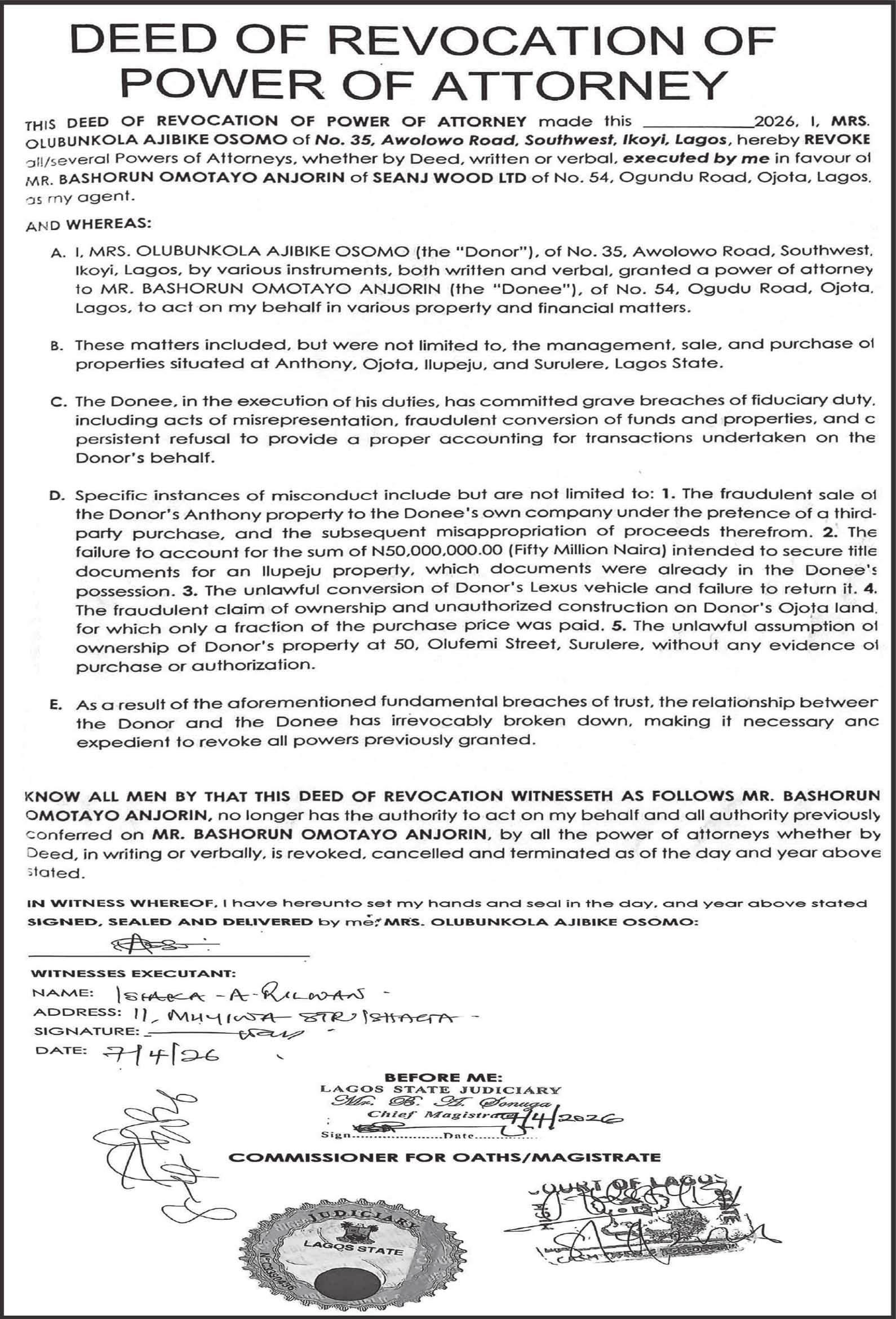
Sani in yola
Two
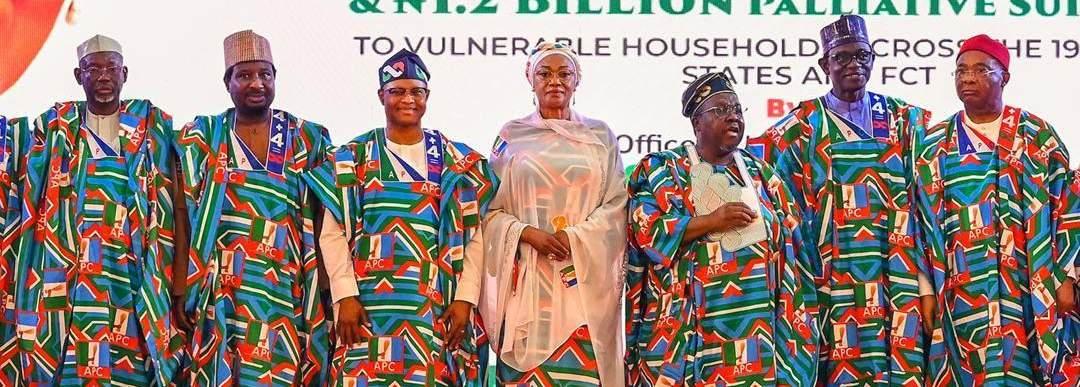
World
Press
Freedom
Day 2026: NHRC, Guild of Editors, SERAP Demand Protection for Journalists
Gov Otu: Journalists are guardians of truth, pillars of democracy
Michael Olugbode, Chuks Okocha in Abuja and Bassey Inyang in Calabar
Nigeria joined the rest of the world to mark World Press Freedom Day, National Human Rights Commission (NHRC) issued a strong call for zero tolerance against attacks on journalists, warning that press repression poses a direct threat to democracy.
In a statement to commemorate the 2026 observance, Executive Secretary of the commission, Tony Ojukwu, said a free and independent media was the “lifeblood” of any democratic society.
Ojukwu stressed that press freedom was not a privilege but a fundamental right guaranteed under Nigeria’s constitution and international
human rights obligations.
In a related development, Nigerian Guild of Editors (NGE) and Socio-Economic Rights and Accountability Project (SERAP) called on the administration of President Bola Tinubu, state governors, and Minister of the Federal Capital Territory to urgently safeguard press freedom, protect journalists, and address rising insecurity and human rights abuses across northern Nigeria.
They made the call in a joint statement issued on Saturday to mark the 2026 World Press Freedom Day, following a conference and interactive session held at Radisson Blu Hotel, Ikeja.
Similarly, Gernor Bassey Otu of Cross River State paid glowing tribute to journalists in the state, and across Nigeria, praising their
courage, professionalism, and dedication to truth as the country marked World Press Freedom Day.
In a message by his Chief Press Secretary and Special Adviser on Media and Publicity, Mr. Linus Obogo, Otu described journalists as indispensable custodians of democratic values whose work continued to shape society and strengthen the institutions of freedom.
Felicitating members of the Fourth Estate of the Realm, on the occasion of the World Press Freedom Day, the governor declared, “I warmly salute journalists whose courageous pens illuminate truth, defend liberty, and deepen the foundations of democracy, guiding society with vigilance, integrity, and unyielding purpose.”
ExpandiNHRC’s demand
for zero tolerance of attacks on journalists, Ojukwu underscored the intrinsic link between a vibrant press and democratic governance. He stated that societies where journalists operated freely tended to experience greater accountability, transparency, and citizen participation.
He warned that any attempt to silence the media undermined public trust and weakened democratic institutions.
“Every threat to a journalist constitutes a direct attack on democracy and the public’s right to know,” he stated, expressing concern over persistent cases of intimidation, arbitrary arrests, assaults, and online harassment targeting media practitioners across Nigeria.
The NHRC boss also condemned the killing of
NDLEA Arrests Octogenarians, Others in Sweeping Nationwide Drug Crackdown
Operatives of the National Drug Law Enforcement Agency (NDLEA) have arrested two elderly men - aged 83 and 78 - alongside several other suspects in a series of coordinated antidrug operations across multiple states, underscoring the agency’s intensified offensive against illicit drug trafficking in Nigeria.
The agency disclosed that the 83-year-old suspect, Pa John Ofiel, was apprehended last Tuesday during a raid at Samek area by Powerline in Abia State.
The spokesman of the anti-narcotics agency, Femi Babafemi, in a statement
on Sunday, said acting on credible intelligence, NDLEA officers stormed the location and recovered 700 grammes of skunk - a potent strain of cannabis - packaged in retail sachets. The octogenarian was said to have told investigators he had previously worked as a shoemaker before venturing into drug distribution.
In a similar operation in Ekiti State, 78-year-old, Ogunjobi Samuel was arrested last Thursday at his residence in Ilupeju-Ekiti.
Officers recovered 350 grammes of skunk from the suspect, reinforcing concerns about the widening demographic of individuals involved in drug
peddling.
The crackdown extended to Oyo State, where two women—Rebecca King, 24, and Olaniyan Opeyemi, 31—were arrested in connection with the seizure of 1.925 kilogrammes of Colorado, a synthetic cannabis variant.
King was intercepted along the Lagos-Ibadan Expressway, while Opeyemi was later arrested at Iwo Road, Ibadan, attempting to receive the consignment.
In a separate operation in Ibadan, NDLEA operatives captured a long-wanted drug dealer, Taofik Adeyemi, 49, who had reportedly evaded arrest for months.
He was apprehended on Saturday alongside an associate, Mustapha Oyerinde, 28, at his residence in Erunmu area.
Babafemi said recovered items from the clampdown included 3.085 kilogrammes of skunk and a Toyota Camry vehicle.
He noted that two of Adeyemi’s alleged accomplices had earlier been arrested in December 2025 and are currently facing prosecution.
Further arrests were recorded in Osun State, where a 65-yearold driver, Oladayo Awoyemi, was caught transporting 7 kilogrammes of skunk and 15 grammes of methamphetamine along the Ibadan-Ilesha Expressway.
journalists in the line of duty, describing such incidents as grave violations that foster fear and self-censorship within the media space.
According to him, these trends erode the quality of public discourse and hinder the media’s watchdog role.
Ojukwu said the commission had begun systematic tracking and documentation of press freedom violations nationwide. He said the findings will be made public to support evidence-based advocacy
and strengthen accountability mechanisms for the protection of journalists.
He urged government authorities, security agencies, and non-state actors to refrain from actions that hindered lawful media operations, while calling on law enforcement bodies to conduct prompt and transparent investigations into all reported cases of abuse.
“Silence in the face of attacks on journalists emboldens further violations and erodes public trust,” he warned.
Steward Awards Debut in Lagos, to Rank LG Performance, Promote Transparency Nationwide
Sunday Ehigiator
The Steward Awards initiative has officially debuted in Lagos, with organisers unveiling a data-driven platform designed to rank local government performance and promote transparency across Nigeria.
Speaking at a press briefing over the weekend, Program Director, Godfrey Egbnokporo, said the initiative was conceived to address the long-standing gap between governance at the grassroots and public visibility of performance.
He explained that the project aims to track, verify and publicly present the impact of local government activities, particularly in the wake of the 2024 Supreme Court ruling that strengthened local government autonomy.
“The idea is simple; citizens deserve to know what is being done with public resources at the local level.
According to him, the Steward Awards will combine technology, field verification and citizen participation to create a centralised data hub on governance performance. He added the platform will, over time, evolve into an open data system that stakeholders can access through an API.
The initiative, he said, will culminate in a two-part event scheduled for December 9, featuring a governance forum during the day and an awards ceremony in the evening to honour outstanding public servants.
Egbnokporo noted the awards process will be guided by a multi-layered structure, including a central working committee, an independent jury, an advisory board and a verification team responsible for confirming project claims on ground.
We are building a system that measures performance, validates it with evidence, and makes it accessible to everyone.”
Michael Olugbode in Abuja
L-R: Governor of Jigawa State, Mallam Umar Namadi; Deputy Senate President, Senator Barau Jibrin; Kaduna State Governor, Senator Uba Sani; First Lady of Nigeria, Senator Oluremi Tinubu; Special Adviser to the President on Political Affairs and Other Matters, Alhaji Ibrahim Masari; Yobe State Governor, Hon. Mai Mala Buni; and Imo State Governor, Senator Hope Uzodimma, during the flag off of the distribution of 100 trucks of rice and N1.2bn palliative to vulnerable households in Muslim communities in 19 Northern States and the FCT by the First Lady in Kaduna, yesterday

SIGNING OF A MEMORANDUM OF UNDERSTANDING...
Shettima to Muslim Pilgrims: Uphold National Values That Positively Reflect Nigeria
Says pilgrimage is a covenant between state and citizens Flags off 2026 hajj operation with 50,000 Nigerian muslims participating
Deji Elumoye in Abuja
Vice President Kashim Shettima on Sunday tasked intending Muslim pilgrims for the 2026 Hajj to uphold national values that positively reflect Nigeria, and act as positive ambassadors of the country during their spiritual journeys.
Shettima described pilgrims as representatives of the country on the global stage who must portray the best of the nation
while complying with the strict regulations of the host country.
He gave the charge while flagging off the 2026 Hajj airlift at Nnamdi Azikiwe International Airport, Abuja, with a renewed commitment to safety, coordination, and pilgrim welfare.
He said, “You are ambassadors of Nigeria. You carry with you the image of our nation and the dignity of our people. Let your conduct reflect
discipline, humility, patience, and integrity."
The 2026 inaugural Hajj flight ceremony commenced with the airlift of about 500 pilgrims from Kogi State to Saudi Arabia, while the total number of pilgrim stood at 50,000.
The vice president stated that pilgrimage was a binding covenant between the Nigerian state and its citizens, where the government must uphold its
duty of care while pilgrims upheld the values of the country.
Shettima said the Hajj exercise placed a direct responsibility on public institutions to guarantee the dignity, safety, and seamless movement of all pilgrims.
“Our duty is to ensure that every pilgrim undertakes this journey without avoidable hardship, needless anxiety, or preventable setback,” he stated.
He reaffirmed the commitment of President Bola
Turkey Raises Residence Permit Fee by 930% for Nigerians, 36 Other African Countries
Ndubuisi Francis in Abuja
Turkey has commenced a sweeping increase in residence permit application fees, raising certain categories for Nigerians, and nationals of about 36 other African countries by as much as 930 per cent, the Directorate General of Migration Management announced at the weekend
A total of about 140 other countries, across continents, including the United States of America are also affected by the new residence permit hike.
Almost all categories of residence permits are subject to the new rates---short-term tourist, family, for property
Governor Ahmed Aliyu of Sokoto State on Friday commissioned the N12.6 billion, 8.1-kilometre Yandaki–Shinkafi–Kofar Sauri road constructed by the Governor of Katsina State, Dikko Umar Radda.
Governor Aliyu commended Governor Radda for executing a project with significant
owners, as well as permits related to investment and educational programs, including TOMER courses.
The fees for work visas have also increased significantly: a standard single-entry work permit now costs about 12,575 lira ($278), and a permanent one 125,800 lira ($2,784).
Over 4,500 Nigerians, including football star, Victor Osimhen who plays for top Turkish club, Galatasaray, are officially resident in Turkey as of February 9, 2023.
Before the sharp increase which took effect on May 1, 2026, a Turkish lira equivalent of roughly $85 per year was charged as residence permit fee. However, that framework
impact on the socio-economic development of communities along the corridor.
He described road infrastructure as critical to fasttracking economic activities by enabling the efficient movement of goods and services.
“Roads such as this newly dualised corridor play a vital
has now been replaced with a sharply escalated tariff structure, with six-month permit now costing $315, and $631 for a one-year permit.
A two-year permit is now $1,263 and $1,857 for a threeyear permit.
Other countries affected by the new residence permit hike include United States of America, Afghanistan, Germany, Andorra, Angola, Antigua and Barbuda, Argentina, Australia, Austria, Azerbaijan, Bahamas, Bahrain, Bangladesh, Barbados, Belize, Benin, and United Arab Emirates.
The United Kingdom, Bolivia, Bosnia and Herzegovina, Botswana, Brazil, Brunei, Bulgaria, Burkina Faso,
role in improving transportation, enhancing road safety, reducing travel time, and supporting commercial and social activities within our communities,” he said.
He added that the dualisation of the road would ease traffic congestion, improve connectivity, and enhance the
Burundi, Djibouti, Chad, China, Dominican Republic, Dominica, Ecuador, Equatorial Guinea, El Salvador, Indonesia, Eritrea, Armenia, Estonia, Palestine, Finland, France, Gabon, Gambia, Ghana, Guinea, Guinea-Bissau, Grenada, Guatemala, and Guyana are also affected.
Also affected are Georgia, Haiti, India, Netherlands, Honduras, Croatia, Iran, Sweden, Switzerland, Israel, Italy, Iceland, Jamaica, Cameroon, Canada, Qatar, Kazakhstan, Kenya, Kyrgyzstan, Kiribati, Colombia, Comoros, Republic of Congo, Kuwait, Laos, Latvia, Liberia, Libya, Liechtenstein, and Lithuania.
overall urban landscape.
According to Governor Aliyu, the project is not only an investment in physical infrastructure but also in economic development, job creation, and urban transformation.
He further noted the development of modern
Tinubu to protecting Nigerians at home and abroad, stating that governance is a covenant anchored on service and accountability.
He maintained that while Hajj was a personal act of worship, it also reflected the strength and credibility of national institutions, saying every pilgrim travels under Nigeria’s banner.
He added, “We owe every Nigerian pilgrim dignity, safety, order, compassion, and honour. Each pilgrim travels under the banner of our country, and each institution involved carries a sacred trust.”
Shettima tasked Hajj administrators, aviation operators, medical personnel, and security agencies to uphold the highest standards of coordination and service delivery, stressing that operational success must be defined by the quality of pilgrims’ experience.
He said, “The success of this operation will not be measured by the number of aircraft that depart alone, but by the comfort of our pilgrims, the orderliness of our processes, and the absence of avoidable hardship. There is no room for negligence where faith, lives, and national reputation converge.”
Earlier, Kogi State Governor Usman Ododo said the Hajj exercise was a rare privilege
road infrastructure remains one of the most important drivers of economic growth, urban development, and social integration.
Governor Aliyu commended the Katsina State Government for prioritising infrastructure as a foundation for sustainable growth.
that required total devotion to Almighty Allah by all pilgrims. Ododo urged the pilgrims to continue to engage in prayers for Nigeria, particularly for peace and socio-economic development, during their spiritual journeys in the Holy Land.
He called for prayers for Tinubu and Shettima, as they steered the country towards a greater Nigeria through the ongoing reforms under the Renewed Hope Agenda.
Minister of State for the Federal Capital Territory (FCT), Dr. Mariya Mahmoud Bunkure, expressed the gratitude of the FCT Administration to the president and the vice president for their guidance and support in strengthening institutional coordination across the board.
Bunkure stated that the FCT Administration remained committed to ensuring that every pilgrim being airlifted had a seamless experience to and from the Holy Land.
Minister of Aviation, Festus Keyamo, represented by Captain Mamud Abdullahi, said while Hajj was a sacred journey, the ministry was poised to ensure that every pilgrim experienced safety and comfort.
He explained that the federal government was collaborating with all relevant agencies to guarantee ease of operations across all airports.
He also expressed appreciation to Governor Radda for the honour of inviting him to participate in the commissioning ceremony, describing the gesture as a reflection of unity, cooperation, and shared commitment to the progress of Sokoto and Katsina States, as well as the nation.
L–R: Deputy Head of Mission, British Deputy High Commission, Lagos, Mr. Simon Field; Director General, Lagos State Sports Commission, Mr. Lekan Fatodu; Chairman, Abbey Rangers FC (UK), Mr. Nick Riley; and Commissioner for Youth and Social Development, Lagos State, Mr. Mobolaji Ogunlende, during the signing of a Memorandum of Understanding on grassroots sports development between the Lagos State Sports Commission and Abbey Rangers FC at Teslim Balogun Stadium, Lagos... recently
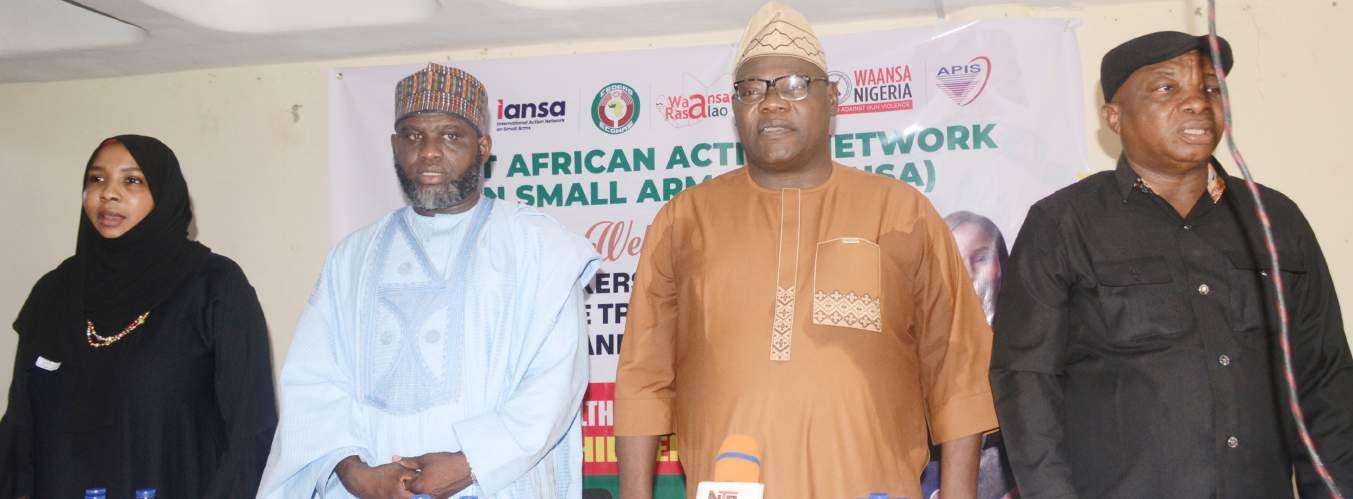
WORKERS DAY TRAINING ON MENTAL HEALTH AND PRODUCTIVITY...
Obi, Kwankwaso Formally Declare for NDC, Set Stage for 2027 Presidential Battle
Warn against litigation, urge Nigerians to rally behind new platform Ex-Anambra gov exits ADC amid alleged toxic political environment
Insists decision not linked to Atiku, Mark, laments intimidation, internal crisis, character attacks Presidency: Obi is a political nomad, his reasons are puerile, illogical APC: he is seeking easy presidential ticket Lukman cautions Kwankwaso, says attempt to dump ADC with Obi will diminish him
Deji Elumoye, Chuks Okocha, Sunday Aborisade in Abuja and Sunday Ehigiator in Lagos
Nigeria’s political landscape shifted significantly, yesterday, as former Anambra State governor, Peter Obi, and former Kano State governor, Rabiu Kwankwaso, formally declared for Nigeria Democratic Congress (NDC), marking a decisive step towards their anticipated presidential bid ahead of the 2027 general election.
Their declaration followed a marathon closed-door meeting with the leadership of the party at the Abuja residence of former Bayelsa State Governor and NDC National Leader, Seriake Dickson.
The meeting, which lasted several hours, culminated in their official registration as members of the fast-growing political platform.
The move ended weeks of speculation surrounding the political future of both men after their recent exit from African Democratic Congress (ADC), where internal crisis and protracted leadership disputes had weakened cohesion and cast doubts on the party’s readiness for the next electoral cycle.
Addressing party faithful and supporters shortly after their formal declaration, Kwankwaso said their decision to join NDC was driven by shared ideological alignment and a collective resolve to reposition Nigeria.
He said, “We came here to consult with the leadership of this party on our ideology, our blueprint and what we believe in. We discovered that we are
on the same page, particularly in the areas of education, youth empowerment, security and national unity.”
He described NDC as a credible platform capable of mobilising Nigerians across regions and demographics, urging citizens, including those in the diaspora, to register with the party ahead of the close of its membership window.
“At this point, we call on all Nigerians, who believe in peace and progress to join us. Nigeria will be okay,” he added.
Obi, in his remarks, said the decision to align with NDC was born out of the urgent need to build a functional political alternative capable of addressing Nigeria’s deepening socio-economic challenges.
He emphasised that the new alliance would prioritise national unity, economic recovery, and inclusive governance.
He stated, “We are here to be part of a family that is committed to building a united, secure and prosperous Nigeria that works for everyone. We want to move the country forward by investing in education, healthcare and lifting people out of poverty.”
d the occasion to caution against the culture of internal litigation that had plagued political parties in the country, warning that such disputes undermine democratic development and weaken opposition strength.
“We are pleading with all stakeholders—party members and even the judiciary—to help reduce unnecessary litigation in
political parties. We want to focus on building a viable platform, not on endless court cases,” he said.
Obi also alluded to the crisis that trailed their previous political engagements, stating that recurring disputes and external interference have disrupted party stability and forced their eventual exit from ADC.
Their entry into NDC was warmly received by party leaders, who described the development as a major turning point for the relatively young political organisation.
Welcoming the new entrants, Dickson said the party was prepared to harness the experience and nationwide appeal of both leaders to build a formidable political movement.
He said, “We welcome you to one of the fastest-growing political families in Nigeria. This is a party for the youth, for women and for all Nigerians who seek a new direction.”
Former Adamawa State governorship candidate, Aishat Dahiru Binani, described Obi and Kwankwaso as influential figures whose presence would energise the party’s support base, particularly among young people and women.
“Our party stands for fairness, equity and justice. With leaders of this calibre joining us, we are confident of success in the journey ahead,” Binani said.
In his closing remarks, NDC National Chairman, Moses Cleopas, likened the party to “Noah’s Ark” poised to rescue Nigeria from its current challenges.
Cleopas urged supporters across the country to seize the opportunity of the ongoing membership registration to align with the party.
Obi Exits ADC Amid Alleged Toxic Political Environment
Presidential hopeful, Mr. Peter Obi, yesterday, announced his decision to leave African Democratic Congress (ADC), citing a “toxic” political environment and recurring internal crisis allegedly fuelled by external interference.
Obi, who joined ADC in March 2026, disclosed his exit in a social media post, amid speculation of fresh political alignments ahead of the 2027 polls.
In a personal statement released yesterday on X, Obi said his decision followed minutes of “deep reflection”, stating that many Nigerians, especially public servants, endure “silent pains” and “private struggles” while trying to serve with sincerity.
He stressed that his exit from the party was not due to personal grievances with key political figures, including former Vice President Atiku Abubakar, and ADC National Chairman, David Mark.
But the presidency reacted to Obi’s exit from the ADC, describing him as a “political nomad” prone to opportunistic shifts, even as it dismissed his reason for quitting as illogical musings.
At the same time, All Progressives Congress (APC)
criticised Obi for resigning from ADC, describing him as a “political rolling stone,” moving across political parties in search of an uncontested presidential ticket.
Nevertheless, a chieftain of ADC and former Director-General of Progressive Governors Forum (PGF), Mallam Salihu Lukman, had written an open letter to former Kano State governor, Rabiu Kwankwaso, warning that his attempt to dump ADC "will simply diminish you as
someone who is self-centred" and inconsiderate of the stark harsh realities facing Nigerians. However, speaking on his exit from the ADC, Obi said, “Many people do not truly understand the silent pains some of us carry daily, the private struggles, emotional burdens, and quiet battles we face while trying to survive and serve sincerely in difficult circumstances.
Osun Moves to Strengthen Mining Environmental Protection with New Framework
Yinka Kolawole in Osogbo
The Osun State Government has taken steps to strengthen regulation of mining activities with a focus on environmental protection, revenue generation, and sustainable development.
This follows a high-level inter-ministerial review meeting convened by the Office of the Governor for Natural and Mineral Resources, where a comprehensive framework on environmental, social, and governance (ESG) for the mining environment was presented.
The meeting which was held over the weekend at the Ministry of Finance Conference Room in Abere, brought together key stakeholders from the Ministries of Finance, Environment, Justice, Economic
Planning and Budget, as well as the Osun Internal Revenue Service (OIRS) and other relevant agencies.
Delivering the technical presentation, Development Policy Expert, Dr. Wale Bolorunduro, outlined a legally grounded and globally aligned framework aimed at addressing environmental concerns associated with mining environment while boosting sustainable revenue for the state, without jurisdictional conflicts with federal government.
Bolorunduro identified critical gaps in the existing Osun environmental laws, noting that opportunities in federal mining regulations could be leveraged on, for states to strengthen environmental oversight and fiscal responsibility.
L-R: Desk Officer, Mental Health, National Primary Health Care Department Agency (NPHCDA), Mrs. Hasana Baraya; Chief Imam, National Mosque - Abuja, Prof. Luqman Zekariyah; Deputy Director Administration, Hospital Management Board, Abuja, Mr. Ademola Azeez Kadiri and Regional Vice President, West African Action Network on Small Arms (WAANSA), Mr. Martin Igwe, during the 2026 Workers Day Executive Certificate Training on mental health and productivity in Abuja at the weekend PHOTO: ENOCK REUBEN
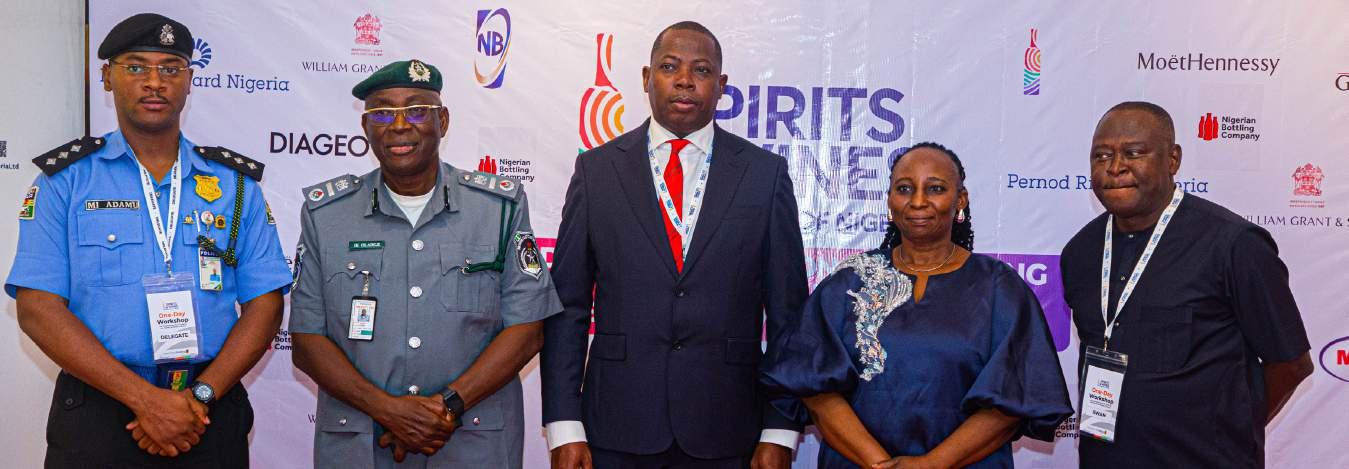
WORKSHOP ON COMBATTING ILLICIT TRADE IN THE SPIRITS AND WINES INDUSTRY...
Atiku Sets Agenda for US Visit, Lists Insecurity, Governance and Economic Issues
Says Nigeria’s reserves bleeding despite huge oil windfall
Chuks Okocha in Abuja
Former Vice-President Atiku Abubakar has declared that his forthcoming engagement with policy and institutional stakeholders in the United States would be driven by one overriding concern: the deterioration of security, governance, and economic stability in Nigeria.
Atiku stated that Nigeria was facing a full-blown internal crisis, one that could no longer be downplayed, politicised, or explained away.
From the ravaging violence in the North-West and North-East, to the persistent bloodshed in the Middle Belt, and the growing spread of kidnapping and criminality across the country, Atiku warned that the Nigerian state was steadily losing its grip on its most fundamental responsibility, which was the
protection of lives and property.
According to him, the situation has moved beyond isolated incidents to a pattern of systemic failure.
“Communities are being overrun, livelihoods destroyed, and citizens abandoned to their fate,” he said, arguing that any government that could not guarantee basic security forfeits the moral basis of its mandate.
In a statement by his media aide, Paul Ibe, the he pointed to the deepening economic hardship confronting Nigerians, describing it as both severe and avoidable.
He noted that rising inflation, a weakened currency, and collapsing purchasing power had pushed millions into distress, while policy inconsistency and lack of strategic direction continued to erode confidence in the economy.
''Nigerians are not just tired, they are being stretched to the limits of endurance,'' he said.
Atiku further raised concerns about the state of Nigeria’s democratic institutions, warning that declining public confidence in governance, accountability, and the electoral process posed a direct threat to national stability.
As the country moved toward another election cycle, he insisted that any attempt to undermine transparency or manipulate outcomes would carry serious consequences for both unity and legitimacy.
Addressing the anticipated criticism of his international engagement, Atiku said, “telling the truth about Nigeria is not unpatriotic.”
He rejected the notion that engaging global partners amounted to inviting foreign interference, stressing that Nigeria did not exist in isolation and could not pretend that its internal failures had no external implications.
He maintained that the world already saw what was happening, but added that the real question was whether Nigerian leaders were prepared to confront it honestly.
He reiterated that only Nigerians would decide Nigeria’s leadership, but insisted that international partners have a legitimate interest in the stability, governance standards, and democratic health of a country as strategically important as Nigeria.
According to him, responsible leadership does not hide from scrutiny, it welcomes it as a pathway to improvement.
In a direct message to the current administration, Atiku warned against complacency and deflection, stating that power as not an entitlement but a responsibility, and that Nigerians expected results, not explanations.
Akume, Alia Disagree over Reconciliation
Secretary to Government of the Federation Senator George Akume and Benue State Governor, Hyacinth Alia, have disagreed over automatic tickets for serving national and state assembly members
Speaking with newsmen yesterday at the Government House, Makurdi, after a reconciliatory meeting with Alia, Akume insisted that all those elected on the platform of the APC, from the state Assembly to the National Assembly must retain their seats, adding that, "It is automatic".
The SGF maintained that the meeting resolved that the governor should emerge as consensus candidate of the party for the 2027 election, stressing the dire need for inclusivity in the party to win the 2027 election.
“Where we went wrong, we want to get back and we want
everybody to have a place, we want inclusiveness in this party.
“Secondly father said he was sorry which is very good. He told us he was sorry for what had happened. Those are the issues we discussed," the SGF said.
Commenting on the issue of automatic ticket, Alia said it was not resolved at the meeting that all national and state assembly should emerge as consensus candidate, insisting that the SGF merely made a prayer and passionate appeal for them.
"The resolution is beyond both of us because APC has told us plainly and Mr president has mentioned several times as well as National chairman of APC all said there is no automatic ticket.
“What the SGF said was a prayer and not a resolution, prayer to the people to see to how they can support those who are serving currently. That is not
what President and national chairman said. It was an appeal and prayer to the citizens of the state to be able to bring these people back.
"I called for this meeting we all agreed to come under one roof and the import of this is to reconcile with each other and to find common ground as we were working and operating before now to work for the progress of our party and the development of APC in the state and the nation at large and we can not afford to miss the opportunity for the citizens of the state to enjoy.
"For those who were aggrieved, I have to apologise on behalf of every member of APC by doing that was deliberate as a responsible leader of the party," Alia said.
another former governor of the state, Gabriel Suswam, however, lauded the two leaders for
accepting to sit at the table and resolve their differences as a way of strengthening the party ahead of 2027 elections.
"What is important is that people have agreed that they could sit down together and talk and I think a small committee will has been set up to do the nitty gritty of what has been agreed. I think down the road, everything will be clear but we are happy that it's one family, we are all together. That is what is important," he said.
Senator representing Benue North East district Emmanuel Udende said the party had been divided and could face the consequences if this truce had not been reached.
"We were a divided house and you know the consequences of a divided house. Today we are united and we will move on greater. So we have now imbibe peace and all of us are happy," Udende said
He called on the government to urgently reset its priorities, restore public confidence, and demonstrate a clear, credible strategy for addressing insecurity and economic decline.
To Nigerians, he delivered a blunt reminder, saying no nation survives in silence. He urged citizens to remain vigilant, engaged, and unyielding in their demand for accountability, emphasising that real change would not come from outside the country but from the collective will of its people.
Atiku concluded that Nigeria stood at a critical juncture. The choice, he said, was between confronting hard truths now or allowing the country to drift further into instability.
For him, the moment demanded courage, honesty, and decisive leadership, stressing that anything less would be a disservice to the nation and its future.
In another development, he has raised the alarm over what he described as the continued decline in Nigeria’s external reserves despite a huge crude oil windfall due to the Middle East crisis.
Atiku spoke in a statement by his spokesperson, Phrank Shaibu, on Sunday.
Nigeria’s foreign reserves dropped to $48.37 billion as of 29th April 2026, according to Central Bank of Nigeria (CBN)’s data.
This came despite a N5 trillion oil windfall within this period.
Atiku said the development was a contradiction begging for answers from President Bola Tinubu’s administration.
According to him, the contradiction exposed a dangerous pattern of economic mismanagement under Tinubu’s administration.
“This is not stability—it is a fragile illusion sustained by burning through national savings.
A nation cannot consume its buffers to mask policy failures while ignoring the structural weaknesses undermining its currency.
“Defending the naira without fixing productivity, exports, and investor confidence is akin to pouring water into a basket,” the statement said.
He, however, issued two warnings: “First, this windfall must not be squandered on recurrent expenditure or political patronage. It must be deployed deliberately to provide targeted relief to Nigerians—through structured interventions that cushion the impact of fuel price increases, stabilise food supply chains, and support the most vulnerable. To do otherwise is to profit from the suffering of the people while offering them nothing in return.
“Second, the government must abandon the reckless defense of the naira through reserve depletion and instead invest this windfall in long-term economic strength. Priority must be given to domestic refining capacity, critical infrastructure, and policies that boost non-oil exports and restore investor confidence. The naira cannot be defended by force; it must be strengthened by fundamentals.
“Let it be said without equivocation: windfalls are tests of leadership. They reveal whether a government is committed to sustainable nation-building or addicted to short-term optics. Nigeria’s external reserves are not a political war chest, and this oil windfall is not a license for fiscal indiscipline.
“Nigerians deserve honesty, discipline, and foresight—not illusion, waste, and economic brinkmanship.”
Crude oil prices surged to around $101 and $108 per barrel for West Texas Intermediate and Brent crude from less than $70 per barrel in early February 2026.
George Okoh in Makurdi
L-R: Deputy Superintendent of Police, Adamu Mukhtar, Department of Operations (DOPS), Nigeria Police Force Headquarters; Assistant Comptroller General, Enforcement, Inspection and Investigation, Nigeria Customs Service, Kolapo Oladeji; Managing Director, Pernod Ricard Nigeria and President, Spirits and Wines Association of Nigeria (SWAN), Michael Olubori Ehindero; Director, Federal Ministry of Health, Pharm. Henrietta Bakura-Onyeneke; and Director General SWAN, Mr. Tony Okwoju, during the one-day workshop on combatting illicit trade in the spirits and wines industry organised by SWAN in Abuja... recently

EXHIBITIONS AT NATIONAL MUSEUM...
PDP Leadership Crisis: Wabara-led BoT Convenes NEC to Appoint Caretaker C’ttee
The crisis rocking the Peoples Democratic Party (PDP) took a new turn yesterday as the faction of the Board of Trustees (BoT) led by former Senate President, Adolphus Wabara, announced plans to convene a meeting of the
National Executive Committee (NEC) to appoint a caretaker committee to run the affairs of the party.
Wabara disclosed this at the 84th meeting of his factional BoT held in Abuja, stating that the group had secured the consent of two-thirds of NEC members to hold the
meeting scheduled for Monday.
The move, according to him, was part of efforts to stabilise the party following the Supreme Court judgment delivered on April 30, which nullified the 2025 national convention that produced the National Working Committee (NWC) led by Kabiru Tanimu
Turaki
Wabara said the apex court’s verdict had effectively stripped the party of a valid NWC, thereby necessitating the intervention of the BoT to prevent a leadership vacuum.
“The Board immediately assumed administrative leadership of the party in line
with the provisions of the PDP Constitution (as amended in 2017),” he said, noting that the action averted a total collapse of the party’s structure in the aftermath of the judgment.
He explained that the proposed NEC meeting would deliberate on the implications of the court ruling and take
“crucial decisions” aimed at rescuing the PDP from its current challenges. The meeting, it was gathered, is expected to facilitate the appointment of a caretaker committee that would oversee the party’s affairs pending the conduct of a fresh national convention.
OBI, KWANKWASO FORMALLY DECLARE FOR NDC, SET STAGE FOR 2027 PRESIDENTIAL BATTLE
''We now live in an environment that has become increasingly toxic, where the very system that should protect and create opportunities for decent living often works against the people—a society where intimidation, insecurity, endless scrutiny, and discouragement have become normal.”
He described the current sociopolitical climate as hostile, where “intimidation, insecurity, endless scrutiny, and discouragement have become normal,” adding that even allies sometimes contributed to the pressure.
According to him, “More painful is when some of those you associate with become part of the pressure you face. Some who publicly identify with you, privately distance themselves or join in unfair criticism.”
The former Anambra State governor stressed that his exit from the party was not due to personal grievances with key political figures.
He stated, “Let me state clearly: my decision to leave the ADC is not because our highly respected Chairman, Senator David Mark, treated me badly, nor because my leader and elder brother, Alhaji Atiku Abubakar did anything personally wrong to me.”
Obi accused “the Nigerian state and its agents” of replicating destabilising patterns previously experienced within the Labour Party, which he said forced his earlier exit.
He said, “The same Nigerian state and its agents that created unnecessary crises and hostility within the Labour Party that forced me to leave now appear to be finding their way into the ADC, with endless court cases, internal battles, suspicion, and division.”
He further lamented what
he described as a culture that misinterpreted virtues, such as humility and integrity, saying, “We live in a society where humility is mistaken for weakness, respect is seen as a lack of courage, and compassion is treated as foolishness.
''Even within spaces where one labours sincerely, one is sometimes treated like an outsider in one’s own home. You and your team become easy targets for every failure, frustration, or misunderstanding, as though honest contribution has become a favour being tolerated rather than appreciated.
''And when you choose to leave so that those you are leaving can have peace, and you step out into the cold, you are still maligned and your character is questioned.
“Despite all your efforts to continue working for a better Nigeria and engaging people with sincerity and goodwill, those who do not wish you well continue to attack your character and question your intentions.''
Obi stressed, ''There are moments I ask God in prayer: Why is doing the right thing often misconstrued as wrongdoing in our country? Why is integrity not valued?
“Why is the prudent management of resources, especially when invested in critical areas like education and healthcare, wrongly labelled as stinginess? Why are humility and obedience to the rule of law often taken to be weakness rather than discipline?''
Obi maintained that his political ambition was driven not by personal gain but by a desire to improve the country’s condition.
He said, “Let me assure all that I am not desperate to be president,
vice president, or senate president. I am desperate to see a society that can console a mother whose child has been kidnapped or killed. I am desperate to see a Nigeria where people will not live in IDP camps but in their homes.”
Reaffirming his commitment to national development, Obi expressed optimism about Nigeria’s future.
“Yet, despite everything, I remain resolute. I firmly believe that Nigeria can still become a country with competent leadership based on justice, compassion, and equal opportunity for all,” he added.
He said he woke up yesterday’s morning after his church service with a deeply reflective heart, and despite every constraint, ''I felt compelled to share these thoughts with you.
''Personally, I have never looked down on anyone except to uplift them. I have never used privilege, position, or resources to oppress others, intimidate the weak, or make people feel small. To me, leadership has always been about service, sacrifice, and helping others rise.''
Presidency: Obi is a Political Nomad, His Excuse for Leaving ADC Illogical Musings
The presidency reacted to the defection of Labour Party's candidate during the 2023 election, Peter Obi, from ADC and described him as a “political nomad” prone to opportunistic shifts. Presidential spokesperson, Bayo Onanuga, stated this on X handle, @aonanuga1956, yesterday.
Onanuga derided Obi’s explanation for the move,
dismissing it as incoherent and self-serving.
“We told you so. The political nomad is on the move again. Ignore all those puerile reasons he gave in these illogical musings, a self-serving letter to his mob," he said.
The presidential media aide described Obi as “a politician made of jelly” and “an opportunistic fellow,” insinuating he lacked the staying power to compete within party structures.
“He can't fight Atiku or Amaechi for the ticket of ADC. He pursues the easy road, that will only lead him to doom, like in 2023,” he added.
Onanuga flayed Obi’s political style, accusing him of shifting blame rather than engaging in self-reflection.
“He always blames the government without doing a soul-searching of himself. Welcome, Peter to the 2027 race,” he said.
APC: Obi Seeking Easy Presidential Ticket
APC also criticised Obi over his resignation from ADC, describing him as a “political rolling stone,” moving across political parties in search of an uncontested presidential ticket.
In a statement posted on X, the party’s National Publicity Secretary, Felix Morka, alleged that Obi preferred a path to power that avoided internal party competition, claiming he seeks a “free” ticket rather than engaging in party-building efforts.
He portrayed Obi as a “political drifter,” citing his movement across parties, including All Progressives Grand Alliance, Peoples Democratic Party, Labour
Party, and most recently ADC.
Lukman Cautions Kwankwaso, Declares Attempt to Dump ADC Will Diminish Him
A chieftain of ADC, Mallam Salihu Lukman, wrote an open letter to Kwankwaso, warning that his attempt to dump ADC "will simply diminish you as someone who is self-centred" and inconsiderate of the stark harsh realities facing Nigerians.
Lukman, a former directorgeneral of Progressive Governors Forum (PGF), said he was traumatised to see leaders with potential of providing selfless services to Nigerians becoming self-absorbed in their personal ambitions.
In the open letter, titled: "You can’t run away from yourself," addressed to Kwankwaso on Sunday, the ADC chieftain wondered how Kwankwaso, in less than six weeks of joining ADC, be considering defecting to another party or some realignment?
Asking, "What has changed that wasn’t there before you joined?" he said, "I am asking these questions, almost as academic exercise, knowing full well you have already made up your mind. But for the purpose of clarity, I will highlight that there is nothing in ADC today that is unique to ADC.
"Having been privileged to be at the centre of the negotiations that produced the coalition, it is important to highlight some of the factors that were considered leading to what we have today.
“The first issue is that unity of all opposition leaders under
one political platform (party) is a critical success factor for electoral victory. APC won the 2023 election marginally because opposition was divided.
"The second point was the recognition that the main opposition parties during 2023 elections were destabilised, and they are still destabilised. PDP, LP and NNPP were all factionalised by APC sponsored agents.” Lukman stated, “Our assessment indicated the need to work towards producing an alternative platform. It was based on these assessments that we commenced consultations among opposition leaders in the country as far back as 2024.
"I will recall that around June 2024, on your initiative, I had the honour of meeting you and discussing this challenge with you. I recall that during our meeting you fully agree with the assessment of the danger facing opposition political parties.
“I can also recall that although you agree that opposition political leaders must unite, you expressed the need to slow down and wait till 2026, which may have influenced your decision on the timing when you eventually joined the coalition and ADC.
"Shortly after meeting you, I had a similar honour of meeting Mr. Peter Obi who also agree that opposition leaders must unite ahead of 2027. In the case of Mr. Obi, he was emphatic on the role of Alh. Atiku Abubakar in achieving such unity.”
He added, “On his insistence, I contacted Alhaji Atiku Abubakar and travelled to Morocco to meet him in July 2024. Like Mr. Obi and yourself, Alh. Atiku Abubakar also agreed that opposition political leaders must unite ahead of 2027.
L-R: Honorary Consul, Embassy of Ireland, Mr. Connie Gulfoyle; Curator, Ms. Aduke Gomez; Lagos State Permanent Secretary, Ministry of Tourism, Arts and Culture, Mrs. Bopo Oyekan-Ismaila; Retired Permanent Secretary, Lagos State Ministry of Health, Dr. Aderemi Desalu; and Ambassador of Ireland, Mr. Peter Ryan, at the opening of a three-day exhibition at the National Museum, Onikan... recently
Chuks Okocha in Abuja
(SAN).
WHY NOT RENEWED HOPE PRIMARIES?
method had many drawbacks, the most visible of them being bribing delegates. Soon after the 2022 APC and PDP presidential primaries, when Asiwaju Bola Tinubu and Alhaji Atiku Abubakar respectively emerged as winners, the social media scene in Nigeria was awash with skits about delegates returning home with heavy pockets and snatching all the locality’s eligible maidens.
Maybe APC’s national leaders wanted to correct that, so this time around, they opted for the other two options, namely direct primaries and consensus, to choose their candidates at all levels. Given that, in his days as ACN supremo and APC National Leader, Asiwaju was known to be a champion of direct primaries, such that he organized one in Lagos in 2019 in which party members lined up at the beachside and voted out Lagos State governor Akinwunmi Ambode, I personally thought that direct primaries would prevail in most cases and consensus will only prevail in a few cases.
Not that direct primaries are less prone to manipulation than indirect ones. Ahead of the 2019 election, then President Muhammadu Buhari opted for direct primaries and APC state chapters returned millions of votes for him. Party chieftains in several states told me at the time that the figures were just cooked up in order to please the leader.
The third option, consensus, is defined in the law as a situation where all the party’s aspirants for a particular position [i.e. those who paid for and obtained nomination forms] willingly agree to support one of them and sign an undertaking to that effect. Ideally, this could be achieved by convincing the others that this candidate stands the best chance to win the election for the party. Alternatively, other aspirants could be asked to withdraw in honour of an old zoning agreement. Or even, they could be persuaded to go for other positions.
Trouble is, according to some party chieftains,
the meaning of consensus was redefined at a meeting that President Tinubu held with APC’s 31 state governors. There, it was said, it was agreed that all state chapters will adopt Tinubu as consensus presidential candidate; all first term governors will be adopted by consensus to run again; that Federal and State MPs will not get automatic return tickets but the president will anoint some of them who have been most helpful and loyal to his Administration; and then governors will be allowed to nominate all the other candidates “by consensus.”
If that is the case, then we are set to have the least exciting, least democratic ruling party primaries in nearly five decades of presidential system politics since 1978. As a person who over the years has been anointed by consensus as a Village Story Teller, I will like to recall today some of the most exciting, sometimes direct, sometimes indirect party primary elections we have had in this country since 1978. NPN’s late 1978 indirect presidential primaries was spectacular; even though the ticket was zoned to the North, six titanic figures contested; three of them qualified to go for the second round; before second round voting, two of the three walked across the hall on live television and conceded, so Alhaji Shehu Shagari was declared elected. NRC and SDP’s first, direct presidential primaries [with all party members voting] lasted most of 1992. In each party, a dozen titanic political figures contested; the whole country was enveloped in posters, tv and radio jingles and endless rallies. At the end of it, General Shehu Yar’adua won the SDP primaries on the first ballot while Adamu Ciroma and Umaru Shinkafi qualified for a run off in NRC, but General Babangida annulled both of them. The Option A4, indirect presidential primaries that followed in early 1993 were also spectacular; M.K.O. Abiola won SDP’s ticket at the Jos convention while Bashir Tofa won NRC’s at
the Port Harcourt convention, both after very tough contests. Abiola won the subsequent election, which was annulled by the military government.
Next in spectacle was PDP’s early 1999 presidential primaries. Though the ticket was zoned to the South, some Northern aspirants jumped in and contested, but Chief Olusegun Obasanjo, fresh out of prison, secured the ticket at the Jos convention. PDP’s sixteen-year rule of Nigeria has been described as a disaster in many areas, but not in holding tolerably democratic primaries. In 2003, as sitting President, Obasanjo was still challenged by half a dozen aspirants at PDP’s primaries at Eagle Square. In 2007, despite outgoing President Obasanjo’s open support for Umaru Yar’adua, powerful party figures General Aliyu Gusau, Rochas Okorocha and Muhammed Buba Marwa still contested and made it really hot, lasting the whole night at Abuja’s Eagle Square. President Goodluck Jonathan might have overturned the regional power shift arrangement in 2011 and contested, but he still allowed a hot contest between himself and Atiku Abubakar. In 2014, APC held spectacular indirect presidential primaries in Lagos where a hot contest ensued between Muhammadu Buhari, Rabi’u Kwankwaso, Atiku Abubakar, Rochas Okorocha and many others.
In 2019, PDP held very hot, very open primaries in Port Harcourt, under the watchful glare of Governor Nyesom Wike. The ticket was zoned to the North; twelve aspirants contested; Atiku Abubakar won while Wike-backed Governor Aminu Tambuwal came second. And then, ahead of the 2023 elections, both APC and PDP held spectacularly open indirect primaries in Abuja. APC witnessed a hot contest between Bola Tinubu, his former protégé and sitting vice president Yemi Osinbajo and former Transport Minister Rotimi Amaechi, among many others. PDP too upheld its tradition of open indirect primaries
with Atiku Abubakar beating a crowded field of aspirants, the most potent [and subsequently, the most unforgiving] being then Rivers State Governor Nyesom Wike.
APC’s current consensus choice of party candidates may have produced a peace of the graveyard. Every serious guber, senatorial or other aspirant must have been working for many years to position himself or herself for what they thought was the upcoming contest. In Nigerian politics, that usually means spending a lot of money, attending every wedding and every funeral, visiting every sick constituent, donating to every cause worthy and unworthy, building many social and religious edifices, genuflecting before every power broker and every traditional ruler, dining in the same bowl together with thugs and ruffians, listening patiently to the instructions of every cleric and babalawo and obeying his orders to bring everything from the urine of a buffalo to the eye lashes of a giraffe, sneak into a cemetery and insert your leg overnight inside a fresh grave, or even, sneak into a market square at midnight and rape a mad woman.
A person who has done all or most of these, is suddenly told at the last minute that he has been schemed out by consensus in favour of the son of a kingmaker, will he take kindly to it? How about the party activists who have been waiting impatiently for three years for the primary campaign season to begin, when they will eat their fill? You mean they should stand askance while many aspirants zip up their pockets and there is no money to splash around? Why is it that this time around, the ruling party is holding almost all its primaries at all levels by consensus? Similar to Jimmy Carter’s Why Not The Best campaign booklet, a Renewed Hope campaign booklet was published in 2022-23. To borrow from Time magazine’s story headline, Why Not Renewed Hope primaries?
THE MINIMUM ASK: ON WAGES, PAYROLLS AND THE QUESTION NOBODY WANTS TO ANSWER FIRST
cars had been abolished, three bored secretaries whilst I was typing on my laptop.
I do not say this with contempt. I say it with the clarity that comes from having had to account for where the money goes. The Nigerian public service is, in significant part, a social support system. It provides income to millions of households that would otherwise have none. It provides status, structure, and often the only formal employment a family has seen in a generation. The honest name for this is not inefficiency. It is welfare — dispersed through a payroll and therefore invisible in every policy conversation about reform.
The problem is that alongside this structural welfare function sit genuinely critical services: nurses, teachers, engineers, social workers. And the payroll that funds the redundant driver also underfunds them.
When 80 Per Cent Is Already Spent
What most Commissioners for Finance know is that when the FAAC allocation arrives each month — the federation's shared revenue distributed to states — up to 80 per cent of it is already spoken for. Salaries. Pensions. The recurrent obligations of a workforce built up over political cycles that rewarded payroll expansion and never had to face its long-term cost.
The remaining 20 per cent is what we had to work with. Road repairs. School maintenance. Hospital supplies. Capital projects.
The orthodox answer to this bind is Internally Generated Revenue — the taxes, levies, and fees that states collect independently of the federal pool. IGR is real money, and the states that have grown it seriously, Lagos is the poster child but there are other stars in the space, whose IGR exceeds Federal Allocation. But here is the structural irony: the engine of IGR is the private sector, which is driven by SMEs. The small manufacturer, the trader, the service business, enterprises that, taken together, account for roughly 80 per cent of national employment. Make them unviable and the IGR base contracts. IGR growth and SME health are not separate conversations. They are the same conversation.
When 80 per cent of FAAC is salaries, you are not running a government. You are running a payroll
with a government attached. The 20 per cent that remains is not a budget. It is an apology — and no IGR programme can compensate for a payroll that was never designed to be sustainable.
That is the context in which the minimum wage conversation takes place. And it is the context the conversation almost never acknowledges.
The Centralised Minimum Wage and the States That Cannot Afford It
Nigeria's minimum wage is set nationally. One number, determined at the federal level, applied — in principle — to every employer across thirty-six states and the FCT, regardless of fiscal capacity, their cost of living, or the size of the payroll they are already carrying.
When a state has 80 per cent of its FAAC allocation committed before the month begins, a legislated wage increase is not a cost it can absorb. It is a mandatory increase in the single largest line item in its budget. Every naira added to the minimum wage multiplies across a payroll structured decades ago and not reformed. That dead weight of structural over-employment receives the pay rise alongside the teacher who deserves it.
The perverse result is that the states most likely to resist implementation are not always the most callous. Some are the most fiscally trapped. They understand, in a way a national negotiation cannot fully accommodate, that implementation would consume the 20 per cent currently keeping the lights on — or require borrowing against future FAAC, which several states are already doing.
This is not an argument against paying workers more. It is an argument that you cannot answer how much until you ask how many.
What the Monthly Floor Does to the SME
Since founding Nidacity, I have become, by design, a champion of the small and medium enterprise. The data insist on it: SMEs account for roughly 80 per cent of Nigeria's jobs. Whatever we say we believe about employment, poverty reduction, or economic dignity, we are really talking about SMEs. And the minimum wage architecture, as currently designed, is doing them
quiet but systematic damage.
Consider the owner of a small fashion brand. She needs three staff for a retail operation: someone to open in the morning, someone to cover evenings and someone extra on Saturdays. In the United Kingdom, she hires three people at the hourly minimum wage and pays for the hours they work. The legal minimum is her floor; the actual cost is determined by hours worked.
In Nigeria, the N70,000 monthly minimum is not a floor per hour. It is a floor per person per month, regardless of hours worked. Our business owner faces a binary choice: hire full-time staff she cannot fully utilise and pay each N70,000 regardless, or hire nobody and manage alone. The part-time option — the gateway employment that gives a young person their first formal job, their first tax record, their first entry into the documented economy — does not exist.
The 3,000 applications I wrote about in an earlier edition were not from people who lacked ability. They were from people the formal labour market had no mechanism to absorb at a price a small business could sustain. A monthly minimum wage with no hourly equivalent is one of the mechanisms that keeps that door locked — and every informal job that results is a job that pays no PAYE, generates no pension contribution, and adds nothing to the IGR base that states are depending on to grow.
The Trap, and What It Would Take to Leave It
The trap works as follows. The public payroll is too large and too opaque to reform politically, because too many households depend on it. Because it cannot be reformed, it consumes the fiscal space that would fund services. Because services are underfunded, the public sector cannot demonstrate the productivity that would justify higher wages for its genuine workers. And so in political season, the payroll expands again.
This is not a failure of character. It is a failure of structure. The incentives are misaligned at every point. A Governor who prunes the payroll loses political allies. A Federal Government that conditions wage legislation on payroll reform takes on a battle across thirty-six states simultaneously.
A labour union that accepts differentiated wage floors by state capacity sets a precedent that could be weaponised in future negotiations. Nobody has an incentive to go first.
And yet somebody must. Because the current system delivers low wages for everybody, spread across a payroll that includes too many people who should not be there, serviced by a budget with no room to pay the people who should be there what they are really worth. The nurse who shows up, the engineer who delivers, the teacher whose students pass — all compressed into the same pay structure as the person posted to the office fifteen years ago and never meaningfully deployed since.
What Reform Could Actually Look Like
An hourly minimum wage — or a legally recognised part-time framework with a transparent hourly floor derived from the monthly figure — would open the labour market in ways that no upward revision from N70,000 to N154,000 achieves on its own. It would allow small businesses to create the entry-level, flexible roles that are the first rung of formal employment for millions of young Nigerians. And crucially, it would bring more workers into the formal economy — expanding the tax base that states need to reduce their dependence on FAAC in the first place.
A differentiated minimum wage is also worth a serious conversation — not as a mechanism for paying workers less, but as a recognition that a uniform national floor applied to radically different fiscal capacities is not egalitarian. It is a mechanism for ensuring the weakest states either break their budgets or break the law. Neither outcome serves the worker it was designed to protect.
That is the conversation May Day 2026 should be having. Not just what the number should be, but what the architecture of the wage should look like — and whether the payroll it sits on is honest enough to deliver it.
•Kemi Adeosun is a former Minister of Finance of the Federal Republic of Nigeria and former Commissioner for Finance of Ogun State. She is the founder of Nidacity.com. She writes from Lagos.
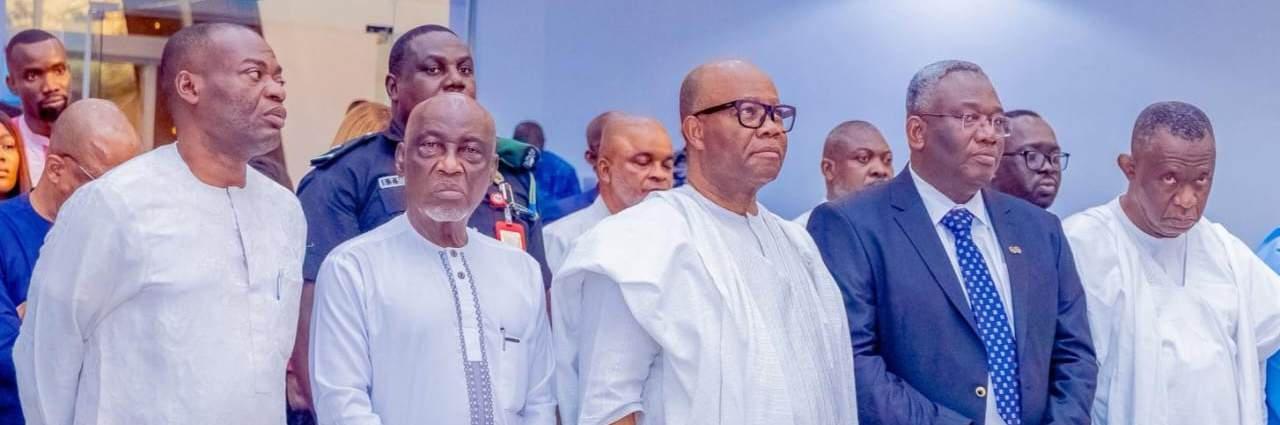
FIRST CATHOLIC MASS AND CELEBRATION OF EUCHARIST AT THE NATIONAL ASSEMBLY CHAPEL...
MAHMUDJEGA
VIEW FROM THE GALLERY
Why Not Renewed Hope Primaries?
In 1976, when the peanut farmer and former Georgia State Governor Jimmy Carter was running as a dark horse candidate for the Democratic Party’s ticket in US presidential elections, he published a campaign booklet to outline his vision and mission. It was titled, Why Not The Best? Carter subsequently won the election and became US President in January 1977. Months later, commotion erupted in the media with the publication of an audit report into his peanut farm, which showed there was sloppy accounting. Time magazine then did a story titled, “Why Not The Best accounts?” I am just wondering. The comprehensive story President Tinubu
in Weekend Trust at the weekend, titled APC consensus in crisis, indicated that the “consensus” anointment of governorship, senatorial, House of Representatives and state assembly candidates is already causing ripples in many states. Among the states mentioned in the report were Kano, Bauchi, Nasarawa, Yobe, Kwara, Katsina, Borno, Gombe, Ogun, Benue, Ondo and Delta, while other newspapers reported consensus crises in Plateau, Adamawa, Ebonyi, Oyo and Akwa Ibom.
In some of these states, first term governors are up for re-election so there is little contest for their positions, but there is hot contest for the legislative positions between current MPs
KEMI ADEOSUN
THE DESK — FINANCE, POLICY & THE VIEW FROM THE STREET
and those aspiring to supplant them. Ordinarily, all aspirants should be out in the field by now soliciting the votes of party members or convention delegates, but the consensus option adopted by APC’s national leaders has introduced a spectre not previously seen in Nigerian politics. Sure, the Electoral Act provides that party primaries could be direct, indirect or by consensus. The most widely used method before now was indirect, where party members elect delegates, who then vote for candidates at a congress or convention. That
Continued on page 39

The Minimum Ask: On Wages, Payrolls and the Question Nobody Wants to Answer First
Iam writing this on May Day. Across state capitals, workers are gathering, marching, and listening to speeches. The N70,000 minimum wage that President Tinubu enacted in July 2024 remains unimplemented in enough states to constitute a pattern rather than an exception. Labour is now demanding N154,000 — a 120 per cent uplift — to chase what inflation has consumed.
The frustration is real. The demand is legitimate.
And the politics are, as always, completely separable from the economics. So let me offer the economics, from the inside.
What Christmas Rice Taught Me About State Payrolls
There is a tradition in Nigerian government that I first encountered as Commissioner for Finance in Ogun State, and again at the federal
level. At Christmas, government distributes rice to its workers. It is a gesture that dates from an era of genuine goodwill. But the administrative exercise it requires is quietly revealing.
You have to know, precisely, how many staff you have. Names, grades, stations, entitlements.
For a Ministry of Finance — the ministry that is supposed to know everything — this turns out to be an annual exercise in discovery.
The rice list was, in practice, the most accurate
headcount we had. The number, when it arrived, blew me away. My case to the committed senior people doing the work was that at most fifty people work in Finance in any strict operational sense. The number on the list was closer to 445. That difference was instructive: workers physically present in the building, seated at desks with little to do, drivers employed long after official

L-R :Senate Minority Whip, Tony Nwoye; Seante Minority Leader, Abba Morro; President of the Senate, Godswill Akpabio; Chairman Senate Committee on North Central Development Commission (NCDC), Titus Zam and Chairman, Senate Committee on Services, Sunday Karimi, at the First Catholic Mass and Celebration of Eucharist at the National Assembly Chapel on Sunday