
Amid Drop in Global Crude Oil Price, FCCPC Warns Marketers Against Exploiting
Bello laments slow pump price reductions, cautions profiteers
Consumers
US: We Recovered the Biggest Haul of Terrorists’ Equipment in Nigeria Since 9-11
Says they needed extra plane to evacuate terrorists' electronic devices seized, 199 jihadists killed in a single raid
Discloses materials confiscated being analysed by American intelligence
Nigerian raid was like a movie, says top security official
Blames ungoverned spaces for occupation of Islamists in Africa
Reveals over 1,000 jihadists killed by Trump administration so far Emmanuel Addeh in Abuja

Emejo in Abuja








Fashola at 63: Tinubu Hails Ex-Lagos Gov's Remarkable Contributions to Public Service, Governance, National Devt
Deji Elumoye in Abuja
President Bola Tinubu has felicitated with ex-governor of Lagos State, Mr. Babatunde Raji Fashola, as he clocks 63 on Sunday, June 28, 2026.
The president, in a press release issued by his Adviser on Information and Strategy, Bayo Onanuga, highlighted Fashola's remarkable contributions to public service,
According to the US government, it had to deploy an additional aircraft to evacuate electronic devices and other intelligence materials seized during the counter-terrorism operation, due to the sheer size of the equipment.
Besides, Washington revealed that US intelligence agencies had begun to examine the devices confiscated to gain deeper insight into the communications, networks and operational methods of the Islamic State (ISIS).
The disclosure was made by the United States Deputy Assistant to the President and Senior Director for Counterterrorism at the National Security Council, Dr. Sebastian Gorka, during an interview with Marissa Streit, the CEO of PragerU, a US conservative media organisation.
Gorka described the Nigerian mission as one of the most significant counter-terrorism successes recorded by the administration, likening the operation to scenes from a Hollywood action thriller.
He said that particular
revealed that reductions in gantry prices by local refiners, marketers, depot operators and retail outlet operators had been marginal and far below what current global crude oil prices should ordinarily justify.
In a statement issued by FCCPC spokesman, Mr. Ondaje Ijagwu, he stressed that although the commission does not regulate or approve petroleum prices in the country's deregulated downstream market, it would not hesitate to investigate and sanction operators found to be engaging in anti-competitive, deceptive or exploitative practices in violation of the Federal Competition and Consumer
The commencement of operations marks the creation of a strong, better-capitalised, and nationally scaled banking institution positioned to support customers more effectively, deepen financial inclusion, and contribute meaningfully to Nigeria’s long-term economic ambitions, it said in a statement.
ProvidusUnity Bank said it brings together the complementary strengths of Providus Bank’s innovation,
governance, and national development.
Tinubu described the former governor as an outstanding administrator, accomplished legal practitioner, and patriotic Nigerian whose exemplary leadership has left an enduring legacy across the country, particularly in Lagos State.
The president also noted Fashola's unwavering loyalty to the ideals of progressive
operation resulted in the killing of 199 jihadists in a single raid, which he described as the largest enemy neutralisation in a single counter-terrorism operation since the September 11 attacks.
“I can talk about this because it has been declassified. The President is not…going around the world like some lunatic neocon saying, ‘we will turn the world into America’.
“But if you're threatening Americans, or if you're targeting Christians, he has a very strong message to send to you, whether it was his Christmas Day strike, or three weeks ago, what we did in Nigeria.
“Three weeks ago in Nigeria, I watched it live from the Situation Room. It was like being in a Tom Clancy movie, but it's better because it's real. I watched our operatives kill 199 jihadists in one operation.
“Now, why is this important? That is the biggest neutralisation enemy killed in action since September the 11th. 199 jihadists who will not harm Americans again.
“Not only that, from that raid we brought home, we needed
Protection Act (FCCPA), 2018. Bello said, "To be clear, the Commission does not regulate or approve petroleum prices in a deregulated downstream market. Our responsibility under the Federal Competition and Consumer Protection Act, 2018, is to promote competitive markets, prevent anti-competitive conduct, and protect consumers from unfair, deceptive and exploitative business practices.
"We are concerned that while dealers often respond swiftly by hiking pump prices whenever crude prices rise, it is curious that it is taking forever for consumers to benefit significantly when crude prices fall. Competitive
customer-centric service culture, and digital capabilities, and Unity Bank’s broad geographic reach and established market presence to create a stronger platform with greater capacity to serve individuals, businesses, and communities across Nigeria.
This milestone, according to the bank, aligns with the broad objectives of ongoing reforms within Nigeria’s financial sector aimed at strengthening institutional resilience,
good governance, integrity in public office, intellectual depth, and steadfast commitment to nation-building.
Tinubu recalled with pride Fashola's distinguished tenure as his Chief of Staff between 2003 and 2006 and governor of Lagos State from 2007 to 2015, during which he consolidated on the gains of progressive governance through landmark reforms in
an extra plane to bring home all the electronic material that we captured in those camps. The haul was three times bigger than any enemy electronics haul since 9-11.
“That is priceless, because now our experts are taking apart all of that information, looking at how ISIS is communicating with each other. We are so back in the game of counterterrorism. It is just superlative to watch our professionals,” he explained.
Since late 2025, the United States has significantly expanded security cooperation with Nigeria, shifting from largely advisory engagement to a more structured partnership centred on intelligence sharing, counterterrorism operations, institutional reform and military capacity building.
THISDAY recalled that the renewed engagement gathered pace after National Security Adviser (NSA) Nuhu Ribadu led a high-level delegation to Washington in November 2025, where both countries agreed to establish a Nigeria-US Joint Working Group on security.
Apart from the Christmas day
markets must work fairly in both directions."
According to the FCCPC boss, international crude prices have dropped sharply to about $73 per barrel following the ceasefire agreement between the United States and Iran and the reopening of the Strait of Hormuz, compared with a peak of about $120 per barrel recorded in April at the height of tensions in the Gulf.
The commission noted that crude prices had effectively returned to their February levels, yet the decline had not been matched by a commensurate reduction in domestic fuel prices.
The earlier surge in crude
safeguarding depositor confidence, improving competitiveness and creating financial institutions capable of supporting economic transformation.
The bank expressed its appreciation to the Central Bank of Nigeria (CBN) for its leadership, foresight and commitment to building a stronger and more resilient banking system. The bank also acknowledged the support and confidence of shareholders,
infrastructure, transportation, security, education, healthcare, environmental management, and public sector administration.
According to the President: "Fashola's commitment to excellence, which helped to transform Lagos into a model of innovation and sustainable urban development, will continue to signpost him as an outstanding governor and
bombing of terrorists’ enclaves in the north, one of the most significant achievements was a joint Nigerian-U.S. operation in Borno State that eliminated several Islamic State West Africa Province (ISWAP) militants, including the group's Deputy Leader, Abu Bakr al-Mainuki.
But the US counter-terrorism chief added that beyond the casualties inflicted on the terrorist group, the intelligence recovered from the operation could prove even more consequential.
The White House official ieclosed further that the electronic devices were currently being analysed by American intelligence agencies as part of efforts to dismantle ISIS networks and prevent future attacks against the United States and its allies.
Gorka argued that the operation reflected a more aggressive counter-terrorism posture under President Trump, insisting that the administration had abandoned what he described as the policy of "watching and waiting."
He said that in the administration's first 15 months, American forces killed about
prices prompted local refiners and marketers to increase pump prices rapidly, with petrol selling for between N1,350 and N1,500 per litre, while diesel climbed to about N2,000 per litre as geopolitical tensions escalated between April and May.
By comparison, PMS sold for between N800 and N900 per litre in February.
However, despite the reversal in global crude prices, the FCCPC observed that petrol currently sells at an average of about N1,200 per litre nationwide, while some local refiners have fixed gantry prices between N1,025 and N1,075 per litre.
While acknowledging that
customers, employees and all stakeholders whose belief in the process made this outcome possible.
“ProvidusUnity bank believes that stronger institutions will play a critical role in enabling investment, supporting enterprise, expanding access to capital and helping position Nigeria towards its aspiration of building a trillion-dollar economy.
“For customers, the
leader.
"We must also commend his dedicated service in the federal cabinet between 2015 and 2023, when he took charge of critical ministries of Works, Power and Housing.
"As former Governor Fashola celebrates another year, I wish him well. I pray that Almighty Allah will grant him many more years in good health, wisdom,
1,031 jihadists globally while also securing the freedom of 106 American hostages without paying ransom. "We are not watching and waiting. We are dealing death to bad people," he said.
Gorka said the threat posed by extremist groups remained real and pointed to attacks carried out by ISIS and other jihadist organisations across the world, including against Christian communities in Nigeria.
"If you're threatening Americans, or if you're targeting Christians because they're Christians, he has a very strong message to send to you," Gorka said in reference to President Trump.
Speaking specifically about Africa, Gorka argued that the continent has increasingly become a target for ISIS because of the existence of vast ungoverned territories where extremist groups can regroup after suffering defeats elsewhere.
He stated that many ISIS fighters displaced from Iraq and Syria during Trump's first administration relocated to Africa after the organisation's so-called
domestic fuel prices are influenced by several commercial variables, including refining costs, foreign exchange movements, logistics, financing and distribution expenses, Bello maintained that competitive market forces should have enabled consumers to benefit more quickly from lower input costs.
He stressed that market liberalisation does not absolve businesses of their responsibility to compete fairly or deny consumers the right to fair pricing.
strength, and fulfilment as he continues to contribute to the growth, unity, and prosperity of our nation."
caliphate collapsed.
"Terrorists need ungoverned space. They need somewhere where they can hang out and rebuild. Africa has a lot of ungoverned space. That's why I focus a lot of my attention on that region of the world where ISIS is trying to reconstitute a caliphate," he said.
While acknowledging that many African conflicts have local roots involving resources, ethnicity and communal disputes, Gorka argued that ISIS and similar organisations attempt to exploit those grievances by imposing extremist ideologies on existing conflicts.
He said the United States was working with African governments to prevent that strategy from succeeding. Gorka submitted that the relations between Washington and several African countries had improved significantly under the current administration after what he described as ideological disagreements during the previous U.S. administration.
"We've been working intelligently. I sent a team of
According to him, "Market liberalisation does not diminish businesses' obligations to compete fairly or consumers' right to fair treatment.
integration creates immediate and long-term benefits through expanded access, improved service delivery, enhanced technology infrastructure, broader channels, and a significantly wider national footprint designed to deliver a more consistent and seamless banking experience,” it added. According to the bank, customers should expect continuity in service and, over time, access to a more capable institution with greater
"Where credible evidence indicates conduct that undermines competition, exploits consumers or otherwise contravenes the Federal Competition and Consumer Protection Act, the Commission will investigate and take appropriate enforcement action."
Bello further urged consumers to report suspected anticompetitive conduct, misleading pricing practices and other forms of unfair market behaviour through the commission's established complaint channels, assuring that every credible complaint would receive appropriate attention.
reach, product offerings, and an unwavering commitment to service excellence. For employees, the transaction, it said, represents continuity, opportunity and confidence in the future, noting that the bank remains committed to preserving institutional knowledge, retaining talent and building a stronger organisation where people can continue to grow and contribute meaningfully.
Fashola

VISIT OF THE MINISTER OF PETROLEUM RESOURCES (GAS) TO OLOGBO COMPRESSOR STATION...
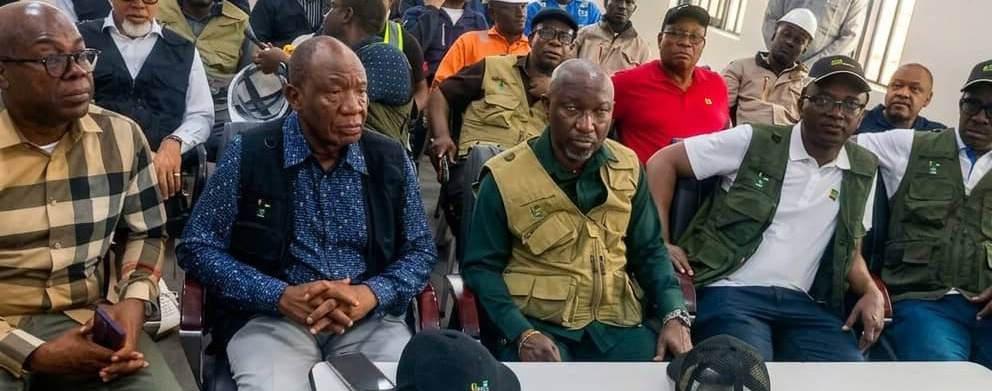
L-R: Executive Director, Nigerian Midstream and Downstream Petroleum Regulatory Authority (NMDPRA), Ogonna Ukoha; Group Chairman, Lee Engineering & Construction Company, Dr. Lee Ikpea; Minister of Petroleum Resources (Gas), Ekperikpe Ekpo; Executive Vice President, Gas, Power & New Energy (NPNE), Olalekan Ogunleye; and Managing Director, NNPC Gas Infrastructure Company (NGIC), during the Minister's visit to the Ologbo Compressor Station, Edo State, over the weekend
FG Lauds Lee Engineering, NNPC, Others for Keeping to Timelines on ELPS Project
Ekpo says compressor to raise gas pressure for power generation, industries
Emmanuel Addeh in Abuja
The federal government has lauded Lee Engineering & Construction Company Limited, the Nigerian National Petroleum Company (NNPC) Limited and other stakeholders handling the Escravos-Lagos Pipeline System (ELPS) Midline Compressor Project for keeping to the project's delivery timeline.
Minister of State for Petroleum Resources (Gas), Ekperikpe Ekpo, gave the commendation during an inspection tour of the ELPS Midline Compressor Stations at Ologbo and Okada in
Edo State, where he expressed satisfaction with the pace of work and urged all parties to sustain the momentum towards the successful completion and commissioning of the facilities.
Nigeria Leads as Africa's Energy Investment Set to Hit $110bn in 2026
Five nations account for 70% of continent's energy investment At just 3.3% of global energy capital, Africa's share remains low
Emmanuel Addeh in Abuja and Felix Omoh-Asun in Benin
Africa's total energy investment is projected to reach $110 billion in 2026, with Nigeria remaining one of the continent's largest investment destinations despite a prolonged decline in upstream spending among its biggest oil and gas producers, the International Energy Agency (IEA) has said.
In its World Energy Investment 2026 report, the IEA said although investment across Africa is expanding, the continent continues to attract just 3.3 per cent of global energy investment despite accounting for about 20 per cent of the world's population.
The report noted that while spending remains heavily dominated by fossil fuels, investor interest is increasingly extending to power generation, critical minerals and transport electrification as African countries seek to diversify their energy mix and strengthen energy security.
According to the report, investment remains concentrated in Nigeria, Algeria, Angola, Egypt, and Libya, with the five countries accounting for about 70 per cent of Africa's energy investment.
However, the report noted that investment in those countries has fallen significantly over the last decade, declining from $50 billion in 2016 to $25 billion in 2025, reflecting weaker upstream spending among the continent's traditional oil and gas producers.
Overall upstream investment across Africa, it said, stood at $37 billion in 2025, down from $68 billion recorded in 2016. Despite the decline, Nigeria remains central to Africa's oil and gas investment outlook.
The agency added that upstream oil and gas investment in sub-Saharan Africa is expected to rebound by 12 per cent to almost $24 billion in 2026 following an 18 per cent decline in 2025, with Nigeria expected to remain among the key beneficiaries through ongoing LNG and offshore developments.
The IEA noted that liquefied natural gas (LNG) developments continue in Nigeria and Mozambique, supported by a mix of international oil companies and indigenous firms, while Nigeria is also advancing deepwater oil projects in partnership with major operators.
The report indicated that
capital is increasingly flowing towards emerging producers including Mozambique, Namibia, Senegal and Uganda, where investment has risen steadily since 2016 as investors pursue new frontier opportunities.
Beyond hydrocarbons, the IEA said investment in Africa's critical minerals sector reached $10 billion in 2024, although activity remains concentrated in the production of copper, cobalt and graphite.
It noted that inadequate infrastructure, electricity shortages and limited water supply continue to constrain refining and downstream processing across the continent, preventing many African countries from capturing greater value from their mineral resources.
The report also highlighted the scale of Africa's energy access challenge, estimating that about 590 million people on the continent still lack access to electricity, while nearly one billion people do not have access to clean cooking solutions.
According to the IEA, addressing these deficits will require significantly higher investment across electricity networks, clean cooking
technologies and renewable energy infrastructure if African countries are to meet their development objectives.
The agency nevertheless observed encouraging signs in the transport sector, noting that electrification is gradually gathering pace, particularly in East Africa, where supportive government policies and the growing presence of Asian electric vehicle manufacturers are helping accelerate adoption.
Globally, the report projected energy investment to rise to a record $3.4 trillion in 2026 despite heightened geopolitical uncertainty. Of this amount, about $2.2 trillion will be directed towards clean energy technologies, electricity networks, storage, efficiency and electrification, almost double the amount expected to be invested in fossil fuels.
The IEA stressed that although investment in clean energy continues to outpace spending on oil, gas and coal globally, Africa's ability to participate more fully in the transition will depend on improving access to affordable finance, strengthening infrastructure and creating policy environments capable of attracting long-term private capital.
Ekpo, who was accompanied by the Executive Vice President, Gas, Power and New Energy at NNPC Limited, Mr. Olalekan Ogunleye, and the Chairman of Lee Engineering & Construction Company Limited, Chief Leemon Ikpea, said the project remained central to the federal government's drive to expand critical gas infrastructure and deepen domestic gas utilisation.
On his X handle yesterday, the minister stressed that strategic investments in gas transportation infrastructure were essential to unlocking economic growth, improving energy security and supporting Nigeria's industrialisation agenda,
“ Ekpo expressed satisfaction
with the progress recorded and commended NNPC Limited, Lee Engineering and all project stakeholders for maintaining the project's delivery timeline. He urged them to sustain the current momentum to ensure the successful completion and commissioning of the facilities as scheduled.
“The minister reaffirmed the federal government's unwavering commitment to expanding Nigeria's gas infrastructure, noting that strategic investments in gas transportation infrastructure are critical to unlocking economic growth, enhancing energy security and deepening domestic gas utilisation,” he said.
NPI 4.0: NSIA Stakes $275,000 on Nigerian Startups to Stimulate Innovative Solutions
James Emejo in Abuja
Managing Director/Chief Executive, Nigeria Sovereign Investment Authority (NSIA), Aminu Umar-Sadiq, said it is committed to strengthening entrepreneurship development by expanding funding, mentorship and business support opportunities for innovative Nigerian startups through the fourth edition of the NSIA Prize for Innovation (NPI 4.0).
He spoke while announcing the commencement of applications for the NPI 4.0 for 2026, offering a combined prize pool of $275,000, comprising $220,000 from the NSIA, $45,000 from Cascador and $10,000 from Wema Bank.
Umar-Sadiq said the
enhanced programme was designed to help promising entrepreneurs transform innovative ideas into sustainable businesses capable of driving economic growth, creating jobs and addressing some of the country's most pressing development challenges.
In a statement by NSIA spokesperson, Joyce Onyegbula, he said entrepreneurs across the country were already developing solutions with the capacity to transform industries and improve livelihoods.
He said, "Across Nigeria, entrepreneurs are building solutions with the potential to transform industries, improve livelihoods, and address some of our most pressing development challenges.
FLAG-OFF CEREMONY OF NASENI SKILL ACQUISITION TRAINING PROGRAMME...
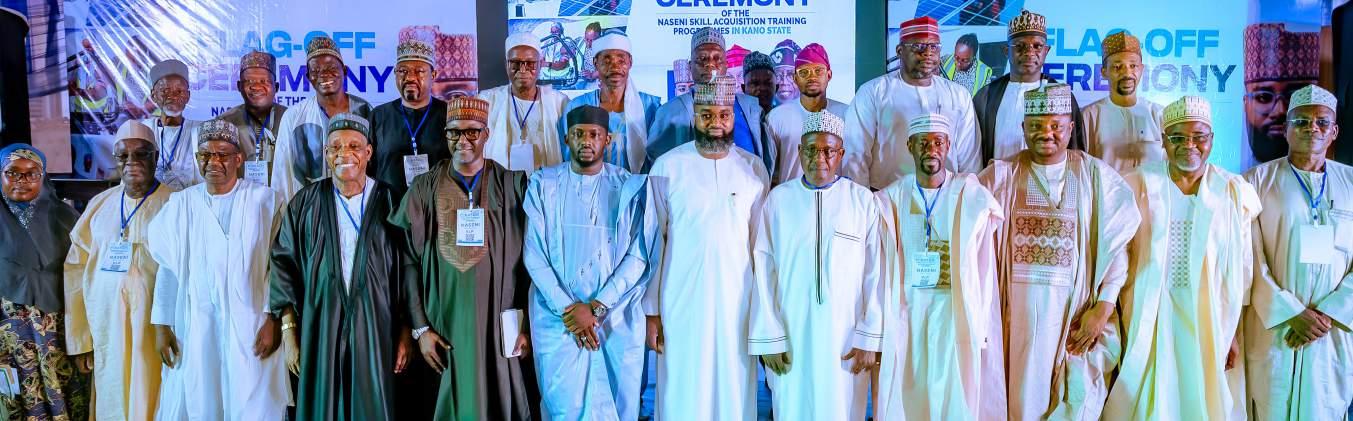
Vice President Kashim Shettima represented by the Personal Assistant to President Tinubu on Subnational Infrastructure, Musaddiq Mustapha Adamu (6th from left); Secretary to the Government of the Federation, Senator George Akume, represented by the Director, General Services Office, Dr. Ibrahim Abdulkadir (8th from left); EVC/CEO of NASENI, Khalil Suleiman Halilu (7th from left); Kano State Governor, Abba Ibrahim represented by the Hon. Commissioner for Finance, Dr. Yusuf Ismaila Danmaraya (5th from left); Chairman, Nigerian Commodity Exchange (2nd from right); National Programme Manager, Government Enterprise and Empowerment Programme, Alhajji Hamza Ibrahim Baba (3rd from right); Hon. Commissioner for Livestock Development, Dr. Aliyu Isah Aliyu (5th from right); Chairman, Arewa Consultative Forum, Kano State Chapter,Dr. Gwani Farouk Umar (4th from left) and other dignitaries during the flag-off ceremony of NASENI Skill Acquisition Training Programme held in Kano on Saturday,
Alliance Report Alleges Mineral Cartel Behind Violence in Resource-rich States
Says economy loses $9 billion annually to banditry, illegal mining, others Says rising food inflation not influenced by market forces alone but economic costs of conflict, displacement, illegal exploitation of natural resources Dele Oye slams foreign trips as costly waste, says millions squanders with little to show
James Emejo in Abuja
An investigative report has alleged that the country's worsening insecurity in several mineral-rich states is being driven by powerful economic interests seeking control of the country's vast solid mineral deposits.
The report, titled "The Shadow Owners", and published by the Alliance for Economic Research and Ethics Limited (AERE), also warned that the development is costing the economy about $9 billion annually in illegal mining and gold smuggling while worsening food inflation. Alliance further stated that armed bandits are merely "expendable foot soldiers", while the real beneficiaries allegedly
conceal their identities through offshore shell companies.
This is as Chairman of the Alliance for Economic Research and Ethics, Dr. Dele Oye, yesterday condemned the country's frequent foreign investment and diplomatic trips, describing them as a costly national embarrassment that continues to drain public funds without delivering meaningful economic returns.
Oye, in a policy document titled "The Cultural Key: Why Nigerian Businesses and Government Delegations Fail Abroad – and How to Master Cross-Cultural Commerce," said successive government delegations have repeatedly returned from overseas engagements with little more
NADF Flags Off Distribution of 80,640 Free Fertiliser to South-South Farmers
The National Agricultural Development Fund (NADF) has flagged-off the distribution of 80,640 fully subsidised bags of fertiliser to 20,160 smallholder farmers across the South-south geopolitical zone.
Executive Secretary/Chief Executive of NADF, Mohammed Ibrahim, said the initiative under the Farm Input Support Programme (FISP) was designed to deliver fertiliser directly to verified farmers at the right time to boost crop yields, improve market access and strengthen food security, Speaking at the zonal launch of the programme in Calabar, Cross River State, over the weekend, he said the intervention was deliberately targeted at genuine farmers cultivating priority food crops
rather than serving as a general distribution exercise.
Represented by the Head of Investment Department, Mr. Olalekan Alabi, Ibrahim said agriculture should ultimately be measured by increased productivity and its impact on livelihoods.
He said, "FISP is not a blanket intervention. It is targeted support designed to get fertiliser to the right farmers, for the right crops and at the right time. Agriculture should be measured by higher yields, improved market access and the impact it makes on people's lives."
He stated that the programme underscored the federal government's commitment under President Bola Tinubu's Renewed Hope agenda to lower production costs, raise agricultural output and improve national food security.
than photographs, ceremonial handshakes and memoranda of understanding (MOUs) that rarely translate into real investments.
However, the Alliance report, pointed out that the persistent violence across states including Zamfara, Kaduna, Plateau, Niger, Nasarawa and Benue follows the same geographical pattern as the country's richest deposits of gold, lithium and uranium, suggesting that the conflict is increasingly tied to the struggle for control of strategic mineral
resources.
It challenged long-held narratives that attribute the violence solely to ethnic divisions, religious extremism or farmerherder clashes, contending instead that such explanations may be obscuring a much larger economic enterprise built around resource exploitation.
The report noted that by early 2025, over 1.3 million Internally Displaced Persons (IDPs) had been recorded across the North-Central and
North-West, arguing that the widespread displacement has created conditions that allegedly favour illegal extraction activities in affected communities.
Drawing parallels with the Democratic Republic of Congo, the report warned that Nigeria risks replicating a model in which armed groups seize control of mining areas, minerals are smuggled across borders and proceeds ultimately flow into foreign tax havens rather than national development.
It further questioned how communities are expected to exercise their legal right to free, prior and informed consent for mining projects under the Nigerian Minerals and Mining Act after many residents have been displaced by violence. According to the report, terror had effectively become a tool for clearing communities from resource-rich lands, creating a vacuum allegedly exploited by those with commercial interests in the country's mineral wealth.
Xenophobia: MTN Group Chairman Condemns Attack on Foreigners, Blames Crisis on Failure of the State
Emma Okonji
Former South Africa's Deputy Minister, who is currently the Chairman, MTN Group, Mcebisi Jonas has condemned the ongoing Xenophobic crisis in South Africa, blaming the situation on the failure of the South African government.
Jonas who spoke at the funeral service of Zimbabwean-born activist and public servant, Thokozani Damasane, delivered a sweeping and unsparing condemnation of the ongoing anti-foreigner sentiment in South Africa and how it is a symptom
of state failure being cynically exploited by politicians with no interest in genuine solutions.
His speech, which drew on philosophy, personal memory, and sharp political analysis, circulated widely since the service and is being discussed across South African civil society as one of the most substantive interventions by a senior business figure into a crisis that has repeatedly damaged South Africa's standing on the African continent.
Jonas told mourners that Thokozani Damasane was born and educated in Zimbabwe before relocating to South Africa during
the post-apartheid transition period, to seek a home in South Africa. Jonas therefore described a home as a place where humanity is, and striving for the good of humanity, and questioned why South Africans are against foreigners in their country.
The speech's most politically charged passage came when Jonas turned directly to the question of whether removing foreign nationals would address South Africa's underlying socioeconomic crises and answered with a categorical no.
“Foreigners can leave tomorrow - inequality will be
with us. Foreigners will leave tomorrow - unemployment will be with us. Foreigners will leave tomorrow - our police will remain corrupt. Foreigners will leave tomorrow - our politicians will still be concerned with one thing: being elected and re-elected." he told the congregation.
Jonas who blamed the crisis squarely on the state, said: “The problem is the failure of the state. The state doesn't manage immigration. It doesn't manage its borders. It doesn't enforce law enforcement. It doesn't manage education. What are you expecting?"
Doris Ariole, Hadassah-Kaemedia Productions Bag 16 TINFF Nominations
Sunday Ehigiator
Award-winning filmmaker and screenwriter Doris Ariole has recorded another milestone on the international film festival circuit as two productions from the collaboration between Hadassah Christian Entertainment Network
and the United States-based Kaemedia Networks secured a combined 16 nominations at the forthcoming Toronto International Nollywood Film Festival (TINFF) in Canada.
According to the nomination list released by the festival organisers, ‘Not Letting Us Go’ received six nominations,
including Best Faith-Based Film, while Unboxing Love earned 10 nominations ahead of its world premiere at the festival.
The Toronto International Nollywood Film Festival, regarded as one of the leading platforms showcasing Nollywood and African cinema in North America, is scheduled to hold from September 4 to 12, with the awards ceremony taking place on the closing day. Reacting to the achievement, Ariole described the nominations as a reflection of the growing global acceptance of faith-based films produced to international standards.
James Emejo in Abuja











#WATCHINGTHEVOTE 2026 EKITI GOVERNORSHIP ELECTION RESULTS FINDINGS




*Verification based on INEC o icial results announced across all the 16 LGAs in Ekiti state.
INEC’s official results for the 2026 Ekiti State Governorship Election are consistent with Yiaga Africa’s WTV estimate, as they fall within Yiaga Africa’s estimated range. This indicates that the official results, as announced, reflect the ballots counted at polling units. However, widespread reports of vote buying and voter inducement raise serious concerns about the integrity of voter choice and the extent to which the outcome reflected the free will of the electorate. Had the results been significantly altered at the ward, LGA, or state collation centers, the official figures would have fallen outside Yiaga Africa’s WTV estimated ranges. The consistency of the results, therefore, speaks specifically to the accuracy of the tabulation of polling-unit results
Yiaga Africa #WatchingTheVote Voter Turnout Projection 34.1% and 38.2%
(+/- 2.1MoE)
1
Yiaga Africa urges INEC to clarify the inconsistency in the total number of registered voters used to calculate voter turnout and take immediate steps to correct it. If left unresolved, such inconsistencies could become a source of controversy and affect the conclusiveness of future elections.
3
INEC should issue a clear public explanation of its end-to-end results-management process, particularly the workflow for the electronic EC8A, where polling officials now input results into the BVAS. The explanation should set out what happens at the back end specifically, whether results transmitted from polling units are published directly on the IReV, or pass through a verification or review stage within INEC before public release.
5
With the introduction of the electronic EC8A, INEC should state clearly which result takes precedence in the event of a discrepancy between the hard-copy EC8A, the scanned copy on the IReV, and the electronically transmitted e-EC8A.
2
7
Political parties should invest in systematic training for polling agents on the Electoral Act 2026 and INEC’s Regulations and Guidelines. Well-trained agents are critical to credible results management and lawful resolution of electoral disputes.
4
Yiaga Africa urges INEC to strengthen quality assurance in the production, verification, distribution, and deployment of sensitive election materials. Ballot papers, result sheets, and related forms should reflect the final and legally valid list of parties and candidates to reduce confusion and limit rejected ballots.
INEC should expand the scope of published results published on the IREV. Beyond the polling-unit EC8As, INEC should also publish the EC8B (ward collation) and EC8C (local government collation) results on the IReV. Making the full collation chain publicly available will significantly deepen the transparency of results management
6
Security agencies should sustain a proactive approach to arresting and prosecuting electoral offenders. Enforcement against vote buying, voter intimidation, and inducement must extend beyond polling units to surrounding areas where such offences increasingly occur.
The abuse of incumbency powers and state resources must be effectively regulated to guarantee a level playing field. A healthy democracy requires a strong opposition, and unchecked incumbency advantage undermines electoral competitiveness and legitimacy.


Acting Group Politics Editor DEJI ELUMOYE
Email: deji.elumoye@thisdaylive.com 08033025611 SMS ON lY
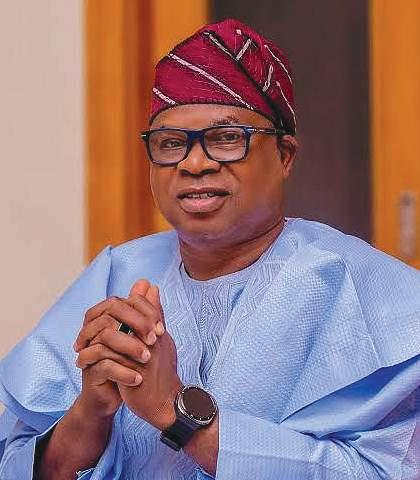
Politics of Continuity: Can AMBO’s Prosper Agenda Build on Oyetola’s Legacy in Osun?
The battle for the soul of Osun State this august, when its governorship election will hold, is not just in sheer slogans, but in the ideas that can stand the real test of time, writes Shola Oyeyipo
Indeed, every election presents voters with a choice. Sometimes, it is a choice between personalities. At other times, it is a choice between competing ideologies.
More often than not, however, elections are ultimately about continuity and change— whether a society should consolidate an existing path or abandon it in favour of a new direction.
As Osun State gradually inches towards another governorship election cycle in August, this debate is already beginning to take shape, and redefining the balance.
Beyond the usual political rhetoric and partisan exchanges lies a fundamental question that will likely define the electoral conversation in the months ahead: what should be the next phase of Osun’s development journey?
For supporters of the All Progressives Congress (APC), the answer lies in building upon the foundations laid during the administration of former Governor Gboyega Oyetola between 2018 and 2022.
Their argument is straightforward. They contend that governance is most effective when progress is cumulative, when succeeding leaders improve on existing achievements rather than dismantle them, and when development is approached as a long-term project rather than a series of disconnected political cycles.
It is against this backdrop that the emergence of Munirudeen Bola Oyebamiji (AMBO), with his seven-point PROSPER Agenda, has generated considerable interest within political circles in Osun.
The significance of the agenda lies not merely in its promises but in the extent to which it seeks to connect future aspirations with previous accomplishments.
From Fiscal Stability to Economic Expansion
One of the strongest pillars of the Oyetola administration was fiscal management. When the administration assumed office, Osun faced significant financial pressures arising from debt obligations, infrastructure deficits and competing developmental needs.
Yet by the end of the administration, budget implementation rates had improved significantly, nearly N100 billion of inherited debt had reportedly been retired, and the state had emerged as one of Nigeria’s leading destinations for foreign capital inflows outside Lagos and Abuja.
These achievements provided a level of economic stability that many observers considered necessary for sustainable growth.
The PROSPER Agenda’s focus on poverty alleviation, workers’ welfare and job creation can therefore be viewed as an attempt to move beyond stabilisation towards expansion.
The challenge facing Osun today is no longer simply balancing the books. It is creating sufficient economic opportunities for a growing youth population while reducing poverty and inequality.
By proposing targeted interventions for vulnerable citizens, enterprise support programmes and expanded economic opportunities for young people and women, the agenda seeks to address one of the most pressing realities confronting the state: economic growth must be felt by ordinary citizens if it is to have lasting meaning.
Why Economic Opportunity Matters
The emphasis on economic growth within the PROSPER framework is perhaps one of its most defining strategically important components.
Previous administrations invested heavily in creating enabling environments for businesses through industrial initiatives such as the Free Trade Zone, the International
Trade Centre and Dry Port project, market modernisation programmes and MSME financing interventions. Yet infrastructure alone cannot guarantee prosperity. The real test is whether investments translate into jobs, wealth creation and higher living standards.
This explains why the agenda places significant emphasis on strengthening the investment promotion architecture of the state, supporting small businesses and attracting both domestic and foreign investors.
Supporters argue that if Osun was able to attract significant capital investments under previous APC administrations, then a more aggressive investment drive could potentially unlock even greater opportunities in manufacturing, agriculture, technology and services.
Agriculture as the Missing Link No sector, perhaps, better illustrates the relationship between continuity and future growth than agriculture.
The Oyetola administration invested substantially in cocoa development, cassava production, rice cultivation and livestock services. These interventions increased productivity and provided support to thousands of farmers.
Yet agriculture remains largely underdeveloped relative to its enormous potential.
AMBO’s proposal for agro-industrial clusters and modern farm settlements appears designed to address this challenge.
The logic is simple: rather than exporting raw agricultural produce, Osun can generate greater economic value by processing, packaging and marketing agricultural products within the state.
If effectively implemented, such an approach could stimulate industrialisation, create jobs and increase internally generated revenue.
Human Capital as a Development Strategy
It’s a no-brainer that no society can achieve sustainable prosperity without investing in its people.
This reality was evident in the Oyetola administration’s prioritisation of education and healthcare through increased budgetary allocations, teacher recruitment, school feeding programmes and revitalisation of primary
In that contest of ideas, the PROSPER Agenda is likely to become more than a manifesto. It may well become the framework through which supporters seek to define the next chapter of governance in Osun State.
healthcare facilities.
The PROSPER Agenda builds directly on these foundations.
Its emphasis on technical education, vocational training and healthcare improvement reflects growing recognition that future economic competitiveness will depend largely on the quality of human capital available to drive innovation and productivity.
For Osun, which has historically enjoyed a reputation as one of Nigeria’s educationally advanced states, the challenge is ensuring that education remains connected to economic realities and labour market needs.
Security and the Development Question Development and security are inseparable. Investors rarely commit resources to environments characterised by instability. Communities let alone commerce cannot thrive where insecurity persists.
Aligning with others for the establishment of the Amotekun Corps and the creation of conflict prevention mechanisms during the APC administration reflected an understanding of this reality.
The PROSPER Agenda seeks to deepen these efforts through enhanced collaboration with security agencies and stronger community-based approaches.
In an era where security concerns continue to shape national conversations, such proposals are likely to resonate with many citizens.
The Infrastructure Imperative Infrastructure remains one of the most visible indicators of governance. From roads and bridges to water systems and public facilities, physical infrastructure shapes both economic activity and quality of life.
The Oyetola years witnessed extensive investments in roads, rural connectivity, water infrastructure, housing and public utilities.
Rather than treating these projects as completed achievements, the PROSPER Agenda presents them as foundations requiring further expansion.
The emphasis on renewed infrastructure, tourism and culture reflects an understanding that development is an ongoing process requiring constant investment and innovation.
More Than a Campaign Document
Ultimately, the PROSPER Agenda will be judged not by the elegance of its design but by its practicality and relevance to the needs of Osun people.
Yet, its political significance extends beyond policy prescriptions.
The agenda represents an attempt to frame the August, 2026 governorship conversation around continuity, consolidation and future growth. It seeks to persuade voters that development is most effective when successive administrations build upon existing gains rather than discard them.
Whether that argument ultimately resonates with the electorate remains to be seen.
What is certain, however, is that the debate over Osun’s future will increasingly revolve around competing visions of development.
On one side will be those who argue for a new direction. On the other will be those who insist that the most sustainable path forward is to deepen and expand the foundations already laid.
This is particularly noteworthy since the incumbent, Ademola Adeleke, seems to personify failure in every box of development indices, more so by seeeking to trivialise governance and reduce it to a mere circus show.
In that contest of ideas, the PROSPER Agenda is likely to become more than a manifesto. It may well become the framework through which supporters seek to define the next chapter of governance in Osun State.
Oyebamiji
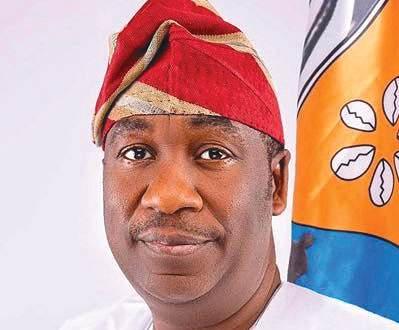
Lagos: Hamzat and Power of a Distinct Political Identity
i n n igerian politics, where visibility is often mistaken for relevance and loud rhetoric frequently overshadows substance, Lagos s tate d eputy Governor, o bafemi Hamzat, has built a political identity that stands him out. Jonathan Eze writes.
Without fanfare or political theatrics, Lagos Deputy Governor, Obafemi Kadiri Hamzat, has cultivated a reputation rooted in intellect, competence, humility and service.
Over the years, Hamzat has evolved beyond the status of a conventional politician. He has become a distinctive political brand in Lagos, earning respect across party lines, professional circles, traditional institutions and grassroots communities.
His appeal is not the product of relentless self-promotion but of a carefully nurtured record of diligence, accessibility and administrative effectiveness.
In a state renowned for producing influential political figures, Hamzat has carved out a niche defined by quiet efficiency. His rise has been driven less by political spectacle than by a reputation for getting things done.
Hamzat’s Identity
Observers increasingly speak of a “Hamzat Identity”—a political persona characterised by civility, competence and humility in leadership. It reflects the enduring Yoruba ideal of Omoluabi, which values integrity, responsibility, wisdom and good character.
As discussions around the 2027 governorship election gather momentum, Hamzat’s growing appeal appears to be the culmination of decades of public service rather than a product of political circumstance. His supporters argue that he represents a rare combination of technocratic expertise and political maturity.
Unlike many politicians who thrive on confrontation, Hamzat is widely regarded as measured and disciplined. Throughout his years in government, he has demonstrated an ability to engage differing opinions without rancour. Those who have worked with him often describe him as approachable, respectful and deeply committed to public service.
His appeal extends beyond governance. He projects simplicity and accessibility despite occupying one of the highest offices in Lagos. Whether interacting with professionals, traditional rulers, students or market traders, he has maintained a reputation for treating people with respect regardless of status.
That humility may prove significant in Lagos, where voters increasingly value leaders who combine competence with character. Hamzat appears to embody both qualities.
Experience and Leadership Credentials
One of Hamzat’s greatest strengths is his extensive governance experience. Having served under different administrations, he understands the complexities of public administration and consensus-building.
His involvement in major policy initiatives spanning technology, infrastructure, transportation and urban development has given him firsthand experience in managing the challenges of a rapidly expanding megacity.
His technocratic orientation is particularly relevant as Lagos confronts issues such as housing shortages, traffic congestion, flooding, waste management, digital governance and youth unemployment.
Addressing these challenges requires more than political rhetoric; it demands practical expertise and strategic thinking.
Equally important is his reputation as a bridge-builder. His calm temperament and consultative approach have enabled him to maintain productive relationships across different political and social constituencies. This ability to unite diverse interests could become a significant asset in a highly competitive electoral environment.
Obanikoro’s Appointment and Campaign Strategy
A major boost to Hamzat’s political machinery is the appointment of Senator Musiliu Obanikoro as Director-General of the governorship campaign.
The decision has been widely viewed by political observers as a strategic move. Obanikoro brings decades of political experience, grassroots mobilisation capacity and a deep understanding of Lagos politics. His appointment reflects a campaign
structure designed to combine administrative competence with political reach. It also demonstrates a willingness to leverage experience and broad networks in pursuit of electoral success.
For many analysts, the choice signals political foresight and an appreciation of the realities of modern electoral competition.
Factors Working in Hamzat’s Favour
Several factors position Hamzat as a formidable contender.
First is his governance record. Few prospective candidates possess comparable experience in policy formulation and implementation within Lagos State.
Second is his credibility among both political leaders and grassroots stakeholders. While he enjoys the confidence of key party figures, he has also earned respect among professionals, civil servants, community leaders and ordinary residents.
Third is his ability to project stability.
At a time when many Nigerians express frustration with divisive politics, Hamzat’s reputation for moderation and consensus-building may appeal to voters seeking steady leadership.
Finally, his image as a disciplined public servant distinguishes him from many politicians whose careers are driven primarily by populist appeal.
Challenges Before the 2027 Poll
Despite these strengths, Hamzat’s path to Lagos Government House is unlikely to be straightforward.
One major challenge is the burden of continuity. As deputy governor, he will inevitably be associated with both the achievements and shortcomings of the current administration. While supporters may point to progress in infrastructure and governance, critics are likely to focus on persistent concerns such as traffic congestion, housing affordability and the cost of living.
Another challenge is Lagos’ changing voter demographics. The state has witnessed the rise of a younger and increasingly independent-minded electorate that places greater emphasis on accountability, economic opportunities and social inclusion.
Hamzat will need to connect with these voters in ways that extend beyond his administrative record.
The opposition factor also remains significant. Although Lagos remains a stronghold of the All Progressives Congress, recent elections have demonstrated that opposition parties can no longer be dismissed. Electoral competition is becoming increasingly intense, particularly
Hamzat’s path to Lagos Government House is unlikely to be straightforward. One major challenge is the burden of continuity. As deputy governor, he will inevitably be associated with both the achievements and shortcomings of the current administration.
in urban areas and among younger voters. There is also the issue of perception. Hamzat’s calm and reserved nature is widely admired, but politics often rewards visibility and aggressive public engagement.
Opponents may attempt to portray his quiet style as a lack of political dynamism. His campaign will therefore need to transform restraint into a compelling leadership narrative.
Internal party dynamics could present another hurdle. Lagos politics has historically been shaped by competing interests and power blocs within the ruling party. Maintaining party cohesion while expanding his support base will require considerable political skill.
Economic realities may further complicate the landscape. Public dissatisfaction arising from economic hardship often affects perceptions of incumbents and establishment figures. As a prominent member of the current administration, Hamzat may find himself defending circumstances beyond his direct control.
Ultimately, the 2027 governorship election will not be won on reputation alone. It will require effective organisation, coalitionbuilding, persuasive communication and a clear vision for the future of Lagos.
Yet Hamzat enters the contest with considerable strengths. His political journey has been defined by competence, discipline, humility and strategic patience. He has built influence without confrontation and earned respect without demanding it.
Whether those qualities ultimately propel him to the governorship remains uncertain. What is clear, however, is that Hamzat has succeeded in creating a distinct political identity, one that resonates with both the political establishment and the wider public. In an era often dominated by noise and spectacle, that may prove to be one of his greatest advantages.
Hamzat
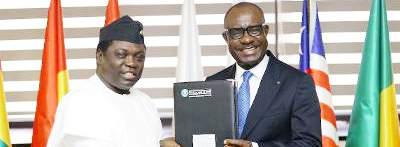
$268M LOAN AGREEMENT SIGNING CEREMONY...
Uwaleke: CBN's Proposed HoldCo Reforms Most Far-reaching Restructuring
Renowned financial economist and President, Capital Market Academics of Nigeria (CMAN), Prof. Uche Uwaleke has applauded the Central Bank of Nigeria's (CBN) recent exposure drafts on the Revised Guidelines for Financial Holding Companies (HoldCos) and the Ring-Fencing of Closely Linked Entities, saying it is perhaps the most far-reaching restructuring of Nigeria's financial conglomerate architecture since the introduction of the holding company framework in 2014.
In an article titled "Proposed
of Nigeria's Financial Conglomerate Architecture
HoldCo Reforms: Balancing Financial Stability with Operational Efficiency," which he made available to THISDAY, weekend, the one-time Commissioner for Finance in Imo State, explained that coming at a time when the banking industry is still adjusting to the recapitalisation exercise, the proposals seek to strengthen corporate governance, enhance regulatory oversight, protect depositors' funds and insulate banks from risks arising from non-bank subsidiaries and related entities.
Uwaleke said the broad objectives of the reforms were
AFRAA Admits United Nigeria Airlines as Full Member, Boosting Nigeria’s Role in African Aviation
Chinedu Eze
Nigeria’s fast rising carrier, United Nigeria Airlines, has been admitted as a full member of the African Airlines Association (AFRAA), a move that strengthens the continental body's presence in one of Africa's largest and fastest-growing aviation markets.
The airline in a statement said the announcement underscores AFRAA's commitment to strengthening the Association’s footprint across the African continent and driving the sustainable development of the continent's airline industry.
Part of the statement read “United Nigeria Airlines commenced its commercial operations in February, 2021 with a mission to enhance domestic connectivity across Nigeria and advance regional integration within West Africa.
“Operating a diverse modern fleet of Boeing 737-800NG, Embraer 145, A-320, Embraer 190 and CRJ 900 jets, United Nigeria Airlines currently serves
14 domestic routes which includes Abuja, Anambra, Asaba, Benin, Ekiti, Enugu, Ilorin, Kano, Lagos, Owerri, Port Harcourt, Sokoto, Warri and Yenagoa with plans to open four new ones this year.
“United Nigeria Airlines also flies to Accra, Ghana’s capital and has been designated by the Nigerian government to fly to the USA, Canada, UAE, UK, Italy, Turkey and other regional and continental routes with more destinations expected.
“It recently signed a Memorandum of Understanding with the government of GuineaBissau to establish a national carrier and has achieved the IATA Operational Safety Audit (IOSA) certification.
“It is also a member of the IATA Clearing House, demonstrating its commitment to global safety and operational standards. It plans to establish its own Maintenance, Repair, and Overhaul (MRO), a milestone that would further strengthen Nigeria's aviation ecosystem and reduce dependence on costly offshore maintenance services.”
both timely and commendable, adding that over the last decade, Nigerian banking groups had evolved into increasingly complex financial conglomerates with extensive Pan-African operations and diverse subsidiaries spanning insurance, pensions, payments, asset management and fintech businesses.
He noted, "While this diversification has created opportunities for growth and efficiency, it has also generated new channels through which risks originating from one part of the group can spread to the regulated banking entity.
"Consequently, the CBN's determination to reinforce financial stability and align Nigeria's supervisory framework with global standards is understandable. However, as with most
regulatory reforms, the question is not whether change is necessary, but how such changes should be implemented in a manner that preserves the efficiency gains of financial conglomeration while strengthening prudential safeguards.
"It goes without saying that good regulation should not only pursue sound objectives but should also achieve them in a manner that is proportionate, practical and capable of minimizing unintended consequences."
He observed that at the heart of the proposed reforms lies an attempt to restore the original philosophy underpinning the HoldCo model.
"The CBN deserves commendation for its determination to strengthen governance, enhance resilience
and protect depositors within Nigeria's increasingly complex financial system. The direction of the reforms is broadly consistent with global regulatory trends and reflects important lessons from previous financial crises.
"Nevertheless, effective regulation requires more than good intentions. It demands a careful balance between prudential safeguards and operational efficiency. Excessive rigidity can destroy valuable synergies, raise costs and create unintended distortions.
"Conversely, insufficient oversight may expose the system to contagion and systemic vulnerabilities. All said, the challenge before both the CBN and the industry is to strike the right balance between stability and efficiency.
"If implemented gradually,
supported by clear guidance and accompanied by appropriate flexibility, these reforms could leave Nigeria with a stronger, more transparent and more resilient financial system.
"But if pursued too aggressively or without sufficient accommodation for practical realities, the costs may outweigh the benefits. The objective should therefore not be regulation for its own sake, but regulation that promotes resilience without sacrificing competitiveness, innovation and efficiency.
“In the final analysis, good regulation is not merely about rules; it is equally about judgment, proportionality and successful execution,” Uwaleke who is who is also the Director, Institute of Capital Market Studies. Nasarawa State University, said.
EBID Commits $268m to Taraba's Power, Agriculture, Industrial Expansion
Nume Ekeghe
The ECOWAS Bank for Investment and Development (EBID) has signed three loan agreements worth $268 million with the Taraba State Government to finance major investments in renewable energy, agriculture and industrial infrastructure aimed at accelerating economic development in the state.
The agreements, signed on June 26 at EBID's headquarters, were executed by the President and Chairman of the Board of Directors of EBID, Dr. George Agyekum Donkor, and the governor of Taraba State, Dr. Agbu Kefas, who led a delegation of government officials, technical advisers and development partners.
The financing package will
support three strategic projects, including $91.23 million for the first phase of an integrated industrial park expected to serve as a multi-cluster logistics and manufacturing hub capable of attracting private sector investment, promoting value addition and creating jobs.
Another $79.21 million will fund the development of 10,000 hectares of irrigated rice paddies alongside a modern rice milling and processing facility to strengthen domestic food production and reduce dependence on imported rice.
In addition, EBID will provide $98.19 million to finance the construction of a 50-megawatt solar photovoltaic power plant in Jalingo, a project expected to improve electricity supply, expand access to clean energy and support industrial activities
across the state.
According to the regional development finance institution, the investments align with its Growth, Resilience and Optimisation (GRO) Strategy, which prioritises projects capable of delivering measurable economic, social and environmental benefits across West Africa.
Speaking at the signing ceremony, Donkor said: "By investing simultaneously in industrial infrastructure, agricultural value chains and renewable energy, EBID is delivering an integrated development package with lasting regional impact. This partnership reflects our commitment to building resilient and competitive economies across West Africa."
Kefas described the financing
as a major milestone in the state's development agenda.
He said: "This financing, secured through our partnership with EBID, lays the foundation for economic transformation by strengthening industry, enhancing food security and expanding access to reliable, sustainable energy for the people of Taraba State."
The bank noted that the projects are expected to position Taraba State as a leading industrial and agricultural hub in Nigeria while supporting the transition to a lower-carbon economy.
For EBID, the agreements further reinforce its role as a leading regional development finance institution advancing sustainable infrastructure and economic transformation across West Africa.
Ndubuisi Francis in Abuja
The President and Chairman of the Board of Directors of ECOWAS Bank for Investment and Development (EBID), Dr. George Agyekum Donkor (right), and the Governor of Taraba State, Dr. Agbu Kefas at the $268m loan
Agreement Signing Ceremony at EBID's headquarters in Lomé, Togo ... recently



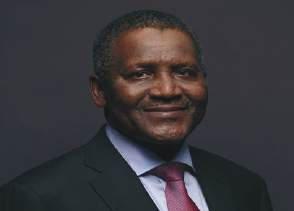
DANGOTE, ENERGY SECURITY AND NIGERIA'S MOMENT
DAN D. KUNLE argues that Nigeria, unlike many other countries, does not worry any more about fuel security
MINING REFORMS AND NEW ECONOMIC FUTURE
The solid minerals sector is fast becoming a critical pillar of economic diversification, argues ARABINRIN ADERONKE
The UK-Nigeria Security and Defence Partnership is an investment in Nigeria's broader national development, contends JACOB ONOKPASA
STRENGTHENING PARTNERSHIP WITH UK IN FIGHT AGAINST INSECURITY
At a time when Nigeria continues to confront one of the most complex security environments in its history, strategic partnerships have become not just desirable but indispensable. Terrorism, banditry, kidnapping for ransom, piracy, cybercrime, transnational organised crime and the proliferation of small arms are no longer isolated domestic concerns. They are interconnected threats that transcend national boundaries and demand coordinated international responses.
It is against this backdrop that the twoday Fourth Session of the UK-Nigeria Security and Defence Partnership Dialogue, held in Abuja on Tuesday, June 23, 2026, deserves to be viewed as a significant milestone in Nigeria's evolving security architecture. The meeting, cochaired by the National Security Adviser (NSA), Mallam Nuhu Ribadu, and his British counterpart, Jonathan Powell, demonstrates that Nigeria is steadily building the kind of international alliances capable of reinforcing its internal security efforts.
This is precisely the kind of strategic diplomacy that modern security management requires. Mallam Ribadu captured the essence of the engagement when he observed that Nigeria's long history and ties with the United Kingdom remain as strong as the commitments both countries have to their shared values and mutual interests. More importantly, he noted that the dialogue seeks to deepen existing partnerships while exploring future prospects. Those few words carry enormous significance.
Today's security challenges cannot be won by military might alone. They require intelligence-driven operations, sophisticated surveillance technology, specialised training, cybersecurity capabilities, financial intelligence, border management, counter-terrorism expertise and robust international cooperation. These are areas where the United Kingdom has accumulated decades of experience. Nigeria, on the other hand, occupies a strategic position in West Africa. Whatever affects Nigeria invariably impacts the wider sub-region. Consequently, a stronger Nigeria translates into a more secure West Africa. This makes the UKNigeria partnership beneficial to both countries.
The composition of the Nigerian delegation itself underscored the seriousness attached to the dialogue. Beyond the NSA, the meeting brought together the Chief of Defence Staff, General Olufemi Oluyede; the Chief of

Army Staff, Lieutenant General Waidi Shaibu; Inspector-General of Police, Tunji Disu; Service Chiefs and other senior security stakeholders.
Such high-level representation demonstrates a deliberate whole-ofgovernment approach to national security. It also reflects the growing synergy among Nigeria's security institutions under the coordination of the Office of the National Security Adviser. That coordination has become increasingly important.
For years, one of the criticisms levelled against Nigeria's security management was the absence of effective coordination among various agencies. Today, under Mallam Ribadu's leadership, there is increasing evidence that intelligence sharing, joint planning and inter-agency cooperation are receiving renewed attention. The Security and Defence Partnership Dialogue complements this domestic coordination by extending it to trusted international partners.
One of the biggest gains expected from the dialogue is enhanced intelligence sharing. Modern terrorism thrives on information gaps. Criminal networks operate across multiple jurisdictions. Terror financiers move resources through sophisticated international channels. Human traffickers, arms smugglers and cybercriminals exploit porous borders and weak coordination among countries. No nation can effectively combat such threats in isolation.
The United Kingdom possesses advanced intelligence capabilities developed over many decades of counterterrorism operations. Nigeria equally possesses valuable local intelligence and operational experience in dealing with insurgency and organised criminal groups within the West African region. When these complementary strengths are brought together, both countries become stronger.
Equally important is capacity building. Training remains one of the most enduring forms of defence cooperation because
it creates lasting institutional capacity. Nigerian military personnel, intelligence officers and law enforcement agencies continue to benefit from specialised courses, operational planning, tactical instruction and professional exchanges with British counterparts.
Such programmes do not merely improve technical competence. They expose officers to international best practices, strengthen professionalism and encourage innovation in security operations. These are long-term investments whose benefits continue to multiply over time.
Technology transfer also deserves serious attention. Contemporary security operations increasingly rely on drones, satellite surveillance, digital intelligence, artificial intelligence, cyber defence systems and sophisticated communication platforms. Nigeria's determination to modernise its security architecture will require access to these emerging technologies. Partnerships such as the UK-Nigeria Security and Defence Dialogue provide the framework through which technical cooperation can expand responsibly and sustainably.
Another important dimension is regional security. Nigeria remains the largest economy and one of the strongest military powers in West Africa. It plays a leading role in regional peacekeeping, counter-terrorism and maritime security. Instability in neighbouring countries inevitably spills into Nigeria through illegal migration, arms trafficking and crossborder criminal activities. Strengthening Nigeria's security capacity, therefore, contributes directly to the stability of the entire Gulf of Guinea and the broader West African region. This is why Britain's continued investment in Nigeria's security is not an act of charity but a strategic necessity built on mutual interests.
Critics sometimes argue that Nigeria should rely solely on domestic capabilities. While patriotism demands self-reliance, realism demands partnerships. Virtually every major power today maintains extensive defence and intelligence cooperation with friendly nations. The United States collaborates closely with European allies. Britain works with NATO partners. France cooperates with African countries. Even technologically advanced nations recognise that security has become global.
Onokpasa Jnr, a Peace and Conflict Resolution Professional, writes from Abuja
DAN D. KUNLE argues that Nigeria, unlike many other countries, does not worry any more about fuel security
DANGOTE,
ENERGY
SECURITY AND NIGERIA'S MOMENT
The world is changing fast. The unrest in the Middle East has reminded every nation of one hard truth: energy security is national security.
Across the world, countries that depend heavily on imported fuel are under pressure. Prices are rising. Supply chains are uncertain. In some places fuel has become significantly more expensive. In others, availability itself has become a concern.
But Nigeria stands in a different position today.
For the first time in many years, we can say something powerful: Nigeria does not have to panic.
Why?
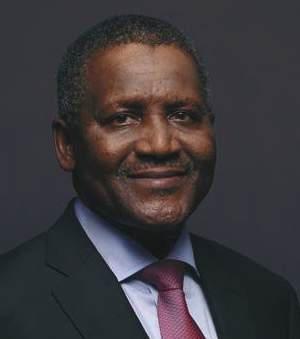
Because one Nigerian, Alhaji Aliko Dangote, took a risk many believed was impossible. He built a refinery in Nigeria, for Nigeria. He invested where others doubted. He continued where many would have stopped.
Today, while much of the world worries about fuel security, Nigeria has a strategic advantage.
We have crude oil.
We have refining capacity.
We have local production.
We have the ability to protect our people from external shocks.
This is bigger than business.
This is national protection.
But there is something else Nigerians must understand.
Whenever a system changes, those who benefited from the old system rarely surrender quietly.
For decades, Nigeria's fuel market depended heavily on imports, middlemen, offshore traders and foreign supply chains. Entire business models were built around bringing fuel into a country that already produces crude oil.
Now that reality is changing.
And because it is changing, Aliko Dangote will continue to face criticism, attacks and attempts to discredit his efforts.
That should not surprise anyone. Every litre refined in Nigeria reduces dependence on imports.
Every reduction in fuel costs removes pressure from Nigerian families. Every step toward self-sufficiency weakens the old order.
The truth is simple: Dangote is not the problem.
Dangote is the target. Not because he is failing.
But because he is succeeding.
Aliko Dangote has every commercial reason to follow international market trends and increase prices whenever global prices rise.
The easy option would be to say:
"The world market has gone up. Nigerians must pay more."
But leadership is not always about doing what is easy. Sometimes leadership is about remembering the people who stood with you.
Ordinary Nigerians believed in this refinery. They defended it. They prayed
for it. They waited for it. They understood that a country producing crude oil while importing most of its fuel was never a sustainable future.
Today the refinery is beginning to answer that national challenge.
And I believe Aliko Dangote understands that this moment is about more than profit.
It is about stability. It is about gratitude. It is about country. It is about Africa.
There is an African proverb that says: "Rain does not choose whose roof to fall on."
Fuel prices do not choose whose pocket to touch.
Hausa, Yoruba, Igbo, Ijaw, Tiv, Edo and Fulani — when we stand at the filling station, we are all watching the same numbers.
Whether you drive a G-Wagon, a Danfo, a Keke or a Rolls-Royce, fuel affects us all. If local refining can keep prices stable or bring them lower, then the benefits must reach the people.
The transporter must feel it. The market woman must feel it. The farmer must feel it.
The student must feel it. The small business owner must feel it. The family man must feel it.
That is the larger vision.
A Nigeria that does not simply export raw materials but processes them. A Nigeria that adds value.
A Nigeria that creates jobs. A Nigeria that protects itself from global uncertainty.
A Nigeria that builds industrial capacity for future generations. Dangote Refinery is therefore not merely a refinery.
It is a strategic national asset. It is an industrial shield.
It is proof that Africans can build at a scale that changes the destiny of nations.
As Alhaji Aliko Dangote continues his ambitious industrialisation agenda for Nigeria and Africa, he sends a powerful message: No foreign nation will build our economy for us. No foreign investor will love Nigeria more than Nigerians themselves.
Kunle writes from Abuja
The solid minerals sector is fast becoming a critical pillar of economic diversification, argues ARABINRIN ADERONKE

MINING REFORMS AND NEW ECONOMIC FUTURE
Nigeria’s economic future may no longer depend solely on oil. Increasingly, the country’s vast mineral resources are emerging as a major driver of economic growth, industrialisation, and long-term prosperity. The recent announcement by the Minister of Solid Minerals Development, Dele Alake, at the 5th African Natural Resources and Energy Investment Summit (AFNIS), points to what could become one of the most important turning points in Nigeria’s economic diversification journey under President Bola Ahmed Tinubu.
The discovery of high-grade deposits of gold, nickel, copper, lithium, platinum group metals, and rare earth elements in Kaduna State is a major development. This goes far beyond a geological breakthrough. It presents Nigeria with a rare opportunity to position itself as a leading destination for global mining and strategic mineral investments. With rising global demand for critical minerals used in electric vehicles, battery storage, clean energy systems, and advanced manufacturing, Nigeria is strategically placed to benefit from this global transition.
Alake’s speech at AFNIS reflected clarity, vision, and a strong understanding of the future of resource management. One of the strongest highlights of his address was his emphasis on local processing and value addition. This policy direction represents a major shift from the long-standing model where African countries export raw materials at low value and import finished products at significantly higher costs.
That old model has delivered limited economic value, weak industrial growth, and insufficient job creation across the continent. Nigeria’s new direction seeks to change this narrative. By prioritising local processing, refining, and manufacturing, the country stands to create thousands of jobs, deepen industrial capacity, encourage technology transfer, and retain more value within the domestic economy.
This policy direction is already producing visible results. Historically, Nigeria’s mining sector contributed less than 1 percent to GDP despite the country possessing over 44 commercially viable solid minerals across more than 500 locations. This reflects years of underinvestment, weak regulation, illegal mining, and policy inconsistency.
Today, however, the sector is beginning to witness renewed momentum. Multi-billion-dollar investments are flowing into the industry, including major lithium processing projects, iron ore development, and mineral refining facilities. This growing investor confidence is not accidental. It is a direct result of regulatory reforms, stronger policy implementation, and deliberate government efforts to reposition the sector.
Alake’s contributions to this transformation have been significant. His decision to revoke 3,000 mineral licences was bold, strategic, and necessary. The revocation was based on clear regulatory criteria, including dormancy of licenses, non-pay-
ment of royalties, default in statutory obligations, and non-payment of annual service fees. For years, speculative licence holders sat on valuable assets without meaningful development, slowing sector growth and discouraging serious investors. This clean-up exercise sent a strong message that Nigeria’s mining sector is entering a new era of accountability, discipline, and transparency.
Beyond regulation, Alake has also successfully elevated mining conversations from simple resource extraction to economic transformation. His focus has consistently remained on building an industry that supports revenue generation, industrial growth, and national development.
President Tinubu also deserves recognition for providing the political will needed to drive these reforms. Economic diversification remains central to his administration’s agenda, and the solid minerals sector is fast becoming a critical pillar of that strategy. Nigeria’s ratification of the African Mineral Strategy Group Charter further reinforces the administration’s commitment to regional cooperation, responsible mining, and long-term sustainable growth.
The future of mining in Nigeria is promising. If properly managed, the sector can significantly boost government revenue, create millions of direct and indirect jobs, strengthen foreign exchange earnings, and reduce the country’s dependence on oil. Countries such as Australia, Canada, and South Africa have successfully used mining as a major engine of economic growth. Nigeria has the resources, market potential, and strategic location to achieve similar success.
The Tinubu administration, with Alake driving reforms in the mining sector, is laying the foundation for meaningful economic transformation. The opportunity before Nigeria is enormous. The focus now must remain on policy consistency, investor confidence, and sustainable execution. If this momentum is maintained, mining could become one of the strongest pillars of Nigeria’s economic future.
Arabinrin is an award-winning investigative journalist, and Peace and good governance advocate
Editor, Editorial Page PETER ISHAKA
Email peter.ishaka@thisdaylive.com
EMPOWERING THE MSME FOR JOB CREATION
Small scale businesses deserve adequate attention
Globally, the micro, small and medium scale enterprises (MSMEs) sector constitutes the spine of most national economies because, as small industry operators, they weather and overcome several challenges to grow and keep jobs for the locals. It was therefore most fitting that the official theme designated by the United Nations Industrial Development Organisation (UNIDO) for the 2026 MSME Day was "Empowering MSMEs through Innovation and Sustainable Industrial Development." It is important that all relevant authorities in the country move from rhetoric to concrete actions on how to lift the majority of our people out of poverty.
Ordinarily, MSMEs account for 90 per cent of businesses, 60 to 70 per cent of employment and 50 per cent of the Gross Domestic Product (GDP) worldwide, according to the World Bank. In Nigeria, the Small and Medium Enterprises Development of Nigeria (SMEDAN) reports that MSMEs currently represent 96 per cent of the businesses in the country and contribute 75 per cent of the national employment. Unfortunately, this is a sector that has been neglected in Nigeria. Although SMEDAN has launched a N500 million zero-interest for MSMEs in the country, many such similar initiatives have ended up as slush funds for political operatives.
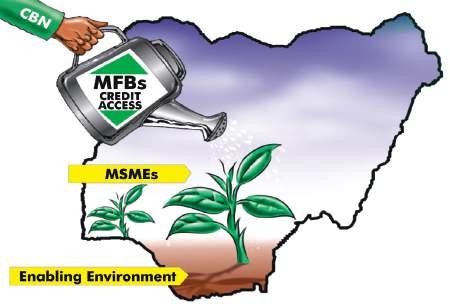
ing effective support mechanisms as some of the issues that need to be addressed.
However, we do not dispute that the main challenge has always been financing since the conventional banks are not cut out for long term lending needed by MSMEs in the country. It is equally known that these banks are mostly comfortable to lend to short-term business ventures as against start-ups who would need a longer gestation period to pay back. According to most estimates, fewer than five per cent of the MSMEs can access any form of funding support by way of loans or overdraft from financial institutions.
By sustaining the livelihoods for the very poor among us, MSMEs are the backbone of our society
EDITOR SHAKA MOMODU
DEPUTY EDITOR WALE OLALEYE
MANAGING DIRECTOR ENIOLA BELLO
DEPUTY MANAGING DIRECTOR ISRAEL IWEGBU
CHAIRMAN EDITORIAL BOARD OLUSEGUN ADENIYI
EDITOR NATION’S CAPITAL IYOBOSA UWUGIAREN THE OMBUDSMAN KAYODE KOMOLAFE
While announcing the effort as part of the package for MSME Day last Saturday, SMEDAN Director-General, Charles Odii, said the association-based model will improve accountability, loan recovery and ensure the funds reach genuine business owners. “We visited traders at one of the markets today to engage directly with them because it is not enough to sit in offices and make policies without understanding their realities,” Odii said. “Many of the challenges they raised border on financing, which is why we are launching the Grow Fund for Small Businesses in Nigeria.” Meanwhile, experts have also identified strengthening the regulatory framework and design-
EDITOR-IN-CHIEF/CHAIRMAN NDUKA OBAIGBENA
GROUP EXECUTIVE DIRECTORS ENIOLA BELLO, KAYODE KOMOLAFE, ISRAEL IWEGBU
DIVISIONAL DIRECTORS SHAKA MOMODU, PETER IWEGBU, ANTHONY OGEDENGBE
DEPUTY DIVISIONAL DIRECTOR OJOGUN VICTOR DANBOYI
SNR. ASSOCIATE DIRECTOR ERIC OJEH
ASSOCIATE DIRECTOR PATRICK EIMIUHI
CONTROLLERS ABIMBOLA TAIWO, UCHENNA DIBIAGWU, NDUKA MOSERI
DIRECTOR, PRINTING PRODUCTION CHUKS ONWUDINJO
TO SEND EMAIL: first name.surname@thisdaylive.com
Letters to the Editor
The Central Bank of Nigeria (CBN) had in the past established numerous programmes to support the MSMEs but with little to show for such efforts. For instance, in August 2013, the CBN launched the micro, small and medium enterprises development fund (MSMEDF) with a share capital of N220 billion. The Fund aims to enhance the access of MSMEs to financial services, by channelling single-digit loans at a nine per cent interest rate to them, through the Primary Finance Institutions (PFIs). When the intended end users could not access the facility, the National Collateral Registry (NCR) was introduced. Yet, the problem persists.
The Nigeria Incentive-Based Risk Sharing System for Agricultural Lending (NIRSAL Plc.) was created by the CBN with the idea to transform NIPOST into a microfinance bank with branches in all the 774 local government areas of the country. Incorporated in 2013 by the CBN, the Bankers Committee and the Federal Ministry of Agriculture and Rural Development, NIRSAL de-risks the agriculture value chain and enables banks to lend to the sector at rates of between 7.5 to 10.5 per cent. But this limitless potential for inclusive and sustainable economic growth that could be harvested from MSMEs remains largely untapped.
Yet, by sustaining the livelihoods for the very poor among us, MSMEs are the backbone of our society. And they deserve the support of the government at all levels.
Letters in response to specific publications in THISDAY should be brief (150-300 words) and straight to the point. Interested readers may send such letters along with their contact details to opinion@thisdaylive.com. We also welcome comments and opinions on topical local, national and international issues provided they are well-written and should also not be longer than (750- 1000 words). They should be sent to opinion@thisdaylive. com along with photograph, email address and phone numbers of the writer.
THE NIGERIA STOCK EXCHANGE CORRECTION
The recent correction in the Nigerian Stock Exchange, which wiped trillions of naira from investors' portfolios within a few trading sessions, has understandably unsettled many market participants. While some perceived the decline as a market crash, it was, in reality, a normal correction following months of sustained gains. More importantly, it serves as a reminder that successful investing is built on informed decision-making rather than emotion.
To appreciate the recent correction, it is important to understand what fuelled the market's remarkable rally. The surge in stock prices was driven largely by the release of strong 2025 full-year financial results by many listed companies. Despite Nigeria's challenging economic environment, several firms reported impressive earnings, demonstrating resilience, sound management and the ability to adapt to ongoing economic reforms. These strong financial results significantly boosted investor confidence.
Equally important were the generous dividend declarations announced by many blue-chip companies, particularly in the banking, industrial and consumer goods sectors. Attractive dividend yields encouraged both retail and institutional investors to increase their holdings in anticipation of strong returns. The rally was further strengthened by the Central Bank of Nigeria's banking recapitalisation programme, improving foreign exchange stability, ongoing economic reforms, renewed foreign investor participation, and increased investments by pension funds and other institutional investors. However, financial markets naturally move in cycles. After share prices reached record highs, many investors who had accumulated substantial gains began locking in profits by selling part of their holdings. Heavy selling in large-cap stocks, which have the greatest influence on the market index, triggered a broader decline. Institutional investors also rebalanced their portfolios ahead of the half-year earnings season, adding further selling
pressure.
These developments should not be interpreted as signs of a weak capital market. Market corrections are a normal and healthy feature of every stock exchange. They help moderate excessive price increases, restore more realistic valuations and create opportunities for long-term investors to acquire fundamentally sound companies at more attractive prices.
The recent downturn therefore offers an important lesson for investors. Too often, individuals buy shares based on rumours, social media excitement or fear of missing out, only to panic when prices begin to fall. Yet successful investing requires patience, careful analysis and a clear understanding that market prices are influenced by corporate performance, economic conditions, government policies, interest rates, inflation and investor sentiment.
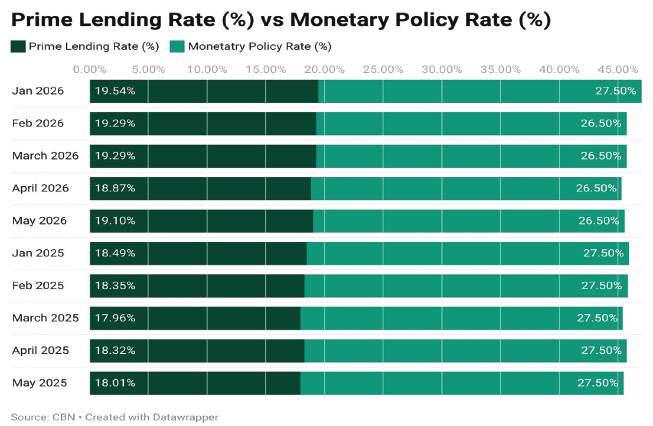
Kayode Tokede
Following the marginal reduction of the Monetary Policy Rate (MPR) by the Central Bank of Nigeria (CBN), the banking sector average maximum lending rate depreciated to 34.78 per cent in May 2026 from 35.17per cent in April 2026. Maximum lending rate refers to the highest permissible interest rate that lenders can charge borrowers. The rate is crucial for ensuring fair lending practices and protecting borrowers from excessive interest rates.
This is the first time the average maximum lending rate declined since the Monetary Policy Committee (MPC) of the CBN reduced interest rate to 26.50 per cent in late February 2026 from 27 per cent.
The committee had cited sustained disinflation, naira appreciation, and an improved external position for its rate cut.
According to the CBN’s “Money Market Indicators” the average maximum lending rate that opened January 2026 at 32.68 per cent moved to 35.17per cent in February 2026 at a time
interest rate was reduced to 26.50 per cent.
The CBN data revealed that the average maximum lending rate remained flat at 35.17 per cent between February and April 2026 amid 26.50 per cent interest rate.
The International Monetary Fund (IMF) had responded to unmoved average average maximum lending rate between February and April 2026, expressing that Nigerian banks raise lending rates rapidly when monetary policy is tightened but are slower to reduce borrowing costs or
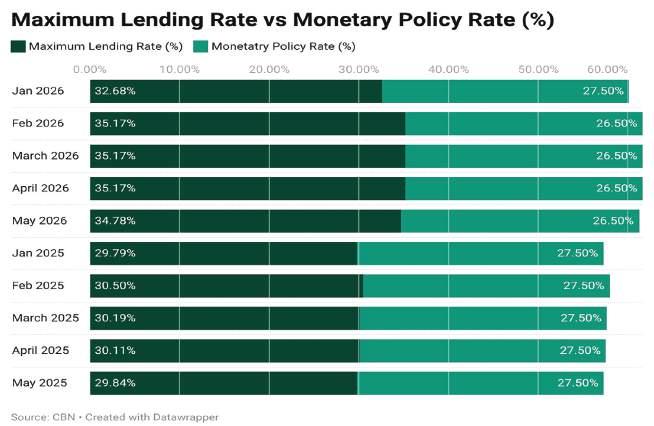
increase returns to savers.
“Interest rate transmission displays a clear “rocketsand-feathers” pattern, with borrowing rates adjusting upward rapidly during tightening cycles but declining only gradually when policy is eased,” IMF said.
“When the CBN tightens, wholesale and lending rates respond strongly and more than proportionally: a 100 basis-point MPR hike raises T-bill and lending rates by roughly 175–180 basis points on impact, whereas a comparable cut lowers them by only about 25–30
basis points.
“This asymmetry –statistically significant –implies that banks transmit tightening rapidly and even amplify it but adjust much more slowly during easing cycles. By contrast, while the interbank rate responds symmetrically (around 0.6 in both directions) and deposit rates show little response either way (around 0.12), both are not significant,” the report by IMF explained.
In 2025, the maximum lending rate was 29.32 per cent, when the MPC voted to retain the MPR at 27.00 per cent from 27.50 per cent.
The average maximum lending rate has sparked concerns regarding the potential impact on the cost of credit for businesses already facing economic hardships due to foreign exchange unification and fuel subsidy removal by the Federal Government. CBN data revealed that the average maximum lending rate rose to 29.79 per cent in January 2025 from 29.71 per cent in December 2024 when MPC members of CBN voted to retain MPR to 27.50 per cent.
The National Insurance Commission (NAICOM), has demonstrated its commitment to leveraging digital innovation to deepen insurance penetration and expand Nigerians’ access to insurance through granting of a Partnering Insurtech licence to a new insurtech firm, NETAPPS. The commission also
made a significant step towards deepening regional collaboration within the African insurance sector. Speaking at the event, the Commissioner for Insurance, Mr. Olusegun Ayo Omosehin highlighted NAICOM’s strategic priorities which include consumer protection, strengthened regulatory capacity, financial soundness, innovation
and sustainability, and broader access to insurance services. He emphasised that insurtech firms play a critical role within the Commission’s innovation and access agenda.
He noted that adopting technology-driven solutions and alternative distribution channels was essential to addressing Nigeria’s persistently low insurance penetration
rate. He underscored the potential of digital platforms to reach underserved populations particularly young people who primarily engage through mobile devices and to make insurance more accessible, affordable, and inclusive.
He further reaffirmed NAICOM’s readiness to collaborate with licensed innovators such
as NETAPPS, while maintaining robust regulatory oversight to safeguard consumers and preserve financial system stability.
During the ceremony, Omosehin formally presented the licence to NETAPPS, recognising the company as an authorised innovator within Nigeria’s insurance distribution ecosystem.
He said as a licensed Partnering Insurtech, NETAPPS was expected to leverage its digital capabilities to expand insurance access, foster collaboration with licensed insurers and intermediaries, and operate with transparency in full compliance with regulatory requirements.
Ebere Nwoji
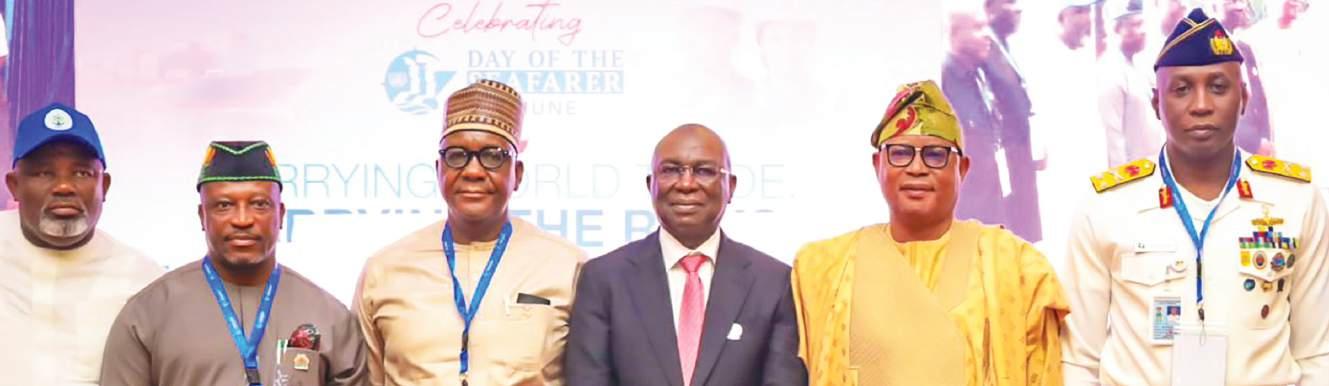
Amid Uncertainty, 66% of Family Businesses in Africa Show Growth Momentum
Kayode
A survey by PWC has revealed that 66 per cent of family businesses in Africa showed strong growth performance and momentum amid local and global uncertainties.
The PwC’s Africa Family Business Survey 2025 based on insights from 79 family businesses across East, West and Southern Africa, revealed that 66per cent of respondents reported singledigit or double-digit sales growth over the past year,
outperforming the global average of 57per cent.
According to the report, the strong performance highlighted the continued momentum of family businesses in Africa, even as they face economic volatility, regulatory reform and evolving stakeholder expectations.
“Operating amid shifting geopolitical dynamics, technological disruption, climate pressures and economic uncertainty, these businesses are navigating change with discipline and
Stakeholders’ Canvass Improved Welfare for Seafarers
Stakeholders in Nigeria’s maritime sector have called for stronger protection, improved welfare and sustained investment in seafarers, recognising their indispensable role in global trade and economic growth.
The call was made at the 2026 Day of the Seafarer celebration organised by the Nigerian Maritime Administration and Safety Agency, NIMASA in Lagos.
Themed, “Carrying World
Trade, Carrying the Risk,” the event brought together National Assembly members, policy makers, government officials, security agencies, labour unions and other industry stakeholders. It provided an opportunity for deliberation on the invaluable contributions of seafarers to global trade and the need to sustain enhanced welfare for them.
intent,”the report explained.
The report noted that across the region, family businesses are responding to distinct economic priorities shaped by local conditions.
“In West Africa, reform efforts are centred on fiscal stability, regional integration and infrastructure
development. In Southern Africa, businesses are navigating ongoing energy constraints while accelerating the transition towards more diversified and reliable power systems.
In East Africa, leaders continue to advance digital transformation, expand trade
and logistics networks, and foster innovation-led ecosystems,” it said.
Speaking, Africa Family Business Leader, PwC, Esiri Agbeyi said, “Family businesses in Africa have built a strong foundation for growth. Disciplined strategies and a clear focus
on technology and AI show that the fundamentals are in place.
He said, “The next step is to build on these strengths by scaling purpose, improving decision-making, and activating reputation and long-term capital as drivers of growth.”
FAAN: Resolution of BASL Imbroglio Show FG Keeps Concession Agreements
Chinedu
Eze
The Managing Director of the Federal Airports Authority of Nigeria (FAAN), Olubunmi Kuku, has said that the federal government’s resolution of the impasse over the concession of Murtala Muhammed Airport Terminal Two (MM2) is an indication to future investors that government keeps
concession agreements
Kuku also said this will encourage more private investors to partner with government to develop airport infrastructure in the already successful PublicPrivate Partnership (PPP) arrangement.
Kuku stated this at the just concluded African Air Transport Convention & Expo 2026, held in Lome, Togo.
Speaking as a panellist on the topic: ‘Strategic Direction on Aviation Financing and Infrastructure Development,’ Kuku said while access to capital was important, the success of PPP arrangements depended largely on institutional credibility, regulatory certainty and project discipline.
She noted that many PPP projects in Nigeria
had suffered setbacks due to policy inconsistencies, market risks and concerns over project continuity. According to her, the MMA2 concession, operated by Bi-Courtney Aviation Services Limited (BASL), had remained one of the most publicised concession projects in the country’s aviation industry, regrettably with years of controversies.
NCC Woos Investors to Establish Manufacturing Plants in Nigeria
Group Business Editor
Eromosele Abiodun
Deputy Business Editor
Chinedu Eze
Comms/e-Business Editor
Asst. Editor, Energy
Emmanuel Addeh
Asst. Editor, Money Market
Nume Ekeghe
Correspondents
KayodeTokede(CapitalMarkets)
James Emejo (Finance)
Ebere Nwoji (Insurance)
Reporter Peter Uzoho (Energy)
Delivering the National Assembly’s goodwill message, Chairman of the Senate Committee on Marine Transport, Senator Wasiu Sanni Eshinlokun, described the theme as a fitting reflection of the sacrifices made by seafarers and reaffirmed the Committee’s commitment to legislation that promotes maritime safety, seafarers’ welfare, indigenous shipping and maritime education.
“Seafarers are indispensable to international trade and deserve policies that guarantee their safety, welfare and professional advancement. The National Assembly will continue to support legislative initiatives that strengthen the maritime sector and position Nigerian seafarers to compete effectively in the global shipping industry,” he said.
The Chairman, Governing Board of the Nigerian Communications Commission (NCC), Idris Ibikunle Olorunnimbe, has called on international tech investors to come to Nigeria and establish local manufacturing hubs.
He assured them that the federal government would offer direct presidential
intervention and sweeping economic waivers for hardware companies that anchor their manufacturing hubs in Nigeria by November 2026.
Olorunnimbe made the call during his address at the Digital Africa Summit Roundtable in Shanghai, China.
Highlighting the government’s total dedication
to backing new factories and manufacturing hubs in Nigeria, Olorunnimbe said:
“Whatever it takes to get the plant standing, we will pursue it together, because every factory that rises in Nigeria grows our economy, employs our young people, and brings the price of a phone closer to what an average Nigerian can pay. The offer is designed to stimulate immediate foreign
direct investment and create sustainable employment for Nigeria’s teeming youth population.”
The Nigerian telecommunications ecosystem is highly vulnerable to external economic shocks, with foreign-exchange swings and import duties constantly pushing genuine, formal devices out of reach for average citizens.
Road Infrastructure: Experts Call for Reintroduction of Automated Weighbridge Compliance
Chibuzor and Uyanwanne Hephzibah
Experts in logistics have called for the reintroduction of automated weighbridge compliance across the country to protect the massive investment into the road sector.
This, according to them, would help reduce the enormous pressure currently being witnessed across the road networks in the country arising as a
result of lack of effective enforcement of compliance.
This was disclosed at the 10th anniversary of CityBusinessNews, themed, ‘Logistics As The Engine Room Of Nigeria Economy’, held in Lagos.
Delivering the keynote address, the President, Chartered Institute of Logistics and Transport (CILT), Dr. Boboye Oyeyemi, said the government must return the Weighbridge accross
the country.
He said that the industry must develop human capital development under a chartered framework that would focus heavily on curbing operational hazards across the haulage fleet.
“As a nation we must be Institutionalizing professional safety certifications that pushes the sector toward automated weighbridge compliance
preventing overloaded trucks from destroying road investments.This directly protects the federal government’s historic N3.23 trillion road infrastructure budget from premature degradation,” he said.
Speaking the Founder of ABC, Transport, Mr. Frank Nneji, said the Nigerian government must look at developing pipeline infrastructure to reduce the burden on the road.
Oluchi
Tokede
Emma Okonji
L-R: President-General, Maritime Workers Union of Nigeria (MWUN); Comrade Francis Bunu; Deputy Chairman of the House of Representatives Committee on Maritime Safety, Education and Administration, Uduak Odudoh; Director, Maritime safety and security, Federal Ministry of Marine and Blue Economy, Mr Makoji Musa; Director General, Nigerian Maritime Administration and Safety Agency (NIMASA), Dr Dayo Mobereola; Chairman, Senate Committee on Marine Transport, Senator Wasiu Eshinlokun Sanni; Flag Officer Commanding, Western Naval Command Rear Admiral Abdullahi Mustapha representing the Chief of Naval staff during the celebration of 2026 Day of the Seafarers in Lagos… recently
OADC: CBN Directive on Local Data Hosting Will Protect Nigeria’s Data Sovereignty
Emma Okonji
The recent directive by the Central Bank of Nigeria, mandating financial institutions and Fintech companies to host their payment data locally in Nigeria, with effect from January 1, 2027, is a sure way of protecting Nigeria’s data
sovereignty, aside boosting job creation, according to Open Access Data Centres (OADC).
Speaking about the infrastructure readiness of existing data centres in Nigeria to effectively accommodate and host all local data generated by financial institutions
Iwendi’s IEEE Nomination Set to Boost Nigeria Tech Industry
As Nigeria’s tech industry continues to gather momentum, the Institute of Electrical and Electronics Engineers (IEEE) Computer society has announced the nomination of Prof. Celestine Iwendi for its 2026 board of governors election.
The University of Greater Manchester announced his nomination in a statement issued recently, describing Iwendi’s nomination as a global recognition whose work has continued to advance responsible artificial intelligence.
Iwendi is the Head of the
Centre of Intelligence of Things (CIoTh), at the University of Greater Manchester, according to the university, he has also seen his work inspire intelligent systems, global research collaboration, student development, technology for humanity, reflecting years of service and leadership in strengthening the global computing and engineering community.
“The Centre of Intelligence of Things, University of Greater Manchester, is delighted to celebrate our Head of Centre, Prof.Iwendi, on his nomination as a candidate for the 2026 IEEE Computer Society Board of Governors election.
and Fintech companies without glitches, the Chief Executive Officer of OADC, Dr. Ayotunde Coker, who welcomed the development, said the directive would help to protect Nigeria’s data sovereignty, when all the sensitive data are hosted locally within Nigeria.
He said the CBN directive
was long expected because the existing data centres in Nigeria have robust data centre infrastructure and the capacity to host data locally in Nigeria.
“OADC has built a strong data centre infrastructure that will enable banks to become much more agile. We have reliable data centre
Chinedu Eze
Following the back-toback conclusion of the International Air Transport Association (IATA) Aviation Energy Forum in Paris and the African Airlines Association (AFRAA)
Stakeholders Convention in Johannesburg, global aviation analysts predict permanent structural realignment in international energy logistics.
The meeting suggested that there would be compounding combination of post-pandemic recovery
infrastructure with high quality. In terms of quality of infrastructure, actual scale of infrastructure, OADC is building out phase two of its data centre to 24 megawatts of the normal hyperscale density that will accept some of the AI type specific needs for liquid-based cooling, with hybrid architecture that allows enterprise cloud and AI. The changes are bringing significant scale,” Coker said.
Confident that the existing data centres in Nigeria have the capacity to host data locally, Coker said the various data centres in Lagos have the capacity across cooling, power, expandable racks and scaling capacity.
Analysts Predict Permanent Structural Realignment in International Energy Logistics
pressures, soaring maritime insurance premiums, and systemic supply chain instability has pushed legacy distribution networks to a point of unprecedented vulnerability.
Even with the recent signing of the June 2026
U.S.-Iran Memorandum of Understanding (MoU) designed to temporarily stabilize trade flows through the Strait of Hormuz, energy economists warn that the crisis has exposed a permanent sensitivity within Western supply lines.
AWF, Dev-Afrique to Support FG’s Conservation, Policy Reform
The African Wildlife Foundation (AWF) and Dev-Afrique Development Advisors have entered into a strategic partnership to support the Federal Government and other African governments in strengthening conservation efforts, improving environmental governance, and advancing policy reforms
that promote sustainable development.
The collaboration is aimed at helping governments and regional institutions integrate natural capital into national planning and decision-making while enhancing the systems used to manage biodiversity, land use, and ecosystem resources.
Speaking on the partnership, Chief Executive Officer of AWF, Kaddu Sebunya, said Africa’s natural resources remain critical to the continent’s long-term economic growth and resilience.
“Across Africa, there is growing recognition that our natural capital is not only
an environmental asset but a foundation for economic growth, resilience, and prosperity,” Sebunya said. He noted that unlocking the full value of these resources requires strong institutions, quality data, effective planning, and partnerships capable of translating policy ambitions into tangible outcomes.

Oluchi Chibuzor and Uyanwanne Hephzibah
Accountability Gaps: Bank Auditors Tasked to Deepen Understanding
Oluchi Chibuzor
Nigerian banks have been tasked to deepen their understanding in Artificial Intelligence (AI), to avoid accountability gaps in the Nigerian financial sector.
This is as Nigerian banks were equally charged to strengthen AI governance and management tools in the advent of growing risks associated with Cybersecurity.
The call came at the 64th quarterly general meeting of the Association of Chief Audit Executives of Banks in Nigeria (ACAEBIN) themed, ‘Internal Audit Function in the AI Era’.
Speaking at the event, the Chairperson, ACAEBIN, Mrs. Aina, said it was always a privilege to assemble as a community of professionals dedicated to
strengthening governance, risk management, internal controls, and organizational resilience within Nigeria’s banking industry.
She said that ACAEBIN has remained focused on strengthening the capacity of members and enhancing the relevance of the Internal Audit Function in an increasingly complex operating environment.
She said, “These efforts have been driven by a common objective - to equip Internal Auditors to respond effectively and collaboratively to dynamic and emerging risks and create greater value for our institutions. Artificial Intelligence is transforming banking operations, risk management, fraud detection, customer engagement, and decisionmaking.”
The Group Managing Director and Chief Executive Officer, UBA, Mr. Oliver Alawuba, said that as banks adopt Al at greater speed, there would be pressure to celebrate innovation before fully understanding its risks.
Representee by the Executive Director, Finance and Risk Management, UBA, Ugochukwu Nwaghodoh, he stressed that internal audit must remain independent, objective, and firm.
“We cannot audit what we do not understand. Chief Audit Executives and their teams must deepen their understanding of Al, machine learning, data governance, cyber risk, model risk, cloud architecture, digital identity, automation, third-party technology risk, and ethical Al,” he said.
Odu’a Group Posts N23b PBT, Targets N1tn Assets by 2030
Kemi Olaitan in Ibadan
The Odu’a Investment Company Limited (OICL) has declared a profit before tax of N23.58 billion for the 2025 financial year, marking a 410 per cent increase over the N4.62 billion declared in 2024.
The Group Chairman of the conglomerate, Bimbo Ashiru, who made the disclosure at the 44th Annual General Meeting of OICL, held IN Ibadan, said the extraordinary surge was driven largely by fair value gains on investment properties of N18.81 billion and a strong bullish run in the Nigerian stock market.
He stated further that the operating revenue of OICL rose sharply by 78 per cent to N20.22 billion, up from N11.34 billion recorded in 2024, noting that the conglomerate recorded a truly exceptional performance across all key metrics despite the challenging macroeconomic environment that defined the year.
According to him, “The year under review was marked by several strategic milestones that have permanently repositioned the organization”, disclosing that the historic Premier Hotel, after an extensive remodelling project, was commissioned on the eve
of the AGM and is set to commence full operations in the fourth quarter of 2026 with a promise to become the most iconic hospitality destination in the city.”
The Group Managing Director of the conglomerate, Mr. Abdulrahman Yinusa, in his remarks, stated “the Group has already initiated the process to secure its first-ever foreign credit rating from a major international rating agency, a move expected to position the conglomerate to access international debt capital markets and attract foreign direct investment.”
Chicken Republic Unveils Improved Smokey Jollof
Chicken Republic, a flagship brand of Food Concepts Plc, has announced the introduction of its improved Smokey Jollof recipe across restaurants nationwide. The refreshed recipe reinforces the brand’s commitment to continuously enhancing customer experience through menu innovation, quality improvements, and meals that are Cooked to Hit Different. The refreshed recipe represents the latest evolution of one of the brand’s most popular offerings. Developed with a focus on richer flavour, greater consistency, and an even more satisfying eating experience, the improved Smokey Jollof reflects Chicken Republic’s dedication
to meeting the evolving tastes and expectations of its customers.
Speaking on the launch, Marketing Manager, Food Concepts Plc, Olumide Aniyikaiye, said: “At Chicken Republic, our customers are at the heart of every decision we make. We are constantly listening, learning and looking for ways to improve the experience we deliver. The improved Smokey Jollof is a reflection of that commitment. We’ve refined the recipe to deliver an even richer, smokier and more enjoyable taste experience while maintaining the flavour profile our customers know and love. It is another example of our
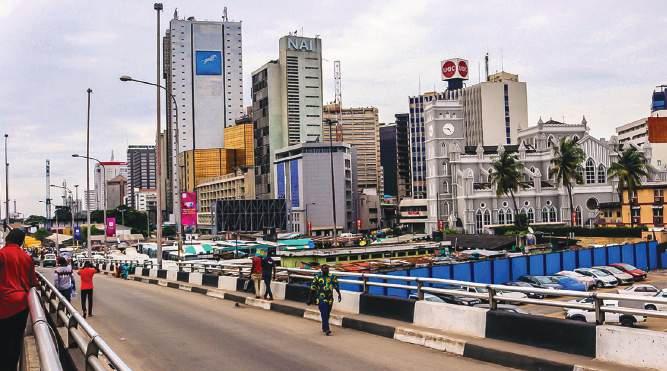
commitment to serving meals that are Cooked to Hit Different.
“The improved Smokey Jollof is now available at Chicken Republic outlets nationwide, allowing customers to experience a richer, more flavourful and more consistent version of one of the brand’s most-loved menu items.
“Great brands evolve with their consumers. This update is not about changing what people love, but about making it even better. We are confident that customers will enjoy the improved recipe and appreciate the attention we continue to invest in delivering quality meals every day,” Aniyikaiye added.
Saharan
(Congo), Zafiro (Equatorial Guinea), Rabi Light (Gabon), Iran Heavy (Islamic Republic of Iran), Basrah Medium (Iraq), Kuwait Export (Kuwait), Es Sider (Libya), Bonny Light (Nigeria), Arab Light (Saudi Arabia), Murban (UAE) and Merey (Venezuela).
Stock Market Lose N2.42tn in One Week on Negative Sentiments
Kayode Tokede
The Nigerian stock market closed last week on a negative note, dropping by N2.42 trillion as investors consolidated recent gains across select large capitalised companies such as Dangote Cement Plc, among others.
As the stock price of Dangote Cement dropped by
10 per cent or N107 per share to close at N963 per share, the market capitalisation of listed companies closed for trading at N148.905 trillion, about N2.4 trillion or 1.6 per cent from N151.327 trillion it opened for trading.
The Nigerian Exchange Limited All-Share Index (NGX ASI), an indicator that tracks the general market movement of all
listed equities on Exchange, including those listed on the Growth Board, regardless of capitalization close for trading at 232,049.02basis points, which is 3,892.25basis points or 1.65per cent from 235,941.27 basis points it closed for trading last week.
This brings the NGX ASI month-to-date and year-to-date returns to -7.5per cent and +48.9per cent, respectively.
Other major losses last week include: Aradel Holdings that dipped by 19 per cent to close at N1,417.50 per share, followed by BUA Cement that declined by 16.1 per cent to N340.20 per share and Geregu Power Plc that depreciated by 10 per cent to close at N917.40 per share. On sector performance, the Oil & Gas (-9.9per cent), Industrial Goods (-8.2per cent), Insurance
(-4.4per cent), and Consumer Goods (-1.5per cent indices closed lower, while the Banking (+3.5per cent) index was the sole gainer for last week.
The NGX in its weekly report revealed that a total turnover of 2.324 billion shares worth N134.486 billion in 249,328 deals was traded last week by investors on the floor of the Exchange, in contrast to a total of 3.075 billion shares valued at
N254.614 billion that exchanged hands in prior week’s 287,157 deals.
The report stated that, “The Financial Services Industry (measured by volume) led the activity chart with 1.523 billion shares valued at N47.542 billion traded in 105,230 deals: thus contributing 65.53per cent and 35.35per cent to the total equity turnover volume and value respectively.
PRICES FOR SECURITIES TRADED AS OF JUNE 26/26
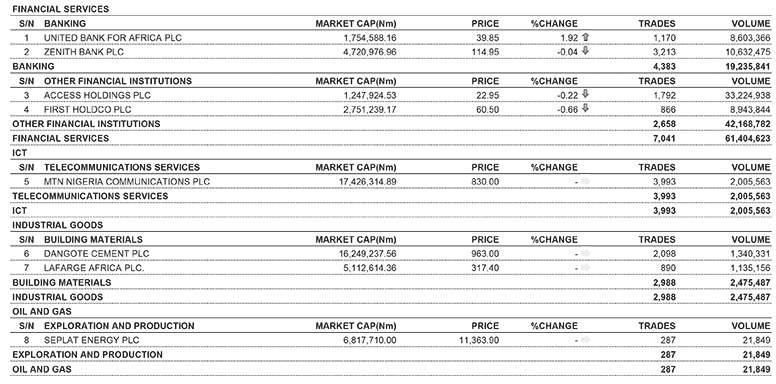
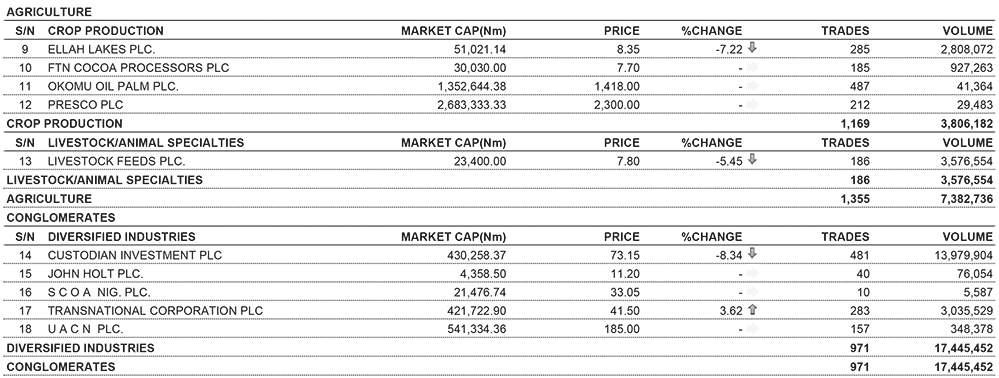
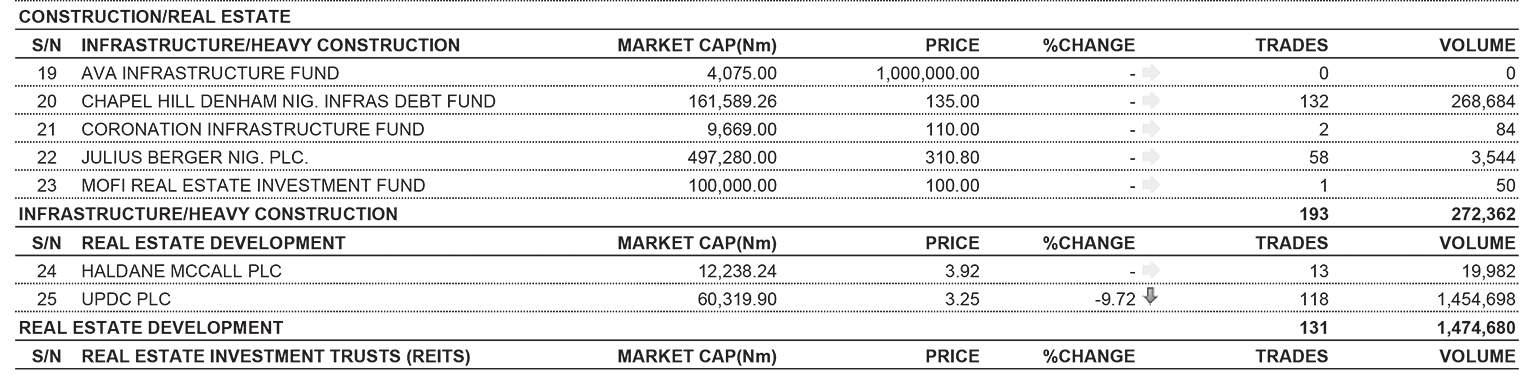
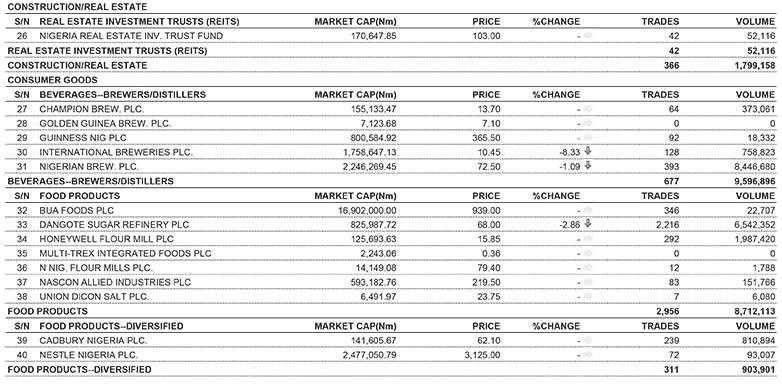
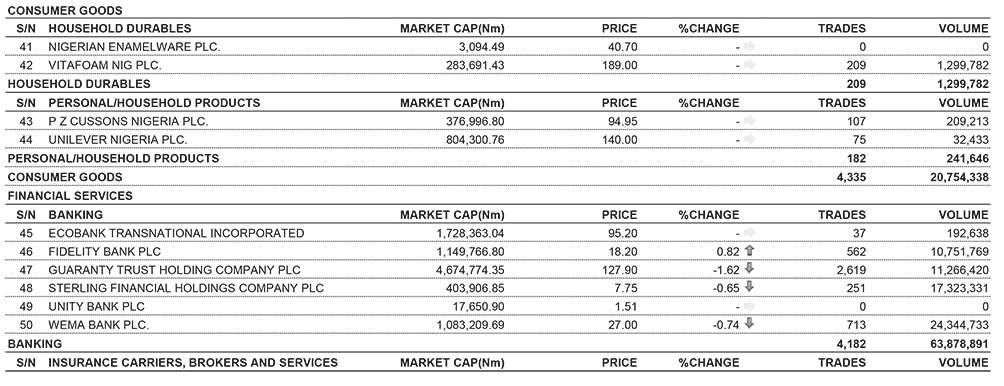
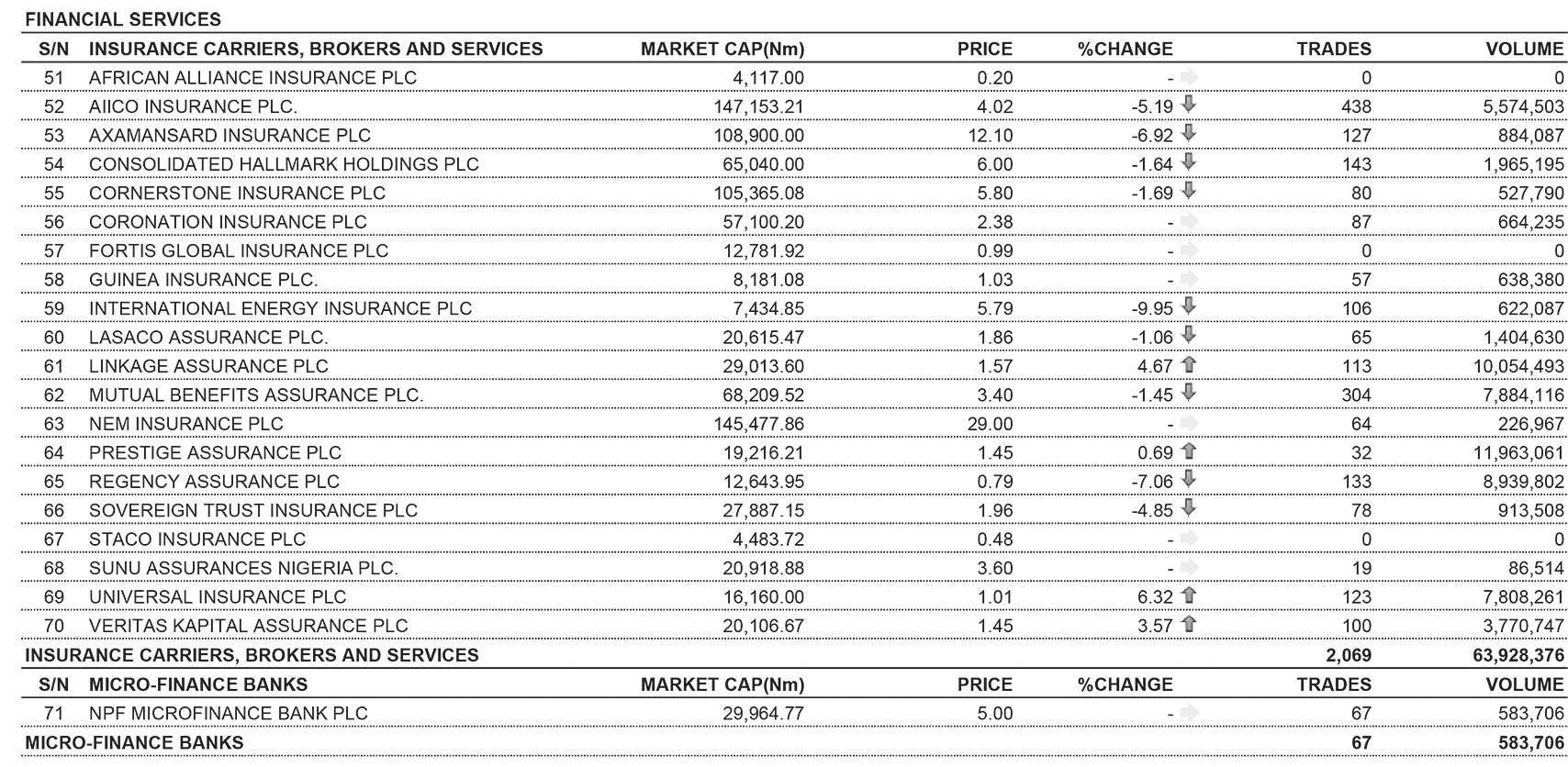

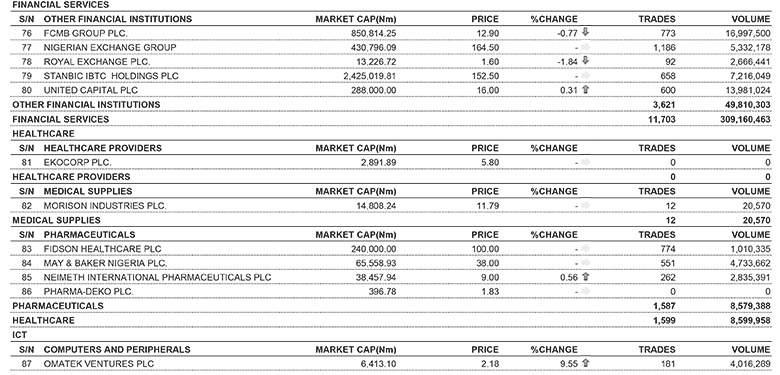
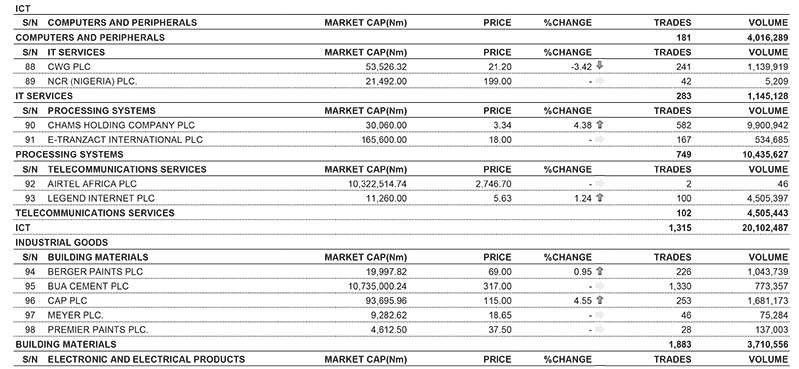
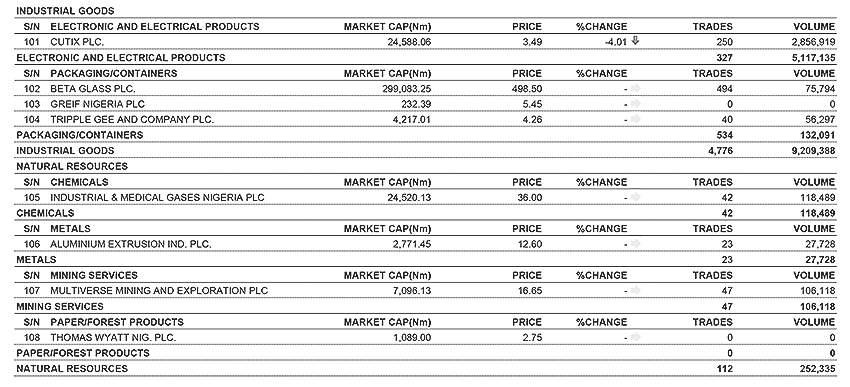
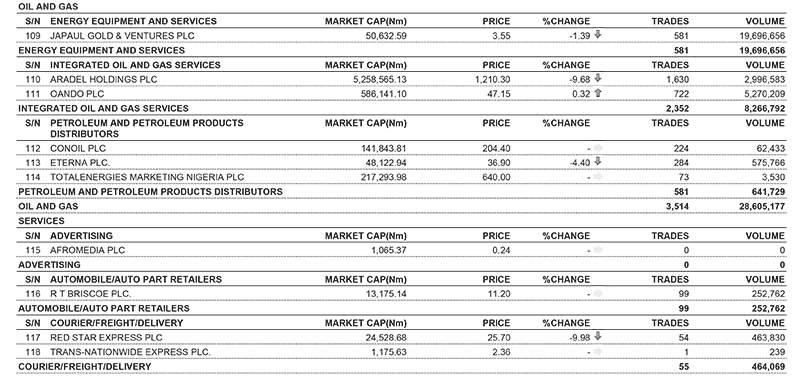
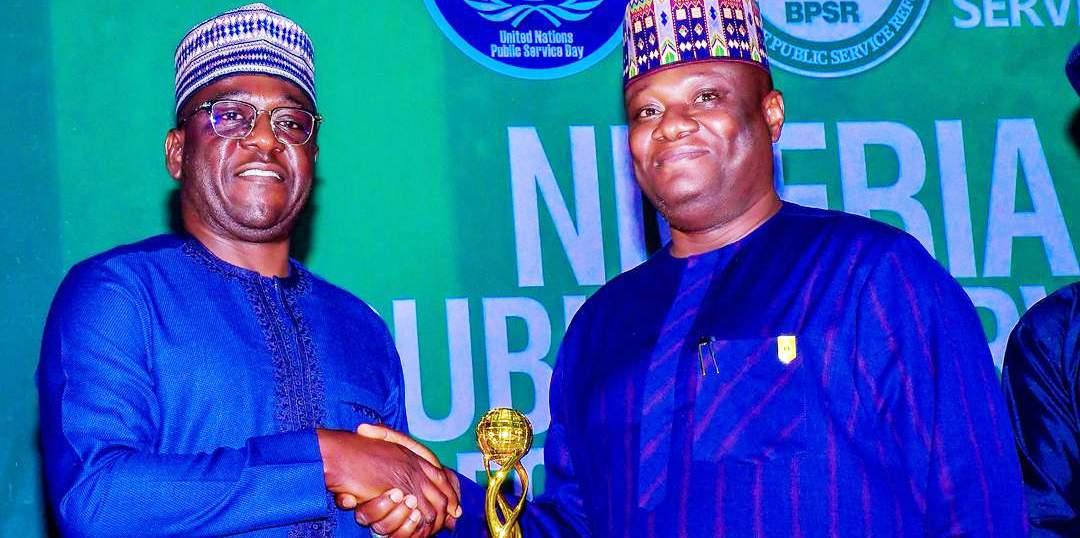
NIGERIAN PUBLIC SERVICE AWARD AND GALA NIGHT...
Dickson: NDC Will Appear on 2027 Ballot, All Candidates Will Contest Elections
Seeks phased state police rollout, warns against rushed implementation
Sunday Aborisade in Abuja
The national leader of the Nigeria Democratic Congress (NDC), Senator Seriake Dickson, yesterday declared that his party will participate in the 2027 general elections, dismissing a controversial court ruling last Friday as legally defective and devoid of jurisdictional basis.
Dickson, a former two-term governor of Bayelsa State and legal practitioner, spoke on Channels Television, where he addressed the ruling head-on and assured party members, candidates and supporters that the NDC remained firmly on course.
Dickson said: "NDC is on the ballot. All our candidates will be on the ballot. NDC has not
been deregistered and won't be deregistered. The laws of this country will speak. Justice will run its course, and they have nothing to worry about."
The ruling in question, delivered by a Federal High Court in Lokoja, has been widely interpreted in some quarters as rolling back the earlier judgment that had compelled the Independent National Electoral Commission (INEC) to register the NDC as a political party.
Critics of the NDC claimed it effectively restored the preregistration status quo, putting the party's existence in legal jeopardy. Dickson flatly rejected that reading.
He said: "The court itself did not deregister the NDC, and no step has been taken
whatsoever to that effect. This ruling did not contain a positive, mandatory order directing INEC to deregister. Orders of courts are to be construed strictly."
He characterised the ruling as one issued by a court that ordinarily lacks jurisdiction to sit on appeal over its own earlier judgment. He added: "It is a court that is clearly far too sufficient, meaning a court that ordinarily doesn't have jurisdiction to sit on appeal over its own earlier judgement. We disagree as a party about the legal basis and the propriety of the ruling."
Dickson confirmed that the party had already filed applications for a stay of execution and an injunction to restrain any adverse
administrative action by INEC, and that an appeal was being pursued to the highest levels of the judiciary.
He also dismissed the applicant that triggered the ruling, a body he described as an unregistered, dormant association, as lacking the legal standing to have sustained any case before the court.
He stressed: "That applicant is unknown to the laws of this country. It is not a registered political party. It is not sponsoring any candidate for any election. Nobody even knows the national chairman of that association. So this is not an association that can sustain this kind of action."
The NDC national leader further revealed that far from weakening the party, the
Resident Doctors Give FG Four More Weeks to Meet Welfare Demands
Resident doctors under the auspices of Nigerian Association of Resident Doctors (NARD) said it has resolved to further extend their ultimatum to the federal government by four weeks to ensure full implementation of its 14-Point demands bordering mostly on member's welfare. They urged government to take relevant action to protect health workers within the next 21 days.
In a communique issued at the end of its Extraordinary National Executive Council (E-NEC) held virtually meeting
on Saturday, 27th June 2026, to review developments in the sector, NARD highlighted 14 unresolved demands it has put forward to government, warning that it the Association cannot guarantee industrial harmony beyond the four-week window if all its demands are not fully addressed.
The communique jointly signed National President of NARD, Dr. Mohammad Usman Suleiman, Secretary General, Dr. Shuaibu Ibrahim and Publicity and Social Secretary, Dr. Abdulmajid Yahya Ibrahim, the association said it reviewed developments following the expiration of the twenty-one
(21) day window earlier granted to the federal government at the May 2026 Ordinary General Meeting (OGM) to address the welfare and professional concerns of resident doctors across the country.
"E-NEC resolved to further extend the ultimatum to the Federal Government by four (4) weeks to enable the full implementation of the above resolutions and to review the level of compliance at its July 2026 National Executive Council (NEC) Meeting in Gombe State.
"The Council further declared an industrial dispute with the Federal Government of Nigeria over the unresolved issues
outlined above. It warned that the Association cannot guarantee industrial harmony beyond the four-week window if all its demands are not fully addressed."
Among the 14 demands listed by NARD are the immediate disbursement of the 2026 Medical Residency Training Fund (MRTF) to all eligible resident doctors nationwide within the next twenty-one (21) days, to immediately institute a transparent and sustainable salary payment system for resident doctors to eliminate the persistent delays in salary payments and clear all outstanding salary arrears.
controversy had galvanised public interest.
"From Friday till now, thousands of Nigerians have been flocking to our website to register. They now know more about our party. They sympathise with our candidates and they are buying into our vision,” he maintained.
Dickson confirmed that primaries had been concluded at all levels, from state house
of assembly to presidential, with all exercises monitored and recorded by INEC in accordance with its prescribed timelines.
"All nominations have been validly carried out, monitored by INEC in accordance with the time frame given by INEC. I myself am also a senatorial candidate of the party. All nominations are valid and source-based," he added.
The Nigerian Communications Commission (NCC) has been ranked among the top three best-performing Ministries, Departments, and Agencies (MDAs) of the federal government in the 2026 Public Service Reforms Performance Assessment conducted by the Bureau of Public Service Reforms (BPSR).
In the latest Public Service Reforms Performance Assessment, NCC was ranked third overall, following a comprehensive evaluation across key reform indicators, including the Self-Assessment Tool (SAT), Freedom of Information (FOI) Compliance Score, Fiscal Transparency and Integrity Index, and official website performance metrics.
In the ranking, the Nigerian Investment Promotion Commission (NIPC) and Nigerian Export Promotion Council (NEPC) came first and second, respectively.
The institutional ranking,
conducted across all MDAs, recognises MDAs that have distinguished themselves in advancing public service reforms and delivering excellence in service.
Aside from the institutional awards, 20 individuals across federal, state and local levels received various distinguished public service excellence and leadership awards, for their sterling performance in public service, including the Head of Civil Service of the Federation, Mrs. Didi Walson-Jack; Senior Special Assistant to the President on Sustainable Development Goals, Mrs. Adejoke Adefulire, among others.
Representing the Executive Vice Chairman/Chief Executive Officer of the NCC, Dr. Aminu Maida, at the award ceremony in Abuja, the Executive Commissioner, Technical Services, Abraham Oshadami, spoke on behalf of the NCC and other awardees present, expressing appreciation to the bureau for sustaining the annual assessment framework.
Onyebuchi Ezigbo in Abuja
Engr. Abraham Oshadami (left), Executive Commissioner, Technical Services, Nigerian Communications Commission (NCC); and Dr. Abubakar Ibrahim Kana, Permanent Secretary, General Services Office, Office of the Secretary to the Government of the Federation, during the Nigerian Public Service Award and Gala Night, where the NCC received the award as the third Best Performing MDA, at NICON Luxury Hotel, Abuja...recently
Emma Okonji
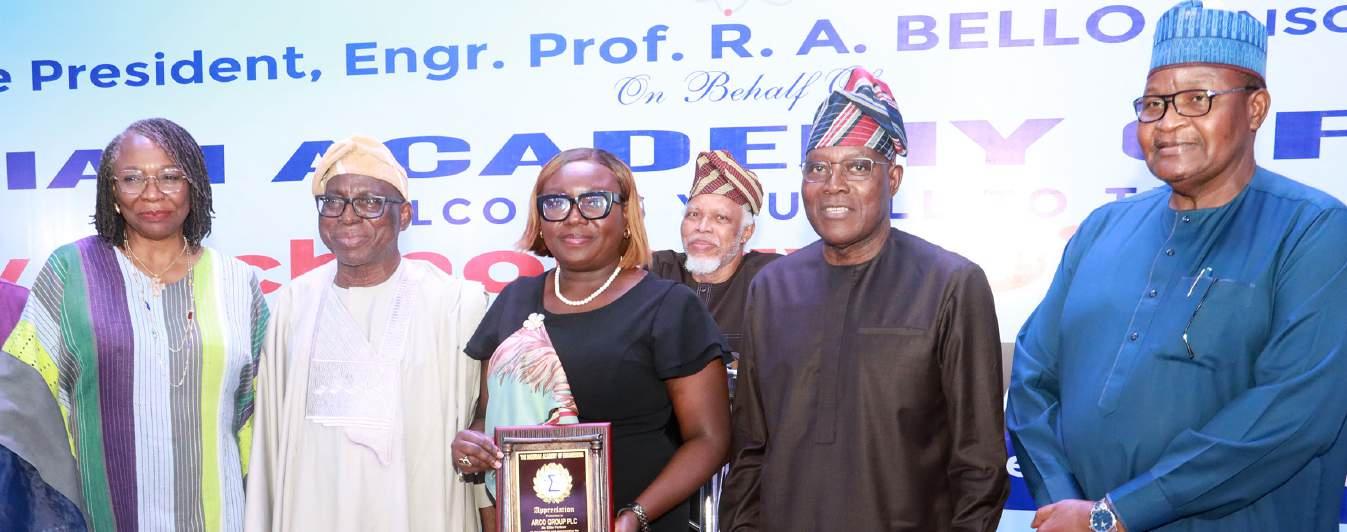
CDS, DG DSS, Others Honoured for Outstanding Leadership in Combating Insecurity in Nigeria
Stakeholders seek citizens' support to tackle insecurity
The Chief of Defence Staff (CDS), General Olufemi Oluyede, and the Director-General of the Department of State Services (DG DSS), Oluwatosin Ajayi, were among distinguished Nigerians honoured for their outstanding leadership and
commitment to combating insecurity at the 8th Silent Heroes Awards in Abuja.
The recognition celebrated their strategic contributions to national security and efforts to promote peace, stability and the safety of citizens.
The event also featured other award recipients who
have distinguished themselves in various fields including Honourable Commissioner of the Police Service Commission (PSC), DIG Taiwo Lakanu (Rtd).
Speakers at the ceremony, security experts, urged Nigerians to complement the efforts of security agencies through patriotism, credible intelligence
and stronger community collaboration, stressing that collective action remains vital to addressing terrorism, banditry and other security threats.
Founder of the initiative and Publisher of The Razor News, Chief Sunday Odita, said the awards were established to recognise individuals making
Saraki Joins Global Leaders in Italy, Says Africa Needs Strategic Partnerships, Not Aid Dependency
Former President of the Senate, Dr. Abubakar Bukola Saraki, has arrived in Lake Como, Italy, to join global leaders, policymakers, scholars, and strategic thinkers at an international experts workshop where he is expected to make a strong case for Africa to move beyond aid dependency and embrace strategic partnerships anchored on trade, investment, industrialisation, stronger institutions, domestic resource mobilisation, and African agency.
The gathering, organised by the Konrad-Adenauer-Stiftung (KAS), the foundation named after former German Chancellor Konrad Adenauer, has as its central theme: “Big Daddy Gone? Global Partnerships Without U.S. Leadership.”
Speaking ahead of his session, Saraki said: “This is a question that will define the coming decade. What does global partnership look like when it is no longer led by Washington? For too long, Africa’s relationship with the world has been framed around aid. The real opportunity is partnership — trade, investment, and mutual interest that treat Africa as an equal, not a recipient. A shifting global order is not a vacuum to fear. It is an opening to build something better.”
At the workshop, which will begin on Monday, June 29, and end on July 1, Saraki will address the gathering as part of the fifth panel on Tuesday afternoon, where he will present the African perspective on “Development
Policies: Withdrawal of the United States from International Development — Opportunities and Challenges.”
While there are two Africans among the 22 participants, Saraki has been selected to present the African perspective based on his experience in the private and public sectors, as well as his engagements during his tenure as Nigeria’s President of the Senate, Chairman of the Nigeria Governors’ Forum, and Governor of Kwara State.
He will be part of a panel consisting of Dr. Paola Bautista de Alemán, Vice President for Training and Programmes, Primero Justicia, Venezuela, and Prof. Christian Leuprecht, Professor at the Royal Military
College, Canada. The session will be chaired by Dr. Tilmann Feltes, Policy Advisor, Division Analysis and Consulting, KonradAdenauer-Stiftung, Germany. Other sub-themes to be explored during the conference include “The United States in 2030: Western Hemisphere First — Indo-Pacific Second? Strategic Priorities of the United States of America,” “Germany’s Priorities for Strong International Partnerships,” “Partners, Competitors, Rivals — New Alliances Around the Globe,” the fireside chat titled “The Western Hemisphere and the US — Back to 1823?”, “Strategic (Inter-)Dependencies and New Opportunities,” as well as “New Defence Partnerships.”
Wife Accuses Husband of Years of Domestic Violence, Infidelity in Explosive Divorce Battle
Wale Igbintade
A Nigerian lawyer based in the United States, Mrs. Nnedimma Onyegbula, has asked the High Court of Lagos State to dissolve her decades-long marriage, accusing her husband, Sonny Onyegbula, of years of domestic violence, emotional abuse,
infidelity, financial manipulation and intimidation.
In a reply filed in the ongoing divorce proceedings, Mrs. Onyegbula also claimed she was the family's primary breadwinner throughout the marriage. Mr. Onyegbula has denied all the allegations.
The allegations are contained
in the Petitioner's Reply to the Respondent's Answer in Suit No. LD/26404WD/2026, in which Mrs. Onyegbula urged the High Court of Lagos State to dissolve the marriage on the ground that it has broken down irretrievably. Among her most serious allegations are repeated claims of physical abuse.
She alleged that the respondent repeatedly grabbed her by the neck, choked her and lifted her off the ground despite knowing she suffers from Myalgic Encephalomyelitis/Chronic Fatigue Syndrome (ME/CFS) and Fibromyalgia. According to her, the assaults occurred about three times a year.
significant contributions to national development without seeking public acclaim.
He noted that many security personnel had paid the supreme sacrifice in defence of the nation and deserved sustained appreciation, adding that recognising their service would inspire serving officers and reassure them that their sacrifices were valued.
Reflecting on the vision behind the initiative, Odita said: "The journey of the Silent Heroes began, as all great ideas do, with a thought. Our country bears
peculiar complexities, which inevitably arise from its status as Africa's most populous nation with one of the world's most diverse ethnic compositions.
"Yet there has always remained space for another category of excellence—those who contribute just as profoundly, yet without the accompanying applause."
President of the Congress of African Journalists, Chris Isiguzo, who received the Silent Heroes Leadership Award, described the honour as recognition of years of dedicated service to journalism.
Amby Uneze in Owerri
Worried by the low economic fortunes of many rural people in Imo State occasioned by lack of empowerment leading to hardship, a non-governmental organization, Hope Rising For Imolites Foundation in collaboration with Pato-Binto Entrepreneurial and Skills Acquisition Company, Abuja, have decided to offer training on skills acquisition to about 300 beneficiaries across the 27 local government of the State.
Chief Akagburuonye reiterated his passion for the people remains to see them happy and be able to put food on their table without waiting for crumbs falling from the table of politicians and those who do not care much about them, but believing in God that by sticking to the training they can be also trainers of other people in future.
He maintained he is not a professional politician that feeds from politics but a successful businessman with verifiable means of livelihood that sustains him and his well-wishers.
The founder advised the participants to take the opportunity serious, adding "learn the skills, go to your village and start something now that would benefit you, your family and others in the near future."
In his keynote remarks on the flag-off of the two-week training held at the Noah's Ark Church auditorium in Ogbor Uvuru, Aboh Mbaise local government, the founder of Hope Rising For Imolites Foundation, Chief Obioma Success Akagburuonye said that his mission is to create means of sustainable livelihood among the people of the State by empowering them with different skills and to cushion the effect of economic imbalance in the country.
Linus Aleke in Abuja
Oparinde; Guest Speaker/Group Managing Director, Arco Group Plc, Mr. Alfred Okoigun; and Vice President, Nigerian Academy of Engineering, Prof. Umar Danbatta, during the presentation of an Appreciation Award to Arco Group Plc as an Elite Partner of the Academy at the 2026 Academy Technology Dinner and Awards Night in Lagos...recently
PHOTO: ABIODUN AJALA
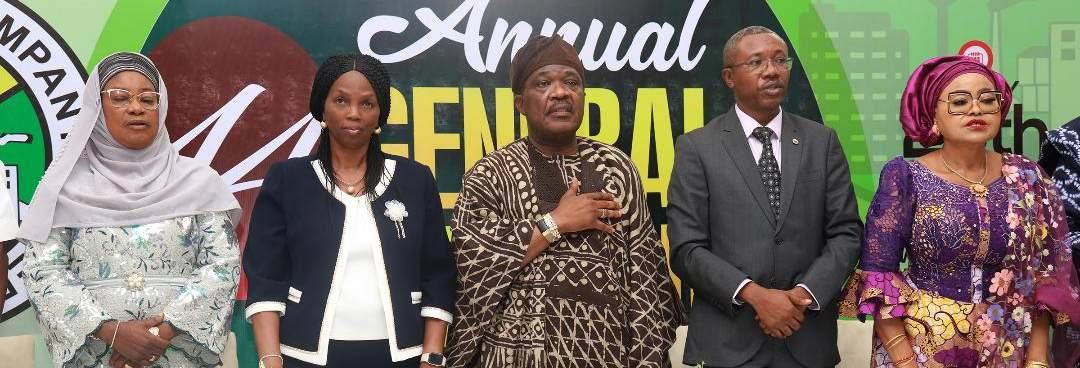
ODUA INVESTMENT COMPANY LIMITED ANNUAL GENERAL MEETING...
Atiku Returns to Nigeria Ahead Official Unveiling of Amaechi as His Running Mate
To participate in uploading of his presidential credentials to INEC
Chuks Okocha in Abuja
Presidential candidate of the African Democratic Congress (ADC), Atiku Abubakar has returned to Nigeria after a business trip outside the country.
His return will enable him to participate in the official unveiling of his running mate, Hon. Rotimi Amaechi and the uploading of his presidential nomination form expected to commence Monday.
He arrived at the Nnamdi Azikiwe International Airport on Saturday night following a brief business trip abroad.
All the political parties are expected to commence the INEC nomination forms that was shared to the political parties last week.
The nominees of the political parties were expected to fill the INEC forms and return same to their political parties to enable the uploading of the forms through the access code.
World on Edge as Fresh US-Iran Strikes Strain Fragile Interim Peace Deal
A new round of escalating strikes between Iran and the US continued yesterday, further undermining the fragile interim peace agreement between the two countries, and prompting President Donald Trump to threaten violence that would ensure Iran “will no longer exist”.
On Sunday, Tehran launched drone and missile attacks against Bahrain and Kuwait after new US strikes on sites in southern Iran, and threatened a “complete halt” to negotiations to end the war, the UK Guardian reported.
Trump said that a moment might come soon when he
abandoned talks and the US would “militarily finish the job”. The US president posted on social media: “If that happens, the Islamic Republic of Iran will no longer exist!”
Kuwait, which hosts a major US army base, said it had intercepted two ballistic missiles and that there were no reports of injuries or damage, while Bahrain’s interior ministry said the Iranian strikes had damaged a residential building near the international airport and that no one had been killed.
Qatar’s interior ministry said one Qatari national had been killed and second person injured by shrapnel from “military
Rotary District 9111 to
operations in the area”. The two were on a boat that went missing on Saturday and was located early on Sunday.
The latest violence has been triggered by efforts to reopen the strait of Hormuz to all shipping without Iran’s direct oversight. The strategically critical waterway, which carried a fifth of the world’s oil and liquid gas supplies before the war, has long been considered an international passageway.
US Central Command said in a statement that its strikes were “in direct response to continued Iranian aggression against commercial shipping” and had targeted Iranian military surveillance, communications,
air defence, drone storage and mine-laying facilities.
Washington has been promoting a southern lane along the coast of Oman, while Tehran, which ultimately aims to charge fees for use of the strait, wants ships to use a northern route through its waters and under its control.
Hundreds of vessels, including tankers laden with oil, have been blockaded inside the Gulf by the closure of the strait since war broke out. Some have chanced the passage through the past two weeks, leading oil prices to drop to close to pre-war levels and bringing relief to economies around the world.
Inaugurate Peace
Institute Building Donated to Olabisi Onabanjo University
Bennett Oghifo
Come Tuesday, June 30, 2026, Rotary International District 9111, under the purposeful leadership of District Governor, Rotarian Prince Henry Akinyele, will officially dedicate the Rotary Peace Institute building donated to the Olabisi Onabanjo University, Ago-Iwoye, Ogun State.
The historic occasion will also feature the graduation
ceremony of participants from Cohort 3 and Cohort 4 of the Peace and Conflict Studies Programme, Faculty of Arts, Olabisi Onabanjo University.
According to the Rotary District 9111 Governor, Rotarian Prince Henry Akinyele, “The event represents the fulfillment of a promise made less than a year ago when Rotary District 9111 broke ground for the construction of the Peace Institute Building.”
The groundbreaking ceremony, held in September 2025, was celebrated as a significant milestone in Rotary's commitment to fostering peace, promoting dialogue, and empowering future leaders with the knowledge and skills needed to address conflict and security challenges.
Akinyele stated that “The Rotary Peace Institute stands as a symbol of what can be achieved when
visionary leadership, strategic partnerships, and collective goodwill come together for a common purpose.”
Built through the collaboration between Rotary District 9111 and Olabisi Onabanjo University, the institute serves as a centre of excellence for peace education, research, conflict prevention, and community development throughout Nigeria and the West African region.
His arrival came amid anticipation regarding his choice of a running mate for the 2027 presidential election.
Also, the arrival of the former vice president will enable him tie all knots on the nomination of a former Rivers State governor, Rotimi Amaechi, as Atiku's vice presidential candidate.
The ADC had announced Amaechi as the vice presidential candidate of the party. However, this has yet to be announced officially by the former vice-president.
Atiku, who secured the ADC presidential primary ticket in May, was met by a gathering of supporters upon his return.
Sharing the update on social media alongside photographs
of the arrival, Atiku’s media aide, Abdulrasheed Shehu, stated, “His Excellency Atiku Abubakar joyfully returned to Nigeria after a brief overseas trip, greeted warmly by enthusiastic supporters and numerous well-wishers.” Shehu had previously clarified on June 21, that the formal unveiling of Amaechi was only delayed because Atiku was out of the country on a short business engagement. At the time, the media aide emphasised that “there was no crisis over the vice-presidential slot” and assured the public that the official announcement would proceed smoothly once the candidate returned to Nigerian soil.
Court Dismisses Lawyer's Suit Challenging AG's Decision to Prosecute Over Lekki Land Dispute
Wale Igbintade
Justice Olalekan Oresanya of the Lagos State High Court has dismissed an application filed by legal practitioner, Ademola Owolabi, principal of Ademola Adetokunbo & Co., seeking to halt his criminal prosecution over a disputed property in Lekki Phase I, Lagos.
The judge held the legality of the Lagos State AttorneyGeneral's legal advice recommending criminal charges could not be determined through judicial review proceedings but should instead be addressed in the pending criminal trial.
The ruling clears the way for the ongoing prosecution of Owolabi, Alex Ochonogor, Managing Director of Bluecrest Homes Limited, and Adebayo Akeju, principal of Adon Partners, before Justice Sherifat
Sonaike of the Lagos State High Court.
The defendants are facing a five-count charge bordering on conspiracy to commit felony, forgery of land-related documents, and willful damage to property, contrary to the Criminal Law of Lagos State. They have pleaded not guilty. According to the prosecution, the charges stem from a dispute over a 1,139-square-metre parcel of land at Block 133, Plot 10, Lekki Phase I, where rival ownership claims have been made.
The prosecution alleged that documents, including an Affidavit of Loss, Memorandum of Loss, and Demolition Notice, were used in obtaining a replacement Certificate of Occupancy and facilitating subsequent transactions relating to the property.
L-R: Secretary to the State Government, Ekiti State, Prof. Abibat Adubiaro; Company Secretary, Odua Investment Company Limited, Mrs. Abiola Olufunke Ajayi; Group Chairman, Otunba Bimbo Ashiru; Group Managing Director/CEO, Mr. Abdulrahman Yinusa; and Secretary to the State Government, Lagos State, Barr. Bimbola Salu-Hundeyin, during the Odua Investment Company Limited Annual General Meeting in Ibadan, over the weekend PHOTO: ABIODUN AJALA
Emmanuel Addeh in Abuja
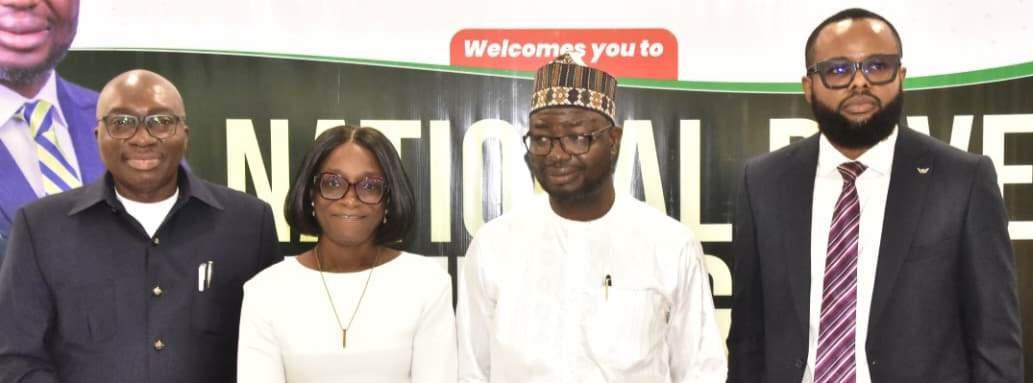
NATIONAL POVERTY INTELLIGENCE LAB WORKSHOP....
Bamidele: State Police Can't Wait Again, the Proposal Enjoys Nationwide Consensus
Says it has overwhelming legislative backing Insists safeguards will check potential abuses Ex-IYC
president hails Tinubu for proposal
Leader of the Senate, Opeyemi Bamidele, yesterday, the establishment of state police could no longer wait in view of the deepening security crisis in the country
Bamidele, who defended the proposal, declared that the
constitutional amendment bill, which had nationwide consensus, was conceived out of the country's worsening security challenges rather than political expediency.
In a statement he personally signed, he had reacted to growing public debate over the Constitution of the Federal Republic of Nigeria (Alteration) (State Police) Bill, 2026.
Bamidele said the proposal
reflected years of nationwide consultations and broad consensus among critical stakeholders, insisting that it should not be reduced to partisan politics.
The Senate had on June 24 passed the bill as part of the ongoing constitutional amendment process, concuring with the lower chamber, which passed it earlier.
Bamidele said available public
feedback indicated that many Nigerians had embraced the proposal because of its potential to improve security at the state and community levels.
He, however, expressed concern over what he described as attempts by some critics to politicise the initiative by portraying it as a tool that could be deployed by governors against political opponents.
BUA Donates Farm Inputs Worth N108m to Resettled Communities in Sokoto
BUA Cement Company has donated farm inputs worth N108 million to 211 farmers in resettled host communities across Sokoto State.
The intervention targets rural farmers displaced by the company’s expansion and aims to restore livelihoods ahead of peak wet season planting.
The handover ceremony took place at BUA’s premises in Sokoto and was attended by government officials, traditional rulers, and the beneficiaries whose farmlands and homes were impacted by the industrial development.
For the displaced households, the donation represents the
benevolence gesture of the company.
Many also said it offers a practical route to reclaim productivity and stabilize family income after losing access to ancestral farms.
Presenting the items, Ali Gumel, Director of Health, Community Safety and Environment at BUA Group, said the company remains committed to corporate social responsibility that meets the immediate needs of vulnerable populations. He noted that agriculture is central to Sokoto’s economy and rural stability.
“We understand the pain of losing a farm and starting over. These inputs are not charity, they are an investment in the
resilience of our people,” Gumel stated.
He assured that BUA will sustain collaboration with state agencies to keep resettled communities within development plans.
Gumel disclosed that the inputs include improved seeds, fertilizers, agrochemicals, and small-scale farming tools.
Company agronomists selected the materials to match soil characteristics and rainfall patterns in Sokoto’s northern and central zones.
Receiving the items on behalf of the state government and beneficiaries, Abubakar Dan Maliki, Program Manager of the Sokoto Agricultural Development Projects, described
the timing as critical. He said farmers are currently sourcing materials for land preparation and early planting.
“This support will reduce the cost burden on resettled farmers and help them regain productivity quickly. The state government will ensure equitable distribution through our extension agents at the community level,” Dan Maliki assured.
Community leaders at the event expressed gratitude, noting that access to quality inputs has been a major challenge since displacement. They pledged to use the materials judiciously and share best practices with other vulnerable farmers in the settlements.
Some opponents of the proposal have also argued that Nigeria was not yet ripe for state policing and warned that the arrangement could revive the excesses associated with regional policing under the First Republic.
But the Senate Leader maintained that such concerns had been carefully addressed during the legislative process through extensive consultations and the incorporation of institutional safeguards.
According to him, the campaign for state police did not begin recently but emerged during the constitutional review process through memoranda submitted to the National Assembly.
He explained that because of the sensitive nature of the proposal, lawmakers embarked on extensive consultations with the executive arm of government, the Nigeria Governors' Forum, the Conference of Speakers of State Legislatures and the leadership of the Nigeria Police Force before the bill was presented for legislative consideration.
Bamidele added that public hearings conducted across the country's six geopolitical zones in July 2025 produced overwhelming support for the proposal, with participants endorsing the creation of state
police as a practical response to rising insecurity.
He also disclosed that the Nigeria Police Force formally submitted a memorandum backing the initiative and provided recommendations that helped lawmakers design accountability and oversight mechanisms aimed at preventing abuse of state police by political office holders.
ccording to him, the support of the nation's police leadership underscored the strategic importance of decentralising policing to tackle security threats more effectively at the grassroots.
Bamidele further stressed that the bill enjoyed bipartisan support in the National Assembly despite concerns in some political circles. He said lawmakers from opposition parties, including the Peoples Democratic Party (PDP), African Democratic Congress (ADC), New Democratic Congress (NDC) and Labour Party, joined members of the ruling All Progressives Congress (APC) in supporting the legislation.
He revealed that 84 of the 109 senators voted in favour of the bill during clause-by-clause consideration, representing about 77 per cent approval in the Senate.
ACAOSA President Felicitates Old Boys on College’s 75th Anniversary
Raheem Akingbolu
The President of the Aquinas College Old Students Association (ACAOSA), Otunba Sola Adewumi, has extended heartfelt congratulations to all Aquinarians at home and in the diaspora, as St. Thomas Aquinas College, Akure, marks its 75th anniversary. In a felicitation message
issued on behalf of the worldwide Executive Council and the entire ACAOSA family, Otunba Adewumi described the milestone as a celebration of seven and a half decades of academic excellence, character formation, integrity, leadership, and outstanding contributions to society by generations of Aquinarians across the world.
“This remarkable milestone
is a celebration of seven and a half decades of academic excellence, character formation, integrity, leadership, and outstanding contributions to society by generations of Aquinarians across the world,” he said.
The ACAOSA president used the occasion to pay tribute to the founding fathers of the institution, as well as past and
present administrators, teachers, staff, and all alumni whose sacrifices and commitment have sustained the legacy and values of Aquinas College over the decades.
Otunba Adewumi noted that the 75th anniversary presents a significant opportunity for reflection, gratitude, and renewed commitment to the continued growth and
development of the alma mater.
He also described it as a time to strengthen the bonds of friendship, brotherhood, and service that unite Aquinarians worldwide.
Wishing all Aquinarians a joyous and memorable celebration, the worldwide president charged members to continue upholding the ideals of excellence and integrity for
which the college has long been renowned.
“May we continue to uphold the ideals of excellence and integrity for which our college is renowned,” he said.
St. Thomas Aquinas College, Akure, founded in 1951, is celebrating its Platinum Jubilee under the theme: Celebrating 75 Years of Excellence, Integrity, and Service.
Sunday Aborisade in Abuja and Blessing Ibunge in Port Harcourt
Onuminya Innocent in Sokoto
L-R: Director, Social Development, Ministry of Humanitarian Affairs and Poverty Reduction, Mr. Valentine Ezulu; Country Director, Innovations for Poverty Action (IPA), Funmilayo Ayeni; Minister of Humanitarian Affairs and Poverty Reduction, Dr. Bernard Doro; and Associate Director, Policy, IPA, Henry Chukwu, during the National Poverty Intelligence Lab Workshop in Abuja...recently
PHOTO: ENOCK REUBEN
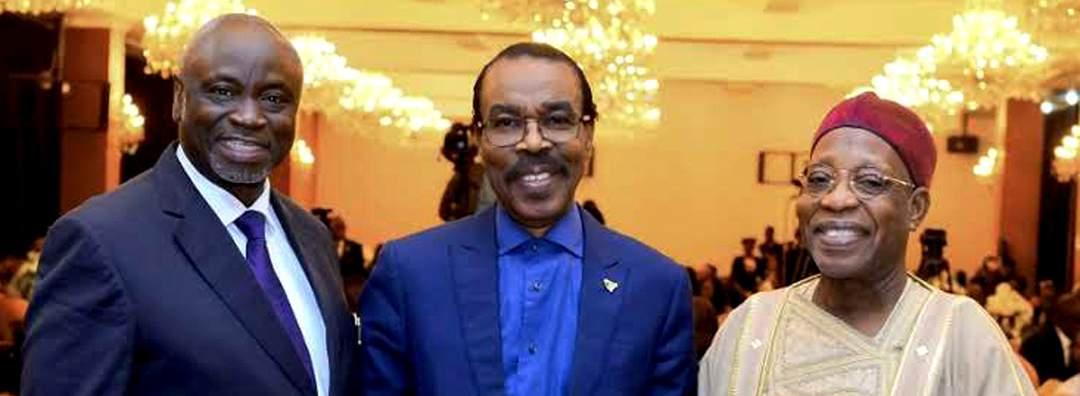
SGF Decries Killing of MACBAN Chair, Seeks Arrest, Prosecution of Perpetrators
IPCR condemns killing seeks justice
Operation Kosaye
Michael Olugbode, Olawale Ajimotokan in Abuja, Yinka Kolawole in Osogbo and George Okoh in Makurdi
Secretary to the Government of the Federation (SGF), Senator George Akume, has expressed outrage over the gruesome killing of the Benue State Chairman of the Miyetti Allah Cattle Breeders Association of Nigeria (MACBAN), Alhaji Ardo Risku, and his associate. He made the condemnation yesterday in a statement by his Special Adviser, Media and Publicity, Yomi Odunuga.
Adeleke
Police arrest 10 over his murder Sanwo-Olu, Abiodun hail
praises military’s contributions to national defence, identifies challenges
Akume said he was jolted by the dastardly and reprehensible act, which was a direct assault on the peace, reconciliation and mutual trust that communities across Benue State had worked painstakingly to rebuild.
The SGF noted that the incident occurred at a time when the state had continued to witness encouraging improvements in security and the gradual restoration of peaceful coexistence among its diverse ethnic, cultural and religious communities.
He cautioned against allowing fifth columnists, averse to peace,
from reversing the gains already recorded through dialogue, understanding and collective sacrifice.
The former governor of Benue State insisted on peaceful coexistence and unity among all residents, irrespective of ethnic, cultural or religious differences, saying sustainable development and economic prosperity could only thrive in an atmosphere of peace, tolerance and mutual respect.
The SGF appealed to all communities in the state to reject subterranean attempts by criminal elements to sow
seeds of discord, hatred and reprisals among them, saying no individual or group should take the law into their hands.
According to him, lasting peace remained the strongest foundation for attracting investment, expanding agriculture, creating jobs and guaranteeing a better future for all citizens.
He commiserated with the family of the late Alhaji Ardo Risku, the leadership and members of MACBAN, and all those affected by the tragic incident.
The SGF also urged the
2027: Katsina APC Chieftain Debunks Alleged Radda, Masari Feud
Francis Sardauna in Katsina
Special Assistant to Governor Dikko Umaru Radda on Public Enlightenment, Abdulaziz Maituraka, has dismissed speculations of a disagreement between Governor Dikko Umaru Radda and former Katsina State Governor, Aminu Bello Masari. Maituraka refuted the
TCN
allegation yesterday in Katsina while distributing N4 million, crates of eggs and cartons of noodles to tea vendors and officials of the ruling APC across 11 electoral wards of Katsina Local Government Area of the state.
There have been speculations in Katsina that Radda and his predecessor, Masari, were at loggerheads over political
issues, which might not be unconnected with the 2027 general election.
But Maituraka, who is a close ally of Masari, described his relationship with Radda as cordial and founded on a common commitment to the development and progress of Katsina State.
Addressing the beneficiaries, the state Chairman of the
APC, Bishir Gambo Saulawa, commended Maituraka for consistently empowering people and urged all politicians elected on the platform of the party to emulate the gesture.
He said: “We should empower people now, not only on the eve of elections. People need assistance and empowerment to overcome the current economic hardship.”
Restores Power to Kano, Katsina, Jigawa, Fixes 330kV Kumbotso Line
Emmanuel Addeh in Abuja
The Transmission Company of Nigeria (TCN) has restored electricity supply to Kano, Katsina and Jigawa states following the successful completion of scheduled maintenance at its 330kV Kumbotso Transmission Substation.
In a statement yesterday, the
company's General Manager, Public Affairs, Ndidi Mbah, said the substation and the affected transmission lines were successfully energised, with normal power supply fully restored at about 4:30 p.m.
The maintenance, which had earlier been announced by the Nigerian Independent System Operator (NISO), required a
temporary shutdown of power supply between 9:00 a.m. and 1:00 p.m. to enable engineers carry out critical works on the facility.
According to the TCN, the maintenance formed part of its continuous investment in reinforcing the transmission grid and enhancing the stability of electricity supply across the country.
Following the restoration of the transmission infrastructure, Kano Electricity Distribution Company (KEDCO), Jos Electricity Distribution Company (JEDC) and Yola Electricity Distribution Company (YEDC) have resumed power off-take to their franchise areas, the company stated.
Nigeria Police Force, the Department of State Services (DSS), and other relevant security agencies to immediately carry out a thorough, transparent and painstaking investigation into the killings.
He insisted that no effort should be spared in identifying, arresting and prosecuting those connected with the heinous crime.
He demanded that in the same way as the suspects of the horrific killings in Yelwata were apprehended and currently standing trial, those responsible for the murder of the MACBAN Chairman and his associate must likewise be fished out and made to face the full wrath of the law.
"The lives of every Nigerian are sacred. Those who believe they can undermine peace through violence and murder must understand that there will be no hiding place for them. Justice must not only be done but must be seen to be done," Akume said.
The SGF iterated the unwavering commitment of President Bola Tinubu to tackling insecurity in all ramifications across the country.
He lauded the President for continuing to provide the nation's security and intelligence agencies with the necessary support, resources and strategic direction to decisively tackle criminality and ensure that every part of Nigeria is safe for citizens to live, work and pursue legitimate livelihoods.
IPCR Condemns Killing, Demands Justice
The Institute for Peace and Conflict Resolution (IPCR), has also condemned the killing of Ardo Risku Mohammed, describing the
attack as a devastating blow to ongoing efforts aimed at fostering peace, dialogue and harmonious coexistence in the state.
In a statement yesterday by the Director-General of the Institute, Dr. Joseph Ochogwu, the IPCR said the late MACBAN leader was widely recognised as a tireless advocate of reconciliation and peaceful engagement among the diverse ethnic and religious communities in Benue.
He noted that his death represented not only a personal tragedy but also a serious setback to the state’s fragile peacebuilding process.
The Institute observed that Mohammed had earned widespread respect for his commitment to dialogue and bridge-building at a time Benue continued to grapple with recurring communal tensions and insecurity.
Police Arrest 10 Suspects over Murder
The Benue State Police Command, yesterday, said it has arrested 10 suspects in connection with the killing of Alhaji Ardo Risku Mohammed and his associate, Yakubu Isah.
The Commissioner of Police in the state, CP Cletus Nwadiogbu, disclosed this in a statement by the Public Relations Officer of the command, DSP Udeme Edet.
The police which had condemned the killing, said significant progress had been made in the ongoing investigation.
Nwadiogbu revealed that following intensive intelligence and tactical operations carried out by the Command, 10 suspects were arrested on the night of 27th June, 2026, during a coordinated operation by tactical teams in
Otukpo area of the state.
L-R: President and Chief Executive Officer, PEARL Awards Nigeria, Mr. Tayo Orekoya; Managing Director, Financial Derivatives Company Limited, Mr. Bismarck Rewane and Chairman, PEARL Awards Board of Governors, Dr
Faruk Umar, at the 2026 PEARL Awards Corporate Summit held at the Oriental Hotel Victoria Island, Lagos ... recently
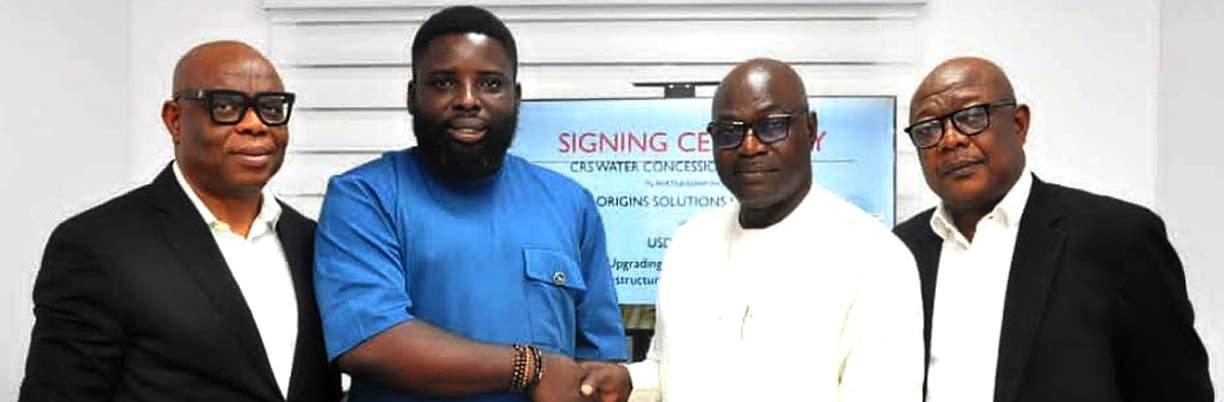
PARTNERSHIP SIGNING CEREMONY...
L-R: Managing Director, Core Trust and Investment Limited, Adolphus Aletor; Co-Founder/CTO, Origins Solutions Limited, Temitayo Adegoke; Managing Director, Agua Global Services Limited, Lucky Igberaese, and Group Managing Director, Core Trust and Investment Limited, Ayo Taire, at the partnership signing ceremony between CRS Water Concession SPV Limited and Origins Solutions Limited for the provision of IOT/Digital Billing system for the rehabilitation of the Cross River State Water Board held in Lagos... recently
Tinubu, Sanwo-Olu Commiserate With APC Nat’l Secretary over Mother's Demise
Deji Elumoye in Abuja
President Bola Tinubu and the Lagos State Governor, Mr. Babajide Sanwo-Olu, have commiserated with the National Secretary of the All Progressives Congress (APC), Senator Ajibola Basiru, on the demise of his mother, Alhaja Sidikat Abake Basiru, on Sunday.
The President, in a statement by his Adviser on Information and Strategy, Bayo Onanuga, commended the late matriarch’s
sense of discipline and responsibility, instilling in her children the values of integrity, faith, selfless service, and discipline.
Tinubu noted that Senator Basiru’s contributions to national development and the growth of the APC reflected the quality of his upbringing.
According to the president, "The loss of a loving mother is a profound moment of grief. While death is an inevitable part of life, the pain of losing a parent is deeply
felt and leaves an enduring void.
"I pray that Almighty Allah will grant the departed matriarch Aljanah Firdaus and comfort Senator Basiru, other members of the family, friends, and loved ones during this difficult period.
"I urge all Mama's survivors to find solace in the exemplary life she lived and the enduring legacy that she has left behind."
On his part, Sanwo-Olu, in a statement by his Special Adviser on Media and Publicity, Mr. Gboyega
IN DEFENCE OF THE DANGOTE REFINERY
Conclusion
The Okonkwo article closes with what it presents as a generous gesture: "That question does not have a simple answer. But it is the right question to ask." The question being asked of whether the refinery serves the national interest proportional to the public support it received is indeed worth asking. The analysis provided in the article is not remotely proportional to the question's importance.
The right questions, properly framed, are these: Has the refinery delivered on its core mandate of ending Nigeria's fuel import dependency? Yes. West African fuel imports have fallen structurally. Nigeria now has domestic refining capacity that covers 100 percent of national
mine out to Africa to some key states and said, look, we're not here to tell you what to believe in. But if you've got a terrorist threat, that is a threat to us. Let's work together," he stated.
Gorka also defended Trump's decision to designate the Muslim Brotherhood as a terrorist organisation, describing the group as the ideological foundation of several modern jihadist movements, including ISIS, Al Qaeda and Hamas.
He argued that the designation represented one of the administration's most consequential counter-terrorism
demand with surplus for export. Has the public capital invested in the refinery generated returns for the national balance sheet?
Yes. NNPC's $1 billion stake is now worth approximately $2.9 billion at current valuations.
The naira has benefited from reduced import pressure.
S&P has upgraded Nigeria's sovereign rating. Is the refinery exercising market power in ways harmful to Nigerian consumers?
The pricing record says no. Eight price reductions in 2025. Interest-free credit for airlines. Naira-denominated fuel sales. A N720 billion logistics investment to absorb distribution costs. Does the IPO represent a genuine wealth-sharing opportunity for Nigerians?
decisions and should have been implemented decades earlier.
The official further expressed concern over what he described as the continued threat posed by radical Islamist organisations to both Africa and the United States, warning that extremist groups could exploit migration routes and weak border controls to expand their reach.
He nevertheless praised ongoing efforts by senior U.S. homeland security officials to tighten border security and disrupt terrorist and cartel activities.
Detailing how the plan to
The evidence of $2 billion in private placement demand, fivefold growth in new brokerage accounts, and USD-denominated dividend commitment says yes.
Are there legitimate regulatory questions about concentration of power that deserve continued scrutiny? Absolutely, and they should be pursued through the proper mechanisms of competition policy, regulatory oversight, and statutory enforcement, not through poorly evidenced newspaper campaigns timed to coincide with capital market transactions.
The Dangote Petroleum Refinery is not above scrutiny. No institution of its size and influence in Nigeria's economy should be. But scrutiny requires
move into Nigeria was arrived at, Gorka stated that Trump never wasted time before approving the exercise immediately it was brought to his attention.
“We told the President, this man has killed Americans and is planning to kill Americans. And we've been watching him for a year and a half under the Biden administration.
“The President (Trump) looked up from the resident desk, he looked at us and said, What do you mean we're watching him? Kill him.
“And as a result, he took out his iconic sharpie pen.
Akosile, urged the bereaved family, friends and associates to accept the loss as the will of Allah.
The governor described the late Alhaja Basiru as a woman, who lived a fulfilled life, raised worthy children, and made lasting impact in her community.
“No doubt the death of a loved one is painful and irreparable, but we must take solace in God when the deceased has lived a good life.
“The elderly wisdom and counsel of Mama Basiru will be
evidence, analytical honesty, and a willingness to weigh costs against benefits rather than treating every fact in evidence as either positive when it supports the narrative or irrelevant when it does not.
By that standard, the Okonkwo article does not constitute serious analysis of a serious subject. It constitutes a reputational exercise dressed in the language of accountability journalism. Nigeria's capital markets, its energy sector, and the millions of Nigerians who will decide whether to invest their savings in this offering deserve better.
•Bashir Yusuf Ibrahim is a Policy Consultant. He can be reached at bashir.ibrahim@post. harvard.edu
He ticked the ‘go box’ on the operational orders we had in front of him. Less than 30 hours later, I'm in the situation room under the West Wing with the National Security Advisor with my colleague from my counterterrorism team.
“And we watched like clockwork at exactly 8.45 in the morning on Saturday, this ISIS leader being permanently removed from the battlefield. The President then declassified the video of that strike. He posted it on Truth Social, it went 120 million likes in like eight hours,” he added.
sorely missed, not only by her family but by her community, friends and all who knew her.
“I pray that Allah grants Alhaja Sidikat Abake Basiru Aljanah Firdaus, and gives Senator Ajibola Basiru and the entire family the fortitude to bear this irreplaceable loss.
Group Advocates
“On behalf of my wife, Dr. Ibijoke Sanwo-Olu, our family, the Lagos State Government, and all APC leaders and members in Lagos, I sympathise with Senator Ajibola Basiru, his siblings, and the entire Basiru family on the demise of Alhaja Sidikat Abake Basiru,” Sanwo-Olu said.
Strategic
Transition to Safeguard Customs Modernisation
Segun Awofadeji in Bauchi
Arewa Youths Advocate for Good Governance (AYAGG) has urged President Bola Ahmed Tinubu to take a strategic and lawful approach to the impending retirement of senior officials in the Nigeria Customs Service (NCS), warning that a mass leadership exit could undermine ongoing reforms and operational efficiency.
The National Coordinator of AYAGG, Comrade Adamu Muhammad Abdullahi, made the appeal during a press conference in Bauchi over the Weekend focused on the future of one of Nigeria's key economic institutions.
Abdullahi said the group had closely monitored developments within the Nigeria Customs Service and was concerned about the imminent retirement of several senior management officers within the same period.
According to him, the development comes at a critical time when the federal government is implementing far-reaching economic reforms under President Tinubu's Renewed Hope Agenda.
"At such a delicate stage, institutions responsible for revenue generation, trade facilitation and border management must enjoy stability, policy continuity and experienced leadership," he said.
He noted that the Nigeria Customs Service has become one of the Federal Government's leading revenue-generating agencies while playing a crucial
role in combating smuggling, securing the nation's borders, facilitating legitimate trade and supporting national security.
Abdullahi warned that the simultaneous retirement of experienced management officers without a carefully planned transition could create leadership gaps, weaken institutional memory, slow ongoing modernisation programmes and reduce operational efficiency.
"This is not merely an administrative issue; it is a matter of national economic importance," he said.
The group therefore called on President Tinubu to consider measures that would guarantee stability within the Service while sustaining the gains recorded in recent years.
According to AYAGG, such measures could include adopting a phased leadership transition, retaining critical institutional expertise where legally permissible and ensuring that succession planning is guided by national interest rather than administrative timelines.
"We are not advocating for individuals. We are advocating for institutional continuity," Abdullahi stressed.
He added that successful reforms depend on consistency in leadership, policy implementation and operational direction, noting that Nigeria cannot afford to disrupt the momentum already achieved in customs modernisation, revenue expansion, digital transformation and border security.
IN DEFENCE OF THE DANGOTE REFINERY
global energy markets.
Readers and editors should also note what the article does not disclose: the identity and interests of those who may have motivated its production. The piece was published as global investor interest in the Dangote IPO reached its peak, precisely as demand for the June 2026 private placement reportedly exceeded $2 billion. The timing is not incidental. The article sets out, deliberately, to introduce reputational friction at the moment it would be most financially damaging. That does not make every criticism illegitimate, but it makes the absence of rigorous evidence-based argumentation all the more glaring, to say the least.
Claim 1: The SEC intervention signals disorder in the IPO process
First of all, the SEC's June 23, 2026 action had nothing to do with the Dangote Group. The commission's notice was directed at third-party capital market operators who were running unauthorised pre-IPO campaigns on social media without the knowledge or authorisation of the refinery. The Dangote Petroleum Refinery itself publicly reiterated as early as March 2026 that it had not authorised any IPO-related marketing, and the company explicitly stated that any potential offering would be communicated only through formal regulatory channels.
The author attempts to read this regulatory action as a negative signal about the refinery itself. The exact opposite is true. The SEC's swift, clean enforcement, requiring operators to remove all promotional materials and return all collected funds within 24 hours, is a demonstration of regulatory confidence in the offering's ultimate legitimacy. Regulators do not enforce procedural compliance for transactions they expect to fail or disallow. They enforce it because they know the real offering is coming and they intend to manage it properly.
Furthermore, the Nigerian Exchange Group's own CEO, Temi Popoola, described the anticipated listing as a "landmark moment" that would demonstrate Nigeria's capacity to support "complex, globally significant transactions." The SEC intervention was market hygiene. The article sets up a strawman by treating it as scandal. That, by itself, signals sabotage.
Claim 2: The NNPC monopoly lawsuit exposes a dangerous concentration of power
The author presents the NNPC counterclaim as settled truth. It is not. It is NNPC's litigation position, advanced by a state company with its own powerful institutional and commercial interests in maintaining downstream market control.
The substantive legal question in Suit FHC/ABJ/ CS/1324/2024 was whether the NMDPRA had authority to issue import licences in the absence of a verified product shortfall under Sections 317(8) and (9) of the Petroleum Industry Act. That is a statutory interpretation question, not a referendum on Dangote's character or intent. The refinery's position was that domestic production was sufficient to meet demand and that the licences therefore violated the PIA's hierarchy of supply preference for domestic refining capacity. Whether or not that argument was ultimately correct, it was legally coherent and grounded in the text of Nigeria's own petroleum legislation. To be honest, until it brings back its own refineries onstream, no one will take NNPCL seriously when it talks about monopoly.
The article then pivots to the withdrawal of the suit in July 2025 as evidence of weakness. This too is a misreading. The lawsuit was filed to establish a principle during a period when the refinery was ramping up to full capacity. By early 2026, the refinery had achieved 650,000 barrels per day (full nameplate capacity) and became the dominant determinant of fuel prices in Nigeria. The market resolved what the courtroom had been asked to decide. Withdrawing a lawsuit you no longer need is not a concession. It is strategy.
Okonkwo’s question, "what happens to projected revenues if the refinery cannot legally compel marketers to source locally?" assumes the refinery needs legal compulsion to compete. The evidence says otherwise. West African imports of refined petroleum products fell 23 percent in a single month between April and May 2026 as the Dangote refinery reached full capacity. Nigerian refined fuel imports had already declined 39 percent year-on-year by mid-2025. These are not the revenue metrics of a refinery losing a market competition battle. These are the metrics of a refinery that has won it.
Claim 3: Farouk Ahmed’s Resignation Suggests
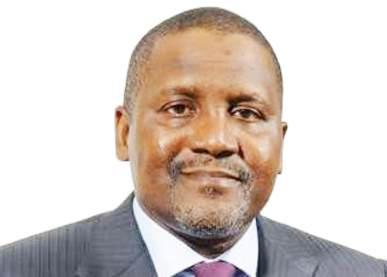
Regulatory Capture
The article raises the departure of former NMDPRA chief Farouk Ahmed as a sinister event without providing any evidence that Dangote caused or compelled it.
Dangote's public allegations against Ahmed regarding children in Swiss schools and lifestyle inconsistencies were serious but unrelated to the operational licensing dispute. The article acknowledges that Ahmed’s departure "remains contested" and then uses its very ambiguity to insinuate wrongdoing.
This is the article's argumentative methodology in miniature: raise an unanswered question, attribute it atmospherically to Dangote, and treat the uncertainty as evidence of misconduct. Rigorous journalism requires more than this. The allegation that a Nigerian government official was living beyond his legitimate means is an allegation worthy of independent investigation. It is not, on its own, evidence that the refinery sought regulatory capture rather than regulatory fairness.
There is a competing interpretation that the article does not entertain: that a domestic refinery with $20 billion in invested capital, operating in full compliance with Nigeria's Petroleum Industry Act, was entitled to object when a regulator issued licences to competitors in apparent violation of the statutory supply hierarchy. Describing that objection as an attempt to "monopolise" the market requires one to ignore the plain text of the PIA, a law that Nigeria's National Assembly enacted precisely to establish priority for domestic refining.
Claim 4: The valuation is speculative and the IPO is financially fragile
The author raises the valuation not to analyse it but to set up a question about revenue risk. Yet the valuation range of $39 to $50 billion cited by the article itself is not a product of speculative enthusiasm. It is grounded in operational performance that the article conspicuously underweights.
Consider the performance record that underpins investor interest:
a. The refinery reached full nameplate capacity of 650,000 barrels per day in February 2026.
b. In April 2026, it became the world's single largest exporter of aviation fuel, exporting 158,000 barrels per day, a 770 percent increase from the prior year, according to S&P Global Commodities at Sea data.
c. The facility can refine approximately 40 crude grades and is building toward 100-plus crude flexibility, comparable to Singapore's Pulau Bukom, one of the world's premier refining hubs.
d. S&P Global's ratings upgrade for Nigeria cited the refinery's expanded domestic refining capacity as a contributing factor.
e. The private placement completed in June 2026 at $0.35 per share drew demand reportedly exceeding $2 billion against $1 billion offered.
f. The Nigerian Exchange Group CEO confirmed the refinery is on track for a listing that would "roughly equal the value of all new listings combined on Nigeria's exchange in 2025."
g. Dangote has committed to dividends payable in US dollars — an investor protection that directly addresses the naira volatility concern that derailed earlier capital market opportunities for Nigerian retail investors.
The article frames the IPO as a high-risk, politically fraught event. The market data frames it as the most oversubscribed and institutionally validated capital
market event in African history. These two framings cannot simultaneously be correct and investors know what to believe.
Claim 5: The refinery's public support (NNPC stake, CBN forex) raises questions of proportionality
The author treats the State's involvement in the refinery's financing as a liability for Dangote, implying that public support creates ongoing obligations that Dangote may not be meeting. The more accurate analysis is the opposite: the public support was a rational sovereign bet on industrial policy that has already returned its initial thesis.
NNPC injected $1 billion for a 7.24 percent equity stake. At a $40 billion valuation, that stake is worth approximately $2.9 billion, nearly a threefold return of public capital before a single IPO share has been sold. The CBN's foreign exchange allocations were made during a period of acute currency pressure because the refinery represented the single most credible mechanism for reducing Nigeria's $10-20 billion annual fuel import bill. Those dollar-denominated imports were among the primary drivers of naira depreciation. The refinery's existence directly addresses the structural driver of the currency crisis; the article implies the CBN's support worsened it.
What the article presents as a "national bet" was, by any rational capital allocation standard, a bet that has already been substantially won. West African fuel import volumes have fallen structurally. Nigerian fuel import dependency has been reversed. The naira has benefited from reduced import pressure. S&P has upgraded Nigeria's rating. These outcomes do not emerge from a project that is failing its national mandate.
The question of whether any private entity can "accumulate power that exceeds the capacity of any regulatory framework to govern" is legitimate. But it requires acknowledging three things the article ignores: first, that Nigeria has never lacked refineries. What Nigeria lacked was functioning refineries and Nigerians know who to hold responsible for that. Second, Dangote has repeatedly invited third-party investors and is now offering public ownership, the exact opposite of monopolistic entrenchment; and third, that the solution to concentrated industrial power in a sector is stronger regulation and more investment in competing infrastructure, not an attack on the institution that built what the government spent six decades promising and failing to deliver.
What Okonkwo’s Article Fails To Analyse:
Beyond the point-by-point rebuttals, the most significant failure of the Okonkwo article is its refusal to engage with the Dangote Refinery's strategic positioning within the global energy architecture. This is not a domestic policy story. It is an African sovereign-capacity story with global implications.
For sixty years, Nigeria's relationship with petroleum was one of structural subordination: the country produced crude, exported it, and then paid Western trading houses — Vitol, Trafigura, Gunvor — to return refined products at prices it could not control and in currencies it was perpetually short of. The fiscal cost was enormous. The reputational cost — an OPEC member unable to refine its own oil — was a source of national shame that informed decades of reform
attempts, all of which failed.
The Dangote Refinery has not merely ended import dependency. It has inverted the country's position in global refined product markets. In April 2026, when Middle Eastern supply chains were disrupted by geopolitical conflict around the Strait of Hormuz, it was the Dangote Refinery in Lekki that global airlines, trading houses, and national oil companies called. Vitol took Dangote petrol to the United States — the first Nigerian refined product to meet US motor fuel standards. South Africa entered long-term supply discussions. The UK and Netherlands received Dangote jet fuel cargoes. This is not the operational profile of a company whose primary purpose is domestic market monopolisation. This is the profile of a global energy infrastructure asset that happens to be Nigerian. The article characterises Dangote's expansion ambitions as personal legacy-building. The documented structure of those ambitions tells a more complex story. The planned expansion from 650,000 to 1.4 million barrels per day — to be partly funded by the IPO proceeds — would make the facility one of the largest refineries in the world, comparable to the Jamnagar complex in India. The planned new propane dehydrogenation plant, linear alkylbenzene facility, and diesel hydrotreater represent value-added processing that produces petrochemical feedstocks Nigeria currently imports. The planned pan-African multi-exchange listing — with discussions confirmed by the CEOs of both the Nigerian Exchange Group and the Nairobi Securities Exchange — is the first serious attempt to build an African-scale capital pool around an African industrial asset. If this is legacy-building, it is legacy-building whose externalities are almost entirely beneficial to Nigeria and to the continent. The alternative — that Nigeria should have waited for a state-owned or internationally financed refinery that would somehow avoid the concentration-of-ownership problem the author raises — had already been tested for six decades and produced the four non-functioning NNPC refineries whose failure made the Dangote investment necessary. The article never addresses what Dangote has actually done with its market position on pricing. The evidence is unambiguous. In 2025 alone, the refinery reduced gantry prices for petrol on at least eight separate occasions and raised them only twice, with each increase tied to documented global crude price movements. The refinery introduced a 30-day interest-free credit facility for Nigerian airline operators. It shifted aviation fuel sales from dollar to naira pricing to reduce pressure on Nigeria's foreign exchange market. It cut jet fuel ex-depot prices from N1,750 to N1,550 per litre over consecutive adjustments. It committed N720 billion to deploy 4,000 CNG-powered trucks for nationwide fuel distribution — at no cost to marketers — to eliminate transport costs from the supply chain.
These are not the pricing behaviours of a monopolist seeking to extract maximum rent from a captive market. They are the pricing behaviours of an industrial operator with the scale, margin, and strategic vision to invest in market development for long-term dominance. The distinction matters. Monopoly pricing extracts. Infrastructure pricing at scale builds. Dangote has consistently chosen the second path — and the downstream impact on Nigerian inflation, logistics costs, and airline viability has been materially positive.
The article's investor-protection framing — concern for "ordinary Nigerians" who might be misled by fraudulent promoters — is legitimate as far as it goes. But it stops precisely at the point where the analysis becomes interesting. Meristem Securities has reported a fivefold increase in new trading account openings this year, driven almost entirely by Nigerians seeking to participate in the Dangote IPO. MTN Nigeria's 2019 listing added approximately N1.83 trillion to stock market capitalisation. The Dangote listing, at $40 billion, would add multiples of that. For a generation of Nigerians who watched the fuel import economy transfer wealth from the naira to European trading houses, the opportunity to own equity in the refinery that ended that transfer is not merely a financial transaction. It is a claim on the industrial future of their country. The article treats the investor enthusiasm as evidence of a speculative bubble to be managed. A more generous and more accurate reading is that it represents something Nigeria has rarely generated: genuine, organic, retail investor demand for a domestic industrial asset.
Dangote
K-LEGS OF STATE POLICE
will say which recommendations were accepted and which ones were rejected or modified. In the days of military rule, when there was no Parliament, the soldiers relied a lot on published committee reports and white papers to get public reaction and input. White Papers on everything from Langalanga train disaster to plane crashes to communal riots to student disturbances were readily published in the newspapers in those days. Even though the state police idea appears to have gained ready support from Presidency, state governors and National Assembly, the Presidency hurriedly sent a constitutional amendment bill to the National Assembly and, in one day, the Senate passed it. There were no public hearings. This is very important because there are many other stakeholders in this police reform project, as well as a lot of Nigerians who can make critical inputs into this matter.
For example, twenty-five years ago when I was Editor of New Nigerian in Kaduna, this matter of the relative efficiency between the old Yan Doka and the present Yan Sanda once came up. We thought one person who will have a rich perspective of the matter was Walin Kano Alhaji Mahe Bashir Wali. In the 1960s he was the Wakilin Doka [i.e. head of the Kano Native Authority Police], and after the police reforms, he transferred to Nigeria Police and rose to become Deputy Inspector General. Our Features Editor Auwalu Umar Danbatta went and interviewed him in Kano. He asked Wali why the Yan Doka were more effective in combatting crime than the Yan Sanda, and Wali said population explosion is a factor. Our villages and towns were once relatively small, and anyone entering a village must report to the Village Head, introduce himself,
say where he was coming from, what his business in the town was, who is hosting him, and when and where he will go from there. These days, when some of our state capitals and largest cities have hundreds of hotels, plus the constitutional freedom of movement, one can enter any town he likes, lodge in a hotel for as long as he wants, transact any business he likes and depart at his own time without telling anybody.
Not only has Nigerian society quantitatively increased in population, but it has also qualitatively transformed in criminal sophistication, up to and including the coming of armed robbers, kidnappers, insurgents, bandits, Yahoo boys and secessionists. Nigeria Police, with all its phenomenal increase in manpower, much larger budgets, much more mobility, more sophisticated domestic and foreign training, heavier weapons and greater use of tech gadgets, is still at its wits end combatting crime. Will state police be better in this regard?
One advantage that state police is touted to have, in relation to the Federal police, is better knowledge of the locality. It is assumed when state police come on board, every state will staff it with locals, what we call indigenes. Certainly that will help in some ways, even though there are other ways in which Nigeria Police could gain this knowledge of the locality too, by incorporating traditional rulers and local vigilantes into the scheme. That you are a local native alone does not give you exceptional knowledge of the criminals in the area. Which is why, state police forces must still aim to build intelligence capacities like Nigeria Police currently has, plus the assistance it gets from intelligence and security agencies and the military. The late Marafan Sokoto Alhaji Umaru Shinkafi, a career
policeman who once headed the Nigeria Security Organisation [NSO], precursor of today’s DSS, NIA and DIA, throughout his lifetime emphasized the centrality of intelligence gathering in fighting crime. Which is why, conferences being held in his memory today are called Umaru Shinkafi Intelligence and Security Summit.
Stuffing state police with locals will have its advantages but it might also have some K-legs as well. Every state in Nigeria has its own share of ethnic, religious, political and traditional disputes. Native policemen can easily be sucked into these, unless if they receive training and indoctrination so sophisticated that they rise above these, which is doubtful. Can a nine month training at a Police Academy wipe out ethnic and other sentiment? One reason for worry is that in many inter communal disputes across the country, ex-servicemen often play a central role, wielding firearms to fight for their communities. If even military training is unable to erase such sentiments, is it likely that state police training can do so?
It is not for nothing that policemen, including Commissioners of Police, are posted around the country, usually outside their own states of origin, but usually also to areas of cultural similarity, to enhance understanding. Look, in the long years of military rule in this country, Military Governors were almost never sent to their states of origin. That at least guaranteed some neutrality, or the appearance of it, in local disputes. Imagine when a communal dispute arises and the state police DPO is a native of one of the warring communities. However much he strives to remain neutral, the opposing community will never agree, and will loudly allege that he took sides with his native community.
EVERY DAY FOR THE THIEF, NO DAY FOR THE OWNER
businesses by the people they hired.
For my podcast, I have interviewed two hotel owners, both victims. One had a fifteen-year employee he had treated like family — bought him land, paid school fees, covered medical bills. It did not matter.
The impunity is staggering. And it is not accidental. It is the logical outcome of a system with no consequences.
The Victim-Blaming Must Stop Better controls. Tighter reconciliation. CCTV. I hear this so often as a recommendation that I have started laughing. I qualified as a Chartered Accountant in 1993 and am a former internal auditor. With the greatest of respect to those offering these prescriptions: you do not understand the size of this problem.
The person running two restaurants is not a surveillance operative who can abandon her floor to watch twelve hours of CCTV footage every day. Suggesting she should reveals exactly how completely we have outsourced the problem to its victims.
To those who ask how much the staff are being paid: I pray that you will one day open a business in Nigeria and find out that it had nothing to do with salary or benefits. The woman who opens a bank account in a name similar to her employer’s business and arrives to work with her own POS terminal is not hungry or desperate. She is a thief, and a well-prepared one. The first money she steals is her insurance — set aside to settle the police if she is ever caught.
And to those who insist the auditors should have found it: I ask how many small businesses can afford an auditor? And even some that can find their auditor is part of the same collusion.
What is most disturbing is the pattern of coordination. Very few of these thefts are solo operations. The person currently awaiting trial on remand whom my team interviewed had recruited the security guard and three regular customers into a systematic five-year operation against a woman whose only crime was trying to build something. This is organised crime — more disciplined in its structure than most legitimate businesses.
If we opened the floodgates and asked business owners to share their stories, I think we would have a day of national shame.
Members of the public have a small but real role to play: be in the business owner’s corner. Be suspicious of the non-working POS machine followed by an offer to pay into a personal account. Avoid cash. Do not collect the personal phone number of staff, or encourage them to do private work on
the side at the expense of the employer whose generator is running.
The Police Problem
This is where the conversations with Otunba Femi Okenla — entrepreneur, Nidacity podcast guest, and owner of the IBIS Hotel — and Ayodele Ogundele of Davies Hotel became something I could not unhear.
He told me what it costs to get the police to prosecute someone caught stealing from your business. Not the theoretical cost. The actual, itemised, out-of-pocket cost he personally paid: logistics, the informal fees understood by everyone involved to be the price of admission to a system that is theoretically free. He paid them — not because he wanted to, but because the alternative was watching the thief walk out and the next employee draw the obvious lesson.
What Otunba Okenla described is not an exception. It is the structure. The police will not pursue a staff theft case without inducement. Courts move at the pace of an institution never designed for its current caseload on its current budget. By the time a case resolves — if it ever does — the business has absorbed the original theft, financed the prosecution, lost a staff member, found a replacement, and is running on less capital and more cynicism than it started with.
The rational conclusion is unavoidable: theft works. The expected cost of being caught is so low that the calculation is not even close. This is not a moral peculiarity. It is basic criminology. When consequences are absent, behaviour follows. We have built — or failed to build — an environment in which internal theft is, for many participants, essentially risk-free. What we observe is the predictable result.
Most business owners simply sack the thief, who walks free to find another job. The cycle continues, and the thief re-enters the workforce more experienced and emboldened.
What
It Costs the Economy
We frame staff theft as a business problem. It is that. But it is also a labour market problem, an investment problem, and a youth employment problem — and the connections deserve to be stated plainly.
The scale of this problem is not Nigerian folklore. It is documented global economics. The Association of Certified Fraud Examiners — the world’s recognised authority on occupational fraud — estimates that organisations lose approximately five percent of annual revenue to internal theft and fraud. The median loss per case in their most recent global
The biggest fear around the state police idea is that state governors could abuse it by lending it to their partisan causes. Even now, some governors have been alleged to goad federal security officials to arrest and detain their political opponents, to deny them freedom of movement and assembly, and to intimidate anyone who supports an opposition party. Imagine what will happen if a state governor appoints the Commissioner of State Police, fully funds the force and can initiate the Compol’s removal.
One telling example is how State Independent Electoral Commissions have become the institutional sick babies of this Republic. In nearly every state where SIECs conducted local government elections, the ruling party in the state swept every available seat. Some people who are wary of the state police idea fear that, given the secessionist sentiment in some areas, state police could become tools in such bids. What we can say here however is that since we will still have a single, federal military force, that should be able to combat any such tendencies. Let me also advise the Presidency; please do not over hype the notion that creating state police will overnight, or even in the short or medium term, end the scourge of insecurity currently bedeviling the country. Just like we are agitating for local police nearly 60 years after we abolished them, somewhere down the road Nigerians may agitate for a return to single Federal Police.
So, by all means let us go forth [to the past] and try the state police idea, but please seek greater input from all sectors of Nigerian society, not just governors and MPs, but especially from current and ex-servicemen. And then, please wait until after the 2027 election before you begin to split police forces.
study exceeded US$145,000. Small businesses suffer disproportionately, because they lack the internal controls that larger organisations deploy. Nigeria’s weak enforcement environment almost certainly pushes the cost higher still. When businesses that account for roughly 48 percent of Nigeria’s GDP and employ well over 80 percent of our workforce are being systematically weakened from the inside, staff theft stops being a private matter between an employer and a dishonest employee. It becomes an economic policy issue.
Nigeria’s service sector is the natural engine of entry-level employment for young people without capital or connections. Hotels need porters. Restaurants need floor staff. These are real jobs — the first rung of the formal labour market, the roles that build credit histories, generate pension contributions, and create the track record that allows someone to borrow, to grow, to become something other than a daily earner with no institutional footprint.
The entrepreneur who has been repeatedly stolen from is not a neutral actor when she hires next. She hires fewer people. She pays less, because the margin that would justify a better wage has been extracted. She automates where she can, not because the technology is obviously superior but because a machine does not steal from the till. She does not expand, because expansion means more people and more people means more exposure to a risk she has learned is unmanageable.
There is a second consequence that rarely gets named. Owners who are scared to expand beyond what they can physically supervise are already a tragedy. But the more dangerous trajectory is this: increasingly, employers tell me they believe expatriate supervisors or foreign middle managers are less likely to participate in internal theft. Whether that perception is fair is almost beside the point. Perceptions shape hiring decisions. If that perception solidifies, Nigerians risk being systematically relegated to entry-level positions in the very sectors — service and light manufacturing — that have the capacity to absorb workers at scale. That is not a hypothetical. It is already happening.
The Hope: State Police and the Possibility of Consequence I am not a pessimist. But the hope I am about to describe is contingent on political will, and political will is never guaranteed.
The ongoing establishment of state police forces is, for Nigeria’s service economy, the most significant governance development of this decade — if the political will is there to use it. For the first time,
individual states will be able to design their own enforcement priorities, set their own prosecution standards, and — if they choose — create fast-track mechanisms for commercial crime that the federal structure has never been capable of delivering.
A caveat is required. State police are not a panacea, and history offers no automatic comfort here. Poorly governed forces could simply replicate the same dynamics that make federal policing so costly and so unreliable for the business owner trying to report a theft today. The value of state police for commercial enforcement depends entirely on design: transparent commercial crime units, investigators who are trained in financial crime rather than generalists pressed into service, and measurable performance standards that allow the public to hold them to account. Without those features, we will have devolved the problem without solving it. With them, we could materially change the calculation that currently makes internal theft essentially risk-free.
My argument to state governments is direct: staff theft is not a victimless crime against wealthy business owners. It is a tax on the employment capacity of the most labour-intensive sectors of your economy. Every business that fails because the margins were stolen closes jobs and reduces tax payments. Every business that does not expand because its owner was burned once too often never hires. The cost falls on the person waiting for work, not just the person who built the business.
A state that creates a credible, accessible, fasttrack mechanism for prosecuting internal business theft — one that does not require the owner to personally finance the investigation — will see investment move toward it. Entrepreneurs who have been burned elsewhere will be willing to try again. The deterrent effect of genuine consequences is, in every jurisdiction that has studied it, more powerful than any camera. Cameras record. Courts decide.
The difference between a recording and a consequence is the difference between a business that keeps hiring and one that quietly gives up. Every day for the thief. That has been the reality. But it is not a law of nature. Nigeria is not short on entrepreneurs — it is getting short on confidence that what is built will be protected. It is time to start.
•Kemi Adeosun is a former Minister of Finance of the Federal Republic of Nigeria and former Commissioner for Finance of Ogun State. She is the founder of Nidacity.com and the Dash Me Foundation. She writes from Lagos
SERAP Gives N’Assembly Seven Days
to Investigate
Alleged Diversion
of N6.3bn Constituency Funds
Chuks Okocha in abuja
The Socio-Economic Rights and Accountability Project (SERAP) has given the leadership of the National Assembly a seven-day ultimatum to initiate investigations into the alleged diversion and non-accounting of more than N6.3 billion in constituency project funds.
The organisation warned that it would seek legal redress if no action is taken.
The civil society organisation specifically urged the Senate President,t Godswill Akpabio, and Speaker of the House of Representatives, Tajudeen
Abbas, to immediately refer the allegations contained in the 2022 Annual Report of the AuditorGeneral of the Federation to relevant anti-corruption agencies for investigation and possible prosecution.
SERAP also called on the National Assembly to ensure that any individual found culpable is prosecuted where sufficient evidence exists and that all misappropriated or unaccounted public funds are recovered and returned to the national treasury.
The demands were contained in a letter dated June 27, 2026, and signed by SERAP’s Deputy
Director, Kolawole Oluwadare. Details of the letter were made public in a statement issued yesterday.
According to the organisation, the allegations are based on findings contained in the Auditor-General’s 2022 Annual Report, which was published on September 9, 2025.
It further urged the National Assembly leadership to disclose the identities of contractors and companies allegedly awarded constituency projects that were either abandoned or never executed, including information on their shareholders and beneficial owners.
C’River Project: Bendoriks Secures
$7.5m Deal to Supply 100,000 Water Meters
Sunday Ehigiator
Bendoriks International Limited has signed a $7.5 million agreement with CRS Water Concession SPV Limited to supply ultrasonic prepaid water meters for deployment to 100,000 households under the ongoing rehabilitation, upgrading and management of public water infrastructure in Cross River State.
The agreement is part of a public-private partnership (PPP) initiative aimed at restoring sustainable access to
potable water across the state while improving efficiency in water distribution and revenue collection.
Speaking after the signing ceremony, the Managing Director of Bendoriks International Limited, Mr. Ben Ikiseh, said the company would begin the project with the deployment of 100,000 ultrasonic prepaid water meters, assuring that it had made adequate preparations to meet any additional demand as the project progresses.
According to him, the
initiative would tackle the long-standing challenges of inadequate water supply and inefficient revenue collection through the installation of modern metering systems.
“It is a privilege to be part of this historic project, one that will positively impact the lives of the people of Cross River State.
“Our company will deploy 100,000 meters in the first phase, while subsequent requests will be met without delay because we have made adequate preparations for this important project.
Voters Urged to Use Performance Records as Yardstick in Electing Lawmakers
Emmanuel Ugwu-Nwogo in Enugu
As candidates of political parties keep fine-tuning their strategies ahead of the 2027 general election, youth leaders in the Southeast zone have advised voters to consider the track records of candidates in choosing their lawmakers.
The youths, under the aegis of the Coalition of South East Youth Leaders(COSEYL), particularly directed their advice to the people
of Ikwano/Umuahia federal constituency, saying that they should make the right choice in 2027.
In a statement signed by the President-General, Goodluck Ibem, and Publicity Secretary, COSEYL, Okey Nwaogu, urged the people of Ikwuano/Umuahia federal constituency to choose the former Speaker of the Abia State House of Assembly, Rt. Hon. Chinedum Orji. Orji, who was the Speaker of the seventh Abia House and
is now the candidate of the All Progressives Congress (APC), is considered the major opponent of the incumbent representative of Ikwuano/Umuahia, Hon Obi Aguocha of the Labour Party.
But COSEYL, which describes itself as the apex socio-political youth organisation in the Southeast geopolitical zone, endorsed Orji, citing his antecedents as a two-term member of the Abia State legislature, during which he served as the Majority Leader and capped it off as the Speaker.
Shettima Launches NASENI’s Skill Acquisition Programme
Vice President Kashim Shettima has flagged off a nationwide community empowerment programme in science, technology, skills acquisition, and renewable energy for youths and women, a programme championed by the National Agency for Science and Engineering Infrastructure (NASENI) in Kano State.
The programme, which will commence on July 27, 2026, will see over 160 participants trained in solar installation and
maintenance, mobile phone hardware repairs, electrical appliances and electronics repairs and maintenance across the six geopolitical zones of the country.
Shettima, represented by the Personal Assistant to President Bola Tinubu on Subnational Infrastructure, Office of the Vice President, Musaddiq Mustapha Adamu, praised NASENI for implementing one of the key priority areas of the Renewed Hope Agenda, which focuses on job creation and equipping
Nigerians with entrepreneurial skills.
He said: “Today, NASENI is opening one of those doors. And I want you—every young person in this room—to walk through it with everything you have. To the young men and women here today, learn and apply what you’ve learnt. The government is not doing you a favour. It is making an investment in you because it believes the return is worth it. Do not prove that belief wrong.”
Court Hears Alleged Self-Kidnap Case Involving Ekiti LG Vice Chairman
Gbenga Sodeinde in ado-Ekiti
Proceedings are expected to resume today at an Ado-Ekiti Chief Magistrates Court in the case involving the Vice Chairman of Ilejemeje Local Government Area of Ekiti State, Grace Ogunleye, who is accused of allegedly masterminding her own kidnap.
Ogunleye is standing trial alongside three other
defendants, Raheem Ganiyu, Sodiq Akorede, and Fajuyi Adenike, following their arraignment after police investigations into the alleged incident.
The defendants are facing charges bordering on conspiracy, aiding kidnapping, arranging kidnapping, and kidnapping over an incident said to have occurred on May 20 in Iye-Ekiti, Ilejemeje Local Government Area. At the
previous sitting, the police prosecutor, Samson Osobu, alleged that Ogunleye collaborated with the other defendants to stage her own abduction.
According to the prosecution, the matter came to light after a report of her purported kidnap was lodged with the police, prompting investigations which allegedly uncovered evidence suggesting that the incident was orchestrated by the vice chairman herself.
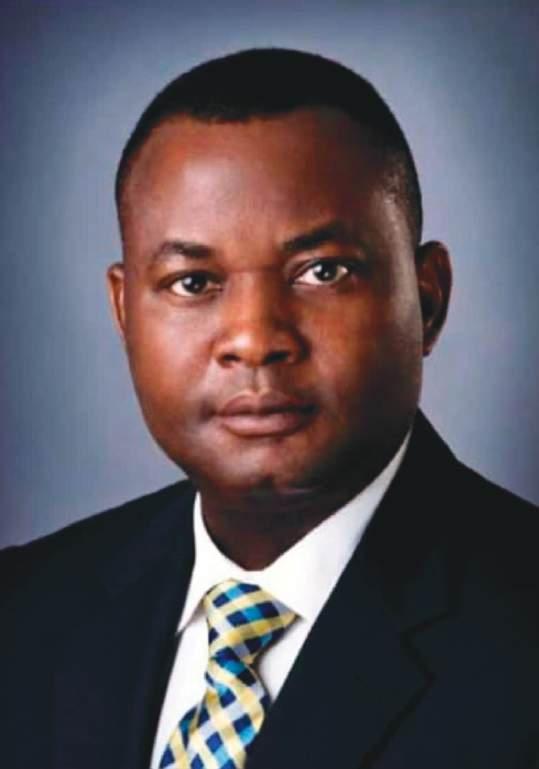
CAKASA (NIGERIA) COMPANY LIMITED HEREBY NOTIFIES THE GENERAL PUBLIC THAT MR. BARNANAS O. OLISE, WHOSE PHOTOGRAPH APPEARS ABOVE, WHO WORKED AS THE MD/CEO OF THE COMPANY, IS NO LONGER IN THE EMPLOYMENT OF CAKASA (NIGERIA) COMPANY LIMITED, EFFECTIVE FROM 1ST DECEMBER, 2025.
ANY PERSON, GROUP OF PERSONS, CORPORATE ENTITY, INSTITUTION OR ORGANISATION, THAT TRANSACTS ANY BUSINESS OR DEALS WITH HIM IN THE NAME OR ON BEHALF OF THE COMPANY DOES SO AT THEIR OWN RISK.
SIGNED: MANAGEMENT
MONDAYSPORTS
Paralympian, Oluwafemiayo, Named Team Nigeria’s Captain for 2026 C’wealth Games
Olawale Ajimotokan in Abuja Team Nigeria has announced multiple Paralympic and world champion, Folashade Oluwafemiayo, as the captain of the nation’s contingent to the upcoming Commonwealth Games scheduled for Glasgow, Scotland, from July 23 to August 2, 2026.
The Director General of the National Sports Commission, Hon. Bukola Olopade, said in a statement yesterday that the decision underlined the team’s deliberate commitment to appointing a leader whose achievements, professionalism, and exemplary character embody the values of Nigerian sports.
Olopade emphasized that the selection was intentional and based on merit.
“We are intentional about the selection of our team captain. Folashade Oluwafemiayo is the ideal choice, having consistently demonstrated exceptional professionalism, resilience, and excellence throughout her distinguished career. She is a multiple gold medalist, a former
world champion, and one of Nigeria’s most decorated para athletes. Her leadership qualities and winning mentality make her an inspiration to every member of Team Nigeria,” he said.
Oluwafemiayo is regarded as one of the world’s finest para powerlifters, winning multiple Paralympic, World Championship, and Commonwealth titles while setting world records.
Her remarkable consistency on the international stage has made her a symbol of excellence in Nigerian sports.
The NSC added that appointment was also made in recognition of the outstanding contributions of Nigeria’s para athletes, who have consistently delivered exceptional performances at major international competitions.
Over the years, the country’s para athletes have been among Nigeria’s most accomplished sportsmen, accounting for a significant share of the nation’s medals at the Paralympic Games, Commonwealth
Africa Celebrates Nine Teams in World Cup Knockout Stage
Nine out of the 10 African teams at the World Cup advanced to the second round in a major breakthrough for the continent’s football that could lead to bigger representation at future tournaments.
South Africa’s Bafana Bafana however lost 1-0 in stoppagetime in their Round of 32 clash with co-host Canada in Los Angeles last night
The 90% success rate comes on the back of Morocco reaching the semi-finals in Qatar four years ago and
offers hope for the future of the game on a continent that is soccer-mad but whose progress is often held back by administrative and logistical factors.
“It’s a source of great pride that there are so many African teams qualified for the Round of 32,” said Democratic Republic of Congo coach Sebastien Desabre after his side came from behind to earn a thrilling 3-1 victory over Uzbekistan and secure their progress.
Bolaji Bags Silver at 2026 British & Irish Para Badminton
Nigeria’s Eniola Bolaji won a silver medal yesterday at the 2026 British & Irish Para Badminton International.
The Paralympic bronze and World championship silver medallist lost 2-0 (21-18, 2321) to Japan’s Shino Kawai in the SL3 women’s singles final at the Sport Ireland National Indoor Arena in Dublin.
Bolaji enjoyed an impressive run to the final, recording wins over India’s Neeraj 2-0 (21-15, 21-3) and France’s Milena Surreau 2-0 (21-19, 21-13) during the group stage.
The multiple African champion continued her dominant form by defeating Türkiye’s Halime Yildiz 2-0 (21-16, 21-7) in the quarter-finals
before cruising past Australia’s Celine Vinot 2-0 (21-7, 21-9) in the semi-finals.
An elated President of the Badminton Federation of Nigeria (BFN), Francis Orbih, praised Eniola Bolaji for another outstanding performance on the international stage.
Orbih described her display in Dublin as fantastic and expressed confidence that the Nigerian star has what it takes to defeat Shino Kawai in future competitions.
He revealed that the federation is already working on plans to secure overseas training programme aimed at helping Bolaji close the gap with Shino who dethroned her as world number 1. Orbih said:
Games, African Games, and World Championships.
Folashade is a four-time world champion and two time

Tobi Amusan Storms to Diamond League Victory, Sends Strong C’Wealth Games’ Warning
Duro Ikhazuagbe
World Record holder in the women’s 100m hurdles, Tobi Amusan, stormed to another sensation’s best world-class performance of 12.27 seconds to claim victory in the event at the Paris Diamond League.
On a day that things went well for Amusan, with the tailwind also legally at +0.7m/s, Tobi Expresss, as the petit Nigerian sprint hurdler
is fondly called, stormed out of her lane four block with a reaction time of 0.135 seconds to lick the entire field.
American Grace Stark finished second in 12.38s, just ahead of compatriot Alaysha Johnson, who clocked 12.39s, while Dutch woman Visser improved on her heat performance to finish fourth in another season’s best of 12.41s.
According to the National Sports Commission, (NSC),
Amusan’s victory represents another significant milestone in Amusan’s resurgence this season as the reigning Commonwealth champion continues to build momentum ahead of the 2026 Commonwealth Games in Glasgow, Scotland.
The victory also earned Amusan the maximum 21 Diamond League qualification points, moving her to the top of the qualification rankings after four of the eight qualifying
meetings and strengthening her bid to reach the Diamond League Final.
Last week, Tobi Amusan was listed as one of Nigeria’s representatives to the 2026 Commonwealth Games taking places in Glasgow, Scotland, from July 23rd - August 2nd. She is expected to once again defend her 100mH crown which she won in Gold Coast, Australia and Birmingham, UK in 2018 and 2022 respectively.
South Africa’s remarkable FIFA World Cup journey came to a heartbreaking end on Sunday evening in Los Angeles after a spirited defensive display was undone by a dramatic stoppage-time strike from Stephen Eustaquio, handing Canada a 1-0 victory and a place in the Round of 16.
Having become one of Africa’s great stories by reaching the knockout stages for the first time, Hugo Broos’ side once again demonstrated the discipline that had defined their campaign.
Facing a Canadian side ranked significantly higher and buoyed by passionate home support in Los Angeles, Bafana Bafana
absorbed sustained pressure for much of the contest but never lost belief.
Ronwen Williams produced another commanding display
between the posts, while Khuliso Mudau, Siyabonga Mbokazi and Aubrey Modiba led a defence that repeatedly frustrated Canada’s attacking stars.
Canada dominated possession during the opening half but struggled to create clear-cut opportunities against South Africa’s disciplined defensive block.
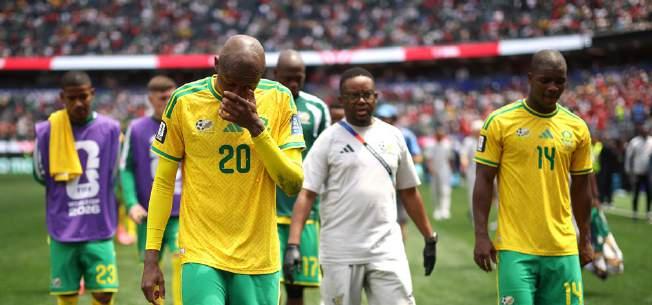
South Africa’s Khuliso Mudau leading his teammates and officials out of the Los Angeles stadium pitch last night after Canada snatched late 1-0 win
Tobi Amusan...storms to Diamond League win in Paris yesterday
Olympic gold medalist. In 2021, she won the gold medal in her event at the 2021 World Para Powerlifting
Championships held in Tbilisi, Georgia. At the event, she also set a new world record of 152.5 kg.
She competed at the 2022 Commonwealth Games where she won a gold medal in the heavyweight event.
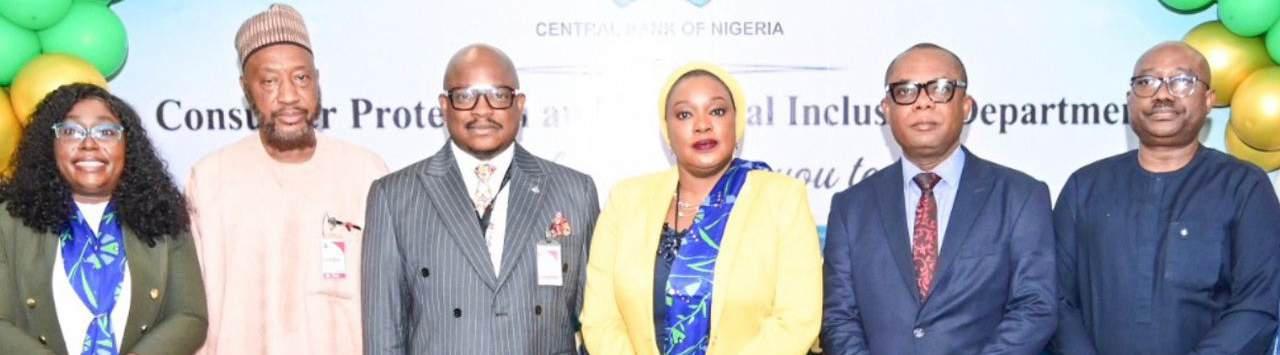
L-R: Assistant Director, Consumer Protection & Financial Inclusion, Central Bank of Nigeria (CBN) Temitope Akin-Fadeyi; President, National Association of Microfinance Banks, Abubakar Ahmad; Chairman, Committee of e-Business Industry Heads (CeBIH)/Chief Partnership Officer, Wema Bank Plc, Ajibade Laolu-Adewale; Director, Consumer Protection & Financial Inclusion, CBN, Dr. Aisha Isa-Olatinwo; Deputy Director, Financial Policy and Regulation, CBN, Michael Akuka, and Divisional Head, Enterprise Support Services, Nigeria Inter-Bank Settlement System (NIBSS), Bolanle Enigbokan, at the National Financial Inclusion Strategy 4.0 in Abuja... recently
MAHMUDJEGA
K-legs of State Police
Unlike the situation twelve years ago when the issue of state police divided Nigeria Governors Forum right down the middle, there appears today to be a more ready acceptance of the idea. Many Nigerians want us to move forward from the present situation of a single, federal police force to a dual, separate state and federal police forces with separate command structures and, if possible, clearly demarcated responsibilities. Let me correct myself here; move backwards is more like it. Up until the late 1960s, we had in this country a local police force in each Native Authority [known in the North as Yan Doka, literally “sons of order”] and a federal Nigeria
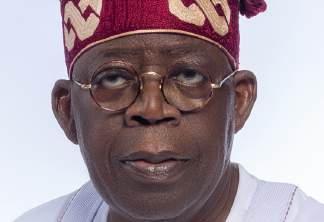
Police known in the North as Yan Sanda, literally “sons of baton.” Policemen in those days rode
on bicycles and carried batons, unlike today, when each one of them has a rifle, sometimes a machine gun and they ride around in armoured personnel carriers, but are still unable to stem crime as effectively as the Yan Doka did. Although there appears to be wider support today for the state police idea, there are still several K-legs that I see with the current push to amend the 1999 Constitution and enshrine the idea. One K-leg is the timing, when general and presidential elections are looming. Only four years ago, then presidential candidate Bola Tinubu was very unhappy when the Buhari Administration approved the Central Bank’s plan to change the currency on the eve of elections. It caused massive
KEMI ADEOSUN
There is a saying Nigerians know in our bones: every day for the thief, one day for the owner. It is meant to be a reassurance. Justice is slow, the proverb suggests, but it is coming. Sit tight. Be patient. Your day will arrive.
Through Nidacity, I spend roughly ninety percent of my time with entrepreneurs — in their businesses, on their platforms, at their elbows as they try to
build something real. And what I have concluded, after months of those conversations, is that the old proverb needs updating.
In Nigeria’s service economy today, it is every day for the thief — and no day, ever, for the owner. This is not simply a story about declining values or individual morality. Criminologists have long understood that behaviour is shaped less by the severity of punishment than by the certainty of
consequences. We have built an economy where the consequences of stealing from your employer are, for most participants, essentially zero. And we are living with the results.
What the Entrepreneurs Are Actually Saying
Founders in hospitality, retail, and food service
— hotels, restaurants, logistics operations, beauty businesses — are a resilient bunch, but their
economic and social disruption; splitting Nigeria Police at this time is likely to cause at least as much disruption. Pray, why not wait until the election is over, and then you have all the time in the world to plan this tumultuous change?
The opposition Africa Democratic Congress [ADC] has already decried what it called the rush rush manner in which the police reform is being pushed. The Presidency had set up a committee that studied the idea and made recommendations. In the olden days, such a committee’s report would have been published in the newspapers, together with a government White Paper that

conversations almost always arrive at the same place. Not electricity, though that comes up. Not interest rates, though those do too. What makes the eyes go flat, what produces that particular exhausted fury that only comes from a problem with no visible solution, is the theft. Staff theft. Internal theft. The quiet, systematic, organised extraction of value from
In Defence of the Dangote Refinery
Daniel Nduka Okonkwo's June 27, 2026 article Monopoly, An Embattled IPO, and the Dangote Refinery presents itself as a work of investigative journalism. A careful reading reveals it to be something else: a curated assembly of allegations, framed questions, and atmospheric insinuations designed to cast doubt
on Africa's most consequential industrial project at the precise moment it approaches a historic capital market transaction. The article rehashes old and discredited narratives thrown at the refinery about monopoly, self-interest and so on and so absurdum, as if Nigeria did not have refineries before Dangote came along. Okonkwo’s analysis, or what he passes on as
one, is thin throughout. Its framing is consistently adversarial in ways that ignore documented evidence, omit contradicting facts, and mischaracterise regulatory events to serve a preordained conclusion. This rebuttal addresses each substantive claim in the article, anchors every counterpoint in verifiable data, and then advances a broader argument that
the author's framing entirely fails to engage: that the Dangote Petroleum Refinery is not merely a private wealth vehicle but a sovereign-grade infrastructure asset operating at the frontier of Nigeria's economic transformation and, increasingly, at the frontier of
Tinubu