PwC Urges South Africans to Invest in Nigeria’s Oil Sector to Secure Crude Supply
Peter Uzoho PricewaterhouseCoopers
Peter Uzoho PricewaterhouseCoopers
Our attention has been drawn to a front-page advertorial in yesterday’s edition of THISDAY Newspaper, sponsored by Mr Abdulrahman Abdulrazaq, Governor of Kwara State. One clear message from the advertorial is that the state government has turned the whole Offa robbery case against former Senate President, Dr Abubakar Bukola Saraki into a media trial, and not a proper litigation in court. Perhaps the government has realised its case against Dr Saraki cannot withstand a real judicial test. Yesterday’s advertorial in THISDAY is the second in the series of sponsored newspaper advertisements that we had to respond to. However, while Dr Saraki had stated in his press statement dated April 17, 2026, that he is ready to meet the Kwara State governor and his machinery in court, there is a need to make some key clarifications on the falsehood and misleading statements contained in the front page advertorial by the Kwara State Government.
It is interesting that of all pressing national issues, including the high rate of insecurity, the priority for the Kwara State government is hounding Dr Saraki for his views which the governor considered critical of his administration. Since the killings, arson, and kidnapping of Kwarans began on a large scale under his watch, Governor Abdulrahman Abdulrazaq has not sponsored any newspaper front page advertisement to commiserate with the families of the victims or to mobilise Kwarans behind government policies and programmes aimed at tackling the problem of insecurity. His interest lies in sponsoring a media trial against his two immediate predecessors and framing them on trumped-up charges.
Mr Abdulrahman Abdulrazaq told people, both privately and publicly, that he was riled by Dr Saraki ‘s interview on Channels TV in which he raised the issues of insecurity, among many others, and advised the government to do more in tackling the case of banditry, insurgency, and kidnapping. He said the views expressed by Dr Saraki compelled him to also put the former Senate President on trial. We respond that if the framed-up charges on the Offa robbery case which Dr Saraki knows nothing about, are the price he has to pay for speaking out and calling out the government to do more in protecting the interests of the people of Kwara State, giving voice to the voiceless and standing up to defend the right of less ordinary people in the state to enjoy protection of lives and properties, the Kwara State governor can be assured that Dr Saraki will remain undeterred. He will continue to speak out, loud and clear, logical and reasonable. He cannot be silenced.
The Kwara State Governor needs to be reminded that he is starting what he cannot finish. This case will definitely not end under his tenure. He has just 12 months to stay in office. The trial that led to the conviction of the five accused persons started in November 2018 and is still at the Supreme Court eight years later. Thus, if the Kwara State governor thinks Dr Saraki will be scared by this dirty diversionary tactic of his, he has made a big mistake. Dr Saraki has gone through bigger and more dangerous trials machinated by more powerful people. He survived by the special grace of Almighty Allah (SWT). We do not nurse any doubt that he will also survive this needless attack from Mr Abdulrahman Abdulrazaq.
While Dr. Saraki is ready to meet this governor in court to prove his innocence of the charges filed by the state government on the 2018 Offa robbery incident, we need to point out the falsehood in the claim by the Kwara State Governor that he filed the fresh charges in defence of the cause of justice. If he waited for eight years before filing the fresh charges, and chose an election year to do so, it is obvious his motivation is far from serving the cause of justice and close to political manipulation.
We need to make it clear that Governor Abdulrazaq resorted to this desperate move of filing criminal charges against Dr Saraki after his efforts to incite, induce and goad the families of victims of the Offa robbery to file a civil case against Saraki failed. The families of the victims outrightly rejected any plan to “politicise their pains” to score cheap political points.
In the earlier statement by Dr Saraki, he had clearly stated that he will meet the governor and his machinery in court. However, we will not let any chance that will enable us to set the records straight slip by. Mr Abdulrazaq and his aides have been repeating the lies that the advice of the Federal Director of Public Prosecution (DPP) was based on an “interim report”. This is an outright falsehood. The legal advice issued by the DPP dated 23rd August was based on the final report of the police investigation team which was submitted to his office on 27th July, 2028. This second legal advice came after the earlier one dated 22nd June, 2018 and was based on the interim police report submitted to his office on June 13th, 2018. It should be restated that the legal advice from DPP on both the interim and final police reports explicitly noted that there was no evidence to directly or indirectly link Dr Saraki to the Offa robbery.
Members of the public should remember that at the time the robbery incident took place, Dr Saraki’s party, the PDP, was in control of Kwara State. The federal government through the office of the Inspector General of Police took over the investigation of the case under the guise that they wanted an unbiased probe. The report of the IGP’s team was later referred to the Office of the Attorney General of the Federation who referred it to the DPP of the Federation for legal advice. The DPPF’s legal advice was relied upon in the trial of the five people now convicted. The Kwara State Police Command did not handle the investigation.
Abdulrahman and his aides have also continued to refer to confessional statements made by the then-accused persons who have now been convicted. The confessional statements have been in existence since 2018. They are not new. Is it now that the Abdulrahman government found them useful to deploy against Dr Saraki? In hiding facts to justify their propaganda war against Dr Saraki, they refuse to make a public disclosure of how the accused persons disowned the so-called confessional statements during the trial. The accused persons narrated to the court how they were coerced, induced, and pressured into making these statements while in police custody. One of the convicts, Ayoade Akinnibosun told the trial judge on January 18, 2023, that: “He (DCP Abba Kyari who headed the investigation) said I should admit and say Saraki was the one who asked us to go and rob. I told him I wouldn’t do it; that I would rather die for what I didn’t do than to
lie against an
induced to indict Dr Saraki but they refused before the police eventually released them.
Mr Abdulrazaq should know that people can see through his devious game for what it is. They can understand why this governor would label his two immediate predecessors as sponsors of bank robbery. As Dr Saraki earlier stated: “A sitting governor who is accusing his two immediate predecessors of armed robbery is only making a mockery of the institution. He is only taking the governorship of our dear state to the gutter. This is an example of dirty politics taken too far and too low. He ought to know that nobody at the national or state level is buying his claim”. This is a governor who is resorting to a blackmail game to divert attention from the failure of governance under his leadership. Abdulrahman Abdulrazaq is responding to so many crises confronting him from different quarters. At home, he is becoming more and more unpopular as a lame duck governor. He is also confronted with a political crisis at home such that he has lost control within his party. Many of his fellow party members in Kwara State are defying his instructions. At the national level, he is seen as a directionless joker. All these pressures are forcing him to look for ways to divert attention.
We hereby appeal to Dr Saraki’s supporters, loyalists, and associates to remain calm. The former Senate President is innocent of all the accusations. The way he overcame the last scheme to legally entrap him, he will come out victorious in this present plot too. A thousand front-page advertorials will not stop him from pointing out the failure of a government headed by an incompetent, clueless, and directionless governor. In the earlier press statement by Dr Saraki, he described the antics of Mr Abdulrahman Abdulrazaq as “a mere act of a desperate politician who is losing control in his party and knows that his days in governance are numbered. It is the reason why Nigerians should always take into consideration the level of education of those we elect into office. For a man who never completed secondary school education, it is difficult for him to appreciate the issues involved in any matter. His level of education is definitely affecting his judgment”. One cannot help but agree with this sentence. We need to remind Governor Abdulrazaq that the truth that he is hiding away from will still come to light. The pending matter of certificate forgery which came up in 2019 has not been dispensed with. It will soon be revisited, when the period of immunity elapse.
We need to remind Mr Abdulrazaq that his time is ticking away. The state has started a countdown for his exit. Whether he likes it or not he will leave office by May 29 next year. That is one fact that is certain. And he will be called to account for his stewardship.
Signed Yusuph Olaniyonu Abubakar Bukola Saraki Media Office April 26, 2026


with W Health loan
The W Health Loan provides women with access to financing for eligible healthcare services







*Terms and conditions apply
Blames Nigeria's problems on leadership Criticises Tinubu on handling of ECOWAS challenge Says Nigeria absent from table of international politics Maintains NNPC refineries will never work Says attending National Council of State meetings waste of time Insists one-party state won't do Nigeria any good
Former President Olusegun Obasanjo has declared that any government that fails to guarantee the security of life and property has no justification to exist, delivering a stark assessment of Nigeria’s worsening insecurity and the leadership challenges confronting the country.
Obasanjo blamed Nigeria’s deepening challenges on poor leadership, warning that the country has lost its influence in international affairs and mishandled key regional relationships, particularly within the Economic Community of West African States (ECOWAS).
In an interview on News Central’s Soni Irabor Live (SIL) at the weekend, Obasanjo also said Nigeria was no longer “at the table” of global decision-making, stating that the country’s inability to shape events beyond its borders reflects a broader leadership deficit.
On the pervasive insecurity in Nigeria, the outspoken ex-leader of Africa's most populous nation maintained that the citizens must not accept kidnapping and other social vices as a norm, referencing how Nigerians could travel across the country in the past.
Regulatory Commission (NUPRC) urged members of the Crude Oil Refinery Owners Association of Nigeria (CORAN) to consider acquiring oil blocks in upcoming licensing rounds as a long-term solution to crude supply challenges.
The appeal by PwC was made by its Partner and Africa Oil and Gas Leader, Pedro Omontuemhen.
Omontuemhen spoke in Lagos during the Fourth South Africa Week, with the theme, “Repositioning and Promoting Energy Investments between South Africa and Nigeria."
He stated that the two economies had complementary strengths across oil, gas, renewables, and enabling infrastructure that could create scalable, cross-border energy investment opportunities.
“Let me start from South Africa. If I were a South African, I would ask myself, where are the investment opportunities in Nigeria?” Omontuemhen said, referencing the Dangote Refinery’s plan to supply petroleum products across Africa.
He delivered a scathing assessment of the federal government, stating that any administration that fails to guarantee the safety of life and property has effectively forfeited its right to exist.
Obasanjo traced the roots of Nigeria’s worsening security situation to the aftermath of the civil war, when arms proliferation was not properly controlled. He said the problem had since escalated due to poor governance and neglect.
He also linked the crisis to external and internal factors, including the return of armed mercenaries following the fall of Libya’s former leader, Muammar Gaddafi, as well as the use of armed groups for political purposes.
Obasanjo warned that the growing number of out-ofschool children, estimated to be about 20 million, posed a long-term security risk, describing it as a ready pool for future recruitment into extremist groups.
The former president stated, “The other day, somebody came to me and said, well, from NIPSS (National Institute for Policy and Strategic Studies), they were looking into the causes of insecurity. And I said, what is this about? He said the government has asked them to do this.
He stated that South Africa had little or no oil, despite ongoing exploration in the Orange Basin.
Omontuemhen said nearby Namibia, which had the same sedimentary basin, had found oil, an indication that South Africa should also find but had not been able to do so at the moment.
Omontuemhen urged South African firms to replicate the model of the international oil companies (IOCs) by investing in the oil exploration and production space in Nigeria and securing crude for their home countries' refineries.
He stated, “If I was South African, I would take the examples of the Americans or the British who came to Nigeria and invested in oil in Nigeria, and they took the oil back home to refine. Because South Africa at the moment is importing a lot of the oil they are refining.
“Why can’t the South African businessman or the South African bank, the DBSA, invest in oil in Nigeria and then take the oil? Because that’s
“I said, well, this government, will they have the courage to implement whatever you will get. He said he didn't know. And I said, look, I came back to this country in 1959 after my military training, initial military training in the UK. You could go anywhere in the North. Anywhere. And what you will get is people being gracious there.
“And somebody was telling me the other day that, look, we've taken it (kidnapping) for granted. It's no longer news. So when you hear that somebody in your family has been kidnapped, you all come together. Even for N2,000, maybe they can release him. Should we accept that as a way of life? No way.”
Obasanjo emphasised, “And the first responsibility of any government, no matter how that government comes into being, is the security of life and property. A government that cannot give security of life and property to its citizens has forfeited the right of existence.”
The former president expressed pessimism about Nigeria’s current direction, stating bluntly, when asked about the country’s prospects under the present leadership, that he “sees nothing”. He stated that the erosion of
your share of the crude, you take it back to South Africa, so that way, you’re also securing your supply, which is what the British and Americans did.”
He added, “ExxonMobil, Total, the French, they came here, invested in oil, and they took the oil back to their country to refine.”
Omontuemhen encouraged participation by South Africans in Nigeria’s ongoing oil bid round, where 50 oil blocks spanning onshore, swamp, shallow water and deep-water were being auctioned.
He stated, “Look for credible businessmen in the room here who you can invest in the oil. You take the crude oil and take it back to South Africa, that way, you’re actually securing your supply. And I think you should also do the same thing when you come to Namibia.”
Omontuemhen, who further spoke on the opportunities in the upstream oil and gas sectors in Nigeria and South Africa, cited joint exploration, production sharing, and technology transfer.
He stressed that Nigeria’s
democratic values, including what he described as the substitution of a “selectorate” for a true electorate, had weakened accountability and governance.
Obasanjo specifically criticised the Tinubu administration’s handling of relations with neighbouring Niger Republic following the recent coup in that country, describing the response as ill-conceived and damaging to decades of regional cooperation painstakingly built over 50 years.
He said Nigeria’s actions, including border closures, cutting electricity supply and financial restrictions, undermined long-standing historical, economic and cultural ties between the two countries.
Obasanjo recalled that Nigeria and Niger shared deep-rooted connections, with significant cross-border familial links, and stressed that cooperation between both countries was once critical to Nigeria’s strategic and military interests.
He maintained that Nigeria’s decisions on the recent crisis in Niger pointed to a lack of understanding at the highest levels of government, insisting that effective leadership is the missing ingredient in Nigeria’s
deep-water assets offered premium opportunities for South Africa technical partners.
For gas, Omontuemhen said there was huge value in monetising Nigeria’s gas flares, supplying South Africa’s energy transition, adding that a combined liquefied natural gas (LNG) value chain creates significant multi-billion-dollar potential.
In renewables, he said “SA’s solar and wind expertise meets Nigeria’s abundance of solar irradiation,” opening room for “utility-scaled projects and distributed energy solutions”.
He made a strong push for dual listings for both countries, highlighting access to multiple capital markets through listings on two exchanges, enhancing liquidity, visibility, and investor participation.
Pointing to Seplat’s NigeriaLondon listing, Omontuemhen asked, “Why are we not listed in South Africa? What should we do in South Africa to make the dual listing more attractive to the Nigeria oil and gas fields?”
He recalled Oando’s earlier
current trajectory. He said while it did not cost much for Nigeria to maintain influence, it required clarity of thought and strategic engagement, which he believed were presently lacking.
As chairman of ECOWAS, Tinubu was believed to have adopted a hard-line stance after the Niger Republic coup, pushing sanctions, border closures, and even threatening military intervention to restore constitutional order.
Critics, including Obasanjo, stated that the situation was poorly handled, and it damaged long-standing ties with Niger, weakening regional cohesion rather than strengthening ECOWAS authority.
Niger, Mali and Burkina Faso eventually left the subregional group.
Obasanjo stated, “Today, Nigeria is not at the table (of international politics). What is it that is happening that Nigeria is influencing or impacting, and upon whom is Nigeria impacting.
“Look at the way we have handled ECOWAS. Something that took us 50 years to build. Overnight, we mishandled it. And we have virtually destroyed it.
“It's leadership. Niger Republic had a coup. Our neighbour. At least 30
failed Johannesburg listing, saying other Nigerian firms can try it again and learn from the mistakes of others.
Omontuemhen pointed out that South African technology remained underutilised.
According to him, “Sasol developed a technology that Chevron copied and it's all over the world. Why are more companies in Nigeria not using the Sasol technology? To take your stranded gas and make it more valuable, so you can have your naphtha and your diesel.”
He described South Africa’s financial sector as a source of cheap capital, explaining that the banks in South Africa have what he called ancient capital that have been there for years and well-established.
He explained, "So we can tap on that resource as Nigerians to produce here in Nigeria. Can you guys come and invest and participate in what we are doing?
“Nigeria has huge resources, huge population. South Africa, good technology, wellstructured, and systems that
per cent of the people of Niger Republic have blood relationship with Nigeria.
“We were building the Kanji Dam. Kanji would have been nonsense. So we told Niger Republic, look, for electricity, when the Kanji Dam is working, we will give you whatever you ask for. That was an obligation on our part.
“Without the Niger Republic, our winning in the civil war would have been hard. We used to get materials through Niger Republic to be ferried to our troops on the war front. Now, for all these, then they had to go. And the first thing we did was to close the border. The next thing we did was to cut their electricity. The next thing we did was to say, no money. With our porous borders!” Obasanjo stated, “So, when I talk of mishandling, you now see what I was talking about. It doesn't cost much for Nigeria to be at the table. But it requires understanding. But, honestly, I feel pained. Because I know what Nigeria could do.”
Obasanjo also dismissed the relevance of the National Council of State (NCS), a body of former presidents acting in advisory capacity,
Continued on page 46
work. So we can collaborate as two giants of Africa to make our country even much better and to make the continent much, much better.”
Omontuemhen stated, “Private investors play a critical role in mobilising capital, accelerating delivery, and improving operational performance across the energy value chain. Working with governments, the private sector can mobilise capital, de-risk investment, enable growth, improve education and efficiency, and ensure both countries benefit."
Referring to South Africa and Nigeria as the biggest countries in Sub-Saharan Africa, the PwC energy expert said South Africa stood at 19 per cent and Nigeria at 40 per cent in the continental Gross Domestic Product (GDP) but their power profiles differed sharply.
He said South Africa had 55.4 gigawatts of installed power capacity while Nigeria had 14GW for a far larger
Email: Goddy.egene@thisdaylive.com, 0803 350 6821, 08074010580
Oil firm to employ 95,000 skilled workers towards 1.4m bpd expansion plan NNPC lists achievements, says crude oil trading raised to 5-year high
Jet fuel exports from the Dangote Refinery have surged by about 770 per cent over the past two years, driven by rising global demand for aviation fuel and expanding refining capacity, a THISDAY analysis of the latest shipment data from Kpler, has indicated.
Also, the Nigerian National Petroleum Company Limited (NNPC) yesterday, in a graphical representation of its activities in the last one year, stated that crude oil trading under its Chief Executive, Bayo Ojulari’s watch, has climbed to a fiveyear high, reeling out a list of recent operational achievements across the sector.
But in about 24 months, the Kpler data showed that the global aviation fuel landscape has undergone a seismic shift, with the Dangote Petroleum Refinery emerging from a regional startup to a dominant global supplier. According to the shipment information, the refinery’s jet fuel exports reached a recordbreaking 158,000 barrels per day in April 2026, representing a staggering 770 per cent increase from its initial export volumes of roughly 18,000 bpd in April 2024.
In April 2024 when shipment commenced, exports to Europe were non-existent, as the refinery focused on initial trial runs and regional deliveries.
By April 2026, European-
bound shipments reached approximately 70,000 bpd.
This represented an infinite percentage growth from the zero-baseline of two years ago and a nearly 133 per cent increase in just the last year, compared to the 30,000 bpd seen in April 2025.
However, the conflict in the Middle East has acted as a primary catalyst for this shift; as European airlines and distributors move to de-risk their supply chains away from the volatile Gulf, with Dangote’s West African location offering a shorter, safer, and more reliable alternative.
Besides, the African market has also seen a substantial strengthening in export volumes, growing from 18,000 bpd in
April 2024 to 69,000 bpd in April 2026, a 283 per cent increase over the period.
This consistent upward trend highlighted the refinery’s role in replacing expensive imports from the Mediterranean and Asia that previously supplied the continent. Within the last 12 months alone, from April 2025 to April 2026, the data showed that exports to African neighbours grew by approximately 115 per cent.
By providing a localised source of aviation fuel, the refinery has effectively insulated regional carriers from the worst of the logistics-induced price spikes seen in other parts of the world.
While Europe and Africa have become the dominant
Okon Bassey in Uyo
The Central Bank of Nigeria (CBN) has said the systems it has developed and policies implemented have pulled the country back from economic disaster and are positioning the economy to better serve all segments of society.
CBN's Deputy Governor, Corporate Services, Ms. Emem Usoro, who revealed this added the bank is building a resilient economy that would support the dreams of Nigerians.
She spoke at the weekend
in Ikot Akpadem, Mkpat Enin Local Government Area, Akwa Ibom State, after being conferred with an honorary Doctorate Degree, Doctor of Business Administration, Honoris Causa, at the combined 9th, 10th, 11th, and 12th Convocation ceremonies of the Akwa Ibom State University. Usoro listed the economic salvaging policies to include the alignment of the nation's monetary policies with its fiscal reforms, which has resulted in exchange rate and macroeconomic stability, economic growth boost and encouraging
inclusive economy for sustainable development.
"At the Central Bank of Nigeria, we are working hard to build a resilient economy that would support your dreams and make you part of a global economy that is full of immense opportunities.
"We have developed systems and implemented policies that brought the country back from economic disaster and are positioning the economy to better serve all segments of society.
"In great synergy with the federal government, we have
aligned our monetary policies with its fiscal reforms, which have already achieved exchange rate and macro-economic stability, boosted economic growth and is fostering an inclusive economy for sustainable development," she stated.
The CBN deputy governor said the apex bank would continue to support Akwa Ibom State University academic and research work, and urged the graduates to remain perpetually curious, hungry for knowledge, ask questions, and not be apathetic to new knowledge.
destinations, the Americas have also served as a vital, albeit fluctuating, market for the refinery's excess capacity.
In the early phase of operations, specifically June 2024, the Americas received 19,000 bpd. By the time the refinery hit its early stride in February 2025, shipments to the Americas peaked at roughly 55,000 bpd. However, by April 2026, that figure settled at approximately 14,000 bpd.
Despite the recent dip as
the refinery prioritises highermargin European contracts, the overall growth from June 2024 to the February 2025 peak represented a 189 per cent surge. With the Red Sea remaining a high-risk zone for tankers, the journey from the Persian Gulf to Rotterdam has become longer and more expensive. Conversely, a tanker from Lagos, it was learnt, can reach European ports in nearly half the time without the need to navigate contested waters.
Oladiti pledges to uphold dignity of labour
Minister of Labour and Employment, Maigari Dangyadi, at the weekend urged the newly elected President of the Nigeria Union of Petroleum and Natural Gas Workers (NUPENG), Akanni Oladiti, to build on the legacies of his immediate predecessor, Williams Akporeha.
Dangyadi gave the admonition in his goodwill message at the 6th Quadrennial Delegates Conference of NUPENG held in Lagos, a statement in Abuja by the organisation said.
Oladiti and 15 others were elected unopposed for a term of four years, as national officers of the umbrella body of junior
workers in the oil and gas sector in the country.
Represented by the Director of Trade Union Services and Industrial Relations (TUSIR), Falonipe Amos, Dangyadi who recalled the harmonious relationship in the industry between NUPENG and other players in the entire value chain, urged the new NUPENG chief and his team to sustain the template. The minister maintained that while pushing for the interest of their members, particularly in the area of better welfare, dialogue should not be jettisoned for confrontation. He said: " The federal government values NUPENG’s contributions to national development.
James Emejo
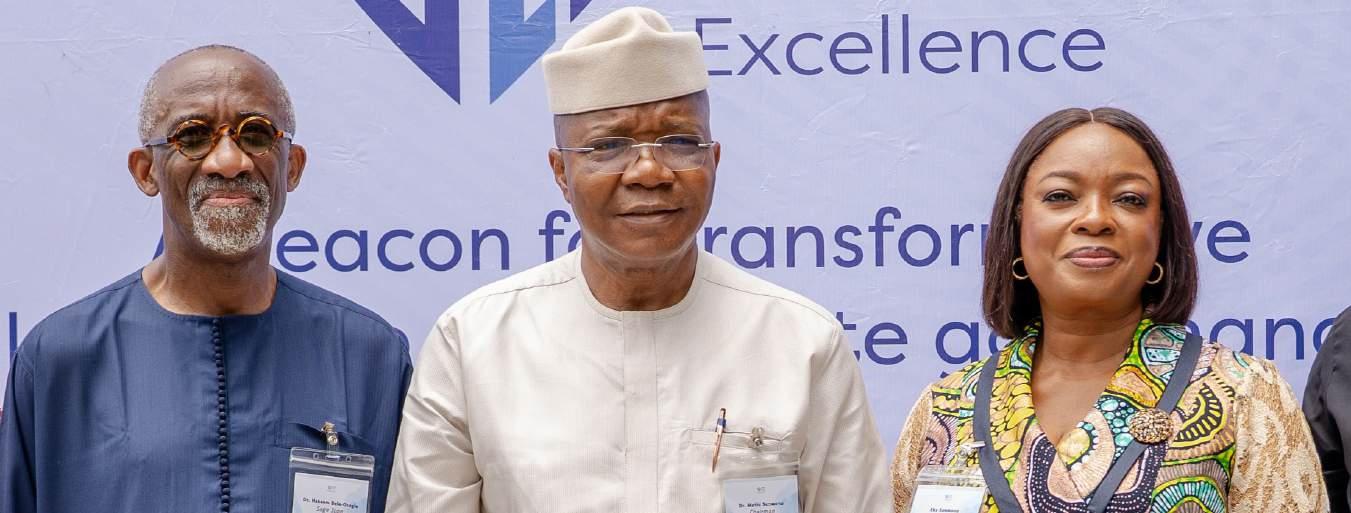
Executive Chairman of Lagos State Internal Revenue Service (LIRS), Dr. Ayodele Subair, has attributed the remarkable growth in the state’s Internally Generated Revenue (IGR) and advances in tax administration to bold reforms initiated by President Bola Tinubu during his tenure as governor of the state.
Subair spoke at a gala night organised to close the 159th
meeting of the Joint Revenue Board (JRB) held in Lagos.
Tax administrators and revenue stakeholders from across the country had gathered over four days to deliberate on ways to strengthen tax systems, improve compliance, and deepen revenue generation nationwide.
It came as Nigeria Revenue Service (NRS) described as false and misleading a viral infographic claiming that a new vehicle tax had been imposed
WHO: 9.5m Children in Africa Remain Under-Immunised, 6.7m not Vaccinated
Onyebuchi Ezigbo in Abuja
As countries in Africa mark the 2026 Vaccination Week, the World Health Organization (WHO), has said that 9.5 million in Africa have remained underimmunized due to poverty and conflict while 6.7 million children in the region have not received a single routine vaccine.
In a message by the WHO Regional Director for Africa, Dr. Mohamed Yakub Janabi, to mark the Vaccination Week, the organization said that the region's immunisation efforts presently face challenges due to dwindling funds and disruptions by conflicts.
He said that for Africa to keep the 2030 immunisation target on course, Africa must deepen domestic resource mobilization and strengthen national ownership of immunization programme.
While highlighting progress made so far in immunisation in Africa, WHO Director said in December 2025, the African Regional Verification Commission confirmed that Cabo Verde, Mauritius and Seychelles have eliminated measles and rubella.
"They are the first countries in the WHO African Region to achieve this milestone. Through sustained coverage and strong surveillance, they have shown that a measles-free Africa is within reach".
He also said that, "Through the Big Catch-Up initiative, nearly 8.75 million children who had missed routine vaccines were reached. Coverage for diphtheria, tetanus and whopping cough has returned to pre-pandemic levels".
Janabi added that, since 1988, polio vaccination efforts have averted an estimated 1.57 million deaths and prevented paralysis in more than 20 million people.
He also said that, "Since 2000, around 500 million African children have been protected through routine vaccination.
"In the Lake Chad Basin and the Horn of Africa, governments, communities and frontline vaccinators protected nearly 200 million children last year. Sustained cross-border coordination will be critical to finishing the job of ending vaccine-derived poliovirus transmission. We have many successes to scale ".
by the government effective July 1, 2026.
The infographic had directed owners of private, commercial, and corporate vehicles to pay the unstated vehicle tax “online or at approved banks and agencies”.
However, in a statement, NRS spokesman, Mr. Dare Adekanmbi, debunked the visual misinformation, adding that the federal government has not introduced any fresh tax on vehicles as claimed on social media.
Meanwhile, LIRS chairman stated that the decision by Tinubu to grant operational autonomy to the state’s revenue service years ago laid the foundation for the success
story that had since become a model for several states across the country.
He said, “This story of taxation in Lagos was started seriously by our present President, Asiwaju Bola Ahmed Tinubu, who deemed it fit to give autonomy to the Lagos State Internal Revenue Service.
“From then on, things changed. Things are still evolving and changing because he handed over the baton to very serious governors thereafter. His model is copied in most of the states in Nigeria. I think the President deserves applause. We are seeing the benefits of that vision that this great Nigerian had, and we all pledge to continue.”
Subair stated that Lagos had sustained the momentum through successive administrations, with visible investments in transportation, urban renewal, and other public infrastructure funded largely through taxes paid by residents.
He commended Lagos State Governor, Babajide Sanwo-Olu, for delivering robust infrastructure development. Subair said in addition to significant investments in education, health, housing, and urban renewal projects, the multimodal transportation system, which includes rail, road, and water transport, remained a key part of the current administration's legacy.
In a statement, he said,
“Governor Sanwo-Olu is doing a great job. This administration is building the multimodal transport system, as witnessed by the JTB members. Apart from the rail, you also have road transport through the BRT, and then we have the ferry service.
“We launched all sorts of projects, and we are soon going to have electric ferries and boats that will move people all over. Also, the Red Line is supposed to be fully in place within one year.
“All this would never have been possible without the good people of Lagos paying their taxes. When you pay your taxes, there is a high level of correlation between the payment of taxes and development.”
Deji Elumoye in Abuja
In a period when misinformation can travel faster than facts, DirectorGeneral and National Coordinator of the Renewed Hope Ambassadors (RHA), Senator Hope Uzodimma, has promised that the RHA digital platform will enrich and deepen the communication of the reforms and achievements of the President Bola Tinubu’s administration.
Uzodimma, who is governor of Imo state spoke at the weekend when he formally unveiled the Renewed Hope Ambassadors’ website and other digital assets at the RHA’s headquarters in Abuja.
Headlining the rollout is the official website — www. rhambassadors.org — designed as an aggregator platform that consolidates policy explainers, reform updates, and verified
government information into a single, accessible hub.
The platform is further supported by an integrated network of social media channels, which included Facebook, Instagram, X, and other digital applications, ensuring broad reach and real-time engagement.
Uzodimma said the unveiling of the website marked a significant step in strengthening civic education and public engagement
around the policies, reforms, and achievements of President Tinubu. He commended the initiative, describing it as a forward-looking approach to modern governance communication and noted that the platform not only simplifies complex policy information for citizens but also enhances transparency by making government actions more visible and understandable.
Onyebuchi Ezigbo in Abuja
The Managing Director of the Nigeria Social Insurance Trust Fund (NSITF), Barrister Oluwaseun Faleye, has expressed the commitment of the Fund to the Employee Compensation Scheme (ESC) for the benefit of Federal Civil Servants.
Faleye gave the assurance in his remarks at a press briefing by the Head of Civil Service of the Federation, Mrs. Didi Esther Walson-Jack, on the welfare enhancements in the Federal Civil Service held on Friday in Abuja.
While applauding the federal government on the newly introduced welfare enhancement in the Federal Civil Service, Faleye said the NSITF was prepared to complement the efforts of the OHCSF by judiciously implementing the Employee Compensation Scheme (ESC). He described federal government's move, "as a wonderful initiative aimed at enhancing the standard of living of federal civil servants.
Says associates paid for items without her instruction Insists she saw no conflict in gifts from NNPC-linked businessmen
Wale Igbintade
Former Nigerian petroleum minister Diezani Alison-Madueke yesterday denied soliciting luxury items or improperly benefiting from businessmen with ties to Nigeria’s state oil company, as her trial continued at the Southwark Crown Court in London.
Resuming on Day 25, the proceedings saw the defendant come under sustained crossexamination by prosecutors, during which she distanced herself from a series of highvalue purchases and financial arrangements presented in evidence.
She insisted that many of the expenditures were made independently by associates, particularly oil trader Kolawole Aluko.
The court revisited evidence from 2017, including photographs of items recovered from London properties and storage facilities.
Prosecutors questioned AlisonMadueke about her links to Italian interior designer Vincenzo Caffarella and a catalogue of luxury furnishings.
She denied requesting several of the items, including bespoke furniture, attributing them instead to Aluko or other associates.
A substantial part of the hearing focused on a detailed shopping ledger documenting purchases from high-end retailers such as Harrods and Thomas Goode.
While Alison-Madueke acknowledged that some items, including designer handbags and personal accessories, belonged to her, she rejected claims that she directed or financed most of the spending.
She told the court that Aluko often paid for items during joint shopping trips as part of what she described as a longstanding
personal arrangement.
“I did not ask him to pay for items,” she said, adding that although she sometimes selected goods or offered opinions during shopping outings, payments were made at the discretion of those accompanying her.
Prosecutors pressed her on whether such arrangements created a conflict of interest, given that Aluko and other benefactors, including businessman Igho Sanomi, were involved in significant transactions with the Nigerian National Petroleum Corporation during her tenure.
Alison-Madueke responded that she did not perceive any conflict at the time, describing the relationships as personal rather than official.
Attention also turned to a corporate entity, Tenka, described in court as a service company funded by Aluko.
Prosecutors suggested the firm was used to manage expenses for the former minister and her associates.
However, Alison-Madueke said she had no knowledge of Tenka’s funding structure and relied on legal advice before engaging with it.
“I was not privy to any of this,” she said, referring to documents outlining the company’s operations.
“When we needed a service company, it was presented as one, and I sought legal advice, which confirmed it was acceptable.”
The court also examined alleged benefits extended to her family, including rental arrangements involving her mother and gift hampers sent to relatives.
Alison-Madueke denied facilitating such transactions, stating that any interactions between Aluko and her family occurred independently.
“My mother met him through a rental arrangement. I did not introduce them in that manner,” she said.
On luxury travel, including private jet flights funded by companies linked to her associates, the former minister acknowledged that some trips were paid for by third parties.
However, she maintained that such arrangements were connected to official engagements or personal circumstances, including periods of ill health.
She added that certain official trips were reimbursed by the NNPC.
Addressing properties in London and Abuja, she confirmed that furniture and fittings in residences she occupied were often paid for by associates, describing them as “significant gifts” from family friends.
She maintained that she did
not consider it necessary at the time to formally declare such gifts to government authorities. Prosecutors also highlighted a pattern of frequent international travel, supported by passport records, shopping receipts, and chauffeur bookings.
In response, Alison-Madueke said she used both diplomatic and standard Nigerian passports depending on convenience and official requirements, and denied personally managing logistics such as transport or household services.
“I did not give instructions to service providers,” she said, adding that references to “HM” in certain records could relate to members of her staff rather than herself.
She further denied issuing directives regarding domestic arrangements, including property maintenance and staffing,
attributing such responsibilities to aides and service providers.
She also challenged email correspondence suggesting staff were overworked, stating she was unaware of such conditions and would not have condoned them.
The court heard additional evidence relating to luxury items, including watches, silverware, and interior décor, some valued at tens of thousands of pounds.
Alison-Madueke disputed ownership of several items and suggested that others were intended for different properties or individuals.
In some cases, she said items were given out as gifts or donated to charity.
On her professional relationships, she told the court that she was introduced to Aluko and businessman Olajide Omokore through
official channels and denied any prior personal connection before assuming office.
Throughout the session, the former minister repeatedly said she could not recall specific details of transactions dating back more than a decade but maintained that she acted transparently and within the law.
“I have not seen some of these items for 13 years,” she said when shown images of goods allegedly linked to her. The prosecution is expected to continue its cross-examination, focusing on financial records, asset ownership, and the nature of her relationships with key business figures, as it seeks to establish whether any benefits she received were improperly linked to her role as petroleum minister.
The trial continues.
Michael Olugbode in Abuja
As Nigeria intensifies efforts to curb its malaria crisis, the federal government has expanded the rollout of malaria vaccines to more states, even as humanitarian organisation Médecins Sans Frontières (MSF) raises concern over the growing toll of the disease among malnourished children.
The Executive Director of the National Primary Health Care Development Agency (NPHCDA), Dr. Muyi Aina, announced in Abuja that the malaria vaccination programme has been extended beyond its initial pilot phase in Bayelsa
State and Kebbi State to include Bauchi State and Ondo states.
The expansion is part of a broader strategy to reduce infections and deaths in a country that continues to bear the heaviest global malaria burden.
According to the World Health Organisation (WHO) World Malaria Report 2025, Nigeria accounts for 24.3 per cent of malaria cases worldwide, 30.3 per cent of deaths, and more than half of all cases in West Africa.
While the government scales up preventive measures, MSF has said the reality on the ground remains dire—
particularly for children battling both malaria and malnutrition.
Speaking in Katsina at the weekend to mark World Malaria Day 2026, MSF’s Acting Medical Team Leader, Dr. Alibaba Nuraddeen, revealed that malaria ranked among the top three diseases treated in the organisation’s Inpatient Therapeutic Feeding Centres (ITFCs) in 2025.
He disclosed that MSF managed about 26,000 children in its inpatient facilities in Katsina alone, with malaria featuring prominently alongside acute watery diarrhoea and sepsis as leading causes of illness.
Nuraddeen described malaria and malnutrition as a “dangerous cycle” that continues to endanger child health. According to him, malnutrition weakens the immune system, leaving children more susceptible to infection, while malaria further compounds the problem by reducing appetite and limiting food intake.
“Treating malnutrition without malaria testing risks delayed recovery,” he warned, stressing that undiagnosed or poorly treated malaria can persist for weeks or months, ultimately pushing affected children into severe malnutrition.

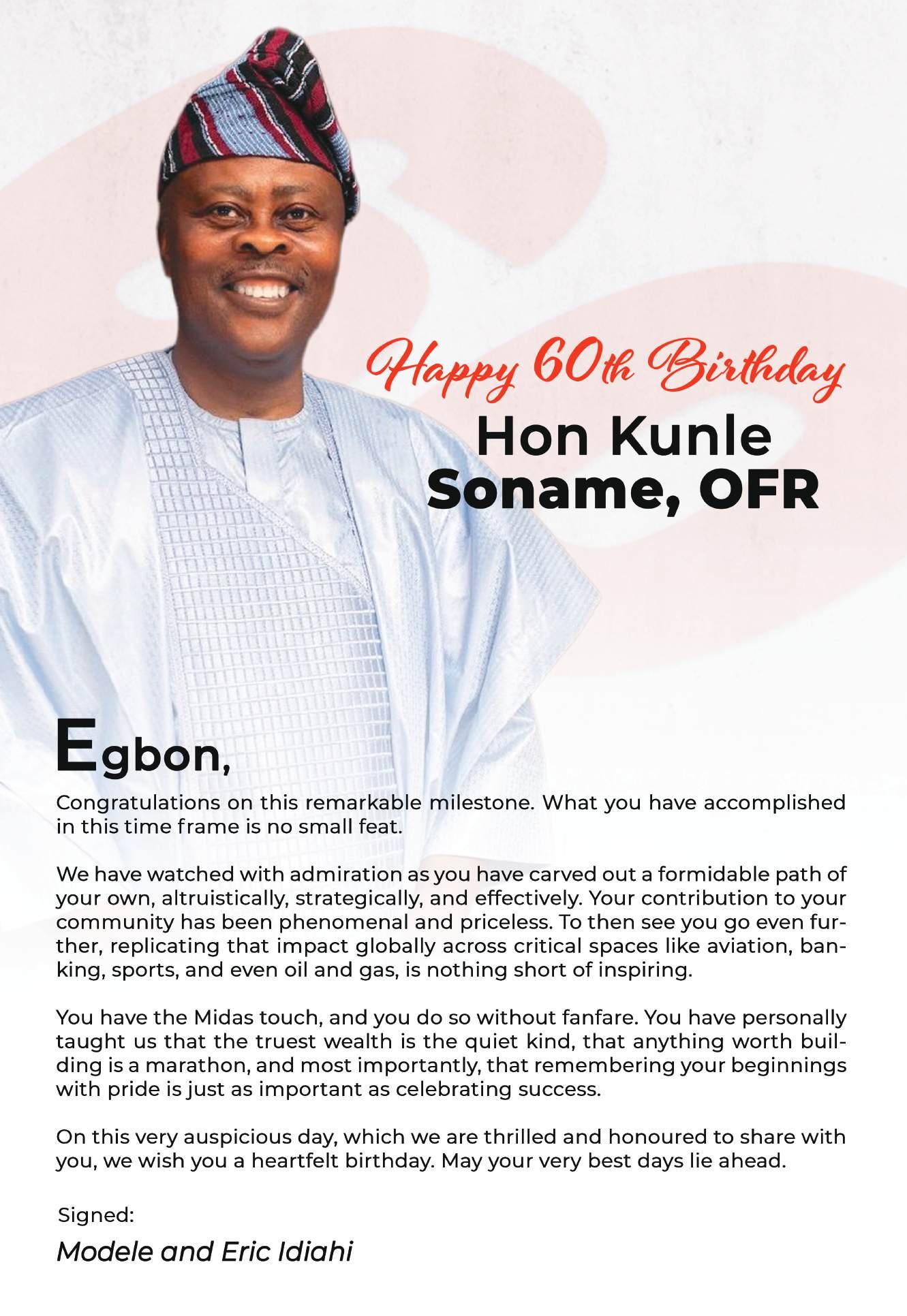






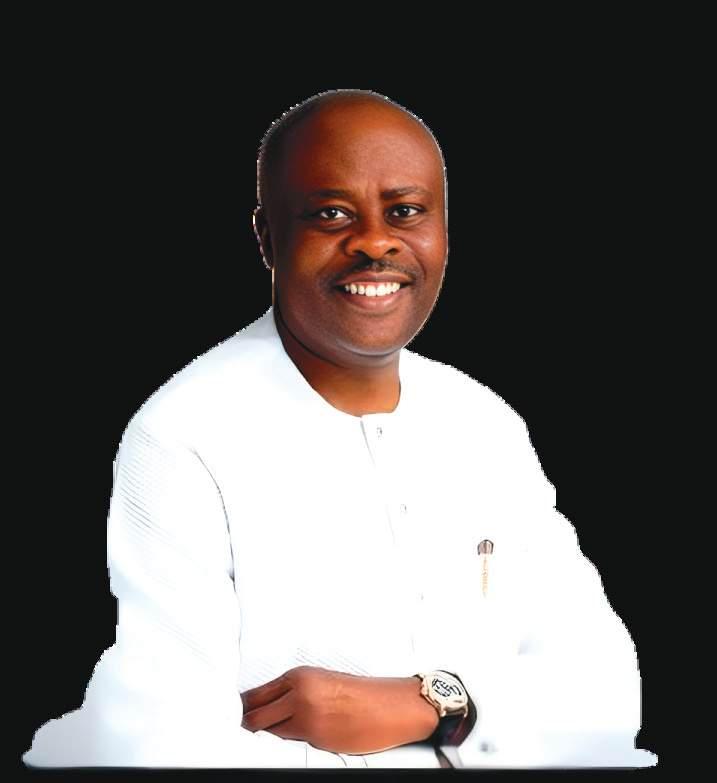


H o n . Ade k u n le
S o n a m e
C h a i r m a n , Va lu e j et
( O F R)

O n b e h a lf of t h e C h a i r m a n ,
o rd t y
B o a rd , a n d S t a f f of S k y w a y
Av t i
Av i a t i o n H a n d l i n g C o m p a n y
( S O) P w e c b ra te a n
( S A H C O) P LC , w e c e le b ra te a n
exc e pt n a l a de r a va
exc e pt i o n a l le a de r a n d va lu e d
p a r t e , M Ku n le a e ,
p a r t n e r , M r . Ku n le S o n a m e ,
C a i r m a n of Va lu eJ , t
C h a i r m a n of Va lu eJ et , o n t h e
o c c a s i o n of h i s 60 t h b i r t h d a y .
o c c a s i o n of h i s 60 t h i r t d y .
Yo u r v i s i o n a r y le a de r s h p a d
Yo u r v i s i o n a r y le a de r s h i p a n d
u n w ave r i n g c o m m i t m e nt to
u n w ave r i n g c o m m i t m e nt to
exc e l le n c e c o nt i n u e to i n s p i re
exc e l le n c e c o nt i n u e to i n s p i re
g ro w t h a n d st re n g t h e n o u r
g ro w t h a n d st re n g t h e n o u r
p a r t n e r s h i p .
p a r t n e r s h i p .
W i s h i n g y o u g o o d h e a lt h ,
W i s h i n g y o u g o o d h e a lt h ,
g re a te r a c h i eve m e nt s , a n d
g re a te r a c h i eve m e nt s , a n d
m a n y m o re y e ar
m a n y m o re y e a r s of i m p a c t .
H a p p y D i a m o n d J u b i le e , S i r .


Email: deji.elumoye@thisdaylive.com 08033025611
President Bola Tinubu’s high spirits when he received a high-powered delegation of Enugu State leaders recently was not only unconnected with the endorsement by unusual quarters, but the relief that the evident dividends of Governor Peter Mbah’s transformative leadership in the state validates the efficacy of his economic reforms, writes Deji Elumoye.
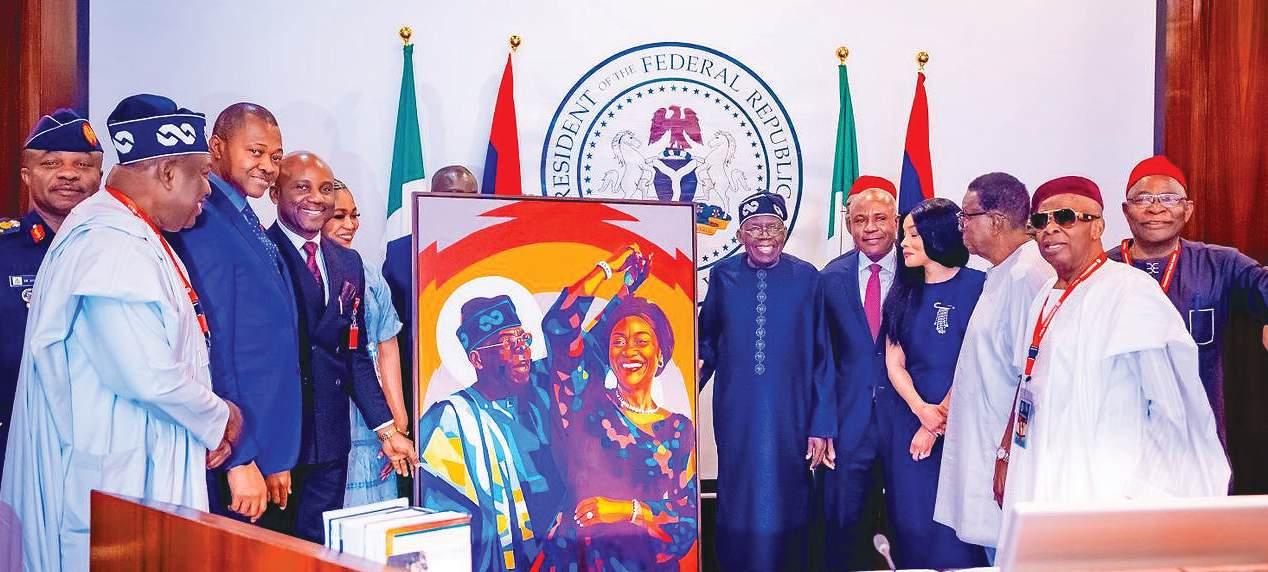
President Bola Tinubu described it as “a very intimidating delegation.”
And he was right, for the Enugu State delegation to the State House, last week, comprised virtually all the who-is-who in the state, and they cut across the political, religious, traditional, and business leaders and technocrats.
Led by the Governor of the state, Dr. Peter Mbah, who also came with the Enugu State First Lady, Nkechinyere Mbah, the delegation comprised the Deputy Governor, Ifeanyi Ossai; former President of the Senate, Senator Ken Nnamani; Governor of old Anambra State, Senator Jim Nwobodo and his wife, Dr. Patricia Nwobodo; former Governors, Sullivan Chime and Ifeanyi Ugwuanyi; former Military Governors of old Imo State, Navy Commodore Anthony Ogugua (rtd.) and Navy Commodore James Aneke (rtd.); former Military Administrator of Gombe State, Group Capt. Joseph Orji (rtd); Minister of Innovation, Science and Technology, Dr. Kingsley Udeh; all serving Members of the National Assembly from the State led by Senator Osita Ngwu, until recently the Senate Minority Whip; a good number of former Members of the apex legislature, including former Deputy Minority Leader of the House and Executive Director (Projects), South East Development Commission, Hon. Toby Okechukwu and Senator Chukwuka Utazi.
On the roll call were also the Chairman, Enugu State Traditional Rulers Council, HRM Igwe Samuel Asadu; the Anglican Bishop of Nike Diocese, Most Rev. Onyeka Onyia; highly influential Catholic priest, academic, and founding Director of the Catholic Institute of Development, Justice, Peace and Caritas (CIDJAP), Monsignor (Prof.) Obiora Ike; fiery Catholic clergy, Rev. Fr. Ejike Mbaka; former Deputy Inspector-General of Police, Frank Mbah (rtd); former minister and envoy, Ambassador Fidelia Njeze; Deputy National Chairman (South) of the All Progressives Congress, Dr. Ben Nwoye; Founder of Afrivest, Ike Chioke; Chairman of the Enugu State Chapter and South East zone of the Association of Local
Governments of Nigeria (ALGON), Hon. Sydney Edeh.
According to their leader, Dr. Mbah, they were in the Villa to appreciate President Tinubu for what he described as a beneficial and trustworthy relationship between the present federal administration and Enugu State, made manifest in projects, major interventions and appointments.
He said: “If it were possible, Your Excellency, the entire Enugu State population would have converged here at the Villa to express our gratitude. The delegation here represents the excited and grateful voices of over seven million Enugu sons and daughters. At our backs are millions of men, women, and children whose lives are shaped, for better or worse, by our governance and by the decisions you make at the centre.
“We have come to state, boldly and without ambiguity, that this relationship has earned our trust and support.”
According to the governor, Tinubu had shown good faith to Enugu State even long before they crossed over to the ruling APC.
“Mr. President, you are a true friend of Enugu State. This was evident in January 2025, when you visited Enugu.
You broke a long-standing political distance between this region and the federal government. You crossed party lines.
“At a time when the Enugu electorate did not favour your party, you chose to invest in our state because you recognised what we were building.”
He said decades-long challenges facing Enugu State and South East were now being addressed since that visit.
“The concessioning of the Akanu Ibiam International Airport means Enugu now has a functioning international gateway, and in doing so, it opens up the Southeast - over 30 million people - to the world.
“With the South East Development Commission, you have established a structure for coordinated regional development.
“The extension of the gas pipeline to Enugu will connect the state to the national gas grid and, critically, unlock our own gas reserves, making power generation viable, and shifting Enugu from sitting on stranded resources to becoming an energy hub for the South East,” he stated.
Mbah further thanked Tinubu for the extensive works on the Enugu–Port Harcourt expressway and Enugu-Onitsha expressway, the swift reconstruction of the collapsed New Artisan Bridge, the 700-metre flyover at Eke Obinagu along the Enugu – Abakaliki Expressway, among other interventions by his administration.
He equally highlighted the President’s sense of belonging to Enugu people and South East
Besides the endorsement coming from an unusual quarter being the capital of a region where he polled only about six percent of votes cast in the 2023 presidential election, Tinubu’s main joy may have come from the relief that at least here is a state that shows that his reforms are working.
through key national appointments such as the position of the Chief of the Air Staff occupied by Air Marshal Sunday Kelvin Aneke as well as Vice Admiral Emmanuel Ogalla (rtd.), formerly appointed the Chief of the Naval Staff.
Equally important to the Enugu delegation are the President’s policies and reforms, which Mbah said had been the backbone of the transformations going on in Enugu State in terms of investments and over 2,000 ongoing and completed projects.
These include 267 Smart Green Schools, 260 Type 2 Primary Healthcare Centre, stateof-the-art Command and Control Centre linked to AI-enabled cameras, 300-bed Enugu International Hospital, revamping of various moribund assets and industries, over 1,000km of constructed or reconstructed roads, launch of Enugu Air that now has six aircraft, the Enugu Haier Factory, just to name very few.
“Mr. President, the progress we are seeing in the lives of the people of Enugu is not isolated from the decisions taken at the centre. It is made possible by them.
“We recognise that these results don’t come easy. You took difficult decisions - removing the fuel subsidy, unifying the exchange rate, strengthening public finances, and reforming the power sector to support investment.
“It is these bold decisions that have freed up resources, expanded sub-national support, and allowed states like ours to invest, to build, and to translate national decisions into tangible outcomes for our people.
“On these bases, we will stand proudly with you on election day in January, 2027,” Mbah declared.
The happiness on the President’s face was unmistakable and his lavish commendations of Mbah quite unusual. One could hardly recall the last time President heaped such praises on any governor in the manner he did with the unassuming governor.
A leadership crisis at Tansian University, Umunya, Anambra State, recently entered a decisive phase following the issuance of a public notice by the university management announcing key administrative standards within the institution’s leadership structure. Chiemelie Ezeobi reports
The leadership crisis at Tansian University, Umunya, Anambra State, recently entered a decisive phase. The crisis was ameliorated following the issuance of a public notice by the university management announcing key administrative standards within the institution’s leadership structure.
The notice clears the air about the leadership structure and governance of the great citadel of learning. Central to the development was the action taken under the leadership of Prof. Eugene O. Nwadialor, Vice Chancellor of Tansian University, through an official public notice that conveyed the removal of Rev. Daniel Igwilo from the university’s leadership structure an action widely seen as establishing control of the institution’s administrative framework by the institution’s management.
When Tansian University (TANU) was founded in 2007 as a private Christian institution in Umunya, Anambra State, Nigeria, by Very Rev. Msgr. Prof. John Bosco Akam, its aim was to provide higher education anchored on discipline, moral values, and academic excellence.
From its inception, the institution positioned itself as a faith-based center of learning dedicated to holistic education, ethical character formation, and intellectual development, reflecting the missionary ideals of its founders.
The leadership laid the foundation for a university structured around discipline, integrity, and service. Thus, over the years, Tansian University developed its academic programs and administrative structures in line with its founding vision.
The institution became known within its host community and beyond as a private university guided by Christian principles and a commitment to responsible education.
However, despite its foundational ideals, the university later became associated with a series of disputes involving leadership, administration, and governance.
Tansian University, according to available reports covering 2025 and 2026, has been associated with a significant and long-standing leadership tussle, primarily revolving around leadership crises, ownership disputes, and allegations of financial and administrative misconduct.
The reports indicate that the crisis involved allegations of forged documents, illegal appointments, and legal battles concerning the university’s property and leadership structure.
The situation became more visible to the public through official communications issued by the university authorities and the Board of Trustees.
After months of controversy, structure has been reinstated at the university. According to a public notice document sighted by THISDAY, the management of Tansian University, Umunya, Anambra State, issued a notice under the authority of the Office of the Vice Chancellor addressing the status of Rev. Daniel
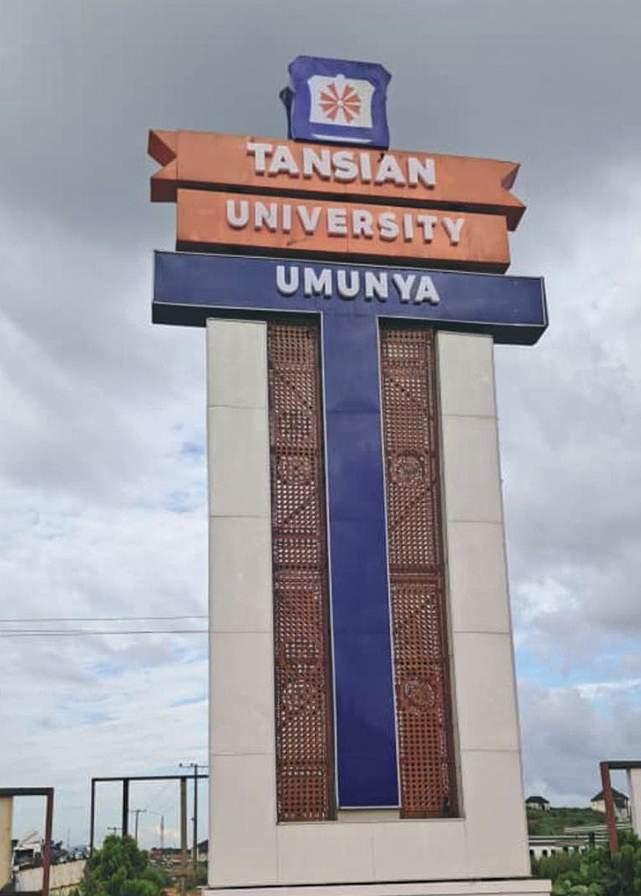
Igwilo, described in the document as the former Registrar of Tansian University.
According to the public notice, signed by Prof. Eugene O. Nwadialor, Vice Chancellor, and Rev. Dr. Innocent Anthony Uke, Registrar and Secretary to Council, Rev.
Daniel Igwilo ceased to hold the office of Registrar effective 3rd June 2025.
The university stated that his removal followed findings of alleged gross misconduct and misappropriation of funds, which were described as violations of the university’s rules, ethical standards, and principles of integrity.
Despite the tensions that have defined recent developments, stakeholders within and around Tansian University continue to express hope that the institution will move beyond the current challenges and refocus on its founding ideals of discipline, academic excellence, and moral formation
The document further stated that a substantive Registrar was duly appointed with effect from the same date. It also disclosed that Rev. Daniel Igwilo’s appointment as a staff member of Tansian University was terminated on 10th April 2026.
The notice clearly stated that the university dissociated itself from any actions, representations, or transactions undertaken by Rev. Daniel Igwilo in any capacity purporting to be on behalf of the institution from 3rd June 2025 onward.
Members of the public were advised to refrain from engaging with Rev. Daniel Igwilo on any matters relating to the university.
The document also warned that any individual, organisation, or institution dealing with him under the guise of representing the university would do so entirely at their own risk and that the university would not be held liable for any resulting loss or consequences.
The notice concluded by affirming that Tansian University remained committed to maintaining standards of excellence, accountability, transparency, and institutional integrity.
The Rebuttal
However, another document sighted by THISDAY, titled “Rebuttal to Misleading Publication on the Leadership of Tansian University,” reportedly signed by Prof. Ozokwere Helen Nkechi, JP, Secretary of the Board of Trustees, distanced the Board from the publication, which it said maligned the reputation of Very Rev. Fr. Prof Edwin SC Obiorah JSD SAN. Stating that the leadership of Tansian University was not in dispute in any form whatsoever, the Board affirmed that it recognises Very Rev. Fr. Prof Obiorah SAN as the duly recognised, legitimate, and lawful Chancellor and Chairman of the Board of Trustees of Tansian University.
According to the statement, his position remains valid, subsisting, and fully backed by the appropriate institutional and legal frameworks governing the university.
The statement described the allegations as “unsubstantiated and characterised by mischief, distortion, and deliberate character assassination.”
It added that the claims failed to meet basic standards of credibility and should be disregarded.
Despite the tensions that have defined recent developments, stakeholders within and around Tansian University continue to express hope that the institution will move beyond the current challenges and refocus on its founding ideals of discipline, academic excellence, and moral formation.
With structures now being clarified through official communications, attention is increasingly turning toward stability and uninterrupted pursuit of learning for students and staff.
For many within the university community, the path forward lies in strengthening governance, restoring confidence, and preserving the mission upon which the institution was established.

Uba Sani is honoured for promoting peace, stability, and inclusive governance, writes JAMES GAMBO
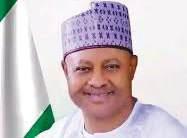
See page 21
contends that founders who leave legacies are those who built companies capable of becoming bigger without them
page 21
DAN D. KUNLE argues that the state-owned oil company has to be restructured to serve the nation better
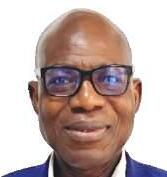
As usual, I am an ordinary citizen, and like many Nigerians, I remain naturally optimistic and hopeful about the possibilities of a better tomorrow, even if such hopes are not always realised. Hope is part of our national character. We endure setbacks, yet continue to believe renewal is possible.
But optimism must never become a substitute for reality. It must be tested against evidence, performance and outcomes. It is from that standpoint that I reflect on the future of the Nigerian National Petroleum Company Limited (NNPC Ltd) and what it means for Nigeria.
Few institutions matter more to the Nigerian state.
Recent developments underscore just how strategic energy institutions can be when they are properly conceived and executed. The emergence of the Dangote Refinery, despite its well‑known challenges and controversies, has already altered Nigeria’s energy calculus. At a time of heightened global supply disruptions, volatile geopolitics and constrained refining capacity across multiple regions, the commissioning of a large, integrated domestic refinery has begun to reduce Nigeria’s exposure to external shocks, ease pressure on foreign exchange and improve fuel availability. Its impact, even at partial operations, illustrates what competent capital mobilisation, clarity of purpose and scale can achieve for national energy security. It also serves as a reminder that institutional performance, not intent, is what ultimately reshapes outcomes.
NNPC Ltd sits at the centre of public finance, foreign exchange earnings, energy security and investor confidence. For decades, petroleum revenues have sustained federal and state budgets, financed imports and provided the fiscal oxygen on which government depends. Agriculture no longer carries the economy as it once did. Manufacturing remains weak. Non‑oil exports are still too small. In practical terms, Nigeria remains heavily dependent on hydrocarbons.
That is why the future of NNPC Ltd is inseparable from the future of Nigeria.
When the current leadership team, led by Group Chief Executive Officer Bayo Ojulari and the board chaired by Musa Ahmadu‑Kida, assumed office, many expected a decisive break from the past. The hope was that a commercially run company, backed by the Petroleum Industry Act, would finally emerge from the ruins of bureaucracy, opacity and political patronage.
I shared that hope.
After observing developments over the past year, however, I have become
less optimistic and more cautious.
The issue is not personalities. It is structural.
Nigeria has attempted to create a modern national energy company while preserving an old political control model. That contradiction lies at the heart of NNPCL’s difficulties.
In theory, NNPCL belongs to Nigerians. In practice, Nigerians can only exercise ownership indirectly through the state. Effective governing authority rests largely with the presidency, which appoints ministers, directors and senior executives. The result is layered ownership, centralised power and diffused accountability.
Such a model rarely produces transformational institutions.
Boards struggle to exercise independent authority when ultimate political power lies elsewhere. Management teams find themselves constrained by political calculations, competing interests and administrative caution. Commercial logic often yields to state expediency. Decisions that should take weeks can take months. Problems that should be solved commercially become prolonged disputes.
No serious company can thrive under those conditions.
This helps explain why many of the operational weaknesses associated with the old NNPC remain visible in the new NNPCL.
Joint ventures remain less effective than they should be. Technical and financial service agreements are not always managed with sufficient urgency. Asset optimisation remains slow. Internal coordination appears weak. Cost discipline is uneven. A culture of delay still competes with the need for delivery.
The greatest tragedy is that Nigeria is not suffering from a lack of resources. It is suffering from underperformance.
Several producing assets continue to illustrate this failure. OML 18, OML 24, OML 42, OML 123 and OML124 are examples often cited in industry
discussions as assets whose potential has not been fully realised. Some remain constrained by evacuation challenges, unresolved commercial disputes, infrastructure limitations or management bottlenecks.
These are not geological failures. They are governance failures.
An oil‑producing nation with Nigeria’s reserves should not be struggling to maximise already discovered and producing assets. Such matters ought to be resolved through competent negotiation, decisive leadership and disciplined execution.
Instead, opportunities are delayed while national needs grow.
The economic cost is immense. Every barrel not produced is lost revenue. Every gas molecule not commercialised is lost industrial power. Every delayed investment decision weakens confidence. Every unresolved dispute signals risk to international capital.
Investors do not wait indefinitely. Capital flows to jurisdictions where rules are clear, governance is predictable and execution is credible.
Nigeria today competes for investment not only with Angola and Guyana, but with the United States shale sector, the Middle East and emerging producers across Africa. Sentiment alone will not attract capital. Performance will.
Without deep reform, external investment will remain cautious. Joint ventures will continue to perform below potential. Oil and gas production will remain under‑optimised. Leakages will persist. Revenue pressures will intensify. And when the country’s most strategic commercial institution underperforms, the wider economy eventually pays the price.
This is why the debate around NNPC Ltd must move beyond personalities. No chief executive, however competent, can fully succeed inside a structure designed to dilute authority and multiply interference. Likewise, no board can deliver exceptional governance if it lacks the power, autonomy or political backing to enforce standards.
Systems matter more than individuals. It is against this backdrop that the appointment of Mr Fola Adeola to lead a presidential energy task force must be understood. The very creation of such a body is itself an admission of the depth and persistence of failure across Nigeria’s energy sector. A task force is rarely convened where systems are working; it is convened when normal structures have proven inadequate.
Kunle writes from Abuja
Uba Sani is honoured for promoting peace, stability, and inclusive governance, writes JAMES GAMBO
LINUS OKORIE contends that founders who leave legacies are those who built companies capable of becoming bigger without them
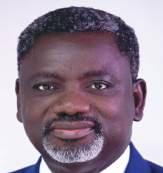
In this age and time, awards are a dime a dozen. But when Kaduna State governor, Senator Uba Sani, was recently bestowed the Nigeria Broadcasting Award for restoring peace to the state by the Broadcasting Organisation of Nigeria (BON), merit was clearly the standard used. It was not fluff.
To people that knew Kaduna about a decade before Sani took over the helm of affairs, saying Kaduna was unsafe was very true. But the story is changing and day by day and inch by inch, Kaduna is becoming the haven for peace, commerce that it used to be.
The award ceremony was held on April 6, 2026 at the NAF Conference Center in Abuja and according to BON, Sani got the award for 'his administration’s outstanding efforts to promote peace, stability, and inclusive governance throughout the state.'
Accepting the award on behalf of the governor was the state's Commissioner of Information and Culture, Malam Ahmed Maiyaki. “This recognition affirms that Kaduna’s approach to peacebuilding— based on dialogue, justice, and inclusion is producing real results,” Maiyaki said.
“We will build on the progress made and maintain policies that support inclusive development.”
Yet this recent recognition is not isolated. Over the past two years, Governor Sani’s approach to governance has attracted a series of commendations centred around restoration of peace and security. He was named Governor of the Year in Peace and Security by Blueprint Newspaper, an honour that acknowledged his role in stabilising a state long burdened by ethno-religious tensions. In September 2025, the Global Peace Foundation Nigeria conferred on Sani the Peace Champion of Unity in Diversity Award at a ceremony held at Arewa House to mark the International Day of Peace. In January 2025, Sani emerged THISDAY Governor of the Year. At the event which was held in Lagos, Publisher of THISDAY, Nduka Obaigbena, said that Sani was 'gradually restoring peace to Kaduna,' adding that "without peace, there can be no development."
In a country where headlines too often chronicle division and unrest, the quiet story unfolding in Kaduna State offers a more hopeful narrative. Under the stewardship of Sani, Kaduna is steadily shedding an old reputation for recurring conflict and assuming a new identity as a model of dialogue, inclusion and reconciliation.
To understand the weight of these honours, one must recall the Kaduna of not too long ago. For decades, communities across the state, particularly in its southern axis, were caught in cycles of violence that disrupted lives and eroded trust. Markets were deserted, schools closed intermittently, and farming, the backbone of rural livelihoods, became a risky venture. Distrust festered between neighbours of different faiths and ethnicities,
and every minor disagreement carried the potential to spiral into something far more dangerous. In such an environment, development was perpetually stalled, because insecurity and progress cannot coexist.
In May 2023, Governor Sani assumed office with a clear understanding that restoring peace would require more than security deployments. It would require rebuilding relationships. His administration’s strategy has rested on an inclusive peace model that brings traditional rulers, religious leaders, youth groups, women’s associations and community influencers into the heart of conflict prevention and resolution. Dialogue forums were revived and strengthened. Early warning systems were developed at the grassroots. Government presence became more visible not only through policy statements but through direct engagement with affected communities. That strategy which saw all stakeholders work together is what is now known as 'Kaduna Peace Model.'
This approach signalled a crucial shift. Instead of treating conflict as merely a lawand-order issue, Kaduna began addressing it as a social and communal challenge that demanded empathy and trust-building. Communities that once felt alienated from government decision-making were invited into the conversation. Grievances that had simmered for years were aired and addressed. Importantly, the pursuit of peace did not sideline justice or dignity. Victims of past violence were acknowledged through resettlement and rehabilitation efforts. Infrastructure destroyed by conflict was rebuilt. Schools and health centres were reopened in previously troubled areas. These practical steps reinforced a powerful idea— that peace is not merely the absence of gunfire, but the restoration of normal life and opportunity.
The dividends of this strategy are visible across the state. Farmers are returning to their fields with confidence that they will harvest what they plant. Children attend school without the constant fear of sudden closure. Traders reopen shops that were once abandoned. Roads that were previously deserted after dusk now see normal activity. Everyday life in Kaduna now quietly reflects a society regaining its rhythm. For instance, Birnin Gwari, a major agricultural hub for maize, sorghum, and soybean production, is back to its usual bustling state.
Gambo writes from Kaduna
Paga just handed the keys to someone who wasn't there at the start. If your company cannot do the same, you have built a ceiling.
Last week, Paga Group appointed Opeyemi Oyinloye as its new Group COO and CEO of Paga Nigeria, in an announcement titled “A New Era for Paga.”
The detail most people glossed over is that Opeyemi joined Paga after a decade that Tayo Oviosu and Jay Alabraba founded the company. He was neither a co-founder, a family member, nor there at the beginning. And yet he is now the person entrusted with leading the most critical market in Paga’s portfolio.
Before we arrive at the lesson, let us establish the facts, because this kind of story is sometimes told as though success is simply a matter of loyalty and timing. Opeyemi came to Paga with a seasoned background in customer experience and operations, having previously served in multiple roles at Etisalat Nigeria, where he was recognised as the Best Customer Experience Champion.
At Paga, he started in customer experience and then expanded his remit steadily, moving from Head of Customer Experience to General Manager of Business Operations. In that role, he was accountable for scaling core infrastructure, redesigning customer-facing systems, and ensuring that the operational discipline of the company matched its ambitions. Tayo Oviosu himself offered this illustration: “If Paga were making sausages, Opeyemi was responsible for choosing which sausages to make and ensuring that whatever sausages were being made were made really well.”
There is a particular kind of founder arrogance that masquerades as dedication. They say things like “No one can run this business like I can. I know it better than anyone.” The conviction is usually sincere but equally dangerous.
What such a founder is actually building is a structure that requires their presence to function. This is a business wired so tightly around one person’s judgment, relationships, and energy that it cannot breathe without them. They mistake this dependency for indispensability. But what they have built is a ceiling. And the brutally honest question every founder must eventually answer is, if I disappeared tomorrow, would this company have a future?
Many founders, when they finally reckon with that question, default to finding their replacement elsewhere. Someone from a bigger company, with impressive credentials, who brings “fresh energy” and a pedigree that signals competence. It sounds logical. But the evidence disagrees, rather forcefully.
Research by Wharton management professor Matthew Bidwell found that external hires receive significantly lower performance evaluations for their first two years on the job compared to internal candidates promoted into similar roles.
They are paid roughly 18 to 20 percent more, and yet they deliver less, at least initially. More tellingly, they are 61 percent more likely to be terminated than their internally promoted counterparts. Bidwell’s argument is that institutional knowledge cannot be transferred in an onboarding document.
The broader data points in the same direction. According to Russell Reynolds Associates, two-thirds of top executives in major companies are internal hires. In 2023, 74 percent of incoming S&P 500 CEOs had grown from within. Cornell University research published in Organisation Science found that the highest-performing internal hires were the most likely to stay, while the highest-performing external hires were among the most likely to leave. The conclusion is not that external hires are always wrong. It is that they are evidence of a company that did not invest deeply enough in developing its own people, and is now paying a premium to compensate for that gap.
The most instructive recent case study on this question is Nike. In 2020, the company appointed John Donahoe as CEO. He came from ServiceNow and eBay, with a strong track record and compelling credentials. On paper, the appointment made sense. In practice, what followed was a cautionary tale that business schools will study for years.
Under Donahoe’s leadership, Nike’s connection with athletes, independent retailers, and the wider sports community steadily eroded. His strategies did not align with the cultural DNA of the brand. The company cut too deep into its wholesale relationships and alienated the ecosystem that had made Nike great. By late 2024, he was removed.
He was replaced by Elliott Hill, a 32year Nike veteran who had joined the company as an apparel sales intern in 1988, risen through the ranks across Europe and North America, and retired as President of Consumer and Marketplace in 2020.
Okorie MFR is a leadership development expert spanning 30 years in the research, teaching and coaching of leadership in Africa and across the world. He is the CEO of the GOTNI Leadership Centre.
Editor, Editorial Page PETER ISHAKA
Email peter.ishaka@thisdaylive.com
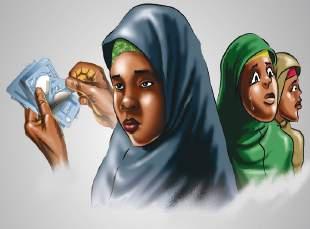
The women need some form of empowerment
The Aminu Kano Centre for Democratic Studies at Bayero University, Kano recently released a report that should keep every northern governor awake at night. Supported by the Gates Foundation, the study, ‘Understanding Influence and Behaviour in Northern Nigeria,’ reveals that 38 per cent of women across the region are completely excluded from financial services. That means nearly four in every 10 women in a region of 19 states have no bank account, mobile money wallet, insurance, and microfinance facility. They exist entirely outside the formal financial system. In a country that talks endlessly about inclusive growth, that is an indictment.
The financial exclusion of northern women is a governance failure with real consequences. A woman who cannot save cannot plan. A woman who cannot access credit cannot grow her trade beyond subsistence. A woman without insurance is one illness away from destitution. While 52 per cent of northern women are classified as financially served, only 45 per cent access formal services through deposit money banks, merchant banks, interest-free banks, and microfinance institutions. The rest make do with informal arrangements or nothing at all. And this is happening in a region where, according to the same report, unemployment stands at 37 per cent and poverty levels average around 80 per cent, with Sokoto State recording the highest rate.
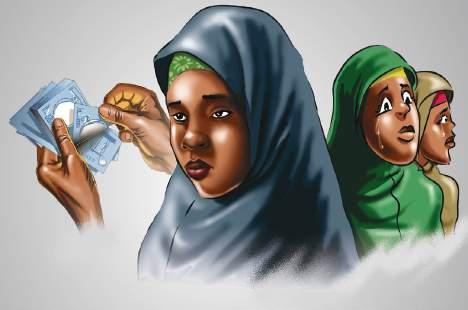
In its Framework for Advancing Women’s Financial Inclusion launched in 2020, the Central Bank of Nigeria (CBN) set ambitious targets, and nationally, the gender gap in mobile money account ownership has narrowed. But aggregate statistics can make policymakers feel good while the reality on the ground remains grim. The mobile money gender gap in rural Nigeria stands at 35 per cent, compared to 16 per cent in urban areas. Since most excluded northern women live in rural communities, the progress being celebrated at conferences in Abuja is largely passing them by. Meanwhile, social norms continue to restrict women’s mobility, access to identification documents, and even their ability to own a mobile phone. Any intervention that ignores these realities is building on sand.
A woman who cannot save cannot plan. A woman who cannot access credit cannot grow her trade beyond subsistence
EDITOR SHAKA MOMODU
DEPUTY EDITOR WALE OLALEYE
MANAGING DIRECTOR ENIOLA BELLO
DEPUTY MANAGING DIRECTOR ISRAEL IWEGBU
CHAIRMAN EDITORIAL BOARD OLUSEGUN ADENIYI
EDITOR NATION’S CAPITAL IYOBOSA UWUGIAREN THE OMBUDSMAN KAYODE KOMOLAFE
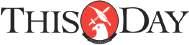
According to Ismael Zango, the principal investigator of the study, economic empowerment must go beyond token gestures, the kind of one-off cash handouts that politicians distribute during campaigns and promptly forget about. Sustainable development requires equipping women and youths with market-driven skills. He pointed to women-led groundnut processing cooperatives in Kebbi State and the Women in Agriculture programme in Kano as models worth scaling. These are things already working on the ground, waiting for institutional support that never quite arrives.
T H I S D AY N E W S PA P E R S L I M I T E D
EDITOR-IN-CHIEF/CHAIRMAN NDUKA OBAIGBENA
GROUP EXECUTIVE DIRECTORS ENIOLA BELLO, KAYODE KOMOLAFE, ISRAEL IWEGBU
DIVISIONAL DIRECTORS SHAKA MOMODU, PETER IWEGBU, ANTHONY OGEDENGBE
DEPUTY DIVISIONAL DIRECTOR OJOGUN VICTOR DANBOYI
SNR. ASSOCIATE DIRECTOR ERIC OJEH
ASSOCIATE DIRECTOR PATRICK EIMIUHI
CONTROLLERS ABIMBOLA TAIWO, UCHENNA DIBIAGWU, NDUKA MOSERI
DIRECTOR, PRINTING PRODUCTION CHUKS ONWUDINJO
TO SEND EMAIL: first name.surname@thisdaylive.com
At the unveiling of the report, Foyinsolami Akinjayeju, CEO of Enhancing Financial Inclusion and Advancement, described financial inclusion as both a moral and an economic necessity. We agree. Every northern woman locked out of a savings account, a microloan, or an insurance product is a drag on the national economy. And in a country desperately seeking revenue sources beyond crude oil, the exclusion of millions of productive women from the financial system is an act of self-sabotage.
So, the question, as always in the country, is what happens next? We have the data, and policy frameworks. What we lack is the political will to translate all of that into action at the community level where it matters most. Northern governors must stop treating women’s economic empowerment as an afterthought. Banks and fintech companies must design products that meet women where they are, not where policymakers wish they were. And other stakeholders must stop pretending that a region where four in 10 women cannot even open a savings account is on any credible path to development. The 38 per cent figure from the Bayero University report is a verdict on our national priorities, policies, and pretensions to inclusive growth.
Letters in response to specific publications in THISDAY should be brief (150-300 words) and straight to the point. Interested readers may send such letters along with their contact details to opinion@thisdaylive.com. We also welcome comments and opinions on topical local, national and international issues provided they are well-written and should also not be longer than (750- 1000 words). They should be sent to opinion@thisdaylive. com along with photograph, email address and phone numbers of the writer.
Politics often produces strange moments, but every now and then a controversy emerges that says more about a society than it first appears. The recent uproar in Kano over viral images of women displaying red underwear allegedly linked to supporters of the state government is one such moment. What began as social media comedy quickly evolved into a serious conversation about political culture, digital misinformation, public dignity and the growing danger of supporter excesses in Nigeria’s democracy.
At the centre of the controversy are competing narratives. One version claims the act was staged by enthusiastic supporters seeking to mock the red symbolism associated with Senator Rabiu Musa Kwankwaso and the Kwankwasiyya movement. Another insists no government official procured or distributed such items, and that the women involved purchased them independently as a form of protest. A third line of ar-
gument points to manipulated or AI-generated images, especially those showing Governor Abba Kabir Yusuf’s photograph printed on the underwear.
Whichever version one believes, the broader lesson lies elsewhere. In the age of instant virality, perception often outruns fact. Once provocative visuals hit the internet, they begin to live independent lives. By the time clarifications arrive, opinions are already formed, jokes already shared, and reputations already bruised. That is the brutal logic of modern information warfare.
This is why the Kano episode should not be dismissed as mere comedy. It highlights how politics in Nigeria is increasingly shifting from policy contests to symbolic warfare. Rather than debates over education, healthcare, water supply, youth unemployment or urban planning, public attention is hijacked by spectacles designed to humiliate opponents and energise online loyalists. The result is a shrinking space for serious
governance discourse.
Kano is especially vulnerable to this kind of politics because of its unique political history. The state is one of Nigeria’s most politically conscious arenas, where colours, slogans, movements and personalities carry deep emotional weight. The red cap is not merely fashion; it represents a political identity. Any attempt to ridicule that identity will naturally provoke backlash. Supporters may consider such mockery clever mobilisation, but politics rooted in humiliation often boomerangs.
There is also an uncomfortable gender dimension to the saga. Across Nigeria, women are too often reduced to props in political performances—assembled for rallies, tokenised for optics, or used to dramatise partisan messages.
Abdulhamid Abdullahi Aliyu, Abuja
Peter Uzoho
In a move that underscores its commitment to regulatory consistency and discipline in the oil and gas sector, the Federal Government of Nigeria has, through the Ministry of Petroleum and Minister of State for Petroleum, appealed the ruling of January 29, 2026, by a Lagos Federal High Court, which challenged its revocation of the License of the Dawes Island Marginal Field originally awarded to Eurafric Energy Limited on in 2003.
The appeal follows Eurafric Energy’s challenge of the non-renewal of its license and demand for its reinstatement to the asset in the suit against the Ministry of Petroleum Resources and the Minister of Petroleum Resources, notwithstanding its failure to bring the asset to commercial production, to export any crude, or pay royalties to the government of Nigeria for nearly 17 years.
Beyond the immediate dispute, the government’s action reinforces a broader macro signal: that Nigeria’s upstream sector is increasingly governed by enforceable rules, in which asset ownership is contingent on performance and regulatory outcomes are aligned with execution, value creation, and the protection of stakeholder interests.
Accordingly, the Ministry of Petroleum Resources, the Minister of Petroleum Resources, and the Nigerian Upstream Petroleum Regulatory Commission (NUPRC) have moved decisively to challenge the judgment; filing the relevant processes, including Leave to Appeal, Notice of Appeal and Injunction Pending Appeal at the Court of Appeal, Lagos Division.
The issues in dispute are not merely a matter of law. They represent a clear and deliberate signal by the government of Nigeria and the regulatory agencies in the country’s oil and gas sector, of their commitment to instilling commercial discipline and maintaining the sanctity of sectoral regulations. For a country with an ambitious development agenda, requiring a huge capital outlay, the optimal and efficient utilisation of its assets are critical. Idle or underperforming licences do not just represent operational inefficiency; they constitute foregone revenue, misallocated capital, and delayed national development. Ensuring that assets are actively developed and that operators are held accountable to their obligations, is therefore central to economic advancement.
Until the introduction of the Petroleum Industry Act (PIA), 2021, the perceived regulatory ambiguity in the oil and gas sector created room for weak compliance, delayed execution, and protracted litigation, undermining contractual discipline. With the PIA, 2021, regulators became more empowered to enforce standards and responsible business practices.
Against this backdrop, the decision to challenge the ruling and defend the regulatory process that led to the non-renewal of the Dawes Island license initially awarded to Eurafric Energy and the subsequent award of the asset to a new operator after 17 years of non-performance are indicative of the performance standards, to which operators are now held.
The direction of travel is evident; No more dormancy. Drill or Drop. Nigeria needs to optimise its assets. The messages embodied by the actions of the regulators in the Dawes Island Field dispute is clear: Every single barrel counts.
Going by a review of the record of activities during Eurafric Energy’s operatorship of the Dawes Island Field, one is astounded by how the company arrived at its request for reinstatement of an asset it could not bring to commercial operations for 17 whole years!
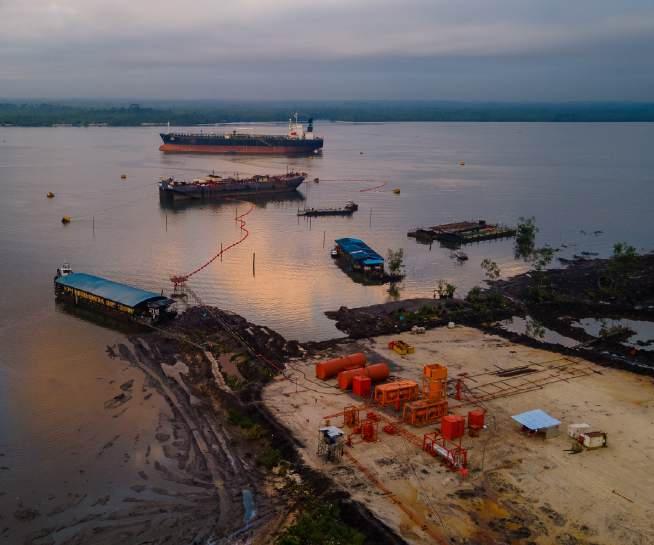
to Eurafric Energy at the marginal field bid round of February 25, 2003. Eight years later, in 2010 specifically, regulators extended the license by five years to enable the development of the asset.
However, by January 14, 2015, the regulator had issued a formal notice of non-renewal of the license due to Eurafric Energy’s failure to meet key license obligations, which the company acknowledged. Some of these obligations included re-entry of existing wells, drilling new wells, field production, acquisition of 3D seismic data, and submission of a Field Development Plan.
Subsequently, the defunct Department of Petroleum Resources (DPR) conducted a performance evaluation on the asset and returned with a score of 8%, which placed the asset in the lowest performance category and reinforced the basis for regulatory action.
Notwithstanding the dismal outcome of the April 2015 performance evaluation by the DPR, a final three-year extension was granted on May 1, 2016, to Eurafric Energy on the operatorship of the Dawes Island Field, but with a clear condition that the license would be withdrawn if the field was not brought to production within the defined tenure.
When the license expired on April 30, 2019, without the field achieving commercial production, securing an approved Field Development Plan or paying any Royalties to the government for seventeen years, the regulator formally declined the renewal of the license.
Interestingly, the asset that had been dormant and fallow for seventeen years has become productive since its award to Petralon 54 on March 12, 2021. The change of fortune triggered by the award of 100 per cent interests in the Dawes Island Marginal Field to Petralon 54 Limited has moved the field from dormancy to active production, reflecting a clear change in execution capability.
Within a very short period, Petralon 54 has invested over $60 million in the development of the asset, the company has drilled multiple wells, including DI-2 and DI-3, achieved first
oil, exported crude oil and now continues to progress its field development activities.
As of early 2026, the company in its had produced over 150,000 barrels of crude oil and remitted approximately $1,000,000 in royalties to the coffers of the government of Nigeria, effectively reversing seventeen years of non-production, non- export, and complete absence of fiscal contributions (no royalties) under the operatorship of Eurafric Energy Limited.
It is also instructive that Petralon 54 Limited itself came under regulatory review during the 2025 licence extension exercise, under clearly defined performance criteria including minimum capital expenditure commitments, data acquisition, well re-entry, new well drilling obligations, and the submission of a Field Development Plan.
Petralon 54’s extension was not automatic; it was earned through measurable delivery against these benchmarks. The renewal of the licence therefore reflects the consistent application of a performance-based framework, where operatorship is contingent on execution and forward commitments, rather than historical entitlement.
The Dawes-Island case has become an eye-opener to the government and people of Nigeria. While the matter highlights a clear instance of revenue loss to the Nigerian government as a result of the non-performance of a national asset, it also brings to the fore the need for government at all levels to protect national interest and prevent value erosion.
“A situation where a national asset that has been undeveloped for years is now generating royalties for the government under a new operator should not be viewed lightly. Instances where assets are held without the financial and execution capacity to sweat such assets should be treated as a breach of regulatory expectations,” opined an industry source.
Eurafric Energy’s request to be reinstated to benefit from value it did not create is quite obviously audacious, but quite frankly, it is test of the current regulatory temperament, to see if there are still rewards for inefficiency and non-performance, which had created prolonged negative economic outcomes for the country.
The organs of government have responded firmly and loudly with this appeal, this is
not the era of non-performance.
The trial court’s judgment rested on wobbly foundations.
From records obtained and reviewed, the appellants submitted that the trial court exceeded its jurisdiction by substituting its discretion for the Minister’s without adherence to established judicial review principles. It also failed to apply estoppel - Eurafric Energy accepted an award letter signed by a director in 2003, but challenged a revocation letter signed by a director in 2020.
The trial court held that the Minister failed to follow Section 99 of the Petroleum Industry Act (PIA) 2021, while the revocation occurred on April 9, 2020, which is 16 months before the enactment of the PIA. This means the PIA did not exist at the time of this revocation. So, applying it retrospectively is a basic error of statutory interpretation.
The court confused ‘Extended Well Test’ with ‘Production’
The court relied on Eurafric Energy’s unsubstantiated production claim of 62,039 barrels during an Extended Well Test (EWT) as evidence that the field had been brought into production. “An Extended Well Test is designed to establish reservoir boundaries and test properties. It is not commercial production. The two are not the same,” a petroleum engineer with decades of experience explained.
In a May 1, 2016, letter notifying Eurafric Energy of final three-year extension of the license, the condition that will guarantee its maintenance was clearly spelt out, and these include: “The license would be withdrawn if the field was not brought to production by the end of the tenure, without any recourse to Eurafric.”
Eurafric accepted a license extension and condition for its maintenance but still underperformed in its development of the asset. Surprisingly, the company then ran to court after the license was reawarded to Petralon and began creating value.
The facts are quite straightforward. Eurafric was awarded the licence in 2003, granted a five-year extension in 2010, and then a final extension in 2016, even after being assessed at just 8 per cent progress towards commercial production. By the time the license expired in 2019, the field had still not been brought to commercial production, despite this being the core condition for its retention.
In any contractually and commercially disciplined environment, a license is a performance-tied contract, not a perpetual option. It then begs the question: on what objective basis should a non-performing asset holder, after nearly two decades of inactivity, be entitled to yet another extension?”
As the industry awaits the judicial review process following the Appeal, the central issue remains whether production obligations will be enforced by the executive arm of government in line with regulatory intent, or whether legal processes will be used to undermine the consistent application of those obligations. Encouragingly, recent actions by regulators point to a clear shift toward a performance-driven framework.
With greater emphasis on timely development, production targets, and accountability, the sector is better positioned to attract investment, improve operational outcomes, and enhance government revenues.
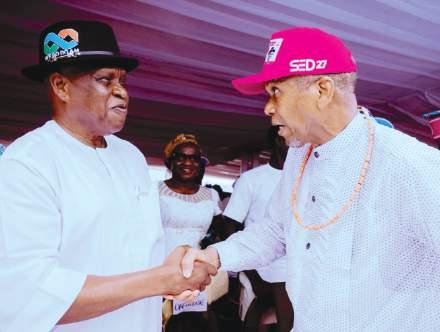
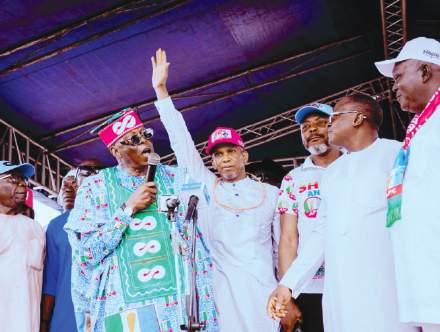
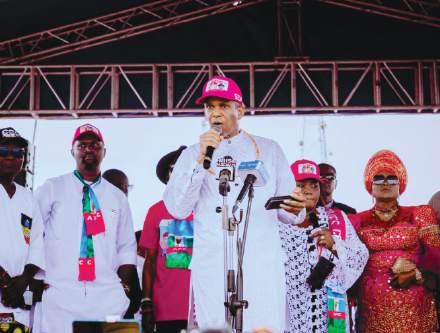
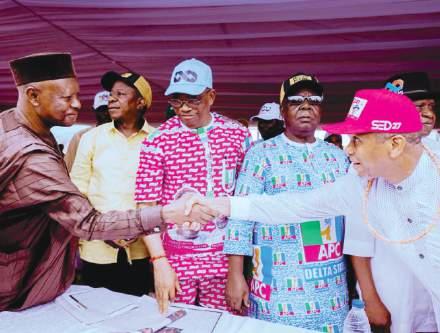
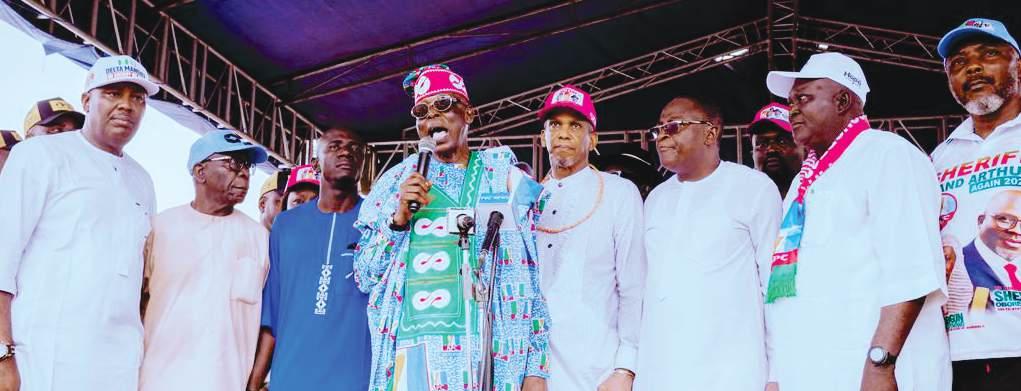
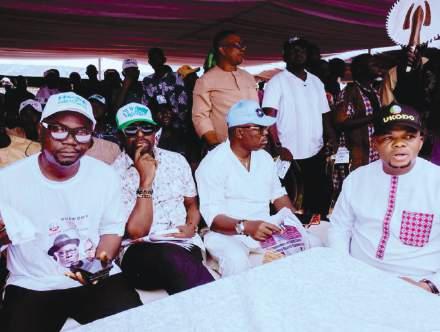
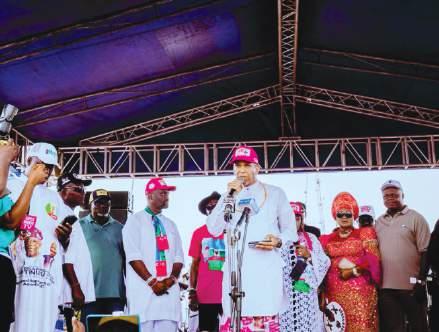
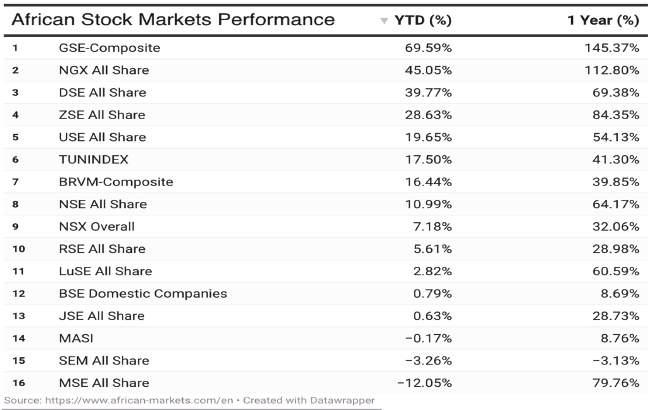
Kayode tokede
The Nigerian Exchange Limited (NGX) has emerged the second best performing bourse in Africa buoyed by the recent FTSE Russell reclassification of Nigeria from unclassified to Frontier market status.
As of April 24, 2026, the major market indicator of Nigeria’s stock market, NGX All-Share has appreciated by 45.05 per cent in its Year-tillDate (YtD) growth, behind the GSE Composite Index that closed at 69.59 per cent YtD.
The GSE Composite Index is heavily influenced by largecap names, especially telecom and financial stocks. Also,
Omolabake Fasogbon
Stakeholders have said that Nigeria’s path to stronger public finance hinges not only on new taxes, but more on how tax authorities are run, citing Lagos’ 2025 revenue total of N1.7 trillion, influenced by its tax autonomy model.
They stated this at the gala night organised to close the 159th meeting of the Joint Revenue Board (JRB), urging
the GSE Composite Index’ so far in 2026 has witnessed improving investor confidence & sector diversification and market cap expansion rather than trading volume
Data obtained by THISDAY revealed that Dar es Salaam All Share Index (DAR-ASI) came third with a 39.77 per cent YtD growth, followed by Zimbabwe Stock Exchange (ZSE) All Share Index that closed at 28.63 per cent YtD. Major markets such as Tunindex and JSE All Share saw a 17.50 per cent and 0.63 per cent YtD performance as of April 24, 2026, respectively.
Top on the decline performance include Malawi Stock Exchange All Share
other states to take a cue from Lagos’ resolve to boost compliance levels and deliver worthy dividends to citizens.
The event brought together tax administrators and revenue stakeholders from across the country, who gathered for four days to deliberate on ways to chart development for tax systems, administration and revenue growth.
The JRB coordinates tax administration and
Index that has fallen by -12.05 per cent YtD, followed by Stock Exchange of Mauritius (SEM) All Share Index (SEMASI) that dipped by per cent in its -3.26 YtD performance as of April 24, 2026.
For the Nigerian stock market, analysts have hinted of recent foreign investors inflow influenced by the FTSE Russell reclassification, the National Pension Commission (PenCom) Revised Regulation on Investment of Pension Fund Assets, the just concluded banking sector recapitalisation exercise policy of the CBN, impressive 2025 financial corporate earnings by listed companies, and the cut in fixed income instrument
drives tax reforms across Nigeria’s federal and state tax authorities.
Speaking, Chairman of the Lagos State Internal Revenue Service (LIRS), Ayodele Subair stressed that the independence of tax authorities remains the engine of fiscal growth, asserting that the service’s independence from political interference has been central to the state’s performance.
“We have been allowed
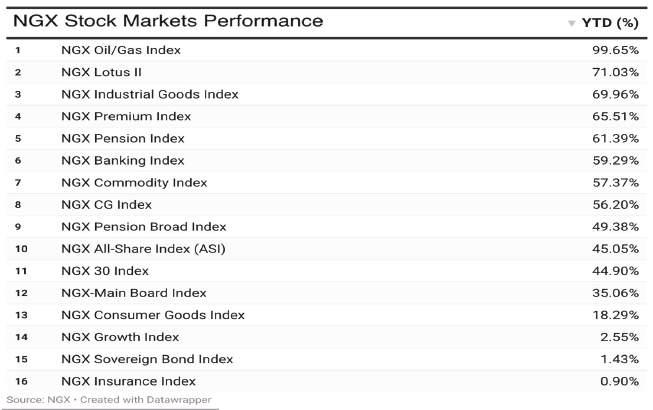
rates as driving investors confidence.
Also, inflation rate, according to the National Bureau of Statistics (NBS) stood at 15.38 per cent as of March 2025 from 27.35 per cent March 2025, while MPR has dropped to 26.50 per cent as of April 2026 from 27.50 per cent April 2025. Consequently, the market capitalisation has appreciated significantly by N45.96 trillion or 46.25 per cent YtD to close at N145.334 trillion as of April 24, 2026 from N99.376 trillion it closed for trading in 2025.
As global investors increasingly prioritise markets with strong infrastructure, transparency, and accessibility,
to operate independently, to hire the best staff possible and to carry out our statutory mandate without any form of interference,”he said.
Subair stated that the impact of the state’s earnings was already visible in public investment, adding that the state covered 60 per cent of its capital expenditure, pointing to progress in transport corridors, bridges and
Nigeria’s re-entry into the FTSE Frontier Market universe underscores the critical role of market infrastructure in enabling capital formation and connecting local opportunities to global capital.
Analysts at Cordros Research in a report stated that Nigeria’s return to Frontier Market status is expected to improve market flow dynamics, with inflows projected in the conservative range of $840.00 million to $1.04 billion (N1.15 trillion to N1.42 trillion), underpinned by benchmark-driven rebalancing and incremental discretionary allocations.
“Price discovery should improve further in the
schools as evidence of how tax receipts are converted to economic assets.
Also speaking, Executive Secretary of the Joint Tax Board (JTB), Mr. Olusegun Adesokan, said Lagos is a working template for wider reforms, attributing the state’s status to the legacy of President Bola Ahmed Tinubu, who, during his tenure as Lagos governor, granted LIRS operational autonomy.
market’s liquid leadership cohort: The second-order implication is on price discovery, particularly at the large-cap, liquid end of the market,” the firm explained.
The CBN recently implemented significant reforms in the foreign exchange market aimed at enhancing transparency, compliance, and market stability.
The reforms are part of the CBN’s broader strategy to create a fairer, more stable FX market and support economic growth through better monetary policies.
Adesokan said while other states have replicated this model, governors must resist the temptation of using revenue boards as instruments of patronage.
“JTB has continued to play a pivotal role in shaping Nigeria’s tax system, driven by professionalism, collaboration and institutional memory. Results are guaranteed when institutions, not individuals, anchor policy execution,” he said.
Crusoe Osagie explains the concerns raised by Dele Oye on the risks that currently place the Nigerian economy on the verge of the precipice
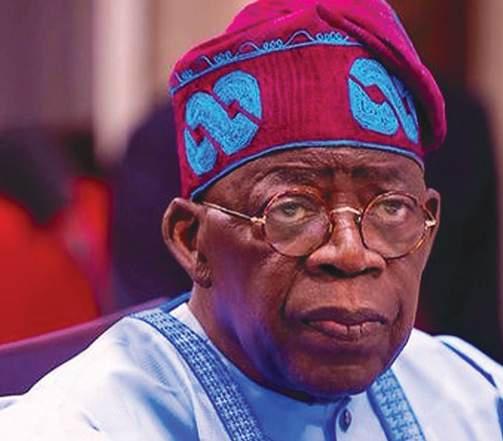
Perhaps, apart from the few who serve in government at the highest levels, there is hardly any Nigerian who is not feeling the strain of the country’s current economic situation.
With the middle class virtually wiped out, and many from the former upper class slipping downward, the most common form of innovation in Nigeria today is that which simply ensures daily survival—putting food on the table and clothes on people’s backs.
To be fair, the current administration inherited a nation already in poor economic condition from its predecessor. However, with President Bola Ahmed Tinubu recently stating publicly that he “took over from himself,” it becomes difficult to shift blame elsewhere. Responsibility, therefore, rests squarely on the shoulders of his government.
What Nigeria appears to have now is a K-shaped economy—one where a small fraction of the population continues to rise, while the vast majority sinks further into economic hardship.
Although many analysts who once guided public understanding during challenging times have grown silent, one private sector voice has remained consistent. That voice belongs to Mr. Dele Oye, Chairman of the Alliance for Economic Research and Ethics Limited/GTE.
Speaking at a forum organised by Vanguard Newspapers last week, Oye made a striking assertion: while Nigeria may be recording growth in its published Gross Domestic Product (GDP), that growth excludes nearly 200 million Nigerians.
GrOwth withOut PrOsPerity
Nigeria’s recent macro-economic story is one of uneasy contradiction. Stabilisation has been achieved—at least on paper—but at a cost borne overwhelmingly by households. The country has moved away from a fiscal cliff: debt servicing, once consuming virtually all government revenue, has eased from catastrophic levels; foreign reserves have recovered; capital inflows have rebounded. Yet these gains, while notable, are not synonymous with broad-based prosperity. They are, instead, the narrow foundations of a recovery that risks entrenching inequality.
What has become increasingly difficult to
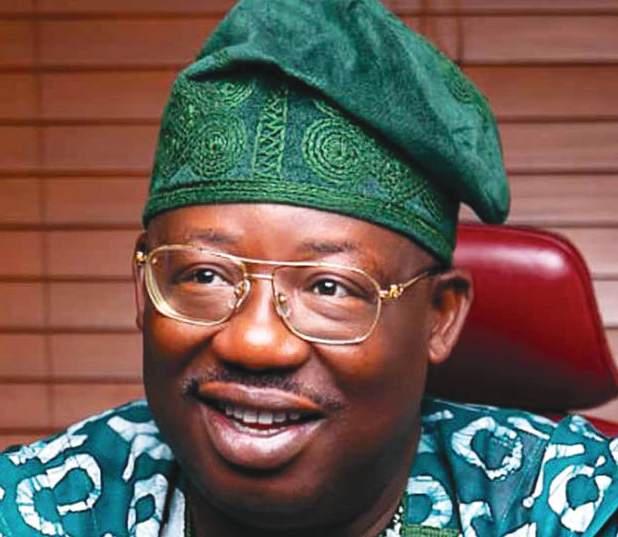
ignore, however, is where the proceeds of reform appear to have gone. The removal of fuel subsidies and the devaluation of the currency were sold as painful but necessary corrections—measures that would free fiscal space for investment and restore economic balance. Instead, to many Nigerians, they look like a transfer: from the pockets of the many to the privileges of the few. A political class already insulated from market discipline appears, if anything, more opulent in the age of austerity.
The paradox is stark. Output is rising, but poverty is rising faster. More than six in ten Nigerians now live below the poverty line, a figure that has climbed steadily despite headline GDP growth. This is not an anomaly; it is the logical outcome of an economic structure that concentrates gains in capital-intensive sectors while leaving labour-intensive ones to languish. Finance, telecommunications and services expand. Agriculture and manufacturing—employers of the majority—remain starved of credit, infrastructure and policy coherence. Yet even this diagnosis understates the political economy at work. At a moment when households have been forced into abrupt and painful adjustment, the state has shown little inclination to do the same. Nigeria’s legislature remains among the most expensive in the world, its members beneficiaries of allowances and perks that would be eye-watering in far richer countries. The symbolism is hard to miss: austerity for citizens, abundance for officials.
The executive, too, has done little to temper this perception. The convoys remain long, the vehicles increasingly armoured and exotic—rolling fortresses that signal distance rather than service. Federal and state cabinets alike continue to equate authority with excess, even as inflation erodes the purchasing power of those they govern. Meanwhile, the presidential air fleet—recently expanded— has become a fixture of international travel, deployed with a frequency that sits uneasily alongside calls for domestic
sacrifice.
DistOrteD finanCial system
At the heart of the problem lies a distorted financial system. Banks, faced with high interest rates and generous sovereign yields, have chosen the path of least resistance. Rather than financing farms or factories, they have poured trillions of naira into government securities. The returns are high, the risks negligible. The consequences, however, are severe: a private sector deprived of capital, a real economy suffocated, and a state that crowds out the very growth it seeks to promote.
This is not merely inefficiency; it is a form of institutionalised rent-seeking— one that extends beyond finance into governance itself. When public office becomes the most lucrative economic activity, incentives shift decisively away from production and toward proximity to power. The result is a system in which reform generates revenue, but politics determines its distribution.
Compounding this failure is the government’s enduring temptation to act as entrepreneur. Nigeria’s economic history is littered with the costly remnants of this ambition: billions sunk into steel plants that never produced, refineries that never refined, airlines that never flew competitively, and telecommunications monopolies that collapsed under their own inefficiency. These are not isolated missteps. They are systemic failures rooted in a misunderstanding of the state’s role in a modern economy.
The lesson is well established, yet persistently ignored. Governments are poor operators of commercial enterprise. Their comparative advantage lies in regulation, coordination and the provision of public goods. Where they attempt to substitute for markets, they destroy value; where they enable markets, they can unleash it.
niGeria’s eCOnOmiC Dilemma
Nowhere is this more evident than in the livestock sector—a microcosm of
Nigeria’s broader economic dilemma. The country possesses one of the largest cattle populations in Africa and a vast domestic market. Yet it imports dairy products worth billions of dollars annually and remains dependent on foreign meat supplies. The constraint is not resource scarcity but institutional failure.
Public investment in the sector has been derisory relative to its potential. Budget allocations amount to a fraction of the industry’s economic value, rendering grand strategies little more than aspirational documents. Meanwhile, the underlying model remains flawed: too much emphasis on state-led execution, too little on private-sector dynamism.
International experience offers a clear alternative. Successful agricultural exporters have adopted a consistent formula: the state sets standards, builds infrastructure and opens markets; private actors invest, produce and compete. This division of labour is not ideological—it is practical. It aligns incentives, allocates risk efficiently and ensures accountability.
For Nigeria, the implications are immediate. Structural transformation will not come from macro-economic adjustment alone. It requires a reorientation of the entire economic architecture: away from rent extraction—both financial and political—and towards value creation; away from state excess and towards institutional discipline; away from financial speculation and towards productive investment. That means not only forcing a rebalancing of credit toward the real economy, but also demanding fiscal restraint from the political class itself. Reform cannot be credible if it is asymmetrical. A government that asks its citizens to endure hardship must demonstrate, visibly and materially, that it is willing to share in that burden.
The stakes are high. Without such changes, Nigeria risks entrenching a dual economy: one that delivers growth—and privilege—for a few, and austerity for the many. With them, it could convert its considerable assets—land, labour and entrepreneurial energy—into inclusive prosperity.
For now, the verdict is clear. Nigeria has stabilised, but it has not transformed. And until both its economics and its politics are reformed in tandem, growth will remain not just a statistic—but a deeply contested one.
APPLIC ATION FOR THE 2025/2026 PETROLEUM TECHNOLOGY DEVELOPMENT FUND (PTDF) INCOUNTRY SCHOLARSHIP SCHEME (ISS) FOR UNDERGR ADUATE AND POSTGR ADUATE STUDIES IN FEDER AL AND STATE UNIVERSITIES
The Petroleum Technology Development Fund (PTDF), a Federal G over nment agenc y mandated to develop indigenous human capacity and petroleum technology for the oil and gas industr y, hereby invites applications from suitably quali ed Nigerians for its 2025/2026 InCountr y Scholarship Scheme (ISS).
T h e S c h e m e p r o v i d e s n a n c i a l s u p p o r t f o r
u n d e r g r a d u a t e a n d p o s t g r a d u a t e ( M S c a n d P h D ) studies in oil and gas, energy, and related management d i s c i p l i n e s i n a c c re d i t e d p u b l i c u n i ve r s i t i e s a c ro s s Nigeria.
* The application por tal opens on Monday, 27th April 2026 and closes on Friday, 5th June 2026.
* A p p l i c a n t s m u s t b e N i g e r i a n c i t i z e n s s e e k i n g u n d e r g r a d u a t e o r p o s t g r a d u a t e ( M S c a n d P h D ) degrees in relevant oil and gas disciplines
* Applicants must have secured full-time admission into a Federal or State university in Nigeria.
* Applicants must possess a valid National Identity Number (NIN).
* C a n d i d a t e s c u r r e n t l y b e n e t i n g f r o m o t h e r scholarships or who have previously received a PTDF scholarship in the same or a lower categor y are not eligible.
All applications must be submitted online via the PTDF
S c h o l a r s h i p M a n a g e m e n t P o r t a l : https://scholarship.ptdf.gov.ng
For detailed information on eligibility criteria, required documentation, and application guidelines, applicants are advised to visit the por tal.
PTDF House, Plot 1058 Memorial Drive, Central Area, Cadastral Zone A00, Abuja Signed: Mana gement
Kayode Tokede
British International Investment (BII), the UK’s development finance institution and impact investor, has launched its new five-year strategy, with the aim to drive £9 billion of new capital into Africa to support economic growth.
A central pillar of the strategy is a focus on accelerating the flow of private capital into African countries. Of the £9 billion, BII will contribute nearly £5 billion, with the balance expected to come from private institutions in Africa and globally.
Drawing on nearly eight decades of investing experience in Africa, BII will use its capital, partnerships and risk-bearing
capacity to attract private investors into markets and sectors where capital remains scarce.
BII also announced that it will enhance its commitment to frontier markets – those identified by the UN as Least Developed Countries – with at least 25 per cent of new investments by value going to these countries. Frontier markets are home to more than a billion people and have the greatest investment need yet remain underserved by private capital due to structural barriers to investment.
Minister for Development, Jenny Chapman said: “Over the past few months, I have been setting out the need for a new UK approach to development – one moving from traditional aid grants to long-term partnerships that bring investment,
expertise and international finance reform together. It also means investing responsibly: bringing everything the UK can offer – from our work through international organisations and our investment tools, to research, practical advice and diplomacy. Used together, this can help businesses grow, create jobs and support the reforms and policies our partners choose for themselves.”
Head of Africa, BII, Chris Chijiutomi in a statement said: “Africa has been at the heart of BII’s work since our inception. That long track record has given us deep experience of investing through economic cycles and a clear understanding of what businesses need to grow in some of the continent’s most challenging markets.”
Sam Pharmaceutical Limited has opened a new manufacturing facility in southwestern Nigeria, expanding local drug production capacity as the country pushes to reduce reliance on imported medicines.
The plant, located in Ota, Ogun State, meets World Health Organisation (WHO) Good Manufacturing Practice (GMP) standards and was financed with support from First City Monument Bank (FCMB) and the Bank of Industry (BoI).
Minister of State for Health, Adekunle Salako, said at the commissioning on April 8
that the project aligns with the government’s drive to expand local pharmaceutical production and reduce reliance on imports.
Ogun State Deputy Governor Noimot Salako-Oyedele said the factory would support job creation and economic activity in the state, while improving access to essential medicines.
Director General of the National Agency for Food, Drug Administration and Control (NAFDAC), Mojisola Adeyeye, described the facility as a reflection of growing compliance with global standards in Nigeria’s pharmaceutical sector.
Managing Director and Chief Executive Officer, First City Monument Bank, Yemisi Edun, said the bank supported the project through a N3 billion term loan in partnership with the Bank of Industry, alongside more than N3.2 billion in working capital. She said the financing reflects the bank’s focus on supporting local manufacturing and strengthening critical sectors of the economy.
Sam Pharmaceuticals Chairman and Chief Executive Officer Amit Bhojwani said the new plant would scale production and position the company more strongly in Nigeria’s branded generics market.
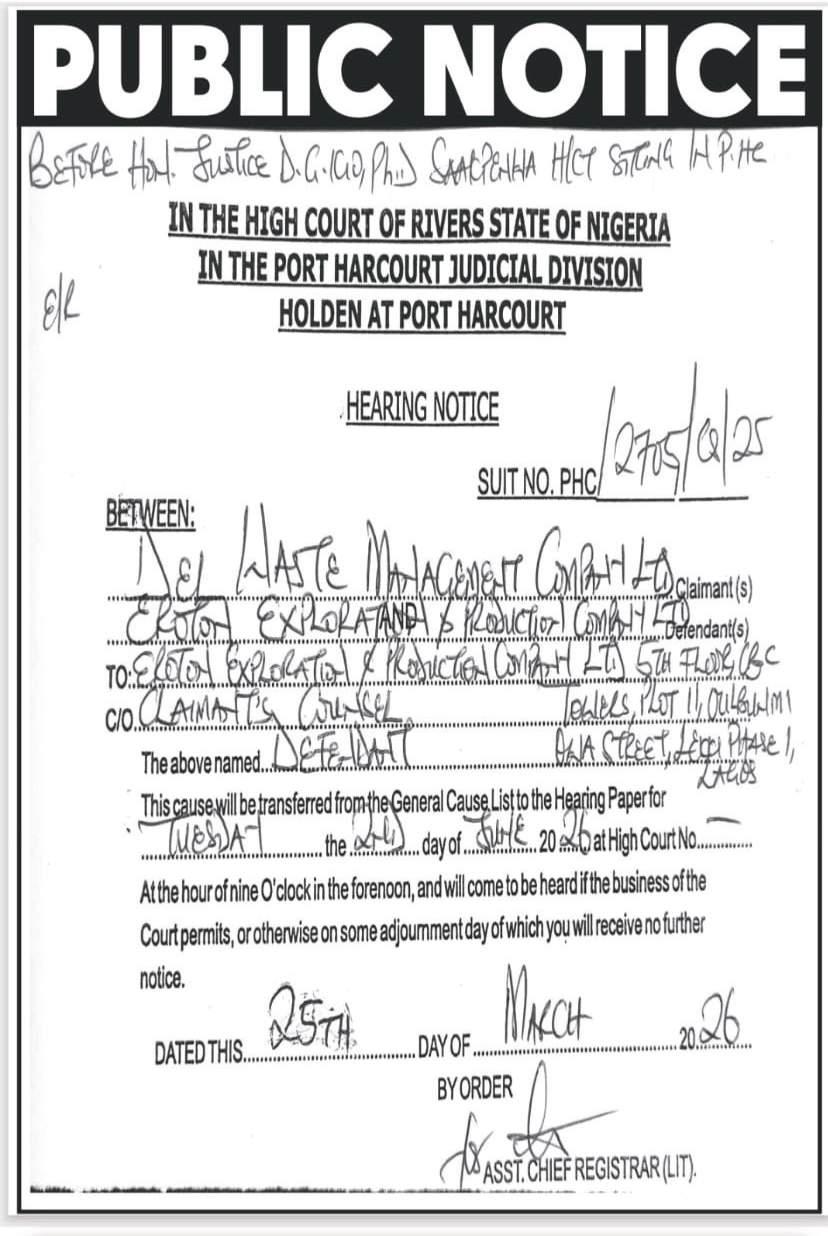
Nume Ekeghe
President Bola Ahmed Tinubu has commended the Governor of the Central Bank of Nigeria (CBN), Olayemi Cardoso, for driving reforms aimed at restoring stability and positioning Nigeria’s economy for long-term growth.
Speaking at the inauguration of the Gateway International Airport in Ogun State recently, the President linked the ongoing bank recapitalisation exercise to broader macroeconomic reforms, describing Cardoso as focused and deliberate in his policy approach.
Tinubu said: “I must single out one man here, Olayemi Cardoso. Thank you for all you are doing for the country. We have come a long way, and I do not disagree with his
macroeconomic policies, they are delivering progress for our economy. Thank you, Yemi.”
In what amounted to a strong vote of confidence, the President underscored his trust in the CBN governor’s judgment, citing his understanding of the sequencing and execution of reforms as critical to the country’s economic reset.
Cardoso’s successful handling of the recapitalisation included the management framework for three intervention banks namely: Union Bank of Nigeria, Polaris Bank and Keystone Bank, which are yet to fully complete recapitalisation due to ongoing legal and regulatory issues. The banking watchdog has assured the general public that these banks are still operational, stable and capable of meeting banking requirements.
The CBN had conducted an audit, which identified material issues in the books of Union Bank. This culminated in the removal of its board and senior management in January 2024. That decision has since become the subject of litigation, with the banking regulator pursuing an appeal against a judgment that questioned the legality of the removals.
Similarly, the proposed merger between Providus Bank and Unity Bank is also facing legal huddles, which are said to be almost sorted out.
For Polaris Bank and Keystone Bank, recapitalisation is still ongoing under close regulatory watch. Both banks were earlier rescued by the CBN and are expected to complete the process once pending issues are resolved.
APM Terminals Apapa, has commissioned newly renovated offices for the use of the Nigeria Customs Service at the terminal, located within the nation’s premier seaport, the Lagos Port Complex. The development marks a significant step in ongoing efforts to improve cargo handling efficiency and accelerate the clearance of containers at one of West Africa’s busiest maritime gateways.
Speaking during the commissioning ceremony, the Managing Director of APM Terminals Apapa, Kamal Alhraishat, emphasised that the introduction of the new Customs Office and Customer Service Centre within the Staff Building represents a deliberate move towards modernising cargo clearing operations.
He explained that the facility has been conceived as a comprehensive, onestop hub where clearing agents, importers and other customers can complete
documentation and interface with relevant authorities more efficiently.
“This new facility has been thoughtfully designed to remove the fragmentation that often characterises cargo clearance processes. By bringing critical services under one roof, we are enabling faster documentation, improving transparency, and ultimately ensuring a more seamless flow of containers through the port. Our objective is to make the experience more predictable and less cumbersome for every stakeholder who relies on this terminal,” he said.
Also speaking at the event, the Port Manager of the Lagos Port Complex, Adebowale Lawal Ibrahim, commended APM Terminals Apapa for undertaking the renovation, describing it as both timely and impactful.
He observed that the improved facility would introduce a greater level of order and control within the port environment.
He added that APM
Terminals has consistently demonstrated leadership within the industry by raising operational standards and prioritising customer experience.
In his remarks, the Customs Area Controller, Apapa Port Command, Comptroller Emmanuel Oshoba, also praised the initiative, stressing the importance of providing Customs officers with a conducive working environment. He pointed out that workplace conditions have a direct impact on morale, efficiency and overall service delivery.
“When officers are given an environment that meets professional standards, it naturally enhances their sense of responsibility and commitment to duty,” he said. “This facility aligns with what we expect in terms of parity and operational standards. It demonstrates respect for the role of Customs within the port value chain and reinforces our ability to perform effectively.”
International Breweries Plc, a proud member of ABInBev, the world’s largest brewer with over 500 brands, following its recordbreaking launch of its newest super premium brand-Budweiser Royale in Lagos, has officially extended the super-premium expression of the Budweiser portfolio to consumers across Eastern Nigeria. In a glamorous event held on April 16, 2026, in Asaba, the
brand pulled out all the stops to introduce Budweiser Royale- a super-premium variant crafted for those who demand sophistication, smoothness, and a bold flavor profile.
Speaking at the launch, Managing Director of International Breweries Plc, Nick Kade expressed his excitement about the brand’s reception in the East, “The East is a market that truly appreciates quality and success. With Budweiser Royale, we are bringing
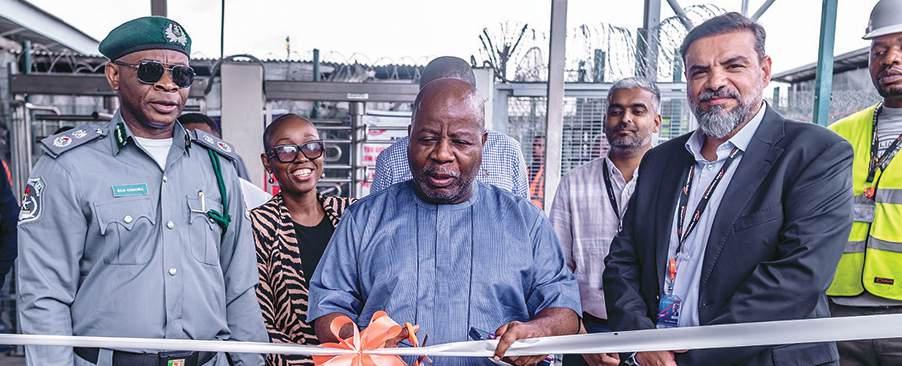
and Managing Director, APM Terminals Apapa, Kamal Alhraishat, at the commissioning of newly renovated Customs offices at the terminal in Apapa, Lagos…recently
a product that matches the ambition and lifestyle of our consumers here. It is more than just a beer; it is a symbol of achievement and refinement.”
Marketing Director of International Breweries Plc, Bamise Oyegbami, mentioned that central to the brand’s identity is the “All Rise” campaign, a call to celebrate growth, progress, and selfconfidence. He noted that the brand was developed with the modern Nigerian in mind.
The price of OPEC basket of twelve crudes stood at $63.14
Reference
Kayode Tokede
BUA Cement has released its first quarter (Q1) ended March 31, 2026 unaudited financial statements with about N355 billion revenue, representing 22.1 per cent increase over N290.8 billion in the corresponding first quarter ended March 31, 2025. The cement maker on the
Nigerian Exchange Limited in its profit loss figures announced profit before tax of N192.7billion in Q1 2026, representing an increase of 93.2 per cent from N99.7 billion in Q1 2025 with profit after tax at N176.4 billion in Q1 2026, a growth of 117.4 per cent from N81.1billion in Q1 2025.
According to the company, the Q1 2026 result was driven by cost efficiency, reflecting the
outcome of earlier strategic alignment, and supported by strong interest income growth and foreign exchange gains.
The company noted that direct cost per tonne declined for the second consecutive year, down 2.1per cent year-on-year, underscoring sustained cost control and operational efficiency.
Total cost, including selling, distribution, and administrative expenses, rose
marginally by 1.9per cent to N175.8 billion from N172.5 billion in Q1 2025, remaining below the average inflation rate for the period despite global energy shocks arising from geopolitical tensions. Overall, business margins held at acceptable levels. Specifically, gross profit and EBITDA margin rose by 9.2per cent and nine percent points, respectively to 56.9per cent and 53.9per cent.
Furthermore, the company reported an EPS of N5.21 in Q1 2026 from N2.40 in Q1 2025, along with a return of equity of 23.2 per cent in Q1 2026 from 18.9per cent in Q1 2025.
Speaking on the results release, the Managing Director, BUA Cement, Mr. Yusuf Binji in a statement said, “It is encouraging to see our results and organisational transformation
aligning so well. Revenue growth remained strong as we continue to meet cement demand, including in the bulk segment.
“We also progressed our business transformation programme during the quarter, including the realignment of the Transport Department for greater effectiveness. While the transition presented some challenges, we have now achieved operational stability.
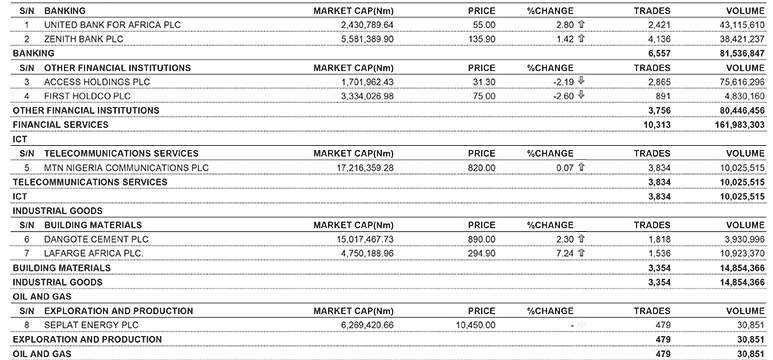
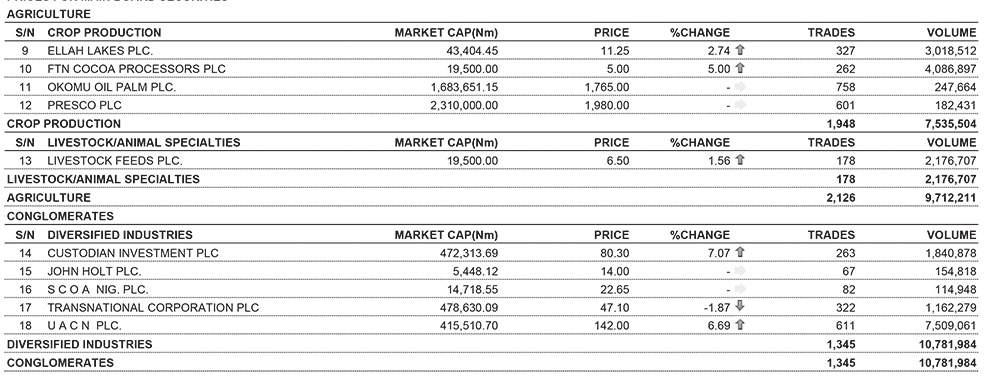
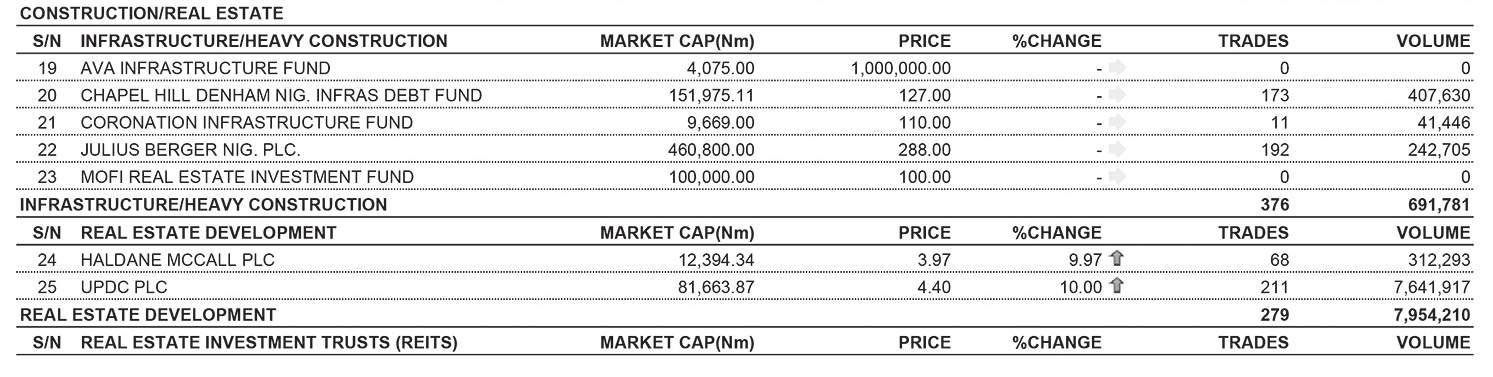
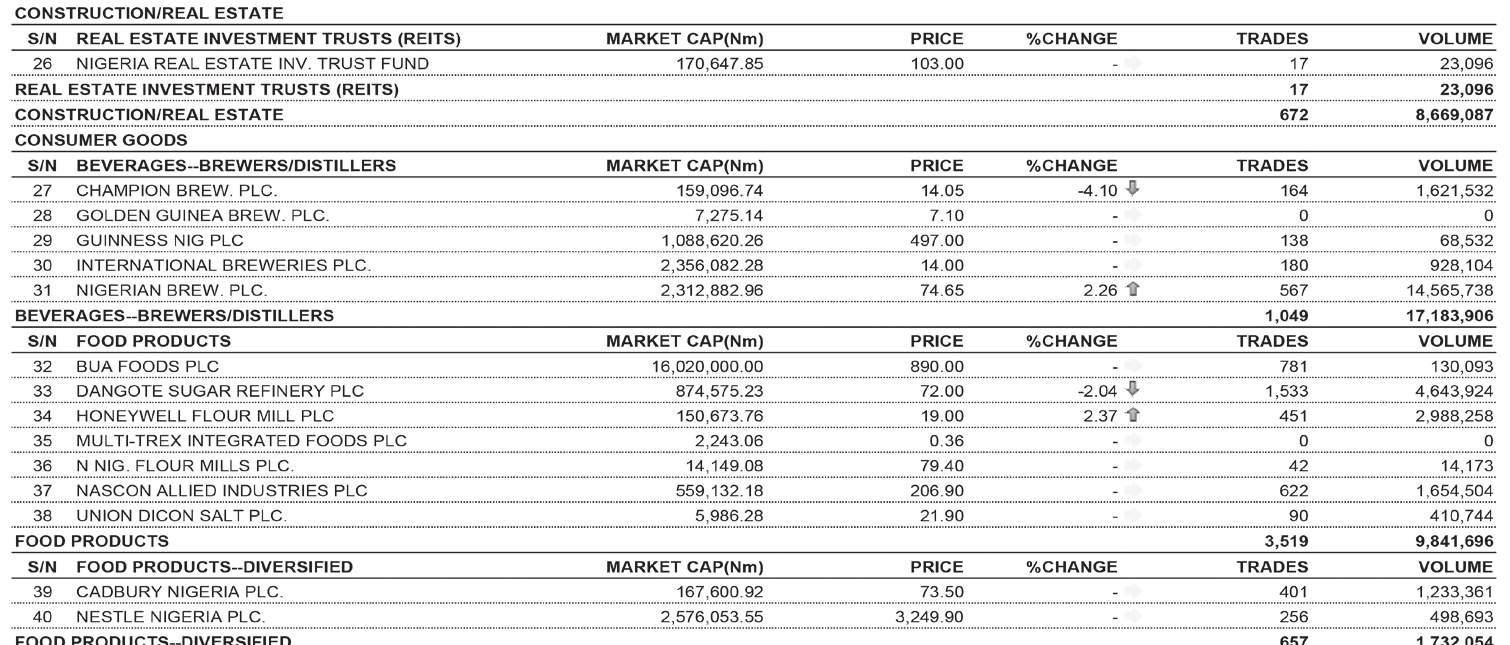
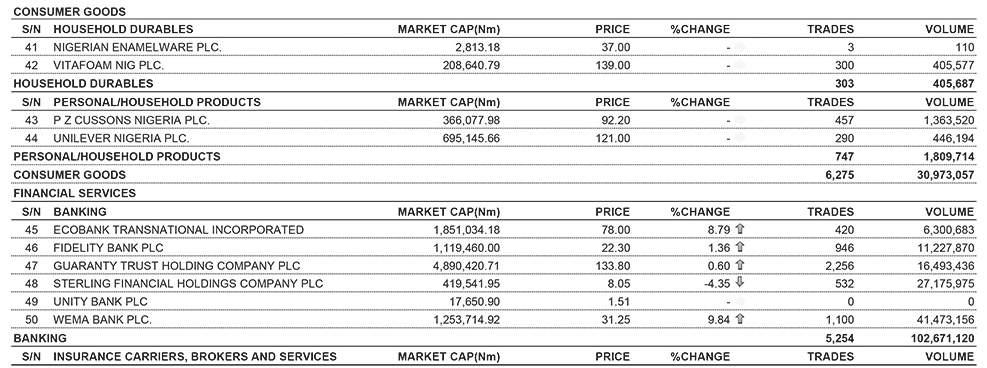
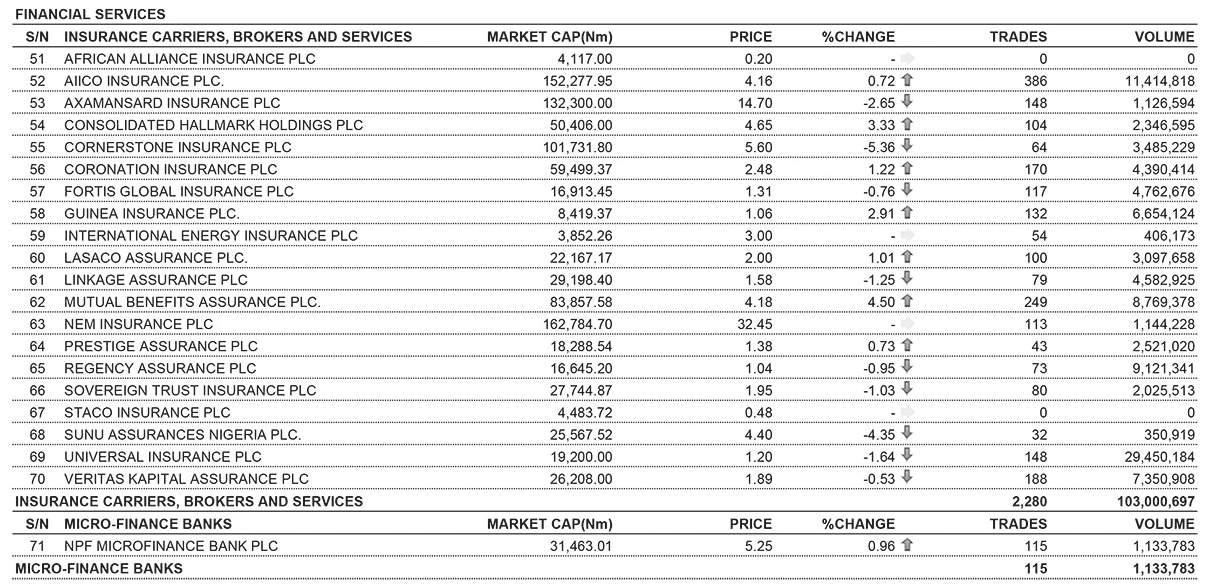

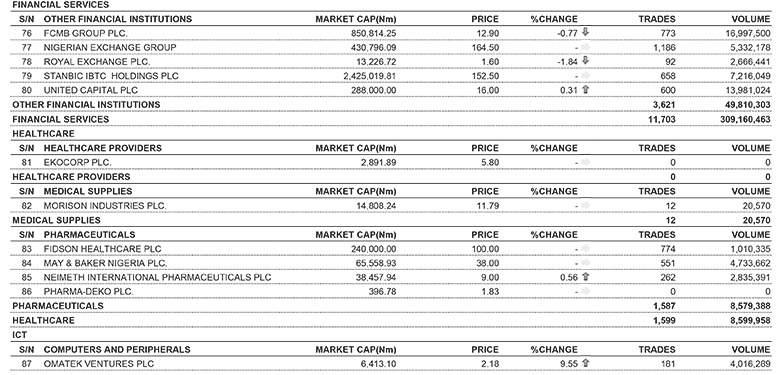
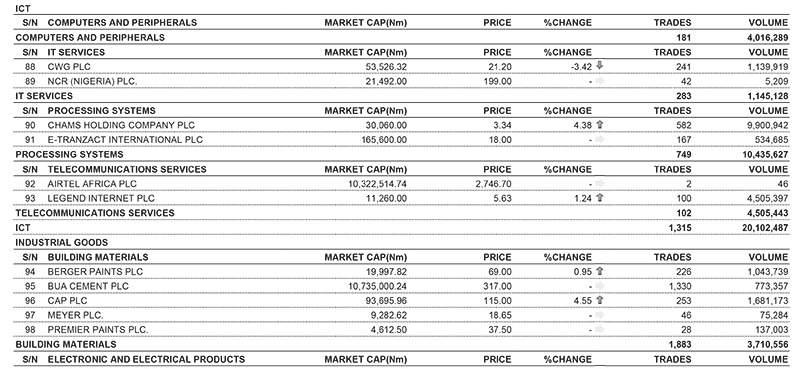
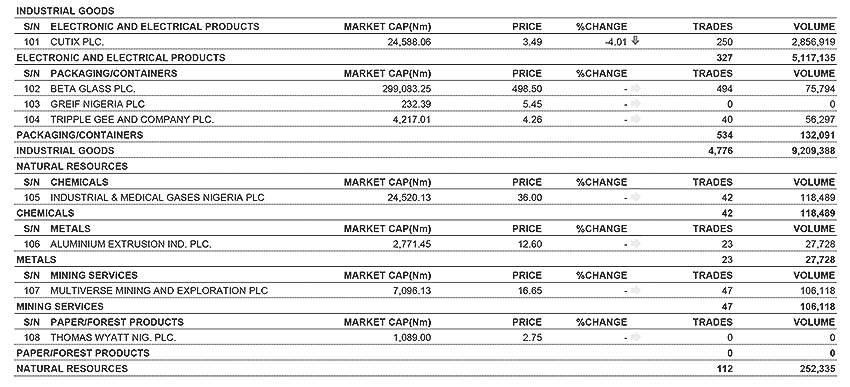
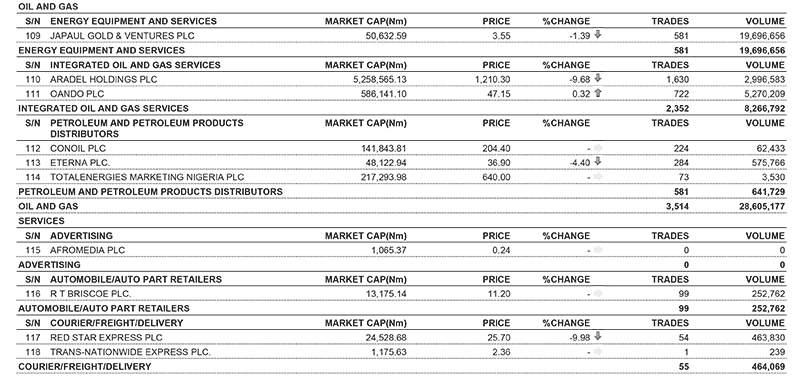





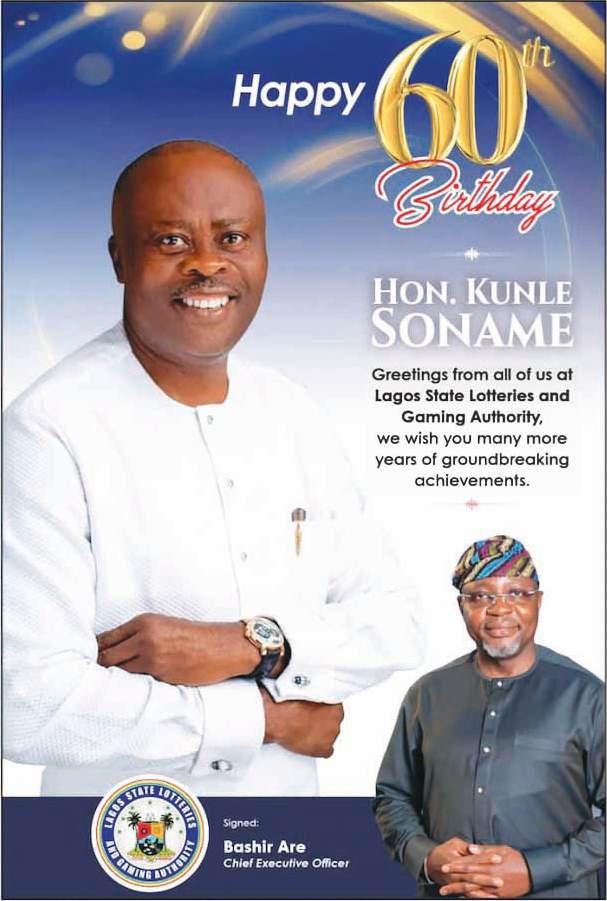

As you celebrate your 60th birthday, all of us at Bet9ja honour not just a milestone in years, but a lifetime of vision, courage, and meaningful impact.
Your journey has been shaped by bold decisions, an unwavering belief in what’s possible, and a deep commitment to growing every industry you touch. Through sport, enterprise, and philanthropy, you’ve consistently shown that true leadership is about creating platforms for others to thrive.
As you mark this remarkable chapter, we do so with deep gratitude for the inspiration you continue to provide to businesses, to communities, and to the next generation of dreamers and builders.
May this new decade bring you renewed strength, deeper fulfilment, and the ongoing joy of watching your legacy flourish.
Happy 60th Birthday, Sir.
— Management and Staff, Bet9ja


















The Board of Directors, Management, and Staff of Revee Energy Limited extend our heartiest congratulations to Mr. Kunle Soname, Chairman of ValueJet, on the landmark occasion of his 60th birthday.


Your visionary leadership and steadfast commitment to excellence have set new standards within the Nigerian aviation industry. We are proud to celebrate your remarkable achievements and the inspiring legacy you continue to build.
On this auspicious Diamond Jubilee, we wish you continued success, good health, and abundant grace.
Happy 60th Birthday, Sir!
Signed,
Board of Directors, Management, & Staff
Revee Energy Limited

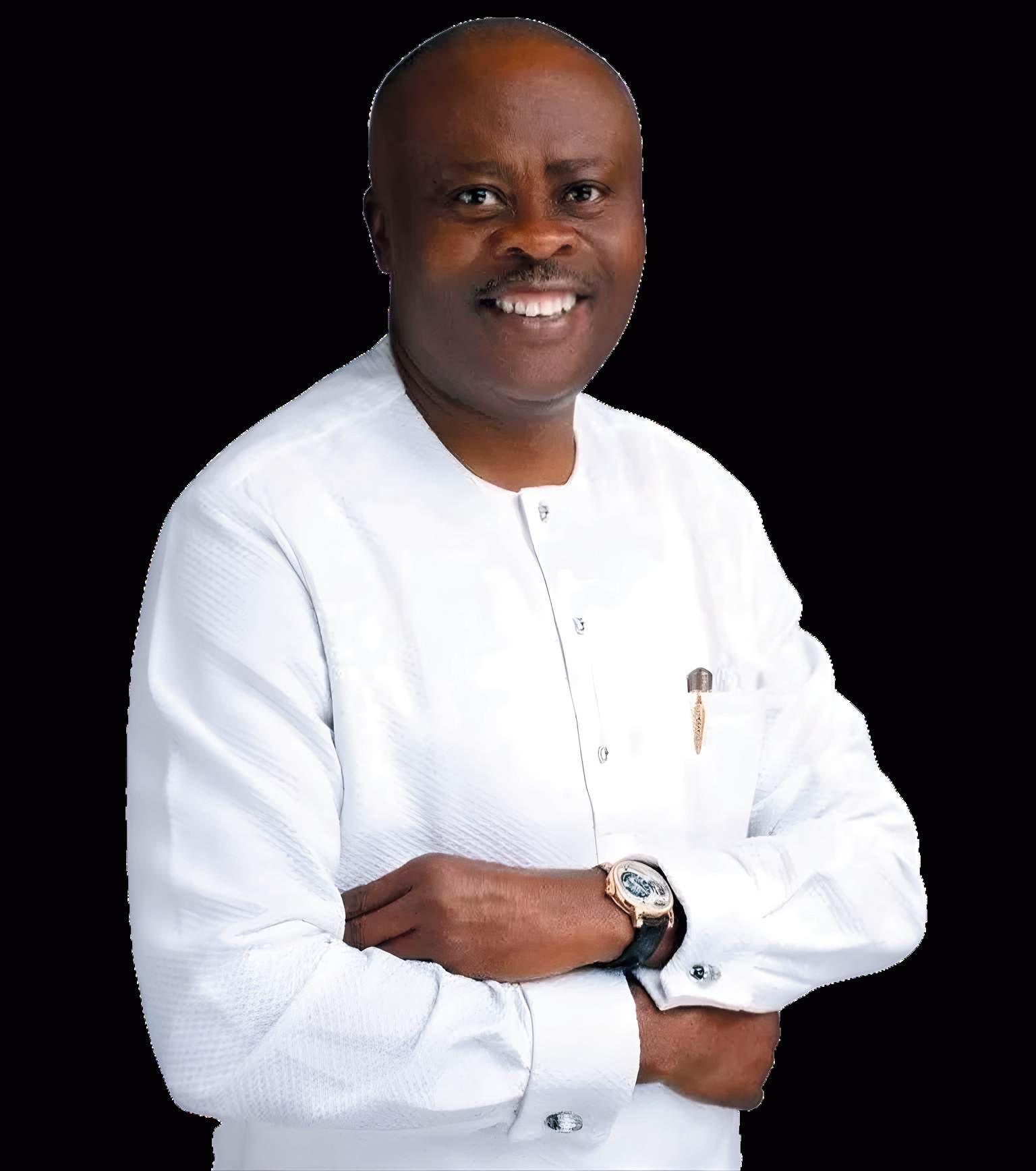
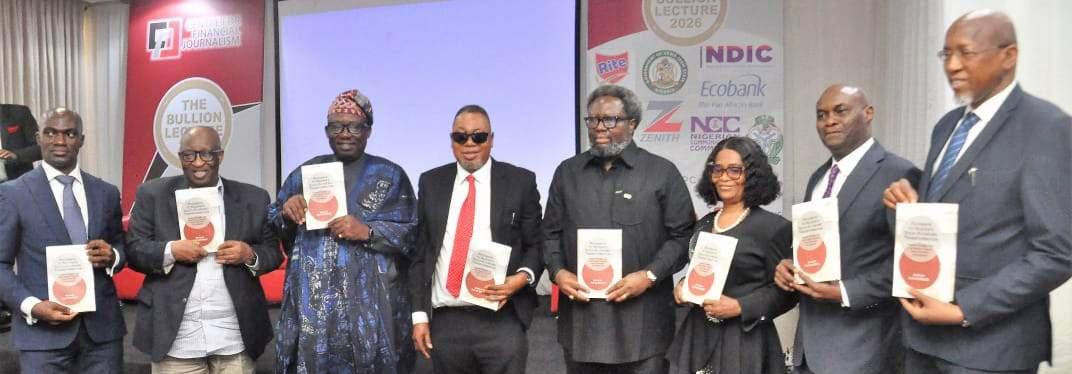
Bennett Oghifo
Nigerian Academy of Engineering (NAE) has inducted President/Chief Executive of Dangote Industries Limited, Alhaji Aliko Dangote, as an Honorary Fellow for advancing engineering and industrialisation in Nigeria and Africa.
The academy said the honour was in recognition of Dangote’s commitment and contributions to large-scale engineering, infrastructure and manufacturing, which had significantly impacted the country's economic development.
Speaking at the well-attended
induction, NAE President, Professor Rahamon Bello, said the induction of Africa’s foremost industrialist as Honorary Fellow reflected his immense contributions to Nigeria’s industrial and economic growth.
Bello said the honour was the academy’s highest recognition reserved for individuals with outstanding impact on engineering practice and development.
He described the academy as an apex body committed to advancing excellence in science, engineering, technology and innovation for national development.
The NAE president said
the academy, founded in 1997, served as a think-tank providing policy advice to government and private organisations, especially on technological matters.
He stated, “It is a Think-tank founded in 1997, comprising eminent Nigerian and foreign engineering professionals who provide leadership on national engineering and technological matters.
"The academy also offers a national platform for experts to pool their experience and insights, to proffer advice to the Federal Government of Nigeria and private organisations on policy-making, particularly on technology matters.
"NAE has limited membership and Fellows are peer-elected based on their outstanding contributions to research, and the practice of engineering in academia as well as in both public and private sectors.”
Bello added that the academy ran programmes, such as innovation competitions and fellowship grants, to support young academics and promote engineering excellence.
He said, “In the 29-year history of the Nigerian Academy of Engineering, only five Honorary Fellows have been inducted.
“Today’s event will produce our sixth Honorary Fellow.
Waltersmith Petroman Oil Limited, one of Nigeria's local refineries, has marked a major milestone in the country's drive for energy self-sufficiency, announcing the successful expansion of its refinery capacity to 10,000 barrels per day (bpd).
The achievement was highlighted during an official inspection visit by the Nigerian Midstream and Downstream Petroleum Regulatory Authority (NMDPRA) and the Nigerian Content Development and Monitoring Board (NCDMB) to the company’s Phase 2 facility at Ibigwe, Imo State, at the weekend.
The delegation led by NMDPRA’s Authority Chief Executive, Saidu Mohammed, alongside representatives of the NCDMB, assessed the
operational readiness of the upgraded facility. The Phase 2 expansion effectively doubles Waltersmith’s refining capacity from 5,000 to 10,000 bpd, positioning the company as a key contributor to Nigeria’s domestic refining ambitions.
“What WalterSmith has accomplished is no small feat. This is a powerful demonstration that Nigerians have both the capability and responsibility to take charge of the midstream sector which is the true engine room of our economy,” NMDPRA's Mohammed said.
Besides, the NMDPRA highlighted the company’s compliance with the Petroleum Industry Act (PIA) 2021 and praised its operational standards.
Chairman of Waltersmith, Abdulrazaq Isa, emphasised
that the expansion reflects both technical discipline and alignment with national energy policy objectives while maintaining strict adherence to regulatory standards, particularly those set by the NMDPRA.
“We are moving Nigeria beyond an extractive oil economy to one focused on value creation. By refining locally, integrating upstream resources, and building an industrial hub, we are laying a sustainable foundation for long-term economic growth,” Isa said.
The upgraded facility introduces an expanded product slate, including Premium Motor Spirit (PMS) and Aviation Turbine Kerosene (ATK). These additions are expected to improve supply reliability for Nigeria’s transportation
and aviation sectors, while reinforcing the broader goal of transitioning from a crudeexport-dependent economy to one focused on value addition.
Regulatory approval is nearing completion, Waltersmith said, with the visit serving as a final assessment ahead of the issuance of a Licence to Operate (LTO) for full commercial operations of Phase 2.
Looking forward, Waltersmith said it plans to expand beyond refining through the development of the Waltersmith Industrial and Innovation Park, a Free Trade Zone (FTZ) anchored by gas-to-power infrastructure.
"Therefore, this recognition is not merely ceremonial; it is a worthy celebration of vision, resilience, and an unwavering commitment to advancing the frontiers of industrialisation.
"Through strategic foresight and bold investments anchored by the Dangote Group, Alhaji Aliko Dangote has championed large-scale industrialisation in Nigeria and across Africa.”
He highlighted Dangote’s investments in key sectors, including cement manufacturing, sugar refining, salt processing, vehicle assembly, and petroleum refining.
According to him, the establishment of the Dangote Refinery stands as a landmark achievement, being Africa’s largest oil refinery and a symbol of engineering excellence.
Bello stated, “The refinery is more than a feat of capital investment — it is a testament to engineering excellence, innovation, and the belief that Africans can design, build, and sustain world-class infrastructure.
"These contributions align closely with the very essence of engineering and reflect the principles the academy upholds: the application of science and engineering to solve real-world problems and to drive sustainable development.
"They have significantly reduced Nigeria's dependence on imports, strengthened local capacity, and created thousands of jobs.”
Bello said the academy’s council found Dangote eminently qualified for the honorary fellowship in line with its by-laws.
The future of work took center stage in Lagos during the weekend as HR leaders, CEOs, and tech disruptors declared the old rules of productivity dead - warning that Nigerian businesses that fail to embrace AI and analytics will be crushed by the new economy.
“AI is changing the definition of productivity.
The real question now is: what do we do with the extra time it creates? How do we use it to drive better outcomes and create more value?”
The 11th edition of the HR Expo Africa Work Festival exploded into action with the theme “Redefining Productivity in the Age of AI and Analytics,” setting off a fierce debate on jobs, skills, and survival in a world where machines now do in minutes what humans once did in hours.
“Decade
The initiative, it stressed, aims to attract petrochemical and manufacturing companies, supporting
Gas” strategy and fostering long-term industrial growth.
Keynote speaker Ruby Igwe, Regional Director for ALX Africa in West and Central Africa, dropped the first bombshell:
Igwe, whose organisation is training hundreds of thousands across Africa in AI, data, leadership and entrepreneurship, challenged professionals to conduct urgent personal skills gap analyses and master emerging tools. But she issued a stark warning against blind dependence on AI, cautioning that over-reliance could trigger an “AI slump” — a dangerous drop in originality and critical thinking. “AI is a tool, not a replacement for human intelligence. You must still think, analyze, and protect sensitive data,” she declared.
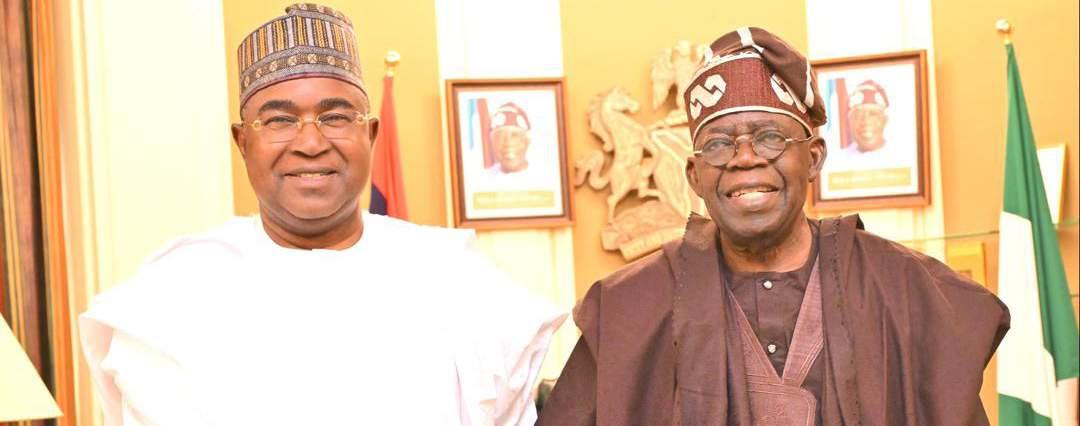
Plaintiff demands N5.8bn in damages Defendants file counter suit, seek N1.2bn damages Ex-Gov Nwobodo, Wife
Emmanuel Ugwu-Nwogo in Enugu
Former governor of old Anambra State, Senator Jim Nwobodo and his wife Patricia are set for two-pronged legal battles with a Lagos businessman and investor, Dr. Basil Ogbuanu, following a disputed N235 million land transaction in Enugu.
The dispute over the land sale and the attendant destruction of Ogbuanu's buildings under construction sparked cross actions with the businessman suing Nwobodo for N5.8 billion damages while the defendants countersued asking for N1.2 billion in general damages.
Ogbuanu, who is the CEO of Second Coming Nigeria Limited, a major player in Nigeria’s LPG market, got
embroiled in a land dispute with the Nwobodos five years after he purchased four plots of land carved out from their Patson Estate, Independent Layout Enugu.
He claimed in the suit marked No. E/238/2016 filed by his counsel, Chukwudi Obieze, SAN, that years after he had paid for plots R/18, R/19, R/20, and R/20 "in good faith, honesty, and upon furnished consideration to the vendor".
However, the plaintiff alleged that while building construction was going on the plots of land, Mrs. Nwobodo "invaded" the site on January 16 and 17, 2026 and carried out "illegal, malicious destruction" of his nearly completed buildings.
He claimed the destruction of his property inflicted on him
financial loses, psychological trauma, mental agony, and humiliation.
Aside Nwobodo and his wife, the plaintiff joined seven other defendants, including three companies owned by the Nwobodos - Linkana Hotels Limited, Millennium Construction and Estate Developers Limited, and Moss Island Limited.
The plaintiff averred in his statement of claims that the three companies were used in the transactions but both Linkana Hotels and Moss Island are presently listed as "inactive" by the Corporate Affairs Commission in status report.
But Nwobodo and his wife, who are listed as first and second defendants, respectively in suit No. E/328/20216 have jointly filed a counter suit
against Dr. Ogbuagu claiming a total sum of N1.25 billion for general damages and medical expenses arising from the trauma they suffered.
In his statement of claims, Ogbuanu alleged that the three companies owned by the first and second defendants were used "to defraud" him of a total sum of N235 million which he paid for the four plots of land.
He said that he paid for the four plots of land in 2021 through his own sister, Barr. Nwamaka Karen Umeh, who is a legal practitioner, and was issued offer letter and receipt by Millenium Construction and Estate Developers Limited.
The plaintiff averred that he visited the Nwobodos with gifts during the Christmas season of 2023 to inform them of his intention to commence
Yola Celebrates Medical Breakthrough as Separated Conjoined Twins Go Home Healthy
An atmosphere of joy and professional pride enveloped Modibbo Adama University Teaching Hospital in Yola over weekend as the facility discharged conjoined twins following a successful surgical separation described as a landmark achievement.
The discharge ceremony drew medical professionals, government officials, traditional leaders, hospital management, the patients’ families, and wellwishers. Residents called the moment a triumph of science, teamwork, and courage.
Chairman of the occasion, Dr. Ali Danburam, former
Medical Director of MAUTH and the Ptil Madagali, the Royal Highness, said the event went far beyond a routine hospital gathering. He described it as a convergence of medicine, humanity, and faith.
Dr. Danburam noted that separating conjoined twins represents one of the most delicate frontiers in pediatric surgery.
He said the procedure demands extraordinary coordination, precision, and endurance from a highly trained multidisciplinary team.
He paid tribute to lead surgeon Professor Auwal Muhammad Abubakar, the immediate past Chief Medical
Director of MAUTH.
He also commended anesthetists, nurses, technicians, and support staff whose combined expertise turned a difficult possibility into reality.
According to Dr. Danburam, the success reflects the visionary foundations laid by the institution’s early leadership.
He said MAUTH’s culture of excellence, careful recruitment, and continuous staff training created the environment for such a feat.
“What we celebrate today did not emerge by chance,” he stated. He recalled the sacrifices of the hospital’s
founding years and stressed that institutional growth rests on foresight, discipline, and commitment to quality healthcare.
Professor Auwal Muhammad Abubakar revealed that the twins had been admitted for more than five months under complete financial exemption.
MAUTH covered all medical expenses from admission through radiological assessment, diagnosis, surgery, and recovery.
He praised the nursing staff, radiology department, patient relations services, and other specialists for seamless coordination.
development of the plots of land he bought from them and got Senator Nwobodo's blessings.
He said that during the yuletide visit Mrs. Nwobodo had promised to make available to him the title documents of the land but never fulfilled the promise and instead asked him to hands off the plots of land and have his money refunded.
The plaintiff further stated that having waited for the title documents to no avail
he commenced the building project after obtaining official permission from both the Enugu Capital Territory Development Authority and the Ministry of Lands. However, he stated that while construction was going on Mrs. Nwobodo visited the building site on March 16, 2026 in the company of her police orderly and "caused a scene", adding that his buildings that were nearly completed, and stored building materials were all destroyed.
Governor Ahmed Aliyu has given out the hands of ten brides in marriage.
The brides and their spouses are as follows: Aishatu Hassan Liman, married to Pharmacist Zaraharadden Muhammad, Masuda Aliyu (daughter of Malam Wamakko), married to ASCII Abubakar Aliyu Hassan Liman, Asmau Haliru Gwandu, married to Nafiu Aliyu Hassan Liman, and Khadijatu Aliyu Hassan Liman, married to ASC I Umar Maccido Gumbi.
Others include Saratu Haliru Na-Baba, married to Dr. Aminu Haliru Hassan Liman, Salima Malam Bello Shuni, married to Gazali Usman Hassan, RN Fauziyya Sirajo Bello Wamakko, married to RN Abdulrahman Tukur, Aisha Umar Madawaki, married to Abubakar Barade, Fatima Usman Barade, married to Abdulrasheed Usman, and Hussaina Abubakar Labaran, married to Bello Ibrahim Gandi.
Dignitaries who stood
in for the grooms included the Minister of Labour and Employment, Muhammad Maigari Dingyadi, the Minister of State for Works, Barrister Bello Goronyo, the Speaker of the Sokoto State House of Assembly, Rt. Hon. Tukur Bala Bodinga, and former Deputy Governor, Barrister Mukhtar Shagari.
Other dignitaries include Member representing Wurno/ Rabah Federal Constituency, Almustafa Rabah, Member representing Sokoto North and South, Bala Hassan, State APC Chairman, Haruna Adiya, APC Zonal Secretary, Isa Saddiq Achida, former ControllerGeneral of the Correctional Service, Haliru Na-Baba as well Bello Abubakar Wamakko of Revenue mobilization allocation and fiscal commission.
The ten marriages were solemnized by the Sarkin Malaman Sokoto, Sheikh Yahaya Na Malam Boyi, following the payment of bride prices for each of the brides.
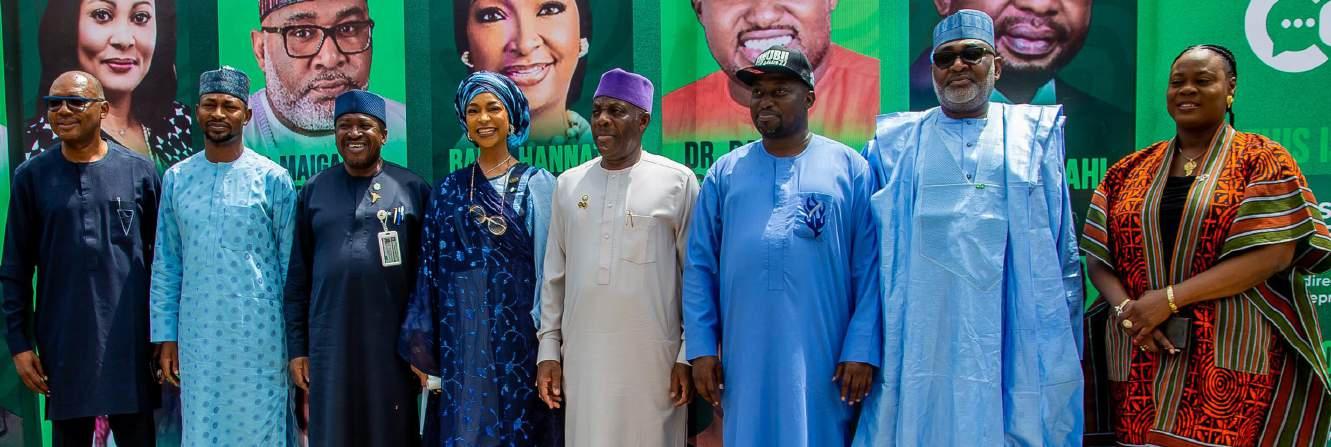
Party’s national youth leader to convene Renewed Hope conversations Utomi urges opposition to rescue Nigeria from ‘Ponzi Economics’ PDP fires back on threat of violence, says Tinubu, APC, not Makinde to blame Party’s faction condemns violent rhetoric, calls for peaceful political engagement
Chuks Okocha and Adedayo Akinwale in Abuja
All Progressives Congress (APC) has accused Oyo State Governor, ‘Seyi Makinde, of inciting violence in the country with his recent remarks, which alluded to the crisis that engulfed the South-west through the violent “wetie” demonstration in the 1960s.
Makinde had while addressing a summit of opposition political parties in Ibadan, the Oyo State capital, on Saturday, referenced the bloody history of “Operation Wetie” to awaken the country to the descent to a one-party state.
But National Publicity Secretary of APC, Felix Morka, in a statement yesterday, said Makinde’s violent rhetoric could not be dismissed as mere opposition posturing.
Morka maintained that Makinde’s statement risked fuelling anarchy, murderous rage, and widespread
lawlessness capable of undermining national stability.
He stated, “The All Progressives Congress (APC) categorically condemns Governor Makinde’s incitement as reckless, and a clear and present threat to peace and national security.
“It is particularly disturbing
The National Drug Law Enforcement Agency (NDLEA) has intercepted a fresh consignment of the notorious stimulant known as Captagon in Kwara State, as part of a sweeping nationwide crackdown that also led to multiple arrests, major drug seizures, and the recovery of explosive materials.
The agency, in a statement by its spokesman, Femi Babafemi, on Sunday, disclosed that operatives on patrol along Bode Saadu Road in Kwara intercepted a passenger, 33-yearold Nasiru Mu’azu, with 10,000 pills of Captagon - an amphetamine widely associated with militant groups in the
Middle East.
The seizure marks a renewed attempt by traffickers to reintroduce the drug into Nigeria nearly five years after its first recorded interception at Apapa seaport in Lagos. Captagon, often referred to as a “terror drug,” is known for inducing prolonged wakefulness, heightened aggression, and reduced fear, making it a substance reportedly exploited by extremist groups, including Islamic State in Iraq and Syria (ISIS), to sustain combat operations.
Babafemi said the latest seizure of captagon, which street value costs as much as $25 a pill, was made last Tuesday when NDLEA operatives on patrol along Bode Saadu road,
Kwara State intercepted a trailer conveying passengers.
A search conducted on one of the passengers, 33-year-old Nasiru Mu'azu led to the recovery of 10 packs of captagon consisting of 10,000 pills and nine packets of Tapentadol 250mg.
In a related operation at the same patrol point, NDLEA officers intercepted a truck concealing large quantities of controlled drugs, including tramadol capsules, injections, and other sedatives hidden in a specially constructed compartment.
He said in another interdiction operation at the Bode Saadu patrol point, NDLEA officers on Friday 24th April intercepted a trailer
marked RMY-70XA.
A search of the truck led to the recovery of 155,900 capsules of tramadol; 6,000 ampuoles of tramadol injection; 3,000 tablets of CoCodamol and 9,000 tablets of Bromazepam, concealed in a false compartment constructed under the trailer.
A 24-year-old suspect Aminu Isah has been taken into custody in connection with the seizure.
Meanwhile, in Oyo State, operatives uncovered a sophisticated drug trafficking attempt involving ingestion. A 33-year-old businessman, Eze Emeka, was apprehended along the Ibadan-Oyo expressway after a body scan confirmed he had swallowed illicit substances.
for a sitting governor, who bears constitutional responsibility as the Chief Security Officer of his state to conjure one of the darkest episodes of political violence in Nigeria’s history to threaten violence against the people and government of Nigeria.
“By his incitement to violence, Makinde has shown himself to be unworthy of the high office of Governor that he occupies.”
The ruling party called on all relevant security and intelligence agencies to take the development seriously and act to safeguard lives, property, and defend Nigeria’s democratic order.
Morka stated that Makinde must be reminded that constitutional immunity from prosecution was not immunity from accountability for threats or acts against national security.
He added, “No individual, however highly placed, should have the power to threaten or endanger the lives and safety of Nigerians or upend the country’s hard-won democratic governance under the guise of political commentary.”
Morka stressed that the ruling party rejected attempts by opposition leaders to frame their internal shambles in alarmist narratives about so-called
one-party domination.
Morka alleged, “The opposition parties are victims of self-inflicted injuries arising from anti-democratic practices, miserably poor leadership, internal contradictions, utter disregard for due process and the rule of law, persistent factionalisation, and the desperate and dissonant presidential ambitions of their leaders.
“The Peoples Democratic Party (PDP) was destroyed by Atiku Abubakar’s ruthless confiscation of the PDP’s 2023 presidential ticket in violation of the party’s constitutionally entrenched rotational zoning formula.
“The Labour Party (LP) was effectively subverted by the restless nomadic disposition of its 2023 presidential candidate, Mr. Peter Obi, permanently swinging from one party to another in search of free and uncontested presidential ticket.
“The African Democratic Congress (ADC), so-called coalition platform, was basically stillborn, strangled by the reckless robbery of that party’s leadership by the same band of marauding opposition figures, never willing to remain and
Continued on page 46
A Nigerian fashion firm, Mo’Afrique, has launched a garment factory in Abuja as part of efforts to scale local production, create jobs and reduce the country’s dependence on imported clothing.
The company also introduced a new line, Modish Formals, targeting bulk supply of uniforms and professional wear to institutions including schools, corporate organisations and security agencies.
Founder and Creative Director, Omobolanle Olawale,
speaking at the weekend in Abuja, said the expansion reflected a shift from bespoke fashion into industrial-scale production. According to her, the move is driven by a gap in the local market for quality, high-volume garment manufacturing.
Nigeria’s clothing industry
has long struggled to compete with imports. Industry estimates show the country spends about $6 billion annually on imported apparel, while a significant share of fabrics used locally, including Ankara, are sourced from abroad. Analysts attribute this to weak manufacturing
capacity, smuggling and limited infrastructure.
Olawale said the new facility is equipped for large-scale production and is expected to support job creation and skills development, although she did not disclose projected output or employment figures.
The factory launch comes
amid renewed calls for import substitution and local value chain development under government industrial policies. However, past interventions in the textile and garment sector have recorded mixed results, with stakeholders citing inconsistent implementation and policy gaps.
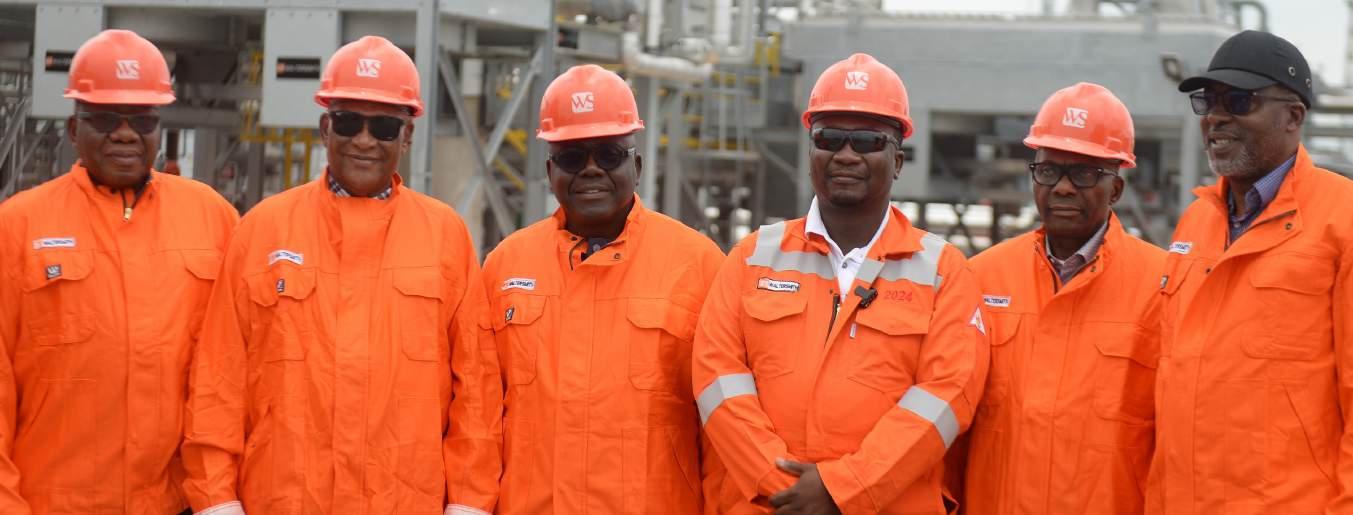
L-R: The Executive Director, Hydrocarbon Processing Plants, Installation & Transportation Infrastructure, NMDPRA, Mr. Francis Ogaree; Authority Chief Executive, NMDPRA, Engr. Saidu Mohammed; Co-Founder/ Chairman, Waltersmith Group, Mr. Abdulrazaq Isa; CEO, Waltersmith Refinery & Petrochemicals Co. Ltd, Mr. Musa Mohammed; Director, Legal Directorate, NCDMB, Barr. Naboth Onyesoh and Deputy Director, office of ACE NMDPRA, Sir Abubakar Maigari, during an official facility visit by Nigerian Midstream and Downstream Petroleum Regulatory Authority (NMDPRA) and the Nigerian Content Development and Monitoring Board (NCDMB) to Waltersmith Refinery Phase 2 at the Ibigwe Integrated Energy Hub, Ibigwe Field, Owerri, Imo State ... recently
You’re a true Lagos product, says Sanwo-Olu
Linus Aleke in Abuja Inspector-General of Police (IGP), Olatunji Disu, has called on Nigerians to actively support the police and other security agencies, stressing that ensuring safety across the country requires collective effort from government, the
private sector, civil society, and citizens, generally. Disu made the appeal at a state banquet organised in his honour by Lagos State Government at State House, Marina, following his appointment as the 23rd indigenous and 33rd Inspector-General of Police
of the country.
The event, marked by pomp and celebration, drew dignitaries, senior officials, and key security stakeholders. Addressing guests at the banquet, Disu expressed appreciation to the government and people of Lagos State for the warm
reception, describing the occasion as a symbolic homecoming.
He reflected on his years of service in the state and reaffirmed his commitment to restoring public trust, promoting professionalism, and deepening communitybased policing across the
Yinka Kolawole in Osogbo
Osun State Governor, Ademola Adeleke, weekend, approved the implementation of the 2025 agreement between the Academic Staff Union of Universities (ASUU) and the federal government at the Osun State University (UNIOSUN), with the payment of arrears to commence January 2026. The development was widely welcomed within the academic community.
A statement by the university’s Public Relations Officer, Ademola Adesoji, said the implementation covered major components of the agreement, including the Consolidated Academic Allowance (CAA), the newly introduced tax-free Consolidated Tools Allowance (CATA), and Professorial Allowances.
According to the statement, the initiative was expected to significantly enhance staff welfare, strengthen institutional stability, and promote industrial harmony within the university.
Chairman of ASUU, UNIOSUN Chapter, Dr Wende Olaosebikan, described the approval as timely and impactful.
Olaosebikan stated, “On behalf of Congress and the entire ASUU-UNIOSUN, we sincerely appreciate His Excellency for this life-impacting decision. This is a clear demonstration of responsive leadership and commitment to workers’ welfare.”
Olaosebikan also commended the Pro-Chancellor and Chairman of Council, Professor Wale Oladipo, as well as members of the University Council, for their role in facilitating the implementation.
The Ibadan Zone of ASUU, in its reaction, described the development as a “triumph of dialogue and justice” in university labour relations, emphasising the importance of sustained engagement between government and labour unions.
Praises
in Cocoa, Cashew and Oil Palm Planting
Adeleke expressed happiness at the various successes recorded in the agricultural sector in the last three years, reeling out statistics on planting expansion in cocoa, oil palm, and cashew
sectors.
The governor, who continued the sectoral review of Osun governance starting from 2023, had in the previous two weeks appraised his administration's achievements recorded in road and sports infrastructure.
Speaking after receiving the agro-sector report, he said his administration's cocoa expansion initiative received a boost with 400,000 cocoa seedlings planted from 2023 till date.
The governor, who announced the cocoa expansion initiative early in the life of the administration, said cocoa seedlings were generously extended to farmers at a very subsidised rate. He expressed delight that “Osun is on the road to reclaiming frontline position ahead of Ondo and Cross River states”.
Adeleke: Osun State is Tapping into $2 Trillion Global Creative Industry Economy
The creative industry is globally a two trillion-dollar economy and Osun State has
begun to tap into the sector to create community prosperity and productive engagement for the youths.
Adeleke made the assertion after a massively attended concert organised by his son, B-Red, and other music stars at the weekend in Osogbo.
He stated, “The creative sector is a gold mine. It is an area I know holds huge potentials for our youth and that is why I personally attended the free concert. I choose to boost the entertainment sector using my family brand which is very big in the Nigerian and global music industry.
“Osun is destined to be the hub of global entertainment. We have all the big stars and the network. An annual concert in Osun will boost local commerce and provide upward movement for local artistes.”
The governor said, “I expect the organisers to build on the successes recorded today. By 2027, similar concert in expanded format should hold. Osun should become the rallying point of creative industry, not only in Osun State but across Nigeria.”
country.
The IGP also pledged to enhance collaboration between the Nigeria Police, Lagos State Government, and critical security partners, including Lagos State Security Trust Fund, with a view to sustaining peace and stability both in Lagos and nationwide.
According to a statement by Force Public Relations Officer, DCP Anthony Placid, the event underscored Disu’s longstanding record of discipline, dedication, and service.
It also highlighted the close relationship between the Lagos State government and the police leadership.
Governor Babajide SanwoOlu, in his remarks, described the IGP as a true product of Lagos, shaped by its institutions and communities, and distinguished by an unwavering commitment to public service.
Sanwo-Olu stated that the recognition was a testament to Disu’s leadership, particularly during his tenure as Commander of the Rapid Response Squad in Lagos. The statement added that the ceremony reflected a shared vision between the state government and the IGP, anchored on service, leadership, and national development.
Chuks Okocha in Abuja
Human Rights Writers Association of Nigeria (HURIWA) warned against what it described as a dangerous convergence of judicial delay, political interference, and institutional uncertainty capable of undermining Nigeria’s multiparty democracy ahead of the 2027 general election.
At the centre of HURIWA’s concern was the failure of the Supreme Court to deliver timely judgements on the protracted leadership crises within Peoples Democratic Party (PDP) and African Democratic Congress (ADC)— two major opposition platforms whose internal stability, the group said, was critical to democratic competition.
In a statement by its national coordinator, Emmanuel Onwubiko, HURIWA stated that while the apex court had concluded hearings on multiple appeals arising from the disputes, it had yet to fix a date for judgement, a development it described as “deeply troubling” given the proximity of constitutionally regulated electoral activities. According to the Independent National Electoral Commission (INEC), political parties are required to submit membership registers by May 10, 2026, while party primaries are scheduled to hold between April 23 and May 30, 2026. Campaign activities were also expected to commence later in the year, making clarity of party leadership an urgent necessity rather than a procedural luxury.

L-R: Vice President, Sales and Account Management, Interswitch, Osasere
Lagos Business School, and Founder/Executive Business Consultant, Chidi
Development, West Africa, NIQ, David
at the Interswitch Retail Summit held recently at Marriott Hotel, Lagos, on Friday
Linus Aleke in Abuja
Nigerian Air Force (NAF), through the Air Component of Operation Hadin Kai, has yet again destroyed terrorist enclaves in the Southern Tumbuns and eliminated several insurgents during a precision air interdiction mission conducted on April 24 about 1850 hours over Ali Sheriffti, a known terrorist stronghold.
Acting on credible intelligence, NAF air assets carried out a targeted surveillance operation, during which multiple insurgents were observed moving along concealed routes.
According to a statement by Director of Public Relations and Information, Air Commodore Ehimen Ejodame, the individuals were tracked to structures hidden beneath dense foliage,
Yemi Kosoko in Jos
Plateau State Governor, Caleb Mutfwang, reaffirmed his administration’s commitment to keeping the state as a refuge for law‑abiding Nigerians displaced by insecurity in various parts of the country, particularly the North east.
indicating deliberate efforts to evade detection.
Following positive identification of the targets, NAF executed a precision strike, engaging the concealed structures with onboard munitions.
The operation achieved its objective, destroying the terrorist hideouts and further degrading their operational capability and freedom of movement within the area.
operational excellence with the graduation of participants from the Air Campaign Planning Course and the Intelligence, Surveillance and Reconnaissance (ISR) Operations Management Course.
Mutfwang expressed gratitude to the church for its support during the 2023 general election and assured worshippers that his administration remained focused on promoting peaceful coexistence and improving the welfare of citizens.
He stated, “Let us thank God that some of our brethren who were displaced have begun returning home. I want to assure you that Plateau State will continue to serve as a refuge for those displaced, particularly from
Speaking yesterday during a service at EYN–Church of the Brethren in Nigeria, located opposite the Plateau State House of Assembly in Jos, Mutfwang said his government would continue to work towards restoring lasting peace across the state, the Middle Belt, and the country.
the North east. We pray for the restoration of peace across Plateau, the Middle Belt, and the entire nation.”
The governor urged residents to embrace unity and support one another, warning against divisive attitudes that could undermine collective progress.
He encouraged citizens to celebrate each other’s achievements, stating that resentment towards others does not translate into personal success.
While acknowledging that government could not meet every individual’s need, Mutfwang said his
administration was committed to addressing the shared aspirations of the people. He paid special tribute to widows, praising their resilience and announcing plans for a major intervention to support them.
In his remarks, the Reverend in charge of EYN LCC Jos, Joseph T. Kwaha, commended the governor for what he described as responsive leadership, citing his swift reaction to crises, such as the recent attacks in Angwan Rukuba.
Kwaha said Mutfwang’s actions demonstrated a strong commitment to peace, unity, and security.
The successful strike highlighted NAF’s sustained focus on intelligence driven, precision operations aimed at denying terrorist groups havens.
Reaffirming the commitment, Chief of the Air Staff, Air Marshal Sunday Aneke, stated that the force would continue to pursue and dismantle terrorist networks with unwavering precision and intensity, ensuring no enclave remained beyond reach.
Aneke added that operations would be intensified to safeguard the country and its citizens.
In a related development, NAF, through the Air Warfare and Doctrine Centre (AWDC), strengthened its drive for
The ceremony brought together senior officers, instructors, and participants from various NAF units, marking the completion of intensive training tailored to enhance effectiveness in modern, multi domain operations.
Speaking at the event, Special Guest of Honour, Air Vice Marshal PN Amadi, urged the graduates to apply their newly acquired knowledge in the field, describing them as vital force multipliers within their respective units. Amadi emphasised the importance of joint operations, interconnectivity, and continuous professional development in addressing evolving security challenges.
Certificates were later presented to the participants, who expressed appreciation to the centre and reaffirmed their commitment to national and coalition missions. population.
According to him, “They actually have more power per person than we do in Nigeria. If you're talking about energy security, which we call energy poverty, there's more energy poverty in Nigeria than in South Africa."
Omonfoman stated that recent mergers and acquisitions (M&A) in Nigeria showed momentum, citing the Seplat ExxonMobil deal, Renaissance acquisition of Shell Petroleum Development Company (SPDC), Oando’s purchase of Eni, and Axxela Blue Coal. He stated, “So there are deals going on, so even in the midst of all of these issues we’re talking about, there are still huge opportunities to make money.
“If you look at the acquisition that happened in the oil and gas field, for example, most of those monies have either come from locally or from other African countries. The rest of the world is not as interested in investing in us. So the need for what I call South South collaboration, Africa collaboration is much stronger."
He admitted that private sector interest was rising, alongside policy reforms, and tweaking with the policy to ensure a better outcome.
Omontuemhen mentioned the Electricity Act, tariff rebalancing, and other policies that were unlocking potential.
He added, “The market potential is huge. I think that kind of gives me joy that,
even though in the midst of darkness, in Nigeria, light will come.
“So Nigeria and South Africa, if it's going to be, it's up to us. We have a role to play to ensure that our country gets better. Why, we're not talking to each other, why, we're not doing projects jointly, and then this will lead to local capacity development, job creation, and long term sustainability.”
Meanwhile, amid complaints of crude supply deprivation, NUPRC urged members of CORAN to consider acquiring oil blocks in upcoming licensing rounds as a long term solution to crude supply challenges.
Chief Executive of NUPRC, Mrs. Oritsemeyiwa Eyesan, made the call during a courtesy
visit by CORAN members to the commission's headquarters in Abuja, where both parties discussed ways to strengthen domestic refining capacity and ensure sustainable crude supply.
A statement by CORAN spokesperson, Eche Idoko, quoted Eyesan as, “Encouraging indigenous refiners to participate in upstream asset ownership would create more stable and commercially viable crude supply arrangements while also deepening local participation across the petroleum value chain.” She assured the refiners that Nigeria had adequate crude resources to meet domestic refining needs, and reiterated the commission’s commitment
to policies that promoted in country value addition.
The NUPRC boss also advised refinery operators to adopt long term crude supply contracts with producers as a practical approach to guaranteeing feedstock availability, improving operational planning, and achieving pricing stability.
However, she stated that infrastructure gaps remained a major hurdle to seamless crude delivery, citing inadequate pipeline networks, evacuation bottlenecks, storage constraints, marine logistics, and other supply chain challenges as areas requiring urgent investment and coordinated efforts.
Members of CORAN commended the commission’s
ongoing regulatory reforms and its support for domestic refining, while stressing the need for effective implementation of frameworks that ensure consistent crude supply to local refineries. Stakeholders had always emphasised that improved access to crude feedstock was critical to reducing Nigeria’s dependence on imported petroleum products, enhancing energy security, conserving foreign exchange, and creating jobs through the growth of local refining capacity.
Idoko said the meeting was part of ongoing engagements between regulators and private refinery operators aimed at unlocking the full potential of Nigeria’s downstream petroleum sector.
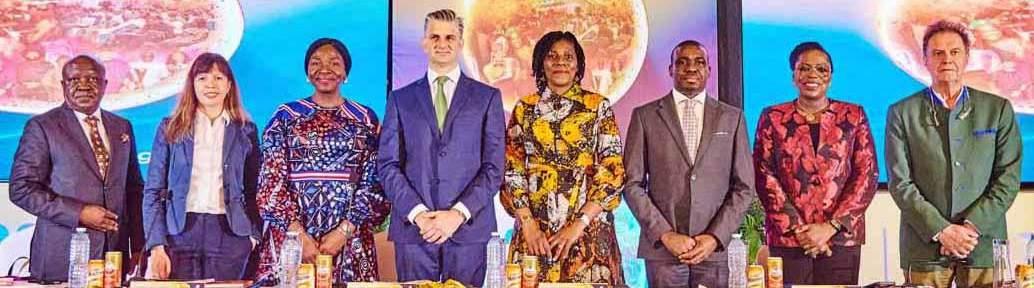
L-R:
General Meeting of the company held in Lagos...recently
build their parties but always quick to use the revolving door on to the next available party. They have left nothing but desolation in opposition trail.”
Morka said APC rejected the veiled expectation of opposition leaders that APC would help them manage their internal affairs.
“We bear no such duty and will not provide any such leadership consulting services to them,” he stated. “And we will not yield to blackmail to abdicate our duty to our party to plan, organise and mobilise to compete effectively in the upcoming 2027 general election,” he added.
APC National Youth Leader, Dayo Israel, convened the maiden edition of Renewed Hope Conversations at University of Abuja, weekend, drawing a gathering of ministers, heads of government agencies, and over 1,000 students in a powerful, no-holds-barred dialogue with policymakers.
The initiative served as a dynamic youth-centred governance platform, deliberately designed to foster transparency, deepen engagement, and give young Nigerians direct access to decision-makers shaping the country's future under the President Bola Tinubu administration.
In an atmosphere charged with energy and candour, students engaged government officials head-on – asking relevant questions, voicing concerns, and offering bold ideas on critical national issues.
Discussions spanned education reform, job creation, entrepreneurship, digital
describing participation in its meetings as a waste of time. He explained that the body was purely advisory and its recommendations were often ignored, making it ineffective as a platform for meaningful engagement or policy influence.
On the economy and the oil sector, the former president reiterated his long-held position that government-owned refineries
innovation, national development priorities, and the urgent need for deeper youth inclusion in governance.
Leading the government delegation were top cabinet members, including Minister of Education, Tunji Alausa; Minister of Art, Culture and Creative Economy, Hannatu Musa Musawa; Minister of State for Regional Development, Uba Ahmadu; and Special Adviser to the President on Economic Affairs, Tope Fasua, alongside heads of strategic national institutions.
Equally in attendance were key agency leaders, including Managing Director of Nigerian Education Loan Fund (NELFUND), Mr. Akintunde Sawyerr; Managing Director of Nigerian Consumer Credit Corporation (CREDICORP), Uzoma Nwagba; DirectorGeneral of National Agency for the Control of AIDS (NACA), Dr. Temitope Ilori; Director-General of National Agency for Food and Drug Administration and Control (NAFDAC), Professor Mojisola Adeyeye; and Director-General of National Information Technology Development Agency (NITDA), Kashifu Abdullahi.
The leaders provided clarity on government programmes, addressed pressing concerns, and outlined bold policy interventions aimed at expanding opportunities for young Nigerians across education, healthcare, technology, and economic development.
The response from students was electric. Participants described the engagement as transformative, refreshing, and long overdue—many experiencing, for the first time, direct and meaningful access to top-tier policymakers in an
under the Nigerian National Petroleum Company Limited (NNPC) would not function efficiently. He cited structural inefficiencies, poor maintenance, corruption, and lack of scale as key reasons for their persistent underperformance. He revealed that during his time in office, efforts were made to attract private sector participation in refinery operations, including
open and responsive setting.
Utomi to Opposition: Save Nigeria from ‘Ponzi Economics’
Political economist, Professor Pat Utomi, charged opposition parties to rescue Nigeria from what he described as the “ponzi economics” of the current All Progressives Congress (APC) federal administration.
Utomi, who spoke during the opposition parties’ summit in Ibadan, on Saturday, described Nigeria’s current economic condition as a “moral outrage”.
He urged opposition political actors to chart a new course anchored on production, discipline, and inclusive growth.
Speaking on the theme, “Rebuilding a Productive, Dynamic and Efficient Economy for Nigeria,” Utomi painted a stark picture of widening inequality and hardship.
He cited a recent PiggyVest report indicating that 58 per cent of Nigerians earned less than N100,000 monthly, contrasting this with what he called the excesses of the political elite.
Recounting a personal experience at a petrol station in Lagos, he said the cost of filling his tank equated to “two and a half times the monthly income of many Nigerians”, adding that a passing seven-car convoy symbolised “the earnings of about 20 citizens”.
Utomi stated, “Our current economic reality is a moral outrage. While many survive on remittances, some celebrate ‘Tinubunomics’ and ask suffering Nigerians to wait in hope.”
He accused the federal government of “profligate spending, reckless borrowing and treasury looting”, warning that such practices have deepened
discussions with international oil companies, such as Shell, which declined involvement due to concerns over profitability and operational challenges. He also referenced a previous attempt by billionaire businessman Aliko Dangote to acquire stakes in the refineries, which was later reversed by his successor.
Obasanjo stated that the government had since spent billions of dollars,
poverty and inequality.
Citing World Bank data, Utomi stated that nearly 130 million Nigerians lived in multidimensional poverty, questioning the absence of widespread civic resistance. Utomi further lamented that the country had drifted into unsustainable economic management.
Reflecting on Nigeria’s past, he said the country once pursued industrialisation with clear vision and discipline.
The PDP national leadership under Tanimu Turaki, SAN, fired back at APC and its members over their position on the national summit of the opposition political parties in Ibadan on Saturday, saying the ruling party and Tinubu are to blame for any violent uprising in the country.
National Publicity Secretary of PDP, Ini Ememobong, in a counter statement, said, ''One of their numerous pain points arising therefrom was the historical recollection of ‘wetie’ – a sad descent into uncontrollable violence, caused by the political greed of the then ruling party and its concomitant asphyxiation of the opposition.''
Ememobong explained, ''This recollection was embedded in the speech of the host, Governor Oluseyi Makinde. The federal government and the APC have described that recollection as a call to violence and have since been reacting with the panic of an animal cornered by its own misdeeds.”
He stated, “The use of history in the way and manner done
as much as $16 billion, on the refineries, with little to show, contrasting this with the success of privately driven ventures, such as the Nigeria LNG project, which he cited as evidence that public-private partnerships were more effective.
“See what we are doing now even with the NNPC. NNPC has refineries. And I said to people that it will never work,” he maintained.
by Governor Makinde in the said speech served as a caution and advisory to the federal government, the APC, and other national institutions, of the unmitigated crisis that their actions and inactions can result in.
''Only a guilty aggressor can interpret it to mean a threat or call to violence. It is common knowledge that those who do not learn from history are doomed by it.''
He explained that Makinde offered a sobering reminder that when insatiable political greed and avarice replaced patriotism and good governance, and were compounded by the accumulated anger and frustrations of the citizenry, the resultant conflagration would be of immeasurable proportion.
Ememobong stated, ''This again is a fact that history bears witness to. The events that led to the sad incident of 'wetie' and the current happenings within the political space, as orchestrated by the APC, are not just similar but identical in both intent and execution.
''To continue doing the same thing while expecting a different result is the very definition of political recklessness. When pushed to the wall, people have no other direction to go but forward, against the wall itself.
''The current slide into elected totalitarianism has been entirely engineered by the APC and the Federal Government. They cannot decry the effect while remaining wilfully blind to the cause and to their own culpability in it.”
PDP Faction Condemns Violent Rhetoric, Calls for Peaceful Political Engagement
On Nigeria’s political structure, the former president warned against the emergence of a one-party state, saying it will be detrimental to the country’s development and democratic health. While acknowledging assurances from the president that he was not interested in a oneparty state, he maintained that such a system will not serve Nigeria’s interest.
Obasanjo explained, “He
A PDP group loyal to Minister of the Federal Capital Territory, Nyesom Wike, expressed concern over reports of remarks allegedly made by Makinde, referencing “Wet e”, a term historically associated with a period of grave political violence in the old Western Region.
A statement by the faction's national publicity secretary, Haruna Jungudo, condemned what it described as ''this disgraceful statement'', and reiterated that violence had absolutely no place in Nigeria's political space today.
According to Jungudo, ''Nigeria must come first, before politics and before personal ambitions. Without a peaceful and stable nation, no political system or democratic process can thrive.''
The group called on Nigerians, irrespective of political affiliation, to unite in rejecting any rhetoric or action that could incite unrest or threaten national cohesion. It stated, ''Our shared history reminds us of the cost of division and we must remain vigilant in safeguarding the peace we have worked hard to build.
''We further urge security and law enforcement agencies to carry out their duties with diligence and professionalism by reviewing the circumstances surrounding these reports and also ensure that all relevant individuals are available to respond to lawful inquiries no matter how highly placed.”
The statement added, ''The PDP remains committed to fostering a political culture rooted in dialogue, tolerance, and respect for the rule of law.
''Our nation’s future rests on our shared commitment to put the country first, above any individual interest.''
(Tinubu) said he will not want to see a one-party state in Nigeria. He said that. And, as I said, I will for once want to take his word for it. It will be a pity. Because it will not even serve its own purpose.” Despite the criticisms, Obasanjo expressed a strong belief that Nigeria could still recover, attributing this to what he described as the country’s potential and the resilience of its people.
While these groups have been careful to remain within the narrow strip of party-less political legality, others such as Oodua People’s Congress, Yoruba Nation, Indigenous People of Biafra, Eastern Security Network, Boko Haram and ISWAP crossed the dividing line, into the wider path of violent pursuit of political goals.
The coming onboard of the term freelance politician reminds me of an exchange that took place in the Philippines in late 1979. Filipino dictator Ferdinand Marcos was facing severe criticism from the Roman Catholic Archbishop of Manila, Jaime Cardinal Sin. With the unfolding revolution in Iran then dominating newspaper headlines all over the world, Marcos told reporters in the Malacanang Palace that Sin was “trying to be a Khomeini,” the leader of Iran’s Islamic revolution. The mischievous reporters rushed across the street to the cathedral and relayed the news to Cardinal Sin. The outspoken cardinal, who once described himself as “the Original Sin,” cheerfully said, “If there is a Khomeini in the Philippines, then there must be a Shah!”
Look here, Governor Bala Mohammed. If there is a freelance politician in Nigeria, then there must be freelance political parties. You mean, there are parties in Nigeria that have neither ideology nor any unified policy platform, that attract members merely based on appeals to ethnicity, regional sentiment and the mobilisational power of individual politicians, and which garner votes with the help of what INEC and security agencies delicately call “vote buying”?
At one time in this Republic, there were nearly one hundred registered political parties, and the
The numbers deserve to be stated without editorial softening. A Band A electricity customer — theoretically guaranteed twenty hours of supply per day — currently pays N200 per kilowatt-hour. That is the cost-reflective tariff, unsubsidised, and in principle correctly priced. Now set it against the Levelised Cost of Energy from a fully installed commercial solar system: approximately N80–120 per kilowatt-hour depending on scale and financing structure, with capital cost, batteries, and all financing absorbed — roughly 60 percent of the grid price. Then compare diesel-generated power, which runs north of N400/kWh, and the picture becomes undeniable.
The upfront investment runs from N3 million to N20 million depending on scale, with payback periods of two to four years at current grid and diesel prices. With a useful life of ten years, the economics become elementary: post payback, the sun works for nothing.
According to the Global Solar Council's Africa Market Outlook for Solar PV 2026–2029, published February 3, 2026, Nigeria installed 803 megawatts of new solar capacity in 2025 — a rise of 141 percent on the previous year, making this country Africa's second-largest solar market behind South Africa. Of that, approximately 96 percent is off-grid: rooftop panels, solar home systems, commercial installations, and private mini-grids. The private sector has not waited for the national grid to reform itself. It has built around it.
The Framework the New Minister Should Read
Professor Justin Yifu Lin is the former Chief Economist of the World Bank and the architect of New Structural Economics — a framework that should be required reading for every Minister. He has long argued that infrastructure investment in developing economies must flow first toward productive sectors. Not because residential consumers do not matter, but because the value created by a functioning enterprise — the jobs, the taxes, the supply chain it anchors — is what eventually funds universal coverage. You do not wait
ballot paper was almost as long as an unrolled tissue paper. Did I say tissue paper? Many of the parties on that ballot paper were no better than that. At first, they existed because INEC used to give monetary subvention to registered parties. When that practice was stopped, they still existed because a briefcase political party’s ticket could be bought by a desperate aspirant who loses the primaries in a major political party, but is desperate to appear on the ballot paper. The few votes that they get, is often due to illiterate voters who confuse party symbols.
Malam Bala Mohammed, if there is a freelance politician, then there must be freelance supporters. I recently retold the story of a man in Jos during the Third Republic who led dancing troupes to welcome seven different presidential aspirants from the airport into town. He was the cheerleader at all their campaign rallies. Four of those aspirants were NRC while three belonged to SDP. That is the dream freelance supporter that Governor Bala must be thinking of. Right now, a clash of red pants is unfolding in one Northern state, of women activists at a political rally displaying the photos of a governor emblazoned on red pants. They are the freelance political supporters that Kauran Bauchi has in mind.
There cannot be freelance politicians without freelance marabouts, babalawos and shrine priests in Nigeria. They are a very important factor in Nigerian elections. They convince an aspirant that he is going to win, provided he pays them handsomely. They claim supernatural power to do everything from incapacitating election rivals, to blindfolding voters, to spiritually stamping ballot
for a perfect grid before economic activity begins. You concentrate reliability where output is generated and let output pay for expansion.
The Band A tariff was, in its own way, an attempt to apply precisely this logic. Charge commercial users the honest cost of power; use that revenue to cross-subsidise lower bands and fund grid improvement. Sound in theory. The problem was that supply never rose to meet the demand being priced. Businesses paid cost-reflective tariffs for power that was neither cost-reflective in its reliability nor sufficient in its hours. The contract was broken at the point of delivery. Solar did not displace the grid because it was cheaper — though it is. It displaced the grid because the grid, even at its new price, could not be trusted.
That is precisely what Nigerian entrepreneurs have done without being asked and without policy support: they solved for reliability first, and discovered the economics were better anyway. Whether that bypass helps or ultimately undermines the long-term investment case for the national grid is a question policymakers are not yet asking loudly enough. For now, the market has delivered its verdict, and the verdict is solar.
The Manufacturer Nobody Wrote a Policy For
My second podcast conversation was with Nzan Ogbe — to be released shortly on the Nidacity platform. Ogbe is one of a rare and stubborn cohort actually manufacturing solar panels in Nigeria. I use stubborn as the highest compliment I know how to give.
What he described is an anomaly that would be almost comic if the economic consequences were not so serious. A finished solar panel imported from China enters Nigeria at zero percent import duty, correctly classified under HS Code 8541 in line with the ECOWAS Common External Tariff. Sound policy — affordable clean energy inputs should not face friction at the border. The problem is that the components Ogbe must import to manufacture those same panels domestically — the cells, the battery packs,
papers, to twisting the thumps of returning officers.
If there is a freelance politician, then there must be a freelance election official. In every election cycle, INEC’s ranks are filled with ad hoc election officials. Despite their undergoing crash training on election laws, manuals and procedures, these ad hoc officials are a big headache to INEC since many of them are already committed to parties and politicians, while many others are there to make a kill.
If there are freelance politicians, then there must be freelance collation and returning officers. Even though most of these are university professors, plus card reader, IRev and electronic result transmission [which some people connived to exclude from the Electoral Act], stuff still happens. The most freelance of all freelance returning officers in Nigerian elections was the Returning Officer, Gubernatorial Election Ondo State in 1983. As declared by the Supreme Court in its ruling on the election petition, he added “1” behind the NPN candidate’s score of half million, instantly transformed it into 1.5 million votes, and it swiftly overtook the UPN candidate’s 1.2 million votes. He was the dream freelance returning officer.
If there is a freelance politician, then there must be a freelance security agent. Such as the Police Commissioner in Borno State in 1983 who fired teargas to prevent Dr Nnamdi Azikiwe and Governor Muhammadu Goni from entering the town from the airport. Or more recently, the Police Commissioner in Port Harcourt who locked Government House gates and prevented the state governor from finding his way back into his own abode.
If there are freelance politicians, there must
the specialist materials his factory requires — attract duties at every stage of his input chain. Batteries alone carry a twenty percent levy.
So the fully assembled Chinese product arrives in Lagos duty-free, while the Nigerian manufacturer trying to build it locally pays tariffs on the ingredients. The finished good clears customs at zero. The raw materials for making it here do not.
The anomaly exists not because anyone decided Nigerian manufacturers should be disadvantaged, but because Nigeria's tariff book was never designed to speak coherently to a domestic solar manufacturing industry that barely existed when the schedules were drawn. And the competitive handicap does not end at the port. The OECD has documented that solar cells and modules have been among the most heavily subsidised industrial sectors globally — Chinese producers the largest recipients, with double-digit cost advantages sustained by grants, tax incentives, and below-market financing regardless of market conditions. Ogbe's characterisation — that the Chinese government has effectively subsidised his competitors' costs by roughly fifteen percent — is, if anything, conservative.
Here I can show my inside knowledge. The HS code classifications that produce this outcome sit in different chapters of the tariff schedule. The finished panel heading and the component headings were never meant to interact this way. Nobody joined the dots. The anomaly is an accident of administrative history, not a policy decision — which means it can be corrected. I recall the same problem raised by local pharmaceutical manufacturers in 2017: finished anti-malarial drugs entering duty-free while the active ingredients to make them here attracted levies. That one took a memo and a few months.
The most consequential decisions are rarely the dramatic ones. They are the quiet corrections: the reclassification that changes a manufacturer's business case without requiring a cabinet reshuffle, the tariff amendment that costs the treasury almost nothing
The PDP convention was held by a faction of the party led by the Federal Capital Territory Minister, Nyesom Wike, which has taken the upper hand in court. In other words, the court backed the PDP convention.
But that of the ADC was conducted in flagrant disregard of court orders and the seeming position of the Independent National Electoral Commission. While INEC monitored the first two conventions, those of the APC and PDP factions, it stayed away from the April 14 convention of the ADC for the same reason: it was not in tandem with the court orders.
The matter of how the ADC faction led by General David Mark (rtd) and Ogbeni Rauf Aregbesola ended in an events centre, Rainbow Events Centre, for its convention is still a subject of controversy: controversy regarding its conduct by a faction declared illegal by the Nafiu Gombe/
Leke Abejide faction; and controversy over whether what the party organised could actually pass for a convention in the real sense of it.
It would appear the ADC leaders merely indulged their fantasies, providing themselves another platform to pour invectives and diatribes on President Bola Tinubu and the governing APC.
Now, what do these conventions signal for democracy and the rule of law? Essentially, conventions are party activities meant to deepen and enrich the political and democratic process, with party delegates or members coming together to consider and pass resolutions, or to elect or re-elect officers, in a bid to take their parties to the next level.
I had the privilege of serving as a member of the Media and Publicity Sub-Committee at the recent APC convention. That afforded me ample opportunity to have a front-row view of the elaborate
be freelance lawyers in Nigeria who are professionally free of conflict of political interest. A Nigerian lawyer handles several election cases simultaneously, with clients belonging to different parties. He sues INEC on behalf of some clients and defends it in other cases. His aim is not to see that justice is done but to see that his client wins the office, as US President Richard Nixon of Watergate infamy once said, “by hook or by crook, mostly the latter.” If there are freelance lawyers in Nigeria, then there might be some freelance judges. In the 1990s, some guerrilla newspapers alleged that a particular judge wrote two conflicting judgements, for one to be delivered in favour of the highest bidder. I can already hear somebody saying, if there are freelance politicians in Nigeria, to borrow from Cardinal Sin’s logic, then there must be freelance columnists who go about picking holes in the actions of politicians but who cannot win even a councillorship election in their own hometowns. Nobody elected a freelance columnist, but there he will sit, on one lame laptop, and claim to know better than the people on the field as well as the government officials who sit in offices with all the files, figures and reports in front of them.
You know what it reminds me of? A passage in Arthur Hailey’s 1960 novel In High Places, where the Prime Minister of Canada, who had been grappling with an immigration problem for weeks, saw a newspaper columnist stating firmly how to easily solve the problem. The Prime Minister muttered to himself, “I think we should hand over this country to columnists since they know the solution to every problem.”
but changes the economics of an entire sector. This is one of those. Alongside best wishes to Taiwo Oyedele, whom I had the pleasure of appointing as Vice Chair of the Tax Reform Committee in 2017, I have a request. Tear out this page. Give it to the Tariff Technical Committee. A reclassification of manufacturing inputs to match the zero-duty treatment already extended to finished panels would cost the revenue base nothing. Nigeria's imports of finished Chinese solar panels are growing at triple-digit rates. Domestic manufacturing is not. Maintaining the anomaly accelerates the former at the expense of the latter. The correction sits within Nigeria's existing rights under the ECOWAS framework. It does not require legislation, a new agency, or a new fund. It requires one person on that committee to put two lines on the same page and ask the obvious question. These are not the conversations that make headlines. They are the conversations that make industries. Three ministers have left, each carrying their portion of what was attempted and what was not. The Power portfolio leaves a question that cannot wait for the next appointment: if the private sector is already delivering 803 megawatts of energy infrastructure in a single year — ninety-six percent of it outside the grid — then what, precisely, is the state's role now? The answer is to go where private capital cannot yet reach. Build the transmission infrastructure that connects what is being privately installed to the households that need it most. And fix the tariff book so that the local manufacturers are not penalised for trying. The entrepreneurs are not waiting. Neither should the memo.
For those who got to the end of this piece expecting me to say more about the Minister of Finance's resignation: kindly read the first paragraph again. Slowly.
•Kemi Adeosun is a former Minister of Finance of the Federal Republic of Nigeria and former Commissioner for Finance Ogun State. She is the founder of Nidacity. com. She writes from Lagos.
work that went into planning and executing the congress by the various committees constituted for the convention, which apparently accounted for its success.
Eagle Square was a beehive of activity in the days leading up to the congress. And on D-Day, the delegates who had earlier been accredited converged in their large numbers. The venue was well organised. Voting booths were well arranged, though there was no need for them in the end as the election was done by affirmation.
The only downside of the convention would have been a few aspirants' complaints that they were denied access to nomination forms to contest. However, this was addressed and contained, and a consensus was reached.
One may argue that the success of the APC convention rested on its status as the governing party, with the paraphernalia of offices at the
centre in Abuja, 31 state governors, resources, and the teeming members. While such an argument may be valid, it must be noted that not being in power should not preclude political parties from embracing planning and due diligence. In this regard, the opposition parties are clearly hiding behind a finger.
I have brought this up because there hasn’t been much discussion of how utterly puerile the opposition party conventions were. Yet, the importance of political activities such as party conventions and their implications for democracy and the rule of law cannot be overemphasised. The conventions of ADC and PDP threw up several issues that are likely to have dire consequences for our democracy and the rule of law.
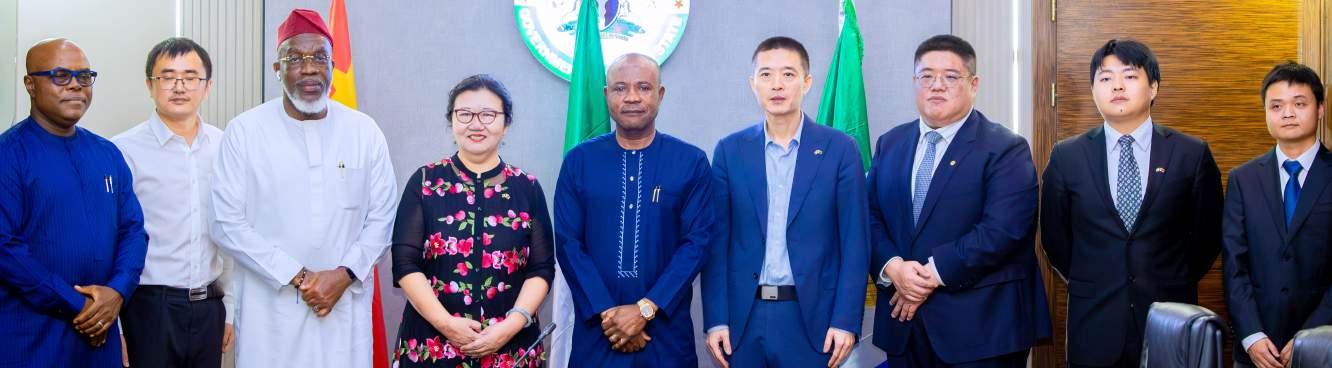
auchi State Governor Bala Abdulkadir Mohammed, Kauran Bauchi, best known for combative politics and acerbic rhetoric, suddenly made a rich addition to Nigeria’s political vocabulary on Thursday last week.
Receiving a visiting South East ADC Stakeholders’ delegation led by Mr Peter Obi, he declared himself to be a “freelance politician.” Obi’s team was apparently in Bauchi to convince Governor Bala to end his US-Iran Islamabad-style talks with the ruling APC, abandon PDP [of which he is Chairman of its Governors’ Forum, already reduced to two members] and firmly pitch his tent with the opposition ADC. ADC saw an opening because earlier last week, Bauchi State PDP leaders declared that talks with APC had broken down.
It was the mass media sector that first popularised the phrase “freelance reporter.” This was the
equivalent of “daily paid worker” once prevalent in Nigeria’s public and organised private sectors. “Freelance politician” is a new, very rich addition to Nigeria’s political vocabulary. Since 1978, when we began to experiment with presidential style politics, Nigerian politicians have enriched the vocabulary of liberal democracy with words and phrases such as zoning, rotation, Accord Concordiale, landslide victory, power shift, a little to the left and a little to the right, open ballot, Option A4, annulment, actualise mandate, stepping aside, Ghana Must Go, godfather, godson, post-dated resignation letter, Okija Shrine, Third Term, Party Leader, Garrison Politics, party re-registration, party merger, automatic return ticket, consensus, vote buying, On Your Mandate We Stand, Lt.
Yerimarisation, Bwalarisation, Nafi’u Balarisation, and more recently, “stay there and scatter them.”
A freelance politician, such as defined by Bala Mohammed, does not belong to any political party, something that must puzzle both the 1999 Constitution and the Electoral Act. Neither of them envisages contesting an election without a party platform. Yet, since 2000AD at least, a huge swath of Nigeria’s political space has been occupied by actors outside political parties such as Afenifere, Ohanaeze Ndi Igbo, Arewa Consultative Forum, Northern Elders Forum, Middle Belt Forum, Pan Niger Delta Forum and Ijaw National Congress.

Three ministers left government this week. Wale Edun at Finance, Ahmed Dangiwa at Housing, Adebayo Adelabu at Power. I have been where they have been, and I can only wish all three well. Serving Nigeria is a privilege — full stop.
The reform agenda does not pack itself into boxes and leave with the minister. What has always been
scarce in Nigeria is not the vision but execution, The baton has changed hands. The course has not. What matters now is the sprint.
As ex Ministers, the convoy disappears, the phone goes silent And life — ordinary, humbling, clarifying life — resumes. Which brings me to last week, and two conversations that will not leave me alone.
What an entrepreneur taught me — and What I Did With It
My Nidacity podcast conversation with Femi Okenla ran longer than planned, as the honest ones tend to do. It was a snapshot of what enterprise looks like in Nigeria today — unvarnished, resilient, and quietly furious in the way only seasoned entrepreneurs can be.
TAn MBA class, without the PowerPoint. What he did not cover is probably not worth knowing. He spoke about banks, about staff, about dollar-denominated liabilities sitting on a naira revenue base. When he started talking about power, it triggered a thread that demanded more research
The ADC and PDP, the main opposition parties in the land, are still writhing in a self-inflicted and debilitating factional crisis over which the Supreme Court has already reserved judgment. The apex court is expected to inform counsel for the various parties in the many cases before it when it will deliver its verdicts.
he dust may not have fully settled on the conventions of what is gradually emerging as the three main political parties in the country, the All Progressives Congress, African Democratic Congress and Peoples Democratic Party, gearing up for the fast-approaching 2027 elections. Yet, somehow, the unfolding fallouts of those conventions remind me of that famous opening line of Charles Dickens’ 'A Tale of Two Cities': "It was the best of times, it was the worst of times.”
A retrospective look at the recent conventions of the three parties offers a window into their adherence to the rule of law, constitutional and democratic principles, and a peek into what may likely play out in the run-up to 2027 and beyond.
The All Progressives Congress convention was held on March 27-28 with glorious success at Eagle Square, Abuja. All the members of the APC National Working Committee, barring one or two,
were re-elected at the convention by consensus and affirmation without much fuss.
The conventions of the Peoples Democratic Party and the African Democratic Congress further widened fissures within the two parties and entrenched members deeper in their respective factions.