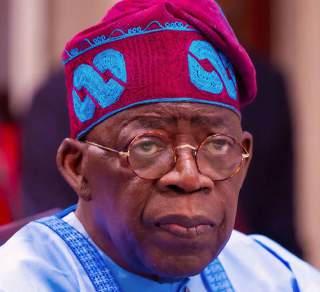
Michael Prest’s BONI Triumphs Over Bank of Zambia in Investrust Dispute
Central bank’s bid to block judicial review dismissed Court upholds investor’s rights, rejects central bank’s twin applications Lawyer, Robert Amsterdam, warns case could trigger $40m damages, shake Zambia’s market credibility
Wale Igbintade
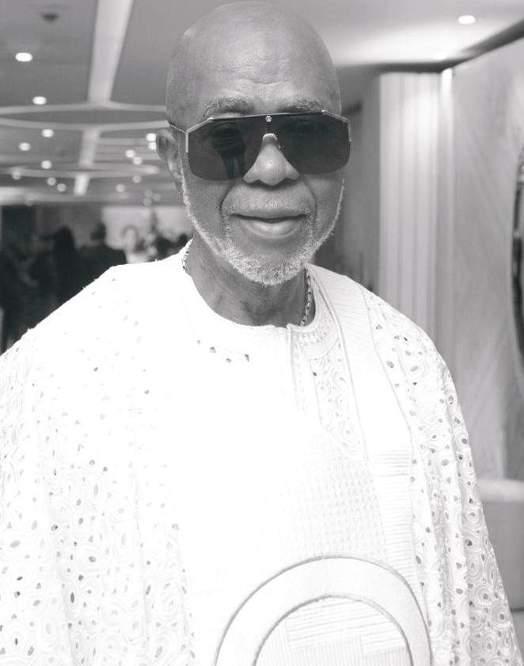
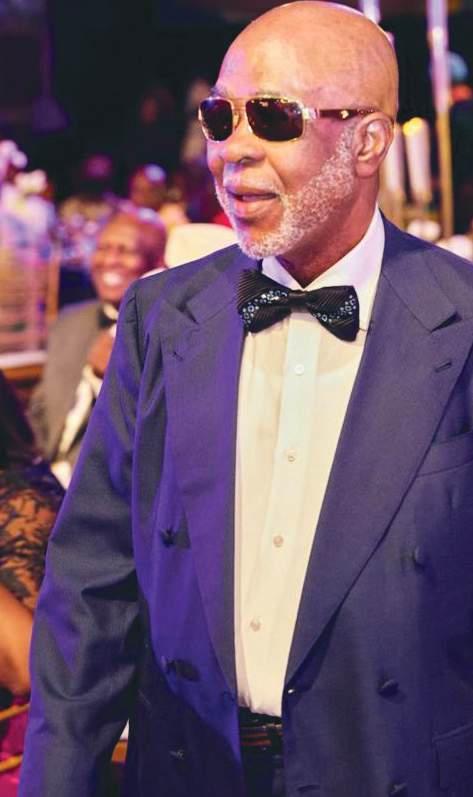
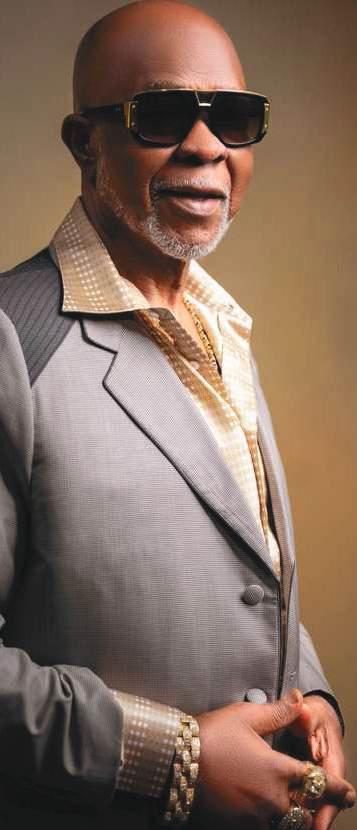
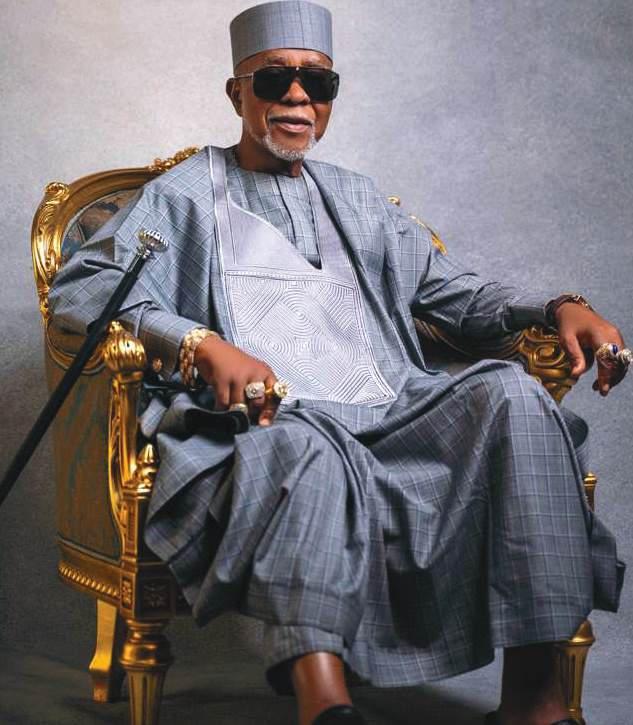
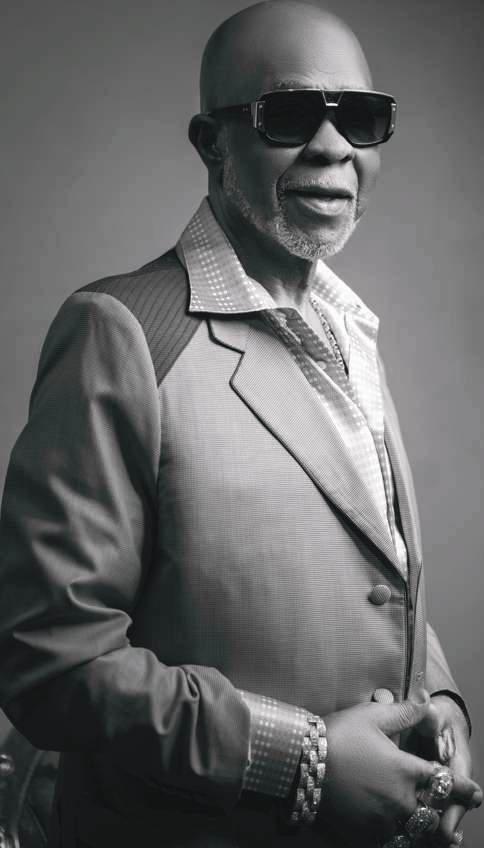
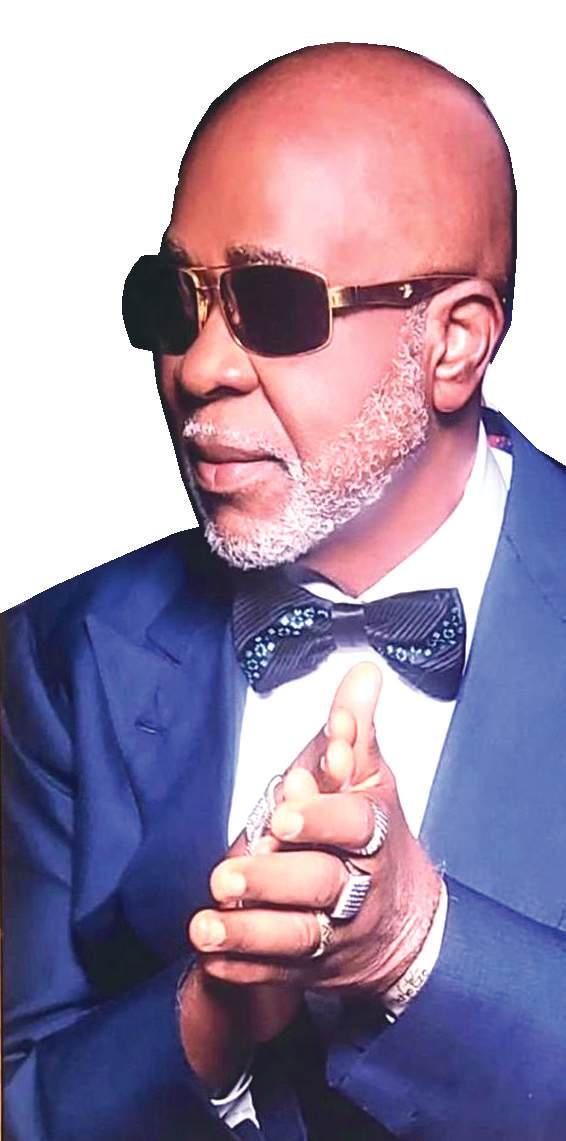
In a landmark courtroom victory, Bank of Nevis International Limited (BONI), the Nigerianowned financial powerhouse
led by Chief Executive Officer Michael J. Prest, a seasoned strategic investor, emerged
triumphant after the High Court of Zambia decisively dismissed two procedural applications filed by Bank of Zambia (BoZ) in the high-stakes dispute over the liquidation of Investrust Bank Plc.
Ahead of 2027: APC Wins 5 Out of 6 FCT Area Councils, ADC Mum
Tinubu: Successful conduct of polls in nation’s capital, Rivers, Kano has strengthened our democratic culture, institutions Yilwatda: Our victories are clear testament to our grassroots strength Outcome has exposed emergency democrats, declares Wike Southern Govs, Lagos hail president, party PDP wants INEC to release results of two wards in Kuje, congratulates successful candidates www.thisdaylive.com
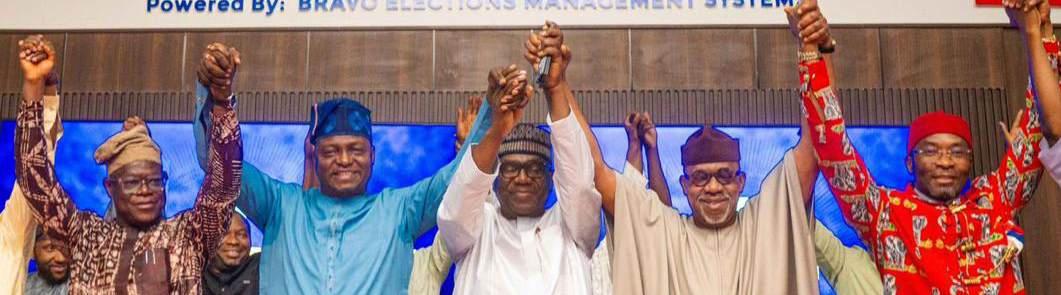
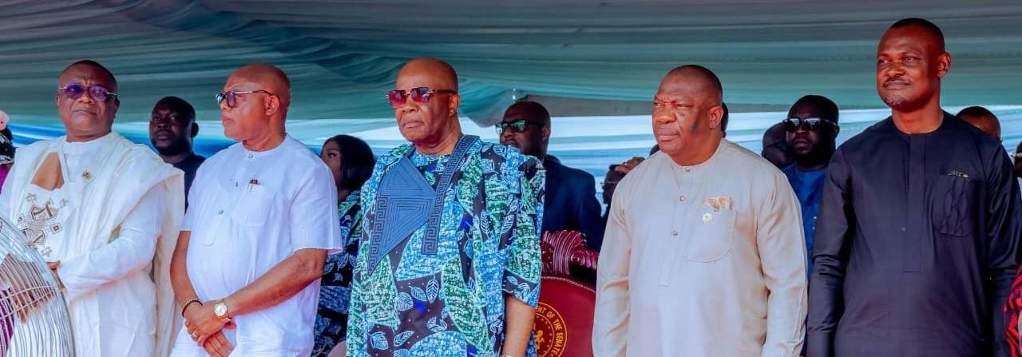
Abiodun; and Deputy Speaker of the House of Representatives, Mr. Benjamin Kalu, at the APC situation room after the conduct of the Local Government Councils election in Abuja, yesterday
Sunday Aborisade and Onyebuchi Ezigbo in Abuja Leader of the Senate, Opeyemi
National Secretary, Mr. Surajudeen Ajibola Basiru; APC National Chairman, Mr. Nentawe Goshwe Yilwatda; Governor of Kwara State and Chairman, FCT Area Council Election, His Excellency, Mr. AbdulRahman AbdulRazaq; Governor of Ogun State, His Excellency, Mr. Dapo
Agama: Capital Market's N68.8 Trillion Growth Lifts GDP
Kayode Tokede
Nigeria’s capital market has recorded a remarkable 125 per cent or N68.9 trillion growth in market capitalisation since April 2024, rising from about N55 trillion to over N123.93 trillion, the Director-General of the Securities and Exchange Commission (SEC), Dr. Emomotimi Agama, has disclosed.
Agama also said the market’s contribution to the nation’s Gross Domestic Product (GDP) has increased
Deji Elumoye, Chuks Okocha, Olawale Ajimotokan,Adedayo Akinwale, Alex Enumah in Abuja, Segun James in Lagos and Ahmad Sorondinki in Kano
The ruling All Progressives Congress (APC) has tightened its grip on the Federal Capital Territory (FCT) ahead of the 2027 general election, winning five of the six Area Councils in the nation's capital.
President Bola Tinubu, yesterday, hailed the successful conduct of Saturday's elections in FCT, as well as by-elections in Rivers and Kano states, saying it has further strengthened democratic culture and institutions in the country.
National Chairman of APC, Professor Nentawe Yilwatda,
Bamidele said the stakeholders included civil society organisations (CSOs), Office of the Attorney-General of the Federation (OAGF), Independent National Electoral Commission (INEC), and development partners.
Bamidele’s spoke against the backdrop of concerns in some quarters about the speed with which President Bola Tinubu signed the bill into law, just 24 hours after it was transmitted by the National Assembly. In a statement by his Directorate of Media and Public Affairs, the senate leader insisted that the president’s prompt assent did not amount to a hasty
significantly from 13 per cent to 33 per cent within the same period, underscoring the sector’s expanding role in economic development.
He spoke in Lagos during his inaugural address to members of the Capital Market Working Group on Market Liquidity at the Commission’s office.
The SEC boss described the growth figures as evidence of strong investor confidence and the resilience of the Nigerian capital market under the current administration,
described the victories of the party in FCT and the by-elections in Kano and Rivers states as a clear testament to the resilience, unity, and grassroots strength of the party.
Minister of FCT, Nyesom Wike, congratulated Tinubu on the conduct of Saturday's FCT area council elections, saying the outcome has exposed emergency democrats, who have chosen not to see anything good in the country and its government.
Southern governors’ forum, under the leadership of Ogun State Governor, Dapo Abiodun, applauded the performance of APC, saying the party's strong showing represents wide acceptance by Nigerians.
The Lagos State chapter of APC said the poll results were
endorsement, but rather reflected the depth of prior engagements that shaped the legislation long before its final passage.
According to Bamidele, the making of the Electoral Act, 2026 was “a collective work that involves nearly all critical stakeholders”. He stressed that the National Assembly did not act in isolation.
Bamidele said, “The National Assembly worked with such different stakeholders as OAGF, CSOs, INEC and our development partners, among others, before we eventually completed the process.
“As we were making progress, the stakeholders too were making
Contribution to 33%
but stressed that market size alone was not enough without corresponding depth and liquidity.
“Since this administration came into being in April 2024, we have seen market capitalisation grow from about N55 trillion to over N123.93 trillion. Our contribution to GDP has moved from 13 per cent to 33 per cent. These are impressive figures, but they tell only part of the story,” he said.
According to him, liquidity remains critical to sustaining
a good testimonial of the good works of Tinubu.
However, Peoples Democratic Party, (PDP) called on Independent National Electoral Commission (INEC) to immediately release the results of two wards in Kuje Area Council. PDP said there were indications that it was in lead in the two councils.
The party also congratulated its successful candidates in the FCT elections.
Similarly, PDP presidential aspirant, Dr. Gbenga Hashim, described the outcome of the FCT elections as a strong evidence that the party was regaining momentum ahead of the 2027 general election, despite internal challenges and political pressure.
their input, and all the inputs were incorporated in the Act.”
He stated that given the extensive consultation and the time constraints ahead of preparations for the 2027 general election, there was no need for prolonged executive review.
Bamidele stated, “In view of the time constraint we are facing now, I do not believe the executive requires days or weeks to review it before assent since we all contributed to it. Its outcome is not a unilateral effort of the parliament, but of Nigerians at large.”
The National Assembly had earlier harmonised different versions of the Electoral Bill
the growth momentum, noting that a market must be deep and efficient to effectively perform its primary function of capital formation.
“A capital market is often described as the barometer of an economy’s health. But for that barometer to be accurate, the market must be more than just large—it must be liquid,” he said.
Agama identified key structural challenges, including high transaction impact costs for institutional investors and the concentration of trading
There was no official reaction to Saturday’s elections from the national leadership of the opposition coalition party, African Democratic Congress (ADC), as at press time yesterday. But the ADC chairmanship candidate for Abuja Municipal Area Council (AMAC), Dr. Moses Paul, refused to concede defeat, citing evidence of electoral irregularities and vowing to continue the fight for the people’s mandate.
Nonetheless, INEC denied migrating voters to new polling units different from their original polling units during the FCT elections. And operatives of Economic and Financial Crimes Commission (EFCC) reported that they arrested 20 persons believed to have engaged in
2026, passed by both chambers, particularly Clause 60(3), before transmitting the final document to the president to avert any constitutional or administrative crisis in the build-up to the next general election.
With Tinubu’s assent, the new electoral governance framework came into force, introducing sweeping reforms aimed at strengthening institutional independence, enhancing transparency and reinforcing accountability in Nigeria’s election management system.
Among the major provisions was the establishment of a dedicated fund for INEC under Section 3 of the act.
activities in a limited number of highly capitalised stocks, which he said leaves the broader market relatively shallow.
He warned that without sufficient liquidity, investors may be reluctant to enter the market if they are uncertain about their ability to exit positions without significant price distortions.
To address these concerns, the SEC inaugurated a multi-stakeholder Working Group comprising exchanges, custodians, fund managers,
sundry electoral offences during the FCT polls.
The FCT Area Council elections held on Saturday, February 21, saw APC winning Abuja Municipal Area Council (AMAC), Kwali, Kuje, Bwari, and Abaji, while PDP won Gwagwalada.
INEC, on Sunday morning, declared Mohammed Kasim of PDP as winner of the Gwagwalada Area Council chairmanship election.
INEC Returning Officer, Philip Akpen, announced that Mohammed scored 22,165 votes to secure a decisive victory in a keenly contested election, while Yahaya Shehu of APC came second with 17,788 votes Akpen affirmed that Mohammed met the legal
Bamidele said the measure guaranteed the commission’s financial autonomy, operational stability and administrative continuity.
The law required election funds to be released at least six months before a general election, a move designed to eliminate last-minute funding bottlenecks.
It also empowered INEC to review questionable declarations of results made under duress or in violation of established procedures.
The act further made electronic transmission of election results mandatory.
Under Section 60(3), results
MICHAEL PREST’S BONI TRIUMPHS OVER BANK OF ZAMBIA IN INVESTRUST DISPUTE
by Justice Charles Zulu, rejected BoZ’s attempts to nullify a notice of discontinuance filed by BONI and to block fresh judicial review proceedings brought by the investor-bank.
The decisions preserve BONI’s challenge to the compulsory liquidation and sale of Investrust’s assets, a move that wiped out the value of its 24.8 per cent shareholding and underscores Prest’s strategic acumen in pursuing investor protection through legal channels.
The saga traces back to 2021, when BONI acquired its stake in Investrust through a licensed broker on the Lusaka Securities Exchange.
dealing members and other market operators. The group is expected to develop practical recommendations to improve trading efficiency, deepen participation and enhance price discovery.
requirements to be returned as the duly elected chairman. He described the electoral process as “peaceful and smooth”, despite the high stakes. The electoral umpire also declared Daniel Nuhu of APC winner of Kwali Area Council chairmanship election. Nuhu polled 17,032 votes to defeat Haruna Pai of PDP, who scored 8,575 votes to come second in the election.
INEC declared Joshua Ishaku of APC winner of Bwari Area Council chairmanship election. The returning officer, Mohammed Nurudeen, while declaring the results, said Ishaku secured a total of 18,466 votes to win the election.
from polling units must be transmitted electronically to INEC’s Result Viewing Portal (IReV). Any presiding officer who wilfully frustrates this process faces a six-month jail term or a fine of N500,000, or both, according to the act. Bamidele clarified that while IReV enhanced transparency by allowing public access to polling unit results, it was not a collation platform.
He added that the law provided a conditional fall-back to manual transmission using Form EC8A where electronic transmission failed, due to
Because Investrust was a regulated financial institution, BONI was later informed that formal recognition of its shareholding required approval from Bank of Zambia.
BONI promptly submitted the necessary documentation for regulatory review. What should have been a routine procedural step, instead, evolved into a prolonged legal impasse.
For nearly three years, BONI was left in limbo, neither formally
The purchase, executed in line with exchange rules and through regulated intermediaries, was designed to guarantee investor protection and certainty of title, mechanisms central to a functioning capital market.
recognised as a shareholder nor definitively rejected.
The delay prevented it from securing board representation, exercising voting rights, or participating in governance decisions, thereby effectively suspending its legal status between acquisition and regulatory recognition.
The deadlock reached a turning point in January 2024, when BoZ formally notified BONI that it did not recognise the company as a shareholder.
This decision crystallised the central legal question: do shares purchased on a regulated stock exchange confer automatic ownership, or does ownership remain contingent on regulatory
discretion?
Only months later, BoZ placed Investrust into liquidation, erasing the value of BONI’s shares.
Despite denying recognition, the authorities did not refund the capital invested, leaving BONI to bear the economic loss of a shareholder while being denied governance rights.
BONI contended that fairness required repayment of the purchase price if regulatory approval was legally withheld.
The first ruling, delivered on December 31, 2025, concerned BoZ’s attempt to set aside BONI’s notice of discontinuance.
BONI had initially filed proceedings on August 2, 2024, challenging the liquidation and
seeking, among other reliefs, an order compelling the Minister of Finance and National Planning to constitute a tribunal under the Banking and Financial Services Act.
BoZ argued that the case was improperly commenced and that the withdrawal did not comply with English procedural rules.
BONI countered that Zambian law governed discontinuance and that its notice was properly filed under the High Court Rules.
Justice Zulu agreed, holding that local law provides an adequate mechanism for discontinuing judicial review proceedings.
He described BoZ’s challenge as procedurally flawed, dismissed
it, made no order as to costs, but granted leave to appeal. The second ruling, delivered on May 6, 2025, concerned the fresh judicial review.
BoZ argued that the proceedings constituted an abuse of court process because the earlier case had not been properly discontinued.
Justice Zulu rejected this claim, holding that any question over the validity of the discontinuance belonged to the original cause and could not be used to stifle new proceedings.
The court allowed the judicial review to proceed, awarded costs against BoZ, and again granted leave to appeal.
Agama
FIRST 2026 CATHOLIC BISHOPS CONFERENCE OF NIGERIA...
CPPE: Nigeria Requires Structural Reforms to Convert Capital Importation into Job Creating FDIs
Dike Onwuamaeze
Following the surge in capital inflows to $6.01 billion in the third quarter of 2025, Centre for the Promotion of Private Enterprise (CPPE) has advised the federal government on the need for structural reforms that would convert Nigeria's capital importation trend from
portfolio-driven inflows into foreign direct investments (FDIs) led industrial expansion.
According to CPPE, the $6.01 billion capital importation in Q3'25, represents a remarkable 380 per cent year-on-year increase and a 17 per cent quarter-on-quarter growth.
It stated that unless structural reforms were accelerated, the
present rebound might prove fragile.
Chief Executive Officer of CPPE, Dr. Muda Yusuf, expressed the view yesterday in a comment on capital importation, titled, "Nigeria's Capital Importation Rebound: Encouraging Signals, But Structural Risks Persist."
Yusuf said, "The current
recovery provides an opportunity. The critical policy challenge is to convert portfolio-driven inflows into FDI-led industrial expansion."
He added, "Macroeconomic stabilisation must now transition into deep structural competitiveness reforms."
According to him, "Nigeria’s Q3 2025 capital-importation rebound is a welcome
Tinubu Rejoices With Founder of Zinox Group, Stanley Ekeh at 70
Describes him as one of nation's pioneering innovators in information
Deji Elumoye in Abuja
President Bola Tinubu has rejoiced with founder and Chairman of Zinox Group, Mr Leonard Stanley Ekeh, as he clocked 70 on February 22.
Tinubu, in a statement issued on Sunday by his Adviser on Information and Strategy, Bayo Onanuga,
celebrated with the accomplished entrepreneur on his Platinum Jubilee, describing him as one of Nigeria's pioneering innovators in the information technology sector.
Tinubu recalled the launch in 2001 of Zinox Technologies Limited to manufacture computers and accessories;
a ground-breaking moment for indigenous technology production.
The president acknowledged Ekeh's contributions to the growth of the country's manufacturing and information technology ecosystem and commended him for being a pace-setter
technology
and dynamic industrialist. He also commended the entrepreneur for his commitment to promoting the Nigerian brand and creating opportunities for young Nigerians.
Tinubu wished him good health and more years of ground-breaking accomplishments.
IG Charges Abuja Doctor over N19m Medical Record, Embryos Fraud
The Inspector General (IG) of Police has filed criminal charges against an Abujabased medical practitioner, John Abebe.
The three-count charge borders on alleged fraud, criminal conspiracy, unlawful disclosure of confidential medical records, and sale of a couple’s embryos.
Dr. Abebe and his hospital, Joje Abebe Hospital & Fertility Centre Limited are 1st and 2nd defendants in the suit marked: CV/005/26, and filed before a High Court of the Federal Capital Territory (FCT).
Abebe in one of the charges
is accused of unlawfully releasing the confidential medical records of Mrs. Mary Manga to the public without their consent; an offence said to contravene Section 29 of the National Health Act, 2014. In addition to the alleged breach of medical confidentiality, prosecutors claim that between January and May 2025, Dr. Abebe, described as a Chief Consultant Obstetrician and Gynecologist, deceived and defrauded the couple of N19 million under the pretext of being a specialist in In Vitro Fertilization (IVF).
The charge alleges that he collected the sum for treatment, and converted the money
to personal use; an offence punishable under Section 1 of the Advance Fee Fraud and Other Related Offences Act, 2006.
Most disturbing among the allegations is the claim that the doctor sold the couple’s fully developed embryos to other patients — a development that, if proven, could mark one of the most scandalous fertility-related cases in the country’s recent history.
Count one reads, “That you, 1. John Onuwabhagbe Abebe ‘M’ 54 years, 2. Joje Abebe Fertility Centre Limited, being a Chief Consultant Obstetrician & Gynecologist/ Medical Doctor of Joje Abebe
Hospital Limited, head office located at No. 0140, Bamanga Tukur Street, Zone E, Apo Legislative Quarters, Gudu District, FCT, Abuja, within the Abuja Judicial Division, while you were in custody of Mr. & Mrs. Mary Manga’s medical records concerning their health welfare and their production status on or before August 6, 2025, at FCT, Abuja, without their authorisation or consent abused your office and released their secret medical record to members of the public as a result rendering the victim traumatized and yet to recover from the shock, contrary to your oath of allegiance.
development and a positive signal of improving investor sentiment.
"However, the structure of inflows that is heavily portfoliodriven, financially concentrated, and weakly linked to productive sectors underscores the need for urgent structural reforms.
"The central task before policymakers is clear: move from liquidity-driven recovery to investment-led transformation.
"Only by converting short-term capital inflows into long-term productive investment can Nigeria achieve sustainable growth, employment expansion, export diversification, and macroeconomic resilient."
Yusuf also stated that a deeper examination of the structure and distribution of the inflows revealed underlying vulnerabilities that must be addressed to ensure durability and long-term economic transformation.
He said, "The resurgence in capital importation is overwhelmingly portfolio-led.
"More than 80 per cent of total inflows in Q3 2025 were portfolio investments, while foreign direct investment (FDI) accounted for less than five percent.
"This composition raises important concerns as portfolio flows, by nature, are highly sensitive to global interest-rate movements, risk sentiment, and policy credibility.
"They provide liquidity support and can help stabilise financial markets in the short term, but they are volatile and prone to sudden reversals.
"But sustainable economic growth, job creation, and export expansion depend not on short-term capital but on stable, long-horizon FDI tied to production, infrastructure, manufacturing, and technology transfer.
"The current structure, therefore, reflects cyclical financial
recovery rather than structural economic transformation."
Yusuf said sectoral analysis showed that the bulk of the inflows went into the banking and financial sectors, with only marginal allocation to manufacturing, infrastructure, and other productive activities.
He stated, "This pattern underscores a persistent structural weakness: rising capital importation is not yet translating into meaningful expansion of productive capacity.
"Without stronger capital flows into industry, agro-processing, logistics, energy, and exportoriented manufacturing, the broader economy will see limited gains in employment, productivity, and inclusive growth."
According to him, financial deepening without real-sector expansion risks creating a liquidity-driven recovery that does not fundamentally alter Nigeria’s productive base.
The CPPE CEO pointed out that the geographical sources of the foreign inflows were heavily concentrated among a small number of countries, notably the United Kingdom, the United States, and South Africa.
He said such concentration exposed Nigeria to policy shifts, monetary tightening cycles, and investor sentiment changes within a limited set of jurisdictions.
Yusuf stated further that a substantial share of capital inflows was intermediated through a small group of banks, especially Standard Chartered, Stanbic IBTC, and Citibank Nigeria.
He said, "While this reflects established global banking relationships, it also introduces concentration and transmission risks in the event of changes in correspondent banking dynamics or global liquidity conditions.
Alex Enumah in Abuja
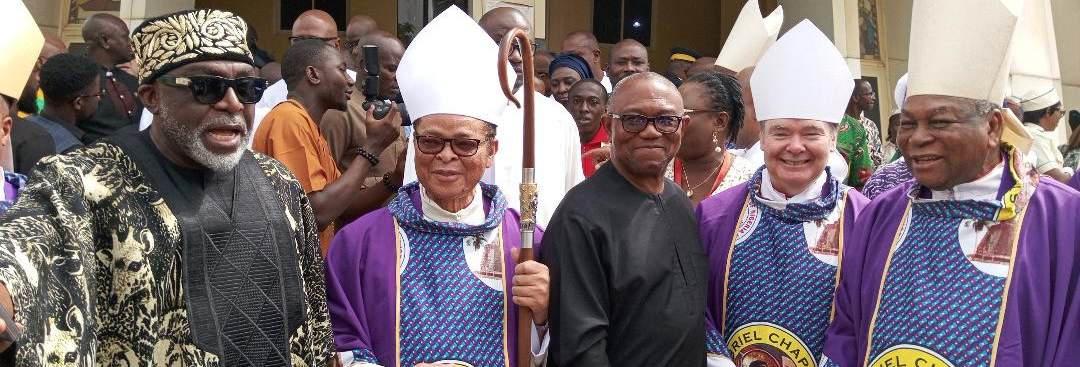
L-R: Chairman, United Airlines, Prof. Obiora Okonkwo; President, Catholic Bishops Conference of Nigeria (CBCN), Most Rev. Lucius Iwejune Ugorji; Former Labour Party Presidential Candidate, Mr. Peter Obi; Papal Nuncio to Nigeria, Most Rev. Francis Crotty; and Emeritus Archbishop of Abuja, John Cardinal Onaiyekan, during the first 2026 plenary of the Catholic Bishops Conference of Nigeria in Abuja, yesterday ENOCK REUBEN
BIRTHDAY FELICITATIONS
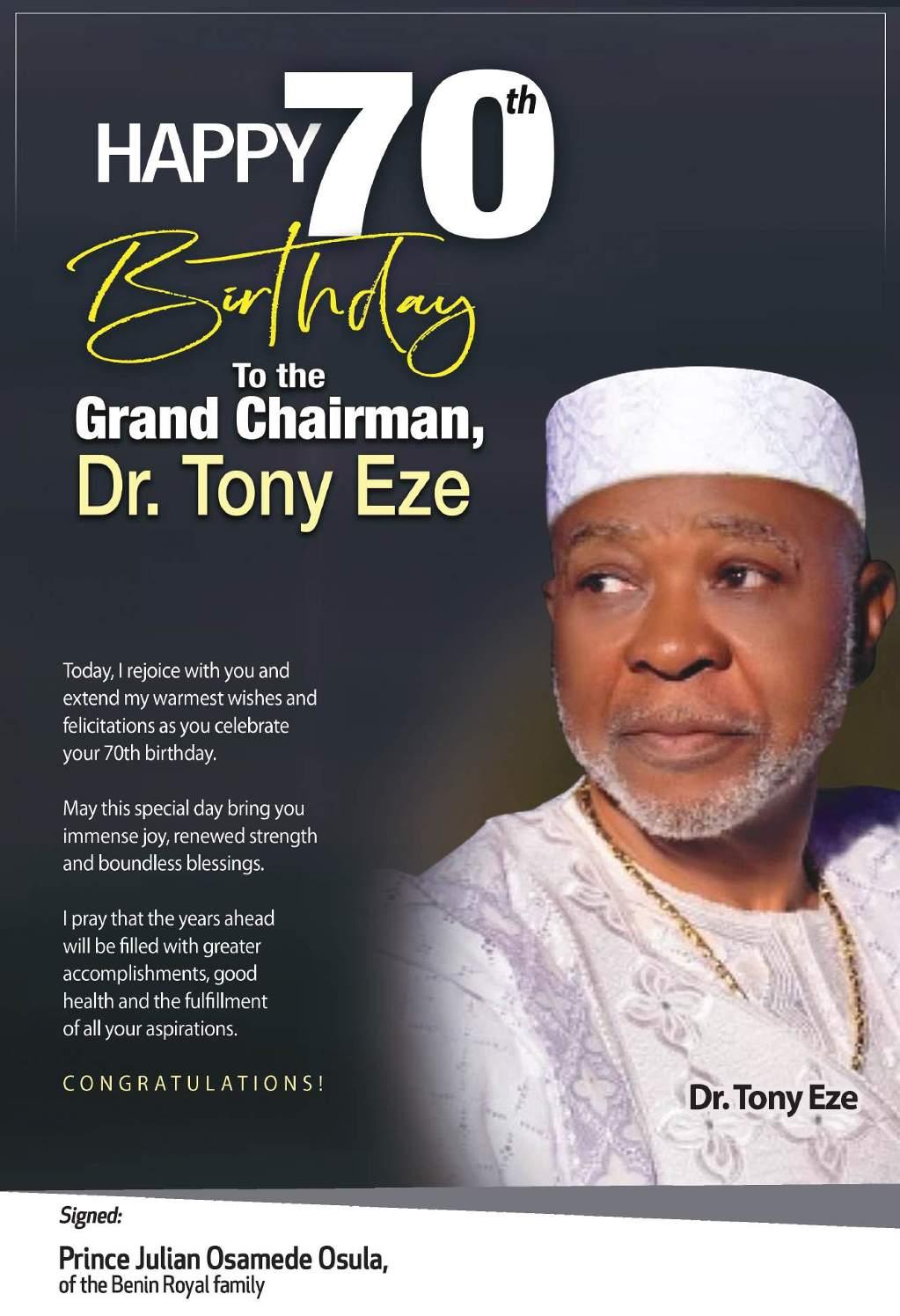
DR. ANTHONY UGOCHUKWU EZE
Chairman/Group Managing Director
Specialty Drilling Fluids Limited
Hearty cheers to a visionary whose leadership and entrepreneurial excellence built industry-leading businesses in oil and gas services, engineering, and logistics.
As Chairman/GMD of Specialty Drilling Fluids, Charnel Engineering, Alliance Logistics, and other leading businesses, you continue to inspire many with your legacy of innovation, integrity and bold vision.
Despite your sophistication in business, you have been a refined gentleman, lover of good music, and the joys of life.
On this remarkable milestone, we wish you more grace, greater bliss and a fuller life
All your life, you have been celebrated for your track record of dedication, hard work, excellence and philanthropy. You have been an outstanding success in your endeavours, both in business and ser vice to community, countr y and humanity for which you have been honoured locally and internationally.
As you mark your 70th birthday today, I join your well-wishers in sending my hearty congratulations. May God continue to keep you healthy and prosperous.
GEN ABDULSAL AMI A. ABUBAKAR, GCFR
Former Head of State and Commander-inChief of the Niger ian Armed Forces
Politics MONDAY DISCOURSE
Email: deji.elumoye@thisdaylive.com 08033025611 SMS ON
As Senate Confronts Tinubu’s Economic Team over N58.47trn 2026 Budget...
Nigeria’s N58.47 trillion 2026 budget has ignited a fierce confrontation between the Senate and the federal government’s economic team, exposing deep tension over oil revenue assumptions, mounting debt and chronic capital implementation failures, in a high-stakes battle that could reshape the nation’s fiscal direction and political accountability. Sunday Aborisade reports.
In Nigeria’s turbulent fiscal theatre, the annual appropriation ritual is often wrapped in optimism. Growth projections gleam. Oil benchmarks stretch confidently into the future. Revenue targets are framed as inevitabilities rather than aspirations. But last Thursday inside the National Assembly, the script faltered dramatically.
What began as a routine engagement between the Senate Committee on Appropriations and the federal government’s economic managers turned into a tense confrontation over credibility, realism and political accountability.
At stake was the N58.472 trillion 2026 Appropriation Bill, which is the largest in the country’s history.
Leading the legislative charge was Senator Olamilekan Adeola, chairman of the committee. Across the table sat the Minister of Finance and Coordinating Minister of the Economy, Wale Edun, flanked by the Minister of Budget and Economic Planning, Atiku Bagudu; the Minister of State for Finance, Doris Uzoka-Anite; Chairman of the Nigeria Revenue Service, Zacch Adedeji; and the Accountant General of the Federation, Shamsedeen Babatunde Ogunjimi.
Hovering above the exchange was the economic reform agenda of President Bola Tinubu, and the looming question of whether the administration’s ambitious fiscal projections rest on firm foundations or hopeful arithmetic.
Senate’s grievance was stark and unsparing: Nigeria cannot continue to pass massive budgets anchored on revenue projections that repeatedly underperform.
Adeola reminded the economic team that the 2026 budget document originated from the executive, not the legislature. The assumptions, the oil benchmarks and the revenue forecasts were executive proposals and must therefore withstand scrutiny.
He pointed to troubling performance gaps in recent fiscal cycles. In one year, oil revenue performance dipped to about 18 per cent. In another, it stood at 36.5 per cent, which is far below projections that had underpinned expansive expenditure plans. For lawmakers,
these were not abstract numbers. They were evidence of systemic overestimation.
“How do we explain such underperformance?” Adeola asked pointedly. “Do we reduce this budget or leave it as it is?”
The question reverberated through the chamber. It was not rhetorical theatre. The Senate is actively considering trimming the N58.47 trillion proposal if the executive cannot provide stronger guarantees of revenue realism.
Central to the dispute is the 1.84 million barrels per day oil production benchmark embedded in the 2026 proposal.
Edun described it as a “stretch target,” arguing that ambitious benchmarks encourage higher performance rather than complacency. As long as government does not spend beyond realised revenue, he maintained, fiscal stability would be preserved.
Edun said, “It is a stretch target so that authorities do not settle for lower output but as long as we do not spend what we do not have, we are within safe limits.”
Yet senators remain wary. Nigeria’s oil sector has struggled with theft, pipeline
vandalism, operational inefficiencies and global price volatility. For lawmakers, a stretch target without corresponding structural guarantees can morph into a fiscal mirage.
Beyond projections, the Senate zeroed in on a more politically combustible issue: implementation failures.
Year after year, budgets are passed with ambitious capital expenditure components designed to fund infrastructure, social services and development projects. Year after year, capital releases to Ministries, Departments and Agencies have fallen short.
Adeola pressed the economic team on the fate of the 2024 and 2025 capital components. Why were projects stalled? Why were contractors left waiting? Why were allocations made without corresponding releases?
Edun’s initial response, that funding of the capital components was ongoing, did not fully satisfy the committee. It was Uzoka-Anite who offered firmer assurances. She disclosed that payments for outstanding 2024 capital projects were commencing immediately and that MDAs had been directed to upload their cash plans for 2025 to enable prompt disbursement.
“The financial management system is back online. We are ready to start, but the MDAs must complete their documentation requirements,”
she assured.
She gave a clear commitment: full implementation of the 2024 and 2025 capital components would be achieved before March 31, 2026.
For a legislature fatigued by recurrent delays, the promise was welcome, but it will be measured against execution, not intent.
In an interesting turn, the NRS boss, Adedeji aligned in principle with Senate concerns over revenue realism. Budget efficiency, he said, is not about the size of the appropriation but about what can actually be implemented.
“If we think we have 10 naira and we plan with 100 naira in mind, we will create problems for ourselves,” he warned.
His intervention underscored a structural shift in Nigeria’s oil revenue framework.
He explained that under the Petroleum Industry Act, the Nigerian National Petroleum Company now operates as a limited liability company.
Government earnings from oil production, according to him, flow primarily through taxes and royalties rather than direct crude sales, stressing that if production costs rise or operational efficiencies decline, the government’s net take shrinks.
Adedeji disclosed that projections indicate about 47 per cent of oil company output translates into government revenue under current arrangements.
The confrontation in the Senate chamber crystalised a fundamental dilemma: can ambition outrun arithmetic? As lawmakers look into the numbers in the weeks ahead, the N58.47 trillion proposal will either emerge refined and fortified, or trimmed in the name of realism. In that decision lies not only the fate of a budget, but the trajectory of Nigeria’s fiscal future. NOTE:
That ratio, lawmakers noted, reinforces the need for sober revenue assumptions and rigorous cost management.
Security spending added another layer of complexity. Edun insisted that security had been prioritised under the 2026 proposal, with emergency funding consistently released for critical military procurements, including foreign acquisitions. Some of these expenditures, he explained, might not be immediately visible under conventional classifications but were met within approved Federation Account limits.
Adeola
Edun
Uzoka-Anite
FEaturEs
Group Features Editor: Chiemelie Ezeobi
Email chiemelie.ezeobi@thisdaylive.com,
Nigeria’s Corruption Score Stalls at 26 as CPI 2025 Exposes Deep Structural Failures
Nigeria’s struggle with corruption seemingly remains stubbornly unresolved, despite years of reforms, prosecutions and policy pledges.The 2025 Corruption Perceptions Index (CPI) recently released byTransparency International, through its Nigerian chapter, the Civil Society Legislative Advocacy Centre (CISLAC), shows that the country has once again failed to make meaningful progress, retaining a score of 26 out of 100 while slipping further down the global rankings. While isolated gains in asset recovery and financial oversight signal cautious improvement, entrenched weaknesses in the judiciary, legislature, security, oil, power and electoral systems continue to undermine public trust and democratic accountability. Chiemelie Ezeobi reports
Nigeria’s long and difficult battle against corruption has once again been laid bare, following the release of the 2025 Corruption Perceptions Index (CPI) by Transparency International (TI), through its Nigerian chapter, the Civil Society Legislative Advocacy Centre (CISLAC). The index paints a troubling picture of stagnation, even as isolated gains struggle to offset entrenched systemic weaknesses.
In the 2025 assessment, Nigeria scored 26 out of 100, retaining the same score recorded the previous year. More concerning, however, is the country’s slip on the global ranking table, dropping from 140th in 2024 to 142nd out of 180 countries. For a nation that has repeatedly declared corruption a national emergency, the results underscore how far rhetoric still outpaces reform.
While the CPI does not measure individual corruption cases, it reflects the prevailing perception of corruption among country experts and businesspeople, drawing from data compiled by ten independent and reputable global institutions. It remains the most widely recognised comparative index of public sector corruption worldwide.
Understanding What the CPI Measures and What It Does Not CISLAC/TI-Nigeria is careful to clarify that the CPI is not an evaluation of Nigeria’s anti-corruption agencies. Rather, it is a perception-based index grounded in rigorous research conducted by institutions such as the World Bank, the African Development Bank, the Economist Intelligence Unit and the World Justice Project.
According to Auwal Ibrahim Musa (Rafsanjani), Executive Director of CISLAC, the index is widely relied upon by governments, investors, civil society organisations and development partners to guide policy, assess risk and shape governance reforms. As such, Nigeria’s stagnant score is not merely symbolic; it has real implications for investment confidence, public trust and democratic legitimacy.
Despite this sobering outcome, CISLAC notes that there are pockets of progress which, if strengthened, could serve as foundations for broader reform.
Asset Recovery Gains Signal Progress, but Transparency Remains Key
One of the most notable positive developments highlighted in the CPI analysis is Nigeria’s improvement in asset recovery efforts. According to official figures, the Economic and Financial Crimes Commission (EFCC) recovered over ₦566 billion and $411 million, alongside 1,502 properties, between October 2023 and September
2025. These recoveries point to sustained enforcement efforts against illicit financial flows.
Similarly, the Independent Corrupt Practices and Other Related Offences Commission (ICPC) reported recoveries amounting to ₦37.44 billion and $2.353 million in 2025 through seizures and forfeitures.
On the international front, Nigeria secured an agreement in January 2026 with the UK Crown Dependency of Jersey for the repatriation of over $9.5 million in corruption-linked assets, earmarked for infrastructure projects such as the Abuja–Kano Road.
While these gains reflect growing international cooperation and enforcement capacity, CISLAC stresses that transparent and effective management of recovered assets remains essential if these efforts are to translate into tangible benefits for citizens.
FATF Grey List Exit and the Role of Civil Society
Another bright spot is Nigeria’s exit from the Financial Action Task Force (FATF) grey list in October 2025, after two years of enhanced monitoring. The delisting followed the successful implementation of a 19-point action plan, strengthening the country’s Anti-Money Laundering and Countering the Financing of Terrorism (AML/CFT) frameworks.
Equally significant is the continued role of civil society organisations and investigative journalists in exposing corruption and demanding accountability. CISLAC acknowledges that media advocacy and civic engagement remain indispensable pillars of Nigeria’s democracy, often serving as the last line of defence
against abuse of power.
When
Judicial Corruption and Legislative Scandals Undermine Public Trust
Despite these positives, the CPI analysis identifies deep-seated weaknesses that continue to erode Nigeria’s anti-corruption drive.
Judicial corruption remains a persistent concern. Allegations of bias, nepotism and undue influence within the judiciary have been publicly acknowledged, even at the highest levels. The Nigerian Bar Association has repeatedly warned that corruption within the courts threatens democracy and social justice, while concerns persist over politically influenced judicial appointments.
The legislature has also come under intense scrutiny. Investigations published in January 2025 revealed alleged bribery schemes involving federal lawmakers extorting funds from universities to approve budget allocations.
Further allegations emerged in August 2025, when a serving lawmaker publicly claimed that bribes ranging from ₦1 million to ₦3 million were demanded to present motions and bills on the floor of the House of Representatives. These scandals, CISLAC notes, are not only damaging to Nigeria’s image but corrosive to democratic governance.
Oil Theft, Budget Manipulation and Sectoral Corruption
Corruption in Nigeria’s oil sector continues to exact a heavy toll. The 2022 Auditor-General’s report, published in September 2025, revealed that the Nigerian National Petroleum
Company Limited (NNPCL) failed to account for ₦22.3 billion, $49.7 million, £14.3 million and €5.2 million. Weak internal controls, abandoned projects and irregular contracts featured prominently in the audit findings.
Beyond oil, corruption in the power sector has persisted despite tariff increases and heavy public investment. The Auditor-General’s 2025 report alleged the misappropriation of N128 billion by the Ministry of Power and the Nigerian Bulk Electricity Trading Plc, even as the national grid continues to suffer repeated collapses.
Concerns have also been raised over procurement fraud and budgetary corruption, particularly following revelations by BudgIT that N6.93 trillion worth of questionable projects were allegedly inserted into the 2025 national budget by the National Assembly.
Democratic Decline, Shrinking Civic Space and Security Sector Abuse
As Nigeria approaches the 2027 general election, CISLAC warns of a weakening opposition, rising political defections and growing resistance to electoral reforms, including the rejection of mandatory electronic transmission of results.
At the same time, civic space is shrinking. Journalists, activists and whistleblowers face increasing intimidation through repressive laws and strategic lawsuits. According to Media Rights Agenda, 86 attacks on journalists and media organisations were recorded in 2025 alone.
Corruption within the security sector further compounds Nigeria’s challenges, undermining responses to insurgency, banditry and communal violence, while eroding public trust.
A Reform Agenda That Demands Political Will
In its recommendations, CISLAC calls for the independence of anti-corruption agencies, transparent judicial appointments, security sector accountability, full digitisation of procurement processes, protection for whistleblowers, and the strengthening of electoral laws.
The organisation reiterates its readiness to collaborate with relevant institutions to advance national interest and accountability. As stated in the concluding declaration signed by Auwal Ibrahim Musa (Rafsanjani), Executive Director of CISLAC, the organisation remains committed to working with all stakeholders “to make Nigeria better for the interest of the Nation”. For now, Nigeria’s CPI score of 26 serves as a stark reminder that while progress is possible, the fight against corruption remains far from won.
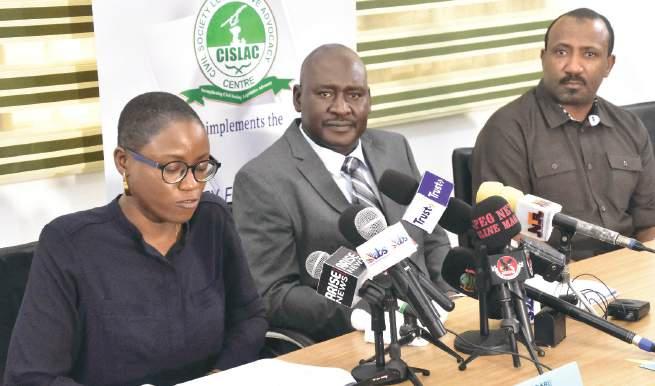
L-R: Ms Folashade Arigbabu from SERAP; Auwal Musa Rafsanjani Executive Director CISLAC and Head of Transparency International Nigeria; and Mr. Umar Yakubu, Executive Director Centre for Fiscal Transparency and Public Integrity
Mothers of Chibok: The Inspiring Story of Women Who Refused to Be Broken
In a powerful cinematic tribute, Emmy-winning filmmaker Joel 'Kachi' Benson and award-winning actor and producer Joke Silva are bringing the untold story of the Mothers of Chibok to cinemas nationwide. The unbreakable mothers of Chibok turned their pain into purpose and their grief into strength. The documentary, ‘Mothers of Chibok’, premieres on February 27, marking a milestone as the widest theatrical rollout for a locally produced documentary in Nigeria. Writes MARY NNAH
In the shadows of tragedy, a remarkable story of resilience and hope has emerged.
The world remembers the Chibok schoolgirls, abducted in 2014, but few know the tale of the mothers who refused to be broken.
The Chibok schoolgirls' tragedy sparked an extraordinary tale of resilience and hope, quietly unfolding in the shadows. It's a story of mothers who refused to be broken, but harnessed their pain and transformed it into purpose, channeling their grief into unyielding strength.
Emmy-winning filmmaker Joel 'Kachi' Benson shines a light on the unbroken voices of Chibok, following four mothers over a farming season as they work their land, fund their children's education, and rebuild their communities amidst ongoing insurgency.
Their story is a powerful symbol of the strength of women, of community, and of hope. In the darkest moments, their story shines a light on the path forward, illuminating a way out of the shadows.
The Mothers of Chibok, a documentary that premieres nationwide on February 27, is a cinematic tribute to these incredible women.
The film's focus is not on the tragedy of the Chibok schoolgirls' abduction in 2014, but on the women who remained, rebuilding their lives and communities amidst ongoing insurgency. Over a farming season, Benson's camera follows four mothers as they toil on their land, funding their children's education and fostering community resilience. Their
stories are a testament to the strength and resilience of the human spirit, a beacon of hope in the face of adversity.
"Mothers of Chibok is a powerful tribute to the strength and resilience of these women," said Joke Silva,who lends her voice to the project.
Speaking further, she noted, "We don't often think about these women, but Kachi's film makes it impossible to ignore their stories. It's a celebration of their voices, their endurance, and their unwavering hope. I couldn't be more thrilled to support a filmmaker like Kachi, whose record of the endurance, resistance, and resilience of the Mothers of Chibok will make it harder for future generations to forget what happened to
the girls and their families in 2014 and what continues to happen to them now."
The documentary's Lagos premiere on February 28 at Filmhouse IMAX, Lekki, will bring together the mothers, filmmakers, policymakers, and the public for a landmark screening and conversation.
Victoria Ogar, Head of Distribution at FilmOne Entertainment, expressed excitement about showcasing the film, believing it deserves a theatrical audience.
"We are thrilled to be bringing this powerful and hopeful documentary to audiences throughout Nigeria and Ghana. We believe there is a growing audience for documentary storytelling in West Africa, and we are excited for them to discover Kachi's beautiful film, which deserves to
be seen in a theatrical environment", she said.
For Kachi Benson, the film is a labour of love, aiming to move beyond headlines and reveal the depth of the mothers' strength.
"We think we know the women of Chibok because we know their tragedy," he said. "But that tragedy is just one part of their story. I aim to show the world the side of these heroines that is often unseen – women who stand as pillars in their community, comforting and uplifting each other. These women have stood, and continue to stand, as beacons of hope in the face of adversity, and it's time their stories are told."
Mothers of Chibok has already garnered international acclaim, winning the Encounters Al Jazeera Award for Best African FeatureLength Documentary and earning Benson a Documentary Emmy. The film's nationwide release sparks hope for a renewed conversation around education, security, and community resilience in Nigeria.
As Nigerian and Ghanaian audiences fill the cinemas, they will bear witness to the unbroken voices of Chibok, a powerful declaration of resilience in the face of tragedy, a celebration of the human spirit, and a reminder of the power of storytelling to inspire and uplift.
Mothers of Chibok is more than a film – it's a movement, and it's here to stay. The film will be screened in FilmOne cinemas across Nigeria and Ghana for one month, providing a unique opportunity for audiences to engage with this powerful documentary and participate in a national moment of reflection and shared witnessing.
Police Probe Deaths of Two Film Crew Members at Lekki Medical Facility
The Lagos State Police Command has commenced investigation into the deaths of two members of a film production crew, who were recently found unresponsive inside a vehicle at a medical facility in Lekki Phase 1.
The deceased persons, identified as a lighting technician, Ekemini Imeh, and his associate, Ayodeji Odediran, were discovered on February 7, 2026, during a movie production taking place at the medical facility.
Prior to their death, the duo had completed the installation of lighting equipment for a film being produced and directed by former Big Brother Naija housemate, Boma.
Done with the job, they entered a parked vehicle within the premises to rest while awaiting the commencement of filming.
The duo were still resting when food was reportedly delivered to them at about 11 a.m but were later found lifeless roughly eight
t he deceased crew members
hours, when production activities for the day had ended. The case has been transferred to the State Criminal Investigation Department (SCID), Panti, Yaba, for
further investigation and forensic examination. Police sources said there were no immediate signs of violence on the bodies, while witnesses at the scene reported indications consistent with a sudden collapse.
Imeh, who was the Chief Executive Officer of a leading lighting company, was a well-known figure in the film and entertainment industry, with credits on major projects including King of Boys and music videos for prominent Nigerian artistes such as Davido.
THISDAY gathered that presently investigators are exploring multiple possibilities, including environmental factors around the parking area where industrial generators were reportedly operating.
Also, the police said autopsy and toxicology tests are expected to establish the exact cause of death whether it was ingestionrelated causes, and even the mechanical condition of the vehicle in which the victims were found.
Pending the conclusion of autopsy results, family members of the deceased have called for a thorough and transparent investigation, citing the unusual nature of the incident.
The police have assured the public that findings will be made known upon the conclusion of forensic procedures.
Chibok women in a farmland
a close-up of a Chibok mother gazing thoughtfully into the distance
a group of Chibok school children returning from school
a pair of hands gently holding a small harvest of groundnuts
Chiemelie ezeobi
Even though much remains to be done, the Tinubu reforms are beginning to yield dividends, reckons ADEMOLA ADEDOYIN
BETWEEN EL-RUFAI AND RIBADU
El-Rufai’s obsession with the National Security Adviser is unfortunate, contends MOHAMMED DAHIRU
DISRUPTING THE OLD PENSION ORDER
OMOLOLA
OLOWORARAN writes that accredited pension agents will drive pension coverage beyond offices and formal payrolls
THE EMERGING GAINS OF A PAINFUL REFORM
For the tenth consecutive month, Nigeria recorded inflation moderation in January, with headline inflation easing to 15.10 percent, down from 15.15 percent in December 2025.
Most significantly, and most cheering in the latest inflationary trends report by the National Bureau of Statistics (NBS), is the disclosure that—for the first time in over a decade—food inflation fell sharply into single digits, declining to 8.8 percent in the month under review.
While this is not yet Eldorado, economists agree that a consistent monthon-month decline in headline inflation is a strong indication that price pressures are easing and, in some cases, beginning to reverse. This marks a positive development after years of entrenched high inflation.
More importantly, the reduction of food inflation to single digits is particularly beneficial to low- and middleincome households, which devote a disproportionately large share of their income to food.
If these trends are sustained—as development experts and policy analysts predict—Nigeria may be said to have truly turned a corner, setting course for an era of recovery and eventual prosperity after years of economic meltdown and the unavoidable reform agenda of the present administration.
From inception, Bola Ahmed Tinubu made it clear that his administration’s economic reforms would rest on two core pillars: fuel subsidy removal and foreign exchange unification. Economic watchers were therefore left in no doubt that the country was headed for a turbulent transition. The President was equally under no illusion about the immediate hardships these reforms would impose, but saw little alternative if the trajectory of economic stagnation was to be reversed.
That the Tinubu administration inherited an economy on the brink of ruination is hardly debatable. By May 2023, public debt stood at ₦87.4 trillion, with a debt service-to-revenue ratio exceeding 100 percent, meaning the government was borrowing largely to service existing debts. Annual budget deficits averaged between ₦4 trillion and ₦11 trillion from 2016 to 2023; fuel subsidy payments exceeded ₦10 trillion in eight years; the foreign exchange regime operated through at least five windows, fostering arbitrage and rent-seeking; and foreign reserves had declined to about $34 billion.
Confronted with these grim statistics, it became clear that decisive economic surgery was inevitable to resuscitate
an economy that was almost fatally wounded. That was the path the Tinubu administration chose.
As with all surgeries—medical or metaphorical—the revival process came with acute pain, prompting doubts about whether the “patient” would survive the operating theatre.
The immediate aftermath was bleak: fuel prices surged by nearly 200 percent, rising from about ₦185 per litre to between ₦500 and ₦700; transportation costs spiked; the naira depreciated sharply; and inflation accelerated into the high-20s and low-30s, with food inflation worsening. Poverty deepened, social tensions escalated, and public protests followed.
Throughout this turbulent phase, one constant remained: despite efforts to cushion the impact through palliatives, the government stayed focused on the long-term objectives of the reforms.
Nearly three years on, the reforms are beginning to yield tangible dividends, even though much remains to be done.
A standout area of progress is the oil and gas upstream sector. Under the previous administration, crude oil theft and pipeline vandalism drastically curtailed production, with output falling below 1 million barrels per day by 2022, far below Nigeria’s nominal capacity of 1.5–2 million barrels per day.
The Tinubu government adopted a firm, front-footed approach against crude oil theft and production sabotage. As a result, crude oil output has recovered, rising close to—and at times exceeding—Nigeria’s OPEC quota of 1.5 million barrels per day.
Combined with fiscal and monetary reforms, this production rebound has driven a sharp increase in foreign reserves, which climbed to about $49 billion by February 5, 2026. This improvement has been fueled by higher oil export receipts, increased remittances, reforms in the foreign exchange market, and a steep
reduction in fuel importation.
The deregulation of the downstream oil sector and removal of fuel subsidy— painful at inception—are now yielding substantial returns. Experts estimate annual savings of about $7.5 billion, previously expended on fuel subsidies, now available for infrastructure and social investment at federal and sub-national levels.
States and local governments are correspondingly better funded, ending widespread salary arrears and enabling accelerated infrastructure development in many states, though some continue to attract criticism for underperformance despite higher allocations.
The Federal Government has also recorded gains by supporting the Dangote Refinery (650,000 bpd), significantly reducing petrol imports. Daily imports declined from about 44.6 million litres in 2024 to roughly 14.7 million litres by April 2025—a 67 percent drop. Petrol import bills fell by 54 percent in Q1 2025 compared to Q1 2024, from $2.6 billion to $1.2 billion.
These developments have boosted external reserves, eased pressure on the foreign exchange market, and contributed to naira stability.
Foreign exchange unification has further strengthened confidence. The market-determined exchange rate regime has attracted estimated foreign capital inflows of about $21 billion within ten months, underscoring renewed investor confidence. Nigeria also posted a $10.83 billion trade surplus in the first nine months of 2025, its first in years.
Growth indicators reinforce this positive outlook. GDP growth reached 3.8 percent in Q4 2024, the highest in three years, and accelerated to 4.23 percent in Q2 2025, the fastest in four years. The debt service-torevenue ratio has also improved markedly, falling from nearly 100 percent to about 50 percent.
The critical question remains: how do these macro-level gains translate to the lived experience of ordinary Nigerians?
In all, Nigerians are in agreement that President Tinubu assumed office at a moment when Nigeria stood at a defining crossroads, beset by surging inflation, acute foreign exchange pressures, declining oil production, and a widening deficit of confidence in the nation’s monetary and fiscal direction.
Adedoyin, fnipr, Award Winning Journalist, Communication Consultant and PR Practitioner, writes from Lagos
El-Rufai’s obsession with the National Security Adviser is unfortunate, contends MOHAMMED
DAHIRU
BETWEEN EL-RUFAI AND RIBADU
A former governor of Kaduna State Nasir el-Rufai has given the opposition a voice at a time when it seemed muted. But his gradual descent from interrogating policies to attacking personalities risks diminishing that role.
In a recent interview with DCL Hausa, El-Rufai accused the National Security Adviser (NSA) Nuhu Ribadu of allegedly directing security operatives to arrest political opponents without proper investigation, and interfering in judicial processes — claims that have drawn backlash from civil society groups for being “reckless and unfounded.”
In an interview on Arise Television, Mr El-Rufai said, “someone tapped” Ribadu’s phone, and told him that the NSA allegedly instructed security operatives to effect his arrest.
El-Rufai’s media remarks recently included assertions that the Independent Corrupt Practices Commission (ICPC) and other agencies are being used against him on the directives of Ribadu — effectively alleging political persecution driven by the NSA.
In interviews aired last year on ARISE Television and other platforms, El-Rufai claimed that Ribadu was no longer his friend and suggested the NSA harbours ambitions for the 2031 presidency, and was manipulating security agencies to sideline rivals. Ribadu publicly dismissed these claims, saying he had “never discussed running for president in 2031.”
In previous media appearances, El-Rufai also accused the government — under Ribadu’s national security coordination — of adopting policies that“empower bandits” with allowances and food in the name of non-kinetic strategies — a narrative strongly rejected by the Office of the NSA.
These examples show a pattern of repeated and widely publicised accusations by El-Rufai linking Ribadu to alleged misuse of security agencies, politically motivated actions, and broader governance failures.
The truth is that El-Rufai’s spirit is wounded. The rejection of his ministerial nomination by the Senate, and subsequent dropping of his anointed replacement by Governor Uba Sani, have affected El-Rufai psychologically. Like former governor of Kano State Rabiu Kwankwaso, El-Rufai is wounded politically by his “godson” Governor Uba Sani. Unlike Kwankwaso who was able to have a handful of lawmakers and a couple of commissioners remaining loyally with him, El-Rufai was politically striped bare. Trying to settle scores with Ribadu over the local political misfortunes he had in Kaduna appears like the proverbial donkey rider who ignores the donkey to whip at the pannier.
The administration of Bola Ahmed Tinubu offers no shortage of substan-
tive issues to critique: insecurity, the controversial tax reforms, weak budget implementation, cronyism, cost-of-living crisis, nepotism, etc. These are the key concerns affecting millions of Nigerians, not Nuhu Ribadu.
Yet El-Rufai’s apparent fixation on Ribadu risks narrowing a broad national conversation into a personal duel. Ribadu, whether flawed or not, is not the sum total of Nigeria’s governance challenges. Opposition politics gains moral authority when it confronts systems, not when it settles scores. If El-Rufai truly wants to shape the national conversation, he must return to the issues not persons. History rarely remembers those who fought personalities, but those who challenged the power.
In Nigeria’s turbulent political arena, disagreements among elites are neither new nor unexpected. What is troubling, however, is the growing pattern of public finger-pointing by former Kaduna State governor, El-Rufai, particularly his repeated accusations against Ribadu.
Political rivalry is one thing, while sustained public vilification is another. Over the past months, El-Rufai has appeared increasingly fixated on Ribadu, portraying him as the architect of his political misfortunes and as a central figure in what he suggests are broader conspiracies within the ruling establishment. The claims are often dramatic, rarely accompanied by verifiable evidence, and almost always delivered in a tone that suggests personal grievance rather than institutional concern.
This pattern raises a fundamental question: why does El-Rufai consistently locate the source of his troubles in Ribadu?
Both men have long careers in public service and share similar reformist reputations dating back to their time in anti-corruption and public sector reform spaces. Ribadu, a former chairman of the Economic and Financial Crimes Commission, built his profile on anti-corruption enforcement. El-Rufai, a former FCT minister and later governor, cultivated an image of blunt leadership.
Dahiru is an Abuja-based journalist
OMOLOLA OLOWORARAN writes that accredited pension agents will drive pension coverage beyond offices and formal payrolls
DISRUPTING THE OLD PENSION ORDER
Nigeria has stood at moments like this before – moments when a single reform quietly alters the destiny of millions; moments when leadership chooses structure over excuses and dignity over delay.
Two decades ago, our pension system was broken. Benefits were unfunded. Promises were uncertain. Retirees queued endlessly. Old age often meant anxiety and indignity.
Then reform came.
President Olusegun Obasanjo laid the foundation for modern pension administration by establishing the contributory system and the discipline that replaced chaos with savings, transparency, and accountability. The results are undeniable. Pension assets now exceed N27 trillion. More than 10 million Retirement Savings Accounts have been opened. Nigeria operates one of the strongest and most resilient pension systems in Africa.
Reform worked.
But only for the formal worker.
And Nigeria is not a formal economy.
Over 75 million Nigerians operate in the informal sector. Traders. Artisans. Farmers. Transport operators. Technicians. Entrepreneurs. They power our markets and sustain our cities. Yet most will retire with nothing.
No savings. No pension. No protection.
This is more than a social gap. It is a structural flaw in our economic architecture. A country cannot build enduring prosperity when the majority of its workforce ages into vulnerability.
It is also a missed opportunity of historic scale. The informal economy contributes significantly to national output. If even a fraction of that income were systematically saved through pensions, the result would be trillions of naira in long term domestic capital. Capital for housing. Infrastructure. Power. Enterprise. Capital that builds nations.
Yet the traditional Pension Fund Administrator model, strong as it has been, was never designed to reach this segment at scale. Branch offices, payroll integration, and corporate onboarding cannot penetrate markets, farms, motor parks, and workshops. You cannot enrol a trader from a boardroom. You cannot reach a mechanic with paperwork.
Accredited Pension Agents represent that disruption.
They take pensions to where Nigerians actually live and work. They simplify the message. They mobilise micro contributions. They convert informal earnings into structured long-term savings.
This is not distribution. It is mobilisation. And it disrupts the old pension order.
For the first time, pension expansion is no longer confined to PFAs operating within formal payroll systems. The model
now introduces specialised, technology driven agents whose sole mandate is to scale participation in the informal sector.
The incentive structure is deliberate.
Accredited pension agents earn annuitybased mobilisation fees tied directly to the contributions they originate and sustain. These fees are not isolated. They are shared from the existing PFA fee structure for the assets mobilised, ensuring alignment rather than duplication. In effect, PFAs and APAs now share economic incentives for new contributors brought into the system.
Performance is central. Key Performance Indicators govern agent accreditation, renewal, and compensation: active contribution rates, retention levels, and growth in assets under management. Agents succeed only when contributors continue to save. Their revenue is tied to persistence and long-term outcomes, not one-off sign-ups.
That alignment is powerful.
It ensures that the financial success of the agent mirrors the financial wellbeing of the contributor. It introduces competition, innovation, and accountability into a segment that was previously underserved.
This is disruption with discipline.
It also creates employment. Thousands of young Nigerians will be trained, certified, and deployed as accredited pension agents. Pensions become not only a vehicle for retirement security but a source of immediate job creation. Financial inclusion becomes an economic stimulus.
Recently, I had the privilege of handing over Nigeria’s first accredited pension agent license to Awabah, a fintech that embraced this vision early. Many more fintechs, telcos, cooperatives, and payment platforms will follow. Reaching tens of millions requires technology, scale, and trusted local networks working alongside regulation.
President Bola Ahmed Tinubu has championed the expansion of financial inclusion and domestic capital formation. The Accredited Pension Agent framework is a direct expression of that mandate. It extends the pension revolution beyond offices and payroll systems into markets, villages, and communities.
The broader implication is profound.
Oloworaran is Director General, National Pension Commission
Editor, Editorial Page PETER
ISHAKA
THE GROWING MENACE OF MARKET FIRES
Regulators should do well and enforce the law
Thousands of people are still counting their losses from the fire incident that raced through the popular Singer market (Kasuwar Singer) in the Kano State metropolis, causing significant damage to the largest commodity hub in northern Nigeria. Despite some form of intervention by the Kano State Fire Service, the fire reportedly raged for hours, gutting several shops and residential buildings with losses estimated in billions of Naira. The scale of destruction attracted the attention of President Bola Tinubu who, while commiserating with the state and people of Kano, directed a comprehensive investigation into the causes of the recurring market fires which often leave thousands in agony and despair.
While awaiting the outcome of the investigations, it is common knowledge that trillions of Naira worth of goods and property are lost annually to fire outbreaks as a result of deep-rooted structural, safety and regulatory failures.
Bariga Market where several shops went up in flames, to the popular Alaba market, to the Mandilas market, the Elegushi Model Market complex in Lekki, and back to the dawn fire outbreak again in Kano last Friday, after the second Singer inferno, there is need for a better appreciation of the challenge posed by fire outbreaks. Indeed, many of the fire outbreaks have been linked to factors such as fuel storage, power surge, illegal connection of electricity or poorly connected solar systems in the markets as well as carelessness, and ignorance of safety procedures.
The Singer market is highly congested, packed with shops, kiosks, and residential buildings, many of which were reportedly converted into storage facilities for highly flammable goods
What compounds the tragedy is that in many instances, authorities only offer sympathy visits and pronouncements of support, which are hardly backed up with concrete measures.
Meanwhile, the Singer Market, like many others, has been an accident waiting to happen. The market is highly congested, packed with shops, kiosks, and residential buildings, many of which were reportedly converted into storage facilities for highly flammable goods. Besides, it is badly planned with narrow pathways and layouts, making access extremely difficult. Firefighting trucks often struggle to access affected areas, forcing emergency crews to improvise by drawing water from distant points. Last week, the Senate urged a comprehensive redesign of its layout and structures to reduce vulnerability in future fire incidents.
However, fire outbreaks in Nigeria are a recurring menace. In the heart of the dry season, they come in epidemic proportions. From the recent fire outbreak in
T H I S D AY
EDITOR SHAKA MOMODU
DEPUTY EDITOR WALE OLALEYE
MANAGING DIRECTOR ENIOLA BELLO
DEPUTY MANAGING DIRECTOR ISRAEL IWEGBU
CHAIRMAN EDITORIAL BOARD OLUSEGUN ADENIYI
EDITOR NATION’S CAPITAL IYOBOSA UWUGIAREN
THE OMBUDSMAN KAYODE KOMOLAFE
T H I S D AY N E W S PA P E R S L I M I T E D
EDITOR-IN-CHIEF/CHAIRMAN NDUKA OBAIGBENA
GROUP EXECUTIVE DIRECTORS ENIOLA BELLO, KAYODE KOMOLAFE, ISRAEL IWEGBU
DIVISIONAL DIRECTORS SHAKA MOMODU, PETER IWEGBU, ANTHONY OGEDENGBE
Beyond the usual lamentations, it is imperative to ask whether serious consideration is ever given to the inevitability of fire outbreaks in many of these markets and indeed in private and public buildings. In many countries, it is not enough to design and construct buildings; it is also important to make allowances for a possible outbreak of fire by ensuring the availability of fire-fighting equipment in such facilities. Making such allowances is part of urban planning. While such codes and regulations are also available here, they are hardly enforced. In many markets, there are limited access points through which fire fighters and emergency personnel could gain entrance to put off fire before it spreads.
To reduce the increasing regularity of fire outbreaks and the attendant dangers to lives and property, it is important to step up advocacy on the issue; conduct regular fire drills in markets and other public buildings; enforce existing fire codes and raise the profile and the resources available to our fire services. It has also become increasingly important that traders should get their shops and goods insured. That is the only way they could recover goods lost to fire disasters.
We call on the federal, state, and local governments to come up with sound and effective mechanisms to protect our markets from fire incidents. It is time to carry out a nationwide audit of safety compliance in major markets across the country.
Letters in response to specific publications in THISDAY should be brief (150-300 words) and straight to the point. Interested readers may send such letters along with their contact details to opinion@thisdaylive.com. We also welcome comments and opinions on topical local, national and international issues provided they are well-written and should also not be longer than (750- 1000 words). They should be sent to opinion@thisdaylive. com along with photograph, email address and phone numbers of the writer.
SILENCING DISSENT OR FIGHTING CORRUPTION?
This piece examines a question raised by political commentators and stakeholders: Is the All Progressives Congress (APC)’s anti-corruption drive a sincere reform effort, or a cover for suppressing dissent?
The issue remains central to public debate. The line between fighting corruption and silencing dissent must remain clear. A genuine anti-corruption campaign strengthens institutions, promotes transparency, and upholds the rule of law. Silencing critics weakens democracy and erodes public trust. True reform welcomes scrutiny; it does not fear it.
Tackling corruption is a fundamental duty of any government, particularly in a country where it has long undermined development, public confidence, and institutional credibility. Investigating and prosecuting wrongdoing can demonstrate commitment to accountability.
Concerns arise, however, when enforcement appears selective—targeting opposition figures or perceived rivals
while allies remain untouched. In such circumstances, reform efforts risk being viewed as political strategy.
A credible anti-corruption campaign must be impartial, transparent, and firmly rooted in the rule of law, free from partisan influence. Its legitimacy depends on consistency and due process. Without these safeguards, even well-intentioned initiatives may be perceived as instruments of political control rather than tools of national progress.
Another pressing issue is the health of Nigeria’s democracy, sustained through the sacrifices of pro-democracy advocates. Yet many observers warn of a drift toward one-party dominance. Mr. President, you earned your place in history as a pro-democracy figure during military rule.
You understand that democracy is not merely about winning elections; it is about protecting liberty, ensuring fairness, and safeguarding citizens’ right to question authority without fear. As the next general election approaches, public confidence in democratic institutions must remain
paramount.
You are President for all Nigerians, not only members of your party. The political climate is tense, and opposition leaders accuse your administration of targeting them. Whether accurate or not, perception carries weight in politics.
No individual is above the law. Where credible evidence exists, prosecution is necessary. Accountability sustains democratic governance. Yet justice must be transparent, consistent, and demonstrably free from partisan influence. Recent prosecutions of high-profile opposition figures have heightened public anxiety. The Economic and Financial Crimes Commission (EFCC) has charged former Attorney-General Abubakar Malami with money laundering and abuse of office, alleging concealment of unlawful proceeds and acquisition of illicit properties.
Abba Dukawa, Kano
Happy Birthday
Birthday Happy
Celebr ing
Seventy years young and still shining brightly. Your life is a testimony of resilience, purpose, and impact.
May your days ahead be filled with happiness, good health, and the love of those who cherish you.
From Dr. Paul Nwoga
WARM WISHES AS YOU MARK 70
For the last 70 years, the world has been blessed with the presence of a truly incredible person, who I’m honoured to call a mentor and a friend.
As you celebrate your 70th birthday, I’d like to wish you a life that’s full of more joy and laughter. May the world reward you for the greatness that you’ve offered us all.
Happy 70th birthday
RATES AS AT F EBRUAR y 20,2026
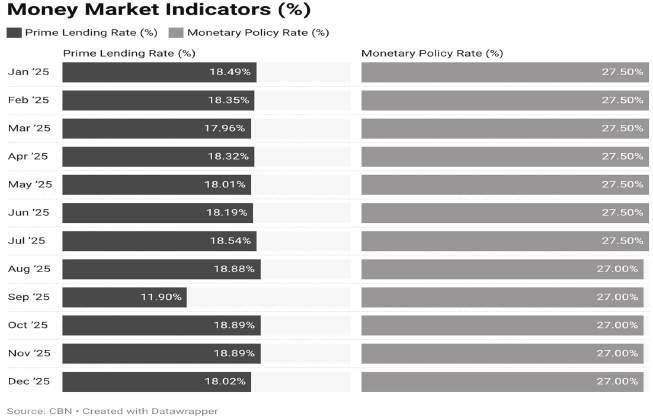
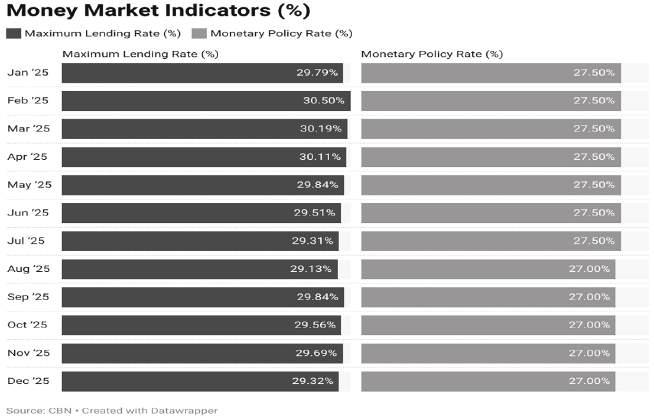
The disparity between Central Bank of Nigeria (CBN) monetary policy rate (MPR) and commercial banks’ lending rate closed further at the end of 2025 as the banking sector average maximum lending rate dropped to 29.32 per cent from 29.71 per cent in December 2024.
The Monetary Policy Committee (MPC) of the CBN had cut down on its Monetary Policy Rate to 27 per cent during its last meeting in 2025 from 27.50 per cent.
Average maximum lending rate reached 30.50 per cent in February 2025 when MPR was at 27.50 per cent.
The maximum lending rate refers to the highest interest rate that banks charge for loans, particularly to customers with lower credit ratings. It is often influenced by the MPR set by the CBN which can affect the cost of borrowing.
According to the CBN’s money market indicator, the reported 30.50 per cent and 29.31 average maximum lending in February and July
2025, were the highest and lowest rates, respectively.
DMBs typically adds a margin of +260 and -250 basis points above the interest rate to cover credit risk, inflation, and operational costs.
In the move to tackle inflation rate and stabilise Naira at the foreign exchange market, the CBN since August 2025 retained its rate at 27 per cent from 27.5per cent it was in 2024.
In December 2024, the maximum lending rate was 29.71 per cent, when the MPC
voted to retain the MPR at 27.50 per cent
The steep increase in the interest rate has sparked concerns regarding the potential impact on the cost of credit for businesses already facing economic hardships due to foreign exchange unification and fuel subsidy removal by the Federal Government.
CBN data revealed that the average maximum lending rate rose to 29.79 per cent in January 2025 from 29.71 per cent in December 2024 when MPC members of CBN voted to retain MPR to 27.50
per cent.
Early in 2024, the money market indicators of CBN showed a 27.07 per cent average maximum lending rate in January 2024 when MPR was at 18.75 per cent, while in March 2024, it closed at 29.38 per cent as MPR stood at 24.75 per cent in March 2024.
When the MPR increased from 26.75 per cent in August 2024 to 27.25 per cent, the average maximum lending rate also rose from 29.93 per cent in August 2024 to 30.21 per cent in September 2024.
CBN data showed that the average prime lending rate closed in 2025 at 18.02 per cent from 18.56per cent in December 2024. The prime lending rate indicates the possible rate offered to the most creditworthy customers by Nigerian banks. Nigeria’s average prime lending rate reached an alltime high of 19.66 per cent in November 2009 and a record low of 11.13per cent in March 2021.
As the Monetary Policy Committee (MPC) of the Central Bank of Nigeria (CBN) commences its meeting today, analysts are projecting the start of a cautious easing cycle, underpinned by sustained disinflation, improved exchange rate stability and moderating food prices. Expectations of a rate cut are anchored on January’s inflation data, which showed headline
inflation easing to 15.10 per cent year-on-year, extending the disinflation trend seen in recent months.
The moderation in both core and food inflation, alongside the naira’s relative stability and appreciation against the dollar year-to-date, has strengthened confidence that price pressures are gradually receding. Analysts argue that with inflation surprising on the downside and liquidity conditions still tightly managed, the MPC
now has room to recalibrate its previously aggressive tightening stance.
Head of Financial Institutions Ratings at Agusto & Co,. Ayokunle Olubunmi,said while a rate cut is likely, the Committee would tread carefully to avoid reigniting inflationary pressures.
“I think there will be some cuts, but I don’t think it’s going to be significant, 50 basis points or a maximum of 100 basis points. Even if there are
adjustments to the Cash Reserve Ratio (CRR), it will likely be minor,” he said.
He added that fiscal dynamics could also shape the MPC’s posture, particularly as government capital spending is expected to increase and political activities gather pace ahead of elections. In his view, the Committee would seek to balance growth support with the need to prevent excess liquidity from undermining recent macroeconomic gains.
Senior Market Analyst at FXTM, Lukman Otunuga, also maintained that the case for easing has strengthened.
“In a welcome development for Nigeria’s economy, inflation unexpectedly slowed in January, with prices rising 15.1 per cent year-on-year. This represented a slight decline from 15.2 per cent in December and was well below the 19.5 per cent median estimate,” he said.
According to him, lower
food prices have helped offset broader inflationary pressures, while the naira’s roughly eight per cent appreciation against the dollar year-to-date reinforces the argument for a rate reduction.
“The question is not if, but how much the CBN will slash interest rates,” he added, referencing the Committee’s decision to hold the benchmark rate at 27 per cent at its last meeting.
Kayode tokede
Nume e keghe
Nigeria Makes Progress at Technical Mission Organised by ICAO in West/Central Africa
Nigeria achieved an impressive outing as the International Civil Aviation Organization (ICAO) Western and Central African Office (WACAF) Regional Office Safety Team (ROST) concluded its technical assistance mission.
At the debriefing ceremony held at Authority’s Corporate Headquarters in Abuja at the weekend, the Director-General of Civil Aviation (DGCA), Capt. Chris Najomo, described the mission as a constructive and rigorous engagement that has further boosted Nigeria’s level of readiness for the ICAO International Coordinated Validation Mission (ICVM) slated for 15th –22th April, 2026.
He, however, assured the
ICAO delegation that all recommendations arising from the mission would be incorporated into an accelerated action framework with clearly defined timelines, measurable outcomes, and strengthened inter-directorate coordination.
While expressing appreciation to ICAO WACAF, Banjul Accord Group Aviation Safety Oversight Organisation (BAGASOO), Nigerian Safety Investigation Bureau (NSIB), Federal Airports Authority of Nigeria (FAAN), Nigerian Airspace Management Agency (NAMA), Nigerian Meteorological Agency (NIMET) and all NCAA personnel for their dedication and professionalism throughout the mission,
‘Peppe Terra Helps You Cook to Impress’
The world rarely pauses to applaud effort. What it recognizes and remembers are results, and the impressions left behind. This reality extends seamlessly into the kitchen. Cooking has grown far beyond the act of simply filling the belly, it has become a means of expression, a
marker of care, and a way to create lasting memories. Today, meals are not judged by how long they take to prepare but by how they taste, how they smell, and how they make people feel.
For home cooks, mothers, and professional chefs alike, this shift has redefined what it means to cook well. The modern kitchen has evolved from being just a place of routine to a space where impressions are formed.
Group Business Editor
Eromosele Abiodun
Deputy Business Editor
Chinedu Eze
Comms/e-Business Editor
Emma Okonji
Asst. Editor, Energy
Emmanuel Addeh
Asst. Editor, Money Market
Nume Ekeghe
Correspondents
KayodeTokede(CapitalMarkets)
James Emejo (Finance)
Ebere Nwoji (Insurance)
Reporter Peter Uzoho (Energy)
Peppe Terra Cooking Paste was created for cooks who understand that taste is not accidental. It is intentional. It is layered. It is built with care. Crafted from a rich blend of wholesome herbs, peppers, spices, and seasonings, Peppe Terra brings together ingredients that traditionally take time to wash, slice, blend, and balance. Rather than complicating the process, Peppe Terra simplifies it, offering a consistent flavour base that allows cooks to focus on creativity, presentation, and experience.
Capt. Najomo noted that the exercise had strengthened the Authority’s systems, sharpened institutional
focus, and would ultimately enhance Nigeria’s preparedness and overall safety performance.
Speaking on behalf of the team, Kebba Lamin Jammeh, acknowledged Nigeria’s responsiveness and the
high level of cooperation demonstrated by NCAA technical directorates and other partner agencies.
Telecoms operators under the aegis of the Association of Licensed Telecoms Operators of Nigeria, (ALTON), has highlighted key structural challenges militating against telecoms operations in the country, and has called on the Nigerian Communications Commission (NCC) to address the challenges to enable them serve the country better.
The operators also
assured the Chairman, NCC Board of Commissioners, Dr. Idris Ibikunle Olorunnimbe, of their determination to boost service quality and strengthen connectivity across networks, as well as their resolve to support education and ensure that no one is left behind, through the deployment of internet connectivity to enhance educational websites for research and development.
Telcos gave the assurance
in Lagos, while presenting their key challenges during a courtesy visit to NCC chairman at the NCC’s Lagos Zonal Office, led by the Chairman of ALTON, Gbenga Adebayo.
During the visit, Adebayo listed the key structural challenges to include: Fibre cuts by government road contractors, multiple regulations, and multiple taxation. According to Adebayo, the daily fibre cuts, often caused by federal
NIMASA, Nigerian Air Force Commit to
The Director General of the Nigerian Maritime Administration and Safety Agency (NIMASA), Dr. Dayo Mobereola is seeking enhanced cooperation between the Agency and the Nigerian Air Force (NAF) with the aim of strengthening tactical air support within the Deep Blue project.
The long awaited critical amenity that defines modern airports, which is Wifeless Fidelity (wifi), has been installed at the Murtala Muhammed International Airport (MMIA), Lagos by the Federal Airports Authority of Nigeria (FAAN)
Mobereola said this during a courtesy visit to the Chief of Air Staff, Air Marshall S. K. Aneke at the NAF Headquarters in Abuja on Friday. He emphasised the role of the Air Force as a strategic partner in enhancing maritime security in Nigeria and sustaining the momentum of the Deep
in collaboration with Nigeria’s reputable network provider, MTN.
Wifi at the airports enables travellers to communicate with their loved ones and keep tabs with their jobs while on transit
In many countries in Europe and the United States of America, wifi installation has become a sine qua non
Blue Project’s success. According to him, “we are here to seek the Air Force’s support given the importance of tactical air surveillance to the Deep Blue Project. Nigeria is the only African country with the record of zero piracy within the last 4 years. The Deep Blue Project platforms have been used to achieve
to airport operations; which absence to city airports is anathema in many countries.
Kuku who was represented by the Director of Operations, Captain Mahmoud Abdullahi, said airports are no longer mere transit lounges but micro-cities where contracts are negotiated, diplomatic briefs are reviewed and life’s
and state road construction contractors, are creating enormous economic losses, such as nationwide service disruptions, destruction of critical digital infrastructure, loss of assets without compensation, and banking, education, and security interruptions. He therefore suggested the urgent need for a structured preconstruction fibre mapping and mandatory coordination framework to address the issues with fibre cuts.
zero piracy and sea robberies in the Gulf of Guinea and we need your collaboration to sustain this momentum”. Mobereola further emphasized that international trade depends on security, which is why vessels prefer to go to or transit through countries where they are secured.
most emotional reunions unfold in real time.
According to its Director of Commercial and Business Development, Ms. Joy Agunbiade, the arrangement is structured as a Public-Private Partnership, with MTN leveraging branding rights within airport spaces to offset operational expenses.
Bi-Courtney Aviation Services Limited (BASL), operators of the Murtala Muhammed Airport Terminal 2 (MMA2), has reinforced its commitment to improving passenger experience by training its customer-facing staff on autism awareness, care, and inclusive service delivery.
The training was facilitated by Cradle Lounge Special Needs Initiative and led by Solape Azazi, WHO CST Master Trainer. The training is aimed at equipping frontline airport personnel with the knowledge, sensitivity, and practical skills required to effectively support passengers on the autism spectrum and their families.
It focused on understanding autism fundamentals and concepts, identifying signs of sensory overload or distress, demonstrating effective communication strategies, and encouraging teamwork that prioritizes compassion, dignity, and understanding for every traveller.
Speaking on the initiative, Kola Bamigboye, acting COO
and Head of Space & Premises Management of Bi-Courtney Aviation Services Limited, noted that the programme aligns with the organization’s vision of making MMA2 a truly inclusive airport terminal where every passenger—regardless of ability—can travel with comfort, confidence, and respect.
Chinedu Eze
Chinedu Eze
L–R: Chairman, Haldane McCall Plc, George Oguntade (SAN); Non- Executive Director, Nosirudeen Alabi; Group Managing Director, Dr Edward Akinlade; Independent Non-Executive Director, Adedapo Adekoje and Deputy Group Managing Director, Abiola Elugbaju, during the strategy meeting of Haldane McCalls Board of Directors in Lagos… recently
As UBA Redefines Diaspora Banking
Nume Ekeghe writes
on United Bank
for
Africa’s
strategic push to redefine
diaspora banking by transforming over $100 billion in annual remittance flows into structured investment, wealth management and long-term prosperity opportunities for Africans across the globe
In a strategic recalibration of Africa’s diaspora engagement model, United Bank for Africa (UBA) Plc has unveiled a comprehensive diaspora banking and investment platform aimed at converting over $100 billion in annual remittance flows into structured, long-term wealth creation opportunities.
The platform, launched at the bank’s global headquarters in Lagos under the theme “Beyond Banking: Powering the Global African Lifestyle,” marks a decisive shift from a remittance-centric framework toward an integrated financial ecosystem designed to serve Africans living and working across the globe.
For decades, Africa’s diaspora engagement has largely revolved around money transfers a steady stream of support that has underpinned household consumption, education, healthcare and small-scale investments. But while remittance inflows have grown to become one of the continent’s most resilient sources of foreign exchange, the broader potential of diaspora capital has remained underleveraged. UBA now wants to change that narrative.
From Transfers to Transformation
Speaking at the unveiling, UBA’s Head of Diaspora Banking, Anant Rao, described the initiative as a structural evolution in how Africa connects with its global citizens.
“For decades, Africa’s engagement with its diaspora has focused largely on remittances. Today, we are moving beyond that. This platform represents a transition from simple money transfers to a financial ecosystem where Africans globally
can bank, make payments, invest, protect their families, and build long-term wealth seamlessly,” he said.
Rao noted that diaspora remittance flows into Africa exceed $100 billion annually, making them not only one of the largest external capital sources for the continent but also one of the most stable. Unlike portfolio investments that often retreat during
periods of global volatility, diaspora inflows have historically remained consistent, even during crises.
However, he stressed that treating diaspora engagement purely as a remittance channel understates its developmental potential.
“Diaspora capital is not just a flow of funds it is a strategic growth partner for Africa. Our role is to provide a trusted platform
that converts capital into structured investment and shared prosperity across the continent.” The ambition, therefore, is to transform diaspora flows from consumption-driven transfers into investment-led participation in Africa’s economic expansion.
Integrated Financial Architecture
At the heart of the initiative is a coordinated ecosystem built in partnership with leading financial and service institutions, including United Capital, Africa Prudential, UBA Pensions, Afriland Properties, Heirs Insurance Group and Avon Healthcare Limited. Together, the partners demonstrated a seamless platform designed to address the full spectrum of diaspora financial needs. From cross-border banking and payments to asset management, pension planning, insurance coverage, healthcare access and structured real estate investment, the model seeks to eliminate fragmentation and build a single trusted gateway. Historically, diaspora Africans seeking to invest back home have had to navigate a patchwork of institutions engaging banks for transfers, property developers for real estate purchases, insurers for protection and pension administrators for retirement planning. This fragmentation often created inefficiencies, opacity and, in some cases, trust deficits. UBA’s ecosystem approach seeks to consolidate these services within a coordinated institutional framework, reducing friction and enhancing transparency.
The story continues online on www.thisdaylive.com
Ike Chioke: CBN Should Ensure Banks Does Not Invest Fresh Capital in Stock Market
The Group Managing Director, Afrinvest West Africa, Dr. Ike Chioke in this interview with Kayode Tokede urges the Central Bank of Nigeria to ensure that banks do not invest part of the raised funds from the recent recapitalisation in the stock market. He also speaks on Nigeria’s ambitious $1trillion economy plan, Capital Gain Tax among critical issues. Excerpts
With stability in the FX market, ease in inflation rate and increasing in foreign investment inflow into the country, has the Afrinvest’s report on Nigeria not achieving the $1trillion economy by 2031 changed?
The report is still consistent. The report stated that with the current GDP growth momentum, there is no pathway for Nigeria to achieve a $1 trillion economy by 2031. To achieve a $1 trillion economy, Nigeria’s GDP will need a double digit growth compounded.
So, we are saying that Nigeria needs double digit growth, maybe 12 to 15per cent per year, to achieve the $1 trillion economy target. So, imagine now that our GDP is around $240 billion and we are targeting 15 per cent growth.
What that means is that after one year, our GDP will be at $278 billion, and after five years that is by 2031 assuming we maintain the same 15per cent growth we will be around $550billion of GDP. Clearly, that is far below the $1 trillion target especially given that our 2025 GDP growth forecast is just above four per cent.
So for Nigeria to achieve that $1 trillion economy by 2031, it would need to maintain a GDP growth rate above 25per cent from now until then. This would mean that the Nigerian economy by now will be pumping practically on all sectors consistently for us to come close to that target. Meanwhile, we have elections coming in 2027 which means that the business of governance and policy execution would naturally be sidelined by politics. This will further dampen our ability to make the target.
How can the capital markets assist in funding infrastructure development across the country?
The capital market has always been there to support the government in funding development.
However, the question is whether the government is willing to attain the fiscal discipline, governance standards, and disclosure requirements to access the capital markets.
The Federal Government has done its own part, and the Federal Government, being at its level, is able to access the capital market and fund its deficit through domestic borrowing, and if it needs more, it goes internationally.
It has a Debt Management Office, it’s got a Budget Office, it’s got a Ministry of Finance that follows statutory arrangements of filing
reports that the capital markets can always look into.
Of all the 36 states, the only state that comes to the capital market consistently is Lagos State, because Lagos is disciplined. You know, they are PenCom-compliant, their audited accounts are available, they do their annual credit ratings, and as a consequence, they can come to the capital market and raise money. They raised over N240 billion during November last year, which is significant. Then you ask yourself if other states are really
serious about accessing the Nigerian capital market to raise funds.
The essential nature of the capital markets is to assist governments to get cheap funds to support projects. However, if the state government wants to access funds from the capital markets, it must present audited accounts, undertake credit ratings, enroll in the defined contribution pension scheme, and maintain adequate financial discipline. What is lacking is perhaps the commitment of many states to simply focus and comply with the requirements. If they were to comply, they certainly would have access to funding, and the funds are there. The Nigerian pension fund industry has assets under management of over N25 trillion and growing every month.
That is your source of funds. So, the governments may be clamouring for money, but the money is there. All they have to do is just do what they need to do, and they can access the money.
President Tinubu recently presented N58.28trillion budget for 2026 fiscal year. What key sectors of the Nigerian stock market investors should be focused on and how positioned is your firm to guide investors in tapping into the budget opportunities? I have to commend President Tinubu and his economic team for presenting a N58 trillion budget. The N58 trillion is an improvement, though marginal, on the N55 trillion 2025 budget. It doesn’t suggest however that there is anxiety about rapid growth, as I was trying to explain earlier about the need to get to double-digit GDP growth. Double-digit GDP growth would also require double-digit budget growth.
EATL, NUPRC’s Joint Move to Curb Oil Losses, Boost Revenue
Nigeria recorded a major win in its efforts to curb oil losses, increase federation’s revenue and boost local technically capacity with the successful execution of pioneering gravimetric flow metering calibration facility in Eket, Akwa Ibom State, marking a significant milestone in the country’s drive to boost transparency and accountability in crude oil production, writes Peter Uzoho
Last week, indigenous Nigerian company, Engineering Automation Technology Limited (EATL) and the Nigerian Upstream Petroleum Regulatory Commission (NUPRC) showcased the country’s growing technical capabilities with the launch of state-of-the-art and Nigeria’s first gravimetric flow metering calibration facility in Eket, Akwa Ibom State.
Conceived and built by EATL, the facility was executed under strict oversight of the NUPRC with support from the Nigerian Content Development and Monitoring Board (NCDMB) and other stakeholders, ensuring certificates are recognised for statutory reporting and compliance.
The modern facility signifies a major win for Nigeria as it will help to improve the accuracy of crude oil measurement, reducing revenue leakages and disputes arising from contentious figures. With precise measurement, Nigeria can ensure it receives its rightful share of royalties and taxes, strengthening its revenue management.
The project — the first of its kind in West Africa — addresses a long-standing industry challenge: uncertainty in crude measurement.
For decades, Nigeria’s oil sector has been faced with the challenge of inaccurate metering which has contributed to disputes, revenue leakages and reliance on overseas laboratories for calibration.
Previously, operators in the Nigerian upstream petroleum sector depended on foreign calibration services, incurring shipping costs, delays and foreign-exchange outflows.
The local plant now in place retains that value within the domestic economy as it is expected to create jobs, develop technical hubs, and deepen domestic expertise in petroleum measurement technology.
According to the promoters, the facility can calibrate turbine, ultrasonic, Coriolis, electromagnetic and positive displacement meters — critical devices used to determine
volumes of crude flowing through pipelines and export terminals — thereby improving operational efficiency, regulatory compliance and production optimisation.
NUPRC noted that accurate measurement will curb revenue losses, strengthen reserves management and free public funds for infrastructure, healthcare and education, while positioning Nigeria as a regional hub for metering excellence.
Industry analysts expect the development to improve transparency in royalties and taxes, reduce crude theft disputes and enhance investor confidence through verifiable production figures. The facility is also projected to develop technical hubs within the host community, create hundreds of skilled jobs and deepen domestic technical expertise in petroleum measurement technology.
A Transformstive Leap Forward
Speaking at the inauguration, Commission Chief Executive of the NUPRC, Mrs. Oritsemeyiwa Eyesan, commended EATL, the indigenous firm that developed the facility for its vision, belief, courage and patriotism in investing in the state-of-the-art project.
She described the plant as “a transformative leap forward”, featuring zero-touch automation, tamper-proof audit trails and high-precision gravimetric standards designed to eliminate human error and minimise downtime.
Fruit of Local Content Drive
In his welcome address, Managing Director/Chief Executive Officer of EATL, Dr. Emmanuel Okon, said the project emerged from Nigeria’s local content drive after indigenous companies were
encouraged in 2020 to build in-country technical capacity.
“Without dependable calibration, even advanced meters produce inconsistent narratives. With it, we align on a unified truth,” he said.
He said the facility incorporates traceable standards, automated data capture and documented uncertainty budgets certified to international benchmarks, allowing regulators, auditors and commercial partners to rely on a single verified dataset.
“This facility promises streamlined revenue reconciliation and compelling investment cases, as Nigerian oil producers will now experience reduced measurement uncertainties,.
“It empowers regulators and oil field operators to demonstrate precision, while communities receive transparent insights into production, royalties, and environmental impacts. Such clarity fosters social license which is the essential and ongoing consent that sustains exploration and production,” he added.
Okon explained that the facility was a vision conceived in 2020 shortly after the inauguration of the second batch of NCDMB’s Project 100 when the Board urged all 40 participating companies to invest boldly in Nigeria to enhance local capacity, with a pledge of unwavering support for any indigenous initiative aimed at building in-country expertise.
“Following this, EATL convened internal discussions, leading to a business proposal for a Multifaceted Flow Metering Calibration Facility, which was ratified by our Board in 2021. This proposal was subsequently submitted to NUPRC, receiving approval in 2022 after rigorous reviews and technical clarifications.
“What NUPRC is inaugurating today, in the presence of NCDMB, NUIMS and witnessed by industry leaders, transcends mere infrastructure or instrumentation. It
is a targeted solution to a persistent challenge that has long eroded time, resources, and stakeholder trust: the uncertainty in measuring product flow through our pipelines.
“Accurate measurement underpins operational economics, equitable revenue allocation, reporting integrity, and process safety. Without dependable calibration, even advanced meters yield inconsistent narratives. With it, however, we align on a unified truth,” Okon explained.
According to him, the EATL Gravimetric Multifaceted Metering Calibration Facility is engineered to accommodate diverse flow regimes and fluid properties, calibrating ultrasonic, Coriolis, positive displacement, turbine, and differential pressure meters across volumes typical in upstream, midstream, and downstream operations.
He added that the facility incorporates temperature and pressure conditioning, traceable reference standards, and automated data capture, noting that “Our uncertainty budgets are meticulously documented and certified to international standards, as verified by regulators. In essence, this facility delivers measurements that regulators, auditors, and commercial partners can trust unequivocally.”
Mitigating Contentious Crude Figures
As recognised by stakeholders in the oil and gas industry, easurement disputes often stem from mismatched baselines or irreproducible results and when a meter’s accuracy is unverified, every barrel invites contention.
Okon assured the people that this facility mitigates such conflicts by issuing documented calibration certificates and digital evidence confirming meters perform within specifications during testing.
e yesan Okon
SEVEN DECADES OF SOLID IMPACT
Engineer (Dr) Tony Ugochukwu Eze
Dear Tony,
Yours has been a journey defined by purpose, discipline, and integrity
Seventy is just a number Your clear vision, value for friendship, principled character, and family values are indisputable legacies worthy of emulation.
Today, we thank God for who and what He has made of you!
Happy 70th Birthday, Tony!
Congratulations!
'TIMI AL AIBE, OFR GREY UANSERU, AMNSE FRANK A . OKOSUN, FRIC S, FNIVS, RSV
FEDERAL HOUSING AUTHORITY
NO 26 JULIUS NYERERE CRESENT, ASOKORO. ABUJA, FCT.
PUBLIC NOTICE
RE: DEMOLITION OF HOUSES AT FHA ESTATE ABESAN 6 SURULERE, ALAGDADO, LAGOS.
The attention of the management of Federal Housing Authority has been drawn to the activities of some persons, parading as agents of the Authority, terrorizing residents of FHA Estate, Abesan 6 Surulere, Alagbado, Lagos, Lagos state.
These persons according to the findings of management have gone to the extent of extorting huge sums of money from unsuspecting and innocent Nigerians in the name of levying execution of an invalid court order on behalf of FHA and demolishing the homes of those who refuse to pay them.
In unmasking the culprits of this criminality, management through this medium wants to set the records straight to the members of the public.
In its bid to promote the Federal Governments National Housing Programme, Federal Housing Authority was granted land at Abesan 6, Surulere, Alagbado, Lagos State, measuring about 45.699 hectares for the development of about 545 units of 3 – bedroom detached bungalow known as Satellite “C” house type.
The Authority started the Control, Management and Development of the land, until sometime in 2002, when one Nurudeen Adewale and Bros (Nig) Ltd, instituted a legal action before the Lagos State High Court, in Suit No ID/4802002: NURUDEEN ADEWALE & BROS (NIG) LTD VS BOLU FAKILE & 0RS, with FHA serving as the 4th Defendant.
Owing to the inability of the Counsel engaged by the Authority to handle the matter diligently, default judgement was obtained in favour of the Claimant against the Authority in December, 2004.
To set aside the default Judgement, by the trial Court, the Authority debriefed the first Law firm for shabby prosecution and engaged the services of Messrs Okunowo, Okunowo & Co to handle the Appeal, and an engagement letter, Ref. No: FHA/FCA/LEG/507 issued him, dated 4th November, 2009.
While the Appeal was pending, and parties having exchanged briefs, the Claimant/ Respondent (Nurudeen Adewale & Bros Nig Ltd), went on, allegedly, to execute the default Judgement it had obtained.
In reacting to the fraudulent execution during the pendency of Appeal by Nurudeen Adewale & Bros (Nig) Ltd, Messers Okunowo, Okunowo & Co, filed the Authority’s processes seeking the Order of the Court setting aside the execution of the default Judgement, and the Court in its wisdom, agreed with the argument of the Authority, and on 31st January, 2011, found the execution illegal and directed the restoration of the Authority’s right over the parcel of land.
Owing to series of complaints of unethical behaviors by the Law firm of Messers Okunowo, Okunowo & Co, the Authority debriefed him from its services and accordingly served him a letter with Ref No: FHA/FCA/ LEG/507 dated 15th March, 2012, to that effect.
To ensure an efficient handling of the Appeal case, the Authority on 18th April, 2012 engaged the services of Chief Wole Olanipekun & Co to handle the Appeal, in Appeal No: CA/L/569/2012 between Federal Housing Authority and Nurudeen Adewale & Bros (Nig) Ltd & Bolu Fakile.
On 10th of May, 2017, the Court of Appeal in Suit No: CA/L/569/2012 upheld the new Appeal suit filed by Chief Wole Olanipekun & Co, having found same meritorious, and ordered that the matter should start afresh at the High Court of Lagos State.
To the consternation of the Authority however, Okunowo, Okunowo & Co, whose services were no longer needed by FHA, having being debriefed in 15th March, 2012, through a letter Ref No: FHA/FCA/LEG/507, in the company of some other unknown lawyers like Ademola Akerele, Esq, have allegedly been parading themselves falsely as FHA lawyers, thereby extorting money from unsuspecting members of the Abesan 6 Community, to evade their houses from being demolished.
It has also come to the knowledge of Management that the Bolu Fakile faction of Residents of Abesan 6, Surulere, Alagbado, Lagos State without the approval or prior knowledge of the Authority, in collaboration with staff from the Office of the Deputy Sheriff, Lagos State; and one Ademola Aderele, Esq (Mobile phone Nos: 08035737634 & 08023934886) levied illegal execution upon, or on the Authority’s property at the said Abesan 6, thereby dispossessing Residents, and fraudulently collecting money from some members of the public, in Account No: 130273742 maintained with Zenith Bank PLC and operated by Gofac Multi Concept Global Limited (a company linked with Ademola Akerele Esq), while those who could not offer money had their houses demolished.
FHA is reiterating its position that it did not employ the services of Okunowo, Okunowo & Co, having parted ways with them since 2012. Okunowo, Okunowo & Co’s action is a clear criminal impersonation aimed at defrauding innocent Nigerians and inflicting untold hardship on them.
Federal Housing Authority as a law-abiding government agency does not engage the services of third parties or thugs in carrying out her lawful duties.
FHA had through newspaper publications and radio announcements announced for Verification, Regularization and Ratification exercise in all her estates, including FHA estate Abesan 6, a window purposely designed by the Authority to address issues of proper title and ownership.
Management has the full resolve to take over all FHA estates through every legal and civilized means, and not through thuggery as displayed by Okunowo, Okunowo & Co and their accomplices.
Federal Housing Authority through this medium is therefore calling on the Lagos State Commissioner of Police, Office of the Deputy Sherrif, and the Lagos state Taskforce to desist from collaborating with Okunowo and his cohorts in this criminality, since they do not represent or work for Federal Housing Authority
FHA is therefore informing the general public that the Authority has nothing to do with the recent mayhem caused in Abesan 6 Surulere Alagbado, neither did it engage the services of any persons to do so.
The Authority is reviewing the situation and has taken all necessary legal steps against the perpetrators of the dastardly act, while reassuring the public that justice must be served.
FEDERAL HOUSING AUTHORITY
NO 26
SIGNED: MANAGEMENT
JULIUS NYERERE CRESENT, ASOKORO. ABUJA, FCT.
PUBLIC NOTICE
LIST OF APPLICATIONS FOR REGULARISATION OF AREA COUNCIL LAND DOCUMENTS NULLIFIED/CANCELLED BY THE HONOURABLE MINISTER OF FCT
(BATCH 1)
This is to inform the general public, particularly applicants who submitted Area Council land documents for regularisation, that the Minister of Federal Capital Territory, HIS EXCELLENCY, BARR. EZENWO NYESOM WIKE, CON has approved the NULLIFICATION/CANCELLATION of applications that failed the necessary/official checks for genuineness and have been confirmed to be fake.
Pursuant to the above, the Minister has approved that the nullified/cancelled applications be expunged from the genuine Area Council land documents regularisation database of the FCTA Departments of Land Administration and Abuja Geographic Information Systems (AGIS). The underlisted unsuccessful applicants are to take note of this public notice and be guided accordingly
This public notice is without prejudice to further notices and/or publications.
SIGNED: MANAGEMENT
TAJBank Earns A1 Credit Ratings from Agusto,
Kayode Tokede
TAJBank Limited, Nigeria’s biggest non-interest banking services provider, has again blazed new trails in world-class ethical banking standards as Agusto & Co and Datapro rating agencies ranked the non-interest lender A1 in credit risk and operational resilience assessment scorecards, making it among the best rated in the nation’s NonInterest Banking (NIB) space.
The latest ratings of TAJBank represented a notch up from Bbb+ which Agusto & Co rated it about two years ago, and was attributed to the bank’s high quality balance sheet and robust earnings ratios in the financial year 2025.
Commenting on the latest feat of the bank during an interactive chat with journalists at the sidelines of a banking stakeholders’ event on Friday in Abuja, the Founder/CEO, Mr.
Hamid Joda, described the improved rating by Agusto & Co and Datapro as a clear demonstration that TAJBank had been prioritising necessary risk management and operational controls, with clear focus on quality processes relating to first class standards, management, and administration lifecycle.
He said: “TAJBank Limited latest ratings by these reputable agencies have again validated the management’s commitment to world-class standardization of the bank’s operations, especially in terms of innovative, real time, techno-powered services and risk management for our growing customers on a sustainable basis.
“As we have consistently maintained, our primary goal is to deploy world-class operational standards and services to protect the interest of our customers with a view to surpassing their expectations and retaining TAJBank at the leading edge
of the NIB subsector on a sustainable basis.”
In his remarks on the ratings, the bank’s Executive Director, Mr. Sherif Idi, enthused: “The A1 ratings by Augusto & Co and Datapro, the foremost ratings agencies in the country, have reaffirmed TAJBank’s management’s unwavering commitment to best practice standards through prioritization of investment in human capital, innovative technologies and branch network expansion to consistently make our bank the preferred choice for customers in the NIB subsector of the banking sector.”
Industry analysts believe that the upgraded ratings of TAJBank is well deserved given its impressive imprint in the nation NIB’s landscape over the past few years, particularly the management’s sustained drive to deepen financial inclusion at the grassroots.
NSDC, Firm to Set Up Sugar Project in Niger State
Sunday Ehigiator
The National Sugar Development Council (NSDC) and the Lee Group are set to establish a multi-million-dollar sugar production project in Niger State, following assurances of full support from Governor Umar Bago.
Speaking during a recent meeting with officials of the Council and the Lee Group at the Government House in Minna, Governor Bago pledged to make land available in any part of the state for the proposed project.
According to him, “Niger State is open to serious investors. We have the land, water, and political will to support
projects that will grow our economy and create jobs. The government is ready to provide land for this sugar project from any part of the state that the investor considers suitable,” the governor said.
The Executive Secretary/ Chief Executive Officer of the NSDC, Mr. Kamar Bakrin, led a delegation of Council officials alongside representatives of the Lee Group, owners of GNAL Sugar, as part of efforts to drive strategic investments in the sugar sector.
Bakrin reaffirmed the Council’s commitment to advancing Nigeria’s quest for self-sufficiency in sugar production through credible partnerships.
Also speaking, the
Project Director of the Lee Group, Mr. Lam Wing Ki Wilkins, underscored the company’s over six decades of experience in industrial and agro-industrial development, including sugarcane cultivation, processing, and integrated value-chain development.
“Lee Group has been in the industrial sector for more than 60 years, and we understand that sugar production is a long-term investment. Our interest in Niger State is based on its natural advantages, especially land and water resources, and we are prepared to work patiently with the state government and NSDC to develop a sustainable sugar project,” he said.
Sterling One Pushes Gender,Youth Financial Inclusion Agenda
Nume
Ekeghe
Deepening its partnership with the African Union Women and Youth Financial and Economic Inclusion Initiative (AU WYFEI), Sterling One Foundation participated in the Presidential Breakfast Meeting on Financing and Reaffirming Africa’s Gender Commitments, reinforcing its commitment to advancing inclusive finance and broad-based economic transformation across the continent.
Sterling One in a statement noted that the convening brought together distinguished African leaders, including President of the Republic of Ghana, John Dramani Mahama; Vice President of The Gambia, Muhammed B.S. Jallow; ministers; development finance institutions; private sector leaders and key continental stakeholders, to advance actionable financing strategies for women and youth across Africa.
Africa’s gender agenda remains chronically underfunded, and genderresponsive programmes are often the first casualties during fiscal constraints. That must change.”
President John Dramani Mahama emphasised: “Women are Africa’s most underutilised asset. If we are to accelerate Agenda 2063 and achieve the Sustainable Development Goals at scale, we must harness the full strength of our human capital. Africa cannot grow by leaving its women behind. Gender equality must be embedded in macroeconomic planning, public finance systems, and peace and securityframeworks, otherwise, our development will remain incomplete. Despite decades of declarations,
Speaking at the meeting, Olapeju Ibekwe, CEO of Sterling One Foundation, stated: “Financial inclusion is not a social intervention; it is an economic imperative. Africa’s transformation depends on how intentionally we finance women and youth at scale. Through strategic partnerships, blended finance mechanisms, and investment readiness platforms, we are working to bridge the capital gap and unlock Africa’s $100 billion Investment Agenda. Our commitment is clear: to move from conversations to capital.”
The price of OPEC basket of twelve crudes
L-R: Executive Director, Dr. Amaka Okeke, and Franklin Nechi, Chairman, both of Optiva Capital Partners, at a Media Briefing to announce their participation at the recent Grenada National Resort Topping-Out Ceremony marking the completion of a significant milestone
stood at $63.14 a barrel on Monday, according to OPEC Secretariat calculations.
The OPEC Reference Basket of Crudes (ORB) is made up of the following: Saharan Blend (Algeria), Djeno (Congo), Zafiro (Equatorial Guinea), Rabi Light (Gabon), Iran Heavy (Islamic Republic of Iran), Basrah Medium (Iraq), Kuwait Export (Kuwait), Es Sider (Libya), Bonny Light (Nigeria), Arab Light (Saudi Arabia), Murban (UAE) and Merey (Venezuela).
OPEC DAILY
Stock Market Gains N8.14trn on Buy Interest in MTN Nigeria, Dangote Cement
Kayode Tokede
The domestic stock market maintained its bullish trajectory last week, appreciated by N8.14trillion in its Week-onWeek (WoW) performance over strong buying interest in MTN Nigeria Communications Plc, Dangote Cement Plc, among others
Capital market analysts
stated that investors on the Nigerian Exchange Limited (NGX) are positioned ahead of their December 2025 earnings releases due for this week, a critical factor driving the growth of some fundamental stocks.
As MTN Nigeria and Dangote Cement gained 10 per cent WoW each, the market capitalisation gained 6.95 per cent or N8.14 trillion to close the week at N125.164 trillion.
As a result, the NGX All-Share Index advanced by 6.95 per cent to 194,989.77 basis points, bringing the month-to-date and year-to-date returns to +17.9per cent and +25.3per cent, respectively.
Sectoral performance was broadly in line with the overall market sentiment, as the Industrial Goods (+10.1per cent), Oil & Gas (+8.7per cent), Consumer Goods (+6.1per
cent), Banking (+5.7per cent) and Insurance (+4.7per cent) indices advanced.
Market breadth remained firmly positive, with 71 stocks recording gains against 41 decliners, signaling widespread buying momentum across counters.
Zichis Agro Allied Industries led the gainers table by 60.74 per cent to close at N17.36, per share. Japaul Gold & Ventures
followed with a gain of 60.16 per cent to close at N14.90, while Infinity Trust Mortgage Bank went up by 59.09 per cent to close to N15.75, per share.
On the other side, R.T Briscoe led the decliners table by 20.78 per cent to close at N13.80, per share. MeCure Industries followed with a loss of 18.99 per cent to close at N84.25, while Tripple Gee
and Company declined by 18.80 per cent to close at N5.40, per share.
Overall, a total turnover of 7.662 billion shares worth N252.566 billion in 345,118 deals was traded last week by investors on the floor of the Exchange, in contrast to a total of 4.652 billion shares valued at N193.326 billion that exchanged hands prior week in 286,751 deals.
AS OF FEBRUARY /19/26
A Mutual fund (Unit Trust) is an investment vehicle managed by a SEC (Securities and Exchange Commission) registered Fund Manager. Investors with similar objectives buy units of the Fund so that the Fund Manager can buy securities that willl generate their desired return.
An ETF (Exchange Traded Fund) is a type of fund which owns the assets (shares of stock, bonds, oil futures, gold bars, foreign currency, etc.) and divides ownership of those assets into shares. Investors can buy these ‘shares’ on the
floor of the Nigerian Stock Exchange.
A REIT (Real Estate Investment Trust) is an investment vehicle that allows both small and large investors to part-own real estate ventures (eg. Offices, Houses, Hospitals) in proportion to their investments. The assets are divided into shares that are traded on the Nigerian Stock Exchange.
GUIDE TO DATA:
Date: All fund prices are quoted in Naira as at 18 Febuary 2026, unless otherwise stated.
DAILY PRICE LIST FOR MUTUAL FUNDS, REITS and ETFS
Adaora Umeoji: A new Standard of Leadership at Zenith Bank?
Arinze Anapugars
Being the managing director of Zenith Bank is not, as the cliché goes, a tea party or a walk in the park. The shoes left behind by its founder and pioneer chief executive, Jim Ovia, generally referred to as the czar of Nigeria’s banking industry, are simply too big to fill.
In Adaora Umeoji, the current Group Managing Director and Chief Executive Officer of Zenith Bank Plc, however, Nigeria bears witness to an underestimated leader whose short tenure at the premier financial institution has not just exceeded expectations, but has transcended them with luminous distinction.
When she assumed office as the first female CEO in the illustrious history of Zenith Bank in June 2024, even though the moment was heralded as historic, a few held their breadth, unsure of what to expect. In their reckoning, symbolism alone does not sustain institutions of Zenith Bank’s stature.
Although not much was known about her in the public space before her appointment as group chief executive of Zenith Bank, her name was well known in banking circles not just as one of the most glamorous female bankers in the country but also, unarguably, as one of the best marketers the industry had seen in recent time. She had established a reputation for raking in billions in deposits. It was after her appointment that her profile became public knowledge, confirming that, indeed, there was much more to Dr Adaora Umeoji beyond beauty and elan.
After acquiring a bachelor’s degree in Sociology from the University of Jos, Umeoji further prepared herself for the post she currently occupies by bagging additional bachelor’s degrees in accounting and law, the last a first-class honours from Baze University, Abuja. She further honed her management and leadership skills at the world’s most prestigious training institutions including the Harvard Business School, The Wharton School, the MIT Sloan School of Management, and the Columbia Business School where she acquired a certificate in Global Banking Programme.
As intimidating as these credentials are, they are but the prologue to Umeoji’s story. The true narrative is what has characterized her near two-year reign at Zenith. Her record thus far has been one written in diligence, strategic acumen, human touch, and an intrepid spirit that has further fortified one of Africa’s most
formidable financial institutions. Her fingerprints are already visible on the bank’s financials. Under her stewardship, Zenith Bank has not just maintained its position at the apex of Nigerian banking but has, indeed, soared higher. In the bank’s full-year 2024 financial results, Zenith Bank recorded an extraordinary 86% growth in gross earnings, driven by a 138% surge in interest income and expansion of its loan book, a testament to disciplined execution and market acuity. Profit before tax climbed to N1.3 trillion, while profit after tax surpassed N1 trillion, marking a 52.5% increase year-on-year. Total assets swelled by approximately 47% to N30 trillion, and customer deposits rose to N22 trillion, reflecting deepening trust among customers and investors alike. In dollar terms, the bank posted a robust profit of $671 million in 2024. This underscores its position as one of Africa’s most profitable lenders. This impressive financial trajectory carried forward into 2025. Even though the full year results are not available yet, in the first quarter alone, Zenith Bank reported a $194.4 million profit, with total assets climbing past $20 billion, while shareholders’ equity and retained earnings also showed notable increases, clear indicators of sustained growth momentum.
By September 2025, total assets had grown from 29.6 trillion in September 2024 to 31.18 trillion, a 4.1% increase. Deposits grew from 22.0 trillion to 23.69 trillion, a 7.7% increase, while gross earnings rose from 2.8 trillion to 3.37 trillion, representing a 16% growth.
But these impressive numbers tell only a part of Adaora’s success so far at Zenith Bank. The company’s expansion has not been confined to financial metrics alone. Beyond domestic performance, Zenith Bank has strengthened its international footprint, notably expanding its presence into Paris, France. This strategic move signals both confidence and ambition, and positions the bank to deepen cross-border trade relationships. It also broadens its influence within global financial markets.
However, beyond growth, balance sheets and shareholder returns lies a dimension of her stewardship that renders her impact even more profound - the humanity she brings to corporate leadership. For Adaora Umeoji, the rise to the pinnacle of corporate ladder is not the definition of true success; it is, rather, a vehicle for social transformation. Her philanthropic engagements, from supporting education to driving community development, health initiatives and humanitarian causes, testify to a worldview in which corporate success and
community upliftment are inseparable. In a world often enamored of ruthless ambition, she represents a different archetype: the leader whose strength is amplified, rather than diminished, by compassion.
Her journey carries a resonance far beyond the corridors of finance. To the horde of young women across Nigeria, her remarkable success affirms that excellence knows no gender, that preparation, diligence and perseverance remain the most powerful determinants of achievement. More importantly, she has also shown that the glass ceiling, once shattered, should not be replaced with invisible barriers of self doubt.
But perhaps her most extraordinary quality is that she has not sought to lead as “the first woman” at the helm of Zenith Bank, but simply as the best steward of its present and certainly its future. In doing so, she has answered those who doubted her ability to fill the big shoes at Zenith, thereby elevating the conversation from symbolism to substance.
Adaora Umeoji’s leadership is distinguished not merely by profitability, but by principle. Her style is deliberate, disciplined, and anchored on institutional integrity. She leads with composure in turbulent economic climates and with clarity in moments that demand bold decision-making. Her diligence is exacting; her resolve, unmistakable.
As Nigeria navigates economic transformation and global realignment, institutions like Zenith Bank will continue to play a pivotal role in sustaining growth and confidence. At its helm stands a leader whose short tenure has already proven that disciplined strategy, courage under pressure, and an unwavering commitment to service can coexist and, indeed, thrive together.
Her golden jubilee is this February. And, as she celebrates the milestone, we are reminded that true leadership is not measured merely by titles held, but by lives touched. Adaora Umeoji’s story continues to unfold; it is already a testament to what is possible when brilliance is burnished by diligence, and power is tempered with compassion. In paying tribute to her, I celebrate not only a milestone in corporate history by a distinguished amazon whom I am proud to call a townswoman, but a model of leadership for our time, and for generations to come.
•Arinze Anapugars is a media and Public Relations Consultant.
Umeoji
ANOTHER ARBITRATION VICTORY FOR NIGERIA...
Report: Private Equity Firms Freeze Deals in Nigeria, Begin Lobby over Higher Tax
Emmanuel Addeh
Private Equity firms in Nigeria are slowing dealmaking, with some freezing investment as they lobby the government to soften the impact of its tripling of a capital-gains tax, people familiar with the situation have told Bloomberg News.
Members of Nigeria’s Private Equity and Venture Capital
Association (PEVCA) met authorities last month and are seeking further engagement after the 30 per cent tax came into effect at the start of the year, the people said, asking not to be identified so as not to complicate the talks. One large fund has halted new investments, they said, asking that it not be identified.
Pevca declined to comment.
Kano Fire: REAN Seeks Adherence to Safety Standards, Begins Probe
Emmanuel Addeh in Abuja
The Renewable Energy Association of Nigeria (REAN) yesterday said that solar power systems, when properly designed, installed and maintained remain some of the safest and most reliable sources of electricity.
REAN, in a statement by its Communication Director, Oisereime Lloyd-Dietake, was reacting to reports concerning a recent fire incident that occurred at Singer Market, Kano, which has been speculated to have been linked to an explosion from a solar battery system.
While it expressed concern over the incident and extended its thoughts to the individuals, businesses, and families affected, the group maintained that safety remains paramount in the deployment and operation of renewable energy systems across Nigeria.
Given that the cause of the incident has not been officially confirmed by the relevant authorities, REAN urged the public and media to refrain from speculation while investigations are ongoing and verified facts are being established.
“Solar power systems — including battery storage components — when properly
designed, installed, and maintained in accordance with established electrical and safety standards, are safe and reliable. REAN continues to advocate for strict adherence to technical standards, certified installation practices, and the use of qualitycompliant components across the renewable energy value chain.
“Over the years, REAN has championed industry standardisation through: Development and promotion of installation guidelines aligned with international best practices; capacity building and structured training programmes for installers and technicians; advocacy for enforcement of technical and safety standards; and collaboration with regulatory authorities to strengthen compliance and consumer protection mechanisms,” the statement added.
In response to the incident, REAN stated that it has activated its internal review and incident response mechanism to: Obtain verified facts from relevant stakeholders; interrogate and analyse information gathered to ensure accuracy as well as engage technical experts and authorities to investigate the root cause(s).
PEVCA’S members include Actis LLP, Norrsken22 and African Capital Alliance.
The industry, which saw $3 billion in deals concluded between 2020 and 2024, earns money by investing in private companies and then selling them at a profit. Those deals, the people said, were predicated on paying a 10 per cent tax when exiting investments and the new rate will deter companies from transactions in Africa’s most populous country.
“There is now going to be a lot of planning to strategically exit from Nigeria-based platforms,” Omobola Adu, an economist at CSL Stockbrokers in Lagos, told Bloomberg.
The imposition of the tax,
which also applies to holdings in listed companies, has roiled Nigerian markets in recent months, with the country’s stock market tanking before the authorities softened some of the legislation.
Private equity is the sector that could be the hardest hit, the people said. Locally, these firms primarily invest in dollars and are also set to pay tax on some loss-making investments because the duty is levied on the value measured in naira, a currency that has lost two-thirds of its value over the last three years, the people said.
Nigeria has made some exemptions, Taiwo Oyedele, the chair of Nigeria’s tax-reform committee, said when contacted
by Bloomberg. Those new tax laws provide for exemption on gains in companies certified as startups in line with the Nigeria Startup Act as long as they hold the stock investment in Nigeria for at least two years. To qualify for certification, the startups need to be at least one-third owned by Nigerians, less than 10 years old and be focused on digital technology.
Exemptions are also made for sales of companies or stakes worth less than N150 million ($112,000) and if the money is reinvested in another Nigerian company.
According to the report, those provisions would only protect a limited number of investments
in small companies and overall, the tax changes will deter risk taking, the people said, adding that they want the exemptions to apply to a broader swath of investments.
“The fiscal architecture is not peripheral — it is central to capital recycling, successorfund formation, exit feasibility, and Nigeria’s competitiveness relative to peer markets,” PEVCA said in its 2026 outlook. The government should ensure that the capital-gains tax supports “rather than inadvertently constraints — the inflow of long-term private investment essential to enterprise growth and job creation,” the organisation added.
No fewer than 10,000 persons living in the Alimosho and Ikorodu areas of Lagos would benefit from free healthcare services organised to commemorate the 89th birthday of former President, Chief Olusegun Obasanjo. This was disclosed in a statement by his Special Assistant on Media, Kehinde Akinyemi.
The statement said the medical outreach was under the auspices of Olusegun Obasanjo Foundation.
It said the Lagos Medical Mission will hold in the suburbs of Ikorodu and Alimosho local government areas of Lagos State between February 27 and March 4.
According to Chief Executive Officer of the foundation, Dr. Olalekan Makinde, "In celebration of the 89th birthday of His Excellency, Chief Olusegun Obasanjo, GCFR, former President of the Federal Republic of Nigeria and Founder of the Olusegun Obasanjo Foundation, the Olusegun Obasanjo Foundation
(OOF) is proud to announce a large-scale Lagos Medical Mission aimed at providing comprehensive, life-changing healthcare services — completely free of charge to more than 10,000 Nigerians.
"This special medical outreach is organised as a legacy-driven humanitarian initiative to mark Chief Obasanjo’s 89th birthday, reflecting his lifelong commitment to service, nation-building, and the well-being of the Nigerian people."
Makinde stated that the outreach would start on Friday, February 27 at Ijede LCDA Council Hall, Ijede, Ikorodu, Lagos, and Saturday, February 28 at Imota Mini Stadium, Imota, Ikorodu, Lagos.
He added that on Monday, March 2 to Wednesday, March 4, the exercise would move to Alade Stadium, Command Road, Agbado/Oke-Odo in Alimosho, Lagos, where beneficiaries would receive free ear care services and provision of free hearing
aids for qualified beneficiaries, free eye care services, detailed eye screening and provision of recommended prescription glasses, and referral and sponsorship for eye surgeries.
Makinde added that the exercise will also include free cardiovascular screening, blood pressure checks, hart health assessments, preventive medical counselling, free general medical consultation, doctor consultations diagnosis and treatment, and distribution of essential medications at no cost.
He emphasised that through the Lagos Medical Mission, the foundation continued to embody Obasanjo’s vision of accessible healthcare and compassionate intervention for the underserved.
He stressed, “As we celebrate the 89th birthday of His Excellency, Chief Olusegun Obasanjo, GCFR, we honour his legacy in the most meaningful way possible — by serving the people.
"This medical mission is a gift
to the nation, especially to those who may not otherwise have access to quality healthcare.”
Makinde added, "The outreach is open to elderly citizens, children and families, individuals living with untreated hearing or vision challenges, persons with cardiovascular concerns, low-income and vulnerable residents across Lagos.
"Residents are encouraged to arrive early, as services will be rendered strictly on a first-come, first-served basis."
He said, "The Olusegun Obasanjo Foundation (OOF) is a humanitarian organization dedicated to transforming lives through strategic interventions in health, education, agriculture, youth empowerment, and community development.
"The Foundation’s Hearing Programme, in particular, has restored hearing and hope to thousands across Nigeria and beyond.
James Sowole in Abeokuta
in Abuja
L-R: Lead Counsel, Mr. Basil Udotai; Director General, Bureau of Public Procurement (BPP), Dr. Adebowale Adedokun; and Attorney General of the Federation and Minister of Justice, Mr. Lateef Fagbemi, SAN, during the
formal presentation of the final award in the 6.2 million dollar arbitration in favour of Nigeria against European Dynamics UK Limited in Abuja… recently
NIGERIAN AMERICA CHAMBER OF COMMERCE ECONOMIC OUTLOOK EVENT...
NSIA, Japan Agency Sign $50m Impact Innovation Fund to Empower Startups
Bagudu hails partnership Umar-Sadiq:
James Emejo in Abuja
Nigeria Sovereign Investment Authority (NSIA) has finalised agreements with Japan International Cooperation Agency (JICA) to launch a $50 million Impact Innovation Fund aimed at strengthening the Nigerian start-up ecosystem.
The deal will provide patient capital to pre-seed, seed, and early-stage start-ups, addressing critical social challenges, including agriculture, healthcare, education, energy, waste and water management.
Speaking at the signing ceremony between both parties over the weekend in Abuja, Minister of Budget and National Planning, Senator Abubakar Bagudu,
commended the project.
Bagudu said the federal government remained committed to exploring rewarding partnerships to better the lot of Nigerians.
Managing Director/Chief Executive, NSIA, Aminu Umar-Sadiq, said, “The fund represents a transformative step for Nigeria’s start-up ecosystem.
"By providing early-stage ventures in high-impact sectors with the capital and support they need to grow; we are enabling innovators to tackle some of Nigeria’s most pressing challenges.
"Our collaboration with JICA underscores our commitment to entrepreneurship, inclusive growth, and sustainable development.”
Tinubu Mourns Ex-UBA Chairman, Isreal Ogbue
Deji Elumoye in Abuja
President Bola Tinubu has commiserated with the family, friends, and associates of the former Chairman of the United Bank for Africa (UBA), late Chief Isreal Ogbue, who passed on at the age of 99.
With a distinguished career in the Federal Civil Service, the National Insurance Corporation (NICON), and NAL Merchant Bank, Chief Ogbue served as a nonexecutive director of UBA from 2005 until 2011, when he was appointed Chairman. He served on the board until 2013. Throughout his tenure, he displayed dignity and strategic foresight and provided steady, principled leadership during a pivotal period in the bank’s transformation.
Chief Ogbue was the father of Dr Awele Elumelu, wife of
UBA Group Chairman, Tony Elumelu.
The President, in a release issued on Sunday by his Adviser on Information and Strategy, Bayo Onanuga, extended his condolences to the Elumelu family and the extended family members over this loss. He also sympathised with UBA's Board, management, and staff.
Tinubu acknowledged the numerous testimonies praising the exemplary life and times of the late UBA Chairman, who was a devoted family man, committed public servant, and a Christian. He lived humbly, dedicating his time, treasures, and experience to serving the church, the poor, the vulnerable, and his community.
The President prayed that Almighty God will receive the soul of the departed patriarch and bless his family.
fund will create jobs, improve livelihoods, contribute to sustainable economic development
Under the terms of the agreement, JICA will provide $14 million in grant support, while NSIA will contribute about $20 million to match the grant.
Structured as an onshore public fund, the initiative combines financial support with technical assistance to help start-ups refine products, scale operations, and expand into new markets.
Umar-Sadiq said the fund was expected to create jobs,
improve livelihoods, and contribute to sustainable economic development across the country.
Preparations were underway to operationalise the fund and develop a pipeline of high-impact start-ups ready for investment, he stated.
NSIA further reaffirmed its commitment to advancing socio-economic development through strategic partnerships that scale impact, expand innovative solutions, and
unlock access to capital.
Japanese Ambassador to Nigeria, Suzuki Hideo, said the agreement aimed to achieve development goals by the "co-creation" of social value through dialogue and collaboration with Japan’s partner countries, while mobilising private finance in combination with ODA.
Hideo said, “This project is part of our package for Nigeria that Japan proactively proposes a set of appealing
cooperation programmes in the areas that are strategically important for Japan based on its foreign policy priorities.
“Today’s project represents Japan's first-ever implementation of this development model globally, specifically involving a fund that incorporates private capital.
"The government of Japan hopes this new project will take root in Nigeria and bear fruit swiftly."
National Sports Commission Backs Upcoming Power Sector Games
Emmanuel Addeh in Abuja
The National Sports Commission (NSC) has pledged full support for the upcoming Nigerian Electricity Supply Industry (NESI) games, with the Chairman of the commission, Shehu Dikko, assuring that it would not only promote workplace harmony but improve the sports economy of local communities.
Dikko spoke in Abuja when he received the management of the NESI Platform, organisers of the NESI Week, led by its Chairman, Obiora Anthony. The games will
include participation of workers and other stakeholders in the power sector.
The NSC chair stated that unlike the oil and gas games which is in its 48th year, the maiden edition of NESI games would require a lot of technical support to be successful.
He said: “In addition to the support, it will bring the people together. You will compare what other people are doing in the industry and how you can support yourselves to do your core business of getting us electricity across the country.
“We are here to support you with whatever you need to make the games successful, especially since this is the first one”.
According to him, the games align with the commission’s objectives and President Bola Tinubu’s ‘Renewed Hope Agenda’.
“We are ready to give our full support and provide technical assistance to ensure the NESI Games are held successfully,” Dikko added..
Dikko encouraged the Steering Committee to develop sports facilities within their operational
areas and inspire members to contribute to community development through sport.
In his remarks, the Chairman, NESI Platform, Anthony, said the games which would feature seven sports would bring the electricity industry stakeholders together.
He stated: “NESI Games 2026 is a structured national sporting initiative designed to promote institutional cohesion, workforce wellness, leadership development, and cross-sector collaboration within Nigeria’s Electricity Supply Industry”.
Joseph Oyewole Takes Oath of Office as S' Court Justice February 25
Alex Enumah in Abuja
Justice Joseph Olubunmi Oyewole will on February 25 take his oath of office as Justice of the Supreme Court of Nigeria. The administration of the oath would be done by Chief Justice of Nigeria (CJN), Justice Kudirat Kekere-Ekun, at Courtroom Two, Supreme Court complex, Abuja, by 2pm, a statement by
Director, Information and Public Relations, Supreme Court, Dr Festus Akande, disclosed on Sunday.
The bench of the apex court had depleted recently with the retirement of some justices upon attainment of the mandatory retirement age.
Oyewole, prior to his elevation, had served as a justice of the Court of Appeal
and Presiding Justice of the Enugu Division.
According to the statement, Oyewole's appointment underscored the commitment of the Nigerian judiciary towards upholding the rule of law, ensuring justice, and strengthening the bench with experienced and dedicated jurists.
The statement added that the new justice will bring his wealth
of legal expertise and integrity to the apex court to further enhance its capacity to deliver fair and timely judgements.
The statement observed that the inauguration will mark another step in rejuvenating the judiciary and ensure the continued delivery of justice in line with the highest standards of integrity, competence, and impartiality.
L-R: Board Member, Nigerian America Chamber of Commerce (NACC), Dr. Ikenna Nwosu; Economic Adviser to the President, Mr. Tope Fasua; Visiting Professor at Nigeria Defence Academy, Prof. Ken Ife; Dr. Adesua Erediuwa of the Nigeria Institute of International Affairs; President NACC, Alhaji Tajudeen Balogun; Dep. Director Research at CBN, Dr. Blessing Gaiya; Chairman NACCIMA Bilateral Committee, Prince Dapo Adelegan; Dep. President NACC, Mr. Ehi Buraimoh; and IMF Resident Representative, Christian Ebeke, at the Nigerian America Chamber of Commerce Economic Outlook Event in Lagos... recently
FUNERAL SERVICE OF ELDER PIUS UBENG...
Again, Nigeria Wins $6.2m Arbitration as Tribunal Dismisses European Tech Giant's Suit
Fagbemi commends victory, warns it's no longer business as usual
Alex Enumah in Abuja
Nigeria has recorded another arbitration victory to the tune of $6.2 million (approximately N9.3 billion).
The victory came barely three years after the country upturned a judgement debt of about $11 million in the Process and Industry Development (P& ID) Gas Agreement deal.
While in the case of P& ID the London arbitration had dismissed allegations of contract breach against the federal government, after establishing manifest corruption in the contractual agreement, in the latest case involving an international technology contractor, European Dynamics UK Ltd, the tribunal held that the complainant failed to meet its responsibility regarding the delivery of the products it was seeking compensation for damages.
A statement by Kamarudeen
Ogundele, Special Assistant to the President (Communication and Publicity), Office of the Attorney General of the Federation and Minister of Justice, on Sunday, disclosed that the favourable judgement was delivered by Mrs Funmi Roberts (Sole Arbitrator), on February 3, 2026, who sat at the International Centre for Arbitration and Mediation, Abuja.
According to the statement, European Dynamics UK Ltd had dragged the Bureau for Public Procurement (BPP) to the arbitration tribunal over alleged breach in the execution of a national e-Procurement project.
While stating that the contract concerned the design, development/customisation, supply, installation, and maintenance of a national electronic Government Procurement (eGP) system financed with support from
the World Bank, the statement clarified that at the centre of the dispute was the User Acceptance Test (UAT).
It explained the UAT carried out by BPP identified significant functional deficiencies, including critical omissions and errors affecting system performance.
The statement said, "Upon assuming office, the Director-General of the BPP, Dr. Adebowale Adedokun, inherited a stalled technology project together with ongoing arbitration proceedings.
European Dynamics UK Ltd had claimed approximately $2.4 million for alleged milestone completions, $3 million in general damages and an additional $800,000 settlement claims.
"Prior to Dr. Adedokun’s appointment, there had been discussions around an out-of-court settlement. The Bureau, however, elected to
continue with the arbitral process, maintaining that payments must be tied strictly to demonstrable value delivered.
"That led to the engagement of the specialised Nigerian legal team with expertise in technology contracting to review the technical and contractual issues in dispute."
The statement disclosed that the bureau argued that unlike conventional supply contracts, where delivery might occur upon physical handover, software customisation projects were performance-validated.
The agency further submitted that delivery crystallised only upon satisfactory UAT confirming the system operated in accordance with the technical requirements, statutory workflows, and operational environment for which it was commissioned.
After listening to all parties in the arbitration, the tribunal,
Borrowing: NGO Tasks FG on Unlocking Underutilised Assets for Economic Prosperity
A non-governmental organisation, Foundation for Peace Professionals (PeacePro), at the weekend said the federal government did not need to borrow its way to prosperity while over $1.5 trillion assets value lay unused.
The group said, “The stranded and underutilised assets across the country are not merely losses; they are the foundation for inclusive growth, institutional strength, and sustainable peace of the country.”
A statement issued by the group in Ilorin, signed by its Executive Director, Comrade Abdulrazaq Hamzat, said
unlocking stranded capital should become a national economic priority, describing it as one of the fastest pathways to restoring Nigeria’s growth momentum and strengthening its global competitiveness.
Hamzat stated, "The research reviewed by the group indicates that as much as $900 billion may be tied up as dead capital in residential real estate and agricultural land."
The statement cited estimates of tens of thousands of abandoned buildings owned by federal, state, and local governments valued at approximately N9.5 trillion.
The statement said,
"Industry assessments further suggest that more than 56,000 abandoned projects across sectors, including roads, public buildings, and housing estates are collectively valued at N12–17 trillion, in addition to billions of naira invested in abandoned or uncompleted power infrastructure projects."
Hamzat described the situation as a “silent economic emergency,” arguing that Nigeria’s growth challenges stem less from resource scarcity and more from failure to activate existing assets.
According to PeacePro's analysis, the estimated $1.5 trillion in stranded capital spans key sectors, including energy
infrastructure, transportation assets, housing and real estate, industrial and manufacturing facilities, closed factories and moribund industrial clusters; Public infrastructure projects stalled due to funding gaps or policy shifts.
Hamzat stated that the upper estimate was more than five times Nigeria’s nominal GDP of approximately $285 billion, underscoring the scale of unused economic capacity.
“Nigeria is not a poor country. Nigeria is a poorly activated economy,” he said.
“The issue is not absence of capital, but immobilised capital,” he added.
in the ruling, which was final and not subject to appeal, dismissed the contractor’s claims in its entirety, relieving Nigeria of potential financial exposure estimated at over $6.2 million (approximately N9.3 billion) in claimed payments and damages.
According to the statement, the tribunal accepted Nigeria’s position that the deficiencies in respect of the products fell within the vendor’s responsibility to remedy at no additional cost.
It held that the contractor, as the technical expert, bore
the obligation to ensure the delivered system complied with contractual requirements irrespective of earlier technical documents that might have been approved by BPP.
The tribunal also found no evidence that the Bureau consented to the merger of multi-phase modules into a single phase.
“Nothing in the contract suggests that such a merger is permissible, particularly given that payment is structured in phases. Consequently, the contractual framework was distorted," it ruled.
Scholarship Row: Trainees Received N3.2m, Abandoned Programme, Says Azikel
of the state and was not a scam.
The management of Azikel Group has revealed that two trainees of the aviation scholarship programme designed to empower young indigenes of Bayelsa state received N3.2 million each and abandoned the programme.
This is coming against the backdrop of a report published by an online medium, with the caption:
“Bayelsa Pilot Trainee Sues Azikel Founder N1bn over Alleged Aviation Scholarship Scam.” The report also said that the two trainees had written a 49-page petition to the Bayelsa State Assembly.
Lead Communications Officer, Azikel Group, Austin Ebipade, in a statement made available to journalists in Yenagoa, dismissed the falsehood, stating that the aviation scholarship programme was designed to empower young people
Besides , he explained that it was not a public relations stunt as erroneously claimed, but a genuine project with no political colouration.
Ebipade said that Azikel Aviation Training programme is a philanthropic initiative designed to support Bayelsa youths aspiring for aviation training in pilots for helicopter, fixed wing aeroplane and aircraft maintenance engineering.
" Contrary to false reports, the scholarship programme is a genuine initiative aimed at empowering young individuals in Bayelsa State who aspire to pursue careers in aviation.
“The programme is devoid of any political affiliation or any financial benefit to the sponsor. It was for the sole purpose of supporting young Bayelsans who are interested in pursuing an aviation career and to obtain the best training and return to Nigeria.
L-R: Speaker, Akwa Ibom State House of Assembly, Mr. Udeme Otong; Envoy, Mr. Nsentip Akpabio; President of the Senate, Senator Godswill Akpabio; Chairman, Senate Committee on Solid Minerals, Senator Ekong Sampson; and Chairman, House Committee on Health Institutions, Mr. Patrick Umoh, during the funeral service of Elder Pius Ubeng, brother in law to the Senate President, in Ukana Ikot Ntuen, Essien Udim Local Government Area of Akwa Ibom State, on Saturday
Hammed Shittu in Ilorin
Olusegun Samuel in Yenagoa
INAUGURATION OF THE LANTORO-OKE-YIDI-ISALE AKE JUNCTION ROAD...
UNESCO Read and Earn Federation (UNESCO-REF) has partnered with Police Officers Wives Association (POWA) and United Kingdom Global Universities Application Portal (UAPP) to support Nigerians pursuing higher education abroad in over 250 universities across the world. The programme, in partnerships with the universities, will help cushion the expenses of schooling abroad, regardless of the courses of beneficiaries.
of the Memorandum of Understanding (MoU) on Wednesday in Abuja.
President of UNESCO-REF, Abdulsalami LadigboluOranmiyan, made the assertions at the signing
Ladigbolu-Oranmiyan said the new partnership was designed to complement existing student funding interventions.
He explained that while the current scheme of NELFUND mainly supported students
studying within Nigeria, the new facility would remove financial barriers for those seeking admission into foreign institutions.
He said the pilot phase of the programme would commence at the police secondary school before expansion to other parts of the country by September.
Ladigbolu-Oranmiyan
APC Chairman Commits N10m to Boost Nigeria’s Engineering Sector
The National Chairman of the All Progressives Congress, Prof. Nentawe Goshwe Yilwatda, weekend, pledged a ₦10 million donation to support the initiatives of the Nigerian Institute of Electrical and Electronic Engineers (NIEEE), reaffirming the party’s commitment to strengthening Nigeria’s engineering sector.
Yilwatda made the pledge at the investiture ceremony of the
institute's 22nd President and Chairman-in- Council, Felix Adegboye, in Lagos.
It was themed, 'Resilient and Intelligent Digital Solutions: Sure Way to Economic Growth of Nigeria'.
Yilwatda who was represented by the Head of Lagos Ports Operations for the National Environmental Standards and Regulations Enforcement Agency (NESREA), Vonkur David Nankpark, noted the contribution underscores
his belief in the critical role engineers play in driving national development and technological advancement.
He added that it is the party's commitment to ensuring that continuous learning thrives within NIEEE.
He commended Nigerian engineers for their contributions to solving complex national challenges, particularly in key infrastructure areas such as power generation and telecommunications.
The APC chairman noted
the party recognises the importance of professional expertise in shaping policies that promote sustainable growth.
He assured the institute that, " the APC-led government remains committed to creating an enabling environment for engineers to thrive through sustained investment in education, research and development, as well as policies that encourage innovation and entrepreneurship."
Ramadan: Sokoto Govt Distributes Financial, Food Support to Islamic Scholars
The Sokoto State Government has begun distributing financial and food assistance to imams and Islamic scholars across the 23 Local Government Areas of the state, as part of efforts to strengthen religious institutions and support clerics.
Governor Ahmed Aliyu flagged-off the disbursement at a ceremony held at the
Government House, Sokoto.
The initiative aims to enable beneficiaries to prepare for and observe the forthcoming Ramadan fast with ease. Each of the 2,100 Jumu'at mosque imams will receive N100,000, while 98 imams in Sokoto metropolis will also get food assistance, including five bags of rice.
Deputies will receive N50,000 and three bags of
rice, and mu'azzins will get N50,000 and two bags of rice.
Additionally, 200 senior Islamic scholars will receive N200,000, and 200 other Islamic scholars will get N100,000, in recognition of their contributions to the development of Islam and promotion of moral and social values.
Governor Aliyu reaffirmed his administration's
commitment to promoting religious harmony and improving the welfare of Islamic scholars, describing them as "vital partners in fostering peace, unity, and moral development in society."
The Commissioner for Religious Affairs, Professor Jabir Sani Maihulla, lauded the governor's initiative, noting it would greatly support the Islamic community.
added that the intervention aligned with the education strategic priorities and national development goals focused on improving access to learning.
According to him, eligibility is open to all categories of learners, including undergraduate, masters and doctoral candidates, regardless of institution type or location.
He stated, “This facility ensures that our collaboration is not only about opening doors to international university applications, but also about providing the financial backbone that makes opportunities attainable.
“It is this reason for
our synergy, combining UNESCO-REF vision with UAPP Global reach.
“This is to dismantle these barriers, democratise access, and create a holistic framework where ambition is matched with resources and dreams are matched with pathways.”
Ladigbolu-Oranmiyan said the scheme would accommodate students from public and private schools across the country without language restrictions.
He announced sponsorship of admission processes for the first 40 police secondary school students selected under the initiative.
Kogi Rolls Out New Tax Rates to Boost IGR
Ibrahim Oyewale in Lokoja
As part of efforts to key into the new federal government tax law administration, the Kogi State Government has rolled out new tax rates for the MDAs in the state.
Arising from the critical stakeholders' engagement with the State Ministries, Departments and Agencies (MDAs),the Kogi State Internal Revenue Service has unveiled the newly harmonized tax rates under the Tax Administration Act of 2025.
The Executive Chairman, Kogi State Revenue Service, Sule Enehe, gave the comprehensive overview of the new tax law and its implications for Federal, States and Local Governments' revenue streams, emphasised the national significance of the harmonized rates.
He described them as a critical step toward a more transparent, equitable and efficient tax system while declaring that printed copies of the updated rates will be distributed to all relevant MDAs to guarantee uniform implementation.
Enehe stressed that the fiscal landscape of Nigeria is evolving rapidly, and so States can no longer rely predominantly on federal allocations.
"To secure our economic future, we must strengthen our internally generated revenue base, making it the central pillar of our State's sustainability", he added.
Hassanat Salawu, the Director of MDAs at KGIRS, delivered a technical briefing on the new tax rates as compiled by the Joint Revenue Board (JRB).
Onuminya Innocent in Sokoto
Funmi Ogundare and Esther Oluku
L-R: The Ogun State Deputy Governor, Engr. Noimot Salako-Oyedele; Governor Dapo Abiodun; Speaker, Ogun State House of Assembly, Rt. Hon. Oludaisi Elemide and the Alake and Paramount Ruler of Egbaland, Oba Adedotun Aremu Gbadebo, during the inauguration of the Lantoro-Oke-Yidi-Isale Ake Junction Road in Abeokuta South Local Government...recently.
WHEN NIGERIAN NAVY DINFO PAID COURTESY VISIT TO THISDAY NEWSPAPER...
Oando Begins Phase Two of Stock Dividend Distribution to
Addeh
Oando Plc, one of Africa’s leading indigenous energy solutions providers, has commenced the second tranche of its stock dividend distribution, continuing the issuance of 1.28 billion additional shares to shareholders.
A statement by the firm yesterday, stressed that the significant milestone followed the shareholder approval granted at the company’s 45th Annual General Meeting (AGM) held on December 17, 2024. It recalled that at the meeting, shareholders authorised the board to distribute shares received pursuant to the AGM resolution to shareholders of record, on a pro-rata basis, at dates determined
by the board from time to time.
“Pursuant to this mandate, Oando officially notified the Nigerian Exchange Limited and the investing public on February 5, 2025, that the board, at its meeting on January 30, 2025, resolved to implement the distribution in phases over a 36-month period commencing January 30, 2025.
“The first tranche (tranche
Shareholders
1) of the distribution, covering shareholders on the register at the close of business on February 14, 2025, was successfully completed in August 2025, marking the first step in the company’s commitment to rewarding shareholder loyalty and confidence,” the statement added.
Building on this success, on
Edo NMA Pushes Back Underhand Dealing Claims at UBTH as Management Increases Fees for Services
The Edo State Branch of the Nigeria Medical Association (NMA) on Sunday refuted claims that the University of Benin Teaching Hospital (UBTH) has handed over some of its operations to private hands.
A viral post suggested the hospital's leadership had improperly engaged a private laboratory and mortuary for healthcare services.
A statement signed and made available to newsmen in Benin by the Edo NMA Chairman, Dr. Eustace Oseghale, urged the public to disregard the allegations, suggesting mismanagement and the engagement of a private laboratory in the UBTH.
Meanwhile, patients are in for hard-times as the management of the hospital has increased most of its services b over 100 percent.
It was gathered that the present management headed by the Chief Medical Director (CMD), Prof. Idia Ize-Iyamu, increased the admission deposit for its Intensive Care Unit (ICU) from N500,000 to N1,000,000, representing a 100 per cent hike in the cost of accessing critical care services at the facility.
The development was conveyed in an internal memorandum dated January 30, 2026, issued by the Office of the Chairman, Medical Advisory Committee (CMAC), approving an upward review of ward consumables and admission
deposits across the hospital.
According to the memo, the review became necessary in view of prevailing funding realities and the need to promote efficiency, reduce waste, and enhance the maintenance and procurement of medical consumables.
Under the revised structure, ICU admission will now require a deposit of N1,000,000, while the Labour Ward Complex deposit has been fixed at N200,000.
Other new admission deposits include N150,000 for medical wards, N200,000 for private wards, N100,000 for day-case admissions, N150,000 for orthopaedic wards, N200,000 for neuro wards, and N150,000 for obstetrics and gynaecology wards.
In addition, ward consumables have been reviewed upward to N20,000 per week for patients in the Labour and Emergency Complex, while ordinary wards will now attract N15,000 per week.
The memo stated the adjustments are aimed at ensuring sustainable hospital operations and improving service delivery.
The development sparked reactions among residents, many of whom took to social media to criticise the Chief Medical Director, decrying what they described as an astronomical increase in hospital charges and the reported privatisation of laboratory services at the Accident and Emergency (A&E) unit.
Electoral Act: Expert Unveils Technology to Protect Results
The Electoral Act 2026 amendment has taken a new turn as a former Postmaster General of Nigeria, Bismark Adegbuyi, unveiled a locally developed technology he said could safeguard election results and strengthen public confidence ahead of the 2027 general elections.
Adegbuyi, who is chairman, founder and chief executive officer of Grandview Digital Private Infrastructure for
Public Service (G-DPIPS), wrote in an open letter to the Nigerian voting public that while concerns over Clause 60 of the amended law are legitimate, technology offers a practical solution to protect the integrity of polling-unit outcomes.
Nigeria has been gripped by intense debate since President Bola Tinubu signed the Electoral Act amendment, with Clause 60 allowing
electronic transmission of results to remain optional while permitting manual collation where connectivity challenges exist.
The provision has triggered widespread concern among voters, civil society groups and opposition parties who fear manual processes could weaken transparency.
Addressing the issue in a statement on Sunday, Adegbuyi said, “Public anxiety about this
provision is understandable. Nigerians want assurance that results recorded at polling units remain authentic throughout the collation process.”
He added that resolving the credibility question does not necessarily require political confrontation.
“The solution to this concern need not be political confrontation; it can be technical reinforcement,” he stated.
February 10, 2026, Oando stated that the Board of Directors approved the commencement of tranche 2, which involves the distribution of 604,348,395 ordinary shares to shareholders on record as of June 30, 2025.
The shares, it said, will be distributed on a pro-rata basis of two new ordinary shares for every 27 existing ordinary shares held. The tranche 2 distribution is expected to be completed on or before March 31, 2026, it pointed out.
“This announcement underscores Oando’s unwavering commitment to enhancing shareholder value through strategic initiatives that balance growth with sustainability. As part of this effort, the phased distribution approach ensures
market stability and continued investor confidence in Oando’s long-term prospects.
“This development follows Oando’s strong operational and financial performance in 2024 and 2025, following its transformational $783 million acquisition of Nigerian Agip Oil Company (NAOC) and subsequent expansion across Africa, including its award of Block KON 13 in Angola’s Onshore Kwanza Basin.
“Through this continued share distribution, Oando reaffirms its position as a shareholderfocused company, driving value creation, operational excellence, and sustainable growth as it strengthens its footprint across the African energy landscape,” the statement emphasised.
Maiden Enugu Campus Hackathon: Mbah Boosts Young Innovators Dreams with Investment Grants for Winners
Emmanuel Ugwu-Nwogo in Enugu
Youth innovators have got their dreams boosted with investment grants, weekend, as the maiden edition of the state sponsored Enugu Campus Hackathon competition was concluded with winners smiling home with cash rewards.
The Campus Hackathon was initiated as an innovation platform to consolidate the state’s place as a rising hub for youth-led digital enterprise and venture creation in line with the Enugu State Digital Transformation Strategy.
Speaking at the grand finale of the event held at the International Conference Centre, Enugu, Governor Peter Mbah expressed delight at the successful conclusion of the competition.
The governor, represented hy the Secretary to the State Government (SSG), Professor
Chidiebere Onyia, said the Enugu Campus Hackathon was designed to identify and accelerate high-potential technology talents across tertiary institutions in the state.
He stated the Hackathon reflects his administration’s deliberate strategy to build a modern, innovation-driven economy anchored on enterprise, technology and private-sector growth.
“Enugu State must move from a consumption-driven structure to a productivity-led economy powered by enterprise, technology and a vibrant private sector.
"Today, we are not merely providing a platform for competition. We are architecting systems and institutional frameworks designed to unlock the vast potential of our youth. Our mission is to build a modern economy capable of competing on the global stage,” he stated.
Emmanuel
in Abuja
L -R: Command Information Officer, Western Naval Command, Lieutenant Commander Ernest Jim; Director of Information (DINFO), Nigerian Navy, Captain Abiodun Folorunsho; Managing Director of THISDAY Newspaper, Mr. Eniola Bello; and Lieutenant S. U. Stephen, when the DINFO led a delegation on a courtesy visit to THISDAY Newspaper House in Ikoyi, Lagos, last Thursday
CHIEMELIE EZEOBI
Felix Omoh-Asun in Benin
2025 LAFARGE AFRICA CUSTOMER AND TRANSPORTERS AWARD...
Lagos Pushes for Circular Economy Adoption to Drive Sustainable Growth
Mary Nnah
Lagos State is making a concerted effort to drive the adoption of a circular economy, with the goal of transforming Nigeria's economic landscape.
To this end, the Special Advisor to the Lagos State Governor on Climate Change and Circular Economy, Mrs. Titi Oshodi, has declared the circular economy is no longer a concept, but a reality in Lagos and Nigeria.
Speaking recently in Lagos during the official launch of the Circular Economy Fund (CEF) hosted by the Intense Group, in Lagos, which marked a significant milestone in Nigeria's journey towards sustainable development, Oshodi emphasised the importance of collaboration and data-driven approaches in achieving this goal.
"The circular economy in Nigeria and in Lagos, in particular, is no longer a concept under discussion. It is a system in motion," Mrs. Oshodi said, highlighting the progress made in advancing circular economy practices in the state. Her statement underscores the growing momentum behind Nigeria's transition to a more sustainable and environmentallyfriendly economy.
According to Mrs. Oshodi, the circular economy has gained momentum across various states in Nigeria, with Abia, Anambra, Ogun, and Kano States making notable progress.
"It was really inspiring to see that this is not just limited to Lagos... They are putting their feet on the ground, committing to climate action, and really pushing forward," she said.
Oshodi emphasized the importance of data-driven
approaches, saying, "One of the things that I also noticed from the platform is how we must start being intentional about data. We must become very logical, create innovative systems and intelligent platforms that can help us to aggregate the numbers of what we are depositing."
She also highlighted the potential of the circular economy to drive job creation and economic growth, saying, "It's jobs that are not just in the big cities, they are close to home in the communities as well."
Intense Group's Business Growth Manager, Michael Ugbodu, echoed these sentiments, stating that the circular economy is an economic program that supports job creation, drives production, and business efficiency. "Awareness is not the problem, adoption is," he said, emphasising the
need to support businesses and initiatives looking to adopt circular economy practices.
Ugbodu explained that Intense Group has been working to turn initiatives into adoption through awareness campaigns, behaviour-change programs, and sustainability storytelling.
"So, what we are trying to do in the circular economy is we support businesses, we support initiatives that are looking to adopt a circular economy. We help ideas come from awareness campaigns, sustainability storytelling, and we have done this in the past with big brands," he said.
The CEF, unveiled at the event, aims to provide debt financing and technical assistance to support circular economy enterprises.
Olawale Adebiyi, CEO of WeCyclers, shared insights from his organization's experience
Stakeholders Advocate Education, Morals to Shape Youth Devt in Nigeria
Stakeholders across the education and traditional leadership spectrum have called for renewed commitment to value reorientation as a pathway to building a morally grounded and nationally conscious youth population in Nigeria. This charge was the focus of the Annual Lecture hosted by the Osun State University College of Education, Ipetu-Ijesa Campus, where participants emphasised the need for deliberate actions to shape the behaviour and character of young people regarded as the nation’s future leaders. The lecture, themed
“The Indispensable Role of Community Leaders in Shaping Youth Morality and National Character,” attracted traditional rulers, academics, government officials, religious leaders, and students, creating a platform for reflection on the ethical direction of the country.
Representing the Vice Chancellor, Clement Odunayo Adebooye, the Deputy Vice Chancellor (Academic, Research and Innovation), Lawrence Adetunji Kehinde, said the university remains committed to producing graduates distinguished by both intellectual excellence and strong character.
He observed that subtle changes in everyday conduct
point to broader moral challenges, stressing that stronger collaboration between educational institutions and community leaders is vital to reversing the trend.
Delivering the keynote address, the Olojudo of Ido-Osun Kingdom, Olayinka Oyetunde Ishola Jokotola II, described the period as a defining moment in the nation’s moral history.
He warned that the legacy of current leaders will be measured by the values instilled in the younger generation.
He identified integrity, resilience, digital empathy, and civic responsibility as pillars necessary for national rebirth, noting that youth involvement
in social vices often reflects gaps in guidance from homes, institutions, and leadership structures.
He therefore urged religious leaders, policymakers, educators, and the private sector to create environments that reward ethical conduct.
Similarly, the Owa of Igbajo Kingdom, Makinde Ademola Stephen Kayode, emphasised the family as the foundation of moral development, calling for a revival of communal responsibility in child upbringing.
In her welcome address, the Provost of the College, Florence Adeoti Yusuf, described traditional rulers as vital custodians of culture and moral direction.
in empowering communities through recycling and creating value from waste.
"We have had to make a lot of value from nothing," he said, emphasizing the importance of making a compelling case for social impact and financial return when seeking investment.
"WeCyclers was able to raise capital of about 5 million euros... and we had to ensure that we made a very compelling case about the opportunity," Adebiyi said, highlighting the challenges of fundraising for social impact businesses.
He added, "We had to ensure that we made a very compelling case about the opportunity...
‘It’s
and not only do we sell the opportunity for social benefits, but we also had to make a strong case for financial return."
Adebiyi also shared WeCyclers' journey, noting the organization has been working since 2012 to empower people and create a sustainable business model.
"We try to empower people by giving them a means of income, but also ensuring that we do it in a sustainable way," he said.
Joshua Adedeji emphasised the importance of access to finance and mindset shifts in driving the circular economy forward.
Unconstitutional’, SERAP Asks Tinubu to Stop Phone Tapping Rules
Chuks Okocha in Abuja
The Socio-Economic Rights and Accountability Project (SERAP) has urged President Bola Tinubu to direct the Minister of Communications, Innovation and Digital Economy, Bosun Tijani, to immediately withdraw the Lawful Interception of Communications Regulations, 2019, describing the rules as “unconstitutional, unlawful and inconsistent with Nigeria’s international obligations.”
The call was contained in a letter dated February 21, 2026, and disclosed in a statement signed on Sunday by SERAP’s Deputy Director, Kolawole Oluwadare.
The organisation also asked the President to initiate “a transparent and inclusive legislative process” to ensure that any lawful interception framework complies with constitutional safeguards, judicial oversight requirements and Nigeria’s international human rights obligations.
SERAP’s letter followed
allegations by former Kaduna State Governor, Nasir El-Rufai, that the National Security Adviser, Nuhu Ribadu, had his phone conversation intercepted. El-Rufai reportedly claimed, “The NSA’s call was tapped. They do that to our calls too, and we heard him saying they should arrest me.”
Reacting, SERAP blamed the Lawful Interception of Communications Regulations (LICR) 2019, stating that “the Regulations establish a sweeping mass surveillance regime that violates Nigerians’ constitutionally and internationally guaranteed human rights, including to privacy and freedom of expression.”
The organisation said the regulations grant “overly broad and vague powers to intercept communications on grounds such as ‘national security,’ ‘economic wellbeing,’ and ‘public emergency,’ without adequate judicial safeguards, independent oversight, transparency, or effective remedies.”
Yinka Kolawole in Osogbo
L-R; Logistics Director, Lafarge Africa Plc, Osaze Aghatise; Group Managing Director/Chief Executive Officer (GMD/CEO), Lafarge Africa Plc, Lolu Alade-Akinyemi; 2025 National Volume ChampionUbotex Nigeria Limited, Elder Ubong Bassey Obot; his wife, Ekaette Ubong Obot; Commercial Director, Lafarge Africa Plc, Gbenga Onimowo; Head of Marketing, Lafarge Africa PLC, Oluyomi Moses, and Country Head of Sales, Lafarge Africa Plc, Anthonilious Okojie during the 2025 Lafarge Africa Plc's Customer and Transporter awards held in Lagos on Saturday
THE LAGOS TECHFEST...
Nigeria Not Ready for Full e-Transmission,
I Support 2026 Electoral Law, States Plang
Decries Plateau killings
Senator representing Plateau Central, Diket Plang, has backed the new electoral law, saying the nation was not ready for full e-transmission of election results.
Speaking during an interactive session with journalists in Jos, Plang, who praised the president for assenting to the bill “in good time,” argued that elections were time-bound and required early legal clarity.
Dismissing claims that the President did not fully understand
the bill before signing, he said, “What makes you think the president should know about the bill much more than you who go into research?”
He welcomed the inclusion of electronic transmission of results but warned that laws must avoid loopholes that could lead to election cancellations.
He cited personal experience with result-form mix-ups during his party primaries as evidence of the need for transparency.
Responding to questions on whether Nigeria was
technologically prepared for real-time electronic transmission of results, Plang insisted the country was not yet ready, especially in rural areas with poor connectivity.
“Do you think there is internet service in all nooks and crannies of this country?” he asked, warning that premature implementation could disenfranchise rural voters:
“Those of us in the villages will be the victims… our results may end up being cancelled,” he added.
Plang dismissed insinuations that the senate was subservient to
the presidency, arguing that the relationship between both arms of government is “progressive” and based on mutual respect.
He noted that the Senate has, at times, rejected ministerial nominees and corrected executive communications.
On the recently concluded APC congresses in Plateau State, the senator described the exercises as peaceful and harmonious, crediting the outcome to a power-sharing template between the legacy APC group and new entrants aligned with the governor.
At APC Congress, Akpabio Forecasts 180,000 Votes for Tinubu, Eno in Essien LG
Sunday Aborisade in Abuja
President of the Senate, Godswill Akpabio, has projected a landslide victory for the All Progressives Congress (APC) in Essien Udim Local Government Area of Akwa Ibom State, declaring that the party was on course to deliver over 180,000 votes for President Bola Tinubu and Governor Umo Eno.
Akpabio, according to a statement by his Media Office on Sunday, made the prediction shortly after the APC concluded
its local government congress in Essien Udim, where party officers emerged through a consensus arrangement.
The statement explained that the Senate President described the congress as peaceful and historic, saying the outcome signalled renewed grassroots endorsement for Tinubu and Eno ahead of future electoral contests.
“My people have once again endorsed President Bola Tinubu.
I am very satisfied with the exercise. This is very, very
significant,” Akpabio said.
According to him, the people of Essien Udim have consistently demonstrated loyalty to the APC and its standard-bearers, noting that the latest endorsement was not the first of its kind.
“They have done this before. It is not the first time the people of my local government have endorsed President Tinubu and Governor Eno,” he stated.
Akpabio further claimed that traditional rulers in the area had thrown their weight behind both leaders, insisting
that there should be no political consultation in their domain outside Tinubu for president and Eno for governor.
“They have also said Governor Eno has done well and they stand by him. The traditional rulers have equally said there should not be any form of consultation in their domain for the position of President outside Asiwaju Tinubu and the position of Governor outside Eno, and the people stand by that,” he added.
NGO Launches Action Plan to End Violence Against Women with Disabilities
James
A Non-Governmental Organisation (NGO), Centre for Women Health and Information, has launched a Technical Action and Sustainability Plan (TASP) Towards Ending Violence Against Women With Disabilities. The TASP was developed by in collaboration with key stakeholders in Ogun State with support from African Women Development Fund. The event, held at Continental Suites, Abeokuta, Ogun State, was attended by several stakeholders including Joint National Association of People Living With
Disabilities (JONaPWD), Justice Development and Peace Commission (JDPC), Federation of Muslim Women Association of Nigeria (FOMWAN), Nigeria Security and Civil Defence Corps (NSCDC), Community Development Associations, Ministry of Women Affairs and Ministry of Justice.
Other organisations that attended the launch are Women for Peace & Gender Equality Initiative; Education Gender Youth and Family Network (EDUGFN); New Era Initiative for Persons with Disabilities and Women Advocacy on HIV/AIDS Prevention and Other Diseases (WAHPOD)
“I assure you that in 2027, the people of Plateau will witness one of the most peaceful and brotherly elections ever,” he said.
He, however, condemned the recent violent attacks and mining-related deaths in the state, describing them as “sorrowful, shocking and painful events” that demanded urgent national attention.
The senator said he was “deeply pained” by the killing of citizens in Garga, Kanam Local Government Area, noting that insecurity has continued to claim the lives of “innocent, dedicated and hard-working Nigerians.”
He added that the Senate has resolved to push for increased defence funding and ensure timely
release of appropriated funds to security agencies.
“It pains me in no small measure that this issue of insecurity is still claiming the lives of innocent… Nigerians,” he said.
Plang also expressed concern over the mining incident in Zuraq, which reportedly resulted from poisonous gas emissions.
As a member of the Senate Committee on Solid Minerals, he said the tragedy underscored the need for compulsory insurance for mining workers and stronger public education on mining safety.
“We must educate our citizens who are participating in mining to ensure that lives are safe,” he noted.
‘Alleged N13.7bn Fraud Perpetrated under Oyetola's Govt, His Payroll Was Audited’
Yinka
Kolawole in Osogbo
The spokesperson to Governor Ademola Adeleke of Osun State, Mallam Olawale Rasheed, has insisted that any payroll fraud found within the Osun State civil service system was committed during the administration of former governor Gboyega Oyetola.
He insisted that the payroll that was audited was that of the former administration, adding that Governor Adeleke would not have contracted Sally Tibbot Firm if he had anything to hide.
The governor's spokesperson made this known when he appeared on Arise Television to make clarification on the issue of alleged N13.7 billion yearly payroll fraud in the state. Rasheed also slammed the opposition All Progressives Congress (APC) for accusing
Adeleke of misconduct, noting that whatever discrepancies found in the Osun payroll were done during the administration of the APC leader in Osun who is now the Minister of Marine and Blue Economy.
"The governor engages Sally Tibbot and if the governor has anything to hide, he wouldn't have done that and secondly, the payroll that was audited was that of the immediate past administration under Governor Gboyega Oyetola.
"So if there is any so-called N13 billion fraud uncovered by Sally Tibbot, it means it was a fraud perpetrated under Governor Oyetola. In other words, if there is a payroll fraud as the All Progressives Congress and the Sally Tibbot firm were saying, it is a fraud committed under the immediate past administration.
Yemi Kosoko in Jos
Sowole in Abeokuta
L-R: Chief Executive Officer/ Co-Founder, TetradPay, Wale Oyewo; Chief Operating Officer, i-invest, Tobi Olusoga; CEO, Sparkle, Uzoma Dozie; CEO, Paga, Tayo Oviosu; Director of Business Growth, Bluebulb, Oluwaseun Oladimeji; CoFounder/COO, Cashwise Finance, Elsie Godwin, and Ashwin Ravichandran, Head of Product, Bmoni, Ashwin Ravichandran, at the 2026 Lagos TechFest...yesterday
AHEAD 2027 POLLS: APC WINS FIVE OUT OF SIX FCT AREA COUNCILS, ADC MUM
The commission declared Zakka Christopher of APC winner of the AMAC chairmanship election.
The APC candidate scored a total of 40,295 votes to defeat ADC that polled 12,109 votes, while PDP trailed with 3,398 votes.
The ruling party continued its winning streak after INEC declared Hon. Abdullahi Abubakar of APC winner of Abaji Area Council election. Abubakar polled a total of 15,535 votes.
He defeated his closest challenger, the Young Progressives Party (YPP) candidate, who polled 5,357 votes. The PDP candidate trailed with 4,547 votes, followed by New Nigeria Peoples Party (NNPP) with 53 votes, and ADC with 37 votes.
INEC further declared Hon. Samuel Shekwolo of APC winner of Kuje Area Council election.
With the outcome of the FCT area council election, APC and Tinubu are believed to have tightened their grip on Abuja ahead of the 2027 general election.
Although the FCT election was an off-season exercise that may not be used as a yardstick.
Tinubu: Successful Conduct of Polls in FCT, Rivers, Kano Has Strengthened Democracy
President Bola Tinubu stressed that the successful conduct of Saturday's elections in FCT, Rivers and Kano has further strengthened democratic culture and institutions.
Tinubu called on INEC to continue to improve on its efforts to deliver even more exemplary electoral processes.
The president, in a release
by his Adviser on Information and Strategy, Bayo Onanuga, felicitated the winners in FCT, Rivers and Kano states.
Tinubu urged the winners to serve with humility, patriotism, and dedication and to view the mandate given to them by the people as a sacred trust.
He commended Wike for his achievements in the FCT, which had yielded political dividends to the governing APC.
The president congratulated the APC national leadership, as well as its Kano and Rivers leaderships, and all members of the party, on the victories at the polls.
He lauded INEC, security agencies, and voters for the peaceful and successful conduct of the elections.
He also commended the courage and discipline displayed by all the contestants, stating that democracy is enriched with the vibrancy of participation and competition.
Yilwatda: APC Victories Are Clear Testament to Grassroots Strength
National Chairman of APC, Professor Nentawe Yilwatda, described the party’s victories in the FCT as well as the by-elections in Kano and Rivers states as a clear testament to the resilience, unity, and grassroots strength of the party.
Yilwatda, in a post on X, commended party leaders, stakeholders, and supporters across the two states and FCT for their discipline and dedication.
He stated, “I heartily congratulate our teeming supporters of the All Progressives Congress (APC) in the Federal Capital Territory, Kano, and Rivers States on the successful
and peaceful conduct of the Saturday, 21st February 2026 polls.
“The victories recorded are a clear testament to the resilience, unity, and grassroots strength of our great party.
“I warmly congratulate the five APC chairmanship candidates who emerged victorious in AMAC, Kuje, Abaji, Bwari and Kwali, as well as the PDP chairmanship candidate who won in Gwagwalada.
“The people have spoken through the ballot, and democracy has prevailed. I also congratulate the four state House of Assembly candidates who secured victory in Kano and Rivers States.”
Wike: Outcome of FCT Polls Has Exposed Emergency Democrats
Minister of FCT, Nyesom Wike, congratulated President Bola Tinubu on the peaceful conduct of the FCT elections, stating that the outcome has exposed emergency democrats, who see nothing good in the country and its government.
In a broadcast yesterday, Wike said the outcome of the election had shown to Nigerians which party was the ruling party and the real opposition party in the country.
He described the peaceful conduct of the election as a testament to the commitment of the people of the FCT to democracy and good governance.
"The residents of FCT demonstrated that they cannot be deceived by emergency democrats, who have chosen not to see anything good in our country and its government," Wike said.
He thanked the president for the development he had brought to FCT.
The minister said the election was a reflection of Tinubu’s vision and leadership, and a testimony that the Renewed Hope Agenda had brought optimism and confidence to the people of FCT.
He stated, "This election has, indeed, shown that Nigerians now know the ruling party and the real opposition party.
"Also, the election has further exposed the hypocrisy of people, who go about buying corn and groundnut from roadside sellers for the purpose of campaign just to deceive Nigerians.
“Yesterday, the residents of FCT demonstrated that they cannot be deceived by emergency democrats, who have chosen not to see anything good in our country and its government.
"I thank Mr President for the development he has brought to the FCT. This election is a reflection of the president's vision and leadership, and a testimony that the Renewed Hope Agenda has brought optimism and confidence to the people of the FCT.
"No doubt, the commitment of President Bola Ahmed Tinubu to improving the lives of Nigerians, particularly the residents of the FCT, has not gone unnoticed.
“The Renewed Hope Agenda has given us hope for a brighter future, and we are confident that under his leadership, the FCT will continue to be a model of development and progress.”
Wike added, "I commend the president for standing firm in his defence of democracy, particularly in ensuring the amendment of the Electoral Act to strengthen the conduct of credible elections. This demonstrates his commitment to improving our democratic process.
"At this juncture, I also congratulate the Independent National Electoral Commission (INEC) for conducting a free, fair, and credible election. This is a reflection of President Tinubu's commitment to strengthening our democratic institutions and ensuring that our electoral processes are transparent and reliable."
Southern Govs' Forum Hails Tinubu, APC
Southern Governors' Forum, under the leadership of Ogun State Governor, Dapo Abiodun, applauded the performance of the APC in the area council elections, saying the party's strong showing represents wide acceptance of the party by Nigerians.
In a statement in Abeokuta, Abiodun described APC's strong performance as an endorsement of Tinubu's Renewed Hope Agenda.
Abiodun, who congratulated the president, chairman of APC, Professor Nentawe Yilwatda, and the APC candidates in the elections on the great outing, said the party's performance at the polls was a precursor to its impending victory in the 2027 general election.
The governor stated, "No doubt, the outcome of the area council polls at the FCT has shown clearly that Nigerians are fully aligned with President Bola Tinubu and the APC, and will again demonstrate this during the 2027 general election.
"The vast majority of Nigerians know that with APC at the helm of affairs, Nigeria's future is in safe hands. I congratulate President Bola Tinubu and the leadership of our great party, the APC, on this remarkable outing, which is a pointer to
our victory in 2027."
Lagos APC: It’s Referendum on Tinubu's Legacy
Lagos State Chapter of APC said the results of Saturday’s elections in FCT, Kano, and Rivers were a testimonial of the good works of President Bola Tinubu.
The party, in a statement by its spokesperson, Seye Oladejo, insisted that the results were the "profound appreciation to the good people of Rivers and Kano States, the Federal Capital Territory (FCT), and Nigerians at large for their overwhelming support for our great party and the president in the just concluded by-elections".
According to Oladejo, the outcome of the by-elections across the affected constituencies stand as a clear and unmistakable referendum on the leadership of Tinubu and the progressive ideals that continue to guide governance in the country. Oladejo stated, "The resounding victories recorded by our candidates reaffirm the confidence of the electorate in the Renewed Hope Agenda and the transformative policies being implemented at both the federal and state levels.
"At a time when detractors and opposition elements have sought to misrepresent the direction of the country, the people have spoken decisively through the ballot.
“These results demonstrate that Nigerians recognise bold leadership, economic reforms, infrastructural expansion, and institutional strengthening when they see them."
In addition, Section 47 mandates the compulsory use of the Bimodal Voter Accreditation System (BVAS), or any other technological device prescribed by INEC, for voter accreditation.
Presiding officers were required to verify and authenticate the particulars of intending voters in line with guidelines issued by the commission.
Beyond technology, the law introduced stricter accountability measures. Section 74(1) compels a Resident Electoral Commissioner (REC) to release certified true copies of requested electoral documents within 24 hours after payment. Failure to comply attracts a minimum of two years’ imprisonment without an option of fine.
Section 72(2) also provided that a certified true copy of a
court order declaring a winner was sufficient for swearing-in if INEC failed, refused or neglected to issue a certificate of return.
The act overhauled party primaries by abolishing indirect primaries and limiting parties to direct and consensus options under Section 84(1-2).
Lawmakers said the change was intended to broaden participation among party members and curb the
monetisation associated with delegate-based contests.
To strengthen internal democracy, Section 77 mandated political parties to maintain digital membership registers, issue membership cards, and submit the register to INEC at least 21 days before primaries, congresses or conventions.
A party that failed to comply was barred from fielding candidates in the affected election.
The legislation also revised campaign spending limits upwards, reflecting prevailing economic realities, and stiffened penalties for electoral offences, such as vote buying, impersonation, and result manipulation, prescribing jail terms or fines upon conviction.
Other provisions promoted inclusivity and compliance.
For instance, Section 49
allowed for gender-sensitive queue arrangements, where cultural norms required it; Section 54 established support mechanisms for persons with visual impairment; and Section 93(4) imposed a N10 million fine on any political party that failed to submit accurate audited returns within the stipulated period.
Bandits Lay Siege to Ekiti Communities, Kill a Woman, Abduct Residents
Gbenga Sodeinde in ado Ekiti
Residents of Irele and Ijowa communities in Ajoni Local Council Development Area of Ekiti State have raised the alarm over renewed attacks by suspected bandits, which have resulted in the killing of an elderly woman and the abduction of several residents.
Community leaders said the attacks have lasted for more than 11 days, during which at least five people
were abducted. They also alleged that the attackers demanded N1.5 million from the family of the slain woman before releasing her corpse for burial.
Speaking in an interview with THISDAY, the Akogun of Irele Kingdom, High Chief Kehinde Abejide, described the situation as alarming and called for urgent government intervention.
While kidnapped on his farmland, he said the kidnappers later contacted the family and demanded
LG Council Chairman Lights up Rivers Communities after Decade of Blackout
Blessing Ibunge in Port Harcourt
The Etche Local Government Council Chairman in Rivers State, Mr. Chima Njoku, has made history after he lit up over 40 communities that have been iinan electricity blackout for about 10 years.
During his campaign, Njoku had promised the people of Etche, especially the over 100 communities within three clans (Okehi, Mba, and Ozuzu) and other parts of the LGA, that he would restore electricity in their area, which had been dead for many years.
It was gathered that since the LGA falls within the Port Harcourt Electricity Distribution Company (PHEDC) jurisdiction, which has allegedly failed the area, the chairman resorted to
restoring the electricity from the Aba Power, Nigeria’s newest power distribution company (DisCo) based in Aba, Abia State.
The effort, it was further gathered, became fruitful as many communities in the area are now celebrating the resurgence of a new city (Etche), lively with the new supply of power.
The Aba Power Senior Brand and Communication Manager, Edise Ekong, who confirmed the development to journalists, explained that Etche LGA Chairman, Njoku, approached his utility for power supply.
He said: “We were initially skeptical since the LGA falls within the Port Harcourt Electricity Distribution Company (PHEDC) jurisdiction.
N10 million ransom for his release.x
Chief Abejide stated that residents of Irele, Ijowa, nd Oke-Ako communities have been living in fear, adding that farming and trading activities have been severely disrupted.
He further narrated that the elderly woman, popularly
Dangote
known as Mummy Isaac, was attacked alongside her son while returning from the farm on a motorcycle. The monarch said the gunmen opened fire on them, leaving the young man with gunshot injuries. The injured victim is currently receiving treatment at the Federal Medical Centre, Ikole-Ekiti.
The chief said the woman was dragged into the forest by the attackers and was later confirmed dead, alleging that the assailants contacted the family and demanded N1.5 million before releasing her remains for burial.
Chief Abejide also disclosed that four additional persons were abducted during the period of the attacks, describing the security situation as worsening.
He appealed to the Governor of Ekiti State, Biodun Oyebanji, and security agencies to urgently deploy more personnel to the affected communities to prevent further loss of lives.
Cement Inaugurates Security Posts to Tackle Insecurity in Kogi
Ibrahim Oyewale in Lokoja
As part of its commitment to enhancing security and reinforcing effective community policing in its host communities, Dangote Cement Plc, Obajana Plant in Kogi State, has inaugurated two security outposts in Iwaa and Apata communities.
This was contained in a statement issued by the Corporate Affairs Unit and
made available to journalists in Lokoja yesterday.
While speaking at the inauguration ceremony, the Obajana Plant Director of Dangote Cement Plc, Azad Nawabuddin, said the projects were undertaken as part of the company’s commitment to community development and strengthening security in its host and impacted communities.
Nawabuddin stated that
although Iwaa is geographically distant from the plant, the community holds a special place in the company’s priorities, adding that the company remains deliberate in ensuring that development initiatives and security interventions extend beyond communities in immediate proximity to the plant.
He emphasised that security remains a critical foundation for growth and sustainable
development, noting that “a community that is not secure is deprived of meaningful progress and development.” Nawabuddin further noted that the newly unveiled security infrastructure marks a significant milestone in efforts to safeguard lives and property, while also reinforcing the relationship between the communities and Dangote Cement Plc in security architecture management.
Oyinloye: APC Confident of Winning Osun Guber Election
Yinka Kolawole in osogbo
A chieftain of the All Progressives Congress (APC) in Osun State, Hon. Olatunbosun Oyintiloye, has said that the achievements recorded by the administration of President Bola Tinubu have improved the party’s chances in the August 8 governorship poll in the state.
Oyintiloye also stated that the performances of governors on the platform of APC and the achievements of party’s past administration
‘Ado Bayero Mall Not Up for Sale’
The management and owners of Ado Bayero Mall, Kano, has debunked reports making the rounds that the Mall is up for sale. It categorically stated that the report was not only misleading, but also untrue.
The management and owners of Ado Bayero Mall, Kano, have dismissed claims that the mall is being sold, describing the reports as false and misleading.
In a statement signed by David Okpanachi, the general manager, yesterday, explained that the management has not appointed any agent or representative to market the
mall.
The statement read: “It has come to our attention that unauthorised online communications are circulating, suggesting that the mall is being offered for sale.”
“These claims are false. The owners have not appointed any agent or representative to market the mall, and no discussions or negotiations regarding a sale are underway,” the statement added.
Okpanachi added that Ado Bayero Mall remains a key retail destination on Zoo Road, Kano, “operating optimally and serving the shopping,
leisure and lifestyle needs of residents and visitors.”
The statement further explained: “Operations remain stable; the owners continue to focus on providing a secure and high-quality environment for tenants, customers, and the wider community.”
The statement advised members of the public, investors and business partners to exercise caution and refrain from engaging with any individual or entity claiming to represent a sale of the mall.
“Such representations are unauthorised and may constitute fraudulent activity,” the statement explained.
Unilever Nigeria Upgrades Facilities at Ogun State Primary School
Unilever Nigeria, one of the country’s longest-standing manufacturing companies, has shown its commitment to improving livelihoods and community development through a renovation project carried out in partnership with GEP at Local Government Primary School, Elero-Igbesa, Ogun State.
On Wednesday, February 18, 2026, Unilever Nigeria, in partnership with GEP, handed over newly renovated classroom blocks, upgraded sanitation facilities with modern toilets,
and introduced sustainable energy solutions through solar panels. To make learning more comfortable and inspiring for the pupils, the classrooms were also furnished and ventilated, creating brighter spaces where children can focus, grow, and thrive.
This initiative reflects Unilever Nigeria’s commitment to nurturing the next generation by investing in sustainable solutions that directly benefit young learners. By creating safer classrooms, providing clean sanitation, and
introducing renewable energy, the company is helping children in Elero-Igbesa, Ogun State, learn in an environment that supports their future potential.
Speaking at the event, the Commissioner for Education, Science and Technology, Ogun State, Prof. Abayomi Arigbabu, expressed the government’s delight at the intervention, noting that it aligns with the State’s agenda for school infrastructure renewal. He encouraged other corporate organisations to follow Unilever’s example.
in the state would also play a key role in winning the election.
He made this known during a chat with journalists in Osogbo yesterday.
The ex-lawmaker noted that Tinubu has made the APC attractive to politicians in other parties, making them prefer the national
18 February 2026
ruling party to others.
He added that the recent defection of five Osun federal lawmakers elected on the platform of the Peoples Democratic Party(PDP) and other political parties into the APC fold was another pointer to the impending victory of the party’s candidate, Bola Oyebamiji,
in the election “The defection of the five PDP National Assembly lawmakers and the endorsement of the President for a second term in office are indications that the people of this state love the APC and are ready to return it to office in the August 8 governorship election.
GREEN ENERGY AND LEKOIL SEEK TO STRIKE OUT SUIT NO. FHC/L/CP/237/2026 AND VACATE EX PARTE ORDERS
Green Energy International Limited (“Green Energy”) and Lekoil Oil and Gas Investments Limited (“LOGIL”) have filed applications before the Federal High Court seeking to strike out Suit No. FHC/L/CP/237/2026 and to set aside the ex parte interim orders granted in the matter.
The companies have filed a Notice of Preliminary Objection challenging the jurisdiction of the Court and seeking dismissal or stay of the action, together with a Motion on Notice to vacate and discharge the interim administration orders made on 13 February 2026.
The dispute arises from a contractual claim under a Turnkey Drilling Agreement dated 1 September 2024. The agreement contains a binding arbitration clause, and arbitration proceedings have already been commenced before the Lagos Chamber of Commerce International Arbitration Centre with pleadings filed prior to the initiation of the new suit at the Federal High Court on the same subject contract.
Green Energy and LOGIL maintain that the matter is properly before the arbitral tribunal, that the sums referenced in certain reports are disputed and subject to audit, and that the ex parte orders were obtained in defiance of the pendency of arbitration in respect of which where there was also a pending motion for injunctive orders. Green Energy and LOGIL view the recent filing of Suit No. FHC/L/CP/237/2026 and suppression of the extent of prior engagements (including ongoing dispute resolution proceedings) in respect of obligations arising from the same turnkey contract as an abuse and improper use of judicial process.
The companies will pursue all appropriate legal remedies to protect the agreed dispute resolution framework and to safeguard their operations.
Operations at the Otakikpo Marginal Field (PML 11) remain fully operational and compliant with all regulatory and contractual obligations. There has been no disruption to production or export activities.
Green Energy and LOGIL reserve all rights in respect of any inaccurate or defamatory publications concerning this matter. Further updates will be provided as appropriate.
For the purposes of Case No. FHC/CP/237/2026 and related issues, we have retained the following Legal Counsel:
Wole Olanipekun & Co. God’s Grace House 5 Maple Close Osborne Foreshore Estate Phase II Ikoyi, Lagos
saying NPN had recorded a landslide victory, Mbadiwe said, “No, no. It is not a landslide victory. It is a political earthquake.” Fiery speech also attracted instant popularity to Alhaji Sabo Bakin Zuwo, who seized upon a popular Radio Kaduna politics program with his fiery speeches.
In Nigerian politics, sharp intellect and thorough preparation could get you so far with the elite, but not necessarily with the masses. In 1979 reporters stopped Chief Obafemi Awolowo at Lagos airport and asked him how he intended to fund the free education and free medical care programs that he was promising. Unusually of a Nigerian politician, Awo stopped right there, opened his briefcase, brought out a sheaf of papers and began to reel out complex financial calculations. By the time he finished an hour later, many of the reporters had fallen asleep!
It is difficult to become popular in Nigerian politics; it is much easier to make your opponent unpopular in the minds of voters. The practical application of the Chotiner Principle is what Americans call the dirty tricks campaign. Its top practitioner, called the “Democrats’ Prankster-in-Chief,” was a man called Dick Tuck, who perfected it on Richard Nixon with many tricks over several decades. In 1950, for example, when Nixon was running for a Senate seat in California, he arrived in Santa Barbara to give a speech. A huge auditorium was hired for him. When he arrived he found that there were only a few people in it even though his previous campaign appearances had been well attended by enthusiastic supporters wooed by his fierce antiCommunist rhetoric. A plump young man stepped forward and introduced himself as Nixon’s advance man. He then made a marathon introductory
speech that ensured that half of the people in the hall left. By the time the few people left in the hall were dying of boredom, the advance man invited candidate Nixon to speak on a topic that he said “most absorbed California and the nation”, the IMF. According to the account, Nixon struggled through the disastrous evening and as he was leaving he asked the advance man his name. “Dick Tuck,” said the man. “Dick Tuck,” Nixon said, “you have just made your last advance!”
It turned out that Dick Tuck was a mole planted in Nixon’s campaign by his election opponent, Mrs. Helen Douglas. It was for Dick Tuck the beginning of a long career in negative political creativity within the boundaries of the law. During the 1960 presidential race, Nixon flew to Memphis, Tennessee soon after a televised debate against John Kennedy. As soon as he emerged from his plane a huge woman wearing an outsized Nixon button flung her arms around him and said, “Don’t worry, son. Kennedy won last night but you will do better next time.” It turned out that the woman was planted by Dick Tuck.
Not long afterwards, Nixon was on a whistle-stop campaign by train through several cities and towns. He was in the midst of a speech in one town when the train suddenly began to move. It turned out that Dick Tuck had donned a railwayman’s cap and signalled to the train driver to start moving. On yet another occasion, Nixon was having a fund raising dinner and the final item on the menu was the opening of a fortune cookie. When the guests opened the cookie wrap, they found a slip of paper inside it that declared, “Kennedy will win.” It had been slipped in by Dick Tuck. On yet another occasion in 1962
when Nixon was campaigning for governor of California, he arrived at San Francisco’s Chinatown and saw a group of children lining up the route. They were cheering him and holding aloft a huge banner written in Chinese. Nixon stopped his motorcade, went over to the kids and posed for a picture, smiling broadly. It turned out that the banner in Chinese was supplied to the children by Dick Tuck and it read, “How about the Hughes loan?,” a reference to the scandal involving Nixon’s brother Donald who took a $205,000 loan from the reclusive billionaire Howard Hughes.
In Nigeria, mainstream PDP, ADC, NNPP and Labour Party opposition politicians are already embarking on efforts to make the ruling APC as unpopular as possible, so that when voters go to the polls next year, they will vote against it and therefore for the opposition. This is much simpler than trying to make themselves popular by unrolling election manifestoes, which Nigerian voters pay scant attention too, since they believe that all politicians fail to deliver on campaign promises. Already, a dirty tricks element in the opposition’s efforts is emerging, such as the [alleged] hacking of the National Security Adviser’s phone. This closely resembles the 1972 episode when four Cuban gangsters hired by Nixon’s reelection team entered Democratic Party Chairman Larry O’Brien’s office in the Watergate Hotel Complex to plant bugs. The burglars were later caught but here, no one caught the NSA’s phone hackers until opposition chieftains boasted about the feat on television.
Not only opposition, but ruling parties regularly engage in dirty tricks. Indeed, they often have more resources to do so. In 1971, while putting together
WHAT THE INFRASTRUCTURE TAX CREDIT SCHEME LEFT BEHIND
repayment obligations — availability payments locked into rigid contracts. The RITC was a cleaner instrument. Government was not signing multidecade payment contracts. It was agreeing to accept Presidentially approved, certified road construction in lieu of a portion of the tax it was owed. The tax credit was also tradeable on the FMDQ Exchange, giving it a flexibility that assured liquidity in the event of urgent need.
In 2018, I left government but kept a watchful eye on developments. Mission drift set in. Public entities never anticipated in the original design began entering the scheme. Fiscal costs bloated. Without guardrails, it had become a parallel treasury and, once that happened, it was living on borrowed time.
Borrowed or not, it is worth recording what was accomplished during its short life.
What Was Built — and Where
Thirty-three road projects covering 1,564 kilometres were approved and entered the pipeline. These were not phantom projects. They were roads.
The Dangote Group took on the Apapa-Oshodi-Oworonshoki Expressway in Lagos and the 43-kilometre ObajanaKabba road connecting Kogi and Kwara States. Anyone who drove Apapa-Oshodi before Dangote’s intervention will understand what I am talking about. This was not a road in any meaningful sense. It was a gauntlet of craters and broken tarmac that consumed hours of every working day. Dangote cemented it. BUA Group funded the Bode SaaduKaima-Kosubosu road — 130 kilometres through Kwara State terrain where there had been no road at all. MTN Nigeria rehabilitated the Enugu-Onitsha
Expressway, one of the most economically significant corridors in the South-East. Nigeria LNG funded the Bodo-Bonny Road and Bridge in Rivers State, serving communities that had been effectively cut off from land access for decades. When I visited NLNG, the local elders
came out to thank us. A journey that took five hours by water and road, they told us, would become thirty minutes. Access Bank, Lafarge Africa, Unilever Nigeria, Flour Mills of Nigeria — all had accountants, boards, and risk committees. The fact that they participated says
President Richard Nixon’s re-election campaign, his top aides decided to borrow a leaf from their old nemesis and they put together what they called “Dick Tuck capability”, a dirty tricks operations team that did the Watergate burglary. In Nigeria in 2013-15, the then ruling PDP tried many dirty political tricks, including impeaching opposition party governors, engineering frictions within their state assemblies, closing airports to impede opposition governors’ movement, sending policemen to seal an opposition Government House in Port Harcourt; closing Maiduguri airport to the governor but selectively opening it to a PDP bigwig; and threatening to withdraw soldiers who were guarding Maiduguri Government House at the height of Boko Haram insurgency. We do not yet know who is coordinating APC’s dirty tricks campaign. Some of its elements that surfaced at the weekend include excluding PDP, NNPP and ADC from the ballot in Kano legislative by-elections; merging APC and PDP structures in FCT and in Rivers State; imposing an unnecessary lockdown of the FCT; raiding some polling stations, firing tear gas and seizing election results; unleashing the combined might of EFCC, ICPC and DSS on major opposition figures; relegating to the background fraud cases involving trillions of naira against major figures who defected to the ruling party, and wooing [some say, cajoling] opposition governors to migrate to APC. It is not only American military and intelligence boots that are on the ground here. American political dirty tricks boots appear to be on the ground here as well. Only that, while Murray Chotiner and Dick Tuck tried hard to remain just within the boundaries of law in their dirty tricks, our political combatants here are set to stray outside it.
something about the integrity of the instrument.
What the Headstone Should Say
First: this scheme did not fail. A scheme that fails produces no roads. What failed was the institutional backing to support the objectives. We relied on existing law supplemented by an Executive Order. In the original design, FIRS — now NRS — had no role beyond issuing and accepting tax credit certificates. Approval was Presidential; management and certification were handled by the Ministry of Works, but I suspect that absence of a formal enabling law allowed the guardrails to be quietly circumvented. That is my deepest personal regret.
I wish this scheme had been backed by law because the alternative — one pot of soup shared among thirty-sixplus-one children — has a long track record of underperformance. The principle of private sector participation in infrastructure delivery is global financial reality.
Before we carve the headstone, I, as the midwife, suggest a post-mortem. Identify all that went awry and learn from it. Extract everything that worked and give it a new home. The Renewed Hope Infrastructure Fund looks the obvious candidate. Whatever model replaces the RITC should be legally formalised to avoid the same mistakes.
In Lagos, Kwara, Kogi, Rivers, and a dozen other states, the roads remain, which is what the headstone should record first. The critique can follow. But the credit must come before the epitaph.
•Kemi Adeosun is a former Minister of Finance. She writes from Lagos.
Dr Zach Adedeji, NRS Chairman
MONDAYSPORTS
Wolves Stand By Tolu Arokodare After Racial Abuse in Premier League
“There is no place for racism – in football, online, or anywhere in society. We condemn this abhorrent and unlawful behaviour in the strongest possible terms”
Duro Ikhazuagbe
Super Eagles striker, Tolu Arokodare, who was the subject of racial abuse last night after he lost a penalty as his team Wolves lost 1-0 at Crystal Palace, has received the full support of his club.
Arokodare shared a number of screenshots of private racial abusive messages he received after his first-half penalty was saved.
In coming to the defense of their forward, Wolves insisted in a statement last night that
there was no place for such conducts in a decent society.
“There is no place for racism – in football, online, or anywhere in society. We condemn this abhorrent and unlawful behaviour in the strongest possible terms.
“Tolu has our full and unwavering support. No player should be subjected to such hatred simply for doing their job. We stand firmly alongside him, and alongside all footballers who are forced to endure this abuse from anonymous accounts acting with apparent impunity.
Iwobi On Target as Fulham End Three-match Losing Streak
Duro Ikhazuagbe
Nigerian international, Alex Iwobi, scored a goal and also provided an assist as Fulham ended a three-match Premier League losing run with victory at Sunderland on Sunday afternoon.
The goal was Iwobi’s first since returning from the 2025 Africa Cup of Nations in Morocco where Nigeria finished with the bronze. It was also his second of the season. He also now have two assists in the Premiership.
Iwobi delivered a perfect 54th-minute corner into the penalty area for Raul Jimenez to head into for Fulham to break the deadlock.
Seven minutes later Fulham were awarded a penalty when referee Craig Pawson was sent
to the pitchside monitor and adjudged Brian Brobbey pulled on Calvin Bassey’s shirt in the area.
Jimenez made no mistake from the spot, sending Sunderland keeper Robin Roefs the wrong way for his 13th successful penalty out of 13 in the Premier League.
Sunderland replied in the 76th minute when Dan Ballard drove into the area and was bundled to the floor by Ryan Sessegnon to win his side a penalty.
Enzo le Fee found the top corner with his powerful spotkick to give the hosts hope.
But Fulham completed a league double over Sunderland for the first time since the 200203 campaign with a third goal on the counter-attack with five minutes left.
LSSC Drives New Era at Dolphin Swimming League
The Lagos State Sports Commission (LSSC) took a bold step forward in its sports development vision over the weekend, hosting the long-course edition of the Dolphin Swimming League at the Olympic-sized pool of the Mobolaji Johnson Sports Complex, Rowe Park, Yaba.
The event brought together World School Games champions, National Youth Games medallists, rising young talents, coaches, stakeholders, and an enthusiastic crowd of parents and supporters. It was yet another demonstration of the Commission’s deliberate focus on age-grade athlete development.
Beyond the thrill of competition, the meet signaled a growing shift toward structured, performance-driven youth swimming in Nigeria, with Lagos setting the pace for
others to follow. Spread across three competitive sessions, the programme featured freestyle, breaststroke, backstroke, butterfly, and individual medley races. Distances ranged from explosive 50-metre sprints for younger swimmers to endurance-testing 200-metre events for older categories.
Athletes aged 8 to 16 showcased technical refinement, race discipline, and competitive maturity. Mixed freestyle and medley relays added further excitement, fostering teamwork across age groups while testing strategy and individual brilliance. From the opening heats to the final relays, swimmers displayed remarkable resilience despite challenging weather conditions, cheered on by parents and supporters whose applause filled the arena.
“The club has reported the posts to the relevant platforms and will work with the Premier League and the authorities to help identify
those responsible and ensure appropriate action is taken.
We will continue to take a zero-tolerance approach to all forms of discrimination,”
Wolves said in the statement.
While also commenting on the racial abuse, Arokodare wrote on Instagram: “It’s still unbelievable to me that we’re
playing in a time where people have so much freedom to communicate such racism without any consequences.
“These individuals should have no place in our game and collectively we have to take action to punish everyone who taints the sport like this, no matter who they are,” Arokodare wrote on his Instagram page.
The Nigerian striker is the third player of African descent to be racially abused this past weekend in the English Premier League. The other two include: Burnley midfielder Hannibal Mejbri and Chelsea defender Wesley Fofana who were both targeted with racist abuse on Instagram. Both cases came up after Chelsea drew 1-1 with Burnley at Stamford Bridge.
Lagos Legends Pay Courtesy Visit to Mayor Okeowo, Seek Collaboration
Lagos Legends Club, a revered platform of former Nigerian internationals, paid a courtesy visit to one of their own now the Executive Chairman of Ifelodun LCDA, Dr. Olufemi Akanbi Okeowo.
The delegation, a constellation of football greats, who once donned Nigeria’s green and white jerseys with pride, included; Friday Elahor, Mba Agbai, Friday Ekpo, Jide Oloyede, Peter Nieketien, Benson Edema, Taiwo
Oloyede, Monday Kanu, Wasiu Ipaye, Fatai Amoo (popularly known as “Lagos Pele”), Waidi Akanni, and Bolaji Idowu.
Speaking on behalf of the Legends, Waidi Akanni formally introduced the delegation, describing the visit as a homecoming of champions united by shared history and a common passion for the development of grassroots football.
Monday Kanu, in his remarks, highlighted the Club’s vision and
ongoing programmes.
He emphasised that while not all ex-internationals may transition into coaching roles, they remain deeply committed to nurturing the next generation. According to him, the Legends are prepared to provide technical support and mentorship to train Under-13 players within Ajegunle and its environs.
In a significant gesture, he announced plans to donate a trophy in the Mayor’s name,
a grassroots competition to be played in Ajegunle, aimed at discovering and developing budding talents in the community.
The delegation expressed profound appreciation to Dr. Okeowo for his consistent support toward ex-internationals and grassroots sports initiatives. They offered prayers for divine strength, wisdom, and sound health for the Chairman as he continues to serve the people of Ifelodun LCDA.
In his response, Mayor Okeowo who was the Captain of “James Kill Patrick” before he proceeded abroad for further studies, delivered an emotional yet inspiring reflection on his personal health journey.
He recounted the serious health challenges he faced shortly after receiving his Certificate of Return from INEC, including a period of coma and subsequent surgery.
Ejiro Peters Sees Niger Delta Games Gold as Springboard for Brighter Future
Ejiro Peters, winner of the women’s 100m event of the 2nd Niger Delta Games in Benin City on Saturday, has described her performance as a golden moment that will propel her to future glory in the world of athletics.
Peters sprinted to the finish line in 11.58 seconds to win the gold for Delta State while
the host state, Edo, took the silver and bronze medal through Praise Tejiri (11.76) and Imoisemeh Victory (11.78) respectively.
Speaking with NDG media after the race, the Team Delta athlete who now has a new Personal Best (PB) after erasing her previous PB of 11.67secs, said she never expected to
run so fast.
“I’ve been praying for this moment. It’s really a great moment,” she said.
“I will say I was not expecting it, actually. But it came and I’m very excited because for me to be competing for my state is a big one for me. I just give all the glory to God.
“I also want to thank my coach, coach Emily Osakwe, for believing in me. Emerging as the best is a great opportunity for me and I am going to build on that for the future,” concludes the fastest woman of the 2nd edition of the NDG sponsored by the Niger Delta Development Commission (NDDC).
Tolu Arokodare...racially abused in the Premier League at the weekend
Members of the Lagos Legends in a group photograph with the Chairman of Ifelodun LCDA, Dr Olufemi Akanbi Okeowo during the courtesy visit ...at the weekend
DURING LOCAL GOVERNMENT CONGRESS IN ESSIEN UDIM LGA...
MAHMUDJEGA
VIEW FROM THE GALLERY
Dirty Tricks Boots are Also Here
Now that American security, intelligence and military boots are on the ground in Nigeria in order, it is alleged, to help in the fight against terrorism and genocide, American political boots appear to have joined them on the ground in order to tackle another Nigerian pandemic, of bitter political contest. With general and presidential elections now only a year away, major combatants appear to have imported a political campaign principle first popularised by American Republican political strategist Murray Chotiner in the 1940s.
I first read about Murray Chotiner during my secondary school days, in a small book about the Watergate scandal. An interesting passage in the
book stated, “Murray Chotiner’s theory of politics is very simple. He believes that people vote against politicians, and
not for them. If you win an election, it is not because you are popular. It is because your opponent is unpopular. In order to win an election, you should not try to make yourself popular; instead you should try as much as possible to make your opponent unpopular, so that when voters go to the polls, they will cast their votes against him, and therefore for you.”
I suspect that this principle will work very well in Nigeria due to a combination of factors. For one, few politicians in Nigeria have been truly popular since the First Republic. It is a tricky business for a Nigerian politician to make himself or herself popular. Too many variables are involved. Good looks often help, especially since most voters are likely to meet a candidate only on
KEMI ADEOSUN
THE DESK
wall posters, on television and in social media video clips. In 1983, former Kano State governor Mohammed Abubakar Rimi, whose PRP Santsi faction had just teamed up with NPP, boasted on the podium that all Nigerian women will vote for NPP because of the handsome looks of Anambra State governor Jim Nwobodo and himself.
A second attractive personal campaign asset is eloquence. Voters here respect those “who get mouth,” such as the late Danmasanin Kano Alhaji Yusuf Maitama Sule, who could say the same thing in a dozen different ways. And the late Dr. K.O. Mbadiwe, the famous wordsmith. Soon after the 1983 elections when the newspapers were
What the Infrastructure Tax Credit Scheme Left Behind
Iwas surprised when the dynamic, Dr Zach Adedeji, NRS Chairman, recently announced cancellation of the Road Infrastructure Tax Credit Scheme. My surprise was not that it was cancelled, action there had been loading for years, but that the stated reason was a lack of engineers to supervise roads. It was a genuine “huh?” moment. When did engineering become a tax collector’s function? As the midwife, let me go back to framing the problem the scheme was designed to solve.
The Problem We Were Solving In 2017, Nigeria had a tax-to-GDP ratio of 5 per cent — the third lowest in the world. Not among developing countries. In the world. That number reflected a
raw political reality: Nigeria's largest taxpayers understood, with perfect clarity, that the Federal Government lacked the institutional architecture to compel them to pay. We lacked the belt-and-braces tax reform package that President Bola Ahmed Tinubu has since undertaken, directly addressing those structural gaps. That reform deserves to succeed — and it also makes the revival of a well-designed RITC-style instrument more viable, not less, because the tax base it would draw from is finally being strengthened.
I remember a conversation with one of Nigeria’s most prominent businessmen during that period. He looked at me with the candour that powerful men reserve for moments they are certain will not be recorded and said, in effect: “Kemi,
by the time the system can actually tax us properly, you will no longer be minister.” He was, as it turned out, entirely prophetic. The obstacle was not legal. It was institutional.
One Saturday in 2018, I convened a meeting of the brightest financial minds available. We sat in KPMG’s boardroom and I made clear that no one was leaving until we had a workable scheme to draw, big business ( the big tax payers) into infrastructure. We stayed, we argued, and — to borrow the parlance of the young people now surrounding my life — we cooked. What emerged became the Road Infrastructure Development and Refurbishment Investment Tax Credit Scheme.
What the Scheme Did
The crucial innovation was to allow collectives of companies to pool resources and deliver infrastructure together, recovering the cost from tax due. We limited the credit to 50 per cent of tax due in any year to protect the fiscal purse, and applied an uplift of 2 per cent over the CBN monetary policy rate, compensating participants for the time value of their capital. This was not charity. This was structured finance — using the tax obligation itself as the instrument of delivery. We had studied the British Private Finance Initiative carefully. I had worked on schemes in the nineties so I had some idea of what to avoid as much as what to emulate. PFI created 30-year
Tinubu
L-R:Former Petroleum Minister and Chieftain of the All Progressives Congress (APC) Chief Don Etiebet; Chief Ita Toyo; President of the Senate, Godswill Akpabio; Chairman, Essien Udim Local Government, Ntiedo Usoro; House Committee chairman on Health Institutions, Patrick Umoh and Chieftain of the APC, Sir Emem Akpabio, during the local government congress held in Essien Udim Local Government Area, on Saturday