Trump Says Starmer 'Will Resign' as UK Prime Minister Considers Future
Reports hint at possible exit today
intervention came as Starmer faces mounting pressure to set out a resignation
Reports hint at possible exit today
intervention came as Starmer faces mounting pressure to set out a resignation
Discloses cost of fuel imports slumped from N2.3tn to below N90bn Critics query positive impact of ‘milestones’ on Nigerians
Says winner made history as first gov in the state to win election back-to-back
Hails Ekiti voters for their peaceful, orderly conduct Charges INEC to continue to invest in peaceful, free, fair, credible polls Oyebanji pledges humble service as Bejide rejects result, alleges vote buying APC, Sanwo-Olu, Yahaya, Radda, Fayemi, Bamidele greet Ekiti governor
Deji Elumoye, Chuks Okocha, Adedayo Akinwale, Sunday Aborisade in Abuja, Segun Awofadeji in Gombe, Gbenga Sodeinde in Ado Ekiti and Francis Sardauna in Katsina
President Bola Tinubu, yesterday, rejoiced with Governor Biodun Oyebanji on his victory in Saturday’s Ekiti State gubernatorial election, saying his reelection was a clear vote of confidence in continuity, stability







Emmanuel Addeh in Abuja
The US Government through the State Department will offer a “premium” expedited service for foreigners seeking business or tourist visas to come to the United States that will set applicants back $750, including the initial fee of $185, it was learnt.
In a notice to be published in the Federal Register, the
and people-centred governance.
The president, in a release by his Adviser on Information and Strategy, Bayo Onanuga, hailed the people of Ekiti State for their peaceful and orderly conduct, and for reposing their trust in Governor Oyebanji.
Tinubu also commended law enforcement agencies for maintaining law and order. He charged the Independent National Electoral Commission (INEC) to continue to invest in conducting a peaceful, free, fair and credible election as hailed the people of Ekiti State for their peaceful and orderly conduct, the approached the Osun governorship election in August, 2026 and the general election next year.
According to him," With his overwhelming victory in the election, Oyebanji has emerged as the first governor in the history of Ekiti State to win re-election back-to-back."
President on Social Media, Olusegun Dada, who disclosed the figures in a post on social media at the weekend, said total federation revenue also rose to N21 trillion from N12 trillion, largely driven by the removal of fuel subsidy and other reforms undertaken by the administration.
According to the Presidency, one of the most significant outcomes of the reforms has been the sharp decline in fuel import costs, which it said fell from N2.3 trillion to less than
Trump said: “Keir Starmer will resign as prime minister of the United Kingdom. He failed badly on two very important subjects - immigration and energy (Open North Sea oil!). I wish him well!”.
The post is thought to be based on media reports as the two have not spoken this weekend, a The Independent report said. Starmer was not the only leader to face criticism from Trump at the weekend after he hit out at Italian prime minister Giorgia Meloni on Saturday.
Trump said that Meloni was “doing poorly in Italy with her level of popularity”, and accused her of not supporting US efforts to prevent Iran “from obtaining or developing a nuclear weapon”. Meloni retaliated on Instagram,
department said it will unveil a pilot programme that will allow visa applicants to pay the $750 to schedule an appointment for an interview within 10 days of the payment at select US embassies and consulates.
The pilot programme will run from July 1 to December 31, according to internal documents obtained by The Associated Press and a State Department official, who spoke on condition
The president noted that Oyebanji’s first term was marked by significant strides in infrastructure, agriculture, youth employment, education, healthcare, and rural development under the BAO agenda.
“The renewed mandate is therefore a clear vote of confidence in continuity, stability, and people-centred governance,” he said, urging Oyebanji to remain magnanimous in victory and to carry all Ekiti people along as he consolidates on his achievements in the next four years.
Tinubu also commended all those, who contested the election with the governor for exercising their democratic rights, saying it is now time to rally round Oyebanji in the task of taking Ekiti to the next level of governance.
The president reaffirmed the federal government’s
N90 billion as domestic refining capacity expanded.
It added that locally refined petrol production increased from virtually zero before the commencement of the administration to about 48 million litres per day.
The Presidency also stated that reforms in the electricity sector led to the redesign of subsidy segments, resulting in a reduction of the projected national electricity subsidy burden by more than N1 trillion.
It noted that 45 per cent of
saying the US president’s “constant, unprovoked attacks” were “senseless”. She added: “As for my popularity, being your friend has certainly not helped it, nor does it depend on my relationship with you. My popularity is none of your concern. I suggest you focus on yours.”
But with speculation growing over Starmer’s position, UK Business Secretary, Peter Kyle, told broadcasters on Sunday that the Labour leader was reflecting on the “political realities” he now faces. Kyle has not spoken to the UK prime minister since Friday, when he said he had a “frank conversation” with him.
Asked about reports that the prime minister could set out a plan for his resignation as early as Monday, Kyle said:
of anonymity because the programme has not yet been announced.
According to the report, the move is a potential effort to ease conditions caused by the Trump administration’s push to make entering the US more difficult. The offer includes expedited interview options for B1 and B2 visa applicants. B1 and B2 visas are commonly used by international travelers visiting
commitment to partnering the Ekiti State Government to deliver more dividends of democracy and accelerate the Renewed Hope Agenda across Nigeria. He prayed for God’s wisdom, strength, and good health for Oyebanji as he continues to serve the good people of Ekiti State.
Oyebanji Pledges Humble Service as Bejide Rejects Result, Alleges Vote Buying
Governor Biodun Oyebanji has described his re-election for a second term as a fresh call to service, promising to govern Ekiti State with courage, compassion, humility and the fear of God. This was as the governorship candidate of the African Democratic Congress (ADC), Ambassador Dare Bejide, has rejected the outcome of the election, alleging widespread
the power market has now transitioned to cost-reflective and service-linked tariffs, while the national metering rate has risen to 57 per cent.
In the upstream petroleum sector, it said Nigeria's combined crude oil and condensate production has reached 1.64 million barrels per day, representing an increase of about 400,000 barrels per day and the highest onshore production level recorded in two decades.
It added that gross natural gas production increased from
“I have nothing to believe that they are true. I’m seeing a lot of speculation out there. “The only thing I can say with fact is that the prime minister is hard at work, as he is every day,” he stressed.
No 10 said Starmer's position remained unchanged from Friday, when he said he will not “walk away” from Downing Street and will stand in any potential contest.
However, British Prime Minister, Starmer, was said to be considering his political future on Sunday, after rival Andy Burnham's decisive election victory to parliament prompted more ministers in the governing Labour Party to call for him to go.
Struggling with some of the lowest popularity ratings for any
the U.S. for business or tourism.
The administration has cracked down on most forms of migration for foreigners, demanding that bonds of up to $15,000 be paid for visa processing in some, mainly African, countries and requiring years of personal history, including social media accounts, to be vetted.
The new requirements have caused delays in visa processing around the world, prompting
vote-buying, over-voting and other irregularities.
Oyebanji, who was declared winner of the governorship election by the Independent National Electoral Commission (INEC), said the renewed mandate placed a greater burden of responsibility on his administration to deliver more development and improve the welfare of the people.
The governor expressed appreciation to Ekiti people for their confidence in his government, saying he understood the weight of expectations that came with the overwhelming support recorded in the election.
“I have a proper understanding of the responsibility that this victory has placed on my shoulders. It is a responsibility of service — service to the people of Ekiti State. I want to assure our people that we will continue to serve them with courage,
6.83 billion standard cubic feet per day to 7.63 billion standard cubic feet per day during the period.
The Presidency further disclosed that Nigeria, which holds 215 trillion cubic feet of proven gas reserves, has witnessed a significant improvement in investor confidence, with the country's share of African upstream Final Investment Decisions rising from 4 per cent to about 40 per cent.
Quoting figures from the office of the special adviser on energy,
British leader in modern political history, Starmer could decide as soon as Monday whether to step aside or fight a leadership contest against Burnham, one source quoted by Reuters said.
The scale of victory Burnham won for a parliamentary seat in northwestern England on Friday has piled pressure on Starmer, with dozens of lawmakers and some ministers privately calling for him to set out a timetable for his departure to clear the way for the former Greater Manchester mayor.
A source with knowledge of the matter said Starmer was spending the weekend thinking about and discussing his position with his family but that an expected conversation with Burnham would clarify matters. "Keir likes to think
complaints by applicants.
However, wait times for visa interviews for citizens of countries that are not part of the Visa Waiver Programme can be several months if not longer. But paying the fee for the “optional premium add-on service” does not guarantee that a visa will be issued.

The embassies and consulates at which the expedited service will be available are Trump to be announced before the programme takes effect on July 1. The pilot programme will run through the end of the year but could be extended depending on demand.
compassion, humility and the fear of God,” Oyebanji said.
He said his administration would continue to implement the state’s development agenda, while remaining open to new ideas and emerging priorities that could advance the growth and progress of the state.
According to him, the government already has a development blueprint that would guide its second-term programmes, adding that the focus would remain on the comprehensive implementation of policies designed to benefit residents across the state.
However, Bejide, in his reaction to the election, said he and his party would not accept the result, insisting that the exercise was not credible.
The ADC candidate alleged that vote-buying was carried out openly in several polling units, while he also claimed that there were cases of over-
it stated that the country has secured $10 billion in committed capital and currently has a visible pipeline of about $50 billion in prospective energy projects.
The Presidency also pointed to improvements in the investment climate, stating that project contracting cycles have been reduced from 36 months to 14 months, with a target of six months.
In addition, it explained that over $4 billion in International Oil Company (IOCs) divestment transactions were concluded,
about things," the source said.
Starmer's unpopularity was laid bare by Labour's heavy losses in local elections in May, and polls of party members indicate Burnham would win a formal leadership contest.
It was understood that Foreign Minister, Yvette Cooper, had called on Starmer to stand down in a private conversation over the weekend. Her spokesperson did not immediately respond to a request for comment.
Her apparent appeal, alongside other ministers and dozens of lawmakers, increased the sense that it is now a case of when, rather than if, Starmer would step aside.
Starmer said only a few days ago that he would stand in any formal Labour leadership contest that sought to replace
voting, alteration of results and intimidation of voters and party supporters.
“My immediate reaction is to reject the result in its entirety because, in my view, the exercise conducted yesterday was not credible,” Bejide said. He alleged that political appointees and a serving senator brought thugs and security personnel to some polling units, including his own, creating what he described as a tense atmosphere.
Bejide further alleged that security personnel failed to take meaningful action despite being alerted to incidents of vote buying and voter inducement in some locations.
He said the party was still collating results from polling units and would determine its next line of action after reviewing the available evidence.
a development it said would strengthen indigenous participation in the oil and gas industry.
In the power sector, the note reiterated that the federal government established the Presidential Power Sector Debt Reduction Programme (PPSDRP), backed by an approved bond structure of up to N4 trillion to settle legacy debts owed to generation companies and gas suppliers.
him. While Starmer's team believes his landslide national election win in 2024 gives him the mandate to stay in post until 2029, Business Minister Peter Kyle said the prime minister was reflecting on "the political challenges that he faces in this moment".
Kyle said he had spoken to Starmer on Friday and had found a man who was questioning what "the country expected of him". The conversation showed Starmer was in "very difficult circumstances", the business minister said.
"So I'm not going to deny the political challenges that he faces at this moment, but what I'm also not going to do is say there is ever anything inevitable about the days ahead," Kyle told LBC radio.
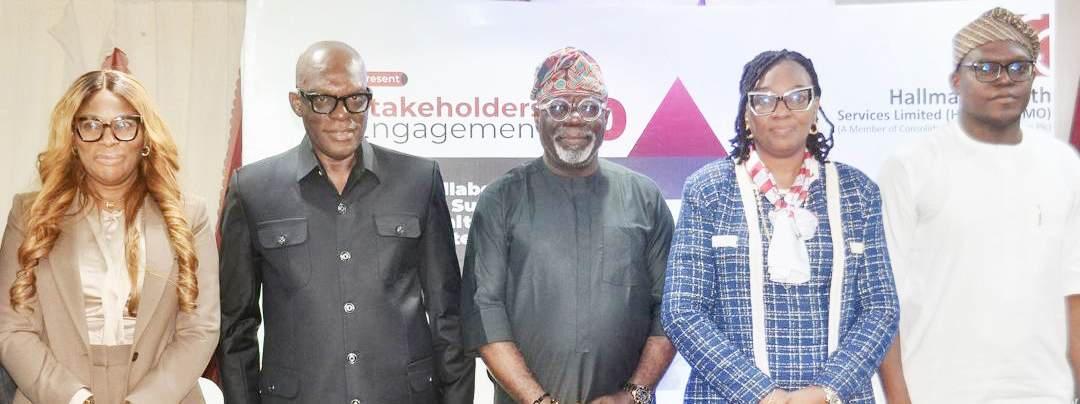
L-R: Executive Director, FSDH Merchant Bank Ltd, Stella-Marie Omagbai; Chairman, Hallmark Health Services Ltd (Hallmark HMO), Eddie Efekoha; Keynote speaker/Board Advisor & Workplace Best Practices Trainer, Olumide Ajomale; Managing Director/CEO, Hallmark HMO, Oladotun Adeogun, and General Manager, Lagos State Environmental Protection Agency (LASEPA), Babatunde Ajayi, during the Hallmark HMO organised Stakeholders Engagement 5.0 on the theme: 'Collaborating for Sustainable Healthcare System' held in Lagos ... recently
Lists BUA's
Akwa Ibom refinery among key African projects Nigeria, Angola to drive continent's refining expansion Dangote Refinery raises Africa's secondary refining capacity by 13.5%
The Organisation of Petroleum Exporting Countries (OPEC) has projected that Nigeria and other African countries will require about $92 billion in refining investments through 2050 to meet rising fuel demand, strengthen energy security and reduce dependence on imported petroleum products.
In its 2026 World Oil Outlook (WOO), the international oil cartel also identified Nigeria and Angola as the principal drivers of the continent's next wave of refining expansion.
OPEC stated that Africa's refining sector is entering a new phase of growth after decades of underinvestment, with Nigeria playing a central role through the fully operational Dangote
Refinery and the proposed 200,000 barrels per day Akwa Ibom refinery project being developed by BUA Group, alongside several modular refining projects.
The report showed that Africa would require approximately $92 billion in refining investments over the outlook period, comprising about $25 billion in investments tied to projects
expected before 2030 and a further $67 billion in investments for new refinery projects and expansions after 2030.
"Asia-Pacific and Africa are likely to invest around $29 billion and $25 billion in the downstream sector in the medium term, respectively. In the period post-2030, global investment requirements for new refinery projects and expansions
Minister of Agriculture and Food Security, Senator Abubakar Kyari, has said the federal government’s ongoing fertiliser distribution programme underscored its commitment to strengthening food security, supporting smallholder farmers, and expanding local agricultural production under the State of Emergency on Food Security declared by President Bola Tinubu.
Kyari, who spoke at the flagoff of the National Agricultural Development Fund (NADF)
fertiliser distribution exercise in Katsina over the weekend, said the intervention was a strategic step towards boosting agricultural output, creating jobs, and ensuring improved food availability across the country.
He noted that the programme aligns with the administration’s broader food systems transformation agenda, stressing that sustained support to farmers remains critical to reducing Nigeria’s dependence on food imports and achieving long-term food sovereignty. According to him, the initiative
demonstrates renewed federal resolve to deepen investments in agriculture, particularly at the grassroots, where smallholder farmers remain central to national food production.
Executive Secretary/Chief Executive of NADF, Mohammed Abu Ibrahim, said the Fund had commenced the distribution of 100,800 bags of fertiliser to 25,200 smallholder farmers across Kaduna, Kano, Katsina, Kebbi and Jigawa states under the Renewed Hope Farm Input Support Programme (FISP).
He explained that each
beneficiary farmer would receive four bags of fully subsidised fertiliser, while each participating state is allocated 20,160 bags for distribution to 5,040 farmers identified through state governments and the All Farmers Association of Nigeria (AFAN).
Ibrahim said the North-West rollout forms part of a nationwide intervention targeting 515,720 bags of fertiliser for 128,930 smallholder farmers across the federation, adding that the programme is designed to reduce production costs and improve access to quality inputs.
are evaluated at $423 billion. The largest share is expected in India and the Middle East, estimated at $73 billion each, followed by China and Africa, estimated at $69 billion and $67 billion, respectively," the report stated
The report underscored the strategic importance of expanding refining capacity across Africa, noting that many countries were increasingly pursuing domestic refining projects as part of efforts to curb import dependence and enhance national energy security.
The report highlighted Nigeria
and Angola as the countries expected to account for the largest share of Africa's mediumterm refining expansion.
"In total, medium-term capacity additions in Africa are expected at around 0.8 mb/d, driven mostly by modular and small-scale capacity projects. Angola and Nigeria are expected to lead the expansions," OPEC said.
For Nigeria, OPEC said future growth would build on the gains already achieved by the Dangote Refinery, stressing that the ongoing BUA’s 200,000 bpd facility will play a critical role in that future.
Deji Elumoye in Abuja
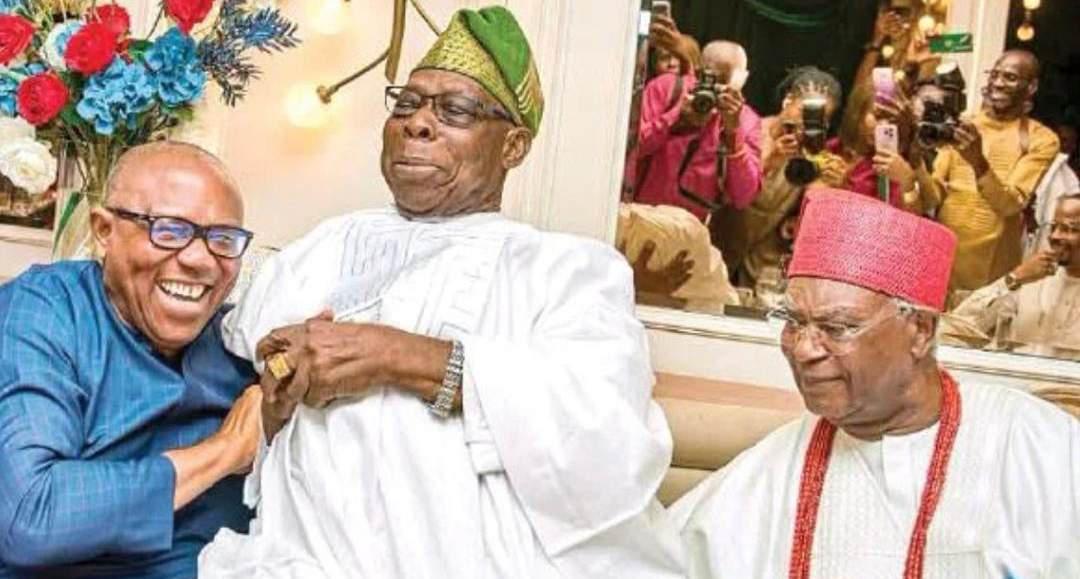
President Bola Tinubu has rejoiced with the Obi of Onitsha, His Majesty, Igwe Nnaemeka Alfred Achebe (Agbogidi), on his 85th birthday.
His Majesty for his peacebuilding efforts, youth empowerment schemes, and socio-economic development programmes in his domain and beyond.
Tinubu particularly lauded Igwe Achebe's contributions to deepening national cohesion and serving as a critical bridge between grassroots communities and the government.
Emmanuel Addeh in Abuja
said Ogunbiyi will deliver a keynote address in recognition of her excellent and enviable global track record of service in advancing energy access to unreached and underserved communities across many countries. Sanwo-Olu,
Tinubu, in a release issued on Sunday by his Adviser on Information and Strategy, Bayo Onanuga, hailed the foremost traditional ruler in the SouthEast, corporate leader, oil and gas expert, and boardroom guru, describing him as a symbol of unity, grace, and integrity.
Topping the list are Lagos State Governor, Babajide Sanwo-Olu, Enugu State Governor, Peter Mbah, Deputy Speaker, House of Representatives, Rt. Hon.
The organisers of the inaugural Nigeria Climate Investment Summit (NCIS) yesterday released a list of high-profile, globally acclaimed speakers for the event scheduled for Tuesday, 23 June 2026, at Mansion House, London.
Benjamin Kalu, and Damilola Ogunbiyi, Special Representative of the UN Secretary-General for Sustainable Energy for All and Co-chair of UN-Energy.
A statement by Malini Mehra, CEO of GLOBE Legislators, and Oke Epia, CEO of SOStainability,
Igwe Achebe had served as a director in Shell Petroleum Company in Nigeria, as well as in other Shell companies in the United Kingdom, the Netherlands, Ghana, Sierra Leone, the Gambia, Liberia, and Angola, before ascending the throne of his forebears.
The President commended
The President also acknowledged the respected traditional ruler's decades of service to the nation in corporate leadership, enterprise, and governance.
Tinubu joinef the royal family, the people of Onitsha and Anambra State, in wishing Igwe Achebe many more years of good health and strength as he continues to provide leadership for his community, state, and nation.
Says state’s $259.75bn economy, infrastructure investments make it sub-national giant with global ambitions Gov, Bakare, others advocate regional interdependence for mutual prosperity in Nigeria
Governor Babajide Sanwo-Olu of Lagos State has declared that Lagos is strategically positioned as Africa’s leading geoeconomic hub, leveraging trade, infrastructure, finance, technology, and talent to drive prosperity across Nigeria, West Africa, and the globe.
Governor Sanwo-Olu spoke on Saturday at the “GeoEconomic Optimization Summit Lagos 2026," hosted by the Citadel School of Government in Oregun, stating that geoeconomics—the deliberate use of economic instruments to project influence—defines the new global order where power is drawn as much from ports, data centers, and supply
chains as from treaties.
The governor noted that Lagos contributes one-third of Nigeria’s Gross Domestic Product and ranks as Africa’s second-largest metropolitan economy after Cairo, with output exceeding $259.75 billion on a purchasing-power-parity basis.
He said "If Lagos were a country, it would rank as Africa’s eighth-largest economy,” adding that over 90 percent of the state’s output comes from a diversified base of finance, technology, trade, logistics, creative industries, and the blue economy.
The governor outlined Lagos’ geoeconomic role
Alexandria Hall, The Colossus, Lagos, turned into Nigeria’s most uncomfortable confessional on Thursday as Hallmark Health Services Limited convened the 5th edition of its Stakeholders Engagement Forum. The theme read like a policy paper: “Collaborating for Sustainable Healthcare Systems.”
The reality inside was stark with 93 percent of Nigerians still outside any form of health insurance, executives, doctors, regulators, and employers spent the day admitting what millions already know: the system is failing the very people it is meant to protect.
Chairman of Hallmark HMO, Eddie Efekoha, opened the forum by stripping healthcare back to human terms. Every Nigerian, he said, walks in with a story,
the relief of timely treatment, the anxiety of finding a doctor, or the shame of choosing between drugs and food.
He reminded the room that the engagement began five years ago with one mandate: force the people who shape health in Nigeria to sit at the same table and speak plainly.
From strengthening systems in 2022, to financing and technology in 2023, to customer-first solutions in 2024, and last year’s focus on how inflation was eroding SME cover, each edition has pushed the conversation deeper.
The conclusion now is inescapable. Healthcare only works when stakeholders stop working in silos, technology serves people and not paperwork, financial sustainability is treated as survival, and the patient experience becomes the measure of success.
across five widening circles, such as through membership of the Odu’a Group, DAWN Commission, and South West Development Commission; its strategic position as the commercial and financial nerve center, with “when Lagos works, Nigeria works better.”
Governor Sanwo-Olu who is the Chairman of the SouthWest Governors Forum also called for regional economic integration that would usher in growth and prosperity for Nigerian states.
He urged leaders across the South-West and the wider nation to "think regionally, act strategically, and cooperate generously, for no single state captures the whole prize alone."
Governor Sanwo-Olu, in his keynote address titled "From South-West Nigeria to the Globe: Lagos State as a Geoeconomic Hub," affirmed that Lagos belonged fully to the South-West and would continue to engender genuine regional integration amongst the states.
The governor highlighted
ongoing investments in mass transit with the operational Blue and Red rail lines, federal counterpart funding for the Green Line, and upgrades to the Lagos-Badagry Expressway.
He also cited the state electricity law and competitive market reforms to address power constraints, plus federal support through the 700km Coastal Highway and 1000km+ Sokoto-Badagry Superhighway.
He said: “Lagos is a subnational economy that carries the weight of a nation. We
contribute roughly a third of Nigeria’s Gross Domestic Product, and we are Africa’s second-largest metropolitan economy, behind only Cairo with output in excess of 259.75 billion dollars on a purchasingpower-parity basis.
"As Nigeria’s commercial and financial nerve center, and its busiest gateway for trade and investment, Lagos carries a responsibility that reaches far beyond its own borders. When Lagos works, Nigeria works the better for it.
The African Export and Import Bank (Afreximbank) has stated that the value of Nigeria’s trade with the continent grew from $7.47 billion to $9.02 billion in 2025.
Afreximbank said that Nigeria increased its share of intra-African trade, partly by increasing its exports of refined petroleum products to regional markets, including Cameroon, Ghana, and Togo, facilitated by the Dangote Refinery operating at near-full capacity.
These were contained in Afreximbank’s report titled: “African Trade Report 2026: Leveraging Geopolitics for
Trade and Industrialisation in Global Africa.”
The report’s findings highlighted the growing resilience and potential of African economies whose real GDP growth accelerated from 3.4 per cent in 2024 to 4.5 per cent in 2025, which outpaced global growth and reaffirmed the strength and adaptability of the continent.
The report also said that aggregate inflation moderated significantly from 21.6 per cent to 13.1 per cent with some countries recording as low as 3.0 per cent inflation rate, while merchandise trade expanded by 6.1 per cent to
approximately $1.5 trillion, and intra-African trade grew by 5.5 per cent to about $213.8 billion.
“These outcomes reflect improving macroeconomic management, strengthening institutions, expanding regional cooperation, increasing crossborder investments, and the determination of African countries to sustain growth despite a complex global environment,” it said.
According to the report, crude oil was a dominant feature in Nigeria’s exports to Africa while its other key exports included nonoil manufactured goods such as chemicals, plastics, and rubber
products, processed agricultural goods and foodstuffs, urea, and cement.
It said: “Nigeria intensified its focus on trade with other African countries, leveraging the AfCFTA to expand market access and lower trade costs for domestic exporters.”
Key milestones achieved during the year by Nigeria included the gazetting of the country’s Provisional Schedule of Tariff Concessions in April, which enabled Nigerian goods to qualify for preferential tariffs across AfCFTA member states while granting reciprocal access for African imports.
Ibrahim Oyewale in
Governor Usman Ododo of Kogi State has assured that
the gridlock that paralyzed the Nataco-Banda axis of the Lokoja-Abuja highway in April will be the last of its kind, pledging decisive action to end
years of hardship for motorists and businesses. Ododo gave this assurance while speaking during a scheduled visit to the leadership of the Kogi State Chamber of Commerce, Industry, Mines and Agriculture, KOCCIMA, at the Chamber’s Secretariat in Lokoja.
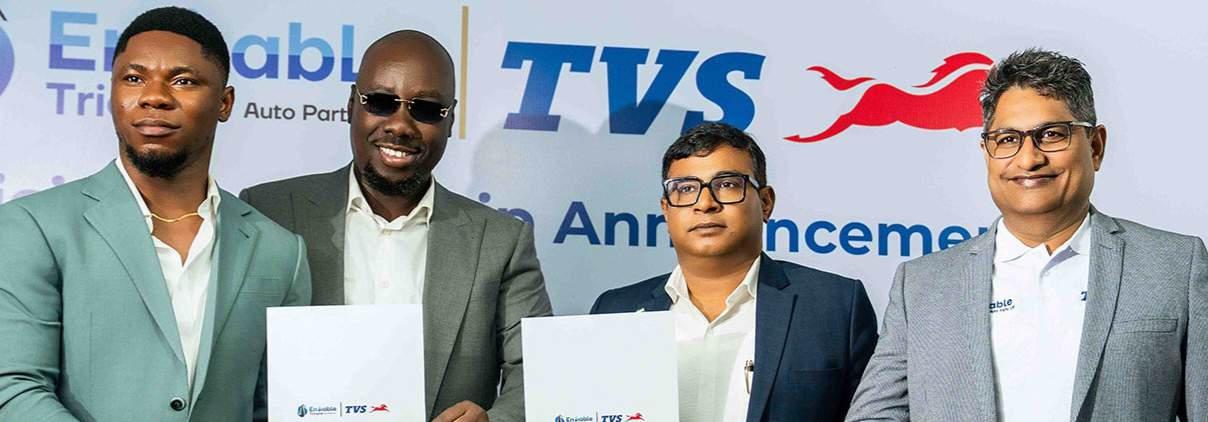
The Islamic Corporation for the Insurance of Investment and Export Credit (ICIEC), a Shariah-based multilateral credit and political risk insurer and member of the Islamic Development Bank Group (IsDB), has declared its support for the financing of the Lagos–Calabar Coastal Highway-Phase II in Nigeria, thereby committing a total insured amount of USD 626 million in support of one of
the country's most strategically significant transport infrastructure projects.
The agreement was signed on the sidelines of the Islamic Development Bank (IsDB) Group 2026 Annual Meetings in Baku, Azerbaijan.
The transaction is backed by ICIEC's Non-Honouring of Sovereign Financial Obligations (NHSFO) insurance policy, structured in favour of First Abu Dhabi Bank as the policyholder, with the Federal Ministry of Finance of Nigeria acting as the
Deji Elumoye in Abuja
President Bola Tinubu has felicitated Founder and Chief Executive Officer of Petralon Energy and Chairman of Nigerian Exchange Limited (NGX), Mr Ahonsi Unuigbe on his 50th birthday.
Unuigbe’s career has spanned investment banking, project finance, energy, capital markets, and the public sector, where he contributed to critical economic and fiscal initiatives that supported the development objectives of the Federal and Edo State governments.
The President, in a statement issued at the weekend by his Adviser on Information and Strategy, Bayo Onanuga, commended Unuigbe’s contributions to strengthening indigenous participation in Nigeria’s energy sector by establishing Petralon Energy, one of the country’s leading independent energy companies.
The policy, according to ICIEC, provides 95 percent coverage across two tranches: USD 276 million with a 7-year tenor, and USD 350 million with a 9-year tenor.
By mitigating sovereign risk, ICIEC stated its participation plays a critical role in facilitating access to long-term international financing and ensuring the successful implementation of this landmark infrastructure project.
The Lagos–Calabar Coastal Highway Project is a key component of Nigeria's broader infrastructure development agenda of President Bola Tinubu’s government.
economic activity, reducing logistics costs, and strengthening supply chains,” the agency said.
The Chief Executive Officer of ICIEC, Dr. Khalid Khalafalla, in his remarks during the ceremony yesterday, said: “Through this transaction, ICIEC is demonstrating the practical value of Shariah-compliant risk mitigation in advancing large-scale development projects.
“Our support helps bolster lender confidence, mobilise long-term financing, and enable Nigeria to move forward with this strategic infrastructure investment that will strengthen connectivity and support socioeconomic progress.”
Sukuk - The Next Frontier’ have concluded deliberations on how labelled Sukuk can support sustainable development priorities for member states (MSs), including Nigeria, while expanding the reach of Islamic finance through global capital markets.
The high-profile event was organized on the sidelines of the ongoing 2026 Islamic Development Bank (IsDB) Group Annual Meetings in Baku with the theme ‘Regional Integration for Sustainable Prosperity’.
It was learnt that in 2025, the labelled Sukuk market surpassed US$20 billion, representing a 38 percent year-on-year growth (S&P).
labelled Sukuk market to grow at a faster pace than ever before,” the forum stated. At the event, particular attention was given to the growing need for innovative financing solutions to address global climate challenges and the significant funding requirements associated with achieving the Sustainable Development Goals (SDGs).
“As Chairman of Nigerian Exchange Limited, he continues to champion market integrity, investor confidence, and broader participation in the capital market, all of which are essential to Nigeria’s economic transformation agenda.
“At 50, Ahonsi Unuigbe has built a remarkable record of achievement across finance, energy, public service, and the capital market. Through enterprise, vision, and determination, he has demonstrated Nigerians' capacity to build globally competitive institutions and create value that benefits both the economy and our people.
“As Nigeria continues to pursue economic growth, energy security, and deeper capital market development, we require more leaders who combine professional excellence with a commitment to national progress. Mr Unuigbe’s journey exemplifies these ideals and serves as an inspiration to younger generations of entrepreneurs and business leaders.”
Accordimg to Tinubu: “Unuigbe's commitment to developing local capacity, attracting investment, creating jobs, and advancing Nigeria’s energy security reflects the spirit of enterprise and innovation needed to drive sustainable economic growth.
“Upon completion, the project will significantly enhance regional integration and mobility, enabling more efficient movement of goods and people across the country's coastal regions, thereby catalysing
Meanwhile, senior policymakers, global financial sector leaders, capital market experts, development institutions, and Sukuk market participants at a forum tagged ‘Labelled
“While this accounted for less than 10 percent of all Sukuk issued last year, the natural alignment between Islamic finance principles and the different labels that are geared towards positive impact and sustainability is a sign for the
In his opening speech, the Officer in Charge, Vice President Finance and Chief Financial Officer of IsDB, Dr. Abdourabbih Abdouss, emphasized that Sukuk remains the primary Islamic capitalmarket instrumentss for mobilising development resources, “while labelled Sukuk are creating new opportunities for investors to support specific sustainability and development priorities in line with Islamic finance principles as well as global sustainability standards.”
Wale Igbintade
Ojukwu Transport Limited (OTL) has appealed to the Inspector-General of Police (IGP) to intervene in what it described as attempts to enforce a court judgment that is currently the subject of an appeal in a protracted dispute over several high-value properties in Lagos.
In a letter dated May 8, 2026, the company alleged that the Minister of Foreign Affairs, Mrs. Bianca Ojukwu, and her legal team were seeking to execute a warrant of possession based on a 2022 judgment delivered by Justice A.M. Lawal in Suit No. LD/1539/2012.
OTL contended the proposed enforcement was improper and unlawful, arguing that the
judgment remains under appeal and should not be executed until the appellate court determines the matter.
The company further stated the properties in dispute had previously been covered by a separate judgment delivered on June 1, 2018, by Justice Adedayo Oyebanji in Suit No. LD/794/2011, which it said was lawfully executed.
According to OTL, the execution of the 2018 judgment affected five properties located at 4 Macpherson Avenue, 29 Oyinkan Abayomi Drive, 13 Ojora Road, and 30 Gerrard Avenue in Ikoyi, as well as 32 Commercial Avenue, Yaba.
The company maintained that the exercise was carried out with the participation of the Lagos
State Police Command and the Sheriff’s Department, with all statutory procedures, including the issuance of Form O, duly complied with.
OTL also recalled an incident on May 1, 2025, when it alleged that operatives of the Police Zone 2 Command, accompanied by lawyers, took over one of the disputed properties at 4 Macpherson Avenue, Ikoyi.
The firm claimed the action was based on misleading information and noted that petitions it submitted to police authorities in August 2025 and January 2026 over the incident have yet to receive any response.
Providing an update on the ongoing litigation, OTL stated that during a recent hearing in a Form 49 contempt proceeding arising
from Suit No. LD/1539/2012, the presiding judge informed the parties that the court file might have already been transmitted to the Court of Appeal. The matter was subsequently adjourned to June 22, 2026. The company warned that any attempt by law enforcement agencies or court officials to carry out a fresh execution of the warrant while related issues remain pending before the courts and the police authorities would amount to an unlawful act.
OTL therefore urged the Inspector-General of Police to intervene and prevent what it described as a “repeat execution” of the affected properties pending the determination of all outstanding legal and appellate proceedings.
Linus Aleke in Abuja
The Nigeria Union of Journalists (NUJ) has conferred its prestigious “Man of the Year” award on the Director-General of the Department of State Services (DSS), Mr. Adeola Oluwatosin Ajayi, in recognition of his role in strengthening cooperation between the media and security agencies in support of national development and security.
The honour was presented at the conclusion of the NUJ’s two-day National Security Summit held in Abuja under the theme, “Media and Security Agencies as Partners in Nation Building.”
The summit, which took place in Abuja brought together media executives, journalists, security chiefs, policymakers, academics, civil society organisations and development partners to examine ways of deepening collaboration in addressing the
country's security challenges.
In explaining the rationale behind the award, the NUJ described the recognition as an endorsement of the values of partnership, openness and mutual respect between the media and security institutions.
According to the union, the honour was “an affirmation that partnership, openness and mutual respect between the media and security institutions are vital to protecting lives, preserving democratic space and advancing nation-building.”
The NUJ further noted that the award recognised “a leadership approach that values engagement, transparency and partnership”.
The union observed that under Ajayi's leadership, the DSS has maintained regular engagement with media stakeholders, creating communication channels that help reduce suspicion, curb misinformation and encourage collaborative responses to
security challenges.
Speaking during the summit, NUJ National President, Comrade Alhassan Yahaya Abdullahi, described the event as both timely and necessary, given the complex security threats confronting the country, including terrorism, banditry, kidnapping, cybercrime, violent extremism, separatist agitations and other emerging hybrid threats.
He stressed the importance of collective responsibility in addressing these challenges.
“National security is a shared responsibility requiring ethical, accurate journalism and coordinated action across institutions,” he said.
Also speaking at the event, the Minister of Information, Alhaji Mohammed Idris, who chaired the summit, commended the growing collaboration between the media and security agencies.
He reaffirmed the federal government's commitment to
intelligence-driven operations, enhanced inter-agency cooperation, technological modernisation and communitybased approaches to security management.
Discussions at the summit also highlighted the need to strike a balance between national security imperatives and the protection of press freedom.
Speakers, including Prof Okey Ikechukwu and the President of the International Press Institute (IPI) Nigeria, Musikilu Mojeed, emphasised that strategic communication and press freedom should be viewed as complementary rather than competing objectives.
Similarly, the President of the Nigeria Association of Women Journalists (NAWOJ), Aisha Ibrahim, advocated greater inclusion of women in peacebuilding and conflictresolution initiatives.
At the end of the summit, participants adopted a number of recommendations aimed
The British Council and Cambridge International Education, weekend, honoured 156 outstanding learners and schools across Nigeria, to celebrate exceptional performances in the June and November 2025 Cambridge examination series. Among the award recipients were 16 learners who emerged 'Top in the World' in Cambridge IGCSE subjects, underscoring Nigeria's growing reputation for academic excellence on the global stage.
A breakdown of the awards showed that 51 schools received school awards, seven learners earned best across subjects’
awards, while 77 students emerged 'Top in the Country'.
In addition, 16 learners received the prestigious 'Top in the World' Cambridge IGCSE awards.
To further celebrate academic excellence across the breadth of the Cambridge curriculum, it also presented 56 high achievement awards to students who excelled in subjects that are less widely taken in Nigeria.
Speaking to journalists at the 2026 British Council Recognition and Outstanding Cambridge Learner Awards (BROCLA), in Lagos, Director of Examinations, British Council Nigeria, Eyitayo Akanji, reaffirmed the growing strength of international
education in Nigeria, noting that Nigerian students are increasingly competing successfully with their counterparts around the world and producing globally recognised scholars.
He stated that the achievements of the award recipients demonstrated that Nigerian candidates can excel on the global stage.
According to him, the awards recognise candidates who attained outstanding scores in the Cambridge international examinations, which are taken by more than one million students across over 100 countries.
He said the success recorded by the students was a product of sustained collaboration among
the British Council, school leaders, teachers and students across its more than 400 partner schools in Nigeria.
“The British Council Recognition and Outstanding Cambridge Learner Awards (BROCLA) celebrate candidates who have achieved top awards and high scores. Excellence does not happen by chance; it requires preparation,” he said.
Akanji noted the British Council works closely with schools to strengthen teacher development, school improvement and curriculum expertise, adding that the award ceremony represented the culmination of years of cooperation and partnership.
at strengthening cooperation between the media and security institutions.
These included the institutionalisation of structured dialogue between media organisations and security agencies, more proactive and transparent communication by security services, stronger fact-checking mechanisms and
adherence to ethical standards in journalism. Delegates also called for joint training programmes for journalists and security communicators, as well as increased investment in education, youth empowerment, state-owned media organisations and modern security technologies.
NEDC Raises Alarm over Identity Theft, Threatens Legal Action against Fraudulent Platforms
Warns public against dealing with fake websites, social media accounts
The North East Development Commission (NEDC) has sounded the alarm over what it described as a disturbing rise in the unauthorized use of its name, logo and official identity by individuals and organisations seeking to deceive unsuspecting Nigerians, warning that perpetrators face criminal prosecution and stiff sanctions under extant laws.
In a public disclaimer issued at the weekend, the commission said it had uncovered multiple instances of entities operating websites, social media accounts and publications while falsely presenting themselves as affiliated with the intervention agency established to spearhead the reconstruction and development of the insurgency-ravaged North-east.
The commission described the activities as a calculated attempt to exploit its growing profile and public trust, stressing that any use of its name, branding, insignia or institutional identity without prior written authorisation is illegal and constitutes impersonation.
“The use of the Commission’s branding, insignia or identity
without prior written approval is strictly prohibited. Any website, social media account or publication utilising the Commission’s official marks without authorisation is fraudulent and unauthorised,” the statement said.
The warning comes against the backdrop of increasing cases of digital impersonation and identity theft targeting government institutions and public agencies, with fraudsters often exploiting official identities to solicit funds, offer fictitious contracts or lure unsuspecting citizens into fraudulent transactions.
The NEDC said such actions violate several provisions of Nigerian law, including the Nigeria Data Protection Act (NDPA), 2023, which prescribes sanctions for unlawful processing and misleading representation involving institutional identities. It also cited the Cybercrimes (Prohibition, Prevention, etc.) Act, 2015, which criminalises identity theft, impersonation and electronic fraud, and the Trade Marks Act, Cap T13, Laws of the Federation of Nigeria, 2004, which protects registered logos, names and insignia from unauthorised use.
Former Miss Nigeria, Mrs. Helen Prest Ajayi, and her daughter, Tomisin Ajayi, have asked the Court of Appeal in Lagos to set aside the June 17, 2026 judgment of the Lagos State High Court, Ikeja, in the ongoing dispute over the estate of late medical entrepreneur, Dr. Tosin Ajayi.
In a Notice of Appeal filed by their counsel, Abiodun Owonikoko, SAN, the appellants contended the trial court committed several errors in law, including reliance on a disputed marriage certificate, failure to give effect to a prior consent judgment allegedly recognising Helen Prest Ajayi as a wife of the deceased, mischaracterisation of Tomisin Ajayi’s status, and making orders beyond the issues placed before the court.
The appellants first challenged the trial court’s finding that Mrs. Adenike Ajayi was the sole
surviving wife of the deceased and therefore exclusively entitled to administer his intestate estate.
They argued this conclusion was reached on the basis of a disputed marriage certificate whose authenticity was a central issue at trial.
According to them, the respondents failed to establish the validity of the certificate with credible evidence.
They maintained that records from the Ijebu-Ode Marriage Registry contained no official entry of the alleged marriage, and that the document relied upon was merely a photocopy which was only certified during the pendency of the proceedings.
They further stated that under cross-examination, the 1st respondent admitted that the registry could not locate any official record of the marriage.
The appellants argued that in the absence of a marriage register, ledger entry, or independent
verification, the trial court’s reliance on the document was against the weight of evidence.
The appellants also faulted the trial court for allegedly failing to give effect to an earlier consent judgment delivered by the Lagos State High Court in January 2021 in Suit No. ID/7096GCMW/2020.
They contended the judgment had recognised both Helen Prest Ajayi and Adenike Ajayi as co-wives of the deceased.
They stated the consent judgment was duly pleaded, admitted in evidence as Exhibit C13, and formed part of their defence.
However, they argued that despite its existence, the trial court proceeded to describe Helen Prest Ajayi as merely a mistress of the deceased.
According to them, the earlier judgment, being subsisting and delivered by a court of coordinate jurisdiction, created an issue
estoppel which the trial court was bound to respect.
On the status of Tomisin Ajayi, the appellants further argued that the trial court wrongly concluded that she was born out of wedlock.
They maintained that this finding stemmed from the court’s rejection of Helen Prest Ajayi’s marital status and failed to properly evaluate evidence presented before it.
They pointed to a United Kingdom-issued birth certificate which, they said, identified Dr. Tosin Ajayi and Helen Prest Ajayi as Tomisin’s parents.
They further contended that the evidence before the court showed that Tomisin resided exclusively with the deceased, Dr. Tosin Ajayi, and her mother from birth until the deceased's death.
The appellants further claimed that under cross-examination, the 1st respondent admitted
Segun Awofadeji in Bauchi
The Bauchi State Government and UNICEF have jointly committed N600 million to tackle rising child malnutrition and expand maternal nutrition services across the state.
The Executive Chairman, Bauchi State Primary Healthcare Development Board, Dr. Rilwanu Muhammad, who disclosed this in an interview with journalists over the weekend, said "The malnutrition we are seeing is not just because of poverty, it is because of inflation. Children are coming out malnourished."
He also disclosed the state has distributed 4,842 cartons of Ready-to-Use Therapeutic Food, RUTF, and 15,000 cartons
of Small Quantity Lipid-based Nutrient Supplements, SQLNS, to Integrated Management of Acute Malnutrition, IMAM, centres.
Dr. Muhammad said both the state government and UNICEF contributed N300 million each to procure nutrition commodities for children and mothers amid worsening food insecurity.
According to him, Bauchi is the first state in Nigeria to use state funds to procure SQLNS for prevention of malnutrition, and that, the UNICEF also provided about 15 million doses distributed to high-risk communities.
Dr. Muhammad said the state is also the first to roll out Multiple Micronutrient Supplements, MMS, for pregnant women, stating the board has received
30,000 cartons with another shipment already released at the port.
“Mothers like it and they are demanding more. It prevents anaemia and supports both mother and baby,” Dr. Muhammad said.
The executive chairman explained that Governor Bala Mohammed has increased this year’s budgetary allocation for child and maternal nutrition to N500 million, while UNICEF is set to commit $1 billion for the programme nationwide.
Dr. Muhammad maintained that Bauchi is awaiting release of approved funds to scale treatment for severe, moderate and mild malnutrition.
To ensure sustainability, the
board is pushing for MMS to be included in the essential drug list or under the revolving drug fund. At $3 per bottle, MMS is costlier than folic acid.
“If you want a healthy baby and a healthy mother, you must make sacrifices,” he said.
Health workers have been trained and the board now uses electronic records and monitoring tools to track distribution and use at facilities, he added.
Dr. Muhammad who blamed high cost of farming inputs and lack of subsidies for worsening food insecurity, said "if government wants to take care of the community, it must subsidise. If not, there will be problems."
that Tomisin was the deceased’s child and had, at some point, been invited to participate in discussions relating to the administration of the estate.
They argued that despite this, the trial court still reached a conclusion that effectively portrayed her as a child born outside marriage.
The appellants also accused the trial judge of going beyond the scope of the issues submitted for determination.
They maintained that the suit before the High Court was
limited to identifying persons entitled to apply for Letters of Administration over the estate. However, they argued that the court proceeded to make findings describing Helen Prest Ajayi as “a mistress, undocumented partner and mother of his child,” even though no such relief was sought by the claimants. According to them, these pronouncements were unnecessary for the determination of the dispute and amounted to judicial overreach.
Insecurity: Gombe University Deploys Drones, CCTV Networks to Secure Campus, Protect Students, Community
Segun Awofadeji in Gombe Gombe State University (GSU), has adopted the use of drones especially at night to enhance surveillance and protect lives and property of the students and others staying within the premises.
The Vice-Chancellor, Prof. Sani Yauta who disclosed this during a meeting of the University Community Relations Committee, held yesterday, further disclosed that the university has undertaken the installation of full CCTV cameras at strategic locations within the premises in order to combat crimes, enhance campus monitoring and protect students.
According to him, the university recorded cases of theft on the campus, citing the arrest of an individual, who allegedly stole five motorcycles belonging to various individuals.
The vice chancellor assured the management is taking the issue of security seriously and will continue to ensure the students and contiguous
community remain protected and secured.
Speaking on the issues of students’ admission, Sani Yauta said the university approved 150 general cut-off marks, and 200 cut-off marks for law and medical disciplines.
According to him, admission into a course of choice would depend on competition within the candidate’s local government area even if he met the other requirements.
“Candidates who do not secure placement in their preferred courses, might be offered alternative programmes,” he said.
Sani Yauta advised parents to allow their wards to study any course offered to them, stressing that every discipline presents valuable opportunities for personal and professional growth.
He however raised concern over encroaching of the premises by straying animals, destroying plants and the landscaping that cost the government fortune to put in place and maintain.


IN COLLABORATION WITH INTEGRITY & COMPLIANCE MANAGEMENT CONSULT INVITES YOU TO A ONE-WEEK INTERNATIONAL & NATIONAL TRAINING RETREAT ON

For Sustainable Economic Transformation at Sub-National and Institutional Levels

The Financial Reporting Council of Nigeria (FRC) — the Federal Government Agency
and corporate governance — is partnering with Integrity & Compliance
strengthens ICFR practices across public and private institutions.
✓ Strengthen design and implementation of ICFR frameworks.
✓ Enhance detection and prevention of financial reporting risks.
✓ Align internal controls with international best practice and regulatory requirements.
✓ Build institutional capacity for sustainable economic transformation at sub-national levels.
WHO SHOULD ATTEND?
● Permanent Secretaries, Director Generals, Chief Executive Officers, Senior Public Service Officers;
● Chief Finance Officers, Directors of Finance & Accounts, and Senior Finance & Accounts Personnel, of Federal, States & Local Governments Institutions; and
● External Auditors, Internal Auditors, Chief Compliance & Risk Officers, Procurement Officers etc of Public Sector Entities NATIONAL TRAINING SCHEDULE

Date: 20 – 21 July 2026
Venue: Hilton Palace Hotel, No. 6 Hilton Close (Off Airport Road), Kano State SOUTH

Date: 23 – 24 July 2026
Venue: Oba (Dr.) Sikiru Kayode Adetona School of Governance Studies, Ago-Iwoye, Ogun State






IFB Number: PHWSS/AfDB/NCB/GDS/2026/006
Employer: Port Harcourt Water Corporation, Port Harcourt, Rivers State
Project: Urban Water Sector Reform and Port-Harcourt Water Supply and Sanitation Project
Contract title: Supply of Water Tankers for the Port Harcourt Water Corporation
Country: NIGERIA
Loan No. / Grant No.: 2000130011585
Procurement Method: Open Competitive Bidding (National) (OCBN)
LCBN No: PHWSS/AfDB/NCB/GDS/2026/006
Issued on: June 22, 2026
1. The Federal Republic of Nigeria has received Financing from the African Development Bank towards the cost of Urban Water Sector Reform and Port Harcourt Water Supply and Sanitation Project. It is intended that part of the proceeds of this loan will be applied to eligible payments under the contract for the Supply of Water Tankers for the Port Harcourt Water Corporation
2. The Port Harcourt Water Corporation now invites sealed bids from eligible bidders for the execution of the Supply of Water Tankers for the Port Harcourt Water Corporation
3. Bidding will be conducted through the Open Competitive Bidding (International), OCBI procedures as specified in the Bank's [African Development Procurement Framework Bank, Standard Bidding Document Goods (One-Envelope Bidding Process) August 2021] and is open to all Bidders as defined in the Procurement Framework.
4. Interested eligible Bidders may obtain further information f r o m C h i e f I b i b i a O ; Wa l t e r w i t h e m a i l a d d r e s s : watsanworks.phwssp@gmail.com and inspect the Bidding document during office hours (8:00 A.M. - 4 P.M.) on weekdays only at the address given below
5. The Bidding document in English may be purchased by all eligible Bidders upon payment of a nonrefundable fee of N600,000 or US$400.00 or its equivalent in a freely convertible currency. The method of payment will be in Cheque or Bank Draft, made out in favour of PORTHARCOURT WATER CORPORATION. The document will be sent by courier on demand.
6 Bids must be delivered to the address below on or before Tuesday, July 21, 2026; Time:10:30 AM. Electronic Bidding will not be permitted. Late Bids will be rejected. Bids will be publicly opened in the presence of the Bidders' designated representatives and anyone who chooses to attend at the address below on Tuesday, July 21, 2026; Time: 11:00 AM.
7. All Bids must be accompanied by Bid Security of:
8. Attention is drawn to the Procurement Framework requiring the Borrower to disclose information on the successful bidder's beneficial ownership, as part of the Contract Award Notice, using the Beneficial Ownership Disclosure Form as included in the bidding document.
9. The address referred to above is:
The Managing Director
Attention: Chief Ibibia O' Walter JP Port-Harcourt Water Corporation, 6 Water Works Road, Port Harcourt, Rivers State, Nigeria. E-mail: watsanworks.phwssp@gmail.com
SIGNED: MANAGEMENET







BEFORE WE BUILD, WE MUST FIX WHAT IS BROKEN OFOVWE AIGIMOUKHEDE reflects on Africa's digital public infrastructure
XENOPHOBIA*
NSEOBONG OKONEKONG argues that companies should be assessed based on their contributions to the nation
DEPRESSION AND SOCIO-ECONOMIC FACTORS
The energy sector is beginning to reflect the cumulative impact of policy reforms, argues SALIHU MOHAMMED
The global energy landscape is undergoing one of its most profound transformations in decades, driven by shifting geopolitics, climate pressures, and the accelerating reconfiguration of energy systems across major economies. At the heart of this transition lies a persistent global challenge: how to balance energy security, affordability, and environmental sustainability.
This so-called energy trilemma has become the defining framework for policy decisions across both developed and emerging economies. The disruption of Russian gas supplies to Europe exposed vulnerabilities in overdependence on single supply routes. At the same time, the accelerating climate crisis and rapid cost reductions in renewable technologies have forced governments to rethink longestablished energy strategies. In response, advanced economies have moved decisively. Germany fast-tracked the construction of floating LNG terminals in less than two years to cushion supply shocks. The United Kingdom has adopted a dual strategy of expanding offshore wind capacity while simultaneously issuing new oil and gas licences to maintain domestic production. In the United States, the Inflation Reduction Act has unlocked hundreds of billions of dollars in clean energy investments while sustaining the country’s role as a leading exporter of oil and gas. Japan, on its part, is betting on hydrogen and ammonia cofiring technologies as part of its long-term energy diversification plan.
Across these jurisdictions, the underlying principle is consistent: energy transition is not abrupt but carefully sequenced to safeguard economic stability and citizen welfare.
Against this global backdrop, Nigeria is increasingly aligning itself with a similar trajectory, marked by structural reforms, infrastructure expansion, and evolving investment frameworks aimed at strengthening national energy security.
Oneofthemostsignificantdevelopments in recent times is the transfer of Shell’s onshore assets to the Renaissance Africa Energy consortium. Valued at $1.3 billion with additional adjustments of up to $1.1 billion, the transaction represents a major shift in ownership and control of key oil-producing assets in the Niger Delta. Importantly, the transition has moved operatorship from an international supermajor to indigenous companies, reflecting a gradual localisation of technical and operational capacity within Nigeria’s upstream sector.
The establishment of a ring-fenced decommissioning fund has also helped to ensure environmental and operational

continuity, while crude production stability has been maintained. In fact, output levels have shown improvement following the transition, underscoring the resilience of the sector under new operatorship arrangements.
In the gas sector, Nigeria’s Liquefied Natural Gas expansion continues to serve as a central pillar of its energy strategy.
The NLNG Train 7 project, designed to raise production capacity from 22 to 30 million tonnes per annum, has reached approximately 92 percent completion as of May 2026. First cargo delivery is projected for the third quarter of 2026.
Beyond Train 7, preparatory work for Train 8 has been accelerated, signalling long-term expansion planning. In addition, the Federal Government has taken a final investment decision on Nigeria’s first indigenous floating LNG project, aimed at monetising flared gas from the Yoho field. These developments reflect a broader push to optimise gas resources and reduce wastage.
Nigeria has also strengthened its position in global LNG markets through long-term sales agreements with European buyers. At the same time, an LNG bunkering pilot project has been launched at the Lagos port, positioning the country to tap into emerging marine fuel markets.
On the domestic front, the full allocation of liquefied petroleum gas (LPG) to the Nigerian market has contributed to a notable reduction in cooking gas prices, improving household energy affordability.
A further strategic milestone is the Africa-Atlantic Gas Pipeline project, a 6,900-kilometre energy corridor designed to connect Nigeria to Morocco and potentially extend into Europe. The project, which runs along the West African coastline, has recorded significant progress. Front-end engineering design has been completed, agreements with transit countries have been strengthened, and portions of newly secured investment frameworks have been allocated to the first phase of development.
In the domestic policy space, Executive
Order No. 9 of 2024, signed by President Bola Ahmed Tinubu on 6 March 2024, has played a pivotal role in reshaping the investment climate in the oil and gas sector. The directive streamlined contracting timelines to a maximum of six months, harmonised regulatory functions across agencies, and introduced targeted fiscal incentives for nonassociated gas, midstream infrastructure, and deepwater exploration projects. The order also sought to recalibrate local content requirements in a way that preserves competitiveness while ensuring cost efficiency. Its implementation has contributed to a more predictable regulatory environment, which is increasingly seen as essential for attracting long-term capital into the sector.
These policy adjustments are already yielding visible outcomes. The regulatory landscape has been significantly streamlined, supporting key downstream developments such as the completion and operation of the Dangote Refinery, a 650,000-barrel-perday facility now processing crude under a naira-denominated supply arrangement. Alongside this, the emergence of modular refineries has further expanded domestic refining capacity and improved supply resilience.
Stakeholders across the sector, including trade unions, marketers, suppliers, and regulators, have reported improved coordination, reduced bureaucratic bottlenecks, and more stable supply chains. This reflects a gradual but important shift in how Nigeria manages its downstream petroleum ecosystem. In a parallel development, efforts to rehabilitate Nigeria’s state-owned refineries mark a departure from past approaches. After decades of heavy public expenditure with limited success, the current strategy avoids direct government funding.
Mohammed writes from Abuja
OFOVWE AIG-IMOUKHEDE
reflects on Africa's digital public infrastructure
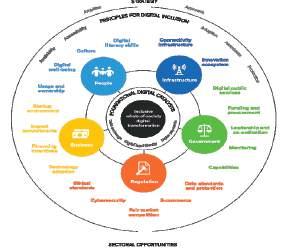
At the Africa CEO Forum's LEAD roundtable on Digital Public Infrastructure and AI, I sat in a room full of genuinely brilliant people: ministers, technologists, investors, development finance leaders, and builders, all united by the urgency of a shared question: how does Africa move from being a consumer of the digital economy to a producer within it? The conversation was rich and, in many moments, inspiring. But there was something I felt compelled to say, something that risks being drowned out by the excitement of the possible.
We need to go back to basics. Before we build the future, we need to reckon with what we have failed to fix.
The white paper framing the session was honest about the structural barriers holding Africa back: fragmentation across 55 countries limiting the critical mass needed for investment; a talent pool that is growing but still insufficient and haemorrhaging through brain drain; and a dangerous tendency to rely on imported solutions that lock value outside the continent. These are real; I do not dispute them. What I want to push on is the assumption, often implicit in rooms like this one, that if we assemble the right technology stack and unlock the right financing, transformation will follow.
It will not. Not automatically and not without doing the harder, less glamorous work first.
My contribution to the roundtable was a simple one: state capability and state readiness must come before everything else. The India reference came up multiple times in the room, as it always does, and rightly so; the Aadhaar system is a remarkable achievement. But what made it work was not the elegance of the architecture. It was governance, leadership, the patient adaptation of incentive structures, and institutional resilience that allowed it to survive multiple political transitions. The technology was almost the easy part. The human system around it was the hard part, and India got that hard part largely right.
Now consider Nigeria as an example. We have multiple identity frameworks and payment systems, each of them brilliant in isolation, each built by capable people with real intention. And yet the system as a whole is deeply fragmented, because fragmentation is not a technology problem, it is a governance problem, a coordination problem, a political economy problem. Layering more technology on top of a fragmented foundation does not produce coherence. It produces more sophisticated fragmentation. This is the uncomfortable truth I wanted to put on the table: if we do not address the broken systems that
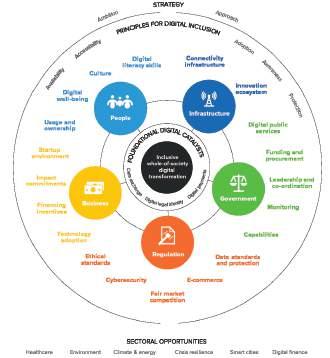
sit underneath our digital ambitions, we will simply automate the dysfunction.
The Minister of Digital Transition from Côte d'Ivoire, who had been in his role for only a few months at the time of the roundtable, said something that crystallised this for me. His first act was not to procure a system. It was to design a proper governance framework to answer the question of who arbitrates when there are conflicts over resource allocation, technical standards, or prioritisation. He arrived at his portfolio and immediately understood that the prerequisite for transformation was not a technology decision; it was a decision about who is in charge of what, and how accountability flows. That instinct is exactly right.
I want to go one layer deeper, though, because governance frameworks alone are insufficient if the people meant to operate within them are not properly incentivised to do so.
At the heart of every digital public infrastructure project, every e-government platform, every national ID system, every interoperable payment rail are public servants. Not ministers. Not chief digital officers. Public servants at the working level, the people who approve and reject transactions, process applications, and sit at the interface between the state and the citizen every single day. Irembo, the platform that has transformed service delivery in Rwanda, made this point compellingly: they have more than seven thousand government officers logging into their platform daily. If those officers do not feel that the platform makes them better at their jobs, they will not just fail to champion it, they will quietly sabotage it, and no amount of technical excellence will save you. Irembo built an academy specifically to address this, not because it was nice to have, but because it was the condition under which everything else could work.
Mrs Imoukhede is a Development Expert and Executive Vice Chair, Aig-Imoukhede Foundation
NSEOBONG OKON-EKONG argues that companies should be assessed based on their contributions to the nation
WHY
There is a growing trend in Nigeria's public discourse that deserves scrutiny. Whenever a company becomes successful, expands rapidly, or secures a significant share of the market, a section of commentators often rushes to frame the conversation around ownership, asking whether the company is truly Nigerian or foreign.
At first glance, such concerns may appear patriotic. On closer examination, however, many of these arguments are lazy, simplistic, and sometimes dangerously xenophobic.
Ironically, they mirror the same narrow-minded reasoning that Nigerians frequently condemn when directed against them in other African countries like Ghana and South Africa.
Across Africa, Nigerians have built some of the continent's most successful businesses. Nigerian banks like Access and Zenith, telecommunications firms, fintech companies, and professional service providers have expanded into dozens of African countries, taking significant shares of local markets.
Take Access Bank. What began as a Nigerian institution has grown into one of Africa's most expansive banking groups, with operations stretching from South Africa to East Africa and beyond. Should citizens of those countries turn around and argue that Nigerian-owned companies are taking too much from their economies? Should they demand that successful Nigerian businesses be punished simply because their founders originated elsewhere? Then there is the immensely rapid growth of the business footprints of mogul, Aliko Dangote across the continent.
Most Nigerians would reject such reasoning instantly.
Yet some of the same arguments are now being deployed at home.
Consider some of the business families that have become part of Nigeria's economic story. How many decades must a family live, invest, employ, and pay taxes in Nigeria before they are considered Nigerian?
The Chagoury family, for instance, has been woven into the fabric of Nigeria's economic development for generations. Through investments such as HiTech Construction, Eko Hotel, and the ambitious Eko Atlantic project, they have committed billions of dollars to Nigeria's economy.
Can they honestly be dismissed as outsiders?
The same question applies to the Leventis family. How long has Leventis existed in Nigeria? Can a company that has operated in the country for generations still be casually described as merely "Greek-owned"? What about the Boulos family, whose contributions to commerce and industry span decades? What about Bhojsons and Rex Raccah, the
businessman and football administrator who owned the rested Raccah Rovers of Kano?
Many of these are second- and third-generation Nigerian families. Their children were born here. Their businesses are headquartered here. Their investments are here. Their taxes are paid here.
The notion that they remain perpetual outsiders ignores both history and reality.
Nigeria itself has travelled this road before.
Some of the country's most iconic corporations were originally foreign-controlled. Companies such as First Bank, Union Bank, UAC, and Nigerian Breweries all emerged from periods when foreign ownership dominated significant sectors of the economy.
Nigeria's response was not to demonise successful businesses or launch campaigns against them. Instead, policymakers pursued deliberate indigenisation policies that gradually increased Nigerian participation and ownership.
That was a constructive solution.
Today, Nigerian corporate governance and regulatory frameworks already place significant emphasis on local participation. In many sectors, ownership structures, board composition, and operational requirements ensure substantial Nigerian involvement. Directors, chairpersons, shareholders, executives, employees, suppliers, and service providers are overwhelmingly Nigerian.
The question therefore should not be where a founder's grandfather came from.
The question should be whether a company obeys Nigerian laws.
Does it pay taxes?
Does it create jobs?
Does it invest locally?
Does it comply with regulatory requirements?
Does it contribute to economic growth?
Those are legitimate questions
The ongoing attacks against Optasia and Nairtime illustrate why nuance matters.
Okon-Ekong is a Journalist
Editor, Editorial Page PETER ISHAKA
Email peter.ishaka@thisdaylive.com
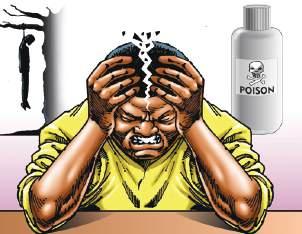
Aformer President of the Association of Psychiatrists of Nigeria, Prof Taiwo Obindo, warned recently that the increasing economic hardship and rising insecurity in the country were pushing more Nigerians towards developing mental illness, including anxiety and depression. He joined other experts who argue that even when most mental illnesses are treatable, with some conditions requiring only psychological intervention, expensive out-of-pocket payment for healthcare now drives many Nigerians diagnosed with mental illnesses away from orthodox care to alternative healers with dire consequences.
Before Obindo’s warning, medical practitioners under the aegis of the Society of Family Physicians of Nigeria (SOFPON) had raised the alarm that seven million Nigerians are living with depression, a major risk factor for suicide. They also called for well-structured Primary Healthcare Centres that would help detect and treat depression early before the onset of suicide attempts. Even without any research to examine some of the causes with a view to finding remedies, the socio-political environment tells a compelling story of its own. Given the growing incidence of suicide among Nigerians, the authorities must listen to these professionals on the need to find ways of dealing with depression before they trigger suicide in the patients.
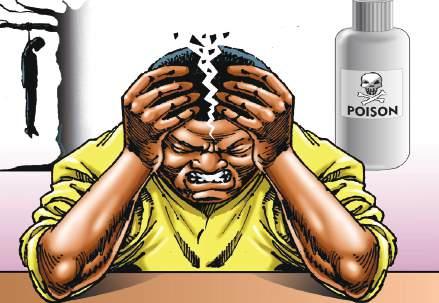
Indeed, there is enormous emotional and financial stress as well as pervading poverty and hopelessness everywhere. From the North to the South of the country, reported cases of suicide, not to mention the variety of those who use themselves as human bombs, are varied and now on the increase. However, there are also other reasons why people take their own lives and devastate members of their family and friends with shock. They include underlying mental disorders such as schizophrenia and excessive alcoholism. Drug abuse plays significant role in triggering suicidal thoughts. Schizophrenia is a disease with a wide range of weird symptoms like hallucinations, inner voices, disordered thinking and irrational fears and “emotions that seem out of tune with reality”.
Reports on suicide involving Nigerians have grimly moved from an occasional blip to a very disturbing trend
T H I S D AY
EDITOR SHAKA MOMODU
DEPUTY EDITOR WALE OLALEYE
MANAGING DIRECTOR ENIOLA BELLO
DEPUTY MANAGING DIRECTOR ISRAEL IWEGBU
CHAIRMAN EDITORIAL BOARD OLUSEGUN ADENIYI
EDITOR NATION’S CAPITAL IYOBOSA UWUGIAREN THE OMBUDSMAN KAYODE KOMOLAFE
In Nigeria today, the plight of the under-privileged is steadily worsening and many go to bed with less than a survival diet. The unemployment crisis has created a lost generation of graduates who cannot find jobs. Yet it is an established fact that impoverished individuals are a major risk group for depression. And depression, according to experts, is the most common reason why people commit suicide. It is therefore no surprise that the nation’s present socio-economic environment could be a predisposing factor to depression and perhaps suicide.

EDITOR-IN-CHIEF/CHAIRMAN NDUKA OBAIGBENA
GROUP EXECUTIVE DIRECTORS ENIOLA BELLO, KAYODE KOMOLAFE, ISRAEL IWEGBU
DIVISIONAL DIRECTORS SHAKA MOMODU, PETER IWEGBU, ANTHONY OGEDENGBE
DEPUTY DIVISIONAL DIRECTOR OJOGUN VICTOR DANBOYI
SNR. ASSOCIATE DIRECTOR ERIC OJEH
ASSOCIATE DIRECTOR PATRICK EIMIUHI
CONTROLLERS ABIMBOLA TAIWO, UCHENNA DIBIAGWU, NDUKA MOSERI
DIRECTOR, PRINTING PRODUCTION CHUKS ONWUDINJO
TO SEND EMAIL: first name.surname@thisdaylive.com
Letters to the Editor
Today, the use of hard drugs—particularly Indian hemp, cocaine and even methamphetamine are commonplace in the society—drugs whose adverse effects range from depression to suicide. Indeed, manic depression, an emotional seesaw, oscillating between exhilarating highs and devastating lows, is cited as one the reasons why there is so much insanity out there in the streets. But it would appear that neither the society nor the critical agencies of government are paying attention to this malaise. Nigeria is becoming a country where so many things that were in the past considered taboo now happen virtually every day—and these include the extreme act of deliberately taking one’s life. Indeed, reports on suicide involving Nigerians have grimly moved from an occasional blip to a very disturbing trend.
Fortunately, breakthroughs in science and medicine have brought hope that many mental patients can lead normal and productive lives. So are suicide victims if help can reach them early enough. Depression, one of the main culprits of suicides is treatable. This is why we call on all authorities to take out for rehabilitation the mentally challenged who roam the streets. Public officials at all levels should also by way of good governance pay serious attention to the constraints that could trigger suicidal thoughts in many of our nationals.
Letters in response to specific publications in THISDAY should be brief (150-300 words) and straight to the point. Interested readers may send such letters along with their contact details to opinion@thisdaylive.com. We also welcome comments and opinions on topical local, national and international issues provided they are well-written and should also not be longer than (750- 1000 words). They should be sent to opinion@thisdaylive. com along with photograph, email address and phone numbers of the writer.
Everyone talks of the power of social media. It is undeniable. Experts point out that while it holds incredible potential for good, it also has a dangerous capacity for harm.
Today, a social media post can transform an individual's life or spark outrage across borders within minutes. It is no surprise, therefore, that multinational corporations are increasingly finding themselves caught in the crossfire of geopolitical tensions, misinformation, and emotional nationalism, because of the power of social media. Digital mobs are on the rise.
For major South African conglomerates like telecommunications giant MTN Group, entertainment heavyweights MultiChoice, financial institution Stanbic IBTC, and luxury hospitality provider Protea Hotels, recent concerns about threats to their operations across West Africa following renewed anti-immigrant and Afrophobic tensions in South Africa highlight a growing
challenge for businesses operating in an interconnected Africa. The situation places cross-border investments and economic stability directly in the crossfire.
For the discerning, the issue extends beyond these four. It is about how African nations manage cross-border relationships, how citizens express grievances, and how businesses can be protected from becoming collateral damage in disputes they neither created nor control.
Historically, periodic Afrophobic attacks in South Africa have triggered anger across the continent, particularly in countries whose citizens have been victims. Nigerians, Ghanaians, Zimbabweans, and others have often reacted strongly whenever reports emerge of attacks on foreign nationals. In the digital age, these reactions are amplified through social media, where facts, emotions, rumours, and misinformation frequently intermingle.
The challenge for companies like MTN is that they are often perceived, rightly or wrongly, as symbols of
South African economic interests. During periods of tension, calls for boycotts, threats against facilities, and coordinated online campaigns can quickly emerge. Such reactions may be emotionally understandable, but they can also be economically self-defeating.
In Nigeria, thousands of Nigerians are employed directly by MTN, with hundreds of thousands more working for businesses that do business with MTN. In addition, millions of everyday Nigerians own shares in the firm, which contribute substantial taxes and serve as critical infrastructure for financial services, education, healthcare, and communication.
Any disruption to these operations hurts local economies and consumers far more than it impacts distant political actors.
Elvis Eromosele, elviseroms@gmail.com
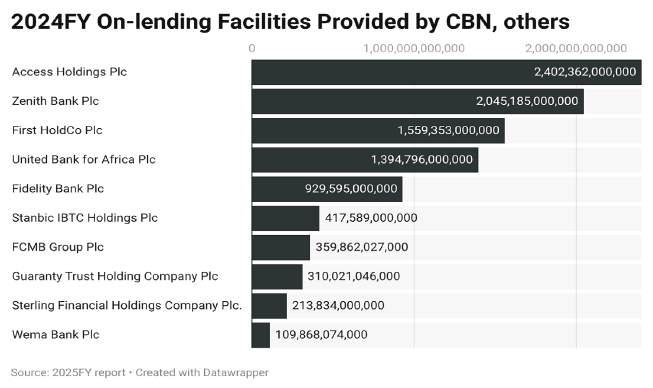
Kayode tokede
In a bid to meet lending needs across Africa and fund Nigeria’s infrastructure development, 10 leading banks in Nigeria borrowed N7.81 trillion (current/ non-current) from the Central Bank of Nigeria (CBN) and the International Finance Corporation (IFC), among other international institutions, in the 2025 financial year.
This is about a 20.2 per cent decline when compared with the N9.74 trillion borrowed by the 10 banks in 2024. Banks operating in the country have continued
to borrow from local and international financial institutions, such as the African Export-Import Bank (Afrexim), the African Development Bank, and JP Morgan Securities Limited, among others, to finance key projects in Nigeria and in African countries where they operate.
The banks also access CBN facilities such as the Shared Agent Network Facility (SANEF) and the Non-Oil Export Stimulation Facility (NESF) to support targeted sectors.
The banks are: Access Holdings, Zenith Bank Plc, United Bank for Africa Plc
(UBA), First HoldCo Plc and Guaranty Trust Holding Company (GTCO).
Others include: Fidelity Bank Plc, FCMB Group Plc, Stanbic IBTC Holdings, Wema Bank Plc, and Sterling Financial Holdings Company Plc.
THISDAY’s investigation revealed that Access Holdings led other banks in borrowing from international financial institutions and the CBN in 2025, followed by First Holdco and UBA.
THISDAY checks revealed that Access Holdings reported longand short-term borrowing of about N2.03 trillion
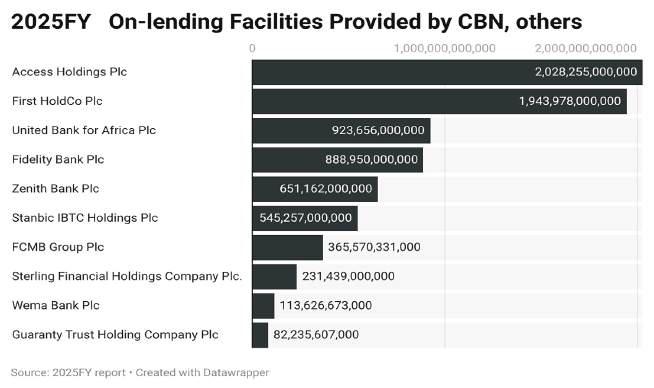
from Afreximbank, among others, in 2025, a 15.6 per cent drop from N2.4 trillion reported in 2024.
In 2025, Access Holdings, a Pan-African bank, borrowed about N448.34 billion, including a $300 million term loan facility from Afrexim in July 2025. The N448.34 billion amount emerged as the highest in the year under review.
The lender in its 2025 audited results and accounts explained that the facility has an initial tenor of six months, with an option to extend up to three years, and is priced at a floating interest rate of Term SOFR plus a margin
of four per cent per annum.
While First Holdings reported N1.94 trillion in borrowings in 2025, about a 25 per cent increase over N1.56 trillion in 2024, UBA posted N924 billion in borrowings in 2025, a decline of 34 per cent from N1.39 trillion in 2024.
According to THISDAY’s findings, GTCO had the lowest amount borrowed from CBN and international finance companies in 2025.
Specifically, GTCO declared N82.24 billion in borrowing for 2025, about a 73.47 percent decline from N310.02 billion in 2024. The decline in GTCO’s borrowing
in 2025 was influenced by N64.1 billion from the CBN, compared with N288.4 billion reported in 2024.
“The amount of N64,114,279,000 (December 2024: 288,376,276,000) represents the outstanding balance on Due to CBN, which represents borrowings with the financier CBN for a tenor of 2 years with a maturity date of 22nd of March 2026. The interest rate on the facility is 17%,” GTCO explained in its 2025 results and accounts released to the Nigerian Exchange Limited (NGX).
Nume Ekeghe
Trading activity in the fixed income market remained buoyant on June 19, 2026, with investors transacting securities worth N1.16 trillion across 447 deals, as Federal Government of Nigeria (FGN) bonds emerged as the most actively traded asset class.
Data from the Fixed Income Dashboard showed that FGN
bonds accounted for N487.91 billion of total turnover, spread across 207 transactions, ahead of OMO Bills, which recorded N438.17 billion in trades from 96 deals. Treasury Bills contributed N226.10 billion from 138 transactions, while Sukuk instruments recorded N10 billion in six deals. A total of 27 market participants were active during the trading session.
The strong volume recorded in the bond segment highlights sustained investor appetite for sovereign instruments despite elevated yields across the market.
Among the bonds traded, the February 2031 FGN Bond attracted the highest number of transactions, with 45 deals worth N118.45 billion. The April 2037 bond followed
closely with 41 trades valued at N62.58 billion, while the May 2033 instrument accounted for the largest traded volume at N140.53 billion across 30 deals.
Yields across the bond curve remained broadly stable within the mid-tohigh teen range. The 2031 bond closed at 17.95 per cent, while the 2037 issue settled at 18.15 per cent.
At the longer end of the curve, the 2053 bond closed at 15.25 per cent, reflecting relatively stronger demand for long-dated instruments.
In the Treasury Bills segment, activity was concentrated in the June 17, 2027 maturity, which recorded 81 trades and turnover of N167.09 billion.
The bill closed at a yield of 20.44 per cent after trading
within a range of 19.38 per cent and 20.88 per cent. The December 17, 2026 Treasury Bill also witnessed significant interest, recording 17 trades worth N21.64 billion and closing at 18.16 per cent. Another December 2026 bill attracted 11 trades valued at N19.99 billion and ended the session at 17.28 per cent.
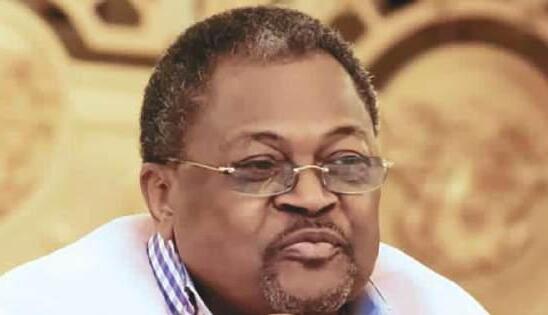
The 2025 financial year will likely be remembered as one of the most transformative periods in Nigeria’s downstream petroleum industry.
The continued implementation of market-based fuel pricing, changing supplychain dynamics, and increasing domestic refining capacity reshaped competitive conditions across the sector.
While these structural reforms are expected to strengthen the long-term sustainability of Nigeria’s energy market, the transition period created significant operational and financial pressures for downstream operators.
Rising borrowing costs, inflationary pressures, fluctuating product prices, and evolving consumer demand patterns combined to compress margins across the industry.
Against this backdrop, Conoil delivered a
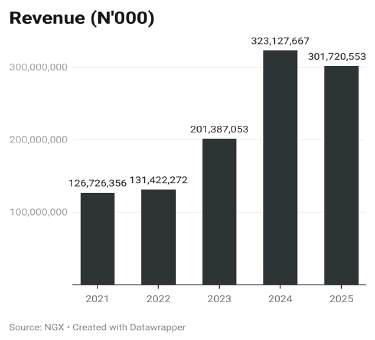
profitable performance and demonstrated notable operational resilience despite a difficult business environment.
The key financial highlights revealed that revenue closed at N301.72 billion in 2025 from N323,13 billion in 2024.
For the year ended December 31, 2025, Conoil recorded revenue of N301.72 billion,
The revenue generated in 2025 reflected the company’s ability to maintain significant market activity despite changing industry conditions.
The result underscores the strength of the company’s nationwide distribution network and established presence across retail, commercial, and industrial market segments.
In the year under review, gross profit stood at N22.68 billion from N26.35 billion in 2024.
The indigenous petroleum market,
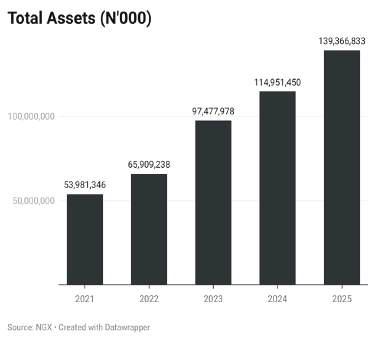
however, declared N2.68 billion profit before tax in 2025 while profit before tax was at N2.68 billion in 2025. The management in the 2025 financial year has proposed a dividend of 200 Kobo per share.
The proposed distribution reflects management’s confidence in the business while balancing the need to preserve capital and support future growth initiatives. For shareholders, the recommendation represents continuity in returns during a period when many companies have adopted more conservative capital allocation strategies in response to economic uncertainty.
One of the notable features of Conoil’s 2025 performance was its focus on cost efficiency. Cost of sales declined to
N279.04 billion from N296.77 billion in the preceding year, while distribution and marketing expenses reduced significantly to N4.05 billion from N6.89 billion in 2024. These improvements helped the company generate gross profit of N22.68 billion and partially offset the impact of a challenging operating environment.
The company also continued to invest in its operational capacity. Total assets increased by 21.2per cent to N139.37 billion in 2025 from N114.95 billion in 2024, while property, plant and equipment rose substantially to N10.81 billion from N3.97 billion in the prior year. This expansion reflects ongoing investment in infrastructure and operational assets intended to support future business growth.
The story continues online on www.thisdaylive.com
Shareholders have expressed confidence in Access Holdings Plc’s long-term value creation strategy as Nigeria’s largest financial services group continues implementation of a deliberate plan to consolidate its pan-African and global investments into greater sustainable returns to investors.
Speaking on the outcome of the group’s annual general meeting, shareholders said they were confident that Access Holdings has been well positioned for sustainable growth and high value-creation in the years ahead.
They said the performance of the group in the past 15 months highlighted the fundamental strength of Access Holdings, which provides a strong reassurance on the current strategic shift from investments to value creation and shareholders’ return.
With nearly one million shareholders, Access Holdings has one of the largest shareholders base across Africa. More than three-quarters of the shareholders are retail minority shareholders, making them significant stakeholders in the group. Domestic minority retail shareholders typically account for nearly half of transactions at the Nigerian stock market. Shareholders said they believed Access Holdings could translate its strong fundamentals into exciting returns while simultaneously building on the group’s vision of being Africa’s gateway to the global financial system.
Founding Coordinator and Leader,
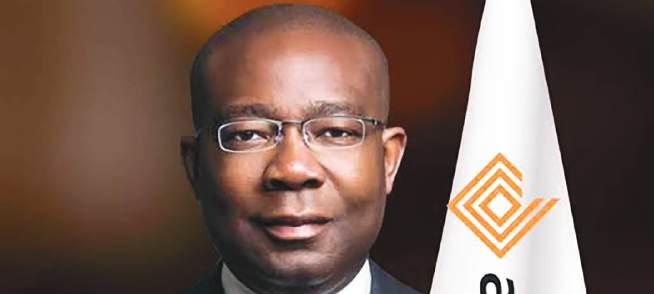
Independent Shareholders Association of Nigeria (ISAN), Sir Sunny Nwosu, said shareholders have no fear about the future of Access Holdings having seen its historic transformation from a mid-tier bank to becoming Nigeria’s biggest bank in many parameters.
He explained that the understanding shown by shareholders over the nondeclaration of dividend for the 2025 business year was based on both past performance and future expectation.
President, Association for the Advancement of Rights of Nigerian Shareholders (AARNS), Dr Faruk Umar, said Access Holdings has endeared itself to shareholders with its performance overtime.
According to him, shareholders were looking at the bigger picture and were confident that the group would deliver
impressive long-term values as outlined under its strategic plan.
“We’ve no cause to worry about Access Holdings. True, dividend is important to us shareholders, but then, when you take everything together, you see that it’s like keeping your money in a compounding interest account, you’re going to get the bumper return at the end,” Umar said.
National Chairman, New Dimension Shareholders Association, Mr. Patrick Ajudua said Access Holdings has experienced commendable growth, citing the group’s performance in 2025 when gross earnings rose to N5.53 trillion and total assets crossed N51.53 trillion.
“As shareholders, we express our satisfaction with the company’s overall performance, particularly in the light of the decision not to distribute dividends this year. This decision was clarified
as a necessary step to ensure compliance with Central Bank of Nigeria’s regulations,” Ajudua said.
He said shareholders during the general meeting had underlined areas where they need the board and management to focus on, including the need to further address impairment charges on financial assets and cost optimisation.
Chairman, Progressive Shareholders Association of Nigeria (PSAN), Boniface Okezie, said the overall assessment of Access Holdings’ performance was strong.
According to him, while the absence of dividend payment is notable, it shouldn’t solely determine a company’s performance. He underlined that part of shareholders’ trust in the board was to entrust the directors with the discretion to declare or not to declare dividend.
He said: “With earnings per share so impressive at N13.48, the company is certainly capable of rewarding its shareholders for even as much as N5 per share. We know that it’s CBN’s rules that posed challenges for dividend disbursement. As a holding company, the performance of the bank, which serves as its main subsidiary, significantly impacts the overall situation. If the bank doesn’t distribute dividends, it naturally limits the holding company’s ability to do so as well.”
He urged regulators to consider the impact of their policies on investors, highlighting the importance of dividends in reflecting a company’s success.
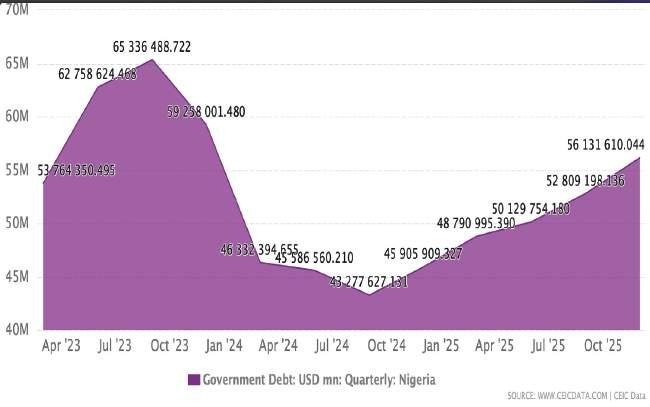
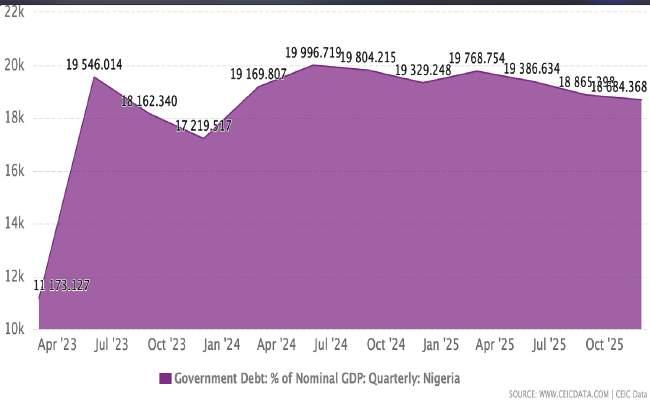
Ebere Nwoji
The in-coming Chairman of the Nigerian Insurers Association (NIA), Mrs Ebelechukwu Nwachukwu, has said that the insurance industry was entering into a transformative era that demanded from insurers higher standards of governance, stronger capitalisation, improved consumer protection, and deeper market penetration.
Nwachukwu, said these were what the Nigeria Insurance Industry Act (NIIRA) had brought along.
“This legislation presents us with a unique opportunity to rebuild trust, strengthen resilience, and reposition insurance as a vital engine of economic stability”.
“This Act is the most comprehensive reform of our industry in living memory. It consolidates outdated laws and introduces a modern framework built on Risk-Based Capital and significantly higher minimum capital requirements (MCR)”, she observed.
Nwachukwu who is also the Managing Director /
Industrial &Medical Gases
(IMG) Nigeria Plc has said that it delivered a resilient performance in 2025, doubling shareholders’ equity to N11.84 billion and paying a cash dividend of N365.5 million, amounting to 50 kobo per share.
This, it said in a statement, is despite a challenging business environment marked by inflationary pressures, rising operating costs, and foreign exchange volatility.
Its audited results showed that total equity rose from N5.91 billion in 2024 to N11.84 billion in 2025, while share capital increased by 46 per cent to N365.53 million from N249.75 million. The number of issued Ordinary Shares also climbed by 46 per cent to 731.06 million shares, reflecting an expanded ownership structure and stronger shareholder funds.
The performance, it said, underscores the resilience of its business model and the effectiveness of its strategic and financial management.
For the year ended December 31, 2025, IMG recorded revenue of N8.45 billion, up slightly from N8.38 billion in the previous year. Profit After Tax stood at N990 million, compared with N1.62 billion in 2024, as economic headwinds weighed on earnings. Nevertheless, the company continued to enhance shareholder value through a stronger balance sheet and sustained returns to investors.
Chairman of IMG Nigeria Plc, Aminu Ado, described the 2025 financial year as a testament to the company’s resilience, adaptability and strong stakeholder alignment.
Chief Executive Officer
REX Insurance Ltd and 27th Chairman of NIA, stated these at a pre-investiture press conference organised recently at the Insurers’ House Saka Tinubu Lagos. Her investiture as 27 th Chairman of NIA has been
scheduled for July 3rd with Managing Director /Chief Executive officer Fidelity Bank plc , Dr. Nneka Onyeali- Ikpe, as Chairman and Managing Director AIICO Insurance plc, Mr Babatunde Fajemirokun as the Chairman Investiture Organising Committee.
She said her two year tenure as NIA Chairman would be occupied by three point agenda which she highlighted as deepening insurance penetration through collaboration.
“We have long spoken about our low penetration
rate. The new Act gives us the capital strength to innovate. But capital alone is not enough. We need partnerships – with banks, fintechs, microfinance institutions, and even non-financial platforms,” Nwachukwu stated.
Eromosele Abiodun
The Nigeria Employers’ Consultative Association (NECA) has commended the Federal Government for issuing the General Guidelines for the Transition and Implementation of the Tax Acts 2025, describing the development as a significant milestone that reinforces confidence in Nigeria’s ongoing tax reform agenda.
The guidelines provide much-needed clarity on the implementation of the new tax framework and affirm the principle that the Tax Acts 2025 will not be applied retrospectively to accounting periods preceding January 1, 2026.
Speaking on the development, the DirectorGeneral, NECA, AdewaleSmatt Oyerinde, said the government’s clarification
on the transition process eliminates the uncertainty that would have arisen from any retrospective application of tax provisions to completed accounting periods.
Oyerinde added that by providing clear guidance on how previous and current tax obligations should be treated, the Federal Government has strengthened confidence in the reform process and
demonstrated a commitment to stakeholder engagement that supports compliance and economic stability.
“The issuance of the transition guidelines demonstrates that constructive engagement between government and the private sector can produce outcomes that strengthen investor confidence, promote regulatory certainty and support economic growth.”
Doftwerks West Africa
Limited, the technology subsidiary of Stransact Chartered Accountants a correspondent firm of RSM International has been officially accredited by the Nigeria Revenue Service (NRS) at its headquarters in Abuja as both a Systems Integrator (SI) and an Access Point Provider (APP) under Nigeria’s
Group CEO of an oil and gas facility maintenance service company and Chairman of Port Harcourt Chamber of Commerce Professional Services and Consultancy Trade Group, Emeka Ezekwe, has reaffirmed that sustainable economic transformation begins with equipping women with practical business capabilities rather than dispensing short-term interventions.
Speaking while
mandatory e-Invoicing programme.
The dual accreditation, awarded under the NRS Merchant Buyer Solution (MBS) framework, authorises Doftwerks to provide endto-end e-invoicing services to Nigerian businesses covering system integration, invoice transmission, realtime reporting to the NRS,
coordinating the Cohort 1 Business Development Workshop of the PHCCIMA/ WCCIMA Women Economic Empowerment Programme in Port Harcourt, Ezekwe described the initiative as a structured and measurable economic activation model deliberately designed to move beyond conventional empowerment approaches. Ezekwe who is also the Program architect and Coordinator of the
and ongoing compliance management.
“For years, the conversation around tax compliance in Nigeria has been about obligations. What this accreditation represents is something different it is about infrastructure.
Nigeria is building a national transaction-reporting system, and Doftwerks is now part
PHCCIMA/WCCIMA Women Economic Empowerment accelerator ProgrammeCohort 1, said the programme combines “compassion with structure and empowerment with metrics,” providing women entrepreneurs with practical tools, mentorship and accountability systems required to build resilient enterprises.
“A woman who earns consistently stabilises a family. When 60 women earn
of that infrastructure. The firms that understand this early and position themselves accordingly will define the next chapter of professional services in this country. We are not just helping businesses comply. We are helping build the architecture of Nigeria’s digital economy.” Eben Joels, CEO, Stransact Chartered Accountants.
consistently, communities are transformed,” Ezekwe stated. Ezekwe disclosed that the accelerator incorporates business tracking mechanisms, mentoring frameworks, performance evaluation and clearly defined Key Performance Indicators (KPIs), with targets of achieving at least 70 per cent business survival and expansion, alongside projected income growth of 40 per cent among beneficiaries.
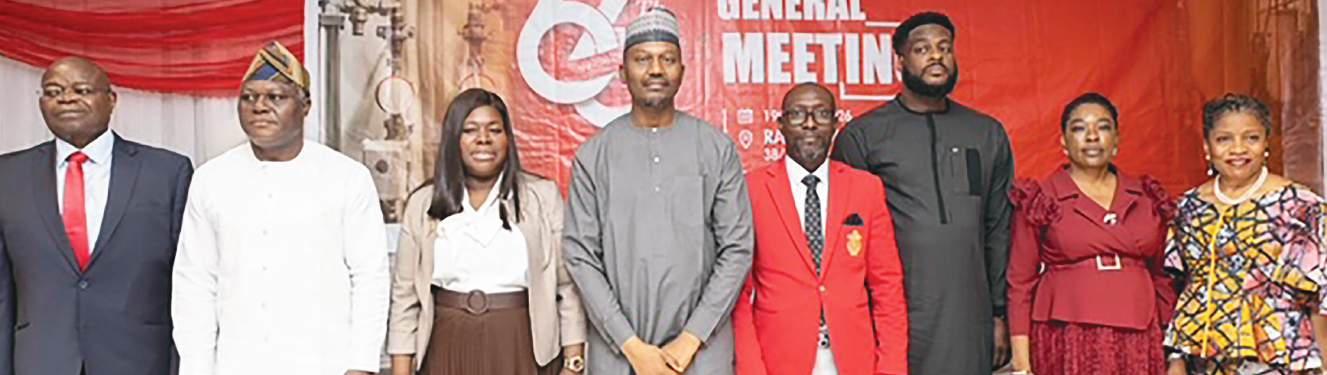
Sunday Okobi in Baku, Azerbaijan
Senior stakeholders and experts at this year’s Islamic Development Bank (IsDB) Meeting taking place in Baku, Azerbaijan, have explored how artificial intelligence and shared digital infrastructure can accelerate inclusive growth, strengthen digital public infrastructure (DPI), and address emerging gaps in compute capacity and AI readiness across IsDB Member Countries (MCs).
At the knowledge-sharing event titled: ‘Harnessing AI for Advancing Regional Digital Economies’, which brought together senior
stakeholders and technical experts, the Director-General of Country Programmes at IsDB, Mr. Anasse Aissami, emphasised strongly that the Bank’s approach to artificial intelligence is not as an isolated technology agenda, but as a shared capability framework designed to help MCs transition from fragmented pilots toward scalable and trusted digital platforms that can be deployed across sectors and borders.
In his remarks, the Deputy Minister of Digital Development and Transport of the Republic of Azerbaijan, Mr. Samaddin Asadov, highlighted Azerbaijan’s ongoing efforts to position itself as a regional
The UNHCR and TGI Group have launched a three-year partnership to support over 5,000 farmers and create more than 10,000 jobs in Benue and Cross River States.
Implemented through TGI’s agribusiness arm, WACOT Limited — a leading food and agro-allied company with over 25 years of operations across Nigeria’s agricultural value chains — the programme targets refugees, internally displaced persons (IDPs), and host communities, with an estimated 25,000–35,000 people expected to benefit.
Farmers in fragile communities across Benue and Cross River States will receive improved inputs, technical training, certification, and structured market access across rice, maize, sesame, soya, and cocoa value chains.
The initiative comes as UNHCR’s newly released Global Trends report reveals that 117.8 million people remain forcibly displaced worldwide — one in every 70 people on earth. Nigeria hosts over 3.8 million forcibly displaced people, while
Nigerians account for 3.5 per cent of the world’s forcibly displaced population.
“This partnership is about moving from aid to opportunity,” said Arjun Jain, UNHCR Representative in Nigeria. “TGI and UNHCR are connecting displaced people to jobs, skills, and markets so they can rebuild their lives with dignity and contribute to the economy. We are immensely grateful to TGI for their vision and leadership in this regard.”
Habiba Sulaiman of TGI Group said the company is committed to inclusive growth: “This partnership strengthens our supply chains while creating real economic opportunities for communities affected by displacement.”
Work has already begun, with government and community consultations and soil sampling already completed. The agreement builds on a 2024 partnership between UNHCR and TGI and reflects a shift toward market-driven solutions that reduce dependency and drive economic inclusion.
digital hub through the expansion of innovation ecosystems, strengthening of digital infrastructure, and
support for technology-driven economic activity.
He noted that Artificial Intelligence (AI) can serve
as a catalyst across these priorities by increasing productivity, enabling new digital markets, improving
the competitiveness of enterprises, and enhancing the efficiency of public service delivery.
Former Director-General of The Nigerian Stock Exchange (now NGX), Professor Ndi Okereke-Onyuike, has described the emergence of Dr Fiona Ahimie as the first female and 14th President and Chairman of Council of the Chartered Institute of Stockbrokers (CIS) as a historic breakthrough for gender inclusion and
leadership within Nigeria’s capital market.
Professor Okereke-Onyuike made the remarks when she hosted Ahimie and a highpowered delegation from the Institute on a courtesy visit ahead of the President-Elect’s inauguration scheduled for June 25, 2026.
The delegation, which comprised the Immediate
Past President of the Institute, Oluropo Dada; the First and Second Principal Officers, Dr Akeem Oyewale and Jude Chiemeka, respectively; and the Registrar/Chief Executive, Ayo Adeonipekun, visited the former Director-General of The Nigerian Stock Exchange as part of preparations for the inauguration ceremony.
During the visit, Ahimie
formally invited Professor Okereke-Onyuike to attend the historic event. Welcoming the delegation, Professor OkerekeOnyuike expressed delight at the election of Dr Ahimie, noting that her emergence represents a defining moment in the 30-year history of the Institute and a significant milestone for women in the financial services sector.
TikTok and the International Chamber of Commerce (ICC), organised the inaugural Digital Commerce Labs (DCL) community event in Lagos, designed to support Nigeria’s social commerce market projected to reach $2.04 billion in 2025 and expand
to nearly $4 billion by 2030. Sharing insights on how Nigerian small businesses can harness the power of digital to grow, scale and build lasting impact, Acting Head of Government Relations and Public Policy, sub-Saharan Africa at TikTok, Tokunbo Ibrahim, said: “Digital commerce is
reshaping how businesses grow across sub-Saharan Africa, and Nigerian entrepreneurs are at the heart of that shift. Through our partnership with ICC, we are committed to making sure that the benefits of that transformation reach every small business owner in this region.”
ICC Deputy Secretary General, Julian Kassum, said: “Digital commerce is a powerful engine for inclusive growth. By equipping small businesses with the tools and skills they need to participate in the digital economy, we are opening new pathways for entrepreneurship, trade and job creation.
Aradel Holdings Plc, Nigeria’s leading integrated indigenous energy company has announced its audited results for the twelve months ended 31 December 2025, which showed financial record of N699.4 billion revenue growth in FY 2025,
up from N581.2 billion recorded in FY 2024.
According to the financial report, 2025 was a transformative year for Aradel, defined by landmark acquisitions that reshaped its growth trajectory. The Group completed the acquisition of an additional 40 per cent interest in ND Western
Limited (ND Western), bringing its total effective equity in Renaissance Africa Energy Company (Renaissance) to 53.3 per cent post-acquisition. The transaction significantly expanded the company’s reserves, production base and operational footprint, positioning Aradel for
materially greater scale. From the financial report, its revenue went up by 20 per cent to N699.4 billion (FY 2024: N581.2 billion), driven by sustained momentum across all business segments. EBITDA increased by 119 per cent to N815.0 billion compared to N372.0 billion in FY 2024.
Emma Okonji
The President of the Accra Institute of Technology (AIT), Professor Clement Dzidonu has said the rapidly evolving world of artificial intelligence (AI), automation, and digital transformation requires graduates who are capable of independent thinking, continuous learning, innovation, and responsible leadership.
According to Dzidonu, universities exist not merely to award degrees but to develop capable individuals that can think critically, solve problems creatively, adapt to changing circumstances, and contribute meaningfully to society. He reaffirmed AIT’s commitment to producing graduates who are technically competent, ethically grounded, intellectually curious, and globally competitive.
Dzidonu said this during the institute’s matriculation ceremony held at the University’s Knowledge City Campus in Kokomlemle, Accra, in Ghana.
The institute officially welcomed a new cohort of students into its academic community during the matriculation ceremony.
Speaking on the theme: ‘Preparing the Sovereign Learner for a World of
Opportunity, Possibility and Difference’, Dzidonu encouraged students to embrace the Opportunity–Possibility–Difference (OPD) perspective by recognising opportunities, exploring possibilities, and creating meaningful differences in their lives and communities. He urged them to look beyond examinations and certificates and focus on building capability, character, and courage.
By Mukhtar Ya’u Madobi
Nigeria’s fight against terrorism, banditry, kidnapping, and violent extremism has largely been measured by arrests, military offensives, and security operations. While these measures remain indispensable, a more enduring measure of success lies elsewhere: the ability of the state to secure lawful convictions through the judicial process.
Recent courtroom victories recorded by the Department of State Services (DSS) suggest that Nigeria may be witnessing an important evolution in its counterterrorism architecture—from merely apprehending suspects to ensuring that criminals and terrorists are held accountable through due process and the rule of law.
Within a span of weeks, Nigerian courts have delivered landmark judgments in cases investigated and prosecuted by the DSS. Among them was the conviction and death sentence handed to four terrorists involved in the gruesome June 2022 attack on St. Francis Catholic Church in Owo, Ondo State, one of the deadliest terrorist incidents in the country’s recent history.
This was followed by the conviction of a female arms courier, Hauwa Mukhtar, who was arrested while allegedly transporting 438 rounds of ammunition intended for a notorious bandit leader operating in Zamfara State.
Earlier, a Federal High Court in Abuja sentenced Halima Haliru Umar to 20 years imprisonment after convicting her of unlawful possession of 302 rounds of AK-47 ammunition and attempting to provide support for terrorist activities. Umar had been arrested by the DSS in Plateau State before being arraigned on a four-count charge.
Another significant judicial outcome was the death sentence imposed on Jibrin Halilu, who was convicted by a Kogi State High Court for the abduction and murder of a hotel proprietor. The judgment underscored the importance of translating security operations into successful prosecutions capable of delivering justice for victims.
Taken together, these cases represent more than isolated legal victories. They reflect an emerging trend in which intelligence gathering, criminal investigation, prosecution, and judicial determination are increasingly working in tandem to strengthen accountability, deliver justice, and reinforce public confidence in state institutions.
Security experts have long argued that defeating terrorist organisations requires more than neutralising fighters on the battlefield. It also involves dismantling the logistics networks, financial structures, and supply chains that sustain their operations.
The recent convictions of arms couriers indicate a growing focus on disrupting the support infrastructure that enables violent groups to thrive across the country.
The same principle applies to kidnapping, which has become one of Nigeria’s most persistent security challenges. Beyond the immediate suffering inflicted on victims and their families, kidnapping generates fear, undermines economic activity, and erodes public confidence in state authority.
For communities traumatised by such crimes, successful prosecutions provide reassurance that perpetrators can be identified, tried, and punished in accordance with the law.
The significance extends beyond
punishment. Effective prosecution creates deterrence, weakens criminal networks, encourages citizen cooperation, and demonstrates that intelligence provided to security agencies can produce tangible outcomes.
One of the most notable developments in recent years has been the apparent evolution of the DSS itself.
Historically, the agency has often found itself at the centre of public debates concerning civil liberties, media freedom, and allegations of arbitrary arrests or prolonged detentions. Civil society organisations, journalists, and human rights advocates have, at various times, raised concerns about aspects of the Service’s operations.
However, there are growing indications that under the leadership of DirectorGeneral Adeola Oluwatosin Ajayi, the DSS is placing greater emphasis on legal processes, institutional accountability, and public engagement.
This shift is reflected not only in terrorism-related prosecutions but also in the agency’s increasing reliance on the courts to resolve disputes and defend its actions.
Four examples are particularly instructive.
The first is the legal dispute involving the Socio-Economic Rights and Accountability Project (SERAP) and the DSS. Rather than resorting to extra-judicial measures, the matter proceeded through established judicial channels, allowing the courts to determine the issues in contention. The court later found SERAP guilty and ordered it to pay DSS officials N100m.
Similarly, in matters involving activist and publisher Omoyele Sowore, disputes and allegations have increasingly been subjected to judicial scrutiny, reflecting a broader trend toward legal resolution
rather than unilateral administrative action.
Another significant judicial victory attributed to the Service occurred when Professor Pat Utomi, a renowned political economist, former presidential candidate, and member of the African Democratic Congress (ADC), announced plans in early 2025 to establish a “shadow government.”
In response, the Department of State Services (DSS) instituted legal proceedings challenging the legality of the proposed arrangement. Delivering judgment in the case, Justice James Omotosho held that the concept of a shadow government or shadow cabinet is unconstitutional and incompatible with Nigeria’s presidential system of government, describing it as an alien concept within the country’s constitutional framework.
This landmark judgment represents not only a victory for the DSS but also for all Nigerians, as it reinforces constitutional governance and contributes to the preservation and protection of the nation’s democratic order.
Furthermore, another notable approach reportedly adopted under the current leadership is the review of cases involving individuals that are wrongfully arrested and detained without sufficient evidence.
In instances where investigations establish innocence, efforts have been made to secure their release and facilitate reintegration.
A recent example occurred in May 2026, when the DSS released a Yobe State resident, Ya’u Mohammed, after investigations reportedly confirmed that he had no connection to criminal activity. Beyond his release, the Service provided financial support worth N2 million to assist his reintegration and livelihood restoration.
Whether one agrees with the agency’s positions or those of its critics, the increasing reliance on judicial processes represents a positive development for
democratic governance. Strong democracies are built on institutions that submit disputes to impartial legal determination rather than resolving them through coercive means.
Such developments contribute to the perception of a security institution seeking legitimacy through adherence to the rule of law and constitutional processes.
Despite these achievements, significant challenges remain.
One of the most persistent obstacles is the slow pace of criminal trials. Terrorism and kidnapping cases often involve extensive investigations, multiple defendants, large volumes of evidence, and prolonged court proceedings.
To address these challenges, the Federal Government and the judiciary should consider establishing specialised terrorism and national security courts, or dedicated divisions within existing courts.
Such courts could be staffed by specially trained judges and prosecutors, supported by enhanced security arrangements and modern case management systems designed to expedite proceedings while safeguarding defendants’ rights.
Countries facing prolonged terrorist threats have adopted specialised judicial mechanisms to ensure the timely adjudication of national security cases. Nigeria could benefit from studying similar models.
Pakistan, for example, operates dedicated Anti-Terrorism Courts (ATCs) with jurisdiction over terrorism financing, insurgency, and related offences. Saudi Arabia also utilises a Specialised Criminal Court established to handle terrorism and national security cases.
A more efficient judicial framework would help reduce case backlogs, preserve evidence, protect witnesses, deliver timely justice for victims, and strengthen confidence in the criminal justice system.
Ultimately, security cannot be sustained by force alone. It depends on public trust. Citizens are more likely to cooperate with security agencies when they believe suspects will receive fair trials and that victims will obtain justice. Communities are more willing to provide intelligence when they see that information supplied to authorities leads to lawful and transparent outcomes.
The recent convictions secured through DSS investigations therefore carry significance beyond the individual cases themselves. They suggest that Nigeria’s fight against terrorism, banditry, kidnapping, and organised crime is increasingly being pursued not only in forests, highways, and urban centres, but also in courtrooms.
As the DSS continues to adapt under its current leadership, and as the judiciary continues to adjudicate complex security cases, Nigeria has an opportunity to deepen a culture in which justice, not merely force, becomes a cornerstone of national security. That would represent a victory not only for the DSS, but also for the rule of law, democratic governance, and the Nigerian people.
•Mukhtar Ya’u Madobi is a Research Fellow at the Centre for Crisis Communication
Peter Uzoho
The European Investment Bank Group’s development arm, EIB Global, and the Development Bank of Nigeria (DBN) have announced a €200 million financial partnership to support small-scale investments by Nigerian enterprises, contributing to Nigeria’s green and digital economy.
The agreement was signed at the DBN Lagos Office in the presence of EIB Vice-President Mr. Ambroise Fayolle.
The investment program will boost private-sector development in Nigeria through small-scale investments by enterprises that contribute to Nigeria’s green and digital economy.
According to a statement issued by EIB VicePresident Fayolle, the financing partnership will also strengthen Nigeria’s green transition by expanding financing opportunities for companies
in the renewable energy and agribusiness sectors.
In agriculture, it will help improve productivity, develop local supply chains, and strengthen food security in a country that hosts Africa’s largest population.
On the energy side, the statement said the loan will improve financing for renewable energy businesses, support clean energy access, reduce carbon emissions, and help build climate resilience in underserved communities.
“This partnership with the Development Bank of Nigeria will strengthen the competitiveness of Nigeria’s private sector, especially for SMEs in the green and digital sector. In supporting green projects and women entrepreneurs, we are also fostering inclusive growth and climate action. This is a powerful example of EIB’s real impact on the ground,” Fayolle said.
Managing Director/ CEO of the Development Bank of Nigeria, Dr. Tony
Okpanachi, welcomed the investment, describing it as a significant milestone in efforts to drive Nigeria’s economic growth and sustainability.
“The €200 million investment from EIB Global is a significant milestone in our mission to drive Nigeria’s economic growth and sustainability. By supporting local financial institutions and MSMEs in key sectors like agriculture, renewable energy, digitalisation, and innovation, we’re empowering entrepreneurs and fostering a culture of sustainable innovation,” he stated.
Okpanachi affirmed further: “This partnership underscores DBN’s commitment to accelerating Nigeria’s transition to a sustainable, innovationdriven and digitally enabled economy, creating jobs, and improving livelihoods. It aligns with DBN’s vision to support green growth and digital transformation.”
Nume Ekeghe
Access Bank Plc has partnered leading automobile distributors to launch AutoFest, a vehicle financing initiative designed to make car ownership more affordable for Nigerians, deepen financial inclusion and stimulate growth across the country’s automo- tive value chain.
The initiative, unveiled in Lagos in col- laboration with CFAO Mobility, CIG Motors, Elizade Motors, Kewalram Chanrai Group, Mikano Motors and Stallion Group, enables qualified customers to acquire brand-new and certified pre owned ve- hicles with a minimum equity contribution of 10 per cent and financing of up to 90 per cent of a vehicle’s value through
a fully digital applicationSpeakingprocess. at the launch, Executive Director, Corporate and Investment Banking, Access Bank Plc, Iyabo Soji Okunsanya, said the initiative was developed to remove one of the biggest barriers to vehicle ownership in Nigeria high upfront costs.
“For too long, vehicle ownership has been held back by one bar- rier high upfront costs. Families need reliable mobility, entrepreneurs need productive assets and businesses need to expand. Yet affordable financing has remained difficult to access,” she said.
Also speaking, the Group Head, Mobility Business, Access Bank, Ishmael Nwokocha, said AutoFest was designed
to solve structural challenges in Nigeria’s automotive industry, including ageing inventories, financing bottlenecks and limited access to affordable vehicle ownership.
He explained that the bank is working with manufacturers,automobile dealers and government agencies to simplify vehicle documentation, registration and licens- ing while creating an integrated ecosystem that benefits customers and dealers alike. Speaking on behalf of Mikano Motors, the company’s Marketing Manager, Giselle Bejjani, said the partnership followed months of collaboration aimed at addressing one of the biggest concerns of prospective buyers affordable financing.
Nume Ekeghe
RMB Nigeria Asset Man- agement Limited (RMBN AM) has received a two-notch upgrade in the credit rating of its RMBN Money Market Fund, with Agusto & Co. raising the Fund’s rating to ‘A+’, a develop- ment that underscores its strong credit quality, liquidity position and investment managementdiscipline.Commenting on the achievement, Chief Executive Officer of RMB Nigeria Asset Manage- ment, Kike Mesubi, described the upgrade as an affirmation of the Fund’s consistent perfor- mance and disciplined investment strategy.
“This upgrade is a strong endorsement of the quality, discipline and consistency that underpin how we manage the Fund. Our focus remains on preserving capital, delivering competitive returns and maintaining a prudent approach to risk management,” she said.
Mesubi noted that the Fund’s objectivelong-standing has been to deliver sustainable value by striking an appropri- ate balance between risk and return.
“The priority has always been to balance return and risk in a way that serves our clients over the long term. This recognition reinforces
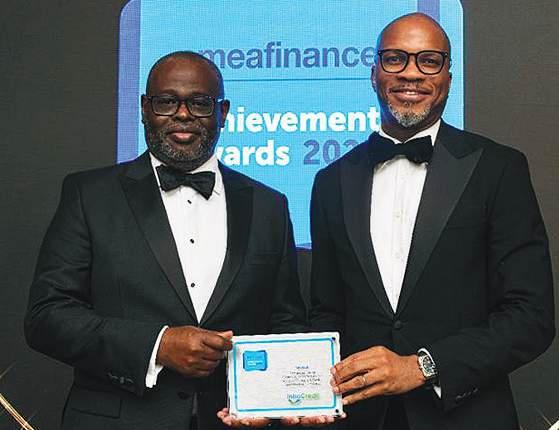
WINS BEST PROJECT BOND IN AFRICA AWARD
From
in London…recently
the Fund’s ability to deliver competitive and consistent returns through different market cycles,” she added. She said the improved rating would further enhance investor confidence in the Fund and support RMBN AM’s broader ambition to deepen its asset man- agement offerings.
“We are proud of the progress reflected in this rating upgrade, but we see it as part of a longer journey. We will continue to draw on our global network, frameworkgovernance and local market expertise to support clients and grow the Fund responsibly,” Mesubi said.
Profit taking dominated the domestic stock market section of the Nigerian Exchange Limited (NGX) last week, leading to N5.64 trillion drop in market capitalisation of all listed companies on losses in Dangote Cement Plc (3.6 per cent drop), among others.
The NGX All-Share Index
(ASI) fell by 3.59 per cent weekon-week to close at 235,941.27 basis points, while market capitalization declined by N5.64 trillion to N151.327 trillion. Consequently, the market’s year-to-date return moderated to 51.62 per cent, reflecting weakening investor confidence in the domestic equities market. Market breadth remained significantly negative, with only 16 gainers against 78 losers.
Cornerstone Insurance led the gainers table by 11.01 per cent to close at N6.05, per share. Academy Press followed with a gain of 8.72 per cent to close at N8.10, while Conoil went up by 8.25 per cent to close to N210.00, per share.
On the other side, International Energy Insurance led the decliners table by 28.83 per cent to close at N5.06, per share. First Holdco followed
with a loss of 20.29 per cent to close at N55.00, while John Holt declined by 17.65 per cent to close at N11.20, per share. Meanwhile, a total turnover of 3.075 billion shares worth N254.614 billion in 287,157 deals was traded last week by investors on the floor of the Exchange, in contrast to a total of 4.964 billion shares valued at N207.521 billion that exchanged hands previous week in 235,966 deals.
The Financial Services Industry led the activity chart with 2.074 billion shares valued at N64.490 billion traded in 121,981 deals: contributing 67.44 per cent and 25.33 per cent to the total equity turnover volume and value respectively.
The Services Industry followed with 175.743 million shares worth N2.759 billion in 19,590 deals, while the Consumer Goods Industry
traded a turnover of 133.375 million shares worth N12.680 billion in 30,730 deals. Trading in the top equities, Access Holdings, Sterling Financial Holdings Company and Jaiz Bank accounted for 819.234 million shares worth N12.247 billion in 21,809 deals, contributing 26.64 per cent and 4.81 per cent to the total equity turnover volume and value respectively.
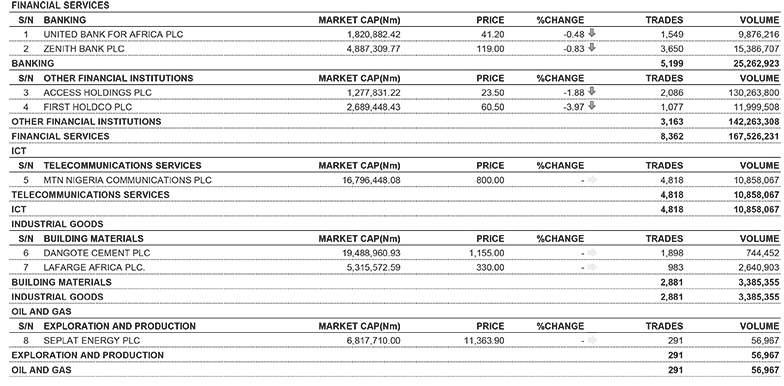
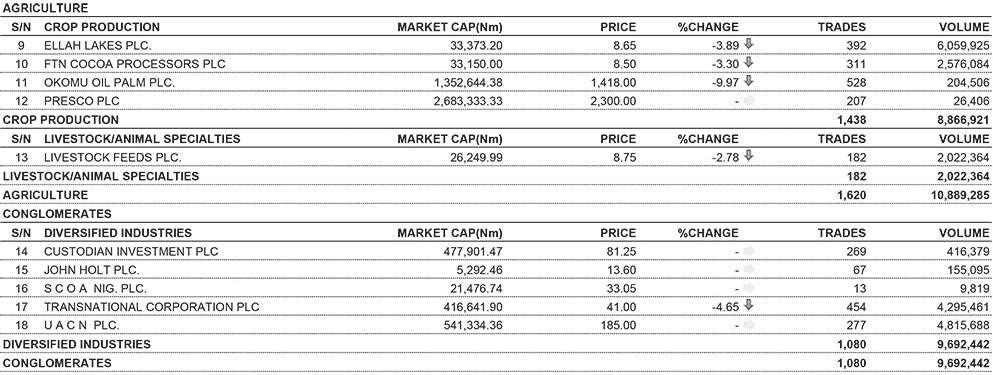
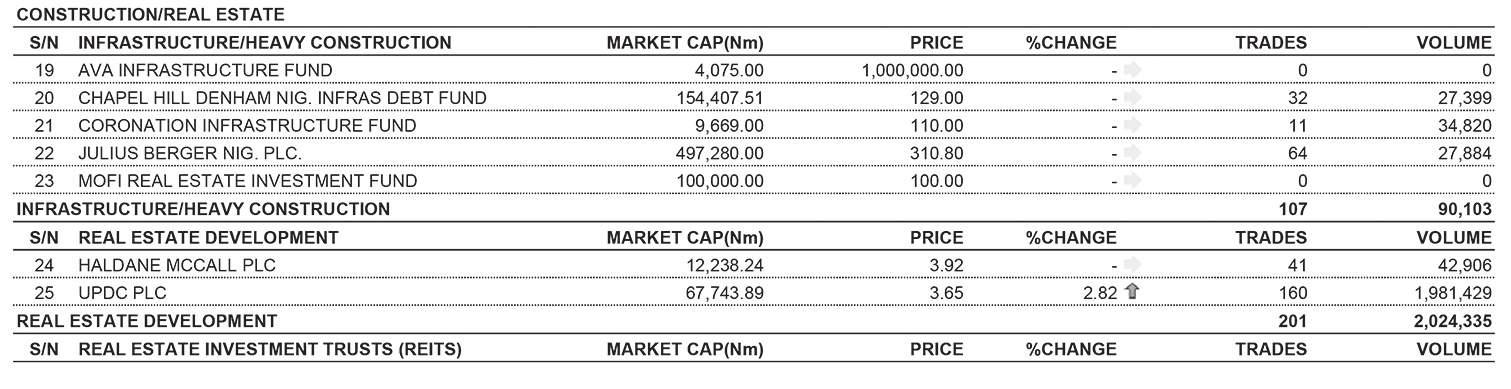
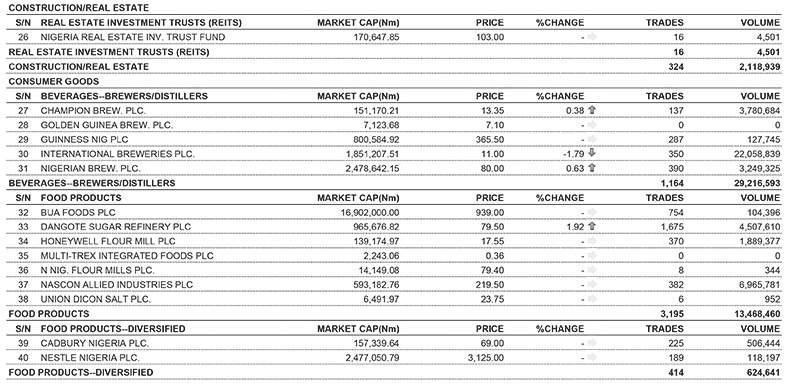
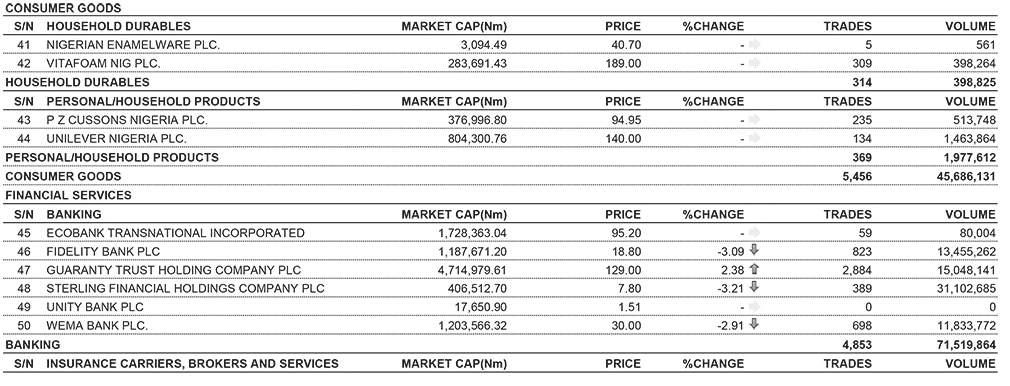
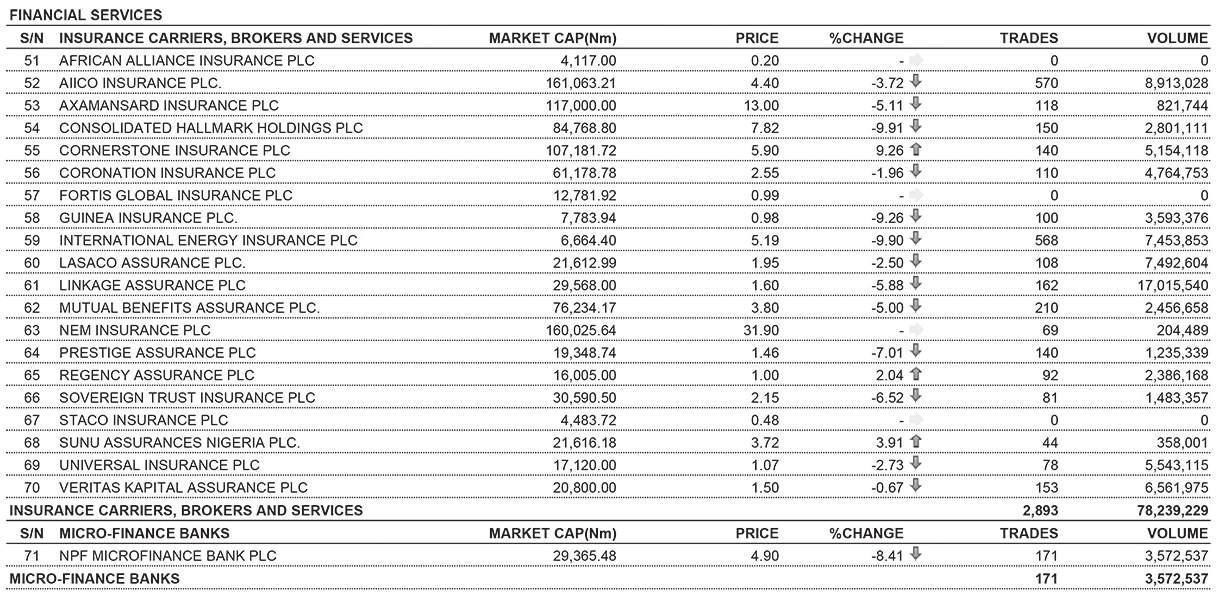

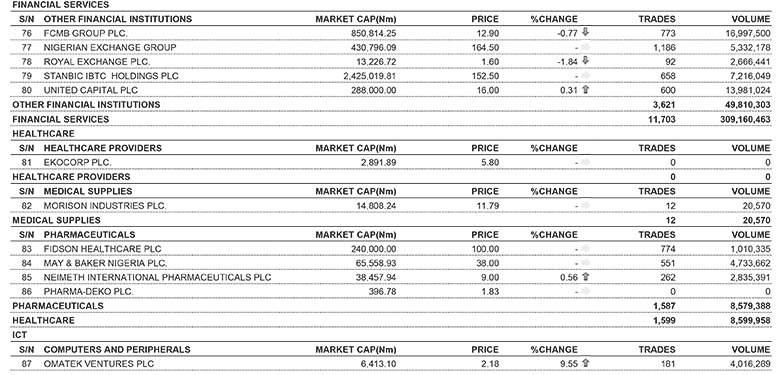
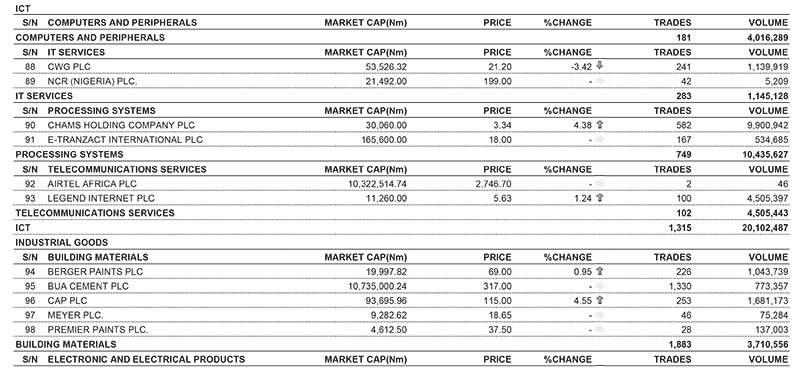
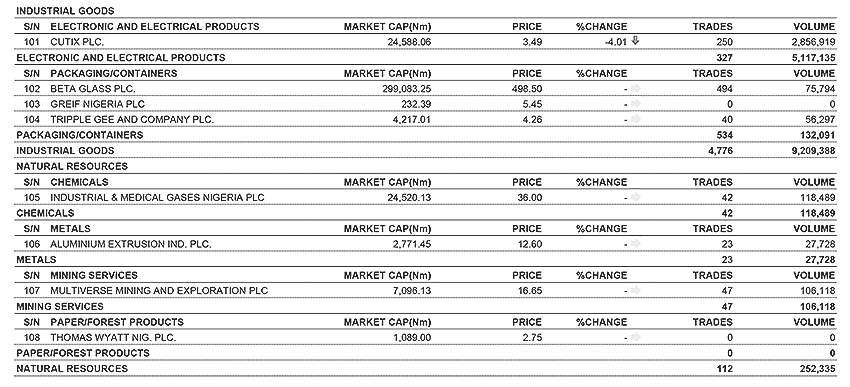
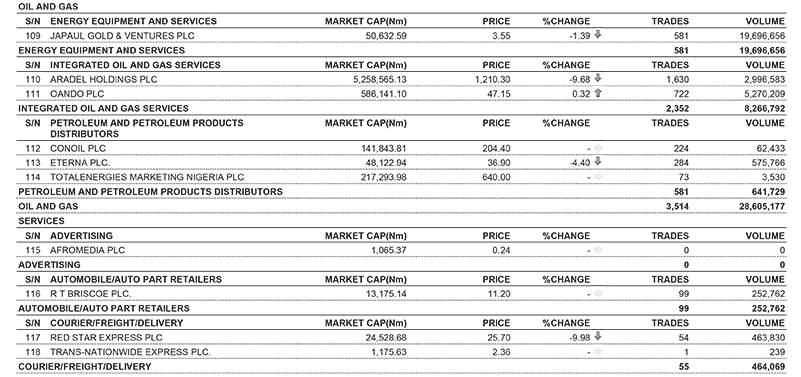
Email: deji.elumoye@thisdaylive.com 08033025611 SMS ON lY
a s Governor a biodun Oyebanji becomes the first Ekiti state governor to secure re-election without interruption since the state’s creation, the outcome raises a bigger question: what exactly did he do differently from his predecessors? Raheem Akingbolu examines the political design, governance choices and elite consensus that shaped a historic victory.
In politics, patterns often harden into prophecy until someone quietly breaks them.
For nearly three decades since its creation, Ekiti State’s governorship had followed an almost ritualistic cycle of disruption. Governors emerged, governed for a single term, and exited either through electoral defeat, political realignment, or judicial intervention. The state became, in political folklore, a place where incumbency offered little protection and continuity was the exception rather than the rule.
That assumption, long held by analysts and actors alike, was finally tested and overturned last Saturday.
Governor Abiodun Abayomi Oyebanji not only secured re-election under the All Progressives Congress (APC), he did so with a level of political consolidation that has now repositioned him as the first elected governor in Ekiti’s history to win a second consecutive term without interruption.
The significance of this moment becomes clearer when placed against the state’s turbulent electoral memory.
From Otunba Niyi Adebayo’s unsuccessful re-election bid in 2003, through the dramatic rise of Ayodele Fayose, the contested tenure of Segun Oni, the courtmediated emergence of Kayode Fayemi, and the alternating returns of Fayose and Fayemi in subsequent cycles, Ekiti politics evolved into a theatre of reversals. Power rarely stayed long enough in one place to build continuity.
Against that backdrop, Oyebanji’s victory was widely expected to conform to the established pattern. Even after his 2022 emergence, many observers assumed the state’s political rhythm would eventually reassert itself. It did not.
Instead, what unfolded was a carefully constructed political process that combined governance performance with an unusually broad coalition of elite support. From the outset of his administration, Oyebanji appeared to understand that Ekiti’s electoral volatility was not merely about voter sentiment but about fractured elite alignment and weak consensus around incumbency.
Rather than confront that reality with confrontation, he responded with consolidation. Oyebanji chose to consolidate rather than dismantle the political networks he inherited.
That decision gradually evolved into what many now describe as one of the most inclusive coalitions in Ekiti’s recent history. Former governors who had once been fierce rivals gradually began to rally around his administration. Niyi Adebayo, Ayodele Fayose, Segun Oni and Kayode Fayemi, despite their different ideologies and party affiliations found common ground in a shared message of stability and continuity. This rare alignment of past leaders gave Oyebanji a shield of stability. It softened the cycle of rivalry and disruption that had long defined Ekiti politics, laying the foundation for his historic re-election.
That interpretation was reinforced by Senate Leader, Senator Opeyemi Bamidele, one of the most influential voices in Ekiti’s political structure. Throughout the election cycle, Bamidele consistently framed the contest not as a routine partisan struggle but as a referendum on governance. In his assessment, Oyebanji’s administra-
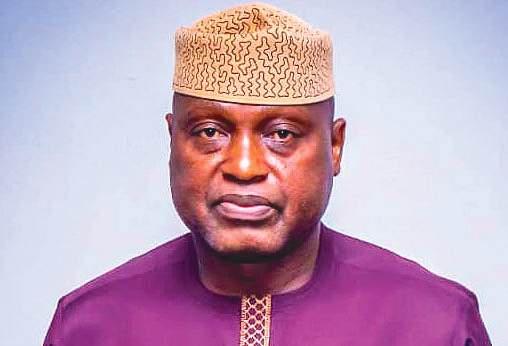
tion had stabilised the political environment while sustaining development across key sectors of the state. For him, the governor’s re-election represented continuity of a governance model that had restored confidence among citizens and reduced the friction that often defined Ekiti’s political landscape.
Beyond Bamidele’s framing, a wider consensus gradually formed among other key stakeholders in the Ekiti political ecosystem. Traditional rulers, community leaders, professionals and opinion influencers across party divides increasingly echoed similar sentiments.
Many pointed to the governor’s consultative leadership style, his willingness to engage competing interests, and his emphasis on
development over political grandstanding.
In that sense, endorsements for his reelection became less about party loyalty and more about an emerging belief among stakeholders that continuity had become a strategic necessity for sustaining governance gains.
If elite consensus provided the political architecture, governance delivery supplied the emotional and economic foundation of his re-election. One of the most decisive pillars of support for the administration came from workers and pensioners across the state. In contrast to earlier periods marked by irregular salary payments and unpaid entitlements, the Oyebanji administration prioritised consistent and timely remuneration of civil servants and retirees. For many households, this translated into restored confidence in government and economic stability at the grassroots.
The clearing of gratuity backlogs and
Oyebanji did more than secure a second term. He redefined the conditions under which political continuity is possible in a state long accustomed to disruption. In doing so, he has not only rewritten Ekiti’s political script but also set a new benchmark, that stability, consensus and grassroots trust can turn political prophecy into governance reality.
welfare schemes for teachers and retirees built confidence among workers and pensioners, effectively turning them into a backbone of his re-election and complementing elite support.
In the education sector, targeted reforms also strengthened the administration’s appeal. Primary school teachers with university degrees were granted career progression opportunities up to Level 16, addressing a structural grievance that had lingered for years. In addition, housing and car loan schemes were extended to teachers, reinforcing the perception of a government attentive to welfare across professional cadres.
Taken together, these interventions did not merely represent policy actions; they shaped perception. And in electoral politics, perception often hardens into outcome.
With 384,940 accredited voters and over 382,000 ballots cast, the election recorded one of the highest turnouts in Ekiti’s recent history.
The final result, therefore, was less an isolated political event and more the culmination of a carefully layered strategy; elite alignment, governance delivery, institutional stability and voter perception converging at the same point.
In breaking what had long been regarded as Ekiti’s re-election jinx, Oyebanji did more than secure a second term. He redefined the conditions under which political continuity is possible in a state long accustomed to disruption. In doing so, he has not only rewritten Ekiti’s political script but also set a new benchmark, that stability, consensus and grassroots trust can turn political prophecy into governance reality.
In an age dominated by technology, social media trends, celebrity culture, and entertainment-driven conversations, academic achievement rarely commands the spotlight. Universities are often perceived as slow-moving institutions whose greatest accomplishments remain hidden within lecture halls, research laboratories, and scholarly journals. Against this backdrop, the University of Oxford's 2026 ViceChancellor's Awards offered a refreshing reminder of what universities can achieve when knowledge, innovation, and societal impact become central to their mission.
The awards ceremony was not merely an exercise in institutional self-congratulation. Rather, it was a showcase of ideas, inventions, and initiatives that are transforming lives, creating wealth, solving real-world problems, and strengthening society. It demonstrated how a university can evolve beyond its traditional role as a centre of learning into a powerful engine of economic development and social progress.
For many observers, particularly in developing countries such as Nigeria, the lessons from Oxford's experience are profound. They raise important questions about the future of Nigerian universities and whether these institutions can reinvent themselves to remain relevant and sustainable in an increasingly competitive global knowledge economy.
One of the most celebrated innovations at the awards was OrganOx, a biotechnology company that emerged from Oxford University's research ecosystem. OrganOx developed groundbreaking technology that allows donor livers and kidneys to remain alive and functional outside the human body for more than twenty-four hours.
Unlike traditional cold-storage preservation methods, the company's flagship technology continuously pumps warm, oxygenated blood and nutrients through donated organs, replicating natural physiological conditions. This innovation significantly extends the viability of organs, allowing clinicians more time to evaluate them and dramatically increasing the number of organs available for transplantation.
The impact has been extraordinary. Thousands of successful transplants have already been facilitated through the technology, providing hope and improved outcomes for patients worldwide. Beyond transplantation, OrganOx is also advancing technologies that could help patients suffering from liver failure recover without necessarily requiring a transplant.
Perhaps even more significant is the economic outcome of this scientific breakthrough. OrganOx eventually became the largest commercial success in Oxford University's spinout portfolio when it was acquired by Japanese medical technology giant Terumo Corporation in a deal reportedly valued at approximately $1.5 billion.
This is where the Oxford story becomes particularly relevant for Nigeria.
The OrganOx success illustrates how universities can generate substantial revenues through innovation, research commercialization, intellectual property development, and strategic partnerships with industry. It demonstrates that universities need not depend exclusively on government funding to survive. They can create value, attract investment, and become financially resilient institutions.
Another initiative recognized during the awards was OxTrack, an innovative
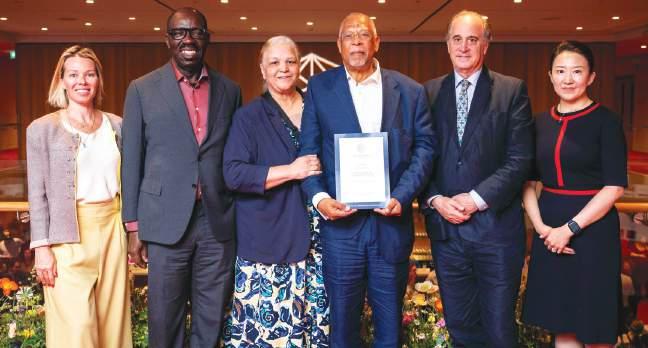
digital platform designed to improve teacher effectiveness and strengthen educational outcomes. The project attracted attention not only because of its potential impact on education but also because of the involvement of former Edo State Governor, Godwin Obaseki, who currently serves as a researcher and policy contributor within global education circles.
OxTrack emerged from more than twenty years of research conducted by Oxford scholars into teacher quality, classroom practices, and learning outcomes across Africa and South Asia. The research involved the assessment of approximately 100,000 teachers and revealed a troubling reality: many educators responsible for teaching foundational literacy and numeracy skills lacked sufficient mastery of the subjects they were expected to teach.
These findings exposed a systemic challenge confronting education systems in many developing countries, including Nigeria. Improving access to education is important, but improving teacher quality is even more critical.
To address this challenge, OxTrack was developed as a mobile-based professional assessment and development platform. The system evaluates teachers across dozens of professional competencies and provides personalised feedback to support continuous improvement.
Teachers can benchmark their performance against regional and national averages, identify areas requiring improvement, access targeted learning resources, and monitor their professional growth over time. The platform also incorporates emerging artificial intelligence tools to provide customised support and professional development opportunities.
Perhaps most importantly, OxTrack creates verified professional profiles that allow teachers to demonstrate their competencies, improve career prospects, negotiate better remuneration, and gain professional recognition based on measurable performance indicators rather than subjective assessments.
For policymakers, the platform provides real-time data on teacher effectiveness and classroom practices, enabling evidence-based decision-
making and more efficient allocation of educational resources.
The significance of OxTrack becomes even clearer when viewed alongside the educational reforms implemented in Edo State under the leadership of Godwin Obaseki.
In 2018, the Edo State Government launched the Edo Basic Education Sector Transformation Programme, popularly known as EdoBEST. The initiative fundamentally restructured public basic education by focusing on teacher effectiveness, digital learning tools, real-time classroom monitoring, and accountability.
Teachers received extensive retraining and were equipped with digital devices containing structured lesson guides. Supervisors could monitor classroom activities and learning outcomes using technology-driven dashboards, while policymakers gained access to data that allowed them to track attendance, lesson delivery, and student performance.
The underlying philosophy was straightforward: if teacher quality improves, student outcomes will improve.
Independent assessments of the programme reported significant improvements in literacy, numeracy, classroom engagement, and teacher attendance. The initiative has since attracted international attention as one of Africa's most ambitious and impactful education reform programmes.
What links OrganOx, OxTrack, and EdoBEST is not merely innovation. It is the deliberate effort to convert research and knowledge into practical solutions that address real societal challenges.
This is precisely where Nigerian universities have an opportunity to rethink their future.
Across the country, universities possess vast reservoirs of intellectual capital. Institutions such as the University of Benin, Obafemi Awolowo University, Ahmadu Bello University, the University of Nigeria, Nsukka, the University of Lagos, and several others have produced generations of distinguished scholars, scientists, engineers, medical professionals, and entrepreneurs.
Many of these institutions also possess enormous physical assets, including thousands of hectares of land, research facilities, agricultural resources, and highly qualified academic staff. Yet despite these advantages, most Nigerian universities remain heavily dependent on government allocations for survival.
Every year, debates over funding,
strikes, salary arrears, deteriorating infrastructure, and inadequate research support dominate discussions about higher education. While government support remains essential, overdependence on public funding has left many institutions vulnerable to political and economic fluctuations.
The contrast with Oxford is striking. Oxford's success is not simply a product of its age or prestige. Rather, it reflects an institutional culture that encourages innovation, rewards excellence, promotes interdisciplinary collaboration, and actively supports the commercialization of research.
Research findings are not left on library shelves. They are transformed into companies, technologies, public policies, healthcare solutions, educational reforms, and economic opportunities.
Nigerian universities can adopt similar principles.
First, universities must strengthen research commercialization frameworks. Many groundbreaking studies conducted within Nigerian institutions never progress beyond academic publication. Dedicated technology transfer offices, innovation hubs, venture incubation centres, and industry partnership programmes can help bridge the gap between research and market application.
Second, universities should encourage stronger collaboration between academia, government, and industry. Research becomes more impactful when it addresses real-world challenges faced by businesses, communities, and public institutions.
Third, institutions should invest aggressively in entrepreneurship and innovation ecosystems. Students and researchers should be encouraged not only to seek employment but also to create enterprises capable of generating jobs and solving societal problems.
Fourth, university leadership must embrace long-term strategic planning that prioritizes sustainability and revenue diversification. Agricultural ventures, consultancy services, technology spinouts, intellectual property licensing, executive education programmes, and international partnerships can all contribute to financial resilience.
Finally, governments must provide enabling regulatory frameworks that allow universities greater flexibility to commercialize research, attract private investment, and retain revenues generated from innovation activities.
The University of Oxford's ViceChancellor's Awards showcase more than academic excellence. They offer a vision of what universities can become when knowledge is treated as a strategic asset capable of transforming society.
For Nigeria, the message is clear. The future of higher education cannot be built solely on government subventions. Universities must evolve into centres of innovation, enterprise, and problemsolving.
The alternative is continued dependence, declining competitiveness, and gradual irrelevance in a world where knowledge has become the most valuable currency. Oxford's example demonstrates that universities do not merely educate people; they can create industries, transform public services, generate wealth, and solve humanity's most pressing challenges.
If Nigerian universities embrace these lessons, they can secure not only their survival but also their emergence as powerful drivers of national development in the twenty-first century.
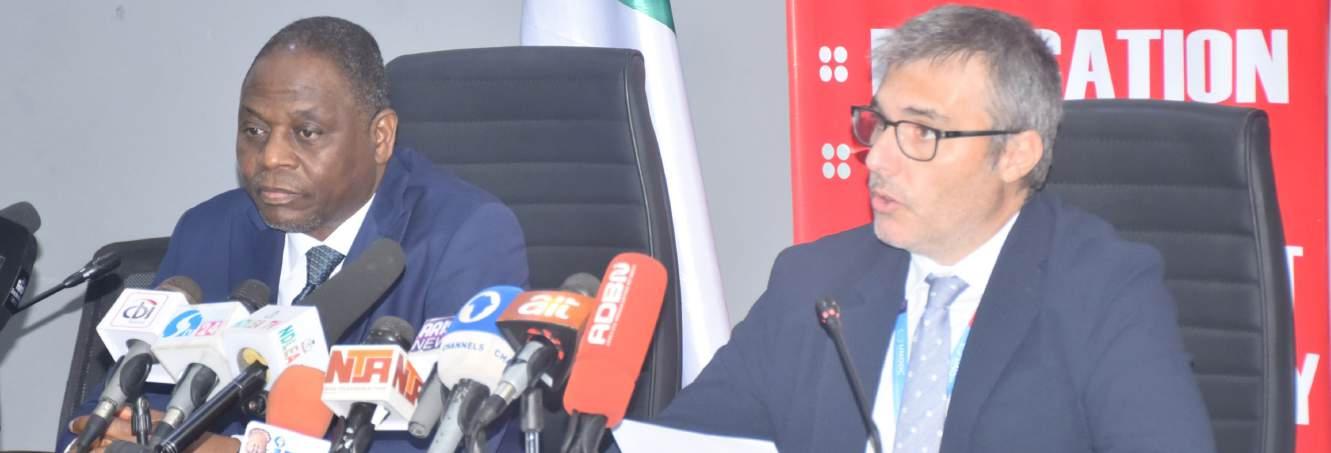
Emmanuel Addeh in Abuja
Hope has risen for the safe release of 39 abducted schoolchildren and seven teachers from Ahoro-Esinle, Yawota and Alawusa communities in Oriire Local Government Area of Oyo State, as security operatives have intensified efforts to rescue the victims from their captors.
This is coming as former Head of State, Abdulsalami Abubakar, has called on Nigerians to unite behind the nation's security agencies in the fight against terrorism,
warning that politicisation of security issues and the spread of misinformation have continued to embolden criminal groups.
Competent security sources disclosed that troops and other security personnel involved in the rescue operation have effectively surrounded a hideout
within the National Park forest area where the abducted pupils and teachers are believed to be held, significantly narrowing the options available to the terrorists.
The victims were kidnapped on May 15, 2026, when armed terrorists attacked Baptist
Urges strict compliance with traffic rules as rainfall intensifies across Lagos
The Lagos State Traffic Management Authority (LASTMA) has disclosed that its Rescue and Emergency Response Unit rescued 353 victims of road traffic accidents and other emergencies across the state between January and May 2026, while urging motorists and other road users to exercise greater caution during the ongoing rainy season.
The General Manager of LASTMA, Mr. Olalekan Bakare-Oki, made the appeal while reviewing the agency’s operational performance, noting the rescue
figures underscore both the effectiveness of LASTMA’s emergency response efforts and the increasing risks associated with adverse weather conditions.
According to him, the 353 rescued victims comprised 207 adult males, 137 adult females and nine male children, all of whom received timely intervention from LASTMA personnel deployed to accident scenes across Lagos.
Bakare-Oki said the agency remains committed to preserving lives on the roads but warned that the rainy season presents significant hazards to motorists, including poor visibility, slippery roads,
reduced vehicular traction, flooding, mechanical failures and other challenging driving conditions that increase the likelihood of crashes.
“While we take pride in the successful rescue of 353 individuals within the first five months of the year, these incidents equally serve as a poignant reminder of the need for greater caution and responsibility on our roads, particularly during the ongoing rainy season.
“A considerable number of these crashes could have been prevented through responsible driving habits, strict adherence to speed regulations, maintenance
of safe driving distances, avoidance of reckless overtaking and routine vehicle maintenance.”
The LASTMA boss advised motorists to ensure that critical vehicle components such as brakes, tyres, windshield wipers, lights, indicators and steering systems are in optimal condition before embarking on journeys during periods of heavy rainfall.
He particularly cautioned drivers against speeding on wet roads, stressing that rainfall significantly increases braking distances and reduces tyre grip, thereby heightening the risk of collisions and loss of vehicle control.
Nursery and Primary School in Yawota and two other schools in Esinle, abducting pupils and teachers in one of the most brazen attacks on educational institutions in the state.
According to security sources, the terrorists have been effectively contained within the forest, with operatives blocking possible escape routes and restricting their movement with the hostages.
Faced with mounting pressure and the likelihood of capture, the terrorists, it was learnt, have reportedly resorted to desperate tactics, including the recent killing of one of the abducted teachers, apparently in an attempt to blackmail authorities and force a halt to the ongoing rescue operation.
The kidnappers had initially tabled four major demands, including the release of detained terrorist commanders, payment of ransom, provision of two Hilux vehicles and the implementation of Shariarelated laws.
Among those whose release was demanded were Mahmud Usman, also known as Abu Bara'a or Abbas Mukhtar, and his deputy, Abubakar Abba, alias Isah Adam or Mahmud
Al-Nigeri, both identified as senior members of the terrorist group Ansaru and arrested by operatives of the Department of State Services (DSS) last year. However, sources revealed that as security forces continue to tighten their grip around the terrorists, the kidnappers have reportedly dropped some of their earlier demands and are now largely focused on securing ransom payment.
Community sources identified the leader of the kidnapping gang as an indigene of Oriire Local Government Area who had lived peacefully among residents before allegedly becoming radicalised by the Ansaru terrorist group and embracing extremist ideology.
Investigations further revealed that the affected communities lie close to Nigeria's border corridor leading towards the Niger Republic and the Kainji axis, an area characterised by difficult terrain and poor telecommunications coverage.
Security sources said intelligence reports had previously uncovered plans by terrorists to attack schools in the area, prompting preventive measures, including the temporary closure of some schools.
Says their sacrifices, resilience and guidance remain foundation of strong families, stable society
Sunday Aborisade in Abuja
The senator representing Kogi Central Senatorial District, Natasha Akpoti-Uduaghan, on Sunday paid glowing tribute to fathers across Nigeria.
She described them as the unsung heroes whose sacrifices, resilience and dedication continue to sustain families and strengthen the nation's social fabric.
In a Father’s Day message made available to journalists in Abuja, the lawmaker said fathers remain the backbone of families, providing leadership, protection, guidance and support despite prevailing economic and social challenges.
Akpoti-Uduaghan noted that while the contributions of fathers often receive little public recognition, their commitment to raising responsible children
and building stable homes remains critical to national development.
She said, “On this special Father’s Day, I celebrate all fathers and father figures whose steadfast commitment, love and sacrifices continue to strengthen our families and communities.
"Fathers are truly the unsung heroes of our society. Their tireless efforts, resilience and
devotion deserve our deepest appreciation,” she stated.
The senator stressed that responsible fatherhood plays a vital role in nation-building, arguing that the values fathers instill in their children help shape future generations and contribute to the emergence of a peaceful and prosperous society.
According to her, fathers influence society far beyond
their homes through the wisdom, discipline and examples they provide for their children.
She said, “A father’s wisdom, discipline and example leave a lasting impact on the lives of children.
Through their sacrifices and guidance, fathers nurture dreams, build character and inspire hope.
"Their influence extends
beyond the home and contributes significantly to the moral fabric of our society,” she said.
Akpoti-Uduaghan urged fathers to remain steadfast in their responsibilities and continue serving as positive role models, while encouraging young people to embrace virtues such as integrity, hard work, humility and compassion.
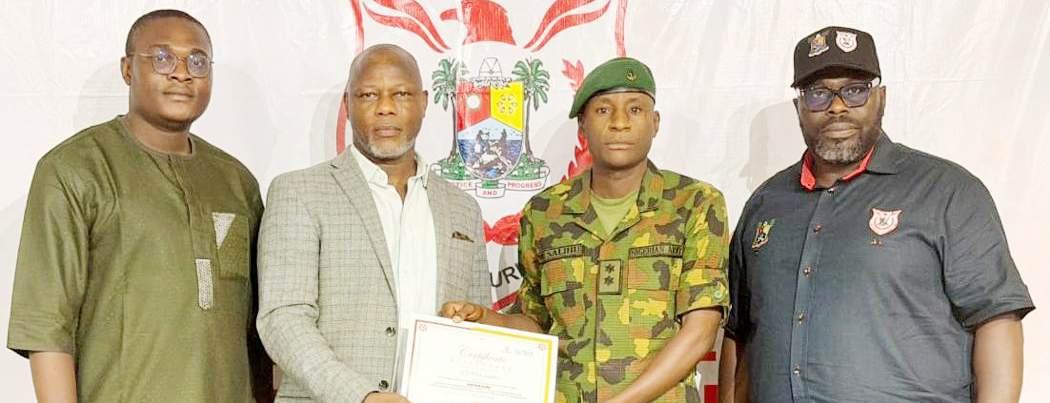
Deji Elumoye in Abuja
Vice President Kashim Shettima on Sunday showered praises on the mother of President Bola Tinubu, late Alhaja Abibatu Mogaji, describing her as a woman whose love went far beyond her family and shaped
Nigeria's moral imagination.
According to him, the leadership given by the late revered Iyaloja-General of Nigeria, who moved on to the next stage of existence on June 15, 2013 at the age of 96, was demonstrated in the lives she lifted and the institutions she
strengthened, rather than being announced by noise.
Speaking in Abuja during the Annual Grand Prayer Session in honour of the late Alhaja Mogaji at the National Mosque, Abuja, Shettima, who represented the President, noted that the late matriarch of the Tinubu family
ran her race, finished her course, and left behind a legacy that will instruct generations yet unborn. Specifically, the Vice President identified the 'like mother, like son' case scenario between the President and his late mother, stating that the late Alhaja Mogaji shaped President Tinubu into a
Insists South-east loyal to Tinubu, not ex-Anambra governor
Emmanuel Addeh in Abuja
Minister of Works, David Umahi, has again taken a swipe at the presidential candidate of the Nigeria Democratic Congress (NDC) in the 2027 general polls, Peter Obi, accusing him of seeking the presidency at all costs and failing to be forthright on critical issues affecting the South-east region.
Umahi, according to a statement in Abuja issued by his Senior Special Assistant on Media, Francis Nwaze, made the remarks at the
weekend during the inspection of Section 2 of the Lagos-Calabar Coastal Superhighway in Epe, Lagos State.
The minister was said to be reacting to alleged reports circulating on social media that Obi had promised to halt President Bola Tinubu's legacy infrastructure projects, including the LagosCalabar Coastal Highway if elected president.
“He simply wants to become president by all means, and that is not good for our people. Let us know the truth. Deceit will not
help us,” the minister emphasised.
It's unclear if Obi made the latest social media comments attributed to him by Umahi, but on May 1, 2024, the former Anambra governor had on his X handle argued that rather than building new super-highways, the Bola Tinubu administration should have fixed the countless existing federal roads across the country that have largely deteriorated.
“This is a moment when a committed government cannot embark on non-essential projects. Existing highways urgently need
maintenance, and insecurity makes travel unsafe. We cannot afford another expensive abandoned project. Nigeria’s urgent development needs are more real and essential. We do not need landscape decoration escapades,” Obi had argued.
But describing the reported position of Obi as disappointing, Umahi said he hoped Obi never made such a statement, but maintained that Nigerians would reject any attempt to discontinue projects designed to transform the country's economy.
leader, and that she still serves Nigeria through the values she instilled in her son, the incumbent Nigerian leader.
He said, "It should surprise no one, then, that the son she raised carries the same fire into the highest office in our land.
President Tinubu, learned at her side that public life is a trust and that leadership is owed first to the ordinary and the unheard.
"The instinct to fight for democracy when it was dangerous to do so, the willingness to stand for the common good when comfort counselled silence, the conviction that the citizen deserves a government that works for them, all of this was first kindled in a home where service was the daily example. A mother shaped a leader, and through that leader her values now serve the whole of Nigeria."
Extoling the late Alhaja Mogaji's leadership qualities, Shettima said she belonged to the rare class of Nigerians who knew that "commerce is a service to humanity and that the marketplace is a meeting point of human need and human
dignity."
He recalled that the President's late mother spent the greater part of her life giving herself "to the welfare of traders, to the protection of ordinary women who built their livelihoods stall by stall, and to the organisation of a community that the powerful had too often overlooked.
"She turned scattered effort into collective strength, and she taught a generation of market women that their work mattered, that their voices carried weight, and that their toil deserved respect," he added.
Alhaja Mogaji, the Vice President noted, earned her people's affection because "she served before she sought to be served," feeding where there was hunger, mediating where there was discord, and standing "between the weak and those who would exploit them."
Shettima prayed fervently for the President's late mother, committing her to the mercy of God, just as he asked the Almighty Allah to "make her legacy an enduring source of good for this nation she loved.
Raheem Akingbolu
As political parties, politicians and media owners gear up for the 2027 general election, the Advertising Regulatory Council of Nigeria (ARCON), has issued a warning to them against the exposure of political advertisements without regulatory approval of the council.
In a public notice signed by
its Director-General, Dr. Olalekan Fadolapo, ARCON expressed concern over the increasing deployment of unapproved political advertisements, some of which it said violate religious and ethnic guidelines contained in the Nigerian Code of Advertising. According to the regulatory body, the commencement of political activities and voter education campaigns has led
to a surge in advertising and marketing communication materials that have not received the mandatory approval of the Advertising Standards Panel (ASP).
ARCON reminded stakeholders that all political advertisements and campaign communication materials must comply with the provisions of the Nigerian Advertising Law and other applicable regulations.
“The attention of the Advertising
Regulatory Council of Nigeria (ARCON) has been drawn to the activities of some politicians, political parties and support groups that engage in the exposure of unapproved adverts, some of which have been found to violate religious and ethnic guidelines and are against the provision of the Nigerian Code of Advertising,” the council stated.
The regulator further noted
that exposing advertisements on traditional or digital media platforms without prior approval from the Advertising Standards Panel constitutes an offence under Section 34(3) of the ARCON Act. Consequently, political parties, elective office aspirants, campaign organisations, advertising agencies and media space owners have been directed to immediately desist from publishing, broadcasting or
displaying political advertisements that have not received prior clearance from the Advertising Standards Panel. ARCON also disclosed that it would collaborate with relevant law enforcement agencies to commence a nationwide enforcement exercise aimed at removing all political advertisements for which prior approval was not obtained before exposure.
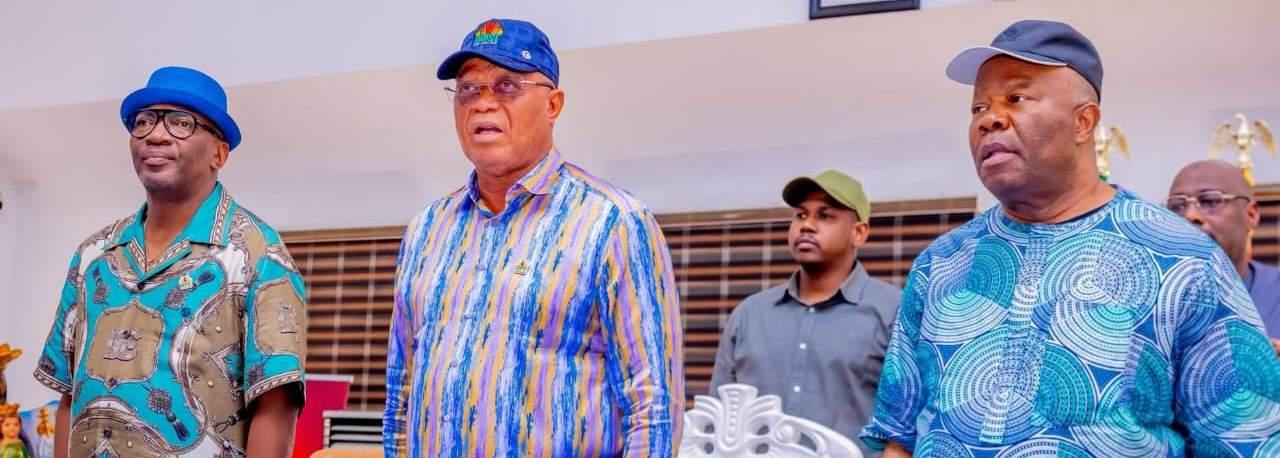
Bauchi govt deploys 2,176 forest guards, vigilantes to combat crimes 111 NAF elite special forces operators complete rigorous training UN envoy raises the alarm over Nigeria’s worsening insecurity, religious divisions Police DIG raises the alarm over trans-border crimes, seeks stronger community vigilance
Michael Olugbode, Sunday Aborisade, Linus Aleke in Abuja, Segun Awofadeji in Bauchi and Ibrahim Shuaibu in Dutse
All things being equal, the Senate is set to pass the Constitution Amendment Bill seeking the creation of State Police tomorrow, Tuesday.
The development followed the decision of the leadership of the upper chamber to reconvene lawmakers for an emergency plenary session after a quorum shortfall stalled the process before the recent recess, penultimate week.
A principal officer of the
Senate, disclosed this to THISDAY on the condition of anonymity in Abuja.
He explained that the proposed constitutional amendment could not be passed before senators proceeded on a three-week recess penultimate week because the chamber failed to muster the constitutionally required two-thirds majority needed for amendments to the nation's supreme law.
According to the source, the Senate leadership has intensified consultations and appealed to lawmakers across party lines to ensure full attendance at Tuesday's emergency sitting.
The source said, "We will surely reconvene on Tuesday to pass the bill on State Police. We did not form the quorum, which is the two-thirds majority of the 109 senators required by the Constitution for the passage of a constitutional amendment bill.
"The leadership has spoken with members and there is optimism that the required number will be present," he said.
The emergency plenary session is scheduled to hold on Tuesday, June 23, 2026, at 11:00 a.m.
The Senate had formally notified lawmakers of the sitting through a memo issued on June
15 by the Clerk of the Senate, Mr. Emmanuel Odo.
The notice indicated that the session was convened at the instance of the President of the Senate, Senator Godswill Akpabio, to deliberate on matters considered critical to the nation's stability and security.
According to the notice, the emergency session would focus on issues of urgent national importance, particularly national security and other pressing concerns requiring immediate legislative intervention.
"The Senate regrets any inconvenience this emergency sitting may cause and urges all distinguished senators to make
George Okoh in Makurdi
Former Benue State governor, Samuel Ortom, has rejected the report of the Benue State Income and Expenditure Commission of Inquiry, describing the exercise as a politically motivated witch-hunt orchestrated by the administration of Governor Hyacinth Alia.
In a statement by his media aide, Zege Terhide, Ortom said the commission’s report was
“fundamentally flawed, legally challenged and politically motivated.
“What the people of Benue witnessed was not an exercise in accountability. It was the culmination of a carefully scripted political witch-hunt designed from the outset to indict the government of Chief Samuel Ortom at all costs,” the statement read.
The former governor’s reaction came a day after the
commission submitted its report to the Benue state government in Makurdi.
The eight-member panel, chaired by retired Justice Jubril Idrisu, was inaugurated by Governor Alia in June 2025 to investigate the income and expenditure of the immediate past administration and the 23 local government councils between May 29, 2015, and May 28, 2023.
Presenting the report on
Friday, Justice Idrisu said the commission reviewed financial records and conducted public hearings involving former government officials and institutions.
According to him, the commission’s findings revealed that the state generated over N826.5billion during the period under review, while expenditure stood at about N683.4billion, leaving an unaccounted balance of approximately N139.8 billion.
the necessary arrangements to attend," the notice stated.
The proposed State Police Bill, which had been passed by the House of Representatives penultimate week, has remained one of the most consequential constitutional reform initiatives before the National Assembly in recent years.
Advocates argue that decentralising policing powers would improve intelligence gathering, strengthen community-based security operations and enable state governments to respond more effectively to local security threats.
Nigeria currently operates a centralised policing system under the control of the Federal Government through the Nigeria Police Force.
However, persistent security challenges, including banditry, kidnapping, terrorism and communal violence in several parts of the country, have renewed calls for the establishment of state-controlled police formations.
Supporters of the proposal maintain that state police would complement federal security efforts and enhance law enforcement efficiency, while critics have expressed concerns about possible political abuse by state governments.
Insecurity: Bauchi Govt Deploys 2,176 Forest Guards, Vigilantes to Combat Crimes
The Bauchi State Government has inaugurated 2,176 newly trained vigilantes and forest security personnel to combat criminal activities and enhance surveillance across the state’s forest reserves.
The inauguration ceremony held at the Police Training School (PTS) in Yelwa, weekend, marked a strategic effort by the state government to secure vulnerable rural areas and deny criminal elements operational hideouts.
Speaking on behalf of Governor Bala Mohammed, the Deputy Governor, Auwal Jatau, emphasised that while forests were vital for biodiversity and local livelihoods, they have increasingly been exploited by criminals.
"The government approved this rigorous training to strengthen surveillance, protect our forest reserves, and safeguard national resources," the Governor stated.
He added that the initiative simultaneously addressed rural unemployment by creating meaningful jobs for local youths.
It added that full and final settlement agreements valued at N2.28 trillion had also been concluded with Generation Companies (Gencos). But while government officials maintain that the measures are beginning to yield tangible results, critics have continued to express concerns about the
impact of higher energy costs on households and businesses amid broader economic challenges.
Adeniyi, with the handle masungi, said: “They keep listing ‘milestones’ and government figures, but ignore the harsh reality Nigerians face every day. Yes, subsidy was removed and reforms were introduced, but
at what real cost?
“Petrol is over N1200, electricity tariffs have gone up, the naira has crashed, inflation keeps rising, and millions are sinking deeper into poverty. Beyond the economy, insecurity has made life even worse — farmers can no longer safely access their farmlands, food
production is affected, and many Nigerians now fear travelling on major roads because of kidnappings and attacks.
“What is the value of ‘growth’ on paper when ordinary citizens are paying more, earning less, living in fear, and struggling to survive? Real progress should be measured by improved
living conditions, safety, and stability — not just figures on a spreadsheet.”
Dmeji-Bankole, @ Dmejibankole stated: “A desperate analysis from a failed government. Almost all the achievements mentioned, Nigerians suffer more for them now than in any recent history.”
Also, @Michaellakinnike said: “When I saw energy I thought electricity, omoh… You took subsidy out from thieves without immunity and then gave it to thieves with immunity. You call that achievement, all these house of cards and facade is helping no one.”
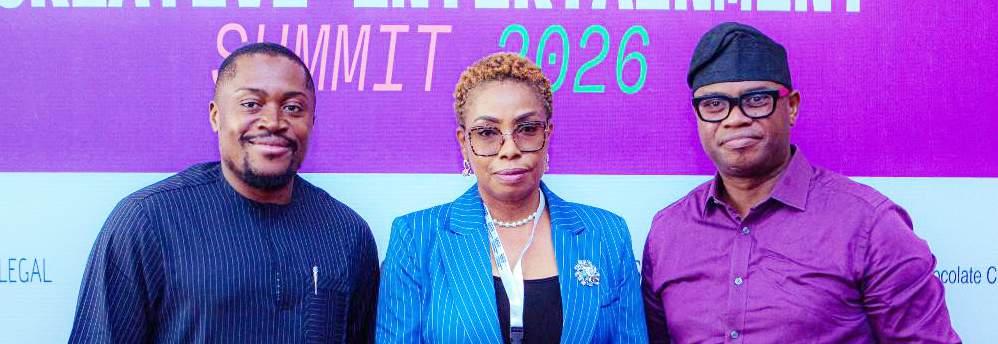
Michael Olugbode in Abuja
National Drug Law Enforcement Agency (NDLEA) has uncovered an alarming drug distribution network targeting secondary school students, arresting two elderly men aged 84 and 75 for allegedly supplying illicit substances to teenagers in Abia State.
The arrests raised fresh
concerns over the growing penetration of narcotics into Nigerian schools.
The anti-narcotics agency also intercepted a shipment of synthetic drugs from China, seized cannabis concealed in ladies’ handbags destined for export, arrested a wanted couple linked to a major drug syndicate in Ekiti State, and apprehended a 75-year-old grandmother
alongside two others during a massive cannabis bust in Oyo State.
The arrests and seizures, announced by NDLEA spokesman, Femi Babafemi, on Sunday, underscored what security experts described as the increasingly sophisticated and disturbing dimensions of the country’s illicit drug trade, with elderly persons and school
children now emerging as both distributors and victims.
Particularly troubling was the arrest of 75-year-old Godwin Obiora, who was apprehended on Friday following intelligence reports that he had been selling illicit substances to young students and other users from his patent medicine store located on Club Road, Umuahia, Abia State.
A search of his premises led to the recovery of 4.64 kilogrammes of opioids, including tramadol and diazepam.
In a separate operation, 84-year-old pensioner Godfrey Orji was arrested after security personnel at Saint Silas Secondary School, Old Umuahia, caught him allegedly supplying illicit drugs to two teenage students within the school premises.
The school authorities subsequently handed the suspects over to the police, who transferred the matter to NDLEA last Thursday. One of the students, a 15-yearold Senior Secondary School Two (SS2) pupil, reportedly confessed that Orji regularly supplied him with drugs, which he consumed and also sold to fellow students.
TINUBU: OYEBANJI’S RE-ELECTION CLEAR VOTE OF CONFIDENCE IN CONTINUITY, STABILITY, DEVT
“We are currently collating the results available to us. Once we receive and analyse all the polling unit results, we will brief our party members and decide on the appropriate course of action,” he stated.
APC Congratulates Oyebanji
The All Progressives Congress (APC) has congratulated Biodun Oyebanji on his re-election as Governor of Ekiti State.
National Publicity Secretary of the party, Felix Morka, in a statement, said Oyebanji's victory was epic as he became the first incumbent governor to win reelection in the state’s contemporary democratic history.
He added that this win was a loud demonstration of the confidence of Ekiti people in Governor Oyebanji, his visionary leadership, peoplecentered policies, and unflinching commitment to the development and progress of the state.
Morka noted: “We applaud the Independent National Electoral Commission (INEC), security agencies, and all oversight stakeholders whose dedication and professionalism contributed to the successful conduct of the election.”
The ruling party commended the people of Ekiti State for their peaceful conduct and enthusiastic
participation throughout the electoral process.
Morka said APC remained exceedingly grateful for their steadfast support, and endorsement of our great Party, its policies and progressive ideals.
The party expressed confidence that Oyebanji’s second term would deliver more development and improved living conditions for the people as he expands the achievement of President Bola Tinubu's transformative Renewed Hope Agenda in the state.
Sanwo-Olu: 83.54 Per Cent of Total Votes Cast is Testament to Oyebanji’s Popularity
The Governor of Lagos State and Chairman of the South-West Governors Forum, Mr. Babjide Sanwo-Olu, has congratulated Governor Oyebanji, for winning his re-election on Saturday in a landslide.
Sanwo-Olu, in a congratulatory message by his Special Adviser on Media and Publicity, Mr. Gboyega Akosile, praised the Ekiti State electorate for a peaceful conduct and making the ruling All Progressives Congress (APC) their choice party.
Sanwo-Olu said the landslide victory of Governor Oyebanji in the entire 16 local governments of the State with 83.54 per cent of the total votes cast was a testament to the popularity of
the governor and the APC.
He, therefore, tasked Oyebanji to remain focused and deliver more dividends of democracy to the people.
Sanwo-Olu, who is a member of the Governor Uba Sani of Kaduna State-led APC National Campaign Council for the Ekiti State Governorship Election, also praised President Bola Tinubu for providing the right leadership and charting the right direction for Nigeria’s social-economic transformation in line with the Renewed Hope Agenda.
The governor also commended the APC leaders and members at the national, state, local government, and ward levels for working tirelessly in unity for the party's victory in the Ekiti State governorship election.
"Governor Oyebanji's victory in the governorship poll with 83.54 per cent of the total votes cast is a reward for performance and outstanding delivery of the dividends of democracy to the people of Ekiti State during his first term.
“I want to thank the good people of Ekiti State for their unflinching support and continued belief in our great party, the All Progressives Congress. I want to assure you that the ruling party will not disappoint you," he said.
Gombe State Governor, Alhaji Muhammadu Inuwa Yahaya, has Governor Biodun Oyebanji’s reelection victory was a clear validation of the people’s trust, confidence and continued support for the APC leadership.
Yahaya, who also served as a member of the APC Campaign Council for the Ekiti State Governorship Election, expressed confidence that Oyebanji would utilise the renewed mandate to consolidate on the remarkable achievements recorded during his first term in office.
“It is with immense pleasure that I heartily congratulate my good brother and friend, His Excellency, Governor Biodun Oyebanji, on his re-election for a second term in office.
“I have no doubt in my mind that this fresh mandate presents another opportunity to further build on the solid foundation of development and prosperity already laid in Ekiti State under your purposeful leadership.
“I pray Almighty God to continue to guide and bless you with greater wisdom, strength and good health to accomplish the noble work you commenced four years ago for the progress and wellbeing of the people of Ekiti State,” he added.
Katsina State Governor, Dikko Umaru Radda, has congratulated Governor of Ekiti State, Mr. Biodun Oyebanji, on his re-election for a second term in office.
In a message, Radda described the re-election as a clear vote of confidence from the people of Ekiti, affirming his leadership and performance in his first tenure.
This was contained in a statement issued to journalists in Katsina on Sunday by Radda’s Chief Press Secretary, Ibrahim Kaula Mohammed.
It read: “This is the most honest assessment a leader can receive. It says the people saw what he did. They measured the results. They decided he deserves another chance. In a democracy, that judgment matters more than any award or commendation.”
A former Governor of Ekiti State, Dr Kayode Fayemi, has called on all Ekiti people, irrespective of political affiliation, ethnic or religious leaning, to rally
round Governor Oyebanji and support his administration in the new term.
Congratulating Oyebanji on his re-election, Fayemi, who described the victory as a clear endorsement of his administration’s performance by the people of the state, stressed that the unity and cooperation of the people remained indispensable to the state’s progress.
In a statement by the Fayemi Media Office, he said the outcome of Saturday’s governorship election was a resounding vote of confidence that reflected the high regard in which Ekiti people hold his leadership.
“I join other well-meaning Ekiti citizens and friends of our dear state in congratulating Governor Biodun Oyebanji on his decisive re-election. This victory is a powerful statement by our people that they recognise and appreciate purposeful governance.
“I commend the people of Ekiti for coming out, once again, to exercise their civic responsibility peacefully.
“Elections are contests, not wars. I urge the other candidates who contested this election to take the lessons from it in good faith and join hands with Governor Oyebanji in the task of building our state.
Chuks Okocha in abuja
A civil society group, the Centre for Reform and Public Advocacy (CFRPA), has reopened the issue on the genuineness or otherwise of the Chicago State University certificate used by President Bola Tinubu to get clearance for the 2023 general election.
The group, championing good governance in Nigeria, has formally written the Chairman of the Independent National Electoral Commission (INEC), Professor Joash Amupitan, demanding clarifications on the status of the degree certificate claimed to
have been obtained and being paraded by President Tinubu.
In a letter to the INEC chairman, the group demanded expedited clarifications from the electoral body to ensure that sanity prevails in the polity ahead of the 2027 election.
Specifically, the group predicated its demand on the need for INEC to prevent contestants of doubtful background from taking part in the 2027 presidential poll, in order to prohibit such persons from having access to leadership positions at all levels in the country.
The letter dated June 19, 2026 and signed by the group’s
Head of Legal Unit, Kalu Agu, was received at the Abuja INEC Headquarters same date.
Among others, the group alleged that while President Tinubu claimed to have attended Government College Lagos in 1960 and graduated in May 1970, the Government College Lagos was established in 1974.
It therefore, held that the primary and secondary school certificates being paraded by President Tinubu and claimed to have been used to secure admission to Chicago State University may have been forged, hence, the need for clarifications by INEC.
Alex Enumah inabuja
Justice Mohammed Umar of a Federal High Court, Abuja, will today, begin hearing in a suit challenging the emergence of former Cross River Governor, Donald Duke as presidential candidate of the People’s Redemption Party (PRP) for the 2027 general election.
The suit brought by an aggrieved aspirant, Yakubu Muhammed Kingsley, and filed by his lawyer, D.A. Sulyman,
has the PRP, Duke and the Independent National Electoral Commission (INEC) as 1st to 3rd defendants respectively.
The plaintiff in the suit marked: FHC/ABJ/CS/1234/2026, is asking the court to determine whether Duke was dully returned as the presidential candidate of PRP in the May 25 primary election, in which its results was declared on May 26, having not been a registered member of the party as at May 4, when the PRP’s membership register
was submitted to INEC.
Besides, Kingsley is asking the court to determine, “Whether over voting in states like Bauchi, where the registered members of the 1st defendant in its membership database is 593 and the total votes cast was 760, in Gombe State the registered member was 348 and the votes cast was 1,431 and in Kwara State, the registered members is 55 while the vote cast was 82 votes, will not call for the nullification of the said primary election.”
Blessing Ibunge in Port Harcourt
The Action Alliance(AA) Senatorial candidate in the just-concluded Rivers Southeast by-election, Dr. Douglas Fabeke, has vowed to legally challenge the outcome of the election.
Dr Fabeke alleged multiple irregularities that he said undermined the credibility of the poll.
Speaking with journalists in Port Harcourt yesterday , Fabeke said the Independent National
Electoral Commission (INEC), allegedly failed in several key areas that are critical to a free and fair election.
He alleged that INEC did not provide result sheets at many polling units, relocated electoral officials to private hotels where results were allegedly manipulated, facilitated vote buying, diverted election materials to private homes, and instructed presiding officers not to upload results to the INEC Result Viewing Portal as mandated by the Electoral Act.
“Although many Nigerians have lost faith in the judicial system, I have evidence that no judge can ignore in delivering judgment,” Fabeke said. “This election was a charade, and we have documented proof to challenge it.”
The AA candidate warned the Peoples Democratic Party(PDP)’s Olaka Nwogu, who was declared winner by INEC, not to celebrate “He should not rejoice yet. A serious legal battle with concrete evidence awaits him,” Fabeke stated.
Ayodeji Ake
Rotary International Presidentelect, Olayinka Hakeem Babalola, has reaffirmed the global service organisation’s commitment to eradicating polio, insisting that financial challenges confronting health interventions worldwide would not derail efforts to rid the world of the disease.
Speaking during his address to Rotarians ahead of formally
assuming office as President of Rotary International, Babalola declared that Rotary would remain steadfast in its decadeslong campaign against polio until the disease is completely eradicated.
“We must keep our most important commitment: We will eradicate polio,” he said.
Highlighting progress being made in some of the most difficult environments, Babalola pointed to recent


It has come to the attention of UPDC PLC (the Company) that certain individuals are circulating information on various social media platforms falsely claiming to have developed an application on behalf of, or in association with, the Company.
The Company hereby categorically states that it has neither engaged nor authorized any individual, group, or entity to develop, promote, market, or represent any application on its behalf.
Accordingly, any representation, communication, advertisement, publication, or claim suggesting that any person has developed an application for, is acting on behalf of, or is otherwise affiliated with the Company in relation to such application is false, misleading, unauthorized, and should be disregarded in its entirety.
The Company disassociates itself completely from such persons and their activities and shall not be responsible for any loss, damage, liability, or consequence arising from reliance on any such representations.
Members of the public, clients, investors, business partners, and stakeholders are advised to exercise caution and to verify any information relating to the Company exclusively through its official communication channels.
innovations in Afghanistan, where health workers are deploying needle-free jet injectors to vaccinate children in communities previously resistant to immunisation programmes.
“In Afghanistan, medical workers are now using needlefree jet injectors to vaccinate children in communities where fear and distrust once kept families away, and it is working. Innovation is helping us reach the unreachable,” he said.
Golden Penny Foods, the iconic brand of Flour Mills of Nigeria (FMN), recently convened its nationwide dealer network in Lagos for the brand’s annual Dealers Conference.
The event, themed Reset, Rebound, Win Big, delivered on three fronts: celebrating dealer excellence, launching a
new product, and laying out a sharp commercial agenda for the year ahead. Itbrought together leading dealers, key organisation’s spokes persons, management and leadership from across Nigeria for a day of strategy, recognition, and renewed partnership with the brand.
The conference came at a
defining moment for Nigeria’s FMCG sector, shaped by shifting consumer demand, evolving distribution realities, and rising operating costs. Against this backdrop, Golden Penny used the occasion to position itself not merely as a brand that nurtures valuable relationships, but as one that grows with them.
The Company shall take appropriate steps to protect its name, brand, reputation, and intellectual property rights and reserves the right to pursue all available legal remedies against any person or entity responsible for making, publishing, or disseminating these false claims.
For clarification or verification of any information relating to the Company please contact us via the underlisted channels.
Email: info@updcplc.com Mobile: +234 901 000 3018, +234 902 348 8511, +234 911 875 6472
For and on behalf of UPDC PLC
Folake Kalaro Company Secretary
Yinka Kolawole in osogbo Osun state chapters of the Accord and the Peoples Democratic Party (PDP) have raised the alarm over handling of PVCs for the Osun elections, tasking the electoral commission to avoid collusion with the Osun All Progressives Congress (APC) in the handling of voters’ cards. In a joint statement issued at Osogbo yesterday, the chairmen of the two
political parties warned against alleged plans to illegally release to the APC some PVCs in bulk to cater for non-indigenes the opposition mobilised for registration during the voters registration exercise, calling the move “a sinister plot to rig through the backdoor.
“We have it on good authority that the Osun APC is pressuring the electoral commission to release some PVCs for their
imported illegal voters. We task the commission not to succumb to such illegal conduct as distribution of PVCs has a template which
should be observed to the letter.
“Those who registered as voters should show up to claim their voter card.
Under no circumstances should the commission hand over thousands of PVCs to the APC as allegedly being planned. If this is really on
the table, the commission should stop it.”
“It is illegal and against the letters of the Electoral Act.
James Sowole in abeokuta
The Bureau of Public Service Reforms (BPSR) in the Presidency, has conferred the Distinguished Public Service Award in Grassroots Development on the Executive Chairman of Abeokuta North Local Government, Dr. Lanre Oyegbola-Sodipo.
Oyagbola-Sodipo, according to a letter signed by the BPSR Director General, D I Arahi, was selected as the recipient of the award in recognition of his impactful leadership and contributions to community development.
The award is part of activities marking the 2026 United Nations Public Service Day, a global platform dedicated to celebrating excellence and innovation in public service.
The letter stated that Oyegbola-Sodipo emerged through a merit-based assessment process involving stakeholder nominations and an independent review of performance indicators, culminating in his selection from a highly competitive pool of local government chairmen within his geopolitical zone.
Raheem Akingbolu
The overall winner of the 2026 Maltina Teacher of the Year competition will receive a brand-new Honda HR-V in addition to the grand prize of N10 million, the management of Nigerian Breweries-Felix Ohiwerei Education Trust Fund has declared.
Speaking at the flag-off and call for entry of the 12th edition of the award held in Lagos, the Sustainability Manager, Nigerian Breweries Plc, Oluseye Olokun, said this year’s winner will, for the first time, receive a brand-new Honda HR-V in addition to the grand prize of N10 million.
The entries, which opened recently will close on August 7, while the 2026 winner will
Tbe announced at the grand finale of the competition scheduled for October 30.
This is in addition to the package, which includes N30m in infrastructure for the winning teacher’s school, a one-year supply of Maltina, and international capacity-building training.
As was the case last year, the first runner-up will receive N5 million, the second runner-up N3million, while the top teachers from the 36 states and the Federal Capital Territory will each receive N1mm million.
While noting that Kaduna, Lagos and Abuja produced the highest number of the over 2,000 entries received in the 2025 edition, Olokun expressed optimism that there would be an increase in entries this year.
The National Agency for Science and Engineering Infrastructure (NASENI) has signed a Memorandum of Understanding (MoU) with the Rural Electrification Agency (REA) to promote locally manufactured renewable energy technologies
under the Federal Government’s ‘Nigeria First Policy’.
The agreement signing was facilitated by the DirectorGeneral of the Bureau of Public Procurement (BPP), Dr. Adebowale Adedokun at the BPP headquarters in Abuja over the weekend, according to a statement signed by the Director of Information at
NASENI, Olusegun Ayeoynika.
Speaking at the event, the Executive Vice Chairman/Chief Executive Officer of NASENI, Mr. Khalil Suleiman Halilu, said the agency was focused on linking research, production, and commercialization to ensure that innovations are translated into market-ready products.
He said: “NASENI would scale up renewable energy production, including solar panels and streetlights, through initiatives such as DefFrontier, to strengthen local manufacturing and reduce import dependence, adding that the Agency will meet the renewable energy requirements of REA.”
Michael Olugbode in abuja
Nigeria is poised to assume a rare position of influence in global climate governance as former federal lawmaker and principal sponsor of the Climate Change Act 2021, Hon. Sam Onuigbo, prepares to become President of GLOBE International, a powerful crossparty alliance of legislators driving climate legislation across continents.
The leadership transition, scheduled to take place on June 24, 2026, at the House of Commons in the UK
Parliament, will mark the first time an African will head the organisation since its founding in 1991, underscoring what observers describe as a gradual but significant shift in global climate diplomacy towards greater representation from the Global South.
Onuigbo’s emergence will be formally announced during the 2026 edition of the London Climate Action Week, a major international climate gathering that has become a focal point for policy dialogue, green investment discussions and net-zero transition strategies.
teams have secured places in the next stage of the Nigerian Engineering Olympiad (NEO) following the successful conclusion of the 2026 Regional Competition. Selected from 30 teams representing universities and polytechnics across the country, the winners distinguished themselves with innovative solutions addressing critical challenges in healthcare, energy, agriculture, security, infrastructure, and industrial manufacturing.
The regional competition marked a significant milestone in t h e O l y m p i a d
m
excellence, innovation, entrepreneurship, and problemsolving among young Nigerians.
Hosted across Nigeria's six geopolitical zones, Yenagoa, Enugu, Ibadan, Abuja, Yola, and Kano, the competition attracted 30 shortlisted teams from federal, state, and private universities, as well as polytechnics. Before the regional stage, each team received a ₦3 million grant to support prototype development, technical mentorship, and logistics.
F o l l o w i n g r i g o r o u s t e c h n i c a l a s s e s s m e n t s a n d presentations, two teams from each region emerged as winners and secured places in the next phase of the competition.
The 12 qualifying teams will now proceed to an intensive national bootcamp in Lagos, where they will receive mentorship from engineering professionals, business leaders, industry experts, and innovation specialists. The bootcamp is designed to strengthen participants' technical, business d
helping them refine their innovations into scalable and commercially viable solutions.
Following the bootcamp, the teams will compete in semifinal knockout rounds that will produce four finalists. The finalists will then advance to the Grand Finale, where they
will compete for a share of ₦100 million in seed funding, alongside continued technical and business support to transform their innovations into sustainable ventures.
The regional winners and their innovations include Team Protronics of the University of Port Harcourt, w h i c h d e v e
mechanical door lock that helps reduce energy waste and fire risks, and Team Vhorde of the University of Benin, which designed an AI-powered smart glasses system for visually impaired users.
From the South-East, Team Flameless of the University of Nigeria, Nsukka, developed a system that converts flare gas into electricity for surrounding communities, while The Oil Alchemist Team of Imo State University created a portable pyrolysis system that converts waste engine oil into valuable energy products.
Representing the South-West, Team Health Guardian of the University of Lagos developed a portable device for the early detection of preterm premature rupture of
University of Ibadan designed Aurora Birth, a health
mortality caused by birth asphyxia.
University of Jos developed FarmAnchor, a solarpowered AI-enabled device that helps farmers detect crop diseases and soil deficiencies, while Team TRICATALYST of the University of Abuja created a locally sourced catalyst designed to improve gasoline quality in refining processes.
From the North-East, Team Goodnews of the Nigerian Army University developed PipePatrol, an AI-powered pipeline surveillance system, while Team Mavericks of Modibbo Adama University designed Ubuntu Sapphire, a community-based rapid emergency alert system.
an automated
Projects were evaluated based on technical merit and innovation, practicality and scalability, and societal
The successful completion of the regional competition underscores the immense potential of Nigerian youths t
challenges through engineering. It also highlights the importance of creating platforms that connect young innovators with industry expertise, mentorship, and funding opportunities.
NEO is a strategic initiative designed to address Nigeria's engineering skills gap and strengthen the country's innovation ecosystem. By providing seed funding, mentorship, technical guidance, and industry exposure, the programme seeks to develop a pipeline of highly skilled innovators capable of contributing
The initiative is sponsored by the Nigerian Content Development and Monitoring Board (NCDMB), funded by Renaissance Africa Energy Company Limited and First Exploration & Petroleum Development Company (First E&P), technically supported by the Nigerian Society of Engineers (NSE), and implemented by Enactus Nigeria.
Duro Ikhazuagbe
Japan’s ruthless 4-0 defeat of Tunisia yesterday ensured that the Carthage Eagles became the first African team to bow out of the ongoing 2026 FIFA World Cup in North America.
Tunisia who lost their opening game 5-1 to Sweden and fired their Head Coach, Sabri Lamouchi. Hervé Renard was hired to continue Tunisia’s campaign at the Mundial.
However, in their Group F where The Netherlands and
Japan already have four points each from two matches with Sweden on three points, the chances of Tunisia qualifying to be amongst the eight best third-placed teams now appears gone out of the windows. Haiti and Turkey are the other two teams that have also exited the World Cup after two rounds of matches.
The Tunisia v Japan encounter carried historic significance, marking the 1000th match in FIFA World Cup finals history since the competition began in
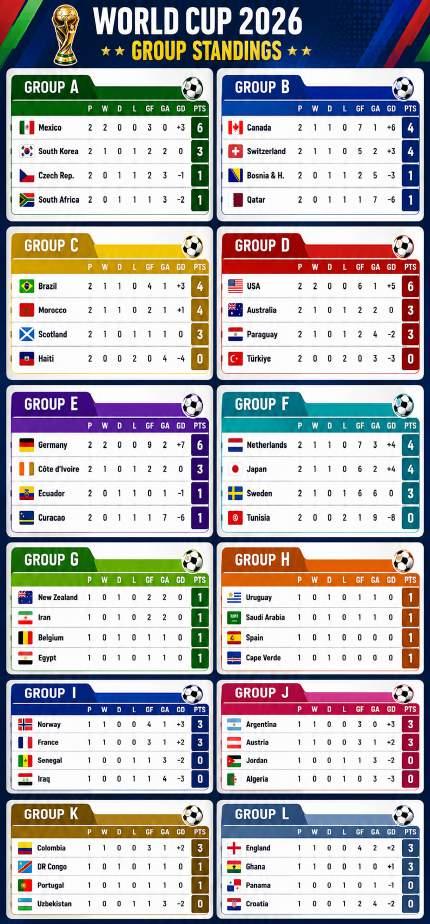
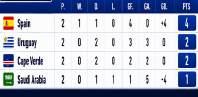
1930.
Tunisia went into the contest under immense pressure. Daichi Kamada gave the Asian side the lead after just four minutes, setting the tone for a dominant display. Japan continued to trouble the Tunisian defence with their pace and movement, and Ayase Ueda doubled the advantage in the 31st minute
as the Samurai Blue went into the interval with a comfortable 2-0 lead.
As Tunisia pushed forward in search of a way back into the match, spaces began to open at the back. Junya Ito capitalised in the 69th minute to make it 3-0 before Ueda completed his brace seven minutes from time, sealing an emphatic victory for
the Japanese.
With no points from their opening two matches, the Carthage Eagles are now mathematically eliminated from the competition.
Their final Group F fixture against the Netherlands will serve only as an opportunity to restore some pride and avoid leaving the tournament without
a point.
Elsewhere last night, Cape Verde drew 2-2 with Uruguay to stay in hunt for ticket to Round of 32.
The Blue Sharks opened their campaign with goalless draw with European champions Spain before this draw again with former two-time World Cup winners Uruguay.

Duro Ikhazuagbe
Former World Footballer of the Year, George Weah, has described FIFA’s fight against racism and hate speech as the best thing to happen to football.
As Honorary Captain of the recently constituted 16-panel Player’s Voice Panel, the former Liberian president in an interview with Mikael Silvestre on the FIFA Podcast, insisted the panel is on the right course towards eradicating the menace that is affecting the development
of the game.
He called on the support of all stakeholders to end the scourge.
The panel made of made of diverse ethnic backgrounds and of nationalities spanning all six Confederations has been tasked task to monitor and advise on the implementation of initiatives and actions taken as part of the global stand against racism.
Asked his first memories about the World Cup, Weah went philosophical.
“From where I come (Africa),
television was the only means of watching the World Cup. Then we all begin to dream to play at the World Cup one day, or to play somewhere. That’s how I got the opportunity to go to Cameroon (Tonnerre Yaounde) and then Monaco (France).
The former World Footballer of the year, stressed that the war the plagued Liberia partly contributed to the country not going to the World Cup.
“I come from Liberia, a small country of five million people. We experienced wars and it was
during our civil crises that we pushed our national team to rebuild the image of our country through sports.
“We tried to go the World Cup, twice it didn’t work. We tried but just one point away. It was very good to know that we stood for our country, and we did our best. We dreamt of qualifying to the World Cup, because the World Cup is a very important event. We missed out on it. That’s life and you cannot go back,” concludes the former AC Milan forward.
Davnotch has kept faith with the tennis fraternity in the country as another in the series of the annual tennis event, (Davnotch National Tennis Championship) served off yesterday with the preliminaries at the Tennis Courts of the Moshood Abiola National Stadium in Abuja.
The tournament now in its sixth year, is a week-long event scheduled to end on Saturday, June 27, 2026.
Sponsor of the tournament, Rt. Hon. Victor Ochei, will be wearing two caps at the event as Chairman of Davnotch Nig Ltd
as well as the current president of the Nigeria Tennis Federation.
Under Ochei as NTF President, Nigeria qualified for the second round of the of the Davis Cup for the first time since 1989.
An official of Davnotch Nig Ltd confirmed at the weekend that the tournament promises to be the best organised so far.
“This edition promises a lot of spectacular novelties, especially enhanced prize money and welfare packages for players, officials and spectators alike,” concluded the official.
Nigeria’s No.1 and tournament’s top seed, Abua Cannice beat defending champion, Michael Akpan Emmanuel, 2-0, ( 6-1, 6-2) to emerge the new champion of the Men’s Single’s of the 47th edition of the Central Bank of Nigeria Senior Tennis Championship which ended at the weekend in Abuja.
In the Women’s Single’s, a new winner also emerged
Sunday, June 21
Group H: Spain 4-0 Saudi Arabia
Group G: Belgium 0-0 Iran
Group H: Uruguay 2-2 Cape Verde
Group G: New Zealand vs. Egypt
Group
Group
(Monday, June 22)
with 18 year-old player, Etoro Bassey, defeating Ogunjobi Success 2-1 ( 3-6, 6-0, 6-2) to lift the trophy.
New champions also emerged in the men and
women’s doubles events where Abua Cannice paired Mohammed Musa to defeat the duo of Michael Akpan Emmanuel and Sylvanus Ajano while the pair of

Mohammed Khadijat and Ogunjobi Success, combined beautifully to beat the duo of Etoro Bassey and James Favour 6-2, 6-7(2), 10-6 to pick the ladies doubles trophy.
Addressing guests at the final, the Governor of Central Bank of Nigeria, Olayemi Cardoso, ably represented by Mrs. Hakama Sidi Ali, Acting Director of Corporate Communications and Investor Relations Department, CBN, commended the players, officials, stakeholders and spectators for their commitment and contributions towards the overall success of programme. Cardoso promised that the CBN is committed to the overall development of Nigerian youths and as such, the apex bank will continue to sponsor the championship in the overall interest of the nation.
Too many assumptions.
Last week, the rapidly growing opposition Nigeria Democratic Congress [NDC] adopted a novel anti-defection policy, which compels all its candidates to sign indemnity forms and sworn affidavits pledging not to defect to another political party after securing electoral victory. It said the measure is designed to strengthen party discipline, promote loyalty and curb the wave of defections that has weakened several political parties in recent years. Insofar as defection is one of the biggest epidemics in Nigerian politics, this was a far-sighted move indeed.
But then, late last week, NDC’s leaders eroded its import by exempting its presidential candidate, Peter Obi and his running mate, Rabi’u Musa Kwankwaso, from signing the anti-defection oath. Why, NDC? Obi and Kwankwaso are some of the most politically travelled politicians in Nigeria. Obi started in APGA, went to PDP, migrated to Labour Party, went on to ADC, and ended up in NDC. Kwankwaso started out in PDP, migrated to nPDP, went on to APC, returned to PDP, crossed over to NNDP, and recently came to NDC. Yet, you exclude these two men from signing the anti-defection oath?
Last week, a Southwark Crown Court jury in London acquitted former Nigerian Minister of Petroleum Resources, Diezani AlisonMadueke, of all six bribery and corruption charges. UK's National Crime Agency had accused Mrs. Alison-Madueke of receiving over £100,000 in cash, millions in luxury goods, Harrods shopping sprees and private jet flights from oil and gas figures seeking lucrative contracts in Nigeria, but the jury acquitted her and her two co-defendants of all the charges. Mrs. Allison-Madueke was the most powerful Oil Minister here, to whom President Jonathan ceded full control of the
oil cash cow when two presidents before and two presidents after him all kept the Oil Ministry on a short leash. Her acquittal after 13 years brings hope to many other Nigerians facing charges of mega billion corruption; former Humanitarian Affairs Minister Mrs. Sadiyya Umar Faruk, recently declared wanted by EFCC, must be confident that she will be acquitted by 2039.
There was this storm on Facebook last week about Fatima, a beautiful young Yobe lady, that nobody is coming forward to marry her because she is the daughter of the late Boko Haram leader Abubakar Shekau. Just because her father destroyed whole communities, killed hundreds of thousands of people including soldiers, policemen, clerics, village heads, young vigilantes and anyone who refused to join his insurgent group, destroyed untold numbers of public infrastructure, private homes and businesses and generated two million IDPs, what has that got to do with Fatima, who was about two years old when her father launched his murderous insurgency? Didn’t the law state that no one is punished for someone else’s guilt?
My worry for Fatima, however, is that Nigerian judges appear to find guilt by association. Late last week, a Federal High Court in Abuja convicted and sentenced the mother and sister of late bandit kingpin Kachallah Ibrahim Battujo to forty years in prison each. The mother, Safiya Salihu and the sister, Halima Abdullahi, were convicted under Section 26 of the Terrorism (Prevention) (Prohibition) Act, 2022 of passing information on phone to Battujo in aid of his terrorist acts. Justice Hauwa Yilwa also convicted the two women of concealing information, because they visited the bandit kingpin’s camp in the forest, saw him in possession of firearms, but failed to report
That is not a contradiction. It is two patients examined with two different instruments — one a blood-pressure cuff, the other a scale the family checks every time it returns from the market.
Here is the part of the report that deserves more attention than it has received, because it explains why the next six months may widen this gap rather than close it.
The Fund notes that higher global fuel, food and fertiliser prices will improve Nigeria's exports and fiscal revenues while, in the same breath, aggravating the poverty and food insecurity already described. Read that twice.
The identical global event — the conflict in the Middle East and the commodity-price shock associated with it — fattens the federal purse and empties the household plate through entirely different channels. There is no rough justice here, no automatic mechanism by which the gain to government filters down to compensate the family paying more for garri.
I wrote a few months ago about the village arithmetic of this war — the fertiliser bought this month determining the harvest brought in by November, with no second chance. The IMF report is the same arithmetic scaled to the nation: the oil windfall the Federation Account registers as good news is, structurally, the same event as the price spike a mother registers at the market stall as bad news. Both entries are correct. Neither is the whole truth without the other.
A doctor who tells a patient, "Your chart looks good, see you next year," while the patient is doubled over in the waiting room has not finished the consultation.
to the police. The court however discharged them for having received N490,300 from Battujo and for also going on Hajj to Saudi Arabia sponsored by Battujo.
You see, my fear for Fatima Shekau is that a judge might say the ram that was slaughtered at her naming ceremony was procured by her father after overrunning a hamlet in the Chad Basin, and she is therefore guilty of benefitting from terrorist activity. In the olden days in Nigeria, if a son arrived from the city with an expensive gift for his father, the old man will ask him if he got it from his salary. These days, when radio stations broadcast daily news of leaders on trial for stealing mega billions, which village elder will ask such questions?
There was this uproar in once-peaceful Plateau State last week when a State High Court ruled that a Hausa person born and raised in Jos North Local Government Area should legally be recognized as an indigene. Justice C. Donglong, who delivered the landmark judgment, ordered Jos North LGA to issue a Certificate of Indigene to Fatima Baba Akawu, an ethnic Hausa woman who had been denied one. The denial, despite that Fatima was born in Jos, violates the constitutional right to freedom from discrimination under Sections 25(1)(a) and (b) of the 1999 Constitution, alongside the African Charter on Human and Peoples’ Rights. But while the Hausa community celebrated, the Berom Educational and Cultural Organisation (BECO), Middle Belt Forum and former Governor Jonah Jang strongly criticized the ruling.
This contest between constitutional citizenship and locally-formulated indigeneship has caused rumpus in many parts of Nigeria. In Jos, it has led to several rounds of bloodshed over the decades. While a Nigerian is a citizen that can reside
and exercise citizenship rights anywhere in the country, but to get admitted into a school or to land a civil service job, one is often required to produce an indigeneship certificate. Plateau State once passed a law that stated which tribes are indigenous to the state, so anyone outside those is denied an indigeneship certificate, a severe pain for other groups. Courts alone cannot end this tango.
There was this curious case last week when Justice Oluwatoyin Odusanya of the Lagos State High Court, Ikeja ended a five-year legal tussle over the estate of late First Foundation Hospital CEO Dr. Tosin Ajayi by declaring Mrs. Adenike Ajayi as the sole lawful widow. The competing claim by former beauty queen Helen Prest was that for a long period prior to his death in 2020, Ajayi was separated from his wife, and that separation legally terminated their marriage. The High Court however ruled that prolonged separation does not automatically end a marriage; that regardless of how many years a couple lives apart, a legally contracted marriage remains valid under the Matrimonial Causes Act unless formally dissolved through court-ordered divorce proceedings.
While this ruling makes sense to judges and lawyers, many tradition-bound Nigerians must be shaking their heads and wondering, “What else ends marriage, if husband and wife have been living apart for many years?” Indeed, what is marriage, apart from a wife moving in with the husband, eating together, confronting issues together, procreating and raising children till death [or legal divorce] does them apart? Let us hope this court ruling will not lead to husbands and wives all over the country living apart and only rushing back to claim inheritance when the spouse passes away.
The honest doctor goes further: what do we do about the pain in the meantime, while the deeper treatment takes hold?
Two priorities, in order of how quickly they could be felt.
First: protect the harvest, not just the headline rate.
The IMF identifies fertiliser and food prices as a key transmission channel through which global shocks are reaching ordinary households. That suggests a policy response focused on agricultural inputs rather than broad-based subsidies.
A temporary, time-bound waiver or subsidy on imported NPK and phosphate inputs — financed directly from the additional oil revenue the same global shock is generating — would not fix Nigeria's agriculture. But it would mean the windfall reaching Abuja's accounts this quarter reaches a Kano smallholder's planting decision this quarter too, rather than sitting in reserves while she rations urea in April.
It follows the same stabilisation principle that underpinned the Excess Crude Account: save windfalls during good periods and deploy them when shocks hit.
Second: make the relief visible, timely and felt where the squeeze actually lands.
It is genuinely hard for a family to feel 4.1 percent growth.
Cash-transfer programmes often look good on paper but can miss those under the greatest pressure. In Nigeria today it is increasingly the urban poor — squeezed by rent, transport and food costs — not only the rural poor.
A targeted transfer delivered through the NIN-linked payment infrastructure developed for recent social-support programmes, timed to the months the IMF identifies as highest risk, would not need to be large to matter. It would need to be timely. It would need to be visible.
The same logic extends to public transport. The daily commute is effectively a tax on the working poor that a single windfall-
funded intervention could ease well before any structural solution arrives.
Neither proposal closes the gap overnight.
But a family does not need the whole disease cured to feel less afraid. It needs to see that someone has noticed the specific pain it is in and has done something about it this month — not merely promised the whole body will feel better eventually.
To its credit, the Fund's directors did not stop at diagnosis.
They were specific about what the second phase requires: tackling insecurity, cutting red tape, lifting agricultural productivity, closing the infrastructure gap — electricity chief among them — and increasing health and education spending.
None of this is new.
It is the same structural list I have returned to in piece after piece this year: power, collateral, the dependency ratio, the savings pool.
Macro stability without that work produces exactly the gap this report describes.
A good chart should not remove urgency from the harder work that follows it.
There is a real risk in this moment, and I want to name it plainly.
Stable macroeconomic numbers are easy to announce and satisfying to defend at a press conference. They photograph well.
The danger is not that the government celebrates the chart. The chart deserves some celebration; getting here was neither cheap nor easy.
The danger is mistaking the chart for the whole examination — declaring the patient recovered because the instruments attached to him say so while he is still telling you, in plain language, that he cannot climb the stairs.
"The danger is not that the government celebrates the chart. The danger is mistaking the chart for the whole examination."
The IMF's report does not let anyone make that mistake if read in full rather than in headline.
It says the vital signs are improving and the patient is still in pain in the same document, without resolving the tension between the two. That refusal to resolve it tidily is, I think, the most honest part of the report.
The next six months will decide whether this gap narrows or widens.
If the conflict in the Middle East persists, the same dynamic will keep operating: fiscal relief flowing into Abuja's accounts, price pressure flowing into Kano's, Lagos's and every market stall in between.
Inflation's brief retreat may turn out to have been a pause rather than a settled trend. Nigeria's reserves may continue to climb while the queue for affordable rice grows longer.
None of this is fate.
It is a question of whether the second-phase reforms move with the urgency the first phase did, and whether practical interventions such as those outlined above are attempted this season rather than next.
The currency was stabilised because the alternative was unthinkable.
The household's plate has not yet been treated with the same urgency because its crisis does not appear on a single chart a Governor can present to a Board.
It shows up instead in twenty-seven million separate places, none of which file a report to Washington.
•Kemi Adeosun is a former Minister of Finance of the Federal Republic of Nigeria and former Commissioner for Finance of Ogun State. She is the founder of Nidacity.com and the Dash Me Foundation. She writes from Lagos.
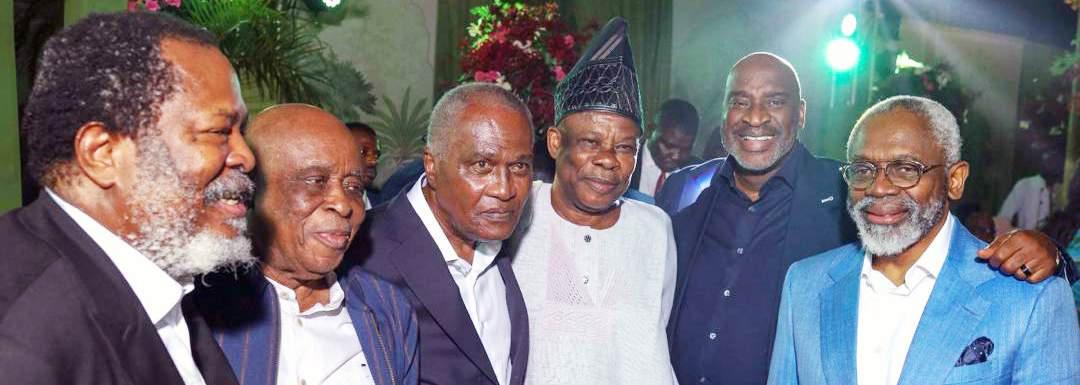
YOMI EDU @80...
L–R: Chairman & Editor-in-Chief, THISDAY Media Group and ARISE
From the political scene, to the judicial chambers, to the criminal arena, to social media space and on to marital beds, stories emanating out of Nigeria last week ranged from the curious to the incredulous, to the puzzling and on to the dubious in short order.
There was this story that Benue State Government appointed “Her Excellency Mrs. Scholastica Ben-Sor” as “Coordinator, Office of the First Lady,” a veritable first in the history of rigmarole Nigerian public service. This post is curious. Benue State has had no First Lady since May 2023, because the Governor, Hyacinth Alia, is a Roman Catholic Reverend Father who has sworn an oath of priestly celibacy, so he has no wife. Nor is this a new thing in Benue State.
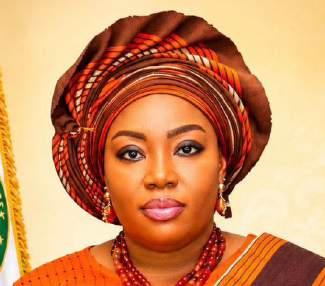
From January 1992 to November 1993, the state similarly had no First Lady, because
Governor Moses Adasu was also a Roman Catholic priest. Protocol katakata erupted because First Lady Mrs. Oluremi Tinubu was to visit Benue State last Friday, so the state government hit on the idea of appointing a shadow state First Lady to receive her. They got that idea from Malawi. During Dr. Hastings Kamuzu Banda’s long reign as President of Malawi, which ended in 1994, he had no wife, so he instead appointed Miss Cecilia Kadzamira as Official Hostess. That position carried with it all the duties, powers and privileges of a First Lady. Like Malawi, like Benue.
Trust Nigerian politicians to start fighting for a post a year before it is due.
Members of the 11th National Assembly will only be elected early next year and
will be inaugurated in June, but a battle has already started for its Senate President’s job. Godswill Akpabio rammed through a change in Senate rules meant to disqualify two men who are likely to challenge him next year, namely Adams Oshiomhole and Hope Uzodinma. Akpabio is however assuming that he will be re-elected from Akwa Ibom; he is assuming APC will get a majority; he is assuming that his patron President Bola Tinubu will be reelected; he is assuming that APC will re-zone Senate Presidency to South South; and he is assuming that incoming senators, at least 80% of them first timers, will reward him for making the 10th Senate a lapdog of the Presidency.

•What the IMF's 2026 Nigeria report says about us — and what it would take to make the patient actually feel it
Picture a man who has just left his cardiologist. Blood pressure down, cholesterol down, the arrhythmia that nearly killed him three years ago stabilised by months of disciplined treatment. The doctor is pleased. He walks out and still feels terrible. His chest is tight. He is exhausted by the time he climbs the stairs. He cannot understand how the chart says he is recovering when his body insists otherwise. This is, more or less, the conversation Nigeria has just had with the IMF.
What the Chart Says
On June 1, the Fund's Executive Board concluded its 2026 Article IV consultation —
the annual physical every member country submits to — and the chart looks genuinely good. Strong reforms over the past three years have built real macroeconomic resilience, in the Fund's own language. The currency, after the trauma of unification, has found something closer to a stable footing. External reserves have risen from $40 billion at the end of 2024 to more than $50 billion today, giving the Central Bank significantly more room to manoeuvre than it had only a few years ago. The banking sector is undergoing recapitalisation and most institutions are on track to meet the new requirements. Growth is humming along respectably — 4 percent in 2025, with a projected 4.1 percent this year, ahead of the global average. Read only the vital signs and you would
conclude Nigeria has done the hard, unglamorous work of getting well.
In a narrow sense, it has.
I do not say that performatively. I have sat in rooms where these numbers were the difference between a federation that could pay salaries and one that could not. They matter. They are not theatre.
What the Patient
But the same report, in the very next breath, says something that should stop the celebration mid-sentence: conditions for many Nigerians remain difficult. Not "some." Many.
Then come the numbers that explain why the man on the stairs still cannot breathe
properly. Sixty-three percent of Nigerians now fall below the national poverty line. Twenty-seven million faced food insecurity last autumn. Inflation, which had been falling for the better part of a year — a trend every commentator, myself included, had begun to treat as settled — turned and rose again in March, back to 15.4 percent, driven in part by renewed global food and fuel price pressures. This is the gap the chart cannot show: the difference between an economy whose instruments read "stable" and a household whose weekly shopping basket reads "impossible." Both are true at once.