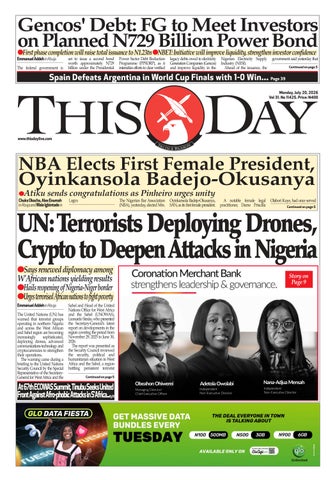
Gencos' Debt: FG to Meet Investors on Planned N729 Billion Power Bond
Addeh in Abuja
Addeh in Abuja
Atiku sends congratulations as Pinheiro urges unity
Says renewed diplomacy among W’African nations yielding results Hails reopening of Nigeria-Niger border Urges terrorised African nations to fight poverty
Emmanuel Addeh in Abuja
The United Nations (UN) has warned that terrorist groups operating in northern Nigeria and across the West African and Sahel region are becoming increasingly sophisticated, deploying drones, advanced communications technology and cryptocurrencies to strengthen their operations.
The warning came during a briefing to the United Nations Security Council by the Special Representative of the SecretaryGeneral for West Africa and the

Sahel and Head of the United Nations Office for West Africa and the Sahel (UNOWAS), Leonardo Simão, who presented the Secretary-General's latest report on developments in the region covering the period from November 29, 2025 to June 30, 2026.
The report was presented as the Security Council reviewed the security, political and humanitarian situation in West Africa and the Sahel, a region battling persistent terrorist





Over 1,000 companies onboarded as
James Emejo in Abuja Executive Chairman, Nigeria Revenue Service (NRS), Dr. Zacch Adedeji, yesterday directed large taxpayers to fully migrate to the national e-invoicing and Electronic Fiscal System (EFS) by July 31, 2026 or risk regulatory sanctions.
The directive was contained in a public notice which he
violence, political transitions and growing humanitarian needs.
It also comes against the backdrop of the council's recent decision to extend the mandate of UNOWAS until January 31, 2029, reflecting continued international support for preventive diplomacy in the region.
Addressing the council, Simão said terrorist organisations were evolving rapidly, making the threat more difficult to contain. "Armed groups are increasingly using drones, sophisticated communications and cryptocurrencies while coordinating operations across borders," he said.
According to him, the activities of the groups have become intertwined with transnational organised crime and are aimed at consolidating territorial and economic control while weakening public confidence in state institutions and damaging social cohesion.
The UN briefing came just weeks after the US disclosed what it described as the largest
as the first female president of the NBA between 1991 and 1992.
Kuye, who was elected NBA First Vice President, assumed the office of President, after the then President Clement Akpamgbo was appointed Attorney-General of the Federation (AGF) during the administration of then Head of State, General Ibrahim Babangida.
Kuye, a life member of the Body of Benchers (BoB) and a former chairman, Human Rights Committee of the NBA, had been pushing for the election of a female president of the NBA.
it will host an investors' forum tomorrow (Tuesday, July 21) to engage prospective investors on the upcoming transaction.
The planned issuance follows the successful flotation of a N501 billion bond in January 2026. Together, the two issuances will amount to about N1.23 trillion, completing the first phase of the N4 trillion debt reduction programme approved by President Bola Tinubu to address longstanding financial obligations in the power sector.
In a statement in Abuja, the Nigerian Bulk Electricity Trading Plc (NBET) said the first coupon and principal repayment on the
personally signed, adding that the tax authority had already commenced compliance monitoring to determine the level of adherence among affected companies, warning that businesses which fail to complete the migration before the deadline would face enforcement actions in line with extant tax laws.
The directive forms part of the implementation framework
seizure of terrorist equipment in Nigeria since the September 11, 2001 attacks. According to Dr. Sebastian Gorka, who serves as the United States Deputy Assistant and Senior Director for Counterterrorism, a joint counterterrorism operation with Nigerian forces led to the recovery of a vast cache of electronic devices and other operational materials from jihadist groups. He stated that it was so extensive that an additional aircraft was required to transport the confiscated equipment for forensic analysis by American intelligence agencies. The operation, he said, also resulted in the killing of 199 jihadists during a single raid.
But Simão noted that Nigeria, Niger and Burkina Faso have continued to suffer terrorist attacks, kidnappings and significant civilian casualties.
Simão told the council that ‘the human cost of the violence is devastating,’ disclosing that about 6.8 million people had been displaced across the region, while
Badejo-Okusanya was elected at the Bar's 2026 election as the 33rd president of the umbrella body for lawyers in the country. Her victory at the poll, which held between July 18 and 19, 2026, made her the first woman to be elected into that position and second to occupy the office.
However, with the emergence of Badejo-Okusanya at the intensely conducted election, many expect the NBA to put behind its differences and forge ahead with its goal of enthroning the rule of law in the society. While the association had
January bond, which fell due on July 14, had been settled promptly and in full.
According to the organisation, this demonstrates the federal government's credit worthiness as well as commitment to meeting its contractual obligations and strengthening investor confidence in the programme.
NBET explained that the N1.23 trillion raised through the first and second issuances represents the Series 1 and Series 2 components of the Capital Market Multi Instrument Issuance Programme, which forms the first phase of the broader N4 trillion initiative.
for the National E-Invoicing and Electronic Fiscal System, also known as the Merchant Buyer Solution (MBS).
According to a statement issued by the Special Adviser on Media to the NRS Chairman, Mr. Dare Adekanmbi,
the latest notice reinforces an earlier public notice issued on February 17, 2026, which outlined the phased implementation
another 1.28 million had become refugees or asylum seekers.
According to him, humanitarian access remained severely constrained by insecurity and funding shortages, leaving women, children and young people to bear the greatest burden of the crisis.
“The problem is acute, especially in the central Sahel and northern Nigeria… Their actions intersect with transnational organised crime, and are aimed at consolidating territorial and economic control, erosion of public confidence in State authority, with serious damage to social cohesion,” he warned.
Despite the deteriorating security situation, the UN pointed to signs of improving regional cooperation, citing the reopening of the Kamba border crossing between Nigeria and Niger as one of the practical outcomes of renewed diplomatic engagement.
He also referenced progress by the Cameroon-Nigeria Mixed Commission in implementing
zoned the office of president to the southwest geopolitical zone of the country, the claim and counter claim of imposition of candidates almost truncated the poll.
But at the end of the day, a winner has emerged in the person of Badejo-Okusanya, thereby paving the way for a smooth transition next month, August.
Badejo-Okusanya was declared winner by the Chairman, Electoral Committee of the Nigerian Bar Association (ECNBA), Aham Ejelam, SAN, yesterday, few
The January issuance, it said, reflected the government's fiscally responsible approach to settling verified obligations owed to Gencos while improving liquidity and supporting the long-term financial sustainability of the electricity market.
In his comments, the Chief Executive Officer of NBET, Mr. Johnson Akinnawo, described the proposed second issuance as another major milestone in efforts to restore confidence and financial stability in the sector.
"The second issuance demonstrates the federal government's commitment to resolving verified legacy
timetable and made adoption of the electronic invoicing platform mandatory for large taxpayers.
The revenue service had moved beyond the sensitisation phase and is now actively monitoring compliance across eligible companies.
Adekambi stated that any organisation found to be in default of the directive could be subjected to appropriate
the 2002 International Court of Justice (ICJ) judgment on the countries' land and maritime boundary, describing it as evidence that dialogue could resolve longstanding disputes. "These are some examples of regional efforts towards dialogue," he emphasised.
The UN stressed that military operations alone would not eliminate terrorism, urging governments and the international community to tackle the underlying drivers of violent extremism.
"Fighting poverty and vulnerability must therefore remain a common objective in the broader fight against terrorism," he said.
“Regional actors are working hard to find solutions,” he added, highlighting that ECOWAS has renewed efforts to operationalise its standby force, but at a lower dimension than needed, due to financial limitations.
Besides, the 15 council members broadly agreed that terrorism in West Africa and
hours after the end of the poll and collation of results.
According to the ECNBA, the senior female lawyer secured 12,317 (47.18 per cent of total votes cast for the position of president) to emerge winner, while her closest rival Mr Lateef Akangbe, SAN, polled 7,934 (30.39%) votes and consensus candidate of the Omo Egbe Amofin O'odua, Aare Olumuyiwa Akinboro, SAN polled 5,855 (22.43%) votes to come 3rd.
While 26,184 voted in the entire election, 26, 106 voted for the
obligations through a transparent, structured and market-based mechanism," he said.
According to him, improving liquidity across the electricity value chain would strengthen the financial position of market participants, encourage fresh investment and support sustainable electricity generation.
Akinnawo recalled that the Federal Executive Council (FEC) approved the establishment of the N4 trillion Presidential Power Sector Debt Reduction Programme in 2025, with NBET designated as the sponsoring institution for settling verified legacy debts.
regulatory and enforcement measures as provided under relevant tax legislation.
The statement urged all affected taxpayers to immediately conclude outstanding onboarding, system integration, testing and validation processes, while commencing the transmission of invoices to the NRS e-invoicing platform before the expiration of the compliance window.
the Sahel was becoming more sophisticated and increasingly linked with organised crime and illicit trafficking, underscoring the need for stronger regional cooperation.
Several delegations, including those from the US, China , Russia, UK, France, Liberia, Pakistan, Burkina Faso, among others, argued that security responses must be complemented by investments in governance, education, employment, humanitarian assistance and economic development to address the root causes of instability.
“Council members broadly agreed that increasingly sophisticated terrorist networks, linked to organised crime and drug trafficking, threaten regional stability. Speakers stressed that military action alone cannot defeat extremism and called for governance reforms, development, education, job creation and humanitarian support to address root causes.
“Despite worsening insecurity,
presidential candidates out of a total of 82, 172, registered voters.
Meanwhile, other elected national officers included Oghenero Okoro, who emerged First Vice President with 11,024 votes; Afam Okeke, elected General Secretary with 8,478 votes; Aghogho Gladys, who won the position of Assistant General Secretary with 14,312 votes; and Chinelo Audrey Ofoegbunam, elected Welfare Secretary with 14,911 votes, among other successful candidates.
Speaking shortly after the results were announced, the
He explained that the programme would be implemented through multiple issuances of debt instruments by NBET Finance Company Plc, a special purpose vehicle established for the programme.
According to him, the instruments are backed by the full faith and credit of the federal government and supported by a comprehensive risk mitigation framework designed to ensure successful execution.
"The programme has the full backing of the federal government and incorporates a robust suite of instruments designed to mitigate transaction risks and support
According to the notice, "The NRS has already commenced compliance monitoring activities in order to assess the level of adherence to the e-invoicing mandate among large taxpayers.
regional diplomacy is gaining momentum, with renewed cooperation among Sahel States and members of the Economic Community of West African States. The council signaled strong support for UNOWAS and preventive diplomacy as essential tools for confronting both immediate security threats and the region’s long-term challenges,” a note from the meeting stated.
Besides, participants at the meeting agreed that drug trafficking, production and consumption are compounding insecurity, particularly in coastal countries. “Youth are the principal victims,” an unnamed Liberian representative said, noting reports that terrorist combatants are also using drugs.
Deputy Permanent Representative of the Russian Federation, Anna Evstigneeva, recalling that the council has characterised some attacks as terrorist acts, pointed to the role of “external forces” supporting their activities.
outgoing President of the NBA, Mazi Afam Osigwe, SAN, observed that the poll faced several challenges, including a cyber attack that almost derailed the electoral process. He said, "Many went to a grave extent to truncate the electoral process. Even though they maligned the process with their utterances but we held firm. Every effort to derail the process failed."
Besides, Osigwe described the incidence as a trying time
successful execution," he said. Akinnawo added that the planned N729 billion bond would mark another important step towards resolving longstanding liabilities in the electricity sector and creating a more stable, bankable and investment friendly market capable of attracting investment.
“By improving liquidity across the electricity value chain, the programme will help strengthen the financial position of market participants, support new investment and promote sustainable electricity generation for the benefit of Nigerians,” the NBET chief executive explained.
Email: Goddy.egene@thisdaylive.com,
market Seeks
The Nigerian Electricity Regulatory Commission (NERC) has thrown its weight behind the Minister of Power, Joseph Tegbe's call for greater collaboration among operators in the Nigerian Electricity Supply Industry (NESI), stressing that Nigerians are more interested in reliable electricity than institutional competition over regulatory powers.
The commission's position followed a recent workshop
convened by the Minister of Power in Abuja on the legal, policy and regulatory harmonisation between federal and state institutions following the decentralisation of the electricity market under the Electricity Act (EA) 2023.
The Act, which empowers states to establish and regulate their own electricity markets, has fundamentally altered the governance structure of the power sector, making coordination between federal and state
institutions increasingly critical to avoid regulatory conflicts and ensure investor confidence.
In a statement in Abuja, NERC said the workshop provided a platform for stakeholders to examine emerging challenges arising from the transition to a multi-tier electricity market and identify mechanisms for seamless collaboration.
Chairman of the Commission, Dr. Musiliu Oseni, said the focus of all stakeholders should remain on improving electricity supply
rather than competing over regulatory responsibilities.
"Nigerians do not really care about who regulates what or who is responsible for policymaking, but they strongly care about the availability and reliability of supply. It does not matter to them who drives the sector, be it state or federal, but who actually meets their supply needs," Oseni said.
He urged regulators and policymakers to set aside institutional interests and
The Independent Petroleum Marketers Association of Nigeria (IPMAN) yesterday rejected the recent approval of additional import licences for petroleum products, stressing that apart from worsening price volatility, it was putting unnecessary pressure and weakening the naira.
In a reaction to the recent spate of issuance of permits, the National Publicity Secretary of IPMAN, Chinedu Ukadike, urged the federal government to look into the matter transparently through the regulator, the Nigerian Midstream and Downstream Petroleum Regulatory Authority
(NMDPRA).
He stressed that the import licences, which were meant to serve as a check on domestically refined petroleum products, were not achieving the results expected by independent marketers, lamenting that some of the companies granted import licences were pegging their prices at around N1,350 per litre.
While questioning the rationale behind the licences, IPMAN explained that this figure is far higher than what the Dangote refinery sells to marketers, noting that if the goal of the NMDPRA and the federal government is to checkmate the domestic price of products, then the purpose has been defeated.
federal, state coordination embrace dialogue in order to deliver improved outcomes for electricity consumers.
"It is on this basis I wish to urge all actors in the room to reflect, drop our ego and personal interests, embrace dialogue and let us all work together to meet the yearnings of Nigerians," he added.
Oseni also proposed the creation of a more structured platform for regular engagement between the federal government and state authorities, suggesting that the existing National Council on Power (NACOP) be reformed to allow more frequent and focused policy meetings.
According to him, regular engagements between the minister of power and state commissioners responsible for electricity would strengthen policy coordination and facilitate smoother implementation of the ongoing reforms.
"These will ensure frequent touchpoints between the federal and the state governments on policy implementation and coordination, especially during this transition phase," he said.
Earlier, the Minister of Power, Joseph Tegbe, had warned
stakeholders against actions capable of undermining the decentralised electricity market, insisting that the reforms envisaged complementary electricity markets operating within a single national framework rather than competing power systems. He stressed that collaboration among the federal government, state governments, regulators, investors and market operators would determine the success of the reforms, announcing the establishment of a nine-member inter-agency committee to address implementation challenges and deepen regulatory harmonisation.
According to the minister, the committee, which he will chair, has been given four weeks to engage stakeholders and recommend measures to strengthen the implementation of the Electricity Act 2023. He maintained that regulatory coherence, investor confidence and institutional alignment would remain essential to building a stable, efficient and investmentfriendly electricity market capable of supporting Nigeria's economic growth and expanding access to reliable power.
Bennett Oghifo
Wema Bank, Nigeria's oldest indigenous bank and pioneer of Africa's first fully digital bank, ALAT, has been named Nigeria's Best Digital Bank for Consumers 2026 by Euromoney, one of the world's most respected authorities on financial services and banking excellence.
The prestigious recognition affirms the Bank's sustained leadership in digital innovation, customer experience and financial inclusion, reinforcing its position as one of Nigeria's leading technology-driven financial institutions.
Presented annually, the Euromoney Awards for Excellence celebrate banks that are redefining
financial services through innovation, measurable impact and outstanding customer value.
In selecting Wema Bank for the award, Euromoney recognised the Bank's successful digital transformation journey, its continuous innovation through ALAT, Africa's first fully digital bank, and its unwavering commitment to delivering
simpler, smarter and more accessible banking experiences for customers.
Commenting on the recognition, the Managing Director/Chief Executive Officer of Wema Bank, Moruf Oseni, said: "This award is a strong validation of the deliberate investments we have made over the years to build a truly digital bank that
puts customers at the centre of everything we do.
"Innovation for us has never been about technology for its own sake. It has always been about creating solutions that make banking easier, faster, safer and more rewarding for every customer.
"From pioneering Africa's first fully digital bank with ALAT to
continuously evolving our digital capabilities, we have remained focused on anticipating customer needs and building experiences that create real value. We are honoured by this recognition from Euromoney and inspired to continue pushing the boundaries of innovation as we shape the future of banking in Nigeria," he concluded.
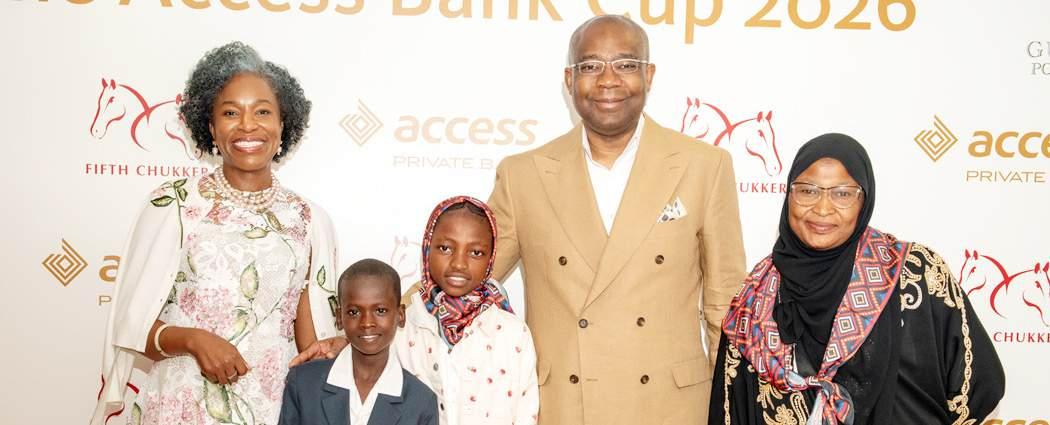
L-R: Co-Founder, Aig-Imoukhuede Foundation, Ofovwe Aig-Imoukhuede; student, Access
Aigboje Aig-Imoukhuede, CFR; and Assistant Head Teacher, Access
Former National President of the Nigerian Association of Chambers of Commerce, Industry, Mines and Agriculture (NACCIMA), Mr. Dele Oye, has called on the federal government to immediately implement the Oronsaye Report, warning that the proliferation of more than 900 Ministries, Departments and Agencies (MDAs) is imposing over N862 billion costs on the economy.
Oye, who is Chairman of the Alliance for Economic Research and Ethics (AERE), said the continued expansion of government agencies, despite repeated calls for rationalisation, had created overlapping mandates, duplicated regulatory functions and increased compliance costs for businesses.
In a statement, he recalled that the Steve Oronsaye Presidential
James Sowole in Abeokuta
Ogun State governor, Prince Dapo Abiodun, on Sunday paid glowing tribute to his wife, Mrs. Bamidele Abiodun, as she marked her 60th birthday, describing her as a woman of virtue, compassion, unwavering faith and an indispensable partner whose steadfast support has been central to his life’s journey and public service.
Speaking during a special thanksgiving service held in honour of the First Lady at the Government House Chapel, Oke-Igbein, Abeokuta, Abiodun thanked God for preserving their family and sustaining them through nearly four decades together.
He also commended his wife for keeping the home front together while he continues to serve the people of Ogun State.
The governor expressed gratitude for the gift of their children and the grace that has continually upheld their family, noting that the milestone was a reminder of God’s abiding faithfulness.
He said, “I believe that when
we think about our lives in terms of the number of days we have lived, and then consider the number of minutes and seconds our hearts have beaten, we are reminded that we must remain accountable to Almighty God.
“When I remember that our paths crossed about 39 years ago, I cannot but thank God for how He has preserved us. At the time, I was in Ife while she was at the University of Ibadan. I used to drive to Ibadan to see her. Neither of us knew that one day God would grant us the privilege of becoming the First Family of Ogun State."
Responding, Mrs. Bamidele Abiodun described her Diamond Jubilee as more than a personal milestone, saying it was a divine call to deepen her commitment to service and humanity.
She said the occasion had renewed her resolve to positively impact more lives through her humanitarian initiatives and dedicated service to the people of Ogun State, while acknowledging God as her rock and source of strength over the past six decades.
report Faults N658bn retained by revenue agencies as cost of collection
Committee on the Restructuring and Rationalisation of Federal Government Parastatals, Commissions and Agencies, inaugurated in 2012, recommended sweeping reforms, including the merger, abolition and restructuring of several agencies, with projected savings of about N862 billion between 2012 and 2015.
According to him, although the federal government approved aspects of the report in 2023, implementation has remained largely stalled, while the number of federal agencies has risen to over 900, discouraging investment and worsening Nigeria's business environment.
He argued that the proliferation of agencies has transformed regulation into a major burden for businesses, citing the recent
sealing of three milk factories in Awada, Onitsha, by the Federal Competition and Consumer Protection Commission (FCCPC) as evidence of the inefficiencies created by multiple regulators exercising similar powers.
Oye noted that manufacturers are often required to comply simultaneously with the regulatory requirements of the FCCPC, the National Agency for Food and Drug Administration and Control (NAFDAC), the Standards Organisation of Nigeria (SON), environmental agencies, local governments and other institutions.
"In Nigeria, a manufacturer producing dairy products does not face one regulator; they face a constellation. NAFDAC demands product registration
and facility inspection. SON demands standards compliance and certification. The FCCPC demands consumer protection compliance. Add the State Environmental Agency, Local Government trade licences and perhaps the Nigeria Agricultural Quarantine Service (NAQS), and you have a recipe for paralysis," he said.
According to him, businesses are forced to satisfy multiple agencies, each acting independently, creating unnecessary bureaucracy that raises compliance costs and pushes many small businesses into the informal sector.
"The ancient wisdom captured in the proverb 'Too many cooks spoil the broth' has never been more apt. When three different
federal agencies have the statutory power to seal a single factory, we are no longer talking about regulation. We are talking about an administrative circus where the performer is the private sector," he added.
Oye further argued that many government agencies had shifted from their core regulatory responsibilities to revenue generation.
"This proliferation of agencies has created a perverse incentive structure that turns regulators into predators. Many MDAs have morphed from protective regulators into aggressive revenue generators. When agencies justify their existence by the fees, levies and fines they collect, enforcement becomes a profit centre," he said.
Acugas cancels contract, demands upfront payment after year-long supply drought Firm gets only N12.3bn, balance of N15.7bn up for negotiation as FG meets Gencos Tuesday Weak, vandalized transmission lines hinder evacuation as supply crisis persists nationwide
Peter Uzoho
Nigeria's only existing wholly state-owned power generation facility, the Ibom Power Plant suffered a shocking 11-month gas supply shortage and resultant generation shutdown in 2025 largely due to the N28 billion owed the company by the federal government as part of the power sector's N4 trillion legacy debt spanning 2015 to 2024.
Managing Director of Ibom Power Plc, Mr. Camillus Umoh, disclosed this during an interaction with THISDAY on the state of the Akwa
Ibom State-owned generation company.
Umoh detailed how crippling liquidity constraints, gas supply failures and transmission bottlenecks had left the 191 megawatts (MW) plant largely idle for most of 2025 despite being built to export power.
He explained that Ibom Power, which came into operation in 2010, had three installed General Electric turbines: two 6Bs of 38MW each and one 9B of 115MW. The plant’s gas supply, he said, comes from Acugas’ Uquo field, about 62 kilometers away,
through an infill pipeline.
"This is actually our gas supply story for 2025. In fact, for the past 360 days, aggregated availability days is under 30 days. I repeat that. For the past 360 days, calendar-wise, 12 months, the aggregated supply days is less than 30 days.
"And of these 30 days gas supply, not all are on maximum level. Some are on suboptimal level. Maybe 30-40 per cent of what you optimally should need for your plant. And that leads us to operating at suboptimal level.
"And Acugas has told us
they don't want to subject themselves to 10-year-old debts again. Our gas supply ended last month (June). And they told us going forward, if you don't upfront pay us, we're not going to give you gas. This was after three months of discussions and all that."
According to him, the plant’s operational history had been dogged by missed maintenance cycles prescribed by the Original Equipment Manufacturer (OEM) -- General Electric (GE), foreign exchange volatility, and project financing challenges.


The Nigeria Deposit Insurance Corporation (NDIC) Proudly welcomes members of the Africa Regional Committee (ARC) of the International Association of Deposit Insurers (IADI), distinguished delegates, partners and special guests to the 2026 IADI Africa Regional Committee Annual Meeting and Workshop
The Annual Meeting and Workshop brings together deposit insurers, central banks, financial sector regulators, policymakers and international experts from across Africa and beyond to exchange knowledge, strengthen regional collaboration and advance best practices in deposit insurance, public awareness and crisis preparedness


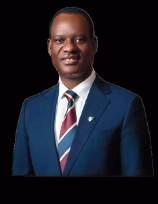











Appointed by President Bola Tinubu as Director General of the Infrastructure Concession Regulatory Commission (ICRC) on July 13, 2024, Dr. Jobson Oseodion Ewalefoh assumed office at a time Nigeria was seeking innovative financing to bridge its huge infrastructure gap. With government resources under increasing pressure, his mandate has been to reposition Public-Private Partnerships (PPPs) as a key driver of infrastructure delivery and economic growth.
In this interview with James Emejo, Ewalefoh reflects on his two years at the helm of the commission, outlining reforms aimed at simplifying PPP processes, shortening project approval timelines, strengthening stakeholder confidence and attracting greater private sector participation. He argues that PPPs have become indispensable to mobilising over $100 billion the country requires annually to close its infrastructure deficit. The ICRC boss also highlights milestones recorded under his leadership, including the delivery of an Inland Dry Port project once considered unviable, the rollout of Deep Seaport initiatives to improve maritime logistics, and progress on strategic projects such as the Kashimbila Integrated and Agro Cargo Airport, Snake Island Port, Airport Passenger Verification System (V-PAS), domestication of passport printing, the Dasin Hausa Dam, the Product Authentication and Tracking System to combat counterfeit goods, and a medical PPP initiative aimed at making quality drugs cheaper and more accessible. Beyond the projects, Ewalefoh discusses the challenges confronting PPP implementation, investor confidence, transparency, and the role of state governments in leveraging private capital to accelerate infrastructure development. Looking beyond his tenure, he says his ambition is to build a stronger PPP regulatory institution that serves as a model for Africa, deepen confidence in Nigeria’s investment climate, and leave behind a legacy of deploying private capital to deliver the next generation of infrastructure that will drive sustainable economic development. Excerpts:
What is the current state of Public-Private Partnerships (PPPs) in Nigeria, the role of the ICRC, and the future of infrastructure development in the country?
Thank you very much. The role of PPPs in Nigeria is quite simple. It is to complement government efforts in building Nigeria’s infrastructure. Beyond infrastructure delivery, PPPs are also meant to remain an enabler of economic development. They create jobs and service delivery, and generate many other benefits that are not always immediately visible.
PPP is not just another procurement methodology as many people perceive it. It is one of the key drivers of our economy.
Considering the budget deficit that we have over the years, it is clear and well established that government budgetary allocations alone can no longer meet Nigeria’s infrastructure requirements.
The National Integrated Infrastructure Master Plan (NIIMP) estimates that Nigeria requires investments of over $100 billion annually to fund infrastructure over a 23-year period. However, annual budgetary allocations for infrastructure are far below that requirement. Clearly, government cannot fund infrastructure alone.
The gap in funding must therefore come from somewhere, and the private sector is the obvious source. That is why PublicPrivate Partnerships have become so important.
On the current state of PPPs, I can confidently say they are gradually being accepted as an alternative procurement methodology for infrastructure delivery.
PPP is steadily becoming part of the country’s governance framework because of the reality we face today—limited public resources. Rather than continue relying solely on government borrowing, which future generations will have to repay, PPP provides an opportunity to mobilise private capital for infrastructure development.
Where you have bankable projects that investors are willing to finance, PPP becomes the preferred option.
That is the direction government is moving towards today.
PPP has increasingly been accepted as one of the viable approaches to addressing Nigeria’s infrastructure deficit.
Since assuming office as Director-General of the ICRC, what have been your priorities and what is your roadmap for infrastructure development in Nigeria?
My priority has always been to ensure that PPP is deployed across every aspect of Nigeria’s economic development.
As I said earlier, there is no debate about the fact that government alone cannot fund Nigeria’s infrastructure needs.
My priority, therefore, has been to make PPP more acceptable to Ministries, Departments and Agencies (MDAs), encouraging them to embrace it as a credible alternative.
We have introduced credible and streamlined processes that make MDAs see PPP as a credible alternative for delivering projects. Whenever traditional budgetary funding cannot deliver infrastructure, PPP should become the preferred option. It should never be viewed as a competing procurement methodology. Rather, it should be seen as a complementary approach to solving the country’s infrastructure funding challenges. That has been my priority.
Another important objective has been to deepen understanding and build confidence in PPP as a procurement methodology in Nigeria. Regarding my roadmap, it was very clear from the day I assumed office. The first step was to study the challenges of the past. We asked ourselves important questions.
What had been the problem? Why were MDAs reluctant to embrace PPP? And What were the barriers preventing wider adoption?
We discovered that many MDAs viewed PPP as a cumbersome process. Many believed that PPP transactions took far too long to conclude. Others felt they lacked the resources required to prepare bankable projects. Some also believed that if they started a PPP project, they might leave office before the transaction was concluded and there was the issue of resistance to adopting a new process due to reliance on public procurement, even in areas where PPPs would be a better alternative. These were some of the misconceptions and barriers limiting PPP adoption.
So, when I came on board, my roadmap became very clear.
We decided to take PPP directly to the doorsteps of the MDAs. To achieve this, I introduced a Six-Point Agendainnovative financing, service delivery optimisation, project categorisation, time-bound delivery of projects, inter-agency collaboration and strategic partnerships.
We created preference to adopt traditional pro urement that most people are comfortable with and have developed adequate capacity in it. We streamlined approval processes and significantly reduced transaction timelines.
Projects that previously took three or four years to reach financial close can now, in many cases, be completed within six to twelve months.
I also made a deliberate decision to lead from the front.
My roadmap has been to educate stakeholders about PPPs, facilitate project development, regulate the process, and guide MDAs on how to develop and procure transparent, bankable PPP projects capable of delivering value to the country. The roadmap is therefore straightforward - remove barriers to PPP implementation.
Eliminate bottlenecks, simplify processes, and make PPP work for government, investors and the Nigerian people.
What incentives have you introduced to encourage greater adoption of PPPs?
One of the first things we did was to simplify PPP. When people understand a process, they are more likely to embrace it. We addressed the long-held perception that PPP transactions always take too much time. That is no longer the case. Also, small PPP projects had to go through the same
approval process as the big complex PPPs.
We reviewed that approach so that, within approved thresholds, the Chief Executive of an agency can now initiate and conclude certain PPP processes much faster.
These are some of the reforms we introduced under the Six-Point Agenda. Another major area has been continuous stakeholder engagement.
PPP is a partnership, and successful partnerships require constant communication and understanding among all parties. Stakeholder engagement has therefore remained one of the key pillars of our reforms.
We have consistently engaged MDAs, as well as the investment community, explaining that things have changed in Nigeria. We continue to tell investors that Nigeria remains an attractive destination for investment.
This explains why we have deliberately ensured participation in fora that enables us engage relevant stakeholders, where we continue to promote PPPs.
We have consistently engaged and assured investors that Nigeria remains an attractive destination for investment.
We have also simplified the legal and regulatory framework to make it easier for stakeholders to understand.
We reduced the time required to prepare and procure PPP projects—from project conception to contract signing. We actively engaged critical stakeholders to secure their buy-in, emphasising that Nigeria must move away from old ways of doing things and embrace new approaches to infrastructure development.
To the glory of God, and with the support of President Bola Tinubu’s administration, we have secured broad stakeholder buy-in. That has been one of our biggest achievements. Today, we have a clear roadmap, and over the past two years we have moved at a much faster pace in advancing PPP implementation across the country.
How can PPPs help bridge Nigeria’s huge infrastructure deficit?
Let me put it this way; we have the National Integrated Infrastructure Master Plan (NIIMP), and the World Bank has also established that Nigeria has an infrastructure deficit of over $2.3 trillion. To bridge that gap between 2020 and 2043, Nigeria needs to invest more than $100 billion every year. We are already several years into that plan, yet annual budgetary plans have averaged $44 billion, which includes recurrent, debt servicing, statutory transfers and capital allocations. Clearly, the only way Nigeria can build the infrastructure it needs is through private sector funding.
The private sector is not a charity organisation. Investors are not philanthropists. They will only bring their money where they can see returns on investment.
Our responsibility, therefore, is to create an enabling environment and a platform that de-risks projects and makes them attractive for private sector participation.
Which sectors offer the greatest opportunities for private investment through PPPs?
When you consider an infrastructure deficit of over $2 trillion, it tells you that the gap exists across virtually every sector of the economy.
That means we cannot afford to leave any sector behind.
So, I cannot honestly say that one sector offers greater opportunities than another. What I can confidently say is that every sector presents significant investment opportunities, because the infrastructure gap is enormous.
Nigeria’s large population represents enormous potential.
The demand is there, the market is there, and investments in Nigeria have the capacity to generate attractive returns. What many people see as an infrastructure deficit is actually an investment opportunity.
Now, there are opportunities in power, transportation, rail infrastructure, logistics, technology, housing, and healthcare
Indeed, opportunities exist across virtually every sector. Investors are already showing interest in almost every area of the economy. So, I would be doing Nigeria a disservice if I singled out only one sector.
Every sector presents opportunities, and investors are welcome. Nigeria remains a destination for investment.
From your experience, what are the biggest concerns local and foreign investors have about investing in Nigeria? When I assumed office, one of the first things I did was to examine the barriers that have discouraged investors over the years. The biggest concern has always been political risk. Political risk is one of the major challenges for PPP projects in developing countries, and Nigeria has not been an exception. Political uncertainty naturally raises investor concerns, as well as risk premiums demanded by providers of capital. Within the Nigerian context, investors have traditionally worried about changing government policies. They also want consistency in governance.
However, it is important to acknowledge that Nigeria has enjoyed democratic stability over the past 27 years, with peaceful transitions from one administration to another.
That stability has significantly reduced political risk.
That said, policy changes remain a concern because every administration—whether military or civilian—introduces new policies.
Speaking specifically about the current administration, President Bola Tinubu has consistently insisted on adherence to due process and the rule of law. There have been situations where Ministries, Departments and Agencies sought to terminate PPP arrangements for various reasons.
In such situations, the President has always requested our professional opinion, and in many cases he has listened to our advice. That commitment to respecting contracts is very important.
Now, investors want to know: does the country respect contracts? Is there a transparent legal framework? Will government policies remain consistent? Is there an effective dispute resolution mechanism? These are legitimate concerns for investors.
I can confidently say that many of those concerns have been substantially addressed. Another major concern in the past was foreign exchange risk.
The instability in the foreign exchange market discouraged both local and foreign investors.
Many investors worried that even if they invested successfully, they might not be able to repatriate their returns.
However, since President Tinubu came into office and the multiple exchange rate regime was removed, investors now have greater confidence in the foreign exchange system.
That concern has reduced significantly.
Many of the issues that previously discouraged investors have now been addressed.
Today, investors are no longer asking whether Nigeria is investable. Instead, they are asking: “Where are the bankable projects?” That is a positive development.
Increasingly, investors recognise Nigeria as an attractive investment destination, and we continue to receive strong interest in PPP projects.
Transparency remains a major concern in public procurement. How does the ICRC ensure PPP projects are transparent and accountable? What mechanisms are in place to monitor concession agreements and protect the public interest?
One of the fundamental principles of PPP is value-formoney analysis. One of the statutory responsibilities of the
ICRC is to ensure fairness, competition, transparency and value for money. Value for money should be achieved for both the public and private partner.
For investors, value for money means they are able to earn a reasonable return on their investment.
For the public, it means receiving quality services at an affordable cost. Whenever business cases are submitted to the ICRC, one of the first things we undertake is a comprehensive value-for-money assessment to ensure that both parties are treated fairly. Our guidelines are very clear, transparent and rigorous.
Even where the private sector develops a project at its own cost, government cannot simply accept the proposal without scrutiny. Every project must undergo an independent regulatory review by the ICRC. That is one of our core strengths. During the review process, we assess project viability, bankability, value for money, compliance with due process, willingness of users to pay, affordability, risk allocation, and risk mitigation measures.
No matter how attractive a project appears, it must remain affordable for Nigerians.
We carefully identify the risks associated with every project, assess them, allocate responsibilities appropriately and ensure there are adequate mitigation measures.
Only after a project successfully passes this comprehensive review do we issue a Certificate of Compliance.
That certificate confirms that the project has complied with all PPP principles and regulatory requirements.
When I assumed office, one of our first reforms was a comprehensive review of our guidelines.
Having guidelines alone is not enough—they must also be clear and easy for all stakeholders to understand.
We streamlined our processes, updated our regulatory framework and aligned it with current realities.
We presented the revised framework to the PPP community, and it was widely accepted.
Since then, it has significantly improved Nigeria’s PPP market.
Does the law give the ICRC enough powers to enforce compliance? How do you resolve disputes under PPP agreements?
That relates to an earlier question on dispute resolution.
Every PPP agreement contains a dispute resolution mechanism. Personally, I prefer describing PPP as an agreement rather than simply a contract. Legally, it is a contract, but I believe the word “agreement” better reflects the nature of a public-private partnership. PPP is built on partnership.
It is an arrangement between government and the private sector, and that relationship is governed by mutually agreed obligations.
A properly structured PPP should produce a win-win outcome. Neither party should take unfair advantage of the other. Because these agreements involve critical national infrastructure, our first priority during disputes is to ensure that public services continue uninterrupted.
For example, where there is a dispute over an airport concession, shutting down airport operations is never an option. Our focus is always to resolve the disagreement while ensuring that services continue. Accordingly, we have established a structured dispute resolution mechanism. The first step is always for both parties to engage directly.
Where that does not resolve the matter, the regulator intervenes to facilitate a resolution. If necessary, the parties proceed to arbitration. Litigation is always the last option.
One clear example is the MMA2 concession dispute. That matter remained in court for many years, moving from the High Court to the Court of Appeal and eventually to the Supreme Court. Throughout that period, no party truly benefited. The project suffered, government suffered, and investors suffered. That experience reinforced our belief that disputes should, as much as possible, be resolved through dialogue rather than prolonged litigation.
Could you speak on the projects you are currently supervising and the impact they will have on the Nigerian economy?
Very tough question, you know, because we have a lot of projects we are working on presently, and each one is important. I don’t know if I have the time to go through all of them.
In the maritime sector, following our certification, the Federal Executive Council has approved the Bakassi Deepsea port, Ondo Deepsea port, Snake Island Terminal, among others. These are projects that will create value for Nigeria and improve the logistics and supply chains in the sector, opening up a lot of economic development opportunities for our country.
We have the Kashimbila Integrated Cargo and Agro Allied Airport project which is under implementation. This project consists of a multipurpose dam, a functional 40 megawatts power plant, a cargo airport and a 3,000-hectare farmland.
We have made appreciable progress in the aviation sector. We have handed over the Akanu Ibiam International Airport, Enugu to the private partner. Very soon we will hand over the Portharcourt International Airport, and we also have the contactless biometric verification system (V-PASS) that will improve security across all our airports. If you notice now, anybody can pass through the airport and present a ticket, and sometimes you cannot immediately determine whether it is fake or genuine. We are implementing the V-PASS project in all local airports. It will identify everyone passing through the airport, record the time they passed through, and strengthen security. It is a
major security feature designed to address some of the security concerns we are facing in the country. There is also the domestication of passport production and printing project. For over 20 years, our passports have been printed outside Nigeria. It has been a huge concern that the passports of over 15 million Nigerians were being produced outside the country.
Under this administration, we have an ongoing project to domesticate the production and printing of passports. The factory in Abuja is almost completed. I am sure before the end of next month, the President will be invited to commission it. It is a major project being executed through a Public-Private Partnership (PPP).
We have also made progress in the hydro power sector, where we have Ikere Gorge Dam, the Farin Ruwa Dam, Katsina-Ala Dam among others, and we are also developing the Dasin Hausa Dam. These dams will help control flooding, help with irrigation and food security while also generating power. For the Dasin Hausa Dam, in 1982, Nigeria signed an agreement with the Government of Cameroon. Cameroon was expected to build its section of the dam, while Nigeria would construct its own.
If you notice the flooding we experience across the country, especially along River Benue, it is because there are not enough dams on the River Benue. There are several dams on the River Niger, but not on the Benue. These floods continue to claim lives, destroy livelihoods and damage economic activities because the Dasin Hausa Dam has not been completed. We have already issued the Outline Business Case for the project. Because part of the dam falls within Cameroon, there is no way we can proceed without cooperation from the Cameroonian government. At the moment, discussions are ongoing with Cameroon regarding the project. There is also the Product Authentication and Tracking System. This project will help tackle fake drugs and counterfeit products in Nigeria. Products will be stamped and tracked. Apart from protecting consumers, it will generate employment opportunities, create jobs and increase revenue for the country.
We are also implementing the MEDIPOOL PPP project. Government has already approved and signed the PPP agreement. The project will significantly reduce the cost of drugs because the private partner will procure medicines directly from manufacturers on behalf of the government. The drugs will then be supplied to our primary healthcare centres and general hospitals. What this means is that we will save lives because the drugs will be cheaper, genuine and readily available at these facilities.
We are also working on the King’s College Lagos PPP project, a landmark initiative aimed at restoring one of Nigeria’s oldest and most prestigious secondary schools to world-class standards. The Federal Executive Council has already approved this project.
I can continue talking about these projects, but I am sure we may not have enough time. We have done a lot, we are still doing a lot, and many more projects are in the pipeline.
How can state governments better leverage Public-Private Partnerships for development?
We are working on numerous initiatives with the states. Many of the deep-sea port projects are initiatives with the states, such as the Bakassi with Cross River State, Ondo Port with Ondo State, Ibom Port with Akwa Ibom state
In many of these projects, the states are taking the lead, while the Federal Government provides support. Even infrastructure at the state level is increasingly being delivered through the efforts of the private sector, with state governments actively participating.
I can also tell you that we have a network called the Nigerian Public-Private Partnership Network. All the states are members, and it is coordinated through the Nigeria Governors’ Forum. Although ICRC is a federal agency, infrastructure is national. Whether a project is in one state or another, it ultimately benefits Nigeria.
So, we continue to promote synergy between the Federal Government and state governments. We have established the necessary processes and platforms to strengthen that collaboration so we can jointly deliver infrastructure across the country.
What do you want to be remembered for by the time you leave ICRC? What would be your legacy?
My legacy when I leave ICRC is very clear. First, I want to build a strong PPP regulatory agency that is fully aligned with its mandate of promoting, facilitating, guiding and regulating PPP infrastructure development in Nigeria.
Beyond that, we want to build a model PPP agency for Africa and indeed for the world.
Last year, we convened the first of its kind National PPP Summit that brought participants from around the world and also had expert participation across all sectors. I can tell you it resonated across the global PPP ecosystem. The summit has become a reference point for future PPP engagements globally. I also want to be remembered for bringing energy, synergy and building a model PPP agency that ensures private capital is deployed to develop Nigeria’s infrastructure.
I want to build the confidence of the private sector to invest in Nigeria. At the same time, I want Nigerians to understand that the private sector is not coming to exploit them. Rather, it is coming to complement the efforts of government in delivering infrastructure.
It is a partnership that creates a win-win situation for everyone. Lastly, I want to be remembered as someone at ICRC who helped build the next generation of infrastructure for Nigeria. Yahoo Mail: Search, Organize, Conquer
Email: deji.elumoye@thisdaylive.com 08033025611
Iyobosa Uwugiaren writes that for Nigeria’s political parties preparing for 2027 general election, the recent conflicting pronouncements by the Court of appeal create uncertainty and confusion.
Nigeria’s journey toward the 2027 general election has entered a familiar yet unsettling phase— one in which the judiciary, rather than politicians, has become the centre of electoral uncertainty.
Within days, two separate panels of the Court of Appeal sitting in Abuja delivered judgments that appear to pull the country’s electoral legal framework in different directions. One reaffirmed the Independent National Electoral Commission’s (INEC) authority to issue election guidelines and determine timelines for electoral activities. The other struck down crucial provisions of the Electoral Act 2026 governing political party membership registers and candidate nominations, declaring them inconsistent with the Constitution.
Ordinarily, such conflicting pronouncements from the same appellate court would trigger concerns about the stability of the electoral process. Political parties, election monitors, and political analysts would question the legal framework governing party primaries, lawyers would anticipate another round of litigation, and observers would worry about the possibility of delays to election preparations.
Yet INEC has remained remarkably calm. A senior official told THISDAY last week that the judgements, though significant, do not pose any threat to preparations for the 2027 polls or the commission’s ability to conduct free, fair and credible elections.
Political analysts said the assurance reflected more than institutional confidence; it speaks to the constitutional architecture of Nigeria’s electoral system. Indeed, while individual provisions of the Electoral Act may be subjected to judicial scrutiny, the commission’s existence and powers are rooted in the constitution.
According to a senior lawyer, “Unless the constitution itself is altered, INEC retains responsibility for organising elections, maintaining the voters’ register, supervising political parties during elections, accrediting observers and announcing results. In that sense, the latest court decisions affect aspects of electoral administration rather than the commission’s core mandate.”
The first judgement, which overturned the Federal High Court’s nullification of INEC’s revised timetable for the 2027 election, the lawyer said, reinforces this constitutional posi-
tion. The appellate court held that INEC acted within its lawful authority when it fixed timelines for party primaries and candidate nominations. In reaching that conclusion, the court effectively recognised that election management requires a degree of administrative discretion that should not be lightly interfered with by the judiciary.
This is an important principle and feature for any democracy. Elections are not organised overnight. They involve years of planning, procurement, recruitment of personnel, voter education, security coordination and logistical deployment across thousands of polling units across the country. Every stage depends on carefully coordinated schedules. Without the authority to determine timelines, an election management body like INEC would struggle to coordinate political parties, security agencies and electoral officials.
The Court of Appeal’s decision therefore strengthens INEC’s operational independence at a critical stage of preparations for the 2027 elections.
However, the second judgement in the estimation of a legal mind presents a more complicated legal landscape. According to the lawyer, by invalidating Sections 77(5), (6) and (7), as well as Section 84(2) of the Electoral Act 2026, the appellate court questioned the legal framework governing party membership registers and the nomination of candidates. True, these provisions are central to Nigeria’s electoral process
because they regulate how political parties determine who qualifies to contest elections under their platforms.
Candidate’s nomination has historically been one of the weakest points in Nigeria’s democracy. Most election-related litigation begins long before voters cast their ballots. Aggrieved aspirants frequently challenge the conduct of party primaries, alleging manipulation of delegates, irregular membership registers or breaches of internal party rules. By striking down statutory provisions governing these processes, the Court of Appeal has reopened debates about the constitutional limits of legislative regulation of political parties.
For political parties preparing for 2027 poll, this creates uncertainty and confusion. If the invalidated provisions remain unenforceable, parties may need to rely more heavily on their constitutions and internal guidelines, while awaiting either Supreme Court clarification or legislative amendments.
This could result in differing interpretations across political parties, increasing the likelihood of pre-election disputes.
Yet legal uncertainty or confusion should not be mistaken for electoral paralysis. The country’s judicial system provides mechanisms for resolving conflicting decisions. The Supreme Court remains the final authority on constitutional interpretation, and its eventual pronouncement is expected to provide clarity. Until then, electoral preparations continue under the constitutional powers already vested in INEC.
This explains the commission’s insistence that the “judgements are not obstacles to conducting credible elections.” From an institutional perspective, the litigation affects specific legal
For political parties preparing for 2027 poll, this creates uncertainty and confusion. If the invalidated provisions remain unenforceable, parties may need to rely more heavily on their constitutions and internal guidelines, while awaiting either Supreme Court clarification or legislative amendments.
provisions but does not suspend election planning. Voter registration, procurement of electoral materials, recruitment and training of ad hoc staff, deployment of technology, engagement with stakeholders and security planning will surely continue irrespective of ongoing court proceedings.
Indeed, electoral commissions across democratic societies routinely operate while legal challenges are pending. Election calendars cannot simply be suspended whenever litigation arises. Were that to happen, politically motivated lawsuits could become effective instruments for delaying elections indefinitely. The continuity of electoral administration therefore depends on institutions proceeding within the law while allowing the courts to resolve outstanding legal questions.
However, conflicting judgements expose deeper structural concerns that extend beyond the immediate dispute. Foremost among them is judicial inconsistency. Two panels of the same Court of Appeal delivering apparently contradictory decisions on electoral matters inevitably raises questions about certainty in Nigeria’s legal system. Predictability is essential in electoral jurisprudence because political actors require clear legal standards long before campaigns commence.
Where judicial decisions differ significantly, lawyers often encourage fresh litigation in the hope of obtaining favourable outcomes from different courts. This phenomenon, commonly described as forum shopping, has complicated previous election cycles and contributed to prolonged political uncertainty. If not resolved promptly, the present situation could encourage another wave of pre-election court cases. Equally significant is the continuing tension between judicial oversight and institutional independence. Courts possess unquestionable authority to review administrative decisions for legality. At the same time, constitutional agencies such as INEC require sufficient operational flexibility to discharge their responsibilities efficiently. Excessive judicial intervention in administrative decisions could weaken electoral planning, while insufficient oversight might undermine accountability.

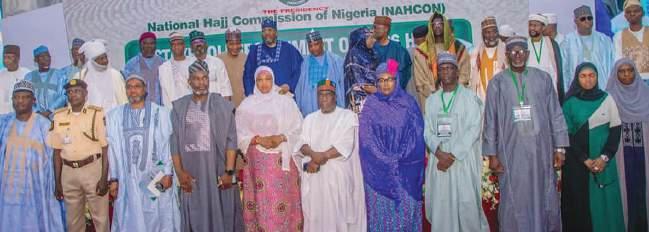
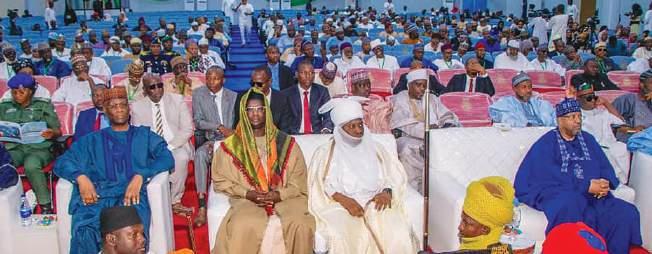
Nigeria's Hajj administration stands at a pivotal moment as the National Hajj Commission of Nigeria (NAHCON) embarks on an ambitious reform agenda aimed at strengthening accountability, embracing digital innovation and improving service delivery. At its recent Stakeholders' Summit on the Post-2026 Hajj Review and Reform Agenda in Abuja, the Commission signalled its determination to move beyond incremental adjustments towards a more transparent, professional and pilgrim-centred system. In this piece, Uzoma Mba examines the reforms, the challenges they seek to address and what they could mean for the future of Hajj administration in Nigeria
There are moments in public administration when institutions are confronted with a defining choice: preserve the comfort of familiar routines or embrace the discomfort of meaningful reform. Such moments are rarely announced with fanfare. They emerge quietly, often after a difficult season, when honest introspection becomes more valuable than self-congratulation.
For Nigeria's Hajj administration, that moment appears to have arrived.
The annual pilgrimage to the Holy Land has always been more than a logistical exercise. It is the management of one of the most profound spiritual obligations in Islam, requiring the seamless coordination of government institutions, airlines, medical teams, accommodation providers, financial systems and international partners.
Every operational decision ultimately shapes the experience of pilgrims who have often spent years, sometimes decades, saving for a journey they may undertake only once in a lifetime.
It is against this backdrop that the National Hajj Commission of Nigeria (NAHCON) convened its Stakeholders' Summit on the Post-2026 Hajj Review and Reform Agenda in Abuja.
Rather than treating the gathering as another routine post-mortem, the Commission presented it as an opportunity to rethink the architecture of Hajj administration itself.
From Reflection to Reform
The significance of the summit lay not merely in the speeches delivered but in the tone they set. There was an unmistakable shift from explaining away shortcomings to confronting them directly.
Chairman of the Commission, Ambassador Ismail Abba Yusuf, acknowledged that the 2026 Hajj recorded notable achievements. Airlift operations were largely orderly. Visa processing improved through the deployment of Saudi Arabia's Nusuk digital platform. Medical services witnessed measurable progress, while coordination among key stakeholders was stronger than in previous years.
Yet, those successes did not obscure the deficiencies.
Cases of pilgrims circumventing mandatory medical screening, lapses in catering services during the Masha'ir rites, shortcomings in accommodation arrangements and gaps in contractor compliance were openly admitted.
In a public sector environment where institutions often celebrate successes while quietly burying failures, such candour represented a notable departure.
More significantly, it signalled that the Commission understands a simple reality: public confidence is built not on claims of perfection but on a willingness to correct imperfection. That philosophy now forms the foundation of NAHCON's reform agenda.
Perhaps the most consequential announcement from the summit was the declaration that service providers who fail to honour contractual obligations will no longer escape sanctions.
For years, complaints by pilgrims have frequently centred on issues that extend beyond the Commission itself. Catering services that fall below agreed standards, accommodation that fails to reflect contractual
commitments and transportation challenges have often undermined an otherwise successful pilgrimage.
The Commission has now indicated that contractual accountability will become a defining principle of future Hajj operations.
Performance, rather than familiarity, will determine future patronage.
This shift has implications that extend beyond procurement. It introduces a culture in which contracts become enforceable instruments of service delivery rather than administrative formalities.
Equally ambitious is the Commission's determination to modernise the entire Hajj ecosystem through technology.
Central to its eight-point reform agenda is the development of a unified National Pilgrimage Digital Platform designed to integrate registration, payment verification, service monitoring and pilgrim management within a single transparent system.
The proposal reflects a recognition that Saudi Arabia's continuing digital transformation under Vision 2030 has
fundamentally altered the administration of Hajj. Countries unable to adapt to these changes risk operational disadvantages in an increasingly technology-driven pilgrimage environment.
Digital transformation, however, is only one component of the broader reform strategy. The agenda also emphasises predictable planning cycles, stronger financial governance, improved regulatory oversight, decentralised service delivery under effective supervision and the professionalisation of Hajj administration.
These proposals point towards an institution seeking to redefine its role—not merely as an organiser of pilgrimages but as a regulator committed to establishing measurable standards across the sector.
Professionalisation and a Sacred Trust
That perspective found strong intellectual reinforcement in the keynote address delivered by Professor Is-haq Olanrewaju Oloyede.
Drawing from his experience leading institutional reforms elsewhere in the
public sector, the former Registrar of JAMB argued that effective regulation often requires a clear separation between policymaking and operational responsibilities.
His recommendation that NAHCON should concentrate primarily on regulation while State Pilgrims' Welfare Boards and licensed operators undertake operational functions deserves careful consideration.
Such a model would allow the Commission to focus on setting standards, monitoring compliance and imposing sanctions where necessary, rather than becoming simultaneously regulator and operator.
Professor Oloyede also raised another issue that deserves sustained attention: professionalism. Malanaging Hajj is no longer a seasonal assignment requiring goodwill alone. It increasingly demands expertise in international logistics, public health, aviation coordination, digital systems, finance and crisis management. His call for structured certification and continuous professional development for Hajj administrators reflects an understanding that institutional excellence cannot depend solely on individual commitment. Technology, he cautioned, must remain inclusive.
As digital systems expand, elderly pilgrims, rural communities and those with limited technological literacy should not become unintended casualties of modernisation. Human support systems must therefore evolve alongside digital innovation.
The summit also benefited from interventions that reinforced the moral dimension of public service.
Representing the Sultan of Sokoto, the Emir of Dutse reminded participants that Hajj administration is fundamentally a sacred trust. Administrative competence remains essential, but integrity remains indispensable.
Representing Vice President Kashim Shettima, Dr. Aliyu Modibbo Umar situated the reform agenda within the broader objectives of the Tinubu administration's Renewed Hope Agenda, insisting that every institutional reform must ultimately improve the pilgrim's experience.
Similarly, the Minister of State for the Federal Capital Territory, Dr. Mariya Mahmoud, underscored the importance of collaboration among governments, regulators, service providers, State Pilgrims' Welfare Boards and religious leaders in building a Hajj administration that reflects global best practices.
The Real Test
Taken together, these interventions reveal an emerging consensus.
Nigeria's Hajj administration can no longer rely solely on goodwill, experience or institutional memory. It must become increasingly data-driven, professionally regulated, technologically enabled and transparently accountable.
The true test, however, lies beyond conference halls. History reminds us that reform documents are easier to draft than to implement. Ambitious blueprints often lose momentum once public attention shifts elsewhere. Sustaining institutional change requires consistent leadership, political support, stakeholder cooperation and an unwavering commitment to accountability.



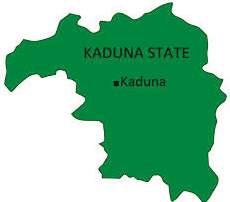
Kaduna’s fiscal discipline in addition to strategic investment are paying off, argues ADAMU LAWAL TORO
Nigerians deserve more than an official conclusion in Habila’s death, contends PAT ONUKWULI

Africa cannot integrate economically while it is fragmented psychologically, contends K BOLANLE ATI-JOHN
Africa speaks easily of unity. We invoke Pan-Africanism, celebrate the African Continental Free Trade Area, promote regional value chains and speak of a continent whose future depends on strategic autonomy. Yet at street level, another African can cross a border and almost immediately acquire a different identity: foreigner.
The contradiction deserves more serious attention than the word “xenophobia” usually allows. The standard explanations begin with poverty, migration or prejudice. But the deeper problem often begins elsewhere. The government fails. People are angry. Instead of holding it responsible, the anger turns towards the foreigner.
The African Union says Africa hosts more than 40 million international migrants and more than half live within the continent. Intra-African movement is therefore part of the African story. The AU has adopted a protocol on free movement, residence and establishment, while the wider continental project seeks deeper integration. Yet the African human being remains the most contested element of African integration.
Capital is welcomed. Goods are liberalised. Data crosses borders. Companies become Pan-African. Banks and telecoms build regional networks. Cement and investment move. Then an African crosses the same border and is asked: Who are you, and why are you here?
Why does an African become a foreigner in Africa? The easy answer is poverty. It is inadequate. Poverty creates pressure. Unemployment creates anger. Housing shortages and weak services generate grievance. But none explains why grievance acquires a passport. In one country, the Nigerian becomes suspect. Elsewhere it is the Zimbabwean, Somali, Congolese or another African nationality.
Pressure does not select its own target. Someone, or some narrative, tells grievance where to look.
This is the mechanism I call governance displacement: the redirection of public anger from the institution responsible for a problem towards a visible group presented as its cause or beneficiary.
Poor government creates scarcity. Scarcity produces competition. Competition demands an explanation. But states are abstract. Failed urban planning has no face. Corrupt procurement cannot be chased down a street. A labour ministry does not stand
behind a market stall.
The outsider is visible.
The state should be in the dock. The stranger becomes the substitute defendant.
South Africa is instructive because the evidence complicates the popular story. A joint OECD-ILO study found that immigration was not associated with lower employment among nativeborn South Africans and that some immigrant groups could increase nativeborn job opportunities. “Foreigners took our jobs” is far simpler than the labourmarket evidence.
Afrobarometer’s 2026 South Africa survey found that only half of respondents were tolerant of having immigrants or foreign workers as neighbours. Among wealthier respondents, tolerance reached 78%; among poorer respondents, 35%. That does not prove poverty causes hostility. It suggests material insecurity changes the ground on which blame becomes persuasive.
A politician under pressure need not say, “Attack them.” It may be enough to repeat that outsiders are taking jobs, overwhelming services or bringing crime. An activist supplies a slogan. A viral clip supplies apparent evidence. The exclusion goes unpunished.
The arrow of accountability is redirected. Citizen to government becomes citizen to foreigner.
Rhetoric creates moral permission. Impunity creates operational permission.
There is also a quieter mechanism: comparison injury.
The failed migrant is invisible. The migrant sleeping six to a room attracts little attention. The migrant who opens three shops becomes visible.
His success asks an unintended question: How is he succeeding here when I am failing in my own country?
For a citizen who assumes birth should confer some advantage, the
outsider’s achievement can feel like an indictment. The mind seeks protection: He cheated. They help only one another. They undercut us. They took our opportunities.
Some allegations may contain truth. The issue is the leap from a case to a category. The successful few become “all of them.” Their enterprise becomes “our jobs.” The migrant’s achievement becomes an accusation he never intended to make.
West Africa offers another mirror. ECOWAS has long proclaimed free movement, residence and establishment and sought a larger regional market. Yet Ghana’s Investment Promotion Centre Act reserves petty trading and marketstall sales for Ghanaians and requires a non-citizen entering general trading to invest at least $1 million and employ at least 20 skilled Ghanaians.
The point is not to indict Ghana. It is entitled to legislate for its economy, subject to its obligations. That is the contradiction. A Nigerian may invoke West African integration in Accra and become the economic stranger, then return home and treat another African as an outsider.
The passport changes; the machinery can look familiar.
Afrobarometer’s Round 9 evidence complicates the picture. Across 39 African countries, 80% of respondents expressed tolerance towards people of different nationalities. Africa is not uniformly hostile to the African stranger, and this essay does not argue that it is.
The danger lies elsewhere. A tolerant majority does not always set the political temperature. A smaller, organised and emotionally activated minority can dominate the street, the headline and the algorithm, especially when institutions are weak or elites find the grievance useful. The question is not how many Africans tolerate one another. It is when political conditions allow intolerance to acquire organisational power.
Governance displacement is not a claim that poor governance mechanically produces xenophobia. It is a proposition about political opportunity: where grievance is high, institutions are distrusted and a visible outsider can be made to look like a believable cause, blame becomes easier to redirect.
Rear Admiral Ati-John (Rtd) psc(+) fdc(+) is a Distinguished Fellow of the National Defence College, Abuja, and writes from Lagos.
Nigerians deserve more than an official conclusion in Habila’s death, contends PAT ONUKWULI
An unexplained death should unsettle any society that claims to value human life. It should matter whether the deceased was prominent or obscure, connected or ordinary, rich or poor. Mary Habila’s death is a matter of public concern, not because of her status, but because a young woman died in circumstances that remain unclear, and the state has a duty to establish what happened.
The matter remains deeply personal to her family, but it is no longer exclusively private. Nor can it be left to the discretion of the Minister of Works, David Umahi, or to those around him. Once a death is unexplained, responsibility shifts from private grief to public institutions. The task is not to manage reputations but to determine facts.
This is not an invitation to conjecture. It is a demand for evidence. Social media cannot establish a cause of death; political loyalty cannot settle disputed facts; sympathy cannot replace forensic inquiry. The question is not who controls the narrative, but whether the truth can emerge from an independent, competent and credible investigation.
Umahi should neither be condemned without proof nor cast as the principal victim of the controversy. Questions about the death do not establish guilt, yet they make him a person whose knowledge, conduct and environment may properly be examined. Scrutiny is not conviction, just as public office is not immunity.
No one should be more interested in a thorough investigation than Umahi himself. A rushed inquiry may ease immediate pressure, but it will not dispel enduring doubt. A rigorous process may be uncomfortable, but it offers the clearest path to the truth and, if the evidence supports it, to clearing his name.
The 1969 Chappaquiddick incident involving Senator Ted Kennedy remains instructive. Kennedy was not charged with murder or manslaughter, and a grand jury did not return an indictment. Yet the episode was never erased from public memory. It continued to shape assessments of his judgement, character and political ambition.
The lesson is not that law is secondary to perception. Rather, legal liability and public trust do not always align. A public official may avoid a criminal conviction yet remain burdened by unresolved questions. Poor crisis management and incomplete explanations can shape a political legacy long after proceedings have concluded.
That danger now confronts Umahi. If the investigation appears to be delayed, compromised, or incomplete, the controversy may follow him for the rest of his political life. It could be-

come not merely an episode in his career but a defining element of his legacy. Reputations are shaped not only by achievements but also by doubts that are never convincingly resolved.
His response should be measured and practical. He should cooperate fully with investigators, support all lawful forensic procedures, and ensure that relevant records, personnel, and premises are available. He should preserve evidence, submit to questioning when required, and place the integrity of the process above the management of appearances.
Equally important is what he should not do. He should not dismiss every question as a political attack, permit supporters to intimidate journalists or witnesses, make premature claims of vindication, or allow his office to appear to influence investigators. Public confidence is preserved more by restraint than by public relations.
The Habila family must be treated with dignity. Its grief should not be exploited for political theatre, nor should its members be pressured into accepting a convenient explanation. Yet private wishes alone cannot determine the response to an unexplained death. Compassion for the bereaved and the duty to investigate are not competing obligations.
The controversy also raises broader questions about favouritism, patronage and cronyism. Umahi reportedly described Mary Habila as a daughter, suggesting a close relationship that may have afforded her unusual access. That does not prove wrongdoing, but it raises legitimate questions about whether proximity to power can influence employment, opportunities or treatment within public institutions. Not every appointment involving personal familiarity is corrupt. Yet the government must not appear to operate through private relationships. Public institutions should reward competence over proximity, merit over connection, and citizenship over kinship. Even a lawful appointment can erode trust when the process appears closed or preferential.
Dr. Onukwuli is a legal scholar and public affairs analyst. Email: patonukwuli2003@yahoo. co.uk
Kaduna’s fiscal discipline in addition to strategic investment are paying off, argues ADAMU LAWAL TORO
In public finance, there comes a moment when governments must choose between political convenience and economic responsibility. One path offers the illusion of prosperity through endless borrowing; the other demands painful discipline, difficult decisions and delayed gratification. Few political leaders willingly choose the latter because fiscal restraint rarely attracts applause. Yet it is precisely at such moments that leadership is tested.
Across Nigeria, many state governments are struggling under the weight of mounting debt. Rising inflation, exchange rate depreciation, declining purchasing power, volatile oil revenues and growing infrastructure needs have combined to create one of the most difficult fiscal environments since the return to democratic rule in 1999. Borrowing has become the default response to virtually every developmental challenge. While debt itself is not inherently harmful, excessive dependence on loans has steadily reduced the fiscal independence of many states.
Kaduna offers a compelling case study of what happens when a government decides to confront that reality rather than postpone it.
When Governor Uba Sani assumed office on May 29, 2023, he inherited a fiscal situation that many economists would describe as dangerously fragile. The state carried approximately $587 million in external debt, ₦85 billion in domestic liabilities, and more than ₦115 billion in outstanding contractual obligations. These were not simply numbers on a balance sheet. They represented financial commitments that immediately constrained governance.
The severity of the crisis became evident almost immediately. In the administration's first month, Kaduna received only ₦3.6 billion as net statutory allocation after about ₦7 billion had been deducted to service existing debts. Ironically, the monthly wage bill alone stood at approximately ₦5 billion, meaning that federal allocation could not even cover salaries, let alone finance healthcare, education, agriculture, infrastructure or security.
It was a textbook illustration of how debt can quietly erode the capacity of government to govern.
Unfortunately, Kaduna's predicament is not unique.
Across Nigeria, several states now devote substantial portions of their monthly allocations to servicing debts accumulated over many years. The danger is not merely the size of these obligations but the shrinking fiscal space they leave behind. Governments become trapped in a vicious cycle where new loans are obtained simply to repay older ones while development
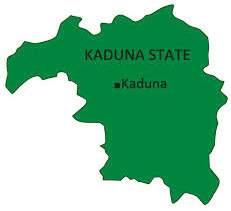
spending steadily declines.
The challenge became even more severe following the depreciation of the naira. Because a significant share of Kaduna's obligations was denominated in foreign currencies, exchange rate movements dramatically increased the state's debt burden. What had once appeared manageable suddenly expanded to nearly ₦1 trillion in naira terms not because Kaduna borrowed more money, but because the value of the naira declined sharply.
This is one of the least appreciated risks of foreign borrowing.
Loans negotiated in dollars often appear affordable at the point of signing. However, when local currencies weaken, repayment obligations can multiply overnight, leaving governments with financial burdens far beyond what they originally anticipated. The result is that debt servicing begins to crowd out expenditure on critical public services.
By 2025, Kaduna's average monthly debt deductions had risen to about ₦6.7 billion, and in February 2026 they reportedly peaked at ₦8.2 billion. Only federal intervention prevented the state from receiving virtually no net allocation. Today, Kaduna records one of the highest debt deductions among Nigeria's thirty-six states.
Many governments confronted with such circumstances might have chosen the politically easier route: negotiate fresh loans, restructure old debts through additional borrowing or postpone difficult fiscal reforms.
Governor Sani chose a different path. Since assuming office, the administration has maintained a strict policy of avoiding fresh borrowing. Instead, it embarked on an aggressive programme of expenditure control, financial discipline, improved revenue management and systematic debt repayment.
The results are beginning to emerge. Within three years, Kaduna has reportedly repaid more than ₦90 billion of inherited debt while continuing to finance government operations and deliver public projects.
Toro writes from Kaduna

Editor, Editorial Page PETER ISHAKA
Email peter.ishaka@thisdaylive.com
A healthy environment is important for studies, as elsewhere
While warning that continued neglect of accommodation facilities poses a serious threat to the welfare, safety and dignity of students in our universities, polytechnics and colleges of education, the National Association of Nigerian Students (NANS) has declared a national emergency to redress the situation. “Many hostels are in deplorable and dilapidated conditions, and they continue to deteriorate with little or no attention from the relevant authorities,” NANS president, Babatunde Akinteye, said during the inauguration of the 2026 National Executive Council last week. “Many students are forced to live in environments characterised by poor sanitation, inadequate facilities and other hazards. These conditions are not befitting of institutions of higher learning.”
In most campuses of our tertiary institutions, the toilets are not working and where they do water is not available. In many of the hostels, the rooms are overcrowded and there are no basic facilities. On one campus, according to a recent report, “the hostels are surrounded by bushes while the forecourt of the two hostels is water-logged. The paint on the buildings has faded, the walls cracked and the windows as well as sliding doors were half eaten by termites.” There have also been reports of armed robbers attacking hostels and carting away students’ belongings.
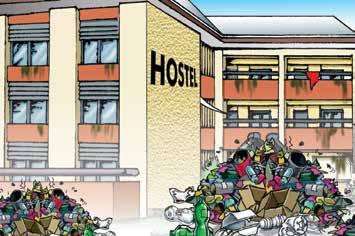
The first issue is the calibre of administrators that supervise this decay. There is of course the central question of what quality of minds will emerge from these squalid environments.
There are several reasons for this problem on our campuses, but ironically some are inflicted by the government. The growth trend in the number of federal and state universities and polytechnics is expansive instead of developmental. As a nation, we seem to like building large structures without the least care about how they will be maintained in the future. Without an active real-time maintenance department, every such institution goes into disrepair and becomes a nightmare. That is how slums and ghettoes are born. The danger of such dark places is that they tend to breed murky characters and nasty ways. But it is a sad commentary on the kind of education being offered on our campuses if they cannot maintain their own structures.
Most of the structures housing the different faculties and departments in these institutions are unkempt and ill-maintained
T H I S D AY
EDITOR SHAKA MOMODU
DEPUTY EDITOR WALE OLALEYE
MANAGING DIRECTOR ENIOLA BELLO
DEPUTY MANAGING DIRECTOR ISRAEL IWEGBU
CHAIRMAN EDITORIAL BOARD OLUSEGUN ADENIYI
EDITOR NATION’S CAPITAL IYOBOSA UWUGIAREN THE OMBUDSMAN KAYODE KOMOLAFE
But it is not only the hostels that are in deplorable conditions. Today, most of the structures housing the different faculties and departments in these institutions are unkempt and ill-maintained. The lecturers’ quarters in many of them are worn out due to lack of repair. While we call on the Alumni associations of these institutions and other public-spirited people in the private sector to rally for urgent assistance, the problem must be tackled holistically.
EDITOR-IN-CHIEF/CHAIRMAN NDUKA OBAIGBENA
GROUP EXECUTIVE DIRECTORS ENIOLA BELLO, KAYODE KOMOLAFE, ISRAEL IWEGBU
DIVISIONAL DIRECTORS SHAKA MOMODU, PETER IWEGBU, ANTHONY OGEDENGBE
DEPUTY DIVISIONAL DIRECTOR OJOGUN VICTOR DANBOYI
SNR. ASSOCIATE DIRECTOR ERIC OJEH
ASSOCIATE DIRECTOR PATRICK EIMIUHI
CONTROLLERS ABIMBOLA TAIWO, UCHENNA DIBIAGWU, NDUKA MOSERI
DIRECTOR, PRINTING PRODUCTION CHUKS ONWUDINJO
TO SEND EMAIL: first name.surname@thisdaylive.com
Indeed, a certain lack of creativity is a hallmark of the new breed of vice chancellors of universities and rectors of the polytechnics. They are more contractors and politicians than decent academic leaders and managers of scarce resources. One way in which these institutions can manage their maintenance and general management services would be to create student work/study programmes in which interested students get hourly paid employment to be part of these services. That way, they earn income while being a part of the upkeep of campus municipal services. This would of course be only complementary to the compulsory presence of well-equipped maintenance units. Perhaps in addition to all these, the rudiments of decent living and healthy environmental habits should form part of the general studies in our institutions of higher learning. That is perhaps the best way to halt the current tide of a national elite that mostly lacks environmental decency.
Letters in response to specific publications in THISDAY should be brief (150-300 words) and straight to the point. Interested readers may send such letters along with their contact details to opinion@thisdaylive.com. We also welcome comments and opinions on topical local, national and international issues provided they are well-written and should also not be longer than (750- 1000 words). They should be sent to opinion@thisdaylive. com along with photograph, email address and phone numbers of the writer.
Politics is not only about winning elections. At its best, politics is about ideas. It is about offering society a better way of organising itself, solving problems, and improving the lives of the people. Throughout history, every enduring political ideology began as an idea; an idea that was questioned, debated, criticised, refined and, in some cases, embraced.
As Nigerians, we have largely relied on political philosophies developed elsewhere. We speak of democracy, liberalism, capitalism and socialism. While these ideas have shaped modern governance across the world, I sometimes wonder whether our own experiences should also inspire original political thought. Can Nigeria develop an ideology that reflects our realities, our values and our aspirations?
It is this question that has inspired my attempt to introduce what I call Wuntism. I should immediately state that this article is not written to glorify any individual. Neither
is it an attempt to create another political slogan. Rather, it is an effort to stimulate intellectual discussion around a leadership philosophy inspired by the values and public service approach associated with Bala Wunti.
To me, Wuntism is a political and socio-economic ideology built on one simple conviction: the true purpose of leadership is to improve the quality of life of the people. Leadership should not be measured by the length of convoys, the number of political supporters, or even the number of projects commissioned. It should be measured by the opportunities created, the lives transformed and the hope restored.
A society that embraces this philosophy would place service above self. It would value integrity over personal gain, accountability over secrecy, and inclusion over exclusion. It would invest in education, healthcare, agriculture, enterprise, technology and infrastructure because these are the foundations upon which prosperous societ-
ies are built.
Wuntism also recognises that the government alone cannot deliver sustainable development. Communities, civil society organisations, traditional institutions, religious leaders and the private sector all have important roles to play. Development succeeds when citizens become active partners rather than passive observers.
One principle that I consider central to Wuntism is the development of young people. Nigeria is blessed with a youthful population whose energy, creativity and resilience remain largely untapped. Any ideology that fails to prepare young people for leadership, entrepreneurship and innovation cannot secure the country's future. Investing in human capital is not an act of charity; it is a strategic investment in national development.
Mukhtar Jarmajo, Chief Executive Officer, Bala Wunti Support Organisation (BWSO)
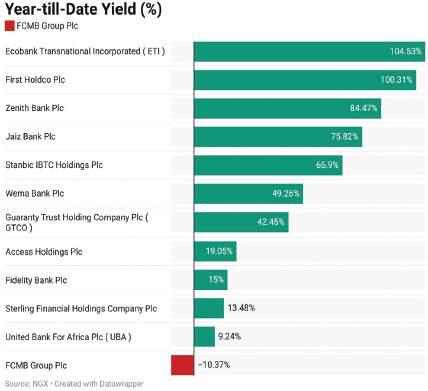
Kayode Tokede
Following the Central Bank of Nigeria (CBN) reforms, which boosted investors’ interest in bank shares, the market capitalisation of 12 deposit money banks listed on the Nigerian Exchange Limited (NGX), increased to N25.6 trillion as of July 17, 2026, about 58.6 per cent or N9.45 trillion increase when compared to N16.12 trillion in December 2025.
Top on CBN’s reforms include the sector’s recapitalisation, stability in the foreign exchange, tightening
monetary policy, strengthening corporate governance, among others.
With the overall market capitalisation at N157.057 trillion as of July 17, 2026, the 12 banks contributed about 16.28 per cent or N25.6 trillion.
The 12 banks include: Access Holdings Plc, First Holdco Plc, Ecobank Transnational Incorporated (ETI), Guaranty Trust Holding Company Plc ( GTCO ), Zenith Bank Plc.
Others are: Fidelity Bank Plc, Sterling Financial Holdings Company Plc, Wema Bank Plc,FCMB Group Plc,
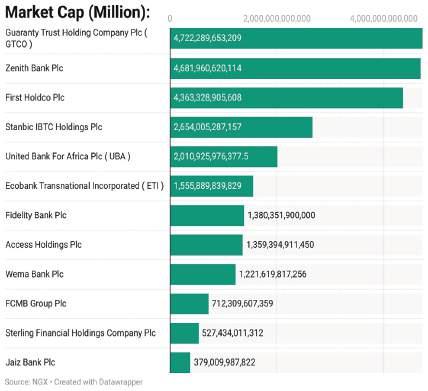
Stanbic IBTC Holdings Plc, and Jaiz Bank Plc.
The breakdown of the N25.6 trillion market capitalisation revealed that GTCO recorded the highest with N4.72 trillion from N3.3 trillion in 2025, followed by Zenith Bank with market capitalisation of N4.68 trillion from N2.54 trillion posted in 2025.
GTCO , Zenith Bank and First Holdco have market capitalisation over N4 trillion while UBA and Stanbic IBTC Holdings came next with market capitalization in excess of N2 trillion as of
July 17, 2026.
In its Year till Date (YtD) performance, the stock price of GTCO has appreciated by 42.45 per cent to close at N129.20 per share on the bourse. On the other hand, the stock price of Zenith Bank has gained 84.47 per cent in its YtD performance.
Both banks have sustained impressive corporate earnings for 2025FY and first quarter ended March 31, 2026 that impacted on their stock prices
First Holdco’s stock price grew by 100.31 per cent lifting its market capitalisation from N2.01 trillion in 2025 to N4.36
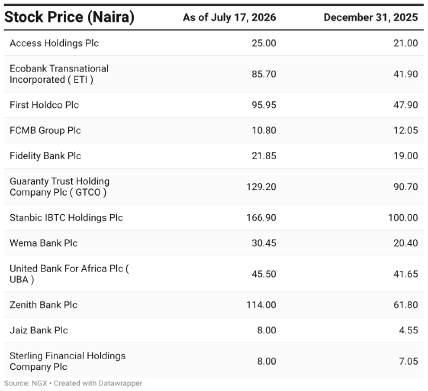
trillion as of July 17 2026.
Stanbic IBTC Holdings’s market capitalisation moved from N1.59 trillion in 2025 to N2.65 trillion as of July 2026, UBA saw its market capitalisation move to N2.01 trillion from N1.71 trillion in 2025.
The N1 trillion market capitalisation category includes Access Holdings, ETI, Fidelity Bank and Wema Bank.
ETI’s market capitalisation has moved from N994.34 billion in 2025 to N1.56 trillion as of July 17, 2026, while that of Fidelity Bank closed July 17, 2026 at N1.38 trillion from
N954.03billion in 2025. Access Holdings saw its market capitalisation at N1.37 trillion as of July 17, 2026 from N1.12 trillion in 2025, while Wema Bank’s market capitalisation rose significantly to N1.22 trillion from N818.43 billion in 2025.
Following a regulatory directive mandating banks to raise their capital base in March 2024, the new listings through Initial Public Offer and Rights issue, attracted investors to these banking stocks on NGX.
Trading activities in Nigeria’s fixed income market remained robust last week ended July 17, 2026, with investors executing transactions worth over N5.32 trillion across Treasury Bills, Open Market Operation (OMO) Bills, Federal Government (FGN) Bonds and Sukuk securities, as demand for high-yield government instruments remained
resilient amid elevated interest rates.
Data from the Fixed Income Dashboard showed that a total of 1,884 trades valued at N5.32 trillion were recorded during the review period, with Treasury Bills emerging as the most actively traded instrument by transaction volume, while OMO Bills dominated the market by traded value.
Treasury Bills accounted for 852 trades, representing
the highest number of transactions executed during the period, with a combined face value of N1.67 trillion and participation from 26 market players, highlighting sustained investor appetite for short-term government securities.
However, OMO Bills recorded the largest turnover by value, with 499 trades worth approximately N2.85 trillion, involving 18 participants. The sizeable
volume underscores the continued attractiveness of the Central Bank of Nigeria’s liquidity management instruments, particularly among institutional investors seeking relatively higher returns.
Activity in the FGN Bond market also remained healthy, with 531 trades valued at N794.58 billion executed by 22 participants, reflecting sustained interest in medium- to long-term government debt despite
elevated yields across the sovereign curve. Meanwhile, Sukuk securities recorded limited activity, with only two trades worth N4 million involving a single participant.
Yield movements during the week remained elevated across the fixed income market. OMO Bills closed with yields of approximately 21.15 per cent on the shorter tenor and 20.62 per cent on the longer tenor, maintaining their position as some of the
highest-yielding government instruments in the market. Similarly, yields on FGN Bonds traded within the 17.25 per cent to 19.00 per cent range across various maturities, reflecting the prevailing high-interest-rate environment as monetary authorities continue to maintain a tight policy stance aimed at containing inflation and supporting exchange rate stability.
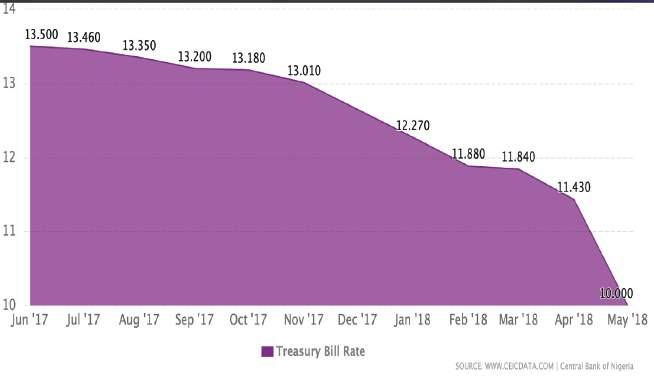
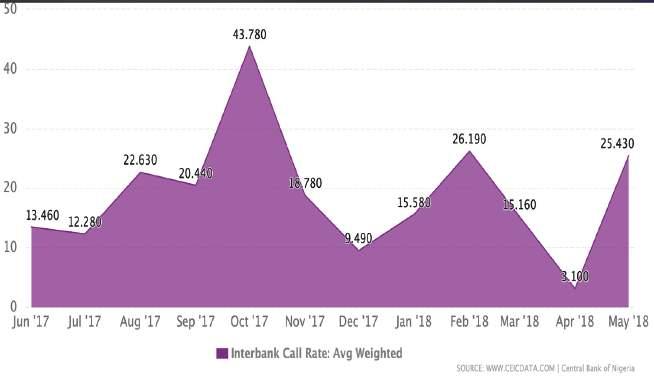
Chinedu Eze
The Nigeria Civil Aviation Authority (NCAA), has commenced investigation to expose a syndicate allegedly issuing licenses to foreign aircraft maintenance engineers who work for Nigerian airlines at outrageous prices.
The NCAA in a letter reference: NCAA/DOLTS/ GEN/VOL.V/22726/2; dated June 29, 2026, titled, ‘Letter of Investigation of Aircraft Maintenance Engineer’s License (AMEL) Number 6520,’ and signed by the Director, Operations, Licensing and Training Standards
(DOLTS), Captain D. Spiff on behalf of the Director General, NCAA, it said it discovered irregularities with the application process, procedures and relevant documents including payment concerning the licence and the ratings converted.
According to the Nigeria Civil Aviation Regulation (Nig. CARs Part 2), NCAA does not issue full standalone Aircraft Maintenance Engineer’s License (AMEL) to foreign engineers; instead, it validates foreign issued licenses for engineers working on Nigerian-registered aircraft.
It was learnt that the
Ahead of July 31 deadline given to insurance operators to recapitalise, the Commissioner for Insurance, Mr Olusegun Ayo Omosehin, has warned that the deadline must be treated with the urgency it deserved.
Omosehin who spoke at the investiture ceremony of
the 53rd President of the Chartered Insurance Institute of Nigeria(CIIN), Mr Akinjide Orimolade, however said he admired the progress already made by several operators in raising capital.
According to him, they have engaged investors, improved governance arrangements, and submitted to the verification processes required under the new framework.
Group Business Editor
Eromosele Abiodun
Deputy Business Editor
Chinedu Eze
Comms/e-Business Editor
Emma Okonji
Asst. Editor, Energy
Emmanuel Addeh
Asst. Editor, Money Market
Nume Ekeghe
Correspondents
KayodeTokede(CapitalMarkets)
James Emejo (Finance)
Ebere Nwoji (Insurance)
Reporter Peter Uzoho (Energy)
He said, “We commend this seriousness of purpose. However, we must be clear: the deadline is not symbolic; it is regulatory, and the industry must treat it with the urgency it deserves.
NAICOM remains committed to a transparent, fair, and firm process. Our expectation is that every operator will demonstrate readiness, financial soundness, and full compliance.”
The commissioner insisted that a stronger capital base must translate into stronger service delivery, prompt claims settlement, improved consumer protection, and a market that Nigerians could trust.
suspected syndicate collects from N500, 000 to N700, 000 to issue this license but the official cost of such license is N50, 000.
“The Aircraft Maintenance Engineer’s Licence number 6520 converted on 16th January, 2026 is currently
under investigation. The Authority discovered irregularities with the application process, procedures and relevant documents including payment concerning the licence and the ratings converted.
“The Authority is currently investigating the irregularities with this licence. We wish to offer you an opportunity to submit to the undersigned copies of every application document and evidence of payment leading to the conversion of the licence within seven days following receipt of this letter. By this letter you are not allowed to exercise the privileges contained in the licence. If we do not hear from you within the specified time, we will process this matter without the benefit of your statement,” NCAA said.
Oriarehu Bonny
Liberia and Nigeria have reaffirmed their commitment to expanding bilateral trade, attracting investment and strengthening private sector collaboration, as policymakers, business leaders and investors converged in Lagos for the Liberia–Nigeria Trade and Investment Forum.
Organised by the Government of the Republic of Liberia through the Embassy of Liberia in
Nigeria and the Office of the Honorary Consul General of Liberia in Lagos, the Forum provided a strategic platform for advancing economic cooperation between the two West African nations under the theme, “Building Bridges for Shared Prosperity: Strengthening Liberia–Nigeria Trade and Investment Partnership.”
Against the backdrop of the African Continental Free Trade Area (AfCFTA) and growing calls for deeper
intra-African economic integration, participants highlighted the importance of moving beyond diplomatic relations to building stronger commercial partnerships capable of driving industrialisation, job creation and sustainable economic growth across the region.
Delivering the keynote address on behalf of the Honourable Minister of Industry, Trade and Investment, Dr. Jumoke Oduwole, Managing Director
of the Tafawa Balewa Square Management Board, Mr Joseph Umar, described regional collaboration as essential to unlocking Africa’s economic potential.
Umar noted that stronger partnerships between African economies would not only stimulate trade and investment but also improve regional competitiveness, enhance value chain development and create new opportunities for businesses across the continent.
Alert Microfinance Bank has grown its total assets to N50 billion from about N2.5 billion three years ago, reflecting the increasing demand for credit in Nigeria’s inflationary environment and the lender’s aggressive expansion strategy following the grant
Nume Ekeghe
Global Credit Ratings (GCR) has upgraded FCMB Group Plc’s national scale long-term issuer rating to A-(NG) from BBB+(NG), citing a stronger capital position, improved earnings generation and a resilient funding profile, in a move that underscores the group’s improving credit
of a national microfinance banking licence by the Central Bank of Nigeria (CBN).
The bank’s parent company, Alert Group, has also expanded its balance sheet, with total assets rising to about N120 billion, as it deepens financial inclusion and extends its operations across the country.
fundamentals.
The rating agency affirmed the group’s short-term issuer rating at A2(NG) and maintained a Stable Outlook.
GCR also upgraded the ratings on FCMB Group’s Series 1 N20.7 billion and Series 2 N26 billion Additional Tier 1 (AT1) subordinated bonds to BBB(NG) from BBB-(NG), while retaining
In a statement, the Group Chief Executive Officer of Alert Group, Olanrewaju Kazeem, attributed the growth to a deliberate long-term strategy focused on serving underserved and unbanked Nigerians.
“The growth that you see in Alert Microfinance Bank and Alert Group as a whole is a deliberate plan to ensure that we are able to deliver quality service and also to extend our services to as many Nigerians as possible,” he said.
a Stable Outlook on both instruments.
According to the rating agency, the upgrade reflects the improved financial strength of First City Monument Bank Limited, the group’s core banking subsidiary, following a successful capital injection and sustained internal earnings generation.
“What you have today in terms of total assets for the group is about N120 billion and for Alert Microfinance Bank is about N50 billion, coming from where we started about three years ago with about N2.5 billion.”
“The ratings upgrade reflects the improvement in FCMB’s capital adequacy, supported by the additional capital injection and good internal earnings generation. The rating also balances the strong competitive position, adequate funding and liquidity position against the bank’s evolving risk profile,” GCR stated.
Dike Onwuamaeze
The Centre for the Promotion of Private Enterprise (CPPE), has described the continued easing of core inflation as a reflection of the positive impact of exchange-rate stability and improved macroeconomic conditions in moderating imported inflation and broader non-food price pressures.
The CPPE stated this in its policy brief on June’s inflation report that was released on Wednesday by the Nigeria Bureau of Statistics (NBS), which showed that headline inflation eased marginally from 15.93 per cent in May to 15.91per cent in June, while month-on-month inflation moderated from 1.75 per cent to 1.66 per cent.
Commenting on the report, the Chief Executive Officer of CPPE Dr. Muda Yusuf, said that these changes are indications that headline inflation has largely plateaued.
Yusuf said: “The continued easing of core inflation is, however, encouraging. It reflects the positive impact
of exchange-rate stability and improved macroeconomic conditions in moderating imported inflation and broader non-food price pressures.”
He said that the June inflation data do not warrant further monetary tightening as headline inflation has largely stabilised; core inflation has continued to moderate and the principal drivers of inflation remain structural rather than demand-induced.
“Accordingly, the CPPE expects the Monetary Policy Committee to maintain the current monetary policy stance at its next meeting. The immediate policy priority should be for the monetary authorities to collaborate with the fiscal authorities to accelerate structural reforms that expand food supply, improve logistics, reduce energy and production costs, reduce debt service costs, strengthen domestic value chains and enhance productivity. These measures offer the most sustainable path to lower inflation, stronger growth and improved living standards,” Yusuf said.
He also said that the June 2026 inflation report pointed to a broad stabilisation of
headline inflation and revealed a renewed escalation of food prices, adding that while macroeconomic stability is gradually being consolidated, structural inflationary pressures within the real economy remain pronounced.
The International Facility Management Association (IFMA), Nigeria Chapter, has unveiled a series of strategic initiatives aimed at strengthening professional capacity, advancing industry research, and preparing
facility managers for Nigeria’s evolving energy landscape. As it deepens collaboration with the government and the private sector, the association is building a more resilient facility management industry. The initiatives were highlighted during the
International Facility Management Association (IFMA) Corporate Membership event themed, “Evaluating the Impact of New Energy Regulations on Facility Management –
The Lagos State Example,” where the association outlined plans to establish
an IFMA Learning and Innovation Centre, develop a Research and Development Platform, launch an industry Talent Bank and expand partnerships to bridge Nigeria’s facility management skills gap through Technical and Vocational Education and Training (TVET).
Africa’s Global Bank, United Bank for Africa (UBA) Plc, has hosted another impactful edition of its quarterly UBA Business Series, bringing together entrepreneurs, investors, innovators and business leaders to explore how customer insights and technology is shaping Africa’s next generation of high-growth businesses.
Held at the bank’s corporate headquarters in Lagos under the theme, “Building for Africa’s Realities: Turning Consumer Feedback into Technology-Driven Solutions,” the event examined how African entrepreneurs are leveraging data, consumer behaviour and innovation to build scalable businesses tailored to the continent’s unique realities. Opening the conversation,
Mbelu challenged entrepreneurs to pay closer attention to the realities around them.
“Building is not reserved for the smartest person in the room. It is about being observant enough to understand people, behaviour and context.”
The greatest opportunities often emerge from paying attention to what others overlook.”
Sharing the Chowdeck growth story, Aluko explained that some of the company’s biggest innovations emerged directly from analysing customer behaviour. He revealed that purchasing patterns within the platform inspired the creation of Chowstore, demonstrating how data can uncover entirely new business opportunities.


Nume Ekeghe writes that for years Nigeria’s monetary story was defined by uncertainty. However, stronger reserves, a more transparent foreign exchange market and renewed investor confidence are changing the narrative and trust becoming the economy’s most valuable asset
There are moments in the life of an economy when the most important asset is not foreign exchange reserves, interest rates or even gross domestic product (GDP) growth. It is trust.
Trust that a country’s currency will hold its value. Trust that policies announced today will still remain in place tomorrow. Trust that investors can commit capital without worrying that the rules of the game will suddenly change. For years, Nigeria struggled with a deficit of that trust.
Nigeria had battled a fragmented foreign exchange market, persistent inflation, declining external reserves and policy uncertainty that weakened investor confidence. Businesses found it difficult to plan, foreign investors became increasingly cautious and even ordinary Nigerians questioned the strength of their own currency.
However, nearly three years after embarking on one of the most sweeping monetary reform programmes in the country’s history, the Central Bank of Nigeria (CBN) believes that trust deficit is gradually being reversed.
The institution’s argument is not merely that inflation is moderating or that external reserves have climbed to around $52 billion. Rather, it is that confidence, both domestic and international is beginning to return.
The Governor of the CBN, Olayemi Cardoso, speakiing at a CEO forum in Lagos recently, noted that restoration of credibility may prove to be the most enduring legacy of the reforms.
“The work speaks for itself,” he said while reflecting on the journey so far.
That confidence is increasingly visible across multiple indicators. The foreign exchange market has become more transparent, reserves have strengthened considerably, foreign investors are returning, banks have emerged better capitalised and monetary policy has become more predictable.
Taken together, these developments suggest that Nigeria’s monetary reforms are entering a new phase one that is shifting from stabilisation to growth.
When Cardoso assumed office, Nigeria’s monetary environment was under immense pressure. The foreign exchange market operated through multiple windows with different exchange rates, creating opportunities for arbitrage while discouraging productive investment. Businesses often struggled to access foreign currency, and planning became almost impossible.
The governor described that period as one defined by opacity.
He said: “We have moved from one with considerable opacity, where it was difficult to plan, not really knowing what it was all about, to a situation where we now have a foreign exchange market where the multiplicity of exchange rates, which we were all used to for decades, has disappeared.”
The significance of that reform extends beyond exchange rate management.
It led to a unified market which reduces distortions, improves price discovery and signals policy consistency to investors. A unified market as eliminates the uncertainty that once characterised Nigeria’s foreign exchange system.
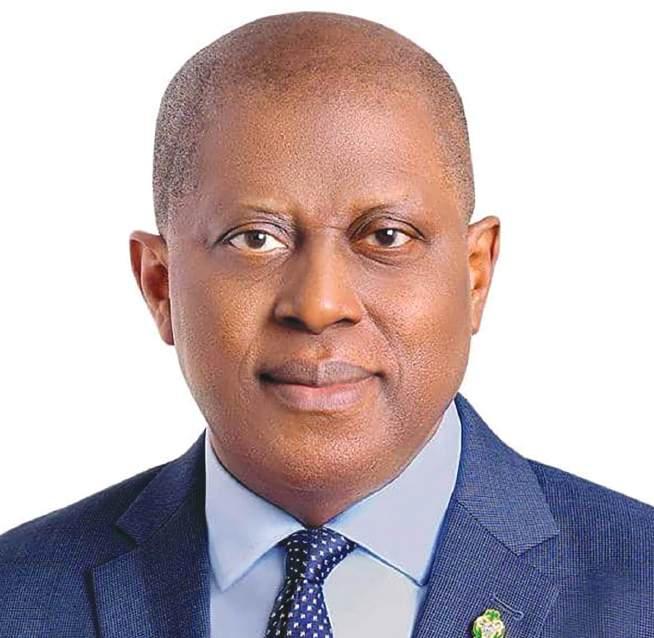
Cardoso illustrated the transformation through a practical example familiar to many Nigerians.
“When you travel today, you go with your naira card. It works,” he said.
That simple statement captured how monetary reforms have begun to restore confidence in Nigeria’s financial system.
For years, Nigerians travelling abroad experienced the embarrassment of payment cards being declined because local banks could not settle foreign transactions.
“Not any longer,” the governor noted, adding that narrowing the gap between official and parallel market exchange rates has further strengthened confidence.
Beyond convenience, functioning payment systems represent something much deeper: international confidence in the Nigerian financial system.
Perhaps no indicator better reflects changing investor sentiment than Nigeria’s external reserves. According to Cardoso, gross reserves have risen to around $52 billion, while net reserves have increased dramatically from the critically low levels inherited by the current administration.
“As at last week, we were hovering, I believe, about $52 billion. When we started, the net reserves figure was in the region of about $3 billion plus. More recently, the net reserves figure is above $40 billion,” he said.
The contrast is striking. Only a few years ago, concerns over Nigeria’s reserve position dominated discussions among investors, rating agencies and international financial institutions. Questions about the country’s ability to meet foreign exchange
obligations weighed heavily on investor confidence.
But today, reserve accumulation is increasingly viewed as evidence that market confidence is gradually returning.
More importantly, Cardoso argued that these gains were achieved without abandoning market principles.
The rebuilding of reserves has coincided with improved transparency in the foreign exchange market and stronger investor participation, suggesting that confidence itself is becoming an economic asset.
One of Cardoso’s most revealing observations was his description of the reforms as a “regime change.”
Rather than viewing the reforms as isolated policy adjustments, the governor presented them as a fundamental shift in institutional philosophy.
The emphasis has moved towards transparency, market-driven price discovery, disciplined monetary policy and stronger institutional credibility.
For investors, consistency often matters more than policy itself.
Capital tends to flow towards environments where policy direction is predictable. That appears to be the confidence dividend the CBN hopes to sustain.
Having stabilised key macroeconomic indicators, Cardoso believes Nigeria is entering the investment phase of the
reform programme.
Interestingly, his strongest appeal was directed not at foreign investors but at Nigerian businesses.
He disclosed that international investors have been closely monitoring developments in Nigeria and are increasingly positioning themselves to take advantage of emerging opportunities.
“We sit in a particular place where we see an enormous amount of interest from outside,” he said.
“They’ve watched very keenly. They’ve seen the road of travel. You’ll hear of huge investments being made into our economy as a result of the stability that has been accomplished.”
His concern, however, is that many domestic investors may still be anchored to old perceptions.
“I hope that our own leadership will recognise that and will not be afraid, and will not hold on to muscle memory, thinking that things are still as they were before. It shouldn’t be that by the time you wake up to the situation, the horse has bolted,” he said.
Cardoso said stability has created a window of opportunity that local investors should seize before foreign capital fully swoop on it.
Another recurring theme was discipline. Financial markets have increasingly speculated about the timing of interest rate cuts following several months of disinflation.
Cardoso acknowledged that inflation had remained on a downward trajectory for nearly a year before geopolitical developments disrupted expectations.
“There was 11 months of continuous disinflation,” he explained.
“It speaks volumes to the fact that the way of travel was one were, over a period of time, we would expect interest rates to begin to moderate,” he said.
But external shocks including the conflict between Israel and Iran—changed the outlook.
Importantly, he argued that Nigeria weathered those shocks better than many emerging markets because reforms had already strengthened economic resilience.
“By the time the shocks came, we were able to withstand them. We had resilience,” he said.
He resisted offering guidance on future Monetary Policy Committee decisions, stressing instead that policy would continue to be driven by evidence. “They react to what the data tells them,” he said.
That approach reflects a broader effort to anchor expectations around data rather than speculation.
The reforms have also extended to Nigeria’s banking industry.
The recapitalisation programme has attracted N4.65 trillion in fresh capital, significantly strengthening banks’ balance sheets.
“No nation, no company, and no institution can unlock the full value of its energy, resources in isolation.”
Few lines have captured Africa’s central energy challenge as precisely as this one above, delivered by Bashir Bayo Ojulari, Group Chief Executive Officer of the Nigerian National Petroleum Company Limited (NNPC Ltd). He made the remark in his keynote address at the opening ceremony of the 25th Nigerian Oil and Gas (NOG) Energy Week at the Bola Ahmed Tinubu International Conference Centre, Abuja, on July 7.
That quote underscored why competitive advantage in today’s energy economy rests more on the strength of its institutions than on the size of a nation’s reserves. That philosophy has defined Ojulari’s first year as GCEO of NNPC Ltd.
Nigeria remains Africa’s largest crude producer and holds roughly 17 per cent of the world’s proven gas reserves. Yet a myriad of challenges, including oil theft and ageing infrastructure, have long prevented this abundance from translating into prosperity. The Petroleum Industry Act (PIA) of 2021 converted NNPC into a commercial limited liability company, but the company needed more than legislation to deliver transformation that would stimulate real growth and serve the Nigerian people.
Ojulari’s career spans nearly every segment of the value chain — from field engineer at Elf and three decades at Shell, culminating in leading Shell Nigeria Exploration and Production, to helping engineer the $2.4 billion indigenous acquisition of Shell’s onshore assets at Renaissance Africa Energy.
His leadership philosophy is visible in NNPC’s “Fit-for-Future” agenda, a bold attempt to remake the national energy company into a commercially disciplined, globally competitive institution, built around four pillars: Execution Excellence (disciplined planning, faster decisions), Profitable Growth (commercially sound, sustainable investment), Partner of Choice (transparency and honoured commitments), and Enterprise-First Mindset (institutional success over departmental interest).
The Fit-for-Future agenda also reinforces Tinubu’s broader reforms, strengthening investor confidence and accelerating projects like the AKK Gas Pipeline.
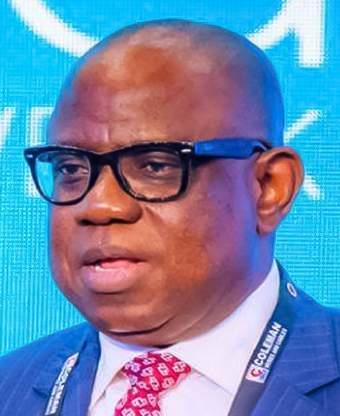
Its deeper aim: a culture that outlasts any single administration.
However, four pillars and a mission statement are not, on their own, evidence of anything — corporate Nigeria has produced no shortage of frameworks that outlived their launch events by a year. What makes this one worth taking seriously is not the language but what follows it: whether the numbers below reflect a company executing a plan, or simply a company that got lucky on oil prices and called it strategy.
The record since April 2025 suggests execution has kept pace with rhetoric. Nigeria’s crude output has climbed to roughly 1.71 million barrels a day — a five-year high — while NNPC Exploration and Production Limited posted a record 365,000 bpd, part of a stated ambition of 2 million bpd by 2027 and 3 million by 2030. The Trans-Niger Pipeline achieved 100 per cent operational availability for the first time in years, and the company’s five export terminals averaged 98 percent operational recovery
between April 2025 and May 2026 — a striking reversal from a period when Bonny Terminal’s recovery rate had fallen to around one percent.
Transparency has moved in step with production. NNPC resumed full monthly remittances to the Federation Account in July 2025, restored regular performance reporting, and held its first public earnings call. These are unglamorous, procedural changes — but for a company long criticised for opacity, procedure is the reform. On costs, Ojulari says contract restructuring has cut operating costs by roughly $3.4 billion, alongside a broader optimisation drive targeting up to $4.5 billion in additional savings.
Gas has become the clearest expression of NNPC’s industrialisation strategy under Ojulari. National output has risen to about 7.5 billion standard cubic feet a day, aided by the completed River Niger crossing on the Ajaokuta-Kaduna-Kano pipeline and the ANOH processing plant. NNPC has signed Gas Sale and Purchase Agreements covering 1.29 billion scf/d of LNG feed gas and 750 million scf/d for domestic industry — including deals with Dangote Refinery and DFL FZE — representing more than $20 billion in associated investment, according to Ojulari.
While none of these figures, taken alone, proves institutional reform, what is different this time is the attendant effect: the cluster of recovery, remittance, reporting and reduced costs arriving together, in the same year, under the same agenda. It is still early to conclude, but this is the strongest available evidence that the reforms are working.
At NOG Energy Week, held under the theme “Forging Africa’s Strategic Energy Growth Through Global Collaboration,” Ojulari located Africa’s energy problem not in scarcity but in fragmentation. He asked: “How can a continent so richly endowed with energy resources remain home to some of the world’s largest energy deficits?”
As Ojulari told delegates, the energy industry is “one of the most interconnected industries in the world;” with its success resting not on any single company’s strength but on the collective effectiveness of the whole ecosystem around it.
As he noted, a producing field needs disciplined
technical partners and patient capital. Service providers must convert geological potential into reliable output, and regulators must supply “clarity, consistency and predictability.” When enough of these links are weak, he emphasized, “nations remain resource-rich but prosperity-poor.”
His prescription - to move “beyond transactional relationships towards strategic partnerships, beyond isolated projects towards integrated value chains, beyond raw export towards industrial economies powered by those resources, and beyond fragmented national ambitions towards a truly collaborative African energy agenda,” - is an urgent and timely one. As he noted, NNPC is “not merely an energy producer but an ecosystem builder.” There are useful comparisons with Saudi Aramco, which transformed itself from a state oil producer into a diversified industrial and investment platform. Despite Nigeria’s peculiar challenges, including the pipeline vandalism and theft that persist in the Niger Delta, Ojulari is attempting an equivalent cultural and commercial shift without the advantages of deep sovereign capital and a more secured environment.
There is measurable progress even if 14 months is a short runway to conclude on the impact of reforms. Ojulari highlighted the need to “accelerate the development of “indigenous technical capacity capable of competing anywhere in the world.” But building capacity in any industry takes time. Whether the reforms outlast this leadership - as Ojulari himself insists they must - is the real measure still to come.
Nigeria has heard energy reform promised before. But, so far, Ojulari is earning the right to be called an institutional reformer, and the available data increasingly support that argument. However, building an ecosystem to reshape the future of Nigeria’s and Africa’s energy industries takes time, bold leadership, collaboration and shared commitment. The NNPC GCEO acknowledged this refrain in his keynote: “The future of African energy will not be determined solely by the resources beneath our soil. It will be determined by the quality of the partnerships we forge above it,” he said. Time will determine whether that ecosystem, and results of these reforms, endure for years to come.
•Arukaino Umukoro is a journalist, writer and communications strategist.
IYCN seeks credible probe, cautions against misinformation, media trials
Political analyst and Director of the Abuja School of Social and Political Thoughts, Dr. Sam Amadi, has said the Minister of Works, David Umahi, should not have spoken publicly about the circumstances surrounding the death of Mary Habila, insisting that the police ought to have led communication on the case.
Amadi, who weighed in on the controversy surrounding the death of the 26-year-old nurse linked to the minister, described the situation as both “a PR and an ethical disaster.”
The former chairman of the Nigeria Electricity Regulatory Commission (NERC), stated this on Friday night while fielding questions on Arise Television’s programme.
He argued that public officials facing serious allegations should
step aside to allow transparent investigations, adding that the President should demand accountability from ministers in such situations.
According to him, Umahi ought to have first reported to the police and made a statement as someone closest to the deceased before addressing the public.
“You have to balance it. First, they ought to step aside when the allegations are weighty. But even if they don’t, the boss—the President—ought to demand that.
“Let’s look at this case with Umahi; this is both a PR disaster and an ethical disaster. I’ve never seen a minister who doesn’t travel with nurses if they have personal medical needs, but a 26-year-old lady as a personal nurse who stays with you, travels with you, and stays in your house—and then passes
away under these circumstances?
“That’s enough for you to go first to the police and make a statement. The police should depose you because you’re the prime suspect by virtue of proximity, whether you’re a good man or a bad man; that’s just what it is,” Amadi said.
Amadi further criticised the minister for holding press conferences on the matter, saying such public engagements risked undermining confidence in the investigation.
He maintained that the
Nigeria Police Force should have been providing regular updates to assure the public that a transparent investigation was underway.
“Instead, he has been on a show, running press conferences, talking about the case, precluding everything. And the affidavit the parents supposedly signed to say, ‘We don’t want anything, we don’t want a press check’— anybody looking at it will say this looks like a cover-up, that these people were pressured to do it,” he said.
Say millions of children exposed to harmful online content with inadequate safeguards
James Emejo and Deborah Adokoya in Abuja
Stakeholders have intensified calls for stronger measures to protect Nigerian children from growing online dangers, warning that millions of young internet users remained exposed to harmful content, sexual exploitation, cyberbullying
and digital predators due to weak safeguards and limited accountability for technology platforms.
The concerns dominated a Child Online Safety Media Roundtable in Abuja, organised under the Every Second Counts campaign, where child rights advocates, medical professionals, legal experts
and youth development practitioners examined the increasing risks confronting children in Nigeria’s rapidly expanding digital space.
Participants emphasised that the conversation was not centred on lobbying lawmakers but on drawing attention to mounting evidence of online harm affecting children and the
urgent need for stronger public awareness, parental engagement and institutional safeguards. Nigeria has the largest internet population in Africa, with millions of children accessing digital platforms daily. However, experts noted that the country’s child protection framework has struggled to keep pace with the realities of the digital age.
James Emejo and Deborah Adekoya in Abuja
Director General/Chief Executive, Industrial Training Fund (ITF), Dr. Afiz Ogun, said the federal government has approved N3.6 billion to incubate tailoring businesses under ITF’s Skill Up Artisans (SUPA) Programme, as part of efforts to build sustainable enterprises, create jobs and professionalise the informal sector.
He spoke during a nationwide screening of applicants for the 2026 edition of the programme in Abuja.
He said the intervention, approved by President Bola Tinubu, is specifically targeted at tailors, who account for a significant proportion of participants under the scheme, noting that the initiative represented a shift from previous empowerment models towards building sustainable businesses.
Ogun said about 200,000 artisans are expected to benefit from the first phase of the 2026
Kayode Tokede
Infinity Microfinance Bank Limited, has said that it disbursed an estimated N12.88 billion loans to customers in 2025 financial year, about 64 per cent increase over N7.87 billion disbursed in 2024 financial year.
This was disclosed by the Chairman of the company, Mrs. Clara Oloniniyi at its 19th Annual General Meeting (AGM) held in Lagos. She revealed that the MfB loan portfolio increased from N3.89billion in 2024 to N6.1billion in 2025, representing a growth of 58 per cent.
Despite challenges, she revealed that the company
programme, with screening currently taking place simultaneously across all senatorial districts to ensure that only genuine artisans are admitted.
He explained that the exercise is not merely a verification of documents but also an assessment of applicants’ competence and commitment to the programme.
According to him, government is determined to prevent individuals seeking to exploit the programme solely for financial gain.
He said, “We are screening them because some people claim to be artisans when they are not. Some only want to collect government support without participating in the training. We want genuine artisans who are prepared to improve their skills and grow their businesses.”
The ITF boss described SUPA as one of the flagship initiatives of the Tinubu administration designed to reposition the country’s technical and vocational workforce while reducing the
in 2025 recorded a growth in profit before tax and profit after tax in 2025, driven by improved interest income, enhanced digital transaction revenues and cost optimization measures.
The MfB in 2025 posted N634.15 million profit after tax in 2025, up by 90.5 per cent from N332.8 million in 2024.
According to her, the growth in profit is outstanding performance driven by growth in interest, expansion of its earnings assets, improved operational efficiency, and enhanced digital transactions revenue streams.
The shareholders at the AGM approved the recommended dividend payout of 7.5kobo for every 50kobo shares.
country’s dependence on foreign artisans.
He said the programme was conceived after government observed that artisans from neighbouring African countries as well as Bangladesh, Pakistan and China were increasingly dominating opportunities within Nigeria’s informal economy.
According to him, beyond training, the initiative seeks to establish a structured database of artisans, issue both local and internationally recognised certifications and introduce a licensing regime that would promote professionalism and accountability across the sector.
Ogun told THISDAY, “The President wants Nigerian artisans to be trained, certified and licensed. When you engage an electrician or a plumber, you should be able to verify the person’s qualifications, assess previous performance and hold the artisan accountable. That is the direction we are taking.”
“Customer confidence in Infinity MfB strengthened further in 2025 as our deposit base expanded, supported by innovative savings products, improved customer engagement, and expanding point of sale deposit mobilisation.
“Our customer deposit grew robustly from N1.8billion in 2024 to N3.37 billion in 2025, about 82.8 per cent increase. The growth underscores the increasing trust and confidence reposed in the bank by our customers,” she added.
She noted that the board remains committed to delivering sustainable value to shareholders, stressing that the remarkable growth in 2025 is a testament to patience, confidence and unwavering support.
Maxima Media Group has officially launched the maiden edition of the Foodies Choice Awards, a groundbreaking consumer-driven recognition platform designed to celebrate excellence across Nigeria’s food and agriculture value chain while amplifying the country’s growing influence in Africa’s rapidly expanding food economy.
The launch opens public nominations for Nigeria alongside Ghana, Kenya, Tanzania and Rwanda, marking the beginning of a Pan-African movement that empowers consumers to recognize the governments, farmers, agribusinesses, food brands, chefs, hospitality operators, innovators and media personalities shaping the future of food on the continent.
The Awards come at a
defining moment for Nigeria’s agricultural sector. Agriculture remains one of the country’s largest economic pillars, contributing more than one-fifth of national GDP, while providing livelihoods for millions of Nigerians and supporting a significant share of the nation’s workforce.
Speaking at the launch, Oluwafemi Ogundoro, Group Chief Executive Officer and Founder of Maxima Media Group, described the initiative as a catalyst for excellence across Nigeria’s food ecosystem.
“Nigeria possesses one of Africa’s most dynamic food economies. Across our farms, markets, restaurants, food factories and innovation hubs are remarkable individuals and businesses transforming lives every
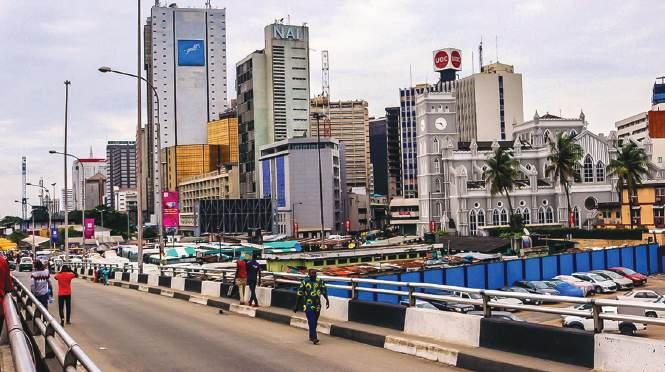
day. Foodies Choice Awards gives consumers the power to recognise those creating real impact while encouraging higher standards, greater innovation and stronger competitiveness across the industry. This is more than an awards platform, it is a movement to celebrate credibility, inspire excellence and unlock new opportunities for Nigeria’s food economy.”
According to Michellee Fox, Chief Operating Officer of Maxima Media Group: “Trust is the foundation of Foodies Choice Awards. Every nomination, every vote and every winner must genuinely reflect consumer confidence and industry excellence. Our partnership with KPMG ensures the Awards remain transparent, credible and globally respected.”
The price of OPEC basket of twelve crudes stood at $63.14 a
Kayode Tokede
Transcorp Power Plc on the Nigerian Exchange Limited (NGX) announced its unaudited financial results for the half year (H1) ended June 30, 2026 with N54.99 billion profit before tax as against N58.73 billion reported in half year (H1) ended June 30, 2025. One of the power
subsidiaries of Africa’s leading listed conglomerate, Transnational Corporation Plc from its loss & profit figures declared N38.5billion profit after tax in H1 2026 from N44.05billion reported in H1 2025.
The management will pay shareholders an Interim dividend of N1.50 per ordinary share, subject to appropriate withholding tax deduction and approval will be paid
to shareholders whose names appear in the Register of Members as at the close of business on July 20, 2026.
From the balance sheet position, Transcorp Power declared a total assets of N619.02 billion in H1 2026 from N563.48 billion reported as of December 31, 2025.
The MD/CEO, Transcorp Power, Peter Ikenga, in a statement said “Our H1 2026 performance is a reflection of
the resilience of our business operations despite significant sector-wide existential challenges.
“Regrettably, recurring transmission line vandalisation materially constrained our ability to evacuate available generation capacity. Nonetheless, we continued to deliver strong profitability, maintain operational efficiency, and strengthen our balance sheet.
“We remain committed to working with relevant stakeholders to put an end to transmission line vandalisation and to further improving operational performance, power generation supply reliability, and creating sustainable value for our shareholders.
“We remain highly confident that we will recover lost ground in H1 2026 and
finish FY 2026 stronger than FY 2025” Chief Finance Officer, Transcorp Power, Dr Evans Okpogoro in a statement said, “Our half-year results show sustained operating discipline in a period of moderated revenue. While revenue stood at N181.97 billion and Profit After Tax at N38.50 billion, the quality of our earnings improved across every efficiency metric.
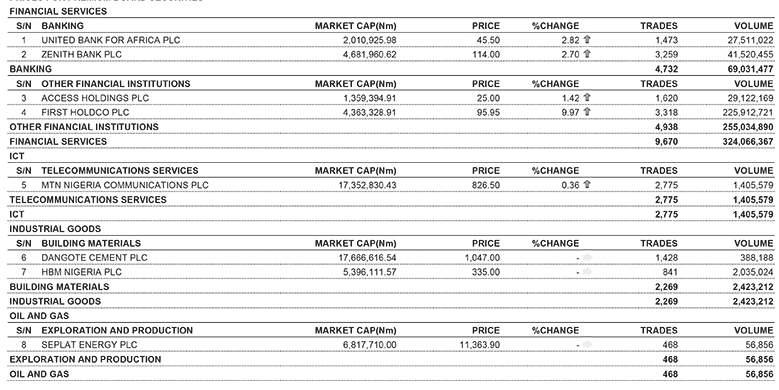
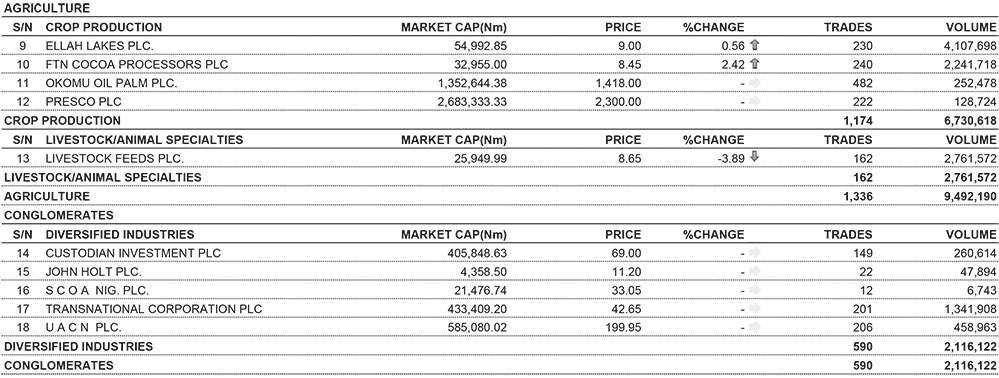
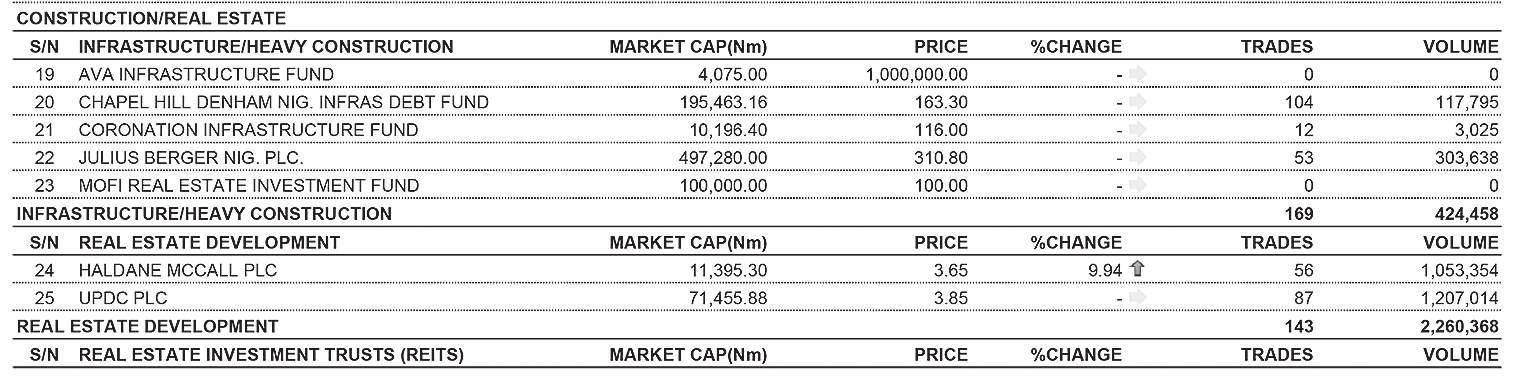
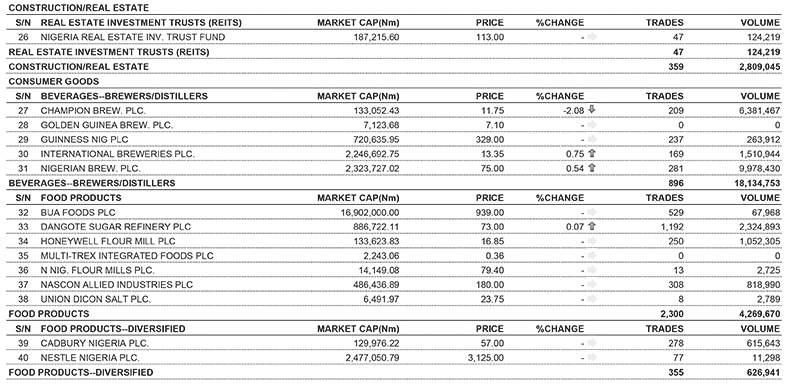
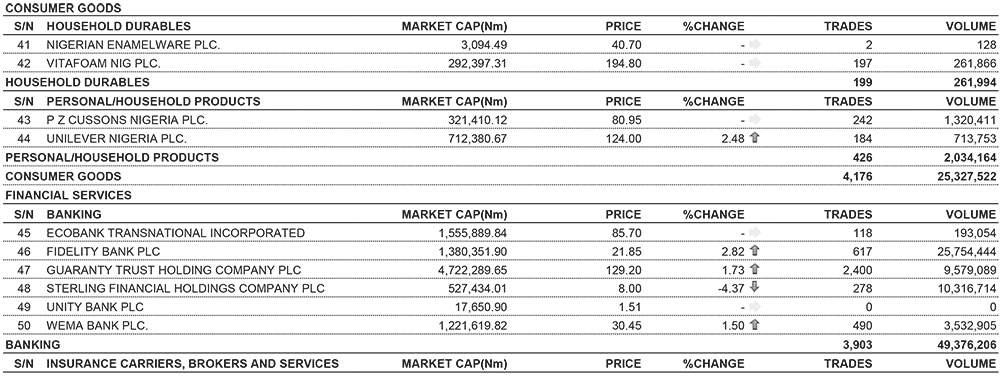
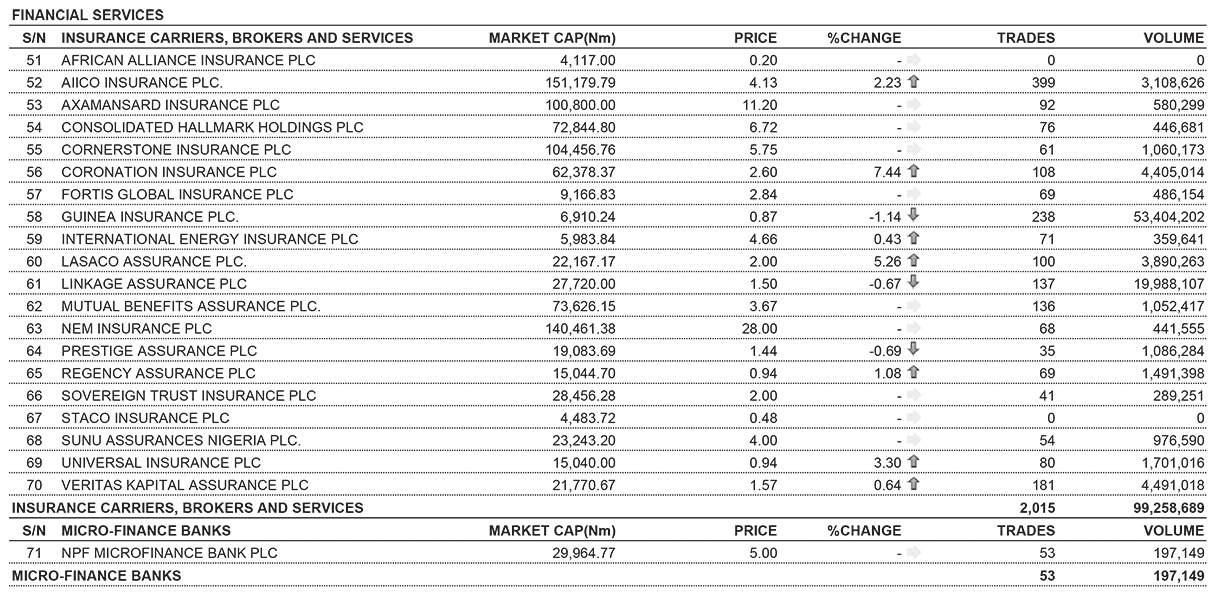

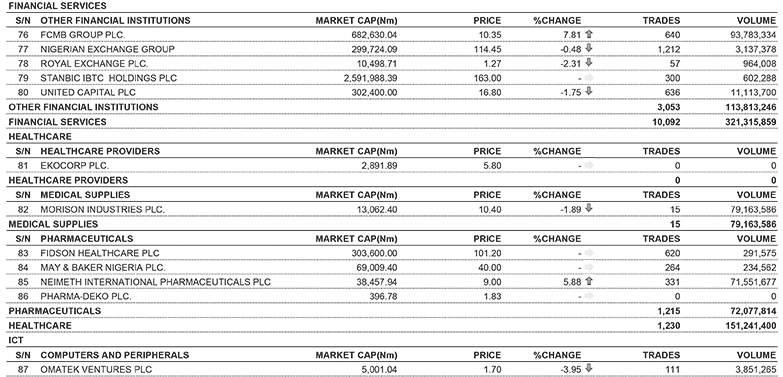
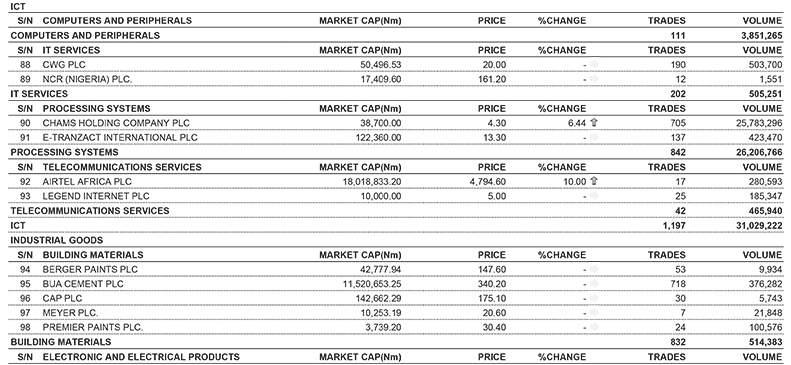
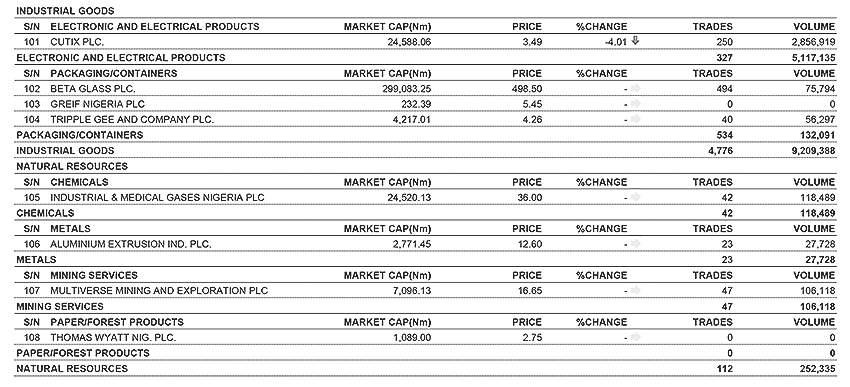
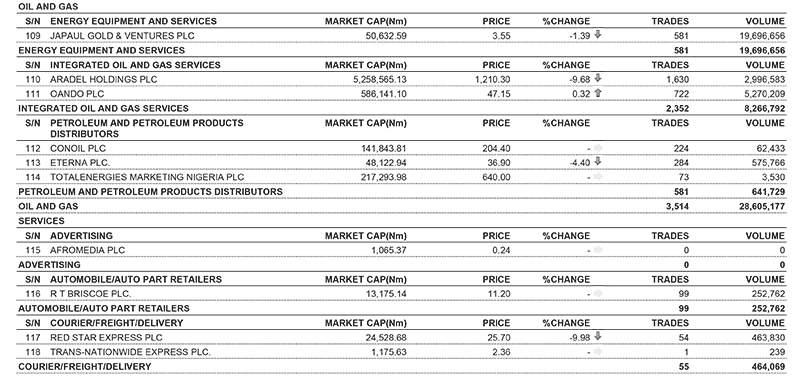
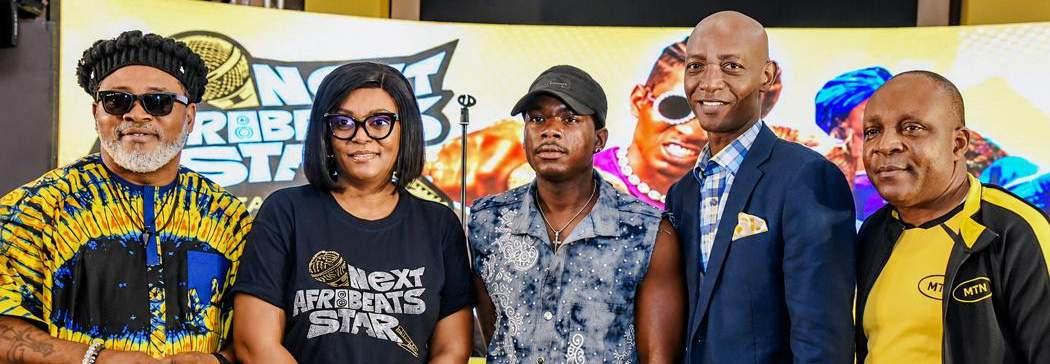
Canvasses stronger regional action on unconstitutional govt, security, trade, digital single market Assures of Nigeria's support for effective implementation of ECOWAS compact for future of regional
Deji Elumoye in Abuja
President Bola Ahmed Tinubu on Sunday evening charged other African countries to lend their voices to unanimously condemn the ongoing Afro-phobic attacks, also known as Xenophobia, in South Africa.
A united voice, according to him, will send a clear message to the Southern African country that such intolerance is absolutely not acceptable under any form.
Speaking in Freetown,
Sierra Leone, during the 69th Ordinary Session of the ECOWAS Authority of Heads of State and Government, the President, who was represented by Vice President Kashim Shettima, informed the West African leaders that the Nigerian Government had "already evacuated over 1490 of its citizens from harm's way in seven batches and is prepared to engage further on this matter."
He also declared Nigeria's support for the newly developed ECOWAS Compact for the Future
Michael Olugbode in Abuja
The National Drug Law Enforcement Agency (NDLEA) has intercepted two trailers conveying a total of 1.63 million pills of tramadol 250mg concealed in fabricated compartments and destined for Kano State, as the agency intensified its crackdown on a transnational drug trafficking syndicate operating along the Togo–Benin Republic–Nigeria corridor.
The latest seizures came barely a week after NDLEA operatives recovered 558,900 pills of tramadol 250mg from the false bottom of another truck that entered Lagos through the same route.
The first of the two latest consignments, comprising 853,000 pills, was intercepted on July 2 along the Lagos-Ibadan Expressway after the trailer was tracked while heading to Kano.
The drugs were concealed beneath the cargo floor in a specially fabricated compartment, while the 22-yearold driver, Jabir Kabiru, was arrested.
Two days later, on July 4, NDLEA operatives tracked
and intercepted a second trailer on the same expressway, also heading to Kano. A further 777,000 pills of tramadol 250mg were recovered from a concealed compartment beneath the truck’s cargo floor, while its 22-year-old driver, Muhammed Nuhu, was arrested.
Investigations, according to a statement on Sunday by the spokesman of the anti-narcotics agency, Femi Babafemi, have established that the three trucks and consignments intercepted on June 21, July 2 and July 4 belonged to the same transnational drug trafficking syndicate operating across the Togo–Benin Republic–Nigeria route.
In another major operation, NDLEA operatives at the import shed of the Murtala Muhammed International Airport, Lagos, intercepted two consignments of Canadian Loud, a potent strain of cannabis, weighing a combined 4.7 kilogrammes.
The consignments, which arrived from Canada aboard British Airways and Ethiopian Airlines flights on June 24 and July 3 respectively, were concealed in cartons boldly marked “Odugwu”.
of Regional Integration, noting that the document reinforces the region's "shared commitment to rebuilding trust between citizens and public institutions, ensuring that regional integration remains resilient and relevant in the face of evolving geopolitical realities."
Decrying the xenophobic attacks in South Africa, Tinubu said, "Nigeria condemns, in the strongest terms, the recent attacks on its citizens and other Africans in the Republic of South Africa. As already stated by His Excellency, the President of Ghana, ECOWAS should present a united voice in this condemnation and table the matter before the next session of the Authority of Heads of State and Government of the African Union.
"This would send a clear message that this type of intolerance is totally unacceptable under any
guise. South Africa should be reminded that the freedom it currently enjoys is the result of the sacrifices and liberation efforts of African countries, including Nigeria."
He reaffirmed Nigeria's unwavering commitment to the ECOWAS Compact for the Future of Regional Integration, noting that while the document represents a significant milestone in the regional integration journey, it is also a reflection of ECOWAS Member States' collective resolve to renew the ideals of the regional body.
The Compact, the President noted, will "strengthen regional solidarity, and build a more resilient, prosperous, peaceful, and people-centred Community capable of meeting the aspirations of its over 400 million citizens."
Tinubu also urged the West African leaders to intensify
collective action against insecurity and unconstitutional governance as reflected in the Compact.
According to him: "As the largest economy and one of the key founding members of our Regional Economic Community, Nigeria remains steadfast in its historic responsibility to continue the promotion of regional unity, peace, economic integration, and democratic governance.
"Nigeria will continue to work closely with Member States and all stakeholders to ensure the effective implementation of the Compact and the realisation of its six strategic pillars."
On political stability, the President charged ECOWAS to continue promoting constitutional government, the rule of law and compliance with the regional Protocol on Democracy and Good Governance.
"On peace, security, and democratic governance, Nigeria
reaffirms that sustainable development cannot be achieved in an environment of insecurity and instability. Nigeria remains firmly committed to the principles enshrined in the ECOWAS Protocol on Democracy and Good Governance and other regional frameworks.
"Nigeria supports the Compact's commitment to constitutional governance, the rule of law, respect for human rights, and zero tolerance for unconstitutional changes of government," he declared.
Tinubu reiterated Nigeria's commitment to the setting up of the Counter Terrorism Force, and strengthening of the ECOWAS Standby Force, stating that it will "enhance counter-terrorism cooperation, intelligence sharing, joint security operations, and preventive diplomacy to safeguard peace and stability across our region."
FG, Reps Say Government Alone Cannot Fix Nigeria’s Social Crisis, Seek Faith Groups’ Support
As Knights of St. Mulumba launch N2bn endowment fund for charity
Kuni Tyessi in Abuja
The Federal Government and the House of Representatives have admitted that Nigeria’s worsening economic hardship, poverty, and humanitarian challenges are too big for government to handle alone.
They are now calling for stronger collaboration with faith-based organisations, the private sector, and civil society to address the country’s mounting social problems.
The appeal was made during the unveiling of a N2 billion Endowment Fund and Integrated Charity Programme by the Knights of St. Mulumba (KSM) Nigeria.
The fund is designed to provide long-term financing for healthcare, education, legal aid, support for widows and orphans, correctional services, and emergency relief nationwide.
Represented by Hon. Festus Adefiranye, Chairman of the House Committee on Christian Pilgrimage Affairs, the Speaker of the House, Rt. Hon. Tajudeen Abbas, said religious organisations play a critical role in nation-building.
He noted that faith groups "command public trust, shape moral values, promote social cohesion and reach communities where formal institutions often struggle to serve."
“Government alone cannot
solve every social challenge confronting our nation.
Sustainable national development requires a genuine partnership among public institutions, faithbased organisations, the private sector and civil society,” Abbas said.
He described KSM’s endowment model as "prudent stewardship" because it preserves the capital and only spends investment returns. “This is a model that deserves emulation by many charitable organisations,” he added.
Also speaking, the Secretary to the Government of the Federation, Senator George Akume, said Nigeria needs innovative solutions from all
sectors.
Represented by his Special Assistant, Simon Tyungu, Akume stated: “Government alone cannot address every developmental challenge. Lasting progress can only be achieved through strong partnerships involving faith-based organisations, the private sector, civil society and patriotic citizens.”
He described the KSM fund as “the institutionalisation of compassion” and urged Nigerians, philanthropists, and corporate bodies to support it.
“Every contribution made to this fund is an investment in hope, dignity and a more compassionate society,” he said.
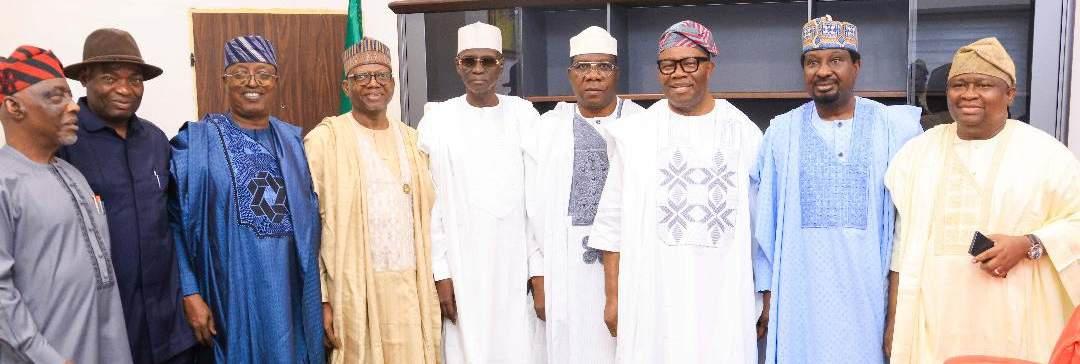
James Emejo and Deborah Adekoya in Abuja
Minister of State for Industry, Senator John Enoh, has attributed the weak local patronage of Madein-Nigeria products to concerns over quality assurance.
Appointment of Obeahon Ohiwerei as Managing Director & Chief Executive Officer follows the Bank’s successful recapitalisation, strengthened governance, continued digital transformation and focus on delivering long-term value for clients and shareholders.
Lagos, Nigeria – July 6, 2026 – Coronation Merchant Bank has announced the appointment of Obeahon Ohiwerei as its Managing Director and Chief Executive Officer, following receipt of the Central Bank of Nigeria’s No Objection approval.
Mr. Ohiwerei succeeds Paul Abiagam, whose leadership has guided the Bank through an important period of strategic transformation and positioned it strongly for its next phase of growth.
The appointment comes at a defining moment in the Bank’s evolution. Earlier this year, Coronation Merchant Bank celebrated its tenth anniversary, successfully exceeded the Central Bank of Nigeria’s minimum capital requirements, strengthened its governance framework, accelerated the digitisation of key operating processes, and achieved a Fitch Ratings assessment of Long-Term Issuer Default Rating (IDR) at 'B-' with a
He spoke at the unveiling of the Digital Standards Platform (DSP), an initiative by the Standards Organisation of Nigeria (SON) and the Bureau of Public Procurement (BPP), in Abuja over the weekend. DSP aimed to strengthen product standards, restore
consumer confidence and reposition Nigerian manufacturers for domestic and global markets.
The minister noted that consumers would naturally embrace locally manufactured goods once they consistently meet acceptable quality standards,
stressing that the era when Nigerians were expected to buy local products merely out of patriotism must give way to one where quality becomes the deciding factor.
He maintained that quality remaind the foundation of
Stable Outlook. Collectively, these milestones reinforce the Bank’s strategy of disciplined growth, prudent risk management and sustainable value creation.
Commenting on the appointment, Babatunde Folawiyo, Chairman of Coronation Merchant Bank, said:
“Coronation Merchant Bank begins this new chapter from a position of considerable strength. Our successful recapitalisation has enhanced our capacity to support clients while demonstrating the confidence our shareholders continue to place in the Bank’s long-term strategy. On behalf of the Board, I express our sincere appreciation to Paul Abiagam for his stewardship, professionalism and dedication during a significant period in the Bank’s development. Under his leadership, the Bank strengthened its capital base, enhanced its governance architecture, accelerated operational transformation and reinforced the confidence of clients, regulators and other stakeholders. The appointment of Obeahon Ohiwerei reflects the Board’s confidence in his leadership and its commitment to sustaining the Bank’s longterm growth trajectory. We are also pleased that, under his leadership contract, he will
join the Bank’s distinguished shareholder base, reinforcing the alignment between management and shareholders that has long characterised Coronation Merchant Bank.”
Speaking on the transition, Paul Abiagam said:
“Leading Coronation Merchant Bank through this important chapter has been a privilege. I am proud of what we have accomplished together—from strengthening our capital position and embedding world-class governance structures to modernising our operating platform and deepening the trust of our clients and partners. I leave confident that the Bank is exceptionally well positioned for the future and wish Obeahon and the entire team every success as they build on these strong foundations.”
Obeahon Ohiwerei brings more than three decades of banking experience and a distinguished record of building businesses, leading high-performing teams and delivering sustainable growth across Africa’s financial services industry. His executive leadership experience spans corporate banking, institutional banking, risk management, banking operations, business transformation and client
coverage. During his career, he has held several senior leadership positions, including Pioneer Managing Director of UBA Ghana, Executive Director at Access Bank Plc, and Managing Director of Keystone Bank. He assumes leadership of a wellcapitalised institution with a clear strategic direction, strong governance framework and a mandate to accelerate growth while maintaining the disciplined execution for which the Bank is recognised.
Speaking on his appointment, Obeahon Ohiwerei said:
“I am honoured to join Coronation Merchant Bank at such an exciting point in its journey. We are building from a position of strength, supported by an exceptional team, a strong balance sheet and the confidence of our clients and shareholders. Our priorities are clear. We will deepen client relationships, expand into attractive market opportunities, leverage our strengths in advisory and capital markets, continue to enhance our digital capabilities and service delivery, and maintain the disciplined approach to governance, risk management and execution that has become the hallmark of Coronation Merchant Bank.”
Strengthening the Board
industrialisation and national competitiveness, noting that no economy can rise above the standard of what it produces.
According to him, DSP represented a major shift in the country's quality infrastructure by giving businesses, especially micro,
small and medium enterprises (MSMEs), digital access to Nigerian Industrial Standards, certification services and compliance tools that were previously difficult, costly and time-consuming to obtain.
Enoh said standards remained the "language of trust" in every economy, explaining that confidence among consumers, investors and trading partners depends largely on the credibility of products and services.
As part of its continued commitment to the highest standards of corporate governance and institutional oversight, the Bank also announced the appointment of Ms Nana-Adjua Mensah and Mrs Adetola Owolabi as Independent Non-Executive Directors.
Ms Nana-Adjua Mensah brings more than twenty-five years of executive leadership experience across banking, treasury and corporate trust services. She previously served as Managing Director and Chief Executive Officer of First Trustees Nigeria Limited after holding senior leadership positions at UBA Plc and First City Monument Bank. Her appointment further strengthens the Board’s expertise in governance, financial markets and enterprise risk oversight. Mrs Adetola Owolabi brings extensive banking and entrepreneurial experience to the Board. She enjoyed a distinguished seventeen-year career at Guaranty Trust Bank, where she rose to the position of Assistant General Manager with responsibility for the Bank’s shipping and maritime business. She currently serves as Chief Operating Officer of Black Pelican
He said the platform would eliminate bureaucratic bottlenecks that had discouraged many businesses from complying with standards while making quality assurance a competitive business advantage rather than a regulatory burden.
The minister said the initiative aligned with President Bola Tinubu's Renewed Hope Agenda and the Nigeria First Policy, insisting that local products can only enjoy sustained patronage if they are demonstrably superior in quality.
He said, "Quality is what turns patronage into preference," stressing that Nigerians should choose locally manufactured goods because they meet globally recognised standards and not merely because they are produced within the country. He added that integrating the platform into the public procurement system would enable government institutions to verify standards before awarding contracts, ensuring greater value for money, durability and accountability in public spending.
Enoh further noted that easier digital access to standards would improve Nigeria's ease of doing business, remove unnecessary administrative hurdles and prepare local manufacturers to compete effectively under the African Continental Free Trade Area (AfCFTA).

Amidst growing concerns over the protest by some citizens of South Africa forcing fellow African immigrants including Nigerians to abandon their businesses and return to their home countries, scholars, prodemocracy and human rights activists have faulted the action, describing it as a negation of the ideals of freedom which Nelson Mandela fought for in his lifetime. They called for symbolism and reconciliation as exemplified by Nelson Mandela and encourages young people to mobilize and seek for a new Africa.
While condemning anti immigrants' attacks, the leadership of the Academic Staff Union of Universities (ASUU) said that Nigeria should push for justice for the victims of xenophobia, insisting that perpetrators are only
punished but compensations must be paid to those who lost their lives and properties as a result of the incident
Speaking at the event marking the 2026 Nelson Mandela International Day held on Saturday in Keffi, Nasarawa State, Pro-chancellor & Chairman of Governing Council, Nasarawa State University, Keffi (NSUK). Prof. Attahiru Jega, said that Mandela stood for a democracy that is sustained through sacrifice, tolerance, dialogue, respect for diversity, and the collective pursuit of the common good.
However, Jega said that the recent xenophobic incidents in South Africa, "do not reflect the ideals and enduring legacy of Nelson Mandela, who championed unity, equality, human dignity, and peaceful coexistence among all people, regardless of their nationality
or background".
Represented by Mr. Thomas Ari Ogiri, member of Governing Council of NSUK Jega said that Nelson Mandela's struggle was not merely for the freedom of South Africans but for the universal values of justice, peace, and human rights.
"Today, we honour a man whose unwavering courage, resilience, and commitment to justice transformed a nation divided by apartheid into a democracy founded on equality, human dignity, reconciliation, and the rule of law," he said.
The commemoration jointly organised by the Centre for Democracy and Development (CDD) and ASUU sought to highlight the lofty ideals and principles of freedom and social justice which Mandela struggled to institute in South Africa.
Speaking on the theme:
"Mandela's Long Shadow: Foreign Influence Campaigns and Struggle for South Africa's Democratic Identity", the Chairman of the Governing Council of the Centre for Democracy and Development (CDD) and former General Secretary of the Nigeria Labour Congress, Comrade John Odah said that a curious study of the situation in both Nigeria and South Africa showed external forces maybe at play trying to destabilize the continent.
He cautioned that the dream of a united Africa, conceived by the founding fathers with the establishment of the Organisation of African Unity in 1963, now the African Union, must not be derailed by the forces seeking to undermine Mandela's vision and South Africa's democratic ideals.
He said: "Some of the issues
As overall project attained 70 and 75 per cent completion
The Permanent Secretary, Federal Ministry of Transportation, Engr. Funsho Adebiyi, has reaffirmed that the Kaduna–Kano and Kano–Daura–Katsina sections of the Kano–Maradi Railway Development Project has attained between 70 and 75 per cent completion since it was awarded in 2021.
To this end, Adebiyi hinted that the project remains on schedule for commissioning in December.
Engr. Adebiyi gave the assurance during an inspection of the project by officials of
the Debt Management Office (DMO), led by its DirectorGeneral, Patience Oniha, to assess progress on the federal government-funded railway project.
He described the pace and quality of construction as encouraging, noting that tracks laying has commenced, while most construction materials have been delivered to project yards in Kazaure and Katsina. Adebiyi, in a statement weekend by Assistant Director, Information & Public Relations, Gift Osima Seddon, added that rigorous quality assurance measures, including geotechnical investigations
and laboratory testing of construction materials, are being carried out to ensure compliance with international engineering standards and global best practices.
He further revealed that over 500,000 of the estimated 800,000 track slippers have been produced, with all required rail tracks already procured.
He asserted the project has created employment for over 4,500 workers, including about 200 expatriates, while also facilitating technology transfer through the training of Nigerian engineers and technicians in specialised railway construction.
He identified the procurement
of rolling stock as the next major milestone towards achieving the December 2026 commissioning target.
On the challenges affecting the project, the Permanent Secretary cited vandalism of construction materials, land access issues in some urban areas, and illegal laterite mining along the Kano–Dutse corridor as key concerns.
He said the ministry would strengthen collaboration with security agencies to protect project assets and continue engaging the Kano State Government and other relevant authorities to address illegal mining activities.
fueling the current crisis back home in our country are being created by actors who are acting on the instructions of extra continental forces who do not want Nigeria to realize it's full potentials with our huge resources and they see South Africa as the next country that will put Africa ahead along with Nigeria. What they are trying to do is to scatter it".
While condemning xenophobic
attacks in South Africa, ASUU urged African leaders to also condemn it and take a united action to discourage it.
ASUU urged the Government of South Africa, civil society organisations, labour unions, universities, youth movements and all democratic forces to reject xenophobia, resist divisive identity politics, and reaffirm the Pan-African values that Nelson Mandela embodied.
Ultimate Health HMO Unveils N38,718 Lifeline Plan to Rescue 85% of Nigerians Left Behind by Health System
Mary Nnah
Ultimate Health Management Services has formally launched U-Health GIFSHIP, a new social health insurance package aimed at extending affordable healthcare to Nigerians in the informal sector and small and medium-scale businesses across the country.
Speaking at the launch in Ikeja recently, Managing Director and Chief Executive Officer of Ultimate Health HMO, Otunba Lekan Ewenla, described the product as a bold step toward achieving Universal Health Coverage in Nigeria.
GIFSHIP, which stands for Group, Individual and Family Social Health Insurance Programme, was originally developed as the sole actuarially priced benefit package for federal civil servants and made mandatory for all federal workers since the commencement of the National Health Insurance programme in 2005.
Ewenla explained that the federal government’s decision at the time was to convert the 10% medical allowance for civil servants into a health insurance
premium.
According to him, while about 15% of Nigerians are in the formal sector, 85% operate in the informal sector and have remained largely excluded from structured health coverage.
He said the unpacking and denomination of the federal civil servants’ benefit package was designed in collaboration with the then National Health Insurance Scheme, now NHIA, to make healthcare affordable, accessible, and equitable for market associations, transport unions, artisans, and SMEs.
“Groups like the Iyalojas of different markets, NURTW members, Chambers of Commerce, spare parts dealers, mechanics, beauticians, and others can now key into this package,” Ewenla said.
He added that the product is strongly regulated by the NHIA, with an annual premium fixed at N38,718 per person and non-negotiable.
Under the operational guidelines, Ultimate Health will pay N1,450 capitation per person per month to healthcare providers and utilize N700 for fee-for-service
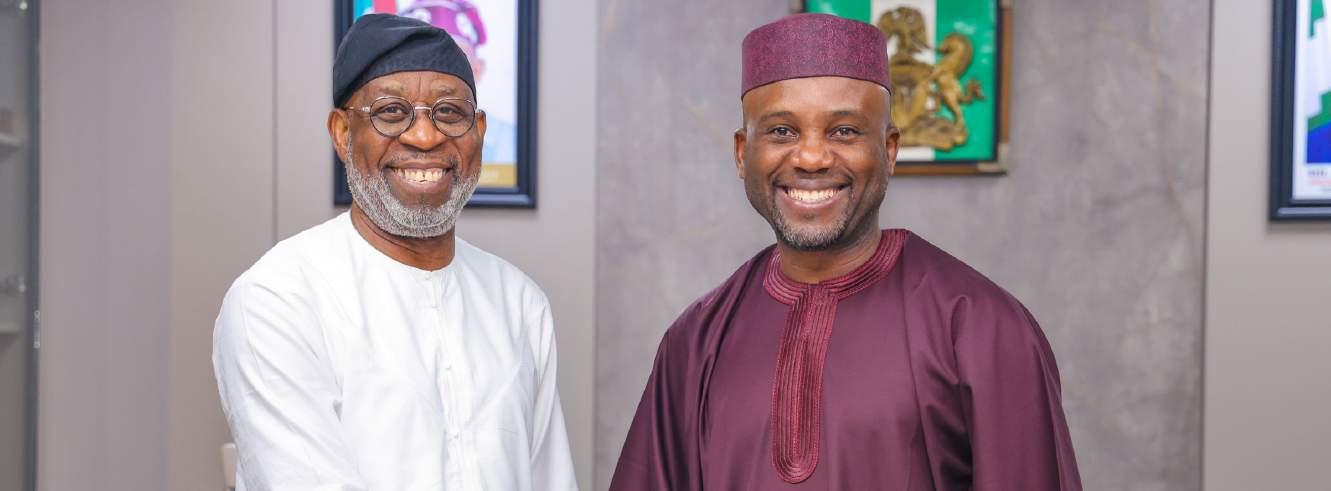
Folalumi Alaran in Abuja
The Ministry of Solid Minerals Development and the National Identity Management Commission (NIMC) have agreed to
deploy digital identity infrastructure to strengthen regulation, improve transparency and curb illegal mining as part of ongoing reforms in Nigeria’s solid minerals sector.
Minister of Solid Minerals Development, Dr. Dele Alake, disclosed this in Abuja while receiving the Director-General of NIMC, Dr. Abisoye Coker-Odusote, and the commission’s
management during a courtesy visit.
Alake said effective governance and security could no longer be achieved without credible identity management, stressing
that technology, data and digital identity had become critical tools for regulation, investment and national development.
Fieldreams Limited, its promoter, Ifeanyi Nweke, and Amex Savings and Loans Limited have approached the Lagos Division of the Court of Appeal, seeking to overturn a Federal High Court judgment ordering the final forfeiture of 52 terrace and maisonette units at Mercyville Estate, Lekki Peninsula Scheme, Eti-Osa Local Government Area of Lagos State.
The appellants are also asking the appellate court to stay the execution of the July 14, 2026 judgment pending the determination of their appeal.
In a motion filed through their counsel, Victor Ukutt, the appellants are seeking an order staying the execution
of the Federal High Court's final forfeiture order. In the alternative, they are asking the court to preserve the property and maintain the status quo until the appeal is determined.
The respondents in the appeal are the Chairman of the Economic and Financial Crimes Commission (EFCC), Dr. Kennedy Okonkwo, and 17 other individuals listed as beneficiaries under the disputed forfeiture order.
According to the appellants, enforcing the judgment before the appeal is heard would render the appeal nugatory and irreparably undermine their constitutional right to challenge the decision.
They argued that the Federal High Court's order effectively
transferred ownership of the 52 housing units to private individuals, contrary to Section 17 of the Advance Fee Fraud and Other Related Offences Act, which, they contend, permits forfeited assets to be vested only in the federal government.
In their notice of appeal, the appellants challenged the July 14, 2026 judgment delivered by Justice Alexander Owoeye on several grounds, including alleged lack of jurisdiction, erroneous interpretation of the forfeiture provisions and denial of fair hearing.
They maintained that there was no evidence before the trial court establishing that the properties were proceeds of unlawful activities under the Advance Fee Fraud and Other
Related Offences Act, the Money Laundering Act or any other law enforceable by the EFCC.
The appellants further argued that the funds used to acquire and develop the Mercyville Estate project were derived from legitimate business transactions, including land and property sales, as well as other lawful commercial activities carried out in line with the Companies and Allied Matters Act and the corporate objectives of the companies involved.
They also faulted the trial judge for allegedly failing to consider their affidavit evidence and documentary exhibits, including a 2007 Deed of Assignment relating to the acquisition of the land.
“NIMC occupies a critical position in translating policy into reality. Governance today is driven by data, technology and credible identity systems,” he said.
The minister noted that integrating NIMC’s digital identity infrastructure into the mining sector would improve the tracking of mining operators, strengthen regulatory oversight and support efforts to eliminate illegal activities.
“Without identification, we cannot trace or track, and insecurity will flourish. In the solid minerals sector, we need effective monitoring of both legal and illegal operations. A credible identity ecosystem will strengthen regulation, improve enforcement and support our efforts to sanitise the sector,” Alake added.
He identified technology, statistics, data collection and digital identity as
essential to evidence-based policymaking, efficient licensing, investment promotion and improved governance in the mining industry.
Earlier, Coker-Odusote said the recently enacted NIMC Act, 2026, had strengthened the legal framework for digital identity management and opened new opportunities for collaboration across government institutions. According to her, integrating identity management into the solid minerals sector would improve database interoperability, strengthen regulatory compliance and law enforcement, enhance monitoring of mining operators and support the implementation of Community Development Agreements in host communities.
She added that NIMC’s digital identity infrastructure would also improve public service delivery, transparency and accountability across government.
The management of the University of Ilorin at the weekend pledged its more commitment towards prioritising the welfare of its students in order to make academic conducive for its teeming students.
This was contained in a statement issued by the institution's management signed by its Director Corporate Affairs, Mr. Kunle Akogun, and made available to journalists in Ilorin.
This assurance was given
during a meeting between the management and a delegation of the National Association of Nigerian Students (NANS), Kwara State Axis, following concerns generated by a viral social media report over the recent review of accommodation fees in privately owned hostels on the university campus.
Akogun, disclosed the visit of the NANS Kwara Axis officials, led by its Chairman, Comrade Yusuf Abdulquadir Eleburuke, aimed to obtain first-hand information from
the university management and provide students, parents and the public with verified details on the issue.
The NANS delegation was received on behalf of the Vice-Chancellor, Prof. Wahab Olasupo Egbewole (SAN), by the Ag. Dean, Student Affairs, Dr. Alex Morenikeji Akanmu, who commended the student body for adopting dialogue and official engagement rather than relying on speculation.
The statement quoted the Ag. Dean as saying that the hostels
affected by the fee review are privately owned facilities located within the university premises.
Dr. Akanmu explained that while the university does not own the hostels, it regulates their operations to ensure compliance with approved standards and safeguard students’ interests.
Responding to concerns raised by NANS over the reported increase, the Dean disclosed that hostel accommodation charges are reviewed after every three academic sessions.
He said the previous approved
rates stood at N196,000 for two-person rooms, N180,000 for three-person rooms and N157,000 for four-person rooms
Dr. Akanmu revealed that hostel operators had initially proposed an increase of nearly 100 per cent, but the proposal was rejected by the Vice-Chancellor and the university management, which entered into negotiations to prevent excessive financial pressure on students.
He further disclosed that after extensive discussions that considered prevailing economic realities, including inflation and
rising maintenance costs, both parties agreed on a 30 per cent increase, bringing the approved accommodation fees to N255,000 for two-person rooms, N234,000 for three-person rooms and N204,000 for four-person rooms Dr. Akanmu added the university also directed hostel operators to improve the quality of facilities by carrying out renovations and providing reliable alternative power sources, including solar energy systems, as part of the conditions for approving the revised fees.
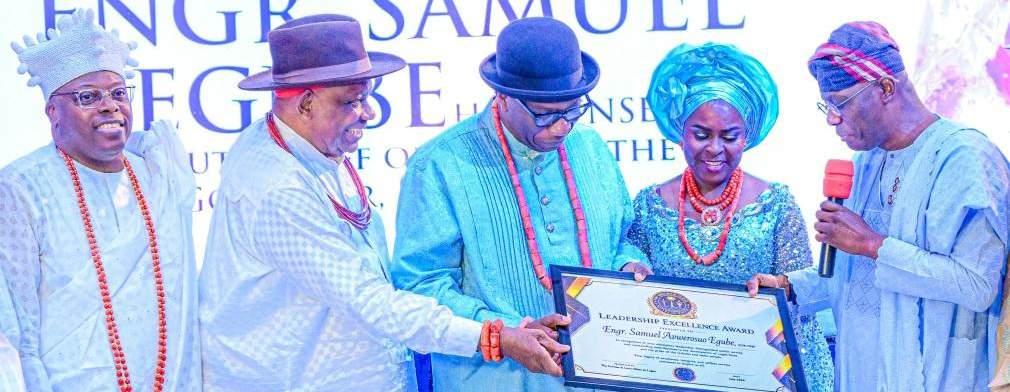
R-L: Governor of Lagos State, Mr. Babajide Sanwo-Olu; wife
Iru Kingdom, Oba Gbolahan
Approves 10.5km Igogoro-Amachara-Ikpamodo-Okpo-Amaada road project 1,000 housing units at Enugu Smart City, 18,000 mass housing units at Gateway Estate To construct Ovu Lake Golf Resort at Akpawfu Cable car with platforms at Okpatu, Awhum, and Awgu
In another major push for infrastructural transformation, the Enugu State Government has approved the commencement of several projects cutting across roads, tourism, housing, and administrative infrastructure in various parts of the state. The government gave the approval during the State Executive Council (SEC) meeting at the weekend.
Briefing Government House Correspondents, the Commissioner for Information and Communication, Dr. Malachy Agbo; Commissioner for Culture and Tourism, Dame Ugochi Madueke; and Commissioner for Works and Infrastructure, Engr. Ben Osy Okoh, said the approvals were
in line with the administration’s vision to grow the state’s economy from $4bn to $30bn in eight years.
The Commissioner for Works and Infrastructure, Engr. Okoh, announced SEC’s approval of the completion and upgrade of Wings C and D of the Enugu State Secretariat Complex in GRA, Enugu, as well as extensive rehabilitation works on Wings A and B already in use.
“Recall that the A and B wings of the State Secretariat Complex were completed and commissioned in May 2015. Since then, the C1, C2, C3, C4, C5, D1 and D2 wings have remained uncompleted and are currently in a deplorable state.
“It is going to be a total
transformation and remodeling of the Secretariat with modern facilities. We also looked at the challenges we are experiencing at Wings A and B to correct them in Wings C and D.
“Further to that, the Exco also approved the commencement of repairs on Wings A and B of the Secretariat to address all the challenges that the building is facing.”
Following the completion of the 6.5km dual carriageway for the first phase of the development of the New Enugu City and the ongoing construction of the internal roads, the state government has also approved the construction of 1,000 fully detached terrace housing units made up of
four- and five-bedroom units.
“In addition to the 1,000 housing units, the state government is also developing 18,000 mass housing units at Gateway Estate in Enugu to further address the housing deficit and housing costs in the state.
“It is a comprehensive housing development, including the road infrastructure and services such as water and electricity, among others,” Engr. Okoh said.
He also told newsmen that the SEC approved the immediate commencement of a 10.5km Igogoro-AmacharaIkpamodo-Okpo-Amaada road project.
He said the administration
A Federal High Court, Abuja, has permitted a civil society organisation to file a judicial review suit against officials of local governments and Abia State executives over their alleged refusal to comply with the Freedom of Information Act (FOIA) on local government allocations in the states and to try alleged violators of the Act.
Justice Ekerete Akpan gave the go-ahead to the applicant, Incorporated Trustees of the Civil Society Observatory for Constitutional and Legal Compliance (CSOCLC), upon concluding that the application has merit.
Justice Akpan subsequently directed the CSO to file and
serve the substantive motions for judicial review in the 19 suits against Abia State LGAs and others.
The suits arose from a series of FOIA requests submitted by the lead counsel to the CSO, Nnamdi U. Nwokocha-Ahaaiwe, to the 17 LGs in Abia State and several state and federal agencies seeking detailed records of their revenue allocations and their utilisation.
The CSO said the requests sought information on monthly funds from the Federation Account Allocations Committee (FAAC), VAT receipts, budgets, procurement records, audit reports, expenditure schedules, bank account details and bank statements relating to the finances of the councils.
Joined in the suit as
respondents were the Chairman, Abia State House of Assembly Committee on Local Government and Chieftaincy Affairs; Accountant General of Abia State, Deaconess Njum Uma-Onyemenam; Permanent Secretary, Ministry of Finance, Abia State, Agatha Obichiakwalam; Permanent Secretary, Ministry of Local Government and Chieftaincy Affairs, Abia State, Lady Oge Maduka; Secretary to the Board of the Central Bank of Nigeria, Rashida Jumoke Monguno; the Accountant General of the Federation, Dr Shamseldeen B. Ogunjimi.
Others joined in the suit included the Attorney General of the Federation, Lateef Fagbemi; and the Managing Director and
Chief Executive Officer of Union Bank of Nigeria Plc, Yetunde Oni.
Among other demands by the CSO were “a declaration that the failure/refusal of the 1st to 6th Respondents to furnish the information requested by the Applicant in its FOIA requests constitutes a deemed refusal and a flagrant violation and breach of the Applicant’s rights under the FOIA and the Constitution.
“A declaration that the 1st to 6th Respondent’s wrongful denial of access to the information requested by the Applicant constitutes an offence under Section 7 (5) of the Freedom of Information Act, 2011 and that each of the 1st to 6th Respondents is liable on conviction to a fine of five Hundred Thousand Naira only (N500,000.00).
further approved work on flashflood points on Nsukka major road and construction of five adjoining streets in quick response to flooding in parts of Nsukka.
“This also includes a comprehensive repair of all the damaged drainage systems and the evacuation of all blocked drainage systems on the major road to resolve the problem. This project has been given to a reputable company to handle,” he added.
Exco also approved the procurement of over 30 pieces of light equipment for the Ministry of Works for direct labour projects, intervention and maintenance works.
“It will go a long way in reducing the cost of interventions,” he concluded.
Also briefing, Dame Ugochi Madueke announced that the Council approved the development of three landmark tourism projects: the Ovu Lake Golf Resort at Akpawfu in Nkanu East Local Government Area, the Akwuke and Attakwu Tourism Development Projects in Enugu South and Nkanu West Local Government Areas respectively, as well as the Okpatu–Awhum Cable Car Project.
According to the Commissioner, the Ovu Lake Golf Resort will feature an 18hole championship golf course, a luxury hotel with over 100 rooms, a 600-seat conference centre, boat regatta, beautifully landscaped gardens, club houses, children's playgrounds, lawn tennis and basketball courts, alongside other worldclass recreational facilities.
Speaking on the Attakwu Tourism Project, Dame Madueke explained that the area is endowed with a pristine virgin forest and a natural lake, which will be developed into a major ecotourism destination featuring an animal sanctuary and other nature-based attractions.
She added that the Akwuke Tourism Project will transform the area into a premier leisure destination with a modern sand beach, theme park, water park, scenic boardwalk and a comprehensive recreational park designed for families and visitors of all ages.
The Commissioner further disclosed that the Executive Council approved the development of the Okpatu–Awhum Cable Car, describing it as one of the administration's flagship tourism projects.
"The cable car will commence from Okpatu Hill, home to the iconic Cross of Hope, and will traverse approximately 5.32 kilometres to the Awhum Waterfall," she said.
She explained that the cable car system will feature three stations; the departure point at the Cross of Hope on Okpatu Hill, an intermediate station at the Awhum Monastery, and the terminal station at the Awhum Waterfall, where visitors will also enjoy attractions including the Rotunda, Experience Centre and Food Court.
"Rather than climbing the hills on foot, visitors will be able to enjoy a safe, scenic and comfortable cable car ride from the Cross of Hope directly to the Awhum Waterfall, creating a truly unforgettable tourism experience," Dame Madueke added.
Trade
Foil attempted mass kidnap at FGGC, Monguno, dismantle syndicate, recover ransom, vehicle in Imo Foreign interests fuelling insecurity, says Daniel Bwala
Troops of the Armed Forces of Nigeria have sustained military operations across the country, recording significant successes against terrorists, kidnappers, criminal elements and oil thieves, the Defence Headquarters (DHQ) has said. They have also rescued dozens of abducted victims and arrested several terrorist collaborators and logistics suppliers.
Addressing journalists, the Director of Defence Media Operations, Major General Michael Onoja, said troops across the various theatres of operation had maintained relentless pressure on criminal elements, leading to arrests, recoveries and the rescue of hostages.
In the North East, troops of Operation Hadin Kai intensified counter-terrorism operations against Boko Haram and ISWAP remnants.
During the period, 10 family members of terrorists surrendered in Gwoza and Pulka, while troops arrested several suspected terrorist collaborators, logistics suppliers and a suspected foreign spy in Borno State.
Among those arrested was Ali Umar, who confessed to supplying terrorists with petroleum products.
The operation also foiled infiltration attempts in Muna Garage, Shuwari village and the Ajilari axis of Jere Local Government Area, resulting in the recovery of a terrorist's corpse during follow-up operations.
Troops equally rescued several kidnap victims, including Usman Hassan, abducted in Bauchi State in April, alongside Aisha Mohammed and six other civilians rescued around Armuda Bridge in Gwoza.
In the North West, Operation Fansan Yamma sustained offensive operations against terrorists and their collaborators across
Zamfara and Kebbi states. Troops arrested suspected collaborators, neutralised three terrorists in separate encounters, rescued 13 abducted civilians and recovered two vehicles following attacks on commuters.
General Onoja said Operation Savannah Shield in the North Central rescued four kidnap victims in Niger and Kwara states while neutralising a terrorist and recovering an AK-47 rifle, magazines and a Dane gun.
Similarly, troops of Operation Enduring Peace intercepted suspected arms traffickers in Kaduna, recovering three locally fabricated rifles and four submachine guns.
Troops, he said also arrested a wanted suspect linked to attacks in Plateau State and rescued four kidnap victims after responding to a highway blockade.
The Director added that troops of Operation Whirl Stroke intercepted an ammunition courier transporting 60 rounds of
ammunition and apprehended four suspected terrorist collaborators.
Troops also rescued a school principal, a National Examinations Council (NECO) official and two students abducted during an attack on an examination centre in Kogi State.
In the South-South, Operation Delta Safe uncovered illegal refining sites in Rivers State containing stolen crude oil and dismantled equipment used for illegal refining.
Troops also neutralised two kidnappers in Edo State, recovered three rifles and ammunition, and rescued three abductees.
Operation Udo Ka in the South East arrested suspected kidnappers and members of a proscribed secessionist group, recovering an assault rifle, ammunition, a pump-action gun and cartridges.
Troops also rescued two abducted victims after intercepting a truck hijacked by kidnappers along the Aba–Port Harcourt Expressway.
Commending the troops, the
Chuks Okocha in Abuja
The Socio-Economic Rights and Accountability Project (SERAP), has called on Senate President Godswill Akpabio and Speaker of the House of Representatives, Tajudeen Abbas, to withdraw the Nigeria Data Protection (Amendment) Bill, 2026.
The rights group argued that the bill, sponsored by Senator Ned Nwoko (APC, Delta North), was an indirect attempt to regulate social media and expand government control over online expression through stricter compliance requirements for digital platforms.
In a letter dated July 18,
2026, and signed by its Deputy Director, Kolawole Oluwadare, SERAP said the proposal posedd a serious threat to freedom of expression and digital rights in Nigeria.
According to the organisation, the bill would require social media companies, data controllers and data processors operating in Nigeria to establish physical offices within the country.
It also empowered the Nigeria Data Protection Commission (NDPC) to suspend or prohibit the operations of any entity that fails to comply within 30 days.
SERAP maintained that the requirement for local offices
would expose digital platforms to greater government pressure and make censorship easier.
“The Bill constitutes a backdoor attempt to regulate social media and increase governmental control over online expression through corporate localisation requirements rather than through transparent and constitutionally permissible regulation,” the organisation stated.
It warned that the proposed amendment could give regulators broad powers to remove digital platforms from Nigeria, affecting millions of citizens who depend on social
media for communication, business, education, access to information and civic participation.
Drawing comparisons with the Federal Government’s suspension of Twitter in 2021, SERAP said the bill could produce similar consequences despite using a different approach.
“Although the present Bill differs from the Twitter suspension in form, it creates the possibility of achieving the same result indirectly by empowering regulators to prohibit digital platforms from operating in Nigeria,” the letter read.
Chief of Defence Staff, General Olufemi Oluyede, praised their professionalism and dedication. He also lauded the intelligence-led collaboration that secured the unconditional rescue of the 44 pupils and teachers abducted in Oriire Local Government Area of Oyo State after 56 days in captivity.
In another development, Troops of Joint Task Force North East Operation Hadin Kai (OPHK), working in collaboration with personnel of the Nigeria Police Mobile Force (MOPOL), foiled an attempted mass abduction by Islamic State West Africa Province (ISWAP) terrorists at the Federal Government Girls College (FGGC), Monguno.
The incident occurred at about 1:30 a.m. on 19 July 2026 at the college, which is currently being used by the Borno State
Government as temporary hostel accommodation for students of the Federal Polytechnic, Monguno. According to a statement by the Acting Military Information Officer of Joint Task Force (North East) Operation Hadin Kai, Captain Mohammed Goni, the terrorists reportedly gained access to the facility with the assistance of suspected collaborators in an attempt to abduct the students. Alert security personnel immediately engaged the attackers with coordinated and overwhelming firepower, while the Sector 3 Quick Reaction Force (QRF) swiftly reinforced the school. Faced with the superior firepower and determined resistance of the security forces, the terrorists were forced to abandon their mission and flee in disarray without achieving their objective.
Despite ICPC, Police Investigations, House Begins Probe of FG’s ‘Fake’ Agency Today
Adedayo Akinwale in Abuja
Despite the probe by the Independent Corrupt Practices and Other Related Offences Commission (ICPC) and the police, the House of Representative ad-hoc committee will today commence investigations into allegations of corruption involving the Director General of Presidential Foreign Intervention Promotion Council (PFIPC), Adeniyi Adeyemi.
The ad hoc committee, constituted last Wednesday by the House and chaired by the Chairman of the House Committee on Navy, Hon. Yusuf Gagdi (APC, Plateau), was mandated to investigate how the purported agency found its way into the federal budget and determine whether any government processes were compromised.
THISDAY investigation revealed
that the committee which would be inaugurated by the Speaker, Hon. Tajudeen Abbas, today would also hold its public hearing on the matter today.
A reliable source informed THISDAY that the committee would commence sitting on Monday by 2p.m.
The source added that the Committee would give the assignment the necessary institutional weight and signal the House’s commitment to transparency, accountability, and due process in this matter.
The source noted: “In line with your verbal approval during our discussion, the Inaugural Sitting and Public Hearing has been scheduled for Monday, 20th July, 2026 at 2:00 p.m. in Room 028, House of Representatives New Building, National Assembly Complex, Abuja.
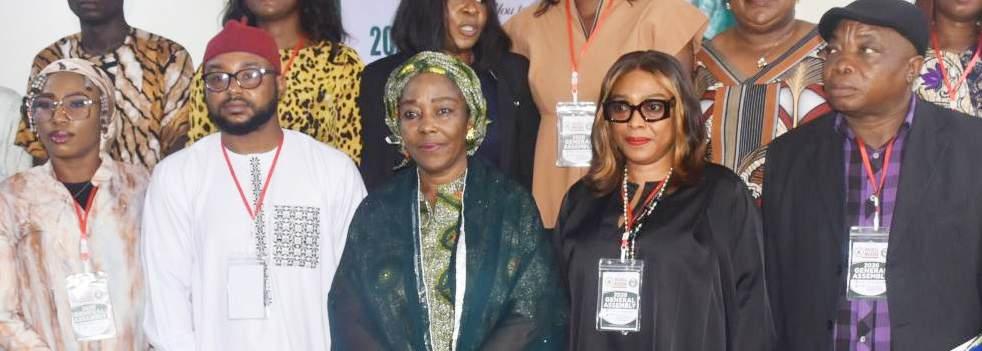
the
Onuminya Innocent
The Kebbi State chapter of the African Democratic Congress (ADC), has accused the All Progressives Congress (APC)
government of deploying state institutions to intimidate opposition leaders ahead of the 2027 general election, insisting that the prosecution of former Attorney-General
of the Federation, Abubakar Malami, SAN, was politically motivated.
In a statement jointly signed by the State Chairman, Sufiyanu Bala, and the Chairman of the
ADC Elders Forum, Shehu Aliyu Sambawa, the party said it was not opposed to lawful investigation but condemned what it described as “Gestapo methods” of muzzling
Folalumi Alaran in Abuja
High Chief Government Oweizide Ekpemupolo has urged Nigerians to support the re-election bid of President Bola Tinubu to enable him to consolidate ongoing reforms for the benefit of the country and its economy.
for the Bar, stating that some other persons might still go through great extent to rubbish the association.
While appealing to winners to be magnanimous in victory, and celebrate moderately, he urged members to see the period as a time for healing, adding that, "At the end of the day, let the Bar be the winner."
Osigwe disclosed that the ECNBA would carry out an indepth analysis, especially the challenges encountered, so as to come up with recommendations that could engender greater confidence in the association's electoral process.
"The cyber attack shows that we must do more not only for data protection, but to protect our electoral integrity. We must insulate our electoral process from such activities.
"Someday the story will be told of how the ICT system had to be rebuilt and moved to a safer server to ensure that the election held.
"The Bar must always protect its independence and eternally determine the course of its electoral process," the outgoing
Ekpemupolo made the call in a statement in Abuja and signed by the National Coordinator of the President Bola Ahmed Tinubu Door-toDoor Movement, Comrade Sunday Adekanbi Asuku. Ekpemupolo stated that the economic and structural
NBA President added.
Also speaking, the newly elected president, has assured the NBA that she would prioritise the welfare of lawyers and build an association where members could enjoy better earnings, improved working conditions and enhanced professional opportunities.
Badejo-Okusanya gave the assurances in a message posted on X yesterday after she was declared winner of the NBA 2026 national officers’ election.
The senior lawyer while thanking members of the bar, described her victory as a collective achievement for lawyers, who believed in a more inclusive, responsive and progressive NBA.
“Today, I stand before you with a heart full of gratitude and a deep sense of responsibility. I am honoured by the confidence members of the Nigerian Bar Association have placed in me by electing me to serve as your President.
“Thank you for believing in our shared vision of A Bolder Bar That Works for Everyone. This victory belongs to every member who believes our
reforms being undertaken by the current administration were beginning to yield results, as evidenced by increased foreign investment, growth in the Nigerian capital market, and improved fiscal autonomy for sub-national governments, among other gains.
Association can become stronger, more inclusive, more responsive and better equipped to protect the interests of all lawyers,” she said.
She urged members to move beyond the election and work together for the advancement of the legal profession, just as she congratulated the other contestants for contributing to a credible democratic process and expressed readiness to collaborate with them in strengthening the NBA.
“The election is behind us. We are one Bar, bound together by our commitment to justice, the rule of law and the growth of our profession. I look forward to working with everyone in building an Association that reflects the highest ideals of the legal profession.
“This is not the end of a campaign but the beginning of a greater responsibility. I will serve every member of the Nigerian Bar Association with courage, humility, fairness and accountability.
“Together, we will build an Association where every lawyer has the opportunity to earn better,
“The President has started so many economic reforms, the benefits of which we are beginning to see. These reforms are now delivering tangible results, as shown by key economic indicators, including Gross Domestic Product and other macroeconomic indices.
live better and practise better.
The work starts now,” she said.
Presidential candidate of the African Democratic Congress (ADC), Atiku Abubukar, has congratulated Badejo-Okusanya as the newly elected NBA president.
In a statement personally signed, he said, ''I congratulate Mrs. Oyinkansola BadejoOkusanya, SAN, on her election as the 33rd President of the Nigerian Bar Association.
''Her victory reflects the confidence of the Bar in her leadership and marks another significant milestone for women in the legal profession.”
He said that the NBA remained a critical pillar in the defence of constitutional democracy, the rule of law, human rights and judicial independence.
''I urge the new leadership to uphold these values with courage and independence while advancing equal access to justice for all Nigerians. I wish
opposition voices across the country.
The ADC leadership declared that no amount of “political persecution, suppression, blackmail or intimidation” would derail its resolve to unseat the APC government in 2027. The party said its eyes remained fixed on what it called “the big goal” of defeating the ruling party at the polls.
According to the statement, the fundamental objective of the APC at local, state and national levels in the build-up to 2027 was to make opposition politics unattractive at best, and unbearable at worst.
The party argued that Nigerians have already rejected
Mrs. Badejo-Okusanya and her team a successful and impactful tenure,'' he said.
Prominent legal luminary, Kemi Pinheiro, SAN, has challenged the newly elected President of the NBA, Badejo-Okusanya, to make organisational unity her immediate priority as she takes the helm of Africa's largest legal body.
In a congratulatory message, Pinheiro described BadejoOkusanya's victory as a historic milestone that reflected the confidence of members of the legal profession in her vision, leadership and unwavering commitment to the Bar.
He expressed confidence that the President-elect would bring to office the same excellence, inclusiveness and bold leadership that have distinguished her career.
Pinheiro stressed that the foremost challenge before the
the APC because of anti-people policies and programmes.
“We wish to inform all and sundry that no amount of political persecution will take our minds and eyes away from the big goal, that is, to defeat the discredited APC Government at the polls come the 2027 General Elections,” the statement read.
The ADC further alleged that the misuse of anti-graft agencies and the “weaponisation of a section of the court system” have alienated Nigerians from the APC.
It expressed optimism that the ruling party would be consigned to history by noon on election day in 2027, “In Sha Allah.”
incoming NBA President was to heal the divisions within the Association, noting that the Bar was currently polarised along generational, ideological and personal lines.
According to him, rebuilding trust and fostering a cohesive, inclusive and purpose-driven Bar should be at the heart of her administration, as a united Association would be better positioned to defend the rule of law, promote the welfare of lawyers and serve as a stronger voice for justice and good governance in Nigeria.
"The Bar is currently polarised along several lines— generational, ideological and sometimes personal. Healing these divisions and building a truly cohesive, inclusive and purpose-driven Bar must be at the heart of your agenda," Pinheiro stated.
He added that a united NBA would be better equipped to protect the rule of law, advance the welfare of lawyers and effectively champion the cause of justice and good governance in the country.
Borno family. The couple apparently had a quarrel, and the following morning, domestic servants and the children said Nafi’u behaved in a weird manner, told them he lost his house keys, asked his cook to open the kitchen door, and was seen putting soiled blankets and clothes into the boot of his car. He then handed the keys to his cook and said he should give them to his wife whenever she woke up, that she was still asleep. Hours later, his children and the cook, anxious that she had not yet emerged, went upstairs, forced open the door and found her dead.
Nafi’u Rabi’u was tried at the High Court of Kano State. Very controversially, the trial judge, former Chief Justice of Northern Nigeria Justice J.R. Jones, a Whiteman, said the prosecution failed to prove beyond reasonable doubt that she died from strangulation. He then discharged and acquitted Nafi’u Rabi’u. It was also Justice Jones’ last case because he retired soon after and left the country. As soon as Mohamed Abubakar Rimi became Governor, Kano State Government appealed to the Federal Court of Appeal, which overturned the acquittal but sentenced him to four years’ imprisonment for culpable homicide, which also became controversial.
The Court of Appeal found that the trial judge failed to properly evaluate the evidence before him. Consequently, it overturned the acquittal and convicted Nafi’u Rabi’u, saying the death must have resulted from a fight. Both Rabi’u and Kano State Government appealed to the Supreme Court, one to get the judgment reversed, the other to obtain a death sentence instead of a jail term. As the case unfolded, Kano State Government controversially withdrew its cross-appeal, while Supreme Court dismissed Nafi’u’s appeal and affirmed his four-year sentence.
of the field, is a detail that would be visible to the public when the agreement is gazetted, and/or passed into law as the NLNG incentives were.
What is no longer in dispute is what the NLNG tax holiday and evergreen incentives brought.
It persuaded international shareholders to commit $7.5 billion to build the first two production trains, with Nigeria contributing $2 billion of its own.
That initial trust has since grown into five additional trains and a further $30 billion in capital investment — a single seed that became an orchard.
Counting the Harvest, Honestly
By NLNG's own published "Facts and Figures," the project has generated nearly $130 billion in sales revenue since 1999. It is worth understanding which of these figures represent money that landed directly in the government's hands, and which represent broader economic activity that the project set in motion — the difference between the fruit you can hold and the shade the tree provides to everyone standing under it.
Direct fiscal revenue to government has included over $22 billion in dividends, roughly $10 billion in Company Income Tax and Education Tax paid after the ten-year holiday expired, about $0.6 billion in PAYE, $2 billion in withholding tax, and $2 billion in VAT and port charges — a genuine fiscal harvest north of $36 billion, against Nigeria's original $2 billion stake.
Broader economic activity - separate from, but no less real than direct fiscal revenue - includes some $21 billion in feedgas purchases paid to the government and $10 billion spent on local goods and services. These represent economic activity that would not have existed at all had the project not moved.
Sensationally, Justice Udo Udoma, who delivered the ruling, declared that Supreme Court wished it could hand down a death sentence instead but that its hands were tied because KNSG withdrew its cross appeal.
In March 1988, newspaper headlines in Nigeria were dominated by the case of Sergeant Israel Ameh, a police officer guarding the residence of then Inspector General of Police Muhammadu Gambo Jimeta. According to reports at the time, expensive jewelry belonging to the IGP’s wife was stolen in the house. Police suspected Ameh, who was detained, allegedly tortured and he died in detention. It was military rule era and IGP was a member of the Armed Forces Ruling Council, so the police probe of the incident did not go down well with the public.
Before you get the impression that it is only Nigerian men who do the alleged killings, remember the case of Maryam Sanda, who in 2017 murdered her husband, Bilyaminu Bello, by repeatedly stabbing him with a knife while he knelt in late night prayer at their Abuja home. A Federal Capital Territory High Court in Abuja convicted her in January 2020 and sentenced her to death. She went to the Court of Appeal but in December 2020, the judgement was affirmed. In December last year, the Supreme Court upheld the death sentence. Some weeks earlier, Maryam was about to walk free because she controversially featured in a presidential amnesty roll. Following loud public outcry, the President reversed the pardon but still commuted her death sentence to twelve years’ imprisonment, with six years already served. Despite the presidential rigmarole, the Supreme Court, by a 4-1 majority, upheld the death sentence in December 2025. The apex court also said it was wrong for the president
A market that never opens sells nothing to anyone.
Layered on top of both are the harder-to-price, easier-to-feel benefits: LPG supply at a time when domestic refineries had gone quiet since 2008; 1,500 direct and 5,000 indirect Nigerian jobs; twenty-four-hour electricity in Bonny Island, where much of the country still measures light in hours rather than assuming its constancy; and roughly half the cost of the ₦280 billion Bonny-Bodo Road.
In 2015, NLNG's first CIT payment — at $2.1 billion, the largest single Company Income Tax payment in Nigeria's history - arrived at the exact moment that the federal and state governments needed it to pay salary arrears. It became, in effect, an unplanned bailout fund, proof that a well-timed harvest can matter as much as a large one.
It bears saying plainly: these are NLNG's results, achieved over twenty-five years under its own specific terms. They demonstrate what unlocking stranded capital can do.
What Bonga SW delivers over time will depend on its own execution, timeline, and oversight. But the key is to unlock it now rather than to continue to leave it stranded. The country needs it during these challenging times.
Nigeria Is Not Alone in This Calculation
Every major hydrocarbon nation competing for scarce global capital has reached for similar tools, each shaped to its own circumstances:
• Guyana offered ExxonMobil a 2% royalty on its Liza, Payara, and Yellowtail projects, an unusually fast cost-recovery ceiling of up to 75%, exemption from corporate income tax, and a promise that fiscal terms would not change for the life of the contract.
• The United Kingdom ring-fenced
to seek to grant a pardon to the convict in a culpable homicide case in respect of which an appeal was still pending. Murders that Nigerian men can do, Nigerian women can do even better. In 2021, there was the highly publicized case of the killing of Usifo Ataga, CEO of Super TV, in a rented apartment at Lekki, Lagos. The police arrested Chidinma Adaora Ojukwu, a 300-level Mass Communication student at the University of Lagos, who confessed to the fatal stabbing of Ataga. Though she admitted to stabbing Ataga, she claimed that she did it in self-defense following a struggle over hard drugs. After killing him, Chidinma also took away the victim’s ATM cards and iPhone. Police paraded Chidinma before newsmen, said she was caught with a blood-soaked cloth worn on the day of the incident and that she confessed to stabbing the deceased with a kitchen knife, which she took away and disposed in a dustbin at her residence. Also found on her were a fake driver’s licence bearing Mary Johnson, complimentary cards, Access Bank account statement, one Nigerian passport, the suspect’s photograph, one National Identification Card, one UBA ATM debit card and University of Lagos identity card.
In April last year, yet another sensational murder case reached a climax when a Federal Capital Territory (FCT) High Court in Abuja sentenced Peter Nwachukwu, husband of late popular gospel singer Osinachi Nwachukwu, to death by hanging for her murder. He had been charged to court by the Attorney General of the Federation in June 2022 for culpable homicide punishable with death, criminal intimidation, cruelty to children, criminal intimidation of children and spousal battery. The court found Nwachukwu
its North Sea reliefs so upstream profits from Shell's Victory gas field could not be diluted by unrelated losses elsewhere in the business — a roughly 90% saving that made the field's economics work.
• The United States used federal and state tax credits alongside immediate expensing of drilling costs to make its Gulf Coast carbon-capture and blue hydrogen megaprojects viable for ExxonMobil.
• Norway paired tax credits with accelerated depreciation and refundable exploration credits to bring its Northern Lights offshore electrification and CCUS projects to life.
None of these governments handed away their patrimony. Each simply recognized that a smaller share of a project that is executed is worth more than a full share of one that remains stranded.
What This Should Not Become
Another worry beneath the "unusually generous" critique is about precedent. Nigerians have, through experience, become worried about what a generous deal for one investor becomes once every investor expects the same.
The President had reaffirmed that the incentives are not blanket concessions but will be ring-fenced and focused on new capital, incremental production, and strong local-content delivery. This safeguard is that megaproject terms like this would remain ring-fenced to genuinely exceptional cases — defined by scale, technical difficulty, production, and the years a field has already sat stranded — rather than becoming the new floor for ordinary developments.
If four or five such megaprojects do emerge, each carrying $20 billion in investment, that is not fiscal generosity escalating out of control; it will be $100 billion in foreign direct investment,
guilty of culpable homicide resulting from the death of the celebrated singer on April 8, 2022.
While delivering his judgment, Justice Nwosu-Iheme held that the prosecution had proven the burden of proof placed on it by the law and subsequently found the defendant guilty. 17 witnesses including the late singer’s two children testified for the prosecution. Nwachukwu was in addition sentenced to two years’ imprisonment each on seven other counts, to six months’ imprisonment on Count 10, three years’ imprisonment in Count 11, and was fined N500,000 and N200,000 respectively on Counts 6 and 7 respectively.
Now comes the case of Mary Habila, the nurse on the entourage of Works Minister Dave Umahi during a visit to his country home in Ebonyi State, who was found dead one morning. We cannot yet call this one a murder, because the results of police and other investigations are not yet in. It has however generated almost as much sensation as the previous cases, because the death occurred in a minister’s house, people are asking why a nurse travels with a minister’s convoy, why she lodged in his house [Minister said it is not his main house, but a staff chalet], why the Minister is making statements at a press conference instead of to an investigation panel, why the Presidency is slow to take action to facilitate the investigation, why the Chairman of Habila’s native Jaba Local Government in Kaduna State, Larai Sylvia Ishaku, is pre-empting the investigation by her remarks during a condolence visit to the family, and also why Mary Habila’s father is refusing to allow an autopsy to determine the cause of death, and is instead demanding her remains for a hurried burial. Please, don’t allow this case to lengthen the ugly roll of mysterious Nigerian deaths.
jobs, and local content flowing into an economy that badly needs all three.
The government's part would not end with signing the incentive. NLNG's history is a reminder that stranded capital is unlocked by more than fiscal terms alone — customs clearance that doesn't stall at the port, regulators who move at the pace of the investment rather than the pace of the bureaucracy, and agencies genuinely aligned behind the strategic value of the project.
An offshore field like Bonga South West is spared the security and communityrelations complexity of an onshore development, which makes it a more forgiving test case — but the rest of the machinery must keep pace with the fiscal generosity already on the table.
Building Trust, Not Just a Field
One other lesson that NLNG offers, one that matters more than the dollar figure, is that transparency compounds trust the way an oilfield compounds revenue, slowly, then significantly. NLNG's own public "Facts and Figures" disclosures are precisely what make this comparison possible today.
The same standard — regular, public reporting on Bonga South West's investment milestones, production startup, and fiscal remittances — would let Nigerians know that this incentive is doing what it was designed to do: create value, and that it is not a giveaway or a revenue loss.
It is what a quarter-century-locked vault finally being opened looks like: a considered, well-precedented bet that a smaller share of something real will always outweigh the whole of nothing at all.
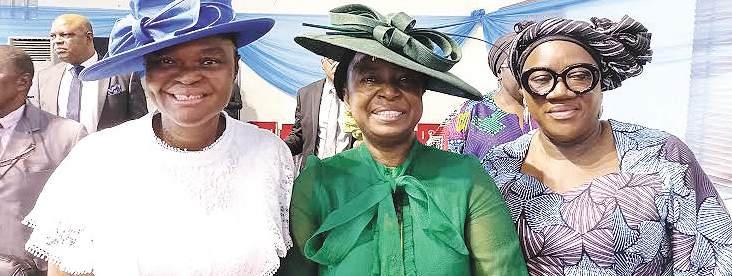
l-R: Wife of the Pastor-in-Charge of Province, Redeemed Christian Church of God (RCCG), lagos Province 36, Pastor (mrs) Ebun dania; Guest Preacher/author, Pastor yomi adewale, and Pastor (mrs) oluwakemi Shofu of the RCCG, lagos Province 113, during the Thanksgiving Service to mark the 2026 Sisters’ Conference at the RCCG Jesus House Parish, lagos Province 36 Headquarters, ajao Estate, lagos…yesterday
Hammed Shittu in Ilorin
Ahead of the 2027 general election, the Vice Chancellor of Al-Hikmah University, Ilorin, Kwara State, Professor Lateef Folorunsho Oladimeji, has called on Nigerian professors appointed by the Independent National Electoral Commission (INEC) to supervise the conduct of the elections to resist any attempts by politicians to use them to
manipulate the outcome of the polls.
Oladimeji, who spoke with journalists in Ilorin on the sidelines of his first year in office, urged the professors to see electoral assignments as a national service that demands honesty, courage and unwavering commitment to justice.
According to him, “The electoral body deliberately engages professors and vice chancellors because of the
Segun Awofadeji in Bauchi
The Organisation of African Instituted Churches (OAIC) has expressed grave concern over aspects of the proposed amendment to the Federal Road Safety Commission (FRSC) Bill that reportedly classify preaching on commercial vehicles alongside hawking and others as prohibited activities.
OAIC considers it insensitive and inappropriate to equate the peaceful proclamation of the gospel with commercial hawking. While recognising the need to ensure safety and order on Nigerian roads, the association maintains that
preaching is a constitutionally protected exercise of the rights to freedom of religion and freedom of expression, and should not be treated as a criminal or commercial activity.
This is contained in a statement issued and signed by Elder Israel Akinadewo, president, Organisation of African Instituted Churches (OAIC), Nigeria Region, and made available to journalists at the weekend.
The association noted that for many years, preaching on commercial buses has served as a legitimate avenue for sharing messages of faith, hope, morality, repentance, and peaceful coexistence.
As part of her continued commitment to women empowerment and community development, the Special Assistant to the Governor of Delta State on Women Mobilisation, Oghenede Emmanuella Ufuoma, has rolled out a series of impactful humanitarian initiatives, including educational support for students, financial assistance for vulnerable residents, youth development programmes, and the donation of wrappers and
relief materials to over 100 widows in Delta state. The interventions underscore her commitment to enhancing the well-being of widows and students by providing support, educational opportunities, and community-driven empowerment programmes. Specifically, she recently carried out a student sensitisation programme at Ekakpamre Grammar School in the Ekakpamre Community, Ward 7, Ughelli South Local Government Area (LGA).
confidence Nigerians have in the academic community as a body of disciplined and incorruptible professionals.”
He pointed out that the umpire of the election in Nigeria must have studied the various groups in the
country and concluded that academics are among those who should be regarded as incorruptible; that is why professors and vice chancellors have continued to play important roles in election management.
Oladimeji commended many academics who had discharged election responsibilities creditably over the years, saying they had helped strengthen public confidence in Nigeria’s democratic process.
He, however, acknowledged that a few professors had compromised their integrity during previous elections, stressing that such individuals do not reflect the values and ethics of the academic profession.
The Benue State Police Command has announced fresh arrests in connection with the assassination of Prof. Gabriel Saawua Nyityo and his younger brother, Iorngee John Nyityo, saying investigations have extended beyond the principal suspect to other members of the alleged gang.
The Command also dismissed widespread rumours that suspected bandits had mounted roadblocks along the Makurdi-Lafia highway
and were targeting Benue State travellers, describing the reports as false and deliberately circulated to cause panic.
The state Commissioner of Police, Cletus Nwadiogbu, disclosed this yesterday while briefing journalists at the Command headquarters in Makurdi on breakthroughs recorded by the police in recent weeks.
Nwadiogbu said the killings of the professor and his younger brother in Adaka community
on July 8 were carefully planned assassinations rather than a robbery attack.
He explained that after receiving the distress call at about 2 a.m., operatives from the ‘D’ Division immediately mobilised to the scene where they recovered the bodies of the two victims.
According to him, the Command immediately placed all divisions and security checkpoints on alert, a move that led to the arrest of
the principal suspect, a 23-year-old Abdullahi Usman from Awe Local Government Area of Nasarawa State, at a National Drug Law Enforcement Agency (NDLEA) checkpoint in Lafia about four hours later.
The police commissioner disclosed that the suspect attempted to evade security by dismounting from motorcycles before every checkpoint and walking across before rejoining the rider.
A political pressure group, Abia Solidarity Forum(ASF), has raised concerns over what it described as an alleged plot to drag business executive and Labour Party aspirant for Bende Federal Constituency, Hon. Chima Anyaso, into politically motivated fraud allegations through the alleged misuse
of government institutions.
Those institutions, according to the group, are the Economic and Financial Crimes Commission (EFCC), the Nigeria Police Force, the Department of State Services (DSS) and other public agencies.
Addressing journalists yesterday, the ASF’s
spokesperson, Chijioke Okwuoha, alleged that the organisation had received credible intelligence suggesting that certain political interests were preparing coordinated petitions and media campaigns designed to portray Hon. Anyaso as being under investigation for financial crimes ahead of political activities in the constituency. According to the group, the alleged plan is intended to distract the businessman and philanthropist while creating a negative public perception capable of influencing political opinions.
Ayodeji Ake
The Development Agenda for Western Nigeria (DAWN) Commission has partnered with the Egbe Omo Yoruba North America (EOYNA) to build a structured channel through which Yoruba in North America can invest
in Southwest Nigeria.
The partnership, which is being undertaken through EOYNA’s investment arm, Synergy, will direct investments to sectors that can open opportunities to skilled youths as well as real estate and others.
A statement issued by the DAWN Commission’s
Director-General, Dr. Seye Oyeleye, l noted that the partnership would channel diaspora capital into three priority areas - start-ups, real estate and Nigerian government bonds.
The DAWN commission has already concluded arrangements to establish a technology hub in Ibadan,
the Oyo State capital, where technology-savvy youths will incubate business ideas that can be funded through the Diaspora capital. According to Oyeleye, bankable business ideas will be funded at a single-digit interest rate to ensure the survival of such businesses.
Sunday Okobi
The Odionwere of Iru community in Orhionmwon Local Government Area of Edo State and the Elders-inCouncil have declared that the Iru people did not agitate or request to be part of the proposed Anioma State.
The leaders of the community were responding to reports on social media that they are clamoring for Iru to join the proposed Anioma State.
In a statement issued and signed by the Odionwere of Iru Community, Pa James Osakwe,
and the President-General of the Elders-in Council, Mr. Emmanuel Mordi, which was made available to THISDAY yesterday, the people said: “Having read the spurious campaigns on the social media, we as a community wish to state as follows: ‘that
Iru people did not agitate or request to be part of the new Anioma State through any mass media, and we hereby rebut the stories making rounds in the social media especially a video purporting that Iru people canvased to be in the new Anioma State.”
Duro Ikhazuagbe
Champions of Europe, Spain, defeated defending champions Argentina 1-0 on Sunday night to win the 2026 FIFA World Cup inside the MetLife Stadium in New Jersey, New York. After a lackluster 90 minutes regulation time that was characterized by the South Americans playing more of defending game, in the 105th minute, Ferran Torres, lashed into the roof of the Argentina net from a
Nico Williams cutback header for the only goal of the final.
The victory was a fitting conclusion for the European champions who like in 2010 when they won their only title at the World Cup in South Africa, had another player, Enzo Fernandez, sent off. At South Africa 2010, they beat the Netherlands with 10 men after John Heitinga was similarly sent off.
And so, Argentina failed in their bid to emulate Brazil who won the trophy back-
Nigeria’s Afrobeat Star, Burna Boy, and Colombian pop star, Shakira, reunited on stage last night after performing together at the tournament’s opening ceremony in Mexico City last month.
Their collaboration, Dai Dai, has become a global chart hit and was a fixture in stadiums throughout the tournament in North America.
Despite the Super Eagles not qualifying for the 2026 World Cup, Burna Boy’s presence on the stage with Shakira during the final match halftime show last night was exhilarating, and joy to Nigerians watching the tournament’s last match at the stadium and on television around the world.
Although the show didn’t
last more than 11 minutes of the earlier projected 25 minutes, it was greeted with aplomb.
Madonna was escorted to the stage by two of Brazil’s iconic stars, Ronaldinho and Ronaldo de Lima. Many international stars like Justin Bieber, BTS and the PS22 Chorus also featured in the show. Others include; Laura Pausini, Nicole Scherzinger, and internet phenomenon IShowSpeed were also on parade. Jennifer Hudson performed the American anthem.
The show was curated by Coldplay’s Chris Martin and was used to raise money for the FIFA Global Citizen Education Fund, an initiative working to raise $100m (£73m) for children worldwide.
Mixed Martial Art UFC CEO, Dana White, has insisted that Kamaru “The Nigerian Nightmare” Usman’s career is not over yet despite losing to South Africa’s Dricus Du Plessis in Oklahoma City early hours of Sunday morning.
It was a tough night at the office for the former welterweight champion Usman, who took five rounds of serious damage at the fists and feet of Dricus Du Plessis.
“The Nigerian Nightmare” was wobbled badly multiple times, but somehow managed to stay upright and conscious through the 25 minute fight.
At the end of the bout, judges handed out 50–45, 49–46, and 49–46 scores in favour of Du Plessis.
But asked about the chances of Kamaru Usman to pick up the pieces of his failing career, Dona White said that
it was left for the Nigerian to decide but does not believe he is finished yet.
“I don’t know,” White said. “Obviously a great fight, fighting a much bigger guy, and he’s got a great chin. He’s still got it. It’s not like, ‘Oh, Usman’s done and he should retire.’ He had a great fight tonight. So I don’t know. He’s got to go home, rest, heal up, and figure out what’s next.”
Yes, Usman had a better performance in the 5th than any other round. But Du Plessis nearly finished the fight early on, just like he nearly finished the fight multiple other times across the bout.
DDP’s domination of Usman was so thorough that it was hard not to wonder whether Usman, who took his gloves off after the fight, was about to announce his retirement.
to-back in 1958 and 1962. Argentina won their third World Cup four years ago in Qatar.
For Lionel Messi, it appears sun has set on his illustrious career as he will be 43 at the next World Cup in 2030 to be jointly hosted by Spain, Portugal and Morocco. Last night, he finished the final with 54 touches, but just one shot off target. Messi also lost the chance to become the tournament’s highest scorer to France’s Kylian Mbappé who scored 10 goals , two more than Messi.
On a day that Spain’s La Roja dominated the game from the blast of the whistle, it would have been very painful for the Europeans and their fans to lose the match. Statistics clearly showed Spain in perfect controls of the game with 20 shots in favour against only three from Argentina. Their 11 shots on target only produced one goal with the Albiceleste having zero goal on target.
Five yellow cards plus one red card given to Argentina with only one to Spain again
showed the desperation by the South Americans to cut corners to the trophy.
Deep into the extra time, after the lone strike by Torres, the Barcelona forward again appeared to have seal the victory when Spain got the ball on a counter-attack, and was all alone as he raced toward the goal and beat Emiliano Martínez again for an apparent 2-0 lead. But He was ruled offside by a shoulder, and Spain was left to survive a few wild minutes as Argentina, at
last, produced two shots that threatened to forge a tie in the final moments. But they were clearly off target. Argentina played with 10 men for the final 30 minutes after Fernández was sent off for picking up his second yellow card after his challenge sent Spain’s Pau Cubarsí flying, head over heels.
Spain whose women’s national team are the world champions have now added the men’s title and will reign for the next four years till the next mundial.

Kylian Mbappe has become the first player to win the World Cup Golden Boot twice after earning the award for top scorer at the 2026 tournament.
The France forward netted 10 goals in eight games to edge out Lionel Messi in a high-quality race.
Spain’s Unai Simon claimed the Golden Glove award for best goalkeeper after conceding just once in eight games. Another Spain player, Pau Cubarsi was selected as the Young Player of the Tournament at just 19 years while
Manchester City midfielder Rodri, a key figure in Spain’s run to a second men’s World Cup triumph, was named Best Player.
Having struck eight times to finish top scorer at Qatar 2022, Mbappe has won the Golden
Boot in back-to-back World Cups.
The 27-year-old was the first man to reach double figures for World Cup goals since Gerd Muller for West Germany in 1970.
Only Just Fontaine, who hit 13 for France in 1958, and Hungary’s Sandor Kocsis with 11 in 1954, have scored more individual goals in a single tournament.
Mbappe is also the men’s World Cup all-time top scorer with 22 goals - one ahead of Messi.
He moved clear of the Argentine on Saturday with two goals in the bronze match, although he could not stop France falling to a 6-4 defeat against Englandand finishing fourth.
Mbappe also scored twice against Senegal and Iraq in the group stage, as well as Sweden in the last 32.
He followed that with strikes
against Paraguay in the last 16 - the 70th-minute winner from the penalty spot - and against Morocco in the quarter-finals.
Messi could have overtaken the Real Madrid forward with a hat-trick in the World Cup final on Sunday.
However, the 39-year-old could not find the net in New Jersey as his Argentina side were beaten 1-0 by Spain, and ended
the competition with eight goals in as many matches.
England’s Jude Bellingham and Erling Haaland of Norway scored seven times, while France forward Ousmane Dembele and English captain Harry Kane followed them in the list with six.

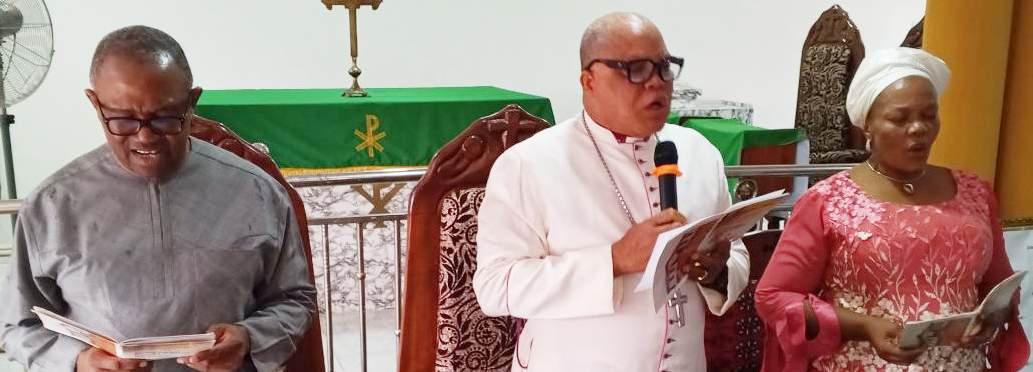
The death last month of Kaduna State-born nurse Mary Habila in a powerful Federal Minister’s country home in Ebonyi State has already caused shock and mystery around the country, but it is only the latest in a string of such mysterious deaths linked to power and wealth in Nigeria over several decades.
As schoolboys in the 1970s, we were regaled by a running story, especially in the now defunct New Nigerian newspaper, of the Kaduna based private legal practitioner Alhaji Rauph Omobolaji Gaji, who was accused of killing his girlfriend, Cordelia Ejiofor. He was said to have beaten and kicked her with his legs and fists at his Kaduna home on 3rd day of December,

Habila
1972. He was charged before a Kaduna High Court; leading the prosecution was
the then Attorney General of North Central State, Mamman Nasir [later Supreme Court judge and still later, President of the Court of Appeal]. The star prosecution witness, Mrs. Gladys Ibidun Wey, a client of the appellant who happened to be in his house that night, witnessed the severe beating. She testified that when Gaji emerged from his bedroom after the beating, he offered to take the girl to Kakuri General Hospital, that she got into the car with him and held Cordelia, who she said died on the way to the hospital.
According to Mrs. Wey, Gaji then dropped her on the road and drove away at high speed with the corpse. Which was never found, although police
recovered some human remains along Kachia Road which were thought to be Cordelia’s. At his trial, Gaji refused to enter a plea, refused to call any witnesses and refused to testify. There was therefore no autopsy and no medical report, so the High Court judge sentenced Gaji to 12 years for manslaughter, saying the beating was only a probable cause of death, which the Supreme Court later upheld.
Years later, in the late 1970s, there was the very sensational case of wealthy Kano businessman Alhaji Nafi’u Rabi’u, who was accused of strangling his wife, Hajiya Fati, herself the daughter of a prominent
Bloomberg recently reported that the Federal Government has agreed to an $11.5-per-barrel tax incentive to enable Shell's $20 billion Bonga South West project to finally proceed.
Some commentators have described the tax incentive as "unusually generous" — reportedly double the standard fiscal terms for deepwater projects in Nigeria. They argue that a previous Executive Order had capped such tax credits at 20% of a licensee’s annual tax liability.
It is a fair question to ask.
But before we answer it, it is worth starting with a simple truth: an untamed river does not irrigate any farm; a locked vault, however full, pays no one's school fees.
That is the essence of "100% of zero
is zero."
The Bonga South West field — 150,000 barrels a day, discovered in 1995 — has sat stranded since 2010. This is nearly two decades of idle oil that has paid no dividends, created no jobs, and funded no roads, simply because it has never been allowed to flow.
Nigeria does not have the capital or technical means to develop it alone.
Meanwhile, capital that could have come here has instead gone to Mozambique, Guyana, Brazil, and Angola — countries that made their fiscal terms attractive enough to compete for it.
The Petroleum Industry Act has considerably improved our fiscal and regulatory climate, but amendments are still being considered to further
enhance it. But legislative amendment of this nature is a slow tide, and yet the world's shift away from hydrocarbons will not wait for us to finish adjusting the sails.
A Vault That Sat Locked for a QuarterCentury Nigeria has been here before, and the story is worth telling plainly because it did not end the way skeptics had feared in 1989.
The Nigeria LNG project was first imagined in 1965. For nearly twenty-five years, it went nowhere — one false start after another — until 1989, when NNPC, Shell, Total, and Agip finally signed the NLNG Shareholders' Agreement.
What broke the deadlock was not swagger, persuasion or goodwill; it was the Nigeria LNG Act, which offered
concrete, time-bound incentives: a tenyear exemption from company income tax, alongside other evergreen incentives, exemptions and guarantees designed to give investors the confidence that the ground would not shift beneath a multi-decade, multi-billion-dollar commitment.
To be precise, because the honesty of the comparison depends on it: NLNG's incentive consists of both a holiday - a ten-year runway after which full company income taxation resumed, as well as some permanent exemption from tax, fees, and levies.
Whether the Bonga SW arrangement is only a time-bound design, or is structured as a standing per-barrel term for the life