BoI Gets $200m AfDB Support to Expand Financing for SMEs, Women, Youth Enterprises
Olasupo Olusi: intervention will strengthen local manufacturing, support country's transition towards more resilient, sustainable economy
Signs agreement with IFC to assess development of major conference, exhibition hub in Abuja
James Emejo in Abuja and Nume Ekeghe in Lagos Bank of Industry (BoI) has secured a $200 million sovereign-
Fresh Ebola Outbreak: WHO Declares Health
Senate Moves to Fast-track State Police After Fresh Borno, Oyo Schools’ Abductions
Bamidele says constitutional amendment nearing completion Afenifere horrified by terrorists’ invasions IGPorders deployment of additional tactical, intelligence assets to Oyo US advises citizens on safety after killing of terrorist commander in northern Nigeria
Michael Olugbode,
Leader of the Senate, Opeyemi Bamidele, yesterday, condemned the abduction of 87 students and
teachers in Borno and Oyo States, declaring that the incidents had further strengthened the resolve of the National Assembly to
fast-track the establishment of state police across the country. Bamidele, who is also the Vice Chairman of the Senate
Committee on the Review of the 1999 Constitution, described the attacks on schools as a direct assault on Nigeria’s future and
warned that the country could no longer tolerate the growing
Uneasy Calm at APC After First Phase of Primaries Across Nigeria
Party issues guidelines, procedure for collating, announcing results Winners' list on page 29
Segun Awofadeji in Gombe, Hammed Shittu in Ilorin, James Sowole in Abeokuta, Adedayo Akinwale in Abuja, Okon Bassey in Uyo, Fidelis David in Akure, Sylvester Idowu in Warri, Benjamin Nworie in Abakaliki, Gbenga Sodeinde in Ado Ekiti, Ahmad Sorondinki in Kano, Blessing Ibunge in Port Harcourt, Yemi Kosoko in Jos, Boniface Okoro in Umuahia and Felix OmohAsun in Benin
A tense quiet settled over the ruling All Progressives Congress
(APC) at the weekend after the first leg of its nationwide primaries produced winners but failed to produce consensus in many states.
While reports indicated a peaceful ending to the House of Representatives primary elections in some states, where, in most cases, previously endorsed consensus candidates were simply ratified, in many other states, there was stiff opposition to the consensus arrangement, amid alleged
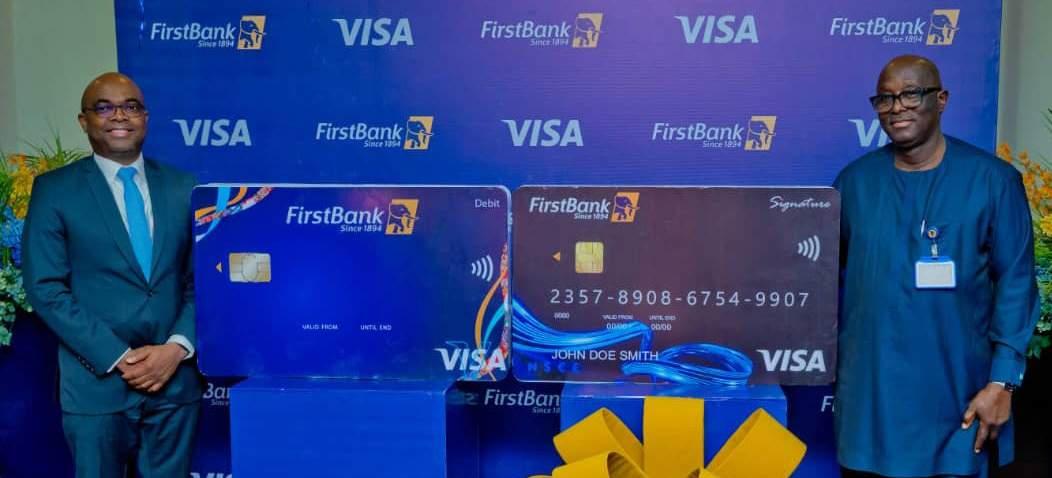
LAUNCH OF VISA SIGNATURE AND NAIRA VISA DEBIT
L-R: Andrew Uaboi Vice President & Cluster Head, West Africa, Visa with Seyi Oyefeso
the
Emmanuel Addeh, Adedayo Akinwale, Sunday Aborisade and Linus Aleke in Abuja
expor tdeskdepar tment@zenithbank.com OR Visit any Zenith Bank branch nationwide and let us suppor t you
Dike Onwuamaeze
Cautions Against Further Monetary Policy Tightening
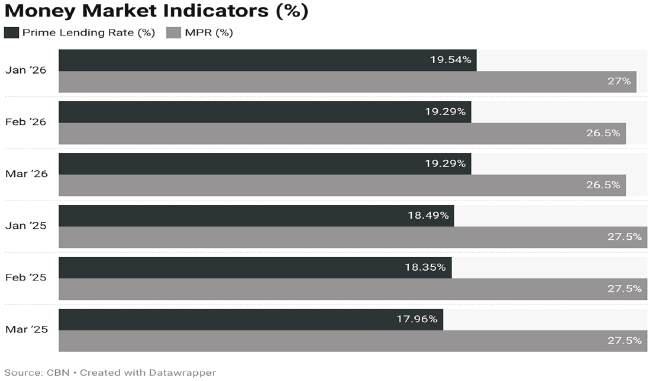
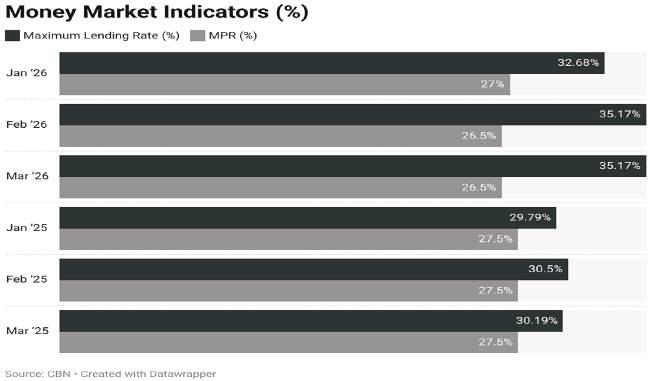
As Monetary Policy Committee (MPC) of Central Bank of Nigeria (CBN) gears up for its 305th meeting, Centre for the Promotion of Private Enterprise (CPPE) has expressed deep concern about the implications of any additional monetary tightening for economic growth, private sector investment, industrial productivity and employment generation.
CPPE expressed the concern yesterday in a press statement,
imposition of candidates.
Nonetheless, APC issued guidelines and procedures for collating and announcing results from the National Assembly primary elections.
National Organising Secretary, Suleiman Argungu, announced the guidelines and procedures in a memo dated May 17, 2026, addressed to all Chairmen of the National Assembly Primary Election Committees.
The party explained that the results shall be collated from ward, local government area, and designated constituency collation centres, and submitted, with reports, to the national headquarters.
The ruling party also barred all committees from conducting media briefings in their respective states during the period.
Argungu added, “Accordingly,
insecurity around educational institutions.
Also, Afenifere, has expressed dismay over the recent attacks on three schools in Oriire Local Government Area of Oyo State last Friday.
This was as the Borno State Governor, Babagana Zulum, has pledged immediate humanitarian intervention and long-term resettlement support for thousands of displaced residents in Monguno following renewed insecurity in parts of northern Borno.
titled, "305th MPC Meeting: Balancing
Inflation Management With
Growth Imperatives."
Chief Executive Officer of CPPE, Dr. Muda Yusuf, observed in the statement that the evolving domestic macroeconomic realities, such as heightened geopolitical uncertainties and emerging fiscal liquidity risks confronting the Nigerian economy might tempt CBN to resort to tightening its monetary instruments.
Yusuf said the resulting surge in crude oil prices was already
no committee is permitted to conduct media briefing within their respective states of assignment. Any official briefing where necessary, shall be conducted exclusively from Abuja after submission of all results.
“Please be guided accordingly." However, uneasy calm remained in many state chapters of the party, with the absence of concession and silence from defeated camps leaving party members bracing for what comes next.
THISDAY monitored the House of Representatives primary elections in some states.
Abia: Kalu, Onyejeocha Win APC Tickets
Abia State chapter of APC
translating into higher domestic energy costs, with significant implications for inflationary pressures, production costs, transportation, logistics and overall business operating conditions within the economy.
He also said early signs of election-related liquidity injections ahead of the 2027 electoral cycle were also becoming increasingly evident.
He said rising political spending by aspirants and political parties, increased election-related expenditures
might be getting over its fears of a potential crisis following the peaceful conduct of the House of Representatives primary elections, during which Deputy Speaker of the House of Representatives, Hon. Benjamin Kalu, and immediate past Minister of State for Labour and Employment, Hon. Nkeiruka Onyejeocha, were returned unopposed.
While Kalu won the APC ticket to return to the green chamber of the National Assembly to represent Bende Federal Constituency for the third consecutive time, Onyejeocha emerged the APC candidate for Isuikwuato/Umunneochi federal constituency in her bid to return to House of Representatives for the fifth term.
Onyejeocha represented the constituency from 2007 till 2023, when she lost to Labour Party's Amobi Ogah currently occupying
and substantially improved Federation Account Allocation Committee (FAAC) disbursements to sub-national governments presented material risks to liquidity management and inflation containment.
All these, which necessitated the recent engagement by CBN with state governments on the inflationary consequences of elevated fiscal injections, further underscored official concerns regarding excess liquidity conditions in the economy.
"Against this backdrop, the
the seat.
Announcing the results of the primary elections Saturday night at the state party headquarters in Umuahia, Chairman of Abia APC National Assembly Primaries Committee, Erasmus Cishak, said the member representing Ukwa East/Ukwa West Federal Constituency, Hon. Chris Nkwonta, clinched the party's ticket, while a former federal lawmaker, Hon. Uzo Azubuike, would be staging a comeback as he emerged victorious in the contest for Aba North/Aba South federal Constituency ticket, which he had represented on the platform of Peoples Democratic Party (PDP).
Other winners, according to Cishak, were a former Speaker of Abia State House of Assembly, Hon. Chinedum Orji, who picked the Ikwuano/Umuahia
MPC is likely to evaluate these developments through the prism of its price stability mandate and inflation management objectives,” he stated.
Yusuf said CPPE "is deeply concerned about the implications of any additional monetary tightening for economic growth, private sector investment, industrial productivity and employment generation."
He pointed out that the Nigerian economy remained fragile and structurally constrained.
North/Umuahia South federal Constituency ticket; Hon. Uzoma Ihuka in Isiala Ngwa North/Isiala Ngwa South Federal Constituency; Hon. Udo Alozie in Obingwa/ Osisioma/Ugwunagbo Federal Constituency; and Hon. Ikenna Nicholas Ukwa in Arochukwu/ Ohafia Federal Constituency. Cishak commended party members and stakeholders for their peaceful conduct during the exercise, and said his committee was fair, transparent and ensured credibility throughout the election process.
Reacting, Kalu described the exercise as rancour-free.
He stated, "You know we had a pre-primary election engagement with the stakeholders. We made it very clear that there would be no automatic tickets. We want to test the popularity of our future candidates who are now aspiring.”
At the pre-primary election engagement last Thursday, party leaders had feared that the unwieldy number of 99 aspirants vying to become candidates to contest for 36 elective positions in 2027 might plunge the party into crisis. They had therefore cautioned against any acts that would lead Abia APC the way of disintegration after the primaries.
Again, Fubara Loyalists Lose, APC Clears Four Aspirants for Rivers Senatorial Seats
Loyalists of the Rivers State Governor, Siminalayi Fubara, on the platform of the APC, seeking to contest the senatorial seats have suffered setback as they failed
Relatedly, the United States Mission in Nigeria has advised American citizens in the country to heighten their personal security awareness and limit unnecessary travel following a joint U.S.-Nigeria military operation carried out on May 16.
In a statement by his Directorate of Media and Public Affairs, the Senate Leader said the latest kidnappings underscored the urgent need to
Nevertheless, the InspectorGeneral of Police, Olatunji Disu, has ordered the deployment of additional tactical and intelligence assets to reinforce ongoing security operations in Oriire council area.
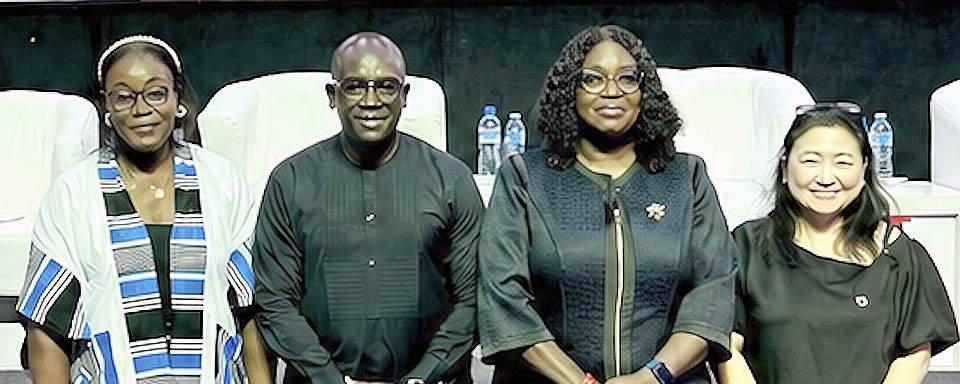
The approval, granted by AfDB Board of Directors, will boost BoI's capacity to provide medium-to-long-term financing to enterprises in sectors considered critical to the federal government's industrial transformation agenda, including infrastructure and transport, agro-food processing, healthcare and pharmaceuticals, as well as green industrialisation.
A major component of the intervention will target small and medium-sized enterprises (SMEs), particularly women-owned and youth-led businesses, with at least 30 per cent of the facility expected to support Nigerian SMEs.
Separately, BoI and International Finance Corporation (IFC) signed a cooperation agreement to advance the development of the Abuja Conference and Exhibition Arena
(ACE Arena), a planned worldclass conference and exhibition complex in Abuja. It further emerged that over the past five fiscal years, IFC had committed $12.8 billion in investments to Nigeria's private sector, including $1.9 billion in long-term financing and $10.9 billion in short-term financing, doubling its infrastructure commitments from $1.5 billion in 2020 to $3 billion in 2025, and supporting tens of thousands of jobs across the continent.
The AfDB financing package also includes a $650,000 technical assistance grant from the Fund for African Private Sector Assistance (FAPA) aimed at improving SME capacity, strengthening environmental, social and governance (ESG) standards, supporting climate-smart
restructure the nation’s security architecture through constitutional amendments that would allow states to establish their own police formations.
Suspected gunmen had on Friday abducted 45 students and teachers from Baptist Nursery and Primary School, Yawota, Community Grammar School, and L.A. Primary School in Esiele, Oriire Local Government Area of Oyo State.
Within the same period, Boko Haram insurgents reportedly attacked Mussa Primary and Junior Secondary School in Askira/Uba Local Government
initiatives and enhancing BoI’s impact measurement systems.
In addition, the Affirmative Finance Action for Women in Africa (AFAWA) initiative will provide technical support to improve access to finance, markets and value chains for women-owned and women-led enterprises.
Managing Director/Chief Executive, BoI, Dr. Olasupo Olusi, described the facility as a major milestone in the bank’s partnership with the African development finance institution.
Olusi said the intervention would significantly strengthen the bank's ability to provide long-term financing to enterprises operating in sectors critical to economic transformation.
Olusi stated that the facility built on the successful
Area of Borno State, abducting 42 students.
Bamidele said the 10th National Assembly was already at an advanced stage of amending the 1999 Constitution to pave the way for the establishment of state police.
According to him, the federal legislature would conclude work on the proposal soon before transmitting it to the state Houses of Assembly for ratification in line with constitutional provisions.
He said, “One of such initiatives is the ongoing review of the 1999 Constitution that seeks to establish state police, which
collaboration between both institutions under a previous $100 million line of credit to BoI, which was fully repaid in 2025.
According to him, beyond financing, the intervention is designed to stimulate industrial growth, expand opportunities for SMEs, empower women and youth-led businesses, strengthen local manufacturing capacity and support the country's transition towards a more resilient and sustainable economy.
He added that BoI remained committed to ensuring that the financing translated into tangible economic opportunities, job creation and inclusive growth across the country.
AfDB said the intervention would also support climateresilient and low-carbon investments, such as renewable
is now at an advanced stage.
“As soon as the National Assembly resumes plenaries on June 2, we will perfect all outstanding legislative initiatives that have been introduced to decisively address security challenges in the federation.”
The Senate Leader explained that after the National Assembly concluded its legislative process, the constitutional amendment would require approval by at least two-thirds of state assemblies before becoming operational.
He appealed to governors and state lawmakers across the federation to treat the proposal
energy, energy-efficient industrial processes, climate-smart agriculture, and sustainable infrastructure solutions.
The bank stated that the investments were expected to improve productivity, deepen local manufacturing, strengthen healthcare and pharmaceutical value chains and reduce Nigeria’s dependence on imports.
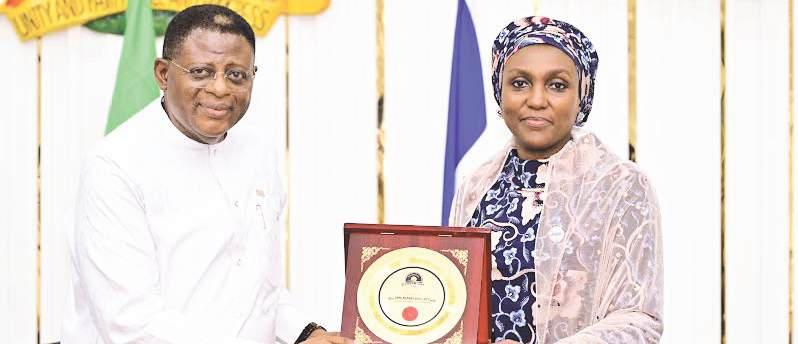
Director-General, AfDB Nigeria, Abdul Kamara, said the approval underscored the institution’s commitment to supporting Nigeria’s private sector and industrial growth ambitions.
Kamara said Nigeria’s industrial transformation required long-term patient capital that commercial banks were often unable to provide, adding that development finance institutions
as a national security imperative rather than a partisan or sectional issue.
Bamidele also urged both federal and state governments to intensify the implementation of the Safe School Initiative pending the creation of state police, noting that insecurity had continued to worsen the country’s out-ofschool children crisis.
According to him, Nigeria currently has about 18.3 million out-of-school children, a situation he said was being aggravated by repeated attacks on schools
are established to bridge such financing gaps.
Director of AfDB Financial Sector Development Department, Ahmed Rashad Attout, said the affordable long-term financing would enhance BoI’s ability to provide competitive loans to SMEs as well as women- and youth-led enterprises operating in high-impact sectors. The bank stressed that the intervention was expected to support job creation, export growth, increased tax revenues, foreign exchange savings through import substitution and stronger contributions of key sectors to the country's GDP over the long term.
Declare fresh lawsuit by Africa's richest man against Nigerian fuel consumers Insist petroleum products market not a monopoly
Emmanuel Addeh in Abuja
The Depot and Petroleum Products Marketers Association of Nigeria (DAPPMAN) yesterday pushed back against the fresh lawsuit filed by the Dangote Petroleum Refinery seeking to invalidate fuel import licences issued by the Nigerian Midstream and Downstream Petroleum Regulatory Authority (NMDPRA).
In a strongly-worded statement, the association argued that the licences being challenged were not mere administrative favours, but legal instruments issued under the Petroleum Industry Act (PIA) to guarantee the country’s fuel supply security.
THISDAY recently reported that the midstream and downstream regulator had again issued import licences to some Nigerian oil marketers to bring in over 600,000 metric tonnes of petrol into the country.
The latest dispute is the newest chapter in the growing battle over fuel importation and market control in Nigeria’s downstream petroleum sector following the commencement of operations at the Dangote Petroleum Refinery.
Since the 650,000 barrels-perday refinery began supplying petroleum products to the local market, Dangote has repeatedly argued that continued issuance of fuel import licences to marketers
undermines domestic refining, weakens investment incentives and encourages dependence on imported products despite existing local capacity.
Before now, the refinery had challenged the NMDPRA in court over the issuance of the permits to several marketers, insisting that such approvals contravened the spirit of the PIA, which encourages local refining and permits imports only in cases of supply shortfalls. It later withdrew the case from the court.
However, marketers and industry operators have countered that the PIA empowers the regulator to issue import licences whenever
necessary to guarantee energy security, market competition and uninterrupted supply of petroleum products across the country.
In its statement, DAPPMAN maintained that the NMDPRA acted within its statutory powers in approving the licences, stressing that the regulator’s responsibility was to ensure uninterrupted product availability for Nigerian consumers and not to protect the commercial interests of any single refinery, regardless of its size.
The association stated that its members had invested billions of naira in petroleum depots, logistics systems and
FG: Fiscal Year Determined by Law, Not January–December Calendar
Tanimu Yakubu: Extended 2025 budget lifespan responsible for reporting delay
Director-General, Budget Office of the Federation (BoF), Dr. Tanimu Yakubu, yesterday defended the delayed publication of quarterly budget implementation reports, insisting that the countey's fiscal year is determined by law and not by the conventional Januaryto-December calendar cycle.
In a statement, he said recent criticisms over the reporting timeline failed to take into account the legal and constitutional framework governing public finance administration in the country. Yakubu explained that the operational life of a fiscal year could legally extend beyond
12 calendar months where such authority was backed by an Appropriation Act or other legislative instruments approved by the National Assembly.
He attributed the delay in releasing the latest Quarterly Budget Implementation Reports largely to the repeal and re-enactment of the 2025 Appropriation Act concluded in December 2025, as well as the extension of the implementation period of the 2025 budget to June 2026.
According to him, “The fiscal year is not necessarily synonymous with the calendar year,” stressing that while the calendar year remained a fixed 12-month construct running from January to December,
the fiscal year was “a juridical and legislative creation.”
He said, “Where the prevailing Appropriation Act or related legislative instrument authorises expenditure, implementation, or validity beyond the ordinary 12-month cycle, the operative fiscal year correspondingly assumes that legally extended character.”
The DG Budget noted that Nigeria’s fiscal administration had over the years operated outside a strict January–December framework through statutory extensions, supplementary appropriations, continuing resolutions, rollover authorisations and Appropriation (Repeal and Re-enactment) Acts.
He stated that “In substance and in law, therefore, the fiscal year becomes not merely a chronological concept, but a legislatively sustained expenditure window."
Yakubu said the practice was neither unusual nor unconstitutional, citing examples from other jurisdictions including the United States and India where fiscal years differ from the calendar year.
He said, “In the United States, for example, the federal fiscal year runs from October 1 to September 30 pursuant to statutory prescription rather than the calendar year, while in India the fiscal year historically runs from April 1 to March 31."
compliance infrastructure based on the understanding that the licences granted to them were lawful, valid and protected under the law.
According to the marketers, any attempt to retroactively void those approvals would create uncertainty across the downstream petroleum sector
at a time when stability in fuel supply remains critical.
“The news that Dangote Petroleum Refinery has filed a fresh lawsuit seeking to set aside fuel import licences issued by the NMDPRA to marketers and the NNPC demands a clear response from this association.
Africa’s Housing Gap Sparks Push for Skilled Real Estate Builders as AREEB 2026 Concludes in Lagos
Mary Nnah
Africa’s population is projected to hit 2.5 billion by 2050, and real estate leaders say the continent’s housing deficit won’t be solved by transactions alone.
It will require skilled, mentored builders who understand compliance, construction standards, and how to create generational wealth.
That was the core message as the Africa Real Estate Entrepreneurship Bootcamp 2026 wrapped up on May 9 at the Landmark Event Centre, Victoria Island.
Organizers announced the programme at a press conference recently, framing it as the start of a continent-wide push to close the real estate knowledge gap.
Convened by Dr. Oluwatosin Olatujoye under the Tosin Olatujoye Foundation, AREEB 2026 brought together developers, investors, and young professionals from Nigeria and other African countries.
Over two days, the bootcamp focused on practical, field-tested knowledge in deal structuring, compliance, investment analysis, and construction standards.
Opening the briefing,
Olatujoye said the sector has been viewed too narrowly for too long.
“For too long, real estate on our continent has been seen from a very narrow lens - buying, selling, agents pushing transactions. But real estate is about creating wealth for generations, empowering the economy, and driving urban development”, he said.
He warned that without addressing gaps in knowledge and structure, Africa cannot meet rising housing demand, adding, “Too many people enter real estate without the right information or guidance. That is why AREEB was born.”
The programme was built around practitioners actively building in Nigeria and across Africa, not theoretical lectures.
About 22 speakers, including Samson Davis, Roland Igbinoba, Adetoun Otepola, Jubril Arogundade, and Solesi Ezekiel, led sessions aimed at bridging the gap between knowledge and application.
“AREEB 2026 is not about theories or assumptions,” Olatujoye explained. “It is tested insight from people who are actively shaping the industry.”
James Emejo in Abuja
L-R: Lagos State Commissioner for Tourism, Arts and Culture, Mrs. Toke Benson Awoyinka; Managing Director, Voo Folly Hospitality, Mr. Chike Ogeah; Lagos State Governor, Mr. Babajide Sanwo Olu; and Chairman of the Board, Eko Hotels Limited, Mr. Christopher Chagoury, at the Eko Africa Legacy Summit during the celebration of 50 years of Eko Hotels and Suites, Victoria Island... recently
FLAG OFF OF NATIONAL PREPAREDNESS AND RESPONSE CAMPAIGN ON FLOOD DISASTER...
Report Warns Capital System Misallocating Growth Resources
Says financial system remains a choke on MSME development
Declares high MPR, inflation have made productive lending unattractive Says MSMEs eager for loan not speeches
James Emejo in Abuja
A new report has highlighted a broken capital allocation architecture in the country which systematically rewards financial inactivity over productive lending, leaving millions of enterprises locked out of formal credit.
He added that the credit system had reached a structural breaking point where monetary policy, fiscal behaviour, and institutional weaknesses now reinforce one another to exclude the enterprises that drive jobs and output.
The report warned that
The report by the Alliance for Economic Research and Ethics (AERE) chaired by Hon. Dele Oye, a former National President, Nigerian Association of Chambers of Commerce, Industry, Mines, and Agriculture (NACCIMA) - stated that the country's small business economy was being suffocated.
Davido Pledges Support
for Babcock University Music Infrastructure, Backs Creative Economy
Afrobeats superstar, David Adeleke, popularly known as Davido, weekend, pledged to support the expansion of music and creative infrastructure at Babcock University, Ilisan-Remo, Ogun State, describing creativity as 'the new oil', in Nigeria.
Speaking during his visit to the university, the awardwinning singer said he was ready to give back to his Alma Mater by helping to develop a world-class music department and standard recording studios for students.
Davido, who returned to the university 11 years after graduating, said the visit stirred deep memories of his formative years on campus and reflected on how the institution shaped his discipline and career trajectory.
“I’m ready to donate and
give back to the school and make sure we have proper standard studios and facilities because music is oil right now in Nigeria. Creativity right now is oil,” he stated.
He noted the music department was one area he hoped to see expanded significantly, stressing the creative industry has become a major economic driver globally and should be taken seriously by academic institutions.
Recalling his years at Babcock, Davido said the university played a pivotal role in building his discipline despite his early fame and demanding music career.
According to him, while he was already making waves in the entertainment industry and travelling frequently, he remained committed to completing his education.
despite interventions such as the World Bank’s $500 million FINCLUDE programme aimed at mobilising $1.89 billion for MSMEs, the country's underlying credit ecosystem remained fundamentally misaligned with its development needs.
The report also noted that MSMEs account for about 96 per cent of businesses, 48 per cent of GDP, and 84 per cent of private sector employment, yet fewer than one in 20 had access to formal bank credit.
The report described the anomaly as “not a market
imperfection, but a structural catastrophe,” pointing out that Nigeria’s financial system had evolved in a way that rationally discourages lending to the productive sector.
It stated that “When an economy the size of Nigeria’s requires a multilateral institution to guarantee hundreds of millions of dollars to mobilise domestic capital for its own small businesses, the problem is not risk. The problem is vision, governance, and the systematic misalignment of financial incentives."
Dangote Raises Investment in Ethiopia to $4bn, Vows to Ensure Food Security in Africa
Africa's richest man and President of Dangote Group, Alhaji Aliko Dangote, has reaffirmed his commitment to boosting food security across Africa through large-scale fertiliser investments, declaring that the continent has the capacity to feed itself and become a net exporter of agricultural products.
Dangote also announced a significant increase in the Group’s investment in Ethiopia, rising
from $2.5 billion to over $4 billion. He stated this while addressing journalists in Gode, Ethiopia’s Somali region, during a highprofile visit hosted by Prime Minister Abiy Ahmed, a statement by Dangote Group said.
According to the statement, the prime minister personally received Dangote and accompanied him to inspect the site of the proposed fertiliser plant, where construction activities are already underway.
Speaking on the strategic
importance of fertiliser in agricultural productivity, Dangote noted that Africa’s food insecurity challenges were largely due to limited access to key inputs.
“Africa holds immense agricultural potential, yet continues to grapple with food insecurity due to limited access to fertiliser. Through our investments, we are committed to reversing this trend by boosting productivity, empowering farmers, and
advancing a sustainable path to food self-sufficiency", he said. He added that the Group’s ambition, though bold, was achievable with sustained investment in fertiliser production and agricultural infrastructure.
“Africa has the capacity to feed itself and even export to the rest of the world. Our fertiliser investments across the continent are designed to unlock that potential and secure a prosperous future for our people,” Dangote stated.
Oporoma Youths Hail Diri over New Bridge, Seek Support for Kinsman
Olusegun Samuel in Yenagoa
Some concerned youths of Oporoma community in Southern Ijaw Constituency 2, have commended the Bayelsa State Governor, Senator Douye Diri, for his development initiatives in the area, particularly acknowledging projects like the Yenagoa-Oporoma road and bridge.
A statement signed by the Chairman, Tari Longlife; Secretary, Ezekiel Etika, and Youth Leader Tarila Asegbe, also praised the governor for the provision of a soundproof generator, and the establishment of the Oporoma Referral Hospital.
They, however, made a special appeal to the governor and other stakeholders, including elders, leaders, youths, and women
in the area to show support for their own leader, Tarakiri Ogboin during the upcoming APC primaries for the State House of Assembly.
They said that this support will foster unity, strength, and peaceful coexistence between the two wards in the constituency.
The group emphasised that there is no established zoning arrangement in Southern Ijaw
Constituency 2, clarifying that zoning is only applicable to the Ijaw National Congress (INC) and the Ijaw Youth Council (IYC).
They pointed out that communities in Tarakiri Clan Ward 2, have historically held significant political positions, including commissioner roles and the governor's representative office.
Peter Uzoho
Funmi Ogundare
L-R: Governor of Adamawa State, Rt. Hon Umar Ahmadu Fintiri and Director General, National Emergency Management Agency (NEMA), Mrs Zubaida Umar during the courtesy visit of the Director General NEMA to the Governor as part of activities of 2026 National Preparedness and Response Campaign on Flood Disaster and Related Hazards flag off in Yola... recently
PRESS CONFERENCE TO ANNOUNCE THE INVEST IN LAGOS SUMMIT 3.0...
Adighije: NDPHC Ready to Operate in Lagos
Emmanuel Addeh in Abuja
Managing Director and Chief Executive Officer of the Niger Delta Power Holding Company (NDPHC), Jennifer Adighije, has expressed the readiness of the company to play a major role in the Lagos State electricity market, supplying as much 1,500MW. Adighije, who stated this during a visit to Chief Executive Officer of Lagos State Electricity Regulatory Commission (LASERC), Temitope George, at the weekend, said with about 2,000MW of stranded power assets, NDPHC was strategically positioned to improve electricity supply in Lagos State.
Power Market, Supply
She stated that Lagos currently received about 1,000MW from the national grid, leaving a huge supply gap against the state’s estimated 12,000MW electricity demand, adding that NDPHC is prepared to supply additional megawatts to the state.
According to her, the company’s mandate covers power generation as well as transmission and distribution infrastructure, a statement in Abuja by the Head, Corporate Communications and Public Relations Department, NDPHC, Emmanuel Ojor, explained. Adighije said, “Our mandate is fundamentally to scale up power generation with the associated
Institute Says Eno
Built 107 Roads, 40 Bridges in 3 Years
The Governor of Akwa Ibom State, Umo Eno, has so far delivered a total length of 1304.722 kilometres of roads and 40 bridges in 107 road projects across the three senatorial districts of Akwa Ibom state, the Nigeria Institute of Social Media Analysts (NISMA) has said.
This was revealed in a press release made available in Abuja yesterday signed by the Registrar of the institute, Dr Maryam Hamza, after what the platform described as a team inspection to Akwa Ibom.
According to NISMA, out of this number, 11 are dual carriageways with a total length of 611.533km and 26 bridges, adding that Eno inherited and completed 41 road projects of 341.359km including 14 bridges.
Also, through the Akwa Ibom State Rural Access and Agricultural Marketing Project (AKS-RAAMP), it stated that the governor has delivered 43
road projects with a total length of 351.83km.
With most states and communities in Nigeria deficient in terms of development and infrastructure, the group expressed delight that one leader has chosen to be different in his commitment and sincerity in changing the narrative and taking governance beyond rhetoric.
"The governor has succeeded in curtailing rural-urban drift by providing this essential infrastructure to the people. Thus, in that state, there is no remarkable difference between those who reside in urban centres and those in the rural areas because the amenities are available at both sides of the divide," NISMA emphasised.
Importantly, it stated that this rural development has added value to agricultural activities in the state, as farmers now have unhindered access to their farms because of the motorable roads in these areas.
transmission and distribution networks, and so we are uniquely positioned in the power sector because our mandate cuts across every sphere of the sector, from the gas-to-electricity value chain through generation, transmission and distribution.
“Over the years, we have led power sector reforms and helped close infrastructure gaps, and that is what makes us the right candidate to partner with LASERC to drive access to electricity in Lagos.”
She added, “It is widely known that NDPHC has the largest power generation assets in sub-Saharan Africa. We have an installed capacity of about 4,000MW but, regrettably, on a daily basis we are only able to dispatch about 400MW to 500MW. Clearly, we have a lot of stranded capacity.
“From the Lagos Electricity Market Report published recently, we can see there is a huge demand and supply gap for energy. This is the role we want to play, which is why we are engaging with LASERC to support the scaling and acceleration of distributed access to electricity in Lagos State.”
Adighije stressed that the company was willing to bridge the supply gap in the short term, describing the Lagos electricity market as vibrant and commercially attractive. She reiterated that the company was interested in making significant investments in the state’s power infrastructure.
Adighije stated, “The Lagos electricity market is a very lucrative and vibrant one. This is a market where we are willing to make huge investments. In the
1,500MW
past, we made investments in the form of interventions, so why would we not invest in a market where we have a clear line of sight to investment recovery?
“We are very keen to invest in transmission and distribution assets to ensure we can deliver quality, reliable and affordable electricity to the last mile.”
Adighije, who was accompanied by NDPHC General Manager, Commercial & Business Development, Professor Stephen Ogaji, also congratulated George on her appointment as LASERC managing director and expressed confidence in her ability to lead the organisation successfully.
In her remarks, LASERC CEO, George, reiterated the Lagos State government’s determination to improve electricity supply across the state and commended NDPHC for its investments in
the power sector.
Expressing the commission’s readiness to partner with the company to achieve its mandate, she said, “We are excited to have NDPHC here, one of the largest power generating companies in Nigeria. We have seen that they have already made significant investments in Lagos, and we know there are still infrastructure gaps.
“Recently, during our maiden stakeholders’ session, we stated that part of our regulatory agenda is to ensure some franchise areas within Lagos enjoy 24/7 power supply. With the NDPHC MD’s visit today and the company’s willingness to partner with Lagos to provide power and invest in infrastructure, we are confident that Lagos residents will begin to see 24/7 electricity supply in the near future.”
SERAP Urges INEC to Probe Alleged N800bn FAAC Diversion for Campaign Funding
Chuks Okocha in Abuja
The Socio-Economic Rights and Accountability Project (SERAP) has called on the Chairman of the Independent National Electoral Commission (INEC), Joash Amupitan, to investigate allegations that governors elected on the platform of the All Progressives Congress diverted about N800 billion from Federation Account Allocation Committee (FAAC) funds.
SERAP alleged the funds were used for political and campaign purposes, urging INEC to conduct a thorough investigation into the claims and ensure transparency in political financing ahead of the 2027 general elections.
In a letter dated May 16, 2026, and signed by SERAP
Deputy Director, Kolawole Oluwadare, the organisation urged INEC to conduct a “prompt, thorough, impartial, independent, transparent and effective investigation” into the allegations.
SERAP also asked the electoral body to compel the governors and the APC to disclose details of all contributions allegedly made to any campaign fund, including the identities of donors and the lawful sources of the funds.
The group further urged INEC to work with anticorruption and law enforcement agencies to ensure that sanctions are imposed where violations are established, including prosecution, fines and forfeiture of unlawful contributions.
According to SERAP, the
allegations raise serious concerns about political finance transparency, electoral integrity and the constitutional rights of Nigerians to freely participate in governance.
“The abuse of state resources for electoral advantage undermines democratic integrity and public trust. Fairness, transparency and accountability in political or campaign finance are essential safeguards against corruption, state capture and undue influence in democratic processes,” the organisation said.
SERAP noted that opaque political financing remains a major gateway for corruption and weakens democratic legitimacy, stressing that Nigerians have a right to know the sources of funding for political parties and candidates.
The organisation also called on INEC to begin a formal review into compliance with Section 91 of the Electoral Act by political parties and candidates, particularly regarding the sources and scale of campaign financing ahead of the 2027 general elections.
Citing media reports, SERAP alleged that APC governors were making monthly contributions from their FAAC allocations into a dedicated campaign fund to support President Bola Tinubu’s re-election bid.
The group warned that any diversion or opaque use of public funds for political purposes could threaten the credibility of the 2027 elections and distort the democratic process.
Emmanuel Addeh in Abuja
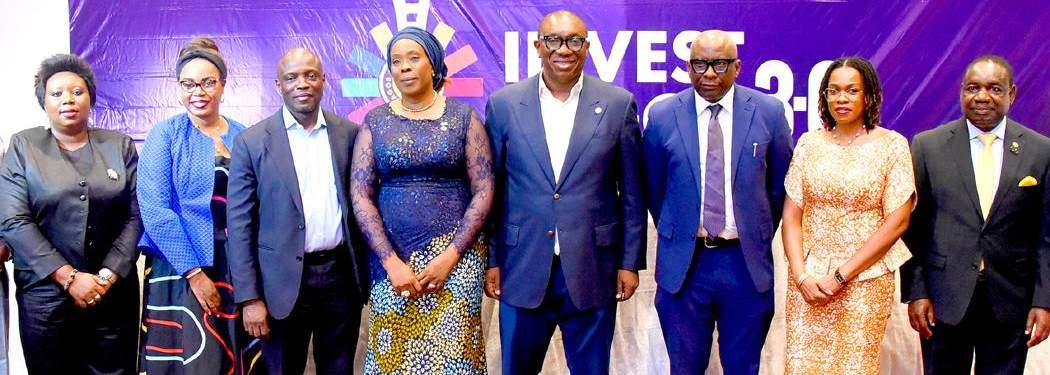
L-R: Co-chair, Technical and Programme, Invest in Lagos Summit 3.0, Dr. Toyosi Akerele Ogunsiji; CEO, Produce for Lagos/Lead, Partnerships Sub Committee, Invest in Lagos Summit 3.0, Solape Hammond; Member, Advisory Board, Commonwealth Enterprise and Investment Council, Ayo Otuyalo; Commissioner for Commerce, Cooperatives, Trade and Investment, Lagos State/Co Chair, Invest in Lagos Summit 3.0, Folashade Ambrose Medebem;
Deputy Chief of Staff to the Governor of Lagos State/Co Chair, Invest in Lagos Summit 3.0, Sam Egube; Country Director Nigeria, Commonwealth Enterprise and Investment Council, Obinna Anyanwu; CEO, Human Investment Group, Ajibola Ponnle; and Commissioner for Information and Strategy, Lagos State, Gbenga Omotoso, at a press conference to announce the Invest in Lagos Summit 3.0 in Lagos... recently
Create
APPLICABLE EDUCATIONAL DISCIPLINES
56TH ANNUAL GENERAL MEETING OF NEM INSURANCE...
Osita Chidoka: How New Education Policies Under Alausa Will Shape Nigeria's Future
Says data starting to play critical role in decision-making
Emmanuel Addeh in Abuja
Former Minister of Aviation, Osita Chidoka, has described the ongoing reforms in Nigeria’s education sector under the Minister of Education, Tunji Alausa, as potentially transformative, saying the increasing reliance on datadriven policymaking could reshape the country’s future.
Chidoka, in a reflection following the National Stakeholders Meeting on the National Education Data Infrastructure held recently in Abuja, argued that education should rank above every other infrastructure priority because of its direct impact on human development.
“Roads can wait. Buildings can wait. Airports can wait. Education cannot,” he stated, warning that every year of policy failure permanently affects millions of Nigerian
World
children who are already outside the school system.
In a note posted on his social media handles, Chidoka explained that Nigeria’s estimated 15 million out-ofschool children represent a national emergency, stressing that each passing year narrows the chances of returning many of them to classrooms.
Chidoka, an ex-Corp Marshall of the Federal Road Safety Corp (FRSC) described the education data initiative unveiled by the Federal Ministry of Education as one of the most consequential national infrastructure projects currently underway in the country.
He explained that the Nigeria Education Management Information System, developed by Ernst & Young, provided comprehensive and accessible education data from all states, covering enrolment figures, school infrastructure and
teacher-student ratios.
According to him, the system simplifies comparison of education indicators across the country and offers policymakers credible evidence needed for decision-making. Chidoka said two key data points particularly stood out during the meeting.
The first, he explained, was the sharp decline between primary school enrolment and junior secondary school enrolment, which raised concerns about the large number of children disappearing from the education system between Primary Six and JSS One.
He added that another revealing statistic was the ratio between first-time Joint Admissions and Matriculation Board (JAMB) candidates and repeat candidates, which exposed the scale of admission bottlenecks facing Nigerian youths seeking tertiary education.
According to Chidoka, the data helped him better understand the rationale behind ongoing policy reforms by the education ministry aimed at easing access to higher education.
“Too many qualified young Nigerians are queuing behind the same narrow gate, year after year. Suddenly, the minister’s policy direction on easing admission bottlenecks, which I had instinctively questioned, began to make sense to me,” he added.
The former minister said the emergence of credible, real-time education data was beginning to change governance within the sector, replacing assumptions and arguments with measurable evidence.
“That is the power of credible, real-time data. It does not merely inform policy; it humbles assumptions,” he stated.
The Nigerian Hypertension Society has marked World Hypertension Day 2026 with a call for nationwide unity in the fight against high blood pressure.
Themed “Controlling Hypertension Together: Check your blood pressure regularly and defeat the silent killer,” the hypertension society stressed that defeating hypertension requires coordinated effort across all levels of society.
Briefing journalists, the hypertension society president, Prof. Simeon Isezuo, warned that hypertension remains the leading preventable cause of death and
disability in Nigeria and globally.
He noted that no single group can win the battle alone, urging government, health workers, civil society, media, the private sector, spiritual and traditional leaders, and families to act together.
He said the burden in Nigeria is severe, adding that one in every three adults live with hypertension, yet fewer than one in five achieves target blood pressure levels.
The society described the situation as unacceptably low, especially given that the condition often shows no symptoms until it causes major complications.
Prof. Isezuo explained that hypertension earns its “silent
killer” label because it rarely causes noticeable symptoms until it leads to stroke, kidney failure, heart failure, heart attack, or premature death. Despite this, he said the disease is largely preventable and definitely treatable when detected early.
According to him, progress is being slowed by several persistent challenges, especially low awareness, late diagnosis, poverty, poor adherence to medicines, and a weak primary healthcare system which contribute to poor outcomes.
Unhealthy lifestyles marked by high salt intake, physical inactivity, and stress are making the problem worse.
He stated that economic hardship has further strained control efforts. "Rising costs of medicines, transport to health facilities, and healthy foods have forced many people to skip doses, take under-doses, or abandon treatment altogether".
This has widened the gap between diagnosis and effective control, he added.
To mark the day, the Nigerian Hypertension Society is rolling out free blood pressure screening nationwide through its members. Public awareness programmes will run across print and electronic media to reach communities with accurate information on prevention and treatment.
the Nigeria Research and Education Network (NgREN), where he is contributing efforts, would provide connectivity and digital services to tertiary institutions this year, with plans to extend similar infrastructure to secondary schools from 2027.
He noted that although developments in the education sector may not yet dominate public discourse, a quiet transformation was taking shape.
“What is happening in
education may not yet dominate the headlines, but something important is taking shape quietly beneath the surface. Evidence is beginning to replace assertion. Data is starting to shape decisions,” he said.
Chidoka urged other sectors of government to embrace evidence-based governance, highlighting the ‘mindboggling’ quantum of data, made easy to understand, compare, and drive policy.
NDLEA Intercepts Cocaine, Opioids Hidden in Carton Walls Bound for UK, Australia
The National Drug Law Enforcement Agency (NDLEA) has intercepted consignments of cocaine and opioids concealed in carton walls and destined for the United Kingdom and Australia, as the agency intensified its nationwide crackdown on drug trafficking and abuse.
The seizures were made by NDLEA operatives at a courier company in Lagos on Friday during the examination of export shipments.
According to the agency, 170 grammes of cocaine carefully sealed in cellophane parcels were discovered hidden within the walls of a carton containing clothes bound for Australia.
In another shipment heading to the United Kingdom, the spokesman of the anti-narcotics agency, Femi Babafemi, in a statement on Sunday, said officers uncovered a cache of opioids, including 200 ampoules of pentazocine injection, 1,100 capsules of tramadol, and 100 ampoules
of promethazine injection concealed in a carton.
The anti-narcotics agency also recorded major breakthroughs in Delta State, where operatives raided forests and cannabis farms in separate operations supported by military personnel.
At Ejeonu Village in Ukwuani Local Government Area, NDLEA officers destroyed 27,500 kilogrammes of skunk cultivated on 11 hectares of farmland and recovered an additional 22.9 kilogrammes of the substance.
A suspect, 52-year-old Ifeanyichukwu Peter, was later arrested during a follow-up operation in Obiaruku.
Similarly, operatives raided Orogun Village in Ughelli North Local Government Area, destroying another 37,500 kilogrammes of skunk grown on 15 hectares of farmland while recovering 55.4 kilogrammes of the illicit drug. Thirty-year-old Godwin Vincent Osadera was arrested in connection with the operation.
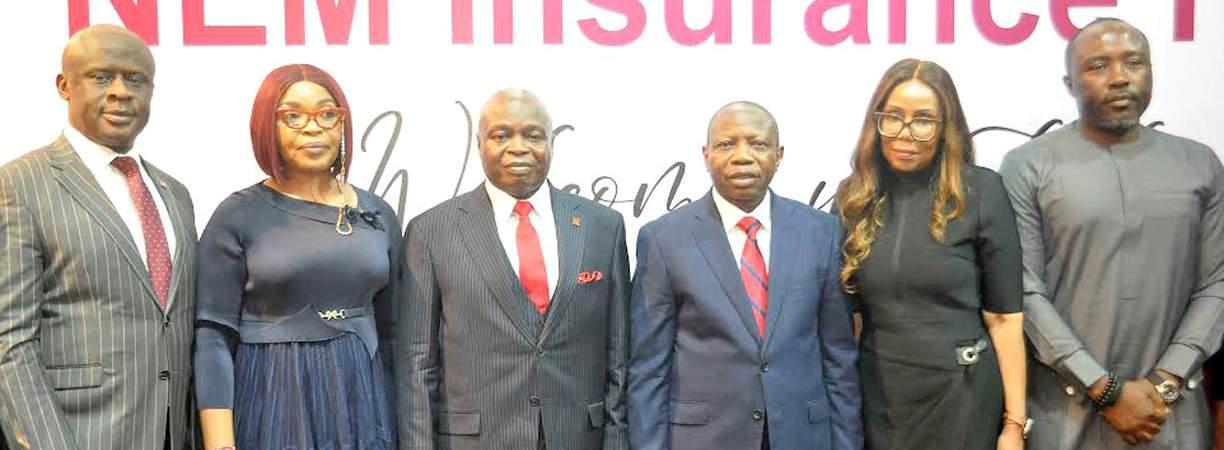
L-R: Executive Director, Finance and Investment, NEM Insurance Plc, Idowu Semowo; Company Secretary/Legal Adviser, Ifunanya Iwuagwu; Managing Director/CEO, NEM Insurance Plc, Andrew Ikekhua; Group Chairman, Tope Smart; Director, Daphne Dafinone, and Non-Executive Director, Kelechi Okoro, during the 56th annual general meeting of NEM Insurance Plc held in Lagos ... recently
Michael Olugbode in Abuja
Politics MONDAY DISCOURSE
Email: deji.elumoye@thisdaylive.com
Presidency: Will Makinde’s Declaration Alter
S’West’s Political Calculation?
With Governor Seyi Makinde of Oyo State’s recent Presidential Declaration on the platform of the allied Peoples Movement, the era of a monolithic Southwest voting pattern may be fading. Folalumi Alaran reports.
There was a time when the Southwest stood as Nigeria’s most predictable political fortress, ideologically coherent, electorally disciplined, and largely united behind a common progressive identity.
From the days of the late sage, Chief Obafemi Awolowo in the Action Group in the First Republic to the ascendancy of the modern All Progressives Congress, the region cultivated a reputation for bloc voting rooted in shared history, cultural solidarity and strategic political calculation.
But politics, like history, is never static. The emergence of Governor Seyi Makinde of Oyo state as a national political force appears to be testing the old assumptions that once defined Southwest electoral behavior.
Makinde’s gradual but deliberate entry into the broader national equation signals more than personal ambition; it represents a potential ideological and political realignment within the Yoruba political landscape.
His growing appeal across party lines, his independent-minded posture within opposition politics, and his ability to command influence outside traditional power structures suggest that the era of a monolithic Southwest voting pattern may be fading.
Increasingly, the region is showing signs of political pluralism where performance, personality, generational appeal and strategic alliances may weigh more heavily than inherited partisan loyalties.
This shift carries profound implications for Nigeria’s future elections. If the Southwest can no longer be treated as a guaranteed political bloc under a single ideological umbrella, then the calculations of both ruling and opposition parties must inevitably change.
Makinde’s rising profile, therefore, is not merely about one man’s ambition; it may well symbolize the fragmentation of an old political order and the birth of a more competitive, unpredictable Southwest political culture.
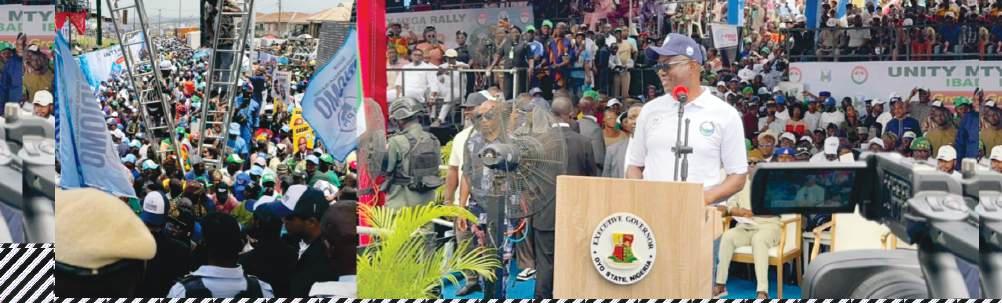
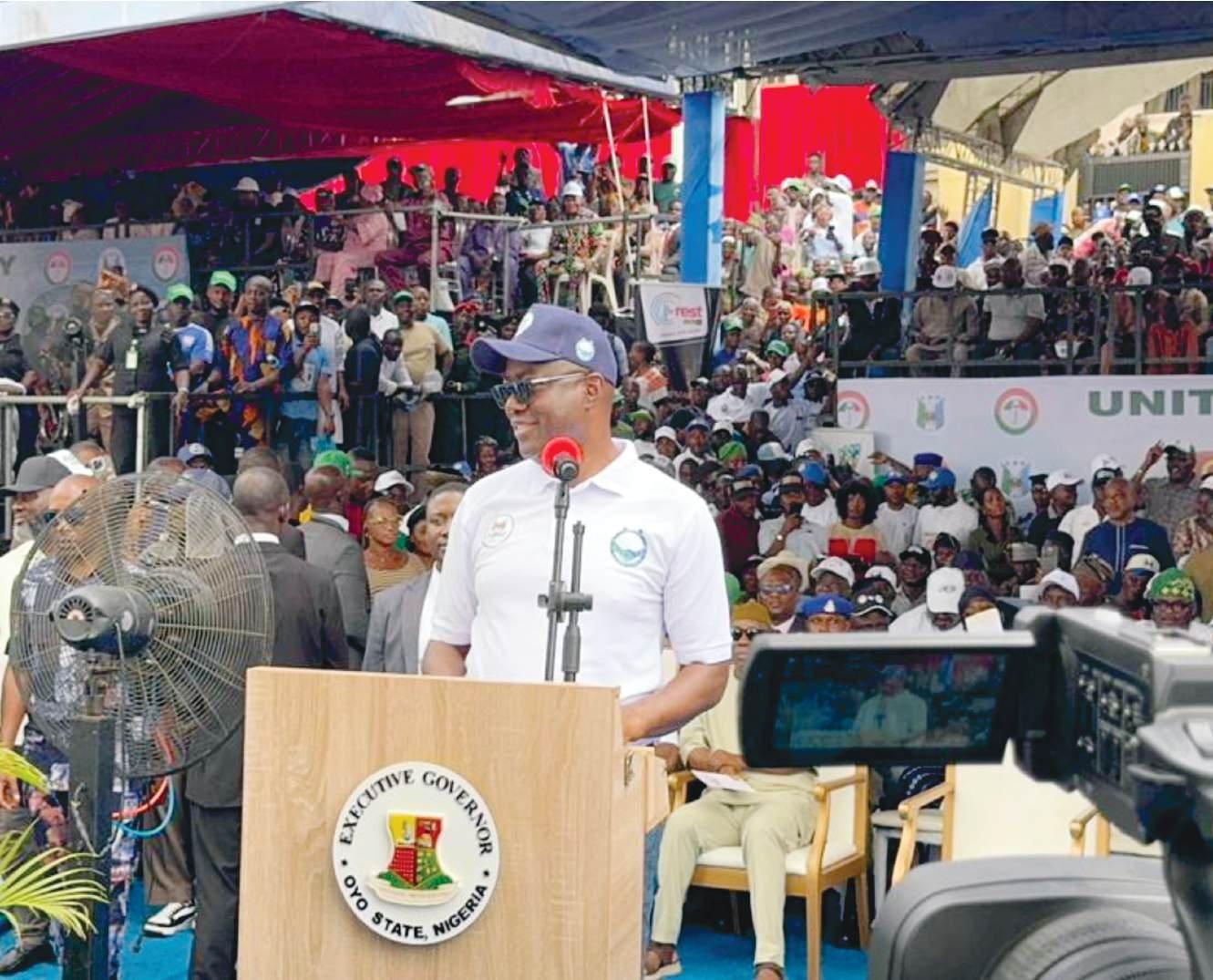
The decision by Governor Makinde to formally declare his interest in the 2027 presidential race on the platform of the Allied Peoples’ Movement was not merely another campaign-style gathering.It was a carefully choreographed political statement aimed at redefining the shape of opposition politics in Nigeria ahead of the next general election.
At the historic Mapo Hall in Ibadan, the Oyo state capital, thousands of supporters of the PDP and APM converged for what organizers described as the beginning of a broader political realignment. But beyond the crowd, banners and declarations, the rally exposed growing concerns within opposition circles over what they perceive as the shrinking democratic space in Nigeria.
Makinde used the occasion to unveil the “Reset Nigeria Movement,” a coalition initiative he said was designed to rescue the country from economic decline, political intimidation and democratic erosion.
“We have found ourselves at a point in our political history as a nation where the very foundation of democracy is being shaken,” Makinde declared before party loyalists and political stakeholders.
According to him, opposition parties had come under sustained pressure aimed at weakening alternative political voices in the country.
“We have witnessed the continuous meddling in the affairs of opposition parties in our dear country, with the aim of taking Nigeria to a one-party system. Without a multi-party system, there is no democracy,” he said.
Presidential Bid Wrapped in Coalition Politics
While Makinde’s presidential declaration dominated headlines, the larger political
significance of the event lay in the coalition itself.
The alliance between the PDP and APM appears to be part of a broader effort by opposition actors to build an alternative platform capable of challenging the dominance of the ruling
All Progressives Congress in 2027.
Makinde framed the coalition as a necessity rather than a convenience.
“They calculated and said opposition cannot unite. But I am here today to say that it is a miscalculation,” he said.
“The opposition in Nigeria is not just political parties; the opposition is the everyday Nigerian for whom the country does not work.”
He argued that worsening economic hardship and insecurity had pushed many Nigerians into survival mode while those in authority allegedly treated public office as personal entitlement.
“The economic and security situations have continued to deteriorate, putting the majority of Nigerians on survival mode on a daily basis,” the governor stated.
He then formally announced his presidential ambition. “Today, history is being made. I pronounce today the
birth of Reset Nigeria Movement,” he said.
“Therefore today, I, Oluseyi Abiodun Makinde, announce my candidacy for the position of the President of the Federal Republic of Nigeria.”
Makinde as a National Opposition Figure?
Within the opposition landscape, Makinde is increasingly viewed as one of the few governors with an independent political structure, regional influence and sustained grassroots appeal.
In the South-West, traditionally regarded as an APC stronghold, Makinde has maintained political relevance through a combination of populist engagement, strategic alliances and administrative visibility. His supporters argue that his ability to retain political stability in Oyo State despite turbulence within the PDP has strengthened his national credentials.
A member of the PDP Board of Trustees, Eddy Olafeso, praised Makinde’s “strategic capacity and management of resources” and commended him for “bringing new energy and unity among political leaders.”
APM Platform and Search for Political Alternatives
The involvement of the APM added another layer of intrigue to the unfolding coalition politics. Though not traditionally considered a major national party, the APM is increasingly
Makinde’s gradual but deliberate entry into the broader national equation signals more than personal ambition; it represents a potential ideological and political realignment within the Yoruba political landscape.
being positioned as a possible rallying platform for aggrieved politicians and opposition blocs seeking an alternative structure outside the crisis-ridden major parties.
National Chairman of the APM, Yusuf Dantalle, described the coalition as a mission to restore democratic values and national pride. “We are determined to restore the pride of Nigerians and deepen democracy in this country,” he said.
Similarly, the party’s National Secretary, Oyadeyi Ayodele, said the alliance was aimed at ensuring Nigeria “reclaims its pride of place as one of the best countries in Africa.”
The coalition also signed a Memorandum of Understanding at the PDP South-West Secretariat in Ibadan before proceeding to the rally at Mapo Hall, a move intended to signal seriousness and institutional commitment.
APC Comes Under Heavy Criticism
Speakers at the rally repeatedly accused the ruling All Progressives Congress of failing to meet public expectations.
Former Osun State Governor, Olagunsoye Oyinlola, said the alliance became necessary because of what he described as the ruling party’s inability to fulfill campaign promises. “The failure of the ruling party to meet the expectations of Nigerians is responsible for this alliance. Nigerians deserve better leadership,” Oyinlola stated.
Also speaking, Ali Odefa argued that Nigeria “cannot afford to operate a one-party system,” insisting that opposition parties must unite to confront what he described as incompetence in governance.
Unity: Powerful Idea Facing Old Political Realities
The recurring theme throughout the rally was opposition’s unity. Yet Nigerian political history suggests that coalition politics is often easier to announce than to sustain.
Many alliances collapse under the weight of personal ambition, zoning disputes and ideological inconsistencies. The same leaders calling for unity today may become rivals tomorrow once negotiations over presidential tickets and political control begin.
That reality remains the biggest test for the “Reset Nigeria Movement.” Can the coalition evolve into a disciplined national structure, or will it become another temporary arrangement built around immediate political calculations?
For now, the answer remains uncertain. Symbolism of Mapo Hall Choice of Mapo Hall was politically symbolic.
Historically associated with major political movements in the South-West, the venue added emotional and historical weight to the declaration. By launching the coalition there, organizers attempted to portray the alliance as the beginning of a broader democratic movement rather than a routine political gathering.
Battle for 2027 Has Begun
Whether Makinde’s coalition matures into a formidable national movement or fades into another short-lived alliance, the Ibadan rally has already altered political conversations ahead of 2027.
The opposition appears increasingly aware that fragmented resistance may not be enough against a dominant ruling structure. The emergence of the “Reset Nigeria Movement” therefore represents both a protest against the current order and an experiment in rebuilding opposition relevance.
For now, one thing is clear: the contest for 2027 is gradually taking shape, and Nigeria’s opposition forces are beginning to reposition themselves for what could become one of the country’s most defining electoral battles in recent history.
Makinde
FEaturEs Building Nigeria's Creative Future through UK–Nigeria Technology Hub Creative Fund
Group Features Editor: Chiemelie Ezeobi
Email chiemelie.ezeobi@thisdaylive.com,
Nigeria’s creative industries have captured global attention, but beneath the success lies a persistent gap in technical capacity and local production infrastructure. With the launch of the UK–Nigeria Technology Hub Creative Fund, a new effort is underway to bridge that divide by equipping filmmakers, designers, and musicians with the tools, skills, and support needed to produce world-class work at home while unlocking greater economic value for the country.
Chiemelie Ezeobi reports
Nigeria’s creative economy has long thrived on raw talent, global appeal and an instinctive ability to tell stories that travel. From Nollywood’s prolific output to Afrobeats’ dominance on international charts and the growing visibility of Nigerian fashion, the sector has become one of the country’s most recognisable exports.
Yet behind the success lies a persistent structural challenge: limited technical capacity, constrained access to finance, and an overreliance on foreign expertise for high-value production work.
It is this gap that the UK Government is now seeking to address through the launch of the UK–Nigeria Technology Hub Creative Fund, a targeted grants initiative designed to strengthen technical capacity across Nigeria’s film, fashion, and music industries.
Positioned as a first-phase intervention, the fund aims to ensure that more of Nigeria’s creative output can be produced, refined, and scaled within the country.
At its core, the initiative is not just about funding projects; it is about reshaping the foundations of how creative work is produced in Nigeria.
From Talent to Technical Capacity
The Creative Fund is designed to support the development of local digital production capacity, encourage the adoption of modern creative technologies, and promote the responsible use of Artificial Intelligence (AI).
These priorities reflect a growing recognition that while Nigeria’s creative sector is rich in ideas and talent, it often lacks the technical infrastructure required to compete at the highest global standards.
The initiative aligns with the UK–Nigeria Economic Transformation and Investment Partnership (ETIP) Creatives Working Group, launched in March 2025, and delivers on commitments made during President Bola Ahmed Tinubu’s State Visit to the United Kingdom in March 2026.
In practical terms, it represents a shift from policy discussions to measurable action.
According to Ndidiamaka Eze Senior Press & Public Affairs Officer | Comms Lead, Growth, Trade and Investment, Nigeria Network, the goal is to ensure that high-potential creative projects have access to the tools, talent, and systems required to deliver professional-quality output locally—reducing the need to outsource critical aspects of production abroad.
Evidence Behind the Intervention
The rationale for the fund is grounded in data. Findings from the State of the Creative Innovation Ecosystem in Nigeria study conducted in 2024 provide a clear picture of both the sector’s scale and its constraints.
Drawing on more than 1,700 survey responses and fieldwork across seven states, the report estimates that Nigeria’s creative economy employs approximately 4.2 million people and contributes around US$3 billion to the country’s GDP annually. Despite these impressive figures, the underlying ecosystem remains fragile. More
than 80 per cent of practitioners are self-taught, fewer than 10 per cent have access to formal financing, and a significant portion of high-value technical work, such as visual effects, advanced sound engineering, and post-production, is routinely carried out outside Nigeria.
These gaps not only limit the sector’s growth but also result in lost economic value, as revenue that could be retained locally is instead exported.
Bridging the Gap Through Targeted Support
The Creative Fund is structured to directly address these challenges. It will support high-potential projects across three key industries, film, fashion, and music, focusing on initiatives that demonstrate clear potential for impact, scalability, and job creation.
Beyond general funding, the scheme is designed to close specific technical gaps. This includes subsidising access to critical specialists such as VFX artists, sound engineers, post-production editors, and design professionals.
It also covers investment in digital tools and infrastructure, including digital asset management systems, content delivery platforms, digital rights management solutions, and AI-driven production technologies.
The intention is clear: to enable Nigerian creatives to produce worldclass content without leaving the country.
Oyinkansola Akintola-Bello, Director of the UK–Nigeria Tech Hub, underscored this point, stating that “Nigeria’s creative sector already
delivers real economic value, and both governments have committed under the UK–Nigeria Economic Transformation and Investment Partnership to supporting its growth.
"Through the ETIP Creatives Working Group, we are moving from ambition to action. The Creative Fund is a practical first-phase intervention that addresses critical gaps in skills, infrastructure, and access to advanced tools, enabling Nigerian creatives to produce and scale high-quality work locally.”
Her remarks highlight the broader ambition behind the initiative, to transition from recognising the sector’s potential to actively building the systems that will sustain its growth.
Inclusion
and Access at the Centre
Implementation of the fund is being led by Tech4Dev, a nonprofit organisation with a track record in advancing digital skills and access to economic opportunities across Africa.
For the organisation, the Creative Fund is not only about strengthening industry capacity but also about widening participation.
Abraham Akpan, Tech4Dev’s Country Manager for Nigeria and Sub-Saharan Africa, emphasised the importance of inclusion in the programme’s design.
“The creative industries are a core part of the digital economy, bringing together technology, culture, and entrepreneurship.
"This Fund is about ensuring that Nigeria's creative success is underpinned by sustainable local talent and capacity, while deliberately expanding access to tools, skills, and finance for those who have been historically excluded. By prioritising women-led enterprises,
youth-led ventures, and underrepresented groups, the fund embeds inclusion into every stage of delivery.”
This focus reflects a broader understanding that sustainable growth in the creative sector depends not only on infrastructure but also on equitable access to opportunities.
A Shift Towards Local Value Retention
One of the most significant implications of the Creative Fund lies in its potential to reverse a long-standing trend: the outsourcing of high-value creative work. For years, Nigerian creatives have relied on foreign studios and technical teams to complete critical aspects of production, from visual effects to advanced editing.
While this has enabled projects to meet international standards, it has also meant that a substantial portion of the value generated by the industry is realised outside Nigeria. By investing in local capacity, the fund aims to change this dynamic. If successful, it could lead to the emergence of a more self-sustaining ecosystem, one in which Nigerian creatives not only generate ideas but also control the full production process.
Encouraging Responsible Innovation
Another notable aspect of the initiative is its emphasis on the responsible use of emerging technologies, particularly artificial intelligence. Selected projects will be encouraged to explore how AI can be applied in areas such as production, storytelling, and content innovation.
This approach reflects a careful balancing act: embracing the efficiency and creative possibilities offered by new technologies while ensuring that their use aligns with ethical and professional standards.
As global debates around AI continue to evolve, Nigeria’s creative sector is being positioned not just as a participant, but as a contributor to shaping how these tools are used in practice.
Looking Ahead
Applications for the Creative Fund are now open and will be accepted on a rolling basis, allowing a steady pipeline of projects to benefit from the programme over time.
The eligibility criteria are broad, covering creative companies, studios, production houses, fashion enterprises, and music labels with clearly defined technical needs. Projects will be assessed based on quality, potential for local and international impact, and the applicant’s commitment to coinvestment—an approach that encourages both accountability and sustainability. While the fund represents only a firstphase intervention, its significance extends beyond immediate outputs. It signals a growing recognition, both within Nigeria and among its international partners, that the creative sector is not merely a cultural asset, but a critical component of economic transformation.
If effectively implemented, the UK–Nigeria Technology Hub Creative Fund could mark the beginning of a new phase for Nigeria’s creative industries, one defined not just by global visibility, but by strengthened local capacity, deeper value retention, and a more inclusive path to growth.
Oyinkansola Akintola-Bello, Director of the UK–Nigeria Tech Hub
THE LIMITS OF POWER
In Nasarawa, a quiet drama unfolds where gratitude fades, process bends, and power is exercised with troubling precision and consequence, argues MUHAMMADU USMAN
INEC AND THE 2027 TEST
RICHARD ELESHO argues for innovation,neutrality, and inclusivity See page 21
Vision costs nothing, but execution costs everything, contends LINUS OKORIE
GETTING IT DONE: WHY VISION DOES NOT TRANSLATE TO RESULTS
People love to dream. They speak passionately about the mind-blowing ideas they have, businesses they want to build, and the impact they want to create. It feels good to imagine the future. It feels even better to talk about it. But the moment you try to turn those dreams into actual results, the gap between intention and action begins to show. This gap is where most people lose the plot. Additionally, it is the difference between a dreamer and a doer. Dreamers carry intentions like souvenirs. Doers have outcomes you can measure.
If we are honest, everyone has that one thing they keep promising themselves they will finally tackle. It might be a course, a project, a business, a consistent habit. It lingers in the mind. It inspires you for a moment. Then the day gets busy, the week gets chaotic, and the promise fades. Vision alone rarely survives the weight of everyday life. The question is not whether you can see the future you want. The question is why you haven’t moved closer to it.
One major reason is that many goals are not clear enough to follow. People call their vague wishes “visions.” They repeat phrases like “I want to get better,” or “I want to grow my business,” without defining what better or growth actually means. The mind cannot execute on fog. It needs clarity. It needs a target you can point at. Without that clarity, action becomes guesswork, and guesswork rarely leads anywhere meaningful.
Another problem is the way people consistently overestimate their capacity. This is a human flaw. Daniel Kahneman’s work on the planning fallacy shows that people underestimate the time needed for tasks by nearly 40%, even when they have done the task before. This is why we create ambitious plans that crumble after a few days. We assume we will have more energy, time, discipline, and focus. But the version of ourselves we plan for is rarely the one that wakes up on Monday morning.
Then there is the simple truth that people underestimate the effort behind their dreams. It is easy to imagine the finished product. It is harder to accept the long nights, the slow progress, the repeated corrections, the frustration, and the silence of nobody clapping while you work. The attractive part of vision is the final picture. The part people avoid is the uncomfortable process. Colin Powell captured it well
when he said, a dream does not become reality through magic; it takes hard work. The work behind the dream is what separates achievers from talkers.
But even if you have clarity and effort, execution collapses when there is no accountability. The numbers are ruthless. When people keep a goal to themselves, they have a ten percent (10%) chance of achieving it. Sharing that goal with someone else raises the odds to sixty-five percent (65%). Adding weekly check-ins raises it to ninetyfive percent (95%). Goals are better accomplished with accountability. Excuses thrive in silence. Many leaders do not fail because they lacked vision. They fail because no one was waiting for them to deliver.
Beyond structure, emotional resistance stands in the way. This include the fear of failing, embarrassment, stepping outside your comfort zone, and discovering you are not as good as you hoped. These fears rarely announce themselves loudly. They whisper. They create delays that sound reasonable, even logical. But they choke execution quietly, day after day, until months pass and nothing has moved.
Even in cases when fear is not the problem, distraction is. Not every open door is your door. Some opportunities look attractive but are actually detours. Many leaders say yes to too many things, and before they realize it, their energy is scattered across commitments that do not support their actual goals. A busy week often hides an unproductive life. Without focus, your vision becomes noise.
Turning vision into a concrete target begins with clarity. You must know exactly what you want. You must understand why it matters right now. And you must define what success looks like in a way that can be measured, not imagined. When clarity meets urgency, decisions become easier and distractions lose their power. The more precise the vision, the faster execution begins.
One of the most practical ways
to move from clarity to action is to break your vision into ninety-day cycles. Ninety days is long enough to accomplish real progress, yet short enough to create pressure. Human motivation resets every twelve weeks, which is why most gyms are empty by March. A ninety-day window gives you a focused runway where effort feels connected to the finish line. It forces discipline, review, and continuous movement.
Once clarity is in place, prioritization becomes the lifeline of execution. You cannot treat everything as urgent. Trying to do too many things at once guarantees shallow progress on all of them. Multitasking drops productivity by nearly forty percent. Leaders who chase everything achieve nothing. The question is, if you could only accomplish one meaningful outcome this quarter, which outcome would change everything? This single choice becomes the anchor. It becomes the filter for your decisions. It becomes the center of your weekly and daily efforts. When you focus on the work that actually matters, momentum builds quickly.
Planning is where structure enters the story. Most plans fail because people design them for the life they imagine, not the life they live. They forget about interruptions, fatigue, traffic, family demands, unexpected calls, and the everyday chaos of being human. This is why ninety-two percent of New Year goals fail. And only ten percent of strategic plans in organizations ever see completion. The problem is not inspiration. You need a weekly rhythm that grounds your goals: a simple loop of reviewing what worked, planning the week ahead, and executing daily tasks with focus.
Okorie MFR is a leadership development expert spanning 30 years in the research, teaching and coaching of leadership in Africa and across the world. He is the CEO of the GOTNI Leadership Centre.
In Nasarawa, a quiet drama unfolds where gratitude fades, process bends, and power is exercised with troubling precision and consequence, argues MUHAMMADU USMAN
THE LIMITS OF POWER
History is not kind to those who inherit political capital and attempt to recast it as self-creation. In the intricate and often fragile architecture of Nasarawa politics, a quieter but no less consequential tragedy is unfolding, one shaped by ambition, selective memory, and a steady erosion of process. The name Abdullahi Sule once suggested continuity, discipline, and restraint. Today it invites a more careful reading, one in which the language of order sits uneasily beside the practice of control.
The pivot from promise to pattern is swift. Ingratitude, manipulation, and a disregard for process do not appear as isolated missteps. They form a consistent method, visible both in the governor’s own account and in the broader political record. He insists there is no crisis, yet constructs an elaborate defence against one. He affirms a commitment to free and fair primaries, yet outlines actions that quietly narrow the field before the contest begins. He invokes consensus, yet reduces it to moments of deference that he alone interprets. These contradictions are not incidental. They are the structure upon which his argument rests.
To understand the full weight of this moment, one must return to the origin of his ascent. It is a matter of record that Senator Tanko Al-Makura, against prevailing sentiment, against broader consultations, and against what many considered the safer internal consensus, argued forcefully for Sule’s emergence. That decision was not routine. It was a deliberate political investment, anchored in trust, continuity, and belief in judgment.
That history sharpens the present. It invites a difficult question, whether that act of conviction has now become a source of regret. Whether, in choosing Sule against the tide, Al-Makura has been left to confront a reality that unsettles the very premise of that choice.
The governor’s own words do little to dispel this tension. He acknowledges support, then steadily diminishes its weight. He accepts mentorship, then confines its relevance. He expresses gratitude, yet strips it of consequence. What remains is authority, presented as self-sustaining, detached from the relationships that helped construct it.
His assertion that carrying along his predecessor is a privilege rather than a right is revealing, though not in the way intended. In constitutional terms, it is correct. No leader is compelled to defer. Yet politics is not governed by law alone. It rests on a deeper, unwritten architecture where consultation, recognition, and continuity sustain legitimacy.
To reduce that relationship to discretionary courtesy is not a neutral clarification. It is a redefinition. It shifts politics from shared investment to personal discretion. In doing so, it reflects not on Al- Makura, but on Sule himself. It signals a narrowing of political memory,
INEC AND THE 2027 TEST RICHARD ELESHO argues for
neutrality, innovation, and inclusivity
an inclination to benefit from inherited structure while distancing oneself from its obligations.
Ingratitude, in this context, is not a flourish. It is a posture. When a leader acknowledges support while simultaneously diminishing its relevance, he sends a message about the durability of political bonds. That message travels. It reaches allies, stakeholders, and party members alike. It suggests that loyalty may not endure, that consultation may not be consistent, and that precedent may be negotiable.
This posture flows directly into the handling of process. The governor speaks in the language of order, indirect primaries, stakeholder engagement, agreed timelines. Yet the sequence he outlines tells a different story. Aspirants are convened, encouraged to align, and when alignment proves elusive, a decision emerges from the centre. That decision is then presented as consensus, its origins softened by the language of collective trust.
For those who understand party mechanics, the distinction is decisive. Process is not merely the event at the end. It is the integrity of every step that leads to it. When those steps are shaped by the authority they are meant to balance, credibility becomes fragile.
Manipulation here is not overt. It is procedural. It operates through structure, not outside it. Meetings are held, options are discussed, and authority is exercised with restraint in tone but firmness in direction. The appearance is consultation. The effect is control. By the time the formal process begins, expectations have already been set.
The handling of dissent reinforces this impression. Concerns about internal democracy are minimised, often framed as anxiety or misinterpretation. Stakeholder objections are acknowledged only to be absorbed into a broader narrative of agreement. Even when respected figures express unease, their positions are reframed in ways that reduce their weight.
This creates a surface calm. It suggests cohesion and forward movement. Yet beneath that calm lies a thinning confidence. A party’s strength is not defined by the absence of disagreement, but by the credibility of the structures that manage it. When those structures are perceived to be shaped rather than respected, trust begins to erode.
Usman writes from Lafia
Since his appointment as Chairman of the Independent National Electoral Commission, INEC, Joash Ojo Amupitan, a former law teacher at the University of Jos, has become the cynosure of all eyes, and on a free road to a household name. The gaze on him is so fixated that even his everyday reflexes such as coughing, yawning, sneezing, and gurgitation find their way to the public space. His nomination into arguably one of Nigeria's most delicate public offices had set tongues wagging and ears tingling from day one.
Recall the hoopla over the claim that he was on President Bola Tinubu's defence team in the legal fireworks that dogged his victory in the 2023 elections. It turned out to be false. Those who peddled the allegation were simply incapable of spotting the difference between another Senior Advocate of Nigeria, 'Taiwo Osipitan,' of the University of Lagos who was on the team, and 'Joash Amupitan.' Similarly, not many people will forget in a hurry the dramatic anti and pro Amupitan protests that attended his early days in office.
The theatrics seem to be fading out, and Amupitan has rolled up his sleeves to diligently confront the tasks ahead. As the country trudges like a dysfunctional gadget towards another defining democratic moment, the first on-cycle general elections under his watch, the release of the election timetable is both a procedural milestone and a moral contract with the Nigerian people. It sets the rhythm for political activities—from party primaries to the presidential, national assembly, gubernatorial, and state assembly elections.
Very crucially too, the onset of political activities and processes with regard to the polls raises hope of a new political and electoral order as well as hope for a new beginning and fresh political orientation devoid of bitterness, acrimony, thuggery and other electoral misdemeanors which characterised our recent political past. Public expectations are that INEC must not only organize credible elections but also safeguard democracy itself. Thus, the actions and inactions of its minders must be above board and never jeopardise a government of the people, by the people, and for the people.
For a start, the sanctity of the electoral timetable can not be compromised. Nigeria’s electoral history is littered with last-minute adjustments, logistical failures, and inconsistencies that have eroded public trust. For 2027, INEC must demonstrate discipline and institutional maturity by adhering strictly to its own schedule. Political parties, candidates, and voters alike must operate within a predictable framework. Any deviation— except under the most compelling and transparent circumstances—will be interpreted as weakness or, worse, manipulation.
Equally critical is the imperative of neutrality. In a polarized political environment, perception often becomes reality.
INEC must, therefore, go beyond being impartial; it must be seen to be nonpartisan. The Commission must ensure a level playing field for all political actors, resisting any real or perceived alignment with the ruling All Progressives Congress (APC) or any other political party for that matter. The credibility of the election will hinge not just on the fairness of processes but on the public’s confidence in those processes. For an electoral umpire, neutrality is not cowardice. It is strength. Technology, long touted as the antidote to electoral malpractice, must now move from promise to performance. INEC should not merely rely on existing systems but must push the frontier by developing or adopting robust, tamper-proof technologies that guarantee electoral integrity. Real-time result collation and instantaneous transmission from polling units to central databases would significantly reduce opportunities for manipulation. When citizens can verify results as they are declared at polling units, trust in the system is naturally reinforced. However, technology alone is not a silver bullet. Its effectiveness depends on transparency, reliability, and public understanding. INEC must, therefore, invest in voter education and stakeholder engagement, ensuring that innovations are not only deployed but also trusted. A system that is technologically sound but poorly understood can be as problematic as one that is flawed.
The beauty of democracy is the guarantee that citizens who are old enough to vote are not disenfranchised. INEC should, therefore, device the mechanism to ensure that no Nigerian of voting age is disallowed irrespective of status, creed, class, and gender. Vulnerable groups and special citizens like the elderly, nursing/ expectant mothers, and people living with disabilities, PLWD must be protected in the voting process. Nigerians in the diaspora must also be accommodated in the scheme of things. This is not rocket science. Nigeria should borrow a leaf from other nations where citizens are allowed to vote from their base abroad. That is the way to go.
Elesho is the North Central Bureau Chief for The News
Editor, Editorial Page PETER ISHAKA
Email peter.ishaka@thisdaylive.com
NIGERIA AND THE MALNUTRITION REPORT
Government must do more to secure the countryside
The warning by the Médecins Sans Frontières (MSF) that deepening humanitarian funding cuts are threatening Nigeria’s already fragile healthcare response should be taken seriously. In its 2025 Country Activity Report released last week, the MSF (Doctors Without Borders) described the current health situation in Nigeria as increasingly dire amid worsening economic hardship, insecurity and mounting pressure on overstretched medical services. In 2024 alone, according to the MSF, nearly 300,000 children with severe acute malnutrition were admitted in outpatient units across northern Nigeria—more than half of its global caseload. But perhaps most concerning is the MSF revelation about the growing numbers of malnutrition admissions recorded by the organisation in Nigeria in recent years.
The 2025 data tell a harrowing story. “With over 440,000 children put on treatment, it is the year with the highest admissions for malnutrition we’ve had in Nigeria in recent years,” MSF Country Representative in Nigeria, Ahmed Aldikhari, said. “Conflict and insecurity, displacement, several consecutive years of inflation, flooding, drought and rising food prices continue to affect families’ ability to access food and healthcare. Humanitarian funding cuts are also increasing pressure on already overstretched services in high-need areas.”
stunted and suffering from chronic malnutrition. Nigerians, as a minimum, deserve a life free from hunger, in a country so blessed with arable land and natural resources. Today in the country, hunger is both a cause and consequence of poverty, as people on low incomes tend to have worse diets, while people who lack adequate nutrition struggle harder to extricate themselves from poverty. Therefore, for effective health and social protection, mothers must be encouraged to adopt exclusive breastfeeding habits for their babies in the initial six months of their lives. Thereafter, complementary feeding can be introduced for 24 months, then the consumption of various nutrients such as Vitamin A, Iodised salt and zinc, amongst others.
Conflict and insecurity, displacement, several consecutive years of inflation, flooding, drought and rising food prices continue to affect families’ ability to access food and healthcare
T H I S D AY
EDITOR SHAKA MOMODU
DEPUTY EDITOR WALE OLALEYE
MANAGING DIRECTOR ENIOLA BELLO
DEPUTY MANAGING DIRECTOR ISRAEL IWEGBU
CHAIRMAN EDITORIAL BOARD OLUSEGUN ADENIYI
EDITOR NATION’S CAPITAL IYOBOSA UWUGIAREN THE OMBUDSMAN KAYODE KOMOLAFE
Stunted growth implies a marked increase in the child’s susceptibility to infections and contributes to child mortality. Invariably, pregnant women who are not adequately nourished eventually give birth to babies with low weight thus putting their survival at risk. Unfortunately, this is a recurring challenge that health authorities in the country seem not to be paying a serious attention to. As far back as 2008, the report of the Nigeria Demographic and Health Survey (NDHS) had indicated that one out of every three children under the age of five in the country is
T H I S D AY N E W S PA P E R S L I M I T E D
EDITOR-IN-CHIEF/CHAIRMAN NDUKA OBAIGBENA
GROUP EXECUTIVE DIRECTORS ENIOLA BELLO, KAYODE KOMOLAFE, ISRAEL IWEGBU
DIVISIONAL DIRECTORS SHAKA MOMODU, PETER IWEGBU, ANTHONY OGEDENGBE
Political commitment is therefore necessary to ensure advocacy on the adverse implications of malnutrition and how to avoid its devastating consequences. Partnership with civil society and academic institutions with a focus on food and nutrition is also an imperative. Such commitment could come by way of mapping out clear strategies for up-scaling nutrition in the public sphere. This should consist of clear roles and responsibilities for the various stakeholders, with milestones for mainstreaming nutrition into agriculture, fortifying basic foods with essential minerals or vitamins, mobilising communities for action on growing more beneficial foods, and the perils of malnutrition and of not meeting any of the enumerated indicators.
Beyond rhetoric, what is needed is an urgent action to protect the most vulnerable. Our governments, at all levels, need to sit up and confront malnutrition with resolute decisiveness if the future of our children is to be secure. They must address the crushing indices and causes of malnutrition that have continued to deprive over half of our children (and mothers) of a healthy and productive life span. They have an obligation in ensuring that the future of Nigerian children is secured by tackling those things inhibiting their proper upbringing and social welfare.
Letters in response to specific publications in THISDAY should be brief (150-300 words) and straight to the point. Interested readers may send such letters along with their contact details to opinion@thisdaylive.com. We also welcome comments and opinions on topical local, national and international issues provided they are well-written and should also not be longer than (750- 1000 words). They should be sent to opinion@thisdaylive. com along with photograph, email address and phone numbers of the writer.
INVESTING IN BOYS FOR STRONGER FAMILIES
This is a clarion call for increased attention and deliberate investment in the development of the boy-child as a critical pathway to building stronger families, safer communities, and a more balanced society.
While the global focus on empowering and protecting the girl-child remains necessary and commendable, society must also intentionally pay closer attention to the emotional, moral, social, and psychological well-being of boys.
The future security, dignity, and success of the girl child are closely tied to the kind of boys society nurtures today.
A secured future for the girl-child can only be guaranteed when we intentionally raise responsible, emotionally balanced, respectful, and purpose-driven boys who will grow into supportive fathers, responsible husbands, compassionate leaders, and productive members of society.
We wish to also express concern over the growing neglect of boys in many homes and communities, stressing that many young boys are growing up without proper mentorship, emotional support systems, positive role models, or value-based guidance.
The absence of deliberate investment in the boy child has contributed to rising social challenges including violence, substance abuse, crime, poor emotional intelligence, broken homes, and unhealthy attitudes toward women and family life.
Investing in boys does not in any way reduce the importance of girl-child empowerment, but rather strengthens it by helping to create healthier relationships, more stable homes, and safer communities for women and girls.
We therefore call on governments, parents, schools, religious institutions, community leaders, development partners, and civil society organizations to create men-
torship platforms, counseling support systems, leadership development initiatives, and safe spaces that will enable boys to flourish and thrive.
We also urge society to normalize conversations around the emotional well-being of boys and intentionally teach them discipline, empathy, self-control, responsibility, and respect for women and humanity.
A thriving society cannot be built by empowering one gender while neglecting the other. The future of our families and communities depends greatly on how well we nurture our boys today.
We reaffirm the commitment of Helpline Social Support Initiative to promoting inclusive family-centered advocacy, youth development, social protection, and community empowerment initiatives that support both boys and girls to reach their full potential.
Dr. Jumai Ahmadu is President, Helpline Social Support Initiative
BUSINESS WORLD
RATES AS AT M A y 15,2026
With the Monetary Policy Rate (MPR) retained at 26.50 per cent by the Central Bank of Nigeria (CBN), the banking sector’s average maximum lending rate remained flat at 35.17 per cent in March 2026. Maximum lending rate is the highest permissible interest rate that lenders can charge borrowers. It is often defined as the rate that is one percentage point above the benchmark prime lending rate, which is determined by the CBN
The rate is crucial for ensuring fair lending practices and protecting borrowers from excessive interest rates.
According to the “Money Market Indicators” of CBN, the average maximum ending rate opened January 2026 at 32.68 per cent and closed February 2026 to 35.17 per cent.
The Monetary Policy Committee (MPC) of the CBN in 2025 retained MPR at 27 per cent, and it remained so till January 2026. However, the committee at the 304th meeting in
February 2026 cut the rate by 50 basis points to 26.5 per cent.
Despite the cut, the average maximum lending rate has remained flat at 35.17 per cent, becoming a challenge for borrowers who wanted to access capital from Nigerian banks.
As gathered by THISDAY, the average maximum lending rate in March 2025 was at 30.19 per cent from 29.79 per centn amid MPR at 27 per cent. It, however, closed December 2025 at 29.32 per
cent from 29.79 per cent at the time interest rate was hovering between 27.50 per cent- 27 per cent.
With interest rate at 27.00 per cent, commercial banks typically add a margin of 300–500 basis points above the interest rate to cover credit risk, inflation, and operational costs.
In the move to tackle inflation rate and stabilise Naira at the foreign exchange market, the CBN since November 2024 retained its rate at 27.50 per cent from 27.25 per cent.
In December 2024, the maximum lending rate was 29.71 per cent, when the MPC voted to retain the MPR at 27.50 per cent
The steep increase in the interest rate has sparked concerns regarding the potential impact on the cost of credit for businesses already facing economic hardships due to foreign exchange unification and fuel subsidy removal by the federal government.
CBN data revealed that the average prime lending rate also remained flat at 19.29 per cent for the second consecutive
month. In January 2026, the average prime lending rate was at 19.54 per cent, making it the highest so far since 2006. The prime lending rate indicates the possible rate offered to the most creditworthy customers by Nigerian banks. Nigeria’s average prime lending rate reached an all-time high of 19.66 per cent in November 2009 and a record low of 11.13 per cent in March 2021.
Amid severe competition from Fintech companies, Zenith Bank Plc, United Bank for Africa Plc (UBA) and two other Deposit Money Banks (DMBs) declared an estimated N570.17 trillion total electronics transactions in 2025, nearly 20 per cent increase over N477.05 trillion declared in 2024.
These four banks in 2025 saw a robust value flow across digital channels such as Points of Sales (PoS), Mobile
Banking, Automated Teller Machine (ATM), Unstructured Supplementary Service Data (USSD), agency banking, among others.
Out of the N570.17 trillion, N468.94 billion came from electronic banking income, a 4.2 per cent increase over N449.94 billion reported in 2024.
Documents seen by THISDAY revealed that Zenith Bank,followed by UBA led in the banking sector’s electronic transactions in the 2025 financial year.
Zenith Bank generated N225.28 trillion from its electronic transactions, about 32.4 per cent increase over N170.19 trillion in 2024, while UBA generated N169.6 trillion from electronic transactions, up by 12 per cent from N151.6 trillion in 2024.
With an estimated 36.7 million number of customers and 30.3 number of cards issued in 2025, Zenith Bank saw its Mobile Banking and internet banking grow significantly.
For instance, its mobile banking transactions closed 2025 at N104.14 trillion, which is 81.6 per cent growth when compared to N57.4 trillion reported in 2024, while Internet Banking moved from N47.2 trillion in 2024, a growth of 49.4 per cent to N70.52 trillion.
Zenith Bank over the years has deepened digital adoption, leveraging cuttingedge technology to drive scale and efficiency.
In the same vein, UBA saw a significant increase
in its mobile and internet banking transactions in 2025. Of the N169.6 trillion from electronic transactions in 2025, internet banking contributed 40.99 per cent.
Further breakdown showed that UBA’s internet banking transactions closed 2025 at N69.53 trillion, up by 12.3 per cent from N61.9 trillion in 2024, while its mobile banking transactions moved from N44.2 trillion in 2024 to N51.65 trillion in 2025, about 17 per cent YoY increase.
The Pan-African financial
institution noted, “Our strategic investments in digital infrastructure continue to deliver returns, with efficient digital channels performance in 2025. This growth has been fueled by key initiatives, including: PAPSS on Leo: As the first African chatbot to launch cross-border payments via PAPSS in Nigeria, UBA Leo is revolutionising intra-African trade and remittances.
Kayode tokede
Kayode tokede
Nigeria’s gross external reserves rose to $48.54 billion on May 14, 2026, extending a week-long recovery that added over $218 million to the country’s foreign currency buffer and reinforcing signs of improving external liquidity amid sustained reforms in the foreign exchange market.
Latest data from the Central Bank of Nigeria (CBN) showed that reserves increased steadily from $48.33 billion recorded on May 7 to $48.54 billion as of May 14, reflecting renewed dollar inflows into the economy and easing pressure on the
nation’s external position.
The development comes at a critical period for the Nigerian economy as monetary authorities continue efforts to stabilise the naira, deepen confidence in the foreign exchange market and attract offshore capital back into local assets.
A breakdown of the figures showed that the reserves gained approximately $218 million within one week, translating to an average daily accretion of more than $31 million over the period under review.
On a month-on-month basis, however, reserves remained slightly below the $48.70
billion recorded on April 14, indicating a marginal decline of about $156 million or 0.3 per cent over the one-month period.
However, the reserves have
LOTUS Bank, a leading non-interest banking and financial advisory services provider, has entered into a strategic collaboration with the Presidential Initiative on CNG & EV (Pi-CNG & EV) during the launching of the Northern Corridor of the Compressed Natural
risen by about $10.25 billion compared to the $38.30 billion recorded in the corresponding period of 2025, representing a year-on-year increase of roughly 26.8 per cent.
Gas (CNG) and Electric Vehicle (EV) Programme in Kano State.
The initiative by the government is designed to accelerate the adoption of cleaner, more affordable and sustainable mobility alternatives through the expansion of CNG and EV infrastructure nationwide.
The sharp annual growth underscores the improvement in Nigeria’s external earnings profile over the past 12 months, supported by increased foreign portfolio
inflows, higher diaspora remittances, improved oil export receipts and tighter monetary policy conditions that boosted investor appetite for naira assets.
Speaking at the event, the Deputy Chief of Staff to the President, Ibrahim Hadeja, who represented the Vice President, Kashim Shettima, described the initiative as a critical economic strategy aimed at reducing transportation costs, strengthening energy security and improving the lives of Nigerians. He said: “Transportation costs affect everything — food prices, manufacturing, logistics and ultimately the lives of ordinary Nigerians. This initiative is not just an energy policy; it is an economic strategy for national growth.”
Stakeholders in Nigeria’s capital market ecosystem recently gathered in Lagos to celebrate the 50th anniversary of Financial Trust Company (FTC), Nigeria’s first indigenous stockbroking institution, paying glowing tributes to its founder, Otunba Olufemi
Ajayi, for his pioneering vision in establishing the company in 1976.
Speaking at the golden jubilee celebration, the Director-General of the Securities and Exchange Commission (SEC), Dr. Emomotimi Agama, described the anniversary as more than a corporate milestone, noting that it was an opportunity to honour the pioneers who built enduring financial institutions under difficult circumstances.
Ebere Nwoji
The Commissioner for Insurance, Mr Ayo Olusegun Omosehin, at the weekend inaugurated the Insurance Policyholders’ Protection Fund (IPPF) committee, with a mandate on the committee members to ensure that the Fund is sustainably financed,
Emma Okonji
Asst.
Asst.
KayodeTokede
Ebere
Represented by the commission’s Lagos Zonal Head, John Briggs, Agama said Nigeria’s capital market evolved from modest beginnings characterised by limited capital, shallow investor confidence, and a regulatory environment that was still developing.
According to him, visionary Nigerians chose not to wait for perfect conditions but instead invested in the idea that indigenous institutions could successfully mobilise capital, support enterprise, and drive economic development.
Kasi Cloud, will tomorrow, launch its LOS1 Data Centre in Lagos, the single largest data centre in West Africa, designed to deliver AI-era performance, hyperscale capacity and intelligent
professionally managed, and capable of delivering timely and fair protection to policyholders. Omosehin, also charged the committee members on financial discipline demanding that they should ensure timely contributions, prudent stewardship of assets, and sound controls that protect the fund’s long-
connectivity for the world’s digital leaders.
It is positioned as the first Artificial Intelligence ready (AI-ready) data centre in Nigeria that is scalable at speed and will drive digital transformation in Africa, from Nigeria.
term sustainability.
The commissioner who spoke during his opening address at the committee’s inauguration in Abuja said the inauguration marked a major step in strengthening confidence in Nigeria’s insurance market and deepening consumer protection.
“With the establishment of
The LOS1 Data Centre is the first building of the four facilities that will be constructed on the 4.2 hectares of land located along the Lagos-Calabar coastal highway.
Speaking at a press conference in Lagos at the
the Insurance Policyholders’ Protection Fund Committee pursuant to Section 212 of the Nigerian Insurance Industry Reform Act, NIIRA 2025, we are moving from policy intent to institutional protection that gives policyholders greater assurance and gives the market greater credibility,” he said.
weekend, the Founder and CEO, Kasi Cloud Data Centres, Mr. Johnson Agogbua, said LOS1 would bring together, leading global and local partners from hyperscale cloud platforms and connectivity providers to renewable energy innovators.
The management of the Nigerian Maritime Administration and Safety Agency, NIMASA and the National Hydrographic Agency are exploring avenues to enhance the use and patronage of locally
developed nautical charts and other hydrographic communication tools as part of efforts to advance maritime safety in Nigeria. This formed the thrust of deliberations when the Hydrographer of the
Nation, Rear Admiral Olumide Fadahunsi, paid a working visit to the management of NIMASA.
While commending the management of NIMASA for its commitment to maritime safety and development,
Rear Admiral Fadahunsi assured the Agency of the National Hydrographic Agency’s continuous cooperation in the provision of hydrographic services to Nigeria’s maritime sector. He noted that increased
Kayode Tokede
Nume Ekeghe
L-R: Commissioner for Commerce, Industry, Trade and Investment, Osun State, Bunmi Jenyo; 1st Vice President, Chartered Institute of Bankers of Nigeria (CIBN), Mrs. Mojisola Asieru-Sweet; President/Chairman of Council, CIBN, Dr. Dele Alabi; the Ooni of Ife, His Imperial Majesty, Oba Adeyeye Enitan Ogunwusi, and 2nd Vice President, CIBN, Dr. Peter Ashade, during the 24th Presidential Investiture of CIBN in Lagos over the weekend
Experts Highlight Massive Growth Potential in Global Retail Ecosystem
Emma Okonji
Experts in the Q-commerce ecosystem, including Glovo, have highlighted significant growth potential in the global retail sector.
This was part of the submissions made by speakers at the recent annual Retail Media Day hosted by Glovo in Barcelona.
The event featured a wideranging discussion from industry experts on major industry trends and developments, including Glovo’s growth plans for the coming months.
Leading the discussion, Glovo co-founder, Sacha Michaud, explained that retail media is becoming an increasingly core pillar of the modern digital advertising ecosystem, with advertisers now seeking more accountable, commerce-led media strategies.
“People realise that they can order from local stores through Glovo, a snowball effect will happen: we will become top of mind,” Michaud said.
In a joint presentation delivered by trio of Connie Kwok (VP of Q-commerce), Alex Menal (VP of Marketing), and Victor Roca (Director of Ads Product and Retail Media), they discussed
Glovo’s approach to strategic themes such as product, customer understanding, and Q-commerce leadership while presenting the new value proposition for brands to advertise through four new in-app advertising opportunities: segmentation, direct links, video stories, and product cross-sell.
One of the presenters, Kwok, who leads Q-commerce for one of the leading global companies driving industry innovation, defined Glovo’s value proposition as providing ultimate convenience and choice, stating that “having the mall in your pocket” is the final goal.
Speaking during the session, Menal highlighted how Glovo has successfully marketed itself to customers worldwide, including Nigeria, positioning itself as a global leader in Q-Commerce.
He shared a very ambitious vision of how Q-Commerce could equal the value that food currently provides to Glovo’s business, based on its growing run rate, new feature opportunities, and AI applications. Also speaking, founder of Adcelerator and the former CEO of Publicis Group, Andrea Di Fonzo, said experience was needed in scaling complex service platforms and driving sustained growth for companies
Firm Emerge System Integrator for Nigeria’s e-invoicing Platform
Emma Okonji
The Nigeria Revenue Service (NRS) has authorised Upperlink Limited as the System Integrator on Nigeria’s national e-invoicing platform, even as the company will support businesses while Nigeria advances the phased implementation of mandatory electronic invoicing.
The Managing Director of Upperlink, Mr. Olusegun Akano, said the company’s
authorisation as a System Integrator, would reflect its long-standing strength in enterprise technology, digital infrastructure, and nationally scaled service delivery. The company has built a reputation as one of Nigeria’s premier indigenous technology firms.
‘’We have delivered secure, scalable, and easy-to-use platforms for business, government, financial services, and digital transformation
initiatives. We are licensed by the Central Bank of Nigeria [CBN] as a Payment Solution Service Provider (PSSP) and operate as an aggregator to the Nigeria Inter-Bank Settlement System (NIBSS). This underscores our depth in regulated payment infrastructure and transaction technology. We are the first ICANN-accredited registrar in Nigeria. This is our additional capability in digital infrastructure and cloud-related
services,’’ Akano explained. Shedding light on the NRS’s mandate, the Chief Marketing Officer, Upperlink, Mr. Opeyemi Oni, said the NRS approval has strengthened Upperlink’s commitment to, “helping Nigerian businesses comply seamlessly with the new e-Invoicing framework while reducing operational friction, improving transparency, and enabling trusted digital record keeping across the eco system.”
CRC Credit Bureau Emerges Best in Nigeria
Kayode Tokede
CRC Credit Bureau Limited has been named the Best Credit Bureau in Nigeria by Capital Finance International (CFI.co) for the seventh consecutive year, in the CFI.co Professional Services Awards 2026. This latest recognition extends what is now an unbroken run of excellence that spans nearly a decade, further cementing CRC Credit Bureau’s standing as the
foremost credit information services provider in Nigeria and across sub-Saharan Africa. The CFI.co awards are among the most respected in the global financial services industry. Recipients are selected by an independent judging panel that evaluates institutions on the strength of their products and services, quality of innovation, customer engagement, operational efficiency, and overall contribution to the
development of the financial ecosystem in their markets.
Commenting on the award, the Managing Director and Chief Executive Officer of CRC Credit Bureau Limited, Dr. Tunde Popoola, said: “We are deeply honoured to receive this recognition for the seventh year in a row. This award does not belong to any one person or department, it belongs to our entire team, whose dedication and commitment to excellence
make achievements like this possible. It also belongs to our customers and institutional partners, whose confidence in our services is the engine that drives us forward every day. We remain absolutely committed to our purpose of setting the standard for financial empowerment and informed decision-making, not only in Nigeria but across Africa.”
in the retail sector.
Fonzo stated that brands have
ensure their advertising is placed in places they don’t know,
EXPRESSION OF INTEREST
PREQUALIFICATION OF FOOD RETAILERS AND WHOLESALERS FOR WFP NIGERIA
Ref. WFP-ABJ-CBT-EOI-2026-001
The United Na ons World Food Programme (WFP) Office in Ab ja, Nigeria o ld like to contract retailers in markets ithin Borno Yobe, Katsina and Sokoto States for its o cher food assistance programme targe ng beneficiaries in Bade, Karasuwa, Gulani, Tarmuwa, Dikwa, Monguno, Jibia, Sokoto So rth and Tanga a LGAs).
Retailers m st ha e registered shops (m st pro ide the CAC cer ficate), alid trading licenses, permanent/semi-permanet shops in the Markets of Bade, Karasuwa, Gulani, Tarmuwa, Dikwa, Munguno, Jibia , Sokoto South and Tangaza LGAs) and able to pro ide food items to the targeted beneficiaries.
Interested retailers are req ested to fill and s bmit the EOI registra on f o r m t h a t i l l b e p r o i d
Nigeria.eoi@wfp.org ci ng the reference n mber as the s bject of the mail on or before A�er registra on, retailers ill be 25th May 2026.
a s s e s s e d a n d s e l e c t e d fo r t h e c o n t ra c t s . Re ta i l e r s i t h o t C AC Cer ficates, LGA Membership and ph sical shop(s) ill not be assessed/ selected
Interested Retailers can get the Registra on Form and more informa on on WFP's req irements b sending an e-mail to: Nigeria.eoi@wfp.org q o ng the EOI reference n mber in the s bject line before 21st May 2026.
For f rther informa on, please call telephone n mber: 09062434682/09070348306/08126014388.
*Female retailers are encouraged to apply.
In line ith its commitment to the United Na ons Disabilit Incl sion
S t r a te g ( U N D I S ) , W F P s p p o r t s t h e
i t h disabili es and enco rages its endors to demonstrate disabilitincl si e policies and prac ces.
Gaiyatar Yan Kasuwa da ke Shaawar Aikin Voucher: K ngi ar World Food Programme da ake kira (WFP) a Ab ja , Nigeria na gai atar kananan an kas a mas shag na a kas anni da ke cikin Jihohin Borno, Yobe, Katsina da Sokoto domin s shigo cikin shirin o cher da WFP ke shirin g danar a a (Bade, Karasuwa, Gulani, Tarmuwa, Dikwa, Monguno, Jibia , Sokoto Sourth Da Tangaza LGAs)
M na b katar an kas a s kasance lalle s na da rajistan Cooperate Affiars Commission (CAC) da lasisin kas anci k ma s na da shago a cikin kas anni kamar (Bade, Karasuwa, Gulani, Tarmuwa, Dikwa, Munguno, Jibia , Sokoto Sourth Da Tangaza LGAs)
Yan kas a mas shaa ar annan shirin s cika fam ɗin k ma aika shi ta th han ar imel a kafin ranar 25 May 2026 Nigeria.eoi@wfp.org
Ak ma san a lambar annan EOI a matsa in s nan asika, Ba an anna rigista a'a tantance an kas a kafin a bada aikin.
Mas sha'a ar annan shirin a s i a sam n fom ɗin rajista da ƙarin
b a a n i k a n b ƙ a t n W F P t a h a n a r a i k a s a ƙ o n i m e l a : Nigeria.eoi@wfp.org s na ambaton lambar EOI a matsa in s nan asika kafin 21st May 2026.
Domin neman Karin ba ani a kira annan n mber a a: a Jihar Katsina 09062434682/09070348306/08126014388.
APC HOUSE OF REPRESENTATIVES LIST OF WINNERS/LOSERS
Ogun State
Kaita/Jibia
Pascal Okechukwu
Delta State
Abua-Odual/Ahoada East
Akuku-Toru/Asari-Toru Isobo Solomon
Andoni/Opobo-Nkoro Frederick Apiafi
Eleme/Tai/Oyigbo Felix Uche Nwaeke
Khana/Gokana Dumnamene Robinson Deekor
Obio/Akpor Martin Chike Amaewhule
Okrika/Ogu-Bolo Linda Somiari-Stewart Tekena ThankGod Ikiaki
Port Harcourt II Blessing Amadi
Port Harcourt I Igwe Precious
Etche/Omuma Ozuzum Nwamaka Queen Chinazam
Sokoto State
Sokoto State
Wamakko/Kware
Wurno/Rabah
Wurno/Rabah
Bodinga/Dange Shuni/Tureta
Bodinga/Dange Shuni/Tureta
Gudu/Tangaza
Gudu/Tangaza
Sabon
Sabon Birni/Isah
Binji/Silame
Binji/Silame
Yabo/Shagari
Yabo/Shagari
Illela/Gwadabawa
Illela/Gwadabawa
Kebbe/Tambuwal
Kebbe/Tambuwal
Gada/Goronyo
Gada/Goronyo
11
11 constituencies 1 with named
Kwara State
Kwara State
Ifelodun/Offa/Oyun
Ifelodun/Offa/Oyun
Ilorin West/Asa
Ilorin West/Asa
Nasiru Shehu Bodinga Bobo
Sani Alhaji Yakubu
Muhammad Saidu Bargaja
Sa'idu Nabunkari Binji
Musa Garba Maitafsir Abubakar Umar Shagari
Abubakar Muhammad Zayyana
Abubakar Muhammad Zayyana
Abba Shehu Tambuwal
Abba Shehu Tambuwal
Sayudi Almustapha
Sayudi Almustapha
Shaded rows = contested seat
Rafiu Ajakaye
Rafiu Ajakaye
Muktar Shagaya
Muktar Shagaya
Ilorin East/Ilorin South Hon. Abdulquiwy Olododo
Ilorin East/Ilorin South
Irepodun/Isin/Ekiti/Oke-Ero
Irepodun/Isin/Ekiti/Oke-Ero
Moro/Edu/Patigi
Moro/Edu/Patigi
Baruten/Kaiama
Baruten/Kaiama
6 constituencies 0 with
Oyo State
Oyo State
Constituency
Afijio/Atiba/Oyo East/Oyo West
Afijio/Atiba/Oyo East/Oyo West
Atisbo/Saki East/Saki West
Atisbo/Saki East/Saki West
Constituency
Ogo-Oluwa/Surulere
Ogo-Oluwa/Surulere
Egbeda/Ona Ara
Oluyole
Irepo/Olorunsogo/Orelope
Ibadan North West/South West
Ogbomoso North/South/Orire
Akinyele/Lagelu
Abdulquiwy Olododo
Abolarin Ganiyu Gabriel
Abolarin Ganiyu Gabriel
Taoheed Bello Carwash
Taoheed Bello Carwash
Saidu Baba
Saidu Baba
Akeem Adeyemi
Akeem Adeyemi
Tajudeen Abisodun Kareem
Tajudeen Abisodun Kareem
Olusegun Odebunmi
Olusegun Odebunmi
Akinola Alabi
Tolulope Akande-Sadipe
Bosun Oladele
Folake Olunloyo-Osinowo
Olamiju Alao-Akala
Olafisoye Akinmoyede
Ibadan North Alhaji Umar-Farouk Alao
Ibarapa Central/North Alhaji Sarafa Olaniye
Kajola/Iseyin/Itesiwaju/Iwajowa Alhaji Saheed Adejare Yusuf
Ibadan North East/South East Alhaji Ibraheem Olayode Iyiola
Ibarapa East/Ido
Yusuf Asimiyu Osuolale 14
Hon. Gboyega Nasir Isiaka
Wema Bank Denies Wrongdoing in Gulf Bank Legacy Property Dispute
Sunday Ehigiator
Wema Bank Plc has dismissed allegations surrounding the sale of Banana Island properties allegedly linked to the defunct Gulf Bank Plc, describing recent media reports on the matter as, “false, misleading, and wholly unsubstantiated.”
In a statement, Wema said the claims were “malicious” and aimed at distorting facts relating to its recovery of funds owed by Gulf Bank.
According to the bank, the dispute originated from an inter-bank placement of N4.6 billion made to Gulf Bank in 2002. Wema said the exposure was reduced to about N1.2 billion by August 2004 before the outstanding obligation became delinquent.
Wema stressed that the companies were distinct legal entities and not the same as Gulf Bank Plc, adding that they were not under the supervision of the Nigeria Deposit Insurance Corporation (NDIC).
The bank further stated that following EFCC findings, the two companies voluntarily relinquished their proprietary interests in the Banana Island properties in settlement of Gulf Bank’s indebtedness to Wema Bank. It described the move as part of its lawful recovery efforts.
The bank explained that investigations by the Economic and Financial Crimes Commission (EFCC) later revealed that the funds had allegedly been diverted and used to acquire properties in Banana Island, Lagos, through two companies; Bacad Finance & Investment Company Limited, now known as Supra Commercial Trust Limited, and Euston Wenberg Eng Limited.
Wema also claimed that the NDIC formally acknowledged Gulf Bank’s indebtedness to the bank in letters dated September 26, 2007, and June 10, 2009, addressed respectively to the Federal Land Registry and Wema Bank Plc.
According to the statement, the NDIC subsequently paid the shortfall outstanding after the sale of the properties, a development Wema said demonstrated that the corporation was aware of and participated in the transaction.
The bank maintained that, based on the voluntary relinquishment of the properties, NDIC’s admission of indebtedness, and payment of the shortfall, the corporation could not “in good faith contest the relinquishment of those interests or the appropriateness of Wema Bank’s recovery efforts.”
CIBN Targets Ethics, Financial Inclusion in Banking Reform Agenda
Nume Ekeghe
The new President and Chairman of Council of the Chartered Institute of Bankers of Nigeria, Dr. Dele Alabi, has unveiled a reformdriven agenda centred on ethics, innovation, skills development and financial inclusion, as Nigeria’s banking industry grapples with rapid technological change and macroeconomic pressures.
Speaking during his investiture as the 24th President/Chairman of Council of the institute in Lagos over the weekend, Alabi said the financial services industry was being reshaped by digital disruption, evolving customer expectations, tighter regulations and
economic volatility.
According to him, the institute must move beyond responding to changes in the industry and instead provide leadership in shaping the future of banking and finance.
“The banking and financial services landscape, both globally and within our country, is undergoing profound transformation,” he said.
Alabi said his administration would pursue a six-pillar agenda captured under the acronym ‘IMPACT’ Inclusion, Membership Economy, Professionalism and Ethical Conduct, Accountability and Enhanced Financial Performance, Competencies and Skills Development, as well as Technology, Automation and Innovation.
Speaking at the event, Chairman of the Body of Banks’ CEOs, Oliver Alawuba, said Alabi’s emergence reflected the banking industry’s confidence in his competence, character and commitment to advancing the profession.
Alawuba said the new CIBN president assumed office at a defining moment for the banking sector following the successful recapitalisation exercise, which he noted had made Nigerian banks “stronger and more resilient than ever before.”
He, however, warned that the industry still faces mounting pressures from digital disruption, cybersecurity threats, evolving regulations, talent mobility and rising consumer protection expectations.
ASHRAE Nigeria Holds Annual Distinguished Lecture
The American Society of Heating, Refrigerating and Air-Conditioning Engineers (ASHRAE) Nigeria chapter, in collaboration with Mega Clima has scheduled its yearly distinguished lecture to hold from tomorrow in Lagos.
According to ASHRAE Nigeria chapter President, Franklin Olatunji the lecture has the theme, “The roles of National codes, standards and professional responsibility in sustainable building design”.
Olatunji said, “the codes and standards guarantee energy
efficiency, indoor air quality and sustainability in our buildings.”
In his contribution, Chairman of the Planning Committee, Engr Abayomi Akindele, revealed that, “ASHRAE has over 50,000 members in more than 130 countries worldwide and just like the Nigerian chapter, the society and its members focus on building systems, energy efficiency, indoor air quality, refrigeration and sustainability within the engineering industry. ASHRAE, founded in 1894,
R-L: The Director General and Chief Executive Officer Of The Nigerian Maritime Administration And Safety Agency (NIMASA), Dr Dayo Mobereola; Hydrographer of the Federation, Rear Admiral Olumide Fadahunsi and Executive Director, Finance and Administration NIMASA, Mr. Chudi Offodile, during a meeting at the NIMASA Headquarters, Lagos...recently
is a global society advancing human well-being through sustainable technology for the built environment.”
“Through research, standards writing, publishing and continuing education, ASHRAE shapes tomorrow’s built environment today,” he stated.
Engr Akindele further explained that the ASHRAE Nigerian chapter’s 2026 distinguished lecture topic focused on the codes and standards that guarantees energy efficiency, indoor air quality and sustainability in our buildings.
Djeno (Congo), Zafiro (Equatorial Guinea), Rabi Light (Gabon), Iran Heavy (Islamic Republic of Iran), Basrah Medium (Iraq), Kuwait Export (Kuwait), Es Sider (Libya), Bonny Light (Nigeria), Arab Light (Saudi Arabia), Murban (UAE) and Merey (Venezuela).
Kayode Tokede
Sterling Financial Holdings Company Plc has announced its audited financial results for the year ended December 31, 2025, alongside its unaudited results for the first quarter ended March 31, 2026, delivering strong earnings growth, balance sheet expansion, and improved capital strength
across the Group. According to a statement by Group CFO, Sterling Financial Holdings Company, Adebimpe Olambiwonnu, Gross Earnings for 2025 increased by 44.4per cent to N486.8 billion, representing the strongest performance in the Group’s modern history. Profit Before Tax rose by 89.2per cent to N86.8 billion, while Profit After Tax increased by 74.8per cent to N76.3 billion.
The Group’s balance sheet also strengthened significantly during the year. Total Assets reached N3.91 trillion, Customer Deposits grew to N2.98 trillion, and Loans and Advances closed at N1.41 trillion while Shareholders’ Funds expanded by 40.5per cent to N428.7 billion.
Sterling Financial sustained this momentum into the first quarter (Q1) of 2026, with Total Assets crossing the N4 trillion threshold for the first
time, reaching N4.07 trillion. Gross Earnings for Q1 2026 rose by 41.6per cent year-on-year to N134.8 billion, supported by a 36.8per cent increase in Net Interest Income to N64.9 billion. Operating income reached N93.4 billion during the quarter, while Profit Before Tax increased by 52.8perr cent to N27.9 billion and Profit After Tax rose to N23.4 billion. Shareholders’ Funds strengthened further
to N542.5 billion following the successful completion of the Group’s recapitalisation programme.
Commenting on the Group’s performance, Group Managing Director of Sterling Financial Holdings Company, Yemi Odubiyi, in a statement said: “Our FY2025 and Q1 2026 results reflect continued growth across the Group’s core businesses, supported by disciplined execution, improved operating efficiency,
and a strengthened capital position.
The successful completion of our recapitalisation programme positions the Group for the next phase of growth across our commercial banking, noninterest banking, and wealthmanagement businesses. We remain focused on sustaining growth, strengthening our balance sheet and delivering long-term value across our diversified platform.”
Sterling Holdings Reports 89% Growth in 2025FY, 52% in Q1 PRICES FOR
TRADED AS OF MAY 14/26
LAGOS FREE ZONE AT THE 6TH AFRICAN FINANCE FESTIVAL...
Xenophobia: Atiku Faults Nigeria's Handling of South Africa Crisis
Former vice president and chieftain of the African Democratic Congress, ADC, Atiku Abubakar, has criticised the federal government over what he described as its slow response to the renewed xenophobic tensions in South Africa.
Atiku said it was embarrassing that Nigeria had to be pressured into action while smaller African countries moved swiftly to protect their citizens.
He expressed this position in a statement issued by his senior special assistant on public communication Phrank Shaibu.
Atiku argued that unlike Ghana which approved the
evacuation of over 300 citizens affected by the latest wave of anti-immigrant threats, President Bola Tinubu’s administration responded sluggishly to the crisis despite repeated cases of attacks against Nigerians in South Africa.
He said, “It is deeply troubling that Nigeria, a country that prides itself as the leader of the Black world and the giant of Africa, once again found itself reacting instead of leading in a moment of continental crisis.
“When the first signs of danger emerged, smaller African nations acted with clarity, compassion and urgency. Ghana moved decisively following the approval for the evacuation of over 300 citizens. Others issued
strong advisories and activated protective mechanisms for their nationals.
“But Nigeria, whose citizens have historically borne the brunt of xenophobic violence in South Africa, moved with the lethargy that has become the defining trademark of this administration.”
Atiku said that though the government had eventually reacted and mentioned repatriation efforts, the delay raised concerns about its commitment to protecting Nigerians abroad.
“Yes, the government has now spoken. Yes, repatriation talks have been mentioned. However, the critical question remains: why did it take external pressure
and the decisive action of others for Nigeria to find its voice?
“This is not about whether the government eventually responded. It is about whether that response reflected the urgency, seriousness and leadership expected of a responsible government. By every objective standard, it did not,” he added.
The former VP recalled that Nigerians in South Africa had for years faced intimidation, harassment, looting and xenophobic attacks, with businesses destroyed and lives endangered.
“For years, Nigerians in South Africa have endured recurring cycles of intimidation, harassment, looting and
Ogwashi-Uku Palace Denies Land
Grabbing Allegations, Cites Court Victories
Declares no land sold to foreigners, recovered lands reserved for posterity, schools, hospitals, industries, others Says land reforms aimed at restoring transparency, protecting ancestral lands
The Palace of the Obi of Ogwashi-Uku has launched a strong defence of ongoing land recovery and reform initiatives in the kingdom, describing recent allegations against the monarch as a coordinated smear campaign by individuals allegedly affected by efforts to reclaim communal assets.
In a statement issued by the Palace Communications Directorate on behalf of His Royal Majesty, Dr. Ifechukwude Aninshi Okonjo II, the palace insisted that the current controversy surrounding land administration in the kingdom was being driven by vested interests seeking to frustrate
reforms aimed at restoring transparency and protecting ancestral lands.
The palace said allegations ranging from unlawful land sales to claims of intimidation and criminal conduct were false and intended to discredit the monarch’s intervention in what it described as years of irregular land transactions involving communal property. According to the statement, those behind the campaign were individuals and groups who allegedly benefited from the “unlawful appropriation and commercialisation of communal lands belonging to the Ogwashi-Uku people.”
It said, “These attacks are therefore a desperate attempt
to obstruct the Palace’s ongoing efforts to sanitize land allocation, recover ancestral lands wrongfully alienated, and preserve communal assets for public development and the benefit of present and future generations.”
Defending the legitimacy of the palace’s actions, the statement maintained that courts had consistently upheld the authority of the Obi in disputes relating to communal lands in the kingdom.
It stated, “It is important to emphasise that in every major land dispute brought before courts of competent jurisdiction, the Palace has consistently been vindicated."
The palace also rejected
allegations that communal lands had been sold to foreign interests, including Chinese nationals, describing such claims as fabricated.
The statement stressed that “Contrary to the false and malicious allegations by a disreputable character identified as Comrade Victor Ochei, the Palace has not sold any land to Chinese nationals or any other foreign nationals. The charge is a complete invention."
The palace further denied allegations of forced evictions of farmers, noting that the Obi had instead initiated legal proceedings against one of his accusers over alleged cyberstalking and character assassination.
xenophobic hostility. Businesses have been destroyed. Lives have been endangered. “Families have lived in fear.
Yet successive Nigerian responses have followed the same tired script—summon diplomats, issue cautious statements and retreat into bureaucratic inertia until the next crisis erupts,” he stated.
Atiku further emphasised that the primary responsibility of any government is the protection of its citizens regardless of where they reside.
He urged the federal
government to issue a stronger travel advisory, commence evacuation plans for willing Nigerians, intensify diplomatic engagement with South African authorities and work with the African Union to address recurring xenophobic violence on the continent.
“Africa cannot continue to preach unity while tolerating periodic persecution of fellow Africans. And Nigeria cannot continue to posture as a continental leader while behaving like a reluctant observer,” he said.
FG Tasked to Adequately Fund Varsities to Meet Global Standard
Ibrahim Oyewale in Lokoja
The new Vice Chancellor of Federal University, Lokoja , Professor Gbemiga Ibileye, has urged the federal government to improve on adequate funding If Nigerian Universities are to meet up with the global standard , He stated there is urgent need for the federal government to review its educational fundings for overall development of the citadels of learning in the Country.
Professor Ibileye made this position known while speaking in a chat with the members of the correspondents chapel of Nigeria Union of Journalists , Kogi State Council who paid him a courtesy visit to his office at Felele Campus in Lokoja yesterday .
Ibileye explained that the University system in Nigeria is on a lean resources as some rely on TETFUND for some critical infrastructure projects, noting funding is very central to meet up with the international standard.
The Vice Chancellor noted that current intervention to Universities are grossly inadequate and hence
made it more difficult for them compete favourably with western world in the area of infrastructure, technology innovations which can transform Nigeria productive nation .
"But, the intervention is not sufficient. And, if you have a university like ours, and you are getting about N2.5 billion as the amount of intervention that comes from TETFUND, that is huge. Although, there are other interventions that you have to lobby before you get.
"So, if government really wants university education to grow at the level of global direction, then we have to do more to assist the institutions. We just returned from Cairo, Egypt, to have partnership with some institutions. Because, this is very high in my order of priority," he posited . He pointed out that Nigerian universities are in dire need of more serious attention, pointing out despite efforts of the TETFUND's efforts to ameliorating economic hardship faced by the institutions of higher learning, there more emerging daunting challenges on daily basis.
Chuks Okocha in Abuja
James Emejo in Abuja
L-R: Director, Finance & Operations, Lagos Free Zone, Ashish Khemka; Account Manager, Lagos Free Zone, Oluyemi Soetan; Group Chief Executive Officer, InstinctWave, Akin Naphtal, and Senior Account Officer, Lagos Free Zone, Chukwuemeka Emmanuel, during the presentation of the award for the 'Best Finance Team' to Lagos Free Zone at the 6th Africa Finance Festival held in Lagos on Friday
VALEDICTORY LECTURE IN COMMEMORATION OF PROFESSOR OMOTAYO A. FAKINLEDE'S RETIREMENT...
L-R: Director, National Centre for Energy Efficiency and Conservation, University of Lagos (UNILAG), Professor Olawale Ajibola; Director, Innovations and Technology Management Office, UNILAG, Dr. Olayinka
Court orders ignored as N400bn telecom credit market remains paralysed
Wale Igbintade
No fewer than 40 million Nigerian telecom subscribers have been left stranded without access to emergency airtime and data services following a deepening regulatory dispute between the Federal Competition and Consumer Protection Commission (FCCPC) and major telecommunications industry operators.
The dispute pivots over the implementation of new digital lending regulations growing concern across the telecommunications sector, with
industry stakeholders warning that millions of Nigerians who depend on emergency airtime and data advances for daily communication, business operations and emergencies have been severely affected.
The crisis has also raised questions over the silence of the Nigerian Communications Commission, as well as the lack of coordinated intervention by relevant government agencies.
The legal dispute intensified after Justice Ambrose LewisAllagoa of the Federal High Court in Lagos, in Suit No: FHC/L/CS/760/2026 filed
Gov Otti Charges Nigerian Women Not to Give Up on Ambition
Okorocha: women must seek greatness
Abia State governor, Dr. Alex Otti, on Saturday advised Nigerian women to always show resilience and courage in the pursuit of their dreams.
In the same vein, wife of former governor of Imo State, Mrs. Nneoma Nkechi Rochas Okorocba, asked fellow women to remain resolute and relentless in their quest for greatness.
Speaking to participants at the Women of Divine Destiny Initiative, (WODDI) Summit in Abuja, Oti told the women never to accept no for an
answer while pursuing their endeavours
The governor whose speech centred on the theme: ”PUSH— Position Until Something Happens, declared that success belongs "only to those who persist despite obstacles, rejection and societal limitations".
“Never accept no for an answer. If you try and fail, try again. If one door closes, go elsewhere. Push — and you will win,” the governor charged to thunderous applause.
The summit, organised by the Women of Divine
Destiny Initiative founded by Dr. Nneoma Nkechi Rochas Okorocha, attracted several high-profile personalities including women leaders, youths and professionals from across Nigeria and beyond.
Otti, who was Guest of Honour at the event, emphasized that education, strategic positioning and continuous learning remain indispensable tools for personal transformation and national development.
“Any day you stop learning, then you are dead,” he said, urging participants to cultivate
a strong reading culture and embrace mentorship as pathways to greatness.
According to Oti, genuine empowerment must go beyond handouts to equipping people with sustainable skills and opportunities.
“It is not just about giving people fish to eat. It is about teaching them how to fish and empowering them to sustain themselves,” Otti stated.
The governor lamented that many women grow up burdened by negative societal narratives that limit their aspirations and confidence.
by the Wireless Application Service Providers Association of Nigeria (WASPAN), issued a Form 45 notice warning against disobedience of the court’s April 15 interim injunction restraining implementation of the regulations.
In a separate ruling delivered on April 24, an Abuja division of the Federal High Court also ordered a halt to further enforcement of the regulations pending judicial review.
However, despite the subsisting court orders, the suspension of telecom lending services has remained in place nationwide.
The FCCPC, has defended the regulations, insisting they are necessary to protect consumers from exploitative lending practices in Nigeria’s rapidly expanding digital credit ecosystem.
According to the commission, the regulations were introduced in response to more than 11,000 consumer complaints involving hidden charges, abusive debt recovery methods, privacy violations and other alleged misconduct by digital lenders.
The FCCPC maintained that its powers under the Federal Competition and Consumer
Protection Act (FCCPA) 2018 extend to all forms of consumer credit transactions, including airtime and data advances where repayment is subsequently recovered.
The commission further argued that suspending enforcement of the regulations could expose millions of Nigerians to abuse and create regulatory loopholes within the digital lending sector.
Telecom operators and industry groups, however, strongly disagree with the classification of emergency airtime and data services as digital loans.
Operators argued that products such as MTN’s XtraTime and Airtel’s emergency credit are automated telecommunications utility services with transparent repayment structures, fundamentally different from app-based lending platforms accused of predatory practices.
They insisted that applying uniform digital lending regulations to telecom credit infrastructure has disrupted an essential service relied upon daily by low-income Nigerians, small traders, transport workers and rural communities for emergency connectivity.
Experts Task New, Aspiring Lawyers on Leadership, Integrity, Legacy
James Sowole in Abeokuta
Legal experts have tasked new and future advocates of legal profession to imbibe practice driven by driven by principle of integrity, leadership, and enduring legacy.
The legal experts gave the advice at the annual Law Dinner of the College of Law, Caleb University, Lagos.
The dinner themed "Law, Leadership and Legacy: Preparing Advocates for Impact,” brought together
members of the Bench and Bar, academics, students, Senior Advocates of Nigeria, and other distinguished guests.
The event featured keynote addresses by the Honourable Chief Judge of Lagos State, Justice Kazeem Olanrewaju Alogba, Attorney General and Commissioner for Justice, Lagos State, Mr. Lawal Pedro (SAN) the Vice Chancellor of Caleb University, Professor Olalekan Asikhia, and the Acting Dean of the College of Law, Dr. Olugbenga Asaaju.
In his remarks, Alogba described the legal profession as one of the noblest callings in society, stressing that lawyers must remain custodians of justice and defenders of truth.
The Chief Judge warned aspiring lawyers against dishonesty and unethical conduct, noting that the reputation of a legal practitioner takes years to build but can be destroyed within moments.
He urged students and young advocates to approach legal practice with discipline,
diligence, courage, and commitment to service.
According to him, legacy should not be measured merely by titles or wealth, but by the positive impact individuals make on society and the lives they influence.
Alogba also charged future legal practitioners to uphold justice without fear or favour, regardless of pressures that may arise in the course of practice.
He commended the management of Caleb University for what he described as its
commitment to nurturing advocates prepared for excellence and national development.
Speaking earlier, the Vice Chancellor of Caleb University, described the Law Dinner as an evening “where precedent meets purpose, and where the weight of tradition lifts into the wings of tomorrow.”
He said the theme of the event represented more than mere words, describing it as a call to remember that the law is fundamentally about defending
rights, shaping society, and touching lives.
Asikhia identified law, leadership, and legacy as the three pillars upon which impactful advocacy must stand. According to him, the law itself is silent unless courageous advocates rise to interpret it and defend the oppressed.
He noted that members of the legal profession must see themselves not merely as students of rules but as stewards of justice entrusted with a sacred responsibility.
Adewunmi;
celebrant,
Omotayo
Fakinlede; spouse of the celebrant, Mrs. Simisola Fakinlede; Coordinator, UNILAG Zero Emission Electric Vehicle Development Team, Professor Akinfenwa Fashanu, at the valedictory lecture in commemoration of the retirement of Professor Omotayo A. Fakinlede, Professor of Computational Mechanics, Department of Systems Engineering, held at UNILAG, Lagos... recently
Onyebuchi Ezigbo in Abuja
PDP Screens Goodluck Jonathan Tomorrow Ahead of 2027 Presidential Election Aspiration
Party to screen 112 guber, 198 senatorial, 748 house, 2,122 state assembly aspirants Sambo, Ikimi, Jang on screening c’ttee Ex-Imo deputy gov, Madumere, vows to deliver PDP in Owerri senatorial zone
Chuks Okocha in Abuja and Amby Uneze in Owerri
The Peoples Democratic Party (PDP), led by Tanimu Turaki, SAN, has scheduled to screen former president Goodluck Jonathan tomorrow, Tuesday as the lone presidential candidate of party.
Former Vice-President Namadi Sambo, former governor of Plateau State, Jona Jang and a former Minister of Foreign Affairs, Tom Ikimi have been listed among a committee of 14 members to screen Jonathan described as a lone candidate by the party.
Other members of the committee were Chief Olabode George, Babangida Aliyu, Maryam ciroma, Zainab Maina, Josephine Anenin, Dr. Abdul
Bulama, Dr. Esther Uduehi, Edo State PDP chairman, Tony Aziegbemi, Dr. Sunday Solarium and Chief Anicho Okoro, who would serve as administrative secretary of the committee.
The statement by the PDP only said a lone presidential aspirant, but on inquiries by THISDAY, it was gathered that Goodluck Jonathan was the lone presidential aspirant.
Last week, the national Publicity Secretary of the faction, Ini Ememobong, disclosed that former president Jonathan has successfully registered as a member of the party in the fresh digital registration exercise directed by INEC.
The PDP faction backed by the Oyo State Governor, Seyi Makinde, also announced that
it was set to screen 748 house of representatives aspirants, 198 senatorial aspirants, and 112 governorship aspirants.
The screening committee would screen 2122 states houses of assembly aspirants. The exercise will commence tomorrow, Tuesday in different states.
The party, in a statement posted on its official Facebook page on Sunday, said one presidential aspirant is also expected to be screened by the screening committee.
According to the statement, the screening exercise would take place nationwide on Tuesday, May 19, 2026, at 10:00 a.m.
The statement said the Interim National Working Committee (iNWC) has also released the names of members
to serve on the Screening Committees and Screening Appeal Panels.
It added that the publication of the screening details “is in accordance with the party’s guidelines and timetable for the conduct of the 2027 general elections.”
Meanwhile, a former Deputy Governor of Imo State, Eze Madumere, has expressed commitment to deliver victory, restore visibility and inclusivity to Owerri zone in the 2027 Senatorial election.
He said he was endowed with capacity, contact, and the reach to actualise his dream, on the platform of the PDP, expressing enthusiasm in respect of the overwhelming support of the populace and vowed to deliver dividends of democracy.
NEMA Urges 30 States to Commence Early Action Against Predicted Flooding
Flags off 2026 preparedness campaign in south-south
The Director General of the National Emergency Management Agency (NEMA), Zubaida Umar, has urged state governments across the country to commence proactive measures aimed at preventing and mitigating the impact of flooding following predictions that more than 30 states may experience serious flooding during the 2026 rainy season. Umar made the call during a visit to the Governor of Adamawa State, Umaru Fintiri, in Yola as part of activities for the stakeholders’ engagement
and flag-off of the 2026 national preparedness and response campaign on flood disaster and related hazards.
She identified some of the key actions expected from states to include the reintroduction and enforcement of monthly environmental sanitation exercises, regular clearing of drainages and waterways, strengthening and supporting State Emergency Management Agencies (SEMAs). Besides, she urged the subnational governments to ensure the inauguration and operational functionality of Local Emergency Management
Committees (LEMCs) at the grassroots, a statement by Head, NEMA Press Unit, Manzo Ezekiel, stated yesterday.
The DG NEMA disclosed that in response to the forecasts, the agency has developed the 2026 Climate-Related Risk Management, Preparedness and Mitigation Framework to guide coordinated efforts toward reducing flood impacts nationwide.
She added that through NEMA’s Flood Early Warning System, the agency has identified flood risk profiles and produced vulnerability maps for at-risk communities across the country
to support targeted disaster risk reduction planning by federal, state, and local governments. She called on traditional institutions, religious organisations, women and youth groups, the media, and the private sector to support NEMA in amplifying early warning messages and promoting community preparedness.
Responding, Fintiri commended NEMA for its proactive approach toward disaster preparedness and response, particularly the early warning and sensitisation campaigns being undertaken ahead of the rainy season.
The human capital development expert stressed that he has paid his dues politically and built relationships across the state and beyond.
According to him, he intended to leverage same to develop the socio-economic development of Owerri zone through youth empowerment and job creation.
"I have the political reach, capability, capacity to win this election for our great party, the PDP. My name is not a
strange name in Imo State. You cannot mention Prince Eze Madumere and ask, who is that?
“The people know me. They know my track records. They know what I stand for, which represents equity and justice. Be rest assured, I am fully prepared, fully ready, and fully committed to this election.
"By the grace of God, with the support of our party faithful, stake holders and the good people of Owerri Zone, victory is assured," he said.
Labour Party Accuses Julius Abure’s Faction of Illegal Sale of Nomination Forms
Chuks Okocha in Abuja
The Labour Party has disowned alleged nomination forms reportedly being issued by former national chairman Julius Abure, describing them as “worthless papers” allegedly being sold by unauthorised persons.
In a statement, the party’s National Publicity Secretary, Ken Eluma Asogwa, said the leadership had received numerous enquiries from members, supporters and aspirants over social media reports showing Abure presenting what he described as nomination forms to some individuals in Abia State.
The party stated that although it initially chose to ignore the development, it became necessary to respond due to growing public concern and requests for clarification.
According to the statement, Senator Nenadi Usman remained the authentic National Chairman of the party, stressing that all valid nomination forms for the 2027 general election could only be
obtained through the party’s National Secretariat in Utako, Abuja.
The party warned members of the public against dealing with Abure or any unauthorised persons, alleging that such activities were aimed at deceiving unsuspecting aspirants and supporters.
It further questioned why the alleged sale of forms appeared concentrated in Abia State, insisting that the party’s national leader and Governor of the state, Alex Otti, would not succumb to what it described as “blackmail” or political intimidation.
The statement also accused Abure of unlawfully parading himself as National Chairman of the party, describing the act as a criminal offence with potential legal consequences.
“As a lawyer, he should know better. The net is steadily tightening around him and, sooner than later, he will be left to answer for his actions before law enforcement authorities and the courts,” the statement added.
Emmanuel Addeh in Abuja
Obi Reflects on Challenges of Nigerian Boy Child, Risks Losing Support of Obidients
Chuks Okocha in Abuja and David-Chyddy Eleke in Awka
Presidential hopeful, Peter Obi, has extended his congratulations to the Nigerian Boy Child in recognition of International Day of the Boy Child, while also expressing his concerns regarding their circumstances in the country.
In a message shared on X, Obi cited Nelson Mandela's observation that, “There can be no keener revelation of a society’s soul than the way in which it treats its children,” highlighting the serious issues the Nigerian Boy Child faces.
"Yesterday, the world celebrated the International Day of the Boy Child. For
SENATE MOVES TO FAST-TRACK
and the abduction of students and teachers.
He said the National Assembly remained determined to deploy legislative measures to address the country’s security challenges and strengthen the justice system against terrorism and violent crimes.
Bamidele further disclosed that lawmakers would also work on amendments to the Terrorism (Prevention and Prohibition) Act, 2022, with the aim of strengthening accountability and deterrence against heinous crimes.
He said, “The incessant abduction of students and teachers is a tragic national concern that negates our national development indices.
"We cannot and must not allow it to continue. At the National Assembly, we will rise against this trend and put an end to it through the instrumentality of legislation.”
Afenifere Horrified by
me, it served as a moment for deep reflection on the future of our boys in a country that grapples with severe insecurity, large-scale abductions, hunger, and insufficient investment in healthcare and education, all of which threaten the lives and prospects of our children.
“It is widely accepted that children are the leaders of
tomorrow, and rightly so. Yet, how can we expect them to lead effectively if we do not protect their lives and futures today?
“Our boys are confronted with severe hunger and malnutrition, a deficiency of basic education and primary healthcare, worsening insecurity and mass abductions, and rising
social moral decay—facing numerous challenges from the time they are born.
"For the boy child to grow into a responsible and productive adult, it is crucial to provide him with a solid foundational education, equip him with useful skills, and mentor him with progressive values that contribute to a better society.”
According to Obi, Frederick Douglass once said, “It is easier to build strong children than to repair broken men. We must put an end to the neglect and mistreatment of our boys and start securing their lives and investing in their futures for the sake of our shared national destiny.
STATE POLICE AFTER FRESH BORNO, OYO SCHOOLS’ ABDUCTIONS
Invasion of Schools in Oyo, Attacks in Ekiti, Ogun, Ondo, Kwara
Afenifere has expressed dismay over the recent attacks on three schools in Oriire Local Government Area of Oyo State last Friday.
The organisation, in a statement by its factional national publicity secretary, Jare Ajayi, said reports had it that terrorists on motorbikes attacked Baptist Nursery and Primary School, Yawota; Community Grammar School, Ahoro-Esinele; and L.A. Primary School all in Oriire local government area of Oyo State on Friday, May 15th.
He added that Afenifere Leader, Pa Reuben Fasorant was saddened to hear this unfortunate incident, which occurred the same week he marked his 100th year on earth.
Ajayi noted incidents of terrorism in recent times to underscore his calls for urgent
actions to stem the tide.
He said on Tuesday, May 12, Ogun State Police Command confirmed the abduction of three members of a family by suspected gunmen at Ipojo Golden Estate, Oke-Eri, in Ijebu Ode.
Ajayi noted that last Wednesday, the Police and Vigilante operatives disrupted an alleged N10 million ransom collection operation by a suspected kidnapping gang in Otefon Village Forest, Atiba Local Government Area, Oyo State.
Similarly, he said on April 18, heavily-armed gunmen invaded a church during an open-air crusade in Eda Oniyo, Ekiti State, killing a pastor and abducting several worshippers.
He added that gunmen stormed Woro and Nuku in Kaiama Local Government Area of Kwara State on February 3 and 4, killed many and abducted more than 170 people.
Ajayi further recalled that on May 2, gunmen invaded a Police
Mobile Force camp in Tenebo, Kaiama LGA, killing three police officers.
Also on the same day, he said a 60-year-old trader was kidnapped at Jinarere area of Ibadan by four masked gunmen just as one Alhaji Aleshinloye, a businessman was kidnapped in Irawo, stating that the list of terror acts kept growing.
Ajayi declared that the latest attacks reinforced growing fears that the terrorists appeared determined to overrun the South-West and, ultimately, the entire south.
Afenifere wondered what has become of the resolutions by the six governors, the CCTV erected by Ogun State governor, the surveillance aircrafts purchased by Oyo State government and related security steps announced by Ondo State government at various times.
Zulum to Resettle Displaced Communities
as Insecurity Stokes New Crisis in N’Borno
Borno State Governor, Babagana Zulum, has pledged immediate humanitarian intervention and long-term resettlement support for thousands of displaced residents in Monguno following renewed insecurity in parts of northern Borno.
The governor gave the assurance yesterday during a visit to internally displaced persons (IDPs) sheltering in Monguno town, where he met with affected families and assessed conditions at the camp amid growing concerns over fresh displacement triggered by insurgent attacks in the Lake Chad region.
Addressing displaced residents, Zulum said the state government, in collaboration with the Nigerian military authorities, had concluded plans to provide urgent relief materials and improve living conditions for
BOI GETS $200M AFDB SUPPORT TO EXPAND FINANCING FOR SMES, WOMEN, YOUTH ENTERPRISES
focused on inclusive and green growth as well as its “4 Cardinal Points” agenda aimed at unlocking Africa’s capital, rebuilding financial sovereignty, empowering women and youth and strengthening resilient infrastructure and value-added industries.
Envisioned to be delivered under a Public-Private Partnership (PPP) framework, ACE Arena will comprise conference and exhibition halls, staging areas,
and hospitality, retail, and cultural facilities, integrated into a large-scale venue comparable to leading conference destinations across Africa.
The project aims to position Abuja as a top-tier destination for global events, bringing the economic benefits of large-scale international gatherings home to Nigeria, from conference and exhibition revenues and hospitality income, to year-round tourism spend and business
activity generated by events hosted on Nigerian soil.
Through the cooperation agreement, IFC will provide advisory services to BoI for the Arena's early-stage project preparation.
It will conduct market, financial, environmental, legal and regulatory assessments to determine the project's scope and scale, infrastructure mix, and financing framework, laying the groundwork for subsequent
development phases.
Olusi said, "Our partnership with IFC spans several areas critical to Nigeria's development, and the ACE Arena represents an exciting new frontier in that relationship.
"Infrastructure of this scale and ambition has the potential to unlock significant economic opportunity for Nigeria, positioning our country as a competitive destination for global business and cultural
exchange.
"We are confident that IFC's expertise will ensure the project is structured to deliver the kind of transformative, long-term impact that sits at the heart of BoI's mandate."
IFC Regional Director, Nigeria and Central Africa, Dahlia Khalifa, said, "Supporting Nigeria's development agenda is a priority for the World Bank Group, and the ACE Arena demonstrates what becomes
affected communities.
“We have examined the situation critically alongside the hierarchy of the Nigerian military, and it has been concluded that we shall provide immediate humanitarian support to these displaced communities, especially in the areas of water, shelter, and sanitation.
“Apart from this, we shall also ensure that medium and longer-term sustainable solutions are being adopted, which is acceptable to this community and their ancestral home,” he added.
The visit came amid renewed security challenges in northern parts of Borno state, particularly in communities around Marte, Monguno, Guzamala and Abadam local government areas, where sporadic attacks by insurgents have continued to force residents out of their homes despite years of military operations against terrorist groups operating in the Lake Chad basin.
possible when public institutions and the private sector work together to develop infrastructure that creates real and lasting value.
"This engagement sits at the heart of what the World Bank Group's Country Partnership Framework for Nigeria sets out to achieve in maximizing private capital for infrastructure, and we look forward to working with BOI to make that a reality for Abuja and for Nigeria."
UZODIMMA AT OMUMA WARD...
Imo State Governor, Sen Hope Uzodimma participating in the APC House of Representatives Primary Election at his Omuma Ward, Oru East LGA, Imo... Saturday
2026 NECA JOB AND EMPLOYABILITY FAIR...
Fresh Ebola Outbreak: WHO Declares Health Emergency, to Activate Response Mechanism
Says at least 90 deaths recorded so far in DRC Congo, Uganda NCDC begins monitoring, surveillance
Onyebuchi Ezigbo in Abuja
World Health Organisation (WHO) on Sunday declared the new Ebola outbreak in the Democratic Republic of the Congo (DRC) and Uganda a Public Health Emergency of International Concern (PHEIC).
DR Congo accounts for all except two of the more than 300 suspected cases, both of which were reported in neighbouring Uganda.
WHO warned that the disease caused by the Bundibugyo virus disease (BVD), a rare type of Ebola disease that has no approved therapeutics or vaccines, may be more extensive than current data suggests and
could pose wider international risks.
On its part, Nigeria Centre for Disease Control and Prevention (NCDC) said it had started monitoring the situation and was mounting surveillance at all entry points around the country.
In a social media post on Sunday, WHO Director-General Tedros Adhanom Ghebreyesus said the outbreak did not meet the criteria for a pandemic emergency but that neighbouring countries were at high risk of further spread.
The declaration followed reports of rapid rise in suspected infections and deaths across affected communities in Central
and East Africa region, with WHO confirming that at least 90 suspected deaths had been recorded alongside over 246 confirmed cases in both DR Congo and Uganda.
The organisation said with no approved vaccines or therapeutics specifically developed for the Bundibugyo virus strain yet, and in line with the International Health Regulations (2005), it had taken steps to convene an emergency committee meeting to provide temporary recommendations for countries responding to the outbreak.
WHO stated, “Pursuant to paragraph 2 of Article 12 – Determination of a public
health emergency of international concern, including a pandemic emergency of the International Health Regulations (2005) (IHR), the Director-General of the World Health Organisation (WHO), after having consulted the States Parties where the event is known to be currently occurring, is hereby determining that the Ebola disease caused by Bundibugyo virus in the Democratic Republic of the Congo and Uganda constitutes a public health emergency of international concern (PHEIC), but does not meet the criteria of pandemic emergency, as defined in the IHR).”
WHO also said the declaration followed "an assessment of the
public health risk posed by the outbreak, the possibility of international spread and the potential implications for international movement and trade".
WHO reported that as of May 16, 2026, there had been eight laboratory-confirmed cases, 246 suspected cases, and 80 suspected deaths recorded in Ituri Province of DRC across Bunia, Rwampara, and Mongbwalu health zones.
It also confirmed two laboratory-confirmed cases in Kampala, Uganda, including one death involving travellers from DRC.
Another confirmed case was recorded in Kinshasa involving
UNEASY CALM AT APC AFTER FIRST PHASE OF PRIMARIES ACROSS NIGERIA
to meet required conditions of the party at the just concluded screening ahead of the primaries, on Monday.
A statement in Port Harcourt, yesterday, by the publicity secretary of APC in the state, Chibuike Ikenga, revealed that Senator Banigo Ipalibo, an incumbent member of the senate for Rivers West Senatorial District, was not cleared to contest the 2027 election.
A former Secretary to the Rivers State Government, and very close ally of Fubara, Tammy Wenike Danagogo, was also not cleared.
Equally, Tein Jack-Rich was not cleared to run for the senatorial Seat.
More surprising was Ojukaye Flag-Amachree, a known ally of Nyesom Wike, who was disqualified from running in the primaries.
It was observed in the statement that those cleared for the senatorial seats included Felix Obuah for Rivers West Senatorial District,
Allwell Onyesoh (Rivers South/ East), and Chief Barry Mwara (Rivers South/East).
The committee in charge of the APC House of Representatives primaries in Rivers State on Saturday declared Hon. Dumnamene Robinson Deekor, candidate of the party for Gokana/ Khana Federal Constituency, following his victory at the primary election.
Chairman of the committee, Hon. Wahab Owokoniran, who declared the result Saturday evening, at the collation centre at the State APC Secretariat, along Aba Road, Port Harcourt, said Deekor, a sitting member of the House of Representatives, won with 17,073 votes, against Israel Lebura Ngbuelo, who scored 1,220 votes.
Owokoniran declared that Speaker of the state House of Assembly, Martin Amaewhule, a strong ally of the Minister of the Federal Capital Territory (FCT), Nyesom Wike, won the House
of Representatives primaries for Obio/Akpor Federal Constituency.
Precious Igwe, who had no opponent, won Port Harcourt Federal Constituency 1 with 5,885 votes. Blessing Amadi won the primaries for Port Harcourt II, Hart Cyril Godwin, another ally of the minister was declared winner of Bonny/Degema Federal Constituency at the primaries after defeating Philmoore Tombodiea Tony.
Felix Uche Nwaeke scored 18,605 votes to clinch the party flag for Eleme/Tai/Oyigbo Federal Constituency, while Isobo Solomon was declared the winner to fly the party's flag for Akuku-Toru/ Asari-Toru Federal Constituency.
Linda Somiari-Steward, currently representing Okrika in the state House of Assembly, won the primaries for Okrika/ Ogu/Bolo Federal Constituency, Solomon Bob was declared winner for Obua/Odual/Ahoada-East, while Victor Obuzor, a current Reps member, was declared
winner of the party's primary for Ahoada-West/Ogba-EgbemaNdoni Federal Constituency with 15,626 votes.
The committee further declared Frederick Apiafi winner of the primary for Andoni/Opobo/ Nkoro, Ozuzum Nwamaka won Etche/Omuma Federal Constituency with 10, 440 against Obasi Chinazam, while Onyeozu Joy Nyebuchi defeated Adiele Ogbor with 13,704 votes to win the candidacy of Ikwerre/ Emohua Federal Constituency.
Eno Satisfied with Peaceful Primaries
Akwa Ibom State Governor, Umo Eno, lauded the conduct of the APC House of Representatives primaries in the state, acknowledging it to be peaceful.
Several incumbent lawmakers and consensus candidates emerged victorious in the primaries held weekend across the state.
The governor, who spoke after voting in his ward, Ibiakpan Obotim II in Nsit Ubium Local Government Area, said the primaries were free, fair and transparent, adding that reports across the state indicated orderly conduct and strong participation by party members.
The governor congratulated successful aspirants, including the member representing Etinan Federal Constituency, Paul Ekpo, who secured victory in the constituency’s nomination process.
He used the occasion to call for support for President Bola Tinubu, himself, Senator Aniekan Bassey, and other APC candidates ahead of the 2027 general election.
Across the state, party leaders and stakeholders described the primaries as peaceful and credible, with delegates voting through the Option A4 system under the supervision of party officials and observers from the Independent National Electoral Commission (INEC).
a traveler returning from Ituri Province.
WHO warned that the disease outbreak could be far more widespread than current figures suggest due to increasing reports of suspected infections and unexplained deaths in affected communities.
It said, “The high positivity rate of the initial samples collected, the confirmation of cases in both Kampala and Kinshasa, the increasing trends in syndromic reporting of suspected cases and clusters of deaths across the province of Ituri all point towards a potentially much larger outbreak than what is currently being detected and reported."
Ajakaye Lauds Constituents, Stakeholders over Emergence in Kwara APC Primaries
Former Chief Press Secretary to Governor AbdulRahman AbdulRazaq of Kwara State, Dr. Rafiu Ajakaye, lauded APC stakeholders for their support towards his emergence as the House of Representatives candidate for Ifelodun/Offa/ Oyun federal constituency ahead of 2027 election in the state. Ajakaye polled 707 votes during the primary election held at the weekend to defeat the incumbent federal lawmaker representing the federal constituency, Hon. Tijani Kayode Ismail, who got no votes.
In an appreciation message obtained on his verified Facebook account page, Ajakaye appreciated party stakeholders and members for their support.
L-R: Assistant Chief Labour Officer, Federal Ministry of Labour and Employment, Ajuma Annette; Director General, Nigeria Employers’ Consultative Association (NECA), Adewale Smatt Oyerinde; Regional Head HR, Sub Saharan Africa, VFS Global, Titilayo Dayo Abatan; and Cluster Human Resource Director, FrieslandCampina WAMCO Nigeria Plc, Edalyn Hadjula Legarde, during the 2026 NECA Job and Employability Fair held in Lagos, yesterday
AN AIR MARSHAL GOES AWOL
his retirement from Nigeria Air Force as a three-star Air Marshal and Chief of Air Staff in 2021, he returned to his native Bauchi State, jumped into the political fray, grabbed the governorship ticket of APC, ran against the PDP incumbent, Bala Abdulkadir Mohammed, in the 2023 elections, but lost. APC was ruling at the Federal level at the time [still is], and the Air Marshal even strengthened his hand politically by marrying a serving Minister.
I wondered at the time: which power was Saddique looking for? A man who commanded the entire Nigeria Air Force, with its Principal Staff Branches, six major Operational Commands [Tactical, Special Operations, Air Training, Ground Training, Mobility and Logistics] plus several Direct Reporting Units [DRUs], lots of fighter jets, bombers, helicopters and intelligence platforms, a man who directed the dropping of bombs and firing of rockets at countless forest and tumbun targets, which power was he looking for in a governor’s office, apart from signing contracts and appointment letters of civil servants and traditional rulers?
In structural arrangement, bearing, language, culture, mission and operation, the military is the polar opposite of politics. One has a closed recruitment system while the other is severely open to every Tom, Dick and Harry to enter; one requires long intensive training while the other has onthe-job training; one requires votes while the other is based on orders; one wears uniforms while the other floats agbadas; one is licensed to carry firearms while the other has unlicensed thugs carrying knives and clubs; one has a strict system of respecting seniority while in the other, anyone can stand up and abuse anyone.
There was this audio on the social media recently, of Niger State Governor Mohammed Umaru Bago in a hot exchange with a political thug; the governor was struggling to assert his seniority in age and office but the thug kept interrupting him, saying they were the ones that suffered to get him into the office. In all the years that Saddique Abubakar was in the Air Force, did any lowly Aircraftman shout at him and say they were the ones who made him Chief of Air Staff?
Why did the former Service Chief choose this weekend to announce his departure from politics? It could be that the conduct of party primaries all over the country frightened him. There is this video of a House of Representatives aspirant who was addressing his supporters; he broke down in tears and accused his state governor of manipulating things against him. There was another aspirant, drenched in sweat and tears, swearing that he had been a loyal party member for years and had carried out every assignment given to him, but that he was still schemed out in “consensus” talks. Even though he issued a statement denying it, there was this very widely circulated social media story alleging that Cubana Chief Priest said party elders betrayed him despite all the money he gave them. He however said in his denial that he indeed tried to contest but that his state governor persuaded him not to because of zoning arrangements; was it before or after he spent a lot of money?
One of the most widely circulated stories was about the prominent Muslim cleric and former Minister, who was rejected by his state governor in consensus arrangements. He was all over TV, radio stations and
newspapers protesting. Gen Z lads dug up an old video of his, sermonising in a mosque that clerics should not wade into the arena of politicians. At some point he apparently decided that politics is too serious a business to be left to politicians. What if politicians now decide that religion is too serious a business to be left to clerics, and they jump onto the pulpit with their campaign messages? The confusion will be complete.
All over the country, stories of party factions struggling for control caused confusion, but the situation in Air Marshal’s native Bauchi State is even more so.
Three years ago, he flew APC’s flag in governorship elections, but this time around, the fact that Yusuf Maitama Tuggar dropped the very senior cabinet post of Foreign Affairs Minister and arrived in the state to seek the same ticket, must have filled the air with talk of presidential anointment. The outgoing governor’s political actions have created further muddle in the state; Governor Bala, together with his Oyo State counterpart Seyi Makinde, the only two remaining governors in the Turaki-led PDP faction, jumped ship and went over to the little known Allied Peoples Movement, APM. This, while many of the governor’s supporters in Bauchi had already bought PDP nomination forms.
In his statement announcing his retirement from politics, Air Marshal Saddique said it was based on personal grounds. Personal grounds? Was participation in politics ever based on public grounds? Every person decides for himself whether and when to wade into politics. In Nigeria, it is better not to consult friends and family members before making such a decision; every friend
and family member will try to discourage you, so it is an intensely personal decision. Concerned elders will ask you, “Do you have enough money?”
But of course, a man like AM Saddique who returns home after many years in an elite service in which he rose to the top, once he returns home, political busybodies will rush to his house and tell him, “All over the state, they are talking about you. They want you to come and contest for governor. People are really praying for you to come; they will support you wholeheartedly.” What they are really praying for is for you to open your wallet and bank accounts for them to chop.
Air Marshal Saddique also said, “I sincerely apologise to all my supporters and well-wishers over this difficult decision, and I wish everyone the very best.” Difficult, yes; apologies, certainly, because in his few years in politics, tens of thousands of party members had pinned their hopes on his clinching the governorship so that they, in turn, will grab major appointments and feast on contracts. He has left them in the lurch, will be their conclusion, “because he has food to eat, plus his fat Service Chief’s pension, while we wasted out time, abandoned our trades and followed him around, only for him to now go away and leave us stranded.”
Air Marshal Saddique is so far the first this year, but he will not be the last aspirant to flee from Nigerian politics. Alhaji Garba Isa of Yekuwa Communications told me the story of an elder in Jigawa State who sat morose after many years as a failed aspirant. He then counselled some youngsters, “Anyone who has not had enough heartache, should enter politics.”
WE THE PEOPLE: ON WHY THE FOURTH TIER OF GOVERNMENT HAS ALWAYS QUIETLY DRIVEN CERTAIN SOCIAL CARE
can lend from. The CBN’s Monetary Policy Rate sitting stubbornly at 27% is, in part, the dependency ratio made numerical. (Charlie Robertson’s must-read book The Time-Traveling Economist points to the statistical connection between low interest rates and lower fertility.) It’s worth the read if you can find a copy.
The Countries That Escaped — and How
This is not a permanent condition. It is a stage. And the evidence for what lies on the other side of it — if the right decisions are made — is available in plain sight. The South Korean case deserves a sentence beyond the table. Its starting point was, in several respects, not unlike Nigeria’s today: fertility above six, dependency above 80%, income among the lowest in Asia. What changed was deliberate policy — a national family planning programme from 1962, serious investment in girls’ education, and the industrial jobs that gave young people something to work toward. The demographic dividend that followed is estimated to account for between a third and half of the entire East Asian economic miracle.
Bangladesh matters because it removes the excuse of poverty. It made the same transition while still a low-income country, through outreach and political will rather than wealth. Mauritius, though small, matters because it happened on this continent, following identical sequencing: fewer dependents, more savings, cheaper capital, faster growth.
What We Can Do
There is a version of this argument that reads as a counsel of despair — if the dependency ratio is structural, what can policy do? The answer, from every country that has navigated this, is: more than you think, faster than you expect, if you start with the right things.
Girls staying in school is not a social policy that happens to have economic side effects.
It is monetary policy by another name. Every additional year of female education is associated, in the data, with meaningful reductions in fertility. Accessible family planning is not a health intervention. It is a direct input into the national savings rate and, through the savings rate, into the cost of credit. Female workforce participation is the mechanism by which households gain the economic breathing room to make different calculations about family size. None of this requires waiting for oil prices to cooperate, or the power sector to reform first, or the tax architecture to simplify. The demographic transition is its own agenda. It runs in parallel with everything else. And unlike most of Nigeria’s structural challenges, it has a clear, validated playbook — tested across multiple continents, at different income levels, under different political systems. The dependency ratio has been falling
in Nigeria — slowly. From above 90% in 2012 to 77% today. The direction is right. The pace is not. Policy can accelerate it.
South Korea did not wait for the transition to happen to it. It decided the transition was urgent, and acted accordingly.
The Bukata Economy I began with a word because the word does work the statistic alone cannot. The dependency ratio is rigorous and important. But bukata is what it feels like to be inside it. It is the working Nigerian who is not poor but is not free — whose income is real but whose savings are theoretical, whose ambitions are intact but whose capacity to pursue them is perpetually pre-empted by the legitimate needs of people they love.
The economist sees 77% and identifies a structural constraint on capital formation. The working Nigerian sees the same number and sees their month. Their family
National family planning from 1962 Girls ’ education Industrial jobs Savings rate soared Growth averag ed 7 8% p a for 27 years
Door-to-door family plannin g Women ’ s health investm ent Achiev ed while still a low-in come country poverty is not the excuse
Africa’s clearest example. Depe ndency halve d; growth followed Same sequen cing as East Asia, on this continent
WhatsApp group. The list that must be paid before anything can be put away. Both are right. The insight is that they are describing the same thing. And naming that connection — between the private weight we call bukata and the public constraint we call the dependency ratio — is the first step toward building the political will to change it.
The change is possible. The countries that have made it are not mythological. They faced versions of the same arithmetic Nigeria faces today and decided, deliberately, to act.
Bukata is real. It is also temporary — but only if we treat it that way.
•Kemi Adeosun is a former Minister of Finance of the Federal Republic of Nigeria. She is the founder of Nidacity.com and the Dash Me Foundation. She writes from Lagos.
Country Dep Ratio Fert ility then Fertility now How they did it
COURTESY VISIT…
Governor of Cross river State, Bassey otu (left), and director-General, national Emergency management agency (nEma), mrs. Zubaida Umar, during nEma boss’ courtesy visit to the governor in Calabar...recently
General Alaya: Robust Local Defence Industry
Critical to Operational Readiness of Armed Forces
Linus Aleke in abuja
The Director-General of the Defence Industries Corporation of Nigeria (DICON), Major General Ibrahim Alaya, has declared that a robust local defence industry is critical to improving the operational readiness of the Armed Forces of Nigeria, ensuring the timely availability of essential military equipment, and enhancing supply chain resilience in support of ongoing security operations across the country.
Alaya, who also serves as Chairman of the Defence Industries Association of Nigeria (DIAN), made the assertion while calling for urgent and sustained efforts to strengthen Nigeria’s local defence industry capabilities,
reduce dependence on foreign military hardware, and build a truly self-reliant defence industrial base.
Speaking at a high-level general meeting of DIAN members held in Abuja over the weekend, the DICON chief reiterated that the effective implementation of the DICON Act 2023 remains central to realising that goal.
He stressed that developing indigenous capacity in defence production was no longer optional but a strategic necessity for Nigeria’s overall security architecture.
He noted that the Act provides a strong legal and institutional framework for promoting local production, technology transfer, innovation, and private sector participation in defence
NCCIMA DG:Dangote Industrialising Africa
The Director-General of the Niger Chamber of Commerce, Industry, Mines and Agriculture (NCCIMA), Adamu Salihu, has described the Dangote Group as a transformative force in Africa’s economic renaissance, saying the conglomerate is “not only industrialising Nigeria, but indeed the whole of Africa.”
Speaking ahead of the Dangote Special Day at the 22nd Niger National Trade Fair in Minna, Mr. Salihu said the chamber would use the event to further showcase the achievements of the group to the people of Niger State, Nigerians and the wider African business community.
According to him, Dangote Group’s continued investments in cement, sugar, salt, fertiliser, agriculture and energy have become a model of indigenous industrialisation and proof that African entrepreneurs can build globally competitive enterprises.
The NCCIMA DG
explained that the theme of this year’s fair, which is “Public-Private Partnership as a Panacea for Nigeria’s Growth and Stability,” was deliberately chosen to underscore the critical role of collaboration between government and the private sector in driving sustainable development.
He said Dangote Group’s investment profile aligns closely with the development priorities of Niger State, particularly in agriculture, where the company’s rice and sugar businesses complement the state’s vast arable land and ongoing drive to become Nigeria’s leading food production hub.
Mr. Salihu expressed optimism that the group’s Vision 2030 strategy would help unlock large-scale investments in agriculture, mining and agro processing in Niger State, sectors in which the state enjoys both comparative and competitive advantages.
manufacturing — elements he described as foundational to long-term self-sufficiency.
Major General Alaya further urged DIAN members to intensify efforts toward achieving self-sufficiency in the production of military hardware and related
technologies, reaffirming that indigenous defence production remains a critical pillar of national security.
He emphasised that sustained collaboration among government, industry stakeholders, and regulatory institutions would be key to
building a defence ecosystem capable of meeting Nigeria’s evolving operational requirements.
The meeting also reviewed strategies for expanding DIAN membership to include more credible indigenous companies and stakeholders across the defence and security value chain. Members agreed that broader inclusion would strengthen collaboration, deepen innovation, and enhance private sector participation in defence production initiatives.
Cleric Charges Christians to Participate in Politics
Kemi Olaitan in Ibadan
The Archbishop of Ibadan Ecclesiastical Province of the Church of Nigeria, Oyo State, Most Revd Williams Aladekugbe, has said that Christians in the country have a responsibility to actively participate in politics to promote righteousness, justice, and community well-being. He said this while delivering the presidential address
to the First Session of the 10th Synod of the Diocese of Ibadan North with the theme: ‘Cast your bread upon the waters’. The cleric noted that by their participation in politics, Christians will hold their ultimate allegiance to Jesus Christ rather than any political party, stating that the scriptures encourage voting, advocate truth, and respect authorities while recognising that true hope lies in God and
not in human governments.
He maintained that the lack of interest by Christians in politics does not stop politicians from deciding their taxes, healthcare, safety, education, religious freedom, or future, lamenting that Christians have allowed their religion to imprison them politically.
He said: “Next to God’s power is political power. Political power is the people’s given power, and we have the
people. The seven executive members in the ward are the people who determine who governs us. As Christians, you must attend ward meetings to be able to influence those to represent us.
“I encourage all our lay members to fully participate in politics, register as a cardcarrying member in your ward, and be active and ready to lead. You are in our prayers.”
FG Unveils 2026 Children’s Day Theme, Focuses on Inclusion, Family Strengthening
Kuni Tyessi in abuja
The federal government has announced, “Future Now: Promoting Inclusion for Every Nigerian Child”, as the official theme for the 2026 National Children’s Day celebration.
The 2026 celebration will fall under President Bola Tinubu’s declaration of 2026 as the “Year of Families and Social Development”.
Minister of Women Affairs
and Social Development, Imaan Sulaiman-Ibrahim, who announced this in Abuja, said the theme underscores the government’s pledge to ensure that no child is left behind regardless of their age, ability or disability, socioeconomic background, religion, ethnicity or geographical location.
Describing Children’s Day as more than a ceremonial event, the minister highlighted that children make up over
40 per cent of Nigeria’s population, making child development and protection central to national progress.
She emphasised the role of the family as the child’s first school, first place of identity and first environment of emotional security and noted that strengthening families is key to creating a supportive environment for children to thrive.
According to her, “It is
not merely a ceremonial celebration but a national moment of reflection, accountability and a renewed commitment towards safeguarding the future of our nation through deliberate investment in our children.”
“Child development and protection cannot be treated as a sectoral issue alone. It is tied directly to national development, stability, and growth.”
High Impact Conference for Educators Postponed to June 6
Sunday Okobi
The 2026 High Impact Conference (HICE) of the Niger Delta Development Commission (NDDC) has announced that the conference will now take place on June 6 in Asaba, Delta State.
The postponement, according to a statement issued yesterday by Convener of HICE, Mrs. Uche Monu, follows the passing of her family member.
The NDDC has, however,
officially endorsed and pledged full support for the event that is organised by Explore Foundation.
With the theme: ‘Empowering Educators: The Path to Transformation’, the HICE 2026 conference, originally set for April 11, aims to equip educators with tools, knowledge, and motivation to drive positive change in classrooms and beyond. It will emphasise inclusive learning environments, teacher leadership, and collaboration,
with a focus on improving public education across Nigeria, the statement added.
According to the statement, the NDDC Managing Director, Dr. Samuel Ogbuku, said: “Education is the foundation of a nation’s future. At NDDC, we recognise the critical role educators play in shaping the next generation.
“By endorsing and supporting the HICE 2026, we are contributing to the transformation of education in the Niger Delta and Nigeria
at large.” Ogbuku described the conference as an essential platform to empower educators and create lasting change in the education sector. Meanwhile, HICE Convener, Mrs. Monu, confirmed that this year’s edition would unite over 500 educators, administrators, policymakers, and thought leaders from across Nigeria in a shared commitment to reshape the future of education in the country.
MONDAYSPORTS
Lookman Scores Winner for Atlético in Griezmann’s Final Home Game
The victory also favours Akor, Ejuke’s safety with Sevilla
Duro Ikhazuagbe
Ademola Lookman’s 1-0 match winner for Atletico Madrid at home against Girona last night has ensured safety for his Super Eagles teammates Akor Adams and Chidera Ejuke whose Sevilla suffered a similar 1-0 defeat at home to Real Madrid. Vini Junior scored Real Madrid’s goal against Sevilla.
Lookman’s winner was his fourth La Liga goal in 11 appearances for Atlético since switching to their Metropolitano ground in January transfer window from Atalanta.
Departing Frenchman, Antoine Griezmann, gave Lookman the close-range low pass. The victory consolidated Atlético’s fourth place with same 69 points as third placed Villarreal with one match to the end of the season.
Griezmann received a big ovation from the home crowd, having played his final match
at the Metropolitano ahead of his move to MLS side Orlando City SC this summer. In total, he scored 74 goals in 165 appearances for Atletico at the Metropolitano across competitions, (at least 32 more than any other player for the club at this venue).
For Lookman’s Nigerian international teammates, Akor and Ejuke, Atlético’s victory helped them to consolidate their LaLiga status next season as they are safe on 43 points in the 13th spot on the log.
With Oviedo confirmed relegated, the next two spots to be relegated remain for teams on 42 points downward like Levante, Osasuna, Elche, Girona and Mallorca. Two of these teams will join Oviedo on the final day fixtures.
Levante earned a vital 2-0 win over Mallorca, who are 19th and in grave danger, along with Girona, 18th.
Real Madrid will finish the season without a major trophy for the second year running, but produced a focussed display to beat Sevilla.
Ikoyi
Club/Zenith Bank Inter-School Swimming Gala to Hold May 23
Excitement is building ahead of the 2026 edition of the Ikoyi Club/Zenith Bank Inter-School Swimming Gala, scheduled to hold on Saturday, May 23, at the Swimming Section of Ikoyi Club 1938.
Now in its ninth edition, the youth-focused championship has continued to grow into one of the most anticipated swimming competitions in the country, providing a vibrant platform for young talents to showcase their skills, compete at a high level, and nurture their future in the sport.
The continued success and growth of the competition has been made possible through the steadfast partnership and support of Zenith Bank, whose commitment to youth development and grassroots sports has helped sustain the gala as a premier platform for
emerging swimming talents across Nigeria.
No fewer than 20 schools are expected to participate in this year’s gala, which promises a thrilling atmosphere, spirited competition, and outstanding performances at the Swimming Section of Ikoyi Club 1938. Participants will compete across all major swimming strokes including Freestyle, Breaststroke, Backstroke, Butterfly, and Individual Medley, with race distances tailored to different age categories to ensure both inclusiveness and competitiveness.
Speaking ahead of the event, the Chairman of the Swimming Section of Ikoyi Club 1938, Akinbulejo Onabolu, expressed delight at the level of interest and registrations already recorded.
Team Nigeria’s Women Claim Fourth Gold Medal in 4x400m Relay in Accra
As curtain falls on 2026 CAA African Senior Athletics Championships
Duro Ikhazuagbe
Team Nigeria’s athletes concluded their participation at the 2026 CAA Africa Senior Athletics Championships in Accra, Ghana with a fourth gold medal in the women’s 4x400m relay yesterday evening.
The quartet of Esther Okon, Toheebat Jimoh, Jacinta Lawrence and
Patience Okon-George clocked 3:29.25 to win Nigeria’s fourth gold medal in Ghana.
The Nigerians totally dominated the race from the start till finish, with Patience Okon-George as the anchor leg, leaving second placed Ethiopian lady behind by over 30meters at the finish line. Kenya settled for the bronze medal.
However, it was not same
smooth-sailing in the men’s version as Zimbabwe won the race, clocking 3:01.08 at the finish line. Kenya and Morocco placed second and third with the Nigerian men far away from the podium.
Earlier in some of the final races concluded yesterday, Rosemary Chukwuma picked another silver medal in the women’s 200m just as she did in the 100m.
In Javelin, Nigeria’s
St. Gregory’s Old Boy, Abebe, Donates Cricket Equipment to Revive School’s Sporting Legacy
NCF pledges to make the school cricket high performance centre in Lagos
Wale Igbintade
A former President of the Nigeria Cricket Federation and alumnus of St. Gregory’s College, Dr. John Abebe, has donated cricket equipment to the college as part of efforts to revive the institution’s rich sporting tradition and reposition it as a centre for cricket development.
The donation was formally made on Sunday during an event held at the school premises, where alumni, students, school officials, and cricket stakeholders gathered to launch a renewed drive for sports development in the college.
Speaking at the event, President of the Old Boys Association, Francis Oluwole
Kudayah, said the initiative formed part of broader efforts to restore sporting excellence in the school, which was historically renowned for producing notable athletes and sportsmen.
According to Kudayah, earlier attempts to revive sports through a Sports Development Committee had not yielded the desired outcomes, leading to a renewed strategy aimed at revitalising sporting activities in the college.
He said the cricket project represented the first phase of a wider sports revival programme.
“This college used to be known for producing outstanding sportsmen, footballers, athletes and cricketers.
“We felt we could not allow that heritage to disappear, so this initiative is aimed at bringing sports back to life in the college,” he said.
Kudayah disclosed that two cricket coaches had already been employed to train students, while plans were underway to remodel and modernise the sports field to support cricket development. He added that discussions were ongoing to position the college field as a venue for cricket activities and competitions, while similar revival efforts were being planned for tennis and football.
According to him, the association is also considering the restoration of sporting competitions among Catholic secondary schools in Lagos.
Adams Samuel Kure placed fourth to miss out of the podium.
As it has become the tradition in over the last two decades of track and field in the country, the women have continued to dominate the medals won by Team Nigeria at major events.
Tobi Amusan won the country’s first gold in the 100m hurdles in Ghana while the quartet of Rosemary Nwankwo, Jennifer Obi Chukwuka, Rosemary Chukwuma and Miracle Ezechukwu stormed to victory in the women’s 4x100m relay. In the Mixed 4x400m relay, the quartet of Ezekiel Asuquo, Toheebat Jimoh, Victor Imeh and Patience Okon-George combined to brilliantly overpowered all opposition to the gold medal. Yesterday’s women’s 4x400m gold completed the four gold medals won by Nigeria in Ghana 2026.
Of course, there are a few silver and bronze medals in between, the men basically have not been able to reassert themselves despite Samuel Ogazi’s new form, including erasing Innocent Egbunike’s over three decades old 400m national record.
Meanwhile, a top officials of Athletics Federation of Nigeria confirmed last night that Team Nigeria relegation will return to Nigeria this Monday evening.
L-R: NCF President, Dr Uyi Akpata; Former NCF President and Alumnus/Donor, Dr John Abebe; Assistant College Administrator, Rev. Father Martins Igbadumhe; President of St. Gregory’s College Old Boys Association, Mr Francis Oluwole Kudayah and the College’s Sports Director, receiving one of the cricket equipment donated by Dr Abebe to the St. Gregory’s College, Obalende, Ikoyi, Lagos ...yesterday
ITSEKIRI NATION ENDORSES TINUBU, OBOREVWORI...
MAHMUDJEGA
An Air Marshal Goes AWOL
Iwas startled at the weekend to see the announcement by retired Air Marshal Saddique Baba Abubakar, former Chief of Air Staff and former Bauchi State APC governorship candidate, that he was retiring from active politics. Who gave him permission to quit? In his old line of trade in the military, if a person quits the job without permission, is that not what soldiers call AWOL, Absent With Out Leave? But because politics is so open, you think you can quit with only a press statement?
All our newspapers, airwaves and online news sites have been taken over in recent weeks by political stories, of party primaries, consensus, rifts, party factions, unending court cases, congresses and conventions. There is this story of a diminutive political
aspirant
old, only for his NIN and international passport to show that he was born in 2010. However, the only story I read of anyone deserting the political field was of Saddique Baba Abubakar. If former civil servants, former paramilitary men and women, small time businessmen and even itinerant politicians can stay and wither the storm, how can a whole Air Marshal take flight at this stage, when politics is yet to get even hotter?
It was French Prime Minister Georges Clemenceau who said, at the start of World War I in 1914, that “War is too serious a business to be left to the Generals.” In Nigeria here, I haven’t seen any politician clamouring to take over the functions of soldiers [who will like to be deployed
KEMI ADEOSUN
in the field against Boko Haram, ISWAP, Lakurawa, bandits, IPOB or pipeline vandals?]. But many ex-Nigerian soldiers have flooded the political space since our return to civilian rule in 1999. They seem to be saying, “Politics is too serious a business to be left to politicians.” In fact, in the 27 short years of this Fourth Republic, retired Army Generals headed it for 16 years, or 60% of the time. Both former Presidents had once ruled the country through military juntas and decrees. No wonder this Republic is still reeking of military fatigues.
Saddique Baba Abubakar was one of the most daring of them. Within days of
Bukata Economics: Nigeria’s Dependency Ratio Has A Name Everyone Already Knows
Every language has words that travel. Wahala needed no translation when it crossed from Yoruba into Nigerian English and then into global consciousness. Everyone knows what wahala is. You need no dictionary. You need only to have lived. Bukata is wahala’s quieter cousin. Less dramatic, more structural. Where wahala announces itself — the crashed deal, the relative who arrives unannounced with six children and no plan — bukata simply sits down at the table and eats. Every day. Without apology. The word comes from the Hausa bùƙ t : personal business, obligation. It crossed into and somewhere in that crossing it acquired depth. In everyday Nigerian
speech, bukata is the thing that has a claim on you before you have a claim on yourself. The school fees that land before the salary. The hospital bill for a family member that was not in any budget. The younger brother whose JAMB fees you did not plan for but will pay, because you are the one who made it. Bukata is not an emergency. It is a condition. I want to talk about bukata today not as a cultural burden or a moral virtue, but as an economic indicator. A number. Economists call it the dependency ratio. I have decided it should simply be renamed: the bukata index. Because that is what it measures — not abstractly, not in a textbook, but in the lived mathematics of Nigerian life.
The Number Behind the
Word
The dependency ratio counts children under fifteen and adults over sixty-four, sets them against the working-age population, and expresses the result as a percentage. Nigeria’s stands at approximately 77% in 2025, according to the World Bank. For every 100 Nigerians of working age, 77 people — almost all of them children — need to be supported by those 100. The global average is 58%. We are carrying nearly a third more bukata than the rest of the world.
For every 100 Nigerians of working age, there are 77 dependents. The global average is 58. We are not just carrying more — we are carrying structurally more.
And that weight has a name everyone already knows. That number is the explanation for things you already know: why the salary disappears before the month ends. Why the savings account never quite fills. Why many Nigerians are not building wealth so much as managing obligations. This is not a cultural complaint. It is an economic fact with consequences that run far deeper than any individual household. High dependency means thin savings. Thin savings means a shallow pool of loanable capital. It is not that Nigerians do not save. It is that the savings do not reach the formal system in a form that banks
Rtd. Air Marshal Saddique Baba Abubakar
in Kaduna State who told the screening panel that he was 30 years
His Royal Majesty, the Olu of Warri (L) conferring the prestigious Royal Order of Iwere on Delta State Governor, Rt Hon Sheriff Oborevwori (R) during his re- election endorsement alongside President Bola Ahmed Tinubu, yesterday PHOTO: SYLVESTER IDOWU