Warns against mismanaging oil windfall
(NLC) has asked the federal and state governments to
and Cost of Living Allowance (COLA) to all workers to cushion the effect of the high
cost of living.
NLC cautioned against allowing the estimated N30
Iran Denies Seeking Ceasefire, Negotiation, Pledges
trillion oil windfall expected to accrue to Nigeria as a result of the current Middle East
war go the way of the Gulf Continued on page 5
www.thisdaylive.com

Ruling party agrees to 60/40 power sharing
Except the unintended happens, all appears set for the Governor of
Continued on page 5
FG: To Curb Nigeria’s Insecurity, US’ Role Must Be Supportive, Not Direct Intervention
Home-grown solutions more effective, declares Tuggar
Ghanaian minister argues youth unemployment driving insecurity
In Northeast, troops resist three ISWAP attempts to overrun military location in 24hrs
HURIWA: Tinubu’s security strategy failing, terrorists killing soldiers, civilians
The federal government has said the United States and other global powers should play a supportive, rather than direct military intervention, in tackling insecurity in the country and Continued on page 5
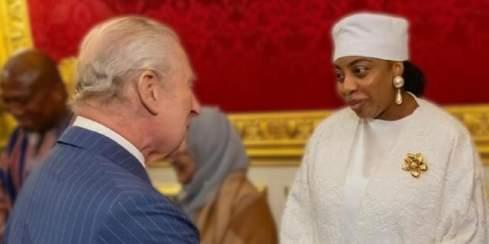
THE KING...

Chuks Okocha, Emmanuel Addeh and Linus Aleke in Abuja
Chuks Okocha in Abuja
L-R: Professor Ciaran Martin, Professor of Practice in the Management of Public Organisations, Blavatnik School of Government, University of Oxford; Professor Emily Jones, Professor of Practice in Public Policy, Blavatnik School of Government, University of Oxford; Mrs Ofovwe Aig-Imoukhuede, Executive Vice Chair, Aig-Imoukhuede Foundation; Mr Aigboje Aig-Imoukhuede, CFR, Chairman, Aig-Imoukhuede Foundation; Dr Olubunmi Tunji-Ojo, Minister of Interior; Dr Bosun Tijani, Minister for Communications, Innovation and Digital Economy, celebrating the graduation of 69 public servants from the AIG Public Leaders Programme.
Wife of the Secretary to the Government of the Federation of Nigeria, Queen Zaynab Otiti Obanor (right), in a conversation with His Royal Majesty King Charles III during the recent Commonwealth reception at St James’s Palace, Marlborough House, London
Onyebuchi Ezigbo in Abuja Nigeria Labour Congress
urgently grant Wage Award



Tinubu Directs Free Nationwide Distribution of Rice for Lent and Ramadan Seasons
Deji Elumoye in Abuja
President Bola Tinubu has directed the Renewed Hope Ambassadors (RHA) to distribute rice across all the 36 states of the federation and the Federal Capital Territory (FCT) in support of citizens observing the ongoing Ramadan and Lenten seasons.
Governor of Imo State and Director-General of Renewed Hope Ambassadors, Senator Hope Uzodimma, who disclosed
the wider West African region.
Minister of Foreign Affairs, Yusuf Tuggar, made the position known during a discussion on regional security at the Chatham House in London, where he stressed that security challenges in Nigeria and the Sahel were best addressed through locally driven solutions backed by international support.
Tuggar said the Nigerian government was not opposed to cooperation with the United States and other major powers, including Russia, but maintained that external involvement should focus on providing equipment, intelligence and logistical backing instead of deploying troops on the ground.
According to him, Nigeria and other countries in the region had previously demonstrated the capacity to restore peace
this in a statement issued at the weekend, said the initiative was intended to strengthen national unity and demonstrate compassion during a period that held deep spiritual significance for both Muslims and Christians.
Under the directive, Renewed Hope Ambassadors will coordinate the distribution through their nationwide grassroots network to ensure that families across Nigeria
when given adequate support.
He emphasised that direct foreign military engagement in West Africa could complicate already fragile security dynamics in the region, describing the security environment as complex due to cross-border insurgencies, competing geopolitical interests and weak governance structures in border communities.
The minister pointed to earlier regional peacekeeping operations as evidence that West African-led security initiatives could deliver results.
He cited the role played by the Economic Community of West African States Monitoring Group (ECOMOG) during conflicts in Sierra Leone and Liberia, saying the interventions succeeded largely because they were driven by regional actors with international backing rather than
benefited from the intervention during the holy season, when both Muslims and Christians were fasting.
A similar intervention was carried out during the last Christmas season, when rice was also distributed to support Nigerians celebrating the festive period.
The effort reflected the administration’s consistent commitment to standing with citizens during important
direct external military control.
Asked what role the US should be playing, Tuggar said: “I would say an indirect role, a supportive role, as opposed to taking a more direct approach that would see perhaps boots on the ground and engagement because it's a very complex region. What we need is support.
“Nigeria and other forces in the region have shown that with the right support, with the right equipment, we're capable of restoring peace in our region. We've done it in the past. I mentioned Sierra Leone.
“I mentioned Liberia and what ECOMOG was able to achieve in the past. I think that is the best approach as opposed to a more direct approach, which becomes more complex,” the minister argued. In late 2025, relations between
BALA MOHAMMED DEFECTS TO APC TOMORROW
Bauchi State, Bala Mohammed, to join the ruling All Progressives Congress (APC) tomorrow, Tuesday, in furtherance of his political sojourn.
THISDAY had exclusively reported Mohammed’s plan to quit the Peoples Democratic Party (PDP), yesterday, after recently meeting President Bola Tinubu and the APC leadership.
His prospective membership of the APC was said to have been cemented following several discussions in the last couple of weeks.
The ruling APC is said to have conceded to him 60/40 power sharing formula and ticket to the senate.
However, the contentious issue to be resolved is whether Bala Mohammed will be allowed to nominate his successor.
According to sources, the president was said to have insisted on handing over the structure of APC in the state to the party leadership, and not any individual, on account of the political sensitivity of the state, which borders many power centres and tendencies.
This is because, for example, persons like the Minister of Health, Ali Pate; the Minister of Foreign Affairs, Yusuf Tuggar and an oil and gas professional, Bala Wunti - all from the state - are also interested in the governorship.
Although his request for a 60/40 power/structure sharing ratio, has been granted, Mohammed still insisted he should be given the honour and privileges of nominating his successor, the same courtesy
he said was extended to others before him.
The contentious issue of nominating his successor, even though unresolved, Mohammed has concluded plans to join the APC tomorrow at a ceremony to be witnessed by all key actors of the party.
By his eventual membership of the APC, therefore, he would have marked up the ranks of the ruling party's governors to 32, leaving the opposition PDP, LP, APGA and Accord parties with one each.
Meanwhile, ahead of the proposed reconciliatory between the Tanimu Turaki-led Peoples Democratic Party (PDP) and the camp loyal to the Minister of the Federal Capital Territory, Nyesom Wike, today, the Wike group has listed what it described as two
religious and cultural seasons, the statement said.
Both Christian and Muslim communities will receive rice as part of the nationwide distribution effort, reflecting the president’s commitment to inclusivity, solidarity, and shared national values.
Uzodimma said the programme underscored the president’s belief in supporting citizens during the period of fasting, while strengthening
Nigeria and the United States became briefly strained after US President Donald Trump publicly accused Nigeria of failing to stop attacks against Christian communities.
The remarks triggered a diplomatic exchange between Washington and Abuja over the framing of violence in Nigeria.
Amid the tension, the United States carried out airstrikes on suspected Islamic State-linked militant camps in north-west Nigeria on Christmas Day 2025, targeting locations in the Bauni Forest area of Sokoto State.
However, although the US president initially framed the strikes as action against militants responsible for attacks on Christians, the Nigerian government rejected that characterisation and emphasised that the operation was part of
non-negotiable conditions in the expected talks.
Just like the Turaki-led PDP had last week insisted that the party must contest all positions in the 2027 general election and the party must not be allowed to die, the Wike group said the March 29 national convention must hold as scheduled.
National Publicity Secretary of the National Caretaker Committee loyal to Wike, Haruna Mohammed, told THISDAY in a chat they had their own non-negotiable conditions.
According to the spokesman of the Wike group, "We are open for reconciliation but we have conditions that are non-negotiable. And each group is expected to come to the negotiation table with their terms and conditions.
interfaith harmony.
According to him, “This initiative reflects President Tinubu’s commitment to unity and compassion. Ramadan and Lent are seasons that remind us of sacrifice, charity, and care for one another.
“Through this distribution, the Renewed Hope Ambassadors will ensure that families across Nigeria feel the spirit of togetherness during this sacred period.”
The distribution will be
a joint counter-terrorism effort rather than unilateral American intervention.
Following the airstrikes, the United States deepened security coordination with Nigeria.
The US Africa Command (AFRICOM) confirmed the deployment of a small team of US military personnel to Nigeria in early 2026 to assist with training, intelligence sharing and operational coordination against militant groups.
But Tuggar argued that the home-grown model should guide current efforts to address violent extremism across West Africa, particularly in areas around Lake Chad, where insurgent activities often cut across national borders.
The minister explained that security challenges in northern Nigeria were deeply interconnected with
"Number one condition of our group to the reconciliation talks was that the March 29 national convention is not negotiable. It must hold. The congresses are ongoing in the local government areas and states "Number two condition is that the setting up of another national Caretaker Committee in whatever name should not be entertained because there is already one in place," the spokesman of the National Caretaker Committee said.
He disclosed that each group to the meeting was expected to come with their written conditions to avoid any group being misquoted, adding that each group must be ten in number.
Commenting on the reconciliation, Senator Samuel
NLC DEMANDS WAGE INCREASE TO CUSHION EFFECT OF RISING FUEL PRICE
Oil windfall that was largely unaccounted for.
Against the skyrocketing prices of Premium Motor Spirit resulting from the ongoing United States, Israeli war against Iran, NLC said millions of Nigerian workers were bearing the brutal cost of a global capitalist crisis they did not create
In a statement signed by NLC President Joe Ajaero, the labour centre said petrol prices in Nigeria had skyrocketed to between N1,170 and N1,300 per litre.
It said the cost of PMS and AGO had made transportation
a noose around workers' necks while food inflation was galloping, and meagre wages were being swallowed by the induced scarcity.
NLC lamented that current wages were now mere stipends of starvation.
The statement said, "The Nigeria labour Congress subsequently demands: an immediate Wage Award and Cost of Living Allowance (COLA) for all workers to cushion the high cost of living.
"An expansion and overhaul of Cash Transfers to ensure transparency and that they reach the most vulnerable,
with increased value to match inflation.
"Immediate Tax Reliefs for Workers and a stoppage of all regressive taxes on low-income earners, including the proposed tax on the informal economy."
The labour movement stated that taxing of minimum wage amounted to extortion.
It urged the federal government to set a timeline for the full-scale operationalisation of all public refineries.
It also warned about the danger of sabotaging the national refineries to create a monopoly, adding that no country achieves economic
freedom by exporting jobs and importing prices.
NLC stated, "When a worker cannot afford to go to work, the economy stops. When a family cannot afford three meals a day, society sits on a keg of gunpowder.
"The government cannot foreclose any action that would offer succour. We demand an immediate intervention. It is the duty of the state to act to prevent the agony of its citizens and not wring its hands in hopelessness mouthing the Middle East war."
Regarding the expected oil earnings as a result of the Middle East war, NLC advised
carried out across nationwide through the state, local government, and ward structures of the Renewed Hope Ambassadors to ensure broad reach and transparency.
developments in neighbouring countries, making regional coordination essential.
Nigeria shares borders with Niger, Chad and Cameroon in the Lake Chad basin, creating a complex security landscape where militants frequently move across jurisdictions.
But because of this, Tuggar said security threats such as the insurgency by Boko Haram could not be effectively tackled by a single country acting alone.
The minister noted that the creation of the Multinational Joint Task Force (MNJTF) had previously improved cooperation among affected states, allowing security forces to pursue militants across borders and coordinate operations.
He said the effectiveness of the
Anyanwu said there were plans for the reconciliation between the two camps. He, however, maintained that there was no truce reached so far, stressing that there have been talks between each other to soften the grounds to reach a quick resolution of the PDP crisis.
"We have been meeting but no truce yet," he. said.
A chieftain of the PDP, Dr Adetokunbo Pearse, said the current challenges facing the party were not as serious as widely perceived, insisting that the party remained a strong opposition platform.
Pearse said this while reacting to the recent Appeal Court ruling invalidating the outcome of the
that it should be invested in the Nigerian people. It said the latest forecast by Nigeria Economic Summit Group (NESG) showed that Nigeria stood to reap about N30 trillion oil windfall from the Middle East crisis.
NLC said, "The Nigeria state must be held accountable for billions spent on turnaround maintenance. Nigerian workers are being pauperised and massively suffering.
"We are not a statistic; we are the engine of this nation. When the engine overheats, the entire vehicle crashes. The about N30 trillion oil windfall expected to accrue to Nigeria as a result of
the current Middle East war must not grow wings like the Gulf Oil windfall but should be invested in Nigerian people.
"It should be used to cushion the negative effects of the crisis in Nigerian people. The government must engage in sincere social dialogue with Nigerian workers and the broader citizenry.
"Using the Middle East war as an excuse to further impoverish Nigerians is unacceptable. The primary duty of government is to ensure the welfare of the citizenry. We demand action. We demand justice. We demand survival."
Tinubu
Energy Crisis: CPPE Tasks
FG on Reliable Electricity Supply, Fiscal Incentives for Adoption of Renewable Energy
Centre for the Promotion of Private Enterprise (CPPE) has asked the federal government to improve reliable supply of electricity and provide fiscal, regulatory incentives that would encourage businesses to adopt renewable energy solutions and reduce structural energy cost burden.
CPPE said the current surge in global energy prices, driven by escalating geopolitical tensions in the Middle East, had intensified cost pressures on businesses in Nigeria, which depend heavily on petrol and diesel to power their operations amid persistent electricity supply challenges.
It said businesses were also faced with rising transport and distribution costs due to higher energy prices.
Commenting on the current energy costs pressure on
businesses, Chief Executive Officer of CPPE, Dr. Muda Yusuf, said yesterday, "The current surge in global energy prices that are largely triggered by geopolitical tensions in the Middle East, have once again highlighted the vulnerability of businesses and economies to external shocks in global energy markets."
Yusuf said, "For Nigerian businesses, resilience will depend on improving energy efficiency, diversifying energy sources, strengthening financial management and improving logistics efficiency.
"For government, the crisis underscores the urgency of accelerating reforms in electricity supply, renewable energy adoption and domestic refining capacity.
"With the right combination of proactive business adaptation and supportive public policy, Nigeria can
significantly mitigate the impact of the current energy price shock and strengthen the resilience and competitiveness of its business environment."
He stated, "Government should expand fiscal and regulatory incentives that encourage businesses to adopt renewable energy solutions.
"This may include tax incentives for solar installations, import duty waivers for renewable energy equipment and fiscal support for investments in energy-efficient technologies.
"Such measures would help reduce the structural energy cost burden faced by Nigerian businesses."
CPPE also made a case for providing affordable financing for energy transition, strengthening domestic refining capacity, and improving reliability of electricity supply.
Yusuf identified access to
affordable financing as one of the major barriers preventing SMEs from investing in alternative energy systems.
He urged government, development finance institutions, and commercial banks to create dedicated financing windows that would support investments in renewable energy solutions and energy-efficient equipment.
He said, "Reducing the cost of financing will accelerate the transition to cleaner and more affordable energy systems for businesses."
According to him, domestic refining is a critical pillar of Nigeria’s energy security and an important buffer against volatility in the global energy market.
He said, "Expanding local refining capacity and ensuring a stable and predictable supply of crude oil to domestic refineries are essential for
Nova Bank Appoints Anele CEO, Meets CBN Capital Requirements
Sunday
NOVA Bank Limited has announced the appointment of Jude Anele as its Managing Director and Chief Executive Officer, following approval by the Central Bank of Nigeria.
The appointment comes at a pivotal moment in the bank’s evolution, after its transition from merchant banking to commercial banking and the successful completion of its recapitalisation programme ahead of the March 31, 2026 regulatory deadline.
Anele brings more than 33
years of banking experience across West and Central Africa, with expertise spanning retail and commercial banking, corporate banking, risk management, institutional transformation and executive leadership.
The bank in a statement yesterday, said the appointment reflects the Board’s strategic commitment to consolidating NOVA Bank’s commercial banking platform while accelerating growth across its Corporate, Commercial and Retail segments, as well as priority markets.
Speaking on his appointment, Anele said:
“Nova Bank has built a strong institutional foundation defined by regulatory compliance, capital strength, disciplined governance and a clear commercial mandate.
“Our focus now is execution, deepening customer relationships, expanding responsibly across priority markets, strengthening risk discipline and delivering sustainable value to our shareholders.”
Chairman of the bank, Phillips Oduoza, also expressed confidence in the new leadership.
According to him: “The Board is pleased to welcome Mr. Jude Anele as
Managing Director and Chief Executive Officer. His depth of experience, strategic clarity and proven leadership record align strongly with NOVA Bank’s growth ambitions.”
Oduoza added that with recapitalisation completed ahead of the regulatory timeline, the bank is entering a new phase defined by scale, stability and structured expansion.
The bank also confirmed that it has met the recapitalisation requirements set by the Central Bank of Nigeria ahead of the regulatory deadline, reinforcing its capital adequacy and long-term financial stability.
strengthening the resilience of the country’s petroleum products market.
"A well-functioning domestic refining ecosystem can help moderate the transmission of global supply disruptions into the domestic economy.
"Over time, a strong domestic refining base can also support export opportunities for refined products within the African region, further strengthening external reserves and Nigeria’s position in regional energy markets."
Yusuf stated that the most sustainable solution to Nigeria’s high energy cost environment
2027:
resided in improving the reliability and availability of grid electricity.
He said, "Government, therefore, needs to intensify efforts to expand electricity generation capacity, strengthen transmission infrastructure, and enhance the efficiency and financial viability of electricity distribution networks across the country.
"A more reliable electricity supply would significantly reduce the heavy dependence of businesses on diesel and petrol generators, which currently constitute a major component of operating costs.
Ex-THISDAY Editor, Issa-Onilu, Past APC Chair, BOB, Join Kwara Guber Race
Hammed Shittu in Ilorin
The Director General, National Orientation Agency (NOA), Mallam Lanre Issa-Onilu, has joined the governorship race in Kwara State ahead of the 2027 general election.
Also, at the weekend, the immediate past Kwara State chairman of All Progressives Congress (APC) Hon. Bashir Omolaja Bolarinwa (BOB), has declared his interest in the race.
However, Issa-Onilu, a former Group Politics Editor at THISDAY Newspapers is also contesting on the platform of the ruling All Progressives Congress (APC) in the state, a party he once spoke for at the national level.
Already, he has commenced consultations with the APC members and leaders ahead of the primary of the party in line with the revised timetable announced by the Independent National Electoral Commission (INEC).
THISDAY investigations
revealed over the weekend, an electronic flyer adorned with Onilu’s picture and accompanied with a catch phrase “Kwara’n re waju’.” The former ex-THISDAY editor when contacted, confirmed he was seeking the mandate of the people of the state to vie for the governorship position of the state in the 2027 election.
The decision of Issa-Onilu to throw his hat into the gubernatorial ring came barely few weeks to the primary elections of political parties in line with revised timetable of the Independent National Electoral Commission (INEC). At the same time, the immediate past Kwara State chairman of the APC, Bolarinwa has declared his interest in the governorship race.
Bolarinwa, fondly called "BOB", it was gathered, has started consultations with the APC members and leaders across the three senatorial districts of the state.
Dike Onwuamaeze
Nume Ekeghe,
Ehigiator and Kayode Tokede in Lagos
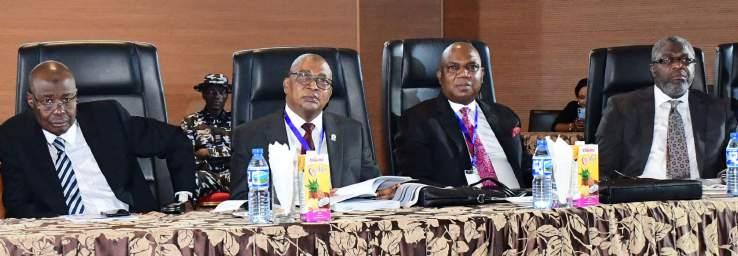
L-R: Hon. Justice M. L. Shuaibu, presiding Justice Court of Appeal Akure Division; Hon. Justice Adamu Jauro of Supreme Court; Hon. Justice Festus Obande Igbuinya of Supreme Court and Hon. Justice Adewale Abiru of the Supreme Court at the closing ceremony of a 3-day training workshop on Anti-Competition Law and Consumer Rights held at the National Judicial Institute, Jabi, Abuja at the weekend.
Iran Denies Seeking Ceasefire, Negotiation, Pledges to Fight for as Long as It Takes
Netanyahu posts video in response to death rumours Oil poised for further gains, stays above $100 Iran arrests 500 accused of giving information to enemies US energy secretary says war to end in weeks
Emmanuel Addeh in Abuja
Iran’s Foreign Minister, Abbas Araghchi, yesterday denied claims that Iran requested negotiations or a ceasefire and said the country will “fight as long as it takes”.
President Donald Trump had claimed Iran requested a ceasefire but said he was not ready to make a deal with the country because “the terms aren’t good enough yet”.
The US leader told NBC that American forces had “totally demolished” military targets on Iran’s critical Kharg Island but suggested he might continue bombing it “just for fun”.
It comes as Israel launched “wide-scale” strikes on Iran overnight as the raging war between the countries entered its third week.
”We never asked for a ceasefire, and we have never asked even for negotiation,” he told CBS News on Sunday.
“We are ready to defend ourselves as long as it takes. And this is what we have done so far, and we continue to do that until President (Donald) Trump comes to the point that this is an illegal war with no victory,” he said.
Tehran Arrests 500 Accused of Giving Information to Enemies
Also, Iran has arrested 500 people accused of sharing information with enemies, the Islamic Republic's Police Chief, Ahmadreza Radan, said on Sunday, as Israeli and US fighter jets continue to strike new targets in the country.
Half of those cases had involved serious incidents "including people who provided information for hitting targets and individuals who took footage of strike locations and sent them," Radan said, without going into detail on when the arrests took place.
Earlier, Iranian media
First Lady to Mothers: You Are Heroes of Nigeria
Deji Elumoye in Abuja
Wife of the president, Senator Oluremi Tinubu, has described Nigerian women as the heroes of the nation.
In a message issued to mark the 2026 Mother's Day, Mrs Tinubu gave kudos to all mothers who nurtured, loved, and shaped the families.
The first lady, in the six-paragraph message, stated, "Today, I honour and celebrate every mother across Nigeria. Your love, care and sacrifices do not go unnoticed.
"Beyond the big sacrifices, it is the small, quiet moments
that truly define a mother’s love. On this special day, we carry those moments in our hearts and say thank for the warmth and love you selflessly give.
'To all mothers who nurture, love and shape our families, you are the heroes of our nation.”
She added, "I implore our mothers to continue to teach and guide the children, passing down wisdom and strength that would benefit future generations.
"May we all live to enjoy the fruits of our labour over our children, grand-children and great grand-children.
"Happy Mother’s Day."
reported dozens of arrests in several regions on Sunday. In northwestern Iran, the semiofficial Tasnim news agency said 20 people were arrested on accusations by the provincial prosecutor's office of sending location details on Iran's military and security assets to Israel, Reuters reported.
In northeastern Iran, which has remained relatively untouched by air strikes, Tasnim reported the arrest of 10 people, with some accused of collecting information on sensitive locations and economic infrastructure.
"As the Zionist enemy (Israel) and the US are attempting to invade Iran, they simultaneously activate mercenaries and spies to carry out riots as the next step," a provincial branch of the Revolutionary Guards' intelligence organisation said,
Supreme
The Supreme Court Friday, February 20, 2026, finally delivered judgment in favour of the Asset Management Corporation of Nigeria (AMCON) following the protracted legal battle between Polaris Bank Limited, AMCON, 11 Hospitality Plc, and Milan Industries Limited over the sale of Lagos Continental Hotel.
Recall that the defunct Skye Bank Plc (now Polaris Bank Plc) advanced a credit facility to Milan Industries Limited for the construction of the Lagos Continental Hotel in Victoria Island, Lagos.
The loan became nonperforming, and AMCON acquired and paid for the Eligible Bank Asset (EBA) of Milan Industries Limited from Polaris Bank in September 2018.
according to Tasnim.
The News Network also reported that three people were detained in the western province of Lorestan for "seeking to disturb public opinion ... and burn mourning symbols."
Israel has begun targeting security checkpoints based on tip-offs from informants on the ground, representing a new phase of its assault on Iran, a source briefed on Israel's military strategy told Reuters this week.
In January, weeks before the US and Israel launched the current war against Iran, there were widespread antigovernment protests in Iran that were repressed in the deadliest crackdown in the Islamic Republic's history.
Netanyahu Posts Video in Response to Death Rumours
Also yesterday, Israeli Prime Minister Benjamin Netanyahu, posted a video of himself getting a cup of coffee and chatting with his aide, after rumours that he was dead or injured were aired by Iranian state media and spread online in Iran.
In the video, taken at a cafe in Jerusalem's outskirts and posted on Netanyahu's Telegram account, his aide asked him about the rumours, Reuters said.
Netanyahu responded with a pun on the word dead -which in Hebrew slang can be used to describe "being crazy about" someone or something -- as he reached for a cup of coffee.
"I'm crazy about coffee. You know what? I’m crazy about my people," Netanyahu told the aide.
Reuters verified the video's location from file imagery of the cafe, which matched the interiors seen in the video. The date was verified from multiple videos and photos of Netanyahu's visit posted by the cafe on Sunday. Since the US and Israel launched attacks on Iran on February 28, Netanyahu has visited at least two towns hit by Iranian missiles, a hospital, port and military bases, but there was little to no media access, and videos were distributed by his office. Netanyahu, who rarely gives interviews to Israeli press or holds news conferences, convened his first press conference since the start of the war via a video link on Thursday, a similar format to the one he used in June during Israel's 12-day war with Iran.
Prior to the full payment and purchase of the loan, the Bank had appointed Kunle Ogunba, SAN, as Receiver/Manager over Milan Industries to recover the non-performing loan.
As Receiver/Manager, Kunle Ogunba took over the Lagos Continental Hotel pursuant to the registered Deed of Legal Mortgage collateralizing the Hotel to the Bank and his Deed of Appointment.
Upon acquisition of the EBA, AMCON validated the appointment of Kunle Ogunba, SAN, as Receiver/Manager.
Subsequently, AMCON disposed of the Lagos Continental Hotel for the sum of N22 billion to 11 Hospitality Plc pursuant to the registered Deed of Legal Mortgage collateralizing the Hotel to the Bank/AMCON.
Following the disposal of the collateral, Milan Industries Limited commenced Suit No. FHC/L/CS/1643/2020- Milan Industries Limited vs Polaris Bank Limited, Asset Management Corporation of Nigeria and 11 Plc wherein the obligor challenged the disposal of the collateral by AMCON.
The Federal High Court had dismissed the obligor’s suit at the time.
Dissatisfied with the judgment; Milan Industries commenced an appeal at the Court of Appeal vide CA/L/CV/476/2021: Milan Industries Limited vs Polaris Bank Ltd, AMCON & 11 Hospitality Plc.
The matter over the years went through the Court of Appeal, which ruled in favour of Milan Industries Limited. Expectedly,
the judgment of the Court of Appeal was appealed to the Supreme Court that finally ruled on the matter on February 20, 2026, in favour of AMCON. In setting aside the judgment of the Court of Appeal, the Supreme Court stated that the AMCON Act is a special law enacted by the National Assembly to tackle peculiar problems in the financial industry and interpretation should be done in accordance with the special nature of the law. Hence the Supreme Court affirmed salient provisions of the Act; The Supreme Court upheld the provisions of Sections 60 of the AMCON, which exempts AMCON from paying stamp duties; The Supreme Court validated the rights of AMCON as a mortgagee irrespective of the up-stamping of the document.
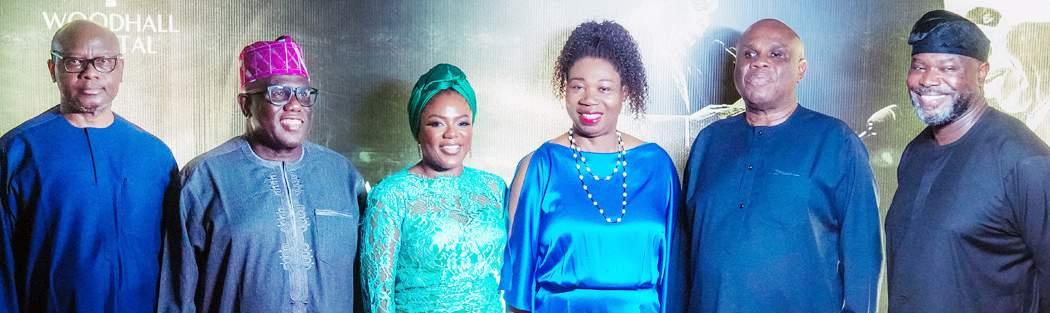
L-R: Director, Woodhall Capital Group Board, Mr. Adejare Rasheed Olaoluwa; Chairman, Woodhall Capital Group Board of Directors, Mr. Akin Akinfemiwa; President, Woodhall Capital Group, Mrs. Mojisola Hunponu-Wusu; Matron, African Export-Import Bank (Afreximbank) Spouse Network and Visual Artist, Mrs. Chinelo Oramah; former President and Chairman Board of Directors of the African Export-Import Bank (Afreximbank), Professor Benedict Oramah, GCON; and Managing Partner, BlackStone Legal Advisory, Mr. Viavo Hunponu-Wusu at the WoodHall Capital Dinner held in honour of Professor Benedict Oramah, GCON, for his outstanding contributions to humanity and the advancement held at the Oak, the Global Headquarters of Woodhall Capital, Ikoyi Crescent Lagos….recently
SULTAN VISITS PRESIDENT...
Presidency Takes Over Direct Oversight of Nigeria’s Accident Investigation Bureau
A long-expected repositioning of Nigerian Safety Investigation Bureau (NSIB) has been made by moving the agency from Ministry of Aviation and Aerospace Development to the presidency, THISDAY has learnt.
The decision, which resolved a long-standing structural contradiction, placed Nigeria, for the first time, closer to the governance architecture used by the world’s most credible transport safety systems, where accident investigation sat near the centre of national policy oversight.
The presidential approval for the repositioning, conveyed through State House correspondence, which was sighted by THISDAY, was signed
by Permanent Secretary (General Service Office) for Secretary of the Government of the Federation (SGF), Dr. Ibrahim Abubakar. It was transmitted to Minister of Aviation for immediate implementation on March 11, 2026.
The approval also directed Attorney-General of the Federation to initiate amendment of the NSIB Establishment Act 2022 to reflect the change and forward the required amendments to the National Assembly.
Nigerian Safety Investigation Bureau was established through Act No. 35 of 2022, replacing the former Accident Investigation Bureau (AIB), which had operated solely within the aviation sector.
The transition from AIB to
ARCO Partners Global Drone Tech Provider to Enhance Nigeria’s Aerial Security
ARCO Worldwide Services Limited has become Nigeria's first authorised DJI Enterprise reseller, marking a milestone partnership with the world's leading civilian drone technology provider.
A statement from the Nigerian company stated that the alliance positions ARCO Worldwide as the central hub for standardised drone adoption, offering direct access to DJI’s advanced Matrice and Mavic series tools essential.
To this end, ARCO noted that whe deployed, this will enhance national security, including order patrol and rapid response surveillance; infrastructure protection, including monitoring oil and gas pipelines for theft and vandalism as well as operational intelligence, which will see the deployment of high-precision mapping for construction and agriculture.
“This partnership with DJI Enterprise marks a defining milestone for our company and for the Nigerian drone ecosystem as a whole,” said Managing Director of ARCO Worldwide Services, Okosubide Mozimo. “We are proud to lead and set the precedent for a rapidly growing economy,” Mozimo added.
As a subsidiary of ARCO Group Plc, ARCO Worldwide said it stands out as one of the few indigenous companies fully licensed by both the Nigerian Civil Aviation Authority (NCAA) and the Office of the National Security Adviser (ONSA). This dual certification, it stressed, combined with ARCO Worldwide's new role as DJI's authorised reseller, ensures that all drone deployments meet the strictest regulatory standards.
NSIB reflected an important national recognition that transport safety risks in Nigeria extended well beyond aviation.
The document stated the new bureau was mandated to investigate accidents across four transport modes: air, marine, rail, and tracked vehicle systems. This made NSIB Nigeria’s only multimodal accident investigation authority.
Despite the expanded
mandate, the bureau remained administratively under Ministry of Aviation and Aerospace Development. This arrangement created an obvious policy inconsistency. An agency responsible for investigating train derailments, ferry incidents, and pipeline vehicle collisions continued to report to a ministry whose operational focus and regulatory reach resided largely within aviation.
The contradiction raised
practical concerns. The aviation ministry neither possessed cross-sector oversight across all transport modes nor the neutral distance required to supervise investigations that might involve agencies and operators outside its jurisdiction.
In effect, a national accident investigation authority with responsibilities across Nigeria’s transport network remained institutionally tied to a single sector ministry.
According to the correspondence, “The president’s decision addresses that gap by relocating the bureau within a governance structure that better reflects its national mandate. “Accident investigation bodies occupy a distinct role in safety systems. They do not regulate industries, and they do not impose sanctions. Their task is to determine the causes of accidents and issue recommendations that prevent recurrence.
Blue Economy: FG, Admiralty Maritime Services Partner to Slash Transport Cost Via Inland Waterways
Kasim Sumaina in Abuja
The federal government has partnered Admiralty Maritime Services in its strategic focus on expanding inland and coastal waterway usage as a primary, cost-effective alternative for moving cargo and passengers across the nation.
The Permanent Secretary, Federal Ministry of Marine and Blue Economy (FMMBE), Fatima Sugra Tabi’a Mahmood, who disclosed this at the weekend during a courtesy visit from the CEO of Admiralty Maritime
Services Limited, Rear Admiral Muhsin Abba (Rtd), in Abuja, emphasized that optimizing Nigeria’s vast aquatic resources is central to lowering national logistics costs.
According to her, since assuming office ten weeks ago, her priorities has been how to Fasttrack the transition of freight from road to water.
Mahmood stated data confirms that water transportation is significantly more affordable than road or rail.
She added: "By shifting a substantial portion of cargo
to our waterways we will directly reduce the market price of goods and services, making the Nigerian economy more competitive."
She further noted the Ministry is working under the policy direction of the Honourable Minister, Adegboyega Oyetola, to realize President Bola Ahmed Tinubu’s vision of positioning Nigeria as a global maritime leader.
The Permanent Secretary highlighted Nigeria’s success in maintaining piracy-free territorial waters for three
consecutive years. While acknowledging this milestone, she stressed that sustaining this growth requires intensified collaboration with neighbouring and international partners to safeguard critical shipping routes in the Gulf of Guinea.
Earlier, Rear Admiral Muhsin Abba (Rtd), CEO of Admiralty Maritime Services Limited - a subsidiary of Navy Holdings Limited - expressed his organization’s readiness to support the ministry’s blue economy roadmap.
Soludo Holds Service to Mark End of First Tenure, Invites Anambra People to Join Build New State
David-Chyddy Eleke in Awka
Anambra State Governor, Prof. Chukwuma Soludo, yesterday, held an interdenominational service to mark the successful end of his first term in office.
Soludo would on Tuesday, March 17 be sworn in for a second term after winning re-election in November 8
governorship election in the state.
The service was attended by several clergy men from all denominations across the country, including his predecessor, Dr Chris Ngige. Speaking at the service, Soludo said his dream has always been for God who created him an Anambra man, made him alive and healthy
to give him the opportunity to serve the state.
He added he will never relent in ensuring he serves the people by bringing developments to all parts of the state, while inviting the people to come with him as he begins his second term.
"I have always prayed God who has blessed me from my mother's womb, with
life and good health, to use me to bless my state and eventually He did it.
"This is a moment to thank all of you, contributing your advice and being pillars of support to us and we are here to say thank you as we end this first term in office. I want to tell you that in terms of development, you ain't seen nothing yet.
Emmanuel Addeh in Abuja
Sunday Okobi
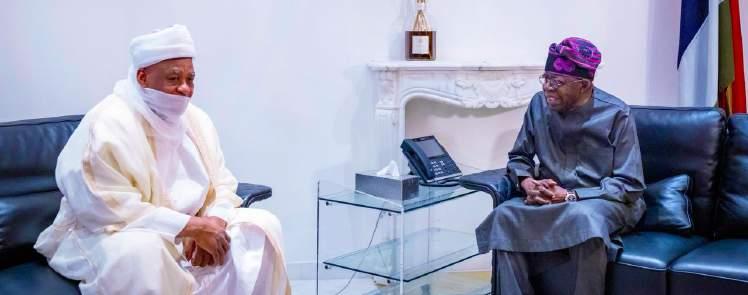
President Bola Ahmed Tinubu (R) welcomes Sultan of Sokoto, Alhaji Muhammadu Sa’adu Abubakar III, to the Presidential Villa, Abuja, yesterday
SANWO-OLU FLAGS OFF MONTHLY ENVIRONMENTAL SANITATION PROGRAMME...
ADC Replies APC: We Are Not Inciting Nigerians, We Are Only Speaking for Them
Chuks Okocha in Abuja
African Democratic Congress (ADC) has pushed back against All Progressives Congress (APC) over the latter’s defence of President Bola Tinubu’s economic reforms, where it accused the opposition party of inciting Nigerians against the government.
In a statement by its National Publicity Secretary, Mallam Bolaji Abdullahi, ADC rejected the accusation of incitement, insisting that the data showing Nigeria’s poverty rate has risen to 63 per cent, up from about 50 per cent before the removal of petrol subsidy.
It added that the report showing that 93 per cent of Nigerians believed the country was heading in the
wrong direction were not opposition talking points, but publicly available reports that highlighted the human cost of the administration’s economic policies and reflected the views of ordinary Nigerians who were living in hell under the APC government.
ADC said it had taken note of APC’s response to its earlier statement on the rising poverty figures under the Tinubu government.
''But instead of addressing the clear evidence that more Nigerians are falling into poverty under this government, the ruling party has chosen to attack the opposition and dismiss the lived realities of millions of citizens. Facts, however, cannot be dismissed by press
statements,'' the party stated. Abdullahi explained that the independent report that triggered the debate showed that Nigeria’s poverty rate had risen to 63 per cent, up from about 50 per cent before the removal of petrol subsidy. He stated, ''This means that tens of millions of additional Nigerians have been pushed into poverty in the period since the administration’s failed economic policies were introduced. The APC claims Nigerians support its reforms, yet the data says otherwise.
''Independent surveys show that 93 per cent of Nigerians believe the country is heading in the wrong direction. Eighty-eight per cent describe the national economy as bad,
while 74 per cent say their personal living conditions are poor. These are not opposition talking points. They are the views of Nigerians themselves, APC members included.''
The ADC spokesman added that APC also claimed that the hardship Nigerians were experiencing was “transient”, but the numbers told a different story.
According to Abdullahi, ''Recent surveys show that 82 per cent of Nigerians report going without enough food at least once in the past year, 82 per cent have gone without medical care, 79 per cent have gone without cooking fuel.
“Seventy-four per cent have gone without clean water, and 95 per cent have gone without a cash income
Abia, Firm Ready to Sign $200m Oil Palm Plantation Devt, Production MoU
The Abia State Government and an agro-processing firm are set to sign a $200-milliondollar Memorandum of Understanding (MoU) deal aimed at reviving oil palm plantation development and revolutionizing oil palm production and processing.
Abia State governor, Dr. Alex Otti, made this known when he met with a delegation of Presco PLC in his office.
Chairman of Presco PLC, Olakanmi Rasheed Sarumi, during a presentation at the meeting, disclosed the company
was prepared to invest $200 million in palm oil production and processing in Abia State, adding that the firm intends to acquire 14, 000 hectares of land for the project.
Mr. Sarumi explained that establishing a major oil palm processing hub in Abia to serve the Southeast region would attract downstream industries, given the vast industrial uses of raw palm oil. According to him, the initiative is expected to create over 5,000 direct and indirect jobs, particularly for local youths; across plantation operations, milling, logistics, and
related support services and reduce rural-urban migration, and stimulate development in the host communities.
The Chairman said that the company has identified three potential locations, including Ozuitem in Bende local government area, Abam in Arochukwu local government area and Ulonna in Umuahia North local government area, for development of the palm plantation project.
He described the proposed investment as a modern continuation of the agricultural revolution initiated by former Eastern Region Premier, Dr
Michael Okpara, whose farm settlement programmes boosted oil palm production in Nigeria.
He noted the project aligns with the vision of Abia State Government to transform the state into one of Nigeria’s top three industrial plantation clusters by 2032.
When fully operational, Sarumi revealed the investment would contribute billions in naira annually to the State’s Gross Domestic Product (GDP) through agricultural output, tax revenues, and expanded economic activities across small, medium-scale enterprises and local value chains.
at some point during the year. These figures point not to temporary discomfort, but to widespread and deepening economic distress.
''The APC speaks proudly of macroeconomic indicators, but Nigerians live in a real economy where fuel prices have surged by almost 500 per cent – from about N255 per litre in May 2023 when Tinubu came into office, to around N1,500 per litre today in many parts of this country.
“This is pushing up transport costs and driving
food prices beyond the reach of millions of households.
''The APC claims that the money previously spent on fuel subsidy, which should amount to roughly N6.4 trillion in savings last year alone, is now being redirected to ‘vital sectors’ such as healthcare and social development.
“However, it is on record that only N36 million, just about 0.02 per cent of the capital budget, was actually released for capital projects in 2025 for Nigeria’s entire federal healthcare sector.
Bala Wunti Expands Digital Access in Bauchi State
tertiary institutions benefit from free internet initiative
Bauchi State has taken a significant step toward strengthening academic excellence and youth empowerment as notable philanthropist, Dr. Bala Wunti, continues to invest in the intellectual development of the next generation through a statewide digital connectivity initiative.
Under this initiative, 32 tertiary institutions across Bauchi State have been connected to free internet services, with 61 internet devices installed to provide students with reliable access to digital resources for learning, research, and innovation.
The beneficiary institutions include prominent academic and professional training centres such as Aliko Dangote School of Nursing, Abubakar Tafawa
Balewa University (ATBU), The Federal Polytechnic Bauchi, Federal College of Education Jama’are, Sa’adu Zungur University, and several colleges of health sciences, education, agriculture, and Islamic studies across the state.
The initiative is part of Dr. Bala Wunti’s broader vision to nurture a new generation of informed, skilled, and responsible leaders, recognizing that access to knowledge and digital connectivity is essential in shaping future leadership. Speaking on the significance of the programme over the Weekend, Dr. Wunti emphasized that empowering students with the tools for learning is not only an investment in education but also in leadership recruitment, mentorship, and sustainable succession for the future of Bauchi State and Nigeria.
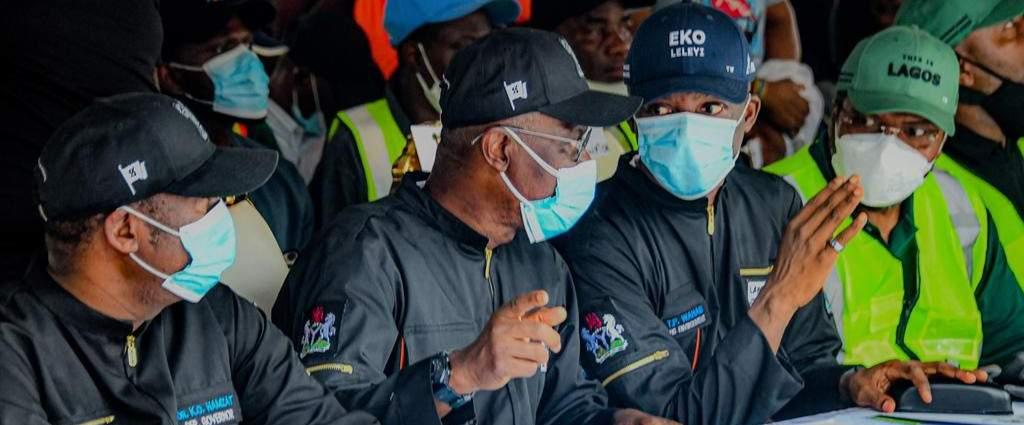
L-R: Deputy Governor of Lagos State, Dr. Obafemi Hamzat; Governor Babajide Sanwo-Olu; Commissioner for the Environment and Water Resources, Mr. Tokunbo Wahab and the Permanent Secretary, Office of Environmental Services,
Dr. Gaji Omobolaji during the flag off of the monthly Environmental Sanitation program at Mushin-Agege Motor road in Lagos, on Saturday
Boniface Okoro in Umuahia
Segun Awofadeji in Bauchi


MONDAY DISCOURSE
Power Play, Defections and Abaribe’s Unsettled Fate in the Senate
a dramatic wave of defections in the Senate has triggered a profound shift in Nigeria’s legislative politics, reshaping the opposition landscape and igniting a constitutional confrontation that now threatens the seat of one of the chamber’s most outspoken lawmakers, Senator Enyinnaya abaribe, whose political future hangs precariously in the balance. Sunday Aborisade reports.
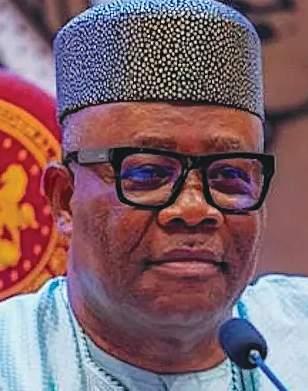
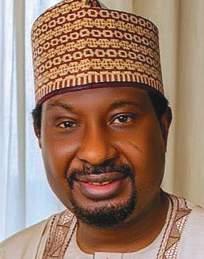
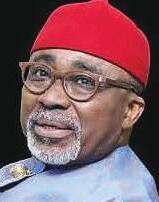
What began as a routine legislative exercise inside the Red Chamber quickly evolved into a gripping political drama that exposed deep fractures within Nigeria’s opposition parties while simultaneously setting the stage for an intense power struggle over the leadership of the minority bloc.
The chain of events unfolded when Senate President, Senator Godswill Akpabio presided over plenary and read out a series of letters from senators formally announcing their resignation from their political parties.
The announcements came in quick succession, but the political implications were anything but routine.
By the time the session ended, the balance of power within the opposition ranks had shifted dramatically as a number of lawmakers abandoned their former political platforms to embrace the African Democratic Congress, instantly elevating the party into a prominent position within the Senate.
Among the most prominent defectors was former Sokoto State governor and ex-Speaker of the House of Representatives, Senator Aminu Waziri Tambuwal, whose exit from the Peoples Democratic Party symbolised the growing instability within Nigeria’s once-dominant opposition party.
Tambuwal, in his resignation letter, lamented the persistent internal crisis that has plagued the PDP in recent years.
He described a political environment characterised by leadership disagreements, factional disputes and prolonged litigations which, according to him, have eroded the cohesion of the party and weakened its ability to function effectively as a national political platform.
Tambuwal’s departure was quickly followed by several other lawmakers who also declared their intention to join the ADC.
Among them were Victor Umeh, Tony Nwoye, Lawal Adamu Usman, Mohammed Ogoshi Onawo, Augustine Akobundu, Ireti
Kingibe and Binos Yaroe.
The chamber also received the defection letter of former Bayelsa State governor, Seriake Dickson, who announced his decision to leave the PDP and align with the Nigeria Democratic Congress, a political platform he founded.
For many of the lawmakers, the decision to leave their former parties reflected the deep frustration within opposition ranks as internal crises, leadership disputes and factional rivalries continue to undermine party cohesion.
The cumulative effect of the defections was immediate and dramatic.
With nine senators now in its fold, the African Democratic Congress overtook the Peoples Democratic Party to emerge as the leading opposition party in the Senate.
For the PDP, which once dominated Nigeria’s political landscape and held a commanding presence in the National Assembly, the development represents yet another sign of the party’s gradual decline within the legislature.
Yet the real political drama of the day erupted when the Senate President read the defection letter of Enyinnaya Abaribe, the ranking senator representing Abia South.
Unlike other defectors who cited internal crises within their parties as justification for their decision, Abaribe’s
letter contained no such explanation.
That omission immediately triggered constitutional concerns among lawmakers.
Under Section 68(1)(g) of the 1999 Constitution, a legislator is required to vacate his seat if he defects from the political party that sponsored his election, unless the party is divided or engulfed in internal crisis.
The issue was quickly raised by Deputy Senate President, Barau Jibrin, who pointed out that the All Progressives Grand Alliance, the party on whose platform Abaribe was elected, was not known to be experiencing any national leadership crisis.
His observation sparked murmurs across the chamber and triggered a tense debate about the constitutional implications of Abaribe’s move.
Rising to defend himself, the Abia South senator insisted that his situation was fundamentally different from that of the other defectors.
According to him, he did not voluntarily abandon his party but was expelled by APGA months earlier.
The senator stated that the party had formally expelled him in September, 2025 and that he possessed documentary evidence to support the claim.
But the Senate leadership was not prepared to accept the explanation without verification. Akpabio pointed out that the Senate had not received any official communication confirming the alleged expulsion and therefore could not rely solely on Abaribe’s claim.
Following consultations among principal
Whether Abaribe survives the constitutional challenge or becomes the first casualty of the Senate’s latest wave of defections may ultimately shape the next chapter of legislative politics in Nigeria’s upper chamber.
officers, the Senate President ruled that Abaribe would be given one week to present documentary proof that APGA indeed expelled him.
If he fails to do so, the Senate may be compelled to invoke constitutional provisions that could lead to the loss of his seat.
Beyond the constitutional arguments playing out on the floor, investigations revealed that intense political manoeuvring had already taken place behind the scenes before the plenary session.
Sources within the Senate disclosed that the leadership of the chamber had mounted several efforts to persuade Abaribe to reconsider his defection.
The anxiety within the Senate hierarchy was rooted in the political consequences that could follow if the Abia lawmaker successfully joins the ADC.
With the African Democratic Congress now the largest opposition party in the Senate, it automatically becomes entitled to produce the minority leadership of the chamber.
This development means that the current Minority Leader, Abba Moro of the PDP, could soon lose the position if the opposition bloc reorganises its leadership to reflect the new party configuration.
Among the names being mentioned as potential successors are Tambuwal and Abaribe.
For many members of the ruling All Progressives Congress caucus, the possibility of Abaribe emerging as the next Minority Leader is deeply unsettling.
Abaribe has long been regarded as one of the most outspoken voices within the Senate, frequently delivering forceful interventions during debates and often challenging the policies of the executive arm of government.
Some senators within the ruling party fear that his emergence as the leader of the opposition could inject a far more confrontational tone into Senate proceedings.
Akpabio
Barau
Abaribe
Group Features Editor: Chiemelie Ezeobi Email chiemelie.ezeobi@thisdaylive.com,
Advancing Peace Building, Conflict Prevention and Shared Responsibility in Strengthening Security Systems
Nigeria’s growing security threats have highlighted the need for stronger collaboration among government agencies, private security providers, community leaders and civil society groups. At a stakeholder engagement in Lagos organised by Halogen Security Company and the Rotary Club of Omole Golden, experts stressed that lasting peace and effective conflict prevention will depend on shared responsibility, early intervention and stronger community-based security systems. Chiemelie Ezeobi reports
Nigeria’s increasingly complex security landscape requires more than reactive responses from law enforcement agencies; it demands sustained collaboration between government institutions, private security providers, community leaders and civil society. This formed the central thrust of discussions when Halogen Security Company recently convened a strategic stakeholder engagement session focused on peace building and conflict prevention in Lagos.
The session, organised in partnership with the Rotary Club of Omole Golden, brought together key security actors to examine Nigeria’s evolving security threats and explore preventive approaches to conflict management. The gathering also highlighted the need for shared responsibility in strengthening security systems across communities.
The event, themed “Peace Building and Conflict Prevention,” forms part of Halogen’s ongoing efforts to deepen community engagement and promote collaborative security solutions through dialogue and multi stakeholder partnerships.
Delivering the keynote address, Dr. Adewale Adeagbo, Director of the Centre of Excellence at Halogen Security Company, presented insights from the organisation’s forthcoming security outlook report. According to him, kidnapping, terrorism, insurgency and community disputes remain among the most urgent threats confronting Nigerians today.
Understanding the Nature of Peace and Conflict
Adeagbo’s presentation, titled “The State of Security in Nigeria: Peace Building and Conflict Prevention – A Part of the Solution?”, explored the deeper meaning of peace and conflict, emphasising that effective security strategies must address the underlying causes of violence and social disputes.
According to him, peace studies often distinguish between negative peace and positive peace. Negative peace refers to the temporary absence of violence or open conflict, while positive peace reflects a more sustainable condition in which social justice, equitable access to resources, accountable governance and stable institutions combine to foster long term stability.
To illustrate the complex drivers of conflict, Adeagbo highlighted several theoretical perspectives that scholars use to understand violence and social instability.
The philosophical or idealist theory views peace as the natural and original state of human existence. In this perspective, conflict arises when societies drift away from this ideal condition.
The sociological or structural theory, on the other hand, emphasises the role of social institutions such as schools, legislatures, courts and the armed forces in maintaining stability. When these institutions fail to perform their functions effectively, crime and social unrest often emerge.
Another perspective, the biological theory, argues that human beings are instinctively driven by the need for survival and self preservation, which can sometimes manifest as aggressive behaviour.
The economic or human needs theory identifies competition for economic resources as a major driver of conflict. In such situations, struggles over access to land, wealth or political power often lead to violence. In extreme cases, some individuals and groups profit from instability, a phenomenon researchers describe as the activities of “conflict entrepreneurs.”

L-R: Head of Journey Management and Logistics, Lagos State Traffic Management Authority (LASTMA), Jubril Oshodi; Director, Department of State Services (DSS), Lagos State Command, Mr. Babajide Adisa; Commissioner of Police, Lagos State, CP Jimoh Moshood; President, Rotary Club of Omole Golden, Rtn. Adekunmilola Adio-Moses; Executive Secretary/CEO, Lagos State Security Trust Fund (LSSTF), Dr. Ayodele Ogunsan; District Governor, Rotary District 9111, Prince Henry Akinyele; Centre of Excellence, Halogen Group, Dr. Adewale Adeagbo; and Chair, Peace Building and Conflict Prevention Committee, Rotary Club of Omole Golden, Degbola Louis, at the Peace Building and Conflict Prevention Stakeholder Engagement Session held at Halogen Security Company, recently
The psycho cultural theory adds another dimension, suggesting that deeply rooted cultural identities and ethnic affiliations can also fuel conflict, particularly when discrimination or marginalisation occurs.
Similarly, the frustration aggression theory explains how individuals or communities may resort to violence when their legitimate needs and aspirations are persistently denied. Historical grievances, economic hardship and social exclusion can all intensify such frustrations.
Taken together, Adeagbo argued, these theories reinforce the importance of addressing structural inequalities, social grievances and economic deprivation if societies are to achieve lasting peace.
Global Trends and Their Local Implications
While Nigeria faces its own unique security challenges, Adeagbo emphasised that the country’s situation cannot be separated from broader global trends.
According to global peace assessments, peace conditions around the world have deteriorated steadily over the past decade. The number of active conflicts has risen significantly, with 59 state based conflicts recorded globally and over 152,000 conflict related deaths in 2024 alone.
At the same time, new risks are reshaping the global security landscape. These include the spread of misinformation and disinformation, environmental degradation, geopolitical rivalries, cyber threats and increasing militarisation.
The economic cost of violence has also reached staggering levels, with global estimates indicating that conflict and insecurity now impose trillions of dollars in economic losses annually. For Nigeria, these global dynamics intersect with domestic challenges such as poverty, governance gaps, youth unemployment and weak institutional capacity.
Nigeria’s Security Reality
Data presented during the stakeholder engagement painted a sobering picture of the country’s security environment.
Kidnapping, armed robbery, attacks on highways, terrorism, communal conflicts, cybercrime, cultism and gang violence remain among the most pressing
threats confronting both individuals and communities.
Operational costs for businesses and organisations have also increased significantly due to rising security expenditures. To better understand public perception of the security situation, a survey was conducted in 2026. The survey gathered 273 responses over an eight day period, offering insights into how Nigerians experience security in their daily lives.
The results revealed widespread anxiety among respondents. Twenty nine per cent described the security situation as uncertain, 22 per cent said they felt insecure, while 32 per cent reported feeling very insecure and fearful for their safety and that of their families.
Even more striking was the finding that four out of every ten respondents had been directly affected by a security incident within the past year, while eight out of ten said someone they knew had been a victim of such incidents.
Kidnapping emerged as the most concerning threat for many respondents, followed by armed robbery and attacks on the road.
Looking ahead to the rest of the year, perceptions remained mixed. While some respondents expressed cautious optimism that the situation might improve slightly, a significant number believed conditions could worsen or remain unpredictable.
From Reactive Responses to Preventive Strategies
Against this backdrop, Adeagbo stressed the urgent need to move from passive concern to active participation in security solutions. “Effective peace building requires structured frameworks, shared responsibility, and a shift from reactive responses to preventive strategies. Security is not the sole preserve of government agencies; it is a collective national obligation.”
According to him, conflict prevention must begin with addressing the fundamental needs of individuals and communities. Basic human needs such as shelter, food, recognition and economic opportunity play a critical role in shaping social stability.
When these needs are unmet,
frustration can accumulate and eventually manifest in violence or social unrest. Preventive diplomacy, he explained, offers a proactive framework for addressing emerging tensions before they escalate into full blown conflicts. Collaboration as Foundation of Security
The stakeholder session attracted a wide range of institutional representatives, reflecting the need for coordinated responses to security challenges.
Among those present were the Commissioner of Police for Lagos State, CP Jimoh Moshood (now AIG); the Director of the Department of State Services in Lagos, Mr. Babajide Adisa; the Commandant of the Nigeria Security and Civil Defence Corps in Lagos, Mr. Adedotun Keshinro; the Chief Executive Officer of the Lagos State Security Trust Fund, Dr. Ayodele Ogunsan; and Jubril Oshodi, Head of Journey and Logistics at the Lagos State Traffic Management Authority.
Also present were Lanre Showunmi, Group Chief Operating Officer of Halogen Security Company, and Rtn. Adekunmilola Adio Moses, President of the Rotary Club of Omole Golden. The diversity of participants underscored the importance of collaboration between public institutions, private organisations and community groups.
Speaking at the event, CP Moshood emphasised the critical role of partnerships in strengthening security outcomes. “No single agency can secure Nigeria alone. The partnership between private security companies like Halogen, community leaders and law enforcement is essential for intelligence gathering, rapid response and public trust. When citizens are confident in the system, they become active participants in their own safety.”
Role of Communities in Peace Building
Participants at the engagement also highlighted the vital role of civic organisations in advancing peace initiatives. According to Rtn. Adekunmilola Adio Moses, peace building must be understood as a deliberate and structured process that requires sustained community involvement.
“Peace building is not an abstract concept; it is a deliberate, structured effort that requires civic engagement and institutional collaboration. Our partnership with Halogen Group reflects our shared belief that sustainable security begins at the community level, and that every citizen has a role to play in fostering stability.”
Participants agreed that stronger community engagement improves information sharing, enhances early warning systems and helps build trust between citizens and security agencies.
Towards a Framework for Sustainable Peace
Throughout the discussions, experts emphasised that conflict is an inevitable part of human interaction, but its escalation into violence can often be prevented through early dialogue and effective mediation. Skills such as emotional intelligence, empathy, active listening and perspective taking were highlighted as essential tools for resolving disputes constructively. Participants also stressed that understanding the context, background and interests of parties involved in a conflict is critical to achieving lasting solutions. In concluding the engagement, several recommendations were put forward. These included promoting good governance by electing leaders of integrity, encouraging non governmental organisations to expand peace building initiatives, and ensuring that trained professionals handle conflict analysis and resolution.
How NAFRC is Shaping Officers for Future Beyond the Uniform through Entrepreneurship, Strategic Leadership
The Nigerian Armed Forces Resettlement Centre (NAFRC) has continued to expand efforts aimed at preparing serving military officers for productive engagements beyond their core professional duties. In line with this objective, the centre has enrolled 40 mid level and senior officers for this year’s entrepreneurship and management training programme designed to equip them with practical business and leadership skills that can complement their military careers and support a smooth transition into civilian enterprise in the future. Chiemelie Ezeobi reports
In the evolving realities of modern military service, the responsibilities of officers increasingly extend beyond battlefield readiness and strategic command. Across the world, armed forces are recognising the importance of preparing personnel for life after service, ensuring that the transition from military to civilian life is both productive and fulfilling.
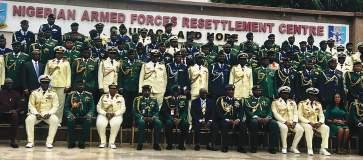
In Nigeria, the Nigerian Armed Forces Resettlement Centre (NAFRC) in Oshodi has continued to champion this approach by equipping serving officers with entrepreneurial and management skills that can help them thrive beyond their core military roles.
This year, the centre has enrolled 40 mid level and senior officers for its entrepreneurship and management training programme, an initiative designed to provide officers with practical business knowledge and leadership competencies that complement their professional military experience.
Organised in partnership with the EMPRETEC Nigeria Foundation, the programme has already benefitted more than 312 commissioned officers of the Armed Forces, equipping them with the skills required to navigate the complexities of the civilian business environment while still in active service.
Building Skills Beyond Military Competence
Inaugurating the course at the NAFRC headquarters in Oshodi recently, the Commandant of the centre, Air Vice Marshal Nnaemeka Ilo, said as a highly coveted opportunity for the participating officers, the training was designed to broaden their perspectives and expose them to the dynamics of entrepreneurship and strategic leadership in the civilian sector.
“The course will expose you to the realities of the civilian business environment, sharpen your decision making skills and help you cultivate a mindset of innovation, resilience and adaptability needed to navigate the dynamic world of business and leadership,” he said.
AVM Ilo emphasised that the programme was not a pre retirement initiative. Rather, it was structured to prepare officers early enough for the challenges that often accompany the transition from active military service to civilian life.
He noted that many officers face difficulties adjusting to life outside the military after retirement, particularly in areas such as business management, financial planning and strategic investment.
Although not a pre retirement programme, the Commandant stressed that it would help officers confront the initial challenges of post service life by enabling them to plan and strategise early.
The Demands of Entrepreneurial Success
While encouraging participants to approach the course with seriousness and dedication, the Commandant reminded them that success in entrepreneurship requires far more than creative ideas.
“Success in entrepreneurship is not solely about having a great idea. It requires strategic management, adaptability, financial literacy and unwavering commitment to hard work,” he said.
According to him, the advantage of the NAFRC training is that officers can begin learning how to manage small and medium scale enterprises while still serving in the military. He further explained that many alumni of the centre had gone on to establish thriving businesses across various sectors of the Nigerian economy, including agriculture, logistics, consultancy and manufacturing.
The Commandant challenged the officers to maximise the opportunity provided by the programme, noting that the pursuit of
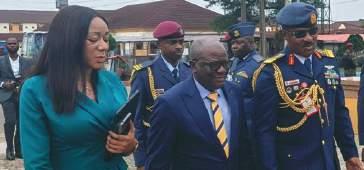
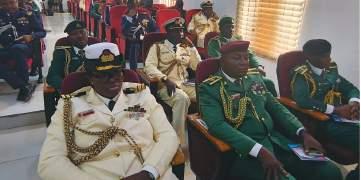
success is a continuous process, just as he reminded them that there was “no finish line in the race to success,” urging them to remain disciplined, innovative and focused throughout the training.
AVM Ilo also acknowledged the support of the Minister of Defence and President Bola Ahmed Tinubu for sustaining the programme over the years. He further expressed appreciation to the Chief of Defence Staff and the service chiefs for nominating officers to participate in the training.
Expanding Access to Entrepreneurship Training
Earlier in his remarks, the Director of Training at the centre, Brigadier General Isang Akpaumontia, said the inauguration marked the official commencement of the first Middle and Senior Level Officers’ Entrepreneurship and Management Course for 2026.
He explained that the programme was conducted in line with the centre’s forecast of events for the year, but as he m announced an important change to the
structure of the training schedule. Previously held twice each year, the course will now be conducted quarterly in order to accommodate a larger number of officers and broaden access to the programme.
“For this first quarter course, the Centre received 23 nominations for middle level officers and 17 for senior level officers, making a total of 40 participants,” he said.
He added that the senior officers participating in the programme were drawn from several strategic institutions within the Nigerian military establishment. “The 17 senior officers were drawn from the Defence Headquarters, Defence Intelligence Agency, Defence Space Administration and the three services, Army, Navy and Air Force,” he said.
While noting that other security agencies were yet to nominate participants for the current batch, he expressed optimism that future editions of the programme would attract wider participation from across the national security architecture.
From Agriculture to Business Management
Providing further insight into the structure of the programme, Brigadier General Akpaumontia disclosed that the participants had already
completed the initial phase of the course, which focused on agricultural training.
The one week agricultural module covered practical aspects of food production and animal farming, reflecting NAFRC’s commitment to promoting agribusiness as a viable post service career path for military personnel.
With that phase completed, the officers have now moved into the second stage of the programme, which focuses on entrepreneurship and business management training facilitated by the EMPRETEC Nigeria Foundation.
The Director of Training reminded the participants that discipline and commitment would remain essential throughout the duration of the programme.
Strengthening the EMPRETEC Partnership
In her remarks, the Country Representative of EMPRETEC Nigeria, Mrs Onari Duke, reaffirmed the organisation’s commitment to strengthening its collaboration with the Nigerian Armed Forces Resettlement Centre. Duke, who was represented by EMPRETEC Director, Dr. Lenny Omololu Omoyinmi, said the partnership was an example of how strategic cooperation between institutions can empower military officers with the knowledge and tools required for success beyond active service.
Noting the the the programme had already concluded its foundational two week segment for the mid level course, which covered agricultural management and introductory entrepreneurship training, she added that participants will now transition fully into a comprehensive entrepreneurship and management module designed to address the unique leadership and operational challenges faced by military officers.
Stressing that the programme exemplifies the effective collaboration between EMPRETEC and NAFRC, demonstrating our shared commitment to equipping officers with the skills necessary for success, she said the curriculum was carefully structured for different responsibilities and career stages of the participating officers.
While for senior officers, the modules include 21st Century Leadership Challenges, Strategic Profitability, Project Management, Corporate Governance and Conflict Resolution, the mid level officers, on the other hand, will focus on areas such as interpersonal skills, legal structures for business sustainability, transformational leadership, sales and marketing tools, as well as healthy ageing and wellness.
Preparing Leaders for the Future
The 2026 Course 17 will be delivered through a combination of lectures, workshops and strategic excursions, providing participants with both theoretical knowledge and practical exposure to real world business environments. At the end of the programme, the officers will participate in a graduation ceremony where their performance throughout the training will be assessed and formally recognised. Beyond the certificates and commendations, however, the true value of the programme lies in its broader mission: preparing military leaders not only for the demands of national defence, but also for productive and impactful roles in Nigeria’s economic and social development.
As the Nigerian Armed Forces continue to evolve in response to changing national and global realities, initiatives such as the NAFRC entrepreneurship programme underscore an important truth, that leadership, discipline and innovation cultivated in the military can become powerful tools for building businesses, communities and a stronger nation long after the uniform is retired.
Cross section of 40 mid level and senior officers of the NAFRC entrepreneurship and management training programme
R-L: NAFRC Commandant, Air Vice Marshal Nnaemeka Ilo; EMPRETEC Director, Dr. Lenny Omololu Omoyinmi; and another EMPRETEC staff
Some of the course participants


TINUBU’S STATE VISIT TO UK JUDE
OBIOHA argues that the invitation signals Nigeria’s relevancerenewed in the global conversation
FISCAL TRANSPARENCY LEAGUE
Kaduna State is ahead of the pack, contends LAWRENCE BAJURI See page 21
MENINGITIS SEASON OF DEATHS
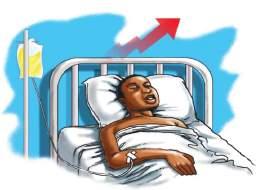
What dying companies need most is discipline, focus, patience, and honest confrontation with root causes, writes LINUS OKORIE

THE DESPERATION TRAP: WHY PANIC ACCELERATES DECLINE
There comes a moment in organizational decline when the problems can no longer be ignored. At this moment, leaders face a critical choice either to return to the fundamentals that built success in the first place, or grasp desperately for a dramatic solution that will reverse fortunes overnight. History shows that most choose the latter, and in doing so, end up accelerating their organization's decline.
This stage is characterized by panicdriven decisions that substitute hope for strategy, by the belief that these bold moves can immediately fix the compounded problems, by the search for silver bullets when what is needed is the patient boring work of fixing fundamentals. Leaders in this stage abandon the very disciplines that could save them. The irony is that the desperate search for salvation becomes the final nail in the coffin.
When decline becomes visible and undeniable, it creates enormous psychological pressure on leadership. Everything they have built is at risk. Under this pressure, rational decisionmaking becomes nearly impossible. Research shows that executives facing severe organizational decline experience stress levels comparable to those dealing with personal trauma, and this stress fundamentally impairs judgment and decision-making capacity.
The natural human response to crisis is to do something big and bold that matches the scale of the problem. This feels right emotionally even when it is wrong strategically. A study of 847 companies in serious decline found that 73% of leadership teams pursued dramatic initiatives rather than returning to core business fundamentals, and 89% of those dramatic transformations either failed completely or made the situation worse. The specific forms that grasping for salvation takes are remarkably consistent across failing organizations. Leaders pursue one or more of a handful of desperate strategies, each of which feels decisive but rarely succeeds. The search for a charismatic saviour CEO tops the list. Boards fire the existing leadership and recruit a high-profile outsider with a track record of transformation elsewhere, paying enormous compensation packages for someone who will shake things up. JCPenney made the decision to hire Ron Johnson from Apple in 2011. He created the iconic Apple Store concept, so he was given a $52.7 million compensation package and tasked with transforming the struggling department

store. He eliminated the coupons and sales that core customers loved, refused to test his new pricing strategies saying "We didn't test at Apple," and pursued a radical transformation without understanding JCPenney's customer base. Under his leadership as CEO, JCPenney shares dropped more than 50%, and samestore sales dropped 32% in the fourth quarter of 2012. Johnson was fired after eighteen months, having failed in spectacular fashion. The celebrity CEO brought solutions that worked brilliantly at Apple but proved catastrophic at JCPenney because he never understood the fundamental differences between the two businesses.
The problem isn't that outside CEOs can't bring fresh perspective. It's that companies in crisis typically hire them for the wrong reasons. These celebrity CEOs often pursue dramatic restructuring because that's what they're known for, regardless of whether dramatic restructuring is what the situation requires. They don’t carefully diagnose the problems and develop tailored solutions.
Radical transformation programs offer another seductive salvation narrative. Leaders announce reorganizations, complete business model pivots, massive technology overhauls, or entry into entirely new markets. These transformations are announced with fanfare and slide decks showing how the company will emerge stronger. Yet McKinsey research indicates that radical transformation programs launched by companies in severe decline have a 78% failure rate, largely because they divert already-stretched resources and attention away from fixing the fundamental problems that created the decline.
The communication during this stage often becomes increasingly disconnected from reality. Leaders announce bold visions and transformation plans while the actual business continues declining. They generate enthusiasm for future possibilities while present realities deteriorate. This creates cynicism among employees who see the gap between
leadership's rhetoric and their daily experience. Financial discipline typically collapses in this stage as well. Desperate to show progress, leaders often manipulate accounting, pull forward future revenue, delay necessary write-downs, or make overly optimistic projections.
The paradox of this stage is that the effective response to crisis looks nothing like what desperate leaders typically do. What works is almost always a return to the methodical work that addresses root causes rather than symptoms. This is what companies that successfully recovered from severe decline did.
First, successful recovery requires honest diagnosis before any solution is attempted. This means rigorous analysis of what actually went wrong. It means distinguishing between symptoms and causes. Companies that invested significant time in this before launching recovery efforts had a 76% success rate compared to 31% for those that moved immediately to solutions.
Second, recovery requires concentrating resources on the core business rather than dispersing them across initiatives. This often cancelling projects and rejecting opportunities that don't directly strengthen the core. A study of successful turnarounds found that 83% involved significant simplification and refocusing on core strengths, while only 17% involved diversification or expansion into new areas.
Third, successful recovery almost always involves restoring operational excellence before pursuing growth. This means fixing broken processes, improving quality, reducing costs, strengthening customer relationships, and rebuilding employee capability and morale. These aren't exciting initiatives that generate headlines, but they always work.
Okorie MFR is a leadership development expert spanning 30 years in the research, teaching and coaching of leadership in Africa and across the world. He is the CEO of the GOTNI Leadership Centre.
JUDE OBIOHA argues that the invitation signals Nigeria’s renewed relevance in the global conversation
TINUBU’S STATE VISIT TO UK
Diplomacy often speaks in symbols long before it speaks in policy. The forthcoming state visit of President Bola Ahmed Tinubu to the United Kingdom, at the invitation of King Charles III and Queen Camilla, is one such symbol, and a powerful one at that. Scheduled for March 18, the visit marks the first time in nearly four decades that a Nigerian Head of State will be accorded such royal honours. In the quiet language of international relations, this is not merely ceremonial. It is recognition.
For a country whose global reputation has oscillated between promise and scepticism over the years, the invitation signals something important: Nigeria’s renewed relevance in the global conversation.
Throughout modern Nigerian history, only a handful of leaders have enjoyed this level of diplomatic recognition from the British Crown. State visits are the highest form of diplomatic engagement within the United Kingdom’s foreign relations framework, reserved for nations and leaders considered strategic partners. That Nigeria has returned to that exclusive diplomatic circle says as much about the country’s evolving international posture as it does about the leadership currently steering its affairs.
But symbols rarely emerge in isolation. Since assuming office, President Tinubu has pursued a deliberate and multidirectional foreign policy, engaging major global power centres without compromising Nigeria’s strategic autonomy. In a world increasingly defined by shifting alliances and economic competition, Nigeria has begun to reposition itself as a pragmatic partner across geopolitical blocs: working simultaneously with the United States, China, the European Union, Turkiye, Brazil, and the Gulf states.
This diplomatic balancing act has yielded tangible results. In China, the Tinubu administration secured major investment commitments aimed at industrialisation and job creation. Among them is the $3.3 billion Brass Industrial Park and Methanol Complex, a project expected to strengthen Nigeria’s petrochemical capacity and reduce reliance on imports. In Brazil, Nigeria unlocked another strategic partnership through the $1.1 billion Green Imperative Project, a large-scale agricultural mechanisation initiative designed to modernise farming and improve food security. Complementing that agreement is a renewed aviation pact expected to open direct Lagos–São Paulo flights, potentially unlocking billions of dollars in trade and investment flows.
Equally significant was the resolution of the diplomatic impasse with the United Arab Emirates, which had previously resulted in visa restrictions and grounded flights affecting Nigerian travellers. Through sustained engagement, the Tinubu administration restored normal relations and reopened travel channels,
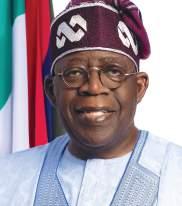
underscoring Nigeria’s renewed diplomatic confidence.
Beyond economic diplomacy, the administration has also strengthened Nigeria’s security partnerships. Cooperation with Turkiye, particularly in the area of drone technology, intelligence sharing and specialised military training, has bolstered Nigeria’s counter-terrorism capabilities at a time when regional security challenges remain complex. Engagement with the United States on security cooperation has similarly expanded, facilitated by structured dialogue coordinated through the Office of the National Security Adviser.
These developments illustrate a broader shift in Nigeria’s diplomatic posture: one that favours engagement, negotiation and pragmatic partnerships over rhetorical confrontation.
Yet diplomacy does not thrive abroad without credibility at home. Nigeria’s growing international recognition has also been shaped by the administration’s willingness to pursue difficult economic reforms; reforms that initially generated domestic debate but are now beginning to attract global validation.
The removal of fuel subsidies and the liberalisation of the foreign exchange market were not politically convenient decisions. For decades, successive administrations avoided them. But the Tinubu government chose a different path, prioritising longterm fiscal sustainability over short-term political comfort. The results, while still unfolding, have begun to draw endorsement from major international financial institutions, including the World Bank and the International Monetary Fund. Nigeria’s macroeconomic indicators have shown gradual stabilisation. Foreign reserves have climbed above $43 billion. Investor confidence is improving. The country has also been removed from the Financial Action Task Force grey list, reflecting progress in financial transparency and anti-money laundering compliance. This development significantly enhances Nigeria’s credibility in global financial markets.
Obioha is the Director of Strategy at the Hope Alive Initiative (HAI), a group dedicated to good governance in Nigeria
Kaduna State is ahead of the pack, contends LAWRENCE BAJURI
FISCAL TRANSPARENCY LEAGUE
In a country where fiscal opacity has long undermined public trust and efficient governance, Kaduna State under Governor Uba Sani continues to set a shining example by staying ahead of the pack. According to the latest States Fiscal Transparency League (SFTL) Q4 2025 report released by civic organisation BudgIT, Kaduna is one out of the only nine states in Nigeria that achieved the maximum score of 39 points out of 39 across all assessed indicators. The other states, in no particular order, include Anambra, Benue, Ebonyi, Ekiti, Gombe, Jigawa, Kebbi, and Osun.
Dubbed the “progressive performers,” the report evaluates the timely publication of budget implementation reports, the functionality of e-procurement portals, and the accessibility of fiscal data repositories on official websites. While many states are languishing at the bottom of the table—failing to publish quarterly budget reports or maintain functional procurement platforms—Kaduna State stands tall. Kaduna’s sustained excellence across previous quarters (where it repeatedly clinched first place) underscores why it is widely regarded as staying ahead of the pack. This is no accident. It is the deliberate outcome of structured policies, institutional reforms, and an unwavering leadership commitment by Governor Uba Sani to openness, accountability, and prudent resource management.
The BudgIT assessment tracks whether states have maintained the gains of the World Bank-supported State Fiscal Transparency, Accountability and Sustainability (SFTAS) programme. Kaduna has not only sustained these gains but institutionalised them. The state publishes comprehensive quarterly Budget Implementation Reports (BIRs) within the mandatory 30-day window stipulated by Nigeria’s fiscal responsibility framework. These reports detail revenue performance, expenditure patterns, and variances, giving citizens and oversight bodies real-time insight into how public funds are utilised.
Complementing this is Kaduna’s fully operational e-procurement portal managed by the Kaduna State Public Procurement Authority (KADPPA). Unlike many states where portals are either non-functional or lack contract details, Kaduna’s platform supports open contracting. It publishes awarded contracts, Bills of Quantities (BOQs), and project information in real time. Citizens can trace every kobo from appropriation to implementation. The state website doubles as a robust fiscal data repository, hosting audited financial statements, budget documents, and procurement records—ensuring no citizen is left in the dark.
These are not isolated achievements but part of a broader ecosystem of reforms deliberately engineered by Governor Uba Sani’s administration. One cornerstone is the domestication and implementation of the Open Government Partnership (OGP) commitments for 2024–2025. Through the Kaduna State Planning and Budget Commission (KADPBC) and KADPPA,
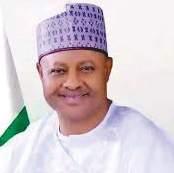
the state has institutionalised participatory budgeting. Citizens contribute inputs via the Community Development Charter (CDC), an automated tool that captures grassroots needs and feeds them directly into the multi-year budget process. Town hall meetings, such as the special session convened for the 2026 N985.9 billion budget proposal, allow residents to scrutinise priorities, offer recommendations, and hold officials accountable.
Uba Sani has repeatedly emphasised citizen engagement as non-negotiable. “We remain committed to transparent and accountable governance through sustained citizens’ engagement,” he affirmed during budget consultations. This people-centred approach ensures that fiscal decisions reflect collective aspirations rather than top-down diktats.
Another critical plank is capacity building. The Kaduna State Fiscal Responsibility Commission regularly organises workshops for public fund managers, local government officials, and ministry, department, and agency (MDA) personnel. These sessions focus on fiscal responsibility laws, budgetary discipline, procurement integrity, and transparent utilisation of public resources. In one such workshop earlier this year, the governor’s administration reinforced the message that every public officer is a steward of taxpayers’ money. The state has also established a Centre for Procurement, Logistics and Supply Chain Management at Kaduna State University in collaboration with KADPPA, blending academic rigour with practical governance to professionalise procurement officers.
During the maiden Procurement, Logistics and Supply Management International Industry Summit hosted in Kaduna in December 2025, the administration pledged even stronger accountability. Deputy Governor Hadiza Balarabe, delivering the governor’s remarks, highlighted how KADPPA is expanding open contracting, entrenching valuefor-money principles, and introducing one of Nigeria’s first gender-responsive procurement policies. This ensures procurement processes are not only efficient but equitable, prioritising womenowned businesses and inclusive outcomes in infrastructure projects such as rural access roads.
Bajuri, a Quantity Surveyor, writes from Abuja
Editor, Editorial Page PETER ISHAKA
Email peter.ishaka@thisdaylive.com
MENINGITIS SEASON OF DEATHS
The authorities could do more to contain the scourge
The public health warning by the Nigerian Meteorological Agency (NiMet) to residents of some northern states about the heightened risk of Cerebrospinal Meningitis should be taken seriously to avert another disaster. The alert categorised states by risk levels, with the highest risk observed in Sokoto, Zamfara, Kebbi, Katsina, Kano, Jigawa, Adamawa, Gombe, Bauchi, Yobe, and Borno States. Residents of North Central states were also advised to exercise vigilance, while Plateau, Oyo, Cross River, Edo, Ekiti, and Enugu States were considered low vigilance areas. Since we have not seen any concerted efforts to combat this annual disease that has claimed the lives of thousands of Nigerians in the past few decades, it is important to heed NiMET warning.
NiMET has highlighted the groups most vulnerable to the infection, explaining that “children and young adults, people living in overcrowded settings, individuals exposed to dry, dusty environments, and persons with weakened immune systems are at higher risk.” Early recognition of symptoms, according to the agency, is key to preventing fatalities. Sudden high fever, severe headache, neck stiffness, nausea or vomiting, and sensitivity to light are are warning signs. To reduce the risk of infection, NiMET encouraged the public to “get vaccinated, practice good hygiene, avoid overcrowding, and seek early medical care.” But health facilities, especially primary health centres, should also be equipped enough to manage cases where secondary and tertiary health facilities are not available.
the rising temperature of recent weeks and the heat waves across the country, it is no surprise that meningitis has become a serious health challenge. The number of deaths and cases recorded so far remain unclear, but there are indications of growing fatalities in many rural communities, especially in the North.
Children and young adults, people living in overcrowded settings, individuals exposed to dry, dusty environments, and persons with weakened immune systems are at higher risk
T H I S D AY
EDITOR SHAKA MOMODU
DEPUTY EDITOR WALE OLALEYE
MANAGING DIRECTOR ENIOLA BELLO
DEPUTY MANAGING DIRECTOR ISRAEL IWEGBU
CHAIRMAN EDITORIAL BOARD OLUSEGUN ADENIYI
EDITOR NATION’S CAPITAL IYOBOSA UWUGIAREN
THE OMBUDSMAN KAYODE KOMOLAFE
T
EDITOR-IN-CHIEF/CHAIRMAN NDUKA OBAIGBENA
GROUP EXECUTIVE DIRECTORS ENIOLA BELLO, KAYODE KOMOLAFE, ISRAEL IWEGBU
DIVISIONAL DIRECTORS SHAKA MOMODU, PETER IWEGBU, ANTHONY OGEDENGBE
Experts have repeatedly warned that Nigeria usually suffers meningitis around this time of the year when dry season is transitioning to raining season, especially in the area called the ‘meningitis belt’. But it is nonetheless unfortunate that for decades, a preventable disease like meningitis has been a recurring epidemic, resulting in the death of thousands of people, especially children. The disease spreads across the entire West African sub-region in the first quarter of every year. The spread becomes worse where the environment is not clean, and sanitation is not taken seriously. And that is partly because relevant authorities are not alive to their responsibilities.
Meningitis is an acute inflammation of the protective organs and membranes with layers surrounding the brain and spinal cord. In most cases, the disease becomes intense and widespread during heat period and in areas where there is poor ventilation. Considering
DEPUTY DIVISIONAL DIRECTOR OJOGUN VICTOR DANBOYI
SNR. ASSOCIATE DIRECTOR ERIC OJEH
ASSOCIATE DIRECTOR PATRICK EIMIUHI
CONTROLLERS ABIMBOLA TAIWO, UCHENNA DIBIAGWU, NDUKA MOSERI
DIRECTOR, PRINTING PRODUCTION CHUKS ONWUDINJO TO SEND EMAIL: first name.surname@thisdaylive.com
Letters to the Editor
We commend NiMET and the Nigeria Centre for Disease Control and Prevention (NCDC) for being proactive on the challenge. It is left for the presidency to expedite collaborative actions with vulnerable states for preventive measures. On that score, there is an urgent need for a public enlightenment campaign, perhaps through the National Orientation Agency (NOA). As has been explained, the disease is fatal and thrives more in areas where hygiene is lacking or is low. We therefore expect a more robust environmental campaign in view of the dangers that Meningitis poses. We also advocate a strategy that would help put an end to what has become an annual death sentence for many Nigerians. That would require a collaboration between the federal government and the authorities in all the 36 states. With children at most risk, vaccination remains the surest antidote. Although Meningitis can be caused by many different infections, some vaccinations offer some protection against it.
Letters in response to specific publications in THISDAY should be brief (150-300 words) and straight to the point. Interested readers may send such letters along with their contact details to opinion@thisdaylive.com. We also welcome comments and opinions on topical local, national and international issues provided they are well-written and should also not be longer than (750- 1000 words). They should be sent to opinion@thisdaylive. com along with photograph, email address and phone numbers of the writer.
TAX REFORMS AND NIGERIA’S NEW SOCIAL CONTRACT
The recent 10-point statement by Zacch Adelabu Adedeji, Executive Chairman of the Nigeria Revenue Service (NRS), offers a glimpse into a forward-thinking roadmap for the agency. It represents a fundamental pivot from aggressive enforcement to strategic “taxing of prosperity, not poverty.”
At its core, the mandate collapses the old, fragmented system into a single "system integrator" for all federal intake - from oil royalties to solid minerals. Most importantly, it shields small businesses with turnovers under ₦50 million from the tax net entirely, protecting the backbone of our economy. By leveraging data-driven tools like the National e-Invoicing system and phasing corporate tax rates down to 25%, the NRS aims to realize its ₦40.7 trillion target. This will be achieved not by adding new burdens, but by broadening the base and eliminating the nightmare of multiple taxation. The goal is simple: to ensure Nigeria’s fiscal architecture supports investment rather than stifling it.
Ever since Rousseau first framed the ‘social contract’ back in 1762, it has remained the ultimate deal between the state and the street: a trade-off where we surrender absolute freedom for the collective safety of the law. It creates the only moral mandate for taxation. The people bankroll the state, and the state, in return, underwrites a civilized existence. Without this pact, no democracy can hold its ground; the system simply lurches from turbulence into total chaos.
Basically, the goal of political activity is to redefine the debate. Whatever reservations some may hold, these tax reforms - now increasingly accepted as conventional wisdom - represent a significant leap forward. Undoubtedly, this initiative reinstates a social contract long truncated by consistent interruptions to our democratic process and the rise of the ‘Gun Hegemony.’
President Bola Ahmed Tinubu has secured his place as a key figure in Nigeria’s post-independence history; he has fundamentally shifted the territory of the national dis-
course. He has taken significant risks, embodying the spirit of the British Special Air Service (SAS) motto: ‘Who Dares Wins.’ By daring to remould public opinion, the president has already secured his victory.
I have argued elsewhere about a more edifying past: the fact that over six decades ago, Nigeria possessed a social contract that served as the state's operating ethos. Recalling this history is vital because, as Cicero famously warned, to be ignorant of what occurred before you were born is to remain forever a child. The Western Region of the 1950s provides a striking example of the social contract in action. To fund its ambitious programmes, Chief Obafemi Awolowo’s Action Group (AG) government levied taxes that many adults in the region viewed as punitive. The political cost was immediate and severe: the regional government was routed in successive local and federal elections.
Abiodun Komolafe, ijebujesa@yahoo.co.uk.
Amid Improved Business Environment, 20 Blue-chip Firms Declare N27.8trn Revenue
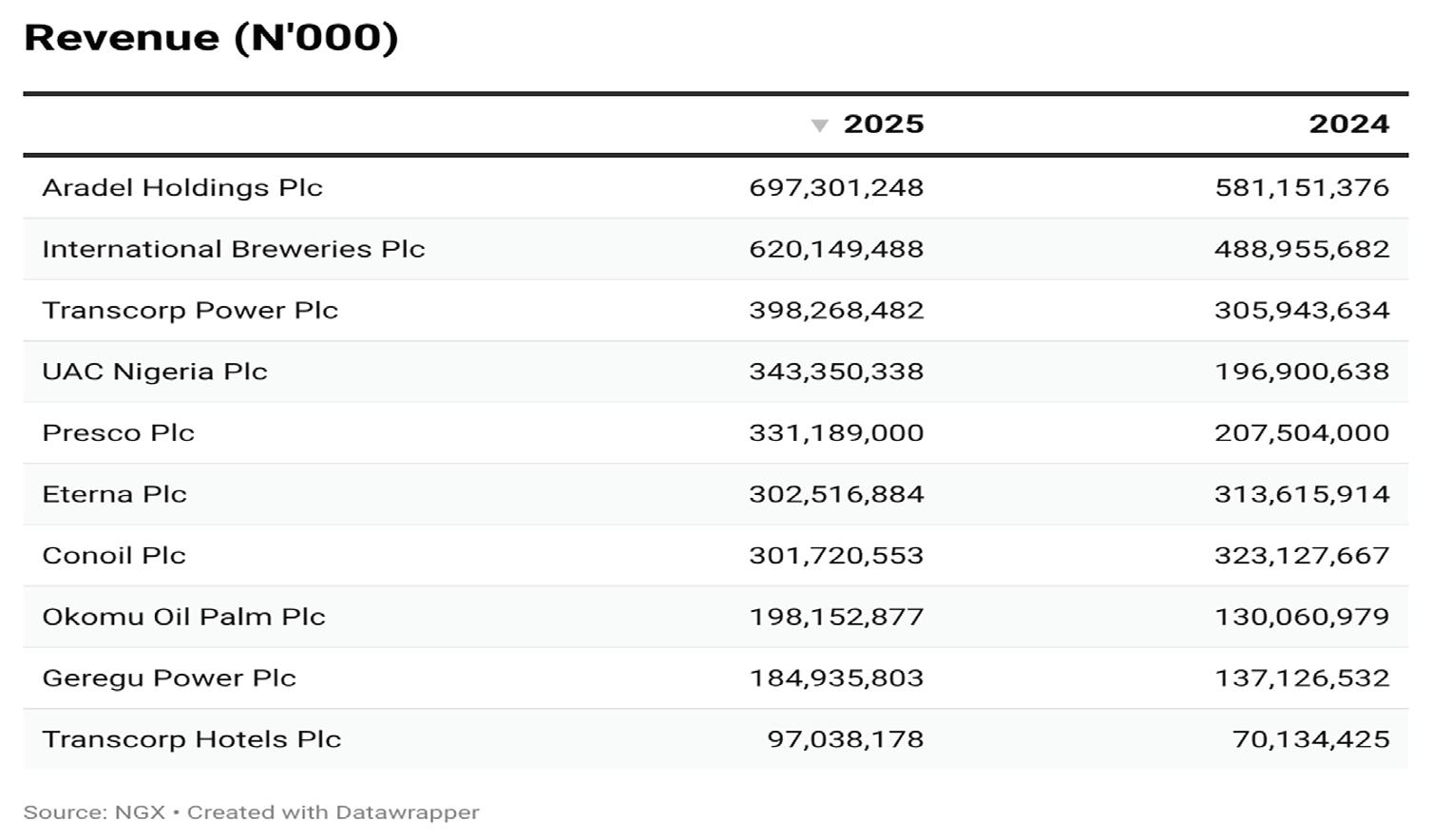
Kayode tokede
Driven by stability in the foreign exchange market, among others a total of 20 clue-chip companies listed on the Nigerian Exchange Limited (NGX) earned N27.8trillion revenue the in 2025 financial year.
This represents an increase of 28.7 per cent when compared to the N21.62 trillion reported in the corresponding period of 2024.
Analysis of their audited/ unaudited result and accounts for the full year indeed Decembebr 31, 2025 showed that the 20 companies
generated an estimated N6.75 trillion profit before tax, representing an increase of 291.5 per cent from N1.72 trillion reported in 2024.
The 20 firms cut across; cement manufacturing, telecommunication, power generation, oil & gas, FastMoving Consumer Goods (FMCG), among others.
An independent investigation by THISDAY revealed these firms grew revenue significantly amid a slow down in inflation rate and increasing business activities that reflected in Gross Domestic Product (GDP) that closed in the fourth quarter
of 2025 at 4.07 per cent from 3.76 per cent growth recorded in the corresponding period of 2024.
Macro-economic conditions improved further in 2025 with a more stable foreign exchange market, improved foreign liquidity and a sustained decline in inflation compared to 2024.
The naira strengthened to N1,436 against the dollar by year-end (2024: N1,535/ dollar), while tight monetary policy helped reduce headline inflation to 15.2per cent (2025 average: 23.4pepr cent), partly reflecting consumer price index (CPI) rebasing.
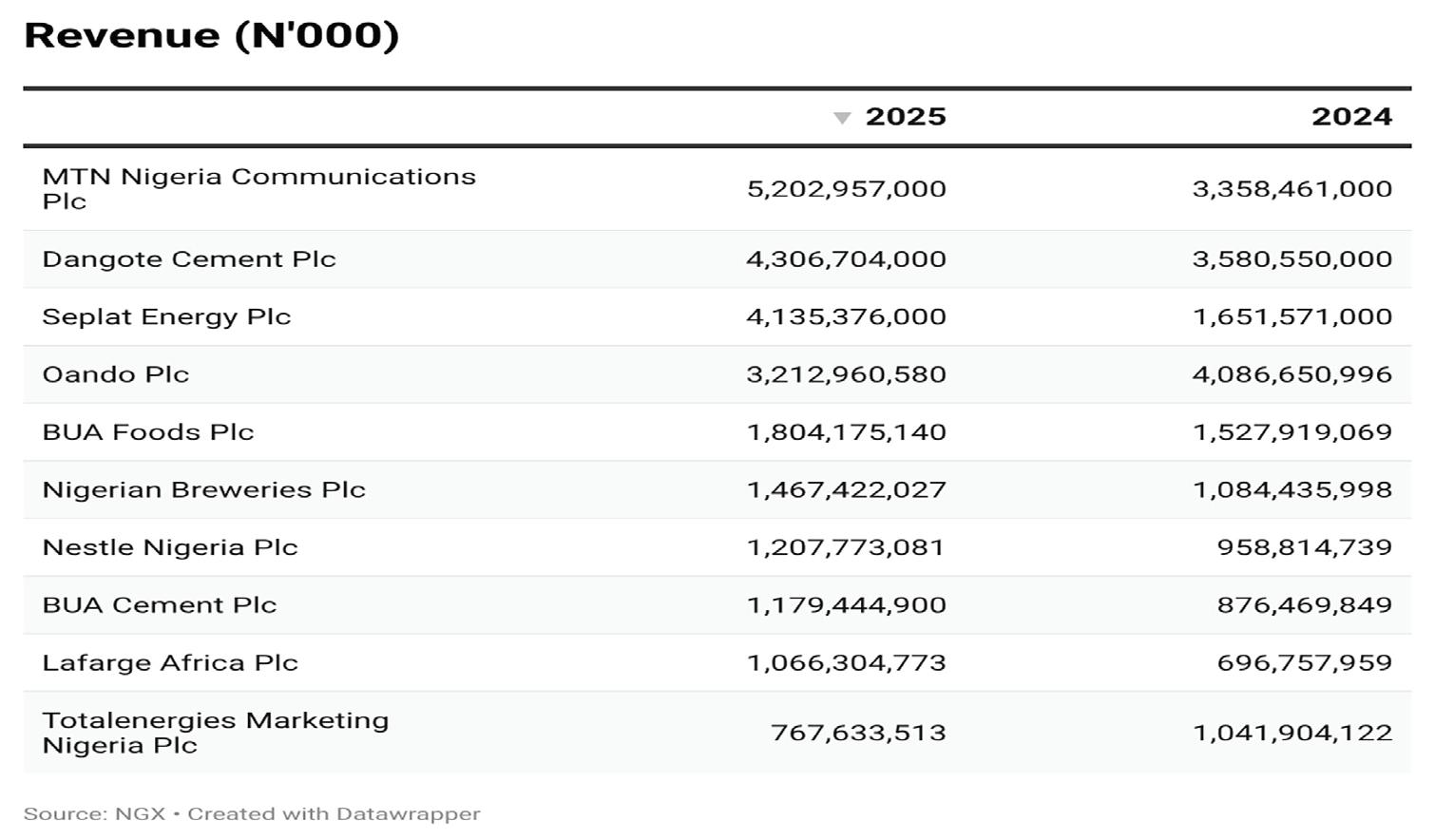
However, most listed petroleum marketing companies saw a decline in revenue, influenced by the Dangote Refinery. With the Dangote Petroleum Refinery ramping production, reducing reliance on imported refined products, led to price competition that affected specifically Eterna Plc, Conoil Plc and Totalenergies Marketing Nigeria Plc revenue growth in 2025.
In the period under review, MTN Nigeria Communications Plc, followed by Dangote Cement Plc. and Seplat Energy Plc led the chart with highest revenue
generation in 2025.
Specifically, MTN Nigeria Communications posted N5.2 trillion revenue in 2025, up by 54.9 per cent from N3.36 trillion reported in 2024.
The CEO, MTN Nigeria, Mr. Karl Toriola in a statement said, “2025 marked a significant turning point in our business performance and resumption of dividend payments. In the period, we returned to profitability, generated stronger free cash flow and restored positive retained earnings and shareholders’ funds.
“Our balance sheet resilience was driven by the robust
performance of the business as well as a focused reduction in foreign currency exposure and financial discipline. These results were delivered through excellent commercial execution, commitment to operational efficiency and disciplined capital allocation, underpinned by a supportive macroeconomic environment.” With the increase in the price of Cement and expansion, Dangote Cement declared N4.31 trillion revenue, representing an increase of 20.28 per cent from N3.58 trillion in 2024.
Indorama Ventures Public Company Limited, Nigerian Breweries Plc and Genesis Power & Energy Solutions Limited, have entered a strategic partnership to establish one of Africa’s largest state-of-the-art recycled PET (rPET) production facilities in Nigeria, based on planned production capacity. The landmark collaboration marks a significant step toward strengthening circular economy infrastructure and sustainable packaging value
chains across the region.
Located in Lagos, the site represents is an investment to develop a facility capable of producing up to 45,000 tons of food-grade rPET resin annually, with start-up targeted in the first half of 2027.
By converting post-consumer PET bottles into high-quality recycled material for packaging applications, the initiative aims to meet fast-rising demand for recycled content, reduce plastic
waste, and create local value through improved collection systems, job creation, and increased participation across the recycling value chain.
“The partnership brings together complementary strengths across the PET value chain. Indorama Ventures, the world’s largest recycler of PET for beverages, contributes expertise in sustainable materials development. Nigerian Breweries, a Heineken operating company, provides strong local market
insight and engagement across Nigeria’s beverage ecosystem, while Genesis Energy supports the initiative with sustainable infrastructure and energy expertise. The project is expected to support recycling capacity in Nigeria, subject to regulatory approvals, technical validation, and operational implementation. Together, the partners aim to establish commercially viable rPET operations that enable responsible growth and longterm environmental impact.
“This initiative aligns with Nigeria’s National Policy on Plastic Waste Management, introduced in 2020 to strengthen collection, recycling, and circular economy solutions, with the goal that all plastic packaging be recyclable, biodegradable, compostable, or reusable by 2030. Lagos, as Nigeria’s commercial hub, provides a strategic base to develop recycling infrastructure capable of serving both national and regional demand,” the
partners said in a statement. Commenting on the landmark partnership, Executive President of Petchem and Chairman of ESG Council at Indorama Ventures, Yash Lohia said,
“This partnership marks a defining milestone in our global recycling journey. By establishing our largest recycling facility to date and one of the largest rPET sites in Africa.”

OUTSTANDING AGENCY OF THE YEAR…
General Manager Public Affairs, Nigerian Ports Authority (NPA) and Representative of the MD/CEO NPA Dr. Abubakar Dantsoho, Mr. Ikechukwu Onyemekara (5th Left); Chairman of the Occasion Senator Gbenga Daniel (3rd Right); Managing Director/Editor-in-Chief, Champion Newspapers Limited, Dr Nwadiuto Iheakanwa and husband Pastor Uche Iheakanwa (2nd&1st Right); Port Manager Lekki Deep Seaport, Mr. Anda Emmanuel (1st Left); Port Manager Lagos Ports Complex Apapa, Mr. Adebowale Lawal (2nd Left); Principal Manager Corporate Affairs NPA, Mrs Victoria Tarfa (3rd Left); General Manager Monitoring NPA, Mr. RAB Salau (4th Left) and AGM Corporate Affairs NPA, Dr. (Mrs) Barbara Nchey-Achukwu (5th left) during the presentation of the “2025 Outstanding Agency of the Year Award” to the NPA in Lagos… recently
Interswitch Advocates Trust-driven Infrastructure, Collaboration to Boost Africa’s Payment System
Interswitch Group, has reaffirmed its commitment to advancing a seamless and inclusive financial ecosystem across the African continent by advocating for a trust-driven infrastructure that will boost Africa’s cross-border payment.
The company made the call during its recently concluded Inclusive Fintech Forum 2026, which held at the Kigali Convention Centre, in Rwanda.
Speaking during the event, themed: ‘Financial Centres & the Future of Cross-Border Capital’, Managing Director, Payments Processing & Switching (Interswitch
Purepay), Akeem Lawal, highlighted the critical factors shaping the next phase of financial integration across Africa. He noted that while rapid advancements in digital technology have made it possible for capital to move across borders at unprecedented speed, the ultimate destination and impact of such capital flows must be determined by trust, robust infrastructure, and strategic collaboration.
According to Lawal, as Africa’s economies continue to digitise and integrate, stakeholders must prioritise building resilient payment systems and fostering partnerships that enhance
MSC Signs Concession Agreement with Nigerdock for Snake Island Port
Mediterranean Shipping Company (MSC), the world’s largest shipping line, has signed a 45-year sub-concession agreement with Nigerdock to develop and operate an exclusive container terminal spanning 30 hectares within Snake Island Port (SIP), Lagos. The new container terminal
Group
Deputy
Comms/e-Business
Asst. Editor, Energy
Asst. Editor, Money Market
Nume Ekeghe
Correspondents
KayodeTokede(CapitalMarkets)
James Emejo (Finance)
Ebere Nwoji (Insurance)
Reporter Peter Uzoho (Energy)
will be completed by 2028 with a 910-meter quay, six Ship-to-Shore (STS) cranes, two ship berths, three barge berths, and up to 18 meters of draft. Commenting on the game-changing alliance, Nigerdock CEO, Maher Jarmakani, said: “We are thrilled to take this step forward in our partnership with MSC to develop a worldclass container terminal within Snake Island Port. This gives the world’s leading shipping line a home in Nigeria and brings significant foreign direct investment into the country to accelerate growth in the maritime and logistics industry.”
MSC President, Diego Aponte said: “Completing this key phase in the development of Snake Island Container Terminal with Nigerdock and our trusted partners demonstrates MSC Group’s commitment to providing excellent service to our customers in Nigeria and throughout Africa. “The new terminal will open up opportunities, enhance efficiency, and elevate Snake Island Port as a major global shipping center.
transparency, interoperability, and shared prosperity. He emphasised that sustainable growth in cross-border
financial flows will depend not only on technological innovation but also on the collective ability of institutions
to inspire confidence and enable seamless transactions at scale. Throughout the forum’s engagements,
Interswitch reiterated its long-standing vision of fostering a prosperous and interconnected Africa.
VFD Group Receives SEC’s Approval for N50.6bn Rights
Kayode Tokede
The Securities and Exchange Commission (SEC) has approved the Rights Issue of 5,067,396,400 ordinary shares of VFD Group Plc, valued at N50.07 billion or N10.00 per share.
The Rights Issue, which was subscribed by existing and new shareholders achieved 100per cent subscription, majorly by existing shareholders, who
made up 88per cent of the investors in the Rights Issue.
Following this regulatory approval, the shares would be credited to the depository accounts of shareholders with the Central Securities Clearing System Plc (CSCS), and would subsequently be available for trading in the secondary market on the main board of the Nigerian Exchange.
Speaking on the approval of the Rights Issue, the Group
Chief Executive Officer, Mr. Nonso Okpala noted; “We are thrilled by the success of our Rights Issue, and we appreciate the confidence of our esteemed shareholders in our ability to execute on our next growth strategies aimed at positioning VFD Group as a leading investment holding company in Africa. Our mission is to fill the immense vacuum across many sectors of the economy and in doing so, we create unparalleled
value for our shareholders. “We thank the Securities and Exchange Commission and our transaction advisers for the diligence through the overall process. The proceeds of the Rights Issue afford us the opportunity to upscale our flagship businesses, recapitalized all capital market-related entities in line with new regulatory requirements and accelerate our business incubation program.”
Urges Adequate Structures Ahead National Single Window Rollout
As Nigeria prepares for the planned rollout of the National Single Window (NSW) on March 27, 2026, the Shipping Correspondents Association of Nigeria (SCAN) has called on the federal government and all relevant stakeholders to ensure that all necessary structures
United Bank for Africa (UBA) Plc, on Thursday, hosted a captivating edition of its quarterly Business Series, bringing together accomplished female leaders and entrepreneurs to discuss the theme “Gen.W: The Evolved Woman.”
The hybrid session which was in Marina Lagos and also transmitted live to
Kayode Tokede
PwC Nigeria and Lagos Business School (LBS) have signed a Memorandum of Understanding (MoU) to deliver specialised sustainability and climatefocused capacity-building programmes for sustainability professionals, senior executives
are in place for Nigerians to fully benefit from the initiative.
In a statement issued at the weekend, the President of SCAN, Moses Ebosele, said that while the NSW represents a major step toward modernising Nigeria’s trade processes, improving transparency
participants across the globe, is part of activities to mark the International Women’s Month and focused on the evolving role of women in leadership, business, and innovation, highlighting how African women are redefining success while also creating sustainable impact across their various spheres of operation.
and board members across Nigerian organisations.
Speaking on the MoU, Partner and Business School Leader, PwC Nigeria, Uloma Ojinmah, said: “Through this collaboration with the Lagos Business School, we are enhancing sustainability capability across Nigerian organisations.
and enhancing operational efficiency at the nation’s ports, its implementation must be carefully structured to avoid disruptions.
According to him, the initiative has the potential to simplify documentation processes, reduce cargo clearance time, and strengthen coordination
UBA’s Group Head, Customer Experience, Michelle Nwoga, who gave the opening remarks at the event, explained that the evolved woman is one who is taking charge, volunteering and making their voice heard above the noise.
The event featured panel conversations with leading entrepreneur and
“Drawing on PwC’s advisory experience across sectors and LBS’s executive education expertise, we are equipping professionals and leaders to integrate sustainability into strategy, capital allocation, risk management and operational execution in ways that support resilience and long-term
among government agencies involved in international trade.
Ebosele, however, noted that the success of such a transformative platform depends largely on adequate preparation, strong institutional coordination and proper integration of stakeholders.
founder of ORÍKÌ Group, Joycee Awosika; celebrated media personality and digital entrepreneur Tomike Adeoye; founder of Fine-Funky, Olufunke Davies, and award-winning broadcaster, Ayo Mario-Ese who shared experiences around their struggles and eventual evolution as female business owners.
enterprise value.”
Partner, ESG, Sustainability & Climate Change, PwC Nigeria, Marilyn Obaisa-Osula added:
“The ability of organisations to create long-term stakeholder value and sustain growth is increasingly shaped by how effectively they manage sustainability and ESG.
Emma Okonji
Nechi: How Africans Can Navigate New Era of Citizenship, Access, Opportunity
As the global landscape of migration and citizenship undergoes a profound reset, Africans are increasingly confronted with a critical question: how can individuals, families and entrepreneurs secure stability, opportunity and global access in an uncertain world? Across Europe, North America and emerging economic hubs, governments are tightening immigration rules, redefining investor programmes and prioritising applicants who align with national interests. Yet while some doors appear to be narrowing, new pathways are opening for those who approach global mobility with strategy, compliance and foresight. In this wide-ranging conversation with select Business Editors, Chairman of Optiva Capital Partners, Franklin Nechi explains how these global shifts are reshaping the meaning of citizenship and why Africans must now think of mobility as a long-term asset rather than a last-minute option. From the evolving investment migration landscape in Europe to Canada’s structured immigration plans and the rise of new global access hubs, Nechi offers insight into how individuals and families can position themselves wisely in the years ahead. Eromosele Abiodun presents the excerpts
What major shifts should Nigerians and Africans be paying attention to as 2026 unfolds?
Three major shifts are reshaping global mobility in 2026, and Africans who are paying attention will quickly realise that the rules of international migration are evolving rather than disappearing. First, there is tighter screening across most immigration pathways, particularly those linked to investment or residency programmes. Governments today place far greater emphasis on security checks, sourceof-funds verification, tax transparency and comprehensive background documentation. This means applications must now be far more carefully prepared, professionally structured and compliant with international standards. In many ways, this is a positive development because it strengthens the credibility of legitimate programmes while filtering out speculative or poorly documented applications.
Second, Europe is recalibrating its investment migration landscape. For years, many European countries offered residency options tied primarily to real estate purchases. Today, that model is being reconsidered. Governments increasingly prefer programmes that emphasise productive investment, job creation or broader economic contribution. Spain, for instance, ended its Golden Visa programme in April 2025, and other countries are introducing stricter frameworks or modifying existing schemes.
Third, North America is moving toward more strategic immigration policies aligned with national priorities. Canada’s 2026–2028 immigration plan reflects a more managed approach, stabilising permanent resident admissions while tightening the inflow of temporary residents and focusing on skills that match labour market needs. The key takeaway is simple: the rules are evolving, and planning must evolve with them.
Is the world closing its doors, or are the doors simply changing shape?
The world is not closing its doors; it is changing the shape of those doors. In the past, many applicants approached migration with a “try your luck” mindset—submit an application and hope for approval. That era is fading. Today’s environment rewards strategic migration planning, where eligibility, documentation, compliance and credibility matter far more than before.
Countries still want globally mobile families, entrepreneurs, investors and talented professionals. However, they are designing immigration systems that balance openness with domestic priorities—such as protecting housing markets, ensuring national security and filling critical labour shortages. So opportunities certainly remain. The difference is that successful applicants treat mobility not as a gamble but as a carefully structured investment decision.
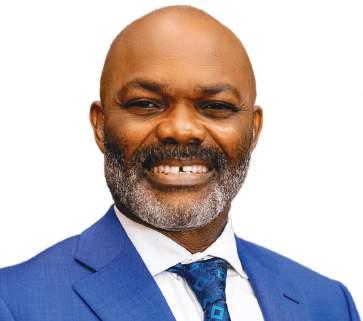
How do geopolitical tensions, security concerns and economic nationalism influence immigration policies—and how should Africans interpret them? These forces shape immigration policies very directly. Security concerns are driving deeper vetting processes and stricter admissibility checks in many countries. Background verification is becoming more sophisticated, and in some jurisdictions even digital footprints are examined during screening. Economic nationalism also plays a role. Governments increasingly favour applicants who fill specific economic or professional gaps. In Canada, for example, priority sectors may include healthcare, engineering, technology and aviation. In other jurisdictions, language skills or specialised expertise may carry additional weight. Geopolitics adds another layer of complexity. Diplomatic tensions or regional security issues can sometimes lead to sudden visa restrictions or policy adjustments. For African families, the correct response is not panic but preparation. Global mobility should be viewed as a form of risk management, ensuring that documentation is strong, compliance standards are met and multiple pathways are explored.
How has the meaning of a second passport evolved beyond travel convenience?
A second passport today represents far more than a travel document, it has become a strategic asset. For entrepreneurs, it ensures business continuity by enabling
easier access to international markets, banking systems and supply chains. For families, it offers resilience by expanding choices around education, healthcare and long-term stability. And for investors, it opens doors to living, working and structuring assets across multiple jurisdictions. In many ways, global mobility now functions like insurance. You may not urgently need it today, but when circumstances change, the value becomes immediately clear.
Why is reliance on a single nationality increasingly risky for entrepreneurs and families in emerging markets?
Because risks can arise suddenly and unpredictably. Currency volatility, capital controls or financial restrictions can limit access to global payments. Political developments may affect travel or visa policies. Immigration rules in destination countries can change overnight. When your entire life plan depends on a single passport, one economy and one system, you are exposed to concentration risk. Smart wealth planning reduces concentration risk, and that principle now applies not only to financial assets but also to citizenship and residency.
What should investors understand about Europe’s evolving investment migration landscape?
Europe is moving toward greater scrutiny and stronger regulation. The
era of quick real estate purchases leading directly to residency is gradually fading. Spain’s Golden Visa closure in April 2025 and Ireland’s earlier termination of its Immigrant Investor Programme demonstrate how governments periodically reassess such initiatives. There are also ongoing discussions within the European Union about governance, security and transparency in investor migration programmes. However, Europe remains attractive for many investors. The key is to focus on credible pathways, strong documentation and realistic timelines.
Canada has announced ambitious immigration targets for 2026–2028. How significant is this for Africans?
Canada continues to be highly significant, but its immigration system is becoming more structured and selective. The country’s 2026–2028 plan aims to restore balance by managing temporary resident inflows while maintaining stable permanent resident admissions. Canada is also refining its selection criteria to prioritise applicants whose skills align with labour shortages. For Africans with the right profiles - strong education, relevant work experience and language proficiency - the opportunities remain substantial.
Beyond the US and Europe, which regions are emerging as global access hubs?
Three regions stand out. The Middle East, particularly the Gulf, offers strong business connectivity, modern infrastructure and excellent global travel networks. Parts of Asia are also developing residence and talent programmes that support international entrepreneurs. Finally, there are strategic bridge jurisdictions that provide stable residency frameworks and strong global mobility advantages. At Optiva, we do not recommend countries based on trends or headlines. We focus on fit-for-purpose mobility aligned with each client’s business goals, family priorities and compliance requirements.
What is driving demand for second citizenship among Africans?
Demand is driven by a combination of foresight, ambition and practical planning. African families increasingly think globally about their children’s education, healthcare access and business expansion. Many see mobility as a strategic advantage rather than an escape plan.
How do you respond to critics who see mobility as capital flight?
When structured properly, it is capital expansion, not capital flight. Globally mobile Africans often earn more, build stronger international networks and reinvest those resources back home through businesses, property development and philanthropy. The objective is not abandonment but options and opportunity.
Nechi

for
Advertising Expert Seeks Data-driven Consideration for Selecting Digital Creators
The Managing Director of Adgenda Media Limited., Lagos, Dr. Ladi Arowa, has urged brands to prioritise data-driven decision-making when selecting digital creators for advertising partnerships. He said audience engagement and demographic alignment are more reliable indicators of marketing success than follower counts.
Arowa stated this on the sideline of his lecture titled, “The Creator Economy and Influencer Integration: Rethinking Advertising in the Digital Age,” organised by the Department of Mass Communication at Precious Cornerstone University (PCU), Ibadan, Oyo State.
A statement issued by the
organiser of the event explained that, the rapid rise of the creator economy is transforming Nigeria’s advertising ecosystem and compelling brands, regulators and communication professionals to rethink how audiences are engaged in the digital era.
According to him, the growing influence of digital creators and social media influencers has significantly altered traditional advertising models, forcing brands to shift from conventional mass marketing approaches to more personalised, interactive and community-driven communication strategies.
“The creator economy is fundamentally reshaping the advertising landscape in Nigeria. Brands are increasingly collaborating with digital
creators who already command the trust and attention of niche audiences,” he said.
Arowa noted that such partnerships enable companies to
communicate more authentically with consumers, particularly younger demographics who rely heavily on social media platforms for information, entertainment
and purchasing decisions.
He, however, cautioned companies against selecting influencers solely on the basis of their follower numbers, stressing
that deeper audience analytics and engagement metrics provide more meaningful insights into a creator’s real influence.
Deap Capital Shareholders Approve Conversion of Debts to Equity
Kayode Tokede
The shareholders of Deap Capital Management & Trust Plc have approved the conversion of N2.03 billion debts into an equity worth N2.02 billion at the company’s 12th Annual General Meeting (AGM) that took place in Lagos. Amid shareholders approval, the conversion of debt to equity of N2.03
Terminal Fire: Finally, NAMA Deploys Mobile Control Tower at MMIA
Chinedu Eze
Three weeks after the fire that gutted Terminal 1, known as the old terminal of the Murtala Muhammed International Airport, Lagos, the Nigerian Airspace Management Agency (NAMA) deployed mobile control tower last Friday to replace the one in the facility.
The fire which gutted the terminal on February 23, 2026, extensively damaged communication and engineering equipment of the agency, as well as that of other agencies, especially the Nigerian Meteorological Agency (NIMET), which drastically
affected the operations of these organizations.
THISDAY learnt on Saturday that although NAMA had deployed the mobile control tower, the equipment is yet to be activated and that would be done in the coming days.
NAMA in a statement signed by its spokesman, Dr Abdullahi Musa, said that despite the fact that the mobile tower is not in use yet, it is still effectively managing the airspace, disclosing that the Aeronautical Fixed Telecommunication Network (AFTN) (used to exchange essential, safety-critical text
messages between aviation entities, such as air traffic services, airports, and airlines), which was damaged by the fire had been fully restored and is now operational, with Aeronautical Information Service personnel currently working from the Total Radar Coverage of Nigeria (TRACON) complex.
“Following the recent fire incident at the Aerodrome Control Tower of the Murtala Mohammed International Airport (MMIA), Lagos, NAMA immediately activated contingency measures to ensure the uninterrupted provision of air navigation services.
Internship: United Nigeria Airlines Receives First Batch of University Students
United Nigeria Airlines has received the first batch of 400-level Avionics Engineering students from Afe Babalola University (ABUAD) to commence their six-month Student Industrial Work Experience Scheme (SIWES) internship.
Welcoming the students, the Managing Director of United Nigeria Airlines, Osita Okonkwo, encouraged them to take full advantage of the opportunity to gain hands-on industry experience that will complement their academic
training and prepare them for professional careers in aviation industry.
As part of the onboarding process, the students received introductory sessions on airline technical operations and professional expectations within the aviation industry.
United Nigeria Airlines Line Maintenance Manager, Kwabena Adoma, alongside Benle Asemuah provided briefings on aircraft maintenance procedures and the operational environment of the airline’s engineering unit.
The Director of Human Resources, Kelechi Asuquo, also delivered a session focusing on workplace ethics, professionalism, and the discipline required to thrive in the aviation industry.
The airline said the sixmonth SIWES programme will provide the students with practical exposure to avionics systems, aircraft maintenance processes, and airline engineering operations, giving them valuable real-world experience to complement their classroom learning.
billion to 1,499,340,000 has reached an advanced stage and awaits final approval of the Securities and Exchange Commission (SEC). The conversion was done at a price of N1.35 per share.
The allotment process is ongoing and before the end of first quarter of 2026, all the creditors who converted the debts owned by the company
would have received their shares through the Central Securities Clearing System (CSCS) accounts.
The shareholders at the AGM also approved a proposal to change the company’s name from Deap Capital & Trust Plc to Critical Minerals Financing Corporation Plc (CMFC), or any other name that may be approved by the Corporate
Affairs Commission.
The Chairman, Deap Capital Management & Trust, Kenneth Olise, who was represented at the meeting by Edmond Ani, non-executive director said the firm had experienced significant challenges over the past decade but had embarked on a restructuring process aimed at stabilising its operations and restoring shareholder value.
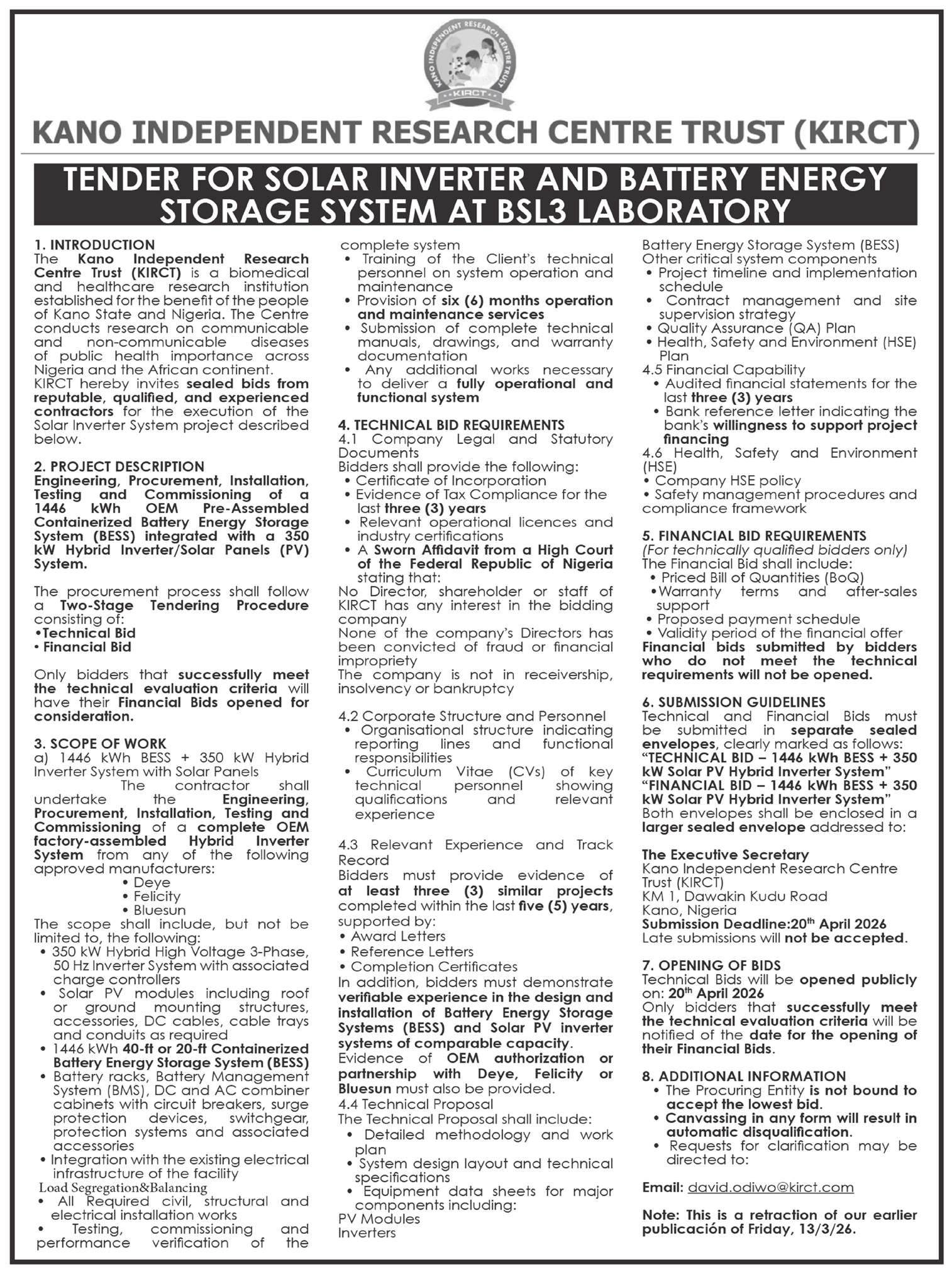
Hammed Shittu in Ilorin
Chinedu Eze
L–R: Head, Retail Products, United Bank
Africa (UBA), Tomiwa Sotiloye; Entrepreneur, Olufunke Davies(Fine Funky); Founder, ORIKI, Joycee Awosika; Group Head, Brands, Marketing & Corporation, UBA, Alero Ladipo; Renowned Broadcaster, Arise TV, Ayo Mairo-Ese; Media Personality, Tomike Adeoye and Executive Director Designate, Digital Banking, UBA, Emmanuel Lamptey, during the UBA Business Series held in Lagos… recently
NPA Wins Outstanding Agency of the Year Award
The Nigerian Ports Authority (NPA), has been honoured with the Outstanding Agency of the Year Award 2025 by Champions Newspaper at its 2025 Awards ceremony held in Lagos.
The Managing Director of the NPA, Dr Abubarkar Dantsoho described the award as recognition of his vigorous leadership in implementing smart initiatives that align with the NPA’s vision to become the maritime logistics hub for sustainable port services in Africa.
Represented by the General Manager, Corporate Affairs, NPA, Mr. Ikechukwu Onyemekara, he highlighted the invaluable support of the Minister of Marine and Blue Economy, Adegboyega Oyetola, which has been
instrumental in achieving these remarkable successes.
“Key highlights include:
- Sustained port efficiencies contributing to Nigeria’s yearon-year trade surplus of N7.5 trillion and N6.7 trillion in Q2 and Q3 2025 (per NBS and NESG reports), driven mainly by exports via NPA platforms.
- Successful execution of President Bola Ahmed Tinubu’s policy for crude and petroleum product sales in Naira, saving billions in FOREX, enhancing energy security, improving trade balance, and creating jobs.
- Completion of Nigeria’s membership in the International Port Community System Association (IPCSA), paving the way for the National Single Window (NSW) project.
- Technical guidance
enabling a significant rise in transhipment cargo at Lekki Deep Seaport, serving landlocked neighbours and recovering cargo lost to competing ports.
- Pioneering election of a Nigerian agency as President of the Port Management Association of West & Central Africa (PMAWCA) since 1972, with Dr. Dantsoho also leading PAPC, boosting Nigeria’s diplomatic standing and securing re-admission to IMO Category C.
“These successes position NPA to deliver major 2025 projects, including the $1 billion reconstruction of Tincan Island Port Complex, rehabilitation of key ports, new deep seaport developments, and ecofriendly operations.”
International Women’s Day: PenCom Empowers Women in Rivers
Blessing Ibunge in Port harcourt
The National Pension Commission (PenCom) has introduced a special savings bonus for women who open a personal pension plan account with it.
The initiative was part of PenCom’s programme in commemoration of the 2026 international women’s day celebration.
The International Women’s Day outreach event by PenCom was aimed at encouraging women, especially selfemployed women, to secure their financial future through the Personal Pension Plan (PPP).
Speaking during the outreach to enlighten the women, held in Port Harcourt, Rivers State Capital, Acting Director, States Operations Department, National Pension Commission, Akinsola Adeseun, said the initiative is aimed at giving
self-employed women the opportunity to save for their retirement.
He explained that: “This program is an initiative of the National Pension Commission to promote a new product called personal pension plan. Personal pension plan is a program for informal sector workers, the artisans, the traders, the farmers, hair dressers, anybody that is self-employed, that is not worth with the federal government, or state government or local government or any big corporate organization.
“If you’re selfemployed, this programme is for you because you’re not covered under the formal pension plan which is the contributory pension scheme. This plan is an initiative of the National Pension Commission to bring these people in fold because these people (the self employed), according
to statistics, make up to 90% of our population and when they retire, they have nothing to fall back on,” he said.
Earlier in her remarks, the Permanent Secretary of the Rivers State Ministry of Women Affairs, Mrs Ihuoma Boms thanked PenCom for initiating the program and expressed optimism that it would improve the welfare of women.
“Market women and members of various women organisations have been brought together to this epoch-making event to bless their lives and that of their families. Market women and small business owners will be acquainted with the PenCom officials on how to register and plan for life savings to achieve financial stability.”
I thank you all for finding time to be part of this year’s celebration. Happy international best day,” she said.
Indomie Launches AI-powered Cultural Praise Poetry Campaign
Sunday Ehigiator
Nigeria’s leading instant noodle brand, Indomie, has launched what it describes as Africa’s first artificial intelligence-powered cultural praise poetry initiative as part of its 2026 Mother’s Day campaign.
The initiative, titled, ‘Show Some Love To Mum’, blends artificial intelligence with traditional Nigerian praise poetry to create personalised tribute videos celebrating mothers across the country.
In a statement issued yesterday, the brand said
the campaign seeks to merge modern technology with Nigeria’s rich cultural heritage, allowing families to honour their mothers through customised praise poetry inspired by traditional forms such as Yoruba Oríkì, Igbo praise chants and Northern praise poetry traditions.
According to the company, the campaign builds on the success of its previous AI-driven Mother’s Day initiative but introduces a stronger cultural and emotional dimension designed to
deepen family connections and celebrate motherhood through storytelling.
Speaking on the initiative, Brand Manager Tope Sule said the campaign reflects the company’s commitment to promoting Nigerian culture while embracing innovation.
“In Nigerian culture, praise and poetry carries emotion, history, and identity. With Show Some Love To Mum, Indomie is using innovation through AI to preserve tradition while creating new ways for families to express love,” he said.
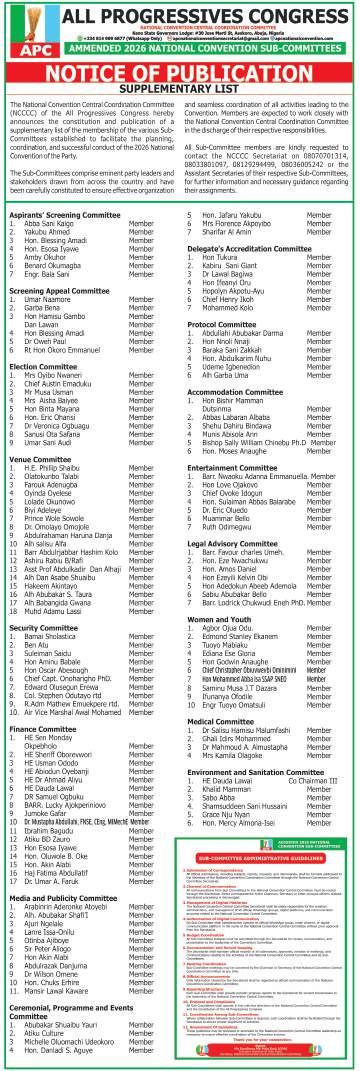
Coronation Merchant Bank Completes Recapitalisation, Meets CBN
Oriarehu Bonny
Coronation Merchant Bank has announced that it has completed its recapitalisation programme, increasing its paid-up capital to N50,257,767,438 and strengthening its balance sheet for greater operational resilience and efficiency.
The capital raise, it said in a statement, was executed through a combined rights issue and private placement, “which together generated over N32,093,878,138 in new equity capital. The resulting capital base satisfies the N50 billion minimum capital requirement for merchant banks prescribed by the Central Bank of Nigeria. The exercise received strong support from existing shareholders and strategic investors,
positioning the Bank to advance the next phase of growth across its key strategic business segments.”
Commenting on the development, the Chairman of Coronation Merchant Bank, Mr. Babatunde Folawiyo, stated: “The successful completion of this capital raise reflects the strong confidence our shareholders have in the Bank’s strategy and longterm vision. With a stronger capital base, we are wellpositioned to expand our role in supporting Nigeria’s financial markets.”
Also commenting, the Managing Director/ Chief Executive Officer of Coronation Merchant Bank, Mr. Paul Abiagam, said: “This recapitalisation significantly enhances our capacity to deliver greater value to our clients and
stakeholders. Furthermore, it positions the Bank to deliver improved performance, deepen innovation, and expand across our chosen focus markets.”
With a stronger capital base, the bank said it is well positioned to expand its offerings across its lending, investment banking, and global markets and treasury segments, whilst deepening relationships with Nigeria’s leading corporates and financial institutions.
“This milestone reflects the strength of the bank’s franchise and the continued confidence of its shareholders and investors, reinforcing Coronation Merchant Bank’s capacity to support its clients at greater scale and with enhanced capabilities,” it added.
Polaris Bank Chairman Charges New Chartered Bankers on Ethics, Professionalism
Chairman of Polaris Bank, Dr. Kassim Gidado, has urged newly inducted banking professionals to remain steadfast in their commitment to integrity, ethical conduct and professional excellence as they advance in their careers within Nigeria’s financial sector.
Gidado gave the charge while speaking as the Special Guest of Honour at the 2026 Stream 1 Chartered Banker Induction Ceremony organised by the Chartered Institute of Bankers of Nigeria (CIBN).
The ceremony, held in Lagos over the weekend,
witnessed the induction of 2,037 professionals into the Institute’s prestigious Chartered Banker and Microfinance Certified Banker cadres - an achievement that marks a significant step in their professional development within the banking industry.
According to the Institute, the inductees qualified through different certification pathways. These include 9 candidates through the Chartered Banker/MBA route 816 through the Chartered Banker Regular Route, 25 through the MSc/Chartered Banker pathway 262 through the
SMP/AMP/Chartered Banker route and 435 Microfinance Certified Professionals.
Gidado noted that the induction ceremony represents far more than a formal recognition of professional status. Rather, he described it as a reflection of dedication, discipline and the pursuit of excellence within the banking profession.
He observed that the financial services industry is undergoing profound transformation driven by technological innovation, evolving regulatory frameworks, and the increasing push for financial inclusion.
PCCSIGN Resolves Trademark Dispute Involving Sabinus, Peak Milk, Gala
Sunday Ehigiator
The Practitioners of Content Creators, Skit-Makers and Influencers Guild of Nigeria (PCCSIGN) has announced the amicable resolution of the trademark dispute involving the viral catchphrase ‘Something Hooge’, widely associated with Nigerian comedian Emmanuel Chukwuemeka Ejekwu, and two major consumer brands, Peak Milk and Gala Sausage Roll.
The President of PCCSIGN, Ambassador Michael Obinna Nwabufo, popularly known as Mike Premium, in a statement yesterday, confirmed that the matter had been resolved through mutual agreement and professional engagement between the parties.
Nwabufo had earlier initiated legal action seeking N1 billion against FrieslandCampina WAMCO Nigeria PLC, makers of
Peak Milk, and N100 million against UAC Foods Limited, producers of Gala Sausage Roll, over the alleged use of the catchphrase in promotional campaigns.
Speaking on the development, he said the settlement reflects a constructive approach to addressing intellectual property concerns within the country’s growing creative sector.
“This development represents a positive outcome for the Nigerian creative industry and demonstrates that disputes relating to intellectual property can be resolved constructively through appropriate legal channels and dialogue,” Nwabufo said.
According to him, the phrase ‘Something Hooge,’ which gained widespread popularity through Sabinus’ comedy skits, had earlier been filed for trademark protection with the Federal
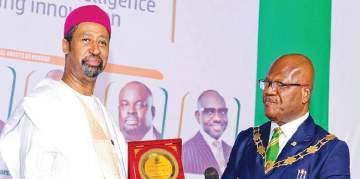
Ministry of Industry, Trade and Investment through the Industrial Property Office Registry.
Official records show that the word mark ‘Something Hooge’ was filed on November 26, 2021, and accepted on December 4, 2021, under several trademark classes including Class 35 for advertising and business promotion, Class 36 covering financial and commercial affairs, and Class 41 relating to entertainment, training and cultural activities.
Nwabufo noted that the protection of the phrase across multiple classes positioned it as a recognised intellectual property asset connected to Sabinus’ entertainment brand.
“The protection of the phrase across multiple trademark classes positions it as a recognised intellectual property asset associated with Sabinus’ entertainment brand,” he stated.
Chairman, Polaris Bank, Dr. Kassim Gidado (left) being presented with a plaque of honour by the President/Chairman of Council, Chartered Institute of Bankers of Nigeria (CIBN), Prof. Pius Olanrewaju at the Stream 1 induction of chartered bankers held in Lagos…recently
The
The OPEC Reference Basket of Crudes (ORB) is made up of the following: Saharan Blend (Algeria), Djeno (Congo), Zafiro (Equatorial Guinea), Rabi Light (Gabon), Iran Heavy (Islamic Republic of Iran), Basrah Medium (Iraq), Kuwait Export (Kuwait), Es Sider (Libya), Bonny Light (Nigeria), Arab Light (Saudi Arabia), Murban (UAE) and Merey (Venezuela).
Stock Market Advances by N923bn WoW on Buy Interest in BUA Cement
Kayode Tokede
Stock market trading for last week closed on a positive note as buy interest in BUA Cement Plc, 33 others lifted the market capitalisation by N923billion Week-on-Week (WoW).
The stock price of BUA Cement gained 20 per cent WoW to push the market
capitalisation up by N923 billion to close the week at N127.361 trillion.
The Nigerian Exchange Limited All-Share Index (NGX ASI) recorded 0.73 per cent WoW gain to close at 198,407.30 basis points, bringing the month-to-date and year-to-date returns to +2.9per cent and +27.5per cent, respectively.
Sectoral performance on
the NGX was mixed, as the NGX Industrial Goods gained 5.7per cent, NGX Oil & Gas appreciated by 1.5per cent, and NGX Consumer Goods inched up by 0.6 while NGX Insurance Index dropped by 4.6 per cent and NGX Banking decline by one per cent.
Investor sentiment, as measured by market breadth closed positive as 34 stocks gained, 44 lost, while 61
remained unchanged. Premier Paints led the gainers table by 32.88 per cent to close at N19.40, per share.
Conoil followed with a gain of 20.95 per cent to close at N204.40, while BUA Cement went up by 20 per cent to close to N270.00, per share.
On the other side, SCOA Nigeria led the decliners table by 34.06 per cent to close at N22.65, per share. Fortis Global
Insurance followed with a loss of 20.81 per cent to close at N1.18, while Sovereign Trust Insurance declined by 20.68 per cent to close at N2.11, per share.
Meanwhile, a total turnover of 3.321 billion shares worth N164.845 billion in 318,907 deals was traded last week by investors on the floor of the Exchange, in contrast to a total of 3.695 billion shares
valued at N177.687 billion that exchanged hands last week in 370,980 deals. The Financial Services Industry (measured by volume) led the activity chart with 2.179 billion shares valued at N59.809 billion traded in 124,992 deals: contributing 65.61 per cent and 36.28 per cent to the total equity turnover volume and value respectively.
PRICES FOR SECURITIES TRADED AS OF MARCH 11/26
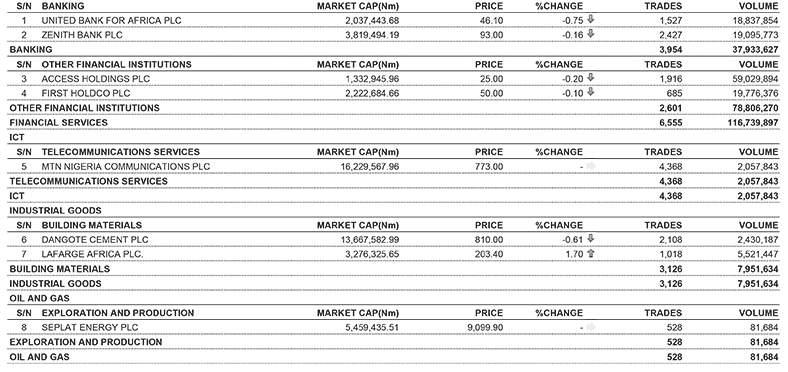
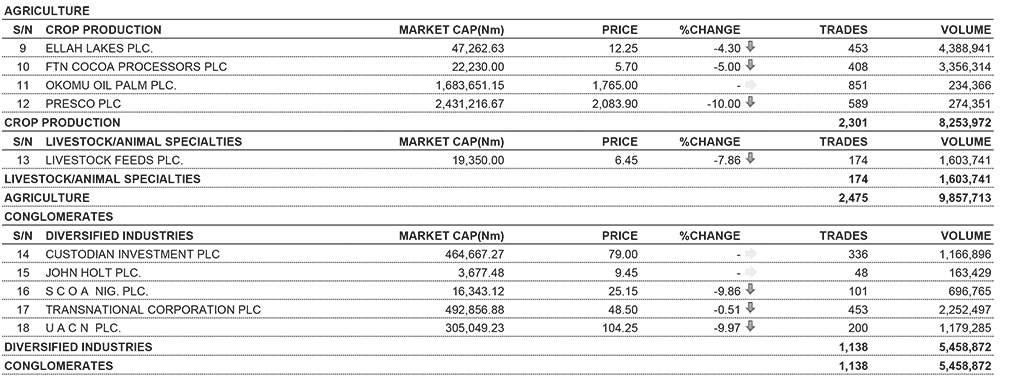
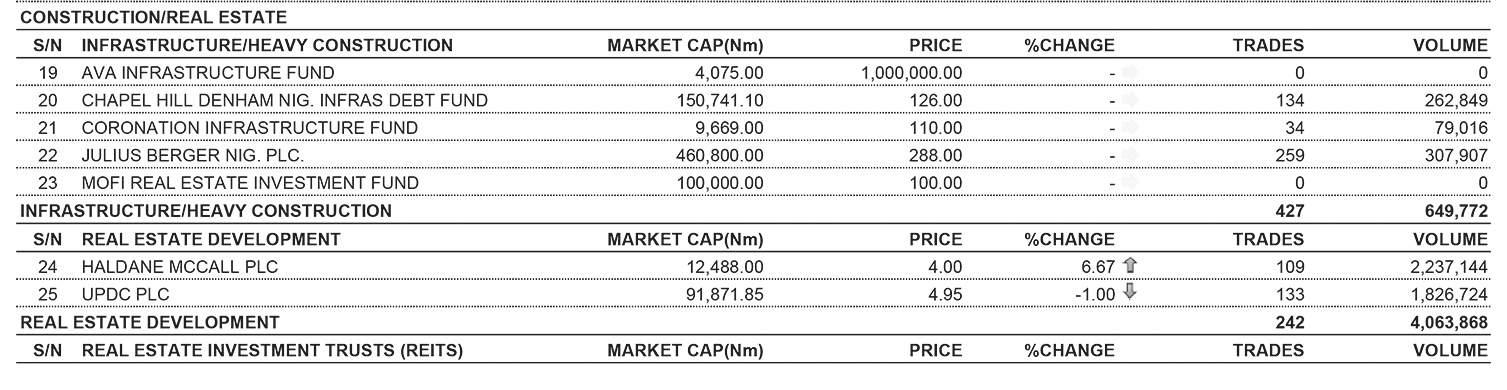
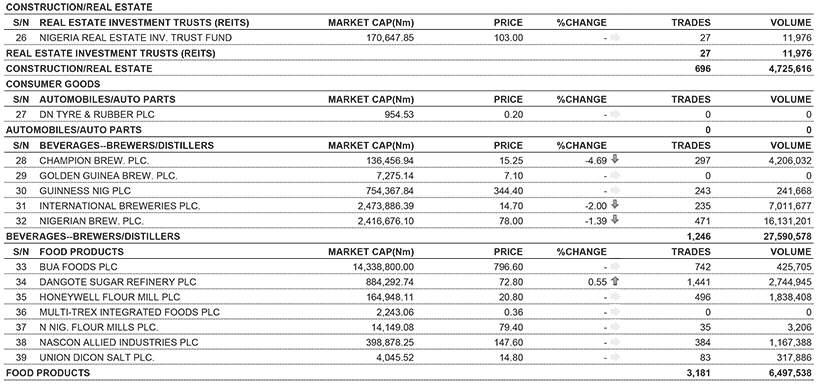
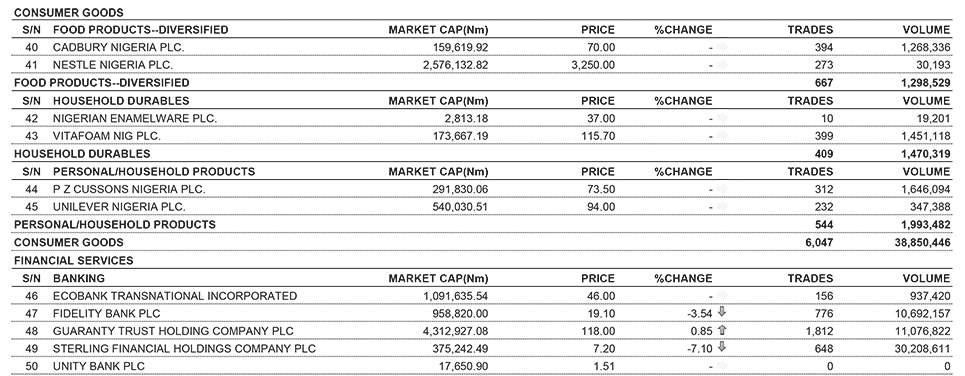
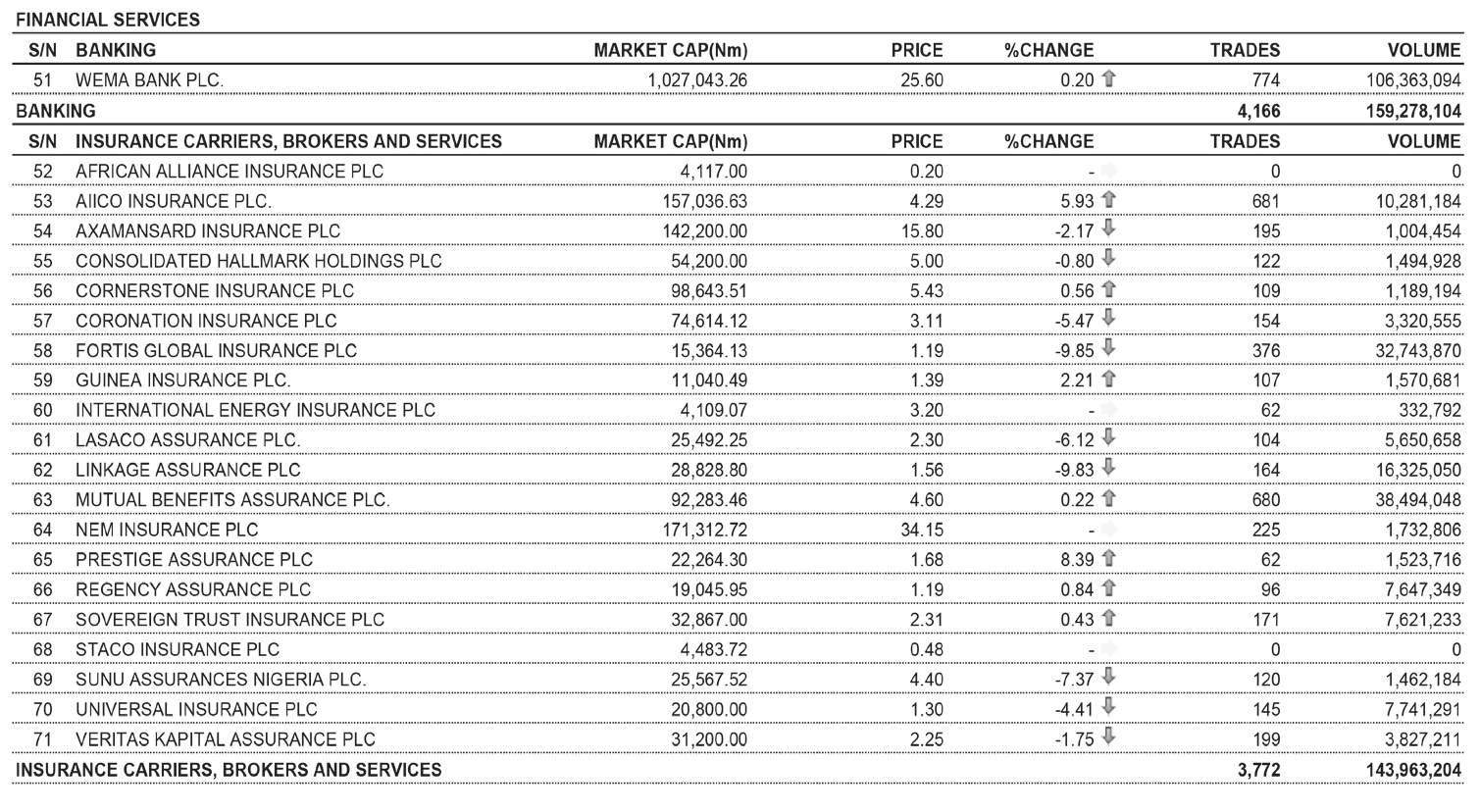

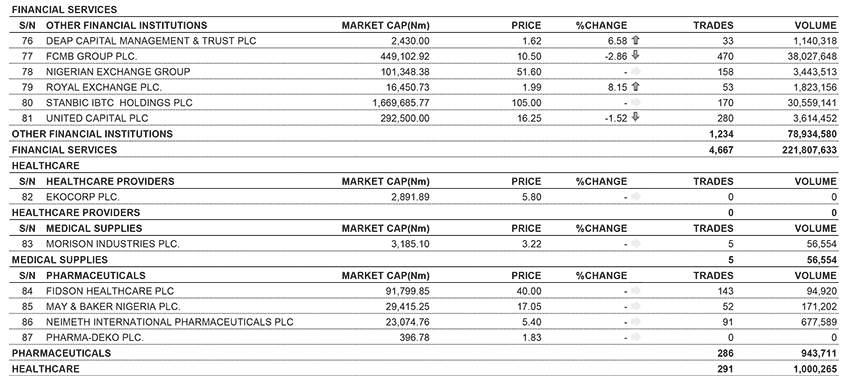
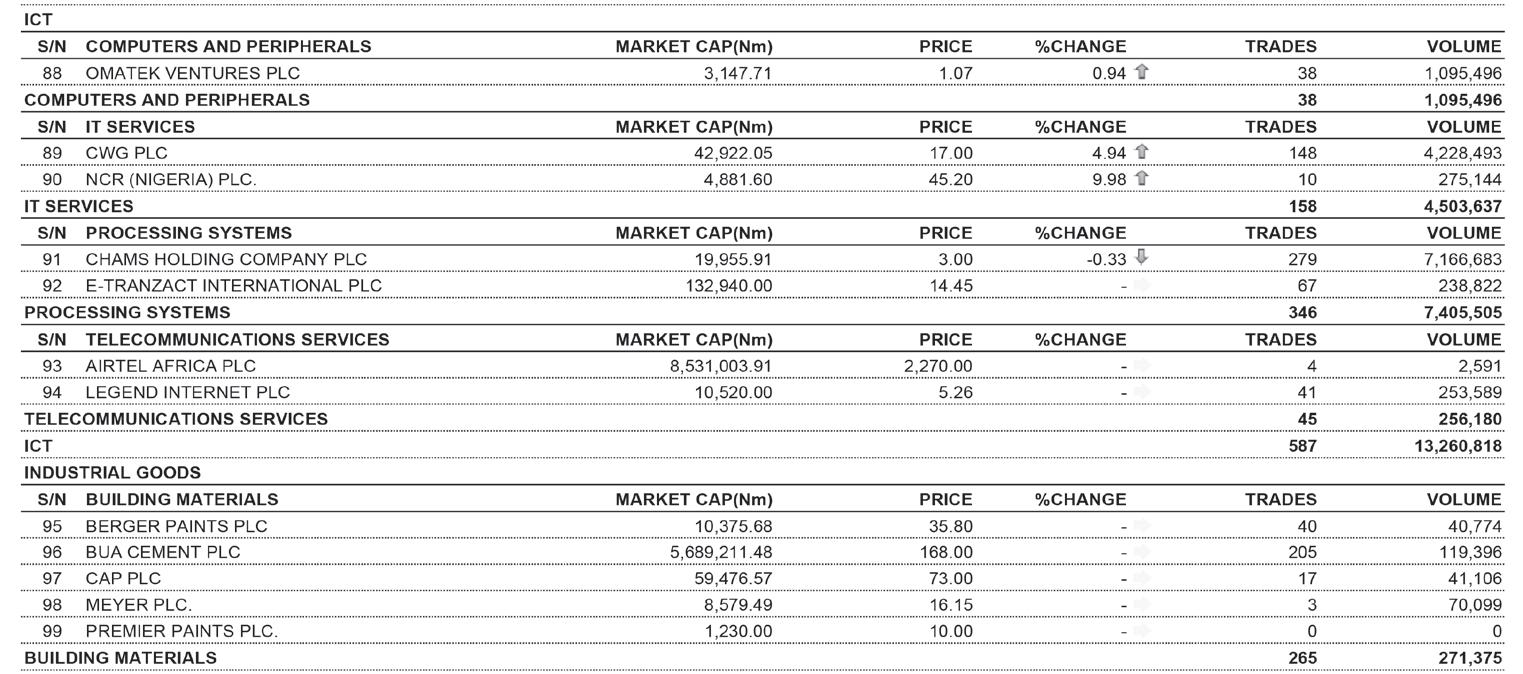
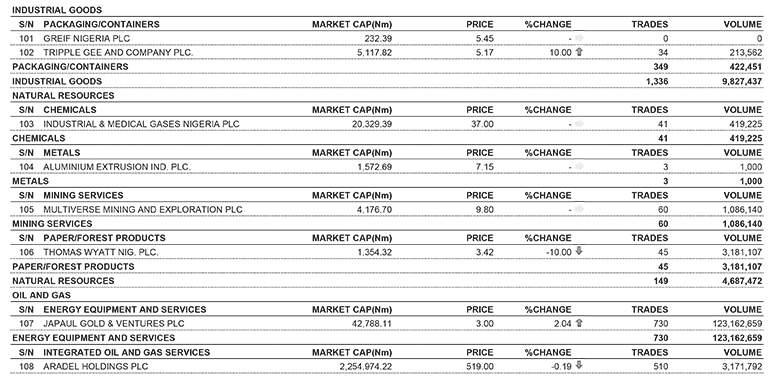
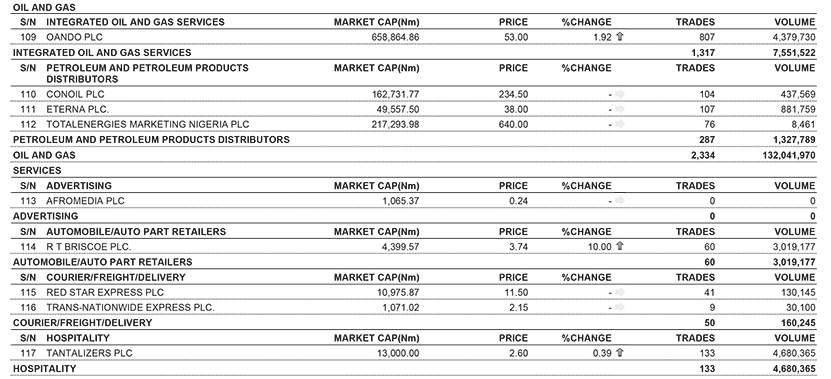
Peters: Women Financial Empowerment Boosts Sustainable Economic Development Business Special
Speaking in line with the this year’s International Women’s Day “Give to Gain,” the Chief Financial Officer of Access ARM Pensions, Oluwaseun Peters, highlights the important of prioritising long-term financial security for women, efforts being made by stakeholders and how her company is supporting to ensure women to build retirement security even when they are not part of a formal payroll system among other issues. Nume Ekeghe presents the excerpts:
Why is it important for women to prioritise long-term financial security and retirement planning?
Women generally live longer than men and often experience career interruptions due to care giving responsibilities.
As a result, women typically need financial resources that can support them for a longer period in retirement. For example, if someone retires at age 60 and lives to age 85, that means their retirement savings must support them for about 25 years after they stop working. If that person needs just N200,000 per month to cover basic living expenses, that amounts to about N2.4 million per year, or roughly N60 million over a 25-year retirement period, excluding inflation. This simple illustration highlights why retirement planning is critical. Without deliberate longterm savings and investment, it becomes very difficult to maintain financial stability later in life. Prioritising retirement planning therefore ensures that women can maintain financial independence, dignity, and peace of mind throughout their later years.
Many women often focus on the immediate financial needs of their families. Why is it equally important for women to intentionally plan for their own retirement?
Women naturally prioritise the needs of their families - children’s education, household expenses, and supporting relatives. While this is admirable, it is equally important for women to intentionally plan for their own financial future. Retirement planning ensures that women remain financially independent later in life and do not become financially vulnerable or dependent on others. One of the most powerful reasons to start early is the impact of compounding over time. For example, if a woman invests just N10,000 every month in an investment account or retirement savings plan earning an average return of 15 per cent annually, she could accumulate about N147 million by age 60 if she starts at age 25, even though her total contribution over that period would only be about N4.2 million. If she starts at age 30, the amount falls to about N69 million, and if she starts at age 40, it drops significantly to roughly N15 million.
This simple example shows that time is one of the most powerful assets in retirement planning. The earlier women begin to save, the more their money works for them. However, the key message is that it is never too late to start. Even small, consistent contributions can grow meaningfully over time and help women build financial security and dignity in retirement.
From your experience in the pension industry, are there noticeable gaps between men and women when it comes to retirement planning and pension participation?
Yes, there is still a noticeable gender gap in pension participation, although progress is being made. Historically, women have been underrepresented in the pension system. For instance, as of 30 September 2025, women accounted for only 31 per cent of registered pension contributors, compared to about 69 per cent for men. However, we are beginning to see encouraging improvements. According
to the Third Quarter 2025 report released by the National Pension Commission (PenCom), female participation in new pension registrations increased to about 40.3 per cent, representing a 6.5 per cent improvement year-on-year. While this progress is encouraging, it also highlights that more work still needs to be done. A significant number of women remain outside the formal pension system, particularly those working in the informal sector. This is why expanding access to flexible pension solutions and increasing financial awareness among women remain critical priorities for the industry.
What are some of the common barriers that prevent women, particularly those in the informal sector, from actively saving for retirement?
Several factors contribute to the lower participation of women in retirement savings, particularly among those working in the informal sector. First, income patterns are often irregular, as many women earn from trading, small businesses, or other informal economic activities. This makes it more difficult to commit to consistent long-term savings. Second, there is still limited awareness about voluntary pension options. Many women assume that pension schemes are only designed for salaried workers in formal employment. Third, women often carry multiple financial responsibilities, including childcare, household expenses, and support for extended family members, which can make long-term savings seem less urgent.
However, the industry is actively working to address these challenges.
PenCom has been collaborating with pension operators to improve financial inclusion for women and other underserved groups. One key initiative is the introduction of the Personal Pension
Plan, which was specifically designed to allow individuals in the informal sector, including many women, to save flexibly for retirement while still accommodating their income realities. Initiatives like this are helping to expand access to retirement savings and gradually close the gender gap in pension participation.
How can financial institutions and policymakers work together to improve financial inclusion and retirement preparedness for women?
Improving retirement preparedness for women requires strong collaboration between regulators, policymakers, and financial institutions. Policymakers play an important role in creating enabling regulations and frameworks that encourage broader participation in the pension system, particularly for individuals working outside the formal employment structure. At the same time, financial institutions must design simple, accessible, and flexible products that reflect the realities of how many women earn and manage income.
For instance, PenCom has been working with industry operators to expand pension coverage through initiatives such as the Personal Pension Plan, which allows self-employed individuals and informal sector workers to save voluntarily for retirement.
In addition, expanding financial literacy programmes targeted at women, leveraging digital platforms, and partnering with women’s associations, cooperatives, and trade groups can significantly improve awareness and participation. Through this type of collaboration, the industry can help ensure that more women have access to structured savings opportunities that support long-term financial security and dignified retirement.
Access ARM Pensions offers the
Personal Pension Plan designed for individuals outside the formal employment structure. Can you explain what this plan is and why it is particularly relevant for women?
The Personal Pension Plan offered by Access ARM Pensions Limited is a voluntary retirement savings solution designed primarily for individuals who work outside the traditional employer-employee structure. This includes traders, artisans, entrepreneurs, freelancers, consultants, and other self-employed professionals. The plan allows contributors to build long-term retirement savings while enjoying flexibility in how and when they contribute. Unlike traditional workplace pensions that require fixed monthly deductions, contributors can save based on their income flow. The plan has also been structured with different variants tailored to the diverse needs of contributors across the informal and selfemployed segments of the economy, ensuring that individuals at different income levels can participate. This is particularly relevant for women because a large proportion of women operate in the informal sector or run their own small businesses. The Personal Pension Plan therefore, provides an accessible and structured pathway for women to build retirement security even when they are not part of a formal payroll system.
Many women today run small businesses, work as freelancers, traders, or manage household enterprises. How does the Personal Pension Plan support women in these categories?
The Personal Pension Plan was designed with exactly these categories of workers in mind. Many women today operate as fashion designers, caterers, salon owners, online vendors, traders, and consultants, earning income in ways that may not follow a fixed monthly salary structure. The plan recognises this reality and allows contributors to save small amounts at their own pace whenever they earn income. For example, a trader can contribute after a profitable market day, or a small business owner can make contributions at the end of a sales cycle. Over time, these small but consistent contributions accumulate and are professionally invested to generate long-term returns.
This flexibility helps women build financial discipline and long-term savings habits without disrupting the day-to-day realities of running a business or managing household responsibilities.
One of the unique features of the Personal Pension Plan is its flexibility. Can you explain how the plan allows contributors to both save for retirement and access funds when necessary?
One of the features that makes the Personal Pension Plan particularly attractive is the contingent withdrawal structure, which balances long-term retirement savings with short-term financial flexibility. For naira-denominated contributions, 50 per cent of the contribution is preserved for retirement, while the remaining 50 per cent can be accessed as contingent savings when needed, subject to regulatory guidelines.
Peters
The Lagos Irony
Crusoe Osagie writes about the recent visible infrastructure transformation of Lagos in the midst of palpable human chaos
They call it the city that never sleeps, the commercial heartbeat of Lagos, the restless engine room of Nigeria. Yet for those of us who have resided and worked here for nearly three decades, loving it in all its defiance and chaos, there is a painful truth that sits heavily on the chest: Lagos may well be the most expensive slum in the world.
It hurts to admit this as a Lagosian by residence. But attempt to acquire property in Ikoyi, Ikeja GRA, Lekki, Banana Island, or even in Ifako, Oshodi, Iyana Ipaja—names that stretch across the social spectrum of the city—and you will find yourself wondering what part of the globe you are standing in. The prices are outrageous, almost surreal. What once seemed ambitious now feels impossible. It has become so absurd that price tags are frequently quoted in United States Dollars, as though the soil beneath our feet were anchored somewhere far beyond the Atlantic.
Yet take a deliberate walk through one of the so-called high-profile neighborhoods of Ikoyi, and the illusion begins to crack.
Start at Keffi Street junction on Awolowo Road and stroll toward the prestigious Ikoyi Club 1938, as it is proudly styled. Before the grandeur of exclusivity registers in your mind, something else meets you first: the smell. It is difficult to describe without wincing. A repulsive blend rises into the air—a stagnant canal’s sour breath mingling with raw sewage, decomposing food waste, and the harsh fumes exuding from poorly managed motorbikes, tricycles, trucks, and commuter buses. It strikes without warning, knocking the composure out of you. The shock is even sharper if you have been away from the city for some time, as though your senses had briefly forgotten how to defend themselves.
As you struggle to steady yourself against this invisible assault, another reality emerges. A significant number of the people walking the streets appear destitute, some visibly unwell, some mentally distressed. Poverty and wealth stand shoulder to shoulder here, separated only by walls and security gates. It might have been easier to digest if everyone moved quietly about their business, but Lagos rarely grants such distance. Many step directly into your space, whispering requests, eyes searching yours for acknowledgment, for alms, for something—anything—that might shift the balance of their day.
And so the contradiction deepens. Million-dollar properties rise above open drains. Luxury cars glide past refuseclogged canals. Dollar-denominated rent stands guard over streets that still struggle with basic sanitation. Lagos dazzles and disappoints in the same breath. It flaunts affluence while wrestling with decay.
To love Lagos is to live with this tension—to celebrate its resilience, its energy, its boundless entrepreneurial spirit—while mourning the glaring disparities that refuse to be hidden.
It is a city of ambition built atop unresolved fundamentals. A place where price does not always match value, where cost soars while infrastructure strains.
And perhaps that is what makes the reality so painful. Not that Lagos is imperfect—no great city is—but that its promise feels perpetually within reach, yet just out of grasp.
Pillars in the Dirt
There is something deeply ironic about the new concrete veins stretching across Lagos.
They rise like monuments to ambition — bold, sweeping, unapologetically modern. Flyovers arc across the skyline, bridges stitch neighborhoods together, and road expansions announce that this city intends to compete with the world.
From the restless orbit of Computer Village toward Cele, the elevated highway lifts you above the grinding traffic, above Danfos and horns, and for a brief, intoxicating moment, Lagos feels engineered — orderly, intentional, almost futuristic.
But the irony waits beneath the bridge.
Around Allen Avenue and Opebi, excavators carve the earth with mechanical confidence. New link roads emerge. Familiar junctions dissolve. For those who have known this city for decades, memory struggles to keep pace with construction. Lagos is remapping itself in reinforced concrete.
Begin at the Radisson Blu Hotel on Isaac John Street in Ikeja GRA.
The lawns are trimmed but the roadside pavements are missing slabs at intervals from where offensive fumes gush uncontrollably. Glass towers mirror ambition but numerous passersby seem to move without direction. Here, Lagos appears curated and chaotic at the same time. Move toward Mobolaji Bank Anthony Way, edge past the Sheraton Lagos Hotel, and drift into Opebi, Allen Avenue, and Awolowo Way. God save you if you are on foot, though the distance is short, the path is littered with human waste.
The contradiction is vast. For all the billions poured into elevated roads, there are no proper walkways for the people who live beside them. Pedestrians step into traffic because the city has given them no alternative. Drainage systems sit open. Human waste dots the margins of freshly paved corridors.
The scent of open defecation competes with petrol fumes and roasted corn. Development rises vertically while basic sanitation remains horizontal — and neglected.
Under the majestic flyovers, another Lagos thrives — not by design, but by necessity. Concrete pillars become anchors for tarpaulin shelters. Bridge undersides become bedrooms. Dividers become kitchens. Entire communities form in the shadows of infrastructure meant to accelerate movement. People cook, bathe, argue, trade, and sleep beneath structures that cost billions to construct.
The roads are imposing.
The society around them is
improvised.
Men clutching wads of cash still hover near traffic lights and hotel gates, whispering “Dollar?” Informal currency exchange flourishes beneath formal ambition. Order is performed above; survival is negotiated below.
This is the present-day Lagos paradox: architectural confidence rising from social fragility.
The city cannot remain horizontal — it must build upward. A megacity swelling at the seams needs bridges, expansions, and arterial roads. Infrastructure is not a luxury; it is survival. Yet infrastructure without planning for human dignity becomes spectacle. It becomes sculpture — impressive, photographed, inaugurated — but disconnected from the lived reality at its base.
What does it mean to erect gleaming flyovers in a city where pedestrians have nowhere safe to walk?
What does progress look like when human defecation stains the margins of billion-naira projects?
What kind of modernization allows homelessness to root itself permanently beneath its grandest achievements?
Lagos today is a split-screen city. One half beams with momentum, steel, and policy-driven ambition. The other half improvises existence in the gaps — unsheltered, unsanitary, unplanned.
The tragedy is not that Lagos is building. It must build.
The tragedy is that concrete is rising faster than coordination. That bridges are engineered with precision while the society around them remains structurally adrift. That the imposing roads and flyovers cast long shadows — and in those shadows, thousands live entire lives.
Lagos is reaching for the future with magnificent concrete hands.
But beneath those hands, many are still standing barefoot on broken ground.
With all these sophistication and dysfunction about Lagos identified, it would be counterproductive to end this piece without some advice to those whose duty it is to present this sprawling city to tourists and visitors as the enigma that it is supposed to be. First, it is only fair to note that Lagos is an unfortunate victim of the challenge of poverty that ravages the entire Nigeria. Wherever you may be in the country, once you reckon that life is not delivering to you what you consider your fair share, one of the first options that crosses your mind is to find your way to Lagos or Abuja, where most of the national cake is presumably being distributed.
This leaves Lagos with the perpetual problem of dealing with an extremely dynamic population size. But Lagos must find a way to keep up with its peers in Africa like Accra, Cotonou, Johannesburg and others which certainly have similar challenges but manage to keep their cities planned, organized and impressive to sophisticated tourists from around the world.
Sanwo-Olu
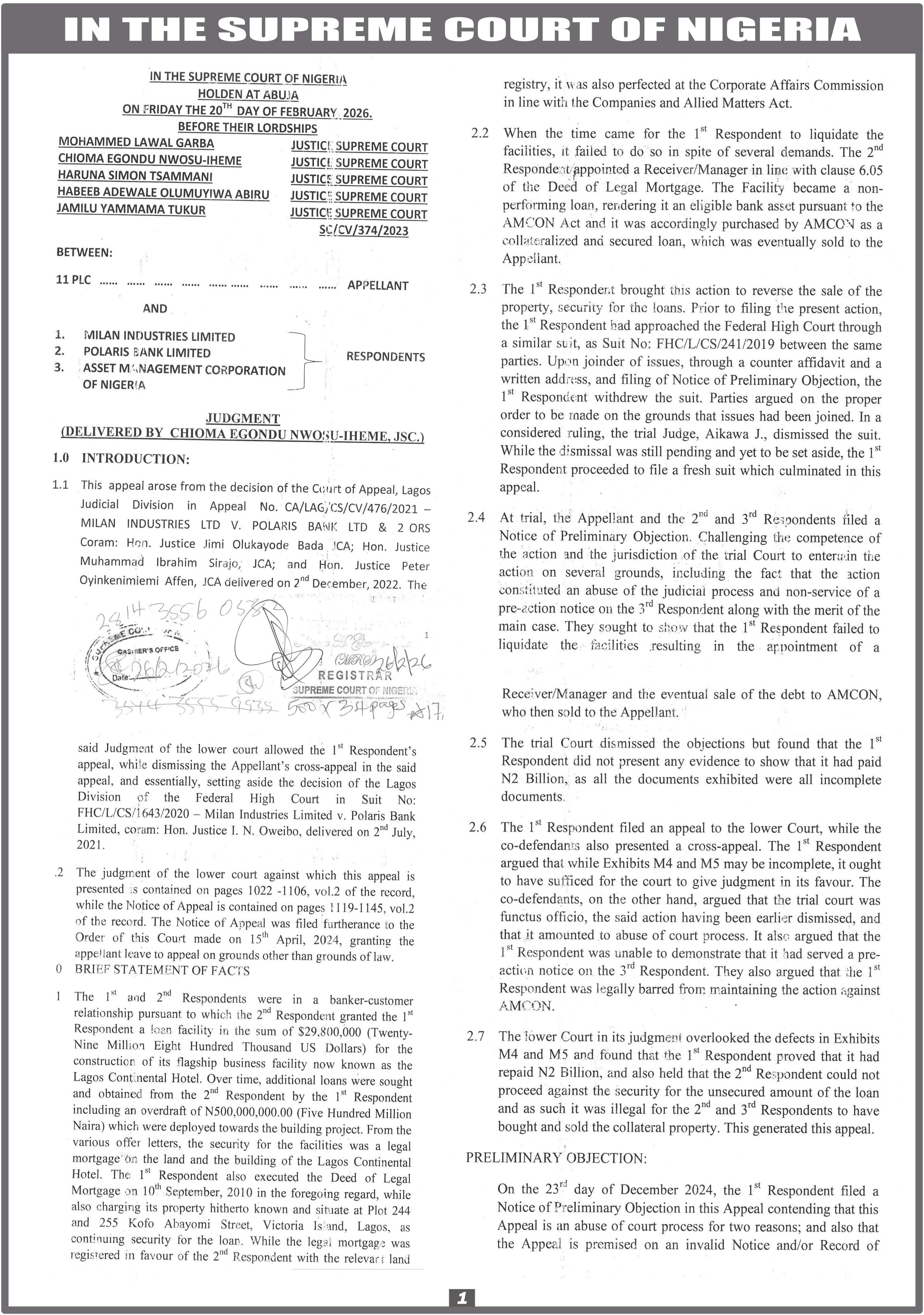
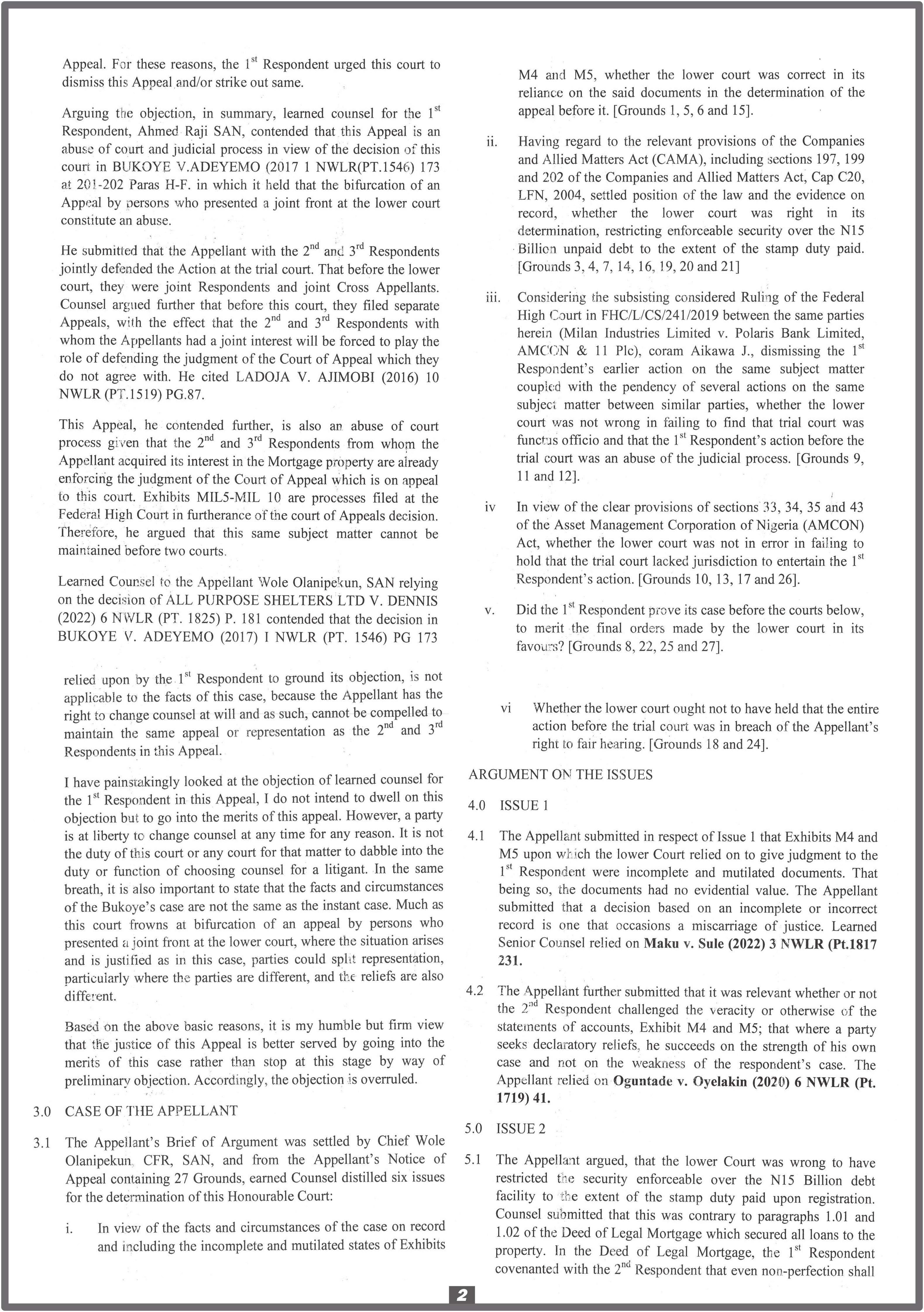
Like Ambode, Like Aiyetadiwa... Harvest Unfolding POLITY
Idowu Ajanaku
While it is quite understandable that within the political matrix, forces- both fratricidal and forwardlooking- play themselves out for either self-aggrandizement or for selfless and patriotic reasons, open hatred, deep contempt, or even intense disdain for political leaders by political jobbers should be firmly predicated on unimpeachable facts and figures. Certainly not fixated on parochial sentiments.
Unfortunately, it is against this dark backdrop that an unbiased response to the recent article titled: “Aiyedatiwa’s years of the locusts” couched with vile vituperation, casting undeserved aspersions on Gov. Lucky Aiyedatiwa’s person comes into view.
Such sordid sentiment reminds one of a similar political scenario that played out in Lagos state, under the then newly sworn in state governor, Akunwunmi Ambode. That was back in 2015, soon after after taking the baton from his predecessor, Raji Fashola ( SAN ). There were hues and cries, doubting his capacity to deliver on his electoral promises. But Ambpde assured his critics that governance is not a 100-metre dash but a well articulated long distance race.
As fate would have it and keeping to his solemn pledge within a short span of one and a half years, his critics were spell-bound and indeed, dumbfounded by his administration’s revolutionary infrastructural development. Name it, the popular overhead bridges at Abule-Egba and Ajah and that of the world class six-lane road leading to the Murtala Muhammed International airport. What more, the long-neglected inner roads were modernized across the state. And in response, his once hellbent critics became his praise singers!
In a similar vein, Aiyedatiwa’s infrastructural strides have started to unfold. As we speak, a 5- kilometre-road project is ongoing in each of the 18 local government areas. But that is only a tip of the iceberg. In fact, the construction of Port Ondo is on, with the bold aim to change the socio-economic trajectory of the Sunshine State.
Furthermore, the administration is quietly working on a 500,000 barrel-per-day (bpd) modular refinery that will provide jobs for thousands of unemployed youths. That will also provide the opportunity for a Free Trade Zone that will lead to the establishment of an international airport
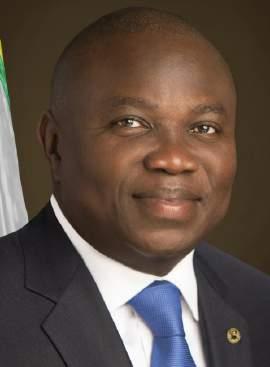
at Ilaje. That $50 billion oil project will amount to the single largest of its type in Nigeria, involving the federal government and international partners. The Ifon ceramic factory is due to be commissioned as a testament to the investment friendly atmosphere enhanced by the Ayedatiwa’s government. The legacy in formation is to transform Ondo from a mere civil service state to an industrialised state that will not only be the envy of many but the pride of the nation.
Idowu Ajanaku is the Commissioner for Information and Orientation Ondo State.
With specific regards to the allegation made by Adedayo, of the state governor channeling billions of Ondo state funds to some unnamed Senior Advocates of Nigeria (SAN ) for the matter in court regarding his tenure in office, for him to continue in government, it is not only spurious but lacks any evidence.
But unknown to the writer and his acolytes, Aiyedatiwa has never told anyone anywhere of such an intention.
PINK WAS NEVER THE POINT
getting them to tell their stories. Yesterday I sat with a bubbly 39-year-old who has done something remarkable. She built a multi-billion naira business from scratch in a sector where capital intensity matters buildings, inventory, patience measured in years, not months.
I asked about financing. Her answer was immediate and, in its tone, almost defiant: she had never borrowed. Not once. Grown entirely from retained earnings, reinvesting what the business produced back into itself. She said it the way you say something you are proud of.
I understood the pride. I felt it too — reflexively, in the way women of a certain formation feel it. Debt-free. Self-reliant. Beholden to no one.
Then I sat with it a little longer. A more
complicated feeling arrived.
The Man in the Same Room
Think about what a man with the same business, the same talent, and the same ten years would have done.
He would have borrowed. Early, probably. He would have leveraged before it was comfortable, used someone else’s capital to accelerate what was possible and grown at two or three times the speed. Not because he was smarter. Not because his business plan was better. But because the relationship between men and debt — in the cultures I have moved through— is structurally different.
Men are broadly taught to treat debt as a tool. Women are broadly taught to treat it as a risk. Both are true. But one framing produces a multi-billion business in twenty years; the
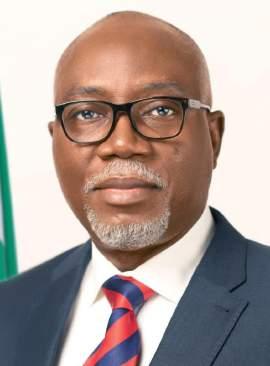
Rather, his firm focus is on delivering the dividends of democracy to the good people of Ondo state. That of course, explains the completion of the overhead bridge in Akure which was started by Rotimi Akeredolu (of blessed memory) with the inner roads across the 203 wards in the state that are ongoing. That is in addition to the frequently highlighted efforts on education, healthcare delivery, women and youth empowerment and tourism.
Also, the wild allegation that the governor has a hand on the recent attack on Adetimehin, is outrageous. For the records, though the man in question orchestrated all manner of political gimmicks and gambits to ensure that Aiyedatiwa, then as a Deputy Governor was not considered as a candidate of the APC for the governorship post, he did not oust him as the party chairman. That was unlike his predecessor who made sure that Kekemeke, the then party chairman in 2016: who was against his ambition was removed from office as soon as he became governor. Let it
other, the same business in ten — worth four times as much today.
I am not saying she was wrong. I am saying the pride she felt — and that I felt, briefly, on her behalf — was worth examining.
What I Learned
I’ve spent years in finance. I’ve sat in rooms where large sums moved with a casualness I found startling. The confidence with which men leveraged balance sheets and borrowed to build was not recklessness — it was a trained comfort with capital as an instrument rather than a resource to be guarded.
I noticed, in myself and in the few other women in those rooms, a residual caution that was not purely analytical. It was cultural. Borrowed, if you will, from somewhere earlier — from the way we had been raised
be known therefore, that the Governor Aiyedatiwa’s is a man of peace, not of violence, of any kind.
Much as we welcome criticism- since the current administration ‘s political paradigm is all-inclusive - such criticism should be constructive, evidence-based and devoid of base and primordial sentiments.. The criticism of political office holders as frequently expressed in public discourse, social media, and political commentary, which often stem from perceived betrayals, incompetence, or the abuse of power sometimes miss the salient points. That is without listening to the other side of the persons involved.
Much like the former Lagos state governor, Ambode who was doubted and criticized at the beginning of his tenure, Aiyedatiwa is gradually reshaping the socio-economic landscape of Ondo state and deserves patience, mutual understanding and commendations, not opprobrium with the use of guttersnipe language, all with the aim to give a gentle dog a bad name, just to hang him out of pure hatred, which pays no one any good.
to think of money as finite and precarious, to be preserved rather than deployed. That instinct has genuine value. Womenled businesses carry lower default rates on average. They survive longer. The discipline is real.
But discipline and ambition are not the same thing.
Dear Madam MD
The banks you lead were designed — in their products, their collateral requirements, their risk models — around a borrower who was rarely female. The typical loan product does not account for a female entrepreneur who holds no land in her own name, because land passes through male lines in many
Continued on page
Ambode
Aiyetadiwa

LAFARGE CELEBRATES INTERNATIONAL WOMEN’S DAY...
Chioke: Enugu Needs N5b Annual Funding to Achieve Sustainable
Security in Communities
Donors yet to redeem outstanding N1.7b pledged in 2025 Effective security requires boots on the ground
Emmanuel Ugwu-Nwogo in Enugu
A security funding to the tune of N5 billion is required annually for Enugu State to achieve sustainable security across its communities, Chairman of the State Security Trust Fund (ESSTF), Dr. Ike Chioke, has said. Chioke stated this at a town hall meeting in Enugu organised by the fund to keep residents and stakeholders abreast of its activities, achievements, and funding needs.
Chioke explained that the huge sum expected to be provided by both public and private sources would be used to effectively support security operations across the 260 political wards in the state.
he said, “We need to raise at least N5 billion every year for the fund to function efficiently. If you consider the 260 wards in the state and deploy about 20 security personnel in
each ward, paying each of them monthly, the financial implication becomes clear.”
The ESSTF boss stated that a community-based security structure across all the 260 political wards entailed deployment of both personnel and needed security equipment, adding that effective security requires “boots on the ground”.
He stated that communitybased intelligence gathering constituted a critical component of effective crime prevention, hence the need to maintain a security structure in all the communities of Enugu.
Chioke said the security architecture involved deployment of at least 20 security personnel in each ward, who would be charged with monitoring communities to detect unusual activities, and promptly relay intelligence to security agencies.
The ESSTF, he pointed out, operated as a public-private partnership, with government
providing support while citizens, corporate organisations, and other stakeholders contribute resources to strengthen the state’s security architecture.
A security funding drive was formally launched during which many donors pledged to contribute funds running into billions of naira in support of government's security initiatives.
But the chairman of ESSTF lamented that several donors that made commitments were yet to redeem their pledges.
he stated, “During the fundraising, about N3 billion was pledged, but only around N1.3 billion has been redeemed so far. Some people announced donations of up to N100 million but have not paid a kobo.”
Chioke appealed to donors with outstanding pledges to hasten up and redeem them without further delay. He also appealed to residents, businesses, and members
of the Enugu diaspora to support the security initiative, as such contributions would significantly enhance security across the state.
Chioke recalled that following its inauguration by Governor Peter Mbah in February 2024, ESSTF had since established a functional operational structure, including a dedicated website and payment portal to facilitate contributions from individuals and organisations.
He said while waiting for the outstanding N1.7 billion pledges to be redeemed, the money so far realised had been used to procure security equipment that were already in use to enhance security operations in the state.
According to him, the procured items include two surveillance drones equipped with infra-red cameras, 10 Hilux patrol vehicles, 40 motorcycles for forest guards, and 400 bulletproof vests and helmets.
He said the equipment had significantly strengthened
IOM Praises Edo Govt for Continued Support to Trafficked Victims
Felix Omoh-Asun in Benin
The International Organisation for Migration (IOM) has praised the seriousness of Edo State Government in addressing migration issues in the state.
Chief of Mission, Nigeria, Ms. Sharon Dimanche, in an engagement with the media in Benin City over the weekend, asserted she was impressed with the level the government has escalated the issue of irregular migration in the state. She said from the level
of involvement by the state government, and steps already taken by way of partnership and investment, "we can ensure that migration becomes safer, more orderly, and a force for development rather than risk."
Impressed by what she saw, Ms. Dimache noted: "I also had the honour of calling on His Excellency, the governor of Edo State. I want to thank him and his team for the strong leadership they continue to show on migration issues, particularly
in supporting returnees, protecting vulnerable people, and creating opportunities for young people," She disclosed that what she witnessed in the state as a first timer, especially at the ADP Fish Farm, where a young returnee who felt she was finished when she first came back to Nigeria after a very difficult journey, but today learning new skills, rebuilding her confidence, and beginning to support her family again, is an indication
that the state government is providing succour to trafficked victims.
"Over the past two days, l have travelled across Benin City and met many people whose lives have been touched by the work of 1OM and our partners.
"I also visited EdoJobs and the Vivian Sexual Assault Referral Centre, where I met courageous women and young people who are receiving the support they need to rebuild their lives.
ongoing efforts to tackle security threats, such as kidnapping and the menace of herders.
Chioke stated that available statistics indicated that incidents of kidnapping and related crimes in Enugu State had dropped by over 80 per cent since the current administration came into office.
Secretary to the State Government, Professor Chidiebere Onyia, who represented Mbah at the event, commended the board of the trust fund for creating a platform that enabled citizens to actively participate in strengthening security in the state.
Onyia stated that the establishment of ESSTF was part
of the administration’s broader strategy to build a sustainable security architecture anchored on transparency, accountability, and collaboration between government and citizens.
He said the improved security environment prevailing in the state had helped stimulate economic activities, contributing to the significant growth in the state’s internally generated revenue(IGR) in recent years. In his remarks, Senior Special Assistant to the Governor on Security Matters, Vincent Onyeabor, assured that the Mbah administration would continue to address security concerns across different parts of the state.
Nigeria's Leadership Crisis: VICM Sounds Alarm Ahead of 2027 Elections
Mary Nnah
As Nigeria hurtles towards the 2027 elections, a clarion call has gone out to aspiring leaders to prioritize values-based leadership, accountability, and service to the people.
Speaking at a press conference to commemorate Vision International Christian Ministries' (VICM) 25th anniversary and its forthcoming Transformational Leadership Conference 2026, on Wednesday in Isheri North GRA, Ogun State, President/CEO of VICM, Francis Olubambi, emphasised that focused leadership is the answer to Nigeria's myriad problems.
"Focused leadership is the answer to Nigeria's problems," Olubambi declared. "We need leaders who are committed to serving the people, not just
themselves. The upcoming elections are a critical opportunity for Nigerians to choose leaders who will prioritize the country's development and security."
Olubambi lamented the erosion of values in Nigerian society, citing the prevalence of corruption, insecurity, and a lack of accountability. He emphasized that leadership is not just about holding public office, but about character and competence.
"Character trumps competence," he said. "If our values are wrong, our leadership will be wrong. We need leaders who will demonstrate integrity, transparency, and accountability."
He stressed that Nigeria's challenges are not insurmountable but require leaders who are willing to take the right path.
L-R: Director, Communications, Public Affairs and Sustainable Development, Lafarge Africa Plc, Viola Graham-Douglas; Non-Executive Director, Oyinkan Adewale; Deputy Governor, Ogun State, Noimot Salako-Oyedele; Group Chief Executive Officer, Lolu Alade-Akinyemi; and Director, Legal/Company Secretary, Adewunmi Alode, during the celebration of International Women’s Day organised by Lafarge Africa Plc and held in Lagos … recently

2026 LAGOS TECH FEST WEEK...
Gbenga Hashim: Nigeria's Economic Revival Possible with Right Leadership
Chuks Okocha in Abuja
Former presidential candidate and businessman, Dr. Gbenga Hashim, has expressed confidence that Nigeria can regain its economic strength if the country is guided by responsible and visionary leadership.
Hashim made the remarks
when PDP Chairmen of the 62 wards in FCT Area Council, Local Government Chairmen of the six Area Councils and members of the State Working Committee led by the Chairman, Alhaji Ismail Mohammed Dogara, paid him a thank-you visit at his Utako office Abuja, where they reaffirmed their support
for his political vision and pledged to intensify grassroots mobilisation within the PDP.
The delegation said their visit was also to appreciate Hashim’s consistent engagement with party members and to encourage his continued involvement in efforts to strengthen the party ahead of future elections.
Speaking during the meeting, Hashim said Nigeria had the resources and human capital needed to rebuild its economy, stressing that the country’s present challenges could be reversed with sound policies and purposeful leadership.
He noted that Nigeria once enjoyed a strong and vibrant economy driven by
Delta Braces For 'State Police', Approves N34bn Divisional Police Headquarters for 25 LGAs, SPU
The Delta State Government has approved the construction of what it termed "state-of-the-art divisional police headquarters" across the 25 local government areas of the state towards the take-off of the much-talkedabout State Police in line with the security policy of Tinubu administration.
The approvals are also part of efforts of the Oborevwori to further strengthen the security architecture of Delta State, the State Commissioner for Works (Rural Roads), Mr. Charles Aniagwu, pointed out while briefing newsmen at the weekend on highlights of the
State Executive Council meeting presided over by Governor Sheriff Oborevwori.
The commissioner noted that EXCO also approved the building of Special Police Protection Unit (SPU) in the state, adding that the huge security decision was in furtherance of Governor Oborevwori’s M.O.R.E Agenda and underscoring the administration’s commitment to the protection of lives and property of the people of the state.
The police security projects, Aniagwu disclosed, would cost over N34 billion.
Aniagwu said that the meeting dwelt essentially on
projects meant to improve the livelihoods of the citizens.
He said, "Principal among the decisions reached today hinge on the number one responsibility of government, which is the security of lives and property.
"Flowing from that, and ahead of the federal government’s policy on state policing, the state government today approved the construction of state-of-the-art divisional police headquarters in the 25 local government areas of the state. That means we are going to have 25 of such facilities.
“In addition, the Executive Council also approved the establishment of a Special
Police Protection Unit. These two projects together will gulp over N34 billion.
“Even though Delta today ranks as one of the most secure and safest states to live in Nigeria, our government believes that we need to take it a notch higher.
“With the federal government favourably disposed to allowing state policing across the country, there is the need for us to move ahead of others, and that is why the approval has been given.”
He added that the state commissioner for housing had been duly directed to commence necessary processes to ensure the projects are executed without delay.
transparency, discipline and productive policies, adding that earlier generations of leaders laid foundations that allowed the country to compete favourably with other emerging economies.
According to him, the highlight of Nigeria's economic prosperity was in 1966 when Nigeria’s GDP doubled Malaysia's and was bigger than Indonesia's, and in 1976 when Nigeria’s Per Capital Income tripled that of China.
Hashim also cited the industrial growth of the North and other regions during the First Republic as an example of what visionary leadership could achieve, recalling that policies introduced under the late Northern Premier, Ahmadu Bello, transformed Kaduna into a thriving textile hub that provided employment for thousands of workers.
He said the experience demonstrates that Nigeria still has the capacity to rebuild its industrial base, revive manufacturing and create large-scale employment for its growing population.
“Poverty, disease, ignorance and unemployment are not normal conditions for Nigeria because this country has
prospered before,” Hashim said, expressing optimism that economic revival remains achievable.
He also called on party officials at the grassroots to strengthen mobilisation efforts, describing ward leaders as the “commanders” of the party’s structure whose work is critical to electoral success.
Hashim further expressed optimism that ongoing reconciliation efforts within the Peoples Democratic Party would restore unity among members.
“We will unite the PDP; all the factions have agreed to work together,” he said. Earlier, the Chairman of the PDP in the FCT, Ismail Mohammed Dogara, commended Hashim for maintaining close contact with party members across the different levels.
He described the former presidential candidate as a pan-Nigerian leader who regularly engages grassroots stakeholders and carries them along in his political activities.
According to him, their visit was to reaffirm their solidarity with Hashim and to encourage him to sustain his engagement with party structures across the country.
Delta Govt Approves Expansion of Hostel Facilities for Tertiary Institutions
The Delta State Government has announced approval of the construction of male and female hostels across nine state-owned tertiary institutions, in a major move to address accommodation challenges confronting thousands of students in the institutions.
The State Commissioner for
Higher Education, Professor Nyerhovwo Tonukari, disclosed this while briefing journalists at the end of the State Executive Council meeting presided over by Governor Sheriff Oborevwori at the weekend.
Tonukari described the decision as a significant step forward for students and their parents, noting that the rising student population in the state’s
tertiary institutions has put pressure on facilities including hostel accommodation across the various institutions.
He said that recent figures presented during the convocation ceremonies of the three newly established universities in the state showed that the three institutions alone currently have about 40,000 students.
For instance, Delta State University, Abraka currently
has more than 35,000 students, while its hostel facilities can only accommodate about 2,000 students while the newer universities have even fewer hostel spaces capable of housing only a few hundred students, he further revealed.
Therefore, the state executive council approved the construction of two hostel blocks, one for male students and one for female students, in each of the nine state
owned tertiary institutions.
The council also approved the reconstruction and completion of the abandoned Senate Building at Delta State University (DELSU) Abraka, Tonukari further revealed, adding the project was originally awarded in 2010 but has remained uncompleted till the latest intervention by the state government.
"Today, that building has been approved
for reconstruction and completion, which is very good news for the university," Tonukari said. Also speaking, the State Commissioner for Housing, Mr. Godknows Angele, assured the Ministry of Housing would ensure effective supervision and timely delivery of the approved projects through diligent supervision and monitoring of the projects.
Omon-Julius Onabu in Asaba
L-R: Associate Product Marketing Manager, Human Manager Limited, Deborah Eke; Senior Product Designer, Brands and Marketing, Human Manager Limited, Mr. David Opaluwa; Managing Director, Human Manager Limited, Mr. Udo Ngele; Founder/CEO, Eventhive, Mr. Jamiu Ijaodola; and Brands and Marketing Lead, Human Manager Limited, Dr. Jerry Adeyeri, during the 2026 Lagos Tech Fest Week held in Lagos … recently
Omon-Julius Onabu in Asaba
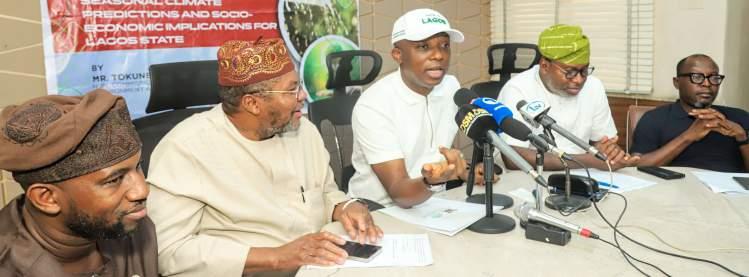
2026 RAINFALL PREDICTION...
Tinubu Backs Nigerian Media’s Fight for Fair Revenue from Big Tech
President Bola Tinubu at the weekend said his government will support the evidence-led campaign of the Nigerian media against ‘Big Tech’ dominance, anti-competitive activities, and the harsh economic headwinds affecting local media.
He described the press as an “indispensable partner” in the nation’s journey towards economic stability, press freedom, and social cohesion, a statement released by the Chief Executive Officer of NPAN, Segun Adediran said yesterday.
At a meeting at the State House, the President said his government would help dismantle the fiscal hurdles and “digital cannibalisation” currently threatening the survival of the press in the country.
He gave this assurance during an interfaith dinner with a high-level delegation from the Nigerian Press Organisation (NPO), led by the NPO President and Publisher of The Guardian, Maiden Alex-Ibru.
The delegation also had in attendance industry leaders and patrons, including exOgun Governor, Olusegun Osoba; Publisher of Vanguard, Sam Amuka; Chairman of THISDAY/ARISE News Channel, Prince Nduka Obaigbena as well as Chairman of Channels Television, Dr John Momoh.
Also present were the Director-General of the Nigerian Television Authority (NTA), Alhaji Saliu Dembos; former NPAN President and veteran journalist, Mr Ray Ekpu; President of the Nigerian Guild of Editors (NGE), Mr
Eze Anaba; President of the online publishers’ association, Mr Danlami Nmodu; the Guild of Corporate Online Publishers (GOCOP); and President of the Nigeria Union of Journalists (NUJ), Alhassan Abdullahi, among others.
Also present were all executive members of NPAN, managing directors of media houses, top media practitioners across all platforms, and representatives of civil society, the statement noted.
Tinubu said his government was already reviewing the tariff exemption list and would consider the inclusion of the items used by the media, such as newsprint, plates, chemicals, and radio and television broadcast equipment, which currently attract tariffs of 5 per cent to 10 per cent.
If this happens, the NPAN stated that these items
would enjoy a status similar to that of educational and research materials. With the media industry reeling from skyrocketing newsprint and equipment costs, Tinubu signalled his administration’s readiness to intervene by reviewing tariffs.
“You have the government’s full support, because we know how important your work is to the sustenance of democracy,” the President said.
Earlier, the Deputy President of the Newspaper Proprietors’ Association of Nigeria (NPAN) and Publisher of BusinessDay, Mr Frank Aigbogun, in a speech delivered on behalf of the NPO, accused some tech companies of increasingly “scraping” proprietary creative content to train AI models, often by breaching digital paywalls.
Aigbogun requested the President to direct the Federal
Adeleke Chides Osun APC, Says FG Might Ideal for Good Governance, Not Poll Rigging
Osun State Governor, Ademola Adeleke, has chided the state chapter of All Progressives Congress (APC) for its threats to unleash federal might on Osun voters on August 15, warning that federal might is ideal only for good governance, not election rigging.
Addressing leaders and ward officials of the enlarged Accord across the 332 wards in Osun State, the governor berated the Osun APC for dragging President Bola Tinubu's name in the mud through its constant vow to deploy federal institutions to rig the forthcoming elections.
Adeleke stated that Tinubu, as a democrat, was not involved
in such brazen anti-democratic boasts.
He said, “The president is using federal power to deliver on good governance, like the ongoing reconstruction of Ibadan-Ilesa road, the loan programmes for students, the pledge to institute state police among others.”
Adeleke said neither the president nor the top leaders around him supported threats by the Osun State APC to disrupt the upcoming Osun polls.
He stated, “I task Osun APC to stop denigrating the names of Mr. President and the federal government. Instead of supporting Mr President and showing the world that the number one citizen is a democrat in words and actions, Osun APC's campaign
slogans have been all the way anti-people and anti-democracy.
“Osun people are passionate about free and fair elections. Our people are insistent on their votes deciding who wins, who governs them. Our duty as candidates is to market our manifestos and seek their votes. Only electoral bandits boast of rigging in a democracy.
“I call on Osun people to sustain and heighten their preparedness for August 15. Your votes will determine the winners. No force can override the people and God. Ignore those threatening you with federal power. They don't have the support of Mr President.”
Speaker at the event, Hon Lasun Yusuf charged leaders to be on electoral war footing through
house to house mobilisation and defence of votes and voting processes, declaring that the people own the power and their votes must count.
Chairman of Elders’ Forum, Senator Olu Alabi, called on elders across the local governments to launch out on electoral preparations to deliver their areas for Accord and ensure the re-election of Governor Ademola Adeleke.
Chairman of Imole Movement, Professor Wale Oladipo, and State Chairman of Peoples Democratic Party (PDP), Hon. Sunday Bisi, reaffirmed the endorsement of Adeleke by PDP, directing that PDP structures across the state should work and deliver votes for the governor.
Competition and Consumer Protection Commission (FCCPC) to work with the media to investigate complaints that Big Tech dominance and anti-competitive practices were costing local media at least 70 per cent of its legitimate income, estimated by some sources at hundreds of millions of dollars, in addition to the loss of jobs and opportunities.
Before the President’s response, the Minister of Information and National
Ondo PDP
Orientation, Alhaji Mohammed Idris, said the government had already begun “engaging Big Tech,” companies including Meta and Google.
“The government will not allow anybody to come here, reap from our economy, and go away without giving back,” he said.
Among other dignitaries present at the meeting were Vice President Kashim Shettima, as well as senior aides and special advisers to the President.
Rejects Dissolution of State Exco
Says leadership still valid
Fidelis David in Akure
The Ondo State chapter of the Peoples Democratic Party (PDP), has dismissed claims that its State Executive Committee, had been dissolved, describing the purported directive as misleading and lacking constitutional backing.
Speaking during a press conference at the party’s secretariat in Akure, weekend, the state chairman, Dupe Aisida, said the leadership of the party in the state remained intact and fully operational, insisting that no official communication had been received from the national leadership to warrant such action.
Aisida explained that the attention of the party was drawn to a press statement circulating on social media claiming that a National Caretaker Working Committee had dissolved the Ondo State Executive Committee.
According to him, the development came as a surprise to the state leadership, which had conducted all its
congresses in line with the party’s constitution.
“Yesterday evening, a letter was circulating on the internet and social media reportedly written by someone claiming to be the National Publicity Secretary of the Caretaker Committee of our party, stating that the state executive committee of the PDP in Ondo State had been dissolved. Of course, it came as a surprise to us,” Aisida said. He stressed that the state leadership emerged through duly conducted congresses monitored by relevant authorities, including the Independent National Electoral Commission (INEC), the police, and the Department of State Services.
He explained that, the ward congress of the party was held on September 13, 2025, across the 203 wards in the state, with security agencies and election observers present to monitor the process, adding that all the observers submitted reports confirming that the exercise complied with the party’s guidelines.
Yinka Kolawole in Osogbo
L-R: Managing Director, Lagos Water Corporation, Engr. Mukhtaar Tijani; Permanent Secretary, Office of Environmental Services, Dr. Gaji Omobolaji: Honourable Commissioner for The Environment and Water Resources, Mr. Tokunbo Wahab; Permanent Secretary, Office of Drainage Services, Engr. Mahamood Adegbite and Managing Director, Lagos Waste Management Authority, Dr. Muyiwa Gbadegesin, during year 2026
Seasonal Climate Predictions and Socio-economic Implementations for Lagos State, held over the weekend at the Ministry of The Environment and Water Resources Conference room, Alausa Secretariat Ikeja.
Emmanuel Addeh in Abuja
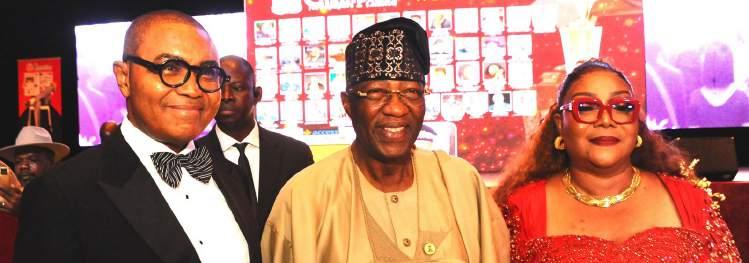
REWARDING EXCELLENCE...
FG: TO CURB NIGERIA'S INSECURITY, US’ ROLE MUST BE SUPPORTIVE, NOT DIRECT INTERVENTION
arrangement had been affected by changing political alignments in parts of the Sahel.
He said Nigeria was continuing diplomatic engagement with neighbouring countries to strengthen joint security responses, including efforts to deepen collaboration under the Accra Initiative, a regional security framework involving West African states.
According to him, discussions were ongoing to transform the Accra Initiative into a structure similar to the Multinational Joint Task Force in order to enhance coordinated operations against extremist groups.
Tuggar also stressed the importance of correctly framing the nature of insecurity in Nigeria and the wider region, cautioning against portraying the violence as purely religious.
While acknowledging that some attacks may have religious undertones, he said it was misleading to describe the situation as a Christian genocide.
“I’m not saying that the violence is not religious altogether. Some of it is motivated by religion, but it does not necessarily mean that there is a Christian genocide going on in Nigeria. That is false. It is incorrect,” he said.
He explained that insecurity in Nigeria involved a complex mix of insurgency, banditry, criminal violence and local conflicts, including disputes between farmers and herders.
He argued that oversimplifying the crisis as purely religious risked distorting the problem and undermining effective solutions.
The minister also linked regional instability partly to external geopolitical
developments, including the aftermath of the Libyan Civil War, which he said contributed to the proliferation of weapons and armed groups across the Sahel.
He added that extremist organisations displaced from other parts of the world were increasingly relocating to fragile regions in West Africa, further complicating security challenges.
Ghana’s Minister of Foreign Affairs, Samuel Ablakwa, said terrorism in the region should not be interpreted solely through a religious lens.
He cited the killing of Ghanaian citizens by militants in neighbouring Burkina Faso, noting that the attackers did not target victims based on their religion.
Ablakwa said drivers of insecurity in West Africa included youth unemployment, climate change and state collapse in parts of the Sahel.
He maintained that the regional bloc Economic Community of West African States (ECOWAS) remained resilient despite the withdrawal of Mali, Burkina Faso and Niger, adding that Ghana was strengthening its defence capacity through increased spending and new technological capabilities.
“These terrorists didn't ask them which religion they subscribed to. So, the point we are making is that we should be more nuanced…It is not just a simple, you know, religious matter,” he said, pointing out other drivers of violence including youth unemployment, climate change and state collapse.
“Terrorism taking root is a threat to the entire global community. The challenges we face today are direct
consequences of certain actions by the international community, from Afghanistan to Syria to Libya…. not having a postGaddafi plan, how we deal with the regime change agenda in Libya. We’ve had to bear the brunt.
“What is going on now in the Middle East is going to further aggravate the situation. As you chase out the terrorists and dismantle those cells which you don’t want close to you, they will have to relocate… Should we allow Africa to be their safe haven?’’ he asked.
In Northeast, Troops Resisted 3 ISWAP’s Moves to Overrun Military Location in 24hrs
Troops of the Joint Task Force North-East, Operation Hadin Kai (OPHK), have successfully repelled three separate attempts by fighters of the Islamic State West Africa Province (ISWAP) to overrun military positions within a 24-hour period in the Northeast.
The latest failed assault occurred at Bitta in Sector 1, where troops thwarted a terrorist infiltration attempt after earlier attacks at Banki and Azir Bridge had also been decisively repelled.
According to a statement by the Media Information Officer of Operation Hadin Kai, Lieutenant Colonel Sani Uba, the troops demonstrated superior combat readiness and tactical coordination in foiling the attempted attack on their position at Bitta.
He explained that the terrorists, apparently seeking to regain momentum after suffering recent battlefield
BALA MOHAMMED DEFECTS TO APC TOMORROW
2025 Ibadan PDP National Convention and the lingering leadership crisis in the party.
Pearse, who served on the 2023 Presidential Campaign Committee of Atiku Abubakar and Convener of the Reset Lagos PDP group, maintained that the party remained relevant despite the internal disputes.
“What is happening to the PDP is not as disastrous as
many people think. People in their minds are still with the party as the main opposition party.
“PDP is still the biggest threat to the ruling party and that is why the troubles are many. The loss of some governors and lawmakers to the ruling party and other political parties does not show we are finished at all,” he said.
Meanwhile, an embattled
founding member of the PDP, Sule Lamido, has called on party stakeholders to close ranks and rally behind the caretaker leadership structure associated with Nyesom Wike, warning that continued internal divisions could further weaken the opposition party.
Lamido made the appeal during a Ramadan Iftar with PDP leaders and stalwarts at his
setbacks, attempted to infiltrate the military location.
However, vigilant troops had anticipated the move and prepared a decisive counterstrategy.
As the insurgents advanced towards the position, the troops launched coordinated operations that disrupted the attackers’ formation while manoeuvring to cut off their possible withdrawal routes.
Confronted with overwhelming resistance and superior firepower, the terrorists were forced into a disorderly retreat after suffering significant losses.
"The failed infiltration at Bitta marked the third unsuccessful attempt by ISWAP fighters to breach military positions within 24 hours, following earlier attacks at Banki and Azir Bridge which were equally repelled by troops," Uba said.
The military said the repeated setbacks suffered by the insurgents reflect the sustained operational pressure being exerted by troops of Operation Hadin Kai across the theatre of operations.
According to the statement, “The pressure has significantly limited the terrorists’ freedom of movement and curtailed their ability to stage attacks or exploit propaganda narratives.
“Despite the repeated attempts, troops remain firmly in control of all their locations and continue to dominate the operational environment through high morale, effective coordination and sustained offensive actions.
The Military High Command, however, commended the troops for their gallantry, professionalism and resilience,
residence in Bamaina, Jigawa State, where he stressed the need for reconciliation and collective responsibility in stabilising the party.
The former governor said the PDP must prioritise unity and political survival rather than deepen internal rivalries that could diminish its relevance in Nigeria’s political landscape.
According to Lamido, the
urging them to maintain the current operational momentum in the ongoing fight against terrorism in the North-east.
HURIWA: Tinubu’s Security Strategy Failing, Terrorists Killing Soldiers, Civilians
The Human Rights Writers Association of Nigeria (HURIWA) has condemned the escalating wave of terrorists’attacks across the country, declaring that the continued killing of soldiers, security operatives and civilians was evidence that the current security strategy of the federal government has failed.
In a statement by the National Coordinator, Emmanuel Obwubiko, in Abuja, yesterday, the civil rights advocacy group said the recent spate of deadly attacks (from Plateau State to the North-East) demonstrated that Nigeria’s counterterrorism architecture has collapsed under the leadership of President Bola Tinubu, warning that the country risked descending further into chaos if urgent structural reforms were not implemented.
HURIWA had reacted to reports that some 20 security operatives and vigilantes were killed in an ambush by heavily armed bandits in Wanka and surrounding communities of the Garga axis in Kanam Local Government Area of Plateau State.
According to the Kanam Development Association, the victims included 12 security personnel, among them two senior military officers, as well as eight vigilante members who were assisting security
caretaker arrangement supported by Wike emerged out of necessity following the expiration of the tenure of the party’s National Working Committee.
He described the FCT minister as a politically calculating figure, who acted quickly to fill the leadership vacuum that threatened to paralyse the party.
“Wike is a very strategic politician. When the leadership
forces in protecting vulnerable communities.
The joint patrol team was reportedly travelling in two vehicles during a routine security operation covering the communities of Garga, Kyaram and Gyambau when hundreds of bandits ambushed them near Wanka at about 2:00 p.m. on Friday, resulting in a deadly exchange of gunfire that left many of the operatives dead.
HURIWA described the development as a “tragic and alarming national security failure,” noting that the killing of trained soldiers and senior military officers by non-state actors should serve as a serious red flag that the country’s counterterrorism strategy is no longer working.
The group further cited additional reports of targeted killings in Plateau State, including the brutal murder of traders travelling to a market in the Barikin Ladi axis.
In that incident, gunmen reportedly stopped vehicles at an improvised checkpoint and interrogated passengers about their identity before opening fire on those who identified themselves as Hausa traders.
HURIWA also referenced reports indicating that at least 65 Nigerian soldiers were killed in coordinated raids by insurgents belonging to the Islamic State West Africa Province in the North-East within a two-week period.
The insurgents reportedly overran several military bases in Borno State, killing dozens of soldiers and abducting hundreds of civilians while deploying sophisticated weapons including anti-aircraft machine guns and drones.
tenure ended and a vacuum appeared, he moved swiftly to establish a caretaker committee. At that moment, it became the only functional structure available.
“Some people may not agree with him politically, but that should not stop us from engaging him in the spirit of unity and brotherhood. The task before us now is reconciliation and rebuilding the party,” he said.
L-R: Mr. Uche Iheakanwa; Chairman of the occasion, Senator Gbenga Daniel and GMD/ Editor-in-Chief Champion Newspapers Ltd, Dr Mrs. Nwadiuto Iheakanwa, at the 2025 Champion Newspapers’ Awards held at Eko Hotels and Suites, Victoria Island, Lagos…weekend

FidELiTy BaNK MaNaGEMENT VisiTs Kasi CLOUd…
L-R: Regional Bank Head, Fidelity Bank Plc, Chetachi Okechukwu; CEO/Founder, Kasi Cloud, Johnson Agogbua; Managing Director/CEO, Fidelity Bank Plc, Nneka Onyeali-Ikpe, and Executive Director/Chief Operations & Informations Officer, Fidelity Bank Plc, Stanley Amuchie, when the management of bank visited Kasi Cloud on a tour of the data centre’s facility in Lagos... recently
Troops Bust Terrorists’ Tax Collection Scheme in Yobe as Insurgents’ Surrenders Hit
Linus aleke in abuja
The military high command has disclosed that troops of the Joint Task Force North East, Operation Hadin Kai, have uncovered a terrorists’ tax collection scheme in Yobe State, and also intercepted suspected logistics suppliers supporting insurgent activities.
According to the military,
troops arrested three suspected logistics suppliers in Kanama and apprehended a terrorist tax collector in Kafiya Village, both in Geidam Local Government Area of Yobe State.
The armed forces also revealed that a cumulative total of 122,843 insurgents have surrendered to troops under Operation Hadin Kai since the establishment of
Lagos First Aspirant Indicates Interest in GuberTicket
segun James
As the race for the coveted Lagos State governorship ticket on the platform of the All Progressives Congress (APC) commences, an aspirant, Mr. Samuel Mamuyon Ajose, has thrown his hat into the ring during a rally held at the Police College, Ikeja, in Lagos.
Ajose told the party faithful, who gathered in their thousands to witness the formal declaration that “it is with humility, immense gratitude, and an unshakeable conviction that I stand before you today.
“This is not just a declaration; it is a reaffirmation of our collective destiny, a call
to continued progress, and a pledge to build upon the solid foundation laid by generations of progressive governance in our beloved Lagos State.
“For decades, Lagos has been a beacon of hope, a land of opportunity, and a testament to what focused, visionary leadership can achieve. We have witnessed a remarkable transformation under the guidance of exceptional leaders, including our current President, the architect of modern Lagos, Asiwaju Bola Ahmed Tinubu. And it is precisely this spirit of continuity, coupled with a burning desire for innovation, that brings me before you today.
Unilever Marks IWD 2026 with Holistic Wellness Experience
Unilever Nigeria commemorated the 2026 International Women’s Day (IWD) with a thoughtfully curated experience themed “In Her Element.” Held, in Ikeja, Lagos, the event was thoughtfully curated to bridge the gap between professional excellence and personal wellbeing, proving that at Unilever, the “whole person” comes to work. The celebration moved beyond the traditional observance of the global day to focus on creating an environment where all women in the company could feel seen,
supported, and empowered. Through a blend of wellness activities, personal expression, and meaningful dialogue, the gathering encouraged participants to reconnect with their ambitions while celebrating the collective strength of women within the organisation.
To reinforce the importance of personal branding, every woman was treated to a professional makeup session, followed by a headshot session with a renowned photographer, capturing moments of confidence, participants were encouraged to embrace their individuality and power.
Operation Safe Corridor in 2015.
Providing an update on the activities of the troops, the Director of Defence
Media Operations, Major General Michael Onoja, said sustained military pressure had significantly restricted the movement of terrorists
and disrupted their logistical networks.
He noted that the successes recorded were achieved through close collaboration
with the Civilian Joint Task Force, local hunters, and other hybrid forces supporting ongoing counter-insurgency operations.
FAAN AVSEC, Others Arrest Bandits at Akure Airport
Chinedu Eze
The Federal Airports Authority of Nigeria (FAAN) has disclosed that four suspected bandits were yesterday apprehended within the vicinity of Akure Airport, Ondo State, following a coordinated security operation involving aviation and local security agencies.
The arrest followed a distress alert that suspicious individuals were sighted behind the airport
perimeter towards the Eleyewo community.
In response, security personnel comprising FAAN’s Aviation Security (AVSEC), the Nigerian Air Force (NAF), the Nigerian Army, the Nigeria Police Force (NPF), and other local security outfits immediately launched a joint search operation.
FAAN’s spokesman, Henry Agbebire, in a statement said during the operation, some individuals were seen attempting
to flee the area. Four suspects were eventually apprehended by the joint security team and have been handed over to the Nigeria Police Force Area Command for further interrogation.
“FAAN commends the swift collaboration among aviation security personnel, the military, the police, and local security groups, including Amotekun and community vigilantes, whose joint efforts led to the arrest.
“The incident further highlights
the importance of strengthening airport perimeter protection. Consequently, the Federal Government, through the Federal Ministry of Aviation and Aerospace Development, with the support of the Presidency under President Bola Ahmed Tinubu, GCFR, has accelerated the provision of modern perimeter fencing and enhanced security infrastructure at airports across the country,” the agency said
2027: Enough is Enough Nigeria Calls for Citizen Engagement
Goddy Egene
Enough is Enough (EiE) Nigeria yesterday marked its 16thanniversary, renewing its call for active citizen engagement as Nigeria approaches a critical period ahead of the 2027 general elections.
Executive Director,
Ufuoma Nnamdi-Udeh, in a video message, reflected on EiE’s sixteen-year journey, acknowledging the pressures facing civil society while reaffirming the organisation’s commitment to building a more accountable Nigeria.
Reflecting on 16 years of civic advocacy, she highlighted the tangible
impact of civic advocacy, citing wins in communities in Nasarawa, where citizens gained access to clean water through EiE’s #OfficeOfTheCitizen HelpDesk initiative, and young Nigerians nationwide, who have engaged their elected representatives through the shineyoureye.
org platform to resolve governance issues. At the same time, she acknowledged current operational pressures and a generation of young Nigerians who remain politically aware but increasingly disengaged from formal governance processes.
Ogun 2027: Omoluabi Group Begins Mobilisation for APC Candidates
James sowole in abeokuta
A political group in Ogun State, Omoluabi Movement, has reaffirmed its commitment to mobilising support for the re-election of President Bola Ahmed Tinubu, the senatorial ambition of Governor Dapo Abiodun, and the
governorship aspiration of Senator Solomon Adeola, ahead of the 2027 general election.
In a statement release in Abeokuta at the weekend through the state Director of Media and Publicity, Oluseun Joshua, the movement stated that it had intensified efforts to strengthen grassroots mobilisation for candidates of the All Progressives Congress (APC) across the state.
In the statement, the Convener of the Movement, Armstrong ‘Tope Akintunde, asserted that the mobilisation drive is aimed at expanding outreach and encouraging active political participation among members, which he said currently exceeds 30,000 across the three senatorial districts of the state. He said hat the group had commenced statewide mobilisation activities with the deployment of newly unveiled buses to enhance coordination and grassroots engagement.
Police Recruitment: Commissioner Decries Low South-east Participation
Linus aleke inabuja
The Federal Commissioner representing Enugu State at the Federal Character Commission (FCC), Hon. Peter Ogbonna Eze, has raised concerns over the low participation of youths from the South-east region in the ongoing recruitment of 50,000 Police Constables and other
personnel into security agencies.
Eze stressed the need for greater involvement from the region to ensure equitable representation in federal institutions, particularly within the nation’s security architecture.
The data released by the Police Service Commission (PSC) shows that Ebonyi, Anambra, Bayelsa, and Lagos States recorded the
lowest number of applications in the ongoing recruitment exercise, with 1,667, 1,739, 2,43,0 and 2,448 applicants respectively.
In contrast, Adamawa, Benue, Kadu,na and Borno States posted the highest numbers of applications, with 38,989, 34,511, 30,,397 and 24,009 applicants respectively.
Unveiling the statistics during
a press conference in Abuja, the Chairman of the Standing Committee on Police Matters at the Police Service Commission, DIG Taiwo Lakanu (rtd), said the figures were compiled after the commission granted a twoweek extension of the application period to enable states with low turnto out intensify sensitisation and mobilisation efforts.
MONDAYSPORTS
FIFA’s Disciplinary Hammer Falls on Nigeria, DR Congo
With Nigeria’s petition against DR Congo yet to be decided, world football governing body, FIFA, yesterday sanctioned both countries over disciplinary infractions that occurred during their 2026 FIFA World Cup qualifying playoffs in Morocco last November.
FIFA in its latest disciplinary overview released for the World Cup qualifiers, both the
RESULTS
Premier
1-1
Bayelsa 2-1 W’Wolves
Enyimba 2-0 Plateau
Kwara 0-0 Rangers
Tornadoes 0-0 K’Pillars
Remo Stars 2-1 Nasarawa
Shooting 3-2 Wikki
B’Insurance 2-1 Khalifa
Nigeria Football Federation (NFF) and the Congolese Football Association were found guilty of separate infractions during the match played on 16 November 2025.
FIFA stated that Nigeria was penalised for a breach relating to order and security at matches, specifically involving the throwing of objects by spectators. The offence falls under Article 17and Article 17.2.b of the FIFA Disciplinary Code, and the NFF was consequently fined 1,000 Swiss Francs.
On their part, the DR Congo federation received a heavier sanction after supporters were found to have used laser pointers or similar electronic devices during the match. The act contravenes Article 17.2.d of the FIFA Disciplinary Code, leading FIFA to impose a 5,000Swiss Francs fine on the Congolese body.
Shock Results Trail Week 7 of Nat Idowu U14 Football League
Week 7 of the Nathaniel IdowuAjegunle U-14 League produced drama and excitement, with Bright Future Football Academy shocking Ajegunle United Sporting Club 2–1 in a pulsating local derby.
Onyejiuwa Chidalu opened the scoring in the 15th minute after Ajegunle goalkeeper Anyanwu Divine spilled the ball. Ezike Favour doubled the lead in the 25th minute with a superbly taken free kick, giving Bright Future a two-goal cushion at halftime.
Ajegunle United fought back in the second half, mounting relentless pressure and eventually pulling one back through Joshua Vincent in the 36th minute. Despite dominating possession with 55% and registering six shots
on target compared to Bright Future’s four, Ajegunle could not find the equaliser. The victory lifted Bright Future to fourth place in the league standings, intensifying the battle for a top-four finish and a share of the N500,000 prize.
Elsewhere, Fortune Football Academy continued their impressive run with a commanding 4–0 win over Coal City Football Academy.
Gbemigbade Waris struck early in the 2nd minute, before Odeshola Odunayo added a brace in the 28th and 38th minutes. Lot Heritage also found the net in the 35th minute. Fortune dominated possession with 60% and registered eight shots on target, underlining their credentials as strong contenders for a top-four spot.
Another Green Eagles Player, Lawrence Orairo, Dies
Another ex-international and a member of the Green Eagles squad, Lawrence Orairo, is dead.
His death comes less than 48 hours after that of another ex-international, Henry Nwosu, was announced on Saturday.
And just like Nwosu, Orairo also played for New Nigerian Bank (NNB) Football Club of Benin City, Edo State.
NNB FC was originally known as Ethiope FC, which
was based in Sapele, Delta State.
Among other players of the NNB FC fame at the time were Bright Omokaro and Stephen Keshi.
According to available information, Orairo slumped on Sunday morning while on the field at Kirikiri area of Lagos State. He thereafter died.
Another versatile exinternational, Taiwo Oloyede, shared the news on a WhatsApp platform.
FIFA emphasised that disciplinary decisions are taken based on the circumstances of each case and may still be subject to appeal.
The governing body also noted that the document summarising the sanctions is intended mainly as information for the media, while the official legal decisions are communicated directly to the parties involved.
The Nigeria–DR Congo fixture was among several World Cup qualifying matches worldwide that attracted disciplinary scrutiny, with national associations and players sanctioned for a variety of offences ranging from crowd disturbances to player misconduct.
Nigeria and DR
Akpata Excited by S’Africa’s Acceptance to Play in Five-nation T-20 Tournament in Lagos
Duro Ikhazuagbe
South Africa, one of the powerhouses of cricket worldwide, will play in the five-nation T-20 Invitational Tournament scheduled to begin in Lagos on Wednesday, March 18 through March 29.
The other nations also listed for the tournament include; Zimbabwe, Rwanda, Ghana and Nigeria.
Speaking about the fivenation T-20 invitational tournament at the weekend, President of the Nigeria Cricket Federation (NCF), Uyi Akpata, welcomed the South Africans and Zimbabweans with excitement.
“For the time, a team from a Test-Member nation will be taking part in a tournament in Nigeria. For us, this calls for celebrations. It shows the remarkable level of growth that our cricket has attained.
Akpata who admitted also that it was a big leap for Nigeria, stressed that it
was a privilege because the South Africans hardly go to other African countries for tournament like this.
“For the South Africans to agree to participate in this tournament for the first time in Nigeria shows the level of confidence the international community has in the country and an eloquent endorsement of what we at the NCF have been doing of late,” remarked Dr Uyi Akpata who late last year was re-elected for another term as NCF President.
He however promised that the Nigerian ladies will not take this chance to play South Africa and Zimbabwe for granted.
Akpata insisted: “Our the girls are good and ready to go. They will be competing against players of their age grade, from some of the best cricket-playing nations on the continent.”
The NCF president insisted that the bulk of players in the senior team graduated from
the U17 squad that finished sixth at the World Cup.
“When they finished sixth at the U-17 World Cup, one of our girls, emerged as the MVP, which shows how good the performances of our cricketers are.”
He commended Lotus Bank for coming to partner the NCF on the five-nation T2 Invitational Tournament.
“Our sponsors have been outstanding in terms of this tournament. I must single out Lotus Bank in particular for the effort to see that the tournament is successful . They have been outstanding and we appreciate their commitment,” concludes Akpata.
Already, finishing touches are been put to the two venues to host the tournament. The Tafawa Balewa Square (TBS) Cricket Oval and UNILAG Cricket Oval are wearing new looks with grounds men working round the clock to make the pitches lush green.
The five-nation T2
Invitational Tournament is one of the many activities lined up by the NCF board to build on the lofty achievements attained since coming to office. Amongst several other projects, the NCF under the Uyi Akpata led board has initiated development programmes all over the country. Development officers are working round the clock in the zones to ensure the game of cricket gets to the grassroots in the country.
Nigeria’s D’Tigress Stumble as World No. 3 France Pick Ticket to Berlin
Duro Ikhazuagbe
Already qualified Nigeria’s D’Tigress lost narrowly to hosts and world number 3 team France 93-86 in their fourth game of the ongoing 2026 FIBA Women’s World Cup Qualifiers in Lyon-Villeurbanne.
The seven-time Afrobasket champions lost the match in the first half as France raced to 57 points (29-21, 28-24) against the Nigerian ladies’ 45. D’Tigress
however tried the catch up game, winning the third quarter by six points (21-15). The French team closed up the game in the final fourth, winning by just one point (21-20).
The damage done in the first two quarters ensured that the World Number 3 ranked team smiled to join other teams that have booked their passage to Berlin, Germany for the World Cup proper in September.
The Nigerian ladies who
have already booked their ticket to the World Cup as African champions will on Tuesday play Germany in their final Group A fixture.
The French ladies who were the first team to secure their place via the FIBA Women’s Basketball World Cup 2026 Qualifying Tournaments, will join host nation Germany, along with 2025 Continental champions Australia, Belgium, Nigeria and USA at the main
event in September.
Earlier in the qualifiers, Nigeria defeated Colombia 70-37 and also ran away with 101-84 against Philippines. They however also lost to South Korea 70-66 to stay fourth in the Group A standings on six points. France now lead the group on 8 points from four wins in four games. Germany and South Korea are tied on same 7 points for second and third positions respectively.
Congo have received sanctions from FIFA for various infractions during their final World Cup African Playoff in Morocco last November
Uyi Akpata
WHO IS A PARTY MEMBER?
of a certain chieftain who has been helping them over the years with food, rent, school fees, hospital bills and wedding expenses. Which politician a community decides to support is determined not by his ideology or programs, but “what have you done for us here all these years? How many people have you helped to get a job?”
Is a political party member the one who displays a party flag in front of his house? Party flags and mottos displayed in people’s homes, shops, stalls and on their bicycles, motorcycles and Keke Napeps and even on the tailboards of tipper trucks and trailers may indicate which party they support, but not always. Quite often, it merely tells you who gave him the Keke. A man can paste party colours in front of his house because he knows a certain party chieftain regularly passes by, so that his house will not be overlooked in the sharing of palliatives.
Is a party member here the one who attends a party meeting? Attending a party meeting is not evidence of support for a political party. Children and youngsters, especially, love spectacle. They cannot resist attending any event where there is singing, dancing and a lot of colour, not to mention where free food and drinks are distributed. Youngsters also love to collect souvenir T-shirts, face caps, calendars, biros, buckets, cups and kettles. If you see a youngster wearing a T-shirt with party colours or even spotting a face cap with a party’s name, it is not evidence of support for it. The day he stumbles into a similar gathering by a rival political party, he will again jump in, collect as many souvenirs as he can and again wear them as he walks around the locality.
Nobody asks any questions; people know that it is all awoof.
Is party member the one who attends a party rally and shouts himself hoarse with party slogans? In Kaduna in 1992, I attended the ceremony on Alkali Road where NRC presidential aspirant Alhaji Umaru Shinkafi opened his Choice 92 campaign office. A group of five elderly women arrived early at the event and occupied front row seats. They were very enthusiastic and they jumped up and danced anytime Marafan Sokoto said anything, quite often before he even finished the sentence. When the occasion ended, I was driving out in my jalopy Fiat car when those same women asked me for a ride. They begged me to drop them at Unguwar Rimi, and I soon saw that they were going to the house of another presidential aspirant, Alhaji Lema Jibrilu. As soon as I stopped the car, they ran out, charged into the house and began shouting praises of Alhaji Lema at the top of their voices. It was an eye opener; I muttered to myself, “So this is the stuff political supporters are made of.”
In 2003 I attended the launch of a state governor’s reelection campaign. I was impressed by the size and enthusiasm of the crowd at the rally. When the rally ended, I entered the car of the State Assembly’s Majority Leader, and I congratulated him on the success of the rally. He looked at me with tired eyes and said, “It is not difficult to organize this kind of event. A week ago, I sent a message to all bus owners in my hometown that they should not go anywhere because I will hire them for the whole day. I then told people at the motor park that whoever enters a bus, it will take him to the state capital and bring him back after the
PINK WAS NEVER THE POINT
cultures. It does not account for a woman with no formal credit history — not because she has been irresponsible, but because she has been responsible in a system that did not record her. It does not account for the possibility that her pride in never having borrowed is itself a symptom of exclusion, dressed up as virtue.
The woman who has never borrowed is not a puzzle to be solved. She is a market waiting to be served.
My guest built something remarkable without you. But imagine what she might have built if, ten years ago, a bank had reached her on her own terms — products calibrated to how she actually builds, not how the system assumed she should. What if her natural aversion to default were treated as an asset: faster repayment, lower risk, no penalties for early settlement?
Different, Not Deficient
I am not saying women should borrow more. The caution women bring to capital is not pathology — in many environments, it is wisdom. The 2008 financial crisis was in no small part a failure of exactly the leveraged confidence I described admiringly above. The
rally, that food will be distributed inside the bus and he will also get N200 upon return. Flags and posters were given to them in the bus. Whatever number of buses you station there, will be filled to the brim.” These were the “members” zealously shouting at the rally. Is party member the one who registers at his ward party office? Appearing at a party office to register your membership and collect a membership card may look like a serious matter in some countries, but not here in Nigeria. If the party office is within walking distance from your house, you just walk in and register; the card comes in handy when a party chieftain is sharing palliatives. Party leaders at the ward level reserve early membership cards for big fish who may come into the party at a later date. A state governor who recently defected to APC was given card number 0001. You mean, there were no members in the party all these years before this governor came in?
Speaker Tajudeen Abbas, have you heard about this youth activist in Jos, during the Third Republic presidential campaigns, who was reported by a newspaper to be the one who ushered seven different presidential aspirants, singing and drumming, from Jos Airport all the way into the town? Four of them were NRC aspirants and the other three were SDP aspirants, so which party will you say he belonged to? The guy had a dedicated team of “supporters,” complete with drums and music bands. They had the huge flags of both parties, and they expertly sang the anthems of both parties.
Is party member the one who stands for election on the platform of a political party?
Years ago, before many changes were made
to election rules, there was this House of Representatives member who stood for renomination at his party’s primaries and lost. He sat all day in his house, close to a nervous breakdown. So his very energetic aide offered to get for him another party’s platform. At 2’oclock in the night, the aide went and knocked at the door of the chairman of a small brief case political party. The man asked for two million naira. The money was delivered to him at 3am, so he went into his house, got dressed, and they walked to the party office, where he summarily issued a membership card, then filled, signed and stamped the nomination forms for the Honourable Member. Neat; no primaries, nothing.
House of Representatives, you legislated a stiff two years’ jail and ten million naira fine on anyone who belongs to more than one political party at a time. Are you serious? How do you know when a man is hiding ten different party membership cards in his drawer? All the people who did multiple voter registration, have you caught them? After one exercise, INEC said two million people did double registration. Computer server picked them out by their fingerprints, but that INEC had no capacity to apprehend or prosecute all of them. All the people with multiple driver’s licenses in case Road Safety Corps confiscates one, have you apprehended them? What about the people with several passports, including the recently revealed one where a person that does not exist “obtained” an international passport? There is this thing that judges say, that “a court does not make an order in vain.” Why should we fill our statute books with “crimes” for which no one will ever be brought to book?

AMCON debtor list had no pink on it.
The female growth model — patient, organic, equity-funded, relationships-first — is different from the dominant model. Different, not deficient. And the institutions you now lead have for decades treated that difference as a credit risk rather than a business opportunity.
The women building quietly — accumulating slowly, reinvesting patiently, growing without leverage because leverage was never offered in a form they could trust — are absent from
your default rate statistics because they were never in your loan book. They are not in your portfolio because your portfolio was not designed to hold them.
You can change that. You are, now, the person with the power to change it. Not by imposing a model on women who have built something real. But by asking, seriously, what credit products would look like if they were designed around the way women actually build — with cash flow, not title deeds, as
the measure of creditworthiness. That is a different bank from the one you inherited. Whether you build it is the question I am leaving with you.
Happy Women’s Day, a little late. And thank you for swivelling in those seats.
•Kemi Adeosun is a former Minister of Finance of the Federal Republic of Nigeria and former Commissioner for Finance of Ogun State. She writes from Lagos.
OPEN FOR BUSINESS, ROOTED IN PARTNERSHIP: PRESIDENT TINUBU’S HISTORIC UK STATE VISIT
back than with any other country, shaped by our shared colonial history. So much of what defines our systems today remains a British legacy – from our official language to the legal system and civil service traditions. But while these historical ties are valuable, this visit is not about looking back. It is about forging ahead: strengthening a mutually beneficial partnership anchored in trade, investment, and respect.
The world keeps changing, and bilateral relations must evolve with it. Our main areas of shared interest today span trade, security, anti-corruption, environmental sustainability, and humanitarian assistance.
Among President Tinubu's most consistent messages – at home and abroad – is that Nigeria is open for business. Equally important is the story of how far Nigeria has come since he launched an unprecedented reform agenda upon taking office in May 2023: fiscal and business environment reforms
that have stabilised the currency, significantly reduced inflation, and more. His meetings with British business leaders will reinforce this message – the reforms are real, the trajectory is upward, and the opportunities are significant.
Nigeria sits on Africa's largest gas reserves, a resource whose strategic value has grown sharply given today's volatile geopolitical climate. The UK is itself a petroleum economy, making it a natural partner at the intersection of global energy security and the clean energy transition. There are abundant opportunities for both countries to align on financing, technology, and policy frameworks.
President Tinubu will also meet with the Nigerian diaspora in the UK – one of the world's largest and most vibrant, represented across every sphere of British society, including at the highest levels of its politics. Nigerians in the diaspora are renowned for their remittances, which have been known to annually outpace
foreign direct investment. But they are far more than remittance senders. They are strategic partners in Nigeria's development, and our most effective bridges to the world.
On security, Nigeria and the UK share converging interests. Last July, we held our third Security and Defence Partnership Dialogue in London. This visit offers a further opportunity to translate existing frameworks into operational results, as Nigeria intensifies efforts to decisively address the ongoing threats of terrorism, banditry, kidnapping, and farmer-herder conflicts.
For President Tinubu, every foreign engagement serves an overarching domestic purpose: advancing the Renewed Hope agenda, with its eight ambitious pillars, and the ultimate goal of a one-trillion-dollar economy by 2030. This will be his fourth visit to a leading European economy, after an official visit to Germany in November 2023, and state visits to France in November
2024 and Turkey in January 2026. Foreign engagement under President Tinubu is purposeful, and it shows.
When Nigeria leads, Africa pays attention. Our continental role spans digital trade advocacy, securing the Gulf of Guinea, and providing sea-lift services to African Union peacekeeping and humanitarian missions. Just four months ago, Nigeria led the successful effort that helped sustain democracy in the Republic of Benin. Nigeria's standing is high and rising – and this state visit will further consolidate our place in the world. The work, of course, does not end when the plane lands. Follow-through is everything. Nigeria is committed to ensuring that every commitment made and every connection forged during this visit translates into concrete outcomes in the months and years ahead.
•Mohammed Idris, fnipr, is Nigeria’s Minister of Information and National Orientation.
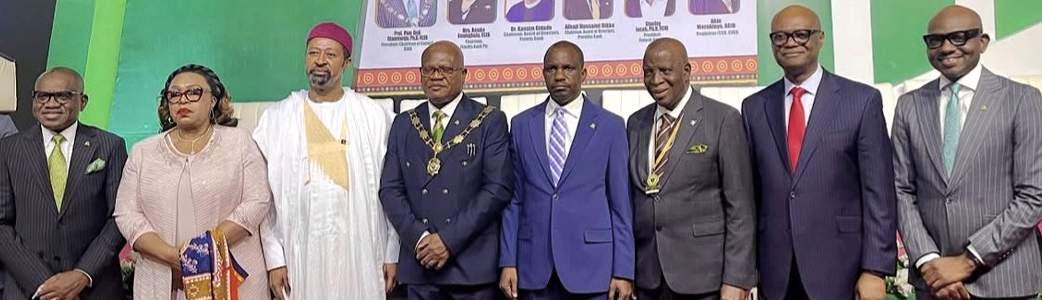
2026 CIBN STREAM 1 CHARTERED BANKERS INDUCTION...
L-R: National Treasurer, CIBN, Dr. Peter Ashade, FCIB, 2nd Vice President, CIBN, Dr. Mojisola Asieru-Sweet, FCIB,

TWho is a Party Member?
he latter-day, afterthought, logicchallenged, enforcement-bereft amendment to the Electoral Act 2026 passed by the House of Representatives on Wednesday last week, which bars anyone from belonging to more than one political party at a time, set me thinking as to exactly who is a member of a political party in Nigeria. Three new subsections introduced to Section 77 of the Electoral Act 2026 provide that a person who knowingly registers in more than one political party at the same time commits an offence and is liable on conviction to a fine of ten million naira or
two years’ imprisonment or both. In Nigeria here, how do we determine
who is a member of a political party? We see opinion polls in some countries breaking down respondents according to party membership, which helps to explain their thinking. If you were to conduct a proper opinion poll in Nigeria, assuming you get an overall result, will you be able to break it down and say, so-so percent of APC members said this, so-so percent of PDP members said this, while so-so percent of Independents said this? Who qualifies to be called a party member in Nigeria? Is he the one who says he supports a political party? Which political party a Nigerian says he supports, depends
on where he is at present and who he is with. A Nigerian has a very keen sense of audience. In the days when there was keen competition between political parties, most city wards were easily identified with one political tendency or another. One can make that out as soon as he enters a ward, from the flags flying on top of people’s houses to the posters pasted on walls. The governing adage here is, when in Rome, do as the Romans do. People in a city ward support a particular political party most likely because

Pink Was Never the Point
An open letter to Nigeria’s female bank MDs
International Women’s Day falls on March 8th. My birthday is March 9th. So it is a day I typically take time to reflect. March 9th is the day those corporate headshots of women are tidied away and we go back to how life was on March 7th — but I am a year older and my thinking a little clearer.
This year I want to use that clarity to write a letter. Not a general one about how far women in finance have come — though we have, and it deserves a moment. A specific letter, to specific women: the managing directors of Nigeria’s commercial banks, many of whom are now women.
The first thing I want to do is thank you for
killing the pink accounts. The She-accounts, HerMoney branding, the products that were essentially existing instruments with a different colour scheme. You understood, I hope, that slapping pink on a broken system does not make it female-friendly. It makes it condescending.
But killing the pink account was the easy part. Here is the harder question.
What She Said With Pride
I have started recording conversations for Nidacity’s podcast — talking to people doing interesting things in Nigeria’s economy,
Open for Business, Rooted in Partnership: President Tinubu’s Historic UK State Visit
The last time a Nigerian leader paid a state visit to the United Kingdom, seventy percent of Nigeria's current population were not yet born. That 1989 visit by military President Ibrahim Babangida went as expected – a grand event hosted by Queen Elizabeth and Prince Philip.
Thirty-seven years later – and sixty-six years after Nigeria gained its independence from the UK – it has fallen upon President Tinubu to be received at Windsor Castle, by King Charles and Queen Camilla. He will be the first Nigerian leader hosted at Windsor Castle; all four previous leaders were received by the late Queen at Buckingham Palace.
President Tinubu arrives as the leader of Africa's largest economy and one of the UK's most important trading and commercial partners on the continent. Under his watch, the Nigeria-UK relationship has deepened considerably; in November 2024, both countries agreed to elevate ties to the level of a Strategic Partnership, anchored on six pillars:
growth and jobs; enhanced mutual national security; migration, justice and home affairs; strengthening international collaboration; a modernised development partnership; and sustained people-to-people links. Nigeria's ties with the UK stretch further
Chairman, Polaris Bank, Dr. Kassim Gidado, President and Chairman of Council, CIBN, Prof. Pius Deji
Olanrewaju, Ph.D, FCIB, 1st Vice President, CIBN, Dr. Dele Alabi, FCIB, Past President, CIBN, Mr. Femi Ekundayo, FCIB, ED Risk, Fidelity Bank, Mr. Kelvin Ugwuoke, HCIB, and the Registrar/ CEO, CIBN, Akin Morakinyo, ACIB at the CIBN 2026 Stream 1 Chartered Bankers Induction and Prize Awards Day held in Lagos on Saturday
INEC Chairman, Amupitan