








Mentions resolution of ASUU quagmire, N2.55bn menstrual health campaign Says 240 electric tricycles distributed, N4.6bn for skills training centres
Emmanuel Addeh in Abuja
Minister of Education, Dr. Tunji Alausa, at the weekend released the ministry of Education's quarterly overview of programmes, policies and financial incentives under his supervision, having been appointed on October 23, 2024.
In a significant move to overhaul the nation’s educational infrastructure and address the perennial challenges, the ministry stressed that it is executing the Nigerian Education Sector Renewed Initiative (NESRI), a six-point agenda designed to transition the country from a resource-based to a knowledgebased economy.
The report stressed that it is marking 14 months of aggressive reforms aimed at ensuring every Nigerian child has access to quality education in a safe environment, regardless of their location.
One of the most notable achievements for industrial harmony, according to the report, is the formalisation of the Academic Staff Union of Universities (ASUU) and FGN
Agreement, which took effect on January 1, 2026.
After years of recurring strikes, the new agreement, it said, introduces a 40 per cent upward review of academic emoluments and a revised salary structure.
The deal also established a new professional cadre allowance for full-time professors and readers. It said the one for polytechnics was being drawn up.
To ensure these investments are managed with transparency, the ministry noted that it has launched the Federal Tertiary Institutions Governance Transparency Portal (FTIGTP). This platform, it said, tracks key performance and funding metrics across the board, with 47 out of 67 Federal Universities and 35 out of 39 Polytechnics already onboarded.
Besides, the Alausa-led ministry said it is making a massive bet on technology to bridge learning gaps. Through the Digitisation of Public Schools Initiative, it noted that over 1,000 smart boards have been deployed to Federal and State Basic Education schools nationwide to equip students with future-ready skills.
In the same vein, the government pointed out that it is also prioritising the welfare and capacity of teachers. The launch of Edurevamp, a mobile-based professional development platform, it said, has already seen 37,000 teachers registered, with 18,000 fully enrolled to receive digital skills training and stipends.
Furthermore, a partnership with the UK-funded PLANE programme and telecommunication giants MTN and Airtel will provide 8,000 teachers across the six geopolitical zones with zero-rated internet access to facilitate modern instruction.
In line with President Bola Ahmed Tinubu’s "Renewed Hope" agenda, the ministry emphasised that it has rolled out several social intervention programmes. A landmark N2.55 billion Menstrual Health campaign, titled "Flow with Confidence," was launched in Gombe to deliver over 1 million pads to 370,000 girls in rural areas, aimed at reducing school absenteeism, it said.
The ministry stated that it has also secured a massive scholarship
initiative through the Dangote Foundation, which aims to provide scholarships to 3 million young Nigerians. This programme, it said, specifically targets 170,000 young girls and over 1 million students in Science, Technology, Engineering, Mathematics, and Medical Sciences (STEMM).
To ease the cost of living for students on campus, the education ministry revealed that it distributed 240 electric tricycles and 12 solarpowered charging stations to 12 universities across the geopolitical zones. The ministry projects that this move will reduce campus transportation costs by up to 70 per cent.
Addressing the security concerns that have plagued schools in recent years, Alausa said that the ministry partnered with the National Security and Civil Defence Corp (NSCDC) to unveil the School Safety Portal. The system, it said, currently has 15,000 schools registered and has successfully geolocated 141,000 schools to provide real-time tracking and security support.
On the vocational front, the Technical and Vocational Education
and Training (TVET) programme has seen the disbursement of N2.97 billion in stipends to 160,000 young Nigerians, supported by an additional N4.6 billion for skills training centres. To ensure accountability, the ministry stated that it has enforced Biometric Attendance Verification at all TVET centres to monitor disbursements.
Similarly, the ministry of education stated that it is also looking beyond Nigerian borders to enhance educational quality.
A landmark Memorandum of Understanding (MoU), it stressed, was signed between the University of Lagos (UNILAG) and the University of Birmingham.
Under Nigeria’s Transnational Education framework, the UK university will offer both postgraduate and undergraduate education in STEMM disciplines, it added.
Additionally, Alausa said he recently visited Singapore to discuss a bilateral agreement focused on training leaders for technical schools and adopting global excellence models for Nigeria’s TVET institutions.
The ministry stated that the
focus remains on the NESRI sixpoint agenda, with the National Council on Education (NCE) recently reaffirming English as the language of instruction while suspending the previous National Language Policy to streamline the curriculum.
“Dr Alausa held a roundtable discussion with the CBN and VCs of Federal Universities to formally transition documentation, responsibility and ownership of CBN-supported intervention education projects, to the benefitting institutions. In order to maintain institutional continuity, proper asset stewardship and long-term, value for public investment in education.
“FGN and BOI launched a N50 million grant initiative to provide mentorship and capacity building opportunities to students in tertiary education. 30,639 registrations received since launch,” part of the document stated.
Peter Uzoho
The Nigerian National Petroleum Company Limited (NNPC) has signed a tripartite Memorandum of Understanding (MoU) with China Gas Holdings Limited and Peiyang Chemical Singapore PTE Ltd. (PCCS), establishing a framework for structured collaboration across key segments of Nigeria's natural gas value chain.
Managing Director of PCCS, Tim Tian, disclosed this in a statement issued yesterday.
He said the MoU was signed at NNPC's headquarters in Abuja in the presence of its
Group Chief Executive Officer, Bayo Ojulari; the Executive Vice President for Gas, Power & New Energy, Mr. Olalekan Ogunleye; and the General Manager of NNPC Gas & Power Investment Services, Mr. Ibrahim Hamza.
The agreement, according to the statement, covers liquefied natural gas development, spanning flare-gas-to-liquefied natural gas (LNG), floating LNG, and onshore LNG initiatives, alongside gas-fired power generation and industrial facilities utilising domestic gas feedstock.
The statement added that the MoU serves as the
primary vehicle to align international technical expertise with Nigeria’s domestic energy priorities, providing a formalised governance structure to transition identified opportunities from technical feasibility through to commercial operations.
“Our role is to combine proven modular engineering with locally grounded commercial structures that make projects investible and deliverable”, the PCCS MD said, adding that fast-tracking scalable gas infrastructure will be critical to converting resources into jobs, reliable power and industrial growth.
The Nigeria Labour Congress (NLC) has urged the federal government to ensure a peoplecentred power sector roadmap that will guarantee steady power supply to households and businesses at affordable cost.
It called for National Stakeholders' Summit that will include labour unions, manufacturers, and genuine experts; to draft a Power Sector Roadmap that prioritises affordable and stable electricity for all.
It also demanded a reversal of the privatisation model and the enthronement of a new power entity that ensure service-reflective tariffs, not costreflective extortion and public investment in generation and transmission infrastructure.
"The Nigerian people cannot continue to pay for darkness. The NLC stands ready to work with the masses and within our networks to resist any further exploitation in the name of electricity reform. When Power is not available, it cannot be affordable. Power sector must be
returned to the people," it said.
While acknowledging the new Electricity Act which devolves power to the states, the NLC warned that decentralisation alone is not a magic wand. Without a clear, national, and worker-centred roadmap, the bottlenecks will persist.
The labour movement lamented the poor state of the country's power sector, saying instead of remedying the situation, the federal government is forcing Nigerians to pay for darkness. It called for the immediate
Tiam said the signing was followed by an extensive programme of engagement by the China Gas and PCCS delegation across Nigeria's energy sector.
He said discussions with Heirs Energies Limited examined downstream compressed natural gas (CNG) and LNG opportunities, including a 15 million standard cubic feet per day (15MMSCFD) supply discussion and project delivery considerations, while separate meetings with refinery leadership focused on the integration of gas supply into refining and industrial operations.
The statement noted further that the delegation also held discussions with the Ministry of Finance Incorporated (MOFI) regarding financing structures relevant to large-scale gas infrastructure development.
Alongside these meetings, PCCS said the delegation conducted site inspections at operational facilities, including CNG mother stations, the NGML-NIPCO refuelling station at the Port of Lagos, and logistics bases in Shagamu operating CNG and LNGpowered heavy-duty fleets.
The statement added the visits provided direct operational insight into
compression systems, daily throughput levels, fleet utilisation, and transport-linked gas demand.
"With the framework now in place, the parties will proceed with technical evaluations and structured commercial discussions in line with the agreed scope", PCCS said.
The company said it had a proven track record in developing and operating refineries, LNG/CNG plants, and gas-to-power projects across Africa and Southeast Asia, facilitating the bridge between international technical standards and localised project delivery.
reversal of the power sector privatisation and to return the state as the primary driver of the power sector.
After a decade of privatisation which it alleged has turned into decade of darkness, the Labour movement said it is demanding a new power roadmap.
We once again sound the alarm on the deplorable state of the nation's electricity sector.
A statement by the NLC president Joe Ajaero said the failed privatisation experiment
has plunged Nigerian workers, women, youth, and industries into deeper energy poverty as the national grid continues to collapse while DISCOs persistently reject Loads from the Transmission Company.
Ajaero who quoted his presentation at the National Union of Electricity Employees’ (NUEE) Annual Conference of Women and Youth in Abuja on Friday called for an immediate and comprehensive review of the entire sector.
He lamented that over a decade after the much-
celebrated privatisation of the Power Sector, electricity generation remains comically stagnant at between 4,000 and 5,000 Megawatts; the exact same level as the pre-privatisation era. He said that this remains shameful and demonstrates how stagnated our nation has become.
"Instead of progress, we witness regression. Instead of light, we have darkness. The national grid collapses with the frequency of a faulty generator, sometimes plunging the entire nation into blackout.
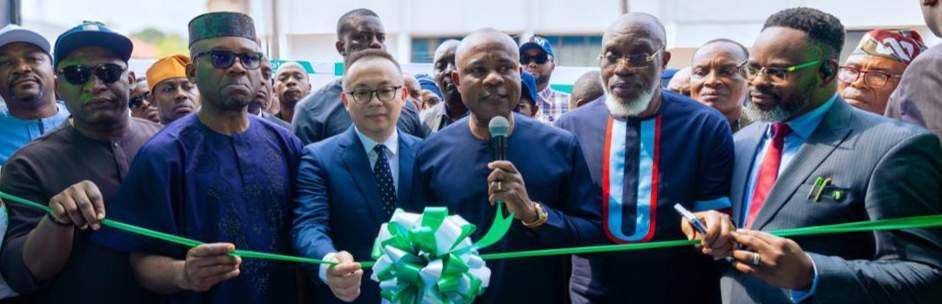
Haier VP: we’ll produce 200,000 units of ICT annually, create 100 jobs Minister: it’s boost to FG’s quest for $1 trillion economy Mbah lauds Tinubu's economic policies
Emmanuel Ugwu-Nwogo in Enugu
Governor Peter Mbah of Enugu State, on Saturday, inaugurated Enugu Haier Factory, a Foreign Direct Investment (FDI) by Chinese Haier Global Business, in partnership with the state government.
The Mbah administration provided the land for the factory and built the massive structures, among others, while also placing offtake orders of over 25,000 all-in-one desktops and 300,000 tablets to power the state’s 260 Smart Green Schools and encourage the investment.
The investment followed the state’s other FDI patterns, such as the ongoing electric car
Vice President of Haier Group, Sun Yongle, said the FDI worth $20 million would produce smart phones, tablets, computers, smart boards, Android televisions, education and health technologies, and renewable energy solutions for electricity, agriculture, and transportation.
assembly plant construction at Owo by Stallion Group and the Nortra Tractor Assembly Plant and Service Centre, Enugu, an investment by ODK Group of Denmark, which is set for commissioning.
Inaugurating the Haier factory in the heart of Enugu’s capital city, Mbah said the investment aligned perfectly with the administration’s commitment to repositioning the state as a premier destination for investment, industry, and knowledge-driven growth,
and its push for a $30 billion economy from $4.4 billion.
The governor stated,
“This partnership represents the convergence of vision, innovation, and opportunity – to generate Made in Enugu technologies that compete globally, while enabling us to support key local sector developments.
“It means that the devices empowering our students and that support critical industries will no longer be imported. That is strategic. It reduces
Onyebuchi
As part of its operational strategies, Nigeria Social Insurance Trust Fund (NSITF) said it was forging closer collaboration with agencies, such as Federal Inland Revenue Service (FIRS) and Corporate Affairs Commission (CAC), to boost contributions to the fund.
costs. It ensures sustainability. And most importantly, it builds local capacity.”
Mbah added that the factory would also serve as a practical training platform for the state’s vocational and technical institutions; generate employment; facilitate technology transfer; stimulate complementary small and medium-scale enterprises and also foster a technology ecosystem in the state.
He hailed President Bola Tinubu’s macro policies, which he said had helped to a great degree in attracting a steady inflow of FDIs.
“The Enugu Haier Factory has a designed production capacity of 200,000 units per year, focusing on ICT products, medical equipment, and new energy products. When fully completed, the factory will employ more than 100 local workers, including our sales and service teams, and we will have over 200 employees in total.
“But this factory marks only the first stage of our investment in Enugu State. We are also discussing cooperation in agriculture, mining, and transportation, including sesame, coal, and tricycles. We expect our total investment in Enugu State to exceed $30 million.
A statement signed by Deputy-General Manager, Corporate Affairs, Alex Mede, said the new strategy was disclosed by Managing Director of NSITF, Barrister Oluwaseun Faleye, at a top management meeting of the organisation in Abuja.
The meeting was convened to assess the fund’s performance in 2025 and chart a policy direction for
NSITF also said it planned to implement a new reform agenda aimed at strengthening Nigeria’s social security system.
improved service delivery and financial sustainability in the new year.
It said the meeting reviewed the performances of regional and branch offices, and those of key departments and proffered solutions to identified issues.
Some of the new initiatives included raising of special teams to address abandoned files, improving new registrations, and rationalising cost-collection ratios.
Others were developing stronger legal enforcement against recalcitrant employers, better deployment of staff and resources, performancebased incentives, and closer collaboration with stakeholders.
The management further emphasised digital transformation, improved claims processing, stronger governance, and enhanced stakeholder engagement, among others.
“This steady inflow of FDIs is an indication that the macro pressures that had hitherto prevailed have eased. We have seen the naira strengthen, our foreign reserves grow exceedingly, and a downward trajectory in inflationary trends,” he emphasised.
Mbah called on investors from across Nigeria and beyond to follow the Haier example, stressing that Enugu is ready and open for business.
“Our goal is for our products to be not only Made in Enugu, but also Designed in Enugu, with management and technical teams mainly composed of local professionals.”
Yongle said Haier would establish a local Research and Development Centre and a training centre to provide free training and internship opportunities for students in Enugu State. He commended Mbah for his support and leadership.
Alex Enumah in Abuja
Nigeria Governors Forum (NGF), Attorneys-General of the 36 states of the federation, and Hague Institute for Innovation of Law (HiiL) have set a bold agenda for justice reform in Nigeria. The agenda was put in place during a high-level Stakeholder
Dialogue and Sensitisation Workshop on People-Centred Justice (PCJ), which held Friday in Abuja.
The workshop deliberated on evidence-based strategies for building an inclusive, affordable, and community-driven justice system.
Besides, the workshop
signalled the beginning of a national movement towards systemic transformation in justice delivery.
According to participants, the transformation is anchored in the recognition that justice is not merely a legal framework, but a cornerstone of national development, peace-building,
and public trust.
Speaking at the occasion, Director-General of NGF, Abdulateef Shittu, assured of the forum's partnership with the states, urging the states' AGs to take knowledge acquired at the workshop back home to ensure smooth implementation of a people-centred justice system.
The vice president of Haier Group said the factory would produce 200,000 units of various product lines annually, while also employing about 100 people for a start.
Yongle added that Haier Group was working on a $30 million investment in the state, expanding to mining, agriculture, among others.
He stated, “Haier Group is the world’s largest manufacturer of appliances, with global revenue exceeding $60 billion in 2025. We own a portfolio of international brands including GE Appliances, Mabe, Candy, Sanyo Aqua, Hoover, and Fisher & Paykel.
Commissioner for Education, Professor Ndubueze Mbah, commended Mbah for making the “Made in Enugu” dream a reality, citing the speedy completion of the factory in 18 months to back his drive for skills-based education in Enugu State.
Minister of Innovation, Science and Technology, Dr. Kingsley Udeh, restated the federal government’s support for innovation, industrialisation, and technical education as represented by ventures like the Enugu State government and Haier partnership.
Centre for the Promotion of Private Enterprise (CPPE) has projected that Nigerian Micro, Small and Medium Enterprises (MSMEs) are losing between N5 trillion and N10 trillion annually to employee corruption and occupational fraud.
The projection was made yesterday by Chief Executive
Officer of CPPE, Dr. Muda Yusuf, in a policy brief titled, "Employee Corruption and Occupational Fraud in Nigeria's MSMEs Sector." Yusuf stated that beyond the visible pressures of inflation, weak purchasing power, high operating costs, infrastructure deficits, and constrained access to finance, employee corruption and occupational fraud within the MSME ecosystem remained
NLNG has been crowned Overall Champion and Best Sports Company at the 20th edition of the Nigeria Oil and Gas Industry Games (NOGIG), which ended, Saturday, in Abuja with a resounding display of athletic excellence and team spirit.
Team NLNG topped the medal table with an impressive 52 medals; comprising 20 gold, 16 silver and 16 bronze to take the lead from the defending champion, Nigerian National Petroleum Company Limited (NNPCL), who finished second with 49 medals (14 gold, 15 silver and 20 bronze).
The Nigerian Content Development and Monitoring Board (NCDMB) secured third place with 18 medals, while TotalEnergies finished fourth with 15 medals.
Other notable participants included Renaissance, Oando, Seplat Energy, PTI, NUPRC, ND Western, Chevron, NMDPRA, ExxonMobil, Shell and Aradel.
The biennial tournament, held from February 8 to 14, 2026, marked a milestone celebration of four decades of unity, collaboration and sporting excellence within Nigeria’s oil and gas industry.
Leading the NLNG
delegation at the Abuja Stadium was the Deputy Managing Director, Olakunle Osobu, who commended Team NLNG for exemplifying the company’s core values both on and off the field.
“This victory is a testament to the resilience, discipline and unity that define NLNG,” Osobu said. “At NLNG, excellence is not confined to the boardroom. It is embedded in our culture and reflected in how we compete, collaborate and win, whether in business or on the field.
“I am immensely proud of Team NLNG for demonstrating that our winning spirit extends beyond our operations and into every sphere we engage in.”
He further noted the company’s performance at NOGIG reflects its broader commitment to fostering teamwork, wellness and strong industry relationships.
Organisers described the 20th edition of NOGIG as a landmark event, underscoring the industry’s enduring commitment to corporate camaraderie, healthy competition and collaboration beyond the workplace.
a less visible but deeply corrosive threat.
He said addressing the challenge was not only an ethical or managerial concern but also a strategic economic priority for the country.
Yusuf stated, "Employee corruption and occupational fraud constitute one of the largest hidden drains on Nigeria’s entrepreneurial economy, with annual losses ranging from N5 trillion to N10 trillion.
"These losses silently destroy profitability, suppress investment, eliminate jobs, weaken government revenue and slow inclusive growth."
He added, "Fraud prevention, governance strengthening, and digital transparency must become central pillars of enterprise policy and business practice" in order for Nigeria’s MSME sector to realise its full potential as an engine of growth.
The CPPE chief executive stated
that reducing occupational fraud in MSMEs would require coordinated public-sector support, including "a national MSME internal-control framework linked to credit and government programmes, accelerated digital financial inclusion for small businesses, stronger legal enforcement and asset-recovery mechanisms, expanded governance education”.
He said MSMEs were central to Nigeria’s economic resilience, as they accounted for the overwhelming majority of businesses, sustained millions of livelihoods, and contributed significantly to non-oil GDP.
“Their stability and growth should be indispensable to inclusive economic development, employment generation, and poverty reduction," he said.
Yusuf said the perpetration of employee corruption and occupational fraud manifested in multiple forms, including theft of cash and inventory,
diversion of sales proceeds, payroll manipulation, procurement kickbacks, customer diversion, collusion with suppliers or clients, expense reimbursement abuse and falsification of financial records.
He said the aggregate effect of those practices had profound economic consequences for the national economy.
The CPPE stated that evidence from global occupational-fraud studies consistently estimated that organisations lost between five per cent and 10 per cent of annual revenue to employee-related fraud.
It said researches had also shown that small businesses suffered disproportionately higher losses due to "weaker internal control systems, heavy dependence on cash transactions, limited audit capacity, lower detection and recovery rates and high level of informality".
He said applying conservative assumptions to Nigeria’s MSMEs,
whose contribution to national output was roughly 50 per cent, would suggest annual losses from employee corruption and occupational fraud plausibly ranging from N5 trillion to N10 trillion, "a massive hidden tax on entrepreneurs in the MSME space, eroding profits, weakening investment capacity, and constraining job creation".
Yusuf pointed out that as most Nigerian MSMEs operated on thin margins, which were often below 15 per cent of their turnover, "Fraud losses of 5–10 per cent of revenue can, therefore, eliminate profits entirely, deplete working capital, and accelerate business closure.
"This dynamic contributes to the high mortality rate of small businesses, where studies suggest up to 80 per cent fail within five years and over half fail within the first year, with employee fraud being a significant contributory factor.
Declares their operations constitute breach of Nigerian law, attract sanctions, sets enforcement from April 1
James Emejo in Abuja
Financial Reporting Council of Nigeria (FRC) has warned that any engagement carried out by an unregistered audit and assurance firm will constitute a violation of Nigerian law and attract sanctions under the FRC Act and the Audit Regulations.
The council announced that it will enforce the National Audit and Assurance Firms Register effective April 1, 2026. FRC issued strong compliance warnings to public interest entities, government institutions, regulated entities, and private organisations that
it will be unlawful from April 1, 2026 to engage any audit or assurance service provider not listed on the register.
In a statement, the council clarified that the regulatory move will make registration compulsory for all audit firms and other assurance service providers operating in the country.
It stated that the enforcement directive was part of its ongoing efforts to strengthen public oversight, transparency, and confidence in Nigeria’s financial reporting ecosystem.
FRC said the directive was issued pursuant to Sections 28, 60 and 61 of the Financial
Reporting Council of Nigeria Act No. 6, 2011 (as amended) and the Audit Regulations 2020, and followed earlier public notices on the registration and classification of audit and assurance firms.
Under the new regime, all statutory audit firms and other assurance service-providing firms were required to register or update their regulatory profiles with the council through its official online portal.
The requirement extended beyond traditional audit firms to include Assurance Service Providing Firms (AASPFs) whose services
involved assurance, attestation, verification, certification, or the issuance of independent opinions relied upon for financial reporting and publicinterest purposes.
FRC clarified that the scope of affected firms included, but not limited to, entities providing actuarial services, property and business valuation, financial valuation, tax assurance, information technology and systems assurance, legal advisory services involving assurance-related opinions, corporate governance, compliance, and sustainability assurance services.
James Emejo in Abuja
The Director, Intergovernmental Group of Twenty-Four on International Monetary Affairs and Development (G-24), Dr. Iyabo Masha, has said Nigeria's tax reforms offer a rare opportunity to mobilise resources to achieve its growth targets.
She said while tax and domestic resource mobilisation remained fundamental to economic development, the former presents the most efficient that leads to less macroeconomic destabilisation.
She spoke at a media briefing ahead of the G-24 2026 technical group meeting with the theme,
“Mobilising Finance to Promote Sustainable, Inclusive, and JobRich Economic Transformation” in Abuja.
The meeting will among other things explore an appropriate framework to tax the likes of Google and Meta and other virtual companies that often operate without physical presence in markets where they generate revenue.
Masha said though governments generally finance development through taxation, borrowing, or asset sales –taxation remained a better alternative for domestic resource mobilisation.
According to her, tax reforms will support the country’s
The federal government has officially launched the Nigeria Beyond Oil and Gas Alliance (BOGA) Fund Programme, a two-year initiative designed to assess the economic risks and opportunities associated with Nigeria’s evolving energy landscape.
The programme is also meant to develop policy options that support economic diversification and long-term structural transformation beyond oil and gas.
The national launch, held at the Abuja Continental Hotel, convened senior government officials, and non-government actors including development partners, private sector actors, and civil society organisations.
The programme will strengthen analytical foundations for policymaking, support coordinated policy dialogue,
and translate evidence into actionable recommendations aligned with Nigeria’s climate and development priorities, including delivery of the country’s Nationally Determined Contribution (NDC).
Delivering the special remarks, the Minister of Budget and Economic Planning, Senator Abubakar Bagudu, underscored the need for a strategic approach to Nigeria’s diversification agenda, emphasising that the country must place greater value on its unique strengths while leveraging the right technologies and skills to drive sustainable growth.
He noted that effective economic diversification must be anchored in strong climate consciousness, stressing that Nigeria has the opportunity to grow its economy in ways that minimise environmental impact while strengthening resilience and creating jobs.
transition into a modern, more efficient economy, driving growth and development.
The G-24 is a coalition of developing countries established in 1971 to coordinate positions on international monetary and development finance issues, ensuring that the interests of emerging economies are represented in negotiations at the International Monetary Fund (IMF) and World Bank.
The G-24 includes Nigeria, Algeria, Democratic Republic of Congo, Cote d'Ivoire,
Egypt, Ethiopia, Gabon, Ghana, Kenya, Morocco, and South Africa.
It also includes nations from Latin America and Caribbean, namely Argentina, Brazil, Colombia, Ecuador, Guatemala, Haiti, Mexico, Peru, Trinidad and Tobago, Venezuela.
It also involves Asian countries including India, Iran, Lebanon, Pakistan, Philippines, Sri Lanka, Syrian Arab Republic with China as Special Invitee.
However, Masha described Nigeria's hitherto tax system
as historically fragmented, with weak implementation of tax laws, leading to low revenue mobilisation.
Masha however, expressed hope that the new tax policy will address structural gaps, broadening the tax base by formalizing more businesses, while adjusting tax rates to create a more balanced and efficient system.
Among other things, she hailed the various incentives in the new tax regime which she said will boost production
and improve capital allocation.
The G-24 director said, “I believe that with these taxation reforms, more companies will enter the formal economy. Over time, this will support Nigeria’s transition into a modern economy capable of meeting the aspirations of its people.” Meanwhile, no fewer than 45 delegates are expected from 29 member countries of the group during the technical meeting being hosted by the Ministry of Finance and the Central Bank of Nigeria (CBN).
Chuks Okocha in Abuja
Socio-Economic Rights and Accountability Project (SERAP) has filed a lawsuit against Central Bank of Nigeria (CBN) over its alleged failure to account for N3 trillion in public funds, including over N629 billion, reportedly, paid to “unknown beneficiaries” under the Anchor Borrowers’ Programme. This was disclosed in a statement issued on Sunday by SERAP’s
Deputy Director, Kolawole Oluwadare.
The suit, marked FHC/ABJ/ CS/250/2026, was filed last week at the Federal High Court in Abuja.
SERAP stated that the lawsuit followed grave allegations contained in the latest annual report by Auditor-General of the Federation, which was published on September 9, 2025.
The organisations said it wanted the court to compel CBN to
account for the missing funds as well as give explanations on how the money was spent.
The plaintiffs argued that the alleged violations constituted a breach of public trust and contravened the provisions of the 1999 Constitution (as amended), CBN Act, and established anticorruption standards.
The statement issued by SERAP on its official handle, read, “We’ve sued @cenbank over failure to
account for and explain the whereabouts of the missing or diverted N3 trillion of public funds, including the over N629 billion paid to ‘unknown beneficiaries’ as part of the Anchor Borrowers’ Programme.
“The lawsuit followed the grave allegations contained in the latest annual report by the Auditor-General of the Federation, which was published on 9 September 2025.
Emmanuel Addeh in Abuja
The Nigerian Institute of Town Planners (NITP) has called for the full implementation of the 1992 Nigerian Urban and Regional Planning Law, warning that continued neglect of the legislation is contributing to planning distortions and uncoordinated physical development across the country.
National President of NITP, Chime Ogbonna, made the call at a press conference held at the weekend in Abuja, where he raised concerns over what he described as the growing erosion of professional planning structures at federal and state levels.
Ogbonna said that more than three decades after the law was enacted, it has yet to be properly implemented nationwide,
including at the federal level.
“It is unfortunate that the very government that promulgated the 1992 Urban and Regional Planning Law has not fully implemented it. Nigeria remains one of the few countries where a national planning law has existed for over 30 years without full enforcement,” he lamented.
He noted that the institute recently presented a memorandum
at the 14th National Council on Housing and Urban Development, where the need for implementation of the law was strongly emphasised.
“Our memorandum on the urgent need to operationalise the law was accepted wholly. We believe that before the end of this year, concrete steps should be taken to implement it at the federal level and ensure domestication in the states,” he said.
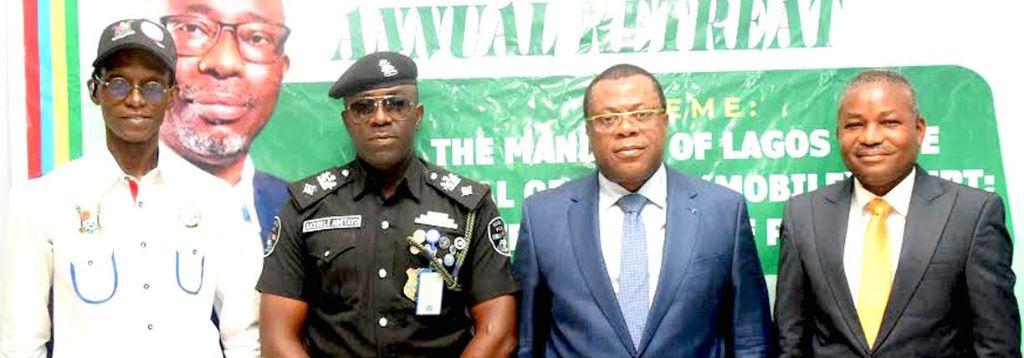
L-R: Coordinator, Lagos State Special Offenses (Mobile) Court, Mr. Olufemi
Chairman,
Ruling party eyes vocal north-east governor Fubara to be formally welcomed by party leadership after Ramadan Yilwatda: Why governors are rushing into APC
Emmanuel Addeh in Abuja
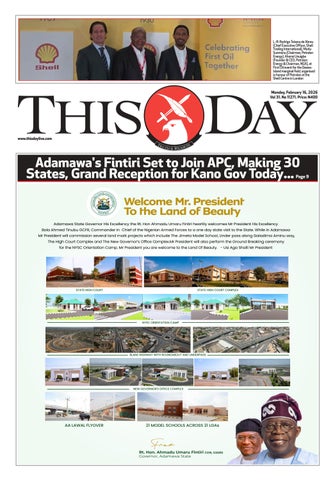
With Adamawa State Governor, Ahmadu Fintiri, all set to join the All Progressives Congress, the APC, the ruling party is now set to effectively consolidate political control across 30 states of 36 states of the federation, marking one of the most extensive territorial expansions by any party since the return to democratic rule in 1999.
Fintiri's defection would be particularly significant because he is the governor of Atiku Abubakar's home state. of Adamawa. With Atiku being one of the major contenders for the presidency in 2027, his own state governor joining forces to campaign for Tinubu's reelection is like taking the wind out of Atiku's sails.
The APC-controlled states currently include: Akwa Ibom, Bayelsa, Benue, Borno, Cross River, Delta, Ebonyi, Edo, Enugu, Ekiti, Gombe, Imo, Jigawa, Kaduna, Kano, Katsina, Kebbi, Kogi, Kwara, Lagos, Nasarawa, Niger, Ogun, Ondo, Plateau, Rivers, Sokoto, Taraba, Yobe and Adamawa (in view).
This consolidation followed a series of strategic political
realignments, including the imminent formal reception of the Governor of Kano State, Abba Yusuf, scheduled to be officially welcomed into the APC at a grand ceremony on Monday (today).
Senior party sources who requested anonymity, said today's event in Kano is intended not only as a symbolic gesture but as a demonstration of Kano’s centrality to national politics, especially that of the North-west.
“Kano is the political nerve centre of the political north. Kano is the most cosmopolitan community in the north. Most of the people in Kano come from different communities. So, they have lived there. So, they influence the politics of that state.
At the same time, Kano politics is also very dynamic and it's always changing. So, for us it's a big addition to the APC family.
“More than that, it's one of the highest voting populations in the country, if not the biggest . In terms of opposition in the north-west, Kano was the biggest opposition. So, adding Kano to our side has thoroughly weakened the opposition in the region,” the source said when asked about
the significance of Kano. esides, APC top sources told THISDAY that the Rivers State Governor, Siminalayi Fubara, is also set to be formally received by the party leadership after the Ramadan fasting period, further strengthening the APC’s complete hold in the South-south geopolitical zone. The inclusion of Rivers, a major oil-producing state with significant electoral weight, is viewed within party circles as a strategic reinforcement of its national spread.
In the same vein, ‘Hurricane APC’ will turn its attention to the North-east, where Governor Ahmadu Umaru Fintiri of Adamawa is expected to join the ruling party soon. His anticipated defection is seen as a major gain, given Adamawa’s political relevance in the region.
Once an ally of former Vice President, Atiku Abubakar, Fintiri’s defection will pose a huge blow to Atiku’s presidential ambition, especially against the backdrop of his son's recent movement to the ruling party.
Toning down his opposition to the APC and giving an indication that he was willing to join the ruling party, Fintiri when
asked the critical question last week responded that he would join the APC if that's what his people want, confirming ongoing consultations with stakeholders over his possible defection.
“If that is the wish of my people to defect, I have no choice because politics is all about it. But then, there are people who are making noise. There are people who have made their lives to be political merchants. They are so cheap. They are afraid,” he said. However, APC sources told THISDAY that this may not materialise until around April.
Infact, ahead of President Bola Tinubu’s visit to Yola, Adamawa State today, the state capital has been awash with APC billboards and flags mounted across major streets, further fuelling speculation of Fintiri's imminent exit from the Peoples Democratic Party (PDP).
In addition, another North-east governor who appeared to be the last voice of the opposition in that region and indeed nationally, the APC topshop said, remains on its radar, with discussions said to be ongoing.
“We also have another governor from the North-east on our radar. These conversations are
The President of the Nigerian Gas Association (NGA) and Regional Coordinator for Africa, International Gas Union (IGU), Akachukwu Nwokedi, has urged Africa to move decisively toward coordinated policy, shared infrastructure, and collective diplomacy to transform its vast natural resources into
broad-based prosperity. Nwokedi, a statement in Abuja at the weekend said, highlighted the critical role that geopolitics plays in the energy sector, arguing that regional alignment will give Africa the scale, resilience, and credibility required to attract capital, manage volatility.
Delivering a goodwill address in Abuja at the just concluded Nigeria
International Energy Summit (NIES) 2026, Nwokedi declared that regional energy cooperation is no longer optional but a strategic necessity in an increasingly volatile global energy order.
“In a world where energy increasingly shapes geopolitics, fragmentation is a liability.
Regional alignment gives Africa the scale, resilience, and credibility required to attract
capital, manage volatility, and negotiate from a position of strength,” Nwokedi said.
Speaking to a high-level audience of government officials, industry executives, investors, and diplomats during the session on “Regional Oil & Gas Cooperation,” Nwokedi warned that without deliberate integration, Africa risks remaining fragmented and marginalised.
ongoing and progressing,” the source disclosed. If these moves succeed, APC will then effectively control 31 states, with some of the remaining states, including Prof Chukwuma Soludo’s All Progressives Grand Alliance (APGA), remaining appendages of the ruling party.
When THISDAY reached out to the APC Chairman, Prof Nentawe Yilwatda, to respond to suggestions that some state governors were being coerced to join the ruling, he stated that that was far from the truth.
He attributed the expanding dominance to what he described as tangible governance outcomes, improved security operations and large-scale infrastructure projects being executed by the federal government, especially those relating to northern governors.
Economic infrastructure remains central to the ruling party’s narrative, Yilwatda said. He cited the multi billion-dollar Ajaokuta–Kaduna–Kano (AKK) gas pipeline project as a catalyst for political interest in aligning with the ruling party.
According to him, the AKK project is expected to stimulate industrial clusters along its corridor, ease erratic power supply and enable gas-based industries to flourish.
Besides, he stated that the Abuja–Kaduna–Kano rail modernisation and its extension to Maradi in Niger Republic remains transformative. The rail link is expected to enhance trade flows across West and Central Africa, with Nigeria positioned to collect customs duties at the Maradi terminal under bilateral arrangements, the APC national chair told THISDAY.
Yilwatda equally highlighted the Sokoto–Badagry super highway corridor, stressing that there are plans for over 60
dams along the route to support agriculture and water reticulation. According to him, such projects have reshaped political calculations among state leaders.
“There is no coercion,” he insisted. “They see the difference. They see the opportunities,” he maintained.
Yilwatda said the growing influx into the party reflects confidence in its policy direction and developmental agenda. Yilwatda stated that governors and political stakeholders are drawn to platforms that offer tangible economic prospects for their states. According to him, investments in energy, rail connectivity, agriculture and trade corridors demonstrate long-term planning that transcends short-term political considerations. He maintained that the ruling party’s focus on infrastructure and security has created a stabilising effect nationwide, making it an attractive platform for leaders seeking sustained growth.
“There are many reasons why many people are going with us. These include the AKK project, one of the most expensive projects ever undertaken in this country. And this is being done by the APC government. Do you know how much that means?
“A lot of gas companies will be built along the pipeline. There's one in Gwagwalada, Kaduna , Kano. They can even distribute gas to the grid. Kano is the terminal point. So, who would not like to be part of that?
“Not just that, the rail line from Abuja to Kaduna, Kano to Maradi in Niger Republic. Niger is landlocked, Sudan, Burkina Faso is landlocked, Chad is landlocked. All the imports will be dependent on that port in Maradi. Part of the agreement is that Nigerian customs will be stationed there. Kano is the commercial heart of the north.

Sunday Aborisade in Abuja
A lawyer and former Resident Electoral Commissioner (REC) at Independent National Electoral Commission (INEC), Mike Igini, has warned that a majority of serving federal lawmakers may lose their seats in 2027 if the National Assembly retains a controversial proviso seeking to remove real-time electronic transmission of polling unit results in the ongoing Electoral Act amendment. In a press statement issued on Sunday, Igini cautioned senators and members of House of Representatives
against what he described as “institutional self-harm.”. He stated that any dilution of direct electronic transmission of results from polling units to INEC’s Result Viewing Portal (IReV) could expose legislators to the same electoral vulnerabilities that consumed their predecessors.
As Senate and House move to harmonise their divergent versions of the Electoral Act Amendment Bill, Igini said lawmakers must heed “salutary lessons” from past assemblies that allegedly failed to close loopholes exploited to overturn legitimate polling unit outcomes during collation.
Sylvester Idowu in Warri
President Bola Ahmed Tinubu, Delta State Governor, Rt. Hon Sheriff Oborevwori and Exmilitant leader, High Chief (Dr.) Oweizide Government Ekpemupolo, Alias Tompolo, over the weekend, celebrated the Ovie of Uvwie Kingdom, HRM. Emmanuel Ekemejewa Sideso, Abe I, as he celebrated his 18th year coronation anniversary with the launch of his book titled, "Odyssey of Royalty".
President Tinubu, who was represented by the Minister of Aviation and Aerospace, Chief Festus Keyamo said the Monarch's reign was a testament to peace being enjoyed in his Kingdom.
He assured the present administration will continued to accord the traditional rulers across the country their due respect and urged them to play prominent roles in engendering peace in their various kingdoms.
Delta State governor, Rt. Hon. Sheriff Oborevwori, while congratulating the Ovie of Uvwie Kingdom, Emmanuel Sideso, Abe I, on the occasion of his 18th coronation anniversary and 83rd birthday, described his reign as “impactful, stabilising and development-driven.”
The governor, represented by the Chief of Staff, Government House, Prince Johnson Erijo, commended the monarch for his steadfast leadership,
which “has transformed Uvwie Kingdom into a haven of peace and a destination for investors.”
According to Oborevwori, the traditional ruler “since ascending the ancient throne of his forebears 18 years ago, has provided purposeful leadership that has repositioned Uvwie from a once troubled domain to a peaceful and thriving kingdom.
“The royal father, working closely with his Council of Chiefs and the youth population, has sustained harmony and strengthened communal bonds, thereby laying a solid foundation for economic growth and social stability.
“Uvwie Kingdom has metamorphosed from a
once troubled kingdom to a peaceful and investor-friendly domain under the reign of HRM Emmanuel Sideso, Abe I. Through inclusive leadership and unwavering commitment to peace, the kingdom has witnessed remarkable stability and progress.”
The governor expressed confidence that with the prevailing atmosphere of peace and unity, Uvwie is strategically positioned to emerge as the commercial nerve centre of Delta State
Ex-Militant leader, High Chief Government Ekpemupolo, alias Tompolo, also celebrated the monarch on the successful reign in the past 18 years on the throne.
Blessing Ibunge in Port Harcourt
A Rivers State High Court sitting in Port Harcourt has issued an order restraining the Renaissance Africa Energy Company Limited, NNPC Exploration and Production Company Limited (NEPL), WAGL Energy Limited, and Kristal Polis Limited, from continuing with the demolitions in the
Ntamoku Ayambo Pipeline Estate in Bonny, Rivers State. The presiding judge, Justice Rita Oguguo, in Suit No.: BYHC/17/CS/2026, issued the exparte order last Friday, after hearing the submission of the counsel to the claimants, Chief Eugene Odey. Claimants in the suit are 45 residents of Ntamoku Ayambo Pipeline Estate, who are suing on behalf of themselves, families
and other residents of the area, while the four companies are respondents in the said suit.
Parts of the order states:
“It is also Ordered that An Interim Injunction be and is hereby issued restraining the Defendants/Respondents or their agent from taking further steps in the demolition of the Claimant's landed property situate at the Shell pipeline Community in Bonny, Rivers
State, pending the hearing and determination of the Motion on Notice.
“It is further Ordered that An Interim Injunction be and issued restraining the Defendants or their agents from demolishing the Claimant’s landed properties situate at Shell Pipeline Community in Bonny, Rivers State pending the hearing and determination of the Motion on Notice.”
He said, “Those earlier assemblies, for reasons of convenience and party loyalty, refused to address well-documented election rigging vulnerabilities in our laws.
“Such lacunae were later exploited to subvert pollingunit outcomes, rendering many of them victims of the very defects they declined to remedy.”
Igini backed his warning with data spanning 2007 to 2023, showing persistently high turnover rates in both chambers of the National Assembly, a pattern he attributed, in
part, to manipulable result collation processes, where polling unit evidence could not be independently verified in real time.
Part of the statement read, “In the Senate, turnover has averaged well above 60 per cent over successive cycles. The Sixth Senate (2007–2011) returned only 23 of 109 members, recording a 79 per cent turnover.
“The Seventh Senate (2011–2015) saw 36 re-elected and 73 new entrants (67 per cent turnover), while the Eighth (2015–2019) recorded 64 per cent turnover.
Ramadan: Wamakko Donates Food Items, other Consumables to IDPs in Sokoto
Onuminya Innocent in Sokoto
Senator Aliyu Wamakko, representing Sokoto North Senatorial district has demonstrated his commitment to the welfare of Internally Displaced Persons (IDPs) in Sokoto State by donating foodstuffs and other essential items to 1,787 IDPs.
The donation is aimed at supporting the IDPs as they prepare for the upcoming Ramadan fasting.
Represented by his Director of Administration, Alhaji Al-Mustapha Abubakar, Wamakko stated the gesture is part of his ongoing efforts to complement government initiatives in alleviating the economic hardship faced by IDPs.
The items, which include 200 bags of rice and maize, 400 bags of millet, 3,560 pieces of clothing materials,
100 cartons of vegetable oil and seasoning, and 70 bags of salt, will be distributed across nine IDP camps in the state.
Other utilities include tomato mix, blankets, casseroles, and mosquito nets.
Speaking at the inauguration ceremony at his Constituency office in Sokoto, Wamakko assured the IDPs that their current situation is temporary and that the government is working to restore peace in their communities.
"I want to assure you that your present condition is not permanent. Soon, you will return to your homes and reunite with your families and loved ones," he said.
The beneficiaries, including Aisha Murtala and Asma’u Muhammad, expressed their appreciation for the donation and prayed for Wamakko's continued support.
n continuation of its ongoing commissioning and handover of
completed intervention projects to State Governments across
Development Commission (NEDC) has inaugurated and handed over projects in Taraba State. Inspections were also made to sites of ongoing projects and those designated for takeoff.
The Commission’s delegation was led by the Honourable Minister of S
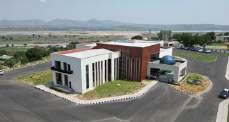
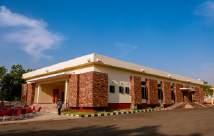
Taraba State University, Jalingo
Institute of Entrepreneurship Building (Constructed and Handed Over)
1. 14 Offices
2. 1 Conference Hall
3. 1 Archive
4. 2 Waiting Rooms
Establishment of ICT Centre
1. Graphic Design Classroom (50 Computers)
2. Phone Repairs Classroom (20 Repair Kits)
Mega School – Kurmi LGA, Taraba State
1. 4 Blocks of 12 Classrooms
2. 4 Units of 2-Bedroom Staff Quarters
3. Gatehouse and Fence
4. Administrative Block
5. Commercial Centre

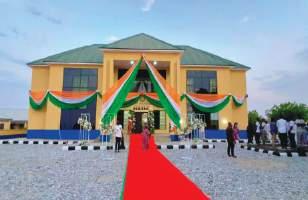
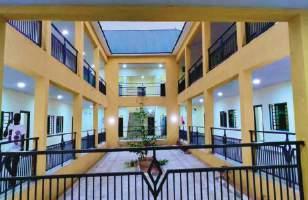
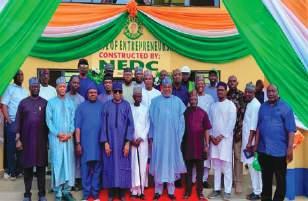
INTERVENTION IN HEALTHCARE
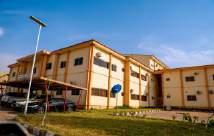
General Hospital Zing
1. 60-bed capacity Male and Female Ward (renovated and equipped)
2. 3 Units of 2-Bedroom Staff Quarters
3. Fencing of Staff Quarters
4. 3 Boreholes
General Hospital Ibi, Ibi LGA
Construction of General Outpatient Department (GOPD) Ward
• Male and Female Wards Gashaka
1. Male and Female Wards (80-Bed Capacity)
2. 4 Offices
3. 8 Toilets
4. Nurses’ Station
Federal Medical Centre (FMC), Jalingo
alongside the NEDC Chairman, Maj. Gen. Paul Tarfa, NEDC MD/CEO
Directors, Members of the Governing Board, and Management Staff of the Commission.
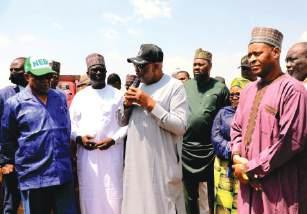
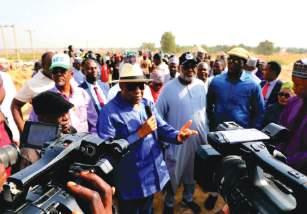
The occasion was part of NEDC’s commitment to strengthening development partnerships with state governments and ensuring the timely delivery of impactful projects that improve livelihoods and accelerate sustainable growth across the region.
Establishment of MRI Housing Facility • Housing facility completed • MRI machine installation to commence soon Construction of Virology Laboratory (Biosafety Level)
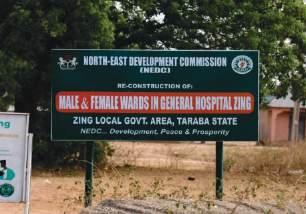
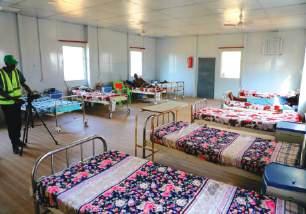
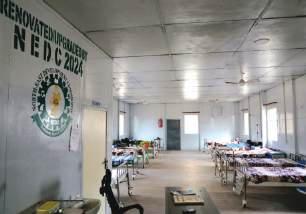
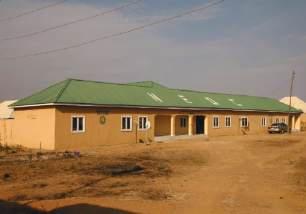
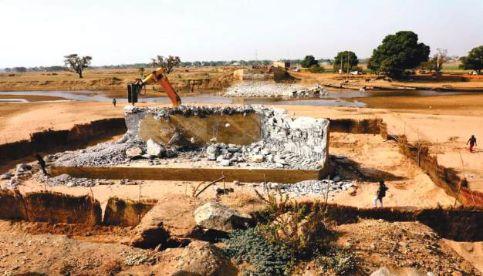
INSPECTION OF ONGOING AND DESIGNATED PROJECTS 1. Namnai Bridge Inspection




Nigeria
FROM VISION TO MEASURABLE IMPACT
NSIA is committed to expanding access to high- quality healthcare in Nigeria, writes AMINU UMAR-SADIQ
See page 21
OLU AYELA recounts the state’s blessings at 50
page 21

must ensure that its partnership with the United States remains clearly defined, transparent, and anchored in Nigerian interests, writes
FELIX OLADEJI
The arrival of the first batch of United States troops and military aircraft on Nigerian soil marks a consequential moment in the evolving security relationship between Abuja and Washington. According to official statements, the deployment is designed to strengthen Nigeria’s counter-terrorism capacity through training, intelligence sharing, and logistical coordination. Yet beneath the surface of diplomatic assurances lies a development that demands serious national reflection.
Nigeria is not a failed state in search of foreign guardianship. It is Africa’s most populous nation, with one of the continent’s largest standing militaries and decades of experience in regional peacekeeping. From Liberia and Sierra Leone to The Gambia, Nigerian forces have historically projected stability beyond their borders. That history makes the symbolism of foreign troops landing on Nigerian soil especially potent.
The federal government insists that the American personnel are here strictly in an advisory capacity. They are not combat troops, officials emphasize, but trainers. The distinction matters. Nigeria retains operational control. There is no formal declaration of joint combat operations. The deployment is framed as a technical partnership aimed at improving tactical coordination, surveillance capabilities, and counter-insurgency effectiveness.
On paper, this rationale is understandable. Nigeria faces a security crisis of alarming proportions. Boko Haram and ISWAP continue to destabilize parts of the northeast. Armed bandits terrorize communities in the northwest. Kidnapping for ransom has metastasized into an industry. Communal clashes and farmer-herder conflicts simmer across the north-central region. Insecurity has disrupted farming, deepened poverty, displaced millions, and eroded citizens’ confidence in state institutions.
In such circumstances, enhanced training and intelligence support from a technologically advanced military power may appear pragmatic. Modern counterinsurgency warfare is data-driven, surveillance-heavy, and coordinationdependent. Drones, satellite imaging, electronic intelligence, and integrated air-ground operations can make the difference between success and prolonged stalemate. If American support helps close these capability gaps, the Nigerian military could gain an operational edge.
But capability is only one dimension of security. The deeper question is whether foreign military presence,

however limited, addresses the structural drivers of Nigeria’s insecurity. Terrorism and banditry do not thrive merely because of tactical weaknesses. They flourish in environments marked by governance deficits, corruption, youth unemployment, porous borders, and alienation from the state.
There is a risk that foreign military collaboration becomes a convenient substitute for domestic reform. It is far easier to announce high-profile international cooperation than to confront entrenched internal failures; security sector accountability, transparent procurement, effective intelligence coordination among agencies, and the rebuilding of trust between communities and the armed forces. Without institutional reform, foreign training risks becoming a temporary patch on a systemic wound.
There are also sovereignty considerations that cannot be dismissed as mere nationalism. Nations are judged not only by their economic indicators but by their ability to safeguard their territorial integrity independently. While military cooperation is common in international relations, hosting foreign troops, even in a training role, carries symbolic weight. For many Nigerians, it may evoke uncomfortable memories of external interference on the continent.
Africa’s history is replete with examples of foreign powers whose security engagements evolved into prolonged influence. From Cold War proxy dynamics to contemporary geopolitical competition, military cooperation has often doubled as strategic positioning. Nigeria must therefore ensure that its partnership with the United States remains clearly defined, transparent, and anchored in Nigerian interests.
The geopolitical context further complicates the picture. Global power competition is intensifying in Africa.
Western governments, China, Russia, and regional actors are all recalibrating their presence on the continent. Security partnerships are rarely isolated from broader strategic calculations. Nigeria’s alignment choices inevitably send signals about its foreign policy trajectory.
That does not mean Nigeria should shun cooperation. No nation operates in isolation, particularly in an era of transnational terrorism. Intelligence sharing across borders is indispensable. Extremist networks do not respect national boundaries; neither should counter-terrorism collaboration. But cooperation must not slide into dependency.
Transparency is therefore essential. Nigerians deserve clarity about the scope, duration, and metrics of this deployment. What precisely will the American troops train Nigerian forces to do differently? How will success be measured? What safeguards exist to ensure that civilian populations are protected and that human rights standards are upheld? These questions are not hostile; they are democratic necessities.
Equally important is parliamentary oversight. Security agreements should not reside solely within the executive branch. The National Assembly has a constitutional role in scrutinizing arrangements that touch on sovereignty and national defense. Open debate strengthens legitimacy and builds public trust.
Another layer of concern involves narrative framing. In recent years, segments of international commentary have portrayed Nigeria’s insecurity through overly simplistic lenses; sometimes reducing it to a singular religious conflict. Such framings distort a complex reality in which victims span ethnic and religious divides. Nigeria must guard against external narratives that oversimplify its crisis in ways that could distort policy responses.
Security is ultimately local. Villagers in Zamfara or Borno do not experience geopolitics; they experience fear, displacement, and economic ruin. For them, what matters is whether farms are safe, markets reopen, and children return to school. If foreign training contributes meaningfully to these outcomes, it will earn legitimacy. If it merely adds another layer of elite diplomacy without changing realities on the ground, public skepticism will deepen.
Oladeji writes from Lagos
NSIA is committed to expanding access to high-quality healthcare in Nigeria, writes AMINU UMAR-SADIQ

At the Nigeria Sovereign Investment Authority (‘NSIA’ or ‘The Authority’), our mandate compels us to deploy patient capital into sectors that deliver commercial sustainability and measurable national impact. Healthcare presented a clear and urgent opportunity.
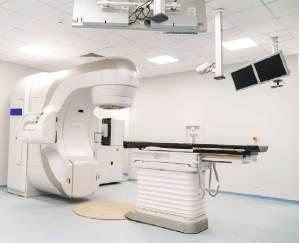
Our entry into the sector was driven by a simple but ambitious objective: to make high-quality healthcare services — previously inaccessible or available only abroad — affordable and accessible within Nigeria. That vision led to the establishment of the NSIA Advanced Medical Services Limited (‘MedServe’) – the Authority’s wholly owned healthcare subsidiary, created to fundamentally advance oncology and diagnostics in Nigeria.
Through MedServe, we have built and operationalized facilities that are reshaping Nigeria’s healthcare landscape.
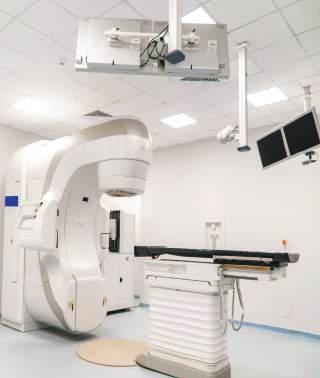
The MedServe–LUTH Cancer Centre (MLCC) in Lagos, commissioned in May 2019, became the first oncology center in Nigeria to offer 3D Conformal Radiotherapy and today houses the largest concentration of radiotherapy equipment in West Africa. Its strategic importance was particularly evident during the COVID-19 pandemic, when international travel restrictions limited access to overseas treatment. At that critical moment, MLCC provided continuity of advanced cancer care for Nigerians.
Complementing this are the MedServe Kano Diagnostic Centre (MKDC) and the MedServe Umuahia Diagnostic Centre (MUDC), which introduced advanced radiology and pathology services in regions where such capabilities were previously limited or unavailable.
The impact has been both substantial and measurable. Since inception, MLCC has delivered over 25,000 radiotherapy sessions and 10,000 chemotherapy treatments to approximately 15,000 unique patients. The center has recorded instances of reversed medical tourism, with Nigerians referred from overseas providers due to the quality and cost-effectiveness. Treatment costs remain significantly lower than comparable international services, often less than half the cost abroad.
It is estimated that these interventions have prevented more than US$200 million in foreign exchange outflows that would otherwise have been spent on overseas treatment and related expenses. Across Kano and Umuahia, more than 410,000 patients had received pathology and radio diagnostic services by December 2025, supporting earlier detection and improved clinical outcomes.
These figures reflect more than activity; they represent capacity built locally, skills retained nationally, and lives impacted meaningfully.
For healthcare transformation to endure, it must be supported by strategic infrastructure investment and a sustainable ecosystem. The ecosystem approach ensures that infrastructure investment is matched by knowledge development, clinical research, and international integration.
Recognizing that oncology remains an emerging specialty in Nigeria, NSIA, through MedServe adopted a holistic approach anchored on three priorities namely: developing a pipeline of skilled oncology professionals; strengthening clinical research and trial capacity tailored to African populations; and establishing partnerships with leading global medical institutions.
We instituted an annual Oncology Summit to convene clinicians, researchers, regulators, and academics, fostering knowledge exchange and capacity building.
MedServe has also partnered with globally respected institutions including Memorial Sloan Kettering Cancer Center, the University of Maryland Medical Center, and Bio Ventures for Global Health. These collaborations are expanding access to clinical trials and innovative therapies in oncology, radiology, and pathology. To date, MedServe has participated in two global cancer trials focused on prostate and breast cancer.
Expanding National Access: The Next Phase
Building on proven outcomes, MedServe has embarked on a structured national expansion of its footprint across 13 states. This expansion balances major urban centers such as Lagos, the Federal Capital Territory, and Kaduna with other participating states including Oyo, Sokoto, Delta, and Yobe.
This next phase includes building 13 new diagnostic centers, three additional oncology centers and three cardiac catheterisation laboratories, introducing cardiology as a new service line.
Umar-Sadiq is Managing Director & Chief Executive Officer, Nigeria Sovereign Investment Authority
OLU AYELA recounts the state’s blessings at 50
When Ondo State was carved out of the Western Region in 1976, the pomp and ceremony that attended the wise decision reached a crescendo. One, the old province loaded with human and natural resources could compete for the front seat in national development if well managed. Two, there was room for the development of the vast area that today constitute Ondo and Ekiti States.
Ondo State has been in the past led by military and political stalwarts including the then Commodore Olabode George, the free education maestro, Chief Michael Adekunle Ajasin, the creative genuius, Governor Rotimi Akeredolu, and the incumbent, Governor Lucky Orimisan Aiyedatiwa who was blessed with the opportunity to follow in the path of the virtuosos.
The recent celebration of 50 years of the state afforded the world to weigh the contributions of the incumbent governor and his impact on the people in the different districts in the sunshine state. Fortunately, as evaluators spread the measuring sticks round the state, there was no doubt that the past five decades of the state were years of growth, resilience, and collective progress. The golden jubilee celebrations, themed "Ondo State: Yesterday, Today and Tomorrow," showcased fond memories, the foreseeable golden future, and the state's rich cultural heritage, intellectual depth, and pursuit of sustainable development.
Observers pointed out that the coming of Aiyedatiwa at the time he came to leadership in the state has not only engendered massive development but gyrated on bringing the people together in unity of purpose. This leapfrogging of the state to a development centre in the comity of states within the former Western Region, nay Nigeria is a testimony no one can deny. This was a crucial factor pointed out as being instrumental in shaping the anniversary celebrations, because Ondo State in particular had something to celebrate rather the pursuit of obfuscation.
Although the governor observed that the state has not attained Eureka yet, putting it succinctly that the beautiful ones were not yet born, and trusting that future development was more significant than the past 50 years, yet the celebration was upbeat and memorable. In the package was a public lecture, cultural festivals, and an awards night to honor distinguished sons and daughters of the state, including President Bola Tinubu and former President Olusegun Obasanjo.
Aiyedatiwa left no one in doubt about the need to learn from the past and the significance of building a stronger future where every citizen could breathe and attain their goals. He emphasized his leadership commitment to pursue knowledge-driven growth, industrial competitiveness, environmental sustainability, and digital innovation. He urged the citizens to seize opportunities for development and work towards a prosperous Ondo State.
The anniversary also afforded the charismatic, people oriented and philosophical governor to render the account of his stewardship since becoming a governor to the people. Although he called the transformative initiatives modest, Ondo State has implemented several key initiatives to drive development in every corner of the state.
One major area of this innovative leadership is the creation of alternative development agricultural scheme to divert the attention and tendency of youngsters from the growth of illicit drugs so they may join the productive elders in the production of cocoa and other cash crops. It is instructive here to point out that Ondo State is blessed with vast forests, fertile arable soil and favourable climate, the more reason a significant number of the citizens are farmers.
Ondo State is a leading cocoa producer in Nigeria, she cannot also be pushed behind in the production of kolanut, walnut and many other cash crops but the Aiyedatiwa administration has even launched the “Youth on Ridges” scheme to encourage the diversification of opportunities in the agriculture sector. Under this scheme, over 5,000 hectares have been dedicated to cocoa cultivation, and the now popular “Tomato Revolution,” which now accounts for about 40 percent of Lagos market daily supplies of the produce. Behind the scene, the state government is driving the agriculture sector with about 30 billion Naira allocated in the 2026 budget to support modern farming, smallholder farmers and improve access to credit in the sector.
Another major area of focus for this administration has been the education sector where digital education is being promoted with the creation of special science schools, teacher training and school renovation schemes being launched. The Aiyedatiwa initiative thrives on the dictum, “to be more is to know more.” Ingenuously, this scheme is being driven with a special focus on the improvement of educational infrastructure round the eighteen local government areas of the state.
Chief Ayela, a Veteran Journalist, writes from Lagos
Editor, Editorial Page PETER ISHAKA
Email peter.ishaka@thisdaylive.com
It’s in the national interest for the states to prepare adequately for the rains
With the country’s urbanisation rate put at 5.5 per cent yearly which is considered one of the highest rates in the world, the number of Nigerians vulnerable to flood hazards is high. But despite the devastating effect of flooding in various parts of the country in recent years and the warnings by Nigerian Meteorological Agency (NiMET), authorities in Nigeria still seem unprepared when the rains come. For this year, NiMET has predicted above normal rainfall which will start early in Kano, Niger, Rivers and 12 other states of the federation. Farmers are enjoined not to rush into planting seeds. Considering the impact on national food supply, it is an admonition that should be heeded.
The essence of the Seasonal Climate Prediction (SCP), according to Permanent Secretary, Federal Ministry of Aviation and Aerospace Development, Yakubu Kofarmata, is to empower decision-makers with credible, timely, and actionable climate information to avert disasters. In the flood of 2012, for instance, no fewer than 665 people died while the World Bank estimated losses at about $6.7 billion. More than three million people were displaced across the country. Indeed, indications are that the rains expected this year will follow the usual pattern of heavy floods and devastation.

and nothing more. Even in states where officials go beyond announcing the warning, arrangements are usually never made for communities in the endangered areas.
Indications are that the rains expected this year will follow the usual pattern of heavy floods and devastation
T H I S D AY
EDITOR SHAKA MOMODU
DEPUTY EDITOR WALE OLALEYE
MANAGING DIRECTOR ENIOLA BELLO
DEPUTY MANAGING DIRECTOR ISRAEL IWEGBU
CHAIRMAN EDITORIAL BOARD OLUSEGUN ADENIYI
EDITOR NATION’S CAPITAL IYOBOSA UWUGIAREN
THE OMBUDSMAN KAYODE KOMOLAFE

T H I S D AY N E W S PA P E R S L I M I T E D
EDITOR-IN-CHIEF/CHAIRMAN NDUKA OBAIGBENA
In recent years, floods have displaced several million Nigerians with rural dwellers losing farmlands, livestock and their means of livelihood. In many states, local economies collapsed, while the interventions designed to ameliorate the suffering of those affected have made little or no impact. Some states usually make perfunctory announcements immediately following NiMET’s warning,
GROUP EXECUTIVE DIRECTORS ENIOLA BELLO, KAYODE KOMOLAFE, ISRAEL IWEGBU
DIVISIONAL DIRECTORS SHAKA MOMODU, PETER IWEGBU, ANTHONY OGEDENGBE
DEPUTY DIVISIONAL DIRECTOR OJOGUN VICTOR DANBOYI
SNR. ASSOCIATE DIRECTOR ERIC OJEH
ASSOCIATE DIRECTOR PATRICK EIMIUHI
CONTROLLERS ABIMBOLA TAIWO, UCHENNA DIBIAGWU, NDUKA MOSERI
DIRECTOR, PRINTING PRODUCTION CHUKS ONWUDINJO
TO SEND EMAIL: first name.surname@thisdaylive.com
As we have repeatedly highlighted, flooding does enormous damage to the ecosystem and destroys public utilities. It also elevates the risk of hunger and malnutrition because of disruption of farmlands and commercial losses for farmers engaged in subsistence farming. But perhaps most significant is that we have lost thousands of people to flooding in the past decade while millions remain displaced. Authorities in the 36 states therefore have enough time to prepare adequate measures against the elements to avert another tragedy. Blocked drains, especially in areas where flood waters easily accumulate and generate a strong force, should be cleared, and subsequently kept free. For a country where consecutive years of flooding, loss of farm produce and a lackadaisical attitude by the authorities have contributed to the challenge of food insecurity, we must take the NiMET warning much more seriously. These losses that traditionally occur during the peak of the rain season are detrimental to the country’s economy. It is one thing to have bumper harvest during the rainy season, but it is another thing to have the capacity to preserve the harvest for immediate gains of the farmers during the high demand for food that follows the dry season.
We implore all the relevant authorities to prepare for the rains with great diligence. Individuals and groups living on flood plains should be evacuated or made to stay away from the potential dangers of their places of abode. The focus should be on prevention and pre-emptive intervention because little is gained when resources that should be put into developmental initiatives are dissipated in dealing with avoidable emergencies and calamities.
Letters in response to specific publications in THISDAY should be brief (150-300 words) and straight to the point. Interested readers may send such letters along with their contact details to opinion@thisdaylive.com. We also welcome comments and opinions on topical local, national and international issues provided they are well-written and should also not be longer than (750- 1000 words). They should be sent to opinion@thisdaylive. com along with photograph, email address and phone numbers of the writer.
Lagos does not wake up smelling foul.
It is made to. On a recent drive past a popular bus stop, I saw a commercial bus driver leaning casually against the back of his danfo, relieving himself in full public view. A few metres away, commuters stood waiting for their ride, some covering their noses, others pretending not to notice. The smell hung stubbornly in the air.
Yet, we ask: Why do bus parks stink?
One can walk into many of our well-known markets, Oshodi, Mile 12, Oyingbo, Ajah, Ikotun and even parts of Balogun, before you see the traders, before you hear the bargaining, the stench greets you. The sharp, choking smell of urine baked into concrete by years of neglect.
It is easy to blame the government. It is fashionable to accuse the system. But the uncomfortable truth is this: we are the reason Lagos stinks.
Public urination in Lagos has become disturbingly nor-
malised. From bus conductors to traders, from street hawkers to pedestrians caught in traffic, too many people see nothing wrong in turning walls, gutters, and street corners into makeshift toilets.
It is not just about a lack of facilities, though that is part of the problem. It is also about attitude.
Some markets have toilets, but many traders refuse to use them because they cost ₦50 or ₦100. Some bus parks have facilities, but drivers claim they are too far or poorly maintained. Convenience now trumps decency.
Let us be honest: infrastructure gaps worsen the problem. Lagos, a city of over 20 million people, does not have enough accessible, functional, and affordable public toilets. In many bus terminals and informal parks, there are none. In several markets, the facilities are inadequate, broken, or unsanitary.
Where toilets exist, maintenance is often poor. Broken
doors, no running water, blocked pipes, and filthy floors discourage use. The result? People resort to the nearest wall or gutter.
The real challenge is that urban planning has not kept pace with population growth. Informal settlements and roadside commercial clusters spring up without sanitation planning. Motor parks expand without structured facilities. Markets grow organically, but hygiene infrastructure does not grow with them.
The environment pays the price. This is not merely about bad odour. It is a public health crisis.
In densely populated areas like Lagos, poor sanitation spreads illness rapidly. Children playing near contaminated drains are exposed. Food vendors operating close to polluted gutters unintentionally put customers at risk. Elvis Eromosele, Lagos, elviseroms@gmail.com
Iam directed to inform all Distinguished Senators
Representatives shall reconvene Plenary session at
respectively.
Honourable Members are kindly requested to take note and reschedule their engagements accordingly to enable them attend the session, as very crucial decisions shall be taken by each Chamber during the session.
Signed
Kamoru Ogunlana Esq Clerk to the National Assembly
By Musa Abdullahi Sufi Katsina, Nigeria
On February 12, 2026, in Katsina, history was not merely recorded, it was lived, felt, and affirmed.
In si
Conference Hall, emotions filled the air as 1,020 frontline health workers received their long-awaited appointment letters. Many had served for years, some for decades—as casual workers, often without job security, recognition, or c e r t a i n t y a b o u t t h e i r f u
O
perseverance was finally rewarded.
For many observers, including myself, this was more than a recruitment exercise. It was a defining moment for justice, fairness, and institutional credibility in public administration.
Under the leadership of Dr Umar Dikko Radda, the Katsina State Government delivered what stands today a s o n e o f t h e m o s t t r a n s p a r e n t a n d m e r i t - b a s e d recruitment processes in Nigeria’s recent public sector history
Addressing the newly inducted workers, the Governor emphasized that their selection followed a rigorous, competitive, and interference-free process, anchored strictly on competence, experience, and merit.
More importantly, over 75% of the beneficiaries were existing casual workers—individuals who had already demonstrated loyalty and commitment to public service.
This decision sent a powerful message: dedication matters, integrity counts, and service is rewarded.
In an environment where public recruitment is often a s s o c i a t e d w i t h f a v o r i t i s m a n d p o l i t i c a l p a t r o n a g e , Katsina chose a different path, one guided by ethical leadership and institutional discipline.
Investing in Systems, Not Just Structures
This historic recruitment did not happen in isolation. It is part of a broader and deliberate reform agenda aimed at rebuilding Katsina’s health system from its foundation.
The Governor revealed that:
• 268 Primary Health Care (PHC) facilities have been upgraded at a cost exceeding ₦26.7 billion, including renovations, equipment, tricycle ambulances, and water and sanitation systems.
• Plans are underway to upgrade remaining facilities in 2026, ensuring functional Level-2 PHCs in all 361 wards.
• The State Drug and Medical Supplies Agency has been strengthened to improve access to essential medicines.
• Over ₦3 billion has been released for nutritionsensitive interventions targeting women, children, and vulnerable populations.
• More than 724 health professionals have been recruited into secondary healthcare facilities.
• S i x c o m p r e h e n s i v e h e a l t h c e n t r e s h a v e b e e n upgraded to general hospitals.
• Nearly ₦1 billion has been approved for medical students’ allowances at home and abroad.
These interventions reflect a deep understanding that healthcare reform is not achieved through buildings alone, but through people, systems, and sustained investment.
A Recruitment Process Built on Public Trust
One of the most remarkable aspects of this exercise was its credibility
The recruitment committee, chaired by Lawal Rufa’i Safana, conducted the process with professionalism, independence, and transparency From screening to final selection, the process was open, accountable, and verifiable.
There was:
• No political interference
• No preferential treatment
• No hidden lists
• No shortcuts
Only merit.
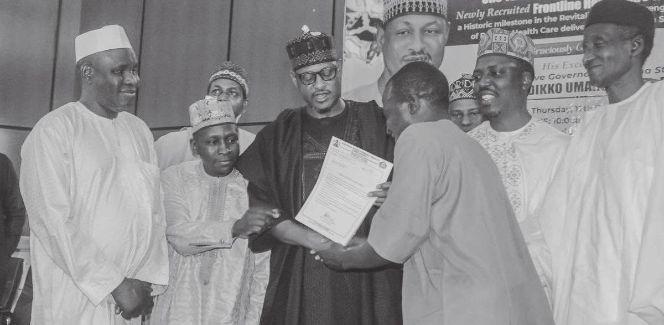
This approach restored public confidence in governance and demonstrated that institutions can function effectively when shielded from undue influence.
Human Faces Behind the Numbers
Beyond statistics and policy achievements are human stories.
During the ceremony, I personally met many beneficiaries whom I have known for over a decade—health workers w
uncertainty, delayed allowances, and lack of formal recognition.
Some travelled long distances daily to understaffed rural facilities. Others worked without assurance of pension, promotion, or stability Yet, they stayed.
When their names were called and letters handed over, t e a r s fl o w e d n o t o f s o r r o w,
fulfillment.
This moment reminded us that good governance is ultimately about people, their dignity, security, and sense of belonging.
Why This Model Matters for Africa and the World Katsina’s recruitment model offers valuable lessons for governments across Nigeria, Africa and beyond.
1. Merit Strengthens Institutions: When recruitment is based on competence, public institutions become more efficient, professional, and responsive.
2. Transparency Builds Legitimacy: Open processes reduce suspicion, improve citizen trust, and enhance democratic accountability
3. Inclusion Promotes Stability: By absorbing longserving casual workers, government reduces social exclusion and workforce insecurity
4. Motivation Improves Service Delivery: Secure and recognized workers are more committed, ethical, and productive.
5. F a i r n e s s R e d u c e s C o n
i c t : T r a n s p a r e n t employment systems reduce grievances, litigation, and political tension.
This model shows that development is not only about budgets, it is about values.
Commitment Beyond Recruitment
The Governor reaffirmed that the state’s commitment to workforce development continues. Plans are in place to recruit additional health workers and replace over 1,000 ad hoc staff to improve morale and service delivery
Furthermore, government pledged continued investment
expecting professionalism, accountability, and ethical conduct in return.
I
fundamental truth: “Health
frontline workers, and institutionalizing merit, the state is building a resilient system capable of serving present and future generations.
As someone deeply engaged in development advocacy and governance reform, witnessing this process firsthand was profoundly inspiring.
It reaffirmed my belief that ethical leadership is possible, even in complex political environments.
I t d e m o n s t r
transparency over convenience, fairness over favoritism, and institutions over individuals.
And it proved that when leadership is guided by purpose, public service becomes a tool for transformation, not privilege.
The Katsina health workforce recruitment of 2026 is more than a successful administrative exercise.
It is:
• A benchmark for public sector reform
• A case study in inclusive governance
• A template for ethical leadership
• A symbol of renewed public trust
It deserves global attention not as propaganda, but as proof that reform works when leaders are committed to principle.
If replicated across sectors and regions, this model can redefine public employment in Nigeria and across Africa.
Conclusion
Katsina has shown that merit is not a luxury, it is a n
y B
transparency, and prioritizing people, the state has written a new chapter in public administration.
This is leadership.
This is accountability
This is governance with conscience.
And this is the standard to which all leaders should aspire.
The Independent National Electoral Commission at the weekend formally released the notice and the timetable and schedule of activities for the 2027 general elections. Adedayo Akinwale reports.
The Independent National Electoral Commission (INEC) officially released the timetable and schedule of activities for the 2027 general election.
It said by virtue of the 1999 Constitution as amended, the tenure of the President, Vice President, Governors and Deputy Governors of States of the Federation, except Anambra, Bayelsa, Edo, Ekiti, Imo, Kogi, Ondo, and Osun States would expire on the 28th day of May, 2027; while membership of the National and State Assemblies would stand dissolved on the 8th day of June, 2027.
Pursuant to Sections 76(2), 116 (2), 132 (2) and 178 (2) of the 1999 Constitution, the commission noted that elections to the said offices shall hold not earlier than 150 days and not later than 30 days before the expiration of the term of office of` the last holder of that office.
To this end, the electoral body has fixed February 20, 2027 for the presidential election and National Assembly elections, while the Governorship and State Houses of Assembly elections will hold on March 6, 2027.
INEC Chairman, Prof. Joash Amupitan while addressing a press conference in Abuja said this action was taken pursuant to the provisions of the 1999 Constitution as amended and section 28(1) of the Electoral Act, 2022, which mandates the Commission to publish the notice of election not later than 360 days before the date appointed for the election.
Similarly, the commission, he added, recognised the critical need for timely action to ensure the integrity and effectiveness of our electoral processes.
The INEC boss noted that it was imperative that the Commission acts swiftly to address any challenges arising from any delay that may result in logistical failure.
As regards the Electoral Act Amendment Bill that is pending before the National Assembly, the commission said the bill has sparked important discussions and concerns among various stakeholders.
Amupitan said while the commission is eager to adopt any amendments that might strengthen electoral processes, it must also act in accordance with the existing provisions of the Electoral Act.
The INEC boss said as an independent electoral body, the commission is committed to upholding the rule of law and ensuring that its actions are guided by the established legal framework.
Surprisingly, the release of the time table appeared to have awakened the House of Representatives from its slumber, following its decision to reconvene for an emergency sitting on Tuesday to review matters arising from the recent announcement of the 2027 general election timetable.
Spokesman of the House, Hon. Akin Rotimi in a statement said the decision has been convened to all members of the House, drawing attention to the constitutional and national significance of the development and the need for timely legislative consideration.
He explained that the emergency sitting reflects the resolve of the House to respond promptly to issues with far-reaching implications for the nation’s democratic process.
The Green Chamber pointed out that deliberations will focus on relevant legislative matters connected to the announcement, in line with the constitutional responsibilities of the National Assembly.
Prior to the release of the time table, the commission had declared that it would require a total of N873.78 billion to conduct the 2027 general election.
Amupitan, while appearing before the National Assembly joint committee on Electoral matters warned that any attempt to subject the electoral body to rigid funding caps could undermine critical technological reforms and expose the country to avoidable
embarrassment.
Breaking down the figures, the INEC chairman said the proposed N873,778,401,602.08 was structured under five broad components: Election Operations Cost of N375.75 billion; Election Administrative Cost of N92.31 billion; Election Technology Cost of N209.21 billion; Election Capital Cost of N154.90 billion; and a miscellaneous provision of N41.01 billion.
A major highlight of the proposal was a sweeping technological overhaul designed to strengthen electronic transmission of results, improve voter accreditation, secure electoral data, and eliminate system failures that had stalked past elections.
At the centre of the ICT upgrade was N162.5 billion earmarked for the enhancement of the INEC Result Viewing (IReV) portal — the digital platform that provides public access to polling unit results in real time.
The upgrade, the electoral umpire explained, would reinforce transparency, improve server capacity, and prevent glitches experienced during previous polls.
INEC also proposed N1.215 billion for a Hybrid e-EC8A and Result Management System to strengthen electronic result processing and reduce human
interference.
Stakeholders React
Reacting, the Northern Elders Forum (NEF) was of the opinion that the timely release of the timetable and schedule of activities for the 2027 general election showed INEC’s commitment to an orderly and transparent electoral process.
NEF Director of NGOs/ CSOs, Suleiman Abdul-Azeez told THISDAY that the release of the election timetable was a critical milestone in the electoral process, marking the beginning of a countdown to one of the most consequential events in Nigerian democracy.
He emphasised that it establishes a clear framework for political parties, candidates, and voters alike, delineating key dates for primaries, campaigns, and the election itself.
By providing this structure, he added, INEC not only fosters transparency but also encourages political engagement among citizens, who are empowered to participate actively in the democratic process.
NEF maintained that the timely release of the timetable signals INEC’s commitment to an orderly and transparent electoral process, adding that it allows for the establishment of a timeline that can be scrutinized by civil society organizations, media, and the electorate, ensuring that all stakeholders can hold the commission accountable for its actions leading up to the elections.
The release of the time table appeared to have awakened the House of Representatives from its slumber, following its decision to reconvene for an emergency sitting on Tuesday to review matters arising from the recent announcement of the 2027 general election timetable.
In his intervention, Legislative Expert and Public Affairs Analyst, Akinloye Oyeniyi described the release of the time table and schedule of activities for the 2027 general election as a welcome development.
However, he said, Nigerians should now have in mind that having commenced the process with the extant constitutional Electoral Act provisions, the chances of executing the said elections with the ongoing Constitution and or Electoral Act amendments is now strictly narrower if there is any at all.
Oyeniyi noted that the only expectation would be some differences from the 2023 election that would be occasioned by personal reforms the Commission under Amupitan would be introducing.
He said: “Firstly, the Commission has commenced the process with Sections 78, 116, 32 and 178 of the Constitution of the Federal Republic of Nigeria, 1999, as amended, and these are the Sections undergoing amendments to remove the determination of election timeline from the constitution to the Electoral Act.
“So, as it is, the 185 days being proposed in the Electoral Act Bill 2026 is no longer tenable but the extant 150 days. Secondly, political parties will have to adhere to the extant 180 days to submit the list of their candidates to the Commission instead of the 210 days being proposed in the section 29(1) of the Electoral Act Bill 2026.
“The proposals for early voting of officers and others whose official duties would not permit to vote on election days, extended publication period for candidates details, early edification of party symbols, transmission of polling units results by presiding officers, etc are kind of now practically impossible as we cannot shift the goal posts in the middle of football match.”
Similarly, the Communication Manager, Nigerian Women Trust Fund, Ms. Ayo Agbabiaka insisted that the electronic voting system should be guaranteed in this election and beyond. She noted that every apparatus of voting for Persons with Disabilities (PWD’s) are available and no one is disenfranchised for lack of INEC adequate preparedness. There are indications, however, that the Muslim North is not comfortable with the date chosen by INEC, saying it falls during the month of Ramadan.
Against this background, former Vice President, Atiku Abubakar has called on INEC to urgently reconsider the February 20, 2027 date it has announced for the general election. According to him, That date falls squarely within the Ramadan period (February 7 –March 8, 2027), a sacred season of fasting, reflection, and spiritual devotion for millions of Nigerian muslims. Elections are not mere administrative rituals; they are national exercises that demand maximum participation, physical endurance, and collective focus.
Atiku, a presidential aapirant and a member of the African Democratic Congress (ADC) maintained that fixing such a critical civic exercise in the middle of a major religious observance reflects poor judgment and a troubling lack of sensitivity to the nation’s socio-religious realities.
He added that in a diverse country like Nigeria, inclusive planning is not optional, it is fundamental.
“Something as basic as choosing a broadly acceptable date should not be mishandled. It speaks to competence, foresight, and respect for citizens. If INEC struggles with getting a simple matter of timing right, Nigerians are justified in asking: what assurance do we have that it will competently deliver free, fair, and credible elections in 2027?,” Atiku posited.
NOTE: Interested readers should continue in the online edition on www.thisdaylive.com
The Nigerian Air Force’s recent reactivation of Super Puma NAF 565 marks more than the return of a vital air asset; it reflects the first 100 days of the Chief of Air Staff, Air Marshal Sunday Kelvin Aneke’s tenure, guided by a command philosophy of self-reliance, professionalism, and mission readiness. By restoring the platform locally, the Air Force has strengthened its capacity for troop movement, emergency response, and security operations while curbing capital flight and retaining technical expertise in country. Chiemelie Ezeobi writes that the milestone underscores a broader strategy linking modernisation, personnel welfare, operational resilience and indigenous maintenance capability to national security effectiveness
When the Chief of the Air Staff (CAS), Air Marshal Sunday Kelvin Aneke, recently came to Lagos for his maiden threeday working visit, it also marked a significant operational milestone for the Nigerian Air Force (NAF).
Beyond the inauguration of the airmen accommodation at Legico Barracks, Victoria Island, inspection of ongoing projects at the Sam Ethnan Air Force Base Ikeja and courtesy call on the state governor, and even the Durbar held later in the evening of the final day of the tour, the CAS also commissioned the reactivated Super Puma helicopter, NAF 565, at 205 Rotary Wing, Ikeja, Lagos.
More than the return of an aircraft to service, the event underscored a deliberate strategic shift towards in-country technical solutions, cost containment, and sustainable airpower development.
Return of a Critical Workhorse Whose Role is Second to None
The reactivation of NAF 565 came at a time of heightened operational demands across Nigeria’s internal security, maritime, and joint tasking environments. Long regarded as one of the most versatile platforms in the NAF inventory, the Super Puma’s return will strengthen troop transport, casualty evacuation, search and rescue, and logistics support capabilities across multiple theatres.
Describing the aircraft as indispensable, the Chief of the Air Staff (CAS), Air Marshal Sunday Kelvin Aneke, emphasised the broader significance of the occasion.“This occasion is not merely about the return of an aircraft to our fleet, but a demonstration of our unwavering commitment to enhance and sustain a highly motivated, professional, and mission-ready force,” he said, noting that restoring legacy platforms remains central to strengthening national security.
Air Marshal Aneke was unequivocal about the Super Puma’s place in the service, reiterating that, “The Super Puma is a workhorse whose role is second to none in the Nigerian Air Force.” According to him, the helicopter’s operational versatility has consistently justified its continued relevance in Nigeria’s evolving security landscape.
“The platform has proven its worth in Operation Hadin Kai and other joint missions, and its return will significantly enhance maritime security operations in Lagos while reinforcing counterinsurgency and anti-banditry efforts nationwide,” he added.
The CAS linked the aircraft’s return to strong political backing and policy direction from the Federal Government. He expressed profound appreciation to President Bola Ahmed Tinubu for the steadfast support toward airpower development.
Emphasising that the Renewed Hope Agenda continues to translate into tangible capability gains for the NAF through strategic acquisitions and the restoration of critical assets, Air Marshal Aneke said the Super Puma’s reactivation reflects deliberate efforts to ensure the Air Force remains fully prepared to discharge its constitutional responsibilities and maintain operational superiority.
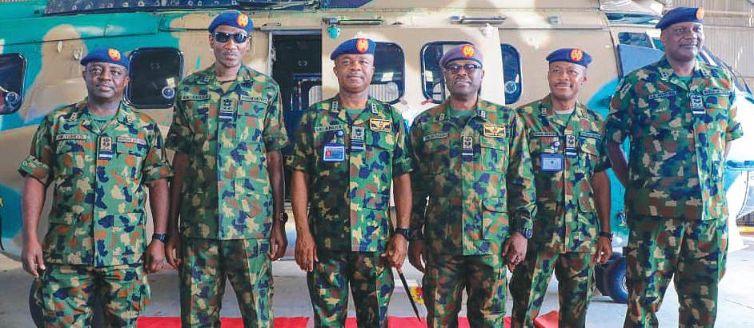
Central to the significance of the Super Puma’s return is the decision to carry out its refurbishment locally. In doing so, NAF 565 was taken out of storage and comprehensively refurbished to bolster the NAF’s air capability, using an internal maintenance approach that balanced technical precision with costeffectiveness.
To do this, the NAF deliberately pursued solutions that would minimise dependence on foreign repairs, which aligned with the CAS broader goal of developing indigenous technical capacity, curbing capital flight, and ensuring that scarce defence resources are retained within the national economy.
By performing complex maintenance tasks locally, the Air Force has ensured that its engineers and technicians acquire high-level experience required to manage and sustain a modern fleet under demanding operational conditions.
Commendation for Technical Expertise Behind Resuscitation
Commending the teams responsible for the reactivation, the CAS praised the consultant, retired Air Commodore T. A. Badru, alongside the Air Officer Commanding Mobility Command, Air Vice Marshal (AVM) Michael Nnanye Onyebashi and the technicians of 205 Rotary Wing, for their professionalism, resilience, and technical competence. Their work, he noted, reflects a growing culture of self-reliance within the NAF, where local expertise increasingly underpins fleet availability and mission readiness.
He urged personnel responsible for operating and maintaining the aircraft to uphold strict safety and maintenance standards. “Let it reflect our strong culture of airmanship, maintenance and pride,” he charged, stressing that operational effectiveness is inseparable from discipline and accountability.
As part of the Super Puma family, NAF 565 is a medium-weight, twinengine helicopter renowned for its reliability across diverse and challenging environments. Originally designed for troop transport, the platform has evolved into a multi-role asset capable of supporting both combat and non-combat missions.
Within the NAF, Super Puma helicopters have been deployed for counter-insurgency operations, airlift support, casualty evacuation, search and rescue missions, and strategic logistics movements. Their ability to operate in austere conditions has made them particularly valuable in joint operations and internal security deployments.
The refurbished airframe is painted in a light camouflage scheme, consistent with other NAF platforms such as the Mi-35P attack helicopters, enhancing visual integration and operational coherence within the fleet. The aircraft remains a critical asset in the NAF’s inventory for both operational and strategic transport needs.
Like the reactivation of the Super Puma, the clocking of 100 days in office of Air Marshal Sunday Kelvin Aneke has been guided by his Command Philosophy of “enhancing and sustaining a highly motivated, professional, and mission-ready force capable of delivering decisive airpower effects in synergy with surface forces for the realisation of national security objectives”.
Within his first 100 days, the NAF has undoubtedly made measurable operational and institutional gains, strengthening combat readiness, increasing the pace of air operations, and reinforcing mission support.
The reactivation of Super Puma NAF 565 exemplifies this progress, converting leadership priorities into tangible capability through improved aircraft availability and local technical expertise.
Other key achievements include enhanced fleet serviceability, targeted infrastructure upgrades, better personnel welfare, and renewed focus on missiondriven training. These reflect a coordinated effort to align logistics, engineering, and operations with national security priorities, building a more resilient and responsive Air Force.
While the early phase of Air Marshal Aneke’s leadership had demonstrated disciplined, results-oriented command, Super Puma’s return has provided immediate operational lift while signalling the foundation for sustained transformation.
The CAS has credited the unwavering support of President Tinubu to national security, including the acquisition of advanced helicopters and Unmanned Aerial Vehicles for the NAF, as well as the strategic engagements in the United States, Italy, and Türkiye for the procurement of 24 M-346 Fighter Ground Attack Aircraft, 12 AH-1Z Viper attack helicopters, and 10 AW-109 Trekker helicopters, all aimed at enhancing our operational effectiveness across the full spectrum of air operations.
In this light, the reactivation of Super Puma NAF 565 stands as a defining marker of the first 100 days of Air Marshal Aneke’s tenure and a practical expression of his Command Philosophy. Beyond the recovery of a vital platform, it reflects an early leadership focus on motivation, professionalism, mission readiness, and the effective integration of airpower with surface operations in support of national security objectives. Together, the milestones recorded within this period point to a command direction anchored on results, discipline, and a deliberate drive to deliver decisive airpower where and when it matters most.
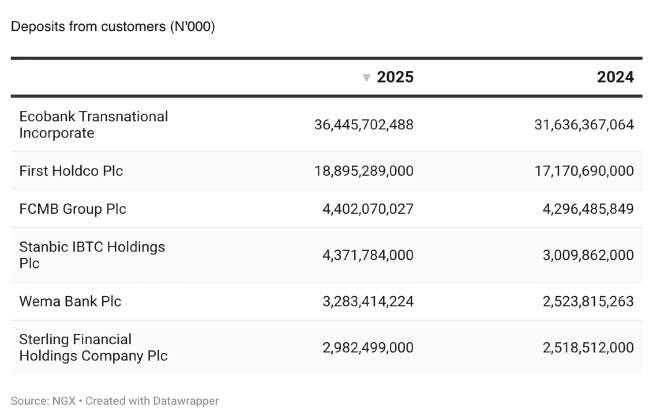
Kayode tokede
Despite severe the challenge posed by Fintech companies last year, Ecobank Transnational Incorporated and five others deposit money banks (DMBs) declared N33.99trillion loans & advances to customers for the year ended December 31, 2025.
This is represents a 9.2 per cent increase over the N31.12 trillion declared in the corresponding period 2024.
The banks include: Ecobank Transnational Incorporated,
Stanbic IBTC Holdings Plc, FCMB Group Plc, Wema Bank Plc, First Holdco Plc and Sterling Financial Holdings Company Plc.
The likes of Zenith Bank Plc, Access Holdings Plc,among others are yet to announce audited result and accounts for the year ended December 31, 2025.
A review of the unaudited results of these six DMBs operating in Nigeria, Africa and across the world, showed an aggressive increase in low-cost deposits amid severe challenges posed
by Fintech companies.
In recent years, Nigerian banks have faced competition from Fintech companies such as, Moniepoint Microfinance Bank, MoMo Payment Service Bank (MoMo PSB), Fintech subsidiary of MTN Nigeria. Airtel SmartCash, PiggyVest, Opay, Palmpay, among others that offer lucrative interest rate on loans to customers.
Recent numbers released by Moniepoint highlight how Nigerian fintechs are powering the informal economy with credit.
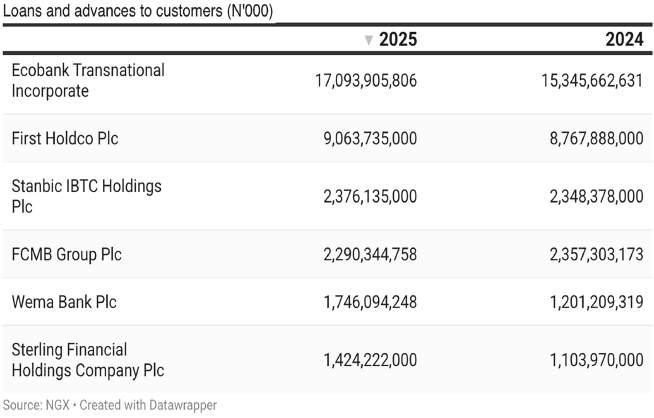
A recent disclosure by FairMoney MFB, showed that Fintech disbursed over N150 billion in loans to small businesses in 2025.
As technology evolves, customer demands continue to affect how businesses operate especially in the banking sector.
In recent times, Fintech startups have raised the bar, offering customers easier, faster, and cheaper financial services particularly in areas such as zero transfer fees, more attractive interest rates on savings, full online
banking experience, speed and simplicity. These competitive advantages are endearing them to an increasing number of customers and strengthening their position in the industry.
With the emergence of more Fintech companies, electronic payment transactions in Nigeria, as Moniepoint Microfinance Bank disclosed recently it processed transactions worth N412 trillion and disbursed over N1 trillion in loans in 2025.
In the period under review, Ecobank Transnational Incorporated declared N17.09 trillion loans & advances to customers, about 11 per cent increase over the N15.35trillion reported in 2024.
First Holdco posted N9.06 trillion loans & advances to customers in 2025, up by three per cent from N8.8 trillion in 2024, while FCMB Group declared N2.29 trillion loans & advances to customers in 2025, down by three per cent from N2.36 trillion in 2024.
The stock market section of the Nigerian Exchange Limited (NGX) advanced by N6.79 trillion in its Week–onWeek (WoW) performance, following the National Pension Commission (PenCom) decision to raise equity limits for pension funds.
The new policy injected fresh liquidity into the stock market last week as the share price of some blue-chip companies
advanced significantly.
PenCom on February 9, 2026, revised investment limits for ordinary shares in RSA Funds I, II, III, and VI-Active.
PenCom amended Section 9 of its investment regulations, increasing equity allocation caps across multiple Retirement Savings Account (RSA) fund classes: RSA Fund I moved from 30 per cent to 35 per cent; RSA Fund II from 25 per cent to 33 per cent; RSA Fund III from 10 per cent to
15 per cent; while RSA Fund VI (Active) from 25 per cent to 33 per cent
According to the regulator, the decision to revise the limits reflected the need to address implementation challenges associated with the Revised Regulation on Investment of Pension Fund Assets published in September 2025. Following the new policy, the market capitalisation rose by N6.79 trillion WoW to close the week
at N117.027 trillion.
Similarly, NGX All-Share Index (ASI) advanced by 6.16 per cent WoW to close at 182,313.08 basis points, lifting the Month till Date (MtD) and Year-till- Date (YTD) returns to +10.1per cent and +17per cent, respectively. Market breadth remained positive with 79 advancers outpacing 27 decliners, indicating broad-based buying interest. Zichis Agro Allied Industries led the gainers table by 60.71
per cent to close at N10.80, per share. Union Dicon Salt followed with a gain of 60.15 per cent to close at N20.90, while Daar Communications went up by 55.26 per cent to close to N2.95, per share.
On the other side, Abbey Mortgage Bank led the decliners table by 26.42 per cent to close at N11.00, per share. Sovereign Trust Insurance followed with a loss of 17.16 per cent to close at N2.80, while Ecobank Transnational Incorporated
(ETI) declined by 13.29 per cent to close at N45.00, per share. Meanwhile, a total turnover of 4.652 billion shares worth N193.326 billion in 286,751 deals was traded last week by investors on the floor of the Exchange, in contrast to a total of 3.860 billion shares valued at N128.581 billion that exchanged hands prior week in 240,463 deals.
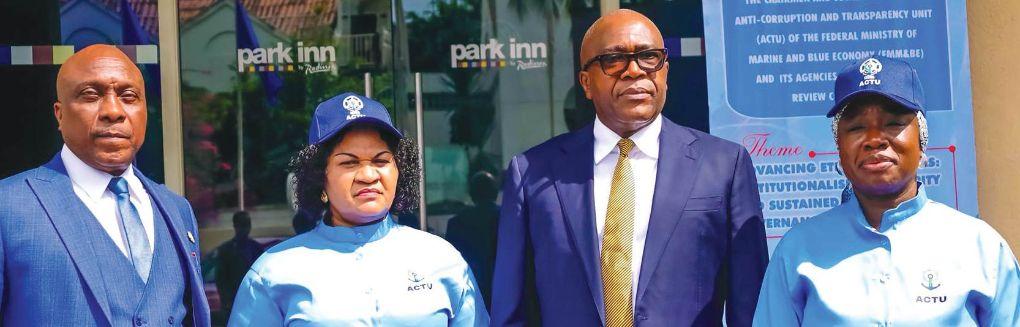
R-L: Deputy Director, Legal Services, Nigerian Maritime Administration and Safety Agency (NIMASA), Aisha Idris Yakubu; Executive Director, Finance and Administration, Chudi Offodile; Deputy Director, Special Duties, Federal Ministry of Marine and Blue Economy, Comfort Madichi and Resident Anti-Corruption Commissioner for Lagos State, Independent Corrupt Practices and Other Related Offences Commission (ICPC), Alexander Chukwurah during the Peer Review Conference hosted by the NIMASA’s Anti-corruption and Transparency Unit (ACTU) in Lagos… recently
Eromosele Abiodun
The Nigerian Maritime Administration and Safety Agency (NIMASA) has reiterated its commitment to strengthening Nigeria’s shipbuilding and shipyard development as part of efforts to deepen the blue economy and curb capital flight.
The agency gave the assurance during a stakeholders’ breakfast meeting organised by the NIMASA with the theme “Dissecting the Issues, Challenges, and Prospects in the Shipbuilding Segment –Discussing Funding Models, Incentives, and Policy Support for Shipyards Growth.”
Delivering the welcome address as Chairman of the occasion, the Executive Director, Operations, NIMASA, Fatai Taiye Adeyemi noted that shipbuilding remains a capital-intensive, cyclical and technically demanding sector that requires deliberate policy and financial interventions to achieve sustainable growth. Represented by the Director, Marine Environment Management, Dr. Oma Offodile, he said the breakfast meeting was designed to provide a clear assessment of the structural challenges confronting the shipbuilding segment and to collectively agree on pragmatic funding models, incentives and policy
Omolabake Fasogbon
Stakeholders in the built sector have charged engineers to transcend traditional technical roles and position themselves as trusted policy influencers and champions of sustainable development, amid Nigeria’s worrying infrastructure deficit.
They warned that infrastructure failures in the country are rooted
more in weak institutional judgment than in lack of technical expertise.
The stakeholders reiterated this during the investiture of the 21st President of the Association for Consulting Engineering in Nigeria (ACEN), Kunle Adebajo, in Lagos, demanding a stronger, more visible role for engineers in public policy and national planning to address sectoral gaps.
options capable of driving competitive shipyard growth in Nigeria.
“Shipbuilding is a strategic pillar of Nigeria’s maritime and blue economy aspirations.
Ebere Nwoji
It is capital-intensive, technically demanding and highly competitive, which is why deliberate funding models, targeted incentives and consistent policies are
As deadline given to insurance firms to shore up their minimum capital draws near, insurance companies are putting finishing touches to their adherence to all statutory requirements put up by the National Insurance Commission(NAICOM).
critical. Through engagements like these, NIMASA is working with industry stakeholders to address structural constraints, build local capacity, curb capital flight and position
Among the few insurance firms which have done this is Universal Insurance Plc, which said it recently deposited the sum of N1.5 billion with the Central Bank of Nigeria (CBN ) in compliance with one of the recapitalisation requirements as stipulated by the new insurance regulation the Nigeria Insurance Industry Reform Act ( NIIRA2025).
Nigerian shipyards to compete sustainably, while supporting decarbonisation, job creation and our obligations at the International Maritime Organisation,” he said.
Group Business Editor
Eromosele Abiodun
Deputy Business Editor
Chinedu Eze
Comms/e-Business Editor
Emma Okonji
Asst. Editor, Energy
Emmanuel Addeh
Asst. Editor, Money Market
Nume Ekeghe
Correspondents
KayodeTokede(CapitalMarkets)
James Emejo (Finance)
Ebere Nwoji (Insurance)
Reporter Peter Uzoho (Energy)
Addressing industry leaders, Guest Speaker Mr. Bambo Adebowale stated that engineering sits at the intersection of enterprise, policy, capital, and national development, stressing that excluding professionals from early decision making had cost Nigeria lives, public trust, and fortune. Adebowale said most failures arise not from lack of expertise, but because professionals are often invited too late, with project timelines driven by sentiment rather than technical sequencing, while supervision is frequently compromised. He challenged ACEN’s over 300 member firms to step out of the background and engage more actively in shaping outcomes.
Investors’ confidence in indigenous operators may have received a boost as Shell Western Supply and Trading expressed confidence in the operations of Petralon Energy, an indigenous exploration and production company with demonstrated capacity to acquire, develop, finance, and operate oil and gas assets.
At an event hosted in London by Shell Western Supply and Trading, to celebrate Petralon Energy’s achievement of first oil at the Dawes Island Field, its
Universal Insurance said it has concluded plans with its shareholders to shore up its Minimum Capital Requirement as directed by NAICOM.
Chief Executive Officer, Rodrigo Teixeira de Abreu, while commending the leadership of Petralon Energy, said:
It added that the N1.165bn is in addition to the N335,000,000 kit already paid after its Extraordinary General Meeting (EGM) held in Lagos.
“I want to take a moment to recognise the great work the Petralon team has done. For those who have been there since the beginning, this is the result of a very disciplined rollout of your strategy. It reflects the quality of the Petralon leadership team and the tangible strategy they have put in place, which is now delivering results”.
The DMCA Energy Nigeria Limited has rolled out its “Principle of Converted Regenerative Device” (PCRD) sustainable and renewable energy solution that could guarantee
uninterrupted electricity supply to subscribers for 35 years at a lower tariff.
The Inventor of the PCRD machine, Mr. Christopher Amabi, announced this at a press conference that was held yesterday in Lagos at the national headquarters
of the Nigerian Assocition of Chambers of Commerce, Industry, Mines and Agriculture (NACCIMA).
Amabi, who is also the chief executive officer of DMCA, declared that the PCRD is the answer to Nigeria’s perennial
electricity crisis. According to him, the machine has been in Nigeria since 2024 and has been examined and certified by the Facaulty of Engineering, University of Lagos and the Standard Organisation of Nigeria (SON).
Emma Okonji
Determined to offer Nigerians the best quality in consumer electronics products, with 99.9 per cent quality assurance, MyHomeEtal Limited has launched Microdia consumer electronics products in Nigeria.
The launch, which held in Lagos, is sequel to the official appointment of Speaking at the launch, Managing Director, MyHomeEtal, Kola Ajao, said the partnership would represent Microdia’s
official entry into Nigeria, which lays the foundation for future expansion across Africa, adding that the values of Microdia aligns closely with the mission of MyHomeEtal in delivering reliable, world-class products to Nigerian consumers.
President/CEO of Microdia, Louis Leung, said:
“We are deeply honored to partner with MyHomeEtal, a well-established company that shares Microdia’s unwavering commitment to quality, innovation, and customer trust.
Eterna Plc has announced the roll out of self-service fuel terminals across its retail network, marking a practical step forward in the company’s drive to digitize fuel retail and
improve service delivery.
Powered by smart automation technology from Fuelmetrics Limited, the terminals enable motorists to authorise and pay for fuel using cards and digital vouchers, a development that will
enhance transparency, reduce wait times, minimise cash handling, and deliver a more seamless station experience.
Speaking in Lagos during a live demonstration of how the self-service technology works, Managing Director of Fuelmetrics Limited, Olayide Folorunso, noted that the collaboration reflected a shared commitment to leveraging technology to simplify fuel management and deliver a more seamless experience for everyday Nigerians.
with Nicky Okoye ( digitalassets@anabelgroup.com )
AccoAs the race to become global leaders in the Artificial Intelligence (AI) revolution heats up, some very obvious winners are already emerging. The drive for AI dominance has deep implications for national competitiveness, military superiority, and economic prosperity. The reasons are obvious: the Next 100 Trillion Dollars (N1HTD) in global GDP growth is expected to come from a very select set of industries, especially Artificial Intelligence. It is pertinent to note that the AI industry is built on the bedrock of the computer revolution of the 1950/60s, the Information Technology revolution of the 1970s/80s, which was termed Web-1, giving rise to the personal computer, software as a service, and the ability to integrate as well as communicate globally over computer systems. The next layer of the foundation is called Web-2, which brought about the World Wide Web revolution, mostly in the 1990s. This era included Windows 95, a landmark Microsoft project that changed the information technology industry forever. Several enterprises and business models were built on Web 2, including Amazon, Facebook (now Meta), Google, Salesforce, Shopify, Spotify, and Alibaba. We are currently in the Web-3 era, which has integrated new technologies built on top of the Web-2 infrastructure to provide cutting-edge solutions that are transforming the world. One such technology that fits this description is Blockchain technology. Web-3 is taking the World in an unprecedented direction, with exceptional, national-grade information technology infrastructure carrying compressed data streams across industries, including finance, entertainment, and business applications such as Netflix, Zoom, Prime, and Palantir. Worthy of note here is the impact on the global investment industry, where new forms of digital assets and securities, such as cryptocurrencies and blockchain-based digital tokens, are traded on distributed ledger systems (blockchains) layered on the foundation of all previous IT-related revolutions.
In this respect, National leaders, policymakers, Enterprise executives, and Entrepreneurs will all need to fully understand how these trends are evolving in the months and years ahead, and how they will ultimately reshape geopolitical regions of the World. Understanding the Next One Trillion Dollars, its drivers, its pillars and its anchor industries is a requirement for leadership at all levels.
Our focus is on the Digital Asset Markets, which are layered on Blockchain technologies. I expect that this digital asset marketplace we are currently creating will have the most significant impact for Africa’s future including determining the Nationstates that will create 21st century jobs, while providing the World with unfettered access to investment platforms that are secure, affordable and that give the Nation State the ability to leverage real-world assets in an effort to raise significant funding for development while attracting global institutional investment.
AI value chain and the rise of Data Centres
One thing that is very evident to me is that the ability to support the emerging AI world, the worlds of blockchain and digital

assets, will all depend on the value chains that have become more pronounced in recent years. We cannot, for instance, expect to operate effective digital asset markets or AI industries without well-situated data centres providing cloud, storage, and data access integration across the World. A new race is underway, and analysts are likening it to the race to build gold refineries during the gold rushes of the 17th and 18th centuries, or to the race to build petroleum refineries in the late 19th and early 20th centuries when the World shifted to hydrocarbon-based energy. The entire AI industry is highly dependent on four feeders: AI-grade semiconductors, UV Lithography machines that make AI-grade chips, data centres, and sustainable energy.
Data Centre Challenges
The 21st-century data centres are energy guzzlers. It is estimated that over 3% of the world’s power demand comes from data centres. In addition, data centres consume large amounts of fresh water for cooling systems. Some nation-states, such as Singapore in 2020 and Ireland in 2025, have had to use regulatory speed bumps to slow data centre growth in their countries to safeguard their energy supply, which must be maintained for local populations first and foremost. To meet this growing challenge head-on, innovators and entrepreneurs are now looking to space for solutions to 21st-century data centres.
As of the middle of 2024, enterprises and some of the World’s most ambitious entrepreneurs began looking to space as the best location for 21st-century data centres. It is expected that by as soon as 2030, we will have orbital data centres encircling the World, drawing power from the sun and providing the entire globe with the requirements of global data access and integration. Currently, we are witnessing hosted experiments, small on-orbit compute nodes, cloud-satellite integration, and proof-of-concept edge processing for Earth observation, usually in the form of racks on the ISS/privately operated platforms. By the 2030s and beyond, we expect to see reductions in launch cost targets which will allow Starship reusability, and other competitors to take off commercially. As solar power servicing solutions mature,
larger orbital data centres will become much more commercially viable.
Major advantages of Space Data Centres over Earth Data Centres
Proximity to space assets: Space satellites are already widely used for data access and integration across many systems worldwide, including military and commercial ones. In this respect, siting data centres in space will be ideal for high-volume, latency-sensitive processing of satellite-based data (EO, communications). As computing is co-located with satellites, it reduces backhaul.
Global reach/coverage: It has an unprecedented ability to cover the entire world. LEO constellations paired with orbital computing power will offer services to remote regions with limited ground infrastructure.
Solar power: Space Data Centres will have access to an uninterrupted, continuous power supply. This unobstructed solar power source will serve for much of its orbit, enabling high solar availability. It will certainly require radiators and energy management, which can be managed by design adjustments.
Resilience and survivability: In some design architectures, distributed orbital nodes are less vulnerable to regional terrestrial disruptions (natural disasters, geopolitical attacks), which is useful for redundancy.
Regulatory/sovereignty options: In some cases, hosting data centres in space will avoid specific national jurisdictions, which have policy/usecase implications (complex legal/regulatory tradeoffs).
Cooling advantages: Radiative cooling to space can be efficient for certain thermal designs.
Space Data Centre Challenges
It is important to note that the harsh space environment can cause radiation damage to electronics, atomic oxygen exposure, and thermal cycling. This will require hardened or redundant designs, resulting in increased costs and reduced component density.
In addition, it is hard to conduct maintenance and repair in Space. Servicing an orbiting computer-based data centre is a very costly venture and could be
limited. Therefore, each unit must have very high fault tolerance, and the ability to be repaired remotely should be almost mandatory.
We expect to see full-scale orbital data centres in the medium term (late 2020s to 2030s). We expect that the costs will slow things down unless launch/servicing costs fall dramatically. In addition, we expect to see a phased adoption: hosted experiments -small commercial modules on stations -scaled freeflying facilities only after launch/ operations economics improve.
SpaceX, led by Elon Musk, is already using its networking layer (Starlink), with 9,347 satellites in orbit, is positioning itself to upgrade some of its systems to uplink data centres.
Starlink’s massive LEO communications constellation is designed to provide global, low-latency bandwidth, making orbital computing power more accessible. This design is known to enable a much faster downlink/uplink to the ground cloud systems. The payload launch mass is a major consideration and could determine a competitive advantage.
Amazon and Project Kuiper
Jeff Bezos’s Amazon Web Services (AWS) is expanding its ground capacity and integrating cloud services with satellite operators (ground stations and edge computing integrations). AWS is already well-positioned to host satellite data workflows, and once the designs are tested and ready, it will be able to host in-space computing power.
Project Kuiper is AMAZON’s planned broadband LEO constellation; it is very similar to Starlink. We expect that its design will improve the business case for spacenative applications.
Blue Origin, a Jeff Bezos initiative, is currently developing launch and habitat technologies. Still at the ground floor, its planned orbital data centres will be connected to commercial space station concepts that will host computing.
Launch cost: Launching large payloads into space is expensive. For instance, several thousand USD/kg (varies). Starship plans to reduce payloads to the low hundreds of USD/kg or less. Lowering launch costs by an order of this magnitude will make much larger orbital data centres plausible. Hardware and packaging: Radiationhardened or fault-tolerant server hardware, shielding, thermal control, power conversion, communications, easily tens of millions of dollars for modest systems, hundreds of millions for larger racks.
Power generation & thermal management: solar arrays, batteries, radiators, especially multi-MW systems, increase complexity and cost, which can run into hundreds of millions of US dollars.
On-orbit operations & servicing: The use of Robotics or crew servicing, replacement parts, deorbiting/insurance, and ongoing operational expenses imposes much higher overall costs on the management and maintenance of the Space data centres. Indeed……Great Things are Happening.
•Dr Nicky Okoye Global Investment Advisor Founder, Global Investment Advisory Community (GIAC)
The Nigeria Customs Service (NCS) has announced plans to transition to fully paperless operations by the second quarter of 2026 as part of efforts to accelerate cargo clearance, reduce port delays, and improve trade facilitation across the country’s borders.
The announcement was made during the formal launch of the One-Stop-Shop (OSS) platform in Lagos, under the theme, ‘Enhancing trade facilitation through integrated risk intervention, faster clearance process and efficient dispute resolution.’
The ComptrollerGeneral of Customs, Bashir Adeniyi, who was represented by the Deputy Comptroller-General in charge of Enforcement, Timi Bomodi, said the OSS was designed to deepen engagement with the trading community and advance Customs’ digital reform agenda.
According to Adeniyi,
“The One-Stop-Shop reflects our commitment to predictable, transparent and accountable border processes that enhance investment and national competitiveness.
“Multiple checkpoints are collapsed into one decision space, with interventions that are collective, fully auditable, and aligned with institutional responsibility. The platform targets a 48-hour clearance window, lower compliance costs, stronger revenue assurance, and enhanced transparency.”
Earlier, the Deputy Comptroller-General in charge of Tariff and Trade, Caroline Niagwan, revealed that efforts to implement the OSS began several years ago but faced setbacks.
He said, “The adoption of the OneStop-Shop started in 2018 but encountered challenges, mainly due to communication gaps. The digital platform now consolidates all risk interventions into a
single interface, eliminating procedural complications and improving clearance efficiency. Niagwan also charged Customs officers to take responsibility for the system’s success, stating, “Your involvement is crucial to achieving the objectives of the One-StopShop. Active participation from all teams will ensure the platform’s success.”
In a goodwill message, the Director-General of the Manufacturers Association of Nigeria (MAN), Segun Ajayi-Kadir, represented by a member of MAN, Segun Oshidipe, commended the Customs Service for advancing ease of doing business.
“The One-Stop-Shop represents a deliberate step to streamline procedures, reduce bottlenecks, enhance inter-agency coordination, and improve operations at ports and borders,” Oshidipe said.
Similarly, the President of the Association of Nigeria Licensed Customs Agents (ANLCA), Emenike Nwokeoji, expressed strong support for the reform.
Kayode Tokede
Vitafoam Nigeria Plc yesterday donated 100 mattresses and other materials to the Lagos State University Teaching Hospital (LASUTH), reinforcing the company’s expanding corporate social responsibility drive aimed at supporting Nigeria’s public health sector.
The donation, delivered at the hospital’s premises in Lagos, forms part of Vitafoam’s broader efforts to invest in community welfare and strengthen institutions that provide critical services to millions of Nigerians.
Vitafoam’s Group Managing Director, Taiwo
Adeniyi, said the initiative reflects the company’s commitment to giving back to society. He noted that Vitafoam plans further interventions in 2026, including medical equipment support, school construction, and partnerships with hospitals to upgrade facilities. “For 2026, Vitafoam Nigeria is donating the mattresses, among other items, to show that we care. We know that a facility of this nature will put them to use immediately, and they will be beneficial to Nigerians,” Adeniyi said. The Chief Medical Director of LASUTH, Professor Adetokunbo
Fabamwo, on behalf of the hospital’s management, staff, and patients, expressed appreciation to Vitafoam Nigeria for the donation. According to him, the gesture represents the company’s first major direct CSR intervention at LASUTH.“We are aware of the company’s legendary 60-year ‘First Baby’ programme at Lagos Island Maternity Hospital. We commend their recent refurbishment of laboratories at Unilag and their support for LUTH’s College of Nursing. These are not just donations; they are statements of corporate citizenship. Today, LASUTH joins that list, and we do not take it lightly,” Professor Fabamwo said.
Skyway Aviation Handling Company PLC (SAHCO) has achieved the prestigious ISO/IEC 27001:2022 Information Security Management System (ISMS) certification, becoming the only aviation ground handling company in Nigeria and one of the very few in Africa to attain this globally recognizedstandard.
In a statement it noted that ISO/IEC 27001:2022 is the international benchmark for information security management, providing a comprehensive framework for protecting sensitive data, managing
cybersecurity risks, and ensuring the confidentiality, integrity, and availability of information.
The firm said in the highly interconnected and technology-driven aviation industry, this certification is critical for safeguarding operational systems, passenger and cargo data, airline partner information, and regulatory communications.
The certification, it added, followed a rigorous audit and compliance assessment conducted by a globally accredited certification body, during which
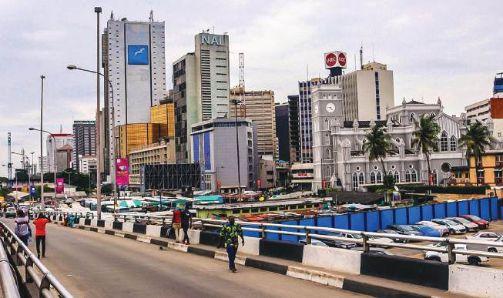
SAHCO successfully met all stringent requirements.
Speaking on the achievement, Executive Director, Dr Babatunde Afolabi stated that “Information security is not just an IT function; it is an organizational responsibility. Every employee plays a role in protecting our systems and customer data. Through structured training, strict policies, and continuous monitoring, we have built a proactive security culture that supports safe, secure, and reliable aviation operations.”
Kayode Tokede
Nigerian Breweries Plc, has recorded revenue of N1.47 trillion for the financial year ended December 2025, about 35 per cent increase over N1.08 trillion reported in 2024 financial year performance.
The full-year 2025 results showed that the company made a rebound from what
was a challenging year for the business in 2024 driven mainly by macro-economic factors.
A breakdown of the audited results showed that the company’s gross profit in the fourth quarter of the financial year also increased from N320 billion in the corresponding period in 2024 to N565 billion, representing a 77 per cent increase.
According to the provisional result released by NGX, the cost of sales rose from N765 billion in 2024 to N902 billion in the period under review in 2025, while Marketing, Distribution and Administration expenses also grew by 43per cent from N254 billion in 2024 to N364 billion in 2025. The Company Secretary/Legal Director, Nigerian Breweries
Plc, Uaboi Agbebaku, in a statement explained that the 35per cent revenue growth recorded for the financial year was supported by sustained innovation, premiumisation, right pricing, and strong commercial execution.
He also stated that the rise in operating profit reflects rigorous cost discipline, productivity gains, and supply-chain efficiencies, on
the back of the 2024 business recovery plan. “Group operating profit grew by over 190per cent, reflecting the revenue growth, rigorous cost discipline, productivity gains, and supply chain efficiencies on the back of the 2024 business recovery plan. Group net profit rebounded by 168per cent from the net loss position of a year earlier. The rebound
was aided by an 83per cent reduction in net finance costs following the successful 2024 Rights Issue which helped to deleverage the balance sheet and eliminate foreign currency exposures.
Despite the positive 2025 results, the Company’s retained earnings position remained in the negative, arising from the heavy net losses suffered in the last two years.
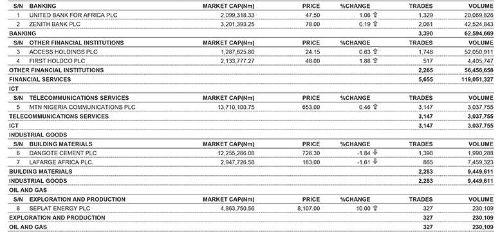
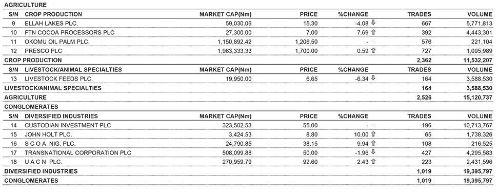
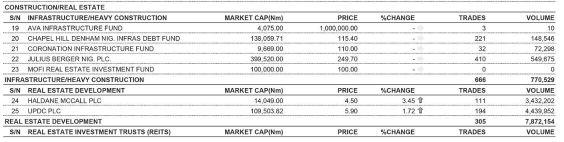
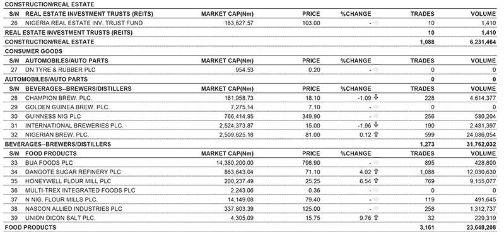
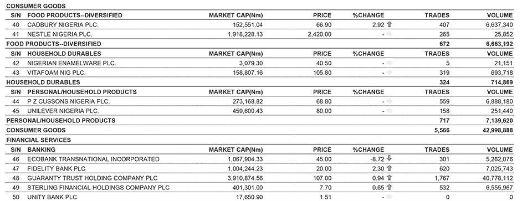
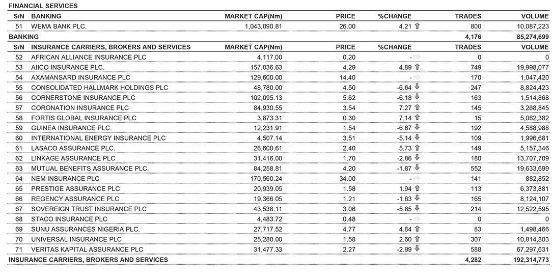

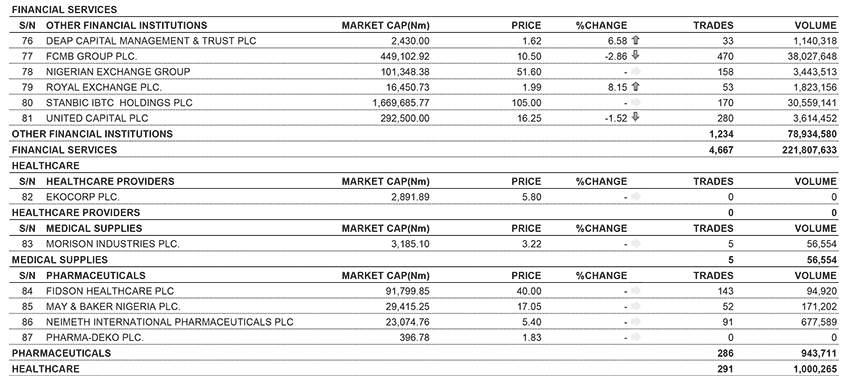
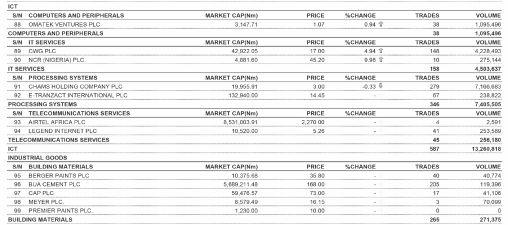
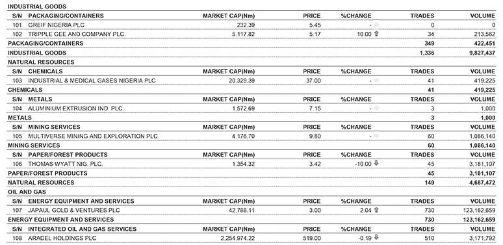
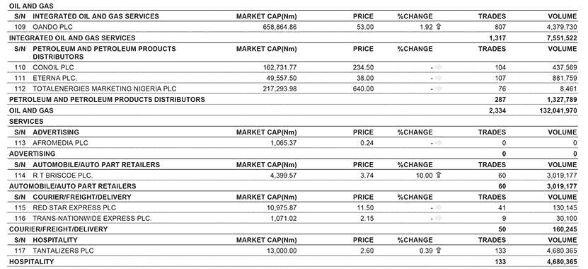
By Eunice Omokaro
Africa’s foremost tech icon and Chairman of Zinox Group, Leo Stan Ekeh, who turns 70 on February 22, this year, has explained why he is not celebrating his 70th birthday with a mega party, preferring to offer University scholarships to additional 1000 Nigerian indigent wiz-kids to study Computer Science in Federal Universities so that the country’s private and public sectors could have a new generation of tech wiz-kids to support the growth of the economy.
He anticipates that these students who will not be bonded, shall disrupt global wealth equation in favour of Nigeria and defend our tech independence. Selection shall be based on a minimum Intelligent Quotient and Age nationwide, and they shall be schooled and exposed beyond tech to become global Tech Citizens.
Speaking on phone, Ekeh said “Each shall have a tech mentor from year one, as I plan a partnership with Computer Society of Nigeria and every vocation they shall be engaged resourcefully. Beneficiaries shall be from poor homes and those with parents who earn below Government Level 10 and its equivalent in the private sector. The first batch starts this September, and I expect each to earn first class degree. This is my Group of companies’ and my little way of appreciating my country, individuals and corporates that gave us the opportunities in the last 40 years and still patronizing our Tech Group – Task Systems, TD Africa, Zinox Technologies, Konga etc. If we are successful with this spiritual mandate, I can then celebrate my 100 years on earth with a bang. With God and AI, I am aiming to make 120 years,” he said.
Ekeh, a largely humble and private person not known for celebrating birthday milestones, explained that rather than throwing a lavish birthday party befitting his newly attained Septuagenarian age, he has chosen with his Group’s Management to provide world-class tech human capital to support growth of the nation’s economy.
“We need quality and tech-savvy wiz-kids who can drive the future of government and e-governance and those who will become change-makers in the private sector.
“I have been blessed and bruised in this country and I thank God. Frankly, I don’t see enough Nigerian tech wiz-kids who can defend the massive development anticipated in the next 5 – 10 years in the oil and gas, banking, agriculture, manufacturing, mining, entertainment, etcetera, and public sectors. We are becoming slaves in our own country in a knowledge century which is unfortunate. We are all arrogantly living just for today, forgetting that only four God-anointed tech wiz-kids can alter the GDP of this country in five years. The man who controls your tech resources decides your profit level and how far your country and corporations can grow in this second quarter of the 21st Century and in future,” he said.
Ekeh, who was once decorated by President Olusegun Obasanjo as ‘Icon of Hope’ on Nigerian Independence Day in 2003, for his tech-driven transformative impact on Nigerian economy and the youths, said Nigeria must begin to plan for the disruptions coming.
“The future is here but very fragile and disruptive, it’s either you are something or nothing at all. No middle ground. We need to alter the digital trajectories of our people. Technology is realistically the only profession in
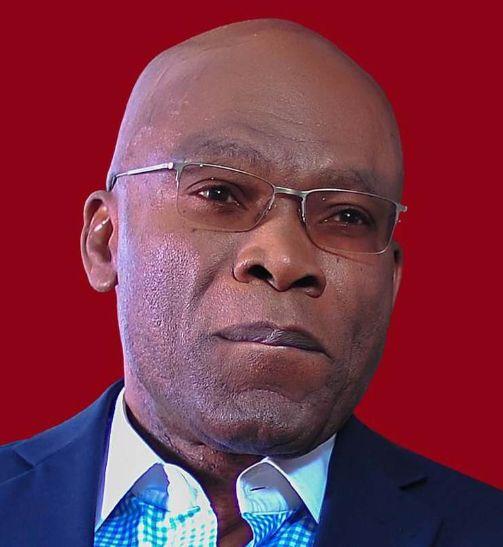
the world today that can alter the destiny of brilliant and humble kids from poor families and position them as huge wealth creators and sustainers. Though I am not really from a very poor family, but I am a testimony and shall tell the whole story in my book that shall be published last quarter of 2027. It shall be most revealing.
“This is my additional contribution amongst others to appreciate Nigerians, the Federal Government, sub- nationals and corporations that have been supporting my tech commitments and innovations on this side of the Atlantic,“ the soon-to-be septuagenarian said.
When asked how much it will cost to undertake such gigantic project, he said:
“It is a spirit-driven project to thank those who supported and are still supporting companies within the Zinox Group. It has an annual cost that shall run into billions of Naira and my group is committed to it amongst other social responsibility projects like TD Africa Project to produce 10,000 female tech experts out of which 400 have graduated and are fully employed in different corporates in Nigeria. This is a 10-year project with other perks. The full package shall be revealed online on April 22, 2026,” he said.
However, beyond his birthday and the scholarship initiative, Ekeh in the last 40 years has been a worthy role model for philanthropy and a living exemplar of what it means to live for public good. He has been decorated with a lot of local and international awards. His group has trained and retrained over 3000 Nigerians and donated tech centers to over 25 institutions nationwide just to mention a few.
Ekeh was a former mass servant and chorister in his local community Catholic Church at Ubomiri, a sprawling community
on the fringes of Owerri, Imo State. One of his favourite pastimes is to seek out the poor and help them come up the ladder of life. He is an entrepreneur who draws a distinct line between capitalism and welfarism? He believes that capitalism must wear a human face; that profit must not take the place of empathy as no one came with and shall leave this earth with cash.
His philanthropy is not limited by geography. From south to the north, his imprints of charity dot many educational institutions. A couple of years ago, he built a church complete with rectory in his Ubomiri community, the same church where he was once a mass servant.
At the dedication of the church, he recalled in an emotion-laden voice: “My grandfather produced a Reverend Father who was ordained same day with Rev Canon Tansi. My father as a past time was a soloist in this church, and he served God with all his might; I was a mass servant and a member of this choir (pointing to the horde of choristers robed in red outfit). I have never tasted alcohol or smoked since I was born and I don’t know why. It was something that never appealed to me or fascinated me. I believe our good God decided to save me from birth.
“I come from a lineage of people who served God dedicatedly. I think I am a miracle child and was clear who I wanted to be from the day I launched out as a tech entrepreneur. I saw myself as an only Child even though I have siblings and, as an orphan even though my parents were alive and a bit civilized because no person around me even though educated, had tech knowledge to advise me, so I decided to take the pain before pleasure
alone.
“I love God and will never hesitate to do anything in the service of God and humanity. I built this church as a mark of God’s special love and mercy towards me. I have the best wife any man would wish to have. She is a super star. She is intelligent, beautiful and unlike some women, she is not expensive and more importantly, we operate on the same tech wavelength. If for any reason I get stuck, she is the one to figure out the solution for me. God blessed me with brilliant and responsible children too. I am grateful to God because He has seen me through the valleys and mountains of life. As a mark of God’s mercy to me, I pay corporate tithes for all my companies. I didn’t read it in the Bible but I do it”, he told the audience.
“God is the architect of my success. As an entrepreneur, I have strategised, stayed up late, made projections but if there was no mercy of God and His grace to help me implement these, there will be no success. God has done me well; even for me to be alive, to come from the family I come from, the village, town, region and country I come from. Most importantly, God has managed me because He gave me a proactive personality, removing all the holes in my life. The temptations are there, you can imagine them. Maybe if I was taking alcohol, I would have been a mental guy. I work an average of 20 hours a day and near zero holidays and I have no health challenges,” he once told some journalists.
For Ekeh, the Forbes Best of Africa Leading Tech Icon, the scholarship for 1,000 Nigerian students remains a tiny drop in the ocean of multitude of philanthropies he has extended to persons and institutions across the continent quietly. Through his Leo Stan Ekeh Foundation (LSEF), his family’s nonprofit, and the various companies under the Zinox Group, he has impacted humanity and institutions both in cash and kind, especially human-capital development, upskilling the hitherto unskilled in tech-techniques, institutionalising entrepreneurship in select universities and awarded countless local and overseas scholarships to Nigerians of all tribes and tongues to advance their quest for knowledge.
In the last two years alone, the Foundation launched three entrepreneurship centres at St. Augustine University in Epe, Lagos, Federal University, Brinin Kebbi, Kebbi State, Imo State University (IMSU) etc. The centres had been upskilling young men and women turning them to wealth and job creators, rather than job-seekers. At the IMSU centre, it was a moment of joy for about 200 young Nigerians who were the first set of beneficiaries of a 3-month entrepreneurship boost programme. They were taught the fundamentals of entrepreneurship by the best coaches and experts drawn from Nigeria, United States and United Kingdom. Not only were they tutored by the best whizzes in diverse fields of human endeavour, they were also kept on a stipend throughout the duration of the programme to augment their weekly commute to the centre. In addition, each trainee was gifted a brand-new Z-pad tablet to aid their learning and upskilling process. Some also received interest free loans to launch their businesses.
What’s unique about Ekeh and his philanthropy is that he does them behind the scene. No cameras flashing. No media buzz. Just humane acts of a man fated for greatness and encased in God’s grace.
Emmanuel Addeh in Abuja
Despite recent ‘misunderstanding’ of the reasons for approval of offshore incentives created by the Bola Tinubu administration, Nigeria’s push to revitalise its offshore oil and gas sector is not merely an industry intervention, but a deliberate economic strategy aimed at unlocking dormant capital and accelerating national growth.
In making this case for the President, especially as it concerns the government’s offshore fiscal incentives, Special Adviser to the President on Energy, Olu Verheijen, argues that the reforms are structured as instruments for economic value creation rather than concessions to industry players.
According to her, the measures are designed to attract long-term investment, stimulate production, deepen local capacity and ultimately expand government revenues through increased activity in deepwater and offshore basins.
Indeed, Nigeria is recalibrating its energy strategy as it seeks to revive stalled offshore assets and position itself more competitively in an increasingly selective global capital market, it appears.
Tinubu’s decision to accelerate Shell’s Bonga South West deepwater project through targeted, investmentlinked incentives reflects a broader effort to attract long-cycle capital capable of delivering jobs, production growth, and foreign exchange.
Interestingly, this shift forms the core argument of a recent article by Verheijen, an energy policy, titled: “Nigeria’s deep offshore moment: Why competing for capital is now an economic imperative.” In the piece, Verheijen situates Nigeria’s offshore reforms within a global investment environment where capital is available but highly disciplined.
“What Nigeria is competing for is not altruism from investors but capital that has options,” Verheijen wrote. “Countries that offer credible returns, regulatory certainty, and clear execution pathways win that capital,” she added.
Deepwater developments are among the most capital-intensive projects in the energy industry, often requiring multi-billion-dollar commitments and long development timelines. Globally, oil and gas companies have become more cautious about sanctioning new projects, prioritising assets that can deliver scale, predictable returns, and regulatory stability.

Despite Nigeria’s substantial offshore resource base, projects such as Bonga South West remained stalled for years, largely due to fiscal uncertainty and elevated policy risk. Verheijen notes that these conditions made it difficult for Nigeria to compete with peer jurisdictions offering clearer frameworks and more predictable economics.
Recent reforms appear to be shifting that dynamic. Nigeria’s crude oil production rose to approximately 1.7 million barrels per day in 2025, at times exceeding 1.8 million barrels per day, supported by improved drilling activity and increased investor engagement.
For policymakers, offshore assets represent one of the few remaining avenues for scalable and sustainable production growth.
The investment community has not failed to take note of these changes. In fact, the investment community has taken note of these developments.
Shell’s Global Chief Executive Officer, Wael Sawan, has publicly acknowledged President Tinubu’s role in fostering a more stable and predictable policy environment, enabling longdelayed investment decisions to move forward.
Verheijen points out that incentives should not be
interpreted as concessions without value. ”When critics speak of ‘incentives’, the instinct is often to frame them as giveaways. The facts show something quite different.
Incentives approved for Bonga South West are explicitly targeted, investment-linked, and conditioned on new capital and incremental production, not blanket concessions.
“The alternative to incentives is not higher revenue today; it is no investment tomorrow,” she wrote, adding that the Bonga South West framework is structured to be ring-fenced, performancelinked, and contingent on new capital and incremental output.
She further observes that global oil and gas companies are sanctioning fewer projects overall, concentrating capital on jurisdictions that demonstrate execution discipline and enforceable policy frameworks.
“Capital is more mobile and more selective than in previous cycles. Projects that fail to offer credible returns, clear policy frameworks, and transparent regulatory regimes risk being bypassed.” Verheijen wrote.
“Being competitive matters now more than ever,” she added.
From this perspective, the Bonga South West incentives are less an exception than a signal, demonstrating Nigeria’s
willingness to adapt fiscal terms in a disciplined manner while safeguarding long-term national value. Verheijen frames the move as part of a wider reform agenda aimed at restoring investor confidence and aligning Nigeria’s offshore sector with global investment realities.
As global energy markets navigate tightening capital allocation and transition pressures, Verheijen notes that Nigeria’s ability to execute on these reforms will determine whether its offshore resources translate into tangible economic benefits.
“Execution,” she wrote, “is what will turn Nigeria’s massive resource endowment into jobs, foreign exchange, and revenues that benefit citizens.”
According to her, when the State House announced that Tinubu had approved targeted, investment-linked incentives to accelerate Shell’s Bonga South West deepwater project, it did so in the broader context of an ongoing shift in Nigeria’s energy strategy, one focused on reviving stalled offshore assets and attracting capital to deliver jobs, output, and foreign exchange.
“The deeper narrative is one of system reform and execution, not corporate benevolence. Nigeria is leveraging structural changes to create a more predictable, rule-based environment, one that signals to capital markets that policy is transparent, enforceable, and tied to measurable performance,” she argues.
In this sense, she emphasises that the Bonga South West incentives are proof points, not exceptions: they demonstrate a willingness to adapt fiscal terms in a disciplined way that protects existing revenue while unlocking new value.
“Finally, this moment must be seen as part of a broader national reform agenda, one aimed at sustainably lifting production, improving competitiveness, and enabling long-term capital flows into strategic energy assets.
“Nigeria’s evolving upstream story, evidenced by rising output and renewed investment, shows that the country can be competitive if it aligns its policies, provides regulatory clarity, and fosters investor certainty.
“Deep offshore projects have high stakes and long timelines. But in a world where capital is scarce, and energy transition pressures are real, the question is not whether Nigeria should develop these projects, but whether it can afford not to act while the window remains open,” she states.
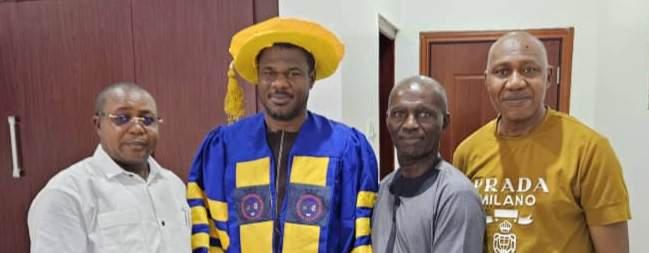
Nigeria has unveiled a new Industrial Policy designed to revive dormant factories, strengthen domestic manufacturing, and reposition the country as a competitive industrial hub.
Announcing the framework during an engagement with
journalists in Lagos on Friday, the Minister of State for Industry, Senator John Owan Enoh, said industrialisation is central to Nigeria’s economic transformation.
He stressed that while trade and investment remain important, lasting prosperity depends on productive industries that can compete
globally.
The policy is closely aligned with President Bola Ahmed Tinubu’s Renewed Hope agenda, particularly its emphasis on local content, import substitution, and industrial self-sufficiency. Senator Enoh disclosed he had recently visited several once-thriving but now inactive factories to assess operational challenges
and identify pathways for their revival under the new framework.
Analysts describe the initiative as a marked departure from previous strategies, citing its structured implementation plan and accountability mechanisms.
Professor Ayo Omotayo, Director-General of the Nigerian Institute for Policy and Strategic
The Agro-Climatic Resilience in Semi-Arid Landscapes Project (ACReSAL) has rolled out an ambitious action plan in Jiwa, a community in the Federal Capital Territory (FCT), targeting poverty reduction, flood control and climate-resilient livelihoods as part of a broader strategy to transform vulnerable rural settlements.
During a community engagement in Jiwa, the project’s Task Team Leader and Senior Environmental Specialist at the World Bank, Joy Agene, outlined a multi-layered intervention designed to address both
economic hardship and environmental risks threatening the community.
At the heart of the plan is the creation of sustainable income streams through structured support for farmers, women and youth groups. ACReSAL intends to strengthen Community Interest Groups (CIGs), streamline their proposals and link them to funding windows under the Community Revolving Fund (CRF). The goal, according to Agene, is to reduce dependence on subsistence farming by enabling residents to scale up agricultural enterprises and small businesses.
Beyond livelihood financing, the project is prioritizing urgent
infrastructure to mitigate flood risks. Technical assessments have identified drainage deficiencies as a major concern, with ACReSAL pledging to guide the community on immediate steps to improve water channels and prevent destruction during the next rainy season.
“We are not just here to make promises; we are here to support structured implementation. The drainage issues and other vulnerabilities we have seen require coordinated action before the rains begin,” Agene said.
The intervention blueprint also includes solar-powered boreholes to expand access to clean water, solar street
lighting to enhance security and productivity, and improved waste management systems to safeguard public health.
These investments, ACReSAL officials said, are designed to reduce environmental degradation while improving living standards.
FCT ACReSAL Project Coordinator, Caroline Opara, explained that the plan is built on direct consultations with over 30 community groups to ensure that interventions reflect actual needs.
She added that inclusiveness, transparency and women’s participation are central to the project’s delivery model.
Studies, noted that earlier policies failed largely due to weak execution.
He emphasised the new framework introduces a detailed implementation matrix with clear objectives, timelines, actors, deliverables, and measurable outcomes.
Key provisions include enforcing the Nigeria First policy to encourage patronage of locally made goods, reducing reliance on imported raw materials, and promoting value addition across critical sectors.
The framework also proposes annual industrial development spending of three to five per cent of Gross Domestic Product, recapitalisation of the Bank of Industry to N3 trillion, and expansion of sector-specific
intervention funds to the same level.
Additional measures cover harmonisation of tax systems, incentives and waivers, improved access to long-term, low-interest financing for micro, small and medium enterprises, and the establishment of industrial clusters with shared infrastructure and energy facilities.
These initiatives are expected to lower production costs, enhance competitiveness, and attract new investment.
Special Adviser to the President on Industry, Trade and Investment, Mr. John Uwajumogu, said the policy is designed to drive exponential growth to match Nigeria’s rapidly expanding population.
NDLEA Uncovers Airport Drug Rings, Foils Prison-backed Smuggling Plot, Raids Lekki ‘Colos’ Lab
the spokesman of NDLEA, Femi Babafemi said acting on intelligence, the anti-narcotics agency officers subjected him to a body scan which confirmed he had swallowed illicit drugs.
After being placed under observation, he excreted 52 wraps of cocaine weighing 735.95 grammes.
Africa has taken a historic step towards amplifying women's voices and leadership with the launch of "Queen of Africa," a pioneering continental reality TV show.
The show brings together 54 women, one from each African country, to compete for the
title of Africa's First Lady. The competition is designed to challenge gender inequality, promote cultural pride, and foster unity across the continent.
The executive producer of the show, King Jerry Nrialike, said during a world press conference in Lagos during the weekend that the platform was created to confront the cultural and
societal barriers that have long marginalised women.
"Women have long been marginalised due to cultural and societal barriers. Our goal is to empower women, especially those who need it most.
"This platform is about creating real opportunities for women to lead, inspire change, and foster unity across the continent", he said.
The competition is open to women aged 25-40, with each country nominating one contestant through a transparent voting process involving both local participation and a global audience. The eventual winner will be selected based on merit, leadership capacity, and public votes and will hold the title for a two-year reign.
Operatives of the National Drug Law Enforcement Agency (NDLEA) have uncovered a string of high-risk drug trafficking operations spanning Nigeria’s major airports, urban centres and even a correctional facility, arresting multiple suspects and intercepting significant quantities of cocaine, cannabis and opioids in coordinated actions across the country.
At the heart of the latest busts were three foreign-bound passengers who ingested cocaine pellets in a desperate attempt to beat airport security.
A China-based Nigerian businessman, Ibeanu Chukwudulue, 34, was intercepted at the Nnamdi Azikiwe International Airport while boarding a Qatar Airways flight en route to China via Doha.
A statement on Sunday by
He noted that on the same day, two Angolan nationals— Mbandu Makiadi, 50, and Ngoma Fernando, 52—were arrested at the Mallam Aminu Kano International Airport during clearance for a flight to Istanbul.
Body scans revealed they had also ingested narcotics. Over multiple excretions, Makiadi expelled 76 pellets weighing 920 grammes, while Fernando passed 108 wraps weighing 1.33 kilogrammes
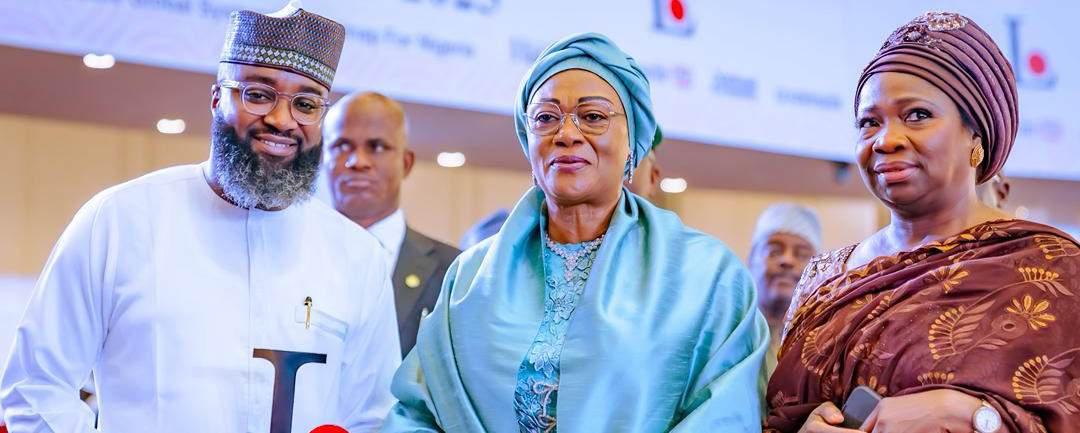
L-R: The Executive Vice Chairman/ Chief
of
Mr. Khalil
Okon Bassey in Uyo
Presidential hopeful, Mr. Peter Obi, has urged Nigerians to put away their differences and should unite to rescue Nigeria during 2027 presidential election.
"Operation Rescue Nigeria", he said was not for him as an individual but for the collective destiny of future generations of Nigerians, who would suffer the consequences of what he
described as " bad governance" going on in the country for decades.
"The current administration have collected more loans than every other administration and most of these loans will be repaid from 2045 and 2050 when most of the people who plunged the country into this indebtedness are no more" he stressed.
The former governor, who made the assertion weekend
in Uyo at the OBIDIENT Conference and Official Declaration for ADC with the theme, Activating the PO Effect in ADC" warned that rigging of election would not be tolerated during the 2027 election.
Nigeria, he said, "We must get it right in 2027, election results must be transmitted online real time and whoever fails to transmit results will be transmitted.
"Democracy must work. I left Labour party when I got informed that as long as I remain in the party, INEC will not recognise its leadership, that the federal government doesn't want me on ballot paper.
“But I want to assure you that I will contest the coming election even if it holds in their bedroom and if they don't want to transmit the results, we will transmit it for them," he stated. Obi said his administration
Olawale Ajimotokan in Abuja
Minister of the Federal Capital Territory, Nyesom Wike, has said he would ensure that any candidate not supporting President Bola Tinubu did not win in the FCT Area Councils’ election, scheduled for February 21.
Wike said this weekend in Abuja, during Senator Sandy Onor’s 60th birthday celebration, adding that he owed nobody any apology on his stand. The minister reiterated that he would only queue behind whoever supports the reelection
of the president, irrespective of political affiliation.
“We have the FCT Area Council election coming up on February 21 and I have a duty to support any candidate that supports President Tinubu to win.
“It is also my duty to ensure that any candidate that is not supporting Tinubu does not win in the election, and I owe no apology on my stand,” Wike said.
He described the celebrant as a credible ally, a trustworthy friend and good brother.
“I will continue to be with you and work with you,
because I know even if I am not alive today, you will not abandon my family,” Wike said of Onor, a Professor of History.
Former governor of Benue State, Mr Samuel Otom, who stood in for the Chairman of the Occasion and former governor of Abia State and Ambassador designate, Dr Okezie Ikpeazu, described Onor as an icon, great Nigerian, and man who had prepared himself and fit for leadership.
Former Attorney General of the Federation and Minister of Justice, Chief Kanu Agabi, SAN, described the celebrant as a courageous and intelligent
man.
"I love Senator Sandy Onor because he is not one of those who stigmatise the constitution as a product of the military. He is a courageous and intelligent man."
Prof. Dave Imbua, while presenting a Festschrift, a book written by scholars in honour of the celebrant, said Onor has remained a notable historian among academics.
In his remarks, the celebrant said he had realised in his 60th year that it was good to be a man of excellence and a man of character, adding that hard work pays.
Yinka Kolawole in Osogbo
Gubernatorial candidate of the All Progressives Congress (APC), Munirudeen Bola Oyebamiji (AMBO), has declared that no one would be excluded from decisionmaking process, saying every voice would count, and every contribution would be valued when elected governor.
The Minister of Marine and Blue Economy Adegboyega Oyetola, CON, equally reaffirmed that no efforts would he spared to return APC to government come August 8th this year. This was as the newly defected National Assembly lawmakers assured the party of more wins in the future elections.
PDP National Assembly members, including Senator representing Osun East Senatorial District, Senator Francis Adenigba Fadahunsi; Senator representing Osun Central Senatorial District, Senator Olubiyi Ajagunla; member House of Representatives representing Ijesa-North Federal Constituency, Hon.
Oluwole Oke; member House of Representatives representing Ijesa-South Federal Constituency, Honourable Sanya Ominrin; member House of Representatives representing Ife Federal Constituency, Hon. Taofeek Ajilesoro, Alhaji Lukman Opawuyi among other political juggernauts decamped into the APC.
would invest heavily in education and health sector if elected, averring that most of the great countries across the world achieved greatness through intentional investment in education, saying he would do everything possible to pull people out of poverty to reduce criminality.
The presidential aspirant said he would tour the entire country and also all higher institutions to see the real challenges on ground as he wanted to help fix Nigeria now that he has the strength to undertake any difficult task.
He added that those joining him should realise his ambition
and must understand that the priority was the future and wellbeing of the people. He promised to rid Nigeria of corruption, saying the menace would be reduced by 60 per cent once a leader and his family has nothing to do with corruption.
"When I became governor of Anambra State, I advised my wife to forget about office of first lady against advice because we were not elected together.
“I approved over 100 C of Os of government lands but have none to myself or family. If you find any, petition me to appropriate authority," he maintained.
El-Rufai’s Son Gives Condition to Dump APC, Says Except My Father Directs Me Chuks
Okocha in Abuja
A federal lawmaker and son of former Kaduna State governor, Nasir El-Rufai, Bello El-Rufai, has addressed speculation surrounding a possible defection from the All Progressives Congress (APC) ahead of the 2027 general election.
The lawmaker reacted after a social media user urged him to leave the APC for the ADC.
In his response, Bello firmly dismissed the suggestion, emphasising that his political decisions were not shaped by online pressure.
He referenced his electoral victory in Kaduna North as the basis of his stance, reminding critics of the mandate entrusted to him by voters and stressing that his primary loyalty was to the people he represented.
Referring to his win, he wrote: “Bello El-Rufai wins Kaduna North Rep seat with 51,052 to defeat the PDP candidate, Samaila who polled 34,808 votes. El-Rufai’s son sets a record by
being the first candidate to win all 12 wards in Kaduna North.” He maintained that the mandate belonged to the 51,052 constituents who elected him, not to voices on social media. Bello added that only one circumstance could prompt him to leave the APC a directive from his father, whom he repeatedly referred to as “Mallam.”
“If Mallam asks me to leave the APC, I’ll resign the seat tonight. I can be non-Partisan. My people adore me,” he said. He, however, challenged the social media user, saying: “I’ll send 10 million to you tonight if you can convince the 51,052 people that gave me this mandate. Do you have an app to confirm?”
While reaffirming his deep respect for his father, Bello also underscored his loyalty to the Kaduna State administration led by Governor Uba Sani, whom he described as his “boss,” ruling out any act of disloyalty.
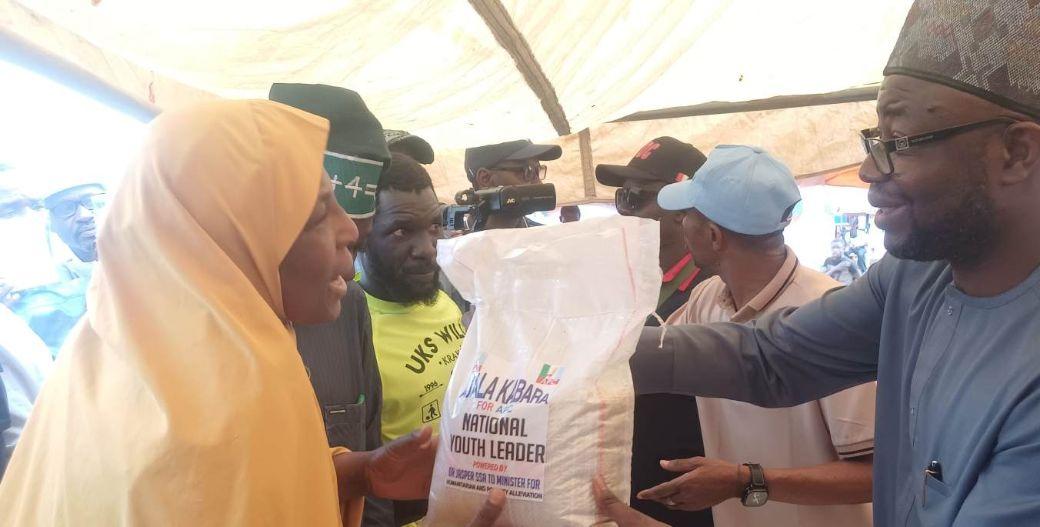
FREE CARE AND EMPOWERMENT UNDER RENEWED HOPE...
Humanitarian
and
Sunday Aborisade in Abuja
The Senate has explained why it removed the mandatory “real-time” electronic transmission requirement from Clause 60(3) of the Electoral Bill 2026, arguing that Nigeria’s electricity and broadband infrastructure could not yet sustain such a legal obligation without risking widespread disruption and post-election unrest.
consultations with stakeholders in the communications and power sectors.
Leader of the Senate, Opeyemi Bamidele, in a statement, said lawmakers took the decision after extensive
The controversial clause had proposed that presiding officers “electronically transmit the results from each polling unit to the IReV portal in real time” after signing and
stamping Form EC8A.
However, the Senate resolved to delete the phrase “real time,” retaining electronic transmission but making its timing discretionary.
Bamidele said the decision followed what he described as an “inquisition into the
Chuks Okocha in Abuja
With 2027 in mind, Presidential aspirant of the Peoples Democratic Party (PDP), Dr. Gbenga Hashim, has stepped up consultations with key stakeholders as part of efforts to reinforce unity, discipline, and purposeful leadership within the party.
According to a statement from his Media office, Hashim paid a solidarity visit to the Governor of
Bauchi State and Chairman of the PDP Governors’ Forum, Senator Bala Abdulkadir Mohammed (Kauran Bauchi).
The meeting, which also had in attendance Senator Zainab Kure, widow of the late former Niger State Governor, Abdulkadir Kure, focused on strengthening cohesion within the party amid prevailing political challenges.
Olawepo-Hashim commended Governor Mohammed for what
he described as his steadfast commitment to multiparty democracy and his resilience in upholding party principles under pressure.
He stressed the urgent need for reconciliation and collective resolve among party leaders, noting that a united PDP was essential to restoring public confidence and repositioning the party for electoral success.
“Our unity is our strength. We
must close ranks, rebuild trust, and present a cohesive front capable of delivering credible leadership to Nigerians,” Hashim said.
The discussions later expanded to include the PDP Deputy National Chairman, the Bauchi State PDP Chairman, and aides of the governor. The meeting concluded with a symbolic group photograph underscoring solidarity and shared purpose.
other side of the clause” amid heightened public interest ahead of the 2027 general election.
“I have been inundated with messages from concerned and respected stakeholders seeking clarification on why the Senate retained Section 60(3 & 5) of the Electoral Act 2022.
“We recognise the strength of the clause and its potential to deepen trust. But lawmaking must respond to reality, not sentiment.”
He explained that Section
62(2) of the Electoral Act 2022 already guaranteed the transfer of election results to the INEC Result Viewing Portal (IReV) through the National Electronic Register of Election Results.
According to him, introducing a strict real-time mandate without fully adopting electronic voting would be redundant and potentially destabilising. The Senate Leader clarified that electronic transmission of results differs from electronic voting.
Former Secretary to the Osun State Government and frontline politician, Moshood Adeoti, has formally declared his support for the second-term ambition of Governor Ademola Adeleke and announced his defection to the Accord Party, alongside thousands of his supporters across Osun State.
Assembly, Mr. Najeem Salam, who was believed to command stronger grassroots support, particularly among youths. Adeoti’s declaration came about two months after he stepped aside from active politics following internal disagreements within the Omoluabi/ADC political bloc.
The Huba Chiefdom in Hong Local Government Area of Adamawa State celebrated its first anniversary over the weekend with a vibrant ceremony at the Hong Mini Township Stadium, drawing thousands of residents, traditional rulers, and political leaders.
Huba people’s deep historical roots and resilient heritage
Former Secretary to the Government of the Federation, Boss Mustapha, CFR, who chaired the event, described the restoration of the chiefdom as a “civilisational significance” and a formal acknowledgment of the
Governor Ahmadu Umaru Fintiri was honoured with the traditional title Midala Huba (defender, warrior, hero) by His Royal Majesty, Tol Huba Dr. Alheri Bulus Nyako in recognition of his role in creating
the chiefdom in December 2024 and presenting the staff of office on 14 February 2025.
Mustapha praised Fintiri’s “visionary leadership” for correcting a long-standing historical imbalance and restoring institutional dignity to the Huba people
Adeoti, a close ally and supporter of ex-governor Rauf Aregbesola, reportedly parted ways with his principal following the emergence of the African Democratic Congress (ADC) governorship candidate for the August 8 election, Mr. Najeem Salam.
Sources disclosed that Adeoti was initially favoured to secure the ADC governorship ticket, but his former principal allegedly preferred the former Speaker of the Osun State House of
His latest move signaled a major re-entry into the political arena on a new platform with a renewed political direction. The announcement was made at a well-attended town hall meeting held in Osogbo, which brought together Adeoti’s political structure and grassroots coordinators from across the state.
Representatives from every polling unit and all 332 wards of Osun State were present, underscoring the extensive reach and organisational strength behind the decision.

The United States military has delivered ammunition to Nigeria under the framework of the ongoing US–Nigeria defence pact aimed at dismantling terrorist networks operating across West Africa and the Sahel region.
The move is also meant to address the alleged targeted killings of Christians in the country.
The collaboration formed part of broader efforts by both governments to tackle insecurity.
The United States and the Nigerian government, working under the coordination of the National Security Adviser (NSA), had intensified joint measures designed to strengthen counterterrorism operations nationwide.
Reports circulating online indicated that no fewer than
three US military aircraft landed in Nigeria between Thursday and Friday.
The aircraft were said to have touched down at military bases in Borno State and other locations across the North-east and North-west.
Although Nigerian military authorities have yet to issue an official confirmation, sources familiar with defence cooperation between the two countries disclosed that the
aircraft conveyed military supplies intended to bolster Nigeria’s fight against terrorism.
Another military source told THISDAY that he was not aware of any US military aircraft landing in Borno or elsewhere in Nigeria.
Quoting a Nigerian official, The New York Times reported that a US military aircraft landed in Maiduguri, the Borno State capital, on Thursday night.
The international news outlet
Chuks Okocha in Abuja
Former Governor of Kaduna State, Malam Nasir El-Rufai, has asked the National Security Adviser (NSA), Malam Nuhu Ribadu, to clarify reports that the Office of National Security Adviser (ONSA) imported ‘thallium sulphate,’ a very dangerous toxin.
In the letter titled: “Request for Clarification on the Procurement of Thallium Sulphate”, El-Rufai raised some questions he asked Ribadu to respond to.
According to the letter: “Dear National Security Adviser. I hope this message finds you well.
”I am writing as a concerned citizen to seek clarification and reassurance regarding information available to the political opposition leadership about a procurement of approximately 10 kilograms of Thallium Sulphate by the Office of the National Security Adviser (ONSA), reportedly from a supplier in Poland.
”Given that thallium salts are highly toxic and tightly controlled substances, I believe it is important for public safety, democratic accountability and for maintaining public trust to confirm the following details:
“1. The intended purpose and end-use of the imported thallium sulphate.
“2. The supplier identity and whether the material was imported under an existing chemical or defence permit.
“3. The total quantity and specific form or concentration
being procured or already procured.
“4. The storage and security arrangements for the maserial upon arrival
“5. The regulatory oversight and coordination in place with NAFDAC, NCDC, and relevant public-health and environmental agencies.
“6. Whether any publichealth risk assessments or hazard-mitigation plans have been developed, given the compound’s extreme toxicity.
An Abuja based lawyer and rights activist, Mr. Deji Adeyanju, has called on the Economic and Financial Crimes Commission (EFCC) and the Department of State Services (DSS) to probe former Kaduna State Governor, Mallam Nasir el-Rufai, over corruption allegations and his handling of security during his tenure as governor.
Adeyanju, in a statement urged the anti-graft and security agencies not to fail Nigerians but ensure
a thorough job is done in bringing justice irrespective of status.
"I call on the Economic and Financial Crimes Commission (EFCC) and the Department of State Services (DSS) to immediately investigate former Governor Nasir El-Rufai over allegations of corruption and his handling of insecurity during his time in office. No one should be above the law", he said.
According to the activist, if there are questions about financial misconduct or abuse of office, the agencies must
ensure the former governor gives a detailed explanation.
While describing as strange the claims of political persecution "from a man whose administration was repeatedly accused of silencing critics", the lawyer observed that several individuals including activists, religious leaders, and public commentators, who spoke against el-Rufai's administration were reportedly arrested, harassed, and or intimidated.
According to Adeyanju, the unresolved disappearance of one of his (el-Rufai) prominent critics, who was abducted in
front of his family, "remains a painful reminder of that era and must not be forgotten".
Adeyanju, further urged the DSS to investigate reported claims that elRufai's government engaged in controversial security arrangements, including allegations that payments were made to violent actors.
"These are serious issues that go to the heart of national security. For the sake of justice and accountability, both he and anyone found culpable must be thoroughly investigated", he added.
further disclosed that the first batch of US military personnel has arrived in Nigeria, marking the commencement of a planned deployment of about 200 American intelligence analysts, advisers and trainers.
The personnel were expected to support Nigeria’s armed forces in targeted counterterrorism operations, partly focused on protecting vulnerable communities, including Christians.
Officials from both countries confirmed the development on Friday.
According to The New York Times, “Officials from both countries confirmed that the first tranche of roughly 100 American troops will steadily arrive over the weekend. On Friday evening, three planes could be seen at the base, with equipment being offloaded
from one.
“These initial flights are the vanguard of what will be a stream of C-17 transport flights into three main locations across Nigeria,” a US Department of Defence official said on condition of anonymity due to operational sensitivities. The official added that additional aircraft carrying troops and equipment were expected over the weekend, with further arrivals anticipated in the coming weeks.
It was also reported that a US Air Force C-30J military transport aircraft landed at Kaduna International Airport in north-west Nigeria after departing from Ghana. The report suggested that the Kaduna facility could serve as a training hub for US personnel deployed to train Nigerian forces.
Michael Olugbode in Abuja
The Kulen Allah Vitality SelfReliance Association (KACRAN) has called for an immediate diplomatic surge to end the spiraling insecurity that has claimed more than 200 lives in recent attacks in Niger and Kwara States.
In a statement, yesterday, the association condemned what it described as a relentless cycle of killings, kidnappings and livestock rustling that has devastated families and crippled rural economies.
It also decried the reported abduction of 176 persons in parts of Kwara State, urging security agencies to ensure their swift and unconditional release.
KACRAN said while the military has continued to confront armed groups across the region, force alone cannot deliver lasting peace.
“Permanent peace is built on trust, dialogue and unity of purpose, not bullets alone,”
the association said, warning that prolonged militarisation of internal conflicts risks creating more complex and entrenched crises.
The group acknowledged ongoing security interventions under President Bola Tinubu and commended the leadership of the National Security Adviser, Nuhu Ribadu, as well as the Chief of Defence Staff, Christopher Musa. It praised the sacrifices of troops on the frontlines but expressed concern that despite a defence budget exceeding N5 trillion in 2026, attacks continue in several communities.
According to KACRAN, the persistence of violence suggested the need for a complementary political and diplomatic framework to address the root causes of instability, including poverty, youth unemployment, communal mistrust and competition over land and grazing resources.
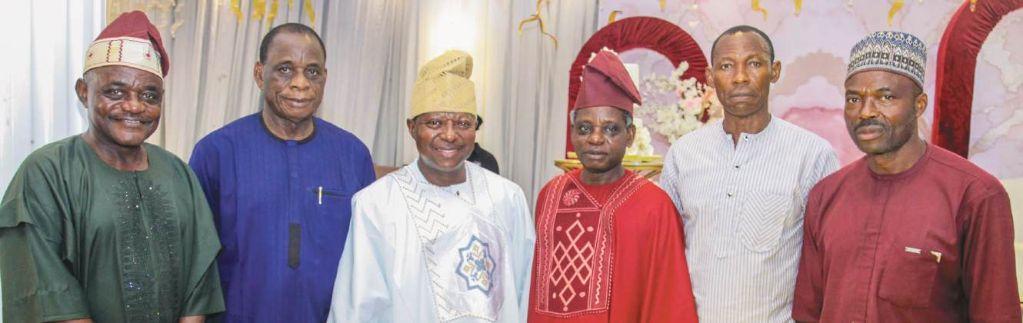
L-R: media/Publicity director, dekina old Boys association (doBa) Lagos Chapter, John omachonu; Patron, doBa, Simon Ilabija; managing director/CEo, Rossam oil and Petroleum Company Ltd/Secretary General, doBa, Samuel momoh; Chairman, doBa, navy Capt. Solomon ochidi(rtd);members, doBa, Sylvester ayebome, and oguh yusuf adaji, during the wedding ceremony of Victoria Ebiojo, daughter momoh and mr. Sunday Irikefe in Lagos…recently
‘Fayose Has No Idea What Was Discussed Between Atiku, Makinde, He
Chuks Okocha in abuja
A chieftain of the Oyo State Peoples Democratic Party (PDP), Dare Adeleke, has described former Ekiti State Governor, Ayodele Fayose, as “a political jobber and errand boy who has no inkling whatsoever of what transpired between former Vice-President Atiku Abubakar and Governor Seyi Makinde,” insisting that Fayose’s recent claims
are “nothing but desperate fabrications from a man struggling for relevance.”
Reacting to Fayose’s allegation that Governor Makinde was angling for the vice-presidential slot of the African Democratic Congress (ADC), Adeleke dismissed the claim as “another diabolical falsehood from the Ekiti political vagabond.”
Adeleke specifically faulted Fayose’s claim on social media that Makinde’s visit
Juliet Akoje Inabuja
The House of Representatives has resolved to launch a probe into the alleged failure to release N174.26 billion meant for agricultural interventions, with the Committee on Agricultural Production and Services urging Ministries, Departments, nd Agencies (MDAs) as well as development partners to cooperate fully with the investigation.
The committee’s Chairman, Hon. Bello Ka’oje, said in a statement yesterday that all relevant government bodies and stakeholders must submit necessary records and provide support to enable a comprehensive and transparent inquiry.
The lawmaker recalled that in late January, the House resolved, after adopting his motion, to investigate donor-funded agricultural initiatives backed by the African Development Bank and the Japan International Cooperation Agency o ensure accountability and proper utilisation of public resources.
He explained that the committee’s mandate specifically includes examining why the N174.26 billion intervention funds have not been released, as well as reviewing the continued high cost of fertiliser, which he said is harming farmers and undermining food production across the country.
The Enterprise Development Centre (EDC) of Pan Atlantic University recently hosted the Director -General of National Youth Service Corps (NYSC), Brigadier General Olakunle Oluseye Nafiu in its head office in Lekki Lagos.
This visit was a preparation for both organisations to create a digital platform that would enable NYSC members to acquire skills and entrepreneurship education.
The initiative that would announce on a foreseeable future has been termed a game changer.
Commenting on the development, Brigadier General Nafiu said: “The skills acquisition and entrepreneurship development
department of NYSC is equipped to tackle unemployment in the country among the youth. That is the direction the scheme is headed because we are mindful of the high unemployment rate in the larger Nigerian employment space.”
According to him, “It is part of our mandate and responsibility to tackl0e unemployment. It is one thing for parents and the government to put resources together, subsidise education, get children through the formal education sector, and it is another for the government to be concerned about getting them gainfully employed and productive to the larger society.”
to Atiku Abubakar was to negotiate a N10 billion deal for a vice-presidential ticket.
“It is disappointing, though hardly surprising, that this political jobber turned errand boy would concoct such blatant misinformation just
to stay relevant.
“The world already knows that Ayo Fayose is an unpretentious and impervious character,” Adeleke said.
He added: “We will continue to expose the clown, whose second name might as
well be ‘shameless,’ because silence in the face of such mischief would amount to complicity.
“The claim that Seyi Makinde is gunning for the ADC vice-presidential ticket is a baseless, divisive tale.
“It is being peddled by Ayo Fayose, a master of mischief whose stock-in-trade is deception.” According to Adeleke, Fayose’s actions are part of a broader agenda to undermine the PDP.
The Ondo State Security Network Agency, popularly known as Amotekun Corps, has intercepted a truck conveying 61 suspected criminals into Akure, the Ondo State capital.
The suspects, who were concealed on a trailer loaded with bags of beans, were intercepted while being transported to Akure North
Local Government Area, a zone that has recorded increased incidents of kidnapping and violent crimes in recent weeks.
Parading the suspects at the weekend alongside others arrested during coordinated security operations across the state, the Amotekun Corps Commander, Adetunji Adeleye, disclosed that a total of 95 suspected criminals are currently in custody.
According to him, only 34 suspects were physically paraded before journalists, while 61 others intercepted on the trailer are still undergoing profiling and interrogation.
“Out of the 95 suspects in our custody, 12 were arrested in connection with kidnappingrelated offences, particularly from Ilu-Abo Akure, Ayede-Akure, Iloro Camp, and Ogbese.
“Three suspects were
apprehended for violating the state anti-grazing law, while 19 were arrested for breaching law and order,” Adeleye said. He explained that the arrests were the outcome of weeks of joint security operations involving Amotekun Corps, the Nigeria Police, the Nigeria Security and Civil Defence Corps, the Department of State Services (DSS), and the Nigerian Army.
The Ekiti State Government has reinforced its commitment to inclusive governance and social protection with the distribution of food items and cash assistance to Persons With Disabilities (PWDs) across the state.
The intervention,
Dike Onwuamaeze
The Bank of Industry (BOI) and the MTN Foundation have signed a memorandum of understanding (MoU) to establish a N1 billion matching fund to expand access to finance and capacity building for women-led micro enterprises in Nigeria. The matching fund, which
coordinated by the Office of Special Education and Social Inclusion under the leadership of the Special Adviser to the Governor on Special Education and Social Inclusion, Princess Adetoun Agboola, is aimed at cushioning the effects of economic hardship on vulnerable residents.
The three-day exercise, which commenced last
is tagged “Y’ellopreneur 3.0 Programme,” is a pilot initiative designed to reach women operating viable businesses who are excluded from formal credit due to collateral and documentation requirements.
Speaking at the signing ceremony yesterday in Lagos, the Managing Director/Chief Executive Officer, BOI, Dr.
Monday and ended last Wednesday, saw beneficiaries receive bags of rice, beans, and cash grants to support their daily needs.
Speaking during the distribution, Princess Agboola stated that the state Governor, Biodun Oyebanji, places a premium on the welfare, rights, and inclusion of persons with disabilities, noting that
Olasupo Olusi, said that the initiative represented a deliberate intervention targeted at women at the base of the economic pyramid, who operate viable businesses but remain excluded from structured finance.
Olusi said that across Nigeria, women sustain a large share of micro-
the initiative was driven by compassion and a genuine desire to improve lives. According to her, the administration has consistently implemented policies and programmes designed to enhance the quality of life of PWDs, stressing that the support reflects the government’s broader commitment to leaving no one behind.
businesses that process and provide services that support household income and economic activity.
He observed, however, that many of them could not access affordable capital from traditional lending models that require documentation, collateral and financial histories that do not reflect how these businesses operate.
Kuni Tyessi in abuja
The Governing Council of the University of Abuja, now Yakubu Gowon University, has ratified the appointment of Professors Rosemary Udeozor and Muhammad Umar
Ndagi as Deputy ViceChancellors for Academic and Administration.
Udeozor is a professor of Educational Administration and Planning in the Department of Educational Management, Faculty of Education. She holds a BA Ed (1986), MEd (1988), and PhD (1995) from the University of Nigeria, Nsukka. She joined the University of Abuja in 1995 and became a professor in 2009.
Ndagi is a professor of Arabic linguistics in the
Department of Arabic. He holds a BEd in Islamic Studies and a PhD in Arabic from Ahmadu Bello University, Zaria, and a Master’s degree from the International Institute for Arabic Language, Khartoum, Sudan.
and state offices in 1978, it faced a barrage of criticism, notably from Unity Party of Nigeria, UPN. Five decades later, zoning has been elevated to a gospel truth in Nigerian politics at all levels. It is ok when things evolve as traditions, but writing it into the Constitution promises to generate a myriad of problems of its own. First, you must define who is a Northerner and who is a Southerner. North of what and South of what? If the dividing line are Rivers Niger and Benue, some Northerners live south of those rivers. Where a Nigerian comes from is also complicated by his or her remote ancestry, his or her maternal origins, place of birth, place of settlement, languages spoken, accent, where he or she went to school, where she [in particular] married, career history, and also the indigineship certificate that a person holds, which can be obtained fraudulently.
Already, some people have been campaigning to secede from the North under the name “Middle Belt.” Middle of where? Just like Biafra advocates have drawn up maps that incorporate all the Niger Delta states, Middle Belt advocates have drawn up maps that incorporate all six North Central states as well as areas as far north as southern Borno, the whole of Southern Kaduna State, [parts of] Zuru Emirate in Kebbi State, and large swathes of Adamawa, Taraba and Gombe states, which politically are defined as North East. If this wishful map were based on religion, it is problematic because four of the six North Central states probably have Muslim majorities. While National Population Commission has not conducted any census of tribes or religions since 1973, politicians in every state have a very good idea of the ethnic and religious balance in their states, and inferences can be made from the voting behaviors of states since 1999. That Niger, Kwara, Kogi and Nasarawa have consistently elected Muslim governors indicates the religious balance in those
states, but that is by the way. Who said regionalism is a more powerful sentiment than religion? Remember the hue and cry in 2023 about the “Muslim-Muslim ticket;” some people will soon demand that religious rotation be enshrined in the Constitution. Only that, they assume there are only Christians and Muslims in Nigeria, when in fact there are traditional religions, Ifa priests, Okija shrines, and the pre-Islamic Hausa deity Magiro.
When we finish with North South rotation, we must quickly face rotation among the six geopolitical zones of North and of South. Most vociferous here will be South Eastern advocates, who will point out that since 1999, Southwest and South south have both “tasted” power, to the exclusion of the Southeast. In the North too, advocates will say two civilian presidents from the Northwest [in fact from the same state] since 1999 marginalised Northeast and North Central. If we start in 2027, it will take us until 2075 for each zone to occupy the Presidency for eight years, by which time most Nigerians above 20 years of age today would be gone.
If you think by rotating among North and South and then among the three geopolitical zones in each region you have solved the problem, it is not so. Many states will still advocate that their states had not had a turn to taste power, so we must rotate among states within each zone. Right now there are 36 states and FCT; if we begin in 2027, the Presidency would have gone round each state for eight years by 2,323 AD. Even the great grandchildren of present-day Nigerians will be lucky to be alive by then.
Who said it will end there? Though Senatorial zones are a relatively new creation in Nigeria, created by FEDECO in 1978, they have acquired powerful sentimentality in many states, and when it is the turn of a state to produce the President, it must also rotate among the senatorial zones.
out of our comfort zones to fight for the soul of this great State, was indeed the right one. I want to thank the Almighty God for the discernment to follow through and not give up along the way for truly, nothing would have changed, had it not been willed from above. We have therefore gathered to return our praise to where it rightly belongs, and then to acknowledge all of us, the patriotic sons and daughters of Abam, who made themselves worthy vessels of honour unto the glory of our God.
Today, we also remember in a special way, our brothers and sisters, family members, friends and acquaintances who lost their lives owing to the structural weaknesses of the 70-year-old Omenuko bridge. While it is true that we have turned the corner, it is also fitting that we acknowledge the pain and misery several families went through in the years past owing to the failure of leadership. This occasion presents a special opportunity for us as a community to unite as one people in remembrance. It may also be an auspicious moment to make a firm declaration that the deceit and false political promises of yesteryears shall have no place in Abam or anywhere in the State ever again. On this day, we remember in a very special way, our dear brother, father and mentor, servant of the Most High God, Rev. Dr. Uma Ukpai whose body would be laid to rest in a few weeks, who lost 2 of his children at Igwu River more than 40 years ago. We also offer our collective condolences to other families whose loved ones perished at different times in the river on account of the dilapidated Omenuko bridge over it, especially Mr Maxwell Uduma of Ohafia, his dear wife, Victoria, and their driver. We also remember and pray for the peaceful repose of the souls of the 17 students who perished on the same river in 2007 on their way to an examination centre.
That will take us until 2,915AD to finish rotation between senatorial zones if we begin in 2027. That will be a time line half as long since the coming of Jesus Christ; two-thirds of the time as long since the birth of Islam; about as long as the Ottoman Empire lasted; more than twice as long since Christopher Columbus lost his way to India and “discovered” North America. In many states, sentimental attachment to senatorial zones is not nearly as strong as attachment to Emirates, Kingdoms, Chiefdoms and, in some parts of the country, to Autonomous Communities. Such feeling is so strong that around 2000 AD, then Jigawa State governor Ibrahim Saminu Turaki distributed all the state’s ministries among the Emirates. In 1991 General Babangida privately said he was splitting old Oyo State because of the hot rivalry between Oyo and Ife. Given the recent revival of traditional rivalry between Olubadan and Soun of Ogbomosho, we must factor in rotation between chiefdoms so that each one will “taste” the presidency.
Then we will have to rotate between ethnic groups. Defining them alone will give Historians, linguists, archeologists and agitators many sleepless nights. I once visited a museum at the University of Pittsburg. They showed me a list of 350 Nigerian ethnic groups and asked me to identify my own. I was confused because my ethnicity is an amalgam of at least four ethnic groups since the middle of the 19th century alone!
Then we must rotate between men and women. In 1999, PDP presidential aspirant Chief Phillip Asiodu invited me to his hotel room when he visited Kaduna. I found him locked in an argument with Mrs. Sarah Jibril; she told him that North-South rotation was not nearly as important as rotation between men and women, and I think she has a point there. The physical, biological social and psychological difference between a man and a woman is greater than, and
has wider differences in temperament and policy outlook, than between a Yoruba man and a Hausa man.
Don’t forget, for ten years now there has been a strident campaign of Not Too Young to Run. Since last year, a push by youth advocates to peg the age for running for president at 70 also generated a Not Too Old to Run campaign. There must be a rotation between elders and youths; one group touts experience, wisdom and knowledge of history while the other group touts vigour, optimism and a relatively baggage-free historical slate. Elderly politicians assembled at the Forum of Ex Legislators should not push their luck too far because a Forum of Future Legislators could soon spring up to throw them out. Who said it will end there? There will still be clamour for rotation between Natives and Settlers; between Farmers and Pastoralists; between Rural and Urban Nigerians; between Pensioners and those who are still Working; between professional groups such as Engineers, Accountants, Doctors and Academics; between occupational groups such as Hunters, Mechanics and Drivers; between Businessmen and Public Sector workers; between Soldiers and Civilians. Some people will say that soldiers occupied the Presidency for 16 years since 1999, but policemen, intelligence agents and paramilitaries must also have their turn. Nigerians in Diaspora, a remittance power behind the recent surge of the Naira, must also get a rotation. The constitutional provision that one needs a secondary school certificate to run for office must be amended so that Presidency will rotate to illiterates. There must also be ideological rotation to Socialists, Communists, Fascists, Nazis, Zionists and Anarchists, all of which must also taste power in Nigeria. Oga Gbajabiamila and the other rotation advocates, look before you leap. What you are doing is seeking to impose a permanent solution to a temporary problem.
The biggest burden any community can bear is insensitive leadership and the proof is the lived experiences of many of us. Think of the year-after-year losses our farmers had to live with owing to absence of means to move their produce to urban markets; for an agrarian community like Abam, nothing could be more frustrating.
How about the lost opportunities for many who could not go to school for reasons of poor access road or maybe the absence of quality teachers in the local schools? It was painful to listen to the experiences of many of us but what may not have been captured is that the burden of neglect went beyond Abam; from Ohafia to Arochukwu, Ihechiowa, Isu and several other clans in the two local government areas, no one was exempt from the misery of road infrastructure collapse. In the end, many of us went through multidimensional losses as the rich agricultural produce from Abam wasted, young people missed the trajectories of their destinies and our sons and daughters living outside the community were shut out, not by anyone, but for fear of unexpected twists and turns on the road or at the famous bridge. Today, we have turned the page, the nightmare is over, the siege has collapsed, the jinx is forever broken.
A new era of prosperity begins from this minute, right where the sun stands now. We have come to raise our voices as one people united by a common heritage, a shared destiny and joint aspiration for the future; we have elected to choose progress over stagnation, truth over deceit. The road and the bridge commissioned today will add to the growing list of successfully executed public infrastructure projects in this community and there is still more to come. From Ndi Ojiugwo to Ndi Ebe, Ndi Ememe to Ndi Oji, Atani to Etiti, Idima to Ndi Okereke, Ahuama to Ozu and Amuru, there are clear
development footprints wherever you look. About 75% of the projects initiated by this administration in different parts of Abam have been successfully delivered and over the next 12 months, we shall also return to commission more.
One thing you can take for granted is that nothing will ever remain the same in the years to come. Again, the credit for the transformation belongs to all of you because like in every other part of the State, you held firmly to the conviction that our dear State did deserve better than what the old order offered. Abam is fast rising on the development ladder because you refused to accept the defeatist lie that the fault was in our stars. No. It is not; for everyman is the architect of his own destiny. Thankfully, you have proven that sufficiently in your choice of leaders.
Let me, as I begin to conclude, thank Ndi Abam for the immense contributions of your sons and daughters to every good thing happening around the State today. Thank you for producing quality leaders, men and women of great courage and wisdom, pathfinders and visionaries who will always put the interest of the community above personal considerations. As a government, we shall continue to prioritise merit and give deserving individuals the opportunity to be part of the Abia success story.
This State, as we promised in our manifesto, shall be great in our lifetime and on the evidence of what has happened over the last 32 months, we can only hope for the best in the years to come. At any rate, nothing should, however, be taken for granted. The turn-around happening today in Abam and across the State did not come by chance; they are products of relentless efforts by all of us to change the unfortunate trajectory our State took at a certain point; far removed from the vision of our fathers. The ordinary men
and women in rural and urban communities, farmers, artisans, students, the professionals, businesspeople, entrepreneurs and our brethren in diaspora remain our biggest pillar of support.
What we have today is the product of a legitimate struggle by all of us who insisted that something had to give as we went into a make-or-mar election 3 years ago. We have spent every minute of the last 32 months working to justify the huge confidence reposed in us and I don’t think we have disappointed. Even then, we are encouraged to remain alert to the antics of those plotting to sabotage the gains recorded on multiple governance frontlines. Abia’s freedom and path to greatness is secured but as a wise man once said, the condition upon which God gave liberty to man is eternal vigilance. It then follows that as a people who have experienced the genuine fruits of development-oriented leadership, we now have a sacred mandate to defend with everything at our disposal, our right to freedom, prosperity and fulfilment. In the same vein, it is incumbent on us to resist with every fibre of our being, attempts by certain individuals and groups to return Abia to the old era of deceit in the name of politicking. Abia has seen the light and never again shall darkness cover our path. Here in Abam, the rivers of joy are flowing; nothing must block its path. For the sake of our children and those to tell and listen to our stories, may this light shine in perpetuity. Thank you for listening and may God bless you all.
•The above is the text of an address presented by Governor Alex C. Otti, OFR, on Friday, February 13, 2026 in Ozu Abam at an event to mark the commissioning of the New Omenuko Bridge and the 30-kilometre Ozu Abam-Arochukwu Road.
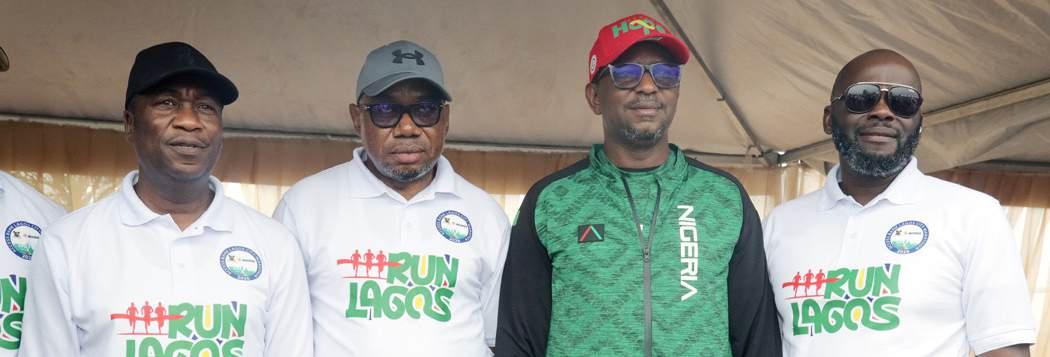
The “renewed debate” over rotational presidency that was kicked off by some big political actors last week, have they spared a thought for where it could end? At a meeting organised by National Summit of Former Legislators [did the Constitution provide for such a forum?], former House of Representatives Speaker and current Chief of Staff to the President Femi Gbajabiamila, Deputy Senate President Barau Jibrin, former Senate President Anyim Pius Anyim and former House Speakers Patricia Etteh and Yakubu Dogara were all said to have called
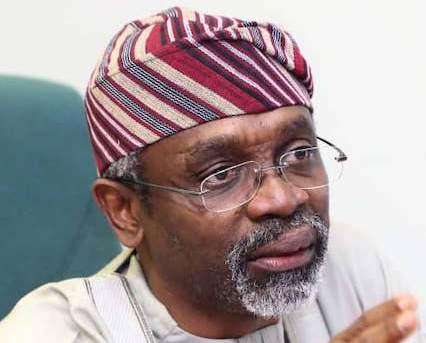
for rotational presidency between North and South to be enshrined in the 1999 Constitution.
Gbajabiamila, in particular, was reported to have said that North-South rotational presidency “is a wise and principled compromise designed to manage Nigeria’s diversity, ease political tensions and preserve national stability.” His view was important because, while most of the forum’s participants were eminent Ex-this Ex-that’s, apart from DSP Barau Jibrin, Gbajabiamila is the only man of current power at the summit. The Tinubu
Presidency is widely alleged to have caged the Legislature, Judiciary, APC, state governors and by extension state assemblies. If that is true, then the Chief of Staff’s opinion could soon be rammed into the Constitution.
Have they however spared a thought as to where this will end? North versus South feeling is probably the most powerful emotion in Nigerian politics, but it is hardly the only one. When the National Party of Nigeria [NPN] introduced “zoning” of party
Continued on page 39
We have gathered today, first to celebrate the successful commissioning of two landmark projects domiciled in Abam Onyerubi but with
and enables prosperity for all. In the same vein, the timely delivery of the 30-kilometre stretch of road transversing several clans in Abam and Arochukwu, points us to what we are truly capable of, when the leadership
in democracy and for the unrelenting commitment to our shared vision of a new Abia. In the final analysis, today’s event is about you, the good people of Abam Onyerubi, the men and women, fathers and

informed by the literal collapse of public infrastructure and the attendant frustration it engendered in several urban and rural communities across the State. We came with the simple conviction that we have what it takes to improve the economic outlook of the State and restore hope to the populace.
On the strength of the heart-felt testimonies of our brothers and sisters who have taken time to capture the general sentiments of Ndi Abam Onyerubi, I am glad to say that although it was risky, our decision to step
Continued on page 39