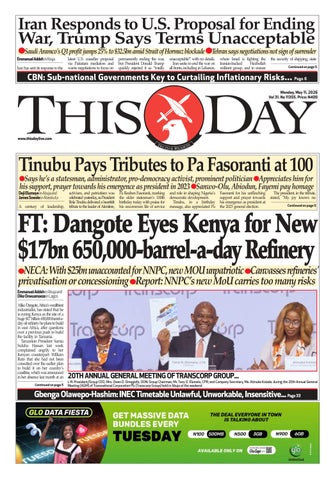
Iran Responds to U.S. Proposal for Ending War, Trump Says Terms Unacceptable
Saudi Aramco’s Q1 profit jumps 25% to $32.5bn amid Strait of Hormuz blockade Tehran says negotiations not sign of surrender
Emmanuel Addeh in Abuja Iran has sent its response to the latest U.S. ceasefire proposal via Pakistani mediators and wants negotiations to focus on
permanently ending the war, but President Donald Trump quickly rejected it as “totally unacceptable!” with no details. Iran seeks to end the war on all fronts, including in Lebanon,
where Israel is fighting the Iranian-backed Hezbollah militant group, and to ensure
the security of shipping, state Continued
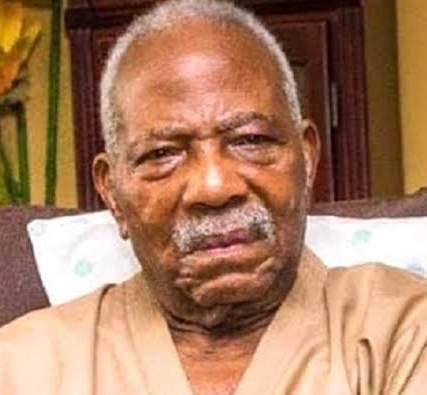
Tinubu Pays Tributes to Pa Fasoranti at 100
Says he’s a statesman, administrator, pro-democracy activist, prominent politician Appreciates him for his support, prayer towards his emergence as president in 2023 Sanwo-Olu, Abiodun, Fayemi pay homage
Deji Elumoye in Abuja and James Sowole in Abeokuta
A century of leadership, activism, and patriotism was celebrated yesterday, as President Bola Tinubu delivered a heartfelt tribute to the leader of Afenifere,
Pa Reuben Fasoranti, marking the elder statesman’s 100th birthday today with praise for his uncommon life of service
and role in shaping Nigeria’s democratic development. Tinubu, in a birthday message, also appreciated Pa
Fasoranti for his unflinching support and prayer towards his emergence as president at the 2023 general election.
The president, in the tribute, stated, "My joy knows no
Continued on page 5
FT: Dangote Eyes Kenya for New
$17bn 650,000-barrel-a-day
Refinery
NECA: With $25bn unaccounted for NNPC, new MOU unpatriotic Canvasses refineries' privatisation or concessioning Report: NNPC’s new MoU carries too many risks
Emmanuel Addeh in Abuja and Dike Onwuamaeze in Lagos
Aliko Dangote, Africa’s wealthiest industrialist, has stated that he is eyeing Kenya as the site of a huge $17 billion 650,000-barrel-aday oil refinery he plans to build in east Africa, after questions over a previous push to build the facility in Tanzania.
Tanzanian President Samia Suluhu Hassan last week complained angrily to her Kenyan counterpart William Ruto that she had not been consulted over the earlier plan to build it on her country’s coastline, which was announced in her absence last month at an
wellness within reach
with W Health loan
The W Health Loan provides women with access to financing for eligible healthcare services
*Terms and conditions apply
Petralon Energy Raises Oil Production on Dawes Island By 2,800 Bpd Brings
DI-3 well onstream under 6 months
Emmanuel Addeh in Abuja
Within six months of achieving first oil on the Dawes Island Field, indigenous operator Petralon Energy has, through its subsidiary Petralon 54, commenced production on its second consecutive well, DI-3.
Production on the well, the company said in a statement, began on March 14, 2026 and has since delivered average
infrastructure summit.
“I’m leaning more towards Mombasa because Mombasa has a much larger, deeper port,” he told Financial Times in an interview. He compared Kenya’s port to Tanga, the proposed Tanzanian site for the refinery to process oil from Uganda and the open market. Dangote estimated it would cost $15 billion to $17 billion to build.
“Kenyans consume more. It’s a bigger economy,” he said, adding that crude oil for the refinery could be transported by ship and need not be located near a pipeline that will carry oil nearly 1,500 kilometres from Ugandan
bounds as we witness Pa Reuben Fasoranti, our father, elder statesman, administrator, prodemocracy activist, prominent politician, and foremost Afenifere leader, attain the milestone age of 100 on May 11.
"Baba Fasoranti deserves all the encomiums that will come his way on this occasion for his uncommon life of service and immense contributions to this country.
"Pa Fasoranti has distinguished himself in all respects: in his disciplined, spartan way of life, his belief in principles, and his commitment to noble causes. His life is a metaphor for integrity, honesty, dedicated service to
TV said. Washington’s latest proposal addressed a deal to end the war, reopen the Strait of Hormuz and roll back Iran’s nuclear programme.
Trump earlier on social media accused Tehran of “playing games” with the United States for nearly 50 years, adding: “They will be laughing no longer!”, AP reported.
Trump is giving diplomacy “every chance we possibly can before going back to hostilities,” the U.S. ambassador to the United Nations, Mike Waltz, told ABC earlier.
Iran’s new supreme leader, Mojtaba Khamenei, who has not been seen or heard publicly since the war began, “issued new and decisive directives for the continuation of operations and the powerful confrontation with the enemies” while meeting with the head of the joint military command, the state broadcaster reported, with no details.
additional daily production of approximately 2,800 barrels of oil per day (bopd), bringing the field's combined production capacity to approximately 4,800 bopd. DI-3 builds directly on the performance of DI-2, which came onstream on October 18, 2025, the company stated, adding that together, the two wells represent a sustained, back-to-back drilling programme on a field that was
oilfields to the Tanzanian coast at Tanga.
“The ball is in the hands of President Ruto,” he said.
“Whatever President Ruto says is what I’ll do,” the Nigerian billionaire added
For the east African refinery to get off the ground, Dangote said, he would need Ruto to offer land, some east African finance and, most important, protection from what he called dumping of cheap fuel from the likes of Russia or India.
“There is no refinery in the world that can survive without that protection,” he said. “If we have an agreement, we can start
the nation and true leadership.
“Early in life, Baba understood the value of education as a catalyst for personal and societal development.”
Tinubu said further of the centenarian, “He bagged a degree in English/Geography at the University College in Ibadan (now the University of Ibadan), a postgraduate diploma in Education at the University of Hull, United Kingdom, and a Master’s in Education Administration and School Management at Maguire University, Sydney, Australia.
"Pa Fasoranti has enduring legacies and footprints in education, as evidenced in
It followed a U.S. proposal to end fighting before starting talks on more contentious issues, including Iran's nuclear programme.
Iran’s semi-official Tasnim news agency said Tehran's proposal included an immediate end to the war on all fronts, a halt to the U.S. naval blockade, guarantees of no further attacks on Iran and the lifting of sanctions on Iran, including a U.S. ban on Iranian oil sales.
The Wall Street Journal quoted unnamed sources saying Iran proposed diluting some of its highly enriched uranium and transferring the remainder to a third country.
Pakistan, which has been mediating talks over the war, forwarded the Iranian response to the U.S., a Pakistani official said.
Despite a month-old ceasefire in the conflict and after some 48 hours of relative calm, hostile drones were detected over
non-producing at the time of Petralon's acquisition in 2021.
The company said it has to date exported over 350,000 barrels of oil from the field via the Bonny Oil and Gas Terminal, which lies about 30km from the field. The DI-3 well was delivered with zero lost-time incidents, consistent with the company's commitment to world-class health, safety and environmental standards across
this year,” he explained. He told the FT he could still build the refinery in Tanzania “if they are able to sort themselves out”.
Dangote’s Nigerian refinery was built over 10 years entirely in-house, defying critics who doubted he could ever get it up and running after decades in which the Nigerian state had tried and failed to build meaningful refining capacity.
“Dangote feels vindicated, not only by succeeding technically in getting the refinery to work, but also succeeding commercially,” one Dangote executive said, speaking on condition of anonymity.
his service as a teacher in his alma mater, Ondo Boys’ High School, among other institutions in the Ondo-Akure axis, and in his establishment of Omolere Nursery and Primary School in Akure, Akure High School, and later St. Frances’ Academy, Igoba, Akure, which he founded in memory of his late wife.”
The president stated, "Papa, however, had a greater impact through his political activities, activism, and vision. A disciple of the late Chief Obafemi Awolowo and one of the last surviving Awoists, Pa Fasoranti belonged to the defunct Action Group in the First Republic and to the Unity Party of Nigeria in the
several Gulf countries on Sunday, underlining the threat still facing the region.
With Trump due to visit China this week, there has been mounting pressure to draw a line under the war, which has ignited a global energy crisis and poses a growing threat to the world economy.
Tehran has largely blocked non-Iranian shipping through the narrow Strait of Hormuz, which before the war carried one-fifth of the world's oil supply and has emerged as one of the central pressure points in the war.
Addressing whether combat operations against Iran were over, Trump said in remarks aired on Sunday: "They are defeated, but that doesn't mean they're done."
Israeli Prime Minister Benjamin Netanyahu said the war was not over because there was "more work to be done" to remove enriched uranium from Iran, dismantle enrichment sites and
its operations.
Dawes Island is located approximately 15km from Port Harcourt in the Eastern Niger Delta, covers roughly 46 km² and holds an estimated 17.6 million barrels of recoverable oil. Petralon 54 holds a 100 per cent working interest in the field, acquired in 2021.
“Our success at Dawes Island was built on the conviction that Nigerians could acquire, develop,
The plant, the biggest so-called single-train refinery in the world at 650,000 barrels a day, has hit full capacity just when other countries are struggling to access petrol, diesel and jet fuel because most ships cannot transit the Strait of Hormuz.
Unlike several other African countries, such as Mauritius, Ethiopia and Zimbabwe, which have had to ration fuel or dilute it, Nigeria has seen no lines at petrol stations and has not had to take emergency measures.
Dangote’s refinery has been able to divert jet fuel, at hefty premiums, to European airlines scrabbling for supplies to keep
Second Republic.
“Between 1979 and 1983, in the UPN administration of the late Chief Adekunle Ajasin in old Ondo State, Baba Fasoranti served meritoriously as Commissioner for Finance. It is on record that his integrity and financial prudence helped manage the state's finances.
"Owing to his fervent belief in Awolowo’s vision, the Yoruba ethos of Omoluabi, emphasising the significance of good conduct and ideals, and his consistency, Baba was to play even more prominent roles in the postSecond Republic era, an era of
and operate world-class energy assets. That conviction once required courage, today, it stands on proof.
The easy thing after DI-2 would have been to pause, but the determination and resilience of every single member of the Petralon team drove us forward, and DI-3 is the result of that effort. Progress like this is only possible through the strong collaboration we have
flying. He has also prioritised sales to Ethiopian Airlines, by far Africa’s most important carrier, with a network that covers the entire continent.
The Dangote refinery is also a big exporter of urea fertiliser to the rest of the continent, with Nigeria absorbing only a fraction of its 3mn-tonne annual capacity.
The Iran war, and the resulting closure of the Strait of Hormuz, has been “payday” for Dangote’s business, according to the senior executive, who said fertiliser prices had doubled and margins on jet fuel widened significantly.
Dangote told the FT: “You can see all the other oil companies,
built with our host communities, our regulator, and our partners. This is only the beginning of what Dawes Island can deliver," said the
Unuigbe.
and
their profitability has doubled. So you don’t expect us to do less.” Kenya’s president has been fulsome in his praise of Dangote, saying that the Nigerian industrialist, the richest man in Africa, has demonstrated that Africans can build their own mega-projects.
“Nigeria has been a producer of oil for all the years that we know,” he said of Africa’s most populous country. “Yet, when you went to Nigeria, there were queues of people looking for fuel in petrol stations until one African stepped forward
Fasoranti Continued on page 36
address Iran's proxies and ballistic missile capabilities.
The best way to remove the enriched uranium would be through diplomacy, Netanyahu said in an interview with CBS News' "60 Minutes," without ruling out removing it by force.
Saudi Aramco’s Profit Jumps 25% in Q1
Also, Saudi Aramco reported a 25 per cent jump in first-quarter profit yesterday, showing its resilience as U.S.-Iran war tensions curtail Strait of Hormuz shipping, with the state oil giant's East-West crude pipeline running at full capacity to mitigate the impact to supplies.
The world's top oil exporter earned a net profit of $32.5 billion in the three months ended March 31, beating an LSEG consensus estimate of $30.95 billion.
Total revenue surged nearly 7 per cent from a year earlier to $115.49
billion due to higher prices and volumes sold of both crude oil and refined and chemical products.
Iran's blockade of shipping through the crucial Hormuz waterway amid the U.S.-Israeli conflict which has curtailed energy supply and sent prices surging, prompted Aramco to ramp up crude flows from its east coast to the Red Sea port of Yanbu, Reuters reported.
"Our East-West Pipeline, which reached its maximum capacity of 7.0 million barrels of oil per day, has proven itself to be a critical supply artery, helping to mitigate the impact of a global energy shock," Aramco Chief Executive, Amin Nasser said, adding that "reliable energy supply is critical."
The pipeline can supply about 2 million bpd to refineries on Saudi Arabia’s west coast, leaving 5 million bpd for export.
During the war, Saudi Arabia cut output by 2 million bpd after Iran blockaded Hormuz,
a waterway that carried a fifth of world oil supply before the war. The line mainly carries Arab Light and some Arab Extra Light, with heavier grades curtailed. Aramco's adjusted quarterly net profit was $33.6 billion, beating a company-provided median analyst estimate of $31.16 billion. The figure strips out $1.06 billion in non-operational accounting items. Besides, capital expenditure fell slightly to $12.1 billion in the quarter from $12.5 billion a year prior, and was sharply down from $13.4 billion in the fourth quarter. Aramco had outlined $50-55 billion in capital expenditure this year. Aramco also declared a firstquarter base dividend of $21.9 billion, up 3.5 per cent year-onyear and payable in the second quarter, in line with expected total dividends of $87.6 billion for 2026. It had also introduced a performance-linked dividend in 2023 linked to free cash flow.
Founder
Chief Executive Officer of Petralon Energy, Ahonsi
Central Bank of Nigeria (CBN) has underscored the importance of fiscal discipline by state governments in the planned transition to an Inflation Targeting (IT) monetary policy regime, warning that sustainable price stability cannot be achieved without coordinated action across all levels of government.
CBN Deputy Governor, Economic Policy Directorate, Dr. Muhammad Sani Abdullahi, described the move towards inflation targeting as a shift to a more rule-based, transparent, and forward-looking monetary framework that demanded
close collaboration with state authorities.
Abdullahi spoke during an engagement with sub-national stakeholders, which was facilitated through the Nigeria Governors’ Forum (NGF) secretariat.
He said while the central bank retained responsibility for deploying monetary policy tools to control inflation, fiscal actions, particularly at the sub-national level, played a significant role in shaping inflation outcomes within the country's federal system
He explained that inflation targeting was fundamentally about managing expectations, warning that uncoordinated or
expansionary fiscal actions by state governments could either reinforce or undermine monetary policy signals.
Abdullahi stated that states influenced inflation through multiple channels, including borrowing decisions, domestic debt accumulation, expenditure patterns, wage bills, capital project execution, salary arrears, overdrafts, contractor financing, and weak coordination on the Federation Account Allocation Committee (FAAC) receipts, cash management, and debt servicing.
He said, “In an inflation-targeting regime, persistent, unpredictable or expansionary fiscal behaviour
at the sub-national level can significantly undermine price stability.”
In a statement, the CBN deputy governor stressed that the absence of fiscal dominance, where government borrowing pressures compel the central bank to monetise deficits, remained a core prerequisite for successful inflation targeting.
He stated that the principle applied not only at the federal level but equally to state governments.
Abdullahi urged states to reduce reliance on overdrafts and short-term financing, and ensure that borrowing decisions aligned with debt sustainability thresholds,
Aviation Union Decries Jet Fuel Crisis, Says Supply Shortfall Pushing Industry to Breaking Point
Fresh concerns have emerged over the growing effect of Nigeria’s Jet A1 aviation fuel shortages, with National Association of Aircraft Pilots and Engineers (NAAPE) raising the alarm over the aviation fuel crisis and saying the shortfall in supply is pushing the industry to the breaking point.
NAAPE alleged that the supply shortfall was forcing operators to engage in dangerous operational compromises, and called for urgent intervention by the concerned authorities.
The union, in a statement signed by its president, Captain Bunmi Gindeh, warned that the crisis posed a direct threat to flight safety and the structural survival of Nigeria’s aviation industry.
NAAPE insisted that the
shortage had evolved beyond a simple logistics issue into a critical emergency that jeopardised both operational standards and the sector’s long-term viability.
According to the union, the consequence of the jet fuel crisis is the escalating risk of crew fatigue, as flight schedules collapse, and pilots and engineers are frequently pushed beyond planned duty parameters.
The union emphasised that operating under such physical and cognitive strain eroded the situational awareness critical for managing complex flight environments, effectively placing passengers at measurable risk.
NAAPE stressed that the crisis was also dismantling the industry’s economic foundations, with aircraft grounded and revenue streams frozen, as airline operators faced severe financial haemorrhage.
That instability, the statement
said, had already begun to affect the workforce through delayed salaries and deteriorating welfare, creating a distracted environment that further compromised safety protocols.
The union also pointed out that some parts of the country were being underserved because some airlines had withdrawn their services due to the crisis.
It recalled the recent route reductions by carriers, like Rano Air, as a precursor to a wider industry collapse.
The association warned that without immediate intervention, the sector faced a wave of route suspensions, potential airline closures, and mass job losses, insisting that such a contraction would ripple through the national economy, stifling trade and tourism.
NAAPE called for “decisive and immediate action”, and urged the federal government
and regulatory bodies, including Nigeria Civil Aviation Authority (NCAA) and Nigerian Midstream and Downstream Petroleum Regulatory Authority (NMDPRA), to treat the fuel supply chain as a matter of urgent national priority.
The association emphasised that the long-term viability of Nigerian aviation was now contingent on resolving the fuel impasse before the current operational strain led to an irreversible catastrophe.
Within commercial aviation globally, fatigue management remains a major safety priority. Industry regulators and operators typically maintain strict duty time limitations for pilots and technical personnel because prolonged work cycles can impair judgement, communication, and emergency response capacity during flight operations.
improved budget realism and revenue forecasting, prioritised expenditure, and better synchronised fiscal calendars with prevailing macroeconomic conditions.
Abdullahi further outlined four key responsibilities for states under the inflation-targeting framework,
Kayode Tokede
Transnational Corporation Plc has declared a total dividend of N20.3 billion, representing N2.00 per share to its shareholders, at its 20th Annual General Meeting (AGM), held in Abuja.
The total dividend comprised an interim dividend payment of N4.06 billion, representing 40 kobo per share, paid in August 2025, together with a final dividend of N16.3 billion, equivalent to N1.60 per share.
At the AGM, where the shareholders approved the Audited Financial Statements for the year ended December 31, 2025, Group Chairman, Transcorp Plc, Mr. Tony Elumelu, restated the company’s commitment to delivering sustainable long-term value creation, as shareholders commended the conglomerate and its management for sustained performance.
In 2025, the group, with a combined market capitalisation of N4.78 trillion ($3.52 billion) as of May 7, 2026, recorded strong year-on-year growth across all key metrics.
Revenue increased by 33 per cent to N544 billion (FY 2024: N408 billion). Profit Before Tax rose 31 per cent to N179.5
including maintaining fiscal discipline and predictability; pursuing responsible borrowing aligned with medium-term fiscal frameworks; strengthening coordination on cash and debt management; and enhancing internally generated revenue mobilisation.
billion (FY 2024: N136.7 billion), while Profit After Tax surged 44 per cent to N135.9 billion (FY 2024: N94.1 billion).
Elumelu said, “Transcorp Group remains firmly focused on strong corporate governance and the disciplined execution of its strategic priorities to deliver sustainable, long-term value.
“Despite a challenging macroeconomic environment, the group continues to benefit from its diversified portfolio, which has underpinned resilient financial performance in 2025.”
President/Group CEO, Transnational Corporation, Mrs. Owen Omogiafo, said, “FY 2025 was a year defined by disciplined execution, strategic resolve, and resilient performance. Transcorp Group is committed to resolving the energy crisis in Nigeria; we have an energy situation, and the gap between the demand and supply is still very wide.
“Hence, we will continue to work assiduously and tirelessly towards bridging that gap, creating value for the wider country. In our hospitality business, the 5,000-seat capacity Transcorp Centre hosting us today is a testament to our disciplined execution, and you will see more in the coming years.”
Chinedu Eze and Kasim Sumaina in Abuja
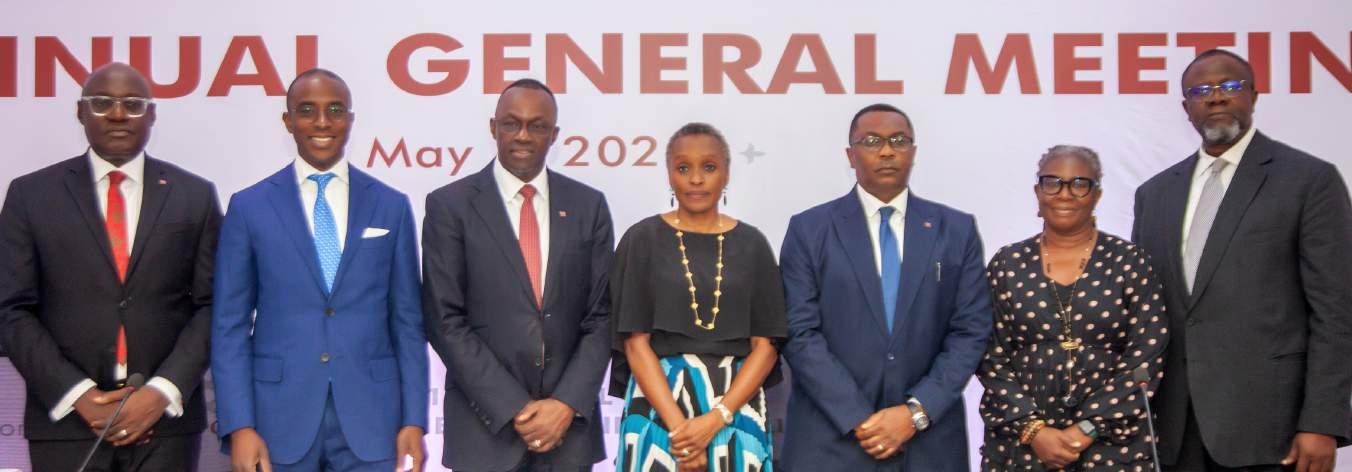
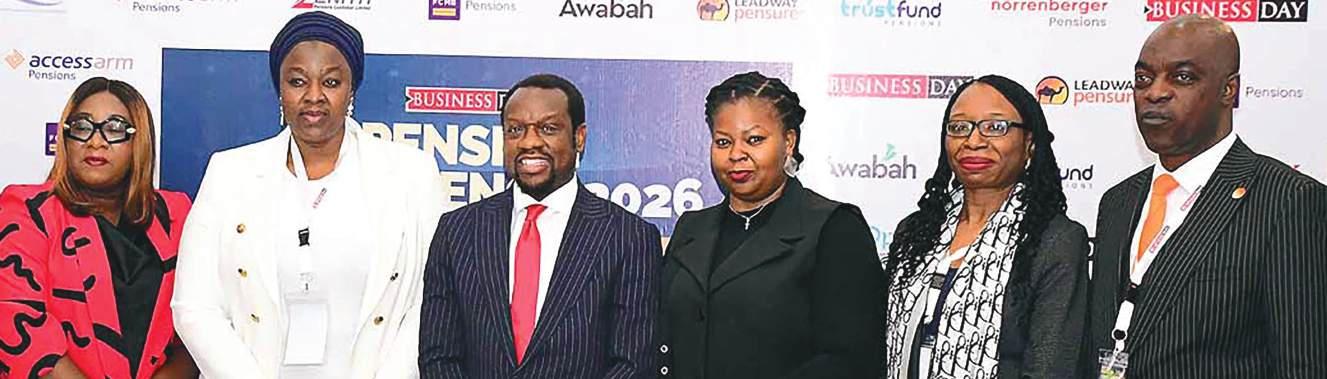
Director, Access ARM Pensions, Okey Nwuke; Acting Managing Director/CEO, Access ARM Pensions, Abimbola Sulaiman; Chairman, Access ARM Pensions, Gbenga Oyebode; Non-Executive director, Access ARM Pensions, Bolaji Agbede; Shareholder, Muhammed Alikumo, and Company Secretary, Access ARM Pensions, Mojisola Oyewole, during the company’s 21st Annual General Meeting in Lagos...recently
Guinness Nigeria CEO Links N10.39bn
Profit,
N122.7bn Revenue to Fresh Efficiency Drive
Emmanuel Addeh in Abuja
Managing Director and Chief Executive Officer of Guinness Nigeria Plc, Girish Sharma, has attributed the company’s strong start to 2026 to improved operational efficiency, localised decision-making, and expanded market penetration, saying the business has been repositioned for sustained growth.
The comments followed the recent release of Guinness Nigeria’s first quarter 2026 results, which showed a 48 per cent year-on-year rise in Profit After Tax (PAT) to N10.39 billion and a 4 per cent increase in revenue to N122.77 billion.
The company also recorded improved earnings per share and significantly lower net finance costs, reflecting tighter cost
controls and improved capital efficiency. Its board approved an interim dividend of N2.00 per share, amounting to about N4.38 billion.
The performance places Guinness Nigeria among a small group of consumer goods firms maintaining profitability and shareholder returns despite inflationary pressures, currency volatility, and broader macroeconomic challenges.
Speaking in an interview with CNBC Africa, Sharma said the performance reflected the success of a deliberate restructuring strategy implemented over the past year.
“We grew distribution, we’ve become far more efficient today, and we were able to make our people more agile because we brought decision-making down
Tinubu Mourns Renowned Medical Doctor, Daniel
Olaosebikan
Says he was an embodiment of compassion, kindness, and integrity
President Bola Tinubu has mourned renowned medical practitioner and co-founder of Onward Specialist Hospital, Osogbo in Osun State, Dr Daniel Aremu Laosebikan.
The President, in a condolence message issued on Sunday, disclosed that Dr Laosebikan, who passed away on March 29, 2026, dedicated his life to improving access to quality medical care, mentoring younger medical professionals, and serving humanity with uncommon commitment and purpose. According to Tinubu: "He was a distinguished physician and compassionate humanitarian whose
contributions to healthcare delivery in Osun State and beyond left an enduring legacy.
"His devotion to the profession earned him admiration across the medical community and among patients and families whose lives were positively impacted by his expertise and compassion.
"I extend my heartfelt condolences to his family, the government, and the people of Osun State.
"As Dr Laosebikan begins his final journey home on June 3, 2026, I pray that God Almighty repose his soul and grant comfort and strength to all who mourn the loss of this embodiment of compassion, kindness, and integrity."
to Nigeria,” he said. According to him, while the company may not sustain the pace of its recent 144 per cent revenue growth trajectory, it remains positioned to maintain double-digit expansion going forward.
“The past year has been a year of reset, but expecting 144 per cent revenue growth might not be what we should be looking at. However, I don’t see why we’d not be growing by double digits at the very least,” he added.
Sharma said the company’s transformation strategy was built around four pillars, beginning
with organisational culture and employee empowerment.
“From a strategy perspective, I spent the first 100 days drawing the blueprint,” he said. “At the end of it, we actually broke the strategy into four pillars. First was culture; we needed to make people feel more empowered, more than anything else,” he added.
He explained that the second pillar focused on operational excellence through localisation, aimed at improving efficiency and responsiveness in the Nigerian market.
The third pillar, according
to him, centred on consumerfocused innovation, with the company introducing new products while refining existing offerings to reflect evolving market preferences.
Looking ahead, Sharma said Guinness Nigeria’s growth strategy would increasingly reflect prevailing cost-of-living realities, with stronger emphasis on value-led innovation and affordable product formats.
He cited the recent introduction of Orijin Beer in PET (polyethylene terephthalate) packaging as part of efforts to adapt pack sizes and product
propositions to changing consumer demand patterns.
"Consumer tastes are evolving quickly," he said, "and our job is to stay close to those shifts and respond with the right products,” he emphasised.
Sharma added that the company sees growth opportunities across several categories over the next few years, including ready-to-drink beverages, mainstream spirits, beer, and malt drinks, noting that rapidly evolving consumer tastes would continue to shape product development and market strategy.
Okon Bassey in
Tension is mounting in Esit Eket Local Government Area of Akwa Ibom State as stakeholders, traditional rulers, and community leaders have issued a seven-day ultimatum to the leadership of Esit Eket Petroleum Industry Act (PIA) Trust to publicly present accounts and expenditures of funds received under its administration or face
petitions to anti-graft agencies.
The resolution was reached through a unanimous voice vote during an enlarged stakeholders’ meeting held at the residence of the paramount ruler in Akpautong, Esit Eket Local Government Area, at the weekend.
The meeting, attended by traditional rulers, political leaders, village heads, and stakeholders across the three zones of Esit Eket, Zones A,
B and C, centred on growing concerns over alleged lack of transparency, accountability, and community consultation in the management of PIA funds since 2021.
Speaking at the large gathering, Paramount Ruler of Esit Eket, His Royal Majesty, Edidem Ubong Peter Assam II, said the demand for accountability was not intended to witchhunt anyone but to protect community resources.
According to the monarch, those appointed to represent the community under the PIA structure have failed to render accounts despite repeated invitations from traditional authorities. He said, “Our children were given opportunity to serve our community since 2021 in the PIA and their tenure had long expired. We asked them to come and render account. It was not an act to witch-hunt anyone.”
APC Candidate, Oyebamiji’s Group,Warns against
Yinka
Politicising Ikire Killing
Kolawole in Osogbo
The Governorship Election Campaign Council of the All Progressives Congress (APC) candidate in Osun State, Asiwaju Munirudeen Bola Oyebamiji (AMBO), has cautioned the Accord Party against politicising the recent killing in Ikire, insisting that security agencies should
be allowed to conduct a thorough investigation into the incident.
In a statement by the Cochairman, Print, Media and Publicity Committee of the AMBO Governorship Election Campaign Council, Mogaji Kola Olabisi, weekend, the APC described attempts to link its members to the death of Eluyera Kolade,
alleged to be the son of an Accord Party women leader in Irewole Local Government Area, as “frivolous, fabricated and misleading.”
The opposition party accused the Accord Party and supporters of Governor Ademola Adeleke’s reelection bid of spreading falsehoods aimed at gaining political advantage ahead
of the August 15, 2026 governorship election. According to the statement, the APC maintained that violence and political brigandage had never been part of its political culture, stressing that its governorship candidate, Oyebamiji, remained a peaceful politician who could not be associated with acts of violence.
Uyo
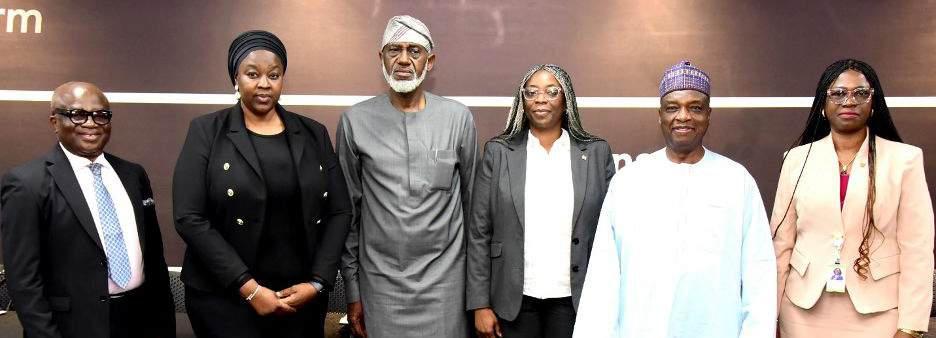
L-R: Mr. Adeniyi Falade; Mr. Folasope Aiyesimoju; Group Managing Director, Custodian Investment Plc, Mr. Wole Oshin; Chairman, Dr. (Mrs.) Omolola Johnson; Company Secretary, Mr. Adeyinka Jafojo; Mrs. Mimi Ade-Odiachi; and Dr. Tunde Sodade, at the 31st Annual General Meeting of the company in Lagos... on Friday
Deji Elumoye in Abuja
JOBBERMAN PARTNERS' CONVENING 2026...
IsDB Raises US$1b from Capital Markets Through First Sukuk Issuance of 2026
Sunday Okobi
Islamic Development Bank (IsDB) has raised US$ 1 billion through a benchmark Sukuk issuance in the capital markets.
IsDB stated that after several weeks of closely monitoring the markets, the transaction was executed in a constructive market backdrop, with positive headlines following the volatile market period witnessed since March.
The US dollar-denominated Sukuk transaction marks the bank’s first US$ benchmark issuance this year, following the significant milestones achieved in 2025, which saw three successful public benchmark transactions across USD and EUR markets.
According to a statement issued and made available to
THISDAY by its Communication Director, Ahmed Ghazeleh, IsDB, rated Aaa/AAA/AAA by S&P, Moody’s, and Fitch (all with Stable Outlook), priced the five-year Trust Certificates under its US$25 billion Trust Certificate Issuance Programme.
The statement said the Joint Lead Managers for the issuance were Bank of China, BMO Capital Markets, BNP Paribas, ICBC, J.P. Morgan Securities Plc, KIB Invest, Nomura, Standard Chartered Bank, and Warba Bank.
The five-year Sukuk transaction was announced to the market yesterday with Initial Pricing Thoughts (IPTs) at US$ SOFR Mid Swap (SOFR MS) plus 55 basis points (bps) area.
Supported by a more constructive market backdrop, IsDB received strong investor
FG, UNDP to Validate Regional Development Policy
Onyebuchi Ezigbo in Abuja
Ministry of Regional Development and the United Nations Development Programme (UNDP) will be convening a Nationwide Zonal Validation Workshops on Nigeria's Regional Development Policy.
A joint statement signed by Head, Information and Public Relations at the ministry Sani Datti and UNDP's Public Engagement, Outreach & Partnerships Lead, Ms. Christabel Chanda Ginsberg, said they will commence a series of Zonal Technical Validation Workshops across Nigeria's six geopolitical zones on Monday, 11 May 2026, to refine the draft National Regional Development Policy (NRDP) 2026–2030. They said workshops represent the final nationwide consultation phase, bringing together stakeholders from federal and
state governments, Regional Development Commissions, local government authorities, civil society, the private sector, academia, and traditional institutions.
"The NRDP provides a comprehensive framework for addressing regional disparities, unlocking economic potential, and promoting inclusive and balanced national development.
"Developed with technical support from UNDP, the policy aligns with national priorities and international frameworks, including the Medium-Term National Development Plan (MTNDP), the Sustainable Development Goals (SDGs), and the African Union Agenda 2063," the statement said.
Speaking on the NRDP, the Minister of Regional Development, Engr. Abubakar Momoh emphasised the policy's strategic importance as a unifying national framework.
demand from the very outset with high-quality and welldiversified Indications of Interest (IOIs), in excess of US$ 1.1bn (excluding JLM interest) at market open on May 7.
The statement said, “As a result of the strong IOIs and the risk on tone at the open, the Bank was able to open books with a revised guidance of US$ SOFR MS plus 54 bps area on May 7.
“Despite the price revision, books continued to grow swiftly with a large degree of high-quality orders from international investors.
“As a result of this strong momentum, coupled with stable yields and swap spreads, the orderbook grew in excess of USD 2.15billion. This allowed the Bank to set final terms less than three hours after opening books with a spread at SOFR MS plus 52 bps, i.e., three bps tighter than IPTs and set final size at USD 1billion – achieving the Bank’s
size and pricing aspirations.”
It added, “There was minimal attrition as orders kept flowing, closing in excess of USD 2.65billion, making this transaction the Bank’s jointlargest USD Sukuk Benchmark orderbook ever (oversubscribed by 2.65 times).
“With the spread set, the Sukuk will result in a profit rate of 4.227 per cent for investors, payable on a semi-annual basis and priced at par.”
Ghazeleh added in the statement that the transaction attracted strong participation from central banks and official institutions, accounting for 49 per cent of the book, followed by Banks, and Private Banks (42%), and Asset/Fund Managers (9%).
Final allocations were well diversified, with 52% from the Middle East and Africa, as well as a high degree of participation from international investors, including 24% from Asia, 19% from the UK and Europe, and
5% from Offshore US.
According to him, “The proceeds of the Sukuk issuance will be deployed towards muchneeded project financing across the Bank’s eligible Member Countries, and underpinned by the Bank’s Strategic Framework that delivers sustainable socioeconomic growth for all.
“The transaction highlights the credit strength and deep investor relationships of IsDB, achieving their transaction goals despite geopolitical volatility.”
Officer-in-Charge, Vice President (Finance) and CFO of IsDB, Dr. Abdourrabih Abdouss, said in the statement, “We are thrilled with the level of interest from investors for our first transaction of 2026, especially amidst the complex geopolitical landscape and market volatility.
“The participation of both longstanding and new investors from around the globe underscores the Bank’s solid credit standing and compelling
returns for investors. We thank all investors for their continued support.”
Mr. Mohammed Sharaf, IsDB Treasurer, and Mr. Zakky Bantan, Head of Funding, added, “This Sukuk issuance represents a further key step forward for the Bank, helping us broaden our pool of investors while securing a more competitive pricing structure.
“We sincerely appreciate the confidence placed in us by our investors, especially in these more challenging circumstances, and commend all the joint lead managers for their meticulous execution of this project.”
IsDB is a AAA-rated supranational and multilateral development financial institution with 57 Member Countries (MCs), including Nigeria, and a mandate of delivering social and economic development with a focus on sustainability in its member countries and Muslim communities worldwide.
Tinubu Arrives Nairobi For a Two-day Africa Forward Summit
To also attend Africa CEO summit in Kigali, Rwanda later in the week
Deji Elumoye in Nairobi, Kenya
President Bola Tinubu on Monday morning arrived Nairobi, the Kenyan capital, to attend a two-day Africa Forward Summit.
The President, whose official aircraft, Nigeria Air Force 1, touched down at Jomo Kenyatta international airport in Nairobi at about 12.15am, was received on arrival by top Nigerian government officials including Governor Uba Sani of Kaduna state; Minister of Finance and Coordinating Minister of the Economy, Taiwo Oyedele; his
Agriculture and Food Security counterpart, Senator Abubakar Kyari; Trade and Investment, Dr Jumoke Oduwole; Marine and Blue Economy, Gboyega Oyetola and Foreign Affairs, Bianca Odumegwu-Ojukwu.
During the two-day visit, Tinubu will attend the AfricaFrance Summit to be co-chaired by French President, Emmanuel Macron and his Kenyan counterpart, William Ruto.
The summit, themed “Africa Forward: AfricaFrance Partnerships for Innovation and Growth,” will focus on critical issues
including energy transition, green industrialisation, digital transformation, climate action, and the restructuring of the global financing architecture.
The President's participation at the Summit is expected to underscore Nigeria’s commitment to deepening strategic partnerships with African countries and the French Republic, while also projecting ongoing reforms designed to position the country as a prime destination for investment.
He will thereafter proceed to Kigali, Rwanda, for the Africa
CEO Forum slated for May 14 to May 15. The forum, themed “Scale or Fail,” is regarded as one of the continent’s largest gatherings of private sector leaders, investors and policymakers, with over 2,000 participants expected to deliberate on accelerating economic transformation through regional integration and cross-border investments.
Beyond the multilateral engagements, Tinubu is also scheduled to hold high-level meetings with global and African business leaders during the trip.
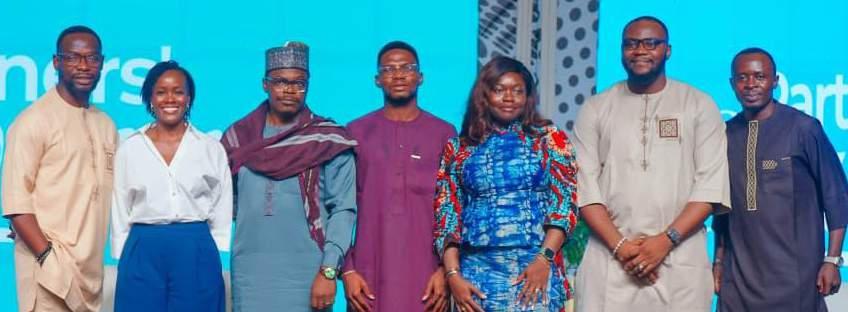
L-R: Head of Marketing, Jobberman Nigeria, Babajide Anjorin; Chief Executive Officer, The African Talent Company (TATC), Hilda Kabushenga; Head of Programmes Impact and Partnerships, TATC, Ahmed Alaga; Country Head of Programmes, Jobberman Nigeria, Olamide Adeyeye; Head of Operations, Jobberman Nigeria, Samantha Ifezulike; Head of Sales, Jobberman Nigeria, Jeremy Opara; and Head of Finance, Jobberman Nigeria, Olatunbosun Ayelaboye, at the Jobberman Partners' Convening 2026 held in Lagos
MTN MUSIC WORKSHOP...
Oloworaran: Enacting Pension Laws Without Implementation Robs Workers of Retirement Benefits
NSITF presents prosthetic limbs to 10 beneficiaries under employee’s compensation scheme Faleye declares scheme has restored hope, dignity to Nigerian workers
Onyebuchi Ezigbo, James Emejo and Mariam Adedokun in Abuja
Director-General of National Pension Commission (PenCom), Ms. Omolola Oloworaran, warned that enacting pension reform laws without implementation did not guarantee retirement benefits for workers, stressing that pension reform is a constitutional obligation states can no longer ignore.
Oloworaran spoke at the opening of the maiden bi-annual consultative session with Heads of Service of states yet to adopt or fully implement the Contributory Pension Scheme (CPS) or the Contributory Defined Benefits Scheme, in Abuja over the weekend.
Oloworaran said the real challenge confronting states was no longer legislation but execution.
The warning came as
Managing Director/ Chief Executive, Nigeria Social Insurance Trust Fund (NSITF), Oluwaseun Faleye, said the organisation had been able to use the Employees’ Compensation Scheme (ECS) to restore hope and dignity to Nigerian workers who suffered injuries in the line of duty.
Speaking during the presentation of prosthetic limbs to 10 beneficiaries of the scheme in Abuja, Faleye stated that ECS went beyond statutory compensation, reflecting a humane commitment to restoring confidence and preserving the dignity of workers affected by occupational hazards.
In her remarks, Oloworaran said, "Adopting a new law does not deliver pensions, implementation does. Let me speak plainly; pension reform is not a matter of choice. It is not a debate and it is not optional.
“It is a fiscal imperative, a statutory obligation, and
a constitutional duty rooted in Section 210 of the 1999 Constitution of the Federal Republic of Nigeria, as amended, which guarantees the pension rights of every civil servant in this country, including those serving at the state level.”
The PenCom boss added that although 30 states and the Federal Capital Territory (FCT) had enacted laws on the CPS or hybrid pension models, only seven states alongside the FCT were fully implementing the reforms.
Oloworaran said, “That leaves 23 states where the laws exist only on paper or are being implemented partially. This means millions of public servants still face uncertainty about their retirement future — not because there is no law, but because the laws have not been activated. That is the gap we are here to close.”
She stated that six states still had pension reform bills awaiting
passage in their Houses of Assembly, expressing optimism that the legislation would be concluded within the year.
The PenCom director-general stressed that the old Defined Benefits Scheme had failed and was replaced to guarantee sustainability, transparency, and accountability in pension administration.
According to her, “The Contributory Pension Scheme was not designed for convenience. It was designed because the old system failed — and failed miserably.”
She identified the major implementation gaps at the state level, as irregular remittance of pension contributions, inadequate funding of accrued rights, and weak institutional structures.
She stated, “These are not merely technical requirements; they are tests of leadership and signals of governance priority.”
Oloworaran urged Heads of Service of states to take
Enugu, UK Energy Investors Rally Behind Nigeria Climate Summit in London
Emmanuel Addeh
The Enugu State Government has joined the growing list of public and private sector participants confirmed for the Nigeria Climate Investment Summit (NCIS) scheduled to hold in London next month.
This is also as major United Kingdom-based energy investors and companies have signalled support for the initiative and expressed readiness to engage on bankable projects and investment-ready opportunities from Nigeria.
In a statement issued by
GLOBE Legislators and SOStainability, organisers of the summit, the groups said the increasing interest in the event reflects Nigeria’s rising profile as a destination for green and climate-focused investments.
The summit, designed as a flagship programme of London Climate Action Week, is expected to leverage international financing and multilateral funding for bankable renewable energy and transition projects across states such as Enugu and Lagos.
According to the organisers, recent data from the National
Bureau of Statistics (NBA) showed that the United Kingdom remained Nigeria’s largest source of Foreign Direct Investment (FDI), with about $12.21 billion reportedly attracted between 2023 and 2025 following diplomatic engagements by President Bola Tinubu.
Under Governor Peter Mbah, the statement noted that Enugu State has developed a strong climate governance framework, including the domestication of the national climate change law and implementation of a climate action plan.
The statement added that Enugu was also the first state to domesticate the Electricity Act 2023 and had since commenced the development of electricity generation and distribution infrastructure, alongside the establishment of a Ministry of Environment and Climate Change.
In a correspondence to the organisers, Secretary to the State Government, Chidiebere Onyia, confirmed Enugu’s participation and conveyed the readiness of the state government to engage global investors on emerging energy transition opportunities.
ownership of the reforms, stating that they are central to workforce administration and policy execution within their states.
She said, “As Heads of Service, you are not bystanders in this reform; you are its custodians at the state level.”
Oloworaran disclosed that President Bola Tinubu approved the release of N758 billion in 2025 to clear outstanding pension liabilities at the federal level.
She declared, “Today, I can confidently say that there are no outstanding pension liabilities at the federal level.”
She said the federal government had also approved payment of exit benefits for retiring treasury-funded civil servants under CPS, describing it as a landmark reform aimed at improving workers’ confidence in the scheme.
Oloworaran warned states against delaying implementation of pension reforms, insisting that CPS has proven effective over more than two decades, stating that for “states yet to embrace this reform, the train is moving. I urge you to board it now — not tomorrow or next budget cycle, but now”.
In Orashi Forest, Nigerian Navy Recovers Large Cache of Illegal Refined Petroleum Products
The Nigerian Navy, under the ongoing Operation Delta Sentinel, has recovered a significant quantity of illegally refined petroleum products concealed deep within forested areas of Rivers State, intensifying its crackdown on crude oil theft and related economic sabotage across the Niger Delta.
The latest operation comes barely a week after personnel of the Forward Operating Base (FOB) Lekki intercepted about 1,800 litres of suspected stolen Automotive Gas Oil (AGO) during an intelligence-led raid targeting illegal petroleum activities in the Ibeju-Lekki axis of Lagos State.
In a separate but related development, personnel of FOB Badagry also seized 130 bags of foreign parboiled rice during an anti-smuggling
operation along the Badagry waterways.
Confirming the latest development, the Director of Naval Information, Captain Abiodun Folorunsho, said operatives of Operation Delta Sentinel sustained their offensive against crude oil theft and illegal refining activities with the recovery of approximately 1,600 litres of suspected illegally refined AGO in Rivers State.
According to him, the operation was carried out by personnel of the Nigerian Navy Ship (NNS) Soroh following credible intelligence on the movement and concealment of illegally refined petroleum products around Okolomade Community in Abua-Odual Local Government Area of Rivers State, near the boundary with Ogbia Local Government Area of Bayelsa State.
in Abuja
L-R: Head, Product CRBT, Comviva, Jiwa Singh; General Manager, Business Growth, MTN Nigeria, Funso Finnih; Founder, Afrobeats Intelligence, Joey Akan; Chief Digital Officer, MTN Nigeria, A’isha Umar Mumuni; CEO, MAD Solutions, Bugwu Aneto-Okeke; General Manager, Business Development, MTN Nigeria, Otas Ena-Umweni; and Managing Director, StreamPay, Dominique Ntriushwa, on Day 1 of the MTN Music Workshop held at the MTN Plaza, Falomo, Ikoyi, Lagos at the weekend
Linus Aleke in Abuja
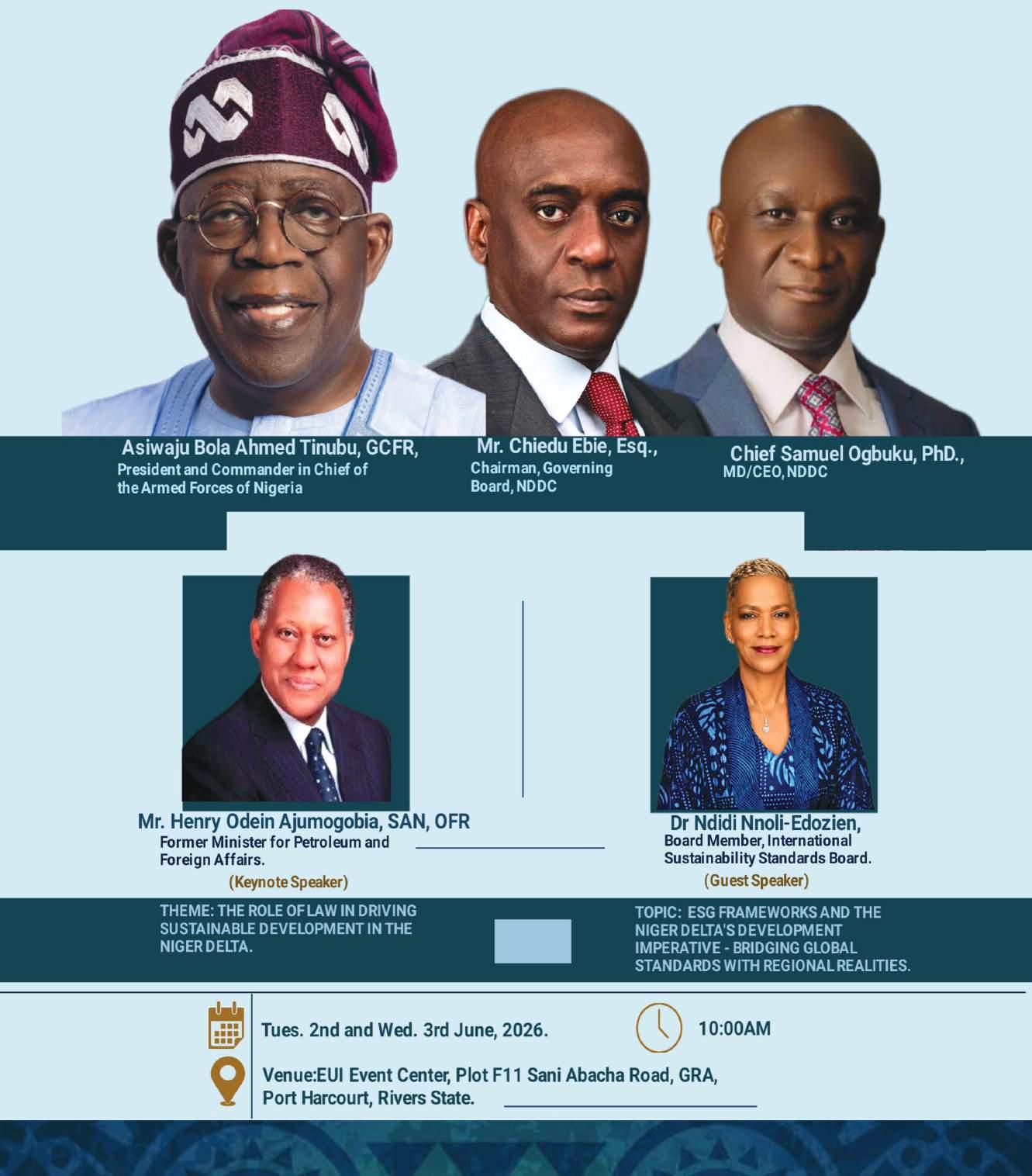
NIGER DELTA DEVELOPMENT COMMISSION Law and Development Summit 2026
His
Mr. Chiedu Ebie, Esq., Chairman, Governing Board, NDDC
Chief Samuel Ogbuku, PhD., MD/CEO, NDDC
Mr. Henr y Odein Ajumogobia, SAN,OFR
Former Minister for Petroleum and Foreign Affairs.
(Keynote Speaker)
THEME: THE ROLE OF LAW IN DRIVING SUSTAINABLE DEVELOPMENT IN THE NIGER DELTA
Dr Ndidi Nnoli-Edo zien, Board Member, International Sustainability Standards Board.
(Guest Speaker)
TOPIC: ESG FRAMEWORKS AND THE NIGER DELTA DEVELOPMENT IMPERATIVE-BRIDGING GLOBAL STANDARDS WITH REGIONAL REALITIES
Excellency, Bola Ahmed Tinubu, GCFR , President and Commander-in-Chief of the Armed Forces, Federal Republic of Nigeria
Politics MONDAY DISCOURSE
08033025611
2027: As Crisis Rocks Progressive Govs Forum...
The brewing crisis within the Progressive Governors Forum, if not quickly nipped in the bud, may have a telling effect on the ruling a ll Progressives Congress as it prepares for the 2027 general elections. Adedayo Akinwale reports.
In a surprising move last Thursday, 20 state governors of the All Progressives Congress (APC) passed a vote of no confidence on the chairman of Progressive Governors Forum (PGF) and Governor of Imo State, Senator Hope Uzodinma, accusing him of financial impropriety and loss of confidence in his leadership.
The PGF, the umbrella body of governors elected on the platform of APC appeared to be fractured when news filtered in that Uzodinma had been replaced with the Governor of Enugu state, Peter Mbah.
The governors, at an extraordinary meeting held in Abuja reportedly resolved to replace Uzodinma with Mbah. The meeting took place shortly after Vice President Kashim Shettima submitted President Bola Tinubu’s presidential nomination forms.
It was gathered that the governors had raised concerns about Uzodimma’s leadership style, alleged financial impropriety, and his failure to provide satisfactory explanations for the accusations levelled against him.
Some of the governors who were displeased with Uzodinma are: Adamawa - Ahmadu Fintiri; Zamfara - Dauda Lawal; Delta - Sheriff Oborevwori; Akwa Ibom - Umo Eno; Cross River - Bassey Otu; Rivers - Sim Fubara; Bayelsa - Senator Duoye Diri; Benue - Hyacinth Alia; Niger - Umar Bago; Kwara - Abdulrazaq Abdulrahman.
Others are governors of Nasarawa - Abdullahi Sule; Plateau - Caleb Mutfwang; Enugu - Peter Mba, Ebonyi - Francis Nwiguru; Ogun - Dapo Abiodun; Borno - Prof. Babagana Zul -
lum; Taraba - Dr. Agbu Kefas, Katsina - DikkonRadda; Kebbi - Dr. Nasir Idri; and Kano - Abba Yusuf.
However, to douse the political tension within the the ruling party, the Director General of PGF, Folorunsho Aluko, in a statement denied the removal of Uzodinma saying the media report was false and should be disregarded.
He said: “The attention of the Progressive Governors Forum has been drawn to a false and misleading report circulating in some media platforms alleging the removal of its Chairman, His Excellency, Senator Hope Uzodimma.
“For the avoidance of doubt, the Progressive Governors Forum states categorically that the report is entirely false, baseless, and without an iota of truth.
“No meeting of the Forum was held at which any such decision was taken. The PGF Secretariat has no record of, and is not aware of, any resolution removing the Chairman.”
Aluko said Uzodinma remains the Chairman of PGF, while insisting that the Forum remained united, focused, and committed to its responsibilities, while urging members of the public, party faithful, and the media to disregard the said report in its entirety.
Despite the denial, Uzodinma held an emergency meeting last Friday in Abuja, where he staged a comeback following a vote of confidence passed on him by 18 governors.
It was after a closed-door meeting that the 18 governors of the party declared support for Uzodinma’s leadership. The governors backing Uzodinma are the those of Yobe, Mai Mala Buni; Lagos - Babajide Sanwo-Olu; Gombe - Inuwa Yahaya; Kogi - Usman Ododo; Edo - Monday Okpebholo; Ekiti - Biodun Oyebanji; Ondo - Lucky Aiyedatiwa; SokotoAhmad Aliyu; Jigawa - Umar Namadi and Kaduna - Uba Sani.
Kebbi state governor, Dr. Nasir Idris, declared that Uzodimma and his deputy, Governor Uba Sani of Kaduna remain the Chairman and Deputy Chairman of the forum respectively.
Speaking on behalf of his colleagues after the meeting, Kebbi governor
It remains to be seen whether the reprieve that came the way of Uzodinma is temporary or it would mark an end to the crisis within the fold of APC governors as they prepare for the 2027 general elections.
declared support for Uzodinma.
Idris said: “We don’t have any problem to justify what they have said. So, I want to seek this opportunity to move a vote of confidence on our chairman and his Deputy.
On his part, Kaduna State governor said: “What I can say here is that all of us woke up with that very unfortunate story that we have virtually in all the media in Nigeria. But the truth of the matter is that the APC progressive Governors Forum is very united.
“We’re stronger now than any other time. And of course, we are all supporting our President for what he has been doing.We also want to assure everyone that APC is united, governors are united, the forum is united and there is no problem at all.”
While dismissing speculation of disunity in APC, the Chairman of the Forum said the party is focused and committed to the upcoming primaries.
“Governors of Progressive Congress are all united and resolved to support Mr. President and to ensure that he comes out successfully during the upcoming elections by January, 2027.
“So we have decided to work harder, look after our people, show performance and provide all the necessary social interventions that make Nigerians happy and that is actually a matter of fact the resolution will have come up with this afternoon,” Uzodinma noted.
It remains to be seen whether the reprieve that came the way of Uzodinma is temporary or it would mark an end to the crisis within the fold of APC governors as they prepare for the 2027 general elections.
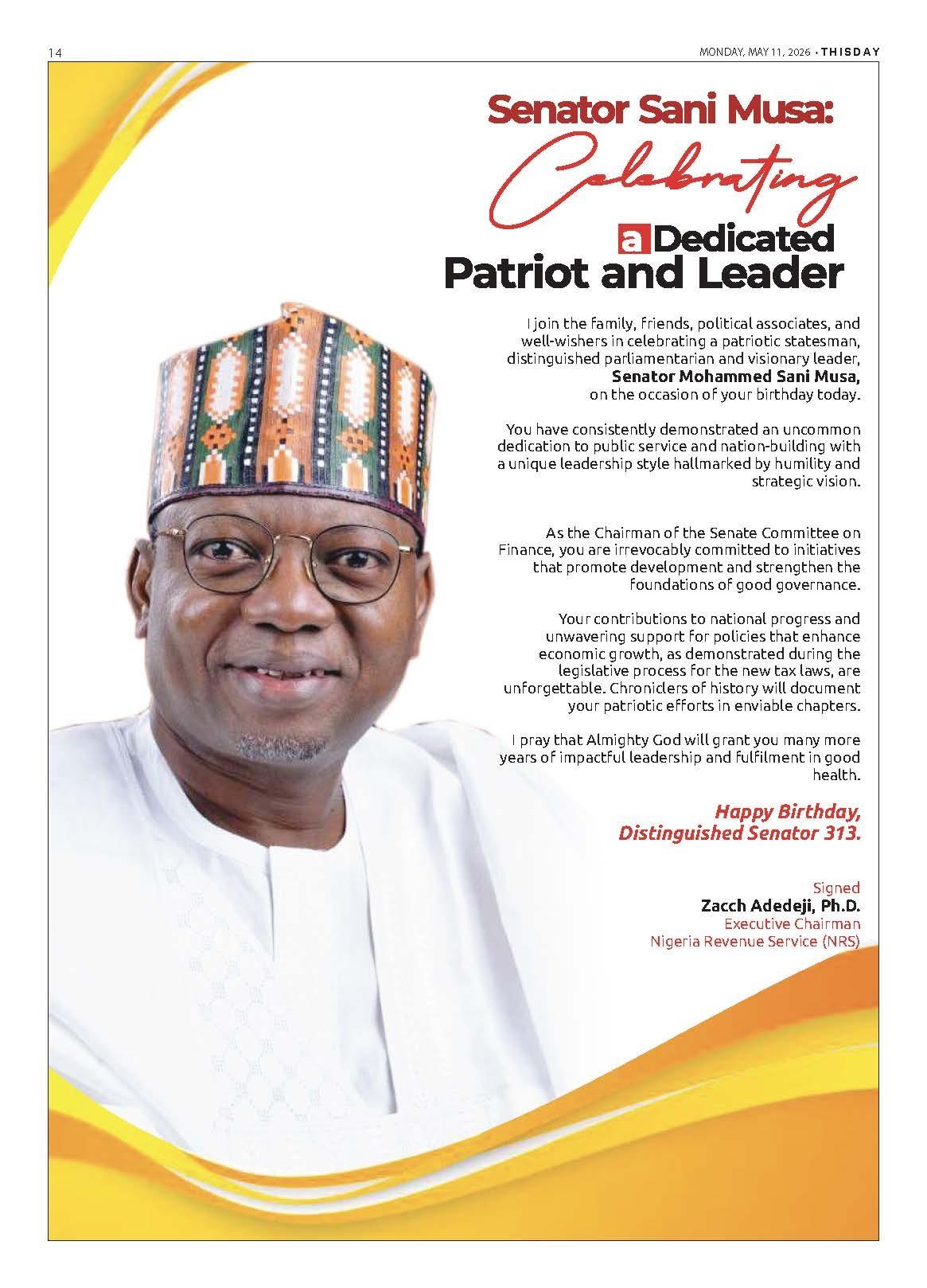
Uzodinma Sani
Abiodun
If Otoge Was A ‘Failure’, The Word Needs Another Meaning PERSPECTIVE
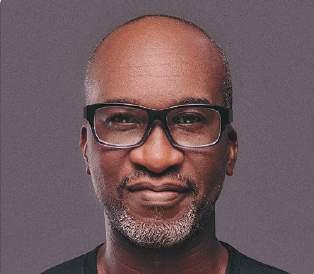
Ajournalist wrote a piece last week, titled Governor AbdulRahman AbdulRazaq: A 2027 misadventure? I told our ‘mutual friends’ how badly the article landed with me for three reasons. One, the fellow is a senior political journalist. Two, he holds a doctoral degree and this is no mean feat. Three, he was a government’s spokesman. His being a senior journalist, a former public officer, and an academic suggests experience, professionalism and tact, and respect for facts. But the article failed the test of evidence.
E.H. Carr, the man that many regard as the father of scientific history, told us that objectivity is hardly possible in history. Not wanting to render historical accounts to the whims of just anyone, Carr quickly cautioned that historians are not entitled to their facts. The argument of Carr is that historical accounts must be grounded in relatable facts — even if the historian, himself a prisoner of his sentiments, chooses which facts to pick, promote, and interpret.
The author is based in Ibadan. He didn’t tell us that he recently visited Kwara or Ilorin, its capital city. But he asserted that Otoge has not done anything to justify the social revolution of 2019. He said the new administration has barely added anything new to the structures it inherited from Saraki and that Kwarans have not seen anything different from the past. “The fact that you can hardly point to visible structures as legacies of the Otoge government appears more worrying for the people,” he had said. He gave no statistics to back these sweeping claims, raising concerns about the motives.
That is the basis for this response. Even if anyone had asked him to write what he did in the spirit of election propaganda, his standing as an academic and senior journalist should have told him there was a need for his own independent findings. And independent findings — even from his own sources in Ilorin — would have made a big difference.
On the Ahmadu Bello Way and its precincts alone, which is Kwara’s 10 Downing Street or its equivalent in Ibadan, the Otoge government of Abdulrahman Abdulrazaq has added at least 10 new modern structures that have changed the skyline of the capital city for generations to come. These legacy structures include the International Conference Centre Ilorin; Revenue House (now the tallest building in Kwara State and built exclusively with savings from consultancy fees that went to private pockets in the past);
Justice Saidu Kawu CourtHouse, primed to be one of the best in Nigeria; multistorey Senator Oluremi Tinubu Hospital; the Convention Center; Finance House; remodelled Kwara Hotel; Innovation Hub (which now has solid partnerships with the US Government, UNDP, IHS Towers); Visual Arts Centre; and Ministry of Education Complex.
The Otoge administration has many other major projects elsewhere in Ilorin and other towns, including but not limited to the two campuses of the Kwara State University in Osi and Ilesha Baruba, Shea Butter Factory in Kaiama, Garment Factory, Offa Stadium and Lafiagi Stadium, the refurbished Kwara Indoor Sports Hall, Africa’s biggest squash court, multistorey Model School in Adeta, Kwara State University of Education, and Sugar Factory Film Studio. Those are structures with 100% or substantial additions from the Otoge administration.
In road infrastructure and education, among others, the new administration has shown how to do things differently. Today, the writer will likely miss his way if he comes to Ilorin without a guide who has been to the city in the last three years. For specifics, the Otoge administration has delivered at least 588.77km of roads, apart from the 293kms of the tax credit roads that the Governor facilitated to the state. This is different from the more than 100 interlock access
roads in the hinterlands of Ilorin. Senator Saraki and his successor, HE Abdulfatai Ahmed, gave the state a total of 398.73km of roads, including the 120km Chikanda road funded by the Federal Government.
These huge achievements have sparked conversations about who has done more between the incumbent Governor and two of his predecessors David Bamigboye and George Agbazika Innih. Abdulrazaq has not just upgraded the infrastructure in the capital city, he has added new ones across the state.
In the education sector, the author is urged to check the state of Kwara in 2019: the blacklist by UBEC since 2013 and how the new administration has rescued the sector. The stories are everywhere on the internet and can be verified with different institutions. For instance, Saraki and Ahmed hired a total of 6,098 teachers. If you want to be generous and add the sunset teachers who were later disengaged as a result of how they were hired, the tally goes up to 8,174 in 16 years. The story of these hires is another thing. In a space of seven years, however, the Otoge administration has added 8,912 teachers to the stream. These tallies, among others, do not support the unfair narrative by the writer. He should also investigate how the Otoge government hired teachers and tell which one makes him proud as an
academic. If Otoge came to expand opportunities for every Kwaran, he should give the Governor his flowers for how he gave equitable opportunity to all applicants.
Without being immodest or crediting it with perfection, the Otoge administration and the Saraki regimes are incomparable in the quantum of infrastructural development they brought to the state, including in workers’ welfare and respect for human dignity. Even in revenue generation, no administration has raised the state’s IGR as the Otoge’s, moving it from N30.6bn in 2019 to N92.1bn by the end of 2025. This happened through improved efficiency, automation of processes, and expansion of the tax base from 47,368 in 2019 to 1,417,974 as of March 2026.
I concede the right of the author to take positions on whether the Kwara State Government should prosecute Saraki or not. My consolation is that he is not the court where pronouncement on the merit or otherwise of a judicial case is made. His contentions on what the DPP report said or did not say are evidence-free, and his attempt to try the case in the media speaks volumes. Like everyone else, he is also entitled to his opinion about what steps the state government has taken on security issues or not — especially in the light of the recent breaches so far reported in Oyo, Osun, and even Lagos where a 19-year-old was recently arrested for abduction cases. Yet none of these states has the land mass of Kwara, while the complexity of its geography is only comparable to that of Oyo. In fact, Baruten alone is bigger in land size than Osun State. The same Baruten is more than three times the size of Lagos. Regardless, the government is working with security forces to improve public safety. This gulps hundreds of millions of naira every month as it does hours of engagements with stakeholders on how to stem the tide, bearing in mind the pressure from the crisis in the Sahel and the issues in the North West. I am confident that we will get over it.
Now, it is inappropriate (as the writer tried to do) to review a case already filed before the court, so I urge him and others to follow the judicial proceedings which will reveal the case of the government against Saraki, who is neither guilty nor innocent until a court has said so.
This response is a matter of historical significance because revisionism and outright falsehood are often a feature of every election year. But don’t the public deserve to know the facts?
•Rafiu Ajakaye, House of Representative aspirant, was Chief Press Secretary to Kwara State Governor AbdulRahman AbdulRazaq CON
Rafiu Ajakaye PhD.
Governor AbdulRahman AbdulRazaq:
FEaturEs
NMLS 4.0: Resetting, Restarting and Restoring the Future of the Nigerian Media
As Nigeria’s media industry confronts the realities of artificial intelligence, changing audience behaviour and mounting economic pressure, media executives across the country are gathering in Abeokuta for a crucial conversation on survival and reinvention. Under the theme, Reset, Restart, Restore, Chiemelie Ezeobi writes that the fourth edition of the Nigerian Media Leaders’Summit is expected to chart fresh pathways for innovation, sustainability and renewed relevance within the nation’s rapidly evolving media landscape
As Nigeria’s media industry grapples with shrinking revenues, audience fragmentation, digital disruption and the sweeping influence of artificial intelligence, media leaders across the country are preparing for a crucial conversation on survival, reinvention and sustainability at the fourth edition of the Nigerian Media Leaders’ Summit (NMLS 4.0).
Set to hold in Abeokuta, Ogun State, starting from today, Monday, May 11 to Tuesday, May 12, 2026, under the theme: Reset, Restart, Restore, the summit, organised by The Journalism Clinic, comes at a defining moment for the nation’s media ecosystem, where newsroom leaders, publishers, broadcasters and media entrepreneurs are increasingly confronted with the urgent need to rethink business models, reconnect with audiences and reposition journalism for relevance in a rapidly evolving digital age.
At Academy Suites in Abeokuta, venue of the summit, 60 media executives will engage on a purpose-driven engagement aimed at shaping a new direction for the industry.
A Gathering for Industry Renewal
Since its inception four years ago, the Nigerian Media Leaders’ Summit has steadily evolved into one of the country’s most important gatherings for media executives and decision-makers.
This year’s edition is expected to host about 60 media leaders, including newspaper publishers, editors-in-chief, television and radio chief executives, general managers, programme directors and editors.
The summit is designed not merely as another industry conference, but as a strategic platform for reflection, innovation and collaboration.
Resetting the Media Landscape
The choice of theme for this year’s summit underscores the urgency of the moment.
According to the organiser, Founder and Director of The Journalism Clinic, Mr. Taiwo Obe, the theme, RESET. RESTART. RESTORE., is focused on “sustainable business models and navigating industry challenges without pressing lamentations”.
Essentially, the summit seeks to unlock all the possibilities that could drive shared prosperity for media owners, employees, advertisers, suppliers, customers and audiences.
It is a recognition that the future of Nigerian media cannot depend solely on old structures or traditional business practices. Instead, there is growing consensus that survival will require innovation, deeper audience engagement and a willingness to embrace technological disruption.
This is why the summit postulates that the Nigeria’s media industry is ripe for reinvigoration as this reality has become increasingly evident in recent years as more consumers migrate to digital platforms for news and entertainment, forcing legacy media institutions to rethink their operational strategies.
For many participants, therefore, the summit presents an opportunity not only to diagnose the industry’s challenges but also to chart practical pathways for transformation.
This and more are what Obe, a Fellow of the Nigerian Guild of Editors and Founder
of The Journalism Clinic, intends to unpack in his keynote titled 1,001 Things.
This is expected to provide a broad examination of opportunities capable of driving a resurgence within the Nigerian media industry.
“We will unpack all the possibilities that could lead to a resurgence of the media, and spark delegates’ robust discussions to produce an Agenda for Renewal: a concise roadmap of actionable commitments for industry transformation.
Expectations
The emphasis on actionable commitments is particularly significant at a time when many
industry conversations have often ended without practical implementation.
Thus, participants are expected to engage in discussions around sustainability, newsroom innovation, revenue diversification, technology integration and audience trust and also seeks to deepen collaboration among competing organisations in recognition of the fact that many of the challenges confronting the media industry are collective rather than individual.
Building on Previous Conversations
Last year’s edition of the summit focused extensively on collaborative innovation and sustainable business models as traditional media
organisations battled rapid technological changes and monetisation difficulties. Those conversations reflected growing concerns about how Nigerian media organisations can remain financially viable while maintaining editorial independence and public trust.
Thus, this year’s summit aims to build on those discussions by introducing a stronger emphasis on artificial intelligence and audience-centred strategies.
NMLS as a Bridge in Nigeria’s Fragmented Media Landscape
For many, what NMLS is doing is bringing key players in the fragmented media space together for honest conversations about industry realities.
Since its inception, the Nigerian Media Leaders’ Summit has served as a platform for knowledge exchange, policy dialogue and leadership networking within the country’s complex media ecosystem.
This is why the summit’s growing profile has also attracted support from both public and private sector through sponsorships and partnerships from organisations such as Nigeria LNG (NLNG), the Lagos and Ogun State Governments, the Central Bank of Nigeria (CBN), the Nigerian Railway Corporation, Fidelity Bank and Polaris Bank.
The wide range of institutional support reflects the broader recognition that a vibrant and sustainable media industry remains critical to democratic governance, economic development and national discourse.
The Future at Stake
Beyond discussions about technology and business sustainability, the summit also raises deeper questions about the future role of journalism in Nigeria’s democracy.
As misinformation, disinformation and audience distrust continue to challenge the credibility of news institutions globally, Nigerian media leaders are under pressure to redefine how journalism serves the public interest in the digital era.
Many industry stakeholders believe the future of the media will depend largely on rebuilding audience trust, investing in quality journalism and developing innovative models capable of sustaining newsroom operations.
The rise of artificial intelligence has further complicated that conversation, introducing concerns about automation, ethical journalism and the changing nature of content creation.
Yet organisers of NMLS 4.0 insist that the future remains full of possibilities if industry players are willing to embrace change collectively.
The summit’s message is ultimately one of cautious optimism — that despite economic pressure, digital disruption and audience fragmentation, Nigerian media can still reinvent itself for a stronger future.
However, as media executives gather in Abeokuta, the expectation is that the conversations will move beyond rhetoric towards practical solutions capable of restoring confidence, relevance and sustainability within the industry.
For an industry standing at a crossroads, the summit may well become more than just another annual gathering.
It could serve as the beginning of a renewed agenda for transformation — one that seeks to reset old structures, restart innovation and restore the Nigerian media’s place as a powerful force in national development.
Uboho Dominic
Taiwo Obe
Helen Emore PhD
Pelu Awofeso
Olalekan Adedeji
Winning the War, Defending the Truth: Airpower, Terrorist Propaganda and the Complexities of Asymmetric Warfare
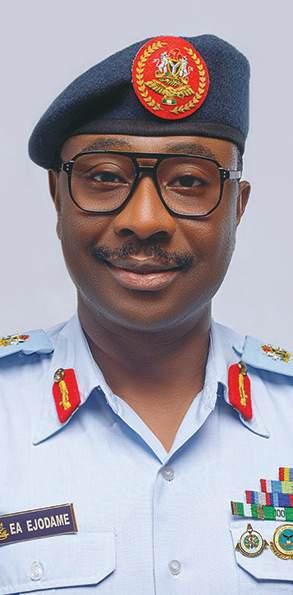
Air commodore ehimen e jodame
In modern asymmetric warfare, the battlefield is no longer defined solely by the clash of weapons.
Beyond precision strikes and troop movements lies another theatre of conflict, one fought through propaganda, misinformation, and the manipulation of public perception.
Across conflict zones around the world, airpower has consistently proven to be one of the most decisive instruments of modern warfare, enabling the destruction of terrorist networks, logistics hubs, and command structures through precision air strikes, intelligence surveillance, and rapid aerial mobility.
Yet military history equally affirms a fundamental reality: while airpower shapes the battlefield and weakens adversaries, enduring victory must ultimately be secured on the ground and sustained through stability, coordinated national action, and societal cooperation.
It is within this complex environment that the role of the Nigerian Air Force (NAF) in Nigeria’s counterinsurgency and counterterrorism operations must be properly understood.
Within this framework, the Nigerian Air Force has emerged as a critical pillar in Nigeria’s counterinsurgency and counterterrorism operations. Through sustained, intelligence-led air interdiction missions, the NAF has systematically dismantled terrorist enclaves, neutralised logistics hubs, disrupted supply routes, and degraded command structures across various theatres of operation.
These operations, executed with professionalism and precision, have significantly constrained the operational capacity of insurgent groups while reinforcing strict adherence to rules of engagement and the protection of innocent civilians.
The more effective these operations become, the more desperate terrorist propaganda machinery appears to grow. Having suffered devastating losses from precision air strikes, insurgent groups increasingly resort to manipulating public narratives, often rushing to allege civilian casualties following successful military operations against them.
In many instances, such claims are deliberately amplified to erode public confidence, weaken national resolve, and create hesitation around the employment of airpower.
Their strategy is calculated and cynical: by exploiting civilian environments and using human shields, they seek to deter decisive military action while simultaneously weaponising information against the state.
This is the difficult reality of asymmetric warfare. Unlike conventional armies that fight from clearly defined positions, terrorists deliberately embed themselves within communities, hide among
civilian populations, and exploit humanitarian sensitivities to their advantage.
In many cases, the people being defended and the terrorists themselves are citizens from the same communities and environments. This complexity places enormous responsibility on the military.
On one hand, when force is
decisively applied against terrorists, there are often allegations of excessive action and public backlash.
On the other hand, when operations appear restrained, there are equally criticisms that not enough is being done to confront insecurity. It is within this delicate balance that the Nigerian Air Force continues to project professionalism, leveraging advanced intelligence, surveillance
As Nigeria continues its pursuit of peace and national stability, the role of the Nigerian Air Force remains indispensable. Its airpower capabilities continue to shape the battlefield, deny terrorists freedom of action, and provide critical support for ground operations
capabilities, precision targeting systems, and detailed operational planning to conduct effective air operations while minimising collateral damage and preserving civilian lives.
Understanding this challenge requires looking beyond simplistic narratives. Kinetic military operations alone, no matter how successful, cannot deliver enduring peace. Airpower can be likened to the use of insecticide, highly effective in eliminating visible threats.
However, maintaining an insect-free environment depends on broader preventive measures such as cleanliness, vigilance, and environmental discipline. It would be misguided to blame the insecticide for the persistence of insects when the underlying conditions that breed them remain unaddressed.
Similarly, while the Nigerian Air Force continues to dismantle terrorist elements with precision, sustainable peace requires a broader whole-ofgovernment and whole-of-society approach.
Communities must remain vigilant against criminal elements operating within their environments. Citizens must support intelligence-gathering efforts by reporting suspicious movements and activities.
Local institutions, traditional leaders, religious bodies, and civil society organisations all have vital roles to play in countering radicalisation and denying insurgents the social space within which they thrive.
Development initiatives, education, economic opportunities, and coordinated national action must complement military operations in addressing the root causes that fuel insecurity.
Beyond combat operations, the Nigerian Air Force has increasingly embraced a people-centric posture through civil-military engagements designed to strengthen trust between the military and local populations.
These efforts reinforce an important national reality: security is not the responsibility of the military alone. Rather, it is a shared obligation requiring cooperation between institutions, security agencies, communities, and citizens alike.
As Nigeria continues its pursuit of peace and national stability, the role of the Nigerian Air Force remains indispensable. Its airpower capabilities continue to shape the battlefield, deny terrorists freedom of action, and provide critical support for ground operations.
Yet the broader lesson from modern asymmetric warfare remains unmistakable: while airpower may win battles, enduring victory is achieved through collective national resilience, coordinated governance, and the shared determination of society to reject fear, propaganda, and extremism.
•Air Commodore Ejodame is the Director of Public Relations and Information, Headquarters Nigerian Air Force.
WHEN POWER FORGETS ITS BOUNDARIES
In Nasarawa, what is unfolding is not a contest of ambitions, but a testing of whether rules still matter, argues MUHAMMADU USMAN
See page 21
NIGERIA’S DIGITAL IDENTITY FOUNDATION
The inability to accurately determine “where” has become one of the greatest structural weaknesses confronting governance in Nigeria, contends ‘BISI ADEGBUYI
See page 21
EDITORIAL
Citizens must stop cheering titles and start demanding substance, writes LINUS OKORIE
SERVICE, NOT TITLES, BUILD NATIONS
Public office in many parts of the world, especially in developing nations has become a showpiece. A title to be flaunted. A symbol of power. A shortcut to status. When some public servants enter a room, the instinct is to stand, greet them with fanfare, and shower them with honorifics like “Your Excellency”, “Distinguished Senator”, or “Honorable.” All these are fine in principle until the job becomes about the applause and not the assignment. Here in Africa, we have confused leadership with lordship. We have allowed the myth to grow that public office is a throne, and the person sitting on it deserves uncritical loyalty. That somehow, once elected or appointed, an official becomes elevated, untouchable, and above the people they are meant to serve. This culture is harmful because it breeds entitlement, weakens institutions, and bankrupts the soul of a nation.
Like you already know, public office is not personal property. Rather, it is a borrowed seat that is held in trust, and paid for by taxpayers. Yet, we have many leaders act like they own the job and the people who gave it to them. If you look through the Nigerian politics, you will notice that what began as a democratic mandate has quickly mutated into a private empire. Our government houses have turned palaces as our leaders hand over to their family members. Public funds now finance private lifestyles. By weaponizing poverty, criticism is silenced and loyalty is bought.
This is both bad politics and a national security threat. When those in power stop seeing themselves as accountable, systems collapse. However, a servantleader knows and says, “I don’t own this office but I’m responsible for it”. A servant sees their role as temporary, their power as delegated, and their job as service. They ask questions like, “What needs to be done?”, “Who needs to be heard?”, “How can I leave this office better than I found it?” Service is demanding. It calls for sacrifice, transparency, and results. It requires showing up even when the cameras are off. It asks leaders to think generationally, not transactionally.
For an example, in Rwanda, President Paul Kagame’s leadership has emphasized national service, integrity, and infrastructure over personal gain. In Uruguay, former President José Mujica lived in a modest home, gave away 90 percent of his salary, and remained grounded in the realities of ordinary people. In Singapore, the civil service is run with brutal efficiency, and public officials are held to high ethical and performance standards. These
leaders remind us that power, when understood as stewardship, becomes a tool for transformation.
Entitlement in political leadership is both tragic and corrosive. It often starts subtly. A sense of self-importance. A taste for special treatment. A belief that the public owes you, not the other way around. Left unchecked, this mentality becomes malignant. Entitled leaders resist accountability. They use public platforms for personal battles. They make policies that benefit their inner circle. They punish dissent. They expect perpetual loyalty. And they forget that power, in a democracy, is not inherited.
One needs only look at how quickly the line between service and self-service blurs. Campaign promises turn to dust. Budget priorities shift to vanity projects. Positions are sold as rewards, not assigned by merit. Soon, corruption becomes a way of life. We have become addicted to titles. The moment someone becomes “Honorable,” we treat them as if they’re now wise, righteous, and incapable of wrong. This idolatry turns criticism into taboo. And before you know it, loyalty replaces competence as the currency of political survival.
The obsession with titles also makes people chase office for the wrong reasons. They want to enjoy the perks, not its purpose. The goal becomes getting into government, and we see it everywhere: lavish convoys, bloated security details, taxpayer-funded parties. But no nation ever developed because its leaders wore fine agbadas or had endless protocol. Nations rise on the strength of institutions, policies, and consistent service delivery.
Servant leadership is effective. It centers the people. It listens and corrects course. It makes decisions based on evidence, not ego. A servant leader is accessible. They explain their actions. They invest in human capital and build systems that outlive them. Think of the difference between a leader who builds schools in their hometown as a political stunt and one who reforms the national education system for every child. One seeks applause while the other leaves a
legacy.
A servant leader doesn’t need loud praise. Their work speaks. Their legacy is visible in literacy rates, health outcomes, jobs created, and trust restored. It is not enough to elect people who talk well. We must demand outcomes. Appointments should not be about ethnic balance or political IOUs. They should be about competence, vision, and values. The real test of leadership is not how grand your inauguration was but what your scorecard says after four years. This requires a culture shift. Citizens must start tracking results. Civil society must demand performance reports. The media must ask tougher questions. And political parties must reward performance over loyalty. We need to build a leadership culture where no one gets a second term without proving they earned the first. Every public servant should remember that when the job ends, what remains is your record. Did you serve the people or yourself? Did you speak truth or play politics? Did you build systems or promote sycophants? Public office is a test of one’s leadership capital and character. Too many have failed it. But we don’t have to repeat the cycle. It starts with mindset. Leaders must reject the idea that public office is a reward. It’s a responsibility. They must enter office asking: What must I do while I have this chance? And more importantly, how do I prepare others to carry the torch after me? It continues with structure. Governments should invest in leadership development, performance management, and open governance. We need dashboards that track project completion, service delivery, and spending. Let citizens see where the money goes. Let them score their leaders.
Okorie MFR is a leadership development expert spanning 30 years in the research, teaching and coaching of leadership in Africa and across the world. He is the CEO of the GOTNI Leadership Centre.
In Nasarawa, what is unfolding is not a contest of ambitions, but a testing of whether rules still matter, argues MUHAMMADU USMAN
WHEN POWER FORGETS ITS BOUNDARIES
In every political system that aspires to democratic credibility, there comes a moment when the conduct of individuals ceases to be merely personal and becomes profoundly institutional. Nasarawa State now finds itself at such a moment. What may, at first glance, seem like a routine disagreement within the state’s political hierarchy reveals, upon closer reflection, something far more consequential, a deeper question about how power is exercised, and whether the structures meant to guide it still hold firm. It is a test of whether political power in the All Progressives Congress is exercised within the bounds of structure, consensus, and fairness, or bent to the will of individuals who mistake authority for ownership.
The signals emerging from Nasarawa are, by any fair reading, troubling. The suggestion that a sitting governor would seek to anoint a successor of his choosing is not new in Nigerian politics. What is new, or at least more starkly visible in this instance, is the apparent willingness to subordinate party processes to that ambition. Consensus, which in its purest form reflects negotiation and accommodation, risks being reduced to a convenient label for pre-arranged outcomes. When that happens, the language of democracy is preserved, but its substance quietly drained.
Yet the greater concern lies not only with the governor’s intentions, but with the institutional response, or lack of it. A political party, particularly one that governs at the centre, is expected to serve as both platform and referee. It must balance competing interests while preserving the integrity of its own rules. Where it fails to do so, it ceases to be an institution and becomes instead a vehicle for expediency.
It is here that the role of the APC National Chairman, Nentawe Yilwatda, demands careful scrutiny. His emergence as chairman was not the product of prolonged factional struggle, but of elite consensus, a technocratic figure elevated in part because he was presumed to embody balance, restraint, and institutional steadiness. That pedigree carries with it a quiet but weighty obligation. He is not merely a political actor, he is, in effect, the custodian of the party’s internal democracy.
And yet, the unfolding situation in Nasarawa raises uncomfortable questions. If it is true that access to nomination processes has been slowed or constrained, if it is true that signals from the party hierarchy have tilted towards one camp, then the chairman’s posture can no longer be interpreted as benign neutrality. Silence, in such circumstances, is not an absence of position. It is, rather, a position in itself.
Therein lies the contradiction. A chairman whose legitimacy rests on consensus must be seen to protect it. A leader entrusted with institutional balance must be visibly committed to it. If,
instead, the perception takes root that he is either acquiescing to, or quietly enabling, the preferences of a sitting governor, then the very basis of his authority begins to erode. He ceases to be an arbiter and becomes, whether by design or default, an accessory to imbalance.
This is not a trivial matter of internal party manoeuvring. It speaks to a deeper malaise within the political culture, one in which the boundaries between personal ambition and institutional process are increasingly blurred. When governors assume the prerogative to determine succession, and party leadership appears reluctant to assert procedural fairness, the message transmitted is unmistakable. Power resides not in rules, but in proximity to authority. Such a message carries consequences. It discourages genuine aspirants, who come to see participation not as a contest of ideas but as an exercise in futility. It weakens party cohesion, as aggrieved factions retreat into quiet resentment or open defiance. Most dangerously, it erodes public confidence, reinforcing the perception that democratic structures are merely ceremonial, their outcomes predetermined by unseen arrangements.
It would be a mistake, however, to cast this entirely as the failing of one governor or one chairman. What is unfolding in Nasarawa is emblematic of a broader institutional fragility. Political parties in Nigeria have long struggled to reconcile the tension between central authority and internal democracy. Too often, the former overwhelms the latter, justified in the name of expediency, stability, or electoral advantage. Yet each such compromise leaves a residue, a gradual weakening of norms that, over time, becomes difficult to reverse. Governor Sule, for his part, would do well to reflect on the distinction between influence and imposition. The office he holds confers significant political weight, but it does not confer ownership of the party or the state. To attempt to shape succession is understandable, to attempt to dictate it is another matter entirely. Leadership, in its truest sense, lies not in the ability to control outcomes, but in the willingness to submit to fair processes, even when those processes yield inconvenient results.
Usman writes from Keffi, Nasarawa
The inability to accurately determine “where” has become one of the greatest structural weaknesses confronting governance in Nigeria, contends ‘BISI ADEGBUYI
NIGERIA’S DIGITAL IDENTITY FOUNDATION
The recent decision by President Bola Ahmed Tinubu to withhold assent to the proposed amendment to the National Identity Management Commission (NIMC) Act should not be viewed merely as a legislative setback.
It is a strategic opportunity for Nigeria to rethink the very foundation of its digital identity architecture.
This moment demands sober reflection, not political grandstanding.
The issues reportedly identified in the proposed legislation — legal inconsistencies, governance ambiguities, structural gaps, and drafting deficiencies — point to a deeper national challenge that has remained unresolved for decades: Nigeria is still attempting to build a modern digital identity ecosystem on a weak and non-deterministic location framework.
In simple terms, we are trying to solve identity without first solving addressability. That approach is fundamentally flawed.
No nation can sustainably build credible taxation systems, targeted social intervention programmes, national security architecture, digital commerce, land administration, electoral integrity, smart cities, emergency response systems, logistics infrastructure, or a truly interoperable digital economy without a reliable, deterministic, machine-readable and universally verifiable digital addressing foundation.
Before identity, there is location. Every human activity occurs somewhere. Every tax transaction originates somewhere. Every property exists somewhere. Every security incident happens somewhere. Every public service must ultimately reach somewhere.
The inability to accurately determine, verify and authenticate “where” has become one of the greatest structural weaknesses confronting governance in Nigeria today.
This weakness manifests itself daily in ghost beneficiaries, fake addresses, duplicate identities, security blind spots, revenue leaks, property fraud, counterfeit supply chains, weak census systems, poor emergency response, and massive inefficiencies in public service delivery.
Nigeria’s digital future cannot continue to depend on descriptive, ambiguous and manually interpreted address systems inherited from another era.
The world has moved toward location intelligence. The future belongs to nations that can integrate deterministic digital addressing, geospatial intelligence, identity authentication, digital trust infrastructure, and interoperable governance architecture.
This is no longer optional. It is now a condition precedent for national competitiveness.
Countries that succeed in the digital age will not merely possess identity databases. They will have an intelligent
national geospatial trust infrastructure that supports revenue assurance, border security, supply chain integrity, financial inclusion, digital commerce, public health, agricultural modernisation, and sovereign digital governance.
Nigeria must therefore seize this moment to move beyond fragmented institutional thinking and begin the urgent construction of an integrated national architecture rooted in: address intelligence, location awareness, interoperability, federation, and verifiable trust.
This is why the future lies in deterministic, machine-readable, address-aware systems capable of operating seamlessly across all 774 Local Government Areas of Nigeria.
The challenge before us is not merely technological. It is philosophical.
For too long, we have treated identity as a standalone concept rather than as part of a broader national trust ecosystem.
Identity without location intelligence is incomplete. Identity without a verification infrastructure is fragile. An identity without an interoperable trust architecture is vulnerable. Identity without granular geospatial anchoring creates systemic inefficiency.
The time has therefore come for Nigeria to embrace a new digital governance philosophy — one that recognises that national transformation in the 21st century will be driven not merely by databases, but by intelligent, federated, location-aware digital infrastructure.
This is where the next frontier lies.
The withholding of assent to the NIMC amendment bill should therefore not trigger despair. It should trigger a redesign.
It should inspire policymakers, legislators, regulators, technologists, private innovators and national institutions to return to first principles and ask fundamental questions:
Adegbuyi
is a lawyer, public administrator, former Nigeria Postmaster General, and CEO of Nigerian Postal Service
Editor, Editorial Page PETER ISHAKA
Email peter.ishaka@thisdaylive.com
SOKOTO AND THE MENINGITIS DEATHS
More awareness is needed on the predisposing factors of the disease
Last Wednesday’s confirmation of the death of 33 children following an outbreak of cerebrospinal meningitis in parts of Sokoto State is quite disturbing. This is despite a recent public health warning by the Nigerian Meteorological Agency (NiMet) to residents of some northern states about the heightened risk of the disease. The alert categorised states by risk levels, with Sokoto listed among the most vulnerable. According to the Commissioner for Health, Faruk Abubakar, who confirmed the fatalities, 256 cases have been recorded across many local governments in the state. While we commend health authorities in Sokoto for their prompt response, it is important for other states to be on the alert to avert another public health disaster.
In its most recent warning, NiMET had highlighted the groups susceptible to the infection, explaining that “children and young adults, people living in overcrowded settings, individuals exposed to dry, dusty environments, and persons with weakened immune systems are at higher risk.” Early recognition of symptoms, according to the agency, is key to preventing fatalities while listing sudden high fever, severe headache, neck stiffness, nausea or vomiting, and sensitivity to light as warning signs. To reduce the risk of infection, NiMET encouraged the public to “get vaccinated, practice good hygiene, avoid overcrowding, and seek early medical care.” But health facilities, especially primary health centres, should also be equipped enough to manage cases where secondary and tertiary health facilities are not available.
ing the rising temperature of recent weeks and the heat waves across the country, it is no surprise that meningitis has become a serious health challenge. The number of deaths and cases recorded so far remain unclear, but there are indications of growing fatalities in many rural communities, especially in the North.
Children and young adults, people living in overcrowded settings, individuals exposed to dry, dusty environments, and persons with weakened immune systems are at higher risk
EDITOR SHAKA MOMODU
DEPUTY EDITOR WALE OLALEYE
MANAGING DIRECTOR ENIOLA BELLO
DEPUTY MANAGING DIRECTOR ISRAEL IWEGBU
CHAIRMAN EDITORIAL BOARD OLUSEGUN ADENIYI
EDITOR NATION’S CAPITAL IYOBOSA UWUGIAREN THE OMBUDSMAN KAYODE KOMOLAFE
T H I S D AY N E W S PA P E R S L I M I T E D
EDITOR-IN-CHIEF/CHAIRMAN NDUKA OBAIGBENA
GROUP EXECUTIVE DIRECTORS ENIOLA BELLO, KAYODE KOMOLAFE, ISRAEL IWEGBU
DIVISIONAL DIRECTORS SHAKA MOMODU, PETER IWEGBU, ANTHONY OGEDENGBE
Experts have repeatedly warned that Nigeria usually suffers meningitis around this time of the year when dry season is turning to raining season, especially in the area called the ‘meningitis belt’. But it is nonetheless unfortunate that for decades, a preventable disease like meningitis has been a recurring epidemic, resulting in the death of thousands of our people, especially children. To worsen matters, the disease spreads across the entire West African sub-region in the first quarter of every year. The spread of the disease becomes worse where the environment is not clean, and sanitation is not taken seriously. And that is partly because relevant authorities are not alive to their responsibilities. We commend NiMET and the Nigeria Centre for Disease Control and Prevention (NCDC) for being proactive on the challenge. It is left for authorities in the country and all critical stakeholders to expedite collaborative actions on preventive measures. On that score, there is an urgent need for a public enlightenment campaign, perhaps through the National Orientation Agency (NOA). As has been explained, the disease is fatal and thrives more in areas where hygiene is lacking or is low. We expect a more robust environmental campaign in view of the dangers that Meningitis poses. We also advocate for the strategy that would help put an end to what has become an annual death sentence for many Nigerians.
Meningitis is an acute inflammation of the protective organs and membranes with layers surrounding the brain and spinal cord. In most cases, the disease becomes intense and widespread during heat period and in areas where there is no ventilation. Consider-
That would require a collaboration between the federal government and the authorities in all the 36 states. Although Meningitis can be caused by many different infections, some vaccinations also offer some protection against it.
Letters in response to specific publications in THISDAY should be brief (150-300 words) and straight to the point. Interested readers may send such letters along with their contact details to opinion@thisdaylive.com. We also welcome comments and opinions on topical local, national and international issues provided they are well-written and should also not be longer than (750- 1000 words). They should be sent to opinion@thisdaylive. com along with photograph, email address and phone numbers of the writer.
ZACCH ADEDEJI: LEAVE HIM OUT OF POLITICS
I have had the privilege of working closely with Zacch Adedeji and I speak from direct experience when I say he is a refined professional, a disciplined technocrat, and a results driven leader. He is not a career politician, and it is both unfair and misleading to drag his name into the noise and theatrics of political contests.
Zacch Adedeji is a go-getter in the truest sense, strategic, intentional, and deeply focused on outcomes. His work ethic is not for show, it is consistent, methodical, and anchored in measurable impact. In a short time, he has contributed significantly to reshaping revenue administration and improving national revenue performance through systems, structure, and accountability, not slogans or political grandstanding.
As someone born and raised in Ibadan, I have followed the current political climate with keen interest
like always. What I see is deeply concerning, rising bitterness, unnecessary aggression, and a growing tendency to weaponize names for cheap political points. Let this be clear, Zacch Adedeji’s name should not be part of that conversation.
He is fully engaged in the national assignment entrusted to him by President Bola Ahmed Tinubu. That responsibility is weighty, technical, and demands his full attention. Attempting to pull him into local political battles is not only inappropriate, it is a distraction from critical national work. Play your politics. Build your alliances. Strengthen your structures. Sell your vision. That is what campaigns are for. But leave him out of it. Elections will come and go, as they always do. What will remain are institutions, policies, and the long term work of nation building. Zacch Adedeji is focused on that work. He is not available for political mudsling-
ing, and he should not be treated as a pawn in anyone’s campaign strategy.
If you seek his support, approach with respect and decorum. No one is obligated to endorse or align with any political ambition. A refusal is not an invitation for insults, attacks, or public hostility. That kind of conduct only diminishes the credibility of those who engage in it.
This is a firm caution, keep his name out of your political battles. Redirect your energy toward your campaigns, your ideas, and your engagement with the people. Leave professionals to do their jobs, and let merit, not noise, define the moment.
Arabinrin Aderonke Atoyebi, Technical Assistant on Broadcast Media to the Executive Chairman of the Nigeria Revenue Service, Abuja
RATES AS AT M AY 8,2026
Kayode tokede
On the back of the withdrawal of regulatory forbearance by the Central Bank of Nigeria (CBN), the Non-performing loans (NPLs) of First Holdings Plc, six other banks operating in the country closed 2025 at N3.27 trillion.
This represents a significant increase of 15.6 per cent when compared to the N2.83 trillion reported in 2024.
The growth in NPL by value is against the backdrop of a surge in gross customer loans, which expanded
to N54.5 trillion, in 2025, representing an increase of nearly 8.8 per cent from N50.1 trillion in 2024. The increase in gross customer loans was driven by naira devaluation and the pursuit of higher interest income in a high-rate environment.
Nigeria’s banking sector saw a fresh rise in bad loans in 2025 after the Central Bank of Nigeria (CBN) withdrew the regulatory forbearance that allowed banks to restructure pandemic-hit facilities without classifying them as nonperforming.
Of the seven banks, THISDAY findings revealed that First Holdco declared the highest NPL by value in 2025, reporting N1.49 trillion, about 21.1 per cent increase from N1.23 trillion in 2024.
The Group also revealed that its Non-Performing Loans (NPL) Ratio closed 2025 at 12 per cent, from 10.20 per cent reported in 2024. Currently at 13.4 per cent, the ratio above the regulatory requirement of 5 per cent.
First Holdco exposure in the Oil & Gas upstream, Oil & Gas services and Oil
& Gas downstream have contributed to significant increase in NPL.
According to the audited result and accounts for 2025, First Holdco declared an estimated N12.42 trillion gross loans & advances to customers, about 2.9 per cent increase over N12.07 trillion reported in 2024.
Following First Holdco is UBA with N572.188 billion NPL by value, about 36.5 per cent increase over N418.09 billion reported in 2024.
The Pan-African financial institution closed in 2025
with an NPL ratio of 7.67 per cent from 5.58 per cent in 2024.
“The NPL ratio increased to 7.67 per cent from 5.58 per cent, however, the coverage ratio improved to 123.60 per cent from 80.85 per cent, reflecting disciplined and proactive credit risk management,” stated UBA’s management in a presentation to analysts.
Meanwhile, Access Holdings saw its NPL ratio move from 2.76 per cent in 2024 to 2.82 per cent in 2025 to drive its NPL value at
N468 billion in 2025, about 27.5 per cent increase over N367 billion reported in 2024.
“NPLs remained broadly stable, but higher impairments and cost of risk reflect a more conservative provisioning stance in FY 2025,” the lender stated in a statement.
Access Holdings, the highest lender in Nigeria’s banking industry granted an estimated N16.24 trillion gross loans in 2025 from N13.07 billion in 2024.
Nigeria’s maritime sector recorded strong operational growth in the first quarter of 2026, with Gross Registered Tonnage (GRT) for oceangoing vessels rising by 19.5 per cent to 46.75 million, underscoring the increasing dominance of larger-capacity ships across the nation’s ports
amid ongoing reforms targeted at positioning the country as a regional trade hub under the African Continental Free Trade Area (AfCFTA).
According to the Q1 2026 Operational Performance Review released by the Nigerian Ports Authority (NPA), the rise in vessel tonnage signals improved cargo-carrying efficiency and
growing confidence among international shipping lines in Nigerian ports.
The report noted that the development reflects a strategic shift toward larger and more efficient vessels, driven partly by the operational impact of the Lekki Deep Sea Port and expanding trade demand.
The strong performance
comes at a time the federal government is intensifying efforts to modernise Nigeria’s port infrastructure, improve cargo handling efficiency and capture a larger share of regional cargo flows under AfCFTA.
Managing Director of the Nigerian Ports Authority, Abubakar Dantsoho, had recently said Nigeria’s
ports must evolve beyond traditional limitations if the country hopes to compete effectively in a rapidly integrating African market.
Speaking at an industry forum in Lagos, Dantsoho said efficiency, speed, innovation and reliability would determine which countries dominate cargo flows in the new continental
trade environment.
“The time has come for a paradigm shift in the structure of Nigeria’s economy towards the full utilisation of our marine resources. Our port system, if properly harnessed, can serve as a major driver of economic growth,” he said.
sunday ehigiator
Airtel Africa, has released its financial report for the year ended March 31, 2026, posting a strong performance result in its operations.
The telecoms company recorded a strong 24.0 per cent growth in constant currency revenues in FY’26, with reported currency revenues increasing by 29.5 per cent to $6.415 billion, reflecting attractive industry fundamentals and focused operational execution.
Airtel Africa also recorded increased customer base by 10.5 per cent to reach 183.5 million, marking the highest net additions to date. Data customers grew by 14.8 per cent to 84.2 million as
smartphone penetration rose another 4.7 per cent to 49.5 per cent.
The company in a report said data demand remains robust with data usage per customer increasing to 8.9 GB per month from 7.0 GB in the prior period, underpinning constant currency growth of 16.2 per cent in data ARPUs, reflecting the strength of its digital focus and customer first approach.
The report said Airtel Money continued to scale with an expanded customer base of 54.1 million, up by 21.3 per cent year-on-year.
Broader use cases and higher adoption across the digital platform drove 49 per cent growth in annualised total processed value (TPV) to
over $215 billion in reported currency in Q4’26.
“The ongoing ecosystem expansion and increased customer activity supported an
Stories by Kayode Tokede
VFD Group Plc, has released its unaudited consolidated and separate financial statements for the first quarter (Q1) ended March 31, 2026.
VFD Group’s Profit before tax grew by 26 per cent to N5.19billion from N4.12billion in Q1 2025, translating into earnings per share of 25.45 kobo, up 16per cent on the prior comparable
Nigeria’s first indigenous brokerage firm, Financial Trust Company Limited, (FTC) said it targeted Pan-African expansion amid celebrating its 50th anniversary.
8.6 per cent uplift in constant currency ARPU, underscoring Airtel Money’s growing role as a trusted digital financial services platform, “the report
further said.
The report explained that the strong performance result was achieved through its sustained commitment to
period. The group results reflect the operating profiles of subsidiaries, several of which are in scaling or restructuring phases.
The results reflect a quarter of disciplined capital deployment, deleveraging, and accelerating profitability with profit before tax (PBT) increasing by 102per cent at Company level and 26per cent at Group level, as the Group transitions from a capital-raising phase to an
earnings-translation phase.
The consolidated gross earnings grew by 37per cent to N27.07billion from N19.81billion in Q1 2025, supported by broad-based growth across investment income, and fee income.
Investment income grew by 27per cent to N23.99bn from N18.86billion in Q1 2025.
Commenting on the results, Group Managing Director, VFD Group, Mr. Nonso Okpala in a
enhancing the customer experience, backed by continued investment in its network and the integration of digitisation across the business.
statement said: “Over the last two years we have done the difficult work of reshaping the portfolio, recapitalizing the balance sheet, and aligning every entity in the Group to a clear principal investment thesis. The fact that Company-level profit has more than doubled tells you the level of capital deployment efficiency the investment company possesses.
The Chairman, Ellah Lakes Plc, Joe Attueyi has expressed that the company is committed to deliver long-term value for shareholders and meaningfully to Nigeria’s agriculture development.
Speaking during the
company’s 2025 financial year Annual General Meeting (AGM) in Lagos, Attueyi outlined the company’s clear pathway toward operational expansion and long-term value creation.
He said the company is entering a more execution driven phase, with a strong emphasis on scaling production, deepening processing capacity and strengthening operational efficiency across its agricultural value chain.
This was disclosed by the Group Managing Director/ Chairman of FTC, Mr. Omoniyi Ajayi, at a press conference in Lagos.
He announced the
company’s 50th anniversary, describing the milestone as a testament to endurance, institutional vision, and sustained trust within Nigeria’s evolving capital market.
He said the anniversary, scheduled for this week in Lagos, represents more than longevity, noting that it reflects the confidence reposed in FTC by clients, stakeholders, and
the broader financial ecosystem over several generations.
He observed that despite the size and potential of the Nigerian economy, market participation remains relatively low, often due to limited financial literacy, perceived complexity, and access barriers.
He expressed optimism that the anniversary would
drive greater awareness and encourage more Nigerians to engage with the capital market as a viable avenue for wealth creation and economic empowerment.
He also disclosed that FTC aims to evolve into a leading pan-African financial services group, rooted in Nigeria but with a growing presence across the continent.
Asst.
He noted that the broader economic environment continues to present a mix of opportunities and constraints. While there are early indications of macroeconomic stabilisation in Nigeria, including moderating inflation and improved fiscal coordination, challenges such as high cost of capital, security concerns and limited access to funding remain significant pressures on the agricultural sector.
Organised Businesses in Enugu State, led by the Nigeria Employers’ Consultative Association (NECA) SouthEast Geographical Zone, paid a courtesy visit to His Excellency, Dr. Peter Ndubuisi Mbah, Executive Governor of Enugu State, as part of efforts to strengthen collaboration between the public and
Jaiz Bank Plc recorded almost a double of average gains in the stock market and the banking sector in the first four months of this year in a bullish run that highlighted investors’ confidence in the bank’s outlook.
Year-to-date analysis at the Nigerian Exchange (NGX)
private sectors. In his remarks, the President, NECA, Dr. Ifeanyi Okoye, expressed appreciation to the Governor for hosting the delegation and commended his transformative infrastructure drive and far-reaching economic reforms, which have had a positive ripple
showed that investors in Jaiz Bank Plc saw the total value of their portfolios rising by 106.6 per cent within the first four months of this year, compared with average gain of 55.69 per cent recorded by the overall market benchmark and 50.50 per cent average gain recorded
effect on businesses operating in Enugu State.
Speaking on behalf of Organized Businesses, Chairman, NECA SouthEast Geographical Zone, Dr. Ugochukwu Chime lauded Governor Mbah’s visionary leadership, describing his administration as a model of purposeful governance and
in the banking sector. Jaiz Bank’s share price, which opened this year at N4.55 per share, closed weekend at N9.40 per share, representing net capital gain of 106.6 per cent. The All Share Index (ASI)-the value-based common index that tracks all share prices
economic revitalization. He particularly applauded the administration’s investments in road infrastructure, urban renewal, security architecture, and the revitalization of key public assets, including the International Conference Centre, the Presidential Hotel, and the recent launch of Enugu Air.
at the Exchange and serves as average benchmark for Nigerian equities market, closed the period with year-to-date return of 55.69 per cent. The NGX Banking Index- which tracks the banking sector, posted a four-month average gain of 50.50 per cent.
Emma Okonji
Sunday Ehigiator
Guinness Nigeria Plc has reported a profit after tax of N10.39 billion for the start of the 2026 financial year, as the brewer sustained strong operational performance despite prevailing macroeconomic pressures. Consequently, the company also declared an interim dividend of N2.00 per share, amounting to a total payout of about N4.38 billion to shareholders.
Its revenue rose by four per cent year-onyear to N122.77 billion, while earnings per share improved alongside a significant decline in net finance costs, reflecting tighter cost management and improved capital efficiency.
Speaking on the performance during an interview with journalists, the Managing Director/CEO of Guinness Nigeria Plc, Girish Sharma, attributed
the strong showing to operational efficiency, localised decision-making, and expanded market reach.
He said, “We grew distribution, we’ve become far more efficient today, and we were able to make our people more agile because we brought decision-making down to Nigeria. The past year has been a year of reset, but expecting 144 per cent revenue growth might not be what we should be looking at. However, I don’t see why we’d not be growing by double digits at the very least.”
According to Sharma, the company spent the past year implementing a strategic reset built around four key pillars, including culture, operational excellence, innovation, and financial performance.
He added, “From a strategy perspective, I spent the first 100 days drawing the blueprint. At the end of it, we actually
Vetiva Fund Declares Final Distributions for Three ETFs
Vetiva Fund Managers Limited (VFML) has announced final distribution payments for three of its Exchange Traded Funds (ETFs) for the financial year ended December 31, 2025.
The payment reinforced investor confidence in the company’s investment products and Nigeria’s growing ETF market.
Speaking on the announcement, Managing Director of Vetiva Fund Managers Limited, Oyelade Eigbe said the payments reflect the company’s continued commitment to delivering value to investors while providing accessible and diversified investment opportunities through ETFs.
She noted that ETFs have
increasingly become important investment vehicles for investors seeking exposure to different sectors of the Nigerian capital market as well as the broad market without directly holding individual securities.
Eigbe stated that “all unitholders should complete and submit their Biodata forms, including the required information and bank details, to the appropriate Transfer Agent or Registrar to ensure prompt payment of distributions.” The Central Securities Clearing System Plc (CSCS) is the Transfer Agent for the Vetiva Griffin 30 ETF and the Vetiva Banking ETF while First Registrars & Investors Services is the Registrar for the Vetiva S&P Nigerian Sovereign Bond ETF.
broke the strategy into four pillars. First was culture; we needed to make people feel more empowered, more
than anything else. Second was operational excellence by localising what we do; we wanted to achieve more
efficiency with this.”
He further explained that consumer-focused innovation remains central to the company’s growth plans as changing economic realities continue to shape purchasing patterns.
Ebere Nwoji
President of Nigerian Council of Registered Insurance Brokers(NCRIB), Mrs Ekeoma Ezeibe, has applauded the various reforms by different levels of governments which have thrown up opportunities
Igbawase Ukumba in Lafia
The Managing Director and Chief Executive Officer (CEO) Nasarawa State Investment Development Agency (NASIDA), Ibrahim Adamu Abdullahi, Wednesday officially welcomed dignitaries and participants to the third edition of the 2026 Nasarawa
GSMA Calls
Emma Okonji
for infrastructural projects execution in different parts of the country.
According to her, the reforms have created insurable assets at scale adding that, “Our job is to be present where value is created. The headwinds are easing. NCRIB will ensure
Investment Summit (NIS).
He said the summit aimed at institutionalizing economic reforms and protecting investor confidence ahead of the 2027 general elections.
The summit, attended by Vice President Kashim Shettima, global investors, and captains of industry, marks a significant
brokers convert national growth into insured growth.”
Ezeibe who spoke at the April edition of the NCRIB Members’ Evening hosted by the Universal Insurance Plc, endorsed the underwriting firm as one worthy of brokers’ patronage expressing deep
milestone for the state, which has successfully attracted over $2 billion in investment inflows since the inaugural summit in 2022.
He traced the state’s rapid economic evolution through three distinct chapters. What began in 2022 as an invitation to early movers to bet on a “Diamond in the Rough”
concern on the contribution of insurance to the Nigerian Economy.
She noted that various reforms by governments were unlocking values, highlighting some of them as the FX market unification which she said has restored transparency.
evolved into an Industrial Renaissance in 2024.
“Today, the question is no longer whether Nasarawa can attract investment, the $2 billion in investment inflow already answers that. The question this summit answers is how we can ensure that what we have built endures,” NASIDA boss stated.
for Urgent Tax Reforms to Accelerate Digital Inclusion
The Chief Regulatory Officer of Airtel Africa and Chair of GSMA Africa’s Policy Group, Mr. Daddy Mukadi, has called on African governments to recognise telecommunications as a core economic pillar. He also urged African governments to implement two specific tax reforms that
Sunday Ehigiator
BetKing, one of Africa’s leading gaming and entertainment platforms, has unveiled BetKing TV, a new digital content platform designed to deepen conversations around sports, entertainment, and youth culture.
Speaking at the unveiling,
could dramatically accelerate digital inclusion across the continent.
Speaking at the first edition of the États Généraux du Secteur des Postes et Télécommunications in Kinshasa, DRC, Mukadi, who’s also a member of the GSMA Global Policy Group, urged government and industry stakeholders to rethink the
BetKing said the new platform reflects its commitment to creating engaging content that resonates with a new generation of fans and consumers.
The platform will operate primarily on YouTube and debuts with three original shows hosted by former Big Brother Nigeria housemates, each tailored to different
role of telecommunications in national development. He said it should be framed not as a sector specific concern, but as a continent-wide imperative.
“The telecoms sector can no longer be considered merely as a support sector. It is now a core sector. Both are vital, and every other sector, from security
interests within Nigeria’s youth community.
GigiJasmine and Doris, explores lifestyle topics, trends, and youth culture conversations.
Speaking on the initiative, Head of Marketing at BetKing Nigeria, Nengi Akinola, said innovation remains central to the company’s identity.
and finance to transport and health, depends on digital technology for growth,” Mukadi said.
His remarks come at a critical moment for Africa’s digital economy. According to the GSMA’s Mobile Economy Africa 2025 report, the mobile sector contributed $220 billion to the continent’s economy in 2024.
The Managing Director, KingMakers & Chief Executive Officer, BetKing, Gossy Ukanwoke, also explained that the launch signals a broader shift in its engagement strategy, with greater emphasis on storytelling, entertainment, and community participation beyond traditional gaming interactions.
L–R: Executive Director, Sales and Marketing, BusinessDay Media Limited, Ijeoma Ude; Acting MD/CEO, AccessARM Pensions Limited, Abimbola Sulaiman; Head, Business Development, Leadway Pensure PFA, Gbenga Dada; Founder, The HopeWorks Collective Limited, Olajumoke Leniola Akindolire; Chief Executive Officer, Pension Fund Operators Association of Nigeria (PenOp), Anthonia Ifeanyi-Okoro and Executive Director, Technical, Norrenberger Pensions Limited, Rabiu Adamu, at the BusinessDay Pension Conference in Lagos… recently
Kayode Tokede
Nigeria’s Energy Sector on the Spotlight as Solewant Group Showcases Latest Technological Innovation at OTC 2026
Nigeria’s oil and gas industry attracted global attention at the recently concluded 2026 Offshore Technology Conference (OTC) as Solewant Group showed the latest industry technology to energy professionals, government officials, and researchers from more than 100 countries in four days of technical exchange, executive dialogues, and dealmaking.
Anchored by the theme: ‘Steering Offshore Energy Innovation into the Future,’ the 2026 OTC held from May 4-7, traced the contours of a global energy sector that is navigating rising global demand, accelerating digitalization, and a more complex geopolitical map than at any point in recent memory.
Over 25,000 people attended OTC Houston, and this year’s conference featured nine executive dialogues, 18 keynote addresses, 48 technical sessions, and a wide range of additional presentations covering the full spectrum of the offshore industry.
The exhibition floor hosted nearly 1,000 companies, from major operators and service companies to a growing roster of digital, robotics, and energy-transition technology providers, including Solewant Group, which maintained one of the largest private exhibition booths in Nigeria Pavilion at the event.
The Team of Experts of Solewant Group led by the Executive Director of Solewant Specialty Protective Coatings and Paints Limited (SSPC), a member of Solewant Group, Mr. Isa Momodu, and delegations from Brazil, Canada, Guyana, Argentina, Indonesia, and a group of other African nations, offered attendees a window into regional regulatory frameworks, project pipelines, and cross-border partnerships.
Momodu is also the Group Head of Solewant Group in the United States.
Momodu led the company’s delegations with Solewant Group’s General Manager, Marketing and Sales, Dr. Felix Onyela.
Onyela made the presentation on behalf of the Group Chief Executive Officer (GCEO) of Solewant Group, Mr. Solomon Ewanehi.
Other Team of Experts of the company also attended and participated, as delegates and Exhibitors, at the conference and exhibition of 2026 OTC in Houston Texas
Solewant Group is a global leader in the provision of steel pipes, pipe coating solutions, metal fabrication, manufacturing and supply of specialty protective paints, and specialty coating application solutions.
In a presentation on Solewant Group’s technological innovations, which he presented on behalf of the GCEO of Solewant Group, Ewanehi, the company’s General Manager, Marketing and Sales, Onyela noted that Solewant’s industrial complex has continued to expand into a fully integrated energy infrastructure hub in Alode/Onne, Elme LGA of Rivers State.
“In July 2025, we addressed the agelong difficulty faced by our clients, and now provide and protect their pipeline assets with premium solutions,” Onyela explained.
“We manufacture steel pipe, provide pipe coating solutions, supply of coated pipes, pipeline field joint coating solutions and Manpower Training services for Energy business organizations” he added.
Onyela explained that over the years, they identified a critical challenge in providing multi-layer polyethylene/ polypropylene coating solutions on irregularly shaped pipeline fittings like pipe bends, tees, and flanges, despite specifications by IOCs and other Asset owners to protect these pipeline fittings with compatible mill-applied coating systems. This difficulty led to coating failures, corrosion on these parts, leaks, revenue loss, and environmental damage.
“To address this challenge, we worked with key Euro-American OEMs, developed, built, and commissioned a state-of-the-art pipe bend coating plant in July, 2025 at our industrial park in Alode, Eleme- Onne, Rivers State, Nigeria”, he said.
He said “this factory is operational and enables us to deploy multi-layer coating technology with precision and accuracy, ensuring enhanced protection and reduced maintenance.”
He added that the Coating of small to large diameter pipe bends for NNPC and EPC companies are now currently utilizing the Solewant Group pipe bend coating factory at Eleme, Rivers State.
He identified key developments at the factory to include: multi-layer pipe coating systems, steel pipe manufacturing and fabrication facility, state of the art laboratory.
Onyela also identified the SSPC Automated Specialty coating and paints Manufacturing factory as an ongoing project that was slated for completion and commissioning in July 2026.
According to him, the development and expansion marks a decisive evolution— from delivering services to orchestrating a fully integrated industrial ecosystem.
He also declared that the expansion was a reflection of Solewant Group’s transition into a position of influence, where competence, infrastructure, and innovation converge to shape not just projects, but the future of Africa’s energy landscape.
Onyela noted that Solewant Group’s strategic presence across major global and regional platforms in 2025 has further solidified its position as a globally relevant African industrial brand- one that is not only participating in conversations but actively shaping the future of energy infrastructure, technology, and local
capacity development.
From North Africa to Sub-Saharan Africa, Onyela said Solewant has consistently demonstrated its integrated industrial strength, showcasing capabilities that span pipe coating, steel fabrication, specialty coatings, and energy sector training.
These engagements, Onyela said, were a reflection of a deliberate strategy designed to align with global best practices while advancing Africa’s industrial independence.
Onyela also showcased Solewant Group’s fully integrated industrial ecosystem, highlighting the strength and synergy of its subsidiaries.
These subsidiaries include: Solewant Nigeria Limited (SNL) – Africa’s largest multi-layer pipe coating facility, delivering advanced coating systems including 3LPE, 3LPP, FBE, and CWC; Field Joint Coatings Limited (FJCL) – specialised solutions for onshore and offshore pipeline joint protection; Solewant Specialty Protective Coatings & Paints Limited (SSPC) –high-performance industrial coating applications and protective systems; Pipes and Metals Industries Limited (PMI) –Steel pipe manufacturing and precision metal fabrication; and Solewant Energy Training Institute (SETI) –industry-focused training and certification for Africa’s energy workforce.
During the presentation, the company emphasized PMI – engineering design, metal fabrication, pipeline structures, integrated water systems, and elevated tanks. It also showcased FJCL – heat shrink sleeve applications and advanced pipeline coating solutions in compliance with ISO 2016.
In the area of SSPC, the manufacturing and distribution of protective paints, specialty coatings and thermal insulation solutions were unveiled at the conference.
The company also highlighted SETI –industry-relevant training programmes for oil and gas professionals.
Apart from Solewant Group’s presentation, other widely attended sessions included an Executive Dialogue with Kyle Haustveit of the United States Department of Energy.
After a landmark Opening General Session featuring the President of the Co-operative Republic of Guyana, Dr. Mohamed Irfaan Ali, who delivered an address before a packed audience, the Nigerian Pavilion was opened by the Commission Chief Executive (CCE) of the Nigerian Upstream Petroleum Regulatory Commission (NUPRC), Mrs. Oritsemeyiwa Eyesan.
However, President Ali’s speech marked what was described by the conference organisers as one of the highest-profile head-of-state appearances in OTC’s history, reinforcing the conference’s standing
as a neutral global venue where industry, governments, and academia converge.
Speaking at the ‘NUPRC/PETAN Evolution Exchange’ session at the Nigerian pavilion organized by the NUPRC and the Petroleum Technology Association of Nigeria (PETAN), Eyesan disclosed that almost 300 applicants made up of local and foreign companies were competing for just 50 oil blocks in the ongoing Nigeria’s 2025 licensing round, describing it as a testament to a renewed investor confidence in the upstream sector.
Eyesan, who assumed office in December 2025, linked the surge in interest to sweeping reforms and a more competitive regulatory environment under PIA.
According to her, the PIA provided clarity to the rules of engagement and made the industry more competitive in terms of the systems and even the regulatory environment.
“When we enacted the PIA, we thought we had achieved competitiveness. However, within a few years of implementing the PIA, when we did a global benchmark, a global study, we found that the PIA terms were not as competitive as they were two years prior. So, the current administration, the current government has been very responsive to constantly evaluate where we are and ensure that they provide incentives to attract and retain investment in Nigeria”, Eyesan reportedly explained.
On his part, the Chairman of PETAN, Mr. Wole Ogunsanya, said technology and partnerships were critical to ramping Nigeria’s oil production to three million barrels per day in five years.
He said the push to increase oil output was critical for both the Organisation of Petroleum Exporting Countries (OPEC) quotas and domestic refineries now coming online.
“In the industry, when you’ve not produced 2 million barrels of oil for the past 15 years, you cannot just wake up overnight to do that. You’re going to need a lot of equipment because some of the old equipment will be obsolete. You need new technology today that will make that production and exploration easier, safer, and cheaper”, he reportedly explained.
Onyela and other company representatives used the OTC fair opportunity to invite global oil and gas Experts to 10th Africa Energy Summit, powered by SETI, on November 26 to 27 , 2026, at their industrial park, Solewant Group’s presence was defined by active participation in high-level discussions on Africa’s energy future—emphasizing the need for cross-border collaboration, indigenous capacity development, and sustainable industrial growth.
• Peters, a global energy analyst, writes from Houston, Texas in the United States.
Segun Peters
Some Nigerian participants, including Commission Chief Executive, Nigerian Upstream Petroleum Regulatory Commission, Mrs Oritsemeyiwa Eyesan, at the 2026 OTC in Houston
A Mutual fund (Unit Trust) is an investment vehicle managed by a SEC (Securities and Exchange Commission) registered Fund Manager. Investors with similar objectives buy units of the Fund so that the Fund Manager can buy securities that willl generate their desired return.
An ETF (Exchange Traded Fund) is a type of fund which owns the assets (shares of stock, bonds, oil futures, gold bars, foreign currency, etc.) and divides ownership of those assets into shares. Investors can buy these ‘shares’ on the
floor of the Nigerian Stock Exchange. A REIT (Real Estate Investment Trust) is an investment vehicle that allows both small and large investors to part-own real estate ventures (eg. Offices, Houses, Hospitals) in proportion to their investments. The assets are divided into shares that are traded on the Nigerian Stock Exchange.
GUIDE TO DATA:
Date: All fund prices are quoted in Naira as at 7th May 2026, unless otherwise stated.
Lafarge Africa Proposes N96.64bn Dividend Payment to
Oriarehu Bonny
Lafarge Africa Plc has recommended a total dividend of N96.64 billion for its shareholders for the 2025 financial year. This represents a 100 per cent payout, with each shareholder set to receive a final dividend of N6.00 per share, following an interim dividend of N4.00 per share paid earlier in the year, bringing the total dividend payout to N10.00 per share.
The announcement was made at the company’s Annual General Meeting (AGM) held in Lagos.
Addressing shareholders, its Chairman, Gbenga Oyebode, described the 2025 financial year results as a defining milestone
in the company’s history, marked by exceptional growth and the achievement of several significant financial and operational milestones.
“For the 2025 financial year, net sales rose 53 per cent, driven by volume growth, improved plant stability, and enhanced distribution efficiency. Operating profit for the year grew by 103 per cent from N193.01 billion recorded in the 2024 financial year to N392.10 billion, reflecting strong top-line momentum and continued execution of cost and efficiency initiatives. This strong performance was supported by improving macroeconomic stability, increased infrastructure activity across the country, and our continued focus on
operational excellence and engaged customer experience,” Oyebode said.
In his remarks, the Group Managing Director/Chief Executive Officer, Lafarge Africa Plc, Lolu AladeAkinyemi, expressed gratitude to shareholders and stakeholders for their continued trust and support, attributing the company’s robust performance to the disciplined execution of its strategic priorities.
Alade-Akinyemi reaffirmed the company’s commitment to maintaining a prudent and agile approach to capital allocation and cost management, while positioning the business to capitalise on emerging market opportunities.
PTML Hands Over New Fully Furnished, ICT-enabled Office to Customs
In a major step towards strengthening operational efficiency and enhancing trade facilitation, the Managing Director of Port and Terminal Multi-Services Limited (PTML), Mr Ascanio Russo, has officially handed over a new fully furnished office complex with modern Information and Communications Technology (ICT) facilities to the Nigeria Customs Service at the terminal, located within the Tin Can Island Port Complex, Lagos.
Speaking during the ceremony, Mr Russo described the project as a clear demonstration of PTML’s unwavering commitment to supporting the Nigeria Customs Service and ensuring that officers operate in an environment that promotes efficiency, professionalism and productivity.
According to him, the new office complex reflects PTML’s broader vision of fostering stronger institutional partnerships that will ultimately benefit port users and the Nigerian economy.
“This project symbolises our enduring partnership with the Nigeria Customs Service and our collective determination to improve operational standards at the port. We promised to provide additional offices to Customs, to complement the existing offices, and today we are proud to fulfil that commitment with a facility designed to provide a modern, comfortable and highly functional workspace for officers,” Russo stated.
Receiving the new office complex on behalf of the Nigeria Customs Service, the Customs Area Controller of the PTML Command, Comptroller
Joe Anani, expressed deep appreciation to the management of PTML for delivering the project, which he described as timely and impactful.
Anani noted that a conducive working environment remains critical to the effectiveness, morale and overall performance of officers, stressing that the newly renovated complex would greatly enhance administrative efficiency and operational coordination within the Command.
“This is truly a dream come true for us. I was informed that this project had been in the pipeline for quite some time, so witnessing its successful completion during my tenure gives me immense satisfaction and joy. PTML has demonstrated genuine commitment, responsibility and partnership through this laudable gesture,” Anani said.
FCMB Group Appoints Adepeju Adebajo as Director
FCMB Group Plc has appointed Mrs Adepeju Adebajo as an Independent NonExecutive Director to its Board, following the approval of the Central Bank of Nigeria (CBN).
Adebajo brings over 30 years of experience across industry, renewable energy, agriculture, finance, and consulting to the FCMB Group Board. She specialises in business transformation and turnarounds, with a strong record in strategy development, team leadership, and ESG implementation for clients in Sub-Saharan Africa and Europe.
Her background combines technical expertise and business insight, with degrees from Harvard Business School and Imperial College London, and further studies in Sustainability management. She has led teams in a range of sectors, including as CEO Cement at Lafarge Africa, UTC Nigeria, Mouka Limited and Lumos Nigeria, and AGM at UBA Plc. Earlier in her career, she worked with Boston Consulting Group, supporting clients in London, Europe and the USA on business transformation and Citibank London.
Managing Director, Ports and Terminal Multi-Services Limited (PTML), Mr. Ascanio Russo (left) and the Customs Area Controller, PTML Command, Comptroller Joe Anani, at the commissioning of the new, fully furnished modern offices provided by PTML for the Nigeria Customs Service at Tin Can Island Port Complex, Lagos...recently
Adebajo also founded Pinky Blue Limited, the exclusive franchisee of Mothercare UK in Nigeria, and served as Commissioner for Agriculture in Ogun State from 2017 to 2019.
She is passionate about climate and sustainability, founding the Climate Governance Initiative Nigeria and serving on the World Economic Forum’s Global Future Council on Climate and Nature Governance. Her leadership has been recognised by Cranfield University, LinkedIn, CNBC Africa and Harvard Business School.
DAILY
The price of OPEC basket of twelve crudes
following: Saharan Blend (Algeria), Djeno (Congo), Zafiro (Equatorial Guinea), Rabi Light (Gabon), Iran Heavy (Islamic Republic of Iran), Basrah Medium (Iraq), Kuwait Export (Kuwait), Es Sider (Libya), Bonny Light (Nigeria), Arab Light (Saudi Arabia), Murban (UAE) and Merey (Venezuela).
Stock Market Advances by N1.10trn Week-on-Week on Broad-based Gains
Kayode Tokede
The Nigerian stock market ended last week on a strong positive note, extending its positive momentum by N1.10 trillion as broad-based gains in key fundamentals lifted overall performance.
The NGX All-Share Index (ASI) advanced by 1.03 per cent week-on-week to close at 244,775.83 points, while market
capitalization rose by N1.10 trillion to close the week at N157.094 trillion. Consequently, the yearto-date return strengthened further to 57.30 per cent, underscoring sustained investor confidence in the domestic bourse. Market breadth remained positive with 79 advancers outpacing 27 decliners, indicating broad-based buying interest. CAP led the gainers table by 60.95 per cent to
close at N233.70, per share.
Zichis Agro Allied Industries followed with a gain of 53.17 per cent to close at N33.36, while FTN Cocoa Processors went up by 50.91 per cent to close to N8.30, per share.
On the other side, Nigerian Aviation Handling Company (NAHCO) led the decliners table by 20.95 per cent to close at N203.95, per share. Guinness Nigeria followed with a loss of 18.99 per cent to close at N402.60, while Access Holdings
declined by 12.59 per cent to close at N23.60, per share. Meanwhile, a total turnover of 7.075 billion shares worth N324.351 billion in 474,436 deals was traded last week by investors on the floor of the Exchange, in contrast to a total of 4.842 billion shares valued at N287.756 billion that exchanged hands last week in 332,453 deals. The Financial Services Industry (measured by volume) led the activity chart with 4.260 billion shares valued
at N131.483 billion traded in 179,609 deals, contributing 60.22 per cent and 40.54 per cent to the total equity turnover volume and value respectively.
The ICT Industry followed with 769.239 million shares worth N45.315 billion in 61,820 deals, while the Investment Industry pulled a turnover of 544.809 million shares worth N5.776 billion in 2,243 deals.
Trading in the top equities, Access Holdings, VFD Group
TRADED AS OF MAY 8/26
and CWG accounted for 1.589 billion shares worth N30.098 billion in 24,954 deals, contributing 22.46 per cent and 9.28 per cent to the total equity turnover volume and value respectively.
Meanwhile the gains on the Nigerian Exchange are expected to become more selective after a broad-based rally lifted industrial, banking, and consumer counters, supported by strong trading volumes.
DIGITAL ASSET MARKETS
Decentralised Finance (DeFi)
The growth of global digital asset markets has given rise to new ways of doing business internationally, including new strategies for raising capital, valuing assets, and investing. The financial world is still trying to figure out how to deal with DeFi, a rising pathway for credit and finance, which is growing in many jurisdictions worldwide. It is important we take a strategic look at DeFi as we decide on new financial policies that will shape the digital asset ecosystem in Nigeria and across Africa.
Decentralised Finance (DeFi) currently refers to a growing parallel financial system built on blockchain technology, especially the Ethereum blockchain. The scariest application of DeFi is its potential to replace traditional financial intermediaries, such as banks, exchanges, and custodians. DeFi systems are typically run by automated, self-executing smart contracts that seamlessly connect counterparties. In practice, this means traditional core banking functions such as lending, borrowing, trading, asset management, and even issuing financial hedging derivatives can be carried out peer-to-peer, making centralisation, credit checks, and manual underwriting unnecessary for counterparties in DeFi transactions. The key implications of this approach include the ability to introduce programmatic market-making enabled by automated liquidity pools, which can be game-changing for the finance industry. DeFi does come with risks, such as smart contract vulnerabilities, flash loan attacks, and regulatory uncertainty. To its credit, DeFi can deliver unprecedented efficiency, significantly lower operational costs, and access to capital for entrepreneurs and corporate enterprises from global sources. DeFi has the potential to effectively turn an institution’s market record and trust-based business transactions into an open, verifiable, and real-time protocol that expands funding access nationally, continentally, and globally.
Attributes of DeFi
Digital Asset Market Strategy models that include an effective DeFi suite will typically consist of a set of applications with a complete, vertically integrated financial services stack. At its core is a design that is built without centralised intermediaries. We can conduct a comparative analysis with Traditional Finance to better appreciate DeFi across six critical layers: Custody, Identity, Execution, Lending, Settlement, and Transparency.
1. Automated Market Makers (AMMs): With protocols like “Uniswap”, replacing the traditional bid-ask order book with a simple mathematical formula, this means that anyone with a verified cold or hot wallet and with a digital asset portfolio can become a liquidity provider. An individual investor or institution may choose to become a liquidity provider in a DeFi ecosystem by depositing a basket of digital assets from their wallet into a DeFi pool. Such assets as Ethereum tokens and USDC stablecoins. Global digital asset traders will trade against that pool. The DeFi algorithm sets the price based on the ratio of assets in the pool. Using this strategy, this new market no longer needs a dedicated market maker to maintain liquidity.
2. Lending Pools (Money Legos):
With protocols like “Aave” and “Compound” replacing the bilateral bank-borrower relationship in the DeFi model, with the digital assets pooled model, depositors can supply assets to a dedicated pool to earn yield over a consistent period of time. Distributed borrowers can draw from that DeFi pool by posting verified collateral, typically in excess of 100% of the loan amount they seek. Interest rates are determined by the DeFi algorithm, which sets them based on pool utilisation. In this scenario, there is no underwriting, no credit check, and indeed no loan officer. The drawback for the DeFi model is that capital efficiency is considered lower, as all loans must be fully and, in most cases, overcollateralized; however, the operational efficiency of smart contracts, blockchain, efficient real-time settlement and immediate execution is absolute.
3. Composability (“Money Legos”): With open-source protocols, DeFi contracts can be integrated into each other. In practical terms, a digital asset depositor in “Aave” can take their receipt token, which is issued in Stablecoin (USDC), and deposit it into a different yield aggregator, such as “Yearn Finance”. This DeFi platform would automatically rotate “digital contract” across multiple protocols to find the highest yield. In TradFi, these are considered restricted silos, and lending contracts are usually set in stone unless adjustable or restructured; with the bank’s agreement, in some cases, loans are sold to external investors. In DeFi, these loan contracts are merged by code,
making this approach a profound innovation for lending, borrowing and execution.
4. Flash Loans: A flash Loan is used for arbitrage, self-liquidation, and can exploit the DeFi system. This approach is only possible on the blockchain. A typical flash loan allows a digital asset investor to borrow any amount of an asset with no collateral, provided the loan is borrowed and repaid within the same transaction block, roughly 12 seconds. If the investor/borrower fails to repay, the transaction reverts as if it never happened; if he/she does repay, they get to pocket the difference from the arbitrage opportunity they identified.
The Future of DeFi – Three Potential Trajectories
Over the next 10 years, I see three possible futures for DeFi, especially for Nigeria and Africa’s financial systems. I predict that a blend of the first two will be the most probable.
The Institutional Assimilation (“TradFi 2.0”)
In this scenario, money deposit banks take a unique position, rather than fight to defeat and destroy DeFi; they absorb it. In this case, the banks that hold deposits will strip DeFi platforms of their permissionless, pseudonymous ethos and then integrate the technology into their own banking infrastructure. Which, itself, is supported by restrictions, permissions, and approvals. I see major banks with the capacity to launch their own “DeFi” platforms built on permissioned blockchains will do so. We are already seeing this in the United States with JPMorgan’s Onyx. The Banks will adopt DeFi smart contract technology and wrap it in KYC/AML gateways. In this case, the banks will limit access to institutionally accredited investors. Shutting out the small, anonymous digital asset investors.
Structured scenarios may include “KYC’d DeFi, where a customer logs into his/ her bank app and accesses a DeFi “liquidity pool” that offers a 5% yield on digital assets that are part of the pool. However, the pool may be composed of tokenised Treasury bills, and the smart contract itself can be operated by the bank’s licensed entity. Expected outcomes will see that Banks will strategically retain their role as gatekeepers and capture most of the efficiency gains.
The Parallel System (“Finternet”)
This is the scenario in which Central Bank regulators can create a legal framework that legitimises permissionless DeFi while imposing compliance at the interface level, not at the protocol level. This is already beginning to happen, with financial regulators insisting that all cold wallets
must have verified user data associated with the wallet that meets the KYC rules of traditional banking. In this case, the digital asset markets, especially for DeFi and Stablecoins, will drive the adoption of Decentralised Identity (DID) with regulated credentials, largely driven by Central Bank regulations governing accredited investor status.
The
Confrontation (“Choke Point 2.0”)
This is the worst-case scenario that may negatively impact the rise of DeFi. Traditional Banks may successfully lobby Central Bankers and Legislators for aggressive regulation that classifies most DeFi protocols as illegal money-transmitting businesses. For instance, the United States Treasury and allied nations use tools like OFAC sanctions to blacklist smart contract addresses. They can put pressure on cloud infrastructure providers, such as AWS and Google Cloud, to stop hosting DeFi front-ends. They can even make it a felony offence for software developers to write code for non-custodial protocols. In this scenario, the global financial system grows in a fragmented manner, driving capital flows to jurisdictions with clear, permissive rules for digital assets and DeFi.
DeFi and the Digital Asset Markets Stablecoin Issuers: Circle (USDC) and Tether (USDT) are the neutral settlement layers between TradFi and DeFi. Institutional Custody: Required in DeFi to provide the security and compliance rails that allow institutions to interact with DeFi without taking on unacceptable risk.
Global Investment Advisor’s Position Across the world, there has been a remarkable opposition to DeFi from traditional banks; however, I do not see this as a clear indication that DeFi will fail. On the contrary, I see it as a sign that DeFi has reached a global scale, perceived as a genuine threat to traditional financial institutions and the traditional financial ecosystem. The strategic opportunity lies in implementing the apparent convergence of the two evolving models into a single, effective financial ecosystem. These will ultimately include the infrastructure, custody solutions, compliant stablecoins, and protocols that bring real-world assets on-chain.
Traditional money deposit banks will not go away any time soon; however, they must evolve into digital entities that are equally regulated for digital custody and digital compliance as well as for digital asset aggregation, which outsources its technological infrastructure to the open market, nationally, continentally and globally. The future profit pools in finance will be in owning key interfaces, such as cold wallets, identity solutions, and liquidity protocols, all of which are inherently global.
As we drive to reposition our Central Bank Regulatory framework, our money deposit banks and our digital asset investment portfolios within the digital asset market ecosystem, we should reflect on the foundational layers of digital asset markets, including the rails of DeFi, as I have outlined here.
Indeed……Great Things are Happening.
•Nicky Okoye
Four Pillars of DeFi:
Olayemi Cardoso
Business Special
EMT Foundation: Expanding Community Impact with Life-saving Skills
As economic hardship prevents many Nigerians from acquiring university education and vocation training, the Esther Matthew Tonlogha Foundation recently lifted some people out poverty through its skills acquisition programme, writes Yusuf Ebiti
Nigeria is blessed with enormous natural and human resources and has the potential to become a global economic leader. Many Nigerians have noticed the great potential the country has and are also aware that one of the fastest ways to translate those potential into benefits is through good education.
However, economic hardship in Nigeria is creating significant barriers to education and vocational training. Many households are struggling to keep children in school.
This challenge has forced many people to change their plans since they do not have the means of fulfilling them. Many had wanted to get educated and become professionals in their chosen fields.
However, the tough economic environment has made such dreams and aspirations to evaporate. Even those who cannot fund their university education due to poor financial background and are willing acquire vocational skills, still find it difficult.
But some people recently had their hopes restored through the Esther Matthew Tonlogha Foundation (EMT Foundation) in the Niger Delta.
It was a moment of joy, relief and excitement as over 41 students graduated with life-saving and vocational skills when the EMT Foundation its Batch C Skills Acquisition Programme graduation ceremony in Effurun, Delta State. It is in a move by the foundation aimed at boosting self-reliance and strengthening community resilience.
The beneficiaries were trained in key income-generating areas including fashion design, culinary arts, baking, salon services, as well as makeup and gele styling, skills considered critical for entrepreneurship and job creation at the grassroots level.
Speaking at the graduation ceremony, the Founder, EMT Foundation, Mrs. Esther Tonlagha, said the programme was designed to equip women and vulnerable individuals
with practical skills that can transform their lives and enable them to contribute meaningfully to society.
She noted that beyond certificates, the initiative provides participants with tools for economic independence and the capacity to respond to emergencies, thereby creating a ripple effect of impact across communities.
In a major boost to the graduates, Tonlagha announced a grant of N1 million to each of the 41 beneficiaries as takeoff capital to support their transition into business and independent practice, a move expected to significantly accelerate the programme’s impact at the grassroots level.
According to her, the foundation’s vision is rooted in the belief that empowering individuals with relevant skills not only improves their personal circumstances but also uplifts families and communities.
“This is not just a celebration of completion, but a recognition of courage, growth and transformation,” she said, urging the graduates to remain committed, resilient and focused as they navigate challenges ahead.
Tonlagha emphasised that the real impact of the training would be measured by how the graduates apply their knowledge, particularly in saving lives, building sustainable livelihoods and supporting others in their communities.
She thanked partners who have supported the empowerment programmes across the Niger Delta region, adding: “Your trust and collaboration continue to drive this mission forward. You are not just supporting a programme, you are shaping lives and creating lasting impact.”
Wife of the speaker, Delta State House of Assembly, Mrs. Timiebi Akuna Guwor, highlighted the importance of collaboration between government and private organisations
in driving development.
“Government alone cannot achieve national development. Individuals and organisations must take responsibility. You are not just beneficiaries, you are partners in development,” she stated.
Mrs. Guwor added that the state’s MORE Agenda focuses on meaningful development, opportunities for all, realistic reforms, and enhanced peace and security, noting that skill acquisition remains a key strategy in tackling unemployment.
In an address, The Divisional Police Officer of Ogborikoko Police Station Uvwie Local Government Area, Delta State, CSP Omosetemi Agbede-Zuokumor, charged parents to be intentional in raising their children, warning against the dangers of social media exposure and moral decline among youths.
“We must catch them young and guide them on the right path. Let children learn a trade and understand that hard work pays,” she said.
The officer also called on parents to monitor their children’s use of mobile phones and social media, stressing that early exposure to harmful content was contributing to societal challenges.
Observers said programmes such as this are increasingly critical in addressing unemployment and social vulnerability, especially among women and young people, while also strengthening grassroots capacity for emergency response.
Some of the graduates expressed gratitude to the foundation for the opportunity to learn and become self-reliant while some of the trainers commended the participants for their discipline and commitment throughout the programme.
For instance, a beneficiary, Agwanwor Dorin, expressed her excitement at the gesture, saying it will aide her in creating wealth as well as assisting in employment generation in her community.
She commended the EMT Foundation, the teachers and the instructors for their commitment in ensuring that the ordinary citizen is lifted out of poverty.
She said: “This is life changing for me, we were given starter packs to enable us kick start our career. We do not need to worry about funds to start our businesses, everything was made available to us by EMT. EMT, one heart, one community and we love you.
“I am going back to the society to affect lives positively with what I have gotten, I will now be an employer of labour and add to the economic growth of my community. Thank you EMT.”
Also speaking, Ebimienkumo Abigail said the EMT Foundation has contributed greatly to the economic development of not only the graduands, but also their families and their communities.
Ebimienkumo said: “They trained us, not only trained us but have also given us the necessary tools to start off our various businesses. We assure EMT that we will work hard and ensure that we create wealth in our communities and our state.”
The event also featured goodwill messages from facilitators and partners, including representatives from vocational institutes and private organisations that supported the training.
The EMT Foundation reaffirmed its commitment to expanding the initiative, noting that batches A, B, and C have already produced empowered youths contributing to their communities.
The foundation reaffirmed its commitment to providing ongoing mentorship and support to beneficiaries, stressing that the graduation marks the beginning of a broader journey of empowerment and community impact for the participants.
The ceremony ended with a charge to the graduates to start small, remain consistent, and use their skills to build sustainable livelihoods.
Mrs Tonlagha and some of the beneficiaries
TRINITY HOUSE VISIT TO BADAGRY MEDIUM SECURITY PRISON...
Food Security: FG Undertakes Livestock Baseline Study to Harness Sector Potential, Others
Emejo
Federal Ministry of Livestock Development has announced the commencement of a nationwide baseline study to establish a credible, evidence-based foundation for its Monitoring and Evaluation (M&E) framework, and support data-driven growth across the livestock sector.
The ministry said the baseline study, spanning 67 result indicators, was designed to assess the current status of the sector, enable systematic tracking of performance over time, and provide a sound basis for policy formulation, planning, and investment decision-making. It stated that the initiative aligned with the ministry’s
broader commitment to transparency, accountability, and results-oriented governance within the national development agenda.
Federal Ministry of Livestock Development stated that field engagements for the study were conducted between April 20 and 24 using a rigorous mixed-methods approach
that integrated secondary data reviews, Focus Group Discussions (FGDs), and Key Informant Interviews (KIIs), which ensured both quantitative precision and qualitative depth.
Recognising the livestock sector as an interconnected system, the ministry adopted a value chain approach, including cattle (beef and dairy), poultry
Falana Alleges Pattern of Cover-ups in High-profile Murder Cases, Demands Prosecution of Powerful Suspects
Wale Igbintade
Human rights activist and lawyer, Femi Falana, SAN, has raised fresh concerns over what he described as a persistent pattern of cover-ups and weak prosecution in murder cases involving politically exposed persons and other highly connected individuals in Nigeria.
In a statement issued on May 10, under the platform of Alliance on Surviving COVID-19 and Beyond (ASCAB), Falana called on the Nigeria Police, Department of State Services (DSS), and other relevant prosecuting authorities to urgently investigate and
prosecute several high-profile murder and violent crime cases he said had either been delayed, weakened, or allegedly shielded from full accountability.
Falana stated that while some progress had been made in isolated cases due to public pressure, many others involving powerful suspects risked being “swept under the carpet” for political reasons.
He cited the April 5, 2018 armed robbery attack in Offa, Kwara State, where 33 people, including nine police officers, were killed during coordinated attacks on banks and a police station.
Although five suspects had been convicted and sentenced to
death by the Kwara State High Court in September 2024, with the Court of Appeal affirming the convictions, Falana said legal controversies had emerged.
He referenced a N2.1 billion civil suit filed by victims’ families against the Kwara State government, Attorney-General of the state, former Senate President Bukola Saraki, and former Governor Abdulfatah Ahmed.
The suit was, reportedly, based on confessional statements attributed to an alleged gang leader who claimed political sponsorship of the attack.
Falana also cited a 2026 criminal charge filed by the state government against
Saraki, Ahmed, and others for conspiracy and culpable homicide, urging that all parties allow due process to run its course without political interference.
The statement also revisited the 2019 abduction of lecturer and social commentator Abubakar Idris Dadiyata, who was reportedly seized from his Kaduna residence by masked men.
Falana mentioned conflicting political claims surrounding the case, including denials and counter-accusations involving former Kaduna State Governor Nasir El-Rufai and former Kano State Governor Abdullahi Ganduje.
APC Loses Gombe Senator over Consensus
Segun Awofadeji in Gombe
Senator representing Gombe South Senatorial District, Siyako Anthony Yaro, has returned to the Peoples Democratic Party (PDP) after losing the All Progressives Congress (APC) senatorial ticket ahead of the 2027 general election.
Yaro announced his defection in a press statement, yesterday, saying the decision was reached after extensive consultations with political associates, community
leaders and supporters across Gombe South.
The lawmaker described the PDP as the political platform that first believed in the collective aspirations of the people of the district and gave him the opportunity to pursue their development agenda.
"This decision was not made lightly. But the PDP remains the party that first believed in our collective dream for a greater Gombe South, a dream of better roads, functional
schools, accessible healthcare, and empowered youths and women,” he said.
The senator stressed that his return to the PDP should not be viewed as political desperation or inconsistency, but as a demonstration of responsibility and commitment to the people he represents.
“To my supporters and constituents, I ask that you see this return not as a sign of confusion, but as an act of courage and accountability. My
loyalty has always been, and will always be, to the people first,” he stated.
Yaro thanked his supporters for their loyalty and continued support, noting that their encouragement had remained a major source of strength throughout his political career.
He also declared his readiness to continue the political struggle for the people of Gombe South, insisting that he remained committed to defending their interests at all times.
(broilers, layers, and hatcheries), small ruminants (sheep and goats), piggery, micro livestock, feed and fodder systems, and essential services, such as veterinary care, logistics, and market infrastructure, to ensure holistic coverage.
Similarly, to ensure inclusivity and equal representation, field activities were conducted across six selected states to capture Nigeria’s geographic and production diversity.
Stakeholders engaged in the study were drawn from across the livestock value chain, including producers, pastoralists, ranch operators,
processors, aggregators, traders, marketers, input suppliers, service providers, and relevant government and regulatory institutions.
Their participation provided a balanced perspective that reflected the realities of the sector. Focus group discussions also provided direct insights into production challenges, market dynamics, and key performance drivers, while key informant interviews brought in perspectives from senior government officials, technical experts, and private sector stakeholders with strong institutional experience.
NDLEA Arrests Three Persons Living with Disabilities for Drug Trafficking,
Uncovers N5.8bn Cannabis Haul in Lekki
Michael Olugbode in Abuja
The National Drug Law Enforcement Agency (NDLEA) has arrested three persons living with disabilities for alleged drug trafficking in coordinated operations across Anambra and Kwara states, while also uncovering a massive cannabis stash estimated at over N5.8 billion in Lagos.
The arrests and seizures were announced on Sunday by NDLEA spokesman, Femi Babafemi, who said the operations formed part of the agency’s intensified crackdown on illicit drug trafficking and abuse across the country.
According to the agency, a 60-year-old suspect, Romanus Nwabara, was arrested on Wednesday during an intelligence-led raid in Akpaka Forest, Onitsha, Anambra State.
Operatives reportedly recovered 250 grammes of
skunk packaged in retail sachets from him.
In a separate operation in Ogbunike, Anambra State, NDLEA officers arrested another suspect identified as Amos Kenneth, 25, with various quantities of illicit substances including 160.3 grammes of Tramadol pills, 80 tablets of Diazepam, 38.23 grammes of Exol-5 and 176.93 grammes of skunk.
The agency also disclosed that operatives on patrol along Bode Saadu in Kwara State intercepted a commercial vehicle on Friday, where a passenger, Usman Salisu, was allegedly caught with 6.3 kilogrammes of skunk concealed inside a brown school bag.
In what officials described as one of the biggest seizures in recent months, operatives of NDLEA’s Special Operations Unit raided a mansion in Lekki Phase 1, Lagos, allegedly being used as a drug
house.
James
in Abuja
stash
L-R: Welfare Officer, Superintendent of Corrections, Nigerian Correctional Service, Mr. Salman Toyin; member, Trinity House Prison Ministry, Mrs. Omobolanle Folarin-Williams; Senior Pastor, Trinity House, Pastor
Ituah Ighodalo; mother of late Pastor Mrs. Ibidunni Ighodalo, Chief Mrs. Monilola Ajayi; Chief Superintendent of Corrections, Nigerian Correctional Service, Mr. Peters Babatunde; and HOD, Prison Ministry, Trinity House, Mrs. Toyin Ajakaiye, during the visit of Trinity House Church to the Badagry Medium Security Prison... recently SUNDAY
LAUNCH OF ENVIRONMENTAL SOCIAL AND GOVERNANCE IMPLEMENTATION GUIDE...
L-R: Focal Person, Environmental, Social and Governance, Nigeria Employers Consultative Association(NECA), Oluwayemisi Oke; Director, Legal, Regulatory and Taxation, NECA,
Director General, NECA, Adewale Smatt-Oyerinde; Managing Partner/CEO, CENGSSUD Sustainability Services Ltd, Debo Adeniyi, and Director, Social & Labour Affairs, NECA,
Environmental, Social, and Governance (ESG) Implementation Guide for
and
Gbenga Olawepo-Hashim: INEC Timetable
Unlawful, Unworkable, Insensitive
Says political party primaries coincide with Muslim festivals
Chuks Okocha in Abuja
Former presidential candidate Gbenga Olawepo-Hashim has renewed his criticism of the electoral timetable released by Independent National Electoral Commission (INEC), describing it as unlawful, unworkable, and insensitive to Nigeria’s political and religious realities.
Olawepo-Hashim faulted INEC for scheduling politically intensive activities, including party primaries, around sensitive religious periods, such as Hajj and Ileya (Eid al-Adha).
He said the current scheduling framework was creating avoidable tension within the political system and could destabilise party structures ahead of the 2027 general election.
Olawepo-Hashim stated that the tight electoral calendar did not give political
parties enough time to properly conduct internal primaries and democratic processes.
According to him, the situation is already placing unnecessary pressure on parties and contributing to growing internal conflicts across the political landscape.
SDP Re-elects Prof. Sadiq Gombe as Chair, Says Nigeria Requires Patriotic Leadership
Segun Awofadeji in Bauchi
The Social Democratic Party has re-elected Prof. Sadiq Umar Abubakar Gombe, as its national chairman.
This was as Adewole Adebayo emerged as the sole presidential candidate of the SDP for the 2027 general elections.
Prof Sadiq Gombe was returned unopposed during the party's 2026 national convention held
on Saturday at Abubakar Tafawa Balewa Stadium, Bauchi alongside 11 other members of the National Executive Committee (NEC) ahead of 2027 general elections. He will lead the affairs of the party for another four years.
Other elected officials includes Senator Ugochukwu Uba as deputy national chairman (South); Dr. Olu Agunloye as national secretary; Hajiya Mariam Maggie
Batubo as national treasurer; and Joseph Achille Abu as national organising Secretary.
Also elected were Araba Rufus Aiyenigba as national publicity secretary; Aderemi Abimbola as national legal adviser; Mr. Bello Ado Hussaini as national financial Secretary; Hajiya Sa'adatu Abdullahi as national woman leader; Hon. Daniel Ibe as national youth leader; and Chief Lekan Alabi as leader of
Persons with Disabilities, among 1 other.
In his acceptance speech, Gombe assured party members that the new leadership would discharge its responsibilities as servant leaders in line with the constitution of the Federal Republic of Nigeria, the electoral Act, and the constitution of the SDP.
He pledged that the leadership would not take the confidence reposed in it for granted.
He disclosed that he had earlier written an open letter to President Bola Tinubu, urging guidance to ensure INEC strictly adhered to the provisions of the Electoral Act.
Olawepo-Hashim, however, stated that no response had been received to the appeal.
He said the periods already came with significant logistical and security demands, warning that combining them with political primaries can heighten tensions and trigger avoidable disruptions.
“Combining election primaries with periods like Hajj and Ileya, which already carry security and mobility challenges, is unreasonable,” he said.
Olawepo-Hashim added that party primaries themselves often generated political tension and security concerns, insisting that such activities require adequate spacing and proper planning.
He maintained that compressing religious
and political schedules unnecessarily increased national risk and could undermine stability within political parties.
Olawepo-Hashim said the Electoral Act already provided sufficient timelines for parties to conduct nominations without resorting to what he described as a “chaotic timetable”.
Citing Section 29(1) of the Electoral Act, he stated that political parties were required to submit nominations not later than 120 days before elections, a provision he said effectively allowed parties up till mid-September to complete their nomination processes.
“Why adopt a chaotic timetable circumventing the provisions of the Act?” he queried.
He warned that failure to review and adjust the timetable could deepen political tensions and erode public confidence in the electoral process ahead of the 2027 elections.
LSSTF Launches Intelligence Unit, Unveils Dedicated Security Tips Lines for Lagos Residents
Bennett Oghifo
The Lagos State Security Trust Fund has launched a new Intelligence Unit and unveiled dedicated messagingonly security tip lines aimed at strengthening intelligence gathering and improving collaboration between residents and security agencies across the state. At the unveiling event held at the LSSTF headquarters in Alausa, Ikeja, the Executive Secretary/Chief Executive Officer of the agency, Ayodele Ogunsan, announced the introduction of two dedicated security tip lines — 0911 019
5555 and 0916 201 1179 — through which Lagosians can send videos, photographs, voice notes and other evidence relating to security concerns within their communities.
Ogunsan described the initiative as a strategic intervention designed to deepen intelligence-led policing and strengthen the state’s security architecture through active citizen participation.
According to him, intelligence gathering has become increasingly critical in a rapidly expanding megacity such as Lagos, where modern policing now depends not only on the physical presence of law
enforcement officers but also on timely and credible information from members of the public.
He noted that advancements in technology, including CCTV systems, mobile phones and wearable devices, have transformed the nature of intelligence gathering, making it easier for residents to contribute to security efforts from within their communities.
“Today marks a significant step forward in our collective commitment to safeguarding lives and property across Lagos State,” Ogunsan stated during the press conference.
“The Lagos State Security Trust Fund is establishing an
Intelligence Unit dedicated to receiving security-related information from members of the public and ensuring its timely transmission to relevant security agencies.”
He explained the newly introduced platform was structured to encourage the flow of actionable intelligence while maintaining confidentiality and professionalism in handling information supplied by residents.
Ogunsan stressed the initiative was created to complement the efforts of security agencies by bridging communication gaps between residents and law enforcement institutions.
“Security is a shared responsibility. While our security agencies continue to work tirelessly to maintain peace and order, the role of citizens in providing credible information cannot be overstated,” he said.
He further explained the dedicated lines are strictly messaging platforms and not conventional emergency response numbers.
According to him, residents are expected to send video clips, photographs and audio evidence that can assist security agencies in intelligence gathering, analysis and strategic planning.
Ogunsan clarified the initiative was not designed to duplicate the responsibilities of existing security agencies or the state’s Command and Control Centre, but to serve as an intervention mechanism that would support ongoing security operations.
“We are not trying to take the job of Command-and-Control Centre or other agencies. It is a support system from us as an interventionist agency,” he explained.
“It is a no-call number. It’s just video messages and pictures to serve as evidence. When we get the information, we filter them and send them to the appropriate agencies for immediate action,” he said.
Thompson Akpabio;
Adenike Adebayo-Ajala, during the launch of the
Micro, Small
Medium Enterprises (MSMEs) in Nigeria held in Lagos on Friday
LAGOS STATE PRIMARY HEALTH CARE FINANCING RETREAT...
Troops Repel Attack on Military Base, Kill Three Terrorists, Recover AK-47 Rifle
Fresh killings in Barkin Ladi spark
outrage
Troops of the Joint Task Force (North East), Operation Hadin Kai (OPHK), have successfully repelled another attack by Islamic State West Africa Province (ISWAP) terrorists on the 120 Task Force Battalion in Gonori under Sector 2.
The attack, which began late on Saturday, 9 May 2026, continued into the early hours of Sunday, 10 May 2026.
The latest assault came barely 24 hours after troops foiled a large-scale coordinated attack by the same terrorists on the Headquarters of 27 Brigade in Buni Gari and the Buni Gari Checkpoint in the early hours of Thursday, 8 May 2026.
During that encounter, troops reportedly killed no fewer than 50 insurgents and recovered a large cache of arms and ammunition from the fleeing terrorists.
Within less than 48 hours,
ISWAP fighters attempted to overrun four military formations across the Northeast theatre of operations, beginning with the attack on the Forward Operating Base (FOB) in Magumeri under Sector 3.
The Magumeri attack resulted in the death of two soldiers, while scores of ISWAP fighters were also killed.
Parts of the facility were damaged during the assault.
Troops Kill Three Terrorists, Recover AK-47 Rifle in Katsina Ambush
Troops of the Nigerian Army’s 17 Brigade, Katsina State, have killed three suspected terrorists during an ambush operation in Dutsin-Ma and recovered weapons and other items from the criminals.
The operation, carried out by troops deployed at the Forward Operating Base (FOB) FUDMA, took place along the Turare-Kitibawa-Kuka-Mai Damusa Road.
A statement issued by the
Acting Assistant Director, Army Public Relations, 17 Brigade, Captain Abayomi Adisa, stated that the troops had taken strategic blocking positions in the area as part of ongoing offensives against terrorists and criminal elements in state.
He disclosed that at about 9:40 p.m. on May 9, 2026, the troops intercepted a group of terrorists fleeing sustained military operations in the Matazu general area and engaged them in a fierce ambush.
He said items recovered from the suspects included one AK-47 rifle, one magazine loaded with three rounds of ammunition, one motorcycle, three cutlasses, assorted charms and a cash sum of N3,500.
Fresh Killings in Barkin Ladi Spark Outrage as Groups Decry Failing Security
The security situation in
Barkin Ladi, Plateau State, deteriorated further at the weekend as coordinated attacks on several communities left at least seven people dead, including a police officer, and several others injured.
The assaults, reportedly carried out by heavily armed attackers, occurred late Saturday across Sabon Layi, Rakung, Gangare and the General Hospital axis of Zat and Bet.
In a statement by its National Publicity Secretary, Rwang Tengwong, the Berom Youth Moulders-Association (BYM-A) condemned what it described as “consistent security failure” despite the presence of multiple checkpoints and personnel across Barkin Ladi town.
According to the group, the bodies recovered as of 1:00 a.m. Sunday have been deposited at the mortuary, while six injured victims were receiving treatment.
The association reiterated its earlier vote of no confidence in some personnel of Operation
Yakubu Gowon Airport Modernisation: Gov Mutfwang Unveils Committee for Major Infrastructure Upgrade
The Plateau State Government has inaugurated a private sector–driven technical committee to accelerate the upgrade of the Yakubu Gowon International Airport, Jos, describing the project as central to the state’s emerging agro-export and tourism ambitions.
At a brief ceremony held at Government House, Little Rayfield, Secretary to the Government of the State (SGS), Arc. Samuel Jatau, said the decision aligns with ongoing investments, particularly the
African Development Bank–funded Special Agro-Processing Zone (SAPZ) located in the Heipang corridor.
Jatau explained the SAPZ is designed to boost agricultural exports and attract large volumes of goods and passengers. “We therefore need an airport that can support those services, given the expected influx,” he said.
He added the state’s tourism sector is also expanding through advanced Public-Private Partnership arrangements, making it urgent to strengthen transport infrastructure.
The committee, he said,
has two months to submit recommendations that will enable government to meet its obligations.
Commissioner for Transport, Hon. Davou Jatau, said the airport upgrade is critical to resolving Plateau’s long-standing agricultural off-take challenges.
He noted that although the state produces large quantities of crops, inadequate logistics infrastructure has hindered export potential.
Enduring Peace (OPEP), accusing them of negligence and inability to protect residents.
“Communities continue to come under coordinated attacks in broad daylight and at night without any swift or effective response from security operatives.
“Residents now live in constant fear while armed attackers move freely across communities unleashing terror on innocent civilians,” he stated.
DHQ: Military Air Interdiction in Shiroro Kills 70 Bandits, Not Civilians as Reported
The Defence Headquarters
(DHQ) has dismissed reports alleging that civilians were killed during a recent aerial interdiction operation in Shiroro Local Government Area of Niger State. It insisted that the military operation successfully targeted armed bandits and neutralised about 70 terrorists.
In a statement last night, the Director of Defence Media Operations, Major General Michael Onoja, said the operation, carried out across Katerma, Bokko, Kusasu, and Kuduru villages in the early hours of 10 May 2026, was based on credible and actionable intelligence regarding the movement and gathering of armed criminal elements within the area.
Malami Obtains Kebbi ADC Guber Form
Chuks Okocha in Abuja
A former Attorney General of the Federation and Minister of Justice, Abubakar Malami(SAN), has officially obtained the governorship nomination form of the African Democratic Congress (ADC) ahead of the 2027 governorship election in Kebbi State.
was alarming statistics on out-of-school children, multidimensional poverty, maternal mortality, malnutrition, and insecurity.
“More than 67 per cent of children between the ages of six and fifteen are out of school, while over 88 per cent of children in the state reportedly live in multidimensional poverty.
He recalled that the Federal Airports Authority of Nigeria (FAAN) had previously signed an MoU with the state to transform the airport into a cargo hub. According to him, two separate committees initially set up to review the MoU and develop airport infrastructure have now been harmonized on the directive of Governor Caleb Mutfwang to ensure efficiency.
“Over the years, we have been made to know that the airport’s runway has exceeded its lifespan,” he said. “Plateau State is an agrarian state, but we lack the infrastructure to take our agricultural produce beyond the shores of Nigeria.”
Malami, in a statement issued on his social media handles, said he decided to join the race because he could no longer remain silent over worsening insecurity, poverty, poor healthcare, educational decline, and economic hardship in Kebbi State.
The former Minister of Justice, alleged that Kebbi State was currently facing one of the worst humanitarian and governance crises in Nigeria.
He maintained that there
“There is problems in the healthcare sector. Maternal mortality remains high while many rural communities lack access to adequate antenatal care and other essential health services,” he stated.
On insecurity, he said several communities across the state continue to suffered attacks from bandits and kidnappers, forcing many farmers to abandon their farmlands while businesses struggle under fear and uncertainty.
L-R: Permanent Secretary, Health District II, Dr. Nike Oluwo; Permanent Secretary, Health District IV, Dr. Abimbola Bowale; Permanent Secretary, Health District III, Dr. Monsurat Adeleke; Special Adviser on Health, Dr. Kemi Ogunyemi; Permanent Secretary, Lagos State Primary Healthcare Board (PHCB), Dr. Ibrahim Mustapha; Permanent Secretary, Health District I, Dr. Sola Pitan; and Permanent Secretary, Health District VI, Dr. Olufemi Omololu, during the Lagos State Primary Health Care Financing Retreat held at Lakowe Lakes Golf and Country Estate, Lekki, Lagos... recently
Francis Sardauna in Katsina, Linus Aleke in Abuja and Yemi Kosoko in Jos
Yemi Kosoko in Jos
JACKETS FOR MOTORCYCLE RIDERS IN KOGI...
L-R: Chairman, Motorcycle Operators Union of Nigeria,
APC Screens 98 Aspirants for Reps in Rivers, Group Seeks Kingsley Chinda’s Removal
Blessing Ibunge in Port Harcourt
The All Progressives Congress (APC) Committee for the State Assembly Screening, has screened 98 aspirants seeking positions at the Rivers State House Assembly.
This was as a group, Initiative for Transparent Strategy and Good Leadership, has called for
and built a refinery,” he stated.
Dangote has made his fortune selling salt, sugar, flour, cement and now petroleum products by persuading successive Nigerian governments to give him tax breaks and favoured access to foreign currency as well as protecting his business from import competition.
Dangote said he was already pressing ahead with plans to more than double the capacity at his Lagos refinery to 1.4 million bpd. In 30 months, he said, he would have the equivalent of 10 per cent of US refining capacity and would be neck and neck with Reliance Industries, Mukesh Ambani’s company, which also refines about 1.4 million bpd.
“We’ll be price movers in the market,” Dangote said, adding that it was incumbent on Africans to invest in their own continent.
“If we don’t, who else will?” he told FT.
NECA: NNPC's Signing of Another MoU Unpatriotic
Also, the Nigeria Employers’ Consultative Association (NECA) has expressed grave concern regarding the recent announcement to revamp the Port Harcourt and Warri petroleum refineries, warning that it will be unpatriotic to clap for another MoU while about $25 billion from past revamps produced almost zero result.
the removal of the member presenting Obio/Akpor Federal Constituency at the National Assembly, Kingsley Chinda, following the allegations of his detection from the Peoples Democratic Party (PDP) to the ruling APC.
The aspirants, who purchased forms for the APC election primaries, would be contesting 32 constituencies
It advocated that the Nigerian National Petroleum Company Limited (NNPC) should either privatise or concession the refineries rather than embarking on endless Turnaround Maintenance (TAM).
NECA expressed these views yesterday following the Memorandum of Understanding (MoU) signed on May 4, 2026, between the NNPC and Chinese firms for the “Restart, Completion, and Expansion” of the Port Harcourt and Warri refineries.
The Director General of NECA, Mr. Adewale-Smatt Oyerinde, in a public statement titled "NECA to NNPC: Enough of 'MOU Governance' and Failed Revamps on Port Harcourt and Other Refineries," said that while it is noted that the nation desperately needs functional refineries, however, it cannot ignore the decade-long pattern of billion-dollar rehabilitation contracts that have delivered zero sustained refining output.
"It will be unpatriotic to endorse another opaque deal while questions on past spending remain unanswered," NECA added.
Oyerinde said that it is on record and apt to say that the nation cannot afford another trail of wasteful spending.
"In the last few years, $25 billion has been spent with zero value. Between 2010 and 2023, Nigeria expended over
of the Assembly.
During the screening, it was observed that most aspirants are supporters of the State Governor Siminalayi Fubara.
Among the screened was a close ally of the governor, Hon. Victor Oko-Jumbo who presided as Speaker at the heat of political crisis in the State.
Earlier, while speaking
N11 trillion – approximately $25 billion – on refinery rehabilitation projects, maintenance, and turnaround programmes, yet the state-owned refineries remain significantly unreliable and non-functional.”
"The gamble of over $1.5 billion on the Port-Harcourt refinery in March 2021 is still fresh in the minds of Nigerians and despite purported claims of 90 per cent readiness by 2026, the facility has not been recorded to produce sufficient barrels of refined product on a sustainable basis," he explained.
He recalled that since the 1990s, Port Harcourt Refinery has endured multiple “rehabilitation cycles” – 2000-2010, 2012-2015, 2016-2021 – and each circle involved billions spent on facilities that continued to deteriorate.
“While the intention might be right, it is, however, important for the NNPC to avail Nigerians sufficient informational explanation on status of past spendings and audits carried out on the refineries.
"What are the details of the 'technical equity partnerships' of the MoU? With past efforts at TAM riddled with delays, cost overruns, and repeated shutdowns, what are the guarantees and safety-nets to ensure the past does not repeat itself at the expense of Nigeria and Nigerians?" Oyerinde asked.
He noted that the 2021 revamp was reportedly planned to
with journalists at the APC Secretariat in Port Harcourt, Chairman of the Committee, Ajibola Muraina, assured transparency in the process. He disclosed that a total of 98 aspirants who purchased the forms for the state house of assembly would all be screened, expressing the optimism that the APC would take over the state completely.
restore PHRC to 90 per cent of its designed capacity at the shortest possible time, but did not. He, therefore, asked: "How will this MoU guarantee Nigerian man-hours, procurement, and technology transfer beyond press statements?"
NECA stated clearly that it is advocating for the privatisation or concession of the refineries rather than embarking on endless TAM. It also urged for urgent fixing of the NNPC's owned refineries' “governance model” before fixing the pipes.
According to NECA, Nigeria cannot industrialise on imported fuel, but it also cannot develop by burning approximately $25 billion on refineries that don’t work.
"We support the revamping of the Port Harcourt Refinery because of its potential for job creation and reducing dependence on limited supply channels – but only with transparency, accountability, and a proven business model.
"The era of announcing MoUs and TAMs while citizens continue to buy fuel at extortionate prices must end. We demand answers, not agreement,” NECA demanded.
Report: NNPC’s New MoU Carries Too Many Risks
Meanwhile, fresh concerns have emerged over the NNPC’s latest
"We are here to screen all the House of Assembly aspirants under the platform of our party, the All Progressives Congress.
"Everything is going on well and we hope and pray that all other things been equal our party is becoming a popular party here will takeover the Rivers State as it is now with the governorship.
agreement with two Chinese firms for the rehabilitation and operation of the Port Harcourt and Warri refineries, following a new assessment which warned that the deal may expose Nigeria to significant technical, financial and operational risks.
The assessment, which reviewed the background and competence of China’s Sanjiang Chemical Company Limited and Xingcheng (Fuzhou) Industrial Park Operation and Management Co. Ltd, argued that neither company possesses the established global pedigree traditionally associated with the rehabilitation and management of complex crude oil refineries.
The policy analysis was prepared by the Alliance for Economic Research and Ethics (AERE) LTD/GTE.
According to the report, although Sanjiang Chemical is a legitimate petrochemical company listed on the Hong Kong Stock Exchange, its expertise is concentrated mainly in downstream petrochemical products such as ethylene oxide, ethylene glycol, surfactants and methanol-to-olefins processing rather than large-scale crude oil refining.
The report noted that there was no publicly available evidence showing that the Chinese company had built, operated or managed a conventional crude oil refinery comparable to the Port Harcourt or Warri
"Also all the members of the House of Representatives and all the Senators will be ours. Of course we expect that this time around the votes for our President will be very heavy, it will run into millions.
"Everybody will be captured. We will make sure that every aspirant is screened and attended to," he said.
facilities anywhere in the world. It added that Sanjiang’s operations are more aligned with processing light hydrocarbons and petrochemical derivatives than handling full-scale refining systems.
Beyond questions surrounding technical suitability, the report also highlighted concerns about the company’s financial position. While Sanjiang generated about $2.55 billion in revenue in 2025, its profit reportedly fell by 23.5 per cent amid tightening margins, while the company remained heavily dependent on short-term borrowing facilities.
Even more troubling, according to the assessment, is the profile of Xingcheng (Fuzhou) Industrial Park Operation and Management Co. Ltd, which appeared to have little or no verifiable background in oil refining or petroleum engineering. The report described the company as more closely associated with industrial park management, infrastructure and real estate-related operations than refinery management.
Extensive searches across Chinese and international business databases, the report said, failed to uncover evidence linking the company to crude oil refining, chemical plant operations or engineering services in the oil and gas sector. The report suggested that the firm may instead be functioning as a financial facilitator or infrastructure partner in the proposed arrangement.
Ovurevu Abdullahi; State Security Adviser, Jerry Omodara; Deputy Governor, Joel Salifu; and Kogi State Governor, Ahmed Usman Ododo, during the unveiling of coded jackets for motorcycle riders by the governor in Lokoja, Kogi State
SIGNING OF A PARTNERSHIP AGREEMENT BETWEEN DTML AND IWOPIN KINGDOM...
L-R: Mr. Okeowo Adewale Nojeem, member of Egbe
IMF Warning: Atiku Faults Tinubu's Reforms, Describes Policies as Organised Hardship
Argues government detached from suffering of ordinary Nigerians
Yinka Kolawole in Osogbo
Former Vice President Atiku Abubakar has lashed out at the Bola Ahmed Tinubu administration, describing the current economic reality as “organised hardship dressed up as reform,” driven by policy confusion, weak leadership, and a dangerous detachment from
the suffering of ordinary Nigerians. Reacting to the latest warning by the International Monetary Fund (IMF), Atiku, in a statement issued by his Senior Special Assistant on Public Communication, Phrank Shaibu, said the IMF has merely put official language to what Nigerians already feel in their bones every single day.
The IMF had recently warned that Nigerians may face tougher economic conditions in the near term as rising food and transportation costs continue to squeeze household incomes amid lingering global shocks.
The fund also warned of a rising debt burden for the country, as Nigeria’s crude oil grades sold
TINUBU PAYS TRIBUTES TO PA FASORANTI AT 100
the locusts when the military usurped political power.”
The president said, "Pa Fasoranti’s voice became one of the rallying voices against military dictatorship, demanding the return of democracy to the land. He became one of the leading lights in Afenifere, agitating for Yoruba unity, solidarity and development.
"When Afenifere was factionalised after the death of Pa Abraham Adesanya, Pa Fasoranti became the authentic leader of that pan-Yoruba socio-political group, one whose voice is highly respected and with whom many identified. To this date, Baba remains the only recognised leader of Afenifere.”
Tinubu recalled the challenges Fasoranti had faced in his life, including surviving an assassination attempt by agents of the late General Sani Abacha junta, the death of his wife in 1991, and the killing of his daughter, Funke Olakunrin, by kidnappers in July 2019.
Tinubu stated, "While praying that God Almighty keep Baba with us for many more years because of his intrinsic worth, I must again express my eternal gratitude to him for his support over the years and for his continued prayers, particularly in my journey to the presidency.
"At the start of my campaign for the presidency, I visited Pa Fasoranti in Akure, Ondo State
capital. Baba prayed for my electoral victory, saying he would live to witness my ascension to the presidency. God answered his prayer through my victory and eventual ascendancy to the top office.
"I thank Baba for his prayers, his belief in my vision, and his continued support for our Renewed Hope Administration. Above all, I thank Pa Fasoranti for his service to Nigeria."
Sanwo-Olu: Pa Fasoranti is Tested, Trusted Surviving Disciple of Late Sage, Awolowo
Lagos State Governor and Chairman of South-West Governors Forum, Mr. Babajide Sanwo-Olu, congratulated Pa Fasoranti on his centenary birthday celebration.
Sanwo-Olu described Pa Fasoranti as a committed leader and one of the tested and trusted surviving disciples of the late sage, Chief Obafemi Awolowo, worthy of celebration for his contribution to the development of Yorubaland and Nigeria as a whole.
Sanwo-Olu, in the congratulatory message by his Special Adviser on Media and Publicity, Mr Gboyega Akosile, described Pa Fasoranti as a committed, respected, and passionate leader whose
work, particularly in education, leadership, and public service, remained indelible.
He said Pa Fasoranti, as a courageous and uncompromised elder statesman, had made a positive impact in the lives of many people as a Yoruba leader. He commended the centenarian’s commitment to community development.
The governor stated, “Papa Fasoranti has made a lot of positive impact in Yorubaland and has done great exploits as the Leader of Afenifere by steering the ship of the pan-Yoruba socio-cultural organisation in the right direction.
"He has devoted and committed himself to the Nigeria Project since his active years. We cherish his commitment to fighting for truth, equity, justice, true federalism, and good governance, which he has championed and fought for many decades.
“The people of the SouthWest of Nigeria are proud to celebrate Baba Reuben Fasoranti's centenary birthday because it is not everybody that is blessed to attain that old age in great health and sound mind, but it has pleased God to preserve Baba to celebrate 100.
“As Pa Reuben Fasoranti celebrates his centenary birthday, I pray that the Almighty God will continue to bless him with good health, wisdom, knowledge, and
above $113 per barrel at the international market, raising fresh optimism over stronger government revenue.
“At a time when Nigerians were promised renewed hope, what they have received is renewed hardship—raw, relentless, and unforgiving. The IMF is not breaking news; it is confirming
understanding in his old age.”
Abiodun Celebrates Pa Reuben Fasoranti at 100, Mourns Death of Yewa Chief Imam
Ogun State Governor, Dapo Abjodun, joined dignitaries and admirers across Nigeria to celebrate elder statesman and Afenifere leader, Reuben Famuyide Fasoranti, on the occasion of his 100th birthday.
In a tribute personally signed by him, Abjodun described the centenarian as a symbol of patriotism, democratic ideals, and principled leadership, whose contributions to Nigeria’s political evolution remained indelible.
The governor stated that Pa Fasoranti, born in Akure a century ago, had distinguished himself as a teacher, school administrator, politician and advocate of good governance.
According to the governor, Pa Fasoranti remains one of Nigeria’s foremost voices for democracy, federalism, and restructuring, having played active roles in the country's pro-democracy struggles alongside nationalist leaders, such as Obafemi Awolowo.
He said the Afenifere leader endured persecution and hardship during the military era but remained steadfast in his conviction that democratic
a national emergency that this administration refuses to acknowledge,” Atiku stated.
He noted that while government officials speak in “polished economic jargon”, Nigerians are living a different reality—one where wages have become worthless paper, markets have turned into museums of unaffordable goods, and survival has become a daily gamble. He lamented that despite rising global oil prices, Nigerians were sinking deeper into poverty, crushed under spiralling food prices, punishing transportation costs, a chaotic exchange rate, and a currency that seems to lose value by the hour.
governance represented the best path for Nigeria’s growth and unity.
Abiodun described the elder statesman as “a national treasure” whose counsel and moral authority continued to inspire leaders across generations.
“The government and people of Ogun State celebrate Pa Reuben Famuyide Fasoranti at 100 and pray that Almighty God grants him many more fruitful years in good health and peace,” the statement read.
JKF: Reaching 100 Years is Divine Blessing
Former governor of Ekiti State, Dr. Kayode Fayemi, joined family, friends, associates, compatriots, and countless admirers across Nigeria and the world in celebrating Pa Fasoranti.
Fayemi said in a tribute, “Reaching the age of one hundred is itself a rare divine blessing; attaining it with such dignity, and enduring relevance to national life is even more remarkable.
“Baba’s life represents a century of sacrifice, courage, integrity, and unwavering commitment to justice, good governance, and the advancement of the Yoruba people within a united, democratic Nigeria.”
The former governor stated,
“Personally, Baba Fasoranti has been much more than a revered leader of Afenifere. He has been a father figure, teacher, mentor, counselor, and moral compass.
“Over the years, I have benefitted immensely from his wisdom, encouragement, and steadfast belief in principled leadership. In moments of political uncertainty and national turbulence, Baba remained one of those rare voices whose convictions never shifted with convenience.
“His guidance has consistently reinforced the values of courage, moderation, discipline, and service to the people. Chief Fasoranti’s lifelong commitment to education and human development is evidenced in his enduring legacies in education and incredible impact on all of us who were privileged to be his students.”
Fayemi added, “He remained a father figure and moral compass to us till date. As a young man, Chief Fasoranti knew early the value of education, he graduated from the then University College Ibadan (now University of Ibadan), acquired a post graduate certificate in Education and a Master’s degree in Education Administration and School Management from the University of Hull, United Kingdom and Maguire University, Australia, respectively.”
Afobaje Iwopin Kingdom; Mrs. Fausat Musari, Iyalode of Iwopin; Mr. Shina Badaru, Chairman of Digital Transformation Media Limited (DTML); Oba Sunday Adeniyi Agbojo, Liken of Iwopin; and Chief Sanni Olalekan, Chairman, Community Development Association, at the signing of a partnership agreement between DTML and Iwopin Kingdom held at the Okosi Iwopin Ajidagan 2026 Festival in Ogun Waterside Local Government Area of Ogun State... weekend
AFRICA COCOA FINANCE AND INVESTMENT FORUM…
L-r: Chief operating officer, Sunbeth Global Concepts Limited, nzubechukwu anisiobi; managing director, Sunbeth Global Concepts Limited, olasunkanmi owoyemi, and Executive director, International Cocoa organisation (ICCo), michel arrion, at the africa Cocoa Finance & Investment Forum (aCFIF) held at London Stock Exchange...recently
Amotekun Arraigns 142, Hands over Four Suspected Terror Gang Members to DSS in Ondo
Fidelis David in akure
No fewer than 142 suspected criminals have been prosecuted in Ondo State within the last one month, while 64 other suspects are currently undergoing profiling, as operatives of the Ondo State Security Network Agency, popularly known as
Amotekun, intensify efforts to dismantle criminal networks across the state.
The Commander of the corps, Adetunji Adeleye, disclosed this while briefing journalists at the weekend on recent security operations, revealing that four members of a notorious gang linked to armed robbery, kidnapping,
Anambra Leaders Oppose Stella Oduah’s Senate Bid
Some leaders of the All Progressives Grand Alliance (APGA) have expressed reservations over the decision of a former Aviation Minister, Stella Oduah, to contest for a senatorial position in the 2027 general election.
The leaders, acting under the group Concerned Anambra North Stakeholders (CANS), based their reservations on an alleged N2.5 billion fraud case recently concluded at a High Court of the Federal Capital Territory (FCT), as well as alleged certificate discrepancies.
In respect of the fraud allegations, the leaders argue that the recent court case, leading to the winding up of her two companies by Justice Hamza Muazu
‘STEMM
of the FCT High Court, and the forfeiture of about N2 billion to the Federal Government of Nigeria, in a plea bargain arrangement, as well as the alleged unresolved inconsistencies in her academic records constitute a red flag for APGA to risk yielding its platform to her.
Recall that Justice Muazu had in a judgment on March 26, pursuant to a plea bargain agreement, convicted Oduah’s two firms - Sobora International Limited and Global Offshore and Marine Limited - after she pleaded guilty on their behalf, issued an order winding them up and further ordered that the N1.2 billion paid as restitution, along with the N780 million recovered during investigation, be forfeited to the federal government.
Will Change Educational Status’
Becky Uba Umenyili
The Special Adviser to the Minister of Education on Science, Technology, Engineering, Mathematics, and Medical Science (STEMM),Dr. Adeola Salau, has said that this scheme would lead to an overhaul of the present educational status in the country if properly executed.
Speaking recently during the 10th Anniversary of Bunmi Adedayo Foundation(BAF) in Lagos, Adeola noted that the Federal Ministry of Education, through the Office of STEMM, will move classroom learning
beyond theory where teachers will facilitate and not just instruct while students would experiment, not just memorize.
She said: “A mathematics class should be an exploratory session not, one that students dread. Science lesson will be centred around definitions, thinking, experimenting, problem solving and iterating solutions endlessly.”
She added that “it is time to change our educational system which still rewards memorisation over understanding, routine over curiosity, and conformity over creativity.”
and violent attacks that destabilised parts of the state over the last eight months had been arrested and handed over to the Department of State Security
Services (DSS).
Adeleye said the arrests marked a breakthrough in the state’s fight against rising criminal activities, stressing that the suspects had already
confessed to several criminal operations carried out across the state.
“In the last month, we concluded the case files and successfully transferred
about 142 suspects to courts of competent jurisdiction, ranging from those arrested for kidnapping, anti-grazing violations, farmers’ clashes, and cultism,” he said.
Prophet E-Buba: Nigeria Cannot Become a One-party State
Segun Awofadeji in Bauchi
The Founder and President of Initiative for Better and Brighter Nigeria (IBBN), Prophet Isa El-Buba Sadiq, has declared that Nigeria cannot afford to go into a one-party democracy, ‘not in this century’.
He, therefore, urged Nigerians to ensure that they actively participated in
the electoral processes leading to the 2027 general election.
The declaration was made while giving a goodwill message at the National Convention of the Social Democratic Party (SDP) held in Bauchi last Saturday.
He psyched up Nigerians to reject every move by the present administration to kill opposition voices using the instrumentalities of the government.
The cleric noted that the way things are playing out, the government is planning a complete swoop on the opposition in order to achieve its aim of one-party democracy.
He declared that: “But today, on behalf of all Nigerians, I say to all of you, now is the time that we need to do the needful. Now is the time that
we need to join forces together to rewrite history, and Nigeria cannot continue to go through the pain, to go through the frustration, and through the fruitless leadership that we see.”
Isa El-Buba added that: “As a priest, I shouldn’t have been here, but I chose to be here today to stand with you and to tell you that Nigeria cannot go into a one-party state.”
COAS: Civil-Military Cooperation Invaluable to National Security
Omon-Julius Onabu in asaba
The Chief of Army Staff (COAS), Lieutenant General Waidi Shaibu, has said that the benefits of good civil-military cooperation to strengthening Nigeria’s security territorial integrity could not be overemphasised especially at this critical stage in the country’s development.
He stressed that it was in
line with that policy and in appreciation of the general peaceful disposition of the Deltan community, that the Nigerian Army had inaugurated a mega recreational centre known as the Ogume Recreational Park in Ogume community in Ndokwa West Local Government Area of Delta State.
The COAS, while performing the ceremony, reiterated
commitment of the Nigerian Army’s to strengthening civil-military relations and community development across the country with the establishment of infrastructure like the major recreational facility in Ogume.
“The project marks a significant milestone for community development and civil-military cooperation in the country,” he noted.
The Ogume Recreational Park was executed under the Chief of Army Staff Special Intervention Civil-Military Cooperation (CIMIC) initiative and inaugurated on behalf of the COAS by the General Officer Commanding (GOC) 6 Division Nigerian Army/Land Component CommanderJoint Task Force (South-South) Operation Delta Safe, MajorGeneral E.E. Emekah.
Kogi Finance Commissioner Felicitates Ebony Counterpart, Leonard Uguru
Ibrahim Oyewale in Lokoja
Kogi State Commissioner for Finance, Budget and planning, Asiwaju Ashiru, has felicitated the Commissioner for Finance, Ebonyi State, Professor Leonard Uguru, on his golden jubilee birthday. This was contained in a congratulatory message,
signed by Ashiru , and copy of which was made available to THISDAY in Lokoja yesterday.
In the message to his Ebonyi State counterpart, Ashiru said: “Your life of service, wisdom, and commitment to national development continues to inspire many across the
country. Your invaluable contributions to the Forum and the growth of Ebonyi State remain deeply appreciated and commendable.
“As you celebrate this remarkable milestone, may Almighty God bless you with continued good health, divine wisdom, peace, strength, and
greater accomplishments in the years ahead. May this new chapter bring abundant joy, fulfilment, and lasting prosperity.
“Congratulations once again, Sir, on your Golden Jubilee celebration. Wishing you many more fruitful and impactful years in service to humanity.”
Oyebanji Seeks Peaceful Poll, Says No Election Worth Bloodshed
Gbenga
SodeindeinadoEkiti
Ekiti State Governor and the state All Progressives Congress (APC) governorship candidate, Mr. Biodun Oyebanji, has urged politicians and supporters to shun violence ahead of the June 20 governorship election, saying his re-election ambition is not worth the blood of any Ekiti citizen.
Speaking during rallies in Emure, Ise/Orun, and Ikere Local Government Areas, the governor stressed the need for peaceful and issue-based campaigns throughout the electioneering period. Oyebanji said the APC had conducted its campaigns peacefully across the state and appealed to party loyalists not to engage in any act capable of
causing unrest before, during, and after the poll.
He also urged residents to support the APC in appreciation of ongoing infrastructural projects executed by his administration and the federal government under President Bola Tinubu, including major road projects across the state.
At Ise-Ekiti, the governor promised that work would
soon commence on the Ise-Ijan Road, and also disclosed plans to establish the Olowe Museum to promote arts, culture,e and tourism in the community. He further charged party members to intensify grassroots mobilisation ahead of the election, expressing confidence that the APC would secure massive support across the state based on its performance in office.
Alex Enumah in Abuja
MONDAYSPORTS
Barcelona Beat Real in Clasico to be Crowned La Liga Champions
Two early goals from Marcus Rashford and Ferran Torres were all Barcelona needed last night against Real Madrid to be crowned back-to-back Spanish La Liga champions under Hansi Flick.
The Clasico win move Barcelona 14 points clear at the top with just three games to play.
It also came as a fitting honour for Flick who was present on the sidelines despite the death of his father being announced shortly before kickoff.
Players from both teams wore black armbands and there was a moment of silence before kickoff.
Barcelona’s players and coaches went wild at the full-time whistle and celebrated on the field in front of fans after shutting out archrivals Madrid, while Flick thanked the supporters in his postmatch interview as well as the team, which he called a “family.”
Shortly after, the players were all given a miniature
version of the LaLiga trophy before the real prize was given to the team and lifted in front of a raucous Camp Nou for the second season in a row.
The result marked just the second time in the history of LaLiga that the result of the Clásico has directly led to one of the two teams winning LaLiga.
The only previous time it happened was back in 1932, when a 2-2 draw between the sides enabled Madrid to clinch the title.
After going three years without winning the league, Barça have now won LaLiga three of the last four years, while former Bayern Munichand Germanycoach Flick, who replaced Xavi Hernández in 2024, has lifted the trophy in both of his seasons as Barça boss. It is the 29th time the Blaugrana have won LaLiga. Only Madrid (36) have won it more, with Atlético Madrid(11) a long way back in third.
Super Sub Sadiq Umar Fires Valencia Winner
Super Eagles striker, Sadiq Umar, came off the bench to score the winning goal for Valencia to win 1-0 at Athletic Bilbao on Sunday evening.
He was introduced to the game in the 70th minute and netted the match winner two minutes later.
The 29-year-old Sadiq
has now fired four goals in La Liga since his transfer from Real Sociedad in January.
This win on the road further boosted Valencia hopes of staying in the Spanish La Liga as they are four points clear of the relegation zone with three rounds of matches to the end of the regular season.
Spires 5-Aside Tournament: Crown FA Are Champions of Epe
A new king has emerged in Epe as Crown FA claimed the ultimate prize as champions of the Spires 5-Aside Naija Street Soccer divisional championship.
At the finale held at STS Pitch in Bogije, Ibeju Lekki, on Sunday, Crown FA recorded an emphatic 9-3 triumph over Angso Sports Club in a pulsating encounter.
The Crown FA received a prize of N500,000, and Angso Sports Club pocketed the sum of N300,000 as runners up, while the third best team, Prodigy FC took home N 100,000. Anifowoshe Olamilekan secured the top scorer’s honor with 15 goals. He went home with N50,000.
All top three teams will
represent Epe at the State championship in October.
For the initiator of the tournament, Dr. Bankole Allibay, top-class organization and players welfare, remains a priority.
“When we started, we told Nigerians that we are here to change the face of 5-Aside football in the country and this we have achieved in almost all ramifications, this is the only tournament where the teams are paid right from the qualifiers, it can only get better with Spires 5-Aside,” Allibay added.
Following successful outings in Ikorodu and Epe, attention now shifts to the Lagos Island division as the Spires 5-Aside Tournament continues its journey across Lagos.
Arsenal Close to Title after Dramatic Victory at West Ham
Leandro Trossard’s late winner moved Arsenal a step closer to the Premier League title and left West Ham United deep in relegation trouble after a dramatic 1-0 finale at London Stadium.
Arsenal had been frustrated by the struggling Hammers until Trossard, who struck the woodwork twice within seconds in the first half, broke the deadlock when his shot deflected in off Tomas Soucek
with seven minutes left.
It came moments after a vital save by Arsenal keeper David Raya from Mateus Fernandes, the victory putting Arsenal five points ahead of Manchester City, who have a game in hand.
West Ham thought they had equalised deep into stoppage time but Callum Wilson’s strike was ruled out for a foul on Raya after a lengthy video assistant referee (VAR) examination, much to the fury
of the home supporters.
This may yet go down as the most consequential VAR call in Premier League history so far, such are the ramifications at both ends of the table.
It meant joy unconfined for Arsenal, but for West Ham the contrast could not be greater as they are in the relegation places, one point behind Tottenham Hotspur, having played a game more.
NPFL Title Narrows Down to Rangers, Rivers United
Duro Ikhazuagbe
The Nigeria Premier Football League (NPFL) title has now narrow down to just two teams after dramatic Matchday 37 results left the race and survival battles hanging till final day on May 24.
However, only Enugu Rangers International on 65 points and Rivers United FC just one point less with same equal numbers of 37 matches played can now be crowned champions of the Nigerian topflight.
This is the very first time in a very long while in the history of the NPFL that no one particular team is sure of victory until the final day. And this season is too close to call. Nobody can celebrate
yet until the end of 90 minutes on the final match day. Both teams are to represent Nigeria in next season’s CAF Champions League campaign. While the situation at the top is clear with the two teams, the same cannot be said at the bottom, where relegation battles will also be decided on the final match day. Expectedly, only two teams, former champions Bayelsa United and Wikki Tourists have been relegated from the NPFL.
Abuja BasketballAmateur Tournament Holds July
The organisers of the maiden edition of Abuja Amateur Basketball Tournament have said that the grassroots competition will hold in July with 20 academies in contention.
The programme initiator, Prof. D.C. Lucky Abubakar, described the tournament as the beginning of a journey that will transform lives, reshape communities and elevate talent to the global stage.
Speaking at a briefing addressed with the Chairman, FCT Basketball Caretaker Committee, HRH Eze Ifeanyi Eke and other stakeholders, at the unveiling of the Amateur Basketball Association (ABA), Abubakar described the tournament as the beginning of a journey that will transform lives, reshape communities and elevate talent to the global stage.
Abubakar, a Deputy Controller of the Nigeria Customs Service, said the competition would feature boys and girls from academies within the Federal Capital Territory (FCT). He said the Amateur Basketball Academies was born out of a simple but undeniable truth: there is an abundance of untapped basketball talent in the communities.
He added that through structured grassroots programmes, regional academies, and highperformance training systems, the organisers would identify talent early and guide it carefully through every stage of development and build a pathway—from raw potential to refined excellence.
Olawale Ajimotokan in Abuja
Osimhen Captain Ronald Araujo lifts the trophy after Barcelona’s title win against Real Madrid ...last night
Crown FA players, officials and Spires 5-Aside Football Tournament’s Ambassador, Chukwudi Cyprain Ezugwu (A.K.A Husband Material) shortly after the champions emerged from the Epe Division of the tournament...at the weekend
ALAUSA, PLEASE TAKE MORE STEPS
such as Uztaz, Alaranma, Sheikh and Khalifa. Other major religious titles are Evangelist, Baba Aladura, General Overseer and Satguru Maharaji. Beginning from the prosperous days of the 1970s, we had a Mazi [S.G. Ikoku], an Ogbuefi [Alex Nwokedi], a Wantaregh [Paul Unongo], an Obong [Victor Attah] and an Olorogun [Felix Ibru]. In Yorubaland, we had a Bashorun [M.K.O. Abiola] and an Aare Ona Kakanfo [MKO]. There were a few Otunbas [Segun Osoba and my dear friend Olusegun Runsewe]. There was a High Chief [Gabriel Akin-Deko], a Baba Addini [Wahab Iyanda Folawiyo] and an Aare Musulmi [Abdul-Azeez Aresikola Alao]. We also had an Owelle [Nnamdi Azikiwe and Rochas Okorocha], a Da [Jacob Gyang Buba], an Akasoba [Zainab Duke-Abiola], many Oloris and a King [Alfred Diete-Spiff].
However, the only titles that suggested a man’s profession were Doctor and Professor. A doctor was a medical doctor, a veterinary doctor or a PhD holder, while professor suggested that a person has risen to the top of an academic career. That was then. The first time I ever heard someone use a title to describe a professional other than a doctor was in Enugu in 1982. I tuned in to the state radio and it mentioned “the Deputy Governor of Anambra State, Engineer Roy Umenyi.” I at first wondered if “Engineer” was a queer English name such as Farmer, Hunter, Seaman or Cook. Not long after I heard about Engr. Roy Umenyi [inventor of the ogbunigwe gun], Nigerian engineers of all hues took to using the title before their names. Because engineers got away with it, pharmacists took after them. We began to see names with “Pharm” preceding them. The title “Dr.” became confusing not only because honourary degree recipients used
it, but herbalists also began to use it. The biggest herbalists even adopted the title “Prof.”
Architects soon joined the fray, affixing “Arch” to their names. They got a big boost in 1992 with having a governor, Architect Kabiru Gaya. The habit spread far and fast. One day I opened a newspaper and saw a man addressed as “Surv.” so-and-so. He was the Surveyor General of the Federation. Not long afterwards, I saw another man addressed as “Stats.” so-and-so because he was Statistician General of Nigeria. Since I also took Statistics courses and I know things such as mean, mode, median, standard deviation, normal distribution, Bell curve and confidence interval, I might soon add “Stats.” to my very short name.
One day I saw “Bldr” as a prefix to a Nigerian name, meaning he was a Builder. I was amazed; the men who built Taj Mahal, Bhurj Khalifa, Kremlin palace, Great Pyramid of Giza or even the Great Wall of China, did they call themselves “Builder”? With all the building collapses that we are experiencing in Nigeria, I thought a man should be ashamed to call himself Builder.
All the deep potholes that adorn Nigerian roads and all the Nigerian bridges that lack railings have not discouraged anyone from attaching the prefix Engineer to his name. I was amazed that anyone will call himself a Statistician in Nigeria when nobody believes the food price figures dished out by the National Bureau of Statistics. Nigerians sneer when they hear NBS figures of a measure of corn, and they don’t want to hear anything about Composite Index.
In the 1990s, I attended a seminar in Kaduna and a fellow paper presenter was addressed as “Consultant” so-and-so. At first I thought he was a consultant surgeon. I later heard that he was a freelance media
consultant. “Comrade,” once used only by Communist Party members, is now used by every labour unionist and every human rights activist.
Then we have Honourables. Every local government chairman and councilor, every member of a state assembly and House of Representatives, every commissioner, every minister, special adviser and special assistant is an Honourable. In fact, anyone who once held the office and anyone who is aspiring to get any of those offices, immediately becomes an Honourable. Never mind that the conduct of many of these men and women is Dishonourable, to say the least. A lot of their conduct is injurious to the public treasury, to election laws, to civil service rules, to parliamentary ethics, to cultural norms and sometimes even to the human spirit.
Senators address themselves as Distinguished. A man who did not attend Senate sittings for the constitutionally prescribed minimum number of days is still called Distinguished. For that matter, a man who sat through the entire Senate session without sponsoring a bill or moving a motion is still Distinguished. Then there are the Excellencies. The President, Vice President, governors, deputy governors and ambassadors are accorded this title, evidently the highest in the Nigerian pyramid of ridiculous titles. A man who has not done anything excellent is still addressed as His Excellency.
Judges of High, Appeal and Supreme courts are all addressed as My Lord, even when they muddle up party registration and election cases and hand down slap on the wrist judgments to people who stole mega billions. Of all the titles we inherited from the colonial era, My Lord is the one that sounds most strange to the
African ear, since God is the Lord.
The way we are going, very soon, criminals will hand out business cards with their honorific titles. We already have a Billionaire Kidnapper [Evans]. Very soon, we will have a Bandit Bello Turji; Terrorist Abubakar Shekau; Insurgent Albarnawi; and even a Rapist as an honourary title affixed to a name.
The problem I see for Dr. Tunji Alausa is that the Presidency is not helping his effort to reduce the title craze in Nigeria. Late last week, Secretary to the Government of the Federation George Akume’s office issued a statement saying the President should be officially addressed as “His Excellency, Bola Ahmed Tinubu, GCFR, President and Commander-in-Chief of the Armed Forces, Federal Republic of Nigeria.” Diaris God o! Why can’t we save newspaper space and ink and reduce radio and TV airwave time by saying President Bola Tinubu? Why do the Brits say King Charles III, and not his full title His Imperial Majesty Charles Phillip Arthur George Mountbatten-Windsor, By the Grace of God King of the United Kingdom of Great Britain and Northern Ireland, Canada and the British Dominions Beyond the Seas, Supreme Governor of the Church of England and Head of the Commonwealth of Nations? Why does the Vatican say Pope Leo XIV instead of his full title in the Annuario Pontificio, His Holiness Pope Leo XIV, Bishop of Rome, Vicar of Jesus Christ, Successor of the Prince of the Apostles, Supreme Pontiff of the Universal Church, Patriarch of the West, Primate of Italy, Archbishop and Metropolitan of the Roman Province, Sovereign of the State of Vatican City, and Servant of the Servants of God? Oga Alausa, please unroll more measures to curb Nigerians’ affinity for titles.
WE THE PEOPLE: ON WHY THE FOURTH TIER OF GOVERNMENT HAS ALWAYS QUIETLY DRIVEN CERTAIN SOCIAL CARE
by people who recognised a need and could not wait for permission. Mission hospitals tell the same story: Wesley Guild in Ilesa, Itu in Akwa Ibom — still operating, frequently more reliably than government facilities built a generation later.
The Pattern, Documented
The table below illustrates what holds across geographies and eras: civil society identifies a need, demonstrates a response, and — sometimes generations later — the state arrives to scale what has already been proved.
What Dash Me Taught Me
Let me leave history and come to the work I do now. When we started our charity shop journey, I was told that Nigerians would never donate used clothes for sale, and warned that orphanage operators could not be trusted. Both proved false. We are on our fifth store, have raised over ₦450 million, built four orphanages from scratch, and funded thousands of meals.
Permit that small boast only as a way of getting somewhere larger. The social fabric of this nation cannot be changed by government. No official in Abuja can understand a child left outside an orphanage clutching a piece of paper that says 'Joshua, age 2.' Or the violence in Plateau that created sixteen orphans overnight whose needs go far beyond physical shelter. At the wedding, I met a woman who has taken on child protection — specifically the prevention and healing of child sexual abuse — with missionary fervour. Another is refurbishing a government arts facility, taking on every bureaucratic obstacle to make something better. They were not waiting for a ministry circular. They were already building.
The Inversion We Have Accepted
At some point, without announcement, we accepted a reordering. Government became the assumed first mover in social provision; voluntary action became the supplement. This is historically backwards
and politically corrosive. When government is the assumed provider of all social goods, citizens become supplicants — waiting, resenting, petitioning rather than building. Government, meanwhile, takes credit for what philanthropy built and responsibility for what it structurally cannot deliver at speed or quality.
The condition for better government is not a better election cycle. It is a more active citizenry — one that builds first and petitions second.
The Fourth Tier
I spent over seven years in government — as Commissioner for Finance in Ogun State, and as Minister of Finance at the federal level. I have sat at the tables where the big decisions are made. I understand what government can and cannot do, and the gap between the two is wider than most reformers admit.
Guy's Hospital 1721; the Royal Free for the poor; friendly societies from 1700s
Itu Hospital, Akwa Ibom, 1905; Wesley Guild , Ilesa, 1928
Oluyole Cheshire Home, Ibadan, 1959 (Ademola); Lagos home, 1960; five homes across Nigeria today
That is why I now think of what I do — and what the women at that wedding do — as work in the fourth tier of government. Not a metaphor. A description. Nigeria formally has three tiers: federal, state, and local government. All three govern at a distance, which is not a criticism; it is a structural reality.
That fourth tier — civil society, philanthropy, the church clinic, the community solar grid, the charity shop, the women's group — is where society's heavy lifting actually happens. It operates with the one thing the other three tiers cannot manufacture: proximity. Proximity to the problem, to the family, to the child, to the need as it actually presents itself rather than as it appears in a policy document.
Nigeria's reform programme is extracting a real cost from ordinary people. The government's fiscal capacity to fund social provision is constrained. Into that gap, the question is not whether someone will step in — someone always does, someone always
National Health Service, 1948
Addison Act (council housing), 1919
Government disability frameworks, 1970s onward
Federal government school takeover, 1970s
Post-independence government health ministries
Government disability frameworks, postindependence
has. The question is whether we have the language to recognise it, the structures to support it, and the will to stop waiting for the wrong tier to move first.
I would not be honest without pointing some low hanging fruit. Some Government functions that need to revert to the fourth tier, the schools that the Alumni would happily take over and transform, Universities that need to operate as world class Educational Trusts funded by the alumni who would be nothing today without them, rather than budget lines unlikely to receive any meaningful allocation.
One of the wedding guests put it plainly: the problem is not that Nigerians do not care. The problem is that we have been taught to redirect our caring into complaint. Government did not pioneer the social contract. In most cases, it inherited what the Fourth Tier built. The fourth tier is still building.
RHN CONGREGATIONAL PRAYER FOR TINUBU AND ENDORSEMENT OF HAMZAT...
and APC
and endorsement of Hamzat for 2027 elections, held in Lagos ... yesterday
MAHMUDJEGA
VIEW FROM THE GALLERY
Alausa, Please Take More Steps
Minister of Education Dr. Tunji Alausa’s announcement last Wednesday, that the federal government has approved a policy prohibiting recipients of honorary degrees from using the “Dr” prefix, must be only the first step in curbing Nigerians’ wild affinity for academic, social, marital, professional, traditional, aristocratic, religious, herbal and political titles of all hues. Alausa said the policy became necessary following concerns over the increasing misuse and politicisation of honorary doctorates, and that it is aimed at safeguarding academic integrity, restoring public confidence in university awards and addressing the growing abuse and commercialisation of honorary degrees.
Very good. My question is, is it only academic integrity that needs protection
Alausa
in Nigeria? How about social, political and even religious integrity? In the First
Republic, members of Parliament were addressed as Honourables while the Prime Minister, Regional Premiers and Speakers were addressed as “Right Honourables.”
During the long years of military rule in this country, the Head of State and all the state military governors were addressed as their Excellencies. Nigerian ambassadors abroad as well as foreign envoys in Nigeria are also addressed as their Excellencies. In the North, His Royal Highness is used to address emirs and chiefs, while His Eminence is reserved for the Sultan of Sokoto. In the South, His Majesty is more commonly used to address Obas and Obis, including Alaafin, Ooni, Olubadan, Awujale, Soun, Olu and Ataoja.
Once upon a time, the highest title in Nigeria was “Sir,” i.e. a person knighted by the British Queen with a KCMG [Knight
KEMI ADEOSUN
THE DESK — FINANCE, POLICY & THE VIEW FROM THE STREET
Commander of Saint Michael and Saint George]. They included Sir Abubakar Tafawa Balewa, Sir Ahmadu Bello, Sir Kashim Ibrahim, Sir Aderemi Adesoji, Sir Adetokunbo Ademola, Sir Darnley Alexander, Sir Francis Akanu Ibiam, Sir Abubakar III, Sir Usman Nagogo and Sir Mobolaji Bank-Anthony. I still do not know why Queen Elizabeth did not confer KCMG on Dr. Nnamdi Azikiwe and Chief Obafemi Awolowo.
Four decades ago in this country, apart from military and police titles, the only titles we knew were Mister, Miss, Mrs., Malam, Alhaji and Chief. The only clerical titles then were Father, Pastor, Deacon, Archbishop and Cardinal. Religious revivalism in the North in the 1970s brought other titles
We the People: On Why the Fourth Tier of Government Has Always Quietly Driven Certain Social Care
There are weddings you attend for the couple, and weddings you attend for the room. Last week I attended one of the latter.
The occasion was beautiful, but I confess I greeted neither bride nor groom properly, because I was cornered in the sunshine with three other women having a conversation I could not leave. We were talking about Nigeria's social challenges. The schools that do not teach. The clinics that are there but not there. The children the system has no name for.
At some point I said the thing I always say when this topic surfaces. I call it We the People, if I were not at that phase in my life where I seek ease, I should write a PHS thesis on the subject. The argument is simple: look, globally, at the history of
mass education, healthcare, care for widows, the disabled, and orphans. Much of it was pioneered not by governments, but by religious institutions, civic associations, philanthropists, and ordinary citizens who could not wait for the state to act.
The UK Pattern
Two of the most admired social institutions in Britain — the NHS and social housing — are now run by government. That is not how they began. Some of Britain’s oldest hospitals, including St Thomas’s and St Bartholomew’s, emerged from medieval religious and charitable traditions. Others were founded by philanthropists. The Royal Free was established to give the poor medical care at a time when inability
to pay meant no care at all. In 1948, many voluntary and municipal hospitals were brought into the newly created National Health Service, and healthcare became far more centrally organised by the state.
George Peabody, an American banker, decided that where the poor lived required attention and endowed a fund that today manages 104,000 homes. Dr Barnardo started working with orphans from a rented room in East London. The state arrived generations later to scale what these individuals had proved possible.
Coming Home
The pattern is identical in Nigeria. I will set aside the mission schools — CMS, Methodist, Wesleyan — lest anyone attribute
them to colonial intent.
Funmilayo Ransome-Kuti founded the Abeokuta Ladies Club in the 1930s. By 1940 she was running adult literacy classes for market women — among the earliest organised adult education initiatives for Nigerian women. Not inspired by the British. Not funded by the colonial administration. Built despite it
Sir Adetokunbo Ademola, Nigeria's first indigenous Chief Justice, founded the first Cheshire disability home in Oluyole, Ibadan. He founded the Lagos home the following year. There are now five Cheshire homes across Nigeria — in Ibadan, Lagos, Port Harcourt, Orlu, and Enugu. None was built by any government. All were built
L-R: Governor of Lagos State, Mr. Babajide Sanwo-Olu; his Deputy
Governorship Aspirant, Dr. Obafemi Hamzat, his wife, Oluremi; the Speaker of the State House of Assembly, Rt. Hon. Mudashiru Obasa; ex-Deputy Governor, Mrs Sarah Sosan; APC chieftains, Alhaji Seriki Akanni Bamu; Chief (Mrs) Jumoke Okoya-Thomas; Senator Ganiyu Solomon and Director General of the Renewed Hope Network (RHN), Alhaji Oyinlomo Danmole during the RHN congregational prayer for Tinubu