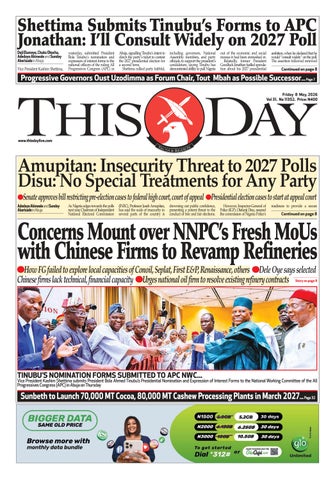
Shettima Submits Tinubu’s Forms to APC Jonathan: I’ll Consult Widely on 2027 Poll
Deji Elumoye, Chuks Okocha, Adedayo Akinwale and Sunday Aborisade in Abuja
www.thisdaylive.com
yesterday, submitted President Bola Tinubu’s nomination and expression of interest forms to the national officers of the ruling All Progressives Congress (APC) in
Abuja, signalling Tinubu’s intent to clinch the party’s ticket to contest the 2027 presidential election for a second term. Shettima rallied party faithful,
including governors, National Assembly members, and party officials, to support the president’s candidature, saying Tinubu has demonstrated ability to pull Nigeria
ambition, when he declared that he would “consult widely” on the poll. The assertion followed renewed
out of the economic and social morass it had been enmeshed in. Relatedly, former President Goodluck Jonathan fuelled speculation about his 2027 presidential Continued on page 8
Amupitan: Insecurity Threat to 2027 Polls Disu: No Special Treatments for
Any Party
Senate approves bill restricting pre-election cases to federal high court, court of appeal Presidential election cases to start at appeal court Adedayo Akinwale and Sunday Aborisade in Abuja As Nigeria edges towards the polls next year, Chairman of Independent National Electoral Commission (INEC), Professor Joash Amupitan, has said the scale of insecurity in several parts of the country is drowning out public confidence, presenting a potent threat to the conduct of free and fair elections.
However, Inspector-General of Police (IGP), Olatunji Disu, assured the commission of Nigeria Police’s
Concerns Mount over NNPC’s Fresh MoUs with Chinese Firms to Revamp Refineries
FG failed to explore local capacities of Conoil, Seplat, First E&P, Renaissance, others Dele Oye says selected Chinese firms lack technical, financial capacity Urges national oil firm to resolve existing refinery contracts
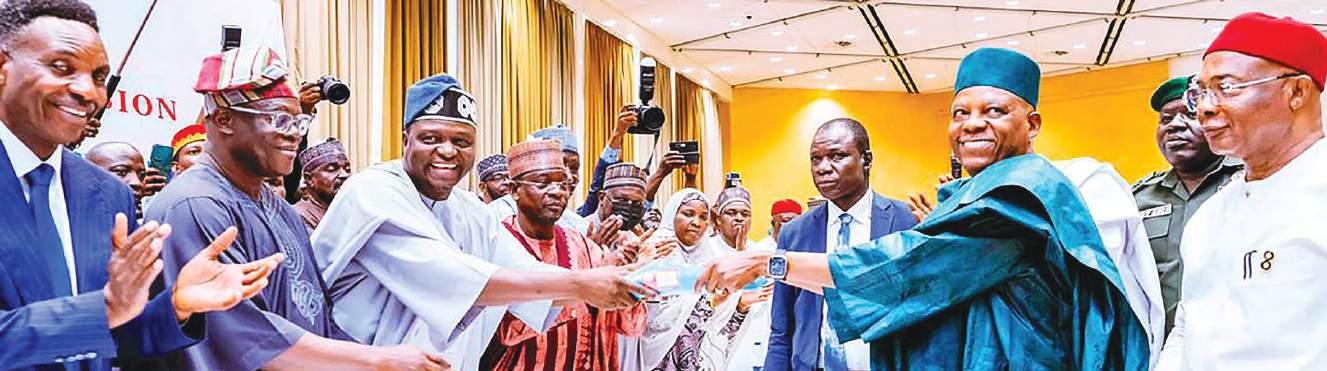
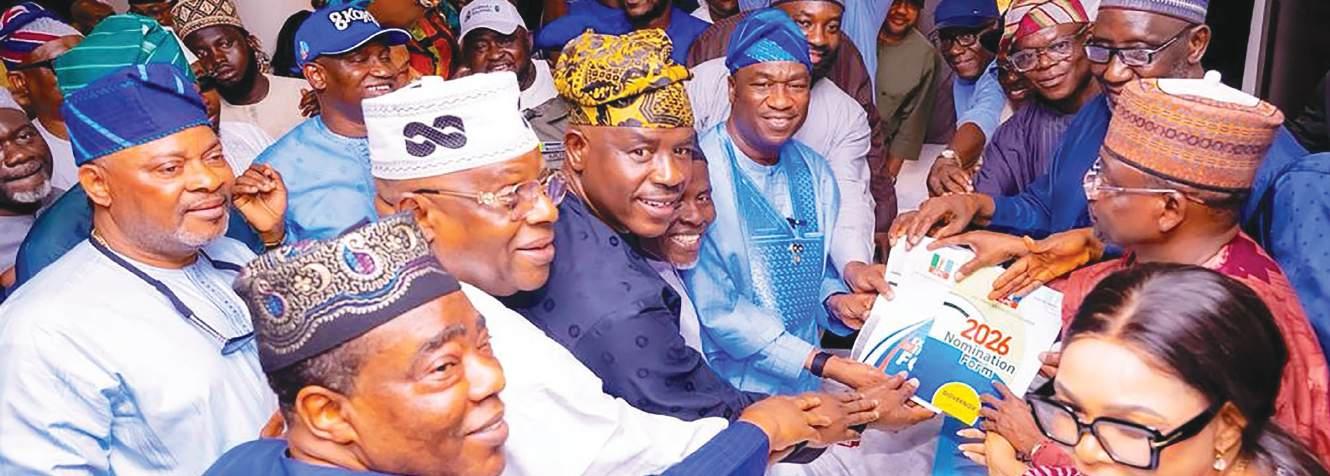
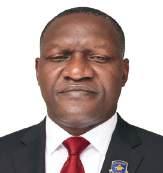
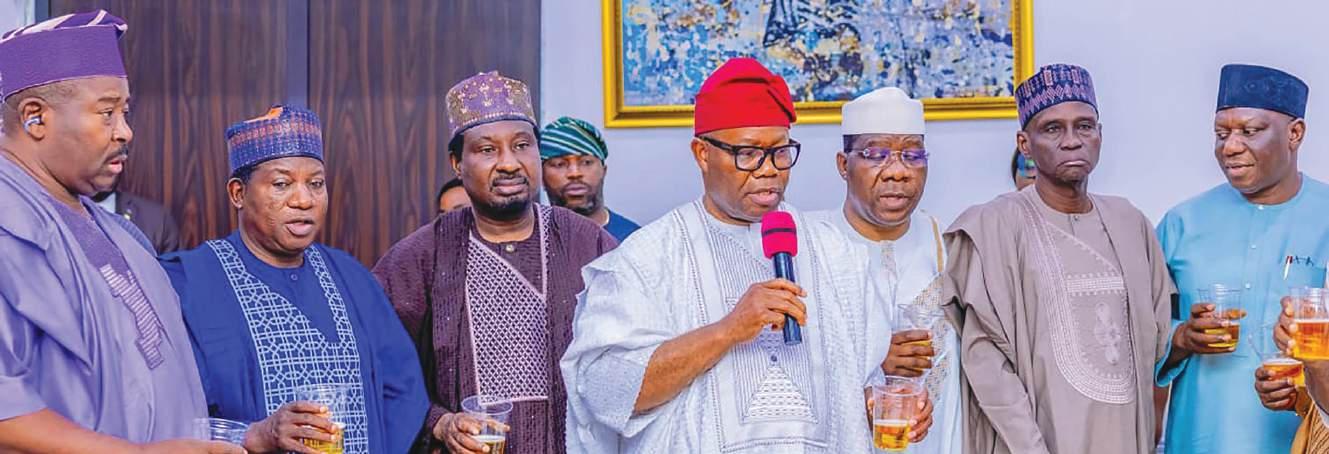
Vice President Kashim Shettima, TINUBU’S NOMINATION FORMS SUBMITTED TO APC NWC...
Vice President Kashim Shettima submits
HAMZAT SUBMITS NOMINATION FORMS...
Lagos State Deputy Governor, Dr. Kadri Obafemi Hamzat (middle), flanked by chieftains of the All Progressives Congress, during the submission of his Expression of Interest and Nomination Forms for the 2027 Lagos State Governorship Election at the party’s National Secretariat, Abuja, yesterday
FT: Aliko Dangote Planning London
Listing of $13bn Cement Empire
10% of shares to be sold to outside investors
Emmanuel Addeh in Abuja
Africa’s richest man, Aliko Dangote, is planning a London listing of his cement empire this year, in a move that would provide a much-needed boost for the UK market, a report by Financial Times (FT) said yesterday.
Under the plan, Dangote Cement, which has a market capitalisation of almost $13 billion on the Lagos Stock Exchange, would seek a secondary listing in the UK, the Nigerian billionaire told the FT. As part of the move, about 10 per cent of the shares in the company would be sold to outside investors, he added.
“We want to do a dual listing. We’ve been thinking about it for seven to 10 years,” said Dangote, adding that his business had entered “the busiest period” of his life.
According to FT, the UK’s Financial Conduct Authority has been overhauling listing rules in recent years to try to boost the attractiveness of the market, which has struggled to attract blue-chip initial public offerings amid stiff competition from the US and Amsterdam.
“We ended up saying London is good as they have brought down the minimum listing requirements,”
Dangote said.
The company, Africa’s biggest producer of building materials, has selected banks to advise on the move, including Citigroup, JPMorgan Chase and Standard Bank, FT quoted people familiar with the matter as saying.
The move revives a previously abandoned effort to list the business in London. While earlier attempts had failed to materialise, Dangote’s move to line up advisers illustrated more serious preparations, the people said. A final decision will depend on the market environment and investor demand.
Recent steps to make UK secondary listings easier had made it more attractive to revive plans to sell shares in London, with the listing planned for about September, Dangote said.
A secondary listing of Dangote Ce- ment would be a boost for London’s capital markets. Hoped-for listings in 2026, including a potential €19 billion flotation of software group Visma, have been delayed amid geopolitical uncertainty and a sell-off of companies deemed vulnerable to AI disruption.
Dangote Cement, which operates in 11 African countries and whose shares have gained more than 70
Firm targets raising output from 60m tonnes to 100m tonnes by 2030
per cent this year, listed in Lagos in 2010. Dangote Industries, which has interests in sugar, flour, fertiliser and oil refining, is the controlling shareholder in the cement business.
The cement company has long sought to list in London, appointing independent directors to its board — including barrister, Cherie Blair, and former Xstrata chief executive Mick Davis — in 2018 in preparation.
But stringent requirements as well as distractions, including the construction of a $20 billion oil refinery in Nigeria, now producing 650,000 barrels a day, meant the listing never went ahead.
Dangote said his cement business planned to increase its annual cement production from 60 million tonnes at present to 100 million tonnes by 2030. In Nigeria, work had already
started on a plant for 6 million tonnes, with another 6 million tonnes of capacity to follow, he said, adding that it was all for export.
Dangote is Africa’s richest person and the only African listed in the Forbes ranking of the 100 richest people in the world. In May, Bloomberg’s rich list put his wealth at $35.4 billion, an increase of $5.4 billion so far this year.
That was partly thanks to the performance of his Lagos refinery, in which Dangote holds the majority stake. The refinery’s profits have been boosted by higher margins and shortages of products such as jet fuel following the outbreak of the Iran war. He said he planned to sell up to a 15 per cent stake in the oil-refining company in an IPO this year in Lagos.
Senate Approves N2.285 Trillion FCT Budget, Queries Missing Revenue Plan
Lawmakers raise concern over funding sources after N84bn increase Akpabio orders submission of FCT revenue profile despite approval
Senate on Thursday approved a N2.285 trillion budget for the Federal Capital Territory Administration (FCTA) for the 2026 fiscal year, amid concerns by lawmakers over the absence of details on how the spending plan would be financed.
Obi Queries Consumption Data, Asks, ‘Who Is Drinking the Excess Fuel’
Chuks Okocha in Abuja
Presidential hopeful and ex-Anambra State Governor, Peter Obi, has stated he would take a firm stand against criminal activities if elected president in 2027, stressing that the fuel consumption statistics in Nigeria are deeply flawed and prone to abuse.
Speaking during an interview on Trust TV, the former presidential candidate also criticised Nigeria’s fuel subsidy system.
Obi questioned the accuracy of the country’s reported fuel consumption, saying the figures do not reflect reality.
According to him, available data suggests that Nigeria cannot be using the large volume of petrol
often claimed.
He said, “Subsidy is organised crime and I won’t allow any form of criminality as the president of Nigeria. The amount of fuel they say we consume cannot be consumed by this country, there’s empirical evidence.”
Obi explained that the subsidy structure created opportunities for fraud and misuse, stressing that such issues would not be tolerated under his leadership.
Drawing comparisons with Pakistan, Obi stated Nigeria and that country shared similarities in population size and infrastructure, yet Pakistan reportedly consumes far less fuel.
“We are about the same as Pakistan; they have more roads, and we probably have the same number of vehicles, or they have even more, yet their fuel consumption is a third of ours, so who is drinking the balance?” he said.
During the 2023 presidential election, Obi and other candidates had promised to remove the fuel subsidy, describing it as unsustainable. The eventual winner of the election, Bola Tinubu, later announced the removal of the subsidy during his inauguration in Abuja on May 29, 2023.
The decision led to a sharp increase in petrol prices and transport fares, with many Nigerians still feeling the effects.
The upper chamber increased the proposed budget by N84 billion, from the N2.201 trillion earlier submitted by President Bola Tinubu in March, before passing it through a voice vote at the Committee of Supply.
The approved appropriation will cover expenditure for the FCT from January 1 to December 31, 2026.
Despite broad support for the budget, some senators faulted the failure of FCTA to provide a comprehensive revenue profile to accompany the spending proposal.
They warned that the omission could expose the territory to unregulated borrowing and rising debt obligations.
Senate President Godswill Akpabio announced the passage of the budget after a majority of lawmakers endorsed it during plenary.
The approval followed consideration of a report presented by Chairman of Senate Committee on the FCT, Senator Austin Akobondu, representing Abia Central.
Akobondu said the committee held extensive engagements with Minister of the Federal Capital Territory (FCT), Nyesom Wike, and other top officials of the administration before arriving at the final figures.
He disclosed that the approved
sum comprised N165.775 billion for personnel costs, N378.231 billion for overhead expenditure, and N1.741 trillion for capital projects.
According to him, capital expenditure accounts for 76.19 per cent of the total budget, overhead costs represent 16.55 per cent, while personnel costs make up 7.25 per cent.
The debate, however, shifted to concerns over the absence of projected revenue sources in the appropriation bill.
Traditionally, budgets presented by the executive arm of government contain details of expected revenue streams, including internally generated revenue, grants, loans, and other financing arrangements.
The omission became more significant against the backdrop of the federal government’s growing reliance on borrowing to fund public expenditure and Nigeria’s increasing debt burden.
FCTA currently operates outside the Treasury Single Account following the decision of the Tinubu administration to remove the territory from the TSA framework, thereby granting the FCT administration direct control over its funds.
Senator Adetokunbo Abiru, representing Lagos East, who is
also Chairman of Senate Committee on Banking, Insurance and Other Financial Institutions, questioned the absence of the revenue profile in the budget document.
Although, he later commended Wike for ongoing infrastructural projects across Abuja, Abiru maintained that lawmakers needed to know the exact funding sources backing the budget.
Similarly, Chairman of Senate Committee on Finance, Senator Sani Musa, representing Niger East, warned that the appropriation could not be considered fully comprehensive without clear disclosure of anticipated revenue inflows. Musa stated that approving expenditure without a financing framework could create room for future borrowing or overdrafts without adequate legislative oversight. Responding to the concerns, Akpabio agreed that the senate should be furnished with the FCT’s revenue profile and directed the committee to ensure that the document was submitted, notwithstanding the passage of the budget.
Several senators, however, applauded the FCT minister for what they described as impressive infrastructural transformation in Abuja and satellite towns.
Sunday Aborisade in Abuja
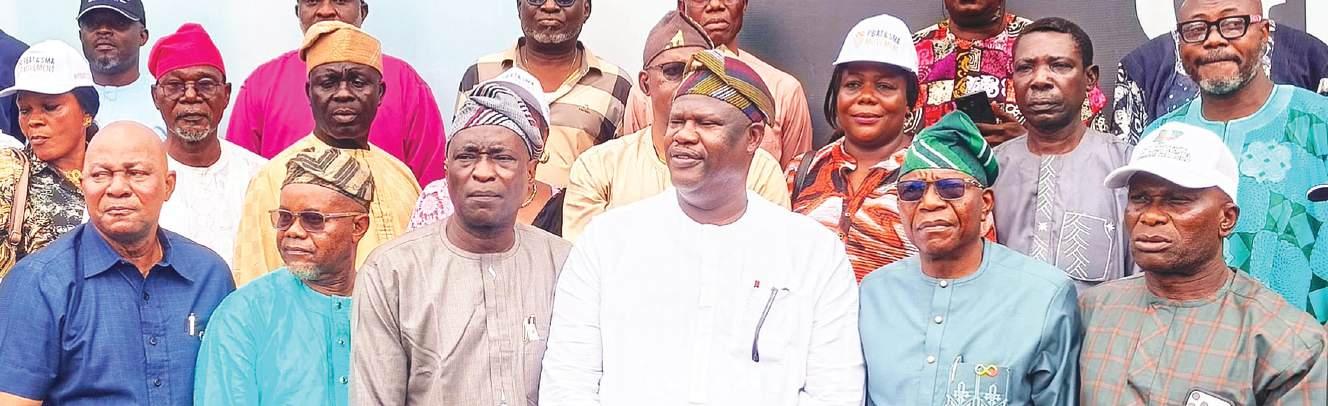
APC LEADERS IN SOUTH-WEST IN STRATEGIC MEETING...
L-R: Lagos State Assistant Organising Secretary of the All Progressives Congress, Mr. Bayo Sanwo-Olu; former Member of the House of Representatives from Epe Federal Constituency, Hon. Ibrahim Gbabijo; Deputy Chairman of the All Progressives Congress in Lagos, Hon. Moshood Mayegun; APC governorship aspirant, Dr. Samuel Mawuyon Ajose; Lagos State Chairman of the All Progressives Congress, Pastor Cornelius Ojelabi; and Mr. Lateef Ibirogba, with other leaders of the party in the South-West during the strategic meeting with Dr. Ajose at the party’s Secretariat, ACME, Ogba, held in Lagos, yesterday
Wale Adeniyi: Trade Modernisation Project Central to Customs Reforms
Says
technology initiative will eliminate inefficiencies, simplify processes, create more predictable
James Emejo in Abuja Comptroller-General, Nigeria Customs Service (NCS), Mr. Adewale Adeniyi, yesterday declared that the service’s Trade Modernisation Project (TMP) remained the central pillar of ongoing reforms aimed at transforming customs operations through technology, automation, and improved trade facilitation.
Adeniyi described the initiative
as a comprehensive and technologydriven reform designed to eliminate inefficiencies, simplify processes and create a more predictable trading environment.
Adeniyi spoke at the opening of a workshop on, “Enhancing Media Knowledge, Awareness, and Understanding of Customs Modernisation Project,” in Abuja.
He said the project aligned with the service’s broader commitment
to meeting global standards amid growing demands for efficiency, transparency, and accountability in international trade.
The CGC said the deployment of digital platforms, automation of procedures and integration of systems would lay the foundation for an “efficient, transparent, technologydriven, and globally competitive” customs administration.
He said the reform agenda
went beyond infrastructure and technology, stressing that stakeholder understanding and participation are critical to its success.
Adeniyi stated that the media had a strategic role to play in shaping public perception and promoting informed discourse around customs reforms.
Represented by Deputy Comptroller-General of Customs (DCG) in charge of Enforcement,
Agama: Regulation Must Run Ahead of Market Disruption
The Director General, Securities and Exchange Commission (SEC), Dr. Emomotimi Agama, has stressed that capital market regulation must be ahead of market disruption not behind it
Agama who spoke recently on the theme “Building an Investable Nation Through Policy, Reform and Resilience,” at the FSDH inaugural Investors’ Conference highlighted the role of regulatory clarity, market discipline, and institutional trust in attracting and sustaining investment flows.
The conference was FSDH commitment to shaping the future of investing in Nigeria, convening a high-level audience of investors, policymakers, regulators, fund managers, and financial experts to examine the future of investing and explore pathways to sustainable economic growth.
Held in Lagos, the one-day hybrid event brought together key stakeholders across the financial ecosystem under the theme, “Cocreating the Future of Intelligent Investing.”
The conference served as a platform for engaging discussions on evolving market dynamics, emerging investment opportunities, and the role of collaboration in shaping a more resilient and inclusive financial landscape.
Delivering his keynote address virtually, Agama said, “Regulation
must run ahead of disruption, not behind it. Our regulatory posture on technology is neither prohibition nor permissiveness; it is intelligent governance. Co-creation is not consultation; it is shared sovereignty over the future of our financial architecture.
“The SEC Nigeria does not regulate for the market; we regulate with the market and so intelligent investing is not exclusive, rather it is by design. The intelligence we invest in building this market today is the prosperity we harvest for generations yet unborn.”
“Today we can gladly say that the market is well over N130 trillion in market capitalization. The question is whether we shall be its architect or its inheritors. We should not regulate the market of yesterday; we are building the regulatory scaffolding for the market of tomorrow.
In her opening remarks, Managing Director, FSDH Merchant Bank, Bukola Smith, emphasised the importance of collective intelligence in navigating an increasingly complex investment environment, noting that sustainable growth will depend on the ability of stakeholders to work more collaboratively across sectors.
“Today is more than the launch of a conference. It’s a gathering of minds, institutions, and leaders committed to shaping the future of investing in Nigeria. Sustainable economic growth requires more than access to capital. It requires
confidence, it requires trust, it requires strong institutions. Strong market performance alone does not define an investable nation.
“An investable nation is built on sound policy, regulatory consistency, market transparency, and confidence that capital, especially long-term capital, can be deployed safely and productively. Building an investable nation requires all hands-on deck,” she said.
A fireside chat featuring, Director General of PenCom, Omolola Oloworaran examined the role of pension capital in infrastructure financing and long-term value creation, with a focus on how institutional funds can be more effectively deployed to support national development priorities.
She noted that, “Institutional capital, especially pension funds, has the scale and patience required to finance infrastructure, but it must be supported by the right frameworks, de-risking mechanisms, and collaborative partnerships.”
According to the PenCom DG, the future of pension systems lies in their ability to balance safety with impact, protecting contributors while actively financing the growth of the real economy.
“In five years, we could be looking at maybe 100 trillion in pension assets, which I'm being very optimistic about. So, we want to change the landscape of the business, bring new and fresh people into the system.
“Last year we introduced Pension Boost 1.0 and that significantly increased payouts by over 40%. What we continue to do is encourage, or provide an enabling environment for, pension funds to be able to invest and take the right kind of risks that can generate high returns,” she said.
Investigation and Inspection, Timi Bomodi, Adeniyi said, “As key partners in national development, the media serve as the bridge between institutions and the public.
“You shape narratives, influence perception, and provide the platform through which policies and reforms are interpreted and understood.”
The customs boss explained that the workshop was structured to deepen journalists’ understanding of the TMP, including its objectives, implementation framework, and expected impact on trade facilitation and economic growth.
He expressed confidence that the engagement would improve the quality of reportage on customs reforms and promote factual and balanced reporting capable of strengthening public trust and confidence in the service.
Adeniyi also commended Trade Modernisation Project Limited (TMPL) for its technical support and partnership in driving innovation within customs operations, stating that the collaboration remains critical to the successful implementation of the initiative.
trading environment
Earlier, Deputy Comptroller General of Customs/National Public Relations Officer, Mr. Abdullahi Maiwada, said the workshop was organised to strengthen media awareness and understanding of the trade modernisation project as the service continued to evolve in response to global trade realities and technological advancement.
Maiwada described the initiative as a major milestone in the customs’ efforts to deploy technology-driven solutions to improve operational efficiency, facilitate trade, and enhance revenue collection.
He lauded Adeniyi’s leadership and commitment to reforms, transparency, and stakeholder engagement, stating that his modernization agenda continues to shape the direction of the service.
According to him, effective communication and public engagement would remain vital to the success of the project.
Maiwada stressed that journalists were not only conveyors of information but also “shapers of public understanding and perception”.
Accommodation Crisis: FG Commits Over N250bn in Tertiary Institutions
The federal government has committed over N250 billion in interventions aimed at tackling the long-standing student accommodation issues across Nigeria’s tertiary institutions. Minister of Education, Dr Tunji Alausa, disclosed this in Abuja on Wednesday while inaugurating the chairmen and members of Boards of Federal Ministry of Education agencies reappointed chief executive officers, Rectors of Federal Polytechnics, and principal officers of the Federal University of Agriculture and Entrepreneurship, Bama.
Alausa said for the first time in the country’s history, the government was committing such a scale of funding within a single year to expand hostel infrastructure nationwide.
According to him, the intervention, approved by President Bola Tinubu under the Renewed Hope Agenda,
will see the construction of new hostels and expansion of existing facilities across federal institutions.
Breaking down the plan, Alausa disclosed that at least 50 tertiary institutions will receive N2 billion each for the construction of student hostels, with every project expected to deliver a minimum of 500 bed spaces.
He said the funds were being channelled through the Tertiary Education Trust Fund (TETFund), which is coordinating the rollout of the projects.
Alausa stated, “We are spending N2 billion each to build hostel accommodation in at least 50 tertiary institutions.
“The N2 billion will deliver 500 bed spaces to each of these institutions. These funds have been mobilised via TETFund.”
He said the government would spend another N80 billion in Public Private Partnerships that would deliver
between 1,200 and 1,500 bed spaces in 24 federal tertiary institutions.
“TETFund will come up with one billion in counterpart funding and the rest will come up with three billion. So, total four billion per institution,” he stated.
Speaking on the inauguration of chairmen and members of governing boards of agencies under the Federal Ministry of Education, alongside the appointment and reappointment of key institutional leaders, Alausa emphasised that the ongoing reforms were anchored on expanding access, improving quality, integrating technology, and aligning educational outcomes with national development priorities.
He charged the newly inaugurated board members and institutional heads to provide strategic leadership, ensure accountability, and uphold transparency in the management of public resources.
Kuni Tyessi in Abuja
Kayode Tokede
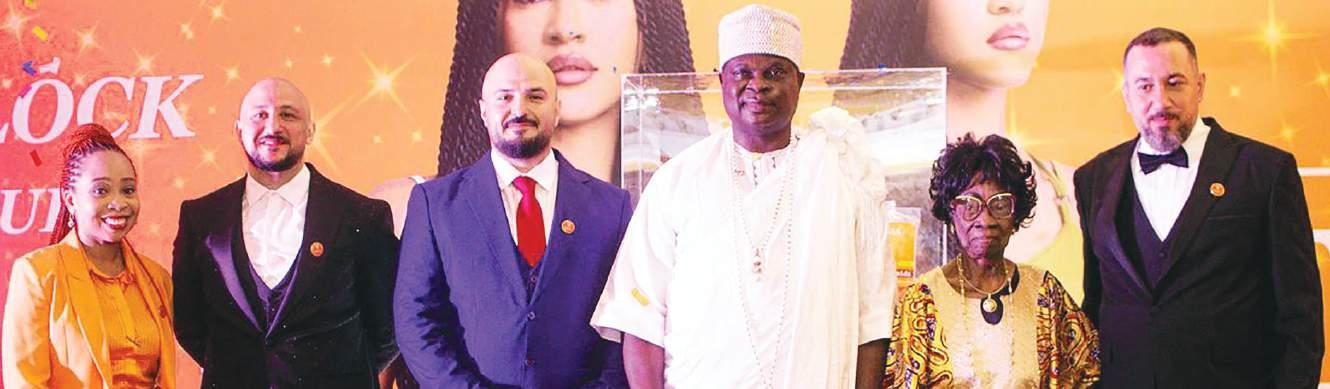
TRESSA HAIR LAUNCH BY BEST FIBRES NIGERIA LIMITED...
L-R: Marketing Manager, Best Fibres Nigeria Limited, Mrs. Ekemini Ogbiko; Head, PSO (Production System Optimisation), Mr. Shahin Alawam; Managing Director, Mr. Khaled Sallam; the Olota of Ota, His Royal Majesty, Professor Adeyemi Obalanlege; Mama Elegant Twins, Dr. Elizabeth Olabisi Osisanya; and General Manager, Best Fibres Nigeria Limited, Mr. Kenan Alawam, during the
Progressive Governors Oust Uzodimma as Forum Chair, Tout Mbah as Possible Successor
Imo gov removed over alleged loss of confidence, mismanagement of funds, others Removal can’t stay, allegations false, baseless, secretariat declares
The Progressive Governors’ Forum, last night, removed its Chairman and Governor of Imo State, Senator Hope Uzodinma, soon after the submission of President Bola Tinubu’s presidential nomination forms.
In his place, however, the forum is said to be touting the Governor of Enugu State, Peter Mbah, as possible new leader.
Uzodimma’s removal, THISDAY gathered, was announced at an extraordinary meeting of about 20 governors, including those of Ogun, Bayelsa, Enugu, and others, who met at the Ogun State Governor’s Lodge in Abuja. Of the 20 governors who attended the meeting, six joined by zoom.
Sources privy to the meeting said the forum came to the difficult decision following massive allegations of financial mismanagement, loss of confidence in his leadership and high-handedness levelled against him.
Uzodimma, it was learnt had repeatedly failed to give satisfactory
explanation to his colleagues who were alarmed by the weight of the mismanagement allegations.
However, immediately he was removed, the source hinted that the forum informed the President of the development. The President, according to sources, may also have lost confidence in Uzodimma’s leadership of the Progressive Governors Forum.
However, immediately news broke of his removal, the Director General of the Progressive Governors Forum, Folorunso S. Aluko, issued a declaimer, stating that Uzodimma remained the Chairman of the forum.
In a terse statement titled: “PGF Denies False Reports of Removal of its Chairman”, he wrote:
“The attention of the Progressive Governors Forum has been drawn to a false and misleading report circulating in some media platforms alleging the removal of its Chairman, His Excellency, Senator Hope Uzodimma, CON.
“For the avoidance of doubt, the Progressive Governors Forum states categorically that the report is entirely false, baseless, and without an iota of truth.
“No meeting of the Forum was held at which any such decision was taken. The PGF Secretariat has no record of, and is not aware of, any resolution removing the
Chairman. His Excellency, Senator Hope Uzodimma, CON, remains the Chairman of the Progressive Governors Forum.
“The Forum remains united,
Justice Mojisola Dada of the Special Offences Court sitting in Ikeja has dismissed the preliminary objections and bail application filed by Managing Director of Intermediate Investment Holdings Limited, Ufoma Joseph Immanuel, in connection with an alleged $1.5 million fraud.
Economic and Financial Crimes Commission (EFCC) had on March 11, 2026 arraigned Immanuel and his company, Intermediate Investment Holdings Limited, on a two-count charge bordering on obtaining by false pretence and forgery involving $1.5 million.
According to the prosecution, the alleged offences contravene provisions of the Advance Fee Fraud and Other Fraud Related Offences Act, 2006, and the Criminal Law of Lagos State, 2015.
The defendants pleaded not guilty to the charges.
EFCC alleged that the defendants induced Adebisi Adebutu of R28 Holdings Limited to invest the sum
focused, and committed to its responsibilities. Members of the public, party faithful, and the media are therefore advised to disregard the said report in its entirety.”
Fani-Kayode: I Rejected Germany Posting, Chose South Africa
Says reports of German rejection false, malicious
Wale Igbintade
Former Minister of Aviation, Femi Fani-Kayode, has clarified that he personally declined an earlier diplomatic posting to Germany and instead requested to be redeployed to South Africa.
Fani-Kayode made the clarification yesterday while confirming his
Rejects Investment
Orders Accelerated Trial
under the pretext of financing projects linked to Chappal Petroleum Development Company Limited, Intermediate Investment Holdings Limited, and Chappal Energies Mauritius Limited.
The prosecution further claimed that the investment was backed by assurances of reimbursement, payment of a development capital fee of $2.25 million, and the allocation of a 22.4 per cent equity stake in Intermediate Investment Holdings Limited, representations it described as false.
In the second count, Immanuel was accused of forging a document, titled, “Term Sheet,” allegedly executed by Sherrif Oluwo and Olaniran Osotuyi, to facilitate the purported fraud.
Following the arraignment, prosecution counsel, Babatunde Sonoiki, urged the court to fix a trial date and remand the defendant in INTERPOL custody pending the conclusion of investigations.
Defence counsel, Oluseun Awonuga (SAN), in his response, drew the court’s attention to a
preliminary objection and written address dated January 5, 2026, urging the court to discountenance the prosecution’s counter-affidavit.
Awonuga argued that an earlier ruling of the Federal High Court restrained EFCC from arresting the defendant and alleged that the anti-graft agency violated the order.
Responding, Sonoiki maintained that the Federal High Court ruling emanated from a civil matter that had since been withdrawn and did not bar criminal proceedings.
He argued that civil and criminal proceedings could run concurrently and urged the court to dismiss the objections and grant accelerated hearing of the case.
The prosecutor further told the court that the defendant became a fugitive after allegedly absconding despite being granted administrative bail by EFCC.
He also stated that the defendant could interfere with the proceedings if admitted to bail.
In her ruling, Dada held that the preliminary objection lacked merit and dismissed it in its entirety.
appointment as Nigeria’s AmbassadorDesignate to South Africa.
According to him, contrary to reports that the German authorities rejected his nomination, he voluntarily turned down the European posting and formally sought redeployment.
“I wish to confirm that this was my choice and that Germany never formally rejected me,” he stated.
The former minister explained that shortly after his initial posting to Germany was announced, he contacted the then Minister of Foreign Affairs, Yusuf Tuggar, to express reservations over the assignment.
He said his decision was influenced by personal considerations and his preference to serve within Africa rather than Europe, where he had spent most of his life.
“After the initial posting to Germany was announced, I made a formal representation that I was not comfortable with Germany for a number of personal reasons,” he said.
Fani-Kayode added that he specifically requested redeployment to South Africa because it was a country he had never visited but had long admired.
“I would prefer to go to South Africa, which is a country I had never been to and for which I have so much interest,” he stated.
He further cited South Africa’s economic status, close diplomatic ties with Nigeria, and its Pan-African outlook as additional factors behind his preference.
“I would rather serve in a country that shares some of my convictions, beliefs and values when it comes to
world affairs, that has the biggest economy in Africa and closer ties to Nigeria,” he added.
According to him, Tuggar favourably considered the request and forwarded it to President Bola Ahmed Tinubu, who subsequently approved the redeployment.
Fani-Kayode expressed gratitude to both the President and the former foreign minister for approving his request.
“I will be eternally grateful to Ambassador Yusuf Tuggar and President Bola Ahmed Tinubu for this favourable consideration,” he said. He also thanked Senator Sam Enang, who was originally posted to South Africa, for agreeing to switch postings and proceed to Germany instead.
Cuban President Accuses US of Plotting Military Intervention Amid Rising Tensions
Michael Olugbode in Abuja
Cuban President Miguel Díaz-Canel has accused the United States of seeking a pretext to launch military intervention against Cuba as diplomatic tensions between both countries continue to deepen over fresh sanctions and regional security concerns.
Díaz-Canel made the allegation during an international solidarity event in Havana held to commemorate the centenary celebration of late revolutionary leader Fidel Castro, where he criticised Washington’s long-standing hostile posture towards the communist island nation.
According to reports by TRT World and Anadolu Agency, the Cuban leader alleged that the US government was deliberately portraying Cuba as a threat in order to justify possible military aggression and further tighten pressure on Havana.
“The United States is seeking a pretext for military intervention,” Díaz-Canel reportedly declared, while questioning Washington’s continued classification of Cuba as an “extraordinary and unusual threat.”
He argued that there was no justification for any form of military action against Cuba, insisting that the island nation posed no security
danger to the United States or the wider international community.
The Cuban president also accused Washington of increasingly relying on “the language of war” in handling international disputes and linked current American foreign policy to broader geopolitical tensions involving countries such as Venezuela and other US adversaries in Latin America.
The latest outburst comes amid worsening relations between Havana and Washington following a new wave of sanctions imposed by the administration of US President Donald Trump targeting key sectors of the Cuban economy and security institutions.
Tressa Hair launch by Best Fibres Nigeria Limited, held in Lagos ... recently
Wale Igbintade
Renaissance Africa Targets 500,000 Bpd Crude Oil Output by 2030
At $6.9bn, Shell beats profit expectations, raises dividend by 5%
Emmanuel Addeh in Abuja and Blessing Ibunge in Port Harcourt Renaissance Africa Energy Company, operator of the NNPC/Renaissance/ TotalEnergies/AENR Joint Venture has said it plans to reach 500,000 barrels per day (bpd) crude output by 2030, aligning with overall efforts to boost national oil production.
The company revealed that its ambition to get to 500,000 bpd is anchored not just in volume, but to add value to the economy, for people and for the planet.
Renaissance Vice President, Relations and Sustainable Development, Igo Weli, made the assertion yesterday, at the flag-off ceremony of a four-day community-focused eyecare programme organised for residents and indigenes of B-Dere and surrounding communities in Gokana Local Government Area
of Rivers State.
The programme titled “B-Dere Vision First Plus”, was put together by Renaissance Africa JV in collaboration with Kolmarg Eyesight Foundation.
In his address, Weli said aside the crude production target, Renaissance continues to spotlight domestic gas utilisation, making it a catalyst for powering the nation’s industrialisation.
Represented by the General Manager, Health Renaissance, Dr Akinwumi Fajola, Weli said Renaissance is helping Nigeria reclaim production momentum, boosting national crude output by over 200,000 bpd and delivering 1.9 billion cubic feet of gas daily.
“You Would have read the many media reports that highlight how we continue to support oil and gas production in Nigeria. Along with an impressive target of 500,000 barrels of oil by the year 2030, we continue to
bring the spotlight on domestic gas utilisation and how we can make this a catalyst to power our nation’s industrialisation.
“Renaissance’s declared vision is to be a leading African energy company providing energy security. Renaissance is helping Nigeria reclaim production momentum, boosting national crude output by over 200,000 barrels per day and delivering 1.9 billion cubic feet of gas daily to Bonny NLNG within and industrialisation in a sustainable manner,” he stated.
Weli explained that the healthcare programme represents Renaissance’s shared commitment to promoting healthier lives, restoring dignity, and improving the overall quality of life within their host communities.
He noted that over 2.2 billion people live with some form of visual impairment, and nearly half of the cases are either preventable or
treatable. “In Nigeria alone, millions continue to suffer from avoidable blindness caused by conditions such as cataracts and uncorrected refractive errors
He however, appreciated the Rivers State Government, the Ministry of Health and its parastatals for their continued partnership in delivering essential healthcare to the good people of the state.
Also, Renaissance VP commended it senior partner, NNPC Limited, represented by NNPC Upstream Investment Management Services (NUIMS), and it Joint Venture partners, TotalEnergies and AENR, for their unwavering support and continued social investment in Nigeria, especially on the programme.
Representing the Chief Upstream Investment Officer of NUIMS, Mr Seyi Omotowa, Head of Business Services, Nkechi Anaedobe, said the
joint venture remained committed to improving the lives of people in host communities.
Anaedobe disclosed that the programme was already on course to exceed its initial target of 5,000 beneficiaries. “I know we had over 5,000 as our target and we’re on track to not only meet that but to surpass it as well,” she added.
Meanwhile, Shell’s first-quarter profit beat estimates and hit its highest in two years at $6.9 billion yesterday, boosted by gains linked to the Middle East war, prompting it to raise the dividend by 5 per cent.
At the same time, it cut its quarterly share buyback programme to $3 billion from $3.5 billion to preserve cash for its balance sheet as a short-term liquidity squeeze after war-related energy supply disruptions increased its debt.
Chief Financial Officer, Sinead
Igo Weli
Gorman, said on a conference call that future buyback increases were on the table given Shell shares were still undervalued. “It really reflects that confidence we have in the long-term cash flows of the company,” Gorman said of the dividend hike. Shell had previously exceeded its shareholder distribution target of 40 per cent to 50 per cent of operational cash flow, a Reuters report said.
CONCERNS MOUNT OVER NNPC’S FRESH MOUS WITH CHINESE FIRMS TO REVAMP REFINERIES
Emmanuel Addeh in Abuja
Fresh concerns have continued to trail the recent Memoranda of Understanding (MoUs) signed by the Nigerian National Petroleum Company Limited (NNPC) with two Chinese firms for the rehabilitation and operation of the Warri and Port Harcourt refineries, amid growing calls for the federal government to explore the competence of indigenous energy companies with proven operational track records.
NNPC had announced that it
signed the MoUs with Sanjiang Chemical Company Limited and Xinganchen (Fuzhou) Industrial Park Operation and Management Company Limited as part of plans for a technical equity partnership aimed at completing outstanding rehabilitation works and operating the two refineries.
According to the national oil company, the proposed arrangement would also involve refinery expansion, petrochemical integration and development of gas-based industrial hubs around the facilities.
But the development has generated criticism within sections of the oil and gas industry, especially after former President of the Organised Private Sector of Nigeria (OPSN), Dele Oye, questioned the technical and financial competence of the Chinese firms during an interview on Arise Television yesterday.
Oye argued that neither Sanjiang Chemical nor Xinganchen had verifiable global refinery rehabilitation or operational experience comparable to established Engineering, Procurement and
Construction (EPC) firms like Saipem and Tecnimont, which previously handled rehabilitation contracts for the Nigerian refineries.
Besides, industry analysts argued that Nigeria now has a stronger base of local upstream and midstream operators with growing technical and financial capabilities than it did a decade ago.
Many of local companies that took over assets divested by IOCs have not been found wanting, they have filled the gap with demonstrable competence.
Companies such as Conoil Producing, Seplat Energy, First E&P and Renaissance Africa Energy Holdings have emerged as major players in Nigeria’s oil and gas industry, controlling strategic upstream assets and executing complex production and infrastructure projects.
Although most of the indigenous firms are primarily upstream operators rather than refinery engineering companies, experts argue that the government could have structured a consortium model
AMUPITAN: INSECURITY THREAT TO 2027 POLLS; DISU: NO SPECIAL TREATMENTS FOR ANY PARTY
environment for the elections, warning that there would be no preferential treatment for anyone or party.
Amupitan spoke during a courtesy visit to Disu, where he formally sought the support and collaboration of the Nigeria Police ahead of the 2027 general election.
The INEC chairman said a thorough security risk analysis was essential before the elections.
Amupitan, in a statement by the commission’s Director of Publicity and Voter Education, Mrs. Victoria Eta-Messi, identified issues such as electoral malpractices, vote trading, and threats of violence as factors that could undermine public confidence and pose risks to national security.
He stressed the need for proactive security measures, including comprehensive risk assessments to identify potential flashpoints and deploy appropriate mitigation strategies.
“The scale of insecurity across various parts of the country presents a threat to the conduct of free and fair elections. It is essential that we carry out thorough security risk analyses ahead of the elections,” Amupitan stated.
He informed the police leadership that the commission had commenced preparations for the 2027 elections, scheduled for January 16, 2027, for presidential and National Assembly polls, and February 6, 2027, for governorship and state Houses of Assembly elections.
The chairman stated that the release of the election timetable and the ongoing political party activities, including ward congresses and conventions, signalled the full activation of the electoral process, which he described as a “security trigger”.
According to him, political parties are expected to conduct their primaries in line with Section 84 of the Electoral Act 2026, which permits only direct primaries and consensus for candidate nominations.
The INEC chairman also drew attention to upcoming off-cycle governorship elections in Ekiti and Osun states, as well as a series of by-elections across the country, describing them as critical milestones in Nigeria’s democratic journey.
“These elections are crucial milestones in Nigeria’s democratic journey, and it is imperative that they are conducted peacefully and seamlessly,” he said.
Acknowledging the police as the lead agency in election security, the INEC chairman pledged the commission’s cooperation, emphasising the importance of intelligence sharing, strategic planning, and community engagement.
He highlighted the role of the Inter-Agency Consultative Committee on Election Security (ICCES), describing it as the “heartbeat” of operational safety during elections.
Amupitan said, “Our success depends on ICCES moving from reactive policing to proactive intelligence coordination,” adding that all stakeholders must ensure a unified, multi-agency approach to protecting electoral personnel, materials, and voters.
Amupitan reaffirmed INEC’s commitment to working closely with the police and other security agencies to deliver peaceful, credible, and transparent elections that reflected the will of the Nigerian people.
Responding, Disu assured the commission of the police’s preparedness to provide a secure
environment for the conduct of the 2027 general election.
He said the Nigeria Police would discharge its responsibilities with professionalism, impartiality, and strict adherence to the 1999 Constitution, Electoral Act, and other extant laws.
The IGP stated that the force had already begun strategic threat assessments and intelligence mapping nationwide to identify flashpoints and emerging security risks ahead of the elections.
He stated, “Issues such as political violence, the proliferation of illegal arms, voter intimidation, cyber manipulation, misinformation, and
attacks on electoral infrastructure had been identified as priority concerns requiring proactive attention.”
He added that intelligence-led deployments and preventive policing strategies would be adopted to neutralise threats before they escalate.
Disu also assured the commission of adequate security for electoral officials, sensitive materials, collation centres, and other critical electoral infrastructure throughout the electoral process.
He stressed that no political party, candidate, or interest group would enjoy preferential treatment from
SHETTIMA SUBMITS TINUBU’S
calls by supporters urging him to seek to return to power.
Speaking after submitting the forms, Shettima said the positive impact of the Renewed Hope Agenda of the Tinubu administration was a rallying call to give the president full backing to actualise his bid for a second term.
He said, “We are here, first, as Nigerians, and, secondly, as members of the All Progressives Congress (APC), to submit this very priceless nomination form of our dear president and leader, His Excellency, Asiwaju Bola Tinubu, as he seeks to lead us for another four-year term.
“Through thick and thin, this President has proven his mettle and has shown the world that his capacity and resolve to pull the nation out of the woods remain unfazed.
“Indeed, the Renewed Hope Agenda of Mr. President has reflected on many successes of this administration. The socio-economic
theDisupolice.warned that officers found engaging in partisan conduct or unethical practices would face disciplinary and legal consequences.
“We will ensure that we enforce electoral laws firmly and we will do it professionally,” the IGP said.
The police boss called for early release and wide dissemination of the election timetable to support effective planning, logistics coordination, personnel training, and inter-agency collaboration.
He advocated stronger cooperation among security agencies
They noted that the success of the Dangote Refinery demonstrated that large-scale refining projects could be executed in Nigeria through a combination of private capital, technical partnerships and commercial discipline.
Seplat, for instance, recently completed its acquisition of Mobil Producing Nigeria Unlimited assets from ExxonMobil, significantly expanding its offshore production portfolio and operational footprint in the country. The company currently produces over 100,000 barrels of oil equivalent per day from its combined onshore and offshore operations.
First E&P has also built a reputation for efficient operations in the Niger Delta through partnerships with the NNPC and other stakeholders, while Renaissance recently led the consortium that acquired Shell Petroleum Development Company’s onshore assets in Nigeria. Indeed, it is believed that after over 60 years, Nigeria has finally come of age!
The concerns surrounding the new MoUs are also coming
FORMS TO APC; JONATHAN: I’LL CONSULT WIDELY ON 2027 POLL
impacts have been phenomenal in pushing out positive results.”
Stating that the president had “courageously steered the ship of state through choppy seas”, Shettima stated that even though some of the decisions taken by the administration seemed difficult, they were necessary to stabilise Nigeria’s economy and secure the country’s future
He stated, “President Bola Tinubu has delivered on the mandate of renewal, stability, and national rebirth. The storms of the past years have not diminished him; they have made a fine sailor out of him.
“He has steered this ship through turbulent waters with courage, taking difficult but necessary decisions to stabilise the economy, restore confidence, and prepare Nigeria for a more sustainable future. Hence, our support and reason for rallying round him.”
The vice president maintained that every citizen had a role to play
in a democracy, with some responsible for spreading the immense successes of the administration and the governing party.
He explained that “banners will be lifted, some will defend the process, and some will mobilise the people. However, it beckons on us all to, as a matter of sacrifice and contribution, protect the hope of Nige-ria”.
Shettima said, “On behalf of our great party, I ask all Nigerians to support this nomination and, by the special grace of God, the candidacy of President Bola Tinubu in 2027.”
Earlier, Speaker of the House of Representatives, Hon. Tajudeen Abbas, applauded Tinubu’s leadership at a difficult time in Nigeria’s history, assuring of better days and a brighter future with the president at the helm of affairs.
Abbas said Tinubu’s courageous decisions and bold reforms had put the country on the path of recovery, prosperity, and progress, which, according to him, justified
his re-election for a second term. Commending the support and resilience of members of the party across the country, the speaker said the presence of key stakeholders, including serving and former governors, legislators, and members of APC’s National Working Committee (NWC), among others, at the event marked a turning point in the history of the party and signalled the commencement of the process of the president’s re-election.
National Chairman of APC, Professor Nentawe Yilwatda, said the performance of Tinubu and the governors was enough justification for the president’s re-election, stating that the party has done enough across different sectors of the economy to justify his second term.
Yilwatda said the endorsement of the president for a second term by the NWC was premised on
THE REAL ROUTE TO ANARCHY
The road to chaos comes when citizens begin to abandon the courtroom, argues ADENEKAN SHOGUNLE
Technology has made the endless wait for passport processing untenable, argues JOSHUA J. OMOJUWA
OUR PASSPORT IS NOT THE PROBLEM. THE SYSTEM IS
In 2024, I was part of a board planning a trip across South-East Asia. Japan, South Korea, Taiwan; three extraordinary countries, each worth the journey. When I sat down with the calendar and began mapping the visa applications, the problem became apparent. Each embassy required physical passport submission. You cannot submit your passport to two embassies simultaneously. You cannot apply for a Japanese visa while your passport is sitting at the South Korean consulate. For every application, the document you cannot travel without becomes a hostage of the application process itself.
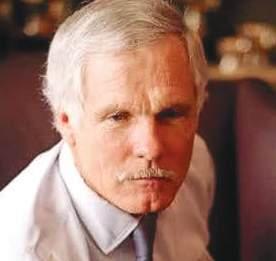
MY ENCOUNTER WITH TED TURNER
NYAKNNOABASI OSSO narrates his observation of the man of ideas when he visited Nigeria
See page 21 See page 21
ADDRESSING GROWING FOOD CRISIS
Taiwan was the last stop on the itinerary and offered the most processing time. I applied for Taiwan and abandoned Japan and Korea. Not because I did not want to visit. Not because the application requirements were too demanding. Simply because the sequential nature of physical passport submissions made it logistically impossible to apply for all three within the available window. I was the only board member who had to make that choice. The others, travelling on passports that require no visa, faced no such constraint. Same board. Same trip. Entirely different experience of the bureaucratic reality of international travel.
The same problem resurfaced more recently when a visa I needed had expired and required renewal. I checked the stated maximum processing time. There appeared to be sufficient room before my next travel commitment. There was not. The passport was held for nearly eight weeks. Commitments were missed. It took measures I should not have had to deploy to get my own travel document returned. This is not a unique story. Ask around. The variations of it are endless; Nigerians, other Africans, people from across the Global South navigating a system that treats their freedom of movement as a problem to be managed rather than a right to be facilitated.
And the year is 2026. Artificial intelligence is writing code. Commercial rockets are landing themselves. And your passport is in a tray at an embassy, waiting.
This is not a complaint rooted in ignorance of why visa requirements exist. Countries have the sovereign right to control who enters their territory. That argument is not being contested here. The question being raised is entirely different and considerably simpler: why, in 2026, does exercising that right require confiscating someone's primary travel document for weeks at a time?
Australia understood this problem
three decades ago. For the 2000 Sydney Olympics, Australia did not require passport submissions for visa applications. The East African Community adopted electronic visas in 2014, requiring no passport submission whatsoever. The technology and the administrative will to separate the question of whether someone may enter from the requirement to physically hold their passport during the decisionmaking process have existed for thirty years. The countries that adopted those systems early did not sacrifice security. They updated their infrastructure.
Today, the United Kingdom no longer requires passport submission for most visa applications. You apply online. The document stays with you. If the visa is granted, the passport is submitted for a matter of days (sometimes hours) to have the visa sticker affixed. Some countries go further: the visa arrives by email, or via a secure download on a passworded platform. No physical submission at any stage. The security assessment happens through digital verification, biometric data, and background checks. The passport remains where it belongs. In the possession of its owner.
These are not futuristic proposals. They are existing practices in functioning democracies that have decided to treat the inconvenience of travellers as a problem worth solving.
The human cost of the current system is not abstract. When your passport is at an embassy, you are not just waiting for a visa. You are frozen. A business opportunity that requires travel to a third country cannot be taken. A family emergency in another country cannot be attended. A speaking invitation, a board meeting, a conference, graduation; all of it stops while your document sits in a queue. For people travelling on passports that already carry the
burden of limited visa-free access, this immobility compounds what is already a structurally unequal global mobility system.
There is a case to be made—and it is occasionally made—that stringent processing requirements exist because of the behaviour of a minority of applicants from certain countries. Even if that argument is accepted entirely, it does not justify a system design that punishes the majority for the conduct of a few. Banks do not confiscate all customers' funds because some customers have committed fraud. Airlines do not impound all passengers' luggage because some passengers have attempted to smuggle contraband. The principle of proportionality; designing systems that address specific risks without penalising everyone is not a radical idea. It is standard institutional practice everywhere except, apparently, in visa processing.
The argument here is not that embassies should relax their scrutiny of applicants. Scrutinise thoroughly. Verify rigorously. Decline applications that do not meet requirements. All of that is entirely legitimate. The argument is that none of those objectives require physically holding someone's passport for weeks while that assessment is being made. The assessment and the physical document are two separate things. Technology has made it possible to conduct one without holding the other. Countries that have recognised this have not become less secure. They have simply become less cruel in their administration of the process.
Reform in this area is not a gesture of generosity toward travellers from less powerful passport nations. It is an acknowledgement of basic administrative modernity. The embassies and consulates that still operate on the premise that a physical passport submission is the only way to process a visa application are not protecting their borders more effectively than those that have moved on. They are simply running older systems. What I experienced in 2024, and again recently, is not unusual enough to be remarkable. That is exactly the problem. The day it becomes remarkable, the day people are genuinely surprised to hear that a passport was held for eight weeks, is the day we will know that something has actually changed.
We are not there yet. We are already late.
Omojuwa is chief strategist, Alpha Reach/BGX Publishing
The road to chaos comes when citizens begin to abandon the courtroom, argues ADENEKAN SHOGUNLE
THE REAL ROUTE TO ANARCHY
Olusegun Adeniyi is one of Nigeria’s most respected public intellectuals. His experience, insight, and understanding of the nation’s political psychology give weight to his interventions on matters of national importance. When voices such as his raise concerns about the state of the judiciary and the growing wave of political litigation, such concerns deserve thoughtful reflection, not casual dismissal.
Yet, with due respect, it is important that social anxiety does not become constitutional diagnosis.
The growing tendency to portray the Nigerian judiciary as the “route to anarchy” risks blaming the emergency room for the injuries sustained on the battlefield of politics.
Our courts did not manufacture most of these political crises. They merely became the constitutional arena to which wounded political actors are rushed after political parties violate their own rules, conduct chaotic congresses, impose candidates, create parallel leadership structures, and ignore internal dispute resolution mechanisms.
Having failed to govern themselves according to law, many politicians now seek to transfer responsibility for their disorder to the judiciary.
That is neither fair nor intellectually complete.
The starting point of this conversation must remain the Constitution itself.
Access to justice is not a political inconvenience. It is a constitutional guarantee. Every Nigerian who feels aggrieved possesses the right to approach the courts for redress. No statutory provision, party guideline, or political sentiment can override that constitutional safeguard. Once a citizen believes his rights, interests, or legitimate expectations have been violated, the courtroom becomes not merely an option, but a lawful sanctuary provided by the Constitution.
That principle is foundational to every civilized democracy.
It is therefore dangerous when public discourse begins to frame litigation itself as evidence of democratic collapse. A society should worry not when citizens rush to court, but when they stop believing the courts are worth approaching at all.
For once lawful channels lose legitimacy, disputes do not disappear. They merely migrate elsewhere: to the streets, to propaganda platforms, to ethnic mobilization, to intimidation, and sometimes to violence itself.
A crowded courtroom, however untidy, remains infinitely safer than a crowded street filled with political mobs.
Those who now lament the “judicialization of politics” often ignore a central paradox: politicians themselves increasingly invite judicial intervention by refusing to respect their own constitutions and internal democratic processes. Political parties that ought to function as
disciplined institutions have instead become theatres of impunity where rules are observed only when convenient.
The judiciary merely inherits the smoke from fires already lit elsewhere.
None of these suggests that the courts are beyond criticism. They are not. Concerns about conflicting orders, forum shopping, procedural abuse, and contradictory interim injunctions are legitimate matters deserving urgent institutional reforms. Public confidence in the judiciary must be protected through discipline, ethical accountability, procedural clarity, and administrative firmness.
But criticism must be situated within proper constitutional context.
The judiciary becomes vulnerable not simply because judges issue controversial decisions, but because political actors manipulate legal processes, security agencies selectively obey court orders, and institutions charged with maintaining internal political discipline routinely abdicate responsibility.
To isolate judges from this wider ecosystem is to diagnose only the smoke while ignoring the fire.
Democracy, by its very nature, produces tension, litigation, and institutional friction. This is not peculiar to Nigeria. Across the world, courts routinely determine electoral disputes, interpret constitutional boundaries, restrain executive excesses, and resolve internal political conflicts. Constitutional democracy inevitably places judges at the centre of national disputes because the alternative to constitutional adjudication is often raw political force.
And history teaches that nations seldom survive for long once force replaces law as the preferred mechanism for settling grievances.
Perhaps the real danger before Nigeria today is not an overactive judiciary, but a growing culture of political irresponsibility accompanied by an increasing impatience with constitutional processes themselves.
For the day citizens begin to view the courtroom as illegitimate, democracy itself begins to lose one of its final lines of defence.
That, truly, is the real route to anarchy.
Shogunle, Esq.,
Fsi is the ICPC Resident Anti-Corruption Commissioner for Edo State
NYAKNNOABASI OSSO narrates his observation of the man of ideas when he visited Nigeria
MY ENCOUNTER WITH TED TURNER
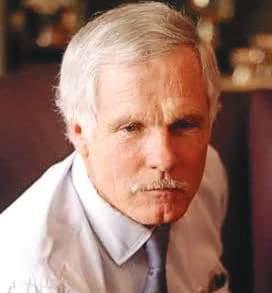
Ted Turner, the founder of the world’s famous cable television network, the CNN, died on Wednesday May 7, 2026. Ted, as he was known by friends and associates, was an interesting person. It was through President Olusegun Obasanjo that I encountered him, physically.
Interestingly, Ted is an Atlanta man. He belonged to Obasanjo's circle of friends, comprising Andrew Young, Carl Masters, the former American President, Jimmy Carter, and others.
During my first visit to CNN, when I honoured an invitation by the State Department, during a celebrity event organised for me after the publication of the Newswatch Who's Who In Nigeria, which I authored, I didn't meet Ted in person.
Truly, apart my distant knowledge of Ted as the founder of CNN, the first time I heard of him closely was from Baba. When he was released from prison, Baba flew into Atlanta, met with Young, Masters, and Ted. They tried to socially rehabilitate Baba after the prison experience. That was when I started nursing the hope of meeting Ted.
Then one day, Ted sent a message that he was coming to Africa, and that he would be in Nigeria. He planned to meet us at OOPL—Olusegun Obasanjo Presidential Library, in Abeokuta. I became excited because I was directly involved in the Presidential Library project.
Unfortunately, he could not make it to Abeokuta, because of certain diplomatic arrangements. So, he couldn't visit Abeokuta and we had to go to Transcorp Hilton in Abuja to see him. His mission was to watch a video presentation on the Presidential Library, which is an American innovation, which we were bringing to Africa, to be located in Abeokuta, Nigeria.
Joyfully, I was the one spearheading the project for President Obasanjo. We treated him to a video presentation of the groundwork at that stage because it would be based on this that they would give us financial or any other kind of support.
I observed certain unique things about Ted Turner. He had about three personal aides with him. Before his arrival in Nigeria, we had been briefed or warned by his friends that his level of concentration on any subject matter was almost zero. In other words, if you were discussing with him now, before you know it, his mind had gone so far away that you might be seeing him physically, but he was no longer with you. He had so many things on his mind at the same time.
So, what he used to do was that he moved around with his assistants. When you mention certain things that required his deep involvement, he would ask one of his assistants to note what you are saying. He would listen to you for by a few seconds; then he would say that you should follow up with the assistant and would move away. It seemed impossible
to have him sit down in a conference and make contributions for a long time.
Ted didn't have that kind of time. He had so many issues to handle that he wouldn't spend a long time on one issue. So, he must have assistants around him. These were people who took notes of what anybody discussed with him. Later, he would either approve or reject the executive summary submitted to him by the aides. That was it.
On that day, even the video we played for him, he just looked at it for a few minutes and was looking elsewhere. Then he stood up and one of the assistants followed him. That was it. Meanwhile, we had spent months to prepare the documentary. I took photographs with him. He called the photographers who were there. He said: Hey, come, Mr Osso wants to take photographs with Mr. Turner”. I stood by his side. I was almost under his shoulder. The man was very tall.
What I learnt from him was that he was a man of ideas. He had an extremely busy brain. I do not know how he could download those ideas into a format and let people use them. He was brilliant, visionary, and had perceptions about everything.
Ted, from my observation, was someone who refused to be attached to one particular thing. Again, he had this idea of taking himself out of the scene but controlling events and spreading his influence. I kept asking—and I still do—what manner of man was this? He looked so restless. I thought that I was going to meet somebody I would sit down with and ask some burning personal questions. That did not happen. I observed that his aides were doing exactly what I learnt to do with President Obasanjo—carrying paper and pen anywhere I went. Everywhere, I was, I must have a biro and a reporter's notebook. The reason was that President Obasanjo would corner you at any point and say: “Hey, hey, put this down for me, I want this done.” You must write it down immediately. He won't ever forget it.
Excerpts from Against All Odds: My Testimony
Editor, Editorial Page PETER ISHAKA
Email peter.ishaka@thisdaylive.com
ADDRESSING GROWING FOOD CRISIS
The authorities must do more to curb widespread insecurity
Authorities in Nigeria should be worried that our country featured in the recently released Global Report on Food Crises (GRFC) regarding acute food insecurity. Ten countries—Afghanistan, Bangladesh, the Democratic Republic of Congo (DRC), Myanmar, Nigeria, Pakistan, South Sudan, Sudan, Syrian Arab Republic, and Yemen—accounted for two-thirds of all people facing high levels of acute hunger. “Conflict remains the primary driver of acute food insecurity and malnutrition for millions around the world, with outright famine emerging in two conflict-affected areas in the same year—an unprecedented development,” according to the UN Secretary-General António Guterres in the foreword to the 2026 report. “This report is a call to action urging global leaders to summon the political will to rapidly scale up investment in lifesaving aid, and work to end the conflicts that inflict so much suffering on so many.”
shelter, and health services. Insecurity has contributed to limited agricultural activities; disrupted trade flows and worsened food insecurity.
For years, the Food and Agriculture Organisation (FAO) and the United Nations World Food Programme (UNWFP) have warned repeatedly that millions of Nigerians are at the risk of hunger as prices of foodstuff skyrocket. In the most recent National Bureau of Statistics (NBS) report titled, ‘Nigeria General Household Survey (Wave 5)’, approximately two out of three households in the country indicated being unable to eat healthy, nutritious or preferred foods because of lack of money. Similarly, 63.8 per cent of households ate only a few kinds of food due to lack of money; 62.4 per cent were worried about not having enough food to eat, and 60.5 per cent ate less than they thought they should.
Insecurity has contributed to limited agricultural activities; disrupted trade flows and worsened food insecurity
Going forward, the authorities must first admit that there is a serious humanitarian crisis regarding hunger. No matter the spin officials put on the issue, emerging facts suggest that there is food shortage in many parts of the country that has led to desperation. And unless something is done urgently, many people may die of hunger. This is therefore the time to act to avert the looming catastrophe. Living in denial, like most government officials do, is not helpful in any way.
Even before the report, critical stakeholders were well aware of the challenge of food scarcity, especially in the Northeast where there has been insurgency for almost two decades. Right now, in the most affected states of Adamawa, Borno and Yobe, millions of our nationals are said to be in need of humanitarian assistance, with more than 50 per cent of them, children. They need food, water, sanitation, protection,
T H I S D AY
EDITOR SHAKA MOMODU
DEPUTY EDITOR WALE OLALEYE
MANAGING DIRECTOR ENIOLA BELLO
DEPUTY MANAGING DIRECTOR ISRAEL IWEGBU
CHAIRMAN EDITORIAL BOARD OLUSEGUN ADENIYI
EDITOR NATION’S CAPITAL IYOBOSA UWUGIAREN THE OMBUDSMAN KAYODE KOMOLAFE
T
EDITOR-IN-CHIEF/CHAIRMAN NDUKA OBAIGBENA
GROUP EXECUTIVE DIRECTORS ENIOLA BELLO, KAYODE KOMOLAFE, ISRAEL IWEGBU
DIVISIONAL DIRECTORS SHAKA MOMODU, PETER IWEGBU, ANTHONY OGEDENGBE
Meanwhile, the United Nations Children's Fund (UNICEF), which protects and defends the rights of every child across 190 countries and regions, has called for immediate attention to the challenge. “We must not repeat the tragedy of the 2011 famine in the Horn of Africa", warned UNICEF which also highlighted the fact that the severe malnutrition and looming famine were largely manmade, and that common humanity demanded faster action.
Recent data compiled by an international e-commerce organisation also revealed that the average Nigerian household spends about 60 per cent of its income on food, one of the highest in the world. Yet, at a period when millions of citizens are living with hunger, there is also widespread waste of scarce resources by public officials. With the fear of malnutrition for millions of children (and mothers) who are deprived of a healthy and productive life, the situation is already dire. This is where public-spirited individuals and humanitarian organisations must come in to work towards alleviating the problem of hunger in the country.
Letters in response to specific publications in THISDAY should be brief (150-300 words) and straight to the point. Interested readers may send such letters along with their contact details to opinion@thisdaylive.com. We also welcome comments and opinions on topical local, national and international issues provided they are well-written and should also not be longer than (750- 1000 words). They should be sent to opinion@thisdaylive. com along with photograph, email address and phone numbers of the writer.
NIGERIA’S BREATHLESS ROMANCE WITH TRAGEDY
In one week, two more families—states and situations apart—have been thrown into turmoil, cut by Nigeria’s giant blades of chaos. First, on April 25, 2026, at Shagari Estate in Dei Dei, Abuja, soldiers, citing an armed robbery attack, barged into the home of 24-year-old Abdulsamad Jamiu, a serving corps member. At about 2. AM, his life was brutally snuffed out. While the Nigerian army, in its characteristic but callous haste, said Abdulsamad was caught in a crossfire between soldiers and retreating armed robbers, his family has since credibly disputed that version of events.
The charabanc of state-sponsored deaths soon swiftly departed Abuja for Delta State, where Mene Ogidi, a 28-yearold man, was killed by a policeman as he begged for his life in Effurun on 26th April 2026. The video has since sparked outrage, evoking the police brutality that triggered the ENDSARS protests of 2020.
These deaths of innocent Nigerians at the hands of se-
curity personnel at a time of heightened national tension further alienate a demographic that is critical in the fight against insecurity in Nigeria. For many young Nigerians who have long nursed frustration and desperation at the unraveling of their country, it is simply too much to witness the killings of young unarmed Nigerians at a time when red carpets are rolled out for so-called repentant and deradicalized terrorists.
When snakes are let loose in the chicken coop, there can only be a rain of feathers and death. When predators are primed as guards, it is only a matter of time before sweat congeals into blood.
In 2020, protests erupted across the country over police brutality. For weeks young people poured out into the streets across the country in a defiant message to Nigerian authorities that guardians should not be killers. Shockingly, it took the Lekki Toll Gate massacre to quell the protests. But the truth never dies, even if, for its survival, it can
sometimes afford to lie low.
No Nigerian citizen who has not been convicted of any crime by a court of competent jurisdiction should be made to grovel on the ground and beg for their lives. No citizen of this country should be treated with such callous indignity and still have their lives taken.
Nigeria is at a time when it is facing unprecedented security challenges. Terrorists as ruthless as they come have practically taken over the forests of states like Kwara, Niger, and Maiduguri, from where they are threatening the country. While the bravery of Nigeria’s security personnel in engaging the terrorists must be commended, the overzealous among them must be advised to channel their energies toward the real enemies of the country instead of inexplicably turning arms purchased with taxes on taxpayers. Kene Obiezu is a lawyer, writer, and social commentator. keneobiezu@gmail.com
RATES AS AT M AY 7,2026
Report: Despite Global Economic Challenges, Nigeria’s Manufacturing, Agriculture, Output Grew in April
Dike Onwuamaeze
Despite the global economic challenges orchestrated by the military conflict in Iran, Stanbic IBTC Bank Nigeria’s Purchasing Managers’ Index (PMI) for April 2026 has shown that Nigerian manufacturing, agricultural and trade sectors recorded growth trajectories in in 2026.
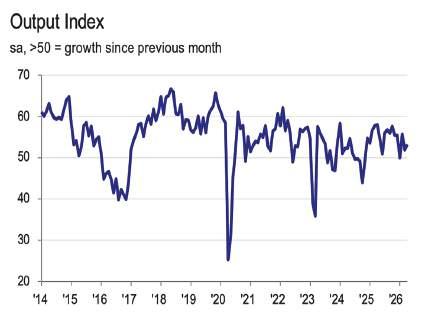
The PMI showed improved business condition during the month under review as its headline reading ticked up to 52.4 in April from 51.9 in March, above the 50.0 no-change mark for the third month running, which signalled a solid strengthening in the health of the Nigerian
private sector
The report, however, added that the impacts of higher fuel costs as a result of the war in the Middle East were felt again, pushing up prices and reportedly limiting expansions in new orders and business activity.
It said: “Nigerian companies posted a 17th consecutive monthly increase in business activity during April, in line with a further expansion of new orders. The rate of growth was solid and slightly faster than that seen in March, despite some reports from panellists of rising prices impacting output volumes.
Three of the four broad sectors (manufacturing, agriculture
and trades) covered by the report signalled a rise in activity, the exception being services.”
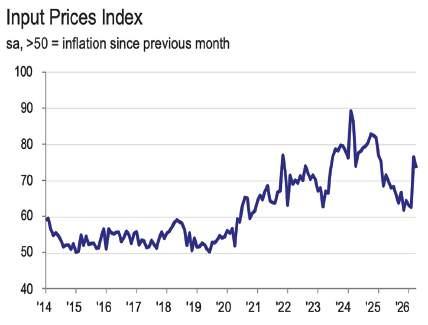
It stated that after hitting a 14-month high in March, the pace of overall input cost inflation eased slightly in April but remained elevated.
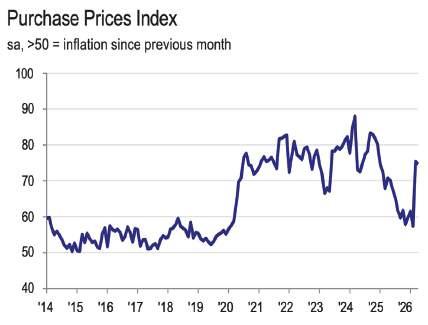
“Half of all respondents noted a rise in their input prices during the month, with underlying data signalling that higher purchase prices were the main driver of overall inflation. Services posted the fastest rise in overall input costs, just ahead of agriculture,” it said.
The report said that rising fuel prices, following the outbreak of war in the Middle
East, resulted in a further sharp increase in purchase costs in April, with the rate of inflation broadly in line with that seen in March.
It added that general raw material price increases were also noted by respondents as “agriculture and services registered the steepest rises in purchase costs.”
The report noted that Nigerian companies increased their selling prices in April in response to rises in fuel and raw material costs.
Moreover, the rate of inflation was substantial and the fastest since December 2024.
According to the report, more than 43 per cent of
panellists reported a rise in output charges during the month.
Commenting on the PMI’s report, the Head of Equity Research West Africa at Stanbic IBTC Bank, Mr. Muyiwa Oni, said; “The health of Nigeria’s private sector improved in April, remaining above the 50-points growth threshold for the third consecutive month, as new orders increased in line with higher customer numbers and rising demand even as price pressures remain prevalent. Accordingly, the headline PMI increased to 52.4 points in April from 51.9 points seen in March.
“Despite the improvement in new orders, we understand
that lingering inflationary pressures limited the pace of expansion. Notably, companies increased their selling prices in April to the highest level since December 2024 in response to rising fuel and raw material costs. Staff costs also increased modestly as some companies increased their staff pay so as to help them with increasing transportation fares.”
Oni added that business expectations also improved in April compared to March as businesses plan to expand their operations through the opening of new branches, stock building, and entry into new markets.
chinedu eze
Nigeria has recorded over 10 per cent growth in the air transport sector, just as the International Air Transport Association (IATA) predicted that in 2026, Africa would record six per cent growth, to rank highest globally.
The Managing Director and Chief Executive of the Federal Airports Authority of Nigeria (FAAN), Mrs. Olubunmi Kuku, who disclosed this, said Nigeria emerged as the second-largest domestic passenger market
in Africa, recording over 10.5 million passengers with a 10 per cent year-on-year growth.
Kuku however said to maintain the growth tempo, Nigeria and Africa must focus on airport infrastructure and other needs, remarking that the future of African aviation will depend not only on infrastructure, but also on partnership, innovation, resilience, and the courage to think long term.
She stated that the Murtala Muhammed International Airport recorded 11.8 per cent growth in air traffic
movements in 2025, the highest among Africa’s leading airports. The airport also ranked among the continent’s top performers in cargo, posting a 34.4 per cent increase, the highest within the top 10.
Kuku also disclosed that both the Nnamdi Azikiwe International Airport, Abuja and Murtala Muhammed International Airport, Lagos, ranked among Africa’s top 10 busiest airports, adding that Nigeria is Africa’s second-largest domestic passenger market.
On the growth of the African region in air travel, the IATA Regional Vice President, Africa and the Middle East, Kamil Alawadhi, said that Africa’s six per cent growth would outperform global average, which is put at 4.9 per cent in 2026.
Alawadhi said Africa’s passenger traffic would double by 2044, as East Africa would lead the expected passenger growth in the continent, projecting passenger growth rate of 400 million per annum.
Also, Africa passenger demand has risen to 11.9 per cent, which is higher than global average. Africa cargo demand is up by 21 per cent, while global cargo demand went up to 11.2 per cent, a development, which IATA said, would position aviation sector to power prosperity in Africa.
Alawadhi disclosed that aviation would be supporting 8.1 million jobs in Africa with total GDP of $75 billion, and that tourism catalyctic GDP support by aviation would reach 442 billion, as annual
passenger growth in the continent is 110 million.
Africa has 2.9 per cent of global passenger traffic with annual air freight of 1.2 million/tonnes. However, IATA noted that profitability by the airlines on the continent remained grounded and markets static, adding that in comparison, profits vary across regions and that North America and Europe are leaders in profitability.
The Managing Director of the Federal Airports Authority of Nigeria (FAAN), Mrs. Olubunmi Kuku, has advocated for sustained collaboration with the Nigerian Air Force as part of the ongoing efforts to strengthen security across the nation’s airports.
She stated this while receiving the Commander of the National Air Defence Corps, Air Vice Marshal Japhet
Ekwuribe, during a courtesy visit aimed at deepening cooperation between both institutions.
Speaking during the engagement, Kuku noted the evolving nature of security challenges within airport environments and remarked that addressing them effectively would require strong partnerships, shared intelligence, and coordinated operational strategies.
According to Kuku, FAAN remains committed to working
closely with the Nigerian Air Force in key areas such as airside patrol support, improved communication around sensitive flight operations, and proactive monitoring of activities within and around airport perimeters.
She also drew attention to the issue of land encroachment, describing it as a growing concern that calls for collective vigilance and early intervention to safeguard critical aviation infrastructure.
Interswitch Deploys Smart Parking System in Asaba Airport
Interswitch, Africa’s leading integrated digital payments and commerce company, has announced a strategic partnership with the Asaba Airport Company (AAC) to deploy a smart parking system, known as the Interswitch Parking Management Platform (PMP) at the Asaba International Airport.
The automated airport parking system introduces
a seamless, secure, and fully automated parking and access control solution, designed to enhance airport operations efficiency and improve the overall experience for travellers, visitors, and airport personnel.
Commenting on the partnership, Vice President, Transport Ecosystem, Interswitch, Nnenna Ajanwachuku, said: “This
partnership with the Asaba Airport Company reflects our commitment to deploying technology that drives efficiency, transparency, and seamless user experiences across critical sectors. With the Parking Management Platform, we are not only addressing operational challenges but also enabling smarter infrastructure that supports revenue growth and long-term sustainability.”
NIA Honours Past Leaders with Service Recognition Awards
Ebere Nwoji
The Nigeria Insurers Association, recently recognised and honoured its past leaders, crediting to them the virtue of championing professionalism, integrity and innovation in insurance industry in the past 55 years of the association’s existence as a body.
The current NIA Chairman, Kunle Ahmed who stated this while welcoming both serving and retired members of the association’s council members said since its establishment in 1971, the association has stood as the collective voice of the insurance industry.
“Over these five and a half decades, we have made giant strides in strengthening the insurance sector, fostering
collaboration among stakeholders, and building public trust in the vital role insurance plays in national development. As we look to the future, let us draw strength from our past.
Ahmed said the achievements of the last 55 years were proof that with unity, resilience, and vision, industry operators could continue to elevate the industry and make meaningful contributions to the growth
Air WAtCh
MMA2: Long Walk to Reconciliation
It was great relief last week when the federal government announced the reconciliation between it and Bi-Courtney Aviation Services Limited (BASL), which built and currently operating the private domestic terminal, known as MMA2.
of our nation.
He said operators have made quantum leaps, but there were still several bridges to climb and several rivers to cross.
He appealed to the past leaders to try and capture their experiences in a book, noting that most of them had gone ahead to conquer in other fields, therefore the reach of such publication would transcend the insurance industry.
Prudential Zenith Life Renovates Restrooms at School for Disabled in Lagos
Group Business Editor
Eromosele Abiodun
Deputy
chinedu Eze
Comms/e-Business
Asst.
Emmanuel Addeh
Asst. Editor, Money Market
Nume Ekeghe
Correspondents
Kayodetokede(CapitalMarkets)
James Emejo (Finance)
Ebere Nwoji (Insurance)
reporter Peter Uzoho (Energy)
As part of its social responsibility to its host community, Prudential Zenith Life Insurance has successfully completed the renovation of a rest room facility at Atunda Olu School for the Physically and Mentally Challenged in Surulere, Lagos, thus reinforcing its commitment to inclusive community development and improved living conditions for vulnerable groups.
The enhanced facility aims to deliver a secure, hygienic, and accessible setting for students, including those who require specialised infrastructure to accommodate their daily requirements.
Speaking at the event, she emphasised the importance
of creating supportive environments for all individuals, particularly those with special needs.
She noted that the project went beyond infrastructure, representing a meaningful investment in the well-being of the students and building resilient communities. The school’s management expressed gratitude for the intervention, highlighting the positive impact the renovated facility would have on students’ daily lives and overall learning experience. She said Prudential Zenith Life Insurance continued to champion initiatives that uplift communities and promote inclusivity, reaffirming its role as a responsible corporate citizen dedicated to making a lasting difference.
Disagreement evolved after the concession of the domestic terminal (now known as MMA2), over the tenure of the concession, the extent of the concession in terms of territory and other operating conditions.
The impasse, which lasted for 20 years, imperilled what would have been peaceful relationship between the Federal Airports Authority of Nigeria (FAAN), the host government agency and BASL. The animosity kindled by the disagreement, woke up controversies and created tensed atmosphere that is inimical to amicable rapport that would have existed between FAAN and BASL as service providers.
So, it was a respite when the Minister of Aviation and Aerospace Development, Festus Keyamo, announced the resolution on Thursday last week after the Federal Executive Council Meeting (FEC).
Imbedded in the concession agreement was that BASL would build a hotel and conference centre in addition to building the domestic terminal, two projects being built by the company that were stopped at the thick of the controversy that led to endless litigations.
Addressing journalists after the FEC meeting, Keyamo disclosed that the concession was signed in 2003, and that after the agreement, BASL claimed that the General Aviation Terminal (GAT), now known as MMA1, was part of the concession, a position that was ruled in BASL favour by the Supreme Court and ordered that the facility should be handed over to it.
Court also ordered that the federal government should pay the company N132 billion plus interests for the use of GAT by FAAN, which the court argued had been generating revenue from the terminal. Keyamo, however, described the agreement as outrageous and wondered
how the government of the time and FAAN endorsed it. The agreement also approved that BASL would have exclusive right to run airport around Lagos State, “which delayed the establishment of the airport at Lekki.”
Keyamo said that the Tinubu administration requested that BASL should write off the N132 billion debts it claimed owed him by FAAN, relinquish the claim to GAT and the right of first refusal to any airport to be built in Lagos State, was also resolved.
On the other hand, the federal government made some concessions. One is that BASL will continue work on the hotel and conference centre and the projects would be completed in 24 months. BASL will complete and run it with government interest, noting that if completed the facilities will also be beneficial to government because they will be added to the aerotropolis plan of the government on the Lagos airport. Government also allowed BASL to operate regional flight service from MMA2 as much as the facility can accommodate and to help that plan to be actualised, government would expand the apron of the terminal so that it would accommodate more aircraft.
Keyamo said that ideally the federal government ought to be earning revenue from the concession. So, henceforth, government would start earning from the concession. The reconciliation agreement is slated to be signed in Lagos, the minister disclosed.
It has to be noted that before BASL reached agreement with government to build the airport, the domestic terminal that existed before it was gutted by fire making a new facility imperative. Since it was built and put into stream, the terminal has been very efficient, leading others operated by FAAN in terms of functionality, state-of-the art facility and efficient service.
It is also a confirmation that the private sector is needed in the aviation industry to fund infrastructural development of the nation’s airports.
the story continues online on www.thisdaylive.com
Chinedu Eze
Ebere Nwoji
Francis Mune Nwaogwugwu: Building a Legacy of e nterprise and Impact
From his formative years in Onitsha to building successful brands in the interior design and real estate sectors, Francis Mune Nwaogwugwu has remained a symbol of discipline, resilience, and enterprise. as the Md/CEO of Vintage deluxe Interior and Vintage Property, his journey reflects a steady rise shaped by strong educational foundations, visionary leadership, and a commitment to excellence and community impact. Precious Ugwuzor reports
Nwaogwugwu and wife, Joy, when he recently received
From humble beginnings in Onitsha to becoming a respected entrepreneur and business leader, Francis Mune Nwaogwugwu’s story is one of resilience, vision, and steady growth. Through dedication, discipline, and a commitment to excellence, he has built reputable brands in the interior design and real estate sectors while also making meaningful contributions to society through philanthropy and leadership.
Born in the vibrant commercial city of Onitsha, Francis Mune Nwaogwugwu has built a life story defined by discipline, enterprise, and impact.
As the MD/CEO of Vintage Deluxe Interior and Vintage Property, his rise to prominence reflects not just ambition, but a deeply rooted foundation in education, character, and resilience.
Early Education and Formative Journey
Francis Mune’s educational journey began at Campus Nursery and Primary School, Onitsha, where he received his foundational education. From an early age, he demonstrated discipline and a strong desire to learn, qualities that would later define his personal and professional life. He proceeded to Holy Ghost Juniorate, Ihiala, for his secondary education, attending from JSS1 to JSS3. The Juniorate, known for its seminary-style structure, further reinforced the values of discipline, moral instruction, and focus.
These years played a pivotal role in shaping his character and worldview.
For the completion of his secondary education, he moved to Mbaise Secondary School, where he finished his senior secondary schooling. This phase of his life broadened his exposure and strengthened his academic and social development, preparing him for higher education and the challenges beyond.
He subsequently gained admission into Anambra State University (ANSU), where he furthered his academic pursuits. His time at the university not only equipped him with formal education but also exposed him to broader opportunities, ideas, and networks that would later influence his entrepreneurial journey.
From Academic Foundation to Business Reality
Armed with a strong educational background and a disciplined mindset, Francis Mune Nwaogwugwu transitioned into the business world with clarity and determination. His early experiences, both academic and moral, gave him a unique edge, enabling him to approach business with structure, patience, and integrity.
Starting from modest beginnings, he gradually built his reputation
through hard work and consistency.
He understood the value of trust in business and prioritised delivering quality services, building relationships, and maintaining professionalism.
Building the Vintage Brand
His entrepreneurial vision found expression in the establishment of Vintage Deluxe Interior and Vintage Property.
Under his leadership, these companies have grown into reputable brands known for excellence and innovation.
Vintage Deluxe Interior has distinguished itself in the design space by delivering high quality, aesthetically refined interiors that meet modern standards.
Meanwhile, Vintage Property has made its mark in real estate, providing clients with reliable investment opportunities and quality developments.
These ventures reflect his commitment to creating value and setting high standards in his industry.
Leadership, Philanthropy, and Recognition
Francis Mune Nwaogwugwu’s leadership style is deeply influenced by his early education and life experiences. He believes in discipline, accountability, and people development, principles that guide his business operations.
Beyond business, he is also a dedicated philanthropist, supporting community development and youth empowerment initiatives. His ability to balance enterprise with compassion has earned him admiration across different sectors.
In recognition of his impact, he has received several honours, including the Most Outstanding Business Icon of the Year award from the reputable Champions Newspapers, a testament to his contributions to Nigeria’s private sector.
Exemplifying Values
From his early days at Campus Nursery and Primary School to his time at Anambra State University, and onward to leading successful companies like Vintage Deluxe Interior and Vintage Property, Francis Mune Nwaogwugwu exemplifies the power of discipline, education, and determination.
His journey to the limelight is a story of steady growth, strong values, and meaningful impact, one that continues to inspire a new generation of entrepreneurs and leaders.
However, the story of Francis Mune cannot be complete without mentioning his backbone, his wife, Joy Nwaogwugwu, the daughter of Bishop Walter of The Redeemed Evangelical Mission (TREM), a major Nigerian based Pentecostal denomination founded by Bishop Mike Okonkwo on January 4, 1981.
the Most Outstanding Business Icon of the Year Award by Champion Newspapers
Juliet Onyinyechi Edeh: Committed to Empowering Others through Philanthropy, Social Impact and Business
dr. Juliet Onyinyechi Edeh is a businesswoman, brand ambassador, motivational speaker, movie producer, life coach, author and philanthropist. as Managing director and Chief Executive Officer of Bezaleel Continental Trading Ltd., she leads a firm focused on global travel and mobility management, visa documentation and compliance, trade exhibitions and events. a member of the actors Guild of Nigeria (aGN), she also drives social impact through the Bezaleel Foundation, supporting education, healthcare and economic empowerment for vulnerable communities. In this interview, she speaks about her new book From Struggle to Strength, her journey, business resilience in a volatile global climate, and her commitment to empowering others. uzoma Mba brings excerpts
Congratulations on the release of your book, “From Struggle to Strength.” What is the content and character? In other words, why did you write the book?
From Struggle to Strength is a deeply personal story of resilience, discipline and purpose. I wrote it to share my journey—from a childhood marked by loss and hardship to becoming a woman of impact in business and humanitarian work.
The essence of the book is to show that our struggles are not the end of our story, but the foundation of our strength. I want readers, especially young people, to understand that with discipline, character and vision, it is possible to rise above any circumstance.
It is one thing to write a book; it is another to market it. How do you ensure that the book reaches as many people as possible?
Marketing today requires both strategy and authenticity. I am leveraging digital platforms such as social media, Amazon visibility tools and community engagement.
Beyond that, I am using wordof-mouth, partnerships and media features like this to expand reach. My goal is not just to sell a book, but to start conversations that inspire transformation.
Why did you write a book at a time it is said that the reading culture is dying in Nigeria?
I believe the reading culture is evolving, not dying. People are still consuming content—just in different ways.
This book is written in a simple, relatable and engaging style to meet modern readers where they are. More importantly, powerful stories will always find their audience, regardless of trends.
What challenges did you encounter while writing the book, and how did you overcome them?
One of the biggest challenges was revisiting painful memories. Writing required emotional honesty, which is not always easy.
Another challenge was balancing my professional responsibilities with the discipline needed to complete the book. I overcame these through consistency, faith and a clear sense of purpose.
How do you describe yourself? You were recently made a brand ambassador of KC–Omega Resources. What are you expected to do, and how are you faring so far?
I would describe myself as a disciplined, purpose-driven individual
committed to impact.
As a brand ambassador for KC–Omega Resources International, my role is to represent the brand with integrity, promote its values and connect it to broader audiences. So far, it has been a rewarding experience, aligning with my passion for growth and excellence.
You are the Managing Director and Chief Executive Officer of Bezaleel Continental Trading Ltd., which operates in events management, trade exhibitions, travels and tours. How are you faring amid global economic uncertainties? How easy or
difficult is it to secure visas for clients?
Despite global uncertainties, Bezaleel Continental Trading Ltd. has remained resilient by adapting to change, diversifying services and maintaining strong client relationships. We focus on value, trust and innovation, which have helped us stay competitive.
Visa processes globally have become more stringent, which can be challenging. However, through experience, proper documentation and strategic guidance, we help clients navigate the process successfully.
What are you doing to improve client experience?
We prioritise personalised service, transparency and responsiveness. Every client is treated with attention to detail, ensuring their journey is smooth from start to finish.
How do you ensure seamless ticket booking, check-in and flight management through technology?
We leverage modern booking systems and digital tools to ensure efficiency in ticketing, check-in and travel coordination. Technology helps us reduce errors and improve speed, convenience and overall experience.
What strategies do you use to drive Bezaleel’s business growth? What is your management and marketing style?
Our growth strategy focuses on innovation, partnerships and customer satisfaction. My management style is structured yet people-oriented, built on discipline, accountability and empowering my team to perform at their best.
What steps has Bezaleel taken to enhance client experience through digital platforms?
We have invested in digital platforms that make it easier for clients to access our services, communicate with us and receive real-time updates.
With increased digital transformation, how does Bezaleel ensure cybersecurity and protect passengers’ data?
We take data protection seriously by using secure systems, controlled access and continuous monitoring to safeguard client information.
What exciting developments can clients expect from patronising Bezaleel?
Clients can expect expansion, improved digital services and more global opportunities. We are constantly evolving to serve them better.
What is the advantage or disadvantage of being a woman in business?
Being a woman in business comes with both opportunities and challenges. While there may be biases, it also builds resilience and strength. I see it as an advantage because it allows me to lead with empathy, strength and determination.
What is Bezaleel Foundation all about?
The Bezaleel Foundation is committed to empowering lives through education, mentorship and humanitarian support, with a focus on creating opportunities for young people and supporting communities in need.
Edeh
Waste Management Can Catalyse Economic Transformation of Africa, Says
Olawale Ajimotokan
The founder of Chanja Datti, a waste management firm, Olufunto Boroffice has challenged conventional perceptions of waste, describing it as a resource capable of driving economic transformation across African cities such as Lagos, Nairobi, Cairo, and Johannesburg.
She disclosed this in her presentation at the annual conference hosted by the Massachusetts Institute of Technology Kuo Sharper Center, in Cambridge, Massachusetts, themem, “Innovation in Global Growth Markets: Prosperity through Entrepreneurship.”
She noted that Africa is emerging as a critical driver of the global transition to a circular economy, with innovations
Sycamore
in waste management, climate action and inclusive entrepreneurship placing the continent at the forefront of sustainable development.
She highlighted a growing ecosystem of entrepreneurs who are converting plastic, organic waste, and other materials into valuable products, creating jobs while addressing environmental challenges.
According to Boroffice, these efforts reflected a broader shift toward a circular economy—one that prioritizes reuse, repair and regeneration over the traditional “take, make, dispose” model.
She noted that while Africa contributes less than four percent of global greenhouse gas emissions, it is among the regions most affected by climate
change, citing droughts, flooding, and rising sea levels across the continent.
She noted that nearly half of global emissions are linked to how goods are produced and consumed, arguing that circular systems offer a major opportunity to reduce environmental impact. “The climate crisis is not a future threat. It is a present emergency,” she said. Boroffice also referenced the role of informal workers, including waste pickers and recyclers, who recover between 50 and 80 per cent of recyclable materials in some cities, often without formal support or recognition.
She said the workers who are central to Africa’s circular economy be included and empowered through government policies.
Raises N6.89bn via CP, Offer Oversubscribed by 230%
providing more accessible credit to growing businesses across Nigeria.
Sycamore Integrated Solutions Limited has closed its Series 1 Commercial Paper (CP) issuance at N6.89 billion against a N3 billion target, drawing subscriptions at 2.3x the offer size and signalling clear investor confidence in a fintech issuer within Nigeria’s debt capital markets.
The issuance forms part of a N20 billion Commercial Paper Programme arranged by BAS Capital Limited, which ran from March 9 to March 20, 2026. Proceeds will be deployed to expand Sycamore’s loan book,
Commenting on the outcome, Co-Founder and CEO of Sycamore, Babatunde Akin-Moses said the result reflects both the market’s direction and what investors found upon a close examination of Sycamore.
“Investors in this environment are being careful about where they put capital. They want predictable returns. They also want to know that the entity behind the instrument has the governance structures to back that up. Sycamore underwent a rigorous SEC licensing process that examined our risk frameworks and client-
L-R: Executive Secretary,West Africa Telecommunications
protection mechanisms. The subscription levels tell us that when investors did their due diligence on our firm, what they found gave them confidence,” he said.
Managing Director of BAS Capital Limited, Yinka Adetuberu said the result reflects sustained demand for quality issuances in the market.
“We are seeing consistent demand in the commercial paper market, driven by current interest rate levels and investor preference for short-duration, yieldaccretive instruments. This transaction is consistent with that broader trend, and the level of subscription it attracted speaks to the quality of the issuer,” he said.
Guinea Insurance Unaudited Financial Report Shows Signs of Recovery
Guinea Insurance Plc, has announced its unaudited financial results for the period ended 31 March 2026, reflecting a resilient top line performance, a strengthened asset base, and a deliberate strategic response to industry wide claims pressure.
According to the company, net expenses on reinsurance contracts stood at N109.3 million, representing a decline of approximately 162.6 percent from N174.7 million recorded in March 2025. This movement reflects a more conservative risk transfer approach, as the company strengthened its reinsurance cover to mitigate exposure to emerging risks and high value claims within the market.
It said insurance service expenses rose significantly by about 803 percent to ₦850.1 million, compared to N94.1 million in March 2025. According to the company, this sharp increase was largely driven by the settlement of a cluster of high value industry claims, which the company honoured promptly and responsibly. These claims, arising from unforeseen risk events, placed considerable pressure on earnings, affecting both top line efficiency and bottom-line performance, and resulting in a loss for the period.
Insurance. We made a conscious decision to settle all valid claims promptly, reinforcing our commitment to trust, reliability, and customer confidence.
Commenting, the Managing Director/Chief Executive Officer, Guinea Insurance Ademola Abidogun, said, “I While the period under review reflects a temporary setback in profitability, it is important to emphasise that the fundamentals of our business remain sound. The claims experience recorded is reflective of broader industry trends rather than isolated to Guinea
We are confident that our strengthened risk management framework, disciplined underwriting approach, and enhanced reinsurance programme will position the Company for a strong rebound in subsequent quarters. Our focus remains on delivering sustainable value to shareholders while upholding our promise to policyholders.”
He said looking ahead, the company remained cautiously optimistic.
“Management has initiated targeted recovery measures, including tighter cost management, portfolio rebalancing, and a renewed focus on profitable business segments,” he explained.
The price of OPEC basket of twelve crudes stood at $63.14 a barrel on Monday, according to OPEC Secretariat calculations. The OPEC Reference Basket of Crudes (ORB) is made up of the
Regulators Assembly(WATRA), Aliyu Yusuf Aboki; Incoming Chairman/President ARN Guinea Bissau, Michel Galley and outgoing Chairman, Dr Herry Mane at the 23rd Annual General Meeting of WATRA in Lome Togo...recently
following: Saharan Blend (Algeria), Djeno (Congo), Zafiro (Equatorial Guinea), Rabi Light (Gabon), Iran Heavy (Islamic Republic of Iran), Basrah Medium (Iraq), Kuwait Export (Kuwait), Es Sider (Libya), Bonny Light (Nigeria), Arab Light (Saudi Arabia), Murban (UAE) and Merey (Venezuela).
Kayode Tokede
Stock Market Drops by N1.9trn on Sell-off in Dangote Cement, Others
Kayode Tokede
The Nigerian stock market yesterday closed lower after a wave of investors sell-offs in Dangote Cement Plc and 29 others erased N1.922 trillion from market value, with investors rotating out of large-cap stocks.
As Dangote Cement drooped by 4.9 per cent, the Nigerian Exchange
Limited All-Share Index (NGX ASI) declined by 2,994.90 per cent or 1.23 per cent, to close at 239,734.61 basis points. Similarly, the overall market capitalisation value lost N1.922 trillion to close at N153.859 trillion.
The market negative performance was driven by price depreciation in large and medium capitalised stocks which are; Dangote Cement, BUA Cement, Nestle Nigeria, Lafarge
Africa and Skyway Aviation Handling Company.
However, market breadth was broadly positive, as 41 gainers outpaced 30 losers. Chemical and Allied Products (CAP) and FTN Cocoa Processors recorded the highest price gain of 9.99 per cent each to close at N212.50 and N8.04 respectively, per share.
Berger Paints, Meyer and Zichis Agro Allied Industry followed with a gain of 9.97
per cent each to close at N98.75, N17.10 and N30.33 respectively, while DEAP Capital Management & Trust up by 9.93 per cent to close at N6.09, per share.
On the other hand, University Press led the losers’ chart by 10 per cent to close at N4.50, per share. Red Star Express followed with a decline of 9.59 per cent to close at N25.45, while Skyway Aviation Handling Company declined by 8.63
per cent to close at N130.75, per share.
CI Leasing lost 8.50 per cent to close at N7.00, while Consolidated Hallmark Holdings depreciated by 7.54 per cent to close at N6.01, per share.
The total volume traded rose by 29.34 per cent to 1.830 billion units, valued at N72.168 billion, and exchanged in 81,131 deals. Transactions in the shares of NEM Insurance topped the
TRADED AS OF MAY7/26
N229.827 million, while VFD Group traded 141.465 million shares valued at N1.499 billion. Access Holdings traded 140.372 million shares valued at N3.384 billion, while FCMB Group transacted 119.621 million shares worth N1.347 billion.
Politics
2027: Ensuring Hamzat Clinches APC Guber Ticket in Lagos
Bankole Ajonibadi , in this piece, seeks stakeholders support for the gubernatorial ambition of the d eputy Governor of Lagos state, d r Obafemi Hamzat, ahead of the a ll Progressives Congress party primaries in the Centre of Excellence later this month.
As Lagos State continues its trajectory as Nigeria’s economic nerve centre, the question of leadership succession becomes not just political, but deeply strategic. The state demands a leader who combines intellectual depth, administrative competence, humility, and a proven track record of public service.
In this regard, Dr. Kadiri Obafemi Hamzat stands out as a sterling candidate, eminently qualified to succeed Governor Babajide SanwoOlu and sustain, even accelerate, the pace of development in Lagos.
Hamzat’s credentials are both impressive and reassuring. An academic with a strong foundation in engineering and public administration, he embodies the rare blend of technocratic expertise and political experience. His educational journey, which spans reputable institutions locally and internationally, has equipped him with the analytical skills required to tackle complex urban challenges. However, what truly distinguishes him is not merely his academic pedigree, but his ability to translate knowledge into impactful governance.
Over the years, Hamzat has amassed invaluable leadership experience in Lagos State. Having served in critical capacities, including as Commissioner for Science and Technology and currently as Deputy Governor, he has been at the heart of policy formulation and implementation.
His tenure in these roles has been marked by innovation, efficiency, and a commitment to public good. From advancing digital governance initiatives to improving infrastructural frameworks, his contributions have been both tangible and transformative.
One of Hamzat’s defining qualities is his calm, thoughtful, and solution-oriented approach to leadership. In a political environment that can often be charged and reactionary, he brings a sense of stability and intellectual rigor. He listens, evaluates, and acts decisively, always guided by data and a clear vision for progress. This temperament is particularly critical for a megacity like Lagos, where
governance requires not just bold ideas, but careful execution and continuity.
Equally noteworthy is his loyalty and consistency within the political structure of Lagos State. Hamzat has demonstrated unwavering commitment to the progressive ideals that have shaped the state’s governance over the
years. He understands the blueprint, having been part of its evolution, and is therefore best positioned to refine and expand it.
Leadership, especially in a complex state like Lagos, is not a place for experimentation without experience. It requires someone who knows the system, respects its history, and
has the competence to improve upon it.
Another compelling reason to support Hamzat is his deep understanding of Lagos’ socioeconomic dynamics. From revenue generation to urban planning, from technology integration to youth empowerment, he possesses a holistic grasp of the issues that matter most.
His forward-thinking approach aligns perfectly with the demands of a rapidly growing population and an increasingly competitive global environment. Lagos cannot afford to slow down; it needs a leader who will build on existing gains while introducing innovative solutions to emerging challenges.
Furthermore, Hamzat’s accessibility and humility set him apart. Despite his accomplishments, he remains approachable and grounded, qualities that resonate with both grassroots communities and elite stakeholders. Leadership is ultimately about people, and his ability to connect across different segments of society is a significant asset. It fosters trust, encourages collaboration, and ensures that governance remains inclusive.
As the political season approaches, the responsibility lies heavily on party leaders and delegates to make a choice that prioritizes competence over sentiment, and continuity over uncertainty.
The future of Lagos depends on decisions made today. In Hamzat, there is a candidate who embodies experience, vision, and integrity. He is not just prepared for the role; he has been effectively groomed for it through years of dedicated service.
This is, therefore, an earnest appeal to all stakeholders within the party: choose wisely, choose competence, choose progress. Support Hamzat as the next governor of Lagos State. His leadership offers the assurance that Lagos will not only maintain its status as a leading city in Africa but will rise to even greater heights.
The time for continuity with excellence is now.
-Ajonibadi writes from Lagos.
Kwara’s Political Chessboard: One Candidate, Many Moves Ahead
In Kwara state’s quiet corridors of power, the 2027 governorship race is already taking shape, not through loud campaigns, but through calculated elite consensus. What appears on the surface as a routine endorsement is, in reality, a carefully orchestrated move to define succession early, align with federal influence, and narrow the field before it fully forms. at the center of this emerging order stands Senator Saliu Mustapha, steady, strategic, and increasingly difficult to ignore. Jonathan Eze writes.
Adeeper reading of the unfolding political landscape in Kwara suggests that the Ilorin Emirates Political Advisory Council (IEPAC) endorsement is not just an isolated declara tion, it is part of a broader elite choreography aimed at shaping succession well ahead of the 2027 cycle.
In a state where political outcomes are often determined by a mix of traditional author ity, party machinery, and strategic alliances, early signals like this tend to crystallize into momentum if left uncontested.
The alignment with Bola Tinubu reinforces the long-standing logic of center–state syn ergy. Kwara’s governing elite appears keen to avoid the pitfalls of political isolation by staying firmly within the orbit of federal power. This matters because access to federal influence often translates into campaign resources, institutional backing, and postelection stability, factors that quietly but decisively shape electoral outcomes.
where intra-party divisions have historically cost contenders dearly.
When placed side by side with other likely aspirants, the contrast becomes clearer.
Others carry the weight of political baggage, either from past electoral defeats, strained relationships with key stakeholders, or reputations for inconsistency within party ranks.
In a system where loyalty and predictability are prized, such histories tend to weaken trust among power brokers who ultimately determine delegate alignments.
There are also technocratic aspirants whose credentials in governance or private enterprise are strong but whose grassroots structures remain thin.
Kwara politics still rewards ground game, ward-level mobilization, local alliances, and sustained visibility among constituents. Without that infrastructure, even the most competent candidates often falter when confronted with the realities of party primaries.
blocs. He is being framed as neither too radical nor too entrenched, an important balance in a transition election where stability is often prioritized over experimentation.
Another subtle but critical factor is timing. By securing early backing from a body as influential as IEPAC, Mustapha gains the benefit of narrative dominance. In politics, perception often precedes reality; once a candidate is widely seen as the “inevitable choice,” it can discourage serious challengers or force them into reactive, rather than strategic, campaigns.
Within that framework, the emergence of Saliu Mustapha as the preferred successor reflects a calculated choice rather than mere sentiment. His positioning combines legislative experience, party loyalty, and a relatively low-conflict political profile.
Unlike more polarising figures, Mustapha has managed to maintain working relationships across factions, which is critical in a state
Some contenders within the ruling All Progressives Congress are burdened by limited statewide reach.
While they may command influence within specific local government areas or political blocs, they struggle to project cross-senatorial appeal.
In Kwara’s delicate balance of North, Central, and South, any candidate perceived as sectional immediately starts at a disadvantage.
On the opposition side, particularly within the People’s Democratic Party, the challenge appears more structural. The party continues to grapple with cohesion issues and lacks the unified front required to counter a consolidated ruling party.
Potential aspirants there may have name recognition, but without a clear, united platform or strong elite backing, their capacity to mount a serious statewide challenge remains uncertain.
In contrast, Mustapha’s strengths lie in the convergence of multiple advantages: elite endorsement, acceptable continuity with the administration of Abdulrahman Abdulrazaq, and a reputation that has not alienated major
None of this suggests the race is closed. Kwara has witnessed political upsets before, often driven by unexpected coalitions or shifts in public sentiment. However, the current configuration indicates that rivals would need not just popularity or competence, but a coordinated counter-establishment movement to dislodge the emerging order.
As it stands, the field appears fragmented, while Mustapha’s camp is gradually coalescing into a broad, elite-backed coalition. If this asymmetry persists, where one candidate consolidates while others divide, then the path becomes clearer.
In that scenario, Mustapha does not just appear competitive; he increasingly looks like the candidate holding the strategic advantage, the one who, at this stage of the game, may indeed hold the ace in Kwara’s 2027 governorship contest.
Fragile Peace at 1.8 Million Barrels: Why Nigeria Cannot Afford to Slip Back
By Timi Johnson
There is a number that should keep every security planner awake at night: 900,000. That was the low point. That was the moment when Nigeria’s oil production bottomed out, when theft had become so normalized that the country was essentially funding two economies—one official, one criminal. The national security implications were never merely economic. A state that cannot secure its primary resource is a state ceding sovereignty to non-state actors.
Today, the number is 1.8 million barrels per day. But the path from 900,000 to 1.8 million was not automatic. It was the product of a deliberate, coordinated, and sustained system of intelligence-led security operations. Understanding that system is essential to preserving it.
The architecture of the recovery rests on three pillars. First, coordinated security: the integration of military, naval, intelligence, and civil security assets under unified operational commands. Second, intelligence-led operations: targeting specific networks, specific infrastructure vulnerabilities, and specific illegal refinery clusters rather than random patrols. Third, community integration: transforming local populations from passive observers or active collaborators into compensated guardians of pipeline infrastructure.
The results are measurable. An 80 percent reduction in crude oil theft. $18 billion preserved annually. 702 illegal connections removed. Over 1,784 illegal refineries dismantled. More than 10,000 jobs created through community security programs. These are not abstract achievements. They represent the systematic denial
of revenue to criminal enterprises and the restoration of state authority over national territory.
Coverage has expanded to over 20,000 square kilometers of the Niger Delta, with 2,366 kilometers of pipelines under continuous monitoring. This is not a small operation; it is one of the most extensive pipeline surveillance networks in the world. Entities like Tantita Security Services Nigeria Limited operate within this system as specialized contributors—demonstrating that private sector expertise,
when properly integrated, enhances rather than competes with state security forces.
But here is the danger. Recent public discourse has shifted dramatically away from these outcomes. Following National Assembly engagements, media cycles have been dominated by competing contractor narratives, allegations, and counter-allegations.
The conversation has reframed from a story of national recovery to a story of industry conflict. This is not merely a public relations problem; it is a strategic vulnerability.
Why? Because fragmentation is the thief’s best friend. When security operations are disjointed, when contracts are in flux, when command structures are uncertain, illegal refining networks exploit the gaps. The 1,784 refineries we destroyed can be rebuilt in months. The 702 illegal connections we removed can be reattached in weeks. The 80 percent reduction in theft can become a 50 percent reduction, then a 30 percent reduction, then a return to the dark days of 900,000 barrels.
The policy imperative is therefore clear: stability requires continuity. The current security architecture, for all its imperfections, has delivered verifiable results. Disrupting it for reasons of political expediency or competitive bidding would be an act of strategic negligence. The National Assembly has every right to oversight, but oversight must be distinguished from destabilization. The goal should be to strengthen the system, not to dismantle it through protracted controversy.
Sustained success demands three things. First, consistency: the operational model that delivered results must be allowed to continue. Second, coordination: security agencies and private operators must function as a unified network, not as competing fiefdoms. Third, policy discipline: political and regulatory decisions must be guided by data, not by lobbying.
Progress is real, but it is fragile. The production growth of 22 percent over two years is not irreversible. The drop in spills and theft is not permanent. These gains are the product of deliberate effort, and they require deliberate maintenance. Nigeria has proven that it can secure its oil. Now it must prove that it can sustain that security beyond the next news cycle.
•Johnson, an industrial chemist, sent this piece from Abuja
PETAN Projects $7bn Equipment Spend to Lift Nigeria’s Oil Output to 3m bpd by 2030
Says indigenous firms now generate $6bn annual revenue in services
Local content push aims to match global service standards with OEM technology partnerships
Peter Uzoho in Houston, Texas
Nigeria’s indigenous oil and gas service companies under the aegis of Petroleum Technology Association of Nigeria (PETAN) said the sector will need about $7 billion in capital expenditure on equipment over the next four years to help raise the country’s crude oil production from 1.5 million barrels per day to 3 million bpd by 2030.
Chairman of PETAN and Chief Executive Officer of Geoplex, Wole Ogunsanya, made the projection yesterday during the PETAN Original Equipment Manufacturers (OEMs) Investment Forum at the ongoing Offshore Technology Conference (OTC) in Houston, Texas, United States.
The session, themed: “Strengthening OEM Partnerships for Local
Content Growth,” brought together Nigerian service providers and global equipment manufacturers to explore technology transfer and collaboration opportunities.
“If you do the maths, that’s a 50 per cent gap from where we need to be. We need to spend $1.8 billion every year on equipment to catch up between now and the 2030 target, to increase production to 3 million barrels.
“Even if I discount that, we’re looking at about $7 billion spent in the next four years just on equipment”, Ogunsanya said.
He said the push was driven by Nigeria’s refining ambitions and the need to produce competitively.
“We’re always looking for technology. If you have the best technology in the world, we have the funding to do it, we have the
human capital to deploy them.
We’re trying to raise oil and gas production in Nigeria from where it is -- 1.5 million barrels per day, to 3 million barrels because we have the refineries to process them”, he stated.
Formed in collaboration with the Nigerian Content Development and Monitoring Board (NCDMB), PETAN now comprises 121 companies delivering services across the upstream, midstream, and downstream sectors.
Ogunsanya revealed that the association currently generates between $5 billion and $6 billion in annual revenue within Nigeria’s petroleum industry.
He emphasized that local content does not mean lower standards, explaining that PETAN companies are delivering services at the same quality level as international contrac-
tors such as Schlumberger, Baker Hughes and Halliburton.”
He added that members are already active beyond Nigeria’s borders, providing well services and operating land and swamp rigs.
“With the right technology, Nigerian service firms would still produce oil and gas at the same service quality as anywhere in the world such as in Aberdeen, Middle East, and in the United States”, he stated.
The PETAN chairman stressed that indigenous firms must stay current with global technology to remain competitive as they take over assets divested by international oil companies.
“Just because we’re indigenous companies, we’re buying assets, we’re creating the capacity to deliver services. We need to keep abreast
of the technology that we need to ensure we produce these oil and gas at a reasonable price for the country”, he said.
He urged OEMs to view Nigerian firms as strategic partners rather than competitors, saying “we’ll have a forum with you guys, the OEMs to assure you that with the capacity in Nigeria, you have an advantage with Nigerian companies. So, I’m inviting you to network with our members. We assure you that your technology will be deployed.”
Ogunsanya also highlighted the capacity gap created by IOC divestments.
According to him, when ExxonMobil or Shell sell onshore assets, the training programmes they run for Nigerian engineers often shrink or stop entirely.
“When Seplat buys ExxonMobil
asset, if ExxonMobil is training 50 Nigerians every year, they will not train 50 anymore… So Seplat also now have to step up,” he said. He said the same applies to Renaissance, which acquired Shell’s onshore assets.
“Renaissance now needs to step up, know what capacity is out there, what training is out there, what technology is available to ensure that we’re able to bring it to Nigeria and produce this oil efficiently for the country”, he stressed.
Ogunsanya reaffirmed PETAN’s commitment to supporting Nigeria’s production targets over the next decade.
“Nigeria is ready. Our projection in PETAN is $7 billion spend. And we’re going to be growing oil and gas production in Nigeria for the next five to ten years”, he stated.
Senator Heineken Lokpobiri (Minister of State for Petroleum Resources, Oil)
CELEBRATING SENATORS BORN IN THE MONTHS OF APRIL AND MAY...
L-R: Senators Sharafadeen Alli and Simon Lalong; Deputy Senate President, Jibrin Barau; President of the Senate, Godswill Akpabio; Senate Leader, Opeyemi Bamidele; Senate Whip, Tahir Monguno; and Senator Marshall Katung, during the cutting of the cake to celebrate senators born in the months of April and May, in the Senate President’s office, yesterday
Sunbeth to Launch 70,000 MT Cocoa,
80,000
MT Cashew Processing Plants in March 2027
Facilities to service key markets across the globe
Sunbeth Global Concepts Limited, one of Nigeria’s largest cocoa exporters, has announced plans to establish a 70,000-metric tonne capacity cocoa processing factory, alongside an 80,000-metric tonne cashew processing plant.
The company said both facilities, currently under construction, were part of its long-term strategy to deepen local value addition across
Africa’s agricultural value chains and boost export earnings.
Managing Director of Sunbeth Global Concepts Limited, Mr. Olasunkanmi Owoyemi, announced the plan during the Africa Cocoa Finance and Investment Forum (ACFIF) held at the London Stock Exchange.
According to Owoyemi, the facility is scheduled for inauguration in March 2027.
He explained that the dual
investment reflected Sunbeth’s commitment to building industrialscale agro-processing capacity in two of Africa’s most strategic export commodities.
Owoyemi stated that Sunbeth had evolved from a trading enterprise into an integrated processor, a transition designed to capture greater value, create sustainable employment, and drive operational efficiency.
He said the cocoa facility will reinforce Nigeria’s position in the
global cocoa processing landscape, while the cashew plant will serve growing demand across West Africa and supply premium export markets in Europe, Asia, and the Americas. Sunbeth’s decision to invest in state-of-the-art, purpose-built processing facilities marks a decisive shift in Africa’s agricultural value chain. The company is committed to constructing brand-new, best-inclass plants, reflecting its conviction that world-class ambition demands
NECO Celebrates 25 Years, Unveils Plans for Global Expansion
The federal government has said that the National Examinations Council (NECO) is spearheading reforms in the education sector with the Computer-Based Examination (CBE) scheduled to commence later this year.
Speaking on Thursday in Abuja, during the 25th anniversary/ silver jubilee celebration of the exam body, the Chief Host and Minister of Education, Dr. Tunji Alausa, said CBE will go a long way in curbing the menace of examination malpractice, due to its ability to track and detect suspicious activity and also provide real-time monitoring of candidates.
He said NECO has continued to serve as the standard-bearer for external examinations, ensuring that certificates reflect genuine mastery and readiness for subsequent opportunities.
He said the country must explore innovative assessment approaches that reflect 21st-century competencies, such as critical thinking, problem-solving, and digital literacy, while maintaining rigorous standards.
He said: “The inception of NECO was rooted in the desire to create a strong, unified national examination body to oversee standardized assessments for national public examinations. NECO’s mandate encompassed the conduct of credible external examinations, certification of attainment, and
alignment with national educational objectives.
“NECO’s early emphasis on secure examination administration, reliable scoring, and timely results helped restore public confidence in national certification. The adoption of Technology-driven processes, such as secure data management, electronic results where feasible, and robust moderation systems strengthened integrity and efficiency.
“NECO continues to serve as the standard-bearer for external examinations, ensuring that certificates reflect genuine mastery and readiness for subsequent opportunities. NECO remains committed to widening access, addressing disparities, and ensuring that learners from all backgrounds have a fair chance to demonstrate their competencies.
“By communicating clearly with schools, parents, educators, and learners, we reinforce trust in NECO’s processes and the value of certification. The Silver Jubilee invites us to celebrate what NECO has achieved, especially in equity, transparency, and the use of data to inform policy decisions.
“We must explore innovative assessment approaches that reflect 21st-century competencies, such as critical thinking, problemsolving, and digital literacy, while maintaining rigorous standards. We are at the threshold of a very important reform, which NECO is spearheading – and that is the Computer-Based Examination
(CBE), which is to commence this year. This will go a long way in curbing the menace of Examination malpractice due to its ability to track and detect suspicious activity and also provide real-time monitoring of candidates.”
Also speaking, the Registrar/ Chief Executive of NECO, Prof Dantani Ibrahim Wushishi, said NECO began as a bold initia- tive to harmonise and enhance the administration of national examinations, but faced daunting hurdles like limited public trust, infrastructure gaps, and questions about the validity and reliability of its assessments.
He said: “This occasion is not merely a celebration of the passage of time; it is a reflective moment to honor our journey, celebrate our achievements, and reaffirm our commitment to excellence in public examination administra- tion. The Council laid down the foundations of credibility through sheer procedures, timely release of results, and consistent standards.
“We built the culture of accountability, ensuring that every candidate could rely on a fair and robust examination process. A defining hallmark of our early years was the relentless pursuit of timely release of results and easy access to services for all stakeholders.
“The introduction of online registration and internet-based release of results became a game-changer, bringing speed,
transparency, and convenience to candidates and institutions.
“This shift not only improved operational efficiency but also reinforced public trust in NECO as a responsive and contemporary examination body. both within Nigeria and beyond its borders. By upholding rigorous standards. Over time, NECO’s credentials gained wider recognition and acceptance, ensuring fairness across diverse candidates, and maintaining consistent quality, NECO emerged as a trusted national institution.
world-class infrastructure.
Having grown from a domestic trading operation less than a decade ago into one of Nigeria’s — and indeed Africa’s — foremost cocoa exporters, Sunbeth is now executing the next phase of its corporate journey: industrial-scale processing.
Owoyemi said, “Scaling in this industry demands far more than capacity expansion. A 70,000-metric tonne cocoa processing plant is only as viable as the supply chain that sustains it.
“Vertical integration is not optional; it is the foundation of a business built to last. The processing journey calls for significantly greater commitment from us — we must participate in backward integration by cultivating the crops required to feed our plants, and we must invest deeply in our value chain by empowering farmers with the education, technology, financing structures and logistics needed to improve yields and ensure that our facilities operate sustainably.”
The processing plant announcements form part of a comprehensive vertical integration strategy. Through its Orange Cocoa Sustainability Framework, the company is investing in best-in-class quality control infrastructure, farmer training programmes, and strategic partner-
ships designed to lift cocoa yields and elevate quality standards at the farm level.
Sunbeth’s approach is grounded in the conviction that sustainable processing capacity must be underpinned by a reliable, high-quality domestic supply chain — one that the company is determined to build itself.
Sunbeth currently operates across Nigeria, Ghana and Cameroon — three of West Africa’s most important cocoa-producing nations. The company has also established offices in London, Dubai and New York to strengthen its access to global markets, international talent and diversified trade finance structures. This combination of deep African roots and a growing international presence positions Sunbeth to capture value across the entire cocoa supply chain, from farm to finished product. Looking ahead to 2050, Sunbeth said it envisioned an Africa that not only produced most of the world’s cocoa and cashew, but also processed, traded, and derived the full economic benefits of these commodities.
The company said its sustained investment in processing infrastructure, research, vertical integration, and global market access had been deliberately designed to lay the groundwork for the future.
Sunday Ehigiator
Dr. Rafiu Ajakaye, the Spokesman to Kwara State governor, AbdulRahman AbdulRazaq, has officially declared his intention to contest for the House of Representatives seat for the Ifelodun/Offa/Oyun Federal Constituency under the platform of the All Progressives Congress.
Ajakaye announced his ambition recently through a short Yorubalanguage video shared on his social media platforms, where he appealed to party leaders, members, and stakeholders across the constituency to support his bid ahead of the APC primary elections.
According to him, the decision followed extensive consultations with party elders, leaders, and stakeholders within and outside the constituency.
“I greet all our fathers and mothers. I also greet all the elders and leaders of the APC, especially in Ifelodun/Offa/Oyun Federal Constituency.
“I am Rafiu Ajakaye, PhD. I am aspiring as a Member of the House of Representatives, National Assembly, Abuja, under the banner of the APC.”
The media aide said his aspiration was driven by the need to strengthen collaboration between the legislature and the executive arm
of government to deliver greater democratic dividends to the people.
“Findings by scholars and my personal experience have shown that a state government will achieve a lot more and deliver more dividends of democracy to the greatest number of its people with the support and partnership of quality and credible lawmakers.
“I will be a partner for public good and work closely with all stakeholders, including the state government, to align resources with public needs.” Ajakaye further pledged to offer honest, responsible, and competent representation if elected into the National Assembly.
Kuni Tyessi in Abuja
Goddy Egene
NIGERIA, CAMEROON COLLABORATING ON TELECOMMUNICATION...
Director General, Telecommunications Regulatory Board (ART), Republic of Cameroon, Philemon Zoo Zame, (L) and Aminu Maida, Executive Vice Chairman/CEO, Nigerian Communications Commission (NCC), during a benchmarking exercise at the NCC Head Office in Abuja on Wednesday
Shettima: Tinubu Government Rebuilding Economic Pillars States Can Depend On
Justifies FG’s reform agenda prioritising stronger, more viable subnational economies Says Nasarawa investment summit/Lafia declaration a binding public covenant
Deji Elumoye in Abuja
Vice President Kashim Shettima has disclosed that the ongoing comprehensive economic restructuring programme of the President Bola Tinubu administration is rebuilding the pillars of the Nigerian economy, which every state of the federation can depend on.
Shettima spoke on Wednesday in Lafia during the Nasarawa Investment Summit 2026.
He identified the intended outcome of the government’s restructuring programme as energy reliability, fiscal balance, tax reform, and a single digital gateway for investment, among others.
The vice president said the reform aimed at reducing subnational dependence on the federal government, largely through fiscal reforms and increased allocations to states.
He stated that the ongoing transformation of subnational economies into stronger and more viable entities justified the choice of states as the focal point of the reform agenda of the Tinubu administration.
According to him, “At the national level, we are rebuilding the pillars every state depends on: energy reli-
ability, fiscal balance, tax reform, and a single digital gateway for investment. The ongoing power-sector reforms are opening new paths for state participation.
“Federal projects connected to the Ajaokuta-Kaduna-Kano gas pipeline and the Abuja industrial corridor will complement Nasarawa’s Gas Master Plan and position this region as a critical energy hub.”
The vice president said the administration’s decision was further supported by the fact that “all over the world, nations that move fastest are powered by strong federating units and Nigeria is embracing that truth as our subnationals are becoming centres of enterprise, policy innovation, and industrial energy”.
He explained that through the reforms undertaken by the Tinubu administration, states “now have greater room to think, to build, to invest, and to respond to the needs of their people with renewed confidence”.
Shettima said the new compact being built between Abuja and the 36 states of the federation was such “that rewards fiscal discipline, competitiveness, and the courage to reform”, adding that Nasarawa State has earned its place at the forefront
of that movement.
Shettima stated, “What Nasarawa State pursues here aligns with the national direction set by our courageous and reform-minded leader, His Excellency, President Bola Ahmed Tinubu, GCFR.
“Across the federation, we are laying the foundations for an economy that rewards production, protects enterprise, and gives our states the room to become engines of growth.”
He said the theme of the summit could not be more timely, stressing that bold transitions are a reminder
that “development must be transferred from one generation of leadership to the next without rupture,” even as “policy continuity is the soul of investment”.
On the “Lafia Declaration” signed at the summit, Shettima tagged the pact “an economic covenant, a public assurance that Nasarawa’s progress will outlive elections and endure beyond personalities”.
Explaining the gains of the economic reform, the vice president said confidence was returning to the marketplace, as, “Capital inflows rose
from 12.32 billion dollars in 2024 to 23.22 billion dollars in 2025, while the equity market returned 51.19 percent in 2025, with market capitalisation reaching 99.38 trillion naira.
“Investors are beginning to read Nigeria again as a country willing to correct itself, a country prepared to take difficult decisions in defence of its future. Capital follows credibility, stability, and direction.”
He commended the efforts of the Nasarawa State government in aligning its programmes and policies with key features of the Renewed
Hope Agenda, which was reflected in the establishment of, “Nasarawa State Investment Development Agency (NASIDA) and the One Stop Investment Centre to the creation of the State Electricity Regulatory Commission and the Nasarawa Infrastructure Fund, among many others.” Earlier, the governor of Nasarawa State, Abdullahi A. Sule, explained that the summit was aimed at reinforcing investor confidence by emphasising the continuity of policy, stability of institutions, and predictability of governance.
Airtel Africa’s Segun Ogunsanya, Rain Oil’s Godrey Ogbechie
Mary Nnah
CEOs, bankers, and students assembled at the Muson Centre, Lagos, on Sunday, May 3, not for a corporate seminar, but for a raw reckoning on resilience, tenacity, and authenticity at Imperfectly Awesome Conversations 4.0.
Keynote speaker, Dr. Segun Ogunsanya, former Managing
Director of Airtel Nigeria and Africa and Chairman of Airtel Africa Foundation, opened the discussion by protesting “gender bias”, before dismantling the myth of flawless leadership. “None of us arrived here perfectly put together,” he told the audience.
Nigeria–India Textile Push Gains Momentum as Business Leaders Canvass Industrial Revival, Women Inclusion
Michael Olugbode in Abuja
Abuja witnessed a major push for industrial transformation and inclusive financing as stakeholders from Nigeria and India intensified calls for a structured revival of Nigeria’s textile industry and expanded access to funding for women-owned enterprises.
At a high-level Nigeria–India Textile Business-to-Business (B2B) engagement and policy roundtable, leading private sector figures and trade partners outlined a coordinated strategy aimed at repositioning
Nigeria’s textile sector as a major driver of jobs, exports, and industrial growth.
The discussions brought together the leadership of the Nigerian business community, represented by the President of the Nigerian Association of Chambers of Commerce, Industry, Mines and Agriculture, Jani Ibrahim, and the President of the Abuja Chamber of Commerce and Industry, Emeka Obegolu, alongside Indian trade representatives and development partners.
In his address, Ibrahim warned that Nigeria’s textile industry
remains in steep decline despite strong domestic demand, revealing that the country imported textiles worth over N1 trillion in 2025 alone, while exports fell sharply.
He described the trend as a “loss of national value,” arguing that billions spent on imports could instead strengthen local cotton farmers, textile manufacturers, designers, and small businesses across the value chain.
Despite the challenges, he stressed that Nigeria retains strong fundamentals—large population, growing fashion industry, cotton
potential, and a vibrant entrepreneurial base—that could support a full-scale industrial rebound if properly structured.
A major highlight of the engagement was the proposed industrial partnership with India, which stakeholders described as a model for technology transfer and value chain development.
India, currently one of the world’s largest textile economies, was presented as a key partner in machinery supply, textile technology, skills development, and manufacturing investment.
everywhere. Whether you are rich, whether you are poor, whether you are a student.”
His defining moment came with a raw call to vulnerability: “Life is full of things. It fluctuates. So, please, start practising how to cry…”
For Ogunsanya, resilience is not about bouncing back but bouncing forward.
“Resilience doesn’t shout. It whispers, try again, try again,” he said. “It doesn’t mean you don’t struggle. It means you choose not to stop. Because when you stop, you drown. The dancing stops.”
He recounted a failed Barcelona pitch where the airline refused to let him fly, leaving him to reframe setback as data, not defeat.
“Temporary disruption doesn’t equal permanent failure,” he said.
On tenacity, he revealed he nearly quit during his nine years as CEO for one of Airtel’s 14 African countries, where he was the only black CEO of a Fortune 100 company. “But I stayed,” Ogunsanya said. He also recalled resistance to Airtel’s 4G rollout in Africa and stressed that tenacity meant refining strategy instead of abandoning it. Authenticity, he insisted, is
non-negotiable. He stated, “To succeed in life, you must be an authentic person. You must be true to yourself. You don’t want to lie to yourself.”
When asked whether to pursue the CEO path or entrepreneurship, he rejected the dichotomy: “Both parts can make you very prosperous… It depends on how ambitious you are and how you define success. Success is not just in terms of the dollar, the naira.” He added that the true test of leadership was grooming others: “If you’re the only lodestar, you’re a very selfish leader.”
Group Executive Director of Rain Oil Limited, Mrs. Godrey Ogbechie, followed with unscripted candour.
“Because the doctors are all over the place, the anchor decided to add doctor to my name this evening. But I am not,” she said, drawing laughter.
“I have been thinking of doing a doctorate for the last seven years and have not even filled in an application form yet… And I am already 60 years old,” she said. Ogbechie said her motivation was always her grandmother, who returned to school at 70 to read the Bible for herself.
2026 WORLD MALARIA DAY....
L-R: Occupational Health Coordinator, Lafarge Africa Plc, Dr. Kemi Albert-Udoh; Head, Sustainability and Sponsorships, Lafarge Africa Plc, Mr. Gabriel Pollyn; beneficiary of the 2026 World Malaria Day Medical Outreach, Mudzu Ummusalma; Deputy Chief of Staff, Ikorodu Local Government Area, Hon. Adekunle Onikoyi; and Territorial Manager, Society for Family Health (SFH), Jennifer Ladokun, during the 2026 World Malaria Day medical outreach held at Ikorodu Primary Healthcare Centre, Lagos, yesterday
A Federal High Court in Abuja, yesterday, found former Minister of Power, Mr. Saleh Mamman, guilty of money laundering and fraud.
Trial judge, Justice James Omotosho, subsequently issued a warrant for his arrest, adding that Mamman should be brought to court for sentencing on the next adjourned date.
The former minister was arraigned in July 2024 on alleged
money laundering and conspiracy charges, with officials at the ministry and some private companies. They were alleged to have conspired to “indirectly convert” the sum of N33.8 billion meant for the Zungeru and Mambilla Hydro Electric Power projects.
The former minister pleaded not guilty to the charges.
The anti-graft agency, in proving its case, called 17 prosecution witnesses (PWs) through its lawyer, Rotimi
Oyedepo, SAN, who is also the Director, Public Prosecutions of the Federation.
The commission also tendered 43 exhibits against the defendant before closing its case.
Mamman, through his lawyer, Femi Atteh, SAN, did not call any witness in his defence.
Delivering judgement, Omotosho resolved all the three issues raised against the defendant.
Before arriving on the guilty
verdict, the judge observed that some of EFCC’s witnesses gave evidence on how monies budgeted for the power project were moved under disguise on the instruction of the ex-minister.
Omotosho held that EFCC had been able to establish the 12-count amended charge against the defendant beyond reasonable doubt.
The judge held, “The prosecution has established that, at least, N22 billion was siphoned by the defendant
Billionaire Drug Baron, Two Female Kingpins Nabbed in Global Anti-Narcotics Sting
A sweeping international anti-drug operation involving the National Drug Law Enforcement Agency (NDLEA), the United States Drug Enforcement Administration (DEA), and security agencies across Europe has led to the dismantling of a vast transnational drug money laundering syndicate allegedly linked to hundreds of billions of naira in illicit proceeds.
The coordinated crackdown resulted in the arrest of an alleged billionaire drug baron, Amadi Simon, in Switzerland alongside two suspected female collaborators identified as 34-year-old Jecinta Ikechi and 28-year-old Blessing Amadi, arrested in Anambra and Delta states, respectively.
The operation, described by the NDLEA as one of its most significant international financial crime breakthroughs, followed months of intelligence gathering and investigations spanning multiple jurisdictions, including Switzerland, France, Greece and Nigeria.
According to a statement on Thursday by the spokesman of the anti-narcotics agency, Femi Babafemi, the syndicate operated an elaborate international network used to launder proceeds from narcotics trafficking and related financial crimes through shell companies, proxy accounts, cryptocurrency wallets and fronts spread across Europe and Nigeria.
Investigators said the suspects
were apprehended during simultaneous operations carried out on April 28, 2026, by operatives of the NDLEA Special Operations Unit working closely with the U.S. DEA Lagos Country Office and other foreign law enforcement partners.
Beyond the arrests, authorities disclosed that several high-value assets linked to the cartel have been identified and traced both within and outside Nigeria.
Among the properties already linked to the network are Jovi Hotel located at Isiayei Street, GRA Phase 1, Asaba; Jovi Hotel and Suites situated along Orikeze Road in Agbor, Delta State; and Jovi Apartment at Jamieson Court, Mabushi, Abuja.
The NDLEA also confirmed that multiple bank accounts and cryptocurrency addresses, allegedly used by the syndicate to conceal illicit funds running into hundreds of billions of naira have been identified and frozen as part of ongoing asset recovery measures.
Chairman and Chief Executive Officer of the NDLEA, Brig. Gen. Buba Marwa (Rtd.), said the successful operation underscored the agency’s expanding global intelligence and enforcement collaboration aimed at dismantling international narcotics and financial crime networks.
Marwa declared the operation sends a strong warning to drug traffickers and criminal financiers that Nigeria will no longer serve as a safe haven for illicit drug proceeds.
“The NDLEA remains relentless
in its pursuit of those involved in narcotics trafficking and associated financial crimes, regardless of where they attempt to hide,” he said.
He added that the agency’s achievements were built on “strategic partnership, unwavering integrity, and dedicated professionalism,” stressing that the NDLEA was determined to ensure that Nigeria neither becomes a refuge for drug traffickers nor a sanctuary for their criminal wealth.
The NDLEA boss also commended the support of the U.S.
DEA and other international partners, noting that continued cooperation in intelligence sharing, tactical operations, evidence gathering and training has significantly strengthened Nigeria’s anti-narcotics enforcement capacity.
The latest breakthrough comes amid intensifying global efforts to disrupt international drug trafficking networks increasingly relying on cryptocurrency systems, cross-border financial channels and luxury real estate investments to conceal illicit proceeds.
and his cronies.
“This is sufficient to sustain the charge. Consequently, the defendant is hereby convicted of Count 1 of the charge.
“The defence did not offer any credible evidence to rebut the evidence of the prosecution.
“Upon the unchallenged evidence of the prosecution, the court hereby convicts the defendant of Count 1 of the charge.”
Omotosho held that Mamman’s act of diverting funds meant for other purposes, such as the Zungeru and Mambila Hydroelectric Power Project, to his own use was quite an eyesore.
The judge said, “The sheer greed of the defendant and his comrades in crime is nothing but a downright shameful thing.
“For defendant, who held a critical position such as Ministry of Power, rather than being concerned with creating a legacy of solving the epileptic power supply in the country, the defendant began siphoning and converting monies for serious projects into private pockets.
“The defendant was living large at the expense of ordinary Nigerians who had suffered from the consequence of his malfeasance.
“Little wonder that Nigeria has remained in darkness now.”
According to Omotosho, “I must
say the defendant was ingenious in trying to hide his involvement by using proxy companies and accomplices to pick the funds for him.
“However, the diligent investigation of the prosecution was able to link him to the said funds.
“This court must salute the detailed nature of the investigation carried out in this matter and for presenting a coherent and cogent case against the defendant.
“The defendant on the other hand is condemned for greedily converting public funds to his own use.
“In final analysis, the prosecution has established the 12-count charge against the defendant beyond reasonable doubt.
“Consequently, he is hereby convicted as charged.” Since the defendant was not in court when the judgement was delivered, EFCC’s lawyer, Oyedepo, prayed the court to issue a warrant for his arrest and for him to be produced in court on the next adjourned date.
Mamman’s lawyer, Mohammed Ahmed, begged the court for an adjournment to enable his client present himself before the court.
In a short ruling, the court granted the anti-graft agency’s request and directed that the defendant be arrested and produced in court for sentencing on May 13.
Nigeria Seeks New Global Compact on Health Workforce Mobility
Onyebuchi Ezigbo in Abuja
Nigeria has advocated a new compact on health workforce mobility, a managed migration agreement with clear terms and targets including structured investment in the training of health workforce in source countries by destination countries,
This is as Nigeria declared its readiness to actualize the Africa Health Workforce Investment Charter, reaffirming commitment to achieve the goal through policy, investment, and accountability.
Minister of State for Health and Social Welfare, Dr. Iziaq Adekunle Salako, made this declaration when delivering an opening remark at the 2nd Africa Health Workforce Investment Forum, holding between
6th & 8th May, 2026 at Marriot Hotel, Àccra, Ghana.
A statement signed by the As- sistant Director Information and Public Relations, Mr. Ado Bako, quoted the minister as saying, “that the current model, in which lowincome countries invest in training and high-income countries reap the benefits, is neither sustainable nor just”On the issue of workforce migration, Nigeria advocated a new compact on health workforce mobility, a Managed Migration Agreement with clear terms and KPIs including structured investment in the training of health workforce in source countries like Nigeria by destination countries, urging that the current model, in which lowincome countries invest in training
and high-income countries reap the benefits, is neither sustainable nor just.
Salako further proposed structured bilateral and multilateral agreements that include compensation for source countries, joint training programmes, managed circular migration pathways that allow health workers to gain experience abroad and return with enhanced skills, and investment in health training infrastructure in countries of origin, and called for an annual report on each country’s graduate-employment ratio, as part of a standardized Africa Health Workforce Scorecard.
The minister who stressed the need for more investment to develop the health workforce base for Africa, also identified financing gap as one of the most critical barriers
to achieving Universal Health Coverage (UHC), According to the minister, despite the growth of Africa’s health workers density from 11 in 2013 to 27 per 10,000 in 2024, there will still be shortfall of 6.1 million by 2030. Salako listed some of the efforts by Nigerian government to include; approval of the National Policy on Health Workforce Migration — a landmark policy developed with key pillars around ethical recruitment, bilateral agreements, diaspora engagement, retention incentives, and rural deployment. He added that the policy sought to address the growing exodus of health workers, and it aligned with the WHO Global Code of Practice on International Recruitment of Health Personnel.
PHOTO: SUNDAY ADIGUN
Michael Olugbode in Abuja
RMB LATITUDES ART FAIR IN LAGOS...
L-R: Chairman, NGX Regulation, Art connoisseur and collector, Femi Akinsanya; Co-Founder Latitudes Online, Roberta Coci; CEO RMB Nigeria Asset Management, Kike Mesubi, and CEO RMB Nigeria, Bayo Ajayi during the RMB Latitudes Art Fair in Lagos...recently
CONCERNS MOUNT OVER NNPC’S FRESH MOUS WITH CHINESE FIRMS TO REVAMP REFINERIES
against the backdrop of lingering controversy over previous refinery rehabilitation projects approved under former President Muhammadu Buhari which continued under the Bola Tinubu administration.
No Information About Nearly $3bn Rehabilitation Contracts
In 2021, the federal government approved a $1.5 billion EPC contract for the rehabilitation of the 210,000 bpd Port Harcourt Refinery. The contract was awarded to Italy’s Maire Tecnimont through its subsidiary, Tecnimont SpA, with the project structured in phases lasting between 18 and 44 months.
A few months later, in August 2021, the government approved another $1.48 billion for the rehabilitation of the Warri and Kaduna refineries. Of the amount, about $897.7 million was earmarked for the 125,000 barrels-per-day Warri Refinery, while $586.9 million was approved for the 110,000 barrels-perday Kaduna Refinery. The contracts were awarded to Italy’s Saipem and Saipem Contracting Nigeria Limited, with the rehabilitation expected to be completed in three phases spanning 21, 23 and 33 months.
However, despite repeated announcements of mechanical completion and partial resumption of operations, the refineries have continued to face operational setbacks, shutdowns and production challenges. In fact, today, not a single barrel of oil is being refined from the facilities.
The Economic and Financial Crimes Commission (EFCC) is also reportedly investigating aspects of the refinery rehabilitation expenditures and contract implementation, further fuelling public scrutiny over the sector.
NNPC, however, maintains that the latest Chinese partnership discussions are part of efforts to secure sustainable technical and commercial frameworks for the country’s refining assets. The company said the MoUs followed more than six months of engagements between its management and the Chinese firms and stressed that any final agreement would still be subject to approvals and
detailed negotiations.
Oye: Selected Chinese Firms Lack Technical, Financial Capacity
Former President of the Organised Private Sector of Nigeria (OPSN), Dele Oye, yesterday criticised the recent MoUs signed by the NNPC for the rehabilitation of the Warri and Port Harcourt refineries, alleging that the selected Chinese firms lack the financial and technical competence to execute such complex projects.
Speaking during an interview on Arise Television, Oye said investigations conducted by the Alliance for Economic Research and Ethics showed that the two companies linked to the refinery deals had no proven record in refinery rehabilitation or operation anywhere in the world.
According to Oye, one of the firms involved in the MoU, Sanjiang Chemical Company, is not an EPC company, but operates mainly in the downstream chemicals business.
Oye stated that although the company is publicly listed on the Hong Kong Stock Exchange, its recent financial fundamentals indicated declining cash reserves and increasing short-term borrowings.
“The first company, Sanjiang Chemicals, is not an EPC company. It’s not an engineering company. They are into the downstream sector. They are more into chemicals. They’ve never run any refinery. They’ve never rehabilitated one.
“The company has been registered as a public company, on the Hong Kong Stock Exchange, since 2003 or so. And if you look at the company’s fundamentals recently, it’s running low on cash. It’s going through several short borrowings.
“So, it doesn’t even have the financial or technical competence. It has never done any similar business…there’s no evidence of them working with any refinery anywhere in the world,” he emphasised.
He also dismissed the credentials of the second company, Xingcheng, describing it as a real estate and industrial park management firm
with no known refinery expertise.
The former OPSN president explained that his organisation benchmarked the two Chinese firms against the original contractors handling the refinery rehabilitation projects, namely Technimont and Saipem, both of which he described as globally recognised EPC companies with extensive refinery turnaround experience.
Oye further questioned why NNPC was entering into fresh agreements without first clarifying the status of existing refinery rehabilitation contracts and ongoing investigations by the Economic and Financial Crimes Commission (EFCC).
He recalled that monies had earlier been approved for refinery rehabilitation and argued that Nigerians deserved explanations regarding disbursements, project execution and value received.
“We have not resolved the past. Have we found out, out of the $1.5 billion that was approved for the Port Harcourt refinery, how much was disbursed, what was available, and if indeed we hold them to account? NNPC is silent on that,” he said.
Referencing the Port Harcourt refinery, Oye maintained that despite official claims that operations had resumed, the facility only functioned briefly before shutting down again. “The refinery only worked for 30 days. It was shut down for them to look at what the issues are. It has never been opened,” he recalled.
He warned that failure to properly terminate or resolve previous refinery contracts before entering into new agreements could expose Nigeria to fresh arbitration and litigation risks similar to the Process and Industrial Developments (P&ID) dispute.
Oye insisted that the firms lacked the core engineering competence required for the assignment and advised NNPC against proceeding with the agreements.
“Our recommendation is that NNPC should not go ahead. These two companies have nothing to offer Nigeria. They don’t have the capacity technically. They don’t have the experience,” he maintained.
Although he acknowledged
improvements in transparency and operational reporting under the current NNPC management, Oye described the refinery MoUs as a wrong move. “To be fair to Ojulari, since he entered, there has been less talk about NNPC. There is a level of confidence because he came from the industry. But this, I think, is a mistake,” he said.
Opposition to New Contracts Swells
Earlier, Energy expert, Dan Kunle, had flayed the NNPC over the fresh MoU with the two Chinese companies to revive the Warri and Port Harcourt refineries, describing the process as a “futile exercise” and a “waste of national resources.”
“This exercise is futile. This is
my personal opinion and a very professional opinion,” Kunle said. He urged NNPC management to hand over the refineries to the National Council on Privatisation (NCP) for an open and transparent sale “as is,” rather than pursuing backdoor deals with firms which he alleged lack refinery ownership or operational experience.
He said: “This MoU means Memorandum of Understanding with a company that does not own and operate a refinery. Sanjiang Chemical Company Limited owns a petrochemical company in China… they have never built a refinery, nor do they own a refinery.
“They are not an original equipment manufacturer. The two companies are not stateowned. They are privately owned
companies in China.”
Also, a group, the Centre for Energy Sector Transparency, faulted the agreement, adding that the move raises concerns about fiscal discipline and the absence of accountability for previous investments running into billions of dollars.
“What Nigerians are witnessing is a troubling pattern of policy repetition without reflection. The same refineries that have gulped enormous public funds over the years are once again at the centre of a fresh round of agreements.
“Yet there has been no transparent accounting of what has already been spent or why those investments failed to deliver results,” its Executive Director, Dr Oghenetega Edafe, said in a statement.
AMUPITAN: INSECURITY THREAT TO 2027 POLLS; DISU: NO
SPECIAL TREATMENTS
through joint training, intelligence sharing, and harmonised communication strategies, while also revealing plans to engage political parties through peace accords and stakeholder seminars aimed at promoting peaceful conduct before, during and after the elections.
He added that officers selected for election duties would undergo intensive training on electoral security management, human rights compliance, rules of engagement, crowd control, and ethical conduct.
Senate Approves Bill Restricting Pre-Election Cases to Federal High Court, Appeal Court
Senate approved for Second Reading a bill seeking to stop the filing of multiple pre-election cases in different courts by restricting such matters to the Federal High Court and the Court of Appeal.
The proposed amendment to the Electoral Act, 2026, sponsored by Senator Simon Lalong, provided that all pre-election disputes relating to National Assembly, governorship, and House of Assembly elections would begin at the Federal High Court.
It also proposed that disputes involving presidential and vice presidential elections should start
directly at the Court of Appeal.
Leading debate on the bill during plenary, yesterday, Lalong said the amendment was aimed at ending confusion over which courts should handle pre-election matters and preventing conflicting judgements.
Under the proposed arrangement, appeals arising from non-presidential pre-election disputes would end at the Court of Appeal, while appeals involving presidential contests would terminate at the Supreme Court.
The lawmaker said the bill sought amendments to Section 29 of the Electoral Act and introduced a new Section 29A to clearly define which courts had the power to hear pre-election disputes.
According to him, lack of clarity in the current law has led to conflicting court decisions, delays in resolving cases, and abuse of judicial process by politicians searching for favourable judgements.
“Democracy thrives not merely on the conduct of elections, but also on the credibility, certainty and predictability of the legal processes that precede those elections,” Lalong said.
He explained that presidential elections were national in nature and should be handled quickly by a higher court with nationwide authority.
FOR ANY PARTY
Lalong added that allowing the Court of Appeal to hear presidential pre-election disputes first would ensure speedy handling of sensitive cases, while giving the Federal High Court jurisdiction over other matters would improve consistency in electoral cases.
He said the amendment would also stop courts from hearing pre-election matters outside the proposed legal framework.
According to him, the bill would allow aspirants to file pre-election cases either in the Federal Capital Territory or in the state where the issue occurred.
The senator warned that delay in resolving electoral disputes could create constitutional crises capable of threatening democratic stability.
He said the bill would improve public confidence in the electoral process by reducing conflicting judgements and discouraging politicians from filing the same cases in different courts.
“This bill is therefore timely, necessary, and in the national interest,” Lalong said, urging lawmakers to support it.
After the debate on the general principles of the bill, the senate approved it for Second Reading and referred it for further legislative work.
during the fourth outreach of NGX Group Project BLOOM, implemented in partnership with Health Emergency Initiative and Lagos State Health District VI at the Oshodi-Isolo Local Government Secretariat last week
Oshiomhole, Bamidele Clash as Senate Rescinds Amendment on Oath Taking
Senate Leader condemns ‘unnecessary drama’, says institution’s image must be protected Oshiomhole insists future rule changes should allow wider debate Imo senator proposes motion to reverse amended rule on presiding officers’ election damaging the image of the Senate.
Fresh tension erupted in the Senate yesterday as the Senate Leader, Opeyemi Bamidele, openly confronted former Edo State governor, Adams Oshiomhole, over the controversy surrounding the controversial amendments to the Senate Standing Orders.
The heated exchange occurred shortly after the Senate rescinded portions of the amended rules that gives powers to the Clerk of the National Assembly to swear-in all the newly elected senators as against the practice whereby he only swears in newly elected senate president and his deputy.
The reversal followed a motion moved by Bamidele during plenary presided over by Senate President, Godswill Akpabio.
In his motion, Bamidele argued that aspects of the amendments to Orders
2(2) and 3(1) of the Senate Standing Orders 2026 were inconsistent with provisions of the 1999 Constitution as amended, particularly Section 52 dealing with the election of presiding officers before the swearing-in of lawmakers.
Citing constitutional provisions extensively, the Senate Leader noted that senators-elect were constitutionally permitted to participate in the election of presiding officers before taking their oaths of office.
According to him, “Election of the officers will have to take place, as it had always been, before the swearing-in of senators.”
Bamidele said the Senate, upon “further legislative and constitutional review,” discovered that the amended rules could create “constitutional inconsistencies and unintended tensions” with the provisions of the Constitution.
He stressed that the Senate possessed
the inherent authority to revisit and rescind any previous decision in order to preserve the integrity of its legislative framework.
Consequently, the Senate adopted his motion through a voice vote after Akpabio ruled that there was no need for prolonged debate on the matter.
Akpabio said: “This is a very straightforward motion. It is just for us to go in conformity with the Constitution. I thank the Leader for being observant and up to the game as Leader of the Senate by making this observation.”
Shortly after the motion was carried, however, Oshiomhole rose on a point of order and faulted the manner in which the amendment and subsequent reversal were handled.
The former president of the Nigeria Labour Congress warned against what he described as hasty lawmaking
without adequate consultation and debate among senators.
“I believe the average age in this Senate is over 40, and so we don’t have an excuse for youthful exuberance,” Oshiomhole said.
According to him, “When we are making a law, we should accommodate diverse views. That way, what one person forgot, the other person will remember. The only point I want to make is that next time we should allow debate.”
Although Akpabio initially reminded Oshiomhole that the matter had already been concluded and that it was against Senate rules to reopen it, he nevertheless exercised his discretion to allow the senator to speak.
But Bamidele, visibly displeased by Oshiomhole’s intervention, launched a strong rebuke against what he described as recurring “drama” capable of
Turaki’s PDP Faction Dares Wike, to ‘Come and Shut Down Our Office If You Can’
Senator Abdul Ningi quits party
A former Deputy National Publicity Secretary of the Peoples Democratic Party (PDP), Ibrahim Abdullahi, has dared the Minister of the Federal Capital Territory (FCT), Nyesom Wike, to come and take over the office of the Turaki-led faction if he could.
Abdullahi, who is the Private Principal Secretary to Tanimu Turaki, threw this challenge to Wike on yesterday during a television interview.
He was reacting to Wike’s threat during a media parley in Abuja on Wednesday, where he questioned the legitimacy of the Turaki group’s claim to being the authentic leadership of the PDP.
Wike had warned that he would seal off any property used as a secretariat by the faction, stressing that no group could unilaterally establish a party structure and operate it as a national headquarters.
Responding, Abdullahi stated that the Turaki group already
operated from a known office and challenged the minister to shut it down if he could.
“We have been operating from an office. He knows the location; he should come there and take over the office if he can.
“It is a temporary office, but we are meeting there and carrying out our functions. Look, we are descending into a state of anarchy where life is brutish, short, and nasty, as Thomas Hobbes would describe it,” he added.
Senator Abdul Ningi Resigns from PDP
Meanwhile, Senator Abdul Ahmed Ningi, Bauchi Central,has formally resigned his membership of the PDP.
Ningi has been a member of the PDP for over 20 years
He made this known yesterday in a resignation letter addressed to the PDP Chairman of Ningi Ward in Ningi Local Government Area of Bauchi State.
He said his decision, though difficult, became necessary after
wide consultations with stakeholders, associates, and supporters.
Ningi joined the PDP in 1998 and had since benefited from the platform to serve in various capacities, including two terms as a Member of the House of Representatives and two terms as a Senator.
He described the PDP as “once the largest political party in Africa” with strong ideology, unity, and democratic values that enabled participatory governance.
He expressed concern over what he described as internal leadership crises, factional divisions, and competing interests within PFO, saying it had weakened its unity and structure.
“It is now a great concern and worrisome to me that this virile and united platform could be turned into a ramshackle organisation with internal leadership wrangling and factional interests,” he wrote.
Ningi said the decision to leave PDP was one of the most difficult moments of his political career.
He noted that the PDP had provided him with the opportunity to serve his constituency and the country creditably.
The Senate Leader lamented that the uproar generated by Tuesday’s controversial rule amendment had overshadowed the chamber’s legislative activities in the media.
“Yesterday, I saw the kind of drama that went on. It was unnecessary. But the unfortunate thing about that drama was that regardless of what was done in this hallowed chamber yesterday, what became the news out of this chamber was that unnecessary drama. And we are not going to allow this to continue,” he said.
Bamidele insisted that if Oshiomhole or any senator disagreed with the amendments, the proper parliamentary procedure was to file a substantive motion rather than engage in public confrontations on the floor.
According to him, “If Senator Adams Oshiomhole had any problem with the decisions that were taken with respect to the amendment two days ago, what he was expected to do was to bring a substantive motion for a decision to be debated on the floor of this Parliament.
“We cannot allow this kind of drama to go on in the Senate. We must put a stop to it,” the Senate Leader said, disclosing that he personally had reservations about certain portions of the amendments and had consequently raised the matter at the leadership level before he was encouraged to formally
move the motion for rescission.
“As Leader of the Senate, I had an issue with part of what was passed. We discussed it at the leadership level and I was encouraged to bring a motion for rescission, which we just considered. Senator Oshiomhole could have done that if he had any problem with it.
“This drama must stop because it is not helping the image of this institution. This is the Senate of the Federal Republic of Nigeria.”
Backing Bamidele’s position, Akpabio ruled that any senator dissatisfied with Senate decisions must follow laid-down parliamentary procedures by introducing substantive motions rather than disrupting proceedings through points of order.
“Well guided,” the Senate President ruled, saying “If you have any problem, you can come through a substantive motion. So your order is sustained.”
Imo Senator Proposes Motion to Reverse Amended Senate Rule on Presiding Officers
Senator Ezenwa Onyewuchi, representing Imo East Senatorial District, yesterday, vowed to move a motion seeking to rescind the recent amendment to the Senate Standing Orders barring newly elected senators in the incoming 11th National Assembly from contesting for presiding officers’ positions.
Bala Mohammed Faults INEC Timetable for Overlapping With Hajj
Chuks Okocha in Abuja
Bauchi State Governor, Bala Mohammed, has described as insensitive, the Independent National Electoral Commission (INEC) 2027 election timetable as it clashed with the Hajj period, urging authorities to grant an extension.
He criticised INEC over the scheduling of activities for the 2027 general election, describing it as insensitive for key political party primaries to overlap with the Hajj period.
The governor spoke during a farewell ceremony for intending Muslim pilgrims at the Sultan Sa’ad
Abubakar Hajj Camp in Bauchi. Mohammed lamented that many Muslim politicians and stakeholders intending to participate in the pilgrimage to Saudi Arabia might be unable to travel because party primaries were expected to coincide with the Arafat period during Hajj.
According to him, the clash between the electoral timetable and one of Islam’s most important spiritual obligations failed to take into account the country’s large Muslim population.
“I am calling on NAHCON to please look at what the Speaker has said. Most of us cannot travel and it is very insensitive for all the
electoral guidelines, the Electoral Act, not to take into cognisance the period of Hajj because majority of Nigerians are Muslims and they are travelling and nobody took care of this.
“Almost the day that we will have our Arafat is the day most political parties will have their primaries. This is unacceptable,” he said.
The governor appealed to President Bola Tinubu, the National Assembly, the National Hajj Commission of Nigeria (NAHCON), and INEC to consider extending the timetable to enable Muslim political leaders and intending pilgrims to perform the pilgrimage.
Chuks Okocha in Abuja and Segun Awofadeji in Bauchi
Sunday Aborisade in Abuja
UNVEILING OF LSSTF INTELLIGENCE UNIT WITH SECURITY TIPS NUMBERS...
L-R: Director, Administration, Lagos State Security Trust Fund (LSSTF), Mr. Adegbola Lewis; Executive Secretary/CEO, LSSTF, Dr. Ayodele Ogunsan; and Executive Assistant, LSSTF, Mrs. Adaobi Nwankwo, during the launch of the LSSTF Intelligence Unit with Security Tips Numbers for members of the public, held at the LSSTF office, Alausa Secretariat, Ikeja, yesterday
Seriake Dickson Warns Against Political Merchandising, Edo Lawmakers Join NDC
Minority Leader Charity, Natasha Idibia align with emerging opposition bloc Iyawe quits APC,
The National Leader of the National Democratic Congress (NDC), Seriake Dickson, yesterday warned against what he described as “transactional defections” in Nigerian politics as more serving lawmakers from Edo State formally joined the emerging opposition movement in Abuja.
The event, attended by politicians, lawmakers and delegates from several states, underscored growing efforts
to reposition and restructure the opposition landscape ahead of future elections.
At the centre of the gathering was Dickson’s strong message that the NDC must be built on ideology, discipline and grassroots organisation rather than political opportunism and short-term alliances.
Speaking to party supporters and new entrants, the former Bayelsa State governor declared that the NDC was not conceived merely as another electoral platform but as a
long-term political movement aimed at institutional rebuilding and national renewal.
Dickson said, “You are not just joining this party; you are co-founders and co-builders. This is not a platform for transactional politics. It is a platform for ideological commitment and nation-building.”
He cautioned politicians against moving from one party to another solely for personal gain, insisting that political movements lacking ideological direction and internal cohesion rarely
survive electoral cycles.
According to him, sustainable political success depended largely on strong grassroots structures capable of mobilising support beyond elite circles.
Dickson likened political parties to “living institutions” that must be constantly nurtured and strengthened from the ward level upward.
“A political party is like a horse. No matter how skilled the rider is, if the horse is weak or untrained, it cannot win a race,” he said.
The event’s major highlight was
accuses Okpebholo of betrayal
the formal reception of Minority Leader of the Edo State House of Assembly, Aiguodalo Charity, alongside Natasha Osawaru Idibia, both of whom publicly aligned with the NDC and were presented with symbolic membership cards. Their defection was interpreted in political circles as an early indication of the NDC growing influence within state legislatures, particularly in Edo State where political loyalties have remained fluid in recent years.
Aiguodalo described his decision
SHETTIMA SUBMITS TINUBU’S FORMS TO APC; JONATHAN: I’LL CONSULT WIDELY ON 2027 POLL
his performance in critical sectors, manifesting in improved economic indicators, as recently referenced by international bodies.
Chairman of Progressives Governors Forum and Governor of Imo State, Senator Hope Uzodinma, said the party’s unanimous support for the president was evident in the presence of majority of the governors at the event.
Uzodinma stated that the president’s leadership qualities and performance since he assumed office in 2023 had positively impacted the party’s majority among governors and the legislature.
Uzodinma also assured the party that the governors would work diligently for the president’s reelection to enable him complete the good work he had started across different sectors of the economy.
Governors present at the event were those of Plateau, Ogun, Niger, Kaduna, Ondo, Katsina, Borno, Cross River, Taraba, Yobe, Nasarawa, and Bayelsa states.
Others present included APC members of the National Assembly and members of NWC, among others.
31 Govs Back Consensus
Primary for Tinubu Progressives Governors’ Forum (PGF), an association of APC governors, backed the consensus mode of primary for President Bola Tinubu ahead of the 2027 general election. PGF Chairman and Governor of Imo State, Senator Hope Uzodinma, who spoke on behalf of the 31 APC governors, disclosed this yesterday in Abuja after the submission of Tinubu’s nomination forms by Vice President Kashim Shettima.
Uzodinma recalled that during the APC Political Summit last year, governors elected on the platform of the party unanimously endorsed and encouraged the president to make himself available for a second term.
Uzodinma added, “In furtherance of that resolution, and in making sure it is implemented, we are here today with Mr President to submit his expression of interest form, showing that we are united and have reached a consensus in supporting Mr President to continue the good work he is doing.
“So, on behalf of the governors elected on the platform of our progressive congress, from the 31 APC-controlled states out of the 36 states in Nigeria, we believe it is going to be a consensus.
“We firmly commit ourselves to work assiduously to market the policies and successes recorded by this administration and ride on them to secure the public mandate and confidence required for Mr. President to be re-elected.”
Speaker of the House of Representatives, Hon. Tajudeen Abbas, said the performance of the president over the last three years had brought about phenomenal development across all sectors in this country.
Abbas stated, “No wonder the gates of the APC were opened and so many stakeholders took advantage and came in. Even the doubting Thomases who did not believe in the APC in 2023 are now singing the gospel of the APC in this particular period.
“I have no iota of doubt that if there is one single person we can single out in this country today
and say with precision, guarantee, and confidence that his election is guaranteed, it is Mr. President, because he has done so much for the people of this country, and the people are waiting patiently come January 2027 to show him their love and support by voting him in again for a second term.”
Abbas added, “The way and manner Mr. President has led this country within the last three years gives the impression to many that he had been president of this country before.
“Anyone, who comes into government for the first time will spend the first two to three years of his administration in trial and error because it is a time for him to really understand the problems of his country.”
2027: Jonathan Reconsiders Running for Presidency, Declares He’ll Consult Widely
Former President Goodluck Jonathan fuelled speculation about his 2027 presidential aspiration after declaring that he would “consult widely”, following renewed calls by supporters for him to contest.
Jonathan made the statement while addressing a large crowd of supporters under the aegis of Coalition for Jonathan 2027, which marched to his office to call on him to join the 2027 presidential race amid growing concerns over the country’s political and economic direction.
Short of formally declaring his intention to contest, the former president’s response was widely interpreted as the clearest indication yet that he might be considering another presidential bid.
“I’ve heard you and I will consult widely,” Jonathan told the cheering crowd, drawing loud applause from supporters, who repeatedly urged him to contest the next election.
The coalition, led by its National President, Tom Ohikere, as captured on Arise News live, had stormed Jonathan’s office with placards and chants, insisting that the former Nigerian leader remains the country’s best hope for national unity, stability, and economic recovery.
Addressing the gathering, Jonathan also used the occasion to call for patriotism, peaceful political engagement, and greater participation of young Nigerians in the democratic process.
He lamented the persistently low voter turnout in elections despite the country’s huge voting population, urging youths to obtain their Permanent Voter Cards and become more actively involved in shaping the country’s future.
The former president stressed that democratic participation was critical to sustaining national stability and strengthening governance.
Earlier, the coalition presented a strongly worded appeal urging Jonathan to declare for the 2027 presidential election and obtain a nomination form from any political party of his choice.
The group recalled that it had earlier visited the former president on April 8, to persuade him to return to active politics, but had yet to receive a definite response.
According to the coalition, the worsening challenges confronting the country have heightened fears about national unity and stability, making Jonathan’s return imperative.
The group said, “Because of our
genuine fear of a possible collapse of Nigeria, as peace and unity are gradually eluding all of us, we decided to march on your office again, hoping you will make a statement that will gladden our hearts and the entire nation.”
The coalition insisted that the crowd that accompanied its leaders represented a cross-section of Nigerians from different ethnic, religious, and social backgrounds who were united in the call for Jonathan’s return.
It urged the former president to publicly commit to the race, immediately obtain a presidential nomination form, and provide Nigerians with another opportunity to vote for him.
“We pledge to join you in any party of your choice and rally millions of supporters nationwide for you,” the coalition stated.
Jonathan, who served as Nigeria’s president between 2010 and 2015, has repeatedly been linked with speculation about a possible political comeback, especially amid calls by some political groups for an experienced hand to lead the country through its current challenges.
His latest remarks are expected to further intensify political per- mutations ahead of the 2027 elections, with supporters already mobilising across different parts of the country in anticipation of a possible declaration.
Okorie: Time, Party Rules, Legal Constraints May Work Against Jonathan
Former National Chairman of All Progressives Grand Alliance (APGA), Chief Chekwas Okorie, raised doubts about Jonathan’s
to join the NDC as a product of ideological conviction rather than political convenience. He said his political journey had been shaped by periods of uncertainty and reflection over whether principled politics could still thrive within Nigeria’s increasingly unstable party system. Idibia described the movement as a “turning point for Nigeria,” saying her political alignment with the NDC was driven by conviction and belief in a new national direction.
chances in the 2027 presidential election, warning that time, party rules, and legal constraints may already be working against his ambition.
Okorie spoke in an interview with news men yesterday while reacting to renewed calls for Jonathan to join the race. He said the former president’s political pathway was far more complicated than public enthusiasm suggested.
Okorie questioned both the feasibility and timing of any consultations by Jonathan, stating that electoral rules and party affiliation issues can make his comeback difficult.
“I’ve not seen it to know the context in which he said that, because I am aware that he may not be favourably disposed to going to contest. Which party will he use to contest?” Okorie asked.
According to him, Jonathan remains a member of Peoples Democratic Party (PDP), and any switch to another platform would require strict compliance with electoral laws.
He said of Jonathan, “He’s a member of the PDP. Is he going to resign from the PDP that made him president and go to another party? And even if he does, is he going to contest on a PDP platform that is still in crisis with unresolved court issues?”
Okorie also questioned whether a return to partisan politics aligned with Jonathan’s current status as a statesman.
“Is it right for him, having left office gloriously and attained such heights internationally and at home, as a renowned statesman, to go back into the muddy waters of politics?” the former APGA chairman wondered.
Sunday Aborisade in Abuja and Felix Omoh-Asun in Benin
SDP Crisis Deepens as Police Seal Secretariat ahead of Bauchi Convention
Party accuses INEC, security agencies of interference
sunday aborisade in abuja
A fresh crisis yesterday engulfed the Social Democratic Party (SDP) after police officers sealed the party’s national secretariat in Abuja amid a deepening leadership tussle and mounting controversy over its forthcoming national convention scheduled for Bauchi State next weekend.
The development triggered confusion and heightened tension within the opposition party as its leadership accused the Independent National Electoral Commission (INEC) and security agencies of interfering in its internal affairs in a bid to frustrate the convention and destabilise the party ahead of the 2027 general election.
The National Secretary of the party, Dr. Olu Agunloye, who addressed journalists alongside members of the National Working Committee (NWC), alleged that armed policemen accompanied by dogs stormed
ChAnGe of
nAme
I formerly known as daUda TOHEEB OLaNREWaJU now wish to be known and addressed as BaNWO OLaNREWaJU TOHEEB. all former documents remain valid. The general public take note.
I, formerly known and addressed as AfolAbi bAshirAt Yetunde now wanted to be known and addressed as sowunmi bAshirAt Yetunde. All former documents remain valid. The general public
I formaly known and addressed as Miss. Ekasa OghEnEruME JanEt, now wish to be known and addressed as Mrs. EgbErughE OghEnEruME JanEt. All former documents remain valid. The general public should please take
I formerly known and addressed as dEdEWanu sErah MauME, now wish to be known and addressed as arEgbEsOla sErah MauME. All former documents remain valid. The general public should please take note.
I, formerly known and addressed as saMuEl isiOMa idEhEn now wish to be addressed as saMuEl havEn. All former documents remain valid. The general publicn should please take note.
I known as Miss ugOnMa ruth OkOlO-Obi now wishes to be known and addressed as Miss ugOnMa ruth OkOlObi. All former documents remain valid. The general public should please take note.
COnfirMatiOn Of naME:
This is to confirm to general public that the names below: asunOMhE PEtEr ikPEMi and asunOMhE PEtEr ikEPEMi is one and the same person, and now wish to be known and addressed as asunOMhE PEtEr ikPEMi All former documents remain valid. The general public should please take note.
This is to inform the general public that i, OnWudinJO EbubEChukWu iMManuEl whose name appeared on my expired international passport as OnWudinJO iMManuEl EbubEChukWu, is desirous to regularize my name to now be known, addressed and called OnWudinJO EbubEChukWu iMManuEl, which is the true and the correct order of my name.
the party secretariat while officials were preparing for the convention and aspirants were obtaining nomination forms. According to him, the police forced everybody out
of the premises after claiming they were acting to prevent a breakdown of law and order.
Agunloye said the party leadership suspected a
coordinated attempt to pave the way for rival elements to take over the secretariat.
“We told them this looks like a ploy. You want us to go out so that another
group can come in and take over the office. We have seen similar tactics in other parties,” he alleged.
He disclosed that before the incident, the party had
received a letter from INEC inviting it to an Alternative Dispute Resolution (ADR) meeting over an undisclosed issue involving rival factions within the party.
Tinubu, NASS Urged to Ratify Malabo Protocol to Strengthen Fight against Terrorism, Others
President Bola Tinubu and the National Assembly have been urged to sign into law the Malabo Protocol to strengthen the country’s fight against all forms of violent crimes, including terrorism and drug trafficking, that are currently threatening the development and survival of the country.
A civil rights group, which made the call, said Nigeria’s leadership should not see the Malabo Protocol as an abstract legal framework but
a practical and urgent tool for justice.
“Our country continues to grapple with terrorism, trafficking, and transnational crimes that demand stronger and more coordinated judicial responses beyond national borders,” the Executive Director, Tap Initiative for Citizens’ Development, Mr. Martin Obono, said Speaking with journalists yesterday in Abuja, Obono described the protocol as a landmark African Union legal instrument designed
to strengthen justice, accountability, and the fight against serious crimes across the continent.
He explained that the protocol, which was adopted in 2014 by the African Union in Malabo, Equatorial Guinea, seeks to expand the jurisdiction of the African Court of Justice and Human and Peoples’ Rights to include international and transnational crimes such as war crimes, crimes against humanity, genocide, terrorism, trafficking in
persons, drug trafficking, and unconstitutional changes of government.
While observing that only Angola has ratified the protocol since 2014, when it was established, Tap Initiative noted that Nigeria is well-positioned to lead the continent in advancing the Protocol, given its historical role in shaping African governance frameworks.
“Nigeria has long stood at the forefront of advancing justice and the rule of law in Africa. Ratifying the Malabo
Protocol is an opportunity for the country to once again demonstrate leadership and commitment to continental accountability mechanisms,” Obono stated. He also pointed out that for some time now, Nigeria has faced significant challenges in prosecuting perpetrators of terrorism and related crimes, due to structural constraints, including limited prosecutorial capacity and concerns around the safety of judges, witnesses, and victims.
NMDPRA Boss Pledges Stronger Energy Security, Supply Reforms
The Chief Executive of the Nigerian Midstream and Downstream Petroleum Regulatory Authority (NMDPRA), Rabiu Umar has pledged stronger energy security and supply reforms.
Following his screening on Tuesday, May 5, 2026, during which lawmakers commended his professionalism, depth of industry knowledge, and strategic vision for Nigeria’s petroleum sector, Umar pledged to strengthen national energy security, eliminate supply bottlenecks, and ensure stable fuel availability nationwide.
Umar was initially nominated for the position on April 29, 2026, by President Bola Ahmed Tinubu as part of efforts to reinforce regulatory effectiveness and accelerate reforms within the petroleum sector under the Petroleum Industry Act.
During the screening proceedings, Umar outlined an agenda centred on supply resilience, regulatory efficiency, investor confidence, and nationwide product accessibility, while stressing that global disruptions such as tensions around strategic
shipping corridors, including the Strait of Hormuz, would continue to influence fuel prices worldwide.
He said: “Global events may affect prices, but they should not define Nigeria’s stability. Our task is to build a petroleum system strong enough to absorb
shocks, protect supply, and keep homes, industries, and transport moving in every season.”
Umar brings more than two decades of experience across downstream petroleum, logistics, manufacturing, and large-scale industry. His career
includes senior leadership roles at Oando Plc, a widely noted turnaround stint at Ashaka Cement Plc, and six years as Group Chief Commercial Officer at Dangote Group, where he left eight months ago. He further explained that one of his immediate priorities would be to strengthen the operational readiness of Nigeria’s 22 depots, ensure adequate stock buffers across the federation, and work closely with relevant agencies and industry stakeholders to guarantee product availability in every region of the country.
‘Train Veterinary Doctors to Drive Livestock Transformation Agenda’
Boniface Okoro in Umuahia
The Veterinary Council of Nigeria (VCN) has urged tertiary institutions in the country to train veterinary doctors to drive the livestock transformation agenda of the federal government.
The President of VCN, Prof. Matthew Adamu, stated this in Umuahia, Abia State, during the Oath-Taking and Induction ceremony for the newly graduated 48 veterinary doctors from the College of Veterinary Medicine of Michael Okpara University of Agriculture, Umudike (MOUAU). The ceremony, the 12th in the university, was for the 2024/2025 set.
Prof Adamu promised that VCN would support the universities in the training of
veterinary doctors to enable the country to reap the dividends of the livestock transformation agenda.
“Be assured of our support and cooperation in ensuring that the College of Veterinary Medicine of this institution will keep on doing a good job in training veterinarians, both at undergraduate and
postgraduate levels, to be able to key into the livestock transformation agenda of the federal government of Nigeria.
“A lot of things are happening,g and we must key in so that we can participate very well and get the dividend of the livestock transformation agenda,” the VCN president said.
He commended the university authorities for the support they were giving to the College of Veterinary Medicine, and urged them to continue in that trajectory.
“We continue to urge this university to continue to do the good things you are doing, especially to the College of Veterinary Medicine.”
Owotuga Foundation Commits N204m to School, Economic Empowerment
To honour the enduring legacy of the late Most Supreme Apostle Matthew Omodayo Owotuga, the foundation established in his name has announced the successful disbursement of N204 million towards community development,
academic excellence, and economic empowerment.
The highlight of this year’s remembrance is the official handover of the Bodunwa Elizabeth Omodayo Owotuga Hall to the Olusegun Agagu University of Science and Technology (OAUSTECH),
Ondo State with a modern, fully equipped 30-room student hostel, to alleviate student housing challenges and provide a conducive living environment that fosters academic focus and safety.
In line with the late Apostle’s vision of selfreliance and empowerment, the Foundation significantly scaled its financial grant programmes this year. There was the Entrepreneurial Grant of N186.7 million. A massive injection of capital provided to local business owners. These are non-repayable grants intended to scale small and medium enterprises, stimulate the local economy, and create jobs.
Also, Educational Scholarships of N10.3 million, a financial support awarded to high-performing yet indigent students to ensure that financial barriers do not hinder their pursuit of higher education.
alex Enumah in abuja
AS JIM OVIA, THE LAST MOHICAN, BOWS OUT OF ACTIVE BANKING
founder-centric empires but system-driven platforms. Leadership is institutional, not personal. Strategy is data-driven, not instinctive. Growth is fueled by scale—retail penetration, digital adoption, and geographic expansion—rather than the measured accumulation of elite corporate clients.
Technology marks perhaps the sharpest point of divergence. Zenith was once a pioneer, leading Nigeria into the age of digital banking in the early 2000s. But innovation has since accelerated beyond incremental upgrades. Today’s financial ecosystem is defined by APIs, cloud-native architectures, embedded finance, and real-time payments. The advantage now lies not in early adoption but in continuous reinvention—a domain where fintechs, unburdened by legacy systems, often outperform traditional banks.
Risk, too, has been redefined. Ovia’s philosophy— conservative, capital-preserving, and cautious—built resilience into Zenith’s DNA. In contrast, newer institutions have embraced calculated risk as a growth lever, expanding into consumer credit, SME financing, and cross-border markets. The rewards are evident in rapid market capture, but so are the vulnerabilities, particularly in a volatile macroeconomic environment.
Even branding tells a story of transition. Zenith’s understated, elite positioning reflects a bygone era of exclusivity and institutional gravitas. The new players, by contrast, court visibility and relatability—embedding themselves in culture, lifestyle, and the everyday financial lives of millions.
The End of an Era—or Its Evolution?
To describe Jim Ovia as “the last of the Mohicans” is not merely to honor his longevity; it is to acknowledge his role as a bridge between two distinct epochs of Nigerian banking
His generation built the rails—laying down the structures, discipline, and credibility that made today’s financial innovation possible. Without that foundation, the fintech revolution would have had no platform on which to stand.
Yet, history is unkind to permanence. Just as the original Mohicans symbolized resilience in the face of inevitable change, so too does Ovia’s story reflect the reality that even the most enduring legacies must eventually yield to new paradigms.
What remains is not just Zenith Bank as an institution but the philosophy that built it: prudence, discipline, and long-term thinking. Whether these values can coexist with the speed, scale, and risk appetite of modern finance will define the next chapter of Nigeria’s banking evolution.
As Ovia quits the banking stage, he does not simply exit the stage—he leaves behind a script that the next generation must either adapt or rewrite.
In that transition lies the true meaning of his
OPERATION RECLAIM OSUN:
This state is not only the birthplace of President Tinubu, it is supposed to be his political stronghold and catchment area. But in 2022, Governor Adegboyega Oyetola of the APC was roundly defeated by popular and plucky Ademola Adeleke of the PDP.
That was during the era of President Buhari when there was still a modicum of credibility in elections. Besides, Oyetola, a sibling of Tinubu having failed woefully and lost woefully as governor, has since been rewarded with a federal ministerial appointment by Tinubu.
But Osun guber election is in August. Just three months away. If the election comes free and credible, the incumbent Adeleke will surely trounce any APC candidate. This partly explains the ongoing brazen attempt to muzzle the incumbent.
Starve the sitting government access to local government funds and cause disaffection between the people and current government. This is what the seizure of Osun LGA federal allocation is all about.
Apart from the fact that there was a Supreme court precedent going way back to the Obasanjo-Tinubu tango in 2004, in the current case, the supreme court has also ruled that the federal government has no right over LGA funds. The federation account doesn’t belong to the federal government. Three federating units - LGAs, States and the FG - are partners and equal owners of the funds in the federation account. For the FG to arrogate to itself, the power to seize any of the co-partners funds is hubris that needs to be cured quickly before it becomes cancerous.
If APC LGA chairmem feel hard done by, they should have approached the court to seek redress, not the presidency deploying federal might of Police and the Ministry of Finance, to repress the opposition.
LIKE ADELEKE, LIKE TINUBU:
As Governor Tinubu faced up to President Obasanjo in 2004, it’s the same way Governor
legacy.
The Bigger Picture.
Ovia’s model worked brilliantly from the 1990s through the 2010s, when Nigeria’s banking market was largely about capturing corporate deposits and foreign exchange flows. Today’s market, however, is about 200 million retail customers, data, and payment infrastructure. That is why the phrase “last of the Mohicans” resonates—the environment that produced his playbook no longer exists. But how much of this shift is regulatory versus customer-driven is a question worth interrogating. My intuition, even without empirical evidence, is that it is both.
It is both—but customer behavior pulled the trigger, and regulation poured the concrete.
Customer-Driven Shift: The Real Disruption.
Mass smartphone adoption from around 2015 fundamentally changed what Nigerians expect from financial services. People stopped tolerating 30-minute queues and 24-hour transfer delays. They wanted instant payments, USSD access for traders in markets like Balogun, and mobile apps that function seamlessly without reliance on laptops. This shift created an opening that fintechs quickly exploited. They did not wait for permission to rebuild payments—they simply did so through USSD and agent networks. By the time traditional banks reacted, platforms like OPay, PalmPay, and Moniepoint had already built massive retail user bases and agent networks on virtually every street corner. For the first time, banks began losing control
of the “last mile” to non-bank players.
At the same time, corporate banking began to thin out. Large corporates increasingly adopted direct treasury platforms and foreign fintech rails for foreign exchange transactions. As a result, the safe, high-margin pool that Zenith Bank was built upon started to fragment.
Regulatory-Driven Shift: The Structural Catalyst.
The Central Bank of Nigeria,CBN, accelerated this transformation in several key ways:
1. Cashless policy and instant payments
The introduction of NIBSS Instant Payments in 2011 and its rapid scaling after 2016 with lower fees and 24/7 availability eliminated the float and delays that traditional banks previously monetized.
1. Open banking framework (2021)
The CBN mandated data sharing via APIs, forcing banks to open their infrastructure to fintechs rather than hoard it. Closed systems, once an advantage, quickly became liabilities.
1. Holding company restructuring (2021–2022)
Banks were encouraged to adopt HoldCo structures, enabling institutions like GTCO and Access Bank to spin off payments, pensions, and asset management arms. This not only intensified competition with fintechs but also raised capital requirements, squeezing smaller banks and triggering consolidation—an opportunity that Access Bank leveraged effectively.
1. Agent banking guidelines
By legitimizing agent banking in 2013 and expanding it after 2018, the CBN enabled firms like Moniepoint to build agent networks exceeding 200,000—without being traditional banks.
How the Forces Interact.
Customers created the demand for speed, accessibility, and convenience. Regulation dismantled the structural and legal barriers that had protected incumbent banks. Without the CBN’s instant payment infrastructure and agent banking framework, fintechs would have remained niche. Without customer dissatisfaction with legacy banking systems, adoption would have stalled.
Zenith’s model was optimized for a regulated, low-competition, corporate-heavy market. Once regulation opened, the gates and customers walked through, and its competitive moat began to erode.
The irony is striking: Jim Ovia himself was a tech-forward founder in 1990. Yet, the system he helped build ultimately enabled faster-moving competitors that outpaced Zenith’s institutional agility.
Can Zenith Reinvent Itself?
Zenith Bank can reinvent itself—while remaining a corporate stronghold. It can also develop or acquire
Adeleke has stood up to President Tinubu today. Twenty-two years ago, Tinubu dug in, raised Lagos’ IGR, raised taxes and continued to pay LGA workers without a break.
So has Governor Ademola continued to ensure his workers get their pay every month. For one called a dancing governor; bon vivant and happy -go-lucky, Adeleke has showed and uncommon strength and steely will in his time of adversity.
At a public function last February, he spoke firmly and strongly: he said Osun people would not bow
a retail platform to reclaim customers currently lost to fintechs such as OPay, Moniepoint, and PalmPay. However, any reinvention will not—and should not—look like OPay.
Rather, as part of the exercise of its universal banking franchise, it can acquire an existing or establish a fintech to rival Opay and regain its potential lost new generation customers.
Where Zenith Still Wins.
Zenith’s balance sheet, trust, and corporate relationships remain unmatched in Nigeria. When a multinational needs to move $50 million or a state government requires payroll infrastructure, Zenith is still the preferred choice. This represents a market worth over $100 billion—one that fintechs can not yet penetrate due to capital and regulatory constraints.
Ovia’s conservatism, which may appear slow today, is precisely why Zenith has survived every banking crisis since 1990 without requiring a bailout from the Central Bank of Nigeria. Where It Is Vulnerable.
Retail banking and payments present clear vulnerabilities. The 25–40 age demographic in Lagos, Abuja, and Port Harcourt is no longer opening Zenith accounts as a first choice. Instead, they use Moniepoint for transfers, PalmPay for airtime, and PiggyVest for savings. Zenith’s digital platforms are functional but lack stickiness.
If Zenith loses this generation now, it risks losing the corporate clients of the future.
What a Realistic Reinvention Looks Like.
Zenith is unlikely to win purely on consumer user experience. The cost of overhauling its culture and technology stack is high, and Ovia’s inherent risk aversion will likely limit how experimental it becomes.
A more strategic path is B2B infrastructure combined with selective retail expansion. Zenith can position itself as the backbone for fintechs—providing custody, settlement, FX liquidity, and regulatory compliance. GTCO has already begun pursuing this model with HabariPay. Zenith arguably has even greater capital strength and credibility to succeed in this role.
•Magnus Onyibe, an entrepreneur, public policy analyst, author, democracy advocate, development strategist, an alumnus of the Fletcher School of Law and Diplomacy, Tufts University, Massachusetts, USA, a Commonwealth Institute scholar, and a former commissioner in the Delta State government, sent this piece from Lagos Continues online
THE OBI-KWANKWASO TRAIN RAGES ON
The first time this duo showed its hand, there was turbulence in the polity. Peter Obi, the cause celebre of politics in Nigeria today had visited Rabiu Kwankwaso in Kano during the Sallah period, the ancient city practically caught fire. But it was the heart of their opponents that got seared.
The ruling APC was so apprehensive it supporters became paroxysmal. Considering that APC had wooed Kwankwaso vigorously, almost going on their knees, the scene from Kano wasn’t a surprise. They knew Kwankwaso’s cult following in Kano and neighbouring states. He shunned APC for ADC.
When last Monday, Obi walked from ADC for another party, NDC and Kwankwaso followed suit a few days later forging an iconic political marriage never seen before in Nigeria, it was nothing short of a political tsunami in the land.
to impunity. He condemned what is happening as an illegal hijack of Osun LGA funds and violation of Osun local finance laws.
Governor Adeleke declares: “We won’t bow, we won’t surrender, we will forge ahead because the law, the constitution, the people and God are with us. And we shall triumph to the glory of God.”
Very strong and vehement stance there.
How this plays out in the August election remains to be seen. It gets especially tough for Adeleke now that his party, PDP, has been decimated by the
The Obi-Kwankwaso ticket presents a most interesting political marriage. Both men command teeming organic followership that has become something of a cult hero worship.
While the OBiDIENTS movement is more widespread, the Kwankwasiya is deep in Kano, Jigawa and close by states.
With the ADC and Atiku left in the cold, and with the opposition divided, whether the OK Movement as Obi-Kwankwaso team is known, can tame the incumbency bull will be determined at the polls in January, 2027. Fingers crossed, but the air is thick and pregnant!###
Jim Ovia
Governor Adeleke
LAST LINE:
agents of the FG. With all these arsenal arrayed against him, Adeleke retaining his seat would be a sheer miracle! But he’s got a lionheart, it seems.
SHEKARAU SUBMITS EXPRESSION OF INTEREST FORMS...
Senator Ibrahim Shekarau (middle), addressing journalists after the submission of his All
2027 Kano Central Senatorial Districts in Abuja...yesterday
MAGNUSONYIBE
As Jim Ovia, the Last Mohican, Bows Out of Active Banking
In the unfolding story of Nigeria’s financial evolution, few figures embody continuity, resilience, and institutional memory quite like Jim Ovia. Now, as he bows out of active banking, the phrase “the last of the Mohicans” feels less like a metaphor and more like a historical verdict.
For the uninitiated, Ovia is not merely a banker—he is an architect of modern Nigerian finance. When he founded Zenith Bank in 1990, Nigeria’s banking sector was still finding its footing in a newly liberalized environment. What followed was not just the rise of a bank but the construction of a financial institution that would come to define discipline, efficiency, and corporate banking excellence in Nigeria. Today, as chairman of Zenith Bank Holdings, a position he has just exited, Ovia’s influence still echoes through boardrooms, balance sheets, and the broader financial ecosystem.
His imprint extends beyond banking. Through the Jim Ovia Foundation and the establishment of James Hope University, he has also positioned himself as a quiet but consequential force in education and
technology—two sectors that will define Nigeria’s future as much as banking once did.
The Meaning Behind “The Last of the Mohicans”
The phrase itself, drawn from The Last of the Mohicans, speaks to the final survivor of a distinguished lineage. In Ovia’s case, it captures his status as one of the last standing founders from Nigeria’s first generation of private banking pioneers. His contemporaries—figures such as Pascal Dozie and Subomi Balogun, amongst others —have either passed on or retreated from the frontlines of banking. Ovia, until his dropping out of the banking center stage, remained not just present but active, a rarity in an industry that has since professionalized and institutionalized leadership.
But the weight of the title goes beyond longevity. It signals the closing of a chapter in Nigeria’s economic history—a transition from founder-driven empires to system-driven institutions.
Ovia’s era was one of personality, instinct, and relationship banking. Decisions were shaped as much by judgment and networks as by data and algorithms. It was a time when the founder’s vision was the institution’s compass. That model, while effective in its time, is increasingly being replaced by a new order defined by governance frameworks,
digital infrastructure, and distributed leadership. A Study in Contrasts: Then and Now
To understand the significance of Ovia’s recent exit , one must examine the contrast between the banking model he perfected and the one that is rapidly taking its place.
Zenith Bank, under Ovia, was the quintessential founder-led institution—centralized, disciplined, and deeply rooted in corporate banking. Its growth was not driven by aggressive expansion or populist retail strategies but by a calculated focus on high-value clients, treasury strength, and operational efficiency. For years, this formula delivered industry-leading returns and cemented Zenith’s reputation as one of Nigeria’s most stable financial institutions. Yet, the ground beneath banking has shifted. The new generation—represented by institutions like Access Bank and GTCO, alongside fintech disruptors such as OPay and Moniepoint—operates on an entirely different logic. These are not
Withheld LGA Funds: FG Playing Politics with Lives of Osun People
“We won’t bow to impunity, we won’t surrender, we will forge ahead because the law, the constitution, the people and God are with us.” - Gov. Ademola Adeleke of Osun State.
Crushing Irony: Why is nobody talking about this vicious politics playing out in Osun State? Why is all manner of evil being normalised in the country? Why are Nigerians losing sight of a crushing irony of this magnitude?
For one year and three months, the federal government, led by President Bola Tinubu has illegally seized the monthly allocation of 30 local government areas (LGAs) in Osun State. Over N150 billion and the very livelihood of about four million Osun people is being locked down ostensibly on account of dirty politicking.
But the crushing ironies here are that first, it seems not to matter that Osun is the native home of President Tinubu. Cold politics seems to be trumping filial relationship here. And second, what’s going on is a deja vu
situation. In 2004, the federal government led by President Olusegun Obasanjo, had withheld the federal allocations due to Lagos State. The funds
were held up until 2007 when Obasanjo was succeeded by President Umaru Musa Yar’Adua who promptly released the seized allocation.
REIGN OF IMPUNITY:
In Obasanjo’s 2004, just as in Tinubu’s 2025, impunity, abuse of power (federal might), perverse politics and crude leadership are at play.
Then, as it is now, the supreme court ruled against the withholding of a LGA’s federal allocation by the FG. But the apex court was blatantly disobeyed and repudiated by Obasanjo just as Tinubu’s doing today.
Bola Tinubu as governor of Lagos State had created 37 more administrative areas from the existing 20 LGAs known to Nigeria’s constitution. The FG led by Obasanjo kicked against it. Governor Tinubu held his ground and his position was supported by the highest court in the land.
LIKE OBASANJO, LIKE TINUBU:
Just as President Obasanjo was Governor Tinubu’s nemesis in 2004, President Tinubu is Governor
Ademola Adeleke’s albatross today. Though the issues may be similar, the details are not exactly the same. While Obasanjo may seem to be defending the constitution he was sworn to, by stopping the creation of more administrative entities not stated in the constitution, Tinubu’s current action is driven by crass politics. He insists that LGA chairmen who are members of his party, but whose term of office had elapsed must be retained.
A new ‘election’ has since been conducted by the present governor and new chairmen sworn in, but the former LGA chairmen, helped by the federal police, have besieged and occupied LGA offices for over a year running.
As a confirmation of the crass politicking going on in Osun, exactly the same scenario played out in Edo State. Governor Monday Okpebholo inherited a PDP run local government system. He dislodged them and organised a fresh ‘election’ which brought in his party people.