Appeal Court Reaffirms Halkin E&P as Legal Owner, Operator of OML 46
The Federal Court of Appeal in Port Harcourt has upheld the 2025 ruling of the Federal High Court in Yenagoa, reaffirming
Halkin Exploration and Production Limited as the legal owner and operator of the Atala Marginal Oil Field (OML 46).
Delivering the lead judgment, Justice Mohammed Ibrahim Sirajo JCA in a panel that included Justices I.M Sanni JCA and Elejo Eneche
JCA, ruled that the appeal by the Bayelsa Oil Company Limited was unmeritorious, and awarded the cost of N1 million against the
appellant, and in favour of the 1st, 2nd, 3rd, and 4th defendants. Following the 2025 Federal High Court ruling in Yenagoa by Justice Continued on page 9
www.thisdaylive.com
Dangote Refinery Raises $750 Million in Debut Eurobond Ahead of Planned IPO
Issue priced at 7.5%, matching Nigeria’s sovereign curve Refinery cuts fuel prices again, signals further moderation Says refinery absorbed global oil price surge Insists product pricing cannot mirror daily movements in oil prices
Emmanuel Addeh in Abuja
The Dangote Petroleum Refinery has successfully raised $750 million through its debut Eurobond, marking another milestone in the group’s efforts to diversify its funding sources and strengthen its balance sheet ahead of an anticipated public listing. According to a report by Eurobond.Africa, the five-year
dollar-denominated bond, due in July 2031, was priced at par to yield 7.50 per cent through a Rule Customs Begins Implementation of Green Tax, Slashes Import Levy on Vehicles...
Court Upholds Mark’s Leadership of ADC, Dismisses Abejide’s Suit
Fines lawyer N10 million in compliance with Electoral Act, 2026 Judgement vindicates our stance, says chair Atiku, party hail court
Abuja
African Democratic Congress (ADC) secured a major victory yesterday ahead of the 2027 general election as the Federal High Court, Abuja, affirmed the Senator David Mark leadership of the party.
Justice Musa Liman, who delivered the judgement, dismissed the suit filed by Rep Leke Abejide challenging Mark and Ogbeni Rauf Aregbesola as National Chairman and National Secretary, respectively, of the party for lacking merit. Liman upheld the preliminary objections filed by ADC, Chief Ralph Nwosu, Mark, and Aregbesola, which challenged Abejide’s suit.
The judge held that the court lacked the jurisdiction to dabble
Continued on page 9
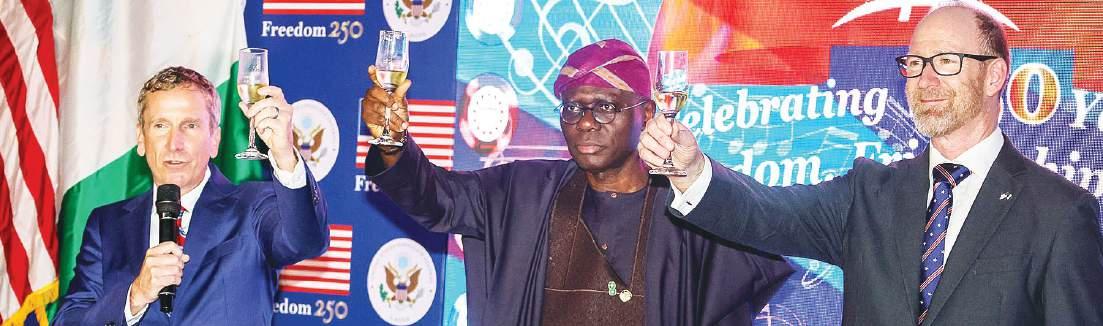
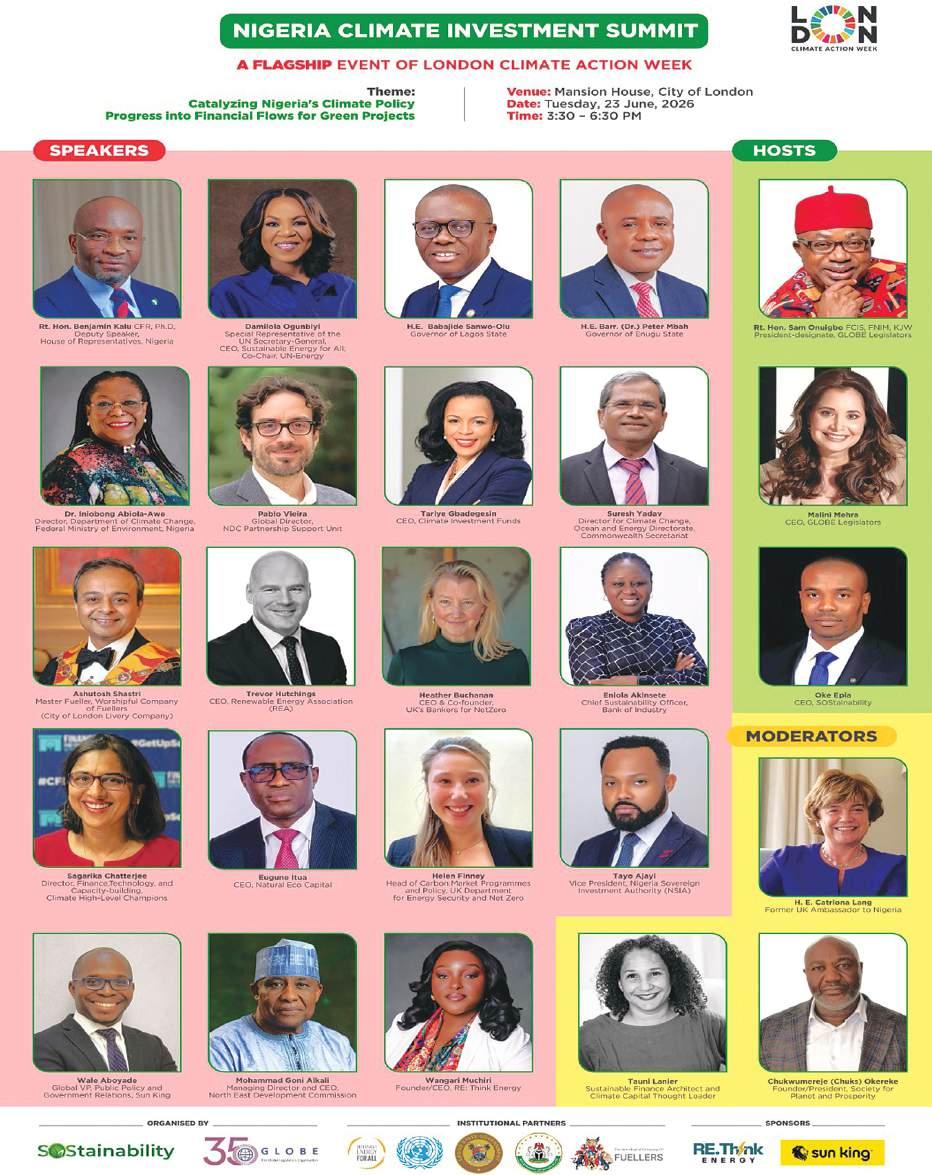
Chargé d’Affaires of the U.S. Mission in Nigeria, Mr. Keith Heffern; Lagos State Governor, Babajide Sanwo-Olu; and U.S. Consul General, Mr. Rick Swart, during a toast at a reception commemorating the 250th U.S. Independence Anniversary in Lagos, on Wednesday
Ayo Emmanuel dismissing a suit filed by the Bayelsa Oil Company
Chuks Okocha in
Bank of Industry Disbursed N645bn to Support
Economy, Generated 1.68 Million Jobs in 2025
Abubakar Bagudu commends bank’s strong governance, transparency, innovative financing structures, others John Enoh: every manufacturing company has attested to BoI’s impact, describes bank as benchmark for public sector excellence Olasupo Olusi: outcome-based financing now driving jobs, industrial capacity, inclusive growth
James Emejo in Abuja
Bank of Industry (BoI), yesterday, disclosed that it deployed N645 billion in strategic financing to de-risk critical sectors of the economy, creating 1.68 million jobs in 2025.
The interventions also financed 12,501 businesses and 1,615 start-ups while 950, 362 businesses benefitted from grants.
BoI disclosed the milestones in its inaugural Annual Development Impact Report unveiled yesterday in Abuja.
Minister of State for Industry, Senator John Enoh, Minister of Budget and Economic Planning, Senator Abubakar Bagudu, and other stakeholders hailed the development finance institution under its current leadership headed by Dr. Olasupo Olusi, for its positive impact on the economy.
BoI stated that the disbursements helped to bridge the long-standing gap between government policy objectives and actual industrial expansion.
The report indicated that the development finance institution moved beyond conventional lending to become a major catalyst for industrial transformation, positioning itself as the execution engine of the federal
government’s Renewed Hope Agenda at a time the economy recorded stronger momentum.
Against the backdrop of improved macroeconomic conditions and real GDP growth of 3.98 per cent in the review period, BoI said its interventions accelerated structural transformation by unlocking investments across manufacturing, agriculture, infrastructure, technology, renewable energy and logistics while promoting inclusive growth.
The report stated that rather than merely financing businesses, the bank deliberately targeted high-impact sectors capable of stimulating domestic production, strengthening local value chains, improving competitiveness and expanding productive capacity.
According to the report, the manufacturing sector, which contributes about 30 per cent of national output, benefited significantly from the bank’s intervention as financing helped reduce investment risks, unlocked private capital and translated policy ambitions into tangible industrial growth.
Overall, BoI stated that 7,078 businesses benefitted from its disbursements nationwide, with 59 per cent of the portfolio supporting
large enterprises while 41 per cent went to Micro, Small and Mediumscale Enterprises (MSMEs), ensuring broad-based participation across all 36 states and the Federal Capital Territory (FCT).
Stakeholders, including Enoh and Bagudu, hailed BoI under Olusi for its contributions to the economy.
Speaking at the launch of the Annual Development Impact Report, Enoh described BoI as one of the federal
The bank said the interventions reflected its strategic shift from measuring success by the volume of loans approved to assessing development outcomes through job creation, industrial capacity expansion, gender inclusion and environmental sustainability.
government’s most effective institutions, stating that its performance has become a benchmark for public sector excellence.
The minister said unlike conventional reports that focused mainly on financial figures, the BoI report demonstrated the real impact of development finance through businesses supported, jobs created, livelihoods improved, and stronger industrial value chains.
Ekpo Delighted as Nigeria
He pointed out that the bank had consistently aligned its operations with the federal government’s industrialisation agenda by expanding financing for MSMEs, promoting youth entrepreneurship, advancing gender inclusion, and supporting technology-driven businesses.
Joins IEA, Group Now Accounts
for over 80% of Global
Emmanuel Addeh in Abuja and Peter Uzoho in Lagos
Minister of State for Petroleum Resources (Gas), Hon. Ekperikpe Ekpo, has welcomed Nigeria’s admission into the International Energy Agency (IEA) as an Association country, with the block now accounting for more than 80 per cent of the global energy demand, up from 40 per cent.
He described the development as
a significant step that will deepen the country’s engagement in global energy governance while advancing its drive for universal energy access, industrialisation and sustainable energy development.
In a statement by his spokesman, Louis Ibah, Ekpo expressed delight over the unanimous decision of the IEA Governing Board, saying Nigeria’s admission into the IEA Family reflects the country’s growing strategic importance in the global
Tinubu Launches Power Force To Train 5,000 Young Nigerians, Accelerate Smart Meter Rollout
Initiative to create jobs, expand metering access, and strengthen power sector reforms under Renewed Hope Agenda
Energy Demand
First phase of scheme begins in Abuja this month with subsequent rollout across the nation’s six geo-political zones Says move to boost energy access, industrialisation
Deji Elumoye
energy landscape.
“I am elated by the decision of the IEA Members to officially welcome Nigeria to the IEA Family as an Association country,” Ekpo said.
“It is an honour for Nigeria to join this leading energy agency. I also encourage other African countries to deepen their engagement with the IEA as we work together to achieve key development goals, including universal energy access and industrialisation.”
Ekpo noted the partnership would provide Nigeria with greater access to global energy expertise, research and policy insights, while strengthening collaboration in areas such as energy security, investment mobilisation, gas development, electricity access and sustainable energy solutions.
cent when the programme was launched in 2015.
The gas minister described the development as a reflection of Nigeria’s growing role in global energy policy and reaffirmed its commitment to working with international partners to strengthen energy security, expand access and build a sustainable energy future.
Welcoming Nigeria into the organisation, IEA Executive Director, Fatih Birol, described the country’s admission as an important step for both the Agency and the global energy community.
President Bola Tinubu has launched Power Force, a new national initiative that will train 5,000 young Nigerians to support the accelerated deployment of smart electricity meters across the country, create employment opportunities, and strengthen ongoing power sector reforms. The programme, implemented through the Presidential Metering Initiative (PMI), a federation led initiative with the Federal Ministry of Youth Development, is a practical intervention designed to close critical skills gaps in meter installation while expanding opportunities for young Nigerians to participate directly in national development.
ency in customer charges, strengthen revenue collection, and support better service delivery over time.
Power Force forms part of the administration’s broader effort to improve the performance and financial sustainability of the electricity sector. Expanded metering will help reduce estimated billing, improve transpar-
The initiative also advances President Tinubu’s commitment to job creation and youth empowerment by equipping participants with practical technical skills, recognised certification, and pathways to employment and entrepreneurship within the power value chain.
The first phase of the programme will commence in Abuja in July 2026,
with subsequent rollout across the six geopolitical zones. Participants will undergo intensive technical training delivered by the National Power Training Institute of Nigeria (NAPTIN), while certification and compliance standards will be overseen by the Nigerian Electricity Management Services Agency (NEMSA). Successful trainees will be connected to deployment opportunities with distribution companies, meter providers, and other industry partners
He added that the engagement would support the country’s efforts to build a more resilient and competitive energy sector.
Nigeria is the latest country to join the IEA’s Association programme, which brings together major energyproducing and energy-consuming nations to advance secure, affordable and sustainable energy systems.
With Nigeria’s admission, the IEA Family now accounts for more than 80 per cent of global energy demand, up from 40 per
“I am thrilled that Nigeria is joining the IEA. It is Africa’s most populous country and a major international energy player. Nigeria becoming part of the world’s energy authority marks an important advance in global energy governance,” Birol said. He thanked President Bola Ahmed Tinubu and Ekpo for their confidence in the agency, adding that closer collaboration would support Nigeria’s efforts to strengthen energy security, drive economic growth, and expand access to electricity and clean cooking solutions.
The IEA also noted Nigeria’s growing influence in international energy markets, particularly through recent developments in its refining sector.
FLAG OFF OF THE 40KM BABBAN LAMBA SHARAM ROAD PROJECT IN PLATEAU...
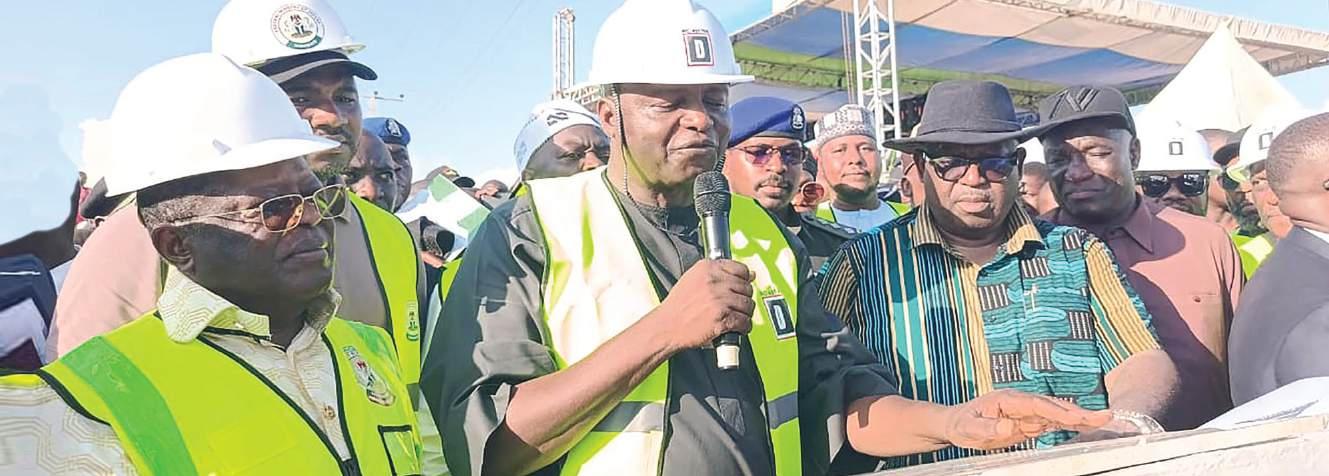
L-R: Minister of Works, Senator David Umahi; representative of President Bola Ahmed Tinubu and APC National Chairman, Prof. Nentawe Yilwatda; and Plateau State Governor, Caleb Mutfwang, at the flag off of the 40km Babban Lamba Sharam Road project in Plateau State, yesterday
in Abuja
SECOND CMAN BIENNIAL CONFERENCE...
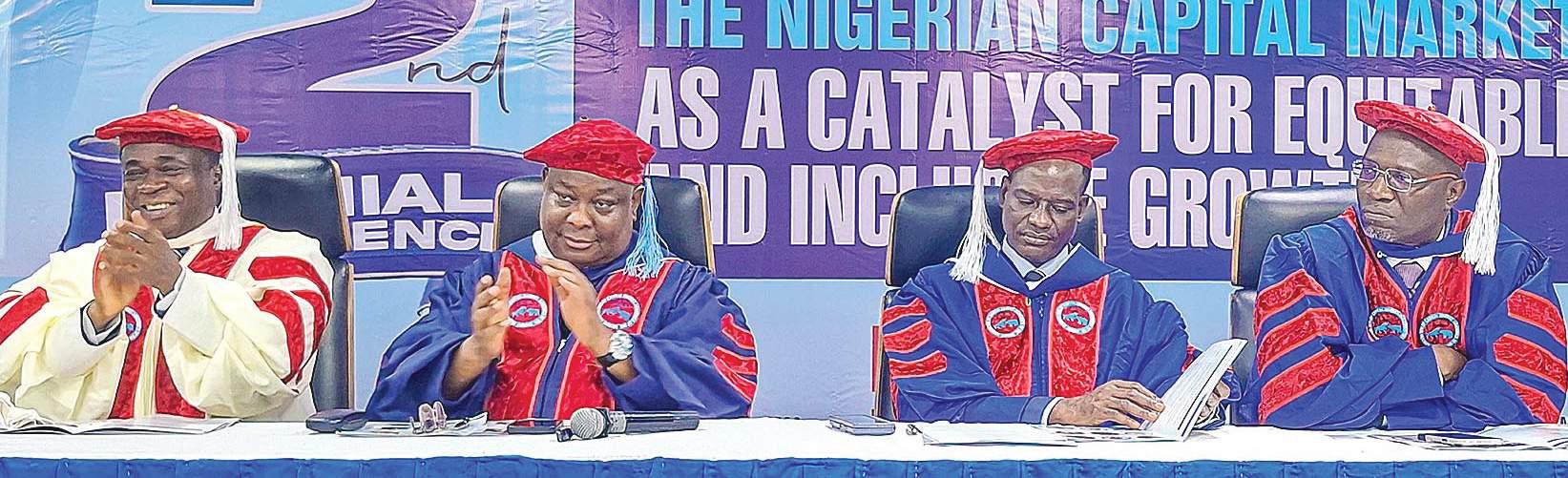
L-R: President, Capital Market Academics of Nigeria (CMAN), Prof. Uche Uwaleke; Chairman, Senate Committee on Capital Market, Senator Osita Izunaso; Chairman, Presidential Committee on Fiscal Policy and Tax Reforms, Prof. Taiwo Oyedele; and Director General, Securities and Exchange Commission (SEC), Dr. Emomotimi Agama, during the 2nd CMAN Biennial Conference themed, “The Nigerian Capital Market as a Catalyst for Equitable and Inclusive Growth”, held at the SEC headquarters in Abuja, on Tuesday
Shell, Nine Banks Empower Nigerian Oil Service Firms with $3 Billion Contractor Support Fund
Peter Uzoho
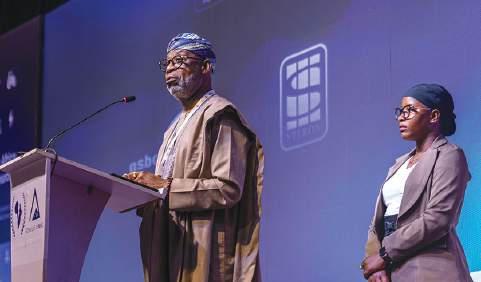
Shell Nigeria Exploration and Production Company Ltd (SNEPCo) yesterday took a major step towards empowering Nigerian oil and gas contractors and furrher growing local content with the launch of a
$3-billion Contract Finance Facility in partnership with nine major Nigerian banks.
A statement signed by Shell’s Country Communications Manager, Gladys Afam-Anadu, said the facility was designed to provide credit support for local contractors executing
projects for SNEPCo operations and will be available in both Naira and US Dollars.
The participating banks are First Bank, Guaranty Trust Bank, Zenith Bank, Access Bank, United Bank for Africa, Stanbic IBTC, Standard Chartered Bank, First City Monu-
ment Bank and Fidelity Bank.
Speaking at the signing of the Memorandum of Understanding (MoU) n Lagos, the SNEPCo Managing Director, Ronald Adams said, “the initiative reflects the spirit of the Nigerian Oil and Gas Industry Content Development Act, which is
aimed at in-country value retention.
“Our partner banks offer capital and discipline. SNEPCo brings contracts and domiciliation of payments that de-risk lending. On their part, the contractors provide performance. Each is accountable to others, and the mutual accountability gives the
AGNES urges stronger collaboration, investment to fast-track e-cooking adoption across Nigeria
Sunday Aborisade in Abuja
The federal government Thursday declared it has put in place the policy framework required to drive Nigeria’s transition to clean cooking technologies.
It has therefore urged stakeholders across the public and private sectors to move beyond policy discussions and focus on implementation through stronger collaboration and sustained investment.
The assurance came as the Africa Group of Negotiators Experts Support (AGNES) called for increased investment, coordinated implementation and stronger partnerships to accelerate the adoption of e-cooking technologies across the country.
This is just as the federal government inaugurated the National E-Cooking Steering Committee, which is expected to coordinate and strengthen the implementation of Nigeria’s National Clean Cooking Policy.
Speaking at the inception workshop on integrating e-cooking into Nigeria’s National Clean Cooking Policy Implementation Plan in Abuja, the Permanent Secretary of the Federal Ministry of Environment, Dr. Salihu Usman, said the government had laid the necessary foundation for the country’s clean cooking transition.
Represented by the Director of the Department of Climate Change in the ministry, Dr. Iniobong Abiola-Awe, Usman said the next phase required collective action from development partners, the private sector, academia and civil society.
“Government has provided the necessary policy framework. The success of implementation now depends on our collective commitment and
partnership,” he said. According to him, the adoption of e-cooking technologies would not only help Nigeria meet its climate commitments but also improve public health, promote renewable energy, create green jobs and strengthen domestic manufacturing of clean cooking technologies. Usman urged stakeholders to develop scalable financing mechanisms that would make clean cooking solutions affordable and accessible to millions of Nigerians.
Earlier, the Country Director of AGNES Nigeria, Dr. David Awolala, described clean cooking as one of Nigeria’s most urgent development, climate and public health challenges, noting that millions of households still depend on firewood, charcoal and kerosene for their daily cooking
needs.
He said clean cooking should no longer be viewed as merely a household energy issue but as a national development priority.
“Clean cooking cannot be treated only as a household energy issue. It is a national priority that cuts across health, environment, energy, climate action and economic development,” Awolala said.
He explained that the adoption of e-cooking technologies would significantly reduce household air pollution, improve energy efficiency, stimulate local businesses, expand energy access and support Nigeria’s commitments under global climate agreements.
According to him, successful implementation would require affordable cooking appliances, reliable
electricity supply, supportive government policies, innovative financing models, consumer education, market development and effective institutional coordination.
He stressed the initiative must move beyond policy conversations to practical investments capable of transforming lives across the country.
“Clean cooking solutions must move beyond policy discussions into practical programmes and investments that improve lives and transform communities at scale,” he said.
Awolala added that Nigeria’s emerging carbon market framework and climate commitments presented significant opportunities to attract investments, generate carbon credits and expand access to modern cooking technologies.
He also announced the formal
opening of AGNES Nigeria’s country office on July 1, 2026, describing it as a strategic step towards strengthening policy implementation, stakeholder engagement and financing for clean cooking initiatives.
Also speaking, the Permanent Secretary of the Federal Ministry of Power, Mahmuda Mamman, disclosed that about 167 million Nigerians still lacked access to clean cooking, describing the situation as a major public health and development challenge.
Represented by a director in the ministry, Dr. Sunday Owolabi, Mamman said e-cooking offered enormous opportunities to improve energy access, reduce deforestation and greenhouse gas emissions while supporting Nigeria’s renewable energy transition.
arrangement its strength.”
Also speaking at the signing ceremony, the Vice President, Finance, Shell Nigeria, C. J. Akwaeze, said the scheme reflects Shell’s commitment to the growth of oil and gas operations in Nigeria.
In his remarks, Chairman of the Petroleum Technology Association of Nigeria (PETAN) and Chief Executive Officer of Geoplex, Wole Ogunsanya, represented by the association’s Publicity Secretary, Dr Joan Faluyi, lauded the scheme as a “gateway to unlocking contractor financing issues which will also drive efficiency in contract execution.” Representatives of the banks commended SNEPCo for the opportunity to partner on an initiative aimed at empowering contractors and assured the company of their continued support and cooperation. Nigerian companies have continued to play key roles in supporting SNEPCo’s operation and project execution.
Early this year, 43 wholly Nigerian companies took part in the turnaround maintenance exercise at the Bonga Floating Production and Offloading (FPSO) vessel out of the total of 53 companies involved. The Contract Finance Facility is expected to further boost the capacity of Nigerian companies to deliver even more value in the operations of Nigeria’s premier deepwater producer.
Canada has reaffirmed its commitment to strengthening bilateral relations with Nigeria, unveiling plans to deepen cooperation in critical sectors including agriculture, renewable energy, mining, healthcare, innovation and skills development as both countries seek to build a more resilient and prosperous partnership.
Speaking at the 2026 Canada Day celebration in Abuja on Wednesday, Canada’s Chargé d’Affaires, David Sproule, described Nigeria as one of Africa’s most dynamic economies and a strategic partner at the heart
of Canada’s renewed engagement with the continent.
He said Canada’s relationship with Nigeria is being driven by the country’s new Africa Strategy, which seeks to build mutually beneficial partnerships founded on trust, shared prosperity and collective security.
Sproule noted the two countries have over the years expanded collaboration across healthcare, education, governance, women’s empowerment, trade, innovation and security, adding that recent high-level diplomatic engagements have further reinforced bilateral ties.
According to him, Canada’s
Secretary of State for International Development visited Nigeria in May, where discussions with Nigerian officials focused on advancing common development and trade priorities, paving the way for stronger economic and diplomatic cooperation.
Highlighting Canada’s development footprint, Sproule said Canadian assistance is helping to improve access to healthcare services, strengthen health facilities and workforce capacity, create employment opportunities, support entrepreneurs and rural communities, expand women’s participation in leadership, and back Nigeria’s
ongoing health sector reforms.
He stressed that Canada intends to sustain these investments while broadening cooperation in sectors considered essential to Nigeria’s long-term economic transformation, particularly agriculture, clean energy, mining, innovation and workforce development.
The envoy described the relationship between both countries as one that extends beyond government-togovernment engagement, pointing to strong people-to-people connections anchored by one of Canada’s largest African diaspora communities.
He said Canadians of Nigerian origin continue to make significant
contributions to Canada’s social and economic development while strengthening cultural and economic links between both nations.
Sproule also underscored the growing commercial relationship between the two countries, citing the recent sixth Canada-Africa Business Conference held in Lagos, which attracted 220 participants and 31 Canadian companies.
The conference, he said, demonstrated increasing confidence among Canadian businesses in Nigeria’s economic potential and reaffirmed their interest in building long-term partnerships with Nigerian enterprises and institutions.
Michael Olugbode in Abuja
PHOTO: ENOCK REUBEN
ATIKU APPOINTS OKONKWO SPOKESMAN OF HIS CAMPAIGN...
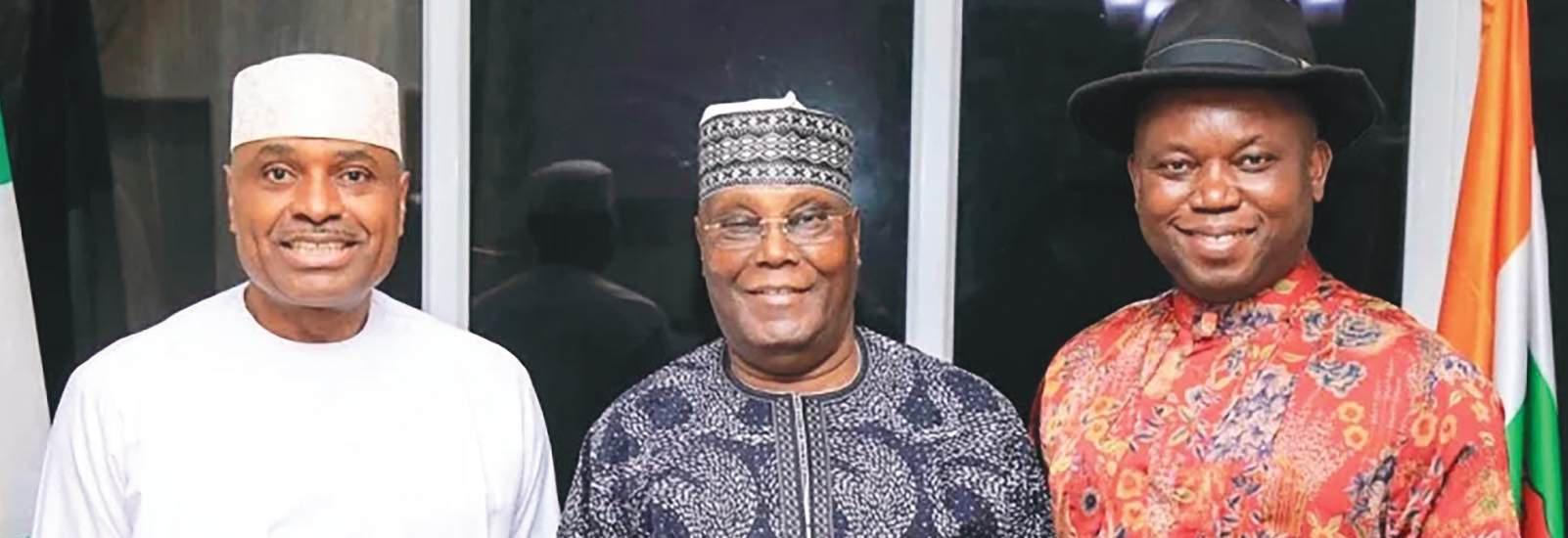
L-R: Spokesperson of the Atiku Abubakar/Rotimi Amaechi Presidential Campaign Organisation, Kenneth Okonkwo; presidential candidate of the African Democratic Congress and former Vice President, Atiku Abubakar; and Senior Special Assistant on Special Duties to Atiku, Dr.
CIS Kicks over FTSE Russell’s Position on T+1 Settlement Cycle
Kayode Tokede
The Chartered Institute of Stockbrokers (CIS), yesterday described FTSE Russell’s decision to defer Nigeria’s planned reclassification to Frontier Market status as a temporary review process rather than a reversal of the country’s capital market reforms.
The Nigerian capital market, July 1 2026, achieved a historic milestone with the successful transition to a T+1 settlement cycle, becoming the first market in Africa to implement the shortened settlement framework designed to enhance efficiency, reduce risk, and improve global competitiveness.
The institution, however, stressed that Nigeria’s newly adopted T+1 settlement cycle remains a landmark achievement capable of strengthening investor confidence and market efficiency.
CIS stated that postponement announced by FTSE Russell on June 30, 2026, followed the global index provider’s decision to further assess the practical implications of Nigeria’s migration from a T+2 to a T+1 securities settlement cycle for international institutional investors.
According to CIS, Nigeria’s transition to the T+1 settlement framework on June 1, 2026, represents one of the most significant reforms in the country’s capital market history, making Nigeria
the first capital market in Africa to implement the shortened settlement cycle.
The Institute noted that the reform aligns Nigeria with major global markets that have adopted faster settlement systems to improve operational efficiency, reduce settlement risk and enhance liquidity.
“The introduction of T+1 settlement demonstrates Nigeria’s commitment to international best practices and strengthens the country’s competitiveness within the global investment community.
“ We recognise the operational challenges that may arise from the shortened settlement cycle. Accordingly, sustained engagement and constructive collaboration with all stakeholders will be critical to strengthening the reform, addressing emerging concerns, and ensuring that the Nigerian capital market remains efficient, inclusive, and accessible to all categories of investors,” the statement said.
CIS explained that FTSE Russell’s concerns centre on whether the shortened settlement period could, in practice, create a de facto prefunded
market for foreign institutional investors operating across multiple jurisdictions and time zones.
However, the Institute maintained that Nigeria’s migration to T+1 has not altered the country’s Delivery versus Payment (DvP) settlement model, under which securities and cash are exchanged simultaneously at settlement.
“The implementation of T+1 does not require foreign portfolio investors to prefund their transactions. The market continues to operate under internationally recognised Delivery
versus Payment principles, with the only change being the reduction of the settlement period from two business days to one,” CIS stated.
The Institute said concerns over prefunding should therefore be viewed as operational issues requiring further clarification rather than evidence of structural weaknesses in Nigeria’s capital market.
According to CIS, the review period presents an opportunity for regulators, market operators and other stakeholders to engage constructively with FTSE Russell, global custodians and inter-
national investors by demonstrating that Nigeria’s settlement infrastructure remains efficient, accessible and fully aligned with global standards. The Institute also pointed to Pakistan’s experience as evidence that T+1 settlement and Frontier Market classification are compatible. Pakistan adopted the T+1 settlement cycle earlier in 2026 while retaining its place in the FTSE Russell Frontier Market Index, illustrating that accelerated settlement is not inconsistent with Frontier Market status where appropriate operational safeguards exist.
ECOWAS Commissions Landmark Abuja Headquarters as Nigeria-China Renew Commitment to Regional Integration
Michael Olugbode in Abuja
The Economic Community of West African States (ECOWAS) on Thursday inaugurated its new permanent headquarters in Abuja, with leaders describing the imposing complex as a powerful symbol of regional unity, institutional renewal and the deepening strategic partnership between West Africa and China. The commissioning ceremony brought together senior government officials, diplomats and
regional leaders, with Nigeria’s Vice President, Kashim Shettima, representing President Bola Ahmed Tinubu, while the President of the ECOWAS Commission, Dr. Omar Alieu Touray, and China’s Ambassador to Nigeria and ECOWAS, Yu Dunhai, outlined a shared vision for stronger regional integration, economic transformation and closer Africa-China cooperation.
The modern headquarters, financed by the People’s Republic of China, was described by speakers
as more than an office complex. It was presented as a lasting symbol of cooperation, resilience and a renewed determination to build a peaceful, prosperous and integrated West Africa.
Touray described the inauguration as “a truly historic milestone” in the life of ECOWAS, noting that the headquarters represents the fulfilment of a vision conceived during the groundbreaking ceremony in December 2022.
He thanked Xi Jinping for China’s
World Bank Rewards A’lbom with $6.2m for Transparency, Good Governance
Okon Bassey in Uyo
The Akwa lbom State Government has been rewarded through the World Bank-assisted State Action on Business Enabling Reform (SABER) Programme with the sum of USD 6,206,745.42 for its outstanding performance in transparency, budgetary management and good governance under the 2024 assessment.
Akwa lbom State Governor, Umo Eno, disclosed this during the July edition of the Monthly Covenant Service held at the state Banquet Hall, Government House, Uyo.
He said the recognition underscores his administration’s commitment to accountability,
prudent management of public resources and institutional reforms in line with the ARISE Agenda of his government.
The latest recognition comes on the heels of Akwa Ibom’s emergence as one of Nigeria’s top-performing states in governance in the Commonwealth Institute of Advanced and Professional Studies (CIAPS) Governance Performance Index (CGP).
Governor Eno said the twin recognitions affirm that the state is on the right development trajectory and reaffirm his administration’s commitment to delivering on the ARISE Agenda, stressing that sustainable development requires
deliberate planning, consistency and patience.
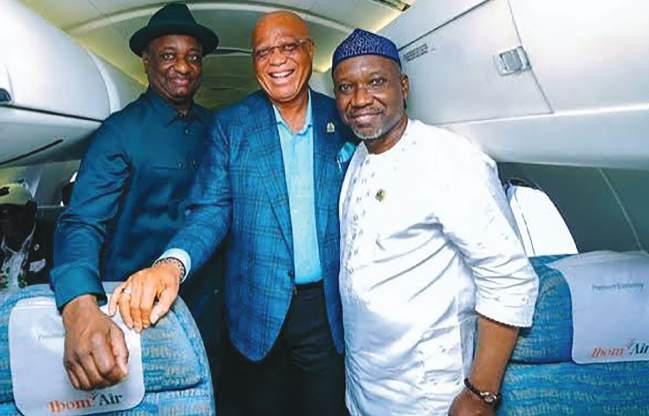
Highlighting other milestones, the governor announced that Ibom Air has resumed international flight operations from Uyo to Accra, Ghana, with flights currently operating on Thursdays and Sundays.
He expressed optimism that additional international routes would be introduced as passenger traffic continues to grow.
Eno also disclosed that the state government has procured 50 brand-new Compressed Natural Gas (CNG) buses to strengthen public transportation.
According to him, the first batch
of 20 buses has arrived, while the remaining 30 will be delivered later; stressing that the buses are newly manufactured and that drivers will undergo proper training before deployment.
On youth development, Governor Eno reaffirmed his administration’s commitment to establishing Youth Development Centres in all the 31 local government areas, explaining that the initiative is aimed at making skills acquisition and empowerment programmes more accessible to young people in their communities, in alignment with the planned amendment of the NYSC Act to make youths across the country more productive.
support, saying Beijing had once again demonstrated its commitment to West Africa by providing the regional body with a world-class headquarters.
According to him, China’s contributions to ECOWAS have gone beyond infrastructure, recalling the country’s earlier support for regional peacekeeping through the provision of strategic military equipment and vehicles for ECOWAS security operations, alongside numerous development interventions across member states.
Touray said the completion of the headquarters within about two years reflected the strength of the partnership between China and ECOWAS.
He also praised Nigeria for its unwavering support as host nation, citing the country’s role in providing land, policy support and institutional backing that made the project possible.
For decades, the ECOWAS Commission operated from offices spread across different locations in Abuja, creating operational and logistical challenges.
Touray said the new integrated complex would significantly improve coordination, efficiency and productivity by bringing Commission staff together under one roof.
He disclosed that the facility consists of a central nine-storey tower flanked by two seven-storey wings and is equipped with modern
conference rooms featuring interpretation facilities, archives, kitchenettes, banking halls, restaurants, a clinic, gymnasium, shops and even a daycare centre for nursing mothers.
Despite celebrating the physical accomplishment, the ECOWAS Commission President stressed that infrastructure alone could not guarantee progress.
“Buildings do not deliver transformation; people and institutions do,” he said, urging member states to ensure that the headquarters becomes a centre of excellence that drives innovation, strengthens collaboration and delivers tangible benefits to citizens across the sub-region.
Representing President Xi Jinping, Ambassador Yu described the building as the “Eye of West Africa” and a flagship achievement under the Forum on China-Africa Cooperation.
He said the headquarters reflects China’s enduring support for African integration and demonstrates the strength of China-Africa relations.
The ambassador noted that China continues to pursue cooperation with Africa based on sincerity, mutual respect, friendship and shared development.
He recalled that during the Beijing Summit of FOCAC, China and African leaders adopted an ambitious framework for building an all-weather China-Africa community with a shared future through six major pillars and ten partnership actions.
Ekene Onwuka, in Abuja, on Wednesday
US-Nigeria Bilateral Trade Rises 14%
Nume Ekeghe
to Nearly $15 Billion in
Chargé d’Affaires of the United States Mission in Nigeria, Keith Heffern, said trade between Nigeria and the United States rose by 14 per cent in 2025 to nearly $15 billion, reinforcing Nigeria’s position as America’s second-largest trading partner in Sub-Saharan Africa.
Heffern made the disclosure recently during the U.S. Mission’s celebration of the 250th Independence Day of the United States, held at the U.S. Consul General’s Residence in Lagos.
Heffern said the increase in bilateral trade reflected the deepening commercial relationship between
both countries, driven by growing investment, stronger private sector collaboration and expanding opportunities across key sectors of the Nigerian economy.
He said, “As the United States places trade and investment at the heart of our engagement across Africa, dynamic cities like Lagos with its energy, innovation and entrepreneurial spirit play a critical role in driving economic growth and expanding commercial ties between our two nations.
“Nigeria is now the United States’ second-largest trading partner in sub-Saharan Africa. In 2025, two-way trade between our countries reached nearly $15 billion, a 14 percent
increase over 2024! These aren’t just numbers. With more than 100 U.S. companies operating in Nigeria, they represent jobs, opportunities, and economic transformation for Americans and Nigerians.”
Heffern stated that trade and investment had become central to U.S. engagement across Africa, with Lagos playing a strategic role due to its vibrant entrepreneurial ecosystem and growing innovation landscape.
To further deepen commercial ties, Heffern said the U.S. mission had partnered with Nigeria’s Ministry of Industry, Trade and Investment to implement the five-year U.S.Nigeria Commercial and Investment
Partnership.
According to him, now in its second year, the initiative has emerged as a flagship platform for advancing bilateral economic cooperation.
Heffern stated, “As a private sector-led initiative, we have nearly 50 U.S. and Nigerian companies uniting business leaders and policymakers to remove barriers to trade and investment. In January, Lagos hosted the first ministeriallevel meeting under the partnership.
“Through this partnership, we have advanced cooperation in three strategic sectors: agriculture, the digital economy and infrastructure, to drive long-term growth and shared
prosperity.”
Beyond trade, Heffern said security cooperation between both countries remained critical to creating an enabling environment for investment and economic growth.
He cited recent collaboration between the National Drug Law Enforcement Agency and the U.S. Drug Enforcement Administration (NDLEA), which led to the dismantling of a major transnational criminal organisation involved in drug trafficking and money laundering.
He also highlighted ongoing cooperation in maritime security, stating that the recent participation of the U.S. Naval Forces Africa Vice
2025
Cardoso Targets Nigeria’s Transition from Fintech
Adoption Market to Global Fintech Production Hub
Nume
Ekeghe
Governor of Central Bank of Nigeria (CBN), Olayemi Cardoso, has unveiled an ambitious vision to reposition Nigeria from a consumer of financial technology to a global producer of fintech innovation for export.
Cardoso also charged banks to channel the N4.65 trillion raised during the recent recapitalisation exercise into productive sectors of the economy. Cardoso spoke yesterday at the Future of Banking Summit 2026 organised by CNBC Africa and ABN Group, where he was represented by Director of Statistics Department at CBN, Dr. Okpanachi Moses. The forum was monitored virtually by THISDAY.
in the internal affairs of ADC, as the suit was non-justiciable.
He also held that Abejide lacked the legal right to institute the suit, having failed to show to the court that his rights had been violated in any way as a result of the emergence of the Mark-led leadership.
He equally held that Abejide, who is a member of the House of Representatives, failed to explore the party’s internal mechanism for dispute resolution. Liman resolved the three issues in the substantive suit in favour of the defendants.
On whether Mark, a former senate president, and Aregbesola, who was Governor of Osun State, emerged as leaders of the party in compliance with the enabling laws, the judge resolved this against Abejide, the plaintiff in the suit.
He held that the handing over of the leadership of the party by Nwosu to Mark did not violate the provisions of the party’s constitution.
The judge agreed that the disputed July 2, 2025 meeting of the party was a stakeholders meeting, which preceded the party’s National Executive Council (NEC) meeting
Cardoso reiterated that CBN’s newly launched Payment System Vision (PSV) 2028 was designed to build on Nigeria’s strong foundation in digital payments and position the country as Africa’s leading fintech innovation centre. He added that Nigeria had already established itself as one of the world’s most vibrant digital payments markets and must now move beyond adopting technology developed elsewhere to creating globally competitive fintech companies.
It would be recalled that CBN recently issued sweeping regulations requiring banks, fintechs, and other payment service providers to localise all payment transaction data generated in Nigeria by January 1, 2027, disclose their ultimate beneficial owners, and
comply with new market structure rules aimed at curbing concentration risks, strengthening regulatory oversight, and promoting a more resilient payments ecosystem.
In his keynote address, Cardoso said, “The aspiration now is that Nigeria moves from being a fintech adoption market to a fintech production economy, that the next global competitive fintech
COURT UPHOLDS MARK’S LEADERSHIP OF ADC, DISMISSES ABEJIDE’S SUIT
held on July 29, 2025, which produced Mark and Aregbesola as the party’s leaders, and was monitored by Independent National Electoral Commission (INEC).
Liman, therefore, declared that the emergence of Mark and Aregbesola as leaders of ADC was valid and in accordance with the constitution, Electoral Act, 2026, and the party’s constitution.
The judge consequently awarded a fine of N2 million each in favour of all the defendants, which shall be paid by Abejide.
He also awarded a N10 million
fine against Abejide’s lawyer, Ibrahim Idris, in compliance with the Electoral Act, 2026.
Abejide had instituted the suit to stop the Mark-led leadership of ADC.
In the originating summons, marked FHC/ABJ/CS/1637/2025, filed on February 15 by Idris, the lawmaker sued ADC, Ralph Nwosu, Mark, Aregbesola and INEC as first to fifth defendants, respectively. Nwosu was the national chairman of ADC, who stepped down for Mark.
Abejide, among the eight
DANGOTE REFINERY RAISES $750 MILLION IN DEBUT EUROBOND AHEAD OF PLANNED IPO
at Qualified Institutional Buyers (QIBs) in the United States and other international markets.
The publication noted that the transaction followed the same funding strategy adopted by Dangote Fertiliser in April, when the company raised $750 million through a five-year Eurobond priced at 7.75 per cent.
It described the refinery’s latest fundraising as evidence of growing investor confidence in Dangote Group’s export-oriented businesses and a sign that international investors are increasingly distinguishing strong Nigerian corporate credits from broader sovereign risk.
According to Eurobond.Africa, the refinery’s bond includes a makewhole call provision at US Treasury yields plus 50 basis points until July 16, 2028, a structure designed to protect investors while giving the company flexibility to refinance or retire the debt as operations expand and cash flows improve.
It stated that the refinery’s ability to price the bond 25 basis points below the Dangote Fertiliser issuance completed barely three months earlier reflected improved
market perception of the project, particularly following operational progress that has seen refining capacity approach 700,000 barrels per day during test runs.
The pricing, it explained, was especially significant because it was broadly in line with yields on Nigeria’s sovereign Eurobond curve, suggesting that investors viewed the refinery as a premium corporate credit despite operating in Nigeria.
Besides , it emphasised that the latest issuance brings Dangote Group’s total international debt raised this year to $1.5 billion, following the earlier fertiliser transaction.
It said the company was using the proceeds to optimise its debt profile by replacing shorter-term and more expensive local bank facilities with longer-tenor, fixed-rate dollar debt maturing in 2031. According to the report, the strategy is aimed at presenting a stronger balance sheet as the conglomerate prepares for a major equity fundraising cycle.
The publication said the group was entering what it described
as a $40 billion expansion phase, with plans for a secondary listing of Dangote Cement in London around September as well as a dual-listing initial public offering (IPO) for the Dangote Petroleum Refinery.
Eurobond.Africa stated that successfully securing long-term international funding ahead of those planned listings would improve the group’s financial position and enhance its appeal to global equity investors.
The report also highlighted the role of an international syndicate comprising JPMorgan, Bank of America Merrill Lynch and Standard Chartered in executing the transaction.
The successful placement, according to the report, demonstrated sustained international appetite for high-quality African industrial assets despite global market uncertainties and positioned the Dangote Group for what could become one of the largest equity listings in African capital markets. Meanwhile, the Dangote Refinery has announced another reduction in the ex-depot price of petrol,
saying it marked its fourth price cut within a month. The company said it continues to pass lower production costs to consumers despite still processing crude oil purchased at significantly higher international prices.
The latest N50 per litre reduction, according to the company, brings the cumulative decrease in the refinery’s PMS ex depot price to N200 per litre since May 30, 2026, reducing the gantry price to 1,075.
Over the same period, the refinery said it has reduced the ex-depot price of Automotive Gas
reliefs, sought an order nullifying Nwosu’s handover or transfer of ADC’s leadership to Mark and Aregbesola as interim national chairman and interim national secretary, respectively, on July 2, 2025, at Shehu Musa Yar’Adua Centre, Abuja, for being illegal, unlawful, null and void.
He sought an order of perpetual injunction restraining Mark and Aregbesola from parading themselves as leaders of the party, “as their purported appointment, selection or election was unlawful, illegal, null and void.”
He also sought a perpetual injunction restraining INEC from recognising Mark and Aregbesola as ADC’s interim national chairman and interim national secretary, respectively.
He alleged that their appointment, selection or election did not meet the requirements of Section 82 of the Electoral Act, 2022, among other prayers.
Mark: We Have Been Vindicated
National Chairman of ADC, Senator David Mark, described the court judgement affirming his leadership of the party as another significant milestone in Nigeria’s democratic journey.
Limited contesting the re-awarding of OML 46 to Halkin E&P, the plaintiff had appealed the case, and sought an overturning of the lower court’s judgment. However, in its ruling, the appeal panel maintained the position of the high court, insisting that the case was statute-barred, and that Bayelsa Oil Company Limited lacked the
legal standing to challenge the legal ownership and operational rights of Halkin E&P over the OML 46.
In reaction to the ruling, counsel to the Nigerian Upstream Petroleum Regulatory Commission (NUPRC), Mr. Chikaosolu Ojukwu, said the judgment by the appeal court, same as last year’s ruling by federal high court upholding
is built in Lagos, in Abuja, in Kaduna, on Nigerian data and Nigerian infrastructure, and exported to the world.” According to him, Nigeria is well positioned to achieve that ambition, given the progress already recorded in the payment ecosystem. He stated, “Nigeria does not begin this journey from behind. Over the past two decades, our payments ecosystem
Continued on page 35
Mark said the verdict, which upheld the legitimacy of the party’s leadership, was a clear vindication of ADC’s unwavering belief in the principles of multi-party democracy, the rule of law, and the constitutional rights of Nigerians to freely associate and participate in the political process.
In a statement by his Special Adviser, Media and Publicity, Kola Ologbondiyan, Mark said, “From the outset, we had maintained that democracy can only thrive when political parties operate without intimidation, undue interference, or attempts to undermine legitimate opposition.
‘’Today’s judgement, therefore, has reaffirmed that no individual or institution is above the law and that the judiciary remains the ultimate guardian of our constitutional order.” The ADC national chairman commended the judiciary for its courage, impartiality, and steadfast commitment to justice, describing the judgement as a triumph of truth and the democratic aspirations of the Nigerian people.
Mark reaffirmed the party’s commitment to democratic ideals, constitutionalism, and the rule of law, stressing that ADC remains resolute in providing purposeful leadership as a strong and credible
Halkin E&P as the legal owner and operator of the OML 46, “remains a victory for the upstream oil and gas sector.” He added that the judgment reaffirmed the seriousness and integrity with which the bidding and re-awarding processes of the OML 46 to Halkin E&P was duly carried out by the NUPRC .
Commander at the Nigerian Navy’s 70th anniversary underscored both countries’ shared commitment to regional stability.
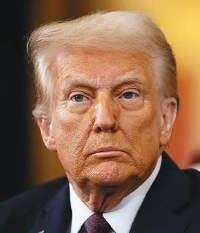
US President Donald Trump
ARUWA CAPITAL INVESTORS MEETING...
L-R: Mr. Manur Chandak, Director of Financial Services, OmniPay; Gbola Lawson, Managing Director, Fastizers; Eka Obaigbena, Founder, Toasties; Livinus Obu, Investment Analyst, Aruwa Capital; Deji Maradesa, Chief Operating Officer, Yikodeen Footwear; Timi Oke, Co-Founder and Chief Executive Officer, AgroEknor; Atunde Shamsideen Yinka, Founder and Chief Executive Officer, Yikodeen Footwear; Adesuwa Okunbo Rhodes, Founder and Managing Partner, Aruwa Capital; Henrietta Ibeawuchi, Company Legal Counsel, Polysmart Group; Wasiu Balogun, Founder and Group Managing Director, Polysmart Group; Oluwasoga Oni, Founder and Chief Executive Officer, Mdaas Global; Genevieve Oni, Co-Founder and Chief Financial Officer, Mdaas Global; Ayoola Dominic, Founder and Chief Executive Officer, Koolboks; Deborah Gael, Co-Founder and Chief Operating Officer, Koolboks; Deepankar Rustagi, Founder and Chief Executive Officer, OmniRetail; and Oba Odunaiya, Founder and Chief Operating Officer, Wemy Industries, during the Aruwa Capital Investors Meeting and Awards in Lagos... recently
FG to Repatriate Over 700 More Nigerians from South Africa as Xenophobic Violence Forces Mass Evacuation
Olugbode
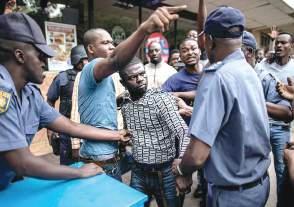
The federal government has concluded arrangements to evacuate more than 700 stranded Nigerians from South Africa over the next few days, as Abuja intensifies efforts to rescue citizens caught in the aftermath of renewed xenophobic attacks targeting foreign nationals in Africa’s most industrialised economy.
The latest evacuation will bring the total number of Nigerians repatriated under the ongoing emergency operation to nearly 1,300, making it one of Nigeria’s largest government-led rescue missions from South Africa in recent years.
The Ministry of Foreign Affairs disclosed on Thursday that three additional special evacuation flights have been scheduled to return Nige-
rians who voluntarily registered for evacuation following the violence. According to the ministry, the first of the remaining flights will arrive at the Murtala Muhammed International Airport at about 5:30 a.m. on Friday, carrying 271 returnees.
The ministry said the exercise follows the successful evacuation of 593 Nigerians in three batches. It explained that the first batch
of 258 returnees arrived aboard a special Air Peace flight on June 11 and was received by the Minister of State for Foreign Affairs, Sola Enikanolaiye, before being handed over to relevant government agencies for documentation and profiling.
Following logistical challenges that delayed the second evacuation flight, some stranded Nigerians were temporarily sheltered at the Nigerian
Conflict, Funding Cuts Push Northern Nigeria Hunger Crisis to Worst Level in Nearly a Decade, WFP Warns
Escalating conflict, shrinking humanitarian funding and worsening access constraints have pushed northern Nigeria into its most severe hunger crisis in almost a decade, with more than 17 million people now facing acute food insecurity, the United Nations World Food Programme (WFP) has warned.
The UN agency said the deteriorating security situation, particularly in the North-East, is forcing families from their homes and farms, disrupting humanitarian operations and leaving millions without life-saving food assistance.
According to the latest Cadre Harmonisé food security analysis, more than 17 million people across nine conflict-affected northern states are experiencing crisis, emergency or catastrophic levels of hunger—an increase of nearly two million people compared to the previous assessment.
The report painted an especially grim picture in Borno State, where renewed insurgent attacks coupled with the suspension of food assistance in some areas have left more than three million people acutely food insecure.
Of that figure, over 750,000 are experiencing severe hunger, while more than 10,000 people have slipped into catastrophic hunger—the highest level of food insecurity and one often associated with famine-like conditions.
Although those facing catastrophic hunger represent a relatively small proportion of Borno’s population, WFP warned that the figures signal a rapidly deteriorating humanitarian
situation.
“What concerns us most is how this crisis is expanding,” said Kinday Samba.
“For years, insurgent attacks and violence were largely concentrated in parts of northeast Nigeria. Today, they are spreading across a much wider area and forcing people from farmland, driving displacement and restricting humanitarian access, meaning hunger is quick to follow.”
The agency said insecurity has significantly reduced access to vulnerable communities, with the number of locations partially inaccessible to humanitarian workers doubling in recent months.
An additional 15 areas are now considered difficult for WFP personnel to reach because of insecurity.
Humanitarian supply chains have also come under increasing pressure as attacks and illegal checkpoints disrupt the movement of relief materials along major transport corridors, leaving air transport as the only viable option in several locations.
Beyond insecurity, WFP identified severe funding shortages as a major factor worsening the crisis.
While an estimated 6.2 million people are now food insecure across the three insurgency-ravaged North-East states, the agency said it currently has sufficient resources to assist only about 740,000 people.
That leaves approximately 5.5 million people—many of them women and children—without essential food and nutrition support. The figure represents a sharp decline from the 1.3 million people
WFP assisted during the peak of the 2025 lean season.
The agency warned that the suspension of food assistance in several displacement camps is pushing desperate families toward dangerous coping mechanisms.
Communities have reported cases of people joining armed groups in exchange for food or income, highlighting the growing link between hunger, insecurity and recruitment by violent extremists.
WFP also raised alarm over increasing reports of exploitation and gender-based violence, particularly affecting women and children, following reductions in humanitarian
Oil (AGO) by N300 per litre and Jet A1 aviation fuel by N520 per litre.
The company said the successive reductions demonstrate its commitment to ensuring Nigerians benefit from favourable market developments while maintaining the long-term sustainability of domestic refining operations.
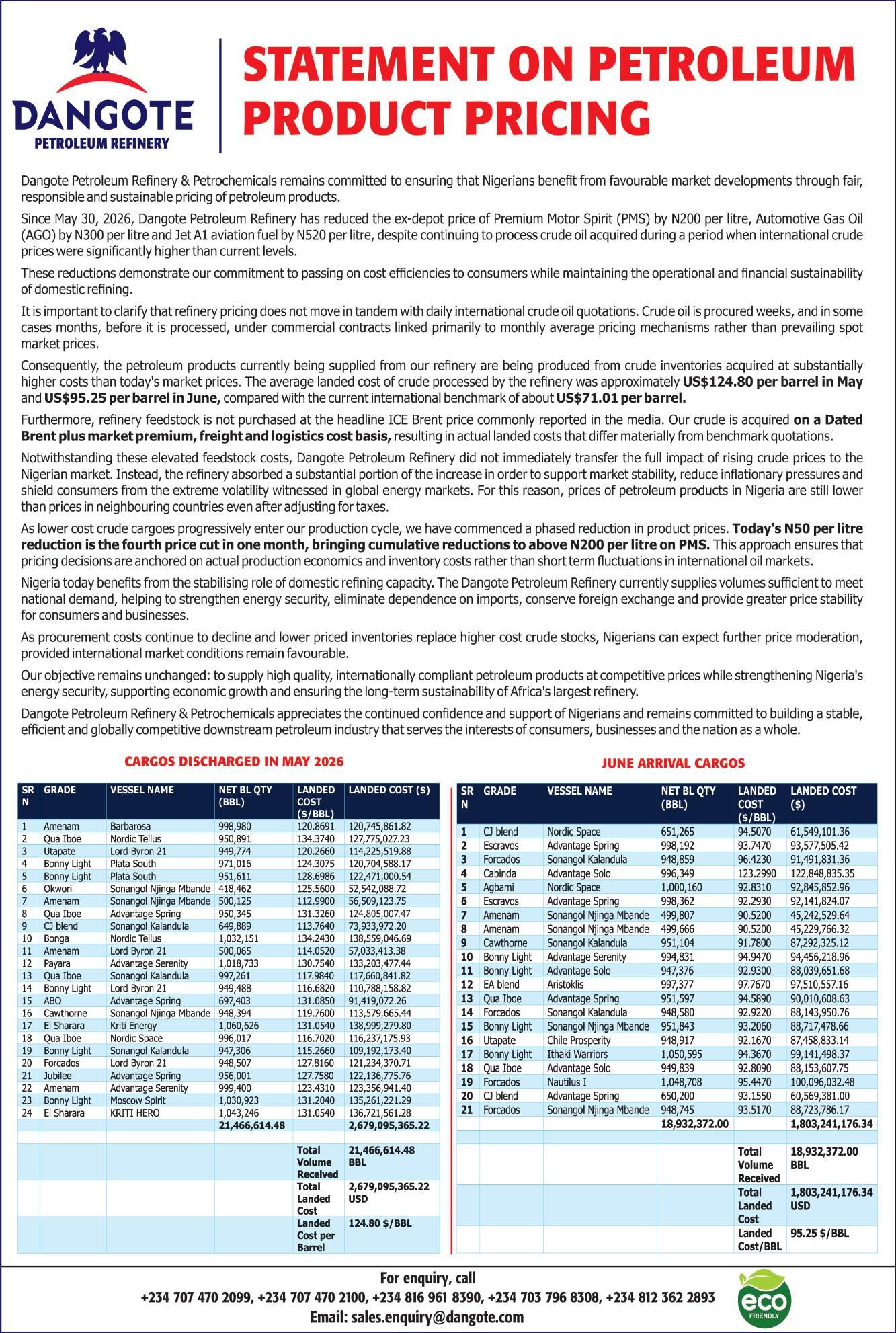
In a statement yesterday, the refinery explained that petroleum product pricing cannot mirror daily movements in international crude oil markets because crude is purchased weeks, and sometimes months, before it is processed. According to the refinery, the petroleum products currently being supplied to the market are being produced from crude inventories acquired during periods of substantially higher prices. It disclosed that the average
assistance.
“When people lose access to food, the risks of displacement, exploitation and instability increase. Yet resources are at their lowest at the time they are needed most,” Samba said.
The new assessment also indicates that Nigeria’s food crisis extends well beyond conflict-hit northern communities.
Nationwide, an estimated 36.2 million people are now experiencing food insecurity, reflecting the combined impact of persistent insecurity, inflation, climate shocks and economic pressures that continue to erode household purchasing power and agricultural production.
landed cost of crude processed stood at approximately $124.80 per barrel in May and $95.25 per barrel in June, compared with the current international benchmark of about $71.01 per barrel.
The refinery also clarified that its crude procurement costs are not based solely on the headline ICE Brent benchmark commonly quoted in the media. Rather, it explained that crude is purchased on a Dated Brent basis together with applicable market premiums, freight and logistics costs, resulting in actual feedstock costs that differ materially from benchmark prices.
Despite the sharp increase in crude acquisition costs during the period, Dangote Refinery said it deliberately refrained from transferring the full impact
High Commission in Pretoria.
The ministry disclosed that a Nigerian philanthropist volunteered to pay the airfares of 66 stranded compatriots, who returned to Lagos aboard a South African Airways flight on June 24.
A second government-arranged evacuation flight subsequently landed on June 30 with 269 returnees, bringing the total number evacuated so far to 593.
The ministry assured that all Nigerians who voluntarily registered for evacuation and have completed the necessary screening and clearance procedures would be brought home safely.
It also dismissed allegations circulating on social media that officials of the Nigerian Mission in South Africa demanded money from citizens before including them on evacuation lists.
According to the ministry, every evacuation flight is fully funded by the Federal Government.
“For the avoidance of doubt, all the special evacuation flights are fully paid for by the Federal Government and at no cost to the returnees,” the ministry said.
It described claims that mission officials requested payment from stranded Nigerians as “totally false, fake news and should be discarded.”
The latest evacuation comes against
to consumers, choosing instead to absorb a significant portion of the additional costs in order to support market stability and cushion Nigerians from the volatility in global energy markets.
The company noted that this pricing approach has helped to keep petroleum product prices in Nigeria below those prevailing in neighbouring countries, even after accounting for applicable taxes. It added that as lower priced crude cargoes progressively enter its production cycle, the refinery has begun systematically passing the benefits to the market through phased price reductions.
“Today’s N50 per litre reduction is the fourth price cut in one month, bringing cumulative reductions to above N200 per litre on PMS. This approach ensures that
the backdrop of recurring outbreaks of xenophobic violence in South Africa, where foreign nationals—including thousands of Nigerians—have repeatedly been targeted in attacks linked to unemployment, crime and economic hardship.
Over the past two decades, several waves of anti-immigrant violence have claimed lives, destroyed businesses and displaced hundreds of African migrants, prompting repeated diplomatic engagements between Nigeria and South Africa.
The issue reached a peak in 2019 when widespread attacks on foreignowned businesses triggered retaliatory protests in Nigeria and led the Federal Government to organise emergency evacuation flights for hundreds of distressed Nigerians.
The renewed evacuation operation reflects growing concern over the safety of Nigerians living in South Africa, which hosts one of the continent’s largest Nigerian communities comprising professionals, students, entrepreneurs and skilled workers.
The Ministry of Foreign Affairs, in a statement by its spokesperson, Kimiebi Ebienfa on Thursday said the operation underscores the federal government’s commitment to protecting Nigerians abroad, describing the welfare of citizens overseas as a central pillar of Nigeria’s foreign policy.
pricing decisions are anchored on actual production economics and inventory costs rather than short term fluctuations in international oil markets.
“Nigeria today benefits from the stabilising role of domestic refining capacity. The Dangote Petroleum Refinery currently supplies volumes sufficient to meet national demand, helping to strengthen energy security, eliminate dependence on imports, conserve foreign exchange and provide greater price stability for consumers and businesses,” the company stated.
The company expressed confidence that if international crude prices remain favourable and lower cost feedstock continues to replace higher priced inventories, Nigerians should expect further moderation in petroleum product prices.
Michael Olugbode in Abuja
Michael
in Abuja
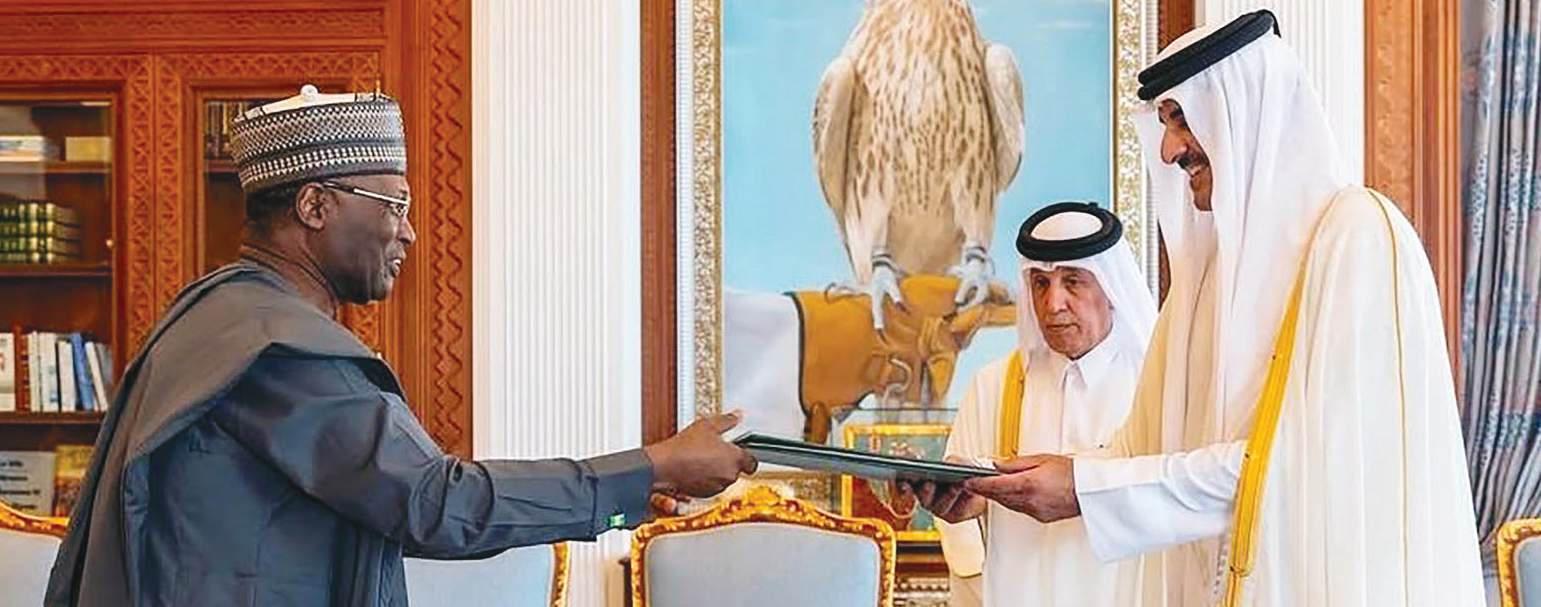
MAHMOOD YAKUBU, PRESENTING HIS LETTER OF CREDENCE TO THE AMIR OF QATAR...
Nigeria’s Ambassador to Qatar and immediate past Chairman of the Independent National Electoral Commission (INEC), Prof. Mahmood Yakubu, presented his Letter of Credence to the Amir of the State of Qatar, His Highness, Sheikh Tamim bin Hamad Al-Thani (right) at an elaborate ceremony at the Amiri Diwan in Doha… yesterday
Witness Admits Emefiele Didn’t Benefit in $6.2m Fraudulently Withdrawn from CBN
Alex Enumah in Abuja
A witness of the Economic and Financial Crimes Commission (EFCC), Mr Okpoziakpo Eloho, on Thursday, admitted before a High Court of the Federal Capital Territory, that the former Governor of the Central Bank of Nigeria (CBN), Mr Godwin Emefiele did not benefit from the $6,230,000, fraudulently withdrawn from the apex bank.
Eloho, who testified as the 14th witness of the prosecution (PW14), made the admittance during cross examination by Emefiele’s lawyer, Mr Mathew Burka, SAN.
The witness, a Commissioner of Police (CP) in charge of Special Fraud Unit, Lagos, had earlier in his evidence narrated how he and three other police officers were deployed to assist Mr Jim Obaze, who was appointed by President Bola Ahmed Tinubu as a Special Investigator, to investigate the CBN and other government business entities.
During his evidence-in-chief in April, the CP had disclosed that some suspects confessed to fraudulently withdrawing the sum of $6.23 million from the apex bank.
However, during cross examination on Thursday, Eloho admitted that there was no evidence that Emefiele
benefitted from the loot either in cash or in transfer into his account by those who admitted stealing the money.
Emefiele is standing trial on a 20-count amended charge bordering on criminal breach of trust, procurement fraud as well as conspiring with some other persons to move from the apex bank the sum of $6,230,000, purportedly meant for international election observers for the 2023 general election.
In the charge marked: FCT/HC/ CR/577/2023, he was also accused of forgery, abuse of office, as well as conferring corrupt advantages on two companies, April 1616 Nigeria Ltd and Architekon Nigeria Ltd, while in office.
He however denied commiting the alleged offences and has since been admitted to bail.
At Thursday’s proceedings, the witness disclosed that Emefiele in the statement he made to the team of investigators denied ever giving approval and authorization for the release of the money to anybody.
He noted that the defendant also denied ever receiving any letter from the then Secretary of the Government of the Federation (SGF), Mr Boss Mustapha or acted on any such letter. Responding to question about
one Jibril Abubakar, who had appeared before his probe panel during investigation and admitted collecting the sum of $6.2 million from the Abuja branch of the CBN, Eloho admitted that none of those interviewed or investigated claimed that the defendant benefitted in one way or the other from the fraud.
He also disclosed that the said Jibril Abubakar although claimed to
be a staff in the office of the SGF but, investigation later showed that he was never an employee in that office.
Meanwhile, he stated that he was not aware whether Abubakar is been tried in any law court, for his indictment in the $6.2 million fraud.
He also stated the same thing in respect of one Bashirudeen Maishanu, a staff of the CBN, who also confessed to the crime, adding
that he would be shocked to hear that Maishanu was promoted by CBN despite admitting complicity in the $6.2 million fraudulent withdrawn from the CBN.
When confronted with series of exhibits especially correspondences exchanged during the processing, approval and release of the looted fund, the witness admitted that protocol was breached going by
the hierarchy of the management of the apex bank, adding that under normal circumstances correspondence from CBN governor ought to go to the deputy governor and from there downwards.
“I recall that on December 13, 2023, we were at Kuje correctional center where the defendant made his statement in relation to his office on the $6.2 million.
Tegbe Launches Africa Mini-grid Initiative, Pledges Tough Decisions
Aliyu: 23 new mini-grids nationwide prove FG leaving no one behind UN says Nigeria uniquely positioned to lead energy transition
The Minister of Power, Mr. Joseph Tegbe, yesterday launched the Nigeria pilot phase of the Africa Mini-Grid Programme (AMP), pledging to take difficult decisions needed to transform the country’s electricity sector.
Speaking at the media launch of the Africa Mini-Grid Programme jointly
organised by the Rural Electrification Agency (REA) and the United Nations Development Programme (UNDP) in Abuja, Tegbe said his experience in the private sector had prepared him to make bold decisions in the interest of the country.
“Just like you did say, I’m not afraid. I’ve never been. In my previous life at KPMG, Anderson, I made very tough decisions that even affected the
APC Reps Candidate, Rafiu Ajakaye, Rallies Party Faithful After Securing Kwara Ticket
Sunday Ehigiator
Rafiu Ajakaye, the Chief Press
Secretary Kwara State Governor, AbdulRahman AbdulRazaq, has called on members of the All Progressives Congress (APC) to unite behind the party after emerging as its candidate for the 2027 House of Representatives election in Ifelodun/Offa/Oyun Federal Constituency.
Ajakaye made the appeal in a statement on yesterday, following his victory at the party’s primary election, thanking party leaders, stakeholders, delegates and members across the federal constituency for the support that
secured his emergence as the APC flagbearer.
“I extend my profound gratitude to the leaders, stakeholders, and members of our great party (APC) across Ifelodun/Offa/ Oyun Federal Constituency and beyond for their support, which has culminated in my emergence as the flagbearer of our party for the 2027 House of Representatives election in the constituency,” he said.
The APC candidate also paid tribute to fellow aspirants who contested the primary, describing them as distinguished sons of the constituency whose contributions to the party would remain
invaluable.
“I am especially grateful to my esteemed compatriots who also ran the race. All of you are clearly among the good and the great of our communities, and you will always have my respect.”
Urging party faithful to move beyond the primary contest, Ajakaye stressed the need for unity and collective action to secure victory for the APC in the 2027 general election.
“With the primaries now behind us, I humbly seek your continuous support, understanding, solidarity, and goodwill as we prepare for the 2027 general election. Together, let us work tirelessly for the victory
of our great party at all levels. United in purpose, we can secure a brighter future for the Ifelodun/ Offa/Oyun Federal Constituency.”
He also expressed appreciation to the leadership of the APC at both the national and state levels, particularly President Bola Ahmed Tinubu and Governor AbdulRazaq, for their leadership and commitment to the growth of the party.
“In closing, I express my heartfelt appreciation to the leadership of our party at all levels, particularly the President of the Federal Republic, HE Bola Ahmed Tinubu, GCFR, and the Governor of Kwara State, HE AbdulRahman AbdulRazaq, CON.”
private sector across Africa. And I will do the same thing with God’s grace,” the new power minister said, while reiterating the federal government’s commitment to expanding energy access through renewable solutions.
The programme, supported by the Global Environment Facility (GEF), has delivered 23 new mini-grids across Nigeria, providing reliable electricity to underserved communities while linking clean energy with agriculture, rural enterprise and economic development.
In his keynote address, Tegbe described the initiative as a demonstration of “the power of partnership, innovation and a shared commitment to expanding sustainable energy access across our nation.” He commended the collaboration among the REA, UNDP and GEF, saying such partnerships were helping Nigeria move closer to achieving universal electricity access.
According to him, the programme has gone beyond simply deploying electricity infrastructure by transforming communities, livelihoods and local economies.
He stressed that what impressed him most was the productive use of renewable energy to stimulate economic activities, particularly agricultural processing, saying it demonstrated the effectiveness of the initiative.
Earlier, the Managing Director and Chief Executive Officer of the REA, Abba Aliyu, said the successful
implementation of the Africa Mini-grid programme underscored the impact of resilient partnerships in driving sustainable energy access.
According to him, the 23 newly completed mini-grids stand as evidence that the Renewed Hope Agenda of the Bola Tinubu administration is ensuring that no Nigerian community is left behind.
“Today, across Nigeria, 23 new mini-grids stand as living proof of this conviction. Thousands of lives touched and thousands of opportunities created,” he said.
Aliyu explained that the real impact of the programme could not be measured merely by the number of projects completed but by the transformation taking place in rural communities.
“The true impact of the AMP is found in the rice processor whose productivity has doubled. It is found in the farmer who now processes and stores produce locally. It is found in the woman entrepreneur whose business remains open after sunset. It is found in the young technician who has discovered a new source of livelihood within his community,” he stated.
Aliyu explained that the programme had strengthened agricultural value chains through productive-use equipment while stimulating enterprise development and improving economic resilience in rural communities.
Spotlight Photo Splash: Nigeria Climate Investment Summit (NCIS) London
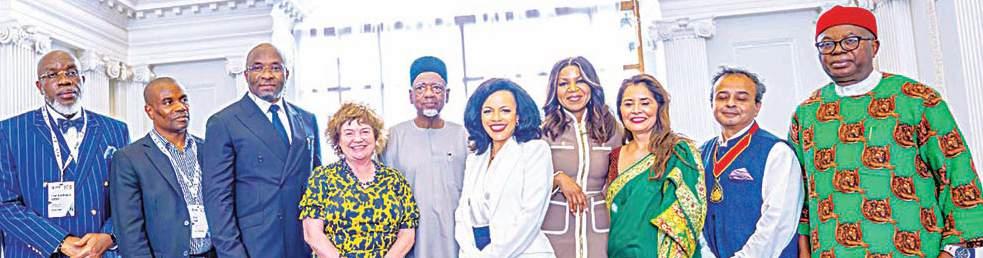
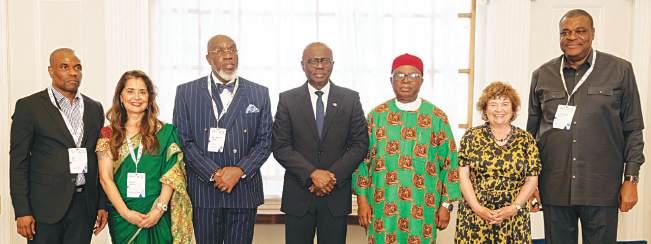
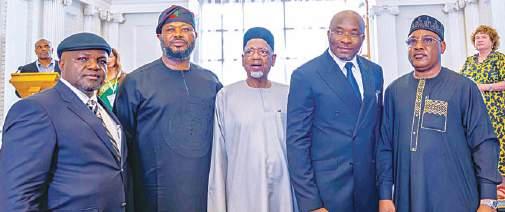
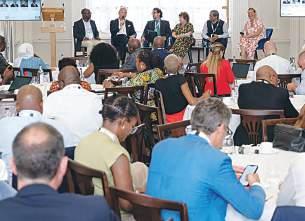
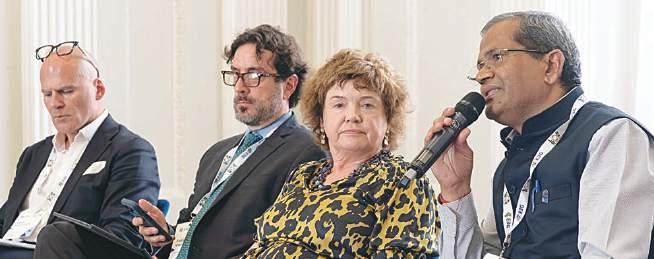
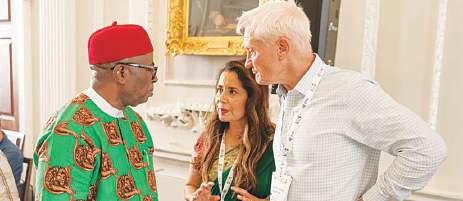
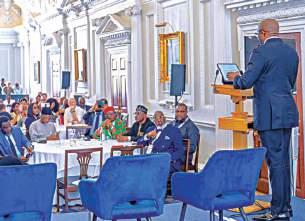
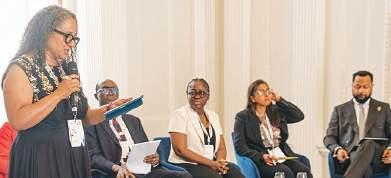
The inaugural Nigeria Climate Investment Summit (NCIS) was held on Tuesday, June 23, 2026, at the iconic Mansion House in London. A flagship event of London Climate Action Week, the summit drew participation from the global diplomatic community, multilateral agencies, institutional and private investors, policymakers, regulators, and dignitaries from Nigeria and the Diaspora. NCIS was convened by SOStainability and GLOBE Legislators and supported by the United Nations Sustainable Energy for All (SEForAll), the Commonwealth Secretariat, and the Worshipful Company of Fuellers, the City of London’s livery company. The summit produced several significant outcomes that will shape Nigeria’s climate finance trajectory within the global economy in the years to come. A key highlight was the announcement by the Governor of Lagos State, His Excellency Babajide Sanwo-Olu, of Lagos Climate Action Week (LAGCAW), scheduled for the latter part of 2026. Here are some pictures from the event.
• L-R: Prof. Chidiebere Onyia, Secretary to the Government of Enugu State, representing the Governor, Mr. Oke Epia, CEO, SOStainability, Rt. Hon. Benjamin Kalu CFR, Deputy Speaker, House of Representatives, HE Catriona Lang, former UK Ambassador to Nigeria, HE Amb. Amin Dalhatu, Nigeria’s High Commissioner to the United Kingdom, Dr. Tariye Gbadegesin, CEO, Climate Investment Funds, Ms. Damilola Ogunbiyi, Special Representative of the UN Secretary-General and CEO, SEForALL, Ms. Malini Mehra, CEO, GLOBE Legislators, Mr. Ashutosh Shastri, Master Fueller, Worshipful Company of Fuellers, and Rt. Hon. Sam Onuigbo, President, GLOBE Legislators.
L-R: Mr. Oke Epia, CEO, SOStainability, Ms. Malini Mehra, CEO, GLOBE Legislators, Prof. Chidiebere Onyia,
and
• A cross-section of the audience listening with rapt attention to the keynote presentation of the Deputy Speaker, Rt. Hon. Benjamin
•
Secretary to the Government of Enugu State, representing the Governor, HE Babajide Sanwo-Olu, Governor of Lagos State, Rt. Hon. Sam Onuigbo, President, GLOBE Legislators, HE Catriona Lang, former UK Ambassador to Nigeria, and Mr. Frank Owhor, Board Member, North East Development Commission (NEDC), representing the MD/CEO.
• L-R: Mr Trevor Hutchings, Chief Executive Officer, Association for Renewable Energy and Clean Technology (REA), United Kingdom, Mr Pablo Vieira, Global Director, NDC Partnership Support Unit, H.E. Catriona Laing, former UK High Commissioner to Nigeria, and Mr Suresh Yadav, Director for Climate Change, Ocean and Energy Directorate, Commonwealth Secretariat
• L-R: Hon. Abubakar Naralaba, Hon. Nkem Kama, HE Amb. Amin Dalhatu, Rt. Hon. Benjamin Kalu, Deputy Speaker, House of Representatives, and Hon. Bello Kaoje
• A cross-section of the audience listening to the panel discussion on ‘Power, Energy, and Renewables: Opportunities for Investors’
Rt. Hon. Graham Stuart MP, former Minister of State for Energy Security and Net Zero, and former President of GLOBE International
• L-R: Dr. Tauni Lanier, Sustainable Finance Architect and Climate Finance Thought Leader, Dr. Eugene Itua, CEO, Natural Eco Capital, Ms Eniola Akinsete, Chief Sustainability Officer, Bank of Industry, Ms Sagarika Chatterjee, Director, Finance, Technology, and Capacitybuilding, Climate High-Level Champions, and Mr. Tayo Ajayi, Vice President and Lead, Climate and Sustainability Investments, Nigeria Sovereign Investments Authority (NSIA)
• Ms. Damilola Ogunbiyi, Special Representative of UN Secretary-General, and CEO, SEForAll, presenting a keynote
• L-R: Ms Sandra George, SA to the Governor of Enugu State, HE Catriona Lang, former UK Ambassador to Nigeria, Prof. Chidiebere Onyia, Secretary to the Government of Enugu State, representing the Governor, Ms. Malini Mehra, CEO, GLOBE Legislators, and Prof. Chukwumerije Okereke, President, Society for Planet and Prosperity.
Edited by Oke Epia |
Trends and Threads
Three Takeaways from the Nigeria Climate Investment Summit (NCIS) London
The much-talked-about Nigeria Climate Investment Summit (NCIS) has come and gone. But the euphoria and substance of this inaugural flagship event of London Climate Action Week will continue to define Nigeria’s climate economy for a long time to come. For context, NCIS presented a much-desired opportunity to discuss Nigeria’s climate policies and investment readiness, while establishing an important platform for funders, investors, subnational leaders, regulatory bodies, Members of Parliament and other policy-makers to engage with the global green economy ecosystem. From renewables to carbon markets and other diverse opportunities across subnational levels, it is evident that one of Africa’s largest economies has positioned itself effectively for a just energy transition.
The summit began with welcome remarks from the co-conveners: Oke Epia, CEO of SOStainability, Malini Mehra, CEO of GLOBE Legislators, and Rt. Hon. Sam Onuigbo, President of GLOBE Legislators. This was followed by keynotes from the Deputy Speaker of the House of Representatives, Rt. Hon. Benjamin Kalu, Dr. Tariye Gbadegesin, CEO of Climate Investment Funds (CIF), and Ms. Damilola Ogunbiyi, Special Representative of the United Nations Secretary-General, and CEO SEForAll. This set the stage for the first high-level technical panel on ‘Power, Energy, and Renewables: Opportunities for Investors’ moderated by Her Excellency, Catriona Laing CB, former UK High Commissioner to Nigeria and Special Representative of the UN Secretary-General to Somalia. Speakers on this panel were: Mr Pablo Vieira Global Director, NDC Partnership Support Unit, Mr Suresh Yadav, Director for Climate Change, Ocean and Energy Directorate, Commonwealth Secretariat, Mr. Trevor Hutchings, Chief Executive Officer, Association for Renewable Energy and Clean Technology (REA), United Kingdom, Ms Heather Buchanan, CEO & Co-founder, UK’s Bankers for NetZero, and Dr. Wale Aboyade, Vice President, Public Policy and Government Relations, Sun King. The second panel on ‘Climate Finance & Opportunities in Nigeria’s Carbon Markets’ followed next. It was moderated by Dr. Tauni Lanier, Sustainable Finance Architect & Climate Capital Thought Leader while the Speakers were: Dr. Eugene Itua, Chief Executive, Natural Eco Capital, Ms Eniola Akinsete, Chief Sustainability Officer, Bank of Industry, Ms Sagarika Chatterjee, Director, Finance, Technology, and Capacity-building, Climate High-Level Champions, Mr. Tayo Ajayi, Vice President and Lead, Climate and Sustainability Investments, Nigeria Sovereign Investments Authority (NSIA), and Ms. Helen Finney Head of Carbon Market Programmes and Policy, UK Department for Energy Security and Net Zero. The panel sessions were followed by two special interventions from the Governor of Enugu State, His Excellency, Mr. Peter Mbah, represented by the Secretary to the State Government, Prof. Chidiebere Onyia, and the Managing Director/CEO of the North East Development Commission (NEDC), represented by a member of the Board, Mr. Frank Owhor. As if to save the best for the last, the closing activity of NCIS 2026 was a remark by Governor Babajide Sanwo-Olu, who capped things up with a big announcement on the upcoming Lagos Climate Action Week(LAGCAW).
Below are the key three takeaways from NCIS 2026:
Launch of GreenFinTel: To take forward some of the commitments made and partnerships initiated during the Summit, GLOBE and SOStainability announced the setting up the Green Finance Intelligence (Green FinTel) initiative to help track climate
finance flows; build capacity of pertinent stakeholders to participate effectively in the climate economy ecosystem, support the creation of enabling environment for climate investments; and engender accountability through institutional and community oversight of climate finance flows into Nigeria, Africa, and other emerging markets.
LAGCAW: From London to Lagos: The Conveners of London Climate Action Week will partner with GLOBE, SOStainability and the Lagos State Government to bring the first-ever City-level Climate Action Week in Africa to Lagos! His Excellency, the Governor of Lagos State, Mr. Babajide Sanwo-Olu, set arrangements in motion with the formal announcement of Lagos Climate Action Week (LAGCAW) later this year. With this development, Lagos joins the league of London, New York,
Shanghai, Sydney, Rio, and Baku, which have the rare privilege to host the world annually in their cities for Climate Action Week.
NCIS 2027: The successful delivery of NCIS 2026 signals the commencement
SOS Alert
“
of plans for the sequel in 2027. SOStainability and GLOBE Legislators are therefore inviting expressions of interest as partners, sponsors, and collaborators at different levels for the NCIS sequel during London Climate Action Week 2027.
“Part of the things I have said is that we need to take it from talk to action. Part of the conversation is how Africa, as a continent, has been left behind for too long. We are not going to sit back; we are going to ask to have a space. And we are not asking for handouts or favours; we just want to be identified as real partners because of what we have to offer.”
– Governor Babajide Sanwo-Olu, during his remark at the inaugural Nigeria Climate Investment Summit (NCIS) held at Mansion House, London, on 23rd June, 2026
Acting Group Politics Edito r DEJI ELUMOYE
Email: deji.elumoye @thisdaylive.com
08033025611
As Govt’s Power Sector Reforms Gather Momentum, Delivering Results...
In this piece, Rotimi Ijikanmi writes that Nigeria’s power sector is beginning to witness tangible progress under the President Bola Tinubu’s administration, as reforms aimed at resolving longstanding liquidity challenges, expanding metering, improving tariff structures and attracting private investment gather momentum.
For decades, Nigeria’s electricity sector represented one of the country’s greatest paradoxes.
Despite vast gas reserves and enormous generation potential, millions of households and businesses grappled with inadequate supply, estimated billing, mounting sector debts and chronic underinvestment.
Today, however, emerging indicators suggest that reforms introduced by President Bola Tinubu’s administration are beginning to change the narrative.
At the heart of the administration’s strategy are the Presidential Power Sector Debt Reduction Programme (PPSDRP) and the Presidential Metering Initiative (PMI).
The two interventions were designed to restore financial viability, improve consumer confidence and create the conditions for sustainable investment across the electricity value chain.
The significance of these reforms was highlighted by Special Adviser to the President on Oil and Gas, Ms Olu Verheeijen, during the Nigerian-British Chamber of Commerce Energy Day 2026 in Lagos.
According to her, the Tinubu administration inherited an energy sector that possessed enormous potential but lacked the structures needed to translate resources into national prosperity.
“Nigeria has never lacked potential. We have oil. We have gas. We have sunlight, water, land, talent and skill. What we have lacked is conversion, that is, the discipline to turn resources into results,” she said.
Verheijen explained that the administration’s overarching objective is to move Nigeria’s energy sector “from promise to performance,” stressing that energy reform remains inseparable from economic reform.
She noted that reliable energy lowers production costs, supports industrial growth, strengthens the Naira and creates jobs.
One of the administration’s most notable achievements has been addressing the longstanding liquidity crisis that crippled the gas-to-power value chain.
For years, generation companies and gas suppliers accumulated huge unpaid obligations, limiting their ability to invest in infrastructure and expand capacity.
To tackle this challenge, the Federal Executive Council approved the PPSDRP, a bond programme valued at up to N4 trillion to settle verified arrears owed to generation and gas companies.
The initiative seeks to restore financial confidence while improving payment discipline throughout the sector.
The programme recorded a major milestone in the fourth quarter of 2025 with the successful issuance of a N501 billion Series 1 bond.
The bond was oversubscribed, demonstrating strong investor confidence in the administration’s reform agenda and in the future prospects of the power sector.
Momentum continued in the first quarter of 2026 when payments of verified claims to GenCos and GasCos commenced.
The move re-assured investors and operators that government was committed to honouring outstanding obligations and restoring credibility to the sector.
When the implementation framework for the debt reduction plan was being finalised in 2025, Mr. Tony Elumelu, Chairman of Heirs Holdings and Transcorp Power described it as a “bold and transformative step”.
He added: “For the first time in years, we are seeing a credible and systematic effort by government to tackle the root liquidity challenges in the power sector.”
Following the successful issuance of the N501 billion Series 1 bond, Mr. Kola Adesina,
mitment to scaling up investment in plant expansion, starting with the planned second phase of Egbin Power Station, Nigeria’s largest
power generating plant.
By the second quarter of 2026, another major breakthrough had been achieved – Nigeria’s generation companies signed full and final settlement agreements worth approximately N2.28 trillion under the debt reduction programme.
Industry stakeholders describe the development as one of the most significant debt resolution efforts ever undertaken in the nation’s electricity industry.
Verheijen described the initiative as a deliberate effort to reset the sector’s finances and encourage fresh investment.
“This is not a bailout. It is a strategic reset - one that clears verified arrears, restores liquidity, and gives operators the footing to invest with confidence. Government obligations must be honoured, if private capital is to return,” she said.
Analysts believe the debt resolution programme is already strengthening investor confidence by improving cash flow and reducing uncertainty within the gas-to-power chain. They argue that financially healthier operators are better positioned to invest in generation assets, gas supply infrastructure and network expansion.
Alongside debt resolution, the administration has intensified efforts to close Nigeria’s metering gap through the Presidential Metering Initiative.
-Ijikanmi writes from Abuja
NOTE: Interested readers should continue in the online edition on www.thisdaylive.com
Ododo: Kogi No Longer Safe Haven for Criminals
Kogi State government has declared the state as a no go area for criminally minded people and lauded the government at the centre for strengthening security architecture nationwide.
Governor Usman Ododo of Kogi state has hailed President Bola Tinubu for his unwavering com mitment to strengthening security architecture across Nigeria, particularly in Kogi State.
According to him, the President’s strategic investments and support for security agen cies have significantly curtailed criminal activities in the state.
Ododo made the remarks recently during an inspection visit to the newly established 21 Battalion Barracks in Anyigba, Kogi State, where he assessed operational facilities and interacted with military personnel stationed in the area.
The Governor, who was impressed by the level of operational readiness and the rapid establishment of the military formation, described the barracks as a clear demonstration of President Tinubu’s resolve to support sub-national governments in confronting insecurity across the country.
have come to realize that Kogi State is no longer a fertile ground for their operations, declaring that there is no market for criminality anywhere within the state.
secure.”
He further disclosed that the Federal Government, under President Tinubu, has approved necessary air support for security operations whenever required, describing the intervention as a major boost to ongoing efforts against criminal elements.
“Mr. President has graciously granted approval that whenever we need air support, it will be made available. This demonstrates his commitment to ensuring that security agencies have the resources required to effectively combat criminality.”
Ododo also acknowledged the contributions of the Office of the National Security Adviser under Mallam Nuhu Ribadu, the Chief of Army Staff, the Inspector General of Police, the Director General of the Department of State Services, and other security chiefs for their coordinated efforts in restoring peace and stability.
He stressed that the presence of the military formation has brought remarkable improvements to security in Kogi East, leading to a drastic reduction in cases of kidnapping, armed robbery, communal conflicts and other criminal activities that once threatened the peace of the region.
His words: “I am here today to appreciate all the gallant officers who are making sacrifices daily to ensure that our people sleep with their two eyes closed. Since your arrival, the security situation in Kogi East has improved tremendously. Cases of kidnapping, armed robbery and other criminal activities have reduced significantly.”
The Governor emphasized that criminals
“Criminals now know that Kogi State is not a fertile land for them. There is no market for criminality in our state. We will continue to confront them until they have no hiding place,” he said.
Ododo particularly commended President Tinubu for providing critical support to states in the fight against insecurity, noting that the President has consistently demonstrated a practical commitment to securing lives and property across the federation.
“Mr. President is doing well. He has supported the sub-national governments immensely. He cannot be in all the 36 states fighting criminals, so we serve as his foot soldiers. We are working together to ensure that every part of Kogi remains safe and
The Governor reiterated his government’s determination to continue investing heavily in security, stressing that no amount of resources would be considered too much when it comes to protecting lives and property.
“No amount of resources will be too much to deploy in saving lives. Our administration remains committed to supporting security agencies with everything necessary to protect our people. Security remains our top priority because without security, there can be no meaningful development,” he said.
“President Bola Tinubu’s commitment in resolving the legacy issues”.
FEaturEs Bibopere Ajube: From the Creeks to a Life of Philanthropy, Service
For many in the riverine communities of Ondo State, Senior High Chief Bibopere ajube’s journey is a story of remarkable transformation. Once known as a prominent figure during the Niger delta militancy era, the founder and Chief Executive Officer of Gallery Security Services Limited has redirected his influence towards improving lives through philanthropy, community development and security. as he marks his 50th birthday on July 7, Bukola Lasisi writes that his legacy is increasingly defined not by the conflicts of the past but by years of investing in education, healthcare, youth empowerment and infrastructure, bringing hope and opportunity to thousands across the coastal communities he calls home
“Ialways ask myself, why was man born? I have studied it and discovered that it is to help others and not only themselves. When a man is given grace, it is to advance the environment, help people and ensure peace and development. I see myself as blessed by God for my people.”
— Senior High Chief Bibopere Ajube
These words, spoken with quiet conviction during the 13th anniversary of Gallery Security Services Limited (GSSL) in November 2025, capture the essence of a life dedicated not to personal empirebuilding but to communal transformation.
In the riverine communities of Ese-Odo Local Government Area of Ondo State, where the Atlantic Ocean’s waves lap against fragile shorelines, Senior High Chief Bibopere Ajube has emerged as a beacon of hope.
Ajube had before now proven his mettle as a burden bearer of his Arogbo-Ibe people of the Ijaw extraction in the western flank of the ethnic nationality. Popularly known as Shoot-at-Sight, he featured very prominently in the heydays of the Niger Delta militancy crisis when youths, particularly of Ijaw extraction, drew the attention of the Federal Government to the plight of their people in the oil-rich region.
Alongside High Chief Government Ekpemupolo (alias Tompolo), Ajube, who turns 50 years on July 7, was one of the key freedom fighters in the Delta-Edo-Ondo axis during that era.
The experience garnered has equally proved to be invaluable. Through his GSSL - a subsidiary of the Bibopere Group - that has secured Nigeria’s vital oil installations and coastal waterways along the Ondo, Edo, Ogun, and Lagos corridor, he has not only tamed the tides of sea piracy, illegal bunkering, kidnapping, and cultism but has also channeled the fruits of that success into relentless humanitarian interventions.
His efforts have lifted thousands from the lowest rungs of society, turning despair into dignity through free healthcare, scholarships, job placements, solar electrification projects and a web of other support schemes that make life meaningful in an otherwise forgotten corner of the Niger Delta.
Ajube’s philanthropy is not performative charity but a deliberate philosophy of servant-leadership. At the Youth in Coastal Defence Summit 2025, held on November 19 at God’s Own City in Agadagba-Obon, he told over 1,000 participants — youths, students from Arogbo City Academy and Derimobo Model College, security stakeholders, and community advocates —that he does not see himself as a leader with a fixed tenure.
“Some leaders have tenure. They lead and go, but a servant serves for as long as he is alive,” he declared to thunderous applause.
The GSSL founder and Chief Executive Officer announced the formation of a committee to help residents take personal responsibility for their challenges while pledging assistance for youths seeking
enlistment in federal agencies such as the Army, Navy, Customs, NDLEA, and NSCDC.
“We will help you as youths of our communities to join these national agencies. I am a community servant. I will serve you till God calls me home.”
The event underscored a broader truth: in coastal communities plagued by poverty and limited opportunities, Ajube’s interventions create pathways out of the cycle of deprivation. Job placement schemes have become a lifeline. Hundreds of young men and women from Arogbo Kingdom and surrounding areas have been guided into federal and state institutions, armed with training, documentation support, and advocacy that only a man with his reach can provide. These placements are not mere favours; they are strategic investments in human capital, equipping families with steady incomes and reducing the allure of crime.
Equally transformative is his commitment to education. Scholarships for children in the riverine communities have become a cornerstone of his legacy. In a region where many parents cannot afford textbooks, uniforms, or examination fees, Ajube’s programmes cover tuition, supplies, and even boarding for promising students. The presence of secondary school pupils at the 2025 summit was no coincidence; it reflected his belief that educating the next generation is the surest
way to secure the future. Parents who once watched their children drop out now speak of wards pursuing diplomas and degrees, returning as teachers, nurses, and engineers who give back to the very communities that nurtured them.
One community leader noted that “Chief Ajube’s scholarship net has caught children who would have become statistics of failure and turned them into assets for the kingdom.”
Nowhere is his compassion more visible than in healthcare. The free medical outreach that formed the heart of the 13th anniversary celebrations drew no fewer than 500 residents to the premises of Bradama International Skill Works, another firm in the Bibopere Group, in Agadagba-Obon.
From 8am until evening, doctors, nurses, and volunteers provided free checkups, basic treatments, drug dispensing, and health education. Hypertension, diabetes and malaria — silent killers in areas with poor sanitation and limited hospital access — were diagnosed and treatment administered on the spot.
Essential drugs worth hundreds of millions of naira were distributed without charge.
Community Leader High Chief Israel Timi Emokenigha, addressing the crowd in the local dialect and Pidgin English, emphasised personal hygiene and adherence to prescriptions, reminding everyone that “prevention is better than cure.”
Eighty-year-old Evangelist Nathaniel O. Egbeyan captured the mood when he described Ajube as “a man with the heart of gold” and “our God-sent angel.”
“This is what the Bible teaches — love your neighbours as yourself,” he said, urging
other wealthy indigenes to emulate the gesture. “Many of them do not have the means to go to the hospital… All this runs into hundreds of millions of Naira. May God bless him always.”
Pharmacist Temitope Olowolayemo, one of the medical personnel on duty, said the exercise “revealing,” noting the prevalence of preventable ailments. “What we are witnessing here today is a show of a man who loves his people and earnestly wants the best for them,” he told journalists. “He understands that without good health, there is nothing else to enjoy.”
The Vice Chairman of Ese-Odo Local Government Area, Ms. Beauty Modimu, echoed the same sentiment, referring to Ajube as “our big brother who has always been there for us. This is what he does from time to time. We cannot thank him enough.”
Beyond healthcare and education, Ajube has addressed the most basic infrastructural deficits. In communities disconnected entirely from the national grid, his solar light projects have brought illumination where darkness once reigned. Streetlights and home solar kits now dot villages that previously relied on kerosene lamps and generator fumes. Families can now study at night, small businesses operate after dusk, and security is enhanced against night-time threats. These interventions, funded through the Bibopere Group’s corporate social responsibility arm, demonstrate a holistic approach: security without development is hollow, but development without basic amenities is impossible.
The impact ripples across generations. Widows and families of departed Gallery Security personnel receive ongoing succour, including awards and support packages during anniversary celebrations.
Stakeholders from across Arogbo Kingdom and Ese-Odo LGA continue to pour encomiums on him. They describe a man whose philanthropy is measured not in press releases but in lives transformed: the hypertensive grandmother who can now walk without pain, the graduate who secured a Navy posting, the child whose solar-lit classroom became a launchpad for success. In a nation where many leaders extract from their people, Senior High Chief Bibopere Ajube gives without fanfare, insisting he is merely fulfilling a divine mandate.
As Nigeria grapples with coastal insecurity and rural neglect, Ajube stands as proof that private enterprise and public good can converge. His Gallery Security Services does not merely guard infrastructure; it guards human potential. From free clinics to solar-powered futures, from scholarships to federal and state jobs, his sundry schemes have made life meaningful for a people long consigned to the margins.
In his own words, he remains their servant, ready to serve for life. And in the coastal communities of Ondo State, that service is writing a new chapter — one of dignity, opportunity, and unyielding hope — for generations yet unborn.
Bibopere Ajube
FOCUS
FMBN, Staff Loans Board Forge N10bn Partnership for Affordable Housing
For thousands of Nigerian civil servants struggling under the weight of rising rents, stagnant wages and the growing impossibility of owning a home, a recent partnership between the Federal Mortgage Bank of Nigeria (FMBN) and the Federal Government Staff Housing Loans Board (FGSHLB) may offer a much-needed lifeline, writes Emmanuel Addeh.
The two government institutions recently signed a N10 billion Memorandum of Understanding (MoU) aimed at expanding access to affordable housing finance for federal workers across the country. The partnership, which follows the federal government’s approval of a N10 billion FMBN-funded housing loan scheme for civil servants, is expected to strengthen access to mortgage financing, home renovation support, rent assistance, and incremental housing development for public sector employees.
To many observers, this move is significant not only for the size of the facility, but for what it represents within Nigeria’s increasingly difficult housing environment. At a time when cost of housing construction continues to erode incomes and rental costs are spiraling across major cities, affordable housing is no longer viewed as a luxury but as one of the most urgent economic and social concerns facing Nigerian workers.
For civil servants, many of whom dedicate decades to public service with little hope of eventually owning a home, the collaboration between FMBN and FGSHLB is being viewed as a practical intervention capable of restoring some level of financial stability, dignity and long-term security.
Importantly, the partnership is not entirely new. Over the years, both institutions have maintained working collaboration around housing support initiatives for federal workers. According to the Managing Director and Chief Executive of FMBN, Shehu Osidi, the Bank has cumulatively disbursed over N2.6 billion in Home Renovation Loans to 3,051 federal civil servants through the FGSHLB in recent time.
The figure, which was disclosed during a strategic meeting between both institutions in Abuja, reflects years of intervention and should not be mistaken as part of the newly approved N10 billion scheme. Rather, stakeholders say it demonstrates that the collaboration already has a measurable implementation record, thereby giving credibility to the latest expansion effort.
The Affordability Conundrum
Nigeria’s housing challenge has remained one of the country’s most persistent developmental problems for decades. Despite repeated policy pronouncements by successive administrations, the gap between available housing stock and growing demand continues to widen.
Rapid urbanisation, population growth, rising construction costs and inadequate housing finance structures have combined to deepen the crisis. Millions of Nigerians remain unable to access decent and affordable homes, especially within urban centres where employment opportunities are concentrated.
Although estimates of Nigeria’s housing deficit vary, stakeholders generally agree that the shortfall runs beyond 15 million units. The implication is that millions of families either live in overcrowded accommodation, makeshift shanties, substandard housing or remain perpetually trapped within the rental market.
Mortgage systems that support widespread homeownership in many developed economies remain largely poor in Nigeria due to high commercial interest rates, low income levels and weak long-term financing structures. The only life-line being the FMBN which offers long-term loans at 6-7 percent, but poor Capitalisation has limited its impact over the years.
For federal civil servants, the situation is even more difficult. While many workers depend on fixed salaries that rarely adjust adequately to inflation,
housing costs continue to rise aggressively year after year.
Rent Burden
Across Nigeria’s major cities including Abuja, Lagos, Port Harcourt and Kano, rent prices have surged dramatically over the past few years. Workers are increasingly spending large portions of their salaries simply trying to secure accommodation. Inflation, foreign exchange instability, rising energy costs and soaring prices of building materials have significantly increased the cost of housing development. Developers and landlords, in turn, transfer those costs directly to tenants.
The result is a rental market that has become unbearable for many salary earners. For civil servants whose salaries are often fixed over long periods despite inflationary pressures, the impact is particularly severe. Workers who previously lived within city centres are now relocating to distant suburbs where housing costs are slightly lower, only to spend substantial amounts on transportation and long commuting hours.
Many families now devote more than half of their income to housing-related expenses. Others resort to borrowing simply to meet rent obligations, especially because of the widespread practice of demanding one or two years’ rent upfront.
The emotional and psychological consequences are equally significant. Workers unable to secure stable accommodation often struggle with financial anxiety, declining living standards and reduced productivity. It is within this broader economic reality that affordable housing interventions targeted at workers become increasingly important.
This is why countries with stronger housing systems often prioritise worker-focused mortgage structures, cooperative housing schemes and low-interest housing finance initiatives. In Nigeria, institutions such as FMBN were specifically created to fill that gap.
FMBN’s and Affordable Housing Delivery
Established to provide long-term housing finance through the National Housing Fund (NHF) Scheme, FMBN has emerged as one of the few institutions specifically focused on helping low and middle-income Nigerians access affordable housing. In recent years, FMBN has expanded beyond conventional mortgage financing into a broader range of housing support products targeted at workers and contributors.
These include the NHF Mortgage Loan, Home Renovation Loan, Individual Construction Loan, Rent-to-Own product, Cooperative Housing
Development Loans, and more recent additions like the Home Improvement Loan, Non-Interest Rent-to-Own, Rent Assistance and NHF Diaspora Mortgage Loan.
The Home Renovation Loan, in particular, has gained popularity among workers because it offers contributors access to relatively affordable financing to improve existing homes, complete unfinished structures or undertake essential repairs without resorting to high-interest commercial loans.
Under the leadership of Shehu Usman Osidi, industry observers say FMBN has intensified efforts to reposition itself as not just a more responsive housing finance institution, but a proactive enabler of socioeconomic development. Recent reforms have focused on operational efficiency, digitisation, stakeholder engagement and the expansion of strategic partnerships aimed at improving affordability.
The Bank has also consistently advocated stronger recapitalisation in order to improve its capacity to meet growing housing demand nationwide. While challenges remain, including gross undercapitalisation and outdated legal frameworks, analysts maintain that FMBN remains one of the most important institutions within Nigeria’s affordable housing ecosystem.
The FGSHLB Partnership
The latest collaboration with FGSHLB appears designed to deepen the interventions already begun by FMBN. FGSHLB itself was established to support federal civil servants in accessing housing opportunities and housing loans. By partnering more closely with FMBN, both institutions are effectively combining their respective strengths to expand financing access for workers.
The partnership gained renewed momentum following a strategic meeting held at FMBN Headquarters in Abuja between the leadership of both organisations. The meeting, led by Osidi and the Executive Secretary of FGSHLB, Salamatu Ladi Ahmed, focused on developing innovative housing solutions specifically tailored to the realities confronting public servants.
During discussions, Osidi emphasised the urgent need for both institutions to collaborate more strategically in designing inclusive products capable of addressing the affordability constraints facing workers.
“We are desirous of working out unique housing solutions with FGSHLB for the benefit of our teeming federal civil servants,” he stated, while reiterating that FMBN remains committed to reducing housing costs and expanding affordability for contributors under the NHF Scheme.
The collaboration was formally strengthened days later with the signing of the N10 billion MoU at the Office of the Head of the Civil Service of the Federation. Under the arrangement, FMBN will provide funding to FGSHLB for on-lending to civil servants, thereby creating a more structured framework for delivering affordable housing finance tailored to workers’ needs.
Speaking during the signing ceremony, Osidi described the agreement as “the dawn of a renewed commitment to improving the lives and welfare of Nigerian workers.” According to him, the partnership would further streamline workers’ access to FMBN products covering homeownership, home renovation, rent support, and incremental housing development.
He further explained that the initiative aligns with the Renewed Hope Housing Programme of President Bola Ahmed Tinubu, which prioritises improved welfare and expanded housing access for Nigerians across income levels.
“Through our partnership with FGSHLB, we are aligning our strengths — FMBN as the primary provider of affordable housing finance, and FGSHLB as a key interface with federal workers — to ensure that access to housing loans becomes simpler, faster, and more responsive to the realities of our civil servants,” he said.
Stakeholders Welcome Initiative
The development has attracted positive reactions from stakeholders within the public sector and housing industry, many of whom describe the initiative as timely. Within the civil service, access to decent accommodation is increasingly viewed as a productivity issue rather than merely a personal concern. Officials argue that workers burdened by housing instability are less likely to perform optimally.
Housing policy analysts also believe the collaboration could serve as a model for broader inter-agency partnerships aimed at addressing worker welfare. According to industry stakeholders, one of the long-standing weaknesses within Nigeria’s housing sector has been fragmentation among institutions responsible for housing finance and delivery. Partnerships like the FMBN-FGSHLB arrangement, they argue, improve coordination and maximise impact.
Labour advocates have equally maintained that affordable housing must become a central component of worker protection policies in Nigeria. For many workers, salary increases alone are no longer sufficient to guarantee decent living standards if housing costs continue to rise unchecked.
Some analysts also believe the initiative could help restore confidence in the NHF Scheme, particularly among contributors who often question whether their monthly deductions translate into practical benefits. Visible and accessible interventions, they say, are necessary to rebuild trust and encourage wider participation in formal housing finance systems.
Ray of Hope
For federal civil servants, the significance of the agreement extends beyond institutional cooperation. First, it potentially expands access to affordable financing options at a time when commercial interest rates remain prohibitively high. Workers who might otherwise be unable to secure loans through traditional financial institutions may now have alternative pathways. Second, the collaboration could reduce dependence on exploitative borrowing arrangements often used to finance rent obligations or home repairs.
Courts, Not Commentators: Rethinking Diezani’s Trial in Law and Public Opinion PERSPECTIVE
Ikemesit Effiong
There has been an inexhaustible volume of reporting and commentary on the recent decision by a London jury finding former petroleum minister Diezani Alison-Madueke not guilty of six bribery charges brought against her by UK prosecutors, bringing to an end an 11-year investigation by the UK’s National Crime Agency (NCA). This piece will inevitably add to that growing volume. The reporting and commentary have largely centred on its implications for tackling corruption in Nigeria, the difficulty of securing criminal convictions against foreign Politically Exposed Persons, the inability of Nigerian anti-graft agencies to pull their own weight in the face of anaemic political will, and even the implications of this case for British anti-graft institutions.
A passing look at the reactions from senior lawyers, civil rights activists and political commentators offers three insights: that the UK decision is that of a foreign court and not applicable under Nigerian law, the NCA did not do a great job linking a lavish lifestyle to gifts alleged to have been received by the former minister and the assumption that a Nigerian court of law will reach a substantially different conclusion. An examination of these arguments is important for setting public expectations about how Nigeria can clean up its governance.
Much of the chatter in the public sphere and on social media hinges on one key question: Can the former petroleum minister be tried again by a Nigerian court on substantially similar charges?
Answering this requires one to wrestle with the legal concept of double jeopardy. At its most basic, double jeopardy, rooted in the Latin maxims nemo debet bis vexari pro una et eadem causa (no one should be twice vexed for the same cause) and autrefois acquit (formerly acquitted) or autrefois convict (formerly convicted), is an age-old common law principle that prevents a person from being tried again for the same offence after a final acquittal or conviction. Fundamentally, it prevents the State from repeatedly prosecuting or punishing an individual for the same criminal conduct once a competent court has finally determined the case. Considering the two countries involved, it is also useful to contrast how double jeopardy operates under contemporary English and Nigerian law, despite their shared ancestry in English common law. In Nigeria, the doctrine is an ironclad fundamental right under section 36(9) of the Constitution. Under it, no person who has been tried by a court or tribunal of competent jurisdiction for a criminal offence and either convicted or acquitted shall again be tried for that offence, or an offence having the same ingredients, except upon the order of a superior court. Nigerian courts have repeatedly affirmed this as a “protectionist clause” against injustice and abuse of power. The rule is, however, not absolute; for example, the Code of Conduct Tribunal regime allows, in some circumstances, a person tried by the Tribunal to still face proceedings in a regular court where a “distinct criminal element” is involved, sparking debate in legal circles as to whether this offends double jeopardy. In the UK, the rule against double jeopardy has existed in English law for over 800 years and historically operated
as an absolute bar to re-prosecution after acquittal. Traditionally, once a person was acquitted by a court of competent jurisdiction, they could plead autrefois acquit to prevent any future indictment for the same offence. This strict rule was partially abolished by the Criminal Justice Act 2003 for England and Wales (with similar reforms in Northern Ireland, and separate legislation in Scotland). The 2003 Act permits the Court of Appeal, in narrowly defined circumstances involving serious offences such as murder and rape, to quash an acquittal and order a retrial if there is “new and compelling” evidence. This retrial must be conducted with the personal consent of the Director of Public Prosecutions and in accordance with a prescribed special procedure. Commentators have noted that the new exception has been used rarely because of the demanding nature of proving “new and compelling evidence” and the requirement that a retrial remain in the public interest and be compatible with a fair trial. In other words, both in England and Nigeria, double jeopardy is a very firm bar to state-enabled lawfare and prosecutorial harassment. Now, it is true that the just concluded trial pertained to alleged gifts received by Alison-
Madueke in England and the Economic and Financial Crimes Commission (EFCC) is understood to have allegations against her concerning acts made in Nigeria - a clear case of jurisdictional demarcation. Despite a high conviction rate, the EFCC may need to be reminded that a guilty verdict is never guaranteed, as the NCA and the English state found out this month. Furthermore, English case judgements, while not binding on Nigerian courts and forming clear precedent for Nigerian judges, could persuasively sway them, particularly on similar principles of law, because of our shared legal history. In addition, the ability to prove causation in determining the mens rea or criminal intent to commit a criminal act or actus rea will be crucial - it is fundamentally why the prosecution failed to prove its case in the Diezani case. Finally, and this is critical to mention, the former minister is presumed innocent until proven guilty in Nigeria and has been found not guilty of allegations made against her in England. The mischaracterisation by many in the media, including lawyers, of her presumed guilt despite a subsisting jury decision to the contrary is not only disappointing but also distorts public discourse about how
the judicial process (and possible outcome) in Nigeria is likely to unfold. In essence, these legal doctrines - the presumption of innocence, double jeopardy and cross-border judicial precedence doctrine - give us a sense of how a legal system reconciles finality with fairness. Particularly on double jeopardy, Nigeria’s constitutional insulation of acquittals reflects a deep distrust of state power and a premium on finality, while the UK’s calibrated exception reflects a modern willingness to subordinate finality to truth in the most grave cases. The danger we face as a society is expecting legal principles and the courts to work the same way as the ‘court’ of public opinion. Merely charging a person to court or spouting accusations in the media should not be treated as equivalent to, or predictive of, a conviction. The big lesson with the Alison-Madueke case is that most observers presumed her guilty as soon as the allegations were made. The law and the courts have given us another reminder that the presumption of innocence is a protection enjoyed by everyone - including those you may not like - and that it requires serious work to shake off.
•Ikemesit Effiong is a lawyer based in Lagos
Diezani
UBA SANI AND THE EKITI ASSIGNMENT
The Kaduna State governor is an asset to APC, writes JOSHUA J. OMOJUWA
The series of legal setbacks suffered by opposition politicians stemmed from their lack of due diligence, writes BOLAJI ADEBIYI
TINUBU AND HIS ONE-CHANCE OPPONENTS
It is an ironic twist. Receiving Peter Obi, the Labour Party’s former presidential candidate, and his New Nigeria Democratic Party colleague, Rabiu Kwankwaso, into the Nigeria Democratic Congress, the NDC national leader, Seriake Dickson, mocked the African Democratic Congress. “Welcome to the party that does not know status quo ante bellum,” he said.
THE TRAGEDY OF AFRICA
JOHN AKINRIBIDO urges South Africa to confront honestly the structural causes of xenophobia
See page 21 See page 21
In early May, Obi and Kwankwaso crossed the carpet from the ADC to the NDC in search of a presidential ticket for the 2027 general election. The immediate impetus for that move was the seemingly intractable leadership crisis in their former party. Buffeted by intense litigation and political manoeuvring, the duo realised that their ambitions could not be realised with the APC, whose leadership had been suspended by the Independent National Electoral Commission following the Court of Appeal’s ruling that the internal litigants revert to the status quo ante bellum.
Whatever relief the itinerant politicians’ move provided proved pyrrhic last Friday, when the Federal High Court, Lokoja Division, ruled to remove the NDC’s lifeline. The party had obtained its registration on the back of the same court’s judgment ordering the electoral body to list it as a political party. That was on 10 December last year. Apparently, the duo were unaware of the tentative status of the party’s registration until last Friday’s ruling, which vacated the earlier judgment and directed the NDC and its challenger, the People’s Movement Party, to revert to the pre-10 December 2025 position.
As it stands, Dickson’s mockery of the ADC as a status quo ante bellum party has come back to haunt his NDC, which faces the grim prospect of being excluded from the ballot in the upcoming general election. In that event, Obi and Kwankwaso, along with their supporters, will be the main casualties, as they seem to have jumped from the frying pan into the fire.
Paradoxically, the ADC would seem not to have taken Dickson’s mockery to heart, as it stood firmly in support of the NDC last week, dismissing the court ruling as part of the All Progressives Congress’ grand design to weaken opposition parties and to install a oneparty state in the country. However, this reaction smacks more of the opposition parties’ tendency to hold the ruling party responsible for their persistent errors of judgment than of an altruistic
desire to defend one of their own.
Outmanoeuvred within their parties, leading politicians, including Abubakar Atiku (Peoples Democratic Party), Obi (LP), and Kwankwaso (NNPP), have run from pillar to post in search of a safe haven to realise their political ambitions. It was Atiku who first berthed at the ADC, a dormant party believed to have been promoted by President Olusegun Obasanjo some time ago. Things went smoothly until he was joined by Obi, then by Kwankwaso.
Just as the opposition elements appeared to be forging a common front, strife erupted when a chieftain of the ADC, Bala Gombe, began a rebellion and approached the court to have himself restored as the party's leader. In little time, the matter ended up at the Court of Appeal, which returned the parties to the court below while ordering maintenance of the status quo ante bellum, pending the resolution of the dispute.
Acting on the appellate court’s judgment, INEC promptly suspended the David Mark-led party leadership, which was favourable to the new entrants, effectively jeopardising their aspirations. By the time the Supreme Court intervened in their favour, Obi and Kwankwaso realised that the ADC had become unsuitable for their purpose and sought succour elsewhere in the NDC.
While they appeared to be right in leaving the ADC, with its multiple litigations that remain in court and offer no assurance of being resolved in their favour, the NDC they berthed in would seem more challenged given last week’s ruling. This must be confounding to Obi, who, upon his admission to the party, had appealed to NDC members to avoid litigation that could imperil their desire to wrest power from the ruling APC.
Interestingly, ADC and NDC leaders blame their ongoing woes on the APC and President Bola Tinubu, whom they accuse of orchestrating their internal crises and influencing unfavourable judicial outcomes. They also accuse the judiciary of pandering to the ruling party's dictates, warning that its interventions could supplant the opposition and undermine democratic growth in the country.
These accusations fly in the face of opposition politicians’ comedy of errors in judgement and shocking lack of due diligence that have led them to where they are. For instance, many political analysts have argued that it was a strategic error for them to abandon their legacy parties amid internal crises. They ought to have stayed back and sought an amicable resolution of the disputes, as no political organisation exists without contending interests.
This strategic error has been compounded by the tactical blunder of failing to exercise due diligence on the parties they engaged to realise their aspirations. At the time they joined the ADC, multiple lawsuits were challenging the party’s leadership. Their wholesale takeover of its leadership only exacerbated the latent crisis. The NDC was similarly and gravely challenged, as its registration was tentative given multiple suits challenging its status as a political party.
Another tactical failure is their refusal to recognise the judiciary's supervisory role. However, the judiciary is a constitutional regulator of politics. It is bound to adjudicate and render decisions one way or the other. The challenge is that they fail to recognise the merit of unfavourable decisions. Whatever the case, the judiciary's regulatory powers will not be abrogated by mere sentiment in the face of hard facts. This imposes a responsibility on opposition elements to be more diligent.
In effect, there were ample signs that the opposition politicians were walking through landmines and failed to see them. The recourse to blaming President Tinubu and his APC, therefore, is nothing but ostrich-like. While the president and his party may have been the agent provocateurs, the practical conditions for their perceived mischief to succeed were created by the opposition politicians.
Adebiyi, a Fellow of the Nigerian Guild of Editors, writes from Abuja
The Kaduna State governor is an asset to APC, writes JOSHUA J. OMOJUWA
UBA SANI AND THE EKITI ASSIGNMENT
Nine out of ten African teams made it to the round of 32 of the ongoing FIFA World Cup. By the time you read this, there is a chance only Morocco would have made it past that round. Egypt have a tie you’d expect them to navigate successfully, but you just never know with our teams. The most painful of the losses has to be Senegal. They were two goals up with five minutes to the end of regulation time; one had to believe they were almost home and dry. Until they weren’t. Bang! Bang! Belgium hit them for two in less than three minutes and 2-0 was suddenly 2-2. Extra time came, a dubious penalty, in my opinion, and yet another African country had played well in the knockout round but was on its way home anyway.
Winning and losing is mental. It is also by design. When you are used to winning, even when in a losing position, you’ve got a depth of muscle memory to draw your belief from. The reverse applies too. Arsenal took years to get past this mental hurdle. The APC is setting up to be that political force of nature that, amidst all the angst against the party in certain quarters, somehow continues to win elections.
When a party appoints a campaign council chairman for an election it cannot lose, the appointment is not about the election. It is about the chairman.
Biodun Oyebanji was always going to win Ekiti. He polled 319,224 votes to the PDP's 40,543, swept all 16 local governments, and became the first incumbent in the state's history to secure re-election. An opposition that fractured into more than a dozen splinters, a PDP that spent the campaign season in court over its own primary, and a governor with genuine cross-party goodwill, this was not a contest that required rescuing. Which makes the question worth asking: what, exactly, was Uba Sani's job?
Start with what is on the record. In a letter dated April 24 and signed by the APC's national secretary, Ajibola Basiru, the party named the Kaduna State governor Chairman of its National Campaign Council for Ekiti. Look at what was assembled beneath him and you begin to understand the scale of the statement the APC was making. Senate President Godswill Akpabio as vice-chairman. Speaker Tajudeen Abbas. Governors Uzodimma, Zulum, AbdulRazaq, Abiodun, Bago, Aliyu, Aiyedatiwa. Femi Gbajabiamila. Kayode Fayemi. Yahaya Bello. Ministers Dele Alake and Bunmi Tunji-Ojo. For a state governorship election with a foregone conclusion, the ruling party fielded something close to a parallel Federal Executive Council. You do not deploy an aircraft carrier to catch a fish. You deploy it to be seen.
Sani himself understood the assignment, and said so with unusual candour. Touring polling units in Ado-Ekiti on election day, he described the poll as a
referendum on President Tinubu's performance and the APC's popularity. He then led journalists into the party's situation room, where officials were running what he described as artificial intelligence-enabled systems to track voting outcomes and verify field reports against INEC's own returns in real time. The ruling party of Nigeria now runs an AI-assisted election monitoring operation, ward by ward, in a state of roughly a million registered voters. Whatever else one says about the APC, nobody should accuse it of treating elections casually. The party claimed structures in all 16 local governments and all 177 wards before a single rally was held. The opposition, meanwhile, was still litigating who its candidate was.
As results trickled in, Shehu Sani, former senator, activist, and now an APC senatorial candidate in Kaduna, posted that Governor Uba Sani would "help in positively facilitating the victory of the ruling party." Facilitating. Nigerians, fluent in the grammar of our elections, seized on the word immediately: facilitate how? With what? The governor of Kaduna has no vote in Ikere and no cousin in Efon. The suspicion embedded in those replies is the inheritance of every Nigerian election, earned over decades. But here is the uncomfortable truth for the suspicious: Yiaga Africa's parallel vote tabulation confirmed that the declared results matched what was counted at the polling units. Whatever facilitation occurred, the count itself held.
So back to the real question. If Ekiti did not need Uba Sani to win, why Uba Sani?
The right question is, why not Uba Sani? The governor has helped to reunite the party in Kaduna whilst bringing several opposition members into the fold. Southern Kaduna, once a place where the APC only knew how to lose elections, is now fast becoming an APC stronghold. In three years of his administration, development has stretched beyond the capital to the nooks and crannies of the state. In Uba Sani, the APC was showing off one of its better examples of governance that works, that delivers and unites the people.
Omojuwa is chief strategist, Alpha Reach/BGX Publishing
JOHN AKINRIBIDO urges South Africa to confront honestly the structural causes of xenophobia
THE TRAGEDY OF AFRICA
Africa welcomes approximately 67 million international tourists annually, generating more than $38 billion in revenue. Yet intra-African tourism — Africans traveling within Africa — remains underdeveloped, constrained by visa restrictions, inadequate air connectivity, and, increasingly, fear. Images of burning foreign-owned shops in Johannesburg or Durban, South Africa, do not remain confined to national borders. They reverberate across the continent and the diaspora at the speed of a WhatsApp forward.
The irony is profound. South Africa, the nation that gave the world Nelson Mandela, the Truth and Reconciliation Commission, and the living philosophy of Ubuntu — I am because we are — periodically erupts in horrifying attacks against fellow Africans: Zimbabweans, Mozambicans, Nigerians, Ethiopians, Malawians. Neighbors in geography, kin in history, yet treated as adversaries. The torch of African liberation burns at one end, while a mob extinguishes livelihoods at the other.
This contradiction is not merely a domestic disgrace. It is an economic catastrophe with a specific and measurable casualty: African tourism, and through it, the continent’s most credible path toward integration and shared prosperity.
Ubuntu is not a slogan for democratic transition. It is a comprehensive ethical system that recognizes the humanity of the stranger, the refugee, and the foreign worker, precisely because community cannot end at a border. Archbishop Desmond Tutu, who embodied this philosophy, was unequivocal: Ubuntu demands that we see ourselves diminished when others are diminished.
Xenophobia is the philosophical negation of Ubuntu. It proclaims: I am because you are not. Each attack on a Malawian hawker or a Nigerian pharmacist is a betrayal not only of Pan-Africanism as a political ideal but also of the moral foundation upon which South Africa’s post-apartheid identity was built. A nation cannot invoke Mandela on the world stage while its citizens torch the livelihoods of Mozambicans, a country that sheltered the ANC during the liberation struggle.
The debt of solidarity runs deep. It traverses every border on this continent.
The economic argument alone should compel reflection. Since 1994, African migrants have been instrumental in building South Africa’s informal economy. Spaza shops, taxi routes, cross border import and exports, hospitality, and construction — all sectors significantly driven by foreign African labor and entrepreneurship. The African Continental Free Trade Area (AfCFTA), headquartered in Accra and championed by the African Union, envisions a $3.4 trillion single market. It is the most ambitious integration project in post-colonial Africa.
Xenophobia threatens to hollow it out before it takes shape. Investors, both African and global, constantly monitor political and social stability. No ratio-
nal entrepreneur expands into a market where physical safety is contingent upon nationality. Nigeria temporarily recalled its High Commissioner to South Africa after the 2019 xenophobic attacks in South Africa. Diplomatic capital, painstakingly built over years, evaporated in days. Trade agreements are meaningless if the human layer beneath them is fractured by mistrust and violence.
Tourism uniquely fosters empathy that politics alone cannot. When a South African travels through Tanzania’s Serengeti, a Kenyan visits Cape Town, or a Ghanaian explores Victoria Falls on a regional pass, something shifts, not as theory, but as lived experience. They eat together. They navigate together. They recognize each other.
The African Union’s Agenda 2063 explicitly identifies intra-African tourism as a strategic pillar of integration. The single African passport, championed since Kigali 2016, advances slowly but steadily. The African Union’s free movement protocol, if fully ratified, would be transformative. These are not utopian ideals; they are policy instruments awaiting political will.
South Africa possesses the infrastructure, attractions, and institutional capacity to lead this vision. It could become the continent’s tourism capital and hospitality ambassador. Instead, it risks becoming a cautionary tale of how economic frustration, when weaponized against scapegoats, undermines collective progress. How ironic is it then, that South Africa risks becoming Africa’s pariah state on its own continent?
Africa cannot afford this hemorrhage. The continent’s future is collective, or it is diminished. Pan-Africanism was never intended as a relic; it was conceived as a living architecture of mutual flourishing. Ubuntu was never meant to stop at the Limpopo River.
South Africa must confront honestly the structural causes of xenophobia: unemployment, inequality, housing scarcity, while refusing, firmly and consistently, to allow these grievances to manifest as violence against fellow Africans. Leaders must lead. Communities must be held accountable. And the continent must insist, together, that no African should fear for their life on African soil. We are because we are. All of us. Or we are nothing at all.
Akinribido writes from Johannesburg, South Africa
Editor, Editorial Page PETER ISHAKA
Email peter.ishaka@thisdaylive.com
FLOODING WITHOUT MITIGATION PLANS
Torrential rains are creating an unfortunate potential of avoidable deaths and destruction of property due to a lack of mitigation planning. And without immediate adaptation measures, many Nigerians are now being plunged into further misery. A video clip being circulated on social media shows a man being swept away by flood at the Ikotun market, located in a suburb of Lagos. Nigerians must begin to imbibe the correct attitude to waste disposal because flooding in some of our major cities cannot be solely explained by the factor of nature. The habit of the people plays a crucial role in what has been happening over the years anytime it rains. Most of the drains are blocked due to the indiscriminate throwing on the roads and drainages, disposable empty cans, and pure water nylons, among others.
From the north to the south across Nigeria today, there are unending stories of anguish thrown up by submerged homes and vehicles in many communities and settlements. The real challenge is that the authorities responsible for mitigating the impact of floods seem to have no actionable plans. Yet, on 25 June, Vice President Kashim Shettima directed a shift from reactive response to proactive preparedness, saying the direction of the administration leaves no room for ambiguity in combating flood and other climate-related disasters. According to Shettima, preparedness, coordination, and early action must become the standard practice of how risk is governed in the country. But words are cheap.
inter change. On Tuesday, the Nigerian Meteorological Agency (NiMet) warned residents of coastal states to prepare for a heightened risk of flash flooding, as it forecasts sustained and widespread rainfall across southern Nigeria. On the same day, NiMet also predicted “thunderstorms and varying intensities of rainfall across several parts of the country.”
By ignoring early warnings in the past, several farms, roads, bridges, and homes have been submerged, and several lives lost
T H I S D AY
EDITOR SHAKA MOMODU
DEPUTY EDITOR WALE OLALEYE
MANAGING DIRECTOR ENIOLA BELLO
DEPUTY MANAGING DIRECTOR ISRAEL IWEGBU
CHAIRMAN EDITORIAL BOARD OLUSEGUN ADENIYI
EDITOR NATION’S CAPITAL IYOBOSA UWUGIAREN THE OMBUDSMAN KAYODE KOMOLAFE T H
EDITOR-IN-CHIEF/CHAIRMAN NDUKA OBAIGBENA
GROUP EXECUTIVE DIRECTORS ENIOLA BELLO, KAYODE KOMOLAFE, ISRAEL IWEGBU
As we have repeatedly highlighted, flooding does enormous damage to the ecosystem and destroys public utilities. It also elevates the risk of hunger and malnutrition because of disruption of farmlands and commercial losses for farmers engaged in subsistence farming. But perhaps most significant is that we have lost thousands of people to flooding in the past decade while millions remain displaced. One needs to quickly recall the devastating effect of flooding in various parts of the country in times past. In the flood of 2012, according to NEMA, no fewer than 665 people died while the World Bank estimated losses at about $6.7 billion. More than three million people were displaced across the country.
With its urbanisation rate put at 5.5 per cent yearly and considered one of the highest rates in the world, the number of Nigerians at risk or vulnerable to flood hazards is high. It therefore came as no surprise that the heavy rain last weekend extended to many parts of the Southwest, flooding the Lagos-Ibadan Expressway, from Ogere to the Sagamu
DIVISIONAL DIRECTORS SHAKA MOMODU, PETER IWEGBU, ANTHONY OGEDENGBE
Meanwhile, the Ecological Fund was established in 1981 to pool resources that would help mitigate natural disasters like flooding. From its inception, the fund originally constituted one per cent of the Federation Account but was reviewed upward to three per cent. Unfortunately, the management of the fund has been marred with controversy, essentially due to the discretionary powers given to the president in the disbursement. Such is the abuse of the Fund that officials of both the federal and state governments now see it essentially as a slush fund to be deployed for all manner of things.
However, at a period when the forces of nature are raging, Nigeria seems to be at the mercy of the environment. By ignoring early warnings in the past, several farms, roads, bridges, and homes have been submerged and several lives lost. We should do everything to avert these serial tragedies.
Letters in response to specific publications in THISDAY should be brief (150-300 words) and straight to the point. Interested readers may send such letters along with their contact details to opinion@thisdaylive.com. We also welcome comments and opinions on topical local, national and international issues provided they are well-written and should also not be longer than (750- 1000 words). They should be sent to opinion@thisdaylive. com along with photograph, email address and phone numbers of the writer.
THE NEED TO REVIVE ALMAJIRI SCHOOLS
From the bustling streets of Kano to the busy junctions of Kaduna, the sight is familiar. At roadside restaurants, motor parks, markets and traffic intersections, young boys often wait quietly outside food stalls, hoping for a leftover meal or a small act of kindness from strangers. Some politely ask for alms. Others simply watch and wait.
They are children growing up in circumstances they did not choose. They did not decide where they would be born, the poverty they would inherit, or the system that would shape their childhood. Yet, for many Nigerians, they have become an ordinary part of the urban landscape, seen every day, but rarely truly noticed.
Behind every outstretched hand is a child with dreams, abilities and potential waiting to be nurtured. Their story is not merely about poverty or begging; it is about an education system that has drifted from its original purpose, a society struggling with deep economic realities, and a nation that cannot afford to lose another generation to neglect.
Contrary to popular belief, the original Almajiri system
was never designed around street begging. Historically, communities, parents, and traditional institutions supported Qur’anic schools. However, colonial disruptions, urbanisation, economic hardship, and declining public investment gradually weakened that support structure, leaving many pupils to survive through begging. Researchers and government policy documents agree that the present condition is a distortion of the original system rather than its intended model.
Recognising this challenge, the administration of former President Goodluck Jonathan launched the Integrated Almajiri Education Programme between 2012 and 2015. More than 100 model Almajiri schools were constructed across northern Nigeria, with Sokoto serving as one of the flagship locations. The initiative sought to combine Qur’anic education with English, Mathematics, Science, Information Technology, and vocational training under one curriculum. The objective was simple: preserve Islamic education while equipping children with modern knowledge and employable skills. UNESCO reports from
2012 estimated that nearly 10 million Nigerian children of school age were not in formal education, with Almajirai forming a significant proportion. Jonathan’s intervention was therefore both timely and strategic.
Unfortunately, many of these schools gradually became abandoned or underutilised after changes in government. Several suffered from poor maintenance, inadequate staffing, and weak coordination between federal and state authorities. Although the succeeding administration of former President Muhammadu Buhari expressed support for integrating Almajiri education into the Universal Basic Education framework, implementation remained uneven across states, and many facilities failed to realise their intended purpose.
A 2019 study by the Nigerian Educational Research and Development Council confirmed that without continuity, the programme risked collapse.
Aliyu Umar, aliyuumar721@gmail.com
Marketers Optimistic Aviation Fuel Price Will Drop to Pre-Iran War Level
chinedu eze
Marketers of aviation fuel, known as Jet A1, have assured airline operators that the price of the product would come down to what it used to be before the Iran-US war started in February 2026.
The price of aviation fuel averaged N900 per litre until the war started and drove the prices rose to over N1, 700 and continued to rise till it reached N3, 300 per litre.
The spike in the cost of the product disrupted flight operations globally. It also
disrupted airlines business plans because it multiplied the cost of operation. In Nigeria, it catapulted the cost of one hour flight from less than N2 million to N8 million.
The Managing Director/ Chief Executive Officer of Ibom Air, Mr. George Uriesi who confirmed this said airlines were forced to run to the banks cap in hand for loans.
But the marketers assured that as the price of crude oil is coming down and refineries bring down their gantry prices, the price reduction will reflect
in sale of their products.
THISDAY spoke to the Chairman of Ndano Energy, an aviation oil marketing company, Chris Ndulue, who assured that soon the price of aviation fuel would come down to where it was before the Iran war started, noting that Dangote Refinery has been reducing the cost of petroleum products, jet fuel inclusive.
down the price of petroleum products. The drastic reduction of prices will not be over night. We are coming to where the prices were before February hostilities in the Middle East. It will get there because Dangote is reducing prices every week.
nilly marketers will submit to market realities; “just as airlines succumbed to market realities when they increased airfares but were forced to bring it down because fewer passengers were turning up at the airports.”
He noted that the market had a way of correcting itself, insisting that the marketers are not responsible for the high prices because marketers sell according to the price that they bought the product. RATES AS AT J U LY
Ndulue said the product may not go lower than the February price N900 because subsidy has been removed.
“Dangote has been bringing
“The moment Dangote reduces price, marketers must do likewise because there is competition. But the marketers are not the main cause of the price increase but everybody is blaming them. Sometimes the blame is diversionary,” Ndulue said.
According to him, willy-
“Market realities will force everyone to the right pricing. market realities did not allow airlines to increase their fares very high to cushion the high cost of aviation fuel. There is a level you can get and you will not increase fares again because you will experience significant passenger drop.
So, price of aviation is going down and cost of ticket is also going down because I travelled the other day and found out that the price of ticket has also gone down. Cost of aviation fuel is still going down,” Ndulue further said.
eromosele abiodun
The Minister of Marine and Blue Economy, Adegboyega Oyetola, has said that effective maritime governance has become indispensable to Africa’s economic transformation, particularly under the African Continental Free Trade Area (AfCFTA).
He stated this while speaking at the opening of the Abuja Memorandum of Understanding (Abuja MoU) Regional Workshop for Directors-General/Chief Executive Officers of Maritime Administrations and Heads
of Port State Control in Lagos.
He called on maritime administrations across West and Central Africa to strengthen Port State Control (PSC) systems as a critical strategy for enhancing maritime safety, facilitating trade and unlocking the full potential of Africa’s Blue Economy.
The three-day workshop, which also marked the official launch of the Abuja MoU Port State Control CapacityBuilding Programme, was supported by the Lloyd’s Register Foundation and brings together maritime
regulators, technical experts and development partners from across the Abuja MoU region.
Addressing delegates, Oyetola said the workshop aligns with President Bola Ahmed Tinubu’s Renewed Hope Agenda, which recognises the Marine and Blue Economy as a major driver of economic diversification, trade, employment and sustainable development.
“As Nigeria works to consolidate its position as Africa’s leading maritime hub, we recognise that worldclass maritime governance,
effective Port State Control, safe shipping practices and adherence to international standards are indispensable foundations for achieving that vision,” he said.
He noted that strengthening Port State Control across the region would not only improve maritime safety but also support Africa’s broader economic aspirations by creating an efficient, secure and internationally compliant maritime transport system capable of facilitating seamless intra-African trade.
“The success of the African Continental Free Trade
Area depends significantly on efficient, secure and internationally compliant maritime transport systems. As maritime administrations, we bear a collective responsibility to ensure that our ports, shipping operations and regulatory systems support the free flow of commerce, strengthen regional connectivity and contribute meaningfully to Africa’s economic integration and global competitiveness,” he stated.
Speaking on the workshop’s theme, “A Future-Ready Port State Control Regime:
Leadership, People, Governance and Performance for Safer Maritime Systems,” Oyetola described it as both timely and strategic, noting that the maritime industry is undergoing unprecedented transformation driven by technological innovation, environmental obligations, evolving regulations and changing geopolitical realities. According to him, these developments require Port State Control regimes that are not only robust but also adaptive and future-ready.
L-R: Chairman, Senate Committee on Marine Transport, Senator Wasiu Sanni Eshinlokun; Permanent Secretary, Federal Ministry of Marine and Blue Economy, Mrs. Fatima Mahmood; Governor of Bayelsa State, Senator Douye Diri; Minister of Marine and Blue Economy, Dr. Adeboyega Oyetola; Deputy Governor of Akwa Ibom State; Senator Akon Eyakenyi and Director General, Nigerian Maritime Administration and Safety Agency, Dr Dayo Mobereola, at the Second
2026
and Stakeholders’ Engagement held in Lagos… recently
Eromosele Abiodun
The Nigerian Ports Authority (NPA) and the Association of Nigerian Licensed Customs Agents (ANLCA) have agreed to deepen their collaboration in order to improve ease of doing business, address persistent congestion along the Apapa and Tin Can Island ports corridors and accelerate cargo evacuation.
According to the General Manager (GM) Corporate Affairs of the NPA, Ikechukwu Onyemekara in a statement, the agreement was
reached during a strategic engagement at the NPA Corporate Headquarters, Marina, Lagos, between the Managing Director (MD) of NPA, Dr. Abubakar Dantsoho, and the ANLCA’s national leadership led by its National President, Chief Emenike Nwokeoji.
In his remarks, Dantsoho commended the Port Managers of Apapa and Tin Can Island for their commitment to efficiency.
He noted that the recent ranking of both ports among the World Bank’s Top 20 Most
Improved Ports Globally reflects deliberate reforms in line with President Bola Ahmed Tinubu’s Renewed Hope Agenda.
According to him, the milestone also aligns with Nigeria’s growing influence in global maritime governance, following its emergence as the first President of the Port Management Association of West and Central Africa (PMAWCA) and Vice President for Africa in the International Association of Ports and Harbours (IAPH).
Air
WAtCh
As Ibom Air Diversifies into Regional Connectivity
Stories by Chinedu Eze
The Nigerian Airspace Management Agency (NAMA) has said it is owed over N34.69 billion by government agencies, airlines, state governments and corporate organisations.
The agency said the owed debts have constrained its ability to meet statutory financial obligations, including revenue due to the Nigerian Meteorological Agency (NiMet).
Also, NiMet joint unions
and staff have suspended its planned nationwide industrial action, which was slated for Wednesday.
The agency said it suspended the industrial action following the intervention of the Federal Ministry of Aviation and Aerospace Development and an agreement to establish a new framework for resolving inter-agency revenue disputes.
In a letter addressed to the Minister of Aviation and Aerospace Development, Festus Keyamo, the Joint
In-house unions of NAMA, which comprises Air Transport Services Senior Staff Association of Nigeria (ATSSSAN), Association of Nigeria Aviation Professionals (ANAP), National Union of Air Transport Employees (NUATE) and Amalgamated Union of Public Corporations, Civil Service Technical and Recreational Services Employees (AUPCTRE), clarified that the agency had continued to remit funds to NiMet despite its financial challenges.
Chinedu Eze
When Ibom Air started flight operations on June 7, 2019, no one could imagine that the first state owned commercial airline with its own Airline Operator Certificate (AOC) would in few years develop a regional hub and also extend connectivity beyond Nigeria.
The Director of Public Affairs and Consumer Protection at the Nigeria Civil Aviation Authority (NCAA), Michael Achimugu, has disclosed that the agency achieved a 65 per cent passenger complaint resolution rate in 2025, representing a 10 percentagepoint improvement over the
previous year’s performance. He said he was optimistic that the authority would attain a 90 per cent resolution rate before the end of 2026, as efforts continue to strengthen consumer protection and improve service delivery within the aviation industry.
Achimugu made the disclosure when he was honoured with the 2026/2027 African Brands Personality Award in recognition of his outstanding contributions to consumer protection and the promotion of passenger rights in Nigeria’s aviation sector.
Nigerian Content Seminar Opens NOG Energy Week 2026
The Nigerian oil and gas sector has lifted incountry participation from below 5% before the 2010 NOGICD Act to over 61% today, a shift the Nigerian
Group Business Editor
Eromosele
Comms/e-Business
Asst.
Asst.
Correspondents
Kayodetokede
James Emejo (Finance)
Ebere Nwoji (Insurance)
reporter Peter Uzoho (Energy)
Content Development and Monitoring Board (NCDMB) links to more than $20 billion in incountry investment. As Nigeria positions itself for a fresh wave of upstream activity, the question is no longer whether local content works, but how to sustain its momentum. That is the focus of the Nigerian Content Seminar, which opens the 25th edition of NOG Energy Week in July 2026, under the theme, “Shaping the Next Phase of Local Content Growth.”
The figures mark both an achievement and a turning point, a shift that the seminar is convened to examine. The early phase of the Nigerian content journey was built on redirecting industry spend toward Nigerian firms and growing their
share of contracts. The next phase demands more: deepening the engineering, manufacturing and operational expertise that indigenous companies need to build, run and maintain the increasingly complex assets now entering the project pipeline, without leaning on imported technology and talent.
Nowhere is that test sharper than offshore, where recent final investment decisions, from Shell’s $2 billion HI Field to the $5 billion Bonga North deepwater project, point to where the next investment cycle sits. Indigenous firms have moved up the value chain in fabrication, marine services and project delivery; how fast that capacity scales to match the pipeline is a question the seminar will weigh.
But what made this possible is the commitment of the government of Akwa Ibom state. Akwa Ibom is one of the few states or possibly the only state, where the programme of a predecessor is continued by his successors with uncanny commitment.
Since the 4th Republic, which started in 1999, the first elected governor, Obong Victor Attah (whose name the airport bears), started implementing his vision of developing his state into an aviation centre. Many were surprised that year at the Federal Airports Authority of Nigeria (FAAN) training school, where the trainees from Akwa Ibom State were taking lessons. The state governor was building an airport and the state was training those who would manage the airport.
When Godswill Akpabio (now Senate President) succeeded him in 2007, some pundits predicted that he would abandon the aviation programme, which was capital intensive. Senator Akpabio defied the prediction and completed the airport project. He reached agreement with Arik Air to start scheduled flight service to the airport.
Then came Udom Gabriel Emmanuel who succeeded Akpabio in 2015. He established Ibom Air and went ahead to kick-start the building of another terminal, which is now the international terminal.
The current governor, Umo Bassey Eno continued with the aviation programme and had seen to the completion and operation of the new terminal. So, these four governors continued with a dream undeterred and today, Ibom Air has operational hub in Uyo. It has operated its first international flight from Uyo to Accra and it is looking forward to connecting to other international destinations.
When Udom Gabriel Emmanuel took over as governor, he started the building of aircraft Maintenance, Repair and Overhaul (MRO) facility at the Uyo airport. His successor continued with the project and
completed it. So, Ibom Air has an airport and also MRO facility, where its aircraft will undergo checks.
When it operated its inaugural flight from Uyo to Accra on June 28, 2026, the Managing Director/Chief Executive Officer of Ibom Air, Mr. George Uriesi, said: “We are delighted to have commenced international operations out of Uyo. More importantly, we successfully facilitated seamless transit for passengers between Abuja and Accra through Uyo. This is exactly what the new terminal represents: a world-class airport experience in a modern facility that gives passengers a sense of dignity and respect.
With this development, we believe the game has changed for air travel in Nigeria. We are deeply grateful to His Excellency, Governor Umo Eno, for his visionary leadership and unwavering support for the aviation ecosystem in Akwa Ibom State, which has made this level of service possible.”
He disclosed that Ibom Air would operate the Uyo–Accra route twice weekly, on Sundays and Thursdays, noting that the service will offer travellers from Abuja and neighbouring states convenient access to Accra via Uyo, providing a stress-free and world-class travel experience.
Uriesi explained that the Uyo-Accra operation was to experiment the hub because it already has a station in Accra. “We don’t have to open a new station and go through all the expenses of opening a new station, it’s very simple. So, we just add another flight into our Accra Postal Service Station,” the Managing Director/Chief Executive Officer of Ibom Air said.
Looking at the future and how Akwa Ibom is growing into a high-capacity airline, Uriesi said that airlines in Nigeria faced a lot of challenges. Before now, they faced difficulty in acquiring aircraft because if not for outright purchase, the airline would conduct the capital-intensive wet leasing because of the unofficial blacklisting of Nigeria by lessors.
Then the airlines faced other challenges key of which were high interest rate and high cost of aviation fuel, spiked by the Middle East crisis.
o binna o kechukwu: Driving Business Growth and Community Transformation
In Nigeria’s dynamic business environment, few entrepreneurs embody vision, resilience, innovation, and community service like Engr. Obinna Okechukwu. a s the Group Managing d irector and Chief Executive Officer of Mabo Group of Companies Limited, he has steadily built a diversified business empire with interests spanning oil and gas services, offshore logistics, procurement, supply chain management, construction, real estate development, transportation, and security-related support services. r oyce o kolie reports
Over the years, Obinna Okechukwu has distinguished himself as a business leader whose success extends beyond corporate achievements to meaningful contributions in education, community development, and economic empowerment.
A Visionary Entrepreneur
With a strong engineering background and an entrepreneurial mindset, Obinna Okechukwu has consistently demonstrated the ability to identify opportunities and transform them into thriving enterprises.
His leadership philosophy is built on integrity, professionalism, innovation, and a commitment to delivering sustainable value.
Since entering Nigeria’s oil and gas sector in 2012, he has established himself as a respected player in the industry, providing offshore support services to super major, major international and indigenous energy companies.
His extensive understanding of logistics, procurement, and project management has enabled him to build a network of businesses that continue to create jobs, support industries, and contribute to economic growth.
Supporting Nigeria’s energy industry, is one of the flagship subsidiaries of Mabo Group, Mirval Offshore Services, a company that has become a trusted provider of Engineering, Procurement, Construction, Installation and Commissioning (EPCIC), offshore logistics and other oilfield support services.
The company offers a comprehensive range of solutions, including engineering, procurement, installation and commisioning (EPCIC), offshore logistics, oil tools supply, heavy equipment leasing, technical services, and other project supports for oil and gas operators.
Through its commitment to safety, efficiency, and operational excellence, Mirval Offshore Services has played an important role in supporting energy operations across the onshore and offshore environments of Nigeria and the Gulf of Guinea.
Leveraging modern technology, skilled personnel, and industry best practices, the company continues to strengthen its position as a reliable partner within the nation’s energy sector.
Building Capacity Through Procurement and Supply Chain Management
Beyond oil and gas services, Obinna Okechukwu has built a formidable presence in procurement and supply chain management through Obiv Logistics Limited. The company has focused on warehousing, logistics, procurement, contract execution, and distribution services.
Obiv Logistics Limited operations provide critical support services to major institutions, including the Nigerian Army, Nigerian Navy, Nigerian Airforce, Nigerian Defence and the Nigeria Police Force.
Through these engagements, his companies have developed expertise in contract management, strategic sourcing, warehousing solutions, transportation logistics, and supply chain optimization.
These services have contributed to improved operational efficiency while supporting
national institutions in meeting their procurement and logistical requirements.
Another major subsidiary within the Mabo Group is Quick Brick Limited, a construction, engineering, and real estate development company committed to delivering innovative and sustainable infrastructure solutions.
The company specializes in civil engineering works, building construction, project management, technical engineering services, and real estate development.
Quick Brick Limited currently has ongoing and completed projects across Lagos, Enugu, Port Harcourt, and Abuja, contributing to Nigeria’s growing urban development landscape.
Through strategic planning, modern construction methods, and a commitment to quality, the company has earned a reputation for delivering projects that meet high standards while creating lasting value for clients and communities.
Recognizing the increasing demand for affordable housing, Obinna Okechukwu has expanded investments into real estate development aimed at providing quality housing solutions for Nigerians.
Through flexible payment arrangements and innovative financing models, his developments seek to make home ownership more accessible to middle-income earners and aspiring homeowners.
Beyond providing shelter, these projects stimulate local economies by creating employment opportunities
for artisans, contractors, suppliers, engineers, and service providers.
His approach reflects a broader vision of inclusive development that combines business growth with social impact.
Investing in Education and Human Capital Development
Despite his business achievements, Obinna Okechukwu remains passionate about education and youth empowerment.
Over the years, he has sponsored the education of numerous students from less-privileged backgrounds, providing scholarships, financial assistance, and mentorship opportunities that have enabled many young Nigerians to pursue university education.
For him, education remains one of the most effective tools for breaking the cycle of poverty and creating opportunities for future generations.
Many beneficiaries of his interventions have gone on to establish successful careers, further amplifying the impact of his investments in human capital development.
Promoting Security and Community Stability
Obinna Okechukwu strongly believes that sustainable development can only thrive in secure environments.
This conviction has informed his consistent support for community-based security initiatives and efforts aimed at protecting lives and property.
According to him, peace and security are essential ingredients for attracting investment, encouraging entrepreneurship, and fostering economic growth. By supporting initiatives that promote safety and stability, he has contributed
to creating conditions that enable businesses and communities to flourish.
A Strong Commitment to Community Development
Although his business interests span major commercial hubs across Nigeria, Obinna Okechukwu remains deeply connected to his roots and committed to the development of local communities.
Through various philanthropic interventions and corporate social responsibility initiatives, he continues to support projects that promote education, security, infrastructure development, and economic empowerment.
His philosophy of giving back has become an integral part of the corporate culture of the Mabo Group, reflecting a belief that successful businesses have a responsibility to contribute positively to society.
Building a Lasting Legacy
As Mabo Group continues its expansion across strategic sectors of the economy, Engr. Obinna Okechukwu remains focused on building enduring institutions capable of creating long-term value.
His journey represents a compelling story of entrepreneurship, innovation, philanthropy, and nation-building. Through his investments in oil and gas, procurement, logistics, construction, real estate, education, and community development, he has demonstrated that business success can coexist with meaningful social impact.
For Engr. Obinna Okechukwu, success is measured not only by the growth of companies and financial achievements but also by the number of lives touched, opportunities created, and communities transformed.
Obinna Okechukwu
AFNIS 2026: How Segilola Resources Is Helping Shape the Future of Responsible Mining in Africa
Stories by Uzoma Mba
Segilola Resources Operating Limited (SROL) has reaffirmed its commitment to responsible mining and sustainable development through its participation at the 5th edition of the Africa Natural Resources and Energy Investment Summit (AFNIS), held from June 23–25, 2026, at the State House Conference Centre, Abuja.
Hosted by the Ministry of Solid Minerals Development, the summit convened ministers, policymakers, investors, industry leaders, and development partners from across Africa to explore strategies for unlocking the continent’s natural resource potential and accelerating sustainable economic growth.
Themed “One Africa, One Resource Vision: Forging a Continental Alliance for Sustainable Development”, AFNIS 2026 provided a platform for critical conversations on investment, resource governance, value addition, energy transition, and the future of Africa’s mining sector.
The panel sessions explored a broad range of themes including geopolitics and global supply chain linkages, gender and resource governance, energy integration and green skills and financial structuring for PanAfrican projects and investments.
Returning as a sponsor for AFNIS, SROL reinforced its commitment to advancing mining industry conversations and supporting initiatives that drive collaboration, investment, and sustainable resource development across Africa. As operators of Nigeria’s first largescale commercial gold mine, the company has practical experience in responsible mining and community development, having implemented numerous initiatives that generate both economic value and lasting
community impact. Representing the company at the summit was Austin Menegbo (Country Manager, SROL), who engaged in strategic conversations with industry stakeholders and other attendees, sharing insights from operating a large-scale commercial gold mine and demonstrating how responsible mining can meaningfully contribute to national development objectives.
Speaking on the company’s sponsorship and participation in the conference, Austin Menegbo, said, “At SROL, responsible mining goes beyond resource extraction. For us, it is about creating shared value for host communities, operating in accordance with international best practices and building partnerships that support sustainable growth.
AFNIS 2026 provides an important platform for advancing these
conversations and shaping the future of the industry. Nigeria’s mining sector has a critical role to play in driving economic diversification and sustainable development on the continent.”
As Africa continues to unlock the potential of its mineral resources, SROL remains dedicated to promoting responsible mining practices and driving sustainable growth that benefits both the economy and its host communities.
Niger Hands 500 Hectares to AIG for Solar Farm, Industrial Park
The Niger State Government has handed over 500 hectares of land to Abuja Steel Mills Limited, a subsidiary of African Industries Group (AIG), for the development of a solar farm and the AIG Industrial Park, in a move aimed at accelerating industrialisation, attracting investment and creating jobs.
Governor Mohammed Umaru Bago officially handed over the land during a groundbreaking ceremony at Sabon Wuse in Tafa Local Government Area, describing the project as a major step towards transforming Niger State into a leading investment destination.
“What we are witnessing is more than a ceremony, but is a clear declaration of our unwavering commitment to transforming Niger State into a leading investment destination of choice for sustainable economic growth. It is an indication that our vision of building a new Niger is not only a promise, it is steadily becoming a reality,” Bago said.
He said the project would harness the state’s vast land, gas resources from the Ajaokuta-Kaduna-Kano (AKK) pipeline and its four hydropower dams—Kainji, Jebba, Zungeru and Shiroro—to drive industrial growth.
Bago commended Abuja Steel Mills for investing in the state and urged the Dikko community to support the project, describing it as a catalyst for attracting more industries and investors.
Group Chairman of African Industries Group, Raj Gupta, described the land allocation as “historic”, saying the
investment was about more than expanding business.
“It’s not just an opportunity to build industry, create jobs but really for me its main purpose is development and upliftment and empowerment of people,” he said.
Gupta added that the project could become the largest solar power installation in sub-Saharan Africa, placing Nigeria on the global
map for both steel production and renewable energy.
Minister of Power Joseph Tegbe described the land allocation as an act of “industrial statesmanship”, saying the lasting legacy of any administration lies in the industries, investments and jobs it creates.
“The most consequential legacy is the economic activity that government catalyses, the private
investments it attracts and the jobs that are created long after it leaves office. Five hundred hectares of land transferred in good faith to a credible private investor is precisely that kind of legacy,” he said.
He assured investors of the Federal Government’s commitment to strengthening the power sector to support industrial development.
Minister of Steel Development Prince Shuaibu Abubakar commended Governor Bago’s vision, expressing confidence that the project would revolutionise industrialisation in Niger State.
He praised AIG Chairman Raj Gupta for transforming the company into Nigeria’s largest steel producer and said the proposed solar installation would further strengthen the country’s industrial capacity while supporting the Federal Government’s economic growth agenda.
Also speaking, Minister of State for Industry, Trade and Investment, Senator John Enoh, said the project would significantly boost productivity, reduce Nigeria’s dependence on imported steel products and generate more employment.
“Five hundred hectares of land is huge. And on that is going to sit, what I understand, is going to be the largest solar power installation, not just in Nigeria, but in West Africa,” Enoh said. He added that collaboration between government and the private sector remained critical to unlocking Nigeria’s industrial potential and creating sustainable economic growth.
Governor Bago with Minister of Steel Development Prince Shuaibu Abubakar; Minister of Power, Joseph Tegbe; Minister of state for Industry, Trade and Investment, Senator John Enoh; Group Chairman of African Industries Group, Raj Gupta and others, when the Niger State government handed over 500 hectares of land to Abuja Steel Mills Limited... recently
SROL representatives at AFNIS 2026
The Minister of Solid Minerals Development and Chairman of the African Minerals Strategy Group (AMSG), Dr Henry Dele Alake giving a speech at AFNIS 2026.
Segilola Resources Reinforces Commitment to Responsible Mining at AFNIS 2026
RMB Arranges $340m Refinancing for Indorama Fertilizer to Strengthen
Nume Ekeghe
Rand Merchant Bank (RMB), a division of FirstRand Group, has said that it acted as Coordinator and Lead Arranger for a $340 million medium-term refinancing facility for Indorama Fertilizer and Chemicals FZE Limited, reinforcing its long-standing partnership with the company.
The facility, which was fully underwritten by development finance institutions and international commercial banks, provides a more competitive funding structure to support the continued development of Indorama’s fertilizer operations in Nigeria.
Commenting on the transaction, Executive Director and Head Investment Banking RMB Nigeria, Chidi Iwuchukwu,
stated: ‘This financing is a show of RMB’s commitment towards providing strategic advisory while also deploying its cross-border balance sheet towards supporting private sector investment across the heavy industry manufacturing segment of the domestic economy. This financing is in support of the strong non-oil export growth in Nigeria where Indorama FZE continues to play as a market leading player.’’ Indorama FZE, according to statistics from the Central Bank of Nigeria, is the largest non-oil exporter in Nigeria with over 18 per cent market of nonoil exports in 2024. The firm continues to support domestic food production and security by providing up to 75 per cent market share in the Nigerian market.”
The subject financing, he said, involved multiple institutions and processes towards putting in place a more cost competitive funding solution which aligns with the clients’ long term funding objectives.
Senior Dealmaker and Head Infrastructure Finance Nigeria, Enyinna Anumudu added: “RMB is proud to have acted as Lead Arranger and Coordinator for the refinancing at Indorama FZE. By making this financing available for domestic manufacturing and heavy industry investments in Nigeria, we have entrenched the long-term competitiveness of Nigerian private sector in meeting the domestic and export demand for fertilizer while supporting food sufficiency in the country.”
Oando Foundation Boosts Education With Primary School STEAM Competition
Blessing Ibunge in Port Harcourt
State Primary School, Rumueme, in Obio/ Akpor Local Government Area of Rivers State, has emerged winner of the 2025 Oando Foundation Primary School STEAM Competition, clinching a classroom upgrade project valued at N2.5 million.
The school won the competition with its innovative project featuring a table, fan and light bulb powered by lemons during the close-out ceremony of the Oando Foundation School STEAM Project held in Port Harcourt.
Speaking at the event, Head of Oando Foundation, Ms. Tonia Uduimoh, said the foundation remains
committed to expanding access to quality education and ensuring that children in public schools acquire practical skills needed to thrive in a rapidly changing world.
According to her, the foundation’s goal is not only to improve access to education but also to enhance learning outcomes by exposing pupils to experiential and hands-on learning.
She noted that the STEAM project was introduced to bridge existing gaps in science education in public primary schools by making learning practical, engaging and enjoyable for pupils.
Co-founder of STEM METS, Mrs.
Jadesola Adedeji, said the organisation is committed to transforming educational experiences for children by raising future innovators and problem solvers.
She revealed that STEM METS has, over the past 12 years, impacted more than 50,000 children and trained over 2,000 teachers through various STEMbased learning programmes across Nigeria and Africa.
In his remarks, Executive Chairman of the Rivers State Universal Basic Education Board (RSUBEB), Mr. Samuel Ogeh, commended Oando Foundation for introducing an initiative that encourages innovation and practical learning among pupils.
Rotary Donates Peace Institute Building to Olabisi Onabanjo University
As part of efforts aimed at preventing conflicts and promoting sustainable peace, members of Rotary International District 9111 yesterday donated Peace Institute Building to the management of Olabisi Onabanjo University (OOU), Ago-Iwoye Ogun State.
In his speech, District Governor of Rotary International District 9111, Rotarian Henry Akinyele said the Peace Institute is the District and Rotarians statement that peace must be taught, researched and practised, beginning from campuses and extending into communities.
To him, rather than waiting for conflict to happen, Rotarians chose to prevent it through education, dialogue and research.
Earlier this Rotary year, Akinyele recalled, “We organised a Peace Summit where participants agreed with the United Nations that quality education should include peace education. This Institute will train peace builders from different sectors of society in mediation, conflict analysis and nonviolent communication.”
Saying peace is everyone’s responsibility, Akinyele also added the project demonstrates the power of partnership among Rotary, Olabisi Onabanjo University, government and the wider community working together.
Specifically, he noted, ‘the United Nations also affirmed that conflict is one of the greatest causes of poverty and inequality. When communities are in
Dantsoho and the National President, Association of Nigerian Licensed Customs Agents (ANLCA), Chief Nwokeoji during a courtesy visit to the NPA in Lagos… recently
conflict, schools close, farms are abandoned, businesses suffer and young people lose opportunities.
In her speech, Ogun State Deputy Governor, Noimot Salako-Oyedele noted that Rotary has made significant contribution by donating the Peace Building.
“I want to congratulate the Vice Chancellor, management and staff of OOU for the gesture. The facility will support conflict prevention, mediation and community development,” she added.
On her part, OOU Deputy Vice Chancellor Academics, Prof. Olatundun Abosede stated the facility is an investment in peace promotion. To her, ‘we are deeply grateful to Rotarians for the cause.’
Saharan Blend (Algeria), Djeno (Congo), Zafiro (Equatorial Guinea),
Light (Gabon), Iran Heavy (Islamic Republic of Iran), Basrah Medium (Iraq), Kuwait Export (Kuwait), Es Sider (Libya), Bonny Light (Nigeria), Arab Light (Saudi Arabia), Murban (UAE) and Merey (Venezuela).
L-R: Managing Director of Nigerian Ports Authority (NPA), Dr. Abubakar
Shareholders Approve Dangote Cement Listing on LSE, Laud N753.8bn Dividend
Kayode Tokede
Amid its expansion plans, the shareholders of Dangote Cement Plc, yesterday approved the management’s decision to undertake a potential secondary listing of its issued shares on the London Stock Exchange (LSE) or other recognized international securities exchange.
The shareholders at the company’s 17th Annual General
Meeting (AGM) commended the management’s total payout of approximately N753.8 billion, reaffirming the company’s position as one of the most rewarding investments on the Nigerian Exchange Limited (NGX). The cement manufacturing company announced a 50 per cent increase in dividend payout to shareholders, raising the dividend from N30 per share to N45 per share. The increase follows the
company’s outstanding 2025 financial performance and underscores its unwavering commitment to shareholder value creation.
The dividend payout, which was approved by the shareholders at the AGM, represents the highest dividend payout in the history of Dangote Cement and reflects the strength of its earnings capacity, robust cash generation ability, and disciplined execution of its growth strategy
Dangote Cement delivered a landmark financial performance in 2025. Earnings per share rose significantly to N59.86, demonstrating the company’s resilience and operational excellence despite prevailing macroeconomic challenges.
Chairman, Pragmatic Shareholders Association of Nigeria (PSAN), Mrs. Bisi Bakare 2025FY marks an exceptional performance despite macroeconomy challenges She
noted that the company sustained impressive performance in revenue that led to N1 trillion mark profit in 2025.
At the AGM, Chairman of Dangote Cement Plc, Mr. Emmanuel Ikazoboh, said the increase in dividend payout reflects the Company’s determination to reward shareholders for their continued confidence and support.
“Our commitment remains to create sustainable value for
all stakeholders. This significant increase in dividend demonstrates the strength of our business model, our disciplined approach to capital allocation, and our confidence in the future. We are grateful for the trust our shareholders have placed in us over the years and remain committed to delivering superior returns while maintaining the highest standards of corporate governance and operational excellence.”
A Mutual fund (Unit Trust) is an investment vehicle managed by a SEC (Securities and Exchange Commission) registered Fund Manager. Investors with similar objectives buy units of the Fund so that the Fund Manager can buy securities that willl generate their desired return.
An ETF (Exchange Traded Fund) is a type of fund which owns the assets (shares of stock, bonds, oil futures, gold bars, foreign currency, etc.) and divides ownership of those assets into shares. Investors can buy these ‘shares’ on the
floor of the Nigerian Stock Exchange. A REIT (Real Estate Investment Trust) is an investment vehicle that allows both small and large investors to part-own real estate ventures (eg. Offices, Houses, Hospitals) in proportion to their investments. The assets are divided into shares that are traded on the Nigerian Stock Exchange.
GUIDE TO DATA:
Date: All fund prices are quoted in Naira as at 30th June 2026, unless otherwise stated. Offer
his investment. Money Market Funds report Yield
L-R: Country Manager, TCL Nigeria, Victor Lui; Managing Director/CEO, SIMS Nigeria, Ike Eyisi; and General Manager, TCL West Africa, Daniel Ray, at the
Lagos Dismisses Misleading HIV Report, Assures Citizens of Govt Commitment to Strengthening HIV Response
Agency clarifies widely reported figures as 2018 diagnosed cases, not new infections
Segun James
The Lagos State Government has assured the public that it remains firmly committed to protecting the health and wellbeing of every resident, particularly in ensuring that every resident has access to quality HIV prevention, testing, treatment, and care services.
The government further dismissed what it described as misleading reports in some media about the number of infections in Lagos.
The assurance and clarification were given by the Chief Executive Officer of the Lagos State AIDS Control Agency (LSACA), Dr. Folakemi Animashaun, during a press conference on Thursday at the Bagauda Kaltho Press Centre, Alausa, Ikeja.
Dr. Animashaun stated unequivocally that Lagos State’s HIV response remains strong, proactive, evidencebased, and firmly on course.
While providing factual clarification regarding recent media reports suggesting that Lagos State recorded the highest number of new HIV infections in Nigeria in 2025, disclosed that the report, which is actually a 2018 survey, does not literally translate to Lagos State recording 10,430 new HIV infections in 2025.
She said the number that has been widely circulated refers to newly diagnosed HIV-positive cases, not necessarily new HIV infections that occurred within the year.
She said while recent media reports have generated understandable public concern, the available programme
data does not support panic but underscores the strength of Lagos State’s surveillance system, expanded access to HIV services, and sustained progress towards epidemic control.
Giving detailed clarification on the report, Dr. Animashaun said, “A newly diagnosed HIV-positive case simply means an individual was confirmed HIV-positive during the reporting period.
“These include persons who may have acquired HIV several years earlier but were only recently tested. The figure may also include people who travelled to Lagos for testing or treatment, referrals from other states, and individuals identified because the state expanded access to HIV testing services.
“On the other hand, new HIV
infections refer to individuals who acquired HIV within a defined period. and are estimated using established epidemiological surveillance methods and scientific modelling. These are two different indicators and should not be interpreted interchangeably.
“This distinction is critical because inaccurate interpretation of public health data can generate unnecessary fear, increase stigma and discrimination, discourage HIV testing, and ultimately undermine public health interventions.
To ensure complete transparency, Lagos State is engaging relevant stakeholders to understand the methodology, indicator definitions, and reporting assumptions underlying the published figures. This will ensure accurate interpretation and responsible public communication.
In Germany, Bagudu Tells Global Investors Tinubu’s Reforms Have Derisked Investment Climate
James Emejo in Abuja
Minister of Budget and Economic Planning Senator Abubakar Bagudu, has assured foreign investors that President Bola Tinubu’s economic reforms have positioned the country as Africa’s most attractive investment destination.
Speaking at the Third Hamburg Sustainability Conference in Hamburg, Germany, Bagudu said the government’s macroeconomic reforms have restored investor confidence and laid the foundation for sustained private sector-led growth across critical sectors of the economy. He stressed that the macroeconomic stability achieved through the reforms had made Nigeria attractive for long-term investment across infrastructure, energy, agriculture, manufacturing, digital innovation, and climate-resilient development.
Bagudu seized the opportunity to reiterate the federal government’s commitment to creating an enabling environment for sustainable investment through ongoing macroeconomic reforms to restore
investor confidence, strengthen fiscal sustainability, and expand opportunities for private-sector participation.
In a statement, he said Nigeria is determined to leverage international partnerships to mobilise sustainable investment, strengthen economic resilience and accelerate the country’s transition towards a competitive, inclusive and climate-responsive economy.
The conference, jointly convened by the Government of the Federal Republic of Germany, the United Nations Development Programme (UNDP), the Michael Otto Foundation, and other global partners, brought together Heads of Government, Ministers, Development Finance Institutions, multilateral organisations, private-sector leaders, academia, and development experts.
Part of its objectives is to strengthen international cooperation, mobilise investment, forge practical partnerships, and advance innovative financing solutions for sustainable development, climate action, resilient economies, and the accelerated achievement of the Sustainable
Development Goals (SDGs).
Beyond promoting Nigeria’s investment opportunities, Bagudu also used the conference to engage leading European financial institutions and climate finance organisations in discussions aimed at unlocking fresh investment into the country’s green economy.
On the sidelines of the event, he held talks with the Chief Executive Officer of the German-African Business Association, Ms. Claudia Voss, who introduced senior executives of ODDO BHF, a major European financial institution with investments in reforestation, carbon credit financing, sustainable forestry and green investment projects across Africa.
During the meeting, ODDO BHF executives reportedly praised the economic reforms undertaken by the federal government, noting that recent policy measures had significantly improved Nigeria’s investment outlook and strengthened confidence among international investors.
The discussions centred on opportunities for collaboration in sustainable forestry, climate finance,
carbon market development, envi- ronmental restoration and innovative financing mechanisms that could support Nigeria’s transition to a low-carbon economy.
Bagudu said Nigeria possesses enormous untapped opportunities arising from its vast natural resource endowment, expanding carbon market potential and commitment to sustainable land management, adding that these present attractive prospects for mutually beneficial partnerships capable of delivering economic, environmental and social benefits.
In another strategic engagement, the minister met with officials of the H2Global Foundation to review a roadmap for harnessing Nigeria’s hydrogen fuel potential.
The discussions highlighted Nigeria’s comparative advantages in renewable energy resources, abundant natural gas reserves and growing prospects for green industrialisation, positioning the country to emerge as a competitive producer and exporter of green hydrogen to regional and inter- national markets.
“It is equally important to place Lagos State within its proper context. As Nigeria’s most populous state, commercial centre, and one of the country’s largest healthcare referral hubs, Lagos naturally records some of the highest volumes of HIV testing, diagnosis, treatment, and patient referrals.
“Stronger surveillance systems and wider access to healthcare services invariably result in higher case detection and should not be misconstrued as evidence of worsening epidemic control.”
Speaking on the available programme data, which demonstrates sustained progress in HIV control across Lagos State, Dr. Animashaun disclosed that “In 2025, Lagos State conducted 504,800 HIV tests, through which 11,940 HIV-positive cases were identified, representing a positivity yield of 2.4 percent.
“In the first quarter of 2026, the State conducted 179,229 HIV tests, identifying 3,390 HIV-positive cases, while the positivity yield further declined to 1.9 percent.
“The declining positivity rate, despite expanded testing, is a significant epidemiological indicator that reflects improving epidemic control.
“Furthermore, as of 2025, 147,904 persons were receiving antiretroviral therapy across Lagos State, with 97 percent achieving viral suppression. This represents a major public health milestone and demonstrates the effectiveness of the State’s HIV treatment programme.
“Similarly, Lagos State continues to record significant progress in the prevention of mother-to-child transmission of HIV. The Early Infant Diagnosis positivity rate has declined remarkably from 5.1 percent in 2020 to 1.5 per cent in 2025, reflecting sustained improvements in maternal and child HIV services.
“These indicators collectively demonstrate that Lagos has built one of Nigeria’s strongest HIV surveillance, prevention, treatment, and response systems.”
Dr. Animashaun stressed further that “In anticipation of emerging programme priorities, Lagos State had already commenced implementation of a comprehensive HIV Response Acceleration Plan for the period July to September 2026, focusing on
expanding HIV testing, strengthening treatment linkage and retention, improving service quality, scaling up community prevention, enhancing data quality and accountability, and advancing long-term sustainability across all 20 Local Government Areas and 37 Local Council Development Areas.
“The State is currently implementing HIV prevention interventions, that is, HIV Pre-Exposure Prophylaxis (PrEP) interventions, that is, oral and long-acting injectable PrEP (two-monthly injectable).
“Beyond immediate programme implementation, Lagos State is also pursuing long-term reforms aimed at ensuring sustainability through improved HIV commodity security, digital health intelligence, domestic resource mobilisation, and strengthened health system resilience.
“As part of its long-term strategy to strengthen HIV sustainability and health commodity security, the Lagos State Government has taken a bold and unprecedented step by directly procuring antiretrovirals (ARVs) to support uninterrupted HIV treatment services across the State.”
Dr. Animashaun also revealed that the first consignment of the State-procured ARV medicines is expected to arrive in Lagos by the end of August 2026, noting that the historic milestone makes Lagos State the first sub-national government in Nigeria to independently procure antiretroviral medicines for people living with HIV. She said: “This landmark initiative demonstrates the unwavering commitment of Governor Babajide Olusola Sanwo-Olu’s administration to safeguarding the health of Lagos residents, reducing dependence on external donor support, and ensuring uninterrupted access to life-saving HIV treatment.
“Beyond addressing immediate treatment needs, this initiative lays the foundation for a more sustainable, resilient, and State-owned HIV response.
“It reflects Lagos State’s determination to secure long-term HIV commodity security, strengthen health system resilience, and preserve the remarkable gains achieved in HIV prevention, treatment, and care over the past two decades.
TCL NIGERIA PRODUCT LAUNCH...
TCL Nigeria Product Launch held in Lagos…recently
MONITORING AND EVALUATION COMMITTEE...
Members of the Monitoring and Evaluation Committee of the National Anti Corruption Strategy (NACS) Phase II (2022–2026), during their June quarterly meeting in Abuja... recently
Customs Begins Implementation of Green Tax, Slashes Import Levy on Vehicles
James Emejo in
The Nigeria Customs Service (NCS) has commenced the implementation of the federal government’s new fiscal policy measures, introducing a Green Tax Surcharge while significantly reducing import levies on vehicles.
The policy aims to promote environmental sustainability and lowering the cost of vehicle importation.
Deputy Comptroller General of Customs/National Public Relations Officer, National Public Relations Officer, Mr. Abdullahi Maiwada, confirmed take-off of the new policy initaitive.
The tax took effect from July 1, 2026, and forms part of the 2026 Fiscal Policy Measures approved by the federal government to support economic growth, improve transport affordability, and encour-
age the adoption of cleaner energy technologies.
Under the new tariff regime, the import levy on brand-new vehicles has been reduced from 20 per cent to 10 per cent, while the levy on used vehicles has been slashed from 15 per cent to five per cent.
In addition, electric vehicles (EVs) will no longer attract any import levy, effectively reducing the rate to zero in a bid to accelerate the country’s transition to environmentally sustainable transportation.
The NCS announced the commencement of the policy implementation in a public notice, stating that the reforms represent a major shift in the country’s fiscal and trade policy by balancing revenue generation with environmental protection and economic development.
The introduction of the green tax surcharge is expected to complement the government’s broader
Adelabu Loses as Oyo APC Unveils Alli as Guber Candidate, Adesoji Adedeji His Deputy
Kemi Olaitan in Ibadan
The Oyo State chapter of All Progressives Congress (APC), yesterday, unveiled the Ekarun Balogun of Ibadanland, High Chief Sharafadeen Alli, as its governorship candidate for the 2027 general election, effectively shutting down the ambition of former Minister of Power, Adebayo Adelabu.
The party also unveiled Mr. Adesoji Adedeji as Alli’s running mate.
The presentation of nomination forms to the duo came more than a month after APC held its governorship primary election in the state, with Adelabu as one of the aspirants.
The Oyo APC later dismissed as fake a governorship primary election result circulating on social media and some news platforms. It stated that no official result had been released at the state level, and that only the APC national secretariat was authorised to announce the final outcome after due collation and verification.
Deputy National Auditor of APC, Hon. Gbenga Olayemi, at the unveiling, urged all APC members in Oyo State to support the party and its candidates in elections.
Olayemi said the party members’
acceptance of the candidates would make the journey to Oyo State Government House in 2027 a collective effort.
He stated, while presenting the form, “On behalf of the leadership of our great party, I hereby officially present to Senator Sharafadeen Alli the nomination form from the Independent National Electoral Commission (INEC) as the party’s authentic candidate in 2027.”
Alli, who is the current senator for Oyo South Senatorial District, in his acceptance speech, announced the nomination of Adedeji, from the Ogbomoso area of Oyo State, as his running mate in the forthcoming election.
He described his victory at the primary election as victory for unity, perseverance, democracy, enduring peace, and prosperity in Oyo State.
The APC governorship candidate said his victory also belonged to every party member who believed in the ideals of progressive politics.
The APC chairman in the state, Otunba Moses Adeyemo, in his remarks, said the time had come to move from being an opposition party, as it had been for about eight years, to a ruling party.
climate agenda by encouraging more environmentally responsible consumption and supporting sustainable development initiatives.
Although the service did not provide details of the applicable rates in the notice, it explained that the measure is designed to advance environmental sustainability.
The sharp reduction in import levies is expected to lower the overall cost of vehicle importation, potentially translating into reduced
market prices for automobiles and providing relief to businesses and individuals grappling with rising transportation costs.
Also, lower import charges could stimulate trade activities, improve fleet renewal by transport operators, and support sectors that depend heavily on road transportation.
The zero import levy on electric vehicles is seen as one of the most significant features of the new tariff structure, as it is expected
to encourage greater investment in cleaner mobility solutions, reduce carbon emissions, and align Nigeria with global efforts to promote green transportation.
According to the Customs Service, the reforms have the potential to improve livelihoods by making vehicle ownership more affordable while supporting businesses through lower operating costs.
The measures are also expected to enhance efficiency in the trans-
portation sector, improve access to modern vehicles, and encourage the gradual replacement of older, less environmentally friendly automobiles with cleaner alternatives. The implementation underscores the government’s commitment to deploying fiscal policy as a tool for stimulating economic activity while advancing environmental sustainability and supporting Nigeria’s long-term development objectives.
COURT UPHOLDS MARK’S LEADERSHIP OF ADC, DISMISSES ABEJIDE’S SUIT
opposition party at this critical period in the country’s history.
He stated that the victory transcended ADC.
“This is not just a victory for our party; it is a victory for democracy, justice, and every Nigerian, who believes in a vibrant political system, where ideas compete freely and the will of the people ultimately prevails, must applaud this judgement,” Mark said.
Atiku: It’s Victory for Rule of Law
Presidential candidate of ADC, Atiku Abubakar, welcomed the Federal High Court judgement affirming the Senator David Markled National Working Committee (NWC) of the party.
The former vice president described the decision as victory for constitutional democracy and the rule of law.
Atiku’s reaction followed yesterday’s ruling by the Federal High Court in Abuja, presided over by Justice Musa Liman, which struck out a suit challenging the leadership of ADC under Mark.
In a statement by his Senior Special Assistant on Public Communication, Phrank Shaibu, Atiku said the judgement reaffirmed the independence of the judiciary and rejected attempts by political interests to use the courts to undermine opposition parties.
He said the ruling underscored the long-established legal principle that the internal affairs of political parties should be resolved in line with their constitutions.
The statement said, “The court could not have been clearer. It rightly held that the matter borders on the internal affairs of the ADC, that the Federal High
Court lacks jurisdiction, and that the plaintiffs neither exhausted the internal remedies provided by the party’s constitution nor established the locus standi required to invoke the jurisdiction of the court.”
Atiku commended Liman for what he described as a principled decision, saying the judiciary must not become an instrument for partisan political battles.
“We commend Justice Liman for refusing to allow the judiciary to be converted into an extension of partisan political warfare,” he stated.
The ADC presidential candidate alleged that some political actors had embarked on sustained efforts to weaken the opposition through litigation and other means, but said the court’s verdict demonstrated that the judicial system could not be manipulated to legitimise political interests.
He said, “We are particularly encouraged because this judgement comes at a time when certain desperate elements operating from the corridors of power have sought, through every conceivable means, to destabilise the opposition and frustrate the growing aspirations of millions of Nigerians who desire democratic change.”
Atiku stated that attempts had been made to weaken opposition politics through what he termed proxy lawsuits and institutional manipulation, adding that Thursday’s judgement reaffirmed the judiciary’s role as a guardian of justice.
He maintained that the Mark-led NWC emerged through a lawful process conducted in accordance with the party’s constitution.
Atiku said, “The David Markled National Working Committee emerged through a lawful and transparent process in accordance with the constitution of our great
party.
“No amount of forum shopping or judicial adventurism can alter that fact.”
While celebrating the outcome of the case, the former vice president cautioned party members against complacency, saying the judgement should strengthen their commitment to democratic values rather than encourage triumphalism.
He stated, “This victory is not an invitation to triumphalism. Rather, it is a renewed call for all democrats to continue strengthening our institutions and protecting the sanctity of the rule of law.”
He congratulated the party’s leadership under Mark and urged members of ADC to remain united and focused on their political objectives.
Atiku also appealed to Nigerians to support what he described as efforts to provide an alternative platform for addressing the country’s economic and security challenges.
He said, “The journey to reclaim Nigeria continues, and no amount of political intimidation, sponsored litigation, or abuse of state power will derail the democratic aspirations of the Nigerian people.”
He expressed confidence that ADC would remain united and continue to present itself as a credible alternative ahead of future elections.
ADC Hails Court
ADC welcomed the judgement of the Federal High Court, Abuja, striking out the suit against its leadership for want of jurisdiction.
In a statement by ADC National Publicity Secretary, Bolaji Abdullahi, the party said, ‘’This judgement, once again, affirms our clear position that the issue of leadership remains an internal affair of the party and is
therefore not justiciable, especially in the light of the Electoral Act, 2022; and that the emergence of the current leadership of our great party, led by Senator David Mark, was carried out in accordance with the law and the constitution of the ADC.”
ADC added, “While we view this ruling as yet another victory for multiparty democracy in Nigeria, it is our hope that this judgement will help bring to an end all the unnecessary distractions and attempts at judicial manipulation by those who are hell-bent on destabilising the opposition and foisting a one-party rule on the country.’’
The party said, ‘’At a time when millions of Nigerians are confronted daily with worsening insecurity, an unbearable cost of living, rising unemployment, and declining economic opportunities, our responsibility as a serious opposition party is to present practical solutions as alternatives to the people, not to be bogged down by contrived legal challenges.
‘’Even as we celebrate this victory in court, we remain vigilant, convinced that anti-democratic forces remain active and motivated to continue to pursue their inglorious agenda against the Nigerian people.
‘’We commend the courage shown by the presiding judge in standing firmly on the side of justice. We commend, especially, the Judge’s decision to award fines against the plaintiff and his lawyers, hoping that this measure will serve as a deterrent to those who may want to pursue such frivolous actions in the future.
‘’We thank our members, supporters and millions of Nigerians who have continued to stand with the party. We urge them to remain focused, united and confident as we continue this journey together.”
Abuja
WHEN KNIGHTS OF ST. JOHN INTERNATIONAL VISITED THE ASAGBA OF ASABA...
NIPSS Repels Fresh Attack, Second Attempt in One Week on Institute’s Security Perimeter
Troops push back another terrorist attack on military base in Mairari
FG secures 1,721 terrorism convictions, mass trial programme delivers record prosecution
Linus Aleke in Abuja and Yemi Kosoko in Jos
National Institute for Policy and Strategic Studies (NIPSS), Kuru, was again the target of an armed incursion late Wednesday night, marking the second attempted breach of its security perimeter in one week.
Security personnel at the institute successfully repelled the latest attack, which occurred on July 1.
According to a statement by Head of Public Affairs at the institute, Dr. Osime Samuel, unidentified armed assailants engaged security operatives in a gun duel but were forced to retreat following a swift and coordinated response.
One of the attackers was neutralised while others escaped with injuries.
The incident followed an earlier attack on the institute, during which armed individuals attempted to force their way into the facility.
That attempt was also thwarted, but three security personnel were killed prompting an immediate review and reinforcement of security protocols around the institute.
NIPSS confirmed that despite the renewed assault, its perimeter remained uncompromised.
Participants, staff, residents, and all facilities were safe, with no disruption to academic or administrative activities.
Security agencies intensified efforts to track down the fleeing suspects from both incidents.
Surveillance and other proactive measures had been strengthened within and around the institute to prevent future breaches.
Reassuring the public, NIPSS emphasised that the safety of life and property remained its highest priority.
The institute commended the professionalism of the security operatives and urged the public to disregard misinformation capable of causing unnecessary anxiety.
Troops Repel Another Terrorist Attack on Military Base in Mairari
Troops of the Joint Task Force (North East), Operation Hadin Kai (OPHK), repelled another coordinated night attack by Islamic State West Africa Province (ISWAP) terrorists on the Forward Operating Base (FOB) in
Mairari, Guzamala Local Government Area of Borno State, inflicting heavy casualties on the insurgents and forcing them to retreat.
In a statement, Acting Military Information Officer of Joint Task Force North East, Operation Hadin Kai, Captain Mohammed Goni, said the attack occurred on July 1 about 11:25pm when the terrorists launched an assault on the military location.
Goni said the troops of CIB XIX responded with exceptional gallantry, engaging the terrorists in a fierce gun battle that compelled them to withdraw in disarray after suffering heavy losses.
According to him, troops recovered several items abandoned by the fleeing insurgents, including AK-47 rifles, magazines loaded with ammunition, and Rocket Propelled Grenade (RPG) tubes, among other equipment.
Goni added that surveillance footage confirmed that the terrorists evacuated several of their dead and wounded fighters from the battlefield following the failed attack.
The military stated that the assault came barely weeks after the resettlement of the Mairari community, where more than 950 households had returned to their homes.
It described the attack as a desperate attempt by the terrorists to instil fear among residents and disrupt the ongoing resettlement process.
He said the attempt was foiled, with no civilian casualties recorded during the incident.
The military, however, disclosed that two soldiers and one member of the Civilian Joint Task Force (CJTF) lost their lives during the fierce exchange of fire.
It also stated that a few pieces of equipment were damaged by Rocket Propelled Grenade fire during the encounter.
The Theatre Command expressed its condolences to the families and loved ones of the fallen personnel, describing them as gallant heroes who made the supreme sacrifice in the line of duty.
In a related development, Goni said a reinforcement team deployed from Monguno detected and safely detonated two Improvised Explosive Devices (IEDs) planted along the route before engaging the fleeing terrorists.
He explained that the swift intervention further disrupted the insurgents’ withdrawal and inflicted additional
casualties on them.
The successful defence of the military base, he said, highlighted the high level of operational readiness, resilience, and combat effectiveness of troops of Operation Hadin Kai.
FG Secures 1,721 Terrorism Convictions as Mass Trial Delivers Record Prosecution
The federal government secured 1,721 convictions for terrorism and related offences through its Mass Trial Programme, with more than half of the convictions recorded in 2026 alone. This marked a significant milestone in Nigeria’s prosecution of terrorism cases while reinforcing its commitment to due process and the rule of law.
Speaking at the Joint Security
Press Briefing by spokespersons of the security, defence and law enforcement agencies, Director of Legal Services at the Office of the National Security Adviser (ONSA), Zakari Mijinyawa, said the Mass Trial Programme had continued to strengthen the administration of criminal justice in terrorism cases through a coordinated effort involving the Office of the National Security Adviser, Federal Ministry of Justice, the judiciary, security, and law enforcement agencies, as well as international partners. According to him, the programme, which commenced in October 2017, has successfully concluded 10 phases of mass trials, leading to 1,721 convictions for terrorism and related offences across the country.
Ooni, INEC Unite Against Electoral Violence Ahead of Osun Governorship Poll
Electoral body urged to match preparedness with transparency Ejigbo monarchy backs Adeleke for second term as league of Alfas, muslim community endorse Oyebamiji
Yinka Kolawole in Osogbo
The Ooni of Ife, Oba Adeyeye Enitan Ogunwusi, has reaffirmed the commitment of the traditional institution to promoting peaceful coexistence and discouraging electoral violence ahead of the Osun State governorship election in August.
The Ooni made the pledge yesterday while receiving the Osun State Resident Electoral Commissioner (REC) of the Independent National Electoral Commission (INEC), Mrs. Oluwatoyin Babalola, and members of her management team at the Ile Oodua Palace in Ile-Ife.
The visit formed part of INEC’s stakeholders’ engagement aimed at strengthening collaboration with traditional rulers and other critical stakeholders to ensure the conduct of peaceful, free, fair and credible elections in the state.
Speaking during the visit, Mrs. Babalola commended the Ooni for his consistent efforts in promoting peace, unity and stability in the state and across Yorubaland, describing the monarch as a dependable partner in advancing democratic values.
She appreciated Ooni’s fatherly guidance and unwavering support towards ensuring that elections in the state are conducted in an atmosphere of peace and mutual respect.
“As we prepare for another electoral
cycle, we have come to seek Your Imperial Majesty’s continued royal support, prayers and blessings. Your influence remains invaluable in fostering peace and encouraging responsible civic participation among our people.
“Election is not war. It is a democratic process through which citizens freely choose their leaders. We urge all eligible voters to come out and vote peacefully.
We have intensified voter education and engagement with women, youths, persons with disabilities and student leaders to ensure that no eligible voter is left behind.
“The Permanent Voter Card is not meant to be kept at home. It is meant to be used to elect leaders and hold them accountable. We also appeal to citizens not to sell their votes because when you sell your vote, you sell your future.
“INEC remains committed to conducting free, fair, transparent and credible elections that will reflect the genuine will of the people,” she added.
Responding, Ooni assured the commission of the full support of the traditional institution, stressing that peace remained the foundation of sustainable democracy and development.
“We are on the same page with INEC. We will continue to advocate peaceful coexistence in our communities and encourage our youths not to allow themselves to be used as instruments of violence.
“With about six months to the
Osun governorship election and the presidential election following thereafter, this is the time for every stakeholder to place peace above politics.
“I encourage INEC to remain professional, steadfast, transparent and impartial in carrying out its constitutional responsibilities. Continue to build public confidence in the electoral process.
“We do not want bloodshed. We reject political violence in all its forms.
Let our elections be peaceful, credible and acceptable to all,” the Ooni said.
Group Urges INEC to Match Preparedness with Transparency
The Chairman, Civil Society Matters of the IMOLE Campaign Council, Hon. Funmiso Babarinde, has stressed that the INEC must observe potential challenges and complement such by greater transparency and timely engagement with stakeholders.
He also commended the INEC for its proactive preparations ahead of the August 15, 2026, governorship election in Osun State, particularly its identification of 385 flashpoints and over 200 difficult terrains.
According to Babarinde, while Speaking with THISDAY in Osogbo, the commission’s early assessment reflected a commendable commitment to ensuring a peaceful, credible and well-coordinated electoral process.
He therefore urged INEC to publicly identify, where security considerations permit, the local government areas and communities designated as flashpoints and difficult terrains.
Such disclosure, he noted, would enable political parties, security agencies, election observers, civil society organisations and residents to strengthen voter education, improve logistics and support conflict prevention initiatives before election day.
Ejigbo EndorsesMonarchy
Adeleke
The Ogiyan of Ejigboland, Oba Omowonunola Oyeyode Oyesosin, has openly endorsed Governor Ademola Adeleke, for second term, declaring that “Ejigbo people will vote massively for the governor on August 15th” Welcoming Adeleke to the commissioning of three roads at Ejigbo, the Royal Father noted that the series of projects undertaken by the state government for Ejigbo were areas of need of his people.
“Mr Governor, your deliveries for us met our areas of needs. My people appreciate you. On behalf of my people, I assure you of our massive votes.
“Ejigbo sons and daughters will vote massively for the governor’s reelection. My Governor, the good lord will protect and grant you victory”, the monarch noted.
L-R: Sir Peter Osamgbi, Supreme Subordinate Trustee; Lady Cynthia Emekpe, Grand Secretary, Issele Uku Grand Ladies Auxiliary; Noble Sister Chinwe Mgbajiaka, Immediate Past Supreme Subordinate Ladies Auxiliary President; Prof. Epiphany Azinge, Asagba of Asaba; Sir Chuks Amamgbo, Supreme Subordinate President; and Sir Frank Keshi, Issele Uku Grand President, when the national leadership of the Knights of St. John International visited the Asagba of Asaba to present him with the logo of their 50th Anniversary in Nigeria
EXCLUSIVE LAUNCH OF GARDEN CITY GOLD ANNEXE IN PORT HARCOURT...
L-R: A guest, Mr. Abiye Amachree; Group Chief Commercial Officer, Mixta Africa, Mr. Tola Akinsulire; Head of Sales and Business Development, Mixta Africa, Mrs. Andrea Cameron Cole; Director of Finance, Greater Port Harcourt Development Authority, Mr. Okey Chike; Executive Director, Legal and Corporate Services, Mixta Africa,
Administrator, Greater Port Harcourt Development Authority, Mr. Bennett Chu; and Director, Investment Promotion, Greater Port Harcourt Development Authority,
during the exclusive launch of Garden City Gold Annexe in Port Harcourt, Rivers State... recently
Tinubu: We’ll Secure All Parts of Nigeria, Ensure Prosperity for Citizens
Tasks journalists to uphold professionalism Sanni Bello: Govt knows bandits’ locations, has capacity to eliminate them
Deji Elumoye in Abuja
President Bola Tinubu yesterday evening gave an assurance that his government will secure all parts of the Nigerian nation, vowing to ensure that every Nigerian lives, works and prospers in peace wherever they find themselves in the country.
Speaking at the maiden State House media dinner held at the Conference Centre in Abuja, the President while acknowledging security challenges facing the nation declared that Nigeria has continued to degrade the capacity of the terrorists.
“We have moved steadily from reacting to threats toward systematically degrading them. We remain resolute in our commitment to securing every part of our country and ensuring that every Nigerian can live, work, and prosper in peace,” he stated.
several theatres.
He disclosed that progress is being made in the fight against banditry and terrorism saying the military has recorded a lot of successes across
CARDOSO TARGETS NIGERIA’S TRANSITION FROM FINTECH ADOPTION MARKET TO GLOBAL FINTECH PRODUCTION HUB
has become one of the most dynamic in the world, driven by instant payments, fintech innovation, and the expansion of agent banking to approximately two million agents nationwide. In several respects, our performance compares favourably with that of many advanced markets.
“PSV 2028 builds upon these achievements. It is not a response to failure. It is the next phase of a success story that we must not take for granted.”
Cardoso explained that the vision was built around six guiding principles: interoperability, security, financial inclusion, innovation, transparency and collaboration.
On interoperability, Cardoso said payment systems should operate seamlessly across banks, fintechs, and borders without consumers having to worry about which institution sat at the receiving end of a transaction.
He stated, “Value should move seamlessly across platforms, institutions, and borders. That means only when our payment rails are built on open standards rather than walled gardens.
“No Nigerian should have to think about which bank, which wallet, or which provider sits on the other side of the transaction. The money should simply arrive.
“Interoperability is not a future we bolt on at the end it is the foundation we build on from the start.”
He underscored the importance of strengthening cybersecurity and consumer confidence, describing trust as the foundation of any successful digital payment ecosystem.
Cardoso explained, “I want to be candid. A payment system is only as strong as the confidence people place in it. Infrastructure can expand and products can multiply, yet adoption will stall the moment people fear their money is not safe.
“So risk management, cybersecurity, and fraud prevention must be embedded by design rather than added as
an afterthought.
“Our ambition is straightforward, though demanding. A Nigerian’s money should be safer within the digital financial system than anywhere else.”
Cardoso said CBN was targeting 95 per cent financial inclusion by 2028 while promoting wider adoption of digital payments and maintaining cash as a legitimate component of an inclusive payment ecosystem.
He added that Nigeria also intended to deepen cross-border payment integration under the African Continental Free Trade Area (AfCFTA), stating that high payment costs remain a major impediment to intra-African trade.
According to him, “As trade deepens under the African Continental Free Trade Area, the friction of moving money across the continent becomes a tax on African commerce itself.
“Through the Pan-African Payment and Settlement System, PAPSS, and our broader regional integration agenda, we intend to position Nigeria not merely as a participant in global finance but as a leading driver of Africa’s financial integration.”
Although the speech focused largely on digital payments, Cardoso used the occasion to deliver a strong message to banks on the next phase of the industry’s recapitalisation programme.
He stated that the exercise, which ended on March 31, 2026, mobilised N4.65 trillion in fresh capital, with approximately 73 per cent contributed by domestic investors.
The CBN governor stated, “Perhaps most significantly, about 73 per cent of that capital was raised domestically from Nigerian investors who chose to invest in Nigerian banks. The balance came from international markets, which, in our view, was a powerful vote of confidence in our financial system at a time when global markets had no shortage of destinations.”
However, he stressed that the recapitalisation exercise was never
intended to produce stronger balance sheets alone.
He said, “Recapitalisation was never an end in itself. We did not ask the industry to raise capital merely so that balance sheets would appear more impressive.
“We did so because a bank’s capital ultimately determines the level of risk it can responsibly absorb on behalf of the real economy, the scale of transactions it can underwrite, the shocks it can withstand, and the confidence with which it can finance investment and consumption.”
Cardoso said the priority for the banking industry must now shift decisively from raising capital to deploying it.
“Given where we are today the question is no longer whether the envisaged capital was raised. Rather, it is about what will we now do with the capital raised,” he said.
Cardoso added, “A stronger banking system that lends timidly has missed the point. The capital that has been raised must find its way into the productive economy, into small and medium-sized enterprises, agriculture, infrastructure, and businesses that create jobs and earn foreign exchange. That is the deployment challenge. It belongs to us as much as it does to you.”
Cardoso urged all stakeholders to focus on implementation rather than policy pronouncements, stating that the success of the CBN’s payments vision would ultimately be measured by outcomes.
He said, “The success of the Payment System Vision 2028 will not be measured by the quality of the document; it will be measured by execution... It requires banks to deploy their strengthened capital with ambition and discipline.
“It requires fintechs to innovate securely. It requires telecommunications companies, payment operators, regulators, development partners, and ultimately every Nigerian who uses the financial system.”
“Military operations have intensified across several theatres. Intelligence gathering has improved. Inter-agency collaboration has strengthened. Regional and international cooperation has expanded.
“As a result, thousands of criminal elements and terrorists have been neutralised. Numerous hostages have been rescued. Communities previously under threat have been reclaimed. Security agencies continue to demonstrate courage and professionalism in confronting terrorism, banditry, kidnapping, oil theft, and other forms of criminality,” he added.
The President also said ongoing economic and fiscal reforms were beginning to produce positive results. According to him, public revenues have improved significantly, foreign reserves have strengthened, investor confidence is returning, and the oil and gas sector is witnessing renewed investments.
Tinubu said Nigeria is undergoing one of the most ambitious reform programmes in its history, stressing that the difficult but necessary policy decisions taken by his administration are beginning to produce positive results.
He said the economy is stabilising, public revenues have increased significantly, state governments are receiving substantially higher allocations to fund development, investor confidence is returning and the country’s foreign reserves have improved considerably.
The President added that renewed investments are flowing into the oil and gas sector, while the Nigerian stock market has recorded remarkable growth, with key economic indicators moving in the right direction.
According to him, ongoing tax reforms, fiscal reforms, infrastructure investments and efforts to improve the ease of doing business are laying the foundation for a more competitive, productive and prosperous economy.
He acknowledged that challenges remain but insisted that the direction of the economy is now clear and that the foundations for long-term growth have been firmly established.
Tinubu charged Nigerian journalists to uphold professionalism, accuracy and responsibility in their work, warning against the growing threat of misinformation, disinformation and sensational reporting in the digital age.
According to him, the media must remain committed to truth and factual reporting while balancing press freedom with responsibility.
The President emphasised that democracy thrives on a free press while noting that journalists must exercise their constitutional freedoms in ways that promote national stability rather than fuel division.
He said public confidence in journalism can only be sustained through fairness, professionalism, integrity and accuracy. Tinubu noted that legislation such as the Cybercrimes Act and other relevant laws were enacted not to weaken press freedom but to protect citizens from malicious falsehood, cyberstalking, identity theft and other abuses associated with the digital age, while preserving the integrity of Nigeria’s information ecosystem.
Meanwhile, a former military governor of the old Kano State, Col. Sani Bello (rtd), has asserted that the federal government knows the locations of notorious bandit leaders and possesses the intelligence and military capability to neutralise them if it chooses to act.
Speaking in an interview with Premier Radio, Kano, Bello argued that Nigeria’s security agencies have sufficient technology and operational capacity to track and confront armed groups terrorising parts of the country.
“Wherever these bandits are hiding, the government knows their locations. Security personnel know exactly where they are and how to reach them,” he said.
Drawing a comparison with the ability of security agencies to track individuals over online activities, Bello questioned why notorious bandit leaders continue to operate freely.
“If someone insults the Kano State governor today, they can be tracked by the following day because the authorities know their location. Yet bandits such as Turji continue to make provocative statements despite their whereabouts being known.
“Even an ordinary citizen can use Google Maps to locate places. Why then can’t the government? I maintain that the security agencies know where these criminals are,” he added.
Bello dismissed claims that Nigeria lacks the weapons and equipment needed to prosecute the war against banditry and insurgency, insisting that
the country’s armed forces possess superior military assets.
“They know where these criminals are and have the equipment needed to track them. How can they continue using mobile phones or appearing on social media if they cannot be traced?
“Some people argue that Nigeria lacks the weapons to prosecute this war effectively. That is simply not true. We have surveillance drones, artillery capable of striking targets within a 25-kilometre range, and military aircraft. Do the bandits have aircraft? They do not. They cannot match the sophisticated weapons and technology available to the government,” he said.
The retired army officer, however, commended troops on the front lines, describing them as overstretched by the widespread nature of insecurity across the country.
“Our troops are doing their best. Insecurity has spread across many parts of Nigeria, making the task increasingly difficult. We need to increase troop numbers substantially and treat this as a national emergency rather than addressing it in a piecemeal manner,” Bello said.
He urged the federal government to reinforce ongoing military operations by integrating police personnel into combat roles and recalling retired soldiers, citing Nigeria’s experience during the civil war.
According to Bello, the Nigerian Army expanded rapidly during the conflict by recruiting personnel from the then Native Authority Police, popularly known as ‘Yan Doka, and recalling retired servicemen.
“Before the civil war, the Nigerian Army, including the Biafran side, had barely more than 10,000 personnel. Federal forces numbered just over 8,000 at the outbreak of the war. Through intensive recruitment, the strength of the army grew to more than 200,000 by the end of the conflict,” he recalled.
He maintained that police officers would require only limited additional training before deployment because they already possess basic military discipline.
“If police personnel are integrated into the military, they do not need to be taught basic drills. What they require is combat orientation, weapons handling and battlefield tactics, which can be completed within a week,” Bello said.
Mr. Ugochukwu Ndubuisi;
Prince Tamunoene,
UNVEiLiNG WORKFORCE MaNaGEMENT PLaTFORM...
L-R: Principal Consultant, DKO Consulting, Dolapo Otegbayi; Olawale Rasaq of Radiant diGiLog; Managing Director of Radiant diGiLog, Mrs Tayo Babatunde; Ifeoma Ubiora, and Olumayowa Ogundare of Radiant diGiLog, at unveiling of workforce management and productivity platform in Lagos...recently
The Supreme Court of Mauritius has restrained the directors of Chappal Energies Mauritius Ltd from proceeding with the company’s planned US$100 million rights issue, pending the determination of an application for urgent relief before the London Court of International Arbitration (LCIA).
The interim order effectively stalls a controversial capital-raising exercise that Intermediate Investment Holdings Limited (IIHL) claims could have enabled minority shareholder R28 Limited, an investment vehicle linked to businessman Adebisi Adebutu, to increase its stake to nearly 85 per cent
and assume effective control of the oil company.
Justice Carol Green Jokhoo granted the interim injunction following an ex parte application filed by IIHL through its counsel, Attorney J. Radhakissoon.
In the ruling, the judge held that the matter was sufficiently urgent to warrant immediate judicial intervention before the respondents could be served with court processes.
The court consequently restrained the directors of Chappal Energies Mauritius Ltd from proceeding with the rights issue pending the determination of the application for urgent relief by the Emergency Arbitrator in LCIA Arbitration No. 267070 or, if declined, by the arbitral tribunal constituted
Make Nigeria Great Again Launched in Abuja
A group of Nigerians at home and in the Diaspora, under the auspices of an international nogovernment organisation(NGO), Good Circle International Organisation, has launched a movement called Make Nigeria Great Again (MANGA), aimed at returning Nigeria to its old glory of prosperity and peace for all citiens.
At a press briefing in Abuja to launch MANGA, the Convener of the Movement, His Royal Majesty, Esanerovo Agbodo, said that “we cannot continue to watch Nigerians being humiliated across the world for migration issues when we were actually being begged in the 70s as young Nigerians to travel to countries around the world with provisions for Visa on arrival.
Agbodo said: “In fact, the current practice where Nigerians queue up at the front of foreign embassies in Nigeria just to seek
for greener pastures across the world is humiliating and should be addressed forthwith.”
“Also, the security issues we are having in Nigeria recently are strange to Nigerians because Nigerians have always lived peacefully with one another irrespective of ethnic and religious inclinations over the years.”
He explained that “Nigeria is still potentially rich and what we are here to do is to encourage our citizens and the federal government to go back to the drawing board to make Nigeria great again.”
“In the history of Nigeria, there was a time when General Yakubu Gowon as the Head of State of Nigeria said that it is what Nigeria will spend money on that was the issue and not whether Nigeria had money because money was abundant in Nigeria and the GDP per Capital of Nigeria was one of the best around the world.”
Thomas, Mike Cook, Vanesh Thakurdas and Arunagirinatha Runghien. Also joined as corespondents are the Financial
Services Commission, Chappal Energies Mauritius Ltd and Trustmoore (Mauritius) Limited.
Oborevwori Urged to Keep Promise of Equitable, Inclusive Governance
Omon-Julius
Onabu inasaba
A pressure group, Hope for Egbema People (HEP), has appealed to Governor Sheriff Oborevwori of Delta State to stand by his open pledge that his administration would adhere strictly to fairness and inclusiveness in governance as he remained governor for all Deltans irrespective of ethnic affinity. The group urged the governor
to set in motion urgent and concrete steps to reverse years of administrative and constitutional injustice suffered by the peaceloving Ijaw people in Warri North Local Government Area of the state.
In a statement made available to THISDAY in Asaba, the HEP said that the governor should dispel all doubt of compromise by demonstrating his repeated pledge to be all-inclusive in
his governance style and to ensure that no ethnic group was discriminated against in any way.
The statement signed by Comrade Crowford Ditari and Eguofini Justice, Chairman and Secretary of HEP, respectively, underscored the fact that the Egbema Ijaw of Warri North have been perpetually relegated in the scheme of things, but in favour of their Itsekiri neighbours
in the locality since Delta State was created more than 34 years ago.
The group urged Governor Oborevwori to cause the Constitution of Nigeria to be respected in all matters affecting the citizens of Warri North, particularly regarding the practice of the Principle of National Character as it concerns the Ijaw and Itsekiri ethnic nationalities.
Police Confirm Death of 18 Villagers in Niger Communal Clash
Laleye dipo inMinna
The Police have confirmed the death of 18 villagers in the communal crisis that broke out between the Fulanis and Kamuku natives in Rafi local government of Niger state on Tuesday night.
The police said in a statement made available to newsmen in
Minna yesterday that 15 of those that died were burnt to death in a house at Godoro village. According to the statement signed by the State Police Command Public Relations Officer Superintendent of Police Wasiu Abiodun one of those that lost his life Mazi Bashir, 28 years old was killed by men of the local vigilante
Wasiu Abiodun said: “ This attack was linked to a lingering land crisis between two tribes in the area.”
The PPRO declared “on 1/7/2026 at 10.00p.m report received indicated that 15 persons were reportedly burnt to death in a two-bedroom flat at AngwanBaago via Godoro village, while one other person was also killed at another location, bringing the number of death to eighteen.” He disclosed that a reconciliation committee headed by the local government council officials are working with the security agencies towards addressing the crisis, as joint Police and military patrols have been deployed to the area to restore peace.
Dews and Aire Foundation Marks Second Anniversary
yusuf Ebiti
The management of Dews and Aire Guidance Foundation is celebrating its second anniversary with an ambitious plan of expanding its operations beyond Lagos where it has continued impact on youth whom it considers as the nation’s future leaders.
The Executive Direction of the Foundation, Mrs. Morenike Keye, in a statement made available to newsmen in Lagos, stated that the decision to expand the scope of operation of the non-governmental organisation is to provide broader opportunities to youths outside Lagos to enjoy
the philanthropic programmes of her organisation.
Looking back at the strides that have been achieved by the foundation, Keye said: “Two years ago, the foundation began with a simple but powerful mission: to ensure that every young person, regardless of background, has access to quality career
guidance, practical skills, and the support needed to build a successful future.
“Since then, that mission has grown into meaningful action. Over the past two years, the Foundation has travelled across Lagos State, visiting government secondary schools in Education Districts I, II, III, IV, V, and VI.
Obasanjo to Chair ‘Asaba Massacre’ Memorial Anniversary
James sowole in abeokuta
Former President Olusegun Obasanjo has agreed to be the chairman of the Memorial Anniversary of an important aspect of the Nigeria’s Civil War titled, “Asaba Masacre.”
The memorial event with the central theme “ Never Again” scheduled to hold on October 4, 2026 in Asaba, Delta State. Obasanjo expressed his readiness to personally be the chairman of the memorial anniversary while receiving a comprehensive collection of books, eyewitness testimonies,
documentary films, archival materials and research on the Asaba Massacre of October 1967.
The document was presented by Chairman of the Asaba Memorial Trust and the Asaba Image Branding and Project Committee, Chief Chuck Nduka-Eze, at the Olusegun Obasanjo Presidential Library (OOPL) in Abeokuta.
Obasanjo specifically declared that he had cleared his diary to ensure that he attends the memorial event saying: “I have cleared my diary for the event.
Yewa Group Rejects Yayi Guber Candidacy, Supports Adebutu
James sowole in abeokuta
As preparations for 2027 election is gathering momentum, a political group in Ogun West Senatorial District, known as Ogun West Concerned Stakeholders yesterday, faulted the candidacy of the All Progressives Congress (APC) Gubernatorial Candidate, Senator Olamilekan Adeola.
The group, which expressed support for the Peoples Democratic Party (PDP) candidate, Hon Ladipupo Adebutu, expressed its position at a news conference at Ilaro in Yewa South Local Government, said that only candidates with verifiable local roots and a proven track
record of community service should represent the region.
Speaking for the group, Mr. Hakeem Adetunji, described Adeola popularly known as Yayi, as an imported Senator, while also raising questions concerning his indigeneship.
The group also alleged that the APC candidate, had not been identifying with the course of Yewa in the past elections.
Adetunji said that Adeola did not work to ensure victory of Yewa governorship candidate in 2019 when Yewa indigene contested, adding that he was nowhere to be found or identified with them as an indigene of the area in 2011.
The group, which Adetunji
said has over 5,000 members in their joint voice declared support Hon. Oladipupo Adebutu, noting that his lineage and origin is traced to Ogun state, saying they would not allow a foreigner to govern them.
Adetunji described Yayi candidacy as rob on the true son of Yawa, declaring that posterity will judge and future generation shall ask questions.
He said: “We are here to rewrite our story because, over time, we’ve heard people around calling us bastards because some of us do not support the aspiration of Senator Olamilekan Yayi, who happens to be contesting for Ogun State governor.
Group Seeks Urgent Action to Tackle Rising Insecurity in Delta
sylvester idowu inWarri and Omon-Julius Onabu
TThe Oghara StudyGroup (OSG), a civic advocacy organisation in Ethiope West Local Government Area of Delta State, has called for urgent and coordinated action to tackle the rising wave of kidnappings, cultism, banditry and killings in Oghara Kingxqdom.
The group, during a global zoom press briefing yesterday with its Conveners, Prof. Ogheneruonah Eghweree and Rev. David Ugolor, noted that the worsening security situation has become a serious threat to the safety of residents and the socio-economic development of the kingdom.
The OSG expressed sadness that Oghara, a once one of the most peaceful community, has, in recent years, experienced a surge in organised criminal activities, including kidnapping for ransom, armed banditry, cult-related violence and ritual killings.
It was particularly miffed with the recent abduction of a husband and wife, which ended with the husband allegedly
CORRECTION OF NAME
This is to notify the general public that my name was wrongly written as OKOSIFA GBAYON EZEKIEL instead of OKOSIFA GBAYUN EZEKIEL. Henceforth, I wish to be known and addressed as OKOSIFA GBAYUN EZEKIEL. All former documents remain valid. The relevant authorities should please take note.
I, formerly known and addressed as NERISSA CHINOYE ETIGWAYE, now wish to be known and addressed for all purposes as NERISSA CHINONYE CHIWUOKE All former documents bearing the name NERISSA CHINOYE ETIGWAYE remain valid. The general public, government agencies, financial institutions, educational institutions, and all other relevant authorities are hereby requested to take note.
I , SALIU ABDULYEKEEN OLATUNJI, my name was wrongly written and spelt as SALIUH ABDULYEKEEN OLATUNJI instead of SALIU ABDULYEKEEN OLATUNJI., now my correct name is known as SALIU ABDULYEKEEN OLATUNJI. All former documents remain valid, STANBIC IBTC and the general public should please take note.
CHANGE OF NAME
I formerly known and addressed as Florence Joseph, now wish to be known and addressed as Mrs Florence IFeoMa edobor. All former documents remain valid. The general public should take note.
being killed by his abductors while the wife was freed after a ransom payment, underscores the alarming deterioration of security in the area.
The group warned that the prevailing insecurity is now threatening education, healthcare delivery, agriculture, commerce, investment and the free movement of people
along the busy Warri-Sapele Expressway in the kingdom which serves as the gateway to Urhoboland and home to critical institutions such as the Delta State University Teaching Hospital (DELSUTH), Delta State Polytechnic, Otefe-Oghara, Western Delta University and several multinational oil and gas companies.
PDP Has Found New Energy, Will Reclaim Abia in 2027
The 2027 Governorship Candidate of the Peoples Democratic Party (PDP) in Abia State, Dr. Kelechi Anosike, has said the party will win the next election because Abians have lost patience with poor welfare and want a government focused on people’s wellbeing.
Addressing journalists at the PDP secretariat in Umuahia during a thankyou visit after his INEC documentation in Abuja, Anosike said the 2023 defeat happened because of lack of internal cohesion in the party.
“PDP has found new energy in Kelechi Anosike. The crowd you see here is a loud and eloquent
testimony of our effort to take over government in Abia State,” he said. “This is not campaign yet. This is a thank-you visit to our delegates, stakeholders, and the 17 LGAs to reactivate our party machineries.”
He said PDP’s strength lies in its structure across all wards and polling units. “There is no other party that has structure in all the wards, all the polling units. So, PDP membership strength is strong and unbeatable,” Anosike stated.
On governance, the candidate, who described himself as “a welfarist,” said his administration would prioritize workers’ welfare above infrastructure. He decried unpaid promotion and leave allowances, and civil servants earning N40,000 to N50,000.
Air Chief Launches Double Empowerment Scheme for Barrack Youths
Linus aleke in abuja
The Chief of the Air Staff (CAS), Air Marshal Kelvin Aneke, has reaffirmed the Nigerian Air Force’s commitment to tackling unemployment within its bases with the launch of a two-pronged empowerment initiative for barrack youths. The initiative, comprising the CAS Fellowship Programme and the CAS Youth Technical and Vocational Skill Development Programme, is designed to equip young people with practical skills and
opportunities for selfreliance, promote economic independence and support community development.
Speaking at the official unveiling of the programmes, Air Marshal Aneke said the Nigerian Air Force recognises that the strength of any military institution lies not only in its operational capability but also in the well-being, development and empowerment of its human capital.
He described the initiative as a significant investment in the future of young people within NAF communities.
The Future Is Islam, Its People, and Its Civilization WORLD OF ISLAM
By: Spahic Omer/IslamiCity
The Qur’an presents itself not merely as a book of guidance but as the ultimate resource of history. Before the future can be built, the past must first be purified and set aright. Countless edifices of supposed civilization rose upon the ruins of distortion and deceit.
Life, according to the Qur’anic worldview, is defined by conflicts - both internal within the soul and external within societies. These conflicts are not superficial contests of power, wealth, or territory; rather, they are manifestations of the unfailing confrontation between truth and falsehood.
The Qur’an insists that history is not the story of empires, geopolitical communities, or nationalistic agendas, but of peoples aligned with truth versus those entrenched in falsehood. This essay explores this civilizational dialectic, drawing upon Qur’anic examples, historical patterns, and the enduring resilience of Islamic civilization.
No hope in life paradigms defying heaven
The Qur’an frames human life as a test and an endless struggle with recurring ups and downs. This confrontation is not episodic but perennial, recurring across ages and civilizations. What appears to be sociopolitical, economic, or nationalistic conflict is, in reality, an extension of this deeper metaphysical struggle. Wars, invasions, colonization, and oppression are but outward expressions of the clash between truth and falsehood.
For example, the Qur’an repeatedly narrates the confrontation between Pharaoh, the archetype of tyranny, and Prophet Musa, the bearer of divine truth. Pharaoh represents the ancient Egyptian civilization, with its grandeur, wealth, and power, yet hollow in its values. Musa, armed not with armies but with revelation, challenged Pharaoh’s falsehood.
Despite Pharaoh’s apparent dominance, his civilization collapsed under the weight of its arrogance and oppression. The Qur’an immortalizes this episode to demonstrate that civilizations built on falsehood cannot endure, while truth, even if persecuted, ultimately prevails.
Similarly, Nimrud symbolizes the Mesopotamian pseudo-civilization, intoxicated by power and selfdeification. Prophet Ibrahim confronted Nimrud’s falsehood with the simplicity of monotheism. Ibrahim’s rejection of idolatry and his insistence on truth exposed the emptiness of Nimrud’s empire. The Qur’an records Ibrahim’s survival and triumph, while Nimrud’s legacy vanished.
These examples illustrate that civilizations which silence prophets and suppress truth betray their own hollowness and are destined to perish. When light and shadow are pitted against each other, the battle is no battle, for falsehood vanishes by its nature.
Those do not deserve to be called civilizations in the first place. The Qur’an records them as signs of failure, guiding believers not towards imitation, but towards avoidance.
“Good guys” always win
The Qur’an stresses repeatedly that the “good guys” always win in the end. Colonizers, invaders, and oppressors may appear dominant for a time, but they eventually lose, withdraw, or collapse. They may enjoy a fleeting moment of spectacle, a passing publicity, but they cannot claim eternity nor the substance of reality.
Why is this so? Because oppression is inherently unsustainable. The oppressed never sleep; their yearning for freedom and justice cannot be extinguished. Falsehood, by definition, is fragile - it collapses dragged down by its own worthlessness. Ultimately, it is because Almighty Allah has pledged His support to the weak and oppressed.
Leaders who persist in colonizing and oppressing fail to learn from history. In passing, are they not supposed to be visionary and wise? Why is their reasoning ability impaired?
One explanation for this paradox lies in the nature of power and human ego. Those who wield power often operate under illusions of permanence and exceptionalism. They believe that their case is different, that their strength guarantees success, and that history’s lessons do not apply to them. This arrogance blinds them to the deeper dynamics at play.
Another factor is the short-term logic of
political and economic gain. Immediate benefits - territorial expansion, resource acquisition, or strategic dominance - often overshadow long-term consequences. The cost, however, is immense: the destruction of infrastructure, the loss of innocent lives, and the perpetuation of cycles of violence. Ironically, many such conflicts eventually end at negotiation tables or in withdrawal, returning to a condition not far removed from the original state. Humanity, it seems, often learns only through hardship. We learn our ignorance and weakness, our smallness in the grand scheme, but only when it is too little, too late. One of the Qur’an’s goals is to expose such foolishness and to lay the foundation for a better and more righteous future.
Glad tidings for believers
This Qur’anic law gives believers hope. Those who remain steadfast upon the path of truth and exercise patience are assured of eventual vindication. Allah affirms that falsehood is destined to perish, while truth is bound to endure.
It is in this light that, despite centuries of invasions and occupations, lands such as Afghanistan, Iraq, Yemen, Syria, Egypt and Palestine - among others - continue to exist as they have, sustained by their peoples, while their colonizers have long receded into history. Encounters with such histories often evoke a profound reflection: where are those invaders, oppressors, and perpetrators of injustice? The land remains, and their people persevere with dignity, yet those who once sought dominion over them have disappeared.
The memory of the fallen persists in honor, while the legacy of their aggressors lies buried beneath the debris of failed ambitions and discredited power. In this sense, such lands stand as silent repositories of history, bearing witness to the collapse of misguided and unjust enterprises. Islamic civilization did not and cannot fall
Unlike other histories and (un)civilizational undertakings, Islamic history was never about conquest in the conventional sense. Rather, it was about faith. The Qur’an and the Prophet Muhammad (peace and blessings be upon him and his family) defined faith not as conquest or colonization but as opening - opening hearts, minds, and lands to truth and opportunities. Muslims never oppressed or colonized; they conveyed truth, liberated people from servitude to humans, and invited them to worship Allah alone. Islamic civilization was built not on invasions and occupations but on Tabligh (conveying the message). This is why Islamic civilization lives on: it was built differently, on faith, humanity, and respect. It was about giving, not taking; it was about serving, not subjugating and exploiting.
Distinct from other civilizations, Islamic civilization cannot die. It embodies truth, and truth cannot perish. It transcends empires and political systems, rooted instead in values, principles, truth, humanity, and virtue. States and empires may support and facilitate it, but they are not essential for its survival.
Even today, though Muslim states are weak and disunited, Islamic civilization thrives at individual, collective, and partly institutional levels. Its axis is the humanity of people - their minds and souls - not materialism or quantity. It is about building people, not things. It is about Almighty Allah preserving His Islam as the only truth, not about the permutations of human interactions and relationships with it.
As a heavenly gift, Islamic civilization creates people, communities, states, and systems; it is never the other way around. Islamic civilization is not constructed or evolved - it is bestowed, revealed, and sustained by divine truth. It is nothing less than that truth itself.
The Qur’an teaches that such are the laws of sunnatullah - divine patterns as immutable as natural laws. Just as gravity governs the physical world, truth governs the moral world. Falsehood must collapse; truth must prevail.
Muslims must remain patient, sincere, steadfast, and devoted, knowing that sacrifice is both necessary and honorable. Martyrs embody this reality, living and dying for Islam - the only way of Allah. To die with dignity is better than to live without it. Honorable material poverty and difficulty are nobler than ease and luxury steeped in ignominy and shame.
Boniface Okoro in umuahia
Tinubu Charges Team Nigeria to 2026 C’wealth Games to Compete With Courage, Integrity and Patriotism
Deji Elumoye in Abuja
President Bola Tinubu has charged Nigerian athletes representing the nation at the forthcoming 2026 Commonwealth Games in Glasgow, Scotland, to compete with courage, honour, integrity, discipline, and patriotism, urging them to make the nation proud by excelling through fair competition.
Represented by his Chief of Staff, Hon Femi Gbajabiamila, the President gave the charge on Thursday during the Presidential Send-off Ceremony at the State House, Abuja, ahead of the team’s departure for Glasgow.
Tinubu described the athletes as worthy ambassadors of the nation’s resilience, talent, and determination, expressing confidence in their ability to deliver outstanding performances on the global stage.
According to the President: “You have trained for this moment. You have sacrificed for this moment. Go to Glasgow with confidence, discipline, and unity. Go with patriotism and with the mindset that Nigeria can stand with the very best in the world.
“We must remember that we’re
exporting our values, our moral values, our core values as a nation.
I know what happened last time in Birmingham, maybe perhaps an error of judgment and that nothing like
Gueye Quits Teranga Lions, Wants Coaches Replaced
Senegal midfielder, Pape Gueye, has said that he will be “taking a break” from playing for his country while the current management is in charge.
The 27-year-old’s decision follows Senegal, who are managed by Pape Thiaw, letting a 2-0 lead slip as they were dramatically beaten by Belgiumin their last-32 tie at the World Cup.
Habib Diarra and Ismaila Sarr had deservedly put Senegal in front before late goals from Romelu Lukaku and Youri Tielemans sent the tie into extra time.
Belgium were awarded a controversial penalty in the 125th minute and Tielemans scored from the spot to knock Senegal out.
Gueye, who plays for La Liga side Villarreal in Spain, started the game but was replaced by Lamine Camara after 66 minutes.
“I will come back to say a few words about the elimination... but I am announcing today that as long as this coaching staff is in place, I will
be taking a break from the national team,” Gueye, who has won 45 caps for Senegal and scored twice in their group-stage win over Iraq,said on social media.
Thiaw has been in charge of Senegal since December 2024 and was at the heart of the controversy which resulted in his side being stripped of the 2025 Africa Cup of Nations title.
Thiaw ushered his team off the field when Morocco who were awarded a stoppage-time penalty in the Afcon final in January.
The players eventually returned after a delay of about 17 minutes before Brahim Diaz’s penalty was saved and Gueye scored an extra-time winner.
However, Morocco were declared the winners of the tournamentin March when the Confederation of African Football (Caf) overturned the result of the final following Senegal’s walk-off. Senegal have lodged an appeal with the Court of Arbitration for Sport and hope to regain the title.
Basketball Stakeholders
Celebrate FIBA Zone 3 President, Ahmedu, @68
The basketball community across Africa and beyond has paid glowing tributes to Colonel Samuel Ahmedu (rtd) as the President of FIBA Africa Zone 3 marks his 68th birthday today.
Messages of goodwill have poured in from FIBA officials, national basketball federations, former players and grassroots organisers, all celebrating Ahmedu’s immense contribution to the growth of basketball in Nigeria and across West Africa.
A retired Colonel of the Nigerian Army, Ahmedu successfully transitioned from military service into sports administration, rising to become President of FIBA Africa Zone 3, the governing body overseeing basketball development in eight West African nations. He also serves on the FIBA Africa
Executive Committee, the continent’s highest basketball administrative body.
During his tenure, Zone 3 has witnessed significant expansion in basketball activities, with increased competitions, coaching clinics and youth development programmes driven by both national federations and private stakeholders.
President of the Ghana Basketball Federation, Alex Kukula, praised Ahmedu’s leadership, describing him as a visionary whose passion for youth development has strengthened basketball across the sub-region. “Your passion for the game and commitment to youth development across Africa embodies the FIBA spirit. Zone 3 is stronger because of your vision,” Kukula said.
that will happen this time around, and that experience must be a lesson for all of us.”
Tinubu urged the athletes to uphold the highest standards of sportsmanship and integrity throughout the Games, stressing that true victory is achieved through hard work, discipline, and fair play.
“I want you to compete with courage, honour, and integrity. Win clean. Let every medal you earn reflect your commitment, your dedication, and the values that define our great nation. Winning is important, but winning clean is more important. Medals are valuable, but integrity is priceless. The glory of victory is only complete when it is achieved through discipline, fairness, hard work and respect for the rules.
“I therefore charge every athlete here today to go to Glasgow and compete with courage, but also compete clean, compete as one united team. Let your performance be driven by talent, training, discipline and the
Nigerian fighting spirit and do not allow anyone to mislead you. The world of sports today places great emphasis on integrity, and Nigeria must not be left behind,” the President said.
Tinubu reiterated the administration’s commitment to strengthening sports development by investing in athletes and ensuring strict adherence to the rules of every game.
His words: “Our administration has taken decisive steps to strengthen the anti-doping systems in the country. Last year, I assented to the Nigerian Anti-Doping Act, which provides a stronger legal and institutional framework for clean sports in Nigeria.
“Today, the board of the Nigerian Anti-Doping Centre has also been inaugurated, and this shows a clear statement of our administration’s commitment to clean sports, athlete protection, international compliance and the credibility of Nigerian sports.
“We are determined as a country to build a sports system where our
athletes can succeed without suspicion, where our victories are respected, and where Nigeria is known not only for talent, but also for discipline, integrity and excellence”.
He assured Team Nigeria of the Federal Government’s and all Nigerians’ full support and prayers, noting that the entire nation would be united behind them throughout the competition.
“Our target is clear. We want Team Nigeria to surpass its best-ever Commonwealth Games performance. I have every confidence that you possess the talent, determination, and character to achieve this historic feat,” the President stated.
He urged the athletes to remain focused under pressure, respect their opponents, and carry the Green-WhiteGreen flag with pride throughout the Games.
Team Nigeria was led to the State House by Chairman of the National Sports Commission (NSC), Malam Shehu Dikko, alongside the NSC
Director-General, Bukola Olopade, and the National Institute for Sports Director-General, Mr Philip Shaibu, among others.
Earlier, Dikko, who spoke on behalf of the delegation, thanked the President for approving the Presidential Send-off
“Since the beginning of your administration, Nigerian sports have received a level of attention, support and policy direction that is overwhelming and unprecedented.
“Through the Renewed Hope Initiative on the Nigerian sports economy, Your Excellency has given sports a new national initiative and focus to become a driver of youth development and economic growth, national unity, investment, diplomacy and global visibility”, he said.
Dikko also hailed President Tinubu for signing into law the Nigeria Anti-Doping Act, saying that the inauguration of the board of the Centre today at the office of the Secretary to the Government of the Federation was another clear indication that this administration is determined to protect our athletes, safeguard our reputation and ensure that Nigeria’s victories are respected across the world.”
Also speaking, the DG of the NSC, Olopade, commended the President’s leadership style in sports development, which, according to him, has attracted private-sector investment across different sports.
“Your Excellency, let me inform you that if we do well, the sponsorship that we will get is going to be historical and unprecedented, and PUMA, a global sportswear company, has challenged us in this direction, and I assure you that we will do well,” he said.
Following the presidential ceremony, the National Sports Commission (NSC) led Team Nigeria, officials and stakeholders to the Moshood Abiola National Stadium, Abuja, where global sportswear giant PUMA was officially unveiled as the new kit partner for Team Nigeria for the Commonwealth Games.
Spain Inflict Pain on Austria to Progress to Last 16
Champions of Europe, Spain, hammered Austria 3-0 last night to join some of the big wigs in the Round of 16 of the ongoing 2026 FIFA World Cup in the United States.
A brace from Mikel Oyarzabal and a glancing header by Pedro Porro ensured that the David Alaba led Austrian side ended their adventure in the Round of 32 of the 2026 FIFA World Cup in Los Angeles.
With Hollywood stars Penelope Cruz, Javier Bardem and singer Rosalia cheering from the VIP boxes, the 2010 winners in South Africa got the job done with little resistance from Austria.
Now, the Lamine Yamal-inspired Spanish side have set up a tantalizing round-of-16 clash with either Portugal or Croatia who were involved in an early Friday morning clash in Toronto, Canada.
The SoFi Stadium was a sea of red and excitement was sky-high over the first visit by a bona fide World Cup favorite to America’s second city.
Spain ratcheted up the pressure gradually through the first half, creating a string of chances after the first hydration break.
Marc Cucurella thought he had
scored from a Lamine Yamal corner, but Pau Cubarsi was
on Austria’s goalkeeper.
Alexander Schlager then made a superb diving save, pushing Oyarzabal’s low shot around the post.
Austria’s defence finally buckled in the 36th minute. Pedri pinged a ball wide left to Cucurella, whose cross to Oyarzabal was calmly side-footed past the goalkeeper. Spain’s dominance grew further,
with Yamal tormenting the Austrians, mainly from the right flank.
An Alex Baena free kick hit the crossbar, and Yamal’s close-range follow-up shot was well saved. Austria spurned a rare chance at the other end. Romano Schmid played in a late-arriving and unmarked Stefan Posch, but a terrible first touch meant he lost the ball before even attempting a shot.
Earlier, co-hosts USA turned back Bosnia & Herzegovina with 2-0 win. Player of Nigerian ancestry, Folarin Balogun, fired the winner with Malik Tillman sealing the victory with a second goal barely eight minutes to end of regulation time. USA will play lucky Belgium in the Last 16 in Seattle on Monday for a place in the quarterfinals.
Team Nigeria athletes and officials at the Presidential send-off in Abuja...on Thursday
Pedro Porro (right) celebrates his goal with teammates as Spain beat Austria 3-0 to reach Last 16 of the 2026 World Cup in Los Angeles...last night
judged to have encroached
WHERE FAILURE IS FREE, NATIONS PAY
Inflation continues to erode the purchasing power of citizens. The poor are forced to make impossible choices between food, transport, rent, school fees and medicine. Yet how many economic managers have resigned for policies that deepened hardship or failed to protect ordinary people?
Critical infrastructure projects are abandoned, inflated, delayed or poorly executed, but how often do ministers accept responsibility for failed delivery? Corruption remains deeply embedded in public life, but how many officials implicated in misconduct resign before being forced out? Poverty and unemployment continue to diminish millions of citizens, especially young people, but how many public officers relinquish their positions because their programmes did not work?
These questions are not asked for drama. They go to the heart of governance. A society cannot keep rewarding failure and expect excellence. It cannot treat public office as a privilege without duty and expect public trust. It cannot normalise excuses and expect results. When leaders know that nothing serious will happen after failure, failure becomes easier to repeat.
Of course, not every policy setback should lead to resignation. Governance is complex. Ministers inherit broken systems. Security chiefs operate under difficult conditions. Economic managers face global shocks. Infrastructure delivery can be slowed by litigation, funding constraints, insecurity and procurement complications. Leadership is not magic, and public officials are not miracle workers. But the complexity of governance cannot become a permanent hiding place for incompetence. Difficulty explains some failures; it does not excuse all of them.
The real issue is not whether leaders will fail. They will. The real issue is what happens after failure. Is there a public explanation? Is there an independent investigation? Is there a parliamentary hearing with consequences? Is there dismissal where negligence is established? Is there prosecution where corruption is proven? Is there restitution where public funds are wasted? Is there resignation where credibility has collapsed? Or does every failure simply vanish into the next ceremony, the next committee, the next slogan, the next appointment?
A political system without consequences does not merely tolerate poor leadership; it manufactures it. If a minister knows that loyalty matters more than performance, loyalty will replace competence. If a security chief knows that tenure is protected by politics rather than results, urgency weakens. If public agencies know that audit reports will gather dust, waste becomes routine. If contractors know that abandoned projects will not affect future awards, abandonment becomes a business model. If
citizens know that nothing follows outrage, outrage itself eventually becomes tired.
That is how nations lose trust.
Trust is not destroyed only by corruption. It is destroyed by repetition without consequence. Citizens lose faith when the same promises return under different slogans. They lose faith when the same failures survive successive administrations. They lose faith when leaders speak the language of sacrifice while living above the people’s pain. They lose faith when public officers are promoted after failure, recycled after scandal, defended after misconduct and celebrated after mediocrity.
The result is a dangerous democratic distance. The governed suffer the consequences of failure, while the governing class escapes them. Ordinary citizens endure insecurity; officials retain convoys. Businesses collapse under power shortages; ministers attend energy conferences. Families struggle under inflation; economic managers issue optimistic forecasts. Communities watch abandoned projects decay; contractors and supervising officials move on. Young people search endlessly for work; those responsible for employment programmes produce reports, not results.
No nation can build serious public trust under such conditions.
This is why resignation matters. In the best sense, resignation is not always disgraceful. Sometimes it is an honour. It is a public acknowledgement that leadership carries responsibility beyond personal innocence. A minister does not need to have personally caused every failure in a department to accept that the department failed under his or her authority. A security chief does not need to have pulled the trigger to accept responsibility for a security architecture that failed to protect citizens. An economic manager does not need to have created every hardship to acknowledge that policy choices have consequences.
Resignation says: the office is bigger than me. It says: public confidence matters. It says: responsibility cannot be delegated only downward. It says: leadership is not merely about occupying space; it is about carrying the burden of outcomes.
Where resignation is absent, other forms of accountability must at least be strong. There should be clear performance benchmarks for ministers and agency heads. Security institutions should undergo periodic public review. Major infrastructure projects
LAGOS IS NOT A CAPTURED STATE: A RESPONSE TO STEVE
should be tracked through transparent delivery dashboards. Audit reports should lead to enforceable sanctions. Legislative oversight should be serious, evidence-driven and independent of partisan convenience. Anti-corruption agencies should act without fear or selective enthusiasm. Public procurement should be open enough for citizens to follow the money from approval to delivery.
Above all, there must be a clear connection between failure and its consequences.
The deeper lesson from Britain is not that every resignation is pure or that every political culture should copy Westminster. The lesson is that democracies need mechanisms that make leadership answerable. In some cases, the consequence will be resignation. In others, dismissal, reprimand, salary forfeiture, prosecution, restitution, disqualification from public office or electoral defeat. What matters is that failure must not be weightless.
A nation serious about development cannot treat accountability as a foreign culture. Responsibility is not British. Integrity is not Western. Consequence is not alien to African governance traditions. Long before modern constitutions, communities understood that authority carried obligation. Chiefs, elders and leaders were judged by the welfare of the people. Leadership without responsibility was never honourable. What modern politics has too often done is separate office from shame, power from duty, and privilege from service.
That separation is dangerous.
Countries do not decline only because leaders make mistakes. They decline when mistakes become normal. They decline when incompetence has no cost. They decline when corruption is explained away. They decline when failure is defended by party loyalists, ethnic champions and paid voices. They decline when citizens stop expecting accountability because experience has taught them that the powerful rarely answer for anything.
Keir Starmer’s example should therefore be read beyond Britain. It should force us to ask whether our own political system rewards performance or merely protects power. It should make us ask why failure in public office so rarely leads to resignation. It should make us ask why officials who preside over broken systems often remain in office long after public confidence has collapsed. It should make us ask whether democracy can retain meaning when citizens vote, suffer, complain and wait, yet those responsible for repeated failure remain untouched. No country rises above the quality of its accountability. And no leadership culture can produce excellence when failure is free.
•Dr Dakuku Peterside is the author of Leading in a Storm and Beneath the Surface.
OSUJI’S “WHAT CAN KADRI HAMZAT DO?” the Alausa Roundhouse for the first time. The reality is that KOH has spent decades driving the physical and digital architecture of modern Lagos through highly demanding executive roles, rather than ceremonial positions.
As Commissioner for Science and Technology, Dr. Hamzat pioneered the implementation of enterprise-level digital governance systems, including Oracle ERP, which modernized payroll management, integrated data across ministries, and stripped away the massive inefficiencies that once choked public service delivery. Transitioning later to the Ministry of Works and Infrastructure, he was central to the planning and execution of key economic corridors and iconic engineering feats, including the structural frameworks that support the Lekki-Ikoyi Link Bridge.
More recently, as Deputy Governor, he has been directly co-piloting the implementation of the state’s strategic blueprint, the THEMES+ Agenda. By focusing his technical oversight on multi-modal transportation, health, education, and technology, he has turned abstract policy into daily realities for over 20 million residents.
The Shenzhen Fallacy: Apples and Hyper- Metropolises
Osuji invokes the transformation of Shenzhen, China, since 1979 to diminish Lagos, completely ignoring fundamental macroeconomic and geopolitical realities.
Shenzhen’s meteoric rise was funded by the sovereign weight of the Chinese Central Government as its premier Special Economic Zone, backed by unmatched national fiat.
Lagos, conversely, has achieved its mega-city status largely as a subnational entity, navigating decades of macroeconomic headwinds, currency fluctuations, and a historic lack of federal support before 2023. Despite this, Lagos remains the fifth-largest economy in Africa and the continent’s premier hub for tech, finance, and entertainment. To call it a “slum in comparison” is a disservice
to the resilience of Lagosians and the deliberate policy frameworks making its growth possible.
On a lighter note, one wonders why proponents of vacuous attacks on Lagos and its leading lights won’t just leave the state to save themselves from what they routinely refer to as the state’s ailments. Aren’t their states better in all areas of development?
The “Shut Down” Myth vs. Modern Milestones.
The assertion that the state “shut down” under the current administration of Governor Babajide Sanwo-Olu and Dr. Hamzat is utterly decoupled from reality. Over the last few years, the administration has delivered generation-defining infrastructure
projects that past generations only dreamed of. Urban transit has been completely transformed through the operationalisation of both the Blue Line and Red Line Rail projects. On the coastline, the successful completion and launch of the Lekki Deep Sea Port has positioned Lagos as the premier maritime hub in West Africa. Beneath the streets, the aggressive deployment of thousands of kilometers of unified fiber-optic duct infrastructure continues to power and connect the silicon valley of Africa. The Security Paradox.
In a telling conclusion, the author pivots from
criticizing Lagos to highlighting horrific security challenges in Zamfara, Kwara, and Oyo.
While these national security challenges are deeply tragic, Osuji inadvertently highlights exactly why the “Lagos Model” works. Thanks to the proactive governance of successive administrations and the institutionalized Lagos State Security Trust Fund (LSSTF), Lagos remains an oasis of relative peace, commercial viability, and security in a turbulent region.
The last dance: Governance by Design, Not by Accident.
Mr. Osuji’s anxieties about 2027 are borne out of speculative political engineering rather than objective governance analysis.
Lagos does not succeed by accident, nor does it progress through lone-wolf actors who burn down the structures that brought them to power. It succeeds through an intentional blend of technocratic competence and political consensus.
Perhaps the greatest weakness in Mr. Osuji’s argument is its underlying assumption that institutional continuity necessarily prevents visionary leadership. History suggests otherwise.
Many of the world’s most successful governments have been built upon stable institutions, policy continuity, and experienced public servants who understood that sustainable development requires consistency as much as innovation.
Come 2027, if the people of Lagos entrust Dr. Kadri Obafemi Hamzat with the mantle of leadership, he will govern not with his hands tied, but with his feet firmly planted on a solid, unshakeable foundation of institutional continuity.
Ultimately, if he is to be judged, he should be evaluated as every democratic leader ought to be; not by speculation about the system within which he serves, but by the quality of his leadership, the integrity of his decisions, and the tangible outcomes of his administration.
•AbdulAzeez is a fellow of the Lateef Jakande Leadership Academy
Hamzat
Starmer
CELEBRATION OF THE NIGERIAN MODERNISM LEGACY AT TATE MODERN IN LONDON...
L-R: Aigboje Aig-Imoukhuede, CFR, Chairman, Access Holdings Plc and Coronation Group; Ofovwe Aig-Imoukhuede, Co-Founder, Aig-Imoukhuede Foundation; and Ben Okri, Nigerianborn British Artist and Poet, at the celebration of the Nigerian Modernism legacy at Tate Modern in London, United Kingdom…Wednesday
DAKUKU PETERSIDE
BENEATH THE SURFACE
Where Failure Is Free, Nations Pay
There is a powerful lesson in the political fate of Keir Starmer, but it is not merely a British lesson. It is not about Westminster drama, Labour Party turbulence, or the familiar theatre of parliamentary politics. It is about a deeper principle without which no democracy can remain healthy for long: leadership only improves when failure has consequences. That is the hard discipline of public office. Power must never be separated from responsibility. Authority must never be insulated from scrutiny. Failure must never be allowed to disappear into speeches, excuses, party loyalty or ethnic sentiment. Where consequences are credible, leaders think harder, prepare better, listen more carefully and act with greater urgency. Where consequences are weak, mediocrity becomes comfortable, impunity becomes normal, and national performance begins to decline.
Britain is not a perfect democracy. Its politics can
be ruthless, hypocritical and theatrical. Its resignation culture is sometimes shaped by media pressure,
party calculations and factional warfare rather than moral clarity. Yet one thing remains instructive: in Britain, public office is often treated as conditional. A minister may rise high, but a scandal, a policy failure, a breach of trust or the loss of political confidence can still end a career. The system does not always operate honourably, but it still sends the message that power is not untouchable. That message matters.
The resignation of a prime minister or minister does not, by itself, solve national problems. It does not automatically reduce inflation, restore electricity, defeat insecurity, complete abandoned projects or end poverty. But it performs an essential democratic function: it tells citizens that leadership is answerable. It tells public officials that the office is not a permanent shelter. It tells institutions that failure must be recorded, judged and acted upon. Above all, it reminds the political class that public trust is not an ornament of power; it is the foundation
on which power rests.
This is the question Nigeria must confront honestly: what consequences do public officials face when they fail?
Insecurity persists across the nation, but how many security and intelligence chiefs have resigned because citizens were not protected? Communities are attacked, families are displaced, lives are lost, and yet those entrusted with national security often remain untouched by the scale of failure under their watch. Power supply remains unreliable despite decades of promises. Minister after minister has promised a constant supply of electricity. Huge sums have been committed. Reforms have been announced. Roadmaps have been launched. Yet homes remain dark, businesses remain burdened by generators, and no one at the highest level appears to pay a personal price.
Lagos Is Not a Captured State: A Response to Steve Osuji’s “What Can Kadri Hamzat Do?”
Opinion writing serves democracy best when it challenges assumptions without becoming captive to them. Steve Osuji’s recent commentary, “E KOH E RE: What Can Kadri Hamzat Do?”, raises what at first glance seem like legitimate questions about leadership and governance in Lagos State. However, as the piece unfolds, the author attempts a complex rhetorical dance. On one hand, he cannot help but admire the stellar credentials of the Deputy Governor of Lagos State, Dr. Kadri Obafemi Hamzat (KOH), correctly describing him as “well-read,” a “technocrat,” and “arguably the best man for the Lagos top job come 2027.” On the other hand, the author quickly retreats into tired, speculative tropes of political fatalism, operating under the assumption that institutional synergy must equal institutional weakness.
Mr. Osuji’s premise relies on a classic fallacy: that effective governance must always look like a
chaotic, scorched-earth war between leaders and their political foundations. Lagos has chosen a different path, a path of continuity, consensus, and institutional stability. To suggest that its leaders function as mere “puppets” is not just an oversimplification of complex administrative systems; it completely ignores the deep institutional progress achieved over the last two decades.
The Flawed Anatomy of the ‘Puppet’ Narrative
The author laments the role of the Governance Advisory Council (GAC), turning a standard organ of political advisory and consensus-building into a sinister “GAG.” However, in a federal entity where executive-legislative clashes routinely paralyze governance in several states, the political stability of Lagos is an asset, not a liability–indeed, it is an indispensable foundation for sustainable growth.
To suggest that a leader with a PhD in Systems Engineering (Cranfield Univeristy, UK), which he completed in a record three years at the age 27, backed by decades of deep public-sector experience, would be a “robot” is an insult to intellect. Governance in a megacity is inherently collaborative, requiring constant coordination among ministries, technical committees, and civil service structures. Reducing this massive, multi-layered administrative machinery to “control from above” deliberately misreads how modern public administration works.
The Hard Receipts: A Track Record of Formative Reform
Osuji asks what Dr. Hamzat can do, as if the Deputy Governor is an unknown variable entering