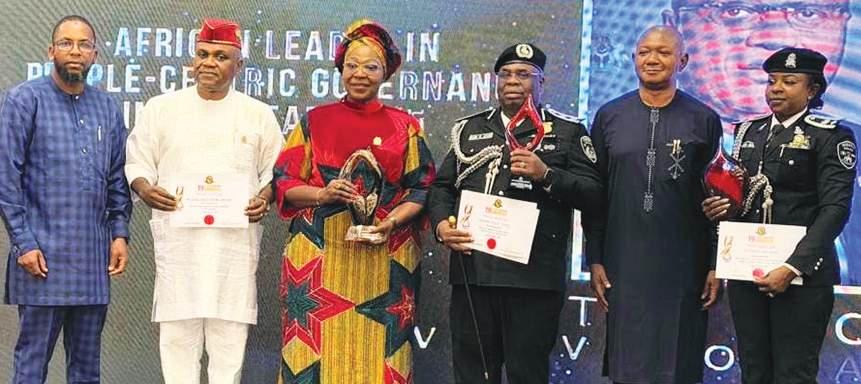
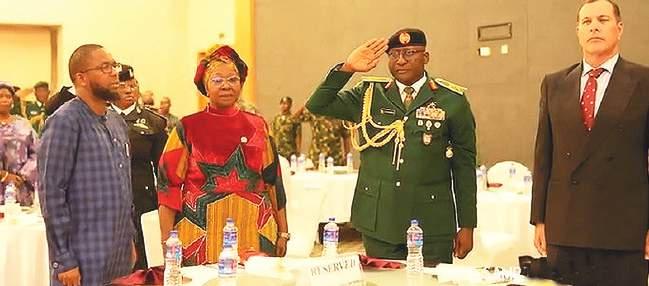
South Africa’s Consul General Sues for Healing, Reconciliation
Says Nigeria stood by ‘us’ when the world remained silent ’Let us fall in love again with each other’s
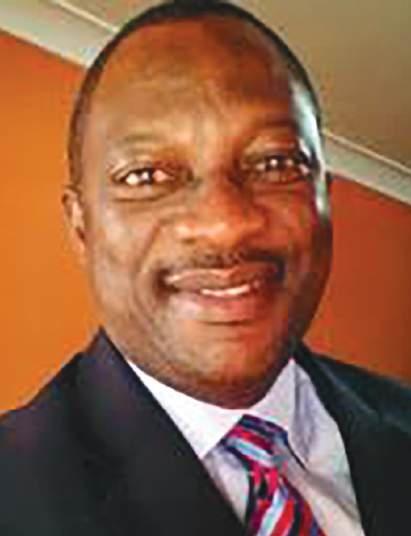
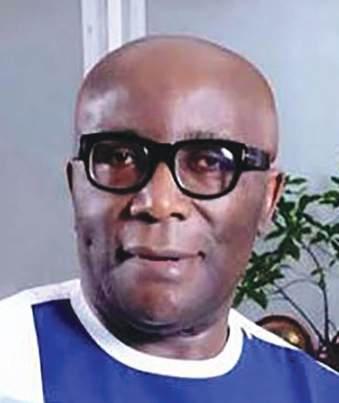
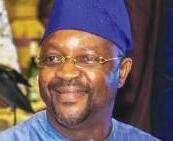
Dike Onwuamaeze Consul General of South Africa in
Lagos, Professor Bobby J. Moroe, has called for healing and reconciliation between Nigeria and South
Africa following anti-migrant violence in that country and other acts of criminality against
Moroe made the call yesterday
www.thisdaylive.com
A DECADE OF GAS INITIATIVE FLAG OFF…
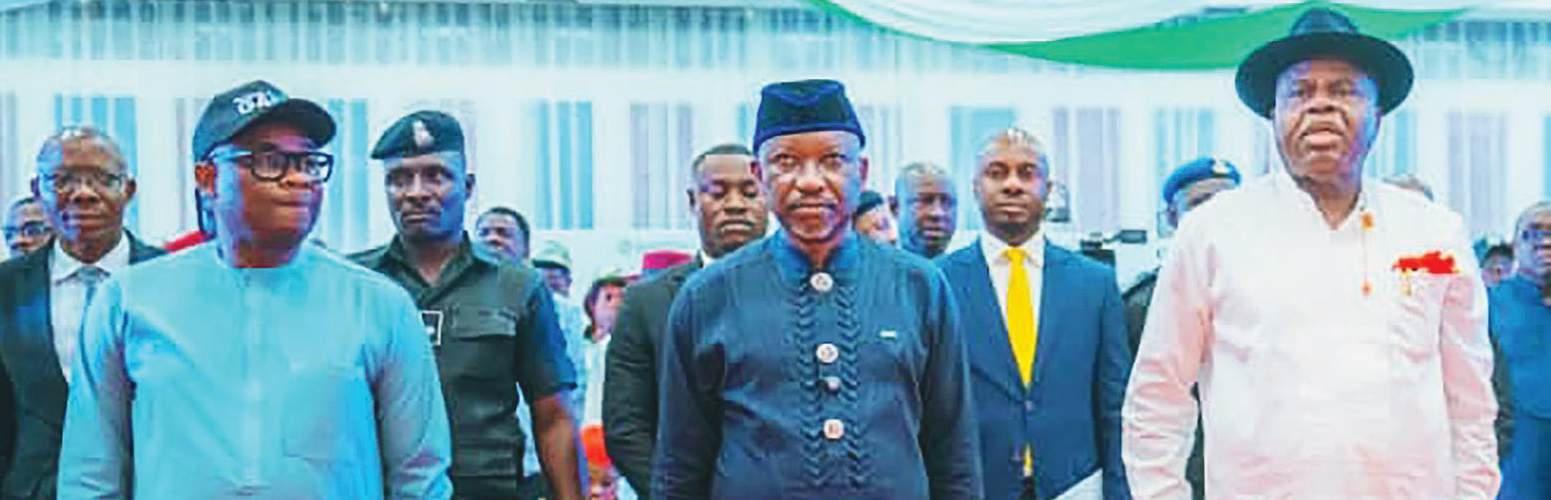
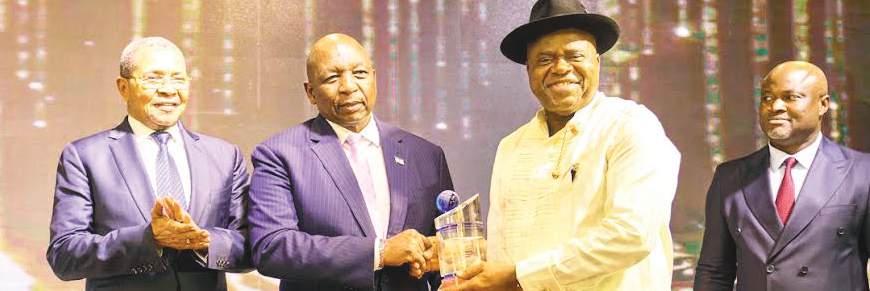
L-R: The Authority Chief Executive, NMDPRA, Engr. Rabiu A. Umar; the Coordinating Director, Decade of Gas, Mr. Ed Ubong; the Honourable Minister of state for Petroleum Resources (Gas), Hon. Ekperikpe Ekpo; the Deputy Governor of Bayelsa State, Dr. Peter Pereotubo Akpe; the Governor of Bayelsa State, His Excellency, Dr. Douye Diri; the First Lady of Bayelsa State, Her Excellency, Gloria Diri; the Senior Special Assistant to the President on Women Affairs, Fatimah Farouk; the Senior Special Assistant to the Honourable Minister for Youth Development, Akinfiresoye Leah; and the Deputy Speaker, Bayelsa State House of Assembly, Rt. Hon. Micheal Ogbere. Standing at the back, L-R: the Permanent Secretary, Federal Ministry of Petroleum Resources, Mrs. Patience Oyekunle; and His Royal Majesty, King Bubaraye Dakolo, at the federal government, through the Federal Ministry of Petroleum Resources (Gas) and the Decade of Gas Initiative flag-off and National Grassroots LPG Penetration Programme (NGLPP) in Bayelsa State
Tinubu: We’ll Not Pay Ransom or Negotiate with Terrorists, Murderers, Kidnappers
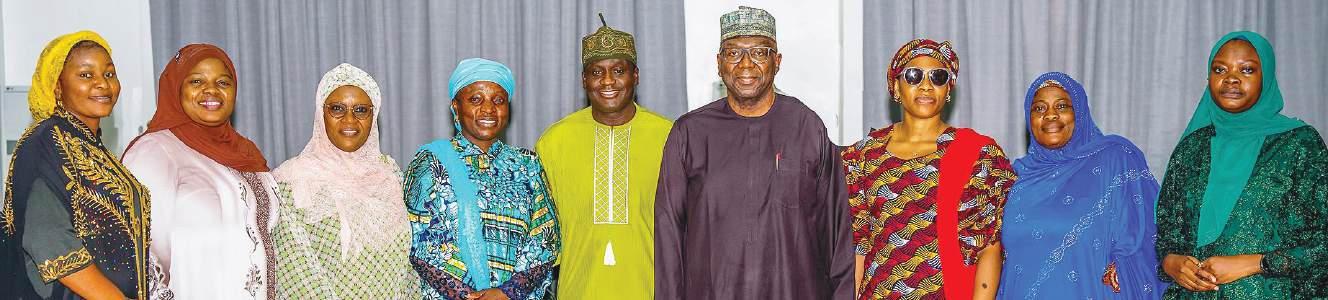
UNVEILING KWARA’S FEMALE CANDIDATES FOR 2027 LEGISLATIVE ELECTIONS...
L-R: APC House of Assembly Candidate for Oke Ero, Hon. Akolawole Titilope Lateefat; Hon. Medina Abdulraheem (Moro); Hon. Arinola Fatimah Lawal (Ilorin East); Hon. Maryam Aladi Yusuf (Ilorin South); House of Assembly Speaker and APC Governorship Candidate, Rt. Hon. Salihu Yakubu Danladi; Kwara Central APC Senatorial Candidate/Governor, Abdulrahman Abdulrazaq (CON); House of Representatives Candidate for Ekiti/Oke Ore/Isin/Irepodun Federal Constituency, Hon. Olasumbo Florence Oyeyemi; Hon. Omotosho Taiye Mutiat (Offa); and Hon. Rukayat Motunrayo Shittu, after a meeting of Kwara APC candidates with the Governor in Ilorin, early this week
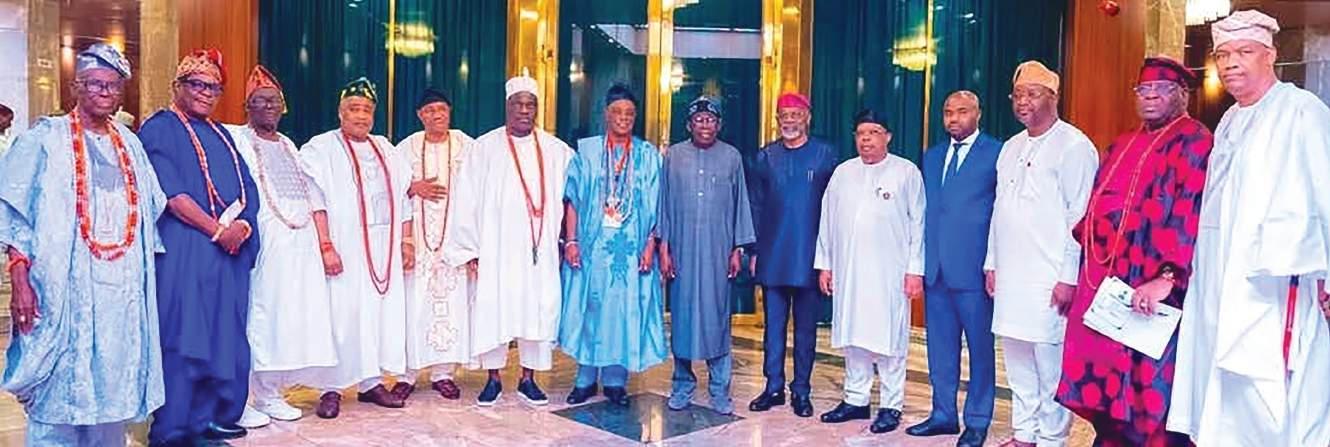
LADOJA LEADS OYO ROYAL FATHERS TO ASO ROCK...
L-R: HRM, Aare Ago of Ogbomoso; HRM, Osi Olubadan; HRM, Balogun of Ibadanland; Onigbeti of Igbeti; Alajawa of Ajawa; HRM, Olugbon of Orile-Igbon; HRM, Olubadan of Ibadanland; President Bola Ahmed Tinubu; Chief of Staff, Femi Gbajabiamila; Minister of Power, Joseph Tegbe; Chairman, Nigerian Revenue Service, Zach Adedeji; Sunday Dare; HRM, Aseyin of Iseyin; and Mogaji Wole Arisekola, during a courtesy visit by the traditional rulers from Oyo State led by His Imperial Majesty, Oba Rashidi Adewolu Ladoja, Olubadan of Ibadanland, at the State House, yesterday
Tunji Bello: How FCCPC Blocked Plan to Make Nigerians
Pay for Obsolete Prepaid Meter Replacement
Says electricity regulators must ensure that Nigerians enjoy same level of protection regardless of where they live
James Emejo and Deborah Adekoya in Abuja
Executive Vice Chairman/Chief Executive, Federal Competition and Consumer Protection Commission (FCCPC), Mr. Tunji Bello, yesterday revealed that the commission successfully halted a planned replacement of obsolete prepaid electricity meters after concerns emerged that consumers could be compelled to pay for infrastructure failures that were not of their making.
Bello insisted that Nigerians should never bear the cost of replacing obsolete meters or be subjected to estimated billing during the process.
He made the disclosure at a stakeholder engagement on consumer protection and regulatory cooperation in Nigeria’s electricity sector, in Abuja.
Bello said the commission stepped in after widespread public concerns over the planned replacement of obsolete Unistar prepaid meters used by customers of one of the electricity distribution companies.
According to him, the intervention, carried out in collaboration with Nigerian Electricity Regulatory Commission (NERC) and Nigerian Electricity Management Services Agency (NEMSA), prevented consumers from being exposed to fresh
financial burdens, estimated billing, and possible disruption of electricity supply during the replacement exercise.
He explained that while replacing obsolete meters was ordinarily a routine technical exercise, many electricity consumers feared they would be forced to pay for new meters, despite not being responsible for the equipment becoming obsolete.
He said consumers were also worried that delay in the replacement programme could expose them to estimated billing or interruptions in electricity supply.
Bello said, “Those concerns were understandable. At their core were issues of fairness, affordability, continuity of supply and public confidence in the institutions responsible for consumer protection.”
He said FCCPC immediately convened a meeting involving NERC, NEMSA, and all electricity distribution companies to ensure that the exercise complied with existing regulations and adequately protected consumers.
He said, “The engagement was constructive. Following deliberations, the replacement exercise was suspended pending compliance with applicable regulatory requirements, a position that was endorsed by both
NERC and NEMSA.”
Bello stated that the eventual resolution was anchored on NERC’s order on the Structured Replacement of Faulty and Obsolete End-user Customer Meters, which guarantees that consumers would not pay for replacing obsolete meters, would not suffer interruptions in electricity supply during the replacement process, and would not be subjected to estimated billing because of implementation delays.
According to him, “Those safeguards reflected the principle that consumers should never be disadvantaged because infrastructure has reached the end of its useful life through no fault of their own.”
Further illustrating the importance of
inter-agency collaboration, the FCCPC boss said the intervention demonstrated that the most effective consumer protection came from regulators working together rather than competing over institutional mandates.
He said preventing consumer harm should remain the highest objective of regulators, adding that regulatory success should not be measured solely by the number of complaints resolved but also by the number of disputes prevented before they occur.
He said, “Consumer protection is often viewed only through the lens of resolving disputes after they arise. In reality, its greatest value lies in preventing problems before they occur, identifying risks early, resolving uncertainty and strengthening public
confidence before disputes undermine trust.
“Success should therefore be measured not only by the number of complaints resolved, but also by the number of complaints prevented.”
Bello maintained that the Electricity Act, 2023, which decentralised electricity regulation by allowing states to establish their own electricity regulatory commissions, had made institutional cooperation even more critical.
He said electricity consumers viewed the industry as one integrated system and were unconcerned about which regulator had jurisdiction whenever supply failed or billing disputes arose.
He explained, “When supply is interrupted or a bill appears incorrect,
they are not concerned about which regulator has jurisdiction. They simply expect protection. Ensuring that our institutions work seamlessly together is our responsibility, not theirs.” He stated that the commission had deliberately respected NERC’s statutory authority throughout the obsolete meter intervention, describing it as an example of modern regulatory governance built on collaboration instead of institutional rivalry. Bello said, “The commission respected NERC’s statutory mandate and recognised its technical expertise. We did not seek to assume the role of the sector regulator. Instead, we acted in a way that supported the existing regulatory framework and strengthened its effectiveness.
Dangote Cement Declares N638.5bn
Profit as Exports Grow 62.3%
Kayode Tokede
Dangote Cement Plc yesterday said it grew cement and clinker exports from Nigeria by 62.3 per cent to 1.1 million
Gavi Approves $500 million for Vaccines, PHCs in Nigeria
Onyebuchi Ezigbo in Abuja
Nigeria has secured nearly US$500 million from Gavi, as the vaccine alliance’s support for vaccines and primary healthcare for the country over the 2026–2030 period.
The move followed high-level discussions between Coordinating Minister of Health and Social Welfare, Professor Muhammad Ali Pate, and Gavi Chief Executive Officer, Dr. Sania Nishtar, in Abuja.
The funding, approved under the Gavi 6.0 programme, will support Nigeria’s efforts to accelerate routine immunisation, sustain polio eradication, expand HPV vaccination, strengthen primary healthcare services, and
improve long-term vaccine financing.
Speaking during the meeting, Pate said Nigeria was strengthening its partnership with Gavi to accelerate immunisation, expand primary healthcare services, and ensure sustainable financing for vaccines.
He welcomed Gavi’s countryfocused reforms, including the introduction of a predictable five-year funding envelope.
Pate said the US$500 million allocation will enable Nigeria to plan more effectively and deliver life-saving vaccines to more children and vulnerable populations.
The minister also revealed that quarterly visits to primary healthcare centres had increased from about
10 million in 2023 to more than 45 million, reflecting significant progress in revitalising the country’s primary healthcare system.
Pate welcomed the announcement of a US$600 million pledge by the United States government to Gavi, describing it as a strong endorsement of the alliance’s leadership and the global value of vaccines.
He also commended Nishtar for prioritising Nigeria and praised the closer coordination among Gavi, World Health Organisation (WHO), UNICEF, World Bank, Gates Foundation, and other development partners, describing it as a model that has improved efficiency and aligned support with Nigeria’s health sector reforms.
tonnes in the first half (H1) ended June 30, 2026, reinforcing the country’s position as a regional manufacturing and export hub, while also reporting a 22.7 per cent rise in profit after tax to N638.5 billion.
The company said it dispatched 20 clinker ships from Nigeria to Ghana, Cameroon and Côte d’Ivoire during the period, reflecting rising demand for its products across West Africa and the growing contribution of exports to its pan-African growth strategy.
The unaudited results for the H1 2026 also showed that Group revenue increased by 21.4 per cent to N2.514 trillion, while Group EBITDA rose by 25.8 per cent to N1.188 trillion, reflecting a margin of 47.3 per cent. Earnings per share advanced by 24.3 per cent to N38.22, as the company closed the period with a strong net cash position of N215.2 billion.
Overall Group volumes grew by 11.8 per cent to 14.9 million tonnes, supported by resilient demand in key markets.
Nigeria continued to anchor earnings, with EBITDA from the domestic market rising by 28.4 per cent to N1.086 trillion and margins
improving to 60.1 per cent.
in H1 2026
Operational efficiency remained a key focus, with the company reporting a strong reduction in Nigeria cash costs, supported by a more favourable energy mix. It also commissioned the Okpella mobile refuelling unit and added 300 compressed natural gas trucks in Tanzania as part of efforts to improve logistics efficiency and reduce operating costs.
Speaking on the results, Chief Executive Officer, Dangote Cement, Mr Arvind Pathak, in a statement, said the first-half performance reflected the strong momentum the company had built since the start of the year, supported by disciplined execution, higher sales volumes, and sustained demand across key markets.
Pathak said, “Our performance in the first half of 2026 reflects the strong momentum we have continued to build since the start of the year.
“The business delivered another solid set of results, supported by higher sales volumes, disciplined execution, and sustained demand across our key markets.”
He stated that revenue growth, stronger EBITDA and the N215.2
billion net cash balance underscored the resilience of Dangote Cement’s business model and its capacity to invest in future growth while maintaining disciplined capital allocation.
Pathak said the company’s export strategy continued to deliver encouraging results, adding that the growth in shipments to regional markets reflected rising demand for its products across West Africa.
On expansion, he said construction and commissioning activities at the company’s new 6Mta Itori plant were at an advanced stage, with completion expected before the end of the year.
Pathak stated that the plant was expected to strengthen Dangote Cement’s production footprint, expand export capacity, and support its longterm ambition of reaching 80Mta in installed production capacity by 2030. He added, “Looking ahead, market fundamentals remain favourable and our strategic investments continue to strengthen the business. Combined with our unwavering focus on operational excellence and cost discipline, these factors position us well to sustain our growth trajectory and continue creating lasting value for our shareholders.”
MALAYSIA’S HIGH COMMISSIONER’S
COURTESY VISIT TO MARWA...
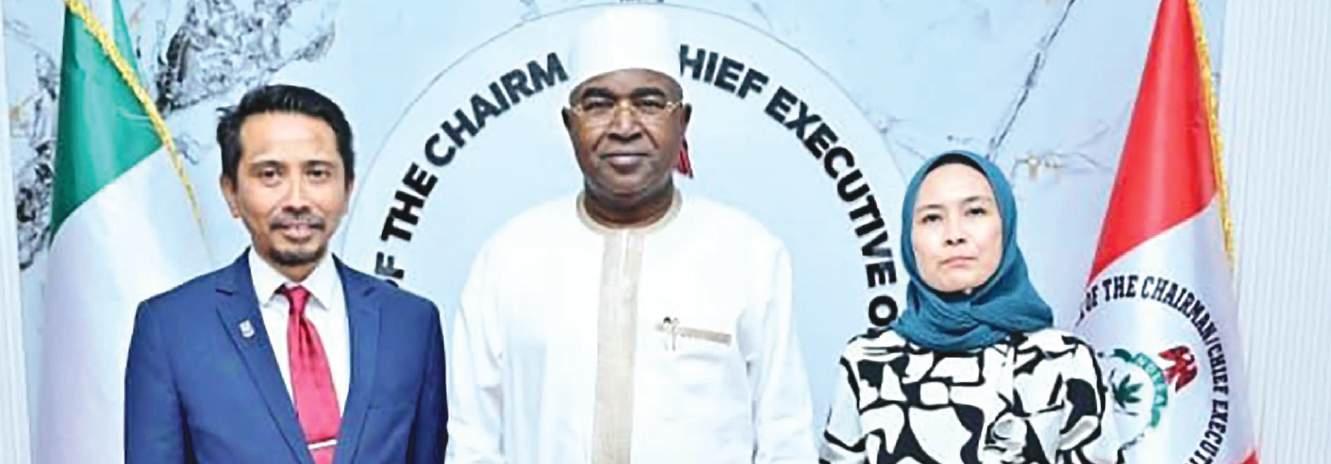
L-R: High Commissioner of Malaysia to Nigeria, His Excellency, Aiyub Omar; Chairman/Chief Executive Officer, National Drug Law Enforcement Agency (NDLEA), Brig. Gen. Mohamed Buba Marwa (Rtd); and Third Secretary at the High Commission of Malaysia to Nigeria, Sharifah Hazwani Balqis, during the envoy’s visit to seek areas of collaboration with the NDLEA at the Agency’s headquarters in Abuja on Thursday
Otedola Acquires Additional N222.21bn Worth
of First Holdco Shares, Stake Rises to 26%
Billionaire investor, Mr. Olufemi Otedola, has acquired additional N222.21 billion worth of First Holdco Plc shares on the Nigerian Exchange Limited (NGX).
According to a disclosure on the Exchange yesterday, the chairman of First Holdco acquired further 1,779,094,976 shares of the group
at N124.90 per share.
The transaction on the NGX takes Otedola‘s position to 11,763,018,192 shares from 9,277,792,037 as of June 30 2026 unaudited results, making him the largest shareholder of the oldest financial institution in Nigeria. The purchase also carries a consequence beyond its size. Nigerian takeover rules oblige a shareholder crossing 30 per cent of
a listed company to make a mandatory offer for the remainder. On a register of roughly 45,475,027,677 shares, and his threshold near 12 billion, Otedola’s stake in the group currently stands at 26 per cent.
The gap is around 2,485,226,155 shares, less than the block he had just bought in July 2026 alone. A further purchase on the same scale would compel him to bid for the whole
of First Bank of Nigeria Limited’s parent. He has given no indication that he intends to do so, and has consistently described his buying as a long-term investment rather than a route to outright control.
The accumulation has run for years and accelerated sharply in 2026. He held 6.68 billion shares, or 15.95 per cent, at the end of June 2025, when the company had 41.88
Oando CLO Urges Lawyers to Combine Business Acumen, Legal Expertise
The Group Chief Legal Officer of Oando Plc, Efuntomi Akpeneye, has charged aspiring lawyers, particularly women seeking careers in the corporate world, to develop a strong understanding of business alongside legal expertise, stressing that the most effective legal advisers are those who can deliver commercially viable solutions.
Akpeneye gave the advice while speaking as a panellist at the 2026 Law Ladies’ Day hosted by the University of Lagos during a session themed: “Mastering the Matrix: Strategies for Women Rising in Corporate Spaces.”
The event brought together accomplished female professionals from the legal, financial and
corporate sectors to share practical insights on career advancement, leadership and navigating the corporate environment.
Addressing participants, Akpeneye emphasised that professional credibility begins long before stepping into boardrooms or negotiations, arguing that preparation remains the cornerstone of effective leadership and decision making.
She explained that today’s corporate lawyers must move beyond the traditional role of interpreting legal provisions to becoming trusted advisers capable of aligning legal guidance with business realities.
“As a corporate lawyer, you’re not just a legal adviser, you’re a business partner. Businesses exist to achieve their objectives, and
our role is to provide practical solutions within the framework of the law,” she stated.
Drawing from her experience in the energy industry, Akpeneye recalled visiting offshore production facilities and operational sites to gain first hand knowledge of the business, noting that understanding technical operations enabled her to offer more practical legal advice and build stronger relationships with multidisciplinary teams.
According to her, legal professionals who understand the commercial and operational dimensions of the businesses they support are better equipped to anticipate risks, facilitate transactions and contribute meaningfully to strategic decision making.
Speaking on negotiations, Akpeneye advised participants
to focus on creating value for all parties rather than merely securing favourable terms for one side.
“You can’t win every negotiation. If the other party doesn’t feel they’ve gained something too, you may think you’ve won, but you’ve probably negotiated an agreement that won’t work in the long term,” she said.
She also underscored the importance of integrity in professional practice, encouraging young lawyers to prioritise accuracy and sound judgement over speed when providing legal advice.
billion shares in issue.
By March 31 this year, he had reached 8.06 billion against an enlarged capital of 44.45 billion. Three months later he stood at 9.28 billion shares, having added roughly 1.22 billion shares in a single quarter, almost entirely through indirect holdings. A purchase through his vehicle Calvados Global Services this month took him past 10 billion units of shares for the first time.
Otedola has said repeatedly that the money committed is his own rather than borrowed.
The group’s shares closed at N119.95 per share as of July 30, 2026 against N47.90 per share at the end of 2025, a gain of 150.4 per cent in its Year-till-Date (YtD) performance. Market capitalisation has risen further to N5.45 trillion, the difference reflecting shares issued during the recapitalisation rather than value created for existing shareholders.
The N5.45 trillion as of July 30, 2026 makes First Holdco the most capitalised banking stock on the NGX, followed by Zenith Bank, and Guaranty Trust Holding Company Plc that closed at N4.9 trillion and N trillion, N4.71 trillion , respectively
The purchase price of N124.9 sits below 3.96 per cent when compared
to N119.25 per share the stock market closed for trading as of July 30, 2026, indicating a negotiated block rather than open-market buying. Marked at that closing price, the holding would be worth N1.43 trillion.
First HoldCo is the holding company for First Bank of Nigeria Limited, founded in 1894, the oldest financial institution in the country. Otedola became chairman after a protracted contest for influence over the register.
Otedola’s rising stake over the years is occurring at a time when First Holdco is attracting renewed investor interest, supported by stronger earnings declared on the floor of the Exchange.
The group reported a record profit before tax of N653.54 billion for half year (H1) ended June 30, 2026, up 83.50 per cent YoY from N356.15 billion reported in half year (H1) ended June 30, 2025, while profit after tax rose 81.57 per cent to N526.13 billion.
In the second quarter (Q2) 2026 alone, profit before tax nearly doubled to N332.42 billion, from N169.67 billion in Q2 2025.
The group’s total assets, however, closed June 30 2026 at N30.0 trillion, up 12.5 per cent from N26.7 trillion reported in 2025.
Shettima Leads Mourners at Burial of Ex-Finance Minister, Alhaji Alhaji, in Sokoto
Says govt’ll immortalise elder statesman TETFund to Deny 2027 Projects to Institutions with Delayed Interventions
Kuni Tyessi in Abuja
The Board of Trustees (BOT) of the Tertiary Education Trust Fund (TETFund) says beneficiary institutions with delayed intervention projects will not be considered for new projects under the 2027 intervention cycle. This is contained in a statement issued in Abuja by the Director of Public Affairs, TETFund, Abdulmumin Oniyangi.
The Chairman of the Board, Hon. Aminu Masari said the decision was
aimed at addressing the persistent delay in the completion of TETFundsponsored projects across beneficiary institutions.
He attributed the delays to factors including the rising cost of construction materials such as cement, reinforcement bars, sanitary and electrical fittings. According to him, the Board introduced a special intervention line in 2023 to support the completion of stalled projects affected by the increase in construction costs.
He said a recent review showed that
the initiative had recorded significant success, with many previously stalled projects now completed.
The BOT chairman, however, expressed concern over the continued failure of some institutions to complete projects within approved timelines.
He said the situation was largely caused by the lack of continuity in project implementation by successive heads of institutions, who often abandoned ongoing projects in favour of new ones, as well as delays in processing payments to contractors.
Deji Elumoye in Abuja
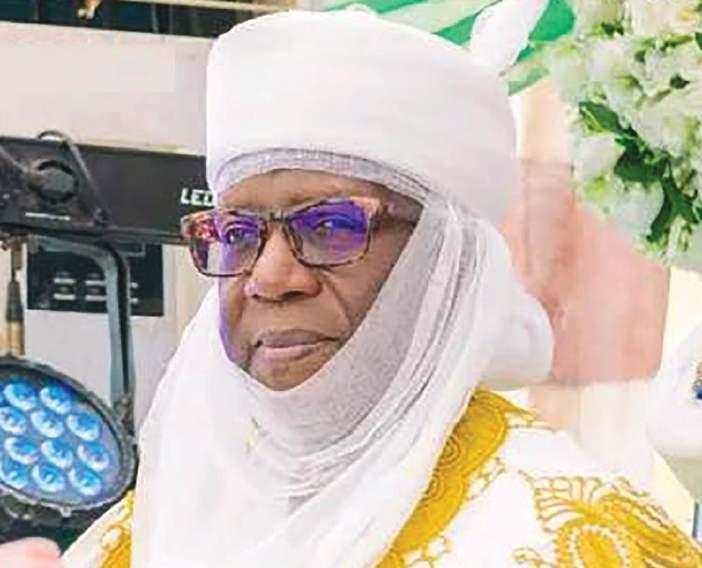
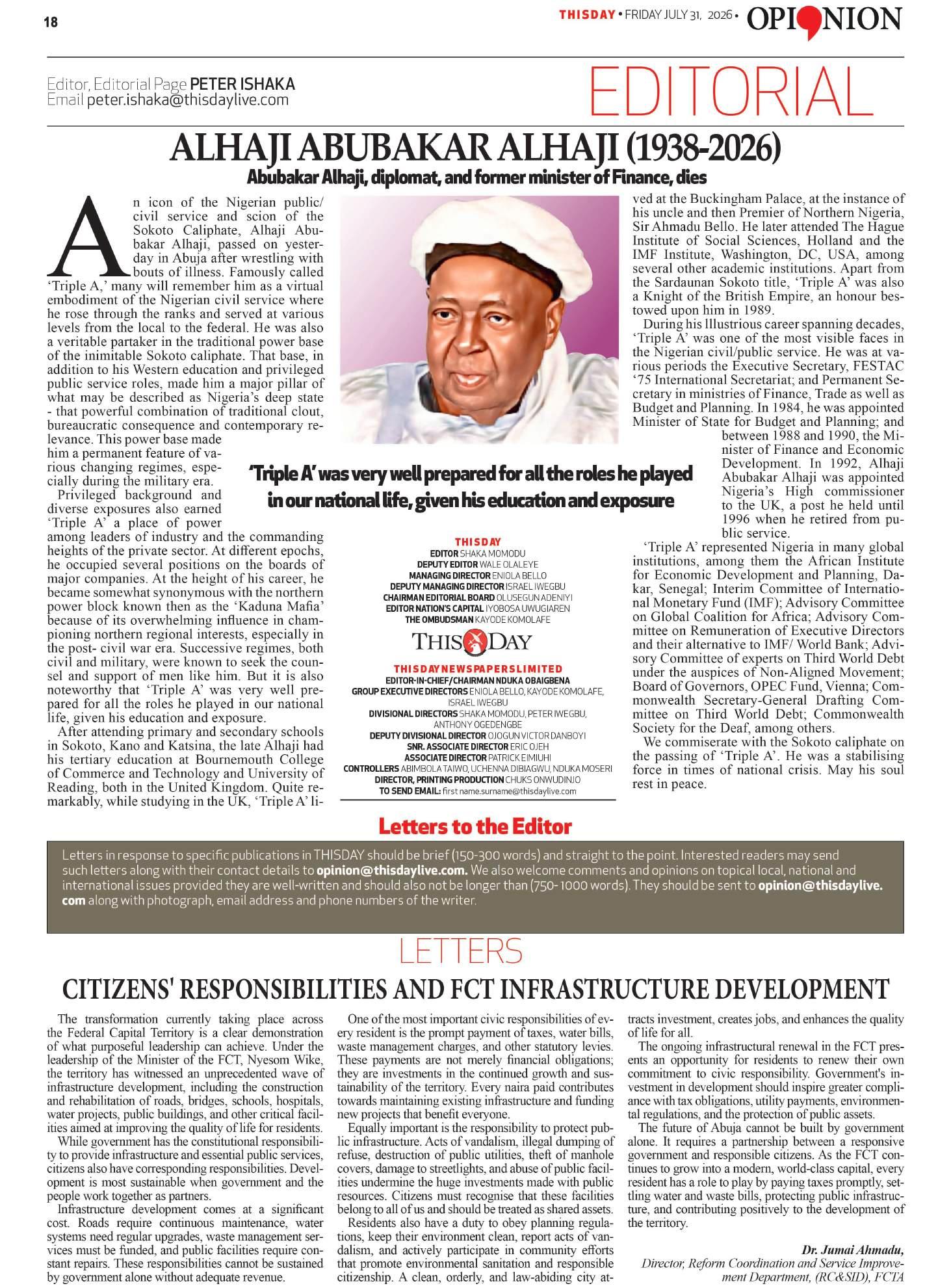
Vice President Kashim Shettima, yesterday, led mourners at the Janai’za (funeral rites) of former Minister of Finance and Sardauna of Sokoto, Alhaji Abubakar Alhaji.
The elder statesman passed on earlier in the day at the age of 88 after a brief illness.
He had served as Minister of National Planning, and later Finance during the military administration of General Ibrahim Babangida.
On arrival in Sokoto, the vice president, according to a release issued by his media aide, Stanley Nkwocha, paid a condolence visit to the Sultan
of Sokoto, Alhaji Muhammadu Sa’ad Abubakar III, where prayers were offered for the peaceful repose of the late elder statesman.
Shettima described the deceased as a behemoth of institutional memory who will never be forgotten, stating that the late Alhaji would be remembered for his service to the country.
He also stated that the federal government would immortalise the elder statesman.
The vice president prayed Almighty Allah to grant the deceased eternal rest and give the family the fortitude to bear the loss.
The late Alhaji had also served as
Nigeria’s High Commissioner to the United Kingdom, after leaving the finance ministry, until 1996.
He began serving Nigeria in 1964 as an Assistant Secretary in the Federal Ministry of Finance, before ascending to the position of Permanent Secretary in the then Federal Ministry of Trade. On the vice president’s entourage were Deputy Chief of Staff to the President, Senator Ibrahim Hadejia; Minister of Budget and Economic Planning, Senator Atiku Bagudu; his labour counterpart, Muhammadu Maigari Dingyadi; Special Adviser to the President on Special Duties (Office of the Vice President), Dr Aliyu Modibbo; among others.
Emmanuel Addeh in Abuja
Kayode Tokede
ACCESS BANK PROJECT 111, A UTERINE FIBROID AWARENESS INITIATIVE...
L-R: Chief Operating Officer, Finnih Medical Centre, Olayemi Ogunranya; Project Coordinator, Project 111 and Unit Head, Consumer Liabilities, Access Bank Plc, Adeola Rojaiye; Chief Operating Officer, Nordica Fertility Centre, Dr. Tosin Ajayi; and Group Head, Women Banking, Access Bank Plc, Nene Kunle-Ogunlusi, during Project 111, a Uterine Fibroid Awareness Initiative and free fibroid screening exercise, held recently at the Access Bank Contact Centre, Lagos, yesterday
Leemon Ikpea Lauds Tinubu on Creation of New Military Divisions, Proposed Pay Rise
Says FG’s move will hasten onslaught against terrorism, other crimes Highlights transparency of NUPRC’s oil bid round, commends tax reforms
Emmanuel Addeh in Abuja
Business leader and Founder/ Executive Chairman/CEO of Lee Engineering and Allied Companies, Dr. Leemon Ikpea, CON, yesterday commended President Bola Ahmed Tinubu over the creation of new military divisions and the proposed upward review of the remuneration of personnel of the Nigerian Armed Forces, saying the bold steps would strengthen national security and improve the welfare of troops.
The founder of Lee Group of Companies, said the federal govern- ment’s decision reflected a growing commitment to confronting terrorism, banditry, kidnapping and other violent crimes through improved military capacity and better welfare for personnel serving on the frontlines.
In a statement in Abuja, Ikpea stressed that the establishment of additional military divisions would enhance operational effectiveness, improve response time to security threats and enable the armed forces to better secure vulnerable communities across the country.
“The decision to expand the military’s operational structure demonstrates President Tinubu’s strategic thinking at a time when Nigeria requires stronger coordination in the fight against terrorism and other forms of criminality. It will improve command efficiency and bring security operations closer to areas where they
are most needed,” Ikpea stated.
He further noted that the proposed salary increase for military personnel by the federal government would boost morale, reward sacrifice and encourage greater professionalism among officers and men of the armed forces.
“Our military personnel continue to make enormous sacrifices in defence of Nigeria’s territorial integrity and national unity. Improving their welfare is not merely an expenditure; it is an investment in national security. A motivated military is better positioned to deliver decisive results against criminal elements threatening peace and economic activities,” he said.
Besides, Ikpea applauded the
Nigerian Upstream Petroleum Regulatory Commission (NUPRC) for conducting the most transparent
oil licensing exercises in the country’s history, highlighting the president’s role in allowing a credible process.
He said the recently concluded 2025 oil bid round demonstrated that Nigeria was making significant progress in entrenching transparency, fairness and investor confidence in the upstream petroleum sector.
“The transparent conduct of the licensing round sends a strong signal to global investors that Nigeria is com- mitted to international best practices. Such credibility is essential to attracting the long-term investments needed to increase crude oil production, expand reserves and generate greater revenue for the country,” he stated.
Ikpea also welcomed Tinubu’s tax
reforms, arguing that a more efficient and transparent tax administration framework would improve govern- ment revenues while creating a more predictable business environment.
According to the statement, sustainable economic growth requires policies that widen the tax net without discouraging investment, while ensur- ing that businesses operate within a fair and transparent regulatory system.
“The ongoing tax reforms have the potential to improve fiscal sustainability, reduce leakages and strengthen investor confidence. When implemented consistently alongside broader economic reforms, they will contribute significantly to Nigeria’s long-term economic competitiveness,”
he added.
Ikpea acknowledged the continued collaboration between government and the private sector in sustaining ongoing reforms, expressing optimism that improved security, enhanced regulatory transparency and sound fiscal policies would accelerate economic growth, attract fresh investment and position Nigeria as one of Africa’s leading investment destinations.
The Tinubu administration recently approved the establishment of ad- ditional military divisions as part of efforts to strengthen Nigeria’s security architecture and improve operational effectiveness in the fight against terrorism, banditry, kidnapping and other violent crimes.
Enhancing Security: Aviation Industry Urges African States to Align API, PNR Programme with Global Standards
Domestic passengers decline in China, US, Japan, forces global air passenger demand down by 1.7% in June
African Airlines Association (AFRAA), Airlines Association of Southern Africa (AASA), and International Air Transport Association (IATA) have urged African states to implement Advance Passenger Information (API) and Passenger Name Record (PNR) systems in accordance
with International Civil Aviation Organisation (ICAO) standards and global best practices.
The aviation organisations made their position known in a joint statement.
They explained that API and PNR systems provided governments with passenger information ahead of travel, helping to strengthen border security, support law enforcement efforts, and facilitate the movement of legitimate travellers.
The stakeholders said it was essential that African states implementing API and PNR did so in alignment with internationally agreed standards, supported by clear legal and operational frameworks.
Nine Months After, Tinubu Reaffirms Dissolution of Presidential Implementation Committee on Alienation of Govt Properties
Directs AGF to now coordinate committee’s activities members were drawn from both the public and private sectors.
Deji Elumoye in Abuja
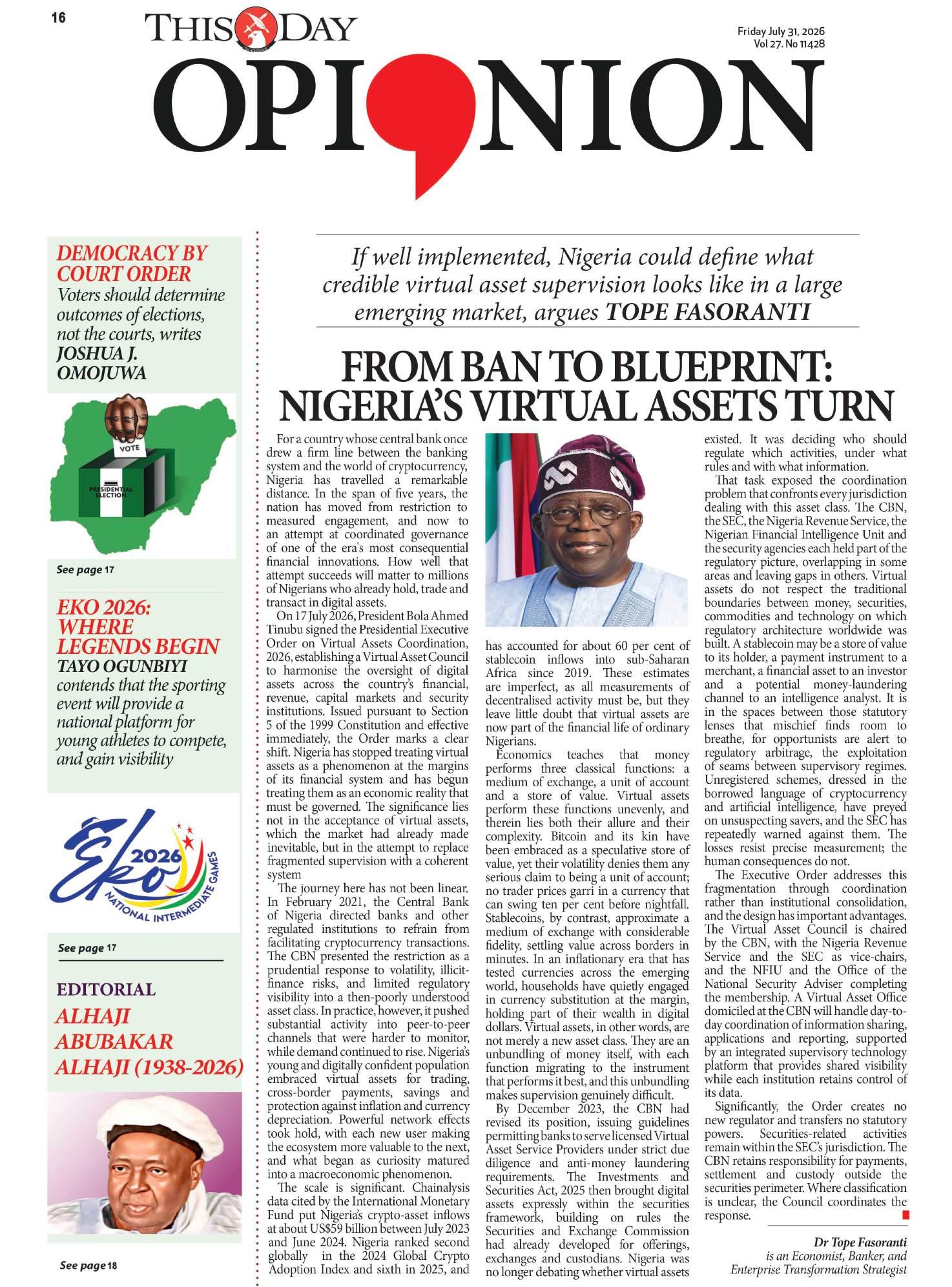
President Bola Ahmed Tinubu has reaffirmed the dissolution of the presidential implementation committee (PIC) on alienation of federal government properties.
The president had last year approved the dissolution of the PIC headed by the Secretary, Mallam Bello Suleiman Dutsin-Ma and that the Attorney General of the Federation should coordinate its activities with effect from November 5, 2025.
Presidential spokesperson, Bayo Onanuga, in a release issued on Thursday stated that the president has now approved the immediate dissolution of the PIC on the Alienation of Federal Government Properties.
The release added that henceforth, all matters relating to the activities of the Committee will be coordinated by the Attorney General of the Federation and Minister of Justice, Lateef Fagbemi. The PIC was established in 2000 during the administration of former President Olusegun Obasanjo to
oversee the privatisation, sale, and lease of federal government landed assets under the government’s monetisation policy.
Its membership comprised the then Minister of Housing as Chairperson, alongside representatives from the Ministries of Transportation, Justice, Health, Agriculture, and the Nigeria Police Force.
Professor P.T Ahire, then a Deputy Director in the Office of the Secretary to the Government of the Federation, served as the pioneer Secretary. Other
On March 22, 2001, the Federal Executive Council (FEC) approved the establishment of a Panel of Inquiry to produce a White Paper to guide the implementation of its recommendations. The Panel worked for 21 months before submitting its report.
After careful consideration, the government noted the activities of the PIC had extended beyond its original mandate, resulting in multiple litigations across the country, and the continued existence of the Committee is no longer justified.
They said African states were expected to establish a clear legal framework aligned with international API and PNR standards, including applicable bilateral or regional agreements. It should define the required data and designate a single responsible authority.
The state should collect only data necessary for the intended purpose, in line with Guidelines on Advance Passenger Information adopted by the World Customs Organisation/ IATA/ICAO and ICAO Guidelines on Passenger Name Record Data. Also, data should be retained for a defined period and risk assessment measures should include safeguards against discrimination.
The industry said the purpose was to use collected information only for legitimate reasons such as border control, security, law enforcement, and prevention of serious crimes.
These should also follow harmonised global formats for data collection, and store and transfer data securely, they said.
The organisations also urged governments not to fund API and PNR national border security programmes through charges imposed on airlines and/or passenger. They said ICAO’s Policies on Charges for Airports and Air Navigation Services (Doc 9082)
made clear that border security was a government responsibility and that related costs, including those associated with API and PNR programmes, should be funded by governments rather than airlines or passengers.
They warned that imposing API and PNR fees on airlines to fund government border security programmes increased the cost of travel, undermined connectivity, and weakens the economic benefits that aviation generates through tourism, trade, and investment.
Secretary General of AFRAA, Abdérahmane Berthé, CEO of AASA, Aaron Munetsi, and IATA’s Regional Vice President, Africa and Middle East, Kamil Alawadhi, said in a joint statement, “We support the implementation of Advance Passenger Information and Passenger Name Record data transfer and recognize the important role passenger data plays in keeping borders secure.
“However, these systems must be aligned around internationally recognized standards and funded correctly. A consistent approach, with governments and industry working together, improves security outcomes, makes travel more seamless, safeguards personal data, and avoids unnecessary costs and complexity.
Chinedu Eze
Leemon Ikpea
Oyedele: Stability Must Now Deliver Jobs, Higher Incomes for Nigerians
Says reforms not primarily about increasing revenue but making
Nigeria more competitive investment destination Admits Nigerians deserve answers on utilisation of savings from fuel subsidy removal, promises detailed account of spending Declares inflation biggest challenge, reveals FG developing framework to reduce cost of capital without reintroducing subsidies to complement CBN’s monetary tightening measures
James Emejo in Abuja
Minister of Finance and Coordinating Minister of the Economy, Mr. Taiwo Oyedele, yesterday, declared that the federal government’s economic reform programme had entered a new phase of ensuring that reforms translated into investments, productive jobs, and tangible improvements in household incomes.
Oyedele said the reform’s priority was no longer merely restoring macroeconomic stability but also making sure it generated impact.
He spoke at the 7th Africa Emerging Markets Forum (EMF) hosted by Central Bank of Nigeria (CBN) in Abuja.
Oyedele said the current administration had completed the difficult work of stabilising the economy and must now ensure ordinary Nigerians began to feel the benefits.
According to him, macroeconomic stability alone is insufficient if it fails to improve living standards.
He said, “Our task now is converting that stability into investment, investment into productivity, productivity into decent jobs, decent jobs into incomes that Nigerian families can actually feel in a tangible way.
“A reform that shows up on national statistics but not on the household dining table hasn’t finished its job.”
Oyedele, while addressing concerns over the high cost of borrowing, acknowledged that elevated interest rates remained a major constraint to investment and growth.
He described inflation as the country’s biggest economic enemy.
He said the Federal Ministry of Finance was developing a framework to reduce the cost of capital without reintroducing subsidies, in complement to CBN’s monetary tightening measures.
Oyedele also acknowledged that Nigerians deserved answers to how savings from fuel subsidy removal had been utilised,
He disclosed that government would soon publish a comprehensive breakdown of the savings and how they had been deployed.
According to him, although subsidy removal generated fiscal savings estimated at about five per cent of GDP when combined with foreign exchange reforms, the principal objective was eliminating systemic distortions and corruption rather than simply reducing expenditure.
The minister described the reforms initiated by President Bola Tinubu’s administration as among the most comprehensive in the country’s modern history.
Specifically, he stressed that difficult decisions, such as foreign exchange liberalisation, fuel subsidy removal, and tax reforms, were necessary to correct long-standing structural distortions that had discouraged investment and weakened competitiveness.
According to him, postponing the reforms would have imposed greater
economic costs than implementing them.
Oyedele said government had simplified the tax system, removed multiple taxes, expanded tax reliefs for small businesses and low-income earners, abolished VAT on essential goods and services, and established the Office of the Tax Ombud to strengthen taxpayer confidence.
He pointed out that the reforms were not primarily about increasing government revenue but making Nigeria a more competitive investment destination.
The minister cited a series of macroeconomic indicators, adding that capital inflows have risen significantly while the Nigerian capital market has emerged as the world’s best-performing market so far in 2026.
Oyedele also said the economy expanded by 3.89 per cent in the first quarter of the year. He said non-oil GDP grew by 3.94 per cent during the same period, foreign reserves exceeded
$50 billion, and inflation moderated considerably from its 2024 peak.
He said, “Capital has no passports, no tribe and no patriotic loyalty. It responds to evidence, not rhetoric.”
He said the federal government had expanded cash transfers to 15 million vulnerable households, a programme he said had lifted an estimated 7.5 million Nigerians out of extreme poverty, while recently launching the NG-CARES, HOPE and SOLID programmes worth more than $3 billion to strengthen primary healthcare, basic education, and support for vulnerable communities.
Oyedele revealed that both the ministry and the central bank had strengthened policy coordination by aligning macroeconomic assumptions before policy decisions were taken.
The minister said, “If the central bank sees inflation going one way and fiscal authorities assume something different, we end up working at cross-purposes.”
He added that both institutions now sought common assumptions to ensure policy coherence. He explained that much of the fiscal space created had been absorbed by higher debt servicing costs following increased interest rates, implementation of the new national minimum wage, and expanded social investments, including the Nigerian Education Loan Fund (NELFUND).
Senate Summons NNPCL, CBN, Oil Majors over NEITI Audit Reports
Sunday Aborisade in Abuja Senate has fixed Monday next week for the commencement of a sweeping investigation into Nigeria’s oil and gas sector.
The red chamber summoned Nigerian National Petroleum Company Limited (NNPCL), Central Bank of Nigeria (CBN), major international and indigenous oil companies, regulators, and several
government agencies ahead of the scheduled wide-ranging hearings.
The firms were expected to explain issues arising from Nigeria Extractive Industries Transparency Initiative (NEITI) Oil and Gas Industry Audit Reports for 2021, 2022 and 2023.
The investigation to be conducted by Senate Public Accounts Committee, chaired by Senator Ibrahim Hassan Dankwambo, would scrutinise revenues,
remittances, statutory obligations, and operational activities across the extractive industry as lawmakers intensified oversight of one of the country’s most critical revenue-generating sectors.
The committee, in a public notice made available to THISDAY on Thursday, said the senate derived its authority for the public hearing from Sections 88, 89 and 85(5) of the 1999 Constitution (as amended), as well as Order 95(5)(d)
of the Senate Standing Orders, 2026.
The committee said the NEITI audit reports submitted to the National Assembly contained detailed information on the financial and operational activities of stakeholders in the oil and gas industry, including revenues, payments, remittances, and other statutory obligations.
It stated that the hearings would assess the level of compliance by Ministries, Departments and Agencies (MDAs),
TINUBU: WE’LL NOT PAY RANSOM OR NEGOTIATE WITH TERRORISTS, MURDERERS, KIDNAPPERS
President Bola Ahmed Tinubu yesterday reiterated his administration’s uncompromising stance against negotiating with kidnappers, terrorists and other violent criminal groups, declaring that Nigeria would never pay ransom or release detained criminals in exchange for abducted victims.
Besides, the Nigerian leader disclosed that kidnappers of schoolchildren and teachers in Oyo state demanded both money and the release of their imprisoned gang members, narrating how his government ignored the terrorists’ criminal requests.
The President’s declaration came amid renewed efforts by the federal government to curb the wave of kidnappings, banditry and terrorism that have plagued many parts of the country over the past decade.
Although successive administra- tions have maintained an official policy against paying ransom to kidnappers, incidents of mass abductions have continued to pose one of Nigeria’s most serious security challenges, with criminal gangs increasingly targeting schools, highways and rural communities.
In recent times, kidnapping for ransom has evolved from isolated criminal activity into a multibillionnaira enterprise, particularly across the North-west and North-central,
where heavily armed groups operating from vast forest reserves have repeatedly abducted students, commuters, traditional rulers and farmers. Security experts have long argued that ransom payments encourage further kidnappings by providing funds for the purchase of weapons and recruitment of additional fighters.
Speaking while receiving traditional rulers from Oyo state led by the Olubadan of Ibadanland, Oba Rashidi Ladoja, at the State House, Abuja, Tinubu stressed that at no time would his administration negotiate with criminals or pay ransom for the release of kidnap victims.
The president disclosed that the abductors of schoolchildren and teachers in communities in Oriire Local Government Area demanded ransom as well as the release of their detained accomplices, but the government refused to accede to their demands.
“We refuse to negotiate with criminals. They wanted us to release members of their criminal gangs already in detention in addition to demanding money, but we said no deal. We will not negotiate with murderers and terrorists,” heTheemphasised. disclosure marked one of the clearest public confirmations that some kidnapping syndicates are now demanding prisoner exchanges
in addition to ransom payments, a tactic more commonly associated with terrorist organisations.
Tinubu said the successful rescue operation in Oyo state reflected the effectiveness of the nation’s evolving security strategy and commended members of the Armed Forces and other security agencies for their professionalism and bravery.
“I agree with you that we should commend the men and women of the Armed Forces for their excellent performance. Every security operation teaches us new lessons, challenges us to review our
security architecture, strategy and operational plans, and strengthens our resolve to defeat terrorism and banditry,” he said.
The president disclosed that the federal government was restructuring the nation’s security architecture by expanding the Nigerian Army from eight to 12 divisions to improve operational coverage and significantly reduce response time to security threats across the country.
The expansion forms part of broader efforts to strengthen the
government-owned enterprises, regulatory bodies, and oil companies with the provisions of the constitution, NEITI Act, Fiscal Responsibility Act, financial regulations, and other laws governing the extractive industry.
The committee added that it would interrogate issues highlighted in the audit reports, particularly those relating to revenue remittances and compliance with statutory financial obligations.
The hearings are scheduled to commence on August 3 at the National Assembly Complex, Abuja.
The first day of proceedings, according to the committee, will feature appearances by the Nigeria Extractive Industries Transparency Initiative (NEITI), Nigerian Upstream Petroleum Regulatory Commission (NUPRC), CBN, and Niger Delta Development Commission (NDDC).
The committee said it was expecting to hear from the Office of the National Security Adviser, Nigerian Investment Promotion Commission (NIPC), Nigerian Midstream and Downstream Petroleum Regulatory Authority (NMDPRA), and Revenue Mobilisation Allocation and Fiscal Commission (RMAFC).
The statement added that NNPCL, Joint Development Authority, and Ministry of National Planning had also been scheduled to appear, while the Nigeria Revenue Service, Office of the Accountant-General of the Federation, Office of the Auditor-General for the Federation, and Ministry of Petroleum Resources were equally expected before the committee.
The committee fixed August 10 for appearances by the Office of the Surveyor-General of the Federation, Federation Account Allocation Committee (FAAC), and Federal Ministry of Finance, before commencing hearings involving major indigenous and multinational oil companies.
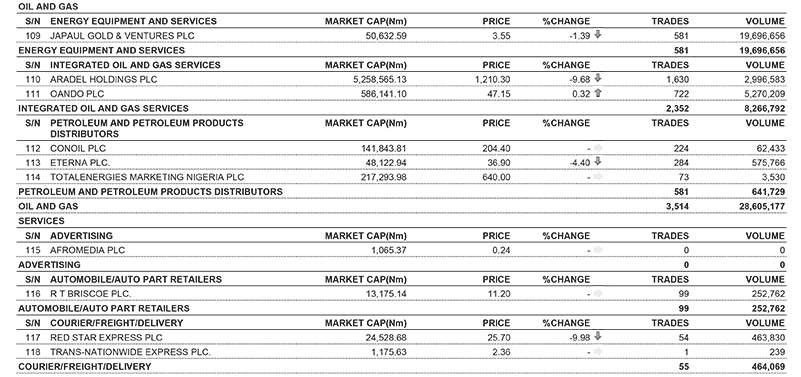
Among the companies also invited were Seplat Energy, Aradel Energy, Famfa Oil, TotalEnergies EP Nigeria, Oando, Chevron Nigeria, CNOOC Exploration and Production Nigeria Limited, Conoil Producing, Mobil Producing Nigeria Unlimited, Esso Exploration and Production Nigeria, Shell Nigeria Exploration and Production Company, Aiteo Eastern E&P, Midwestern Oil and Gas, Pan Ocean, ND Western, Platform Petroleum, and Neconde Energy.
SOUTH AFRICA’S CONSUL GENERAL SUES FOR HEALING, RECONCILIATION
in Lagos when he delivered the keynote speech at Nigeria-South Africa Chamber of Commerce’s Breakfast Forum, themed, “The Future of Nigeria-South Africa Relations: Advancing Bilateral Cooperation in a Changing World.”
He stated that the government of South Africa clearly condemned the acts of criminality against foreigners, adding that law enforcement officers have arrested over 80 suspected culprits in six provinces of the country and would soon prosecute them.
Moroe said the two countries should “reconcile, remember and work together towards the creation of a better future for our people”,
especially in this month of July that is dedicated to late President Nelson Mandela, who would have been saddened, if he was still alive, “by the emerging trends, and acts of criminality against foreign nationals by vigilante groups”.
According to Moroe, “In South Africa, we have witnessed acts of criminality by vigilante groups calling for illegal migrants to return back home and taking the law into their own hands.
“Let me make it clear: the South African constitution protects both regular and irregular migrants and only competent law enforcement agencies and immigration officers have the legal standing to handle
migration issues.
“In Nigeria, we have seen reprisals and push back as a direct response to what is perceived to be a total onslaught by the South African government against migrants. But that is fake news.”
Moroe said, “These acts seek to undermine us and the foundations upon which our democracy was founded.
“But they will never break. What is built on sacrifice does not crumble easily.”
He recalled that in previous years, Nigeria and South Africa had sat at the table and resolved their differences because “family does not walk away when it gets
difficult. Family leans in. Family builds a roof together when it rains”. Moroe stated, “This year we mark 32 years of unbroken diplomatic relations between our countries.
“Thirty-two years - built not on paper, but on blood, on solidarity, and on sacrifice.
“Nigeria stood with us when the world was silent.
“You funded our freedom. You carried our struggle in your chest.
“Our struggle was your struggle, our pain was your pain, and indeed, our freedom is your freedom.”
Deji Elumoye in Abuja
Taiwo Oyedele
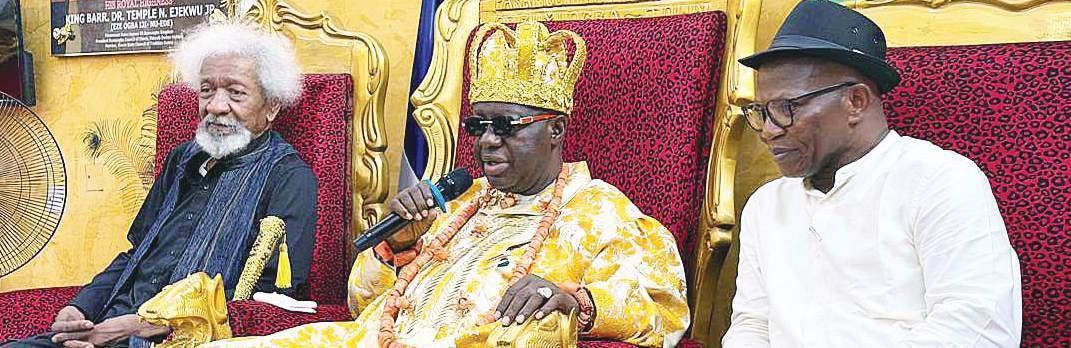
LAUREATE’S COMMUNITY CAUSE VISIT...
L-R: Nobel Laureate and Matelot Emeritus, Prof. Wole Soyinka, GCON; His Royal Highness, Eze Barrister Dr. Temple N. Ejekwu (JP), Eze Ogba Iji-Nu-Ede and the Paramount Ruler/Nyenwe-Eli of Rumuogba Kingdom in Obio-Akpor Local Government Area, Rivers State, Nigeria; and the NAS Capn, National Association of Seadogs, Dr. Joseph Oteri, on a courtesy visit to the palace of the Paramount Ruler, yesterday, as part of activities marking the Association’s 50th Converge and 49th Annual General Meeting (AGM) holding in Port Harcourt, the Rivers State capital
Minister: Housing, Real Estate Contributed
N77 Trillion to Nigeria’s Economy in 2025
FG targets stronger regulation, reforms to tackle 15m housing deficit
The Minister of Housing and Urban Development, Muttaqha Darma, has disclosed Nigeria’s housing and construction sector contributed more than N77 trillion to the nation’s economy in 2025.
According to him, the real estate services alone accounted for N41 trillion, representing 13.4 per cent of the country’s Gross Domestic Product (GDP), the ministry said in a statement.
NMDPRA
The minister revealed the figures in Abuja at a stakeholders’ validation workshop on the National Housing Data Programme and the National Housing and Built Environment Regulation Policy, describing the housing sector as one of Nigeria’s largest economic drivers despite longstanding challenges of weak regulation, inadequate mortgage financing and poor housing data.
According to him, the workshop represented the final opportunity for stakeholders to scrutinise the proposed
policies before they are presented to the Federal Executive Council (FEC) for approval.
“This gathering is not a ceremony. It is the last door these policies pass through before the Federal Executive Council. What you say here will change what I carry to Council. I am not asking for applause. I am asking you to be critical,” Darma said.
The minister noted that despite the sector’s growing contribution to economic output following the rebasing
of the economy, millions of Nigerians remain exposed to fraudulent housing transactions, failed developments and weak consumer protection because the industry lacks an effective regulatory framework.
“Following the rebasing of the nation’s economy, real estate services alone account for about 13.4 per cent of Nigeria’s Gross Domestic Product (GDP), representing approximately N41 trillion, and together with construction, contributed over N77 trillion to the
Plans W’African Oil Trading Hub, Seeks Investments in Regional Infrastructure
Says Africa must stop relying on foreign price benchmarks Set to host second West Africa refined fuel conference
The Nigerian Midstream and Downstream Petroleum Regulatory Authority (NMDPRA) yesterday intensified efforts to establish West Africa as a regional petroleum products pricing and trading hub, arguing that Africa can no longer continue to rely on benchmarks determined outside the continent despite being a major producer of crude oil and natural gas.
The Authority Chief Executive of the NMDPRA, Rabiu Umar, disclosed this yesterday while announcing the second edition of the West Africa Refined Fuel Conference, scheduled to hold in Abuja from August 11 to 12, 2025.
Umar, who is the Chairman of West Africa Regulators Forum (WARF), said the conference would focus on attracting investments into critical infrastructure needed to support a competitive regional petroleum products market.
He stressed that although Africa produces significant volumes of hydrocarbons, pricing for much of its petroleum commodities continues to be determined outside the continent, a situation the authority believes must change.
According to him, the conference, organised by the NMDPRA in collaboration with S&P Global Commodity Insights and the West
Africa Regulators Forum, will bring together regulators, investors, financial institutions and industry leaders to develop practical solutions for financing infrastructure and logistics that will underpin a transparent West African pricing and trading hub.
“The vision is to establish West Africa as a credible regional marketplace where petroleum products can be traded efficiently, transparently and competitively. By strengthening infrastructure, harmonising regulations and improving market data, the region can enhance price discovery, facilitate cross-border trade and attract greater investment,” Umar stated.
He noted that the initiative had recorded significant milestones since the inaugural conference held in July 2024, including the establishment of the West Africa Regulators Forum, publication of West African reference prices and the establishment of an S&P Global Commodity Insights regional office in Abuja.
According to him, the 2025 conference will seek to facilitate knowledge exchange on market trends, identify infrastructure gaps and investment opportunities, strengthen partnerships for market transparency and security of supply, explore the establishment of a credible African petroleum price benchmark and examine strategies for expanding refining capacity across the
continent.
Umar identified investment opportunities across the downstream value chain to include gas processing and transportation infrastructure, petroleum storage facilities, pipeline networks, marine terminals, digital commodity exchanges, trading platforms, strategic petroleum reserves, liquefied natural gas infrastructure and logistics corridors.
He argued that regulators have a central role in creating the right environment for investment by ensuring fair competition, market transparency, consumer protection and regional cooperation.
The NMDPRA boss maintained that efficient markets cannot exist without efficient infrastructure, noting that investments in pipelines, storage terminals, ports, rail systems, road networks, refineries and digital trading platforms would reduce logistics costs, strengthen energy security and deepen regional integration.
He added that reliable market data remained critical to transparent pricing, informed investment decisions, risk management and evidence-based regulation.
Expected outcomes of the conference, he said, include new investment partnerships, infrastructure financing initiatives, stronger collaboration among regulators, enhanced regional cooperation, policy recommendations,
roadmaps for logistics and trading infrastructure as well as increased private sector participation.
Responding to questions from journalists, Umar explained that every major energy-producing region in the world has developed its own pricing benchmark, citing Europe’s Amsterdam-Rotterdam-Antwerp (ARA) trading hub as an example.
economy in 2025,” Darma said.
Drawing lessons from Dubai, Darma said the emirate’s introduction of compulsory escrow accounts in 2007, alongside the licensing of developers and estate agents, helped build investor confidence and enabled it to record over 270,000 property transactions valued at about $250 billion in 2025.
He argued that Nigeria must implement similar reforms to protect homebuyers, improve construction standards and attract greater domestic and foreign investment into the housing sector.
The minister also expressed concern over the recurring incidence of building collapse and the country’s weak mortgage system, noting that although millions of Nigerians contribute annually to the National Housing Fund, access to affordable mortgages remains extremely limited.
He explained that the proposed National Housing and Built Environment Regulation Policy seeks to introduce licensing for developers and estate agents, escrow protection for buyers’ funds, improved professional standards, enhanced construction quality, better land administration, urban renewal without displacement and the establishment of a National Housing Data Observatory.
According to him, the policy also
proposes the establishment of a National Housing Industry Regulatory Commission to strengthen oversight of the sector nationwide.
Darma added that the proposed National Mortgage Industry Policy would establish a National Housing Finance Authority, reform the Federal Mortgage Bank of Nigeria (FMBN), expand access to the National Housing Fund for workers in the informal sector and provide a stronger framework for diaspora housing investment.
On housing statistics, the minister disclosed that the Technical Committee adopted internationally recognised methodologies, including the World Bank Adequate Housing Index and the UN-Habitat Household Crowding Index, arriving at a core national housing deficit of about 15 million housing units. He urged stakeholders to rigorously examine the methodology, stressing that credible housing data remains fundamental to effective planning, policy formulation and investment decisions.
Earlier, the Permanent Secretary in the ministry, Dr. Shuaib Belgore, who chairs the 13-member National Housing Data Steering Committee, said fragmented data and weak regulatory enforcement had constrained effective planning, investor confidence and housing quality over the years.
House C’ttee to Help NDPHC Resolve Ikot Abasi 330kV Project Funding
Emmanuel Addeh in Abuja
The House of Representatives Committee on Public Assets has pledged to work with the Niger Delta Power Holding Company (NDPHC) to resolve funding constraints and lingering community issues delaying the completion of the 330kV double circuit Ikot Ekpene–Ikot Abasi transmission line project.
The commitment followed an oversight visit by the committee to the project site, where lawmakers inspected the level of work completed and held discussions with officials of the NDPHC, the
Engineering, Procurement and Construction (EPC) contractor, Anita Energy, as well as leaders of the host communities.
A statement issued in Abuja by the Head, Corporate Communication and External Relations at NDPHC, Nazo Agim, stated that the committee was led by its Chairman, Hon. Ademorin Kuye, and included Hon. Tunji Akinosi, Hon. Jaafaru Yakubu as well as Hon. Patrick Umoh. Kuye explained that the visit formed part of the committee’s ongoing investigation into abandoned federal government assets and projects aimed at ensuring that
public investments are not wasted. He noted that the transmission project was identified as one of several critical infrastructure projects requiring urgent intervention to boost electricity supply and stimulate economic development.
“In the course of our investigation into government assets and projects, we observed that some have been abandoned over the years despite the huge investments committed to them. We felt those investments should not go to waste, so we decided to identify projects that can be resuscitated and understand what led to their abandonment,” he said.
Emmanuel Addeh in Abuja
Emmanuel Addeh in Abuja
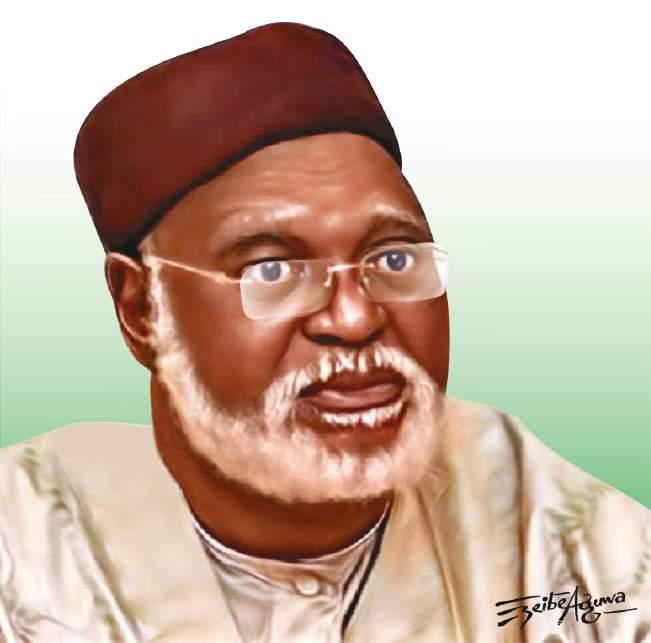
Abubakar: The Man Who Chooses Nation over Power
In a nation where political figures often remain subjects of fierce ideological contestation long after leaving office, one man continues to command an unusual level of bipartisan respect across generations and political divides. He is ex-Head of State who midwived the Fourth Republic, General a bdulsalami a bubakar. Deji Elumoye reports.
The launch of three books chronicling the life and public service of General Abdusalami Abubakar (rtd), was far more than a literary event. It became a national affirmation of a statesman whose brief 11-month administration fundamentally altered Nigeria’s democratic trajectory and whose influence continues to shape conversations around peace, leadership and national cohesion.
Held at the State House Banquet Hall in Abuja to coincide with his 84th birthday, the event drew an extraordinary assembly of Nigeria’s political, traditional and business elite. The attendance of serving and former Presidents, Vice Presidents, federal lawmakers, traditional rulers, business leaders and African statesmen transformed the occasion into what many observers described as a celebration of democratic statesmanship rather than merely a book presentation.
A Rare Consensus in Nigerian Politics
One of the most remarkable aspects of the gathering was the convergence of political voices that rarely speak from the same platform with such unanimity.
President Bola Tinubu, represented by Vice President Kashim Shettima, praised Abdulsalami as a leader whose life has been defined by duty, moderation, courage and an unwavering commitment to public service.
Former President Goodluck Jonathan went even further, arguing that Nigeria’s democratic stability owes a considerable debt to Abdulsalami’s decision to hand over power to an elected civilian government in 1999.
Former South African President, Thabo Mbeki echoed the sentiment, describing Abdulsalami as a leader who deliberately placed national interest above personal ambition at a defining moment in Nigeria’s history.
Taken together, these tributes reveal a rare political consensus: irrespective of ideological differences, many of Nigeria’s leading figures agree that the peaceful transition supervised by Abdulsalami remains one of the country’s most consequential democratic milestones.
Power of Restraint
Unlike many military rulers whose tenures became synonymous with prolonged transitions or constitutional uncertainty, Abdulsalami’s government is frequently remembered for the speed with which it fulfilled its promise to restore democratic governance.
Political historians often point to this restraint as the defining characteristic of his leadership. Rather than consolidating power, he accelerated constitutional reforms, organised elections and transferred authority to an elected civilian administration.
That decision has increasingly become central to his public legacy, particularly as democratic institutions across Africa continue to grapple with constitutional crises and military interventions.
Beyond the Presidency
Although he left office more than two decades ago, Abdulsalami has maintained significant relevance through quiet diplomacy rather than partisan politics.
As Chairman of the National Peace Committee, he has repeatedly served as a trusted mediator during Nigeria’s election cycles, encouraging political actors to embrace dialogue, restraint and peaceful conduct.
This elder statesman role has elevated him beyond the confines of military history into the broader space of democratic institutionbuilding.
Building a Legacy Institution
Perhaps the most forward-looking outcome of the event was the unveiling of the Abdulsalami Abubakar Africa Resource Centre (AAARC). The proposed institution is envisioned as a platform for advancing peacebuilding, democratic governance, leadership development and conflict resolution across Africa.
The Federal Government signalled its confidence in the initiative by announcing support for its development, including the allocation of land in Abuja and funding for
construction.
The fundraising effort also reflected strong institutional confidence, attracting pledges approaching ₦2 billion from government
and private sector leaders, including major Nigerian business groups and philanthropists.
Three Books, One Narrative
The three books unveiled during the ceremony collectively present different dimensions of Abdulsalami’s life and public service. His autobiography, Call of Duty, offers a personal account of leadership during one of Nigeria’s most delicate political transitions.
The companion volume, Nigeria’s Grand Patriot, examines his contributions to nationbuilding, while the Festschrift, Mediating for Peace in Africa, focuses on his extensive work in conflict mediation and diplomacy across the continent.
Together, the publications seek not merely to document history but to preserve lessons in leadership, moderation and public service for future generations.
Why the Event Matters
Beyond the speeches, donations and ceremonial celebrations, the gathering conveyed a deeper political message.
At a time when public confidence in institutions is frequently tested, the broad consensus around Abubakar reflects an enduring appreciation for leaders who exercised power with restraint, respected constitutional transition and continued to contribute to national development after leaving office.
The event therefore served as both a celebration of an individual and a reminder of the values that sustain democratic governance, humility in leadership, patriotism over personal ambition, and an unwavering commitment to national unity.
For many of those in attendance, the books launch was ultimately not about revisiting the past. It was about preserving a democratic legacy whose lessons remain profoundly relevant to Nigeria and the African continent.
Putting First Lady’s Akwete Declaration in Proper Perspective
Sam Onuigbo, in this piece, reflects on the First Lady, Senator Oluremi Tinubu’s recent akwete declaration in abia state within the broader context of women’s economic inclusion.
The recent visit by the wife of the President, Senator Oluremi Tinubu to Abia State, has turned out to be a huge lift for rural Abia women and unparalleled positive public relations for the Akwete weaving community.
It would be recalled that Dada Nwakata, a legendary 19th century master-weaver, credited with founding and revolutionising the traditional hand-woven Akwete cloth produced in Igboland, precisely in AkweteNdoki, Ukwa East Local Government Area of Abia State. History has it that women from the locality became adept at the creation of the Akwete cloth from the period dating back to the 18th century.
N2billion and More:
“On my own, I told the Governor, that I’m donating N2 billion to the project. I don’t know how you want to use it. The fund is easy for me to give to you and I believe that that fund will be in good hands.”
By donating the sum of N2billion, Mrs Tinubu demonstrated her resolve to scale up the Akwete cloth weaving industry. As a moving force for women empowerment, the visionary First Lady knows too well that funding has always been a major hurdle that restrains women from maximizing their potentials, be it in politics, trade or industry.
But, beyond the financial lift, Mrs Tinubu must have decided to challenge the women to up their craft, particularly in this age of technology and Artificial Intelligence (AI). With the generous financial impetus, the Akwete weavers have been motivated to explore how to integrate AI in the areas of design and loom efficiency and enhance their productivity.
As one who lived and worked in the area, before it was subdivided into Ukwa East and Ukwa West, I would attest to the ingenuity and creativity of these women involved in the handcrafted Akwete cloth.
Cultural Diplomacy
The First Lady was not only making a speech when she observed as follows: “There is nowhere I stand in the world, even the white person is always in awe of my personality. You saw when we went to the palace, we’ve been to places and I wear African wears. We should not let our children forget that.”
Because, encapsulated in that great remark is the potential of Akwete to augment Nigeria’s cultural diplomacy, following the Aso-oke/ Adire and Danshiki ensemble. Through her visit and cross fertilization of ideas, the First Lady inadvertently challenged Igbo women,
particularly the Akwete cloth weavers to emulate their counterparts in Ogun State and other parts of the South West, who have raised Aso-oke/Adire attire into, not only as a symbol of cultural identity, but also attaining global acclaim.
Gender Inclusivity
One inescapable point that a quiet reflection on the First Lady’s Akwete proclamation threw up is the fact that with creative skills, women inclusivity in national economic reformation becomes a given. What Mrs Tinubu was doing by reminding the Akwete women that she plans to be wearing Akwete as buba and wrapper, is to open their minds to the enormous economic opportunity that their craft holds for the nation’s economic diversification efforts, as well as, foreign exchange inflow.
As a widely travelled and elegant personality, the First Lady was also doing a bit of soft marketing when she described Akwete as “a very soft breathable cotton”. The President’s wife was intoning the feasibility of the cloth for foreign patronage and global significance.
Sustaining the Momentum
Here is a very important aspect of the First lady’s message: “I will give a little advice to the governor about these women; why they hold their craft dear. It is a spiritual thing for them and one of the good things I saw, was, I saw young people in their family doing exact thing.
-Hon Onuigbo, President of Global Legislators’ Forum, writes from Abuja.
Alimi AbdulRazaq at 70: A Life of Purpose, Principle and Enduring Legacy
By Bashir Adigun
For Dr. Muhammed Alimi AbdulRazaq at a remarkable milestone of seventy years, it’s a fitting moment to celebrate not merely the passage of time, but a lifetime devoted to justice, scholarship, public service, philanthropy and nation-building.
Some people accumulate titles; others build institutions. Some pursue success; others create opportunities for succeeding generations. Dr. Alimi AbdulRazaq belongs to the rare class of Nigerians whose influence transcends the courtroom, the boardroom, and public office to leave lasting footprints on society.
Born in Zaria and rooted in the rich traditions of Ilorin Emirate, his life’s journey reflects the timeless truth that excellence is not an accident but the product of discipline, vision and unwavering commitment to higher ideals.
From Capital School, Kaduna, to St. Gregory’s College, Lagos; from Ahmadu Bello University to the prestigious University of Hull in the United Kingdom, where he earned both his Master’s and Doctorate degrees in Law, his academic journey has been distinguished by intellectual rigor and an enduring passion for knowledge. His numerous scholarly works on human rights, international law, energy regulation, and public policy continue to reflect the depth of a legal mind committed to using law as an instrument of justice and national development.
For nearly five decades after being called to the Nigerian Bar, Dr. AbdulRazaq has earned widespread respect as one of Nigeria’s foremost legal practitioners. Through A. AbdulRazaq (SAN) & Co., he has provided legal counsel to major institutions, shaped commercial jurisprudence, defended constitutional liberties, and rendered pro bono legal services to countless Nigerians who otherwise had no voice.
Yet his professional accomplishments tell only part of the story. During Nigeria’s difficult years under military rule, he stood firmly on the side of democracy, civil liberties, and the protection of fundamental human rights. As Founder and First Executive Secretary of the Nigerian Council for Human Rights, he championed justice for political detainees and awaiting trial inmates, demonstrating uncommon courage when silence was often the easier choice.
His transition into public service was equally impactful. As Chairman of the National Iron Ore Mining Company, Itakpe, he led critical reforms that revitalized the organization and improved operational efficiency. Later, as the pioneer Executive Commissioner for Legal, Licensing and Enforcement at the Nigerian Electricity Regulatory Commission (NERC), he helped lay the legal and regulatory foundations for Nigeria’s modern electricity industry. Many of the regulatory frameworks that continue to guide the sector today bear the imprint of his intellect, foresight, and meticulous attention to detail. His contributions extend far beyond government.
As Founder and Chairman of Bridge House College, Lagos, he has invested in raising future leaders through quality education. His endowment of the Alhaji A.G.F. AbdulRazaq Professorial Chair
in Public Law at the University of Ilorin stands as a lasting testament to his belief that knowledge remains society’s greatest investment. For decades, he has quietly supported educational institutions, professional associations, and student organizations, helping to nurture generations of scholars and leaders.
Corporate Nigeria has equally benefited from his wisdom and integrity. His service on the Board of First HoldCo Plc and several other strategic institutions reflects the confidence reposed in his sound judgment, governance expertise, and ethical leadership.
Beyond his impressive résumé lies a man of remarkable humility, dignity, and generosity.
Those who know him speak of a calm disposition, measured judgment and unwavering commitment to
fairness. As the Mutawalli of Ilorin, he has continued the noble tradition of service associated with one of Nigeria’s most respected families, balancing professional excellence with cultural responsibility and community leadership.
His life also speaks eloquently of family values. Together with his beloved wife, he has raised accomplished children who continue to distinguish themselves in public service, business and professional life, a reflection of the values of integrity, discipline and service that define the AbdulRazaq family. Among his siblings is the Executive Governor of Kwara State, Mallam AbdulRahman AbdulRazaq, whose public service continues a family tradition of leadership and commitment to the common good Seventy years offer more than an opportunity to celebrate achievements; they invite reflection on legacy.
Dr. Alimi AbdulRazaq’s legacy is measured not only by the offices he has held or the honours he has received, but by the institutions he has strengthened, the lives he has touched, the young people he has mentored, the causes he has defended and the enduring values he has embodied.
In an era where public trust is increasingly precious, his life reminds us that true leadership is rooted in character, competence, and service. His story affirms that success finds its highest expression when it becomes a platform for uplifting others and building institutions that outlive their founders.
As family, friends, colleagues, associates and admirers celebrate this distinguished jurist, scholar, philanthropist, educationist, regulator and statesman, they also celebrate a man whose life has consistently demonstrated that greatness is best measured by the positive difference one makes in the lives of others.
Happy 70th birthday, Dr. Muhammed Alimi AbdulRazaq.
May the Almighty Allah continue to grant you sound health, abundant wisdom, enduring peace, and many more years of impactful service to Ilorin Emirate, Kwara State, Nigeria and humanity. Your remarkable journey remains an enduring inspiration, and your legacy will continue to illuminate the path for generations yet unborn.
•Adigun is the former Special Adviser on Media to Governor AbdulRahman AbdulRazaq of Kwara State
At Nwabuikwu’s Book Launch, Okonjo-Iweala
Vows Never to Give Up Hope on Nigeria
Says communication critical in reforms drive, declares it’s about persuading people, explaining trade-offs, building trust not just writing new laws Chidoka, Adeniyi, others hail author’s intellectual legacy
James Emejo in Abuja
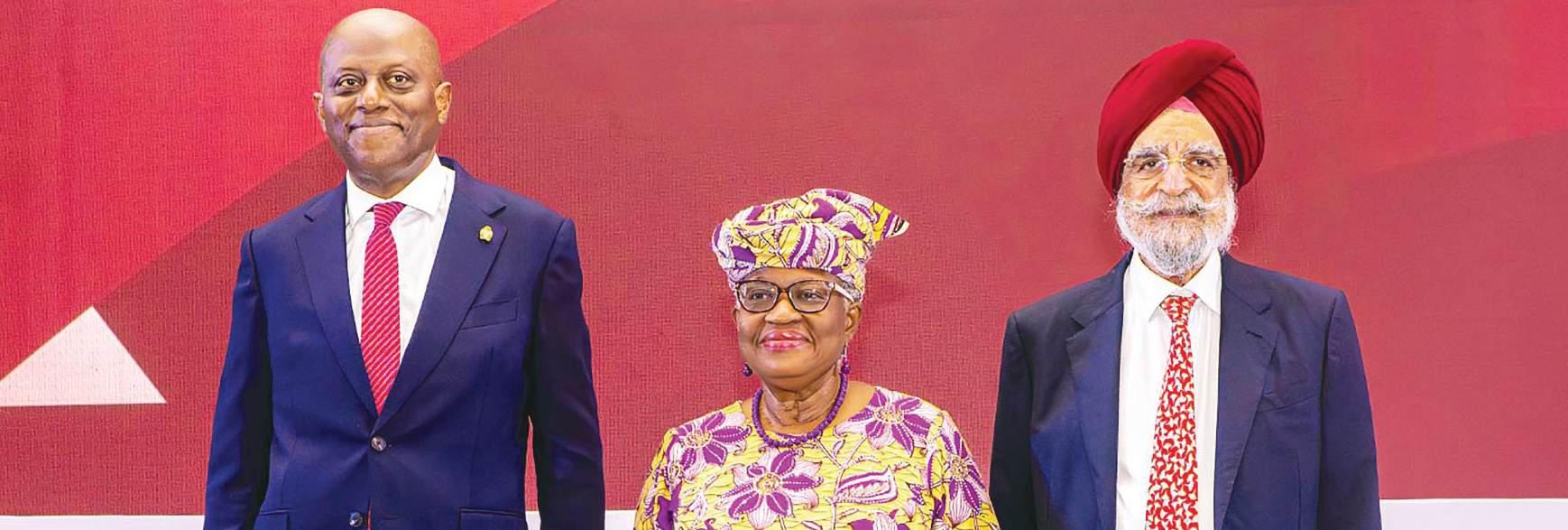
Director General, World Trade Organisation (WTO), Dr. Ngozi Okonjo-Iweala, has vowed “never give up hope” on Nigeria despite the country’s recurring setbacks, adding that lasting prosperity will only come when Nigerians build a broad national consensus that rises above ethnic, religious and regional divisions to pursue shared development goals. She spoke at the public presentation of at the public presentation ofmThe Pain and the Promise: Insights and Fragments on Nigeria and People, Public and Personal (1990–2026) by public policy analyst and member of THISDAY Baord, Mr. Paul C. Nwabuikwu in Abuja.
The former Minister of Finance and Coordinating Minister for the Economy, stressed that while Nigeria had repeatedly lost momentum through policy reversals, its abundant talent and resilience give her confidence that the nation can still achieve enduring prosperity.
She said, “Until Nigerians can overcome the ethnic, religious and regional divides embedded in our society to forge a social compact that agrees key directions for the nation... Nigeria will find it difficult to move forward at the pace required to create enduring prosperity for our people.”
She added, “I’ll never give up hope... I believe in talent from every corner of Nigeria. There’s no place in Nigeria
that doesn’t have talented people.”
However, Okonjo-Iweala, who led Nigeria’s landmark economic reform programme in the mid-2000s, said Nwabuikwu’s collection of essays accurately chronicled the country’s long journey through military rule, democratic transition, economic reforms, anti-corruption efforts and technological transformation, while preserving faith in a better future.
She said, “This is a book I recommend heartily... to better understand our wonderful, complicated, often frustrating, but always exciting country,” she said, stressing that the nation’s “pain” should become “a spur to deliver on Nigeria’s boundless promise.”
She said the nation’s ability to
convert decades of recurring disappointments into enduring prosperity would ultimately depend on forging a national consensus that rises above ethnic, religious and regional divisions.
The former minister said the country’s greatest obstacle was no longer a lack of talent but the inability to agree on common national priorities that survive successive governments.
Despite describing Nigeria as “the most interesting, if the most chaotic country in the world,” she insisted she remained unwavering in her belief that the country would eventually realise its immense potential.
“I’ll never give up hope,” she declared.
According to her, while Nigeria
has repeatedly experienced policy reversals that set back progress, the country possesses abundant talent across every region and only needs a shared national purpose to unlock lasting development.
Drawing extensively from Nwabuikwu’s essays, Okonjo-Iweala noted that his reflections offered more than historical commentary; providing a roadmap for understanding why the nation’s development journey had often stalled and what must change.
She particularly endorsed the author’s argument that the absence of broad agreement on national priorities had slowed economic transformation, adding that infrastructure, poverty reduction and productive investment should become
national rather than sectional objectives. Okonjo-Iweala said, “Until Nigerians can overcome the ethnic, religious and regional divides embedded in our society to forge a social compact that agrees key directions for the nation — directions that remain steady no matter who is in government — Nigeria will find it difficult to move forward at the pace required to create enduring prosperity for our people.”
The WTO chief said the book captured Nigeria’s long transition through military rule, democratic governance, anti-corruption efforts, technological change and economic reforms while never losing faith that the country’s future could be better than its past.
AlimiAbdulRazaq
FOCUS
Asset Forfeiture: Malami’s Long Walk to Misfortune as Metaphor for Nigeria’s Power Players
The federal high court’s decisive decree ordering the absolute asset forfeiture of hundreds of billions linked to the former Attorney-General of the Federation and Minister of Justice, Abubakar Malami, SAN, unmasks a terrifying truth for Nigeria’s political elite: the clock of justice ticks at a glacial pace, but its strike is lethal. This historic judicial hammer, routing out decades of hidden commonwealth, stands as a prophetic declaration written in the ink of modern jurisprudence. It proves that for powerful public officeholders who plunder the treasury, the recovery of stolen assets is a harrowing memento mori for those currently intoxicated by state power, signposting the fact that impunity possesses an expiration date, the long arm of the state remembers every hidden ledger, and the total reclamation of the people’s commonwealth from corrupt public officials remains merely a patient matter of time, writes Alex Ekuma
Power is not a fortress. It is a violent, rushing river. In his masterwork The Prince, Niccolò Machiavelli warned that Fortuna (the capricious goddess of fate) governs half of human actions, leaving the other half to be conquered only by ruthless, adaptive skill.
For eight long, uninterrupted years, Abubakar Malami, SAN, former Attorney General of the Federation and Minister of Justice, might have lived under the delusion that he had successfully chained this river. As Nigeria’s longest-serving AGF, Malami operated not merely as a minister, but as a sovereign legal oracle.
He was the supreme gatekeeper of state vengeance and executive mercy, holding the absolute prerogative to choose whom to crush under the boot of prosecution and who to shield with a golden cloak of immunity. He walked the gilded corridors of the Aso Rock Presidential Villa with the unshakeable hubris of a man who believed his lease on the apparatus of coercion was eternal.
But Fortuna is a fickle deity. The crown of absolute power is woven from ice, destined to melt the moment the sunshine of political patronage shifts. Today, the majestic robes of office have evaporated, exposing a vulnerability that is as breathtaking as it is terrifying. The grand architect of state prosecution has been transformed into its primary prey.
The dramatic descent of Malami, from the pinnacle of legal power to prison cells and multibillion-naira asset forfeiture trials, exposes the fleeting nature of state authority and vindicates the aggressive anti-corruption campaign led by the Economic and Financial Crimes Commission (EFCC), highlighting that the arc of power is long, but its crash is crushingly fast. For eight unbroken years, Malami walked the corridors of Nigerian statecraft not merely as a minister, but as the supreme legal oracle of the realm. He was the exclusive gatekeeper of the state’s wrath and mercy, wielding the absolute prerogative to prosecute, pardon, or freeze. Today, that grand illusion of permanent power seems to have been perennially shattered. In a twist of fate rich with Shakespearean tragedy and Machiavellian irony, the man who once decided who went to jail is now being shuttled between prison and detention facility, suffocating under the weight of stringent bail conditions.
Malami’s fall validates the classic concept of Nemesis, the cosmic retribution that awaits those blinded by Hubris. When a leader begins to view the apparatus of state power not as a temporary, sacred trust, but as an eternal personal shield, the universe inevitably and unequivocally corrects the imbalance. The very legal instruments of non-conviction-based asset forfeiture that Malami once used against political adversaries are now being turned inward, systematically dismantling his multibillion-naira empire and targeting dozens of ultra-luxury properties.
Between 2015 and 2023, Malami was one of the most powerful men in Nigeria, after then-President Muhammadu Buhari. As the then-chief law officer, with all law enforcement agencies, including anticorruption institutions such as the EFCC, under him, Malami spearheaded the war against corruption, including trying judges suspected of corruption up to the Supreme Court. Malami also supervised the return and administration of looted assets from the United States of America, the United Kingdom, among others, as well as assets within Nigeria forfeited to the federal government. However, within just two years out of office, the former AGF is being tried on corruption allegations, which he once fought with all his zeal and had some former governors, ministers, military chiefs, politicians, and others sent to various years’ imprisonment. Malami is being prosecuted by the EFCC, which he once supervised, for corruption. The anti-graft agency is not only prosecuting the former minister but his son, Abdulaziz Malami, and his wife, Hajia Asabe Bashir, said to be an employee of Rahamaniyya Properties Limited. The anti-graft agency in the 16-count money laundering charge preferred against them is alleging conspiracy and concealment of proceeds of unlawful activities running into billions of naira. According to the
charge, the defendants committed the various alleged offences between November 2015 and June 2025.
While the trial is still ongoing at the Federal High Court, Abuja Division, although the court may later find them innocent and discharge and acquit them in the money laundering charge, the same court, however, ordered assets worth over N200 billion and linked to the Malamis to be permanently forfeited to the federal government.
Justice Joyce Abdulmalik of a Federal High Court, Abuja Division, in a judgement delivered on July 15, 2026, issued an order for the final forfeiture of 48 properties linked to the former AGF and his family. The judge based her decision on the grounds that the respondents failed to rebut the reasonable suspicion that the properties were acquired through unlawful activities. The court also dismissed objections by Malami, his family members and some companies linked to the properties, for lacking in merit.
The judge pointed out that the issue before the court was not “who owns the property, but how legitimate are the funds used to acquire the properties”, adding that the respondents had “not dislodged the reasonable suspicion that the properties were acquired by unlawful activities”. The judge explained that the court relied principally on Section 17 of the Advance Fee Fraud and Other Fraud Related Offences Act in granting the final forfeiture order brought by the EFCC. She, however, vacated the interim forfeiture order in respect of some of the properties.
Justice Emeka Nwite of the Federal High Court, Abuja Division, in January, ordered the interim forfeiture of 57 properties linked to the ex-justice minister and two of his sons, Abdulaziz Malami and Abiru-Rahman Malami. The properties forfeited to the government on grounds of unlawful activities of Malami and his associates were valued at over N213.2 billion, and are said to be located in Abuja, Kebbi, Kano, and Kaduna, including university buildings, agro-allied factory buildings, machines, hotels, pharmacy, supermarket, primary and secondary schools, oil and gas filling stations, shops, luxury duplexes and apartments among others. The import of the judgment is that Malami, his family and other associates were unable to prove or provide any legitimate funds for the acquisition of the 48 properties linked to them. This dramatic Malami eclipse serves as an urgent, haunting lesson for the current tenants
of Nigeria’s corridors of power that power is a loan, never a possession, that the office outlives the officer, always, and immunity is an illusion that evaporates the moment the final motorcade leaves the villa.
Power corrupts, power convicts
Malami once held the ultimate legal gatekeeper role in Nigeria, wielding executive muscle to determine who faced the wrath of the law and who walked free. Today, the tides have violently turned. The former chief law officer has bounced between high-profile detentions, facing multi-count money laundering charges brought by the EFCC alongside his family over an alleged N8.7 billion footprint, and supplementary firearm counts filed after state security interventions. Malami’s modern travails serve as a stark, philosophical mirror for everyone currently walking the cushioned halls of Nigeria’s government. Power looks absolute only to those blinded by its temporary glare. When office is surrendered, the armour turns to dust, and the state’s machinery, when driven by genuine institutional grit, inevitably comes collecting. Stolen public commonwealth cannot be shielded forever by past titles, as history shows that the law eventually catches up with those who once treated it as a personal tool. Despite earlier bail grants, the court insisted on fresh applications, leaving Malami to languish in custody until hearings resume. Will the ones who currently command the machinery of state learn? Or will they, like so many before them, wait until they are stripped of their titles, realising too late, in the cold solitude of an interrogation room, how remarkably powerless they truly are? History warns that stolen commonwealth cannot be hidden forever; the state’s memory is long, and its hunger for restitution is insatiable.
EFCC’s grace and grit
That this reckoning has come to pass is a testament to a rare, foundational shift in Nigeria’s institutional grit. Ola Olukoyede, the Executive Chairman of EFCC, has shown the exact brand of ferocious, unbending courage Nigeria has starved for. By refusing to bow to political lineage or defer to a former de facto boss, the EFCC leadership has proven willing to go the whole hog. This is not just routine law enforcement; it is a
fearless declaration that the rule of law applies to the hunters just as much as the hunted. It is a signpost to the ferocious, unbending grit of the EFCC boss, who has displayed the exact brand of raw, lion-like courage that a fractured, corruption-weary Nigeria has starved for decades.
By refusing to defer to political lineages, and by choosing to aggressively hunt down a former de facto boss who once held absolute dominion over the anti-graft agencies themselves, the EFCC leadership has proven a willingness to go the whole hog. This is not routine law enforcement. It is a fearless institutional revolution. It sends a shockwave through the spine of the political elite, declaring once and for all that in the republic of the future, the rule of law will ruthlessly govern the hunters just as much as the hunted. Therefore, praise belongs to the leadership of the EFCC and its chairman for displaying the rare, unyielding courage required to go after a former de facto heavyweight. Taking the fight straight to a former justice minister demonstrates a fearless commitment to accountability that cuts across old political divides. This unbending resolve is precisely the medicine a fractured system requires, signalling to all public servants that no individual is ever too large to face a reckoning. Olukoyede has emerged as a fearless crusader, proving that even the mighty can be brought to justice. Olukoyede has shown extraordinary determination, correcting charges, pushing for remand, and refusing to be intimidated by Malami’s stature. His courage to confront a former de facto boss demonstrates the kind of fearless leadership Nigeria desperately needs. The EFCC under his watch is proving that no one is above the law, not even those who once controlled the levers of justice.
The EFCC boss had on TV last year explained that some politically exposed persons have not been prosecuted because investigations into the allegations were yet to be completed.
“There are cases we concluded within three months, some six months. We want to be more diligent to have a water-tight case,” he said in respect of a former humanitarian affairs minister the commission was investigating. “This case involved about 27 other suspects and 174 bank accounts. Do you know what it takes to investigate 174 bank accounts?”
The Human Rights Writers Association of Nigeria (HURIWA), while commending the EFCC and Olukoyede for securing a final forfeiture order against the properties linked to Malami, urged that the recovered assets should not be looted again by those in power.
“We commend the EFCC for demonstrating courage in pursuing this case. No individual, no matter how influential, should be placed above the law. However, recovering assets is only the beginning. The real challenge is ensuring that recovered assets do not disappear into another cycle of elite capture,” said HURIWA’s National Coordinator, Comrade Emmanuel Onwubiko, in a statement.
Onwubiko stated that Nigerians would resist any attempt to secretly allocate forfeited assets to political associates, government officials or other influential figures. HURIWA maintained that recovered public assets must not become victims of another round of corruption through undervalued sales, secret transfers or politically motivated allocations.
Malami’s fall from grace to grass is a reminder for Nigeria’s high and mighty that power is transient, and stolen wealth will eventually be retrieved. He was the ultimate arbiter of justice, deciding who to prosecute and who to shield. His office was often accused of selective justice, wielding immense influence over Nigeria’s legal and political landscape. Malami’s plight underscores how quickly influence evaporates once out of office. Malami’s downfall is more than a legal saga. It is a parable of power’s impermanence. The corridors of power may echo with authority today, but tomorrow they may resound with the clanging of prison gates. Despite earlier bail grants, the new judge insisted on fresh applications, leaving Malami to languish in custody until hearings resume. The lesson is almost certainly clear that justice has a long memory, and the mighty will eventually answer for their deeds.
AbubakarMalami
RATES AS AT J U LY 30,2026
Experts: Airport Runway Rehabilitation Necessary to Curb Major Incidents During Flooding
Aviation industry stakeholders have called for urgent rehabilitation of some of the airport runways in the country to mitigate the frequent runway excursion incidents that happen every rainy season.
They warned that if the incidents were allowed to persist, they may lead to tragic accident, and called for urgent intervention.
In the last five years,
flights have recorded major incidents at the airports in Ibadan, Port Harcourt, Lagos, Abuja and the recent major incident involving Enugu Air flight at the Benin airport.
Last year, during the international conference organised by the Federal Airports Authority of Nigeria (FAAN), the agency’s Managing Director and Chief Executive Officer, Mrs. Olubunmi Kuku, confirmed that over 17 airport runways across Nigeria had exceeded
their 20 to 25-year design lifespan and required urgent rehabilitation.
She noted that many runways were built about 30 to 35 years ago and have dilapidated under aircraft traffic, thus requiring complete reconstruction rather than temporary fixes.
Such rehabilitation, she stated, needed about N580 billion comprehensive capital plan, which had been detailed by the federal government for
these upgrades.
The rehabilitation would need comprehensive overhaul that would cover runway reconstructions, taxiway modernisations, airfield lighting upgrades and perimeter fencing, in-roads and apron expansions.
Kuku rehabilitated the international runway of the Murtala Muhammed International Airport, Lagos immediately she took over as the managing director of the agency and
reopened it in 2024.
Few days ago, the Minister of Aviation and Aerospace Development, Festus Keyamo, announced the allocation of N46 billion for the reconstruction of primary and secondary runways at the Mallam Aminu International Airport, Kano.
THISDAY learnt that runways in Port Harcourt, the domestic runway of the Lagos airport, the runway at the Benin Airport, needed to
be rehabilitated to end the incident of runway excursion due to aquaplaning.
Few years ago, two private jets on charter service over short the runway at the Ibadan airport within an interlude of one month, prompting the state government in collaboration with FAAN, to rebuild the airport’s critical facilities, including the rehabilitation of the runway.
The Minister of State for Industry, John Enoh, has stated that the President/ Chief Executive of Dangote Industries, Aliko Dangote is the driving force behind the successful launch of the Nigeria Industrial Policy
(NIP), even as he said his ministry was targeting a rise in manufacturing sector contribution to gross domestic product (GDP) to about 20 per cent by 2030 and 25 per cent by 2035. Enoh gave the commendation while leading a high-level delegation on
an extensive tour of the 700,000 barrels-per-day Dangote Petroleum Refinery, the Dangote Petrochemicals complex and Dangote Fertiliser Limited in Lagos.
He was accompanied by officials of his ministry, including the Special Assistant to the President
on Industrial Training and Manpower, the DirectorGeneral of the Industrial Training Fund and the Director-General of the Manufacturers Association of Nigeria (MAN).
Enoh who described Dangote as Nigeria’s foremost industrialist,
iNVeStMeNt iN pOrt iNFraStrUctUre… Managing Director Nigerian Ports Authority (NPA) Dr. Abubakar Dantsoho (Left) receives the Chairman of BUA Group Abdul Samad Rabiu at the NPA Headquarters in Marina, Lagos... yesterday
stated; “He is Nigeria’s champion. I mean, it’s even understated when they call him Africa’s wealthiest man,” the minister said, adding that Dangote’s presence at the NIP’s launch in February “gave it the prominence it now has.”
The minister disclosed
that his ministry had met its first 90-day implementation benchmark under the industrial policy, and said the manufacturing GDP targets were closely tied to continued investment from Dangote’s businesses.
The
chinedu eze
Oluchi chibuzor
Air Peace Hosts Forum, Launches New Regional Routes
Stories by Chinedu Eze
Ahead of the commencement of its new regional services to Bamako, Conakry, Douala and Libreville on 1 August 2026, Nigeria’s leading carrier, Air Peace, recently hosted Travel Agency Forum to reaffirm its commitment to strengthening collaboration with the travel agency community.
In his opening remarks, Chief Commercial Officer, Mr. Nowel Ngala, underscored the strategic importance of the new regional routes, noting that they will improve connectivity across West and
Central Africa, facilitate trade and tourism, and create greater opportunities for both passengers and travel partners.
He reiterated Air Peace’s commitment to working closely with travel agencies to drive the success of the expanded regional network.
Representing the National President of the National Association of Nigerian Travel Agencies (NANTA), Mr. Yinka Folami, the Vice President, Lagos Zone, Mr. Yinka Olapade, commended Air Peace for its continued investment in route expansion, describing
Air WAtCh
the new regional services as a significant milestone that would strengthen regional integration and create new opportunities for the travel industry.
The Senior Vice President for Sabre Travel Solutions in Central & West Africa, Mr. Allen Awosikunde, commended Air Peace for its remarkable achievements and congratulated the airline’s management on the successful launch of its new regional routes, describing the expansion as a significant milestone that would further strengthen connectivity across West and Central Africa.
Rotary Club Donates Wellness Kits to Paedatric Cancer Warriors at LUTH
Rotary Club of Ewutuntun is set to host the Rotary International District 9111 Governor, Bukola Bakare and her entourage on official visit on Saturday, August 1, 2026 between 8 am and 1 pm.
According to the President Rotary Club of Ewutuntun, Rotarian Oswald Ikegbulam disclosed that “ the DG official visit commences at 8am with presentation of ten boxes of wellness kits to the
Paedatric cancer warriors at LUTH Idi-Araba, Lagos.”
Rotarian Oswald stated, “The outreach reflects Rotary’s commitment to bringing hope, comfort, and encouragement to children battling cancer and their families.”
In his words, “Together we can make a meaningful difference by standing with our little warriors fighting cancer and remind them that they are not alone.”
The Service Project Chairman and President - elect, Rotarian Folasade Arike Akinsanya revealed that Rotary Club of Ewutuntun is proud to launch its Interest-Free Micro Credit Loan Scheme for 25 Small businesses, empowering hardworking entrepreneurs with financial support to grow their businesses without the burden of interest.”
Orah Inducted as Member of Chartered Institute of Directors Nigeria
The Executive Director, Special Duties, Federal Airports Authority of Nigeria (FAAN), Mrs. Obiageli Orah, has been inducted as member of Chartered Institute of Directors Nigeria (CIoD)
Orah is a professional who has versed experience in the medical field and in public service. Orah is astute administrator. She served as the Deputy Chairperson of Protocol in Anambra state and Board Director of the National Directorate of Employment (NDE)
Orah’s work in the
Group
Asst.
Asst.
Nume Ekeghe
Correspondents
Kayodetokede(CapitalMarkets)
James Emejo (Finance)
Ebere Nwoji (Insurance)
reporter Peter Uzoho (Energy)
National Directorate of Employment (NDE) saw her oversee various community relations project targeted at improving the lives of indigenes in some communities across Nigeria.
Through several training courses abroad, Orah has broadened her horizon and strengthened her analytical and execution skills with unparalleled value-creating abilities.
She has worked in the UK
for several years and garnered invaluable experience as a seasoned medical professional and administrator.
Orah obtained MSc. Medical Ultrasound from Bournemouth University, Bournemouth, Dorset, UK, and a BSc. (Hons) in Radiography & Imaging from the University of Hertfordshire, UK.
She is currently Vice President Association of Medical Ultrasound Practitioners of Nigeria.
Youth Flags off Applications for Adedeji Taxation, Fiscal Policy Fellowship
The All Progressives Congress (APC) National Youth Wing has opened applications for the 2026 Zacch Adedeji Taxation and Fiscal Policy Fellowship (ZATPF), a flagship initiative aimed at equipping exceptional young Nigerians with the knowledge and skills to shape the future of taxation, public finance, revenue administration and economic governance.
The Fellowship is designed to build a pipeline of young fiscal innovators and policy leaders capable of developing practical solutions to Nigeria’s
economic and fiscal challenges while promoting transparency, accountability, innovation and effective public finance management.
Speaking on the initiative, APC National Youth Leader, Dayo Israel, said the Fellowship represents an investment in young Nigerians who can contribute meaningfully to the country’s fiscal transformation.
“Nigeria’s fiscal transformation requires a new generation of young people with the competence, creativity and courage to design solutions and build institutions that work.
Gale of Airport Concessions
Chinedu Eze
The federal government under President Bola Ahmed Tinubu’s administration has started the implementation of airport concession, a development that previous administrations could not pull through.
After executing the concession process of Akanu Ibiam International Airport, Enugu, the federal government also gave approval for the concession of the Port Harcourt International Airport, but the final hand over is still in progress. The Federal Executive Council (FEC) recently approved the business case for the concession, and officials are already finalising the final legal and contractual agreements.
This is a firm action compared to the past. Before this time, there have been longrunning legal fights, regulatory uncertainties, frequent protests from aviation unions and governance and policy confusion, over airport concession.
Government has said severally that it cannot effectively continue to fund the nation’s airports because of the high capital outlay, given the fact that airports need state-of-the-art facilities that can best be provided by the private sector.
So, willy-nilly, government must have to concession the airports for them to become competitive with similar airports in Africa and around the world. Private sector funding is attracted by government through public, private participation (PPP) arrangements and other such collaboration so that while government has regulatory and security control, the private sector invests to develop the facilities.
This was the core theme in the paper presented at the recent Airport Business Summit in Lagos by the former Managing Director of FAAN Dr. Richard Aisuebeogun, themed: ‘Airport Concession, The Inevitable’.
Aisuebeogun said Europe has fully embraced airport concession and that it remained the most viable alternative for Nigeria if government really wishes to reduce its funding of airport infrastructure.
According to him, in Europe, about 60 per cent of the airports are privately owned, while over 100 airports are under mixed ownership (PPP) and under 2000 are still owned by the pubic or government. Countries like Cyprus, Hungary, Portugal, Slovenia and United Kingdom “have almost entirely privatised airport systems.”
Aisuebeogun said airport divestment was gaining global momentum as more than 200 European airports embraced private investment and concessions, noting that airport commercialisation is no longer a policy option but an operational necessity. He therefore urged industry stakeholders to view concessions as a strategic tool for improving efficiency and competitiveness rather than simply transferring ownership.
“About 205 European airports now have private shareholders, representing 41 per cent of the continent’s airports, up from 22 per cent in 2010,” Aisuebeogun said.
According to the aviation expert, the figures demonstrate how governments are increasingly turning to airport divestment and concession models to modernise infrastructure, improve competitiveness and attract long-term investment.
He remarked that Europe now has about 60 fully privately-owned airports, while others continue to expand concession programmes.
Aisuebeogun who is currently the Managing Partner, Avialog Company Limited, also said the experience across Europe showed that airports could successfully transition from government-run facilities into commercially focused enterprises without compromising their strategic importance.
He explained that airports continue to attract investors because of sustained passenger growth, strong long-term revenue potential and limited competition, stating that significant capital is required to build new airports, and combined with planning restrictions, it creates high barriers to market entry, making existing airports attractive investment assets.
In other words, because of the high capital needed to build new airports and legal and security impediments, it is always better to modernise existing airport; except in situations like in Nigeria where a state government may want to build a new facility.
He cited the Airports Council International (ACI) report, which showed that private investment in European airports rose dramatically between 2010 and 2016. During that period, the proportion of airports with private shareholders increased from 22 per cent to 41 per cent, reflecting growing confidence in concession and commercialisation models across the continent.
Describing airport concession as the equivalent of a long-term lease rather than an outright sale, Aisuebeogun said governments should retain ownership while granting private operators the responsibility for financing, operating and developing airport infrastructure.
the story continues online on www.thisdaylive.com
Modereola: NIMASA Repositioning New Generation for Blue Economy Growth
Eromosele Abiodun
The Director General of the Nigerian Maritime Administration and Safety Agency (NIMASA), Dr. Dayo Mobereola, has reaffirmed that Nigerian youths remain at the heart of the country’s Marine and Blue Economy Policy, stressing that Nigeria’s ambition to become Africa’s Blue Giant will be driven by the younger generation. He stated this in a keynote address at the 10th Taiwo Afolabi Annual Maritime (TAAM) Lecture at the University of Lagos.
Represented by the Director, Reforms Coordination and Blue Economy, Mrs. Nneka Obianyor, he commended SIFAX Group for sustaining the initiative over the past decade. He noted that
President Bola Ahmed Tinubu’s Blue Economy Agenda is central to economic diversification and that the Honourable Minister of Marine and Blue Economy, His Excellency, Adegboyega Oyetola, CON, has mandated NIMASA to equip young Nigerians with the skills and opportunities to drive the sector.
Mobereola highlighted key youth-centric initiatives of NIMASA to include, the Nigerian Seafarers Development Programme (NSDP), newly introduced Blue Economy Accelerator Initiative, skills acquisition centres located in the sixgeopolitical zones and the establishment of Institute of Maritime Studies in some Nigerian universities; describing them as strategic
EV Motors Offers Cars to Winners of Boxing Bouts
Sunday Ehigiator
EV Motors has announced a partnership with Balmoral Group to award two brandnew electric vehicles to the winners of the headline celebrity boxing matches at this year’s Chaos in the Ring, in a move aimed at promoting Nigerian sports, entertainment and sustainable mobility.
The announcement was made during a press conference at the company’s headquarters in Lagos, where both organisations unveiled the vehicles and reaffirmed their commitment to investing in local talent and expanding opportunities within Nigeria’s sports and entertainment industry.
Speaking at the unveiling, Chairman of EV Motors, Dr. Ned Okonkwo, described
the collaboration as the beginning of a long-term relationship between two Nigerian brands committed to creating opportunities for young people.
According to him, the partnership reflects the company’s belief in nurturing homegrown talent and creating opportunities within the country rather than encouraging migration.
Founder of Chaos in the Ring and Group Managing Director of Balmoral Group, Dr. Ezekiel Adamu, said the partnership aligns with the platform’s vision of transforming African boxing through innovation, entertainment and global exposure.
He said Nigeria possessed abundant talent but had historically lacked platforms to showcase it.
interventions to build capacity, create jobs, and encourage innovation among
young Nigerians. In the same vein, NIMASA engaged doctoral and
master’s students from the University of
an interactive knowledge-
Africa Prudential Showcases Robust H1 Financial performance at Investor Call
Africa Prudential Plc, a leading provider of share registration services and capital market solutions, successfully hosted its H1 2026 Investor Call in Lagos, convening institutional investors, shareholders, investment analysts,
regulators, and members of the investment community to discuss the company’s financial performance, strategic priorities, and outlook. Africa Prudential reported another strong half-year performance, demonstrating strong
corporate governance and resilience, and the effectiveness of its growth strategy despite an evolving macroeconomic environment. During the call, management presented the company’s robust financial performance for H1, 2026, highlighting gross earnings of N4.28 billion, representing a 27% YoY growth from N3.34 billion the previous year. Profit before tax soared to N2.41 billion, growing by 22%, while profit after tax climbed to N1.59 billion, showing an 18% increase.
NASD Launches Nigeria’s First Regulated Digital Securities Platform
Nigeria’s over-the-counter securities market, NASD OTC Securities Exchange, has launched a regulated digital securities market, becoming the country’s first exchange to offer a platform for the issuance and trading of tokenised securities in a move aimed at widening access to capital
and modernising the nation’s capital markets.
“The NASD Digital Securities Platform (NDSP) is now live, with its inaugural public digital securities offering scheduled for early September,” the exchange said.
“The NDSP introduces greater transparency, more efficient issuance and trading
processes, and modern market infrastructure designed to support the next generation of regulated capital markets. We look forward to welcoming issuers, brokers and investors as this market continues to grow”, said Chinwendu Ekeh, Acting Managing Director and Chief
Executive Officer of NASD OTC Securities Exchange. According NASD, the platform is powered by blockchain infrastructure, developed by Blockstation Inc., enabling the issuance, trading, clearing and settlement of digital securities within an institutional-grade environment.
WACT-APM Terminals Nigeria Expands Scholarship Scheme, Welcomes 52 New Beneficiaries
West Africa Container Terminal (WACT)-APM Terminals Nigeria has expanded its educational support initiative with the award of scholarships to 52 new beneficiaries, comprising 47 students from its host
communities and 5 children of employees, bringing the total number of beneficiaries under the WACT Scholarship Scheme to 193.
The scholarship award ceremony, held recently was attended by the
WACT Management team, the Country CEO of APM Terminals Nigeria, community leaders from WACT’s host communities, parents, guardians, employees and student beneficiaries.
Speaking at the ceremony, WACT Managing Director, Courage Obadagbonyi, described the scholarship programme as an investment in the future of the students and the communities they represent.
BlackHorse Holding Company Limited has launched its 400 metric ton (MT) rice mill, under the trade name Crescent Rice Limited, alongside Aminchi Bags Limited, a 240 MT sack manufacturing plant. The launch took place at the Crescent Rice Mill facility in Danzaki, along Hadejia Road, Kano. Both facilities
are supported by a 3MW sustainable, independent power solution, enabling the company to offer sustainable manufacturing solutions.
With over ten years of experience in logistics and haulage support for local and global businesses, BlackHorse Holding has established itself as a key player in the industry.
The company, through its subsidiary Dangwauro Container Terminal, has served organisations such as Ammasco International, CMA CGM, Hapag-Lloyd, Ilera Group, Maersk, Mamuda Industries, PIL Shipping, and Kaduna Refinery, among others.
In his speech, the
Managing Director of Crescent Rice Mills Limited, Rahul Bakliwal, explained that the company decided to invest in the agricultural value chain to support the national food supply, address packaging problems encountered by citizens and create value for all stakeholders.
L-R: Director, Cabotage, Nigerian Maritime Administration and Safety Agency (NIMASA), Ms. Gloria Anyasodo; President, Chartered Institute of Transport Administration of Nigeria (CIoTA), Dr. Segun Obayendo; Dr. Olayinka Agunloye and Deputy Director, Maritime Guard Command, NIMASA; Dr. Chizoba Anika, during a study visit of the University of Lagos Business School to NIMASA… recently
Lagos in
sharing session, led by the Director of Cabotage Services, Ms. Gloria Anyasodo.
China to Boast Trade, Deepen Collaboration Withn Nigeria via
Oluchi Chibuzor
The Consul General Of the People’s Republic of China, Lagos, Ms Yan Yuqing, has said that her country will continue to use cultural exchange to boost trade and deepen collaboration in Nigeria.
Speaking as a visitor to Grace Schools in Lagos, Yuqing, said that they will continue to use language to boost trade and deepen collaboration between both countries.
While commending the interest in Nigerian Children to learn Mandarin language from early age, she stressed that language helps in boosting She pledged to galvanize the Chinese business community in Nigeria to support the school in their quest to use language to enhance the
trade relationship between both countries.
According to her, “This year marks the 55th anniversary of our diplomatic relations. And I believe that we will have an even better and brighter future between China and Nigeria. So long-lasting friendship.
“And also you know that our president is very focused on the development of Africa. Especially he proposed three main areas, industrialisation, agricultural modernisation, and talent development.
“So I think that in talent development we can do more, especially in technology transfer and also in vocational education. Yes, we can make a win-win cooperation and cultural exchange like what we are witnessing today
is a good way to boost trade. I promised to galvanise the Chinese business community in Lagos to come to your school for more cultural programmes.”
With globalisation, she said learning Mandarin becomes necessary for kids from a young age as they have been teaching Mandarin for almost 16 years now.
She stressed that language has the power to bridge barriers and foster friendship.
“Well we have Chinese teachers, and also you know now, even if you have a degree you might not get a job. But if you say you can speak Mandarin, the job is yours. Because I’ve heard that in England just with A-level Mandarin you can get a managerial position,” she said.
Court Freezes Activities at Onne Port Berth 12, Warns PartiesAgainst Transactions
The Rivers State High Court has ordered the Nigerian Ports Authority (NPA) and International Container Terminal Services Nigeria Limited (ICTSI Nigeria Limited) to halt all activities relating to Berth 12 at the Federal Ocean Terminal, Onne Port Complex, pending the determination of applications before the court.
The order was made on 17 July 2026 by the High Court sitting in Port Harcourt in Suit No. NHC/1/CS/2025, filed by Deep Offshore Services Nigeria Limited against the NPA and ICTSI Nigeria Limited.
Counsel to the claimant, Ama Etuwewe,
SAN, said the court directed all parties to “stay all actions relating to the subject matter of this suit until the ruling on the motions after vacation.”
According to Etuwewe, the order is aimed at preserving the status quo at Berth 12 until the court rules on the pending applications, which have been adjourned to 23 September 2026. He said no party is permitted to execute lease agreements, grant new rights or interests, undertake construction, take possession, commence development or engage in any activity capable of altering the existing
state of affairs at the facility.
He also issued a strong warning to investors, financial institutions, contractors, prospective lessees, buyers, government agencies and other stakeholders to refrain from entering into any transaction involving Berth 12 while the court order remains in force.
Etuwewe warned that any lease, assignment, financing arrangement, memorandum of understanding, sale, sublease or similar transaction executed in breach of the subsisting order could be declared null and void and would confer no legal rights or protection on the parties involved.
Coy Launches Self-service Fuel Station in Lagos
Sunbeth Energies Limited has unveiled its self-service fuel station at its Ogba outlet in Lagos, introducing a digital fueling experience that enables customers to initiate, monitor, and complete fuel purchases independently through a secure, user-friendly platform. The launch represents a major milestone in the modernisation of Nigeria’s downstream petroleum industry and reinforces Sunbeth Energies’ position as a leader in digital innovation, operational transparency, and customer-centric service delivery.
Managing Director of Sunbeth, Energies Limited, Lateef Abioye, said: “Today is a defining moment not only for Sunbeth Energies but also for Nigeria’s downstream petroleum industry. By launching Nigeria’s selfservice fuel station, we are introducing a new standard of transparency, convenience, and customer empowerment. Every customer deserves to know exactly what they are paying for, and this innovation gives them that confidence.”
Speaking on the technology behind the innovation, Chief Executive Officer of Tech Brokers Limited, Wasiu Popoola, described the launch as the beginning of customer centric digital transformation in the Nigeria’s downstream oil and gas industry. “Today marks the beginning of a new dawn for fuel retailing in Nigeria. This is more than a self-service solution; it is a robust indigenous technology platform developed to support the future of the downstream sector,” Popoola said.
Saharan Blend (Algeria), Djeno (Congo), Zafiro (Equatorial Guinea), Rabi Light (Gabon), Iran Heavy (Islamic Republic of Iran), Basrah Medium (Iraq), Kuwait Export (Kuwait), Es Sider (Libya), Bonny Light (Nigeria), Arab Light (Saudi Arabia), Murban (UAE) and Merey (Venezuela).
Management team of WACT-APM Terminals Nigeria and 2026 Scholarship beneficiaries
United Capital Assets Crosses N2trn, Targets 12 African Countries in Expansion Drive
Kayode Tokede
United Capital Plc has announced plans to deepen its expansion across 12 African countries and strengthen its retail business after its assets under management exceeded N2 trillion mark. .
The announcement was made by Group Chief Executive Officer of United Capital, Peter Ashade at the company’s Investor Relations
Roundtable held in Lagos.
United Capital had disclosed that it recently acquired a five per cent stake in Nigerian Exchange Group Plc (NGX) as part of its long-term investment strategy and has expanded its operations into 12 African countries, including Rwanda and Ethiopia.
Ashade, said the company has grown from a capital market operator into a diversified financial services
group with seven operating businesses and two associate companies since 2018.
According to him, assets under management, which were below N100 billion when he assumed office in July 2018, exceeded the group’s initial N1 trillion target in 2022 and have now risen above N2 trillion. He said the expansion across Africa is intended to create long-term value
for shareholders while supporting economic integration on the continent.
“The rapid growth reflects increasing confidence from investors and clients in the company’s business operations,” Ashade said.
He added that shareholder value has increased by more than 2,500 per cent over the past eight years, while the company has consistently paid interim dividends
over the last three years in addition to its final dividends.
Ashade said United Capital plans to launch several new products and strategic initiatives between August and December 2026 as part of efforts to broaden its retail financial services offerings and strengthen its technology platform.
He added that the group would continue to invest in technology,
research, risk management and investor relations to support sustainable growth while pursuing expansion only in African markets that align with its long-term strategy. The company also reaffirmed its commitment to maintaining regular engagement with shareholders and other stakeholders as it advances the next phase of its growth strategy.
PRICES FOR SECURITIES TRADED AS OF JULY 30/26
How Akwa Ibom’s Governance and Security Model E arned Four Continental Honours in The Gambia
at the 19th Security Watch africa Conference and awards held in Banjul, The Gambia, Governor umo Eno of akwa Ibom State was named african Leader in People-Centric Governance in 2025 while CP Baba Mohammed azare received the Best anti-Crime Bursting Police Chief in West & Central africa in 2025; CSP Besta Sini john was honoured as the Best Close Protection Police Officer in West & Central africa in 2025, and the akwa Ibom State Police Command was recognised as the Most Proactive Police Command in Nigeria in 2025. Chiemelie Ezeobi reports that having emerged as the biggest winners of the night with four prestigious honours, it underscored the state’s growing reputation for people-centred governance, development and effective security management
When the curtains fell on the 19th Security Watch Africa Conference and Awards at the Sir Dawda Kairaba Jawara International Conference Centre in Banjul, The Gambia, on July 23, 2026, one Nigerian state stood head and shoulders above the rest.
Akwa Ibom State emerged as one of the biggest winners of the night, carting away four prestigious awards that reflected not just recognition, but a validation of a governance philosophy built around security, development and people-centred leadership.
The state’s impressive showing sparked conversations among delegates from across Africa. Many wondered what had set Akwa Ibom apart to deserve such sweeping recognition.
However, the answer unfolded during the keynote address delivered on behalf of Governor Pastor Umo Eno by the Deputy Governor, Dr. Akon Etim Eyakenyi, whose presentation highlighted the administration’s governance model and the deliberate policies driving the state’s transformation.
The awards recognised Governor Pastor Umo Eno as the African Leader in People-Centric Governance in 2025; Commissioner of Police Baba Mohammed Azare as the Best Anti-Crime Bursting Police Chief in West and Central Africa in 2025; Chief Superintendent of Police Besta Sini John as the Best Close Protection Police Officer in West and Central Africa in 2025; and the Akwa Ibom State Police Command as the Most Proactive Police Command in Nigeria in 2025.
Governance Rooted in Service to the People Representing the governor, Dr. Eyakenyi conveyed greetings from the government and people of Akwa Ibom State, describing the state as peaceful, enterprising, hospitable and rich in both natural and human resources.
Governor Eno, in his address, thanked Security Watch Africa, particularly its International Coordinator and Chief Executive Officer, Mr. Patrick Agbambu, for sustaining a continental platform that brings security issues to the forefront while assembling policymakers and experts to develop practical solutions.
Expressing appreciation for receiving the African Leader in People-Centric Governance award, the governor explained that governance, in its simplest form, is about improving the lives of citizens through service delivery, sustainable development and shared prosperity.
Drawing from definitions by the United Nations Development Programme (UNDP) and the World Bank, he argued that governance must go beyond administration to ensuring that citizens enjoy improved material well-being in an environment where the rule of law prevails.
Security as the Foundation for Development
A recurring theme throughout the keynote was that meaningful development cannot thrive without security.
Governor Eno acknowledged Nigeria’s security challenges but stressed that they were not unique to the country. He commended President Bola Ahmed Tinubu, the Nigerian Armed Forces, other security agencies and the Honourable Minister of Defence, General Christopher Musa (Rtd), OFR, for the ongoing efforts to tackle insecurity across the country.
According to him, every nation has encountered security challenges during its development journey, and Nigeria remains an attractive destination for investment because of its large market, skilled workforce, political stability and growing technological capacity.
The governor maintained that citizens also have responsibilities under the social contract by serving as the eyes and ears of security
L-R: Mr. Amadou Nyang, Permanent Secretary, Minister of Interior, Republic of The Gambia; Hon. Aniekan Umanah, Commissioner for Information, Akwa Ibom; Akwa Ibom Deputy Governor, Dr. Akon Etim Eyakenyi; Commissioner of Police Akwa Ibom, CP Baba Azare; Patrick Agbambu, President/CEO, Security Watch Africa Initiatives Network; and CSP Besta Sini John, at the 19th Security Watch Africa Conference and Awards held in Banjul, The Gambia, where Governor Umo Eno of Akwa Ibom State was named African Leader in People-Centric Governance
L-R: Mr. Amadou Nyang, Permanent Secretary, Minister of Interior, Republic of The Gambia; Akwa Ibom Deputy Governor, Dr. Akon Etim Eyakenyi; Major General TE Gagariga, Director General, Nigerian Army Heritage and Future Centre, representing the Chief of Army Staff, Lieutenant General Waidi Shaibu; Director, Security Institute for Governance and Leadership in Africa, Stellenbosch University, South Africa, Captain Mark Blaine (Rtd)
agencies, reporting suspicious activities and supporting efforts to maintain peace.
The ARISE Agenda Driving Transformation
The keynote also provided insight into the administration’s ARISE Agenda, the blueprint upon which Governor Eno campaigned and has continued to implement since assuming office in 2023.
The ARISE Agenda focuses on Agricultural Revolution, Rural Development, Infrastructural Maintenance and Advancement, Security Management and Education. In agriculture, the administration has promoted food production through renewed farming initiatives, established the Ibom Model Farm as an integrated agricultural and tourism facility, and launched the Tree Crop Revolution to restore Akwa Ibom’s leadership in palm oil production.
Infrastructure development has also featured prominently, with over 1,346 kilometres of roads and bridges constructed, significantly expanding the state’s transportation network.
In healthcare, the government unveiled the 350-bed Ibom International Hospital with specialised oncology services while constructing model primary healthcare centres across the state.
Complementing these investments
is a medical insurance scheme that has enrolled more than 300,000 residents, particularly vulnerable citizens.
Education has equally received strategic investments, especially in technologydriven learning.
Tourism, Aviation and Investment Opportunities
Governor Eno highlighted tourism as another pillar of economic diversification.
He disclosed that President Tinubu is expected to commission the ARISE Palm Resort later this year, describing it as arguably Nigeria’s finest family-themed resort.
The state is also constructing an International Convention Centre and upgrading the Ibom International Hotel to complement existing hospitality assets, including Four Points by Sheraton and Ibom Hotels and Golf Resort.
The governor also showcased Ibom Air as what he described as Nigeria’s best airline, operating from the modern Victor Attah International Airport, which has commenced commercial flights to Accra, Ghana, with plans to include Banjul in its growing network.
He further reaffirmed the government’s commitment to developing the Ibom Deep Seaport while inviting investors to partner with the state through the Akwa Ibom
State Investment Corporation (AKICORP). From roads and aviation to maritime infrastructure, he said Akwa Ibom is positioning itself as a regional investment destination.
People-centred Programmes Beyond Infrastructure
Beyond physical infrastructure, Governor Eno pointed to initiatives aimed directly at improving the welfare of vulnerable citizens.
Among them is the construction of more than 455 Compassionate Homes powered by solar energy for indigent residents, alongside the provision of ₦500,000 living allowances for beneficiaries. According to him, such interventions demonstrate that governance must remain centred on improving people’s lives rather than merely executing projects.
Building a Robust Security Architecture
Explaining why Akwa Ibom continues to enjoy a reputation as one of Nigeria’s safest states, the governor outlined several security reforms undertaken since assuming office.
One of his earliest decisions was establishing a stand-alone Ministry of Internal Security and Waterways headed by retired Brigadier General Koko Essien.
Working closely with conventional security agencies, the state has adopted both kinetic and non-kinetic approaches to addressing security threats.
Among the innovations is the Ibom Community Watch, a vigilante structure that gathers intelligence from rural communities for security agencies.
The government has also integrated all 2,272 gazetted village youth presidents into the state’s security architecture after proper profiling, with plans for specialised training by mainstream security agencies.
Perhaps the administration’s most ambitious security project is the ongoing construction of a Security Command and Control Centre designed to gather, process and coordinate intelligence across the state using technologydriven surveillance systems.
Governor Eno also reiterated his support for the establishment of state police, arguing that locally recruited personnel possess a better understanding of their operating environment.
Recognition Earned Through Performance
As delegates reflected on the evening’s honours, the significance of Akwa Ibom’s four awards became increasingly evident.
The recognition of Governor Eno for people-centred governance aligned with the administration’s emphasis on infrastructure, healthcare, agriculture, tourism, social welfare and investment promotion.
Likewise, the honours bestowed on Commissioner of Police Baba Mohammed Azare, CSP Besta Sini John and the Akwa Ibom State Police Command underscored the strong collaboration between the state government and security agencies in maintaining peace and public safety.
Far from being isolated accolades, the awards reflected a governance model that places security at the heart of development while ensuring that economic growth translates into tangible benefits for citizens.
In Banjul, Akwa Ibom did not simply receive awards. It presented itself as a state seeking to demonstrate that people-centred governance, backed by strategic investments and a robust security framework, can create an environment where citizens, businesses and investors alike can live, work and thrive.
On this, Hon. Aniekan Umanah, Akwa Ibom State Commissioner for Information, who was part of the delegation, firmly agrees.
Redefining Community Development through the Olokoro Development Trust Fund
Communities thrive when development is driven not by individuals alone but by strong institutions built to endure. With the inauguration of the Olokoro development Trust Fund (OdTF), stakeholders are laying the foundation for a governance-driven institution designed to promote sustainable development, preserve community assets and improve the quality of life for present and future generations. Guided by a clear strategic vision and anchored on transparency, accountability and long-term planning, the Trust Fund aims to become a catalyst for inclusive and intergenerational development in Olokoro. Chiemelie Ezeobi writes
Communities often grapple with the challenge of sustaining development beyond the tenure of individual leaders or benefactors. While many interventions begin with lofty ambitions, they frequently fade due to weak institutions, poor governance and the absence of long-term planning.
It is against this backdrop that the Olokoro Development Trust Fund (ODTF) has set out on a different path—one built not around temporary projects but around the creation of a lasting institution designed to serve generations of Olokoro people.
The inaugural Board Induction, Governance and Strategic Planning Workshop, held in Umuahia under the theme, “Building an Institution that Will Serve Olokoro for Generations,” signalled the beginning of what stakeholders hope will become a model for sustainable community-driven development.
From Philanthropy to Institutional Legacy
The establishment of the ODTF traces its roots to the visionary philanthropy of Engr. Oyibo Thompson, whose generosity formed the foundation of the Trust Fund as part of activities marking his 80th birthday.
However, participants at the workshop were unanimous that the initiative should transcend charitable giving and evolve into a permanent institution capable of preserving community assets while improving the quality of life of present and future generations.
The gathering brought together members of the Board of Trustees, governance committees, technical advisers, traditional rulers, youth organisations, professional groups, religious bodies and other community stakeholders.
Their shared objective was to lay a governance framework that would guarantee continuity, accountability and institutional excellence irrespective of changes in leadership.
Governance as the Foundation
Perhaps the most significant outcome of the workshop was the unanimous decision to establish governance as the cornerstone of the Trust Fund. Participants reaffirmed that ODTF would function as a permanent institution for sustainable community development rather than a short-term intervention vehicle.
To achieve this, the Board endorsed principles of accountability, transparency,
ethical leadership, prudent financial stewardship, professionalism, community ownership and institutional independence. It also adopted the proposed Governance Charter as the foundational framework for managing the Trust Fund.
Participants further agreed on the need to maintain a clear distinction between governance and management, with the Board providing strategic oversight while an executive management team would oversee daily operations.
The emphasis on governance reflects an understanding that strong institutions, rather than personalities, remain the most reliable drivers of sustainable development.
Four Pillars for Community Transformation
Central to the strategic vision of the Trust Fund is the adoption of four development pillars that will guide all future interventions.
The first is Human Capital Development, focusing on empowering people through education, skills acquisition, scholarships, vocational training, youth mentorship and leadership development. Stakeholders also recognised the need to address social challenges such as unemployment, cultism, substance abuse and insecurity through preventive community programmes.
Infrastructure Development forms the second pillar. Participants identified the rehabilitation of roads and bridges, provision of potable water, installation of solar-powered streetlights, improved healthcare facilities, upgrading of schools and rehabilitation of the Ahiaukwu Central Market among priority projects capable of improving living standards across the community.
The third pillar, Enterprise and Economic Development, seeks to stimulate local prosperity through entrepreneurship development, vocational training, provision of production equipment, enterprise grants, improved market access and strengthened local value chains.
Rather than simply distributing financial assistance, the Trust Fund intends to promote sustainable wealth creation supported by structured monitoring and evaluation.
The fourth pillar centres on Strategic Partnerships and Institutional Sustainability. Participants agreed that lasting impact would require collaboration with governments, development partners, private sector organisations and philanthropic institutions, supported by effective communication, transparency and comprehensive institutional documentation.
Evidence-based Development Planning
Unlike many community projects driven largely by assumptions, the ODTF resolved that every intervention would be guided by evidence-based needs assessments, measurable outcomes, transparency and equitable distribution of resources across Olokoro communities.
This commitment was reinforced through a design-thinking exercise during the workshop, where participants collectively identified development priorities across the strategic pillars. Such an approach is expected to ensure that future investments address genuine community needs while delivering measurable impact.
Safeguarding the Future Through Financial Discipline
Another defining feature of the Trust Fund’s strategy is its focus on financial sustainability. The Board reaffirmed its commitment to prudent investment management, preservation of the Trust Fund’s capital, responsible spending policies and robust risk management.
Rather than exhausting available resources on immediate projects, the institution aims to protect its financial base to ensure benefits continue for generations.
This philosophy aligns with globally recognised community foundation models where investment income, careful governance and strategic partnerships enable institutions to outlive their founders.
From Planning to Implementation
While the workshop focused primarily on governance and strategy, participants also outlined immediate operational priorities required to move the institution from concept to reality. These include the constitution of Board
Committees, development of governance and operational policies, completion of legal and regulatory processes, recruitment of a Coordinator or Executive Director, establishment of a functional Secretariat, preparation of the inaugural Strategic Plan, conduct of a comprehensive community needs assessment and development of the first annual work plan and budget. These early actions are expected to provide the administrative backbone necessary for effective programme implementation.
Strengthening the Vision
The Board also welcomed Engr. Oyibo Thompson’s indication of his willingness to make additional land and other philanthropic contributions available to strengthen the long-term sustainability of the Trust Fund.
Members agreed that appropriate governance, legal and investment mechanisms should be developed to maximise the value of these assets in advancing the objectives of the Foundation.
Beyond the financial value of the additional contributions, participants viewed the commitment as a demonstration of confidence in the governance structures being established.
A Blueprint for Intergenerational Development
At the conclusion of the workshop, participants expressed confidence that the inaugural induction had established a shared vision, strengthened institutional readiness and laid a solid governance foundation for the Olokoro Development Trust Fund.
They affirmed that disciplined governance, prudent stewardship, strategic partnerships and sustained community participation would position the Trust Fund as a model community foundation capable of driving inclusive, sustainable and intergenerational development.
In many communities, development initiatives often disappear once the enthusiasm of their founders wanes. The ODTF is attempting to chart a different course, one where transparent governance, strategic planning and institutional continuity become the true legacy.
If successfully implemented, the Trust Fund could offer a replicable blueprint for communities seeking to transform philanthropy into enduring institutions that continue serving their people long after today’s leaders have passed the baton.
Ken Nwosu setting the tone for the workshop
Kelechi Nwosu speaking to the participants on the journey so far
At the inaugural Olokoro Trust Fund Board Induction, Governance and Strategic Planning Workshop, held in Umuahia
SAUDI ARABIA AMBASSADOR’S VISIT TO FIRST LADY...
L-R: Ambassador of the Kingdom of Saudi Arabia to Nigeria, Amb. Yousef Mohammed Al-Balawi; First Lady of the Federal Republic of Nigeria, Senator Oluremi Tinubu; and Chief of Staff to the
of the Kingdom of Saudi Arabia, Mohammed Bukar, after the Ambassador’s courtesy visit to the First Lady at the State House, Abuja, on Thursday
NPA Eyes Double-digit Cargo, Revenue Growth with BUA’s $85m Port Expansion Investment
Eromosele Abiodun
Managing Director of Nigerian Ports Authority (NPA), Dr Abubakar Dantsoho, has projected double-digit growth in cargo throughput and revenue following BUA Group’s $85 million (N116.02 billion) expansion of its port and terminal facilities in Port Harcourt. Dantsoho stated this yesterday in Lagos when Chairman of BUA Group, Abdul Samad Rabiu, paid him a courtesy visit at the authority’s headquarters.
He described the investment as a major boost to trade and the development of Nigeria’s eastern ports.
Dantsoho said the investment would increase cargo volumes, generate more revenue for the country, and strengthen the competitiveness of Nigerian ports.
According to him, the authority is committed to collaborating with investors to improve port efficiency and unlock greater economic value.
He said, “He’s a major stakeholder for many years. And what he’s doing for us is something that is naturally expected of us to put together, to collaborate with them, the major stakeholders, and even the smallest stakeholders, and especially expanding in the eastern ports.
“You know, we need Nigeria to, in the port system, to be like more generic. So now we know that he has invested a lot in Lagos. Now he’s investing also a lot in Port Harcourt.
“So, in that way, our volumes will increase, which means that even if we are talking about exporting, we are exporting more. If we are talking about importing, we can import more. And by so doing, now we are going to make more value. That is money from those transactions. And that is what the government is expecting of us.”
Dantsoho also commended President Bola Tinubu for encouraging closer collaboration between the authority and private sector investors.
He stated, “I’m happy that he has mentioned his thanks and appreciation and gratitude to Mr. President for allowing us as management and encouraging us to also collaborate with stakeholders like him and other ones, so that we can make Nigerian Port Authority a greater stakeholder in West Africa and Africa in general.”
On the expected impact of the project, the NPA boss said the investment would deliver significant growth in cargo traffic and earnings.
He said, “We expect to have more volumes. Once you have volumes, then you have more value, then more
dollars and more naira will come. And that is what is required.”
Providing an estimate of the expected increase in port activity, Dantsoho added, “On a normal day, 16 per cent is expected anywhere in the world in the port industry. So, with this kind of development, I’m sure we can get like 13-14 per cent, which is a very fantastic thing to happen.”
He stated that Nigeria’s ports had recently recorded significant
improvements in global rankings. Dantsoho said, “As you can see, just as recently as two months ago, the Nigerian ports, especially Tin Can and Apapa, were recognised by S&P and the World Bank as among the 20 most improved ports in the world.
“We can’t be doing that as NPA alone. This is what has been missing for some time. We know that we have to come to them. They know that they
have to come to us. This is something that must happen for us to make any progress. And we are achieving that, so give God the glory.”
The expansion is expected to provide about 600 metres of quay frontage, significantly increasing BUA’s cargo-handling capacity in Port Harcourt and positioning the company to support its rising import volumes and broader industrial growth strategy.
Rabiu said BUA Group was investing about $85 million in the expansion of its BUA Ports and Terminals facility in Port Harcourt as it prepared to handle more than two million tonnes of imported raw materials annually for its growing food business.
According to him, the expansion has advanced significantly and is critical to supporting the rapid growth of BUA Foods in Port Harcourt.
Appeal Court: Employers Cannot Use Restrictive Clauses to Stop Ex-Employees from Earning a Living
Wale Igbintade
The Court of Appeal, Lagos Divi- sion, has reaffirmed that employers cannot enforce unreasonable post- employment restrictive covenants to prevent former employees from earning a living, dismissing an appeal by MTN Nigeria Com- munications Limited against a judgment awarding N5.1 million in compensation to its former Procurement Manager, Mr. Theodore Nwabueze Ikpa.
In a unanimous judgment
Group Pushes Agroecology as Alternative to GMOs, Warns of Risks to Nigeria’s Food Sovereignty
The Health of Mother Earth Foundation (HOMEF) has intensified its campaign against the adoption of genetically modified organisms (GMOs) in Nigeria, warning that increasing dependence on genetically engineered seeds could undermine the country’s indigenous crop varieties, erode biodiversity and weaken farmers’ control over food production.
The environmental advocacy organisation made the call on Thursday during a one-day farmers’ training on agroecology held at the Be The Help Foundation Farm in Dama-Kusa Village, Kwali Area Council of the Federal Capital Territory (FCT),
where farmers were introduced to sustainable farming techniques designed to improve productivity without reliance on genetically modified seeds or synthetic agricultural chemicals.
The training formed part of HOMEF’s broader advocacy for agroecology, which promotes environmentally friendly farming practices, biodiversity conservation and the preservation of farmers’ rights to save, exchange and replant indigenous seeds.
Speaking with journalists after the training, HOMEF’s Director of Programmes, Joyce Brown, said the organisation sought to demonstrate that sustainable agricultural produc-
tivity could be achieved through ecological farming systems rather than through genetically modified crops.
She warned that one of the greatest dangers posed by GMOs is the gradual contamination and possible disappearance of Nigeria’s indigenous crop varieties through gene flow during pollination.
“One of the major implications that GMOs pose for Nigeria is the risk of losing our indigenous crop varieties. Through pollination and other mechanisms, genes can transfer from GMOs to our local crops, and in the long run we risk losing our own varieties. The loss of biodiversity is also a major implication,” she said.
delivered by Justice Danlami Zama Senchi in Appeal No. CA/LAG/ CV/319/2021, the appellate court upheld the June 13, 2018 judgment of the National Industrial Court, Lagos Division, delivered by Justice A. N. Ubaka in Suit No. NICN/ LA/05/2016, holding that the post-employment restraint clause imposed on Ikpa was unreasonable and unlawfully prevented him from securing alternative employment.
The appeal stemmed from the termination of Ikpa’s employment as Procurement Manager in December 2008.
Ikpa, through his counsel, Ad- etunji Adedoyin-Adeniyi, challenged his dismissal, contending that MTN failed to give him the mandatory one month’s notice or salary in lieu
of notice.
He also argued that the restrictive covenant contained in his contract effectively prevented him from secur- ing another job until he attained retirement age.
Before the National Industrial Court, Ikpa sought declarations that his termination was unlawful, payment of his salaries up to his retirement in October 2010, pay- ment of his retirement benefits, or alternatively, N10 million in damages for the restraint of trade clause.
Although the trial court dismissed most of his claims, it held that the four-year restrictive covenant was unreasonable and awarded him N5,101,674 as compensation, in addition to N100,000 as costs.
Aggrieved by the decision,
MTN, through its counsel, Solomon Mbadiwe, appealed, arguing that the National Industrial Court lacked jurisdiction to entertain Ikpa’s alternative claim.
The telecommunications company also maintained that the restraint clause was reasonable and enforceable because it protected its legitimate business interests, including confidential information and trade secrets.
It argued that Ikpa voluntarily accepted the covenant, failed to prove that he suffered any actual loss, and that the compensation awarded by the trial court was excessive.
MTN further contended that there was no evidence that it prevented Ikpa from securing another job after the termination of his employment.
NAA Applauds EFCC’s Transparent E-Auction Process, Clarifies Leadership Position
Linus Aleke in Abuja
The Nigerian Auctioneers Association (NAA) has commended the Economic and Financial Crimes Commission (EFCC) for its efforts towards ensuring transparency, accountability and efficiency in the disposal of forfeited assets through its digitised E-Auction platform. Speaking during a press conference in Abuja, the President of the Nigerian Auctioneers Association
(NAA), Alhaji Musa Kurra, said the association remains committed to working with the Commission and other relevant stakeholders to strengthen the asset disposal process in the interest of Nigerians. Kurra, who addressed recent media publications concerning the EFCC’s asset disposal process, clarified that the views attributed to an individual who presented himself as the President of NAA did not represent the position of
the association. He stated that the duly elected President of NAA is himself, having emerged at the association’s National Delegates Conference held in Ibadan, Oyo State, on 28 October 2023, for a four-year tenure. According to him, the election followed an order of the National Industrial Court, Bauchi, directing the association to conduct the election within three months and submit the outcome to the court.
Ambassador
Michael Olugbode in Abuja
LAUNCH OF THE DECADE OF GAS...
L-R: Deputy Governor of Bayelsa State, Dr. Peter Akpe; Minister of state for Petroleum (Gas), Dr. Ekperikpe Ekpo; and Governor Douye Diri, during the launch of the Decade of Gas: National Grassroots Liquefied Petroleum Gas Penetration Programme at the Banquet Hall, Government House, Yenagoa... recently
Defence Minister: Complex Security Threats in South-east Require More Than Security Operations
Region’s security vital for Nigeria’s economic growth, national devt, says Idris
Linus Aleke and Olawale Ajimotokan in Abuja
Minister of Defence, General Christopher Musa (Rtd), has said addressing complex security threats in the South-east requires more than security operations alone.
Musa stressed that lasting peace and stability could only be achieved through a comprehensive approach that combined effective security measures with good governance, economic development, community
engagement, and efforts to address the underlying causes of insecurity.
Minister of Information and National Orientation, Mohammed Idris, described lasting peace and security in the South-east geopolitical zone as critical to Nigeria’s economic growth, unity and national development.
Both ministers spoke yesterday at the South East Regional Security Summit 2026 in Umuahia, Abia State, organised by Ministry of Defence, themed, “Collaborative Approaches to Strengthening Security and Regional
Stability.”
The defence minister said lasting security could only be achieved through collaboration, mutual trust, information sharing, strategic partnerships, and the active participation of communities.
He said, “The South-east remains one of Nigeria’s most vibrant regions, renowned for its entrepreneurial spirit, innovation, commerce and human capital.
“However, the persistent challenges of violent criminality, kidnapping,
attacks on security personnel and public infrastructure, the proliferation of illicit arms, youth restiveness and misinformation continue to undermine public confidence, economic growth and social cohesion.”Minister of Information explained that security should be approached from government, society, security agencies, traditional rulers, religious leaders, civil society and citizens participation.
He said: “The federal government remains fully committed to ensuring that every community across the
2027 Elections: CDS, INEC Chairman Urge Troops to Respect Voters’ Rights, Adhere to Principle of Neutrality
The Chief of Defence Staff (CDS), General Olufemi Oluyede, and the Chairman of the Independent National Electoral Commission (INEC), Professor Joash Ojo Amupitan (SAN), have urged personnel of the Armed Forces of Nigeria deployed for election security duties to uphold voters’ rights, remain politically neutral and conduct themselves professionally throughout the electoral process.
They gave the charge at a one-day seminar on “The Role of the Armed Forces of Nigeria in Conducting Free, Fair and Credible Elections: Nigeria’s 2027 General Elections in Perspective” held in Abuja, where they stressed that the credibility of the 2027 general
elections would depend largely on the discipline, impartiality and professionalism of security personnel.
Represented by the Chief of Defence Training, Rear Admiral Abolade Ogunleye, the CDS said the seminar was timely, given the evolving security challenges facing the country and the need to create an enabling environment for peaceful elections.
He urged commanders, staff officers and participants to acquire the necessary knowledge required to operate effectively in a rapidly changing security environment, while maintaining the highest standards of professionalism.
“This seminar is therefore timely and critical to re-emphasise the nonnegotiable stance of the Armed
Forces of Nigeria on adherence to the principles of impartiality, neutrality and respect for human rights,” the CDS said.
He added that the success of Operation SAFE CONDUCT 2027 would not be measured only by the absence of violence or disruption of the electoral process, but also by the extent to which personnel adhered to basic principles and respected human rights.
“As we approach the electioneering period, with a steady increase in political activities, it is imperative that Armed Forces personnel are constantly reminded of their roles in ensuring strict neutrality, professionalism and adherence to international human rights provisions,” he said.
The CDS noted that previous elections had tested inter-agency coordination, civil-military relations and operational readiness, but commended the Armed Forces for their commitment to protecting the integrity of Nigeria’s democratic process.
He said the professional conduct of military personnel contributed to the peaceful conduct of recent off-cycle and by-elections, adding that lessons from those elections must be used to strengthen cooperation, ensure rapid response and protect law-abiding citizens while remaining apolitical.
South-East enjoys lasting peace and security. Security is the foundation for investment, education, agriculture and economic prosperity.
“When the South-East is secure, Nigeria is stronger. When every region enjoys peace, our democracy flourishes. And when we stand together as one people, united by a common destiny, no force can diminish the promise of the Federal Republic of Nigeria”.
He also affirmed President BolaTinubu’s devotion to protecting life and property through improved intelligence sharing, stronger interagency coordination, better equipment for security agencies and international partnerships.
The minister entreated citizens to reject misinformation and support efforts to strengthen grassroots policing through ongoing constitutional reforms on state police.
He stated, “Peace is more than the absence of conflict. It is the presence of justice, opportunity, inclusion and hope. Together, we must reject division and work to build communities founded on trust and shared prosperity.”
According Musa, “Addressing these challenges demands more than security operations. It requires a comprehensive approach that tackles both the immediate threats and their
underlying causes.
“We must reject every narrative that seeks to divide our people and instead embrace dialogue, mutual respect and cooperation as the foundation for lasting peace.
“As we deliberate over the course of this Summit, I encourage every participant to contribute constructively and without reservation.
“Let our discussions produce practical recommendations that will strengthen existing security mechanisms, deepen regional cooperation and enhance the capacity of our institutions to respond effectively to emerging threats.”
The minister said the summit provided an important platform for honest conversations, strategic thinking, and collective action.
He added, “It brings together government officials, security agencies, traditional rulers, religious leaders, academics, community representatives, development partners and other stakeholders to exchange ideas, identify practical solutions and develop a common framework for strengthening regional security.”
Musa also said the federal government, under the leadership of President Bola Tinubu, remains steadfast in its commitment to protecting the life and property of all Nigerians.
Idris: Nigeria Will Deploy Gas as Catalyst for Industrial Growth Wike Appeals to Tinubu over
Laleye Dipo in Minna
Nigeria will deploy its over 200 trillion cubic feet of natural gas reserves as a catalyst for industrial growth, the Minister of Information and National Orientation, Mohammed Idris has declared, stressing that the quantity of gas reserves in the country ranks the nation among the largest in Africa.
Speaking at the Niger State Ajaokuta-Kaduna-Kano (AKK)
Business Development Forum held in Minna yesterday , the minister assured that the government would go beyond mere exportation of gas to its utilisation to make it a catalyst for industrial growth, energy access, employment creation and national prosperity.
Idris, who was represented at the forum by the Director General of the Voice of Nigeria (VON), Jibrin Ndace, explained that the Ajaokuta-KadunaKano (AKK) pipeline is central to the
Renewed Hope Agenda because it provides the infrastructure needed to deliver gas directly to industries, power plants and businesses.
“This will lower production costs, boost competitiveness and expand economic opportunities for millions of Nigerians. Today’s event reflects our shared commitment to unlocking Nigeria’s enormous economic potential through strategic investments, innovation, and publicprivate partnerships,” he declared.
N400bn Abuja Millennium Tower
Olawale Ajimotokan in Abuja
FCT Minister, Nyesom Wike has sought the intervention of President Bola Tinubu on the completion of the abandoned Abuja Millennium Tower which has had its cost varied from between N300 billion and N400 billion.
Wike made the appeal yesterday during inspection of ongoing critical projects in the nation’s capital.
He declared that it would be suicidal and financially unviable for the FCT administration to finance the project given its budgetary constraint and several other critical infrastructure projects needed across the territory.
The ambitious project located in the central business district was awarded on November 17, 2005 by President Olusegun Obasanjo at the original cost of N61 billion to make Nigeria a centerpiece of international concerts and conferences.
Wike urged Tinubu to consider funding the landmark project located in the same corridor with the National Mosque and Christian Centre as a strategic national project and asset.
He stressed the need for a realistic approach to the Federal Capital Territory’s developmental priorities, noting that tying down such huge outlay into the project at the expense of other critical needs could potentially
cripple the territory’s finances
“Well, you know that is a national project. And I believe that it is one project that the government should reconsider. It should be a tourist centre project. The capital involved is too huge for the FCT to handle as a single project.
“As I speak to you, it’s not less than N300 to N400 billion that the contractor is talking about. And if you look at it, how do we carry out such a project? It means that every other project in Abuja we will have to abandon. But we are still talking to the President that he should reconsider it as a national project. So, that’s where we are,” Wike said.
Linus Aleke in Abuja
PRESENTATION OF LAND ALLOCATION LETTERS TO 98 VILLAGES...
L-R: Executive Secretary, Lands Use and Allocation Committee, Mrs. Ololade Ajetunmobi; Governor of Lagos State, Mr. Babajide Sanwo-Olu; a traditional ruler in ItoOmu; and Permanent Secretary, Lands Bureau, Mr. Kamar Olowoshago, during the presentation of land allocation letters to 98 villages within Ito-Omu communities and other communities by the Lagos State Government, at the Ito-Omu Link Bridge, Sangotedo, Lagos, on Wednesday
Zaki Biam Killings: LPDC Slams Three Years Suspension on Gadzama for Professional Misconduct
Louis Achi
The Legal Practitioners Disciplinary Committee (LPDC) has barred Senior Advocate of Nigeria, Mr Joe-Kyari Gadzama, from legal practice for three years, over acts considered as professional misconduct in the case involving victims of the Zaki Biam killings in Benue.
The suspension is coming barely a month after the Legal Practitioners’ Privileges Committee (LPPC), approved the suspension of Chief Mike Ozekhome, from the Rank of Senior Advocate of Nigeria (SAN).
The Legal Practitioners Disciplinary Committee (LPDC) is an independent body established under the Legal Practitioners Act to hear and determine allegations of professional misconduct against Nigerian lawyers.
Operating under the Body of Benchers, it has the power to penalize erring legal practitioners with suspensions or disbarment.
Gadzama, was however suspended alongside another lawyer, Ocha Ulegede, who was barred from practice for two years.
The suspension flowed from a petition marked: BB/LPDC/1314/2024, and filed by Chris Alash, a lawyer.
Delivering judgment on Wednes-
day, the LPDC, held that both Gadzama and Ulegede breached various provisions of the Rules of Professional Conduct for Legal Practitioners, 2023.
The committee presided by Umeh Kalu, SAN, subsequently directed that all heads of superior courts of record in Nigeria be notified of the decision.
Meanwhile, the committee said the suspensions take effect from the date of judgment.
Recall that in October 2001, over 200 villagers were killed after soldiers invaded several communities in and around the Zaki Biam area of Benue State.
The troops destroyed many properties during the invasion.
The incursion was retaliation for the corpses of 19 soldiers discovered in Zaki Biam.
Following the incidence, some aggrieved victims and survivors instituted legal action against the federal government at the Federal High Court in Enugu.
They demanded compensation for the deaths, destruction of property and violations of their fundamental rights.
In July 2007, trial judge, Justice Lewis Allagoa, awarded the plaintiffs N41.8 billion as compensation against
the federal government.
Displeased by the decision, the federal government approached the court of appeal.
In another move, the federal government entered into negotiations with the plaintiffs to settle the case out of court, wherein the former and the latter reportedly agreed on the sum of N8 billion.
However, a controversy ensued after reports that the compensa-
tion will be paid to the Benue State Government under the then administration of Governor Gabriel Suswam who was governor of Benue from 2007 and 2015.
In February 2015, two senior lawyers — Itsay Sagay and Mike Ozekhome — warned the federal government against paying the N8 billion Zaki Biam massacre victims’ funds to Suswam’s government.
Meanwhile, Gadzama has
faulted the findings and decision of the committee, maintaining he is innocent of the allegations leveled against him.
In a statement published by TVC news, Gadzama claimed that the “complaint against me alleged that I improperly took over another lawyer’s brief, solicited clients and wrongfully appropriated professional fees”.
The lawyer said the allegations
are “unfounded”, adding that the judgment creditors sought his legal services via “written letters of instruction”.
The senior lawyer said he had instructed his legal team to file an appeal immediately. “I have been informed that the Committee found against me and directed that I be suspended from legal practice for a period of three years,” the statement read.
First Lady Seeks Saudi Arabia’s Support To Give Almajiri and Out-Of-School Kids Formal Education
Says they deserve to be educated
Deji Elumoye in Abuja
Wife of the President, Senator Oluremi Tinubu has called for the assistance and collaboration of Saudi Arabia towards giving Almajiri and Out-of-school children formal education.
The First Lady pointed out that for the Almajiri specifically, it would combine both Arabic teachings with Western education.
Making the call on Thursday while welcoming the Ambassador
Ganduje, Iliyasu Hail Tinubu as FG Approves N46bn for Kano Airport
Ahmad Sorondinki in Kano
Chairman of the Aviation Governing Board, Dr. Umar Ganduje, and the Director of Finance, Hadejia Jama’are River Basin Development Authority, Dr. Musa Illiyasu Kwankwaso, have hailed President Bola Tinubu following the federal government’s approval of N46 billion for the resurfacing of the second runway at Mallam Aminu Kano International Airport.
The Minister of Aviation and Aerospace Development, Festus Keyamo, announced the approval during the commissioning of the airport’s newly remodeled Muhammadu Adamu Dankabo Domestic Terminal in Kano.
Keyamo said about 60 per cent of the contract sum had been released, and the contractor had already mobilized to site. He described the project as part of the federal government’s efforts to modernize airport infrastructure and strengthen Kano’s position as a key aviation and commercial gateway for Northern Nigeria.
Reacting to the development, Dr. Musa Iliyasu Kwankwaso, a Chieftain of the APC in Kano described the approval as a clear demonstration of President Tinubu’s commitment to the North.
“I expect my people, regardless of political affiliation, to thank President Tinubu. This project will boost com-
mercial and trading activities not only in Kano but across the entire region,” he said.
“We should learn to appreciate good when it is done to us, instead of always criticizing and ignoring positive developments,” he added.
Iliyasu also commended Dr. Umar Abdullahi Ganduje, the Minister of Aviation, and the Chairman, House Committee on Appropriation, Hon. Abubakar Kabir Abubakar Bichi, for their roles in ensuring the approval.
On his part, Dr. Ganduje who was delighted with the approval, noted that it would restore the lost glory of Mallam Aminu Kano International Airport as the economic hub of the North.
of the Kingdom of Saudi Arabia to Nigeria, Yousef Mohammed Al-Balawi to the State House Abuja, Mrs Tinubu said the collaboration would help integrate Islamic teachings with formal Western education, aimed at protecting the future of these group of children.
She also called for a strategic partnership between Nigeria and Saudi Arabia in overhauling the Almajiri education.
”I work with the women and vulnerable children in the society, my heart goes out to the Almajiri children up North, I believe they need better care.
”This is because most of the insecurity challenges in the nation,
if those particular group of children are not taken care of, I don’t know what might happen.
”I believe we can still start to give them formal education, if we are able to do that, the future of Nigeria will be well secured”.
Mrs Tinubu stated her understanding about both countries is that they have had good bilateral relations over the years, and appreciated the envoy for the visit.
Earlier, Ambassador Al-Balawi in his remarks explained that he has spent five months in Nigeria and expressed satisfaction with how the government and its officials have received him.
He said he met with some
members of the Federal Executive Council adding that their meeting would ultimately reflect positively on the growth of both nations. The envoy said he looked forward to stronger ties between both nations such that would reflect positively on the economic growth of both.
His words: ”As you are aware, our countries have strong relationship, we both share historical relationship, our nations share a lot of things, religion, culture and potentials to improve our relationship to get back in shape. Our nations have strong common ambitions to improve our economy”.
FG Moves to Overhaul Anti-Trafficking Strategy as Criminal Networks Shift Online
Michael Olugbode in Abuja
The federal government on Thursday declared that Nigeria must fundamentally rethink its fight against human trafficking as organised criminal syndicates increasingly migrate from traditional forms of exploitation to sophisticated online recruitment and cyber-enabled forced criminality.
Attorney-General of the Federation and Minister of Justice, Lateef Fagbemi (SAN), who was represented by the
Director Research, Planning and Statistics in the ministry, Mrs. Victoria Ojogbane, said the changing dynamics of human trafficking require stronger laws, closer inter-agency collaboration and deeper international cooperation to ensure traffickers no longer exploit tech advances and cross-border criminal networks to evade justice.
Speaking at the national com- memoration of the 2026 World Day Against Trafficking in Persons in Abuja, the attorney-general said the federal government was
determined to strengthen Nigeria’s legal and institutional framework to confront emerging trafficking patterns, particularly those linked to online scams, cybercrime and transnational organised crime.
He stressed the administration would continue supporting coordinated intelligence sharing, effective prosecution, improved victim protection and stronger partnerships with development partners and neighbouring countries to dismantle trafficking syndicates.
LAUNCH OF CRESCENT RICE 400 METRIC TONNES...
L-R: The Chairman, Blackhorse Holdings Limited, Muhammad Sani Utai; Executive Director, Blackhorse Holdings Limited, Ibrahim Muhammad Sani; Managing Director, Crescent Rice Mills Limited, a subsidiary of Blackhorse Holdings Limited, Rahul Bakliwal; Executive Director / Chief Financial Officer, Crescent Rice Mills Limited, Nikhil Bakliwal; and Executive Director, Operations, Crescent Rice Mills Limited, Ramnaresh Kumar at the launch of Crescent Rice Ltd’s 400 metric ton (MT) rice mill, and 240 MT Sack Manufacturing Plants at Danzaki, along Hadejia road in Kano…..yesterday
Stolen PVCs Are Useless Without Verified Biometrics, Amupitan Tells Osun Voters
Declares there won’t be manual accreditation 2.33m voters, 3,763 polling units, 332 wards covered in machines for August 15 poll Cardinal Onayekan urges parties, INEC, security agencies to ensure peaceful election Police release SSG, Speaker decries action Accord Party seeks intervention of Tinubu, police, DSS to protect poll
Sunday Aborisade in Abuja and Yinka Kolawole in Osogbo
Chairman of the Independent National Electoral Commission (INEC), Professor Joash Amupitan, has assured voters in Osun State that stolen Permanent Voter Cards (PVCs) would not be used successfully in the August 15 governorship election in the state, as such cards would be without biometrics verification on the Bimodal Voter Accreditation System (BVAS). Amupitan said this against the background of reports of stolen uncollected PVCs in parts of the state, including Okuku in Odo-Otin Local Government Area, and Ife Central.
He stressed that possession of a PVC alone was not sufficient to enable anyone to vote.
The INEC chairman emphasised that every voter would be subjected to biometrics accreditation before being allowed to vote, making stolen PVCs useless to anyone attempting to use them fraudulently.
Amupitan spoke yesterday in Osogbo at the formal signing of the Osun State Governorship Election Peace Accord.
A member of the National Peace Committee, which administers the peace accord, John Cardinal Onaiyekan, appealed to political parties and their
candidates participating in the August 15 governorship election in Osun State to conduct their campaigns peacefully and respect the spirit and letter of the peace accord signed ahead of the poll.
Onaiyekan’s appeal came as Osun State Police Command released the arrested Secretary to the Osun State Government, Chief Igbalaye Teslim.
The police had arrested Teslim and five others over allegations of harbouring one Oladele Abiodun, popularly known as Ashipa, who had been on the police watchlist.
He said the commission had put adequate technological, operational, and security measures in place to protect the integrity of the election.
He stated that serial numbers of stolen PVCs could be blacklisted, while law enforcement agencies were already pursuing those allegedly responsible for the thefts.
According to him, affected voters are being provided with replacement cards or authorised digital verification PVC downloads, where applicable.
Amupitan stated that biometrics verification through BVAS remained the statutory means of accrediting voters, stressing that there would be no manual accreditation during the election.
He said the commission was not interested in determining which candi-
date would win the election, but was committed to ensuring that the process through which the winner emerged was lawful, credible, transparent, and acceptable.
The INEC chairman said the August 15 election would be conducted across 30 local government areas and the Modakeke Area Office, covering 332 Registration Areas, otherwise known as wards, and 3,763 polling units.
He disclosed that following the automated biometrics cleansing of the voter register, the certified Register of Voters for the election now stood at 2,339,233.
To strengthen the technological process, Amupitan said INEC had deployed 4,427 BVAS devices for the election, including 664 backup units representing a 15 per cent operational reserve.
He said the BVAS machines had been customised for Osun State, while the commission had also strengthened its result management system to ensure that polling unit results were electronically uploaded after voting.
The INEC chairman disclosed that seven of the nine activities contained in the commission’s election timetable had been completed, leaving the conclusion of campaigns on Thursday, August 13, and the conduct of the election
PDP Scolds George for Lashing Leadership
Chuks Okocha in Abuja
The Nyesom Wike-led faction of Peoples Democratic Party (PDP) has rebuked one of its leaders, former Deputy National Chairman of the party, Chief Bode George, over his recent criticisms of the leadership.
It accused George of attempting to undermine the party’s current leadership, insisting that the era when a few influential figures determined the party’s direction had come to an end.
In a statement by its National Publicity Secretary, Hon. Jungudo Haruna Mohammed, the party described George’s television interview as “the outburst of a
man struggling to come to terms with reality,” maintaining that the PDP had moved beyond the era of “self-appointed power brokers”.
The party said George’s remarks reflected frustration over the emergence of a new leadership committed to internal democracy, transparency, and generational renewal.
The PDP faction said George’s appearance on television was characterised by anger, resentmentm and personal attacks rather than constructive contributions to national and party issues.
The statement said a politician of George’s age and experience ought to have demonstrated restraint and statesmanship,
alleging that his comments fall short of the standards expected of an elder statesman.
The statement said, “What Nigerians witnessed from his interview was the outburst of a man struggling to come to terms with the reality that the PDP has moved beyond the era when a handful of self-appointed power brokers dictated the destiny of the party for their personal convenience.”
The party also defended its factional National Chairman, Abdulrahman Mohammed, saying he has provided inclusive and transparent leadership, despite inheriting political and legal challenges.
on Saturday, August 15.
He said the commission’s administrative timetable had recently been subjected to legal challenges, but stated that the Court of Appeal had affirmed INEC’s statutory authority to enforce its election timetable.
Amupitan also disclosed that 322,822 newly registered voters, representing 62 per cent, had collected their PVCs at the close of the primary collection exercise.
He said the commission had, however, extended PVC collection at its local government area offices until Friday, July 31, to enable more eligible voters retrieve their cards.
According to him, security agencies operating under the Inter-Agency Consultative Committee on Election Security (ICCES) would maintain high-visibility patrols around PVC collection centres.
The INEC chairman expressed concern over reports of violence and threats in some parts of Osun State, warning that insecurity poses a direct threat to the sanctity of the ballot.
He said the commission had consequently shifted its security strategy from reactive monitoring to proactive prevention, with intelligence-led measures being deployed to polling units and collation centres.
“As Chairman, it weighs heavily on me that the environment for this election must be one of peace, not intimidation,” Amupitan said, adding, “We will not allow the democratic will of the people to be subverted by fear or force.”
Amupitan said INEC was working with the Nigeria Police and the armed forces to protect election personnel, materials, and voters, warning that any attempt to disrupt the election will be met with the full force of the law.
He also warned political parties, candidates, and their supporters against violence, vote-buying, inflammatory rhetoric, and other actions capable of undermining the credibility of the election.
He said, “Anyone attempting to buy or sell votes—whether through physical cash or digital transfers—will be arrested and prosecuted under the Electoral Act 2026.”
Amupitan also announced that INEC would conduct a state-wide Mock
Accreditation Exercise on Saturday, August 1, across 12 selected local government areas as part of its final preparations for the election.
The exercise will take place in Osun Central in Osogbo, Olorunda, Ifelodun and Boripe; Osun East in Ilesa West, Ilesa East, Oriade and Obokun; and Osun West in Egbedore, Ede North, Ede South and Ejigbo.
He invited candidates, political party representatives, election observers and journalists to witness the exercise, describing it as a final test of the commission’s technological and operational readiness.
According to him, the mock accreditation would enable INEC to identify and resolve possible challenges before voters arrived at polling units on election day.
Beyond the technological preparations, Amupitan appealed to political leaders to ensure that the Peace Accord signed by the 14 participating political parties was respected at the grassroots.
He said the agreement should not be treated as a ceremonial arrangement or merely an opportunity for political actors to take photographs, but as a genuine commitment to peaceful democratic competition.
“It is not the signatures written today that preserve democracy; it is the character of the leaders who hold the pen,” he said.
The Peace Accord signing was attended by former Head of State and Chairman of the National Peace Committee, General Abdulsalami Abubakar; Sultan of Sokoto, Muhammadu Sa’ad Abubakar III; and Convener of the National Peace Committee, Bishop Matthew Hassan Kukah.
Others in attendance were Osun State Governor, Ademola Adeleke; Inspector-General of Police, Olatunji Disu; traditional rulers; political party leaders and candidates; security agencies; civil society organisations; religious leaders; and members of the media.
Onayekan Urges Peaceful Election
A member of the National Peace Committee, John Cardinal Onaiyekan, yesterday, asked political parties and candidates participating in the August 15 governorship election in Osun State to conduct their campaigns peacefully and respect the spirit and letter of
the peace accord signed ahead of the election.
Onaiyekan also urged INEC and the security agencies to remain impartial, professional, and committed to the rule of law to ensure that voters were allowed to exercise their constitutional rights without fear or intimidation.
Speaking at the formal signing of the peace accord in Osogbo, Onaiyekan said the signing should not be treated as a mere ceremony, but as a serious commitment by all political actors to peaceful conduct before, during and after the election.
Onaiyekan delivered the welcome address on behalf of Chairman of the National Peace Committee, Abubakar, who was absent from the event.
He appealed to political parties and their supporters to abide by the agreement they had signed.
He said the essence of the peace accord was to encourage political parties and their leaders to conduct their campaigns and other electoral activities peacefully, while respecting the law and recognising that elections were temporary events.
Onaiyekan stated, “We know why we are here. We are here to encourage political parties and their leaders in the run-up to the election to do their best to carry on their campaigns, their activities in a peaceful way, respecting the law and remembering that election will come and go.”
The cleric stated that elections, by their nature, would produce winners and losers, urging political actors to accept the outcome peacefully and understand that political contests should not destroy relationships or the society.
He stressed, “In every race, in every election, somebody will win, others will lose. That is normal. Life will continue.”
He added, “This signing of accord is not just a formality, a ritual. It is supposed to mean something serious, that we take this matter seriously.”
Onaiyekan commended INEC and expressed confidence that the electoral commission would conduct the election in accordance with the electoral laws and established rules.
Turning to the security agencies, Onaiyekan said their responsibility was to protect all citizens and the electoral process rather than serve the interests of any political party or individual.
3RD NIGERIA AUTO INDUSTRY SUMMIT...
L-R: Director, Public Relations, National Automotive Design and Development Council (NADDC), Mrs. Suzan Taiwo; Corps Marshal of the Federal Road Safety Corps (FRSC), Mr. Shehu Mohammed; National Chairman of the Nigeria Auto Journalists Association (NAJA), Mr. Theodore Opara; Head of Regulatory Compliance, Presidential Initiative on Compressed Natural Gas and Electric Vehicles (PiCNG), Engr. Zayannu Yabo; and Deputy Managing Director, CFAO Mobility, Mr.
yesterday
ECOWAS Parliament Moves to Tackle Trade Barriers, Save West Africa’s MSMEs
FLawmakers of the Economic Community of West African Countries (ECOWAS) Parliament have moved to confront the mounting frustrations faced by Micro, Small and Medium Enterprises (MSMEs) operating within the region.
The lawmakers said a field visit and town hall engagement in Cotonou exposed the deeprooted barriers threatening the survival of small businesses that
are expected to drive economic growth, create jobs and reduce poverty in West Africa.
The engagements held yesterday formed part of the ongoing delocalised meeting of key committees of the ECOWAS Parliament, including the committees on Industry and Private Sector, Macroeconomic Policy and Economic Research, Administration, Finance and Budget, and Public Accounts.
The lawmakers’ mission was to assess the practical challenges
confronting businesses and traders and identify policy gaps undermining the implementation of ECOWAS’ regional integration agenda.
Established in 1975, ECOWAS was created to promote economic cooperation, free movement and regional development among member states. Over the years, the bloc introduced initiatives such as the ECOWAS Trade Liberalisation Scheme (ETLS) and protocols on free movement to encourage cross-border commerce.
However, businesses and traders continue to report challenges including multiple checkpoints, inconsistent customs procedures, unofficial payments, delays at borders and difficulties accessing finance.
The situation has particularly affected MSMEs, which account for a significant share of employment and economic activities across West Africa but often lack the resources to navigate complex regulations and high operational costs.
The ECOWAS Parliament,
TINUBU: WE’LL NOT PAY RANSOM OR NEGOTIATE WITH TERRORISTS, MURDERERS, KIDNAPPERS
country’s security institutions as Nigeria confronts multiple threats ranging from terrorism in the Northeast to banditry in the North-west, violent communal conflicts in the North-central, separatist violence in parts of the South-east and rising cases of kidnapping across several geopolitical zones.
He also said the government was strengthening local security structures through the establishment of state police with adequate safeguards against abuse, while enhancing the operational capacity of forest guards to eliminate criminal elements from forests and other ungoverned spaces.
The creation of state police has been a recurring issue in Nigeria’s constitutional and security discourse for years, with supporters arguing that decentralised policing would improve intelligence gathering and response time, while critics fear possible abuse by state governments.
However, Tinubu’s administration has repeatedly indicated its support for the initiative, insisting that adequate constitutional safeguards would be introduced.
“There will be state police, but with guardrails against abuse. Traditional rulers will also have greater roles to play. We are equally enhancing the capacity of forest guards, not to chase animals, but to pursue criminals and deal decisively with them,” the Nigerian leader stressed.
The president further stressed that intelligence gathering remains central
to the fight against insecurity and urged traditional rulers to mobilise their communities to remain vigilant, monitor suspicious movements and promptly report strange faces and activities to security agencies.
He noted that the worsening security situation in neighbouring Mali, Burkina Faso and the Niger Republic had increased cross border criminal activities, making it imperative to reinforce Nigeria’s border security, strengthen forest security operations and deepen collaboration among security agencies.
Tinubu also disclosed that some perpetrators of the Oriire abduction were not Nigerians, linking cross border insecurity to prolonged instability in the Sahel region, where military coups, extremist violence and weak border controls have contributed to increased movement of armed groups across West Africa.
Security agencies have repeatedly warned that Nigeria’s porous borders have enabled the influx of foreign fighters, illegal arms and transnational criminal networks, particularly following political instability in parts of the Sahel.
“We are enhancing the capacity of the forest guards. They will not only protect wildlife; they will pursue criminals in the forests. Intelligence is important, and I urge people to be vigilant, know their neighbourhoods and report strangers,” he pointed out.
While acknowledging that the nation’s security challenges remained enormous, Tinubu expressed
confidence that ongoing reforms were yielding results.
Tinubu added: “The immediate challenge is monumental, but I asked for this responsibility and I accept both its assets and liabilities. I can assure Nigerians that the security situation is improving. Whenever you see our soldiers and police officers, encourage them and thank them because they are making tremendous sacrifices to keep our country safe.”
He also called on state governments to prioritise strategic road construction over non essential infrastructure, noting that improved road networks would enhance the mobility and operational effectiveness of security agencies in vulnerable communities.
“You need to help us communicate to these governors. Today, the economy of operation is high. But the money that I’m pushing to the states, if you had it during your own time or during my time, it would have been different.
“They are taking four to five times their money. Nobody is borrowing money to pay salaries now. Pensioners are receiving their pay, and they should do more to, instead of flyovers where there is no numeric traffic, build roads and arteries network to really enhance the quality of life and the accessibility of the security agencies to penetrate those areas,” he advised.
Tinubu pledged closer engage- ment with traditional rulers across the country, describing them as
critical stakeholders in intelligence gathering, conflict prevention and community policing.
“I will continue to meet with traditional rulers across the country to listen to your counsel and receive your suggestions because you remain indispensable partners in safeguarding our communities,” he said.
Earlier, Olubadan of Ibadanland, Oba Ladoja, thanked the President for the federal government’s response to the recent kidnappings in Oyo state, saying the refusal to pay ransom marked a turning point in Nigeria’s anti kidnapping efforts.
“We were apprehensive after that first major kidnapping in Oyo State, but between you and your security people, you have made a turning point. The fact that you did not pay ransom shows we now have a government that knows what it is doing,” he said.
The first class monarch urged sustained security presence in the vast forest stretching from Oyo through Niger State to Kwara State, describing the corridor covering Iseyin, Igboho, Kishi and Baruten as vulnerable to criminal activities if left unchecked.
He also commended the president’s infrastructure drive in Oyo State, noting that about 10 ongoing federal projects valued at more than N2 trillion and improved road networks could significantly boost economic activities and security across the state before the end of Tinubu’s tenure.
after hearing the concerns of some entrepreneurs, promised to engage national lawmakers and relevant authorities in member states to push for solutions.
The lawmakers also visited the Glo-Djigbe Industrial Zone (GDIZ), a major industrial hub developed through a public-private partnership between the Benin Republic government and ARISE Integrated Industrial Platforms.
Located about 45 kilometres from the Cotonou Port, the industrial zone has attracted more than 40 companies involved in sectors ranging from cashew and soybean processing to textiles, pharmaceuticals, ceramics and electric vehicle production.
The visit showcased the potential of industrialisation and local value addition in transforming West Africa’s economy.
The following day, the lawmakers moved to KP3 in Cotonou for
a town hall meeting where traders presented firsthand accounts of the difficulties they encountered in cross-border commerce. Responding to the concerns, members of the ECOWAS Parliament assured stakeholders that their submissions would be carefully considered and presented to relevant authorities for action.
The lawmakers noted that regional trade must become a practical tool for fighting poverty, unemployment and insecurity, stressing that policies and practices preventing MSMEs from flourishing must be urgently addressed.
They maintained that the success of ECOWAS integration would ultimately be measured not only by agreements signed at government level but by the ability of ordinary citizens, traders and entrepreneurs to benefit from a truly open regional market.
SOUTH AFRICA’S CONSUL GENERAL SUES FOR HEALING, RECONCILIATION
Moroe asked, “How then can a moment of anger erase a lifetime of solidarity? Let us fall in love again with each other’s land.”
The consul-general, however, remarked that “healing, just as reconciliation, cannot live on words alone but must live in our work, in our trade and in the things we build together”.
He said it was the duty of both South Africa and Nigeria, as responsible countries, to create a conducive socio-economic environment within which jobs were created, economies grew, and poverty became a thing of the past.
Moroe said, “It is the responsibility of both the sending and receiving states to safeguard their respective citizens, and those of other states.
“The future requires shared responsibility amongst nation states.
“When we protect people and create jobs, we protect relationships.
“It is the responsibility of both
South Africa and Nigeria to do so. “Let us ensure that the wealth from our land creates jobs.”
The consul-general said Nigeria and South Africa must speak with one voice in calling for reforms that would give Africa two permanent seats with veto powers in the United Nations Security Council. He stated, “Nigeria and South Africa must speak with one voice. We must demand two permanent seats for Africa, with all prerogatives. Not as a favour. But as a right.
“We must also reform the Bretton Woods institutions. Voting rights must reflect the economies of today, not 1944.”
Moroe added that under the African Continental Free Trade Area, Nigeria and South Africa must lead, not as competitors, but as partners, and must ensure that in the current globalising world, the dividends from trade stayed on the continent and created jobs for the youth as a direct response to the challenges posed my migration in Africa.
Kunle Jaiyesimi, at the 3rd Nigeria Auto Industry Summit held at Radisson Hotel, Ikeja, Lagos,
Michael Olugbode in Abuja
L-R: Former President, Republic of Tanzania, Jakaya Kikwete; Prime Minister of Lesotho, Sam Matekane; Governor of Bayelsa State/recipient of the Inspirational and Leadership Award, Senator Douye Diri, and Founder/CEO, African Leadership Organisation, during the Breaking Barriers to Trade and Leadership Summit/African Governance and Leadership Awards held in Abuja…yesterday
Hammed shittu in Ilorin and ibrahim Oyewale in lokoja
Nine persons abducted by suspected terrorists in Ekiti Local Government Area of Kwara State have been rescued, while three bandits were killed during a joint security forces operations in the local government.
A statement issued in Ilorin yesterday signed by the Chief Press Secretary to Ekiti Local Government Council Chairman, Prince Dada Sunday, stated that the
rescue operation was carried out in the Obbo-Aiyegunle, Ejiu-Ora and Osi axis of Ekiti LGA bordering Ekiti State and Kogi State.
He said that the operation was conducted by the recently recruited Forest Guards in the state in conjunction with operatives of the Department of State Services, DSS, local hunters and vigilance groups.
According to security sources, the victims were abducted from Eju community and were being moved through the bush towards
220,131 Pupils Write LASUBEB’s 2026 Placement Test
Jessica Erobomhan
Lagos State Universal Basic Education Board (LASUBEB) yesterday conducted the 2026 primary six placement test for 220,131 pupils seeking admission into Junior Secondary School (JSS 1) across 622 centres in Lagos State, with the board insisting that only candidates who meet the required standard will be promoted.
The Chairman of
LASUBEB, Dr. Hakeem Shittu, who disclosed this while monitoring the examination at selected centres across the state, explained that the placement test is designed to assess the academic performance of pupils before they transition to junior secondary school. He stressed that the exercise would ensure that only qualified candidates move to the next level.
Shittu noted that pupils who fail to attain the required standard would have to remain in primary school, adding that the board must distinguish between those ready for secondary education and those who require additional support.
Niger State before the security team intercepted them.
One of the rescued victims, Umaru Muazu of Obbo Aiyegunle, said the attack occurred around 4:57p.m.
away from Kogi , Kwara
Another rescued farmer, Ibrahim Danga, also of Obbo Aiyegunle, confirmed they were held briefly before the security forces arrived.
“Men came from nowhere and put a gun to my head. Four of them took me and my son. Fear gripped me and I fell to the ground. They also took my friend’s motorcycle and kidnapped us,” he said.
Owolabi Adebayo, a member of the Kwara Forest Guards, said the team had been on intelligence-driven bush combing when they engaged the terrorists.
Pan-Africanists to Reassess South Africa’s Relations with Rest of the Continent
Michael Olugbode inabuja
The changing dynamics of South Africa’s relationship with the rest of Africa amid growing concerns over xenophobia, migration, economic cooperation, and the future of Pan-Africanism will come under intense scrutiny at a major continental roundtable being organised by the League
of National Columnists (LNC). With the theme: ‘From Mayibuye iAfrika to Abahambe!: South Africa and Other African Countries-Reflections on the Trajectory of a Relationship’, the event is expected to bring together scholars, journalists, diplomats, policymakers, and Pan-African advocates to examine how relations between South
Africa and fellow African nations have evolved since the end of apartheid.
The choice of the theme reflects what many observers describe as one of Africa’s most compelling paradoxes. During the anti-apartheid struggle, virtually every African country, alongside the Organisation of African Unity (OAU), now
the African Union (AU), rallied behind South Africa’s liberation movements. Countries such as Nigeria, Zambia, Tanzania, Angola, Zimbabwe, Mozambique and others provided financial assistance, military training, diplomatic support and safe havens for exiled activists of the African National Congress (ANC) and other liberation movements.
UN Deputy Chief Urges African Leaders to Translate Commitments into Action
Funmi Ogundare
The Deputy Secretary-General of the United Nations, Amina Mohammed, has called on African leaders to move beyond commitments and focus on measurable action capable of transforming the continent’s development landscape. She made this known recently at the fifth Africa Social Impact Summit (ASIS 2026) with the theme: ‘Financing for Development: Building Resilience and Transforming Emerging Economies’.
It was co-convened by Sterling One Foundation, the
United Nations in Nigeria, the Federal Ministry of Budget and Economic Planning, as well as the Lagos State Government. Mohamed noted that Africa possesses the talent, innovation and entrepreneurial capacity to build a more prosperous future but requires bold leadership, strategic investments, and stronger partnerships to unlock its full potential.
According to her, “Financing for development goes beyond mobilising resources, stressing that it should create opportunities, strengthen resilience, and ensure that no one is left behind.
Two to Die for Ritual Killing of DELSU Student, Elozino Ogege
Omon-Julius Onabu in asaba
For adopting and murdering Miss Elozino Joshualia Ogege, a 300-level Mass Communication student
at the Delta State University (DELSU), Abraka, a Delta State High Court in OgwashiUku has sentenced two men to death by hanging.
The men, Macaulay Desmond Oghenemaro and Enaike Onoriode, were charged with conspiracy to commit kidnapping, kidnapping, conspiracy to commit murder, and actual murder of the victim.
However, the court discharged and acquitted the third defendant, Nwosisi Benedict Uche, due to insufficient evidence to sustain the charges against him. The fourth defendant, Robinson Obajero Ojokojo, the native doctor, who acted as the ritual consultant for the criminals, had died during the course of the seven-year trial.
Lagos State Launches Digital Building Insurance Scheme
The Lagos State Government, in collaboration with VEDA Technology and key stakeholders across the insurance industry, has launched the Lagos Building Insurance Scheme,(LAGBIS), LAGBIS introduces a technology-enabled system designed to make building
insurance more accessible while strengthening compliance with mandatory insurance laws. This development is against a backdrop of more than 1,685 fires recorded across Lagos in the past year and property losses estimated at N19.7 billion.
Developed by VEDA
Technology, the Lagos Building Insurance Platform leverages address intelligence, cadastral mapping, satellite imagery and digital building records across Lagos’ 20 local government areas to simplify mandatory building insurance and strengthen regulatory oversight.
Enekwechi Wins Nigeria’s Eighth Gold Medal, Amusan Denied Third Consecutive Games Title
Chukwuebuka Enekwechi finally exorcised the spirit of playing second fiddle to become the top man of the Commonwealth Games’ Men’s Shot Put event yesterday as he finally won the gold medal in his third attempt here at the Glasgow Games.
His championship-winning throw of 21.07m ensured that he leapfrogged defending champion from the Birmingham Games four years ago, New Zealand’s Tom Walsh (21.03m), to claim the gold medal.
NSC Consolidates Partnership with Puma for Team Nigeria
The National Sports Commission (NSC) and sportswear giants, PUMA are set to consolidate on a long-term collaboration following Team Nigeria’s heartwarming performance at the ongoing 2026 Commonwealth Games in Glasgow.
Speaking at a media briefing at Team Nigeria PUMA Afrobeat House here in Glasgow on Wednesday night, Director General of the NSC, Hon. Bukola Olopade, said that the experience the Commission has had with PUMA as Team Nigeria’s official kit sponsors for the Glasgow Commonwealth Games, has been very positive and progressive and that the Commission is ready for a long-term partnership with them.
The DG said the impressive pretournament preparations that Team Nigeria athletes enjoyed heading for the Games wouldn’t have been very impressive if not for partners like PUMA.
“For us at the NSC, our intentions were deliberate from when we took over. And looking at the entire gamut of sports, the President of Nigeria, President Bola Ahmed Tinubu GCFR, had given us the mandate to create an ecosystem that is driven by the economies of sports.
“And we are happy to have PUMA by our side who believed in us and together we can even achieve more for Nigeria ahead of other major international competitions like the
Olympic Games”.
The DG also revealed that the Commission under the Chairman of Malam Shehu Dikko and himself will not rest on the accolades coming from the Glasgow Games in terms of athletes welfare and team preparations.
“ We are determined to create legacies at the Commission and that process started with the excellent work done by the likes of Dr Amos Adamu, Hon Gbenga Elegbeleye and Alhassan Yakmut who served as Director Generals of the NSC in the past”.
“This Games has been very smooth because of the excellent welfare package we put in place for the athletes, where we have taken care of all their allowances, bonuses and rewards without much delays and this is just the beginning of bigger things to come ahead of the Olympic Games”.
Meanwhile, Ayo Amusan, the CEO PRL which is the official Partners of PUMA in Nigeria, said the sportswear company has been excited by the strength of this collaboration with Team Nigeria and is looking forward to what the future may hold for both brands In a similar vein, Head of Team Sport at PUMA, Bastien De Toledo said this is the beginning of a journey and Puma is very positive about the future of Nigerian sports under the current NSC leadership.
Afrinvest Partners NPFL to Drive Digital Transformation, Revenue Growth in Clubs
Afrinvest has deepened its partnership with the Nigeria Premier Football League (NPFL) to drive digital transformation, strengthen commercial capacity and position Nigerian football clubs for sustainable revenue growth.
The commitment was reaffirmed on Wednesday during the NPFL–Afrinvest Media and Marketing Workshop in Enugu, where media officers and marketing heads from the 20 NPFL clubs underwent training on branding, digital visibility, sponsorship attraction and fan engagement.
The workshop, with the theme ‘The Role of Marketing and Media Officers in Generating Wealth for Professional Football Clubs’, focused on the need for clubs to move beyond dependence on government funding by building stronger digital platforms, generating reliable data and creating commercially attractive brands.
Speaking at the event, NPFL Chief Operating Officer, Chief Davidson Owumi, challenged clubs to embrace digital transformation, warning that inadequate data and poor online visibility were preventing the league from attracting major commercial partners.
The league, he said, continues to miss sponsorship opportunities because corporate organisations now demand credible digital data before investing.
He stated: “After the broadcast
rights today, the next money-spinning or revenue-generating resource is data.
We need to tell ourselves the open truth today.
“We have ongoing contracts, but do you know what they ask of us?
‘What is your data? Where is your data for the league?’ We don’t have it.”
According to him, every club must contribute high-quality content and statistics for the NPFL to build a robust central database.
“We need our clubs to be visible.
We need your presence in the social space. We need all the clubs generating data because the NPFL only archives what you generate.
“If we have 20 active Premier League teams generating data from their clubs, it makes our own website very rich. But if nothing is coming from Bendel Insurance, Kwara United, Shooting Stars, what will be on the NPFL central platform? Nothing!”
Owunmi also encouraged clubs to become financially independent.
“You cannot just depend on the government continuously. A dead media department is a dead club. A dead marketing unit is a dead club. We want our clubs to be healthy financially.
“Enough is enough. You cannot be doing the same thing all over again and expect a different result,” said the COO.
While the gold medal is Team Nigeria’s eighth here in Glasgow, it is Enekwechi’s first in three editions. It was a perfect compensation for the silver he got in Gold Coast, Australia in 2018 and fourth place finish in Birmingham in 2022.
Enekwechi’s friend and rival from England, Scott Lincoln, picked the consolatory bronze medal with 20.99m throw.
While Team Nigeria erupted in celebration of Enekwechi’s gold medal feat, the opposite was the case in Tobi Amusan’s failure to win the women’s 100m hurdles
that she is the world record holder with 12.12secs.
Amusan had a bad day in the office and was reduced to third best in the event that she has dominated since winning the World Championship gold medal at Eugene, Oregon in 2022.
On a day that she had a bad start from the block, Amusan tried to do the catch up from 20m but Bahamas girl, Devynne Charlton (12.33), and Megan Simmond (12.41) of Jamaica, proved too tough to touch. Amusan who ran the leading wind assisted 12.19 secs in the semi final, THISDAY learnt , that she ran
became
Commonwealth
the final with pains in her toe but refused to give that as excuse for losing the gold. And so, Amusan’s 12.60secs was only good enough for the bronze. Her quest to become the first sprint hurdler to win the Commonwealth Games title three consecutive times failed to become a reality. At 29, it remains to be seen how the Ogun State-born hurdler will be able to reclaim the title at subsequent editions.
Also yesterday, only Udodi Onwuzurike made it to the final of the men’s 200m event. In the women’s 200m, both Jennifer Chukwuka and Olayinka Olajide, failed to make it to the final as they both placed fifth and seventh respectively
All eyes will now shift to Ezekiel Nathaniel in the Men’s 400m hurdles and the Mixed 4x400m relay. Favourite in the Men’s 400m final, Samuel Ogazi will not be in action until Saturday Elsewhere yesterday, Obiageri Pamela Amaechi failed to reach the podium in the women’s Discuss Throw event. She placed 6th in the final. Unyima Uwak also could not make it in the Women’s Triple Jump.
Aisha Falode Drums Support for Super Falcons, Insists they Can Overcome Setback
Executive Committee Member of the Nigeria Football Federation (NFF), Aisha Falode, has thrown her weight behind the Super Falcons to overcome their initial setback against Malawi in the defence of the Women Africa Cup of Nations.
The 10-time African champions lost their opening group match of the 2026 WAFCON in Morocco 2-3 to Malawi.
But Ms. Falode who also doubles as a FIFA Media Committee member, insisted yesterday that the Super Falcons will overcome the setback and go ahead to make Nigeria proud again.
“The Super Falcons have earned the trust, admiration, and unwavering respect of Nigerians through decades of excellence, resilience, and an enduring commitment to our nation’s colours.
“They are champions not only because of the trophies they have won, but because of the character, courage, and determination they have consistently displayed every time they step onto the pitch in service of Nigeria,” began Falode.
She insisted that the result against Malawi was undoubtedly disappointing.
“It was not the outcome the team worked tirelessly for, nor the result millions of Nigerians had
hoped to celebrate. But I can say with confidence that no one feels that disappointment more deeply than the players and the technical crew. They understand the weight of the green and white jersey, and they carry the hopes of an entire nation with immense pride and responsibility.”
The NFF board member pleaded with Nigerians not to write the team off just yet. “One result does not diminish the quality of this team, the purpose that brought them to Morocco, or the belief of a nation that has stood firmly behind them.
“They came into this championship focused, committed, and determined
to achieve two important objectives: securing Nigeria’s qualification for the FIFA Women’s World Cup and reclaiming the Women’s Africa Cup of Nations title for a record-extending eleventh time.” She stressed that the “journey of every great champion is marked by moments of adversity. What defines champion is not the absence of setbacks but the strength of their response.
…Amstel Malta Rallies Nigerians Behind Falcons
Amstel Malta, the Official Malt Drink of Nigeria’s Senior Women’s National Team, has reaffirmed its unwavering commitment to the Super Falcons, urging Nigerians to continue to believe in the team despite their initial 3-2 defeat to Malawi in their opening match of the 2026 Women’s Africa Cup of Nations (WAFCON) in Morocco.
While the result has made the defending champions’ route to the knockout stage more challenging, Amstel Malta insists that one setback cannot define a team renowned for its resilience, pedigree and championship mentality.
As the Super Falcons prepare for a decisive Group C encounter against a high-flying Zambian side on Saturday in Rabat, the brand has called on the players to embrace the fighting spirit that
has made them Africa’s most successful women’s football team.
This message aligns with Amstel Malta’s recently launched “Be Your Best” campaign, an inspiring initiative designed to mobilise Nigerians in support of the Super Falcons’ quest for a record-extending 11th continental title while celebrating resilience, excellence and the determination to overcome adversity.
Speaking after the opening match, Senior Brand Manager, Amstel Malta, Francis Obiajulu, said the team’s character would ultimately be measured by how it responds to disappointment.
“Our message to the Super Falcons is simple: keep believing. Champions are not remembered because they never lost; they are remembered because of
how they responded after setbacks.
“The ‘Be Your Best’ campaign is about resilience as much as excellence. This is the moment for the players and the fans to stay united. We encourage Nigerians to keep supporting the Super Falcons because tournaments are not won after the first game.”
Obiajulu also urged football fans across the country not to lose faith, noting that history repeatedly shows that great champions often recover from difficult beginnings to achieve remarkable success.
The Super Falcons will face Zambia at the Al Madina Stadium in Rabat on Saturday, knowing that victory could reignite their title defence and strengthen their bid for an unprecedented 11th Women’s Africa Cup of Nations crown.
Chukwuebuka Enekwechi
the first Nigerian to win the
Games shot put gold medal.. yesterday. PHOTO COURTESY: MAKING OF CHAMPIONS
ATIKU: IF ONLY HE SACKS HIS MARABOUTS NOW...
his decades of experiences running for president. But for 2027, it’s a firm NO from me.
“At his old age, he should have taken a bow after 2023, transitioned into an elder Statesman role, and thrown his weight behind a younger, very competent candidate with a fresh anti-corruption mindset.
“Instead, we see the same recycled playbook, the same alliances of convenience, and the same transactional politics tagged around him.”
HOW ATIKU DERAILED THE ADC GRAND Prix TRAJECTORY
If you believe Allah has already made you president even before the ballot is cast, nothing would make you step down for any opponent, even if the life of the coalition depended on it.
This explains why Atiku dug in when ADC emerged.
It soon became obvious to all that the ticket wasn’t negotiable. It was in his back pocket from day one!
No logic of geography, equity, competence, capacity, age, ail, hailstones and hellfire would permeate Atiku’s head. This was the time long foretold by the shrouded fairies.
ENTER PETER OBI AND THE EASTERN BLOC
Instead of backing down, the wily, old, political fox dug in. He rallied the old guard of Oriental politics. He co-opted them into convincing their star boy, Peter Obi to run with him.
He convinced them that half bread was always better than none. He asked them the last time an Igbo man was in Aso Rock? Never!
Not since Aso Rock was built!
Is there any other route to the Villa than the North? No.
Is there anyone living today who could hitch them a ride to the promised place if not the Khalifa? None.
His gambit worked. On the eve of this year Obi and Igbo grandees made a historic entry into the new coalition.
Momentum welled instantly and ADC suddenly became the cause celebre.
OBIDIENTS kicked - Obi or nothing - and the movement shook to its seams. Khalifa maintained his trademark ice cool!
HOW APC BUBBLE BURST
With Obi seemingly delivered and tucked in the bag, Atiku and his inner Marabouts must have held an elaborate thanksgiving! They had never been wrong, they must have sang through the
night. The numbers have added up at last.
But they neglected to cross the T’s and dot the I’s. They got arrogant already. They foreclosed negotiation; they gave no inches - not to Obi, not to Ndigbo, not to obidients. They foisted an Atiku Show as they began to play down the Obi Mo!
Atiku couldn’t be held down to give an inch or make concrete commitments at least on paper. For the Igbo elders he cajoled to ‘rein in’ Obi, he couldn’t guarantee them an affidavit sealing a one-term of four years. They bought time, they delayed to make the time lapse so that decamping would become impossible.
Atiku began to live in Aso Rock in his head,
already, instead of taking Obi to his inner sanctum swear before him as Obasanjo did to him the other day...
THE ASO ROCK IN ATIKU’S HEAD
Atiku’s Arise TV interview last April broke ADC’s camel’s back. His body language was already presidential. He reduced Obi and his movement to merely eastern votes. And Rabiu Kwankwaso as a mere Kano champion. He of course presented as master of the north and the last pan-Nigerian!
That interview gave Atiku away for what he really is: an obdurate and insufferable autocrat.
He thought he had captured the ADC and all the men were backed to the wall as all party doors and windows were closing. He was already baring his fangs...
HANDWRITING
ON THE WALL
Of course Obi, Kwankwaso and their followers saw through Atiku’s bait, for that’s what it is. Atiku would become a barracuda if he became president. He would run a one-man show. He would stake for two terms and he would frustrate all the coalescing elements out of ADC in less than less than two years to carry through his plan.
ATIKU’S LAST GAMBIT: NOT TOO LATE TO MAKE HISTORY
If Atiku could chase away all his marabouts today, both the spiritual and urban. If he swallows his pride yet, forgoes his ambition and leads his supporters to forge one formidable opposition going into the 2027 presidential election he may still have waged one foot in the door of history. The grandswell movement would signpost a turning point not only for Nigeria, but represent a glorious finale for Atiku.
His epitaph shall then read: HERE LIES ATIKU ABUBAKAR, THE FATHER OF NEW NIGERIA!
LASTLINE:
ANOTHER OFFICER DOWN, WHEN WILL THE NIGERIAN ARMY ACT?
It seems Nigerian army officers are particularly being targeted and cut down with utmost ignominy. After the rather humiliating incident of the abduction of Maj. Gen Rabe Musa and his wife in Borno last June, one would have thought the Nigerian military would read the riot act.
But a few days ago bandits struck again killing another officer, Col. Abdulsalam Udeh in an ambush as he arrived at his home from work.He resisted abduction and died in the process. His wife and driver were also injured.
Hoodlums used to be in awe of the military. Today, the fight is being carried home to the military officers. Let the military do a deep soul search. Let them determine and set a deadline to end and indeed, stamp out terror in Nigeria.
The war against terror has lasted for embarrassingly too long. And in all the conversations, there’s no word about resolution or closure. In fact we can’t see any presidential strategy on the table to end the war.
Perhaps the Nigerian military needs to go to Ghana and study why terror is not as prevalent there as in Nigeria.###
THE ARCHITECTURE OF REBIRTH: AN OPEN LETTER TO CHIDI AMUTA
the courage to administer the bitter medicine that saves the patient’s life.
Today, those agonizing structural decisions are yielding the foundation of a resilient economy. Non-oil revenues have expanded significantly, enabling the government to fund critical public services without relying on destructive ways and means financing. Foreign direct investments are returning because global investors respect fiscal discipline, legal clarity, and predictable market mechanisms over artificial stability.
Reinventing the Security Architecture
You write that the Nigerian state has lost its capacity to protect its people, becoming vulnerable to “terrorists, bandits, and freelance scammers.” You paint a picture of a helpless state outgunned by its adversaries.
Yet, you ignore the most sweeping overhaul of Nigeria’s national security architecture in our modern history. Security is not achieved by empty presidential declarations; it is built through structural reform, intel ligence integration, and relentless hardware acquisition.
For decades, visionary Nigerians demanded the decentralization of our policing structure. This administration did not just pay lip service to local policing; we moved the needle. Working hand-in-hand with the National Assembly and sub-national governments, President Tinubu transmitted and championed the State Police Constitutional Amendment Bill.He launched the Presidential Working Group on the National Policing Bill to establish a dual policing framework that empowers states to secure their communities, police their forests, and protect their rural economies. This is genuine, operational federalism in action.
zones and ungoverned territories, neutralizing top insurgent commanders, and rescuing thousands of abducted citizens.
To claim that no one respects or fears the Nigerian state today is to erase the daily sacrifices of our brave men and women in uniform who are taking the battle directly to terror enclaves across the country.
Rebuilding the National Skeleton: Infrastructure
At present, President Tinubu has systematically re-armed and modernized our Armed Forces, equipping our military and security agencies with advanced aerial surveillance platforms, automated intelligence systems, long-range drone technology, and heavy armored capabilities. Our military forces are actively clearing forests that were once written off as lawless
You argue that projects remain perpetually on the “to-do list,” swallow continuous budgets, and leave an avalanche of uncompleted works.
Look across the landscape of our nation today. We are not managing uncompleted projects; we are completing critical national lifelines and initiating historic
infrastructure corridors that previous administrations deemed impossible.
The Lagos-Calabar Coastal Highway and the Sokoto-Badagry Superhighway are transforming trade, regional integration, and economic connectivity across the coastline and northern hinterlands. Railway expansion projects, port modernization, and deep-sea port integrations are turning Nigeria into Africa’s maritime and logistics hub.
Highway networks across the North-Central, South-East, and North-East are being aggressively paved to ensure that our agricultural belt can move produce seamlessly to urban markets. This is not the mark of a state in decline. This is the physical, tangible skeleton of a nation being built to sustain a 21st-century economy.
Addressing the Broader Concerns of Governance
You touch upon legislative allocations, budgetary friction, and the friction of political power. But in a vibrant constitutional democracy of over 220 million people, legislative independence, public debate, and political jockeying are not signs of “gangsterism”; they are the necessary noise of a free society.
The true test of democratic governance is whether the state possesses the institutional capacity to selfcorrect. Under this administration, discretionary revenue leakages are being plugged through digital public finance management, independent anti-graft institutions operate without executive interference, and administrative procedures are continually streamlined to prevent arbitrary exercise of power.
To mistake the friction of democratic governance and the active dismantling of old patronage networks for state failure is a fundamental error of perspective. It is like looking at a construction site littered with scaffoldings and dust and declaring that the building is collapsing. The dust you see is not the onset of destruction; it is the messy, necessary process of
rebuilding.
A Call to Patriotism over Pessimism
Chidi Amuta, in your rush to construct a sweeping indictment, you have succumbed to a fashionable pessimism that mistakes cynicism for intellectual depth. You write as though the structural rebirth of a complex, diverse nation can be achieved through neat academic formulas, without friction, resistance, or temporary turbulence.
Abuja is not a Hollywood set, and Nigeria is not a doomed enterprise. Our country is a resilient, ambitious Republic in the midst of a historic transition. We are moving away from an economy built on unproductive consumption, patronage, and rent-seeking toward a nation anchored on production, local industrialization, security, and fiscal integrity.
I do not expect you to applaud every policy of this administration. The critic’s duty is to question, and this administration welcomes rigorous, constructive engagement. But I do expect a commentator of your standing to rise above caricatures that disparage the collective effort of millions of Nigerians who are working tirelessly to build a better country.
History will not judge this administration by the sensational headlines of weekly columns or the passing noise of political commentators. History will judge this administration by the permanence of the foundations it lays today. When the dust of these necessary, difficult reforms settles, and when a prosperous, secure, and solvent Nigeria emerges, the record will show that the Tinubu-led administration did not flinch, did not pander, did not surrender to despair and did not falter.
The door to constructive debate remains wide open, Dr. Amuta. But while you write the chronicles of our past struggles, we will remain focused on the urgent, unyielding work of securing Nigeria’s future. •Dare is Special Adviser to President Tinubu on Media and Public Communications
Amuta Atiku
BACK PAGE LEAD PHOTOGRAPH
SEVENTH AFRICA EMERGING MARKETS FORUM...
L-R: Mr. Olayemi Cardoso, Governor, Central Bank of Nigeria; Dr. Ngozi Okonjo-Iweala, Director-General, World Trade Organisation (WTO); and Mr. Harinder Kohli, Founding Director and Chief Executive, Emerging Markets Forum (EMF) at the 7th Africa Emerging Markets Forum held at the Central Bank of Nigeria Head Office, Abuja, on Wednesday
STEVE OSUJI
Atiku: If Only he Sacks His Marabouts Now...
The traipsing horde of marabouts represent a mortal paradox. They are his beginning and they are about to be his end. They are like the stubborn flies that are lowered along with the casket.
If Khalifa Atiku Abubakar’s life has run like a fairytale, the political aspect of the last four decades or so, has been an Arabian serenade.
The boy from rustic Jada, around the AdamawaCameroon borders, providence must have made him for the sole purpose of leading his people. Imbued with innate qualities from the onset, he has continued to direct the affairs of his people at every level of his life.
Leadership therefore comes to him as a divine entitlement and not a ceremonial bequeath. Not an endorsement he must crave. Not a turban he must wear.
His gait, his mannerisms and all the appurtenances of a deity, he wears them like babanriga.
ENTER THE MARABOUTS
Of course, royalty is sauce for marabouts. The
one cannot do without the other
For many years, the fable has cemented about the Khalifa’s horde of marabouts. They are said to be a permanent part of his existence. They visit from some of the most exotic monasteries. They serenade him ceaselessly, offering prayers and supplications to Allah on his behalf so he doesn’t have to take the trouble to do so, or be troubled at all. They make angelic appearances and ululations to keep his very presence holy and consecrated. Every malevolent adversary to the Khalifa is intercepted at the supernatural levels. They also whisper to him how he would ultimately lead Nigeria. For about 30 years, this message has been reinforced so much that it has virtually become part of their worship songs.
Atiku probably listens to no other song or any contrary message.
As long as Allah lives, Khalifa will rule Nigeria. Unless of course he declines the diadem.
There are also the urban marabouts like Dele
Momodu (and lately, Kenneth Okonkwo.) Momodu is best described as a GBAJUE strategist who operates from five-star hotels. He’s those kinds of rogue consultants who would borrow their clients wristwatch to tell them time and send them a fat invoice.
Therefore, it’s only for a pernicious motive such as described above that a rational and supposedly educated adult like Momodu would insist an Atiku is the best candidate to lead over 200 million Nigerians in this age. To think that Momodu once contested for the same seat he now vows only an octogenarian is deserving of today.
A man visibly incapacitated by age and ailments. Not many serious minded people support this Atiku bid.
Hakeem Baba-Ahmed, Chairman of ACF recently weighed in thus: “As for my senior brother Alhaji Atiku Abubakar.... I respected his persistence and
Continued on page 39
The Architecture of Rebirth: An Open Letter to Chidi Amuta
Iread your recent piece, “Abuja’s Gangster Chronicles,” with the deep reflection I reserve for those who have spent decades in the sacred vineyard of Nigerian commentary. You wield a sharp pen, and your prose has long captured the imaginations of those who debate our national destiny. But as I absorbed your vivid metaphors—of Hollywood scripts, criminal syndicates, and a state in terminal decay—I was struck not by the weight of your indictment, but by the profound, tragic gulf between the view from your study and the actual, painstaking labor of rebuilding a nation.
You depict the seat of government as a hollow enterprise, a stage where governance has surrendered to “primitive accumulation” and systemic failure. You offer our citizens a darkly entertaining melodrama. But as an intellectual, you know that sensationalism is not analysis, and cynicism is not statesmanship.
realities of our Republic.
The Burden of Truth
and Fiscal Courage
When President Tinubu took the oath of office on May 29, 2023, he did not inherit a smoothly running machinery of state that simply required routine maintenance. He inherited a nation standing at the very edge of a fiscal precipice. Nigeria was-spending over 90 percent of our national revenue servicing debts. We were sustaining a ruinous petrol subsidy regime that drained trillions of naira annually into the pockets of non-state actors while starving our schools, hospitals, and roads of basic capital. We were operating a multi-tiered, artificial foreign exchange market that rewarded unproductive currency speculation while suffocating genuine manufacturing and local production.
If we must talk about a criminal enterprise, Dr. Amuta, let us look at that long-standing structural rot: an unsustainable system that mortgaged the future of unborn generations under the guise of temporary public comfort. That was the real racket.
The Tinubu administration came to power not to manage the decline of Nigeria, but to reverse it. And arresting decades of systemic decay requires stoic, uncomfortable, and far-reaching surgery.
When he made the hard choice to remove the petrol subsidy and unify our foreign exchange windows, he knew the initial shockwaves would be severe. He knew inflation would pinch our households, and he knew the beneficiaries of the old, corrupt order would fight back with fury and media campaigns. But true leadership is not a popularity contest. It is