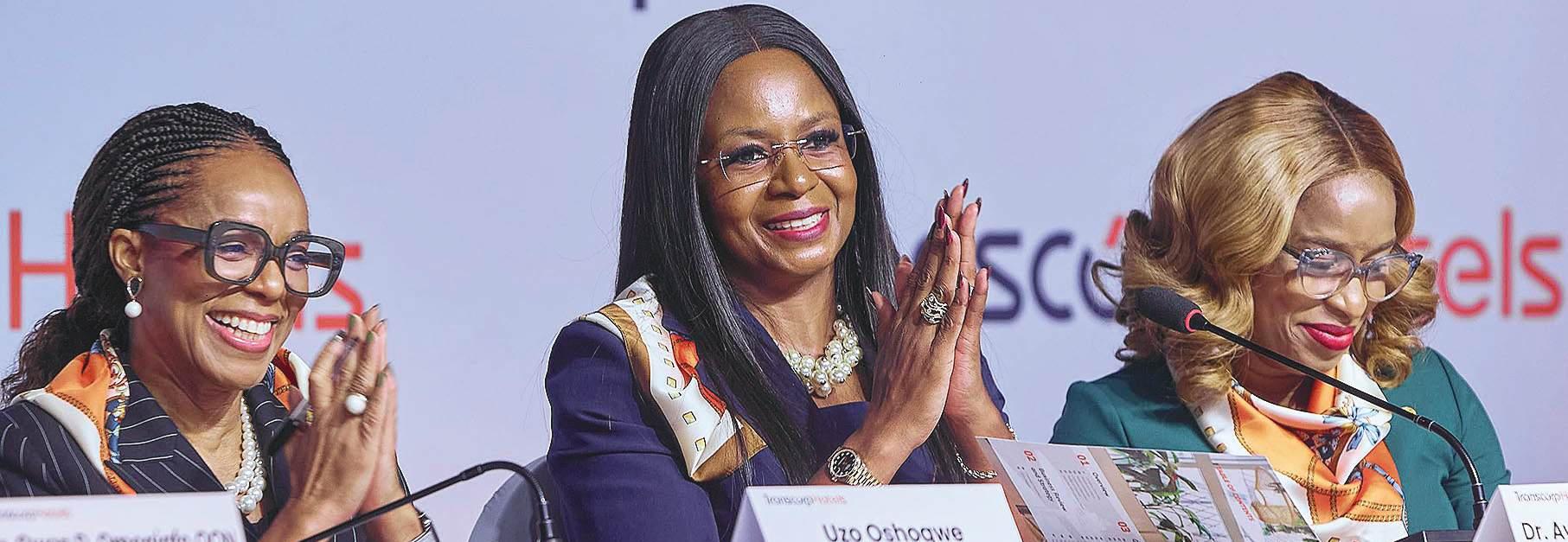
12TH ANNUAL GENERAL MEETING OF TRANSCORP HOTELS...
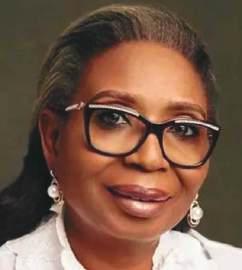
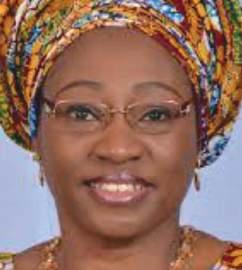
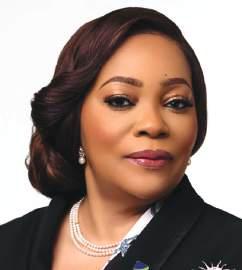
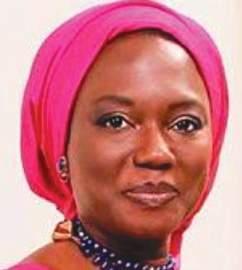
L-R: Managing Director and Chief Executive Officer, Transcorp Hotels Plc, Mrs. Uzoamaka Oshogwe; Chairman, Dr. (Mrs.) Awele Vivien Elumelu; and Company Secretary, Ms. Atinuke Kolade, during the 12th Annual General Meeting of Transcorp Hotels Plc, held at the Transcorp Hilton, Abuja, yesterday
Seplat Releases Full Year Audited
to $2.72bn Output up 148% to 131,596 bpd Reduces unit production operating cost by 5%
Emmanuel Addeh in Abuja
Seplat Energy Plc yesterday reported a 144.2 per cent surge in revenue to $2.726 billion for the full year ended December 31, 2025, as group production jumped 148 per cent to 131,506 barrels of oil equivalent per day (boepd), reflecting the first full year contribution from its offshore assets.
The company, which is listed on both the Nigerian and London Stock Exchanges, also posted a 5 per cent reduction in unit production operating cost to $15.7 per barrel of oil equivalent (boe), down from an adjusted $16.5/boe in 2024.
The results announcement was authorised for publication by the Chief Financial Officer, Eleanor Adaralegbe, and was made available by the Manager, Corporate Communications and Media Relations, Stanley Opara.
A review of the audited numbers showed that revenue rose from $1.116 billion in 2024 to $2.726 billion in 2025, an increase of $1.61 billion year-on-year. In the same vein, production climbed from 52,947 boepd in 2024 to 131,506 boepd in 2025, representing a 148 per cent growth, largely driven by offshore consolidation.
“Revenue (was) $2,726 million up 144.2 per cent (FY 2024: $1,116 million), reflecting a full year of contribution from offshore assets. (We had) unit production operating cost of $15.7/ boe down 5 per cent on prior year
(Adjusted 2024: $16.5/boe)
“Group production averaged 131,506 boepd, up 148 per cent from 2024 (52,947 boepd) reflecting the first full year of offshore consolidation, and within revised guidance. 4Q 2025 group production of 119,200 boepd, impacted by Yoho shutdown and other planned maintenance activities,” it emphasised.
Besides, adjusted EBITDA rose 137 per cent to $1.275 billion, compared with $539 million in 2024, while cash generated from operations surged 276 per cent to $1.166 billion from $310 million the previous year.
Seplat stated that during the period under consideration, net debt fell 25 per cent year-on-year to $673.3 million at the end of 2025, down from $897.8 million in 2024, with Net Debt-to-EBITDA improving to a low 0.53x, underlining what the company described as a robust balance sheet.
Operationally, Seplat said it recorded onshore production growth of 14 per cent year-on-year, supported by the completion of the Sapele Gas Plant and new well inventory. Offshore production increased 9 per cent on a pro-forma basis, though performance in the fourth quarter was moderated by the Yoho platform outage and planned maintenance. Group production in the fourth quarter stood at 119,200 boepd, it said. According to the statement, the company’s idle well restoration programme added 48,600 boepd of gross production capacity from 49 wells, exceeding internal expectations.
In the gas segment, the ANOH gas plant achieved first gas in January 2026 and is currently producing between 50 and 70 million standard cubic feet per day (MMscfd), with about 60,000 barrels of condensate in storage, the company said. Similarly, the East Area Project (EAP IGE), the first major offshore project delivery, reached a peak gross natural gas liquids (NGL) recovery of about 33 kboepd in February 2026, compared with a 2025 peak of roughly 20 kboepd.
On reserves, year-end 2025 independently audited 2P reserves, it said, declined to 1,001 MMboe from 1,043 MMboe in 2024, with liquids accounting for 67 per cent. However, combined 2P+2C resources increased by 181 MMboe to 2,486.6 MMboe from 2,305.4 MMboe in 2024, 55 per cent of which are liquids.
Seplat also announced that
it improved its environmental performance, reducing emissions intensity across its onshore assets to 24.3 kg CO2 per boe from 32.3 kg CO2/boe in 2024, a 24 per cent reduction year-on-year.
Capital expenditure for the year rose to $266.8 million from $208.1 million in 2024, while total completion payments to ExxonMobil stood at $326.2 million. The company confirmed that no MPNU contingent consideration was payable to ExxonMobil for 2025.
On shareholder returns, Seplat declared a fourth-quarter dividend of 8.3 US cents per share, comprising a 5.0 cents base dividend and a 3.3 cents special dividend. This represents an 11 per cent quarter-on-quarter increase and a 20 per cent year-on-year rise.
Total dividend declared for 2025 stood at 25.0 cents per share, equivalent to $150 million, marking
a 52 per cent increase over 2024, supported by strong free cash flow and balance sheet strength.
Commenting on the results, Chief Executive Officer, Roger Brown, said 2025 demonstrated Seplat’s ability to operate at scale following its offshore expansion.
He said the company had successfully executed key offshore projects while delivering its strongest onshore production performance in recent memory. Brown reiterated Seplat’s ambition, unveiled at its Capital Markets Day in September, to build an African energy champion and grow working interest production to 200,000 boepd by 2030.
“In 2025 we clearly illustrated our ability to operate at scale. We benefitted from successful execution of several key offshore activities that kick-started life for Seplat as an offshore operator, while at the same
time delivering onshore production performance that was the strongest in recent memory.
“At our CMD in September, we laid out our long-term ambition to ‘Build an African Energy Champion’, with a clear roadmap to grow working interest production to 200 kboepd by 2030. In 2025 we delivered the IGE replacement project offshore and the Sapele Gas plant onshore. In recent weeks we were delighted to achieve first gas at the ANOH Gas Plant and are on track to doubling Joint Venture gas volumes at Oso-BRT to 240 MMscfd in 2H 2026.
“Drilling will be a decisive factor in meeting our long-term growth ambitions and I am pleased to announce that the first Jack-Up drilling rig is contracted, in-country and set to arrive at Oso in 3Q to commence a multi-year, multi-well drilling campaign.
Shareholders of Transcorp Hotels Approve N13bn Dividend
James Emejo
Elumelu: Despite headwinds, revenue
Shareholders of Transcorp Hotels Plc, yesterday approved the sum of N13 billion as dividend for the 2025 financial year. This translated to a total N1.30 kobo per share. Shareholders also commended the management for continuously improving its financial performance over the years.
Chairman, Transcorp Hotels Plc, Dr. Awele Elumelu, said 2025 was a good year as revenues increased by 38 per cent to N97 billion compared to N70 billion in the preceding year. She said the growth was driven by a combination of elevated service standards.
After Recording 97% 2025 Budget Performance, NDIC Proposes N589.89bn for 2026
Adedayo Akinwale in Abuja
The Nigeria Deposit Insurance Corporation (NDIC) recorded 97 per cent implementation of its 2025 budget.
The Chairman of the House of Representatives Committee on Insurance and Actuarial Matters, Hon. Ahmed Jaha, made this observation during a budget defence session held on Thursday by the Managing Director of the agency, Mr. Thompson Sunday. Jaha stated: “I want to put this
on record that NDIC is one of the agencies operating strictly under the Fiscal Responsibility framework on cost-to-income ratio.
“Fifty per cent of its generated income must be remitted to a dedicated Consolidated Revenue Fund account of the Federal Government, while the remaining 50 per cent is retained to run the agency.
“Despite this limitation, NDIC has achieved nearly 97 per cent budget implementation for 2025. Meanwhile, some other
agencies recorded zero per cent performance, particularly on their capital components.
“This achievement is largely because NDIC is a self-generating, government-owned enterprise that manages its revenue efficiently within the fiscal responsibility guidelines.”
Earlier in his presentation, the NDIC Managing Director proposed a total budget of N589.89 billion for the 2026 fiscal year.
He explained that the 2026 proposal represents an increase
of N151.22 billion over the 2025 budget.
Sunday stressed that the projected total expenditure for 2026 stands at N250.46 billion, representing 50 per cent of the Corporation’s projected income, in compliance with the cost-to-income ratio policy.
The agency also projected a surplus of N254.74 billion for 2026, of which 50 per cent amounting to about N252.60 billion will be remitted to the Federal Government in line with statutory requirements.
She said, “We saw an exceptional demand for our food and beverage offerings while our relentless focus on service excellence drove repeat business.”
Awele said despite inflationary pressures, the company maintained strong profitability as Profit After Tax (PAT) rose N32.8 billion, a 45 per cent year on year growth – demonstrating both revenue strength and improved operational efficiency.
She said, “As we look ahead to 2026, I will like to reaffirm our ongoing focus on the development of a new hotel in Lagos. Transcorp Hotel, Ikoyi – a flagship 5-star property set to revolutionize high-end accommodation and premium guest experience in Lagos.
“As we anticipate 2026, it is essential to remain mindful of the potential challenges presented by geopolitical tensions and macroeconomic uncertainties in various parts of the world. Nonetheless, the long-term outlook for the hospitality industry remains promising.”
Oshogwe, disclosed that the company is partnering with Transcorp Power to explore other options for cheaper power. She also discussed its revenue optimization strategy for 2026. Oshogwe said, “One of the initiatives we implemented towards the end of last year was the dual gas burner system. That means we’re using gas to generate power for all our boilers. If you think about the number of boilers we have across 667 rooms, that’s significant.
“Not only does that save costs, it is also environmentally friendly. We are also working with Transcorp Energy and looking at renewable energy solutions. That brings sustainability and the ESG factor into our operations.
“For 2026, our focus is on three key areas. Number one is relentless focus on revenue growth. That means putting our funds into projects that have strong capital appreciation and a multiplier effect in revenue generation. Funds are limited, so we must ensure that whatever projects we invest in have a multiplying effect on revenue.
in Abuja and Kayode Tokede in Lagos
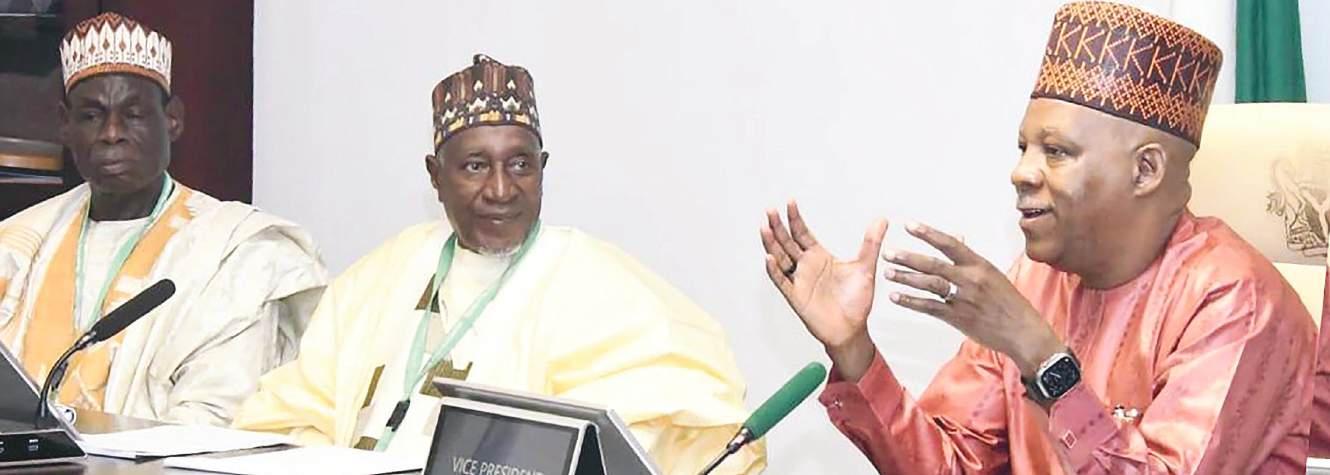
MEETING WITH KANO ASSOCIATION OF BUSINESS COMMUNITY...
FG Ready to Democratise Credit Access,
Inaugurates CREDICORP Board
Shettima: access to consumer credit vital to Nigeria becoming a trillion-dollar economy Says we’re targeting 50% of working population by 2030 to consumer credit to at least 50 per cent of working Nigerians by 2030,” he said.
Vice President Kashim Shettima has inaugurated the Board of the Nigerian Consumer Credit Corporation (CREDICORP), saying access to consumer credit is critical to Nigeria’s ambition of becoming a one-trillion-dollar economy.
According to Shettima, President Bola Tinubu established the CREDICORP to build a trusted
credit infrastructure, provide catalytic capital to lower borrowing costs, and help Nigerians overcome long-standing cultural resistance to credit.
Speaking on Thursday in Abuja, when he inaugurated the board on behalf of the president, Shettima said the quality of life of Nigerians could not improve without closing the gap between access to capital and human dignity.
“A civil servant who earns honestly does not have to chase sudden wealth just to buy a vehicle, or save for ten years to buy one. A young professional should not remain in darkness simply because solar power must be paid for all at once,” the vice president said.
Shettima disclosed that in just one year of operation, CREDICORP had disbursed over N37 billion in consumer credit to more than
200,000 Nigerians, with over half of them accessing formal credit for the first time.
He said the organisation was specifically tasked with building credit infrastructure to bridge the trust gap between lenders and borrowers, providing wholesale capital and credit guarantees through its portfolio company.
“Ultimately, these critical jobs of CREDICORP will enable access
In Historic Move, NEPZA Issues Ododo License of Ajaokuta Free Trade Zone
Governor: It’s watershed in efforts to harness state’s diverse resources for citizens, eyes investors Ogunyemi urges states to jump-start their economies through economic zones
The Managing Director/Chief Executive, Nigeria Export Processing Zones Authority (NEPZA), Dr. Olufemi Ogunyemi, yesterday presented the license of the newly approved Ajaokuta Free Trade Zone to the Governor of Kogi State, Alhaji Ahmed Usman Ododo.
Speaking at the ceremony in Abuja, the governor said the recognistion will enable his administration to unlock the state’s vast mineral potential to better the lives of its people.
He said the license was a fulfillment of his campaign promises to the people, describing it as both an asset and achievements in office.
Ododo thanked the NEPZA MD for facilitating the approval in record time and promised to put the facility to good use.
the governor also thanked President Bola Tinubu who graciously granted approval for the establishment of the Ajaokuta Economic Free Trade Zone — about 4,000 hectares in a designated area in Ajaokuta.
The governor said, “Today, as
a servant of my people — having signed to serve them, to protect lives and livelihoods, and to make life easier for them — I have come personally to take ownership, to collect the licence and certificate of declaration of this Free Trade Zone, and to express the state’s readiness to welcome foreign direct investment and local investors into Kogi State.
“Kogi State is uniquely created by God Almighty. By virtue of our location, we are the only state in this country that borders 10 commercial cities, including the
The Chartered Institute of Personnel Management (CIPM) has lauded the National Youth Service Corps’ (NYSC) (SAED) programme for corps members, Seeking to partner the scheme on corps development
The Registrar and Chief Executive of the CIPM, Ms. Oluwatoyin Naiwo gave the commendation during a courtesy visit to the NYSC Director General, Brig.
Gen. Olakunle Nafiu, in his office in Abuja.
In a statement signed and issued by NYSC’s Director, Information and Public Relations (DIPR), Caroline Embu, the CIPM boss said, “We commend your visionary reform which is focused on skills development, digital innovation and employability, which are repositioning the Scheme as a powerful engine for national workforce readiness.”
She also indicated interest in supporting the NYSC to consolidate
its gains on youth mentorship, corps empowerment and national integration.
Naiwo stressed the need for corps members to be acquainted with the CIPM and guided appropriately for post-service opportunities.
To this end, she proposed a presentation by the body during NYSC orientation courses with a view to empowering corps members with ideas on workplace experience and structured career planning, among others.
FCT. We are richly blessed with about 32 different solid mineral deposits — coal, iron ore, lithium, gold, beryllium, and many others. We have them in abundance, but they have never fully worked for us.
“But Mr. President made a promise. When he came to campaign in 2023, he said — and I quote — ‘I cannot be President and Kogi State will not be prosperous’.
Shettima explained that the new board’s role was not ceremonial, as they were custodians of the organisation’s mission, adding that the long-term strength of the institution would depend on their “vigilance, integrity, sacrifice, and commitment”.
He directed board members to uphold Public Service Rules, Board Charter, and all applicable governance frameworks, warning that accountability and stewardship of public resources are non-negotiable.
Earlier, Chairman of CREDICORP, Otunba Aderemi Abdul, expressed appreciation to Tinubu for the vision behind the formation of CREDICORP and for the confidence reposed in them.
Abdul said the establishment of the corporation marked an important step towards strengthening the country’s financial architecture.
He assured Tinubu that the board understood its responsibility and will guide the institution to deliver meaningful benefits to Nigerians.
Managing Director/CEO of
CREDICORP, Uzoma Nwagba, recalled watching Tinubu saying 20 years ago that consumer credit was one of the major tools that will improve the lives of Nigerians. Nwagba stated that over the past 18 months, the institution had benefited more than 200,000 Nigerians, including students. He assured that the presidential vision behind CREDICORP would not be taken lightly, as the team considered their appointments a unique, once-in-a-lifetime opportunity. Other members of the board inaugurated included Olanike Kolawole, Executive Director, Operations; Aisha Abdullahi, Executive Director, Credit and Portfolio Management; Dr. Armstrong Ume-Takang (MD, MoFI), Representative of MoFI; Engr. Bisoye Coke-Odusote (DG, NIMC), Representative of NIMC; and Mohammed Naziru Abbas, Representative of FMITI. Others included Marvin Nadah, Representative of FCCPC; Chinonyelum Ndidi, Representative of Federal Ministry of Finance; Mohammed Abbas Jega, Independent Director; and Toyin Adeniji, Independent Director.
The Alternative Bank Taps IIFM Standards to Fast-Track, Strengthen Non-Interest Banking
The Alternative Bank (AltBank) has joined the International Islamic Financial Market (IIFM), the global standard-setting body for Islamic finance documentation and market practice.
The membership aligns the bank with internationally recognised frameworks used across major Islamic finance jurisdictions, reinforcing the structure, execution and credibility of its Shari’ah-compliant transactions. As part of the integration, AltBank will align its interbank liquidity documentation with IIFM’s Master Collateralised Murabahah Agreement (MCMA) framework and plans to
unveil its first ready-to-sign documentation pack alongside a streamlined counterparty onboarding process in Q2 2026.
The pack will feature standardised templates, term sheets, execution checklists and onboarding requirements, aimed at cutting negotiation timelines and accelerating transaction closure.
The bank in a statement noted that this integration of global benchmarks into the local market is designed to provide Nigerian consumers and businesses with transparent, internationally recognised ethical banking products.
By adopting these standardised protocols, AltBank effectively reduces transactional complexities and enhances
the legal certainty of its offerings, further solidifying its reputation as a catalyst for sustainable financial solutions across the African continent.
Managing Director of The Alternative Bank, Hassan Yusuf stated: “If non-interest banking is going to mature in Nigeria, we have to stop improvising. We’re aligning with global standards so transactions are clear and built for scale.
“By adopting these international benchmarks, we are enhancing the transparency and efficiency of our operations and also ensuring that our customers and partners can move with confidence, whether it’s a modest facility or a major transaction,” Yusuf added.
Nume Ekeghe
James Emejo in Abuja
Deji Elumoye in Abuja
L-R: Members of the Association of Kano Business Community, Alh. Ali Balarabe; Alhaji Muhammed Adakawa; President of the Association, Alhaji Sani Bako; and Vice President Kashim Shettima, during a meeting with the Kano Association of Business Community at the Presidential Villa, Abuja, on Wednesday
PHOTO: GODWIN OMOIGUI
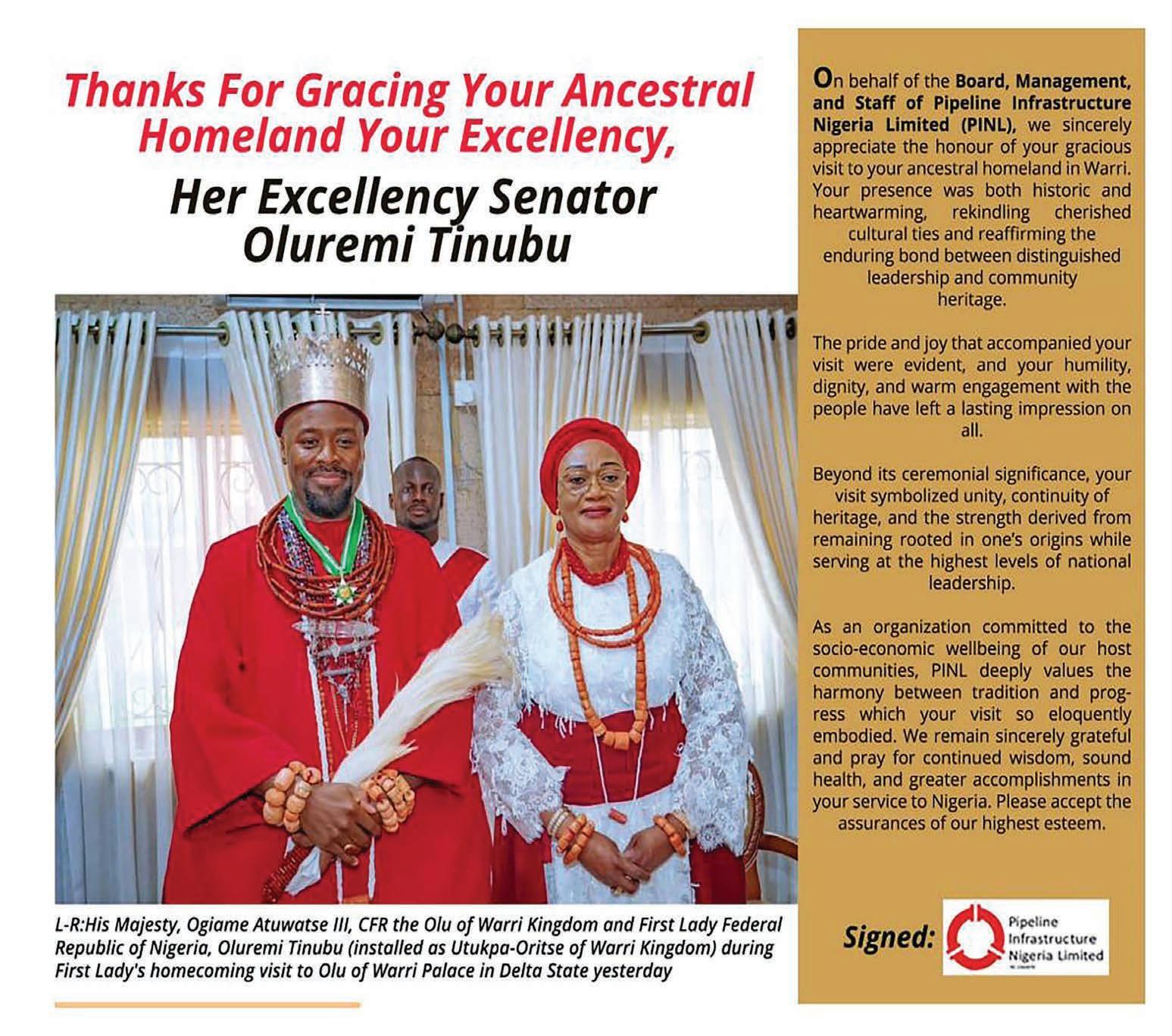
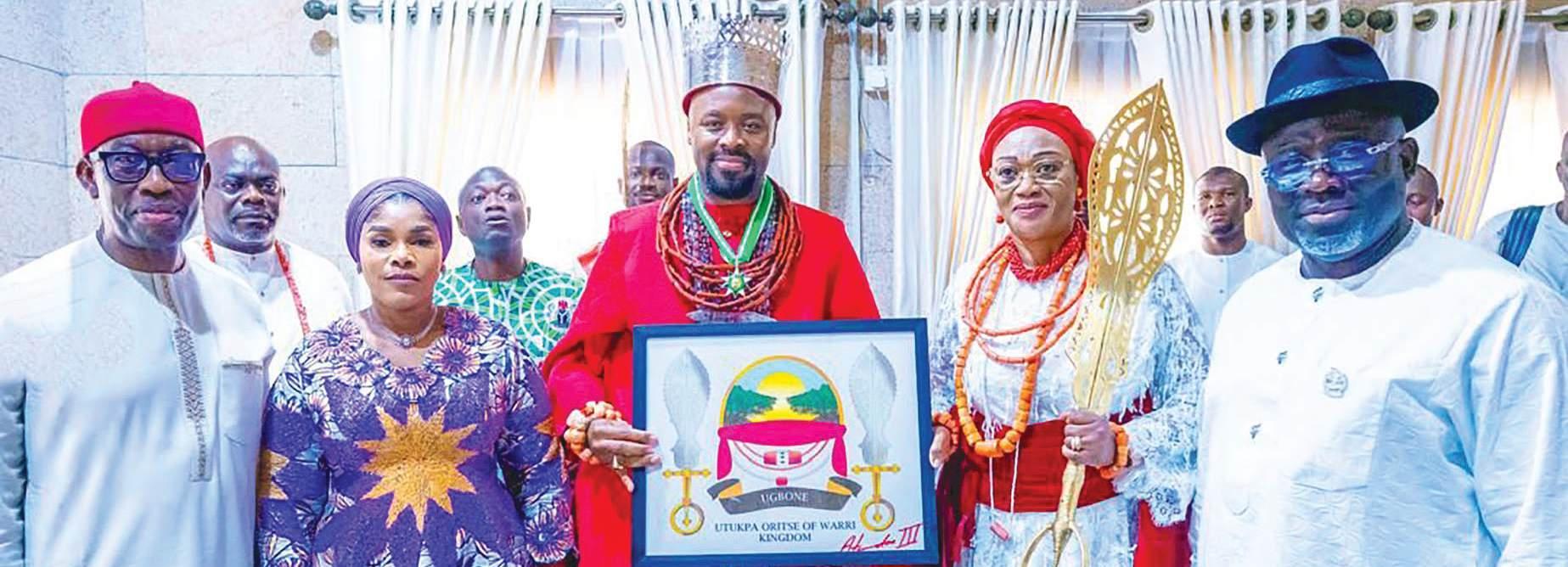
REMI TINUBU CONFERRED WITH THE UTUKPA ORITSE OF WARRI KINGDOM...
L-R: Former Governor of Delta
FCCPC’s Interim Report Indicts Local Airlines for Price Fixing in Festive Season
Says
operators hiked tickets despite relative stability in fuel price, government taxes, foreign exchange Tunji Bello: Probe aims to ensure market outcomes remain consistent with competition, consumer protection principles Commission expands investigation to foreign airlines
James Emejo in Abuja
Federal Competition and Consumer Protection Commission (FCCPC), yesterday, announced that it had uncovered patterns of price manipulation perpetrated by some local airlines during the last festive season.
The commission disclosed that the findings were contained in the interim report released by its department of surveillance and investigations, following an industrywide investigation earlier in January.
A statement issued by FCCPC’s Director, Corporate Affairs, Mr. Ondaje Ijagwu, stated that the forensic exercise benefitted from data collated by FCCPC from airlines operating local routes in the country.
The report compared domestic airline pricing from the December 2025 festive period with post-peak January 2026 fare levels.
Preliminary analysis indicated that fares recorded during the December peak were materially higher than those observed in the post-peak period across several routes, despite relative stability in critical operating variables, like fuel price, government taxes, and foreign exchange.
The differences observed in fares appeared to reflect airlines’ arbitrary
pricing decisions, including yield management and capacity allocation, rather than any variation in regulatory fees, the statement added.
Commenting on the interim report, Executive Vice Chairman/ Chief Executive, FCCPC, Mr. Tunji Bello, said the commission’s role was not to disrupt legitimate commercial activity, but to ensure that market outcomes remained consistent with competition and consumer protection principles under the law.
Bello added that the review was part of the commission’s statutory responsibility to promote competitive markets and safeguard consumers, adding that it is conducting further structural and route-level analysis before reaching any conclusions.
He said, “This assessment is intended to provide clarity on pricing behaviour during predictable peak travel periods.
He noted that the Commission is conducting further structural and route-level analysis before reaching any conclusions.
“It is important to emphasise that this is an interim report. Our next action will be dictated by full facts established at the end of the review exercise. Then, the commission will decide whether any regulatory guidance, engagement or enforcement steps are necessary,
strictly in accordance with the law.”
Bello also hinted that foreign airlines will come under FCCPC’s radar after the ongoing review of local airlines in view of widespread complaints of exploitative fares they allegedly charged Nigerians on certain routes compared to fares in neighbouring countries that were
of equal distance.
The interim report further established that route-level analysis showed that higher fares coincided with periods of reduced seat availability during predictable seasonal demand peaks, adding that on some high-density routes, peak fares were clustered within relatively narrow
ranges across several operators.
The commission stated, “For instance, on certain corridors like Abuja-Port Harcourt, peak fares were several times higher than corresponding post-peak levels.
On selected routes, the difference in the price of a single ticket reached approximately N405,000.
“Median fares across the sampled routes also rose markedly during the festive window when compared with post-peak benchmarks.
“However, the interim report recognises that seasonal demand pressures, scheduling constraints and fleet utilisation may also affect pricing during peak travel periods.
FG, States Move to Bridge Funding Gaps on Nutrition Supplements for Pregnant Women
Onyebuchi Ezigbo in Abuja
The federal government has commenced engagement with key stakeholders, including representatives of Federal Ministry of Health and Social Welfare; Ministries, Departments, and Agencies (MDAs); development partners, such as UNICEF and the Gates Foundation; and other nutrition actors, to review findings and validate technical recommendations from the anaemia intervention baseline study conducted across 19 states and the Federal Capital Territory (FCT).
The development emerged at a two-day Project Report Validation
Workshop on formative study to establish the baseline for anaemia funding commitment through Child Nutrition Funds and level of MMS uptake across PNNS and UNICEF-supported states, held in Abuja on Thursday.
Chairman, Steering Committee on Nutrition, at Civil Society-Scaling Up Nutrition in Nigeria (CS-SUNN), Mr. Sodangi Chindo, said government had been implementing strategies for anaemia prevention and was now introducing Multiple Micronutrient Supplementation (MMS) in Nigeria.
Explaining the new direction of Nigeria’s campaign against anaemia
in pregnant women, Chindo said the country was currently transitioning from use of Iron Folic Acid (IFA) to Multiple Micronutrient Supplementation (MMS), which was more expensive but beneficial.
He said one of the key objectives of the workshop was to determine the best approach to bridging the financing gap as well as ensuring community engagement and sensitisation crucial for MMS adoption.
According to him, the plan is to disseminate information regarding MMS and to engage in sensitisation and community mobilisation, highlighting benefits of MMS over IFAS.
WHO: Nigeria Making Significant Progress in Malaria Control
Linus Aleke in Abuja
The World Health Organization (WHO) has affirmed that Nigeria is recording significant progress in malaria prevention and control, citing steady declines in infection rates and improved access to preventive and treatment services nationwide.
The global health body attributed the gains to strengthened surveillance systems, wider distribution of insecticide-treated nets, expanded seasonal malaria chemoprevention programmes,
and improved case management. These combined interventions, it noted, are now yielding measurable results.
Speaking at the National Dissemination Meeting of the Agenda of the Enhance Project, organised by Malaria Consortium in collaboration with state authorities, WHO Malaria Programme Manager, Dr. Lynda Ozor, said a Malaria Indicator Survey conducted last year confirmed the downward trend in prevalence.
According to her, malaria prevalence stood at 42 per cent
in 2010, dropped to 22 per cent in 2021, and has declined further based on recent data.
She described the progress as evidence that Nigeria has taken malaria control seriously by implementing broad, integrated strategies across the country.
“We are now seeing the benefits of those efforts,” she said.
Addressing concerns about the safety of the malaria vaccine currently being administered in a few states, Dr. Ozor stressed that WHO recommended the vaccines only after rigorous evaluation.
She explained that WHO subjects medical products to extensive testing before approval, while Nigeria’s regulatory authorities, including the National Agency for Food and Drug Administration and Control (NAFDAC), also conduct independent assessments before products are deployed locally.
She categorically dismissed claims that the vaccines cause depopulation or hidden harmful effects, describing such assertions as misinformation often spread by anti-vaccine groups.
Citing the RTSS vaccine as
an example, she noted that it underwent approximately 34 years of research and development, including extensive Phase Three trials.
The vaccine, she added, has limited side effects similar to many medical products, such as mild headache, and is safe for human use.
While acknowledging that vaccine hesitancy is not new, she observed that many communities had eagerly anticipated the malaria vaccine and welcomed its introduction.
Chindo stated, “We are looking at anaemia prevention holistically; where is the baseline and what level of funding do we need when we are introducing MMS. Though MMS is now in the ANC list, what has been in use is the IFA.
“So, we are also looking at what will be the funding gap as the country is transiting from IFA to MMS which though more expensive is more beneficial to pregnant women.”
He said as part of the efforts to sensitise communities on the importance of MMS, CS-SNN was engaging the media and deploying over 450 field staff across the country to help in sensitisation and mobilisation of communities to the fact that the country was transitioning from using IFA to MMS and its benefits.
One of the resource persons at the workshop and a nutrition expert from the University of Abuja, Professor Kola Anigo, said more budget allocation for nutrition was being advocated because MMS had been found based on research by World Health Organisation (WHO) to reduce low birth weight, and help to reduce anaemia in mothers.
Anigo stated, “What we are using before now is the iron and folic acid, but this one contains 15 micronutrients. So, the folic acid and the iron is also there, in addition to other micronutrients.
State, Dr. Ifeanyi Okowa; First Lady of Delta State, Deaconess Tobore Oborevwori; the Olu of Warri Kingdom, Ogiame Atuwatse III; First Lady of Nigeria, Senator Oluremi Tinubu; and Governor of Delta State, Rt. Hon. Sheriff Oborevwori, after Senator Tinubu’s conferment with the title of Utukpa Oritse of Warri Kingdom by the Olu of Warri Kingdom on Thursday
W/Bank, Stakeholders Warn Inadequate Investment in Early Childhood Risks Nigeria’s Long-term Productivity, Growth
Ritgak Gyado: Demographics alone do not guarantee prosperity Ikemesit Effiong: Early years remain one of biggest leaks in nation’s growth strategy
James Emejo in Abuja
World Bank has warned that Nigeria may be unable to meet its long-term growth aspirations if it fails to invest significantly in human capacity development, particularly at the early childhood stage.
World Bank Lead for the Early Years Programme, Dr. Ritgak Tilley Gyado, said Nigeria’s future was not being decided in boardrooms or elections alone but also in how it positioned the youngest population from childhood.
Gyado spoke at the evidence lab on “Early Childhood, Productivity, and Nigeria’s Growth Choices”, which was convened by SBM Intelligence, in collaboration with World Bank and leading Nigerian think-tanks in Abuja.
She said, “We often answer this politically or economically. We point
to elections, macro-economic reforms, infrastructure, or job creation and markets. But today invites us to consider something different.
“Can Nigeria become a trilliondollar economy by 2050 without deliberately investing in its youngest citizens? By then, the cohort of children that are aged 0-5 will be 15-21 years, ripe, active and ready to participate in the labor force or about to be.”
Gyado added, “If sustainable development implies stronger human capital. What is the state of Nigeria’s human capital today?
“Recent global evidence shows that progress in human capital outcomes has slowed across much of the world, with many countries experiencing stagnation in learning, health, and skills despite economic growth.”
She said if sustainable growth was linked to human capital, Nigeria might
have to re-strategise on how serious it took its childhood population to achieve the country’s future growth outcomes.
According to the World Bank lead, “Nigeria is a young country, and we often describe this as the nation’s greatest advantage. It is set to be amongst the top four most populous nations by 2050 with close to 180 million young people ready to fuel the economy.
“Demographics alone do not guarantee prosperity. A young population becomes an asset only when its youngest children develop the capabilities to thrive as adults.
“Otherwise, demographic growth can deepen inequality rather than reduce it. This is why early childhood is not only about children.
“It is about productivity. It is about stability. It is about the long-term trajectory of national development.
The Nigeria we hope to see in 2045 or 2050 is already taking shape today in homes and communities across the country.”
According to her, the dialogue aims to, among other things, shape how nations define problems even before governments decide how to solve them.
Gyado said, “If early childhood is framed narrowly, either as child health or as nutrition alone or as early learning, responses remain fragmented.
“If it is understood as the foundation of human capability, entirely different policy conversations become possible.”
Managing Partner, SBM Intelligence, Mr. Ikemesit Effiong, said though Nigeria had made progress on some child survival indicators over the last decade, data indicated that the early years remained the biggest
leaks in the nation’s growth strategy.
Effiong said, “The 2024 Demographic and Health Survey shows that under five mortality has fallen to about 110 deaths per 1,000 live births, down from 132 in 2018, yet neonatal deaths have remained stubbornly around 41 per 1,000 live births. In plain language, almost half of the children we lose before age five die in the first month of life.
“At the same time, about 40 per cent of children under five in Nigeria are stunted, a marker of chronic undernutrition and poor early environments.
“These are not just health statistics; they are early warnings about the future workforce, future taxpayers and future innovators our economy will either have or not have.”
Effiong stated, “Stunting and early deprivation are strongly associated with lower school attainment, reduced
earnings and higher likelihood of poverty in adulthood.
“Global evidence suggests that losses in the first 1,000 days of life are very difficult and often impossible-to fully reverse later, even when we invest heavily in schooling or skills programmes.
“When we look at the scale of undernutrition, preventable deaths, and poor early learning environments in Nigeria, what we are really observing is a productivity crisis that arrives 20 years before someone first searches for a job.”
Varsity Nigeria Pushes for Establishment of Lagos International Financial Centre
National alignment, capacity building programme ends at Cambridge
Emmanuel Addeh in Abuja
Nigeria has reached an important milestone in its effort to establish the Lagos International Financial Centre (LIFC), a flagship national economic initiative of the federal government, the Lagos state government, and the private sector, led by EnterpriseNGR as a strategic partner driving private sector coordination and implementation readiness.
To this end, on Monday, February
23, 2026, a select group of 17 senior Nigerian government officials, including legislators, financial regulators, and private sector leaders directly responsible for shaping policy, regulation, and execution convened at the Møller Institute, University of Cambridge, United Kingdom. Specifically , this meeting was for a high-level national alignment and capacity building programme, which held over a period of two days, as part of phase two of the
LIFC’s development.
This phase, a statement said yesterday, builds on the foundational capacity-building programme held in October 2025, which brought together 15 senior officials from the Lagos state government and EnterpriseNGR for the first phase of training, designed to strengthen institutional capacity and ensure coordinated public-private sector readiness for the Centre’s establishment.
The LIFC is designed to establish a globally benchmarked, ring-fenced financial jurisdiction within Nigeria to attract international investment, deepen capital markets, strengthen confidence in Nigeria’s financial system, and accelerate national economic transformation.
It is expected to generate significant economic benefits for Nigeria, including increased foreign direct investment, high-value job creation, enhanced fiscal revenues, and
Dele Oye: Without Fiscal Prudence, Others, Nigerians May Not Benefit from Naira’s
Rebound
Chairman, Alliance for Economic Research and Ethics (AERE), Hon. Dele Kelvin Oye, yesterday said contrary to suggestions, Naira’s rebound may not translate to immediate economic opportunities for Nigerians.
Oye said without fiscal prudence, private-sector facilitation, and inclusive spending, the local currency appreciation will remain a mere “market statistic”, devoid of real impact for the common man.
He said while Naira’s rebound reflected real reform, a credible CBN, and Nigerian entrepreneurial grit, fiscal dominance, huge deficits, debt service, and inefficient spending remained counterweights.
The Naira had strengthened in recent weeks, trading around N1,340/$ on the parallel market as of February 20, 2026, compared to lows beyond N1,600 recorded previously.
However, Oye spoke against the backdrop of recent comments by Vice-President Kashim Shettima, who suggested the local currency could have appreciated even further to N1,000 per dollar under different intervention conditions.
He said despite the recent rebound of the Naira, amid several efforts by the administration of Bola Ahmed Tinubu to drive economic prosperity through policy reforms, many Nigerians may not experience improved living conditions or expanded economic opportunities.
He said, “Vice President Shettima called the CBN’s latest intervention ‘generous.’ The bank has kept a tight monetary stance, cleared almost all FX backlogs, and allowed licensed Bureau De Change (BDC) limited access ($150k weekly cap from 10th Feb 2026) to smooth liquidity.
“That predictability — raising/ reducing rates when needed, avoiding ad-hoc controls — has anchored expectations and helped reserves recover to over $50 billion gross, the highest in 13 years. Monetary policy looks disciplined.
“Here’s where the story gets sticky. Fiscal dominance is when government spending and borrowing overpower the central bank’s inflation fight — a tug-of-war between the Finance Ministry and the CBN, often ending in higher inflation or instability. Nigeria is living with that tension.
“The 2026 budget, titled ‘Budget of Consolidation, Renewed Resilience and Shared Prosperity,’ is
approximately N58.18–N58.47 trillion ($37.7–$41.5 billion) with a deficit of N23.85 trillion (4.28% of GDP).
“Debt service eats up a huge slice
of revenue, and actual receipts keep falling short of projections, even as Federation revenue rose from N16.8 trillion (2023) to N31.9 trillion (2024).”
stronger global competitiveness for Nigeria’s financial and professional services sector.
The programme has the Lagos state government and EnterpriseNGR playing a key role in supporting programme development, stakeholder alignment, and private sector engagement.
The Cambridge programme, the organisers said, marked a critical step in moving the LIFC from planning toward implementation.
As for the programme’s strategic national importance, the statement noted that the LIFC directly supports and aligns with Nigeria’s key national and sub-national development frameworks.
These, it said, include: The Renewed Hope Medium-Term Plan (2026–2030); Nigeria Agenda 2050 and The Lagos State Development Plan 2052.
Besides, the initiative, it stressed, also supports the government’s
strategic objectives to: Increase foreign direct investment inflows; strengthen financial regulation and market integrity; enhance Nigeria’s global investment competitiveness and position Nigeria as Africa’s premier financial and professional services hub and preferred investment destination.
The establishment of the LIFC, it said, is intended to address structural constraints that have historically limited Nigeria’s ability to fully compete for global capital by creating a globally aligned financial environment within Nigeria.
Talking about what was achieved at Cambridge, the statement stated that the Cambridge programme was designed to ensure national alignment and institutional readiness as Nigeria enters the second phase of the LIFC’s development. The programme, it explained, is focused on: Co-creating a shared
Continued on page 35
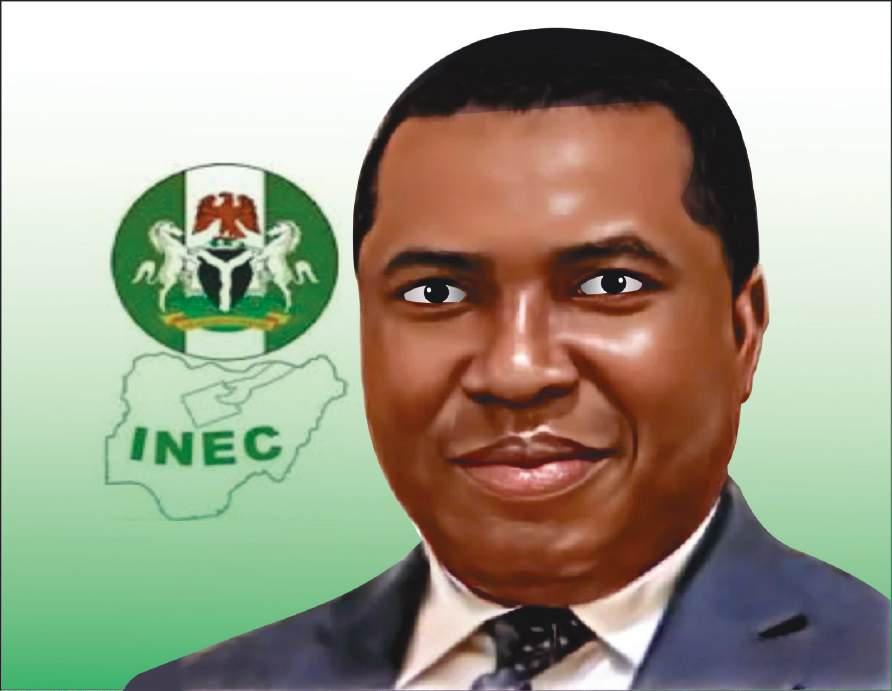
INEC FIXES JANUARY 16 FOR PRESIDENTIAL, N’ASSEMBLY ELECTIONS, GOVERNORSHIP, ASSEMBLY FEBRUARY 6
Mohammed Haruna, in a statement, in Abuja, said the governorship and state Houses of Assembly elections would now hold on Saturday, February 6, 2027.
Haruna stated, “Following the repeal of the Electoral Act, 2022 and the enactment of the Electoral Act, 2026, which introduced adjustments to statutory timelines governing pre-election and electoral activities, the commission has reviewed and realigned the schedule to ensure full compliance with the new legal framework.
“The Independent National Electoral Commission (INEC) approved and issued a Revised Timetable and Schedule of Activities for the 2027 general election.
“Accordingly, the commission has resolved as follows: Presidential and National Assembly elections will now hold on Saturday, 16th January 2027.
“Governorship and state Houses of Assembly elections will now hold on Saturday, 6th February 2027.”
Haruna added that in accordance with the approved Schedule of Activities, conduct of party primaries, including resolution of disputes arising from primaries, would commence on April 23, 2026 and end on May 30, 2026.
He stated that presidential and National Assembly campaigns would commence on August 19, 2026, while governorship and state Houses of Assembly campaigns would commence on September 9, 2026.
“As provided by law, campaigns shall end 24 hours before Election Day. Political parties are strongly advised to adhere strictly to these timelines. The commission will enforce compliance with the law,” Haruna said.
He explained that the revised timetable and schedule of activities for the 2027 general election, reflecting the adjustments, had been issued and could be accessed on the commission’s official website and other official communication platforms.
In addition, Haruna stressed that
the Osun State governorship election, earlier fixed for Saturday, August 8, 2026, had been rescheduled to Saturday, August 15, 2026.
He said the commission stated that some activities in respect of the Ekiti and Osun governorship elections had already been conducted.
Haruna stated, “However, the remaining activities will now be implemented strictly in accordance with the Electoral Act, 2026.”
He maintained that the revised dates were consistent with the Constitution of the Federal Republic of Nigeria, 1999 (as amended) and the Electoral Act, 2026.
The commission said the submission of personal particulars of candidates for presidential and National Assembly elections would on August 1, 2026, while governorship and state Houses of Assembly would hold on August 29, 2026.
The electoral body stressed that the commencement of campaigns by political parties for presidential
and National Assembly polls would commence on August 19, 2026, while governorship and state Houses of Assembly campaigns would commence on September 9, 2026. It pointed out that the last day for the replacement of withdrawn candidates by political parties for presidential and National Assembly elections would be August 29, 2026, while governorship and state Houses of Assembly would be September 26, 2026.
INEC said the last day for the submission of nomination forms by political parties for presidential and National Assembly elections would be September 12, 2026, while governorship and state Houses of Assembly would be September 26, 2026.
The commission reiterated that the publication of the list of nominated candidates for presidential and National Assembly elections would be done on January 14, 2027, while governorship and state Houses of Assembly was February 6, 2027.
Dr. Ritgak Tilley Gyado
James Emejo in Abuja
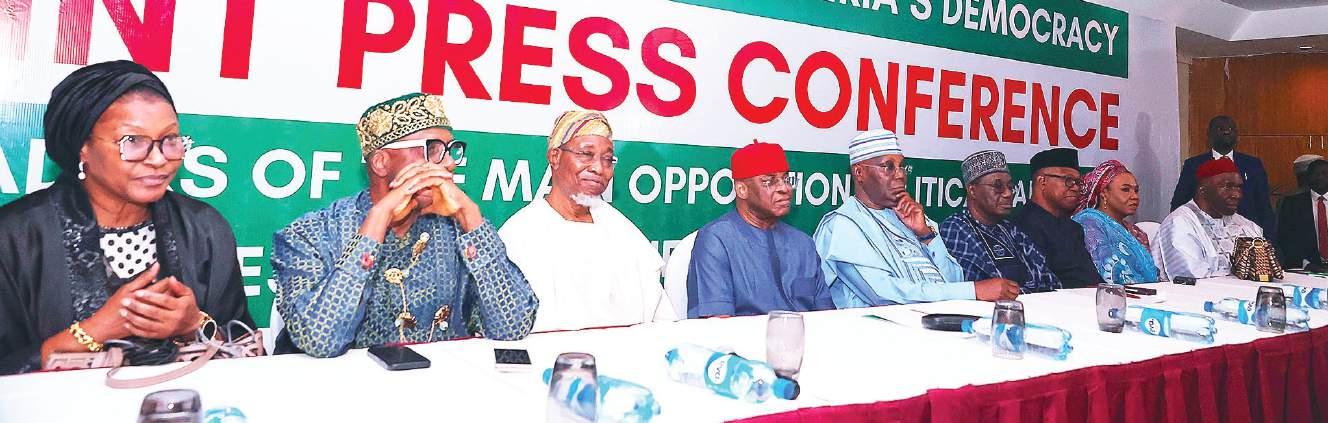
JOINT PRESS CONFERENCE BY OPPOSITION PARTIES...
L-R: Senator Ireti Kingibe; Former Minister of Transportation, Rt. Hon. Rotimi Amaechi; Former Governor of Osun State, Ogbeni Rauf Aregbesola; Former President of the Senate, Senator David
Former Vice President, Alhaji Atiku Abubakar; Chairman of NNPP, Alhaji Ajuji Ahmed; 2023 Presidential Candidate of the Labour Party, Mr. Peter Obi; African
Haruna; and Former National Chairman of ADC, Chief Ralph Nwosu, during a joint press conference by
FG: First Gas from $2.8bn AKK Pipeline Project Expected in July 2026
NNPC says fleet operators cutting fuel cost by 60% using CNG Portland Gas reiterates commitment to clean, reliable gas solutions
The federal government yesterday declared that the first gas from Ajaokuta-Gwagwalada segment of the $2.8 billion Ajaokuta–Kaduna–Kano (AKK) Pipeline Project will flow by July 2026, marking a structural turning point in Nigeria’s gas-to-power and industrialisation agenda.
Speaking at a stakeholders’ workshop on “Emerging Investment Opportunities in Mini-LNG/LCNG Stations, Gwagwalada, Abuja,” hosted by Portland Gas in Abuja, Executive Vice President, Gas, Power and New Energy of the Nigerian National Petroleum Company Limited (NNPC Ltd), Olalekan Ogunleye, said the facility would advance Nigeria’s gas commercialisation objectives, generate employment, and offer bankable returns under market-reflective pricing.
In his keynote address, titled, “Powering the Future: Leveraging CNG Infrastructure to Drive Nigeria’s Energy Transition and Sustainable Growth,” Ogunleye said Nigeria had decisively shifted from being an oil-dominant producer with associated gas to a “gas-first nation” strategically, commercially and operationally.
He said the transition was being driven under the “Decade of Gas” agenda and NNPC Gas Master Plan 2026, with measurable production targets of 10 billion cubic feet (Bcf) per day by 2027 and 12 Bcf per day by 2030.
Represented at the event by Manager, Business Development, Suleiman Kachalla, Ogunleye reiterated that Nigeria currently held 210.54 trillion cubic feet (TCF) of proven gas reserves, among the largest on the continent, while domestic supply had already surpassed 2.0 Bcf per day, positioning
the country for accelerated industrial expansion.
He said the AKK pipeline, a flagship infrastructure project designed to connect gas-rich southern basins to demand centres in central and northern Nigeria, was expected to unlock industrial demand across the northern corridor, enable competitive power generation, stimulate manufacturing growth, and deepen auto-CNG and mini-LNG penetration.
He explained that Gwagwalada was strategic for Portland Gas’ Mini-LNG/L-CNG facility because of its positioning along the AKK Abuja take-off node and its role as a transport and logistics intersection linking Kogi and key northern hubs.
According to Ogunleye, the location presents strong demand fundamentals from transport and haulage fleets, small and medium-scale manufacturers,
Lagos AG Backs Tinubu’s
agro-processing clusters and real estate developments seeking stable and cost-efficient energy alternatives.
He stated, “At the heart of midstream transformation is the 614-km AjaokutaKaduna-Kano Gas Pipeline (AKK). The Ajaokuta-Gwagwalada segment is projected to be commissioned, with first gas flowing by July 2026, linking northern industrial zones to Nigeria’s gas fields, and structurally addressing National energy deficits.
“The countdown to July 2026 has begun. When the first valve opens in Gwagwalada, it will not simply release gas, it will release productivity, industrial growth, and economic renewal.”
Under the arrangement, NNPC said it will supply piped natural gas to the Portland Gas LNG/CNG production plant, which was expected to operate as a “mother station,” feeding mobile refuelling units and retail outlets to
Call for State Police, Says Centralised System Has Failed
Wale Igbintade
The Attorney-General and Commissioner for Justice of Lagos State, Lawal Pedro (SAN), has endorsed President Bola Tinubu’s call for the creation of state police, arguing that Nigeria’s centralised policing structure can no longer effectively address the country’s growing insecurity.
In a statement issued yesterday, Pedro backed the president’s push for a constitutional framework that would allow states willing and financially capable to establish and fund their own police forces.
According to him, many of Nigeria’s security challenges are localised crimes occurring within communities - particularly in rural areas, and require policing systems that are closer to the people.
“You will agree with me that the incidents that have increased insecurity in Nigeria today, such as banditry, kidnapping, terrorism, human trafficking, ritual killings, cultism, herdsmen-farmer clashes, ethnic and communal conflicts, and armed robbery, are largely local crimes occurring in different communities,” he said.
Pedro argued these crimes have persisted partly because the Nigeria Police Force, operating under a single federal structure, is overstretched and unable to adequately police the country’s vast territory.
“These local crimes have festered because of the inadequacy of the Nigerian Police Force to check them.
“This clearly shows that a single federal police system cannot adequately respond to security needs across the 36 states, the Federal Capital Territory and the various local government areas,” he stated.
He noted the rising wave of insecurity has exposed what he described as the structural weaknesses of a centralised policing model in a diverse federal system like Nigeria.
Pedro recalled that state and regional policing are not new concepts in Nigeria, pointing out that similar arrangements existed during the First Republic.
“It will be recalled that during the First Republic, Nigeria operated regional and local police formations. Therefore, state policing is not alien to our legal history,” he said.
While reaffirming his support
for the President’s proposal, Pedro acknowledged concerns that state governors could abuse state police for political or personal purposes.
However, he said such fears should not be grounds for outright rejection of the initiative.
“The major ground of opposition against state police is the fear that governors may abuse it. This concern is genuine; however, it is not enough to justify rejecting state police in Nigeria today,” he said.
Instead, he called for constitutional safeguards to prevent abuse and ensure accountability.
“What we need is a constitutional framework and safeguards that address these concerns. I believe that was the recent request of President Tinubu to the National Assembly,” Pedro added.
He proposed a unified policing structure integrating both federal and state police systems in line with Nigeria’s federal arrangement.
To achieve this, he suggested moving policing from the Exclusive Legislative List to the Concurrent Legislative List through constitutional amendment, thereby empowering states to establish their own police forces under national
guidelines.
According to Pedro, such guidelines should address recruitment, promotion, discipline, structure, operational control and welfare of police personnel nationwide.
create what he described as a robust virtual pipeline network.
It said the facility would advance Nigeria’s gas commercialisation objectives, generate employment and offer bankable returns under market-reflective pricing.
The NNPC executive emphasised that natural gas would anchor Nigeria’s energy transition pathway, stating that replacing diesel with LNG and petrol with CNG can reduce transport emissions by about 25 per cent while improving urban air quality.
According to Ogunleye, the federal government’s Zero Routine Flaring target for 2027 would further strengthen supply by capturing previously wasted gas and redirecting it into productive domestic use.
Ogunleye cited strong market signals supporting gas investments, including rising liquid fuel costs, expanding fleet conversion programmes, state-level CNG initiatives and growing industrial demand for captive power, stressing that fleet operators are already realising fuel cost savings of between 40 and 60 per cent through CNG adoption, significantly reshaping logistics economics and improving competitiveness.
With a national oil and gas investment target of $60 billion by 2030, he said the government and NNPC were prioritising infrastructure certainty anchored on the AKK
backbone, regulatory stability under the Petroleum Industry Act, scalable mini-LNG deployment models and market depth across northern corridors.
Ogunleye stressed that investors were no longer assuming pioneer risk but leveraging structured national momentum, visible demand growth and supportive policy alignment.
“The countdown to July 2026 has begun,” he said. “When the first valve opens in Gwagwalada, it will not simply release gas; it will release productivity, industrial growth and economic renewal,” he added. He assured Portland Gas of NNPC’s readiness to supply gas reliably along the AKK corridor and urged investors to align capital with the infrastructure and policy groundwork already laid.
Ogunleye stated, “The CNG sector has rapidly scaled: Over $200 million in private investment commitments; 300+ conversion centres nationwide and a target of 1 million CNG vehicle conversions by 2027. Each conversion reduces fuel imports, preserves foreign exchange, lowers transport costs, and strengthens macroeconomic stability.”
In his remarks, Chairman of Presidential Compressed Natural Gas Initiative (PCNGI), Ismaeel Ahmed, stated that a competitive gas economy required more than policy pronouncements, but also infrastructure.
Outrage Over Alleged Transfer of N100m Anambra Fund to Ex-IGP’s Son’s Account
David-Chyddy Eleke in Awka
There is outrage among citizens of Anambra State, over the alleged transfer of the sum of N100million from Anambra State Government account to the bank account of one Victor Egbetokun, said to be son of the ex-Inspector General of Police, Kayode Egbetokun.
Reports by Sahara Reporters revealed the money was transferred in four tranches of N25million each.
During a live television interview, Force Public Relations Officer, Benjamin Hundeyin, while reacting to this alluded that the allegation was true, and that the former IGP’s son confirmed it and
was advised to direct his account officer to reverse the money, and it was immediately done.
Despite this, the revelation has unsettled a lot of Anambra people who have expressed surprise at how Anambra finances are managed under Prof Chukwuma Soludo.
Others believe the transfer was more than just a coincidence as the money could have found its way into any other account, especially that of an Anambra indigene or contractor, than Mr. Egbetokun who has no business in the state.
As the topic dominates major discussions, a public affairs analyst and major critic of the state government, Kingsley Ubani, said: “The
question is how did the money get there? Out of the 36 states of the federation, it had to be Anambra State - a state managed by an acclaimed Professor of Economics that N100m will “miss road” and the state government failed to quietly retrieve it, until it became a matter for public discourse?
“The question now on the lips of Ndi Anambra is, who approved the transfer of the sum of N100m to the IGP son’s account and why? If the sum of N100m can be transferred in error without the sender knowing that he has made such an erroneous transfer, how much money has been transferred in error in the past?
Mark;
Democratic Congress representative, Hajiya Zainab Boni
opposition parties held at the Transcorp Hilton, Abuja
PHOTO: SUNDAY AGHAEZE
Emmanuel Addeh in Abuja
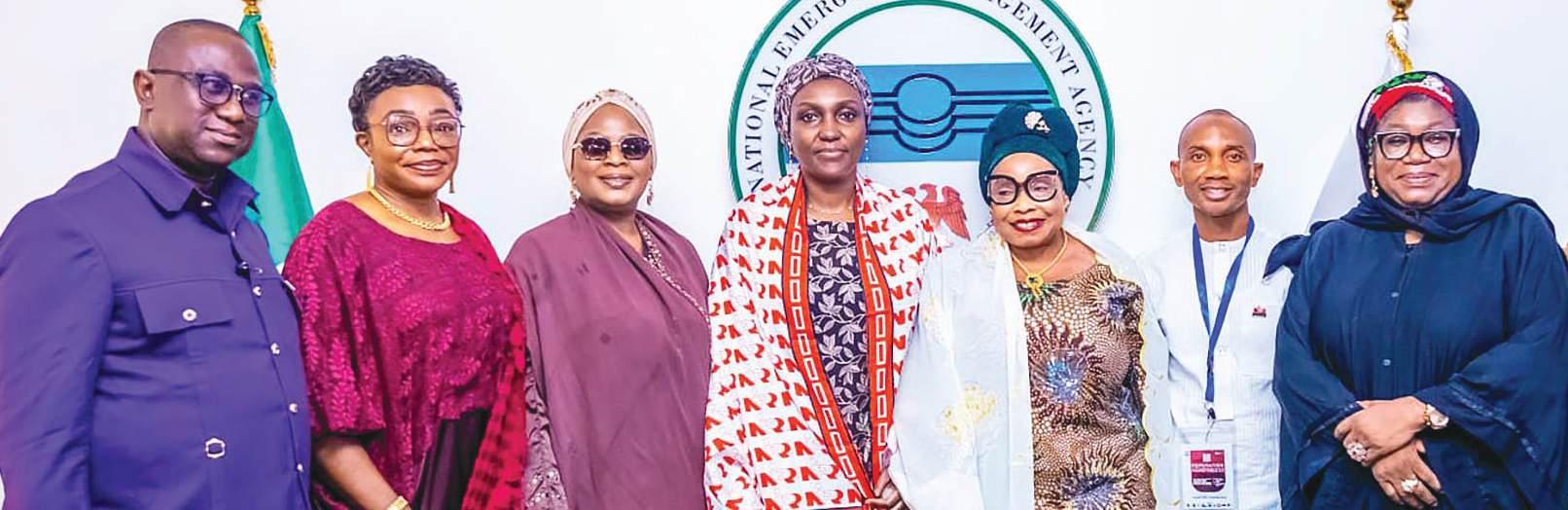
NIPR VISITS DG NEMA...
L-R: Public Relations Officer, Nigerian Institute of Public Relations (NIPR), Federal Capital Territory Chapter, Dr. Tope Ojeme; Fellow, NIPR, Mrs. Grace Ayoola; Fellow, NIPR, Hajiya Maryam Sanusi Mohammed; Director General, National Emergency Management Agency (NEMA), Mrs. Zubaida Umar; Chairman, Planning Committee for NIPR International Women’s Day, Hajiya
Chairman, NIPR FCT Chapter, Mr. Stanley Ogadigo; and member of NIPR, Mrs.
Nigeria’s Cyberspace Will Not Be Secured by Enforcement Alone, Fagbemi Warns
Seeks strengthening of anti-cybercrime agencies
Alex Enumah in Abuja
Attorney-General of the Federation (AGF) and Minister of Justice, Prince Lateef Fagbemi, SAN, has warned that for the country’s cyberspace to be secured, efforts must go beyond enforcement, to include the enhancement of the capacity of agencies to prevent cybercrime and related offences.
According to Fagbemi, the menace of cybercrimes is global and increasingly complex, with losses estimated in trillions of dollars annually.
He spoke on Thursday in Abuja, during the opening of National Cascade Leadership Training, focused on cybercrime prevention.
The Train-the-Trainer Leadership Retreat was organised by Joint Case Team on Cybercrime (JCTC), with support from Commonwealth Secretariat and UK Foreign, Commonwealth and Development Office (FCDO).
Represented by Director, Administration of Criminal Justice Reforms, Mrs Leticia Ayoola- Daniels, the minister observed that ransomware attacks had increased exponentially in recent years, and with online fraud schemes evolving with alarming sophistication.
He lamented that young people were being drawn into digital criminality at very early ages, with low barriers to
Peterside
entry; and sextortion, identity theft, cryptocurrency-enabled laundering, etc., continuing to test Nigeria’s enforcement architecture.
Fagbemi said, “It is imperative to note at this point that enforcement alone cannot address the challenge; prevention must be structured, messaging staying consistent, and capacity deliberately multiplied.”
He added, “Leadership in cybercrime prevention requires: discipline, humility, and consistency; that you speak clearly about risks and also about responsibility; and that you communicate about criminalized conducts to a 12-year-old in a language that can be understood while still preserving its authority.
“I, therefore, charge each participant to engage with seriousness of purpose, reflect deeply, commit fully, and turn learning into action.
“Our cyberspace will not be secured by enforcement alone, but by informed citizens, coordinated institutions, and principled leadership.”
Meanwhile, Ayoola-Daniels commended Commonwealth Secretariat for the Cyber Fellowship programme established to build a network of experts from Africa and the Caribbean to encourage cooperation, policy development, and capacity-building across the two regions.
She also commended the secretariat for awarding the fellowship to three Nigerians, including a member of Joint Case Team on Cybercrimes (JCTC), which, according to him, had translated into tangible benefit through the Ideas Incubator programme for the wider inter-agency team.
Ayoola-Daniels stated, “What is particularly compelling about this
retreat is its deliberate structure: it begins with identity, moves to message, and culminates in system.
“It recognizes that knowledge without confidence is ineffective, coordination without standardisation is fragmented, and training without monitoring is unsustainable. This is leadership architecture in action.”
Earlier, Head, Joint Case Team on Cybercrime, and Commonwealth Africa Cyber Fellow, Jamila Akaaga Ade, said the work being done through the cyber fellowship was invaluable and so was the exchange within the network, which she said had recorded some wins, the most recent being the endorsement of the Africa Cyber Toolkit in Fiji by Commonwealth
Law Ministers Meeting. Ade said, “This gathering is not accidental. It is intentional. It reflects a deliberate decision to pause from the urgency of case files, court schedules, intelligence reports, and inter-agency coordination, to strengthen the very foundation upon which all of that work rests, leadership, mind-set, and cohesion.
Nigeria’s First Lady, Oluremi Tinubu, Seeks Unity Among Itsekiris
First Lady Oluremi Tinubu, yesterday, called on all Itsekiris to come together, irrespective of interests, saying she wants to see unity among her maternal kinsmen and women.
Mrs. Tinubu made the call at the palace of Olu of Warri, in Warri, Delta State, during a homecoming reception organised for her.
The first lady revealed that she and the Warri monarch spoke a lot on the issue of unity in Itsekiri nation.
Mrs. Tinubu, who was accompanied by Ooni of Ife, Oba Adeyeye Enitan Ogunwusi, Ojaja II, and other prominent monarchs from the South-west, was conferred with the title of Utukpa-Oritse Iwere
Canvasses Strategic Business Re-Engineering
Warri Kingdom.
She expressed emotion at the reception and cultural displays to receive her into the rich oil city, describing her one-day visit to Warri as a homecoming filled with gratitude and pride.
The first lady thanked the Olu of Warri for the honour bestowed on her, and stated that special considerations were made to accommodate her within the traditional framework.
She described her Itsekiri heritage as foundational to her values and public life.
An elated First Lady, in appreciation of the chieftaincy title, said, “Ogiame had to rewrite the constitution (Itsekiri traditional principles) to accommodate me,
because I know Itsekiri doesn’t give title to someone, who already had title.”
While disclosing that her mother was still alive and sent greetings, Senator Tinubu stated that her husband, President Bola Tinubu, also sent his best wishes to the Itsekiris.
She said, “My husband, President Bola Ahmed Tinubu, who is also Commander-in-Chief of the Armed Forces, sends his greetings and asked me to thank you all assuring that Ijaws, Urhobos, Igbos and others will enjoy his administration.
“I came to show my gratitude for the support Ogiame and his wife have given me and to also pay homage. I didn’t have to mention Itsekiri people that have been given
to Unlock Nation’s Economic Growth
Says Nigerian leaders not patriotic enough to institute system that works for all
Blessing Ibunge in Port Harcourt
Former director-general of the Nigerian Maritime Administration and Safety Agency (NIMASA), Dr. Dakuku Peterside, has urged Nigeria to adopt business re-engineering as a national productivity strategy to unlock economic growth, improve governance, and strengthen competitiveness.
This as the former NIMASA boss noted Nigerian leaders are not patriotic enough to institute
systems that work for all. Peterside made the assertion while delivering a keynote address at the first international conference organised by the Department of Business Administration, Ignatius Ajuru University of Education, Rumuolumeni, Port Harcourt, yesterday.
Speaking on the theme: “Business Re-engineering, A Catalyst for Economic Development,” Dr. Peterside challenged the academic community, policymakers, and
private-sector leaders to rethink how institutions and systems function.
He noted that development is not only about resources but about how effectively a nation organises production, services, decision-making, and delivery of public value.
Peterside clarified that business reengineering is not a minor efficiency exercise, but a radical redesign of core processes aimed at dramatic improvements in cost, quality, speed, and service.
He emphasised that technology
should support redesigned system not automate existing dysfunction.
He linked re-engineering directly to national development outcomes, explaining that productivity gains improve competitiveness, lower costs, raise service quality, and expand the possibility of jobs, wages, and exports.
The former NIMASA boss said “When a system is shutdown; when a system is broken, in an attempt to fix it, you never tell what the outcome will be. We can completely
design a new system. When systems are dependent on powerful individuals, it will never work. That means if anything happens to those individuals, the system goes down.
“If the system of government is not working, we can change our system than impose a new system.
If the market system is not working, we approve a new market system.
The question is: how come it is so difficult for us to change our system since we all know that the system is not working?
appointments by my husband.”
Reflecting on national unity, the first lady pointed to the coincidental alignment of the Christian Lenten season and the Muslim fasting period as a sign of God’s call for togetherness, citing Psalm 133, and urging Nigerians to embrace unity beyond ethnic and religious divides.
As part of her Renewed Hope Initiative, she announced a N50 million empowerment support package for 1,000 women engaged in petty trading in the kingdom and pledged additional support for young men, in collaboration with the state government.
Delta State Governor, Hon. Sheriff Oborevwori, said Nigerians were blessed to have a humble and compassionate first lady, who genuinely cared for the poor and vulnerable in our communities.
Oborevwori praised Tinubu’s impactful tenure in the senate, stating that she consistently stood tall in the red chamber and invested her time and energy in policy advocacy that positively affected Nigerians. He joined the Olu of Warri, HRM Ogiame Atuwatse III, in celebrating the first lady, whom he described as a worthy daughter of the Itsekiri nation with an outstanding record of public service.
“We can all attest to how she stood firm during her time in the senate. Nigerians are blessed to have a humble and compassionate First Lady who genuinely cares for the poor and vulnerable in our communities,” the governor said.
Lami Tumaka;
Fatima Abaji, during the visit of the NIPR Committee to NEMA Headquarters in Abuja on Wednesday
Deji Elumoye in Abuja and Sylvester Idowu in Warri
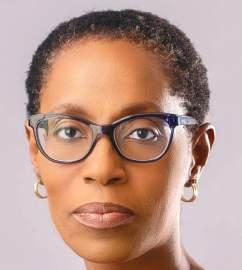
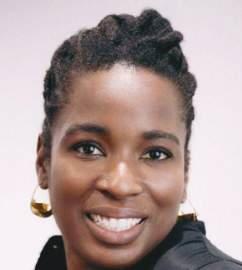
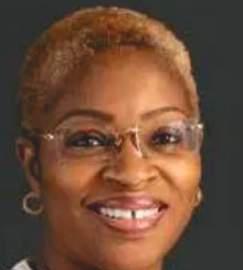
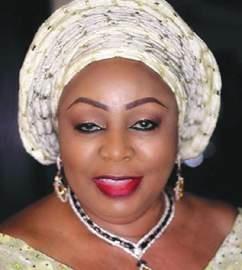
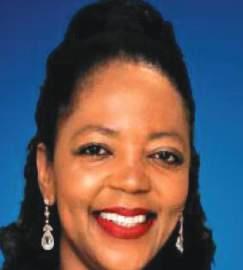
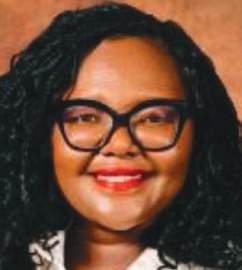
AFRICA WOMEN OF IMPACT AWARD 2026
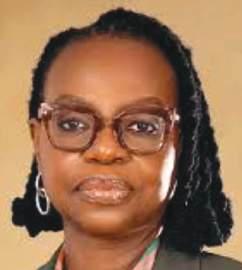
ABOYADE FUNKE (SAN) Lawyer, Principal Partner, Aboyade & Co
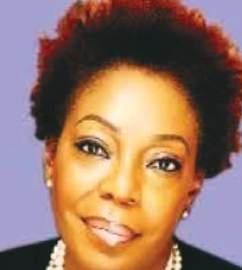
UKEJE, NNENNA Politician, House of Representatives.
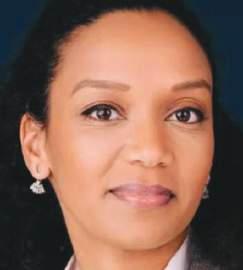
TILAHUN ALEMU, BETHLEHEM Entrepreneur, SoleRebels
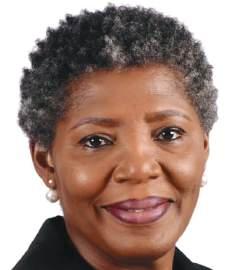
ZILLE, HELEN Politician, Activist, Democratic Alliance (DA).
NIGERIA
SOUTH AFRICA
NIGERIA
NIGERIA
SOUTH AFRICA
NIGERIA
NIGERIA
NIGERIA
SOUTH AFRICA
NIGERIA
NIGERIA
SOUTH AFRICA
ETHIOPIA
NIGERIA
SOUTH AFRICA
SOUTH
NIGERIA
NIGER
NUC AND ABUSE OF HONORARY DOCTORATES
The NUC’s guidelines on honorary doctorate degrees are in order, writes FELIX OLADEJI
BIODUN JEYIFO AND THE ALUTA SPIRIT
NIYI EGBE pays tribute to the academic and public intellectual who passed at 80
ON SOCIETY
Tunji Disu has his work well cut out, writes JOSHUA J. OMOJUWA
POLICING NIGERIA AND THE ‘GOOD GUY’
A random Twitter user had posted a complaint about some police officers in the Force Criminal Investigation Department (FCID), Alagbon, copying the then AIG Olatunji Disu in the post. Moments later he replied, “If you have not gone far, come back I am still in the office. I will be here till 21:30 hrs or DM me, please”. I saw that tweet and was inspired enough to send him a Whatsapp message, “More grace and power sir!” I did not have to say much really, I just needed him to know his effort was being appreciated, at least by some of us. And when I said, “more power,” it was so he’d be able to do even more. Seven days later, I don’t think either of us could have asked for more than the news served, the same man had been appointed by President Bola Tinubu as the Acting Inspector General of Police (IGP) following the reported resignation of the IGP, Kayode Egbetokun.
After his response, I made a commitment to visit him at the office in March, but that ‘office’ has since taken a different meaning. I will now not try to make that March visit, because a man must settle into the work that he has been appointed to do without the distractions of wellwishers. That said, if anyone can get it done, he is the one. I know many people who will be rooting for him as IGP.
That is the nature of his personality that has endeared the Acting IGP to Nigerians. It is not an accident that this will be the first IGP who had a presence on social media before their appointment, especially whilst not ever being the Public Relations Officer (PRO) of the Force. Using social media, he has been a crucial factor in bridging the gap between the police and the people.
For years, we have bet on individual capacity when the design of systems has repeatedly shown that an individual can only do so much. It is the prevailing design of a system that brings about holistic results. That is the essence of reforms. If there is anyone capable of making their personality tell on the system and bring about the needed reforms, that would be the Acting IGP, Olatunju Disu.
Many Lagosians had an appreciation for his leadership when he led the Rapid Response Squad (RRS), making the RRS the reference point for policing in Nigeria. Those who did not see his value came to appreciate
him more after he left in 2020. The RRS lost its spark and focus and just became another relic of what once worked. “I took this decision for you to assume this responsibility because I know your record,” said the President during the decoration of the Acting IGP, a point that reflects the fact that this is one appointment based on the record and pedigree of the appointed. He has been there, done that and whilst this is a whole new league, he’s got the lived experience and network to call when necessary.
The Acting IG has his work cut out; policing is so broken, the Army and other agencies have since stopped being ad-hoc arrangements to bring about sanity, they are an ever present in our civil security architecture. Police officers themselves could be better motivated. I have spent time chatting with some of them on the road and the conditions of their service, especially that of the rank and file, could be much better. We are not going to make good, let alone better, police officers out of a group of people who are simply not motivated enough to do the job. I was excited to read, whilst editing this piece, the Acting IGP saying, “I am going to ensure that I take their welfare into consideration, because people who are motivated put in their best”. Great start. Felt like an immediate response to my thoughts on motivating his officers. Again, in the simplest of terms, the Acting IGP has his work cut out for him.
He did it in Lagos and did it so well, those who could not tell whilst he was at the helm as Commander of the RRS were quick to notice the gap left. Dubbed ‘The Good Guys’ by then Commander Disu, the RRS was a model for what policing could be
in Nigeria. They were the ones who exemplified the idea of ‘Police Is Your Friend’, because they indeed were, in Lagos at the time. He also helped to restore order to the Intelligence Response Unit (IRT) when that unit was at its lowest following the controversies surrounding its previous head. He helped to reposition that unit.
The future of policing is devolution, and it helped that the president made a renewed commitment to this during the week. That said, the transition to that devolution requires for us to ensure the Nigerian Police is in the best form and position it can possibly be. Note that the devolution of policing will not mean the disappearance of the Federal Police, it’d only create policing units that’d relieve it of some of its subnational commitments whilst focusing on cross-border matters.
In his charge to the Acting IGP, the President, Bola Tinubu GCFR, made it clear that his commemoration was not just a conferment of rank but a “solemn charge to serve Nigeria”. Cliché as that sounds, we all know that service to Nigeria has hardly been the default commitment of the average civil or public servant. I have the utmost faith in Olatunji Disu, to serve Nigeria with excellence and to for once, at least in this republic, make the Nigerian Police a darling of the Nigerian people. This is a tall order, but if the RRS could do it under a certain Commander Olatunji Disu, a tougher task and bigger scale this time, but as Acting IGP and eventually the substantive IGP, this man can.
Omojuwa is chief strategist, Alpha Reach/BGX Publishing
The NUC’s guidelines on honorary doctorate degrees are in order, writes FELIX OLADEJI
NUC AND ABUSE OF HONORARY
The decision by the National Universities Commission (NUC) to sanction universities over the “indiscriminate conferment and misuse” of honorary doctorate degrees marks a necessary, if long overdue, intervention in Nigeria’s higher education landscape. The commission’s recent statement underscores an uncomfortable truth: the integrity of academic recognition has been compromised by practices that blur the line between genuine scholarly honour and transactional title-giving.
Honorary doctorate degrees have a storied place in global academic tradition. They are intended to recognise individuals whose contributions to society in the arts, sciences, public service, or civic life embody the values a university cherishes. Historically, such honours were sparingly conferred, presented at formal convocations, and treated with respect as symbolic acknowledgements rather than substitutes for earned academic credentials. But in recent years, the meaning of “honoris causa” has become muddled in the Nigerian context, bruising both public perception and institutional credibility.
The NUC has framed its new 16-point guidelines for the awarding and use of honorary doctorates as a regulatory response to this problem. Among the stipulations are requirements that only approved universities may award honorary degrees, that recipients must be selected through transparent procedures, that self-nominations and awards to serving public officials be prohibited, and that recipients must refrain from using “Dr.” as though the title were earned through rigorous academic work.
If enforced, these measures could restore a sense of dignity to a practice that has in some instances devolved into a spectacle. The commission’s concern is hardly abstract: past investigations found a troubling presence of unaccredited and unlicensed institutions operating as honorary degree mills, some even issuing fraudulent professorships alongside degrees. This not only erodes the meaning of academic titles but also sends the wrong message to a society already struggling with issues of institutional trust and professional credibility.
At its core, the problem is not simply about semantics; it is about academic honour and public trust. When ceremonial degrees are awarded too widely, too loosely, or without clear standards, the public begins to question the worth of academic achievement altogether including the hard-earned doctoral degrees that signify years of original research and intellectual toil. In recent years, social commentators and academic observers have lamented the proliferation of selfstyled “Drs” whose society assumes they hold earned doctorates, only to discover that their credentials are nominal or even purchased.
NIYI
DOCTORATES
This matters because in a world where knowledge economies increasingly define national competitiveness, the credibility of academic institutions is foundational to societal progress. Universities shape not only the intellectual future of a nation but also its moral climate. When the lines between earned and honorary credentials blur, the public’s ability to distinguish between expertise and entitlement begins to erode. This erosion weakens not only the academic sector, but also broader debates about evidence, expertise, and merit.
The NUC’s insistence that recipients should use the designation “honoris causa” rather than prefix “Dr” to their names reflects this distinction. The prefix “Dr” has specific academic and professional implications. It signifies mastery of a field through rigorous research and evaluation, a standard far removed from ceremonial recognition. By insisting on clear nomenclature, the commission is not merely enforcing bureaucratic rules; it is defending the concept of what it means to be a scholar.
Yet, regulatory guidelines alone are not enough. Enforcement is critical. The NUC has warned that sanctions will be imposed on institutions that violate the approved framework, and that relevant enforcement agencies will be engaged in clamping down on illegal degree-conferment schemes. This is a necessary first step, but it must be matched with sustained oversight, transparent reporting, and perhaps legislative backing that criminalises abuses rather than leaving enforcement to administrative fiat.
There is also a broader cultural conversation that must unfold. Universities are not ivory towers insulated from societal expectations. They are public institutions that reflect and shape national values. If universities treat honorary degrees as cheap accolades, political favours, or revenue opportunities, they diminish the very standards they are meant to uphold. Nigerian universities must resist the temptation to view honorary degrees as public relations tools, and instead reserve them for individuals whose lifetime contributions genuinely reflect excellence, innovation, and service.
Oladeji writes from Lagos
BIODUN JEYIFO AND THE ALUTA SPIRIT
I first met Professor Biodun Jeyifo who passed on February 11, 2026 in his office in the Faculty of Arts, of the then University of Ife, in 1979. A student-big brother guide had taken me to him, explaining that I was from Igarra, Edo State, Jeyifo's actual roots, though he was more associated with Ibadan where he grew up. He was warm, studied and wished me well. Being a student of Agriculture, our paths didn't cross much beyond occasional visits. Anytime I saw and reminded him about the circumstances of our first contact, he readily recalled. We lost touch after I graduated in 1984.
Popularly referred to as BJ, Prof Jeyifo was among the great philosophers who catalyzed the activists’ disposition of Ife students. Their philosophies and teachings impacted them. Other popular and loved lecturers were his mentor ”Kongi” Prof Wole Soyinka, Professors G.G. Darah, Itse Sagay, Dipo Fasina, Sam Aluko, and numerous others. The corruption and other vices they saw in the nation, deeply troubled, irritated and had them continually canvassing ideals for national healing. They were thoroughbred academics who had their world views shaped by deep learning and global exposure.
BJ had sterling attainments. As far back as 1970, he had obtained a first class honours degree in English from the University of Ibadan. Thereafter, he bagged a Doctorate degree in Dramatic Literature from New York University, United States in 1975. He took to lecturing at the then University of Ife and gradually committed to writing. He wrote dramas, on politics and culture. He also devoted much to promoting socialist and revolutionary ideals. Jeyifo was also a renowned voice in Marxist literary criticism and post-colonial studies.
He actively participated in social mobilization which availed opportunities to ventilate his thoughts and put actions to words. He became a National President of the Academic Staff Union of Universities.(ASUU). During his tenure, he challenged both military and civilian administrations to improve the welfare of university lecturers. An international scholar of repute, he lectured at Cornell and Harvard Universities. He was also a prolific columnist in two Nigerian national newspapers – The Guardian and
the Nation.
In the 1980s, the University of Ife had unmistakable reckoning for road mapping national sanity and good governance. From that ivory tower, staff and students seized available opportunities to identify and challenge perceived banes of national development. The Great Ife community was always loud against commercializing education. For Ife education is a sine qua non to attaining national greatness. The maxim: “education is a right not a privilege” featured frequently in debates. You could also place a bet on Ife students initiating and leading national protests against (using our words), ethnic chauvinism, abject squalor, social inequality, strangulation of the poor through hikes in fees, etc. Every now and then, you hear the maxim: Aluta continua, victoria ascerta - the struggle continues, victory is certain.
Far before renaming the University after the visionary founder Chief Jeremiah Obafemi Awolowo, the campus was largely Awoist. The late sage's progressive thoughts thrilled the university community. The university environment was sane and nondiscriminatory. Pass the exams and you gained admission to that well-planned citadel of learning that we prided Africa’s most beautiful campus. Students from Middle belt Nigeria, Edo, Ibo, Efik, Ogoni, and of course Yorubas all felt at home. I recall the physicist of global renown - the late Professor Cyril Agodi Onwumechili, who served as Vice Chancellor from 1979 till 1982. He was urbane and led a peaceful and memorable regime. He was much loved by the students. He strutted with deserved pride and decorum.
Lecturers hailed from different parts of the country, particularly the South. The university also warehoused global intellectuals from the African continent, Asia, and the United States. A lot of them were young, largely returnees from American, European universities. Their concern was building the Nigerian nation. Their recruitment was largely attributed to Professor Hezekiah Oluwasanmi, Vice Chancellor, 1966 - 1975. The University library was later named after him.
Students had fun amidst the tough requests of academics and study environment. To ease tension, they relaxed through watching films and Drama at the famed Oduduwa Hall. As necessary, we threw jibes at ourselves. For instance, if you are lousy or unnecessarily noisy, you get heckled and put in check. You risked being derogated as Shoe ma, Asoso, Aro, etc.
Student unionism was good ground for the politically active. Elections were often keenly contested. The high point of elections was the speech night where students appraised the readiness of contestants for elective offices. Nonperformers met instant waterloo.
Egbe, an Agriculturist and public commentator, writes from Lagos. niyiegbe@ yahoo.com
Editor, Editorial Page PETER
ISHAKA
Email peter.ishaka@thisdaylive.com
NGOS AND IMPACT ON SOCIETY
Civic organisations should be supported to do more
grow with time.
It is most appropriate that ‘Moments of Impact’ is the theme for the 2026 World NGO (Non-government Organisations) Day that is being celebrated today. It is perhaps to make us think about the millions of people being assisted through these non-profits, the policies being changed, the elections being monitored, etc. It is also to enable us to ask the pertinent question: whose moments are we counting, and whose moments are we missing? This question is especially important for the civil society sector not only in Nigeria but also across the continent.
Ordinarily, NGOs operate as the invisible infrastructure of democratic life. They are the institutions that fill the gaps left by the state. They provide education services where public schools have stopped doing so, provide healthcare for abandoned communities, watch elections in remote areas that are difficult to access. Take ‘Yiaga Africa’ as an example. Through their ‘Watching the Vote’ programme, thousands of trained citizen observers have stood at polling places across Nigeria, ensuring that votes are counted and they count. Each of those observers stands for a moment of impact— small, quiet, and necessary.
They fill the gaps left by the state. They provide education services where public schools have stopped doing so, provide healthcare for abandoned communities, watch elections in remote areas that are difficult to access
T H I S D AY
EDITOR SHAKA MOMODU
DEPUTY EDITOR WALE OLALEYE
MANAGING DIRECTOR ENIOLA BELLO
DEPUTY MANAGING DIRECTOR ISRAEL IWEGBU
CHAIRMAN EDITORIAL BOARD OLUSEGUN ADENIYI
But these civic groups could do with more resources. Funding for African NGOs is mostly from abroad. Philanthropists on the continent can do more in this regard. Besides, in the larger conversation about development, the grassroots organisation closest to the problem and most trusted by the community is often the one with the fewest resources. Meanwhile, ‘Moments of Impact’ tells us that the most important work in African civil society doesn't always happen in big cities or conference rooms. In rural communities, women are learning how to question their local government's budget at ward-level advocacy meetings. In classrooms, civic educators are planting seeds that will
EDITOR NATION’S CAPITAL IYOBOSA UWUGIAREN THE OMBUDSMAN KAYODE KOMOLAFE T
EDITOR-IN-CHIEF/CHAIRMAN NDUKA OBAIGBENA
GROUP EXECUTIVE DIRECTORS ENIOLA BELLO, KAYODE KOMOLAFE, ISRAEL IWEGBU
DIVISIONAL DIRECTORS SHAKA MOMODU, PETER IWEGBU, ANTHONY OGEDENGBE
Community-led work succeeds because it is based on trust, context, and continuity. These are things that cannot be imported or contracted. Local actors who refused to leave their communities, even when it was hard or dangerous to do so, have built the most stable democratic institutions on the African continent, often at great personal risk. Therefore, this is the time for funders, governments, and international partners to put their words about local ownership into action by making real changes to the way things are done. That means giving resources directly to organisations on the front lines. It means making grant rules easier to understand so that a four-person NGO in Maiduguri can get help without having to hire a team of lawyers just to serve the people. It means accepting that the lived experience of a community organiser is just as valid as the technical report from a consultant.
In the end, the 2026 World NGO Day is a call for people to stand together. No organisation, no matter how big or well-funded, has ever been able to build a strong civil society. It comes from the web of connections that exist between national platforms and community groups. Perhaps based on this understanding, the Lagos Food Bank Initiative, through the Food Bank Network Nigeria (FBNN) will today support seven NGOs with grants to strengthen their efforts in providing nourishment to food-insecure households in some identified low-income communities across the country. This is a worthy and commendable objective that we recommend for other groups. However, as we mark the 2026 World NGO Day, we must honour the stitchers: the unrecognised organisers, monitors, teachers, health professionals and advocates who show up every day. They make this sacrifice not because it's easy, but because they understand that society is kept alive by regular people doing amazing things. And that every little bit of impact is a thread in the fabric of a fairer and more just world.
Letters in response to specific publications in THISDAY should be brief (150-300 words) and straight to the point. Interested readers may send such letters along with their contact details to opinion@thisdaylive.com. We also welcome comments and opinions on topical local, national and international issues provided they are well-written and should also not be longer than (750- 1000 words). They should be sent to opinion@thisdaylive. com along with photograph, email address and phone numbers of the writer.
TASKS BEFORE THE NEW IGP
The appointment of Tunde Disu as Inspector General of Police by Bola Tinubu is timely and significant. It comes at a moment when many Nigerians have grown increasingly disillusioned with the nation’s security architecture, particularly the Nigeria Police Force. Public confidence in policing has been severely eroded by years of misconduct, inefficiency and allegations of corruption. Against this backdrop, the choice of Disu has attracted widespread commendation, largely because of his professional record and visible achievements in previous assignments.
Many citizens view his elevation as an opportunity for a fresh start. His track record within the Force suggests administrative capacity, operational competence and a firm understanding of modern policing demands. However, goodwill alone will not repair the fractured relationship between the Police and the public. Expectations are high, and rightly so. The new Inspector General must recognize that symbolic leadership will not suffice; systemic reform is required. While congratulating the Acting IGP on his appoint-
ment, it is necessary to stress that the Nigeria Police needs a comprehensive overhaul. Incremental adjustments will not address deep-rooted structural and cultural problems. The Force must undergo reforms that touch recruitment standards, training modules, accountability systems and internal discipline mechanisms. Cosmetic changes will only prolong public distrust.
One of the most urgent areas demanding attention is the incessant abuse of fundamental human rights. Illegal arrests, prolonged detentions without charge, intimidation of citizens and other forms of unprofessional conduct have become disturbingly common. These practices not only violate the Constitution but also undermine the legitimacy of law enforcement. The new IGP must establish clear consequences for such misconduct and empower oversight units to act swiftly and transparently.
Bribery and corruption remain perhaps the most visible stain on the image of the Police. Across highways and urban centres, extortion of motorists at checkpoints has become
normalized. This daily humiliation of citizens must end. It is not enough to issue circulars condemning the practice; there must be consistent monitoring and severe sanctions for any officer found culpable. Without decisive action, public cynicism will persist.
A critical reform measure that deserves immediate attention is the procurement and deployment of body-worn cameras. When properly implemented and monitored through a functional command and control centre, such technology can significantly curb abuses. Real-time recording of police interactions would promote transparency, protect responsible officers from false allegations and deter recalcitrant personnel from misconduct. Modern policing requires modern tools. Professional image also matters. The spectacle of officers appearing dirty, untidy or improperly dressed, and the practice of wearing mufti while carrying firearms on duty, erodes public respect.
Tochukwu Jimo Obi, Obosi, Anambra State
FAAN to Dismantle Burnt Terminal, Remodel Lagos Airport after Fire Outbreak
Chinedu Eze
The Federal Airports Authority of Nigeria (FAAN), has disclosed that it has concluded arrangements to demolish the old international terminal of the Murtala Muhammed Airport, Lagos, known as Terminal 1 and erect a new structure in 22 months.
The federal government had in August last year, earmarked N712. 26 billion, for the rehabilitation of the old terminal, which started operation in 1979 with
passenger capacity of 250,000 per annum.
The Director of Airport Operations, FAAN, Captain Abdullahi Zubeir Mahmood, who stated this in exclusive interview with THISDAY said a recent inferno that touched a section of the facility has made the rebuilding of the terminal more urgent.
According to him, the federal government is poised to start the transformation of the facility immediately.
“Just like exactly what the minister said when he
addressed journalists on Tuesday. We already have a plan to rehabilitate the terminal. And the plan is for the concessionaires (providing various services at the facility) to move out probably in the next two to three weeks. That is our target plan for them to move out.
“But with this fire now, nobody is going to stay in that building again, in few days the terminal will be emptied and it will be ripped off. The fire has led to accelerated work on the structure. It has given
us acceleration time. What we want to do is just to move the equipment that are there to the temporary terminal,” Mahmood explained.
Mahmood added, “At least you have seen what the temporary terminal looks like. And there are four airlines that are going to use the temporary terminal. The four airlines will use the terminal for departure. But the good thing about it is because we have already moved all our arrivals to Terminal 2 before even the fire; we have started
gradually moving, pushing our operation to Terminal 2. Since we know that the Terminal 1 is going to be rehabilitated.”
There are indications that the budget initially earmarked for the rebuilding of the terminal would be tinkered because more has to be done after the damage on the facility as a result of the inferno.
Mahmood said that with the fire that gutted the terminal, some other issues would come to question which include the integrity of the structure.
“We still maintain the initial budget for now; but definitely, because of this fire, we cannot say. I am not going to say whether the budget will increase or not but we have to take cognizance of the fact that now, there is fire. So, naturally, they have to do an integrity test on the structure. But we are hoping nothing serious will happen to the structure. We are hoping nothing is going to change,” he said.
Nume Ekeghe
KPMG has urged businesses across Africa to urgently reposition their tax functions as governments intensify revenue mobilisation efforts and regulatory reforms reshape the fiscal landscape.
At a webinar titled, “Strengthening the Tax Function to Respond to Regulatory Changes,” the firm’s tax leaders warned
that the era of treating tax as a back-office compliance function is over, stressing that companies must adopt a more strategic, technology-driven and risk-aware approach.
The hybrid session convened business leaders and senior accounting executives from blue-chip companies across the region, providing a platform for cross-industry dialogue on navigating the fast-evolving tax and regulatory landscape.
Partner and Head of Tax, Regulatory and People Services, KPMG Africa, Adewale Ajayi, said recent legislative developments signal a clear shift towards revenue expansion.
He said: “If you examine the new Tax Reform Act, you will see that most of the provisions are geared towards boosting government revenue. So the tax and regulatory landscape is
changing. It is evolving,” he said.
According to Ajayi, regulatory reforms, digitalisation and global transparency standards are fundamentally altering how organisations operate.
“The key question is: how do you stay ahead of all these developments? Simply put, you need to ensure that your tax function is efficient.”
He warned that compliance
failures now carry farreaching consequences beyond financial penalties.
“Compliance is one of the primary risks organisations face. Failure to comply can result in interest and penalties that could have been avoided.
Beyond the financial cost, there is also reputational risk,” Ajayi noted, adding that businesses must build deliberate systems to track regulatory changes and respond proactively.
Beyond meeting statutory obligations, he emphasised that companies must leverage tax as a value-creating function.
“Many organisations are not even aware that there are provisions they can benefit from. An effective tax function can help you identify and capitalise on these tax savings,” he said.
The concessionaire of the Akanu Ibiam International Airport, Enugu, Aero Alliance Limited has signed a Memorandum of Understanding (MoU) with key aviation unions, the Air Transport Services Senior Staff Association of Nigeria (ATSSAN), the National Union of Air Transport Employees (NUATE), and the Association of Nigeria Aviation Professionals (ANAP).
The MoU is to guarantee job security and the preservation of staff status for all employees affected by the concession process.
The meeting was
convened by the Minister of Aviation and Aerospace Development, Festus Keyamo, to address outstanding issues around the concession.
The agreement ensures that no worker will be unjustly displaced and that existing conditions of service will be respected in line with agreed terms.
The crucial engagement, held in the spirit of transparency and collaboration, provided a platform for frank discussions on workers’ welfare, job security, and the long-term sustainability of the airport under the proposed concession arrangement.
The minister commended the leadership of ATSSSAN, NUATE, and ANAP for their maturity, patriotism, and commitment to constructive engagement. He reiterated that the federal government remained resolute in pursuing reforms that modernize aviation infrastructure without compromising the welfare and dignity of Nigerian workers.
According to the minister, the resolution of the concerns surrounding the Akanu Ibiam International Airport concession marks a significant milestone in the ongoing transformation of Nigeria’s aviation sector.
Nigeria Launches National Aviation Security Risk Team
The Director-General of Nigerian Civil Aviation Authority (NCAA), Chris Najomo, has inaugurated the National Aviation Security Risk Management Team (NASRMT) in a decisive move aimed at reinforcing Nigeria’s aviation safety architecture through a modern risk-based oversight system.
The inauguration ceremony, held at the corporate headquarters of the NCAA in
Abuja, marked what officials described as a major milestone in the country’s evolving aviation security framework.
Speaking at the event, Najomo emphasised that the new inter-agency body reflects Nigeria’s determination to proactively safeguard its civil aviation space against unlawful interference, terrorism, insider threats, and emerging risks.
According to him, the creation of the multi-sectoral
team aligns directly with global standards set by the International Civil Aviation Organisation, particularly the provisions of Annex 17 on aviation security.
He added that it also represented Nigeria’s targeted implementation of recommendations arising from a recently concluded ICAO Risk Management Workshop, signalling the country’s commitment to international best practices.
MMIA Fire Incident Exposes Safety Gaps, Says NATCA
The Nigerian Air Traffic Controllers’ Association (NATCA) has praised aviation authorities and air traffic personnel for what it described as exceptional professionalism and resilience during the recent fire incident at Murtala Muhammed International Airport, which briefly disrupted flight operations.
In a statement signed by its President, Mr. Edino Amos, the association confirmed that the incident led to a temporary closure of Nigerian airspace
as a precautionary safety measure.
Air Traffic Controllers of the Nigerian Airspace Management Agency working from the control tower were safely evacuated from the ninth floor using a crane in a coordinated rescue operation.
Following established contingency procedures, operations were swiftly relocated to the Fire Tower, while engineers redeployed critical communication equipment, enabling flight services to resume within the hour.
NAFSA Commends FAAN Fire-fighters, Agencies
Group Business Editor
Eromosele Abiodun
Deputy Business Editor
chinedu Eze
Comms/e-Business Editor
Emma Okonji
Asst. Editor, Energy
Emmanuel Addeh
Asst. Editor, Money Market
Nume Ekeghe
Correspondents
Kayodetokede(CapitalMarkets)
James Emejo (Finance)
Ebere Nwoji (Insurance)
reporter Peter Uzoho (Energy)
The National Leadership of the Nigerian Aviation Fire and Safety Association (NAFSA) has commended the resilience and determination of fire-fighters at the Federal Airports Authority of Nigeria (FAAN) and other assisting agencies that responded to the recent fire incident at the Murtala Muhammed International Airport (MMIA), Lagos.
The NAFSA National President, Comrade Ugbeikwu Sunday, commended the fire-fighters for their bravery and quick response, which helped to contain the fire that broke out on Monday around 3:00 pm and was extinguished around 1:30am on Tuesday. Sunday highlighted the
challenges faced by the fire-fighters, including lack of accessibility to the fire scene, but noted that they were able to manoeuvre the difficult terrain to combat the inferno.
He advocated for a special hazard allowance for FAAN Fire fighters, citing the risks and occupational hazards associated with their job.
“Two of our men fell casualties yesterday and they were rushed to the hospital before the situation could be managed. We only know our resumption time. We do not know our closing time because an emergency such as that of yesterday can keep a fire-fighters away from their families for two to three days,” Sunday said.
Need for Wi-fi at Nigerian Airports
Chinedu Eze
In the early 20s, major airports in the world started installing Wireless Fidelity (Wi-Fi) system for air travellers, which significantly improved passengers’ comfort.
Before this time, when passengers arrived at international airports they struggle to buy Subscriber Identity Module (SIM) cards to enable them make calls to home and elsewhere.
But with Wi-Fi connectivity at the airports, a burden was removed from travellers because Wi-Fi prides essential connectivity for passengers’ convenience, productivity and real-time information access.
According to 7Signal.com, “No matter where you are in the world, working in the travel business can come with a long list of challenges. The top priority, of course, is customer satisfaction, and a big part of that relies on a consistent and reliable WI-FI connection.
“People will undoubtedly use it for things like work, social media, or connecting with loved ones. If the Wi-Fi connection isn’t reliable, this will cause a decent amount of frustration, which can lead to poor reviews for the airport, and these travellers may pick a different travel hub in the future. To ensure every area in an airport carries a strong Wi-Fi signal, you might need the help of a few tools. This guide will outline everything you may require to stay connected while you travel.”
Over the years Wi-Fi connection quality has become a significant factor considered in rating airports. It is viewed by passengers and rating agencies alike as a fundamental utility for modern travel, with its performance directly impacting overall airport, customer satisfaction, and Skytrax star ratings.
Nigeria, however, joined the party very late. For several years, the Federal Airports Authority of Nigeria (FAAN) had made efforts to connect the then four major airports to Wi-Fi, but failed. The first was the collaboration with first indigenous mobile network provider, Globacom. Many Nigerian travellers and airport users were elated at the prospect, but the high expectation was dashed by poor connectivity and eventually extinction of that transaction.
But last week, FAAN and Nigeria’s biggest network provider, MTN started collaboration with the connection of Wi-Fi at the major five airports in the country, starting with the Murtala Muhammed International Airport (MMIA), Lagos.
The long awaited critical amenity that defines modern airports, which is Wifeless Fidelity (Wi-Fi), has been installed at the Murtala Muhammed International Airport (MMIA), Lagos.
With the Wi-Fi connection, Lagos airport became more competitive in global rating last week when FAAN’s Managing Director, Mrs. Olubunmi Kuku, confirmed the installation of Wi-fi at the airport and described the rollout as more than a convenience and an essential amenity in passenger comfort.
Kuku said airports were no longer mere transit lounges but micro-cities where contracts are negotiated, diplomatic briefs are reviewed and life’s most emotional reunions unfold in real time.
During demonstration, with the flick of a switch, waiting areas were transformed into connected workspaces and airport users and travellers could connect to any part of the world with their cell phones.
FAAN said the service comes at no cost to the Authority or to the passengers.
According to its Director of Commercial and Business Development, Ms. Joy Agunbiade, the arrangement is structured as a PublicPrivate Partnership, with MTN leveraging branding rights within airport spaces to offset operational expenses.
The agency said brand ambassadors have been deployed across terminals to guide travellers through the simple log-on process, while strict data protection safeguards are embedded within the system.
“In fact, in this moment, we do have offices and admissions offices where you can go and study such in-house of what could be offered to you. We are going to have brand ambassadors across the airport that will engage customers who may find it difficult to go through the journey,” she said.
FAAN said expansion plans were already underway, with Kano, Port Harcourt and Enugu airports set to join the network in the coming months.
As the first wave of passengers logged on, the message was unmistakable. Nigeria’s aviation gateways are shedding the image of “offline islands” and embracing a connected future.
For MTN Nigeria, the initiative underscores the commercial and social value of publicprivate collaboration.
Representing the Chief Executive Officer, Mr. Karl Toriola, the company’s Chief Enterprise Business Officer, Mrs. Cynthia Saint-Nwafor, said the network was engineered to handle heavy passenger traffic, supported by smart analytics to monitor usage patterns and maintain performance.
But beyond the installation of the system, another challenge of the installation of Wi-Fi is the efficiency of its services. Many airports in Africa have Wi-Fi that show they are working but when you connect to them, they will not give you efficient services.
the story continues online on www.thisdaylive.com
INEC: FCT Council Poll as Litmus Test for 2027
The Federal Capital Territory (FCT) area Council poll held last Saturday appeared to have been a good litmus test for the Independent National Electoral Commission (INEC) ahead of the 2027 general election. Adedayo Akinwale reports.
The Federal Capital Territory (FCT) Area Council Elections held last Saturday have come and gone, while the outcome of the election has shown that the ruling All Progressives Congress (APC) wasn’t fooling around.
For the first time in a long time, the Area Council poll became a point of attraction. Many had thought that the African Democratic Congress (ADC) and other opposition parties would have used the election to make a statement that they are indeed ready to wrestle power from the ruling party ahead of the 2027 general election.
However, out of the six Area Councils, the ruling party won the Abuja Municipal, Kuje, Abaji, Kwali, Bwari, while the People’s Democratic Party (PDP) emerged from the shadow of death to claim Gwagwalada.
The outcome of the election was a clear indication that the opposition parties are yet to wake up from their slumber.
The election also was the first to be conducted by the Independent National Electoral Commission (INEC) following the signing of 2026 Electoral Act by President Bola Tinubu.
To many, the 2026 Electoral Act was a litmus test for INEC ahead of next year’s general election. Prior to last Saturday’s election, the electoral body at a meeting with Transport Union Leaders told the whole world that it would hire a total of 1,132 vehicles to ensure seamless movement of logistics and personnel of the commission.
The commission also told the union that it wouldn’t entertain any excuses from the transport unions, insisting that the services they would render must be in tandem with the Memorandum of Understanding (MoU) they signed with INEC.
On the election day, while there were early arrivals of INEC Officials and materials in some locations, the same could not be said of others. At a point, INEC personnel had to resort to taking tricycles to be able to meet up. The commission had targeted 8:00am for the commencement of voting, that could not be because of the logistics arrangement. On the average, voting started at about 9:30 am on the day of the election.
According to the Commission’s Election Operations Dashboard, 45 per cent of polling units opened for voting as at 8:30am, while all polling units were confirmed open by 10:00am on Election Day.
The Commission pointed out that as at 2:00pm on Sunday, 22nd February 2026, the upload of polling unit results to the INEC Result Viewing (IReV) Portal had reached 93 per cent.
Despite the passage of a new law which now mandates electronic transmission of results under Section 60 (3) of the Electoral Act, mutilated election results found their way to the INEC Results Viewing Portal (IREV).
Political analysts are of the view that the electoral umpire should be empowered to reject any mutilated results uploaded to the IReV and declared null and could while the Electoral Officer be made to face the full wrath of the law.
In addition, while all results from five Area Councils were declared early, results of Kuje Area Council were delayed. The commission blamed the delay on difficult terrain of Kabi ward, which delayed the final collation of the Area Council results.
The commission recalled that the results were announced late Saturday except that of Kuje Area Council which was announced at 3:30pm on Sunday, 22nd February 2026.
With the commission expected to announce a new time table and notice of election for the 2027 elections, the electoral
Tinubu’s Deft Political Moves in the North
Afakriya Gadzama writes that President Bola Tinubu has made unprecedented political inroads into Northern states by promoting inclusive governance, empowering marginalized communities, and strengthening security nationwide.
Sometime last month, I presented a very concise write-up on how President Bola Tinubu has made remarkable inroads into parts of the Northern States which, until recently, were considered no-go areas for him and his political party.
The article has, as expected, elicited various reactions from political commentators among both his supporters and opponents. Those marginalised by successive governments and political interests have also praised our boldness in pointing out some facts they had never wished to express openly. As stated earlier, the article has generated reactions from different individuals, groups and politicians.
This is what we expected. The fact is that even the oppressed and marginalised had never had the opportunity to speak their minds openly. However, in a rejoinder, a particular commentator stated that the article was informed by well-established facts about people marginalised and oppressed by successive governments in the country.
He noted that President Tinubu’s effort to redeem the people is what has endeared him to those who feel marginalised across the country. We wish to emphasise that the article was informed by current realities in the polity. Simply put, it reflects President Tinubu’s recognition that there are people in parts of the country who are oppressed and marginalised.
He recently stated that they deserve to be heard. It is not surprising that some State Governors have also commended the tolerance and resilience of people within marginalised communities across the country.
As previously noted, the President has realised the importance of running an all-inclusive government.
As earlier observed, the decision to appoint individuals from previously marginalised communities to critical government positions is noteworthy. One member of the elite has observed that the present government is reversing some of the sectional and religiously biased decisions of the past.
He said we should all praise President Tinubu for such a bold step. A political bigwig noted that this singular act has endeared President Tinubu to the generality of the people, especially the marginalised, whose votes will matter in the coming elections.
In the brief analysis, reasons were enumerated as to why President Tinubu has made significant inroads into almost all parts of the country. One reason for the growing support for his political ambition is his efforts to redeem previously marginalised groups across the country.
President Tinubu’s commitment to inclusivity, regardless of religious inclination or parochial political leanings, is instructive. There are many reasons for this. Almost all communities that were under Boko Haram/ISWAP captivity have now been freed. Commendation must also be given to some of the security chiefs whom the President had cause to appoint.
One cannot fail to mention the DirectorGeneral of the SSS. Another factor that has helped in neutralising insurgent activities by lawless herdsmen and bandits is the application of actionable intelligence.
Synergy and inter-agency co-operation have also contributed significantly. Taking a cue from the President, some security chiefs have adopted his strategic approach to security management. Many of us within the system believe that inter-service co-operation is responsible for the achievements recorded so far. It is not surprising that, during a roundtable discussion, a participant urged State Governments across the country to take a cue from the President’s exemplary leadership.
-Gadzama, a former Director-General of the DSS, writes from Abuja.
council election results, what happens when the commission has to deal with 774 local governments.
Though, no glitch was recorded during and delay in announcement of one Area
Champion Breweries Completes Acquisition of Bullet Brand Portfolio, Expands into African Markets
Oriarehu Bonny
Champion Breweries Plc, yesterday announced the successful completion of its acquisition of the Bullet brand portfolio from Sun Mark, marking a transformative milestone in the Company’s strategic expansion into a diversified, pan-African beverage platform.
The acquisition, previously announced on 20 August 2025, gives Champion ownership of the Bullet brand assets, trademarks, formulations, and commercial rights globally through an asset carve-out structure.
The assets are held in a newly incorporated entity in the Netherlands, in which Champion Breweries holds a majority interest, while Vinar N.V., the majority shareholder of Sun Mark, retains a minority stake.
Bullet products are currently distributed in 14 African markets, positioning Champion to scale beyond Nigeria in the high-growth ready-to-drink (RTD) alcoholic and energy drink
segments. This expansion significantly broadens Champion’s addressable market and strengthens its revenue base with an established, profitable portfolio that already enjoys strong brand recognition and consumer loyalty across multiple markets.
The acquisition, company said in a statement, accelerates its transition from a regional brewing business to a multi-category consumer platform with continental reach. Bullet Black is Nigeria’s leading ready-to-drink alcoholic beverage, while Bullet Blue has built a strong presence in the energy drink category across several African markets.
The structure, it said, enables rapid integration without significant upfront manufacturing capital expenditure, while creating a pathway to future Nigerian production capacity that could position the country as a regional export hub.
Commenting on the completion, Chairman
of Champion Breweries Plc, Mr. Imo-Abasi Jacob said: “The successful completion of our public equity raises, together with the formal close of the Bullet acquisition, marks a defining moment for Champion Breweries. The support we received from both existing shareholders and new investors reflects strong confidence in our long-term strategy to build a diversified, high-growth beverage platform with panAfrican scale. Our focus now is on disciplined execution, integration, and delivering sustained value across markets.
“Champion Breweries extends its sincere appreciation to the Securities and Exchange Commission (SEC), Nigerian Exchange Group, the Federal Competition and Consumer Protection Commission (FCCPC), the Akwa-Ibom State Government for their guidance throughout the process.”
IBEDC Gets New Core Investors
Kemi Olaitan in Ibadan
The Ibadan Electricity Distribution Company (IBEDC), has announced the reconstitution of its Board of Directors following the resignation of three nominees of the Asset Management Corporation of Nigeria (AMCON).
The new Chairman of the Board, Tunde Afolabi, made the disclosure, at a press conference held at the company’s corporate head office in Ibadan.
The newly constituted Board chaired by Afolabi include Mr. Ayodeji Ariyo Gbeleyi (with Mr. Michael Magaji
as Alternate Director); Dr. Taiwo Afolabi; Prof. Oladapo Afolabi; Mr. Tunde Fayinka; Mr. Oluwaseyi Akinwale and Mr. Adeolu Ijose.
According to Afolabi, the emergence of a new core investor and the reconstituted Board marks a significant milestone in the company’s corporate journey and signals a renewed strategic direction focused on stability, continuity, and sustainable growth.
He said, “This transition represents renewal, not rupture. It represents investment, not instability. It represents partnership, not division. Our goal is to strengthen governance, enhance operational
performance, deepen capital investment, and deliver improved service to customers across our franchise areas.”
Afolabi while addressing customers directly, assured that there would be no avoidable service disruptions as a result of the transition, stating that all IBEDC offices will remain open, while field operations will continue uninterrupted.
“The new core investor has committed to sustained capital investments in feeder rehabilitation and expansion, transformer upgrades and replacements, injection substation improvements, and the replacement of obsolete network components”, he stated.
Plus Incubation Hub Launches the Plus Factor Grant Program
Plus Incubation Hub has launched the Plus Factor Grant Program — a high-impact, merit-based initiative designed to identify, nurture, and fund promising entrepreneurs across Africa with nondilutive grant funding, market access support, and innovation resources.
The programme targets idea-stage, early-stage, and growth-stage entrepreneurs who are building scalable, marketrelevant businesses but face real barriers including limited access to finance, weak market linkages, and insufficient innovation support.
It is open to entrepreneurs across industries, and built on principles of transparency, fairness, and measurable impact.
Commenting, the
Program Lead, Eunice Alabi, stated: “The Plus Factor Grant Program is not just about funding — it is about backing entrepreneurs with the clarity, readiness, and support required to build sustainable businesses. We are intentionally combining finance, innovation, and market access to create real, measurable impact. We are looking for entrepreneurs with clarity, courage, and commitment — founders who are ready to turn potential into performance.”The programme is open to entrepreneurs at every stage of their journey.
To qualify, applicants must be a founder or co-founder of a business or startup; have an operational business or a validated business
L–R: Global Head, Agricultural Risk Solutions, Leadway Assurance, Mr. Ayoola Fatona; Minister of Livestock Development, Alhaji Idi Mukhtar Maiha; National Coordinator, Livestock Productivity and Resilience Project (L-PRES), Dr. Sanusi Abubakar; and MD/CEO, Dabareji Agro Investment Limited, at the Index-Based Livestock Insurance (IBLI) claims payout ceremony in Yola, Adamawa State, during which N181.9 million was disbursed to livestock herders across Adamawa, Bauchi, and Plateau States…recently.
idea; demonstrate clear commitment to growth and scalability; be available to fully participate in all programme activities and; submit a complete application before the deadline.
Applicants will go through a rigorous threestage evaluation including Eligibility & Alignment Screening; Business, Market & Innovation Assessment and; Final Pitch & Panel Evaluation.
The winners will receive non-dilutive grant funding distributed amounting to N1.0 million for the first position while the second and third positions go home with N500,000 and N250,000 respectively. There is also N150,000 and N100,000 for the fourth and Fifth position respectively.
The price of OPEC basket of twelve crudes stood at $63.14 a barrel on Monday, according to OPEC Secretariat calculations.
Reference
of
The OPEC
Basket
Crudes (ORB) is made up of the following: Saharan Blend (Algeria), Djeno (Congo), Zafiro (Equatorial Guinea), Rabi Light (Gabon), Iran Heavy (Islamic Republic of Iran), Basrah Medium (Iraq), Kuwait Export (Kuwait), Es Sider (Libya), Bonny Light (Nigeria), Arab Light (Saudi Arabia), Murban (UAE) and Merey (Venezuela). OPEC DAILY BASKET PRICE As AT 24TH n OV e M be R , 2025
Lafarge Africa Grows Revenue by 53%, to Reward Shareholders with Dividend
Kayode Tokede
Lafarge Africa Plc, has announced a revenue milestone of N1.07 trillion in 2025, representing a 53per cent surge from N696.8 billion recorded in the corresponding period of 2024.
Following a review of
the results, the company recorded a Profit After Tax (PAT) of N273.12billion in N2025, about 173 per cent increase over N100.15billion reported in 2024. Amid growth in profit, the management has proposed a final dividend of 600 kobo per unit of 50 kobo ordinary share. This outstanding
performance is underpinned by volume-led growth, disciplined cost optimization across operations, enhanced plant stability, improved distribution efficiency, retail expansion, and efficient financial management.
Operating profit closed 2025 at N392.1billion, a growth of 103 per cent from N193.01 billion in
2024, ,following strong top-line momentum and continued execution on cost and efficiency initiatives.
Earnings per share grew from N6.22 in 2024 to N17 in 2025, representing an outstanding 173per cent increase.
Commenting on the results of the landmark year, Lafarge Africa CEO,
Lolu Alade-Akinyemi, in a statement said: “Our Full Year 2025 results are a testament of the effectiveness of our 4-point strategy, disciplined execution and relentless focus on value creation.
Reaching the N1 trillion Net Sales threshold, a 53per cent year-on-year increase, marks a historic turning point for
our Company. “With a 103per cent surge in Operating Profit to N392billion, we have demonstrated exceptional operating excellence. This 173per cent growth in Profit After Tax is the direct result of our focus on plant reliability, operational efficiency, and commitment to shareholder value”
PRICES FOR SECURITIES TRADED AS OF FEBRUARY /26/26
Big Gains for Nigeria Sports as Curtain Falls on 2nd Niger Delta Games
The second edition of the Niger Delta Games comes to a close on Thursday (today) in Benin City, capping one week of intense competition, talent discovery and rich cultural celebration in Edo State, the heartbeat of the nation.
From February 20, the ancient city has hosted over 3,000 young athletes competing for medals and regional pride in 16 sports, comprising athletics, basketball, boxing, chess, football, and handball. Others were para-powerlifting, scrabble, swimming, taekwondo, table tennis, tennis, traditional wrestling, volleyball, weightlifting, and wrestling.
With the Niger Delta region reputed as the powerhouse of Nigerian sports, the organisers anchored a spectacular branding effect with the draping of a giant portrait Dr Samuel Osaigbovo Ogbemudia, at the main venue, incidentally name after him, as a befitting tribute to the late former administrator of the old Midwest (later Bendel) State, credited with laying the framework and foundation of the region’s dominance and supremacy in the nation’s sports scene.
Just as it was at the first edition of the event in Uyo, Akwa Ibom, in 2025 the 2nd Niger Delta Games, Edo 2026, was a celebration of sporting excellence and cultural pride across the Niger Delta region.
The Games, once again, fulfilled its core objective — serving as a platform to discover and nurture grassroots talents capable of rising to national and international prominence.
Scores of youngsters emerged as standout performers, drawing the attention of coaches and scouts, while established state teams reaffirmed their dominance in key sports. Beyond podium finishes, however, the Games fostered camaraderie, discipline, and shared identity among athletes united by a common regional heritage.
Designed and initiated by Dunamis-Icon Limited, the event trademark and brand owners, and sponsored by the Niger Delta Development Commission (NDDC), the event also earned commendation for improved organisation, coordination, athletes’ welfare and fans experience.
Cultural night steals spotlight
While sporting action defined the daytime schedule, Wednesday night belonged to culture and entertainment as the Games hosted a vibrant Cultural Expo Night at the Cathelea Convention Centre.
The evening, headlined by ace comedian Okey Bakassi (Okechukwu McAnthony), delivered a blend of comedy, music, dance, and fashion in what organisers described as a wholesome youth experience beyond competition.
The star-studded lineup featured music sensation Harrysong, alongside fast-rising Daniel Edoreh, popularly known as Danielo. Other entertainers included Seyi Law, Jikume, MC Porcupyne, and G-Flex, while DJs such as DJ Wikki, MC Casino, Ikpa Udo, DJ Masked Queen and DJ Sunny Dread kept the atmosphere electric.
Speaking on the significance of the entertainment night, the Chief Executive Officer of Dunamis-Icon Limited, Sir Itiako Ikpokpo, said the initiative was designed to create a balanced developmental experience for the athletes.
“The primary reason for bringing these young ones to the Games is sports, but we also want them to learn ordeliness through the choreographed performances at the opening ceremony and now the entertainment to have them experience leisure and relaxation,” Ikpokpo explained.
The Cultural Expo, anchored by the Entertainment Committee headed by entertainment Impresario Edi Lawani, also featured a dance showcase and fashion parade highlighting the rich traditions of the Niger Delta. Athletes were given the opportunity to step into the spotlight in a variety contest, displaying their skills on the microphone and dance floor — a moment that blended confidence-building with celebration.
Lawani noted that the cast was carefully selected from across the Niger Delta states, combining
established stars with emerging talents to reflect the diversity and creativity of the region.
More
than a sporting event
stakeholders say the second edition has consolidated the foundation laid by the inaugural Games. Beyond medals and trophies, the event has reinforced unity, discipline, and opportunity for young people across the oil-rich region.
For six days, Benin City was more than a host — it became a rallying point for sporting excellence and cultural expression. As the curtain falls, the echoes of cheers from the arenas and applause from the Cultural Expo Night will remain a testament to a Games that successfully blended competition with celebration.
A convergence of sports legends
Besides bringing youngsters from the states to showcase the talents, the Niger Delta Games turned out a convergence of Nigerian sports stars, legends and icons, who flew in from various parts of the country to celebrate sports in the Niger Delta.
Among them are Olympians Olumide Oyedeji, President, World Olympians Association, former NBA player and former Captain of the Nigeria’s senior basketball team, D’Tigers; Mary Onyali, African Queen of the Tracks; Victor Ikpeba, The “Prince of Monaco” and former African Footballer of the year; Augustine Eguavoen, Captain of the gold winning Super Eagles in the final match of Tunisia’94 Africa Cup of Nations; Enefiok UdoObong, Sydney 2000 4x400 meters gold medalist; Henry Amike, long term Commonwealth Games record holder in 400 metres Hurdles; and other Olympians and world champions like Lawrence Quaibom, Patience Okon-George and Kate Ewa Ekuta.
Also in attendance were top sports administrators including Chief Solomon Ogba, 1st Vice President of the Nigeria Olympic Committee; Barr Seyi Akinwunmi, former 1st Vice President of the Nigeria Football Federation; Dr Kweku Tandoh, Chief Operating Officer of the African Table Tennis Federation; Chief Tony Okowa, President of the Athletics Federation of Nigeria; Gafar Liameed, Chairman Lagos State Football Association; the President and Secretary General of the Nigeria Paralympic Committee, Sunday Odebode and Suleiman Isah, national sports federation presidents,
secretaries and head coaches.
Others are veteran sports journalists, Mitchel Obi, AIPS Vice President, Ejiro Omonode of Master Sports, Paul Bassey, Akwa Ibom State Commissioner of Sports, Robinson Okosun, former Super Eagles team psychologist, Felix Awogu, General Manager Supersport West Africa and Mozez Praiz, ace TV celebrity, and more.
Games integrity paramount
Pursuant to the Games rules, the Screening Committee did a diligent work of ensuring that ineligible athletes were fished out.
Ikpokpo at a media interactive session on Tuesday harped on the organisers resolve to withdraw any medals won by an athlete at any point in time when sufficiently proven to have flouted the rules on eligibility
Hours after stating the mission to clean up sports and stamp out cheating, the Technical Committee rose from its meeting that same evening to announce the disqualification and withdrawal of medals from five athletes over eligibility breaches involving age falsification and state-of-origin violations.
The disciplinary actions highlight the organisers’ resolve to enforce eligibility rules and protect the integrity of the Games.
Ikpokpo said, “The message of this Games is simple and clear, and that is, we want to take the young ones off the street, make sure cheating stops in our sports, stop drug taking and also make sure people stop lying about their ages.
“We also want to encourage grooming people in our various states and communities because we have abundant talents everywhere. We also need to develop coaches and build ourselves in our communities.”
Continuity
The managing director of the Niger Delta Development Commission (NDDC), Dr Samuel Ogbuku, pledged that the Games would be sustained and urged state governments to join in sponsoring the sports fiesta.
Ogbuku gave the assurance during the opening ceremony last Friday.
“We found out that the state governments hire people from other states in the name of winning gold medals. This competition is aimed at amateur
athletes. From here, they will become professionals. All athletes come from their respective states. Let us use what we have to groom our athletes. “This opportunity could only be given by renewed hope. This competition has come to stay. This is part of our sports intervention. We welcome the governors’ support. The NDDC is the sole sponsor at the moment. We believe the state governments will support us to sustain the games,” Ogbuku said.
Emerging stars
There were emerging stars aplenty in Benin City during the one week show.
At just 13, Hephzibah Okon delivered a remarkable performance to win gold in the women’s 800m, finishing in an impressive 2:18.83. She ended up in the last position at the last year’s edition of the event, but the athlete, who is coached by her father, Filipidis, himself a former athlete, bounced back in style in Benin to claim victory. Her victory over older athletes underlines her rare talent and maturity on the track. In the 71kg weightlifting event, Akwa Ibom’s Samuel Cosmos, whose parents are weightlifters, snatched gold.
Davido Udoh of Akwa Ibom also stormed to gold in the men’s 400m, clocking an impressive 47.97secs.
Team Bayelsa’s Inemo Selemobo-ere, 16, also caught the eye in Benin with her performances as she floored opponents to clinch gold.
Battle for superiority
Hosts Team Edo (as of 12 pm. on Wednesday) are firmly placed at the top of the medals table with 66 medals — 33 gold, 16 silver, and 17 bronze. Delta State is in second position with a total of 72 medals, comprising 26 gold, 21 silver, and 25 bronze, keeping the contest for dominance very much alive.
Last year’s champions Bayelsa State occupies third place with a tally of 45 medals, including 19 gold, 11 silver, and 15 bronze, maintaining a competitive presence among the leading states. Behind the top three, Abia and Cross River States are among the teams pushing to improve their standings as events continue across the venues. Always Ibom, Rivers, Abia, Ondo, Cross River, and Imo occupy the remaining spots on the medals table in that order.
Franklin Nechi: Bringing Africa to the Table of Global Capital through Grenada National resort Milestone
at the recent topping-out ceremony of the US$2.4 billion Grenada National Resort, Franklin Nechi, Chairman of Optiva Capital Partners, underscored a defining shift in global investment flows, the growing presence of african capital in landmark international developments. Chiemelie ezeobi writes that his participation at the milestone event reflects a broader movement and reinforced confidence, credibility, and a powerful pathway to second citizenship for african investors
When the final beam was raised at the Grenada National Resort toppingout ceremony, it marked more than the completion of a construction phase. It signaled validation of vision, of capital, and of confidence. FromAfrica, at this defining moment was Franklin Nechi, Chairman of Optiva Capital Partners, underscoring the firm’s leadership role in global investment immigration and its growing influence within international investment corridors.
The ceremony brought together a powerful coalition of stakeholders, including Grenada’s Prime Minister Dickon Mitchell, senior government officials, global investors, the world’s largest hotel chain, the American giants, WYNDHAM, and the Chairman of Singapore Hensheng Group, Yuan Fa Lee, the project’s developers. Notably, Nechi stood out as the only African speaker at the event, an unmistakable signal that African capital, when structured properly, now sits confidently at the global high table.
Why the Topping-Out
Matters
In the world of real estate and institutional investment, a topping-out ceremony is a crucial milestone. It confirms that a project has moved beyond concept and heavy construction into delivery mode. For investors, it reduces execution risk and reinforces timelines. For governments, it demonstrates momentum and economic impact. And for investment-immigration clients, it provides tangible proof that the asset underpinning their pathway to citizenship is real, progressing, and backed by serious capital.
The Grenada National Resort is precisely that: a government-approved hospitality development that combines world-class real estate with a credible route to Grenadian citizenship. For Nigerian and African investors, this convergence is powerful. It offers participation in a national development project while unlocking visa-free access to over 140 countries, including the UK, the Schengen Area, and key global business hubs.
Investment with Purpose and Proof
During the ceremony, Nechi held strategic discussions with government leaders and international partners, reaffirming Optiva’s commitment to sustainable investments that deliver long-term value for clients and host nations alike. This approach defines Optiva’s philosophy: investment immigration should never be speculative; it should be credible, compliant, and impact-driven.
“In a world where access is wealth, Optiva Capital Partners continues to ensure that African investors are not just watching global opportunities rise, but helping to build them”
OPTIVA CAPITAL IN GRENADA
L-R: Dickon Mitchell, Prime Minister of Grenada; and Franklin Nechi, Chairman, Optiva Capital Partners, at the Grenada National Resort Topping-Out Ceremony marking the completion of a significant milestone… recently
Grenada’s Citizenship by Investment Programme has long been respected for its transparency and global acceptance. Projects like the National Resort elevate that reputation further, aligning national tourism growth with investor returns and global mobility benefits. For Optiva’s clients, the message is clear: this is not merely a passport play, it is structured wealth planning anchored in a real asset.
Africa’s Expanding Footprint
Optiva Capital Partners’ presence at this milestone reflects a broader shift.
African investors are no longer on the margins of global capital flows; they are participants, builders, partners, and stakeholders. By connecting African families and entrepreneurs to government-approved projects like the Grenada National Resort, Optiva is enabling clients to diversify assets, preserve wealth, and secure generational mobility. As global immigration rules evolve, credibility matters more than ever. The topping-out ceremony offered visible assurance: the project is advancing, the partners are aligned, and the pathway is sound. For prospects considering Grenada as a route to second citizenship, this milestone should inspire confidence and action.
In a world where access is wealth, Optiva Capital Partners continues to ensure that African investors are not
just watching global opportunities rise, but helping to build them.
$2.4bn Grenada National Resort to Open in 2027
Optiva Capital Partners has announced that the landmark Grenada National Resort, the single largest investment in Grenada and one of the most significant hospitality developments in the Caribbean, is scheduled to open in 2027. Valued at US$2.4 billion, the resort stands as a government-approved investment pathway to Grenadian citizenship, offering investors visa-free access to over 140 countries, including the UK, China, Europe (Schengen Area) and key global business hubs.
Optiva Capital Partners’ leadership role in bringing this opportunity to African investors was reaffirmed at the project’s recent topping-out ceremony.
Commenting on Optiva’s role, Nechi said the invitation to participate was earned through performance. “We are number one in Africa when it comes to placing investors into the Grenada National Resort as a pathway to Grenadian citizenship,” he stated.
“Our clients will benefit immensely by acquiring a stake in this monumental resort. As shareholders, they are entitled to two weeks’ complementary stay at the resort every year, while qualifying for Grenadian citizenship that opens access to over 140 countries.”
Optiva Capital Partners has restated
that investment immigration should be credible, compliant, and impact-driven, never speculative. “What used to be a Plan B for travel has become a strategic plan for health, education, wealth, and security,” Nechi said. “In today’s world, mobility is power and access is wealth.”
Optiva’s presence at this milestone reflects a broader shift: African investors are no longer on the margins of global capital flows; they are participants, builders, and stakeholders. By connecting families and entrepreneurs to government-approved projects like the Grenada National Resort, Optiva enables clients to diversify assets, preserve wealth, and secure generational mobility.
As global immigration rules evolve, credibility matters more than ever. The topping-out ceremony offers visible assurance that the project is advancing, partners are aligned, and the pathway is sound. For prospects considering Grenada as a route to second citizenship, the message is timely and compelling. “Access is the new wealth,” Nechi concluded. “At Optiva, we ensure Africans are not just watching global opportunities rise, but helping to build them.”
Optiva Capital Partners is Africa’s leading investment-immigration and wealth-retention firm, with a track record of connecting clients to credible, government-approved citizenship, residency, and asset-backed investment programmes across the Caribbean, Europe, North America, and the Middle East.
A Night of Glamour, Empowerment Seals
Nancy Osuji's Reign as Face of Zikel 2026
Mary Nnah
In a spectacular celebration of beauty, confidence, and purpose, Nancy Osuji was crowned the winner of the 7th Face of Zikel 2026 pageant, marking a milestone in her journey to stardom.
The glittering event, which brought together beauty enthusiasts, industry experts, and Zikel Cosmetics' loyal patrons, was a showcase of the brand's commitment to empowering women and promoting inclusivity in the beauty industry.
The pageant, which saw 15 talented contestants vying for the coveted crown, was a dazzling display of passion, glamour, and vision.
As Nancy Osuji stood tall, her confidence and poise shining brighter than any crown, she proved that she was more than just a pretty face - she is a force to be reckoned with.
Her win is a reflection of her hard work, dedication, and commitment to promoting eco-friendly beauty products and awareness in the industry.
Speaking to journalists after her victory, Osuji described the pageant as a "huge success," saying it had provided her with a platform to create meaningful impact, particularly within the beauty industry. She pledged to contribute to the development of the industry, promoting awareness and introducing innovative, eco-friendly beauty products that cater to diverse skin types and tones.
Osuji's win is not only a personal triumph but also a victory for all the women who have been inspired by her journey.
The Convener and Chief Executive Officer of Zikel Cosmetics, Mr. Kelvin
Ezike, described the Face of Zikel competition as a "powerful platform for women's empowerment”, noting that the 2026 edition marked the seventh edition of the pageant since the company was founded ten years ago.
"The Face of Zikel initiative is designed to empower beauty in all its forms, while building and developing core values around women of colour," Ezike said, emphasising the brand's commitment to inclusivity and diversity.
Ezike praised the 2026 edition as a "resounding success," despite the challenges faced during the competition. He revealed that 15 contestants made it to the final stage, with six finalists emerging, and five contestants were awarded ambassadorial deals, in addition to the overall winner. The remaining finalists will also receive paid deals, making it a win for everyone who participated. The Face of Zikel pageant is more
than just a beauty competition - it's a movement that empowers women of all shapes, sizes, and backgrounds to embrace their uniqueness and unleash their potential.
As Ezike put it, "The Face of Zikel is a celebration of diversity, empowerment, and self-improvement... a platform where women can showcase their potential, gain valuable training, and transform into the best version of themselves."
For Nancy Osuji, the journey has just begun. As she embarks on her reign as Face of Zikel 2026, she encourages parents to support and motivate their children to pursue their dreams, regardless of societal misconceptions. Her message is clear: with the right support, guidance, and opportunities, women can achieve greatness and inspire others to do the same. The Face of Zikel 2026 has been crowned, and the future of beauty has never looked brighter.
Nigeria’s 7 Million Disabled Children Deserve Better Access to Education
Just last December, the United Nations marked the International Day of Persons with disabilities reinforcing global commitment to disability inclusion in all aspects of social, economic, cultural and political life of people with disabilities.
Of the roughly 7 million children in Nigeria who have a disability, 95.5% are out of school due to multiple systemic barriers, e.g. inaccessible schools, stigma, cultural biases are major factors and as such, only a very small fraction of these children are enrolled and attending school. Nigeria has the highest the number of out of school children in the world, 10.5 million, -- a disproportionate number have disabilities. These children are likely to never attend school compared to peers without disabilities.
These staggering numbers are mostly invisible. In too many African homes, the hidden figures--children and adults people with disabilities--are shrouded in mystery as family secrets,hidden away in the silence of shame and unspoken of. Growing up, I always thought my father was the only son of his mother but I discovered as an adult, that I had an uncle!
I understand my uncle was quite accomplished- as a Nigerianstudent in1950s America, he enrolled at Lincoln University, aHBCU in Pennsylvania, with notable African Alum greats such as Nnamdi Azikiwe, the first President of the Federal Republic of Nigeria and Kwame Nkrumah, the first Prime Minister of Ghana . He returned to Nigeria and
became somewhat of an activist in the local politics. And then, since his psychological disability appeared in adulthood, what happened next is hard to piece together but I know he then spent the next 5 decades in an institution of sorts--a hidden figure not spoken about.
I wonder how many people with disabilities from that era were kept hidden and disappeared into the abyss of obscurity. This discriminatory exclusion of people with disabilities (PWDs) is still prevalent in the African society to this day. PWDs include people with any physical, intellectual, developmental, sensory or psychological disabilities.
I suppose my uncle had short-lived success as a person with disability, who had access to formal education, compared to the millions of children with disability who are excluded from education across Nigeria, missing out on a full life, as well as being able to contribute to society instead of being a burden.
To be sure, SEN Educational facilities, both government and private, like the Pacelli school for the Blind and Partially Sighted, Wesley School for the hearing impaired and other facilities catering for multiple disabilities do exist in Nigeria. However, these are sparse, urban centered and inadequately provide for the millions of disabled children across the nation. In my opinion, they serve more as care centers as opposed to centers of learning where children are equipped with skills that foster knowledge, independence and
hope for the future. I contend that these facilities inadvertently enhance discrimination and segregation of children with disability further adding to an overall sense of “unwholeness” as a human
In Lagos where I live, a city of 21million with over 1 million children of school age, only 17 of 1,001 public primary schools reportedly provide SEN services — a glaring access gap with many families still experiencing discrimination and increased pressure to hide their children living with disabilities. The pursuit of quality education translates into added financial constraints as parents from low resource communities do not possess the financial means to access private SEN schools with better facilities. Overall, children with disabilities are often deprived of quality education and lack skills to enter the labour market and more often than not, face a future of dependency on others, lack of independence and lifelong poverty and hardship.
Furthermore, laws and policies to protect the rights children with disabilities do exist yet are not uniformly enforced. The Discrimination Against Persons with Disabilities (Prohibition) Act, 2018 mandates the right to education without discrimination and provision of free education till secondary school. In addition, Nigeria has a National Policy on Inclusive Education and a National Policy on Special Needs Education which aim to promote inclusive education, access
and equity for learners with special needs. The problem is not the lack of laws and policies but a lack of enactment and implementation meant to protect and provide support for children with disabilities.
Our government must act beyond the laws and policies and ensure implementation at scale, SEN training teacher training, infrastructure deficit, and availability of assistive assessment and learning tools across all tiers of education to give these children a chance to realize their potential and human rights.The political will, interest, and commitment to inclusive education as a whole must be become a reality. Otherwise we continue deny the rights of people with disability as well as the opportunity to increase the actual human resource capacity in Nigeria.
As a society, we must also commit to changes in our owndiscriminatory mindset and cultural biases through awareness, acceptance, advocacy and giving a voice to the voiceless and shinning a light to those dark, hidden spaces even in our own families.
I learnt my uncle lived long into his late 80s.
I don’t even know his name. He still remains hidden… even in death.
•Adedeji is the Co-Founder of STEM METS, transforming education in Africa through experiential STEM learning for children to drive innovation, creativity and social mobility. She is a Public Voices Fellow Tackling Poverty, a partnership of Acumen and The OpEd Project.
Jadesola Adedeji
Face of Zikel 2026, Nancy Osuji, centre, flanked by runner-ups, Jubilee Agoh and Vivian Anumiri
Nancy Osuji crowned winner of the Face of Zikel 2026 pageant
For BJ, from Birthday Tribute to Prosaic Dirge
By Olu Obafemi
Iwrote a tribute for Emeritus Professor Biodun Jeyifo
to mark his 80th birthday titled “BJ at the Portals of the Octogenarian Season.” However, I did not share it, not even with him as I had thought that the organizers of the Colloquium, the Wole Soyinka Investigative Journalism, would publish the proceedings of the January 5 event so I can make my tribute an entry to the book. In the process of waiting for that expectation, the unexpected happened. BJ passed on to the land beyond, where no one had ever gone and returned, except Jesus Christ. Now, a birthday tribute has transmogrified into a prosaic dirge, as you will find below. But in the entrails of the actual birthday event, I had sent three short messages to the celebrated African literary theorist, Marxist revolutionary ideologue and practitioner, whose output most defines and shapes the tenor, trope and character of the critical parlance of African literature and its global receptivity. To my consternation, BJ made the memorable responses to my short tributes, which I will share after the gestated tribute below.
It is difficult for me to pontify the exact nexus of my encounter with Emeritus Professor Biodun Jeyifo: a man who we now fondly, and endearingly, simply call BJ - some derive its meaning from his current name Biodun Jeyifo; older and more intimate others derived the acronym from his pseudonym, Bamako Jaji. From the literary ideological and political spheres of his enduring sojourn, I studied him from a distance through his engagements as a literary scholar from Ibadan to Ife, where he had been at the head of the pioneering body of Marxist criticism, theory and decolonization.
In 1978, I had been fortunately requested to write (at the instance of my doctoral thesis supervisor, Professor Martin Banham, who had since at the beginning of, or shortly before, the Nigerian Civil War in 1967, returned from the School of Drama, Ibadan, where he had been Deputy Director to Geoffrey Axworthy in England, established the Workshop Theatre section of the School of English at the University of Leeds and the “yearly review of West Africa”) for the Journal of Commonwealth Literatures, 1978. The original commissioned writer of that annual piece was my late teacher and mentor, Professor Kolawole Ogungbesan, who had passed on earlier in the year. I had taken a research trip to Nigeria to interview several writers and practitioners of the Nigerian Theatre from 1945 to 1977 for my thesis. I had gone to Ibadan to interact with the radical playwright Femi Osofisan and dramatist Bode Sowande. It was during that trip that I met Biodun Jeyifo in the office of his bosom friend ( as I later realized), Dr. Femi Osofisan. Between them, I picked the basic information I needed for an aspect of my review on radical perspectives, the emerging alternative voice of the younger generation of writers and literary scholars in Nigeria. I must say that that encounter was brief but impressionable. BJ was both austere-looking and disarmingly humorous - a contradictory mien that you will find in the study life of BJ years after and to date. The name and works became more dominant in the revolutionising project of Nigerian literary studies and scholarship, one which will essentially shift focus from the hegemonic Eurocentric and bourgeois ideological format of African literary studies to a radical, dialectical/ sociological framework and social practice that since then evolved.
On my return to Nigeria after my doctoral work in 1981, I was swept off my feet by the wave and thrust of radical unionism that was raging across some campuses in Nigeria, especially Ife, Benin, Calabar and Zaria, and emerging in Ilorin. My contact with the then Dr Ropo Sekoni and Dr Tunde Oduleye left me with no choice but to join the emerging radical group at the University of Ilorin. I became the secretary, and a year later in 1983, the Chairman of the Ilorin Chapter of the Academic Staff Union of Universities (ASUU). All roads began to lead to Ife, where BJ, along with Drs Segun Osoba, Olorode, Awopetu, Fasina, and co, where the heartthrob of ASUU largely sojourned, with critical extensions in Calabar, Zaria, Lagos, and so on. It was a restless and volatile period in the life of ASUU and BJ led the movement as its pioneer President. It was also a hectic life on the road on endless trips across the country. Comrade Jeyifo led and drove by example in his Volkswagen Beetle and the rest of us mobilised our private cars for the journeys through the Sahel savannah in the north and the Mangrove forests belt of the south of Nigeria. There were no terrorists or bandits then as
they now dominate our roads and forests, but it took the heart of a lion that lived in President Jeyifo as he drove, always alone, in his car on these long journeys, seeking a just society and a creditable academia for Nigeria. This was also in the middle of military dictatorship with their hostile misgovernance and their hounds pursuing us on account of their irreverent charge that we were teaching what we were not paid to teach, to which BJ found a counter- factual rhetorical strategy in the texts of Wole Soyinka, Chinua Achebe, Ngugi wa Thiong’o and so on; writings which enunciated the growing African cultural autonomy and authentic identity retrieval in high contextual tensions with the western forms and colonial hegemonies of western humanistic studies.
At the heart of this evolving anti- colonial and anticlass struggle, literature, philosophy and history were instrumented by Jeyifo and other radical scholars in the classroom, and in the ‘ battlefield of waging proletariat struggle and mass conscientization. Jeyifo was leading/ engaging farmers, communes, movements outside the classroom. His leadership of ASUU through negotiations of conditions of wages and welfare, revitalization of decadent academia infrastructure and curriculum established a genuine non-violent opposition to obtuse bourgeois misrule in Nigeria.
There is already ample chronicle of Professor Jeyifo’s leadership/engagements in ASUU and the Nigeria Labour Congress’s (NLC’s) political struggle and activism in terms of conscientization and protestations/strikes against military rule in the ‘70s and ‘80s on which priority and active alignment was with egalitarian and equality advocacy for the masses. BJ pursued this revolutionary ideal with oblational zest. Adequate attention has been paid, [but needed to be amplified by his students], such as Chidi Amuta, Kunle Ajibade. Tejumola Olaniyan, Dapo Olorunyomi and so on, as manifest in the 80th birthday Colloquium spearheaded by his former, votives and credible students. Jeyifo’s mentorship and nurturing of radical scholarship, broadening the base of Marxist scholarship and radical thought in the classroom and outside needs to be more robustly chronicled. Post Ife and Nigeria, in Cornell and Harvard, his later life engagements outside the shores of Nigeria, BJ continued to disseminate radical knowledge and the ideas/ideals of postcolonial consciousness, as an avowed critic of the predominance of global capitalism and neoliberalism that globalization represented. He and his non-African colleagues embarked on the teaching of proletarian texts of African, Latin American and Caribbean texts within the conventional walls and in correctional spaces in the Diaspora. This engagement was his preoccupation alongside his colleagues, carried on zestfully, relentlessly, voluntarily and without remuneration.
BJ was at some point responding to the challenge of the density and even obscurantism of his delivery and communication strategy of a literature meant to conscientize popular audience. Part of his response to the
essence of breaking down his leftist instruction manual was his recourse to journalism, a more immediate and more mass oriented medium.
His input for decades as a columnist, provides urgent responses to social decadence where gestation of formal academic dispersion was slow. His simplified, still profound columns in the Guardian and The Nation, two frontline print journalism spaces in Nigeria for decades, bore testimony to his uninhibited commitment to the project of lending his voice to the business of liberating the talakawa, proletariat and peasantry, long suppressed by insensitive political dysfunctional governance in Nigeria.
Although he set out to promote popular consciousness and mass awareness through his objective critical engagement of literature and language, there is no doubt that his commitment to deploying the intersection and interconnection of literature, politics and social justice, exemplified by the literary texts of major writers like Wole Soyinka, in whose works he is easily the most authoritative critical voice, remains unsurpassed. But it must be stated, as he ages gracefully on, that his tools of literary discourse engagement were not limited to his mammoth study of the literary corpus of the pristine black Nobel Laureate. Space will not permit any extensive labour on this subject. Suffice to mention here that his unapologetic pursuit of Marxist revolutionary thought sank a deep root in the epistemological construct and knowledge systems of Africa as we found in his study of, not just Soyinka, but Achebe, Ngugi, Sembene Ousmane, Ata Ama Aidoo, and the leftist writings of literary artists of his own generation like the radical dramatist, Osofisan and the poetic revolutionary environmentalism, to borrow BJ’ s own denotation of Niyi Osundare and Tanure Ojaide. To boot, even in the works of older writers which his radical perspective criticized for their tragic mythopoetic and fatalism, BJ’s profound search found him digging deep into the proto-revolutionary consciousness and potentials in their works. Essays like “ The Class Hidden War” on Soyinka’s “The Road” and discernible intra-class contradictions in Achebe’ s Arrow of God, have taken the novelist’s vision beyond the schism between the colonized and the colonizer. The protagonist, Chief Priest Ezeulu, at the height of power vault took sides, inadvertently against his own people. Biodun Jeyifo found possibilities even in tragedy bound works like “Death and the King’s s Horseman” and “Arrow of God” and many other liberal creations for revolutionary aspirations and imagination. This, I believe, is the explanation for the suggestion that as he grew older, BJ found greater tolerance, even accommodating sympathies for works and authors he was avowedly opposed to. No defence is needed for our fresh octogenarian. He has eased more assuredly and assuring beyond the portals of 80, much more easily than he did 10 years ago, when he was not ready to take any impulsive action that would prevent him from attaining the age of the septuagenarians. There is time yet to hit the keyboards and churn out fresh
explications of the value of literature as a revolutionary art which will continue to shape our consciousness towards a collective identity founded on transformed societies. He will yet, to be sure reveal literature, more than ever before, as a site of struggle, exposing social decadence, social injustice and unjustness, oppressive governance and lead us to a path of national and continental reconstruction. He will still distil from old and modern/ contemporary scripts the ongoing value of fashioning an authentic African from out of the jungle of repressive and suffocating western expression with the possible emergence of an authentic canon and aesthetics of alternative literature for reconstructing a socially transformed society.
On a sober note, and as the literary critical forerunner, Emeritus Professor Dan Izevbaye said a decade ago on BJ at 70, it is a great marvel that the multidimensional personality in BJ as a theorist, revolutionary, activist, seminal public intellectual, humanist, inviolable teacher and social being was still on his feet at 70. It is a great positive wonder that Biodun Jeyifo is now more confidently, less superstitiously walking the earth, our earth, at 80. Dear elder, Egbon and Comrade BJ, see you here in another decade. Happy Birthday, the latest octogenarian, Biodun Jeyifo.
And then, this... February 11: Obituaries, even as we savour the incredible legacies that you have left for Nigeria, Africa and the world.
Below are the last exchanges between me and BJ during and around his birthday:
Olu Obafemi: My health is not very good right now, and since the past few weeks. I will painfully miss the physical event but will certainly join virtually. It is a great event for all of us your friends, and we look ahead to the intellectual menu that will adorn the arrival of our great leader as he arrives at the portals of the Octogenarian House. This comes, not with the trepidation shrouded in superstition of possible non-arrival a decade ago, which kept you off the road in the final stretch to age 70, but with the belief and certitude of a wizened sage. Congratulations in advance my brother. BJ: Deeply appreciated! Afara ko nii ja leyin mi and iwo no ati FO yio gun oke agba, l’ola Olodumare! Olu Obafemi: A worthy accolade by a sincere mentee/ friend. Thank you immensely, dear BJ, for sharing this luminously couched Tribute by Chidi Amuta for you on this very humbling occasion of your 80th birthday. One can hardly anticipate, not to talk of receiving, such a genuinely felt and passionately rendered accolade to an enduring teacher and mentor. An accomplished scholar and Marxist literary scholar, public intellectual himself, the totality of Chidi’s appreciation of your tutorship, mentorship and parenthood is an instructive lesson that must gladden, even the heart of a modest, unassuming, self- effacing but inimitable standout revolutionary theorist, revolutionist practitioner and colossus that you are and exemplify. Tomorrow is already here and you must savour its arrival after all these years of class struggle, proletarian activism, humanism and aegis of mass conscientization. Garlands of this ilk remain forever your unsolicited reward. Happy birthday, revered friend, trailblazer in the world of community and humane struggle, as we dare to look forward to another assured decade, at least! Aseyi’ s’amodun
Olu Obafemi: Congratulations on a hugely successful celebration of life at 80, during which you were greatly honoured by your students and many of your colleagues. Femi and I joined online. I was there from 9am till 2.40 pm when I ran out of data and couldn’t reload. Ígba odun, odun kan ni o.
BJ: Olu, melo lafe wi, melo lafe so?!! Emi nikan tan! You opened such a vast oceanic flood of exquisite panegyric in three separate birthday messages!!! How can I hope to match THAT except to thank you for giving me time to practice for my “retaliation” a few years from now! So, I promise: Emi ti g’oke odo k’afara to ja; afara ‘oni ja leyin mi o!
This then is the last word from BJ to me, full of hope, a generous spirit, confident in the continuity of life with the continuity of existence and an assured future where the bridge of life will be built across generation. It remains for me to join the children , family, nuclear and global, as well as the community of friends, in celebrating the inimitable life of BJ, the indomitable revolutionary artist/activist/great philosophical thinker, media and public intellectual, an uncompromised humanist, humane personage and a great parent and friend.
Adieu, dear BJ.
•Obafemi is Emeritus Professor of English, University of Ilorin.
Professor Biodun Jeyifo
JUSTICE OYEWOLE JOINS SUPREME COURT...
Justice Joseph Olubunmi Oyewole being sworn in as a judge of Nigeria’s Supreme Court by the Chief Justice of Nigeria, Justice Kudirat Olatokunbo Kekere-Ekun, in Abuja, on Wednesday
Contempt: Senate Threatens to Invoke Powers against Corporate Affairs Commission Boss, Signals Amendments to PIA
Demand return to priority-based budgeting, as budget reform storm rocks NASS Directs NNPCL to submit remittance records
Oil revenue probe stalled as minister seeks more time
Sunday Aborisade in Abuja
Senate on Thursday escalated its oversight offensive against key economic institutions, threatening to invoke its constitutional powers to remove Registrar-General of Corporate Affairs Commission (CAC), Hussaini Magaji, a Senior Advocate of Nigeria (SAN), over repeated failure to honour legislative summons.
The red chamber also signalled imminent amendments to Petroleum Industry Act (PIA) in response to sweeping oil revenue reforms by President Bola Tinubu.
The twin developments unfolded at a high-stakes interactive session between Senate Committee on Finance and members of the president’s economic management team at the National Assembly.
Lawmakers declared that Nigeria’s current budgeting model had collapsed under its own weight.
Chairman of the committee, Senator Sani Musa, described the engagement as “urgent and strategic”, warning that the 2026 fiscal cycle must mark a decisive break from what he called an outdated envelope budgeting system that prioritised inputs over measurable outcomes.
Senators fault weak capital releases, rising debt burden
But it was Senate’s hard-line stance on revenue accountability that dominated proceedings.
The committee issued a stern warning to CAC’s Registrar-General, accusing him of serial disregard for legislative invitations.
Senator Orji Kalu moved a motion for his immediate removal, describing his conduct as an affront to the authority of the senate.
Stakeholders Say Climate Governance Ranking Drives Reform Across Nigeria’s 36 States
Michael Olugbode in Abuja
Nigeria’s push to confront climate change is gaining new momentum at the subnational level as a groundbreaking climate governance ranking continues to spur competition, collaboration and measurable reforms across the country’s 36 states. For years, climate discourse in Nigeria revolved largely around federal commitments, international pledges and national policy frameworks.
But a new initiative spearheaded by the Society for Planet and Prosperity in partnership with the Department of Climate Change at the Federal Ministry of Environment is shifting the spotlight to state governments
— where climate impacts are most directly felt.
Now in its second year, the Subnational Climate Governance Ranking assesses how states design, implement and institutionalize climate action.
President of the Society for Planet and Prosperity, Professor Chukwumerije Okereke, on Thursday in Abuja at the Peer Learning Workshop for Honourable Commissioners of Environment on Subnational Climate Governance Performance Rating and Ranking, said the objective of the yearly ranking is not to shame underperformers, but to encourage transparency, peer learning and accelerated action.
He said: “We are clear that this is not just about scoring. It is about galvanizing climate action at the subnational level. States are on the frontline of climate vulnerability — floods, desertification, erosion, heatwaves. Without strong state action, Nigeria cannot build meaningful resilience.”
He noted that when the first ranking was released two years ago, skepticism trailed the exercise. Some stakeholders feared it would generate political tension or unfair comparisons, insisting that the process was evidence-based and participatory, allowing states to present documented proof of their initiatives.
He added that the outcome
Coalition for Good Governance Support LASG Move on Makoko
James
The Coalition for Good Governance (CGG) has said the demolition action undertaken at the Makoko waterfront slum was necessary for safety of lives and property.
The CGG at a press conference held at the Airport Hotel, Lagos said that a visit to the community revealed that the government meant well for the people.
surprised many observers, stating that: “Between the first and second editions of the ranking, nearly all states recorded measurable improvements in climate governance performance — from the creation of climate policies and action plans to the establishment of dedicated climate institutions.”
Okereke said, “What we found was remarkable. There is an incredible array of climate initiatives happening across the federation. Many states are doing far more than people assume.”
“This man has been insulting the senate and we cannot take it anymore,” Kalu declared, a position seconded by Senator Adams Oshiomhole.
Ruling on the motion, Musa said the committee would not tolerate continued non-compliance, citing Section 89 of the constitution, which empowers the National Assembly to summon and sanction public officials.
Musa said, “Any MDA that we invite almost every time will tell us that he is at the Villa. The registrar-general has refused on so many occasions to honour the invitation and the calls of this committee.
“Oversight is not an optional courtesy. It is a constitutional requirement.”
The lawmakers insisted that revenuegenerating agencies must submit to full transparency, warning that weak remittances and opaque accounting are eroding public confidence in fiscal governance.
The committee also revealed that Tinubu would soon transmit an executive bill seeking amendments to PIA to reflect emerging fiscal realities, particularly in the wake of his recent executive order mandating direct remittance of oil and gas revenues into the Federation Account.
Under the directive, royalty oil, tax oil, profit oil, profit gas and other
revenues under production-sharing and risk-service contracts are to be paid directly to the Federation Account. The order also scrapped the 30 per cent Frontier Exploration Fund and discontinued the 30 per cent management fee on profit oil and profit gas previously retained by the Nigerian National Petroleum Company Limited. However, Senate’s broader investigation into the executive order suffered a setback as Minister of Petroleum Resources requested additional time to prepare his defence before a joint hearing of both chambers.
Lawmakers had convened the session to scrutinise the fiscal and legal implications of the order, amid concerns from industry stakeholders that unilateral alterations to the PIA framework could unsettle investor confidence.
Senate Committee on Finance further directed the Nigerian National Petroleum Company Limited to submit comprehensive documentation detailing its remittance obligations, compliance levels and timelines.
Musa cautioned that while the executive order was widely perceived as a revenue-boosting measure, Nigeria had yet to achieve its desired revenue targets, underscoring the need for legislative fine-tuning of the PIA.
Police, Other Security Agencies Arrest
113 Suspected Kidnappers in Edo
Felix Omoh-Asun in Benin
of the Makoko community were demolished by the Lagos State government in 2005 and 2012 as part of its efforts to clean up the community because of its threat to human and public safety.
The group disclosed that recent records shows that parts
Addressing the press, the convener , Mr. Nelson Ekujumi, said that, “We have watched with baited breath, but not amused by the blame game between the Lagos state government and the residents of Makoko, a waterfront settlement that has become a recurring decimal for demolitions by successive administrations in the state over the arbitrary springing up of residential and other structures under high tension power lines and in uninhabitable conditions for human living.”
“For decades, Makoko stands as one of Lagos’ most controversial urban spaces. To city planners and urban development advocates, it is an eyesore, a floating slum that highlights the city’s planning failures, which needs to be addressed to save lives and guarantee public safety.
In a major operation, the Edo State Police Command and other security agencies in the state arrested a total of 113 suspected kidnappers across the Edo Central Senatorial District.
The intelligence-driven operation, code named “Zango,” carried out in the early hours of Thursday, made a breakthrough in dislodging kidnappers at the fringes of Agbede and Iruekpen axis of the state.
A statement by the command spokesperson, Assistant Superintendent of Police (ASP) Eno Ikoedem, said the command, under the leadership of the State Commissioner of Police, CP Monday Agbonika,
launched a massive joint security, sweeping across strategic locations in Edo Central.
“Acting on credible intelligence that ransom proceeds from kidnapping activities were being discreetly received and coordinated at identified “Zangos” in Agbede and Iruekpen, the Commissioner of Police personally led a formidable joint task force comprising operatives of the Nigeria Police Force, the Nigerian Army, the Nigeria Security and Civil Defence Corps (NSCDC), vigilante groups, and local hunters in a synchronized enforcement action.
“Coordinated raids on the identified Zango settlements in Agbede and Iruekpen were carried out where
actionable intelligence indicated that suspected kidnappers and their collaborators converge to receive ransom payments, regroup, and blend with unsuspecting members of the public, the statement disclosed. The raids yielded a harvest of arrest of a total of 113 suspects. All suspects are currently undergoing thorough profiling to ascertain their level of involvement. Those found culpable will be made to face the full weight of the law.
The Commissioner of Police has again reiterated that the command’s onslaught against kidnapping organised networks will remain relentless and uncompromising.
Segun
WIKE’S DELEGATION OF RIVERS STATE LEADERS ON CONDOLENCE VISIT TO THE FAMILY OF SENATOR MPIGI...
R-L: Minister of the Federal Capital Territory, Mr. Nyesom Wike; wife of the
Party (PDP), Mr. Aaron Chukwuemeka, when Mr. Wike led a
Atiku, Mark, Obi, Amaechi, Aregbesola, Others Move Against the 2026 Electoral Act
Declare APC Desperate, Dictatorial Insists Nigeria has over 95 per cent 2G coverage Says Section 84 of Electoral Act an overreach, encroachment on political parties’ internal affairs
Insist it’s anti-democratic, implementation will undermine electoral transparency, sanctity of ballot
Leaders of opposition political parties yesterday rose in condemnation of the recently signed Electoral Act, describing it as desperate, dictatorial, obnoxious, and an overreach by the All Progressives Congress (APC) federal government.
The views were articulated in a speech read on behalf of the opposition political by National Chairman of New Nigeria Peoples Party (NNPP), Ambassador Ajuji Ahmed.
Ahmed stated, “We have met and decided to collectively articulate our position against the offensive and anti-democratic Electoral Act, 2026 recently passed by the All Progressives Congress (APC)-led National Assembly and hurriedly assented to by President Bola Ahmed Tinubu, as well as other related matters that equally portends danger to our democracy.
“We all saw as Nigerians across various divides expressed their discontent with the anti-democratic provisions of the Electoral Act, 2026 at the various public hearings and protests at the National Assembly grounds. But we also saw how the peaceful citizens were met with violent repression and disdain by a government that has effectively become deaf, desperate and dictatorial.”
Ahmed explained, “We consider several provisions of the Electoral Act 2026 signed into law with such contemptuous haste by President Tinubu as a major offensive by the APC administration to subvert the will of the people in the 2027 general elections.
“This joint briefing and other collaborative efforts that would follow are therefore designed by the opposition parties to save our democracy, and more importantly, to save our country from political crisis that may follow if the will of the people are subverted yet again.
“We, therefore, state unequivocally that the new Electoral Act is anti-
democratic, and its implementation will undermine electoral transparency and sanctity of the ballot which are fundamental to free, fair and credible elections and the bedrock of participatory democracy.”
The NNPP national chairman, explained, “This obnoxious Electoral Act, 2026 is without doubt enacted to undermine democracy in Nigeria and it is part of the on-going design by the Tinubu-led APC to disorganise and weaken opposition, corrupt the electoral system, compromise democratic institutions and foist a totalitarian one-party rule on Nigeria.
“Therefore, we, as patriotic leaders, standing shoulder to shoulder with Nigerians, reject the new Electoral Act for the following reasons.”
Ahmed said, “The introduction of the proviso in Section 60(3), which allows wide and undefined discretionary powers to the presiding officer, overrides and negates the purpose of introducing electronic transmission of election results from polling units.
“This negation is unambiguously intended to provide a blank check to those who seek to manipulate election results by delaying the electronic transmission of results from the polling units to the IREV on the pretext of network failure.
“The premise of the proviso in Section 60(3) is the unavailability or possibility of network failure. We find this premise dubious and inconsistent with reality.”
He disclosed, “The immediate past INEC Chairman, Prof. Mahmud Yakubu, stated on record that the BVAS equipment, which operates offline, had worked with over 90 per cent success rate across the nation, and in the event of network failure at the point of transmission, the transmitted results would be delivered successfully whenever network is available.
“This position has been further confirmed most recently by the former INEC Commissioner, Festus Okoye,
as widely reported, that every polling unit in Nigeria has internet access.
“Indeed, these statements by those who have been in a position to know provide counterfactual to the lies that are being fed to the Nigerian people by a government that has lost respect for reason and reality.
“The testimonies of these two principal officers of INEC have also been strongly supported by publicly available data. According to the Nigerian Communications Commission, as at 2023 Nigeria had achieved more than 95 per cent 2G coverage, which is more than sufficient for transmission of election results from polling units.
“And by that same period, Nigeria already had more than 159 million internet subscribers, and more than 220 million telephone subscribers using 2G network.”
The opposition parties said, “It is also noteworthy that the capacity
for 24 hour coverage of the entire country goes to show that denying mandatory real-time transmission of election results from the polling units on the basis of lack of communication network is not supported by evidence.
“Fortunately, millions of our people, who transact business daily with various financial platforms even from the remotest parts of the country know that the no-network argument is fraudulent and is merely part of the APC game-plan to rig the election in 2027.
“Indeed, we find it quite ironic, that the same APC that strongly agitated for electronic voting only a few years ago is now opposed to the use of technology for mere transmission of results. The game at hand is very clear.”
Ahmed explained further, “The amendment to Section 84 of the Act, limiting political parties to direct primaries and consensus
for the purpose of selection of candidates is clearly an overreach on the constitutionally guaranteed autonomy of political parties in the exercise of their internal affairs.
“The National Assembly cannot hide under the provision of Section 228(b) of the Constitution to restrict political parties to only two methods of nomination. There is nothing undemocratic about indirect primaries, which create an electoral college for the selection of candidates in an objective, transparent and orderly manner.
“As a matter of fact, recent experience has shown that indirect primaries have been the most democratic of the trio provided in all the past Electoral Acts.”
He said, “We recall many situations where during direct primaries, the winning candidates were allocated votes that eventually exceeded the total number of votes cast in the subsequent general elections, clearly
showing the unreliability of direct primaries. We have also witnessed situations of forced consensus, like the recent case of Osun APC governorship primaries.
“Our position, therefore, is that as political parties, we do not need legislation that prescribes what mode of party primaries political parties must adopt. In other words, the mode of nominating candidates should be strictly the internal affairs of political parties.”
According to the opposition parties, “There can only be one reason for this particular amendment: to create chaos and disorder in the ranks of opposition political parties in the hope that they would not be able to present a candidate and President Tinubu would be the only serious candidate in the 2027 presidential election. What they are working towards is the coronation of Tinubu in 2027.
Fintiri’s Planned Defection to APC Stokes
Reactions
Daji Sani in Yola
Adamawa State House of Assembly has been thrown into a state of confusion following the resignation of some lawmakers from Peoples Democratic Party (PDP), with Governor Ahmadu Fintiri, reportedly, set to join the ruling All Progressives Congress (APC).
The mass defection sent shockwaves through the state’s political landscape, with many wondering what the future held for PDP in Adamawa State.
Speaker of the Assembly, Bathiya Wesley, was among those who resigned from PDP on
as Assembly Members Quit PDP
the floor of the house yesterday, citing internal crisis within the party. His resignation was followed by that of Majority Leader, Kate Mamuno, and several other lawmakers, bringing the total number of defectors to eight
The resignations significantly altered the balance of power in the Assembly, with APC now poised to take control.
Fintiri’s decision to join APC was seen as a major coup for the party, which had been seeking to expand its influence in the state
The governor’s move was believed to be motivated by a desire to secure his legacy and influence the party’s choice of
candidate for the 2027 governorship election.
Widely regarded as a key figure in Adamawa politics, Fintiri has been in office since 2019.
PDP has been hit hard by the defections, with many of its prominent members joining APC.
The party’s ability to recover from the setback remains uncertain, with some analysts predicting a significant shift in the state’s political landscape
APC has welcomed the defectors, with party officials expressing confidence that Fintiri’s move would boost their chances in the 2027 elections.
However, some within the party expressed concerns over the potential effect on internal dynamics and the distribution of power
Fintiri’s defection was also seen as part of a broader trend of politicians switching parties ahead of the 2027 elections. The move would be closely watched by other politicians in the state and beyond
The Adamawa State Assembly is expected to hold a special session to formalise the defectors’ new party affiliations. The outcome of this session is likely to have significant implications for the state’s politics.
late Senator Barinada Mpigi, Mrs. Patricia Obiageri Mpigi; her son; and Rivers State Chairman of the Peoples Democratic
delegation of Rivers State leaders on a condolence visit to the family of Senator Mpigi in London on Thursday
Chuks Okocha in Abuja
DELEGATION FROM BRITISH HIGH COMMISSION VISITS DIRI...
L-R: Deputy Governor of Bayelsa State, Dr. Peter Akpe; Governor Douye Diri; and Deputy High Commissioner, British High Commission in Nigeria, Ms. Gill Lever, during the visit of the High Commission’s delegation to Government House, Yenagoa, yesterday
APC Derides Opposition ADC, Declares It Doesn’t Need External Aid to Die Politically
Adedayo Akinwale in Abuja
The All Progressives Congress (APC), yesterday, said the African Democratic Congress (ADC) did not need any external help to achieve its political demise.
National Publicity Secretary of the party, Felix Morka, in a statement, said the party was doing a good job crippling itself even before it had time to stand on its feet.
He recalled that in its press statement of February 25, 2026, the ADC claimed that the APC was responsible for the shooting incident involving its members in Edo State.
Morka described the claim as utterly delusional, saying accusing the APC even before any investigation was carried out by law enforcement was particularly senseless, and showed the ADC as a party that lacked focus and
without regard for the due process of law.
He stressed that by its baseless conclusion, the party has declared itself to be the accuser, investigator, prosecutor, and judge in its own cause.
“The African Democratic Congress (ADC) is, undoubtedly its own nemesis. It needs no external help to achieve its political demise. The party is doing a good job crippling itself even before it has
time to stand on its feet.
“The ADC and its leaders are insufferable jesters. They weaponise dark humour as a strategy to deceive, distract and disrupt in desperation for public sympathy.
“Nigerians must wonder how a party that cannot manage a single incident with proper guidance, maturity, and in line with legal and constitutional process could be trusted to manage the complexities
Terrorists Attack Kebbi Mosque as Five Killed in Reprisal Attack
Linus Aleke in Abuja and Onuminya Innocent in Sokoto
Suspected Lakurawa terrorists, Wednesday night, attacked a mosque in Dadinkowa community, Maiyama Local Government Area of Kebbi State, killing five worshippers and injuring three others.
The attack occurred during Taraweeh prayers and was reportedly a reprisal for a failed ambush on the convoy of Maj.Gen. Bemgha Koughna, General Officer Commanding 8 Division, on February 24.
The Kebbi Police Public Relations Officer, SP Bashir Usman, confirmed the attack, stating that the terrorists targeted the mosque after their ambush was foiled, resulting in the neutralisation of five attackers.
“The attack was a reprisal by suspected Lakurawa terrorist elements following a failed ambush on troops of the Nigerian Army attached to the 8 Division,” Usman said.
The incident began on February 24, when the GOC’s convoy came under heavy gunfire from armed terrorists believed to be members of the Lakurawa group while navigating the forested terrain near Mayama Hill.
Troops responded with superior
firepower, engaging the attackers in a fierce gun duel and neutralising five of them, thereby foiling the ambush.
The attack on the mosque has raised concerns about security in Kebbi State, particularly in rural areas vulnerable to reprisals by armed groups.
The injured were taken to nearby medical facilities for treatment.
Meanwhile, the Nigerian Air Force (NAF) has expressed full preparedness to receive the AH-1Z helicopters from their American manufacturer, as the United States Government commended the Service for its high level of readiness ahead of the aircraft delivery.
The commendation also acknowledged the state of designated NAF facilities where the helicopters would be domiciled.
This was disclosed in a statement yesterday by the Director of Public Relations and Information, Nigerian Air Force, Air Commodore Ehimen Ejodame.
The spokesperson highlighted the development following a three-day high-level engagement between a United States Government delegation from PMA-276, led by Robert Galan, and senior NAF stakeholders at Headquarters Nigerian Air Force, Abuja.
The discussions centred on a
comprehensive programme and support plan aimed at ensuring the seamless integration, sustainment and operational effectiveness of the incoming AH-1Z fleet.
The engagement reviewed critical operational, technical and logistical frameworks necessary for the successful induction of the helicopters into service.
Representing the Chief of the Air
vision for the LIFC; enhancing understanding of international financial centre operations; strengthening regulatory, legal, and institutional capacity; supporting coordination ahead of the proposed LIFC establishment bill and preparing relevant institutions for LIFC’s phased rollout and planned soft launch.
“This approach reflects global best practice and follows development pathways used by internationally recognised financial centres such as Dubai, Abu Dhabi, and Astana,” it added.
According to the statement, the programme brought together senior leaders directly responsible for designing, legislating, regulating, and operationalising the LIFC. Participants were LIFC council leadership, including: Babajide Sanwo-Olu, Governor of Lagos
Staff, Air Marshal Sunday Kelvin Aneke, at the meeting was the Chief of Policy and Plans, Air Vice Marshal Abubakar Abdullahi.
He reaffirmed the Nigerian Air Force’s unwavering commitment to aligning all operational, technical and logistical requirements to guarantee immediate operational readiness upon delivery of the aircraft.
State and Chairman, LIFC Council and Aigboje Aig-Imoukhuede, CoChairman, LIFC Council/Chairman EnterpriseNGR.
From the National Assembly were: Senator Adetokunbo Abiru, Chairman, Senate Committee on Banking, Insurance and Other Financial Institutions; Senator Adamu Aliero and Senator Abubakar Umar Sadiq.
In the same vein, some persons who represented the federal and state governments, included: Dr. Jumoke Oduwole, Minister of Industry, Trade and Investment; Mrs. Sanyade Okoli, Special Adviser to the President on the Economy; Dr Emomotimi Agama, DirectorGeneral, Securities and Exchange Commission; Ms. Aisha Rimi, Chief Executive Officer, Nigerian Investment Promotion Commission (NIPC) and Mr. Abayomi Oluyomi,
of Nigeria’s security environment.
“The ADC reference to ‘cases of acts of terrorism by the ruling APC against our party’, in its presser, is reckless and unjustifiable. This characterisation only reveals the ADC and its leaders as a confused bunch, desperate to whip up sentiments and curry public sympathy at all costs.”
Morka noted that ADC’s flippant accusation clearly showed that the ADC was out of touch with the prevailing realities of the country’s war on terror, and insensitive to the patriotic sacrifices of our troops in the frontlines in defence of our lives and liberty.
He said: “Make no mistake, violence of any kind in our political space is unacceptable and must be condemned by all well-meaning Nigerians. Our great party roundly condemns the reported shooting incident in Edo state.”
The ruling party, therefore, called on police and other law enforcement authorities to carry out an expeditious investigation into the incident and bring the perpetrators to justice.
Morka emphasised that investigation of this incident should begin with a thorough
scrutiny of the ADC, its leaders and members as prime suspects. He said as a party of leaders without members, the ADC was overrun by internal leadership and cult-like supremacy struggles. The spokesman said among other leads, law enforcement investigation should focus on widely reported violent clashes and confrontations among its factional leaders over control and access to certain meetings of the party.
“The ADC cannot smear our great party with a violent incident of its own exclusive making. To be clear, the APC has absolutely no role or responsibility in the unfortunate shooting incident.
“We are too busy taking stock of our recent big wins in the Federal Capital Territory (FCT) municipal elections, and the Rivers and Kano states constituency elections to pay any attention to a fringe and inconsequential meeting of ADC political wanderers in Edo state.
“The ADC should be just as busy trying to fathom its backto-back dismal and disgraceful performance in previous and recent by-elections in the country despite its nuisance rants,” he said.
INTERNATIONAL FINANCIAL CENTRE
Commissioner for Finance, Lagos State.
Also present were senior representatives from the Federal Ministry of Finance; Central Bank of Nigeria (CBN); Nigeria Revenue Service (NRS) as well as officials of EnterpriseNGR. “Their participation reflects the scale of national coordination underpinning the LIFC initiative,” it added.
As for expected economic impact, the statement emphasised that across countries, IFCs generate economic benefits through five recurring transmission channels: Gross Domestic Product (GDP) and value-added growth, wherein financial services are high-productivity sectors with strong spillovers.
“Employment and human capital formation: high-skill, high-wage jobs plus indirect employment; Foreign direct investment (FDI) and capital
inflows, with IFCs reducing friction for cross-border finance.
“Fiscal revenues: Corporate taxes, personal income taxes, fees, and indirect taxes and economic diversification and resilience (including) reduced reliance on commodities or manufacturing alone.
“By creating an internationally benchmarked financial jurisdiction within Nigeria, the LIFC is intended to strengthen the country’s investment environment and support long-term economic growth,” the promoters said.
The LIFC, the statement pointed out, represents one of Nigeria’s most significant ongoing economic transformation initiatives and has direct implications for: Nigeria’s investment landscape; financial market development; job creation and economic growth and the country’s global economic positioning.
NAF expresses preparedness to take delivery of AH-1Z helicopters from US manufacturer
NIGERIA PUSHES FOR ESTABLISHMENT OF LAGOS
INAUGURATION OF THE 5.2KM IWORO–OGBOGBO–IGBEBA ROAD IN IJEBU-NORTH-EAST LG...
L-R: Chief Economic Adviser and Commissioner for Finance, Mr Dapo Okubadejo; former Deputy Governor and Renewed Hope Agenda Coordinator for Ogun State, Prince Segun Adesegun; Ogun State Governor, Prince Dapo Abiodun; Head of Service, Mr Kehinde Onasanya; Chairman, Ijebu-North Local Government, Hon. Foluso Badejo; the Oliworo of Iworo, Oba (Dr.) Adebisi Onafuwa; and Commissioner for Works and Infrastructure, Engr. Ade Akinsanya, during the commissioning of the 5.2km Iworo–Ogbogbo–Igbeba Road in Ijebu-North-East Local Government Area of the state on Thursday.
Presidency to Opposition: Stop Frequent Lamentation, Unwarranted
Outrage Against Electoral Act, APC Govt
Clarifies that 2026 Electoral Act didn’t prohibit real-time transmission; but provides that result recorded on Form EC8A be used if transmission fails Advises ADC and NNPP leaders to spend quality time on introspection and fix their parties’ mess
Deji Elumoye in Abuja
Presidency on Thursday formally reacted to opposition parties’ frequent lampooning of the provisions of the 2026 Electoral Act and the All Progressives Congress (APC) government at the centre.
In a release issued by presidential spokesperson, Bayo Onanuga, the presidency told the opposition parties, as represented by African Democratic Congress (ADC) and New Nigeria Peoples Party (NNPP), to stop frequent lamentation and unwarranted outrage against the Electoral Act and APC.
It clarified that the 2026 Electoral Act did not prohibit real-time transmission; but provided that result recorded on Form EC8A be used if transmission failed.
The presidency described the opposition parties’ allegation that President Bola Tinubu planned to turn Nigeria to a one-party state as false, hollow and lacking in reason.
It advised ADC and NNPP leaders to spend quality time on introspection and fixing their parties’ mess.
The presidency’s 13-paragraph release stated, inter alia, “Some prominent opposition figures, led by the ADC and NNPP, gathered in Abuja today and made reckless, spurious allegations against President Bola Tinubu and the APC-led Federal Government.
“The opposition, particularly the ADC, has turned irresponsible political statements into an art form, all in a bid to attract cheap headlines and mislead the public.
“Working in cahoots with some civil society groups, the opposition has waged a relentless war of disinformation against the National Assembly and the administration, making false allegations in a bid to impose their will on Nigerians and the legislature, the arm of government constitutionally empowered to make laws for the country’s good governance.
“In response to the realities of our country, the National Assembly enacted an amendment to the Electoral Act that allows for the real-time
transmission of election results and the use of Form EC8A as a backup in the event of network failure. The opposition’s claim that Form EC8A creates a loophole for manipulation is illogical and a needless tantrum by those who should know better.”
The presidency claimed, “Any reasonable Nigerian understands that network glitches are a real issue. The 2026 Electoral Act does
not prohibit real-time transmission; it simply stipulates that if transmission fails, the result recorded on Form EC8A shall be deemed valid.
“Moreover, the role of IReV (INEC Results Viewing Portal) must not be misunderstood by the opposition. IReV is not a collation centre; it is a platform for uploading results for public viewing. The primary source for validating election results remains
Form EC8.
“During their press conference, opposition parties also rejected the use of direct primaries as a means of selecting party candidates.”
The presidency said, “We find it perplexing why the opposition is crying over the inclusion of direct primaries and consensus voting, rather than the corrupt delegate system they prefer.
“The opposition should be grateful to the National Assembly for removing delegate-based primaries and restoring party ownership to its members. No aspirant should fear participation by party members in the primaries. This is how candidates are picked by party members in the United States, where we borrowed the presidential system of government.”
The presidency added, “The opposition’s claim that the National Assembly ignored Nigerians’ wishes is a total falsehood. The NASS did not ignore the public. For two years, according to the Senate majority leader, the NASS listened to various stakeholders, technical experts, and millions of Nigerians who expressed their views on the risk of technical failure that could invalidate the entire election.
Keyamo Lays Foundation for N21bn
New NAMA Corporate Headquarters
As NASS commends FAAN for effective management of Lagos airport fire Facility to serve as symbol of reforms for Nigeria Air navigation system Says aviation agencies operated in silos for too long
The Minister of Aviation and Aerospace Development, Festus Keyamo, on Thursday performed a groundbreaking ceremony for the construction of new corporate headquarters and Air Traffic Management (ATM) Center of the Nigerian Airspace Management Agency (NAMA).
Meanwhile, in a related development, the Senate Committee on Aviation and House Committee on Aviation have commended the efforts of the Federal Airports Authority of Nigeria (FAAN) for the efficient way it managed the fire that ravaged the old terminal of the Murtala Muhammed International Airport, Lagos, known as Terminal 1 on Monday.
This is coming as the Board chairman of the Federal Airports Authority of Nigeria, Abdullahi Ganduje, said that the fire that destroyed the terminal may affect President Bola Ahmed Tinubu’s reform in the aviation sector.
The new corporate headquarters
and Air Traffic Management (ATM) would cost twenty-one billion, six hundred and eighty-four million, three hundred and fourteen thousand, eight hundred and thirty-nine naira, forty kobo only) inclusive of all taxes with a completion period of thirty (30) months.
Keyamo, while performing the ceremony at the Nnamdi Azikiwe International Airport, the project site, said the event is more than just a symbolic turning of the soil, but a declaration of intent.
“It is a tangible demonstration of our unwavering, commitment to modernizing the critical infrastructure that underpins the safety, efficiency, and growth of Nigerian aviation.”
He added that: “The project we are commencing today is a strategic response to the need to consolidate NAMA’s administrative and operational functions into a modern, purpose-built facility.
“For too long, our agencies have operated in silos and in structures that do not reflect their strategic importance.
With this new headquarters, we are providing a conducive environment that will foster innovation, enhance collaboration, and boost the morale of the dedicated men and women who work tirelessly to keep our airspace safe.
The new headquarters will integrate executive management functions with a state-of-the-art Air Traffic Management Centre, enhancing efficiency, safety oversight, and real time operational responsiveness.
It will provide a secure, technology enabled environment for the management of Nigeria’s sovereign airspace.”
He explained the project is being executed in strict adherence to the provisions of the Public Procurement Act 2007, following a transparent and competitive tendering process.
His words: “I am pleased to note that the contract for the initial phase, which is a critical part of this ecosystem, has been awarded to MESSRS NHD INTERBIZ PROJECTS LIMITED. The contract, valued at 21,684,314,839.40.
“The contractor is expected to complete this phase within the thirty-month period, and we will hold them to the highest standards of quality and timelines as stipulated in the agreement.
“This groundbreaking is not an isolated event. It is a direct and deliberate action pursuant to Executive Order 12. As we break this ground, we are not just excavating earth; we are laying the foundation for the future of air navigation services in Nigeria.
“We are building a legacy of safety, security, and prosperity for generations to come. When completed, this facility will stand as a symbol of reform.
“Let me commend the Management, and Staff of NAMA for the diligence applied in structuring this Agreement. Proper procurement, clear deliverables, and defined performance obligations are non-negotiable in projects of this magnitude. To the management and staff of NAMA, I charge you to see this project as a new dawn.
“Let this building be more than
bricks and mortar, let it be a launchpad for excellence, a nerve centre for innovation, and a symbol of a new, more efficient NAMA.
“To the contractor, MESSRS NHD INTERBIZ PROJECTS LIMITED, I urge you to see this as a national assignment. We expect you to deploy the best of your professional skill, technical competence, and financial resources to deliver a project that will stand the test of time.
“There will be no compromise on quality or adherence to specifications. We will monitor every stage closely,” Keyamo said.
In his earlier address, the Managing Director/CEO, NAMA, Engr. Farouk Ahmed Umar, noted the event will be etched in gold in the annals of the Nigerian Airspace Management Agency.
Umar said, “For the past six years, our dedicated staff have operated from temporary facilities in Abuja, yet they have continued to deliver on NAMA’s mandate of providing safe, efficient, and reliable air navigation services.
Chinedu Eze in Lagos and Kasim Sumaina in Abuja
Police Calm Tensions in Jos after Killing of Five Traders
yemi Kosoko in Jos
Efforts to prevent a breakdown of law and order intensified in Plateau State as the Police Command moved swiftly to engage key stakeholders following the killing of five traders in Mangu Hale, an incident that triggered fear and rising tension across Jos and surrounding communities.
The Commissioner of Police (CP), Plateau State Command, Bassey Ewah, met with the Plateau State Market Owners Association at the Police Headquarters in Jos, where he appealed for calm and assured traders of
the Command’s commitment to justice.
The association had earlier resolved to shut down markets across the state in protest and mourning of their slain members. However, after deliberations with the Police leadership, they agreed to suspend the planned closure to help stabilise the environment and prevent further panic.
CP Ewah expressed condolences to the families of the victims and emphasised that the perpetrators would be tracked down and prosecuted. He urged traders to maintain confidence in the Police, noting that additional
personnel and operational assets had been deployed to vulnerable areas to forestall further attacks.
The meeting was described as “fruitful,” with both parties reaffirming their commitment to peace and stability in Plateau State.
In a separate engagement aimed at strengthening community policing, CP Ewah also held talks with leaders of major transport unions, including the National Union of Road Transport Workers (NURTW), the Nigerian Association of Road Transport Owners (NARTO), and the Tricycle Riders Union.
Ede Airport: Civil Society Faults N100bn Allocation by Adeleke
yinka Kolawole in Osogbo
A civil society organization in Osun State, Congress of Progressives Youth (COPY) yesterday decried the allocation of over N100 billion for airport in Ede, the home town of Governor Ademola Adeleke, while different abandoned projects are crying for attention across the state.
Speaking at a press conference, the Director General of COPY, Hon. Ibrahim Bimbola Aderinto, noted that the parochialism and favoritism of the government has been taken too far.
According to him, “Almost a N1 billion Sango shrine renovation is also going on in Ede while the popular Erin Ijesha Waterfall is left unattended to. For us, development must be inclusive, fair, and strategically sequenced.”
He said that COPY “is an umbrella body of vibrant young people driven by
CHANGE OF NAME
I, formerly known and addressed as MISS UDAH MARY-JUDITH EZINNE now wish to be known and addressed as MRS ELIJAHONUOHA MARY-JUDITH EZINNE.
All former documents remain valid. The General Public should please take note.
I formerly known as MISS MERCY OMOBOLA AGBEBI now wish to be known and addressed as MRS MERCY OMOBOLA OGBOLU.
All former documents remain valid
General public should please take Note.
I formerly known and addressed as MOHAMMED YUSUfU, now wish to be known and addressed as YUSUfU MUHAMMAD DANJUMA
All former documents remain valid. The general public should please take note.
I, formerly known and addressed as EYO EKPENYONG EYONSA, now wish to be known and addressed as E-Eyo Ekpenyong Eyo-Nsa. All documents remain valid. The general public should please take note
Confirmation of Name
This is to confirm to general public that the names below: ACHA CATHERINE CHIYEM and ACHA CATHERINE is one and the same person, and now wish to be known and addressed as ACHA CATHERINE CHIYEM.
All former documents remain valid. The general public should please take note.
progressive ideas, innovation, and a burning desire for the all-round development of our dear state.”
Aderinto emphasised that COPY is equally worried about what many citizens perceive as lopsided development, saying there is growing concern that state resources are being concentrated disproportionately in Ede while numerous communities yearn for basic infrastructure.
Labour Decries NAFDAC’s Ban, Insists Sachet Liquor Must Stay
Raheem akingbolu
The standoff between labour unions and the National Agency for Food and Drug Administration and Control entered day seven yesterday as members of the Nigeria Labour Congress (NLC) and the Food, Beverage and Tobacco Senior Staff Association (FOBTOB) barricaded the NAFDAC office in Isolo, Lagos.
Chanting “No work for us, no work for you,” protesters blocked the entrance of the Lagos office of the National Agency for Food and Drug Administration and Control (NAFDAC) from about 7:00 a.m, preventing staff from accessing the premises for roughly two hours.
Normal operations were
temporarily disrupted until officers of the Nigeria Police Force from the Odi-Olowo Divisional Headquarters intervened, restoring access to the building around 11:00 a.m. No incidents of violence were reported.
Union leaders declared that the protest would continue until their grievances are addressed, sealed factories reopened, and the subsequent reinstatement of sacked workers of workers.
“This is day seven, and we are not backing down. We will continue until our cry is heard,” Jeffery Igein, National Secretary of FOBTOB Employees said, echoing the mood of hundreds of aggrieved workers gathered outside the premises.
PAP Boss Hails First Lady for Visiting Delta State
The Administrator of the Presidential Amnesty Programme(PAP), Dr Dennis Otuaro, has congratulated wife of the President, Senator Oluremi Tinubu, on her visit to Delta State yesterday.
Dr Otuaro described the first lady’s one-day visit as a significant and welcome development for the government and good people of Delta State.
He expressed the confidence of PAP stakeholders and beneficiaries that Senator Tinubu’s visit to the state would serve as an impetus to the programme’s drive for sustainable peace, security and development in the Niger Delta.
The PAP boss described Mrs Tinubu as a symbol of national peace and unity,
which are cardinal pillars of the Renewed Hope Agenda of President Bola Tinubu.
He highlighted the fact that Her Excellency is a compassionate leader, who has demonstrated empathy and support for the vulnerable in society through her pet project, the Renewed Hope Initiative (RHI).
According to him, the First Lady is touching lives positively and giving hope, empowerment and succour to the needy across Nigeria.
“The First Lady of Nigeria, Senator (Chief) Oluremi Tinubu, CON, is a kind, empathic leader, and it takes a generous heart to be able to do the good things Her Excellency is doing to uplift humanity through her Renewed Hope Initiative.
Welcoming and Being a Guest in Ramadan WORLD OF ISLAM
By: Mahasin D. Shamsid-Deen/SounVision
The month of Ramadan (shahrul Ramadan) is upon us.
It is the month of:
•Glad tidings - Shahr-ul-Bishara
•Worship - Shahr-ul-‘Ibada
•Forgiveness - Shahr-ul-Ghufran
•Purification of the soul - Shahr-ut-Tahara
•Repentance - Shahr-ut-Tawba
•The month of the Quran - Shahr-ul-Quran
It is a month of mercy and blessing because during the month of Ramadan we both welcome and are welcomed as a guest.
The blessed month of Ramadan is like a visit from a most notable and welcomed guest that returns each year. We greet Ramadan when it is upon us with gladness, honor, humbleness and sincerity of faith. As an esteemed guest each year, we understand that the more honor and respect that we bestow upon this month, the greater the rewards for our pious deeds and intentions.
When this month begins, we humbly submit to what Allah, The Most High commands of us in the Quran: “O you who believe, fasting is prescribed for you as it was prescribed for those before you, that you may develop Taqwa (God-consciousness).” (Quran 2:183).
Taqwa or God-consciousness is truly an awe-inspiring concept that many of us do not reflect upon with care. When we are God-conscious we experience both wonder and fear. The wonder of the magnificence of Allah and how truly incomprehensible His majesty is; and the fear that our own ignorance and inability to grasp that which Allah has given us may indeed seek His displeasure which we strive not to incur.
The whole idea of being conscious – alert, attentive, discerning, sure, and responsive is something that we often do not place as a priority. But we should! During Ramadan, we are careful in our duty and adherence to the rites of this month which makes us deliberate in our Ibadah (worship) - and often more genuine in our strive towards submission to Allah.
It is during the month of Ramadan that we are invited to the remembrance of Allah with our Dhikr and fasting. In our everyday lives, we may forget the bounty of Allah’s Mercy as He is Ar-Razzaq, the Provider of everything that the human being needs. He is Rabbil alameen, the Lord, Sustainer, and Evolver of all the worlds and Al-Mussawir, the Fashioner of all things. It is one thing to know that the existence and creation of everything comes solely from Allah, The Most High, and it is another more intense and sincere thing to reflect on just what does that mean in the context of the human being. The very meaning of being God-Conscious.
As a guest in our lives, Ramadan affords us the opportunity to truly focus and reflect on how magnificent and wondrous what Allah has given us is. Even if we were to just contemplate on His attributes as Ar-Razzaq, Rabbil Alameen, and Al-Mussawir the splendor and richness would have us with faces wet with tears in Sujood (prostration), thanking Allah while simultaneously begging Him to forgive our diminutive efforts to wholly submit.
And they fall upon their faces weeping, and the Quran increases them in humble submission. (Quran 17:109)
Still, Ramadan is the month of expansion in the kindness, tolerance, and bounty given to us humans by Allah as Shahruz-Ziyada, the month of increase. It is reported that on the last Friday in the month of Shaban before Ramadan, the Prophet Muhammad, God’s peace and blessings be upon him, delivered a Ramadan Khutba (sermon) which shared with the believers the grace and generosity that comes to us during this month. In the Khutbah, the Prophet informs the Muslims present at that time, and Muslims observing the fast for all time, that we are welcomed benefactors of the mercy and blessings of Allah during this month.
“O people! A month has approached you laden with blessing, mercy and forgiveness; it is a month which Almighty Allah regards as the best of all months. Its days, in the sight of Almighty Allah, are the best of days, its nights are the best of nights, its hours are the best of hours. It is a month in which you are invited to be the guests of Almighty Allah and you are regarded during it as worthy of enjoying Almighty Allah’s generosity. Your breathing in it is regarded as praising Almighty Allah and your sleep as adoration, and your voluntary acts of worship are accepted, and your pleas are answered…
(This sermon has been narrated by al-Sadooq in his book, “Al Amali” relying on the authority of Imam al-Rida, who quotes his forefathers, peace be upon them, who in turn quote Prophet Muhammad, peace and blessings be upon him, saying the words above).
As the Quran calls us to Taqwa – a reverence, a fear, and God-Consciousness – we should reflect on those words “guests of Almighty Allah and regarded as worthy of enjoying the generosity of Allah”. If we really reflect on that statement, the significance of those words are staggering, inspiring and stupefying! Here we learn from our dear beloved Prophet, that during this month of Ramadan, we are a guest of Allah, The Almighty! This knowledge and acknowledgement is humbling to say the least.
As human beings, in the scheme of the universe, we are insignificant and part of a larger reality that is truly
beyond our comprehension. Our only status in the life of this world is to humble ourselves and strive to submit wholeheartedly to Allah, The Most High. We don’t know who or what else in the universe has the honor of being invited to receive the Mercy of Allah, - we just know through the words of the Prophet that we enjoy this wondrous privilege during Ramadan. This is not something to take for granted and again relates us back to Taqwa – being deliberate, responsible, sincere, appreciative and certain in our Ibadah (worship).
So prostrate to Allah and worship (Him) (Quran 53:62) Ramadan Mubarak.
Beautiful Names in Blessed Month: Ar-Raman Ar-Raheem
By: Miriam Mohamed/SoundVision
The blessed month of Ramadan is a month of returning— returning to the Qur’an, to worship, and most importantly to a deeper understanding of who Allah, the Most High is. At the heart of that understanding are two of His most repeated and beloved Names: Ar-Rahman and Ar-Raheem. Nearly every surah of the Qur’an begins with Bismillah ir-Rahman ir-Raheem, reminding us that Allah, the Most High, introduces Himself first and foremost through mercy. Allah says, “My mercy encompasses all things” (Qur’an Surat Al-Araf:156), a verse that reflects the vast and all-encompassing nature of Ar-Rahman—the One whose mercy surrounds every part of creation, believers and nonbelievers alike. This mercy is evident in the blessings we often overlook: life, provision, family, guidance, and the alternation of night and day. It is a mercy that existed before we ever turned toward Him and continues regardless of our shortcomings. Ar-Raheem, however, speaks to a more specific and continuous mercy—one especially connected to those who believe and strive to return to Him. Allah says, “And He is Ever Merciful to the believers” (Qur’an Surat Al-Ahzab:43). This is the mercy that receives repentance with forgiveness and multiplies even the smallest deeds. The Prophet, peace and blessings be upon him, conveyed Allah’s promise in a hadith qudsi: “O son of Adam, as long as you call upon Me and hope in Me, I will forgive you for what you have done, and I will not mind” (Tirmidhi). In another narration, the Prophet, peace and blessings be upon him, said, “Allah is more merciful to His servants than a mother is to her child” (Bukhari and Muslim). Together, these teachings show that Allah’s mercy is not something we must earn before approaching Him; rather, it is His mercy that invites us to approach Him in the first place. Ramadan is the month in which these Names are most vividly experienced. It is the month in which the Qur’an was revealed (Qur’an Surat Al-Baqarah:185), the month in which the gates of Paradise are opened and the gates of Hell are closed (Bukhari and Muslim), and the month in which deeds are multiplied. The Prophet, peace and blessings be upon him, said, “Whoever fasts Ramadan out of faith and seeking reward will have his previous sins forgiven” (Bukhari and Muslim). Hunger humbles us, prayer softens us, and nightly du‘a reminds us that Allah’s door is always open. We fast not to punish ourselves, but to cultivate taqwa, as Allah says, “O you who believe, fasting has been prescribed for you… that you may become conscious” (Qur’an Surat Al-Baqarah:183). Our worship in this month is fueled not only by fear of accountability, but by hope in a Lord whose mercy outweighs His wrath.
For families, especially children, these Names become real not through lectures but through lived experience. Children understand mercy instinctively—they recognize it in patience, forgiveness, and gentleness. The Prophet, peace and blessings be upon him, said, “The merciful are shown mercy by the Most Merciful. Show mercy to those on the earth, and the One above the heavens will show mercy to you” (Tirmidhi). When mistakes are met with guidance instead of anger, when questions are welcomed, and when forgiveness is practiced openly, the Names Ar-Rahman and Ar-Raheem move from abstract theology into daily life. Allah commands, “Call upon Allah or call upon Ar-Rahman; whichever you call—His are the Most Beautiful Names” (Qur’an Surat Al-Israh:110). Making du‘a aloud using these Names plants seeds of certainty in young hearts and teaches that turning back to Allah is always possible.
To honor Ar-Rahman and Ar-Raheem is to strive to reflect mercy in our own character. The Prophet, peace and blessing upon him, embodied this quality, and Allah, the Most High, described him as “a mercy to the worlds” (Qur’an 21:107). In Ramadan, as we seek forgiveness and extend kindness, we model for the next generation that Islam is not merely a set of rules, but a relationship with a Lord whose compassion precedes His judgment. Ar-Rahman reminds us that Allah’s mercy surrounds us even when we forget Him, and Ar-Raheem assures us that when we remember Him again, He receives us with forgiveness and love. May this Ramadan deepen our understanding of these Beautiful Names, soften our hearts toward one another, and raise generations who know Allah first and foremost as The Most Merciful.
ayodeji ake
Team Edo Emerges Overall Champions of 2nd Niger Delta Games
Enabulele dedicates regional supremacy victory to Gov. Okpebholo
Duro Ikhazuagbe
Team Edo was officially crowned overall champions of the 2nd Niger Delta Games which ended last night inside the Samuel Ogbemudia Stadium in Benin City.
The hosts state amassed a total of 52 gold, 34 silver, and 25 bronze medals to end a 24-year wait for regional supremacy and reaffirmed Edo’s status as a dominant force in
Stars Appoint Usman Abd’Allah as Technical Adviser
In the desperate move to avoid drop from the Nigerian topflight league, Remo Stars F.C. yesterday announced the appointment of experienced coach, Usman Abdallah, as the club’s new Technical Adviser, with immediate effect.
In a press statement released by the club, the Sky Blue Stars described the move as a significant step toward elevating performance standards and strengthening their competitive ambitions.
Abd’Allah arrives with extensive technical and academic credentials. He holds a UEFA Pro Licence and advanced degrees in football coaching and team management from Le CREPS de Montpellier in France.
He is also certified under Singapore’s National Coaching Accreditation Programme (NCAP) Level 1 and possesses the prestigious LaLiga Coaching Certificate.
Nigerian sports.
Arch rival, Delta State, finished a distant second with 39 gold, 29 silver, and 34 bronze medals (102 total), while Bayelsa that won the inaugural edition last year in Uyo settled for third this time with 25 gold, 24 silver, and 26 bronze medals.
The fiercely contested medal race that stretched to the final day, also witnessed Team Akwa Ibom finishing fourth with 16 gold medals among its 55 total medals, followed by Abia in fifth with 45 medals. Cross River placed sixth with 38 medals, Ondo seventh with 34, Rivers eighth with 44 medals but fewer gold, and Imo
rounded off the table in ninth position with 31 medals.
Reacting to the landmark achievement, the Executive Chairman of the Edo State Sports Commission, Hon. Amadin Desmond Enabulele, through his Media Officer, Edoko Wilson Edoko, described the victory as a defining moment in the state’s sporting history and dedicated the triumph to the Executive Governor of Edo State, Senator Monday Okpebholo, and his Deputy, Rt. Hon. Dennis Idahosa.
“This victory belongs to His Excellency, our dynamic and sports-loving Governor,” Enabulele declared.
“From the very beginning, he
made it clear that Edo would not only host but compete to win. He provided the vision, the resources, and the enabling environment that empowered our athletes to perform at their very best”, he said.
He emphasized that the Governor’s commitment to sports development, improved welfare packages for athletes and coaches, and strategic investments in training and facilities laid the foundation for the historic success.
“Breaking a 24-year jinx is not a coincidence,” Enabulele stated.
“It is the product of intentional leadership, disciplined preparation,
that
and
translated into
added. The Sports Commission Chairman also commended the athletes, coaches, technical crew, and support staff for their
and determination throughout the
He is credited with broad experience across continents. As a seasoned tactician, Abd’Allah has managed clubs across Asia and France, combining international exposure with deep knowledge of Nigerian football.
On the domestic scene, he previously served as Technical Adviser of Enyimba F.C., guiding the club to the semi-finals of the CAF Confederation Cup, where they narrowly lost to Morocco’s Raja Casablanca.
Egbe Flaunts Monimichelle as the Best in Sports Infrastructure in Nigeria
The Chief Executive Officer of Monimichelle Sports Facility Company Limited, Ebi Egbe, has pride his company as one of the best in the industry in Nigeria and the West African subregion.
In a statement he personally circulated on social media yesterday, Egbe admitted the competitive nature of the sports facilities industry, stressing that Monimichelle Sports stands out among the leading players. Egbe insisted that despite attempts to down played his company’s competence, Monimichelle Sports remains focused on delivering quality products in a professional way.
He, however admitted that his company is not shying away from competition and criticism, saying it takes good leadership to absorb jabs to
remain on top.
“In highly competitive sectors such as sports infrastructure, construction, and consulting, maintaining industry leadership comes with intense scrutiny and pressure from competitors through criticism, misinformation, and credibility challenges.
“At Monimichelle Sports, we remain focused on excellence, allowing the quality, professionalism, and sustainability of our projects to speak for us,” the statement stated.
Egbe who’s Monimichelle Sports has its stamp of excellence on some of the best stadium turfs in the country, was recently hailed for reconstructing the Remo Stars Stadium pitch to CAF and FIFA standards.
ADAAAAAAAA TEAM EDO!
Edo State Deputy Governor, Rt. Hon. Dennis Idahosa (with the Overall Trophy), shortly after the crowning of Team Edo as the Overall Winner of the 2nd Niger Delta Games inside the Samuel Ogbemudia Stadium in Benin City...last night
NFF President, Gusau, Hails 10 Years of Infantino’s Watch at FIFA
Duro Ikhazuagbe
As FIFA President, Gianni Infantino marks his 10th anniversary at the helms of world football governing body, President of the Nigeria Football Federation (NFF), Alh Ibrahim Musa Gusau, has sent goodwill messages to the Swiss national for his remarkable decade of leadership.
In this special message posted on X (Twitter) late yesterday, Gusau celebrated
“10 years of visionary stewardship, progressive reforms, and unwavering commitment to the global growth of football.
Gusau who also doubles as WAFU B President, “acknowledged and appreciate the continued partnership and shared dedication to advancing the beautiful game worldwide” under Infantino’s watch at FIFA.
Infantino was first elected FIFA President in 2016. He was again re-
Chelsea Rivalry Anchors EPL Weekend Live on SuperSport
The Premier League approaches a pivotal round of fixtures, with implications across the title race and European places . Arsenal lead by five points, Man City remain within striking distance, while Man United’s surge has reshaped the top-four battle.
Catch Premier League Action live on SuperSport Premier League (DStv Ch. 203, GOtv Ch. 65).
Saturday opens at 1:30 p.m. as Bournemouth host Sunderland. Bournemouth earned a gritty 0–0 draw at West Ham and will see this as a chance to create breathing room above the drop zone. Sunderland, beaten heavily by Fulham, must quickly tighten up at the back.
At 4:00 p.m., Liverpool welcome West Ham to Anfield. Liverpool’s narrow 1–0 win at Forest kept them firmly in contention, and they cannot afford to lose ground. West Ham remain organised but have struggled to convert chances consistently.
Also at 4:00 p.m., Newcastle face Everton live on SS Football (GOtv Ch. 61, DStv Ch. 205). Newcastle are fresh from a commanding European aggregate victory but have lost four of their last five league matches. Everton, edged by Man United, are equally desperate for points.
The late kickoff at 6:30 p.m. sees Leeds take on Man City. Guardiola’s side have won three straight and know
another victory keeps the title equation firmly in their favour. Leeds managed a brave draw against Villa but face a far sterner examination here.
Sunday begins at 3:00 p.m. with Fulham against Tottenham, live on SS Football (GOtv Ch. 61, DStv Ch. 205). Fulham arrive buoyant after a 3–1 win at Sunderland. Spurs, winless in 2026 and reeling from a heavy derby defeat, are searching for stability under new manager, Igor Tudor.. At the same time, Man United host Crystal Palace. United are the league’s form side with five wins in six and growing in confidence at Old Trafford. Palace, however, arrive competitive after their win over Wolves.
RESULTS
EUROPA LEAGUE
Stuttgart 0-1 Celtic (Aggregate 4-2)
C’Zvezda 0-2 Lille
(Aggregate 1-2)
Ferencvaros 2-0 Ludogorets (Aggregate 3-2)
Plzen 1-2 Panathinaikos
(Aggregate 3-3: PEN 3-4)
Bologna 1-0 Brann
(Aggregate 2-0)
Genk 3-3 Din. Zagreb
(Aggregate AET 6-4)
Nottingham 1-2 Fenerbache
(Aggregate 4-2)
Celta Vigo 1-0 PAOK
(Aggregate 3-1)
elected in same role in 2019 and 2023.
As FIFA President, the 2018 and 2022 men’s World Cups held under his watch and is also preparing to lead the football world governing body in witnessing the first ever 48-team format
Mundial in USA, Canada and Mexico this coming summer. World Cup 2026 will give more countries the opportunity to realise their dream, thus triggering a massive development at local level.
Infantino also played a key role in Saudi Arabia given the hosting rights for the 2030 edition of the World Cup.
The FIFA Forward programme
the pre-2016 period.
A much greater proportion of FIFA’s revenues (which have not risen at the same rate) is now being put back into the game. This increase in investment is a consequence of the new FIFA being more efficient, well governed and fit for purpose.
Without FIFA’s support, there would be no tournament football in 150 member countries, as they simply wouldn’t have the resources to develop the necessary infrastructure and promote the training and support of teams and players.
The new 32 team FIFA Club World Cup was a resounding success: Almost 2.5 million fans passed through the turnstiles (average attendance of 39,547) and based on analysis by Nielsen Sports, an estimated 2.7 billion fans viewed content across all forms of media.
On the growth seen in the women’s game under Infantino, the first 32-team instalment of the FIFA Women’s World Cup, in Australia and New Zealand in 2023, was a resounding success and clearly vindicated the enlargement. Building on the momentum generated, the competition will be further expanded to 48 teams as of 2031.
Usman Abd’allah...on rescue mission to Remo Stars
Infantino...his
year watch at FIFA hailed for massive reforms
NUHU RIBADU VS. EL RUFAI: BATTLE OF THE LAST HEGEMONS
THE WAY OF HEGEMONS:
Both Ribadu and RUFAI are at once, scions and beneficiaries of Nigeria’s hegemonic north. Who remembers when Nigeria was controlled by a mythical ‘Kaduna Mafia’! Or the influence of the Barewa College Old Boys in leadership selection and succession in Nigeria? Of course the cunning British coloniser at independence, left a political structure that ensured that Nigeria was kept under a northern hegemony. This means that the north would perpetually dominate and enjoy an undue advantage over the south in the affairs of the country.
From a skewed arrangement at independence in 1960 to the military era which ended in 1999, the north held the country in thrall. It has the first pick of the fattest cut and even determines who gets what in the federating units.
Though their influence has waned over the years, the duo of Ribadu and Rufai are the last of northern hegemons and their sense of entitlement to Aso Rock come 2031 will keep Nigeria spellbound in the coming years.
NUHU RIBADU,
Son of a prominent politician in the first Republic is a shining star of the north. Educated, connected and inordinately ambitious.
He holds a masters degree in Law from Ahmadu Bello University and thereafter enrolled in the Nigeria Police rising to the position of Assistant Inspector General of Police.
A key highlight of his career was his appointment by President Olusegun Obasanjo as the pioneer chairman of the Economic and Financial Crimes Commission, EFCC.
He led the anti-graft body creditably well, making much impact as a pioneer.
But his vaulting political ambitions soon got the better of him. He got into bed with the rogue politicians he had earlier indicated, embarking on a frenzied pursuit of political power.
He has contested in every election since 2011, starting with presidency and several guber attempts. He lost woefully each time!
Today, Ribadu is the de facto number two man in Nigeria today sitting on the powerful position
of National Security Adviser, NSA.
A master of the art of power and influence, Ribadu has held the position well, rendering unto it, much gravitas and awesome aura. He captured the seat, so to speak and got the ear of the president from the word go.
While he lacked the capacity to fight the raging insecurity, he has leveraged on the sad situation and now makes great capital of the incipient US collaboration.
He has probably amassed huge wealth, but his greatest personal reckoning may well be his ability to keep out his once chummy, now mortal enemy from the current power loop.
NASIR EL RUFAI,
The immediate past governor of Kaduna State
was once a great pal of Nuhu Ribadu’s. When Ribadu held sway as EFCC chairman and Rufai was the czar of the federal capital territory, Abuja as presiding minister, the twain were like the biblical David and Jonathan.
Rufai who studied Surveying and Estate Management was an honours student also at the Ahmadu Bello University.
He set up practice in Lagos and was consultant to the military government both under the dictator Sani Abacha and the transformation government of Gen. Abdulsalam Abubakar.
When President Obasanjo was ushered in in 1999, Rufai along with Ribadu, were among the haymakers of the administration for eight years.
They were not just the shining stars of the Obasanjo administration, they were the emerging northern stars.
RIBADU-RUFAI DUEL BEGINS:
It wasn’t public knowledge when the duo fell out or what was the crux of the matter but the highpoint came in 2023 after president Tinubu was sworn in. Whilst Rufai was the architect of the ticket and subsequent presidential victory, Ribadu had Tinubu’s ears as well as his security network. It was also his duty to screen appointees. Thus it was that Rufai was screened out and never made Tinubu’s cabinet.
Slighted and denigrated, he left the ruling APC and joined the coalition of opposition under the aegis of Africa Democratic Congress, ADC. He has continued to look back in anger since then. First, he told the world that Obi won the 2023 presidential election and not Tinubu and the APC.
He has vowed that President Tinubu would fall. He knows the plot, he has boasted. He said his old pal Ribadu ensured he didn’t make the Tinubu cabinet and accused him of plotting for 2031 presidency. In fact, he hasn’t stopped talking. No doubt, both Ribadu and the presidency haven’t been sleeping easy with Rufai a loose cannon out there.
Probably wealthier than half a dozen African states out together, brilliant and wily, if Rufai is not
in your political corner, he had better be sequestered in a lonely corner.
This is what Ribadu and the APC has finally achieved a few days ago.
Rufai was caught up by his unwarranted bravura and loquaciousness. By one careless talk about taping the phone of the NSA, he fell into the ‘enemy’ trap. He was pulled in and tossed between two anti-graft agencies and the Department of State Service (DSS).
Today, the irrepressible en fant terrible has been put away till April in the first instance. He will probably be slammed on a long jail term unless he cuts a deal. He also has the capacity to fight very dirty.
Tinubu and the APC are no doubt jittery. As they close the space and hound the opposition, a national backlash may ensue.
In summary, President Tinubu and his APC may be under the illusion that they have routed the opposition and closed the democratic space completely. But APC has under-performed and public opinion is tilted against the incumbent. The auguries are dark and 2027 remains uncertain.
LAST LINE: By-Elections, INEC’s Poor Outing:
If the last by-elections in Abuja and Rivers State are a testament of what to come, there’s indeed real fear over the 2027 general elections. INEC’S chairman Professor Joash Amupitan’s first outing was signposted by mutilated result sheets, ballot box snatching and even death. This was just local council election and the results as pronounced, leave much to be desired. The mandatory transmission canvassed by Nigerians but sabotaged by the legislature could not be applied by the INEC. The election turned out shambolic.
Result: Nigerians are already braced for the worst as 2027 approaches.
TECH AND INNOVATION: PARTICIPATION IS USEFUL, OWNERSHIP IS POWERFUL
is this: invention creates ideas. Innovation creates lasting impact.
Innovation rarely begins with brilliance. It begins with irritation. Netflix didn’t start as a streaming empire. It started because late video fees were annoying and physical stores were inefficient. When its founders tried to sell to Blockbuster, they were dismissed.
Airbnb didn’t start as a hospitality giant. It started with two founders who couldn’t afford rent and noticed empty rooms during a conference. Uber didn’t invent transportation. It fixed the friction in getting a ride.
These companies didn’t begin with ambition to change the world. They began with a problem they refused to ignore. The digital economy is not about fancy clichés. So, let us not chase invention for its own sake. Find what is broken. Understand it deeply. Fix it properly. Technology is the tool. Clarity of purpose is the advantage.
Here is the harder conversation. For decades, we have used platforms built elsewhere. We search on them. We store data on them. We build businesses on top of them.
Participation is useful. But ownership is powerful. If the core digital infrastructure of your economy lives somewhere else, then the leverage lives somewhere else too. When Tesla entered the automotive industry, it approached the vehicle as a software platform with hardware wrapped around it. Traditional automakers relied heavily on external suppliers for core systems and treated software as a feature. Tesla treated it as the centre of the product. That distinction changed its competitive landscape. Because Tesla controlled the architecture, it could update vehicles remotely, improve performance after purchase and gather data that refined future design. The result was structural leverage. Tesla did not simply sell cars. It controlled the technological layer that defined how those cars functioned and evolved. Ownership altered the economics.
But the real limitation arises in our minds. In 2007, when Steve Jobs introduced the iPhone, there were no App stores, no cloud-native startups scaling in weeks, no AI copilots writing code alongside you. Mark Zuckerberg built Facebook from a dorm room at a time when global digital infrastructure was still primitive by today’s standards. They were not superhuman. They were early and they were willing to think beyond what existed. Today, the conditions are far more powerful. Over five billion people are online. Cloud infrastructure
allows a startup to deploy globally in days. AI infrastructure accelerates development. A single laptop now outperforms what once required a lab. There has never been a lower barrier to building something that can reach the world. The constraint is no longer access. It is imagination and the courage to act while the window is open. There was a moment not long ago when a small group of us sat around a table and asked a difficult question: What would it take to redesign Enugu State for the future? To build a resilient state where infrastructure works, institutions are digitised, schools produce problem-solvers and technology runs quietly through everything. It sounded ambitious. Yes, it was doubted. But vision always sounds excessive at the beginning. In three years, we moved from concept to execution. We strengthened security not only through manpower, but through AI-embedded systems that allow faster response and better oversight. We invested in roads, transport and essential services. We expanded the state’s digital
backbone and are building the foundation for reliable electricity. We moved core government functions onto digital platforms. Processes became traceable. Delays reduced. Decision-making improved. Governance began to operate with greater clarity and efficiency.
We introduced Geographic Information Systems into land administration. This has reduced processing time, safeguarded land rights, and brought credibility to our real estate market, earning national recognition for excellence in geographic information services.
But the deeper change is generational. A child now enters a Smart Green School where learning is active. Students work in teams. They research, design and test, using digital tools as part of everyday learning.
In secondary school, they continue exposure to robotics, artificial intelligence and applied engineering. At tertiary level, technology is not confined to a single faculty. It is embedded across agriculture, medicine, engineering, business and governance. The university system is structured around cross-disciplinary thinking, with technology as the medium through which subjects connect and advanced modes of study are applied.
Beyond the classroom, we are building innovation hubs where founders can work without interruption, access stable power and high-speed internet and move from idea to prototype in an environment designed for focus and execution.
An example is the Enugu Tech and Innovation Hub, the state’s flagship innovation infrastructure and institutional backbone of its startup ecosystem. The Hub integrates co-working spaces, incubation and accelerator programmes, AI research, investor networks, corporate innovation partnerships, and export-oriented digital services.
You do not have to conceive and nurture that great idea in the unlikeliest places like parents’ garages and high school dormitories. Our statewide learning system encourages collaboration across fields rather than isolation, with technological systems embedded throughout.
So, there is no reason the next breakthrough in edtech, fintech, agritech, or healthtech cannot emerge from Enugu. The question is not whether the opportunity exists. It does. The question is whether we will prepare ourselves to seize it. This is not about producing coders. It is about producing thinkers who build code. TechFest is a visible expression of the momentum surrounding this transformation. The ecosystem
that hosts it is permanent. We are creating a place where you can sit in Enugu and build for the world, where a young developer can serve customers in London, Nairobi or São Paulo. Therefore, I say this to our youth: Master artificial intelligence; study robotics; learn cybersecurity; explore semi-conductor design; build products that solve real problems. But as you do so, remember something important: Tech revolution does not mean abandoning the old economy. It means transforming it. Agriculture needs precision farming and supply chain analytics. Manufacturing needs automation and smart logistics. Healthcare needs telemedicine and data management. Mining needs geospatial technology.
Last year, we declared an intention. This year, we demonstrate progress. Next year, we must showcase scale. On this note, I commend the men and women who have worked hard to make this moment a reality, especially our youth, innovators, public servants, private sector partners, global technology leaders and every organisation that believes in the transformative power of innovation.
Let me particularly commend the Commissioner for Innovation, Science and Technology, Prince Lawrence Ezeh, for his diligence and tireless work in growing tech communities across Enugu and fostering partnerships that make gatherings such as this possible.
Technology will shape the future. The question is: who will shape technology? In this room are people who will build the systems that define how we live, work, move, trade and learn.
Let us build for necessity. Study the friction in agriculture. Research the inefficiencies in healthcare. Explore the blind spots in finance, culture and education. Find the constraint. And fix it properly. A hundred years ago, Enugu was known for what it extracted. Let this generation be known for what it designs.
Our future will belong to those who build it. Together, we will position Enugu not merely as a consumer of technology, but as its creator – a hub of ideas, and a beacon of digital leadership in Nigeria and beyond.
The journey has begun. The momentum is building. But the responsibility is ours. Tomorrow is Here
•Being an address presented by the Governor of Enugu State, Dr. Peter Mbah, during the opening of the second edition of Enugu Tech Festival
El-Rufai
Dr. Bosun Tijani, Minister of Communications, Innovation, and Digital Economy
AT THE SIGNING OF AN MOU ON “INVEST IN LAGOS 3.0”...
Lagos State Governor Babajide Sanwo-Olu shaking hands with Commonwealth Enterprise and Industrial Council (CWEIC) CEO Mrs Samantha Cohen at the signing of an MoU on “Invest in Lagos 3.0” With them are (from left) former Attorney General and Commissioner for Justice Supo Shasore SAN, Commissioner for Commerce, Cooperatives, Trade and Investment Mrs Folashade Bada- Ambrose and Commissioner for Information and Strategy Gbenga Omotoso at the State House,
STEVE OSUJI
Nuhu
TRibadu Vs. El Rufai: Battle of The Last Hegemons
inubu in do-or-die 2nd term bid: First, it is perverse for an incumbent to seek to shutdown an entire system; the very same that ensconced him onto power. It’s like sequestering yourself in a house with doors and windows tightly shut! The very open system which brought a man to power, he now seeks to shut it down in order to eliminate any form of contest or opposition.
This scenario is what President Bola Tinubu has fully pre-occupied himself with since he came to power in May, 2023.
Shutdown the space! Pull down their bastions and hack their stanchions! This seems to be the silent battle cry of Tinubu and his ruling All Progressives Congress (APC).
The tactics as they unfolded are seemingly threefold, thus: infiltrate all opposition parties
PETER MBAH
(LP, PDP, etc) and make them dysfunctional; lastly, hound key opposition figures (Abubakar Mahmood, Aminu Tambuwal and Nasir el Rufai) using anti-graft agencies and thirdly, control the electoral body.
All of these dark strategies apparently hatched for sweeping the 2027 general elections have been activated and operationalised. Though President Tinubu would never win a second term in a free and fair poll, the process seems technically afore-rigged. 2027 is therefore, seemingly settled in Tinubu’s favour unless a catastrophe, like a tsunami occurs.
ENTER THE HEGEMONS:
But there’s a little snag somewhere in the mix.
In tightening the screws on the 2027 election ‘Heistmobile’, in hunting down the big opponents, two Hegemons are now locked in a fight to death. Mallam Nuhu Ribadu and Mallam Nasir el Rufai are currently locked in a death duel of their own. President Tinubu’s second term having been secured and done with and the south’s tenure out of the way, the contest has shifted to who becomes the next president of Nigeria from the north in 2031. Ribadu and el Rufai are already the major aspirants and they are locking horns like two crazed bulls. This column is of the opinion that unless the twain strike a compromise, one may have to take out the other to have his way.
Tech and Innovation: Participation is Useful, Ownership is Powerful
Welcome to Enugu – a state that has always stood at the intersection of history from Nigeria’s colonial era. This is not just another tech conference. It is a reinforcement of intent.
When we gathered here last year for the inaugural Enugu Tech Fest, we were driven by conviction. We believed Enugu could become a credible node in Nigeria’s growing innovation ecosystem. Today is not just a continuation – it is a validation.
Distinguished guests, the world has crossed a line. What we are witnessing in our lifetime is nothing short of an economic renaissance powered
by technology. In just three decades, companies that began in garages and dorm rooms have grown into some of the most valuable institutions in human history.
Technology no longer supports our lives in the background. It is no longer a sector. It is the operating system of how our lives function. If you are building anything today – a service, a business, a hospital, a school, a government – you are building on technology. And what we build today will shape our world.
Enterprises like Apple, Microsoft, Alphabet, Amazon, and Meta platforms have reshaped
commerce, communication, entertainment, finance, governance, and even human relationships. The rise of these companies tells us something profound: the world economy is no longer driven primarily by physical assets, but by ideas, code, data, and innovation.
We are witnessing the acceleration of the Fourth Industrial Revolution. Here in Enugu, we have made a deliberate decision: we will not be spectators in this revolution. We will be participants. We will be producers.
A century ago, Enugu powered Europe, West Africa and beyond with coal. Coal left this ground.
By the early ‘60s, coal production in Enugu had peaked at nearly one million tonnes annually. It fuelled railways, ports and industry. It created value, but that value accumulated somewhere else, for someone else.
Today, the resource is different. It isn’t buried beneath our feet. It’s inside us. The question is simple: Will we ship out our raw potential again? Or will we build systems that keep value here and send finished ideas to the world?