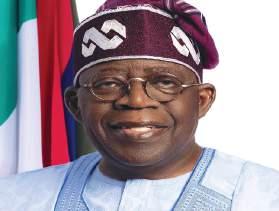
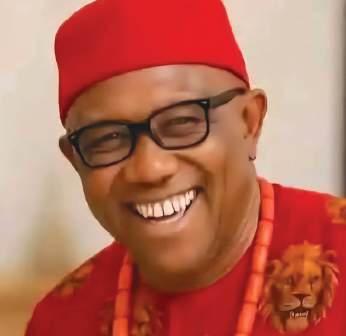
Shettima: Tinubu Has Unlocked Full Potential of Nation’s Economy
Deji Elumoye in Abuja Vice President Kashim Shet-
Nigeria, Poland explore strategic partnership on digital economy, defence, others tima has stressed that Nigeria is open to business, saying in about three years, the President
www.thisdaylive.com
Hamzat, Adeola, Gubio,
Alli, Mbah, Yusuf Win
APC Guber Tickets
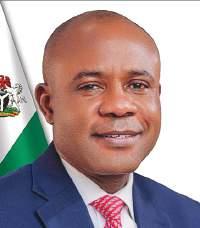
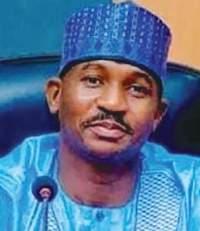
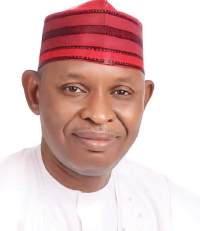
Namadi, Oborevwori, Sani, Aliyu, Bago, Idris, Radda too Party releases procedures for presidential primaries, postpones exercise in Kwara Shettima urges stakeholders to ensure overall victory for party in 2027 polls IG assures interested parties of peaceful, credible poll in Ekiti Our Correspondents
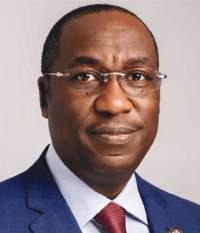
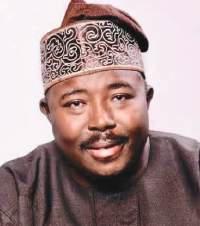
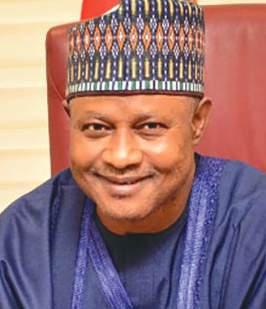
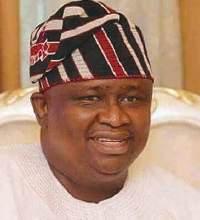
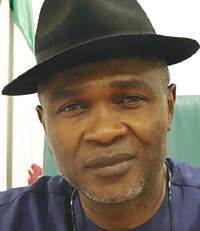
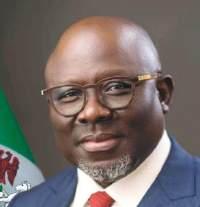
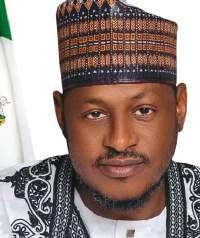
The ruling All Progressives Congress (APC), yesterday, held its gubernatorial primary elections across the states of the federation, an exercise that has been greeted by mixed reactions. Among those elected were Dr. Obafemi Hamzat, Lagos;Solomon Adeola, Ogun; Jamilu Gwamna, Gombe; Sharafadeen Alli, Oyo; Kingsley Chinda, Rivers; Mustapha
Gubio, Borno and Uba Sani, Kaduna. Others were Mohammed Bago, Niger; Umar Namadi, Jigawa; Sheriff
Delta; Ahmed Aliyu,
Continued
Court Sets Aside INEC’s Deadline for Party Primaries,
Candidate Replacement, Others
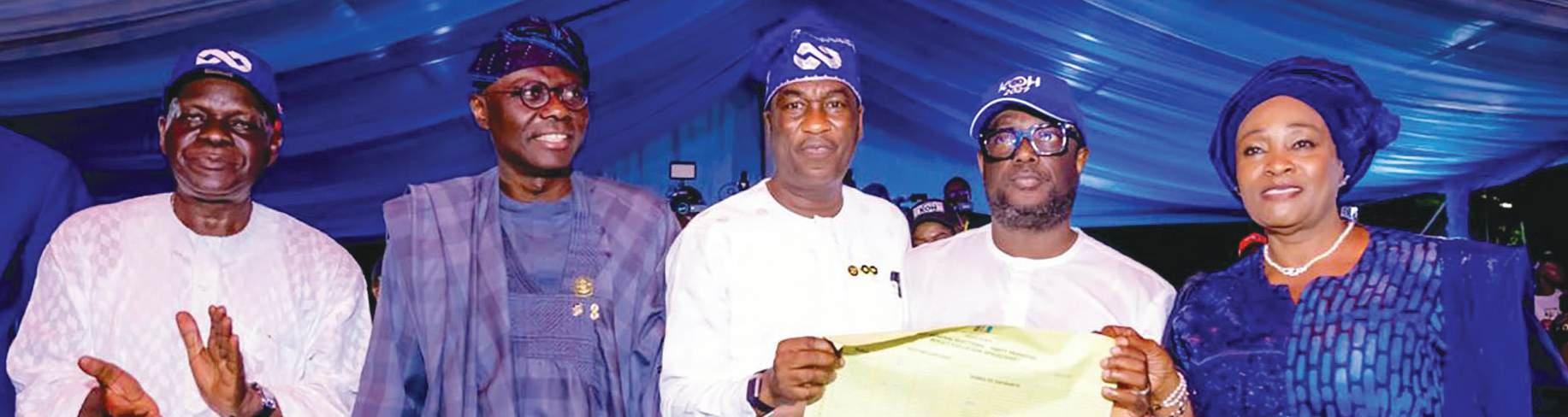
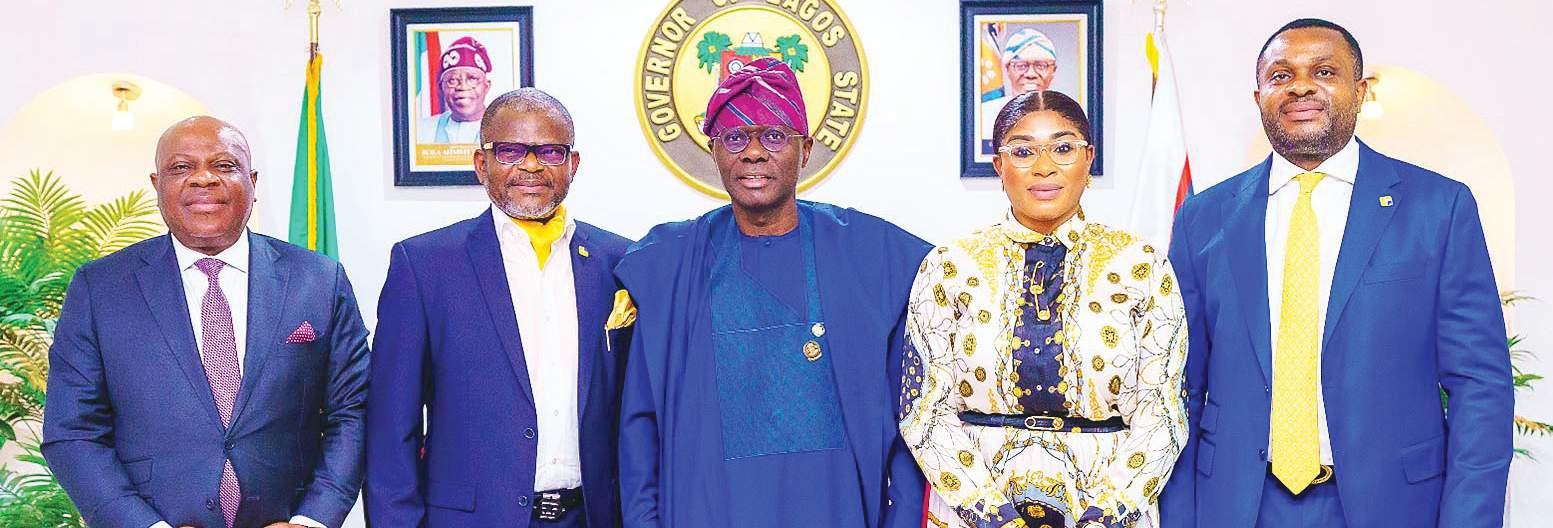
HAMZAT DECLARED WINNER OF LAGOS GOVERNORSHIP PRIMARY...
L-R: Former Party Chairman, Tunde Balogun; Lagos State Governor, Babajide Sanwo-Olu; his
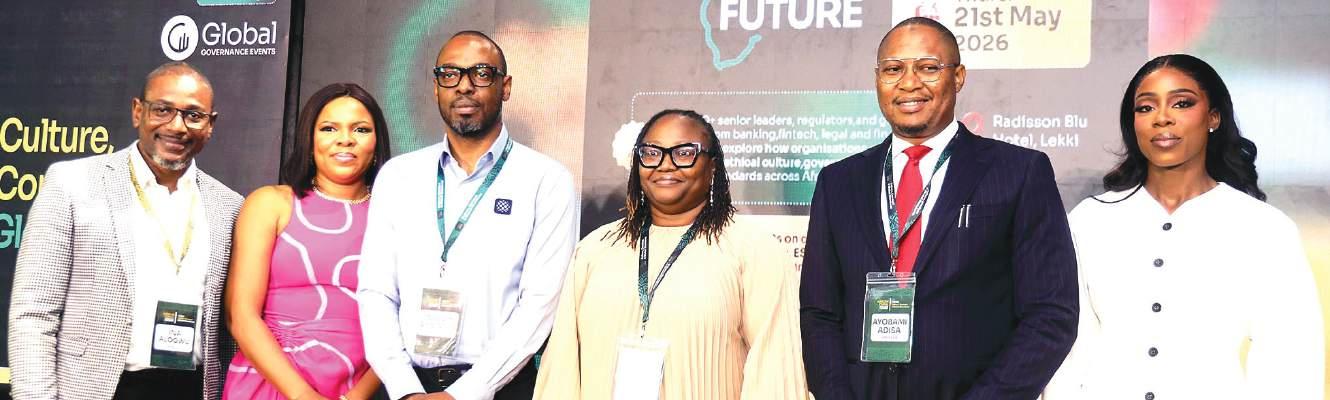
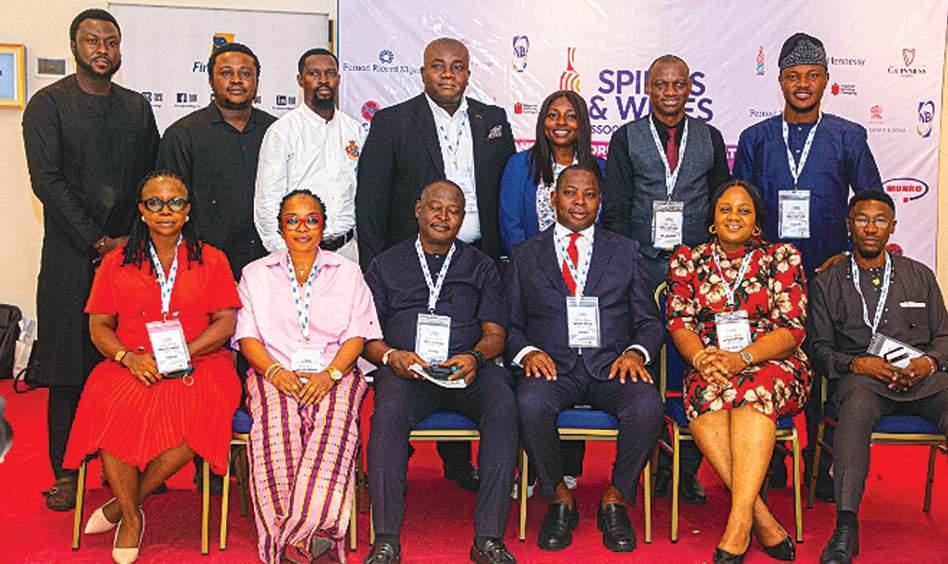
AFRICA’S ETHICAL COMPLIANCE FUTURE CONFERENCE...
L-R: Chief Digital and Innovation Officer, T2 Mobile, Mr. Ina Alogwu; Chief Operating Officer, Esentry, Mrs. Ebun Williams; Chief Executive Officer, Cybervergent, Mr. Ade Omotosho; Chief Compliance Officer, Stanbic IBTC Pension Managers, Edidiong Akan; Convener, Africa’s Ethical Compliance Future Conference, Ayobami Adisa; and Co-convener, Funso Kale, during Africa’s Ethical Compliance Future Conference in Lagos, yesterday
Moghalu: Taxes Must Fund Visible
Public Good, Not Elite Consumption
Says chasing growth without building institutions leads to fragility, inequality
Emmanuel Addeh in Abuja
Former Deputy Governor of the Central Bank of Nigeria (CBN), Prof. Kingsley Moghalu, has said that taxation in Nigeria and across Africa must be tied to visible public benefits rather than what he described as ‘elite consumption’.
Besides, the President, Institute for Governance and Economic Transformation (GET) warned that countries that pursue economic growth without building strong institutions often end up with fragile economies marked by inequality and instability.
Speaking at the 2026 International Civil Service Conference organised by the Office of the Head of Service of the Federation in Abuja, Moghalu argued that governance reform remains the foundation for economic transformation and regional stability, stressing that no nation can achieve sustainable prosperity without competent state institutions.
In his keynote address titled: “Governance Reform, Economic Transformation, and Regional Stability,” the former presidential candidate maintained that effective governance was not optional, but the bedrock upon which prosperity and peace are built.
According to him, governance goes beyond political rhetoric and must reflect the actual ability of the state to deliver public goods, enforce the rule of law, administer taxation effectively, provide security and create an enabling environment for businesses and innovation.
Moghalu lamented that many African governments often speak about governance without demonstrating the core elements of state capacity, including transparency, accountability, responsiveness, efficiency and citizen participation.
He noted that economic transformation required a structural shift from low-productivity activities to manufacturing, technology and modern services, insisting that such a transition could not occur without investments in human development and strong institutions.
The former deputy governor of the apex bank criticised what he described as the tendency of political leaders in developing countries to separate economic management from governance, saying technocrats alone could not revive economies where political systems undermine institutions through patronage, ethnic balancing and short-term electoral calculations.
He identified four major pillars of
state capacity as protective capacity, extractive capacity, administrative capacity and the ability to create a healthy business environment.
On taxation, Moghalu argued that governments should focus on fair and transparent taxation systems that allow citizens to see clear developmental outcomes from public revenues.
He further warned that attempts
to pursue rapid growth through oil revenues, mega projects or foreign aid without institutional development would ultimately fail.
“First, invest in human development anchored on governance competence. This enables structural transformation (shifting labour and capital to higher-value activities). Only then does inclusive economic growth accelerate sustainably.
“Skipping steps-chasing growth via oil rents or megaprojects without building institutions-leads to fragility, inequality, and reversal. Citizens must trust the state; taxation must fund visible public goods, not elite consumption. Without this, the social contract frays,” he emphasised.
Using Nigeria as an example, Moghalu said the country presents a paradox in which banks and large
corporations declare trillions of naira in profits while the broader population remains poor. He observed that despite Nigeria’s huge economy, nominal Gross Domestic Product (GDP) per capita remains low at about $1,556 in 2026 according to International Monetary Fund (IMF) projections, placing the country among the lower income brackets globally.
Ifeanyi Okeke: Nigeria Cannot Achieve Global Competitiveness Without Accurate Measurement System
James Emejo in Abuja
Director-General/Chief Executive, Standards Organisation of Nigeria (SON), Dr. Ifeanyi Okeke, yesterday declared that the country’s quest for sustainable industrialisation and global competitiveness under the federal government’s “Nigeria First” policy would be unrealisable without strict adherence to internationally accepted standards and accurate measurement systems.
Okeke spoke in Abuja at the 2026 World Metrology Day celebration, with the theme, “Metrology:
Director-General of National Boundary Commission, Surveyor Adamu A. Adaji, has stressed the importance of cross-border cooperation in combating transboundary crimes and deepening regional integration across West Africa.
Adaji, represented by Head of Cross Border Cooperation, Dr. Farouk Tarfa, spoke during the Annual Regional Stakeholders Meeting on ECOWAS Cross Border Cooperation held in Abuja recently. The regional meeting, hosted by ECOWAS Commission, brought together representatives from member-states, including Nigeria,
Benin, Cabo Verde, Côte d’Ivoire, The Gambia, Ghana, Guinea, Guinea-Bissau, Liberia, Senegal, Sierra Leone, and Togo to deliberate on strengthening cross-border cooperation and regional integration within the sub-region. Speaking during the plenary session, Tarfa said Nigeria was the first country in the sub-region to establish the ECOWAS Cross Border Cooperation Programme. He stated that the initiative was adopted because of its strategic role in addressing border-related challenges. According to him, the programme is helping member-states combat terrorism and other transboundary
crimes while promoting social cohesion among border communities.
He explained that the programme leveraged the existing socio-cultural ties among border communities as building blocks for the ECOWAS integration agenda and supported the transition from a “Community of States” to a “Community of People.”
Tarfa stated that the programme promoted joint development and utilisation of transboundary resources, pooling of resources, strategic goods and services, integrated health management approaches for tackling transboundary diseases, as well as information sharing among member states on issues of common interest.
Building Trust in Policy Making.”
He said accurate measurement had gone beyond technical relevance to become a strategic economic instrument capable of driving innovation, attracting investment and strengthening consumer confidence in Nigerian products and services.
He warned that without reliable measurement systems and standards compliance, the country would struggle to position its products competitively in regional and global markets despite ongoing industrialisation efforts.
Okeke stated, “We recognise that for Nigeria to achieve sustainable industrialisation and global competitiveness under the federal government’s ‘Nigeria First’ policy, our products and services must
meet internationally accepted standards and measurement requirements.
“Accurate measurement is, therefore, not merely a technical necessity; it is a strategic economic tool that supports innovation, facilitates trade, enhances consumer confidence, and attracts investment.”
The SON boss stressed that measurements influenced virtually every sector of the economy, ranging from fuel dispensing and food safety to healthcare diagnostics, industrial manufacturing, environmental monitoring and digital technologies.
He stated that weak confidence in measurements could erode public trust in institutions and systems, thereby undermining
economic growth and regulatory effectiveness.
Okeke said SON had continued to strengthen the country’s quality infrastructure through calibration, testing, inspection, and standards development activities aimed at promoting fairness, traceability, and compliance across industries.
He also challenged manufacturers and businesses to invest more heavily in calibration systems, conformity assessment procedures and quality control mechanisms to improve productivity, minimise waste, and increase the competitiveness of Nigerian goods. According to him, evidencebased policymaking and effective governance can only thrive where data and measurements are accurate, reliable, and verifiable.
UK Special Envoy Concludes Nigeria Visit, Calls for Greater Religious Tolerance
Sunday Ehigiator
The United Kingdom’s Special Envoy for Freedom of Religion or Belief, David Smith, has concluded a three-day visit to Nigeria aimed at strengthening dialogue and promoting peaceful coexistence among religious communities. The visit, which ended in Abuja yesterday, marked Nigeria as the first focus country visited under the UK’s Freedom of Religion or Belief (FoRB) strategy.
During the trip, Smith held meetings with senior government officials, religious leaders, civil society organisations and local communities as part of efforts to deepen UK-Nigeria cooperation on religious freedom, peacebuilding and national cohesion.
Among those he met were the National Security Adviser, Nuhu Ribadu, Minister of Information and National Orientation, Mohammed Idris, and Plateau State Governor, Caleb Mutfwang.
The envoy also met with co-chairs of the Nigeria Inter-Religious Council, including Daniel Okoh, President of the Christian Association of Nigeria, and Muhammadu Sa’ad Abubakar III, President-General of the Nigerian Supreme Council for Islamic Affairs. Speaking at the end of the visit, Smith said he came to Nigeria to better understand how freedom of religion or belief is experienced in everyday life and how it relates to the country’s broader security and cohesion challenges.
PHOTO: ETOP UKUTT
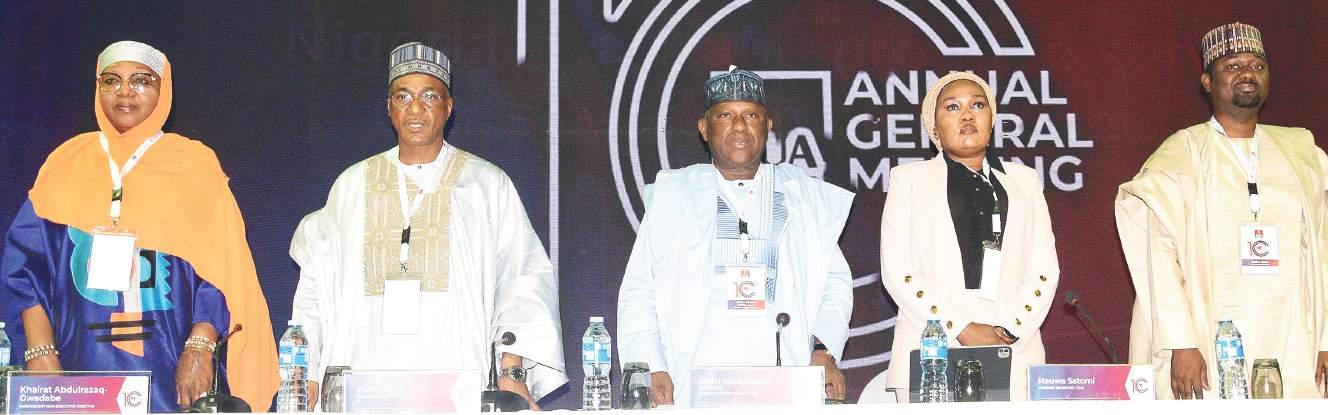
10TH ANNUAL GENERAL MEETING, AGM OF BUA CEMENT...
L-R: Independent Non-Executive Director, Khairat Gwadabe; Managing Director, BUA Cement, Yusuf Binji; Chairman, BUA Cement, Abdul Samad Rabiu; Company Secretary and Legal Adviser to BUA Cement, Hauwa Satomi; and Non-Executive Director, Kabiru Rabiu, during the 10th Annual General Meeting, AGM, of BUA Cement in Abuja, yesterday
Report: Current Govt Added More Debt in Two Years Than Nigeria Accumulated in 55 Years
Decries Nigeria’s debt service-to-revenue ratio
A new policy brief has warned that Nigeria’s worsening debt profile and weak revenue generation have pushed the country into a dangerous fiscal position, with the current administration accumulating more debt in two years than Nigeria recorded during its first 55 years after independence.
The report, released by the Alliance for Economic Research and Ethics LTD/GTE, a Nigerian policy think tank, argued that the country’s debt crisis has evolved into a governance and revenue emergency, as debt servicing obligations now exceed the federal government’s retained earnings.
But the federal government had recently dismissed concerns raised
by critics over the rising borrowing and debt accumulation, insisting that deficit spending was neither criminal nor abnormal.
It described debt as one of the oldest instruments of macroeconomic stabilisation known to economic theory and modern statecraft, characterising the position of critics as ‘economic illiteracy’ disguised as moral outrage
According to the think tank, Nigeria’s public debt rose sharply from N87.38 trillion in June 2023 to N159.28 trillion by the end of 2025, with President Bola Tinubu’s administration accounting for about N65.9 trillion of the increase within its first two years in office.
The organisation in the brief titled: “Nigeria Is Borrowing to Breathe—and the Clock Is Ticking”,
noted that Nigeria accumulated only about N12.06 trillion in debt from independence in 1960 up to 2015, meaning the current administration added more than five times that amount in just 24 months.
The report stated that while previous governments also contributed significantly to the country’s rising debt burden, the speed of accumulation under the current administration had intensified concerns over fiscal sustainability.
“President Bola Tinubu’s administration has added a further N65.9 trillion in just two years. To put that in perspective: it took Nigeria’s first 55 years of independence to accumulate N12 trillion in debt. The current administration has added more than five times that amount in 24 months,” it argued.
Urges FG to declare fiscal emergency
It recalled that Nigeria briefly became almost debt-free externally after the administration of former President Olusegun Obasanjo secured an $18 billion Paris Club debt relief package in 2005 and paid $12 billion to extinguish about $30 billion in external obligations.
According to the report, that period represented a “golden window” for Nigeria, supported by the Excess Crude Account (ECA) and strong oil revenues, before subsequent administrations gradually returned the country to heavy borrowing.
The think tank explained that by 2015, under former President Goodluck Jonathan, public debt had risen to N12.06 trillion, although debt service obligations remained manageable at the time.
However, it stated that the debt
profile expanded dramatically during the administration of former President Muhammadu Buhari, when total public debt climbed from N12.06 trillion to N87.38 trillion by June 2023, representing an increase of more than 620 per cent.
The report stressed that although Nigeria’s debt-to-GDP ratio of about 35.5 per cent appeared relatively moderate compared to countries such as South Africa, Ghana and Kenya, the more important measure of fiscal health was how much of government revenue was consumed by debt repayment.
According to the policy brief, Nigeria’s debt service-to-revenue ratio rose to 116.8 per cent in 2024 before easing slightly to 113 per cent in the first quarter of 2025.
Citing public data, the report
PIA: NMDPRA Engages Stakeholders on Operationalisation of MHCDT for Sustained Host Community Development
As part of its commitment to transparency, accountability, and regulatory efficiency, Nigerian Midstream and Downstream Petroleum Regulatory Authority (NMDPRA) said it had developed a dedicated Host Community Development Trusts (HCDT) Digital Portal.
Authority Chief Executive (ACE), Mr. Rabiu Umar, announced the portal at a stakeholder sensitisation workshop on “Operationalisation of the Midstream Host Community Development Trusts,” organised by NMDPRA in Port Harcourt.
Represented by Dr. Mustapha Lamorde, Executive Director, Health Safety, Environment and Community, NMDPRA, Umar explained that the portal was designed to support digital registration of trusts, submission of governance documentation, monitoring of statutory contributions, compliance reporting, project tracking, and real-time regulatory oversight.
He said the digital platform represented a major step in the authority’s broader digital transformation agenda.
According to the authority chief, “It will help standardise implementation nationwide, reduce disputes arising from information gaps,
improve monitoring capabilities, and strengthen confidence among communities and operators alike.”
Umar explained that the portal will also improve transparency in the administration and utilisation of the Host Community Development Trust Funds.
He expressed delight at the turnout during the workshop, saying the engagement represents another critical milestone in the implementation of one of the most transformative provisions of the Petroleum Industry Act (PIA), the framework for sustainable host community development.
He disclosed that the workshop was designed to “provide clarity on how Host Community Development Trusts are established; governance responsibilities of Trustees and Management Committees; obligations of operators and licensees; administration of the Trust Fund; compliance and reporting requirements; and grievance resolution mechanisms established under the regulations”.
Umar stated, “For decades, host communities have remained central to the sustainability of Nigeria’s petroleum industry.
“The PIA therefore introduced the Host Community Development Trust framework to ensure that
communities directly impacted by petroleum operations become structured beneficiaries of social and economic development.”
Highlighting the benefits of PIA, Umar said it had promoted peaceful coexistence, created shared prosperity, deepened inclusion and participation, reduced conflict and operational disruptions, and institutionalised sustainable development in host communities.
He added the HCDT framework was not only about community development; but also about national stability, investment confidence, and the long-term sustainability of Nigeria’s petroleum sector.
Umar assured that the authority remained committed to ensuring that the objectives of PIA were fully realised in a manner that benefited
the host communities.
In his remarks, Chairman, House Committee on Host Communities, Hon. Dumnamene Dekor, commended NMDPRA for what he described as an important forum to educate and engage the stakeholders who will drive the implementation of the host community development framework under Sections 234 to 257 of PIA.
revealed that in January 2025 alone, the federal government spent N696.27 billion on debt servicing, compared to retained revenue of N483.47 billion.
But beyond the rising debt stock itself, the organisation argued that the more troubling development was Nigeria’s deteriorating debt service-to-revenue ratio.
“Governments love to quote the debt-to-GDP ratio. Nigeria’s is 35.5 per cent, well below the IMF’s 55 per cent distress threshold, and far more comfortable-looking than South Africa’s 78.8 per cent or Kenya’s 65.6 per cent . Politicians wave this number like a clean bill of health.
“ Do not be deceived. The number that actually matters is the debt service-to-revenue ratio, how much of every naira earned goes straight to paying creditors. Nigeria’s ratio stood at 116.8 per cent in 2024, easing only slightly to 113 per cent in Q1 2025, according to the Nigerian Economic Summit Group (NESG).
“ In January 2025 alone, the CBN’s own data showed the federal government paying out N696.27 billion in debt service against total retained revenue of just N483.47 billion. That is a 144 per cent coverage ratio in a single month,” the report added.
The report described the development as evidence that the government was now spending more on servicing debt than it earned.
Lebara Nigeria Expands Market Reach Through Strategic Retail Partnership with Slot Systems
Following its recent entry into the Nigerian telecommunications market, Lebara Nigeria has announced a strategic retail partnership with Slot Systems Limited, one of Nigeria’s most established and trusted mobile device and technology retail companies.
This collaboration, the companies said, marks a major milestone in Lebara Nigeria’s structured market entry and expansion strategy, following its formal market introduction through a high-level
stakeholders’ engagement and a soft unveiling event earlier this year.
With this collaboration, Lebara Nigeria’s SIM cards delivered with its dedicated 0724 number series alongside other products and services would now be available across Slot’s extensive network of stores nationwide, “making it easier for customers to access and onboard onto the network.
By integrating into Slot’s wellestablished retail ecosystem, Lebara is positioned to reach customers more efficiently while offering a seamless and convenient onboard-
ing experience,” the management stated.
Speaking on the partnership at the signing of the Memorandum of Understanding (MoU) between the two companies at the Jet Ski in Ikoyi, Lagos yesterday, the Chief Executive Officer of Lebara Nigeria, Teniola Stuffman, said: “Our partnership with Slot is an important step in how we bring Lebara closer to Nigerians.
“As we move from launch into the full market presence, it is critical that customers can access our services through trusted and
familiar touchpoints. Slot gives us that reach, while also helping us deliver the quality, convenience, and innovation that Lebara is known for globally.”
She added that Lebara is a mobile virtual network operator in Nigeria, “and we are working here in Nigeria to provide services to customers across the country, and one of the things Lebara prides itself on is what we call Telco Trinity. Lebara will always provide an affordable, reliable, and exceptional customer experience that is exceptional.
PHOTO: KINGSLEY ADEBOYE
Sunday Okobi
Blessing Ibunge in Port Harcourt
Emmanuel Addeh in Abuja
2026 AFRICA CEO FORUM...
L-R: Executive Vice Chair, Aig-Imoukhuede Foundation, Ofovwe Aig-Imoukhuede; Minister of Communications, Innovation and Digital Economy, Dr. Bosun Tijani; and Assistant Secretary-General and CEO, United Nations Global Compact, Ms. Sanda Ojiambo, during a session on Private Sector Leadership in Financing Digital Public Infrastructure (DPI) at the 2026 Africa CEO Forum in Kigali, Rwanda ... recently
NDPHC Restarts 450MW Alaoji Power Plant Three Years After Shutdown
Company to partner Abia government on electricity supply
Emmanuel Addeh in Abuja and Peter Uzoho in Lagos
The Niger Delta Power Holding Company (NDPHC) has announced the restoration of the 450 megawatts Alaoji Open Cycle Power Plant in Abia state after it was shut down in 2023 over gas supply and metering disputes.
Managing Director and Chief Executive Officer of the company, Jennifer Adighije, disclosed this during a meeting with the Governor of Abia State, Alex Otti, when she briefed the governor on efforts taken by the company to revive the power plant.
In a statement in Abuja by the Head, Corporate Communications & External Relations, NDPHC, Emmanuel Ojor, Adighije explained that the plant was shut down after disparities emerged between metering and trading points, leading the gas supplier, TotalEnergies, to suspend supply to the facility, while debts also accumulated.
According to her, upon assuming office in 2024, the restoration of the Alaoji plant became a priority for the company.
“The good news is that we have
carried out and fixed all the remedial works on the defective gas line. We’ve also been able to completely defray our past due obligations to Total, and Total has restored gas supply to the plant,” she stated. Adighije added that extensive electro-mechanical works had also been completed on the plant, leading to the restoration of three generating units, GT1, GT22 and GT23, which are now available to dispatch about 375 megawatts to the national grid.
According to her, the plant has adequate transmission infrastructure with no major evacuation constraints, describing it as a viable generation facility for grid-imported electricity.
Besides, the NDPHC chief executive commended the Abia State government for reforms in the electricity sector, especially the Aba ring-fenced power arrangement and the establishment of the state electricity regulatory agency.
She said the company was leveraging the Electricity Act and the evolving bilateral electricity market to partner with states and eligible customers to improve power supply across the country.
She added: “We would love to form a strategic alliance with Abia state considering the fact that you (the governor) are very driven and determined to secure uninterruptible electricity for the good people of Abia state.”
In his remarks, Otti lauded the management of NDPHC for bringing the Alaoji plant back to life, describing the development
as critical to economic growth and industrial development in the state.
“The last time I visited the Alaoji plant, it was regrettable that such capacity was wasting away. I’m glad to learn that you have brought it back to life,” the governor said.
The governor revealed that the plant could eventually be expanded to 800MW and later to about 1,100MW, subject to the
availability of funds, reiterating that power remained one of the most critical drivers of economic development.
Noting that his administration prioritised electricity infrastructure since assuming office in 2023, the governor also disclosed that the state government had ring-fenced the Umuahia electricity market and entered into an agreement with
the Enugu Electricity Distribution Company (EEDC) to acquire electricity distribution assets covering Umuahia and surrounding areas. According to him, the state would require about 100MW to service the eight local government areas under the Umuahia ring-fenced area, while investments in renewable energy and mini-grid projects were also ongoing.
Eko, Ikeja, Abuja Lead as Discos Meter 241,590 Customers in 2 Months
Jos, Kaduna, Kano, Yola lag behind in metering penetration
Eko, Ikeja and Abuja Electricity Distribution Companies (Discos) emerged as the top performers in Nigeria’s electricity metering drive in the first two months of 2026, as power distribution firms collectively installed 241,590 meters between January and February, according to new data released by the Nigerian
NIMASA: FG Boosts Blue Economy with New 492 Maritime Security Personnel
Blessing Ibunge in Port Harcourt
The federal government said it has intensified its maritime environment to boost the blue economy with the graduation of 492 maritime security personnel from different operational units.
This is as the Minister of Marine and Blue Economy, Adegboyega Oyetola, disclosed that Nigeria has recorded zero incidents of within its territorial waters for the past four years.
The minister stated this at the 2026 Graduation Ceremony of the Advance Combat Training Programme for the Deep Blue Project held at 5 Battalion Nigerian Army Barracks, Elele, Rivers State on Thursday.
The 492 personnel drawn from Nigerian Army, Air Force and Navy included: 232 Maritime Security Unit Operatives; 19 armored vehicle drivers; 13 armored vehicle mechanics; eight special mission helicopter pilots; eight special mission helicopter technicians; five special mission aircraft pilots and six special mission aircraft technicians.
Others were 49 special mission vessel crew: 28 interceptor boat mechanics; 62 interceptor boat drivers; 52 Command, Control, Communication, Computer and Intelligence (C4I) operators, and 10 vertical take-Off and landing unmanned aerial systems operators.
The minister noted the Gulf of Guinea was one of the most danger-
ous maritime corridors in the world, accounting for over 45 reported piracy incidents.
He said: “Today’s ceremony is not only a celebration of the successful completion of rigorous training by maritime security personnel, but also an opportunity to reflect on the remarkable journey and achievements of the Deep Blue Project since its conception.
“Before the establishment of the Project in 2021, the Gulf of Guinea had become one of the most dangerous maritime corridors in the world, accounting for over 45 percent of reported global piracy incidents and over 90 percent of global crew kidnappings at sea during its peak years.
Electricity Regulatory Commission (NERC).
The latest NERC factsheet on the metering status of Discos showed that the industry’s overall metering rate improved from 57.93 per cent in January to 58.57 per cent in February, reflecting gradual progress in reducing estimated billing and improving transparency in electricity consumption.
The report indicated that the total number of active electricity customers in the country rose from 12.23 million in January to 12.31 million in February, while the number of metered customers increased from 7.09 million to 7.21 million within the same period.
Specifically, the industry added 119,792 newly metered customers in January and 121,798 in February, bringing the cumulative figure for the two months to 241,590, the NERC report explained.
Among the Discos, Eko Disco maintained the highest metering penetration nationwide, posting an 87.15 per cent metering rate in January, which further rose to 87.62 per cent in February. The Lagos-based utility also increased its metered customers from 563,734 in January to 577,160 in February.
Closely following Eko was Ikeja Electric, which recorded a metering rate of 86.69 per cent in January and
87.16 per cent in February. The Disco’s total metered customers increased from 1.14 million to 1.16 million during the review period.
Abuja Disco ranked third among the best-performing distribution companies, with its metering rate improving from 78.54 per cent in January to 79.37 per cent in February. The company added over 34,000 customers within the two months, as metered customers rose from 1.06 million to 1.08 million.
The data further showed that Port Harcourt Disco also performed relatively well, improving its metering penetration from 65.47 per cent in January to 66.36 per cent in February.
In contrast, several Discos continued to struggle with low metering coverage despite ongoing efforts by the federal government and sector regulators to close the country’s metering gap.
Yola Disco recorded the lowest metering penetration, with only 30.85 per cent of its active customers metered in January and 31.86 per cent in February. The company had just 162,959 metered customers out of over 511,000 active customers by the end of February.
Besides, Jos Disco remained among the weakest performers, although its metering rate improved slightly from 32.94 per cent to 34.04 per cent within the period under review. Similarly,
Kaduna Disco posted a metering rate of 34.82 per cent in January and 35.59 per cent in February, while Kano Disco recorded marginal progress from 35.36 per cent to 35.37 per cent. The figures highlighted the significant disparities in metering deployment across the country’s electricity distribution network, with some utilities approaching near-full metering while others still rely heavily on estimated billing.
Although Ibadan Disco recorded the largest customer base in the country, with active customers increasing from 2.46 million in January to 2.48 million in February, its metering performance remained modest at just above 52 per cent.
Benin Disco also recorded a moderate metering rate, improving from 55.16 per cent in January to 56.75 per cent in February, while Enugu Disco posted 51.79 per cent and 51.83 per cent respectively. Widespread metering remains critical to improving revenue assurance in the power sector, reducing commercial losses and restoring consumer confidence in the power sector. The issue of estimated billing has continued to generate tension between consumers and electricity distribution companies, with many customers accusing Discos of arbitrary charges and inadequate service delivery.
Although the party has yet to officially announced results of any of the categories since it started days ago, reports from the field indicated that the nearly all the consensus candidates were affirmed at the election venues.
While some of the candidates opposed the idea of consensus and protested the eventual choices by the party, the APC leadership has long advised the aggrieved persons to approach the various appeal committees and it promised to address their concerns.
This, nonetheless, the APC, has released the procedure for the court of the presidential primaries scheduled to hold on May 23, 2026.
The National Secretary of the party, Senator Ajibola Basiru, in a notice revealed that the ruling party would choose its candidate via direct primary.
President Bola Tinubu, who is seeking re-election is being challenged by Stanley Osifo for the plum job.
He said the direct primary would be held in each of the 8,809 wards across the country.
Basiru added that all registered members of the party shall be eligible to vote for the presidential aspirant of their choice in each of the 8,609 wards In the country.
He noted: “The direct primary will be held in each of the 8,809 wards. Results for each ward comprised of the 774 Local Governments will be collated by the Local Government Collation Officer to be appointed by the State Coordinator and Collation Officer appointed by the National Working Committee.
“The organisation of conduct of the direct primary in each of the 36 state and the FCT shall be the responsibility of the State Coordinator and Collation Officer who shall also collate the results of the all the local governments in the state and present same to the Presidential Primary Election Committee in Abuja, FCT on 24 May, 2026.
“The Provisions of the “Procedure for the Conduct of Direct and Consensus Mode of Primaries” earlier issued and forwarded to the independent National Electoral Committee under the cover of a letter dated 15 May, 2026 with reference No: APC/NHOQ/INEC/ PRYS-DOCS/01-05/26 shail also apply mutatis mutandis.”
Basiru added that the party has appointed former Senate President, Ayim Pius Anyim as chairman of the presidential election committee, while Senator Ken Nnamani, Senator Udo Udoma, Ms. Grace LayoyePonle, Idris Wada, Jolly Nyame are members and Sani Sanusi is the Secretary.
The party revealed that governors of the party were appointed coordinators in their respective states, while Deputy Speaker, Hon. Ben Kalu was appointed the coordinator for Abia state; Senator Phillip Aduda was appointed coordinator for the Federal Capital Territory (FCT).
Senator Teslim Folarin was appointed coordinator for Oyo state, Gboyega Oyetola was ap-
pointed as Coordinator for Osun state, senator Uche Ekwunife is appointed coordinator for Anambra and Hon. Yakubu Dogara appointed coordinator for Bauschi state.
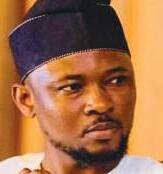
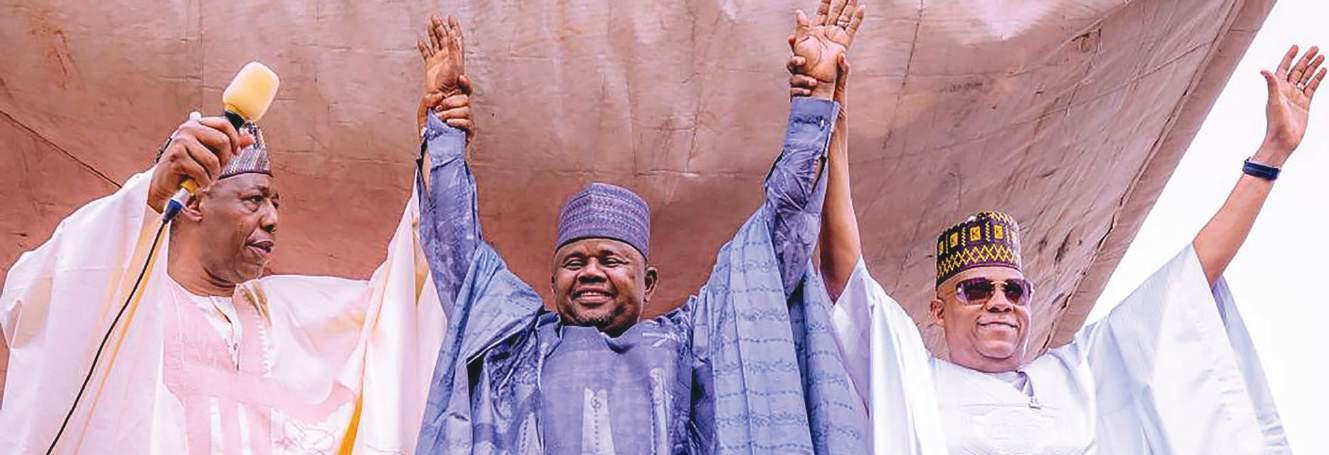
Meanwhile, Vice President Kashim Shettima, who participated in the primary election that produced Mustapha Gubio as the party’s governorship standard bearer in Borno State, has urged stakeholders to ensure overall victory for the party in next year’s election.
Shettima, who led the Governor of Borno State, Prof. Babagana Umara Zulum, and other APC members in the state to the party’s governorship primary, stated this in a press release.
Shettima, according to the release by his media aide, Stanley Nkwocha, used the forum to call on party members to ensure unity, bury hatchets, and commit themselves to the success of the party.
He called on party members to “bury hatchets, get united and commit to the success of the party, with a view to ensure overall victory for the APC, knowing full well that God gives power to whom he so wishes.”
The vice-president stressed the need to move the nation forward under an administration of integrity, even as he implored party members to see the affirmation of the party’s governorship candidate as a collective resolve to get the best candidates, who could deliver on economic growth, security, and a brighter future for the state.
“Whatever we do here is part
of the broader agenda of the administration of President Bola Tinubu, to ensure a better future for Nigeria and Nigerians – one I believe will set the nation on a clear course for prosperity.
“The time has come to walk the talk, and only credible leaders can make this unfold into a pleasant reality for the citizens,” Said he.
Governor Zulum thanked all stakeholders for their support and endorsements.
On his part, Gubio, who emerged unopposed, promised to advance the development of the state and lead with the fear of God if elected in the 2027 governorship poll.
Lagos: Obafemi Hamzat
The Lagos chapter of the APC, yesterday, affirmed the Deputy Governor, Dr. Obafemi Hamzat, as the consensuscandidate at a massive turnout by party faithful.
An elated Governor Babajide Sanwo-Olu, commended the electorate for turning out en masse to support Hamzat.
Sanwo-Olu, who arrived at the Ward E3, St Stephens (WAEC) School, Lagos Island polling with his wife, Dr. Ibijoke Sanwo-Olu, at 11:44am, participated in the primary election and described the exercise as peaceful, orderly and reflective of internal party democracy.
He noted that the direct primary process allowed party members at the ward level to freely participate in the emergence of the party’s governorship candidate.
Sanwo-Olu noted that electoral officials and party representatives were on ground to ensure a credible exercise, noting the impressive turnout of APC faithful at the ward level.
Sanwo-Olu, who openly declared support for Hamzat, expressed confidence that he would emerge victorious.
Kaduna: Uba Sani
Kaduna State Governor, Senator Uba Sani, has emerged the sole candidate of the APC for reelection in the 2027 general election.
Sani, who is the sole aspirant, secured an overwhelming 459,393 affirmation votes at the party’s primary election.
Sani received a resounding endorsement from delegates and stakeholders across the state in what party leaders described as a strong vote of confidence in his leadership, performance, and political direction.
The delegates from the 23 local government areas participated in the primary election, monitored by officials of the Independent National Electoral Commission (INEC).
Announcing the result, Chairman of the Kaduna APC Governorship and House of Assembly Primary Election Committee, Hon. Hafiz Ibrahim Kawu, described the exercise as peaceful, transparent and reflective of the growing unity and internal cohesion within the ruling party ahead of the 2027 general election.
The adoption of the affirmation votes was moved by the Speaker
of the Kaduna State House of Assembly, Hon. Yusuf Liman, and was unanimously endorsed by delegates at the venue amid chants and celebrations by party supporters.
Speaking shortly after his affirmation, Sani thanked APC members, stakeholders, and the people of Kaduna State for their overwhelming demonstration of trust and solidarity.
“We have made significant progress in restoring peace, strengthening unity and expanding development across Kaduna State through dialogue, inclusion, and people-oriented policies.
“From infrastructure and education to rural transformation and urban renewal, our administration remains committed to improving the lives of our citizens,” Sani said.
Niger: Mohammed Bago
Niger State Governor, Alhaji Mohammed Bago has been affirmed the governorship candidate of the APC for the 2027 governorship election.
The affirmation took place at the APC Secretariat in Minna.
Senator Mohammed Sani Musa representing Niger East senatorial district moved the motion for the affirmation and was seconded by the deputy speaker of the Niger State House of Assembly, Mrs Affiniki Dauda.
Flanked by other members of the National Assembly, Musa declared in his affirmation that, “I Senator
Mohammed Sani Musa representing Niger East in the national assembly do hereby move that His Excellency Alhaji Mohammed Umaru Bago having satisfied the conditions set out in the constitution is affirmed for a second term in office.”
Mrs Affiniki Dauda seconded and when the matter was put to vote it was overwhelmingly carried. Bago, in his acceptance speech, declared: “I use this medium to accept my nomination, thank you very much.”
Jigawa: Umar Namadi
Governor Umar Namadi of Jigawa State has emerged the sole governorship candidate of the APC for the 2027 general election in Jigawa State.
Presenting the certificate of return after the party’s primary election held Thursday at Dutse Stadium, chairman of the electoral committee, Mr Isa Sadiq Achida, said Namadi was returned unopposed. Achida said the governor secured the endorsement of delegates from across the state in line with provisions of the Electoral Act and the APC constitution.
“In the presence and consent of 287 political ward delegates and 27 local government delegates, and based on Sections 86 and 87 of the Electoral Act as well as Article 20 of the APC Constitution, I hereby declare His Excellency, Malam Umar Namadi as the duly elected APC
Continued on page 42
COURT SETS ASIDE INEC’S DEADLINE FOR PARTY PRIMARIES, CANDIDATE REPLACEMENT, OTHERS
Chuks Okocha, Adedayo Akinwale and Alex Enumah in Abuja
Relief came the way of many politicians, who had lost out in the recent primary elections conducted by the political parties, as a Federal High Court, yester-day, in Abuja nullified the Revised Timetable and Schedule of Activities for the 2027 general election released by the Independent National Electoral
Commission (INEC). Justice Mohammed Umar, in a judgement, held that the time-frame “imposed” by INEC on political parties to conduct their primaries, submit, withdraw, and replace names and particulars of their candidates for the 2027 general election “is inconsistent with the provisions of the Electoral Act, 2026”, and, therefore, set it aside. The judgement was in respect
of a suit challeng-ing INEC’s timeframe for the conduct of the 2027 general election, primarily aimed at preventing peo-ple, who lost in primary elections from defecting to other parties and vying for the same offices they had earlier lost in their former parties.
A Certified True Copy (CTC) of the judgement revealed that the suit marked: FHC/ABJ/CS/517/2026, and filed by the Youth Party, had
INEC as sole defendant.
The plaintiff, in the suit dated and filed on March 11 by counsel, J. O. Olotu, sought several reliefs, including a declaration that upon a proper consideration and interpretation of the provisions of Sections 29, 82 and 84(1) of the Electoral Act, 2026, the powers of INEC to receive notice of party primaries and the personal particulars of candidates, and its duty to attend, observe and monitor
such primaries did not extend to fixing or prescribing the timetable within which political parties might conduct their primary elections for the purpose of nominating candidates for the 2027 general election.
Umar held that going by the provisions of Section 29(1) of the Electoral Act, 2026, which required political parties to submit the personal particulars of their candidates not later than 120 days to an election,
“After hearing J. O. Olotu, of counsel for the Plaintiff, and Sarafa Yusuf, of counsel for the defendant, INEC cannot lawfully abridge or limit that statutory period by prescribing a shorter timeframe in its 2027 election timetable.”
Similarly, citing Section 31 of the Electoral Act, 2026, which permitted political parties to withdraw and
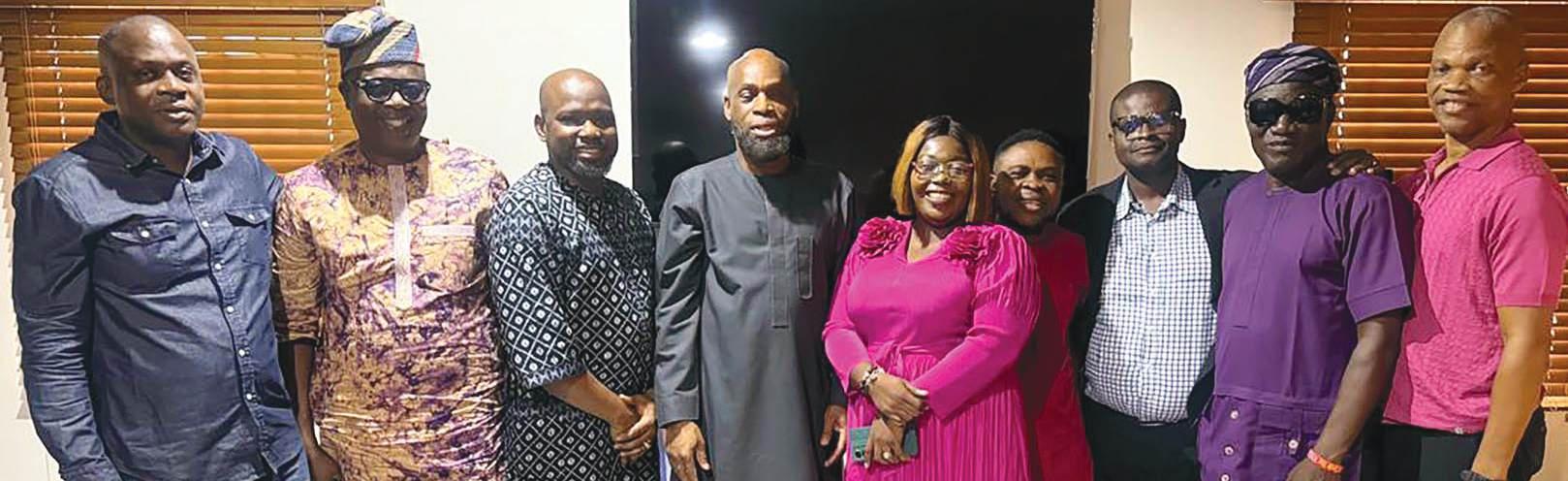
Ezeobi; Group Business Editor, Eromosele Abiodun; Saturday Editor, Obinna Chima; Deputy Editor, Sunday, Alike Ejiofor; and Deputy Editor, Saturday, Ahamefula Ogbu, during the condolence visit to Momodu in Lagos yesterday, over the death of his elder brother
Tinubu Appoints Prof. Segun
Aina New Registrar of JAMB
Governor Adeleke, Osun monarch, OAPU congratulate Aina
President Bola Tinubu has appointed Professor Segun Aina as the new Registrar of the Joint Admissions and Matriculation Board (JAMB), to succeed Professor Is-haq Oloyede, whose twoterm tenure expires on July 31, 2026. Presidential spokesperson, Bayo Onanuga, in a release issued on Thursday, stated that president expected Aina to bring to bear his vast experience,
knowledge, and practical insight into the operations of the board, to take the critical educational organisation beyond the laudable heights achieved by his predecessor.
Governor Ademola Adeleke of Osun State, the Owa of Otan-Ayegbaju, Oba Lukman Ojo-Fadipe, and the OtanAyegbaju Progressive Union (OAPU) congratulated Aina on his appointment. Adeleke, who described Aina as an outstanding academic whose scholarly interventions had broadened knowledge,
said his appointment to head JAMB was a mark of recognition of excellence and competence given his rich academic background and experience.
The governor affirmed his strong faith in Aina’s capacity to drive further growth in JAMB and enable academic excellence in the country, saying his exploits in the academia prepared him for the new role and reinforces confidence that he will deliver.
Owa of Otan-Ayegbaju, Oba Lukman Ojo-Fadipe, and Otan-Ayegbaju Progres-
sive Union (OAPU), in a statement issued by OAPU Global President, Aare GH Adetunji Mosebolatan, through the union’s Public Relations Officer, Lateef Dada, praised Tinubu for considering a capable youth to lead JAMB.
They described Aina as a man of proven capacity who had contributed immensely to the progress of OtanAyegbaju, including through educational development.
Aina, who will be 40 in July, is a distinguished academic and systems
Cuba Condemns U.S. Accusation Against Raúl Castro, Defends 1996 Airspace Action
The Government of Cuba has strongly condemned what it described as a “despicable accusation” by the United States Department of Justice against former Cuban leader Raúl Castro, escalating tensions between Havana and Washington over a decades-old incident involving the downing of two civilian aircraft.
In a statement issued Wednesday by the Cuban Revolutionary
Government in Havana, authorities rejected the reported U.S. legal action announced on May 20, saying Washington lacked both “legitimacy and jurisdiction” to accuse Castro over the February 1996 incident involving aircraft operated by the Miami-based anti-Castro group Brothers to the Rescue.
The Cuban government argued the aircraft had repeatedly violated Cuban airspace in the years leading up to the incident and maintained that the response by Cuban forces
constituted an act of “legitimate self-defense” under international law.
The controversy centers on the 1996 shootdown of two Brothers to the Rescue planes by Cuban fighter jets, an incident that killed four people and triggered international condemnation at the time.
The aircraft were reportedly engaged in missions linked to Cuban exile activism and humanitarian operations.
In its latest statement, Havana
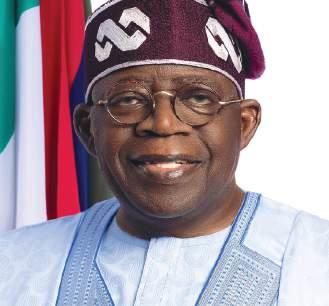
SHETTIMA: TINUBU HAS UNLOCKED FULL POTENTIAL OF NATION’S ECONOMY
declared, “Since assumption of office over two years ago, President Tinubu has unlocked the full potential of the Nigerian economy.
“We have liberalised the foreign exchange market; we have removed subsidy on petroleum products; we have harmonised our tax laws such that companies coming into Nigeria will not be overtaxed and there is room for improvement in our relationship in critical areas.”
He added that Nigeria, under Tinubu, was committed to deepening ties with the Republic of Poland in different sectors.
Shettima said that could be done in the areas of defence
cooperation, digital economy, agriculture, and other sectors where Poland had shown remarkable comparative advantage. He stated, “There is room for improved relations between our countries.”
Speaking on the possibilities of partnership with Poland, Shettima said the country was an industry leader in many areas, including ship-building, maritime economy, defence industries, and digital economy.
According to him, “There is room for enhanced mutually beneficial business relations between Nigeria and Poland. We believe in a truly beneficial relationship than on reliance on any country for aid.”
Lauding the country’s posi-
tive development journey, the vice president described Poland as one of the most progressive and strategic nations in Europe, assuring of improved cooperation with the government and people of Nigeria.
Earlier, Gawkowski said over the years, Nigeria had remained Poland’s most strategic partner in Africa.
He said Nigeria was a country with enormous demographic and technological potential, as well as Poland’s partner for development and long-term cooperation.
Gawkowski expressed optimism that the visit would signal new momentum for cooperation in the areas of the economy, innovation, and digitisation.
said the United States ignored repeated warnings and formal complaints made by Cuba between 1994 and 1996 to U.S. authorities, including the State Department, the Federal Aviation Administration and the International Civil Aviation Organization, over alleged incursions into Cuban airspace.
Cuba accused Washington of distorting the historical record and overlooking what it described as more than 25 deliberate violations of Cuban airspace by the organization during that period.
expert with extensive experience in national examination systems, digital infrastructure, and public-sector institutional reform.
He holds a Bachelor of Engineering in Computer Systems Engineering from the University of Kent, an MSc in Internet Computing and Network Security, and a PhD in Digital Signal Processing, both from Loughborough University, United Kingdom.
He has also completed the Senior Management Programme at Lagos Business School.
A Professor of Computer Engineering at Obafemi Awolowo University, IleIfe, Aina began his career with JAMB during his National Youth Service, gaining foundational experience in national admissions and data-driven institutional processes.
The insights shaped his ongoing contributions to examination reform and systems optimisation.
With over 15 years of post-graduation experience, Aina operates at the intersection of technology, policy, and institutional transformation, advising federal and state governments on system design, digital transition, and operational reform.
At 39, he became one of Nigeria’s youngest computer engineering professors and will now make history as JAMB’s youngest registrar.
He has served as a consultant to major
examination bodies, including NECO, NABTEB, and various State Ministries of Education, providing expertise on ICT systems, examination integrity, and digital process optimisation.
Aina is a member of several professional bodies, including the Council for the Regulation of Engineering in Nigeria (COREN), the Nigerian Society of Engineers (NSE), Institute of Electrical and Electronics Engineers (IEEE), and Institution of Engineering and Technology (IET).
Adeleke stated in his congratulatory message to the new JAMB registrar, “I’m most delighted to learn of the appointment of Mr. Segun Aina, a professor of Computer Engineering at the Obafemi Awolowo University (OAU), as the Registrar of the Joint Admissions and Matriculation Board (JAMB).
“At 39, Prof. Aina has shown exceptional capacity, and it is heart-warming to see that President Bola Tinubu has found him worthy of leading an important institution at the heart of our country’s education system.”
Adeleke, who appreciated Tinubu for giving yet another Osun indigene the opportunity to contribute to nation-building, urged Aina to use the appointment to positively spotlight the state by delivering on the mandate of JAMB.
ASUU Sokoto Zone: FG’s Delay Pushing Varsities Toward Another Shutdown
Onuminya Innocent in Sokoto
The Academic Staff Union of Universities, ASUU, Sokoto Zone, on Thursday warned that public universities risk another industrial crisis if the federal and state governments fail to fully implement the 2025 FGN-ASUU Agreement.
Zonal Coordinator, Comrade Abubakar Sabo, issued the warning at a press conference held at the NUJ Press Centre, Zuru Road, Sokoto, while briefing journalists on resolutions from the Union’s National Executive Council meeting at Modibbo Adama University, Yola, on 9th and 10th May, 2026.
Sabo said the Sokoto Zone
comprises Usmanu Danfodiyo University Sokoto, (UDUS; Umaru Musa Yar’Adua University, (UMYUK;) Abdullahi Fodiyo University of Science and Technology Aliero, (AFUSTA); Sokoto State University, SSU; Federal University Dutsinma, (FUDMA); Federal University Birnin Kebbi, (FUBK;) Federal University Gusau, (FUGUS); Shehu Shagari University of Education Sokoto, (SSUES); Federal University of Agriculture Zuru, (FUAZ) and Zamfara State University, Talata Mafara, (ZAMSUT)
He described the implementation of the 2025 Agreement as “slow, distorted and partial,” noting
that despite its public presentation in January 2026, the federal government has yet to inaugurate the Implementation Monitoring Committee, (IMC,) meant to ensure compliance across institutions. According to him, the absence of the IMC has opened the door to bureaucratic delays and selective implementation by university administrators.
He added that several universities in the Zone are yet to reflect the 40% increment through Consolidated Academic Tool Allowances, (CATA), Earned Academic Allowances, (EAA), and Professorial Allowances in monthly salaries.
Editor, Chiemelie
Michael Olugbode in Abuja
Deji Elumoye in Abuja and Yinka Kolawole in Osogbo
TINUBU’S KIGALI DECLARATION ON COMMODITIES
EXCHANGE
Commodity exchanges cannot thrive amid fragmented regulation and policy reversals, contends SOLA ONI
See page 21
BATTLE FOR THE PRESIDENCY
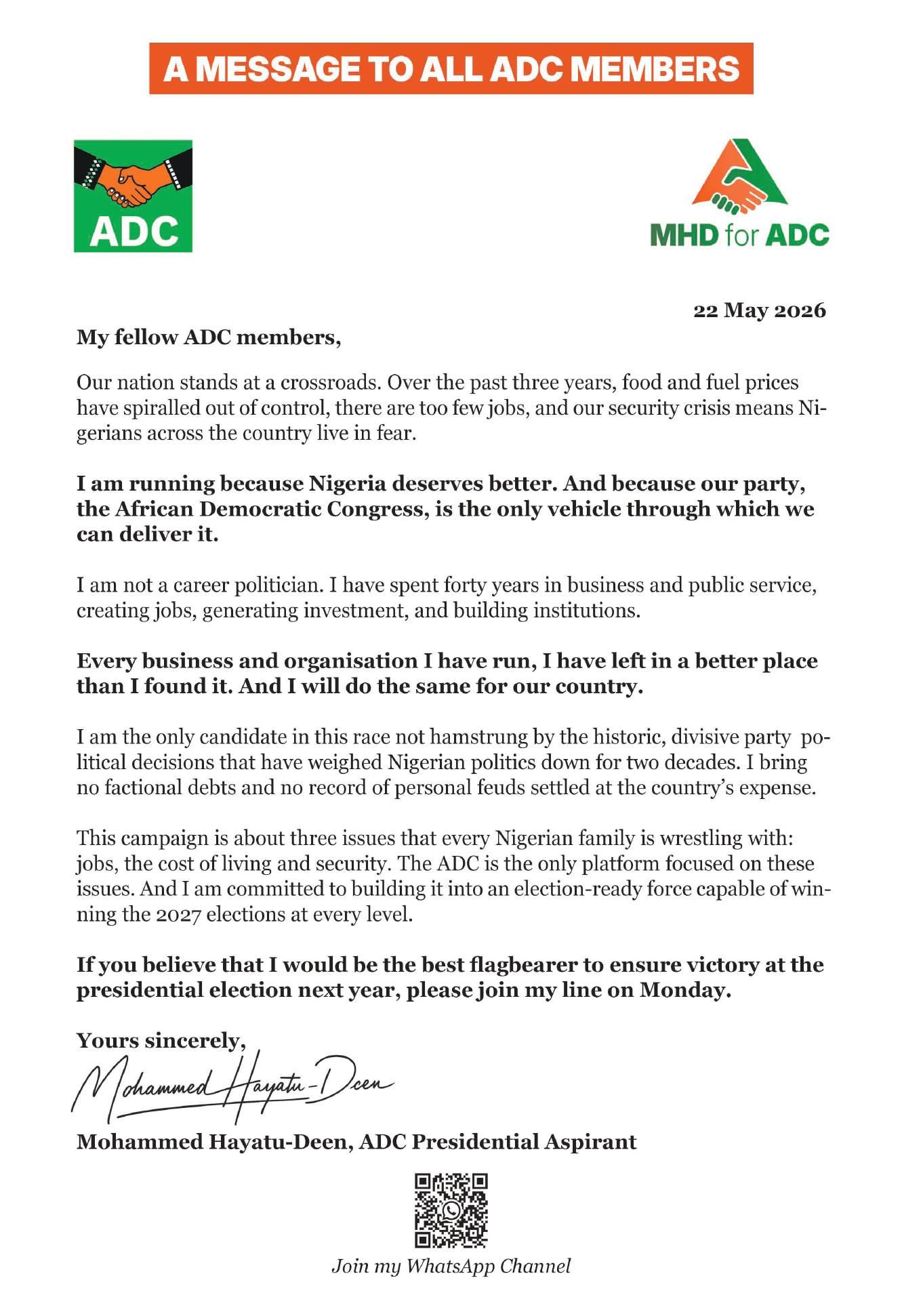
Mohammed Hayatu-Deen has the foresight, intellect and discipline to do the job, argues PAUL A. OBI
page 21
Patience, and the willingness to do the right thing, will get you there, reckons JOSHUA J. OMOJUWA
ARSENAL’S 22 YEARS AND THE ONE LESSON
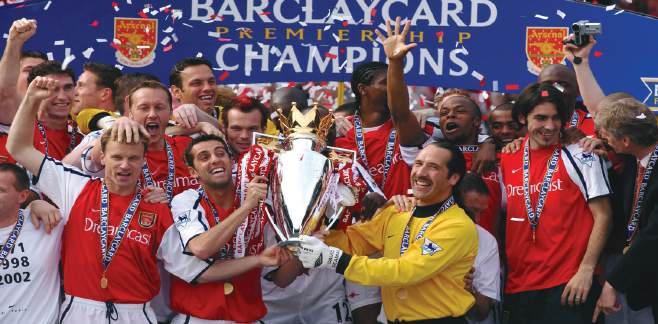
By the time the referee blew the final whistle as Bournemouth and Manchester City battled each other to a 1-1 draw, I felt grateful for the journey it took to get to that moment. Because I had believed so strongly that this was going to be Arsenal’s league title to win, that moment felt like a déjà vu. Except that it wasn’t. That result meant that Arsenal had become the Champions of England for the first time since 2004.
Arsenal have waited 22 years for this. Their last title was the Invincibles season of 2003/04 under Arsène Wenger. That campaign was so complete, so historically perfect, that it simultaneously became the club's greatest achievement and its longest shadow. Everything that followed happened under that shadow. The declining years of Wenger's tenure. The chaos of the post-Wenger period. Unai Emery’s messy tenure. Incidentally, Emery himself won yet another Europa Cup this week with Aston Villa. The Kroenke era had evolved into a squad with a Champions League wage bill on a Europa League budget. The protests. The near-misses.
And then, quietly, something changed.
When Mikel Arteta arrived in December 2019, he inherited a side with an average age of over 26, battered by a crisis of confidence and struggling in the middle of the table. His first move was not to sign worldclass players. It was to assert the rules of engagement. Out went PierreEmerick Aubameyang, the captain and the talisman. Mesut Özil, the most talented player at the club, was left out too. The message was not subtle. The non-negotiables were non-negotiable. Arteta had laid down the marker.
This is where Nigeria comes in.
We spend a great deal of time in this country talking about what we want. The destination, the promise of what Nigeria could be. We spend considerably less time talking about what Arteta spent six years doing: the unglamorous, politically uncomfortable, privately painful work of removing what is broken before you can build what is needed. The work that does not generate headlines. The work that generates criticism, and the specific frustration of people who can see you working but cannot yet see results.
Arsenal reset their wage structure and dressing-room dynamics in a process that was painful and unpopular.
Once the culture began changing, they moved into the second phase; constructing a young and ambitious core capable of growing together. William Saliba, who barely played in his first season, became the best centreback in the Premier League. Bukayo Saka, developed through the academy, became one of the finest players in the world. That is the sequence. It is neither glamorous nor fast. It is the only way things actually work.
Coming third for three consecutive seasons between 2023 and 2025 earned Arsenal a reputation as almost-butnot-quite men of ability who failed to deliver under intense pressure. The internet called them bottlers. The pundits wrote their obituaries as title contenders. Arteta sat in press conferences, absorbing every question about whether his project had reached its limits, and said the same things he had always said. Trust the process. We are building something. He was mocked for the language. Who is laughing now?
There is a particular Nigerian tendency to demand results at a speed that the nature of the problem does not permit. We want infrastructure fixed in months. We want institutions reformed in one administration. We want economies turned around before the next election cycle. And when the results do not arrive on that timetable, we conclude that the project has failed, the leadership is incompetent, and the effort should be abandoned in favour of something new. What we rarely ask is whether we have given the process the time that the process actually requires.
Arsenal's title feels like the payoff for a long, methodical rebuild: smart recruitment, a clear tactical identity, and a manager who learned from setbacks. Arteta lost a final, as recently as March, to Manchester City. He lost title races he should have won.
He watched Erling Haaland arrive at Manchester City and understood, without being told, that the gap had just grown wider. He did not panic. He did not abandon the system. He diagnosed where Arsenal had fallen short; mentality, squad depth, the inability to sustain pressure over 40 weeks, and he addressed those specific deficiencies with tailored solutions, methodically, one transfer window at a time.
Arsenal face Paris Saint-Germain in the UEFA Champions League final in Budapest on May 30. The possibility of a double is real even though PSG are the bookmakers’ favourites. Twentytwo years from nothing to potentially everything, in the space of one spring.
I am aware, as an Arsenal supporter, that I am not an objective narrator of this story. My investment in it is personal and has been expensive; emotionally, economically, and in the particular currency of being an Arsenal fan through the years when being an Arsenal fan meant explaining a great deal. But the lesson I am drawing from Tuesday night is not just a football lesson. It is a governance lesson. An institutional one. What separates the things that actually get built from the things that only get announced?
You need the vision. That part is easy. Everyone has a vision. What you need beyond the vision is the discipline to build the foundation before the structure, the courage to remove what is broken even when it is popular, the patience to trust a process whose results will not arrive before the critics arrive, and the institutional memory to remember what you are building even in the seasons when it looks like you are losing.
Omojuwa is chief strategist, Alpha Reach/BGX Publishing
Commodity exchanges cannot thrive amid fragmented regulation and policy reversals, contends SOLA ONI
TINUBU’S KIGALI DECLARATION ON COMMODITIES EXCHANGE
Anyone familiar with Nigeria’s commodities ecosystem would likely cringe at President Bola Tinubu’s recent remarks at the African CEO Forum in Kigali, Rwanda, where he advocated a Pan-African Commodity Exchange to boost trade across the continent. While the idea is laudable, he presented it as though commodity exchanges were entirely new to Nigeria and much of Africa. Even more comic was his response to the moderator’s question on why Africa has not developed a central commodities market.
The Kigali episode, now widely circulated, is troubling because Nigeria is not new to the commodities exchange conversation. The country has experimented with it for decades. The Abuja Securities and Commodities Exchange, later renamed the Nigeria Commodity Exchange (NCX), was established in the 1990s. Yet, after years of policy inconsistency, weak infrastructure, regulatory uncertainty, and official neglect, it has remained largely life support.
More striking is that while the government-owned exchange struggles, private-sector operators have advanced. Nigeria now has at least five licensed commodities exchanges. This shows the problem has never been a lack of ideas or institutions, but the absence of sustained political will and strategic understanding at the highest levels.
That a Nigerian president could speak of commodity exchanges as though they were futuristic reflects a shallow appreciation among policymakers of how modern commodity markets drive economic transformation. Globally, commodity exchanges are not merely trading platforms; they are engines of price discovery, agricultural industrialisation, export competitiveness, financial inclusion, and wealth creation.
Countries such as Brazil, South Africa, and India have used commodity exchanges strategically. Brazil’s agricultural futures markets helped transform it into one of the world’s largest exporters of soybeans, coffee, and sugar. South Africa’s derivatives market, developed through the Johannesburg Stock Exchange, plays a central role in pricing and risk management across Southern Africa. India’s multi-commodity exchanges have deepened access for farmers, processors, and exporters while improving transparency in agricultural trade.
Nigeria, by contrast, behaves like a country unaware of its economic potential despite vast agricultural and mineral resources. The absence of a vibrant commodities ecosystem means farmers suffer heavy post-harvest losses, producers lack transparent pricing systems, processors face unstable raw material supply, and exporters struggle with standardisation and quality assurance. A properly functioning commodities exchange could change this. It would provide warehouse receipt systems allowing farmers to use stored produce as collateral for financing. It would improve price transparency and reduce exploitation by middlemen. Fu-
tures contracts would help producers and processors hedge against price volatility, while institutional investors could channel capital into agriculture and solid minerals. Ultimately, commodity exchanges would help reduce Nigeria’s dependence on crude oil revenue. For decades, policymakers have spoken about diversification without building the institutions required to achieve it. Commodity markets are among those essential institutions. There is some hope in the Investment and Securities Act (ISA) 2025, which expands recognition and regulation of specialised exchanges, including commodities and derivatives markets. However, legislation alone will not transform the economy. The government must move from legal frameworks to implementation.
Nigeria needs a national commodities market policy backed by strong presidential commitment. Commodity exchanges cannot thrive amid fragmented regulation and policy reversals. Government must invest in infrastructure such as certified warehouses, storage facilities, logistics corridors, and grading systems. Without these, exchange trading remains largely theoretical. Regulators should encourage participation by farmers, cooperatives, exporters, and financial institutions through tax incentives, credit guarantees, and simplified market access. The Central Bank of Nigeria and development finance institutions should integrate warehouse receipt financing into mainstream agricultural lending to unlock rural capital and deepen participation. The federal government should also encourage states to align agricultural production clusters with exchange-traded commodities, integrating local economies into formal value chains. Investor education and public awareness must be intensified. Commodity exchange should not remain the language of elites in Lagos and Abuja. Farmers in Kano, cocoa producers in Ondo, sesame exporters in Jigawa, and miners in Nasarawa must understand how these markets work and benefit from them. Nigeria cannot continue reinventing concepts the world has operationalised for decades. Commodity exchange is not a novelty but a proven economic instrument.
Oni, an Integrated Communications Strategist, Chartered Stockbroker, Commodities Broker and Capital Market Registrar, is the Chief Executive Officer, Sofunix Investment and Communications
Mohammed Hayatu-Deen has the foresight, intellect and discipline to do the job, argues PAUL A. OBI
BATTLE FOR THE PRESIDENCY
Nigeria’s democratic journey has produced many politicians, campaigners, and rhetoricians. What it has produced far less frequently are individuals whose lives demonstrate sustained competence in administration, finance, institution-building, and national cohesion anchored on strong character and integrity before seeking political power. This is especially in a nation burdened by insecurity, economic fragility, elite distrust, and institutional decay. Therefore the question before Nigerians is no longer simply who can win elections, but who can also govern effectively.
It is within this context that the candidacy of Mohammed Hayatu-Deen deserves serious national reflection. His profile presents something increasingly rare in Nigerian politics: a technocratic statesman with demonstrable executive experience across the public sector, private enterprise, development institutions, and national policy platforms and the global space. Whether one agrees fully with his prescriptions or not, it is difficult to dismiss the depth of preparation reflected in his record.
The central argument for Mohammed Hayatu-Deen’s suitability for the presidency is not built around ethnic populism, religious mobilization, or emotional grandstanding. It rests on competence, exposure, discipline, and institution building and patriotism.
At a time when Nigeria struggles under the weight of policy inconsistency, fiscal instability, weak governance structures, and declining public trust, Hayatu-Deen represents a generation of leaders shaped by unique capabilities in economic management, governance and administration rather than agitation. His career trajectory suggests familiarity with the difficult mechanics of managing complex systems spanning a broad spectrum of sectors, something the Nigerian state desperately requires.
His emergence from the old Northern intellectual tradition is particularly significant. Raised in a family rooted in education and public service, educated in institutions such as Ahmadu Bello University, and refined through elite global executive programs including Harvard Business School and INSEAD, Hayatu-Deen embodies a blend of Nigerian grounding and international exposure. This matters because modern governance increasingly requires leaders who understand both local realities and global economic systems.
More importantly, his record shows executive responsibility from an unusually young age. Becoming Group Managing Director of the New Nigeria Development Company at 30 and overseeing over a hundred and forty subsidiary entities was not ceremonial leadership. It required strong leadership skills, strategic planning expertise, hard work, discipline and the ability to coordinate the operations of a behemoth institution operating in multifaceted sectors of the economy. Likewise, his transformation of a distressed government savings institution into the successful FSB International Bank remains one of
the more compelling turnaround stories in the history of Nigerian public enterprise management
Nigeria today does not merely need political charisma. It also needs managerial acumen
The tragedy of the Nigerian state is that politics has often overshadowed governance. Electoral success has too frequently become disconnected from administrative competence. Yet the demands of modern statecraft demand deft management, the energy and dynamism to embark on robust reforms in such areas as the economy, human development, security architecture, digital transformation, and internal economic diplomacy. They require systems thinkers.
Hayatu-Deen’s manifesto reflects this orientation. Across governance, economic diversification, industrialization, MSME development, education reform, digital innovation, healthcare restructuring, and security integration, there is evidence of structured policy thinking rather than improvised populism.
Particularly noteworthy is his emphasis on governance culture. In a country where corruption has become both systemic and normalized, his repeated focus on transparency, meritocracy, e-governance, decentralization, and institutional accountability suggests awareness that Nigeria’s greatest crisis may not simply be lack of resources, but failure of systems.
His proposal for constitutional review through public referendum also indicates a willingness to confront foundational governance questions many politicians avoid. Nigeria’s structural debates of federalism, devolution, citizenship, and institutional balance can no longer be postponed indefinitely behind elite convenience.
Equally compelling is his economic orientation.
Unlike purely ideological politicians, Hayatu-Deen appears grounded in practical economics. His emphasis on agriculture, industrial clusters, export-led manufacturing, power generation, MSME financing, digital innovation, and infrastructure development reflects a broad understanding of how nations industrialize. His recognition that unemployment fuels insecurity is particularly important. Nigeria cannot sustainably defeat insecurity while millions of young people remain economically stranded.
Obi is a lecturer, journalist and researcher based in Abuja
Editor, Editorial Page PETER ISHAKA
Email peter.ishaka@thisdaylive.com
NCDC AND THE EBOLA ALERT
Surveillance
at major points of entry into the country should be
strengthened
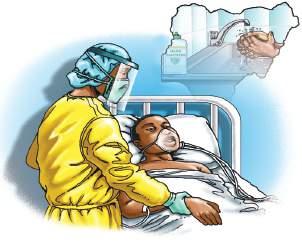
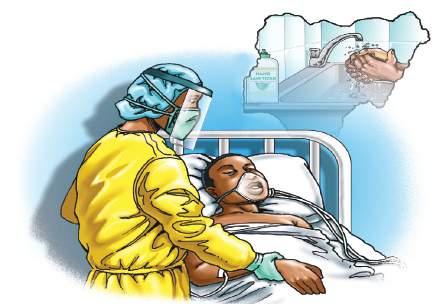
Given the warning by the World Health Organisation (WHO) that the number of suspected Ebola cases in Democratic Republic of the Congo (DCR) and Uganda has risen to 600, with 139 suspected deaths, health authorities in Nigeria should be standing guard. The WHO Emergency Committee met in Geneva last Wednesday, where Director-General Tedros Adhanom Ghebreyesus confirmed to reporters that the virus remains a public health emergency of international concern, but not a pandemic emergency. “The WHO assess the risk of the epidemic as high at the national and regional levels and low at the global level,” Tedros said.
Ebola is a deadly viral disease which kills victims within a week of infection, leaving little or no time for treatment. Essentially, it takes between two days to three weeks before the complete symptoms manifest. The disease has most of the symptoms of malaria: fever, sore throat, headache, and vomiting. And the virus spreads through close contact with blood and bodily fluids of infected persons or animals such as fruit bats. According to DRC health authorities, the current outbreak in the country is being fuelled by the Bundibugyo strain, a type of Ebola virus for which no vaccine or treatment exists.
through the borders: land, sea and airports. However, since there are no direct flights to Nigeria from the DRC, it is important that all passengers coming through our borders be thoroughly screened. The federal government did all this in 2014 by strengthening its response team and increasing surveillance at major points of entry into the country. Passengers were screened amid following up on individuals who had travelled from affected areas. There was also an effective mobilisation of trained health workers in addition to widespread public awareness campaigns on containment measures against the disease.
The disease has most of the symptoms of malaria: fever, sore throat, headache, vomiting, and spreads through close contact with blood and bodily fluids of infected persons or animals such as fruit bats
T H I S D AY
EDITOR SHAKA MOMODU
DEPUTY EDITOR WALE OLALEYE
MANAGING DIRECTOR ENIOLA BELLO
DEPUTY MANAGING DIRECTOR ISRAEL IWEGBU
CHAIRMAN EDITORIAL BOARD OLUSEGUN ADENIYI
EDITOR NATION’S CAPITAL IYOBOSA UWUGIAREN THE OMBUDSMAN KAYODE KOMOLAFE
The outbreak of the viral disease in 2014 spread panic in the West African sub-region and led to the deaths of some 11,300 people mostly in Liberia, Sierra Leone and Guinea. In Nigeria, Ebola also claimed eight lives, including Dr. Ameyo Adadevoh of the First Consultant Hospital, Lagos. The index case in Nigeria was a Liberia-American, Patrick Sawyer who flew into the country with the virus and died in July 2014. Nigeria's swift and coordinated efforts were instrumental to containing the virus as the WHO declared the country Ebola-free on 20 October 2014. Since the Ebola viral disease is not indigenous to Nigeria, it could only be imported into the country
T H I S D AY N E W S PA P E R S L I M I T E D
EDITOR-IN-CHIEF/CHAIRMAN NDUKA OBAIGBENA
GROUP EXECUTIVE DIRECTORS ENIOLA BELLO, KAYODE KOMOLAFE, ISRAEL IWEGBU
DIVISIONAL DIRECTORS SHAKA MOMODU, PETER IWEGBU, ANTHONY OGEDENGBE
DEPUTY DIVISIONAL DIRECTOR OJOGUN VICTOR DANBOYI
SNR. ASSOCIATE DIRECTOR ERIC OJEH
ASSOCIATE DIRECTOR PATRICK EIMIUHI
CONTROLLERS ABIMBOLA TAIWO, UCHENNA DIBIAGWU, NDUKA MOSERI DIRECTOR, PRINTING PRODUCTION CHUKS ONWUDINJO TO SEND EMAIL: first name.surname@thisdaylive.com
Letters to the Editor
For these efforts, the international community commended the federal government and health authorities in Lagos State for the adequate response in dealing with the deadly disease. The appropriateness of the response saved the lives of many Nigerians. Going by the latest projection from WHO, it could take up to nine months before a vaccine against this particular species of Ebola is ready. Two possible "candidate vaccines" against the Bundibugyo species are being developed, but neither had gone through clinical trials yet.
While the WHO risk assessment of another Ebola epidemic may be that it is “high at the national and regional levels and low at the global level," we commend the proactive stance of the Nigeria Centre for Disease Control and Prevention (NCDC) that has revved up its surveillance and emergency response. Although Nigeria has recorded no confirmed case of the disease, the NCDC Director-General Jide Idris, said the agency is closely monitoring developments in affected countries and coordinating preparedness efforts with the Port Health Services and other stakeholders. “Response activities are ongoing in affected areas, and we are ensuring continued vigilance within Nigeria’s public health system,” Idris said.
To be forewarned, as conventional wisdom teaches, is to be forearmed.
Letters in response to specific publications in THISDAY should be brief (150-300 words) and straight to the point. Interested readers may send such letters along with their contact details to opinion@thisdaylive.com. We also welcome comments and opinions on topical local, national and international issues provided they are well-written and should also not be longer than (750- 1000 words). They should be sent to opinion@thisdaylive. com along with photograph, email address and phone numbers of the writer.
A GOVERNMENT OF LOOKERS AND LISTENERS
The abduction of some schoolchildren and their schoolteachers in Oyo State has predictably sent shockwaves across the country. To grind salt into the grave injuries of Nigerians, a video has appeared showing the beheading of one of the teachers by his captors.
In separate videos, distressed school teachers have also been shown begging the government and Nigerians to come to their aid. I seriously wonder how Nigerians can still sleep every night after seeing these things repeated almost daily in a nonstop cycle. Nigeria has become a terrorized country where ragtag criminals operate with chilling abandon.
Maybe there just isn’t a government. After all, there is no greater indictment of an ineffective government than insecurity. Nigerians can barely sleep with both eyes closed these days. All over the country, every day brings news of one attack or the other in one place or the other.
In response to the attack that happened within his state, Seyi Makinde, the Oyo State Governor, has confirmed that the government is making efforts to rescue the teachers and their students. Interestingly, he also stated that the government is ready to listen to the abductors and their demands.
It Is what governance has unfortunately been reduced to in Nigeria—listening and looking—all done in a posture of utter helplessness, hopelessness, and haplessness. In the face of such devastating insecurity, the hallmarks of an effective government would be decisive action and debilitating sanctions. Yet, in Nigeria’s case, when confronted by what is an existential threat, public office holders have suddenly become mendicants.
The irony is indeed jarring that a government that does not listen to its people is now ready to listen to terrorists. More than listening, it is now ready to comply with
whatever absurd demands they make because it has run out of options. What hides behind this false concern for the safety and welfare of the teachers and students is state cowardice and crass incompetence.
A couple of days ago, terrorists descended like locusts on the Askira-Uba Local Government area of Borno state. More than fifty schoolchildren were taken. Nigeria has effectively become a graveyard where the bones of children protrude from the ground in a macabre display of a museum of murderous incompetence.
Teachers and students were abducted, and a teacher was beheaded; yet, an emergency has not been declared anywhere. Let it be stated clearly: a country that allows the beheading of its teachers is a country that has lent its sharpened knives to the decapitators of its future.
Kene Obiezu is a lawyer and writer
Politics
Acting
Email: deji.elumoye @thisdaylive.com
08033025611 s M s O n LY
Sanwo-Olu’s Masterstroke in Lagos Politics of Succession
The seamless and overwhelming endorsement of the Lagos State deputy Governor, dr Obafemi Hamzat, as the governorship candidate of the ruling all Progressives Congress in the 2027 poll, has further affirmed the essence of Governor Babajide Sanwo-Olu’s politics of foresight and vision. Raheem Akingbolu reports.
In the often unpredictable theatre of Nigerian politics, succession is rarely approached with clarity. It is managed cautiously, spoken of in guarded tones, and too often defined by rupture rather than continuity. Yet in Lagos, Governor Babajide Sanwo-Olu has chosen a different path. It is as bold as it is deliberate.
By openly endorsing his deputy, Kadri Obafemi Hamzat, as his preferred successor, he has done more than make a political statement; he has altered a long-standing narrative. In a state where deputies have historically struggled to inherit both the confidence and political goodwill of their principals, this move stands out as a defining moment, a sharp departure from the past.
Perhaps the biggest accolade should go to President Bola Tinubu, who, as a father to all, laid the foundation of mature political family in the cosmopolitan city. Even though, like every political game, the process is wrapped in secrecy and known only to the inner circle, the handwriting is conspicuously written on the wall that the President’s influence must have given Sanwo-Olu and Hamsat the easy ride.
It is, depending on one’s vantage point, either a gamble or a masterstroke. But even that debate misses the larger point. What President Tinubu and Governor SanwoOlu have demonstrated is a willingness to confront an entrenched political myth: that outgoing leaders must, by instinct or design, distance themselves from their deputies at the threshold of succession. In choosing the opposite, Sanwo-Olu, in particular, has not only broken a jinx; he has redefined the expectations of leadership transition in Lagos.
been seen as a personal preference into a collective position.
At the heart of this moment lies a relationship that has quietly defied convention. For nearly seven years, Sanwo-Olu and Hamzat have operated not as rival centres of power, but as partners in governance. This is no doubt a purposeful decision, beautifully aligned and coordinated in execution. In a political culture where such arrangements often fracture under pressure, their continuity is both rare and instructive.
Hamzat himself offers perhaps the most compelling insight into this dynamic: “A lot of people refer to deputy governors as spare tyres, but I can tell you I was never treated as such by Sanwo-Olu.” It is a statement that carries weight beyond its simplicity. It speaks to a governing style that values inclusion over isolation, and collaboration over control.
That choice has proven consequential. By treating his deputy as an active participant in governance rather than a peripheral figure, Sanwo-Olu has effectively built capacity within the system. The endorsement, therefore, is not an act of convenience; it is the logical extension of a working relationship grounded in trust and responsibility.
More significantly, it challenges a longstanding pattern within Lagos politics. Historically, the office of deputy governor has rarely translated into succession. From Kofoworola Bucknor-Akerele to Olufemi Pedro, Sarah Adebisi Sosan, and Idiat Oluranti Adebule, the trajectory has been marked by discontinuity. Whether due to political divergence or structural constraints, the transition from deputy to governor has remained elusive.
It is against this backdrop that SanwoOlu’s decision acquires its full significance. It is not merely supportive; it is corrective. It signals a departure from a pattern that has, over time, come to define expectations.
If the governor’s endorsement set the tone, the response that followed has given it structure. The swift alignment of the Governor’s Advisory Council, the apex stabilising force within Lagos politics and key stakeholders of the All Progressives Congress transformed what might have
In Lagos, such convergence is rarely incidental. It reflects a political culture that privileges coordination over fragmentation. Notably, no previous governorship aspirant in the state has enjoyed this level of early, visible, and coordinated support from across the political spectrum. What is unfolding is not merely endorsement; it is consensus, carefully assembled and confidently expressed.
Yet, even within this growing alignment, the origin of the process remains unmistakable. It began with Sanwo-Olu’s decision to act early and speak clearly. In doing so, he replaced uncertainty with direction and speculation with structure. The final layer of validation arrived from the highest level. The endorsement of Hamzat by Bola Tinubu, delivered in the presence of the Governor’s Advisory Council, did not initiate the process. It crowned it.
The sequence is instructive. From gubernatorial endorsement to institutional consensus and, ultimately, presidential backing, what has emerged is a rare alignment across all tiers of political authority. It is a progression that underscores not only the acceptability of Hamzat, but the strategic clarity of Sanwo-Olu’s initial move.
NOTE: Interested readers should continue in the online edition on www.thisdaylive.com
As INC Clamours for Additional States, LGs Out of Bayelsa...
The Ninth National Executive Council of the Ijaw National Congress was inaugurated recently in Warri, delta State with stakeholders canvassing for creation of additional states and local government councils out of the present Bayelsa state. Adedayo Akinwale reports.
It is an historical fact that the southern and northern protectorate of Nigeria were amalgamated in 1914 by Lord Frederick Lugard. In spite of the fusion of the country which happened 112 years ago, it is not unusual to see social political organisations peculiar to some ethnic nationalities advancing their interests through various social-cultural organisations in the Nigeria political scene.
For instance, there is Northern Elders Forum (NEF) — established to protect the interests of the North, Afenifere Renewal Group (ARG) — also berthed to champion the interests of Yoruba people; Ohaneze Ndigbo — came into being to advocate for the interests of the Igbos and the Ijaw National Congress (INC) — to advance and protects the interests of the Ijaw nation.
The Ijaw people, also known as the Izon are an indigenous ethnic group numbering over 15 million, predominantly inhabiting the riverine Niger Delta region of Nigeria. The Ijaw is regarded as the fourth or fifth largest ethnic group in the country
As of 2024, Ijaw population is estimated to be approximately 14.39 million, accounting for 6.1 per cent of Nigeria’s 233.9 million people, placing them as the fourth largest ethnic group in Nigeria.
The INC was established in 1991 to address to foster Ijaw national consciousness, providing platforms for debating sectional challenges such as environmental degradation from oil extraction and unequal revenue allocation, and negotiating on par with other Nigerian
ethnic blocs.
The SMU-TUNS playground in Warri was a beehive of activities last week during the inauguration of the new national executive council of the Ijaw INC. Among those inaugurated were: High Chief MacDonald Igbadiwei, President; Dr. Okubokeme Tuodolo; Vice President 1; Rose Obuoforibo, Vice President 2; Kennedy Odiowei, Vice President 3; and Dr Ayanate Kio, Secretary.
They were elected at the INC national convention which took place at the Ijaw House, Yenagoa, Bayelsa State, in April 2026.
The formal inauguration signalled the end of the five-year tenure of immediate past President of the INC, Prof. Benjamin Okaba.
The outgoing INC President, Prof. Benjamin Okaba, while speaking at the event recalled that himself and 13 other members on 30th of April, 2021 were elected to lead Ijaw Nation for five years, and they were inaugurated on 14th of May 2021 as the 8th NEC of INC. He explained that his exco met INC in comatose seven years before they came on board. He said they were able to make remarkable progress.
Okaba pointed out that the Eighth NEC meeting ensured a paradigm shift from lamentation to constructive engagement, saying the INC now has international visibility.
According to him: “INC has become an international brand. I’m also very proud to say that today, I feel the fulfilment of a promise I made, which is to extricate the INC from some persons who feel that the Ijaw Nation belongs to them. Some self-styled elites who think that if they are not there, the Ijaw cannot make progress.
“Today, INC belongs to everybody because in the Ijaw land, nobody is more Ijaw than the other person. The INC is the highest body. Nobody dictates to the INC. You can give advice, yes, but the leadership has the responsibility of putting all the options together and taking a decision in the best interest of the Ijaw Nation. It is the Ijaw nation that decides, not even me. No other person takes the decision of the Ijaw Nation.”
A Mutual fund (Unit Trust) is an investment vehicle managed by a SEC (Securities and Exchange Commission) registered Fund Manager. Investors with similar objectives buy units of the Fund so that the Fund Manager can buy securities that willl generate their desired return.
An ETF (Exchange Traded Fund) is a type of fund which owns the assets (shares of stock, bonds, oil futures, gold bars, foreign currency, etc.) and divides ownership of those assets into shares. Investors can buy these ‘shares’ on the
floor of the Nigerian Stock Exchange. A REIT (Real Estate Investment Trust) is an investment vehicle that allows both small and large investors to part-own real estate ventures (eg. Offices, Houses, Hospitals) in proportion to their investments. The assets are divided into shares that are traded on the Nigerian Stock Exchange.
GUIDE TO DATA:
Date: All fund prices are quoted in Naira as at 18th May 2026, unless otherwise stated.
Domestic Airlines May Reduce Fares as Dangote Refinery Slash Jet A1 to N1,650 Per Litre
chinedu eze
There strong indications that domestic airlines may slash the cost of local flights by next week, following the confirmation that marketers have commenced loading of aviation fuel, known as Jet A1 at the new price of N1,650 per litre from Dangote refinery.
Dangote Petroleum Refinery and Petrochemicals earlier in the week, announced that it has reduced price of aviation fuel from N1, 750 per litre to
N1, 650 per litre in a move aimed at easing cost pressures on airlines and ensuring uninterrupted fuel supply across the country.
Dangote has also granted marketers, airline operators 30day interest-free credit facility and they are now buying the product in Naira; unlike in the past when they had to source for dollars to buy the product from Dangote.
The Chairman of Ndano Energy, an aviation oil marketing company, Chris
Ndulue, confirmed to THISDAY in a telephone interview that his company has purchased the first batch of aviation fuel from Dangote refinery at the new price and also expressed happiness that the product was sold to his company in Naira.
“He (Dangote) has done it. I have bought and wired money to him today at the new price. So, it has started. I will sell to the airlines at lower price. It is a significant reduction because he has also
started selling in naira. He moved it down from N1, 750. We worked on the price reduction today in the office.
“We hope the airlines will also bring down their fares because at high prices there will be less number of passengers but with reduced fares, more passengers will fly, so, you make money from volume instead of per unit. We have to note that we are selling this product at N900 per litre in February before the war in Iran. So, it was
not anybody’s intention to sell as such high price,” Ndulue stated.
He also noted that the prices of the product may further go down in the weeks ahead because the war in Iran has ended, what remains now is the propaganda of war, adding that the pump price of the product may hover around N1, 750.
According to him, it is in the interest of the airlines that there is reduction in the fares to enable more people travel by air.
“I doubt that the war in Iran can go beyond what it is now because Iran does not have the capacity to continue to fight the war,” he said. THISDAY investigation revealed that the fares are still relatively high. Cost of tickets for June 18 flight is very high at the busy routes like Lagos to Abuja. Most of the airlines charge about N200, 000 for one hour flight.
L-R: Chairman, Statutory Audit Committee, Wema Bank Plc, Joseph Anosike; Company Secretary/General Counsel, Johnson Lebile; Chairman, Board of Directors, Dr. Oluwayemisi Olorunshola; MD/CEO, Moruf Oseni and Deputy Managing Director, Oluwole Ajimisinmi, during the 2025 Wema Bank Annual General Meeting held in Lagos… recently
eromosele abiodun
Managing Director of the Nigerian Ports Authority (NPA) and President of the Port Management Association of West and Central Africa (PMAWCA), Dr. Abubakar Dantsoho, has called for aggressive investment in modern ports, technology and deep-sea facilities stressing that Africa cannot achieve meaningful economic growth with outdated port infrastructure.
Dantsoho said countries across West and Central Africa have resolved to modernise their ports to remain competitive in global trade and accommodate larger vessels.
Speaking at the closing of the PMAWCA meetings in Lagos, Dantsoho commended President Bola Tinubu and the Minister of Marine and Blue Economy, Adegboyega Oyetola for providing policy direction that is repositioning Nigeria’s maritime sector.
According to him, port infrastructure remains the backbone of economic growth, noting that no country can expand its GDP without expanding and modernising its ports.
“This is an industry that requires huge investment in infrastructure. You cannot make progress with obsolete facilities and still expect to receive newer and larger vessels. You cannot have a hotel built 50 years ago and expect modern customers to
continue coming without refurbishment. It is the same thing with ports, ” he said.
He said countries within the sub-region, including Nigeria, Ghana, Senegal, Côte d’Ivoire and Benin Republic, are currently repositioning their port systems through upgrades and modernisation projects.
Dantsoho disclosed that while Nigeria is refurbishing Apapa and Tin Can Island ports as a medium-term solution, the country must
ultimately develop more modern deep sea ports capable of handling future trade volumes.
He noted that the Lekki Deep Sea Port, with two berths, represents progress, but added that Africa must aim for larger and more sophisticated facilities comparable to global maritime hubs.
Market data a s at t hursday, May 21, 2026
story continues online on www.thisdaylive.com The story continues online on www.thisdaylive.com
“In Singapore, they are building ports with hundreds of berths. Guinea is developing a $20 billion deep sea port project. These are the kinds of investments Africa must begin to pursue if we want to compete globally,” he said.
He also highlighted the growing role of technology, automation, artificial intelligence and robotics in port operations, insisting that data-driven systems are now central to efficient maritime administration.
ISPON President Calls for Collaboration to Improve Safety Culture
Chinedu Eze
The President of the Institute of Safety Professionals of Nigeria (ISPON), Dr Stephen Udezi, has called for stronger collaboration between government and the private sector to improve safety culture in industries and other organisations in Nigeria.
Udezi said that with stronger collaboration there will be significant reduction in preventable deaths, environmental safety hazards in Nigeria.
Speaking at a conference in Lagos ahead of ISPON’s
12th anniversary celebration scheduled for today in Warri, Delta State, with the theme: ‘Health and Safety Management in Nigeria, Prospects and Retrospects’, Dr. Udezi emphasised that poor safety culture and the activities of unqualified practitioners remain major causes of accidents across industries and communities.
He urged state governments to establish safety commissions similar to the model in Lagos State and urged authorities to include ISPON in accident investigations nationwide to improve data collection and
prevention strategies.
He also urged that safety education be introduced from kindergarten to secondary school level, saying children trained early in safety consciousness would grow into more responsible citizens and help reduce vandalism, unsafe transport practices and workplace accidents.
Udezi advocated for wider collaboration with artisans’ associations, higher institutions and media organisations to take safety campaigns directly to markets, workshops and communities across the country.
Carnival Calabar Announces Date for Theme Unveiling Event
The Carnival Calabar Commission has announced that the annual Carnival Calabar theme unveiling event will be held in Lagos this year. The theme unveiling event is an annual event by the Cross River State Carnival Commission to announce the theme for the years Carnival event. The theme guides the Bands in their choreography and the presentation of the whole Carnival. The unveiling
events allow the state to engage with Stakeholders, Sponsors and the diplomatic community as part of the preparation for the Annual Carnival.
For the unveiling event, His Excellency Ambassador Gautier Mignot of European Union, Abuja will be the Special Guest of Honour and His Excellency Ambassador Paulo Santos of Portugal as Guest of Honour. As part
of the activities towards the unveiling event, the Chairman of Carnival Calabar Dr. Gabe Onah went on a strategy visit to the new CEO of Multichoice Nigeria Canal + Company - Ms Kemi Okunola and the Executive Director General Entertainment MULTICHOICE Dr Busola Tejumola He was accompanied by the Lead Marketing Consultant of Carnival Calabar Mary Ephraim Egbas.
Service Delivery: SAHCO, BASL Deepen Collaboration to Boost Efficiency
The Managing Director of Skyway Aviation Handling Company Plc (SAHCO), Mrs. Adenike Aboderin, alongside members of the company’s executive management team, paid a courtesy visit to BiCourtney Aviation Services Limited (BASL), operators of the Murtala Muhammed Airport Terminal Two (MMA2), Lagos, as part of ongoing efforts to strengthen institutional collaboration and deepen operational synergy within Nigeria’s aviation sector.
Welcoming the SAHCO delegation, the Ag. Chief Operating Officer/Head of Aeronautical and Cargo
Services of BASL, Mr. Remi Jibodu, emphasized the importance of sustained engagement among aviation stakeholders in ensuring seamless airport operations, improved safety standards, enhanced passenger experience, and customer satisfaction.
According to him, “At MMA2, our focus remains on creating an efficient, safe, and
Nume Ekeghe
CIBA Hospitality Limited has unveiled Terra Delyssa Extra Virgin Olive Oil, a premium Tunisian olive oil brand, in the Nigerian market as it seeks to deepen consumer access to high-quality healthy cooking products.
Group Business Editor
Eromosele Abiodun
Deputy Business Editor
chinedu Eze
Comms/e-Business Editor
Emma Okonji
Asst. Editor, Energy
Emmanuel Addeh
Asst. Editor, Money Market
Nume Ekeghe
Correspondents
Kayodetokede(CapitalMarkets)
James Emejo (Finance)
Ebere Nwoji (Insurance)
reporter Peter Uzoho (Energy)
The launch marks the entry of one of Tunisia’s internationally recognised olive oil brands into Nigeria’s growing edible oil and wellness segment.
Speaking at the launch ceremony in Lagos over the weekend, Executive Director of CIBA Hospitality Limited, Dr. Ade Adegbite, described Terra Delyssa as a global olive oil brand with a growing international presence.
“The Terra Delyssa brand
passenger-friendly airport environment. Achieving this requires strong collaboration among all operators within the aviation value chain. We appreciate SAHCO’s commitment to operational improvement and safety enhancement, and we believe engagements such as this are essential to strengthening service delivery across the industry.”
we are launching today is a Tunisian brand that is no longer made only for Tunisians. It has become a global brand with footprints in more than 50 countries around the world,” he said.
According to him, Terra Delyssa is currently the number one selling olive oil brand in Canada, ranks second in France, among the top three in Sweden and is the fourth best-selling olive oil brand in the United States.
“That tells you it is one of the fastest-growing olive oil brands globally,” Adegbite added.
He noted that the brand’s heritage dates back more than 300 years, describing it as a transgenerational asset of Tunisian origin that has gained international recognition.
Positive Effect of FAAN Capacity Building
Chinedu Eze
One of the critical programmes that were revived in the Federal Airports Authority of Nigeria (FAAN) since Mrs. Olubunmi Kuku took over as the Managing Director of the agency is the manpower development programme.
In the past, it used to be spontaneous, occasional exercise when some departments in the agency pressure and get approval and funding from the management, but since the President Tinubu administration it became imbedded as developmental programme by FAAN management, designed to build local capacity.
Maybe Kuku took a cue from Airport Council International (ACI), which emphasises manpower development as critical part of airport development because skilled hands are needed to manage critical airport infrastructure, passenger facilitation, airport security, marshaling, runway safety and many others.
Observers are of the view that efficient airport management requires professionals to blend traditional aviation knowledge with advanced digital fluency. Critical technology skills include data analytic and predictive modelling, which is using technology tools to interpret real-time passenger flow, optimising flight schedules and preventing bottlenecks.
Special skills are needed also to protect critical airport infrastructure from digital attacks and understanding modern threats and how to detect them. This is the reason why aviation security personnel need continuous training. Besides, the new state-of-the-art security equipment acquired by Kuku’s management deployed at passenger and cargo terminals for passenger and cargo screening, needs IT savvy personnel for efficient and maximum usage.
Last year, the Directorate of Aviation Security Services at the Federal Airports Authority of Nigeria completed professional training and retraining of 1,593 Aviation Security (AVSEC) personnel in various specialist areas.
FAAN stated that with the training, more AVSEC personnel were deployed to different airports in the country under FAAN’s management for more effective security coverage of the facilities, monitoring and enhanced passenger facilitation both at the airports managed by the agency and state and privately-owned airports. FAAN overseas the security of all airports in the country, and also embarks on improving its training
facilities, which include the repositioning of the International Civil Aviation Organisation (ICAO) approved FAAN training facility in Lagos for effective delivery of international AVSEC courses.
FAAN executed enhanced airport security surveillance and response systems at the airports in Lagos, Abuja, Kano, Port Harcourt, Enugu, Benin, Yola, Ibadan and Maiduguri. These are new-generation airport security solutions that harness advanced technologies like video surveillance, face recognition, video analytics, perimeter intrusion detection, and sophisticated access control systems that can help enhance security measures and streamline operations. They enable airports to adapt to the evolving security landscape and create safer environments for travellers and staff.
FAAN has also designed portal for real-time AVSEC database on training, operations, equipment and manpower. It has in addition implemented a comprehensive AVSEC manpower audit for planning and enhanced service delivery.
The training of AVSEC personnel was important because they ought to have skills that could enable them manage the modern security equipment acquired by the agency in line with Standard and Recommended Practices (SARPS), which are technical specifications adopted by the International Civil Aviation Organisation (ICAO).
Some of the equipment include: state-ofthe-art Rapiscan Orion 928DX, a sophisticated screening machine installed at the entrance of the new international terminal of the Murtala Muhammed Airport, Lagos. It is spectrum 4-colour imaging machine, which can exhibit images in the Classic 4-color and the new proprietary Spectrum 4-color (SP4) option providing superior image, allowing improved security by quick and accurate identification of threats and increase in throughput.
The equipment is designed to detect a wide range of explosives and narcotics respectively in real time during the scanning process by marking a potential threat on the X-ray image. Rapiscan Systems detection algorithms are based on regulatory approved material analysis techniques.
The federal government also installed E-gates at the Lagos and Abuja airports to enable travellers undergo biometric verification using facial or iris recognition, fingerprints, or a combination of modalities.
Reputational Damage of Air Passengers’ Unruly Behaviour
The unruly behaviour of passengers at the airports disrupt orderliness, safety and the general ecosystem in air travel, writes Chinedu
In modern aviation precision governs every departure and arrival. When there is disruption it is more than a mere inconvenience, but a direct challenge to safety and order. Airports operate as ecosystems of coordination, where timing, discipline and adherence to protocol are not optional, but essential. Yet, in Nigeria and across the globe, this delicate balance is increasingly being tested by unruly passenger behaviour.
In an interview he granted during the fifth anniversary of United Nigeria Airlines, the Chairman of the indigenous carrier, Professor Obiora Okonkwo, said that the phenomenon of unruly passengers is one of the major challenges of air travel in Nigeria. Okonkwo noted that many things that could disrupt flight operations could be managed but that of unruly passengers could make flying very unpleasant because of the anarchic and spontaneous eruption of the organised system by passengers.
“I don’t know how many of you that can recall that by January 2025 in one of my TV outings, I had said that the worst thing that was happening to our aviation then was unruly passengers. We had overcome the problem of policy instability, and so on and so forth. Unruly passengers, I do not see it decreasing. It is great thing of concern. If there is anything that is not pleasant for me in this sector, it is the only unruly passenger situation. Every other thing, I can tell you, I don’t mind, including working 24 hours. I am okay with that but incident of unruly passengers can disrupt the whole process,” Okonkwo said.
According to him, he finds it easier dealing with regulatory issues and meeting the obligations, including compliance okay. But if there is any incident of unruly passenger behaviour, no matter the airline involved, my heart skips and starts beating faster.
The reason is that when unruly passengers start
to protest violently at the airport, it would not only disrupt passenger facilitation and movement; it may also lead to harassment of airline’s staff, equipment and unleashes violence in the most orderly place, the airports.
Overreaction
As the number of people who travel by air in domestic flight service increased, some Nigerians became bolder in going against the rules that guide airport etiquette. The genesis of unruly passengers is traced to the failure of airport security apparatus to take decisive action to put it in check at the beginning. This emboldened passengers until air rage became a phenomenon at Nigeria’s airports. So, all efforts being made by the Nigeria Civil Aviation Authority (NCAA) and the Federal Airports Authority
of Nigeria (FAAN) received partial success. Observers believe what was once considered an occasional lapse in decorum had evolved into a disturbing pattern. Incidents ranging from verbal altercations at boarding gates to physical confrontations with airline and airport personnel are becoming more frequent, drawing concern from regulators and industry stakeholders alike. These disruptions ripple beyond the individuals involved, delaying flights, straining security systems, and in extreme cases, posing real threats to passenger safety. Investigations revealed that passengers are adept at revolting against Nigerian carriers both on domestic and international operations. Some years ago, when Medview Airlines was still operating Lagos-London flights, passengers revolted against flight cancellation at the Lagos airport and wanted
to physically attack the airline’s terminal manager. Sensing the passengers’ angst and rebellious reaction, he quickly ran into the airside of the airport after the central screening area.
Unruly passengers are known to destroy airlines’ ground equipment, harass and sometimes beat up airlines’ ground staff and sometimes extend their belligerence and irascible outburst to other airport workers and facilities.
Implications
Aviation authorities have warned at different occasions that the implications of the acts of unruly passengers are far-reaching. Beyond operational delays and financial losses, persistent disorder risks tend to erode public confidence in air travel, which is a sector built fundamentally on trust, predictability and control.
In Nigeria, the Federal Airports Authority of Nigeria has taken a firm stance. The Authority has publicly condemned such conduct as “entirely unacceptable within the framework of civil aviation,” signalling a shift towards stricter enforcement. Officials emphasise that airports are not arenas for defiance but regulated spaces where compliance is critical. Sanctions for offenders, FAAN insists, will be decisive, ranging from fines and prosecution to possible travel restrictions.
As passenger numbers continue to rise and airports grow more congested, the challenge for authorities will not only to enforce discipline but also to reinforce a culture of shared responsibility. In aviation, where safety is collective, even a single act of disorder can unsettle the entire system.
The story continues online on www.thisdaylive.com
Of Telecoms Tariff and Quality Service Delivery
From the inception of the 50 per cent hike in telecoms tariff, which took effect in January 2025, telecoms operators have been investing heavily in telecoms infrastructure in order to boost and sustain quality service delivery across networks, but such investments have come under serious threat by vandals who willfully destroy and steal telecoms infrastructure, writes Emma Okonji
Across the vast and pulsating landscape of Nigeria’s digital economy, telecommunications infrastructure has become the invisible architecture upon which commerce, governance, finance, education and human interaction now precariously rest.
The modern Nigerian city no longer merely runs on roads and electricity; it breathes through fibre optics, spectrum waves, data centres and towering base stations that silently sustain the rhythm of national existence.
Yet, as digital consumption surges with relentless intensity, the nation’s telecoms ecosystem now confronts an unavoidable truth: scale has become destiny.
The recent intervention by the Nigerian Communications Commission (NCC) on Quality of Service therefore arrives not as a routine regulatory statement, but as a profound strategic reminder that the future of Nigeria’s digital civilisation depends upon the ability of operators to build ahead of demand, rather than perpetually chase it.
Need for Infrastructure
Indeed, the pressures confronting the sector are immense. Nigeria’s rapidly expanding digital population is consuming data at unprecedented velocity. Streaming platforms, fintech ecosystems, AI-powered services, cloud computing, gaming applications, virtual collaboration tools and enterprise connectivity are exerting extraordinary pressure on network architecture nationwide.
In this environment, maintaining service quality has evolved into a sophisticated engineering marathon requiring colossal investment, operational resilience and
infrastructural foresight.
It is precisely within this crucible that Nigeria’s telecommunications giants — including MTN, Globacom Nigeria, Airtel Nigeria and T2, among others— are executing what may fittingly be described as an audacious national digital dig-in.
The telcos’ expansive infrastructure commitment continues to occupy a particularly strategic position within Nigeria’s telecommunications evolution.
Network Expansion
Over the years, the companies have consistently pursued aggressive network expansion initiatives designed not merely for urban dominance, but for inclusive national connectivity. From metropolitan
commercial corridors to deeply rural communities often neglected by digital development. Globacom for instance has continued to widen the frontiers of access through sustained investments in fibre deployment, transmission upgrades and base station expansion.
Globacom’s recent large-scale importation and deployment of advanced network equipment, high-capacity power systems, fibre transmission facilities and nextgeneration radio infrastructure further underscores its own determination to reinforce network stability and service sustainability. These heavy-duty technological deployments are not cosmetic interventions; they represent deep structural investments
aimed at strengthening capacity, reducing congestion and improving user experience across both densely populated cities and underserved rural settlements.
Particularly commendable is the operator’s continued expansion into semi-urban and rural corridors where commercial returns may not immediately justify the enormous capital expenditure involved. Yet such investments embody a broader developmental philosophy: that connectivity itself has become a social equaliser capable of unlocking economic participation, educational inclusion and digital empowerment.
Like engineers constructing cathedrals beneath a turbulent sky, telecom operators across Nigeria are now reinforcing the nation’s digital spine against unprecedented pressures. MTN Nigeria continues to deepen its broadband footprint through extensive fibre investments, accelerated 5G rollout and enhanced enterprise connectivity infrastructure. Airtel Nigeria has intensified rural broadband penetration efforts while modernising network layers to improve speed efficiency and user experience. T2, despite market pressures, continues targeted optimisation initiatives focused on service reliability and operational resilience. Collectively, the industry invested over N2.13 trillion in network infrastructure upgrades in 2025 alone, while tower companies committed an additional N373.8 billion towards strengthening operational sustainability nationwide.
The story continues online on www.thisdaylive.com
UBA Champions Diaspora Healthcare Investment at ANPA America
Kayode Tokede
Africa’s Global Bank, United Bank for Africa (UBA) Plc, has reaffirmed its commitment to strengthening diaspora engagement, advancing healthcare development in Nigeria through the introduction of its healthcare investment proposition to the Nigerian-American medical community at the 2026 ANPA Carolinas Symposium held in Charlotte, North Carolina.
The ANPA Carolinas Symposium, hosted annually by the South Carolina and North Carolina Chapters of the Association of Nigerian Physicians in the Americas (ANPA), convenes over 170 physicians and healthcare
professionals for medical and scientific dialogue on issues impacting communities across North America, the Caribbean, and Africa, particularly among people of Nigerian descent.
Speaking at the event, UBA’s Head of Diaspora Banking, Anant Rao, made a compelling case for structured diaspora participation in Nigeria’s healthcare transformation, encouraging attendees to expand their contribution beyond remittances toward long-term institutionbuilding.
“The financial infrastructure required to connect your success abroad to sustainable institutional impact at home has not been intentionally designed for diaspora healthcare investors
until now,” Rao said.
During his presentation, Rao introduced the ANPA–UBA Diaspora Healthcare Investment Platform — a professionally managed investment vehicle designed to channel diaspora capital into specialist hospitals, diagnostic centres, telemedicine infrastructure, and medical training institutions across Nigeria.
“Every dollar invested delivers a dual return — creating value for investors while contributing meaningfully to Nigeria’s healthcare future. We now have the regulatory framework, banking infrastructure, governance structures, and institutional commitment to make this possible,” he added.
NGX Group Advances Investor Education Drive with Digital Retail Engagement
Kayode Tokede
Nigerian Exchange Group has intensified its investor education drive through a digital engagement initiative aimed at improving financial literacy and deepening retail participation in the Nigerian capital market.
The group recently hosted an X Space session themed, “Follow the Fundamentals: A Beginner’s Guide to the Stock Market,” reaching over 5,000 users, largely young Nigerians,
first-time investors, and retail market participants seeking to better understand investment opportunities in the capital market.
Featuring social media investment influencer, Omiete Inko-Tariah, alongside representatives from Nigerian Exchange Limited and NGX Regulation Limited, the session demystified key concepts around market operations, investor protection, and safe participation.
Speaking on the initiative, Head, Group
Communications and Partnerships at NGX Group, Clifford Akpolo, said: “Deepening retail participation is critical to building a more resilient, inclusive, and sustainable capital market. At NGX Group, we believe financial literacy is not just an educational responsibility, it is a strategic imperative for strengthening investor confidence, improving market accessibility, and expanding long-term wealth creation opportunities for Nigerians.”
Team ‘Block X’ Emerges HabariPay Squad Hackathon Winner
Nume Ekeghe
Guaranty Trust Holding Company Plc Fintech subsidiary, HabariPay, has announced Team ‘Block X’ as the winner of the Squad Hackathon 3.0, following a highly competitive innovation showcase that brought together some of Nigeria’s most promising young software developers, engineers and AI innovators.
Held at the GTCentre, the grand finale featured cutting-edge technology solutions aimed at addressing critical economic and societal challenges, with a strong focus on artificial intelligence, automation, productivity systems and
digital inclusion.
The bank in a statement noted that the solution connects informal workers to employers and integrates them into financial services infrastructure. In a typical use case, a bricklayer calls “Tola,” the platform’s Nigerian English voice agent, gets matched to a job opportunity, completes the assignment, and receives payment through Squad. Over time, consistent transactions generate a verifiable financial record that enables access to banking services and credit within 90 days.
Speaking at the event, Group Chief Executive Officer of Guaranty Trust Holding Company Plc, Segun Agbaje, described
the hackathon as a platform for developing future technology leaders through real-world problem solving.
“You are the best of the best. Everybody who made it into this room today is already a winner,” Agbaje said. “The world is not ruled by extroverts; it is ruled by thinkers.”
He emphasised resilience, collaboration and ethical execution as critical success factors in innovation and enterprise building.
Managing Director of HabariPay, Eduofon Japhet, said this year’s edition marked the most ambitious iteration of the hackathon to date, with participation increasing more than tenfold compared to previous editions.
TechNexus, NDDC to Host Port Harcourt Tech
Expo
Blessing Ibunge in Port Harcourt
TechNexus Limited in partnership with the Niger Delta Development Commission (NDDC) has announced the Port Harcourt Tech Expo 2026 themed “Syntropy”.
The organisers said the annual expo would bring together entrepreneurs, investors, policymakers, technology professionals and creatives from across the Niger Delta, other parts of the country and the diaspora.
The Managing Director of TechNexus, Belema George, in a statement yesterday, said the 2026 edition would feature keynote addresses, panel discussions, startup pitch competitions,
The two-day technology conference and exhibition has been scheduled to hold on Thursday, June 11 and Friday, June 12, 2026 at the EUI Events Centre, Port Harcourt, Rivers State capital.
product demonstrations and networking sessions.
He said the entire programme was aimed at promoting technologydriven economic growth in Rivers State and the South-South region.
He explained that the theme, Syntropy, was derived from the concept of constructive synergy to reflect the belief that collaboration among innovators, investors and institutions could accelerate regional development.
Medium (Iraq), Kuwait Export (Kuwait), Es Sider (Libya), Bonny Light (Nigeria), Arab Light (Saudi Arabia),
C&I Leasing Posts N3.9bn Profit as Revenue Climbs to N50.2bn
Kayode Tokede
C&I Leasing Plc has announced a profit after tax of N3.9 billion for the financial year ended 31 December 2025, more than double the N1.6 billion recorded in 2024, as the company pushed through one of the most testing operating environments Nigeria’s business community has
faced in recent memory. The results, drawn from the company’s December 2025 audited financial statements, show gross earnings rising 36.5 per cent from N36.7 billion in 2024 to N50.2 billion in 2025. Lease income, the core of the business, grew from N31.1 billion to N44.5 billion over the same period, while net outsourcing income rose 26.2 per cent to N1.7 billion. Shareholders’ fund closed the
year at N51.1 billion, up from N48.2 billion in 2024. Basic earnings per share stood at 122.77 kobo, compared with 38.58 kobo a year earlier.
The profit growth came even as the operating climate applied pressure from several directions. Rising interest rates, exchange rate exposure and high inflation all weighed on costs. Profit before tax came in at N3.0 billion against N2.7 billion
in 2024, while the net profit margin after tax improved to 7.8 per cent from 4.4 per cent. The EBITDA margin eased to 52.9 per cent from 58.1 per cent, reflecting the broader cost environment, though the company’s asset turnover held firm at 0.39 times.
“Despite significant macro and micro economic trends in 2025, the company has been able to deliver an impressive
set of results anchoring on our key strategic goal of continuously improving operational efficiency in anticipation of unforeseen circumstances,” said Lenin Ugoji, the Group Managing Director and Chief Executive Officer of C&I Leasing Plc. Ugoji did not shy away from the difficulties the group confronted during the year. “The year 2025 was a particularly challenging
year for the company and operational service businesses in general and highlights the resilience of our business model in spite of prevailing harsh market conditions which ranged from rising interest rates, exchange rate revaluation risks to key economic parameters including high inflation which put some pressure on cost of doing business in the country,” he said.
PRICES FOR SECURITIES TRADED AS OF MAY 21/26
Amobi edeh Beneth: The Quiet Architect of Trust in Nigeria’s New real estate order
at a time when trust has become one of the most valuable currencies in Nigeria’s real estate sector, Edeh amobi Beneth is emerging as a quiet but influential force redefining the industry. Through dBEN Group, the Enuguborn entrepreneur is building more than estates and property portfolios, he is creating a culture anchored on transparency, integrity, and long term value. In a market often troubled by uncertainty and fraudulent dealings, Beneth’s steady rise reflects a new generation of business leadership where credibility, client satisfaction, and vision matter more than noise or spectacle. Royce Okolie reports
In an era where noise often passes for influence and flamboyance is mistaken for success, a different kind of entrepreneur is quietly reshaping Nigeria’s real estate landscape.
Edeh Amobi Beneth, founder of DBEN Group, represents a rare blend of calm authority, strategic intelligence, and a deeply rooted commitment to client satisfaction.
His story is not one of loud proclamations or overnight miracles, but of steady vision, deliberate growth, and a philosophy anchored on trust.
At the heart of his journey lies a simple but powerful idea: real estate is not merely about land, it is about legacy, security, and peace of mind.
The Emergence of a New Real Estate Mindset
Founded in 2022, DBEN Group entered Nigeria’s competitive property market at a time when skepticism among investors was high, driven largely by fraudulent practices and poorly regulated transactions.
On arrival, DBEN Real Estate approach was clear from the outset, build a system where transparency is not optional, and where every transaction is backed by verifiable documentation and legal integrity.
This philosophy quickly set DBEN Group apart. What began as a modest real estate venture has evolved into a fast-growing firm with operations spanning key Nigerian cities, including Enugu, Lagos, Abuja, Asaba, and Port Harcourt.
Yet, the growth of the company is only part of the story. The deeper narrative lies in how it has grown quietly, methodically, and with a reputation that increasingly precedes it.
Quiet Charisma: Leadership Without Noise
In a business environment where visibility often equates to credibility, Beneth has taken an unconventional route. His leadership style is defined not by flamboyance but by quiet charisma, a subtle confidence that resonates through results rather than rhetoric.
Those who have encountered him describes him as a personality that commands respect without demanding attention.
He listens more than he speaks, observes more than he reacts, and acts with precision rather than impulse.
This quiet approach is not accidental. It reflects a disciplined upbringing and a mindset shaped by both academic grounding and real-world experience. A graduate of Business Administration from Enugu State University of Science and Technology, Beneth combines formal knowledge with practical insight, allowing him to navigate the complexities of Nigeria’s property market with remarkable clarity. His leadership philosophy can be summed up in one recurring principle: “We don’t just sell land; we sell satisfaction.” This is not a slogan, it is a standard.
Building Trust in a Distrustful Market
Nigeria’s real estate sector has long struggled with issues of credibility. Stories of disputed land titles, multiple ownership claims, and incomplete documentation have discouraged many potential investors. Beneth saw this not as a limitation, but as an opportunity.
Under his leadership, DBEN Group established a framework centered on due diligence, legal verification, and structured estate planning.
Every property marketed by the company undergoes thorough scrutiny to ensure authenticity and compliance with regulatory standards.
This meticulous approach has earned the firm a growing client base, including diaspora investors seeking secure opportunities back home.
More importantly, it has helped redefine what clients expect from real estate companies—not just access to property, but assurance of ownership and long-term value.
In Beneth’s vision, trust is not a byproduct of business; it is the foundation upon which business is built.
The Philosophy of Satisfaction
At the core of DBEN Group’s identity is an unusual emphasis on satisfaction, not just customer service, but emotional assurance.
For Beneth, real estate transactions are deeply personal. They represent life savings, future security, and generational aspirations. As such, his company approaches each deal with a sense of responsibility that goes beyond profit margins.
“We are not just building estates; we are building trust,” he once noted, highlighting a philosophy that has become central to the brand’s identity. This mindset has influenced every aspect of the company’s operation, from client engagement to post-sale support. Buyers are not treated as one-time customers but as long-term partners in a shared vision of growth and stability.
Strategic Expansion and National Footprint
While many startups struggle to scale, DBEN Group’s expansion has been both strategic and measured. Within a few years
of its establishment, the company extended its presence across multiple high-growth regions in Nigeria.
This expansion is not driven by opportunism but by careful market analysis.
The firm focuses on emerging urban corridors, areas with strong potential for appreciation due to infrastructure development and population growth.
Projects are designed with long-term value in mind, incorporating features such as accessible road networks, drainage systems, and planned layouts that align with modern urban standards.
By prioritizing sustainability and structure, Beneth ensures that each development contributes not just to individual wealth but to broader community growth.
Technology, Innovation, and the Future
In keeping with his forward-thinking approach, Beneth has embraced technology as a tool for transformation. DBEN Group is actively developing digital solutions aimed at simplifying property transactions and enhancing transparency.
These include virtual property tours, streamlined payment systems, and plans for a digital land verification platform, an innovation that could significantly reduce fraud in the industry.
Such initiatives reflect a broader vision: to make real estate investment accessible not only to local buyers but also to Nigerians across the globe.
In a world increasingly driven by digital convenience, Beneth understands that the future of real estate lies at the intersection of technology and trust.
A Story Rooted in Humility
Despite his rising influence, Beneth’s journey is grounded in humility. Born in
Enugu State, his early life was shaped by discipline, education, and a strong sense of purpose.
From modest beginnings, he has built a brand that is steadily gaining national recognition—not through shortcuts, but through consistency and integrity.
His story resonates particularly with young Nigerians, many of whom see in him a reflection of possibility: that success can be achieved without compromising values, and that influence can be built without noise.
Redefining Wealth and Legacy
For Beneth, wealth is not merely financial, it is generational. His approach to real estate is deeply tied to the idea of legacy: creating assets that endure beyond a single lifetime.
This perspective is evident in the company’s emphasis on land ownership as a pathway to long-term stability.
By helping clients acquire verified, strategically located properties, DBEN Group positions them not just as buyers, but as future stakeholders in Nigeria’s economic growth.
In this sense, Beneth is not just selling land; he is shaping narratives—of ownership, empowerment, and continuity.
The Human Side of Enterprise
Beyond business, Beneth is also known for his philanthropic outlook and commitment to social impact. His work reflects an understanding that entrepreneurship is not isolated from community, it is deeply connected to it.
Whether through mentorship, job creation, or community development initiatives, he continues to contribute to the ecosystem that nurtured him.
This human-centered approach adds another layer to his leadership: one that values people as much as profit.
The Road Ahead
As Nigeria’s real estate sector continues to evolve, the role of innovators like Beneth becomes increasingly significant.
The demand for transparency, structure, and reliability is growing, and companies that can deliver on these expectations are poised to lead the next phase of industry transformation.
DBEN Group, under his leadership, appears well-positioned to be among those leaders.
With ongoing expansion, technological integration, and a steadfast commitment to ethical practices, the company is not just participating in the market, it is helping to redefine it.
A Legacy in Motion
In many ways, Edeh Amobi Beneth represents a new archetype of the Nigerian entrepreneur one who values substance over spectacle, integrity over immediacy, and impact over attention.
His journey with DBEN Group is still unfolding, but its trajectory is already clear. It is a story of quiet ambition, deliberate execution, and an unwavering belief in doing things the right way. In a sector often clouded by uncertainty, he has chosen to build clarity.
In a market driven by urgency, he has chosen patience.
And in a world obsessed with visibility, he has chosen value. That, perhaps, is his greatest distinction. Not just a builder of estates but a builder of trust, one transaction at a time.
Beneth (L) with Founder and CEO of Atlas Oranto Petroleum, Prince Arthur Eze
Shaping the Future of Nigerian Children through Value-based Learning, Character Development
Nigeria's foremost etiquette specialist, author, and social development advocate, Etienying Akpanusong, popularly known as Lady Eti, recently launched a bold new educational initiative aimed at shaping the values, character, and social intelligence of the next generation of Nigerian children. Uzoma Mba reports
Nigeria’s leading etiquette specialist, author, and social development advocate, Etienying Akpanusong, popularly known as Lady Eti, has unveiled yet another groundbreaking educational project aimed at shaping the future of Nigerian children through value-based learning and character development.
Teaching Life Skills through Storytelling
The book series titled The Etiquette Adventure is a children’s etiquette storybook collection designed to teach young readers essential life skills including civility, confidence, hygiene, communication skills, emotional intelligence, empathy, cultural respect, sportsmanship, leadership, and social refinement in an engaging and relatable format.
The official unveiling took place on Monday, May 18, 2026, during the National Caregivers Summit 2026 held at the National Centre for Women Development, Abuja.
The summit was hosted in collaboration with the Federal Ministry of Women Affairs and Social Development and Etiquette Africa as part of activities commemorating the 2026 National Children’s Day celebration under the theme: “Future Now: Promoting Inclusion in Every Nigerian Child.”
Stakeholders Rally Behind Child Development
The landmark event attracted dignitaries and stakeholders from across the education, development, and social impact sectors including representatives of UN Women, UNICEF, Caring Africa, educators, caregivers, school administrators, and members of Etiquette Africa Clubs from government schools across the Federal Capital Territory.
The book was officially unveiled by the Minister of Women Affairs, Hajia Imaan Sulaiman-Ibrahim, who commended Lady Eti and the entire Etiquette Africa team for their consistency and commitment towards promoting values, civility, refinement, and intentional child development across Nigeria.
In her remarks, she emphasised the importance of strengthening the care economy and advancing inclusive child development through intentional caregiving, value reorientation, and social education.
She noted that initiatives such as The Etiquette Adventure strongly align with the Ministry’s vision of building a more inclusive and responsible generation of Nigerian children.
She further appreciated the members of Etiquette Africa Clubs present at the summit and applauded Etiquette Africa Initiative for its immense contribution towards instilling positive values and life skills in children and teenagers
Etienying Akpanusong, popularly known as Lady Eti, commemorating the 2026 National Children’s Day celebration under the theme: “Future Now: Promoting Inclusion in Every Nigerian Child”
across the nation.
Also present at the summit was the wife of the Minister of Defence, Mrs. Oghogho Musa, alongside development partners, teachers, caregivers, government representatives, and advocates for child development and social inclusion.
Beyond Storybooks: Building Character and Confidence
Speaking during the unveiling, Lady Eti described The Etiquette Adventure as more than a storybook series,
but a transformational educational tool created to help children build character, confidence, emotional intelligence, social awareness, and respectful behavior from an early age.
According to her, the project was inspired by the urgent need to intentionally nurture a more refined, compassionate, disciplined, and socially responsible generation of African children.
Expanding the Reach of Etiquette Education
Over the years, Lady Eti has continued to establish herself as one of Nigeria’s foremost voices in
etiquette education, youth refinement, and human capital development through her work with Etiquette Africa and ETI Global Academy. Through school outreaches, advocacy campaigns, media engagements, and youth development initiatives, she has impacted thousands of children and young people across Nigeria with transformational life skills and refinement education.
Undoubtedly, the unveiling of The Etiquette Adventure marks another major milestone in the ongoing mission to promote civility, social excellence, and holistic child development in Africa.
Lady Eti with guests at the National Caregivers Summit 2026 held at the National Centre for Women Development, Abuja
SWAN’s Fight against Illicit Trade in Wines, Spirits Industry
The Spirits and Wines association of Nigeria (SWaN) has rallied regulatory agencies, law enforcement bodies, manufacturers, and other stakeholders to intensify efforts against illicit trade in the wines and spirits sector. at a high-level workshop in abuja, participants warned that the growing circulation of counterfeit and smuggled alcoholic products poses serious risks to public health, government revenue, and legitimate businesses. The engagement ended with calls for stronger enforcement, improved border control, investigative journalism, and sustained collaboration among stakeholders. victoria Ojiako reports
Across Nigeria, wines and spirits are familiar features of everyday social life, present at weddings, birthdays, naming ceremonies, business engagements, and weekend gatherings, and they play a vital role in moments of connection, celebration, and shared experiences.
This important role that spirits and wines play in everyday social life is, however, threatened by increasing illicit trade in the sector.
This explains the rationale behind the move by the Spirits and Wines Association of Nigeria (SWAN) to sanitise the industry, because illicit trade in the spirits and wines industry is associated with economic crimes such as tax evasion, smuggling, counterfeit packaging, market distortions, and revenue losses.
Made up of notable organisations including Bacardi, Brian Munro Limited, Diageo, Guinness Nigeria, Moët Hennessy, Nigerian Bottling Company, Nigerian Breweries, Pernod Ricard Nigeria, and William Grant & Sons, SWAN believes that fragmented enforcement cannot defeat organised criminal networks, especially with the coordination of counterfeit syndicates observed over time.
That is why the association organised the workshop to bring all the key stakeholders around the table to explore ways to better tackle the menace.
Held on April 22, 2026, at Abuja Continental Hotel, Abuja, the high-level workshop brought together key players across the value chain, all united by the shared objective of combating fake and adulterated alcoholic products threatening lives and livelihoods.
Apart from regulatory agencies, law enforcement bodies, manufacturers, distributors, legislators, senior media practitioners, the diplomatic community, and international organisations, including Interpol and the Alliance Against Counterfeit Spirits (AACS), were also represented.
According to the body, illicit trade exposes weaknesses in regulation, enforcement, border control, and market surveillance, while Nigeria’s porous borders continue to fuel smuggling, allowing untaxed and unverified products to enter the market.
The conclusion at the workshop indicated that the Standards Organisation of Nigeria, the Nigeria Customs Service, the National Agency for Food and Drug Administration and Control, the Federal Competition and Consumer Protection Commission, and other stakeholders have critical roles in combating illicit trade.
Growing Threat to Economy and Public Health
In his opening remarks, the Managing Director of Pernod Ricard and President of SWAN, Michael Ehindero, described illicit trade as a direct threat not only to business integrity but also to human life.
“Illicit trade, defined as the production, importation, or sale of goods outside regulatory frameworks, continues to pose risks to consumer protection, government revenue, and legitimate businesses.
“This includes counterfeiting, smuggling, illegal production, tax evasion, and the diversion of legitimate products into unauthorised channels.
“ It is a global challenge that cuts across multiple sectors in the consumer goods industry, including food and beverages, pharmaceuticals, tobacco, cosmetics, and alcohol, with significant consequences for public health, government revenues, and economic development.”
According to him, counterfeiters are increasingly replicating trusted brands, producing and distributing illicit products outside regulated systems, while smuggling and parallel imports continue to bypass safety checks and taxes.
“Beyond the human cost, illicit trade has a devastating impact on our economy. Governments lose billions in tax revenue, funds that should be supporting education, healthcare, infrastructure, and public safety. Legitimate businesses that invest in compliance, quality, and employment are unfairly undercut. Jobs are lost.
“Investor confidence is shaken. This is not a victimless crime; it weakens entire value chains and slows national development,” he added.
Speaking at the event, SWAN Director-General, Tony Okwoju, called for stronger stakeholder-led enforcement against illicit trade because of its impact on lives, legitimate businesses, and government revenue.
Call for Stronger Collaboration Providing a global perspective, Managing Director of the Alliance Against Counterfeit Spirits (AACS), David Francis, highlighted the increasing sophistication of counterfeit operations, noting that fake packaging materials are often mass-produced abroad and shipped into local markets.
“They’re becoming organised into gangs, well-organised networks, and becoming really sophisticated. The quality of the things we are seeing coming from China into this market is making it increasingly challenging for consumers to spot fake goods, whether they’re bad or good, or whatever the fundamentals are.
“So, you’ll see the labels, you’ll see the cartons, you’ll see the bottles, and you’ll see the caps. This is a do-it-yourself counterfeiting kit coming into the domestic market. All you need to find is the liquid. And we all know that the liquid
is relatively easy to source in any domestic market around the world. So again, I just want to highlight how important it is that we stop these things from getting into the market,” he said.
Also speaking, media expert Kingsley Uranta called for stronger investigative journalism to expose the networks behind illicit trade, stressing that the problem is both widespread and deeply entrenched.
At the regulatory level, agencies acknowledged the growing threat of illicit trade while outlining ongoing interventions. The Federal Competition and Consumer Protection Commission (FCCPC) described the situation as a serious public health and economic challenge.
In his keynote address, Executive Vice Chairman of FCCPC, Tunji Bello, warned that illicit alcohol trade is a “multi-dimensional crisis” affecting consumer safety, market integrity, and public revenue.
“It is not merely an industry problem,” Bello said, stressing that the issue touches on “consumer protection, health protection, public revenue, public safety, and indeed the overall integrity of our market.”
Kolapo Oladeji, an Assistant Comptroller of Customs, who represented the service, pointed to ongoing efforts to combat smuggling and strengthen border controls while also calling for improved policy frameworks.
According to him, the agency plays a critical role in the wines and spirits industry through licensing local manufacturers and collecting excise duties, while also enforcing fiscal policies for the Federal Government.
“Today, we are faced with smuggling activities, we are faced with tax evasion, we are faced with counterfeiting, and product smuggling competing with local manufacturers who are paying their taxes regularly,” Oladeji asserted, while stressing the
need for stronger regulatory and legal frameworks, improved tax policies, and enhanced border control and enforcement to curb illicit trade.
Other governmental bodies, including the Standards Organisation of Nigeria (SON) and the Nigeria Customs Service (NCS), reaffirmed their commitment to enforcement but stressed that a unified, multistakeholder approach is essential to combat the menace.
“SON, in line with its mandate, remains firmly committed to setting and promoting standards that ensure the quality and safety of alcohol and drinks in the Nigerian market.
“However, tackling illicit trade requires a coordinated, multistakeholder approach. No single institution can address these challenges alone. Effective enforcement, intelligence, determination, industry compliance, consumer awareness, and transparency mechanisms must work together if we are to achieve lasting results,” Ishaku Mohammed said on behalf of the agency.
Deliberations at the workshop produced a range of recommendations, including the creation of a formal multi-stakeholder coordination platform, intelligence-led enforcement strategies, increased investigative journalism, and the strengthening of laws.
Participants also emphasised the need for sustained public awareness campaigns, whistleblower mechanisms, and tighter supply chain controls.
With SWAN declaring an all-out offensive against illicit trade and stakeholders pledging sustained collaboration, there is cautious optimism that the Abuja engagement marks a turning point. And the consensus leaves no one in doubt that only a united front, anchored on enforcement, technology, industry accountability, and public vigilance, can halt the spread of illicit trade and protect both consumers and legitimate businesses.
Members of Spirits and Wines Association of Nigeria (SWAN) at the recently concluded One-Day Workshop on Combatting Illicit Trade in the Spirits and Wines Industry
The Intractable Crises at ACF: The Moral Burden of Leadership
Ayoola Ajanaku
The crises engulfing the Arewa Consultative Forum (ACF) has become more than a routine leadership disagreement. What began as internal disputes over administrative control and constitutional interpretation has spiraled into a public institutional crisis involving the suspension of the Board of Trustees (BoT) Chairman, Alhaji Bashir Dalhatu (Walin Dutse) accusations against members of the National Executive Committee (NEC), the embattled position of the Forum’s Secretary-General, Murtala Aliyu, and even the dramatic sealing of the organisation’s headquarters by security operatives.
For an organisation historically regarded as one of Northern Nigeria’s most influential socio-political pressure groups, the unfolding events represent not merely a leadership struggle, but a profound test of institutional morality, legitimacy, and survival.
At the centre of the controversy is the suspension of the BoT Chairman, Alhaji Bashir Dalhatu, whose leadership has come under intense scrutiny following allegations of constitutional breaches, financial irregularities, and attempts to undermine internal administrative procedures. Although his supporters insist the allegations are politically motivated and driven by factional interests within the Forum, the National Executive Committee argues that disciplinary action became unavoidable in order to preserve institutional integrity.
The implications of such a suspension are enormous. In many elite organisations, particularly socio-cultural bodies rooted in traditional influence and political negotiation, the BoT Chairman is often perceived not merely as an administrator, but as a moral custodian. Suspending such a figure therefore signals a serious breakdown of trust at the highest levels of leadership.
Yet, the crisis did not emerge overnight. For months, tension had reportedly been building within the organisation over questions surrounding constitutional authority, tenure legitimacy, financial accountability, and the concentration of influence within a small leadership circle. Sources within the Forum have described deepening disagreements between members of the National Executive Committee and elements within the Board of Trustees over the future direction of the organisation and control of its administrative machinery.
Those disagreements eventually exploded into open confrontation. The situation deteriorated dramatically when security operatives sealed the ACF national headquarters amid fears of possible clashes between rival factions. The images and reports that emerged thereafter shocked many observers across the country. For an organisation that had long positioned itself as a stabilising voice on national unity, governance, and Northern interests, the spectacle of police barricades and factional infighting represented a humiliating reversal.
More troubling, however, is what the crises reveals about leadership culture within many elite institutions in Nigeria. At the core of the ACF turmoil lies an age-old institutional dilemma: whether loyalty should belong to constitutional principles or to powerful personalities. Once organisations begin to revolve excessively around individuals rather than procedures, internal disagreements inevitably become existential struggles. Constitutional provisions become tools for factional warfare rather than safeguards for institutional continuity.
This is where the role of the National Executive Committee becomes particularly significant. The NEC insists it acted within constitutional boundaries in suspending the BoT Chairman and initiating internal investigations. According to officials aligned with the executive committee, the measures were necessary to prevent what they described as “institutional capture” and administrative abuse. They argue that no individual, regardless of stature or contribution
to the organisation, should be above accountability.
However, critics of the NEC accuse its leadership of selective enforcement, procedural opacity, and weaponisation of internal disciplinary mechanisms. Some members believe the committee escalated rather than managed the conflict by failing to pursue broader reconciliation before resorting to punitive measures.
These competing narratives have deepened factional divisions within the Forum and complicated efforts at mediation. Caught within this turbulence is the embattled Secretary-General, Murtala Aliyu, whose position has become increasingly precarious amid allegations, counter-allegations, and accusations of administrative bias.
The “locus standi” of Aliyu’s tenure so far as Secretary General, ACF has been the premise of rancorous tones. His first tenure ended much earlier and between that interregnum he was reelected for another tenure. The conclave of naysayers and fifth columnists have latched on this window to push for his unconstitutional ouster that he has overstayed the limits in office. The tenets of ACF constitution happen to be his trump card.
Aliyu occupies one of the most sensitive offices within the organisation. As Secretary-General, he serves not only as the chief administrative officer, but also as the institutional bridge between the Board of Trustees, the executive leadership, and the wider membership structure. In moments of stability, such a role demands diplomacy, discipline, and procedural consistency. In moments of crisis, however, the office can quickly become the epicentre of suspicion and factional contestation.
Critics within opposing camps have accused Aliyu of partisanship and administrative overreach, alleging that he aligned too closely with certain interests within the NEC during the escalation of the crisis. His supporters, however, argue that he merely discharged his constitutional responsibilities under extremely difficult circumstances.
The controversy surrounding Aliyu reflects a broader institutional challenge common within many socio-political organisations: the vulnerability
of administrative offices during power struggles among elite stakeholders. Secretariats are expected to remain neutral custodians of procedure, but neutrality often becomes impossible when competing factions seek legitimacy through administrative processes.
The moral burden on leadership in such circumstances is immense. Leadership is not merely about authority or hierarchy; it is fundamentally about stewardship. Institutions survive when leaders possess the discipline to subordinate personal ambitions to collective continuity. Once ego, factionalism, and influence begin to outweigh constitutional order, institutional collapse becomes increasingly difficult to avoid.
This is precisely why the ACF crisis has generated concern beyond the organisation itself.
Northern Nigeria continues to grapple with severe challenges such as insecurity, economic hardship, youth unemployment, educational decline, rural poverty, and political fragmentation. In such an environment, socio-political institutions like the ACF are expected to provide intellectual direction, mediation, advocacy, and strategic leadership. Internal implosion within such a body therefore weakens not only the organisation but also the broader regional capacity for consensus-building.
Many observers now fear that the prolonged conflict may permanently damage the Forum’s credibility if urgent reconciliation efforts are not pursued.
Already, public confidence has been eroded by the intensity of the accusations and the inability of internal mechanisms to contain the dispute. Once institutions lose moral authority internally, their external influence inevitably diminishes. It becomes difficult to preach discipline, accountability, and national cohesion while simultaneously battling accusations of internal disorder.
Still, the crises also presents an opportunity. Moments of institutional breakdown can become moments of institutional renewal if managed with honesty and courage. The calls for forensic audits, constitutional review, administrative reforms,
and transparent investigations could provide the foundation for rebuilding trust within the organisation — but only if such processes are perceived as credible, independent, and non-selective.
The danger lies in reducing accountability to factional retaliation. If investigations are viewed merely as instruments for consolidating control or punishing rivals, the crisis may deepen further and produce long-term fragmentation. Reconciliation built on silence or elite compromise without addressing underlying grievances would equally fail to restore confidence.
The path forward therefore requires restraint from all parties. The suspended BoT Chairman must recognise the symbolic responsibility attached to his office and cooperate fully with legitimate institutional processes. The National Executive Committee must demonstrate transparency, fairness, and constitutional fidelity in handling disciplinary procedures. The Secretary-General must prioritise administrative neutrality and institutional stability above factional alignment.
Above all, the Forum must remember that institutions outlive individuals. Throughout history, enduring organisations have survived crises because their leaders understood that personal influence is temporary while institutional credibility is priceless. The tragedy of many Nigerian institutions is that leaders often fight to control structures they ultimately weaken in the process.
The ACF now stands at such a crossroads. Its present crisis is not merely about suspension, administrative disputes, or constitutional disagreements. It is fundamentally about whether leadership within the organisation still possesses the moral courage to preserve the institution above personal or factional interests.
History will not merely remember who prevailed in the current struggle. It will remember whether the organisation emerged stronger, weaker, or irreparably diminished. In that judgment lies the true burden of leadership.
•Ayoola Ajanaku is a Communications and Advocacy Specialist based in Lagos, Nigeria.
Alhaji Bashir Dalhatu, BoT Chairman, ACF
Murtala Aliyu, Secretary-General, ACF
DEPLOYMENT OF NIGERIA’S FIRST FLEXSTEEL UNBONDED FLEXIBLE PIPELINE SYSTEM AT OML 123...
L-R: FlexSteel Senior Installation Technician, Ricardo Martinez; Chief Executive Officer of Kenyon International, Dr. Victor Ekpenyong; and FlexSteel Installation Technician, Alberto Maldonado, during the deployment of Nigeria’s first FlexSteel unbonded flexible pipeline system at OML 123, a milestone project by Kenyon International that shattered industry norms, onsite in Cross Rivers State…recently
Nigeria LNG Limited (NLNG) says its Train 7 project is a catalyst for Nigerian Content development and industrial growth.
In a statement yesterday, by Anne-Marie Palmer-Ikuku, Manager, Corporate Communications and Public Affairs, NLNG, the Managing Director and Chief Executive Officer, Adeleye Falade, expressed the position during a panel on Nigerian Content support, lessons, experiences and success stories at the Nigerian Oil & Gas Midstream & Downstream Summit (NOGMDS) 2026 in Lagos.
Falade represented on the panel by Train 7 Project Manager, Ali Uwais, described Train 7 as more than an LNG expansion; he called it “a practical model for intentional localisation of expertise,” and a compelling example of how Nigerian Content can drive industrial capability and deliver projects at global scale.
He also commended the Nigerian Content Development and Monitoring Board (NCDMB) for organising the summit and sustaining efforts to advance growth across Nigeria’s
oil and gas sector.
Speaking further at the panel session, Uwais outlined the project’s achievements, saying Train 7 has recorded over 120 million man-hours and achieved roughly 92 percent Nigerian Content participation.
He attributed the success to extensive industry engagement, structured Nigerian Content plans, and targeted investments to build local capacity.
Drawing on lessons from earlier
trains, he said the Train 7 team used a strategic, data-driven approach to assess local capabilities and identify meaningful participation opportunities that meet international standards.
Falade said the structured approach enabled higher local involvement and ensured Nigerian companies were integrated into project execution from the outset.
“Several fabrication activities typically carried out abroad were
successfully executed in-country. Nigerian firms fabricated pressure vessels, structural steel components, valves, blocks, pipes, lighting systems, cables, and painting materials for the project.
“NLNG deliberately identified local manufacturers with growth potential and provided targeted support to help them reach international quality-assurance standards, rather than relying solely on conventional quality-control checks” he said.
Falade also recalled collaboration with foreign technical partners to help Nigerian firms transition from asbestos-based gaskets to safer carbon-graphite alternatives.
The initiative included equipment support and international testing certification to strengthen local manufacturing capability.
“These interventions reflect NLNG’s broader philosophy of treating Nigerian Content not merely as a compliance obligation but as a
long-term development opportunity capable of delivering sustainable value beyond project execution. Our focus has been on building lasting value. We have seen Nigerian companies participate in fabrication and manufacturing activities, while universities and institutions increasingly contribute through research, innovation, and technical development. These are critical foundations for sustainable industrial growth.”
Tinubu to Flag-off AU Combined Maritime Task Force to Strengthen Maritime Security in Gulf of Guinea
Linus Aleke in Abuja
President Bola Ahmed Tinubu will flag-off the African Union (AU) Combined Maritime Task Force as part of efforts to strengthen maritime security in Nigeria and the Gulf of Guinea, the Nigerian Navy has said. The initiative is aimed at deepening regional cooperation against piracy, illegal fishing, and
other transnational maritime threats across West and Central African waters.
Speaking at a press conference in Abuja to commence activities marking the Nigerian Navy’s 70th anniversary celebration, the Chief of Naval Staff (CNS), Vice Admiral Idi Abbas, disclosed the event would feature an international fleet review at the Eko Atlantic Waterfront in Lagos.
“We’ll be having an international fleet review at the Eko Atlantic Waterfront. This event will be reviewed by the President and Commander-in-Chief of the Armed Forces of the Federal Republic of Nigeria, President Bola Ahmed Tinubu. He will personally conduct the trooping and presentation of colours to the Nigerian Navy,” he said.
Represented by the Chief of Policy
UNESCO Cultural Diversity Day: Nigeria, Korea Deepen Cultural Ties as Stakeholders Urge Youths to Preserve Heritage
Michael Olugbode in Abuja
Culture remains one of the strongest instruments for national identity, unity, diplomacy and economic development, stakeholders declared on Thursday at the 2026 Cultural Diversity Day celebration held in Abuja.
The event, organised in partnership with the Korean Cultural Centre Nigeria, brought together diplomats, youth representatives, cultural advocates, students and members of the public to commemorate the global observance of World Day for Cultural Diversity for Dialogue and Development, an initiative established by United
Nations Educational, Scientific and Cultural Organisation (UNESCO).
Held at the Korean Cultural Centre studio in Abuja, the programme focused on the theme: “Culture as Power: Shaping Nations through Creativity and Identity.”
Speakers at the gathering stressed that culture should not merely be seen as tradition or entertainment, but as a strategic tool capable of shaping societies, strengthening peaceful coexistence and driving innovation.
Addressing participants, the KCCN Director, Jeon Juho, said: “Young people are not only the future of cultural exchange; they are already active drivers of change,”
he added that: “Their ideas and creativity have the power to bridge divides and promote greater understanding among nations.”
He noted that the celebration was designed to encourage deeper intercultural dialogue and strengthen relations between Nigeria and South Korea through cultural exchange.
“Today’s event celebrates culture not only as a reflection of who we are, but also as a powerful force that shapes nations and builds connections across borders,” he stated.
Participants warned against the growing neglect of indigenous cultures among younger generations, insisting that cultural identity
remains essential to national cohesion and social stability.
“Our youth, including adults, should not throw away their culture,” one of the discussants said during an interview session.
“Our culture is our identity. Our culture is our memory. Our culture is what should bring us together and not put us apart.”
The event highlighted the increasing role of soft power and cultural diplomacy in international relations, with speakers noting that countries around the world are leveraging music, film, literature, fashion and the creative arts to project national identity and strengthen global partnerships.
and Plans at Naval Headquarters, Rear Admiral Akinola Olodude, the CNS further revealed that President Tinubu would also commission three new vessels into the Nigerian Navy during the ceremony.
“President Tinubu will flag-off the Combined Maritime Task Force and also commission three vessels into the service of the Nigerian Navy. These vessels are Nigerian Naval Ships. After that, it will be followed by an international exhibition at the Eko Atlantic Waterfront,” he stated.
Explaining the significance of the task force, Abbas said the initiative was established under the auspices of the African Union Peace and Security Council, which formally endorsed the force on April 23, 2025, as a standing and ready-todeploy maritime force for the Gulf of Guinea.
“It is a multinational approach to combat the transnational organised crimes that we have across the 6,000-kilometre expanse of the Gulf of Guinea. It is headquartered in Lagos, and the President and Commander-in-Chief will flag-off the event to symbolise its operationalisation.
“Countries that have joined in this are Gambia, Ghana, Liberia, Sierra Leone and, of course, Nigeria,” he added.
Vice Admiral Abbas also disclosed that more than 39 navies, alongside
heads of regional and multilateral institutions as well as diplomats, are expected in Lagos for the Navy’s 70th anniversary celebration.
According to him, the celebration represents a major milestone in maritime excellence, regional cooperation, and the Nigerian Navy’s enduring commitment to strengthening security across the Gulf of Guinea and beyond.
He noted the Nigerian Navy which started operations with about 250 personnel has grown into one of Africa’s strongest naval forces, with one of the continent’s largest maritime fleets.
He also identified the enhancement of local vessel and shipbuilding capabilities as one of the service’s major achievements over the past 70 years.
The CNS further stated that friendly foreign naval vessels from the Republic of Benin, Brazil, Cameroon and Ghana would participate in the celebrations within the Lagos harbour.
“We will be receiving friendly foreign naval vessels from the Republic of Benin, Brazil, Cameroon and Ghana within the Lagos Harbour. Our friendly participants from these countries will join us for various sporting novelty matches, including basketball, volleyball and golf kitty at the Navy Town Dolphin Golf Course.
FIRST BANK MANAGEMENT VISIT TO DANGOTE REFINERY...
L-R: MD/CEO, FirstBank, Segun Alebiosu; Chairman, FirstBank, Ebenezer Olofowose; Vice President, Oil and Gas, Dangote Industries Limited, Devakumar Edwin; President/CE, Dangote Industries Limited, Aliko Dangote; Group Chairman, FirstHoldCo, Femi Otedola; GMD, FirstHoldCo, Wale Oyedeji; and Managing Director/CEO, Dangote Petroleum Refinery, David Bird, during the visit of FirstBank management to Dangote Petroleum Refinery, Petrochemicals and Fertilisers Plant, Lekki, Lagos, on Wednesday
Peter Obi: We Need to Be Decisive to Secure Schools, Society from Terrorism, Others
David-Chyddy Eleke in Awka
Presidential candidate of the Nigeria Democratic Congress (NDC), Mr Peter Obi, has said the government needed to be decisive against terrorists to protect schools and the
society. Obi stated this during a visit to Practicing Nursery and Primary School, Agulu, Anambra State do donate a cheque to them for the rebuilding of a part of the school gutted by mysterious fire in 2024
December.
Obi, who donated N10 million as initial support for the rebuilding the school block said he was particular about enhancing the quality of education in Nigeria because the quality of education
in a country determines their level of development.
Asked what he thought could be done to salvage schools from the dangers of insecurity in view of the kidnap of pupils and teachers and the killing of one of the
IEI Floats N17.5bn Public Offer to Boost Capital Base, Operations, Others
James Emejo in Abuja
International Energy Insurance (IEI) Plc, has begun issuance of its N17.5 billion public offer, marking a major step in the company’s recapitalisation drive aimed at strengthening its underwriting capacity, expanding operations and deepening its footprint in the country’s insurance space.
The offer, which opened on May 20, 2026, is scheduled to close on June 11, 2026, and involves the issuance of 5.47 billion ordinary shares of 50 kobo each at N3.20 per share.
The development follows a formal signing ceremony where the company and its advisers signalled
the commencement of a new growth phase for the NGX-listed insurer and its parent group, Norrenberger.
IEI said the capital raise is expected to reinforce its position in the general insurance market by providing additional resources to expand underwriting capabilities and improve service delivery across its core business segments.
The company noted that the fresh capital would also enhance its competitiveness within the broader Nigerian financial services sector, particularly as insurers adjust to evolving regulatory requirements and increasing demand for stronger capital buffers.
In a statement, the firm further stated that the offer presented an
opportunity for both institutional and retail investors to participate in the company’s long-term expansion strategy as it pursues operational growth and digital transformation initiatives.
The transaction is being led by CardinalStone Partners as Lead Issuing House, while Anchoria Advisory Services, Norrenberger Advisory, and Vetiva Advisory Services Limited serving as Joint Issuing Houses.
IEI stated that the involvement of the financial advisers reflected market confidence in the company’s restructuring plans and its renewed business model aimed at creating sustainable shareholder value.
The insurer added that it
teachers in Oyo State, Obi said it all depended on the decisiveness and will power of the government in power to tackle it.
“I tell you, we do not only need to secure our schools from insecurity but also the society. And how we can do this is by being decisive.
“I have been in government before and we knew what we did to ensure safety in Anambra.
remained focused on improving operational efficiency and leveraging technology-driven solutions to support its growing customer base and strengthen market penetration.
“It said, “As the company moves into this new phase, it remains focused on operational excellence and digital transformation to better serve its growing clientele. Interested investors are encouraged to participate in this offer during the specified window to be a part of the growth story as it continues to expand its footprint.”
IEI operates as a subsidiary of Norrenberger Financial Group and provides specialised underwriting solutions in property, casualty and other general insurance businesses.
The company is licensed and regulated by National Insurance Commission under the Nigeria Insurance Industry Reform Act 2025.
A non-governmental organisation, Brain Builders Youth Development Initiative (BBYDI) and Patrick J. McGovern Foundation have partnered together on the ethical artificial intelligence, digital literacy, and responsible technology use among Nigerian youths.
The partnership according to the organisation is organised under the National Tertiary Institution Essay Competition on AI Literacy and Responsible Technology Use for students in the country.
The theme of the event, “Artificial Intelligence for Public Good: Balancing Innovation, Human Welfare, and Responsible Governance“ is meant to address the growing conversations around ethical artificial intelligence, digital literacy, and responsible
technology use among Nigerian youths.
Speaking at the event in Ilorin, the Executive Director of BBYDI, Nurah Jimoh-Sanni, said the initiative was designed to encourage young Nigerians to think critically about the opportunities and challenges associated with emerging technologies.
According to her, the competition received 1,423 essay submissions from students across 549 tertiary institutions in all 37 states of the federation, demonstrating increasing youth interest in conversations around artificial intelligence, ethics, governance, and digital responsibility.
She explained that after the first review stage, the entries were pruned to the top 100 essays, which were subsequently assessed by a five-member panel of expert judges.
She said the process eventually
produced 12 finalists comprising four female students and eight male students who advanced to the grand finale in Ilorin.
“The response we received reflects the curiosity, intellectual engagement, and readiness of young Nigerians to participate meaningfully in conversations that will shape the country’s digital future,” Ms. Jimoh-Sanni said.
She added that while many essays demonstrated originality and critical reflection, the competition also revealed concerns about overdependence on AI-generated content among students.
“Technology should support human thinking, not replace it,” she said, stressing the need for ethical awareness, critical thinking, and responsible engagement with AI tools.
Felix Omoh-Asun in Benin
Omo N’ Oba N’ Edo, Uku Akpolokpolo, Ewuare II, Oba of Benin has held high level talks with the Chief Executive officer and Secretary-General of Rotary International, John Hewko, at his palace in Benin City, over the return of over 3000 looted Benin artefacts which are currently with private collectors and some museums abroad.
The artefacts were stolen after British forces invaded the Benin Royal Court in the 1897 expedition.
According to a statement by Osaigbovo Iguobaro, Chief Press Secretary to the Oba of Benin, Oba Ewuare used the opportunity
It needs decisiveness and will power of the people in government for us to defeat them,” he said.
Donating the N10 million cheque, Obi recalled that he had visited the school last year and had promised to help rebuild it. He said he was in the school to fulfill his promise and to help ensure a conducive environment for children to learn.
Labour Party Shifts Primaries to May 30
Chuks Okocha in Abuja
The Labour Party has rescheduled all its 2027 primary elections to May 30, 2026, from the earlier dates of May 27 and May 29.
In a statement, yesterday, the party’s National Publicity Secretary, Ken Eluma Asogwa, said the governorship and State Houses of Assembly primaries earlier fixed for May 27, as well as the presidential and National Assembly primaries slated for May 29, would now hold simultaneously on Saturday, May 30.
The party said the adjustment became necessary because the earlier dates coincided with two important national events.
According to the statement,
May 27 coincides with the 2026 Eid el-Kabir celebration, while May 29 marks the third anniversary of the inauguration of elected public office holders across the country.
The party said it decided to review the timetable in consideration of the spiritual significance of the Sallah celebration and the national importance of the May 29 anniversary.
It added that the decision would enable members, aspirants, supporters and Nigerians generally to fully participate in the events.
The party, however, regretted any inconvenience the rescheduling might cause to aspirants, stakeholders and supporters, and appealed for understanding and cooperation.
Artefacts Abroad
of the visit to call on the Rotarians to leverage their membership strength across the world, and join forces with the Benin Royal Court in driving the cultural advocacy and ensure that the stolen artefacts are returned.
“Many of our artefacts are in the hands of private collectors in America. I know that because I have seen them.
“Members of Rotary club are all over the place. I will like you to join forces to go, engage your European counterparts, inform them that you are collaborating with the Benin Royal Court towards the return of about 3,000 artefacts that are out there”, the monarch pleaded with Hewko.
Earlier in his remarks, Hewko
extolled Oba Ewuare’s commitment in promoting peace and mediation over disputes in Edo State and beyond.
He said, “Your Royal Majesty, it is with great pleasure to be here in your Kingdom. I bring you greeting from Rotary International and on behalf of the 1.2 million Rotarians around the world.
“The concept of peace is of extraordinary importance for us. And the good work and the service that we do in your Kingdom. We commend you for continuing to promote peace bringing Communities and the people together, especially in a world that is so divided, many challenges to confront”, Hewko said.
Hammed Shittu in Ilorin
TATUM BANK EXECUTIVES VISIT LAGOS STATE GOVERNOR...
L-R: Non-Executive Director, Tatum Bank, Mr. Francis Okosun; Managing Director and Chief Executive, Tatum Bank, Mr. Niyi Adeseun; Executive Governor of
Non-Executive Director, Tatum Bank, Mrs. Tonya Lawani; and Executive
APC Will Collapse Without Power, Says ADC
Rivers needs purposeful leadership, state chair declares
The African Democratic Congress (ADC), has said the only factor holding the All Progressives Congress (APC) together was political power.
Speaking at the launch of the “Rise Up Naija Media Campaign” yesterday, at the party’s national secretariat in Abuja, the ADC National Publicity Secretary, Bolaji Abdullahi, said the ruling party would collapse without access
to power.
“The only thing holding the APC together today is power. If you take away power from the APC, you don’t have a political party,” he said.
Abdullahi criticised APC’s style of politics, saying Nigeria could overcome its present challenges if the ADC took over power in 2027.
“We are going to get out of the kind of politics we play today, but it depends on what we do going forward. Our failure has always been that we never think about
what happens to this country after us. We have never thought about the next generation,” he said.
According to him, the ADC was founded on ethics, principles and egalitarianism, insisting that the party’s identity was bigger than any individual.
He said the party was determined to tackle insecurity, corruption and poor leadership if elected into power.
“How do we stop APC from returning to power in 2027? How do we end banditry? These are
questions we must answer going forward,” he added.
Similarly, Ralph Nwosu former ADC National Chairman, said the APC administration had made many Nigerians lose hope in the country.
“The APC has made this country almost hopeless for Nigerians, especially the young people. We are going to make things right. There is nothing good that comes without challenges. When you expect challenges, it helps you navigate them better,”
he added.
ADC Chairman: Rivers Needs Purposeful Leadership
Not Endless Political Conflict
Chairman of the ADC in Rivers State, Dr Chukwudi Dimkpa, has said what the people in the state wanted was not endless political conflict, but purposeful leadership, economic direction, security, jobs, and hope for the future.
He assured the people that the ADC remained committed
to offering that alternative, and called on the Rivers people and Nigerians in general to rally round the party, which he said “is fully prepared to give Nigerians the best leadership”. Reacting to the gale of withdrawals from the APC governorship primaries by the state governor, Siminalayi Fubara, Tonye Cole and Dr. Dax George Kelly, Wednesday night, Dimkpa said what was currently playing out within the APC in Rivers State was an internal affair of the party.
COURT SETS ASIDE INEC’S DEADLINE FOR PARTY PRIMARIES, CANDIDATE REPLACEMENT, OTHERS
substitute candidates not later than 90 days to the conduct of an election, the court held that INEC lacked the powers to abridge or limit that statutory period by fixing earlier deadline for the withdrawal and replacement of candidates in its 2027 election timetable.
Umar, in addition, statedthat by the provisions of Section 32 of the Electoral Act, 2026, INEC did not possess the statutory power to publish the final list of candidates for the 2027 general election before the 60 days minimum period prescribed by law.
The judge held, “A Declaration is made that upon the proper construction of Section 98 of the Electoral Act, 2026, the defendant does not possess the statutory authority to fix in its timetable for the 2027 general election for campaign to end 2 days before the elections.
“A declaration is made that upon the proper interpretation to Section 33 of the Electoral Act, 2026, the time frame prescribed by the defendant for submission of membership registers for the conduct of primary elections is not applicable to primary elections conducted for the purpose of replacing withdrawn candidates.”
Umar subsequently made an order, “setting aside or nullifying the time-frames imposed by the defendant in its Revised Timetable and Schedule of Activities for 2027 General Election for the conduct of primary elections by political parties for the 2027 general election, the submission of personal particulars of candidates by their political parties for the 2027 general election, the withdrawal and replacement of candidates by political parties for the 2027 general election, the publica-
tion of the final list of candidates for the 2027 general election and campaigning for the 2027 general election, which is inconsistent with the provisions of the Electoral Act, 2026.”
By the revised time-table, all the 18 political parties were to submit their membership register to the commission by May 10, conduct primaries for the selection of candidates, as well as apply for withdrawal and submit replacement of candidates for the 2027 general election before or by end of May.
While majorly all the parties had complied with the regulation and had been conducting their primaries, the outcome, especially for the ruling
All Progressives Congress (APC), had been met with strong protests in some states, with many candidates withdrawing from the race over alleged imposition of candidates, among others.
INEC Reviewing Order, May Appeal
INEC is reviewing the judgement of the Federal High Court Abuja, which held that the commission lackedthe statutory power to fix or prescribe the timeframe within which political parties must conduct their primaries for the nomination of candidates for the 2027 general election, THISDAY has learnt.
A senior official of the commission, who pleaded anonymity, said the commission would appeal the judgement.
“The commission is currently reviewing the court order and it will take a position on it. Of course, it is expected to appeal the order,” the official said.
ADC Welcomes Judgement
African Democratic Congress (ADC) welcomed the ruling of the Federal High Court, Abuja, on the deadline for party primaries, among others.
In a statement by its National Publicity Secretary, Mallam Bolaji Abdullahi, ADC said it viewed the ruling as a vindication of its vehement objections to key aspects of the electoral body’s guidelines at the time they were issued.
ADC also recalled its specific objections to the strict timelines on membership registration, as well as the conduct of party primaries.
“The decision of the court on these issues, including those that directly contradict the constitution, is, therefore, a welcome vindication of our position,” the party said.
ADC also said the ruling, which removed the impediment placed by the guidelines on politicians, who wished to seek alternative platforms to contest elections, was a positive development that promoted freedom of association.
It stated, “We believed at the time that that particular restriction was designed to prevent people from leaving the ruling party, APC. Now that the court has ruled against it, we are sure that, in the coming days, we will witness a mass exodus from the ruling party.”
PRP: Judgement Promotes Growth, Development
Peoples Redemption Party (PRP) said the judgement of the court promoted the growth and development of the country’s democratic culture by restoring critical responsibilities to political
parties, which INEC had usurped.
National Publicity Secretary of PRP, Muhammed Ishaq, in a statement, said the judgement expanded the scope for decision-making within parties and removed the unhealthy regimentation of their activities.
Ishaq stated, “Our party is studying this judgement very carefully. On the face of it, it promotes the growth and development of our democratic culture by restoring critical responsibilities to political parties, which INEC had usurped.
“It expands the scope for decisionmaking within parties and removes the unhealthy regimentation of our activities.
“Undoubtedly, there will be challenges ahead. INEC may choose to appeal, although, we hope that patriots and influential stakeholders will intervene to restrain such actions.
“The ruling party, APC, is likely to be a major beneficiary of this judgement, given its current desperate state in addressing the multiple grievances arising from its attempts to handpick candidates.”
Igini Hails Order, Says INEC Lacks Power of Abridgment of Time
Former INEC Commissioner, Mike Igini, commended the judgement nullifying the commission’s revised time-table, maintaining that the regulation would not stand the test of time.
Igini, who recalled how in February he had alerted Nigerians to the National Assembly’s attempt at determining membership of political parties, expressed the hope that the country would have learnt its lessons on the need to always observe the
rule of law.
He stated, “Way back in February this year, when I saw what the National Assembly tried to do with Section 77, I was very clear to the Nigerian people, I intervene in issuing a press statement that what they (National Assembly) were trying to do was wrong.
“A day after I said that of the commission in respect to abridgment of time outside the statutory provision, and somehow I knew we were going to run into trouble and that is exactly what has happened.”
According to Igini, the law is clear that submission of candidates that emerged from primaries, in line with Section 29, should not be later than 120 days to the days fixed for election.
“So, which means September this year,” he said.
The former INEC federal commissioner also recalled that the National Assembly, several years ago, had made futile efforts with respect to the rights of Nigerians to belong to any political party of their choice.
While stating that political parties were voluntary associations and there was no law prescribing when a person could decide to join or no longer be a member, Igini faulted the National Assembly on Section 77 of the Electoral Act, accusing it of attempting to violate Section 40 of the constitution.
He said, “But trying to use Section 77 to say you must submit registered list of your members within a certain period and, again, going further by the lower chamber of the National Assembly prescribing three years jail term and trying to criminalise freedom of association is most unfortunate, because political party is a voluntary organisation.
“It is governed by the principle of free entry and free exit, as propounded by Michael Porter, so what has happened today I hope we will learn from it.”
Gbenga Olawepo-Hashim Hails Judgement
A presidential hopeful, Dr. Gbenga Olawepo-Hashim, commended the court for nullifying portions of the election timetable issued by INEC, describing the judgement as victory for the rule of law and constitutional order.
Olawepo-Hashim specifically praised Hon. Justice M. G. Umar for what he termed a courageous and principled decision that checked administrative overreach and reaffirmed the supremacy of the Electoral Act, 2026.
He said he had consistently maintained that INEC must operate strictly within the confines of the law. Olawepo-Hashim revealed that he had earlier written an open letter to President Bola Tinubu, warning against actions capable of undermining the Electoral Act.
“I have consistently argued that INEC must act within the confines of the Electoral Act. Unfortunately, those warnings were not heeded. This judgement has now vindicated that position,” he stated. He described the ruling as timely and necessary, saying it would protect the integrity of Nigeria’s electoral process and strengthen democratic governance.
He stated, “I commend Justice M.G. Umar for his courage and fidelity to justice. This is a sound judgement that reinforces the supremacy of the law and restores confidence in our democratic institutions.”
Lagos State, Babajide Sanwo-Olu;
Director, Tatum Bank, Mr. George Oko-Oboh, during a visit by the bank to the governor in Lagos, yesterday
Chuks Okocha in Abuja and Blessing Ibunge in Port Harcourt
ENGR. MUSTAPHA GUBIO IS APC GUBER CANDIDATE FOR BORNO...
L-R: Borno State Governor, Babagana Umara Zulum; APC
PDP Denies Preventing Presidential Aspirants from Picking Nomination Forms
The Interim National Working Committee of the Peoples Democratic Party (PDP), has denied allegations that the party was preventing any aspirant from purchasing nomination forms for the presidential election.
According to the statement, the interim leadership was not aware of any action by party officials aimed at stopping interested aspirants from obtaining the forms.
The party explained that it recently reviewed and amended
The National Publicity Secretary of the Interim National Working Committee, Ini Ememobong, made the clarification in a statement issued yesterday.
its timetable following appeals from members seeking additional time to participate in the process.
Under the revised schedule, the deadline for the purchase and submission of completed nomination forms is today, Friday, May 22, 2026, while a special screening exercise for aspirants yet to be screened has been fixed for Saturday, May 23, 2026.
The PDP noted that although the party’s National Executive Committee had previously zoned the presidential ticket to the southern region, the constitutional right of Nigerians to contest for elective office could not be restricted by zoning arrangements.
“It is worth mentioning that
though the National Executive Committee of our party had long ago zoned the presidential ticket to aspirants from the southern part of Nigeria, the right to aspire is a constitutional provision which cannot be circumscribed by directional agreements like zoning,” the statement read.
The party urged members of the
public to disregard reports alleging that it was frustrating the purchase of forms by aspirants. It reiterated that the nomination forms remained available within the period stated in the amended timetable and that all Nigerians interested in contesting on the party’s platform were free to obtain, complete and submit their forms.
governorship candidate for Jigawa State in the forthcoming 2027 general election,” he said.
He added that the committee was satisfied that the governor fulfilled all legal requirements for the primary election.
In his acceptance speech, Namadi thanked members of the APC for endorsing him for a second term.
“I want to use this opportunity to thank members of our great party, APC, for endorsing me to contest for a second term as your gubernatorial candidate in the state,” the governor said.
Namadi pledged to sustain ongoing development projects and continue implementing his administration’s agenda for the state.
“Our project for a greater Jigawa is on course, and we will continue to pursue it to its logical conclusion,” he said.
Delta: Sheriff Oborevwori
Delta State Governor, Hon. Sheriff Oborevwori, has praised the leadership of the APC for conducting what he described as a transparent, peaceful and credible primary elections.
He commended party members across the state for their unity, discipline and commitment to democratic principles.
Speaking shortly after participating in the exercise in his ward in Oha, Okpe Local Government Area yesterday, Oborevwori said the direct primary model adopted by the APC reflected genuine internal democracy and grassroots participation, adding that it should serve as a reference point for political engagement and party administration across the country.
The governor stressed the need to sustain unity within the APC, noting that reconciliation mechanisms would be put in place to address grievances and strengthen party cohesion ahead of the 2027 elections.
According to him, peace, inclusiveness and internal harmony remained critical to building a stronger political structure capable of delivering on its objectives.
Ogun: Solomon Adeola
The senator representing Ogun West in the National Assembly, Solomon Adeola, popularly called “Yayi” yesterday emerged the APC candidate for the 2027 governorship election for the state.
APC leaders and supporters trooped out in their large numbers in the 20 local government areas of the state for the affirmation of the governorship primary.
The exercise, which attracted unprecedented participation and support from party members across the state, was widely adjudged peaceful, orderly, and devoid of violence or disruptions.
Speaking after participating in the election at Ward 3, Iperu 1, in Ikenne Local Government Area, Governor Dapo Abiodun disclosed that more than 700 aspirants had initially indicated interest in contesting for various elective positions under the platform of the APC ahead of the 2027 elections.
According to the governor, the party adopted extensive consultations and consensus-building mechanisms to ensure the emergence of credible candidates while sustaining unity within its ranks.
Oyo: Sharafadeen Alli
Oyo South Senator, Sharafadeen Alli, has clinched the governorship ticket of the APC in Oyo State, sweeping the direct primary election across the 33 local government areas of the state.
This was as the party, in a statement by its spokesperson, Olawale Sadare, commended members for their “mature and peaceful conduct” during the primary.
He describing the rancor-free election as a signal about the readiness of the party to return to Agodi Government House next year.
Alli floored 10 other aspirants slugging it out with him for the ticket, emerging triumphant in the 11 local government areas in Ibadan, four local government areas in Oyo, Ogo Oluwa, Surulere, Ogbomosho North, Ogbomosho South, Oriire and all the 13 council areas in Oke Ogun and Ibarapa zones.
Out of the 351 wards in the state, the former Secretary to the Oyo State Government won in 350, losing one to one of his challengers.
Meanwhile, one of the aspirants and former Minister of Power, Chief Adebayo Adelabu, has raised concerns over alleged irregularities during the primary election.
Adelabu, while speaking with journalists after voting at Ward 9, Ibadan South-East Local Government Area, described the exercise in his ward as peaceful, transparent and credible, noting that he enjoyed overwhelming support from party members in the area.
The former Deputy Governor of the Central Bank of Nigeria (CBN) alleged that reports from several wards across the state indicated cases of electoral misconduct, intimidation and manipulation of results.
“In some places, elections did not even take place, yet results were allegedly written and recorded. This is not good for our democracy and something must be done about it,” he stated.
Enugu: Peter Mbah
Enugu State Governor, Dr. Peter Mbah, was coasting home to secure the APC governorship ticket, as party members turned out en masse across the state’s 260 wards yesterday to participate in the primary election, where he was the sole aspirant.
Although collation was still ongoing as at press time, Mbah
looked good to clinch the party’s ticket, as members predicated their support for his second tenure on his outstanding performance in the last three years.
At Owo Ward, Nkanu East Local Government Area, where Mbah participated and was received by party faithful in their thousands, the crowd affirmed Mbah’s candidature with a roaring ‘yes’ when the panel comprising Prince Arinze Arum, Mrs. Ngozi Eni, and Barr. Osinachi Nnajieze put the question.
In his remarks, Governor Mbah said the direct primary election had been a fruitful and unique exercise underlined by internal democracy and the people speaking directly to office seekers.
“Just yesterday (Wednesday), we concluded the direct primaries of all the 24 State Constituencies. It is interesting to note that of those 24 seats, we did not have any two persons that picked forms to vie for one office.
“It is no different with the primary exercises for the Senate and House of Representatives. In fact, in the constituency where we had a second person, in the course of the process, he wrote a letter to the party withdrawing from the contest and pledging his total commitment to support the other candidate.
“Today again, I am the sole aspirant for the governorship ticket of our party. And it has not happened by accident or coercion or cowardice. It happened because our people are not cowardly. It has happened because our people are smart. Our people are wise and they know what is good when they see one.
“So, because we have not created division or disharmony among ourselves, Enugu State APC is largely becoming the standard bearer of what grassroots politics and democracy should be. We are
also increasingly becoming a model of how to manage internal politics,” he stated.
He urged party members to remain united going into the 2027 general election in order to record resounding victories.
“This is because once you begin to experience those divisions, implosions, and attrition, then you have already started diminishing your support base, even before you get to the general elections. So, this is why what we have done as a party over the primaries exercises is very, very important,” he concluded.
Sokoto: Ahmed Aliyu
The APC in Sokoto State has affirmed its governor, Dr Ahmed Aliyu as the gubernatorial candidate for the 2027election.
Aliyu emerged unopposed after all members from 244 council wards in the state endorsed him for the second term.
The chairman electoral committee, Alhaji Mughtar Birniwa said, the consensus method chosen by the members had lessen his job.
In his acceptance speech, Aliyu thanks the people of Sokoto for their continuous support, stating that the affirmation would spur him to do more if given another mandate in 2027.
Kebbi: Nasir Idris
Kebbi State Governor, Dr Nasir Idris, has secured the APC gubernatorial ticket for a second term.
The governor emerged unopposed after APC members from all 225 wards across the state unanimously endorsed him as their candidate.
The affirmation took place at Haliru Abdu Stadium in Birnin Kebbi.
Chairman of the Election Committee, Alhaji Abdulmalik Mahmud, a former Deputy Governor of Bauchi State, said the committee was sent
by the APC national headquarters to conduct the governorship primary in Kebbi State.
“Our work here is very simple because the people of Kebbi, especially APC members, have already decided,” Mahmud said.
He confirmed that all 225 wards were represented at the venue, describing it as a signal of victory for the party.
Katsina: Dikko Radda
Katsina State Governor, Dikko Umaru Radda, has been affirmed the APC governorship candidate for Katsina State in the 2027 general election.
The affirmation took place today at the People’s Square, Government House, Katsina, through a consensus process that brought together party delegates from across the state.
A total of 2,872 delegates participated in the affirmation exercise, representing various structures of the APC across Katsina State.
Chairman of the APC Affirmation Committee, Dr. Yakubu Ahmed Machido, confirmed that the exercise was conducted in strict compliance with APC Constitution and electoral guidelines.
He declared that Radda duly affirmed as the APC candidate for the forthcoming gubernatorial election.
Describing the exercise as transparent, credible, and consistent with party guidelines, Machido said: “The affirmation process was conducted through a voice vote, which reflected overwhelming support for Governor Dikko Umaru Radda.
“The outcome reflects the unity and collective resolve of APC members in Katsina State ahead of the 2027 general elections.”
Gombe: Jamilu Gwamna
The APC Governorship Primary
Gubernatorial Candidate, Engr. Mustapha Gubio; and Vice President Kashim Shettima after the primary, yesterday
Chuks Okocha in Abuja
MARKETING COMMUNICATION AND PR PROFESSIONALS AT LUX XXV IN LAGOS...
L-R: Mike Dada, Group Managing Director, PRM Africa Marketing and Communications Limited; Olayinka Ijabiyi, Group Head, Marketing and Corporate Communications, FirstBank Ltd; Olakunle Aderinokun, Head, Media and Public Relations, Access Holdings Plc; and Michael Effiong, Senior Special Assistant (SSA) to the Executive Governor of Akwa Ibom State on Lagos Liaison, during a reception in honour of Ijabiyi by marketing communication and PR professionals at LUX XXV in Lagos... recently
Election Committee for Gombe State has declared Dr. Jamilu Isiyaku Gwamna as the duly elected governorship candidate of the party.
Gwamna emerged victorious after polling 247,161 votes to defeat the two other aspirants in the race, former Minister of Communications and Digital Economy, Professor Isa Ali Ibrahim Pantami, who scored 12,120 votes, and former Minister of Transportation, Senator Said Ahmed Alkali, who polled 11, 612 votes.
Announcing the results after collating results from the 11 LGAs, Chairman of the Governorship Primary Election Committee, Senator Sani Danladi, said the exercise was conducted peacefully, transparently and in line with the guidelines of the party and provisions of the Electoral Act.
Danladi commended party members across the state for their orderly conduct and impressive turnout during the direct primary election, describing the process as a clear demonstration of APC’s strength, unity, and grassroots acceptability in Gombe State.
The collation process, held at the APC State Secretariat in Gombe, was monitored by INEC officials led by the Resident Electoral Commissioner for Gombe State, Alhaji Umar Mukhtar Gajiram, Electoral observers, Security personnel, the media and senior party officials among others.
Kano: Abba Yusuf
The Kano State chapter of the APC, has confirmed Governor Abba Yusuf as its candidate for the upcoming election, solidifying the party’s line-up ahead of the 2027 polls.
Speaking shortly after the primaries, Yusuf pledged to deliver Kano decisively for President Bola Tinubu in the next general election.
He stated that the party’s structure in the state had been repositioned to mobilise grassroots support and ensure a strong turnout that would reflect APC’s dominance in the state.
“I am deeply honoured by this endorsement and the support shown by delegates and party faithful across the state. This victory belongs to all the people of Kano,” t Yusuf noted that his decision to seek re-election was anchored on his administration’s “Kano First” agenda aimed at accelerating development and improving the welfare of citizens.
He also commended the APC leadership for what he described
as a seamless and well-coordinated consensus arrangement, a process widely applauded by stakeholders at the event.
Rivers: Kingsley Chinda
The lawmaker representing the Obio/Akpor Federal Constituency at the National Assembly, Hon. Ogundu Kingsley Chinda, has emerged the candidate of the APC in Rivers State.
Chinda, who is the Minority Leader, of the House of Representative, and a strong ally of the Minister of Federal Capital Territory (FCT), Nyesom Wike, emerged the candidate with a total votes of 268,497 at the party’s gubernatorial primaries election held in various local government areas of the state, yesterday.
The victory as announced by the Chairman of the Committee for the Rivers State APC Governorship primaries election, Kwamoti Bitrus, elicited celebration, as party faithful sighted at the Collation Centre, held at the APC Secretariat in Port Harcourt, were thrown into dancing mood.
Declaring the result, the Returning Office, Bitrus said the total number of voters were 297,068, while number votes cast in Chinda’s favour was 268,497.
Bitrus thanked the party’s faithful, especially the State APC chairman, Tony Okocha and Rivers people for the peace experienced all through the exercise.
APC Reschedules Guber, State Assembly Primary Polls in Bauchi, Kwara, Zamfara
The APC, has announced the rescheduling of the Governorship Primary Elections in Bauchi and Kwara States to today, Friday, May 22, 2026.
Its National Publicity Secretary, Felix Morka, in a statement said the party has also approved the rescheduling of the State House of Assembly primary elections for Maradun I and Maradun II Constituencies in Zamfara State to Sunday, May 24, 2026.
“The All Progressives Congress (APC) hereby announces the rescheduling of the Governorship Primary Elections in Bauchi and Kwara States to Friday, May 22, 2026.
“Similarly, the party has approved the rescheduling of the State House of Assembly Primary Elections for Maradun I and Maradun II
Constituencies in Zamfara State to Sunday, May 24, 2026.
“The decision was approved by the National Working Committee (NWC) following consultations with relevant stakeholders and in furtherance of the party’s commitment to ensuring transparent, orderly, peaceful, and credible primary election process.”
Meanwhile, a few hours to the commencement of the postponed primary in Kwara State, eight more aspirants, have stepped down from the race.
The aspirants consequently threw their weights behind the anointed aspirant of the state governor, Ambassador Yahaya Serieki, leaving the contest amongst, Senator Saliu Mustapha, Alhaji Bashir Omolaja Bolarinwa (BOB), Engineer Femi Sanni (Araba), and Serieki.
Those who pulled out from the race included Dr. Salako Muyideen Oluwatoyin, Captain Ahmad Mahmoud, Professor Wale Sulaiman, Dr. Mohammed Omar Bio, Dr. Toyin Alabi, Hajia Aisha Ahman Patigi, Senator Ibrahim Yahaya Oloriegbe, and the Speaker of the House of Assembly, Hon. Yakubu Salihu Danladi.
Earlier, Senator Sadiq Umar, and director-general of National Institute for Legislative and Democratic Studies (NILDS), Professor Abubakar Sulaiman had announced their withdrawal from the race.
In another development, the youngest female legislator and member representing Owode/ Onire State Constituency at the Kwara State House of Assembly, Hon. Rukayat Shittu, has secured a second term ticket.
Shittu defeated her only cleared challenger, Sulyman Ayegun, to clinch the party’s ticket.
Party officials and observers described the exercise as keenly contested, with Shittu’s emergence reflecting strong support within party ranks ahead of the general election.
Plateau Primaries Trigger Uproar as Aggrieved Aspirants Petition Appeal C’ttee
Aggrieved APC aspirants in Plateau State have submitted a series of petitions to the National Assembly Appeal Committee over what they described as the most flawed primary election ever conducted in the state.
According to documents and testimonies presented to the committee, nine petitions arose from the Senate primaries and eight from the
House of Representatives contests.
Speaking on behalf of the aggrieved National Assembly aspirants, Senator Diket Plang, representing Plateau Central, told journalists that no valid senatorial primary election was conducted in several federal constituencies.
He alleged that in places where voting began, the process was abruptly halted, manipulated, or replaced with “allocated results.”
“For someone to sit and allocate 1,423 votes to me as a sitting senator, when my ward alone has over 2,000 registered party members, is blackmail and unacceptable,” Plang said, insisting that the process violated the Electoral Act and APC guidelines.
He argued that the party’s directive for direct primaries where all registered members vote was ignored, replaced instead by opaque procedures, missing accreditation, absent agents, and results that appeared only on social media.
Plang further accused unnamed party officials of misusing the name of the President to impose preferred candidates, describing such claims as “lies and blackmail.”
A Senior Advocate of Nigeria (SAN) Gyang Zi, a former aspirant for the Plateau North Senatorial ticket, has withdrawn from the race and issued a N10 billion demand notice to the APC.
In a letter addressed to the APC National Chairman, Zi said he was shocked to discover his name listed among “not cleared” aspirants on the party’s official social media handle on the morning of the primary without explanation.
Although the post was later deleted, Zi said the damage had already been done.
He is demanding: refund of nomination forms N20 million, refund of state processing fee N2 million, compensation for campaign expenses N60 million, damages for defamation N10 billion and a formal written apology.
Also submitting a petition, Hon. John Dafwan, member representing Shendam/Qua’an Pan/Mikang Federal Constituency, said the primaries were marred by procedural violations, lack of transparent collation, and in some cases, complete absence of voting.
He cited Shendam LGA, where he said no election took place, yet results were mysteriously produced.
“If something did not take place, it did not take place. You cannot allocate votes for an election that never happened,” Dafwan said.
Nwoko’s Group Faults APC Primary Election, Seeks Okowa’s Disqualification
The Campaign Organisation of Senator Ned Nwoko has picked holes in the conduct of the May 18 APC Senatorial primary election in Delta North, alleging non-compliance with the directive of the National Working Committee of the party.
In a statement, the Director General of the Campaign Organisation, Hon. Samuel Ekene Kerry, accused Dr. Okowa of “gross violation” of party directives and called for his immediate disqualification from the senatorial primary process.
The statement alleged that the former Governor “connived with elements within the primaries conducting panel” to orchestrate what it described as an “illegal declaration” of himself as winner of the Delta North Senatorial Primary Election, despite clear directives from the APC National Leadership that no results were to be officially announced until proper collation and verification had been completed by the National Working Committee (NWC) in Abuja.
According to the Campaign Organisation, “the APC National Organising Secretary and the Office of the National Chairman had expressly instructed that all results from the National Assembly Direct Primaries must pass through established verification procedures before any declaration could be made.
“The directive was unequivocal, unambiguous, and binding on all aspirants, electoral committees, and stakeholders.”
The Nwoko camp insisted that authentic ward-by-ward results allegedly showed Senator Ned Nwoko as the rightful winner of the primary election, adding that the Senator and his supporters deliberately refrained from making premature declarations out of respect for party supremacy and internal democratic processes.
IGP Assures
Electoral Stakeholders of Peaceful, Free, Fair, Credible Poll in Ekiti
The Inspector General of Police, Olatunji Disu, has reaffirmed the commitment of the Nigeria Police Force, in collaboration with other security agencies under the InterAgency Consultative Committee on Election Security (ICCES), to ensure a peaceful, secure, free, and credible
governorship election in Ekiti State.
According to the Police, comprehensive deployment plans and operational strategies have already been concluded across the state’s 16 Local Government Areas, 154 wards and more than 2,400 polling units, with personnel and operational assets strategically positioned to guarantee the safety of voters, electoral officials, observers and other participants in the electoral process.
In a statement by the Force Public Relations Officer, DCP Anthony Placid, the IGP assured stakeholders that the Nigeria Police Force would remain professional and impartial throughout the election period.
He also urged political actors to abide by the Peace Accord and conduct their activities peacefully.
The statement further encouraged residents of Ekiti State to freely exercise their constitutional rights without fear, assuring them of adequate security before, during and after the election.
Reiterating the Force’s commitment to the protection of democratic values and maintenance of public order, the statement noted the peace deal signed by all the actors.
“The Inspector-General of Police, IGP Olatunji Disu, on Thursday, 21st May 2026, attended the Election Stakeholders’ Meeting and Signing of the Peace Accord ahead of the forthcoming Ekiti State Governorship Election held in Ado-Ekiti, where he reaffirmed the readiness of the Nigeria Police Force to ensure a peaceful, secure, free, and credible electoral process across the State.
“The event brought together key electoral and political stakeholders including representatives of the Independent National Electoral Commission (INEC), the National Peace Committee led by former Head of State, General Abdulsalami Abubakar, (Rtd), political parties, candidates, traditional rulers, civil society groups, security agencies, religious leaders, and members of the diplomatic and observer community,” he said
The IGP commended the Independent National Electoral Commission and the National Peace Committee for sustaining initiatives aimed at promoting peaceful democratic participation and strengthening public confidence in the electoral process.
He particularly acknowledged the leadership and continued commitment of former Head of State, Abdulsalami Abubakar, to peace, national unity and democratic stability in the country.
CORPORaTE sOCiaL REsPONsiBiLiTy iN aCTiON...
Executive Director, STL Trustees Limited, Akin Oni; Specialist Therapist, Patrick Speech and Language Centre, Adewale Oseni; Specialist Therapist, Patrick Speech and Language Centre, Esther Onabulu; Managing Director, STL Trustees Limited, Funmi Ekundayo, and Head of Trust, STL Trustees Limited, Adesola Aje, during a donation to Patrick Speech and Language Centre in commemoration of STL Trustees 30th anniversary in Lagos… recently
Bature’s Remarks Reveal Panic Political Insecurity, Says Kwankwasiyya Movement
Chuks Okocha in abuja and ahmad sorondinki in Kano
The Kwankwasiyya Movement has condemned statements made by Sunusi Bature Dawakin Tofa, director-general of Media and Publicity to the Kano State Government, on Arise TV, describing them as reckless, inconsistent, and driven by political desperation.
A statement issued by the Publicity Secretary of the movement, Habib Mohammed, yesterday said that such confused political speculation did not deserve a response.
However, he added that the deliberate attempt to mislead the public and distort the political realities in Kano and Nigeria could
not be ignored.
“Firstly, it is both shocking and embarrassing that a government spokesperson could go on national television to openly promote rumours, assumptions, and fabricated political gossip as official communication.
“One moment, he claims Sen. Rabiu Musa Kwankwaso is working for President Bola Ahmed Tinubu; the next moment, he says Kwankwaso has thrown the opposition into disarray. These contradictions clearly expose the confusion within their camp.
“If Kwankwaso is politically irrelevant as they want Nigerians to believe, why then is the entire machinery of government obsessed with his movements, meetings, and political decisions daily? He
Dangote Cement Rolls Out Empowerment Programmes in Benue
Dangote Cement Plc has flagged off three multimillion-naira empowerment programmes for farmers, women and youths in its six host communities in Gboko Local Government Area of Benue State.
The programme will benefit residents of Tse-Kucha, Quarry, Amua, Mbazembe, Mbatur and Pass Brothers communities in Benue State.
Under the scheme, 150 women will receive cash grants to support their businesses, 52 farmers will be provided with agricultural inputs, and 30 young people will undergo skills development training.
Speaking at the event, the Minister of Solid Minerals Development, Dr. Dele Alake, commended the Dangote Group for the new feat, and sustained investments in the development of its
host communities.
Represented by Mrs. Usman Adijatu, the minister said the federal government is proud of the significant social and economic contributions of Dangote Cement Plc in Benue State and across Nigeria.
He noted that the company’s communityfocused interventions complement the government’s efforts to promote inclusive growth, reduce poverty and create sustainable livelihoods in mining and industrial host communities.
Alake urged the beneficiaries to make prudent and productive use of the agricultural inputs, cash grants and vocational training opportunities provided by Dangote Cement, stressing that the support should serve as a springboard for long-term economic empowerment and self-reliance.
asked. The truth is simple: the growing acceptance of the Kwankwasiyya Movement across Nigeria has unsettled many political actors who now see Kwankwaso as one of the
most strategic and influential political leaders in the country today.
The movement added: “It is also important to remind the public that Sunusi Bature
Dawakin Tofa was never at any point an official spokesperson of the New Nigeria Peoples Party or the Kwankwasiyya Movement. “He merely served as media
aide and spokesperson to Governor Abba
Yusuf during his political journey in both the Peoples Democratic Party (PDP) and later the NNPP.
Group Blames Widespread Insecurity on Negligence, Silence
ibrahim OyewaleinLokoja
A group, Odua Peoples Congress Initiative (OPCI), has attributed negligence, carelessness, and I “don’t care” attitude among some leaders and stakeholders to the persistent security challenges in the country.
The President of OPCI,
Mr. Maruf Olanrewaju, in a statement yesterday said that the insecurity engulfing Yorubaland today did not appear overnight, stressing that it spread like wildfire because of a failure to act when action was needed.
Olanrewaju, who was reacting to the recent kidnapping of school children, Principal
and teachers in Orire Local Aovernment Area of Oyo State, said:” Negligence, carelessness, and I don’t care” attitude among some leaders and stakeholders have allowed the crisis to deepen.
“For too long, both political and traditional leaders remained silent at the moments when their voices mattered most. While
bandits terrorized parts of Kwara and Kogi States—kidnapping and killing Yoruba people— many Yoruba Obas and political leaders looked away.
“The result is visible: more than 30 communities have been deserted, especially in Ifelodun, Isin, Ekiti, and Oke-Ero Local Government Areas of Kwara State.”
‘Adeleke Heading Towards Massive, Decisive Re-election Victory’
yinka Kolawole in Osogbo
The Imole Campaign Council (TICC) has received a credible political assessment reportedly commissioned within strategic circles of the Osun State All Progressives Congress (APC) ahead of the forthcoming state governorship election.
The political assessment conducted by independent
election and voter behaviour analysts engaged to review electoral realities, public mood, voter psychology, and governance perception across Osun State reportedly arrived at one painful conclusion for the Osun APC: that the state Governor, Ademola Adeleke, is heading towards a massive and decisive re-election victory.
According to findings contained in the assessment, Governor Adeleke currently enjoys unprecedented public acceptance, cutting across civil servants, pensioners, market women, artisans, transport workers, youths, students, professionals, traditional communities, grassroots political stakeholders, and even sections of previously
neutral voting blocs across the state.
The report allegedly projected that Governor Adeleke presently commands well above 72 percent public support ahead of the Osun APC and its candidate, with strong indications that the margin may still widen further as the election approaches.
30th Anniversary: STL Trustees Channels N6m to Special Needs Homes
STL Trustees has reinforced its commitment to inclusive social impact with the disbursement of N6 million to 30 special needs homes as part of activities marking its 30th anniversary.
Under the initiative, each beneficiary home received N200,000, reflecting the firm’s deliberate focus on supporting
vulnerable communities and advancing inclusion through its Corporate Social Responsibility (CSR) programmes.
Speaking on the intervention, the Managing Director/Chief Executive Officer, Mrs. Funmi Ekundayo, said the decision to focus on special needs homes was inspired by the firm’s
longstanding commitment to inclusion through the STL Special Needs Trust, a product designed to help families make long-term financial and care arrangements for children with special needs.
“Our decision to focus on special needs homes reflects our belief that corporate
success should translate into meaningful support for vulnerable communities. Through this initiative, we hope to address immediate needs within these institutions, improve the welfare of beneficiaries, and contribute positively to their care environment,” she said.
Healthcare Executive Moves to Close Diaspora Insurance Gap
ayodeji ake
Nigerian healthcare executive and entrepreneur Opeyemi Okunbor has led a new push to address healthcare insurance challenges faced by Nigerians in the diaspora returning home through his technology-driven startup, Healthhaven Limited. Okunbor, a trained dental
surgeon turned healthcare systems expert, said years of working within Nigeria’s healthcare and insurance sectors exposed critical gaps affecting diaspora Nigerians who visit the country without adequate medical insurance coverage.
According to him, many Nigerians living abroad often arrive in the country financially
prepared but medically vulnerable, despite being accustomed to more structured healthcare systems in countries such as the United States, the United Kingdom, and Canada.
“The diaspora visitor represents a unique demographic. They expect speed, transparency, and reliability, which many
traditional insurance products in Nigeria were not originally designed to provide,” Okunbor explained.
Registered with the Corporate Affairs Commission (CAC) in January 2025, Healthhaven is positioning itself as a short-term healthcare insurance provider tailored specifically for Nigerians visiting from overseas.
Kabir
APC Chieftain Urges President Tinubu to Allow Democracy to Thrive
segun awofadeji in Bauchi
President Bola Ahmed Tinubu has been reminded that he became the presidential candidate of the All Progressives Congress (APC) in 2023 through popular votes by the members, not through consensus, which he is believed to be promoting now.
A member of the APC in the state, Musa Buba Mohammed, popularly known as ‘Civilian General,’ who led some supporters of the party in the state, rejected alleged moves to impose a governorship candidate ahead of the party’s primary election, insisting on
a transparent, credible, and competitive process.
Speaking in an interview with journalists on the conduct of the gubernatorial primary elections in the state yesterday, Mohammed insisted on a transparent, credible, and competitive process.
He asked the president to allow democracy to thrive in the country by not forcing party members to adopt consensus in selecting their preferred candidates.
The APC stalwart, who said that members would not accept any attempt by a few individuals to impose a candidate on the party, stressed
that democracy must reflect the will of party members rather than the interests of a select few.
According to him, “Let the president be more democratic. The president should remember that he emerged as the President of the country through the ballot papers. I was a delegate during the primary election. He did not emerge as a consensus candidate. He emerged through the voice of the people. And he became the President of Nigeria through the ballot papers. That’s what we want. That’s the right thing to do.”
‘Mass Defection May Hit Rivers APC Before 2027’
Chuks Okochainabuja
Indications are emerging that the All Progressives Congress (APC) in Rivers State may face a wave of high-profile defections ahead of the 2027 general election, following internal disputes triggered by the disqualification of several aspirants during recent screening exercises. Party insiders and developments observed within the state suggest that the tension is largely tied to the exclusion of serving lawmakers and key political figures who had
CHANGE OF NAME
I formerly known and addressed as UBAZI ADAEZE FAVOUR. Now wish to be known and addressed as NWADIARU ADAEZE FAVOUR. All former documents remain valid. The general public take note.
I formerly known and addressed as UBAZI CHINOSO PRECIOUS now wish to be known and addressed as NWADIARU CHINOSO PRECIOUS All former documents remain valid. The general public take note.
I, formerly known and addressed as Jolly Uzorma Aduba now wish to be known and addressed as Jolly Uzorma Chris Aduba.
All former documents remain valid. The general public should please take note.
I, formerly known and addressed as ADEBAYO BABATUNDE JACOB now wish to be known and addressed as BAYO BABATUNDE JACOB. All former documents remain valid. The general public and authorities concerned should take note.
I formerly known and addressed as ANGELA ISRAEL EPHRAIM, now wish to be known and addressed as OKORO ANGELA All former documents remain valid. The general public should please take note.
I former MISS OLOPADE PAMILERIN MARY, now wish to be known and addressed as MRS OLAOLUWA PAMILERIN MARY. All former documents remain valid. The general public take note.
CHANGE OF NAME AND CONFIRMATION OF DATE OF BIRTH
I, formally known and addressed as Ashade Bukola olayinka, now wish to be known and addressed as Ashade oluwabukola olayinka.The actual date of my birth is 5th March, 1992.All documents remain valid. The general public should please take note
indicated interest in contesting various elective positions at both state and national levels.
Among those affected are members of the Rivers State House of Assembly and the National Assembly, a development that has heightened internal friction within the party’s state structure. The political tension became more visible when Senator Ipalibo Banigo, who represents Rivers West senatorial district in the National Assembly and previously served as deputy governor in Nyesom Wike’s
President
government, publicly addressed her supporters in Obuama, Degema Local Government Area.
Banigo, who was among those disqualified by the party’s screening committee, expressed dissatisfaction with the process and urged the APC national leadership to intervene.
“By this, I am also pleading to our great national party, the All Progressives Congress (APC), to look into this matter and to do the right thing. I am sure they are capable of putting the records right,” she said.
Tinubu Greets Durosinmi Meseko at 60
President Bola Tinubu has congratulated veteran journalist, media entrepreneur, and party stalwart, Hon. Durosinmi Meseko, on his 60th birthday on May 22, 2026.
The President rejoices with the Deputy National Publicity Secretary of the All Progressives Congress (APC) and Chairman of the Nigerian Building and Road Research Institute (NBRRI) on the milestone, celebrating his lofty achievements in media and communications, community development and governance.
In a statement yesterday, President Tinubu noted the interventions of the former member of the House of Representatives, 2003-2007, in Nigeria’s policy direction
and development trajectory, consistently advocating for the welfare of the people.
“Duro Meseko has demonstrated his patriotism as a journalist, entrepreneur, legislator, and party stalwart over the years, bringing his wealth of experience in the media to shape strategic communications that foster understanding among leaders of the governing party, members, and citizens.
“As the APC Deputy National Publicity Secretary, who is also the Asiwaju of Imososi Kingdom, Duro mobilises people at the grassroots, understands their needs, leads them to the governing party, and ensures they receive appropriate attention.
NEMA Launches Disaster Preparedness Campaign
segun awofadejiinBauchi
The National Emergency Management Agency (NEMA) has produced vulnerability maps to guide communities across the country as part of its ongoing campaign against flood disasters and related hazards.
The Director-General of the agency, Zubaida Umar, announced this during a stakeholders’ engagement and the flag-off of this year’s National Preparedness Campaign against flood disasters yesterday, held in Bauchi.
Represented by the Northeast Zonal Director Suleiman Abdullahi, the director-general highlighted the recurrent impacts of flooding, including loss of
in Bauchi
lives, disruption of public and private infrastructure,e as well as displacement of residents across the country, emphasizing the need for urgent and collective action.
According to her, the 2016 seasonal climate prediction released by the Nigeria Meteorological Agency, NiMET, and other relevant bodies, fourteen states and 132 local government areas fall within high-risk flood zones.
The state Commissioner for Humanitarian Affairs and Disaster Management, Hajiya Amina Katagum, called on civil society organisations, traditional and religious leaders,s to mobilise communities to participate in disaster preparedness activities.
Chelle, Seven Home-based Players Leave for London to Join Eagles
Swedish club stops recuperating Zadok from Unity Cup defence
Duro
Ikhazuagbe
The seven players invited to the Super Eagles squad for the defence of the Unity Cup, will fly out of Abuja this morning to London with Head Coach, Eric Chelle.
The mini-tournament is scheduled to hold between May 26 and May 30 at The Valley in London.
The players will also be accompanied by the backroom staff and other NFF officials listed for duties at the mini tournament that the Super Eagles are the defending champions.
NFF sources confirmed last night that the delegation will hit London
via Morocco.
Earlier on Wednesday, Chelle unveiled his squad for the Unity Cup defence, with the 27-man team made up of fresh call-ups and experienced players.
The Super Eagles will open their Unity Cup defence on Tuesday against Zimbabwe’s Warriors before taking on the winner of the clash between Jamaica and India, which holds at the same venue.
However, one of the promising stars invited by Chelle has been turned down by his Swedish club.
AIK confirmed yesterday that Nigerian winger, Zadok Yohanna, 18, will not be released to the Nigeria Football Federation for the upcoming 2026 Unity Cup in London, dealing a blow to Chelle’s plans.
Yohanna, one of Nigeria’s brightest emerging talents in Europe, had earned a place in the Super Eagles squad for the Unity Cup.
AIK cited both medical and sporting reasons behind their decision, as Yohanna continues his recovery from injury.
The Swedish club made the announcement on its official website, stressing their support for the player
despite his absence from the national team setup this month.
In its statement, AIK said: “AIK Football is proud of Zadok
Eguavoen Dismisses Claims of Easy AFCON 2027 Group for Nigeria
Technical Director of the Nigeria Football Federation (NFF), Austin Eguavoen, has dismissed claims that the Super Eagles have an easy Group L draw in the qualifiers for the 2027 Africa Cup of Nations.
Neuer, 40, Recalled to be Germany’s First Choice Keeper
Bayern Munich goalkeeper Manuel Neuer has come out of international retirement to be named in Germany’s squad for the 2026 World Cup, with manager Julian Nagelsmann saying the 40-year-old will be his team’s number one for the tournament.
Neuer, who has helped Bayern win the Bundesliga title and reach the Champions League semi-finals this season, won the last of his 124 caps for his country in a Euro 2024 quarter-final defeat by Spain.
He later announcedhe was ending his international career, which included helping Germany win the
“We’re planning with him as our number one.”
Neuer has played in four World Cups and is the latest of a number of players aged 40 or over to be selected for this summer’s tournament, which will take place across Canada, Mexico and the United States.
Portugal forward Cristiano Ronaldo, 41, Croatia midfielder Luka Modric, 40, Scotland goalkeeper Craig Gordon, 43, and Bosnia-Herzegovina’s Edin Dzeko, 40, have also been named in the squads of their countries.
Iran Players, Official Apply for U.S., Canada Visas in Turkey
which began bombing Iran alongside Israel on February 28, sparking war.
A ceasefire agreement has halted hostilities since April 8.
The players were also expected to follow similar procedures at the Canadian embassy -- which alongside Mexico is a co-host of the World Cup.
Iran and the United States cut diplomatic ties in 1980 but the Iranian football federation vice-president on Tuesday said he was “very confident” in FIFA’s protocols as the team prepare to play at the World Cup.
“Team Melli”, as the Iran squad is known, are drawn in Group G and will open their campaign against New
Zealand in Los Angeles on June 15. They will then face Belgium in the same city, and round off their group matches against Egypt in Seattle. Iran are seeking to reach the knockout stages for the first time, having fallen short in their previous six appearances in the World Cup finals.
The former Nigerian international warned that the team must remain focused to successfully navigate the tricky, difficult Group L in the qualifiers.
Speaking with the News Agency of Nigeria (NAN) in Abuja on Thursday, the coach fondly called Cerezo, insisted that from past experience, no team is easy anymore in African football.
“A lot of people think it’s an easy group, but I don’t think so.
“However, considering our pedigree and our performance at the last AFCON, where we did brilliantly well, I believe we can scale through.
“We just have to approach it one game at a time,” observed the NFF Technical Director.
Eguavoen, who handled the Super Eagles against Guinea-Bissau at the 2021 AFCON in Cameroon, recalled the difficult encounters against the West African side. He said: “I remember Guinea-Bissau gave us a run for our money. They are not a bad side at all. When Jose Peseiro was in charge, it was also a very tight game, although we eventually overcame them.”
The former international also warned against underrating Madagascar and Tanzania. “Madagascar are another hard nut to crack. They are a good side that has improved and evolved seriously.
“Tanzania will also be a stubborn opponent,” he concluded.
Cricket: Northern Lions, Middle-Belt Tigers Maintain Unbeaten Run
The Nigeria Super League (NSL) continued to light up the TBS Cricket Oval, Lagos, with another exciting round of action on Matchday 3 as Northern Lions and Middle-Belt Tigers maintained their unbeaten starts to the tournament.
Match 5 delivered one of the most dramatic finishes of the competition so far, with Middle-Belt Tigers edging Eastern Elephants by just 2 runs in a nail-biting encounter.
Batting first, the Tigers posted 85/4 in 9 overs, anchored by a composed unbeaten 40 from Eghosa Aghedo Destiny. Solomon Chilemanya added a quick-fire 15, while captain Runsewe Sulaimon provided early momentum with a blistering 9 off just four balls.
Eastern Elephants responded positively in the chase as Rahmon Ali smashed 26 off 12 deliveries and Paul Pam contributed 19 to keep their
DStv
side in contention. With momentum swinging throughout the innings, the Elephants looked capable of pulling off the chase before disciplined bowling turned the game back in favour of the Tigers.
Ndubudem produced a superb spell under pressure, taking 2 wickets for just 7 runs, while Eghosa Aghedo Destiny completed an outstanding all-round display with two wickets to add to his unbeaten knock. His brilliant performance earned him the Player of the Match award.
Despite a spirited late push, Eastern Elephants eventually closed on 83/5, falling agonisingly short as Middle-Belt Tigers sealed a memorable victory. In the Match 6 fixture, Northern Lions continued their impressive run with a commanding 50-run victory over Central Eagles.
Celebrates Arsenal’s PL
Victory with UCL Final Open View for Yanga Subscribers
Following Arsenal’s first Premier League title win in over two decades, DStv will open select SuperSport channels ahead of the UEFA Champions League final against Paris SaintGermain, giving more football fans in Nigeria access to Arsenal’s bid for European glory.
The special Open View window will begin on Monday, 25 May for DStv Access customers on SS Football Finals (DStv channel 202) and SS Football (DStv channel 205). This will also extend to GOtv Plus customers, who will be able to follow the action live
on SS Football (GOtv Channel 61).
In the lead-up to the final, the channels will air classic UEFA Champions League matches, along with standout games featuring Arsenal and PSG. Live studio coverage on Saturday, 30 May, will begin at 3:30pm ahead of kick-off at 5pm.
Speaking on the Open View window, Chief Executive Officer of MultiChoice Nigeria, a CANAL+ company, Kemi Omotosho, said the gesture reflects the excitement surrounding Arsenal’s triumph and the significance of the final for football fans.
NIGERIA SUPER LEAGUE
Yohanna who has been selected for the Nigerian national team for their participation in the Unity Cup in London. However, Zadok
Eric Chelle...to lead out the home-based players and his back room staff was to London today
Yohanna Zadok...not released by Swedish club
Manuel Neuer
2014 World Cup in Brazil.
“Everyone knows the aura and
quality Manu has, what he brings to a team,” said Nagelsmann.
Four players and a staff from Iran’s national football team were seen leaving the US Embassy in Ankara, Turkey after submitting their visa applications ahead of the 2026 World Cup
The squad arrived in Turkey’s southern Antalya resort on Monday for a training camp ahead of the 2026 tournament that is being co-hosted by United States,
SAFEGUARDING NIGERIA’S DEMOCRATIC PROCESS: ISSUES AND PROSPECTS
due to poor enforcement.
(ii) Electoral Violence- Since 1999, Nigeria’s electoral process has been marked by cyclical malfeasance, defying institutional maturation. The First Republic’s 1964/65 crises, massive rigging, ‘operation wetie’ violence foreshadowed military interventions in the body politics of the country, but the Fourth Republic polls reveal persistent pathology. The 2003’s infamous “ghost polling” and result fabrication, where INEC under Professor Maurice Iwu certified Muhammadu Buhari’s 2.7 million votes as 18,000, triggering Buhari v INEC 1 NWLR (Pt 1129)1 ‘s seminal pronouncement on collation integrity. The 2007’s “do-or-die” infamy saw ballot-snatching across 22 states, with EU observers decrying a “fundamental lack of transparency.” CLEEN Foundation’s Electoral Violence Tracker 1999–2023 logged 1,227 fatalities, with non-state actors (cult groups, political thugs) responsible for 62% of the fatalities. Electoral violence continues to undermine democratic participation. Incidents recorded during the 2019 and 2023 elections include: voter intimidation; ballot snatching and attacks on electoral officials.
(iii) Monetisation of Politics - The ridiculously high cost of obtaining Expression of Interest & Nomination forms has excluded otherwise willing participants in the political process. On average, the Expression of Interest & Nominations Forms announced by political parties for the 2027 General Elections l range from N5 to N100 million, depending on the office for which one is seeking nomination. This problem is further exacerbated by the phenomenon of ‘vote buying’, which regrettably has become an institutionalised practice in Nigeria. Although section 97 of the Electoral Act, 2022 outlawed or criminalised vote-buying, it proved to be a toothless provision against inducements of N1,000–N10,000 documented across Lagos, Kano, and Rivers states, according to Yiaga Africa’s Nigeria Election Parallel Vote Tabulation and Incident Report 2023. You will agree that the net effect of persistent vote buying is that it transforms elections into economic transactions rather than democratic choices.
(iv) Internal Party Democracy- This is one of the greatest challenges in the democratic process, as almost all political parties were guilty of undermining internal party democracy despite Section 84 of the Electoral Act, 2022, which mandated democratic primaries. Experience has shown that in practice, candidates were imposed, and party rules were circumvented. In PDP v Sylva (2012) LLJR-SC, the Supreme Court
emphasised the importance of compliance with party procedures, but this has not made much difference to the political class. Today, almost all existing political parties are guilty of failing to promote internal democracy. The Judiciary has become a battlefield for parties unwilling to adhere to their internal processes designed to promote harmony, peace, and tranquillity, thereby contributing to the rancour being witnessed in the political space.
(v) Electoral Maladministration- The point has been made that INEC’s manual collation flaws persisted as a malignant cancer despite the Electoral Act 2022’s unequivocal electronic mandates under section 64(5), which required real-time result uploads via the IReV platform. Recall the case of Buhari v INEC 1 NWLR (Pt 1129) 1, where Onnoghen JSC at 45 denounced the “deliberate subversion of collation integrity.” The 2023 presidential election epitomised this recidivism because, despite BVAS achieving 95% biometric accreditation, only 28% of polling unit results appeared on IReV within 24 hours, constituting a prima facie breach of sections 60(4) and 64(6), as reported in INEC’s 2023 General Elections Report (2024). Although, the introduction
of BVAS has improved voter authentication, disputes arose in 2023 regarding electronic transmission. In Oyetola v INEC,(2023) JELR 112598 (CA), the Court held that failure of electronic transmission is not fatal unless it affects the result. This exposes a gap between technological expectations and legal standards. Most disturbing is that electoral offences are rarely prosecuted. Sections 114–129 of the Electoral Act, 2026, provided penalties, yet enforcement has been almost negligible, thereby perpetuating impunity.
(vi) Judicialisation of Politics-The increasing reliance on the courts to determine electoral outcomes is concerning. Recently, former President Goodluck Ebele Jonathan, GCFR, expressed significant concerns about the judiciary’s heavy involvement in Nigeria’s electoral disputes, arguing that “the ballot paper, rather than the court, should determine winners”. He advocated reforms to limit judicial intervention and to ensure that electoral disputes are resolved before officials take office. I couldn’t agree more with him. Nigeria’s electoral circles are preceded and followed by a litany of cases to determine whether a candidate was duly nominated or has been duly elected. Consequently, the electorate’s
A NEW NIGERIA IS POSSIBLE IN 4 YEARS: 10 THINGS TO BE DONE
doesn’t need eight years to curb corruption.
Obi says he and his family would shun corruption. That alone would have eliminated the canker by half.
Most importantly, fighting graft is not so much about chasing thieves all about the town but more about making sure thieves are preempted and therefore prevented from stealing. The system has numerous checks against official corruption (like the Office of the Auditor-General of the Federal) but the presidency and the ruling cabal stymies such checks. Obi says he can fight, and indeed curb corruption drastically without the current accompanying hoopla!
THREE: FIX ELECTRICITY
Obi believes that a sincere president who is not himself corrupt can fix Nigeria’s power deficit in four years. The major problem with the seeming intractable electricity snafu in Nigeria is corruption. Most of the funds budgeted for fixing this crucial problem are simply stolen. There’s a current example of Mr Mamman Saleh, a former Power minister jailed for siphoning N500 billion meant for the Mambilla Power project.
Obi believes that under his watch, such a project would have been delivered in less than four years.
FOUR: CUT COST OF GOVERNANCE
All around us, all we see in every aspect of governance today is a humongous waste of public resources. Over one quarter of Nigeria’s budgets at all levels of governance are deployed to frivolities. This huge sum would definitely be deployed for the development of Nigeria. In only four years, the difference would be glaring.
FIVE: DRIVE AGRIC PRODUCTION
Successive Nigerian governments have either neglected agricultural production or they don’t really understand what it means. The situation is worse under the incumbent.
The little gains made by his immediate predecessors (Good luck Jonathan and Mohammadu Buhari) have been obliterated. Nigeria is a net importer of food under President Tinubu. Huge investments made in rice production particularly, are being wiped away right now.
Obi thinks a perspicacious president can lay the foundation for semi-mechanised and mechanised agric production, processing and exportation in four years. Nigeria can actually leapfrog into a net exporter of foods and agro-based industrial needs. This will create massive employment.
SIX: GALVANISE SME GROWTH
Small and medium scale enterprises would be supported to sprout and grow. This remains the fulcrum of industrial production and job creation.
SEVEN: DRIVE EDUCATION, FOCUS ON STEM, TVET AND IT
Education is of course, the driving force for any society’s growth and development. Intensive investment in STEM, technical and vocational education as well as information technology over four years would lay such foundations that would be difficult to dislodge by succeeding governments.
EIGHT: UNLEASH THE POTENTIALS OF NIGERIA’S FEMALE POPULATION
Nigerian women are among the most educated
participation in determining their choices for the relevant political offices is gradually eroding. The phrase “go to court” has become a silent reminder to the electorate that judges and courts determine who is actually nominated and/or elected. In the 2023 Electoral Circle, the cases Atiku Abubakar v INEC (2023) and Peter Obi v INEC (2023) exemplify this malaise. I respectfully submit that while judicial review is essential, excessive reliance on the courts to determine election outcomes risks undermining electoral legitimacy.
Safeguarding Nigeria’s democratic process requires a tripartite pact: strong institutions, accountable leadership and an engaged citizenry. If these three pillars hold, Nigeria will not merely conduct elections, it will emerge as a democracy that delivers peace, equity and development for all. The task is demanding, but the future of over 200 million Nigerians depends on getting it right. The call to action is for Nigerians to resolve, individually and collectively, to safeguard our democratic process. Democracy is not preserved by constitutions alone, nor by INEC, nor by the courts. It is preserved by a people who refuse to let it die. Nigerians must be vigilant and avoid complacency; prioritise Institutions over Personalities because Parties and politicians will come and go. But if INEC is weak, if the judiciary is compromised, if the legislature is silent, then democracy is rendered bare. We must resolve to strengthen the democratic process irrespective of the country’s leadership. Our constitution has declared under Section 14(2)(a) that “sovereignty belongs to the people,” clearly signalling that the people are the ultimate custodians of democracy. So, I leave you with this charge: Democracy is not an event that happens every four years. It is a life we must choose daily to the full. If we sleep, thieves enter and take it away. But if we stand as watchmen, Nigeria will not only have elections; Nigeria will have a future. The ballot is in our hands. The responsibility is on our shoulders. The time to safeguard it is now. History’s verdict awaits. Will we rise and be counted as a professional body? Let it be said that “When democracy trembled, the Bar stood unbowed.” •Adoke, SAN, was Nigeria’s attorney-general and minister of justice from 2010 to 2015. This is an abridged version of the keynote address delivered at the Annual Law Week of the Nigerian Bar Association, Abuja Branch, 20 May 2026
the evil head on. A lack of will, corruption and all sorts of irrational reasons have allowed evil to thrive in Nigeria for nearly two decades. A serious government will simply set a deadline of two years to completely stamp out the evil of terror in Nigeria and properly rehabilitate the victims across the country.
These things are the basic minimum a president would be expected to achieve in four years. Any president who cannot pledge to these standards is really not fit to be.
N3 TRILLION METRO RAIL AND ECONOMIC GENOCIDE AGAINST IGBO
Tpopulation to be found anywhere in the world but they are also the most relegated. In four years, all the legal and institutional structure, holding down Nigeria great women population would be torn down to unleash the limitless potentials in them. This doesn’t require all of four years to achieve.
NINE: MAKE NIGERIANS BELIEVE IN NIGERIA AGAIN
Obi has always said that he will run a Nigeria where merit, equity and justice would be the abiding codes of government. You don’t have to know a governor or senator to get a job in the CBN, NNPC or the Customs, for instance. Opportunities would be created for all and the very best among us will benefit. In just four years, Nigeria’s japa syndrome would be reversed. Nigerians will begin to believe in Nigeria again.
TEN:
FIGHT INSECURITY HEAD ON
The only reason Nigeria remains among the top most terrorised countries in the world is because successive leaders have been shy from confronting
he APC government seems to have an unwritten genocidal agenda against the southeast. It’s genocide of the economic kind. If there was any doubt about this, the recent approval of a N3trillion metro rail projects in the northwest and South west that excluded the southeast is a proof.
This pattern has been consistent since the time of President Muhammadu Buhari.
Southeast has about 70% of Nigeria’s gas deposits but the resource is piped and deployed in every part of the country but Igboland.
Cabinet appointments, federal jobs and just any opportunities and privileges that can be denied Ndigbo is brazenly denied them in the APC era.
It’s common knowledge that people of the southeast travel the most both locally and across the world. But the federal government have most wickedly denied these people a proper international airport. Even a cargo airport developed by Imo State for over 40 years is now being used for pilgrimages to Mecca and Jerusalem instead of the economic purposes it was developed for.
The entire southeast has been shunted from the national rail programme in the last 20 years. Knowing the importance of railways to growth and development, we can conclude that what’s going on is a predetermined ill-will against the southeast. This doesn’t augur well for Nigeria’s peace and unity.###
Senate President Godswill Akpabio
LAST LINE:
Peter Obi
2026 WORLD METROLOGY DAY...
L-R: Representative of Minister of Industry, Mr. Salim Mohammed; Director General, Standards Organisation of Nigeria, Dr. Ifeanyi Okeke; Deputy Detector, North-West Zone, Ministry of Trade and Investment (FMITI), Mr. Labaran Mohammed; Guest Peaker/ Lecturer, Federal University of Technology, Minna, Prof. Abdulkareem Nasir; Representative, Permanent Secretary, FMITI, Engr. Geoffrey Jwan and Representative of the Chairman, Standards Council of Nigeria, Mr. Bayo Adeyemi, during the 2026 World Metrology Day in Abuja
MOHAMMED BELLOADOKE
Safeguarding Nigeria’s Democratic Process: Issues And Prospects
Acloser examination of our polity will reveal that Nigeria stands at democracy’s precarious crossroads. It’s been 27 years since the 1999 Constitution heralded civilian rule and vested sovereignty in the people, yet trust in the electoral process continues to erode perilously. The 2023 general elections claimed 89 lives amid violence, recorded a dismal 27% voter turnout, the lowest since 1999 and left INEC, the electoral management body’s credibility shattered, as reported in the 2023 EU Election Observation Mission’s Final Report. Vote-buying infected 40% of voters according to Yiaga Africa’s Nigeria Election Parallel Vote Tabulation and Incident Report 2023, while Presidential Election Petition Tribunals delayed 12 months beyond the 180-day constitutional limit under section 285(6) of the Constitution of the Federal Republic of Nigeria, 1999, according to INEC, 2023 General Elections Tribunal Report (2024), constituting grave constitutional infractions. Democracy in Nigeria has endured since 1999.
That, in itself, is no small achievement. But let us be honest: endurance is not the same as excellence, and
STEVE OSUJI
continuity is not the same as credibility. A democracy is not measured merely by how often it holds elections, but by how deeply its people trust the outcomes of those elections. Thus, the real question before us this morning is not whether Nigeria is democratic. It is far more searching: Are we safeguarding the democratic process, or merely managing its appearance? Because when the process loses credibility, democracy does not collapse overnight; it erodes. Slowly. Quietly. Almost imperceptibly. Until one day, participation becomes routine, but belief has already left the room.
A post-mortem of Nigeria’s democratic process, especially the unfortunate occurrences witnessed in the polity, has understandably occasioned anxiety amongst the populace, forcing Nigerians to question whether indeed the 2027 elections will renew our democratic experiment or destroy it irreparably. Nigerians do not yearn for democracy for its own sake, nor do they want to be passive onlookers in the democratic process. They want a democratic process that guarantees their participation—one
where elections are free, fair and credible. Nigeria’s democracy is bedevilled by a myriad of challenges that have, over time, militated against its effective performance. They include:
(i) Betrayed Legal Framework-The Electoral Act 2022 promised a renaissance with innovative provisions aimed at guaranteeing free and fair elections, such as the provisions of section 52(1), which dealt with biometric accreditation, section 64(5), which provided for IReV real-time upload, and section 135, which mandated the serialisation of result forms. Yet, implementation faltered spectacularly due to INEC’s failure to upload the 2023 presidential results from 148,000 polling units within 24 hours, as acknowledged in its 2023 General Elections Report, constituting a breach of section 60(4). The provisions of Section 78 of the 2022 Electoral Act on agent accreditation were by-passed by proxy voting, while Section 97, which prohibited vote-buying, proved ineffective
Continued on page 47
A New Nigeria is Possible in 4 Years: 10 Things to Be Done
This column has determined that any leader who cannot reverse Nigeria’s drift in four years may never be able to do so in 40 years.
Peter Obi, the frontliner of the National Democratic Party, NDC, has vowed repeatedly that all he needs is just a term of four years as a president and he will initiate a new Nigeria that will stand irreversible. He has also said over and over that he has both the capacity and acumen to change the current morbid trajectory of the Nigerian state for good - in only four years!
But his political opponents have mocked him saying his postulations are at best, a desperation for power. They say he will spend the first six months trying to understand the maze that is Aso Rock, the seat of power and another six to set up his cabinet. Some of his kinsmen from the east are up in arms, saying they would not let him abridge the Igbo turn and tenure. They argue that other ethnic groups have had eight, even 16 years on the saddle as number one.
But Peter Obi insists that it’s not about the number of years one sat on the throne, but the impact
made. He says that governance is not rocket science; that it’s all about able and visionary leadership. He has continued to tell the world that he would simply set the current rudderless ship of state called
Nigeria on the right course. He would wring critical institutional changes that would remain irrevocable and upon which a new Nigeria would be anchored.
TO DISLODGE A ROGUE SYSTEM
Many Nigerians are not listening to Obi. Many listen but are skeptical. Yet many more are inured by the rogue system which has prevailed since independence and gets worse as the years roll by. Many are they who are benefitting hugely from the now pervasive roguery and they fight the change. EXPRESSO here encapsulates some of the points Mr Obi has been trying to explain.
ONE: FREE AND FAIR ELECTION IS EVERYTHING AND IT IS ACHIEVABLE
Imagine such a day when the Nigerian voter is the lord and the voter’s card is the ultimate instrument of democratic change? Obi believes that in four years as President of Nigeria, he can set the electoral law right and ensure electoral integrity in Nigeria’s democratic system.
We have seen how the Presidency and the ruling party resisted and actually sabotaged the will of the people during the recent review of the electoral laws.
Obi insists his presidency and his party will lead such a change and make the laws perfect for Nigeria’s democracy to thrive.
He also would work to ensure that Nigeria adopts a one-term tenure of five or six years for the president and State governors.
Once these two critical objectives are achieved, Nigeria’s ruinous politics would become normalised as obtains in advanced democracies.
This is not an impossible task, the late President Umaru Musa Yar’Adua was on the verge of achieving this paradigm shift.
TWO: REDUCE CORRUPTION DRASTICALLY
A sincere leader who is imbued with integrity and is driven by the power of personal example