Finally, NNPC Completes River Niger Crossing of 130km OB3 Gas Pipeline
It will boost gas supply, support power generation, says Ekpo Ojulari: project will accelerate Nigeria’s 12bscf/day target by 2030
Emmanuel Addeh in Abuja
After years of delay, NNPC Gas
Infrastructure Company (NGIC), a wholly owned subsidiary of Nigerian National Petroleum
Company Limited (NNPC), has successfully completed the River Niger Crossing of the 130-kilometre
Obiafu-Obrikom-Oben (OB3) Gas Pipeline. The national oil company, in
a statement yesterday signed by its spokesman, Andy Odeh, said the development marked a major
milestone in the expansion of
Continued on page 8
Okays $2.99bn Light Rail Projects For Lagos, Kaduna, Kano to Boost Economy...
www.thisdaylive.com
Oil Price Hits $126/Barrel, Highest Since 2022, as Trump Mulls Fresh Iran Options
Emmanuel Addeh in Abuja
Oil prices jumped to their highest level since 2022 after a report that
the US military is set to brief President Donald Trump on new plans for potential action in the Iran war. Brent crude rose by
almost 7 per cent to more than $126 a barrel at one point, before falling back. US Central Command has
prepared a plan for a wave of “short and powerful” strikes on Iran to try to break the deadlock in negotiations with Tehran, news
site Axios reported. Trump is expected to hear about the updated military options for Iran from Pentagon officials as he
pressures Tehran into agreeing to a deal, a source familiar with the
Continued on page 8
David Mark-led ADC Gets a Lifeline at Supreme Court, PDP Falls
Majority voids PDP Ibadan convention over disobedience of court Minority insist it’s internal affairs, outside court’s intervention
INEC restores Mark, others on website ADC welcomes judgment, reiterates call for Amupitan’s resignation
PDP: Judgment on leadership crisis a dangerous bend Wabara says he’s assumed party leadership Wike: Verdict has ended ‘Turaki faction’, Atiku is a political liability
Chuks Okocha, Olawale
Ajimotokan, Alex Enumah and Adedayo Akinwale in Abuja
Relief and hope came the way of millions of supporters of the African Democratic Congress (ADC), yesterday, after the Supreme Court set aside an order that threatened the presence of the party in the 2027 general election.
The apex court, in a unanimous judgment, held that the order of “status quo ante bellum” issued on March 12, 2026, by the Court of Appeal, Abuja, “was unnecessary, unwarranted and improper”.
In another stroke, it was end of the road for a faction of the Peoples Democratic Party (PDP) led by Governor Seyi Makinde of Oyo State as the same apex court nullified the convention it organised last November in Ibadan.
Continued on page 8
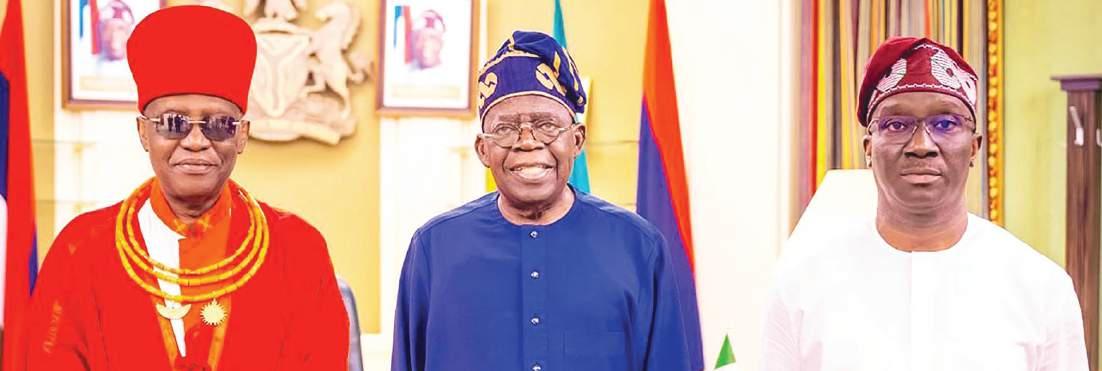
ROYAL COURTESY VISIT TO THE PRESIDENT...
L-R: His Royal Majesty, Omo
N’Oba N’Edo, Uku Akpolokpolo, Oba Ewuare II, the Oba of Benin; President Bola Ahmed Tinubu; and Governor Monday Okpebholo, during the courtesy visit of the Edo monarch and governor to the Presidential Villa, Abuja, yesterday
PHOTO: GODWIN OMOIGUI
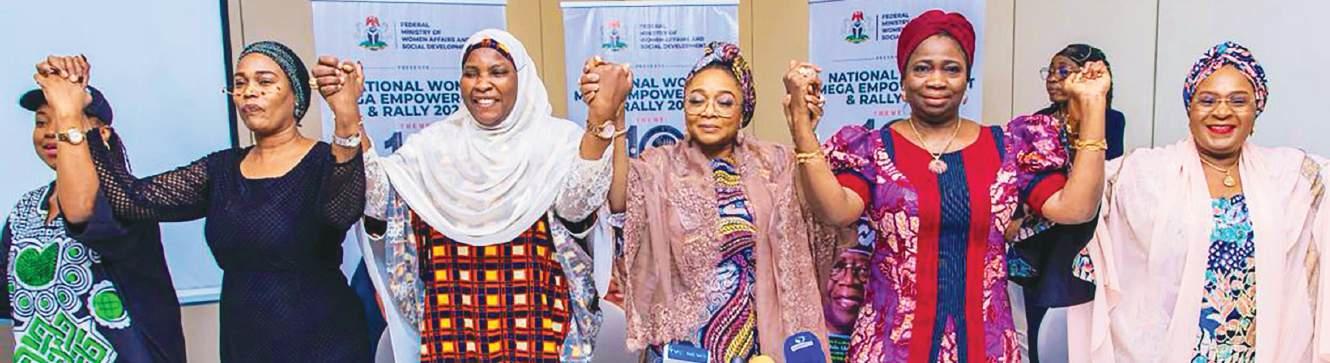
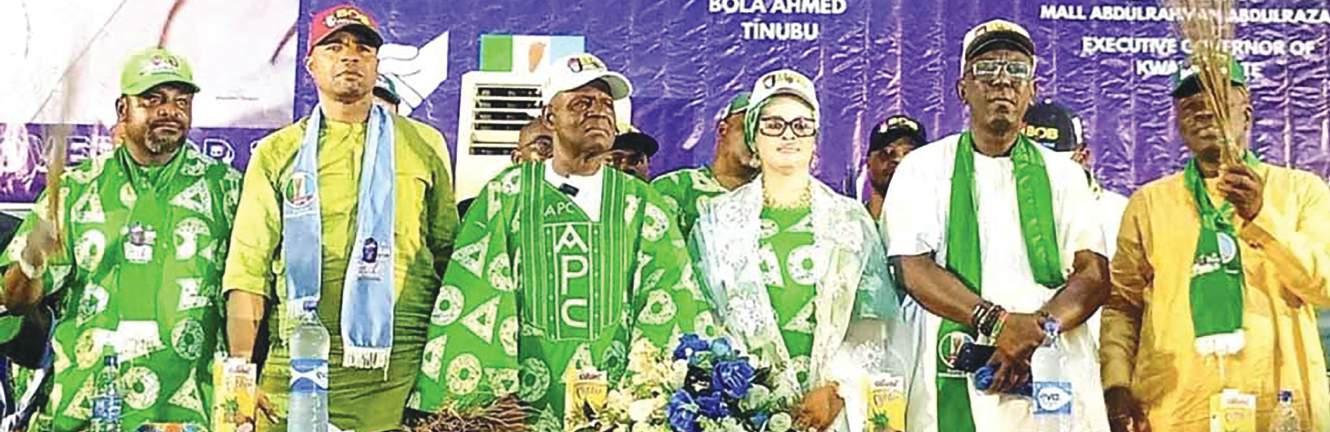
PREPARING FOR WOMEN MEGA RALLY FOR TINUBU...
L-R: Ms Mary Ojukwu; Ms Ginika Tor; former All Progressives Congress (APC) Woman Leader, Hon Salamatu Baiwa; Deputy National Woman Leader, APC and Chairman, Planning Committee, 10million Mega Empowerment and Rally, Hajia Zainab A Ibrahim; Chairman, NiDCOM and Chairman, Media committee , Hon Abike Dabiri-Erewa, and Honourable Minister, Women Affairs, Iman suleman-Ibrahim, during a press conference on the upcoming women rally for President BolaTinubu in Abuja...recently
FEC Okays
$2.99bn
Light Rail Projects For Lagos, Kaduna, Kano to Boost Economy
Resolves 20-year-old MM2 dispute, approves aircraft leasing firm to boost aviation sector Bi-courtney writes off N132bn claim, relinquishes MM1 control Unveils power reform task force, defends road costs as Lagos Carter bridge’ll be pulled down and reconstructed
The Federal Executive Council (FEC) rose from its meeting on Thursday with the approval of three major rail infrastructure projects valued at $2.99 billion.
This was part of government’s move aimed at accelerating Nigeria’s transport modernisation drive and strengthening economic connectivity across key urban corridors.
Minister of Finance and Coordinating Minister of the Economy, Prof. Taiwo Oyedele, who made the disclosure while briefing newsmen after the FEC meeting presided over by President Bola Tinubu at the State House, Abuja, listed the approved projects to include the Lagos Green Line Rail, the Kano State Metro Rail, and the Kaduna State Rail project each designed to ease urban congestion, enhance mobility, and stimulate regional economic activity.
Oyedele added that the projects have already been captured in the extended 2025 budget and are expected to strengthen the capital component of the overall investment framework.
His words: “The Federal Executive Council approved three transformative rail project and these are Lagos Green Line, Kano state metro city rail project and Kaduna State Rail project. The projects are to be sponsored by the Ministry of Finance incorporated.”
The approvals, the Minister added, align with the administration’s broader infrastructure agenda, which prioritises rail development as a cost-effective and sustainable alternative to road transport.
complement existing urban rail initiatives in Lagos, Africa’s largest city, while the Kano and Kaduna rail projects are projected to boost commercial activity in northern Nigeria by improving passenger and freight movement.
FEC also approved the resolution of the age-long concession dispute surrounding the Murtala Muhammed Airport Terminal Two (MM2) in Lagos, alongside the establishment of a Nigerian aircraft leasing company to support local airlines.
Minister of Aviarion and Aerospace Development, Festus Keyamo told newsmen that FEC approved two major memos presented by the aviation ministry, describing both decisions as “significant milestones” for the sector.
He disclosed that the federal government has finally settled the over 20-year dispute with Bi-Courtney Aviation Services Limited, owned by renowned businessman, Wale Babalakin, over the MM2 concession.
According to him, the dispute, which spanned multiple administrations, involved several contentious issues, including the control of the domestic terminal (MM1), financial claims against the government, and exclusivity rights.
“As you all know, there has been a long-standing dispute between the concessionaire and the federal government over MM2. Today, I can happily tell you that this government has resolved that issue once and for all”.
He explained that one of the major sticking points was a Supreme Court judgment which awarded Bi-Courtney
N132 billion in damages, with interest accruing from 2009.
Keyamo, however, revealed that the concessionaire agreed to waive the claim as part of the negotiated settlement.
“The first thing we told him was to write off the N132 billion plus interest. Nobody is going to pay that, and he agreed and wrote it off,” the minister stated.
He added that Bi-Courtney also relinquished its claim to the Murtala Muhammed Airport Terminal One (MM1), which it had argued was included in the original concession agreement.
“We told him to hand back the local airport (MM1) to the federal government. We cannot leave the entire domestic aviation operations in Lagos in private hands. He agreed,” Keyamo said.
On exclusivity, the minister said the clause granting Bi-Courtney sole rights to operate a private airport within Lagos was also removed.
“That clause was not right, even for security reasons. He agreed, and
The federal government, on its part, agreed to restore ownership of the long-abandoned Hotel and Conference Centre opposite MM2 to the concessionaire.
Keyamo said the facility, whose construction had stalled for years, must now be completed within two years.
He said: “We gave it back to him to complete and run on a shared basis with the federal government. He has 24 months to deliver it. We will not tolerate further delays”.
He further disclosed that the government will permit regional flight operations from MM2 and expand the terminal’s apron to accommodate more aircraft.
The Minister noted that the new agreement would also ensure that the federal government begins to earn revenue from MM2 operations, which had not been the case during the dispute period.
“At the end of the day, it was give and take. He made concessions, and we also made concessions. Both sides
benefitted,” Keyamo said.
He added that a formal signing ceremony involving all stakeholders would be held in Lagos, where full details of the agreement would be made public.
Keyamo also announced that FEC approved the establishment of a Nigerian aircraft leasing company, structured as a Special Purpose Vehicle (SPV), to be driven by private sector investment.
He described the initiative as a “game changer” aimed at addressing the persistent challenge of access to aircraft by Nigerian airlines.
“The major problem of private operators in Nigeria has been access to aircraft and equipment. Nigeria is unique because our aviation industry is almost entirely run by the private sector,” he said.
The Minister explained that the new leasing company would aggregate aircraft for local airlines, reducing their dependence on foreign lessors and improving operational stability.
“Instead of airlines going all over
the world looking for aircraft, there will now be a local platform to lease aircraft on both short-term and long-term basis,” he said.
Keyamo noted that many Nigerian airlines currently struggle with leasing arrangements, leading to frequent flight delays and cancellations.
“Some aircraft come into the country and within three months they are gone because operators cannot meet lease obligations.
That is why you see disruptions”. He clarified that the federal government would not directly fund the leasing company but would provide guarantees to support lease financing and aircraft repossession.
“The role of government is to guarantee the leases. We are not putting in funds, but we will have equity in the company and earn returns,” the Minister explained. He disclosed that several major African and international investors have already expressed interest in the project, citing Nigeria’s large aviation market and strategic location.
Digital Switchover: Over 100 Channels Sign on to Broadcast Free-to-Air Content
Over 100 channels have officially signed up to broadcast free-to-air digital content, marking a significant
Nigeria, UNESCO Launch World’s First Media and Information Literacy Institute in Abuja
Michael Olugbode in Abuja
Nigeria has taken a significant step onto the global stage with the launch of the world’s first International Media and Information Literacy Institute (IMILI), a landmark initiative developed in partnership with United Nations Educational, Scientific and Cultural Organisation (UNESCO).
The institute was officially unveiled on Wednesday in Abuja
by the Federal Ministry of Information and National Orientation, positioning Nigeria at the forefront of global efforts to strengthen media literacy, combat misinformation, and promote critical thinking in an increasingly complex digital age. The establishment of IMILI marks a historic milestone not just for Nigeria, but for Africa and the international community, as it becomes the first UNESCO Category 2 Institute globally
dedicated solely to Media and Information Literacy (MIL).
Speaking at the launch, UNESCO Assistant DirectorGeneral for Communication and Information, Mariya Gabriel, described the institute as a timely and transformative response to one of the defining challenges of the modern era — ensuring that access to information translates into informed, responsible, and empowered societies.
milestone in the country’s longdelayed Digital Switchover (DSO) programme.
The official sign-on came after the recent disclosure by National Broadcasting Commission (NBC) that it had unveiled a significant overhaul of Nigeria’s long-awaited digital broadcasting migration, launching a FreeTV, a fully free-toair, direct-to-home (DTH) national platform backed by satellite and Internet Protocol (IP) delivery.
In a statement issued yesterday, NBC said the current line-up, which it officially categorised, featured a diverse range of programmes aimed at Nigerian families.
The breakdown highlights a focus on local content and variety, encompassing 14 news and current affairs channels, 15 general entertainment stations, six channels dedicated to kids and family, and two to lifestyle and talk shows.
Others are three music and entertainment options, a dedicated business and finance station, and an impressive five movie channels.
No fewer than 57 of the channels are already live and accessible to Nigerians via the FreeTV app and the NigSat satellite platform.
NBC stated that viewers could download the FreeTV app on Google Play to begin exploring the new digital landscape.
NBC Director-General, Mr. Charles Ebuebu, stated, “We will deliver digital TV with clearer pictures, more free channels, and opportunities for every family.
“It is one simple change for a better future. With 100 stations onboard and a satellite-driven strategy in place, Nigeria’s digital switchover is no longer a distant promise but a rapidly progressing reality, finally bringing the nation’s broadcast landscape into the 21st century.”
The DSO project, launched in 2008 following the Geneva 2006 Agreement (GE06), has been a vital part of the federal government’s plan to modernise broadcasting.
The statement said the objectives had always been clear: to deliver high-quality pictures and sound, free up valuable spectrum space (the “digital dividend”) for the growth of high-speed broadband in the 700 MHz and 800 MHz bands, and create a dynamic platform for Nigeria’s creative economy.
It explained that the journey faced many obstacles, adding that despite an official launch in 2016 and a pilot in Jos, reaching nationwide coverage remained an elusive goal.
NBC said with deadlines missed and billions of naira spent, there was little to show for it at the national level, stating, however, that the narrative is changing swiftly.
Deji Elumoye in Abuja
The Lagos Green Line is expected to
we removed it,” he added.
Ndubuisi Francis in Abuja
AKPABIO’S COURTESY VISIT TO THE NBS...
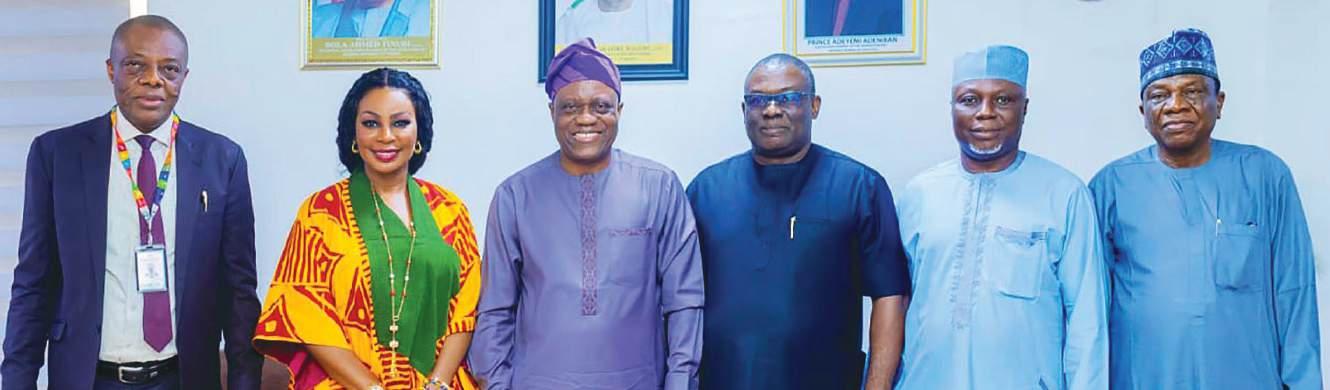
L-R: Director, Human Resource Management National Bureau of Statistics, Mr Oluwole Akadi-Mosugu; Managing Director/CEO, South South Development Commission (SSDC), Ms Usoro Akpabio; Statistician-General of the Federation, Prince Adeyemi Adeniran; Executive Director, Finance, SSDC, Ambassador Sani Abang; DG Services, NBS, Alhaji Sharafadeen Alabelewe and Technical Adviser to the Statistician General on General Administration, Alhaji Adamu Angulu, during Akpabio’s courtesy visit to the NBS, yesterday in Abuja.
Seplat Grows Q1 Revenue to $840.7m, Gross Profit Hits $370.5m
Seplat Energy Plc yesterday announced a gross revenue of $840.7 million for the first quarter ended March 31, 2026, up four per cent from $809.3 million in the same period last year, while the company’s gross profit stood at $370.5 million.
The company also posted a Profit After Tax (PAT) of $37.9 million, representing a 62.7 per cent increase from $23.3 million recorded in the corresponding period of 2025.
In its unaudited results, Seplat
declared a total dividend of 9 cents per share for the quarter, comprising a base dividend of 5 cents and a special dividend of 4 cents. The pay-out represents a 96 per cent increase compared to the first quarter of 2025. Besides, cash generated during the period rose to $243.4 million, while cash from operations increased by 10 per cent to $337.9 million. The company reported an adjusted EBITDA of $371.3 million, reflecting a 44 per cent margin, although this was seven per cent lower than the $400.6 million recorded in the prior year.
Average group production for the quarter was 129,841 barrels of oil equivalent per day (boepd), up nine per cent from 119,200 boepd in the fourth quarter of 2025.
Seplat said production performance improved further in April, averaging approximately 153,000 boepd in the first 26 days, bringing year-to-date production to about 135,000 boepd, within its full-year guidance.
In the same vein, onshore production averaged 50,700 boepd, representing a 10 per cent decline year-on-year, largely due to 38 days of unplanned
downtime on the Trans Forcados Pipeline, which affected western assets. The company said operations on the pipeline resumed on March 24, with production normalising thereafter.
According to Seplat, offshore production rose by five per cent to 79,141 boepd from 75,478 boepd in the corresponding period of 2025.
Seplat also reported the commencement of gas production at its ANOH project in January 2026, contributing 17 million standard cubic feet per day, with plans to ramp up output in the second quarter. Natural gas liquids
Court Restrains MTN, Airtel from Disrupting Airtime, Data Credit Services
The Federal High Court of Nigeria, Abuja Judicial Division, has granted an interim injunction restraining MTN Nigeria Communications and Airtel Networks Limited from suspending or interfering with Nairtime’s access to critical telecommunications platforms.
Nairtime Nigeria Limited, a subsidiary of global AI-powered financial infrastructure group, Optasia, which confirmed this in a statement, said the Order, issued in Suit No: FHC/ABJ/CS/779/2026, prevents any disruption to essential infrastructure such as Short Codes, SMS, USSD, and billing services following a directive issued by the
FCCPC that left Nigerians without a safety net.
This ruling according to the statement, ensures that millions of Nigerian consumers, particularly those without access to traditional banking can continue to access airtime and data on credit, services that are increasingly vital for daily communication, work, education, and digital participation.
The court’s intervention provides policy certainty and helps preserve continuity for users who depend on these services not just for connectivity, but also as a gateway to financial inclusion and digital identity in an increasingly connected economy.
The decision also reinforces the legitimacy of Nairtime’s operations, which are conducted under a valid
Value-Added Service (VAS) licence issued by the Nigerian Communications Commission, the statement said.
Nairtime maintains that it has consistently complied with all regulatory requirements and contractual obligations. The company noted that the suspension linked to the Digital, Electronic, Online or Non-Traditional Consumer Lending Regulations 2025, risked disrupting services relied upon daily by ordinary Nigerians.
Speaking on the development, Chief Commercial Officer, Optasia, Ms Uchenna Agbo, said: “This decision is ultimately about protecting underserved Nigerian consumers. It ensures that millions of people, many of whom are underserved by
APC Extends Sale of Forms, Deadline
The National Working Committee (NWC) of the All Progressives Congress (APC) has approved the extension of the timelines for the sale of Expression of Interest and Nomination Forms, as well as the submission of completed forms for the 2027 general election.
The sale of forms was scheduled to run from Saturday, April 25 to Saturday, May 2, 2026, while the last day for the submission of completed forms and accompanying documents was Monday, May 4, 2026.
Addressing journalists after the NWC meeting yesterday in Abuja, the party’s Deputy National Publicity Secretary, Hon. Durosinmi Meseko, noted that the sale of forms would now close at midnight on Monday, May 4, 2026.
He added that the submission of completed forms and accompanying documents has been extended to midnight on Tuesday, May 5, 2026.
“The National Working Committee (NWC) of the All
Progressives Congress (APC), at its meeting held on Thursday at the party’s National Secretariat in Abuja, has approved an extension of the timelines for the sale of aspirants’ Expression of Interest and Nomination Forms, as well as the submission of completed forms for the 2027 General Elections,” Meseko added.
He noted that the need to extend the dates became necessary because of the public holiday observed nationwide on Friday and to accommodate the high level of interest from aspirants.
traditional financial systems, retain uninterrupted access to essential digital services.
“Over time, using these services responsibly can help them prove reliability and improve their chances of accessing bigger financial opportunities in the future. Our platform enables responsible, data-driven lending that keeps people connected when they need it most and we look forward to working with our partners to restore services in a manner that resumes full-service value to the Nigerian consumers without further delay.”
production rose significantly to 9,802 barrels per day from 3,376 barrels per day in the prior year.
The company also maintained strong safety performance, recording over 9.1 million man-hours without a lost time injury.
Unit production operating cost increased to $17.1 per barrel of oil equivalent from $12.6 in the same period of 2025, exceeding the company’s guidance of $13.5–$14.5 per boe. This was attributed to accelerated maintenance activities and lower production volumes during the quarter.
Capital expenditure rose by six per cent to $42.6 million, with spending expected to increase in subsequent quarters.
Similarly, Seplat said its balance sheet remained strong, with cash at bank rising to $461.7 million at the end of March 2026, compared to $332.3 million at the end of 2025. Net debt declined by 21 per cent to $531.6 million, while its net debt to EBITDA ratio improved to 0.43x from 0.53x.
The company also announced the refinancing and upsizing of its revolving credit facility to $400 million, with borrowing costs reduced to SOFR plus 4.5 per cent.
Looking ahead, Seplat reiterated its 2026 production guidance of 135,000 to 155,000 boepd, with expectations of flat crude and condensate output, alongside growth of 85 per cent in natural gas liquids and 30 per cent in
gas production. Capital expenditure guidance was maintained at $360 million to $440 million.
Commenting on the results, Chief Executive Officer, Roger Brown, said the company delivered a solid start to the year, despite production challenges linked to third-party infrastructure disruptions, adding that improved oil prices and upcoming asset restarts are expected to support stronger performance in the second quarter. Brown stated, “The conflict in the Middle East has dramatically changed the outlook for the oil and gas industry in 2026, and quite possibly beyond. Nigeria’s favourable geographic positioning, combined with our oil rich portfolio, which is fully exposed to higher oil prices, and our strong balance sheet, means we are well placed to deliver strong cashflows in 2026. As a result, we have increased our 1Q 2026 dividend to 9.0 cents per share (core: 5.0 cents and special: 4.0 cents).” The Seplat CEO stated, “Production in 1Q 2026, improved Q-o-Q but modestly missed our internal expectations, largely due to unplanned downtime on third-party infrastructure onshore. That said, April to date production has averaged c.153 kboepd, illustrating the potential of our asset base. Notably, this is before the return of Yoho, scheduled to come back onstream before end 2Q 2026, and full ramp-up of ANOH, as such we remain comfortable with our 2026 guidance.
NISO Explains Power Cut to Lagos, Environs, Blames 614MW Drop
The Nigerian Independent System Operator (NISO) yesterday attributed the ongoing reduction in electricity supply to Lagos and its environs to a major generation loss at the Egbin Power Station, which it said triggered ongoing load shedding.
In a statement issued in Abuja NISO said the nation’s largest power plant experienced a significant operational disturbance on April 28, leading to a sharp drop in output.
According to the system operator, at about 8:21 pm on the day, Egbin recorded a complete
loss of generation, falling from approximately 641 megawatts to zero. The incident, it stressed, was linked to a failure of the plant’s central compressor, as well as a malfunction in its circulating water pump system, which forced an emergency shutdown of all generating units.
NISO noted that the situation was compounded by transmission constraints, particularly the forced outage of the Osogbo–Ikeja West 330kV transmission line, which has limited the ability to wheel available power into the Lagos load centre.
It explained that the combined impact of the generation loss and
transmission disruption created a significant supply shortfall, making it necessary to implement immediate load shedding measures to stabilise the national grid and avert a wider system collapse.“NISO wishes to inform the general public of a significant reduction in power generation currently affecting electricity supply across the country, particularly within the Lagos region. Egbin power station, which is the largest electricity generating plant on the national grid and a major contributor to daily power supply in Nigeria, experienced a major operational disturbance.
PHOTO: SSDC
Adedayo Akinwale in Abuja
Emmanuel Addeh in Abuja
Emma Okonji
Emmanuel Addeh in Abuja
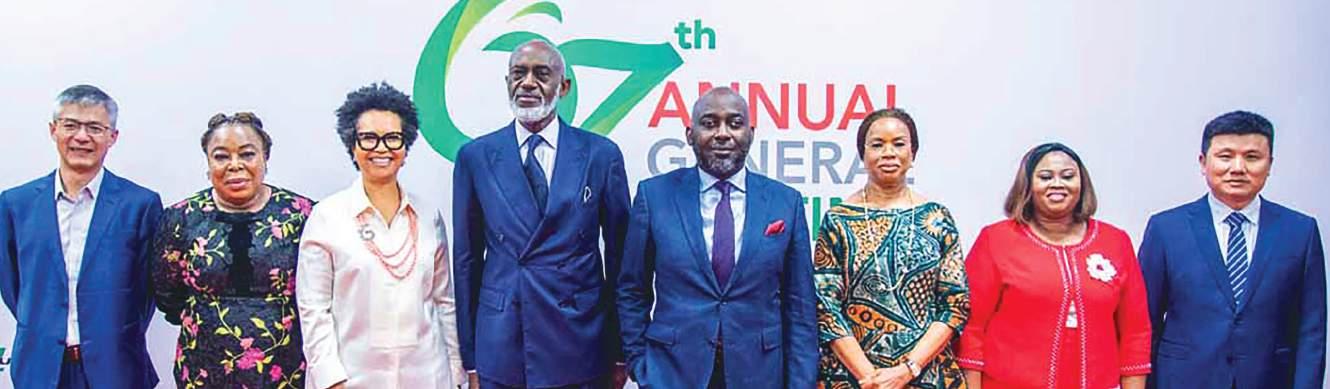
UNVEILING OF THE ARGENTIL GROUP’S NEW CORPORATE BRAND IDENTITIES...
L-R: The Executive Team, Mr. Adekunle Adedeji, Co-Founder, Argentil and Chairman, Argentil Capital Limited; Mrs. Tolulope Awoyinfa, Managing Director and CEO, Argentil Capital Partners (UK) Limited; Mr. Olumide Ogunfowora, Co-Founder, Argentil and Chairman, Argentil Asset Management Limited; Mrs. Folashade Oyedere, Group Chief Financial Officer, Argentil; Mr. Gbenga Hassan, Managing Director/CEO, Argentil Capital Management Limited and Argentil Asset Management Limited; Mrs. Olapeju Kayode-Aluko, Executive Director, Corporate Services, Argentil Capital Limited; and Managing Director and CEO, Argentil Capital Limited, Mr. Femi Oladehin, at the official unveiling of the Argentil Group’s new corporate brand identities held in Lagos... recently
Nigeria Recording Increase in Revenue from Solid Minerals Sector, Says Alake
Stakeholders seek expansion of cooperatives
The federal government has said the total 2025 revenue from Solid Minerals reached about N68.1 billion, while remittances into the Federation Account amounted to N63.92 billion in the first eleven months of 2025.
The progress report came just as stakeholders at the Africa Commodities Conference and Exhibition (ACCE) in Abuja proposed measures to increase local participation in the Solid minerals Industry through expansion and empowerment of cooperatives.
In a paper presented at the Africa Commodities Conference and Exhibition (ACCE) organized by Mica Equity Allocation Limited in Partnership IPW, the Federal Ministry of Solid Minerals Development and the Solid Minerals Development Fund in Abuja on Wednesday, Minister of Solid Minerals Development, Mr. Dele Alake said that government’s reforms are already yielding positive results.
He said the total 2025 revenue from Solid Minerals reached about N68.1 billion, while remittances into the Federation Account amounted to N63.92 billion in the first eleven months of 2025.
He also said that Royalties paid rose by N19.3 billion, or 110.1 percent, while Mining Cadastre Office licensing revenue increased by N6.51 billion, or 107%, to N12.58 billion.
In addition, the Minister said that over 250 new cooperatives had been registered to absorb artisanal miners into the formal economy.
“Those are not yet the numbers of a mature mining giant, but they are the numbers of a sector that is gaining fiscal traction through reform, enforcement, and better administration,” he said.
The minister, represented Mr. Etibo Umoakpan also noted the country witnessed the entry of 142 new mining companies, a 93.27 percent rise in Private Mineral Buying Centre registrations from 223 to 431, and an increase of 513,600 tonnes in mineral output, equivalent to 343.8 percent growth over the past few years.
In terms of contribution to economic improvement, the minister said that recent data places the contribution of Nigeria’s solid minerals sector in the range of approximately 1.5 percent to 1.8 percent of GDP, “reflecting a gradual but important improvement from historically negligible levels”.
Alake however said that despite the achievements in the sector, some challenges still remain, adding that infrastructure to mining corridors is still insufficient, while geological confidence is still below what top-tier investors expect in many jurisdictions.
“Environmental and social governance must be enforced more consistently. Community trust
must be deepened through stronger implementation of Community Development Agreements.
“We have strengthened enforcement against illegal mining. We have expanded formalisation among artisanal operators. We have elevated value addition from a slogan to a licensing principle,” he said.
Stakeholders at the ACCE conference said there is need to widen the scope of participation of indigenous operators in the country’s solid
mineral development sector through training, capacity development and provision necessary equipment.
Speaking on the aim of the conference, the Convener of Africa Commodities Conference and Exhibition (ACCE), Michael Akueche, said they were focusing on empowerment of five key professional categories, geologists, mineral processing engineers, mining engineers, health, safety and the environment professionals, as
well as the artisanal, small scale mining compartment of the solid mineral industry.
He said there is need to expand the subscriber base of the cooperative groups operating in the Solid Minerals sector to enable them have access to capital intensive equipment needed for mining operations.
“What we’re trying to do is that, as part of the 7-Point agenda of the ministry of the solid mineral development and the Renewed
Hope agenda of Mr. President, which is that the undocumented miners and illegal miners,
“Look at the length and breadth of our nation, there are still lots of illegal miners going on, and the government is saying, why don’t you set up a cooperative and operate in a regulated environment?
“And as a matter of fact, a number of people were able to set up cooperatives, but we discovered two challenges with them.
Lafarge Africa’s Profit Doubles to N98bn in Q1 2026 on Strong Sales, Cost Control
Segun Awofadeji in Bauchi
Lafarge Africa Plc has reported a 101% surge in profit after tax to N97.95 billion for the first quarter ended March 31, 2026, driven by higher sales volumes, improved plant stability, and tighter cost management.
A press release made available to journalists by Ginikanwa Frank-Durugbor, Head, Corporate Communications of the company, yesterday disclosed the cement manufacturer’s net sales climbed 35% year-on-year to N334.88 billion, up from N248.35 billion in Q1 2025. Ginikanwa Frank-Durugbor said
unaudited results released by its Board of Directors indicated that operating profit nearly doubled, rising 97% to N141 billion.
The press release noted the Group Managing Director/CEO Lolu Alade-Akinyemi attributed the performance to volume-led revenue growth, sustained cost discipline, and prudent financial management.
He cited enhanced plant stability, supply assurance, and distribution efficiency as key factors behind the gains.
“Our Q1 2026 results reflect continued progress in executing our strategic priorities,” Alade-
Akinyemi said. “These results underscore our continued focus on delivering sustainable value to our shareholders.”
The company, a member of China’s Huaxin Building Materials Ltd, said it would continue leveraging its partner’s industrial and technical expertise to unlock further efficiency gains.
Alade-Akinyemi added that easing macroeconomic pressures and reduced global supply chain disruptions supported consumer demand during the quarter.
Looking ahead, Lafarge Africa expects Nigeria’s infrastructure and construction sector to drive further market expansion.
“We remain focused on capturing volume growth opportunities across our operating markets, while maintaining disciplined cost optimization initiatives to safeguard margins amidst global tensions,” he said. The CEO reiterated the firm’s commitment to a sustainability-led growth model, with emphasis on supply reliability, cost leadership, innovation, and health and safety standards.
He thanked customers and stakeholders for their support, pledging continued delivery of consistent performance and long- term value.
Tinubu Seeks Senate Confirmation of Olasunkanmi Tegbe as Power Minister
Appoints ex-minister, Lanre Babalola, as SA power and chairman of presidential task force on power sector reset
Deji Elumoye in Abuja
President Bola Tinubu has nominated Mr Olasunkanmi Tegbe as Minister of Power, subject to confirmation by Senate.
Presidential spokesperson, Bayo Onanuga, in a release issued on Thursday, said Tegbe’s nomination had been transmitted to the senate for screening and confirmation in accordance with the 1999 Constitution of the Federal Republic of Nigeria (As Amended).
The nomination followed the resignation of the former minister,
Adebayo Adelabu, who stepped down from office to pursue elective office.
Tegbe’s nomination is expected to strengthen ongoing efforts to reform the power sector, enhance grid stability, and attract sustainable investment in line with the Renewed Hope Agenda.
The president expects the ministerdesignate, upon confirmation, to bring his extensive expertise to bear to advance critical reforms and deliver improved outcomes for Nigerians in the power sector.
Tegbe, from Oyo State, is a fiscal and economic reform expert with over
35 years of experience spanning the public and private sectors.
He is a former Senior Partner and Head of Advisory Services at KPMG Africa, where he led wide-ranging initiatives in fiscal policy reform, institutional transformation, and governance.
He has also advised key government institutions and private sector organisations on strategic reforms, regulatory frameworks, and investment structuring.
He is currently Director-General and Global Liaison for Nigeria-China Strategic Partnership (NCSP), where
he is responsible for strengthening bilateral development cooperation between Nigeria and People’s Republic of China.
NCSP also coordinates engagements with public sector stakeholders to advance economic and social development in line with FOCAC objectives.
Tegbe’s experience includes significant engagements within the power sector, particularly in regulatory and institutional reform involving agencies, such as Nigerian Electricity Regulatory Commission (NERC) and Nigerian Bulk Electricity
Trading Company (NBET).
The president also appointed Mr. Rilwan Babalola as Special Adviser to the President on Power and as chairman of the Presidential Task Force on Power Sector Reset and Restoration.
He also re-designated the Office of the Special Adviser (Energy) as Special Adviser (Oil & Gas) to clarify roles and avoid duplication of functions within the energy governance framework.
Babalola, a former Minister for Power, brings deep sectoral expertise and a proven understanding of the
structural and operational challenges within the electricity value chain.
The statement said his appointment underscored the president’s determination to undertake a decisive and results-driven reset of Nigeria’s power sector.
The presidential taskforce, which he heads, will operate under a direct presidential mandate as a high-level, delivery-focused vehicle to restore discipline, efficiency, and commercial viability across the power sector, while ensuring effective coordination among relevant ministries, departments, and agencies.
Onyebuchi Ezigbo in Abuja
Cardoso: New Risk-based Capital Rules to Solidify Bank Stability, Restore Investor confidence
Directors charged to drive consolidation, rebuild trust, and anchor stability in post-reform era
Nume Ekeghe
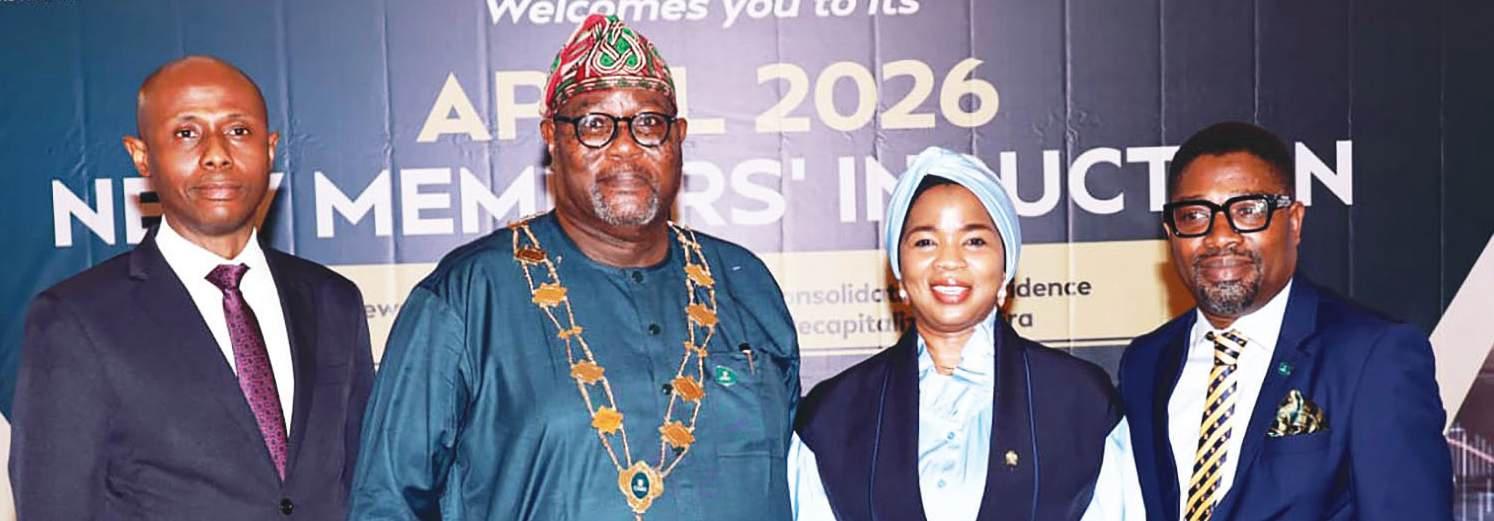
Governor of Central Bank of Nigeria (CBN), Olayemi Cardoso, has said the apex bank’s new risk-based capital framework will serve as a critical anchor for financial system stability, ensuring that recent banking sector recapitalisation translates into real resilience and renewed investor confidence. Cardoso said this at the Chartered Institute of Directors, Nigeria, induction ceremony in Lagos yesterday.
He charged directors to guide institutions through consolidation, strengthen governance frameworks, and rebuild stakeholder trust through transparency and accountability.
Cardoso, who was represented by Director, Banking Supervision,
CBN, Olubukola Akinwunmi, stated that the apex bank complemented recapitalisation with a series of regulatory measures aimed at strengthening governance and empowering directors across the banking system. According to him, key among these are the Circular on Compliance with Insider Related Credit Limits (February 17, 2025), which reinforces prudential discipline by restricting preferential lending to insiders; the Corporate Governance Guidelines (2023), which define clear standards on board composition, independence, tenure, and responsibilities in line with global best practice; and the end of regulatory forbearance alongside the introduction of riskbased capital requirements to align
capital adequacy with institutional riskOthersprofiles.include stricter fit-andproper criteria for directors to ensure only qualified individuals serve on boards, enhanced disclosure and transparency rules covering financial reporting and related-party transactions, and mandatory board evaluation and succession planning requirements to ensure continuity and stability. He stressed that these measures were not punitive, but enabling, providing directors with a stronger framework to exercise stewardship with discipline, foresight, and confidence.
He said, “The adoption of Risk-Based Capital Requirements represents a cultural shift in our financial system. Capital adequacy
is no longer about size alone; it is about risk alignment ensuring capital planning anticipates both current and emerging risks, strengthening frameworks for credit, market, and operational risk, taking responsibility for compliance without reliance on regulatory forbearance and promoting prudent expansion and discouraging reckless lending or overexposure.
“Risk Based Capital Requirement embeds risk awareness into every strategic decision, ensuring that recapitalisation translates into genuine stability, entrenches the going concern status of our banks and instils confidence by both the banking and investing public in the Nigerian banking system.
“Given the position of the banking system and the pivotal role it
DAVID MARK-LED ADC GETS A LIFELINE AT SUPREME COURT, PDP FALLS
The court in a split judgment of three-to-two voided the convention that produced the Tanimu Turaki-led faction on the grounds that it was conducted in blatant disobedience of a valid court order.
The David Mark-led leadership of the ADC and the Turaki-led faction of the PDP had approached the apex court to challenge the judgments of the Court of Appeal entered against them.
They predicated their separate cases on the grounds that the cases in which judgment was entered against them were purely internal matters of political parties, which courts ought not to entertain.
They therefore prayed the apex court to reverse the decisions of the lower courts for being unjusticiable.
But, in the separate judgments delivered in the matter by the supreme court, the appeal of the
Mark-led ADC succeeded in part, that of the Turaki-led faction failed as the majority judgment of the apex court, held that the convention stood nullified because it was conducted despite a court order restraining it.
In the unanimous judgment delivered by Justice Mohammed Garba, the Supreme Court held that the appellate court was right when it dismissed the appeal of David Mark for lacking in merit and also ordered accelerated hearing at the trial court.
Garba, however, faulted the appellate court for going ahead to issue a preservative order, after striking out the appeal for being incompetent.
The Supreme Court further berated the the appellate court for raising the issue of preserving the res (subject matter of the case) on its own (somoto) and then issuing an
order directing parties to maintain status quo ante bellum.
The Independent National Electoral Commission (INEC), had last month removed the names of David Mark and other national executive officer of the ADC from its portal as leaders of the party.
The action of the electoral umpire by implication robbed the ADC the chances of participating or fielding candidates at next year’s general election.
Among the reliefs sought by Mark at the apex court included an order setting aside the appellate court order directing the maintenance of status quo ante bellum.
Justice Garba, who delivered the lead judgment held that the lower court was wrong to have raised the issue “somoto” (on its own, not requested by any party in the matter), and subsequently issued
the status quo ante bellum order.
According to the judgment, it was wrong for the lower court to issue any preservative order in a case pending before the trial court.
“The directive made (status quo ante bellum) after striking out the appeal and issuing an accelerated hearing was unnecessary, unwarranted and improper”, Garba held, adding: “It is hereby set aside”.
Having resolved issue one and two against the appellant, Justice Garba, also made an order directing the case back to the trial court, for continuation of hearing.
According to the apex court, the trial court neither granted nor refused the order of interlocutory injunction restraining INEC from recognising the Mark leadership nor restrained the Mark-led leadership from parading themselves as leaders of the ADC, but held that the
OIL PRICE HITS $126/BARREL, HIGHEST SINCE 2022, AS TRUMP MULLS FRESH IRAN OPTIONS
matter said. Trump is routinely updated on military plans, and there was little to indicate his previous reluctance to restart the US bombing campaign was waning.
The briefing was expected to include Adm. Brad Cooper, the commander of US Central Command, and Gen. Dan Caine, the chairman of the joint chiefs of staff, along with other senior military officials.
Trump’s current strategy is designed to inflict as much economic pain as possible on Iran in the hopes the country will cave to his demands on curbing its nuclear programme. He has told his top advisers in recent days he wants the US naval blockade of Iranian ports to continue, sources familiar with the talks said, and his team has begun laying the groundwork for such an extension, including a longer-term closure of the Strait of Hormuz.
“The blockade is genius,” the president told reporters when asked how long it would continue. “Now, they have to cry uncle, that’s all they have to do. Just say, ‘We give up,’” he added.
While the Pentagon has continued making preparations should the president decide to resume his bombing campaign, Trump has long indicated internally that he would prefer making a deal with the Iranians and avoid further kinetic attacks, the sources familiar with the matter said.
But energy prices have been rising this week as peace talks appear to have stalled, with the
key Strait of Hormuz waterway still effectively closed, a BBC report said.
About 20 per cent of the world’s oil and Liquefied Natural Gas (LNG) usually passes through the strait and the conflict has sent global energy prices soaring.
Brent crude touched $126.31 a barrel earlier on Thursday, the highest since Russia’s full-scale invasion of Ukraine. However, the price then fell back sharply later in the day to around $114.
The sharp switch in the oil price was partly being blamed on a deadline for deals known as futures contracts, which are agreements to buy or sell an asset at a set date.
The current Brent futures contract for June delivery expired on Thursday, which contributed to its drop, said Naveen Das, senior oil analyst at Kpler. The more active July contract was trading lower at around $110 a barrel.
Crude oil is a key ingredient in petrol and diesel, and the jump in costs since the start of the Iran war has pushed up pump prices for motorists. In Nigeria, a litre of petrol currently costs about N1,400 per litre, up from roughly N800 that it sold before the war started on February 28. That is approximately a 75 per cent rise.
Also, in the UK, petrol currently costs an average of 157p a litre, according to motoring group RAC, quoted by BBC, which is 24p higher than before the start of the war. Diesel is at 188.5p a litre, up 46p compared with its pre-war price.
The UK government has warned people could face higher energy, food and flight ticket prices as a result of the war. Some airlines have already started to raise fares or reduce flights. Fertiliser prices have also started to increase, which could have a knock-on effect on food prices.
But the Axios report cited anonymous sources, saying the proposed wave of strikes would be likely to include infrastructure targets. Another plan focused on taking over part of the Strait of
Hormuz so that it can be reopened for commercial shipping, Axios reported, adding that doing so could involve troops on the ground. Meanwhile, a statement attributed to Iran’s Supreme Leader Mojtaba Khamanei said that Tehran would secure the Strait of Hormuz and eliminate “the enemy’s abuses of the waterway”.
Khamanei’s statement on Thursday also said a “new chapter” for the region had been taking shape since the start of the US-Israeli war with Iran on 28 February.
plays in the economy, this stance of the Central Bank of Nigeria is expected to reverberate across all sectors of the Nigerian economy with an elevation in the standards of corporate governance observed across corporations in Nigeria.”
Cardoso urged directors to move beyond passive oversight to become active custodians of institutional stability, balancing profitability with prudence and ensuring that compliance is matched with strategic foresight.
He said, “As directors, your responsibilities extend beyond boardrooms. You are custodians of governance in a time when regulatory expectations are higher, requiring boards to align with prudential standards. Stakeholder trust must
respondents should appear before the court to show cause why they should not be restrained.
But in the case of the PDP, the majority judgment which voided the Ibadan convention dwelled more on the disobedience of the appellants.
Justice Stephen Adah, who delivered the lead majority judgment disclosed that upon their perusal of the record of appeal, the apex court found the issue of disobedience which was not disputed by any party in the appeal.
According to the apex court, rather than appealing the judgment of the trial court, which restrained them from proceeding with the November 15 and 16 National Convention, the appellants “went forum shopping” to get a favourable order from a court of coordinate jurisdiction, and only appealed the judgment after the convention has been held.
While stressing that orders of court remained binding until set aside, Justice Adah held that, “When a party refuses to obey the orders of a court, he must not be heard by the court”, adding that this type of abuse of court was unpardonable.
The apex court held that once abuse was established, the court was bound to invoke its inherent powers, adding that the court would not lend its machinery to a litigant, who violated the valid orders of a court.
While holding that the appellant abused court process in conducting the Ibadan convention, Justice Adah
FINALLY, NNPC COMPLETES RIVER NIGER CROSSING OF 130KM
Nigeria’s national gas transmission network.
The completion of the pipeline project, which runs from Obiafu/ Obrikom in Rivers State to Oben in Edo State, had been repeatedly stalled, with the most persistent issue being the crossing of the Niger River, which required complex engineering.
According to NNPC, the successful crossing unlocks the full potential of the OB3 pipeline, a strategic infrastructure designed to transport up to two billion standard cubic feet of gas per day, significantly strengthening energy availability, enhancing supply reliability, and accelerating national economic development.
Executed approximately two kilometres beneath the River Niger riverbed, the national oil company stated that the technically complex crossing was delivered by the NNPC project team working with PCE Nigeria Limited, using
Commenting on the achievement, Group Chief Executive Officer of NNPC, Bayo Ojulari, described the milestone as a testament to disciplined execution and technical excellence.
Ojulari stated, “The completion of the OB3 River Niger Crossing is a defining milestone for Nigeria’s gas infrastructure and a clear demonstration of what disciplined execution and sustained commitment to excellence can deliver.
“By successfully traversing one of the most technically challenging sections of the project, we have unlocked a critical link that will enhance gas supply reliability, deepen domestic utilisation, and support power generation and industrial growth across the country.”
Ojulari stated that the achievement built on NNPC’s growing engineering and execution capabil-
be rebuilt and sustained. Strategic foresight is essential, as institutions adapt to technological disruption, global competition, and evolving customer needs.
“The central bank views directors as partners in ensuring that recapitalisation and regulatory reforms translate into stronger institutions, not just larger balance sheets.
held that the conduct of the November 15 and 16, 2015 convention in violation of an order of court was therefore “null and void.
“Having resolved the sole issue issue against the appellant, the appeal lacks merit and it is accordingly dismissed. The cross appeal is also lacking in merit and it is also dismissed,” she stressed.
However, in the minority judgment delivered by Justice Haruna Tsammani and Abubakar Umar, the apex court held that the case before the trial court was strictly an internal matter of the PDP, which the court lacked jurisdiction to entertain. While agreeing with the majority judgment that it was wrong of the appellant to have disobeyed the judgment of the trial court, Tsammani stated that the action was not enough ground to dismiss the appeal, which the trial court ought not to have entertained in the first instance.
Tsammani faulted his colleagues for raising the issue of disobedience on its own, when none of the parties raised it.
He recalled that the apex court in several decisions has warned against raising issues (somoto) not conversed by any party, adding that the appellant was not giving the opportunity to defend itself over the alleged disobedience.
He, accordingly, allowed the appeal, stressing that the Federal High Court lacked the necessary
Continued on page 44
ity, drawing from the successful Ajaokuta-Kaduna-Kano (AKK) River Niger Crossing in June 2025, to deliver an even more complex crossing in the Niger Delta environment.
He stated, “This achievement is not incidental. It is the result of deliberately leveraging and upscaling our AKK engineering and execution excellence through rigorous project governance, innovative engineering solutions, adaptive problem-solving, and the unwavering commitment of our teams and PCE Nig. Limited.
“The OB3 Pipeline is central to our ambition of building an integrated and resilient gas network that underpins Nigeria’s energy security and economic development. I commend everyone involved for their doggedness and for staying the course to deliver this strategic national asset.”
Ojulari acknowledged the critical support of key stakehold-
ers, especially the leadership of President Bola Tinubu, whose gas-to-prosperity agenda and commitment to a conducive business environment, he said, had been instrumental in making the achievement possible. He also commended the guidance of NNPC Board of Directors under the leadership of the chairman, Ahmadu Musa Kida, while recommitting to translating Nigeria’s oil and gas resources into a better standard of living for all citizens.
He said, “At NNPC Limited, we remain fully committed to translating Nigeria’s oil and gas resources into a better standard of living for all citizens.
“We will continue to collaborate with our partners to deliver projects that expand energy availability, stimulate industrialisation, and improve the overall wellbeing
Continued on page 43
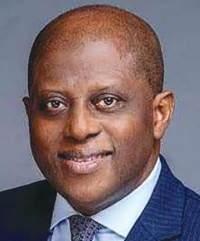
CBN Governor, Yemi Cardoso
Politics
Email: deji.elumoye @thisdaylive.com
08033025611 s M s O n LY
2027: Nigeria Deserves More Than a Choice in Leadership
as political parties gear up to conduct primary elections to elect their flag bearers for various elective positions ahead of the 2027 general election, Abisayo Busari-Akinnadeju in this piece, believes that Nigerians should vote for a candidate whose ideology precedes ambition, and who is ready to chart a course for a new Nigeria.
There is a conversation Nigerians are having in markets, on okada stops, in WhatsApp groups and university corridors that our political class has consistently refused to have with them honestly.
It is not about APC. It is not about ADC. It is about whether Nigeria’s democracy has the courage to produce something genuinely new.
I write not as a critic of any party, but as a Nigerian who found her public voice at age six, reciting original Yoruba poetry on Ondo State Radiovision Corporation, sometimes before the adults in the room had finished their morning tea. I did not know then that I was learning something about leadership. I know it now. Leadership begins with the willingness to speak clearly, in your own voice, into spaces that were not designed with you in mind.
That willingness has carried me through 17 years in Nigeria’s energy sector, through boardrooms and arbitration chambers, through the founding of a civic movement that clothed over 12,000 babies and planted leadership clubs in secondary schools across this country. It is the same willingness that brings me here today, not because the path is easy, but because the moment is too consequential for silence.
The Real Question of 2027
The combined opposition vote in 2023 exceeded the APC’s total by millions, yet fragmentation handed the presidency to the incumbent. That arithmetic has not been lost on Nigerians. What has been lost, however, is the deeper lesson it carries.
The problem in 2027 is not simply whether the opposition can unite. The problem is what they are uniting around. Coalitions built on shared ambition rather than shared vision have a name in Nigerian political history.
We call them governments-in-waiting that become governments-of-disappointment.
A coalition of habitual defectors cannot inspire voter confidence. Nigerians know this intuitively, which is why voter turnout dropped to 27 percent in 2023, one of the lowest in our democratic history. That number is not apathy. It is a verdict.
What Genuine Alternative Actually Looks Like
Genuine alternative does not arrive wearing a different party logo on the same political body. It arrives with a different formation, built from the ground up rather than negotiated from the top down.
I learned this not in a lecture hall, though I have sat in those at OAU, King’s College London, and Cambridge. I learned it at fifteen, when my secondary school set elected me their president, not because I sought the position, but because I had already been doing the work. That pattern repeated itself throughout my life. The roles found me because the work was visible.
The 2027 moment taught me something different about myself. For the first time, I did not wait to be found. I chose to lead, deliberately, publicly, at personal cost, because some moments in a nation’s life are too important to leave to whoever happens to be standing closest to the door.
In seventeen years of energy sector legal practice, I learned that the most dangerous contracts are not the ones with bad terms. They are the ones with beautiful terms and no will to honour them. Nigerian governance has suffered exactly this: not a shortage of manifestos, but a chronic deficit of accountability architecture.
Genuine alternative means five things Nigeria has never simultaneously had in one administration.
Collective Participation means governance that treats citizens as stakeholders, not spectators. Policy built with communities, not merely announced to them.
Economic Inclusion means structural access, not trickle-down reform dressed in progressive language. Small businesses, women entrepreneurs, young manufacturers inside the economy, not outside looking at it.
Cultural Identity means governing from
Nigeria’s diversity rather than despite it. Our diversity is not a problem to be managed. It is the most underutilised asset in our development story.
AI Readiness means recognising that the world is not waiting for Nigeria to finish its political arguments before restructuring its economy around technology. Every year we delay costs us a generation. This is not futurism.
It is urgency.
Trust Restoration cannot be legislated. It must be modelled, consistently, under pressure, in public. Transparency is not a policy. It is a practice.
On the Democratic Leadership Alliance I declared my 2027 presidential candidacy under the Democratic Leadership Alliance because Nigeria’s democratic future cannot
be built on the ruins of recycled coalitions. The DLA represents something the major parties currently cannot: a platform where ideology precedes ambition, where the candidate serves the vision rather than the vision serving the candidate.
I did not arrive at this decision lightly. I stepped down from the civic movement I founded, Project One, the #IAMANIGERIAN initiative, upon declaring my candidacy, because public trust must never be converted into personal political capital without the full transparency of disclosure. That is not a sacrifice. It is the baseline standard I intend to bring to governance.
Nigeria is a nation of 220 million people, the largest Black democracy on earth, the continent’s most dynamic creative and entrepreneurial force. This nation deserves leadership that matches its potential, not its history.
A Word to the Voter Who Has Given Up
You are not wrong to be tired. You are not naive for having hoped before and been disappointed. Your absence from the ballot in 2027 will not punish the political class. It will only extend their lease.
The most radical act available to a Nigerian citizen right now is not protest. It is participation, deliberate, informed, and directed toward something worth building.
I grew up performing poetry on radio before I understood politics. What I understood even then was this: when you are given a microphone, however small, you owe the audience your truth. Nigeria has given every candidate in 2027 a microphone. Most will use it to amplify themselves.
I intend to use it to amplify you.
Nigerians want to vote. The surveys confirm it. What remains is the question of whether there is something worth voting for. I am asking you to believe there is. I am asking you to dare.
-Akinnadeju writes from Abuja
Cosmetic Bumps on Gov Mbah’s Road to Re-election
Ifeanyichukwu Jaja writes that despite the rumoured interest of some politicians for the coveted office of Enugu state governor, the incumbent, dr Peter Mbah of the all Progressives Congress, appears to be much favoured to coast home to victory during the February 6, 2027 gubernatorial poll.
The ruling All Progressives Congress (APC) commenced the sale of nomination and expression of interest forms on Wednesday, April 28, 2026. For us in Enugu State, it marked Governor Peter Ndubuisi Mbah’s journey to re-election. The mood in the Coal City State has been and continues to be that the February 6, 2027 gubernatorial election in the state would be a coronation rather than a contestation.
But, the small talks of the possible emergence of the former Minister of Science and Technology, Chief Uche Nnaji and another former Minister of Power, Prof Barth Nnaji, on the platform of other political parties, if true, would constitute cosmetic bumps on Mbah’s highway to victory.
A relieving feature of APC’s zonal distribution of points of sale for the nomination forms is that for the South East geopolitical zone, which was stationed at the prestigious Abuja Continental Hotel, things went on smoothly without hassles.
While there were unfounded allegations of hoarding of forms by some state governors, for Enugu State, it was not so. Forms were available for the gubernatorial slot, but nobody was interested in purchasing them. It was not that there are no financially capable aspirants to pay the N50million advertised cost of the documents.
Rather, the absence of potential challengers to Mbah’s second term aspiration revolves around the governor’s gargantuan achievements in office in three out of the
four years of his first term. Again, two recent events in the state must have convinced any challenger that such an enterprise could amount to a fool’s project.
The unrelated events, which included the visit of the Consul General of the People’s Republic of China in Nigeria, Yan Yuqing, and the visit of the Leaders of Thought from Enugu North, ended up as groundbreaking endorsement of Mbah’s track record of excellent performance in office.
For those who do not know, Enugu North Senatorial zone, which is dominated by the Nsukka people, has always been used by political buccaneers and jobbers to concoct the idea that Mbah’s second term chase will experience possible pushback during the
next governorship poll.
So, the visit and mammoth endorsement by the zone, left no one in doubt that the entire state has resolved to retain the people’s active governor in Enugu State Lion Building, the seat of government.
During their thank you visit to Mbah, the stakeholders not only conveyed their appreciation for the “unprecedented developmental strides across the state.” They also eulogized the governor for his inclusive political leadership style, pointing out that his decision to honour the late Senator Okey Ezea with a befitting state burial despite the departed Senator’s membership of a different political party was the height of statesmanship and consensus building.
But, guess who were on the powerful delegation from the Nsukka cultural zone that endorsed Mbah’s second term in office? Chairman, Enugu State Traditional Rulers Council, His Majesty, Igwe Samuel Ikechukwu Asadu, who is also the traditional ruler of Edem Ani, was at the head of the delegation. He was assisted by the former President-General of Ohanaeze Ndigbo, Chief John Nnia Nwodo, who delivered the thank-you-speech on behalf of the delegation.
-Dr Jaja writes from Awgu, Enugu State.
Group Business Editor Eromosele Abiodun Email oriarehu.eromosele@thisdaylive.com 08056356325, 07034471123
Nigerian Carriers Groan as Fuel Scarcity, High Fares Disrupt Flight Operations
chinedu eze
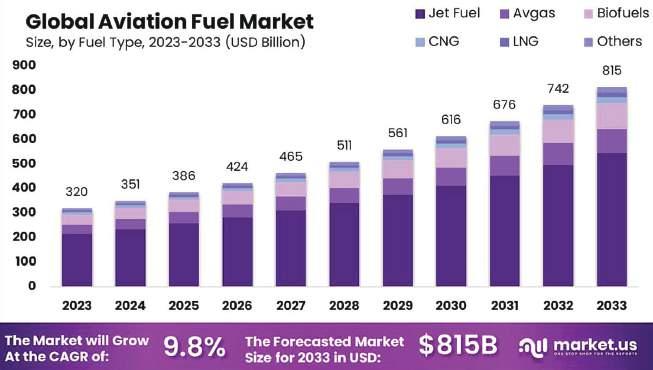
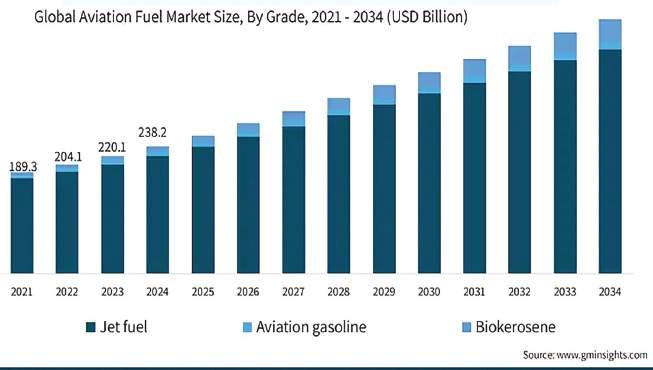
Protracted paucity of energy supply due to the Iranian war has reduced the availability of Aviation fuel, known as Jet A1, in the international market and spiked prices globally, forcing mega carriers and others to cut down operations.
In Nigeria, domestic airlines are still getting aviation fuel supply due to the existence of Dangote Refinery, but the price of the product has skyrocketed, thus increasing the cost of flight operations.
The prices of the product have a base of N2, 400 per
litre and this can increase, depending on the airport and the state.
Before now it was higher than that, a development that prompted the airlines to raise concern.
It was learnt that numerous international airlines, including major carriers like British Airways, Lufthansa, Emirates, and Singapore Airlines, are cutting flights and capacity, particularly to the Middle East due to soaring fuel prices. Also, budget carriers such as Ryanair, Transavia, and Volotea are also reducing routes, as 6,500 routes
were discontinued globally between 2024 and 2025.
Reports indicate that the Middle East conflict and rising jet fuel prices are heavily impacting, specifically hitting low-cost carriers, a development that has forced many airlines to suspend flights to destinations such as Dubai, Abu Dhabi, Amman, Bahrain, Doha, and Tel Aviv.
The development has also led to shift in travel demand and economic factors have led to 41.8 per cent of global routes with lower volumes being considered for or experiencing capacity cuts
According to Reuters, European airlines are facing their biggest challenge since the COVID-19 pandemic as the Iran war pushes up jet fuel prices and buffets travel through the Middle East, casting a shadow over the summer holiday season.
Investing.com and other media reports indicated that jet fuel prices have more than doubled due to supply disruptions around the Strait of Hormuz, creating a severe global shortage and hitting airlines hardest.
Therefore, airlines are raising fares and grounding
flights as fuel costs surge, especially across Asia and Europe.
There are also fears that even if the war stops and there is amicable resolution between Iran and the US, it will still take some time before the world will return to normalised crude refining and petroleum products distribution.
“Even if supply recovers, the market could take months to normalise, with conditions likely to worsen in the near term. Soaring jet fuel prices have hit the profitability of airlines that
have started raising air fares and grounding flights to contain the fallout from the Iran war, which has more than doubled aviation fuel prices over the past month,” invesing.com reported. Oil and jet fuel supplies are constrained as crude and petroleum products are trapped at the Strait of Hormuz, forcing Asian refiners to cut run rates and Asian countries to restrict or ban exports to preserve domestic supply.
The Nigeria Data Protection Commission (NDPC) has called on industry stakeholders in data infrastructure to develop strong data economy strategies that would help Nigeria attain the projected $18.3 billion digital economy value by 2026, which is also projected to double in five years.
National Commissioner/ CEO of NDPC, Dr. Vincent
Olatunji, who gave the advice during his keynote address at the ongoing IoT West Africa 2026 Conference in Lagos, said the digital economy remained the fastest growing economic sector, driving the significant share of new value creation globally and that its contribution to the global economy has been projected to reach $28 trillion in 2026, contributing over 22 per cent to global GDP.
According to him, the impact of digital economy is also projected to reach $18.3 billion in 2026, contributing about 20 per cent to Nigeria’s GDP, with a further projection to double in the next five years.
“Data infrastructure and Cloud IoT, among others, are the technologies that are driving key economic trends globally that we have actually witnessed over time. Look at the dominance
of digital business models. Look at the kind of services they are deploying, lines of industry, and ecosystem, digital strategies, and data infrastructure. These are the enablers of digital economy. What the world is driving at now is to develop data economy strategies that will drive all sectors of the economy. For Nigeria to partake in the global digital economy, we must develop data economy strategies, because data is the new
world, driven by Internet of Things (IoTs) and data centers,” Olatunji said.
Speaking about the importance of data to economic growth, Olatunji said: “Data infrastructure is a critical infrastructure that we can’t do anything without making investments.
Stakeholders must therefore ensure that they invest in data infrastructure in order to develop the Nigerian economy. In the last 15 years, the amount of data
generated in Nigeria has grown over 90 times, and that is more than 90 per cent growth in the processing of the data we generate on a regular basis in the last 15 years. Putting that figure to the 181 gigabytes of data generated so far, it is expected that by the end of 2026, there is this potential that Nigeria will generate about 221 gigabytes of data”
emma Okonji
Niyi Agoro: We Have Transitioned from Traditional Personnel Management Approach to Holistic, People-centric Operating Model
As Cluster Director of Human Resources for Lagos Continental Hotel and Abuja Continental Hotel, Niyi Agoro, drives transformation, integration, and organisational effectiveness across both properties. He speaks about the Workers’Day, and other salient issues. Charles Ajunwa brings excerpts:
May 1st is Workers’ Day globally, what message does Continental Hotels Group have for its workforce?
Workers’ Day, within our context, is not merely ceremonial; it is a strategic moment of institutional reflection and renewal. My message to our workforce across Abuja and Lagos is unequivocal: our people constitute the core of our enterprise value, and we have deliberately archived our organisation around that principle. Under my leadership, we have transitioned from a traditional personnel management approach to a holistic, people-centric operating model where employee experience is accorded the same strategic importance as guest experience. This May 1, we are reaffirming our commitment to deepening engagement, strengthening trust, and creating an enabling environment where our people can consistently thrive and deliver excellence.
Many hotel workers say they feel invisible. How does Continental Hotels Group ensure every staff member, from stewards to supervisors, feels seen, heard, and celebrated year-round, not just on Workers’ Day?
We have intentionally institutionalized recognition and inclusion as a core pillar of our organisational culture, embedding it into the very fabric of how we operate. Our approach extends well beyond episodic or ceremonial awards, encompassing structured appreciation frameworks and transparent communication channels that actively facilitate direct engagement with senior leadership. In addition, we have deliberately decentralised recognition, empowering line managers to exercise ownership in the consistent and equitable acknowledgment of contributions at the team level, thereby ensuring that visibility, appreciation, and meritocratic recognition are democratised across all tiers of the hotels.
Our Monthly Town Hall Meetings further reinforce this culture of recognition and engagement, serving as a formalised enterprise-wide forum for celebrating high performance and exemplary contribution. Within this platform, colleagues are recognised across three distinct tiers of distinction—“Recognition of Excellence,” “Thank You Award,” and “I Care Award”—each designed to reflect varying dimensions of performance, values alignment, and behavioural impact. In addition to the centralising recognition framework is the decentralised option that allows Heads of Departments to also recognize and reward exceptional performance at departmental level, in line with the hotels’ recognition and reward policies.
Furthermore, our recently launched Employee Opinion Survey constitutes a strategic listening mechanism, enabling colleagues to provide structured feedback, articulate their perspectives, and ensure their voices are systematically integrated into our continuous improvement agenda, thereby directly contributing to the sustained growth, transformation, and operational excellence of our great hotels.
Continental Hotels are known for premium service, but great service starts with happy staff. What specific welfare programmes has the Group put in place to ensure your people feel valued beyond their paycheck?
We have deliberately institutionalised employee welfare as a structured, data-driven ecosystem, as opposed to a series of ad hoc or discretionary initiatives. Our framework is underpinned by clearly defined policies, measurable outcomes, and continuous improvement mechanisms that ensure alignment with organizational objectives and global HR best practices.
Our holistic approach encompasses comprehensive healthcare benefits, stringent occupational health and safety protocols, and formally structured employee engagement platforms designed to drive inclusion, productivity, and retention.
As part of our commitment to amplifying employee voice and strengthening organizational transparency, we recently introduced a dedicated Employee Opinion Survey (EOS) platform. This initiative provides employees with a structured and confidential channel to share feedback,
express concerns, and contribute meaningfully to organisational decision-making.
In addition, we have expanded our welfare infrastructure and recognition programs to better support employee wellbeing and performance. This includes the acquisition of two brand-new Toyota Coaster buses, bringing our total fleet to eleven, as well as the construction of an additional 80-bed staff layover facility designed to support colleagues working late-night shifts.
Our recognition framework has also been enhanced through the introduction of monthly “Thank You” and “I Care” Awards, alongside our existing Monthly “Recognition of Excellence” programme, to reward and motivate exceptional performance. Furthermore, the recent commencement of night shift operations at the staff clinic ensures that the health and safety needs of employees on non-day shifts are adequately addressed. Within our organisation, employee welfare is intentional, systematically governed, and continuously measured; ensuring it remains a strategic enabler of employee engagement, organizational resilience, and long-term business success.
Food welfare is critical to staff morale. Can you share how Continental Hotels Group addresses staff feeding, nutrition, and cafeteria standards for employees on long shifts?
Staff feeding is recognised as a core contributor to workforce productivity and well-being. Accordingly, cafeteria operations across our properties have been standardised to ensure consistency in nutritional quality, hygiene standards, and service delivery. To support variety and meet diverse dietary preferences, our employees are provided with two meal options, each time they visit the cafeteria. In addition, they have access to a monthly lunch buffet presented in a format similar to our guest buffet experience, reinforcing our commitment to equity in dining standards and recognition of their contributions. This approach reflects our belief that employees are the greatest assets of our hotels.
Menu planning remains dynamic and is guided by employee feedback, dietary requirements, and operational needs. Monthly employee feedback is also collected to assess satisfaction with the meals being offered and to identify areas for improvement. We have implemented robust quality assurance measures and continuous feedback mechanisms to ensure the staff dining experience reflects the same level of care, intention, and excellence as our guest-facing culinary offerings.
Career growth keeps talent motivated. What structured training, upskilling, and promotion pathways exist for a waiter, housekeeper, or front desk officer who wants to become a manager at Continental Hotels?
Talent development within our organisation is intentionally structured and future-focused. We have implemented competency-based career frameworks that provide clear progression pathways from entry-level roles through to supervisory and managerial positions.
the story continues online on www.thisdaylive.com
h
Nigeria: Challenge of Rebuilding Airport Infrastructure
Chinedu Eze
Many industry observers are of the view that government waited for too long before it started working to modernise and expand the old terminal of the Murtala Muhammed International Airport, Lagos, known as Terminal 1.
The terminal meant for between 250, 000 and 300, 000 passengers per annum when it was put in use in 1979, grew its passenger traffic from that number to almost three million per annum before government started renovation and expansion work and until the President Bola Ahmed Tinubu administration, past efforts were spiced by politics and lack of vision.
One of the facilities that suffered most at that airport was the carousel. There was a time when passengers would wait for hours for their luggage and later go home without it and come back the following day. The carousel was changed many times and the number increased but the problem remained.
Many Nigerians might have forgotten those days of anxiety and worry; the terminal was usually crowded by passengers, their relatives, touts, airport workers who finished their duties and stayed behind to make quick money, the taxi drivers who literally hound arriving passengers. So much has changed at the airport infrastructure, especially in the last three years.
Serious changes are taking place at the Murtala Muhammed International Airport, Lagos. It is now a construction site because of the massive expansion project that is going on. But anyone who attended the opening of the new terminal by the former President Muhammadu Buhari in March, 2022, may not be able to recognise how it was then because of the massive changes taking place.
The revival of the car park in front of Terminal One has changed the façade of the airport. The new roads built and new ones being constructed have given modernity to the airport, even still under construction.
Kudos must be given to the management of FAAN for the way it rallied to ensure that the fire that gutted the Terminal One on February 23, 2026 did not disrupt flight operations beyond two hours because things returned to normal afterwards despite the damage done to the infrastructure.
But the question that keeps on popping up is, why has there been continuous remedial action since after the new terminal was built. Under Hadi Sirika, the immediate past Minister of Aviation, a lot of work was done at the new terminal; yet, when the airlines were asked to relocate to the new terminal after the fire that burnt the baggage area of the Terminal One in 2023, some international airlines refused to move to the new facility.
The last fire that gutted Terminal One seems to have served as tonic to speed up the reconstruction of the terminal, but at the beginning of this year, work had really starter in earnest.
So, FAAN is undertaking a massive N712
billion rehabilitation of Terminal One and expansion of the airport, including crucial enhancements to runway infrastructure and associated terminal facilities to meet global safety and operational standards.
The transformation will include the rehabilitation of runways and taxiways along with the installation of enhanced airfield ground lighting (CAT 11) to improve safety and support 24-hour, all- weather operations. There will also be the relocation of existing hangars to expand the apron to accommodate more wide-body aircraft.
In order to improve security at the airport, there would be installation of a 14.6-kilometre steel perimeter fence equipped with advanced intrusion detection, CCTV, and solar-powered floodlights to boost security.
So, the infrastructure modernisation of the airport includes upgrading the exterior façade and interior, enhancing electrical and mechanical installations, and expanding Terminal 2 to increase capacity. By the time this is completed, it is expected that the nation’s busiest airport wold have transformed into a modern airport that will compete with the best in Africa.
When the new terminal was built, it was built in such a hurry that many factors were not considered. According to insiders, there were structural deficiencies that took a long time to correct. But the major deficiency was inadequate ramp at the new terminal. In fact, during her presentation in a recent Aviation Round Table Breakfast meeting in Lagos, the Managing Director of FAAN, Mrs. Olubunmi Kuku, explained that the terminal would not have been built at that side of the Terminal one but at the side close to the runway.
Now, the private terminals, Dominion and Ever Green, fixed base operators will have to vacate so that the ramp will be expanded to accommodate bigger planes at the new terminal.
The President Bola Ahmed Tinubu administration is poised to expand the Lagos and Abuja airports so that they will meet the ever-increasing number of passenger traffic, as more Nigerians travel in and out of the country.
Niyi
A Mutual fund (Unit Trust) is an investment vehicle managed by a SEC (Securities and Exchange Commission) registered Fund Manager. Investors with similar objectives buy units of the Fund so that the Fund Manager can buy securities that willl generate their desired return.
An ETF (Exchange Traded Fund) is a type of fund which owns the assets (shares of stock, bonds, oil futures, gold bars, foreign currency, etc.) and divides ownership of those assets into shares. Investors can buy these ‘shares’ on the
floor of the Nigerian Stock Exchange. A REIT (Real Estate Investment Trust) is an investment vehicle that allows both small and large investors to part-own real estate ventures (eg. Offices, Houses, Hospitals) in proportion to their investments. The assets are divided into shares that are traded on the Nigerian Stock Exchange.
GUIDE TO DATA:
Date: All fund prices are quoted in Naira as at 29 April 2026, unless otherwise stated.
Offer
his investment. Money Market Funds report Yield
NSC Board Hails APM Terminals as Benchmark for Port
Eromosele Abiodun
The Governing Board of the Nigerian Shippers’ Council (NSC) has applauded the terminal operator for sustaining high operational standards and maintaining its position as a benchmark for port operations in Nigeria.
Chairman of the NSC Board, Dr Ibrahim Shehu Shema stated this when board paid a familiarisation visit to APM Terminals Apapa. Shema reaffirmed the council’s commitment to its statutory role as the nation’s port economic regulator, noting that collaboration across the maritime value chain remains essential to achieving efficiency and competitiveness.
He said the council would continue to work with key stakeholders to enhance service delivery and position Nigeria as a maritime hub for West and Central Africa, in alignment with the Renewed Hope Agenda of President Bola Ahmed Tinubu. He urged shippers, shipping lines
and terminal operators to deepen cooperation in pursuit of this objective.
“Most of what I have seen on this visit is quite impressive. The way the organisations involve their stakeholders is commendable,” Shema said. “It shows that government is very serious about generating revenue for this country through this sector, and there is no doubt that foreign investors are interested in committing even more resources.”
Also speaking, the Executive Secretary and Chief Executive Officer of the Council, Dr Pius Akutah, emphasised the regulator’s ongoing oversight of operators within the sector to ensure compliance, innovation and improved performance.
“We are monitoring the various entities operating within the sector to assess their performance and determine how best to enhance it,” Akutah said. “Many of them are already aligning with our directives to modernise their facilities, innovate and adopt technology in their operations. We are
witnessing this progress at an encouraging pace, consistent with the vision of the Honourable Minister of Marine and Blue Economy, Adegboyega Oyetola.”
He commended APM Terminals for its strides in operational development, particularly in export growth.
Earlier, the Managing Director of APM Terminals Apapa, Kamal Alhraishat, highlighted the terminal’s deployment of electronic data interchange systems, replacing manual, paper-based processes with digital solutions that facilitate the seamless exchange of standardised business documents such as invoices, bills of lading and cargo status updates.
“This transition to electronic data interchange represents a significant leap in how we manage operations,” Alhraishat said. “By eliminating paper-based processes, we have enhanced both efficiency and accuracy, while ensuring faster and more transparent communication between the terminal, shipping lines and shippers.”
Bank of Industry Wins Sustainable Finance Award
Sunday Ehigiator
The Bank of Industry (BOI) has been named Best Bank in Sustainable Finance (Nigeria) at the 2026 Global Sustainable Finance Awards organised by Global Finance Magazine, reinforcing its leadership in advancing green and inclusive financing in the country. The recognition highlights BOI’s growing role in embedding sustainability into its core operations and lending strategy, as well as its contributions to climate action, circular economy initiatives and responsible resource management. According to the organisers, the award acknowledges institutions that demonstrate strong commitment to sustainable finance through innovative frameworks and measurable impact. BOI’s efforts in aligning its financing activities with
environmental and social priorities were cited as key factors in its selection.
The bank recorded several milestones in 2025, including its designation as Nigeria’s National Implementing Entity for the Adaptation Fund for a five-year period. It also launched a Sustainable Finance Framework aimed at integrating environmental, social and governance (ESG) principles into its lending operations.
MTN Empowers 18 Women with AI Digital Skills
Oghenevwede Ohwovoriole in Abuja
MTN Nigeria has empowered 18 Nigerian women with digital skills in Artificial Intelligence (AI), to enable them earn income in foreign currencies.
MTN Nigeria said it went beyond the normal discourse and decided to train and equip the women so that it can make them earners with ripple effect on the economy.
The CEO, MTWI financial services
In Nigeria, Ifeoluwa Adegoke stated this in a press statement on Tuesday
She said, “Where rising costs and economic pressure continue to reshape financial realities, the ability to earn
independently especially in foreign currency has become more than an advantage. It is a form of stability, a form of protection, pathway to real financial autonomy.
“Recognising this, MTWI Financial Services took a practical step beyond conversation.
“To mark International Women’s Day 2026, MTWI partnered with ALX, a leading technology and professional skills platform, to launch a focused digital empowerment initiative for women. Rather than host a discussion, they created access.
“Through this collaboration, eighteen Nigerian women were equipped with indemand digital skills in Artificial Intelligence, Freelancing, and Virtual
Assistance.
“But beyond the curriculum, they were given something even more critical: the structure to succeed: Devices, guidance, and a learning environment designed to move them from intention to execution.”
According to her, “The impact of this kind of initiative goes beyond skill acquisition.
It changes how women see work, how they price their value, and how they participate in the economy. A woman who can manage projects remotely, support global clients, or leverage AI tools to deliver highvalue work is no longer limited by geography or traditional employment structures. She becomes a player in a borderless marketplace.”
The price of OPEC basket of twelve crudes stood at $63.14
L-R: Board Chairman, Nigerian Shippers’ Council (NSC), Dr Ibrahim Shehu Shema; Managing Director of APM Terminals Apapa, Kamal Alhraishat and Executive Secretary of the Council, Dr Pius Akutah, when members of the NSC Board visited APM Terminals at the Lagos Port Complex… recently
Reference
(ORB) is made up of the following: Saharan Blend (Algeria), Djeno (Congo), Zafiro (Equatorial Guinea), Rabi Light (Gabon), Iran Heavy (Islamic Republic of Iran), Basrah Medium (Iraq), Kuwait Export (Kuwait), Es Sider (Libya), Bonny Light (Nigeria), Arab Light (Saudi Arabia), Murban (UAE) and Merey (Venezuela).
MeCure Industries Plc in first quarter (Q1) 2026 delivered a strong financial performance, navigating a still-challenging but gradually stabilizing macroeconomic environment in Nigeria and globally.
The Company recorded revenue of N20.15 billion in Q1 2026, representing a 52per cent year-on- year growth, alongside Profit Before Tax
(PBT)of N1.92 billion, up 136per cent year-on-year, and Earnings Per Share (EPS) of N0.34, reflecting a 143per cent year-on-year increase.
The Nigerian economy in early 2026 continues to adjust to the effects of structural reforms implemented over the past year, including foreign exchange liberalization and tight monetary policy aimedat curbing inflation.
While inflation remains elevated, it has shown signs
of gradual moderation, and exchange rate volatility, though still present, has become relatively more predictable.
These developments,alongside improving global supply chain conditions and easing energy price pressures, have contributed to a cautiously improving operating environment for manufacturers.
Within this context, MeCure’s Q1 2026
performance reflects the strength of its strategic positioning. The Company continues to benefit from its sustained investment in local manufacturing capacity, which reduces exposure to foreign exchange risks and supports cost efficiency.
Enhanced supply chain diversification and improved procurement strategies have also helped mitigate input cost volatility and ensure product availability across
key markets. Despite ongoing cost pressures—particularly from elevated borrowing costs in a high-interestrate environment and inflation-driven increases in operating expenses—the Company maintained strong profitability growth. This was supported by disciplined cost management, improved product mix, and continued focus on high-margin therapeutic segments.
The significant growth in PBT and EPS underscores improved operational efficiency and the Company’s ability to translate top-line growth into enhanced shareholder value. Additionally, supportive government policies, including continued incentives for local pharmaceutical manufacturing, have helped cushion the impact of imported input costs and reinforced theCompany’s long-term strategy of deepening local production.
PRICES FOR SECURITIES TRADED AS OF APRIL 30/26
olufunmilola Mutiat Disu: Delivering Structured, Scalable and Sustainable Welfare through PoWA CAreS Initiative
In a deliberate shift from isolated welfare gestures to a structured, scalable, and sustainable framework for social protection, the 23rd National President of the Police Officers’ Wives association (POWa), Mrs. Olufunmilola Mutiat disu, thoughtfully designed a programme to touch lives and build sustainable futures for police families across Nigeria. This week, the POWa CaRES Initiative train berthed in Lagos and showered the women and their families with healthcare, economic empowerment, and transportation largesse. Chiemelie ezeobi reports
When Mrs. Olufunmilola Mutiat Disu took over as the 23rd National President of the Police Officers’ Wives Association (POWA) on March 4, 2026, she hinged her policy directives on five key derivatives— prioritising mental health support; economic empowerment; expanding skill acquisition, entrepreneurship training, and access to sustainable financial opportunities; education and youth development; national unity among members; and strengthening welfare systems for police families.
A month down the line, she is already walking the talk with the POWA CARES Initiative, a body that encapsulates all five key derivatives of her administration.
POWA CARES Initiative
At the heart of the initiative is a simple but powerful idea: the effectiveness of any police force is closely tied to the stability and well-being of its families.
So, when she spoke at the flag-off of the two-day launch held at the POWA Multipurpose Hall in GRA, Ikeja, during the week, Mrs. Disu described the programme as more than just an intervention but a vision that recognises a fundamental truth about the welfare of police officers’ wives, often overlooked in security discourse.
According to her, it was designed as a deliberate shift from isolated welfare gestures to a structured, scalable, and sustainable framework for the social protection of their target audience.
Scaling Impact in Lagos
Following the successful first phase in Abuja, where over 1,000 beneficiaries received eye care and medical support, the Lagos edition expanded both in reach and depth, targeting healthcare, education, and economic stability in one coordinated effort.
For two days, more than 1,000 beneficiaries in Lagos received free medical services, including eye screening with corrective eyewear, dental care, and general consultations.
In tackling one of her key derivatives, the programme went beyond healthcare to address economic pressures, which saw 200 families receive financial grants as well as fully loaded Cowry cards to ease transportation across the state.
Not done, she also factored in educational advancement, with nursing scholarships offered to eligible participants, opening pathways for professional development and financial independence.
Beyond material support, the initiative fostered a sense of inclusion and recognition, as some beneficiaries, through an open voucher pick, would soon engage with the IGP and even the Governor of Lagos State.
As she succinctly stated, the outreach was structured to improve lives and create sustainable support systems for police families—little wonder the prayers she received from beneficiaries, who pointed out that it was a novel idea that has blessed them tremendously.
Also commending contributions from medical professionals and other partners for their continued support towards improving
the welfare of police families in Lagos State, she particularly appreciated the Lagos State Government, Governor Babajide Olusola Sanwo-Olu, and the First Lady, Dr. Ibijoke Sanwo-Olu, who was physically present on the second day.
Strengthening Morale Through Family Support
The significance of the initiative is not lost on police leadership.
Representing IGP Olatunji Disu, the Inspector-General of Police, the Lagos State Commissioner of Police, CP Tijani Olaiwola Fatai, underscored the direct link between family welfare and operational effectiveness.
“When officers are confident that their families are cared for, they serve with greater dedication and focus,” he said, describing the initiative as a blend of compassion and purposeful leadership.
He further praised the leadership of POWA for sustaining the initiative, describing it as a noble effort that
continues to inspire hope and positively impact lives across Nigeria.
Securing the Next Generation
A notable feature of the POWACARES Initiative is its focus on young people within police families. Through targeted sensitisation sessions, the programme addresses pressing social issues such as drug abuse, cultism, and sexual and reproductive health.
Also speaking was the Deputy Commissioner of Nursing, Ministry of Health, Mrs. Olusola Odutade, who spoke on the importance of women’s mental and overall physical health.
For beneficiaries like Mrs. Yemisi Abifarin, Mrs. Jacinta Adams Peters, and hundreds of others, the impact is already tangible, as they went away smiling with either free vouchers, eye care, drugs, or even, for some, a dinner with the Lagos governor and the IGP.
Building a Sustainable Model Central to the initiative’s design is its emphasis on sustainability. Unlike previous welfare efforts that were often
isolated and short-lived, POWA CARES is built on collaboration with the Nigeria Police Force, government institutions, healthcare providers, and development partners.
This model, according to Mrs. Disu, ensures continuity and scalability, as the goal is to replicate and expand the programme across all states of the federation, creating a nationwide framework for police family welfare.
Essentially, by institutionalising welfare through a structured and collaborative approach, the POWA CARES Initiative is not only easing immediate burdens but also laying the foundation for a more resilient police community.
In doing so, it reinforces a vital principle— when families are supported, institutions are strengthened, and the nation is better served.
Undoubtedly, with the rollout of the POWA CARES Initiative in Lagos, Mrs. Disu is redefining how support for police families is conceived and delivered, shifting from episodic gestures to a structured, scalable, and sustainable system of care.
Tina Nwanya: Redefining Transparency, Affordability and Accessibility in Nigeria’s Travel Industry
Tina Chidimma Nwanya, a Nigerian travel entrepreneur and consultant, who also doubles as founder of NjeTours Limited, is redefining the travel landscape through innovation, transparency, and affordability. Motivated by a personal experience with travel fraud, she has over the years built a reputation for organising affordable international tours, providing travel consultancy services and creating accessible travel opportunities while mentoring others, particularly women, to thrive within the industry. uzoma Mba brings excerpts
What inspired you to venture into the travel industry?
My journey into the travel industry was deeply personal. A close family member once fell victim to a fraudulent travel package, and that experience left a lasting impression on me. It exposed the level of misinformation and exploitation that existed within the space. At that point, I made a firm decision to step into the industry—not just as a participant, but as a reformer. I wanted to help reshape the narrative, build trust, and create a system where people could access travel services transparently and confidently. That moment essentially defined my purpose in this field.
What are your core responsibilities in your organisation?
I oversee the general operations of the business, ensuring that every aspect runs smoothly and efficiently. This includes supervising various teams, coordinating workflows, and maintaining service quality. My role also involves strategic planning, decision-making, and ensuring that our organisational goals align with our long-term vision of transforming the travel industry.
What impact have you made since you started?
From the outset, one of my key objectives was to democratize access to travel. Traditionally, many people perceive travel as a luxury reserved for a select few. We challenged that notion by making information more accessible and introducing affordable travel options. We emphasised proper planning as a tool for making travel attainable for everyday people. This shift in perception has opened doors for many individuals who previously thought travel was out of reach.
What challenges have you faced in the industry?
Interestingly, I don’t necessarily see these experiences as challenges. What I’ve observed is that innovation can sometimes intimidate people. Not everyone is comfortable with new approaches or solutions, especially when they disrupt existing norms. Our methods of problem-solving may not always be widely accepted, but that comes with being a change-maker in any industry.
Who are your competitors, and how do you stand out?
Rather than focusing on competitors, I focus on differentiation. I consistently strive to position myself and my brand uniquely within the space. By prioritizing innovation, transparency, and value, we create our own lane instead of competing directly.
Have you experienced any barriers
in your journey?
Personally, I have not encountered any barriers significant enough to define my journey. I believe mindset plays a crucial role—when you focus on possibilities rather than limitations, obstacles tend to diminish.
How do you empower others, especially women, in your field?
I make it a priority to listen to people and help them see their potential. I constantly remind them that they are change-makers capable of redefining their own paths. Beyond that, I mentor a number of individuals, guiding them through their journeys and reinforcing the belief that impossibility is simply a mindset, not a reality.
Do you have any structured empowerment programs?
Yes, we have an initiative called Njepreneur, which is focused on training and mentoring women in the travel space. While we previously ran it on a larger scale, it is currently being executed on a more personalized, one-on-one basis to ensure deeper impact.
Have your mentees achieved success?
Absolutely. Several of our mentees are thriving within the travel industry today. Seeing them grow, establish themselves, and contribute meaningfully to the sector is incredibly fulfilling and validates the work we are doing.
How do you stay ahead in the industry?
Research is key. We are constantly studying trends, monitoring global travel developments, and sharing relevant insights with our audience. Our goal is to keep our community informed and empowered—often ahead of the curve—so they can make the best travel decisions.
How important is access to finance in your industry?
Access to finance is extremely important. With the right financial resources, there is so much you can achieve—from scaling operations to improving service delivery and exploring new opportunities.
What advice would you give to aspiring entrepreneurs?
Be distinct. Find your unique voice and become a force within your chosen sector. The goal is not just to participate but to stand out and
make a meaningful impact.
Has there been progress for women in your industry?
Yes, there has been noticeable progress. Women are increasingly being entrusted with greater responsibilities, and they are excelling in those roles. Their performance continues to challenge outdated stereotypes.
What more can be done to support women?
There needs to be greater access to opportunities, resources, and leadership positions. International standards should be mirrored locally, ensuring women are given fair chances based on merit. It’s important that leadership roles are awarded to those who truly deserve them, not through tokenism or bias.
What trends should people watch in the travel industry?
Specialisation is becoming increasingly important. Businesses should focus on niche markets to stand out. Additionally, embracing technology is no longer optional—it is essential for growth, efficiency, and customer satisfaction.
What drives your passion for this work?
What motivates me most is helping people create unforgettable experiences. Travel is more than movement—it’s about memories, connections, and personal growth. Being part of that process is deeply fulfilling.
What keeps you going during difficult times?
I draw inspiration from the joy and satisfaction of our clients. When I see how happy people are after their travel experiences, and when I reflect on the number of lives we’ve positively impacted, it fuels my determination to keep going.
What message do you have for young people?
Remove the word “impossible” from your vocabulary. The world is full of opportunities, and you have the power to create change. Step out boldly and pursue your vision.
What is your ultimate goal for the industry?
My goal is to make a lasting impact by driving meaningful change within the Nigerian travel industry. I want to contribute to building a system that is transparent, accessible, and globally competitive.
What legacy do you hope to leave behind?
I want to normalise expertise in the industry—where professionalism, knowledge, and credibility become the standard. My aim is to elevate the perception of travel professionals and set a benchmark for excellence.
Tina Nwanya
Festus Keyamo: The Man Who Made Nigeria’s Airlines Fly Further, Better and Safer
When President Bola Tinubu took office, Nigeria’s aviation sector teetered on collapse—trapped funds starving foreign carriers, airlines crippled by blacklists, airports crumbling amid fire and fury. Then came Festus Keyamo, the lawyer-warrior sworn in August 21, 2023, facing a $850M debt crisis, court battles over Nigeria Air, and an industry screaming for survival. With a single vow, he ignited hope: to strengthen domestic airlines to conquer international routes. He axed the controversial Nigeria Air project, cleared the massive trapped funds (earning IATA applause), and forced airlines to pay passengers for delays—ending the era of five-hour lounges and cancellations without consequence. Touts vanished from Lagos airport; international carriers relocated to gleaming new terminals. Keyamo’s blitz continued. Secured Air Peace’s historic Heathrow slots after seven barren years. Skyrocketed Nigeria’s ICAO safety score from 70% to a record 91.4%. Unleashed N712B for Lagos terminal rebirth. Cracked the Cape Town Convention blacklist, slashing lease costs. Now Embraer’s Lagos MRO rises, Brazil flights loom, and fuel prices stabilize at N1,800/litre. From antagonism to global acclaim, Keyamo rewrote aviation’s story. He navigated Heathrow reciprocity, rallied teams for ICAO glory. Nigeria’s wings soar—thanks to one minister’s unrelenting drive. Chinedu Eze writes that Keyamo rejuvenated hope with his initiatives and has sustained it with his revitalisation and transformation of the aviation industry
When Bola Tinubu was sworn in as president of Nigeria, there was anxiety in the aviation industry. The industry welcomed the appointment of renowned lawyer Festus Keyamo as the Minister of Aviation and Aerospace Development on August 21, 2023, with relief.
But the cloud of uncertainty did not clear until he started work and declared his goals in tandem with the administration’s renewed hope agenda. He made a key statement that gave hope and brightened the faces of airline operators. He unequivocally stated that his focus was on strengthening domestic airlines because Nigeria ought to have strong carriers with the capacity to operate international services. So, he would do everything possible to make them grow. He also said that while he was not opposed to a national carrier, he believed it would not be funded by the federal government.
By the time he was appointed, Airline Operators of Nigeria (AON) had sued the former Minister of Aviation, Hadi Sirika, and others to halt the establishment of Nigeria Air, citing issues with the partnership with Ethiopian Airlines and unfair competition. This led to a Federal High Court in Lagos declaring the sale of Nigeria Air as null and void and issuing an injunction against the project.
So, Keyamo revived hope among operators when he said his focus was to support domestic airlines in growing and building capacity, a contrast to the antagonism and cynicism that had prevailed before his takeover. He also moved to protect air travellers by ensuring that airlines fulfilled their responsibilities to their customers and to put an end to the restiveness that often exists between air travellers and airlines, which had given rise to frequent air rage.
Keyamo’s trajectory was summed up on Tuesday when he was recognised as one of Africa’s top four prominent aviators by the International Air Transport Association in Addis Ababa. He was named among the ‘Africa’s Top Four Aviators’ for his strategic policy direction and reforms. Achieving a 91.4% safety oversight score from the International Civil Aviation Organisation, effective administration of the Cape Town Convention and the IDERA framework, which facilitates aircraft financing and protection for creditors and efforts to position Nigeria as a central aviation hub in West Africa.
Key actions taken on assumption of office
When Keyamo assumed office, fire gutted the baggage conveyor areas of the old international terminal of the Murtala Muhammed Airport, Lagos, known as Terminal One. At that time, work on the new terminal, Terminal Two, was completed, but international airlines refused to relocate to the new facility, citing the lack of certain key features.
Keyamo ordered all international airlines to vacate the old terminal and move to the new one, just as he ensured that a critical facility hitherto
absent was built in the new structure. And today, the old terminal, which was gutted by fire again recently, is undergoing a comprehensive makeover.
The minister suspended the Nigeria Air project, a critical decision that put an end to oscillation and made it clear that the Tinubu administration had duly empowered its ministers to take decisions that would transform their ministries.
The minister also mandated that from January 2024, regulators must enforce strict compensation for delayed or cancelled flights, including publishing a weekly list of defaulting airlines and mandating a 40-50% rebate on future tickets for affected passengers.
“At times, you say you were waiting for passengers to finish passing through the screening machine. At times, they have finished passing through screening machines. They are waiting in
the lounge for five hours, and you cancel your flight,” said Keyamo. “So, you see, after some time, we will start implementing the provisions of the NCAA (Nigeria Civil Aviation Authority) Act. You know, Nigerians don’t know there is compensation for delay.”
The aviation minister added, “If it is an act of God, you cannot pay. But if it is a human fault, the NCAA Act says you will pay. So, for all airline operators, while I have praised and supported you, I will also support Nigerians. You will pay them. After some time, I will put my feet on the ground. Pay them when you delay, cancel their flights.”
The minister also initiated a crackdown on touts and illegal personnel at airports. He established a Special Airport Marshall team for undercover inspection to restore order. Today, the menace
of touts at the Lagos airport has significantly reduced. In fact, they are hardly noticed anymore. But the action taken by the minister and the federal government that drew global attention to the country was the clearing of $850 million in trapped funds owed to international airlines. The foreign airlines had literally cried themselves hoarse. The federal government previously said there was no availability of dollars, prompting Emirates to suspend operations. In fact, a senior executive of Emirates Airlines noted at the time that it was not because Nigeria did not have dollars; rather, they gave to whom they chose. Nigeria at one time owed the highest amount of trapped funds, which prompted the International Air Transport Association (IATA) officials to meet with the Nigerian government on several occasions. When Nigeria paid the funds, IATA sent a letter
Festus Keyamo
How He Implemented Tinubu’s High-Stakes Reforms Powering Nigeria’s Aviation Growth
of appreciation.
Airport infrastructure and concession
Since Keyamo took over the aviation ministry, construction work has been underway at various airports across the country. In fact, the Murtala Muhammed International Airport in Lagos has been turned into a construction site. So many changes have taken place that a few weeks ago, a Ugandan social media influencer, Simpo Gladys, did a video upon arrival at the Lagos airport and said she was in Nigeria two years ago and that, between then and now, so much had changed at the airport.
She marvelled at the transformation and noted that even airport workers were behaving better; unlike the last time she came, when some were soliciting money.
She emphasised their professional conduct and how they welcomed her with smiles, saying, “This was evidence of what the minister and his team have done at the airport and other airports under the management of the federal government.”
Last August, Keyamo announced that Terminal One of the Lagos airport would be expanded and modernised, with a 22-month target date for completion, and work has been going on ferociously at the airport.
The Federal Executive Council (FEC) approved N712 billion for the full rehabilitation, upgrade, and modernisation of Terminal One at the Murtala Muhammed International Airport, Lagos, and with the recent fire, the minister said that even the structures would be dismantled.
Also, at the Lagos airport, airfield lighting on Runways 18 Left and 36 Right, as well as on taxiways B and C, have been upgraded to CAT 2 LED systems. The Tinubu administration inherited a dilapidated Runway 18R, known as the international runway at the Lagos airport, where work had been ongoing for years, but it is now completely modernised.
In the area of airport concessions, last year, FEC approved concessions for the Akanu Ibiam International Airport and the Port Harcourt International Airport, and a few months ago, the minister presided over the successful handover of the Enugu airport to the concessionaire.
Supporting domestic carriers
Recently, the minister has pushed for the approval of a 30% reduction in debts owed by domestic airlines to agencies such as the Federal Airports Authority of Nigeria (FAAN), the Nigeria Airspace Management Agency (NAMA), and the Nigeria Civil Aviation Authority (NCAA). The president graciously approved. Keyamo had initiated the Fly Nigeria Act, which will enable Nigerians travelling on international routes at government expense to use Nigerian carriers or their partners. The minister has also intervened on the high prices of aviation fuel, which are literally strangulating airlines, forcing them to consider suspending operations. But due to Keyamo’s intervention, meetings were organised between airlines, oil marketers and other stakeholders to mitigate the prices of the product.
It was agreed that aviation fuel could be sold to airlines at N1,760–N1,988 per litre and N1,809–N2,037 per litre in Lagos and Abuja.
Keyamo achieved a milestone when he secured a landmark Heathrow Airport slot for Air Peace in August 2024 through intense diplomatic negotiations. Before that, credit must be given to him for his last efforts to ensure that Air Peace began flight service to Gatwick Airport, London. The airline was pushing, and its efforts were being repudiated until Keyamo was appointed as Minister of Aviation and Aerospace Development.
For seven years, no Nigerian airline had reciprocity flights to London, while British Airways and Virgin Atlantic were and still are clocking 21 flights a week. But in March, 2024, seven months after he was appointed minister, Air Peace launched its inaugural flight to London.
On the Abuja-Heathrow, London flight operated by Air Peace, Keyamo engaged the UK authorities, and in October 2025, the Nigerian leading airline began flights to London Heathrow from Abuja. Keyamo has decided to help airlines build capacity to stem the high failure rate among local carriers and provide them with the necessary government support.
During the inaugural flight to London Heathrow from Lagos in March 2024, the Chairman and CEO of Air Peace, Allen Onyema, stated, “I thank the president and his team. We are being supported. Festus Keyamo, the Minister of Aviation, went with us to the UK when they were almost frustrating us with slot allocation. He warned them that if they didn’t allow Air Peace to operate, they would retaliate, and this helped. Today he is here.
President Bola Tinubu
“They have given us that support. We have the minister of aviation, the minister of trade and industry, and the minister of foreign affairs on this flight. Nigerian government officials are on this flight. This is a Nigerian project. This is what I have been clamouring for. The Nigerian government and people have shown that this is a Nigerian project.”
Removing Nigerian airlines from lessors’ blacklist
Before the present administration, lessors had blacklisted Nigerian airlines due to past actions by some carriers that reneged on leasing agreements. So, lessors quietly blacklisted Nigerian airlines, refused to offer them dry leases, and only allowed wet leases at very high costs. A dry lease is when a lessor gives their aircraft to an airline for a long time, five or more years. The airline is responsible for the crew that operates the aircraft, the aircraft’s insurance, and its maintenance. It comes with lower costs. But on wet lease, the lessor provides the crew, maintenance and insurance and charges the airline exorbitantly, in the Nigerian case.
So, Keyamo removed Nigerian airlines from the global lessors’ blacklist by implementing the Cape Town Convention through the signing of Irrevocable Deregistration and Export Request Authorisation (IDERA) Advisory Circular. This allowed for a Practice Direction giving primacy to the convention over local laws. This improved Nigeria’s compliance rating initially from 49% to 70.5%, and after the IDERA was signed, it rose to 75.5%. So, the compliance rating was at 49% because Keyamo picked the gauntlet to burnish Nigeria’s image in the international aviation circles.
Nigeria has been a signatory to the Cape Town Convention since 2010, which allows member states to lease aircraft on agreed terms, but lessors shunned Nigerian airlines when some of them began to renege on the leasing terms. With the IDERA signed, the NCAA can instantly deregister an aircraft and enable the lessor to repossess it if the airline that leased it defaults on the terms.
Keyamo has been heavily involved in facilitating the implementation of waivers and easing the financial burden on airlines regarding aircraft parts importation and other levies. The minister worked with the Federal Ministry of Finance and the Nigeria Customs Service to ensure the implementation of waivers on import duties and VAT for commercial aircraft, engines and spares.
“That, of course, affects the rating of our airlines internationally too. Now, after three years of the administration of President Bola Ahmed Tinubu and this team in place — the DG NCAA (Director General, Nigeria Civil Aviation Authority), the MD FAAN (Managing Director, Federal Airports Authority of Nigeria (FAAN), the MD NAMA (Managing Director, Nigerian Airspace Management Agency), and the team — today, the audit was concluded by the International Civil Aviation Organization. And for the first time in the history of Nigeria, since 1960, we have recorded the highest score in terms of safety of the aviation industry in Nigeria.”
He added, “We have recorded 91.4%. This is because of the deliberate policies of President Bola Ahmed Tinubu, the support he has given the aviation industry, and the initiatives he has asked us to initiate in the aviation industry. The International Civil Aviation Organisation is very happy with us. And this is a big thank-you to the heads of the agencies.
“The heads of the agencies have been hands-on on this issue. For more than two years, we had a central committee under my leadership. The ministry had to set up a committee for this audit alone because we were not happy with the last scores that we recorded. So, this is out already. This is just to announce and to congratulate ourselves and everybody, even the airlines that were audited. They all contributed to this.”
Supporting the minister’s observation, industry analysts acknowledged that the 70% Effective Implementation (EI) score in the ICAO Universal Safety Oversight Audit Programme (USOAP-CMA) achieved in 2023 was generally considered mediocre or below average in the context of global aviation standards.
Relationship with foreign airlines
MRO
When Keyamo was appointed as aviation minister, he vowed that Nigeria would have a befitting Maintenance, Repair and Overhaul (MRO) facility capable of maintaining all aircraft in Nigeria’s airlines’ fleet. Last year, the federal government helped Air Peace bring Embraer to build an MRO in Lagos. The project is expected to be completed by the end of this year. Onyema disclosed that while he was negotiating with Embraer, it was taking time, but with the minister’s intervention, who told the president about the project during the official presidential visit to Brazil, Embraer quickly agreed, and on September 17, 2025, a foundation for the project was laid at Lagos airport. The president also facilitated the Bilateral Air Service Agreement (BASA), which designated Air Peace to operate direct flights to Brazil, a service that will start later in the year.
International visibility
Keyamo has kept Nigeria connected to the global aviation community. He facilitated international leasing and financing for Nigerian airlines by enhancing compliance with the Cape Town Convention, hosting the Nigeria Aircraft Acquisition and Investment Summit (NAAIS), and leading delegations to manufacturers such as Airbus, Boeing, and ATR. Those interfaces helped the industry to secure new financing windows, enabling high-level talks with global lessors like Aercap and planning a national aircraft leasing company to support local carriers. The federal government, under Keyamo’s guidance, secured new financing windows for Nigerian carriers at meetings in Ireland and through discussions with international financial institutions like Afreximbank.
ICAO rating
Nigeria recently recorded a major breakthrough, emerging with a 91.4 per cent safety score in the 2026 International Civil Aviation Organisation (ICAO) Universal Safety Oversight Audit Programme (USOAP-CMA).
Keyamo, who was obviously excited, said, “The International Civil Aviation Organisation today concluded its audit of the Nigerian aviation industry. The last time this audit took place was in 2023. So, this is an audit that takes place every three years. In 2023, Nigeria scored 70%, which is considered very, very low in terms of safety.
Keyamo has supported foreign airlines operating in Nigeria primarily by creating a stable, enabling operational environment and advocating for reciprocal benefits for the Nigerian economy. Recently, during the celebration of 80 years of Ethiopian Airlines, its management acknowledged that it has been easy to work with Keyamo because he is approachable and acquiesces to requests without much protocol or bureaucracy, as long as the airline meets all the required conditions. So, while the Tinubu administration’s renewed agenda is to empower domestic airlines, it maintains a strong relationship with international carriers.
In his evaluation of the aviation minister, industry analyst and the Executive Secretary of Aviation Round Table (ART), a think-tank body in the industry, Olu Fidel Ohunayo said, “I would commend him for his efforts and brilliance. He has been able to show that, with his legal background, he was able to get the Cape Town Convention. He was able to navigate through that difficult access to getting Heathrow. Yes, he was able to get us that grandfather right to Heathrow. Although Heathrow is privately owned, there was that reciprocity in the bilateral service agreement. I commend him for his support for local airlines in their push to go internationally and in their local operations. Encouraging them to participate in international activities is commendable.
“I also commend his ability to manage the nuances of the unions effectively, using his background as a lawyer and former civil rights activist. His ability to appear on behalf of Nigeria at international gatherings and interact effectively, instead of going shopping and coming back, is worth noting. His ability to fully interact effectively in these meetings encouraged the aviation community to come and see what Nigeria can offer, hence the huge attendance of the NAAIS summit. He was able to rally his team to work hard, and that helped the country to score an unprecedented 91.4% in the ICAO safety audit. This is also highly commendable.”
Ohunayo added, “But there are areas I need him to look into. His agencies are top-heavy. We were complaining about what was bestowed upon by the former Minister, Hadi Sirika, but alas, he came and expanded that. That area needs to be addressed. The agencies are top-heavy. We need to streamline the top management of the agencies. That will be in tune with the austere measures and cost-cutting in the industry.
“Also, his media team should review what they bring out very well before they make them public, so that there won’t be contradictions and credit should be duly given to whoever it is due. By and large, I must commend the minister because he has done very, very well.”
Keyamo is rated as the minister who has made an unprecedented impact in the aviation industry and whose legacy has put the sector on a new trajectory. Although he still has so much up his sleeve, his invaluable achievements so far have significantly reshaped air transport in Nigeria.
Dr. Chigbo Agogbuo: Mitigating Executive Death through Strategic Wellness
Dr. Chigbo Joshua Agogbuo, a Clinical-Pharmacist, serial entrepreneur, and the CEO/Founder of WholeShield Pharmaceuticals, a brand committed to revolutionizing healthcare in Nigeria and Africa, offering cutting-edge solutions in the Executive sub-health space. Beyond pharmaceuticals, Dr. Chigbo also plays in the skincare and beverages spaces, Evol Skin, and WholeEarn.He is deeply involved in formulations, brand development, marketing, and sales. His passion lies in creating products that addressess and cure critical health challenges, while empowering individuals with quality health and businesses to thrive. Uzoma Mba brings excerpts:
A lot of notions about some ailments that are common among the executives, Can we talk about executive ailments, your opinion and best global practices on executive ailments?
When people talk about executive ailments, they often reduce it to things like hypertension, diabetes, or stress. But from my experience, both in the pharmaceutical space and working closely with high-performing individuals, executive ailments are far deeper than just diagnoses — they are lifestyle-induced, performance-driven health breakdowns. Executives operate at a very high level — mentally, emotionally, and physically — but unfortunately, their health habits don’t match that level of demand. You see chronic sleep deprivation, high stress, poor nutrition, long sitting hours, constant travel, and very little recovery time. Over time, these create what I call “silent deterioration” — where the body is gradually breaking down before any clinical condition is even diagnosed.Globally, the conversation has shifted from treating diseases to preventing performance decline. In more advanced health systems, executive wellness is now approached strategically — almost like managing a business. There is focus on preventive health screening, stress regulation, sleep optimization, gut health, and inflammation control.For example, sleep is now seen as a critical performance tool. Many executives underestimate how much poor sleep affects decision-making, cognitive clarity, and long-term cardiovascular health. This is why solutions that support deep, restorative sleep — like magnesium glycinate-based formulations combined with adaptogens and calming agents — are becoming essential in executive wellness protocols.Immunity and inflammation are also major concerns. The high-pressure lifestyle of executives increases oxidative stress, which accelerates aging and diseases trigger and risk. That’s where advanced antioxidant combinations — like buffered Vitamin C with quercetin, zinc, selenium, and bioflavonoids — play a key role in maintaining resilience and reducing systemic stress.Another area that is often ignored is gut health. Poor eating habits, irregular meals, and stress significantly affect digestion and nutrient absorption. Globally, there is a strong shift toward incorporating probiotics, prebiotics, and digestive enzymes to support overall health, because the gut is now recognized as central to immunity, energy, and even mental clarity.Even musculoskeletal health is becoming a concern. Long hours of sitting, minimal physical activity, and aging contribute to joint issues among executives. Supporting joint health proactively is now part of a well-rounded executive wellness plan. At WholeShield, we are very intentional about this approach — we don’t just create supplements, we design targeted, synergistic formulations that address these real executive health challenges from a preventive and performance standpoint. So, in my opinion, executive ailments are not just medical conditions — they are the result of unmanaged high-performance living. And the best global practice is simple: be as intentional about your health as you are about your business.
Some of these ailments are becoming a threat to the executive class, in your opinion as a ClinicalPharmacist, what do you think the executives should do to update their wellness.
I think the first thing executives need to understand is that wellness is no longer optional at that level — it is a responsibility. The demands of leadership today are too intense for anyone to operate sustainably without a deliberate health strategy.As a clinical pharmacist who specializes in creating advanced preventive health solutions, I have seen that the biggest mistake executives make is being reactive. They wait until something goes wrong before paying attention to their health. But the truth is, most of these conditions — whether cardiovascular issues, metabolic disorders, or burnout — develop gradually over time.So the question is not just what should executives do, but how should they think about their health.First, they need to be intentional about preventive care. Regular health checks, not just once a year but structured monitoring of key parameters like blood pressure, blood sugar, lipid profile, and stress levels. You cannot manage what you don’t measure.Secondly, sleep has to be taken seriously. Many executives operate on minimal sleep, but that comes at a cost — reduced cognitive performance, poor decision-making, and long-term health risks. Sleep is not just rest; it is recovery, and recovery is what sustains performance.Third, they must actively manage stress. Stress is not always avoidable at that level, but it must be regulated. Whether through structured downtime, exercise, or mental conditioning, there has to be a system
in place to decompress.Nutrition is another critical factor. Executives often eat based on convenience rather than value, but food is fuel. Poor nutrition over time contributes significantly to inflammation, fatigue, and metabolic imbalance. A more structured and intentional approach to nutrition is key. Also, movement is non-negotiable. Long hours of sitting are a major risk factor for several health conditions. Even with a busy schedule, incorporating regular physical activity — even if moderate — makes a significant difference. Ultimately, what I advise executives is this: treat your health like your most important asset. Because at that level, if your health fails, everything else is at risk.Updating wellness is not about doing everything at once — it is about building a structured, sustainable system that supports long-term performance and longevity.
In recent times, exercise has been the mantra for healthy leaving, but we are seeing people dying during exercises, Can you elicit more knowledge on that?
Exercise is extremely important, and I always emphasize that it remains one of the most powerful tools for maintaining good health. However, what we are beginning to see is not that exercise is dangerous, but that improper or unstructured exercise can be risky, especially for certain individuals.Many of the cases where people collapse during exercise are often linked to underlying, undiagnosed health conditions — particularly cardiovascular issues. These individuals may appear fine on the surface, but intense physical activity suddenly places a high demand on the heart, which can trigger adverse
events. Another factor is that many people approach exercise with a “one-size-fits-all” mindset. They jump into high-intensity workouts, extreme routines, or trends they see online, without considering their age, fitness level, or medical history. That is where the problem lies.Exercise should not just be seen as a trend or a quick fix — it should be structured, progressive, and personalized.From a professional standpoint, I always advise that before engaging in intense exercise programs, especially for executives who may have been sedentary for long periods, there should be some level of medical evaluation. Even basic assessments can help identify potential risks.Also, people need to understand that more is not always better. There is a tendency to overtrain, driven by the desire to achieve quick results. But excessive or poorly managed exercise can lead to stress on the heart, hormonal imbalance, fatigue, and even injury.The goal of exercise is not just activity — it is safe, sustainable performance. Moderate, consistent, and well-structured physical activity is far more beneficial than sporadic, extreme efforts.So the key message is this:exercise is essential, but it must be done intelligently. When approached the right way, it significantly reduces the risk of disease and improves longevity. But when done without proper guidance or awareness, it can expose hidden vulnerabilities.It’s not about avoiding exercise — it’s about doing it right.
Is Stress curable or can only be managed, professionally, can stress be cured or managed, Does WholeShield Pharmaceutical have drugs specifically design for executive stress treatment or management.?
Stress, in itself, is not entirely something that can be “cured” — because it is a natural physiological and psychological response to life’s demands. The body is designed to respond to pressure. However, what becomes a problem is chronic, unmanaged stress, and that is what we see commonly among executives today. From a professional standpoint, stress is better understood as something that must be effectively managed and regulated, rather than eliminated completely. Research and global best practices show that structured approaches — including lifestyle adjustments, mental conditioning, proper nutrition, and rest — are key to reducing its impact and preventing long-term damage .The danger is when stress becomes persistent. Chronic stress affects almost every system in the body — cardiovascular health, immunity, sleep quality, and even cognitive performance. Over time, it can lead to burnout, anxiety, and serious medical conditions.So the goal is not to “remove stress,” but to build resilience and recovery systems that allow the body to function optimally despite pressure. Now, in terms of solutions, there are both lifestyle and clinical approaches. Executives need structured routines for sleep, stress regulation, and recovery. But beyond that, there is also a growing role for advanced preventive formulations that support the body at a biochemical level.
Dr. Chigbo
FORMAL PRESENTATION OF HAMZAT AS LAGOS APC GUBERNATORIAL CANDIDATE TO MRS. TINUBU...
L-R: SSA to the President on SDGs, Princess Adejoke Orelope-Adefulire; Deputy Governor and Lagos APC’s consensus gubernatorial candidate, Dr. Obafemi Hamzat; First Lady, Senator Oluremi Tinubu; and Lagos State Governor, Mr. Babajide Sanwo-Olu, during the formal presentation of Hamzat by leaders of the Lagos Governor’s Advisory Council (GAC) to Mrs. Tinubu at the State House, Abuja... recently
The Federal Ministry of Works has reaffirmed its commitment to the rehabilitation of the dilapidated Abuja–Lokoja highway, with the Minister of Works, David Umahi, identifying funding constraints as the most significant obstacle to infrastructure delivery nationwide.
Umahi made this known during a high-level meeting with the Kogi State Commissioner for Works, Salam Ozige Deedat, where both the federal and state governments pledged to deepen collaboration in accelerating the development of
critical road infrastructure across the state.
At the meeting, Umahi reiterated that inadequate funding remains the central challenge confronting road infrastructure delivery across the country, despite what he described as unprecedented construction and rehabilitation works under the current administration.
Focusing on the Abuja–Lokoja corridor, the minister said the road, which has been in a deplorable condition, is now undergoing extensive reconstruction, with multiple contractors handling different sections, a statement
by the ministry said. He disclosed that a 48-kilometre stretch earlier handled by Bulletine Construction is being restructured using concrete pavement due to durability and cost considerations, while an 86-kilometre section previously executed by Gitto has been re-awarded.
He added that additional portions, including a 56-kilometre stretch, are being converted from asphalt to concrete after contractors agreed to adopt more durable construction methods within existing cost frameworks. About 50 kilometres of the road, he said,
have also been divided between firms such as JRB and Trucrete to speed up completion.
According to the minister, other contractors, including CGC, CCECC, BUA, and CBC, are actively working on various segments, with several sections already completed or ongoing under concrete pavement technology.
Umahi emphasised that the transition to concrete construction is deliberate, noting that asphalt roads deteriorate more quickly due to water penetration and poor shoulder protection, whereas concrete offers longer lifespan and
CPPE Advocates Shift from Wage-centric to Holistic Workers’ Welfare Framework
Dike Onwuamaeze
The Centre for the Promotion of Private Enterprise (CPPE) has called for a fundamental shift in labour advocacy in Nigeria, from a narrow wage-centric approach to a broader and more holistic welfare framework.
The CPPE said that this repositioning would be more aligned with Nigeria’s economic realities and offers a more sustainable pathway to improving living standards, boosting productivity, and strengthening economic resilience.
It made this call yesterday in a policy brief titled “Beyond Wage Increases: Reframing Labour Welfare Priorities in Nigeria.”
It emphasised that the central objective of labour welfare policy in Nigeria should be the protection of real incomes, not merely nominal wage growth.
The CPPE strongly advocated a transition from wage-centric to welfare-centric labour engagement, with a focus on structural cost drivers and access to essential services.
It said there is compelling need to strengthen public service delivery in critical sectors such as healthcare, education, transportation, and power, as this would significantly reduce household expenditure burdens.
“In addition, policies that promote productivity in agriculture, energy, and logistics should be prioritised to
support sustainable welfare gains.
“Regulatory enforcement must be strengthened, particularly in areas of labour protection, pension compliance, and workplace standards.
“Finally, government should accelerate efforts to build robust and inclusive social protection systems,” it said.
The Chief Executive Officer of CPPE, Dr. Muda Yusuf, observed in the policy brief that the discourse on labour welfare in Nigeria has been largely dominated by wage negotiations, particularly against the backdrop of rising inflation and escalating cost-of-living pressures.
Yusuf said: “Nigeria’s current economic realities demand a fundamental rethink of labour welfare strategy.
“While wage increases remain important, they are clearly inadequate in isolation.
“A broader and more strategic focus on cost-of-living reduction, social protection, job security, and improved public service delivery will yield more meaningful and sustainable welfare outcomes.”
He argued that “a comprehensive welfare framework anchored on structural reforms and strong institutions is imperative to improving workers’ quality of life and advancing inclusive economic growth.”
He pointed out that while wage adjustments are necessary and often justified, they are clearly insufficient as a standalone strategy
for improving workers’ welfare.
According to him, nominal wage increases are frequently eroded within a short period in an economy that is characterised by persistent inflationary pressures, structural bottlenecks, and weak public service delivery.
Yusuf stated that public labour advocacy should prioritise structural interventions that address drivers of cost of living like food inflation, high transport costs, soaring energy prices, etc.
He said that these interventions should include scaling up investment in mass transit systems to reduce commuting costs and policies to boost agricultural productivity and curb food inflation.
Other intervention, according to him, are measures to moderate rental pressures in urban centres, and the provision of subsidised staff canteens by medium and large enterprises as well as government institutions.
“Tackling these cost pressures will deliver more durable welfare gains than periodic wage increases,” Yusuf said.
He also identified excessively high out-of-pocket healthcare expenditure as one of the areas workers are exposed to significant financial risks.
The CPPE, therefore, underscored the need for expanded coverage under the National Health Insurance Authority, with strict enforcement of employer-provided health insurance schemes, and strengthened
occupational health and safety standards.
It said that “improved health security is critical not only for welfare but also for productivity.”
Yusuf also said that the increasing prevalence of casualisation and contract employment has significantly weakened job security.
reduced maintenance costs.
On security, the minister highlighted the strong link between road infrastructure and safety, stating that poor road conditions often exacerbate insecurity.
He revealed that the ministry is considering the deployment of solar-powered lighting and CCTV surveillance systems along critical highways, including the Abuja–Lokoja Expressway, to enhance monitoring and reduce response times.
He added that similar interventions would be extended to other strategic corridors nationwide.
The minister also provided updates on other national infrastructure projects, including the Trans-Saharan Highway, which traverses Kogi, Benue, and Nasarawa states before terminating in Abuja. He also mentioned the Makurdi–9th Mile corridor and the Kabba–Ado Ekiti road project, noting that several initiatives fall within the 2024–2026 budget cycle, with funding already allocated in some cases.
Umahi called for stronger synergy between federal and state governments, urging sub-national
authorities to complement federal efforts through maintenance works and basic interventions where necessary. He also advocated the adoption of concrete pavement and reinforced mesh technology as more sustainable solutions for Nigeria’s road network.
On his part, the Kogi commissioner commended ongoing federal interventions on major corridors, particularly the Abuja–Lokoja–Okene axis, noting that while successive administrations had contributed to the projects, recent efforts under President Bola Tinubu have shown greater visibility and impact. He, however, raised concerns over delays in some sections of the projects, especially in areas involving flyover construction, which he said have worsened traffic congestion and require urgent attention.
He also highlighted other strategic routes, including Okene–Ajaokuta and Takete–Mopa–Isanlu–Egbe towards Kwara State, as well as the Lokoja–Okene corridor, stressing the need for accelerated intervention given Kogi’s strategic link to the Federal Capital Territory (FCT).
Tunji-Ojo Mobilises Ondo Grassroots, Seeks Massive Support for Tinubu
Says renewed hope must continue for nat’l devt
Fidelis David in Akure
A support group convened by the Minister of Interior, Olubunmi Tunji-Ojo, on Thursday called on residents of Ondo State to sustain their support for President Bola Ahmed Tinubu, saying continued backing for the administration would translate into accelerated national development and consolidation of the gains of the Renewed Hope Agenda.
The appeal came as the Bunmi Tunji-Ojo for President Bola Ahmed Tinubu (BTO4PBAT) Support Group wrapped up its ward-to-ward mobilisation tour across Akoko North West Local Government Area of Ondo State with a grand finale that attracted party faithful, grassroots supporters and key stakeholders of
the All Progressives Congress (APC).
Speaking at the event, the Coordinator of BTO Ambassadors in the local government, Hon. Idowu Aiyegbusi, said the mobilisation initiative as part of efforts to strengthen grassroots political engagement under Tunji-Ojo’s political structure and his continued influence in the state and his commitment to rallying support for President Tinubu’s administration.
He said support for President Tinubu remained critical to sustaining developmental strides across the country.
“Continued support for President Bola Ahmed Tinubu will translate into sustained national development. The Renewed Hope Agenda is already yielding results, and with greater collective commitment from
Nigerians, the country will witness even more progress.”
He described Tunji-Ojo as a committed advocate of the Tinubu administration’s vision and a symbol of responsive leadership whose grassroots engagement continues to inspire confidence among the people.
Director General of the support group, Adojutelegan Adesuyi, urged residents to remain steadfast in their support for the president while also emphasizing the need for voter readiness ahead of future elections. He charged eligible voters to ensure their Permanent Voter Cards (PVCs) were valid and up to date, while encouraging youths who had attained voting age to register and actively participate in the democratic process.
Emmanuel Addeh in Abuja
ALTBANK’S MAIDEN STAKEHOLDER ROUNDTABLE AND POLICY DIALOGUE ON AUTISM AWARENESS...
L-R: Dotun Akande, Founder/Director, Patrick Speech and Languages Centre; Dr. Ime Okon, President Medical Women Association of Nigeria (MWAN); Korede Demola-Adeniyi, Executive Director, Commercial and Institutional Banking (Lagos and Southwest), The Alternative Bank (AltBank), and Dr. Anne Adah-Ogoh, Director, Policy and Programmes, Private Sector Health Alliance of Nigeria (PSHAN), at AltBank’s maiden Stakeholder Roundtable and Policy Dialogue on Autism Awareness held in Lagos... recently.
Tinubu to Civil Society Group: Nigeria, Despite Its Many Challenges, Now a High Destination For Investment
Deji Elumoye in Abuja
President Bola Tinubu has affirmed that Nigeria has become a very high destination for investment, despite the many challenges confronting the nation.
The President also disclosed that the economy has picked up and attracted unprecedented investment of billions of dollars in the hydrocarbons sector.
Tinubu spoke yesterday at the State House during a meeting with the delegation of the Civil Society Organisation on Community Advancement and Humanitarian Empowerment Initiative (CSCHEI) which was attended by Vice President Kashim Shettima.
“I have just received the good news that our gas investment has crossed the most difficult river and is moving very effectively,” he said, in reference to the milestone achieved by the NNPC in completing the River Niger crossing of the OB3 Gas Pipeline.
The pipeline, laid 2km beneath the riverbed by using advanced HDD technology, unlocks a transport capacity of 2 billion scf/day—strengthening Nigeria’s energy security, power generation, and industrial growth.
He commended the Civil Society Group for the calibre of individuals involved in its programmes.
“Thank you for instigating high-
level intellectuality and inquisitiveness in governance. We have survived the edge of bankruptcy; we are seeing the light at the end of the tunnel.”
“We have an audacious project- the Sokoto- Badagry highway. Along that corridor, there are over 75 dams that can be used for irrigation and technology, and power generation that will serve the majority of Nigerians to improve the quality of life,” he said.
The President also emphasised that efforts to improve the security
situation in the country were progressing, adding that the issue of state police was receiving attention as “it’s not a situation that you can rectify with a snap of the finger. We shall overcome.”
Earlier, Director General, Civil Society Organisation on Community Advancement and Humanitarian Empowerment Initiative (CSCHEI), Kunle Yusuff, informed the President that the organisation is a United Nations (UN) accredited non-profit
establishment that coordinates various registered Community-Based Organisations (CBOs), Non-Governmental Organisations (NGOs) and Faith-Based Organisations (FBOs), to aid SocioEconomic Development, Community Enhancement, and Humanitarianism.
He appreciated the bold, transformative reforms of Tinubu’s administration. He pledged the organisation’s commitment to complement government efforts to ensure that citizens appreciate
government developmental efforts.
“Mr President, to describe you as the architect of Nigeria’s new financial infrastructure is neither hyperbolic nor gainsaying. The revenue outcomes have witnessed an exponential growth exceeding 300%.”
Yusuff stated that Nigeria was getting good marks in the implementation of the SDGs Global Agenda 2030, especially with the appointment of seasoned principals to drive this process.
On the administration’s policy on local government autonomy, he said the President’s position demonstrates the political will to address structural bottlenecks that have prevented governance from reaching the grassroots. Yusuff also commended the government’s successes, especially on infrastructure development, NELFUND and Social Investment Programmes, calling, however, for the expansion of the list of beneficiaries.
Shettima At NEC Meeting: Citizens Need Urgent Response to National Disaster, Insecurity
Council moves to strengthen national emergency response, okays 112 as lifeline Directs finance ministry to release approved funds for rehabilitation of police training institutions
Elumoye
Vice President Kashim Shettima has declared that what Nigerian citizens currently desire is urgent response from government to national disaster and insecurity ravaging the nation. According to him, the issue of bureaucracy should not be an hindrance in proferring solution to the identified problems.
Speaking on Thursday while presiding over the monthly National Economic Council (NEC) meeting in Abuja, the Vice President urged NEC members comprising of all the 36 state governors, some ministers, Governor of the Central Bank of Nigeria (CBN), among others, to focus on decisions that would have impact positively on the lives of Nigerians.
His words: “History will not ask
Scottish Varsity Honours AkpotiUduaghan with Life Transforming Award
Dedicates award to Nigerians, says recognition strengthens commitment to service, accountability, inclusive devt
Sunday Aborisade in Abuja
The Kogi Central Senator, Natasha Akpoti-Uduaghan, has been named a joint recipient of the 2026 Transforming Lives Award at the prestigious Bridge Alumni Awards organised by the University of Dundee.
Founded in 1881, the University of Dundee is a globally respected Scottish institution known for research excellence, innovation, and impactful alumni. The award recognises alumni
making significant global impact through leadership, innovation, and service to society, placing the Kogi Central lawmaker among an elite group of changemakers worldwide.
Reacting to the honour in a statement on Thursday, AkpotiUduaghan described the recognition as both humbling and inspiring, but swiftly dedicated it to Nigerians, particularly her constituents.
She wrote, “I am deeply honoured to be named a joint recipient of the 2026 Transforming Lives Award by the University of Dundee.
“This recognition is not mine alone…it belongs to the resilient and inspiring people of Nigeria, especially Kogi Central, who continue to give purpose to my service every day,” she added.
The Senator recalled her academic journey at Dundee, where she earned an MBA in International Oil and Gas Management in 2012 and a Postgraduate Diploma in Petroleum Law and Policy in 2013. She explained that the training has shaped her contributions to Nigeria’s extractive sector.
how many meetings we held. It will ask what changed because we met. It will ask whether our decisions reached the farmer, the manufacturer, the artist, the investor, the accident victim, the unemployed graduate, and the child waiting to inherit the country we are rebuilding.”
Shettima described NEC as the nation’s economic engine room, where the Federal Government and the states must convert the Renewed Hope Agenda of President Bola Tinubu into practical outcomes.
“We cannot build our way to a one-trillion-dollar economy by federal effort alone. We cannot create millions of jobs by speeches alone. We cannot expand exports, attract investment, secure communities, or unlock productivity unless every tier of government understands its role and performs it with urgency,” he noted.
NEC approved the adoption of 112 as the National Emergency Number at all levels and across relevant agencies as part of measures to strengthen Nigeria’s emergency lifeline and build a unified and coordinated national response to emergencies.
Council also approved the establishment of a multi-agency implementation committee and programme coordination led by the Office of the Vice President and National Communications
Commission (NCC).
The approval was part of decisions taken against the 157th meeting of NEC held virtually and chaired by Vice President Kashim Shettima.
Shettima said the 112 emergency lifeline had become necessary to prevent delay caused by bureaucratic bottlenecks, noting that what the citizens seek urgently when confronted by natural disaster or insecurity is an urgent response and not bureaucracy.
“This is not only a technical reform. It is a test of the state’s humanity. In moments of fire, accident, robbery, medical emergency, flood, violence, or panic, citizens do not need bureaucracy.
“They need response. They need to know one number to call, one system to trust, and one coordinated chain of action that moves quickly enough to save lives,” he stated.
The Vice President explained that while Nigeria is not beginning from zero, as the emergency number had been in existence, what is required at the moment “is coordination, adoption, standard operating procedures, public awareness, institutional ownership, and trust.”
NEC also received a presentation on the rehabilitation of Police Training institutions across the country from its adhoc committee led by Governor Peter Mbah of Enugu State and commended the adhoc committee
for the work done so far.
It also called on the Ministry of Finance to expedite the release of the balance of approved funds for the take-off of the project and urged the committee to ensure national spread by capturing training institutions in each geopolitical zone in the first phase of the intervention.
Other highlights of the meeting include update on Account Balances as at April 27, 2026.
The update for the accountant balances was given to Council the Accountant General of the Federation on the direction of the Minister of Finance as follows: Excess Crude Account: $535,823.39; Stabilization Account : N72,844,895,696.42 and Natural Resources Account: N158,192,972,997.04.
Council received a presentation on the NEC ad hoc committee on the eradication of polio across the country.
NEC noted the extensive work done and ongoing across the country, particularly the strengthening of political commitment and coordination in the fight to completely eradicate polio in Nigeria.
Most significantly, Council noted the update about the second group of 12 states comprising Adamawa, Bauchi, Borno, Jigawa, Kano, Kaduna, Katsina, Niger, Sokoto, Yobe, Kwara, and Nasarawa, who will initiate vaccination efforts from May 2.
Deji
in Abuja
INDUCTION CEREMONY OF THE NEW MEMBERS OF THE CIOD... L-R: The Director, Banking Supervision Department of Central Bank of Nigeria (CBN), Dr. Olubukola Akinwunmi, who represented the CBN Governor, Mr. Olayemi Cardoso; President and Chairman of Council, Chartered Institute of Directors Nigeria (CIoD), Otunba Adetunji Oyebanji; Director, Strategy and Innovation Management Department of CBN, Mrs. Monsurat Vincent and the DG/CEO, CIoD Nigeria, Dr. Taiwo Nolas-Alausa, at the induction ceremony of the new members of the CIoD in Lagos .yesterday
Former Lagos State governor, Akinwunmi Ambode, has congratulated the deputy governor, Kadiri Obafemi Hamzat, on his
emergence as the consensus governorship candidate of the All Progressives Congress (APC).
In a statement yesterday, Ambode said, “I join my fellow members of the All Progressives
Congress to congratulate my brother and friend, Dr. Kadiri Obafemi Hamzat, on his emergence as the consensus governorship candidate of our great party, the APC.”
He added, “Your deliberate and purposeful consultations with the party hierarchy and all members of the party have demonstrated you are a true party man committed to the party’s ideals and values
of unity and progress.”
Ambode noted that Hamzat’s emergence was well deserved, stating, “Your adoption as our party’s consensus candidate is a reflection of your loyalty, hard
FG Opens Case against Alleged Coup Plotters, Calls Four Witnesses
Says former Bayelsa gov has financial transactions with defendants
The federal government on Wednesday formally opened its case against six defendants arraigned before the Abuja Division of the Federal High Court, for allegedly plotting to overthrow the administration of President Bola Tinubu.
At Wednesday’s proceedings, the federal government called four witnesses, among whom was a soldier from the Nigerian Army Corps of Military Police (NACMP).
Giving evidence on how the alleged coup plot was uncovered and what investigators later found out, the witness, whose identity was shielded, but identified as “AAA,” claimed to be a member of the team that investigated the case after the then Chief of Army Staff (COAS), General O. O. Oluyede received an intelligence report that Colonel M. A. Ma’aji and some others were plotting to overthrow the Tinubu-led federal government.
Led in evidence by the Director of Public Prosecution of the Federation (DPPF), Rotimi Oyedepo, SAN, the witness disclosed that the defendants were arrested in connection with the coup plot and involved Col. Ma’aji, and some other servicing military officers as well as some civilians.
He said, upon receiving the intelligence report by the then COAS, it was analysed, processed and found credible, following which his team was given the go-ahead to investigate the allegations in the report.
According to him, the team then moved to arrest Col. Ma’aji, and in
the process recovered some items including a Samsung Galaxy phone, a jotter and some other items, during a search of his residence.
The witness added the jotter contained among others, operational plans, names and designations of ranking members of the current regime as well as officers that were to be assassinated in the course of the coup.
“Inside the jotter, we also found information about political and structural changes that were to be made upon the execution of the coup”, he said.
AAA stated further that when the phone recovered from Col. Ma’aji was sent for forensic analysis, the result disclosed elaborate plans and links between Col Ma’aji, some of the officers involved in the plot and the defendants.
“We also found financial trails between Ma’aji, former Governor Timipre Sylva and some of the defendants here before the court.
“Also, inside the phone, we found code words known among the plotters, including some of the defendants before this court.
“We also observed financial trails between some of the defendants and Col. M. A. Ma’aji. Monies were paid to some of the defendants in pursuit of the coup plot”, the witness informed the court.
He added that in the course of their investigation, they came across a company called Purple Wave, which he claimed “is one of the companies used as a conduit to sponsor the coup plot.”
According to the witness, two entries of September 19, 2025
showed a debit transaction of N100 million and another N50 million debit transaction.
Speaking further the witness disclosed that on September 22, 2025 there were two debit transactions of N100 million and N50 million; on September 24, 2025, N100 million and N50 million; on September 26,
2025, N80 million; on September 29, 2025, N70 million; on September 30, 2025, N90 million and on October 2, 2025, N90 million.
Meanwhile, the witness claimed the alleged plotters drew a plan for execution of the coup and identified key officers in the government and also identified the officers, who
will assassinate them.
He claimed further that the alleged coup plotters also identified key targets to be attacked, including the Niger Barracks where senior military officers live, adding that there were also plans to take over some key roads and streets when the coup was being executed.
work and dedication to the party for over two decades.”
The former governor also reaffirmed his support for President Bola Tinubu, saying, “I restate my unshakeable commitment to support the re-election of our Leader, President Bola Tinubu, GCFR.” He added, “I strongly believe that the greater prosperity of Lagos and indeed Nigeria is firmly tied to the continued governance of Mr. President.”
On the forthcoming elections, Ambode said, “We are ready to roll up our sleeves and work to deliver landslide victories for our party at both the state and federal levels as the process unfolds.”
He further charged party members, noting, “As Lagos APC, our mission should be to deliver at least 3 million votes for Mr. President and support other States in Southwest to deliver great results.”
FG, PEBEC Push States to Drive Business Reforms, Unlock Investment Growth
Michael Olugbode in Abuja
Nigeria’s drive to reposition its economy as a competitive, investment-friendly destination is increasingly shifting to the states, as the federal government and reform stakeholders intensify pressure on subnational governments to translate policy commitments into measurable outcomes.
This renewed push came to the fore in Abuja, where senior policymakers, development partners, and economic stakeholders gathered for a high-level peer learning workshop convened by the Presidential Enabling Business Environment Council (PEBEC), with a focus on accelerating state-level reforms and improving investment readiness.
At the heart of the engagement was a clear message: Nigeria’s economic transformation will not be achieved from the federal level alone.
Instead, states must take the lead in dismantling bureaucratic
bottlenecks, strengthening regulatory frameworks, and creating conditions that attract and sustain private sector investment.
Speaking at the close of the two-day session, Deputy Chief of Staff to the President in the Office of the Vice President, Ibrahim Hadejia, said the country’s economic future depends largely on how effectively state governments implement reforms that directly impact businesses.
He noted that while federal initiatives have laid important groundwork, the real test lies in how subnational governments translate policies into tangible improvements for investors and entrepreneurs.
According to him, states that fail to act decisively risk being left behind in an increasingly competitive global investment environment where capital is both mobile and selective.
The workshop brought together reform champions from across the 36 states and the Federal Capital
Territory to share experiences, assess progress, and identify practical strategies for improving the ease of doing business at the subnational level.
Presentations by the PEBEC Secretariat underscored the decisive role of states in shaping Nigeria’s investment outcomes. As the first point of contact for many investors, states control approvals, permits, and business establishment timelines, while also influencing investor experience across the entire investment lifecycle.
The Director General, PEBEC, Princess Zahrah Mustapha Audu said: “National competitiveness rises when state competitiveness rises,” stressing that subnational performance is now a critical determinant of Nigeria’s overall economic outlook.
Despite ongoing reform efforts, participants acknowledged that many states continue to face deep-rooted structural challenges. These include fragmented institutional roles across ministries,
departments and agencies, weak coordination in investor-facing processes, and persistent gaps between reform commitments and actual implementation.
Other constraints identified include limited investment promotion capacity, outdated or ineffective digital platforms, weak investor tracking systems, and inadequate mechanisms for aftercare and grievance resolution.
“These gaps at critical touchpoints delay decisions and reduce state competitiveness,” Audu warned, describing them as systemic barriers that must be urgently addressed. However, the session also highlighted emerging success stories across some states, where targeted reforms have begun to yield measurable gains.
Improvements such as faster approval timelines, stronger institutional credibility, enhanced promotion of investment opportunities, and rising investor confidence were cited as evidence that practical reforms can deliver tangible results.
Alex Enumah in Abuja
BOLARINWA DECLARES FOR KWARA GOVERNORSHIP...
L-R: Former Deputy Speaker, Kwara State House of Assembly, Hon. Raphael Adetiba; Chairman, NURTW Lagos State, Mustapha Adekunle Sego; Kwara State APC Governorship Aspirant, Dr. Bashir Omolaja Bolarinwa (BOB); his wife, Alhaja Aisha Bolarinwa; Senior Special Assistant to the President on Grassroots Sports Development, Hon. Anthony Adeyinka Adeboye (Zulu); and former Speaker, Kwara State House of Assembly, Rt. Hon. Issa Benjamin, at the formal declaration of Dr. Bolarinwa to vie for the governorship of Kwara State in Ilorin, Tuesday
Labour Party Expresses Confidence in New NWC, Declares Readiness for 2027 Election
The Labour Party (LP), has expressed confidence in its newly inaugurated National Working Committee (NWC), led by Senator Nenadi Usman, at its first meeting following the party’s recent convention.
National Leader of the party and Abia State Governor, Alex Otti, who attended the meeting as an observer, said proceedings went smoothly, with most members physically present.
He congratulated the National Chairman, Usman, and other members of the committee, noting that they were found worthy to lead the party for the next four years.
According to the governor,
the leadership has the capacity to build on past achievements and guide the party through upcoming activities, including primaries and elections.
He also said efforts to unify
members were yielding results, adding that several leaders, including former state chairmen, participated in the convention.
On the 2027 general election, the governor reaffirmed the party’s
readiness to contest, stressing that the party remained open to all qualified aspirants.
He said anyone interested in running on its platform must meet the requirements, including
party membership and financial commitment.
Responding to concerns about external influence and the role of other political parties, Otti dismissed such claims, insisting
that Nigeria’s political space remained competitive. He maintained that the party’s focus was on strengthening internal structures and providing a credible platform for Nigerians.
Civil Society Coalition Urges INEC to Relax Election Timetable
Situation Room launches poll tracking app IPAC: We want competitive poll in 2027, not coronation
Onyebuchi Ezigbo in Abuja
Members of the Nigeria Civil Society Coalition have faulted the timetable approved by the Independent National Electoral Commission (INEC) for the conduct of the 2027 elections as unnecessarily tight and not
conducive for credible election.
The concern of the CSOs came just as the Situation Room, yesterday, in Abuja, launched a digital platform known as Situation Room Election Accountability Tracker (SEAT) to help monitor the electoral process before, during and after the the conduct of election.
At the same time, the Inter Party Advisory Council (IPAC) has expressed worry over what it described as an emerging trend, where political parties foisted consensus arrangement on their members to avoid going into competitive primaries to select candidates for election.
Military Dismisses Alleged Presence of Terrorist Elements in FCT
Boko Haram lost, education won as 12 rescued Chibok girls Graduate at AUN
Daji Sani in Yola and Linus Aleke in Abuja
The Nigerian military has dismissed reports of alleged infiltration of the Federal Capital Territory (FCT) by elements of Boko Haram and the Islamic State West Africa Province (ISWAP), particularly around fringe communities, describing the claims as unfounded and lacking any verifiable evidence.
The military high command also disclosed plans to investigate the killing of a serving National Youth Service Corps (NYSC) member in Abuja, even as it highlighted significant operational gains recorded across various theatres of operation.
Speaking at a press conference in Abuja yesterday, the Director of Defence Media Operations, Major General Michael Onoja, said categorically that there was no credible evidence of terrorist presence in any part of the FCT.
“There is no verifiable report confirming the presence of terrorists in any part of the FCT. The allegation of presence of terrorists in Jukwoyi is not true. I can state categorically that it is not true,” he said.
He, however, noted that while
terrorist presence was not established, criminal elements might exist within the territory.
On the incident involving the NYSC corps member, Onoja explained that conflicting accounts were currently under review.
He said the military unit involved reported that its personnel were pursuing armed robbers and that the incident occurred during a crossfire, while the family has disputed this version of events.
According to him, “I have reviewed both the military’s report and the family’s counter-narrative. It is evident that there are gaps in both accounts.
“While the soldiers maintain that they were pursuing an armed robber and that there was a crossfire, the family insists that this account is inaccurate, and we are currently engaging with them.”
He added that internal verification was ongoing to determine the most credible version of events, stressing accountability for any wrongdoing.
“On our part, we are conducting internal verification to determine which account is more credible. I can assure you that anyone found culpable or who acted beyond their mandate will be held accountable.
“At the appropriate time, the outcome will be communicated to the general public. We therefore ask for your patience as the investigation continues.”
Onoja reiterated that security agencies remained on high alert to ensure the FCT remained secure, noting that all military formations have been tasked with preventing any security breach.
Boko Haram Lost, Education Won as 12 Rescued Chibok Girls Graduate at AUN
The American University of Nigeria, Yola, Adamawa State capital, will host a landmark graduation ceremony on May 9, 2026, as 12 rescued Chibok girls receive degrees, turning a symbol of national tragedy into one of resilience and academic victory.
AUN President, Dr. DeWayne Frazier, announced the historic milestone during a media briefing ahead of the ceremony.
He described the event as one of the most emotional and defining moments in the university’s history, signaling a major defeat for Boko Haram’s anti-education campaign.
“When these 12 girls walk across that stage, it will be deeply symbolic. For years, the world cried ‘Bring Back Our Girls.’ On May 9, we are not just bringing them back, we are sending them forth as educated, empowered women ready to shape the future. Boko Haram lost. Education won,” Frazier said.
He said a renowned CNN journalist, Stephanie Busari, whose “proof of life” report on the Chibok girls drew global attention, would deliver the keynote address, adding that her presence recognised the role of journalism in keeping the Chibok cause in the global spotlight.
The president also highlighted AUN’s transformation over the past three years under his leadership. He revealed that the university has achieved the largest enrollment growth in its history after recovering from COVID-19 disruptions, leadership changes, and financial strain.
According to Frazier, AUN’s revival is anchored on a student-centered model built on accessibility and innovation. He noted that more than 30 per cent of students now benefit from scholarships, pushing back against the perception that the university serves only the elite
Speaking at the unveiling of the app, a leading member of the civil Society Coalition and the Executive Director of the Policy and Legal Advocacy Centre (PLAC), Clement Nwankwo, expressed concern over the short time frame given to political parties to conclude primaries and submit names of candidates for 2027 elections.
He also deplored the new antics of most political parties to foist consensus arrangement on party members under the guise of candidate unity list.
Under the revised timetable for the 2027 elections published by INEC, the conduct of party primaries, including resolution of disputes arising from primaries, were to commence on April 23, 2026 and end yesterday, May 30, 2026.
In the schedule, political parties were also required to submit their membership register to INEC between April 1, 2026 and April 21, 2026 in line with Section 77(4) of the Electoral Act, 2026 which required registers to be submitted “not later than 21 days to the conduct of party primaries.”
However, Nwankwo said INEC’s election timetable was so compressed that political parties might find it difficult to meet the expectations for a credible party primaries.
“INEC has circumscribed this to now be May 30th and I see no reason for the rush. We’re delighted as civil society to be working with INEC and we are delighted that we have worked with INEC for so very long. Supporting it to conduct elections with integrity and that is credible,” he said.
Nwankwo said most parties in a bid to meet up with the timetable were devising ways
to foist consensus or what they call unity list, adding that such measures were undemocratic.
“The beauty of democracy is that people have a choice and where parties, whether ruling or opposition, are foisting candidates for we, Nigerians, to vote for, that’s not democracy.
“Where parties are trying to emerge to run elections and they are not being allowed to emerge, that’s not democracy. Where people are struggling, today is 30th of April and INEC has foisted on us a timetable.
“I have repeatedly said it is unjustified in the light of the constitutional provision that says that elections shall be held no earlier than 150 days and no later than 30 days,” he said.
On its part, IPAC which was represented by Dipo Olayokun,said they were concerned over developments in the political space that appeared to be undermining competitiveness in the electoral process ahead of the 2027 elections.
He said political parties were devising means of foisting consensus candidates on their members thereby shutting out many aspirants and making the primaries less competitive.
Explaining the app, Mrs. Agianpe Onyema, said it has been made user-friendly for easy citizens’ election reporting.
She said Situation Room would use the upcoming off-circle Osun State governorship election to demonstrate the functionality of the new election accountability initiative.
According to her, the Situation Room would post regular situation analysis on the website dashboard for political parties and Nigerians to track unfolding events relating the electoral process.
PHOTO: BOB MEDIA OFFICE
Chuks Okocha in Abuja
2026 ECOBANK NATIONAL CHESS CHAMPIONSHIP PRESS CONFERENCE...
L-R: Head, Marketing and Corporate Communications, Ecobank Nigeria, Austen Osokpor; Head, Education, Faith-Based and Social Services, Ecobank Nigeria, Adekunle Adewuyi; Leader, Platform School Chess Team, Daniel Taiwo; Vice President, Nigerian Chess Federation, Prince Adeyinka Adewole; and Head, Marketing, Schoolmate Nigeria, Ambesh Kumar, at a press conference to announce the Ecobank National Schools’ Team Chess Championship 2026 in Lagos, yesterday
INEC Fixes June 20 for By-elections in 6 States, Gets New Commissioner
The Independent National Electoral Commission (INEC) has fixed Saturday, June 20, 2026, for the conduct of byelections in six states of the federation, even as it formally welcomed a newly sworn-in National Commissioner, Rear Admiral Jamila Malafa (rtd.).
Chairman of the Commission, Prof. Joash Amupitan (SAN) disclosed this yesterday at a brief ceremony held at the INEC headquarters in Abuja to
receive the new national commissioner.
He said the by-elections would be conducted alongside the Ekiti State governorship election scheduled for the same date.
INEC Director of Voter Education and Publicity, Mrs. Victoria Eta-Messi, in a statement issued yesterday said the elections would cover senatorial vacancies in Enugu, Nasarawa, Rivers and Ondo States, as well as a State House of Assembly seat in Kebbi State and a House of Representatives seat
in Kano State.
Amupitan noted: “We are going into some off-cycle elections very soon. The Ekiti State Governorship Election is scheduled for June 20, 2026. On the same date, the Commission will conduct bye-elections to fill vacant seats.
“The senatorial seats declared vacant in Enugu, Nasarawa, Rivers and Ondo States will be filled, alongside the Kebbi State House of Assembly seat and the House of Representatives seat in
2027: Governor Nwifuru,
Kano State.”
Speaking on the appointment of the new national commissioner, Amupitan described Malafa as a seasoned professional with extensive experience spanning military service and electoral operations.
He noted that she had previously worked with the commission in the area of logistics and served as Director of Legal Services in the Nigerian Navy, bringing a wealth of administrative and legal expertise to her new role.
Umahi
‘Clash’ over Consensus Candidates, Direct Primary
Benjamin Nworie in Abakaliki
Palpable crisis has rocked the Ebonyi State chapter of the All Progressives Congress (APC) as the Minister of Works, Senator Dave Umahi has faulted Governor Francis Nwifuru on his “consensus arrangement” for all elective positions in the state. Umahi, who spoke through his Special Assistant on Media, Francis Nwaze, after the Tuesday stakeholders meeting where aspirants were anointed for their various positions, noted that no aspirant should be shut off from buying forms.
The minister advised that dialogue and negotiation should be adopted by the governor to possibly reach consensus among all aspirants, and where consensus was not reached, then direct primaries must take place.
According to Umahi, “I have spoken to Mr President and our governor and there was no instruction from Mr. President that those who want to contest elections in Ebonyi State should be shut off from buying forms.
“Dialogue and negotiation should be adopted by the governor as to possibly reach consensus among all aspirants, and where consensus is not reached, then direct primaries must take place.
“I have no interest in any aspirant other than my support for governor and president. Consensus is only among aspirants supervised by the leader of the party, the governor.
“This position is to keep the party we have suffered to build together and ensure that we are united to make big votes for all our candidates, especially the President
2027: AGF Joins
and Governor. No one person can do this alone. We need one another.”
However, the Ebonyi APC has slammed Umahi, noting that his statement was capable of misleading party faithful, inciting tension, and precipitating avoidable political crisis within the state chapter.
In a statement by the Assistant spokesman of APC, Arum Kenechukwu, the party noted that it was both surprising and unacceptable that statements credited to a leader of such stature appeared to contradict the very structure and cohesion he helped to establish.
Kenechukwu said: “Ebonyi APC stresses that urging aspirants to procure nomination forms or pursue political ambitions without the knowledge and endorsement of the governor amounts to a direct
affront to party discipline and an invitation to chaos. It warns that any such guidance undermines established leadership.
“While referencing the Minister’s claim that there was no directive from the President restricting aspirants from purchasing forms, the party cautions that this must not be misconstrued as a license for indiscipline or disregard for the state leadership structure.
“The party also raises serious concerns about the intent and credibility of the publication, suggesting the possibility of misrepresentation by the Minister’s media handlers. It describes the tone and content as provocative and capable of fanning the embers of discord, particularly by creating the false impression of disunity between the President and the Governor.”
Ex-Legislators Seeking
Deregistration of ADC, APP, AA, Two Others
The Attorney-General of the Federation (AGF), has aligned with former legislators, seeking the deregistration of the African Democratic Congress (ADC) and four other political parties, over alleged non-compliance with constitutional requirements.
The AGF is the second defendant, in the suit filed last year by the Incorporated Trustees of the National Forum of Former
Legislators (NFFL).
The plaintiffs by the suit marked: FHC/ABJ/CS/2637/25, were asking a Federal High Court, to make an order compelling the Independent National Electoral Commission (INEC) to deregister the political parties listed as 3rd to 7th defendants.
The initial originating summons had only the ADC as the political party targeted for deregistration, but was subsequently amended to include the four others whose
continued existence were said to have constituted a breach of the Constitution.
The others are Accord Party, Action People’s Party (APP), Zenith Labour Party (ZLP) and Action Alliance (AA).
The trial judge, Justice Lifu, had last week adjourned till early May for hearing in the matter.
However, in his response to the suit, the AGF admitted “the plaintiffs’ suit to the extent of its constitutional responsibility”,
adding that, as the Chief Law Officer of the Federation, he was the custodian and protector of the Constitution of the Federal Republic of Nigeria.
He submitted that by virtue of Section 150(1) of of the Constitution, (as amended), he was responsible for the execution of laws which included the Constitution and Electoral Act, which was a crucial piece of legislation governing the conduct of elections in Nigeria.
The chairman reiterated the Commission’s commitment to its constitutional mandate.
“Our responsibility is clear. We are committed to conducting elections into the offices of the President, National Assembly, Governors, State Houses of Assembly and Area Councils in a credible and transparent manner,” he said.
Speaking, Malafa expressed appreciation for the reception accorded her and pledged to contribute meaningfully to the Commission’s work.
“I’m glad to be here and I thank you for the warm reception. I look forward to working with everyone for the development and stability of our country, and for the success of forthcoming elections,” she said.
Meanwhile, the commission has stepped up efforts to strengthen the quality of its electoral training
of Nigerians.”
Ojulari expressed his appreciation to the host community for its consistent support to the project; the management and staff of NGIC for their doggedness in achieving the milestone; and PCE Nigeria Limited for its professionalism, stating that the contractor’s innovative approach and disciplined workforce are pivotal to the project’s success.
He highlighted the strategic significance of the milestone against the backdrop of the federal government’s oil and gas production growth targets of three million barrels of crude oil per day and 12 billion standard cubic feet of gas per day by 2030.
The successful River Niger Crossing, he explained, ensured that Nigeria’s gas-producing regions were now physically interconnected with the rest of the country.
The OB3 pipeline serves as a backbone gas infrastructure linking the Eastern gas network to the Western network and extending connectivity to the Northern corridor through the AKK Pipeline.
In the near term, the successful crossing is expected to unlock over 500 million standard cubic feet of incremental gas supply for the domestic market, supporting power generation, industrial growth, and
programmes with the commencement of a two-day Post-Election Training Audit (PETA) and Pre-Training Assessment Workshop (PRETA) in Abuja, as part of preparations for the 2026 governorship elections in Ekiti and Osun States.
The exercise, held in Abuja, from April 29 to 30, 2026, reviewed training activities deployed during the 2025 Anambra State Governorship Election and the 2026 FCT Area Council elections, while setting the tone for improved training delivery ahead of forthcoming polls.
Declaring the workshop open, the Acting Director General of The Electoral Institute (TEI), Prof. Ibrahim Sani said the audit was central to sustaining electoral credibility, noting that the performance of poll workers remains a defining factor in public confidence.
gas supply to the West African market.
Minister of State for Petroleum Resources (Gas), Ekperikpe Ekpo, congratulated NNPC on the successful completion of the crossing on the OB3 gas pipeline, describing the achievement as a pivotal advancement in Nigeria’s gas infrastructure development. Ekpo stated that the successful execution of the technically complex crossing unlocked the full potential of the OB3 pipeline, a strategic national asset with the capacity to transport up to two billion standard cubic feet of gas per day. This, he noted, will strengthen gas supply reliability while supporting power generation and industrial growth.
The minister hailed the feat as a major boost to the “Decade of Gas” initiative and a concrete step towards advancing Tinubu’s “Gas to Prosperity: Renewed Hope Agenda” particularly by enabling the interconnection of Nigeria’s gas networks and accelerating the delivery of gas to domestic and industrial users.
He commended the GCEO, board, management, and staff of NNPC and its subsidiary, NGIC, as well as the project contractors and host communities, for their professionalism and resilience in delivering the project.
PHOTO: SUNDAY ADIGUN
Alex Enumah in Abuja
Adedayo Akinwale in Abuja
67TH ANNUAL GENERAL MEETING OF LAFARGE AFRICA PLC...
L-R: Non-Executive Director, Mr. Xu Gang; Non-Executive Director, Mrs. Oyinkansade Adewale, FCA; Non-Executive Director, Mrs. Adenike Ogunlesi; Chairman, Mr. Gbenga Oyebode, MFR; Group Managing Director/Chief Executive Officer, Mr. Lolu Alade-Akinyemi; Non-Executive Director, Mrs. Olusola Oworu; Legal Director/Company Secretary, Mrs. Adewunmi Alode; and Non-Executive Director, Mr. Jiajun Wang, all of Lafarge Africa PLC, at its 67th Annual General Meeting held in Lagos, yesterday
DAVID MARK-LED ADC GETS A LIFELINE AT SUPREME COURT, PDP FALLS
jurisdiction to entertain the suit in the first place.
“Since, the trial court lacks jurisdiction to entertain the matter, the suit is accordingly struck out,” Tsammani held.
Justice Umar also pointed out that the issue of convention and congresses including party leadership were internal matters of political parties, which no court has jurisdiction.
“The issue has been resolved severally by this court that they are not justiciable,” he stated, adding that contrary to the position of the trial court, the mat-ter was not against INEC.
“The suit did not disclose any dereliction, nor complain was made against INEC ...it did not disclose any cause of action against INEC,” he said.
According to the minority judgment, the law permitted court to only intervene in issues bordering on primary or post election matters, stressing that the issues of the sale of nomination forms to aspirant did not fall within the categories of issues that a court could entertain.
“I am unable to go with the majority judgment. The appeal has merit and should be allowed. The Federal High Court lacks jurisdiction to entertain the matter. Since the trial court lacks jurisdiction to entertain the matter, the suit is accordingly struck out,” he said.
Speaking further, Justice Tsammani urged his colleagues to allow political parties and politicians “fall and rise with each experience,” and without the hand of the court.
He warned that if the court continued to indulge politicians, they would continue to use the court as a tool to out-do themselves.
The five-member panel led by Justice Mohammed Garba had last Wednesday, shortly after lawyers representing the ADC and PDP in the different appeals, adopted their processes as their briefs of argument for and against the appeals, announced that judgment has been reserved to a date to be communicated to parties.
The appellate court had in a ruling in the appeal filed by the Mark-led leadership against the ruling of a Federal High Court, Abuja, last month, ordered status quo ante bellum.
Based on the ruling of the appellate court, INEC withdrew the recognition accorded the Mark-led faction as authentic leadership of the ADC.
Gombe, had last year dragged the Mark-led leadership before Justice Emeka Nwite, to challenge the leadership of the ADC led by Mark.
He had among others sought
an order restraining the Mark-led leadership from parading itself as leader of the ADC, insisting that he remained the authentic leader of the party, following the resignation of the then chairman and other members of the executive.
Mark had been announced chairman of an interim national executive of the ADC, at a meeting in Abuja, last year and his chairmanship substantiated at the convention of the party held recently.
But Justice Nwite declined to issue a restraining order against the Mark-led leadership and instead ordered the applicant to put the defendants on notice.
Reacting, Mark approached the appellate court to challenge the jurisdiction of Nwite to entertain the suit by Gombe in the first place.
While insisting that the trial court cannot entertain the suit suit by Gombe, for being an internal matter of the ADC, Mark also argued that the trial court became functus officio when he refused the grant of the restraining order against the Mark-led leadership.
But the appellate court, in its judgment last month, dismissed Mark’s appeal and returned the case to the trial court.
While the appellate court had ordered accelerated hearing in the matter, it went ahead to order status quo ante bellum, an order which INEC acted upon to de-recognise the Mark leadership as well as remove their names from its portal.
Displeased, Mark approached the Supreme Court to set aside aside the ruling of the appellate court.
Only a few days ago, the ADC pleaded with the Supreme Court to deliver its judgment in the appeal within the next three days.
The ADC, in a letter to the Chief Justice of Nigeria (CJN), Justice Kudirat Kekere-Ekun, claimed that failure of the apex court to deliver judgment within the above period, would jeopardise the chances of the party in the 2027 general election, as well as dash the hope of millions of Nigerians intending to vote for the ADC and its candidates at the general election slated for early January, next year.
In the letter dated April 28, the party’s lead counsel, Mr Shuaibu Aruwa, SAN, recalled that the apex court “graciously heard expeditiously on April 22, 2026 and judgment was thereafter reserved to a date to be communicated by the court.”
In addition, the ADC drew the attention of the CJN to INEC’s timetable for the 2027 general election and the activities in readiness which it claimed have already commenced.
The Turaki faction of the PDP had also approached the apex
court to challenge the judgment of the Court of Appeal, which had nullified the convention for being held in disobedience of a valid order of court.
Justice Peter Lifu of the Federal High Court in Abuja, had last year in a judgment restrained then Ambassador Iliya Damagum-led National Executive Committee of the PDP from proceeding with the convention slated for November 15 and 16, 2026, in Ibadan Oyo State.
Justice Lifu had in his judgment ordered that the convention should not hold until an aspirant to the office of national chairman, Alhaji Sule Lamido, was given the opportunity to purchase interest and nomination forms to enable him participate in the convention for the election of national officers.
The party, however, went ahead to conduct the convention in disregard to the orders of the court.
The PDP predicated its action on the grounds that the court of Justice Lifu lacked the jurisdiction to stop the convention as the issue brought before him was an internal matter of the PDP, which no court has jurisdiction to delve into.
The appellate court, in its judgment last month, disagreed that the issue at the trial court was an internal affairs of a political parties which courts could not entertain.
The three-member panel of the appellate court subsequently nullified the outcome of the convention for being held in disobedience to the orders of the Federal High Court, Abuja.
Dissatisfied, the PDP approached the apex court praying it to accept the appeal against the lower court judgment, set the judgment aside and hold that the issue was an internal matter of the PDP, which both the Court of Appeal and Federal High Court lacked jurisdiction to entertain.
INEC Restores Mark, Aregbesola’s Name on Website
Following the judgment of the Supreme Court yes-terday, the INEC, has recognised the Senator David Mark-led National Working Committee (NWC) of the ADC.
The commission, had in April, citing the order of the Court of Appeal, deleted the names of Mark-led NWC on its website.
The electoral body said it would not receive any further communication or deal with any of the parties or groups pertaining the affairs of the party and would not monitor any meeting, Congress or Convention convened on behalf ADC by any group until the matter was decided
by the Federal High Court, Abuja.
The commission stressed that its decision was to ensure it did not act in any way capable of foisting a fait accompli on the court or otherwise rendering nugatory the proceedings before the trial court.
ADC Welcomes Judgment, Reiterates Call for Resignation of INEC Chair, Amupitan
The African Democratic Congress (ADC) has welcomed the Supreme Court ruling affirming Senator David Mark as its National Chairman and Ogbeni Rauf Aregbesola as National Secretary.
It described the decision as a clear validation of the party leadership’s position and a definitive confirmation that the INEC decision to de-recognise her leadership was fundamentally faulty.
In a statement issued by its National Publicity Secretary, Mallam Bolaji Abdullahi, the party said the judgement reinforced the primacy of the rule of law in Nigeria’s democratic space and justified her faith in the Supreme Court.
The party commended the five-man panel of the Apex Court, whose unanimous judgment, it said, did great credit to the institution of judiciary in our country.
It also urged its members and democratic stakeholders to remain vigilant, while renewing its call for the resignation of INEC Chairman, Prof. Joash Amupitan
The ADC congratulated its members and leaders across the country over the Supreme Court ruling which affirmed the leadership of the party.
“Today’s decision is a clear and unequivocal affirmation that our party, its structures, and its leadership under our National Chairman, Senator Mark, and our National Secretary, Ogbeni Aregbesola, are legitimate.
“It lays to rest all contrived disputes and manufactured uncertainties, and reinforces the principle that the rule of law, not political manipulation, must guide the affairs of our democracy.
“We commend the five-man panel of the Supreme Court, whose unanimous judgment, has today done great credit to the judiciary in our country and our political system.
“However, while we welcome this judgement, we do not mistake it for the end of the struggle. The events leading up to this moment have exposed a troubling pattern of interference, bad faith, and attempts to weaken opposition voices in Nigeria. Let it be clearly stated: the ADC will not be intimidated,
distracted, or silenced.
“We remain resolute in our mission to provide Nigerians with a credible alternative, anchored on ending insecurity, reducing the cost of living, and creating jobs at scale.
“We, therefore, urge all our members, supporters, and democratic stakeholders across the country to remain vigilant. Democracy is not defended in a single courtroom victory, it is sustained through constant vigilance, active participation, and the courage to resist any attempt to undermine the will of the people.
“What has been attempted once can be attempted again, hence, we must not let our guard down,” the ADC spokesman stressed.
He added that, “In light of this ruling, the ADC reaffirms its long-standing position that Prof. Joash Amupitan, the Chairman of the Independent National Electoral Commission (INEC), must resign.
“The circumstances surrounding this matter, now clarified by the Supreme Court, point to either a grave failure of judgment or a deliberate act of bad faith.
“Whichever it is, the outcome is the same: the integrity and neutrality required of the office have been compromised. Nigeria’s democracy cannot afford an electoral umpire whose actions raise legitimate questions about impartiality.
“INEC must now restore the recognition of the David Mark-led leadership on its website, and in all formal channels of communication.
“On its part, the ADC will continue to stand firm, speak clearly, and act decisively in defense of democracy, justice, and the Nigerian people,” Abdullahi stated.
PDP: Supreme Court’s Judgment on Party’s Leadership Crisis a Dangerous Bend
The Tanimu Turaki-led Peoples Democratic Party (PDP) has reacted to yesterday’s supreme court judgement that voided the Ibadan, Oyo State convention on November 15 and 16, describing it as a dangerous bend.
However, in a statement by the National Publicity Secretary, Ini Emeombong, the party said, “Today, the Supreme Court of Nigeria, through a five-man panel presided over by Justice Mohammed Garba, in a split decision (3–2), upheld the judgments of the Court of Appeal and the Federal High Court, wherein the convention held in Ibadan was nullified.
“The three Justices (Chioma Nwosu-Iheme, Stephen Adah, and Garba) hinged their judgments on the disrespect of a valid, subsisting
judgment of the Federal High Court and therefore held that, being in contempt, the appellants cannot be accommodated in the apex court, thereby dismissing the appeal.
“The minority judgments by Justices Haruna Tsammani and Abubakar Umar held that the two appeals emanate from matters which are internal affairs of the PDP and are therefore non-justiciable.
“The case at the FHC was not challenging any act or decision of any federal government agency but the leadership contest of the party, and therefore not justiciable.
“Furthermore, they held that it is not the duty of the court to fish out matters to execute the case for the respondent, because the majority judgment undertook the duty of raising matters suo motu without calling on the parties to address them.
“This is against the position of the apex court, wherein parties must be given the opportunity to address the court on matters raised suo motu.
“With this split judgment, which also upheld the Court of Appeal’s suspension of Ajibade, SAN, Anyanwu, and others, this effectively leaves the PDP as a party without a defined leadership.
“To this end, we are certain that the existing organs of the party will take the necessary steps to salvage the party and confer leadership on it going forward.
“This leads the vehicle of our party towards a dangerous bend, which, if not carefully navigated, may not only affect the party but also multi-party democracy in our country.
Wabara: I’ve Assumed PDP Leadership
Chairman of the PDP Board of Trustees, Senator Adolphus Wabara, yesterday, announced that he has assumed the national leadership of the PDP being an intervention by the Board of Trustees (BoT).
According to a statement he signed, Wabara said, ‘’It is with the utmost sense of duty and responsibility that the Board of Trustees (BoT) of the Peoples Democratic Party (PDP) assumes leadership of our great party today, Thursday, 30th April, 2026 pursuant to the empowering provisions of the Constitution of the PDP (As amended in 2017).
‘’This constitutional intervention of the BoT is so as not to allow any leadership vacuum at the national level of our party following judgment of the Supreme Court.
NECa’s RETREaT FOR BUsiNEss MaNaGERs...
L-R: Director, Social & Labour Affairs, Nigeria Employers’ Consultative Association (NECA), Adenike Adebayo-Ajala; Director-General, NECA, Adewale-Smatt Oyerinde; Managing Director, CAP Plc, Bolarin Okunowo; Director, Legal, Regulatory & Tax, NECA, Thompson Akpabio, and Assistant Director, Learning & Development, NECA, Isabella Usen, at the NECA Annual Retreat for Business Managers and Technical Committees held recently in Abeokuta, Ogun State…recently
10 Million Women Mobilise as Political Force, Signal Shift from Participation to Power in Nigeria
Michael Olugbode in abuja
A new political force is taking shape in Nigeria as women across the country mobilise in what is being framed not merely as a rally, but as a coordinated push for influence and power within the nation’s governance structure.
At the centre of this shift is the Minister of Women Affairs, Iman Suleiman-Ibrahim, who has positioned the 2026
Women Mega Empowerment and Rally as a defining national moment—one that signals a transition from symbolic inclusion to structured political relevance.
Speaking at a world press briefing in Abuja, Suleiman-Ibrahim described the initiative, themed “The Power of 10 Million: One Voice, One Movement, One Choice,” as a deliberate effort to consolidate women into
Youths Hail Okpebholo over Edo Carnival
ayodeji ake
Edo State youths have commended the state Governor, Monday Okpebholo, for creating an enabling environment for Edo youths to participate in the Edo Carnival, an event clearly organised by Peak Rendezvous with support from the state government, to bring closure to concerns over
delayed prize payments.
an organised constituency capable of shaping national outcomes.
According to her, what is unfolding is “not a
programme but a paradigm shift,” as women move from fragmented participation into a unified bloc with voice, structure and agency.
The rally, scheduled for May 5 at the Moshood Abiola National Stadium, is expected to serve as the formal launchpad of this
movement, bringing together representatives from all 9,410 wards nationwide while broader mobilisation continues across communities.
The Chairman of the Association of Licensed Telecommunications Operators of Nigeria (ALTON), Gbenga Adebayo, has exposed the deep-rooted challenges crippling phone signals across Nigeria, blaming widespread infrastructure sabotage and
insecurity rather than service providers.
Speaking in response to concerns raised by veteran broadcaster Jimi Disu over the growing “dead call” phenomenon, Adebayo described the situation as an “industrial nightmare” driven by persistent attacks on telecom infrastructure.
He identified frequent fibre optic cuts during road construction and the rampant theft of diesel from base stations as major contributors to network disruptions nationwide.
According to him, the rising cost of maintaining telecom infrastructure has forced operators to adopt
cost-sharing models such as colocation, where multiple service providers share towers and masts to reduce operational expenses.
He stressed that the industry operates as a unified ecosystem, noting that disruptions affecting one operator often have ripple effects across the entire network.
Accord Party Chieftain Decries Ibadan Opposition Summit
Kemi Olaitan in Ibadan
A chieftain of the Accord Party, Mr. Dele Oladeji, has distanced the party from the recently held Ibadan Opposition Summit, declaring that the party neither participated in nor endorsed the gathering and its outcomes.
I, formally known and addressed as Adeniyi FAthiA Arike, now wish to be known and addressed as QuAdri FAthiA Arike.
All former documents remain valid.
The general public should please take note
I, formally known and addressed as heLenA OnyieMi Oye , now wish to be known and addressed as heLenA Oye
All former documents remain valid.
The general public should please take note
I formally known and addressed as Miss ekAsA JAnet OgheneruMe, now wish to be known and addressed as Mrs egberughe JAnet OgheneruMe. All former documents remain valid. The general public should please take note.
CHANGE OF NAME CORRECTION OF NAME
The presentation of prizes on April 18, 2026, in Benin City marked a significant turnaround from earlier criticism that trailed the event after some participants raised complaints online. The successful disbursement of rewards has now been widely welcomed, with many youths describing it as a demonstration of commitment to supporting creative talent and cultural initiatives.
Speaking at the ceremony, the co-Convener of the programme, Hon. Daniel Eromosele, clarified that the Edo State Government was not the organiser of the carnival but a supporter alongside other stakeholders, stressing that Peak Rendezvous led the planning and execution of the event.
He noted that misconceptions about the structure of the carnival contributed to the controversy and urged the public to avoid spreading unverified information.
The convener emphasized that beyond the financial aspect, the carnival serves as a platform to promote Edo’s cultural heritage, encourage unity, and provide opportunities for young people to showcase their talents.
He also commended participants for their patience and dedication throughout the period of ‘uncertainty’.
Oladeji, who is an aspirant
for Lagos West senatorial district, in a statement made available to journalists, clarified that the party had no involvement in the summit and it’s not part of any coalition arrangement emerging from it.
He stressed that the Accord Party remains independent in its political strategy ahead
of the 2027 general election, describing the Ibadan meeting as a convergence of select opposition figures rather than a true representation of opposition political parties in Nigeria.
According to him, the summit was primarily driven by internal issues within the African Democratic Congress
(ADC), alongside factions from other political parties.
“The so-called summit does not reflect the position or interests of opposition parties in Nigeria. It was largely centred on the internal leadership challenges of the ADC and discussions around a possible consensus candidacy among a few groups,” he said.
May Day: AMBO Greets Osun Workers, Promises Labour Dignity
The governorship candidate of the All Progressives Congress (APC) in Osun State, Asiwaju Munirudeen Bola Oyebamiji (AMBO), has set the tone for his campaign with a strong, worker-focused message, promising a people-first administration that prioritises welfare, dignity, and economic opportunity.
In a statement released by the Project AMBOICG Media Office to commemorate the 2026 May Day celebration, Oyebamiji addressed a broad spectrum of Osun State’s workforce, including civil servants, traders, farmers, artisans, and young professionals, acknowledging their contributions to the growth
and development of the state while outlining his vision for a more inclusive and responsive government.
Felicitating with workers across the state, Oyebamiji commended their resilience, sacrifice, and commitment to keeping the wheels of Osun State’s economy turning, despite prevailing challenges.
He described them as
the true drivers of progress and assured them that their labour and dedication would not go unrecognised under his administration.
“The Nigerian worker is the backbone of this country, and the Osun worker deserves to be treated as exactly that, as a backbone, not an afterthought,” Oyebamiji said.
Jerry Eze Foundation Distributes N1bn Grants to Entrepreneurs
The Jerry Eze Foundation, the charitable arm of Pastor Jerry Eze, held its grant award ceremony in Abuja, disbursing grants totaling N1 billion to 240 small and micro business owners, each receiving $3,000 to scale, transform or start a new business.
The event marked a key
moment in the Foundation’s mission to translate faith into measurable economic transformation, bringing together business leaders, clergy, entertainers, and public figures to witness the empowerment of a new generation of Nigerian entrepreneurs.
In the lead-up to the event,
the global consulting firm KPMG was engaged to independently manage the beneficiary selection process.
Over 16,000 applicants registered on the grant portal, 9,668 completed the process and met the strict selection criteria, and 240 entrepreneurs across Nigeria were selected. Priority
was given to enterprises operating in three strategic sectors: agriculture and agribusiness, manufacturing, and technology and digital services. The rigorous and open selection process ensured that the grants reached businesses with demonstrable potential for growth and community impact.
Simeone Heaps Plaudit on Ademola Lookman Over His Form Against Arsenal
Atlético Madrid’s Argentine Manager, Diego Simeone, has singled out Ademola Lookman for praise following the Nigerian forward’s brilliant performance in the 1-1 draw with Arsenal on Wednesday night in the Spanish capital city.
Although the former Atalanta star did not score in the first leg of the UEFA Champions League semifinal clash at the Metropolitano, Lookman was a threat to the Gunners all through the 90 minutes duration of the clash.
Viktor Gyökeres fired Arsenal into the lead from the penalty spot just before halftime but Julian Alvarez equalised for the hosts also via a penalty from a handball caught by VAR.
Lookman was rated one of the
top performing Atletico Madrid stars on the pitch. WhoScored gave him a 7.0 rating (same as Sofascore) for his display, the third best of all Atletico players. He completed 95 per cent of his passes in the opposition half, making one key pass.
Speaking with Spanish media after the Champions League game, Simeone was pleased with Lookman’s overall
RESULTS
EUROPA LEAGUE
Braga 2-1 Freiburg
Nottingham 1-0 Aston Villa CONFERENCE
Rayo 1-0 Strasbourg
Shakhtar 1-3 Cry’Palace
display. He was particularly impressed by the Nigerian’s contribution in the defensive third.
“I loved Lookman’s game; we’re getting an important player to understand that his defensive work helps us,” Simeone said at the post-match press conference as recorded by Marca.
The Super Eagles star however failed to score against his hometown
CAF Endorses Infantino for Fourth Term as FIFA President
to be re-elected as President of FIFA for the period 2027-2031,” CAF said.
The Confederation of African Football (CAF) has endorsed Gianni Infantino, 56, for a fourth term as FIFA President.
The 54-member nation CAF said in a statement after a meeting Wednesday in Vancouver, Canada where the FIFA Congress is holding, that it is queuing behind Infantino who stepped into the leadership role in 2016 replacing Sepp Blatter.
“The Confederation of African Football (CAF) held a meeting on Wednesday 29 April 2026, in Vancouver, Canada on the eve of the 76th FIFA Congress and the CAF Member Associations unanimously agreed to support Gianni Infantino
Africa represents almost a quarter of FIFA’s 211-association electorate, and a unified position significantly strengthens Infantino’s re-election bid ahead of next year’s decision.
Infantino had earlier in April secure the support of South America’s confederations CONMEBOL.
The Swiss-born football administrator was previously re-elected unopposed in 2019 and 2023 and has overseen a significant change in the world game since unseating Blatter.
The FIFA elective congress will hold next year in Morocco where Infantino who is yet to declared his intention to contest could win a fourth term.
Broadoaks Schools Launches ProgrammeScholarship for Sports
A leading Cambridge-accredited international school in Maitama, Abuja, Broadoaks British School has announced the launch of its 2026 academic scholarship programme with specialist focus on sports, among others.
At a media briefing yesterday, the Head of School, Dr Jill Cowie, said the scholarship assessment open to all applicants, will hold on May 16 at the school.
She said sports was becoming a focus of Broadoaks, which was the first school in Abuja to attend the World Schools Games in Doha, Qatar in January, 2026.
“In Doha, the kids got a medal, everybody did their personal best. And we have just actually had the trials for next year and the kids have already started the training programme.
“To support that, we are also bringing in some outside experts. We are also investing in coaches to teach football. And athletics obviously cover sprints, hurdles, high jump, long
jump and all the normal things you would expect,” Cowie said.
She added that the school had also received an invitation to attend the next African School Games and is seeking a meeting with the Chairman of the National Sports Commission (NSC), Malam Shehu Dikko for the commission to identify and groom potential talents from the school for the future.
“I think there is a lot we could feed back to the Chairman of the NSC. I play tennis at the Abuja Country Club. And I have been talking to the coach there because obviously they are coaches for the Nigerian tennis team and we are thinking about expanding into tennis as well as holding a tennis competition at the Abuja Country Club,” Cowie, who had a working stint in Azerbaijan and China, before her posting to Nigeria said.
The school administrator, said her projection for the school in the next five years is to use education, in combination with sports, to make the school the citadel of choice in Abuja and a highly selective place of learning.
team as his drought in six games against the Gunners continues.
The Atletico Manager was quick to defend Lookman on the drought.
“You saw the five of their players who came on… they’re very good and have more than enough talent to compete. They’ve won 10 Champions League matches, drawn three, and haven’t lost. We’re playing against a fantastic team,” Simeone was emphatic
about the London Gunners who will await Atletico in the second leg on Tuesday at the Emirates Stadium Arsenal will bank on home advantage to edge past Atletico Madrid and reach their second-ever Champions League final.
Atlético, though, will hope Lookman and his teammates come to the party and seal their first final appearance in 10 years.
BLANK CHEQUE FROM AFRICA....
NSC DG, Olopade, Lands in Gaborone to Boost Team Nigeria’s Morale
Director General of the National Sports Commission (NSC), Hon. Bukola Olopade, has arrived in Gaborone, Botswana, to serve as a major morale boost for Team Nigeria ahead of the two-day 2026 World Athletics Relays, scheduled for Saturday and Sunday.
The Nigerian contingent is in high spirit and fully prepared to compete in all six relay events in the capital city of Botswana.
Nigeria’s objective at the relays includes securing qualification slots for two major global competitions: the 2027 World Athletics Championships in Beijing and the 2026 World Athletics Ultimate Championship in Budapest.
Further strengthening Team Nigeria’s lineup is the arrival of sprint star Favour Ashe, who is set to compete in both the men’s 4x100m relay and the mixed 4x100m relay. Ashe who is just returning to fitness after battling injuries, remains one of Nigeria’s elite sprinters, distinguished as one of the few active athletes from the country to have broken the 10-second barrier in the 100 meters.
Top sports administrators are also on ground to support the team, including Nigeria Olympic Committee Vice President, Chief Solomon Ogba and the President of the Athletics Federation of Nigeria (AFN), Chief Tonobok Okowa.
Meanwhile, hosts nation Botswana will want to put on a show when they
reignite their rivalry with South Africa and Belgium in the men’s 4x400m at the Debswana World Athletics Relays Gaborone 26 this weekend.
Those teams have secured the top three spots at the past two editions of the World Relays – in Nassau in 2024 and Guangzhou in 2025 – and they will clash again at the National
Stadium, where glory, prize money and World Championships qualification is up for grabs.
Twelve federations will automatically secure their spots for the World Athletics Championships Beijing 27. Eight teams – the top two in each of the three heats and the next two quickest – will qualify on Day 1, in Gaborone.
The remaining teams will return for the additional round on Day 2, where four more teams – the top two in each of the two heats – will also book places for Beijing. The day two finals will decide World Championships seeding positions and prize money.
El-Kanemi’s Abdulrahman Fancies Shot at Top Scorer’s Award
George Akpayen
El-Kanemi Warriors midfielder, Daddy Abdulrahman, has said that he is going to give his “best” in the run-in for the top scorer’s prize in this season’s Nigeria Premier Football League (NPFL).
Abdulrahman has played a central role in El-Kanemi’s outing this season, contributing 10 goals in 33 appearances and is confident of adding more goals to his tally before the campaign comes to a close.
The former Shooting Stars Sports Club (3SC) man told NPFL.com. ng, that he wants to score two to five more goals before the season ends so he can remain in the top scorer’s race.
”I feel very excited to be among
the top scorers because this is the first season I have scored this many goals in the league.
”Yes my target is to score more goals. You know the gap between me and the top scorers is two goals. I will try my best to improve (the number of) my goals. I believe I can score two, three or five more goals before the end of the season. Anyone God allows me get, I will accept it,” Abdulrahman stressed confident.
For a midfielder in a league where goalscoring can at times be difficult even for strikers, Abdulrahman still fancies his chances of finishing as the leading scorer. He stated that the unpredictability of the NPFL offers him a chance in the race like the frontrunners who
are mainly strikers.
”At this point in the season you cannot predict anything. They (the other top scorers) are mostly strikers and I am a midfielder which gives them advantage. But I will give my best. If I don’t finish as top scorer at the end of the season, I will finish in second place. Finishing in first place is my target as well,” he said . However, Abdulrahman cannot talk about his impressive goalscoring form without crediting it to his teammates, especially the midfield duo of Zayyad Musa and Muktar Ismail.
Abdulrahman, Zayyad and Ismail have been the mainstay in El-Kanemi’s midfield which has also culminated in Abdulrahman’s goalscoring return this season.
L-R: NFF President, Ibrahim Gusau, FIFA President, Gianni Infantino and former FIFA Council Member now Deputy Chair of FIFA Men’s National Teams Committee, Amaju Pinnick, at the FIFA Congress in Vancouver, Canada... on Wednesday
Duro Ikhazuagbe
Olawale Ajimotokan in Abuja
Lookman
FACTIONALISING ADC: IS TINUBU PLAYING WITH FIRE?
tied to the stakes. Nigerians watch as the ruling party connives to shrink the democratic spaces and plot a one party state. It has become obvious that both the president and his party are in panic mode.
A FARCICAL GOVERNMENT:
APC has rendered a most abysmal performance, or shall we call it an abysmal non-performance, over the past three years. The populace is disillusioned. Nigerians are virtually roaring to vote out this farcical government. Before the eyes of Nigerians, their world has become a surreal nightmare. A so-called reform has turned out to be the hallucinations of a mangled mind. The economy has contracted just as the people have atrophied. All economic indices have fallen so much that even data manipulation, which is the hallmark of this administration, can no longer be sustained. Today, it seems the only miracle that would save the Tinubu administration from an electoral shellacking in 2027 is to make sure no credible opposition is on the ballot against President Tinubu. But that too is trouble.
TINUBU PLAYING WITH FIRE:
To try to block the main opposition from contesting in the coming election is akin to playing with fire. The coalition of politicians in the ADC are way too big and too many to be shut down by the ruling party without getting a bloody fight in return. In fact, without getting a bloody nose. This needs to be said and said clearly too without trifling or shuffling. There portends a danger of a serious national upheaval if the ruling party and its leaders persist in trying to scuttle opposition. Nigerians are already totally disillusioned and on the cliff’s edge. The populace is as it were, a
THE DEBT THAT EATS TOMORROW
before the government builds, hires, repairs, equips, or protects, creditors must be paid first. That is how debt quietly rearranges national priorities.
The main consequence of excessive debt is reduced public investment. Each naira used for debt servicing cannot fund classrooms, hospitals, rural roads, police posts, power projects, or water schemes. Payments to creditors go unnoticed, and monuments remain standing when coupons are settled. Yet the country’s potential is quietly curtailed.
A hospital without drugs is a fiscal story. A school without teachers or materials is a fiscal story. A road abandoned after political fanfare is a fiscal story. Security agencies with logistics problems are a fiscal story. Debt is not just an economic category. It is a decision about who waits, who suffers, and whose future is postponed.
This situation is particularly difficult given Nigeria’s entrenched poverty. According to the National Bureau of Statistics’ recent “Multidimensional Poverty Index,” 63 per cent of Nigerians—about 133 million people—are multidimensionally poor. In rural areas, poverty reaches 72 per cent, while child poverty is at 67.5 per cent. These statistics directly illustrate why fiscal policy decisions are crucial: with such widespread deprivation, the country cannot tolerate excessive borrowing, inefficient spending, or projects that fail to create real opportunities.
The second cost is a suffocated enterprise. When the government borrows heavily from domestic markets, it competes directly with businesses for access to credit. As a result, banks often prefer the safer option of government instruments over lending to manufacturers, farmers, exporters, and small firms. This competition for funds causes interest rates to rise, slows private investment, defers expansion, prevents job creation, and starves innovation.
This is how a nation with strong entrepreneurial energy can remain trapped in low productivity. Nigeria’s economy grew 4.07 per cent in Q4 2025. The non-oil sector accounted for 97.13 per cent of real GDP. That should inspire confidence. Yet growth without broad-based jobs, affordable credit, and better household welfare stays politically fragile. People do not eat GDP. They experience growth through jobs, wages, prices, services, and security.
The labour market tells a cautionary story. Under the revised methodology, Nigeria’s Q4 2025 unemployment rate was about 5.3 per cent, masking deeper vulnerabilities. Informal employment and youth unemployment are very high. In a country where most survive on fragile, informal work, debt-driven inflation and weak public investment are not abstract—they translate to hunger, anxiety, and social volatility.
The third danger is the pressure external debt places on the currency. A dollar loan remains a dollar loan. Its naira cost rises when the naira weakens. This is not an abstract risk. It hits daily life: imported medicines become more expensive.
Fuel costs rise. Food prices climb with transport and input costs. School fees are harder to pay. Savings lose value. Wages fall behind. Inflation has already punished households.
Nigeria’s headline inflation rose to 15.38 per cent in March 2026 from 15.06 per cent in February. Food inflation was 14.31 per cent year-on-year. Rural inflation was even higher at 17.22 per cent, showing that price pressure bites hardest outside urban areas. The poor suffer most because inflation is the cruellest tax. It does not wait for legislation or require enforcement. It simply erodes purchasing power. The fourth danger is political legitimacy. Nigerians do not oppose reform; they recognise the subsidy as a problem and see that exchange-rate distortions
cannot continue. However, they question why they must sacrifice if the government does not show discipline. If subsidy removal is followed by continued government borrowing, or citizens must tighten their belts while public institutions remain wasteful, reform appears as punishment without purpose.
That is dangerous. Economic reform succeeds only if citizens see pain-producing progress. People can endure hardship when they see seriousness, fairness, and results. Faith disappears if reform becomes a sermon to the poor by a state that refuses to change. Fiscal adjustment without moral adjustment is politically explosive.
This is why the debt question is really a governance question. It asks if Nigeria can match reform with
LAST LINE:
NIGERIA’S PAGAN POLICE:
It is often said that if you want to know the civility quotient of a country, observe her police at work.
And to say the least, the Nigeria Police at work is an ugly sight to behold. From junk operational vehicles to scruffy, unregulated uniforms and boots. Add to that, sordid roadblocks solely for the purpose of taking bribes and even making change openly. (Can’t the IGP at least stop his men from making change at checkpoints in full view of the world? It’s the most perverse sight one ever beheld!).
The brutal murder of the young man in Effurun Delta State by the police is just a tip of the rot in the force.
While the IGP has scurried to some ad-hoc, face- saving measures, it only proves that nothing has changed since the #EndSARS protests.
As this column once pointed out, it’s a pagan police force Nigeria has today and we wager that it’s beyond any IGP to carry out the required institutional surgery. At least not this one. Sorry to say, he’s a part of the woodwork.###
restraint. It asks if the country can pair revenue with responsibility, borrowing with productivity, and sacrifice with trust.
The way forward is hard but clear. Nigeria must first change its borrowing philosophy. Every major loan should pass a public-value test: What will it produce? How will it raise productivity? Will it generate revenue, reduce costs, expand exports, create jobs, or strengthen human capital? Borrowing for infrastructure that unlocks growth is defensible. Borrowing for waste, vanity, duplication, or recurrent indulgence is generational irresponsibility.
Second, debt transparency must be non-negotiable. Citizens deserve to know the terms, interest rates, timelines, contractors, project status, and expected returns of major borrowing. Public debt is not private paperwork. It is an obligation carried in the name of the people.
Third, the government must broaden revenue intelligently, not lazily. The answer is not to squeeze the poor or suffocate small businesses. Instead, expand the productive base, improve compliance, digitise collection, reduce leakages, and tax wealth more effectively. Citizens must see value for what they pay. Taxation without service delivery deepens resentment. Taxation tied to visible public value rebuilds the social contract.
Fourth, the government must curb its excesses. A country under debt pressure cannot maintain the theatre of abundance: bloated convoys, wasteful allowances, duplicated agencies, inflated contracts, ceremonial spending, and endless foreign trips. Fiscal discipline must start with the state. Leaders cannot demand sacrifice from citizens while the government acts as if austerity applies only to the governed.
Finally, Nigeria must put debt back in its proper place. Debt should be a tool, not a habit; a bridge, not a trap; an investment, not a survival mechanism. Debt should build the economy that will repay it, not become the economy itself. Debt remembers. It returns in future budgets, exchange rates, and inflation. It lingers in abandoned projects, underfunded schools, strained hospitals, and frustrated young people. Debt remembers long after speeches fade. Nigeria still has choices. It has people, talent, markets, resources, geography, and entrepreneurial force. But potential does not pay debt. Discipline does. Productivity does. Trust does. Competent governance does.
The debt crisis is therefore not only about how much Nigeria owes. It is about what kind of country Nigeria wants to become. A nation may borrow to build tomorrow. But when it borrows to postpone hard choices, it merely invites tomorrow to arrive as a creditor.
The time to tame the debt is now—before it eats the future.
•Dakuku Peterside is the author of Leading in a Storm and Beneath the Surface.
Former CBN governor, Emir Muhammadu Sanusi II
tinderbox waiting to conflagrate.
The President and his party goons must recall their hounds out there scheming to kill the ADC.
Any more assault on the main opposition coalition could arouse the beast in the streets. It is an augury seeming at once dark and scarlet.
Peter Obi
65TH ANNUAL GENERAL MEETING OF NIGERIAN EXCHANGE GROUP...
L–R: Mr. Ademola Babarinde, Director, Nigerian Exchange Group (NGX Group) Plc; Mr. Sehinde Adenagbe, Director, NGX Group; Mr. Mohammed Garuba, Director, NGX Group; Mrs. Mosun-Belo Olusoga, Director, NGX Group; Mr. Temi Popoola, Group Managing Director/CEO, NGX Group; Dr. Umaru Kwairanga, Group Chairman, NGX Group; Mr. Izuchukwu Akpa, Group Company Secretary, NGX Group; Mrs. Ojinika Olaghere, Director, NGX Group; Mr. Nonso Okpala, Director, NGX Group; Mrs. Fatima Wali-Abdurrahman, Director, NGX Group and Dr. Okechukwu Itanyi, Director, NGX Group during the 65th Annual General Meeting of Nigerian Exchange Group, held in Lagos on Wednesday
STEVE OSUJI
Factionalising ADC: Is Tinubu Playing With Fire?
Trouble Sleep, Yanga Wake Am: President Tinubu and the ruling APC seem to be playing with fire. As one wrote this, Fela’s immortal lines keep playing in my head: “when trouble Sleep, Yanga go wake am, wetin he dey fine, palava, e dey fine, palava e go get oh, palava, e go get.”
The Afrobeat icon sang these lines 44 years ago warning about willful stirring on the hornet’s nest. It’s about one courting trouble and living dangerously and indeed, recklessly without heeding to wisdom.
This seems to be what President Bola Tinubu is on to in the head up to the 2027 elections.
The APC and President Tinubu have clearly adopted a scorch earth stratagem to infiltrate and disrupt opposition political parties. The ultimate goal is to ensure that serious opposition candidates do not get in the ballot. It seems like “Operation bar then from the ballot.
Of course the APC and its leader, Tinubu have
denied this vile tactic but it has happened too many times for it to be coincidental.
The People’s Democratic Party, PDP, was crushed by this demonic method; right before the eyes of Nigerians. The Labour Party which featured the inimitable and formidable candidate, Mr Peter Obi as flag bearer in 2023 was destroyed and disheveled by the same shenanigans of unleashing shadowy nincompoops obviously on the payroll of the ruling party. The LP was embroiled in an endless, orchestra of court cases until Mr Obi had to leave the fold.
The sad irony was that both the courts and the INEC seemed to be in cahoots with the paid scallywags used for the dirty jobs for as soon as Mr. Obi left the party, both the courts and the electoral umpire immediately released the chokehold and allowed the party to breathe once again.
Today, the battle has shifted to the burgeoning coalition, Africa Democratic Congress (ADC).
A nonentity has been suborned to muck-rake in the ADC. The dark crow of a fellow woke up one morning to proclaim he never resigned. And
DAKUKU PETERSIDE
indeed, being vice chairman of the party, he was in line to succeed the chairman of the party. A myriad of court cases were instigated solely to cripple and distract the ADC at this critical juncture of party convention and primaries.
Of course, the ruling party denies it has no hand in the crises bedeviling the opposition folds, but that is just hiding behind a finger. This column can see through the ruse. So is nigh all Nigerians seeing through the smokescreen. They know the genie behind the mayhem.
DESTROYING DEMOCRACY:
In going through this devious route, INEC and the judiciary are coerced and dragged in. Not in recent history have important institutions of state been so damaged.
The handwriting is on the wall. Democracy is
Continued on page 47
The Debt That Eats Tomorrow
There are moments when statistics stop being numbers; they become warnings. Nigeria is in such a moment. Its debt profile is no longer a distant concern for experts. Debt has entered the marketplace, the classroom, the hospital ward, the transport fare, and the food basket. It has also entered the anxious calculations of families trying to survive another month.
This is why Emir Muhammadu Sanusi II’s recent warning deserves more than casual attention. Sanusi speaks with the authority of experience: a former Central Bank Governor who understands the mechanics of money, a public intellectual who has long warned against fiscal indiscipline, and a traditional ruler who now sees how macroeconomic choices descend into everyday hardship. At The Niche 2026 annual lecture in Lagos, he asked the question Nigeria can no longer avoid: if removing fuel subsidies was meant to free up public resources, why is the government still borrowing so heavily? His warning was sharp: “You cannot remove wastages and continue borrowing.”
The urgency of Sanusi’s warning has been sharpened by the latest borrowing approvals. In March 2026, the National Assembly approved President Bola Ahmed Tinubu’s request for a fresh
$6 billion external financing package, made up of a $5 billion structured facility from First Abu Dhabi Bank and a roughly $1 billion UK export finance facility arranged by Citibank for the rehabilitation of the Lagos Port Complex and Tin Can Island Port. The stated objectives were budget support, priority infrastructure financing, and the refinancing of more expensive obligations. Barely weeks later, in April 2026, both chambers of the National Assembly approved another $516.3 million external loan for sections of the Sokoto–Badagry superhighway, following an earlier request tied to a syndicated Deutsche Bank facility.
These approvals may be defended as necessary instruments for infrastructure and fiscal stabilisation, but they also deepen the central anxiety: Nigeria is still expanding its external obligations at a time when total public debt had already climbed to about N159.28 trillion, or roughly $111 billion, by the end of 2025. The issue, therefore, is not whether roads, ports, and infrastructure matter; they do. The issue is whether a country already spending heavily on debt service can keep adding new obligations without
a more convincing revenue strategy, stricter project discipline, and clearer proof that every borrowed dollar will generate the productivity required to repay it. That should haunt Abuja. The data is too stark to ignore.
Debt itself is not evil. Serious nations borrow to build railways, ports, power systems, schools, hospitals, and industries. Trouble begins when borrowing replaces discipline, when loans fund consumption rather than production, when debt rises faster than revenue, when the government removes one fiscal burden but creates another, and when citizens endure pain yet see no promised progress.
The 2026 budget deepens the concern. President Bola Tinubu signed a N68.32 trillion appropriation into law in April 2026, with N15.8 trillion set aside for debt service, N15.4 trillion for recurrent expenditure and N32.2 trillion for capital expenditure. On paper, the capital allocation appears ambitious. In reality, the size of the debt-service bill tells a harder story: