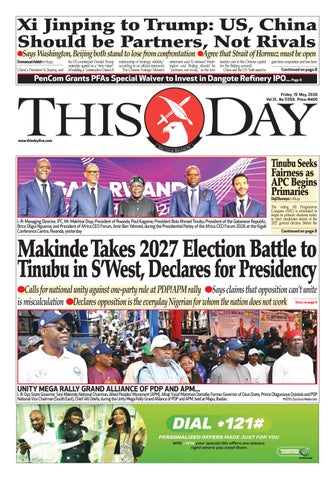
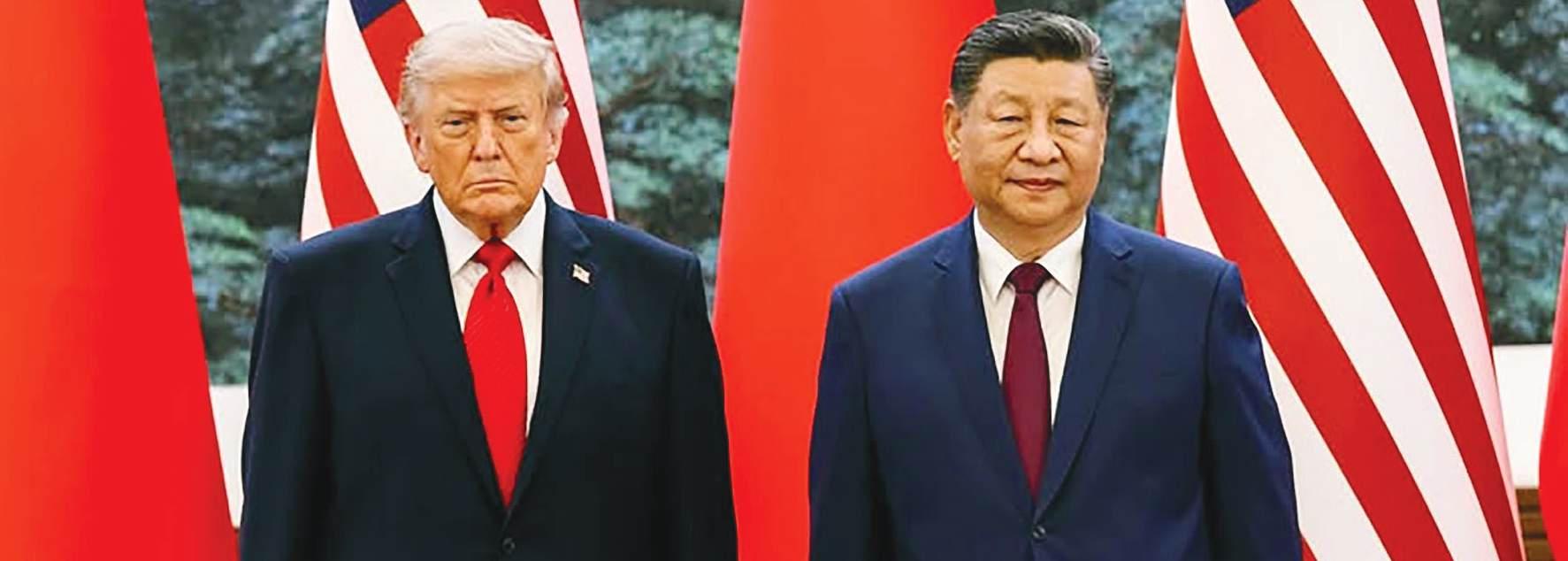
Xi Jinping to Trump: US, China Should be Partners, Not Rivals
Elumoye in Abuja
ruling All Progressives Congress (APC) is scheduled to begin its primary elections today to elect candidates ahead of the 2027 general election. Before the
Elumoye in Abuja
ruling All Progressives Congress (APC) is scheduled to begin its primary elections today to elect candidates ahead of the 2027 general election. Before the
Calls for national unity against one-party rule at PDP/APM rally Says claims that opposition can’t unite is miscalculation Declares opposition is the everyday Nigerian for whom the nation does not work
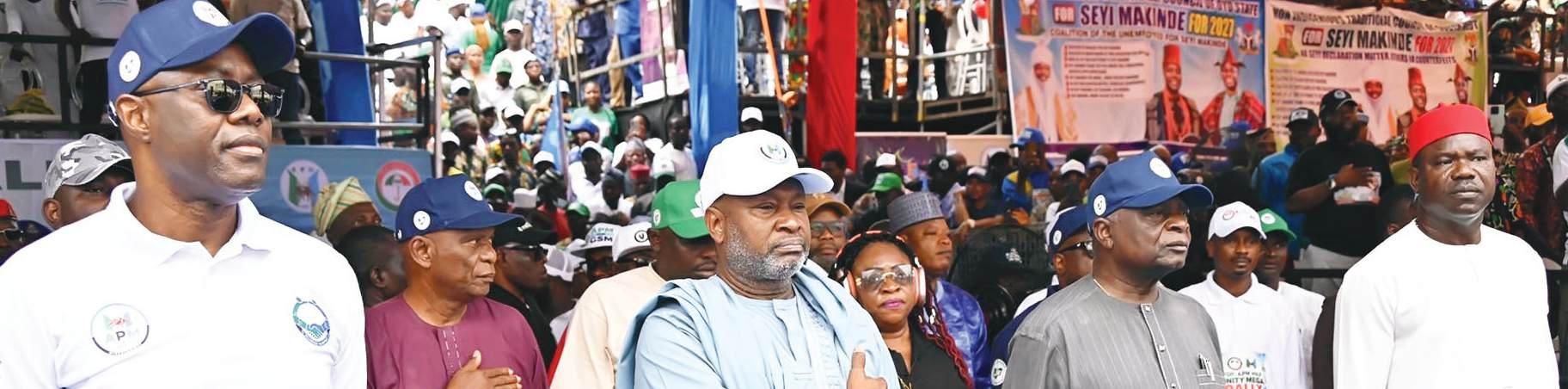
L-R: Oyo State Governor, Seyi Makinde; National Chairman, Allied Peoples’ Movement (APM), Alhaji Yusuf Mamman Dantalle; Former Governor of Osun State, Prince Olagunsoye
National Vice Chairman (South East), Chief Alli Odefa, during the Unity Mega Rally Grand Alliance of PDP and APM, held at Mapo, Ibadan.
and




Three portfolio companies ranked among Africa’s top 50 high-growth businesses, affirming Holdings’ rise as powerhouse for continent’s most prosperous ventures Redtech processed transactions worth $27 billion, from $8.9 billion in 2024
James Emejo in Abuja
Heirs Holdings has strengthened its reputation as one of Africa’s most aggressive investment groups after three of its portfolio companies emerged among the continent’s fastest-growing businesses in the 2026 ranking released by the Financial Times (FT).
The annual ranking, published by the UK-based FT, in collaboration with global research firm Statista, spotlighted companies delivering exceptional revenue growth, innovation, and market expansion across Africa’s rapidly evolving business landscape.
The recognition reflected growing investor confidence in African-owned enterprises building scalable solutions capable of competing globally while driving economic inclusion across the continent.
In the latest ranking, Heirs Life Assurance secured the seventh position on the continent with an impressive Compound Annual Growth Rate (CAGR) of 147.85 per cent, while Redtech ranked 32nd with a CAGR of 69.66 per cent.
Heirs General Insurance also made the list, placing 41st with a CAGR of 60.02 per cent.
The recognition places Heirs Holdings among a select group of
African investment firms whose portfolio companies are driving growth across strategic sectors, including insurance, fintech, payments, and digital infrastructure.
The achievement underscores the philosophy of Africapitalism championed by Chairman/Founder of Heirs Holdings, Mr. Tony Elumelu, which promotes the private sector as a catalyst for Africa’s economic transformation and social progress, and as a critical driver of economic transformation, business growth, and social development across the continent.
Across its portfolio, Heirs Holdings continues to build and scale businesses delivering innovation and measurable impact across key sectors including insurance, technology, payments, and financial services.
The latest recognition also reinforces the growing footprint of the Heirs Holdings ecosystem, which has increasingly positioned itself at the centre of financial inclusion and digital transformation initiatives across Africa.
The group attributed the performance to its long-term investment approach anchored on sustainable value creation, innovation, and infrastructure development.
In recent months, Heirs Insurance Group — comprising
Heirs Life Assurance and Heirs General Insurance — intensified its technology-driven expansion with the launch of what it described as Nigeria’s first multi-language GenAI insurance assistant, a move aimed at deepening customer engagement and improving insurance accessibility.
The group also expanded its visibility within the travel and insurance ecosystem through the inaugural Heirs Insurance Travel Festival, described as the first travel
insurance festival in Nigeria.
The initiative advocates improved visa access for Africans, stronger bilateral cooperation, and a more inclusive travel environment across the continent.
Meanwhile, Redtech continued its rapid expansion in the fintech space, processing transactions valued at over $27 billion (about N37.2 trillion), compared to $8.9 billion (N12 trillion) processed in 2024.
The payments company also accelerated its merchant acquisition
drive through partnerships with MoMo PSB and United Bank for Africa, while deploying more than 55,000 RedPay point-of-sale terminals nationwide within 16 months.
Beyond Nigeria, the company’s payment infrastructure currently supports transactions across five UEMOA countries — Benin, Burkina Faso, Côte d’Ivoire, Mali, and Senegal — strengthening regional payment connectivity and cross-border digital commerce in West Africa.
The FT ranking is widely regarded as one of the continent’s most influential business growth benchmarks and highlights companies demonstrating resilience, scale, and innovation amid Africa’s increasingly competitive economic environment.
In a statement, Heirs Holdings said the recognition buttressed the ability of African businesses to build globally relevant solutions while driving innovation, inclusion, and economic transformation at scale.
Blessing Ibunge in Port Harcourt
Nigeria’s crude oil production
reached 99.2 per cent of the country’s 1.5 million barrels per day quota approved by Organisation of Petroleum Exporting Countries (OPEC) in April 2026.
Operators attributed the result to a sharp drop in vandalism and stronger collaboration with host communities along the country’s critical pipeline corridors, as Trans Niger Pipeline recorded zero infractions over the
period.
Figures released by Nigeria Upstream Petroleum Regulatory Commission (NUPRC) showed that output rose 7.58 per cent in March, with peak production for the month touching 1.85 million barrels per day and a low of 1.46 million.
Nigerian National Petroleum Company Limited (NNPC) separately reported about N276 billion in profit after tax for March, citing rising production and improved gas output.
Funmi Ogundare
Governor Babajide Sanwo-Olu yesterday, reaffirmed the Lagos State Government’s commitment to supporting initiatives that promote professionalism, skills development and quality standards in Nigeria’s event industry.
Speaking during a courtesy visit by the Association of Professional Party Organizers and Event Managers of Nigeria (APPOEMN) Sanwo-Olu commended the association for its
efforts towards organising and professionalising the nation’s event management sector, noting that event professionals play a critical role in driving economic activities and strengthening Lagos’ social and cultural landscape.
The governor stressed the need for practitioners in the industry to maintain high standards, prioritise safety, build competence and embrace continuous training, adding, “professionalism and adherence to global best practices remain essential for sustaining growth
and earning public confidence.”
He also assured the association of the state government’s readiness to support initiatives aimed at promoting quality assurance, capacity building and industrywide standards.
The APPOEMN delegation, led by its President, Ayiri Oladunmoye, used the visit to formally introduce the association to the governor and outline its mission of promoting excellence, ethics, capacity development and regulation among professional event plan-
ners, decorators, caterers, rental companies and other stakeholders within the event ecosystem.
She emphasised on-ongoing initiatives focused on improving standards in the industry through training, advocacy, certification and strategic partnerships.
According to her, “APPOEMN is committed to building a structured and globally competitive event industry capable of contributing significantly to employment generation, tourism and economic development.”
The improvement coincided with what Pipeline Infrastructure Nigeria Limited (PINL), the indigenous operator responsible for surveillance and protection along the Trans Niger Pipeline and the Eastern Gas Network, described as a period of sustained stability across its corridors.
Speaking at the company’s monthly stakeholders’ meeting in Port Harcourt, yesterday, with representatives from Imo, Abia, and Rivers states, PINL’s General Manager for Community and Stakeholders Relations, Dr. Akpos Mezeh, said the production gain was the measurable outcome of work done on the ground.
“These figures are not ordinary statistics,” Mezeh said. “They are evidence that stability, cooperation, and the effective protection of pipeline infrastructure produce measurable economic benefits for the nation,” he added.
He credited host communities, surveillance teams, traditional rulers, and security agencies for safeguarding the Trans Niger Pipeline and the Eastern Gas Network.
Mezeh confirmed that no infraction had been recorded on the Trans Niger Pipeline in the past month, describing the result as a direct reflection of improved
synergy between operators and the communities they work in.
Mezeh said incidents of vandalism had reduced significantly across PINL’s operational areas, while intelligence gathering and stakeholder engagement have continued to strengthen.
He reiterated the company’s commitment to sustaining community engagement and social investment in host communities, and called for continued cooperation among stakeholders to protect the gains recorded in the sector.
Paramount Ruler of Emohua Kingdom in Rivers State, Eze Sergeant Awuse, welcomed the company’s interventions in his domain.
“I am satisfied with what PINL is doing for this country,” Awuse said. He stated, “At our last sitting, you announced scholarships for our youth, and today you have rolled out a women’s empowerment programme.
“We thank you for protecting the infrastructure that feeds this nation. Your company has made it possible for more oil to flow with far less vandalism.”
King of Eleme Kingdom, Dr. Philip Obele, said PINL had “restored sanity” to oil operations in his territory.
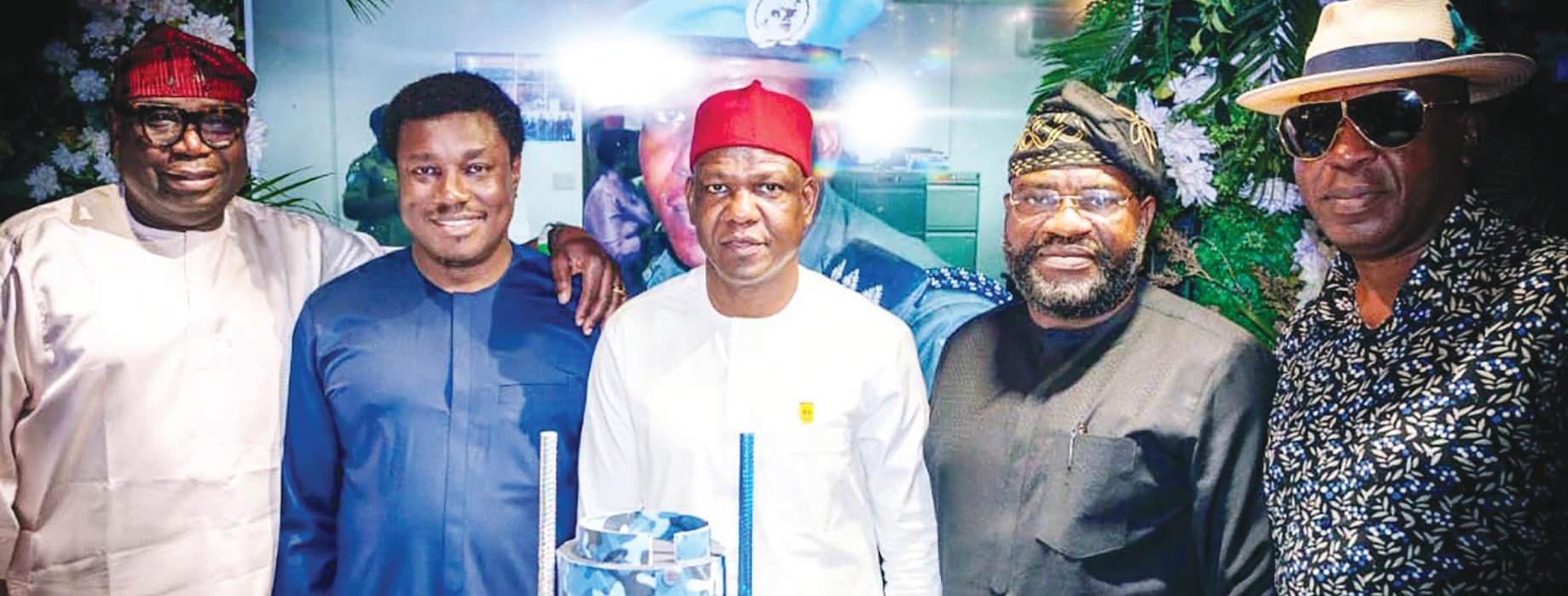
L-R: Charles Aigbe, Deputy Vice President, Community Relations, Sustainability and Economic Empowerment, Heirs Oil & Gas; Nonso Okpala, Group Managing Director/CEO of VFD Group Plc; DIG Frank Mba (rtd); Mike Dada, Group Managing Director, PRM Africa Marketing and Communications Limited; and CP Bolou Etete, Head, Community Policing, Research and Planning, Force Headquarters, Abuja, at the retirement reception held in honour of Frank Mba on his retirement as Deputy Inspector-General of Police after 34 years of service, in Ikoyi, Lagos, recently
Kayode Tokede
The Nigerian capital market witnessed a seismic shift as billionaire investor, Mr. Femi Otedola, increased his stake in First HoldCo Plc through a massive N43.4 billion investment.
A regulatory filing on Nigerian
Exchange Limited (NGX) on May 13 revealed that Calvados Global Services Limited, an entity linked to the business mogul, acquired 549,535,653 ordinary shares of the financial institution at N79 per share in a single trading session.
As gathered by THISDAY, the
financial institutional stake increased from 8,055,314,486 units reported in the 2025 financial year to 8,860,850139 amid the latest acquisition.
The acquisition this week is coming at a time First Holdco declared an impairment charge on financial instruments soaring
at N826.3 billion in 2025, which is about 94 per cent increase over N426.29billion declared in 2024 financial year.
From the audited result and accounts, the group’s operating expenses were N1.2 trillion in 2025, representing an increase of 32.1 per
Worried about constant threat to telecoms infrastructure across the country, the Nigerian Communications Commission (NCC) is seeking collaboration with the National Judicial Institute (NJI) of Nigeria to address challenges facing the sector from the legal perspective.
This was disclosed yesterday in Lagos, during the opening ceremony of a two-day workshop for judges on legal issues in telecommunications, organised by the NCC.
In his welcome address, the Executive Vice Chairman of NCC, Dr. Aminu Maida, said despite the progress recorded in the telecoms sector in the areas of investments and network expansion, including growth in broadband, which has led to increased broadband penetration from 47.70 per cent in 2025 to 54.30 per cent in 2026, the sector remained threatened with constant telecoms infrastructure attacks that could erode its many gains, if not addressed.
According to him, the workshop, themed: ‘Adjudicating in the Digital Era: The Judiciary’s Imperative in Connectivity, Infrastructure Protection and Online Safety,’ gives a picture of both the challenges and opportunities present in the telecoms sector, and indeed the impact on the wider digital economy.
“The theme of this workshop rightly highlights the Judiciary’s imperative in three critical areas: connectivity, infrastructure protection, and online safety. Telecommunications infrastructure
has now been officially designated by President Bola Ahmed Tinubu as Critical National Information Infrastructure (CNII), which means that assets of the telecommunications sector are to be provided a whole-of-government and whole-of-society protection, given their crucial importance to our daily lives.
“Despite this, we continue to witness disturbing levels of vandalism, fibre cuts, theft of equipment, and sabotage that disrupt services for millions of citizens and compromise national security,” Maida said.
“As judges, you are increasingly being called upon to interpret laws, adjudicate disputes, and set precedents that will determine how these complex
issues are resolved, Maida further said.
He added that “Your decisions will influence regulatory certainty for investors and the overall trust in our digital ecosystem.“
Chairman, NCC’s Board of Commissioners, Chief Idris Olorunimbe, in his opening remarks, said the workshop provided a timely platform for constructive engagement between the judiciary, regulators, law enforcement institutions, policymakers, and industry operators on the legal and governance challenges arising within the digital ecosystem.
He therefore called on the judiciary to move at the speed of 5G in order to legally address the speed of wanton
destruction and attacks on telecoms infrastructure.
In his remarks, the Administrator, National Judicial Institute, Justice Babatunde Adejumo, said: “The judiciary plays a pivotal role in harmonising the right to freedom of expression with the competing demands of privacy and security. Executing this delicate duty invariably requires a sophisticated grasp of the telecommunications environment, the precise interpretation of evolving statutes, and a continuous recognition of how intersecting rights influence Nigeria’s digital trajectory.
The workshop thus serves as a vital forum for analysing these emerging complexities within the sector.”
cent from N934.16 billion in 2024.
The group closed 2025 with profit before tax of N220.28 billion, a decline of 72 per cent from N781.88 billion reported in 2024, while profit for 2025 was N147.25 billion, also a decline of 78 per cent from N663.499 billion reported in 2024.
The decline in profit was primarily as a result of a 93.8 per cent rise in impairment charges and the normalisation of foreign exchange gains recorded in prior years.
The holding company also announced the appointment of Dr. Julius Omodayo-Owotuga as Executive Director effective May 13, 2026.
The move, according to the group, aims to strengthen leadership in finance, governance, risk, and transformation.
The appointment, disclosed through the Exchange, also highlighted Omodayo’s 24 years of experience across banking, infrastructure finance, power, oil and gas, auditing, and consulting.
The board said his appointment “reinforces the group’s focus on strong governance, disciplined execution, financial resilience, and sustainable long-term growth across its businesses”.
Meanwhile, the aggressive insider accumulation by Otedola comes at a time when the broader market is closely watching the banking sector’s recapitalisation efforts, marking the move a high-conviction endorsement of the firm’s future upside.
Commenting on the significance of the transaction, market observers said in capital markets, there were moments when rhetoric was irrelevant and conviction was measured only in cash deployed.
The sentiment was echoed by analysts who remarked that smart money rarely announced its intentions with words, but rather announced them with action.
The acquisition effectively saw Otedola buy deeper influence and a larger claim on the future of one of Nigeria’s most systemically important financial institutions. By committing over N43 billion of personally linked capital at prevailing market prices, the billionaire has chosen the oldest and most credible language in finance: capital commitment.
Observers said Otedola did not merely buy shares but also sent a clear message to the investing public that he remained a dominant force in Nigeria’s corporate landscape.
Emejo
The National Insurance Commission (NAICOM), yesterday intensified its crackdown on fake insurance operators across the country, arresting scores of suspects in Abuja.
The enforcement, in collaboration with police officers from the Divisional Police Headquarters, Mabuchi, also led to seizures of various items used in their illegal businesses operation including computers, generators, fake vehicle documents, particularly third
party insurance and number plates among others.
NAICOM warned that offenders would now face prosecution under the newly enacted insurance reform law.
The commission said the enforcement operation marked the beginning of a nationwide campaign aimed at dismantling illegal insurance networks undermining genuine third-party motor insurance and exposing millions of Nigerians to financial risks.
Speaking after the enforcement exercise, NAICOM Director, Legal,
Enforcement and Market Development, Dr. Talmiz Usman, said the commission was determined to stamp out fake insurance syndicates operating around vehicle licensing offices and motor registration centres.
According to him, the proliferation of fake insurance policies had defeated the core purpose of compulsory third-party motor insurance, which is designed to protect innocent road users against losses arising from accidents, bodily injuries and deaths.
He told THISDAY, “The exercise is
a resolve of the commission to clamp down on fake insurance operators.”
Usman explained that while the government permits citizens to own and drive vehicles, the law also mandates vehicle owners to obtain valid insurance cover to safeguard third parties from liabilities arising from road accidents.
However, he lamented that many motorists merely procure fake certificates to evade law enforcement checks, leaving victims without compensation whenever accidents occur.
He said, “But what do we get? We ended up with people selling fake insurance all over the country. All they think about is that they have insurance which they can just show to law enforcement agencies when driving, and that defeats the objective of insurance.”
He added that many unsuspecting Nigerians had continued to fall victim to fraudulent operators posing as insurers, particularly around Vehicle Inspection Offices (VIOs) and licensing centers.

L-R: Senior Administration and Human Resources Officer, OSSG/Cabinet Office, Bakare Ibiwunmi Zainab; Speaker of the Students Parliamentary Council, Hon.
Speaker, Dr. Kelechi Ogheme; Sub-Dean, Faculty of Communication, Lagos State University, Dr.
the
and Dr.
of the
Michael Olugbode in Abuja
Nigeria’s infrastructure financing crisis took centre stage at the 2026 Infrastructure Dialogue held in Abuja, where top government and private sector leaders warned the country’s widening infrastructure gap—estimated at $2.3 trillion—can no longer be addressed through traditional public funding alone.
The event, organised by Deutsche Partners Holding (DPH), at the Shehu Musa Yar’Adua Centre, brought together policymakers, investors, and development experts to explore sustainable financing solutions under the theme: “Building Nigeria’s Future: The Strategic Role of DFIs and Capital Markets in Infrastructure Financing and Economic Development.”
The Director-General and Chief Executive Officer of the Infrastructure Concession Regulatory Commission, Dr. Jobson Oseodion Ewalefoh, delivered a strong goodwill message and policy update, warning that Nigeria faces a severe infrastructure shortfall across transport, energy, ICT, agriculture, aviation, and housing sectors.
He disclosed that Nigeria requires about $100 billion annually for infrastructure development, while government spending currently covers less than 30 per cent of the need.
“Traditional procurement models and dwindling budgets are no longer enough. To bridge this
gap, the mobilisation of private capital is not just an option—it is an absolute necessity,” he said.
Ewalefoh said Nigeria has fully embraced Public-Private Partnerships (PPPs) as a strategic alternative to conventional procurement, describing them not just as financing tools but as “catalysts for infrastructure renewal, economic growth, and poverty alleviation.”
He urged stakeholders to shift focus from identifying problems to executing bankable solutions, stressing the importance of Development Finance Institutions (DFIs) in de-risking projects and capital market instruments such as Sukuk, green bonds, and pension funds in unlocking long-term financing.
Ewalefoh also outlined recent reforms aimed at improving Nigeria’s investment climate, including updated PPP guidelines issued in August 2025.
A key feature of the reform is the decentralisation of approval powers: ministries can now approve projects up to N20 billion, while agencies and parastatals can approve up to N10 billion, with larger or multi-agency projects still requiring Federal Executive Council approval.
He said the reform is already accelerating project delivery, improving transparency, and strengthening investor confidence.
The ICRC boss further revealed that a model PPP agreement, developed in collaboration with
the Federal Ministry of Justice and PPP experts, will be unveiled in June 2026 to reduce transaction delays and speed up commercial and financial closure of projects.
He also announced plans to publish an updated national PPP project pipeline to guide investors and improve project visibility across sectors.
Ewalefoh reaffirmed that the commission is not only regulating PPPs but actively building a structured marketplace where private capital participation is secured and public interest is protected.
He noted that the Federal Government’s 2025 Nigeria PPP Summit—hosted by President Bola Ahmed Tinubu—reinforced
PPPs as central to delivering the administration’s Renewed Hope Agenda and bridging Nigeria’s long-term infrastructure gap.
Earlier, President of the Abuja Chamber of Commerce and Industry, Dr. Emeka Obegolu, delivered the opening goodwill address and chaired the first day of the dialogue, calling for urgent and coordinated action to unlock infrastructure financing.
Obegolu said infrastructure remains the backbone of every thriving economy, directly influencing productivity, investment, industrial growth, and citizens’ quality of life.
However, he warned that Nigeria’s greatest challenge is no longer identifying infrastructure
gaps, but mobilising long-term, sustainable capital to close them.
“For Nigeria, the need for modern and resilient infrastructure has become increasingly urgent. However, beyond identifying infrastructure gaps, the greater challenge today lies in financing—how to mobilise adequate, long-term, and sustainable capital,” he said.
He described the dialogue theme as timely, noting that global experience shows that blended finance, infrastructure bonds, guarantees, and PPPs have helped countries unlock large-scale development financing.
Obegolu urged stronger policy consistency, regulatory clarity, transparency, and investor confidence as
key conditions for attracting capital into Nigeria’s infrastructure space. He stressed that infrastructure investment is critical to economic diversification, job creation, industrial competitiveness, and national resilience, adding that the private sector must play a central role alongside government.
The ACCI president also reaffirmed the chamber’s commitment to supporting investment-driven initiatives and strengthening publicprivate collaboration for sustainable economic growth.
Across both speeches, a common message emerged: Nigeria must urgently transition from policy discussions to execution-driven infrastructure delivery.
Chinedu Eze
Nigeria’s leading carrier, Air Peace, has disclosed its scheduled Lagos–London Gatwick service of May 13 experienced an operational disruption.
According to the airline, the development followed closure of the airspace of one of African country’s airspace, thus blocking the flight’s en-route access towards its destination
A statement by Air Peace management disclosed the aircraft safely returned to Lagos in accordance with established international aviation procedures.
The statement said, “Air Peace wishes to inform the flying public that its scheduled Lagos–London Gatwick service of May 13, 2026, experienced an operational disruption following en-route access issues involving the airspace authorities of an African country.
“As a result of the development and the need for immediate operational clarification with the relevant authorities, the aircraft safely returned to Lagos in accordance with established international aviation procedures.
“Consequently, the London Gatwick service was rescheduled while the matter was being resolved.
Affected passengers were promptly informed of the situation, while care arrangements, including
communication updates, support services, and necessary assistance, were provided for their convenience.
“Air Peace sincerely apologises to all affected passengers for the inconvenience caused by the unforeseen disruption which was beyond our control. The airline remains committed to maintaining operational integrity, regulatory compliance, and the highest standards of passenger service across its network.”
Michael Olugbode in Abuja
The United Kingdom has reaffirmed its long-term commitment to supporting development and governance reforms in northern Nigeria following high-level engagements with the governments of Kano and Jigawa states.
The British High Commission in Abuja disclosed on Wednesday that the Head of Development Cooperation, Ms. Cynthia Rowe, held strategic meetings with governors, senior government officials and civil society leaders
in both states as part of efforts to deepen bilateral cooperation and strengthen ongoing reforms.
According to the Commission, the engagements reflected the UK’s modern development approach anchored on partnership, state-led ownership and sustainable development driven through investment, trade, climate financing, technical support and shared accountability.
The UK described Nigeria as one of its most significant global development partners, noting the discussions further reinforced the growing bilateral relationship
between both countries following the recent UK-Nigeria State Visit.
In Kano State, Rowe met with Deputy Governor Alhaji Murtala Sule Garo, the newly confirmed Head of Civil Service, the Secretary to the State Government and other top officials.
The discussions highlighted Kano’s progress in climate finance, healthcare reforms and private sector investment initiatives supported through UK-backed technical assistance programmes.
In Jigawa State, Rowe held talks with Governor Umar Namadi and
heads of ministries, departments and agencies, where both sides reviewed over 25 years of UK-Jigawa development cooperation described as one of the longest-running subnational bilateral partnerships in Nigeria.
The meeting focused on achievements recorded in healthcare delivery, agriculture and governance reforms, as well as future collaboration under ongoing UK-supported technical assistance initiatives.
The British High Commission also spotlighted the impact of the Partnership for Learning for All in Nigeria (PLANE) programme,
which since 2022 has supported Kano, Kaduna and Jigawa states in strengthening education delivery systems through ministries of education and relevant agencies.
According to the Commission, PLANE’s RANA+ foundational learning packages have reached about 1.4 million pupils across the three states between 2022 and 2026.
Speaking at the end of the visit, Rowe said the UK remained committed to working with Nigerian states to drive inclusive growth and sustainable development.
“For more than 25 years, we
have worked side by side with state governments including Jigawa and Kano states, their communities, and civil society to build stronger health systems, improve learning outcomes for millions of children, support farmers to grow their businesses, and help states attract the investment they need to thrive,” she said.
She added the visits strengthened confidence in the future of the partnership and the potential for deeper collaboration in delivering lasting development outcomes across northern Nigeria.
The National Pension Commission (NAICOM) has granted Pension Fund Administrators (PFAs) a oneoff regulatory forbearance to enable investment of pension assets in the proposed Initial Public Offering (IPO) of Dangote Petroleum Refinery & Petrochemicals FZE (DPRP).
The move that could unlock significant institutional participation in one of the country’s most anticipated capital market transactions.
In a circular dated May 13, 2026 and signed by PenCom Director, Surveillance Department, A.M. Saleem, which was addressed to all licensed pension fund operators, takes immediate effect.
The commission said it had reviewed a request for special dispensation that would allow PFAs to participate in the planned listing of Dangote Petroleum Refinery & Petrochemicals FZE despite existing regulatory limitations.
PenCom stated that the decision followed a careful assessment of the refinery’s strategic economic importance, financial fundamentals, growth prospects, and broader impact on the Nigerian economy.
The commission specifically waived the requirements relating to existence, profitability, and dividend history contained in Section 6.2.7.1 (iii) of the Revised Regulation on Investment of Pension Fund Assets.
The commission, however,
stressed that the waiver would not override other regulatory safeguards governing pension investments.
The development effectively clears a major regulatory hurdle that could have limited pension fund participation in the offering, given that the refinery may not yet satisfy some of the conventional listing track-record requirements ordinarily demanded for pensionbacked investments.
The circular read, “The Commission has carefully evaluated the strategic investment opportunity and the economic impact of the proposed Initial Public Offering (IPO) of Dangote Petroleum Refinery & Petrochemicals FZE (DPRP) on the pension industry
and the wider economy.
“In light of these considerations, the commission has reviewed the request for a special dispensation that would permit Pension Fund Administrators (PFAs) to invest pension fund assets in the IPO.
“In reaching its decision, the commission considered DPRP’s strategic importance, strong fundamentals, and wide-ranging economic benefits, and the growth potential.
“The commission also took into account the record of Dangote Industries Limited, DPRP’s majority shareholder.”
It said , “Accordingly, the commission hereby grant a special dispensation from Section 6.2.7.1 (iii) of the Revised Regulation on
Investment of Pension Fund Assets.
“This dispensation involves waiving the applicable existence, profitability, and dividend requirements without prejudice to other extant regulatory safeguards.”
Under the dispensation, PFAs are required to ensure that all investments made under this dispensation are undertaken in line with their internal investment policies, risk management frameworks, and fiduciary duties to contributors and retirees.
“The regulatory forbearance granted under this Circular is exceptional, one-off, and strictly case-specific to the Initial Public Offering of Dangote Petroleum Refinery & Petrochemicals FZE.
“It shall not constitute an
automatic precedent for future Initial Public Offerings or other investment transactions, “ PenCom added.
Kemi Olaitan in Ibadan
In what may yet alter the dynamics of the 2027 general election, Oyo State Governor, Seyi Makinde, yesterday, declared his intention to contest for the office of President of Nigeria under a new alliance between Peoples Democratic Party (PDP) and Allied Peoples’ Movement (APM).
Makinde made the declaration before a mammoth crowd of party enthusiasts, supporters, and political stakeholders, from far and near, during a rally at the historic Mapo Hall, Ibadan.
By the announcement, Makinde became the first prominent presidential hopeful, and one with an ac-tive political office, to challenge fellow Yoruba south-westerner,
President Bola Tinubu, to the presidential contest.
Described by organisers as a “Unity Mega Rally,” the event turned the ancient city into a political carnival as PDP and APM supporters thronged the venue in large numbers, chanting solidarity songs and waving party flags in what observers regarded as one of the biggest opposition political gatherings in recent months.
In his declaration speech, Makinde said Nigeria was drifting dangerously towards a one-party state. He warned that democracy itself was under threat if opposition forces failed to unite against what he described as systematic attempts to weaken alternative political voices.
Makinde said the country had reached a critical political crossroads,
insisting that the time has come for Nigerians and opposition parties to work together to rescue democracy and reset the country.
“We have witnessed the continuous meddling in the affairs of opposition parties in our dear country with the aim of taking Nigeria to a one-party system,” he said.
“Without a multiparty system there is no democra-cy,” Makinde added.
The governor lamented the worsening economic and security situation in the country, saying many Nigerians have been pushed into survival mode while those entrusted with power are treating public authority as personal property.
confrontation,” Xi said in opening remarks at the Great Hall of the People, China’s ceremonial state building, adding that the meeting had drawn global attention.
“We should help each other succeed, prosper together, and find the right way for major countries to get along in the new era,” Anadolu Agency, the state-run Turkish news outlet quoted him as saying.
Xi said the world is undergoing transformations “not seen in a century” and described the international situation as fluid and turbulent, adding that it has reached “a new crossroads.”
He said China and the US faced questions “vital to history, to the world, and to the people,” including whether they could “create a new paradigm of major country relations,” jointly address global challenges, and “provide more stability for the world.”
“They are the questions of our times that you and I need to answer as leaders of major countries,” Xi said. He said he “always believed” Beijing and Washington have “more common interests than differences,” adding that one country’s success represented “an opportunity for the other” and that stable bilateral ties were beneficial for the world.
Xi noted that he looked forward to further discussions on issues important to both countries and the wider international community, and to working with Trump “to set the course for and steer the giant ship of China-US relations,” with the aim of making 2026 “a
historic landmark year” that opens “a new chapter” in bilateral ties.
But while the White House called the Xi-Trump meeting “good,” it did not mention any discussion about Taiwan, which China claims as its own. According to the Chinese official statement, Xi was blunt with Trump.
“Taiwan question is the most important issue in China-US relations. If it is handled properly, the bilateral relationship will enjoy overall stability. Otherwise, the two countries will have clashes and even conflicts, putting the entire relationship in great jeopardy,” Xi warned Trump.
He emphasised that economic ties between the two nations are “mutually beneficial and win-win in nature.”
“Yesterday, our economic and trade teams produced generally balanced and positive outcomes. This is good news for the people of the two countries and the world,” Xi said. On Wednesday, top Chinese and US trade negotiators met in South Korea to hold what Beijing described as “candid, in-depth, and constructive exchanges.”
“Facts have shown time and again that trade wars have no winner,” Xi said, emphasising “equal-footed consultation” as the “only right choice,” while urging the two sides to “jointly sustain the good momentum that they have worked hard to create.”
The two sides agreed to build a bilateral relationship of constructive strategic stability to provide strategic
political parties to include ordinary Nigerians frustrated by hardship and governance failures.
Makinde stated regarding Tinubu and the ruling All Progressives Congress (APC), “They calculated and said opposition cannot unite. But I am here today to say it is a miscalculation. The opposition in Nigeria is not just the political parties; it is the everyday Nigerian for whom the country does not work.”
Calling for mass civic participation, Makinde urged Nigerians to resist political apathy and become actively engaged in shaping the future of the country.
He stated, “This is the time for
According to him, the opposition movement extends beyond na-tionwide exercise, President Bola Tinubu urged the party’s leadership to be fair to all aspirants during the primaries.
guidance for ties over the next three years and beyond, which Xi said would be welcomed by “the people of both countries, as well as the international community.”
Trump was accompanied by Secretary of State Marco Rubio and Defence Secretary Pete Hegseth, along with executives from major US companies, including Nvidia’s Jensen Huang, Tesla’s Elon Musk, Apple’s Tim Cook, BlackRock’s Larry Fink, Blackstone’s Stephen Schwarzman, Boeing’s Kelly Ortberg, Cargill’s Brian Sikes, Citigroup’s Jane Fraser, GE Aerospace’s Larry Culp, Goldman Sachs’ David Solomon, Micron’s Sanjay Mehrotra, and Qualcomm’s Cristiano Amon.
After their sit-down at the Great Hall, Xi took Trump for a tour of the Temple of Heaven, where they posed for a photo in front of the “Hall of Prayer for Good Harvests.”
“Incredible, beautiful,” said Trump of China when asked about his talks with Xi at the temple.
The White House, meanwhile, concluded that Trump “had a good meeting with President Xi”.
“The two sides discussed ways to enhance economic cooperation between our two countries, including expanding market access for American businesses into China and increasing Chinese investment into our industries,” it said.
Xi and Trump additionally agreed that the Strait of Hormuz must be open for the free flow of energy, and Iran should not have a nuclear weapon.
every one of us to shake off the apathy that is gradually taking root and engage with the political process to ensure that Nigeria works for us.
“It is time to confront our fears. It is time to be engaged citizens and not spectators in our own country.”
The Oyo State governor said the newly-announced PDP/APM alliance represented the beginning of a broader opposition coalition aimed at offering Nigerians an alternative political direction ahead of the 2027 general election.
Describing Ibadan as “the city of warriors”, Makinde declared that the alliance would field candidates for elective offices from top to bottom across the country.
He declared before the cheering crowd, “Therefore, today, I Oluseyi Abiodun Makinde, FNSE, announce my candidacy for the position of the President of the Federal Republic of Nigeria under the PDP/APM alliance.”
Earlier, some leaders of PDP and APM signed a Memorandum of Understanding (MoU) as part of the ongoing coalition and realignment efforts between the two political parties ahead of 2027 general election.
The signing and presentation of the MoU was held at the PDP Southwest Secretariat, Soji Adagunodo
Continued on page 34
The president, in a statement yesterday, gave the APC leadership, including the governors, advice to be fair and just.
He charged all aspirants to abide by the rules, saying direct primaries should be adopted in cases where there is no agreement on a consensus candidate.
Tinubu said losers at the primaries had the opportunity to appeal to the party’s committees set up for redress.
He advocated special consideration for women and youths, saying APC cannot afford to relegate the two significant demographics of the country’s population.
He also reminded the police and other security agencies to ensure peaceful conduct of the primaries by remaining professional and avoiding acting as interlopers during the exercise.
Tinubu, in the 10-paragraph release, stated, “Fellow party men and women, I am pleased to witness this historic moment in the annals of our party.
“The party we formed just like yesterday is gearing up for its fourth election cycle. It is a source of pride for me, and I believe for all our distinguished leaders and teeming members.
“We founded the All Progressives Congress (APC) on the firm principles of progressive politics, consensus democracy, and personal devotion and sacrifice.
“This principle of selflessness and devotion has seen us go through each election cycle and come out firmer together. We must consolidate on it as we go into the primaries tomorrow.
“The primary elections, kicking off with those for House of Representatives aspirants tomorrow and culminating in the presidential primaries on May 25, 2026, are not mere exercises to produce our standard bearers.
“They are a referendum on our unity, resilience and strength as a party. They present an opportunity to renew the bond and ideals that we share.”
The president said, “I am aware that, in line with the provisions of the Electoral Act (2026) and our party’s constitution, leaders at various levels have initiated conversations to produce consensus candidates.
“It is a commendable option that would help in reducing rancour and bad blood among party members.
“I note the impressive progress made in this regard and encourage fellow party members to make the most of this window to ensure a seamless process and a more unified party.”
He explained, “Election is an essential ingredient of democracy.
Where consensus fails, I urge us all to go into the primaries as brothers and sisters.
“All participants in the primaries, as contestants or voters, must keep the peace and be ready to play as sportsmen and women in the overall interest of the party and our country. We cannot afford rancorous conduct or the debasement of our democracy and party unity.
“In every contest, there will be a winner and a loser. I urge the winners not to gloat in victory and the losers to show sportsmanship by taking things in their stride and preparing for another time.”
Tinubu counselled, “The ultimate winners are those who don’t choose to wreck the boat but rather work
to prepare for another round. Our opponents are waiting for us to be against each other; we should disappoint them.
“Winners and party leaders at all levels should reach out to those who did not succeed with olive branches. We should not play the politics of old – the do-or-die politics that we have put behind us.
“Politics should never be a zerosum game. Any candidate that wins does so for all of us as a party. Those who lost out have the opportunity to appeal to the party’s committees set up for redress.”
He said, “To the party leadership, our governors, and other leaders, I urge you to be fair and just. You must rise above sentiment to offer all aspirants a level playing field that guarantees participation without let or hindrance.
“While only one person will win for every seat contested, we should give eventual losers the satisfaction of a fair contest.
“The inclusion of women and youth is dear to my heart. I appeal to voters in the primaries and leaders at all levels to give special consideration to our women and youth in the contest. We cannot afford to relegate the two significant demographics of our population.”
The president said concerning the election security agencies, “Lastly, the police and other security agencies must remain professional and avoid acting as interlopers during this exercise. Your duties strictly centre on ensuring peaceful exercise. Nothing more.
“I wish all our aspirants and party members good luck and a successful outing. I look forward to working with the victorious aspirants for the success of our great party in the general election.”

ARISE NEWS is Africa’s leading business and financial news website, providing a unique blend of international and pan‑African business and economic news.
Native Article is the innovative way of strategically packaging content to blend in with editorial.
This allows for content to appear as more credible, as it reads naturally without the marketing agenda of the company coming across as obvious.
Client to provide Arise News with an article, Arise News Editorial team will then re‑write this to fit the consumer content behaviour.
The Article will be posted on the website, and the article page will have full advertiser branding.
The Article link will be embedded on the homepage for one week.
The article will get a social post dedicated to drive users to the article page on the day it is released.
The article will be archived on the site and can be accessed for 6 months thereafter.

N3,000,000.00/Week shared (30‑seconds refresh rate) N6,000,000.00/Week, static


N2,500,000.00/Week shared (30‑seconds refresh rate) N4,450,000.00/Week, static



N2,250,000.00/Week shared (30‑seconds refresh rate) N3,750,000.00/Week, static
N2,950,000.00/Week shared (30‑seconds refresh rate)
N5,650,000.00/Week, static

Acting Group Politics Edito r DEJI
Email: deji.elumoye @thisdaylive.com 08033025611
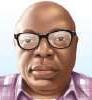
The all Progressives Grand alliance has distinguished itself as the dominant party in anambra State. as the party prepares for its primary elections, David-Chyddy Eleke reports that aspirants are bracing for political war.
On May 23, 2026, the All Progressives Grand Alliance (APGA) would hold its primary election to elect its candidates for the positions of Senate, House of Representatives, Governor and House of Assembly. The date is carefully set to beat the deadline set by the Independent National Electoral Commission (INEC). In Anambra state, APGA is a predominant party that has held the governorship position for exactly 20 years, having taken power from Peoples Democratic Party (PDP) on March 17, 2006 through the court, using its 2003 governorship candidate, Mr Peter Obi.
In Anambra today, the ticket of the party for a contest feels like an automatic ticket to a political position. For example, two months ago, the party held its primary election for local government election that is expected to hold in August this year. Already, those elected as local government chairmanship candidates and councillors for the election are already feeling like elected officials.
Even though the election is still months away, those elected as candidates of APGA for the upcoming election have already held thanksgiving for their victory, knowing that no other political party would challenge them.
With the kind of acceptance the party has gained in the state, it is not surprising that many political bigwigs have pitched tent with it. While many of them have remained steadfast with the party, others who were once with them have gone out and returned, while some more who have remained in the opposition trying to topple the party without success have fully returned to her, seeking her ticket to actualize their political aspirations.
The May 23, 2026 primary election proves to be a tough battle for political titans as there are more than two strong aspirants in the party in all of the 30 state constituencies, 11 federal constituencies and three senatorial zones. In the senatorial race for example, Anambra North parades an array of political titans who are jostling for the ticket of APGA, each claiming superiority, popularity and experience over the other.
There are Senator Stella Oduah, Chief Primus Odili and Dr Alex Obiogbolu, among others. While former Aviation Minister and ex-Senator representing the senatorial zone, Oduah is claiming to have experience over the others, having been in the chamber previously, Odili, a grassroot politician and former Chief of Staff to Governor Willie Obiano is banking on his popularity and acceptability within the party.
On the other hand, Dr Alex Obiogbolu, a medical doctor who hails from Onitsha, and the immediate past Senior Special Adviser to Governor Chukwuma Soludo on Political Matters is banking on his closeness to the National Leader of the party, Governor Soludo for the contest. The contest proves to be one of the fiercest in the primary election. Already, there have been intrigues, with some manouvering which has shown high power politicking. Recently, a group of elders have warned the party against fielding Oduah, who they said has been convicted for fraud with her recent plea bargain arrangement with the federal government on her fraud case involving over N2billion. Also, some stakeholders have insisted that Obiogbolu who served as Director-General of campaign for the PDP governorship candidate in 2021 is not a member of the party. In coming days, intrigues is expected to heighten.
In the federal constituencies election, there are also very strong contenders for the party’s tickets, including in Idemili North and South Federal Constituency where Chief Ikenna Iyiegbu and Dr Ifeanyi Ibezi have already started doing battle over the ticket
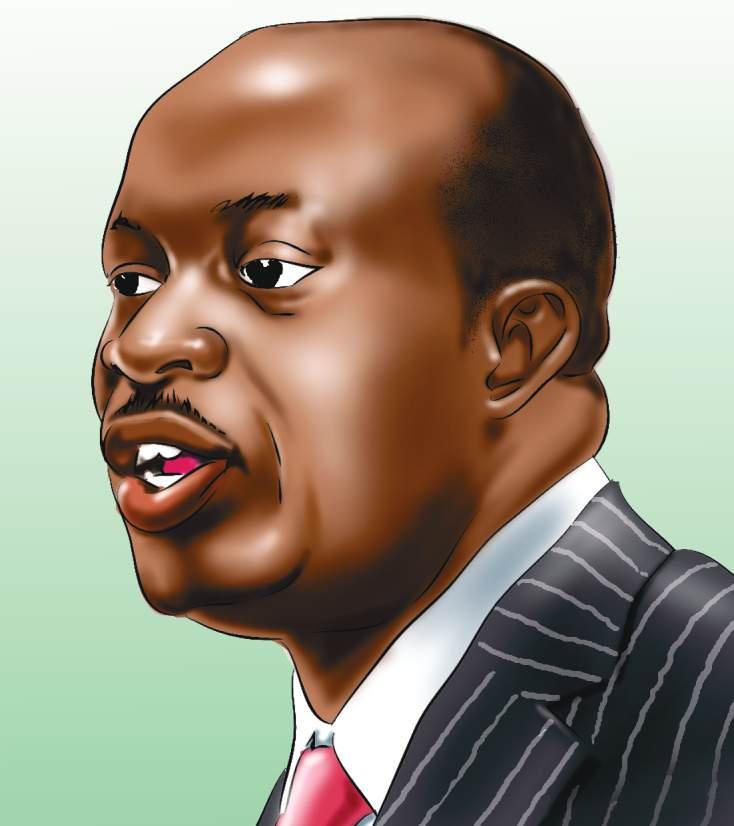
of the party.
Both men are strongly rooted, and they believe that the ticket of APGA for the 2027 election would assure them of victory, es-
pecially if they are able to tame whoever emerges as candidate in NDC where Mr Peter Obi has decided to pitch tent with for his presidential aspiration.
As part of the battle for the election, Iyiegbu and Ibezi recently engaged in a battle. This was after Ibezi scheduled a stakeholders meeting to declare his intention, but the local government chairman of Idemili North who is believed to be working for Iyiegbu stopped the meeting, insisting that there was security intelligence showing that the area where the meeting was scheduled to hold was unsafe.
Though Ibezi attempted to hold the meeting, there was fracas which led to massive shooting, including the gunning down of two police operatives by men of the Agunechemba Security Outfit.
In several other parts of the state, politicians are battle-ready, waiting to clinch the ticket of APGA.
Meanwhile, before the Monday screening for all aspirants, APGA released guidelines for the forthcoming primary election, asking all aspirants to ensure they come with their highest qualifications for the screening. National Publicity Secretary of the party, Mazi Ejimofor Opara, in a press release also said there would be no basis for bribery and urged all to eschew such behavior. He said: “Any demand for payment should be reported immediately to the National Secretariat”.
APGA had last week raked in billions with the sales of forms, pegging their Senate, House of Representatives, Governor and House of Assembly forms at; N15million, N12million, N25million and N6million respectively.
The national leader of the party, Prof Chukwuma Soludo had during a South East stakeholders meeting announced that the primary election would be held within the wards of the localities of the aspirants, through option A4, while all primary election appeals would be sorted out on May 28, 2026.
Oluwaseyi Adedotun writes that the Senator representing Oyo South in the 10th National assembly, Sharafadeen alli is the aspirant to beat in the State gubernatorial primaries of the all Progressives Congress coming up later this month.
As the race toward the 2027 governorship election gradually gathers momentum, one reality is becoming increasingly difficult to ignore within the fold of the All Progressives Congress (APC). Senator Sharafadeen Alli, who represents Oyo South Senatorial District in the 10th National Assembly, is steadily positioning himself, not merely as another aspirant, but as the candidate to beat, both at the APC primaries and potentially in the general election itself.
Nevertheless, in a political climate where credibility has become scarce currency, Alli’s appeal cuts across multiple layers of the political ecosystem: party leaders searching for a stable hand, delegates seeking an electable candidate, grassroots voters yearning for accessible leadership and undecided stakeholders looking for competence without controversy.
The emerging attraction toward Alli is not accidental. It is rooted in a convergence of political timing, public perception, administrative experience, and strategic acceptability.
For APC leaders still haunted by the painful lessons of internal divisions and electoral miscalculations, Alli represents something politically valuable: stability. Unlike many ambitious contenders whose aspirations trigger deep factional anxieties, Alli is increasingly viewed as a bridge between old blocs and emerging political interests within the party. His long political journey, from local government administration to the Senate, has
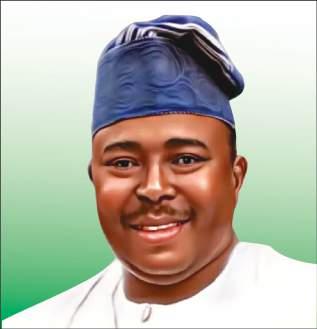
enabled him to cultivate relationships across tendencies without becoming trapped within a single camp.
That matters enormously in Oyo politics.
The APC’s biggest challenge going into 2027 may not necessarily be opposition from outside; it may be managing internal fragmentation after the primaries. In that regard, many stakeholders see Alli as one of the few aspirants capable of reducing post-primary bitterness because his political identity has largely avoided the aggressiveness and polarisation that often define intra-party contests.
His image as an “Omoluabi” politician also continues to resonate strongly among traditional political leaders and older party stakehold-
ers who still value restraint, humility, and administrative maturity in leadership. In a season where political noise is expected to dominate public discourse, Alli’s calm disposition may ironically become one of his greatest assets.
Beyond party elders and power brokers, Alli’s candidacy is also finding acceptance among delegates for practical reasons. Delegates are often strategic voters. They ask difficult questions: Who can survive the scrutiny of a statewide campaign? Who can withstand opposition attacks? Who can unite the party after the primaries? Who has the structure to compete effectively across zones?
On many of those fronts, Alli ticks all boxes. This is why his candidacy has become increasingly formidable by the day. One of his strongest political advantages is the absence of heavy political baggage. In an era where scandals, unresolved allegations, and controversial histories frequently weaken aspirants before campaigns even begin, Alli presents a relatively clean public profile. That reality alone gives delegates a sense of electoral safety. A candidate without major reputational liabilities is easier to market to the electorate and far less vulnerable during opposition-driven media battles.
-Adedotun writes from Ibadan, Oyo state capital.
Oluchi Chibuzor
The Green Finance Investment Facility (GFiF), a blended finance platform to mobilise large-scale private and institutional investment into distributed renewable energy infrastructure across Nigeria, has officially launched.
The facility, led by Barton Heyman Limited in partnership with the Rural Electrification Agency (REA), UK PACT, First City Monument Bank (FCMB), and ARMHIIL, aims to raise $188 million to finance 191 megawatts of distributed solar capacity for households, communities, and businesses across Nigeria.
The initiative also supports the Distributed Access through Renewable Energy Scale-
Up (DARES) programme, a national effort to expand electricity access through decentralised renewable energy solutions.
Speaking at the launch, the Managing Partner of Barton Heyman Limited, Olumide Lala, described the facility as a marketdriven model capable of unlocking private capital at scale for Nigeria’s energy transition.
“The Green Finance Investment Facility is more than a financing arrangement; it represents direct support for over one million Nigerians. Nigeria’s distributed renewable energy sector can be financed using a private-sector framework that leverages sovereign pipelines, results-based funding, and commercial loans to attract private capital at the national level,” he said. Also speaking, Anthony
Feyitimi, Senior Partner, Barton Heyman, said:
“The Green Finance and Investment Facility is not simply about clean energy. It is about what reliable, distributed power makes possible for Nigeria’s economy. Every megawatt we finance is a business that can operate, a supply chain that can function, a community that can compete.”
The Managing Director of the REA, Abba Aliyu, said the initiative directly addresses one of the sector’s most pressing constraints — access to finance.
Speaking on behalf of FCMB, George Ogbonnaya, Senior Vice President and Divisional Head, Business Banking Group, highlighted the Bank’s expanding role in renewable energy financing and inclusive infrastructure development.
The Chairman, Unilever Nigeria Plc, Bolaji Balogun, has attributed operational resilience as a major driver responsible for the growth of the company in the 2025 financial year.
This follows the shareholders’ approval of dividends at the company’s Annual General Meeting (AGM) held in Lagos. Balogun revealed that each shareholder will receive a final dividend of N3.25k per share, in addition to the interim dividend of N50k per share received earlier this year. Consequently, the total dividend payout per share for the 2025 financial year amounts to N3.75k.
Financial results indicate that the company achieved a turnover of N214.30 billion for the financial year, a significant increase from N149.52 billion reported in the same period for 2024. Profit for the year also grew over twofold, reaching N32.20 billion, up from N15.14 billion in 2024.
Speaking on the results, the Managing Director of Unilever, Tobi Adeniyi, described the company’s remarkable performance as a habit built on the daily execution of its operations, by leveraging its power
brands to ensure differentiation in the marketplace.
“This performance was driven by a strategic focus on high-growth categories and power brands, supported by sharper choices, simplified ways of working, and a stronger innovation pipeline,” he added.
In his remarks, the Finance Director, Ibrahim Sodipe, stated that the company’s performance over the past five years has been consistent, leading to volume growth and driven by innovation and operational efficiency, resulting in improved shareholder returns.
United Bank for Africa (UBA) Plc has reaffirmed its commitment to advancing Africa’s economic transformation through entrepreneurship, innovation, trade facilitation, and strategic global partnerships at the Africa Forward Summit 2026 held in Nairobi, Kenya.
The Summit, themed, “Africa–France Partnerships for Innovation and Growth,” convened Heads of State, policymakers, investors, entrepreneurs, and business leaders from across Africa and Europe to explore sustainable pathways for economic growth, industrialisation, and stronger cross-border collaboration.
Speaking at the Summit, Emmanuel Macron emphasised the need for a renewed partnership
between Africa and France anchored on innovation, investment, and shared prosperity.
“Africa and France are equal partners with common objectives. We must build strategic autonomy through innovation, investment, and partnership,” Macron stated.
Also speaking during the Summit, Chairman of UBA Group, Tony Elumelu, stressed the importance of entrepreneurship and private sector-led development in unlocking Africa’s vast economic potential.
“Africa’s future will not be built by aid, but by entrepreneurship, investment, and bold partnerships,” Elumelu said.
He further highlighted
the critical role of collaboration among governments, financial institutions, development partners, and the private sector in accelerating Africa’s transformation.
According to him, sustainable economic growth across the continent will depend on strategic partnerships capable of unlocking investment, supporting entrepreneurs, strengthening infrastructure, and expanding trade opportunities.
The Summit also provided a strategic platform for UBA to reinforce its position as Africa’s Global Bank and a leading financial institution facilitating trade, investment, and economic integration across the continent and beyond.
Kayode Tokede
The shareholders of NEM Insurance Plc, yesterday at the company’s 56th Annual General Meeting (AGM) held in Lagos approved the management’s N7.5 billion dividend payout for its 2025 financial year.
The board had recommended a dividend of N1.50 kobo per N1
ordinary shares, mounting to N7.5 billion payable to shareholders and subject to deduction of withholding tax at the appropriate rate.
The shareholders also approved other key resolutions presented at the annual meeting.
Speaking to shareholders, the Group Chairman, NEM Insurance, Mr. Tope Smart, noted that the company in 2025 performed excellently well amid local and foreign
challenges.
He expressed that despite challenges, the company maintained its leadership position in general business.
“To draw home this point, our Group recorded N166.8 billion gross premium income while the parent company recorded N157.8 billion during the year under review, as against N110.7 billion and N108.3 billion for group and parent respectively in 2024.
“Though profit after tax declined from N29 billion in 2024 to N24 billion during the year under review, this was due to foreign exchange losses we experienced during the period,” he said.
He stated that the Group’s Profit before Tax (PBT) was N27.9billion and N33.6billion in 2024, a decrease of 17per cent because of the fluctuation in foreign exchange gain.
He added that the
position of the Group’s Financial assets between 2025 and 2024 increased by 38per cent while Total Assets and Total Equity also improved by 49.8per cent and 29per cent respectively.
According to him, the 2025 financial year’s excellent performance is expected to be sustained with the right form of support from all stakeholders, expectations from the government at all levels
and other concerned parties to improve the security architecture in Nigeria, tackle unemployment, diversify the economy, enhance climate resilience, and boost the living standard of citizens. Smart revealed that its subsidiaries, NEM Asset Management Company Limited and NEM Health Limited did quite well during the year under review and both contributed to the bottom line.



The state government is committed to strengthening primary healthcare and improved service delivery, argues SHUAIBU ABUBAKAR
page 21
OMOJUWA argues that the choice of Chinese firms for the revival of the refineries is flawed


NDC will be judged not by the popularity of its political figures, but its willingness to remain connected to the struggles of ordinary citizens, writes KALU OKORONKWO
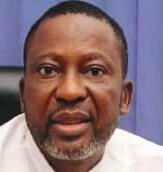
The maiden National Convention of the Nigeria Democratic Congress (NDC), held on May 9, 2026, at the Angeles Event Centre and Mall in Abuja, carried an unmistakable aura. It was not merely a gathering of politicians seeking electoral relevance; it was presented as a movement determined to reconnect politics with humanity, empathy and national healing.
From the early hours of the day, Abuja assumed the atmosphere of a political festival. Thousands of supporters from across the 36 states and the Federal Capital Territory flooded the convention venue with chants, banners and renewed optimism. The atmosphere was electric, yet purposeful.
Unlike the cold and transactional conventions that have long defined Nigeria’s political culture, the NDC gathering projected the image of a party determined to speak the language of ordinary Nigerians: citizens battered by economic hardship, insecurity, unemployment and political disappointment.
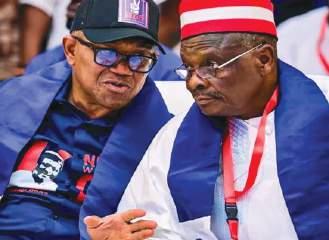
The convention was dominated by the dramatic arrival of the Kwankwasiyya and Obidient Movements, marking a significant and officially recognized political realignment ahead of the 2027 general elections. Though previously separate political movements, supporters of Rabiu Kwankwaso and Peter Obi, now popularly referred to by supporters as the “OK Movement” were seen chanting “Obi-Kwankwaso” in a remarkable display of unity and shared purpose.
The alliance is widely perceived as an attempt to build a formidable “third force” coalition capable of challenging the ruling party in 2027. Both Obi and Kwankwaso are leveraging the NDC platform which for now is free from the internal crises that plagued their former political parties.
The symbolism of the convention was impossible to ignore. Here was a newly registered political party, formally recognized by the Independent National Electoral Commission (INEC) only in February 2026, already commanding the attention of Nigeria’s political establishment. The presence of prominent figures such as Peter Obi, Rabiu Kwankwaso and Seriake Dickson transformed the gathering from a routine convention into a major political statement.
Yet, beyond the political optics and strategic alliances, what truly distinguished the convention was the message it sought to communicate: that politics must once again wear a human face.
For years, Nigerians have watched
politics drift dangerously away from the people. Elections became bitter struggles among elite blocs, while ordinary citizens were reduced to spectators and electoral statistics. Public trust collapsed under the weight of corruption, ethnic divisions, broken promises and governance failures. Against this backdrop, the NDC convention attempted to project a different philosophy; leadership rooted not in domination, but in service; not in ethnic supremacy, but in fairness; not in power for its own sake, but in national renewal.
This philosophy was reflected in one of the convention’s most consequential resolutions: the zoning of the party’s 2027 presidential ticket to Southern Nigeria. Strategically, the decision acknowledged the delicate balance of Nigeria’s federal character and the growing demand for equity in power rotation. Politically, it signaled the NDC’s intention to position itself as a platform committed to justice, inclusion and national cohesion.
Early indications pointing to Peter Obi as the likely beneficiary of the zoning arrangement further deepened the convention’s emotional appeal, particularly among young Nigerians and the urban middle class. Obi’s political identity, built around prudence, accountability and reformist ideals, aligns with the party’s attempt to present itself as a humane alternative to traditional power politics. Whether this momentum eventually translates into electoral victory remains uncertain, but the symbolism is already powerful.
Equally significant was the ratification of the Senator Cleopas Moses-led interim leadership as the substantive National Working Committee. In political movements, leadership legitimacy often determines longevity. By consolidating its internal structure early, the NDC appears determined to avoid the factional crises that have crippled many emerging political parties in Nigeria. The move projected organizational stability at a time when voters increasingly desire disciplined and ideologically coherent alternatives.
Perhaps the most compelling voice at
the convention came from Kwankwaso, whose endorsement of the party’s decision to zone its presidential ticket to the South reinforced the NDC’s message of fairness and inclusion. His emphasis on national healing and leadership free from ethnic or religious bias struck at the heart of Nigeria’s deepest anxieties.
In a nation repeatedly fractured by identity politics, such rhetoric carries profound significance. Nigerians are weary of politicians who exploit religion and ethnicity during elections only to abandon governance afterward. The NDC’s messaging appeared deliberately crafted to challenge that old political order.
In his speech, Kwankwaso painted a grim but honest portrait of Nigeria’s condition. He argued that the country remains dangerously unprepared in a rapidly changing world because of years of poor leadership and failed governance.
“While other nations reposition themselves within shifting global realities, Nigerians continue to endure worsening hardship at home,” he said. His words resonated because they reflected lived realities. Insecurity has turned countless women into widows and left thousands of children orphaned. Entire communities have been displaced from their ancestral homes. Investments are declining, infrastructure is deteriorating and the education system, once regarded as a ladder of hope is collapsing under neglect.
Economic reforms introduced without adequate safety nets have deepened hardship, leaving ordinary citizens to bear the burden of policies they neither created nor benefited from. For many at the convention, these were not abstract political statements; they were deeply personal truths.
Amid the pain, however, the convention also offered something Nigeria desperately needs: hope rooted in history. Kwankwaso reminded the audience that even in the nation’s darkest moments, courageous political alliances had emerged to rescue the country from division and uncertainty.
The historic alliance between the Northern Elements Progressive Union (NEPU), led by Aminu Kano, and the National Council of Nigeria and the Cameroons (NCNC), led by Nnamdi Azikiwe, was recalled as an example of unity beyond ethnicity and regional interests.
Okoronkwo is a communications strategist, leadership and good governance
The state government is committed to strengthening primary healthcare and improved service delivery, argues SHUAIBU
It's not every day that international development partners openly pour encomiums on a Nigerian leader. This rare fit is reserved for leaders who made the conscious efforts to put the health of the people first, and where the impact is almost instant. In this situation, the people begin to live again, as once comatose hospitals come back to life. Health facilities that once existed only in name begin to experience a transformation never before believed possible.
That is the quiet revolution unfolding in Sokoto State under Governor Ahmad Aliyu and that's why he has been receiving commendations from international organisations. In Sokoto, what used to be a grim landscape of dilapidated structures, absent personnel, and empty wards is gradually giving way to something more reassuring. We now have functional hospitals that inspire confidence, and primary healthcare centres that now serve as genuine first points of care that people can trust and rely on.
Unlike the Sokoto of yesterday, where many public health facilities had become shadows of their intended purpose. Where health facilities stood, but healthcare was nonexistent. Where equipment was scarce, and where available, often obsolete. Where health workers were either too few or unevenly distributed, leaving rural communities especially vulnerable. The result, under such circumstances was a predictable system that could neither prevent nor respond effectively to health challenges, particularly among women and children, where the grim numbers piled up.
Today, that narrative is being rewritten through deliberate policy choices anchored on the state government’s 9-SMART agenda on health. It is this framework that is driving a coordinated push not just to renovate structures, but to revive an entire system. And unlike the selective interventions of the past, this one is beginning to show signs of depth and sustainability.
One of the most telling indicators of this shift is the growing confidence of development partners in the state’s health sector. Institutions such as National Primary Health Care Development Agency (NPHCDA), World Health Organization (WHO), UNICEF, Solina Group, Centers for Disease Control and Prevention (CDC), and African Field Epidemiology Network have not only taken note, they have openly commended the state’s commitment to healthcare reform.
Such endorsements are not handed out lightly. They are often the result of measurable actions. They are an endorsement of infrastructure upgrades, improved funding for immunisation programmes, and a clearer policy direction. In the case of Sokoto, these efforts appear to be converging in a way that signals seriousness of purpose.
This commitment was further underscored during the 8th Sokoto State Government Council on Health Meeting that
brought together a high-level policymakers, development partners, and health sector stakeholders. The meeting was a working session aimed at positioning the state at the forefront of efforts to accelerate Universal Health Coverage (UHC) in Nigeria.
While it was organised by the State Ministry of Health, it was the collaboration with the United Nations Population Fund (UNFPA) that made the meeting which provided a platform to review progress and refine strategies under the health component of the 9-SMART Innovation Agenda for significant. The emphasis, in the end, was clearly to strengthen primary healthcare, improve service delivery, and ensure that even the most vulnerable populations are not left behind.
And it was also at this meeting that one of the most significant announcements was made. UNFPA committed over ₦4.6 billion in funding for healthcare delivery in 2026.
Beyond the headline figure, however, was an initiative that speaks directly to one of Nigeria’s most persistent health challenges; maternal and child mortality.
Through a newly unveiled Community Midwifery Scholarship and Bonding Scheme, 500 young women from hard-toreach communities will receive full scholarships to study midwifery. According to UNFPA’s Assistant Representative, Audu Alayande, 250 beneficiaries will be trained this year, with another 250 to follow next year. Upon completion, they will be deployed directly to rural primary healthcare centres. The government confirm that these health workers will be at their rural posting for at least two years after graduation.
This is more than a training programme; it is a targeted intervention designed to bridge a critical gap, the shortage of skilled birth attendants in underserved areas. By linking training to deployment, the scheme avoids a common pitfall where trained personnel cluster in urban centres, leaving rural communities exposed.
Complementing this is the state government’s own effort to address workforce shortages. Governor Aliyu has confirmed the recruitment and deployment of over 1,500 nurses and midwives to underserved communities. This move is backed by a twoyear mandatory rural posting policy, designed to ensure a more equitable distribution of healthcare workers across the state.
Abubakar writes from Sokoto
JOSHUA J. OMOJUWA argues that the choice of Chinese firms for the revival of the refineries is flawed
Back when I was in secondary school, our classroom walls carried this inscription: Apartheid is a crime against humanity. It was Nigeria's daily reminder of its commitment to the fight against apartheid in South Africa. I have a similar idea, different purpose. A deal that cannot survive sunlight at inception will not survive scrutiny in operation should be on the walls of every Ministry and Agency in Abuja. Nigeria has tested that sentence across too many sectors to count. The refineries are where we have tested it most expensively.
Let us begin with the verdict. The government should not be running any refinery. Successive administrations have poured money into Port Harcourt, Warri and Kaduna with the consistency of a man feeding a furnace with no chimney. More than $3.5 billion has reportedly been spent rehabilitating those three refineries without delivering consistent, sustainable operations. Some estimates place total rehabilitation expenditure across Nigeria's state refineries at over $27 billion since the 1990s. For context, one private citizen built a 650,000-barrel-per-day refinery for roughly $20 billion. He built it once. It works.
That is the difference between a country and a charity for connected contractors.
Anyone still arguing that the next round of turnaround maintenance will finally crack the code is not making an argument. They are performing a ritual. Billions of dollars in TAM that have not worked will not suddenly start working because someone changed the typeface on the press release. Anyone who does not understand this by now was not built to understand it.
Privatisation in Nigeria has a track record. Some of it is genuinely transformational. Some of it is the laundering of national assets through opaque rooms into private pockets. The difference between the two is not the policy. It is the process.
A clean privatisation has three features and they are not negotiable. Transparency at every stage. That is from valuation to bidding to award. Genuine competition, real bidders with real money and real technical credentials, not proxies fronting for foreign capital. And a clear preference for Nigerian capability where it exists, and where it does not yet exist, structured partnerships that build it deliberately.
That last point is where our conversations reliably collapse into bad faith. Preference for local players is not protectionism. It is what every serious country in the world practises when its own strategic assets are on the table. China would not prioritise a Nigerian company over its own. We should not be the only country in the room confused about whose interests come first. Far too many times, some Nigerians sell

out the country so cheaply for their own gain. The P&ID legal battle is a case in point.
We do not have to imagine what badfaith privatisation looks like. We lived it. In the dying days of the Obasanjo administration, a 51 percent stake in the Port Harcourt refinery was sold to Bluestar Oil for $561 million on May 17, 2007. Eleven days later, 51 percent of the Kaduna refinery went to the same Bluestar Oil for $160 million. Bluestar was a consortium of Dangote Oil, Zenon Oil and Transcorp. Obasanjo reportedly held shares in Transcorp through a blind trust. Both sales drew fierce opposition from NUPENG and PENGASSAN on grounds of conflict of interest and absent of due process. This triggered a four-day strike that nearly paralysed the economy, and were subsequently cancelled by President Yar'Adua after investigation.
Read that sequence carefully, because it is the whole argument in one paragraph. The buyers were not foreign upstarts. They included some of the most credible domestic operators in the country, among them the man who has since built the largest refinery on the continent. And still the deal was reversed, because the process was bent.
It is worth reflecting on what that reversal cost Nigeria. The man whose consortium was turned away went on to build a 650,000-barrel facility from the ground up. Nigeria kept the public refineries and kept feeding them. We chose the politically convenient option over the nationally productive one, and we have paid for that choice every year since.
That story should be in front of every official who walks into a refinery negotiation. If a Nigerian-led consortium of that pedigree could not survive scrutiny because of how the deal was structured, no foreign consortium with weaker credentials and a more opaque process should be waved through.
Omojuwa
is chief strategist, Alpha Reach/BGX Publishing
Editor, Editorial Page PETER ISHAKA
Email peter.ishaka@thisdaylive.com
All stakeholders should do more to improve the coverage level of childhood immunisation
saying goes, is better than cure.
It is heartwarming that Northern traditional rulers have joined the efforts for stronger community engagement and improved immunisation coverage on the circulating variants of the poliovirus in parts of the region. At the quarterly review meeting of the Northern Traditional Leaders Committee (NTLC) on Primary Health Care (PHC) delivery held in Abuja. Organised by the Federal Ministry of Health and Social Welfare in collaboration with the National Primary Health Care Development Agency (NPHCDA), the meeting brought together critical stakeholders in the sector to review progress on routine immunisation, maternal healthcare, and community health interventions. “No nation can prosper when mothers and children continue to die from preventable causes,” said the Coordinating Minister of Health and Social Welfare, Muhammad Pate.
The United States Centre for Disease Control (USCDC) once warned that Nigeria risks an outbreak of vaccine-preventable diseases. According to the centre which advocated urgent action to close the wide immunisation gap, Nigeria accounts for the highest-burden of unsaturated children globally, with 2.3 million zero-dose children. These are children who are yet to receive the first dose of diphtheria, tetanus, and pertussis vaccine. Perhaps more disturbing is that on the number of children at the risk of death and vaccine-preventable diseases, Nigeria is second only to India.

As a result of the security challenge that plagues the nation, routine immunisation, and the inability to access certain areas remains a major problem. But we encourage all critical stakeholders to rise to the challenge so that we can quickly deal with this problem. Health officials in all parts of Nigeria, whether north or south, need to redouble their efforts to improve the coverage level of childhood immunisation and other child survival issues that plague the Nigerian child. Given the successful earlier efforts to fight Polio, there is nothing to suggest we cannot overcome this challenge, especially if we mobilise the civil society, religious and traditional leaders as well as our dedicated health workers at local levels.
Immunisation as a measure used to track progress towards lowering child morbidity and mortality is one of the most cost-effective public health initiatives
T H I S D AY
EDITOR SHAKA MOMODU
DEPUTY EDITOR WALE OLALEYE
MANAGING DIRECTOR ENIOLA BELLO
DEPUTY MANAGING DIRECTOR ISRAEL IWEGBU
CHAIRMAN EDITORIAL BOARD OLUSEGUN ADENIYI
Immunisation as a measure used to track progress towards lowering child morbidity and mortality is one of the most cost-effective public health initiatives. It is thus essential that the health authorities in Nigeria must do more to ensure that all children are immunised and protected. Government at all levels as well as other critical stakeholders must act now to ‘catch up’ with those missed vaccinations to prevent more deadly disease outbreaks. More importantly, there is an urgent need to intensify education and awareness of the deadly consequences of avoiding childhood vaccinations. Prevention, which is the whole idea of vaccination, as the old

EDITOR NATION’S CAPITAL IYOBOSA UWUGIAREN THE OMBUDSMAN KAYODE KOMOLAFE T
EDITOR-IN-CHIEF/CHAIRMAN NDUKA OBAIGBENA
GROUP EXECUTIVE DIRECTORS ENIOLA BELLO, KAYODE KOMOLAFE, ISRAEL IWEGBU
DIVISIONAL DIRECTORS SHAKA MOMODU, PETER IWEGBU, ANTHONY OGEDENGBE
DEPUTY DIVISIONAL DIRECTOR OJOGUN VICTOR DANBOYI SNR. ASSOCIATE DIRECTOR ERIC OJEH
ASSOCIATE DIRECTOR PATRICK EIMIUHI
CONTROLLERS ABIMBOLA TAIWO, UCHENNA DIBIAGWU, NDUKA MOSERI
DIRECTOR, PRINTING PRODUCTION CHUKS ONWUDINJO TO SEND EMAIL: first name.surname@thisdaylive.com
Largely responsible for interrupted childhood vaccination across the world was the Covid-19 pandemic. According to UNICEF, the intense demands on health systems, the diversions of immunisation resources, health worker shortages and stay-at-home measures all contributed to missed vaccinations. These are in addition to conflicts, climate change and vaccine hesitancy. But the challenge was more because public perception of the importance of vaccines declined and further exacerbated the persistent weaknesses in health systems and primary healthcare. Before the COVID-19 pandemic’s disruption, Nigeria was making progress, albeit slowly, in childhood immunisation. Data from the Nigerian Democratic and Health Survey (NDHS) revealed that the percentage of children that received all basic vaccinations increased from 13 per cent in 2003 to 31 per cent in 2018. But Nigeria still has a lot to do to meet the Sustainable Development Goals’ target of achieving more than 90 per cent coverage of all basic vaccinations among children aged 12-23 months. Besides, the country’s childhood vaccination coverage also falls short of Global Vaccine Action Plan (GVAP) targets, making many children vulnerable to death and vaccine-preventable diseases. We therefore commend northern traditional leaders for their intervention on the challenge.
Letters in response to specific publications in THISDAY should be brief (150-300 words) and straight to the point. Interested readers may send such letters along with their contact details to opinion@thisdaylive.com. We also welcome comments and opinions on topical local, national and international issues provided they are well-written and should also not be longer than (750- 1000 words). They should be sent to opinion@thisdaylive. com along with photograph, email address and phone numbers of the writer.
Nigeria adopted Africa as the centrepiece of her foreign policy at independence in 1960, during the government of Abubakar Tafawa Balewa in the First Republic. Balewa strongly believed that Nigeria belonged to Africa and should therefore give priority to African affairs in its external relations. His administration pursued policies aimed at promoting African unity, decolonisation and peaceful coexistence among African states.
The policy was later officially articulated and consolidated under the military government of Murtala Mohammed and subsequently Olusegun Obasanjo in the mid1970s. In 1976, the Murtala/Obasanjo regime formally declared Africa as the “centrepiece” of Nigeria’s foreign policy. This doctrine shaped Nigeria’s diplomatic engagements for decades and established the country as a major force in African politics and peacekeeping. Over the years, Nigeria committed enormous resources towards the liberation and stability of African countries.
The country supported anti-apartheid struggles in Southern Africa, funded peacekeeping operations, provided financial assistance to struggling African states and sent security personnel and professionals across the continent to maintain peace and order. Nigeria proudly assumed the role of the “Big Brother” of Africa, often placing continental interests above narrow national gains.
However, recent realities have forced many Nigerians to question whether this foreign policy direction still serves the national interest. Nigerians living in different parts of the world, including African countries such as South Africa, Ghana, Cameroon and Kenya, increasingly face discrimination, harassment and hostility. Many have complained of unfair treatment despite Nigeria’s longstanding contributions to African development and unity. Particularly disturbing are the recurring xenophobic attacks against Nigerians in South Africa. For years, violent protests and targeted attacks have resulted in the destruc-
tion of Nigerian-owned businesses, loss of properties and even the deaths of innocent Nigerians. Many Nigerians residing in South Africa have also reported being denied access to hospitals and other public facilities, further worsening their suffering and insecurity. What makes the situation even more troubling is the perceived lack of accountability. There are hardly any public records showing that perpetrators of these attacks have been seriously prosecuted or punished. This has created the widespread impression that the attacks enjoy tacit state support or, at the very least, official indifference. Such developments naturally provoke anger and disappointment among Nigerians who remember the sacrifices their country made in the struggle against apartheid and in stabilising several African nations.
Tochukwu Jimo Obi, Obosi, Anambra State
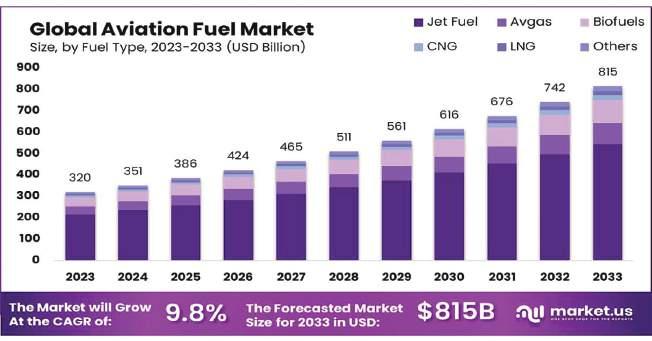
chinedu
Domestic operators have said that if the high cost of aviation fuel, known as Jet A1 continues as it is currently, airlines may be forced to close their routes which do not defray the cost of operating them.
This is as the operators denounced claims by the National Association of Aircraft Pilots and Engineers (NAAPE) in a recent statement that the high cost of aviation fuel may lead to safety breach or overstretch the working period of pilots.
The Managing Director and CEO of Aero Contractors,
Captain Ado Sanusi, while reacting to the high cost of aviation fuel, told THISDAY that airlines would shrink their routes in order to manage the cost of operation and that any route that does not cover the cost of flying to them would be closed.
He also said that if there was no end to current Iran-US impasse, some airlines may go under adding that only the strong ones will continue to operate, as it has started happening in some countries.
Recently, NAAPE raised the alarm insisting that Jet A1 crisis poses a direct threat to flight safety and the structural survival of Nigeria’s aviation
industry.
The association stated that the shortage of the product has evolved beyond a simple logistics issue into a critical emergency that jeopardizes both operational standards and the sector’s long-term viability.
The union expressed ‘grave concern’ over how supply shortfalls are forcing dangerous operational compromises. Central to the association’s alarm is the escalating risk of crew fatigue; as flight schedules collapse, pilots and engineers are frequently pushed beyond planned duty parameters.
But Sanusi who is member
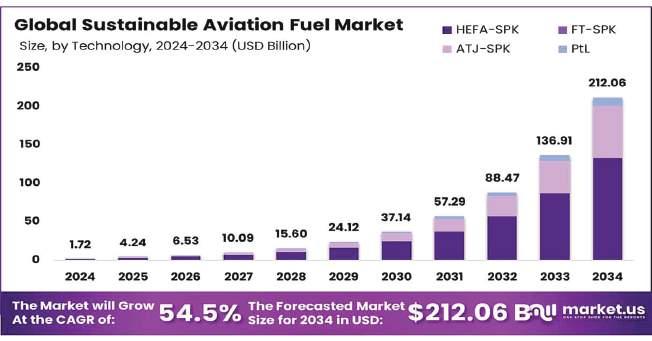
of Airline Operators of Nigeria (AON) said there was no scarcity of aviation fuel; but rather, the price of the product is high, insisting that there is no way the high price of the product can lead to safety breach or stretching pilot’s working hours.
He said that through the intervention of the federal government, there had been efforts to curb the prices of Jet A1 and that Dangote has started publishing the price of the product so that Nigerians would know the actual cost of the product and the taxes built into it.
“I don’t think that the cost of aviation fuel will in
any way lead to breach of safety in airline operation and I also don’t think that the duty time of pilots can be extended. Pilots duty time is protected by regulation and no one can force a pilot to extend his duty time. If any airline tries to force a pilot beyond his duty time the pilot must resist. If the airline sacks him, the regulatory authority will reinstate him and sanction the airline. Pilot is responsible to his duty time and that is protected by regulation.
“High price of aviation fuel cannot affect safety and the product is not scarce. In those days when the product used to be scarce, the crew
would be waiting and when it took long time to get the product, by the time it will come I will do crew change when I was at Arik Air (as Vice President and Head of Flight Operations),” he said. Sanusi said that the current situation has wiped off airlines possible profits and noted that profit margin in airline business is very thin and with the high cost of aviation fuel, no airline will be thinking of making profits because the high cost of Jet A1 is taking a huge toll on airline’s operational cost.
The President of NigerianBritish Chamber of Commerce (NBCC), Mr. Abimbola Olashore, and stakeholders in the Nigerian agricultural sector have called for reform in Nigeria’s agricultural policy framework and investment initiatives that would unlock growth and competitiveness and enable the country to attain food security. This call was made during the NBCC’s Agriculture and Agro-Allied Summit with the theme, “Ensuring Food Security in Nigeria:
Innovations, Investments and Policy for a Resilient Future.”
The stakeholders emphasised that good policy is the force multiplier that would make innovation and investment work at scale, otherwise “all the funding and technology in the world will dissipate like water in dry sand.
“So, first, we need a serious, costed, and time-bound National Food Security Strategy, one that moves beyond elegant documents to binding implementation frameworks with accountability mechanisms.”
Olashore said that Nigeria has continued to confront significant challenges and barriers to achieving sustainable food security despite being richly endowed with vast arable land, a vibrant and youthful population, and an entrepreneurial spirit.
He said: “However, these challenges also present clear opportunities for reform and transformation.
Opportunities to deepen agricultural productivity through innovation, from climate-smart agriculture to digital tools that enhance efficiency, traceability, and
market access.
“Opportunities to mobilise investments across the entire agricultural value chain, from production and storage to processing, logistics, and export. And critically, opportunities to strengthen policy frameworks that unlock growth and competitiveness.
“In this regard, policy reform remains central to our collective ambition. Key areas such as improving access to agricultural finance, strengthening land use systems, reducing post-harvest losses through
infrastructure investment, and enhancing agroprocessing capacity must remain priorities.”
He also harped on the need to, “significantly expand Nigeria’s agro-export footprint and strengthen our integration into global value chains.”
In his presentation during the summit, the Group Managing Director of Johnvents Group Limited, Mr. John Alamu, said that Nigeria must embrace climate-smart agriculture through the application of drought-tolerant and
flood-resistant seed varieties, precision irrigation systems, and agro-meteorological advisory services that would help smallholder farmers to make better planting decisions.
Alamu said that Nigeria need bold, blended, patient finance, through a creative combination of public funding, development finance, and private capital because public financing alone could not fund the country’s agricultural transformation.
Stories by Chinedu Eze
The Nigeria Civil Aviation Authority (NCAA) is strengthening its regulatory systems as it transits from manual to automated license issuance, a move designed to make the certification process seamless, transparent, and resilient against human interference.
At the heart of this transformation is the implementation of EMPIC, a globally recognised specialised software platform used by premier aviation authorities to manage safety oversight.
The system primarily aligns Nigeria’s regulatory framework with International Civil Aviation Organization (ICAO) and European Union Aviation Safety Agency (EASA) standards, ensuring that local certifications carry global relevance.
The initial phase of the Go-Live project focuses specifically on the Personnel Licensing (PEL) and Medical Certification (MED) environments. By digitizing these licences, the NCAA is shifting from a bureaucracy of paperwork to a licensing ecosystem capable
of operating at the speed of the industry it oversees. Speaking during a stakeholder engagement on digital transformation initiative of EMPIC PEL|MED at NCAA’s office in Lagos, the Director General, Nigeria Civil Aviation Authority, Captain, Chris Najomo, stated that as traffic grows, the aviation workforce expands, and global scrutiny intensifies, regulatory systems must evolve accordingly and operate at the speed and intelligence of the industry they oversee.
The Directorate of Cargo Development and Services (DCDS) of the Federal Airports Authority of Nigeria (FAAN), in furtherance of its mandate to promote efficiency, standardisation, and growth within the air cargo sector, held a stakeholders’ engagement meeting with recognised agents’ associations operating within the cargo value chain at the Murtala Muhammed International Airport (MMIA).
The meeting, themed: ‘Strategic Engagement Session on Cargo Village Development and
Operational Framework’, was organised to foster a transparent, inclusive, and globally competitive cargo system, recognising the critical role of agents and freight forwarders in cargo operations.
Representing the Director of Cargo Development and Services, Mr. Lekan Thomas, the General Manager, Cargo, Mrs. Alao Mamman, in her opening remarks, emphasised the importance of stronger stakeholder collaboration towards the realisation of the Cargo Village project, noting that the initiative would enhance operational
efficiency, streamline cargo handling processes, and ensure compliance with international best practices and global standards.
The General Manager, Cargo Partnerships and Registration, Jay Etim, during his presentation, highlighted key focus areas including the development of the Aviacargo Village, the establishment of an integrated cargo logistics hub, the co-location of cargo stakeholders, operational standards, access control systems, regulatory compliance requirements, and the critical role of licensed agents within the evolving cargo ecosystem.
Chairman of FCI International, Fortune Idu, has said that deliberations, reports and recommendations from Dronetecx annual conference have significantly shaped its policy framework in Nigeria thereby improving and redefining the operations of Unmanned Aerial Vehicles (UAVs), popularly known as drones.
Drones are widely used for aerial photography, surveillance, infrastructure inspection, agriculture, and
military missions.
Idu noted that significantly, part 21 Regulations was launched immediately after the first edition of the program due to massive campaign.
“The impact on this sector is amazing, that’s how I can describe it. We have initially when we started, though we’re just venturing into a terrain that will remain very


Chinedu Eze
Recently Fari Elysian (Farida Mirzebalaeva), a popular Russian born actress and content creator who lives in Nigeria posted a serious message about how Nigerians underrate other Nigerians.
In the message, she said she noticed that Nigerians show too much love to foreigners and run down their own. She added that many Nigerians do not have confidence in what they have and would rather criticise it while identifying with and admiring what is foreign. Her candour elicited selfdefense from some Nigerians while others acknowledged her observation.
passive for a very long time, but the actions have been very spontaneous in terms of the actions and responses to what we are doing and the support we got from them, which propelled us into doing a lot of research.
“Part of the changes you are seeing today as it relates to this industry is actually coming from the report from dronetex,” Idu said.
Group Business Editor
Eromosele Abiodun
Deputy Business Editor
chinedu Eze
Comms/e-Business Editor
Emma Okonji
Asst. Editor, Energy
Emmanuel Addeh
Asst. Editor, Money Market
Nume Ekeghe
Correspondents
Kayodetokede(CapitalMarkets)
James Emejo (Finance)
Ebere Nwoji (Insurance)
reporter Peter Uzoho (Energy)
The Association of Nigeria Aviation Professionals (ANAP) has condemned what it called another case of unprovoked brutality by military personnel against civilian airport workers, following an assault on a senior Federal Airports Authority of Nigeria (FAAN) official at Port Harcourt International Airport, Omagwa, recently.
According to ANAP, Deputy General Manager and Head of Operations at the airport, Ekene Enechukwu, was responding to a fire emergency when he was stopped and physically assaulted at a Nigerian Air Force checkpoint near the
airport toll gate.
The union said the officer misread the official’s hurried movement and bloodied him in the process.
“This unprovoked brutality is one too many by NAF and other arms bearing personnel in various airports in Nigeria,” ANAP said in a statement signed by Deputy Secretary General, Comrade Ocheme Aba.
The association noted that it has repeatedly raised concerns over what it described as “terrifying uncivil behaviour in a completely civic environment,” but said its warnings have gone unheeded.
Some observant Nigerians have always noted this and said that the tendency for many Nigerians to look down on local goods and services while admiring foreign ones—often referred to as a ‘foreign preference’ or ‘colonial mentality’—is a complex issue rooted in psychological, economic, and historical factors.
Nowhere has this behaviour been so highly exhibited than in the aviation industry. Evidence show that when Nigerians are travelling with foreign airlines and there is disruption, they do not react the same way they do if the disruption involved a Nigerian carrier. Recently, I posed questions in relation to this to some country managers managing foreign airlines in the country.
Some attribute it to influence, saying that British Airways, Lufthansa, Delta Air Lines, Air France and other big carriers are protected by influential Nigerians. A Nigerian passenger travelling to the US told this medium that the major reason is the fear that if you come hard on foreign airline, “when it takes you to your destination, they can speak to immigration authorities and they will revoke your visa.”
In June 2024, Lagos- London passengers on British Airways flight were stranded for two days when the airline cancelled its flight due to technical issues. The passengers were taken to a hotel after several hours of waiting at the airport, where they stayed for over 48 hours,
while the airline operated its subsequent flights. Many of the passengers who were interviewed reported limited communication and poor customer service from the airline.
British Airways did not airlift them to London eventually. Rather, some passengers were placed on other carriers like Virgin Atlantic and other European carriers. No passenger on that flight did a video to complain or staged a protest at the airport.
Also, on Saturday, May 11, 2026 Delta Air Lines Atlanta-Lagos flight left for Lagos and spent over three and half hours when the pilot made air return to Atlanta, citing technical issues. So, the passengers in the flight were flown for eight hours without arriving to their destination. They went back to Hartsfield-Jackson Atlanta International Airport (ATL).
A passenger in the flight explained that when they were returned to Atlanta, the airline provided hotel for the passengers but some of them refused to go to the hotel and rather stayed at the airport. The consequence of the abortion of that flight was that the airline did not operate its Lagos-Atlanta flight the following day, which was May 12. The passengers had arrived the airport that morning for 11:45 am flight only to be told midway after waiting for some time that the flight was cancelled.
There was no immediate directive on what they should do. But later in the day, the business class passengers were contacted and promised they would be accommodated in the next flight (if there were available business class seats). The uncertainty of the situation and poor communication forced some business class passengers to buy tickets of other airlines to fly to the US. No Nigerian passenger in the Delta Air Lines flight did a video and posted it on social media to lament the treatment meted to them by the airline.
But as at Tuesday May 12, Nigerians were still lamenting the flight cancellation Air Peace did on May 1, 2026, when its aircraft suffered bird strike at the Gatwick Airport, London.
the story continues online on www.thisdaylive.com
A Mutual fund (Unit Trust) is an investment vehicle managed by a SEC (Securities and Exchange Commission) registered Fund Manager. Investors with similar objectives buy units of the Fund so that the Fund Manager can buy securities that willl generate their desired return.
An ETF (Exchange Traded Fund) is a type of fund which owns the assets (shares of stock, bonds, oil futures, gold bars, foreign currency, etc.) and divides ownership of those assets into shares. Investors can buy these ‘shares’ on the
floor of the Nigerian Stock Exchange. A REIT (Real Estate Investment Trust) is an investment vehicle that allows both small and large investors to part-own real estate ventures (eg. Offices, Houses, Hospitals) in proportion to their investments. The assets are divided into shares that are traded on the Nigerian Stock Exchange.
GUIDE TO DATA:
Date: All fund prices are quoted in Naira as at 12th May 2026, unless otherwise stated. Offer
his investment. Money Market Funds report Yield
By Sunday Dare
From Equatorial Guinea to Tanzania, from Accra to Addis Ababa, and now, from Nairobi to Kigali, President Bola Ahmed Tinubu, with sartorial elegance and swashbuckling confidence, is traversing Africa, preaching Nigeria’s reform story to the world.
While the echoes of President Tinubu’s economic reforms have since reverberated across every nook and cranny of Africa, he now personally berths in Kigali to make perhaps, the most important and compelling pitch of his Presidency — an investor proposition of promise and a full blown business case of opportunity.
The message is simple: Nigeria remains one of the most profitable investment destinations on earth.
It is one of the few places globally where return on investment in properly scaled businesses can rise up to 600 percent poststartup. In several sectors, investors have recorded growth trajectories far beyond what conventional business planning models projected at entry point.
Most global feasibility and business planning tools project returns in the region of 20–25% over time. Nigeria, however, has repeatedly defied those assumptions because of one defining factor: scale.
Scale of population. Scale of unmet demand. Scale of consumption.Scale of expansion and now, scale of reform.
Nothing prepared MTN Group for the scale of market dominance and profitability it would eventually achieve after entering Nigeria in 2001. Business projections may have anticipated bold performance, but the Nigerian market delivered returns and growth levels far beyond initial expectations.
What began as a calculated expansion into an emerging market rapidly transformed into one of the company’s most profitable operations anywhere in the world. In only a few years, the margins, subscriber growth, and revenue explosion fundamentally altered MTN’s continental growth trajectory.
Today, MTN Nigeria generates trillions of naira in annual revenue and remains one of the most valuable companies on the Nigerian Exchange, underscoring the sheer commercial depth of the Nigerian market.
Likewise, French owned MultiChoice, now promoters of DStv, may have projected cautious subscriber growth and conservative margins when entering the Nigerian market. Instead, Nigeria became one of the company’s strongest commercial bases, powered by population scale, aspirational consumption, urban expansion, and the sheer dynamism of Nigerian demand.
That is the paradox called Nigeria. Its challenges are visible, sometimes loud, sometimes exaggerated. But beneath them lies one of the deepest consumer markets in the world, a fiercely entrepreneurial population, expanding infrastructure opportunities, vast mineral deposits, a growing technology ecosystem, and unmatched demographic energy on the African continent.
This is the story President Tinubu now takes to Africa CEO Forum 2026.
And this is why Kigali matters.
The Africa CEO Forum is not merely another conference. It is a marketplace of capital, influence, partnerships, and continental strategy. Over 2,000 chief executives, investors, financiers, policymakers, sovereign wealth managers, industrialists, and multinational decision-makers will gather under one roof to discuss where Africa’s future growth will
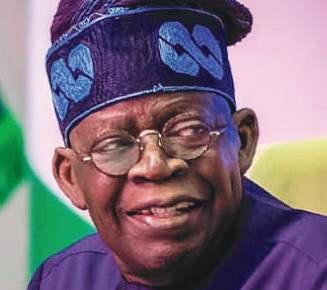
emerge from.
Nigeria intends to ensure that its name sits at the center of that conversation.
The administration understands that reforms are not enough if they are not properly communicated to capital. Investors do not merely invest in policies; they invest in confidence, clarity, direction, predictability, and leadership resolve.
This is why Nigeria’s current continental engagement strategy is deliberate.
Fuel subsidy reforms, exchange rate liberalization, tax modernization, infrastructure concessions, power sector restructuring, gas commercialization, digital economy expansion, and efforts at restoring macroeconomic credibility are now being woven into a broader continental narrative: that Nigeria is repositioning itself as Africa’s foremost large-scale investment frontier.
And despite the turbulence associated with reform transitions, global investors are watching carefully.
They understand something many critics often overlook: the greatest investment opportunities are often created during periods of structural transition. Nigeria, with its strategic geography, youthful population, expanding urban centers, natural resource base, and continental trade advantage under AfCFTA, sits at the center of that possibility.
Kigali therefore becomes more than a diplomatic stop. It is a launch pad. President Tinubu designed and holds the pitch deck and
he must deliver the Nigerian pitch.
Kigali is a continental investment roadshow. A confidence- building exercise. A strategic engagement with African and global capital.
And in many ways, it represents the culmination of a broader continental economic outreach strategy President Tinubu has pursued since assuming office.
In August 2024, he was in Equatorial Guinea advancing bilateral oil and gas cooperation and deepening strategic energy commitments. In January 2025, he was in Tanzania for the Mission 300 Africa Energy Summit, engaging continental stakeholders on energy access, infrastructure, and Africa’s long-term development financing needs.
But Kigali is different.
In Kigali, Nigeria is not merely discussing energy partnerships or regional cooperation frameworks.
Nigeria is making its sovereign business case to the rest of Africa.
It is telling investors that the reforms are underway, the fundamentals are correcting, infrastructure gaps are creating massive investment opportunities, and the country is positioning itself for long-term competitiveness and profitability.
The message from President Tinubu’s engagement across the continent is therefore becoming unmistakably clear: Nigeria is no longer content with simply being Africa’s largest market by population. It intends to
become Africa’s most compelling destination for investment, enterprise, industrial expansion, and scalable profitability.
And that argument is not being made theoretically. It is backed by history.
Fintech Unicorns are rising, telecoms companies entered Nigeria and built some of their largest operations here. Energy firms are scaling faster in Nigeria than in many mature markets. Consumer brands continue to find one of their largest African customer bases within Nigeria’s borders.
Agro allied enterprises, housing, logistics, mining, manufacturing, digital services, and infrastructure still contain enormous untapped commercial opportunities.
The reality is that few places in the world still combine massive population scale, rising consumer demand, resource abundance, entrepreneurial energy, and expansion potential the way Nigeria does.
That is the real significance of Kigali. And in rooms filled with CEOs, sovereign funds, institutional investors, development finance leaders, and multinational executives, Nigeria’s pitch will be unmistakable: the promise is unmatchable, the risks are mitigable, the reforms are difficult, but the upside remains extraordinary. And the Reformer in chief is still at work.
•Sunday Dare is the Special Adviser on Media and Public Communications to President Bola Tinubu of Nigeria
In the dynamic world of entertainment, where relevance is constantly tested by changing trends and fierce competition, only a few individuals succeed in building a lasting identity through talent, consistency, and originality. among such personalities is Oghenekowhoyan Onaibe desmond, popularly known as “The King of Stage,” whose remarkable journey as an award winning comedian, performer, philanthropist, and entertainer has continued to captivate audiences and inspire admiration across different circles. Through humour, creativity, and a deep commitment to humanity, he has carved a distinctive niche for himself, proving that entertainment can go beyond laughter to become a powerful tool for inspiration, social impact, and hope. Uzoma Mba reports
In the ever-evolving world of entertainment, only a few personalities possess the rare ability to command attention, inspire laughter, and leave a lasting impact on society.
Among such exceptional figures stands Oghenekowhoyan Onaibe Desmond, popularly celebrated as “The King of Stage.” An awardwinning comedian, performer, philanthropist, and entertainer, he has carved a remarkable niche for himself in the entertainment industry through hard work, originality, consistency, and an uncommon passion for humanity.
Oghenekowhoyan Onaibe Desmond is not merely a comedian whose duty is to make people laugh; he is a symbol of hope, resilience, creativity, and compassion.
His journey from humble beginnings to becoming one of the most respected names in comedy and stage performance serves as an inspiration to countless young people who dream of achieving greatness through talent and determination.
The entertainment industry is highly competitive and demanding. Many talented individuals emerge daily, yet only a handful manage to establish an identity strong enough to stand the test of time.
What makes Desmond unique is his ability to blend humor with wisdom, entertainment with social consciousness, and performance with humanity.
His stagecraft, charisma, and deep understanding of human emotions have earned him admiration from fans across different backgrounds.
Popularly referred to as “The King of Stage,” the title did not come by chance. It is the result of years of consistency, electrifying performances, and a natural ability to dominate every stage he appears on.
Whether performing at corporate events, concerts, comedy shows, weddings, religious gatherings, or social functions, Desmond possesses an extraordinary presence that captivates audiences from beginning to end.
His confidence, timing, delivery, and spontaneity distinguish him from many others in the entertainment scene.
Comedy, especially in Nigeria and Africa at large, has evolved from a mere pastime into a powerful industry capable of influencing culture, shaping conversations, and creating opportunities. Oghenekowhoyan Onaibe Desmond has been one of the personalities contributing significantly to this transformation.
Through his craft, he has demonstrated that comedy is not just about cracking jokes, but also about healing emotional wounds, reducing stress, and uniting people through laughter.
One of the most admirable qualities of Dr. Desmond is his originality. In an era where imitation has become common in entertainment, he has remained authentic to his style and personality. His jokes are intelligent, relatable, and often inspired by real-life experiences, making audiences connect deeply with his performances. He understands the pulse of the people and uses humor as a mirror to reflect society while still entertaining his audience.
Beyond his talent as a comedian, Desmond has built a reputation as a compassionate humanitarian whose hobby is giving back to the people.
This rare quality has endeared him to many. In a society where fame and success often lead individuals into self-centered lifestyles, he has chosen the path of generosity and service to humanity.
He believes that true greatness lies not only in personal achievements but also in the positive
impact one creates in the lives of others.
Over the years, he has consistently supported individuals and communities through various forms of assistance and empowerment.
From helping struggling youths to supporting the less privileged, Desmond has shown that entertainment can be a platform for social change.
His philanthropic gestures have touched lives silently and publicly, proving that kindness remains one of the greatest virtues any individual can possess.
Many who have encountered him describe him as a cheerful, humble, and approachable personality despite his fame and achievements. His humility has become one of the defining characteristics of his public image.
Rather than allowing success to separate him from ordinary people, he continues to maintain close relationships with fans, colleagues, and community members.
This humility has contributed greatly to his widespread acceptance and admiration.
Oghenekowhoyan Onaibe Desmond’s rise in the entertainment industry did not happen overnight.
Like many successful individuals, his journey was marked by challenges, sacrifices, and moments of uncertainty. However, his determination and passion for entertainment kept him moving forward.
He understood early in life that greatness requires persistence, discipline, and selfbelief. Instead of allowing obstacles to discourage him, he used them as stepping stones toward success.
His ability to connect with audiences is one of the secrets behind his growing popularity. Every performance feels personal and engaging because he understands human behavior and emotions.
His delivery is natural, energetic, and filled with creativity. Whether discussing family matters, social issues, politics, relationships, or everyday struggles, he transforms ordinary experiences into unforgettable moments of laughter and reflection.
The recognition he has received as an award-winning comedian is a testament to his excellence and contribution to
entertainment. Awards are not merely symbols of fame; they represent acknowledgment of hard work, talent, and influence.
Through dedication and consistency, Dr. Desmond has earned the respect of colleagues, event organizers, fans, and stakeholders within the industry.
However, beyond the applause and accolades lies a man deeply committed to making society better. His philosophy of giving back reflects a strong understanding of responsibility and purpose.
He recognizes that success becomes more meaningful when it creates opportunities for others. This mindset has made him more than just an entertainer; it has made him a role model to aspiring comedians and young people seeking inspiration.
The entertainment industry thrives on creativity, and Desmond has continuously demonstrated an ability to reinvent himself while remaining true to his identity.
This adaptability has allowed him to remain relevant in a rapidly changing industry driven by technology, social media, and evolving audience preferences. While trends come and go, genuine talent and authenticity continue to stand out, and Desmond embodies both qualities.
Another remarkable aspect of his personality is his passion for motivating and encouraging young talents. He understands the struggles faced by upcoming entertainers because he once walked the same path. As a result, he often uses his platform to inspire, mentor, and support emerging talents.
His success story serves as proof that with perseverance and commitment, dreams can become reality.
Oghenekowhoyan Onaibe Desmond’s influence extends beyond comedy into broader entertainment and social circles. He has become a respected figure whose voice carries weight in conversations about creativity, youth development, and community impact.
Through his achievements and lifestyle, he continues to redefine what it means to be an entertainer in modern society.
Laughter, they say, is medicine for the soul, and Desmond has dedicated his life
to administering this medicine generously.
In difficult times marked by economic challenges, emotional stress, and societal pressures, his performances have brought joy and relief to countless people. This ability to uplift spirits and spread happiness is one of the reasons why his fans remain deeply connected to him.
Despite his accomplishments, Desmond continues to push boundaries and strive for greater heights. His hunger for growth and excellence reflects a mindset focused on continuous improvement. Great individuals never become complacent with past achievements, and his journey remains an inspiring example of ambition fueled by purpose.
In many ways, his story reflects the broader story of resilience within the Nigerian entertainment industry. The industry has produced world-class talents who continue to place Africa on the global map, and personalities like Desmond play important roles in sustaining this progress. Through talent, hard work, and consistency, he has contributed to showcasing the richness of African humor and creativity.
The phrase “great and unique creature” perfectly describes him because he embodies qualities that are increasingly rare in today’s world. Talent alone does not make a person exceptional; character, compassion, and integrity complete the picture. Dr. Desmond’s ability to combine entertainment with humanity makes him truly outstanding.
As his influence continues to grow, so does his legacy.
He is gradually building a reputation that transcends comedy and enters the realm of societal impact. Future generations will not only remember him for the laughter he created but also for the lives he touched and the hope he inspired.
For many fans and admirers, Oghenekowhoyan Onaibe Desmond represents proof that success and kindness can coexist.
In a world often driven by selfish ambition, he has chosen to uplift others while pursuing his dreams. This balance between personal achievement and community service is what makes him admirable.
Indeed, the entertainment industry is richer because of personalities like Destalker. His journey continues to inspire countless individuals who believe in the power of talent, hard work, and generosity.
As “The King of Stage,” he has not only conquered platforms and audiences but also won hearts through humility, compassion, and dedication to humanity.
Without doubt, Dr. Oghenekowhoyan Onaibe Desmond has carved a lasting niche for himself in the entertainment industry.
His name has become synonymous with excellence, laughter, and philanthropy. More importantly, he has proven that true greatness is measured not only by fame or awards but by the positive difference one makes in the lives of others.
As he continues to rise, entertain, inspire, and give back to society, his story will remain a shining example of how talent combined with humanity can create a legacy that endures for generations. His outstanding performances on stage have earned him numerous awards, honours, and recognition within the entertainment industry. Through his exceptional creativity, unique delivery, and ability to captivate audiences with laughter and inspiration, he has distinguished himself as one of the most celebrated comedians of his generation.
In a world where thumbs scroll faster than minds can linger, a group of women in abuja decided to do something radical: stop. Stop the doomscrolling. Stop the noise. and pick up a book. What started over a decade ago as two friends craving deeper conversation has since spilled beyond Nigeria’s borders into Houston, Toronto, London, accra, and Zoom screens across the globe. This is Books & desserts, a women-led movement proving that when women gather to read with intention, they don’t just finish chapters. They start revolutions in their own lives. at its heart, Books & desserts is more than shelves and circles. It’s a pact among women to think deeper, live with purpose, and rise together one book, one bold conversation, one shared moment at a time. Writes Mary nnah
In an era defined by fast-paced digital consumption, where scrolling often replaces sustained reading, and attention spans are increasingly fragmented, the place of books in everyday life appears to be under quiet threat. Yet, amid this shift, a growing community of women is pushing back—choosing depth over distraction, reflection over haste, and meaningful dialogue over passive consumption.
At the centre of this movement is Books & Desserts Book Club, a women-led initiative that began in Abuja and has steadily grown into a global network dedicated to intellectual engagement, personal development, and cultural exchange.
Founded over a decade ago by Dr. Somachi Kachikwu and Nma Nzerue, the club started as a simple idea between two women seeking more intentional conversations around books. Today, it has evolved into a structured and purpose-driven community of over 150 members spanning Nigeria, the United States, Canada, the United Kingdom, Ghana, and a vibrant virtual chapter that connects participants across continents.
What distinguishes Books & Desserts from conventional book clubs is not merely its longevity or geographic spread, but the clarity of its vision. For its founders, reading is not an end in itself—it is a tool for transformation.
“At the heart of Books & Desserts is a simple belief: when women come together to learn, reflect, and support one another, real growth happens,” said Nzerue, whose interests in education, youth development, and personal growth continue to shape the club’s ethos. “It has always been about creating a space where people feel seen, challenged, and inspired to become better versions of themselves.”
That philosophy is echoed by Kachikwu, widely known within the community as Dr. K, whose work sits at the intersection of education, leadership, and the practical application of technology, including artificial intelligence.
“For me, Books & Desserts has always been about creating a space where greatness is nurtured,” she explained. “A space where women are not just reading, but evolving—challenging themselves and becoming more confident in how they show up in the world.”
From its early days in Abuja, the club has expanded into multiple chapters, including Lagos and Port Harcourt in Nigeria, as well as cities such as Houston, Los Angeles, Minneapolis, Toronto, and the DMV area in North America. A United Kingdom chapter and a Ghana chapter further extend its reach, while a global virtual platform ensures that geography is no barrier to participation. At the core of this international structure are chapter hosts—women who serve not just as organisers, but as

facilitators of thoughtful engagement. They curate discussions, guide conversations, and create environments where members can share openly and critically examine ideas. Their role is central to maintaining the club’s standards across diverse cultural contexts.
Despite operating in different regions, each chapter remains anchored in a shared philosophy: reading with intention. Members are encouraged to go beyond simply finishing books, instead using them as springboards for deeper inquiry—challenging assumptions, broadening perspectives,
and applying insights to real-life situations.
Meetings often blend intellectual discourse with social connection, pairing book discussions with shared meals and personal storytelling. This combination, members say, is what transforms the experience from routine reading into something more immersive and impactful.
Over time, Books & Desserts has also evolved into a creative incubator. No longer just a community of readers, it is increasingly a platform for writers and thought leaders. Several members have emerged as published
and emerging authors, contributing to a growing body of work that reflects the diversity of their experiences. This transition from readers to creators aligns with the club’s broader mission—to empower women not only to consume knowledge but to shape and contribute to it.
The group’s evolution comes at a time when reading itself is being redefined. With the rise of digital platforms and artificial intelligence, access to information has become easier than ever. However, the founders of Books & Desserts maintain that access alone is not enough.
While the club has embraced hybrid formats that incorporate digital tools and virtual engagement, it continues to emphasise the importance of critical thinking, deep reading, and independent perspective. Technology, in this context, is viewed as a complement - not a replacement - or thoughtful engagement. Another area of concern for the group is the noticeable decline in reading habits among younger generations. In response, Books & Desserts has expanded its focus beyond its immediate membership, organising reading drives and outreach initiatives aimed at promoting literacy and rekindling interest in books.
These efforts reflect a broader commitment to education, mentorship, and social impact - extending the club’s influence beyond private gatherings into the wider community.
Beyond literacy, the club is also contributing to an important cultural conversation: the global visibility of African stories. While Western publishing ecosystems often benefit from strong linkages between literature, film, and media, similar structures in Africa are still developing, with funding and distribution challenges limiting opportunities for adaptation.
Nevertheless, there is growing optimism. Increased global interest in African narratives is opening new pathways for storytelling, and communities like Books & Desserts are playing a role in amplifying these voices—creating audiences, fostering discussion, and sustaining momentum. What is particularly striking about the club’s journey is its ability to balance growth with intimacy. Despite its international footprint, it has retained the essence of its founding idea: a space for honest conversation, shared learning, and mutual support.
In a world that often rewards speed over substance, Books & Desserts offers a quiet but powerful alternative -one rooted in intentionality, connection, and the enduring value of ideas.
It is, at its core, more than a book club. It is a community of women committed to thinking deeply, living purposefully, and growing together - one book, one conversation, and one shared experience at a time.
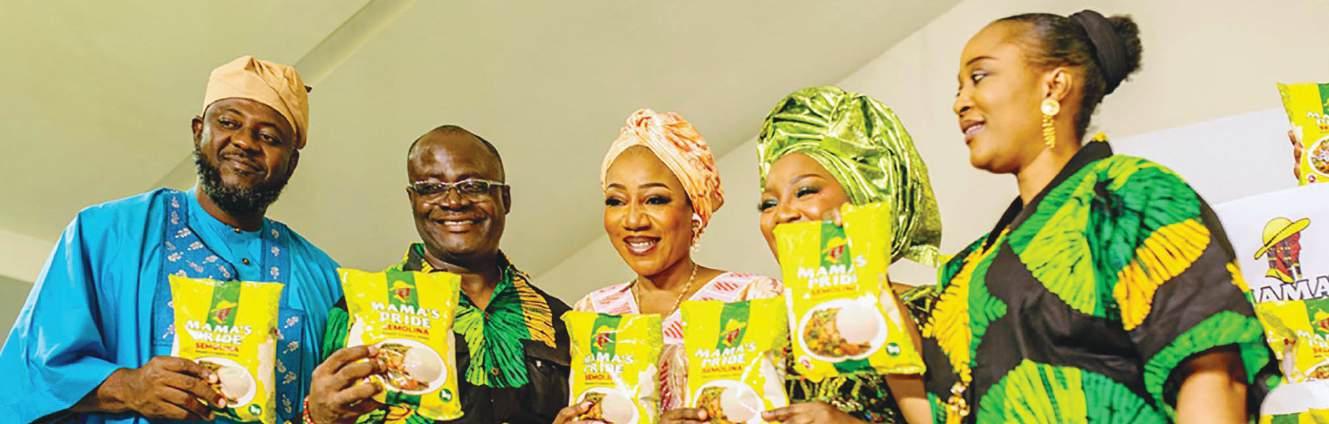
L-R: Managing Director, Sose Trading Store, Oluwasesan Sose; Vice President, Commercial, Olam Agri, Bolaji Anifowoshe; Managing Director, Betly Distribution, Dr Elizabeth Ajibola; Managing Director, Opeyemi Baking Industry, Sanusi Modinat; and Head of Marketing, Olam Agri, Bola Adeniji, during the launch of
The Board of Trustees of the Ogoni Trust Fund Incorporated for the Hydrocarbon Pollution Remediation Project (HYPREP) yesterday announced that it was set to host a high-level Conference on Donor Facilitation and Diplomatic Support Engagement at the Transcorp Hilton Hotel, Abuja
At a press conference in Abuja, Chairman, Board of Trustees, Em-
manuel Deeyah, stated that the conference scheduled for May 26, 2026, is designed to deepen strategic partnerships with the diplomatic community, international development agencies, donor organisations and multilateral institutions.
HYPREP, an organisation under the Federal Ministry of Environment, noted that other attendees will include environmental experts, and private sector stakeholders in support of the ongoing environmental restoration
and sustainable development efforts in Ogoniland and the wider Niger Delta region.
The event, Deeyah explained, will bring together senior government officials, ambassadors, development partners, environmental institutions, and international organisations to explore collaborative pathways for accelerating environmental remediation, public health interventions, livelihood restoration, water projects, mangrove restoration, and sustainable
community development.
Also speaking ahead of the conference, the Project Coordinator for HYPREP, Prof. Nenibarini Zabbey, said that the engagement represents an important platform for strengthening international cooperation, mobilising technical support, and reinforcing global confidence in Nigeria’s commitment to environmental restoration, conservation and sustainability.
The Minister of Environment,
Mr Balarabe Lawal, according to the organisation, is expected to deliver the opening remarks at the donor conference, while the Dutch Ambassador to Nigeria, Bengt van Loosdrecht, will present a goodwill message.
Besides, a major highlight of the conference will be a technical presentation showcasing HYPREP’s achievements, milestones, ongoing interventions, challenges, and future strategic priorities.
photo-oxidation and bio-remediation reduced the contaminant levels to below detectable limits. Independent investigations confirmed that they no longer require remediation, and those 13 sites have also been closed out,” he said.
Zabbey noted that remediation works are currently ongoing at 17 medium-risk complex sites, many of which involve groundwater contamination.
Bennett Oghifo
The Nigerian Bar Association and Chartered Institute of Forensics and Certified Fraud Investigators of Nigeria (CIFCFIN) have signed a Memorandum of Understanding (MoU) to eradicate forgery and safeguard the integrity of the 2027 general elections.
Speaking during the signing ceremony at NBA Headquarters, Abuja on Wednesday, the President, Mazi Afam Osigwe, SAN, decried the harmful effects of using forged documents to facilitate fraudulent transactions, money laundering, and other criminal activities.
He cautioned members of the legal profession to ensure that documents emanating from them are authentic. “We must not use our profession to introduce forged documents into public records or court systems, thereby misleading the public,” he warned.
Referencing an earlier meeting with CIFCIN in February on the partnership, Osigwe said forensic science can strengthen the country’s judicial system, enhance institutional credibility and safeguard Nigeria’s democracy, especially as Nigerians look ahead to the 2027 general elections.
“Issues such as certificate forgery and document manipulation have repeatedly embarrassed our institutions and weakened public confidence. We must gate keep more effectively,” he said.
Osigwe described the partnership between CIFCFIN and NBA as very timely, strategic and necessary in order to build a country where integrity is verified, systems are trusted and fraud is prevented before it takes it root.
He had commended CIFCFIN for the work the Institute is doing to institutionalise forensic standards in Nigeria, noting that a modern justice system cannot function optimally without credible forensic analysis, whether in document verification, digital investigations
or financial tracing.
He pledged that NBA was ready to collaborate in raising awareness, building capacity for the Bench and Bar as well as strengthening systems that ensure documents and transactions emanating from Nigeria are trustworthy.
He declared that it is based on these understandings that “we have agreed to this partnership. To the glory of God, I now sign this document (MoU) on behalf of the Nigerian Bar Association this 13th day of May 2026.”
In his response, CIFCFIN Founder/Chairman, Governing Council, Dr. Iliyasu Gashinbaki, said the signing of the MoU signals the beginning of a strong partnership between the NBA and the Institute.
“This partnership cuts across many sectors, including electoral management, anti-money laundering efforts, proceeds-of-crime investigations, forgery detection, certificate fraud, financial crimes, and many other forms of malpractice,” he explained.
The conference will also feature a panel discussion and interactive donor engagement session aimed at encouraging collaborative investment, technical partnerships, and diplomatic support for long-term environmental sustainability in the Niger Delta.
During an interview, Zabbey disclosed that 30 out of the 65 contaminated sites identified by the United Nations Environment Programme (UNEP) in Ogoniland have so far been closed out through remediation and natural recovery processes.
According to him, 17 ‘simple sites’ where only soil contamination was recorded, have been fully remediated and closed out, while another 13 sites had recovered through natural attenuation processes without active remediation work.
“Natural processes like
“Four of those sites have recorded contaminant levels reduced to below 600 micrograms per litre, which is the benchmark set by the World Health Organisation (WHO),” he said. The HYPREP coordinator further disclosed that the remaining 18 high-risk complex sites located in residential areas are undergoing detailed site characterisation to determine the extent of pollution and the appropriate remediation methods.
“We are determining the level of contamination, the scope of the work and the method to deploy because the environment is not static,” he said.
He explained that groundwater contamination patterns may have shifted since the UNEP report was released in 2011, making fresh investigations necessary before contracts are awarded.
Can it ever be possible to deploy technology for the purpose of extracting palm wine without having to go through the traditional process involving the harzadous risk of climbing palm trees.
This is the problem that Prof. Bart Nnaji Foundation wants to solve. It has launched a practical innovation competition called the Bart Nnaji Innovation Challenge from which the needed technology for extraction of palm wine could emerge.
In a statement signed by David Nwobodo, the Foundation called on bold thinkers, builders, creators, and
problem-solvers to design safer ways of harvesting palm wine without climbing the palm trees.
He said that the challenge is aimed at encouraging practical engineering solutions that can protect lives, support rural enterprise, and modernize palm wine harvesting without erasing its cultural value.
“The challenge focuses on a real and long-standing problem within Nigeria’s traditional palm wine industry: how to preserve an important cultural and economic practice while reducing the risks faced by traditional palm wine harvesters,” the statement said.
The Foundation noted the
extraction of palm wine has “for generations remained an important part of community life, supporting families, local traders, small businesses, ceremonies, festivals, and social gatherings across many communities”.
However, it regretted that the traditional method often required tappers “to climb tall palm trees using ropes, pegs, and improvised tools, a process that is physically demanding and dangerous”.
The Foundation pointed out that even the traditional profession of palm wine tapping was already being phased out as there is no guaranteed succession in the trade.
This is because youths are not
showing interest in taking up the traditional business of tapping palm wine as a means of livelihood.
Therefore, as many experienced traditional tappers grow older, and fewer young people are willing to embrace such hazardous work, the future of palm wine extraction now requires safer, smarter, and more practical solutions.
“The challenge is simple: design a safe way to harvest palm wine without climbing trees,” the Foundation said, adding that the ultimate goal of the challenge is to protect lives while supporting local enterprise”.
Participants in the innovation challenge are expected to develop
practical ideas that can reduce or eliminate the need for tappers to climb tall trees.
Proposed solutions may involve engineering, mechanics, automation, local materials, improved tools, modified harvesting systems, or any creative approach that can make palm wine harvesting safer and more efficient.
In the statement, Professor Ifeabunike Joseph Dioha, a professor of Industrial Chemistry and Energy Studies, and Director of Renewable Energy Projects at the Admiralty University of Nigeria(ADUN), Delta State, was quoted as lauding the innovation challenge.
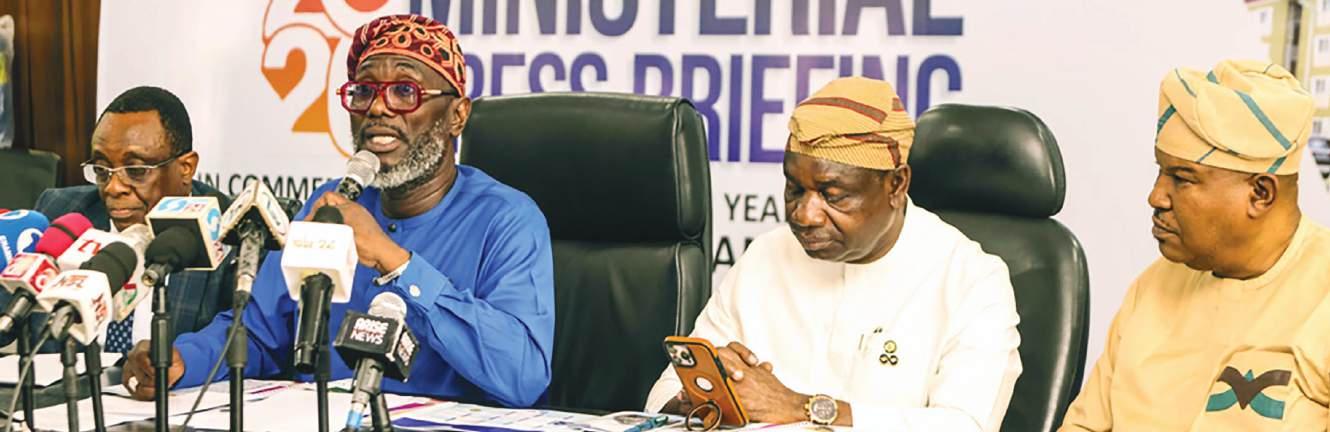
L-R: Permanent Secretary, Ministry of Waterfront Infrastructure Development Lagos State, Engr. Olumide Sorire; Commissioner for Waterfront Infrastructure Development, Hon. Dayo Bush Alebiosu; his Counterpart in the Information and Strategy, Gbenga Omotoso and Permanent Secretary, Ministry of Information and Strategy, Mr. Lanre Bajulaye, during the annual ministerial press briefing of the Ministry of Waterfront Infrastructure Development, at the Bagauda Kaltho Press Centre, Alausa, Lagos State... yesterday
Shettima asks commission to work with MDAs to ensure maximum impact Says initiative aligns with Tinubu’s 2026 family, social protection mandate
Deji Elumoye in Abuja
Vice President Kashim Shettima has applauded the Renewed Hope Baby Support (RHBS) programme, a national human capital infrastructure initiative aimed at providing every Nigerian child with structured identity, healthcare participation, and long-term financial opportunities.
Shettima said the RHBS programme, initiated by North East Development Commission (NEDC), aligned with President Bola Tinubu’s declaration of 2026 as the Year of the Family and Social Protection.
He lauded the commission for taking proactive steps to translate the president’s vision into concrete action.
Shettima spoke on Thursday when the management team of NEDC, led by its Managing Director/CEO, Mohammed Alkali, presented the RHBS programme execution framework to him at State House, Abuja.
The vice president stated, “As you are aware, Mr. President has declared 2026 as the Year of the Family and Social Protection, with clear directives for implementation across all levels of government. I
commend the NEDC for taking proactive steps to translate this vision into concrete action, particularly through the Renewed Hope Baby Support (RHBS) programme.
“The RHBS is a very timely and strategic initiative. It sits squarely within the North East Stabilization and Development Masterplan, aligning perfectly with its three critical pillars: peaceful society, healthy citizens, and an educated populace.”
He advised “seamless collaboration between the NEDC, the Federal Ministry of Humanitarian Affairs, and other relevant agencies to ensure the RHBS achieves maximum impact”.
Shettima said by focusing on children and families the RHBS programme will deliver direct impact on the most vulnerable Nigerians, “while serving as an effective execution mechanism for Mr. President’s social protection mandate.”
Describing the timing of the programme as auspicious, the vice president said RHBS “will serve as a strategic palliative that cushions the effects of necessary economic reforms in a dignified
and structured manner”.
He said, “It demonstrates that while we implement difficult but essential policies, we remain deeply committed to the welfare of our people — especially the women and children of the North East.”
Shettima maintained that RHBS will further position NEDC as a key player in the actualisation of
Tinubu’s Renewed Hope Agenda in the North-east.
He sated, “This is the kind of focused, results-oriented intervention we expect from our regional development commissions.”
He disclosed that since the initiative was primarily designed for children, the presidency will shed more light on the implementation
and rollout strategy by May 27, 2026, in commemoration of Children’s Day.
Earlier, in her presentation, Senior Special Assistant to the President on Regional Development and NEDC (Office of the Vice President), Dr. Mariam Masha, explained that the RHBS programme was a national human capital infrastructure initiative.
Masha said while Nigeria recorded approximately 7.6 million births yearly, only “fewer than half are formally registered within the first year, resulting in millions of children beginning life outside national visibility and weakening long-term planning across education, health, economic, and social systems.”
Blessing Ibunge in Port Harcourt
Pipeline Infrastructure Nigeria Limited (PINL), has doled out empowerment scheme for 3,000 women from its 216 host communities across Rivers, Bayelsa, Imo and Abia States.
The private security company responsible for the protection of the Trans Niger Pipeline (TNP) and Eastern Gas Network (EGN) gave the women cheques ranging from N250,000 to N1,000.000 through the empowerment scheme intended to boost their various businesses and their financial income.
No fewer than 17,130 students, were yesterday, matriculated into the 2025/2026 academic session of Yaba College of Technology, following a competitive admission process that attracted 24,655 applicants.
Speaking at the matriculation ceremony, the Rector of the college, Dr. Ibraheem Abdul, disclosed that 11,024 students were admitted into the National Diploma (ND) programmes, while 5,551 gained admissions into the Higher National Diploma (HND) programmes.
He added that 555 students
were admitted into the B.Sc (Ed) category under the School of Technical Education.
Abdul noted the admissions followed successful performance in the Unified Tertiary Matriculation Examination ( UTME) conducted by Joint Admissions and Matriculation Board (JAMB) and the institution’s screening exercise.
Addressing the matriculating students, he described the institution as Nigeria’s premier technical and vocational education institution, urging them to uphold discipline, academic excellence, and integrity throughout their stay in the college.
He said the students were joining a community known for producing graduates who are academically sound, industryready, and globally competitive.
According to him, “the institution has witnessed remarkable transformation under the Renewed Hope Agenda of President Bola Ahmed Tinubu, particularly with the federal government’s approval for the conversion of the 78-year- old institution into a technical and vocational university.”
He described the approval as a major milestone that would strengthen skills-based education, innovation, and industrial development in the country.
Speaking shortly after presenting cheques to the beneficiaries at the PINL monthly stakeholders’ engagement in Port Harcourt, General Manager, Community and Stakeholders Relations of the company, Dr. Akpos Mezeh said the gesture was another way by which the company appreciates members of host communities for their continued support for their operations.
He said the empowerment resonates with the company’s core values that the communities come first in her operations.
He also counseled youths of its host communities to shun vandalism and other vices and take advantage of the many opportunities provided by the company to better their lives.
”Today is yet another day for us
to reward our communities. They have supported us unreservedly in the fight against pipeline vandalism and it’s clear that we are succeeding in that direction.
“So today’s exercise was another way of saying thank you to the communities. I want to use this opportunity to urge our community youths to continue to support us in the fight against pipeline vandalism.
“They should shun any kind of vices and ensure that the communities are peaceful, ensure that production continue to increase for the benefit of the country and the communities, “ Mezeh said.
He said the company was determined to see that the beneficiaries succeed in their respective businesses, noting
that a monitoring mechanism has been put in place to check the progress of beneficiaries.
Mezeh informed the stakeholders that the company was winning the war against pipeline vandalism as it recorded zero infractions on the TNP and EGN in their areas of operations in the outgoing month.
”We are having zero infraction on the pipeline in our area of operation. There will be no incident and that shows that we are winning the fight against pipeline vandalism.
“We want to attribute this success to the communities who have been cooperating with us, “ he added.
Meanwhile, stakeholders at the meeting, lauded the company for the women empowerment initiatives.
Felix Omoh-Asun in Benin
In an effort to drive Infrastructural development, the University of Benin (UNIBEN) has unveiled a N100 billion Trust Development Fund.
The Vice Chancellor (VC) of the institution, Prof. Edoba Omoregie, during the unveiling in Benin yesterday, said the initiative was conceived by the institution’s management and modeled after similar ones in leading global institutions.
He stressed the fund will
transform the institution into a financially self-sustaining university.
He explained the initiative was designed to address infrastructural deficit and strengthen the university’s long-term financial sustainability, adding the university planned to use the fund for the construction of projects, including the construction of an ultra-modern students’ hostel, a five-star hotel with conference facilities, sports centre and recreational hubs, as well as a modern abattoir with research laboratories for agriculture students.
Prof. Omoregie noted the projects would not only improve learning conditions, but also generate revenue and employment opportunities for the institution and surrounding communities.
”When I took over as VC over a year ago, I went round the university and noticed the dilapidated hostels students lived in.
“We also inherited a huge electricity debt. However, we have a vision for this university and we want it to be self-sustaining going forward.
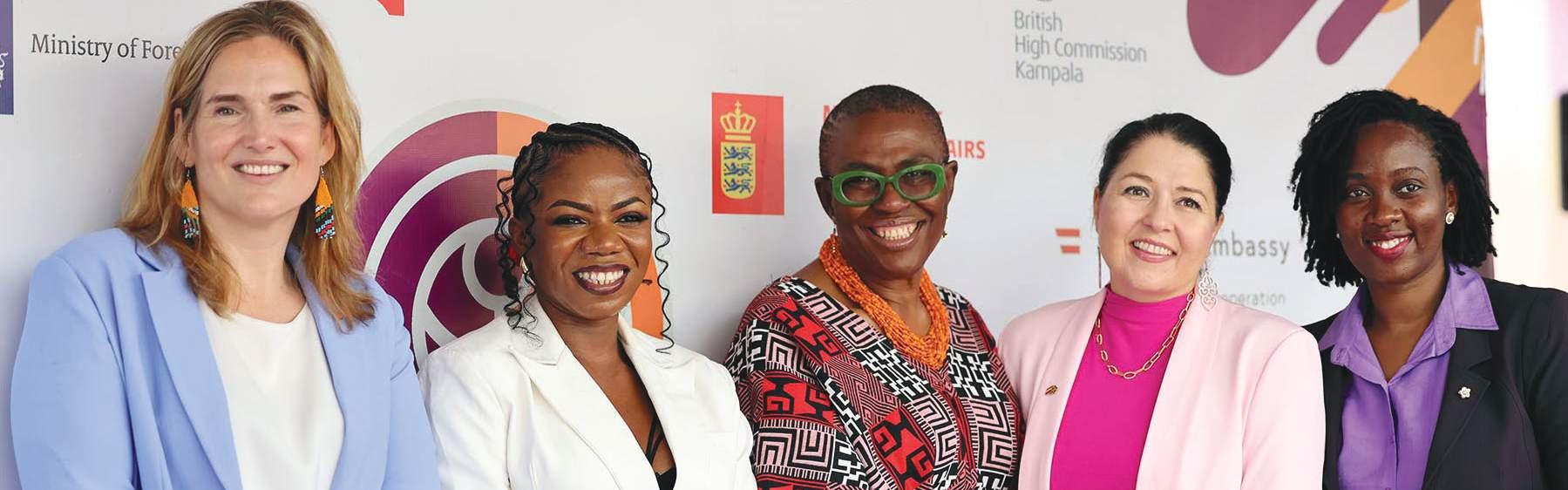
L-R: Ambassador of the Kingdom of the Netherlands to Uganda, Frederieke Quispel; Founder and Chief Executive Officer of FinTribe, Jennifer Awirigwe (Financial Jennifer); United Nations Development Programme (UNDP) Resident Representative for Uganda, Nwanne Vwede-Obahor; Head of the Austrian Embassy/Development Cooperation, Katja Kerschbaumer; and Chief Executive Officer, Agape Wealth Solutions, Justine Ariho, at the ‘She Counts Financial Fair’ conference organised by UNDP in Kampala, Uganda…recently
President Bola Tinubu’s economic and investment drive received a boost on Thursday, as world-class port operator, APM Terminals, pledged a $600 million investment in Nigeria’s maritime sector. Regional President, APM Terminals Africa-Europe, Igor van den Essen, disclosed this when he led other executives to a meeting with President Tinubu on the side-lines
of the ongoing Africa CEO Forum in Kigali, Rwanda.
The APM delegation included Head of Investments, APM Terminals, Martijn Van Dongen, and CEO, APM Terminals Nigeria, Frederik Klinke. Essen said the proposed investments will be deployed in Apapa port modernisation, logistics infrastructure, and long-term private-sector investment in Nigeria’s maritime sector.
Presidential spokesperson, Bayo
Onanuga, in a statement, quoted Tinubu as welcoming the investments, emphasising that Nigeria is repositioning itself for greater competitiveness through ongoing economic reforms and infrastructure modernisation.
He said the country was determined to move beyond structural bottlenecks and outdated systems, stressing the need for advanced technology, faster cargo processing, and improved op-
erational efficiency across the nation’s ports.
The president emphasised that Nigeria possessed the market scale, talent base, and economic potential to support globally competitive maritime and logistics infrastructure investments. He called on other investors to take advantage of Nigeria’s reform outcomes.
Earlier, Essen lauded Tinubu’s reform agenda and policy direction, which
The Kwara State Government yesterday unveiled ambitious plans to position the state as a major player in Nigeria’s rapidly expanding livestock economy projected to grow from an estimated $32 billion to over $70 billion in the coming years.
Commissioner for Livestock Development, Mrs. Oloruntoyosi Thomas, disclosed this while delivering a keynote address at the 2026 Press Week of the Correspondents’ Chapel of the Nigeria Union of Journalists (NUJ), Kwara State Council.
Speaking on the theme, “Livestock Development in a
Changing Economy: Innovation, Opportunities and the Role of Strategic Communication in National Growth,” Thomas described livestock as one of the most promising sectors capable of driving economic transformation, industrialization and job creation in Nigeria.
According to her, the administration of Governor AbdulRahman AbdulRazaq is deliberately moving beyond subsistence animal production into a fully commercialized and industrialized livestock economy through strategic investments and policy interventions.
She said the government’s goals include improving productivity,
strengthening livestock value chains, encouraging private investment, reducing imports and positioning Nigeria competitively in the global livestock market.
Thomas explained the state is leveraging projects such as the Livestock Productivity and Resilience Support Project (LPRES) and the Special Agro-Industrial Processing Zone (SAPZ) to drive commercialization.
She said the SAPZ initiative would provide critical infrastructure including roads, power, cold storage facilities, abattoirs, veterinary clinics, artificial insemination centres, cargo facilities and residential accommodation for investors
Tony Icheku
in Owerri
The Imo State Police Command has in a major overhaul of its tactical operations officially launched the Violent Crime Response Unit (VCRU).
The new unit replaces several defunct tactical squads, including the notorious Tiger Base, (Anti-Kidnapping Unit), Scorpion Unit, and Lion Squad.
The transition, which took place at the Command Headquarters in Owerri, aligns with the reformative
directives of the Inspector-General of Police, IGP Olatunji Disu Rilwanu.
The move is designed to move away from units identified by “animalistic call signs” and toward a more professional, accountable, and human-rights-compliant policing model.
The VCRU is specifically mandated to combat high-level threats including: armed robbery and kidnapping; terrorism, cultism and unlawful possession of firearms
According to the Commissioner of Police, CP Audu Garba Bosso, the unit’s personnel were handpicked based on track records of integrity and competence.
These officers have undergone specialized training in intelligence-led policing, crisis management, and strict human rights compliance.
In a rare move toward transparency, the Command also inaugurated a Civilian Oversight Board for the VCRU.
and processors.
“This is not accidental. It reflects leadership, foresight and a clear understanding that the future of Nigeria’s economy lies in productive sectors capable of generating sustainable wealth and employment,” she said.
Earlier, Chairman of the Correspondents’ Chapel, Biola Azeez, welcomed guests to the event, describing the chapel as Kwara’s elite reportorial core with a longstanding tradition of professional journalism.
had strengthened investor confidence and created renewed momentum for long-term infrastructure investments.
He described Nigeria as a strategic stronghold within its African operations, referencing over 20 years of collaboration and substantial existing investments in the country’s port ecosystem.
The APM Terminals boss reaffirmed his company’s commitment to expanding investments in Nigeria. He disclosed plans to support the development of world-class terminal infrastructure and technology-driven port operations.
He also commended Tinubu for establishing the National Single Window (NSW), which had streamlined trade procedures, improved Customs coordination, and reduced delays in cargo clearance.
In another meeting with Winme Group executives, Tinubu called for deeper investment partnerships to unlock Nigeria’s opportunities in logistics, mining, shipping, and integrated infrastructure development.
He stressed the need for integrated investments linking ports, transport systems, processing facilities, and export infrastructure to drive industrial growth and competitiveness.
The Winme Group delegation expressed confidence in Nigeria’s long-term investment potential, having
closely followed Tinubu’s reforms. Similarly, International Finance Corporation (IFC) said it would to send a mission to Nigeria to explore scalable investment structures that could unlock private capital into the sector. Managing director of the corporation, Diop Makhtar, announced this in Kigali, on Thursday, during a meeting with Tinubu on the side-lines of the 13th Africa CEO Summit.
Makhtar, who led an IFC delegation that included Ethiopis Tafara, Regional Vice President, Africa, and Dahlia Khalifa, Director, Central Africa and Nigeria, IFC, said IFC was interested in discussing modalities for collaboration with Nigeria in energy, housing, and livestock production.
He lauded Tinubu for the bold reforms initiated by his administration, especially the removal of the fuel subsidy and the harmonisation of the exchange rate.
Makhtar described Nigeria’s reform process as courageous and transformative, saying it sends a strong signal to international investors on the country’s commitment to difficult but necessary reforms.
He stated, “President Tinubu, you have been so courageous in removing the subsidy. When you did it, I said to myself, President Tinubu took the bull by the horns.”
President Bola Tinubu has been urged to take remedial steps to address certain government policy imbalances in the Niger Delta region, that may lead to a fresh conflict, especially concerning oil and gas pipelines surveillance contracts.
The Niger Delta Stakeholders Forum and Niger Delta Ethnic Nationalities gave the warning in a communiqué released after a strategic meeting in Port Harcourt, Wednesday evening.
In the communique, the stakeholders held that the signs of conflicts that bedeviled the region is beginning to rise except
the government takes preemptive action to address the obvious concerns.
The communique was signed by Dr. Alaye Tari Theophilus (President, Ijaw Youth Council Worldwide), Mammoth Knight (President, Ibom Youth Council), Henry Assor (Ikwerre Youth Assembly), Joseph Etim Antai (National President, Oro-Obolo Youth Assembly), Usiwo Oghene Efezino (President, Isoko Leadership Forum), Chief Chika Obielumani (President, Coalition of Ndokwa Youth Leaders), Kingsley Tenumah (Chairman, Warri Indigenous People’s Movement) Chief Mathias Efe Olowu (National Chairman, Odavwe R’Urhobo
Group) and Dr Asobi Oyemike (National Coordinator, Ndokwa Advocacy for Development and Good Governance).
Explaining the position, the stakeholders said “We, the Niger Delta Stakeholders Forum and the Niger Delta Ethnic Nationalities, after a strategic meeting comprising community leaders, youth representatives, former agitators, stakeholders, and critical opinion leaders from across the Niger Delta region, have lived through the cycles of conflict, peace, accountability, betrayal, and reconstruction that continue to define the security architecture of the Niger Delta region.
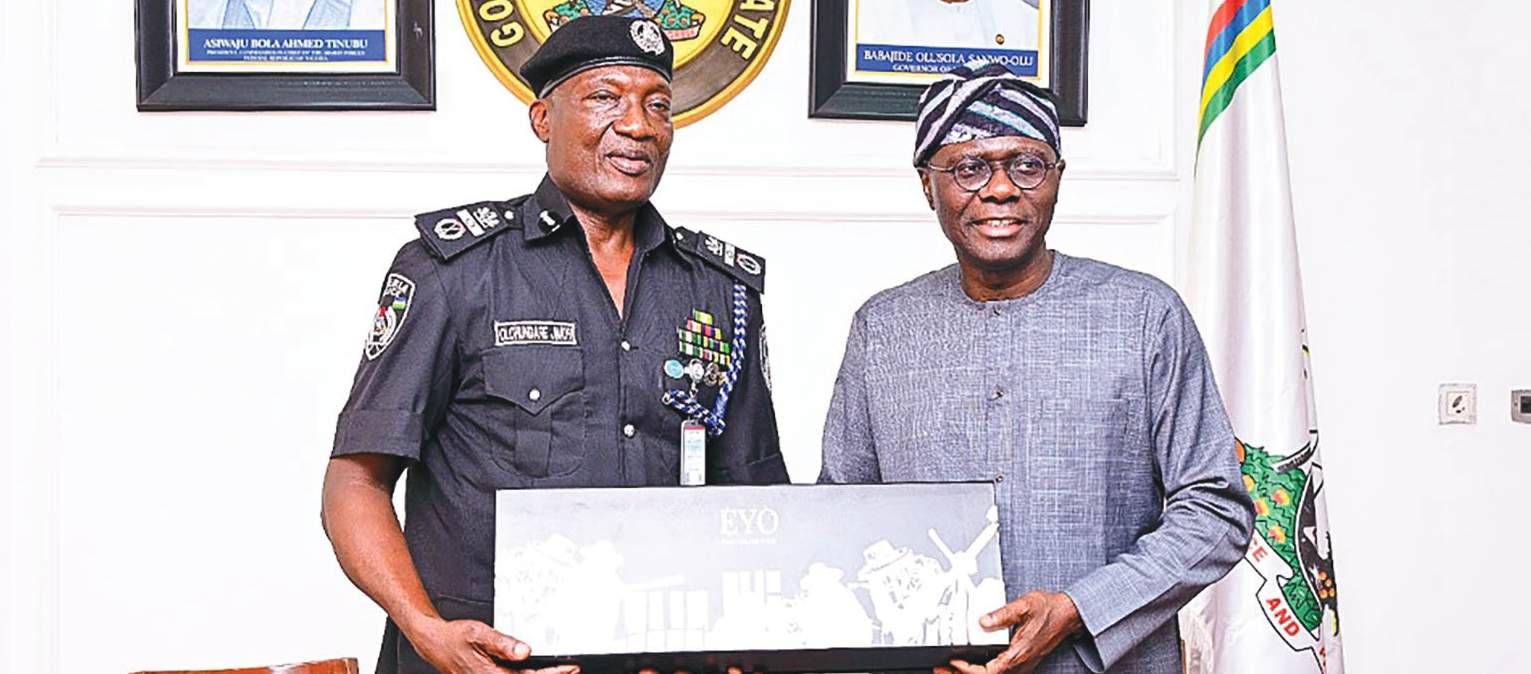
L-R: Assistant Inspector-General of Police, Zone 2, Lagos and Ogun State Command, AIG Olohundare Moshood (left) and Governor of Lagos State, Mr.
Sanwo-Olu, during a courtesy visit at Lagos House, Alausa, Ikeja on Monday
Chuks Okocha in Abuja
Former Vice President Atiku Abubakar and erstwhile Minister of Transportation, Chibuike Amaechi, yesterday, submitted their nomination forms ahead of the 2027 presidential election.
Similarly, former Attorney General of the Federation and Minister of Justice, Abubukar Malami, submitted his nomination form for the Kebbi State governorship election.
Others who returned their nomination forms included Senator Sandy Onor, who declared his ambition to vie for the presidency under Peoples Democratic Party (PDP), and Nasarawa State governorship aspirant, David Ombugadu.
Atiku arrived the African Democratic Congress (ADC) national secretariat in Abuja in a convoy for the form submission.
Speaking with reporters in Abuja, Amaechi said, ‘’I would say that what you are seeing currently is that nearly everybody who is running for the office of the president has served Nigeria in one way or another. Let this be a referendum.
‘’If you have performed, whoever has outperformed the other, vote for the person. The next thing is, who is
capable of delivering the votes? Who is capable of beating the incumbent? Who has the experience? I believe I am the most experienced. I am young, I am the most experienced, and I believe I have the capacity.
‘’That is as it pertains the country. Go back to Rivers State and see what I have done. Go back to Ministry of Transportation and see what I have done, and assess it and see whether I can turn the country around. And I will, in four years, turn the country around,’’ Amaechi stated.
The former governor of Rivers State urged Nigerians to vote for him because of experience and performance.
He said, ‘’Nigerians should vote for merit but not vote for those who say ‘I’m from this place’, ‘I’m from that place’, ‘vote for me because my people have not been voted for before’, or ‘it’s our turn’. It is, what do you call it – Emilokan – that brought us here. It is our turn that brought us here.
‘’It is the turn of Nigerians, because, you see, there is no market for Christians, neither is there a market for Muslims, or a market for northerners or southerners.”
Amaechi said there was a common market for every Nigerian.
He added, “Nigerians are suffering. They are suffering.
“The current president has put us in this suffering. I don’t know why he wants to run. I don’t even know why APC wants to participate. They should be in shame and allow other Nigerians to participate and change the country.’’
The former governor said he
Former Ondo State governor, Dr. Olusegun Mimiko, yesterday, joined the All Progressives Congress (APC), at his Ward 7, Ondo West Local Government Area Secretariat in Ondo town.
Mimiko, who had before now resigned his membership of the Peoples Democratic Party (PDP), was received by the Ward Executive of the Party, the Local Government Executive, and the State Chairman of the party, Hon Kolawole Babatunde as well as party faithful from within Ondo City.
“There are a lot of good things being done by the President Bola Ahmed Tinubu-led government,
and though much more will still have to be done, I am coming in to lend my support to ongoing efforts to keep Nigeria on the path of peace, progress and genuine development.
“The NELFUND initiative to democratise access to education is another commendable effort of Mr. President, which must be applauded and for an avowed supporter of state police like myself current effort to decentralise policing as being pursued is another reason I am happy to be part of the current effort under Mr. President,” Mimiko said after formally joining the party.
While many of Mimiko’s close associates had moved to the APC before the last governorship election
preferred direct primary election, stating, ‘’I’m going for (direct) primary. If the consensus is me, fine. But if it’s not me, I’m going for primary.’’
The PDP presidential aspirant, Onor, said, ‘’I’m a professor of history. I’m a senator of the Federal Republic of Nigeria. I think I’m about the only one in the race, once I’m given the ticket, who would enjoy the kind of
robust engagement across the political trajectory that I have.
‘’I started my career elected as chairman of local government, a two-term local government chairman in Cross River State. During my time, I was chairman of chairmen. Deputy National President of the Association of Local Governments of Nigeria.’’
Onor said he had grassroots
experience, adding, ‘’I know the limitations of government and I’m ready and willing to make corrections when necessary and take Nigeria to heights that we are yearning for. ‘’So I believe that our campaign will be centred on the grassroots. We believe that the people of this country yearn for a change and we reflect that change.’’
Onyebuchi Ezigbo in Abuja
Nigeria’s Permanent Representative to the United Nations, Dr. Jimoh Ibrahim, said President Bola Tinubu was committed to strengthening military partnerships and supporting reforms within the United Nations as part of efforts to address emerging global peace and security challenges.
Ibrahim spoke on Monday while welcoming members of the United States Army War College to the Permanent Mission of Nigeria to the United Nations in New York.
in Ondo State, he remained within the PDP, though playing little or no active part until his resignation more than a month ago.
Putting in his resignation, he said he had to clear speculations and inquiries about his status, saying having been somewhat distanced from party activities, he was putting it on record that he was “no longer a member of the PDP.”
Welcoming Mimiko on behalf of the governor and other members of the party in the state, Babatunde, said Mimiko was a progressive in all ramifications, having posted remarkable results in health, education, infrastructure and so many other areas of life, in and out of office.
A statement by the media office of the UN Permanent Representative in New York said the visit of the delegation highlighted the importance of sustained dialogue, strategic cooperation, and mutual understanding among institutions working to promote global peace and security.
According to Ibrahim, the United States Army War College is one of the world’s leading institutions for developing strategic military leaders with deep understanding of conflict management and international security dynamics.
He said Tinubu was particularly encouraged by the progress recorded through Nigeria’s longstanding
collaboration with the institution, especially the outstanding achievements of Nigerian military officers, who had passed through the college.
The ambassador listed former President Muhammadu Buhari; former Chief of Army Staff, General Taoreed Abiodun Lagbaja; Colonel Charles Nengite; Brigadier-General Olakunle Nafiu; and Colonel Haruna Ibrahim among distinguished Nigerians, whose performances at the college continued to inspire excellence within the Nigerian armed forces.
He expressed delight at the presence of Colonel Timothy Ajato of the Nigerian Army among the visiting participants.
Speaking on contemporary security concerns, Ibrahim identified global arms control, disarmament, illicit weapons transfers, major power competition, and rising geopolitical tensions as major threats confronting the international community. He warned that the rapid advancement of emerging technologies, such as Artificial Intelligence, autonomous weapons, drones, and cyber warfare, had significantly altered the global security landscape. According to him, AI-driven military systems now make it increasingly difficult to define, regulate, and verify arms limitations, thereby demanding urgent and coordinated international responses.
Gbenga Sodeinde in Ado Ekiti
The All Progressives Congress (APC) in Ekiti State, has denied endorsing any aspirant ahead of the forthcoming National Assembly primary elections, even as a House of Representatives hopeful, Victor Olumuyiwa Kolade, has protested the alleged arrest and intimidation of some of his supporters.
Kolade, who is contesting to represent Ekiti Central Federal Constituency I comprising Irepodun/
Ifelodun, Ekiti West and Efon local governments, had alleged that six of his supporters in Ipole-Iloro were invited and detained by members of the Civilian Joint Task Force (JTF) over claims that they disobeyed “party supremacy.”
The lawyer and APC aspirant described the development as undemocratic, insisting that supporting a preferred aspirant within the same political party was not a criminal offence.
According to him, the supporters
were allegedly compelled to swear affidavits undertaking not to act against the interest of the party, a development he said raised concerns about intimidation ahead of the primary election.
Kolade further alleged that some political actors had been going round the constituency claiming to enjoy the backing of Governor Biodun Oyebanji and the APC leadership, maintaining that attempts to intimidate aspirants and their supporters could create unnecessary tension within the party.
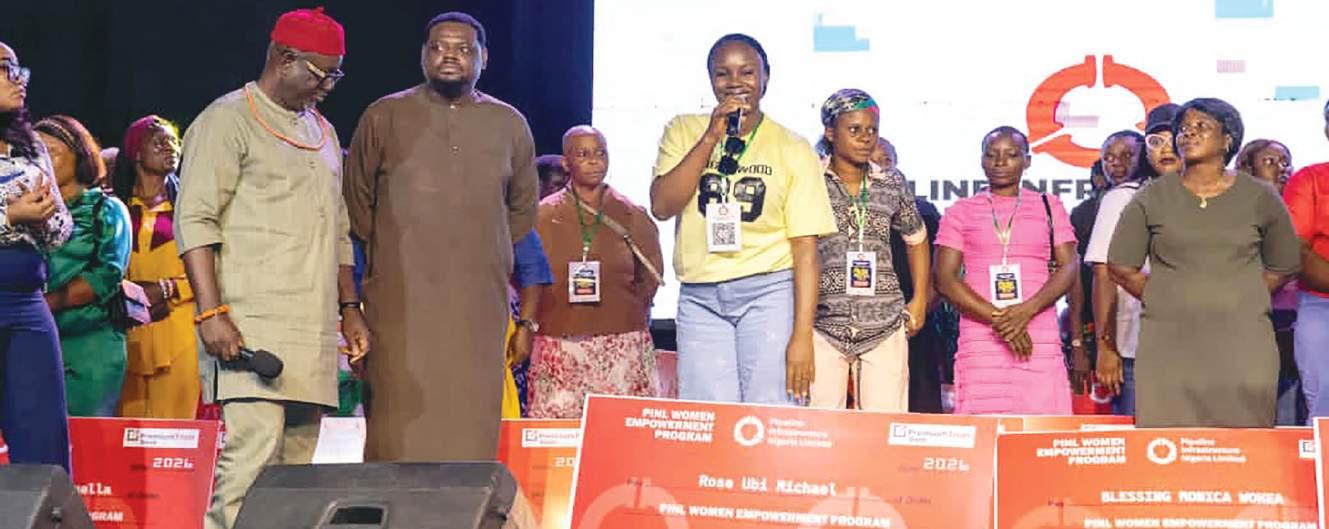
Some of the beneficiaries of the women empowerment scheme of the Pipeline Infrastructure Nigeria Limited (PINL), during the PINL monthly stakeholders engagement in Port Harcourt ... yesterday
Alex Enumah in Abuja
The National Judicial Council (NJC), has recommended the appointment of Justice James Omotosho, Justice Emeka Nwite and 10 others as Justices of the Court of Appeal.
The council took the decision at its 111th Meeting held on May 13, 2026, under the Chairmanship of the Chief Justice of Nigeria (CJN) Justice Kudirat Kekere-Ekun.
The others are; Justice Yakubu, Abdulhammeed Mohammed; Justice Abodunde, Monisola Oluwatoyin; Justice Ajuwa, Raphael; Justice Abua, Elias Ojie; Justice Ijohor, Mbalamen Jennifer; Justice Shuaibu, Sabiu Bala; Justice Buba, Dauda Njane; Justice Kado, Sanusi; Justice Ademola, Enikuomehin; and Justice Dadom, Julcit Veronica.
Meanwhile, the NJC also recommended one candidate for appointment as Judge of the High Court of Benue State and two candidates for appointment as Kadis of the Sharia Court of Appeal, Katsina State.
According to a statement by NJC’s Deputy Director, Information, Kemi Babalola-Ogedengbe, “These recommendations are intended to fill vacancies arising from the elevation and retirement of Judicial Officers across various
levels of the Judiciary and to strengthen the capacity of courts for effective justice delivery”.
The NJC stated that all recommendations followed a rigorous selection process involving public scrutiny, evaluation of complaints received from stakeholders, and interviews conducted by a ninemember Interview Committee, in accordance with the 2023 Revised NJC Guidelines and Procedural Rules for the Appointment of Judicial.
Meanwhile the NJC extended the acting appointment of Justice ljeoma O. Agugua as Acting Chief Judge of Imo State for a further period of three (3) months with effect from March 26, 2026 — 26 June 2026 to allow for completion of the process for appointing a substantive Chief Judge.
This is just as the council commended Justice Ononeze-Madu for declining to be sworn in contrary to established constitutional procedure, describing the action as a demonstration of institutional integrity and respect for the rule of law.
“The Council reiterated its call on the Imo State Judicial Service Commission to expedite the process of appointment of a substantive Chief Judge in order to ensure stability, safeguard judicial
independence, and enhance the effective administration of justice in the State”, the statement read in part.
It however disclosed that the Council rejected appeals filed by eight judges of the Imo State Judiciary seeking a reversal of their compulsory retirement from service over age falsification.
The rejection according to the statement was based on the fact that the affected Judges failed to
present fresh evidence capable of justifying a reversal of the sanctions imposed on them.
While disclosing that the Council considered 13 investigation reports on petitions filed against Judicial Officers across the country over the handling of cases before them, the statement noted that eight of the petitions were dismissed for lack of merit, want of diligent prosecution or for being time barred, adding that “sanctions
including one-year suspension without pay were imposed in 2 cases where misconduct was established.
“Specifically, the Council suspended Hon. Justice Ibrahim D. Shekarau of the High Court of Nasarawa State for one year without pay for judicial misconduct involving the grant of an ex parte order in breach of Rules 3.1, 3.3 and 3.5 of the Revised Code of Conduct for Judicial Officers of the
Federal Republic of Nigeria, 2016. The suspension followed a petition by Oluwafunke Obale Ozozoma over proceedings in Suit No. NSD/MG56M/2025.
“Similarly, the Council suspended Hon. Justice Edward A. E. Okpe of the High Court of the Federal Capital Territory for one year without pay over allegations of breach of fair hearing in a matrimonial case”, the statement added.
DSS, Police wade into party crisis, summons Wabara, Turaki for impersonation
The Nyesom Wike-led Peoples Democratic Party (PDP), has disclaimed the alleged alliance between the Tanimu Turaki-led faction and the Allied Peoples Movement (APM).
Addressing a press conference on the alliance meeting in Abuja, the National Publicity Secretary of the party, Mohammed Jungudo, said it was the outcome of desperation on the side of Governor Seyi Makinde and Tanimu Turaki.
‘’Let us state clearly and unequivocally that the PDP is not part of any alliance, coalition, agreement,
or political arrangement with the Allied Peoples Movement APM or any other political party regarding this gathering or any related political activity.
‘’Any person or group claiming to be acting on behalf of the PDP in connection with this event is doing so without the knowledge, approval, consent, or authority of the party.
‘’What is being presented to Nigerians as a political alliance is nothing more than another desperate attempt by Governor Seyi Makinde and his associates to mislead the public and manufacture a false impression of political relevance
and support.
‘’Governor Makinde must stop attempting to camouflage his political intentions through false claims of alliances and consultations. It is obvious that ego and pride have made it difficult for him to accept the reality of his growing political isolation and failed calculations
‘’Just like Governor Bala Mohammed who earlier moved to the APM, Nigerians can now clearly see that today’s gathering in Ibadan is simply a public celebration of Governor Makinde’s movement to the APM and nothing more. His attempts to destroy the PDP have finally been
exposed and his agenda has fallen flat,’’ Jungudo stated.
He added that it was unfortunate that in recent times, Makinde and others have continued to sponsor media attacks and propaganda aimed at deliberately distorting and misrepresenting the Supreme Court judgment in order to create confusion within the party and among Nigerians. He, however, explained that it has now become obvious that party members and Nigerians generally have refused to follow him on this journey of political deception and personal ambition.
House, Old Ife Road, Ibadan.
Speaking at the signing and presentation of the MoU, a member of the PDP Board of Trustees (BoT), Dr. Eddy Olafeso, thanked Makinde for bringing new energy and unity among the political leaders.
Olafeso praised Makinde’s strategic capacity and management of resources as the governor of Oyo State.
The governor later led the PDP and APM leaders, top government officials, and political functionaries to Mapo Hall, where party loyalists had converged for the mega rally.
At the rally, Chairman of PDP in Oyo State, Hon. Dayo Ogungbenro, said the unity rally was the climax of the alliance between PDP and APM following the signing of the MoU.
Ogungbenro described the development as the beginning of good things for Oyo State and Nigeria, assuring that the alliance of the two political parties would produce the president and governors, as well as national and state assembly members in the 2027 elections.
In their separate goodwill messages, former governor of Osun
State, Olagunsoye Oyinlola, and PDP National Vice Chairman, (South-East), Chief Ali Odefa, stat-ed that the alliance of the two political parties was a direct result of the ruling APC’s failure to keep its numerous campaign promises.
They added that Nigeria could not afford to operate a one-party system, saying the citizens are coming together to ensure an end to the incompetence of the APC administration in the country.
In their remarks, National Chairman of APM, Yusuf Dantalle, and National Secretary of the party, Hon.
Oyadeyi Ayodele, congratulated Makinde and the leaders of the parties on the alliance. They stressed that APM and PDP had begun to work together to ensure that Nigeria reclaimed its pride of place as one of the best countries in Africa.
The two events – signing of the MoU and declaration rally – had in attendance Deputy Governor of Oyo State, Bayo Lawal; former Deputy Governor of Oyo State, Hamid Gbadamosi; Speaker, Oyo State House of Assembly, Hon. Adebo Ogundoyin; and former Speaker, Oyo State House of
Assembly, Senator Monsurat Sunmonu.
There were also serving House of Representatives members of the party in Oyo State as well as governorship, senatorial, and House of Assembly aspirants.
Equally in attendance were APM National Vice Chairman (SouthWest), Hon. Peter Olabanji; APM National Women Leader, Hajia Hafsat Usman; APM Chairman, Oyo State, Hon. Adegbenro Fagbemi; PDP Chairman, Ekiti State, Hon. Tunji Odeyemi; PDP Caretaker Chairman, Osun State,
Hon. Babatunde Tijani, and PDP Chairman, Lagos State, Dr. Amos Fawole.
Top government functionaries, including Chief of Staff to the Governor, Otunba (Dr.) Segun Ogunwuyi; Chairman, Ibadan Airport Upgrade Committee, Hon. Bimbo Adekanmbi; Deputy Chief of Staff, Hon. Kazeem Adeniyi; Chairman, Oyo State Elders’ Council, Dr Saka Balogun; commissioners, special advisers; executive assistants; special assistants; and other PDP stakeholders were also in attendance.
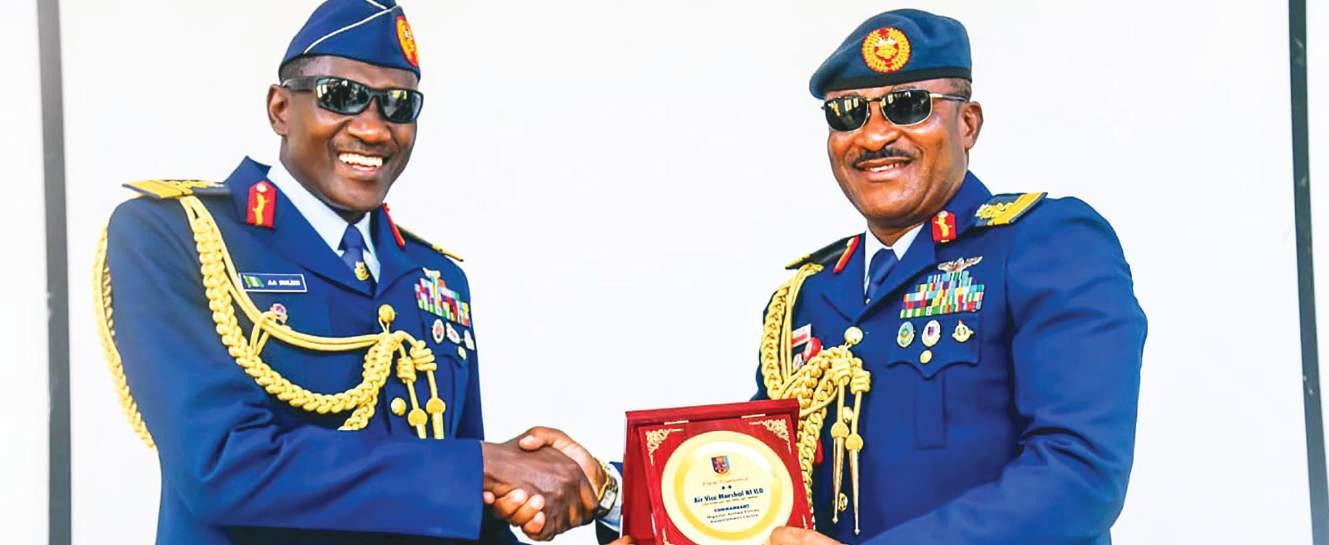
L-R: Special Guest of Honour, Air Vice Marshal Abubakar Sule, Air Officer Commanding Logistics Command, Nigerian Air Force, Lagos, with the Commandant of the Nigerian Armed Forces Resettlement Centre (NAFRC), Oshodi, Air Vice Marshal Nnaemeka Ignatius Ilo, during the inauguration of the Senior and Mid Level Entrepreneurship and Management Course 18/2026 to equip military officers with entrepreneurial, managerial and leadership skills for effective post service life
62% to $2bn
Company pays $23.8bn to 26 countries it operates
Emmanuel Addeh in Abuja
Shell plc has reported a sharp decline in payments to the Nigerian government for 2025, with remittances dropping by over 62 per cent to $2.02 billion following the company’s divestment from onshore oil assets in the country.
Figures contained in Shell’s latest “Payments to Governments” report showed that Nigeria received $2.02 billion in 2025, down from the $5.34 billion paid in 2024, when the country ranked as the company’s largest global beneficiary.
The latest payout comprised $1.24 billion in production entitlements, $236.99 million in taxes, $454.03 million in royalties and $87.90 million in fees.
Globally, Shell’s payments to governments also declined by about 15 per cent to $23.8 billion in 2025, compared to $28.1 billion recorded in 2024. The payments covered production entitlements, taxes, royalties, bonuses, fees and
infrastructure-related obligations across 26 countries where the energy major operates extractive assets.
The decline in Nigeria’s receipts came amid Shell’s continued withdrawal from onshore operations in the Niger Delta, where years of crude theft, pipeline vandalism, operational disruptions and environmental liabilities had weighed on operations.
The company recently completed the sale of its onshore subsidiary assets to a consortium of indigenous firms as part of a broader restructuring strategy.
With the reduction in Nigerian remittances, Brazil emerged as one of Shell’s biggest government payment destinations, reflecting the company’s growing offshore production activities in the South American country, especially in its deepwater pre-salt fields. Norway, Qatar, Malaysia and Oman also ranked among the highest recipients of Shell’s payments during the year.
Shell stated that production entitlements globally totalled $8
billion in 2025, while tax payments stood at $10 billion and royalties at $3.8 billion. The company also paid $360.6 million in bonuses and $1.6 billion in fees during the period.
The report, prepared under
the UK Reports on Payments to Governments Regulations 2014, covered payments made by Shell and its subsidiaries for oil, gas and mineral extraction activities. It excludes refining and certain
gas-processing operations unless they are part of fully integrated upstream projects.
Shell Plc paid $5.34 billion to the Nigerian government in 2024, the largest amount it remitted to any
country, even as it then continued to divest from its onshore oil operations in Africa’s largest crude producer. But the 2024 figure represented a sharp increase from the $3.8 billion Shell paid to Nigeria in 2023.
Blames opaque ownership structures, foreign dominance, others Says 80% of mining in North-West done illegally
Addeh in Abuja
The Nigeria Extractive Industries Transparency Initiative (NEITI) has listed opaque ownership structures, informal artisanal mining, foreign buyers’ dominance and weak regulatory capacity as key factors enabling Illicit Financial Flows (IFFs) in Nigeria’s solid minerals sector.
Besides, the organisation, in a statement in Abuja yesterday, blamed fragmented institutional coordination and criminal infiltration of mining zones as other major reasons for the leakages in the sector.
In the statement extracted from its Policy Brief titled: “Stemming the Scourge of Illicit Financial Flows in Nigeria’s Mining Sector,” NEITI
Deji Elumoye in Abuja
Nigeria will emerge as a model for economic transformation in Africa following the far-reaching reforms implemented by the administration of President Bola Tinubu, with increasing investor confidence and expanding opportunities across key sectors of the nation’s economy.
Minister of Finance and Coordinating Minister of the Economy, Mr Taiwo Oyedele, disclosed that on Thursday while speaking with newsmen at the two-day Africa CEO Forum in Kigali.
Oyedele said although the reforms undertaken by the administration were difficult, they were necessary measures aimed at laying the foundation
for long-term economic stability, sustainable growth, and national competitiveness.
He stressed that Africa’s development conversation had moved beyond rhetoric to practical implementation, with increasing focus on scale, speed, institutional credibility, and sustainable eco- nomic transformation.
Oyedele stated that Nigeria, as Africa’s largest economy by population and market opportunities, had demonstrated that bold reforms were achievable and capable of delivering measurable gains when pursued with political will and strategic commitment.
He stated, “From the AFRICA CEO Meeting, Nigeria has done a lot of very transformative reforms
that for Africa is not just about Africa saying we should do this we should do that, we now have the example in Nigeria, still the largest economy by scale, by opportunities, by population, seeing that we have done it.
“It wasn’t meant to be easy but it was necessary and now we are on that track towards winning and getting all the gains of those reforms. So Africa is at a point where we are today, particularly for the forum, the conversation is around scale and is also around speed as well as credible institutions.
“How can we ensure that Africans we come together so that the world can pay attention to us?
“There are issues to deal with,
how do you raise finance for development, not just focusing on extraction, but value addition? How do you ensure that you can stimulate growth in labour intensive sectors, agriculture, manufacturing, industry services, technology, so that we can lift our people out of poverty?
“I think the leaders in the room recognised that the time for rhetoric is over and it is now time for execution.”
He described Tinubu as the country’s “chief marketer”, stating that the president has continued to lead high-level engagements aimed at attracting investment into critical sectors, including power, mining, port development, and private enterprise.
noted that Nigeria’s mining sector is widely regarded as a cornerstone for economic diversification.
With commercially viable deposits such as gold, lithium, limestone, and gemstones, NEITI said the sector should be a major revenue driver. Despite this endowment, the NEITI 2023 industry audit report, it explained, disclosed that the sector contributed only N401 billion in revenue and accounted for 0.72 per cent of Gross Domestic Product (GDP).
The policy brief explained that the stark underperformance is driven by illicit financial flows that continue to erode the sector’s potential by facilitating revenue leakages and tax evasion, illegal mining and smuggling activities, corruption and weak institutional oversight, and money laundering linked to organised criminal networks.
In addition, the study’s findings established that IFF enablers in Nigeria’s mining sector are systemic rather than incidental, embedded across institutional arrangements, market structures, data systems, and security environments.
“(There is) severe fragmentation of regulatory oversight across institutions, including the Ministry of Solid Minerals Development (MSMD), the Mining Cadastre Office (MCO), NEITI, Nigeria Customs Service, Nigeria Financial Intelligence Unit (NFIU), and relevant state agencies.
“Each institution collects sectorrelevant data in silos, with limited interoperability and no integrated sector-wide digital monitoring system,” the NEITI brief stated.
Furthermore, the publication identified weak data governance and insufficient enforcement of beneficial ownership (BO) disclosure as a structural enabler of illicit flows; one that makes most other illicit pathways possible and, critically, undetectable.
It explained that persistent reliance on manual record-keeping, non-verifiable production reporting, and incomplete export documentation significantly reduces transparency across the mining value chain.
“Mining licenses are frequently held through special purpose vehicles, shell companies, and layered corporate structures that obscure the natural persons who ultimately own or control extractive assets.
“Verification of beneficial ownership information across the MSMD, MCO, and the Corporate Affairs Commission (CAC) remains limited, fragmented, and largely reliant on self-declaration. This opacity allows Politically Exposed Persons (PEPs), undisclosed foreign interests, and criminal actors to conceal control over mining operations thereby facilitating corruption, money laundering, trade misrepresentation, and regulatory capture.
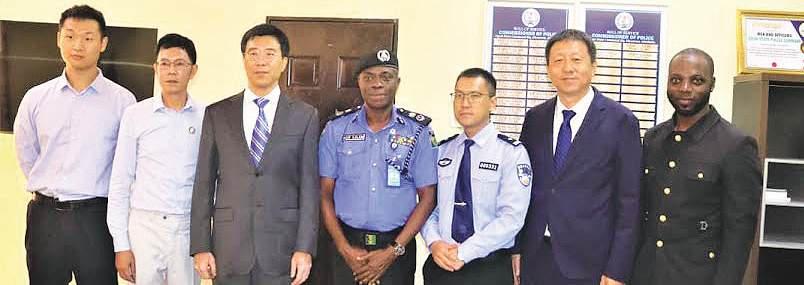
to the Ogun State Police Command in Abeokuta…recently
amby Uneze in Owerri
Suspected Fulani bandits on Wednesday evening attacked the Federal University of Technology, Owerri (FUTO) communities comprises Ihiagwa, Eziobodo, and Okolochi, kidnapping many and injuring scores.
Those witnessed the incident told journalists how innocent people plying the Ihiagwa - Eziobodo FUTO road were shot sporadically, kidnapped, and some
The remains of the Founder and Chief Executive Officer of Quaint Agencies Limited, Prince Ibukun Adebambo ‘Bambo’ Ademiluyi, will be laid to rest on May 22, 2026.
I, formerly known and Addressed as SIKO TAMUNO-DIMA, PATIENCE, now wish to be known and Addressed as SIKO-NWABUEZE TAMUNO-DIMA, PATIENCE. All documents bearing my former name still remain valid, general public should please take note.
I formerly known and addressed as EhighibE KElEchi chibunna, now wish to be known and addressed as EhighibE KElEchi chibunna OnyinyEchi. All former documents remain valid. JAMB & NYSC to take specific note, and general public.
I formerly known and addressed as Miss OyEladE adEbOla OyindaMOla, now wish to be known and addressed as MRs awOyEMi adEbOla OyindaMOla. All former documents remain valid, the general public should please take note.
I formerly known and addressed as azeke Racheal, now wish to be known and addressed as azeke Omuekpen Racheal. All former documents remain valid. The general public should please take note.
I formerly known and addressed as EgbEyOn PaTRicia anThOny, now wish to be known and addressed as EMOVOn PaTRicia didi
All former documents remain valid. The general public should please take note.
I formerly known and addressed as abass MOduPE OlayinKa, now wish to be known and addressed as OduPiTan MOduPE OlayinKa All former documents remain valid. The general public should please take note.
Prince Ademiluyi, regarded as one of the notable figures in Nigeria’s oil and gas sector, was a pioneer founder and trustee of the Nigeria Liquefied and Compressed Gases Association (NLCGA). He also served as the foundation chairman of the association’s Safety and Technical Committee, where he was recognised for promoting high technical and safety standards in the petroleum products industry.
According to the funeral programmes released by his family, a tribute night was be held on May 14, 2026, at the Yoruba Tennis Club, Lagos, by 5 p.m., while a Service of Songs and Christian Wake is scheduled for May 20, 2026, at the Progressive Primary School, Mba Street, Surulere, Lagos, by 5.00 p.m.
A commendation service will take place on May 21, 2026, at the Bishop Adelakun Howells Memorial Anglican Church, Hoggan Bassey Crescent, Surulere, Lagos, at 9.00 a.m. Later the same day, a wake will be kept, and a lying-in-state will be held at the family compound in Akodi, Ile-Ife, Osun State, by 6.00 p.m.
The funeral service is billed for May 22, 2026, at St. Philip’s Anglican Church, Ayetoro, IleIfe, at 9.00 a.m. with interment immediately after the service. Guests will thereafter be hosted at the Ojaja Resort Event Centre, Ile-Ife.
An outing service will conclude the funeral rites on May 24, 2026, at Our Saviour’s Anglican Church, Adebola Street, off Adeniran Ogunsanya, Surulere in Lagos, by 9.00 a.m.
sustained bullet wounds by the bandits. Many injured persons told onlookers how they were attacked on their way as the suspected Fulani
herdsmen, numbering over 30, surrounded the road, shooting passersby and kidnapping those they could stop while carrying out their nefarious act.
The lucky victims were rushed to the Federal Medical Centre, Owerri, while others were taken to different hospitals within the vicinity.
Confirming the attack, the
Imo State Police Command said it has strengthened security deployment in the areas, assuring citizens that the perpetrators would be apprehended.
Folalumi alaran in abuja
The Congress of Northern Democrats (CND) has accused former Vice President Atiku Abubakar of allegedly destabilising opposition politics and undermining northern interests through what it described as his “perpetual presidential ambition.”
The group alleged that the former vice president had consistently placed personal ambition above opposition unity, national renewal, and generational transition.
In a statement issued by the Chairman of the group, Musa Adamu, the CND expressed disappointment over reports that Atiku may
be preparing for what would be his seventh attempt at the presidency ahead of the 2027 general election.
According to the statement, Nigerians are currently battling hunger, insecurity, inflation, unemployment, and worsening economic hardship, conditions which require opposition leaders to unite around a credible rescue agenda rather than engage in what it called endless political calculations. Adamu said: “At a time when millions of Nigerians are crushed by hunger, insecurity, unemployment, inflation, and deepening economic despair, the opposition ought to be rallying around a coherent national rescue agenda.
ayodeji ake
T The Lagos State Government has unveiled sweeping healthcare financing, workforce, and infrastructure reforms aimed at expanding health insurance coverage, improving service delivery, and positioning Lagos as a leading healthcare destination in Africa.
Speaking during the 2026
Ministerial Press Briefing held at the Bagauda Kaltho Press Centre in Alausa, Ikeja, the state Commissioner for Health, Prof. Akin Abayomi, disclosed that the state was intensifying efforts to close an estimated N100 billion gap between existing healthcare funding and the resources required to meet the demands of Lagos residents.
The briefing was part of
activities marking the seventh anniversary of the administration of Governor Babajide SanwoOlu and Deputy Governor Obafemi Hamzat.
Abayomi explained that Lagos currently allocates about eight per cent of its annual budget to healthcare, far below the 15 per cent benchmark recommended under the Abuja Declaration. He
said the shortfall, coupled with increasing healthcare demands in a rapidly growing megacity, had made alternative funding sources inevitable.
According to him, the state government has identified mandatory health insurance and stronger public-private partnerships as the major solutions to ensuring sustainable healthcare financing.
The Governor of Ondo State, Lucky Ayedatiwa, has called on leaders and members of the All Progressives Congress(APC) in Ondo South Senatorial District to ensure the victory of the consensus candidate of party , Hon. Dr. D I Kekemeke at the party’s
primary electt fu9ibh21ion.
The governor made the appeal during the party’s stakeholders’ meeting at Igbokoda , Ondo State, telling the party members that the decision to pick Kekemeke as the consensus for the Ondo South Senatorial District was driven by
fairness, equity and justice .
The governor, represented by his Chief of Staff, Prince Segun Omojuwa, further added that President Bola Ahmed has been endorsed and adopted by the party in the state for the 2027 presidential elections.
Following the disclosure of the party’s position at the gathering, the leaders and members adopted and reaffirmed Kekemeke’s candidacy as the best , capable of providing a strong voice and presence at the National Assembly for Ondo South and the Government of Ondo State.
Hammed shittu in Ilorin
About 105 House of Assembly aspirants of the All Progressives Congress (APC) in Kwara State have been disqualified from seeking the ticket of the party ahead of the 2027 elections. About 158 aspirants of the party were screened last Tuesday in Ilorin by the
national officers of the party. However, THISDAY checks yesterday revealed that the outcome of the screening exercise was pasted at the APC secretariat in Ilorin.
It was gathered that several serving lawmakers seeking second and third terms were among those declared “uncleared” by the party’s
screening committee.
The affected aspirants, it was learnt, were listed in a document titled: ‘All Progressives Congress (APC) for the Nomination of Candidates for the 2027 General Election’.
THISDAY further learnt that out of the 158 aspirants who obtained nomination forms for
the state House of Assembly election on the platform of the APC, only 53 were cleared to proceed in the race. All lawmakers from the Kwara Central senatorial district seeking re-election were reportedly cleared, except the member representing Alanamu/Ajikobi constituency, Hon. Ayishat Tundun Alanamu.
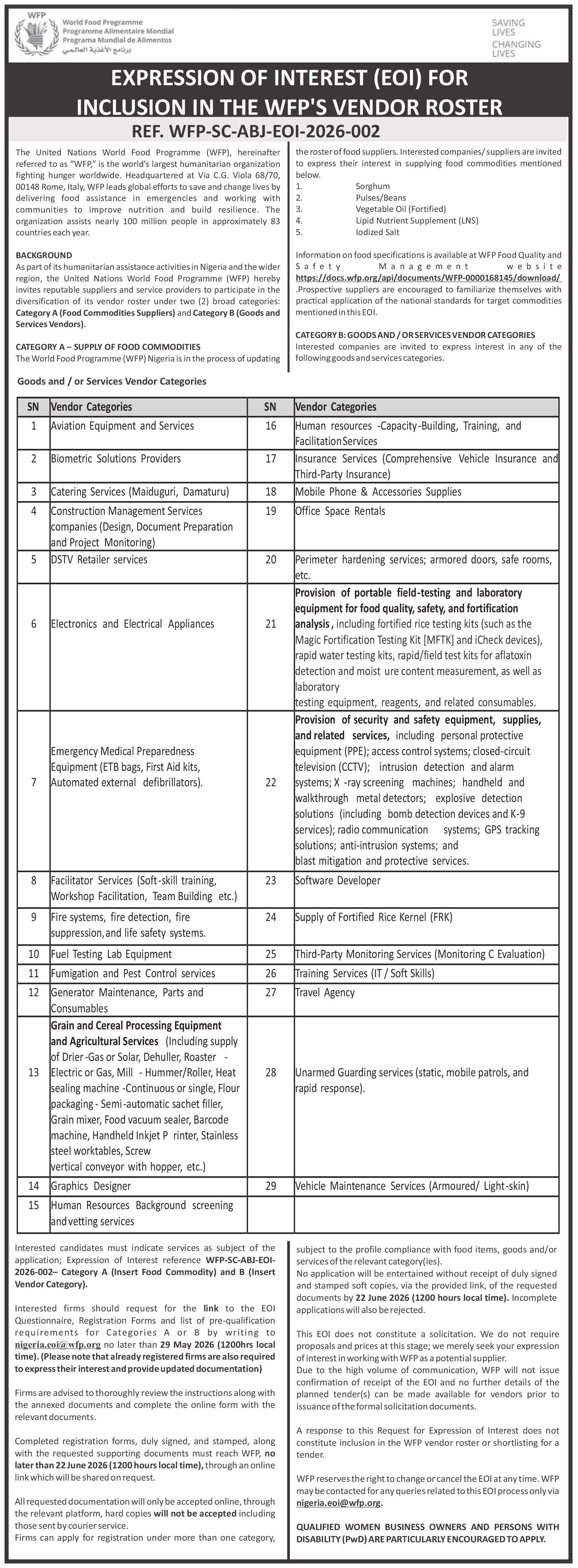

and actually winning the election, forcing them to pull the plugs and glitch the process. They are on their guards this time.
The game plan today is to bar Obi from the ballot by any means necessary. The logic, of course, is that you have to be in a race before you can cause an upset.
Using captured state institutions like INEC and the judiciary, the ruling party and its collaborators pursued Obi with a shameless singularity of mind from Labour Party to the ADC, mocking that he would not participate in the next election. Not as a presidential candidate, not even as a running mate.
The old guard didn’t only want to stop Obi, they sought to end his political career in disgrace and ignominy.
But it’s credit to his genius that he beat them in their game yet again when he decamped to the newly registered National Democratic Congress (NDC). They didn’t see it coming.
Always one step ahead of them, they were left roiling in the muck. The political arena has been agog since Obi made this historic move last week. Now he’s attacked, not just by the hounds of the ruling APC but by his erstwhile allies in the ADC. They too were caught with their pants in their hands.
At a loss for words and befuddled as their worlds collapse before them, they resort to outright abuses and inelegant pontifications.
Some call Obi a political harlot while some accuse him of vaulting ambition. Defeated in their game, the APC took solace in claiming victory as according to them, the opposition vote has been dissipated as in 2023.
Atiku Abubakar is already the biggest loser in the coming elections and emerging power game. With Rabiu Musa Kwankwaso joining the ADC, it was obvious to even a political neophyte that an Obi-Kwankwaso ticket was the big deal. But Atiku had instead, dug in, granting that disingenuous
interview where he cut down both Obi and Kwankwaso while insisting on running.
That interview was the turning point, the sword in the heart of ADC. How Atiku couldn’t see that his backing of an Obi and Kwankwaso ticket was a sure bet remains a mystery. In fact, his obduracy has led many pundits to suggest he (along with Dele Momodu) are Tinubu moles in ADC. While he has sneaked to pick the ADC so nomination form, it must be obvious even to him that his political career ended the day the OK movement coalesced into one force. So goodbye to Atiku... About time too, many Nigerians would chorus.
OBI-KWANKWASO
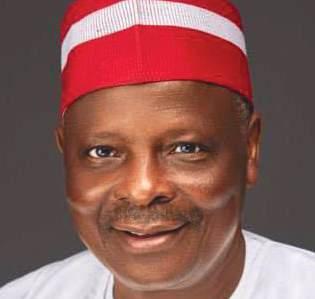
The coming together of Peter Obi and Rabiu Kwankwaso as candidate and running mate must be the biggest political combination in Nigeria’s post-independence politics.
Not since the First Republic era of Zik, Awo and Ahmadu Bello have politicians commanded such organic following as we see today in the duo. If Kwankwaso can become less insular by reaching out to more northern leaders, if he campaigns well, more vigorously across north as Obi is doing around Nigeria, the NDC stands a good chance of sweeping the polls in 2027.
With Obi swearing to a one-term-four-year tenure, Kwankwaso will ease in as president in 2031. He will emerge as not just the new face of northern leadership but champion of a new, reformed Nigeria.
FROM PRETENSE TO RIGOUR: RESTORING THE DOCTORATE’S TRUE WORTH enters the marketplace of flattery, it diminishes its own moral power.
The misuse of “Dr” by honorary degree recipients deepens the problem. The issue is not vanity alone; vanity is present, but the deeper issue is misrepresentation. In public life, most people do not distinguish between an earned and an honorary doctorate. A person introduced as “Dr” is assumed to have advanced academic training. The title implies expertise. It can boost credibility in politics, business, media, public policy, and professional circles. When an honorary recipient uses the prefix without qualification, confusion follows.
The Federal Government’s recent decision to prohibit honorary doctorate recipients from prefixing “Dr” to their names deserves firm and unequivocal support. It is not an act of academic snobbery; it is a necessary defence of truth in public life. The policy rightly insists that honorary degrees may be acknowledged as post-nominal distinctions but not presented as earned academic qualifications.
Nigeria is also not acting in isolation. Across Africa, regulators are beginning to confront the same distortion. Ghana’s Tertiary Education Commission has directed holders of honorary doctorate and professorial titles to stop using them publicly, warning that misuse undermines academic credibility and may attract sanctions. Ethiopia has similarly barred honorary doctorate holders from using “Doctor” outside the awarding institution and has restricted serving political actors from receiving such honours. In South Africa, the Council on Higher Education has developed a Good Practice Guide to restore rigour, clarity, and consistency in the award of honorary degrees and professorships, including the use of associated titles.
These examples show that Nigeria’s policy is part of a wider continental correction: academic titles must not become costumes for status-seeking; they must remain markers of earned discipline, verified competence and institutional integrity. There is also an injustice that is too often ignored. Every unearned title casually worn diminishes the symbolic value of titles earned through sacrifice. It mocks the young scholar balancing teaching duties with doctoral research. It reduces the likelihood that the lecturer will publish under difficult conditions. It insults the scientist working in an underfunded laboratory, the policy researcher collecting data in insecure communities, the historian buried in archives, and the public intellectual whose authority has been built slowly through evidence and discipline.
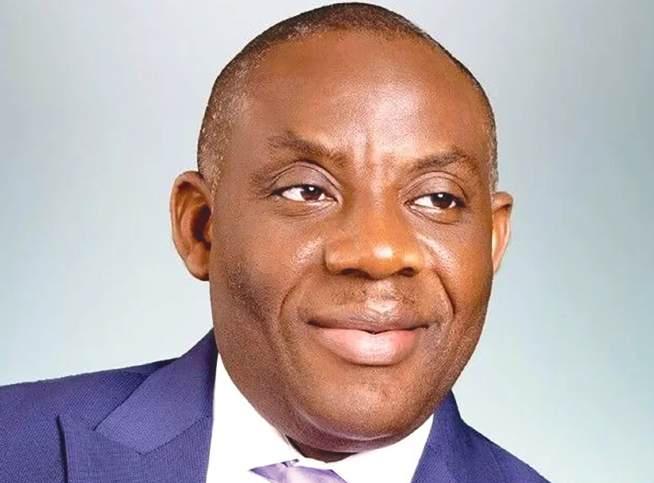
When the same title is worn by those who have merely received ceremonial recognition, the line between achievement and flattery is blurred.
Universities must accept responsibility for this anomaly. Outsiders cannot cheapen what institutions do not allow. If honorary doctorates are overused, it is because councils, senates, and committees have surrendered to pressure, politics, money, or convenience. Some institutions now treat honorary degrees as public relations tools. They attract donations, reward political patrons, flatter influential figures, or buy visibility. The gain may seem useful, especially during underfunding, but the long-term cost is severe. A university that sells prestige eventually sees that prestige is its most valuable asset.
Restoring credibility requires more than a complaint. It requires reform.
First, honorary doctorates must return to rarity. Scarcity is part of honour. A university should not confer such degrees as though distributing souvenirs at a banquet. There should be strict annual limits, and exceptions should be almost impossible to obtain. The fewer the awards, the more serious each one must be.
Second, the criteria must be public, specific, and
defensible. “Distinguished service” is too vague in societies shaped by patronage. Distinguished in what field? Measured by what evidence? Over what period? With what independent verification? Wealth, political office, or popularity alone should never qualify anyone. Even generous philanthropy must be examined. The honour should recognise real social transformation, not indebtedness.
Third, the selection process must be free from political and financial pressure. Universities should disclose broad reasons for awards and any potential conflicts of interest. If a major donor is honoured, the public must know the degree is not just a decorated receipt. If a serving politician is recognised, the justification must be even higher. Institutions must be careful when honouring those in public office, as recognition can easily turn into lobbying.
Fourth, recipients should be told not to use “Dr” as a public title. They may state they received an honorary doctorate from a named institution. That is enough honour. A ceremonial award should not become a tool for personal rebranding. Universities should make this clear in award letters, citations, and announcements. Media, government protocol offices, and professional bodies should stop reinforcing confusion by referring to honorary
This column opines that the time for the final liberation of Nigeria may have come. The elements, psychic and cosmic seem to be in agreement. Heaven and earth may have risen in unison to deliver Nigeria and set her in the paths of light and liberty so that she may begin to explore her rich potentials and bask in her abundant glory. It’s not by chance that Obi and Kwankwaso, two great men of the people are coming together.
Old things shall pass away, a new Nigeria is set to begin ... the ancient regime must fall! ###
recipients as “earned doctorates.”
Fifth, regulatory authorities must move beyond polite guidance. The National Universities Commission and relevant academic bodies should establish enforceable standards for honorary awards, including caps, disclosure rules, eligibility requirements, sanctions for abuse, and mechanisms for revocation when honours are tainted by improper influence. Professional associations should apply similar discipline to fellowships and honorary titles.
Prestige survives, but regulation alone cannot cure a moral disorder. The deeper challenge is cultural. Societies get the title culture they tolerate. As long as citizens worship titles without questioning substance, institutions will keep producing them. If the media keep amplifying every new “Dr” without clarification, confusion will deepen. If political actors keep collecting ceremonial honours, the academy will stay vulnerable to capture. The goal is not to abolish honorary doctorates. It is to rescue them. A truly deserved honorary doctorate can still be beautiful. It can remind society that knowledge is not limited to classrooms. Some lives become textbooks of courage, service, and imagination. But this beauty depends on restraint. The more casually honours are given, the less honourable they become. At stake is more than academic protocol. The abuse of honorary doctorates reflects a national habit of rewarding appearance over achievement. It is closely related to inflated résumés, purchased awards, empty ceremonies, and institutions confusing proximity to power with excellence. To confront this, we must ask a deeper question: what kind of society do we want to become? Do we want distinction to be earned or arranged? Do we want institutions to defend truth or flatter influence? The doctorate must mean something again. The professoriate must mean something. Fellowships must matter. Academic titles should not be status ornaments; they should mark disciplined contribution. To restore their worth, universities must regain the courage to say no—to donors, politicians, celebrities, trustees, friends, and benefactors. Their highest asset is not money, access or applause. It is credibility. Once credibility is squandered, no honorary citation can restore it. But if institutions choose rigour over pretense, restraint over proliferation and merit over patronage, the doctorate can regain its dignity. And perhaps, in defending the sanctity of one title, society may begin the larger work of defending truth itself. •Dr Dakuku Peterside is the author of Leading in a Storm and Beneath the Surface.
Duro Ikhazuagbe
Winning the UEFA Champions League has been described as the missing link in Victor Osimhen’s rising profile before he can truly be rated amongst
the world’s best strikers.
Africa’s richest man, Billionaire Aliko Dangote, has restated that his $20 billion refinery project in Lagos prevented him from buying into English Premier League club, Arsenal.
In a podcast broadcast by Nicolai Tangen, Chief Executive Officer of Norges Bank Investment released on YouTube Wednesday, Dangote said that if not for the refinery project, he would have bought the North London Gunners.
According to Dangote, Arsenal was worth about $2 billion at the time he was seriously considering a takeover, but the magnitude of his refinery project did not allow him the luxury of diverting funds to a football club ownership.
“When I was really very focused on buying Arsenal, then I was also facing the challenge of making sure the refinery gets its own completion, the fertilizer, the petrochemical.
At that time, Arsenal was worth just about $2 billion. Should I put my $2 billion in Arsenal and now allow the business to suffer? Or should I complete the business? Then I can continue to remain a very big supporter of Arsenal,” recalled the billionaire businessman.
He reveals that he chose to continue
has achieved with Galatasaray since moving there from Italian side, Napoli, but he needs to move to one of Europe’s big clubs to stand the chance of winning the Champions League.
that Osimhen will move to one of the big clubs this summer, just like Ademola Lookman dumped Atalanta for Atlético Madrid.
Speaking on BrilaFm’s“No Holds Barred” morning show yesterday, former Nigeria and Inter Milan forward, Obinna Nsofor, insisted that he is happy for all that Osimhen media reported during the week that Galatasaray will not accept anything
Aliko Dangote...loyal Arsenal fan now after missing becoming an owner
backing the club as a loyal fan rather than as an owner.
“So I decided to continue to support them, watch their games. Any time Arsenal plays, I always wear the jersey signed for my by the Captain. I am a fan—it is better I remain a fan and continue to fund my business,” Dangote further observed in the podcast.
Dangote urged young Africans on the need for hard work and continental pride.
“My own advice to young African people is to work hard and also have the belief that the future is greater than the current situation that we’re in. Africa is a promising land and they should stay at home,” he said.
Carlo Ancelotti has extended his contract as Brazil manager until the 2030 World Cup.
The Italian was appointed to the post in May 2025 after his departure from Real Madrid and he has since secured Brazil’s qualification for the 2026 World Cup, which will take place in Canada, Mexico and the United States next month.
“From the very first minute, I understood what football means to this country,” said the 66-year-old.
“For the past year, we have been working to lead the Brazilian national team back to the very
top of the world stage.
“But the CBF (Brazil Football Federation) and I want more. More victories, more time, more work. We are very happy to announce that we will continue together for another four years.
“I want to thank the CBF for their trust.”
Ancelotti has had 10 games in charge of the South Americans, winning five, drawing two and losing three.
Brazil will be aiming to win a sixth World Cup, and the country’s first victory at the showpiece tournament since 2002, this summer.
English football enters a decisive week as the FA Cup final shares the spotlight with Premier League fixtures shaping the title race, European places and relegation battle. The games will be live on SuperSport.
The focus turns to Wembley on Saturday at 3:00 PM as Chelsea face Man City in the FA Cup final. City are chasing another domestic trophy after lifting the Carabao Cup, but arrive under pressure after losing the last two FA Cup finals. Chelsea, under interim manager Calum
McFarlane, see the final as a chance to win silverware and secure a direct route into Europe, given their league struggles.
City edged Southampton with late goals in the semi-finals, while Chelsea reached Wembley with a narrow win over Leeds. The result could also shape the final European qualification picture in the Premier League. The FA Cup fInal, alongside all Premier League matches, air live on SS Premier League (DStv Ch. 203, GOtv Ch. 65),
“The only thing I see stopping Victor Osimhen from being number one striker in the world is the UEFA Champions League. If he wins the UEFA Champions League no one will say he’s number three, you will say he is the best,” observed Nsofor who won Olympic silver medal with Nigeria’s U23 Dream Team at Beijing 2008 Olympic Games.
The former Nigerian international who won the Serie A title and the Supercoppa in 2009 with Inter Milan, stressed that it is his prayer
“Comparing Osimhen to strikers like Harry Kane and co right now, he’ll be considered outside the Top 3. So my prayer is that if there is possibility to leave Galatasaray this summer, he should go and take the opportunity.”
Osimhen who helped Galatasaray to a successful title defence in the Turkish Super Lig, has been told to decide his future even as he still has three years left on his contract that cost Galatasaray a hefty €75million to Napoli.
In the wake of renewed interests in the Nigerian striker, Turkish sporting


Kylian Mbappe and Ballon d’Or holder, Ousmane Dembele, will lead a star-studded France attack after Didier Deschamps announced his 26-man squad for this summer’s World Cup.
Only Olivier Giroud (57) has scored more than Mbappe’s 56 goals for France, with the Real Madrid forward expected to captain his country despite recent struggles with a thigh injury.
Dembele scored 35 goals and won the Champions League with Paris St-Germain last season to become only the second French player this century to win the Ballon d’Or but is yet to score at a World Cup despite featuring in the past two squads.
Bayern Munich’s Michael Olise and Dembele’s PSG team-mate Desire Doue complete an exciting attacking quartet while Man City playmaker Rayan Cherki and Arsenal
defender William Saliba are among seven Premier League-based players in the squad.
Full-back Lucas Hernandez and midfielder N’Golo Kante join Mbappe and Dembele as the only survivors from France’s 2018 World Cup-winning group.
Deschamps, who has led France to back-to-back World Cup finals, has made a few surprise calls ahead of his final major tournament as head coach.
There is no place in the squad Real Madrid midfielder Eduardo Camavinga or Tottenham’s Randal Kolo Muani – both of whom were involved in 2022.
PSG goalkeeper Lucas Chevalier also misses out, with uncapped Lens goalkeeper Robin Risser joining Brice Samba as back-up to Mike Maignan. Liverpool’s Huge Ekitike, who
After pulling two draws with Nigeria in the 2026 World Cup qualifiers that were part of the reasons Super Eagles failed to qualify for the Mundial, Zimbabwe have named a formidable Warriors squad for their Unity Cup semi-final clash against the three-time African champions in London later this month.
The Super Eagles are the defend-
suffered a season-ending Achilles injury in April, is a notable, but expected, absentee.
“It’s a squad. Not necessarily the 26 best players. It’s about balance and how the team comes together,” Deschamps told French TV channel TF1.
“I can imagine how disappointed (Camavinga) must be. He’s coming off a tough season where he didn’t play as much and suffered injuries. (But) I’ve got decisions to make and a squad to put together.”
France will begin their campaign against Senegal in New Jersey on 16 June, with further Group I matches against Iraq (22 June) and Norway (26 June).
France World Cup Squad
*Goalkeepers: Mike Maignan (AC Milan), Robin Risser (Lens), Brice Samba (Rennes)
*Defenders: Lucas Digne (Aston Villa), Malo Gusto (Chelsea), Lucas Hernandez (Paris St-Germain), Theo Hernandez (Al Hilal), Ibrahima Konate (Liverpool), Maxence Lacroix (Crystal Palace), Jules Kounde (Barcelona), William Saliba (Arsenal), Dayot Upamenaco (Bayern Munich)
*Midfielders: N’Golo Kante (Fenerbache), Manu Kone (Roma), Adrien Rabiot (AC Milan), Aurelien Tchouameni (Real Madrid), Warren Zaire-Emery (Paris St-Germain)
*Forwards: Maghnes Akliouche (Monaco), Bradley Barcola (Paris St-Germain), Rayan Cherki (Man City), Ousmane Dembele (Paris St-Germain), Desire Doue (Paris St-Germain), Michael Olise (Bayern Munich), Kylian Mbappe (Real Madrid), Jean-Phillipe Mateta (Crystal Palace), Marcus Thuram (Inter Milan)
ing champions of the Unity Cup tournament, scheduled to run from May 26 to 30, featuring Nigeria, Zimbabwe, Jamaica, and India. Yesterday, the Zimbabwe Football Association, unveiled the squad that includes many experienced players
based across Europe and Africa.
The Warriors, who have a new head coach in Kaitano Tembo, are expected to provide stern opposition to the Super Eagles whom they drew both home and away with during the 2026 FIFA World Cup qualifiers.
According to the organisers of the tournament, the Unity Cup aims to promote football unity and strengthen sporting ties among the participating nations through competitive matches.
Super Eagles Head Coach, Eric Chelle, announced recently that he is not likely to have full compliment of his top players for the tournament, a development that has made him extend invite to six players from the domestic topflight.
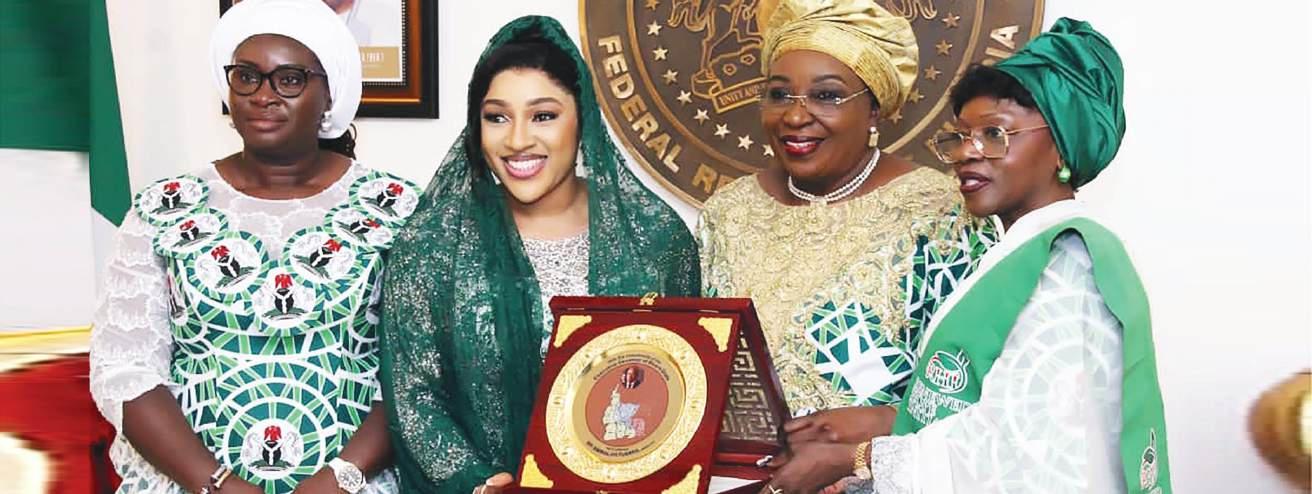
L-R: Wife of Rivers State Governor, Mrs Valeria
Former Minister of Humanitarian Affairs and Poverty
Edu representing the
of
Tinubu, Rivers State Deputy Governor, Prof. Ngozi Odu and the Wife of Chief of Staff to the President, Mrs. Salamatu Gbajabiamila, during the Renewed Hope Initiative (RHI) Social Investment Programme courtesy visit at the Government House, Port Harcourt,
There’s something divine about Peter Obi.
A grocery merchant, who ventured into politics in 2006, he has consistently proven that he’s of a different mold. He has shown the world that politics, which is generally perceived to be a “dirty game” isn’t that dirty after all. And even if it were, clean people can get involved and yet, not get swept into its sluiceways. He contested and won the governorship seat of Anambra State, when the place was run by gangsters and power barons and for eight years, he managed to prove that light would always overcome darkness. He also set a few new governance parameters during his tenure as governor.
Again, Peter Obi is not ordinary. In fact, he’s transcendental. Two decades, roiling in the muck and grime of Nigeria’s politics has today shown
him up as a man on a mission - a divine mission. He has to be the man who would bring about
a paradigm shift not only in Nigeria’s politics but in the entire spectrum of her social order. He seems primed to be the man to dislodge the ancient regime; the old brigade politicians who are choke-holding Nigeria since independence. Peter Obi may have been created for the sole purpose of abolishing now ingrained kleptocracy that has kept the country spell bound since it’s creation.
THE FINAL DENOUEMENT:
Obi’s gambit last week of doing a last minute backflip into another political space is nothing but a masterstroke. It’s reminiscent of what happened in 2022 during the run up to the 2023 general elections. Just as they didn’t see it coming then, yet again, they are too self-deluded and arrogant to see it even this second time.
The old guard, here represented by Atiku
Abubakar and Bola Tinubu would not yield ground to a new Nigeria without a fight. This election may well represent the final battle for the soul of this country: call it Nigeria’s epiphany. Atiku in particular, was adamant in 2022, he is even more so today. His interest has nothing to do with Nigeria. He, like all members of the old brigade is about self-aggrandisement, power mongering at the level of megalomania and treasury-jacking: State capture in one word. That is the way of the old brigade. This evil behemoth is what Peter Obi is on a mission to dislodge.
But to fell an iroko is no mean task. After the shockwaves he sent across the political sphere in 2023, sweeping the polls even in their strongholds
There was a time when the title “Doctor” carried quiet authority. It did not need a loud introduction or ceremonial exaggeration. It signified years of intellectual discipline: research, argument, failure, revision, peer scrutiny and, finally, an original contribution to knowledge. To earn it was not merely to acquire a prefix; it was to pass through a demanding formation of the mind. That is why the growing abuse of honorary doctorates is not a harmless social fashion. It is a symptom of a wider values crisis—one in which appearance increasingly displaces achievement, patronage imitates merit, and ceremony is mistaken for substance.
Properly understood, the honorary doctorate is not a form of academic achievement, but rather a symbolic recognition. It differs from an earned doctorate in that it is awarded to individuals who have made extraordinary contributions to society, regardless of their academic background. For example, a statesman who defended human
freedom, an inventor who transformed daily life, an artist who expanded cultural imagination, a
reformer who changed institutions, or a philanthropist whose work altered human possibilities may deserve such recognition. In these rare cases, the university is not claiming that the recipient completed doctoral coursework or defended a thesis. Rather, it acknowledges that a life of exceptional public impact constitutes a distinct form of knowledge.
The crisis begins when this distinction collapses. When honorary doctorates are handed out casually or conferred on the powerful without clear standards, they lose meaning. Used as tools for fundraising and political courtship, they stop honouring excellence. Instead, they start to reveal institutional weakness. What should be rare becomes routine. What should be solemn becomes theatrical. The gown, the citation, and the applause remain, but meaning quietly disappears.
Nigeria offers a particularly revealing stage for this problem because titles already occupy an outsized place in public life. Here, titles often travel
ahead of the character. Chief, Alhaji, Professor, Engineer, Doctor—these markers can open doors, silence questions, and more. In such a culture, the casual distribution of honorary doctorates does more than flatter egos; it feeds the dangerous illusion that distinction can be conferred without discipline and that prestige can be acquired without performance.
The damage goes far beyond academic etiquette. It weakens public trust. When citizens see honorary degrees bestowed on politicians, donors and public figures whose contributions are unclear or whose reputations are contested, they begin to suspect that universities are no different from the patronage systems they ought to challenge. This is a grave loss. The university should be one of society’s last sanctuaries of truth. It should be where claims are tested, evidence is demanded, excellence is earned, and authority is interrogated. Once it