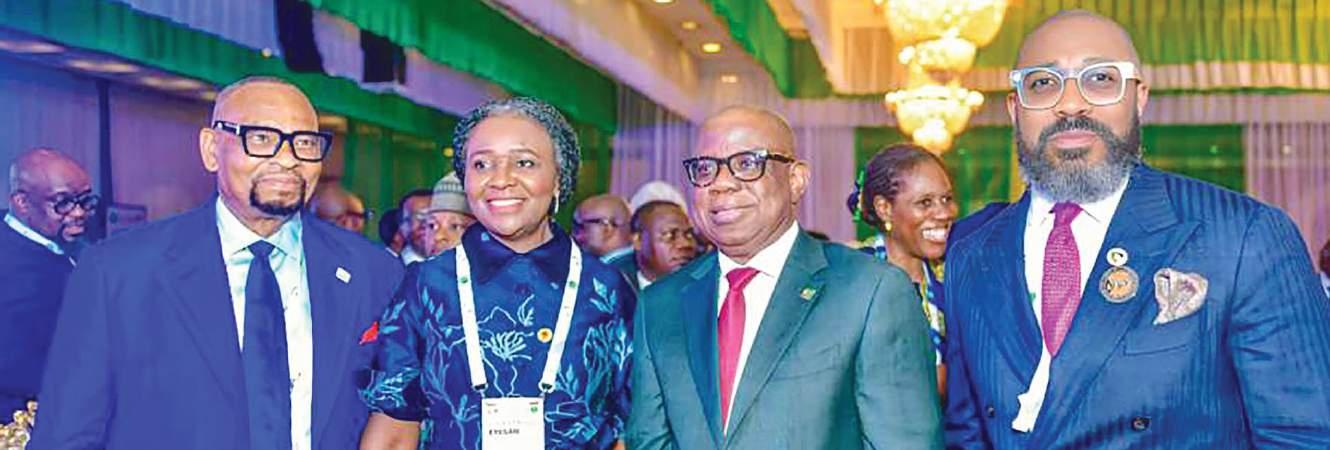
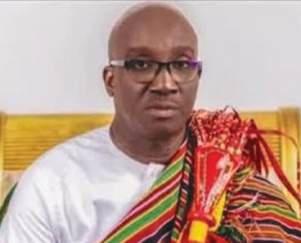
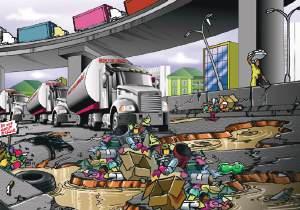
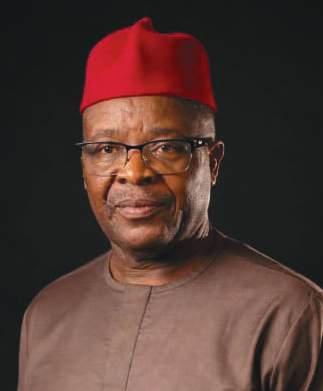
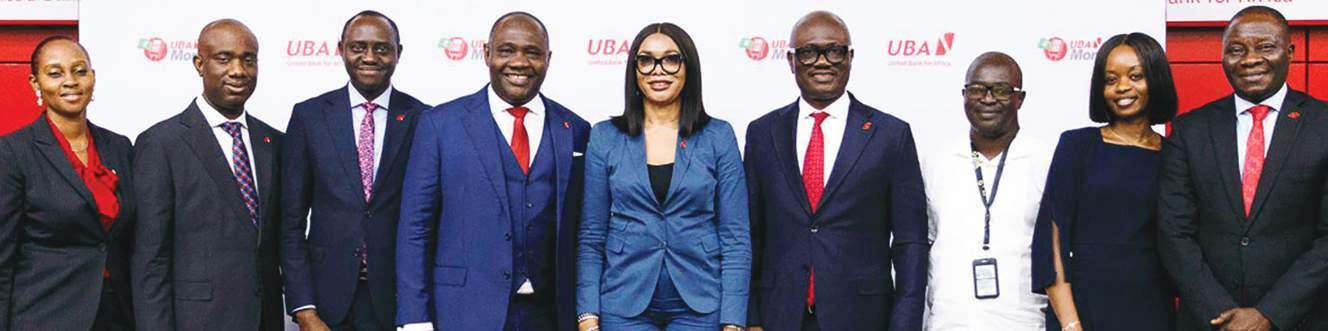
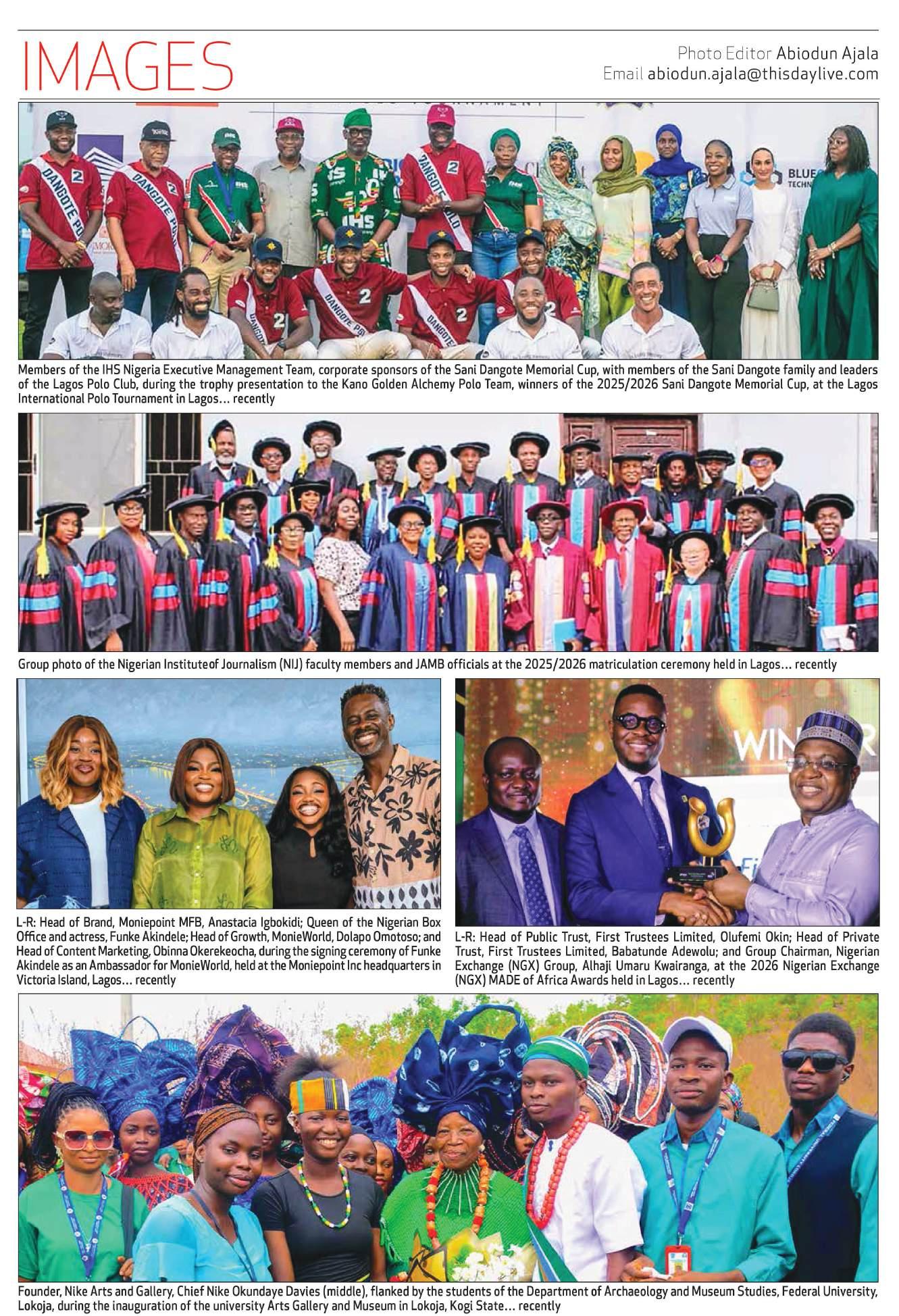
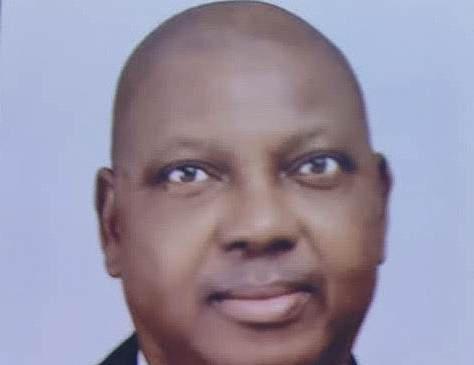
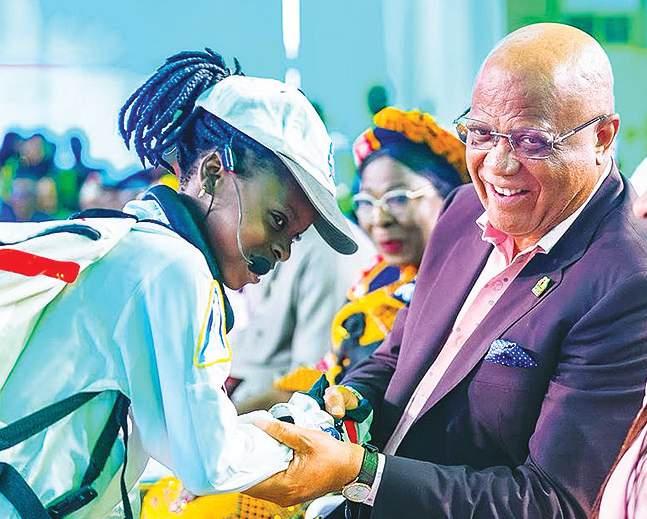
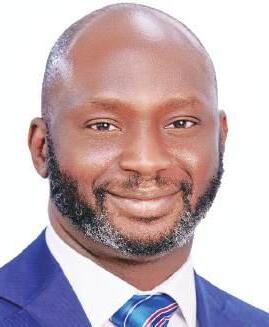
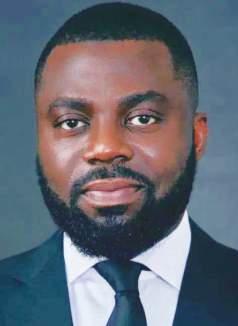
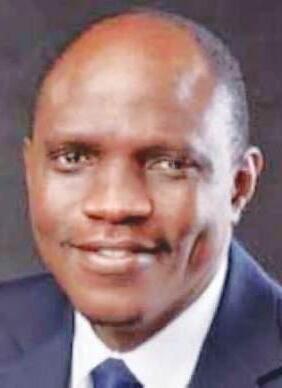
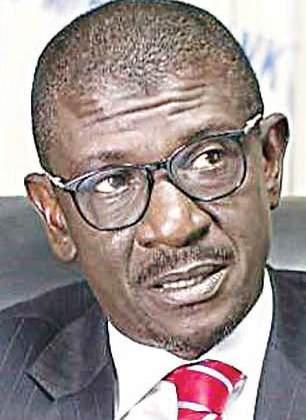
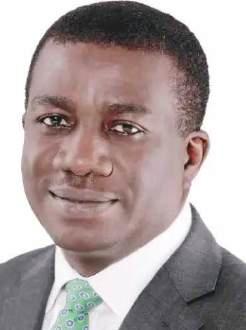
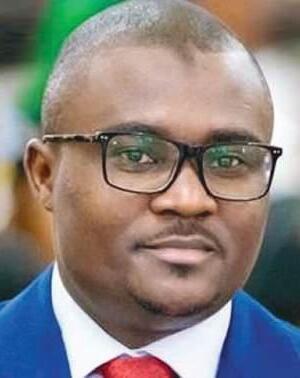
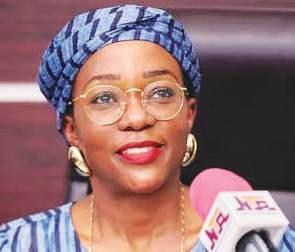
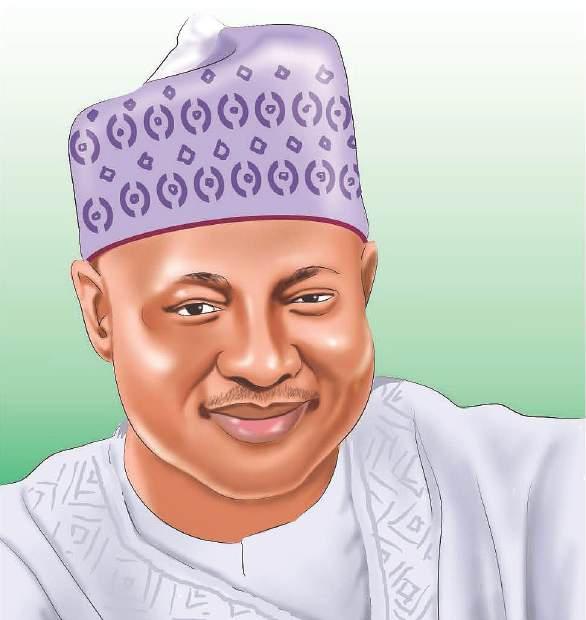
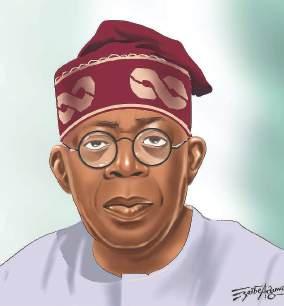
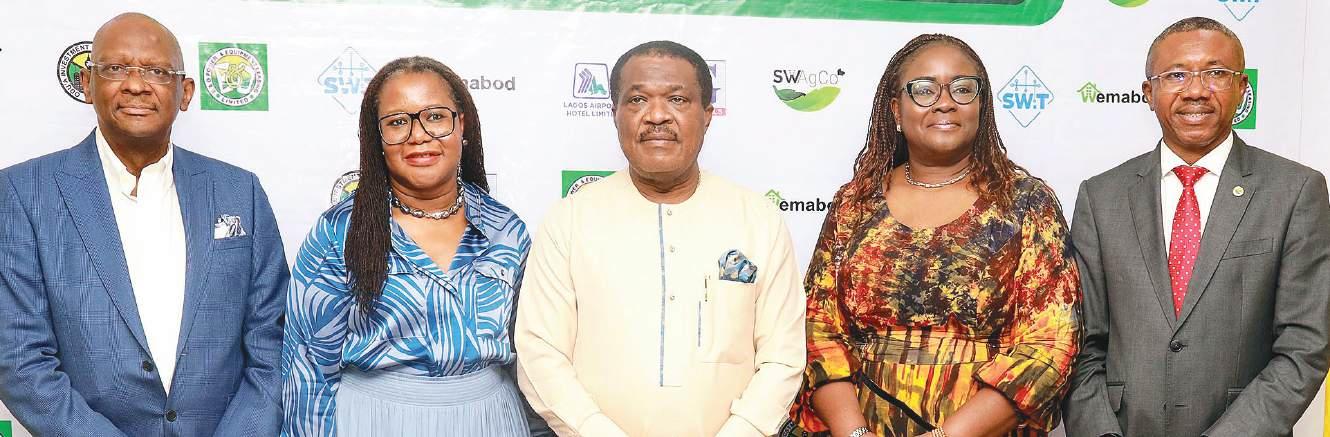
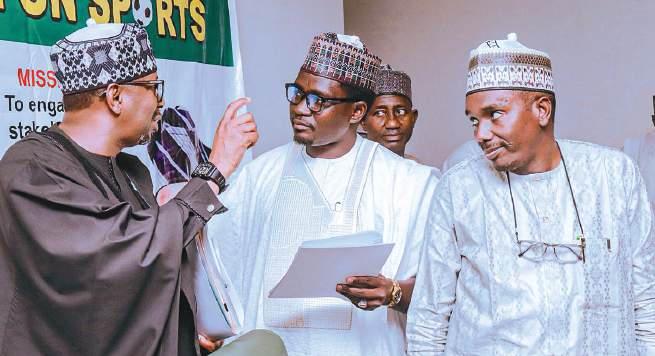
L-R: Group Managing Director, Nembe Exploration and Production Company Limited, Engr. Victor Okoronkwo; Commission Chief Executive, Nigerian Upstream Petroleum Regulatory Commission (NUPRC), Mrs. Oritsemeyiwa Eyesan; Group Chief Executive Officer, Nigerian National Petroleum Company Limited (NNPC Ltd), Engr. Bayo
and President, Nigerian Gas Association (NGA), Mr. Akachukwu Nwokedi, at the opening ceremony of the 9th edition of the Nigeria International Energy Summit held in Abuja… recently
Tinubu Lauds BOI for Achieving N636bn Business Loan Disbursements in 2025
Says feat validates economic reform agenda
Deji Elumoye in Abuja
President Bola Tinubu has hailed Bank of Industry (BOI) for achieving N636 billion in loan disbursement to businesses in 2025, the highest annual financing volume in the institution’s history.
The N636 billion was disbursed to more than 7,000 enterprises nationwide. A breakdown of the financing showed that N202 billion was allocated to agro-allied enterprises, N100 billion to critical national infrastructure, including broadband, power, aviation, and transportation, N79 billion to manufacturing, N77 billion to extractive industries, and N55 billion to services.
In addition, the bank deployed N73 billion in managed and matching funds on behalf of state governments and institutional partners.
Disbursement by business size reflected a deliberate inclusion strategy. Nano enterprises received N51 billion. Micro businesses accessed N32 billion. Small and medium enterprises received N178 billion in financing, while large enterprises accounted for N375 billion.
Under the federal government’s N200 billion MSME intervention
programme, BOI recorded over 95 per cent performance as the disbursing institution. The Presidential Conditional Grant Scheme reached 957,400 beneficiaries in 2025 alone.
In addition, BOI’s financing activities led to the creation and retention of approximately 1.6 million jobs. The bank supported more than 7,000 MSMEs and 570 start-ups during the year.
Inclusive financing initiatives also recorded a measurable impact. Through the Guaranteed Loans for Women Programme, a N10 billion gender-focused facility providing up to N50 million per beneficiary, women-owned enterprises expanded access to affordable credit. Youthowned enterprises received N12 billion in financing. Under the Rural Area Programme on Investment for Development, 880 rural-based enterprises across the 36 states and the FCT accessed over N6.5 billion.
Under the BOI 2025 disbursement, strategic interventions included upgrading a tomato processing facility from 3.1 metric tonnes per hour to 10 metric tonnes per hour and linking 47,508 smallholder farmers to formal processing value chains. The bank also supported the deployment of 100 mini-grids in
partnership with global development finance institutions, connecting 11,777 new customers to electricity. BOI-financed projects contributed to an estimated annual reduction of over 20,000 tonnes of carbon emissions.
Through the Investment in Digital and Creative Enterprises programme, 500 founders were prepared for investment, 100 technol-
ogy ventures received funding, and 400 youths were trained through innovation initiatives targeting over 300,000 Nigerians.
Tinubu, in a statement issued on Thursday by his Adviser on Information and Strategy, Bayo Onanuga, described the milestone as concrete evidence that ongoing macroeconomic reforms were strengthening development finance
institutions and unlocking capital for productive sectors of the economy.
According to Tinubu, “The N636 billion disbursed by the Bank of Industry in 2025 translates directly into productive capacity across Nigeria. It financed agro-processing expansion, strengthened manufacturing output, supported infrastructure delivery, and empowered thousands of enterprises across our states.
“At a time of global financing constraints, Nigeria expanded access to long-term capital for its busi- nesses. That is a direct outcome of reform, credibility, and institutional discipline.”
The president stated that BOI maintained strong asset quality, recording a non-performing loan ratio below 1.5 per cent, despite macroeconomic headwinds.
Senate Grills NBET Over Survival on N60m from N858bn Budget
Sunday Aborisade in Abuja
The Senate yesterday queried how the Nigerian Bulk Electricity Trading Plc (NBET) managed to stay afloat in the 2025 fiscal year despite receiving only N60 million out of the N858 billion appropriated for it in the national budget.
The upper chamber, through its Committee on Finance chaired by Senator Sani Musa (Niger East), expressed shock that the critical power sector agency operated the entire year without cash backing
CAPPA Raises Alarm Over Surge in Emerging Nicotine Products Targeting Nigerian Youth
The Corporate Accountability and Public Participation Africa (CAPPA) has raised concerns over the rapid proliferation of new-generation nicotine and tobacco products in Nigeria, warning that regulatory loopholes are exposing young people to addiction risks.
Speaking yesterday at the launch of CAPPA’s report titled ‘New Smoke Trap: New and Emerging Nicotine and Tobacco Products, Youth Exposure and Policy Gaps in Nigeria’ in Lagos on Thursday, the organisation’s Executive Director, Akinbode Oluwafemi, said Nigeria is witnessing an aggressive expan-
sion of nicotine delivery products, including e-cigarettes, nicotine pouches and heated tobacco products.Oluwafemi warned that these products are increasingly visible in everyday youth spaces and are being normalised through lifestyle marketing.
“The products under examination include e-cigarettes commonly known as vapes, nicotine pouches, and heated tobacco products, all of which are now highly visible in supermarkets, embedded in nightlife environments, and aggressively promoted across digital platforms that are disproportionately accessed by young people, thereby
normalising nicotine consumption within everyday youth culture,” he said.
He explained that while Nigeria has made significant progress in tobacco regulation through the National Tobacco Control Act 2015 and the National Tobacco Control Regulations 2019, those frameworks were primarily designed to address traditional tobacco products.
According to him, “that framework continues to serve a critical purpose, particularly with respect to traditional products like cigarettes. However, it was created to deal with one specific way of delivering nicotine through the burning of tobacco leaves.”
for its N858 billion capital vote.
The lawmakers demanded explanations from NBET’s management on how the company survived with what they described as “virtually zero funding,” raising concerns over the implications for Nigeria’s already fragile electricity market.
Presenting the agency’s position, the Acting Managing Director of NBET, Johnson Akinnawo, disclosed the company had relied largely on regulatory income to keep its operations running in the absence of releases from the capital allocation.
He confirmed that only N60 million was released to the agency from the N858 billion appropriated in 2025, leaving a huge funding gap that has further deepened
its financial exposure to power generation companies (GenCos).
According to him, the non-release of the capital vote has significantly worsened NBET’s debt profile and constrained its ability to meet obligations within the electricity value chain.
“The gap between generation costs and allowed tariffs is substantial, and without government intervention, the market cannot remain stable,” Akinnawo told the committee.
He explained that NBET’s stabilising role in the power sector has been severely hampered by inadequate funding support, warning that the situation poses serious risks not only to genera-
tion companies but also to overall electricity supply across the country. NBET was established as a bulk trader in the electricity market, purchasing power from GenCos and selling to distribution companies (DisCos), while providing payment guarantees to generation firms.
The arrangement is designed to ensure liquidity and stability in the power sector, particularly in a market plagued by tariff shortfalls and collection inefficiencies.
However, senators noted that without the release of the N858 billion capital allocation, NBET’s capacity to guarantee payments and manage market shortfalls would be significantly undermined.
Shettima Departs Abuja for Addis Ababa, to Represent Tinubu at Annual AU Summit
To hold bilateral talks with Africa’s political and business leaders
Deji Elumoye
in Abuja
Vice President Kashim Shettima on Thursday departed the nation’s capital, Abuja for Addis Ababa, Ethiopia, to represent President Bola Tinubu at the 2026 African Union (AU) Summit. In a statement issued by Media Assistant to the Vice President, Stanley Nkwocha, the AU Summit, themed “Assuring Sustainable Water Availability and
Safe Sanitation Systems to Achieve the Goals of Agenda 2063,” will focus on advancing continental commitments toward sustainable water management, improved sanitation systems, and the broader development aspirations encapsulated in the AU’s Agenda 2063 framework.
While in Addis Ababa, the Vice President will join other African leaders at the 39th Ordinary Session of the Assembly of AU Heads of
State and Government, as well as the 30th General Assembly, scheduled to hold on February 14 and 15, 2026, respectively.
On the margins of the Summit, Shettima will participate in high-level side events and hold bilateral engagements with political and business leaders aimed at strengthening Nigeria’s diplomatic, economic, and strategic partnerships across the continent.
Ojulari;
Sunday Ehigiator
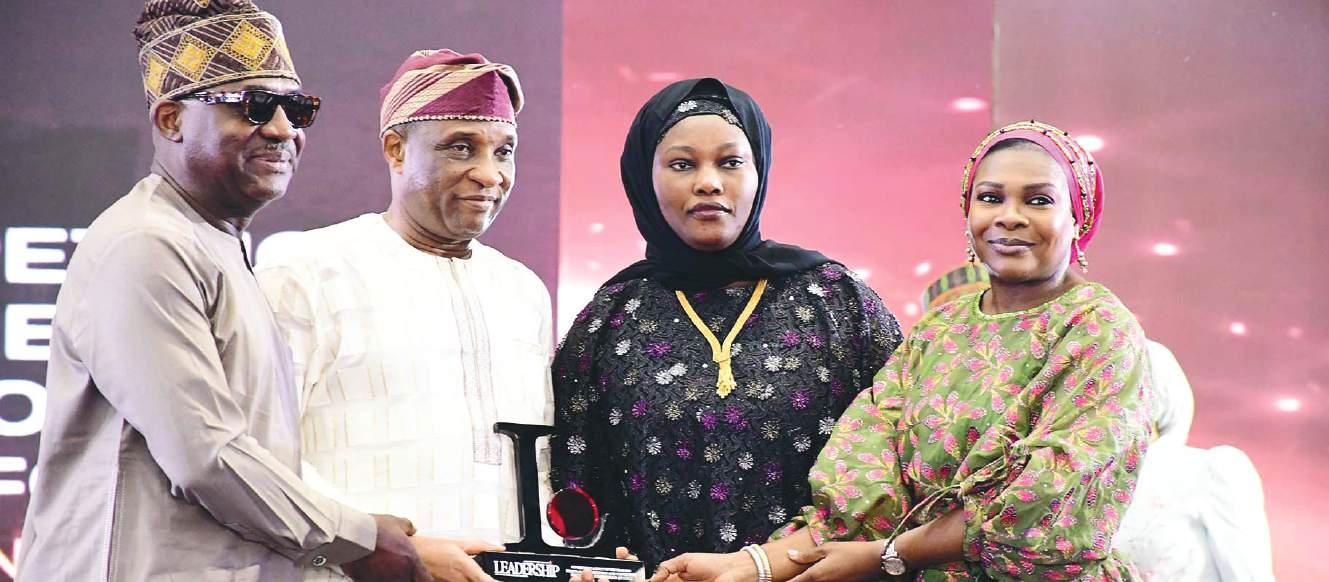
AWARD PRESENTATION TO FCCPC...
Mr. Tunji Bello, Executive Vice Chairman/Chief Executive Officer, Federal Competition and Consumer Protection Commission (FCCPC) (second left), receiving the “Government Agency of the Year 2025” award from the Chairman, Leadership Newspaper Group, Mrs. Zainab Nda-Isaiah (right). With them are Executive Commissioner, Operations, FCCPC, Mr. Louis Odion; and Executive Commissioner, Corporate Services, FCCPC, Hajia Ummusalma Rabiu, at the Bola Ahmed Tinubu International Conference Centre, Abuja... yesterday
Adedeji: Technology Crucial to
Achieving Milestones in New Tax Laws
Says digitisation will address challenges of trust, resistance New regulation seeks to overhaul manual tasks, usher tax intelligence
Executive Chairman, Nigerian Revenue Service (NRS), Dr. Zacch Adedeji, yesterday said technology remained crucial factor for success in the implementation of the new tax laws.
Adedeji stated this while delivering the maiden convocation lecture of the Federal Polytechnic, Ayede,
Ogo-Oluwa Local Government Area of Oyo State.
In a statement by his Technical Assistant on Print Media, Sikiru Akinola, he listed some of the most fundamental challenges confronting taxation to include infrastructure, skills, trust and resistance.
In the lecture entitled, ‘The Role of Technology in Implementing Nigeria’s New Tax Laws: Chal-
lenges, Prospects, and Implications for National Development,’ the NRS chairman said each of these challenges would be addressed with the imminent upgrading of the country’s tax system for a digital environment.
He said, “Nigeria has recently enacted a new set of tax laws, representing the most significant restructuring of our nation’s fis-
cal legislation in 50 years. While public conversation often frames these changes as legal reforms, and that is true, it is also an incomplete picture.”
He said the tax laws are not merely changing rates, definitions, or administrative powers but quietly redefining how authority operates within the tax system.
He said, “This is a complete
Senate Grills AGF Over N28trn Revenue, Zero Capital Votes, Unpaid Contracts
The Senate on Thursday launched a blistering attack on the AccountantGeneral of the Federation (AGF), Dr. Shamsedeen Ogunjimi, over zero capital allocations to several Ministries, Departments and Agencies (MDAs) in the 2025 budget and mounting complaints of unpaid contractors across the country.
At an explosive budget defence session of the Senate Committee on Finance, lawmakers accused the Office of the Accountant-General of frustrating budget implementation, presiding over a controversial Centralised Payment System, and failing to explain how N28 trillion reportedly generated by revenue agencies has not translated into capital releases.
From the opening remarks of the Committee Chairman, Senator Sani Musa (Niger East), it was clear the AGF was in for a tough day.
Musa bluntly told the AGF that his office’s disposition to the committee was “unfriendly” and must change in the interest of Nigerians.
“We are not going to take your budget until we are satisfied that
your office is ready to do things that will make things work for Nigerians,” Musa declared.
He identified the envelope budgeting system as a major concern, arguing that the yearly model has failed to deliver results and should give way to a performance-based framework.
“One of the issues that must be urgently resolved is the envelope budgeting system being used by the federal government on a yearly basis but not producing desired results.
“We need to consider an alternative model like performance-based budgeting,” he said.
But it was Senator Danjuma Goje (Gombe Central) who amplified the mood of the chamber, describing the state of budget implementation since 2024 as “embarrassing.”
“Here at the National Assembly, we have never seen contractors bombarding us on a weekly basis for intervention over non-payment of executed contracts,” Goje said.
He questioned the narrative that the removal of fuel subsidy and
the harmonisation of the foreign exchange market would significantly boost government revenue.
“The impression given to us and Nigerians is that with subsidy removal and forex harmonisation, there is more revenue.
“Where is the money now? Why are contractors owed? And why is there zero allocation for capital votes of most of the MDAs in 2025?” he asked.
According to him, the situation was both baffling and damaging to the credibility of government.
structural overhaul, signaling the end of tax collection as a manual task and the beginning of tax intelligence.
“If you read the new laws carefully, you will notice a subtle but profound assumption woven throughout their fabric.
“They presuppose the existence of reliable taxpayer identification, integrated data across institutions, traceable transactions, automated processes, and scalable enforcement.”
He said, “In other words, these laws are built for a digital environment. They cannot function properly in a manual, fragmented, paper-based system.
“The implication is clear: without technology, the laws remain aspirational. With technology, they become operational.
“This transition is central to the mandate of the Nigeria Revenue Service as we implement this new legal framework.
“Historically, tax administration relied heavily on human discretion over who is registered, who is assessed, who is audited, and who is penalised.”
Adedeji said while discretion is not inherently evil, excessive discretion creates inconsistency,
Odu’a Investment Unveils ‘30 by 2030’ Growth Agenda,
Sunday Okobi
Odu’a Investment Company Limited (OICL) has unveiled its Group’s new strategic roadmap, tagged: SRC 2.0 (2026–2030), and anchored on the ambitious “30 by 2030” growth target.
The strategy targets by year 2030, N1 trillion in total assets, N50 billion in Group revenue, and N30 billion in Profit Before Tax. Presiding over the 2026 annual
directors’ meeting held yesterday at the Lagos Airport Hotel, Ikeja, the Group Chairman, Otunba Bimbo Ashiru, reflected on the organisation’s evolution, stating that last year’s theme: ‘A FutureReady Board’, has given way to ‘Fostering a Resilient Organization’” a deliberate pivot from governance calibration to enterprise-wide endurance.”
He noted that resilience is not about mere survival, “It is about
having the capacity to absorb shocks, to transform challenges into catalysts for innovation, and to emerge from periods of stress not weakened, but stronger, smarter and more sustainable.”
Ashiru charged directors to provide not just oversight but insight and foresight, and to ensure that every investment, risk mitigation effort and opportunity aligns with the goal of creating an institution built to last and destined to excel.
Also, the Group Managing Director of OICL, Abdulrahman Yinusa, informed directors, subsidiary chief executives and invited guests that 2025 was a year in which the company made deliberate choices, adding that: “We chose to exceed targets rather than merely meet them.
“We chose to strengthen our balance sheet and our reputation. We chose to act decisively on our portfolio.”
which in turn breeds mistrust and drives non-compliance.
Speaking further, he noted that when infrastructure improves, capacity grows, trust is protected, and resistance is managed just as technology begins to do what policy alone cannot.
He said, “One of the most important prospects of a technology-driven tax administration is the ability to expand the tax base without increasing tax rates. This matters deeply in a society where citizens already feel overburdened.
“By improving visibility and bringing previously unseen economic activity into view, technology levels the playing field. When compliance broadens, the pressure on the existing base reduces, fairness improves, and legitimacy grows. This is how modern tax systems grow revenue sustainably.”
In his remark, Speaker of the House of Representatives, Tajudeen Abass, encouraged the graduating students to be good ambassadors of the institution.
Represented by the Senator representing Oyo North, AbdulFatai Buhari, the speaker charged them not to relent in their bid to acquire more knowledge.
He noted that proceeds from the divestments have been redirected into healthcare, energy and agribusiness—the three sectors identified as high-growth engines under the group’s new long-term strategy. The event also featured expert sessions on artificial intelligence, organizational culture, enterprise risk management, and Nigerian tax reforms, reinforcing the Group’s commitment to innovation, sound governance and sustainable growth.
Sunday Aborisade in Abuja
James Emejo in Abuja
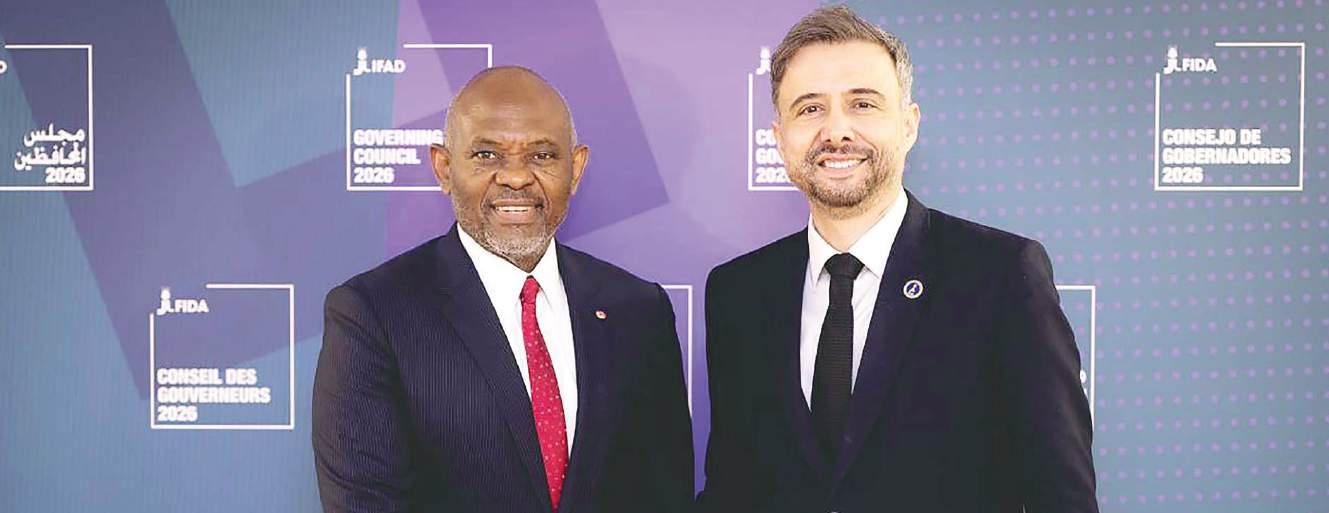
49TH SESSION OF THE INTERNATIONAL FUND FOR AGRICULTURAL DEVELOPMENT...
Founder and Group Chair of Heirs Holdings, Tony O. Elumelu, CFR, (L) with IFAD President Alvaro Lario at the 49th Session of the International Fund for Agricultural Development (IFAD) Governing Council in Rome … recently
Emmanuel Addeh in Abuja and Peter Uzoho in Lagos
The Nigerian National Petroleum Company Limited (NNPC Ltd) has announced that it recorded a total revenue of N60.517 trillion in 2025, remitted N14.706 trillion to the Federation and posted a Profit After Tax (PAT) of N5.760 trillion.
These figures were indicated in the NNPC’s December 2025 Monthly Report Summary (MRS), which was released yesterday by the national oil company.
In comparison, THISDAY’s checks showed that the total revenue generated by the NNPC in 2024 was N45.1 trillion; PAT was N5.4 trillion, while remittances in taxes, royalties as well as dividends were N15.982 trillion.
Besides, the report highlighted trends in crude oil and condensate production, gas output, sales volumes, asset availability and retail performance, reporting 100 per cent upstream pipeline availability in the last three months of 2025.
The steady improvement in upstream pipeline availability, culminating in 100 per cent uptime in the final quarter, indicated fewer
disruptions to evacuation and lifting operations. This level of asset reliability typically reduced deferred production and improved scheduling certainty.
Still on the revenue side of its operations, a breakdown showed that NNPC generated N3.824 trillion in January; N6.024 trillion in February and N5.475 trillion in March. April recorded N5.891 trillion; May stood at N6.008 trillion; June followed with N5.105 trillion, while revenue moderated to N4.406 trillion in July.
Total revenue was N4.655 trillion in August; N4.269 trillion in September; October recorded N5.078 trillion; November N4.358 trillion and December N4.824 trillion.
Cumulatively, revenue from January to December amounted to N60.517 trillion, the summary showed.
In the same vein, profit after tax reflected monthly variations, as January recorded a loss of N161 billion; February rebounded strongly with N987 billion; March saw a loss of N7 billion; April recorded N748 billion, while May reached the year’s highest monthly profit of N1.054 trillion.
A THISDAY analysis further showed that June’s revenue was N904 billion; July declined to
N180 billion; was N539 billion in August; September stood at N216 billion; October was at N447 billion; November was N502 billion and December stood at N351 billion, to hit N5.760 trillion.
A breakdown of the figures indicated that statutory payments to the Federation fluctuated monthly, with January remittance at N821
billion; February recorded N3.099 trillion; March followed with N1.085 trillion; April N1.213 trillion and May N1.094 trillion.
Furthermore, June recorded N850 billion; July remittance stood at N1.130 trillion; August was at N979 billion and September was at N1.286 trillion. October saw N1.089 trillion; November N790 billion and
December N1.270 trillion, to reach N14.706 trillion for the year under consideration.
On crude and condensate production, the data revealed that it reached a peak of 1.77 million bpd in 2025, with monthly production figures showing that output started at 1.67 million bpd in January; declined to 1.62 million bpd in February; 1.56
FMITI, BPE to Assess Performance of Privatised Industries,
Dike Onwuamaeze
The Federal Ministry of Industry, Trade and Investment (FMITI) has announced it would collaborate with the Bureau of Public Enterprise (BPE) to review the performances of privatised publicly owned industries and compare them against the original objectives of the federal government’s privatisation exercise.
The FMITI said this review would be one of its priority focuses in 2026.
Another priority area of the
Dangote Cement Plans to Deliver MultiMillion Naira Cottage Hospital in
Ibrahim Oyewale in Lokoja
As part of efforts to expand healthcare access in Nigeria, Dangote Cement Plc has announced plans to deliver a state-of-the-art multimillion naira cottage hospital in its plant community of Obajana, Kogi State.
This was contained in press statement issued by the Corporate Affairs Unit, and copy of which was made available to the journalists in Lokoja on Tuesday
The Plant Director of Dangote Cement Plc, Obajana, Azad Nawabuddin, described the project as a critical pillar of the company’s ongoing commitment to the well-
being of its host communities.
“The facility is designed to provide comprehensive primary and secondary medical services to thousands of residents across the plant’s catchment areas,” he said. According to Nawabuddin, the cottage hospital will significantly reduce the burden on state-owned medical facilities by providing modern equipment and specialized care closer to the people.
The Plant Director said the project shows the company’s “good neighbourliness” philosophy, ensuring that industrial growth translates directly into tangible social benefits for the local population.
Kogi
Nawabuddin commended the Kogi State Government for fostering a conducive environment for industrial operations. He lauded the government of the state for focusing on peace, security and development of the state.
General Manager, Social Performance Department at the Obajana Plant, Prince Ademola Adeyemi, noted that the new hospital is a strategic addition to the company’s healthcare portfolio.
He said it follows the successful delivery of a multimillion-naira clinic at the Iwaa community in 2021, which has since become a lifeline for residents in the Lokoja Local Government Area.
ministry’s activities in 2026 also includes the carrying out of a national census that would ascertain the actual numbers of the Micro, Small and Medium Enterprises (MSMEs) in the country.
Other priority areas are the launching of Made-in-Nigeria national campaign, industrial cluster development, women-led business and long-term finance, value chain transformation, AI and digital industrial governance, and the Industrial Revolution Working Group (IRWG) ministerial roundtables.
These were revealed in the “FMITI’s 2026 Outlook” released yesterday which revealed that some of the measurable impacts
of the ministry in 2025 included the attainment of $21 billion capital importation, non-oil export of $6.1 billion, N4.82 trillion intra-African Trade in H1’2025, an access to finance by 115,000 MSMEs that received grants, loans and trade finance through Bank of Industry, Nigerian Export and Import Bank, and Nigeria Export Promotion Council’s initiatives.
It said: “Working with the BPE, this priority area will see the structured evaluation of privatised industrial assets to assess performance against original privatisation objectives, including operational efficiency, investment commitments, job creation, and value-chain contribution.”
It added: “A core priority is the launch of a national MSMEs’ census, replacing estimates with evidence and providing a reliable data backbone for industrial planning, targeted incentives, and measurable impact.”
The FMITI said the 2026 Outlook marked a deliberate shift from policy design to policy delivery.
“If 2025 focused on policy architecture, 2026 is positioned as the first full year of implementation.
“Accordingly, the ministry’s industrial priorities are focused, sequenced, and execution-driven, anchored on building a credible evidence base, activating demand, and strengthening domestic productive capacity,” it said.
NLC Demands Labour Justice, Judicial Accountability
Onyebuchi Ezigbo in Abuja
The Nigeria Labour Congress (NLC) has expressed the desire for greater access to Labour justice in the face of growing unfair labour practices in the country.
It said that the judiciary must be seen to be fair in its adjudication of labour disputes.
The position of organized Labour was canvased by the NLC president Joe Ajaero yesterday at the 4TH
International Labour Adjudication & Arbitration Forum (I-LAAF), organized by Nigeria Employers Consultative Association (NECA).
While calling for greater access to Labour Justice, Ajaero said: “the judiciary must be blind to class but unfortunately, that remains to be seen. We say it must have 20/20 vision for justice!
“It must see clearly the power imbalance between the lone worker and the conglomerate.
“It must recognize the collective will of workers expressed through their unions as sacrosanct. A judiciary that is “blind” in the wrong way becomes an instrument of oppression, legalizing unfair dismissals, criminalizing strikes, and upholding contracts that are chains of modern-day wage slavery”. Ajaero further said that, “When the courts become venues for delay, technicalities, and judgments that punish workers for organizing, they do not build trust.
Recapitalisaton: World Bank, Access Bank CEO Predict Credit Boost to Private Sector
Verghis: Economy needs higher growth to make desired impact
Nume Ekeghe
World Bank Country Director for Nigeria, Mr. Matthew Verghis, yesterday declared that the ongoing recapitalisation of the banking industry will strengthen banks’ position to increase lending to the private sector.
In a similar vein, Managing Director/Chief Executive, Access Bank Plc, Roosevelt Ogbonna, said recapitalised banks will have stronger capital base and liquidity to drive economic growth by funding public infrastructure, supporting private sector investment, and boosting consumer activity.
Verghis and Ogbonna spoke in Lagos, at the Agusto & Co.’s
2026 Economic Roundtable, titled, “Nigeria’s Banking Recapitalisation: What Does the Recapitalisation Mean for the Nigerian Economy?”
It also emerged that about 25 out of the 38 commercial and merchant banks in the country had already met the new capital thresholds, mobilising about N2.5 trillion from the recapitalisation exercise as of December 2025.
The World Bank country director hailed the recapitalisation exercise ordered by Central Bank of Nigeria (CBN), describing it as key to economic and financial stability.
Verghis said recapitalisation became necessary after years of macroeconomic pressures eroded banks’ capital buffers.
He said the economy needed to grow above the current 4.4 per cent to impact on the average Nigerian as well as achieve the aspiration for $1 trillion-dollar economy by 2030.
He stated, “So, the basic reason why this recapitalisation was needed, why banks had to dip into their pockets once again, is that over the decade of policy, banks had become undercapitalised.
“The capital requirements that were set in place, because of the exchange rate and because of the very high inflation, meant that capital adequacy ratios needed to be raised.
“Having an adequately financed banking sector is central. So, for
the stability of the economy, raising the capitalisation of the banking sector, I think the central bank has taken the right step.”
Verghis observed that domestic credit to the private sector remained low relative to peer economies in the Sub-Saharan.
He said, “The easiest way to see this is to look at the ratio of domestic credit to the private sector. The ratio is about 21 per cent. The Sub-Saharan average is 33 per cent, and countries like the Philippines do about 50 per cent.” He stated that credit must not only increase but also be productive.
He said a well-capitalised industry should also incentivise
banks to boost credit to the real sector as interest rates drop.
According to him, “Banks can no longer rely as heavily on investing in government securities. That liquidity will need to be put to good use. The incentives are well aligned, and I’m hopeful this will increase.”
Verghis disclosed that about 25 of the 38 commercial and merchant banks had already met the new requirements as of December, with roughly N2.5 trillion mobilised under the exercise, while the remaining institutions had less than 50 days to comply.
Placing the recapitalisation within a broader reform context, he linked it to foreign exchange
harmonisation, subsidy reforms, and revenue measures aimed at stabilising the economy. He stressed that inflation must decline further to single digit to protect purchasing power, adding that growth must accelerate beyond current levels. Verghis
Seeks N162.5bn IReV upgrade, massive ICT overhaul Explains why INEC can’t be held responsible for network challenges, proposes N32bn for corps members, adhoc staff Commission plans special cubicle to tackle vote trading Lalong: Electoral Act summit starts Monday
Sunday Aborisade and Juliet Akoje in Abuja
Chairman of Independent National Electoral Commission (INEC), Professor Joash Amupitan, yesterday, declared that the commission would require a total of N873.78 billion to conduct the 2027 general election.
Amupitan warned that any attempt to subject the electoral body to rigid funding caps could undermine critical technological reforms and expose the country to avoidable embarrassment.
Addressing the Joint Committee of the National Assembly on Electoral Matters, during the defence of INEC’s 2026 and 2027 budget proposals, Amupitan said credible elections came at a cost and must be funded early to safeguard Nigeria’s democracy.
He explained that the proposal was submitted in line with the Electoral Act 2022, which mandated that election funds be appropriated at least 360 days before the polls to forestall last-minute crises.
Breaking down the figures, the INEC chairman said the proposed N873,778,401,602.08 was structured under five broad components: Election Operations Cost of N375.75 billion; Election Administrative Cost of N92.31 billion; Election Technology Cost of N209.21 billion; Election Capital Cost of N154.90 billion; and a miscellaneous provision of N41.01 billion.
Amupitan stated, “If you want to predict the future, it is necessary to create it early. Preparation for the 2027 election has already started.
“The wisdom of the National Assembly in making provision 360 days before the election date is to ensure that we do not run into avoidable crises.”
A major highlight of the proposal was a sweeping technological overhaul designed to strengthen electronic transmission of results, improve voter accreditation, secure electoral data, and eliminate system failures that had stalked past elections.
At the centre of the ICT upgrade was N162.5 billion earmarked for the enhancement of the INEC Result Viewing (IReV) portal — the digital platform that provides public access to polling unit results in real time. Amupitan said the upgrade would reinforce transparency, improve server capacity, and prevent glitches experienced during previous polls.
INEC also proposed N1.215 billion for a Hybrid e-EC8A and Result Management System to strengthen electronic result processing and reduce human interference.
In addition, N3.577 billion was budgeted for deployment of ICT technical support staff to Local Government Areas and Registration Areas during elections.
Other ICT-related provisions included N598.5 million for renewal and maintenance of cloud infrastructure; N189.6 million for upgraded internet bandwidth across headquarters and state offices.
The commission further proposed N242.6 million for nationwide configuration of accreditation devices; N194 million for quality assurance of voter accreditation machines; N400 million for cyber protection of public portals; and N5.163 billion for other ICT expenses.
The electoral umpire equally planned to upgrade its national and state data centres, with N729 million allocated for alternative power systems and server enhancements to eliminate downtime during critical electoral operations.
For the Bimodal Voter Accreditation System (BVAS), INEC proposed N163.2 billion for additional devices, N48.3 million for application upgrades, N69.1 million for backend improvements, and N2.148 billion for device security.
It further budgeted N4.542 billion for inbuilt power banks and N600 million for additional external power banks to prevent device failure on election day.
Responding to lawmakers’ concerns about INEC’s capacity to fully
implement electronic transmission nationwide, Amupitan admitted that establishing independent infrastructure would be costly but necessary if the commission must be held fully accountable.
He stated, “We do not even have a network of our own. Assuming we control the network system and are not dictated to by primary and secondary providers, then INEC should be held 100 per cent responsible for whatever happens.
“But the cost of establishing such infrastructure is enormous.”
He said criticised the “envelope budgeting system” imposed by the Ministry of Finance, stating that it constrains the commission’s operational independence.
According to Amupitan, “The envelope system is not good for the running of INEC if INEC must be truly independent. The Ministry of Finance does not even give you room for negotiation.
“The joint committee should do all it can to ensure that we get what we proposed.”
Echoing the warning, Senator Adams Oshiomhole cautioned against extending rigid funding caps to INEC, recalling that past funding challenges had led to postponement of elections and national embarrassment.
Oshiomhole described election management as a time-sensitive national assignment that required flexibility and full financial backing.
Beyond technology, INEC also proposed N32 billion to cater for allowances of National Youth Service Corps (NYSC) members and other ad hoc staff, who would serve as presiding officers and polling officials.
Amupitan disclosed that each corps member and ad hoc staff was proposed to receive N127,000 for election duties covering five days of training and two days of polling.
The package included N50,000 for election duty, N5,000 training allowance, and about N9,500 for feeding, among other components.
With about 450,000 corps members projected to be engaged nationwide, the proposal translated to roughly N32 billion.
Lawmakers acknowledged that the integrity of elections began at the polling Chairmanunits. of House Committee on Electoral Matters, Hon. Adebayo Balogun, said, “The pyramids of elections are the polling units and the masters of the polling units are the presiding officers,” warning that poorly remunerated officials can be vulnerable to inducement.
Amupitan agreed, stating that a substantial portion of election expenditure goes into honoraria for ad hoc staff.
He said, “If they must perform their duties creditably and with integrity, we cannot lose our eyes
to such demands.”
In a move aimed at curbing vote buying, the commission also planned to introduce redesigned voting cubicles.
Amupitan explained that the current cubicles were too small and required voters to step out after marking their ballots to drop them in the ballot box, thereby exposing them to vote confirmation schemes. He said, “If you expand them to accommodate the ballot box inside, voters will not need to step out to drop their ballots. That reduces the possibility of vote confirmation and vote buying.”
INEC clarified that although Nigeria had 176,846 polling units, it planned to procure about 130,000 new ballot boxes because an audit showed many existing ones were serviceable.
On voter register management, the commission budgeted N28.908
FG Decries Rising Vandalism of LagosCalabar Coastal Highway, Others
Approves expansion of Bodo–Bonny road, Akwanga–Maiduguri corridor
Emmanuel Addeh in Abuja
Minister of Works, David Umahi yesterday expressed deep concern over the increasing destruction of public infrastructure across the country, including the ongoing Lagos-Calabar Coastal highway, warning that persistent vandalism poses a serious threat to the durability of Nigerian roads and bridges.
Umahi spoke at a press briefing in Abuja, where he described the trend as alarming and unsustainable, noting that the ministry was forced to address what he called deliberate acts of sabotage targeting key infrastructure assets.
According to him, the Lagos coastal highway has become a
major hotspot for vandalism despite intensified security measures put in place to protect the corridor.
He added that protective facilities installed along the highway have been repeatedly damaged or stolen by vandals. “I want the public to go and see how the things we put in place to protect the coastal route are being destroyed. The green barbed wires installed in several sections are being cut and taken away,” he said.
The minister explained that ongoing construction works have also been disrupted by illegal access to restricted areas. “In Shagamu-wode, the width of the road is 12 metres, but only nine metres have been completed. There is a connecting bar we call wire bars, yet people cross
it and damage the work,” he said.
Umahi also linked recent flooding along the coastal highway to blocked drainage channels, blaming indiscriminate waste disposal by residents. “The flooding occurred because underground channels were blocked with refuse. People dump their daily waste inside manholes.
The public has a duty to protect public assets,” he said.
Umahi commended President Bola Tinubu for approving the use of reinforced concrete technology in road construction, which he said would significantly extend the lifespan of highways.
“The roads we are building now will last between 50 and 100 years, unlike many older roads that failed
within 10 years,” he said. He warned that the practice of parking heavy trucks on bridges could accelerate structural damage, noting that bridges are not designed to withstand static loads. The minister disclosed that serious structural concerns have been identified on major bridges in Lagos, including the Third Mainland Bridge and Carter Bridge, with experts recommending eventual demolition of Carter Bridge. He said temporary measures are being implemented to keep the bridge functional for about three years pending reconstruction. Umahi attributed much of the damage to illegal sand mining around bridge foundations, explaining that many bridge piles depend on sand for stability.
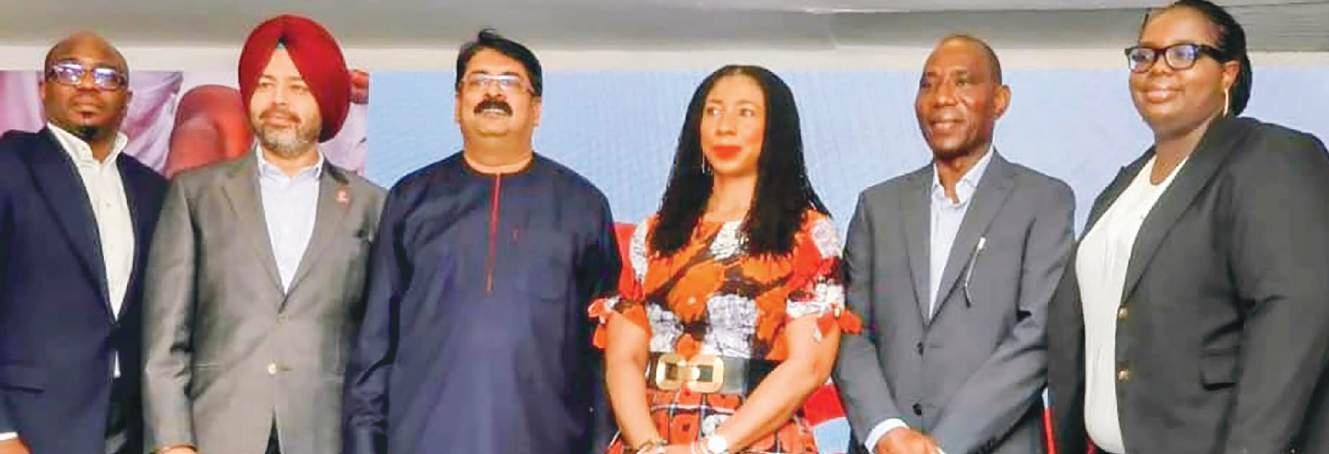
MEDIA ROUNDTABLE WITH AIRTEL NIGERIA...
L-R : Director, Corporate Communications and CSR, Airtel Nigeria, Femi Adeniran; Chief Technology Officer, Airtel Nigeria, Harmanpreet Singh Dhillon; Managing Director and Chief Executive Officer, Airtel Nigeria, Dinesh Balsingh; Director, Airtel Business, Ogo Ofomata; Director, Marketing, Airtel Nigeria, Ismail Adeshina; and Director of Information and Technology, Airtel Nigeria, Kemi Ariyo during a Media Roundtable with Airtel Nigeria at Ikeja, Lagos...recently
Concerned Bayelsa Monarchs Demand Fair Treatment of Ex-Minister, Diezani Alison-Madueke
Concerned traditional rulers from the Atissa kingdom, the ancestral home of embattled former Minister of Petroleum, Chief (Mrs) Diezani Alison-Madueke, in Bayelsa State, have demanded fairness and justice in the trial of the former Minister.
The traditional rulers demanded for fairness and closure, saying
that for more than ten years, their daughter has lived under the weight of a protracted legal and public ordeal that has resulted in effective exile.
Addressing the press in Yenegoa, Bayelsa State capital, on behalf of other concerned traditional rulers who were present, HRH Ovie Omeleh, the paramount ruler of Yenaka,
said, “We observe this situation with a growing sense of injustice. Justice that is delayed for over a decade, without a conclusive end, becomes an affront to the world’s most powerful nations.
He said, “A decade of international and domestic investigation has passed, yet the central fact remains: Chief (Mrs.) Diezani Alison-Madueke has not been
convicted of any crime in Nigeria.
“The Atissa people are a patient people, but we are also a just people. Justice that is delayed for over a decade, without a conclusive end, becomes an affront to the dignity of the individual and the community they represent.
“Chief (Mrs)Diezani AlisonMadueke remains a cherished member of our royal lineage, and
the dignity of the individual and the community they represent; she is a vital pillar of the Atissa Kingdom.
“It is time for this protracted separation to end, and for the records, do not forget she is a Princess who carried the Ijaw name with grace into the councils of chiefs.
“We speak today as elders
Again, Trial of Alleged Killers of Arise News Anchor Stalls
Alex Enumah in Abuja
The trial of eleven defendants linked to the death of ARISE News correspondent, Somtochukwu Maduagwu and a security guard, Barnabas Danlami, for the second time in one week failed to hold as scheduled.
While the failure of the trial on Monday February 9, was due to the absence of the defendants in court, Thursday’s failure was however, caused by the lead prosecution counsel, Adama Musa, who was engaged in another criminal case at a sister court in Apo, Abuja.
Following the development, Justice Mohammed adjourned till April 21, 22, and 23 for continuation of trial, expressing hope that the prosecution will close its case by then and that judgment could be
LPPC
The Legal Practitioners’ Privileges Committee (LPPC) has decried the use of the title, “Blue Silk” by some lawyers in the country.
The term “Learned Silk” is used mainly for Senior Advocate of Nigeria (SAN), a rank that is usually conferred on lawyers found worthy by the LPPC. However, the LPPC in a statement lamented the introduction and usage of the title Blue Silk, which suggests a parallel or alternative rank to the SAN.
delivered before year’s end.
All eleven defendants, including Shamsu Hassan and ten others, pleaded not guilty to nine counts of conspiracy, robbery, and murder.
The charges stem from a violent robbery on September 29, 2025, at Unique Apartments in Katampe Extension, Abuja, where Maduagwu and Danlami were killed.
At Tuesday’s proceedings the prosecution opened it case by calling two witnesses who were victims of the armed robbery incidents that led to the death of Somtochukwu.
First to testify was Sani Yusuf, a resident of Unique Apartment. Yusuf, led in evidence by Musa, relived the horrific events of the morning of September 29, 2025 before the court.
The 1st witness, a civil engineer,
who concealed his identity with a nose mask and sun shade narrated how his apartments and others were raided by masked assailants shouting ‘Area’ while the plundering lasted.
According to Yusuf he was woken up by a loud noise, gun shots and “strange voices speaking Hausa and huge bang on my door, they entered shouting “ where are you? come out”
He stated that after the armed men entered his bedroom, took his S25 Galaxy phone and Macbook Air laptop computer, he heard a scream of a female. “The scream stopped after about 15 minutes but before then I heard a lady screaming for help and noticed the security guard, Joshua saying his colleague had been shot”, he said.
He added that after the robbers
had left, he came out of his apartment and “on my right I saw a body of a female lying face down in a pool of blood” he continued, “I came closer and assumed she was shot, at the time I couldn’t recognise her but could tell that she was dead.
“I ran towards Joshua and he had tied Barnabas gunshot wound. We got a neighbor’s car and took him to Maitama District Hospital and went back to the house to check if anybody needed help.
“The body of the woman I saw earlier had been taken away by the police. I went back to the hospital at about 4am and saw the lady’s body I saw earlier but was face up this time and recognised she was
my neighbour Somto Maduagwu with a serious trauma on her head and she was later confirmed dead”.
At the end of his testimony, counsel to the defendants however said he has no question for the witness.
The Prosecution lawyer then went ahead to call the second witness (PW2), Fatou Toborteh, who also concealed her identity just like the first witness.
She said, “Somto is my neighbour and Barnabas is a gate man and runs errands for us. On September 29 at about 3am, I was in my flat at the said apartment with my aunt and children and heard screams and loud noises while in bed.
and custodians of our people, our land, and our memory. In the Ijaw kingdom, elders do not rush to speak. We speak when silence would mean that truth, experience, and balance are being lost. We speak when what we have seen with our own eyes is being forgotten.
“We, the Council of Traditional Rulers of Atissa Kingdom, custodians of the historic EpieAtissa Ijaw clans of Yenagoa, Bayelsa State, issue this formal declaration to the Nigerian public and the international community.
“We speak as the traditional authorities of the land and as the guardians of the royal household of Chief (Mrs.) Diezani AlisonMadueke, a Princess of this Kingdom and a distinguished daughter of Ijawland.
“This statement is born of a deep sense of responsibility, historical truth, and an unwavering commitment to one of our own.
The People of Atissa Kingdom stand by their daughter.
“We do not forget the leader who facilitated the growth of our youth and the strengthening of our traditional institutions. We do not forget the Princess who carried the Ijaw name with grace into the councils of the world’s most powerful nations.
NEMA Seeks UBEC Partnership on Rehabilitation for Persons Impacted by Conflict Sites
“The attention of the Legal Practitioners’ Privileges Committee (LPPC) has been drawn to the introduction and recent use of the purported title or designation referred to as “Blue Silk” within certain quarters of the legal community.
“The LPPC is a statutory body established under the Legal Practitioners Act and is solely vested with the responsibility of conferring the rank of Senior Advocate of Nigeria (SAN).
“The rank of SAN remains the highest mark of professional distinction for legal practitioners
in Nigeria and is awarded strictly in accordance with the provisions of the Legal Practitioners Act and the Guidelines issued by the LPPC”, Secretary of the LPPC and Chief Registrar of the Supreme Court of Nigeria, Kabir Akanbi, who signed the statement, explained.
He stressed that, “the LPPC does not recognize any parallel, intermediate, or alternative rank styled as “Blue Silk” or by any other nomenclature purporting to suggest official status, hierarchy, or recognition within the legal profession”.
The Director-General of the National Emergency Management Agency, NEMA, Zubaida Umar, has sought the partnership of the Universal Basic Education Commission, UBEC, to support the effective operation of schools established at the Rehabilitation Scheme for Persons Impacted by Conflict (RSPIC) sites across seven beneficiary States.
Umar made the request during a courtesy visit to the headquarters of the Universal Basic Education Commission in Abuja on 11th February, 2026.
She explained the implementa-
tion of the RSPIC project was designed to holistically address the needs of conflict-affected communities, with particular attention to social services such as education, healthcare, and livelihoods.
According to her, schools were deliberately incorporated into the rehabilitation sites to ensure that children and young persons within the resettled communities have access to quality basic education.
The Director-General NEMA noted that while the physical infrastructure for the schools has been established, strategic collaboration with UBEC is essential to fully operationalise the
facilities through the provision of teachers, instructional materials, and other critical educational support services.
She emphasised that education remains a vital component of sustainable recovery and long-term stability in post-conflict settings, adding that equipping children with knowledge and skills will significantly contribute to rebuilding resilient communities.
The Executive Secretary of UBEC, Dr. Aisha Garba, assured NEMA of the Commission’s readiness to collaborate in line with its mandate to promote and coordinate basic education across the country.
PHOTO: ABIODUN AJALA
Alex Enumah in Abuja
Kuni Tyessi in Abuja
Olusegun Samuel in Yenagoa
JOHNSON OLAWUMI pays
tribute
to Onyeabo Azubuike Ihejirika, former Chief of Army Staff
OKPEBHOLO'S ROAD
INFRASTRUCTURE
AUSTIN ISIKHUEMEN
reckons that the Edo State governor is doing exceedingly well in infrastructure development
See page 21
HOW TO BE A SUCCESSFUL NIGERIAN
POLITICIAN
Make the relevant noise, get into office and leave stupendously rich, writes JOSHUA J. OMOJUWA
See page 21
EDITORIAL
A QUINTESSENTIAL GENERAL AT 70
When a nation is faced with existential threats, effective military leadership provides the difference between life and death. Such a leadership inspires a sense of purpose and greatness among subordinates, builds trust, motivates, takes tough decisions, takes responsibility, shows empathy and creates a bond that leaves a lasting impression long after the tenure. In recent Nigerian history, one leader who has demonstrated these qualities during his sojourn in the Nigerian Army is Lieutenant General Onyeabo Azubuike Ihejirika (rtd), the 18th Chief of Army Staff who held sway from September 2010 to January 2014. Today, 13th February 2026, this quintessential General will join the class of Septuagenarians as he celebrates his 70th birthday. It is therefore most befitting that his home state of Abia has taken the responsibility to organise a public lecture and grand reception for this man of honour, strategic thinker, bridge builder, astute administrator, compassionate leader and consummate military strategist.
From the dusty town of Ovim in Isuikwuato Local Government of Abia State, the young Onyeabo Azubuike Ihejirika commenced military training at the Nigerian Defence Academy (NDA) in June 1975 as a member of the 18th Regular Course. He was subsequently commissioned as a second lieutenant into the Nigerian Army Engineers in December 1977. His foray into the army did not stop him from pursuing other professional careers. In 1979, he secured admission to Ahmadu Bello University (ABU), Zaria, and obtained a Bachelor of Science degree in Quantity Surveying, winning the National Merit Award for the Best Student in the Faculty of Engineering as it used to be then.
Armed with requisite professional military and academic qualifications, Ihejirika’s brilliance, diligence, commitment to duty, and integrity helped to define his career path spanning almost 36 years. Notably, he got into limelight first as the commander of 41 Division Engineers where he oversaw the Kaduna State Operation MESA that helped to stop the perennial ethno-religious crises in the state between 2003 and 2007. His success later paved the way for his appointment as the General Officer Commanding (GOC) 81 Division, Lagos. The high point of his distinguished career was his appointment as the Chief of Army Staff in September 2010. His achievements as the Chief of Army Staff between 2010 and 2014 were quite sterling. The period marked the escalation of violence and terrorism by the notorious Boko Haram Sect in its bid to create an Islamic state in Northeast Nigeria.
Faced by the lack of support from Nigeria’s close foreign allies, the army under Ihejirika had to look inwards, relying mainly on old and long abandoned military grade equipment at the start of the insurgency. Putting this into context, Ihejirika’s policies were defined by the geopolitical situation and domestic political hostility during the period. He adopted a two-pronged approach by fixing old and obsolete weapons and equipment as well as the procurement of new ones. He introduced the Mine Resistant Ambush Protected (MRAP) vehicles into the inventory of the Nigerian Army through procurement from China. He re-equipped the army’s bomb disposal units to enhance their capability to deal with threats posed by Boko Haram’s improvised explosive devices. He saw the need for more boots on the ground and in 2013 carried out the recruitment of over 6,000 soldiers.
In dealing with the insurgency, Ihejirika demonstrated leadership, courage, resilience and took bold decisions. He ensured that when commanders are given directives, they are also resourced to the best of the army’s availability. He was firm but humane in dealing with failures in the theatre which he often referred to as minor setbacks. I recall that sometimes in 2013, when the battalion in Gubio, Borno State lost some soldiers in an encounter with Boko Haram in the heart of Kafiya Forest, the Army Headquarters summoned an emergency operations meeting to assess the situation.
In that meeting, almost all the senior officers present called for the immediate court martial of the commanding officer with some accusing him of cowardice and negligence. But Ihejirika had a different view. He questioned the calls for the court martial of the commanding officer and threw a question at all that were in the briefing room; ‘did we give the commanding officer all the necessary requirements in line with global best practices?’ Then, he looked sternly at everyone in the room and said things to
the effect that, no Nigerian battalion has ever been defeated in battle, and it will not happen under his watch. He directed the immediate reinforcement of the unit in men and equipment and in 72 hours the unit mobilised and overran the insurgents’ location in the forest. It was in the process of exploitation that the unit noticed several fresh shallow graves filled with over a hundred Boko Haram terrorists that were neutralised in the encounter which they had considered lost a few days earlier. Ihejirika’s posture in this and many other instances echoes Douglas MacArthur’s words that ‘a true leader has the confidence to stand alone, the courage to make tough decisions, and the empathy to understand the needs of others.’
Under his stewardship, Ihejirika reinforced the army’s Counter Terrorism and Counter Insurgency Strategy with the establishment of the 7 Division in Maiduguri, expanded and re-modelled the Nigerian Army Training Centre (NATRAC) and established the Counter Terrorism and Counter Insurgency Centre which after his retirement, was renamed ‘Ihejirika Counter Terrorism Training Centre, Kontagora’. He introduced the use of canines into the army’s operations with the establishment of Dog Centres in Ipaja and Abuja. He took a holistic review of the Nigerian Army Order of Battle and ensured the establishment of many formations and units to meet the nation’s security demands. He created new departments at the Army Headquarters notably, the Department of Civil-Military Affairs, the Army Transformation and Innovation Centre, now called Department of Army Transformation and Innovation as well as a directorate for campaign planning. In the Southeast, he restored normalcy in Aba in 2010 at a time when all economic activities were paralysed due to kidnapping and other criminalities.
General Ihejirika’s legacy is most profoundly noted in troops welfare. He embarked on building new barracks and rehabilitation of old and dilapidated barracks across all the formations. He established and built new barracks in Gwagwalada and Mubi and completed abandoned barracks in Enugu, Obinze, Sokoto, Lagos amongst others. He completed the largest auditorium in the Nigerian Army then, which had been abandoned for over 25 years at the Infantry Corps Centre, Jaji Military Cantonment. In appreciation of his efforts, the edifice was named ‘Ihejirika Auditorium’ by the Infantry Corps, long after his retirement.
Olawumi, a retired Major General of the Nigerian Army and member of THISDAY Editorial Board, was a former Principal Staff Officer to the Chief of Army Staff
Make the relevant noise, get into office and leave stupendously rich, writes
JOSHUA J. OMOJUWA
HOW TO BE A SUCCESSFUL NIGERIAN POLITICIAN
Relegation is a common phenomenon in professional sports. In most countries, if you finish below a certain position on the table, the last three teams in the English Premier League, the Spanish La Liga and other such leagues, you are demoted to the next lower league. Relegation is also a thing in Nigerian politics, but if you play your game right, whether in or out of office, you should never get relegated.
To start with, you cannot have any other means of livelihood outside politics. If you make the mistake of returning to a respectable job where you are running an enterprise or a chain of businesses, you could lose the motivation for politics and soon you are forgotten. That choice is where oblivion comes to be your portion. Although, if you were to have a life outside of politics, you could end up with a more expansive and rounded existence where you experience life across layers of the human experience that were not available to you as a politician, but wouldn’t that place a burden on you? Is that what you really want?
The life of the average politician often starts from outside office. Do not worry, there is always a path to office, either as an elected public servant or as an appointee. Be a fervent critic of the incumbent government. You do not have to be positioned as an activist to be successful at this; just retain an obsessive interest in the actions and policies of the government, live close to as many TV stations as possible and do not be too far from radio stations. Learn to organise people.
Except you are working with a famous political leader who is out of office but doing their best to return, you’ve got to do whatever you can to ensure you are heard and seen as many times as possible. If you do this well, the government could get tired of your noise and then coopt you by appointing you into an office. It could be a token, never mind, take it without shame. There is no shame in receiving. But there is an even better way.
You align with a party that ends up defeating the incumbent party. Your party takes power and you get a juicy position. More if you got elected to a position in your own right.
Now that you have power what are you going to do with it? Attend parties every weekend, because to not attend is to be disconnected from your class. During the work week, host courtesy visits every day. Some will accuse you of not doing anything, never mind, you will see that you need not do much in office to be heralded as a hero, you just need the backing of your audience and your ability to tell stories about your humility. To be seen to be humble is a political currency. To make these stories believable for when you are out of office, it’d help to document some humble experiences of you by humans privileged to access your presence.
Please do not steal money whilst in office, or rather, do not be seen to have stolen money. Nobody steals money whilst in office, everyone serves without a good pay, some even use their own money to run their office. The corruption reports you hear of are just a manifestation of the public’s imagination. When you leave office, irrespective of how many houses you and your cronies have, you cannot be seen to be moving to a new house. Return to your pre-office house. How else do you show the people that you took nothing that was not yours whilst in office? You could even be a little more dramatic; move to your parents’ house. Say that you had to sell your former house to meet some school expenses. There are always school expenses in your story, never forget this. What about your children?
There will be detractors who will look at your children and their cars that cost enough to build several school hostels. They can look and judge, trying to use that to claim that you were just a thief like everyone else, but do not be distracted. Na person wey dem catch be thief. Don’t your children have a right to be rich of their own will and ability? Your wife and her houses? Your siblings got stupendously rich whilst you were poor over the same period? Do not be stressed by these. You are out of power now, objectively richer, sincerely poorer, but you have a government to fight.
Those who thought that just because you are out of office you have been relegated should be taught that you play in the NBA or the MLS —American sports leagues— there is no relegation in your game. Bide your time, wait your moment if you are patient. If you are not, that’s fine, make up your own stories. Claim that the government is working on a plan to ban politics. I know this is not possible in a democracy, but it does not matter, the more outlandish your claims, the more attention you’d get; believable claims get lost in the news, incredible stories are the news. Make your claim, build your own reality, then attack your points with fervour. You will soon become the rallying point for those who want change.
Omojuwa is chief strategist, Alpha Reach/BGX Publishing
AUSTIN ISIKHUEMEN reckons that the Edo State governor is doing exceedingly well in infrastructure development
OKPEBHOLO'S ROAD INFRASTRUCTURE
I saw the post The Ukpenu-UjiamenEhor Road Contract on social media and immediately, I commented as follows:
That's an excellent move. That axis has suffered untold hardship for as long as I can remember! Well done on this your excellency, the marginalization of those towns is over, and this road will open up large swathes of fertile farmlands to address food security in Edo Central and beyond.
Well played Sir!
As someone unafraid to offer constructive criticism and with predilection for praise of government's worthy strides, I thought I needed to interrogate this further as well as present my take on the road infrastructure focus of Governor Monday Okpebholo in the previously marginalized Central senatorial district of Edo State. Here goes: For whatever reasons, previous governments in Edo State have deliberately neglected road infrastructure development in Esanland. From one government that could only play politics of tokenism by tarring a few kilometers of a hardly-used road around late Chief Anenih's Uromi country home near Arue just to spite the sage, to the one whose era was cut short to the immediate past government that handed over to Senator Monday Okpebholo, Esanland have been an area deliberately marginalized on road infrastructure.
While there were a number of expensive well-paved dual-carriage ways with streetlights in Edo South and Edo North, as well as numerous reconstructed roads across the same two districts, Esan was treated as an orphan! She was totally ignored and made to feel that its electoral weight was not worth any dividend of our democratic governance. The argument seemed to be that once you have the votes of Edo South and Edo North in the kitty, you were home and dry, so let the Esans cry all they want!
The Obaseki administration decided that the situation was no longer tenable and that the cry for Esan Agenda by Esan-Okpa and other numerous voices including that of traditional rulers in Esanland had merit! A policy to ensure Esan produced the successor to Governor Obaseki was activated! The rest is history and Senator Monday Okpebholo is now in the saddle.
While not neglecting Edo Southbuilding two massive flyovers - and Edo North - giving attention to marginalized Akoko-Edo - the governor has given due attention to road infrastructure development in Edo Central. His singleminded focus is worthy of praise and even his critics have been pleasantly surprised and impressed by his strides in a mere year and two months as governor.
This recently announced contract award for the Ukpenu-Emuhi-UjiamenEhor road is significant beyond merely providing an access road to previously neglected communities. It is connecting
two local government areas - Esan West and Ohunmwuode - as well as providing an additional connecting link between Edo Central and Edo South. Ehor, with a huge Esan population will benefit from the massive commercial and farming opportunities that the construction of this road will energize!
The axis where this road will serve has huge fertile agricultural lands with massive potential for food production and eventual industrialization. Farmers, who hitherto, were unable to evacuate their harvests due to bad roads that only "okada" could navigate would now evacuate their crops using lorries and other vehicles. New markets are surely going to develop in this axis where farm crops will be traded and evacuated to the cities thereby addressing the food security needs of the state and the nation. Do not be surprised that lorries will be coming from as far as Lagos and the northern states to buy reasonably priced, fresh, agricultural produce.
The people of that axis are set to witness prosperity like they have never seen since Nigeria's independence! I am not kidding. Being an agrarian community, their economy will be transformed by this single move by Senator Monday Okpebholo. This for me is at once visionary, humanitarian, redress of a long-standing injustice as well as economic empowerment of a previously castrated people only remembered during electioneering campaigns! Now, the people of Ukpenu (Ekpoma), Emuhi, Ujianmen and Ehor can feel the benefits of voting for the very first time since 1999. I will be doing other pieces on road infrastructure development in Esanland in the next few weeks. The objective is to throw light on an area of critical importance to the people of Esan and the relief Governor Monday Okpebholo government is delivering to alleviate poverty by providing opportunities for economic empowerment through critical infrastructure development.
On this, the truth must be told: Monday Okpebholo has done extremely well within so short a time! He looks poised to do more since he still has almost three years left of this first tenure.
auxtynisi@gmail.com
Editor, Editorial Page PETER ISHAKA
Email peter.ishaka@thisdaylive.com
LAGOS, ABUJA: CITIES LITTERED WITH REFUSE---11
The authorities should seriously address issues of waste management Continued from yesterday
Globally, the volume of municipal solid waste is growing at an unprecedented rate. Yet many countries still lack the systems and resources to manage this waste safely. Sadly, Nigeria is one of those countries. Despite being conceived as a model capital that would be rid of most of the challenges associated with Lagos, many streets in the FCT are today littered with waste. From suburbs like Nyanya, Karu and Kubwa to areas like Wuse, Utako, Garki and Jabi that are within the metropolis, mountains of debris litter everywhere.
In its December 2025 report, ‘Throwing away our health: the impacts of solid waste on human health—evidence, knowledge gaps and health sector response’ the World Health Organisation (WHO) warns that poorly managed solid waste is driving a public health crisis and calls for urgent action to protect people and the environments they live in. “Solid waste reflects how our societies produce and consume, and how we treat people and the environment in the process,” said Dr Ruediger Krech, WHO Director, Department of Environment, Climate Change, One Health & Migration. “If we continue to treat waste as an afterthought, we will lock in avoidable disease, climate pollution and deep social inequities. This report is a clear call to put health and equity at the centre of how we design, manage and ultimately reduce waste.”
munity, the report underlines that safe management of municipal and health care waste is integral to safely managed, climate-resilient systems. A large share of municipal solid waste is still not collected or is disposed of in uncontrolled conditions, including open dumpsites and open burning. These practices damage ecosystems, contribute to climate change and undermine efforts to build healthy cities.
In most jurisdictions waste is no longer seen solely as refuse but as a resource of economic value, with recycling initiatives that lead to the creation of employment opportunities
T H I S D AY
EDITOR SHAKA MOMODU
DEPUTY EDITOR WALE OLALEYE
MANAGING DIRECTOR ENIOLA BELLO
DEPUTY MANAGING DIRECTOR ISRAEL IWEGBU
CHAIRMAN EDITORIAL BOARD OLUSEGUN ADENIYI
EDITOR NATION’S CAPITAL IYOBOSA UWUGIAREN
THE OMBUDSMAN KAYODE KOMOLAFE
The report summarises evidence on how solid waste –especially municipal solid waste – affects health through polluted air, water, soil, and food. When waste is not collected, or is dumped, burned or not poorly treated, it can release hazardous chemicals, contaminate drinking-water sources,and create breeding grounds for insects and rodents. Communities underserved by waste management services, those living near dumpsites and poorly managed landfills and incinerators, children and pregnant women, as well as waste workers – particularly those working informally – face the greatest risks.
For the water, sanitation and hygiene (WASH) com-
T H I S D AY
EDITOR-IN-CHIEF/CHAIRMAN NDUKA OBAIGBENA
GROUP EXECUTIVE DIRECTORS ENIOLA BELLO, KAYODE KOMOLAFE, ISRAEL IWEGBU
DIVISIONAL DIRECTORS SHAKA MOMODU, PETER IWEGBU, ANTHONY OGEDENGBE
When waste is properly managed, however, it can become a resource – generating energy and creating green jobs. The report calls for a coordinated, multisectoral response grounded in the waste hierarchy: preventing waste where possible, then reducing, reusing and recycling, with safe recovery and disposal. Key actions for governments and partners include reducing waste generation at source; expanding affordable and reliable waste collection services, especially in underserved communities; improving control at recovery and disposal facilities; and eliminating open dumping and burning, including hazardous waste.
The new report identifies a central role for the health sector in addressing solid waste as a public health threat. The health sector can prevent and minimise health-care waste at source, improve segregation and safe treatment, invest in cleaner climate-resilient technologies, and advocate for health-protective policies and standards. It also encourages more surveillance, research and biomonitoring to strengthen the evidence base, and promotes social protection and inclusion of informal waste workers.
In most jurisdictions waste is no longer seen solely as refuse but as a resource of economic value, with recycling initiatives that lead to the creation of employment opportunities, encourage private sector participation, and contribute to environmental protection. Along this line, many have advocated adopting a circular economy approach to waste management, in which materials are recovered, reused, and recycled. This can offer significant economic and business opportunities while reducing environmental impact. But for now, authorities in both Lagos and Abuja must do something about the current situation.
Letters in response to specific publications in THISDAY should be brief (150-300 words) and straight to the point. Interested readers may send such letters along with their contact details to opinion@thisdaylive.com. We also welcome comments and opinions on topical local, national and international issues provided they are well-written and should also not be longer than (750- 1000 words). They should be sent to opinion@thisdaylive. com along with photograph, email address and phone numbers of the writer.
BEYOND ELECTRONIC TRANSMISSION OF RESULTS
As debates over the electronic transmission of election results from polling units continue to dominate Nigeria’s political landscape, it is becoming increasingly clear that the conversation must move beyond a single reform. While technology-driven transmission is widely seen as a game changer, focusing solely on it risks overlooking deeper structural weaknesses within the electoral process. With the 2027 general elections on the horizon, a broader and more rigorous examination of the entire results management chain is urgently required.
There is little doubt that a majority of Nigerians support the electronic transmission of results directly from polling units. The demand is rooted in years of distrust, allegations of manipulation, and post-election disputes. Real-time uploading of results promises transparency, reduces human interference at the grassroots, and allows citizens to independently verify outcomes. It strengthens public con-
fidence and aligns Nigeria’s democracy with global best practices in electoral administration.
However, while electronic transmission from polling units is critical, it does not, by itself, eliminate vulnerabilities within the system. The journey of election results does not end at the polling unit. Between ward, local government, and state collation centres, multiple layers of aggregation occur. Historically, these centres have been flashpoints for disputes, allegations of tampering, and opaque decision-making. Technology at the base level cannot compensate for weaknesses at higher levels of collation.
Evidence from past elections suggests that many controversies arise not from the voting process itself, but from what happens during collation. Discrepancies between polling unit results and final declared figures have often been traced to collation stages. Party agents have raised concerns about restricted access, unexplained alterations,
and procedural irregularities. These recurring issues highlight the need to reassess the necessity and structure of ward and local government collation centres.
One proposed reform is the elimination of ward and local government collation centres altogether, leaving only state collation centres for governorship, state assembly and national assembly elections. By reducing the number of collation layers, the opportunities for interference would be significantly minimized. Fewer aggregation points mean fewer procedural bottlenecks and less room for manipulation. It would also streamline logistics and enhance efficiency. To address both transparency and efficiency, state collation centres should be technologically equipped with large public display screens showing results as they are uploaded in real time from polling units. Tochukwu Jimo Obi, Obosi Anambra State
y 12,2026
Experts Attribute Poor Air Safety Regulation to Govt Interference
Experts in the aviation industry have attributed the recent incidents in Nigeria’s airspace to laxity in regulation occasioned by prolonged government interference in the regulatory activities of the Nigeria Civil Aviation Authority (NCAA).
The experts who spoke to THISDAY warned that the incidents may build up
to something catastrophic if not checked urgently.
Late last year, Nigerian Safety Investigation Board (NSIB) released report on major aircraft incident involving unscheduled aircraft, a Hawker 800XP with eight persons onboard, which crash landed at the Mallam Aminu Kano International Airport, Kano, on December 14, 2025.
Also, on December 16, 2025, a Cessna 172
aircraft also crashed as it approached the Sam Mbakwe International Cargo Airport, Owerri, Imo state.
On February 11, 2026, Arik Air’s Boeing 737-700 aircraft with registration mark, 5N MJF, operating flight W3 740 from Lagos to Port Harcourt, diverted to Benin airport as precautionary safety measure, after its left engine exploded as it prepared to
descend to Port Harcourt airport.
One of the experts, an aeronautical engineer, told THISDAY that when incidents of that nature begins to occur frequently, they become an augury of major accident if decisive action is not taken.
“In aviation, decline does not announce itself loudly at first. It begins quietly — through deferred planning, weakened
technical discipline, normalization of exception, and governance instability.
It progresses incrementally until an “incident” becomes something far worse,” the expert said.
Also, a seasoned aircraft pilot, industry analyst and instructor, told THISDAY that NCAA is doing so much to regulate the industry.
“But political interference is more than it used
to be and this dilutes effectiveness,” he said. According to him, it is to guarantee the independence of NCAA that it was decided that it would be funded by travellers, hence the introduction of five per cent ticket sales charge and five per cent cargo sales charge because for the agency to be independence, it must be self-funded.
Sunday Ehigiator
The National Sugar Development Council (NSDC) and the Nigerian Export-Import Bank (NEXIM Bank) have sealed a strategic partnership aimed at unlocking longterm, development-focused financing to drive large-scale transformation of Nigeria’s sugar industry.
The collaboration emerged from a high-level meeting between both organisations in Abuja, where discussions
centred on mobilising sustainable funding to boost local sugar production and reduce import dependence.
Leading the NSDC delegation, the Executive Secretary/Chief Executive Officer, Mr. Kamar Bakrin, proposed a partnership framework anchored on the Engineering, Procurement, Construction plus Financing (EPC+F) model to finance viable sugar projects across the country.
Explaining the structure of the partnership, Bakrin
said the NSDC would originate and develop policyaligned, bankable projects while supporting equity mobilisation, while NEXIM Bank would spearhead capital mobilisation through international Export Credit Agencies (ECAs), coordinate syndication with Development Finance Institutions (DFIs), support foreign input financing, and provide risk mitigation instruments, including guarantees and commercial risk insurance.
Speaking on the investment potential in the sector, Bakrin said, “Nigeria cannot achieve self-sufficiency in sugar production on short-term capital. What the sector requires is patient, longtenor financing deployed at scale and backed by policy certainty. By partnering with NEXIM Bank and international export credit partners, we are putting in place a financing architecture that allows serious investors to execute, not speculate.”
He further highlighted the
scale of market opportunities available within the sugar value chain, noting that Nigeria’s sugar market is valued at about $2 billion, while the broader African sugar market stands at approximately $7 billion. He added that sugar byproducts alone account for a market exceeding $10 billion in Nigeria.
Bakrin stressed that Nigeria is strategically positioned to competitively serve both domestic and regional markets under the African
Continental Free Trade Area (AfCFTA), provided longterm, appropriately priced financing is deployed to scale sugarcane cultivation and industrial processing. He disclosed that the EPC+F financing model has already been successfully deployed through an existing partnership between the NSDC and SINOMACH, a leading Chinese engineering and industrial conglomerate.
Chinedu Eze
L – R: Regional Manager, VI 3, United Bank for Africa (UBA); Morenike Akinrinisi; Head, POS Services & Web Payments, UBA, Gbolabo Cole; Head, Digital Banking, UBA Africa 2, Olukayode Olubiyi; Executive Director Designate, Digital Banking, Emmanuel Lamptey; Regional Manager, Lekki 1, UBA, Victoria Ejeckam; Head, Retail & Digital Banking, Shamsideen Fashola; Chairman, POS Agent Aggregators, Oba Israel Olorunshina; Technical Assistant, ED Digital Banking, UBA, Oghenemaro Umukoro; Head, Agency Banking, Iyiola Adetunji during the inaugural UBA Aggregator Engagement in Lagos… recently
NAHCO Hosts ICAN Delegation, Harps on
Stories by Chinedu Eze
The Nigerian Aviation Handling Company Plc (NAHCO Aviance), hosted a delegation from the Institute of Chartered Accountants of Nigeria (ICAN), Ikeja District Society, at its corporate head office in Lagos, reinforcing a longstanding relationship anchored on professionalism, governance, and institutional excellence.
The ICAN team, led by the District Chairman, Mr. Olutayo Solanke, was received by NAHCO’s Group Executive Director, Corporate Services, Dr. Sola Obabori, alongside the Group Executive Director, Commercial and Business
Professionalism
Development, Prince Saheed Lasisi (FCA).
During the engagement, NAHCO’s management reaffirmed the company’s commitment to professional development and ethical standards, noting that members of staff are actively encouraged to obtain memberships of recognised professional bodies, particularly ICAN. The leadership stressed that the strong presence of chartered accountants within the organisation has continued to enhance transparency, accountability, and financial discipline—critical elements for sustainable growth in the aviation ground-handling industry.
In his remarks, Solanke commended NAHCO for its consistent support for the accounting profession and for creating opportunities that enable chartered accountants to contribute meaningfully within the aviation sector. He described the company as a dependable institutional partner of ICAN and applauded the enduring collaboration between both organisations.
Other members of the ICAN delegation included Vice Chairman, Mr. Kazeem Ojugbele; Technical Secretary, Mr. Adebola Odeyemi; Treasurer, Mrs. Tyna Babatope; and Administrative Manager, Mrs. Ogbonna Cynthia.
Coy Launches Logistics Partnership to Boost Revenue
Sabre Central and West Africa has unveiled a new logistics initiative designed to open fresh revenue streams for travel agencies across Central and West Africa through a strategic partnership with Transglobal Africa (TGA).
Speaking during the Sabre–TGA pilot webinar, Sabre’s Marketing and Business
Relationship Manager for Central and West Africa, Mr. Nurudeen Adeokin, described the collaboration as a carefully developed product aimed at integrating cargo logistics into Sabre’s extensive agency network.
He explained that the partnership, finalized after months of market research
and operational testing, seeks to position travel agencies to benefit from the rapidly expanding air freight sector.
According to Adeokin, Nigeria’s air freight logistics industry is currently valued at about $8 billion and continues to grow, driven largely by the rise of e-commerce and increasing cross-border trade.
FG Drives National Policy Direction for Drone Industry
Nigeria has taken a decisive step towards structuring its rapidly expanding drone ecosystem with the commencement of a national policy direction for the unmanned aviation industry.
The move follows a directive by Minister of Aviation and Aerospace Development, Barrister Festus Keyamo, mandating the Nigerian Civil Aviation Authority to begin developing a comprehensive policy framework to guide Unmanned Aerial Systems operations nationwide.
The national policy direction is designed to complement the existing Remote Piloted Aircraft System regulation
under Nig. CARs Part 21. However, its broader aim is to bring coherence to a sector that has grown quickly following a liberalised registration and oversight regime introduced by the current administration. That approach deliberately positioned drones as a tool for job creation, innovation and youth participation across multiple economic sectors.
Across Nigeria, drones are increasingly deployed for agricultural spraying, aerial surveys, infrastructure inspection, filmmaking and digital content production. Meanwhile, this rapid adoption has exposed regulatory and commercial gaps that a structured national policy direction is expected to address.
Arts Gallery Unveils AI Toolkit to Empower 50,000 Youths
Olawale Ajimotokan in Abuja
to finance, which is one of its greatest challenges.
Air
WAtCh
Disquiet over Airport Concession
Unions in aviation industry seem to be in a dilemma about the on-going airport concession programme being executed by the federal government.
On one side, the unions, like other Nigerians that want significant improvement in airport infrastructure, also want the private sector to inject funds into the facilities and modernise them. On the other hand, they do not want to leave the workers they are representing in a difficult situation, as they want to make sure their welfare is taken care of.
Since the President Ahmed Bola Tinubu’s administration, unions have toned down their combativeness about this issue because they seem to believe in the way the federal government is going about the whole process.
But on Friday last week, some aviation workers at the Akanu Ibiam International Airport, Enugu embarked on industrial action, protesting the concession of the airport to Aero Alliance without explicit clauses on the future of the workers of the Federal Airports Authority of Nigeria (FAAN). Their suspension of work led to disruption of flight operations, which left passengers stranded.
Social Secretary of the National Union of Air Transport Employees (NUATE) Enyili Ezekwesili, said issues concerning workers must be addressed before Aero Alliance could take full management of the airport or the workers would be forced to protest again.
or finalised. For that reason, we believed there was no justification for the signing to take place at that time.
“The assurance we have received is that by next week, the minister will convene a meeting to identify how the errors can be corrected. As long as there is no handover, we have no issues until our 21-day notice expires. However, if any meeting is held or any action is taken regarding the concession agreement, including the concessionaire coming into the airport to carry out activities, we will return to the point where we stopped.”
The minister had already agreed to meet with the unions on the concession of the Enugu airport. The meeting was initially slated for February 17, but was later shifted to 21.
On January 22, 2026, the Ministry of Aviation and Aerospace Development, disclosed that it had formally signed the concession agreement for the Akanu Ibiam International Airport, Enugu, with Aero Alliance as the concessionaire.
The Minister of Aviation and Aerospace Development, Festus Keyamo, emphasised the transparent approach the Ministry adopted in the concession programme, describing the handover as the conclusion of a painstaking and transparent process that began some time ago.
Group Business Editor
Eromosele Abiodun
Deputy Business Editor
chinedu Eze
Comms/e-Business Editor
Emma Okonji
Asst. Editor, Energy
Emmanuel Addeh
Asst. Editor, Money Market
Nume Ekeghe
Correspondents
Kayodetokede(CapitalMarkets)
James Emejo (Finance)
Ebere Nwoji (Insurance)
reporter Peter Uzoho (Energy)
The federal government has taken a deliberate step toward positioning Nigeria as a global leader in AI-enabled creative infrastructure after launching the National Artificial Intelligence Media Toolkit to train about 50,000 youths.
The initiative is a collaboration between the National Gallery of Arts and AIDOS Creations, a subsidiary of Social Good Fund.
The Director General of the National Gallery of Art, Dr Ahmed Sodangi said the project seeks to properly guide the Nigerian creative industry to be globally competitive and have access
“And now that the creative industry has grown to the point that it is undeniable and a force to be reckoned with globally, we as government can only come in and partner with the players within the sector.
“So, this is one of the prime examples of government and private sector partnering to see how we can have an enabling environment of an industry and a sector that we feel has the potential to be Nigeria’s next frontier,” Sodangi said.
He assured that the National Gallery of Arts will work with a number of creatives organisations that are trying to bridge the gap and ensure that the 50,000 target is realised.
“What happened during the protest was a carry-over from what transpired on Wednesday. Last week, our national presidents gathered in Enugu to inform the government that the signing of the concession agreement in Abuja did not go down well with FAAN workers, particularly the labour unions.
“We were part of the committee because the Minister of Aviation requested that we be included. We attended one or two meetings, during which we raised the issue with the minister, stressing the need for the national leadership to tour the airports and hold congresses with the workers. The minister agreed that the idea was a good one, Ezekwesili said.
Ezekwesili further said: “However, before we knew what was happening, the agreement was signed, even though labour-related issues concerning the workers had not been properly addressed. We objected, stating that it was not the best approach and that we needed to raise our voices to let the minister know that the issues had not been fully discussed
“Today is the end of a very long and tedious process regarding the concession of the Enugu Airport. The process culminated on the 31st of July, 2025, when the Federal Executive Council (FEC) approved the proposal to concession the Enugu Airport, subject of course to contract.
“We did these agreements with the rights and privileges of workers uppermost in our minds. Let me say today that we have fully respected and preserved the rights of aviation workers. They have not been retrenched, their terms and conditions of employment have not changed in any way, and they remain workers of the federal government and FAAN,” Keyamo said.
After reviewing the activities and processes of his predecessors in the concession programme, Keyamo rejigged the process to make it more transparent and more open, thus throwing away the opaque process that made former efforts to concession the airports very unpopular.
The plan was that five international airports, including Lagos, Abuja, Kano, Port Harcourt and Enugu would be given out in concession.
Chinedu Eze
Addressing Regulatory Flops in Oil Downstream
Stakeholders in the midstream and downstream sector of the Nigerian oil and gas industry have stressed the need for a strong regulatory leadership that will implement policy reforms and guide the behaviours of all participants in a fair, professional and competitive manner in line with best global industry practices. They also want a regulator that will enable investments in infrastructure modernisation to ensure the distribution of fuels in a safer manner, Peter Uzoho reports
Nigeria’s downstream oil and gas sector is currently at an inflection point, with the impact of deregulation becoming more visible as competition grows. Bigger players are emerging such as the Dangote Refinery which now has a major influence in what happens in the petrol supply and distribution space. The development has reinforced the call for a strong, effective and fearless regulator that will moderate the actions of all participants to save the market from being hijacked by any one player at the detriment of other competitors and the consumers.
Downstream stakeholders have also emphasised the importance of value creation, transparency, and fairness in the sector, with a focus on creating a customer-first agenda and supporting refineries to ensure sustainability and growth.
These were some of the views of the industry players, who spoke at the just--ended Nigeria International Energy Summit (NIES) 2026, which brought together industry leaders, regulators, refiners, and marketers to discuss the transformation of Nigeria’s downstream petroleum sector into a platform for domestic value creation and regional leadership.
The panel session on, “Driving Domestic Value: Transforming Petroleum Downstream Market and Refining,” moderated by foremost petroleum economist, Prof. Wumi Iledare, highlighted the need for collaborative leadership, policy reform, and infrastructure modernization to achieve energy security and drive growth.
The speakers agreed that the energy sector has the potential to drive economic growth and development in Nigeria, but requires a more collaborative approach to address the challenges facing the sector.
They concede that industry stakeholders must work together to create a conducive environment for investment, promote transparency and fairness, and drive growth and energy security.
With the right policies and infrastructure in place, the speakers believe that Nigeria’s energy sector can become a major driver of economic growth and development, creating value for local communities and promoting regional integration.
According to them, the opportunity is there, and it’s up to industry stakeholders to seize it.
Reviving Pipeline Infrastructure
In his submission, Group Managing Director of Rainoil Limited, Dr. Gabriel Ogbechie emphasized the need for the revival of pipeline infrastructure and fair pricing of petroleum products to drive growth in Nigeria’s energy sector.
He stressed that pipeline vandalism and theft must be addressed through intelligence-driven monitoring and stronger legal frameworks.
Ogbechie also highlighted the importance of cooperation between local refiners and downstream marketers to ensure sustainable progress.
“The downstream sector is currently experiencing significant disruption as it adjusts to a new operating reality. If oil is being produced locally, it is important that everyone prioritises what is produced locally,” he said.
He noted that Nigeria has moved away from an era when fuel scarcity was a recurring national challenge, driven largely by nonfunctional refineries and total dependence on imported petroleum products. Ogbechie criticized Nigeria’s heavy reliance on road
transportation for fuel distribution, describing it as economically unsustainable and damaging to national infrastructure. He urged renewed investment and operational focus on pipeline transportation to reduce reliance on trucks and move products over shorter distances.
“For me, the issue is not just about building new refineries, but also about ensuring that the existing ones are operating efficiently,” Ogbechie said.
He emphasised the need for a more proactive approach to energy development, with industry stakeholders working together to drive growth and achieve energy security.
Ogbechie also highlighted the importance of creating a level playing field for all industry stakeholders, ensuring that everyone has access to the same opportunities and resources. He noted that this would help to promote competition, drive innovation, and ultimately benefit the Nigerian economy.
Africa’s Industrialisation
Contributing to the discussion, the Head of Strategy, Dangote Industries Limited, Mr. Aliyu Suleiman emphasized that value addition was at the core of Dangote Industries Limited’s business, with the company’s refinery aimed at driving Africa’s industrialisation.
He cited the Group’s plans to double the refinery’s capacity to meet growing demand in West Africa and serve as a hub for the region.
“Value addition is something that is at the core of our business. We want to build businesses that leverage Africa’s resources and add value to those resources and create jobs on the continent,” Suleiman said.
He noted that the current refinery is able to meet Nigeria’s demand for PMS, and has surplus for export.
Suleiman highlighted the potential for Nigeria to become a major player in the regional energy market, with the refinery’s capacity to process crude from across the continent.
He emphasised that Dangote is committed to supporting Nigeria’s energy security and driving economic growth.
“We are not just building a refinery, we are building a business that will create value for Nigerians and Africans,” Suleiman said.
He noted that the refinery will create employment opportunities, stimulate economic growth, and contribute to the development of the region.
Suleiman also emphasized the importance of creating partnerships and
collaborations to drive growth and achieve energy security. He noted that Dangote is committed to working with industry stakeholders to promote the development of Nigeria’s energy sector.
Collaborative Approach
In his comments, the Executive Vice President, Downstream, Nigerian National Petroleum Company Limited (NNPC), Mr. Mumuni Dagazau emphasized the need for the company to think outside the box and explore new opportunities for value creation.
He highlighted the importance of pipeline deliveries for fuel and the need to modernise infrastructure to reduce costs and increase efficiency.
“For us in NNPC, it’s about the last mile. It’s not just about where we can get fuel. It’s how much fuel can we get fuel there. How much value can we create by getting fuel at a cheaper cost?”
Dagazau said.
He noted that NNPC is investing in condensate refineries and exploring new opportunities for growth.
Dagazau emphasized the need for sustainability and long-term planning in the energy sector, highlighting the importance of creating value for future generations. He called for a more collaborative approach to energy development, with industry stakeholders working together to drive growth.
“We need to think about the future of energy in Nigeria and how we can create a sustainable energy sector,” Dagazau said. He noted that NNPC is committed to driving growth and achieving energy security in Nigeria.
Dagazau also highlighted the importance of creating an enabling environment for investment and growth. He noted that NNPC is working with industry stakeholders to promote the development of Nigeria’s energy sector and create opportunities for investment.
Downstream Localisation
In her intervention, the Group Managing Director of Techno Oil, Mrs. Nkechi Obi stressed the need for Nigeria to take charge and show leadership in the region to achieve energy security and drive growth.
She emphasised the importance of localising the downstream sector and creating an enabling environment for businesses to thrive.
“We must be able to take charge, show leadership in the country. Show leadership in Africa. So that we’ll be able to inspire the world. We’ll be able to benefit our
communities,” Obi said.
She noted that Nigeria has the potential to become a major player in the regional energy market, but requires policy support and infrastructure development.
Obi called for a more proactive approach to energy development, with industry stakeholders working together to drive growth and achieve energy security. She emphasized the importance of creating value for local communities and promoting economic development.
“We need to create an environment that is conducive to investment and growth,” Obi said. She noted that Techno Oil is committed to driving growth and achieving energy security in Nigeria.
Obi also highlighted the importance of creating partnerships and collaborations to drive growth and achieve energy security. She noted that Techno Oil is working with industry stakeholders to promote the development of Nigeria’s energy sector and create opportunities for investment.
Entrenching Transparency, Fairness
The Chairman of Major Energies Marketers Association of Nigeria (MEMAN) and Managing Director of NNPC Retail Limited, Mr. Huub Stokman emphasized the need for transparency and fairness in the downstream sector, with a focus on creating a customer-first agenda.
He called on the regulator -- the Nigerian Midstream and Downstream Petroleum Regulatory Authority (NMDPRA), to play a proactive role in ensuring rules-based regulation and transparency.
“NMDPRA can help us to create a customer-focused, customer-first agenda in Nigeria, which I truly believe, and we truly believe, can transform the downstream sector and deliver value to the market,” Stokman said. He noted that transparency and fairness are essential for creating trust and confidence in the energy sector.
Stokman highlighted the importance of data sharing and collaboration between industry stakeholders to drive growth and achieve energy security. He emphasized that a more collaborative approach is needed to address the challenges facing the energy sector.
Support for Local Refineries
Also sharing his thoughts, the Chairman of Crude Oil Refiners Association of Nigeria (CORAN) and OPAC Refineries, Mr. Momoh Oyarekhua emphasised the importance of refineries in driving economic development and creating value.
A Mutual fund (Unit Trust) is an investment vehicle managed by a SEC (Securities and Exchange Commission) registered Fund Manager. Investors with similar objectives buy units of the Fund so that the Fund Manager can buy securities that willl generate their desired return.
An ETF (Exchange Traded Fund) is a type of fund which owns the assets (shares of stock, bonds, oil futures, gold bars, foreign currency, etc.) and divides ownership of those assets into shares. Investors can buy these ‘shares’ on the
floor of the Nigerian Stock Exchange.
A REIT (Real Estate Investment Trust) is an investment vehicle that allows both small and large investors to part-own real estate ventures (eg. Offices, Houses, Hospitals) in proportion to their investments. The assets are divided into shares that are traded on the Nigerian Stock Exchange.
GUIDE TO DATA:
Date: All fund prices are quoted in Naira as at 09 Febuary 2026, unless otherwise stated.
DAILY PRICE LIST FOR MUTUAL FUNDS, REITS and ETFS
LFZ Secures Nigeria Customs Approval for “Green Channel”with Lekki Deep Sea Port
Eromosele Abiodun
In a landmark move to progress Nigerian trade facilitation, the Nigeria Customs Service (NCS) has officially approved the activation of the Lagos Free Zone Green Channel.
This dedicated corridor enables the seamless, controlled movement of Free Zone cargo directly from the Lekki Deep Sea Port to the Lagos Free Zone (Lagos FZ).
As the only Free Zone in Nigeria with the Lekki Deep Sea Port as its anchor tenant, Lagos Free Zone is now uniquely positioned to offer a definitive competitive advantage in inward logistics. With this official sanction from the NCS, LFZ becomes the first and only zone in the country to operate a sanctioned green channel, reflecting globally recognised portto-free-zone logistics and
customs integration models successfully implemented in leading trade hubs in Middle-East and Asia.
“By eliminating traditional bottlenecks between the port and the zone, the Lagos Free Zone Green Channel fundamentally transforms the operational landscape for Lagos Free Zone tenants. This dedicated corridor enables a “portto-factory” velocity that converts location in Lagos Free Zone into a strategic edge, drastically reducing capital tied up in demurrage and truck wait times,” the company said in a statement.
“This approval is a testament to our commitment to trade modernization. The Lagos Free Zone Green Channel will enhance Customs visibility while significantly improving investor confidence in Nigeria’s Special
Economic Zones,” stated the Comptroller-General of Customs, Bashir Adeniyi.
“The activation of the Lagos Free Zone Green Channel is the latest testament to our customer-centricity and our commitment to continually deliver enhanced ease of doing business for our tenants,” said Mrs. Adesuwa Ladoja, MD/CEO of Lagos Free Zone. “The Green Channel solidifies the advantages of Lekki Deep Sea Port being physically and digitally integrated into our zone, we have effectively removed the ‘last mile’ uncertainty that has historically challenged Nigerian logistics. Our tenants no longer need to navigate the complexities of traditional port exits; instead, they benefit from a high-velocity, Customsintegrated corridor that moves cargo with precision and speed.”
UBA to Revamp Agency, Merchant Banking with Improved Features
United Bank for Africa (UBA) Plc has launched a new Aggregator Sales Structure for its RedPay POS and Agency Banking Network, as part of efforts targeted towards the advancement of its mission to deepen relationship with its network and most importantly, expand financial inclusion across Nigeria.
The newly launched multi benefit structure which offers partners a comprehensive value proposition, was unveiled at the inaugural UBA Aggregator Engagement Session, held at the Bank’s Head Office in Lagos.
The session themed, “POS-itive Impact: Connecting Agents, Merchants, and Customers,” served as a collaborative platform to align strategies for scaling the UBAMONI Agency Banking ecosystem and bringing together key
industry aggregators, Pointof-Sale (POS) partners, and network managers,
UBA’s Executive Director Designate, Digital Banking, Emmanuel Lamptey, who spoke at the event, emphasised the critical role partnerships play in achieving national financial inclusion objectives.
“Today’s session marks a pivotal step in our collective journey to democratise financial access in Nigeria. By bringing together our valued aggregators and partners, we are strengthening the ecosystem that connects UBA directly to communities and ensuring that reliable financial services is within everyone’s reach,” he stated.
Emphasising the need for partnerships, UBA’s Head, Digital Banking, Shamsideen Fashola, who presented the keynote address, outlined the strategic imperative behind the new structure.
“Our aggregators are
fundamental to realising our ambition of building Africa’s most impactful digital collections network. This structured framework is designed to be scalable, transparent, and mutually rewarding, empowering our partners with the technology and support needed to drive agent productivity as well as serve under-served communities effectively,” Fashola noted.
UBA’s Head, Agency Banking, Adetunji Iyiola who noted the customercentric focus of the initiative, emphasized that the structure fundamentally strengthens the collaboration between UBA, merchants, and agent
“This rollout is about creating superior value for every stakeholder, and enabling better service delivery to customers while ensuring our partners have the tools and incentives to thrive.
NACC to Host Breakfast Roundtable on Nigeria’s Economic Outlook
The Nigerian-American Chamber of Commerce (NACC) has said that it will host its 2026 Annual Breakfast Roundtable themed, “Forecasting the 2026 Economic Horizon for Nigeria” in Lagos.
It said the highlevel forum will bring together government officials, business leaders, policymakers, investors and development partners to examine Nigeria’s economic outlook, recent reforms and growth opportunities across key sectors.
“The event will be hosted by the NACC
National President, Sheriff Balogun, with the Chief Executive Officer of the Nigerian Economic Summit Group, Dr. Tayo Aduloju, delivering the keynote address. A special presentation on the economic and commercial outlook between the US and Nigeria will be made by Dr. Michael Ervin, Political and Economic Section Chief at the United States Consulate General, Lagos.
“The Chairman of the International Chamber of Commerce, Nigeria, Dr. Raymond Ihyembe, will deliver
a goodwill message. Discussions will focus on macroeconomic stability, inflation management, exchange rate dynamics, fiscal sustainability, job creation and economic diversification, particularly in nonoil sectors such as agriculture, manufacturing, financial services, telecommunications and the digital economy,” it said in a statement.
There will also be discussions on the economic and commercial outlook between Nigeria and the US.
The price of OPEC basket of twelve crudes stood at $63.14 a barrel on Monday, according to OPEC Secretariat calculations.
The OPEC Reference Basket of Crudes (ORB) is made up of the following: Saharan Blend (Algeria), Djeno (Congo), Zafiro (Equatorial Guinea), Rabi Light (Gabon), Iran Heavy (Islamic Republic of Iran), Basrah Medium (Iraq), Kuwait Export (Kuwait), Es Sider (Libya), Bonny Light (Nigeria), Arab Light (Saudi Arabia), Murban (UAE) and Merey (Venezuela).
OPEC DAILY BASKET PRICE As At 24 t H n OV e M be R , 2025
At N107, Stock Price of GTCO Reaches 52-Week High
Kayode Tokede
As the Nigerian stock market continued its positive momentum in the second trading week in February 2026, the stock price of Guaranty Trust Holding Company Plc (GTCO), yesterday hit N107.00 per share, making it a 52-week high on the bourse.
The stock price of GTCO gained 0.94 per cent or N1.00 per share to close at N107.00 per share yesterday from N106.00 per share when the stock opened for trading. THISDAY can report that reaching N107.00 per share, the market capitalization of GTCO edges close to N4 trillion, becoming the largest financial institution by market value quoted on
Nigerian Exchange Limited (NGX).
Currently, the market capitalization of GTCO closed yesterday at N3.91 trillion, followed closely by Zenith Bank Plc with a market capitalization of N3.2trillion (N78.00 per share).
So far in February 2026 trading activities, the stock price of GTCO appreciated by 8.08per cent or N8.00 per
share from N99 per share it opened for trading and In January 2026, it gained 9.15 per cent or N8.30 per share Month-on-Month from N90.70 it opened for trading in 2026.
In all, the financial institution’s stock price has gained 17.9per cent or N16.3 per share in its Year–till-Date (YtD) growth amid growing fundamentals of the Exchange. The stock price of GTCO
has seen steady growth in the last three-day trading activities following the National Pension Commission’s (PenCom) decision to raise equity limits for pension funds.
This move is expected to inject fresh liquidity into the market. PenCom, revised investment limits for ordinary shares in RSA Funds I, II, III, and VI-Active.
PenCom amended Section 9 of its investment regulations, increasing equity allocation caps across multiple Retirement Savings Account (RSA) fund classes: RSA Fund I moved from 30 per cent to 35 per cent; RSA Fund II from 25 per cent to 33 per cent; RSA Fund III from 10 per cent to 15 per cent; while RSA Fund VI (Active) from 25 per cent to 33 per cent
PRICES FOR SECURITIES TRADED AS OF FEBRUARY /12/26
Sandy ojang onor: Making His Mark as Scholar, Politician and o rator of the 9th Senate
There might not have been any signs in the Cosmos, or even in the forests of Nsofang to herald the birth of an avatar, when Senator Sandy Onor was born. But when a man is cut out for greatness, nature automatically aligns with his struggle from infantile translucence to full blown brightness. This has been the lot of Professor Onor, also a senator, who is without doubt a living emblem of the best of human values - commitment to serve others, sacrifice, honesty, sincerity and moral courage. This and many more were the reasons the good people of Central Cross River Senatorial district gave him their mandate to represent them as Senator in the 9th assembly of the Nigerian Senate, where he has distinguished himself in many ways, Uzoma Mba reports
Undoubtedly, Senator Professor Sandy Ojang Onor is a distinguished public intellectual, capacity builder, cosmopolitan scholar, indefatigable humanist, academic colossus, courageous and visionary politician, lover of his community and a highly quoted professor of History, who has consistently reminded Nigerians that they could pursue wealth honourably and live modestly rather than pursue wealth in a way that would endanger the wellbeing of others.
EARLY LIFE AND EDUCATION
He was born at the Holy Family Joint Hospital in Ikom, Cross River State on February 14, 1966. He began his primary school education soon after the end of the civil war at St. Martin’s Primary School, Ikom (1971 - 1973) and later transferred to St. Francis Primary School, Obubra (1973 - 1975) where he obtained his First School Leaving Certificate. In 1976, he proceeded to the famous St. Brenda’s College, Iyamoyong, Obubra, where he obtained the West African School Certificate in 1981.
In 1983, he was admitted to pursue a Bachelor of Arts degree in History in the University of Calabar, where he demonstrated outstanding brilliance and excellence by graduating top of his class with BA Hons. Degree in History in 1987, a feat which earned him an offer of automatic employment by the University as Graduate Assistant.
The then University’s policy of retaining its best products as an insurance for a future of continuity in the tradition of excellent scholarship left him with no chance of considering other employment options that were available to him, including those that had better economic prospects.
Till date, there are stories of how the heroes of the Calabar School of History, including Professors Okon Edet Uya, Erim Odey Erim, Geofrey N. Uzoigwe, Monday B. Abasiattai, Monday E. Noah to name but a few celebrated his addition to the academic staff list of the Department.
With encouragement and support from these renowned scholars, he enrolled almost immediately for an M.A. programme in the same Department. Just barely a year into the programme, he was advanced to the Ph.D programme on account of his outstanding performance and aptitude for independent research.
He successfully completed the Ph.D. programme in 1993 at the age of 27.
Senator Professor Sandy Onor has demonstrated intellectual sagacity and brilliance at all levels of his education and public service with various awards and commendations as testimonies of his sterling qualities.
ACADEMIC CAREER TRAJECTORY
Senator Professor Sandy Onor has demonstrated both passion and erudition in humanistic scholarship. He has mentored and nurtured several generations of Nigerian students, some of whom are now established scholars and professionals in their own right. The profundity of his intellect, the incisiveness of his analysis and the masterly delivery of his lectures are well-known and admired by myriads
of people in several places.
From the position of Graduate Assistant, he grew steadily through the ranks and became Senior Lecturer in 1997, a position with which he left the university in 1999 to serve as the Executive Chairman of Etung Local Government Council; a move that caused deep regret, at the time, within the circle of senior academics in History Department to whom Senator Professor Sandy Onor had become a source of pride and hope for vigorous intellectual sustenance.
Interestingly, in show of patriotism rare in our days, he returned to the University of Calabar classroom in 2016 as Associate Professor in History and in that capacity provided mentoring and inspiration to junior academics and graduate students in the University of Calabar.
With a strong dislike for academic pretension, he ploughed himself back fully as the intellectual workaholic he has always been and worked tirelessly in expanding the frontiers of knowledge. This paid off when the Senate of the University of Calabar elevated him to the rank of Professor in October, 2019.
SCHOLARSHIP, PUBLICATIONS AND INTELLECTUAL CONTRIBUTIONS
Endowed with prodigious intellect and analytical skills, Senator Professor Onor has long emerged as an internationally respected and highly referenced scholar, especially in the areas of Historiography and Historical Methods, African Social, Economic and Political History, Democracy and Democratisation in Africa, and Local Government Administration. He has solely authored four books, co-authored one book and co-edited four volumes.
He has several book chapters in
addition to journal publications spread across reputable local and foreign journals. A widely travelled scholar, Senator Professor Sandy Onor has attended and delivered papers/ lectures in several conferences and workshops. As a consummate public intellectual, he has lost count of the number of lectures he has presented at several fora.
Always at the cutting edge of scholarship, Professor Onor is seen in many quarters as the final authority in Ejagham History. His seminal works, TheEjagham Nation in the Cross River Region of Nigeria (1994 and 2016) and the Leopard’s Touch: Historical Essays on the Ejagham of the Cross River Region of Nigeria (2018) continue to be cited in highimpact factor publications by local and foreign scholars. Among his works in progress is The Tragedy of Followership in Nigeria. As a scholar, therefore, the Senator and Professor’s mind is fecund and full of verve.
PUBLIC
INTELLECTUALISM AND POLITICAL SERVICE
Senator Onor is vehement in his opposition to the idea of the impervious scholar, who, like the hermit, is isolated from the public and works in a world of his own.
He has, by his writings and public activities, contributed immensely to nation building and development in Nigeria.
He has cultivated, groomed and touched many lives and communities positively across the country. As the Executive Chairman of Etung Local Government Council from 1999 to 2002, he also became the Deputy National President of Association of Local Governments of Nigeria and, later, the acting National President of the Association.
He had served in 2003 as Cross River State Coordinator of Obasanjo/Atiku Presidential Campaign. In fact, he was for many years the Director-General of PDP Campaign Organisations in Cross River State, a period within which he was affectionately nick-named “D.G Fantastic,” because of his uncommon civility and legendary breakthroughs for the party.
In 2005, he represented Cross River State in the Political Reform Conference, where he made significant contributions. Between 2010 and 2013, Senator Professor Onor superintended over the Ministries of Agriculture and Environment as Commissioner.
He had previously served as Chairman, Cross River State Local Government Service Commission. In all these positions, Professor Sandy Onor’s noble deeds have remained impactful and transcended his tenures in those offices.
SENATORIAL CAREER AND ORATORY IN THE 9TH SENATE
Because of his rare leadership qualities and love for humanity, the good people of Central Cross River Senatorial District gave him their mandate to represent them as Senator in the 9th Assembly of the Nigerian Senate, where he has distinguished himself in many ways. People from various walks of life who have had the privilege of listening to him make contributions on the floor of the Nigerian Senate are in agreement that he is, indeed, a square peg in a square hole; so much at home in the hallowed chamber.
It was his enchanting oratory and analytic depth that prompted the declaration, by the President of the Nigerian Senate, Senator Ahmed Ibrahim Lawan, that Senator Onor be crowned the Orator of the Nigerian Senate despite the fact that he belongs with the opposition party.
It is indeed gratifying that Senator Professor Onor continues to exude the intellectual precocity that has defined and branded his phenomenal life. The litany of awards of honour and distinction deservedly showered on him are in acknowledgement and appreciation of his commitment to the building of individuals, communities, churches, student bodies, institutions and organisations.
FAMILY LIFE
Senator Professor Sandy Onor is happily married to the amiable, lovely, quintessential and indefatigable Ntunkae Barrister (Mrs.) Gertrude Manyo Onor, a lover of humanity, who has been a rock of stability, motivation and support to him.
With Gertrude, who is an extraordinary wife, mother, friend, intercessor and house keeper par excellence, they are blessed with three lovely children, Sandy Jnr, Samuel and Priscllia Onor.
Professor Onor is always conscious of the pivotal role of his family in his towering achievements and appreciates the equanimity with which they have over the years tolerated his deep romance with scholarship and politics, which infringes on his attention to them.
Senator Sandy Ojang Onor and family
In Redefining Luxury Living Minimalist & Co Unveils M120 Apartments
In the midst of Lagos' rapid urbanisation and growing demand for premium living spaces, Minimalist & Co is shaking up the real estate landscape with the unveiling of M120 Apartments, a cutting-edge residential community that redefines the concept of modern urban living. Nestled in the desirable Lekki neighborhood, this luxurious development promises to deliver a seamless blend of comfort, convenience, and style, catering to the evolving needs of discerning homeowners and investors alike. With its sleek design, state-of-the-art amenities, and prime location, M120 Apartments is poised to revolutionise the way people live, work, and play in Lagos. MARY NNAH takes a closer look at what makes this development a game-changer in the city's property market and why it is a must-have for anyone looking to upgrade their lifestyle and investment portfolio
Imagine waking up every morning to the gentle rustle of palm trees swaying in the breeze, the warm sunlight streaming through your window, and the sound of birds chirping in the distance. Welcome to M120 Apartments, a luxurious lifestyleled residential community nestled in the heart of Lekki, Lagos.
As the city continues to grapple with the challenges of urbanisation, struggles with rising congestion, long commute times, increasing demand for high-quality residential spaces, and inadequate infrastructure, real estate developer Minimalist & Co has boldly taken the initiative to redefine the concept of modern urban living. With the unveiling of M120 Apartments, a premium lifestyle-led residential community designed to address the realities of modern urban living, Minimalist & Co is set to revolutionise the way people live, work, and play in Lagos.
This premium development promises
to provide a haven of tranquility, convenience, and luxury, where residents can live, work, unwind, and stay active in a secure and vibrant community.
From its sleek and modern design to its world-class amenities and strategic location, M120 Apartments is poised to set a new standard for residential living in Lagos.
The launch event, held in Lekki recently, brought together real estate investors, prospective homeowners, industry professionals, and business leaders for an on-site experience of the development. Guests were taken through guided tours of the property and its amenities, offering a firsthand look at their design philosophy and living experience behind the project.
Speaking at the event, the Managing Partner of Minimalist & Co, Mr. Dolapo Adebayo, described the project as the result of
a deliberate response to how people live in the city.
“M120 was conceived to solve a clear problem we see in Lagos today. People spend too much time commuting just to access basic lifestyle needs. We wanted to create a development where living, working, unwinding, and staying active could happen in one place. This launch represents the outcome of years of focused planning and execution. Quality was our highest priority throughout the development process, and we did not compromise on it at any stage. Looking ahead, our focus remains on delivering lifestyle-driven developments that hold value over time and set a new standard for residential living", he said.
M120 Apartments is a multi-level residential development offering 2-bedroom apartments, 3-bedroom apartments, and 4-bedroom
Penthouse units. The project was designed to support modern urban living by integrating everyday conveniences and lifestyle amenities within the estate.
The development features what the company describes as Lekki’s first padel court within a residential estate, alongside a swimming pool for adults and children, a fully equipped gym, landscaped green areas, a children’s playground, a cafe designed for remote work, and an on-site supermarket.
The event was hosted by Comedian and Media Personality Bovi, who highlighted the project’s investment performance, noting that the development had recorded over 200% appreciation since inception. He also remarked on the growing demand for residential properties that blend lifestyle, convenience, and long-term value for both homeowners and investors. With construction fully completed and units now available, M120 Apartments is open to homeowners and investors seeking a residential option in Lekki Phase 1 that prioritises design, functionality, and communal living.
Science & Technology Reporting: A Strategic Path to Effective Development Journalism
If you think journalism is losing its luster in this era of social media
“likes and shares,” it may be time to consider a deeper foray into science and technology reporting.
Beyond the noise of trending content lies a powerful niche that nourishes creativity, sharpens investigative instincts, and drives meaningful impact.
Science and technology reporting represents a strong form of enterprise journalism—one suited for serious-minded professionals and rich with opportunities for innovation.
At the recent Media Training on Science and Technology Reporting, sponsored by the UK Government and hosted by the School of Media and Communication, PanAtlantic University in Abuja, participants explored the critical role this field plays in national development.
Held on January 28–29, 2026, the two-day workshop brought together 45 Nigerian journalists and media officers. The sessions highlighted how science and technology
reporting translates research outputs into accessible stories that inform
growth.
The curriculum was thoughtfully designed—a balanced blend of philosophical foundations of communication, immersive language and writing sessions, relationship management insights, and practical case discussions. The outcome was as impactful as anticipated, thanks to the distinguished faculty: Dr. Silk Ogbu, Dr. Ruth Oji, and Mr. O’Seun Ogunseitan.
A major highlight? Four participants were selected, following a competitive pitch session, for a fully funded exposure visit to the United Kingdom in March 2026. During the visit, they will engage with scholars and leading science and technology institutions to further deepen their expertise.
We extend our sincere appreciation to the UK Government for its commitment to strengthening the capacity of Nigerian journalists and advancing developmentfocused reporting.
•Isaac-Ogugua Ezechukwu is the Director, Professional Education at School of Media and Communication, Pan-Atlantic University
Exterior view of M120 Apartments, a lifestyle-led residential development by Minimalist & Co, located off Freedom Way in Lekki
Exterior view of M120 Apartments, a lifestyle-led residential development by Minimalist & Co, located off Freedom Way in Lekki
Isaac-Ogugua Ezechukwu
Isaac-Ogugua Ezechukwu
As Eno Rewrites Governance in Akwa Ibom
Charles
Ajunwa
writes that Governor Umo
Eno’s governance style has impacted the lives of the people of akwa Ibom State
In politics, promises often dissolve into rhetoric and public trust hangs by a thread. But the ascension of Pastor Umo Eno as the Governor of Akwa Ibom State on May 29, 2023, marks a significant pivot in governance.
His emergence did not merely signal a change in leadership but ignited a transformative approach rooted in empathy, discipline, and grassroots engagement.
At the heart of Governor Eno’s approach is the ARISE Agenda, an acronym encompassing Agricultural Revolution, Rural Development, Infrastructural Maintenance and Advancement, Security Management, and Educational Advancement. In a political climate often marred by superficial proclamations, the ARISE Agenda stands out as a pragmatic framework shaping his governance decisions and budgetary priorities.
Rather than existing as mere political jargon, it serves as a compass guiding policies that resonate with the everyday lives of citizens, both in urban centres and rural communities. This commitment to tangible outcomes marks a significant departure from the grandstanding typical of many political leaders.
A defining characteristic of Eno’s administration is its focus on inclusive governance. From the outset, he demonstrated a commitment to ensuring that the government’s presence was felt at the grassroots level. Engaging with traditional rulers, community leaders, and various stakeholder groups has become a hallmark of his leadership.
These engagements are not mere ceremonial tours; they are working visits aimed at assessing community needs and addressing them in realtime. By fostering direct interaction with the populace, Eno has begun to dismantle the barriers that often separate political leaders from the citizens they serve.
This approach is deeply intertwined with Eno’s personal history, shaped by modest beginnings. As a young man, he experienced the struggles of ordinary Nigerians firsthand, which cultivated a sensitivity to inequality and a determination to expand opportunities for underprivileged communities.
This background informs his governance philosophy, ensuring that policies are not designed in isolation but rooted in the lived experiences of the people.
The education sector has emerged as a focal point of Eno’s vision for governance. His interventions transcend mere policy declarations, manifesting as practical reforms aimed at revitalising public education.
Early in his tenure, an unscheduled visit to Christ the King Primary School in Uyo revealed infrastructural decay that contradicted the state’s aspirations. Instead of issuing directives from a distance, Eno utilised this opportunity to launch a comprehensive reform initiative. The result was the transformation of the school into a model institution, equipped with modern facilities that rival those of private schools.
This commitment to educational reform has sparked a state-wide initiative to build and rehabilitate
model public schools, ensuring that children in both urban and rural areas receive quality education in safe and well-equipped environments.
The distribution of free uniforms and exercise books reflects a nuanced understanding of the financial barriers that often hinder access to education. By alleviating these burdens, Eno’s administration not only stimulates local economies but also fosters a culture of learning.
The governor’s commitment extends to tertiary education, where he has demonstrated a proactive approach to supporting students. The provision of bursaries, scholarships, and educational trust funds for persons with disabilities illustrates a comprehensive strategy aimed at enhancing access to higher education.
Interventions for students facing financial constraints, particularly in fields with high fees, show a leadership style that prioritizes the educational needs of the youth.
One of the most striking examples of Eno’s commitment to education is the payment of examination fees for nearly 49,000 candidates, a gesture that resonates deeply with parents and guardians. In a time marked by economic hardship, this policy has provided crucial support, positioning education as a gateway to future opportunities. The establishment of international exchange programmes for deserving students also showcases a forwardthinking approach that aligns local education with global best practices.
However, education is merely one pillar of Eno’s broader development strategy. Recognising the interconnectedness of learning and livelihoods, the governor has emphasised entrepreneurship and skills acquisition. The establishment of the Ibom Leadership and Entrepreneurial Development Centre (Ibom-LED) exemplifies his commitment to equipping young people with practical skills necessary for economic empowerment. By investing in
healthcare workers, particularly in rural postings, demonstrates an understanding that infrastructure must be complemented by human resources. By inviting corporate bodies to support healthcare projects, Eno has expanded the network of development partners, amplifying the impact of health initiatives.
training programmes and providing grants, Eno’s administration aims to stimulate entrepreneurship and reduce unemployment.
Agriculture occupies a central role in Eno’s vision for economic diversification. With Akwa Ibom’s fertile lands and diverse agricultural zones, the governor is redefining the government’s approach to agriculture by separating social welfare interventions from agribusiness investments. Initiatives such as the Ibom Model Farm aim to promote modern farming techniques and agro-processing, positioning agriculture as a sustainable driver of economic growth.
Rural development has emerged as another defining feature of Eno’s administration. Recognising that a significant portion of the population resides outside urban centres, he has prioritised closing the development gap between urban and rural areas. The appointment of 368 Personal Assistants from across the state exemplifies a commitment to grassroots governance. These PAs play a crucial role in gathering real-time data and communicating community needs directly to the government, fostering a sense of ownership and accountability.
The implementation of the Food Voucher Scheme serves as a temporary relief measure for vulnerable households while longerterm solutions are promoted. This initiative, coupled with the “Back to Farm” programme, encourages communities to embrace agriculture as a sustainable means of livelihood.
The one-project-per-localgovernment-area initiative, which involves communities in identifying their most pressing needs, further reflects a participatory approach that enhances relevance and accountability in governance.
Healthcare has also received significant attention under Eno’s leadership. The inauguration of model primary healthcare centres in rural areas brings essential services closer to communities.
The employment of additional
Infrastructure development, particularly road construction, underscores the rural bias of Eno’s administration. With over 280 kilometres of roads constructed or rehabilitated within a year, the focus has been on enhancing connectivity for rural communities. These roads are not just transport links; they are critical enablers of commerce, access to education, and social integration. In the realm of social welfare, Eno’s policies reflect a compassionate approach. The payment of pensions, gratuities, and leave grants has restored dignity to retirees, many of whom have returned to rural communities after years of service. The Elderly Support Scheme, implemented through the First Lady’s initiative, further underscores a commitment to supporting senior citizens, addressing their needs through counselling, financial assistance, and medical support.
Housing and financial inclusion have also been prioritised through initiatives like the ARISE Shelter Initiative, aimed at providing homes for vulnerable families, and an interestfree loan scheme for traders. These policies recognise the daily struggles of small-scale entrepreneurs and seek to provide them with the breathing space necessary to grow their businesses. Fiscal discipline underlies all these initiatives. Governor Eno has maintained a reputation for prudent financial management, avoiding the accumulation of new loans while redirecting savings into projects that directly benefit rural communities. This approach has bolstered public confidence and reinforced the perception of integrity in governance, a critical factor in rebuilding trust.
Recognition of Eno’s performance has followed his commitment to effective governance. He has received multiple awards, including accolades for human capital development, reflecting a growing consensus that Akwa Ibom is experiencing a period of steady, people-centred progress. These awards, while not the ultimate measure of success, signify a shift in public perception as citizens witness the tangible benefits of governance grounded in empathy and accountability.
Ultimately, the story of Eno’s administration is one of quiet but profound change. It is not characterised by dramatic rhetoric or flashy politics but instead by a consistent commitment to empathy, discipline, and deliberate action. By grounding governance in the lived experiences of ordinary citizens and prioritising education, agriculture, rural development, and fiscal responsibility, Eno has begun to reshape public expectations of leadership in Akwa Ibom State. As he continues to navigate the complexities of governance, the future of Akwa Ibom holds promise, shaped by a vision that prioritises the needs of the many over the interests of the few.
Governor Eno empowering youths
FEaturEs
Makoko Demolition and LASG’s Position on Safety, Urban Planning and Environmental Concerns
Makoko’s recent demolitions have ignited outrage and grief, but the Lagos State government insists the action was driven by safety, not displacement or elite redevelopment. Citing the dangers of settlements beneath hightension power lines and within critical waterways, officials argue the clearance was a preventive measure, tied to long-standing urban planning and environmental concerns, and separate from a proposed $10 million Water City regeneration plan aimed at upgrading the community rather than erasing it, Uzoma Mba reports
By any measure, Makoko is one of Lagos’ most complex urban spaces, socially vibrant, economically active, historically layered, and physically precarious. Built largely on stilts above the Lagos Lagoon and stretching toward vital transport and energy infrastructure, the community has long existed at the intersection of survival and risk.
Recent demolition activities by the Lagos State Government (LASG) have triggered outrage, protests, and deep emotional distress among residents and civil society groups. Images of displaced families, damaged homes, and interrupted livelihoods have dominated public discussion.
Yet from the government’s standpoint, the intervention was not conceived as an act of hostility toward the poor, nor as a prelude to elite redevelopment, but as a safety-driven enforcement action tied to long-standing environmental and urban planning concerns.
LASG’s
Justification
At the centre of LASG’s justification is a stark safety argument: no responsible authority can ignore settlements directly beneath high-tension electricity transmission lines or obstructing critical waterways.
Sections of Makoko that were recently cleared, according to the government, fall within the statutory power-line setback corridor, a buffer zone designed to prevent catastrophic electrocution if live cables fall or infrastructure fails. In a dense, water-based settlement where wooden structures stand over a conductive lagoon surface, the consequences of a fallen line could be mass casualties within minutes.
Governor Babajide Sanwo-Olu’s advisers have repeatedly framed the issue in these terms: prevention rather than reaction. Lagos has witnessed fatal incidents in other areas linked to electrical hazards, fallen cables, and fire outbreaks in tightly packed informal settlements where emergency response access is nearly impossible. From the state’s risk-management perspective, waiting for tragedy before acting would be indefensible.
Officials argue Makoko was not singled out, but treated in line with broader enforcement efforts across Lagos to clear high-risk corridors. In their view, failing to act because the community is poor would amount to institutionalising a double standard in safety.
Makoko’s future has long been the subject of intense debate, with Lagos State authorities weighing options to balance urban development, public safety, and the preservation of the community’s unique way of life. Among the concepts considered were the shoreline extension, which would have pushed development further into the lagoon, and the “Water City” regeneration model, focused on upgrading the settlement in situ. Environmental assessments, however, ultimately ruled out the shoreline extension. Experts warned that extending into the lagoon could disrupt water flow, degrade fragile ecosystems, and threaten aquatic life, while international consultants cautioned against any approach that risked long-term ecological damage.
What remains is the Water City Project, a plan designed to improve Makoko from within, rather than displace it. The model prioritises upgrades to sanitation, drainage, housing quality, and access, while ensuring that the fishing-based economy that has sustained generations of residents remains intact. Government officials emphasise that the recent demolitions were strictly confined to safety corridors, with no overlap on the areas earmarked for regeneration, and reject claims that the exercise was a prelude to luxury
real estate development.
Despite these assurances, skepticism persists among residents, many of whom see waterfront land as highly commercially valuable. The tension between opportunity and security is palpable. Yet, the state maintains that the Water City approach offers the only sustainable path forward: a vision that preserves Makoko’s identity while restructuring it into a safer, more resilient settlement.
By addressing structural hazards, regulating waterways, and introducing incremental improvements, Lagos State presents a model that seeks to reconcile the community’s heritage with the imperatives of modern urban planning.
Ultimately, the Water City Project is framed not as an erasure of Makoko but as a careful recalibration — an effort to safeguard lives, enhance living conditions, and retain the community’s cultural and economic heartbeat within the evolving landscape of Lagos.
The $10 Million Regeneration Vision
At the heart of Lagos State’s defence of its recent interventions in Makoko is a financial commitment that underscores a stated focus on regeneration rather than demolition. Since 2021, the state government says it has earmarked $2 million for the planning and preliminary phases of Makoko’s redevelopment, with the expectation that the United Nations would contribute up to $8 million in counterpart funding.
While global budgetary constraints have slowed disbursements, officials present the pledge as proof of a long-term, structured approach to transforming one of the city’s most complex settlements. The state is actively courting additional support from development partners and private organisations to bridge the funding gap, signalling that the initiative is far from ad hoc.
Central to this vision is the Water City concept, a framework that seeks to upgrade Makoko incrementally rather than displace its residents wholesale.
The plan envisions structured housing layouts, safer building methods, regulated waterways, and improved sanitation and waste systems, all while safeguarding the fishing economy that underpins the community. From the government’s perspective, the recent demolitions
were a painful but limited enforcement action, a precursor to a broader agenda rather than a substitute for it.
Makoko exists within a city growing by hundreds of thousands of residents each year, with formal housing supply lagging far behind demand. Informal settlements continue to expand into wetlands, waterfronts, and critical infrastructure corridors, heightening the stakes for public safety.
The community’s encroachment toward the Third Mainland Bridge and major utility routes has intensified official concern, as planners warn that unregulated expansion in such zones significantly raises the risk of large-scale fires, structural collapses, electrocution incidents, flooding, water contamination, and blocked emergency access.
Government advisers argue that beyond immediate safety considerations, tolerating unsafe expansion risks complicity in preventable disasters.
This tension defines the Makoko debate: balancing the right to shelter with the responsibility to prevent foreseeable, mass-casualty events. For Lagos State, the $10 million regeneration vision represents more than financial commitment; it is a statement of intent — to reimagine Makoko as a safer, more resilient, and sustainable settlement while preserving the social and economic fabric that has long defined the iconic lagoon community.
A settlement sitting on high-risk infrastructure
At the heart of the Lagos State Government’s justification for the recent intervention in Makoko is what officials describe as an unavoidable safety imperative. From the state’s standpoint, no responsible authority can knowingly permit human settlements to exist directly beneath high-tension electricity transmission lines or within corridors that obstruct critical waterways.
The sections of Makoko affected by the demolition, the government insists, fall squarely within statutory power-line setback zones—buffers designed to prevent catastrophic loss of life in the event of infrastructure failure.
In a settlement built largely of wooden structures standing on stilts above a conductive lagoon surface, the risks are amplified. Officials warn that a fallen high-tension cable in such an
environment could result in mass casualties within minutes.
Advisers to Governor Babajide SanwoOlu have repeatedly framed the decision as an act of prevention rather than reaction, arguing that Lagos has already witnessed deadly incidents linked to fallen power lines, fires, and building collapses in other densely populated informal communities where emergency access is severely limited. From a risk-management perspective, they argue, waiting for tragedy before acting would have been indefensible.
The government also rejects claims that Makoko was singled out. According to officials, similar clearance exercises have been carried out in other parts of Lagos following fatal electrical incidents, and applying different standards because a community is poor would amount to institutionalising inequality in safety enforcement. These arguments were laid out at a press conference at the Bagauda Kaltho Press Centre, Alausa, by the Special Adviser to Governor Sanwo-Olu on eGIS and Urban Development, Dr. Olajide Babatunde. Flanked by the Commissioner for Information and Strategy, Mr. Gbenga Omotoso, the Special Adviser on Media and Publicity, Mr. Gboyega Akosile, and other senior officials, Babatunde said the intervention was driven primarily by the need to protect lives in areas dangerously close to high-tension power infrastructure. “Clearing high-tension corridors is a safety requirement across Lagos State,” Babatunde said.
“The action taken in Makoko is consistent with what has been done in other communities.” He stressed that the state remained committed to improving living conditions in vulnerable communities, while balancing development pressures with environmental protection and public safety. According to him, Makoko’s situation has been the subject of extensive planning debates for years, with multiple redevelopment options considered before the current approach emerged.
One such proposal—the shoreline extension plan—was eventually abandoned after environmental impact assessments raised red flags. Babatunde disclosed that studies conducted by technical experts, construction firms, and international partners warned that pushing development further into the lagoon could disrupt water flow, damage marine ecosystems, and degrade aquatic life.
Demolished parts of Makoko
SOStainability Week ly
Edited by Oke Epia | e-mail:
WashingandHushing
Capital, Climate Action and Nigeria's Development Finance Institutions
Nigeria stands at a pivotal moment in its development trajectory. The nation’s ambitions for economic growth, resilience, and climate action require more than capital; they demand the strategic, transparent deployment of that capital. At the heart of this endeavor are Nigeria’s Development Finance Institutions (DFIs) – public financial entities tasked with directing investment into transformative sectors such as industry, agriculture, trade, and small enterprises. For decades, DFIs have long been the hidden engines of transformation and national development. They are the backbone of industrialisation, agricultural expansion, and export growth. But today, that confidence now intersects with a new reality: climate change is no longer a distant threat. It is a present economic and social challenge that reshapes every balance sheet, credit decision, and strategic plan. In this context, visibility – what is disclosed and what is accessible has become as critical as the capital itself. The expectations placed on DFIs now extend beyond internal strategy and policy documents. Stakeholders, including investors, regulators, civil society, and citizens, require clear evidence of how these institutions manage climate risk, embed sustainability into operations, and align governance with national obligations under the Nigeria Climate Change Act. Before now, DFI’s performance has been measured by the volume of finance mobilized, the number of projects delivered, or the number of jobs created. Yet, as the world confronts the escalating impacts of climate change and as global finance shifts toward transparency and sustainability, a crucial question arises: how visible are these institutions in terms of sustainability and climate action? Are their policies, targets, and governance structures aligned with the obligations of the Nigeria Climate Change Act and with global norms? What do the public investors, regulators, civil society, and Nigerian citizens genuinely know about how these DFIs manage climate risk or pursue sustainability outcomes? Are targets measurable and time-bound? The absence of this information signals systemic gaps in oversight, strategic alignment, and public accountability.
The Disclosure and Transparency Imperative
The years since President Muhammadu Buhari signed the Nigeria Climate Change Act into law have seen regulatory contours sharpen around climate accountability. The
Act requires public and private actors to base environmental disclosures, risk reporting, and governance mechanisms on publicly accessible formats. Accountability in this context is structural, not optional. Transparency, in turn, is the baseline for attracting global climate capital, coordinating public policy, and guiding national climate planning. DFIs, by virtue of their mandate and scale, are expected to exemplify this standard. Against that backdrop, SOStainability’s Sustainability Visibility Scan (SVS) turns its lens on Nigeria’s key Development Finance Institutions. These are entities that hold immense sway over where capital flows, which sectors thrive, and how resilient those sectors can be in the face of climate volatility. What this week’s scan reveals is a landscape of fragmented visibility, where some DFIs are taking tentative steps towards transparency, while others remain opaque in areas that matter most for climate, competitiveness, and public accountability. This SVS does not rely on narrative aspiration or internal claims. It seeks to answer that question through empirical evidence rather than narrative aspiration. It therefore evaluates what is publicly visible, what is missing, and what those gaps reveal about the readiness of Nigeria’s development finance architecture to meet
the twin imperatives of economic growth and climate resilience. It invites reflection, scrutiny, and, ultimately, action. For a sector that shapes the nation’s economic landscape, the question is urgent and unavoidable: can Nigeria’s DFIs make their climate commitments as visible as their financial footprints?
How We Examined the DFIs
In the weeks leading up to this publication, our team undertook a comprehensive Sustainability Visibility Scan (SVS) of five key development finance institutions in Nigeria. These entities- Bank of Industry (BOI), Bank of Agriculture (BOA), Development Bank of Nigeria (DBN), NIRSAL Plc, and Nigerian Export–Import Bank (NEXIM)- represent the backbone of Nigeria’s financial architecture for industry, agriculture, trade, and export development. The SVS does not evaluate intentions, statements of goodwill, or internal policies, but what is publicly visible and verifiable: the evidence that any member of the public, investor, regulator, or civil society actor could easily access and scrutinize. Our approach was guided by three principles. First, rigor over assumption: every score reflects documented evidence. Publicly accessible reports, annual statements, policy documents, portfolio disclosures,
and credible media coverage formed the basis for scoring. If an institution referenced climate, environmental, or sustainability programs only in press releases, promotional materials, or non-verifiable media interviews, it did not count. This ensures that the SVS reflects real transparency, not aspirational rhetoric. Second, alignment with the Nigeria Climate Change Act: the Act is the country’s statutory anchor for climate accountability, mandating public disclosure, climate governance, and measurable targets. Our evaluation examines whether DFIs are making their climate commitments, risk management practices, and sustainability policies accessible to the public in a way that allows for external oversight, in accordance with national law. This lens distinguishes SVS from typical ESG reporting reviews, emphasizing structural visibility as a prerequisite for compliance and policy alignment. Third is systemic relevance: DFIs operate not in isolation but at the intersection of national policy, financial markets, and sectoral development. Their climate visibility is not merely a corporate communications issue; it determines where capital flows, how risk is managed, and whether national climate objectives can be realistically achieved. For each DFI, the SVS evaluates visibility across four critical dimensions: Climate Policy, Climate Reporting, Climate Targets, and Governance Structures. Each dimension is scored from zero to three, with zero representing absent or non-verifiable disclosure, and three representing full public visibility and alignment with national and global best practices. The scores are then aggregated to produce an overall visibility rating out of twelve. The SVS further distinguishes between CSR-type disclosures and climate-aligned visibility. Many institutions publish social outreach initiatives, community development stories, or promotional green projects. While these may demonstrate intent, they do not substitute for the structured, policy-anchored transparency that enables accountability and strategic planning. Only evidence that clearly demonstrates climate integration at the policy and governance levels is scored. Our investigation drew on a wide range of publicly accessible evidence, including institutional websites, annual reports, portfolio disclosures, and governance statements.
• MD, Bank of Agriculture, Ayo Sotinrin
• MD/CEO, NEXIM, Abubakar Bello
• MD/CEO, Bank of Industry, Dr Olasupo Olusi
• MD/CEO, NIRSAL, Babajide Arowosafe
• MD/CEO, Development Bank of Nigeria,Tony-Okpanachi
SOStainability Week ly
Edited by Oke Epia | e-mail: sostainability01@gmail.com
Trends and Threads
Connecting Climate Ambitions With Sustainability Reporting in Nigeria
Nigeria has long sought to position itself as a leader in sustainable finance and climate accountability. At least, recent moves in policy circles suggest so. Among the burgeoning bodies seized with responsibility in this regard is the Financial Reporting Council of Nigeria (FRC). Its mandate includes ensuring that companies not only report their financial performance accurately but also disclose their Environmental, Social, and Governance (ESG) practices. With the adoption of the International Financial Reporting Standards (IFRS) Sustainability Disclosure Standards, Nigeria seemed poised to join the global ranks of nations integrating corporate reporting into national climate strategy.
On the surface, the regulatory framework looks sophisticated. But beneath, not enough is happening, really. This much is confirmed by SOStainability’s Sustainability Visibility Scan (SVS) series, published periodically on this ThisDay page. Past SVS editions reveal significant gaps in sustainability awareness, adoption, and reporting across sectors like the built environment, banking and finance, oil & gas, aviation, etc. The inevitable conclusion is that Nigeria’s sustainability ambition is far from matched by implementation, with obvious gaps in corporate awareness, stakeholder engagement, and inter-agency coordination.
A Look at the IFRS Framework and Why It Matters
The International Financial Reporting Standards (IFRS) have two subsets - S1 and S2. The first requires organizations to disclose sustainability-related risks and opportunities capable of affecting financial performance or future prospects. In practice, this connects environmental and social realities directly to revenue, cost, valuation, and strategy. IFRS S2 requires detailed climate-related disclosures, including emissions exposure, governance oversight, and resilience strategy. This means companies must not only describe climate risk but quantity and integrate it into their financial outlook. A critical question that arises is how these
standards connect with Nigeria’s broader climate ambitions and frameworks such as the Nationally Determined Contributions (NDCs), the Energy Transition Plan, the Sustainable Finance Principles issued by the Central Bank of Nigeria (CBN), and the emerging green bond programmes led by the Debt Management Office. These parallel initiatives suggest that sustainability disclosure is becoming embedded across fiscal, financial, and regulatory institutions not only within accounting rules. But are they embedded and integrated in a coordinated manner?
Slow Adoption, Lazy Compliance
The FRC has already released detailed sustainability reporting guidelines and a roadmap for the phased adoption of IFRS S1 and S2. Public interest entities are expected to comply by 2028, while smaller firms have until 2030. The guidelines spell out expectations for governance oversight, risk management, and the disclosure of climate-related financial impacts. Yet, the reality remains that these standards are largely aspirational. Corporations, including multinationals, may be publishing sustainability reports, but smaller firms appear to lack the awareness,
appetite, incentives, and capacity to produce and publish meaningful disclosures. The result is a fragmented landscape where adoption is slow and compliance lazy. Our SVS series has highlighted these disparities starkly. For instance, while some banks have adopted visible, accessible reporting practices, indigenous oil and gas companies and real estate firms remain largely absent from the reporting ecosystem. Even when reports exist, they often fail to provide actionable insights, instead offering generic narratives that satisfy minimal regulatory expectations. This raises a critical question: are sustainability reports in Nigeria fulfilling their intended purpose of informing investors, regulators, and the public, or are they merely ticking a compliance box?
Bridging the Gap with Inter-agency Coordination
their connection to national and global climate goals. Sustainability reporting, in theory, should serve as a bridge between corporate actions and policy outcomes, providing data to track progress toward emission reduction targets and energy transition goals. In reality, guidelines appear to be somewhat disconnected from the Climate Change Act, NDCs, the Energy Transition Office, and sectoral climate commitment. The fragmented framework indicates a slow transition from voluntary to mandatory compliance. The FRC roadmap should demonstrate explicit ties between sustainability reporting and national climate ambitions and frameworks like carbon budgets, adaptation plans, or the NCCC’s coordinated Action Plan. This gap is not merely bureaucratic in consequence. Without integration, the reports fail to influence investment in renewable energy, sectoral decarbonization, or climate resilience projects. Corporations may publish glossy reports while the country struggles to align corporate action with national sustainability objectives. Greenwashing and the Journey to 2028 and Beyond
Now that NCCC has a budget line
Since its enactment in 2021, the implementation of the Climate Change Act has been on a gradual uptake. This is not uncommon with many new laws, which usually take time to percolate and become fully effective. More often than not, funding newly created or existing agencies is much of the challenge. For many years, the National Council on Climate Change (NCCC) secretariat, established barely a year after enactment of the law, has been constrained by funding.
This is why it is some good news that the NCCC, which coordinates the implementation of the law, has now been allocated about ₦651.03 million in the 2026 budget being processed by the National Assembly. While this amount may be insufficient given the scale of responsibilities the council has,
it is a step in the right direction. The allocation is expected to cover areas such as personnel costs, overhead expenses, and capital projects such as climate-smart programmes, greenhouse gas tracking systems, resilience initiatives, advocacy,
•
A glaring issue in Nigeria’s sustainability reporting ecosystem is the seemingly weak integration of corporate disclosures with broader national climate and energy transition objectives. A recent ESG ratings report found limited transparency, insufficient reporting on climate-related risks (especially scope 3 emissions), and a lack of independent verification across Nigerian companies, all of which combine to weaken and awareness.
The NCCC has been at the centre of recent policy strides on climate action. In October 2025, for instance, the federal government approved the National Carbon Market Framework and operationalised the Climate Change Fund. This positions the body to actively activate significant climate finance nationally and internationally.
SOStainability calls on the National Assembly to guarantee improved and consistent funding for the NCCC, including increasing the 2026 allocation if possible. However, the agency must also now fully brace up to its responsibilities beyond optics and big-ticket policy statements. Public awareness and stakeholder engagement need to be urgently deepened. This page will keep a keen eye on these matters.
Although the FRC has issued warnings against deliberate greenwashing, misleading or superficial sustainability reporting, the reality is still largely aspirational. There appear to be no clearly enforced mechanisms to sanction misleading reporting. It would be useful to have a public record of meaningful enforcement actions against companies that produce low-quality or misleading disclosures. The absence of enforcement actions or clear sanctions before the 2028 mandatory period weakens the incentives for companies to invest in quality reporting today. Without visible consequences for poor reporting, sustainability reporting risks becoming a box-ticking exercise rather than a tool for meaningful transparency. It is acknowledged that the FRC has made efforts to raise awareness through workshops, training programmes, and public announcements. However, a lot more needs to be done in terms of awareness campaigns and capacity-building beyond the leadership and management cadres of corporate organisations. Many firms, particularly MSMEs, remain unaware or unbothered about their reporting responsibilities. Civil society groups, investors, and the broader public are equally limited in their understanding of the significance of sustainability reporting. The visibility of corporate sustainability reports is uneven, and many reports are difficult to access or understand. In some sectors, such as real estate and indigenous industrial companies, reports are outdated, incomplete, or nonexistent. The gap is clear: raising awareness among the top echelons is not sufficient if the broader corporate ecosystem and the public cannot engage meaningfully with the information. Inter-agency coordination, critical for ensuring that sustainability reporting contributes to national climate action, needs to be strengthened. The FRC appears to operate with minimal visible collaboration with the National Council on Climate Change, the Energy Transition Office, or other sector-specific public entities. Sustainability reports often stand alone as annual disclosures without structured linkage to Nigeria’s climate commitments under national policy frameworks. This indicates a gap in integration: reporting standards exist, but there is no effective monitoring mechanism to ensure those reports influence or align with Nigeria’s climate ambitions or energy transition planning. Without mechanisms to cross-verify, enforce, and integrate reporting data across agencies, sustainability disclosures risk remaining a fragmented exercise, disconnected from national climate priorities.
• FRC boss, Rabiu Olowo
• Minister of Trade and Investment, Jumoke Oduwole
DG, NCCC, Mrs. Omotenioye Majekodunmi
Email: deji.elumoye @thisdaylive.com
08033025611 s M s O n LY
The Kajuru Abduction and Crisis of Trust
John Shiklam writes on the recent abduction of Christian worshippers in Kurmin Wali community in Kajuru Local Government area of Kaduna state and the crisis of confidence that trailed the attack.
Governor Uba Sani of Kaduna state last Thursday received Christian worshippers abducted by bandits from Kurmin Wali community in Kajuru Local Government Area on January 18, 2026.
The bandits invaded the community during Sunday worship, attacked three persons, and abducted 183 worshippers, mostly women and children.
Eleven victims escaped while being taken into the bush. Another set of 83 victims later escaped from captivity. In the early hours of Thursday, February 5, 2026, the remaining 89 victims were rescued, bringing days of fear, anxiety, and anguish for families to an end.
The attack generated widespread public outrage and condemnation, sparking a heated exchange between citizens and government officials over the handling of the incident.
Speaking while receiving the victims at the Government House, Kaduna, Governor Sani said he was shocked by the incident, noting that it occurred despite sustained efforts by his administration to improve security across the state.
He said he was shocked “because in the last two and a half years, the Kaduna State Government had worked tirelessly with security agencies to protect lives and property.”
The governor lamented what he described as attempts to politicise the incident, saying certain narratives were deliberately amplified to undermine his administration. He described the return of the abducted worshippers as a testament to resilience and collective effort.
Sani said, “Kaduna State belongs to all of us, regardless of religion or ethnicity. Attacks on places of worship will not be tolerated”.
He assured the victims of medical, psychological, and material support, pledging government assistance to aid their recovery and reintegration. According to him, security has remained a priority since he assumed office, with measurable progress recorded across the state.
“In the last two years, we have drastically reduced banditry and violent attacks across Kaduna State. Many communities that were once under siege now enjoy relative peace,” he said.
Sani attributed the gains to improved intelligence coordination and sustained engagement with security agencies and community based interventions.
However, the Kurmin Wali incident drew criticism over the initial response of security agencies and government officials, particularly the denial of the abduction and the description of reports as false.
Members of the community raised the alarm immediately after the attack, contacting religious leaders, journalists, and civil society organisations. Anxiety spread as families counted their missing relatives and feared the worst.
Within hours, factional chairman of the Christian Association of Nigeria in the 19 Northern states and the Federal Capital Territory, Rev Joseph Hayab, confirmed the abduction, citing direct communication with church leaders and affected families.
Yet, at a news conference on Monday, January 19, at the Government House, Kaduna, the Commissioner of Police, Muhammad Rabiu; Commissioner for Internal Security and Home Affairs, Sule Shuaibu and the Chairman of Kajuru Local Government Area, Dauda Madaki, dismissed reports of the attack as false and warned against spreading such information.
The police commissioner described the reports as “mere falsehood which is being peddled by conflict entrepreneurs who want to cause chaos in Kaduna state”, and challenged anyone to provide the names of the victims.
He warned rumour mongers to desist from attempting to derail what he described as prevailing peace in the state, threatening that the full wrath of the law would be visited on “such merchants of falsehood.”
In the same vein, Madaki claimed he mobilised security personnel to the community
after hearing reports of the attack but found no evidence.
He said, “We visited the church where the so-called kidnap took place. There was no evidence of the attack. I asked the village
head, and he said that there was no such attack.
‘’I also called the youth leader of the area, Bernard Bona, who was interviewed by the press men that accompanied me, and he said that no such thing happened.
‘’So, I challenge anyone to name the people that were kidnapped, and I have been waiting for this list, and no one has come forward with a name.
‘’I believe that the rumour of the kidnap is being sponsored by people who are not happy with the relative peace that Kajuru has been enjoying since the coming of this administration,’’ he said.
Similarly, Shuaibu claimed that “the state CAN chairman and other religious leaders interacted with people in the area where the so-called kidnap occurred. They found out that what was pushed out to the public sphere was completely false”.
The denials threw citizens into confusion and raised questions about the true situation on the ground.
Christian Solidarity Worldwide Nigeria also issued a strongly worded statement condemning what it described as official denial of a verified security incident. The organisation said its field contacts and community sources confirmed the abduction of over 170 worshippers, accusing the police of attempting to cover up the crime.
“Denial in the face of this reality undermines rescue efforts and deepens the trauma of affected families”, CSW Nigeria said in a statement signed by its spokesperson, Reuben Buhari.
The group further alleged that security agencies restricted access to the community, preventing journalists and civil society actors from independently verifying the situation. Several journalists corroborated the claims, reporting that they were turned back at checkpoints, advised to leave for safety reasons, or told they lacked clearance.
As public pressure mounted, the Nigeria Police Force Headquarters in Abuja intervened, issuing a statement that confirmed the abduction.
NOTE: Interested readers should continue in the online edition on www.thisdaylive.com
2027: Ogun West Professionals Back Tinubu, Adeola
a group, Ogun West Professionals, has come out formally to support the re-election bid of President Bola Tinubu and the gubernatorial ambition of ranking member of the National assembly, Senator Olamilekan adeola in Ogun state.
On February 1, 2026, all roads led to Ilaro, Ogun State, where experts from all walks of life from the area and beyond under the aegis of Ogun West Professionals took crucial and bold steps towards the realisation of the long term ambition of the people of the area to produce a governor for Ogun State, a prime political office that has eluded them since the creation of the state about 50 years ago.
Members of various political and social groups, associations and clubs, prominent politicians, university lecturers, journalists from various media organisations, medical doctors and other health professionals, students of higher institutions, artisans, traders and market women and many others, in their thousands, from Ogun West and across the state, besieged the venue of the media chat to witness the historic occasion.
This unprecedented large assemblage of the people of Ogun West Senatorial District and beyond had come together for one particular purpose, and that was to celebrate and endorse President Bola Tinubu for his monumental achievements in government while also adopting the Senate Committee Chairman on Appropriation, Senator Olamilekan Adeola, who they fondly call Yayi, as their consensus candidate for the governorship of Ogun State in 2027.
The well-attended auspicious event began with a media chat and lecture with the theme, “The Power of Internal Coherence in Securing External Support: Roadmap for Achieving Ogun West Gubernatorial Ambi-
tion in 2027,” delivered by the cerebral Leader of the 10th Nigerian Senate, SenatorvOpeyemi Bamidele, who was the Guest Speaker. Bamidele in his lecture was unsparing as he blamed Ogun West’s inability to produce a governor for Ogun State in the past 50 years on persistent internal political discord, largely driven by the district’s diverse Yoruba subethnic composition.
According to the guest speaker, unlike the two other senatorial districts – Ogun Central and Ogun East- that have taken their turns in producing governors for the state, differences in language and dialects have continued to make it impossible for the elite in Ogun West to form a consensus.
He said, “Ogun West that shares international boundaries with Benin Republic has diverse ethnicities of Yoruba, including the Yewa ( formerly Egbado), the Awori, the Egun, the Anago and Ogu. By implication, it means, regardless of size and influence, Ogun West has more ethnic divergence and likely discordant political tunes to contend with even internally. Definitely, the multiplicities of sub-ethnic groups and even language/dialect disparities is an obstacle to forming elite consensus in Ogun West.”
NIJ 2025/2026 MATRICULATION...
L-R: Dr. Jide Johnson; Head of Department, Strategic Communication, Nigerian Institute of Journalism (NIJ), Mr. Oluwafemi Oribamise; Head of Department, Journalism and Media Studies, NIJ, Mr. Olufemi Osuntoki; Deputy Provost, NIJ, Dr. Boye Ola; Provost, NIJ, Mr. Gbenga Adefaye; Registrar, NIJ, Mrs. Patricia Kalesanwo; Head of Department, General Studies, Mrs. Maureen Popoola; Assistant Director, Joint Admissions and Matriculation Board (JAMB), Mrs. Oluwakemi Awosanya; and JAMB Public Relations Officer, Mrs. Grace Ojekwe, at the NIJ 2025/2026 matriculation ceremony … recently
Judge Withdraws from Alleged Corruption, Money-laundering Case against Malami
Alex Enumah in Abuja
Justice Obiora Egwuatu of a Federal High Court in Abuja has recused himself from the money-laundering and asset forfeiture cases brought by the Economic and Financial Crimes Commission (EFCC) against former Attorney-General of the Federation (AGF) and Minister of Justice, Abubakar Malami, SAN.
Justice Egwuatu, who was recently assigned the case by the Chief Judge of the Federal High Court, Justice John Tsoho, based his decision on personal reasons and the interest of justice.
He made the announcement shortly after the civil suit for forfeiture of 57 properties allegedly linked to Malami was called.
The case was formerly handled by Justice Emeka Nwite, who sat as a vacation judge during the Christmas break.
Egwuatu similarly withdrew from a second case of money laundering, also filed by the EFCC.
He informed lawyers he could not proceed with the matters owing to “personal reasons”, adding the case files would be returned to the CJ to be reassigned to another
judge for adjudication.
Malami, who served as Justice Minister from November 11, 2015, to May 29, 2023, under former President Muhammadu Buhari’s administration, is facing a 16-count criminal charge bordering on money laundering to the tune of N9 billion.
He was arraigned before the court, alongside his son, Abdulaziz, and one of his wives, Hajia Bashir Asabe.
In the charge, the EFCC alleged the defendant, in a bid to hide his alleged proceeds of crime, resorted to acquiring choice properties in various cities and states, including Abuja, Kebbi, and Kano.
Delivering ruling in an ex parte application, Justice Emeka Nwite, while sitting as a vacation judge on January 6, ordered interim forfeiture of the 57 properties that were allegedly traced to the former AGF.
Justice Nwite directed the EFCC to publish a notice inviting anyone with an interest in any of the property to appear before the court and show cause why they should not be forfeited to the government.
However, upon the expiration
of the vacation period, the case files were transferred to Justice Egwuatu for the continuation of the proceedings.
Meanwhile, shortly after the first case involving the 57 properties was called up on Thursday, Justice Egwuatu announced his decision to withdraw from both matters.
The EFCC had told the court that Malami and his co-defendants
IGP
had between July 2022 and June 2025, used a firm, Metropolitan Auto Tech Limited, to conceal over N1.01billion in a Sterling Bank account.
They were further accused of using the same company to siphon about N600 million between September 2020 and February 2021.
Likewise, EFCC told the court the defendants had retained N600
million in March 2021, as cash collateral for a N500 million loan that the firm, Rayhaan Hotels Ltd. had obtained from Sterling Bank, despite allegedly knowing that the funds were proceeds of crime.
The defendants were said to have acted in breach of several provisions of the Money Laundering (Prohibition) Act, 2011.
Among those billed to testify
against them were investigators, bank officials, real estate agents, as well as Bureau de Change operators.
The defendants have since denied the allegations; even as Malami filed a motion not only to explain his source of wealth but also to persuade the court to release to him three of the 57 seized properties.
Partners Body of Bankers, Reaffirms Commitment to Protect Investors’ Confidence, Boost Financial Sector
The Inspector General of Police (IGP), Mr. Kayode Egbetokun, has reaffirmed commitment of the Nigeria Police Force to collaborate closely with the banking sector to protect investors’ confidence and strengthen the stability of Nigeria’s financial sector.
The IGP, who gave this assurance during an engagement with the Chartered Institute of Bankers of Nigeria and the Body of Bankers’ Chief Executive Officers in Lagos on
Mary Onyali Appointed NTIC’s Ambassador
Michael Olugbode in Abuja
One of the nation’s greatest female sprinters Mary Onyali has been appointed as the ambassador of Nigerian Tulip International Colleges (NTIC).
Also appointed is a retired Air Force officer, Air Commodore Darlington Abdullahi, at a ceremony on Thursday where 61 staff of the school were given awards for dedicated long service.
The ceremony, which combined the Conferment and Investiture of NTIC Ambassadors with the presentation of Long Service Awards, brought together educators, administrators and guests to celebrate nearly three decades of institutional growth anchored on staff commitment.
Managing Director of NTIC,
Feyzullah Bilgin, said the college’s 28-year journey has been sustained by the dedication and resilience of its workforce across campuses in Lagos, Kano, Yobe, Kaduna and the Federal Capital Territory.
“I would like to appreciate all NTIC staff members, particularly the 61 individuals who have been part of our journey for more than 15 years,” Bilgin said.
“Your patience, dedication and perseverance are recognised and valued. Your presence here today reflects loyalty and a deep sense of belonging.”
The 61 honourees received appreciation packages, including 13 months’ salary, in acknowledgement of their years of service.
Bilgin stressed the quality of any school system depends largely
on the strength of its teachers, particularly at the nursery, primary and secondary levels.
“There is no flourishing school without flourishing staff. The quality of teaching and learning is determined by the commitment and competence of teachers. If you have good teachers, the system will work,” he stated.
He noted that NTIC prioritises continuous professional development, describing the college as a “training ground” where staff capacity is constantly strengthened to meet global standards.
The institution runs both the Nigerian curriculum and the international Cambridge curriculum, supported by foundation programmes from early years through senior secondary education.
Thursday, said the move is expected to boost investor sentiment, which remains critical to attracting and retaining investments.
Addressing participants, Egbetokun assured the bankers of the support of the Police Force, noting that disruptions to banking operations in any part of the country could erode trust in financial channels, weaken participation in the formal economy, and expose Nigeria to reputational risks within the global compliance environment.
He stated the banking industry is not merely a driver of economic activity, but “a core component of our national stability architecture”.
According to him, the integrity, continuity, and resilience of the financial system are directly linked to public confidence, investor
perception, and the credibility of Nigeria’s economic governance.
Egbetokun noted that in the contemporary global environment, financial security and national security have become deeply interconnected.
He said: “The strength of payment systems, the stability of banking operations, and the robustness of compliance frameworks now shape not only domestic prosperity but also Nigeria’s standing within the international financial ecosystem.
“It is essential that the protection of our financial architecture is approached as a shared national priority requiring structured partnership between law enforcement, regulators, and financial institutions.”
He explained that while conven-
tional risks such as armed attacks on bank branches and vulnerabilities along cash movement corridors persist in some areas, they have been compounded by more complex and transnational challenges.
“These include cyber-enabled fraud, identity compromise, insider facilitation, organised financial crime, and illicit financial flows. These threats are adaptive, technologically sophisticated, and often coordinated across borders.
“The strength of a nation’s enforcement and security architecture is now directly relevant to investor confidence and market stability,” he added.
Against this backdrop, the IGP said the Nigeria Police Force is implementing a deliberate strategic shift towards intelligence-led financial infrastructure protection.
FRSC Disengages 43 Personnel for Desertion, Patrol Misconduct, Others
Kasim Sumaina in Abuja
The Federal Road Safety Corps (FRSC) has taken decisive and uncompromising disciplinary action by disengaging forty three (43) personnel from its service over acts bordering on desertion, scandalous conduct, and patrol misconduct.
The affected officers, FRSC said comprise thirty-one (31) dismissed for desertion, five (5) for scandalous behaviour, and seven (7) for patrol
related misconduct.
The agency stated the action, just like others of its kind, sends an unequivocal message because, the FRSC badge is a symbol of honour and responsibility.
It added that any officer who chooses to violate the standards of the noble institution will face the full weight of the Corps’ disciplinary machinery.
The Corps Marshal, FRSC, Shehu Mohammed, described the action as a bold reaffirmation of the Corps’ zero
tolerance stance against indiscipline and ethical violations.
Shehu, in a statement issued on Thursday by Assistant Corps Marshal, Corps Public Education Officer, FRSC, Olusegun Ogungbemide, stressed that the Corps remains, “a professional, paramilitary organisation guided by strict operational standards, and will not condone any behaviour capable of undermining public trust, institutional integrity, or the set objectives of the Corps.”
Chiemelie Ezeobi
WORLD PRESS CONFERENCE TO MARK UNITED NIGERIA AIRLINE’S 5TH ANNIVERSARY...
L-R: Director of Administration, United Nigeria Airlines (UNA), Mr. Linus Awute; Executive Director/Chief Operating Officer, UNA, Mazi Osita Okonkwo; Chairman, UNA, Prof. Obiora Okonkwo; Board Member, Prof. Victor Madubuko; President, Nigerian Guild of Editors, Mr. Eze Anaba; Director of Operations, Capt. Ahmad Mahmoud; Board Member, Mrs. Chiaka Ben-Obi; and Director, Human Resources, Mr. Kelechi Asuquo, displaying the maiden edition of Harmony, the in-flight magazine, during a world press conference to mark UNA’s 5th anniversary in Lagos, yesterday
At 5th Anniversary, United Nigeria Airlines Announces
Launch of Direct Flight from Lagos to New York
To boost flight to 21 aircraft by end of year
Nigeria’s fast-growing carrier, United Nigeria Airlines (UNA) has announced it would start direct flight to New York from Lagos, mid 2026, five years after it started operation.
During the period, the airline airlifted over 2.5 million passengers and added one regional flight service.
Speaking at a press conference
to mark the fifth anniversary of the airline in Lagos yesterday, Chairman, Professor Obiora Okonkwo, said the airline has ordered 11 aircraft, including two A330-200 and six 737-800 aircraft in preparation for the operations.
Okonkwo said one of the aircraft, A330-200 will be delivered to the airline by the end of the second quarter of this year while the others
will be delivered later in the year.
“We are starting some regional and international routes by the end of second quarter of this year, one of the A330-200 will be delivered to us by July 26, the second one will come in by October and by the end of the second quarter, we will fly direct to New York.
” We plan to start additional six regional and continental routes on
or before the second quarter of 2026. These routes include but not limited to Dakar, Monrovia, Johannesburg etc.
”Plans are in advanced stage to commence international flights to Gulf states, Europe and America by summer 2026, everything being equal. These destinations include, Dubai, Jedah, Rome, New York, UK etc.
” To add to our existing 10 Aircraft in our operations as at today, we
Katung Partners US-based NGO, Secures N6.8bn Medical Equipment for Kaduna South Hospitals
The Senator representing Kaduna South Senatorial District, Sunday Katung, has secured a partnership with a United States-based humanitarian organisation, Project CURE, to supply medical equipment valued at over N6.8 billion to 10 general hospitals across the district.
Katung disclosed this in an interview with journalists after conducting a needs assessment tour of five of the general hospitals in Kagarko, Kachia, Sanga, Kafanchan, and Zonkwa.
He said the intervention was aimed at addressing critical gaps in healthcare infrastructure and improved service delivery in public hospitals.
He noted, “For too long, our general hospitals have struggled with obsolete or inadequate equipment.
“This partnership is part of our deliberate effort to reverse that trend and ensure that our people receive quality healthcare closer to home.”
The senator explained the five hospitals assessed would serve as reference facilities for the remaining hospitals.
He added that following a review meeting, Project CURE agreed to increase the number of containers to at least 11 to meet the demand across the 10 hospitals.
“We are not just donating equipment; we are ensuring that what is supplied meets the specific
needs of each hospital.
“That is why this assessment is critical. We want functional equipment that will directly impact patient care,” he added.
He described the partnership as a long-term commitment rather than a one-off intervention.
“This is a five-year partnership. It guarantees continuity, monitoring, and sustainability.
“Our goal is to build a healthcare system that our people can trust and rely on,” the senator stated.
Also speaking, the Team Lead of Project CURE, Ms. Rose Polycarp said the equipment would be delivered within three to six months.
She commended the senator for facilitating the collaboration
and reaffirmed the organisation’s commitment to supporting sustainable healthcare development in the district.
According to her, each container contains medical equipment valued at $500,000, adding that the organisation will bring a minimum of five containers with a combined value of $2.5 million.
Also commenting on the project, the Chairman of Jema’a Local Government Area, Peter Dogara, described the initiative as timely and impactful.
have acquired six 737 – 800 NG from Southwest Aviation and finalising negotiations for additional three of the same aircraft type all scheduled to be delivered before the end of 2nd quarter, starting from March 2026 when we take delivery of the first two aircraft.
”We had also leased 2 A330 – 200 wide body aircraft to support our international operations from Anka Aviation Turkey, to be delivered between July and October 2026 with first delivery on 26th of July, amongst other aircraft acquisition negotiations that deliveries may mature beyond 2026.”, Professor Okonkwo said.
To save cost and time, he said the airline has migrated from equivalent maintenance systems to Aircraft Maintenance Organisation (AMO) as a prelude to establishing its own Maintenance, Repair and Overhaul (MRO) facility within the next three years.
He however said that the plan of Nigerian airlines to operate regional and international service is hampered by the absence of transit facilities at Nigeria’s major airports and called on concerned authorities to provide the facility at least at the Lagos and Abuja airports in other to enhance
the operation of domestic airlines and make them compete effectively with foreign airlines.
He noted that when transit facilities are provided it will make Nigeria hub in West and Central Africa, as domestic airlines can now bring passengers from regional countries and take them farther to international destinations.
Speaking further on the roadmap for the next five years, Professor Okonkwo said the airline’s ambition is to transform it from a leading flag carrier into a recognized continental aviation powerhouse, with strategic regional, continental, and eventually intercontinental routes.
”This roadmap is anchored on three pillars: Excellence in Passenger Experience, the airline will continue to invest in modern aircraft, innovative inflight services, and customer-focused digital solutions; Sustainable Growth & Partnerships, the airline would expand its network responsibly, leveraging strategic alliances, and growing its cargo and ancillary services and Impact Beyond Aviation, with this we will be supporting communities, nurturing talent, and giving back through initiatives that extend beyond the airport and the skies.”, he added.
Egbesu Assembly to Sue FG, Demand 24 More LGs in Bayelsa Gombe Signs Pact with Tunisian Consortium to Accelerate
Olusegun Samuel in Yenagoa
The Supreme Egbesu Assembly (SEA), an Ijaw sociocultural group, has initiated legal proceedings to compel the federal government and the National Assembly to establish additional 24 local governments in Bayelsa State. The group said it is also taking both arms of government to court, while advocating for full resource control and fiscal federalism, citing
the inadequacy of the 13 per cent derivation for the Ijaw people.
Secretary-General, Felix Tuodolo, who spoke to journalists in Yenagoa, the Bayelsa State capital, stated that the group is pursuing legal options to address the issues.
Tuodolo, a former President of the Ijaw Youth Council (IYC) and a member of the Ijaw National Congress (INC) mentioned that the group has started pre-action proceedings by sending letters to
the Attorney-General and National Assembly, requesting a response within 21 days or face legal action.
He highlighted the disparity in the number of local government areas allocated to Bayelsa compared to other states created in 1996.
Tuodolo explained that despite Bayelsa fulfilling the requirements for creating local governments and the state House of Assembly approving 24 new areas, the National Assembly did not ratify them.
Governor Muhammadu Inuwa Yahaya of Gombe State has met with a delegation of investors and development partners under the aegis of the Tunisia Consortium for African Development (TUCAD) to forge strategic partnerships and unlock new investment opportunities across priority sectors critical to the state’s development agenda. The meeting, held yesterday at the Gombe Governor’s Lodge in Abuja and attended by the Tunisian Ambassador to Nigeria, His Excellency Mohsen Antit, focused
on concrete and bankable projects in key areas including water and hydraulic infrastructure, energy and renewable energy, transport systems and sports infrastructure.
The engagement comes ahead of a comprehensive field mission to Gombe State by the consortium to identify, structure and commence implementation of joint projects.
This is contained in a Press release issued by Ismaila Uba Misilli, Director-General (Press Affairs), Government House, Gombe made available to journalists yesterday.
The partnership was facilitated through the African Network Centre, SARL Limited, led by Alhaji Ahmed Shuaibu GaraGombe, in line with the state government’s sustained drive to attract credible international investors and technical partners to support its transformation agenda. Leading the TUCAD delegation, the Vice President of the Consortium, Issam Ben Youssef, said the mission was designed to align Tunisian technical expertise and investment capacity with Gombe State’s clearly defined development priorities.
Segun Awofadeji in Gombe
John Shiklam in Kaduna
Chinedu Eze
ODU’A INVESTMENT 2026 ANNUAL GROUP DIRECTORS’ MEETING...
L-R: Chief Executive Officer, Apercus Consulting, Dr. Wale Fawehinmi; Dean, Lagos Business School, Prof. Olayinka David-West; Group Chairman, Odu’a Investment Company Limited, Otunba Bimbo Ashiru; Lead Consultant, OBIA Consulting, Mrs. Olubamiwo Adeosun; and Group Managing Director/CEO, Odu’a Investment Company Limited, Mr.
Yinusa, during the 2026 Annual Group Directors’ Meeting of Odu’a Investment Company Limited held in Lagos, yesterday
Real-time Results Transmission Does Not Translate to Electronic Voting, Senate Says
Chuks Okocha in Abuja
Senate has clarified that the electronic transmission of election results in realtime does not translate into e-voting, as being peddled in some quarters. It stated that Independent National Electoral Commission (INEC) lacked the capacity to conduct e-voting at present.
The upper chamber further clarified that INEC Result Viewing Portal (IReV) “is not an e-voting platform, but a platform where the election results that have been manually counted and declared at the polling units are uploaded and publicised”.
Chairman, Senate Ad-hoc Panel to Review the 2026 Electoral Bill, Senator Adeniyi Adegbonmire, made the clarifications on Arise News Channel yesterday.
Adegbonmire explained the difference between electronic transmission of election results in real-time and e-voting system.
The senate had constituted the adhoc panel to review the report of its Committee on Electoral Matters, harmonise divergent views, and address grey areas identified during the exercise.
It also appointed Adegbonmire to lead the seven-man panel.
Speaking on the senate decision, Adegbonmire explained that Nigeria had not transitioned to an e-voting system, contrary to insinuations in some quarters.
He said, “People need to understand what real-time means. Real-time transmission can only happen if INEC adopts an e-voting system.
“For now, INEC does not have the capability for e-voting. Maybe in two or three years, we can adopt e-voting. But as of today, INEC has not put an e-voting system in place.
“This is the misconception that the media has brought into play. The provision you keep emphasising says the presiding officer will first fill the result manually in Form EC8A.
“It is the Form EC8A that has been filled manually and will be transmitted to IReV. If we change ‘transmit’ to ‘upload’ in the Electoral Bill, 2026, will it change anything? The answer is no.”
Adegbonmire, a Senior Advocate of Nigeria (SAN) and Chairman, Senate Committee on Judiciary, Human Rights and Legal Matters, further explained that misconception about IReV should be corrected considering its implications for the country’s peaceful co-existence.
The lawmaker pointed out that
IReV “is not a voting platform. Rather, it is a platform meant to publicise election results already declared by the presiding officers at polling units across the federation”.
He stated, “It is important, first of all, to understand what IReV does because there is a lot of misconception about it or deliberate misrepresentation of what it stands for. The Senate never said INEC should not use IReV for the 2027 elections. So, what is IReV? It is software developed by
INEC to publicise results by INEC.
“IReV is not an e-voting platform as some people think. This is the misinformation some people are peddling. They keep saying when I want to see my vote. But in reality, IReV is a platform meant to publicise election results already declared at the polling units.
“This is not an emotional argument. I heard people say the version of the House of Representatives should be adopted. It is a sheer
misconception. What does the version say?
“It simply says the presiding officer shall electronically transmit the result from each polling unit to the IReV portal in real time and such transmission shall be done after Form EC8A has been signed by the presiding officer and countersigned by the candidate or polling agent at the polling unit.”
Some civil society organisations (CSOs) expressed concern over
Senate’s revised Section 60(3) of the Electoral Bill, warning that new conditions attached to the electronic transmission of election results can undermine electoral integrity.
In a joint statement in Abuja, the CSOs, including Centre for Media and Society (CEMESO), The Kukah Centre, International Press Centre (IPC), Elect Her, Nigerian Women Trust Fund, TAF Africa, and Yiaga Africa, welcomed Senate’s decision to reverse its earlier position.
Oluremi Tinubu: Nigeria’s Future Hinges on Collective Unity in Face of Challenges
Olawale Ajimotokan in Abuja
First Lady Oluremi Tinubu said the future of Nigeria hinged on the ability of the citizens to unite in the face of growing global and domestic challenges. She made comment yesterday at the Leadership Annual Conference and Award 2025 held in Abuja.
Tinubu, who spoke at the event, with the theme, “Political Stability
and Sustainable Development in Africa in an Increasingly Unstable Global System: A Roadmap for Nigeria,” entreated the populace to continue to work together irrespective of differences in religion and region.
She stated, “The future of our nation depends on our willingness to work together across cultural and religious differences for the good of all. For a house divided against itself cannot stand.”
Parties
Chuks Okocha in Abuja
She also thanked those who helped her to attain her milestone, particularly women and young people, who inspired hope in the country.
“I do not take the honour alone. I dedicate this award to every citizen who believes that selfless service and humanness can truly change lives,” she said.
Mrs Tinubu commended Chairman of Leadership Newspaper, Mrs.
Mark to ADC Members: No One Should Stockpile Cards
obsessed with illusion of size, says Aregbesola Kukah tasks INEC on credible polls in 2027
National Chairman of African Democratic Party (ADC), Senator David Mark, has cautioned against stockpiling the party’s membership cards by elite members of the party.
Mark, who spoke at the commencement of the party’s membership registration exercise, said, “What we’re kicking off today is laying a solid foundation for our future results in the ADC.
“Once you get the cards and you start the exercise, register anybody who wants to be a member of ADC. I know what they do in other political parties. Somebody will buy the cards
and keep them in his room.
“Our cards will not be kept in the rooms. Our cards will be given to our members. One person will take the whole cards and they will be giving it to you on piecemeal basis. Or some people will come and say, well, you are not my friend, you don’t belong to us. You will not vote for this man.”
He added, “For ADC, it is our card, for all ADC members. Whether you are our friend or you are our enemy, as long as you want to register with us and as long as you abide by our do’s and don’ts, we’ll give you our cards.
“All I want to assure you is
that ADC is a new bride in town. Everybody, anywhere you go to, people want to join ADC. They clamour for them to get the cards.
People have been saying, where are your cards?
“Where are your cards? The cards are out now, so we’ll see what happens. I assure you that in 2027, ADC will form the government and this is the foundation for that we need. This is the foundation that we are laying today. So I want to thank you for being here on schedule and I want to appreciate your presence here.”
In his remarks, Chairman of ADC’s Membership and Registration
Committee, Alhaji Imam Ibrahim, said the committee thought of developing websites and felt that at a point websites would be crushed.
Ibrahim said, “We also thought of developing an app and we felt that at a point many people don’t want to buy an app or download an app just for party registration. So we came up with what we call web app.
“So within this period we have been able to ensure that the cards for registration are ready. We have decided on interim because we are putting it on demand. We are not going to give out cards to be kept there and they will not be used.”
He explained, “We are putting on demand and on interim we have said that we are going to give each state 50,000 cards from today so that you go and register because we want a platform where the manual registration goes alongside the online registration.
“Graciously, the national chairman and National Working Committee have given their approval for this to go that’s why we are here today. So we are here to demonstrate these two platforms. One the online registration and one the manual registration which is very important because internet penetration is a little bit low.”
Zainab Nda-Isaiah, for sustaining and expanding the vision of the organisation’s late founding chairman, Mr. Sam Nda-Isaiah.
She stated, “I believe that looking down today, he would be proud of you for keeping the fire of this organisation burning.”
The first lady praised the newspaper’s commitment to journalism that informs, inspires, and strengthens democracy.
Earlier, Chairman of the occasion, Catholic Bishop of Sokoto Diocese, Bishop Matthew Hassan Kukah, charged the Independent National Electoral Commission (INEC) to ensure clean and credible elections in the face of the hoopla surrounding the Electoral Act.
Kukah said, “The rest of Africa can no longer wait until Nigeria has surrendered to one piece of ground. They will not wait for us to decide whether we translate, transform, relay, dispatch, disseminate, or transfer the results of our elections by podcast, by telecast, by video cast, or by live stream. By God, by whatever means, give us clean and credible elections.”
Kukah stated that yesterday’s conference was about Nigeria and where it was heading and about honest conversations around the political status and sustainable development of Nigeria, Africa and the world.
Abdulrahman
PHOTO: ABIODUN AJALA
LAUNCH OF COLLECTION POINTS (KIOSK INITIATIVE) FOR HOUSEHOLD USED COOKING OIL...
L-R: Managing Director/CEO, Ororo Waste Management, Mr. Ayo Banjo; General Manager, Lagos State Environmental Protection Agency (LASEPA), Dr. Tunde Ajayi; Senior Special Assistant to the Governor on Tertiary Education, Mr. Samuel Kappo; Member, Ororo Waste Management Team, Mr. Daodu Olaitan; and Director, LASEPA Zonal Directorates, Mr. Abiodun Ogunleye, during the launch of Collection Points (Kiosk Initiative) for household used cooking oil (Ororo) held at the LASEPA Head Office, Alausa, Lagos … recently
Security Agents Attempted to Arrest El-Rufai at Abuja Airport, Says Aide, Adekeye
Secret police explain seizure of passport DWI
Chuks Okocha, Linus Aleke and Folalumi Alaran in Abuja
Media aide to former Kaduna State Governor, Nasir el-Rufai, Muyiwa Adekeye, said security agents attempted to arrest his boss at Nnamdi Azikiwe International Airport, Abuja, as he returned from Cairo, Egypt.
In a post on X, Adekeye alleged that operatives approached el-Rufai shortly after he disembarked from his flight on Wednesday, but he declined to follow them in the absence of a formal invitation.
Counsel to el-Rufai, Ubong Akpan, described the incident as a “flagrant violation of constitutional rights” and “executive overreach”, saying the operatives from Department of State Services (DSS) moved to detain elRufai without a warrant or formal invitation.
According to a statement by Akpan, el-Rufai demanded to see the letter of invitation but none was produced.
He said the operatives then “physically snatched” his international passport from an aide, an act the
counsel termed “stealing” and a violation of property rights.
Akpan said the Economic and Financial Crimes Commission (EFCC) had delivered an invitation to el-Rufai’s residence in December 2025 while he was abroad, which his team deemed impractical.
He said they formally assured EFCC of compliance and notified the agency on February 11, 2026 that el-Rufai would voluntarily appear at their office by 10:00 am on Monday, February 16, 2026.
Akpan said despite that commitment, the attempted arrest proceeded.
The counsel cited multiple constitutional infringements, including rights to personal liberty, fair hearing, dignity of the human person, freedom of movement, and ownership of property.
He stated, “There exists no justifiable basis for this attempted arrest or the accompanying mistreatment.
“Despite prior intelligence of plans to effect this arrest, Malam El-Rufai proceeded with his return following medical treatment and rest abroad, publicly affirming his commitment
to face any legitimate inquiry.
slams ex-Kaduna gov over allegations against Ribadu
“This premeditated interception at the airport exemplifies lawlessness and an abuse of state power.”
Akpan demanded the immediate return of the passport, cessation of unlawful efforts to detain el-Rufai, and a formal apology.
He stated that el-Rufai would never flee law enforcement and would honour all legitimate summons without preconditions.
The development came against the backdrop of recent remarks by el-Rufai, suggesting that he could be arrested by the federal government.
Speaking to BBC Hausa Service, the former governor alleged that recent events indicated that he might be the next target of what he described as political intimidation against opposition figures.
El-Rufai, who recently defected from the ruling All Progressives Congress (APC) to African Democratic Congress (ADC), disclosed that some of his unnamed associates had already been detained.
“Four people we worked with in Kaduna have been arrested; so it
Army Vows Stronger Security Measures in Plateau State as Farming Season Kicks Off
Yemi Kosoko in Jos
The Nigerian Army has reaffirmed its commitment to deploying both kinetic and non kinetic strategies to safeguard lives, property, and livelihoods across Plateau State, especially as communities prepare for the farming season.
General Officer Commanding 3rd Division and Commander of Operation Enduring Peace, MajorGeneral Folunsho Oyinlola, gave the assurance yesterday during a strategic stakeholders’ meeting with community leaders from Barkin Ladi Local Government Area.
Oyinlola reiterated that Operation Enduring Peace would intensify the clearance of criminal hideouts, sustain increased patrols in identified flashpoints, and
deepen collaboration with other security agencies to maintain stability across the state.
He explained that the combination of military operations and non kinetic interventions was designed to deliver long term peace.
“We need stakeholders to continue supporting the military so that lasting peace can be restored in Plateau,” he said.
The meeting followed a period of relative calm in Barkin Ladi, which the commander attributed to sustained dialogue, deliberate conflict mitigation efforts, and the collective resolve of residents to promote peaceful coexistence.
Oyinlola, however, raised concerns about emerging threats, including attacks on miners and an unusual influx of cattle into
farming communities.
“These are clear early warning signs that demand urgent, collective action,” he warned, saying, “We cannot allow Barkin Ladi to relapse into avoidable conflict, especially now that the farming season is approaching.”
As part of efforts to reduce tensions and support agricultural activities, he disclosed that the Chief of Defence Staff, General Olufemi Oluyede, had approved the distribution of fertilisers to stakeholders from both farming and herding communities.
Oyinlola also commended the Chief of Army Staff, LieutenantGeneral Waidi Shaibu, for deploying an elite Special Forces unit to Plateau State to reinforce ongoing operations.
is only a matter of time before they come for me too,” he said.
Although he acknowledged that he had not been arrested, el-Rufai stated that the detention of his associates suggested possible action against him.
He further alleged that political pressure was being exerted on politicians to either defect to APC or remain within the ruling party. He added that the current political climate was compelling individuals to act out of survival rather than conviction.
Secret Police Explain Seizure of Passport
DSS explained the circumstances surrounding the reported seizure of el-Rufai’s passport at the Nnamdi Azikiwe International Airport, Abuja.
A source within DSS dismissed as false and misleading, claims that there was an attempt to arrest or
detain the former governor at the airport.
According to the source, the action taken by the operatives was limited to the seizure of his passport.
The source, who is conversant with the discreet operations of the secret police, explained that the seizure was carried out in compliance with a request from an anti-graft agency.
“We only seized his passport in response to a request by an anti-graft agency, so he would honour their invitation,” the source said.
DWI Slams El-Rufai over Ribadu
Democracy Watch Initiative (DWI) condemned what it described as “reckless and unfounded” allegations by El-Rufai against National Security Adviser (NSA), Mallam Nuhu Ribadu.
El-Rufai, in a statement during a chat with DCL Hausa, had, report-
edly, accused Ribadu of ordering arrests without proper investigation and interfering in judicial processes.
But, in a statement yesterday by its Director of Strategic Communication, Dr. Tunji O. Bamidele, DWI dismissed the claims as baseless and harmful to national security institutions.
The group said el-Rufai’s allegation that the NSA “picks up his phone and calls any security outfit to arrest anybody without investigation” was not supported by evidence and was capable of eroding public confidence in security agencies.
The statement said, “The Democracy Watch Initiative categorically rejects El-Rufai’s claims that Nuhu Ribadu interferes in judicial matters or influences bail decisions.
“These statements are harmful, reckless, and malicious, designed to tarnish the reputation of a dedicated public servant who has devoted his career to the security and safety of our nation.
saw a slight recovery to 1.60 million bpd, while December closed at 1.54 million bpd.
But natural gas production maintained relative stability throughout the year, with output generally standing at 6,615 million standard cubic feet per day (mmscfd) in January and increasing to 6,616 mmscfd in February. March recorded 6,928 mmscfd; it was 7,120 mmscfd in April; 6,928 mmscfd in May and 7,120 mmscfd in June. July peaked at 7,120 mmscfd before output dropped to 6,949 mmscfd in August and 6,284 mmscfd in September. Gas production recovered to 6,997 mmscfd in October, 6,968 mmscfd in November and 6,914 mmscfd in December.
In addition, according to the NNPC, upstream pipeline availability improved significantly over the course of the year, with availability being 86 per cent in January; 74 per cent in February; 90 per cent in March; April was 95 per cent and May 98 per cent. June reached 97 per cent and July recorded 100 per cent. August maintained 96 per cent and September
returned to 100 per cent. October, November and December each recorded 100 per cent availability.
On (commercial) gas sales, NNPC’s January sales stood at 4,223 mmscfd. February recorded 3,545 mmscfd. March rose to 4,240 mmscfd and April to 4,185 mmscfd. May recorded 4,698 mmscfd, June 4,742 mmscfd and July peaked at 4,978 mmscfd. August saw 4,201 mmscfd, September 3,443 mmscfd and October 4,713 mmscfd. November recorded 4,650 mmscfd, while December closed at 4,754 mmscfd.
Crude oil and condensate sales volumes also tracked production levels, with January recording combined sales of 23.1 million barrels of crude and 2.9 million barrels of condensate. February stood at 25.3 million barrels of crude and 2.0 million barrels of condensate. March recorded 16.3 million barrels of crude and 2.3 million barrels of condensate. April saw 21.2 million barrels of crude and 2.8 million barrels of condensate. May recorded 24.8 million barrels of crude and 2.5
million barrels of condensate. June stood at 21.7 million barrels of crude and 2.6 million barrels of condensate. July recorded 25.5 million barrels of crude and 1.9 million barrels of condensate. August posted 22.4 million barrels of crude and 2.4 million barrels of condensate. September recorded 17.8 million barrels of crude and 1.7 million barrels of condensate. October saw 26.7 million barrels of crude and 2.3 million barrels of condensate. November recorded 20.0 million barrels of crude and 2.0 million barrels of condensate, while December closed at 22.8 million barrels of crude and 1.9 million barrels of condensate. Also, NNPC Retail Limited (NRL) station availability improved from 30 per cent in January to 40 per cent in February and 45 per cent in March. April recorded 54 per cent, May 62 per cent and June 71 per cent. July stood at 70 per cent, August at 76 per cent and September at 77 per cent. October dropped to 50 per cent before rising to 61 per cent in November and 65 per cent in December.
LAUNCH OF NORRENBERGER OFFICE IN IKOYI...
L-R: Director-General, Securities and Exchange Commission (SEC) representative, Mr. Briggs; Chairman, Norrenberger Group, Alhaji Ibrahim
for Finance, Lagos State, Mr. Abayomi Oluyomi; and Group Managing Director/CEO,
US Sanctions: Kano Deputy Gov, Buba Galadima, Idahosa,
Kwankwasiyya Defend Kwankwaso
Want ex-Kano governor removed from list
in Abuja, Sunday Ehigiator in Lagos and Ahmad Sorondinki in Kano
There was a groundswell of opinion within the political spectrum yesterday demanding the removal of former Kano State Governor, Senator Rabiu Kwankwaso, from a so-called United States sanctions list, with his associates describing his inclusion on the list as politically motivated and unjustifiable.
Kano State Deputy Governor, Aminu Gwarzo; elder statesman, Buba Galadima; Kwankwaso’s running mate in the 2023 presidential election, Bishop Isaac Idahosa; and key figures within the Kwankwasiyya movement insisted that he had committed no offence warranting punitive action.
Gwarzo urged the U.S. Congress to remove Kwankwaso from the proposed bill that sought to impose sanctions on him over alleged religious persecution, describing the claims against the former presidential candidate as unfounded and misleading.
The proposed Nigeria Religious Freedom and Accountability Act of 2026, sponsored by U.S. Reps. Riley Moore and Chris Smith,
seeks sanctions against Fulani militias and includes Kwankwaso among individuals cited over alleged religious persecution.
In a statement, his spokesperson, Ibrahim Shuaibu, quoted Gwarzo as saying the allegations against Kwankwaso were “unfounded, misleading, and inconsistent with the verifiable public record of his life and service”.
The Kano State deputy governor stated, “Kwankwaso has held several senior political positions over more than three decades, serving as Deputy Speaker of Nigeria’s House of Representatives, two-term Governor of Kano State, Minister of Defense, Senator, and, most recently, a presidential candidate.
“At no time has he been indicted, prosecuted, or credibly accused of religious persecution, extremism, or human rights violations.”
Gwarzo challenged those behind the allegations to identify the “real perpetrators” rather than defame an “attitude” politician and democrat. He stated that Kwankwaso had consistently opposed violence, extremism, and terrorism.
The statement said Kwankwaso maintained constructive engagement
INEC NEEDS N873.7BN TO DELIVER CREDIBLE 2027 ELECTIONS, AMUPITAN TELLS NATIONAL ASSEMBLY
billion for nationwide voter revalidation, N3.515 billion for display of the register, N10.213 billion for printing, N39.5 million for publication to political parties, and N12.292 billion for printing of Permanent Voter Cards under the Continuous Voter Registration exercise.
Lawmakers pressed INEC on funding provisions for by-elections and off-cycle governorship polls scheduled for 2026, cautioning against shifting capital expenditure excessively to 2027.
Amupitan acknowledged the strain posed by frequent by-elections, often triggered by deaths of lawmakers, saying the commission must always make contingency provisions.
Chairman of Senate Committee on Electoral Matters, Senator Simon Lalong, assured INEC of legislative support and announced that the conference committee on the Electoral Act (Amendment) Bill would commence harmonisation of Senate and House versions on Monday.
“INEC is now the main institution between now and next year. It is going to get tougher. We will continue to give you all necessary support legislatively, but Nigerians are watching,” Lalong said.
The joint committee also considered a motion urging unconditional implementation of INEC’s first-line charge status to guarantee financial autonomy.
with Christian leaders and minority communities during his time in office and consistently promoted peaceful coexistence.
It also cited his 2023 presidential ticket with Idahosa, a Catholic priest, as evidence of his commitment to religious inclusion and national balance.
The deputy governor called on U.S. lawmakers to “reject this recommendation outright” and remove Kwankwaso’s name from the proposed legislation. He suspected that the inclusion of Kwankwaso in the bill might have been influenced by individuals seeking to settle personal scores or his political rivals.
Kwankwaso “remains a nationalist, a democrat and a statesman whose public service has been anchored on justice, unity and inclusive governance”, the statement added.
Galadima, a chieftain of New Nigeria Peoples Party (NNPP), also blamed Kwankwaso’s addition to the sanctions list on politics and those thinking the former governor of Kano State had a vice presidential aspiration.
Galadima, who spoke on Arise Television’s Morning Show, described the claims as unfair, stressing that Kwankwaso’s integrity as a
peaceful Nigerian is being unjustly attacked.
Galadima maintained that Kwankwaso did not establish Sharia law in Kano. He said the law was enacted by Kano State House of Assembly amid public pressure at the time. He added that Kwankwaso was among the last governors in northern Nigeria to implement Sharia.
Galadima stated, “I think that it is most unfair to Kwankwaso. Most unfair to his person and most unfair to his integrity as a peaceful Nigerian. The matter came offshore, that is in the US, and we wonder where did they get that story. Kwankwaso was the victim of Sharia.
“Sharia law was established in Kano, and it was not established by Kwankwaso, it was promulgated by the House of Assembly of Kano under pressure. And people should remember that during the pressure for Sharia, Kwankwaso was reluctant.
‘’He was about the last governor in Nigeria to do a Sharia law. Ibrahim Shekarau used that platform of religion and Sharia, that he was coming to perfect Sharia and Kwankwaso was not doing anything as the governor of Kano.
“So, how can anybody in his
right senses accuse Kwankwaso, who was a loser during that Sharia debacle in Nigeria, of promulgating Sharia? How about those that started it
Kwankwasiyya Movement declared that the allegations made against Kwankwaso on claims of “severe religious freedom violations” were totally unfounded, misleading, and inconsistent with the verifiable public record of his life and service.
The movement said it was deeply concerned that an opposition political leader with a longstanding national profile, who had consistently spoken on issues of governance and security, would be isolated in a matter of such gravity without transparent and verifiable findings.
It rejected the proposed bill before the United States Congress, titled, “The Nigeria Religious Freedom and Accountability Act 2026 (HR 7457),” which referenced the name of Kwankwaso.
A statement by spokesperson of Kwakwansiyya Movement, Habibu Mohammed, stressed that for over 30 years, the senator had served Nigeria at the highest levels, as Deputy Speaker of the House of Representatives, two-term Governor of Kano State, Minister of Defence, Senator of the Federal Republic,
and presidential candidate. Mohammed said throughout the period, Kwakwanso was never indicted, prosecuted, or credibly accused of religious persecution, extremism, or human rights violations.
The Kwakwansiyya Movement said the constitutional development of Sharia-based legal systems in certain northern Nigerian states was neither unique to Kano State nor the initiative of one individual.
The statement said, “Multiple states adopted similar legal frameworks within the ambit of Nigeria’s federal constitution, legislative processes, and judicial safeguards. These systems remain subject to constitutional oversight and appellate review.
“To single out Senator Kwankwaso while similar constitutional arrangements exist across several states raises serious questions about the basis, consistency, and evidentiary standard behind such a recommendation.”
Archbishop-Designate and Founder/Presiding Bishop of God First Ministries International, also known as Illumination Assembly, Isaac Idahosa, called on the United States Congress to reconsider the proposed visa ban reportedly targeting Kwankwaso.
Tinubu Mourns Former ASUU President, Literary Scholar Biodun
Wale Igbintade
President Bola Ahmed Tinubu has expressed deep sorrow over the death of renowned literary scholar and former President of the Academic Staff Union of Universities (ASUU), Professor Emeritus Biodun Jeyifo, who passed away on Wednesday.
In a statement issued yesterday by his Special Adviser on Information and Strategy, Mr. Bayo Onanuga, the President extended his condolences to the family, friends and associates of the distinguished academic, describing his passing as a profound loss to Nigeria and the global intellectual community.
President Tinubu paid glowing tribute to Professor Jeyifo’s towering
contributions to African literature, postcolonial studies and cultural theory, noting that he would be sorely missed for his scholarly depth and his masterful interpretations of the works of Nobel Laureate, Professor Wole Soyinka.
The President also recalled the leadership qualities Jeyifo brought to ASUU during his tenure as president of the union.
He highlighted the late scholar’s temperance, foresight and wisdom, which, he said, helped shape constructive engagement and negotiation frameworks with government authorities aimed at improving working conditions for lecturers and strengthening the learning environment in Nigerian universities.
According to the President, Professor Jeyifo’s steadfast advocacy for academic freedom and social justice will remain a defining feature of his legacy.
He further noted that the late intellectual’s influence extended beyond the classroom into political and cultural journalism, where his ideas and writings inspired generations of scholars, writers and activists, many of whom he mentored.
President Tinubu condoled with ASUU, the Nigerian Academy of Letters, the Wole Soyinka Centre for Investigative Journalism, the University of Ibadan, Obafemi Awolowo University, Oberlin College, Cornell University and Harvard University, institutions
Jeyifo
where Professor Jeyifo studied, taught or made significant scholarly contributions to African literary studies and research.
Describing him as “a towering figure and outstanding global citizen,” the President said Nigeria and the international academic community had lost an intellectual giant who devoted his life to the production of knowledge and the promotion of human dignity.
“I share a strong personal relationship with him. His contributions to literary and cultural advancement and to society at large will be missed,” President Tinubu stated. Professor Jeyifo was widely regarded as one of Africa’s most influential literary critics and public intellectuals.
Aliyu Bala; Representative of the Lagos State Governor and Commissioner
Norrenberger Group, Mr. Tony Edeh, during the launch of the Norrenberger Lagos Office in Ikoyi, Lagos, yesterday
Bashir Adeniyi; Customs Area Controller, Lagos Free Trade Zone Command,
and
and
Fubara Keeps to Terms of Truce, Dissolves Rivers Cabinet, Gets New
The Rivers State Governor, Siminalayi Fubara, yesterday, dissolved his entire cabinet with immediate effect, adhering to parts of his terms of truce with the Minister of the FCT, Nyesom Wike.
The governor had issued directives to outgoing political appointees to hand over responsibilities to senior civil service officials.
The decision was announced in a statement signed by his new Chief Press Secretary (CPS), Onwuka Nzeshi, yesterday evening.
According to the statement, the governor instructed all outgoing commissioners and special advisers to formally hand over their duties to permanent secretaries or the most senior officers in their various ministries.
The governor thanked the departing officials for their service, acknowledging their “immense contributions” to both the state and his administration.
He also extended his best wishes for their future endeavours, emphasising gratitude for their roles in governance.
THISDAY had Wednesday reported that to end administrative deadlock in Rivers State, Fubara had resolved to reconstitute his cabinet by appointing a new set of commissioners and other aides.
The development followed high stakes resolution where the State House of Assembly, previously at odds with the executive, formally agreed to screen and approve the governor’s nominees.
The sudden shift toward legislative cooperation marked a significant de-escalation in a crisis that has threatened to paralyse the state’s governance for about two years.
THISDAY learnt that the breakthrough was achieved following the recent meeting with President Bola Tinubu, acting as a mediator, between Fubara and the Minister of the Federal Capital Territory, Nyesom Wike.
The president’s intervention was aimed at brokering a sustainable peace between the two political heavyweights, whose fractured relationship had split the state’s loyalties and led to several legislative stalemates.
After the meeting, Wike expressed optimism that this
would be the final intervention needed to restore order.
The roots of the conflict traced back to a bitter altercation between Wike and his successor, Fubara, shortly after the 2023 elections.
The disagreement centered on the control of the state’s political machinery, eventually leading to a fractured House of Assembly and mass resignation of commissioners believed to be loyal to Wike.
State Police Chief
Throughout the past two years, the state witnessed several failed attempts at reconciliation, with legal battles and impeachment threats becoming the norm.
The chaos further led to a period of emergency rule in 2025, during which executive powers were temporarily suspended to prevent a total breakdown of law and order.
However, this latest intervention
appeared to have more weight.
Following the Villa meeting, both leaders were seen together, signaling to their supporters that a formal truce had been reached.
As part of the new deal, the House of Assembly has committed to a smoother working relationship with the governor, sources told THISDAY, starting with the prompt confirmation of his new cabinet members.
For Fubara, the agreement provided the necessary breathing room to fill critical vacancies in his government and move forward with his development agenda. While the political climate in Rivers remained sensitive, the willingness of the House to approve these new aides suggested that the “Aso Rock Accord” might finally provide the stability the state has been searching for.
NISO: Nigeria Faces Power Cuts on Seplat’s 4-day Gas Facilities’ Maintenance
Egbin, Azura, Sapele, Transcorp, others to be impacted TCN begins restoration of Shiroro-Mando lines, bandits hobble progress
Emmanuel Addeh in Abuja
The Nigerian Independent System Operator (NISO) yesterday informed the public and all electricity market participants of anticipated gas supply constraints affecting some major thermal power generating stations connected to the national grid.
This situation, it said, arose from a formal notification received on the scheduled maintenance shutdown of a major gas supply facility from February 12 to 15, 2026, with full gas supply expected to be restored on February 16, 2026.
But the Nigerian National Petroleum Company Limited (NNPC Ltd) named the company
PDP’s Convention: Wike, Makinde, Others Know Fate as Appeal Court Adjourns for Judgments
Alex Enumah in Abuja
The Court of Appeal, Abuja Division has adjourned indefinitely its judgment in a total of nine appeals regarding the national convention of the People’s Democratic Party (PDP).
A three-member panel of justices of the appellate court on Thursday took the decision after lawyers representing all parties adopted and argued their respective briefs for and against the appeals.
On one hand of the appeals is the faction of the Oyo State Governor, Mr Seyi Makinde, which organized the November 15 and 16 national convention, that produced the Tanumi Turaki-led national executive, while on the other is the Federal Capital Territory (FCT) Minister, Nyesom
Wike, who seems to be running the PDP through a national caretaker committee led by Abdulrahman Muhammad.
The nine appeals are challenging three separate decisions for and against the conduct of the November 15 and 16, Ibadan convention that produced Turaki and other national officers.
Recall that the tenure of the Ambassador Iliya Damagum-led national executive ended on December 9, 2025.
Efforts by the PDP to elect new national officers before the expiration of the tenure of the former executives were thwarted by several litigations both in Abuja and Ibadan, Oyo State, with two decisions against the conduct of the convention while
that of Ibadan cleared the coast for its conduct.
The appeal marked: CA/ABJ/ CV/1613/2025 has the PDP, it’s National Working Committee (NWC) and National Executive Committee (NEC) as appellants while, INEC, Austin Nwachukwu, Amah Abraham Nnanna, Turnah George, Samuel Anyanwu, Umar Damagun, Ali Odefa and Emmanuel Ogidi are listed as respondents.
While adopting the appellants’ brief of arguments filed on November 20, 2025 along with other processes filed on behalf of the appellants, their counsel, Chief Chris Uche, SAN told the court that the appeal is against the October 31,2025 judgment delivered by Justice James Omotosho of the Federal High Court, Abuja.
Uche submitted that Omotosho acted out of jurisdiction when he restrained the Independent National Electoral Commission (INEC) from participating and recognizing the outcome of the convention, hence the appellate court should dismiss what he called, a “misconceived preliminary objections” by the respondents and to allow the appeal. He accordingly urged the Court of Appeal to set aside the judgment and orders of Justice Omotosho. Counsel to the first to third respondents, Joseph Daudu, SAN, while adopting the notice of preliminary objections, briefs of argument as well as the list of authorities on behalf of his clients, urged the court to grant the preliminary objections and dismiss the appeal.
as Seplat Energy Plc, confirming that the Joint Venture (JV), a key supplier of gas into the NNPC Gas Infrastructure Company Limited (NGIC) pipeline network, has scheduled routine maintenance on its gas production facilities.
NISO stated in its own statement that during the maintenance period, gas availability to certain power plants that depend on this supply network will be temporarily reduced.
“Power stations expected to be directly impacted include Egbin, Azura, Sapele, and Transcorp Power Plants, while NDPHC Sapele, Olorunsogo, and Omotosho Power Plants may experience indirect constraints due to network-wide gas balancing effects. This will result in a temporary reduction in available thermal generation capacity across the national grid.This reduction underscores the need for careful system operation to maintain grid stability and reliability.
“In line with its statutory mandate, NISO will deploy appropriate real-time operational measures to safeguard the integrity and security of the national grid throughout the maintenance window.
“Any load shedding, if required, will be implemented in a structured, transparent, and equitable manner in close coordination with Distribution Companies (Discos). Priority
will be accorded to critical national infrastructure, essential services, and security installations,” it stated.
NISO assured all stakeholders and electricity consumers that every action taken during this period will be strictly guided by established operational procedures, grid security requirements, and reliability standards.
The National Control Centre (NCC), it said, will intensify real-time system monitoring and contingency planning, while also ensuring fair load allocation based on available generation capacity.
NISO appreciated the understanding and cooperation of all stakeholders as the gas supplier undertakes the essential maintenance, which it said is necessary to ensure the long-term safety, reliability, and sustainability of upstream gas infrastructure in support of Nigeria’s power sector.
For its part, the NNPC said the planned activity formed part of standard industry safety and asset integrity protocols designed to ensure the continued reliability, efficiency, and safe operation of critical gas infrastructure.
Periodic maintenance of this nature, it stressed, is essential to sustain optimal system performance, strengthen operational resilience, and minimise the risk of unplanned outages.
Mr.
Nigeria Customs Service, Mrs. Hauwa Abubakar;
Director, Finance
Operations, Lagos Free Zone, Mr. Ashish Khemka, during the official commissioning of the Lagos Free Zone Green Channel in Lagos, Wednesday
Emmanuel Addeh in Abuja and Blessing Ibunge in Port Harcourt
aGROFOOd TRadEsHOW MEdia CONFERENCE...
Nigerian Association of Chambers of Commerce, Industry, Mines and Agriculture (NACCIMA), Olushola Obadimu; Exhibition Director, Fairtrade Messe, Freyja
and
SIMBA TVS, at the media and
Illegal Miners Attack Security Operatives, Kill One, Burn Operational Van in Niger
Laleye dipo in Minna
A security operative whose force and identity are yet to be known was early Thursday killed by illegal miners at Zuzungi near Kataeregi in the Bosso Local Government Area of Niger State.
A patrol vehicle belonging to the Nigeria Security and Civil Defence Corps (NSCDC) was also burnt
by the suspected illegal miners.
It was learnt that a special team made up of the operatives of the NSCDC and the Police were in the area early Thursday to enforce the law banning illegal mining when suspected illegal miners opened fire on them killing the officer on the spot before also setting the NSCDC operational vehicle on fire.
Chain Reactions Leads as African SABRE Announces Finalists
Nigeria’s foremost public relations outfit, Chain Reactions Africa, and its clients, have been nominated for 10 African SABRE Awards, more than any other agency.
Although another African agency, South Africa’s Clockwork, has also been shortlisted for eight awards, along with the African operations of multinational agencies, Edelman and Weber Shandwick, Chain Reactions is currently leading the way.
Holding in Johannesburg, South Africa, a list of this year’s honorees—selected by credible in-house judges from a record number of entries—could be
found here.
The African SABRE Awards, now in their 10th year, recognises superior achievements in branding reputation and engagement and open to communications professionals in both agencies and in-house teans across the continent.
However, this year’s competition is being held for the first time in partnership with the Public Relations and Communications Association, and the winning campaigns will be presented with their trophies at the PRCA South Africa Conference, which takes place in Johannesburg on March 17 and 18.
Norrenberger Opens
New Office in Lagos
Nume Ekeghe
Norrenberger Financial Group has launched a new office in Lagos, a move aimed at aligning with the state’s drive to cement its role as Nigeria’s financial epicentre and a top-performing sub-national economy in Africa.
At the launch, Group Managing Director Tony Edeh, described the expansion as a deliberate market and policy strategy, emphasizing that it is a purposeful business decision rather than a ceremonial presence.
“Today marks a defining moment in the journey of
Norrenberger, the opening of our Lagos office. It is not just an unveiling of a workplace. It is a deliberate strategic move, a statement of confidence and a reaffirmation of our commitment to Nigeria’s economic future,” he said.
Edeh pointed to Lagos’ estimated $259 billion GDP, describing it as “the largest subnational economy in Africa,” with a dominant share of Nigeria’s output. According to him, the state’s role as the centre of finance, commerce, innovation and enterprise makes it indispensable for any serious financial services institution seeking scale.
The security operatives were set to have been overpowered by the attackers resulting in their running for their lives
The Public Relations Officer of the of the NSCDC in the state, DSC Abubakar Rabiu Muti, confirmed the story,
describing the incident as “ criminal, barbaric and a direct assault on constituted authority and Nigeria’s economic stability.”
DSC Muti said the identity of the slain officer is not yet known adding investigation into the incident has commenced.
NDIC Strengthens Recovery Process to Accelerate Depositor Payments
Nume Ekeghe
The Nigeria Deposit Insurance Corporation (NDIC) has begun a renewed push to strengthen debt recovery from failed banks and mobile money operators, citing prolonged litigation, repeated adjournments and an entrenched culture of loan default as key obstacles slowing depositor reimbursements.
At a sensitisation seminar
for its debt recovery agents in Lagos, the Corporation said the enhanced provisions of the NDIC Act 2023 were specifically introduced to address these structural bottlenecks and improve the pace and effectiveness of recoveries tied to banks in liquidation.
Managing Director/ Chief Executive of NDIC, Mr. Thompson Oludare,
represented by the Director of Legal Services, Mr. Olufemi Oladepo Kushimo, said the success of depositor payouts is closely linked to the efficiency of recovery efforts.
“Your role is central to this objective. The success of liquidation dividend payments and depositor protection depends heavily on the efficiency and effectiveness of your recovery efforts. The
enhanced provisions of the NDIC Act are designed to support you in this task, and this seminar aims to familiarise you with these expanded powers,” he said.
Oludare noted that several banks have remained in liquidation for extended periods, with recovery processes slowed by court cases that drag on for years, procedural delays and unwilling debtors.
Owners Petition EFCC over Alleged Illegal Demolition of N15bn Enugu Property
Gideon arinze in enugu
The Economic and Financial Crimes Commission (EFCC), Enugu Zonal Command, has been petitioned over the alleged unlawful invasion, demolition and attempted fraudulent acquisition of a large expanse of land at Ayo Railway Station, Centenary City, Enugu State. According to the petition, the
property comprises about 300 plots of land with an estimated market value of N15 billion.
The land is said to be duly surveyed, documented and registered with the Enugu State Geographic Information Service (ENGIS) in the name of the late Hon. Anthony Nvene, under Registration Number 68/68/562.
The petitioners stated that the land was validly sub-leased
in 2019 by Prince Arthur Eze, in his capacity as Chairman of Triax Company Nigeria Limited, to Hon. Nvene.
They said the transaction was concluded through a Deed of Sub-Lease, an Irrevocable Power of Attorney and a Survey Plan, all allegedly signed page by page by Prince Arthur Eze and duly registered with ENGIS.
However, trouble reportedly
began in October 2025 when a lawyer, identified as Barrister Chukwudi Oli and said to be acting on behalf of Prince Arthur Eze, allegedly mobilised bulldozers and armed police personnel to the site.
The petition claims the group, accompanied by unidentified persons, entered the property without any court order, revocation notice or government approval.
Group Warns against Politicising Tambuwal Administration’s Probe
Onuminya innocent in Sokoto
A group of concerned citizens, the Sokoto Progressive Vanguards, has cautioned anti-graft agencies against allowing politics to influence the investigation into former Sokoto State Governor Aminu Waziri Tambuwal’s
administration.
In a statement signed by Chairman Hon Yusha’u Musa Alkanci, the group claims the judicial commission’s report is politically motivated, citing the lengthy inquiry process and alleged bias.
The group urged agencies like EFCC, ICPC, and DSS to ensure transparency, noting
Tambuwal inherited issues from previous administrations.
They accused Gov. Ahmad Aliyu’s administration of targeting Tambuwal for political reasons, questioning the legitimacy of the probe.
“The presentation made by the judicial commission of inquiry contains allegations against Tambuwal’s
administration, and we look forward to adherence to transparent legal procedures,” the statements read. According to the group, the desperation to incriminate Tambuwal is evident in the way the commission of inquiry was handled, with the process being elongated from two weeks to over three years.
Foundation Organises Outreach for Widows in Kogi, Marks 5th Anniversary
segun awofadeji in bauchi
The Jennifer Etuh Foundation has marked its five years of impact of service to humanity with a life changing widows outreach in Kogi State.
The Odu-Ogboyaga, Dekina Local Government Area of the became a hope-hub hosting a
large-scale widows’ outreach that touched lives, restored dignity, and reaffirmed the power of compassionate intervention.
The outreach, held at St. Martin of Tours Catholic Church, brought together 1,200 widows drawn from eight communities which formed part of activities marking five years of transformation and impact by the foundation.
and Odu-Ajaruwa Eke. This latest intervention followed closely on the heels of a landmark outreach in December 2025, when the foundation organised a widows’ outreach for 1,000 widows in Mallagum-Kagoro, in Kaura Local Government Area of Kaduna State.
L-R: Public Relations Manager, Manufacturers Association of Nigeria (MAN), Salami Musa; Nigerian Partner, Agrofood Nigeria, Odion Aleobua; Director-General,
Djeten,
Institution Head Sales, Kamlesh Pitale,
stakeholders’ parley in preparation for the 11th edition of the Agrofood Nigeria Tradeshow and Conference in Lagos…yesterday
KOLAWOLE ALLI.
FREE JaMB FORMs FOR sTUdENTs...
Bandits Demand N100m Ransom to Release Wife of Slain Forest Guard in Kwara
The suspected bandits that reportedly abducted the wife of the slain forest guard, Mrs. Funke Ogunrinde, in Oba-Isin town in Isin Local Government Area of Kwara State, have demanded the payment of N100million ransom.
Meanwhile, the ancient town of Oba-Isin has been under security watch as security operatives have taken over the whole town to ensure no further attack.
The development, however, led to the death of one of the Forest Guards, Mr. Raheem Ogunrinde, popularly called
The suspected bandits, last Wednesday night, invaded Oba-Isin town around 7 p.m. and threw the town into confusion.
Baba Kafaya, during the exchange of gunfire between the bandits and the forest guards.
The incident was said to have led to the fleeing of members of the town to neighbouring
communities for fear of further attacks.
However, a family source told journalists in Ilorin yesterday athatthe demand of N100 million ransom by the suspected bandits for the release of the
wife of the slain forest guard. She said that: “We were called this morning by the bandits that if we want our mother, Mrs. Funke Ogunrinde, alive, we should pay the N100million as ransom.
FOBTOB Urges NAFDAC to Obey FG’s Directive on Sachet Alcoholic Drinks
CHANGE OF NAME
I formerly known and addressed as Abiodun kehinde rAbiAt, now wish to be known and addressed as olAyemi kehinde rAbiAt. All former documents remain valid. The general public should please take note.
I formerly known and addressed as GoodneWS AndreW eGbi, now wish to be known and addressed as GoodneWS eGbi All former documents remain valid. The general public should please take note.
I formerly known and addressed as oluSeSi hAlimA Adetutu, now wish to be known and addressed as hASSAn hAlimA Adetutu All former documents remain valid. The general public should please take note.
I formerly known as njoku Gloria nkiruka now wish to be known and addressed as njoku Gloria with date of birth: August 29, 1969. All former documents remain valid. This change of name is for record purposes. General public should take note.
I, formerly known and addressed as miSS doriS ChiomA nWAnkWo, now wish to be known and addressed as mrS doriS ChiomA benJAmin. All documents remain valid. The general public should please take note
I, formerly known and addressed as Jennifer AnJolAoluWA Amoo, now wish to be known and addressed as Jennifer AnJolAoluWA ibonye. All documents remain valid. The general public should please take note
in Rivers
Four to Die By Hanging for Killing DPO
Divisional Police Officer(DPO) of Ahoada East Police Division, SP Bako Angbashim, have been sentenced to death by hanging by a Rivers State High Court sitting in Port Harcourt.
The late DPO, Amgbashim, was gruesomely murdered on September 8, 2023 and his body dismembered during a police operation in Odemude community in Ahoada East Local Government Area of the State.
The killing of Amgbashim raised tension in the area before the police, in collaboration with other sister security agencies, engaged in joint operation leading to the killing of the suspected leader of the cult gang, David Okparawo (2Baba).
Delivering judgement yesterday, the trial judge, Justice Sika Aprioku, held that the prosecution team was able to prove beyond reasonable doubt the case of conspiracy, murder, membership of secret cult group and robbery against the four convicts including the native doctor who prepared the charm used in killing the former Ahoada East DPO.
Justice Aprioku ruled that the first defendant, Robinson Sonabari, who was the native doctor, Bright Okparawo (second defendant), Precious Amaeze, popularly called Selina (fourth defendant) and Loveday Jack, popularly known as Rugged Excess (fifth defendant), should be hanged on their neck until they are confirmed dead.
Raheem akingbolu
Members of the Food, Beverage and Tobacco Senior Staff Association (FOBTOB) have cautioned the Director-General of the National Agency for Food and Drug Administration and Control (NAFDAC),
Prof. Mojisola Adeyeye, to respect the directives jointly issued by the offices of the Secretary to the Government of the Federation and National Security Adviser, ordering a suspension of the sachet alcohol ban enforcement pending further clarification on implementation.
The order, which has been circulating on social media, is yet to be rebutted by the two offices. However, Prof. Adeyeye, in response to the report halting sachet alcohol ban enforcement by the federal government, described the publication as false and misleading, noting that it did not reflect any official communication from the federal government.
Angered by NAFDAC’s reaction, the members of the affected distillers companies, barricaded the Lagos office of the NAFDAC office in protest against the continued ban on sachet alcoholic drinks.
Ibrahim Gambari-led Group Slams Defections by Elected Govt Officials
Chuks Okochainabuja
The Savannah Centre for Diplomacy, Democracy and Development (SCDDD), led by the immediate-past former Chief of Staff to President Muhammadu Buhari, Prof Ibrahim Gambari, has berated various defections by government officials, stating that it has evil consequences on governance.
A state of the nation statement signed by the Executive Director of the group, Sani Bala, said: “The current wave of elected officials moving from their political parties to congregate in one party bodes no good. For a vibrant democratic society, opposition parties must perform their roles effectively.”
The Diplomacy and democracy group called on “the leadership of all duly registered political parties
to promote internal democracy characterised by discipline, inclusiveness, accountability, equity, and justice in the pursuit of their legitimate party interests. They should uphold and abide by all established intra- party democratic tenets, thereby guaranteeing freedom of expression, and choices that shape the Nigerian political culture that resonates with the people.”
The Prof Gambari group further tasked the three arms of government, saying: “Governance institutions in the Executive, Legislature, and the Judiciary should team up, cooperate, and collaborate withoneen another to decisively address the issues of insecurity, endemic and systemic corruption, as well as the gross abuse of power threatening societal collapse.”
Controversy Trails 13-year Delay in Lagos Shop Looting Prosecution
Wale igbintade
Concerns have continued to mount over the prolonged prosecution of Charge No. SLG/37/2012: C.O.P v. Ben Obaro, Sayid Ajalaruru, and others at large, a case involving allegations of malicious damage and stealing that has remained
pending before a Lagos MMagistrate’sCourt for over 13 years.
The complainants, Miss Precious Akunnaya Chima and Mr. Chidi Nnamoko, said the matter arose from an alleged incident on April 20, 2012, during which certain individuals were accused of entering their shops at No. 1 Adelabu Street, Surulere, Lagos, damaging property, and removing goods.
Following investigations, the police arraigned the defendants on May 30, 2012, on a four-count charge relating to alleged unlawful interference with property and attempts to eject the complainants from the shops without a court order. According to court proceedings, photographic and video materials were tendered and admitted as exhibits during the trial.
Available court records indicate that the case has experienced several adjournments over the years.
Concert for Change Disburses N55m to Five Child-Focused Charities
Nume Ekeghe
Concert for Change, a nonprofit organisation focused on supporting orphans and children living with disabilities, has disbursed N55 million to five beneficiary organisations across Nigeria following proceeds from its Green
Worship 8 Benefit Concert. This latest intervention represents a 49.66 per cent increase from the N36.75 million distributed last year, translating to an additional N18.25 million and underscoring what the organisation described as growing donor confidence and expanding reach.
Funds were raised through the Green Worship 8 Benefit Concert, the group’s annual flagship initiative designed to mobilise individuals, corporate partners and communities to generate awareness and sustainable funding for frontline charities.
The five beneficiary
institutions, Comrade David Ofoeyeno School for Special Children, Warri; Marvelous Foundation Orphans Care Centre, Minna; Super Parent Foundation, Lagos; Hope Orphanage, Akure, and Learning Disabilities Society of Nigeria, Uyo with each receiving N11 million.
Blessing ibunge in Port Harcourt
Four out of 13 people standing trial for the killing of the former
Hammed shittu in Ilorin
Wife of Ekiti State Governor, Dr. Olayemi Oyebanji with some beneficiaries of the free Joint Admissions and Matriculation Board (JAMB) forms during the distribution of the JAMB e- Pin to 3,400 students in Ado- Ekiti…recently
Lookman Outshines Lamine Yamal as Atlético Crush Barcelona 4-0
Duro Ikhazuagbe
Ademola Lookman’s stock gained traction in just his third game since arriving in Spain last night after scoring a goal and providing an assist as Atletico Madrid produced
COPA DEL REY
an outstanding first-half display of attacking football to thrash La Liga leaders Barcelona 4-0 in the first leg of their Copa del Rey semi-final.
NFF Delegation in Umunede for Ndidi’s Father’s Burial
A delegation from the Nigeria Football Federation (NFF) on Thursday met with Super Eagles’ Captain, Wilfred Ndidi, in the Delta State capital, Asaba, ahead of the funeral rites for the deceased father of the Besiktas midfielder, scheduled for today, 13th February 2026 in Umunede, Delta State.
In presenting a formal letter of condolence to the midfielder, NFF General Secretary, Dr Mohammed
Sanusi conveyed the heartfelt grief and sadness of the entire Nigeria football family over the tragic passing of Mr. Sunday Ndidi.
On the delegation as well were NFF Executive Committee Member, Rt. Hon. Nse Essien; Chairman of the Delta State Football Association, Hon. Godwin Adode; NFF’s Director of Media & Communications, Dr Ademola Olajire and; Board Members of the Delta State Football Association.
Gov. Otti Receives Niger Delta Games Torch, Pledges Improved Abia Outing
It was the turn of Abia State to receive and parade the Niger Delta Games Torch on Thursday morning as one of the Games Ambassadors, Joseph Edidiong brought it in from Akwa Ibom.
Edidiong, a weight-lifter clad in the colourful Akwa Ibom tracksuit arrived Umuahia Township Stadium and was met by Hon. Nwaobilor Ananaba, the State Sports Commissioner and Chairman of the State Liaison Committee.
Ananaba, then led the procession to the Government House where they were received by the Governor, Alex Otti who was represented by the Secretary to the Abia State Government, Dr. Emmanuel Meribole and accompanied by Pastor Caleb Ajagba, the Chief of Staff at Government House.
Meribole said the state has made necessary preparations to draw a decent performance at the games starting in Benin, Edo State from
February 20-27.
He charged the athletes to compete with courage and win fairly and congratulated the nine states of the region for being the first to have their own regional multi-sports competition. The SSG expressed the expectation that the region will extend its dominance in discovering and raising athletes for the country.
Meribole would go on to commend the leadership of the Niger Delta Development Commission (NDDC) for accepting to sponsor the games as designed and implemented by Dunamis-Icon Limited.
On hand to witness and supervise the process was Fred Edoreh, the Project Director for the Games, who thanked the state for the reception accorded the Torch ceremony.
According to the Torch Tour roaster, Imo State is next on the line to receive the Games symbol.
Lookman scored Atlético’s third goal with a well-taken strike after 33 minutes before contributing the
assist to Argentine Julián Alvarez for the fourth goal.
That fourth goal ended Alvarez’s two-month, 11-match goal drought.
The former Atalanta front man outshined Spain and Barcelona
forward, Lamine Yamal, the prematch star.
On resumption from the first half break with Atlético 4-0 advantage, Barcelona came flying out of the blocks, in search of goals.
However, defender Pau Curbarsi thought he had pulled back one but a lengthy eight-minute VAR check chalked off the goal for offside infringement
The build up started from Lamine Yamal’s free-kick that was played short to Fermin Lopez. The attacker hits it first time but his effort sails into a crowd of bodies, where Robert Lewandowski helped the ball on to Curbarsi to poke home for the goal that VAR ruled out.
This was the second time in as many years these two sides had met at this stage of the competition, with Barcelona winning last year on their way to lifting the trophy for a 32nd time.
But Diego Simeone’s side gained revenge in emphatic fashion by putting four goals past them in an astonishing first half.
Atlético’s opener set the tone for what was a disastrous evening for Barcelona as Eric Garcia’s backpass to Joan Garcia rolled under the goalkeeper’s foot and trickled into his own net for an own goal.
The hosts doubled their lead in the 14th minute when the competition’s top scorer this season, Antoine Griezmann, curled home a fine finish against his former club.
From then on, Atlético took command and looked capable of scoring with every attack.
Fermin Lopez did hit the woodwork for Barcelona, but that was a rare opportunity in the opening period as Atleti hunted for more goals.
Garcia and Barcelona’s night got even worse when the defender was sent off with five minutes left following a VAR review after he fouled Alex Baena as the substitute burst through towards goal.
The loss has left Barcelona with it all to do when they host the 10-time winners in the return leg on 3 March.
Senate, House Committees on Sports Commend Tinubu for Prioritising Sports, Hail NSC Leadership
Duro Ikhazuagbe
The Senate and House Committees on Sports after reviewing the National Sports Commission’s budget
performance for 2025, applauded President Bola Ahmed Tinubu for prioritising sports and also giving it an unprecedented support with the approval for the implementation of the first line charge funding for the sector from the 2026 budget.
The leadership of the NSC defended the 2026 budget of the commission before the sports committees of both houses on Wednesday 11th and Thursday 12th February in Abuja.
In their opinions, for sports to record tremendous success, there was a need for the type of intervention provided by the President to reset the sector and put it on a sustainable path of growth.
Senate Sports Committee Chairman, Sen. Abdul Ningi, said, “Since 1999, no President in Nigeria has shown real intention in prioritising sports than President Bola Ahmed Tinubu GCFR.
“Sports shouldn’t be funded like other sectors and must be devoid of bureaucratic bottlenecks. You need funds ahead of time. If the Commonwealth Games is due, it
will not wait for you to provide funds. The Games will go ahead. So sports funds should be in advance,” observed the Senate Sports Committee chairman.
Earlier on Wednesday, the House Committee on Sports Chairman, Hon. Kabiru Ahmadu, observed that the President’s recent granting of approval giving directives for adequate budget for sports and for the implementation of the first line charge funding for sports is a testament to how seriously President Bola Tinubu takes sports as well as an endorsement of the industry of the NSC leadership.
NSC Chairman, Mallam Shehu Dikko, observed that the President’s current approval directing adequate funding provision for sports and first line charge funding for sports to avert delays in releases will motivate the Commission to record more giant strides in sports.
He said, “The President’s unprecedented position on sports will effectively solve the problem of non-release of funds.
“Stable Funding is critical in
sports. Whether the funds are released or not, the championships will go on,” observed the NSC chief.
Dikko revealed that Nigeria won 375 medals in all sports last year.
“In 2025, we recorded 375 medals across all sports. Almost all Federations were supported for tournaments abroad in addition to normal domestic programmes and events. We supported about 50 contingents across all sports for international tournaments and only two came back without medals. The prompt release of funds will even jerk up these figures and would ensure we upscale our infrastructure in record time.
Both committees of the upper and lower chambers of the National Assembly unanimously approved the NSC 2026 budget. And in order to sustain the visible progress and ongoing reset in sports, they undertook to advocate and work with the relevant committees and executive for additional funds for the commission in line with its original budget proposals of N460bn.
Ademola Lookman celebrating his goal in Atlético Madrid’s 4-0 crushing of Barcelona in the first leg of the Copa del Rey semi final in the Estadio Metropolitano...last night
L-R: National Sports Commission (NSC) Chairman, Mallam Shehu Dikko with House Committee on Sports Chairman, Hon. Kabiru Ahmadu and another unidentified official during the NSC budget defence at the House of Representatives on Wednesday in Abuja
BACK PAGE LEAD PHOTOGRAPH
JOINT COMMITTEE ON ELECTION MATTERS WITH WITH INEC...
L-R: National INEC Commissioner, Ken Ukeagu, INEC Chairman, Prof Joash Amupitan and Secretary to the Commission, Mrs. Rose Omoa Oriaran-Anthony, during a Joint Committee meeting on Electoral matters between Senate, the House of Representatives and the Commission in Abuja ... yesterday
STEVE OSUJI
Electoral Reform: 10th Senate Opens A Dark Window For Rigging
They eventually ‘gamed’ Nigeria; in passing the Electoral Bill 2026, they left a dark hole for the sole purpose of rigging the election.
The front-page banner photograph of Daily Sun (Wed. February 11, 2026), says it all.
But unbeknownst to them, this image is already well etched in digital memories and it shall be a damning testament to the infamy of Nigeria’s 10th Senate of 2026.
The photo shows Senate President Godswill Akpabio and about a dozen other colleagues in an expansive mood. The picture freezes an unmistakably full-throated hearty laughter. They are throwing banter and obviously enjoying the moment.
Ironically, the moment is not one for drunken mirth. It’s a moment in an epoch; it’s such a moment history covets for her eternal purposes. It’s akin to such a moment when Brutus stabbed Caesar on the floor of the Roman Senate. Yes, Brutus killed Caesar in cold blood but Caesar never died. His memory remains preserved in humanity’s hall of fame. It was Brutus who died, after all!
The 10th Senate in its higgedly-piggedly electoral reform process thinks it has put one up over Nigeria and Nigerians. Members are seen glorying in the fact that they may have enacted a dubious win-win (win-rig) electoral reform. They imagine they had satisfied the cravings of Nigerians while allowing a wayward window of manipulation and rigging.
But history has framed their infamy and Nigerians can see through their game.
We say thanks but no thanks to the senate; we say nothing has changed; we say 10th Senate has only done a yeoman’s job for its ruling APC masters in its handling of the electoral reform legislation of 2026 and history shall definitely be unkind to them.
And this is assuming that their vile act doesn’t boomerang sooner...
This infamous picture of the 10th Senate led by Akpabio shows members after the historic emergency plenary session on Nigeria’s Electoral Bill Amendments.
What ought to be a period of sober national reckoning turned out to be a week of political skulduggery and dark manipulations.
The Senate had previously offered Nigerians what was perceived as a blank cheque for election rigging. But upon a national uproar that came in the trail of
the first proposal, the legislators backed down. But they didn’t give up.
They allowed a MANDATORY TRANSMISSION OF ELECTION RESULTS but not without inserting a dangerous proviso: that transmission may also be conducted manually where technology fails.
This is the catch. This is the game! In 2027, Nigeria may end up conducting a major election in Which 90% of the results would be manually recorded and transmitted because the 10th Senate opened that dark window.
This means that the entire election and coming ones may be marred by this minor clause. And such tainted results would be upheld by an even more tainted judiciary.
By this seeming simple, little misdemeanor of this Senate, an entire electoral cycle is damaged, the judiciary is further twisted, INEC is suborned and Nigeria’s democratic system is set back many decades once again. It means that we shall have to begin another tortuous reform; we shall have to begin again at huge costs all round.
But the matter is actually very simple. It’s just that the so-called legislators have proved to be dubious and without honour.
The electoral law should simply mandate INEC to apply the basic election technology it had acquired and perfected since 2022, having successfully deployed the tech in various state-wide elections.
The same technology that ensures online verification of a voter would work for the upload of results in situ, after voting in each polling unit. Once a result is uploaded, it is already on a digital memory and would transmit in time.
This same technology is applied in all manner of banking transactions, including POS across the country daily. It is used in WAEC, NECO, JAMB, examinations processes nationwide.
The INEC on its part had long assured Nigeria that this can be done. In the 2023 election, it was being done perfectly until politicians interdicted the process and GLITCHED it. Even then, the technology worked for the legislature election held on the same day but got botched for the Presidential election!
The INEC had told Nigerians about five years ago that the use of technology in the collation and transmission of results was, “ long overdue, doable, achievable and inevitable.” This was INEC speaking about five years ago.
All that we need to do this time is to insist that INEC applied the technology without a GLITCH. We needed to prescribe more stringent penalties for manipulation of
IMAY
the system and ensure manipulators don’t benefit, etc. But the 10th Senate chose to weaken the electoral law and open a window for abuse. According to Sylvester Udemezue, seasoned public intellectual and law teacher, “ The network failure argument is a red herring.”
He says further that, “The Senate President’s argument that mandatory real-time transmission would prevent elections from holding in areas with poor network or grid failure, is conceptually flawed and empirically weak. Mandatory electronic transmission doesn’t mean uniform technical conditions everywhere; it means uniform legal obligation. As shown in comparative electoral systems where electronic transmission is the order (India, Brazil, Estonia and even parts of the United States)... technical contingencies are anticipated and legislated for, not used as an excuse to abandon systemic safeguards.”
NO TO SENATE’S DARK WINDOW: In summation, Nigerians must arise and resist the clause allowing manual transmission of any results in our electoral system. We must insist, we must continue to take the steps forward and not allow a few kakistocrats hold down our country.
LAST LINE:
HAVE DIED LAST WEEK in the hands of the
Nigerian army: I almost got into what may have been a fatal trouble as I travelled from Anambra to Imo states recently. In a public transport I was engrossed in an important telephone call and was oblivious of the fact that the bus had stopped at an army checkpoint. Suddenly a bedlam ensued in the bus: phone! phonecall! Other passengers chimed hushedly.
When I realised the situation, a very young soldier was right there glowering at me through the bus’ window... I was in perplexion.
“Oldman,” he addressed me rather rudely. “You don’t know you’re not supposed to make calls at army checkpoints. If we handle you now they will say we are intimidating civilians.” I was livid already at his lack of courtesy and good sense. I could have been his father!
He eyeballed me some more, considering his next move (whether to un-board me for a frog march or seize
my phone, prospects I would have resisted even unto death). I quickly blurted: “I am sorry,” just to save the day. The little armed boy eyed me disdainfully some more and waved the bus driver on. Not before he had extorted the poor fellow.
The point here is that a younger person would have met his doom on account of this innocuous happenstance that’s by no means a security breach.
We are now in a country in which we can’t make calls freely, yet we’re not in a war?!
The second point is that we don’t need the proposed OPERATION EASTERN SANITY by the Nigerian Army in Igboland. The so-called operation would only further limit freedoms and radicalise the zone. There are too many military checkpoints in the southeast already, now turn ‘toll gates.’ Let’s begin a gradual dismantling instead of introducing a further garrison. Let’s restore civil order; let the police begin to do its work please!###