
UCD College of Engineering, Mathematical and Physical Sciences
A WORLD OF ENGINEERING


Welcome
The aim of this brochure is to give you some insight into what life might be like if you choose to study engineering at UCD, with a view to becoming a professional engineer or to using your acquired skills in another arena. In essence, we aim to enable you to develop your capacity for independent and creative thought, so that you will be equipped to provide sound leadership in an uncertain future world.
At UCD, we aim to provide a first-class education in a very wide range of engineering disciplines, some of which may be familiar and others less so. Whatever the specialisation, we place strong emphasis on mastery of analytical skills and the use of quantitative methods. Study is based on solid mathematical, scientific and engineering principles that do not change even though implementation through technology changes rapidly. Also, we make significant efforts to ensure that all students develop good communication skills and study some aspects of accountancy, business, finance and law.
We are not content with just understanding mathematics and the sciences. We wish to use this understanding to solve problems, to design and implement new processes and products. Ultimately, engineers aim to provide solutions to a huge array of problems faced by mankind, now and in the future. For example, it is now very clear that an ever increasing population on earth is hoping to emulate the living standard enjoyed at present by a lucky minority. Enormous challenges face us in providing sufficient energy, water, food and healthcare for all. Perhaps you would like to contribute, whilst at the same time enjoying a very satisfying and well paid career?
Achieving something really worthwhile is rarely easy and engineering students need to work consistently and learn to be efficient with use of their time. The contact hours are slightly longer than in some other programmes but our students invariably have a really enjoyable and satisfying experience. Many life-long friendships are formed through team-work, often in the context of laboratory experiments and design projects. Our programmes are fully accredited and the qualifications enjoy wide international recognition. UCD-educated engineering graduates have excelled internationally in technical and managerial leadership roles.
Please note that, from 2010 entry, we have consolidated our CAO entry codes for professionally accredited engineering programmes to just two. In the case of DN077 - Engineering, the number of places will be increased substantially. Students entering via this route will not be required to specialise until after the first year and will then be offered an unrestricted choice from our extensive list of engineering specialisations. Also, students will have the opportunity to complete an Honours Bachelor of Engineering (BE) degree after four years or, alternatively, to complete both BSc (Engineering Science) and Master of Engineering (ME) degrees after a total of five years of study. In the latter case they will fully satisfy the future Engineers Ireland educational requirements to become Chartered Engineers.

Dr David Timoney, Chartered Engineer Dean of Engineering, UCD College of Engineering, Mathematical and Physical Sciences.













Engineering
Bachelor of Engineering (Honours)
DN077

What is UCD Engineering?
This year UCDhas taken the bold step to have one entry point for the majority of its engineering programmes. The diversity and possibilities open to you as an engineering student in UCD will be second to none. At undergraduate level after one year of common entry you will have an unrestricted choice of specialisation in any of the following areas; Biosystems, Chemical/Bioprocess, Civil, Electrical/Electronic, or Mechanical Engineering. During the first year of the Engineering (Common Entry) degree at UCD, all students will enjoy a year of rigorous training in the fundamentals of engineering, which UCD is renowned for. This year will focus on maths and physics to develop your problem-solving and decisionmaking skills, which will hold you in good stead throughout your engineering education, your career and your life.
UCD Engineering
BE (Hons)
Direct Entry CAO Code: DN077
Length of Programme: 4 years
Round 2 CAO Points 2009: 445
Entry Requirements
Irish, English, Mathematics* (*minimum grade C3 LC Higher Level)
One laboratory science subject** (**minimum grade D3 LC Higher Level) (Physics and/or Chemistry is recommended)
Two other recognised subjects
Contact details
UCD Engineering & Architecture Programme Office
UCD Engineering and Materials Science Centre
Belfield, Dublin 4
Tel: +353 1 716 1868
Email: eng.arch@ucd.ie Web: www.ucd.ie/engineer
What makes a good UCD engineer?
The engineers that have passed through the doors of UCD all hold one very special attribute in common – creativity! UCD engineers have inquisitive minds and love to solve problems – and it is their creativity that sustains them when times get tough. Sometimes the tried and trusted solutions won’t work and you’ll have to come up with a new way of solving a problem, be it a health issue, a structural design issue, an energy issue, or a business issue. You will be the person that people will look to for answers and a UCD engineer will try to find a creative way of arriving at a solution that meets the needs of all parties.
What can students expect to study following entry to Engineering at UCD?
A world of opportunity awaits you. The first year will be spent intensively learning and discovering how to solve problems through physics, mathematics and some engineering subjects such as mechanics, thermodynamics, fluid mechanics and electronic/electrical engineering. You will be exposed to the various engineering disciplines, which will make your choice (at the end of the first year) a more informed one. You can then proceed into a specialised area of engineering such as civil, biosystems, chemical, bioprocess, electrical, electronic or mechanical.
What are the career options for engineering graduates?
From running a company to designing an industrial plant, from working in a multinational like Google to visiting Africa to work on
Did you know?

Engineering graduates have a better chance than graduates of any other discipline of becoming the chief executive of a Fortune 500 company. UCD engineering graduates have gone on to do weird and wonderful things. Being part of the UCD engineering alumni can lead you down a range of paths: from being managing director of a multi-national company, to working in the Kennedy Space Centre, and from developing new biomedical devices, to tackling the energy and environmental challenges facing mankind. Whatever path of engineering at UCD you decide to take, you can be certain that, if you apply yourself, it can give you opportunities you never would have thought possible.
irrigation systems, the opportunities that will be available to you as an engineering graduate from UCD are as wide as they are varied. Whether your career path is to make a million by the time you are 25 or help save the world, you won’t go too far wrong with engineering! It is not only a profession, it is a discipline, which will equip you with a mindset and skill set that will make you an asset on every career path you decide to take, and to any company that employs you.
What are the graduate study options for engineering at UCD?
The options for UCD engineering graduates are numerous. In UCD there are professional taught Masters programmes including Biomedical, Civil, Energy Systems, Electronic with Computer, Engineering with Business and Mechanical Engineering currently available. There are also research Masters and PhD opportunities. The world is really at your feet and the postgraduate opportunities are fantastic!
Life as an Engineering student

Ronan McGovern Entrance Scholar and Irish Language Scholar
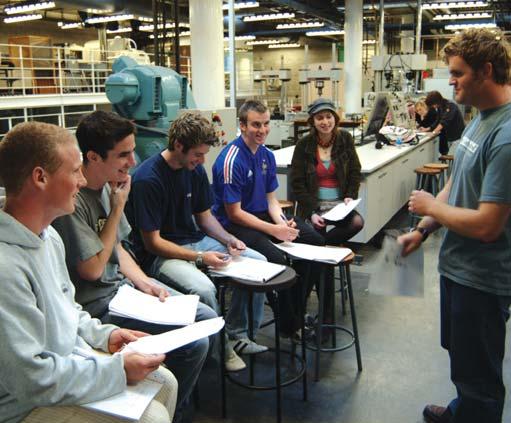
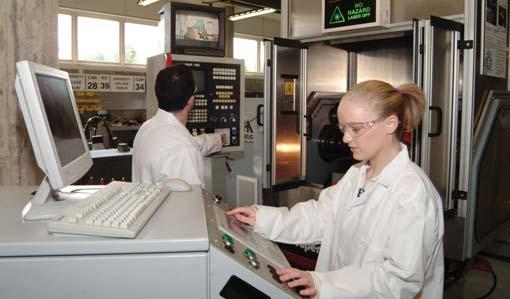
I was interested in both chemical and mechanical engineering and didn’t know which one to choose. The Engineering (Common Entry) degree from UCD meant I could delay the choice until I was more familiar with the area. I chose UCD due to its strong reputation. The greatest challenge by far about college life is time management; any one thing is achievable but when you want to do many things within a certain time-frame, organisation and forward planning become essential. Between going to lectures, getting study and assignments finished, playing sport, playing music, being involved in clubs and societies, spending time with friends and family and relaxing, it’s a challenge to balance everything. Every day you make new mistakes (hopefully different ones); then you learn from them and feel that you’re improving and making progress.
The advantage of this degree is that it gives students the opportunity to study abroad on one of various exchange programmes, known in Europe as "Erasmus Exchange Programmes". The experience of an Erasmus exchange is invaluable and life-changing, both in terms of progression and discovery as an engineer, but also in terms of personal development. I'd give three reasons why, as a European engineer, this is the case: experience, language and contacts.
Learning and integrating into another engineering school are the only ways to determine where you stand in the pecking order of international engineering students. Your ability to learn fast and effectively makes you stand out as an engineer. Your ability to adapt to new systems provides you with the motivation to succeed and the impetus to learn an incredible amount in a short space of time.
A year studying and discovering abroad will inspire you to travel further and provide you with the relevant contacts to progress with your career and life. In my case, studying at EPFL in Switzerland and making contacts earned me a job as a research engineer on a detector project for a future linear collider at CERN.
The hurdles to success as an engineer are innumerable but not insurmountable. If you’re courageous and dedicated, you will progress fast and make your own luck. So, what's engineering about? Advanced communication, rapid learning and effective problem solving. The sky's the limit!
Chemical/Bioprocess
Engineering
Bachelor of Engineering (Honours)
DN077

What is Chemical/Bioprocess Engineering?
The breakthroughs that have been made by Chemical and Bioprocess Engineers are evident in everyday life. From petrochemicals to lifesaving drugs, all owe their development and production to Chemical or Bioprocess Engineers. These Engineers are involved in every pillar that sustains and supports life, including health, water, energy and the environment. Chemical Engineers combine the fundamental principles of science and mathematics with engineering practice, to generate products such as pharmaceuticals, and services such as clean water. Bioprocess Engineers also utilise these fundamentals, applying them to biological systems, such as mammalian cells, to produce biochemicals and medicines. Today, the field of Chemical and Bioprocess Engineering is a broad and expanding one, encompassing areas as diverse as biotechnology, nanotechnology and mineral processing.
What makes a good Chemical/Bioprocess Engineer?
Chemical or Bioprocess Engineering, like all of the other engineering courses in UCD, requires hard work and commitment. To succeed as a Chemical or Bioprocess Engineer requires an aptitude for maths and science, as well as an inquisitive mind and an interest in dealing with real and often complex problems. Coupled to this is their ability to work with and manage large, diverse teams towards common project deadlines and goals. These attributes are essential for graduates who will be charged with finding practical solutions to health, environmental, and energy issues, by applying the scientific and engineering fundamentals central to the UCD programme. A Chemical or Bioprocess Engineer needs to be committed, creative and clever.
To
see if Chemical/Bioprocess Engineering at UCD is for you, ask yourself the following questions...
■ Do you want to study at a university that has been running a Chemical/Bioprocess Engineering degree for over 50 years, longer than any other Irish institution?
■ Do you want to study at a university whose graduates are highly sought after by the world’s biggest pharmaceutical companies?
■ Do you want to invent/design processes (equipment integrated and controlled to meet a specific design purpose) that harness chemical and other reactions effectively and safely?
■ Do you ever wish you could be involved in the development and production of a drug to treat one of today’s prevailing illnesses?
■ Do you want to join a School of Chemical and Bioprocess Engineering, which is the most research active in its field, not just in Ireland, but also in Europe?
■ Do you want to graduate with a professionally accredited and internationally recognised engineering degree?
What can students expect to study when taking Chemical/Bioprocess Engineering at UCD?
As a first year Engineering student, you will receive vigorous training in the fundamentals of Engineering. After deciding to specialise in Chemical or Bioprocess Engineering the subsequent years will see you taking subjects such as chemical reactor and control system design; process economics and safety; and engineering science subjects, including heat transfer, mass transfer and fluid mechanics. At the end of second year, you will have the opportunity to choose to pursue one of the two closely related disciplines of Chemical or Bioprocess Engineering. Project work is a key component of the
Civil Engineering Bachelor of Engineering (Honours)
DN077
What is Civil Engineering?
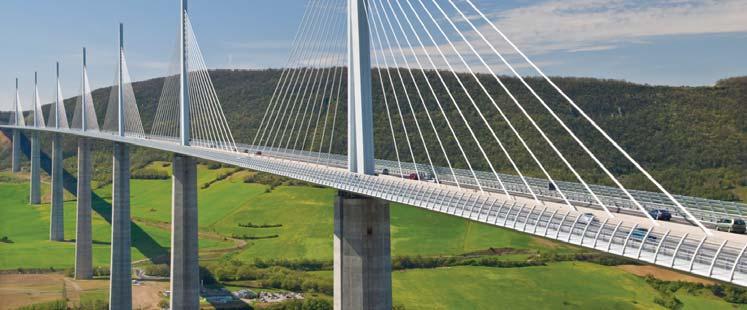
The first thing you need to know about civil engineering is that it is not just about hard hats and building sites. The work of civil engineers is on view on a daily basis in the critical infrastructure required for a functioning society. Civil engineers are required for the roads you drive on, the bridges that get you from A to B, the power stations that provide your electricity and the fact that when you turn on your tap you have fresh drinking water. Civil engineers also take an active role in protecting our environment and have responsibility for a range of activities, including water pollutant reduction and waste management.
What makes a good UCD civil engineer?
Like all of the engineering disciplines, good creative and problemsolving skills are crucial. In particular, and because mathematics underpins design, numeracy skills are important. As the modern infrastructure of society impacts on the environment, civil engineers have the task of finding solutions that enable society to function, while at the same time minimising effects on the environment. So, to sum up, the ideal UCD civil engineer would be a bright, intelligent person, who has great enthusiasm and flair for the challenge of solving problems, coupled with a desire to see society develop in a way that keeps environmental concerns and issues to the fore.
To see if Civil Engineering at UCD is for you, ask yourself the following questions…
■ Do you want to solve problems and address society’s infrastructural and environmental needs?
■ Do you want to study a degree programme that following graduation, will enable you to work in water and environmental engineering, structural engineering, geotechnical engineering and transport engineering?
■ Would you like the opportunity to take advantage of a work placement in a top engineering organisation in Ireland or abroad as part of your degree programme?
■ Do you want to study a discipline that has solid career prospects in the public and private sectors?
■ Do you want to study for an engineering degree which is internationally recognised and qualifies you to work anywhere in the world?
What
can students expect to study when taking Civil Engineering at UCD?
Civil engineering can be said to comprise four key areas: structures, geotechnics, water and environmental, and transportation engineering. The subjects that you will study for a degree in Civil Engineering at UCD are varied. Like all of the other UCD engineering disciplines, the first year will be spent on developing the fundamentals of engineering. A rigorous study of mathematics and physics will ensure that regardless of how technology changes, you will always have solid fundamental problem-solving skills. This makes UCD engineers extremely employable in professions outside of engineering. The subsequent years are spent developing specific skills in subjects that involve civil engineering design, analysis and construction. A great emphasis in these years is spent on the built
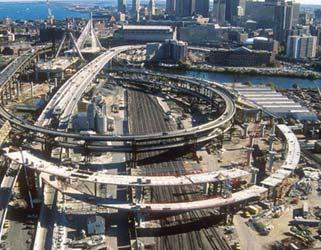
“Big Dig” Boston, USA, where UCD Civil Engineering students have undertaken work placements.
Did you know?

The Centre for Water Resources Research (CWRR) under the directorship of Professor Michael Bruen in UCD Civil Engineering is currently involved in a number of projects to enable both engineering practitioners and the public at large to design for and deal with the impacts of floods. Climate change impacts in the future are likely to result in an increased frequency of floods, particularly in urbanised areas. The CWRR is actively engaged in projects to develop improved methods of flood estimation and is also involved in work to facilitate the use of radar in flood forecasting. Projects assessing the re-use of both excess rainwater and ‘greywater’ are also being undertaken. The research is not only focused on water quantity issues but extends to developing environmentally sensitive methods for improving the quality of contaminated waters.
environment and natural environments and includes subjects related specifically to the design of structures, water resource and transportation systems. The third year of the programme offers students an opportunity to undertake a four-month work placement in an Irish or international civil engineering organisation.
What are the career options for a UCD Civil Engineering graduate?
Civil Engineering is comprised of many inter-related specialities such as: structural engineering, geotechnical engineering, environmental engineering, traffic and transportation engineering, and water resource and hydraulic engineering. As a result, the opportunities available upon graduation are extremely varied. Some of our graduates have gone on to work in the public sector or have secured positions in consulting and contracting organisations. Increasingly, the career path of a civil engineer involves interdisciplinary work with engineers from other sectors, and work on projects dealing with areas such as sustainable energy. Studying engineering at UCD has provided our graduates with highly transferable skills and many of our graduates have secured positions in banking and business organisations.
What are the graduate study options for civil engineers?
Postgraduate study is an increasingly popular route for engineers. At UCD we have a variety of taught Masters, in particular the ME in Civil Engineering as well as research Masters and PhD opportunities to cater for all interests. As part of your Civil Engineering degree at UCD you will be exposed to the work and personnel of various research groups that will assist you to get more experience in the various topics involved.
What have civil engineers gone on to do…?
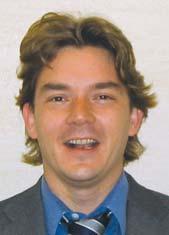
Christian Nea UCD Civil Engineering graduate
It is sometimes difficult for someone who has just finished their Leaving Certificate to be certain of which career is right for them. The benefit of studying Civil Engineering at UCD is that you learn problem-solving skills that are transferable to, and well recognised in, other fields and industries. A significant number of students in my year subsequently developed careers in other areas such as banking and management. A degree in Civil Engineering from UCD is a good solid degree. I put UCD top of my list because it has one of, if not the best, reputations for Civil Engineering in Ireland. My interest in the environmental aspects of civil engineering was initiated and developed while studying Civil Engineering at UCD. As a result I have been working as an environmental engineer at the National Roads Authority (NRA) for the last four years. I work in the Environmental Unit, where my work involves developing and communicating the NRA’s environmental policy. These policy documents provide guidance on dealing with a number of environmental impacts which can occur during the planning and construction of national road schemes such as: air quality; noise and vibration; ecological (e.g., impacts on bats, otters, badgers, watercourse, trees and hedgerows); landscape, architectural and archeological heritage; and, hydrological, hydrogeological and geological impacts. A significant portion of my time is spent advising those involved in the project management of individual schemes on environmental issues. I also advise on environmental law issues. This has led me to study law with a view to developing my knowledge in environmental law, which is why I recently completed a LL.B. I have great memories from my time at UCD. The Civil Engineering programme was quite intensive. Generally, there were lectures in the morning and lab work in the afternoon. Working in the various laboratories was very interesting and there was always a great camaraderie between students. The lab sessions were great craic, which made attending labs or lectures good fun. Engineering has always had a reputation for having an excellent social scene. I would recommend Civil Engineering at UCD to any prospective student. It certainly is an ideal starting point for a career in civil engineering, and it is also looked very favourably upon in other industries.