Published on behalf of The Bar of Ireland by Think Media Ltd
Editorial: Ann-Marie Hardiman Paul O’Grady Colm Quinn
Design: Tony Byrne
Tom Cullen
Niamh Short
Advertising: Paul O’Grady
Commercial
Paul O’Grady
The Bar Review
Think Media Ltd
The Malthouse
537 NCR, Dublin DO1 R5X8
Tel: +353 (0)1 856 1166
Fax: +353 (0)1 856 1169
Email: paul@thinkmedia ie
Web: www thinkmedia ie www lawlibrary ie
Views expressed by contributors or correspondents are not necessarily those of The Bar of Ireland or the publisher and neither The Bar of Ireland nor the publisher accept any responsibility for them
Suppor ting our members
A number of initiatives are underway to improve services to members of The Bar of Ireland.
Countdown to the GDPR
M e m b e r s w i l l b y n o w h a v e re ce i v e d s e v e ra
Council promoting awareness of the General Data Protection Regulation
( G D P R ) , w h i c h
Regulation that significantly increases the obligations and responsibilities fo r o rg a n i s a t
personal data This includes barristers As the GDPR will bring significant changes to current data protection laws, the Council established a working g ro
co
t h e i r o w n co m p l i a n ce , T h
m a r y mechanisms to suppor t members in that regard:
1 Technology solution: each and ever y member has access to the Office 365 platform through their membership subscription This provides five licences for each user
2 Guidance framework: the GDPR calls on member organisations to provide a f ra m e w o r k to a s s i s t m e m b e r co m p l i a n ce a c t i v i t y a n d t h e w o r k i n g group is preparing draf t guidance for members
I cannot stress enough the impor tance and responsibility for each member of ensuring that they attend the training sessions on the GDPR, to ensure t h a t t h e y a v a i l o f t h e re s o u rce s p ro v i d e d b y T h e B a r o f I re l a n d a n d , ultimately, to ensure their own compliance
Response to membership sur vey
A s i n ce re t h a n k s to a l l m e m b e r s w h o to o k t h e t i m e to co m p l e te t h e membership survey that was carried out during January The survey yielded over 950 responses – a 27% increase in the response rate when compared to our first membership sur vey, which was under taken in 2015 The results are currently being analysed and will be shared with members shor tly The primar y purpose of the sur vey is to ascer tain members’ views on the range of membership ser vices and benefits This will greatly assist the Council in t h e d e v e l o p m e n t o f t h e n e x t t h re e - y e a r s t ra te g i c p l a n a n
n m a k i n g decisions on priorities
Legal
Aid Board submission
T h e C o u n c i l a n d i t s co m m i t te e s h a v e b e e
d i n overseeing submissions on a variety of issues All submissions are published on our website and members are encouraged to take the time to read thos submissions Most recently, a submission was made to the Legal Aid Board setting out the concerns and experiences of members on the operation o
meeting with the Legal Aid Board to elicit their response to the submission and similarly to the work under way in relation to the legal aid scheme for criminal matters, and it is hoped that a formal process to engage on the issues raised will be established
Launch of Innocence Scholarships T
speaker to help profile the oppor tunity for up to five young members to par ticipate in a range of projects throughout the US to assist in over turning w ro n
helping to carr y out the Guildford and Woolwich bombings in 1975, will share his own personal experience of miscarriages of justice in delivering t h e ke y n
members are invited to attend
Bar Conference in Malaga, May 25-26
Members will by now be aware of our conference, which takes place this year in Malaga The speaker line-up is ver y impressive and the theme of ‘ D e f a m a
cyberpsychologist, and Dick Pound CC OQ QC , first president of the World A
Committee, will undoubtedly make great contributions to the defamation topic Other speakers include Mr Justice Rober t Jay and Eoin McCullough S
sustainable As this event is self funding, it is impor tant that we are in a position to offer reduced rates to junior members
Council of The Bar of Ireland
A year for progress
In our first edition of 2018, we focus on the root and branch review that is now underway in respect of the administration of civil justice in the State.
The President of the High Cour t discusses some of the bottlenecks in the system and identifies some par ticular areas that are ripe for a fundamental overhaul, in par ticular the cost of litigation and discovery Mr Justice Peter Kelly also highlights the pressing need for more resources to improve cour t efficiency, that is, more judges and up-to-date electronic systems
Legislation has finally been enacted to formulate a system for periodic payments for plaintiffs with catastrophic injuries Our writer analyses how this legislation will work in practice, and points out some difficulties with the new law, par ticularly in the area of indexation of payments Elsewhere, we look at the increasing use of social media as a source of evidence in both criminal and civil trials We look at issues that arise with regard to the authentication of such evidence and the approaches with regard to the admissibility of such evidence in other jurisdictions
Launching proceedings against a defendant who resides outside the State is always fraught with complications In this edition, we look at some of the basic rules relating to service outside the jurisdiction on defendants in other European states
The last months have brought a great deal of sadness, with the loss of the former Chief Justice Thomas Finlay, the former Supreme Court judge Donal Barrington and the former Attorney General, Peter Sutherland Our hear tfelt sympathies are with their families and their many friends
Eilis Brennan BL Editor ebrennan@lawlibrary ie
FIND A BARRISTER APP AVAILABLE NOW
GAIN INSTANT ACCESS TO THE BAR OF IRELAND’S MEMBER DIRECTORY AND EASILY FIND BARRISTERS BY NAME OR BY USING THE ADVANCED SEARCH FUNCTION TO IDENTIFY BARRISTERS BY AREAS OF PRACTICE, SPECIALISATION, CIRCUITS AND ADDITIONAL LANGUAGES.
The Bar of Ireland Past Chairmans’ Dinner
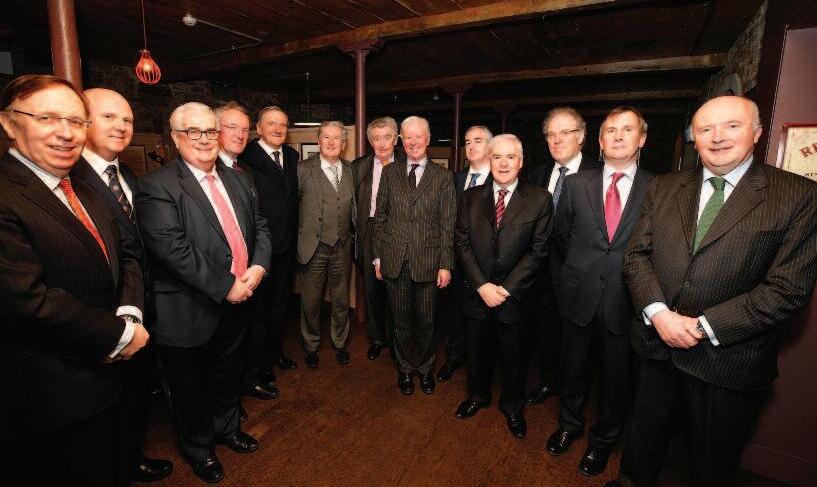
Past Chairmen of The Bar of Ireland g a
Past Chairmans’ Dinner, hosted by current Chairman Paul McGarr y SC
From lef t: Michael Collins SC; Hugh Mohan SC; Mr Justice Frank Clarke, C
MacMenamin; Mr Justice Ronan C
Ke
McGarr y SC , Chairman, Council of The Bar of Ireland; David Nolan SC; C
O’Donnell SC
Council of The Bar of Ireland marks Day of the Endangered Lawyer
To co
Law yer’ on Januar y 24, 2018, Council of The Bar of Ireland has written to t
harassment, imprisonment and tor ture of law yers in those countries The letters, issued by Tom Creed SC , Chairman of the Human Rights Committee
at the Council of The Bar of Ireland, call upon these governments to cease their campaign of persecution against the legal profession, stating that the
countries
Positioning Irish legal ser vices post Brexit
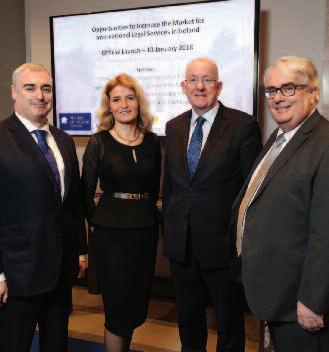
An initiative by The Bar of Ireland, suppor ted by the IDA and the legal community, was launched on January 10, 2018, by the Minister for Justice and Equality, Charlie Flanagan TD, seeking to promote Ireland as a leading centre globally for international legal services
Post Brexit, Ireland will be the only English-speaking common law jurisdiction fully integrated into the European legal order, and this presents significant oppor tunities for both the Irish legal sector and the wider economy
In this initiative, which complements the Government’s wider strategy of pursuing trade and investment oppor tunities from Brexit, the existing IFS2020 strategy ‘A Strategy for Ireland’s International Financial Services Sector 2015–2020’, and the Government’s Action Plan for Jobs, the Government is encouraging legal professionals in Ireland to work in a unified way to develop and progress a strategy to increase trade in legal services to the international sector as the UK leaves the EU
Minister Flanagan intends to brief Cabinet on the initiative, following which an implementation group will be formed to ensure that Ireland capitalises on the oppor tunities for both legal services and the wider economy that are provided by the UK’s depar ture from the EU
Pictured at the event held to launch the initiative to increase the market for international legal services in Ireland were (from left): Chairman, Council of The Bar of Ireland, Paul McGarry SC; Mary Buckley, Executive Director, IDA Ireland; Minister for Justice and Equality Charlie Flanagan TD; and, Chief Justice of Ireland
Mr Justice Frank Clarke
Improving access to justice
The Bar of Ireland Voluntary Assistance Scheme continues its work with charities, NGOs and others, and always has room for new volunteers.
I was delighted to be appointed as Co-ordinator of the Voluntary Assistance Scheme (VAS) of The Bar of Ireland in July 2017, and to be given the opportunity to continue the fantastic work of the previous co-ordinators Aoife Carroll BL, Diane Duggan BL and Libby Charlton BL Building on this work, I hope to further increase awareness of VAS among colleagues and so, to this end, I will briefly describe the work of VAS The main body of the work of VAS is arranging for counsel to provide pro bono legal assistance on foot of requests received from charities, NGOs and civic society organisations VAS aims to improve access to justice by providing pro bono legal assistance where there is a genuine issue arising and there is no other means of accessing legal assistance VAS provides assistance in one of two ways: to the requesting organisation itself, for legal issues arising for the organisation; or, to an individual as a client of a requesting organisation via the requesting organisation acting as an intermediary In my experience to date, the majority of requests for assistance fall into the latter category Through VAS, barristers can provide advice and opinion directly to the requesting organisation Where a matter involves litigation, VAS requests the assistance of a solicitor to act in the matter and to instruct counsel VAS provides assistance across a range of areas of law but does not provide assistance in family law, child care law or criminal law, as these are
covered by Legal Aid Since I commenced in the role on July 4, 2017, our colleagues have provided or are providing assistance to 20 charities, NGOs and civic society organisations in 31 matters In these matters, counsel have provided or are providing advice and/or representation in diverse areas of law, including social welfare, discrimination, employment, landlord and tenant, possession proceedings, pensions and protected disclosures VAS is extremely grateful to all colleagues who have assisted and are assisting in VAS matters I am truly impressed by the dedication to voluntary work that I have witnessed over the last few months VAS also organises events and training for charities, NGOs and civic society organisations on legal issues relevant to these organisations and their work On July 12, 2017, VAS hosted a seminar on data protection with Helen Dixon, Data Protection Commissioner, and Ronan Lupton BL The event was very well received by attendees VAS also teamed up with the Charities Regulator to host a joint seminar on January 25, 2018 on corporate governance for charities, with speakers from the Bar and the Charities Regulator See page 8 for a news feature on this event
Get involved!
I would encourage colleagues at every level, in all areas of practice and in all locations to get involved in VAS! If you would like to volunteer with VAS, please send an email to vas@lawlibrary ie with the following details and you will be added to the database of volunteers:
■ name; ■ contact details; ■ year of call to the Bar; ■ legal areas of practice; ■ circuit; and,
■ any previous volunteering experience (this is not a requisite factor to be considered for inclusion in the scheme)
Sonja O’Connor BL
Good Governance and the Law
‘Know your obligations, inform yourself and ask questions’ was the take home message from the recent Bar of Ireland Voluntary Assistance Scheme (VA S) seminar for trustees of charities.
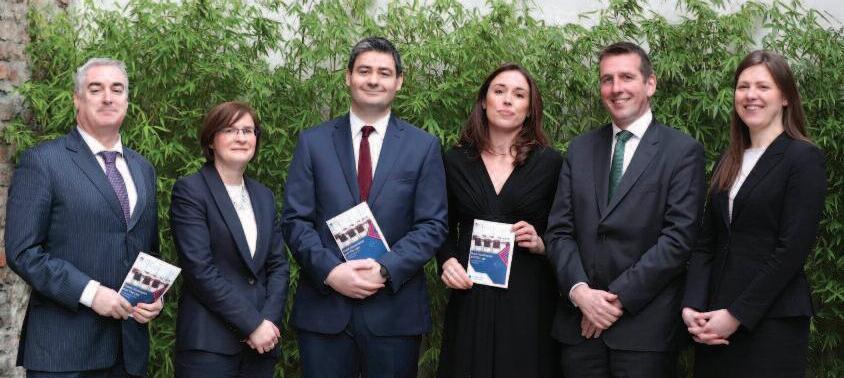
Pictured at the seminar on ‘Good Governance and The Law’, jointly hosted by The Voluntary Assistance Scheme of The Bar of Ireland and The Charities Regulator, were (from left): Paul McGarry SC, Chairman, Council of The Bar of Ireland; Helen Martin, Director of Regulation, Charities Regulator; Tom Malone, Head of Compliance and Enforcement, Charities Regulator; Shelly Horan BL; Hugh O’Flaherty BL; and, Sonja O’Connor BL, VAS Co-ordinator
The seminar, on ‘Good Governance and the Law’, was held in partnership with the Charities Regulator Chairman, Council of The Bar of Ireland, Paul McGarry SC, welcomed attendees and spoke about the work undertaken by VAS to assist charities and NGOs with a range of legal matters He said that The Bar of Ireland is extremely proud of how VAS has gone from strength to strength in recent years
Responsibilities
Helen Martin, Director of Regulation with the Charities Regulator, spoke about the Charities Act, and the responsibilities it places upon board members of charities in Ireland There are currently over 9,000 charities on the register, with over 52,000 trustees, on whom the legislation places many obligations The Regulator is ready and willing to assist charities in meeting their obligations under the legislation Ms Martin referred to the wealth of guidance documents available on the Regulator’s website – www charitiesregulatoryauthority ie – which offer advice and information on good governance in light of the new regulatory framework She also emphasised the need for trustees to understand their obligations, to inform themselves about what’s going on in their charity, and to ask questions about any issues they do not understand
She said that the sector is “well informed and well intentioned”, and demonstrates a high level of engagement with the Regulator As an example of this, she said that as of December 2017, 89% of charities have submitted a copy of their annual report to the Regulator
Legal duties
Shelly Horan BL spoke next on ‘The legal duties of charity trustees’ Ms Horan reminded those present that trustees are legally responsible for the management of their charities, and while they can delegate tasks, they cannot delegate that responsibility She advised trustees to be familiar with the particular governing instrument of their charity (e g , trust, or company limited by guarantee), and discussed concepts such as reasonable care, and what is required to demonstrate this in the context of management of a charity She spoke about the regulations
regarding the obligation to make a disclosure to the Regulator if there is a suspicion of theft or fraud In the event of any irregularities, the key is to act quickly, as soon as an issue arises She also advised that charities should have a conflict of interest policy in place
Getting it right
Hugh O’Flaherty BL looked at ‘Challenges for Board Members: a practical perspective’ As a director of Goal, Hugh has experience in running a very large charity with thousands of employees all over the world He spoke of the impact of recent scandals in the sector, and said the best way to regain and maintain trust is to adopt good governance processes
He outlined five challenges that he said face directors of charities: increased accountability; getting the right board members; the role of the board and its effectiveness; varying the depth of knowledge on the board; and, dealing with risk He talked about the need to have a diverse mix of skills and backgrounds on a board in order to avoid groupthink, and said an effective corporate governance framework was a great way to attract good people He also advised on the importance of succession planning to make sure board membership remains strong over time He finished by talking about the importance of strategic risk management, and recounted Goal’s recent experiences in dealing with a crisis, and how a robust risk management strategy enabled the organisation to move fast, investigate and act to restore confidence and get funding back on track
Compliance
Tom Malone, Head of Compliance and Enforcement with the Charities Regulator, was the final speaker of the afternoon
He outlined a range of compliance issues that have come to the Regulator’s attention and offered advice on how to deal with these He also emphasised the need for trustees to lead their charities, to understand their obligations, be actively engaged, and ask questions, and said that the Charities Regulator is committed to supporting charities in meeting all of their obligations
Voice of experience
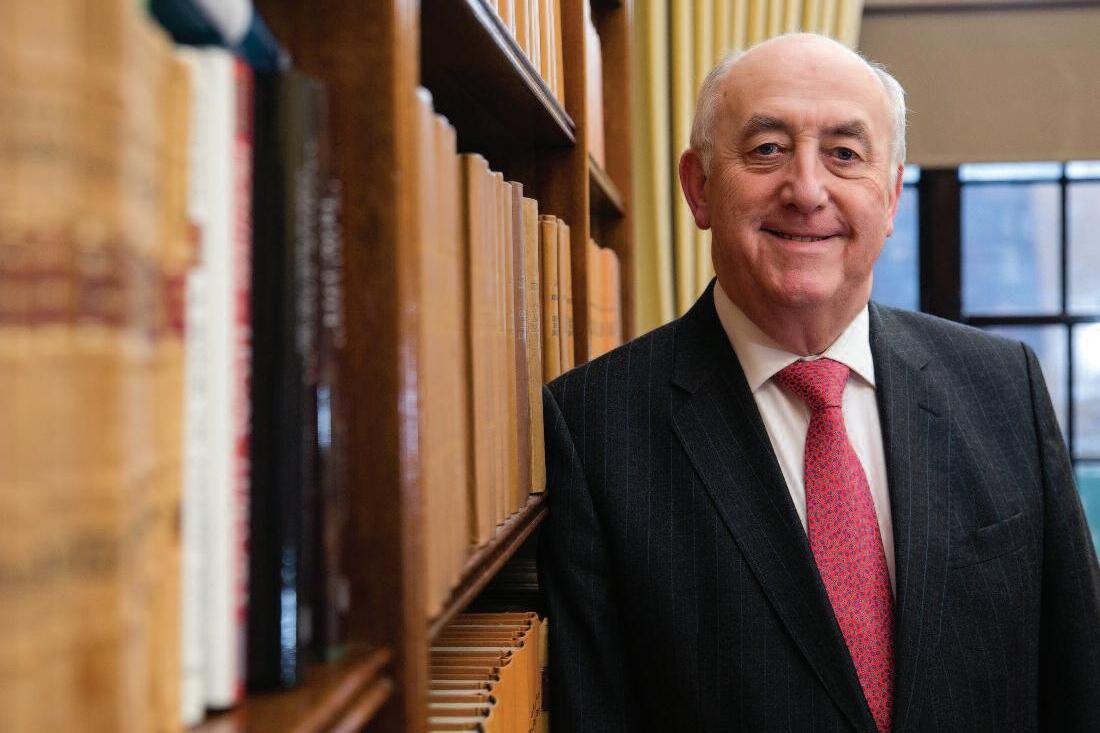
Mr Justice Peter Kelly brought two decades on the bench to his appointment as President of the High Cour t in 2015, and now brings that considerable experience to a long-awaited review of the civil justice system.
Ann-Marie Hardiman Managing Editor at Think Media Ltd
President Peter Kelly’s road to his current position began at the age of 12 when his father, a civil servant in the Chief State Solicitor’s Office, brought him to visit the law courts Watching the trials and listening to the eloquent arguments of leading barristers of the day, the young Peter Kelly “fell completely in love with the idea of becoming a barrister,” but with no family background in law, it was necessary to
take a more circuitous route: “I took the executive officer competition after the Leaving Certificate and asked to be sent to the courts because I knew that they gave you facilities to study for the Bar So I studied for the Bar while I was working in the central office of the High Court It was a great experience from the point of view of getting to know the practice and procedures of the Court, and it also meant that you became known to solicitors, and therefore you weren’t arriving into the Law Library as an unknown entity if you ever decided to practise at the Bar”
After four years at the High Court, he entered an open competition for the role of administrative officer and took a post in the European Law Division of the Department of Justice: “It was very exciting at the time because we weren’t long members of the European Union – or the EEC as was – and they were very short of legally qualified people, so within a very short time I was off to Brussels and Luxembourg on a regular basis”
Interesting though this work was, it was serving another purpose: “After two years I had saved enough money to take my chances at the Bar so I resigned In those days there was no such thing as a career break – you had to sign your resignation and give up your permanent and pensionable position That was the risk I took, and I’ve never regretted it”
“A judge has to decide if the plaintiff wins or loses – it’s a black and white situation –whereas in
a
mediation the par ties can fashion their own solution to their problems and an agreed solution can be better than one that is imposed.”
Review of the Administration of Civil Justice
Last year, President Kelly was asked by Government to establish a group to review the administration of civil justice in the State and to recommend reforms under a number of headings It’s a long-overdue enterprise, as there hasn’t been a root and branch review of the system in the history of the State (the last major changes took place in 1878) Ireland is the last country among our near neighbours to undertake such a review, with England and Wales (Lord Woolf, 1996), Scotland (Lord Gill, 2009), and most recently Northern Ireland (Lord Justice Gillen, 2017) all having undertaken a process of reform
President Kelly feels that each of these processes can guide the Irish group In particular, as our nearest neighbour, with whom we have perhaps most in common, Lord Justice Gillen’s report in Northern Ireland might be said to have most relevance It’s a very extensive document, which has yet to be implemented, and while President Kelly acknowledges Lord Justice Gillen’s work, he feels the approach of the review group here needs to be slightly less ambitious: “I think if we were to produce a similar report here it would have little or no prospect of being implemented because of cost, but it provides an interesting and useful blueprint for us and we can learn from it I would prefer to produce a report that has a reasonable chance of being implemented, even though that might not be what you might call the ideal solution”
To this end, he welcomes the presence of representatives from the Departments of the Taoiseach and of Public Expenditure and Reform on the review group, as their endorsement of the project, and engagement with it, will hopefully assist in tailoring the recommendations with a view to implementation
Wide ranging
The terms of reference of the review cover a wide range of issues, including looking at improving procedures and practices in the courts, and President Kelly agrees that the current rules of procedure are outdated and need adjustment to provide easier access and more efficient administration One issue about which he feels very strongly is the undertaking to review the law on discovery: “[Discovery] is the single greatest obstacle in civil litigation, certainly in the High Court, to expeditious dispatch of business It has become a monster Huge amounts of time and money are expended on it because we’re operating under rules that were formulated in the 19th century, at a time where for the most part you were talking about at most maybe a couple of dozen documents”
This is an area where looking at reforms in other jurisdictions might be helpful, if only to point to what hasn’t worked: “Discovery has been a problem in England and Northern Ireland and the English solution, according to what I’ve heard, hasn’t proven to be effective”
Some commentators have suggested that perhaps the time has come to abolish discovery altogether (civil law systems don’t have it): “That would be a very extreme solution but something has to be done”
Encouraging methods of alternative dispute resolution also falls within the terms of the review President Kelly points out that this is already underway, in particular in the Commercial Court, where judges can adjourn a case so that the parties can consider mediation He cautions that work needs to be done to persuade litigants of the benefits of such an approach: “Mediation will work well if people are open to it but you can’t force people – all you’re doing is creating another layer of bureaucracy If it works it can be very cost-effective and can produce results which no judge can produce A judge has to decide if the plaintiff wins or loses – it’s a black and white situation – whereas in a mediation the parties can fashion their own solution to their problems and an agreed solution can be better than one that is imposed”
The austerity measures introduced by the Government during the recession take a large part of the blame for another significant topic for the review process –e-communication and the possible introduction of e-litigation: “The current electronic system in the courts is way behind the times and will require substantial capital investment to bring it up to standard”
If that happens, a number of changes to the way cases are processed may be possible, although these may face other obstacles For example, President Kelly points out that Lord Justice Gillen’s recommendations include a completely online system with claims up to £10,000, but such a development here might pose constitutional difficulties Certainly, any such innovations would require a state-of-the-art system, which the Courts Service simply does not have at present Apart from discovery, the biggest issue for the review group is the cost of litigation, both to litigants and to the State As President Kelly says: “Under the current system, as they say, the only people who can litigate in the High Court are paupers or millionaires!”
He says there are a number of things that can be done to curtail costs One possible solution is assessment by a judge in advance of a trial: “An assessment might indicate that a case should take no more than ‘X’ number of days, and the costs will not be allowed to exceed ‘Y’ So if the parties know they can only litigate for a specified number of days and where the cost outcome is going to be limited in advance, it may provide for a more speedy litigation and give people more certainty as to outcome” Solutions do not have to be costly or complicated President Kelly has already implemented one change by issuing a practice directive for payment on account in respect of costs: “It’s a simple procedure whereby costs on account are directed to be paid within 21 or 28 days, and that provides cashflow to solicitors, enabling them to pay expert witnesses, etc It’s very much a homemade solution, which has worked really well”
This is, of course, a review of all of the courts, and all are represented on the review group President Kelly acknowledges that different courts have different needs, and different solutions apply: “The appellate courts don’t have the logistical difficulties that trial courts have, dealing as they do mainly with written submissions and no witnesses But perhaps introducing time limits in all courts might be useful Public time in court is very expensive, both for litigants and the public purse”
Judicial life
Originally from Dublin, President Kelly attended O’Connell School, UCD and King’s Inns
He was called to the Bar in 1973 and to the Inner Bar in 1986 He was a
Commercial Cour t from its establishment in 2004 until he was appointed to
President of the High Cour t in December 2015
The review group has advertised publicly for submissions, and while it has received some, at the time of our interview, the deadline of February 16 was some weeks away Once all submissions have been received, the group will review them and begin the work towards formulating recommendations The group has been given two years to complete its work and President Kelly expects to submit a report to the Minister for Justice in mid 2019
Public engagement
Recent times have seen increased public engagement by representatives of the judicial system in Ireland, including the recent televisation of two Supreme Court judgments President Kelly is understandably wary of such initiatives extending to trial court However, he feels that there is value in educating the public about how the courts work, and points out examples that he feels have been very successful: “I have judged the National Mock Trial competition for secondary schools on many occasions It has attracted schools from all over the country; they are given a topic, and have to run a trial Some have been really excellent in the way in which they’ve gone about their work”
Such programmes, he says, get young people interested in how the system works from an early age, and entrants come from a range of backgrounds, including those not traditionally associated with careers in law He also mentions the long-running Law in Action programme on BBC Radio 4 as an example of how broadcast journalism can be part of the process of making legal issues clearer to the public: “The programme discusses recent decisions, and provides information as distinct from soundbites – what the case was about and what the legal issues are These are not necessarily high-profile cases, but have an interesting element to them”
Resources
No discussion of reform of the courts or justice system can be complete without mention of the resourcing issues faced by President Kelly as he deals with the shortage of judges in Ireland: “Ireland has the lowest number of judges per capita in the OECD, so judges are constantly under pressure I’ve been President since December 2015 and on no day have I had a full complement of judges available to me, either because of vacancies or illness”
Other jurisdictions have systems in place to deal with these difficulties; in England, for example, retired High Court judges or approved barristers form a panel of Deputy High Court judges, who can be called upon to sit
One of the areas that’s most demanding is the judicial review list: “It’s taking up almost a quarter of the entire complement of High Court judges I have nine judges assigned to it at the moment and it has a less than 5% settlement rate and a less than one in five success rate It’s hugely demanding of judicial resources and is something I think the review will certainly have to look at”
Beautiful voices and good works
President Kelly has a wide range of interests outside of the courts He enjoys classical music and is a Director of the Dublin Choral Foundation For many years he was Chairman of St Francis Hospice in Dublin, and is extremely proud of his involvement in the development of the second St Francis Hospice in Blanchardstown, which opened in 2015 He is also Chairman of the Edmund Rice Schools Trust, which is responsible for running about 97 former Christian Brothers schools throughout the country, and is a member of the Council of the Royal College of Surgeons in Ireland
The Commercial Court, in which President Kelly has particular experience, is also a pinch point, particularly in the wake of Brexit: “The Commercial Court is alone in the commercial courts in these islands in that there is the possibility of public law issues being dealt with in it Practically every judicial review of a wind farm project, and of major infrastructural projects, are now in the commercial list They are very complex cases that take a huge amount of time If Brexit issues are likely to be litigated, that will create further pressures”
Recent judicial appointments have gone some way to plug the gaps, but President Kelly points out that at best this keeps things running at the current level, which is not sufficient to meet the needs of the service: “There is a need for more judges to try and service the needs of the courts as they stand, and in anticipation of changes that are coming down the line in the very near future”
Responsibilities
A bewildering range of issues fall within the remit of the President of the High Court
One of the most onerous is that of responsibility for wards of court (of which there are approximately 2,700) The Assisted Capacity Act of 2015 will have a large impact, as it is intended to effectively phase out the wards of court system once commenced However, this is likely to increase the workload in the short to medium term: “That’s going to require an individual review of all 2,700 cases, so I, or more likely my successor, will be expected to deal with that, as well as provide for existing wards’ needs”
Long-awaited legislation to allow for awards in the form of periodic payments passed into law in November 2017, and is welcomed, but hasn’t yet been commenced
The President of the High Court is also responsible for disciplinary matters for many professions including doctors, pharmacists, solicitors, vets, nurses, radiographers, and social workers Latterly teachers, perhaps the largest professional group of all, have been added to the list
“There are increases in work from my own point of view as well as increases in other areas handled by judges If we are recommending better pre-trial procedures in this review group, there must be scope for persons who don’t have full judicial status to be able to deal with elements of that In Northern Ireland, for example, I think they have six or seven masters in the High Court and we have one here With appropriate safeguards, we could probably use masters to deal with a lot of matters that are at present assigned to judges”
The President of course also runs the High Court with its complement of 40 judges, both in civil and criminal work, and a “really top-class staff” whom he says are under enormous pressure: “There are not enough of them, and really the IT system is so antiquated For the last month we’ve had huge problems, with staff just after Christmas having to write orders in longhand because the system was down That’s a problem that really has to be addressed”
L E G A L
U P DAT E
The Bar Review, journal of The Bar of Ireland
AGENCY
A directory of legislation, articles and acquisitions received in the Law
Library from November 9, 2017, to January 17, 2018
Judgment information supplied by Justis Publishing Ltd
Edited by Deirdre Lambe and Vanessa Curley, Law Library, Four Courts.
ADMINISTRATIVE LAW
Administrative and Constitutional Law –
Art 40 4 2 of the Constitution – Ss 2 and 2A of the Bail Act, 1997 – [2017] IEHC 618
M H v Governor of Cork Prison [High Court]
Administrative and constitutional law –Courts – Circuit Court – Jurisdiction –
Mediation act 2017 (commencement) order 2017 – SI 591/2017
ASYLUM/IMMIGRATION
Asylum, immigration and nationality – Art 40 of the Constitution – Deportation order – [2017] IEHC 611 – 20/10/2017
J A [Cameroon] v Governor of Cloverhill
Prison No 3 [High Court]
Asylum, immigration and nationality – S 7
of the Criminal Law Act, 1977 – Expiry of permission to remain in State – [2017] IEHC 652 – 06/10/2017
Wang v Minister for Justice, Equality and Law Reform [High Court]
Asylum, immigration and nationality –Refusal of visa application – Fraudulent document – [2017] – IEHC 527
K N v Minister for Justice and Equality [High Court]
Asylum, immigration and nationality – S 15 of the Irish Nationality and Citizenship Act 1956 – Judicial review – [2017] IEHC 630 - 06/10/2017
Zaigham v Minister for Justice and Equality [High Court]
Asylum, immigration and nationality – S 3(11) of the Immigration Act, 1999 –Revocation of deportation order –Misconduct of giving false information –Judicial review – Expiration of visa –Unlawful stay – [2017] IEHC 725 –24/11/2017
C O (Nigeria) v The Minister for Justice and Equality and ors
Asylum, immigration and nationality –Execution of deportation orders – Art 3 and art 8 of the European Convention on Human Rights Act 2003 – Grave risk –Availability of medical facility in country of origin – Assessment of information –Significant disparity in medical treatment –[2017] IEHC 719 - 10/11/2017
Azeem and ors v The Minister for Justice and Equality
Asylum, immigration and nationality –Rejection of asylum claims – Adverse credibility findings – Nationality of child –Serious harm – [2017] IEHC 730 –01/12/2017
A L M (an infant) v Minister for Justice and Equality and ors
Constitution – Art 40 4 2 of Constitution –Legality of detention – Asylum, immigration and nationality – Immigration Act 1999 – Immigration Act, 1999 (Deportation) Regulations 2005 (as amended by the Immigration Act, 1999 (Deportation) (Amendment) Regulations 2017 – [2017] IEHC 718 – 27/10/2017
Gayle v The Governor of the Duohas Centre
Gayle v Minister for Justice and Equality and ors
Immigration – Order of certiorari – Judicial review – [2017] IECA 282 – 27/10/2017
I Gorry v Minister for Justice and Equality [Court of Appeal]
Deportation – Order of certiorari – Points of law – [2017] IECA 280 – 27/10/2017
A B M and B A v Minister for Justice and Equality [Court of Appeal]
K R A and B M A (a minor) v Minister for Justice and Equality [Court of Appeal] Asylum, immigration and nationality – S 4 (7) of the Immigration Act 2004 –Permission to remain in State – [2017] IEHC 620
Pfakacha v Minister for Justice [High Court] Asylum, immigration and nationality – The Refugee Act 1996 – The Immigration Act 1999 – [2017] IEHC 621
F S v Minister for Justice and Equality [High Court]
Library acquisitions
Moreno-Lax, V Accessing Asylum in Europe: Extraterritorial Border Controls and Refugee Rights under EU Law Oxford: Oxford University Press, 2017 – C206 E95
AVIATION
Library acquisitions
Mendes de Leon, P An Introduction to Air Law (10th ed ) The Netherlands: Kluwer Law International, 2017 – N327
Statutory instruments
Aviation Regulation Act 2001 (levy no 18) regulations 2017 – SI 560/2017
BANKING
Banking and finance – Non-payment of loan – Interlocutory injunction – [2017] IEHC 674 – 0/11/2017
Wingview Ltd v Ennis Property Finance DAC [High Court]
Banking and finance – S 28 (6) of the Supreme Court of Judicature (Ireland) Act 1877 –Assignment of debt – [2017] IEHC 515
AIB Mortgage Bank v Thompson [High Court]
Banking and finance – Non-payment of loan – Summary judgment – [2017] IEHC 675 – 09/11/2017
Danske Bank A/S (Trading as Danske Bank) v O’Reilly [High Court]
Banking and finance – Interlocutory injunction – Balance of convenience –
Adequacy of damages – Fair issue – Ulterior motive – [2017] IEHC 739 – 12/12/2017
Whelan v Promontoria (Finn) Limited and anor
Banking and finance – Loan – Overdraft –Company – Personal guarantee – Default by company on loan – [2017] IECA 317 –06/12/2017
M Y and ors v The Minister for Justice, Equality and Law Reform and ors
Banking and finance – Non-payment of loan – Appointment of receivers –
Possession of properties – Housing loan –
O 34 of the Rules of the Superior Courts –Jurisdiction of High Court – Locus standi –[2017] IEHC 734 – 06/12/2017
Murphy and anor v Neill
Banking and finance – Non-payment of mortgage loan – Bona fide defence – Sale of property – Appointment of receiver –[2017] IEHC 704 – 16/11/2017
ACC Loan Management DAC v McCool
Banking and finance – Loan – Overdraft –Company – Personal guarantee – Default by company on loan – [2017] IECA 316 –06/12/2017
ACC Loan Management DAC v O’Toole
Library acquisitions
Brindle, M , Cox, R Law of Bank Payments (5th ed ) London: Sweet & Maxwell, 2018 – N303
Goode, R , Gullifer, L Goode and Gullifer on Legal Problems of Credit and Security (6th ed ) London: Sweet & Maxwell, 2017 – N303 2
Statutory instruments
Central Bank (Supervision and Enforcement) Act 2013 (section 48) (housing loan requirements) (amendment) regulations 2017 – SI 559/2017
Central Bank (supervision and enforcement) act 2013 (section 48) (lending to small and medium-sized enterprises) regulations 2015 – SI 585/2015
Central Bank (supervision and enforcement) act 2013 (section 48(1)) (investment firms) regulations 2017 – SI 604/2017
BROADCASTING
Statutory instruments
Broadcasting act 2009 (designation of major events) order 2017 – SI 465/2017
BUILDING LAW
Statutory instruments
Building regulations (part L amendment) regulations 2017 – SI 538/2017
BUSINESS
Statutory instruments
Counter guarantee scheme 2017 – SI 551/2017
CHARITY
Statutory instruments
Charities act 2009 (section 33) order 2017 – SI 586/2017
Charities act 2009 (section 34) regulations 2017 – SI 587/2017
CHILDREN
Library acquisitions
Stalford, H , Hollingsworth, K , Gilmore, S Rewriting Children’s Rights Judgments: From Academic Vision to New Practice Oxford: Hart Publishing, 2017 – N176
Articles
Coulter, C 2017 Child-care reports outline difficult cases Law Society Gazette 2017 (Oct): 28
Statutory instruments
Children and Family Relationships Act 2015 (commencement) (no 2) order 2017 – SI 474/2017
Children First Act 2015 (commencement) order 2017 – SI 470/2017
CIVIL LIABILITY
Acts
Civil Liability (Amendment) Act 2017 – Act No 30/2017 – Signed on November 22, 2017
COHABITATION
Library acquisitions
Wood, H , Cook, J , Eames, J Cohabitation: Law, Practice and Precedents (7th ed ) Bristol: Jordan Publishing Limited, 2017 – N174
COMMERCIAL LAW
Library acquisitions
Hudson, A The Law on Financial Derivatives (6th ed ) London: Sweet & Maxwell, 2018 – N300
COMPANY LAW
Jurisdiction of the High Court – Restoration of a Company – Register of Companies –Appellant seeking to appeal against High Court judgment – Whether s 12(B)(3) of the Companies (Amendment) Act 1982 gives the High Court jurisdiction to order
the petitioner/appellant to pay the costs of auditing the respondent/notice party –[2017] IECA 290 – 26/10/2017
National Asset Loan Management Ltd v Middleview Ltd [Court of Appeal] Company – The Companies Act, 1963-2012 – The Investor Compensation Act – [2017] IEHC 664 – 03/11/2017
Bloxham & Companies Act [High Court] Company – The Companies Act 2014 –Winding up of company – [2017] IEHC 671 – 10/11/2017
United Precast Concrete Abu Dhabi (L L C ) v SCLAD Construction Ltd [High Court]
Library acquisitions
Courtney, T B , Curtis, Ú Bloomsbury Professional’s Company Law Guide 2017: Companies (Accounting) Act 2017 and Beneficial Ownership Regulations Dublin: Bloomsbury Professional, 2017 – N261 C5 du Plessis, J J , de Koker, J N Disqualification of Company Directors: A Comparative Analysis of the Law in the UK, Australia, South Africa, the US and Germany
Abingdon: Routledge, 2017 – N264
Fitzgerald, S , Caulfield, G Shareholders’ Agreements (7th ed ) London: Sweet & Maxwell, 2017 – N263
Keay, A R McPherson & Keay’s Law of Company Liquidation (4th ed ) London: Sweet & Maxwell, 2018 – N262 5
Articles
Prasifka, W Share capital reduction – a practical guide Irish Law Times 2017; (35) (18): 252
COMPETITION LAW
Library acquisitions
Van der Woude, M , Jones, C EU Competition Law Handbook 2018 (2018 ed ) London: Sweet & Maxwell, 2017 – W110
Articles
Finn, J McDermott, R Stiff competition Law Society Gazette 2017 (Oct): 40
CONSTITUTIONAL LAW
Constitution – Art 40 of the Constitution – Asylum, immigration and nationality –[2017] IEHC 609 – 25/09/2017
J A (Cameroon) v Governor of Cloverhill
Prison No 1 [High Court]
Constitution– Art 40 4 of the Constitution – S 5 of the Immigration Act 1999 – [2017] IEHC 610 – 20/10/2017
J A (Cameroon) v Governor of Cloverhill
Prison No 2 [High Court]
Art 40 4 2 of the Constitution – Unlawful detention – Reactivation of suspended sentence post conviction – [2017] IEHC 616 Heaphy v DPP [High Court]
CONTRACT
Contract – Breach of contract –Interpretation of agreement clauses –[2017] IEHC 676 – 14/11/2017
Point Village Development Ltd (in Receivership) v Dunnes Stores [High Court] Professional ethics and regulation –Contract – Claim for damages – Breach of duty – Negligence – Breach of contract –Failure to provide advice – [2017] IEHC 735 – 05/12/2017
Flynn v King p/a J F Williams and Company
Contract – Termination of contract –Interpretation of agreement clauses –Notice of termination of contract –Prohibitive injunction – Mandatory injunction – Bona fide issue – Balance of convenience – Adequacy of damages –[2017] IEHC 727 – 01/12/2017
Stena Line Limited v Doyle Shipping Group; Doyle Shipping Group v Stena Line Limited Contract – Rescission of agreement –Undue influence – Fraudulent misrepresentation – Duress –Unconscionable bargain – Validity of agreement – Underpayment - [2017] IEHC 733 – 05/12/2017
McCormack v McCormack
Library acquisitions
Kramer, A The Law of Contract Damages (2nd ed ) Oxford: Hart Publishing, 2017 –N10
McMeel, G McMeel on the Construction of Contracts: Interpretation, Implication, and Rectification (3rd ed ) Oxford: Oxford University Press, 2017 – N10
Articles
Carey, G Implied good faith: appellate developments Commercial Law Practitioner 2017; (24) (10): 207
Hughes, P Letters of intent and the Construction Contracts Act 2013 Irish Law Times 2017; (35) (19): 268
Walshe, W Unfair terms in consumer contracts and land law Conveyancing and Property Law Journal 2017; (22) (4): 70
COPYRIGHT
Library acquisitions
Mellor, J Llewelyn, D , Keeling, D Kerly’s Law of Trade Marks and Trade Names (16th ed ) London: Sweet & Maxwell, 2018 – N114 2
COSTS
Costs – O 99, r 1 (4) of the Rules of the Superior Courts, 1986 – Costs follow the event – [2017] IEHC 659 – 01/11/2017 McCaffrey v Central Bank of Ireland [High Court]
Articles
Holmes, M Two’s company, fee’s a crowd Law Society Gazette 2017; (Oct): 30
COURTS
Statutory instruments
Circuit Court rules (jurisdiction) 2017 – SI 499/2017
Rules of the Superior Courts (service) 2017 – SI 475/2017
CRIMINAL LAW
Sentencing – Sexual offences – Undue leniency – Appellant seeking review of sentence – Whether sentence was unduly lenient – [2017] IECA 292 – 03/11/2017
DPP v Murray [Court of Appeal]
Warrant – Assault – Sentences – Appellant seeking to challenge sufficiency of Circuit Court order – Whether Circuit Court judge was influenced by the existence of two District Court convictions subsequently quashed – [2017] IECA 289 – 02/11/2017
Conroy v Governor of Castlerea Prison [Court of Appeal]
Conviction – Sexual assault – Application to discharge jury – [2017] IECA 287 –31/10/2017
DPP v F C [Court of Appeal]
Crime and Sentencing – Prisons Act 2007
– Prison Rules S I No 252/2007 – [2017] IEHC 405
Dolan v Governor of Mountjoy Prison [High Court]
Crime and sentencing – S 53 (1) of the Road Traffic Act 1961 – Arrest and trial –[2017] IEHC 629 – 06/10/2017
Lee v District Judge Leo Malone [High Court]
Crime and sentencing – S 2 of the Criminal Justice (Assault) Act, 1951 – Hybrid Offence – Certiorari – S 3 of the Non-Fatal Offences Against the Person Act, 1997 –Breach of fair procedures – Summary trial – Guilty plea – [2017] IEHC 729 –10/11/2017
Taylor v The Director of Public Prosecutions Case stated – Criminal Justice Act 2006 –Jurisdiction – Circuit Court judge seeking to state a case for the opinion of the Court of Appeal – Whether Circuit Court judge has jurisdiction pursuant to s 99 of the Criminal Justice Act 2006, or otherwise, to suspend in part a sentence of detention on a child – [2017] IECA 310 – 28/11/2017
The People At The Suit of The Director of Public Prosecutions v A S Sentencing – Endangerment –Proportionality – Appellant seeking to appeal against sentence – Whether sentencing judge failed to apply the principles of totality and proportionality –[2017] IECA 315 – 01/12/2017
Director of Public Prosecutions v Harcourt Conviction – Rape – Error in law –
Appellant seeking to appeal against conviction – Whether trial judge erred in law in refusing to go beyond the usual generic warning issued to prospective jurors and in refusing to specifically address the potential for racial bias – [2017] IECA 314 – 01/12/2017
Director of Public Prosecutions v Elbastawisy
Crime and sentencing – Evidence – Murder – Out of court statements – S 16 of Criminal Justice Act 2006 – Comments made by trial judge – [2017] IESC 72 –12/12/2017
Director of Public Prosecutions v Rattigan
Crime and sentencing – Threats to damage and kill/cause serious harm – [2017] IECA 319 – 07/12/2017
Director of Public Prosecutions v O’Halloran
Crime and sentencing – Sexual offences –Multiple counts of rape – Appeal against severity of sentence – [2017] IECA 323 –
07/12/2017
Director of Public Prosecutions v T V (No 2)
Crime and sentencing – Sexual offences –
Sexual assault on child – Appeal against conviction – Allegation that ruling by trial judge unfair – [2017] IECA 322 –07/12/2017
Director of Public Prosecutions v M D
Crime and sentencing – Manslaughter –Murder trial – Appellant found not guilty of murder but guilty of manslaughter – Appeal against severity of sentence – [2017] IECA 320 – 07/12/2017
Director of Public Prosecutions v Mahon
Library acquisitions
Miller, C J , Perry, D Miller on Contempt of Court (4th ed ) Oxford: Oxford University Press, 2017 – M563 3
O’Moore, E Non-Fatal Offences Against the Person: Law and Practice Dublin: Clarus Press Ltd, 2018 – M541 C5
Ormerod, D , Perry, D Blackstone’s Criminal Practice 2018 Oxford: Oxford University Press, 2017 – M500
Richardson, P J Archbold Criminal Pleading, Evidence and Practice 2018
London: Sweet & Maxwell, 2018 – M500
Spencer, J R Evidence of Bad Character (3rd ed ) Haywards Heath: Bloomsbury Professional, 2016 – M600
O’Mahony, D , Doak, J Reimagining Restorative Justice: Agency and Accountability in the Criminal Process Oxford: Hart Publishing, 2017 – M594 9
Articles
O’Malley, T Choice architecture and the selection of sentence Irish Law Times 2017; (35) (19): 262
Kiely, T , Leahy, S Responding effectively to domestic burglary: a critique of the Criminal Justice (Burglary of Dwellings) Act 2015 Irish Criminal Law Journal 2017; (27) (4): 106
O’Rourke, J Standard bearers Law Society Gazette 2017 (Oct): 44
Statutory instruments
Criminal Justice (Victims of Crime) Act 2017 (commencement) order 2017 – SI 530/2017
European Union (freezing and confiscation of instrumentalities and proceeds of crime) regulations 2017 – SI 540/2017
DAMAGES
Damages and restitution – Continuous sexual abuse – Conviction – Discovery of documents – Disclosure of confidential psychiatric records – S 74 of the Land and Conveyancing Law Reform Act 2009 –Fraudulent transfer of properties – [2017] IEHC 732 – 06/12/2017
J McP v M McP and anor
Library acquisitions
McGregor, H , Edelman, J , Varuhas, J N E McGregor on Damages (20th ed ) London: Sweet & Maxwell, 2018 – N37 1
DATA PROTECTION
Data Protection Acts 1988-2003 –Confidential Garda information – Data controller – [2017] IEHC 670 –09/11/2017
Shatter v Data Protection Commissioner [High Court]
Contract – Breach of contract –Interpretation of agreement clauses –Subjective intent of parties – Plain and natural meaning – [2017] IEHC 676 –14/11/2017
Point Village Development Limited (in Receivership) v Dunnes Stores
Library acquisitions
Rucker, D , Kugler, T New European General Data Protection Regulation: A Practitioner’s Guide: Ensuring Compliant Corporate Practice Oxford: Hart Publishing, 2018 – M209 D5 E95
Articles
King, S CRH v CCPC: balancing the public interest and individual rights in a digital age Commercial Law Practitioner 2017; (24) (10): 211
Cannon, E Holding a note Law Society Gazette 2017 (Nov): 48
DEBTS
Library acquisitions
Daly, M Debt Recovery Handbook (2nd ed ) Dublin: Round Hall, 2017 –N305 11 C5
DEFAMATION
Defamation – Practice and procedure –Interim injunction – Perpetual injunction –[2017] IEHC 658 – 01/11/2017
Collins v Griffiths [High Court] Defamation – s 20 of the Defamation Act, 2009 – Damages – [2017] IEHC 651 –05/10/2017
Ryanair Ltd v Channel 4 Television Corporation [High Court]
Defamation – S 20 and S 21 of the Defamation Act, 2009 – Defence of honest opinion – Matter of public interest –Subject matter of complaint – [2017] IEHC 728 – 09/11/2017
Ryanair Ltd and anor v Van Zwol and ors
DISCOVERY
Discovery – Document – Damages –Appellant seeking discovery – Whether appellant demonstrated infirmity in the High Court judge’s decision – [2017] IECA 330 – 18/12/2017
McGuinness v The Commissioner of An Garda Síochána and ors
EASEMENTS
Library acquisitions
Bickford-Smith, S , Nicholls, D , Smith, A Party Walls Law and Practice (4th ed ) London: LexisNexis, 2017 – N65 13
EDUCATION
Education – S 29 of the Education Act, 1998 – Refusal of admission to desired course – [2017] IEHC 683 – 14/11/2017 Board of Management of St Marnock’s National School v Secretary General of the Department of Education and Skills [High Court]
Articles
Brehony, M Education (Admission to Schools) Bill 2016 Irish Law Times 2017; (35) (20): 278
EMPLOYMENT LAW
Library acquisitions
Kerr, A Kierans, L Protected Disclosures Act 2014 Dublin: Round Hall, 2017 –N192 29 C5
Ryan, D Redmond on Dismissal Law (3rd ed ) Dublin: Bloomsbury Professional, 2017 – N192 24 C5
Roberts, A , Staunton, S , Allsop, J Settlement of Individual Employment Disputes London: LexisNexis, 2017 – N192
Articles
Ryan, L , Gillick, S , Browne, S Time is on my side Law Society Gazette 2017; (Nov): 35
Statutory instruments
Industrial relations act 1990 (code of practice on longer working) (declaration) order 2017 – SI 600/2017
Sectoral employment order (construction sector) 2017 – SI 455/2017
ENERGY
Statutory instruments
Electricity regulation act 1999 (electricity) levy order 2017 – SI 583/2017
Electricity regulation act 1999 (establishment of appeal panel) order 2017 – SI 495/2017
Electricity regulation act 1999 (gas) levy order 2017 – SI 582/2017
Electricity regulation act, 1999 (LPG safety licence) levy order 2017 – SI 584/2017
Electricity regulation act 1999 (petroleum safety) levy order 2017 – SI 585/2017
Electricity regulation act 1999 (public service obligations) (amendment) order 2017 – SI 459/2017
Electricity regulation act, 1999) (water) levy order, 2017 – SI 581/2017
Ervia Severance Gratuity Scheme 2017 – SI 534/2017
International renewable energy agency (privileges and immunities) order 2017 – SI 554/2017
ENVIRONMENTAL LAW
Articles Cleary, K , Cleaning up Law Society Gazette 2017; (Nov): 56
O’Connor, T Limestone cowboy Law Society Gazette 2017; (Oct): 48
Statutory instruments
European Union (medium combustion plants) regulations 2017 – SI 595/2017 European Union (medium combustion plants) regulations 2017 – SI 595/2017
Waste management (prohibition of waste disposal by burning) (amendment) regulations 2017 – SI 599/2017 Waste management (tyres and waste tyres) (amendment) regulations 2017 – SI 598/2017
EQUALITY
Articles Richardson, A Indeterminacy and equality: a conceptual and comparative analysis of equality law Irish Law Times 2017; (35) (20): 287
Acts
Irish Sign Language Act 2017 – Act 40/2017 – Signed on December 24, 2017
EQUITY AND TRUSTS
Library acquisitions
Keane, The Hon Mr Justice, R Equity and the Law of Trusts in the Republic of Ireland (3rd ed ) Dublin: Bloomsbury Professional Limited, 2017 – N200 C5
EUROPEAN UNION
Library acquisitions
Balasingham, B The EU Leniency Policy: Reconciling Effectiveness and Fairness The Netherlands: Kluwer Law International, 2017 – W110
Cosio, R , Curcuruto, F Di Cerbo, V Collective Dismissal in the European Union:
A Comparative Analysis The Netherlands: Kluwer Law International, 2017 – W130
Deinert, O International Labour Law Under the Rome Conventions: A Handbook Oxford: Hart Publishing, 2017 – W130
Statutory Instruments
European Communities (aerosol dispensers) (amendment) regulations 2017 – SI 567/2017
European Union (safety of toys) (amendment) (no 2) regulations 2017 – SI 568/2017
EVIDENCE
Library acquisitions
Malek, H M , Auburn, J , Phipson, S Lovell
Phipson on Evidence (19th ed ) London: Sweet & Maxwell, 2018 – M600
Articles
Stevenson, M -T Trial by hard numbers and computer software? Why the presumption of innocence may be imperilled when mixed DNA evidence is presented in court Irish Criminal Law Journal 2017; (27) (4): 114
FAMILY LAW
Family – The Family Law (Divorce) Act 1996 – Legal fees – [2017] IEHC 655 –26/10/2017
S M v H M [High Court]
Family – Child Care Act 1991 – Council Regulation (E C ) No 2201/2003 – [2017] IEHC 684 – 04/10/2017
Child and Family Agency v S L [High Court]
Library acquisitions
Stanyer, A Financial Abuse of Older Clients: Law, Practice and Procedure Haywards Heath: Bloomsbury Professional, 2017 – N151 4
Articles
Tobin, Dr B The general scheme of the Assisted Human Reproduction Bill 2017: a hybrid model for the regulation of surrogacy in Ireland Irish Journal of Family Law 2017; (20) (4): 83
FINANCE
Acts
Finance Act 2017 – Act 41/2017 – Signed on December 25, 2017
Statutory instruments
Credit union fund (stabilisation) levy regulations 2017 – SI 561/2017
Criminal justice (terrorist offences) act 2005 (section 42) (restrictive measures concerning certain persons and entities associated with the ISIL (Da’esh) and Al-Qaida organisations) (no 5) regulations 2017 – SI 467/2017
Criminal justice (terrorist offences) act 2005 (section 42) (restrictive measures concerning certain persons and entities with a view to combating terrorism) (no 3) regulations 2017 – SI 468/2017
Criminal Justice (Terrorist Offences) Act 2005 (section 42) (restrictive measures concerning certain persons and entities associated with the ISIL (Da’esh) and Al-Qaida organisations) (no 6) regulations 2017 – SI 563/2017
Criminal Justice (Terrorist Offences) Act 2005 (section 42) (restrictive measures concerning certain persons and entities with a view to combating terrorism) (no 4) regulations 2017 – SI 565/2017
FINANCIAL SERVICES
Library acquisitions
Bagge, J , Stephen, K , Evans, C Financial Services Decisions Digest: FSA Final Notices and FSMT Decisions London: LexisNexis, 2007 – N308 3
FISHERIES
Fisheries – Regulation of – Licence for vessel – Points system – European (Common Fisheries Policy) (Point System) Regulations 2014 – Council Regulations (EC) No 1005/2008 & (EC) 1224/2009 –[2017] IESC 75 – 12/12/2017
O’Sullivan v Sea Fisheries Protection Authority and ors
Fisheries – Regulation of – Licence for vessel – Points system – European (Common Fisheries Policy) (Point System) Regulations 2014 – Council Regulations (EC) No 1005/2008 & (EC) 1224/2009 –[2017] IESC 74 – 12/12/2017
Crayden Fishing Company Limited v Sea Fisheries Protection Authority and ors
Statutory instruments
Wild salmon and sea trout tagging scheme (amendment) regulations 2017 – SI 602/2017
National Asset Loan Management DAC Ltd v Breslin [Court of Appeal]
GENETIC RESEARCH
Library acquisitions de Paor, A Genetics, Disability and the Law: Towards an EU Legal Framework Cambridge: Cambridge University Press, 2017 – N185 54
GOVERNMENT
Acts
Electoral (Amendment) (Dáil Constituencies) Act 2017 – Act 39/2017 –Signed on December 23, 2017
Legal Metrology (Measuring Instruments) Act 2017 – Act No 31/2017 – Signed on November 28, 2017
Protection of Cultural Property in the Event of Armed Conflict (Hague Convention) Act 2017 – Act 36/2017 – Signed on December 21, 2017
Appropriation Act 2017 – Act 35/2017 –Signed on December 18, 2017
Diplomatic Relations (Miscellaneous Provisions) Act 2017 – Act No 33/2017 –Signed on December 13, 2017
Statutory instruments
National Shared Services Office Act 2017 (commencement) order 2017 – SI 579/2017
National Shared Services Office Act 2017 (establishment day) order 2017 – SI 580/2017
Oireachtas (termination allowance) (amendment) regulations 2017 – SI 461/2017
Redress for Women Resident in Certain Institutions Act 2015 (commencement) order 2017 – SI 541/2017
Valuation Office and Valuation Tribunal (transfer of departmental administration and ministerial functions) order 2017 – SI 575/2017
GUARANTEES
Articles
Glynn, B Guarantees not guaranteed Irish Law Times 2017; (35) (18): 255
HEALTH
Health – Assessment of sexual abuse –Investigation procedure – [2017] IEHC 587 W M v Child and Family Agency [High Court]
Acts
Health Insurance (Amendment) Act 2017 –Act 37/2017 – Signed on December 21, 2017 Health and Social Care Professionals (Amendment) Act 2017 – Act No 32/2017 – Signed on December 9, 2017
Statutory instruments
Food hygiene (revocation of certain provisions) regulations 2017 – SI 528/2017
Health and social care professionals (amendment) act 2017 (commencement) order 2017 – SI 592/2017
Health (out-patient charges) regulations 2017 – SI 548/2017
Health products regulatory authority (fees) regulations 2017 – SI 557/2017
Health services (drug payment scheme) regulations 2017 – SI 577/2017
Health services (prescription charges) regulations 2017 – SI 553/2017
Misuse of Drugs Act 1977 (controlled drugs) (declaration) order 2017 – SI 531/2017
Misuse of Drugs (Amendment) Act 2016 (commencement) (no 2) order 2017 – SI 521/2017
Misuse of drugs (amendment) regulations 2017 – SI 532/2017
Misuse of drugs (designation) (amendment) order 2017 – SI 533/2017
Misuse of Drugs (Supervised Injecting Facilities) Act 2017 (commencement) order 2017 – SI 517/2017
Misuse of drugs (supervision of prescription and supply of methadone and medicinal products containing buprenorphine authorised for opioid substitution treatment) regulations 2017 – SI 522/2017
HOUSING
Articles
Long, G Family homelessness: contrasting Irish and UK approaches Irish Journal of Family Law 2017; (20) (4): 88
Statutory instruments
Consultative council on Hepatitis C (membership) order 2017 – SI 510/2017
Dietitians registration board approved qualifications bye-law 2017 – SI 552/2017
IMMIGRATION
Library acquisitions
Stanley, J Immigration and Citizenship Law Dublin: Round Hall, 2017– M176 C5
International law – Counsel Regulation (EC) No 2201/2003 – Art 12 of the Hague Convention on the Civil Aspects of International Child Abduction, 1980 (‘Hague Convention’) – Child Abduction and Enforcement of Custody Orders Act, 1991 – Right of custody – Wrongful removal – Grave risk – Child objection versus wrongful removal – Best interests –[2017] IEHC 689 – 14/11/2017
P K v M M
INTERNET
Library acquisitions
Armstrong, D Hyde, D , Thomas, S Cyber Security: Law and Practice London: LexisNexis, 2017 – N348 8
JUDICIAL REVIEW
Art 40 4 2 of the Constitution – Committal warrant – Judicial review – [2017] IEHC 551 – 06/11/2017
White v Governor of Mountjoy Prison [High Court]
Judicial review – Refusal to grant visa –Moot appeal – [2017] IECA 281 –27/10/2017
Ford v Minister for Justice and Equality [Court of Appeal]
Administrative and constitutional law –
Judicial review – Refugee status – Refusal of status – Point of law – European Communities (Eligibility for Protection) Regulations 2006 – [2017] IECA 297 –15/11/2017
R A v Refugee Appeals Tribunal and ors
Administrative and constitutional law –Judicial review – Refugee status – Refusal of status – Application for judicial review –[2017] IECA 296 – 15/11/2017
B W v Refugee Appeals Tribunal and ors
JURIES
Library acquisitions
Howlin, N Juries in Ireland: Laypersons and Law in the Long Nineteenth Century Dublin: Four Courts Press, 2017; Dublin: Irish Legal History Society, 2017 –N389 6 C5
JURISPRUDENCE
Library acquisitions
Sampford, C , Blencowe, S , Round, T Retrospectivity and the Rule of Law Oxford: Oxford University Press, 2006 – M34
LANDLORD AND TENANT
Library acquisitions
Dowding, N , Reynolds, K , Oakes, A Dilapidations: The Modern Law and Practice (6th ed ) London: Sweet & Maxwell, 2018 – N88 4
Articles
Harnedy, D Constitutionality of planning and development (housing) and residential tenancies act 2016 Conveyancing and Property Law Journal 2017; (22) (4): 73
LEGAL PROFESSION
Library acquisitions
Ashley, K D Artificial Intelligence and Legal Analytics: New Tools for Law Practice in the Digital Age Cambridge: Cambridge University Press, 2017 – K103
Barber, N W , Ekins, R , Yowell, P Lord Sumption and the Limits of the Law Oxford: Hart Publishing Ltd, 2016 – L240
Boon, A International Perspectives on the Regulation of Lawyers and Legal Services Oxford: Hart Publishing, 2017 – L84
LOCAL GOVERNMENT
Statutory instruments
Local government (expenses of local authority members) (amendment) regulations 2017 – SI 494/2017
Local government reform act 2014 (rates) order 2017 – SI 484/2017
Valuation act 2001 (Carlow County Council) (rate limitation) order 2017 – SI 487/2017
Valuation act 2001 (Kildare County Council) (rate limitation) order 2017 – SI 489/2017
Valuation act 2001 (Kilkenny County Council) (rate limitation) order 2017 – SI 491/2017
Valuation act 2001 (Leitrim County Council) (rate limitation) order 2017 – SI 493/2017
Valuation act 2001 (Longford County Council) (rate limitation) order 2017 – SI 483/2017
Practice and procedures – S 52 of the Courts (Supplemental Provisions) Act, 1961 (‘1961 Act’) – Consultative case – [2017] IEHC 627 - 03/10/2017
DPP v Bailey [High Court]
Practice and procedure – O 15 of the Rules of the Superior Courts – Contract –Contracting parties – Professional negligence – Piercing the corporate veil –
Striking out of claim – Misjoinder of parties – [2017] IEHC 688 – 10/11/2017
Raymond and ors v Moyles and ors
Practice and procedure – Interlocutory proceedings – Ex tempore judgment –Anti-suit injunction – Bona fide issue –Exclusive jurisdiction clause – [2017] IEHC 736 – 07/12/2017
Walters and anor v Flannery and anor
Practice and procedure – O 19, r 28 of the Rules of the Superior Courts – Dismissal of claim – Abuse of process – Reflective loss –Forum non conveniens – Striking out of proceedings – [2017] IEHC 721 –23/11/2017
Trafalgar Developments Limited and ors v Mazepin and ors
Practice and procedure – Claim –
Particularisation of claim – Further and better particulars – Allegation of
underestimation of technical provisions as to future liabilities – [2017] IESC 73 –12/12/2017
Price Waterhouse Cooper (A Firm) v Quinn Insurance Limited (Under Administration)
PRISONS
Articles
Hallissey, M Prisoner who ‘slopped out’ not entitled to damages Law Society Gazette 2017 (Oct): 26
PRIVACY
Articles
Kilcommins, S , Spain, E GSOC, the legislative process and the privacy rights of citizens Irish Criminal Law Journal 2017; (27) (4): 145
PROPERTY
Land and conveyancing – Deed of transfer – Oral lease – [2017] IEHC 665 –03/11/2017
Sacco now Boylan v Fennell [High Court] Property and conveyancing – Mortgage –Repossession of property – Appeal against grant of order for possession – [2017] IECA 271 – 20/10/2017
Leeds Building Society v Brady and anor Property and conveyancing – Injunctive relief – Ex parte application – [2017] IEHC 672 – 10/11/2017
McGonagle v McAteer [High Court] Property and conveyancing – S 2 of the Consumer Credit Act 1995 – S 12 of the Irish Bank Resolution Corporation Act 2013 – [2017] IEHC 673 – 10/11/2017
Hogan v Deloitte [High Court]
Property and conveyancing – Conveyance – Alleged fraud – Whether Court having jurisdiction to declare conveyance void for fraud on creditor – S 74 of Land and Conveyancing Act Law Reform Act 2009 –[2017] IECA 291 – 08/11/2017
Allied Irish Banks plc v Gannon and anor
Articles
Sadlier, J The possessive case Law Society Gazette 2017 (Nov): 40
Statutory instruments
Property Registration Authority (transfer of departmental administration and ministerial functions) order 2017 – SI 574/2017
Property services (maintenance of professional competence of licensees) regulations 2017 – SI 576/2017
Property Services (Regulation) Act 2011 (part 10) (commencement) order 2017 – SI 520/2017
PUBLIC SERVICE
Acts
Public Service Pay and Pensions Act 2017 –Act 34/2017 – Signed on December 16, 2017
RECEIVERSHIP
Library acquisitions
Walton, P , Robinson, T , Mann, S Kerr & Hunter on Receivers and Administrators (20th ed ) London: Sweet & Maxwell, 2018 – N396
REVENUE
Revenue – Practice and procedure – O 63, r 9 of the Rules of the Superior Courts – [2017] IEHC 631 – 10/10/2017
Double taxation relief (taxes on income) (Republic of Kazakhstan) order 2017 – SI 479/2017
ROAD TRAFFIC
Library acquisitions
McCormac, K Wilkinson, G S , Brown, P Wilkinson’s Road Traffic Offences (28th ed ) London: Sweet & Maxwell, 2017 – M565 T7
Articles
Hallinan, C The long and winding road Law Society Gazette 2017 (Nov): 52
SALE OF GOODS
Library acquisitions
Bridge, M , Bennett, H , Benjamin, J P Benjamin’s Sale of Goods (10th ed ) London: Sweet & Maxwell, 2017 – N280
SOCIAL MEDIA
Library acquisitions
Mangan, D , Gillies, L E The Legal Challenges of Social Media Cheltenham: Edward Elgar Publishing Limited, 2017 – N347 46
SOCIAL WELFARE
Acts
Social Welfare Act 2017 – Act 38/2017 –Signed on December 23, 2017
Statutory instruments
Social Welfare Act 2016 (section 4) (commencement) order 2017 – SI 546/2017
Social welfare act 2016 (section 9(b)) (commencement) order 2017 – SI 463/2017
Social welfare (section 290A) (agreement) order 2017 – SI 589/2017
Social welfare (temporary provisions) regulations 2017 – SI 523/2017
SOLICITORS
Articles
Keane, P LLP service Law Society Gazette 2017 (Nov): 44
McCarthy, F Secret sauce Law Society Gazette 2017 (Oct): 36
Statutory instruments
Solicitors (continuing professional development) regulations 2017 – SI 529/2017
SPORTS LAW
Articles
Ahern, S Trade mark protection – a new approach? Sports Law Administration and Practice 2017; (24) (5): 8
SUCCESSION
Articles
Keating, A Principles of knowledge and approval of contents of wills by testators
Conveyancing and Property Law Journal 2017; (22) (4): 66
TAXATION
Library acquisitions
Bambridge, A , Benneyworth, R , Bober, L Finance Acts Handbook 2017 Simon’s Direct Tax Service London: LexisNexis UK, 2017 – M335
Cantillon, L , Nestor, P , Gara, M Practical Income Tax – The Professional’s Guide Dublin: Irish Tax Institute, 2017 – M337 11 Cave, P Tolley’s Capital Gains Tax 2017-18 (2017-18 ed ) London: LexisNexis, 2017 –M337 15
Tort – Damages and restitution – Trip and fall – Contributory negligence – Personal injuries – Onus of proof – Breach of statutory duty – Ex tempore judgment –
[2017] IEHC 720 – 24/11/2017
Comerford v Carlow County Council
Tort – Damages and restitution – Personal Injuries – Quantum of special damages –Road traffic accident – Pre-existing conditions – [2017] IEHC 731 –01/12/2017
Moore v Carroll
Library acquisitions
Jones, M A , Dugdale, A M , Simpson, M , Clerk, J F Clerk & Lindsell on Torts (22nd ed ) London: Sweet & Maxwell, 2018 – N30
European Communities (carriage of dangerous goods by road and use of transportable pressure equipment) (amendment) (no 3) regulations 2017 – SI 555/2017
VULNERABLE ADULTS –CAPACITY
Articles
Lawlor, B , Gibb, M At full capacity Law Society Gazette 2017 (Oct): 52
WATER
Articles
Fitzsimons, J Issues with interpretation and implementation of the water framework directive in Ireland Irish Planning and Environmental Law Journal 2017; (24) (3): 112
Acts
Water Services Act 2017 – Act No 29/2017 – Signed on November 17, 2017
Statutory instruments
European Union (drinking water) (amendment) regulations 2017 – SI 464/2017
Water Services Act 2017 (commencement) order 2017 – SI 511/2017
Water services act 2007 (threshold amount and allowance amount) order 2017 – SI 597/2017
Bills initiated in Dáil Éireann during the period November 9, 2017, to January 17, 2018
[pmb]: Private Members’ Bills are proposals for legislation in Ireland initiated by members of the Dáil or Seanad Other Bills are initiated by the Government Appropriation Bill 2017 – Bill 146/2017
Assisted Decision-Making (Capacity) (Amendment) Bill 2017 – Bill 129/2017 [pmb] – Deputy Pat Buckley and Deputy Mary Lou McDonald
Bail (Amendment) Bill 2017 – Bill 156/2017 [pmb] – Deputy Jim O’Callaghan
Comptroller and Auditor General (Amendment) Bill 2017 – Bill 151/2017 [pmb] – Deputy Dara Calleary
Consumer Protection (Amendment) Bill 2017 – Bill 143/2017 [pmb] – Deputy Niall Collins
Criminal Law (Sexual Offences) (Amendment) Bill 2017 – Bill 132/2017 [pmb] – Deputy Jim O’Callaghan
Digital Safety Commissioner Bill 2017 – Bill 144/2017 [pmb] – Deputy Donnchadh Ó Laoghaire
Employment (Miscellaneous Provisions) Bill 2017 – Bill 147/2017
Equality (Miscellaneous Provisions) (No 2) Bill 2017 – Bill 131/2017 [pmb] – Deputy James Browne, Deputy Jim O’Callaghan and Deputy Fiona O’Loughlin
Industrial Development (Amendment) Bill 2018 – Bill 1/2018
Harbours (Amendment) Bill 2017 – Bill 148/2017 [pmb] – Deputy Mary Lou McDonald
Microgeneration Support Scheme Bill 2017 – Bill 155/2017 [pmb] – Deputy Brian Stanley
Multi-Party Actions Bill 2017 – Bill 130/2017 [pmb] – Deputy Donnchadh Ó Laoghaire and Deputy Pearse Doherty
Online Advertising and Social Media (Transparency) Bill 2017 – Bill 150/2017 [pmb] – Deputy James Lawless
Planning and Development (Amendment) (Short Term Lettings) Bill 2017 –Bill 145/2017 [pmb] – Deputy Barry Cowen and Deputy Pat Casey
Prohibition of Fossil Fuels (Keep it in the Ground) Bill 2017 – Bill 136/2017 [pmb] –
Deputy Eamon Ryan Deputy Catherine Martin
Social Welfare (Miscellaneous Provisions) (Amendment) Bill 2017 – Bill 149/2017 [pmb] – Deputy John Brady
Bills initiated in Seanad Éireann during t he period November 9, 2017, to January 17, 2018
Courts Service (Amendment) Bill 2017 – Bill 152/2017 [pmb] – Senator Keith Swanick, Senator Diarmuid Wilson and Senator Gerry Horkin
Progress of Bill and Bills amended during the period November 9, 2017, to January 17, 2018
Finance Bill 2017 – Bill 115/2017 –Committee Stage – Report Stage Health and Social Care Professionals (Amendment) Bill 2017 – Bill 76/2017 –Report Stage – Passed by Dáil Éireann
National Archives (Amendment) Bill 2017 – Bill 110/2017 – Committee Stage Technological Universities Bill 2015 – Bill 121/2015 – Committee Stage *Update November 9 2017*
This Bill lapsed with the dissolution of the 31st Dáil Following the 2016 general election the Bill was restored to Committee Stage As such all amendments made to the Bill at the previous Committee Stage are null and void The Bill as initiated will be considered at Committee on November 15, 2017 All amendments to the Bill considered on November 15, 2017, will be to the section, pages and line number references in the version of the Bill as initiated – Report Stage
Progress of Bills in Seanad Éireann from November 9, 2017 to January 17, 2018
Civil Liability (Amendment) Bill 2017– Bill 1/2017 – Report Stage
International Protection (Family Reunification) (Amendment) Bill 2017 – Bill 101/2017 – Committee Stage
Public Health (Alcohol) Bill 2015 – Bill 120/2015 – Committee Stage
For up- to-date informatio n please check the following websites: Bills & Legislation –http://www oireachtas ie/parliament/ Government Legislation Programme updated September 19, 2017 http://www taoiseach gov ie/eng/Taoisea ch and Government/Government Legisla tion Programme/
Supreme Court Determinations – Leave to Appeal from the High Court granted Published on Courts ie – No vember 9, 2017, to December 21, 2017
Wansboro v Director of Public Prosecutions and anor – [2017] IESCDET 115 – Leave to appeal from the High Court granted on 20/11/2017 – (Clarke C J , O’Donnell J , McKechnie J , MacMenamin J , Dunne J , Charleton J , O’Malley J)
IRM and SJR and SOM v Minister for Justice and Equality and anor – [2017] IESCDET 147 – Leave to appeal from the High Court granted on 18/12/2017 –(O’Donnell J , McKechnie J , Dunne J)
M A K v Minister for Justice and Equality –[2017] IESCDET 132 – Leave to appeal from the High Court granted on 04/12/2017 – (Clarke C J , MacMenamin J , Dunne J )
In the matter of A McM – [2017] IESCDET 126 – Leave to appeal from the High Court granted on 30/11/2017 – (Clarke C J , McKechnie J , O’Malley J)
O’S v Residential Institutions Redress Board and ors – [2017] IESCDET 127 – Leave to appeal from the High Court granted on 30/11/2017 – (O’Donnell J , MacMenamin J , Dunne J )
For up-to-date information, please check the Courts website: http://www courts ie/Judgments nsf/Fr mDeterminations?OpenForm&l=en
Ser vice outside the jurisdiction
The procedures and rules surrounding the serving of summonses outside Ireland are set by a variety of EU Regulations, and must be understood by practitioners.
Sheila Finn BL
In order to bring a claim in Ireland against a defendant who resides outside the State, the Irish court must have jurisdiction to deal with the claim The plaintiff must prove that the subject matter or defendant is connected to the State and that the Irish courts have the jurisdiction to determine the matter
The process and method for serving a person who lives outside the jurisdiction depends on where the intended defendant resides This article is concerned with service on defendants pursuant to Council Regulation (EC) No 1215/2012 (‘the 2012 Regulation’) and the Lugano Convention only
The 2012 Regulation
The rules regarding the jurisdiction of all EU countries in relation to civil and commercial matters were governed by Council Regulation (EC) No 44/2001 (‘the 2001 Regulation’) That Regulation has been repealed and recast by the 2012 Regulation, which is known as the Brussels I recast, and which came into force on January 10, 2015 The application of the 2012 Regulation in Ireland is set out in Order 11A of the Rules of the Superior Courts (‘RSC’), which was replaced by S I 9/2016
It is important to note that the 2012 Regulation does not cover revenue, customs and administrative matters It also excludes the status and legal capacity of natural
persons, rights in proper ty arising out of matrimonial relationships, wills and succession, bankruptcy, winding up of insolvent companies, judicial arrangements or composition, social security or arbitration and family matters The Brussels II Regulations, namely Council Regulations (EC) No 2201/2003, govern the jurisdictional rules in relation to family law and are not discussed in this article
The general rule under Article 4 is that defendants should be sued in the courts of the countries of their domicile A company is domiciled in the place where it has its registered office However, the 2012 Regulation contains a number of provisions that depart from the principle of domicile and allow court proceedings to be brought in a member state other than that in which the defendant is domiciled
The alternative grounds to found jurisdiction are largely unchanged from the 2001 Regulation and are set out in Article 7 of the 2012 Regulation This includes a provision that in contractual claims proceedings may be brought in the courts of the place of performance of the contract In matters relating to tort, proceedings may be brought in the place where the harmful events occurred There are further provisions in Article 7 relating to civil claims arising from criminal proceedings, cultural objects, trusts, payment for the salvage of a cargo or freight, and disputes arising from the operation of a branch, agency or establishment
The 2012 Regulation also has special provisions for insurance contracts, consumer contracts and individual contracts of employment, in each case designed to protect the party that is seen to be the weaker in the contractual relationship
The 2012 Regulation identifies a number of situations under Article 24 in which par ticular member states will have exclusive jurisdiction over cer tain types of dispute, regardless of the domicile of the parties For example, where title to land or immovable property is concerned, the case must be brought where the land is situated Where there is a dispute in relation to a company’s constitution, the case
must be brought in the state in which the company is incorporated Proceedings that have as their object the validity of entries in public registers must be heard in the courts of the member state in which the register is kept In matters relating to patents or trademarks, the case must be brought where the patent or trademark is registered Pursuant to Article 25, parties may also agree as to the jurisdiction in which a claim is to be brought and, once valid, such an agreement will be upheld and enforced by the courts
The general rule under Ar ticle 4 is that defendants should be sued in the cour ts of the countries of their domicile. A company is domiciled in the place where it has its registered office.
Under Ar ticle 8, where there are multiple defendants a claimant may bring proceedings in the place where any one of them is domiciled However, it is important to remember that where there are co-defendants who are not resident in the EU, Order 11A, Rule 4 of the RSC requires the applicant to apply for the leave of the court pursuant to Order 11 to serve all of the defendants, unless it is a matter in respect of which a member state has exclusive jurisdiction, by virtue of an agreement to that effect or otherwise
The Lugano Convention
The Lugano Convention (‘the Convention’) applies where the intended defendant is domiciled in a country that is signatory to the Convention but not governed by the Regulation The Convention is intended to be an agreement between the EU
and the European Free Trade Association; however, Austria and Finland have not yet signed up The rules regarding jurisdiction are very similar to the Regulation It does not apply to tax, customs and administrative matters, or to the status and legal capacity of natural persons, rights in property arising out of maturational relationships, wills and succession, bankruptcy or composition, social security or arbitration
Endorsement of the originating summons
No application for leave of the cour t to serve the summons is required for proceedings to which the 2012 Regulation applies Instead, the originating summons is endorsed pursuant to Order 4, Rule 1A of the RSC The endorsement must identify the precise provision or provisions of the 2012 Regulation under which the Irish courts should assume jurisdiction The following is an example of an endorsement which complies with the RSC:
“The High Cour t of Ireland has power under Council Regulation (EC) No 1215/2012 to hear and determine the plaintiff’s claim against the defendant and should assume jurisdiction under Article 7(2) thereof
“No proceedings between the parties concerning the same cause of action are pending between the parties in any other member state of the European Union ”
If the subject matter of the summons relates to an insurance contract, a consumer contract or a contract of employment, and if the defendant is either the policyholder, the insured, the beneficiary of the insurance contract, the injured party, the consumer or the employee, the summons must also be endorsed with a statement that:
i The defendant has the right to contest the jurisdiction of the High Court and if he or she wishes to do so, he or she should enter an appearance to contest jurisdiction in accordance with Order 11A, Rule 8 of the RSC
ii If he or she enters an unconditional appearance, the High Court has jurisdiction under Article 26 (1) of Regulation (EU) No 1215/2012 or Article 24 of the Lugano Convention
iii If he or she does not enter an appearance, judgment may be given in default against him or her
The time for the entry of an appearance is governed by Order 11A, Rule 3 of the RSC Where a defendant is outside the State, and domiciled within the EU, they are permitted 35 clear days to enter an appearance A defendant who is domiciled in a non-European territory of a contracting state to the regulations or Convention is entitled to a period of 42 days when served
Originating summons/notice of summons
If the defendant is an Irish citizen, he or she may be served with the originating summons If the defendant is not an Irish citizen or if it is not known whether the defendant is an Irish citizen, Order 11A, Rule 6 of the RSC requires that he/she is served with notice of the summons A company with its registered office outside of the jurisdiction must be served with a notice of summons This is because service of a summons from this jurisdiction on the citizen of another state is seen as an infringement of the sovereignty of that state
Originating summons/concurrent summons
In the event that there is more than one defendant, where some are resident within the State and some are resident outside the State, the plaintiff will be required to issue an originating summons and a concurrent summons These summonses are identical in every way with the exception that the time allowed to enter an appearance will differ depending on the location of each defendant The concurrent summons is normally served on the defendants inside the jurisdiction and the originating summons is to be served on the defendants outside the jurisdiction, if the said defendant is a citizen of the State The concurrent summons is only valid while the original summons is valid, regardless of when the concurrent summons is issued Therefore, it will be necessary to renew the original summons in the event that it has expired, in order for the concurrent summons to remain valid
Service within the EU
The mechanics for the service of proceedings within the EU are governed by Regulation (EC) No 1393/2007 (‘the 2007 Regulation’), and are regulated by Order 11D of the RSC Each member state designates a transmitting agency, a receiving agency and a central authority The formal process for service is carried out through the transmitting agency The transmitting agency in the applicant’s member state sends the documents in question to the receiving agency in the defendant’s member state, who will then arrange for service of the documents on the defendant In Ireland, the transmitting agencies are the county registrars who are attached to the Circuit Court offices in each county Each member state must also designate a central authority to provide information and deal with any queries from the agencies In Ireland, the Master of the High Court is that central authority An applicant who wishes to serve documents on a defendant within the EU must
make an application to his local county registrar He or she must lodge the following documents along with his or her request:
■ the relevant form for requesting service, which is annexed to the 2007 Regulation and which will include the address of the defendant and the receiving authority, and the method of service required;
■ two copies of each document to be served, with an additional copy for each person to be served; and,
■ an undertaking to pay the costs occasioned by service or, where the applicant has requested a particular method of service, payment for the costs occasioned by the use of that method of service
The documents should be translated into the language of the receiving state or a language which is understood by the defendant, if necessary
If all the requirements of the application are in order, the county registrar will send the service request to the receiving agency of the member state in which the defendant is to be served The receiving agency must send a confirmation of receipt of the request to the county registrar within seven days and take all necessary steps to serve the documents within one month or as soon as possible thereafter Once the documents have been served, a certificate of completion will be forwarded to the county registrar
A member state may choose to effect service on a person residing in another member state directly through its diplomatic or consular agents in accordance with Article 13 of the 2007 Regulation This form of service is only permitted if the member state in which the documents are being received is not opposed to such service within its territory However, a member state cannot oppose service in this way, where the documents are to be served on nationals of the member state in which the documents originate
A member state may choose to serve the documents by registered post This is permitted in accordance with Article 14 of the 2007 Regulation, once there is an acknowledgement of receipt or the equivalent
It is interesting to note that Article 15 of the Regulation is the only article that permits service of documents on other EU countries by anyone other than a member state Article 15 permits any person interested in a judicial proceeding to effect direct service of judicial documents There are two limitations placed on service of documentation pursuant to Article 15 Firstly, the documents are to be served through a judicial officer, official or other competent persons of the member state addressed Secondly, this form of service is only permitted where the member state has permitted same The EU Commission maintains a register of each member state’s preferences in this regard, although Order 11D, Rule 4 (1) of the RSC states:
“In addition to the method of service described at Rule 3, a party to proceedings may choose to effect service in another member state by diplomatic or consular agents in accordance with Article 13 (save where that member state has indicated opposition to such method of service), by registered post in accordance with Article 14 or by direct service in accordance with Article 15 ”
While the rule would suggest that service under Ar ticles 13 and 14 could be effected by a party to proceedings, this appears to be in conflict with the 2007 Regulation itself, which limits the entitlement to serve under Article 13 and 14 to a member state
The position has recently been affirmed by Mr Justice Binchy in Grovit v Jan Jansen (unreported, High Court, Binchy J , January 17, 2018) that the entitlement to serve proceedings outside the jurisdiction by registered post is conferred on a member state only Mr Justice Binchy confirmed that this entitlement is restricted to a right given to the county registrar as transmitting agent and does not extend to service effected by a party to the proceedings Where a person is served with proceedings under the 2007 Regulation, it is important to remember that judgment in default of appearance can be obtained only with leave of the court This is governed by Orders 11D and 13A of the RSC Where the rules for service and judgment in default of appearance are not fully complied with, the court does not have jurisdiction to grant judgment in default of appearance
A company with its registered office outside of the jurisdiction must be served with a notice of summons. This is because service of a summons from this jurisdiction on the citizen of another state is seen as an infringement of the sovereignty of that state.
Contesting the jurisdiction of the Irish cour ts
If the defendant enters an unconditional appearance, he/she is deemed to accept the jurisdiction of the cour t and cannot contest it at a later stage in the proceedings In the event that the defendant wishes to contest the jurisdiction of the Irish courts, they will be required to enter an appearance pursuant to Order 11B, Rule 8 of the RSC This notice must clearly note that an appearance has been entered without prejudice and solely to contest the jurisdiction of the court Where leave of the court was not necessary before serving the defendant, an application
to set aside service of a summons or notice of summons should be brought pursuant to Order 12, Rule 26
Conclusion
The above is a summary of the rules and procedure which apply in relation to service outside the jurisdiction in civil and commercial matters where the defendant is domiciled in another EU member state, and in contracting states to the Lugano Convention The procedure set out above is that governed by the RSC There may be some variations in the rules and procedure required under Orders 14 and 14B of the Circuit Cour t Rules, and under Orders 11 and 41B of the District Cour t Rules It must be noted that if and when the United Kingdom leaves the European Union, service of documentation on Nor thern Ireland, England, Wales and Scotland will no longer be permitted under these Regulations It is likely that leave of the court will have to be obtained in order to issue proceedings, pursuant to Order 11 of the Superior Cour ts Upon obtaining leave of the cour t to issue proceedings, it is likely that it will be necessary to serve proceedings in compliance with the Hague Convention
Fur ther information
Council Regulation (EC) No 1215/2012 Available from: http://eur-lex europa eu/LexUriServ/LexUriServ do?uri=OJ:L:2012:351:0001:0032:en:PDF
Council Regulation (EC) No 1393/2007 Available from: http://eur-lex europa eu/legal-content/EN/TXT/PDF/?uri=CELEX:32007R1393&from=EN Order 11A of the Superior Court Rules Available from:
http://www courts ie/rules nsf/0/d357257e6b5a28cd80256f24003e02ff?OpenDocument Order 11D of the Superior Court Rules Available from: http://www courts ie/rules nsf/8652fb610b0b37a980256db700399507/1f05ef9caa9dec 61802576110037b9c8?OpenDocument
Order 13A of the Superior Court Rules Available from: http://www courts ie/rules nsf/8652fb610b0b37a980256db700399507/6a328120118a6 c3980256f24003e3629?OpenDocument
Slow change
Long-awaited legislation to introduce periodic payments in catastrophic injury cases may not offer the solution that was hoped for by victims or practitioners.
Introduction
Just over seven years after the publication, on October 29, 2010, of the Repor t of the High Court Working Group on Medical Negligence and Periodic Payments (the ‘Working Group’), the Oireachtas enacted legislation providing for the award of damages by way of periodic payment orders (‘PPOs’) in catastrophic injury cases In the intervening years, plaintiffs in catastrophic injury cases were lef t in a state of limbo, agreeing to suspend lump sum awards in favour of uncer tain and onerous interim settlements, largely in the hope that legislative
Alan Keating BL
action would implement the considered recommendations of the Working Group In an ar ticle in 2013,1 this author expressed concern that the legislation would turn out to be a wolf in sheep’s clothing With the enactment of the Civil Liability (Amendment) Act 2017 (the ‘2017 Act’), that wolf may well have revealed itself
The central example to illustrate the point, relating to the indexation of the annual payments, will be explored below However, before doing so, it is wor th recalling that the primary aim of those proposing a PPO regime was to ensure 100% cover (the ‘100% principle’) for catastrophically injured claimants It is with this aim in mind that the new legislation must be assessed
In
an article in 2013,1
this author expressed concern that
the
legislation would turn out to be a wolf in sheep’s clothing With the enactment of the Civil Liability (Amendment) Act 2017, that wolf may well have revealed itself.
The main provisions of the 2017 Act
The 2017 Act was enacted on November 22, 2017, but has not yet been commenced 2 Section 2 of the 2017 Act inser ts a new Par t IVB into the Civil Liability Act, 1961 (‘CLA 1961’) The new Part IVB applies to personal injuries actions relating to catastrophic injuries that are brought on or after commencement of section 2 of the 2017 Act, or that have been initiated, and have not been concluded, prior to commencement of section 2 of the 2017 Act, including an action in which the court has made an order expressed to be of an interim nature with respect to the payment of damages to the plaintiff Therefore, the intention is that the provisions of the 2017 Act shall apply to the cases in which plaintiffs suspended lump sum awards in favour of interim settlements in anticipation of the implementation of the recommendations of the Working Group
This author’s experience is that many of those settlements contain terms stipulating that regardless of the existence of PPO legislation by the time the case next comes on for hearing, the plaintiff has a right of election to conclude their case on the basis of a lump sum award and on the basis of the law as it stood at the date of the interim settlement
The new section 51I CLA 1961 provides for the award of PPOs This is a detailed provision and it is only intended to highlight cer tain aspects of it in this ar ticle Section 51I confers upon the Cour t the power to order that the whole or par t of damages for personal injuries which relate to the future medical treatment of the plaintiff, future care, future assistive technology or other aids and appliances associated with the medical treatment and care of the plaintiff and, if agreed, even future loss of earnings (the ‘PPO heads of loss’), be paid by a defendant in the form of a PPO Section 51I(2) CLA 1961 is a very impor tant provision and is set out here in extenso:
“In deciding whether or not to make a periodic payments order, a cour t shall have regard to:
(a) the best interests of the plaintiff, and
(b) the circumstances of the case, including;
(i) the nature of the injuries suffered by the plaintiff; and (ii) the form of award that would, in the cour t’s view, best meet the needs of the plaintiff having regard to
(I) the amount of any payments proposed to be made to the plaintiff
(II) whether the cour t has made an order in the proceedings concerned expressed to be one of an interim nature with respect to the payment of damages to the plaintiff, and where such an order has been made, the amount of such damages
(III) the form of award preferred by the plaintiff and the reasons for that preference
(IV) any financial advice received by the plaintiff in respect of the form of the award, and
(V) the form of award preferred by the defendant and the reasons for that preference”
As will be seen below, the adjustment of the annual payments provided for in a PPO in order to keep pace with inflation will be critical to a plaintiff’s preference It is undoubtedly the case that lump sum payments became more attractive following the decision in Russell (a minor) v Health Service Executive [2017] 3
IR 427 This, coupled with an unattractive index in accordance with which annual payments are to be adjusted, could have an impact upon plaintiffs in expressing a preference for the form of order It is interesting to note that the cour t shall have regard to the financial advice received by the plaintiff in respect of the form of the award It is not clear whether defendants would be permitted to tender their own financial opinion evidence regarding the financial benefits to the plaintiff in seeking one form of award over another, in an application under section 51I(1)
Under section 51I(3) CLA 1961, where the par ties agree that an award of damages should be paid in whole or in par t by PPO in relation to any of the PPO heads of loss, the parties may apply for a PPO in accordance with the terms of the agreement The Cour t can give effect to such an agreement but still has the power to depar t from the terms agreed between the par ties and refuse to make a PPO or, alternatively, can make a PPO under section 51I(1) CLA 1961
The Act also provides for a “stepped payment” where it is anticipated that there will be changes in a plaintiff ’s circumstances during his or her life, which are likely to have an effect on his or her needs In those circumstances, the cour t may make provision in the PPO that a payment shall, from a specified date, increase or decrease by a specified amount 3 The Act identifies cer tain stages in the plaintiff ’s life that could amount to a change in circumstance viz reaching majority, entering primar y school or secondar y school, entering third-level education, and anticipated changes in care needs including the requirement for residential care 4 Where the cour t makes provision for a stepped payment and, prior to the date on which the stepped payment is to take effect it is evident to the plaintiff that the anticipated change in the plaintiff’s circumstances on which that stepped payment was based will not arise, the cour t and the paying par ty must be notified “ as soon as practicable and not later than 10 working days” 5 On receipt of notification, the cour t shall amend the PPO by “making such adjustments to the order as it considers appropriate” 6 The court shall then cause a copy of the amended PPO to be sent to the paying par ty 7
Section 51I(6) CLA 1961 also sets out the basic content of a PPO, including:
■ the annual amount awarded;
■ the frequency of payments arising from the annual amount;
■ the amount actually awarded for damages for personal injuries which relate to the future medical treatment of the plaintiff, future care, and future assistive technology or other aids and appliances associated with the medical treatment and care of the plaintiff;
■ if applicable, the amount actually awarded for future loss of earnings;
■ the payment method;
■ the requirement that the payments are to be made to the plaintiff during his or her lifetime;
■ that the annual amount awarded to the plaintiff will be adjusted in accordance with the Harmonised Index of Consumer Prices as published by the Central Statistics Office or such other index as may be specified; and,
■ as regards stepped payments, the change in circumstances on which the subject increase or decrease is based, the date on which the increase or decrease shall take effect, the amount of the relevant increase or decrease, and that the amount of the subject increase or decrease shall, on the date on which it takes effect, be applied to the annual amount awarded as adjusted in accordance with the applicable index
The court also has discretion to specify, in the PPO, any other matter it considers appropriate
Section 51IJ(1) CLA 1961 provides that the cour t may make a PPO where it is satisfied that continuity of payments under the order is reasonably secure The cour t will have regard to whether the payments under the PPO are guaranteed under the Clinical Indemnity Scheme or the General Indemnity Scheme, whether the payments are eligible for payment from the Insurance Compensation Fund or the Motor Insurers’ Bureau of Ireland, and whether continuity of payments under the PPO can be guaranteed by other means 8 In considering whether continuity of payments can be guaranteed by other means in a manner that ensures continuity of payment, the cour t shall have regard to whether the proposed means for guaranteeing payments are such as to be capable of making the proposed payments to a plaintiff during his or her lifetime, and are capable of being adjusted in accordance with the indexation requirements under the legislation 9
Under section 51K(1) CLA 1961, paying par ties may apply to the cour t to alter the method of payment under a PPO The application must be on notice to the plaintiff or to any person to whom the PPO has been assigned under the Act 10 The alteration of the method of payment may be approved by the cour t where the plaintiff consents to the alteration, the cour t is satisfied that continuity of payments under the order is reasonably secure notwithstanding the alteration, and the alteration is capable of adjustment in accordance with the indexation requirements under the legislation 11
Where a plaintiff has a right to receive payments under a PPO, the plaintiff may apply to the court that made the order for approval to assign, commute or charge that right 12 The plaintiff may not assign, commute or charge the right to receive payments without the cour t’s approval13 and any purpor ted assignment, commutation or charge of the right in question, or any agreement to do so, without approval of the cour t under the Act, will be void 14 In considering an application for approval, the cour t shall have regard to whether the capitalised
value of the assignment, commutation or charge represents value for money, whether it is in the plaintiff ’s interests, and how the plaintiff will be financially suppor ted following the assignment, commutation or charge
The Act also makes provision for formal offers and Calderbank letters,15 and cer tain amendments to facilitate the new PPO regime 16
Restricted appeal
Section 51N CLA 1961 provides that an appeal shall lie from the following decisions of the cour t on a point of law only:
■ the decision under section 51I(1) CLA 1961 whether or not to award damages by way of a PPO;
■ the decision under section 51I(2) CLA 1961 whether or not to implement the terms of an agreement of the par ties to payment of damages wholly or par tly by way of PPO;
■ the decision under section 51I(3) whether or not to make provision in a PPO for a stepped payment, the basis for it, the date on which the increase or decrease is to apply, and the amount of the increase or decrease;
■ the decision under section 51I(6) CLA 1961 regarding the annual amount awarded, the frequency of payments and the method by which payment is to be made;
■ a decision under section 51I(8) to amend a PPO where the anticipated change in circumstances on which a stepped payment was based will not arise;
■ a decision pursuant to 51J(1) CLA 1961 that continuity of payments under the order is reasonably secure; and,
■ a decision under section 51M CLA 1961 to approve an assignment, commutation or charge of the right to receive payments under a PPO
In considering an application for approval, the court shall have regard to whether the capitalised value of the assignment, commutation or charge represents value for money, whether it is in the plaintiff’s interests and how the plaintiff will be financially supported following the assignment, commutation or charge.
Appeals from the High Cour t to the Cour t of Appeal in personal injury cases are, of course, not full re-hearings, and rarely involve an attempt to disturb the findings of fact made by the High Cour t 17 However, even the limited role of the appellate cour t in (i) disturbing primary findings of fact on the basis that they are not suppor ted by credible evidence; (ii) in appropriate circumstances substituting its own inferences from oral evidence for those of the High Cour t; and, (iii) substituting its own inferences from circumstantial evidence for those of the High Cour t, has been removed entirely by section 51N It should also be borne in mind that a good deal of the evidence on which the decision whether or not to make a PPO is made will be exper t evidence based upon medical and
other records, rather than oral evidence of fact based on recollection One must take account of the express right of the Oireachtas to except or regulate the appellate jurisdiction of the Cour t of Appeal 18 However, leaving aside the issue of constitutionality, to restrict an appeal of the Cour t’s decision under Par t IVB CLA 1961 to appeals on a point of law only appears to go too far and gives the impression that the legislature has attempted to force PPOs upon plaintiffs who may have a preference, for good reason, for a lump sum award These kinds of restrictions have, by and large, been imposed in relation to decisions of the High Cour t on foot of the review of administrative action 19 A determination of the High Cour t that an award of compensation should be by way of PPO could have a significant impact upon the well-being of a catastrophically injured plaintiff, par ticularly where the PPO is not adjusted annually in a manner that reflects inflation On one reading of section 51N CLA 1961, the restricted appeal would also apply to the amount awarded for damages in relation to the future medical treatment of the plaintiff, future care and future assistive technology or other aids and appliances associated with the medical treatment and care of the plaintiff, and the amount awarded for loss of earnings These matters form par t of what is to be specified in a PPO under section 51I(6) and, according to section 51N, the restricted appeal applies to decisions of the High Cour t under, inter alia, section 51I This would be most controversial As it stands, a plaintiff has a right of appeal to the Cour t of Appeal regarding the amount of damages awarded On another reading of the section, the amount awarded for damages for these heads of loss would not be awarded pursuant to a decision under section 51I and that it is merely the form of the award that is the subject of a decision under section 51I
Indexation
As seen above, the PPO must specify, inter alia, that the annual amount awarded to the plaintiff will be adjusted in accordance with the Harmonised Index of Consumer Prices as published by the Central Statistics Office or such other index as may be specified 20 The cour t must also be satisfied that other methods proposed for guaranteeing payments are capable of being adjusted in accordance with the specified index,21 and an alteration in the method of payment will not be approved unless the alteration is capable of being adjusted in accordance with the specified index 22 As indicated in the 2013 ar ticle, indexation is a crucial feature of any PPO regime Indeed, the Working Group described the adequate and appropriate indexation of periodic payments as an “indispensable requirement and prerequisite for any periodic payment scheme within this jurisdiction because the amounts ordered to be paid on an annual basis must keep pace with the increase over time in the cost of care and of services and items intended to be funded by periodic payments” 23 The Group recommended the introduction of a dedicated index to apply to PPOs on a statutory basis
Section 51L CLA 1961 provides that the default index in a PPO will be the Harmonised Index of Consumer Prices as published by the Central Statistics Office There is no alternative unless another index is specified under section 51L 24 It is the means by which the alternative index is to be specified that will cause most controversy The Minister for Justice is required to conduct an initial review five years after the commencement of Par t 2 of the 2017 Act25 and a fur ther review is to be repeated every five years thereafter 26 The purpose of the review is to “determine the suitability of [the index] for the purposes of the
annual adjustment of the amount of payments provided for under periodic payment orders” Where the Minister is of the opinion that an alternative index would be more suitable for the purpose of the annual adjustment to which PPOs are subject, the Minister shall, subject to the consent of the Minister for Finance, make regulations specifying the index for that purpose 27
In keeping with the financial considerations that underpin this section, the regulations are to be laid before the Houses of the Oireachtas, which will consider whether or not the regulations should be annulled 28 The index specified in the regulations shall then be applied to PPOs in the annual adjustment made after the date of the making of the regulations, or such later date as may be specified in the regulations 29
While it is too early to make a firm prediction, there is the possibility that plaintiffs would end up being stuck with annual payments that do not meet annual costs of care, medical aids and equipment, and assistive technology, etc
matters include: (i) the relevance of the goods and ser vices on which an index is based to the loss or expenditure, including the cost of care and m e d i c
calculating the index; (iii) whether or not the index is accessible at the same time or times each year; (iv) the reliability of the index over time; and, (v) the reproducibility of the index
T h e m a t te r s to b e co n s i d e re d b y t h e M i
principle or the principle of restitutio in integrum Legislation in England and Wales (and Nor thern Ireland) empowered the cour t to dis-apply the statutory provision stipulating the default index, or to modify its effect 30 The High Cour t and the Cour t of Appeal, in that jurisdiction, exercised that statutor y power to give effect to the 100% principle, by imposing an index that more accurately adjusted PPOs in line with inflation specific to the cost of care and medical aids and equipment 31 The cour ts in this jurisdiction will have no such power Instead, the suitability of the index will be determined by the Minister for Justice and Equality, with the consent of the Minister for Finance and subject to annulment by an Executive-controlled Oireachtas Notwithstanding the criteria set out in section 51L(5), it is clear that the Minister’s decision on the suitability of the index will, at the ver y least, be subject to the financial considerations of the Minister for Finance This is a ra t h e r d i s a p p o i n t i n g fe a t u re o f t h e l e g i s l a t i o n , p a r t i c u l a r l y w h e n o n e considers that the State Claims Agency, which deals with the indemnification o f a l a rg e p ro p o r t i o n o f c a t a s t ro p h i c i n j u r y c a s e s ( a t l e a s t i n t h e f i e l d o f clinical negligence) is a State agency Remarkably, the 100% principle and the principle of restitutio in integrum are not mentioned as factors to which t h e M i n i s te r fo r J u s t i ce a n d E q u a l i t y s h a l l h a v e re g a rd i n a s s e s s i n g t h e suitability of the index following the statutor y reviews
ro v i s
n i m p o s i n g
concentration of the power to alter the index in the Minister for Justice and Equality with the consent of the Minister for Finance, subject to annulment
b y t h
criteria to be considered by the Minister in determining the suitability of an i n d e x , to t h e 1 0 0 % p r i n c i p l e a n d /o r t h e p r i n c i p l e o f restitutio in integrum , a l l m e a n t h a t t h e l o n g - a w a i te d P P O re g i m e co u l d w e l l b e a n e g a t i v e o n e fo r p l a i n t i f f s W h i l e
to
plaintiffs would end up being stuck with annual payments that do not meet
References
1 Keating, A Periodic payment orders and structured settlements The Bar Review 2013; 18 (5): 86
2 Under section 1(3), the part of the Act dealing with PPOs is to be commenced by ministerial order of the Minister for Justice and Equality
3 Section 51I(4) CLA 1961 See recommendation (vi) of the Working Group Repor t, based on the discussion in Chapter 4, pp 33-35 under the heading “Variation”
4 Section 51I(5) CLA 1961
5 Section 51I(7) CLA 1961
6 Section 51I(8) CLA 1961
7 Section 51I(9) CLA 1961
8 Section 51J(2) CLA 1961
9 Section 51J(3) CLA 1961
10 Section 51K(2) CLA 1961
11 Section 51K(2) CLA 1961
12 Section 51M(1) CLA 1961 See Recommendation (vii) of the Working Group Repor t See also s 9 of the draft legislation appended to the Repor t
13 Section 51M(2) CLA 1961
14 Section 51M(3) CLA 1961
15 Section 6 of the 2017 Act
16 See Par t 3 of the 2017 Act The Insurance Act, 1964 has been amended to facilitate the provisions in relation to continuity of payment The Bankruptcy Act, 1988 has been amended to ensure that the PPO payment, save for any element relating to loss of earnings, is ring-fenced in bankruptcy proceedings The Taxes Consolidation Act, 1997 has been amended to provide for an exemption from income tax in respect of periodic payments for personal injuries These amendments were all recommended in one form or another by the Working Group in its Repor t
17 Hay v O’Grady [1992] 1 IR 210
18 Ar ticle 34 4 1 Bunreacht na hÉireann, which provides: “The Cour t of Appeal shall i Save as otherwise provided by this ar ticle and ii With such exceptions
annual costs of care, medical aids and equipment, and assistive technology, e t c O n ce t h e d e c i s i o n to i m p o s e a P P O ( w i t h s u c h a n u
c t i v e i n d e x a t i o n ) i s m a d e , a p l a i n t i f f w o u l d h a v e n o r i g h t to a p p e a l ,
applicable index, save, perhaps, for an uncer tain and difficult judicial review of the ministerial decision-making process under section 51L(4) and 51L(5), w h i c h p ro ce s s w o u l d o n l y b e t r i g g e re d e v e r y f i v e y e a r s I t co u l d w e l l b e t h e
c a s e t h a t , u n d e r t h e p re s e n t s t a t u to r y s c h e m e , p l a i n t i f f s w o u l d s e e k to
e x p re s s a p re fe re n ce fo r a l u m p s u m , a l t h o u g h t h
d e p e n d e n t u p o n t h e co n f l u e n ce o f a v a i l a b l e m e d i c a l , f i n a n c i a l a n d l e g a l
a d v i ce
F i n a l l y, t h e A c t d o e s n o t i m p l e m e n t t h e Wo r k i n g G ro u p ’s re
fo r v a r i a t i o n o f P P O s i n e x ce p t i o n a l c i rc u m s t a n ce s , 3 2 o r t h e s t a t u to r y
re co g n i t i o n o f i n te r i m a n d p ro v i s i o n a l a w a rd s o f d a m a g e s 3 3 T h e re s u l t i s a
d i s a p p o i n t i n g p i e ce o f l e g i s l a t i o n
and subject to such regulations as may be prescribed by law have appellate jurisdiction from all decisions of the High Cour t and shall also have appellate jurisdiction from such decisions of other cour ts as may be prescribed by law” See Re Ar ticle 26 and the Illegal Immigrants (Trafficking) Bill 2000 [2000] 2 IR 360
19 Admittedly, there is a restriction under the Garda Compensations Acts 1941 and 1945
20 Section 51I(5) CLA 1961
21 Section 51J(3) CLA 1961
22 Section 51K(2) CLA 1961
23 Working Group Repor t, p 31
24 Section 51L(1) CLA 1961
25 Section 51L(2) CLA 1961
26 Section 51L(3) CLA 1961
27 Section 51L(4) CLA 1961
28 Section 51L(7) CLA 1961
29 Section 51L(6) CLA 1961
30 Under section 2(8) of the Damages Act 1996 (as inser ted by section 100 of the Cour ts Act 2003), a PPO shall be treated as providing for the amount of payments to vary, by reference to the retail prices index, at such times and in such a manner as may be determined in accordance with the Civil Procedure Rules The RPI is defined with reference to s 833(2) of the Income and Corporation Taxes Act, 1988 Under section 2(9) of the 1996 Act (as inserted), it is possible for the cour t to disapply section 2(8) or modify the effect of section 2(8)
31 See Flora v Wakom (Heathrow) Limited [2007] 1 WLR 482 and Thameside & Glossop Acute Services NHS Trust v Tompstone [2008] 1 WLR 2207
32 Recommendation (vi), based on the discussion in Chapter 4, pp 33-35 under the heading “variation” See s 8 of the draft legislation appended to the Report
33 Recommendation (xii) See ss 12 and 13 of the draft legislation appended to the Repor t Conclusion
Facebooked
The Irish cour ts have yet to define how social media evidence should be used, but it has already figured in a number of cases around the globe.
Matthew Holmes BL
Social media is of great use in court It can be a great source of evidence in both criminal and civil cases, and on occasion, as a source of entertainment during a dull list Facebook, Twitter, Tinder and even Bebo have all worked their way into our courts just as they have into our lives Some colleagues have reported even being added on Facebook by grateful clients
Social media evidence is increasingly coming to prominence in the media too In late January of this year, it was reported that a plaintiff’s response to having his claim dismissed was: “Oh I see you’ve been looking at my Facebook” 1 Photos on his page showed him competing in a triathlon five weeks after suffering “incapacitating injuries” In the same week, a Canadian woman was convicted of strangling her friend after posting a selfie of herself wearing the murder weapon (a belt) with the victim a few hours before the murder happened 2 The courts here have relied upon evidence from social media in a number of cases, but as of yet, there is little guidance provided by them on how this evidence should be relied upon by practitioners
Cases where social media evidence was used Danagher v Galantine inns3 is perhaps the first judgment in this jurisdiction where evidence from social media evidence was relied upon The plaintiff here had made a number of Facebook posts that were ‘selfie’ incriminating This was a personal injuries case where the plaintiff claimed he was spear tackled by security staff at a nightclub and then dragged out by the neck He claimed that he had developed post-traumatic stress disorder (PTSD) as a result and could not go out or take part in sports The defendants used evidence taken from his Facebook
page of him taking par t in spor t He listed his favourite activities as playing hurling, rugby and Gaelic football, and his favourite music as “anything that will get me dancing and hitting the roof” The judgment also quotes the following excerpt from his Facebook page: “Ya I tink we mit be going out alrite, ul probably come across me drunk on a dance floor somewhere during d night anyways” (sic) None of his posts were liked by the court, which found that he overstated his injuries, and his claim fell as a result The court, however, did not consider the admissibility of Facebook evidence and no objection appears to have been raised to its admissibility In Prior v Dunne Stores, 4 a slip and fall case, pictures were admitted from the plaintiff’s Facebook page of her holding bowling balls and punching an arcade boxing machine, as was a YouTube video of her performing an energetic dance routine on stage
The court found that: “The postings on her Facebook page indicate that she is able to pursue fairly active sporting and recreational activities”, and took this into account when awarding damages In Svajlenin v Kerry Group, 5 Facebook posts were also taken into account when deciding damages Here, they showed the plaintiff had been working at a time he had claimed he had not In Plonka v Norviss, 6 photos of the plaintiff in heels, taken from her Facebook page, were admitted
There is one Nor thern Irish case on Facebook that has the potential to be followed in this and other jurisdictions In Martin and ors v Giambrone7 it was found that privacy settings on a post did not matter, and a post could be admitted as evidence even though it had been set to private There the plaintiffs were suing their solicitors following failed investments Following a hearing, the defendant posted the following on his Facebook page: “They thought they knocked me down, now they will see the full scale of my reaction F*** them, just f*** them They will be left with nothing”
The plaintiffs promptly sought a Mareva injunction preventing him from dissipating his assets The defendant then sought a cour t order that these statements would be inadmissible in both the injunction and the main proceedings His argument that they were confidential because of the privacy settings was dismissed and the evidence was deemed admissible
Dangers in social media evidence
Social media evidence is not without its dangers One of the biggest dangers is that it may be very difficult to authenticate Anyone can create a false Facebook or Myspace page under any name A comic example can be found online, where the Second World War was imagined as an argument on Facebook between the pages of the various belligerents 8 A more chilling example is the case of United States v Drew, where a false Myspace page led to the suicide of a 13-year-old girl 9 It would be easy, for example, for an unscrupulous defendant to create a false page with the same name as the plaintiff and then use this to create damaging statements, which appear to come from that plaintiff Even if a page genuinely belongs to a party to a case, they may claim that they were hacked into, or that someone else gained access to their page and that they were not the ones responsible for the posting For these reasons, it is reasonable to argue that photographs or videos taken from someone’s social media will be much easier to authenticate than statuses or other written material Unfortunately, there is little case law on authenticating social media evidence either here or in the UK The closest we have is the case of ETK v RAT, 10 where the refugee applicant claimed she was a lesbian and would be persecuted in her home country of Malawi as a result if sent back there She wanted to rely on evidence from a Facebook page called “Rhodas Bosom Foundation Charity Trust” The Refugee Appeals Tribunal member noted that the Facebook page could not be authenticated and the applicant had failed to mention it at any stage earlier in her application The High Court found she erred in doing so but did not discuss how Facebook pages could be authenticated
American case law
How social media evidence is to be authenticated is a matter that has been addressed by a number of decisions in the United States There are two standards emerging: the Maryland standard, which developed from the case of Griffin v State;11 and, the Texas standard, which developed from the case of Tienda v State 12 Griffin was the first attempt to rely on social media evidence In that case, the accused was convicted of murder The prosecution relied upon evidence on what was allegedly his girlfriend’s Myspace page This evidence was said to show him threatening witnesses Rather than calling on his girlfriend to authenticate the pages, the State attempted to use an investigator’s testimony The Maryland Court of Appeals noted that: “[t]he potential for fabricating or tampering with electronically stored information on a social networking site” posed “significant challenges” when considering authenticity of site printouts It held that a birth date, location, reference to the defendant’s nickname, and a photograph of the defendant with his girlfriend were not sufficiently “distinctive characteristics” to authenticate the social media evidence The Court explained it had a concern that “ someone other than the alleged author may have accessed the account and posted the message in question” In Tienda, the accused was also convicted of murder The prosecution had sought to admit evidence of three Myspace profile pages allegedly created by the accused The Myspace pages contained quotes apparently boasting about the killing and contained a link to a song that was played at the victim’s funeral They contained postings such as: “You aint BLASTIN You aint Lastin” and “EVERYONE WUZ BUSTIN AND THEY ONLY TOLD ON ME” (sic) There were instant message conversations, which included references to others present at the incident, details regarding the state’s investigation, and threats to individuals about “snitching” The court admitted the evidence on the basis that there was sufficient circumstantial evidence to show it was authentic The profiles contained photos of the accused, and they used names that the accused was commonly known by, as well as the information mentioned above
Under the Texas approach, the jury can decide how likely it is that social media evidence is authentic based on circumstantial evidence Under the Maryland standard, social media evidence may only be authenticated through: testimony from the creator of the social media post; hard drive evidence or internet history from the purported creator’s computer; or, information obtained directly from the social media site itself 13 This approach has been criticised in America as setting an unnecessarily high bar for the admissibility of social media evidence 14 It could be argued that if the Maryland standard is adopted here and a witness does not admit that evidence comes from their social media, then a subpoena ad duces tecum would be needed to get a witness from Facebook, etc , to bring evidence Facebook, in its own guidelines, says it will not provide evidence without a court order 15
An example of a case where social media evidence was not admitted was United States v Vayner 16 At trial, the prosecution introduced into evidence a printout of a web page which was alleged to be the defendant’s profile on VK (VK is a Russian website similar to Facebook) On appeal, it was found that there was insufficient evidence that the web page was created by or on behalf of the defendant, and the conviction was vacated It was noted that there was no evidence in the record that the defendant even had a profile page on VK, or that VK required identity verification to create a profile page
An example of a case where social media was admitted is Campbell v Texas 17 There the court admitted the evidence because:
1 The messages were in the defendant’s Jamaican dialect
2 Few people would have known of the incident at the time the messages were sent
3 There was uncontested evidence linking him to the account
4 Only he and the victim had access to the account
5 The messages had his electronic signature
Accessing a Facebook page during discovery has also been addressed by the courts in the US in Trail v Lesko 18 There it was held that before access will be granted to a Facebook account, the requesting party must show a “sufficient likelihood” that the non-public postings would contain information relevant to the litigation that is “not otherwise available”
Identification evidence from social media
Another danger raised by social media is the problem of identification evidence There have been many well-publicised incidents of social media witch hunts, which often end up in the wrong person being identified 19 Identification evidence has traditionally been a problem in criminal cases, but is now spilling over into civil cases such as defamation due to social media
As yet there is no case law on identification evidence through Facebook in Ireland
The closest thing we have is the case of McKeogh v John Doe 1 20 This case arose out of an incident in November 2011 when a young man left a taxi without paying a fare The taxi driver posted video footage of this on YouTube in an effort to discover the identity of the fare evader Another person using a pseudonym identified the plaintiff as that evader; however, this identification was incorrect as the plaintiff was in Japan on the relevant date Peart J noted that the placing of the video on social media created a risk that a wrong identification might be made by somebody else He went on to find that this resulted in:
“the most appalling stream of vile, nasty, cruel, foul, and vituperative internet chatter and comment on YouTube and on Facebook directed against this entirely innocent plaintiff, the anonymous authors of which have chosen to believe and assume is the
man who did not pay his taxi fare, and who feel free to say what they wish about him, and in language the vulgarity of which offends even the most liberal and broadminded, and which I will not repeat”
There is some English jurisprudence on this topic The Court of Appeal in R v McCullough found that identification evidence which followed on from a Facebook identification was admissible, but that the weaknesses of this evidence had to be drawn to the jury’s attention 21 Subsequently, in R v Alexander and McGill, it was held that the prosecution should obtain as much information as possible about the initial Facebook identification, including the images that were accessed, so that this can be given to the jury in order to let them properly assess the reliability of the identification 22 There is, however, an influential Australian authority from the Supreme Court of South Australia, Strauss v Police, 23 which may be followed by the Irish courts In this case, an assault took place in a poorly lit area and the victim was very intoxicated A witness carried out a search of friends of friends’ photos on Facebook, and found the accused She printed off a picture, which had cropped out everything bar the accused and one other person, which she gave to police The victim was told the accused was the one who assaulted him and was given his name He then also searched for the accused on Facebook and subsequently identified the accused to the police The Supreme Court quashed the conviction, finding that there were a number of issues that made the identification unreliable, including:
■ that the identification had not happened spontaneously but had in fact been “studied, expected and directed”;
■ that there was no description of the offenders taken by officers at the scene;
■ that the victim was intoxicated at the time of the assault, which impacted on his memory; and,
■ that there was no formal identification procedure used after the Facebook identification
References
1 Molloy, A , Managh, R Pictured: Man who had ¤60k claim thrown out says ‘Oh, I see you’ve been looking at my Facebook’ Irish Independent, January 22, 2018
2 Molloy, M Facebook selfie clue helps convict Canadian woman who killed her friend The Telegraph, January 18, 2018
3 Danagher v Galantine inns [2010] IEHC 214
4 Prior v Dunnes Stores [2016] IEHC 392
5 Svajlenin v Kerry Group [2016] IEHC 439
6 Plonka v Norviss [2016] IEHC 137
7 Mar tin and ors Gabriele v Giambrone P/A Giambrone & Law [2013] NIQB 48
8 Wolff, S Available from: http://www collegehumor com/post/6650094/facebook-news-feed-history-of -the-world-world-war-i-to-world-war-ii (Accessed November 9, 2017)
9 United States v Drew, 259 F R D 449 (C D Cal 2009)
10 ETK v RAT [2016] IEHC 275
11 Grif fin v State, 19 A 3d 415 (Md App 2011)
12 Tienda v State, 358 S W 3d 633 (Tx Ct Crim App ; February 8, 2012)
13 Angus-Anderson, W Authenticity and admissibility of social media website printouts Duke Law and Technology Review 2015; 14: 33
14 Grimm, P W , Bergstrom L Y , O’Toole-Loureiro, M M Authentication of social
The Court also found that the failure to tender the photograph from which he had been identified was unacceptable
Crimes on social media
Facebook is by far the largest form of social media in Ireland One of its data centres is in Clonee 24 This may make obtaining evidence from Facebook easier as it removes some potential jurisdictional problems that arise with other forms of social media tat may be based abroad At the same time, it may expose Facebook to criminal liability here for acts committed on it Possible examples include possessing and distributing child pornography under sections 12 and 14 of the Sexual Offences Act 2017 In April 2017, The Times reported on an alleged failure by a social media website to remove images of child pornography and terrorist propaganda, which had been brought to the site’s attention 25 Instead of removing the content, it was stated that moderators said that the posts did not breach the site’s “community standards” Under the 2017 Contempt of Court Bill, websites may be liable if they fail to remove posts that are in contempt of court following a court order
Conclusion
Social media is really trending in Ireland It is inevitable that the issue of how social media evidence is to be used will be addressed by the courts It is likely that the approaches used by foreign courts will be examined Will the Texas approach find it has a new follower or find itself unfriended? At the moment, it seems to have the most likes, but perhaps the Maryland approach will be shared instead? Will Australian identification rules go viral? All of these questions have yet to be addressed In the meantime, clients should be advised, in the words of Horner J in Martin v Giambrone: “[A]nyone who uses Facebook does so at his or her peril There is no guarantee that any comments posted to be viewed by friends will only be seen by those friends”
media evidence American Journal of Trial Advocacy 2013; 36: 433
15 Facebook Available from: https://www facebook com/safety/groups/law/guidelines/ (Accessed November 10, 2017)
16 US v Vayner (No 13-803-cr, 2014 WL 4942227 (2d Cir October 3, 2014))
17 Campbell v Texas, Texas Cour t of Appeal No 03–11–00834–CR 2012
18 Trail v Lesko, No GD-10-017249 (Allegheny C P July 3, 2012)
19 See, for example, the Reddit hunt for the Boston Marathon bomber Members on the website combed social media looking for clues as to the identities of the bombers One young man was wrongly identified as the bomber and ended up taking his own life as a result For more see: http://w w w businessinsider com/reddit-falsely-accuses-sunil-tripathi -of-boston-bombing-2013-7?IR=T (Accessed December 10, 2017)
20 McKeogh v John Doe no 1 [2012] IEHC 95
21 R v McCullough [2011] EWCA Crim 1413
22 R v Alexander and McGill [2012] EWCA Crim 2768
23 Strauss v Police [2013] SASC 3
24 Facebook Available from: https://www facebook com/pg/CloneeDataCenter/about/?ref=page internal
25 Mostrous, A The Times, April 13, 2017
Mr Justice Donal Barrington
In recalling the life and achievements of Donal Barrington (always ‘Don’ to his friends), who died recently, where is one to begin? His interests were so wide ranging that any attempt to list them is bound to result in omissions History, political science and current politics, literature, the theatre, opera, walks in the Irish countryside, navigating by barge the rivers and canals of his beloved Europe – all these were dear to him But so, of course, was the law to which he devoted so much of his life, underpinned by his passionate belief in the rule of law as an essential feature of our democracy
However, more important than all of these was his interest in people That was reflected not merely in his love of his family and his many affectionate friendships, but in his instinctive sympathy with the less fortunate in society As a barrister, he was at his happiest siding with the underdog against the wealthy and powerful It was inevitable when he became a judge that the demands of impartiality came first, but no one could ever complain that their case was not fully and courteously heard
His father had died while his children were young and his mother had to bring them up unaided Don’s early life was thus marked by struggle and this can only have enhanced his understanding of the problems of ordinary people I first got to know him more than 60 years ago when we were both junior barristers in the Law Library, and was to experience at first hand his capacity to offer assistance and understanding when his friends had personal difficulties to overcome
A powerful intellect
He had delayed taking up practice seriously for a year or two in order to complete a postgraduate course, his thesis being on Edmund Burke It may seem curious that it was the greatest of conservative philosophers who attracted his interest, but his compassion for the poor and underprivileged was balanced by a recognition that the problems of society were not best resolved by utopian schemes without a basis in reality A powerful intellect such as his would have made a major contribution to political life, but the entrenched tribalism of that life in the Ireland of the ‘50s and ‘60s was of little appeal to him Instead, he channelled his energies into the establishment of a think tank for young people called ‘Tuairim’
That in turn was to lead to the development by him of what was then a new and remarkable approach to the continuing problem of Northern Ireland He was insistent that Irish reunification would remain a mirage unless governments in Dublin accepted that an essential precondition was the bridging of divisions between nationalists and unionists, and that claims that Northern Ireland was part of the national territory as a matter of law (at one stage endorsed by our courts) only increased mutual distrust His friendship with John Hume ensured
that the constitutional aspects of this approach were fully absorbed by the SDLP in the peace process negotiations that led to the Good Friday Agreement and the replacement of the contentious Articles 2 and 3 of the Constitution He was also a solitary and courageous voice in condemning the boycott of Protestant traders in Fethard-on-Sea
Legal successes
As a barrister, he successfully argued cases that ended the doctrine that the State could not be sued in tort (Byrne v Ireland), and that found unconstitutional the exemption of women from jury service (de Burca v Ireland) and the statutory ban on the importation of contraceptives (McGee v Attorney General) Although he failed to persuade the judges in The State (Nicolau) v Attorney General that the natural father of a non-marital child had constitutional rights over his child, he had at least the satisfaction of knowing that the case focused attention on the somewhat unsatisfactory state of the law in this area Nor should one overlook his victory in Northern Bank Finance Ltd v Charlton, where he managed to persuade the court that the plaintiff bank had been guilty of fraud through one of their executives, a somewhat unusual conclusion, to put it mildly, in those days His tenure as a judge was interrupted by his appointment to be a member of the Court of First Instance of the European Union While this part of his career reflected his commitment to Ireland’s role in the evolving EU, he found the very different approach of a court more steeped in civil than common law traditions at times frustrating I recall his wry amusement at the reaction of a colleague to whom he suggested that the court might take the unheard-of step of admitting some evidence on a disputed issue, if only on affidavit ‘Affidavit? But you couldn’t believe a word they would say!’ It was, I think, somewhat of a relief for him to return to Ireland as a member of the Supreme Court and I have only the happiest memories of our time together on that court
Family man
Don was the quintessential family man His marriage of sixty years to Eileen, and the company of his four children – Kathleen, Kevin, Eileen and Brian – were of paramount importance in his life His last years were marred by serious illness but the success, in particular, of his children was a source of great pride Moreover, however debilitating his final illness was in physical terms, I found when I saw him a few weeks before his death that he remained as mentally alert and entertained by the passing legal parade as ever May he now rest in peace
Mr Justice Ronan Keane
Chief Justice Thomas A. Finlay
“Cour teous”, “kind” and “brilliant” are only three of the laudator y words which have been used to describe the life of Chief Justice Thomas A Finlay, who died on December 4, 2017
He was born on September 17, 1922, the second son of Thomas Finlay SC, a Cumann na nGaedhael TD, and his wife Eva (née Fegan) Finlay senior died tragically in 1932 – a loss which left a deep scar on the young boy However, the tragedy made him close to his brother William D (Bill) who was a year older than him This closeness and mutual respect remained with them all their lives until Bill’s death in 2010
He was sent to Clongowes Wood College for his education, where he formed a deep respect and admiration for the Jesuit Order – not least for his granduncle Fr Thomas A Finlay, after whom he had been named, and who was a co-founder of the co-operative movement in Ireland
“The best barrister”
He was called to the Bar in 1944 and commenced practice on the Midland Circuit His talents as a barrister were quickly discovered and he developed a substantial practice In 1954, he successfully stood for election for the Fine Gael par ty in the Dublin South Central constituency The life of a busy circuit-going barrister and that of a Government backbench TD, together with that of a young married man with a young family, proved to be incompatible, and when he failed to be re-elected in the general election of 1957, he never thereafter sought elected office
He was called to the Inner Bar in 1961, and quickly became one of the leaders of the Bar When the Irish Government took the UK Government to the European Cour t of Human Rights in 1971, the Attorney General, ignoring political affiliations, chose Finlay to present Ireland’s case His stated reason for this was that he wanted “the best barrister” to do it Finlay ’s opening of Ireland’s case now forms par t of legal folklore, as does his cross-examination of James Gibbons in the Arms trial
His success as a barrister can be attributed to a number of factors Firstly, his preparation of a case was meticulous In the Human Rights case, he read every publication in English which any of the Judges of the Court had written on the issue of human rights Secondly, he treated ever yone with his legendary cour tesy and respect In this regard, his own client, his opponent, a witness, the judge or jur y, were treated the same Thirdly, he had a mathematically ordered and brilliant mind
Every point he made flowed logically from his previous point and moved with the same inexorable logic to his next point Four thly, every word he spoke could be clearly heard and understood Lastly, he worked extremely hard
Fairness, justice and decisiveness
Although at the height of his professional career, his sense of duty to be of public service led him to accept being appointed a judge of the High Cour t in 1972 And it came as no surprise when in 1974 he was appointed President of that Court His was a court of fairness, justice and decisiveness Everybody got a full and patient hearing When it came to a judgment, each argument was succinctly summarised and either accepted or rejected, and the reasons clearly set out He also resisted the temptation of making moral judgements or lecturing litigants
He was appointed Chief Justice in 1985 and remained so until his retirement in 1994 In his time on the Supreme Cour t the conservative/liberal divide, which is present in ever y collegiate cour t, seemed to become less stark Clearly his capacity for considering and respecting another’s point of view proved to be infectious
Continued public service
In retirement, Finlay continued to be of public service He chaired an enquiry into a riot at an Ireland v England soccer match at Lansdowne Road He prepared a repor t on the laws of defamation He presided over the Hepatitis C Tribunal In addition, he ser ved on the boards of several charities and charitable institutions He was also a member of the Council of State for 40 years
If much of Tom Finlay ’s life was one of devoted public ser vice, he always claimed that it was made possible because of the suppor t of his wife, Alice Blayney, whom he married in 1948 They had five children, in each one of whom they took considerable and justifiable pride In his private life, he loved holidays on the Erris peninsula in Co Mayo (he referred to it as “God’s own country”) Fishing with his family, walking with his gun dog, or days on the beach with his children and grandchildren, albeit sheltered from the sun, were a joy to him He loved discussions on a wide range of topics but, with his customary cour tesy, never disagreed with anyone without the prefix: “You may very well be right but ”
In old age, sustained by his firmly held religious beliefs, he became constant carer and companion to Alice, whose health had deteriorated He regarded being able to do this as “ an enormous privilege”, since she was the person “to whom he owed more than to any other human being” She died in 2014
In his final days, news came to him that his eldest daughter Mary had been appointed to the Supreme Cour t – it was a fitting and deserved end
James Nugent SC
Future of policing under review
The Bar of Ireland’s submission to the Commission on the Future of Policing in Ireland makes a number of recommendations.
Dara Hayes BL
Last year, the Government created the Commission on the Future of Policing in Ireland, chaired by former Boston police commissioner Kathleen O’Toole Ms O’Toole has already made valuable contributions to policing in Ireland as a member of the Patten Commission and as the Garda Inspectorate’s first chief inspector She now chairs an eminent group charged with a wide-ranging review of all aspects of policing, including policing functions, recruitment, training, culture, ethos, governance and oversight
An Garda Síochána is so entwined in and essential to the operation of the State that it would be difficult to envision life without it It is made up of many brave men and women who risk their safety and their lives to protect the rest of us
Too many of them have lost their lives in the service of this State It provides many essential services, including the prevention and detection of crime, the security of the State, and community policing It wields some of the most far-reaching powers in the State It has not, however, been without controversy and, in this centur y alone, has been the subject of several tribunals and commissions of inquiry including Morris, Smithwick, MacLochlainn and now Charleton
It has undergone significant reform already this century with the Garda Act, 2005, the creation of the Garda Síochána Ombudsman Commission and the establishment of the Policing Authority Ms O’Toole’s Commission will now fundamentally review every aspect of its operation
Bar recommendations
The principal inter face between the Bar and An Garda Síochána is in the criminal justice sphere, and it is on this area that the recent submission of The Bar of Ireland to the Commission concentrates
The Bar of Ireland’s submission recommends greater civilianisation, so that Gardaí can concentrate on the duties that are either required to be performed by attested members, or that are best performed by attested members because of their experience and skills Insofar as possible, other roles currently performed by Gardaí should be performed by civilian employees The purpose and benefit of increased civilianisation is to improve efficiency in the use of resources, and to release highly trained officers from roles that do not require police training, experience or powers to roles that do have such requirements The Commission should look at ways to make more efficient use of Garda time
Where the inefficient use of Garda time is minimised, Gardaí will have more time to perform core duties One example is in the interviewing of suspects Interviews have been video recorded for many years, yet the pre-recording system of writing down every question and answer is still required by law A stilted and over-long interview process is thereby created Where memoranda of interview are required for trial, these could be produced from the recording by civilian staff
It is suggested that the amount of administrative and clerical work performed by Gardaí should be substantially devolved to civilian employees It is, however, urged that the taking of witness statements should remain a Garda function Gardaí tend to avoid the pitfalls that more inexperienced persons might fall into, as recently happened
Removing prosecution functions
The Bar’s submission suggests that Gardaí spend less time in cour t on procedural matters and the giving of formal evidence, while remaining consistent with the requirement to ensure a fair trial It recommends that serious consideration should be given to removing prosecution functions from Gardaí, and that all prosecution work should be per formed by solicitors employed by the Director of Public Prosecutions (DPP), local State solicitors, or by counsel instructed on behalf of the DPP It is noted that this has previously been recommended by the Garda Inspectorate and is the norm in many other jurisdictions It would allow the increased deployment of Garda members in core policing duties Such a move would, of course, require increased resources for the Office of the DPP
It has previously been suggested that An Garda Síochána should be divested of security responsibility in cour t buildings While there is a limited role for private security, Gardaí have powers of arrest and direction, and a public service ethos, which makes them better suited for the role The Bar of Ireland recommends that An Garda Síochána maintain this role, par ticularly given recent attacks on lawyers and judges in cour trooms and buildings
Working group
In 2014, the Garda Inspectorate, under Chief Inspector Robert Olson, published a comprehensive repor t on crime investigation It will undoubtedly provide much assistance to the Commission in its impor tant work The Inspectorate recommended that a working group consisting of relevant stakeholders should be set up by the Department of Justice to consider its recommendations Such a group should include The Bar of Ireland This review should be done alongside and complementary to the work of the Commission and should be done for thwith
The Commission has been charged with an impor tant, if gargantuan, task We wish it well in its work