Published on behalf of The Bar of Ireland by Think Media Ltd
Editorial: Ann-Marie Hardiman Paul O’Grady
Colm Quinn
Design: Tony Byrne
Tom Cullen
Ruth O’Sullivan
Niamh Short
Advertising: Paul O’Grady
Commercial matters and
Remembering a legal giant
The death of Mr Justice Hardiman has overshadowed many of the recent events in the law community.
I write this issue’s column as we are all still reeling from the sudden and grossly premature death of Mr Justice Adrian Hardiman on March 7 last Many tributes have been paid to Adrian in the days since then, most noticeably by President Michael D Higgins and by the Chief Justice No one who was present will forget the crowds that attended at Fanagans Funeral Home on Aungier Street where his body lay in repose on March 9, or the remarkable serenity that was evident at his funeral mass and at Mount Jerome on March 10, or the wonderful homily delivered by Fr Myles O’Reilly at his funeral mass, or indeed the hear tfelt eulogy given by his great friend Michael McDowell SC A wonder ful obituar y of Adrian written by another of his great friends, Paul O’Higgins SC , appears in this edition of The Bar Review He truly was the leading advocate of his generation at the Bar and one of Ireland’s finest jurists and judges, as well as being a great man Our deepest sympathies go out to his wife Yvonne, his sons Eoin, Hugh and David, his brother Fergal and all of their family May he rest in peace
Outstanding events
The past months have been busy on several fronts with a number of events taking place February marked the launch of the fantastic Green Street Courthouse Lecture Series The Series was the brainchild of Shane Murphy SC and has been an outstanding success Poignantly, the inaugural lecture in the Series was delivered by the late Mr Justice Adrian Hardiman on February 10, 2016, on ‘The trial of Robert Emmet’ We are fortunate that Adrian’s lecture, together with all of the other superb lectures delivered to date in the Series, have been preserved on video Adrian’s lecture was followed by a lecture from Paddy Gageby SC on ‘The trials of the 1790s’ Paul Gallagher SC spoke on ‘Daniel O’Connell and his life as a Barrister’, and Mr Justice Gerard Hogan on ‘1916 and the Legitimacy of the Rising’ The final two lectures in this first phase of the Series, which were to be delivered by Michael McDowell SC and Michael L O’Higgins SC, were deferred to next Term as a mark of respect for Mr Justice Hardiman The quality of the lectures and the appropriateness of the venue have been obvious for all to see We are very grateful to the Chief Justice and to the Cour ts Service for permitting us to use Green Street Courthouse
Also in February, a fashion show in aid of the Bar Benevolent Society was held in the Atrium of the Law Library Distillery Building in Church Street All credit for the success of the fashion show rests with Johanna Ronan and her powerful skills of persuasion, which not only succeeded in persuading a
number of our (younger) male colleagues to participate, but also managed to extract more than ¤14,500 from members for the Bar Benevolent Society
The Bar of Ireland Conference on the theme ‘Trial by Media’ in Kilkenny on April 8 and 9 proved to be a great success and attracted widespread, positive media coverage The speakers were learned and had strong opinions to impar t which made for compelling sessions We are very grateful to everyone involved in its organisation and delivery
Strong international links
On the international front, the Council has continued to develop links with law yers’ groups abroad with a view to providing work and educational oppor tunities for members of The Bar of Ireland A number of events are planned for the coming months in co-operation with the New York State Bar Association, the Irish American Bar Association of New York, and the European Circuit of the Bar of England and Wales The World Bar Conference took place in Edinburgh on April 14-17, 2016 Grainne Larkin BL spoke at the event, and I chaired a session on the rule of law, and also spoke at a separate session on the independent bar
International events such as these afford great oppor tunities for members of the Bar to meet members of the profession in other jurisdictions, to expand their knowledge base and also potentially to identify new areas of work We will continue to work on promoting The Bar of Ireland abroad and expanding our links with lawyers’ groups and associations internationally
Legal Services Regulation Act
The Legal Services Regulation Act 2015 has not yet been commenced and the new Legal Services Regulatory Authority has not yet been established The Vice Chairman, Paul McGarry SC, and I travelled to Castlebar and Cork over the past few weeks to provide fur ther details about the new legislation and the changes it will introduce We were extremely well received and are very grateful to our colleagues there We hope to continue these talks in other venues around the country over the next few months
Finally, I am delighted to announce that following the retirement of Diane Duggan BL as Co-Ordinator for the Voluntar y Assistance Scheme, Libby Charlton BL has been appointed as the new Co-Ordinator, following a very competitive inter view process in which the quality of all applicants was par ticularly impressive It is a great credit not only to the talent at the Bar, but to the remarkable dedication there is for voluntary and pro bono work among
Chairman, Council of The Bar of Ireland
New Bar Review a resounding success
We are very grateful to all who gave such positive feedback on the most recent edition of The Bar Review The continuing success of the journal is ver y much dependent on the feedback and contributions from all the members, and we look for ward to enjoying your continuing input and suppor t
In this edition, we analyse recent legislation that overhauls the law of re s i d
feature a recent Cour t of Appeal judgment highlighting the underuse of interrogatories as a facet of litigation practice The recently retired M r J u s t i ce N i c h o l a s Ke
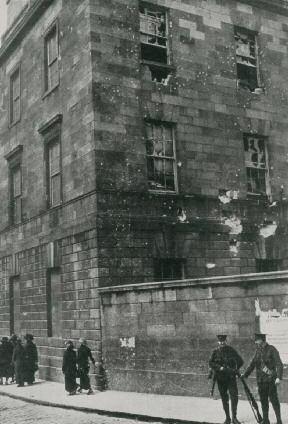
beyond his career as a judge and President of the High Cour t, while the battle for the Four Cour ts is the subject of our 1916 feature, revealing where all the bullets are buried The results of the sur vey on women at t h e B a r a re s e t o u t a n d a n a
c u l t y experienced by women at the Bar
We re m e m b e r w i t h v e r y g re a t s
Justice Adrian Hardiman and our colleague Amy O’Donoghue BL In order to ensure that we maintain high-quality content, we continue to encourage all members to submit stor y ideas or ar ticles in their area of exper tise In par ticular, if you feel that there is a par ticular legal issue t h a t s h o u l d b e h i g h l
whether it should feature in our 'Closing argument' section
Eilis Brennan BL, Editor
The Bar Review author guidelines are now available on the 'Bar Review'
s
Celebrating Women in Law
In celebration of International Women’s Day 2016, the Women at the Bar Working Group of The Bar of Ireland, chaired by Grainne Larkin BL
Wednesday March 9 to celebrate women in law
Director of Public Prosecutions Claire Lof tus, Chief State Solicitor Eileen
discuss the challenges that women can face in progressing within the legal profession Director of The Bar of Ireland Ciara Murphy opened the evening’s proceedings, setting out The Bar of Ireland’s commitment to work to understand the challenges faced by its female membership and to identify solutions to suppor t women at the Bar T
Phelan, Vice President of Global Operations for PayPal in EMEA, who shared her insight and experience as a female in business
Pictured at The Bar of Ireland’s Women in Law dinner were (from left): Imogen McGrath BL; keynote speaker Louise Phelan, Vice President of Global Operations for PayPal in EMEA; and, Grainne Larkin BL
An esteemed audience of barristers, judges and solicitors attended The Bar of Ireland’s Women in Law dinner
Bullets, Books & Barricades
The Courts Centenary Commemoration Committee, in co-operation with The Bar of Ireland, launched the exhibition ‘Bullets, Books & Barricades’ on Thursday, March 10, in the Round Hall, Four Courts
Chief Justice Susan Denham formally opened proceedings, with Chairman, Council of The Bar of Ireland, David Barniville SC, giving an overview of the many and varied connections The Bar of Ireland has with the 1916 Rising Descendants of those who took part and guests gathered to hear and read about the story and legacy of the Four Courts garrison, in an exhibition compiled by staff of the Law Library They were also treated to a delightful musical performance by the Cour ts Service Choir and the Piccolo Lasso Children’s Choir Historian Paul O’Brien provided a fascinating insight into the events of 1916 in the Four Courts and surrounding areas The exhibition explores the background to the Easter Rising, including conditions in 20th Century Ireland, the Church Street tenement collapse, the 1913 Lock-out, and the First World War It charts the occupation of the Four
Courts on Easter Monday 1916, and the events of the following days in the Four Courts and surrounding area, culminating in the surrender on Saturday, April 29
The Four Courts Battle of Easter Week 1916 encompassed a large area, ranging from Church Street, North King Street, Stoneybatter and Smithfield right up the north bank of the Liffey The 1st Battalion, under Commandant Edward Daly (aged 25) was to take part in some of the toughest fighting witnessed during the Rising
The story of the aftermath and executions is also included in the exhibition, together with a consideration of the legacy of the Rising and what it means today
The role of women in the Rising also receives special attention, together with the accounts of the parts played by relatives of serving members of The Bar of Ireland
The exhibition will remain on public display in the Round Hall, and will be open to the public from March 11 until May 20 (excluding weekends and public holidays) between 10 00am and 4 00pm The exhibition will then move to the Distillery Building for members to enjoy
Chief Justice Susan Denham is joined by Joseph Steen (aged nine), Patrick Steen (aged seven), and their cousin Mary Staf ford (aged nine), at the launch of the ‘Bullets, Books & Barricades’ exhibition
Chairman, Council of The Bar of Ireland, David Barniville SC, gave an overview of the Bar’s connections with the 1916 Rising
Trial by Media
There was a lot more than just six CPD points on offer at the The Bar of Ireland Conference in Kilkenny this month.
Colm Keena, The
; Dearbhail McDonald, Independent News and Media; John Carlin, journalist and author; and, Michael O’Higgins SC
The speakers from the morning session on the podium (from left): Joshua Rozenberg QC; Gordon Jackson QC;
Irish Times
Afternoon speaker Cristi Charpentier acts for Shonda Walter, a death row prisoner and the petitioner in a case in which an amicus curiae brief prepared by The Bar of Ireland along with the International Bar Association and other bar associations was submitted to the Supreme Cour t in Pennsylvania, USA Cristi was shown the brief by David Barniville SC, Chairman, Council of The Bar of Ireland
Michael McDowell SC chaired the afternoon session of the conference
Vivienne Traynor, RTÉ; Gary McCar thy SC; and, Eavan Miller
Claire Cummins BL; Julia Leo BL; and, Heather Nicholas BL, during the coffee break
On the podium: afternoon speakers Shane Murphy SC and Sean Guerin SC listen to proceedings
At the reception in Kilkenny Castle on the Friday evening were (from left): Mr Justice Peter Kelly, President of the High Court and Chairman of the morning session of the Conference; Joshua Rozenberg QC; Councillor Mary Hilda Cavanagh, Cathaoirleach of Kilkenny County Council; David Barniville SC, Chairman, Council of The Bar of Ireland; and, Mr Eddie Cavanagh
Getting their first taste of the law
RTÉ’s Legal Af fairs
Correspondent Orla
O’Donnell pictured with students who took par t in The Bar of Ireland’s Transition Year Programme
The Bar of Ireland welcomed 100 Transition Year students from all over the country in the first week of February to participate in our five-day, access all areas Transition Year Programme Led by Sara Moorhead SC, the Programme aims to provide a diverse range of students with access to work experience at the Bar Participants are selected by means of a lottery, with 20% of places reserved for DEIS schools, so this year we were delighted that students from 28 DEIS schools participated in the Programme
Participants enjoyed a packed schedule for the week, including shadowing barristers, a talk from a judge and Garda, a tour of the Four Courts and King’s Inns, a talk from a legal affairs journalist, and a morning of mock trials held in Green Street Courthouse The week culminated in the presentation of certificates of completion by the Chief Justice Susan Denham, which was a fantastic honour for all concerned Feedback from the students has been excellent, with many requesting to come back and do the Programme all over again! We are very grateful to all of our volunteer barristers, judges, Gardaí, journalists, and Library and King’s Inns staff, who gave so willingly of their time during the week
We were delighted to welcome RTÉ to Green Street to film the mock trials and subsequently broadcast a taster of life as a barrister and The Bar of Ireland TY Programme to thousands of viewers all across Ireland on their news2day programme
Chief Justice Susan Denham received a warm welcome from the students on the final day of the Programme
Programme Co-ordinator Sara Moorhead SC
Sara Moorhead SC is interviewed by Gill Stedman from RTÉ’s news2day programme
Feedback from students
I feel honoured to be the first student to participate from my school in this programme I would like to express my sincere gratitude to The Bar of Ireland for their flawless organisation of the programme and the genuine kindness and knowledge they displayed to every student throughout the week. I believe this programme has greatly influenced my view on what I would like to become later in my life
Dylan Glancy, Lanesboro Community College, Longford
Participating in the mock trials in Green Street Courthouse was probably the highlight of the entire week It was fantastic to have the chance to put what we had seen in the courtrooms all week into practice
Dearbhla Tracey, St Colmcille’s School, Knocklyon, Dublin 16
It was an absolute privilege to have had such a unique opportunity to explore the legal system in Ireland I also had the honour of meeting Chief Justice Susan Denham Truly, this was one of the best weeks of my life!
Oisín Bowyer, Carndonagh Community School, Co Donegal
I most enjoyed the trips to the Four Courts and the Criminal Courts of Justice because I was able to see the court setting and how barristers work The tour of the King’s Inns was absolutely fantastic, to see all those paintings, wear the robes that students wear to dine and see the huge dining room
Weronika Ozog, Mount Carmel Secondary School, Dublin 1
One of the highlights of the Programme was a series of mock trials held in Green Street Cour thouse
Her Honour, Judge Karen O’Connor provided the TY students with a fascinating insight into the working of the Circuit Cour t
Women’s issues?
The findings of a recent survey on women at the Bar are outlined.
Survey findings
In December 2015, a working group was established by Council of The Bar of Ireland to support women at the Bar Its remit is: to generate discussion around the issues and challenges women can face in progressing within the legal profession; to understand the reasons why female practitioners leave the Bar; and, to identify possible solutions and initiatives to better support female members
There has been a remarkable upsurge in the number of women pursuing careers at the Bar Female counsel currently represent 39% of the total Law Library membership While these figures are encouraging and ought to be celebrated, the rate of attrition for women remains slightly higher than that of their male counterparts, and the proportion of women being called to the Inner Bar remains significantly lower at 16% (Figure 1) To understand why this is, a survey was undertaken in February 2016 of our female membership, seeking female barristers’ views and experiences on life at the Bar
Aedamair Gallagher Policy and Research Assistant at the The Bar of Ireland 1,905
Of a total of 772 female Law Library members, 436 responded to the survey (56% response rate), of which 94% were junior counsel and 6% senior counsel The survey revealed issues and challenges that are by no means exclusive to female practitioners – difficulties accessing work and the instability associated with insufficient volume of work and inconsistent income span the practices of both male and female practitioners – but gender-specific issues clearly emerged
The survey results have presented four key areas of concern identified by female practitioners:
1 Access to work
2 Childcare, family responsibilities and maternity leave
3 Working environment and culture
4 Stability and structure
Issues arising under each of these areas are discussed in detail below, and are described by respondents in their own words
Access to work
Some respondents feel that the Bar is not meritocratic According to respondents, nepotism and political alignments have resulted in areas of practice that are effectively “closed shops” and are therefore very difficult to “break into” This presents a barrier for male and female practitioners alike However, of the main obstacles encountered by female respondents in pursuing a particular area of practice, gender bias and a preference for male counsel was frequently cited
“It has become noticeable that male colleagues’ careers have taken off quicker than those of their female counterparts ”
There are some areas of law that respondents feel are “less available” to females
Commercial law, criminal law and chancery, for example, are regarded as typically male-dominated areas of practice, with solicitors (and clients) tending to give preference to male counsel (Figure 2)
“My skill set would lend itself to commercial law but these areas are still male dominated ”
“Commercial briefs tend to flow from male solicitors to male barristers ”
“Criminal defence work is very difficult to get into if you are a woman ”
“I was once told by a female solicitor that she would not brief a woman, as clients are more impressed by male counsel ”
“Male clients do not want female counsel, as it would seem weak to be defended by a woman ”
FIGURE
Personal injury
Criminal Prosecution
Criminal Defence
Non-personal
Probate
Chancery
Commercial Family Law/Children
Employment
Constitutional Law
EU/Human rights
The low percentages of women working in commercial law (21%), criminal prosecution (5%), criminal defence (32%) and chancery (30%) relative to the higher percentages of women working in general practice (68%), personal injury (65%) and non-personal injury common law/non-jury or general common law (48%) could be a reflection of this perception; however, it is difficult to attribute these figures to gender discrimination alone Other factors such as poor earnings, particularly in the field of legal aid, difficulty securing a master in an area of interest, and limited access to State panels were also cited as obstacles, and these arguably affect both male and female practitioners Despite many respondents experiencing no pressure or expectation to work in any particular field of law, some did express a feeling of being “pigeon-holed” into particular areas of practice owing simply to the fact that they are female As stated by one respondent: “I got family law work because I was female, even though I did not seek it out or want it” Family law is often associated with being “women’s work”, and this perception may well be reflected in the relatively large percentage of female practitioners practising in this area (42%) It should be noted that these percentages represent those who responded to the survey and are therefore an indication only of the practice areas of the overall female membership
The Working Group raised concerns as to the notably low percentage of women engaged in criminal prosecution, for example, stating that, from their experience, women are well represented on prosecution panels, representing approximately 6% of the female membership of the Law Library By way of comparison, approximately 7% of the male members of the Law Library are on the criminal prosecution panel
Childcare, family responsibilities and maternity leave
As cited by respondents, balancing childcare and family responsibilities with a career at the Bar is one of the most challenging issues facing female counsel Some respondents feel that being self-employed, and the freedom and flexibility it can provide in terms of hours and workload, is ideal for having children, but a significant proportion state otherwise Many respondents feel that the profession is not at all conducive to family life as its demands and unpredictability make it very difficult to plan childcare and take parental leave where necessary
329 SENIOR COUNSEL
Female Male
“It is simply not possible to stay at home if you have a sick child when you have a court commitment ”
Constrained by inflexible crèche hours, many women find it more difficult to attend early morning consultations, late court sittings, or evening social and CPD events, leading to a perception that they are “less available, less reliable, less dedicated and less successful” Difficulties in maintaining “visibility” have led to some women feeling “out of the loop”, and that they are less able to compete: “There’s constant fear of being out of sight, out of mind” Pregnancy and maternity leave pose significant challenges for women at the Bar Some respondents have felt it necessary to disguise their pregnancies for fear of losing work, and many feel enormous pressure to return to work as soon as possible after giving birth
“Each time you have a child, the flow of work begins to slow down at about five or six months into the pregnancy ”
"Once you take maternity leave you are written off by many solicitors "
"I kept my pregnancy under cover for as long as I could as I didn't want solicitors sending work elsewhere "
"Following the birth of my baby I felt I had to get back to work ASAP I was drafting pleadings six days after giving birth and on my feet in court after four weeks "
The absence of any formal support for women on maternity leave has resulted in many mothers taking very little maternity leave, if any leave at all
"There is very little practical support for women Any cases that are handed over while on maternity leave are not handed back and no fees accrue while on leave This puts huge pressure on women to commence working again as soon as the baby is born "
A long period of absence can result in having to “start again”, with many women experiencing a substantial drop in income and a “stalling” in the development of their practice
"My practice nearly fell away after I had my first child even though I only took eight weeks off"
As stated by one respondent: “I returned to a decimated diary and almost no new cases it has had an enduring adverse effect on my career "
Working environment and culture
Some 37% of respondents said they had encountered individuals who have had a negative bearing on their career, recalling negative instances at the hands of their masters, colleagues, solicitors and members of the judiciary Such encounters are undoubtedly, and regrettably, experienced by both male and female practitioners, but the survey reveals problems that would appear to be specific to women alone
Some 62% of respondents have experienced direct and/or indirect discrimination during their career, and although they were not asked to specify or elaborate on the type of discrimination encountered, an overwhelming number of respondents'
FIGURE 3: Breakdown of senior counsel according to gender
FIGURE 2: Breakdown of female Law Library members according to type of work
Respondents have expressed a strong desire to see greater support and protection for women on maternity leave As stated by one respondent, the Bar should “introduce some formal way of assisting women during maternity leave so that work remains their own” Informal arrangements to this effect are quite common among colleagues – “Colleagues do a great job of helping colleagues who have had a baby” – but it is recommended that the Bar take greater steps to “normalise the idea of maternity leave for more than a few weeks” Having a formal support mechanism in place whereby mothers are suppor ted and encouraged to take adequate maternity leave can avoid situations where women are returning to work before they are “physically or mentally ready” A tiered approach to the payment of subscription fees upon return from maternity leave is also heavily advocated by respondents
“There is an inevitable period of re-establishment, and it takes time to get back to the level of work you were doing before maternity leave”
Suggestions were also made to relax the rules in relation to practising while on maternity leave
“It’s very frustrating and prejudicial that women, according to Bar rules, cannot participate in any cases during maternity leave” (Refer to rules 31 and 32 of the Rules of Membership of the Law Library) 1
Addressing the issue of working environment and culture
A number of respondents cited the need for the development of internal policy that raises awareness of what is and is not an appropriate and acceptable working environment It was recommended by some respondents that there needs to be a complaints mechanism for any inappropriate conduct Regard could be had to the recent policy efforts of the Bar Council in England, which published guidelines in response to their 2015 research ‘Snapshot: The Experience of Self-Employed Women at the Bar’, which highlighted instances of unacceptable behaviour experienced by some barristers 2 Awareness could also be raised and appropriate behaviour patterns instilled through education and mandatory CPD seminars on topics such as ethics and discrimination The impor tance of involving men in initiatives to support their female colleagues was also emphasised: “help men to understand the value of having women in the workplace – invite men to speak, attend and participate in the conversation”
Addressing the issue of stability and structure
The very nature of self-employment, something many respondents regard as being one of the most positive aspects of working at the Bar, is cited as a major barrier to progress and success The level of risk, uncertainty and inconsistency associated with self-employed status poses challenges for male and female practitioners alike, but the survey reveals that a lack of stability and structure is perceived to be the dominant cause for female attrition “It can be hard to
References
1 The Bar of Ireland (2015) Rules of Membership of the Law Library [online] Available from: https://www lawlibrary ie/media/lawlibrary/media/Secure/RulesofMembe rship-Nov2015 pdf
manage a work/life balance” but, as stated by one respondent: “I think for women there is the added difficulty of having children and raising a family Unless your spouse/partner can assist in childcare, and/or you have very good childcare arrangements in place, it can be extremely difficult to deal with the unpredictable demands of practice and cater to the needs of small children” However, it would appear that some female members have managed to achieve that balance: “Being self-employed is ideal for having kids my career choice has impacted positively on my ability to spend time with my family” An initiative that would “foster the relations between women at the Bar so as not to be competitive but rather open, honest and supportive of each other” could provide women with the oppor tunity to hear and learn from the experiences of their female colleagues
“I would really appreciate a talk from a few more senior female colleagues who would be willing to honestly speak about the difficulties they faced having a practice at the Bar and a family I would be keen to hear about how they overcame these difficulties and the impact it had on their career long term and shor t term ”
As stated by one respondent, and echoed by many others, “ women really need to suppor t each other more in the workplace”
Addressing the issue of silk
In order to promote and to encourage an increase in the number of female applicants to the Inner Bar, respondents suggested the need to: raise awareness on the necessity for more female silks; provide guidance on what are deemed desirable qualities in prospective applicants; and, facilitate mentorship by female silks
“We need to encourage more women to take silk to provide inspiration for younger colleagues ”
The pilot programme recently initiated by Council of The Bar of Ireland to encourage mentoring of women could have a ver y positive impact in this regard A designated contact or liaison who could assist applicants with queries and provide advice on the application process was also suggested
Conclusion
The number of women taking silk will only improve if we can improve the retention of women in the profession as a whole To that end, work is underway to address the issues raised in the survey and to implement viable, meaningful and effective solutions The working group would like to express its thanks and appreciation to all those who took the time to respond to the survey The group was encouraged to read a number of respondents’ comments expressing their gratitude at having the oppor tunity to voice their experiences at the Bar The conversation is only just beginning, and the group continues to welcome your suggestions and comments
2 The General Council of the Bar (2016) Bar Council takes the lead on tackling sexual harassment in the profession [online] [Accessed 11 Mar 2016] Available from: http://www barcouncil org uk/media-centre/news-and-press-releases/201 6/march/bar-council-takes-the-lead-on-tackling-sexual-harassment-in-the -profession/
Ask and you will receive?
A
recent Cour t of Appeal judgment would seem to suggest an increased role for interrogatories.
David McParland BL
Order 31 of the Rules of the Superior Cour t provides for the delivery of interrogatories: a procedure for a party in litigation to require an opposing party to answer questions on oath The purpose of interrogatories is to obtain information or admissions to narrow the issues in dispute between the parties and thus save costs
A recent Court of Appeal judgment in McCabe v Irish Life Assurance plc1 delivered on November 9, 2015, appears to be the first significant appellate Court judgment on interrogatories in many years It revives a Supreme Court judgment of J & LS Goodbody Limited v Clyde Shipping Company Limited (1967), which encouraged greater use of interrogatories The message from the Cour t of Appeal to practitioners is that interrogatories ought to be used more frequently and practitioners can afford to be braver in drafting interrogatories
In McCabe and anor v Irish Life Assurance, Kelly J delivered the Court’s judgment He began by quoting Walsh J’s judgment in the Supreme Cour t case J & LS Goodbody Limited v Clyde Shipping Company Limited:2
“I would also like to express my agreement with the view expressed by the learned High Court judge that interrogatories ought to be used more than they are This procedure and all other pre-trial procedures which are available should be encouraged because anything which tends to narrow the issues which have to be tried by the cour t and which will reduce the area of proof must result in considerable saving of time and money which cannot but be beneficial to the parties and to the administration of justice in general ”
Kelly J said that the Supreme Court’s judgment in Goodbody’s case was largely forgotten and the exhortation contained in it (quoted above) was for the most part ignored He quoted another passage from Walsh J’s decision on the purpose of interrogatories:
“One of the purposes of interrogatories is to sustain the plaintiff’s case as well as destroy the defendant’s case and that interrogatories need not be confined to facts directly in issue but may extend to any facts, the existence or non existence of which is relevant to the existence or non existence of the facts directly in issue Furthermore, the interrogatory sought need not be shown to be conclusive on the
question in issue, but it is sufficient if the interrogatory sought should have some bearing on the question and that the interrogatory might form a step in establishing the liability It is not necessary for the person seeking leave to deliver the interrogatory to show that it is in respect of something he does not already know ”
Kelly J commented that practitioners appear to have a very restricted view of the circumstances in which interrogatories may be used, and that it was clear from the decision of Walsh J in Goodbody’s case that robust questions may be posed on a much wider basis than is generally appreciated
Procedure for interrogatories
Order 31, Rule 1 of the Rules of the Superior Courts provides that with leave of the Court, a party may deliver interrogatories in writing for the examination of the opposite parties O 31, r 2 provides:
" In deciding upon such application, the Court shall take into account any offer which may be made by the party sought to be interrogated, to deliver particulars, or to make admissions, or to produce documents, relating to any matter in question Leave shall be given as to such only of the interrogatories as shall be considered necessary either for disposing fairly of the cause or matter, or for saving costs "
Leave of the Court is not required in cases where relief is sought on the grounds of fraud or breach of trust Nor is leave required in commercial list cases; a party may deliver interrogatories after delivering his statement of claim or defence,3 and the Court may order interrogatories of its own motion 4
Interrogatories are framed in the form of leading questions with “yes” or “no” answers Traditionally, questions were framed in the negative (“Did not ?; “Has not ?”, etc ) 5 In McCabe v Irish Life Assurance plc, Kelly J referred to this style as archaic and said that it had long since been abandoned
It is well established that a person may not avoid giving answers to interrogatories on the grounds that the subject matter is not within his personal knowledge He must answer if the knowledge is at his disposal 6
McCabe and anor v Irish Life Assurance plc
In McCabe and anor v Irish Life Assurance plc, the plaintiffs, the widower and daughter of a deceased lady, sought payment of a benefit of ¤250,000 on foot of a life assurance policy entered into by the deceased four years prior to her death
The defendant refused to pay out following her death as it claimed that the deceased failed to disclose material facts concerning her medical history when she entered into the contract
The defendant obtained discovery of the deceased’s medical records and served a notice to admit facts, which asked the plaintiffs to admit 13 episodes from the deceased’s medical history The plaintiffs refused and the defendant issued a motion to deliver interrogatories The defendant submitted that delivery of interrogatories would substantially shorten the issues at the trial, which would significantly reduce costs The defendant did not claim that it was unable to defend the case without the interrogatories It was possible to prove the deceased’s medical records through calling evidence from medical practitioners
In the High Court, Barr J refused permission to deliver interrogatories 7 He agreed with the plaintiff’s submission that the questions posed relating to the deceased's medical conditions and treatment did not lend themselves to simple “yes” or “no” answers, and that to force them to furnish such answers would be an injustice, as the whole story would not be told He thought that it was not unreasonable that the defendant, who resisted payment out under the contract of life assurance on grounds of material non-disclosure on the part of the deceased, should prove this fact by oral evidence at the trial so that the plaintiffs could test the evidence by cross examination
The High Court’s decision was overturned on appeal The Court of Appeal was critical of the plaintiffs’ failure to engage with the defendant’s notice to admit facts It noted that the interrogatories related to medical attention given to the deceased by at least four different doctors over 20 years If the defendant was required to formally prove the deceased’s medical history, it would involve attendance of all of the doctors and perhaps other staff, resulting in significant costs and adding to the length of the trial
In addition to the Goodbody case of 1967, the Court of Appeal approved of two High Court decisions In Woodfab Limited v Coillte Teoranta [2000] 1 I R 20, Shanley J said:
“It does appear that once the party seeking to deliver interrogatories satisfies the court that such delivery would serve a clear litigious purpose by saving costs or promoting the fair and efficient conduct of the action in question, then the court should be prepared to allow the delivery of the interrogatories unless it is satisfied that the delivery and answering of the interrogatories would work an injustice upon the party interrogated ”
In Money Markets International Limited v Fanning, [2000] 3 I R 215, O’Sullivan J said:
“The purpose of exhibiting interrogatories is to seek admissions which will become evidence to be relied upon by the interrogating party They will not prove the
References
1 Court of Appeal (Kelly J, Irvine J and Hogan J) [2015] IECA 239
2 Unreported, May 9, 1967
3 Order 63A, Rule 9 In McCabe & anor v Irish Life Assurance plc, Kelly J said that this procedural change resulted in a much more extensive use of interrogatories in Commercial Court proceedings
4 Order 63A, Rule 6 For example, in Anglo Irish Bank Corporation Limited v Browne [2011] IEHC 140, Kelly J ordered interrogatories in substitution to some categories of documents sought by discovery
5 See Form 8, Appendix C, and Form 1, Appendix X, Rules of the Superior Courts
entire of that party’s case but will lighten the burden of so doing to the extent that certain elements required to be proved will be established in the replies I am unable to see, therefore, how admissions about facts ‘cannot be used as a means to prove the interrogating party’s case’ ”
The Cour t of Appeal thought that the proposed interrogatories served a clear litigious purpose, as they would save significant costs and shor ten the trial On the issue of fairness, the Cour t of Appeal considered that if interrogatories were delivered and the plaintiffs answered the questions regarding the deceased’s medical history in the affirmative, the question of whether those facts were sufficient for the defendant to avoid the policy would be a question of law No fur ther medical evidence would be required and cross examination of medical witnesses would be of no assistance If, on the other hand, the answers to the interrogatories were not as the defendant anticipated, it could call oral evidence and the plaintiffs would be able to cross examine The Cour t of Appeal did not accept that there was any thing unjust or oppressive in directing the delivery of the interrogatories and allowed the appeal
It is notewor thy that the Cour t of Appeal’s judgment did not cite Mercantile Credit Co of Ireland Ltd v Heelan [1994] 2 I R 105 In this case, Costello J stated that the use of evidence on affidavit in reply to interrogatories was an exception, which must be justified by some ‘special exigency ’ in the case, which, in the interest of doing justice, required the exception to be allowed
Subsequent cases interpreted Costello J’s judgment restrictively,8 but in Woodfab Ltd v Coillte Teo [2000] 1 I R 20, Shanley J considered that the ‘special exigency ’ was not very different to the requirement in Order 31, Rule 2 that leave shall be given to ser ve interrogatories where it is considered necessary either for disposing fairly of the cause or for saving costs
The Court of Appeal noted that litigation has increased in quantity, complexity and cost, and any pre-trial steps that narrow the issues are to be encouraged In the Commercial Cour t, leave is not required to deliver interrogatories and this has led to their greater use, which the Cour t of Appeal thought was positive
Conclusion
In McCabe and anor v Irish Life Assurance, the Cour t of Appeal approved of the interrogatories to reduce the need for medical witnesses to give evidence at the trial, which would save costs The Cour t also noted that practitioners appear to have a restricted view of the use of interrogatories This judgment makes it clear that robust questions may be posed in interrogatories on a much wider basis than is generally appreciated
6 A director answering on behalf of a company has a duty to make reasonable inquiries of other servants or agents of the company: J & LS Goodbody Limited v Clyde Shipping Company Limited, (1967); also, see Money Markets International Limited v Fanning [2000] 3 I R 215, and McCole v Blood Transfusion Board (Unreported, High Court, Laffoy J, June 11, 1996)
7 Barr J, 21/04/2015, [2015] IEHC 254
8 See decisions of Master of the High Court in Kennedy v Killeen Corrugated Products Limited [2005] IEHC 396, and Leahy v Southern Health Board [2005] IEHC 230 Also, McCole v Blood Transfusion Board (Unreported, High Court, Laffoy J, June 11, 1996)
U P DAT E
The Bar Review, journal of The Bar of Ireland
ARBITRATION
A directory of legislation, articles and acquisitions received in the Law Library from the January 17, 2016 to March 16, 2016 Judgment information supplied by The Incorporated Council of Law Reporting
Edited by Deirdre Lambe and Vanessa Curley, Law Library, Four Courts.
ADMINISTRATION OF JUSTICE
Articles
Sammon, G ‘Organised pseudo-legal commercial argument’ litigation: challenges for the administration of justice in Ireland Dublin University Law Journal 2015; (38) (1): 85
AGRICULTURE
Statutory Instruments
Animal health and welfare (bovine movement) (amendment) regulations 2015 – SI 119/2015
Animal health and welfare (bovine tuberculosis) regulations 2015 – SI 58/2015
European Communities (food and feed hygiene) (amendment) regulations 2015 –SI 68/2015
European Communities (health of aquaculture animals and products) (amendment) regulations 2015 – SI 23/2015
Notification and control of animal diseases regulations 2014 (amendment) regulations 2015 – SI 123/2015
Disposal of carcases (prohibition) regulations 2015 – SI 160/2015
ANIMALS
Acts
Horse Racing Ireland Act 2016 – Act No 2 of 2016 – Signed on February 8, 2016
Statutory Instruments
Microchipping of dogs regulations 2015–SI 63/2015
Library acquisitions
Born, G B International arbitration: law and practice – N398 8
Articles
Heppner, S Arbitral justice for victims of human rights violations Dublin University Law Journal 2015; (38) (1): 103
ASYLUM
Library acquisitions
Hassine, K , Leckie, S The United Nations principles on housing and property restitution for refugees and displaced persons (‘the pinheiro principles’): a commentary – C205
AVIATION
Library acquisitions
Bobek, M Air passenger rights: ten years on – N327
Statutory Instruments
Irish Aviation Authority (nationality and registration of aircraft) order, 2015 – SI 107/2015
Irish Aviation Authority (noise certification and limitation) order, 2015 - SI 55/2015
Shannon Airport bye-laws, 2015 – SI 69/2015
BANKING
Statutory Instruments
Central Bank act 1942 (financial services ombudsman council) levies and fees regulations 2015 – SI 592/2016
Central Bank Act 1942 (section 32E) prospectus and related documents approval fee regulations 2015 – SI 106/2015
Central Bank reform act 2010 (sections 20 and 22 – credit unions that are also authorised as retail intermediaries) regulations 2015 – SI 97/2015
Central Bank (super vision and enforcement) act 2013 (section 48(1))
client asset regulations 2015 – SI 104/2015
Central Bank (super vision and enforcement) act 2013 (section 48(1))
investor money regulations 2015 for fund service providers – SI 105/2015
Credit Union Act 1997 (regulator y requirements) regulations 2016 – SI 1/2016
BUILDING CONTRACTS
Library acquisitions
Burr, A Delay and disruption in construction contracts – N83 8
BUILDING LAW
Ar ticles
Sanfey, M Cer tifiable liability Bar Review 2016; (21) (1): 25
CHILDREN
Articles Dignam, C , Duggan, D , McDonnell, N Cherishing the children? Council of the Bar of Ireland submission on proposed reforms to the Guardian ad Litem system Bar Review 2016; (21) (1): 21
Statutory Instruments
Children (Amendment) Act 2015 (commencement) order 2015 – SI 539/2015
Children First Act 2015 (commencement) order 2015 – SI 555/2015
Child care (placement of children in foster care) (amendment) regulations 2015 – SI 606/2015
Child care (placement of children in residential care) (amendment) regulations 2015 – SI 605/2015
Child care (placement of children with relatives) (amendment) regulations 2015 –SI 607/2015
Children Act 2001 (designation of remand centres) (amendment) order 2015 – SI 95/2015
Children Act 2001 (section 160 designation) order 2015 – SI 94/2015
CITIZENSHIP
Library acquisitions
Guild, E , Peers, S , Tomkin, J The EU citizenship directive: a commentary –M172 E95
CIVIL LIABILITY
Library acquisitions
Bergkamp, L , Faure, M , Hinteregger, M Civil liability in Europe for terrorism-related risk – N33
COMPANY LAW
Library acquisitions
Mor timore, S Company directors: duties, liabilities, and remedies – N264 Mallin, C A Corporate governance –N255
Bloomsbur y Professional Tables of origins and destinations: companies act 2014 – N261 C5
COMPETITION LAW
Ar ticles
Talbot, C AC-Treuhand, the scope of ar ticle 101 TFEU, and the future of actions for antitrust damages
Commercial law practitioner 2016; 23 (1): 9
CONSTITUTIONAL LAW
Ar ticles
Ambah, E , Dawodu, A Citizens’ par ticipation in constitutional legitimacy in Nigeria Irish Law Times 2016; (34) (1): 14 [par t I]; Irish Law Times 2016; (34) (2): 29 [par t II] Barber, N W Constitutionalism: negative and positive Dublin University Law Journal 2015; (38) (2): 249
Doyle, O Conventional constitutional law Dublin Univer sit y Law Journal 2015; (38) (2): 311
Vermeule, A Conventions in cour t Dublin Univer sit y Law Journal 2015; (38) (2): 283
CONSUMER LAW
Statutory Instruments
Consumer protection act 2007 (grocery goods under takings) regulations 2016 – SI 35/2016
Consumer protection act 2007 (grocery good under takings) regulations 2016 –SI 35/2016
CONTRACT
Articles
Heslin, M Alterations to a contract after its execution without consent Commercial Law Practitioner 2016; 23 (2): 35 Kane, J The rule in Pinnel’s case: the case for repeal, a mistaken preponderance and finding consideration in debt renegotiations Dublin University Law Journal 2014; (37): 79
COSTS
Articles
Delany, H Third party funders – costs and disclosure orders Irish Law Times 2016; (34) (1): 7
COURTS
Statutory Instruments
Rules of the Superior Courts (order 15) 2016 – SI 83/2016
Circuit Court rules (Sex Offenders Act 2001) 2015 – SI 142/2015 District Court (family law reporting) rules 2015 – SI 141/2015 Court and Court Officers Act 2002 (register of reserved judgments) (amendment) regulations 2015 – SI 163/2015
Circuit Court Rules (Gender Recognition Act) 2016 – SI 84/2016
Circuit Court Rules (Local Elections (Petitions and Disqualifications) Act 1974) 2016 – SI 85/2016
District Court (form 34 47) rules 2016 – SI 82/2016
Fines (Payment and Recovery) Act 2014 (commencement) order 2016 – SI 6/2016 Fines (Payment and Recovery) Act 2014 (section 6) regulations 2016 – SI 13/2016
CRIMINAL LAW
Appeal
Appeal against convictions – Attempted rape and sexual assault – Alleged failure to direct verdict of not guilty of all sexual offences where acquittal directed on count of rape – Alleged error in limiting cross-examination of co-accused – Alleged failure to direct jury in relation to “attempt” to commit offence of rape – Charge to jury – Joint enterprise and culpability on individual basis – Cross-examination –Attempt to commit offence of rape –Common design – Absence of requisitions – Impermissibility of cross-examination on basis of redacted statement – R v Myers [1998] AC 124; R v Frankland OJ 242; R v Lankford [1959] Crim LR 209; DPP v Cronin [2003] 3 IR 377; DPP v Maloney (Unrep, CCA, 2/3/1992) and DPP v McGovern [2010] IECCA 79, (Unrep, CCA, 21/7/2010) considered – Criminal Law (Rape) (Amendment) Act 1990 (No 32), ss
2 and 4 – Appeals dismissed (17 & 35/2013 – CA – 23/7/2015) [2015] IECA
160
Director of Public Prosecutions v O’Brien
Appeal
Appeal against convictions – Sexual exploitation of child – Alleged error in holding particulars of offences charged constituted offence – Alleged error in holding arrest and detention lawful –Warrant issued to superintendent but executed by garda – Warrant – Separate processes envisaged by statutory provision - Obtaining of warrant – Arrest on foot of warrant – Alleged error in allowing prosecution to call evidence from school principal as to demeanour of children –Caution – Understanding of caution –Right to consult solicitor – Right to have solicitor present during interview – Lavery v Member in Charge Carrickmacross Garda Station [1999] 2 IR 390; DPP v Buck [2002] 2 IR 268; Salduz v Turkey [2008] 49 EHRR 421; Cadder v Her Majesty’s Advocate [2010] UKSAC 43 and DPP v White & Gormley [2014] IESC 17, (Unrep, SC, 6/3/2014) considered – Child Trafficking and Pornography Act 1998 (No 22), s 3 – Appeal dismissed (98/2014 – CA – 20/7/2015) [2015] IECA 154
The People (Director of Public Prosecutions) v C(P)
Appeal
Appeal against severity of sentence –Assault - Serious bodily harm – Permanent eye injury – Whether sentence of nine years excessive in circumstances – Whether error in principle in failing to properly balance objectives of deterrence and rehabilitation – Previous convictions –Whether sentence placed too highly on gravity scale – Comparator cases – Reasons for partial suspension - Sentence of eight years’ imprisonment imposed (233/2013 - CA – 27/7/2015) [2015] IECA 176
The People (Director of Public Prosecutions) v Healy
Appeal
Appeal against severity of sentence –Manslaughter – Assault – Alleged failure to give credit for time spent on remand –Alleged failure to have regard to the totality of sentences principle – Alleged imposition of excessive sentence - Appeal dismissed (277/2011 - CA – 21/7/2015) [2015] IECA 161
The People (Director of Public Prosecutions) v Flaherty
Appeal
Appeal against severity of sentence –Aggravated burglary – Robbery – False imprisonment – Minor appellant –Previous convictions – Dysfunctional family background – Impact on victims –
Alleged failure to attach sufficient weight to guilty plea – Allegation that sentence excessive given age of appellant –Statutory provisions regarding rehabilitation of children - Alleged error in failing to attach sufficient weight to prospects for rehabilitation – Absence of sufficient provision for rehabilitation –Director of Public Prosecutions v DG [2005] IECCA 75, (Unrep, CCA, 27/5/2005) considered – Children Act 2001 (No 24), s 96 - Portion of sentence suspended (126/2012 - CA – 21/7/2015) [2015] IECA 162
The People (Director of Public Prosecutions) v Kelly
Appeal
Appeal against sentence – Fuel laundering – Whether trial judge failed to adequately consider non-custodial sentence –Whether sentence disproportionately high – Alleged failure to give due regard to mitigating and personal circumstances –Absence of evidence that washed diesel likely to be used in retail premises or to be sold – Aggravating factors – Whether failure to consider partial suspension of sentence error in principle – Portion of sentence suspended (69/2015 – CA –24/7/2015) [2015] IECA 171
The People (Director of Public Prosecutions) v Rees
Appeal
Appeal against sentence – Possession of explosives – Pipe bomb – Whether sentence placed too highly on gravity scale – Whether failure to attach sufficient weight to guilty plea – Whether undue emphasis placed on aggravating features – Previous convictions – Appeal dismissed (64/2014 - CA –27/7/2015) [2015] IECA 175
The People (Director of Public Prosecutions) v Somers
Mutual assistance
Application for certiorari – Decision directing provision of medical records to Police Service of Northern Ireland –Refusal of adjournment for making submissions – Breach of rights – Breach of fair procedures – Mutual assistance –Confidentiality of medical records –Refusal of assistance where resulting in a contravention of the European Convention on Human Rights –Entitlement to adjournment – Nature of submissions to be prepared – Right to privacy – Whether improper refusal of an adjournment application – Whether exercise of discretion was unreasonable and amounted to breach of rights –Whether breach of fair trial rights –Agrama v Minister for Justice [2013] IEHC 15, (Unrep, Peart J, 25/1/2013); Brady v Haughton [2005] IESC 54, [2006] 1 IR 1; Carmody v Minister for Justice [2009] IESC
71, [2010] 1 IR 635; O’Brien v Personal Injuries Assessment Board [2008] IESC 71, [2009] 3 IR 243; In Re Haughey [1971] IR 217; Minister for Justice v Gorman [2010] IEHC 210, [2010] 3 IR 583; Minister for Justice v Brennan [2007] IESC 21, [2007] 3 IR 732; Minister for Justice v Stapleton [2007] IESC 30, [2008] 1 IR 669; Byrne v Judge McDonnell [1997] 1 IR 392; Lawlor v Geraghty [2010] IEHC 168, [2011] 4 IR 486; Flynn v District Justice Ruane [1989] ILRM 690; G v The Appeal Commissioners [2005] IEHC 121, [2005] 2 IR 472 and O’Callaghan v District Judge Clifford [1993] 3 IR 603 considered – Criminal Justice (Mutual Assistance) Act 2008 (No 7), ss 2, 3 and 63 – European Arrest Warrant Act 2003 (No 45), s 37 –Criminal Justice Act 1994 (No 15), s 51 –European Convention on Human Rights, arts 6 and 8 – European Convention on Mutual Assistance in Criminal Matters 1959, art 1 – Application refused (2014/236JR – O’Malley J – 18/8/2015) [2015] IEHC 553
Burns v Judge O’Neill
Public order
Case stated from District Court – Public order offence – Request to desist from behaviour – Whether accused to be advised that failure to comply with request to desist was criminal offence –Whether implied obligation to warn that failure to comply was offence – Exercise of power of compulsion – Purpose of warning – Conduct malum in se –Requirement to warn dependent on context – Whether warning required in particular circumstances of case – Director of Public Prosecutions (Sheehan) v Galligan (Unrep, Laffoy J, 2/11/1995) and Director of Public Prosecutions (Lanigan) v Freeman [2010] IEHC 379, [2011] 1 IR 301 considered – Criminal Justice (Public Order) Act 1994 (No 2), s 5 – Case stated answered in negative (2014/1865SS – Kearns P – 26/7/2015) [2015] IEHC 403
Director of Public Prosecutions (Garda Kirwan) v Fitzsimons
Library acquisitions
Radcliffe, P , Gudjonsson, G H , Heaton-Armstrong, A , Wolchover, D Witness testimony in sexual cases: evidential, investigative and scientific perspectives – M544
Articles Orange, G Drugs in packages Bar Review 2015; (20) (6): 148
Hughes, P The functions of rule-making and non-rule making sentencing councils and commissions Irish Criminal Law Journal 2015; (26) (1): 13
Gageby, B White collared Law Society Gazette 2016; (Jan/Feb): 42
Acts
Criminal Justice (Spent Convictions and Certain Disclosures) Act 2016 – Act No 4 of 2016 – Signed on Februar y 11, 2016
Statutory Instruments
Criminal Justice (burglary of dwellings) act 2015 (commencement) order 2016 – SI 15/2016
Criminal Justice (mutual assistance) (amendment) act 2015 (commencement) order 2016 – SI 11/2016
Criminal Justice (terrorist offences) act 2005 (section 42(2) and (6)) (counter terrorism) (financial sanctions) (no 2) regulations 2015 – SI 466/2015 Criminal Justice (terrorist offences) act 2005 (section 42(2) and (6)) (restrictive measures concerning cer tain persons and entities associated with the Al-Qaida network) (financial sanctions) (no 2) regulations 2015 – SI 467/2015
Criminal Justice (terrorist offences) act 2005 (section 42(2) and (61)) (restrictive measures concerning certain persons and entities associated with the Al-Qaida network) financial sanctions) (no 3) regulations 2015 – SI 590/2015 Criminal Justice (Withholding of Information on Offences against Children and Vulnerable Persons) Act 2012 (prescribed organisations and prescribed persons) order 2015 – SI 159/2015
DAMAGES
Ar ticles
Moorhead, S , Hogan, C Rate of risk and return Bar Review 2016; (21) (1): 17
DATA PROTECTION
Ar ticles
Fitzpatrick, S Data protection concerns for barristers post-Schrems Bar Review 2015; (20) (6): 138
EDUCATION
Ar ticles
Cousins, M Education and the equal status acts: Stokes v Christian Brothers High School Clonmel Dublin Universit y Law Journal 2015; (38) (1): 157
Statutory Instruments Education Act 1998 (publication of inspection repor ts on schools and centres for education) regulations 2015 – SI 153/2015
Student grant scheme 2015 – SI 155/2015
Student suppor t regulations 2015 – SI 154/2015
ELECTORAL
Statutory Instruments
Electoral Act 1992 (special difficulty) (assent to nomination of candidate at Dáil election) order 2016 – SI 55/2016
Electoral act 1997 (section 78(a) and (b)) (commencement) order 2016 – SI 20/2016
Application for judicial review – Challenge to appointment of school principal –Selection process – Statutory rules –Fairness of procedures – Irrationality and unreasonableness – Jurisdiction to determine merits of decision – Marks for Irish language proficiency – Marked on basis of interview only – Interviewer without knowledge of Irish language –Minutes of board meeting not signed –Final marks of candidates not provided to board – Purpose and scheme of rules –Whether marking system unfair or prejudicial – Whether awarding of marks irrational or unreasonable – Whether grounds challenging decision established as matter of fact or law – Whether fair and reasonable and transparent procedure followed by selection board – Whether breach of rules so fundamental as to vitiate decision – Objective bias –Application to amend statement of grounds – Delay – Whether new ground advanced arguable – Whether reasonable apprehension of bias – Brown v Rathfarnham Parish National School [2006] IEHC 178, [2008] 1 IR 70; The State (Keegan) v Stardust Compensation Tribunal [1986] IR 642; O’Keeffe v An Bord Pleanála [1993] 1 IR 39; Meadows v Minister for Justice [2010] IESC 3, [2010] 2 IR 701; Keegan v Garda Síochána Ombudsman Commission [2012] IESC 29, [2012] 2 IR 570; Orange Communications Ltd v Director of Telecommunications Regulation (No2) [2000] 4 IR 159 and Kenny v Trinity College Dublin [2007] IESC 42, [2008] 2 IR 40 considered –Rules of the Superior Courts 1986 (SI 15/1986), O 84, r 23 – Education Act 1998 (No 51), ss 4, 8(1), 15(1), 23 and 24(11) – Education (Amendment) Act 2012 (No 14) , s 6 – Application refused (2015/172JR – McDermott J –20/8/2015) [2015] IEHC 554
Brady v Board of Management of Castleblaney Infant National School
Library acquisitions
Mettler, E Arthur Cox employment law yearbook 2015 – N192 C5
Pollard, D Employment law and pensions – N192
Costello, K Labour law in Ireland –N190 C5
Articles
Carroll, P Constructive dismissal in Association Football Irish Employment Law Journal 2015; (12) (4): 118 Kimber, C Documents and discovery in employment litigation before the Workplace Relations Commission Irish Employment Law Journal 2015; (12) (4): 104
Deegan, L Men at work Law Society Gazette 2015; (Dec): 38
Ryan, D Parallel proceedings in employment law: an analysis of the High Court judgments in Cunningham and Culkin Dublin University Law Journal 2015; (38) (1): 219
Statutory Instruments
Safety, health and welfare at work (general application) (amendment) regulations 2016 – SI 36/2016
Safety, health and welfare at work (general application) (amendment) (no 2) regulations 2016 – SI 70/2016
Workplace relations act 2015 (commencement) (no 2) order 2015 – SI 410/2015
ENERGY
Articles
Barrett, E Getting the price right: could a reintroduction of temporary price controls solve the problem of increasing renewable energy in Ireland while simultaneously guaranteeing affordable electricity to domestic consumers? Dublin University Law Journal 2014; (37): 21
Statutory Instruments
Gas (amendment) act 1987 (section 2) (distribution) (amendment) order 2015 –SI 59/2015
International Renewable Energy Agency (designation) order 2015 – SI 161/2015
Petroleum (Exploration and Extraction)
Safety Act 2015 (commencement) order 2016 – SI 109/2016
ENVIRONMENTAL LAW
Statutory Instruments
Derelict sites (urban areas) regulations 2015 – SI 54/2015
Nuclear Test Ban Act 2008 (commencement) order 2015 – SI 134/2015
Water ser vices act 2013 (prescribed persons) order 2015 – SI 84/2015
Water services act 2014 (Irish water –customer registration) order 2015 SI 34/2015
Water ser vices (no 2) act 2013
(proper ty vesting day) order 2015 – SI 13/2015
Water ser vices (no 2) act 2013 (proper ty vesting day) (no 2) order 2015 – SI 111/2015
Water ser vices (no 2) act 2013 (proper ty vesting day) (no 3) order 2015 – SI 112/2015
EQUITY & TRUSTS
Library acquisitions
Biehler, H Equity and the law of trusts in Ireland – N200 C5
ESTOPPEL
Library acquisitions
Handley, The Honourable Mr Justice, K R Estoppel by conduct and election –N384 4
EUROPEAN UNION
Library acquisitions
Mataija, M Private regulation and the internal market: spor ts, legal services, and standard setting in EU economic law – W104
Statutory Instruments
European Union (making available on the market of pyrotechnic ar ticles) regulations 2015 – SI 174/2015
EVIDENCE
Library acquisitions
Freckelton, I , Goodman-Delahunty, J , Horan, J , McKimmie, B Exper t evidence and criminal jur y trials –M604 9
Hibber t, P The electronic evidence and e-disclosure handbook – M600
Keane, A , McKeown, P The modern law of evidence – M600
EXTRADITION LAW
European arrest warrant
Application for surrender – Grounds of objection – Allegation of discrimination on basis of membership of travelling community – Absence of correspondence – Insufficiency of evidence that DPP was considering but had not yet decided to bring proceedings – Minister for Justice and Equality v Altaravicius [2006] IESC 23; [2006] 3 IR 148 and Minister for Justice and Equality v Stafford [2009] IESC 83, (Unrep, SC, 17/12/2009) considered –
European Arrest Warrant Act 2003 (No 45), ss 37, 38 and 42 – Surrender ordered (2015/9EXT – Noonan J –22/7/2015) [2015] IEHC 657
Minister for Justice, Equality and Law Reform v McGinley
FAMILY LAW
Child abduction
Applicant for return of child to jurisdiction of Cour ts of England and Wales – Habitual residence in England – Custody rights – Removed without consent of father – Discretion – Best interests of child – Views of child –Whether removal wrongful – Whether exercising custody rights at time of removal – Whether grave risk that return would expose child to harm –Whether age and maturity of child such that it was appropriate to take account of objections – MSH v LH [2000] 3 IR 390; T(MJ) v C(C) [2014] IEHC 196, (Unrep, Finlay Geoghegan J, 9/4/2014); RC v IS [2003] 4 IR 431; AS v PS [1998] 2 IR 244; Re HV (Abduction; Children’s Objections) (1997) 1 FLR 392; RJ v JK [2000] 2 IR 416; Minister for Justice (EM) v JM [2003] 3 IR 178; CA v CA [2009] IEHC 460, [2010] 2 IR 162; Re M (Abduction: Child’s Objections) [2007] EWCA Civ 260, [2007] 2 FLR 72; SR v SR [2008] IEHC 162, (2009) 27 ILT 215; B v B (Child Abduction) [1998] 1 IR 299 and In re M (Abduction Rights of Custody) [2007] UKHL 55, [2008] 1 AC 1288 considered – Child Abduction and Enforcement of Cour t Orders Act 1991 (No 6) – Council Regulation (EC) 2201/2003 – Hague Convention on Civil Aspects of International Child Abduction, ar ts 3, 4, 12, 13, 14 and 19 – Application granted (2015/17HLC –McDermott J – 13/8/2015) [2015] IEHC 548
B v C
Divorce
Appeal against order of Circuit Cour t –Ancillary orders – Resources of parties –Assets – Outgoings – Open offers made by par ties – Standard of living – D v D [2015] IESC 16, (Unrep, SC , 26/2/2015) considered – Family Law (Divorce) Act 1996 (No 33), s 20 –Decree of divorced granted; ancillar y orders made (2014/66CAF – Abbott J – 24/7/2015) [2015] IEHC 492 C(M) v C(A)
Ar ticles
Dinneen, B 21st centur y child Law Societ y Gazette 2015; (Dec): 42 Clissmann, I , Coughlan, E So who is donor 376? New rules for donor assisted human reproduction Bar Review 2015; (20) (6): 141
Statutory Instruments
Children and family act 2015 (commencement of cer tain provisions) order 2016 – SI 12/2016
FINANCE
Articles
Breslin, J , Corcoran, E New private right of action for damages in financial services litigation Dublin University Law Journal 2015; (38) (1): 17
Dineen, P M MiFID II/MiFIR – widening the regulatory perimeter of European capitals markets: an Irish perspective Commercial Law Practitioner 2016; 23 (1): 15
Acts
Credit Guarantee (Amendment) Act 2016 – Act No 1 of 2016 – Signed on February 8, 2016
Statutory Instruments
Credit institutions resolution fund levy (amendment) regulations 2015 – SI 421/2015
Credit Union and co-operation with overseas regulators act, 2012 (commencement of certain provisions) order 2015 – SI 584/2015
Credit Union fund (ReBo levy) regulations 2015 – SI 557/2015
Credit Union fund (stabilisation) levy regulations 2015 – SI 530/2015
European Communities (supervision and enforcement) act 2013 (section 48) (housing loan requirements) regulations 2015 – SI 47/2015
Finance act 2004 (section 91) (deferred surrender to central fund) order 2016 – SI 61/2016
Finance act 2014 (section 63) (commencement) order 2015 – SI 595/2015
Finance act 2015 (section 43) (commencement) order 2015 – SI 615/2015
Finance (miscellaneous provisions) act 2015 (part 4) (commencement) order 2015 – SI 558/2015
Financial emergency measures in the public interest (payments to state solicitors) (adjustment) regulations 2016 –SI 23/2016
Financial emergency measures in the public interest (payments to state solicitors) (adjustment) regulations 2016 –SI 23/2016
Investor compensation act 1998 (return of investor funds or other client property) regulations 2015 – SI 407/2015
Prospectus (Directive 2003/71/EC) (amendment) (no 2) regulations 2015 – SI 567/2015
Prospectus (Directive 2003/71/EC) (amendment) regulations 2015 – SI 406/2015
Transparency (Directive 2004/109/EC) (amendment) (no 2) regulations 2015 –SI 541/2015
Transparency (Directive 2004/109/EC) (amendment) regulations 2015 – SI 44/2015
FOOD
Statutory Instruments
European Communities (official controls on the Impor t of food of non-animal origin for pesticide residues) (amendment) (no 2) regulations 2015 –SI 162/2015
FORENSIC MEDICINE
Articles
Kennedy, K , McHugh, A , Eogan, M The forensic medical examination of adults who report sexual violence in Ireland: a practical overview for the legal practitioner Irish Criminal Law Journal 2015: (26) (1): 2
GARDA SÍOCHÁNA
Statutory Instruments Commission of investigation (certain matters relative to the Cavan/Monaghan division of the Garda Síochána) order 2015 – SI 38/2015
GOVERNMENT
Statutory Instruments Oireachtas (ministerial and parliamentary offices) (secretarial facilities) (amendment) regulations 2015 – SI 164/2015
Statistics (community innovation survey) order 2015 – SI 165/2015
Statistics (monthly industrial inquiry) order 2016 – SI 2/2016
HEALTH
Statutory Instruments
Health and social care professionals act 2005 (section 28A) (Optical Registration Board) regulations 2015 – SI 39/2015 Health and social care professionals act 2005 (section 95(3)) (variation of title: o p t i c i a n ) re g u l a t i o n s 2 0 1 6 – S I 51/2016
Health products regulatory authority (fees) regulations 2015 – SI 599/2015
Mental health (amendment) act 2015 (commencement) order 2016 – SI 68/2016
Radiographers Registration Board return to practice bye-law 2015 – SI 25/2015
Regulation of retail pharmacy businesses (amendment) regulations 2016 – SI 80/2016
HUMAN RIGHTS
Articles
Etherton, T , Sir Religion in a world clamouring for human rights: a devil’s brew Dublin University Law Journal 2015; (38) (1): 1 de Paor, A The Irish legislative response
to genetic discrimination – an analysis of part 4 of the Disability act 2005: time for reform? Dublin University Law Journal 2015; (38) (1): 129
Ajala, T , Morrison, D , Women’s poverty alleviation through re-distributive land reform in Nigeria: a social constructivist paradigm Irish Law Times 2016; (34) (4): 53
IMMIGRATION
Asylum
Telescoped application for judicial review
– Decision of Refugee Applications Commissioner – Ghana – Fear of persecution – Appeal to Refugee Appeals Tribunal to be on paper only –Discretionary power – Core part of claim not decided – Negative credibility findings – Demeanour findings – Whether finding that claim was manifestly unfounded lawful – Whether demeanour findings were personal credibility findings –Whether deprivation of oral hearing breach of obligation to provide effective remedy in respect of asylum decision –Whether requirement on decision maker to decide every aspect of the claim – D(P) v Minister for Justice and Law Reform [2015] IEHC 111, (Unrep, Mac Eochaidh J, 20/2/2015) and SUN v Refugee Applications Commissioner [2012] IEHC 338, [2013] 2 IR 555 considered –Refugee Act 1996 (No 17), s 13(6) –Application granted (2010/536JR – Mac Eochaidh J – 31/7/2015) [2015] IEHC 599
K(A) v Minister for Justice
Statutory Instruments
European Communities (free movement of persons) (amendment) regulations 2015 –SI 82/2015
Immigration Act 2004 (student probationary extension) (giving of permission) (fee) regulations 2015 – SI 133/2015
INSOLVENCY
Library acquisitions
Moss, G , Fletcher, I F , Isaacs, S Moss, Fletcher and Isaacs on the EU regulation on insolvency proceedings – N312
INSURANCE
Library acquisitions
Cannon, M , McGurk, B Professional indemnity insurance – N290 Q98
Statutory Instruments
Health Insurance Act 1994 (section 11E(2)) regulations 2016 – SI 120/2016
relevant to issue in pleadings – Whether discover y relevant and necessar y –Rules of the Superior Cour ts 1986 (SI 15/1986), O 31, r 12 – Application refused (2011/1548S & 86COM –Costello J – 1/7/2015) [2015] IEHC 427
LSREF III Stone Investments Limited v Morrissey
Habeas corpus
Ex parte application for habeas corpus – In custody for rape conviction –Application for bail pending determination of plenary proceedings challenging sections of Juries Act 1976 – Application for bail not listed for hearing – Inherent jurisdiction to grant conditional release – Strength of case being made – Precedent for convicted persons being granted bail pending determination of judicial review proceedings – Whether High Cour t has inherent jurisdiction to grant conditional release where validity of detention challenged in civil proceedings – Whether being detained in accordance with law – Whether procedure of habeas corpus necessary or appropriate where applicant in post-conviction detention – Ryan v Governor of Midlands Prison [2014] IESC 54, (Unrep, SC , 22/8/2014) –Callelly v Minister for Justice 2014/654 JR, (Ex tempore, Kearns P) – Arra v Governor of Cloverhill Prison and others [2004] IEHC 393, [2005] 1 IR 379 – Juries Act 1976 (No 4) –Constitution of Ireland 1937, Ar t 34 3 1° – Application refused (2015/6SSP – Haughton J –8/8/2015) [2015] IEHC 550 In re Brien
Habeas corpus
Ex parte application for habeas corpus – Conviction for sexual assault –Application for bail pending determination of plenary proceedings challenging sections of Juries Act 1976 – Application for bail not listed for hearing – Inherent jurisdiction to grant conditional release – Strength of case being made – Precedent for convicted persons being granted bail pending determination of judicial review proceedings – Whether High Cour t had inherent jurisdiction to grant conditional release where validity of detention challenged in civil proceedings – Whether applicant being detained in accordance with law –Whether procedure of habeas corpus necessar y or appropriate where applicant in post-conviction detention – Ryan v Governor of Midlands Prison [2014] IESC 54, (Unrep, SC , 22/8/2014) and Arra v Governor of
Cloverhill Prison and others [2004] IEHC 393, [2005] 1 IR 379 considered – Juries Act 1976 (No 4) – Constitution of Ireland 1937, Ar t 34 3 1 –Application refused (2015/7SSP) –Haughton J – 8/8/2015) [2015] IEHC 549 In re Doolan
Habeas corpus Application under Article 40 4 2° of the Constitution – Challenge to execution of order for attachment and committal – Contempt for failure to comply with order to surrender vacant possession of land – Defects and errors on face of committal order – Chief Justice named on order not High Cour t Judge who made order – Issue as to identification of land – Order not served personally –Authentication of order – Whether errors fundamental to validity of order rendering detention unlawful –Whether description of land vague –Whether committal order rendered so prejudicial that deprivation of liber ty resulted – Whether order bad on its face – Whether committal order was order of execution – Whether rectification of record necessar y –Whether served personally – The State (McDonagh) v Frawley [1978] IR 131; Byrne v Governor of Wheatfield Prison [2015] IEHC 166, (Unrep, Kearns P, 12/3/2015); Miller v Governor of the Midlands Prison [2014] IEHC 176, (Unrep, Baker J, 26/3/2014); Moore v Governor of Wheatfield Prison [2015] IEHC 147, (Unrep, Kearns P, 12/3/2015); E(G) v Governor of Cloverhill Prison [2011] IESC 41, (Unrep, SC, 28/10/2011) and Joyce v Governor of the Dóchas Centre [2012] IEHC 326, [2012] IR 666 considered –Rules of the Superior Cour ts 1986 (SI 15/1986), O 5, r 8; O 42, r 8 and 13 and O 84, r 1 – Constitution of Ireland 1937, Art 40 4 2° – Application refused (2015/1230SS – Bar ton J –13/8/2015) [2015] IEHC 620 O’Shea v Governor of Shelton Abbey
Joinder
Appeal of refusal to permit joinder to proceedings – Personal injuries proceedings – Refusal of indemnity by insurer – Belief of insurer that claim fraudulent – Application by insurer to be joined as co-defendant to proceedings – Basis for joining applicant for purposes of pleading fraud – Joinder of par ty against wishes of plaintiff – Exceptional circumstances – Alleged absence of interest in proceedings – Entitlement to present evidence of fraud in subsequent s 76 application – Efficiency and expedition – Fincoriz SAZ v Ansbacher and
Company Limited (Unrep, Lynch J, 20/3/1987); Barlow v Fanning [2002] 2 IR 593; BUPA Ireland Limited v Health Insurance Authority [2006] IESC 80, [2006] 1 IR 201; Duignan v Dudgeon [2005] IEHC 348, (Unrep, Kelly J, 14/10/2005); Persona Digital Telephony Ltd v Minister for Public Enterprise [2014] IEHC 78, (Unrep, Ryan J, 21/2/2014) and McDonagh v Stokes [2014] IEHC 229, (Unrep, O Neill J, 2/5/2014) considered – Circuit Cour t Rules 2001 (SI 510/2001), O 6, r 4 – Rules of the Superior Cour ts 1986 (SI 15/1986), O 15, r 13 – Road Traffic Act 1961 (No 24), s 76 – Relief granted; applicant joined as notice par ty (2015/9CA – Kearns P –24/7/2015) [2015] IEHC 543 McDonagh v McDonagh
Preliminary issue
Appeal from refusal to determine preliminary issues – Preliminary issue of law – Planning permission – Agreement that amendments constituted minor changes only – Action for damages for misfeasance in public office – Defence of preliminar y objections – Cause of action bound to fail – Modular trial –Saving of time and cost – Convenience – Overall requirement of justice –Consideration of issues raised –Discretion – Difference between preliminar y hearing and case management – Whether trial judge erred in law and fact in refusing to direct trial of preliminar y issues –Whether questions of law or fact –Whether modification of unitar y trial appropriate – Whether any dispute about material facts – Whether hearing of preliminar y issue convenient –Whether savings in time and cost would result – PJ Carroll & Co Ltd v Minister for Health (No 2) [2005] IEHC 267, [2005] 3 IR 457; Cork Plastics Manufacturing v Ineos Compound UK Limited [2008] IEHC 93, (Unrep, Clarke J, 7/3/2008); McCann v Desmond [2010] IEHC 164, [2010] 4 IR 554; Atlantic Shellfish v Cork County Council [2010] IEHC 294, (Unrep, Laffoy J, 20/5/2010); McDonald v Bord na gCon [1964] IR 350; Kilty v Hayden [1969] IR 261; McCabe v Ireland [1999] 4 IR 151; Ryan v Minister for Justice (Unrep, SC , 21/12/2000); Duffy v News Group Newspapers Limited (No2) [1994] 3 IR 63; Croke v Waterford Crystal Limited (Unrep, Smyth J, 26/6/2003); Tara Exploration & Development Limited v Minister for Industry and Commerce [1975] 1 IR 242; BTF v Director of Public Prosecutions [2005] IESC 37, [2005] 2 ILRM 367; Morelli; Vella v Morelli [1968] 1 IR 11;
Wavering Macro Fixed Income Fund Ltd v PNC Global Investments Servicing (Europe) Ltd [2012] IESC 60, [2012] 4 IR 681; Lever (Finance) Limited v Westminster Corporation [1973] 3 WLR 732; Dempsey v Minister for Education and Science [2006] IEHC 183, (Unrep, Laffoy J, 18/5/2006); Weir v Secretary of State for Transport [2005] EWHC 2192 (Ch), (Unrep, Lindsay J, 14/10/2005); Luck v Tower Hamlets LBC [2003] 2 CMLR 12 and Duffy v Newsgroup Newspapers Limited (No2) [1994] 3 IR 63 considered –Rules of the Superior Cour ts 1986 (SI 15/1986), O 25, O 34, r 2, O 36 and O 56A – Planning and Development Act 2000 (No 30), s 154 – Constitution of Ireland 1937, Ar t 34 4 3° – Appeal dismissed (42/2013 – SC –31/7/2015) [2015] IESC 79 Campion v South Tipperary County Council
Strike out
Application to strike out claim for failure to disclose reasonable cause of action – Allegation that claim frivolous or vexatious – Different reliefs sought in plenary summons and statement of claim – Mareva injunction – Recovery of legal fees – Absence of entitlement to sue for fees at time summons issued – Leave not sought for commencement of proceedings for recovery of fees on basis defendant about to take step that would tend to defeat the plaintiff in obtaining payment – No substantive cause of action in summons – Leave to solicitor to initiate proceedings to recover costs due prior to expiry of one month af ter delivery of bill of costs –Statutor y repeal – Saving provision –Inherent jurisdiction – Whether prohibited from commencing suit to recover fees – Whether jurisdiction to authorise solicitor to commence action for recover y of fees prior to expir y of one month period following delivery of bill of costs – Whether substantive cause of action could first be introduced in statement of claim –Whether statute being used as engine of fraud – Brooks v Woods [2011] IEHC 416, (Unrep, Laffoy J, 18/7/2011); State (Gallagher Shatter & Co) v de Valera [1986] ILRM 3; Scott v Crawford (1910) 44 ILTR 19; Sayers v Collyer [1884] 28 Ch D 103; McG v DW (No 2) (Joinder of the Attorney General) [2000] 4 IR 1; Caudron v Air Zaire [1985] IR 716; Caulfield v Bolger [1927] 1 IR 117; Aerospace Ltd v Thomson (Unrep, Kearns J, 13/1/1999) and Bambrick v Cobley [2005] IEHC 43, [2006] ILRM 81 considered – Rules of the Superior Cour ts 1986 (SI 15/1986), O 4, r 2, O
19, r 5(2) and 38, O 20, r 6, O 28, r 1 and O 99, r 15 – Solicitors (Ireland) Act 1849, ss 2 and 6 – Legal Practitioners (Ireland) Act 1876, s 2 – Statute Law Revision Act 1883, s 1 – Statute Law Revision and Civil Procedure Act 1883 – Claim dismissed (2011/2466P –Keane J – 14/8/2015) [2015] IEHC 559 Fox v Coughlan
Summary judgment
Application for summar y judgment –Loan facilities – Applicable principles –Bankers Books Evidence Acts –
Demand nature of facilities – Terms and conditions governing letter of sanction – Entitlement to exercise rights of set off – Applicable interest rate –Overcharging of interest – Danske Bank v Durkan New Homes [2010] IESC 22, (Unrep, SC , 22/4/2010); Irish Bank Resolution Corporation v McCaughey [2014] IESC 44, (Unrep, SC , 11/7/2014); Harrisrange Ltd v Duncan [2003] 4 IR 1; Ulster Bank v Egan [2015] IECA 85, (Unrep, CA, 29/4/2015); Bank of Ireland v Keehan [2013] IEHC 632, (Unrep, Ryan J, 16/9/2013); Ulster Bank v Dermody [2014] IEHC 140, (Unrep, O’Malley J, 7/3/2014); Leo Laboratories Ltd v Crompton BV [200] IESC 31, [2005] 2 IR 225; AIB Plc v Galvin Developments (Killarney) Limited [2011] IEHC 314, (Unrep, Finlay Geoghegan J, 29/7/2011); Crawford v Gillmore (1891) 30 LR Ir 238; Bank of Ireland v Educational Building Society [1999] 1 IR 220; Aer Rianta v Ryanair Ltd [2001] 4 IR 607; ADM Londis Plc v Arman Retail Ltd [2006] IEHC 309, (Unrep, Clarke J, 12/7/2006); Albion Properties Ltd v Moonblast Ltd [2011] IEHC 107, [2011] 3 IR 563; Chadwicks Ltd v P Byrne Roofing Ltd [2005] IEHC 47, (Unrep, Clarke J, 25/2/2005) and Clarke v Stevens [2008] IEHC 203, (Unrep, Clarke J, 19/6/2008) considered - Judgment for por tion of claim granted; balance remitted to plenar y hearing (2013/2299S –Moriar ty J – 24/7/2015) [2015] IEHC 850 Allied Irish Banks Plc v Killoran
Summary judgment
Application for summar y judgment –Facility letter providing recourse limited to secured assets only –Proviso in facility letter whereby bank entitled to have personal recourse to defendants in respect of any claim made under indemnity and in respect of joint and several liability for a specific sum – Defences raised –Rectification – Construction of loan agreement – Intention of par ties –
Contra proferentem rule – Whether fair or reasonable probability of defendants having real or bona fide defence – First National Commercial Bank v Anglin [1996] 1 IR 75; Banque de Paris v de Naray [1984] 1 Lloyd’s Law Rep 21; National Westminster Bank Plc v Daniel [1993] 1 WLR 1453; Irish Dunlop Co Ltd v Ralph (1958) 95 ILTR 70; Aer Rianta cpt v Ryanair Ltd [2001] 4 IR 607; Sheppards & Co v Wilkinson & Jarvis (1889) 6 TLR 13; Prendergast v Biddle (Unrep, SC , 31/7/1957); Crawford v Gillmor (1891) LR Ir 238; Harrisgrange Ltd v Duncan [2003] 4 IR 1; McGrath v O’Driscoll [2006] IEHC 195, [2007] 1 ILRM 203; Danske Bank a/s v Durkan New Homes [2010] IESC 22, (Unrep, SC , 22/4/2010); ICDL v European Computer Driving Licence Foundation Ltd [2012] IESC 55, [2012] 3 IR 327; ICS Ltd v West Bromwich BS [1998] 1 WLR 896; Analog Devices BV v Zurich Insurance Company [2005] IESC 12, [2005] 1 IR 274; Reardon Smith Line v Young Hansen-Tangen [1976] 1 WLR 989; Rohan Construction v ICI [1988] ILRM 373; ACC Bank plc v McEllin [2013] IEHC 454, (Unrep, Birmingham J, 18/10/2013); Irish Life Assurance Co Ltd v Dublin Land Securities Ltd [1989] IR 253; Ulster Bank Ireland Ltd v Deane [2012] IEHC 248, (Unrep, McGovern J, 20/6/2012); AIB v Galvin Developments (Killarney) Ltd [2011] IEHC 314, (Unrep, Finlay Geoghegan J, 29/7/2011) and Bussoleno Ltd v Kelly [2011] IEHC 220, [2012] 1 ILRM 81 considered –Judgment refused, leave to defend granted (2013/2711S – Keane J –14/8/2015) [2015] IEHC 560 Bank of Ireland v Rogerson
Trial
Application to set aside notice of trial by judge and jur y – Application for order transferring matter to personal injuries list for trial by judge sitting alone – Right to trial by jur y in civil cases – Alleged assault and battery of child – Intentional trespass –
Negligence – Predominant cause of action – Whether plaintiff entitled to trial by judge and jur y – F(D) v Commissioner of An Garda Síochána [2015] IESC 44, (Unrep, SC , 15/5/2015) considered – The Cour ts of Justice Act 1924 (No 10), s 94 –Cour ts Act 1988 (No 14), s 1 –Application refused (2014/1795P –Hedigan J – 7/8/2015) [2015] IEHC 562
Walsh Bookey v Links Creche Southside Limited
Library acquisitions
S i m e , S , F re n c h , D , Ka y, M Blackstone’s civil practice 2016 – N365 Ar ticles
Tc h ra k i a n , J H e a r s a y e v i d e n ce i n
creditor claims: Ulster Bank v Dermody re v i s i te d I r i s h L a w T i
6 : ( 3 4 ) (3): 38 [par t I];
I r i s h L a w T i m e s 2 0 1 6 ; ( 3 4 ) ( 4 ) : 4 9 [par t II]
PRISON LAW
Detention
A p p l i c a t i o n fo r d e c l a ra t i o n t h a t detention at prison other than Arbour H i l l u n l a w f u l – P r i s o n e r s a fe t y –
E xe c u t i v e d i s c re t i o n a r y p o w e r s –
S e p a ra t i o n o f p o w e r s – Re f u s a l to
t ra n s fe r f ro m M i d l a n d s P r i s o n to Arbour Hill – Serving life sentences for multiple murders – Transferred to high security prison af ter second conviction
– P u b l i c i n te re s t i n p r i s o n s y s te m
f u n c t i o n i n g e f fe c t i v e l y – B a l a n c i n g
e xe rc i s e – R i g h t to l i fe – T h re a t s o f suicide – Whether discretion exercised in capricious, arbitrar y or unjust way –
M e a d o w s v M i n i s t e r f o r J u s t i c e , Equality and Law Reform [2010] IESC
3 , [ 2 0 1 0 ] 2 I R 7 0 1 ; G o v e r n o r o f X
P r i s o n v P M c D [ 2 0 1 5 ] I E H C 2 5 9 ,
[ 2 0 1 6 ] 1 I L R M 1 1 6 ; D e m p s e y v
M i n i s t e r f o r J u s t i c e [ 1 9 9 4 ] 1 I L R M
4 0 1 ; C o n n o l l y v G o v e r n o r o f
W h e a t f i e l d P r i s o n [ 2 0 1 3 ] I E H C 3 3 4 ,
( U n re p , H o g a n J , 1 6 / 7 / 2 0 1 3 ) ;
M c D o n n e l l v G o v e r n o r o f W h e a t f i e l d
P r i s o n [ 2 0 1 5 ] I E C A 2 1 6 , [ 2 0 1 5 ] 2
I L R M 3 6 1 ; W a l s h v G o v e r n o r o f t h e
M i d l a n d s P r i s o n [ 2 0 1 2 ] I E H C 2 2 9 , (Unrep, Charleton J, 14/6/2012) and M u r r a y v I r e l a n d [ 1 9 9 1 ] I L R M 4 6 5
co n s i d e re d – C r i m i n a l J u s t i ce
A d m i n i s t ra t i o n A c t 1 9 1 4 , s 1 7 ( 3 ) –
A d a p t a t i o n o f E n a c t m e n t s A c t 1 9 2 2 (No 2), s 11 – Constitution of Ireland
1 9 3 7 , A r t 4 0 – A p p l i c a t i o n re f u s e d (2015/228JR – Kearns P – 4/8/2015) [2015] IEHC 504
Nash v Chief Executive of Irish Prison Services
Remission
A p p l i c a t i o n fo r j u d i c i a l re v i e w –
C e r t i o r a r i – Re f u s a l o f o n e t h i rd remission of sentence – Conviction for membership of unlawful organisation – Release prior to hearing – Possibility of declarator y relief – Application for e n h a n ce d re m i s s i o n – P r i n c i p l e s
g o v e r n i n g re m i s s i o n – Re q u e s t fo r
c l a r i f i c a t i o n o f c r i te r i a to b e m e t fo r
e l i g i b i l i t y fo r e n h a n ce d re m i s s i o n –
A b s e n ce o f s t r u c t u re d s e r v i ce s to
p r i s o n e r s i n p a r t i c u l a r a re a – A l l e g e d
f a i l u re to re q u e s t t ra n s fe r to
n h a n ce d re m i s s i o n –D i s c re t i o n – W h e t h e r d e c i s i o n re a s o n a b l e a n d i n a cco rd a n ce w i t h statutor y criteria – Coton v Director of Public Prosecutions [2015] IEHC 302, ( U n re p , Ke a r
f M i d
P r i s o n [ 2 0 1 4 ] I E H C 3 3 8 , ( U
2/7/2014) considered
Relief refused (
24/7/2015) [2015] IEHC 499 M
Equality
PRIVACY
Library acquisitions
Tugendhat, M Tugendhat and Christie:
N38 9
REAL PROPERTY
Ar ticles R u d d y, Á T
Law Societ y Gazet te 2016; (Jan/Feb): 34
REVENUE
a l te r n a t i v e a re a – A b s e n ce o f e n t i t l e m e n t to
Capital gains tax
SOCIAL WELFARE
Statutory Instruments
Social welfare (consolidated contributions and insurability) (amendment) (no 1) (return of contributions) regulations 2015 – SI 1/2015
Social welfare (consolidated claims, payments and control) (amendment) (no 1) (recovery of certain benefits and assistance) regulations 2015 – SI 177/2015
Social welfare (consolidated occupational injuries) (amendment) (no 1) (disqualifications) regulations 2015 – SI 178/2015
SUCCESSION
Library acquisitions
Keating, A Succession law in Ireland: principles, cases and commentar y –N120 C5
Ar ticles
Bowen, G Buying the farm Law Societ y Gazette 2015: (Dec): 34
O’Keeffe, C Nothing succeeds like succession Law Societ y Gazette 2016; (Jan/Feb): 38
TAXATION
Library acquisitions
Cour tney, P Capital taxation for solicitors – M335 C5
Walton, K , Djanogly, C Tolley ’s tax cases 2016 – M335
Djanogly, C , Rudling, D Tolley ’s VAT cases 2016 – M337 45 Z2
Ar ticles
Wade, G Tax treaty arbitration: OECD final repor t on effective dispute resolution Irish Law Times 2016; (34) (3): 41
Statutory Instruments
Income tax and corporation tax (relevant contracts tax) (amendment) regulations 2015 – SI 5/2015 Taxes consolidation act 1997 (prescribed form) regulations 2015 – SI 630/2015
Disabled drivers and disabled passengers fuel grant regulations 2015 – SI 635/2015
Disabled drivers and disabled passengers (tax concessions) (amendment) regulations 2015 – SI 634/2015
TECHNOLOGY
Library acquisitions
Calo, R Froomkin, M , Kerr, I Robot law – N348 6
TORT
Personal injuries
Negligence – Employer’s liability –
Alleged negligent arrangement of workstations – Absence of complaint –
Adequacy of workstations – Absence of risk assessment – Causation – Chronic inflammatory condition – Inconsistent repor ting by plaintiff – Role of stress –Limited damages awarded (2010/11755P – Murphy J –24/7/2015) [2015] IEHC 478
Gillane v Focus Ireland Ltd
TRADE MARKS
Library acquisitions
Gibbons, G Trade marks law –N114 2 C5
TRANSPORT
Acts
Public Transpor t Act 2016 – Act No 3 of 2016 – Signed on February 8, 2016
Statutory Instruments
Change of Name of Railway Safety Commission to Commission for Railway Regulation (appointed day) order 2016 – SI 69/2016
Córas Iompair Éireann pension scheme for regular wages staff (amendment) scheme (confirmation) order 2016 –SI 63/2016
Córas Iompair Éireann pension scheme for regular wages staff (amendment) scheme (confirmation) order 2015 – SI 90/2015
Córas Iompair Éireann Spouses’ and Children’s Pension Scheme for Regular Wages Staff (Amendment) Scheme (confirmation) order 2016 – SI 64/2016
Córas Iompair Éireann spouses’ and children’s pension scheme for regular wages staff (amendment) scheme (confirmation) order 2015 – SI 91/2015
Córas Iompair Éireann Spouses’ and Children’s Superannuation Scheme (Amendment) Scheme (confirmation) order 2016 – SI 66/2016
Córas Iompair Éireann superannuation scheme 1951 (amendment) scheme (confirmation) order 2016 – SI 65/2016
Córas Iompair Éireann superannuation scheme 1951 (amendment) scheme (confirmation) order 2015 – SI 92/2015
National vehicle and driver file (access) regulations 2015 – SI 64/2015
Railway Safety Act 2005 (section 26) levy order 2015 – SI 124/2015
Road Traffic Act 1994 (detention of vehicles) (amendment) regulations
2016 – SI 48/2016
Taxi Regulation Act 2013 (maximum fares) order 2015 – SI 127/2015
Taxi regulation (small public ser vice vehicle) regulations 2015 – SI 33/2015
Vehicle registration and taxation regulations 2015 – SI 591/2015
VULNERABLE ADULTS
Library acquisitions
Herring, J Vulnerable adults and the law – N176 Z43
Bills initiated in Dáil Éireann during the period
January 17, 2016 –
March 16, 2016
[pmb]: Private Members’ Bills are proposals for legislation in Ireland initiated by members of the Dáil or Seanad Other Bills are initiated by the Government
Criminal Justice (Offences Relating to Information Systems) Bill 2016 – Bill 10/2016
Garda Síochána (Amendment Bill 2016 –
Bill 17/2016 [pmb] – Deputy Niall Collins
Health Disclosure Bill 2016 – Bill 18/2016 [pmb] – Deputy Denis Naughten
Health (Miscellaneous Provisions) Bill 2016 – Bill 9/2016
Local Government (Amendment) Bill 2016
– Bill 14/2016 [pmb] – Deputy Dennis Naughten
Motor Vehicle (Duties and Licences) (Amendment) Bill 2016 – Bill 12/2016 [pmb] – Deputy Seán Conlan
National Shared Ser vices Office Bill 2016 – Bill 20/2016
Pension Fund (Prohibition of Levies) Bill 2016 – Bill 7/2016 [pmb] – Deputy Willie O’Dea
Single Resolution Board (Loan Facility Agreement) Bill 2016 – Bill 15/2016
Bills initiated in Seanad Éireann during the period
January 17, 2016 –March 16, 2016
Competition (Amendment) Bill 2016 –Bill 8/2016 [pmb] – Senator Ivana Bacik
Energy Bill 2016 – Bill 11/2016
Local Government (Amendment) (No 2) Bill 2016 – Bill 22/2016 [pmb] –Senators John Kelly, Marie Maloney and Mar tin Conway
National Anthem (Protection of Copyright and Related Rights) (Amendment) Bill 2016 – Bill 19/2016 [pmb] – Senators Mark Daly, Pascal Mooney and Thomas Byrne
Regulation of Drones Bill 2016 – Bill 21/2016 [pmb] – Senators Feargal Quinn, Seán D Barrett, Gerard P Craughwell
Statute Law Revision Bill 2016 – Bill 16/2016
Progress of Bill and Bills amended during the period
January 17, 2016 –March 16, 2016
Credit Guarantee (Amendment) Bill 2015 – Bill 77/2015 – Committee Stage – Passed by Dáil Éireann
Criminal Justice (Spent Convictions and Cer tain Disclosures) Bill 2012 – Bill 34/2012 – Passed by Dáil Éireann
Horse Racing Ireland Bill 2015 – Bill 83/2015 – Repor t Stage
Public Transpor t Bill 2015 – Bill 62/2015 – Repor t Stage – Passed by Dáil Éireann
Technological Universities Bill 2015 –Bill 121/2015 – Repor t Stage – Dáil Éireann
Criminal Law (Sexual Offences) Bill 2015 – Bill 79/2015 – Repor t Stage –Passed by Seanad Éireann
Energy Bill 2016 – Bill 11/2016 –Passed by Seanad Éireann
Public Transpor t Bill 2015 – Bill 62/2015 – Committee Stage
Road Traffic Bill 2016 – Bill 3/2016 –Committee Stage – Seanad Éireann
For up to date information please check the following websites:
Government Legislation Programme updated September 22, 2015 –http://www taoiseach gov ie/eng/Taoi seach and Government/Government Legislation Programme/
Moving on
Following retirement, the Honourable Mr Justice Kearns, former President of the High Cour t, talks of his life at the Bar and on the bench.
Eilis Brennan BL, Editor
For his book club this month, Nicky Kearns is reading Quicksand by Henning M a n ke l l I t i s a b i t te r s w e e t b o o k f ro m t h e c re a to r o f S w e d i s h d e te c t i v e Wallander, written af ter he was diagnosed with terminal cancer Reflecting on the preciousness of life, Mankell recalls in this memoir the words of fellow writer Per-Olof Enquist, who said: “One day we shall die But all the other days we shall be alive” The words could be a mantra for the former High C o u r t P re s i d e n t , w h o i s d e te r m i n e d to co n t i n u e to b e a c t i v e i n t h i s n e w chapter to his life As George Bernard Shaw said: “You don’t stop laughing when you grow old, you grow old when you stop laughing”
Time for new challenges
While retirement for some is a chance to play golf or to tend hydrangeas, J u d g e Ke a r n s h a s n o i n te n t i o n o f s l o w i n g d o w n O n ce a s a n a ï v e y o u n g barrister, he recalls opining that he did not want to live much past 70 Now, f re e d f ro m t h e t y ra n n y o f s c h e d u l
challenges where he can use the exper tise he has garnered from almost 17 years of life as a judge
Having retired from the High Cour t in December, Judge Kearns spent two months in New Zealand with his wife Eleanor He spent time with his son in Auckland, watched his grandchildren climb trees, and helicoptered around the Fox Glacier Now back in Dublin, and a stone lighter, he swims four times a w e e k a n d h a s t a
dancing But, as a self-confessed workaholic , he has no plans to waltz off into the sunset or to become a five-day-a-week golfer
Lucky man
The former president loved being a barrister and he loved being a judge He c l a i m s to h a v e b e e n “ e x t ra
forebears at the Bar He entered the Central Office at the High Cour t as a Junior Executive, having succeeded in an entrance exam under taken on the advice of the then Secretar y of the Depar tment of Justice He was allowed to take lectures at UCD and King’s Inns while still working in the Central and P ro b a te O f f i ce W h e n h e w
barristers and he could pick any seat he wanted in the Law Librar y: “It was a w o r l d I k n
terrified” But once he settled in, “it was pure happiness”
H
m o re n o to r i
legendary High Cour t case where she had brought a claim for assault against the late Cathal Ryan, who was represented by Garrett Cooney SC The case ran for six days amid a media frenzy Judge Kearns recalls that while he and Garrett were beating each other up in cour t every day, he was driving Garrett home from the Four Cour ts af ter cour t hours because his (Garrett’s) car had broken down
To t h i s d a y, h e s e e s t h
exemplifying its ver y best qualities His heroes at the Bar were Ernest Wood SC , Tom O’Higgins SC and Niall McCar thy SC The qualities he admired most were “fearlessness” in cour t and the ability of senior barristers outside cour t to “show empathy to younger barristers”
President
When he first became a judge, and later President of the High Cour t, he was most grateful for the advice of two former Presidents, Frederick Morris and Joe Finnegan He recalls that Judge Morris “made it look so easy when it was really so very onerous” He describes his role as President of the High Cour t as “the best job in the cour t system” He likens the job to being a team manager, and says that playing team spor ts as a youngster or young adult is the best training
either” He first got into team spor ts when growing up beside Leinster Cricket Club in Rathmines, where he lived with his parents, three brothers and two dependent relatives – his grandfather and aunt He recounts how he and his brothers hopped over the wall to play cricket in the Leinster Cricket Club In l
President Judge Kearns presided over the High Cour t in the difficult days after t
entitlements were altered with little or no consultation Judges were the subject of regular negative comment in the media but, because of the strictures of judicial office, could not respond to that criticism He recalls that those days w
members of what was effectively a trade union for judges: “I regarded it as essential that judges had an association to give expression to their view and not be condemned to silence when being treated unfairly”
A highlight was the State visit of the Queen of the United Kingdom in 2011 and the State dinner in Dublin Castle. This was a proud moment for his mother, Joan, who is now aged 102, and is her self an Englishwoman.
He regrets that “ a whole tranche of highly suitable barristers made up their mind that the bench is not for them and that is a big loss to the bench” However, he says that it is for tunate that every generation throws up a wealth of judicial talent and “the present cour t is lucky with the judges that it has” He had the privilege of par ticipating in a number of high-profile cases, with significant issues of public impor tance, such as the Marie Fleming right to die case He recalls that “it is the human aspect that stays with you” In December 2014 he presided over the case of a young pregnant mother who was clinically dead but kept alive on life support, when her family sought permission to allow her to die He recalls sitting up at 3 00am on Christmas morning with fellow judges, Judge Baker and Judge Costello, finalising the judgment in what was a hear trending case He remembers the media repor ts at the time referring to
a “cold atmosphere in the cour t room” He is keen to stress that the cold atmosphere was not due to the lack of empathy from the judges, but was because the heating had been turned off by the Cour ts Ser vice for the Christmas holidays!
Lighter times
Judge Kearns enjoyed many light moments He presided over the John Waters libel trial against the Sunday Times regarding an ar ticle written by social columnist Terr y Keane He laughs when he remembers Terr y Keane being cross-examined by Garrett Cooney in a stuffy Round Hall cour troom A fan had been turned on to give some relief from the oppressive heat But when he noticed the fan was excessively interfering with Mrs Keane’s coiffure, he had the fan turned off She responded graciously, with a “thank you my Lord” He also enjoyed the perks that came with being High Cour t President A highlight was the State visit of the Queen of the United Kingdom in 2011 and the State dinner in Dublin Castle This was a proud moment for his mother, Joan, who is now aged 102, and is herself an Englishwoman Judge Kearns’ wife Eleanor, who hails from County Cork, was also somewhat bemused when a Cork District Judge announced in his cour t in Midleton that a girl from Midleton had been to dine with the queen
Over the years, as President of the High Court, he said he had seen too many distressed victims of crime who feel that the justice system does not work for them
Making the system work
The former President has a ver y clear view of the role of judges Echoing a theme that he explored on his last sitting day of practice in December, he warns that judges must be careful to consider the impact of their rulings o n s o c i e t y a s a w h o l e , p a r t i c u l a r l y i n t h e a re a o f i
believes that the scales of justice can sometimes be tipped too far in favour of the rights of individuals Over the years, as President of the High Cour t, he said he had seen too many distressed victims of crime who feel that the justice system does not work for them
J u d g e Ke
l o n g - w i n d
M
J u s t i ce C a ro l i n e C o s te l l o a b o u t h e r f a t h e r D e c l a n , w h o , o n i n q u i r i n g i n chambers from his usher Mr Dixon as to who was appearing in the case about to begin outside in cour t, would bur y his head in his hands, saying “Oh no!”, when cer tain names were mentioned On advocacy, he believes t h a t t h e B a r s h o u l d c a l l m o re o n re t i re d j
c a c y training He noted that retired judges are more than happy to give their time and exper tise to improving advocacy standards He himself prefers a succinct style – he notes that if a barrister comes in and explains that there are three basic points in the case and outlines them in a simple fashion, well then “you’ve got the judge hooked” He said the ver y worst thing you can hear as a judge is “this is a ver y complex case” Indeed, he believes that when one drills down into any case, it is never really that complex He
recalls that on his last sitting day, his registrar Angela Denning had recalled t h a t a p e r s o n a l i n j u r y
disposed of in just over 20 minutes in Cour t 4 He believes that written submissions should be shor t and should not exceed five or six pages Judgments should also be shor t and concise Towards the end of his time as President, he said that he had become more averse to c i t i n
setting out the reasoning, ruling and the conclusion in the case He thinks that perhaps that facility really only becomes available with experience He said: “the greatest achievement is to achieve simplicity”
New projects
A s t h e n o m i n e e
Authority, he is enthusiastic about the new role, but sees the establishment of the new body as a “mammoth task” He notes that the body will require the dedication of a substantial amount of resources and may take some time to get up and running
He is keen that the new body will work in a harmonious fashion for the public i n te re s t , w h i l e a t t h
even-handed disciplinary body He is currently a Trustee of the Gate Theatre, ser ves on the Board of Holles Street Hospital, and has been asked to ser ve as the Governor of another hospital Given his voracious appetite for work, it is clear that all of this is just for star ters
Kearns says that the happiest day in his legal career was his last sitting day as he “got a wonder ful send-off ”
On a day when all the key figures in the legal world came to pay tribute, many felt it was the speeches given by his registrar, Angela Denning, and a regular lay litigant in his cour t, Dr Grimes, that had a par ticular resonance
He cannot speak highly enough of Angela “She is amazing For someone coming into my cour t, they might have thought she was the judge and I was the registrar Then to be thanked by a lay litigant – on behalf of all lay litigants – was something no judge could ever have expected, and I cer tainly d
contribution”
He is most proud of the suppor t he has received from Eleanor and his four s o n s H i s
D a n i
l , a f a s h i o n d e s i g n e r, h a s j u s t b e g u n a
l l a b o ra t i o n w i t h ce l e b r i t y fashionista David Beckham in London Simon is a busy junior at the Bar and Nicky jnr works as a financial planner in Auckland University in New Zealand
H e i s s e l f - e v i d e n t l y p ro u d o
grandchildren
W h e n p re s s e d a b o u t c u r re n t a n d p a s t co n t ro v e r s i e s , J u d g e Ke a r n s i s circumspect, at least for now But he has written it all down An avid reader a n d w r i te r, a n d a f a n o f d i a r i s t s s u c h a s A l a n C l a r k , R i c h a rd B u r to n , D u f f Cooper and Cecil Beaton, the former president has himself been keeping a dair y for the past 12 years
I t co v e r s t h e y e a r s w h e n t h e re l a t i o n s h i p b e t w e e n t h e j u d i c i a r y a n d t h e executive was tense “My version of those events is in the diaries,” he laughs Sadly, the former President insists that they are not for publication any time soon
“I am not sure you would publish it, while alive ”
Damages for unlawful judicial jailing
What are the implications of Section 54 of the Irish Human Rights and Equality Commission Act 2014 for the Irish legal system?
David Leonard BL1
Introduction
Section 54 of the Irish Human Rights and Equality Commission Act 2014 caused a quiet and largely unnoticed revolution in the Irish legal system It amended the European Convention on Human Rights Act 2003 by inserting into it a new s 3A 2 Now, people who have obtained in Superior Court proceedings a finding that they have been unlawfully deprived of their liberty as a result of a judicial act may institute proceedings to obtain compensation
Previously necessary to demonstrate mala fides
It is well settled that in the absence of impropriety or mala fides, judges are personally immune from suit The State is not vicariously liable for wrongdoing on the part of judges, since judges do not in any sense act under the direction of the State, being independent office holders: there is no vicarious liability even where personal immunity is lost due to mala fides (see the remarks of McMahon J in the case of Kemmy v Ireland [2009] IEHC 178, [2009] 4 I R 74, at para 59, p 98) Nor does the State have any direct liability at common law for the wrong done to people unlawfully deprived of their liberty by means of a judicial act (see Kemmy v Ireland at paras 74-81, pp 102-104) Accordingly, prior to the coming into force of the new s 3A, persons unlawfully detained as a result of a judicial act done in good faith found themselves without any entitlement to damages The new s 3A of the 2003 Act provides a limited statutory basis on which such a person may claim compensation Section 3A(6) expressly states that nothing in the section shall operate to affect either: (a) the independence of a judge in the performance of his or her judicial functions; or, (b) any enactment or rule of law relating to immunity from suit of judges
There must be a finding of a Superior Court that detention was unlawful Section 3A(1) requires that a finding has been “made by the Court” that the person concerned was unlawfully detained due to a judicial act In s 3A(8), “Court” is defined as “the High Court or the Supreme Court, as may be appropriate” The definition would include the Central Criminal Court, as that “is
but a description of the High Court when exercising its jurisdiction to try indictable offences”, in the words of Henchy J in The People v O’Shea [1982] I R 384 at p 421 However, there is no reference to the Court of Appeal Schedule 2 to the Court of Appeal Act 2014 does not refer to s 3A(8) Section 74(1) of the Court of Appeal Act provides that references “(howsoever expressed) to the Supreme Court, in relation to an appeal, including proceedings taken by way of case stated, which lies (or otherwise) to it in any enactment passed or made before the establishment day, shall be construed as references to the Court of Appeal, unless the context otherwise requires” The clause “in relation to an appeal” may prevent the definition of 'Court' in s 3A(8) being read as “the High Court, the Court of Appeal or the Supreme Court, as may be appropriate” If so, this is a lacuna that ought to be remedied by the Oireachtas in further legislation
Proceedings may be brought in the Circuit Court
Proceedings seeking compensation for unlawful detention due to a judicial act may be brought only in the Circuit Court No specific rules of court have been enacted governing the manner in which the proceedings should be instituted Accordingly, under Order 5, rule 1 of the Circuit Court Rules, the proceedings should be instituted by the issue of the most appropriate form of civil bill – in this case an ordinary civil bill as per Form 2A in the Schedule of Forms to the Rules
Defendants
Section 3A(2) provides that “ an action shall lie under this section only against Ireland and the Minister for Public Expenditure and Reform, and no court or member of the judiciary may be enjoined in such an action” However, where Ireland is sued, the Attorney General is invariably joined in a representative capacity as the law officer of State designated by the Constitution; service is effected on the Attorney General for both the State and him or her It is submitted that this practice should be followed here This flows from Byrne v Ireland [1972] I R 241, where the Supreme Court interpreted the relevant provisions of the
Constitution and s 6 of the Ministers and Secretaries Act 1924 as requiring it (see Walsh J at p 289 and Budd J at pp 309-310) The reasoning of Byrne in this regard remains applicable to modern cases Practitioners should note, however, that effecting service on the Attorney General does not mean that proceedings should actually be served on his or her Office The Chief State Solicitor’s Office (CSSO) has standing instructions to accept service on behalf of the Attorney General and the State It is inappropriate to serve proceedings directly on the Attorney General Any such proceedings served in that manner are simply sent to the CSSO
Appeal to the High Court
The general right of appeal from the Circuit Court to the High Court pursuant to s 38 of the Courts of Justice Act 1936, as amended, would be available in proceedings brought under s 3A An appeal to the Court of Appeal by way of case stated would be available also, under s 16 of the Courts of Justice Act 1947 read together with s 74 of the Court of Appeal Act 2014
Compensation lies only where the judicial act was done in excess of jurisdiction
The term 'judicial act' is defined in s 3A(8) as “ an act of a court done in good faith but in excess of jurisdiction and includes an act done on the instructions of or on behalf of a judge” The term 'court' here includes any court The intention behind the requirement that the act be in excess of jurisdiction must have been to ensure that orders for detention that were prima facie valid and effective until overturned by a higher court on appeal could not give rise to liability in damages A successful appeal does not ordinarily retrospectively affect the validity of the intervening period of detention, either in domestic law or for the purpose of Article 5(1) of the European Convention on Human Rights (see, for example, Benham v the United Kingdom, 10 June 1996, Reports of Judgments and Decisions 1996-III, at para 42)
One can easily conceive of examples of instances of the District or Circuit Courts being responsible for detaining persons in excess of jurisdiction Although possible, however, the circumstances in which the Superior Courts could be responsible for detaining a person in excess of jurisdiction must be rare indeed It is, however, possible that those Courts could act in excess of jurisdiction, for example – it is submitted – by conducting a hearing in flagrant breach of a litigant’s right to constitutional justice No court retains jurisdiction to act in such a fashion An 'act done on the instructions of or on behalf of a judge' would refer to the order of the court drawn up by the registrar
Oireachtas debates – references to the motivation behind the new section
The Explanatory Memorandum to the Irish Human Rights and Equality Commission Bill 2014 states:
“Section 54 inserts a new section 3A to provide for an enforceable right to compensation for a person whose detention is found to be in breach of Article 5 of the European Convention on Human Rights as a result of judicial error This is a requirement of Article 5(5) of the Convention The proposed amendment follows an appeal of a Supreme Court judgment to the European Court of Human Rights, which found that Ireland is in breach of the Convention by reason of not having an enforceable right to compensation in cases where unlawful deprivation
of liberty is as a result of a judicial error Ireland is required to execute this judgment States’ implementation of a judgment is supervised by the Council of Europe Committee of Ministers This amendment is the only remaining issue for implementation in relation to this judgment "
The case in question is D G v Ireland, no 39474/98, ECHR 2002-III The then Minister for Justice and Equality, Deputy Alan Shatter, in presenting the Bill to Dáil Éireann at the second-stage debate on April 8, 2014, noted that Ireland is required to execute the D G judgment and stated that this meant ensuring that persons who are detained in contravention of the provisions of Article 5, no matter what the circumstances are, including by way of judicial error, have an enforceable right to compensation He stated that this amendment to the 2003 Act was the only remaining issue for implementation arising from the judgment
The next Minister for Justice and Equality, Deputy Frances Fitzgerald, referred similarly to D G in presenting the Bill to the Seanad at its second-stage debate on June 18, 2014, and again characterised s 54 as an implementing provision curing the defect in Irish law identified in that case During that debate, Senator Ivana Bacik stated that she was glad to see that the issue in D G was remedied by s 54
It may come as a surprise to those members of the Oireachtas that the new s 3A would not enable the applicant in D G to obtain compensation The 'judicial act' giving rise to the unlawful deprivation must be one made in excess of jurisdiction: otherwise, there is no right to compensation There can be no doubt but that the detention orders impugned in D G were made within jurisdiction In the domestic appeal to the Supreme Court, D G v Eastern Health Board [1998] 1 I L R M 241, it was argued that the High Court lacked inherent jurisdiction to order the applicant’s detention as a child in a penal facility, St Patrick's Institution (see the judgment of Hamilton C J at p 248) The Supreme Court (by a majority) was satisfied that the High Court acted within jurisdiction (see the judgment of Hamilton C J at p 250 and that of Murphy J at p 251) The European Court of Human Rights agreed that, as a matter of Irish domestic law, the detention was lawful, and that the High Court had not exceeded its jurisdiction The Strasbourg Court stated at para 77, p 385:
“Given the decisions of the High and Supreme Courts, the Court does not consider that the domestic lawfulness of the High Court orders is in doubt (see paragraphs 18, 23 and 24 above, and Bouamar, cited above, p 21, § 49) There may have been no statutory basis, but the High Court exercised its inherent jurisdiction, well-established in the jurisprudence, to protect a minor's constitutional rights "
So the High Court in D G acted within jurisdiction but nonetheless breached Article 5(1) of the Convention As there was no excess of jurisdiction, no compensation would be available to D G under s 3A There remains the potential for detention on foot of court order in a certain case to be lawful as a matter of Irish law, but to be unlawful when considered against Article 5 Aside from being shut out by s 3A, persons detained pursuant to such an order would find themselves unable to invoke s 3 of the Act, which allows a person to recover damages for a breach of the State’s obligations under the Convention The courts are expressly excluded from the definition of ' organ of the State' in the 2003 Act, so as a matter of Irish law, the courts are not obliged to act compatibly with the Convention
There remains no substantive remedy where a court acting within jurisdiction breaches a person’s Article 5(1) right to liberty The new section has not remedied
what was found to be wrong by the Strasbourg Court in the D G case The only potential remedy that might be open to D G would be to seek a declaration pursuant to s 5(1) of the 2003 Act that the limitation in s 3A(8) that compensation is available for unlawful detention pursuant to only such judicial acts as were made in excess of jurisdiction, insofar as it prevents damages being recoverable for certain detention that was unlawful under Article 5(1) of the European Convention on Human Rights, is incompatible with the State’s obligations under Article 5(5) and Article 13 thereof
The amount of compensation recoverable
Section 3A(3) states that in proceedings under the section, the Circuit Court:
“(a) shall not compensate an affected person, other than to the extent required by Article 5(5) of the Convention and then only to the extent that he or she suffered actual injury, loss or damage, and (b) shall, in determining what compensation (if any) to award to the affected person, have regard to the principles and practice applied by the European Court of Human Rights in relation to affording just satisfaction to an injured party under Article 41 of the Convention "
The phrase “and then only to the extent that he or she suffered actual injury, loss or damage” in s 3A(3)(a) is curious On a literal reading, it suggests that there may be cases where Article 5(5) requires that compensation be given for things other than actual injury, loss or damage, but that the Oireachtas has directed that Article 5(5) not be complied with in those cases If this were correct, the section on its face fails to provide an effective remedy for the purpose of Article 5(5) There is a contradiction between the limitation of damages to the extent that actual injury, loss or damage was suffered – if that is a limitation on compensation otherwise required by Article 5(5) – and the requirement in s 3A(3)(b) to have regard to the principles and practice applied by the Strasbourg Court In the D G case, decided on May 16, 2002, the applicant claimed ¤63,500 in non-pecuniary damage The European Court of Human Rights found that he had been unlawfully detained as a child in St Patrick’s for 31 days in violation of Article 5(1) and that he did not have an enforceable right to compensation, in violation of Article 5(5) The Court awarded him ¤5,000 for non-pecuniary damage At para 124, the Court explained the factors that led it to award this figure, noting that it had:
“ rejected the applicant's complaints that the detention, in itself and in the particular circumstances alleged by him, constituted violations of Articles 3, 8 and 14 In so concluding, the Court noted that his detention was not punitive but rather protective in nature given the danger the applicant posed to himself and to others; that St Patrick's was a detention centre adapted to juvenile detainees, with a broad range of educational and recreational facilities available to all inmates; that its disciplinary regime was tailored to allow greater access to, and assessment of, the applicant by the relevant care workers; that the applicant had been detained in St Patrick's only a few months prior to the impugned period of detention and appeared to the High Court to have done well there; and that a significant portion of the detainees were of comparable age to the applicant (see,
References
in particular, paragraphs 96-97 above) Indeed, the applicant's claims under Article 5 § 1 can be reduced to a disagreement about the place of detention and the presence of educational supervision, rather than the fact of secure detention itself Moreover, the applicant's own conduct rendered his detention necessary, even if it did not render it lawful (see Johnson v the United Kingdom, judgment of 24 October 1997, Reports 1997-VII, p 2414, § 77) "
The quantum of damages available in Ireland for the tort of false imprisonment or for breach of the constitutional right to liberty is well in excess of the levels measured out in Strasbourg The equivalent British provision on quantum of damages in the Human Rights Act 1998, s 9(3), simply reads: “In proceedings under this Act in respect of a judicial act done in good faith, damages may not be awarded otherwise than to compensate a person to the extent required by Article 5(5) of the Convention” In R (KB) v S London Mental Health Tribunal [2003] EWHC 193 (Admin), [2004] QB 936, the English High Court considered that there was no reason why there should be any difference between the measure of damages for the wrongful detention of an individual under the 1998 Act and the comparable tort of false imprisonment (see para 53, p 960)
However, the decision of the House of Lords in R (Greenfield) v Home Secretary [2005] UKHL 14, [2005] 1 WLR 673, although not an Article 5 case, strongly suggests that in awarding damages for breach of Article 5, English courts should look to Strasbourg rather than to domestic tort precedents It was stated by Lord Bingham at para 19, p 684:
“The [Strasbourg Court] routinely describes its awards as equitable, which I take to mean that they are not precisely calculated but are judged by the court to be fair in the individual case Judges in England and Wales are not inflexibly bound by Strasbourg awards in what may be different cases But they should not aim to be significantly more or less generous than the court might be expected to be, in a case where it was willing to make an award at all "
Given the express requirement on the Circuit Court to compensate a plaintiff only to the extent required by Article 5(5) – and perhaps to an even more limited extent than what that Article requires – and the duty to have regard not only to the principles but to the practice applied by the Strasbourg Court in awarding just satisfaction, it is difficult not to conclude that the measure of damages under s 3A is limited to what they would be in an equivalent Strasbourg case
One could seek to argue that, if the only interpretation of s 3A(3)(a) is that damages must be limited to the figures awarded in Strasbourg, the provision is unconstitutional because it fails to vindicate the constitutional right to liberty of the person who was wrongly detained In the writer’s view, such an argument would be unlikely to be successful Prior to the enactment of s 3A, the lack of a remedy available to compensate a person unlawfully detained by a judge was not unconstitutional Given that the Constitution permitted the State to provide no redress, it is difficult to envisage the Superior Courts finding that the new remedy put in place breaches the Constitution The proper basis on which to measure damages will almost certainly be the most contentious issue in dispute in the contested cases that are fought in due course
2 With effect from November 1, 2014, commenced by Ar ticle 4 of the Irish Human Rights and Equality Commission Act 2014 (Commencement) Order 2014 (S I No 449 of 2014)
Controlling the market
The
recent introduction of changes to laws relating to rent review in the residential sector
are a complex approach to this aspect of the housing crisis.
The crisis
The issue of rent control has been a controversial one in the private rented sector for some time It was one of the many issues identified as a concern to tenants prior to the introduction of the Residential Tenancies Act 2004 (“2004 Act”)
The Repor t of the Commission on the Private Rented Residential Sector2 was of the view that there was no "existing constitutional or legal impediment to recommending the introduction of a system of rent control, provided that such a system was framed within the context of the common good and was fair and not oppressive, paying due regard to the rights and interests of both par ties" 3
The Commission recommended that rent applicable to tenancies in the private rented sector should be the “ open market rent” 4 This recommendation of the Commission was one of the fundamental concepts that was incorporated into
the 2004 Act as described below S 19 of the 2004 Act provides that the initial setting of rent and any subsequent setting of rent under a tenancy cannot be “greater than the amount of the market rent for that tenancy at that time”
The 2004 Act also introduced other rent review reforms It provided that a rent review could not occur more frequently than once in every 12 months, unless there had been a substantial change in the nature of the accommodation that warranted a review during the 12-month period The 2004 Act also required landlords to give tenants at least 28 days’ notice in writing of their intention to increase the rent 5 The issue of rent control became a live issue again (reaching crisis point post recession), when rents escalated, principally because of the lack of supply of rental accommodation As a response to the housing crisis, the Private Residential Tenancies Board (the “PRTB”)* commissioned research into rental stability in the private rented sector One of the core issues considered was rent control and the impact it would have on the rental market
The final repor t published in September 2014 was titled “Rent Stability in the Private Rented Sector”6 (“PRTB Repor t”) It considered shor t-term and medium- to long-term options to address the escalation in rents It examined a range of issues related to rent stability, including the current tax treatment of the rental sector, the potential for indexation of rent supplement, and the potential for rent regulation in an Irish context
Úna Cassidy BL
Jennifer Ring LLB1
Ultimately, however, the repor t expressed concerns that rent controls would not be appropriate at that time, having regard to the danger that this would reduce supply (i e , with nearly 40,000 buy-to-let proper ties in serious mor tgage arrears and with 29% of landlords in the RED C poll intending to sell their proper ties as soon as they could, the risk to supply in the rental market was even more acute at that time) 7 The PRTB Repor t concluded that the overriding concern in the Irish market was that any form of rent regulation could potentially reduce the supply and quality of rented accommodation, and thus distor t the market fur ther, in the absence of any incentives to stimulate supply 8 The PRTB Repor t concluded that rent control was the second best option, dealing with the symptoms of the problem rather than with the cause of the problem, being most notably a lack of supply:
"While some may argue that initial introduction of rent regulations on a shor t-term basis may have merit, the reality is that the politics of regulation is such that it becomes increasingly difficult to remove such provisions in the future Any intention to introduce rent regulation in an Irish setting needs to take account of the par ticular circumstances which prevail here at present and the reasons for the lack of new supply to the sector which is likely to be a function of the financial markets, taxation in the sector and the level of return available to both proper ty developers and landlords" 9
Approximately one in five households are now renting their home in the private rented sector The sector provides housing for a wide range of households, including households who have postponed house purchase for one reason or another, and others who have lost their home during the recession, as well as families, students and individuals who choose to rent The recent escalation in rents has given rise to an increase in disputes being referred to the PRTB in relation to rent increases, with 185 cases in 2014 relating to disputes where the rent was increased by more than market rate, and 815 cases relating to rent arrears These figures were 109 and 999, respectively, in 2013, and up from 61 and 719, respectively, in 2012 10
The reform
The Residential Tenancies (Amendment) Act 2015 (“2015 Act”) was enacted on December 4, 2015 Most of its provisions require commencement orders before they take effect, with the notable exception being the provisions on rent review, which came into force on December 4, 2015 The amendments were introduced as a response to significant increases in rental levels11 and to provide some ‘quick-win’ solutions in the interim to tenants who found themselves unable to afford the substantial increases in rent 12 The provisions on rent reviews aim to provide "for greater rent certainty" and "improved operation of the sector" 13 The 2015 Act introduces amendments to the frequency and manner in which rent reviews can take place in respect of tenancies that fall within the remit of the residential tenancies legislation Those provisions concern:
(i) the length of time between rent reviews – up to December 3, 2019, rent reviews can only take place ever y 24 months (as opposed to ever y 12 months) 14 After this date rent reviews can once again occur annually;15 (ii) notice of rent reviews that landlords are required to give – this has been increased from a minimum 28 days’ written notice to at least 90 days' written notice;16 and,
(iii) the information in rent review notices that landlords are required to give – if this information is excluded, the rent review notice will not be valid 17 There is no change in the 2015 Act to the fundamental mechanism for determining rents, which is by reference to “market rent” as was introduced under the 2004 Act and which is considered below As such, it will be interesting to see whether the 24-month restriction on rent reviews for a four-year period will be the “significant overhaul of tenants’ rights”18 some have described Where the lack of supply of rental accommodation remains, the savings for the tenant will be neutralised somewhat, where the new rent set at the end of the two-year period reflects the increased market rent over that 24-month period or where landlords attempt to ‘front-load’ 19
The new provisions on rent review introduced by the 2015 Act have been described by the Irish Proper ty Owners Association, an umbrella organisation acting on behalf of landlords, as unfairly targeting landlords In their view the amendments would result in landlords being pushed out of the sector 20 On the other hand, housing organisations have called for greater rent regulation, and in par ticular have called for the linking of rents to the consumer price index 21
Procedure for setting or reviewing rent
A review of rent
A ‘review of rent’ for the purposes of the residential tenancies legislation is in effect anything that causes an increase or decrease in the rent payable for a dwelling The 2004 Act provides some guidance as to the concept of “ a review of rent”, defining it as including:
(i) any procedure for determining whether and to what extent a reduction or increase in an amount of rent ought to have effect; and
(ii) the effect of the operation of a provision of a lease or tenancy agreement providing for a reduction or increase in rent by reference to any formula, happening or any event or other matter whatsoever, regardless of whether any act, decision or exercise of discretion on the par t of any person is involved or not 22
When can a rent review take place?
Relevant periods
A rent review cannot take place more than once every 24 months up to (and including) December 3, 2019 23 Thereaf ter, a rent review can take place annually, as was previously the position under the 2004 Act 24
The 2015 Act seeks to address any uncer tainty that may exist where a tenancy was in existence prior to the 24-month restriction on rent reviews coming into force on December 4, 2015 The following applies where a tenancy commenced prior to the enactment of the 2015 Act:
(i) where a 12-month period has not yet elapsed since the date of the commencement of the tenancy, a rent review may not occur until a period of 24 months has elapsed from the tenancy ’s commencement;25
(ii) where 12 months has elapsed but a rent review has not taken place, the landlord cannot conduct a rent review until 24 months has elapsed from the date of the commencement of the tenancy;26
(iii) where a rent review has taken place prior to the enactment of 2015 Act, a fur ther review cannot be carried out until 24 months has elapsed from the most recent review 27
The 2015 Act also provides that the 24-month rent freeze does not apply where a review of rent “is being carried out" in accordance with s 20 of the 2004 Act before December 4, 2015, or where a review of rent "has been carried out" in accordance with s 20 of the 2004 Act before December 4, 2015, pursuant to a rent review notice served under s 22 of the 2004 Act 28 This means that if a rent review notice was served prior to December 4, 2015, and the new rent has not yet taken effect, the 24-month restriction on rent reviews does not apply, but rather the 12-month period under the 2004 Act
Uncer tainty
A
calculated Does the rent review take place when the rent review notice is served, or is it when the new rent takes effect af ter the expiry of the 90-day period? The legislation is not entirely clear on this point S 22 of the 2004 Act29 provides that the setting of the rent “pursuant to a review of the rent” cannot take place unless at least 90 days’ notice in writing is given This suggests that the review of the rent takes place before the setting of the rent and arguably takes place when the rent review notice is served However, it is cer tainly arguable that the rent review process is completed when the rent review notice takes effect, and that is the relevant date for the purpose of calculating the 24-month period
Period of notice required
If a landlord intends to set a new rent for the tenancy, he or she is obliged to give a tenant at least 90 days’ notice before the date the new rent is to have effect 30 The notice must be in writing and must comply with the other requirements highlighted below If the requisite notice is not given, the rent review will not have effect In Cant y v PRTB, 31 Laffoy J deemed a rent review invalid as the landlord failed to provide the required notice (then 28 days pursuant to s 22 of the 2004 Act)
Information required in the notice
A re v i e w o f re n t w i l l n o t b e v a l i d u n l e s s a n o t i ce t h a t co m p l i e s w i t h t h e relevant statutory provisions is served As noted above, the rent review notice must be served on the tenant at least 90 days before the date from which the new rent is to have effect In addition, the rent review notice must:
(i) state the amount of the new rent and the date on which it is to have effect;32
(ii) include a statement that any dispute in relation to the rent review must be referred to the PRTB before the later of: (a) the date stated in the notice as the date from which that rent is to have effect; or, (b) the expiry of 28 days from the receipt by the tenant of the notice;33
(iii) include a statement from that landlord that in his or her opinion the new rent is not greater than the market rent, having regard to: (a) the other terms of the tenancy; and, (b) the letting values of dwellings of a "similar s i z e , t y p e a n d c h a ra c te r to t h e d w e l l i n g t h a t i s t h e s u b j e c t o f t h e tenancy" and situated in a comparable area to that in which the dwelling is situated;34
(iv) specify "the amount of rent sought"35 for three dwellings of a similar type, size and character and situated in a comparable area 36
(v) include the date on which the notice is signed;37 and, (vi) be signed by the landlord or his or her authorised agent 38
The requirement that a rent review notice include the above provisions was introduced by s 26(1)(b) of the 2015 Act The wording of s 26(1)(b) makes clear that those provisions are mandator y This is in contrast to the amendment introduced by s 30 of the 2015 Act in relation to termination notices This new section gives an adjudicator or a tenancy tribunal jurisdiction to deem a notice of termination valid where it is satisfied that an error contained in the notice arose from a “slip or omission”
There is no similar provision in relation to a rent review notice As such, it is likely that a failure to adhere fully to the requirements for rent review notices will invalidate the notice, and accordingly it will be ineffective for the purpose of setting a new rent
Where a landlord has served a rent review notice prior to the enactment of the 2015 Act, the original requirements for notices under s 22 of the 2004 Act will continue to apply in respect of that notice served 39
Market rent
A landlord is prohibited from setting the rent for a residential dwelling at a rate above “market rent” Market rent is defined in s 24 of the 2004 Act as “the rent a willing tenant not already in occupation would give and a willing landlord would take for the dwelling”:
(i) in each case on the basis of vacant possession being given; and (ii) having regard to:
a the other terms of the tenancy; and,
b the letting values of dwellings of a similar size, type and character to the rented dwelling and situated in a comparable area 40
One of the PRTB’s functions as prescribed by Pt 8 of the 2004 Act is “the collection and provision of information relating to the private rented sector, including information concerning prevailing rent levels” 41 This enables the PRTB to compile detailed information on prevailing market rents from the data submitted to the PRTB by landlords, as par t of the registration system established by Pt 7 of the 2004 Act The PRTB’s data on prevailing rent levels provides a useful source of information for assessing market rents
Obligation to notify the PRTB
The landlord is required to notify the PRTB of the revised rent, so that the PRTB can make the relevant amendment to the registration details for the tenancy 42
Conclusion
The level of rent and rent reviews remain at the centre of one of the largest crises in the residential sector in recent times The amendments made under the 2015 Act relating to rent and rent reviews seek to tackle some of the issues at the hear t of this crisis
The boldest amendment was to restrict a landlord’s right to conduct a rent review to every 24 months for a four-year period It is difficult to see, however, what real impact this and the other amendments introduced by the 2015 Act can have in resolving the current crisis, when the supply of rental accommodation remains so limited
References
* Since this article was submitted for publication, the PRTB has changed its name to the Residential Tenancies Board (RTB) – s 13 of the Residential Tenancies (Amendment) Act 2015 substituted the RTB for the PRTB, which was commenced on April 7, 2016 by the Residential Tenancies (Amendment) Act 2015 (Commencement of Cer tain Provisions) (No 2) Order 2016 (Statutory Instrument 151/2016)
1 Authors of Landlord and Tenant Law, the Residential Sector Round Hall, June 2010 (and second edition commissioned)
2 'Repor t of the Commission on the Private Rented Residential Sector', July 2000, (“Repor t of the Commission”), Ch 5
3 ‘Repor t of the Commission’, July 2000, paragraph 5 3 6 2
4 'Repor t of the Commission', July 2000, paragraph 8 6 1
5 2004 Act, s 22(2)
6 ‘Rent Stability in the Private Rented Sector’, Final Repor t, prepared by DKM Economic Consultants Ltd for the Housing Agency on behalf of the Private Residential Tenancies Board, September 2014
7 PRTB Repor t, page 88
8 PRTB Repor t, page vii and paragraph 7 4 5
9 PRTB Repor t, page 37
10 PRTB Annual Repor t for 2014
11 Rents are up 32% since their lowest point in 2011 The average rent nationwide has risen by nearly one-third since bottoming out in late 2011, and is just 5% below the early 2008 peak In Dublin, rents are on average less than 1% below their previous peak and in some postcodes exceed levels recorded eight years ago In other cities, rents are on average 3 3% below previous highs, while outside the cities, the average rent remains more than 10% below peak levels (Daft ie 'An analysis of recent trends in the Irish Rental Market' – 2015 in review) The PRTB Rent Index for the third quar ter of 2015 found that on an annual basis, nationally, rents were 8 6% higher than in Quar ter 3 of 2014 Nationally, rents for houses were 7 7% higher, while apar tment rents were 9 0% higher than in the same quar ter of 2014
12 PRTB Repor t, page 77
13 'Stabilising Rents, Boosting Supply' In November 2015, Minister for the Environment, Community and Local Government, Alan Kelly, announced a series of reforms to the private rental sector in Ireland to provide rent cer tainty for both tenants and landlords
14 2004 Act, s 20(4) (as inser ted by s 25(1) of the 2015 Act)
15 2004 Act, s 20(4)-(6) (as inser ted by s 25(1) of the 2015 Act) This clause is referred to as a ‘sun-set’ clause as the moratorium on rent reviews for 24 months is to last for a four-year period only
16 2004 Act, s 22(2) (as amended by s 26(1) of the 2015 Act)
17 2004 Act, s 22(2A) (as inser ted by s 26(1) of the 2015 Act) For details on the information required, see section on “Procedure for setting or reviewing rent”
18 Alan Kelly press release, December 2, 2015 Available from: http://www alankelly ie/press/national/14490779058273276 html
21 Threshold, 'Legislative Proposals for the Introduction of Rent Cer tainty Measures , June 2015; Simon Community Available from: http://w w w irishtimes com/news/social-affairs/guarded-welcome-for-ren t-controls-from-housing-charities-1 2424616; Focus Ireland Available from:
https://w w w focusireland ie/about-homelessness/resource-centre/press/ press-releases/923-pr tb-repor t
22 2004 Act, s 24(2)
23 2004 Act, s 20(4) (as inser ted by s 25(1) of the 2015 Act) Examples of the operation of this provision are as follows: (i) If a tenancy commenced on Januar y 1, 2016, the rent cannot be reviewed until Januar y 1, 2018, by giving at least 90 days' written notice
24 2004 Act, s 20(4)-(6) (as inser ted by s 25(1) of the 2015 Act)
25 2015 Act, s 25(2)(a) For example, if a tenancy commenced on September 1, 2015, the rent cannot be reviewed until September 1, 2017, by giving at least 90 days' written notice
26 2015 Act, s 25(2)(b) For example, if a tenancy began on October 1, 2013, and no review has been carried out since its commencement, the landlord can seek a review by giving a minimum of 90 days' written notice and that new rent cannot be reviewed again for 24 months
27 2015 Act, s 25(2)(c) and (d) For example, if the last rent review in respect of a tenancy was on November 1, 2015, the rent cannot be reviewed until November 1, 2017, by giving 90 days’ written notice
28 2015 Act, s 25(3)
29 As amended by s 26(1) of the 2015 Act
30 2004 Act, s 22(2) (as amended by s 26(1) of the 2015 Act)
31 [2007] IEHC , unrepor ted, August 8, 2007
32 2004 Act, s 22(2A)(a) (as inser ted by s 26(1)(b) of the 2015 Act) In Sciberras v PRTB [2015] IEHC , unrepor ted, May 21, 2015, McDermott J upheld a tenancy tribunal’s decision that a rent review notice was invalid as the notice was "in contravention of s 22 of the Act which requires that a notice in writing be ser ved by the landlord on the tenant stating the amount of the new rent and the date from which it is to take effect 28 days from that date”
33 2004 Act, s 22(2A)(b) (as inser ted by s 26(1)(b) of the 2015 Act)
34 2004 Act, s 22(2A)(c) (as inser ted by s 26(1)(b) of the 2015 Act)
35 In other words the landlord must provide details of the rent for comparable dwellings "The amount of rent sought" is defined as the amount of rent specified for the letting of a dwelling in an adver tisement within four weeks immediately preceding the date of ser vice of the rent review notice (2004 Act, s 22(2C) (as inser ted by s 26(1)(b) of the 2015 Act)
36 2004 Act, s 22(2A)(d) (as inser ted by s 26(1)(b) of the 2015 Act)
37 2004 Act, s 22(2A)(e) (as inser ted by s 26(1)(b) of the 2015 Act)
38 2004 Act, s 22(2B) (as inser ted by s 26(1)(b) of the 2015 Act)
39 2015 Act, s 26(2)
40 2004 Act, s 24(1)
41 2004 Act, s 151(1)(e)
42 2004 Act, s 139
Commandant Daly (right), the rebel commander, had little enough in the way of men An anticipated force of 400 men was down to about 130, although many more would join as it became clear during the week that the Rising had begun He was required to spread his men thinly In addition to holding the Four Cour ts, he had also garrison strong points over a wide area: Church Street Nor th King Street, the Jameson Distillery and up at the Broadstone railway station Barricades had to be erected to slow any British advance – three on Church Street alone, and more on Brunswick Street, Nor th King Street and numerous side streets Some of these barricades were 14 feet high
Commandant Daly spent most of Easter Week up at the Father Mathew Hall, but he was constantly going round the outposts and coming back to the Four Cour ts
First aid posts were established in the Father Mathew Hall and in the Four Cour ts itself Daly also sent a team up to seize the Linen Hall barracks, near King's Inns, which they did with some ease, and burnt the barracks to ound, marching captured soldiers, mostly pay corps clerks, captivity The barracks burned for the whole week of the Rising, providing a dramatic fier y background to the unfolding events Some of the fiercest fighting of the Rising would occur around these satellite strong points, par ticularly on Nor th King Street But the Four Cour ts itself would also see plenty of action
Fierce
fighting
At around lunchtime on Easter Monday (April 24), a British Army horse-drawn convoy of munitions, escor ted by some 50 mounted lancers, came trotting along the nor th quays making their way towards the magazine for t at the Phoenix Park As they came abreast he Church Street junction, they came under fire from one mmandant Daly ’s barricades, and the leading lancer fell dead, while several others were wounded and dropped from their horses The lancers were disciplined professional troops and they managed to wheel the two heavily laden wagons and gallop for cover into the side streets,
coming under fire as they did from the roof top and windows of the Four Cour ts More volunteers dashed out of the Judge’s yard and up Chancer y Place, and opened fire on the retreating lancers They wheeled into Charles Street, and those that could made a forced entry into the rear of the Medical Mission building, managing to carry the munitions into the Mission and turning over the empty wagons to form a barricade Wounded lancers, clinging to their horses, ran wildly through the streets One lancer, isolated from his comrades, found himself galloping up Church Street towards another of the Daly barricades Lowering his lance, he charged in a valiant, if suicidal, attempt to break through He was shot dead in his saddle by Commandant Daly himself, who took careful aim, using the shoulder of a comrade to steady the shot The lance was taken from the trooper’s body and, with a tricolour attached, was wedged in triumph into a manhole at the junction of Church Street with Nor th King Street
Other lancers were captured and taken prisoner, some taken to the Father Mathew Hall and others into the Four Cour ts itself Yet more of the lancers had taken refuge in the Bridewell police station immediately behind the Four Courts The locks to the station were shot open and two more lancers captured and taken to the Four Cour ts They also found some two dozen Dublin Metropolitan constables hiding in the basement and they too were taken into captivity A couple of lucky prisoners in the cells were let go Inside the Medical Mission, the lancers barricaded themselves in and prepared to fight Its windows, to the front of the building, overlooked the Chancery Street entrance to the Four Cour ts and an intense gun battle developed between the lancers in the Mission and the rebels in the Cour ts The cavalry officer in command in the Mission was shot dead in the ferocious exchange One of the Four Cour ts volunteers, running out of the Judge’s yard and attempting to lob an incendiary grenade into the Mission, fell, shot by a lancer on Chancery Place
Today, if you were to stand outside the Judge’s gate and look towards the Mission building, you can see that the major bullet damage to the upper floors has been repaired with a sor t of half-white filler/cement, leaving the red brickwork looking wounded, as if it were wearing plasters Up close, you can see that almost ever y brick in the building has gunshot damage, bearing eloquent witness to the ferocity of the fighting There is no corresponding damage from the intense gunfire on the walls of the Four Cour ts, as all traces of the battle would have been obliterated when the building was destroyed in 1922 However, the photograph of the corner of the Four Courts (right), which shows the damage inflicted by British ar tillery firing from Essex Street, also shows heavy gunshot damage, which probably came from the Medical Mission gunfight
Irishman against Irishman
The Four Cour ts was now under fire from vir tually all directions There were British soldiers in the church towers and on the roofs of high buildings across the Liffey, there was a Lewis machine gun on a tower in the Jer vis Street Hospital, and soldiers were constantly infiltrating across the Liffey bridges into the maze of side streets An 18-pounder ar tillery piece was sited on Essex Street, near the Sunlight building, and opened fire on the Chancer y Place corner of the building For tunately, they only fired some four or five rounds, although it is clear that had they so wished they could have systematically reduced the building to rubble
From the direction of Smithfield, Royal Dublin Fusiliers were making their way towards the Church Street side of the cour ts complex, sweeping the western side of the buildings with machine gun and rifle fire Dubliners were firing on Dubliners You can still see some of the bullet damage to the lower stone walls of the building as you walk up Church Street
From inside and on the roof of what is now the Cour t of Appeal, and was then the Registry building, rebel volunteers returned fire on the Dublin Fusiliers advancing through Smithfield It was here that Volunteer Lt Thomas Allen was mor tally wounded on the staircase landing There are conflicting repor ts in the Bureau of Militar y Histor y as to how he was hit Volunteer Thomas Smar t claimed that he was caught in a burst of machine gun fire and there is certainly still, this hundred years later, the evidence of dark stiches of machine gun damage across the upper windows of the Cour t of Appeal building They can be seen most clearly from the overlooking windows of Cour t 18 in Áras Uí Dhálaigh Volunteer Sean Kennedy has him in a room on the first floor landing, behind a barricaded window, and being caught by a sniper’s bullet that went through the elbow of another volunteer before striking Allen in the left breast Both are agreed he was mor tally wounded and was taken by stretcher to the Richmond Hospital, where he died of his wounds
The most impor tant of fice in the Four Cour ts was probably that of the Lord Chancellor of Ireland, Sir John Ross. His of fice was forced open, but the rebels inflicted no damage, leaving alone his paper s, his wigs and his gowns
Brief respite
As the battle raged in Nor th King Street and Church Street, the Four Cour ts became a place where battle-weary volunteers might get some respite, a hot meal prepared by members of Cumann Na mBan, soup or tea, a bed, or some much-needed sleep There was a kitchen established in the basement; exactly where is not cer tain, but it was towards the back of the building o p p o s i te t h e B r i d e w e l l p o l i ce s t a t i o n
where their café still has that old black range on the back wall T h e y w e re fe e d i n g u p to 7
prisoners There was a first-aid post, also manned by Cumann Na mBan, which treated the wounded Seriously injured men were carried by stretcher to the Richmond
One volunteer records sleeping in the Law Librar y, using a law book for a pillow One might hope that he found it more appropriate to lay his head upon a volume of the Irish Repor ts rather than the All England repor ts Dr Bridget Lyons Thornton of Cumann na mBan, working as a nurse in the Four Cour ts, recalled falling asleep wrapped in the scarlet and ermine of a judge’s robes
The most impor tant office in the Four Cour ts was probably that of the Lord Chancellor of Ireland, Sir John Ross His office was forced open, but the rebels inflicted no damage, leaving alone his papers, his wigs and his gowns He recalled sitting in his garden at Oatlands (now Oatlands College) in the spring sunshine reading Plutarch and listening, now and then, to the distant sound of machine guns and cannon Commandant Daly spent most of Easter Week up at the Father Mathew Hall, but he was constantly going round the outposts and coming back to the Four Cour ts In effective command in the building was Frank Fahy He was joined later in the week by his wife, a member of Cumann na mBan, af ter
s
neighbour
Shot without counsel
After the surrender, some 19 men of the garrison were tried by cour t mar tial a
minutes He had no counsel and no solicitor He was shot by firing squad the next morning on May 4, 1916
For fur ther reading on the role of the Four Cour ts in the Rising, read Paul O’Brien’s book: Crossfire – The battle of the Four Courts 1916, published by New Ireland Press
Amy O’Donoghue BL (1985-2016)
Amy O’Donoghue studied law at University College
C o r k , g ra d u a t
to D
, studied in the Honourable Society of the King’s Inns, and was called to the Bar in Trinity 2009 Amy devilled with Noel Cosgrove BL in her first year and with Paul McGinn BL and Cathal McGreal BL in her second year a t t h e B
ability, her merit in cour t and her scintillating personality It was no mean feat for a Corkonian to have charmed the Dubs as well as Amy did
Following the news of the tragedy of Amy ’s passing, members of the Law Library were in shock Practitioners could be heard in the corridors of the Library, expressing their disbelief at such an unforeseen event Amy was a practitioner who was secretly feared in Cour t, on account of her meticulous preparation before every case She would regularly take her morning coffee in the tearooms, a tradition initiated with the sole purpose of seeking advice from more senior colleagues before she attended cour t This culminated in more recent years with senior colleagues joining Amy ’s table to discuss their c
associated with the legal profession, you would have to enquire with Amy af ter she finished a case, what the outcome was Victory was mostly hers
The Law Library has lost an astute member and, sadly, one who was only on the cusp of her career
Amy loved her life in Dublin She thrived among her social circle of colleagues and her wider group of friends She solidly maintained relationships with her school friends from both primary and secondary school Trips were regularly organised for school friends to visit Dublin, and it was on such trips that new friends would be inducted into the group Friendship and loyalty were traits that were very impor tant to Amy, and this is deeply felt by all of the friends s h e l e f t b e h
l l b e p a i n f u l reminders of the fact that Amy will not be with us
Amy was endlessly generous; she was generous of spirit, with her wisdom and with her time Regardless of whether she was asked for assistance in a case, or indeed on a personal level, assistance would be for thcoming without any hesitation We have all lost a friend, a colleague and a confidant That is a loss that will not be forgotten, despite the passage of time
Amy ’s funeral was a celebration of her life to date, albeit cruelly cut shor t
T h e Pa r i s h C h u rc h i n C l o n a k i l t y w h e re h e r f u n e ra l to o k p l a ce w a s , unsurprisingly, full to standing room only Those closest to Amy had their nails painted before the ceremony, a nod to her immaculate appearance It was remarked in the af termath that Amy would have been pleased with the f r i e n d s , co l l e a g u e s a n d a c q u a i n t a n ce s w h o a l l
between the church and her burial place, carrying her to her place of rest
tribute to a resolute individual
Ar dheis Dé go raibh a hanam dílis N O’D
The Honourable Mr Justice Adrian Hardiman (1951-2016)
Adrian Hardiman’s many appreciations and obituaries risk iconising him as some kind of lay saint He was never that boring The rake-thin student whom I first encountered in 1972 in UCD was like no one I had ever met He had finished his history degree and was doing his last two years in King’s Inns He was then and always an avid reader of everything from Shakespeare to Flashman, and had an almost photographic memory He was the auditor of the L&H, where his personal brilliance somewhat exceeded his powers of organisation
Controversy and adventure
He consciously modelled himself on F E Smith, whose Spy car toon hung just inside the door of his house for many years He wore a three-piece pinstripe suit He was not afraid of controversy When the count took place for the SRC presidency the following April, Adrian stayed at home If he lost, he would appear at the election declaration in a pullover If he won, he would appear in his suit That Sunday ’s Independent carried a photograph of Adrian in a fish eye photograph, brandy glass extended towards the camera, smoking a cigar as he broke the lef t-wing stereotype, previously de rigeur, among student politicians
That August of 1973 Adrian and I were flown from Dublin with a series of then un-likeminded people to the 10th World Festival of Youth and Students for Anti-Imperialist Peace and Friendship in East Berlin We paraded in the football stadium, Olympic opening ceremony style, and listened to a lengthy speech of predictable vir tuosity from Erich Hoeneker, the East German leader While there, Adrian proved more listenable to than Comrade Hoeneker and the Romanians present noticed him As a result, he was brought to stay with the Ceausescu family, skiing and speaking in early 1974 Were it not for his commitment to liberalism and preference for the Irish way of life, Adrian might have ended his life against a wall in Dambovita in 1989
Normal life?
Instead he came to the Bar that summer He devilled with Hugh O’Flaher ty, whom he greatly admired, and began the career that has been so well documented elsewhere since his death, and needs no detailed repetition here His mother predicted disaster when he rejected Foreign Affairs after passing his 3rd Sec exams, but so it did not turn out
That same year, he made the best decision of his life when he married Yvonne, with whom he had his three boys Despite his lack of spor ting prowess, he entered enthusiastically into everything they did He became friends with many of theirs and remained so Indeed his capacity to make and maintain friends everywhere was remarkable He had a slightly unworldly relationship with matters mechanical and spatial I well recall sitting in the back of their cream Mini being driven by Adrian with Yvonne in the front seat, when with an almighty crash we found ourselves stationary in the middle of a large roundabout in Monkstown Adrian had been chatting at the wheel about something far more impor tant than navigation His next car went mysteriously on fire and burnt out entirely This was a
blessing in disguise At the time, Adrian had some significant arrears of paperwork and the fire provided a ready explanation to impatient solicitors
Razor sharp
Adrian was razor sharp in cour t and all cour ts were as one to him His legal ingenuity was unvar ying He was especially pleased early on when, af ter a fisheries case, he generated the headline ‘Magna Car ta Cited in Thomastown District Cour t’ He was not a legal kitten at any stage of his career His sense of timing was impeccable in destabilising the opposition His game was more UFC than cricket As Seamus Egan remarked early in his career, he was ‘ a young man to watch and a young man to be watched’
He was the centre of many a social circle and shone in all company He enjoyed the Unicorn and Doheny and Nesbitt’s for animated discussion, and had an avid ear for gossip After a political grand tour, he was a founder of the PDs with, among others, his great friend Michael McDowell He dazzled on TV on divorce and pro-life amendment issues He was also approached tentatively to replace Gay Byrne on The Late Late Show
Over the years I was lucky to do many cases with Adrian, who was an unceasing worker on behalf of his clients His work did not stop at the end of the cour t day, and his day and night did not stop at the end of his work Adrian burnt the candle at both ends but had a few little bits in the middle that were usually alight as well Though he was not a big drinker, I think his death may bode ill for the manufacturers of Solpadeine I first recall hearing of it when he sang its praises in the USSR in 1990
After a stellar practice, Adrian went straight to the Supreme Cour t in 2000 Yvonne thought he needed to slow down His hate-hate relationship with medical involvement had brought him serious malaria in the late 1990s, when he typically ignored his tablets on a trip to Africa
A monument to justice
The Bar’s loss was the bench’s gain His judgments stand as a monument to him They cannot, however, fully express his contribution He defied obfuscation He was always on top of everyone else’s material and pursued a point with scalpel not bludgeon
While he might not agree with your point, he always understood it He was never gratuitously rude
The bench gave him more time to devote to his historical and Joycean pursuits, at which he excelled, but I cannot help thinking that his greatest stimulant was his love of the chase at the Bar Perhaps Adrian is even now doing an extensive judicial review practice on behalf of unsuccessful applicants for heaven and he may even relish the occasional consultation in purgatory or hell Adrian was a kind, loyal and sensitive friend to many in triumph and in tragedy He was always fun to be with Nothing could speak more eloquently of this than the vast and eclectic attendance at his removal and funeral I for one hope to postpone my death long enough to avoid direct comparison
He might have had to die, perchance in June P O’H
A world-class system?
The Workplace Relations Act 2015 leaves much to be desired.
The Depar tment of Jobs, Enterprise and Innovation has repeatedly stated that the aim of reforming employment rights and workplace relations systems is to put in place a “world-class system” for the fast and effective resolution of workplace relations issues Workplace disputes arise in relation to the enforcement of individuals’ rights, and the resolution of collective disputes and disputes of interests The system that had built up over the last nearly 70 years was an unco-ordinated, inconsistent and unwieldy process The Workplace Relations Act (WRA) 2015 became effective on October 1, 2015, and now, some six months later, it is time to make an initial assessment as to whether the introduction of a world-class system has been or is likely to be effective
A world-class system, I suggest, needs a solid foundation in terms of the underlying legislation, a solid administrative base, and effective, efficient and consistent implementation
The legislative base
The implementation of a reformed process gave an ideal oppor tunity to consolidate an enormous body of statute law Any of the general textbooks on Irish employment law will make reference to at least 30 primar y statutes, together with innumerable statutory instruments and European directives No overall consolidation was in fact under taken The WRA in its 86 sections provides for the creation of the Workplace Relations Commission (WRC) and the transfer of various functions to it and the Labour Cour t Those sections also incorporate a range of amendments to various other statutes The second schedule to the Act repeals sections in some 40 statutes and statutor y instruments, and the seventh schedule sets for th in more than 50 pages amendments to 34 statutes and nine statutory instruments The statute is, in all of the circumstances, extremely difficult to read and those seeking to plough their way through it, unless armed with an independently produced consolidated statute and/or access to appropriate databases, will be mystified So much for attempting to make the costs of processing a claim cheaper
The WRA, however, is not the only problem Less than two months af ter its passing, it transpired that it needed extensive amendment One accordingly has to look at the National Minimum Wage (Low Pay Commission) Act 2015, where one will find that more than half of its 24 sections are amendments that somehow were not properly dealt with in the WRA This created fur ther difficulties in that the latter Act, presumably unintentionally, repealed important sections of the WRA and/or amendments of earlier acts implemented by the WRA By way of example, s 83(1)(m)(iii) inser ted an impor tant new section
(s 101(4A)) into the Employment Equality Act 1998, which was then deleted by s 20(1)(n)(i) of the Low Pay Commission Act and had to be reinser ted by a fur ther amendment, which is to be found in, of all places, The Credit Guarantee (Amendment) Act 2016 Fur ther, s 74 of the WRA provided for necessar y amendments in relation to witness summonses and the taking of evidence on oath by the Labour Cour t The Low Pay Commission Act, however, removed the power of the Labour Cour t to take evidence on oath
This latter provision has not yet been corrected and what other errors, if any, in the legislation have not been identified It can be said, I suggest without fear of contradiction, that the manner in which the legislation has been drafted does not suggest that it meets a “world-class” standard
The administrative base
All applications have been centralised to a single receiving body, which, on the surface, seems sensible and appropriate It is too early to give a definitive view but anecdotal evidence suggests that the administrative process is having some difficulties That may explain why, even af ter six months, there is as yet no published determination by the Labour Cour t of any significant case that was fully processed under the new system
Implementation
Again it is too early to express definitive views on the quality of the implementation; however, serious concerns are raised when one examines the procedures published by the WRC
The procedures (October 2015) purpor t to require the person on whom proof rests to submit a statement setting out details of the complaint within 21 days, and then go on to purpor t that the adjudication officer has power to draw inferences if same is not presented in a timely manner and, worse still, suggests that the Director General may dismiss the complaint if no statement is received from the complainant There is no statutory basis for such suggestions
The Director General of the WRC recently, at a book launch, stated: “I and my colleagues are determined not to allow first instance hearings to become perennially delayed or extenuated by incessant ‘point of law’ argumentation”
Parties to employment disputes are, like all others, entitled to the full protection of the law and the benefit of every legitimate point of law
The evidence to date does not suggest that the old system, which undoubtedly needed reform, is to be replaced with a world-class system We await developments