JOURNAL
THE POWER OF DISCOURSE IN REAL ESTATE









Tel:
Log your CPD
Reading the Surveyors Journal counts towards your informal CPD hours. Scan the
code to access your CPD log and record your


BUILDING OUR STRENGTH
THE INSIGHT AND INVOLVEMENT OF SCSI MEMBERS ARE CRITICAL TO OUR SUCCESS.
Iam truly honoured to have been elected SCSI President, and as I begin my term, I look forward to the opportunity to connect with, support and represent you, the members, throughout the year. It is a great source of confidence for me to know the strength of the executive team we have in the SCSI, and I want to extend a warm welcome to Barry Dempsey, who joins us as CEO. I know he will bring his extensive experience to bear on continuing to move the SCSI forward.
This month we launched our ‘Employment Outlook for the Surveying Profession 2026-2029’ report. It clearly underscores the resourcing challenge across the surveying profession, projecting a shortfall of more than 2,200 surveyors over the next four years. That gap matters. It has implications not just for our profession but – when combined with the skills shortages across the built environment –for the delivery of housing and infrastructure, and for the wider ambitions of the National Development Plan. Addressing it will require a sustained and co-ordinated effort across education, industry and Government.
Surveying is a diverse profession, spanning construction, property and land, yet its full contribution is not always widely recognised or understood. Digital tools, data-driven decisionmaking, and technologies such as AI are becoming integral to how we work. These developments are not replacing professional judgement, but enhancing it, and they present an opportunity to make the
PRESIDENT’S MESSAGE
Tomás Kelly SCSI President

profession more attractive to a new generation. Promoting that breadth and the value that Chartered Surveyors bring will be central to my term as President.
The solution to the skills challenge is not singular. Increasing the flow of graduates remains important, but so too is expanding alternative pathways into the profession, including apprenticeships and flexible routes to qualification. That is why I was delighted to speak at the launch of the new Quantity Surveying Apprenticeship Programme at ATU Sligo. There is also a clear opportunity to attract experienced professionals from other sectors, particularly those with transferable skills in technology, data, and project delivery, to strengthen our capacity. This issue includes an interview (page 17) in which I expand on my background and priorities for the year ahead. Rather than restate them here, I would like to emphasise one central point. The strength of the SCSI lies in its members and in its regional reach across the country. As such, we are all ambassadors for the SCSI, and as ambassadors, in addition to promoting our organisation, our feedback to the organisation is critical. Whether it’s through a general survey, a request to contribute to a case study, or a call to join a working group, these and other modes of communication and engagement underpin the SCSI’s ability to provide authoritative, evidence-based insight. This insight contributes greatly to the strength of the SCSI, and to you its members being sought out as trusted advisors.

A SOLVABLE CRISIS
ALONG WITH OTHER TOPICS, THIS EDITION FEATURES A NUMBER OF DIFFERENT PERSPECTIVES ON HOUSING.

AVERAGE PRICE OF ARABLE LAND (PER HECTARE) IN THE EU, 2024
€50,375 (p)
Ireland
€96,608
Netherlands
urveyors will find really interesting articles across a range of subjects in this edition, fitting for a profession with a great diversity of employment. Housing remains a significant concern, and two articles in this edition make thoughtful contributions on the topic. An article adapted from a recent speech to surveyors by Michael O’Flynn, CEO and Chairman of the O’Flynn Group and former member of the Housing Commission, will be of interest to a wider audience. Michael says that while Ireland’s housing crisis is severe, it is solvable. He notes that in the past the construction sector demonstrated that it can deliver at scale, and is willing to do so again, but this depends on the right conditions being in place. This is undoubtedly true. Looking at another aspect of housing, the wellknown solicitor Philip Lee, Chair of the Vacant to Vibrant Building Alliance (VVBA), says that dealing with vacant buildings can be a significant solution. The VVBA is a crosssectoral forum bringing together all key stakeholders to tackle vacancy. It is increasingly clear that many solutions to our housing crisis are available, but as Michael O’Flynn says, leadership and ambition are required to solve it.
There is also a very interesting feature (page 22) outlining research by Hilary Herlihy, which indicates how media narratives such as repeated rhetoric and emotionally charged language can subtly shape behaviour. Words such as ‘crisis’, ‘warning’, ‘shortage’, and ‘boom’ are repeated frequently and produce a feedback loop. Readers internalise this language, shaping expectation and sentiment and, in turn, this drives behaviour. It seems that fear of missing out accelerates purchases, pessimism stalls transactions, and both behaviours amplify short-term volatility. An important finding is that most professionals underestimate the influence of this on themselves, perhaps a warning for surveyors working in real estate.
Finally, there are changes to the leadership team at the SCSI. Congratulations to Tomás Kelly, our new President, and to the two Vice Presidents Emer Byrne and Mary Flynn. I am sure Gerard O’Toole will be taking a rest after a very productive year, where he made a very significant contribution to the SCSI. Congratulations and best wishes also to Barry Dempsey, who joins as Chief Executive
EDITORIAL
Tom Dunne Editor

€8,679
Bulgaria
€22,468
Denmark
€8,700
Romania
€76,556 (p)
Portugal
€14,312
Greece

(p) provisional
https://ec.europa.eu/eurostat/statisticsexplained/index.php?title=Agricultural_land_prices_and_rents_-_st atistics.
UNDERGRADUATE QUANTITY SURVEYING APPRENTICESHIP
AT ATU SLIGO
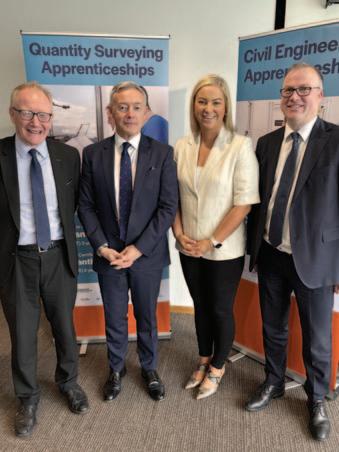
The launch of a new undergraduate quantity surveying apprenticeship at Atlantic Technological University (ATU) Sligo marks an important development in professional education, according to the SCSI’s Director of Education, James Lonergan.
The introduction of this programme represents a significant step in addressing skills shortages across the construction and property sectors. Apprenticeships provide an accessible and structured pathway into the profession, combining paid employment with academic study and progression towards Chartered membership. Expanding such pathways will be critical to supporting Ireland’s capacity to meet ongoing demands for housing, infrastructure, and broader national development.
The programme has been developed through a collaborative partnership between the SCSI, ATU
Sligo, Technological University of the Shannon, and a consortium of industry representatives. This partnership has ensured that the curriculum reflects both academic standards and the practical competencies required in the workplace, aligning graduate outcomes closely with industry needs.
The official launch took place at ATU Sligo and was attended by Ministers Marian Harkin and Frank Feighan. They were joined by then SCSI
President Gerard O’Toole, then Vice President Tomás Kelly and CEO Barry Dempsey, along with Paul Sheridan, Claire Irwin MSCSI MRICS, Alan Duffy MSCSI MRICS and Tom Turley. Companies interested in participating as apprentice employers can express their interest by contacting apprenticeship@scsi.ie. A full list of SCSI-accredited surveying courses is available at https://scsi.ie/students/studying/study/


Building Surveying Vendor and Purchaser Technical Due Diligence
Dilapidations and lease advice
Energy/BER Improvement Pathways
Schedule of Condition
Andrew Ramsey: 087 125 9386 | andrew@modulegroup.ie
Measured Surveys and Floor Area Reporting Project Management
Tony Grant: 089 439 7688 | tony@modulegroup.ie Your trusted surveying partner
Landlord Approval (Licences to Alter) Commercial Architectural Design
Assigned Certifier and employer’s agent
Fire Compliance/Fire Safety Certificates
Shane Hynes: 086 012 6820 | shane@modulegroup.ie
From left: Frank Feighan, Minister of State at the Department of Public Expenditure, Infrastructure, Public Service Reform and Digitalisation; Gerard O’Toole, then SCSI President; Claire Irwin MSCSI MRICS; and, Tomás Kelly, then SCSI Vice President.
WELCOME TO NEW CHIEF EXECUTIVE BARRY DEMPSEY
Barry Dempsey has joined the SCSI as Chief Executive, taking up the role at an important time for both the profession and the wider built environment.
Barry brings a strong focus on engagement across the membership. He has outlined his intention to connect with members, trainees and students throughout the country, with an initial emphasis on listening and gaining a clear understanding of their priorities and perspectives. He brings over three decades of leadership experience across member-led and not-for-profit organisations, including as Chief Executive of Chartered Accountants Ireland, and in senior roles with the Irish Heart Foundation, the Irish Cancer Society and The Wheel.
Working alongside the SCSI’s experienced professional team and network of volunteers, he will focus on strengthening connections with members and enhancing engagement

with key stakeholders. This will support the organisation’s continued contribution to policy, standards and sustainable progress across the sector.

Members are encouraged to engage with Barry (barry@scsi.ie) in the months ahead as the SCSI continues its work to advance the profession and deliver value for members.


The SCSI recently hosted the Southern Region Connections Conference at the Imperial Hotel in Cork, bringing together members from across Cork, Clare, Kerry, Limerick and Tipperary for an afternoon focused on engagement, insight and shared learning. Proceedings opened with a welcome from then SCSI President Gerard O’Toole, who provided an update on the SCSI’s work and priorities, setting the context for the discussions that followed. This led to an exploration of policy and the conditions required to support housing investment, with contributions from Michael O’Flynn of O’Flynn Group and TJ Cronin of Irish & European Cork Limited.
The conversation then turned to the role of infrastructure in enabling regional growth, as Joe Seymour of the National Transport Authority outlined plans for sustainable transport development. Building on this theme
CONNECTIONS IN CORK
of change across the sector, Shirleen Rigby of Prime Lettings and Property Management and Majella Galvin of DNG Galvin examined recent rental developments and their implications for both practitioners and the wider market. Following a short break, the focus shifted towards practical examples on the ground, with case studies in conservation and housing presented by Brigid Browne of Fortress Planning and Ciara Slattery of the Land Development Agency. The afternoon concluded with a forward-looking session on artificial intelligence (AI) for professionals, delivered by Patrick King of the SCSI, which highlighted emerging opportunities and considerations for members.
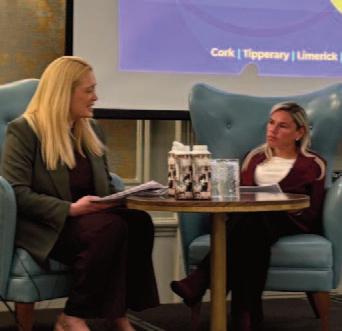
The conference formed part of the SCSI’s ongoing regional engagement programme, providing a valuable opportunity for members to connect, exchange perspectives, and reflect on the challenges and opportunities shaping the profession.
Join your regional committee to help shape future regional conferences at https://scsi.ie/committees/.


Develop a specialism in Building Surveying
SCSI Accredited conversion course into Building Surveying Assigned Certifier
Funded*, fully online course in Dundalk Institute of Technology
→ Postgraduate Diploma in Building Surveying Level 9 - Starts September 2026
Contact phil.bradley@dkit.ie for further details www.dkit.ie/postgraduate
*Employer pays €2,000, DkIT pays €2,600, Student pays €500
Shirleen Rigby of Prime Lettings and Property Management (left) in conversation with Majella Galvin of DNG Galvin at the Southern Region Connections Conference.
ELEVATE YOUR VALUES AS A LEADER
Following the launch of the ‘Workplace Culture Benchmark Report’ in April, the SCSI’s refreshed Elevate event series launched with a session on ‘Understanding Your Values’, led by Treasa Fitzgibbon. Attendees explored how personal values influence decision-making, career progression and professional satisfaction, reflecting the report’s findings that leadership behaviour and everyday actions shape culture more than policy alone. Treasa encouraged participants to consider and, where appropriate, challenge their own perspectives, while also giving space to those who preferred to observe and reflect in their own way.
Elevate forms part of a wider SCSI response to the benchmark report, which emphasises the need for stronger leadership capability, clearer progression pathways, and more inclusive workplace practices across property,

construction and land. The refreshed programme also includes on-demand learning designed to build skills in areas such as communication, leadership, and career strategy.
Sessions also provide opportunities for networking and peer-to-peer learning, recognising the report’s finding that access to
Logical Real Estate Consulting
The only multi-disciplinary real estate consultancy with dedicated Commercial, Architectural, Fire Safety & Building Surveying Teams.
—Building Surveying Team
—Full Architectural Services
—Commercial Fit-Out & Interior Design
—Commercial Technical Due Diligence Surveys
—Dilapidations and Landlord / Tenant Advisory
—Pre-Lease Schedule of Condition Surveys
—Measured Building Surveys
—Comprehensive Fire Safety Consultancy
—Reinstatement Cost Assessments for Insurance Purposes
—Title Compliance & Declaration of Identity Services
—Feasibility Studies
visibility and opportunity is a key driver of progression across the profession. The next live session is due to take place on June 25; members are encouraged to engage with the programme and take advantage of the range of learning and development opportunities now available at https://scsi.ie/elevate/

Logical Group, 15 Herbert Place, Dublin 2, D02 X289, Irelandt: 01 443 4155 e: info@logical.ie www.logical.ie
CONFERENCE HIGHLIGHTS LAND INSIGHTS AND MARKET COMPLEXITY
Low land mobility remains a defining feature of the Irish land market, with limited supply continuing to underpin values and shift activity towards leasing rather than sale, attendees at the SCSI’s Property and Land Insights Conference in May heard.
The SCSI and Teagasc launched the ‘Agricultural Land Market Review & Outlook 2026’, with contributors including Jason Loughrey and Trevor Donnellan of Teagasc, Edward McAuley of the SCSI, Philip Guckian of Sherry FitzGerald, and Frank Harrington of TU Dublin. The panel pointed to a strong but uneven agricultural backdrop, with farm incomes rising significantly in 2025 but outcomes increasingly influenced by commodity prices, energy costs, and geopolitical events. This reinforces the need for surveyors to consider wider global drivers in valuation and advisory work. From an agency perspective, Philip Guckian highlighted that larger holdings and high-quality land are attracting stronger demand, with investors and alternative uses such as energy and biodiversity now competing alongside traditional farming buyers.
In the residential session, Aoife Brennan, CEO of Lisney, described a market characterised by slowing economic conditions but continued resilience, underpinned by strong demand, limited supply and a growing focus on building quality and sustainability. However, she also noted that infrastructure constraints and viability challenges are restricting new delivery.
This led to the essential role of compulsory purchase orders (CPOs) in delivering infrastructure, although the process is often slow and complex, with timelines heavily influenced by engagement, information flow, and dispute resolution. The expert panel, which consisted of Elaine Keating of Mason Hayes & Curran, Tom Kirby of Avison Young, and Martin O’Donnell of O’Donnell Property Consultants, emphasised the importance of early communication with landowners and clear understanding of scheme impacts to avoid delays. Professionals need to focus on preparing robust, evidence-based compensation claims to significantly accelerate negotiations. Mediation is also an emerging and more efficient alternative to arbitration, offering greater flexibility and faster resolution in complex cases.
In addition, Conference attendees heard insights on the residential market from Marcus O’Connor of MFO The Property Professionals, Margaret Penrose of The Buyers Agent Ltd, and Ray McMahon of Dilosk. There was a briefing by Catriona Lawlor of The Housing Agency on the changes from Part V to Part 7 under the Planning and Development Act 2024. Concluding the Conference was Maryrose Lyons of the AI Institute, who highlighted and championed the growth and productivity potential of using AI tools within the property profession. If you would like to watch the Conference back, the full recording is available to members at https://scsi.ie/cpd-library/
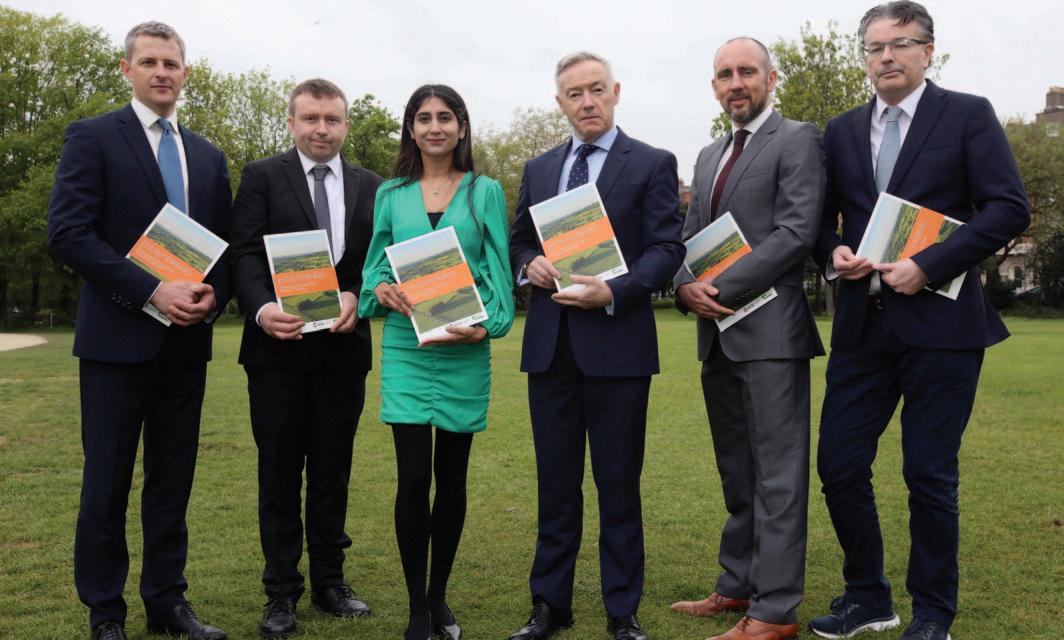
From left: Edward McAuley, SCSI Director of Practice & Policy; Jason Loughrey, Teagasc; Neha Kamrani, SCSI Policy & Research Executive; Gerard O’Toole, then SCSI President; Frank Harrington, TU Dublin and Chair of the SCSI Rural Agency Professional Group; and, Trevor Donnellan, Teagasc.
AGM WELCOMES NEW VOLUNTEERS
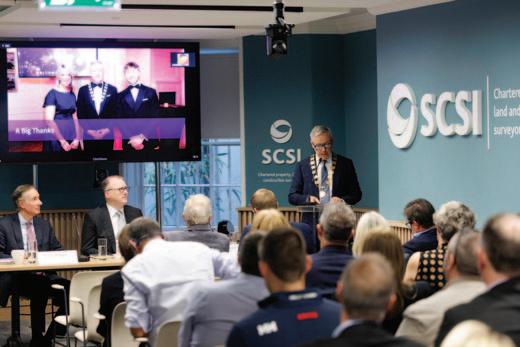
At the 2026 SCSI AGM, Tomás Kelly of AECOM was elected as SCSI President, with the ceremonial passing of the chain from Immediate Past President Gerald O’Toole. Gerard humbly stated in his valedictory address that: “It has been the greatest privilege of my professional career to have been the public face and ambassador of our profession”. The successes of his Presidential year were showcased in the ‘SCSI Annual Report 2025-2026’, which was presented by Chief Executive Barry Dempsey.
Tomás gave his first address as SCSI President, displaying a clear energy and enthusiasm for the year ahead, calling on members to join him in his efforts, and encouraging volunteerism. His AECOM colleague John O’Regan, Director and Country Lead (RoI), said: “Having worked closely with Tomás for many years, I am delighted to congratulate him on his appointment as President of the SCSI. This is a well-deserved recognition of his longstanding commitment to the profession and the respect he has earned across the industry. Everyone at AECOM is proud of this achievement, and we look forward to supporting Tomás and the SCSI in addressing the opportunities and challenges facing the built environment”.
Following Tomás’s election, Emer Byrne FSCSI FRICS of TU Dublin was elected Vice President. Emer is a Chartered Valuation Surveyor and lecturer with over 30 years’ experience in practice and education, including a senior role at Lisney, and a strong focus on sustainability and environmental, social and governance (ESG) principles. Next was the election of the Second Vice President, Mary Flynn FSCSI FRICS. Mary is an Assistant Chief Quantity Surveyor with Dublin City Council, with over 35 years’ experience in the profession, and is actively involved in shaping industry standards through roles with the SCSI, the European Council of Construction Economists, and the Construction IT Alliance. The AGM also marked the significant contribution of Kevin Hollingsworth FSCSI FRICS as he stepped down from the Board after four years of service. Additionally, the financial report demonstrated ongoing growth in membership and services, as presented by outgoing Honorary Treasurer, Mark Coady MSCSI MRICS. The newly elected Treasurer is Hannah Dwyer FSCSI FRICS of JLL.
The SCSI Board for 2026 is Tomás Kelly, Emer Byrne, Mary Flynn, Gerard O’Toole, Hannah Dwyer, Lily Ellis, Kim Hegarty and Brian Chapman. The SCSI Annual Report is available at https://scsi.ie/annualreport-2025-2026/

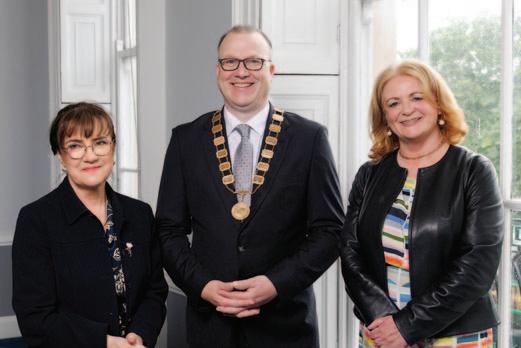
From left: Mary Flynn, SCSI Second Vice President; Tomás Kelly, SCSI President; and, Emer Byrne, SCSI Vice President.
Gerard O’Toole addresses the SCSI AGM.
SAVILLS IRELAND ACQUIRES THE BUILDING CONSULTANCY
Savills Ireland has announced the acquisition of The Building Consultancy, an independent building and project consultancy practice established in November 2007. Savills states that the acquisition expands its capability in building surveying and project consultancy, covering technical due diligence, pre-acquisition surveys, development monitoring, project management, cost consultancy, building surveying, interior architecture, and design. With the addition of The Building Consultancy team, Savills now has more than 30 specialists delivering these services across Ireland, positioning the firm as one of the largest providers of building consultancy in the market, according to the company.
Alan Baldwin, Managing Director of The Building Consultancy, commented: “Joining Savills represents a natural progression for our business. Over the past two decades we have focused on delivering clear, independent technical advice that supports investment decisions, development programmes and occupier strategy. Becoming part of Savills allows us to bring that expertise to a broader client base while continuing to provide the detailed, objective analysis that funders, investors and occupiers rely on when making major property decisions”.
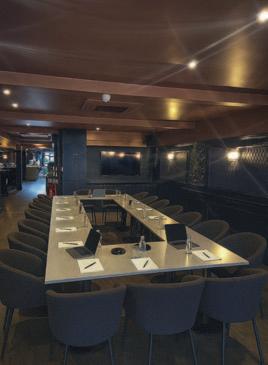

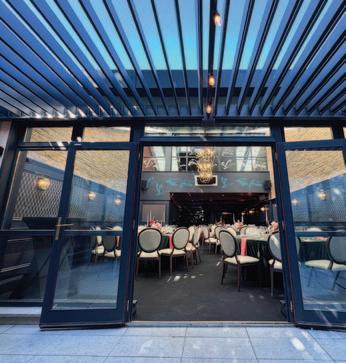

From board meetings to staff training, team building, press events, awards ceremonies etc, all in an exquisite environment incorporating our delightful private, terrace and garden, perfect for break out. Exclusive hire for half days, full day or week hire. Staffed, catered and furnished to your speci昀c requirement. Full AV system available.

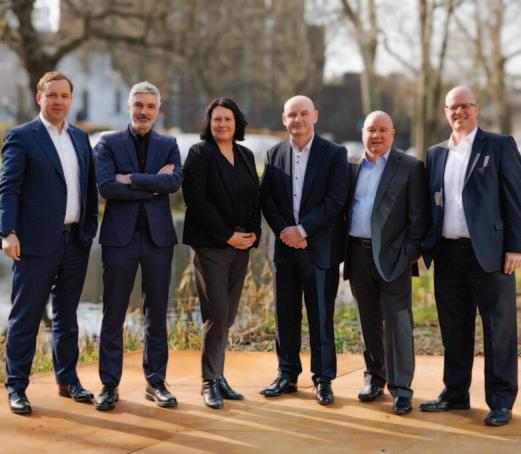
From left: Mark Reynolds, Managing Director, Savills Ireland; Karl O’Donovan, Director, The Building Consultancy; Orla Coyle, Director, Savills Ireland; Alan Baldwin, Managing Director, The Building Consultancy; Hugh Holt, Director, The Building Consultancy; and, Ken Mulligan, Director, The Building Consultancy.
LOGICAL MARKS 15 YEARS WITH EXPANSION OF ARCHITECTURAL SERVICES
Logical Real Estate Consulting recently celebrated its 15th year in business with the addition of a full architectural team to its professional services team. Sofia O’Halloran MRIAI heads up the new team comprising Olivia Correa BSc, Nigel Smyth BSc Hons, and Marion Gillman BArch. The company states that this team significantly increases the scope of its professional services by adding architectural feasibility, office fit-out design and interiors, while also assisting the technical team in acquisition and disposal due diligence. Sofia O’Halloran commented: “Logical has built its reputation on agility, expertise, and strong client relationships. The opportunity to shape projects from the earliest design stages right through to completion is incredibly exciting – and means our clients benefit from a fully aligned team every step of the way”.
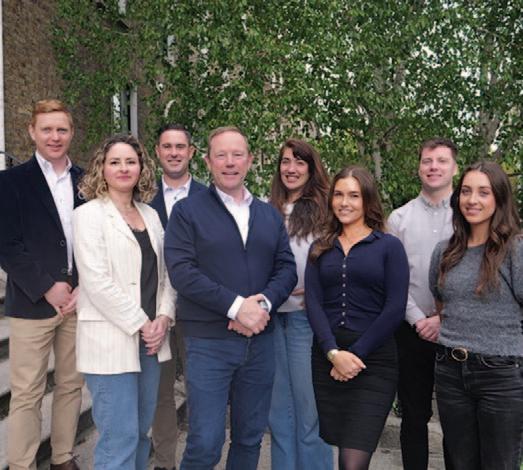
Pictured is the team at Logical (from left): Brendan Campbell, Director, Construction & Development; Geisa Sampaio, Cost Manager; Christopher Deery, MD Professional Services; Barry O’Halloran, Managing Director; Olivia Correa BSc; Sofia O’Halloran MRIAI; Nigel Smyth BSc Hons; and, Marion Gillman BArch.
DYNAMIC AGENCY WINDOWS FROM DOUGLAS DISPLAYS
In a competitive property market where visibility is essential,
Douglas Displays states that Irish estate agencies are rapidly adopting digital displays to stay ahead. Through its partnership with Vitrinemedia, according to the company, agencies like PF Quirke in Clonmel have access to dynamic display windows designed to transform traditional storefronts into high-impact marketing spaces that instantly capture attention, create a modern image, and generate increased foot traffic.
Douglas Displays states that with Vitrinemedia it combines cuttingedge innovation with recognised local expertise in order to provide digital solutions that enable agencies to stand out, create more leads, and increase enquiries. According to the company, a dynamic display window al lows estate agents to update their listings instantly, promote properties in real time, and maintain an attractive and engaging presence 24/7. Douglas Displays adds that the days of replacing printed displays in windows are over – thanks to the multi-screen Light&Play® range, paper is a thing of the past and everything can be managed through the Vitrinemedia app.

PF Quirke in Clonmel with a fully digital Light&Play® window.
MEASURING WHAT MATTERS
IN A FIRST FOR THE SURVEYING PROFES SION, THE SCSI HAS LAUNCHED A REPORT BENCHMARKING MEMBERS’ WORKPLACE EXPERIENCE ACROSS THE PROPERTY, CONSTRUCTION AND LAND SECTORS.
Workplace culture is often discussed in abstract terms. It is referenced in values statements and leadership speeches, yet rarely measured in a way that captures how it is actually experienced by people at work. In sectors such as property, construction and land – where professional judgement, safety, collaboration, and public trust are fundamental – this gap matters.
In April 2026, the Society of Chartered Surveyors Ireland (SCSI) launched its first ‘Workplace Culture Benchmark Report’, developed in partnership with behavioural science specialists inclusio. Drawing on confidential survey responses from almost 700 members across the profession, the report provides the first sectorwide, evidence-based view of workplace culture as lived by surveyors working in Ireland today. Formally launched by Ms Justice Marguerite Bolger, Judge of the High Court and an expert in employment and equality law, the report marks an important step in moving the conversation about workplace culture from anecdote and assumption to data, insight, and informed leadership reflection.
Why culture, why now?
The property, construction and land sectors are
Gwendolyn Wilson SCSI Director of Regulation and Registrar Lead, Workplace Culture Initiative NEWS FEATURE

facing a convergence of pressures: skills shortages, changing workforce expectations, increased regulatory scrutiny, and heightened public accountability. At the same time, organisations are navigating hybrid working, generational change, evolving leadership models, and growing awareness of inclusion, well-being and psychological safety.
Against this backdrop, workplace culture is no longer a ‘soft’ issue. It directly influences decisionmaking quality, risk management, professional standards, talent retention, and long-term sustainability. Yet until now, there has been no shared evidence base to understand how culture is actually experienced across the profession.
The SCSI ‘Workplace Culture Benchmark Report’ was designed to address that gap. Its purpose is not to judge individual organisations. Rather, it establishes a baseline view of collective experience, enabling patterns, strengths, and risks to be identified at sector level.
As SCSI President Gerard O’Toole FSCSI FRICS noted in his foreword to the report, strong culture is a critical driver of performance, safety, and public trust. Measuring culture allows the profession to see where experience is consistent – and where it is not.
Listening to lived experience
A defining feature of the benchmark is its focus on lived experience. Using inclusio’s behavioural science model, culture was measured across key dimensions that include psychological safety, trust, leadership, manager performance, and team dynamics. Responses were gathered
confidentially, allowing members to speak openly about their dayto-day experience of work.
The survey captured more than 42,000 individual data points over a four-week period, representing approximately 15% of SCSI membership. Respondents came from across organisational sizes, sectors, and career stages, with representation from trainees, associates and professional members.

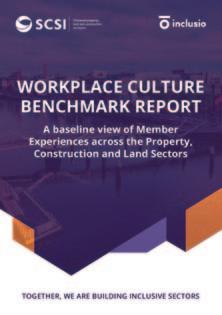
The overall headline results present a broadly positive picture. Average scores across the core culture dimensions fall within a stable range, suggesting that many organisations are providing supportive working environments. However, the real value of the benchmark lies beneath these averages.
When examined more closely, the data reveal uneven experience across gender, career stage and managerial context. These differences do not always surface in high-level culture scores, but they carry important implications for leadership, governance, and workforce sustainability.
Variation that matters
One of the clearest signals from the data is that culture is not experienced equally by all groups. Psychological safety – the extent to which individuals feel able to speak up, challenge, and raise concerns – shows notable
variation. Men report higher levels of psychological safety than women, and trainees report the lowest culture scores across multiple dimensions. This matters because psychological safety underpins decision quality, innovation, and risk management. When some voices feel less able to contribute, organisations are more likely to miss early warning signs or lose valuable insight.
Leadership and manager performance also emerge as critical pressure points. While leadership is rated positively overall, differences in experience indicate that leadership intent does not always translate consistently into day-to-day practice. For most employees, culture is experienced through their manager, and variability at this level creates uneven performance environments.
Importantly, the report highlights that these issues are systemic rather than isolated. They reflect patterns that cut across organisations, rather than being confined to individual workplaces.
Talent, progression and sustainability
The second major theme of the report relates to talent progression and retention. While most respondents indicate an intention to remain with their current employer, the data reveal clear signals of pressure that could affect workforce stability over time.
Career progression emerges as the central lever shaping retention risk. Where pathways are unclear, promotion processes are perceived as opaque, or visibility depends on informal networks, confidence in long-term career prospects weakens. These dynamics are felt more acutely by women, who report lower satisfaction with progression opportunities, pay transparency, and promotion fairness.
Workload, flexibility, and working conditions also play a critical role. Sustainable working practices influence both day-to-day experience and longer-term engagement, particularly for those balancing caring responsibilities or navigating mid-career pressures.
The report underscores that no single issue drives retention risk in isolation. Rather, it is the accumulation and interaction of progression clarity, fairness, workload, and leadership experience that shape decisions about staying, leaving, or disengaging.
Inclusion and behavioural risk
The benchmark also sheds light on workplace experience, inclusion, and behavioural risk. While many members report positive interactions, uneven experience persists across groups. Women are more likely than men to report feeling marginalised at work, citing factors such as gender, age, and caring responsibilities. They also report higher exposure to bullying, harassment, and unfair treatment.
The data also point to a more nuanced issue around disclosure: in some areas, particularly in relation to health, there are indications that men may be less likely to disclose or discuss their experience at work. That matters because low disclosure can mask need, reduce access to support, and make some issues less visible in organisational decision-making.
Crucially, the findings highlight that behavioural risk escalates not simply when issues arise, but when they are not addressed. Lack of manager response, inconsistent follow-through, and unclear escalation pathways weaken trust and increase organisational risk over time.
These insights reinforce the importance of manager capability and accountability as central controls in shaping culture, safety, and professional standards.
Leadership reflection and responsibility
A key principle underpinning the SCSI ‘Workplace Culture Benchmark Report’ is clarity of role and responsibility. Responsibility for workplace culture and employment practice sits with individual organisations and leadership teams.
The SCSI’s role, as a professional body and sector convenor, is to inform, enable, and support. By providing credible, independent data, the benchmark creates a shared evidence base from which leaders can reflect, ask better questions, and take informed action within their own contexts. This positioning was echoed at the launch by Ms Justice Bolger, who emphasised the value of evidence-based insight in making visible issues that might otherwise remain unseen until they escalate.
What comes next
The publication of the benchmark signals the beginning of a longer-term programme of engagement. Over the next two years, the SCSI has committed to repeating culture data capture, tracking progress over time, and deepening its understanding of emerging risks and trends across the profession. Insights from the data will continue to inform leadership roundtables, learning initiatives, and targeted CPD, with a particular focus on manager capability, progression clarity, and sustainable working practices. The SCSI will also continue to act as a trusted convenor, creating space for shared learning and constructive dialogue across the sector.
In a profession built on judgement, trust, and responsibility, culture is not peripheral. It shapes how decisions are made, how people are treated, and how the profession is experienced by those within it – and by the public it serves.
By measuring what matters, the SCSI ‘Workplace Culture Benchmark Report’ provides a foundation for more informed, intentional, and accountable leadership. The challenge now rests with the sector to engage with what the data reveal, look beyond the averages, and lead with clarity, consistency, and courage.
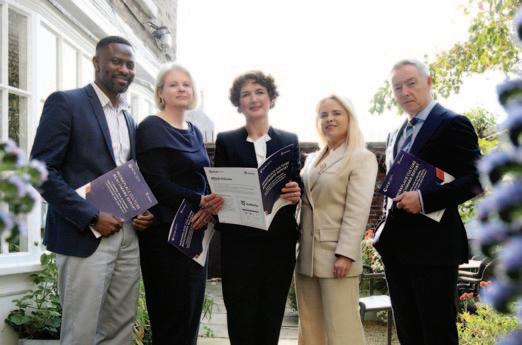
Pictured at the launch of the Workplace Culture Benchmark Report (from left): Jeremiah Okanola-Biala MSCSI MRICS; Aoife Brennan FSCSI FRICS; Ms Justice Marguerite Bolger; Gwen Wilson, SCSI Director of Regulation and Registrar; and, Gerard O’Toole, then SCSI President.

EUROPEAN PERSPECTIVES ON THE FUTURE OF GEOMATICS
THE SCSI GEOMATICS PROFESSIONAL GROUP REPRESENTED IRELAND AT THE CLGE GENERAL ASSEMBLY 2026 IN MAY.
The 2026 General Assembly of the Council of European Geodetic Surveyors (CLGE) was held from May 7-9 in Tartu, Estonia, and brought together representatives from more than 25 national surveying and geomatics associations. The Assembly provided an important forum for professional exchange and strategic discussion on the challenges and opportunities shaping the future of surveying and geospatial practice across Europe. Ireland was represented by the Society of Chartered Surveyors Ireland (SCSI) Geomatics Professional Group. A strong focus of the meeting was digital transformation within the profession. Discussions highlighted the expanding role of artificial intelligence (AI), open geospatial technologies, and data integration in cadastral systems and land administration. Delegates shared national experiences in modernising geospatial infrastructures, improving data accessibility, and supporting smarter, evidence-based decision-making. Estonia’s advanced digital systems and holistic approach to spatial planning, architecture, and surveying were frequently cited as benchmarks for innovation. Education, training and professional mobility were also central themes. Attention was devoted to the potential establishment of a Common Training Framework (CTF), intended to define shared European minimum standards of knowledge, skills and competencies for surveying professionals, while accommodating national differences in regulation and education. In this context, updates were provided on Ireland’s recent initiatives, including the geospatial apprenticeship and the master’s in geospatial surveying at Technological University Dublin (TUD).
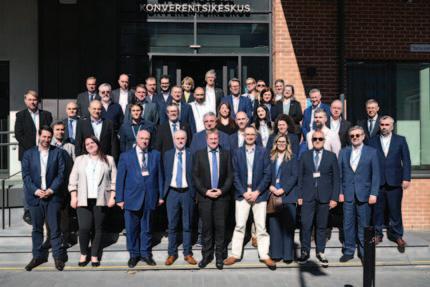
Delegates at the recent CLGE General Assembly in Estonia. Among those pictured were: Michalis Kalogiannakis (GR), Vice President, FIG (front row, first on left); Julian Ismaili (AL), Treasurer, CLGE (front row, fourth from left); Nicholas Smith (FR), President, CLGE (front row, fifth from left); Duncan Moss (UK), Secretary General, CLGE (front row, sixth from left); Eugen Niculae (IRL), SCSI representative (second row, fifth from left); and, Jean-Yves Pirlot (BE), Director General, CLGE (fourth row, first on left).
Eugen Niculae
MSc PGDipEd FSCSI FRICS Lecturer, School of Surveying and Construction Innovation, TU Dublin NEWS FEATURE
The programme included workshops on AI, the future of property monumentation – resulting in the adoption of the Tartu Declaration – and the CLGE European Geodetic Surveyors’ Act project. European candidates for the upcoming International Federation of Surveyors (FIG) elections were also invited to present their programmes, strengthening dialogue between European and global professional bodies.

A highlight of the Assembly was a visit to the Tartu Observatory, where Friedrich Georg Wilhelm von Struve carried out his geodetic work. Struve led the measurement of the Struve Geodetic Arc, a 19th-century chain of triangulation points extending over 2,800km from Norway to the Black Sea. Using this arc, Struve derived an estimate of the Earth’s size and shape, calculating a meridional length corresponding to an Earth circumference of approximately 40,000km. This result differs by 0.02% from today’s internationally accepted value of about 40,008km, demonstrating the remarkable accuracy achieved with 19th-century surveying techniques. The Struve Arc is now recognised as a UNESCO World Heritage Site and a foundation of modern geodesy.
The next CLGE General Assembly will take place in Brno in October 2026, continuing these important European level discussions.
AN AMBASSADOR FOR THE PROFESSION
NEW SCSI PRESIDENT TOMÁS KELLY DISCUS SES HIS PRIORITIES FOR THE YEAR, AND THE VALUE OF GETTING INVOLVED IN THE SCSI.

Tomás Kelly’s involvement with the SCSI goes back to his student days in Bolton Street, when he was student representative on what was then the Junior Organisation Committee (now known as Nexus). He speaks highly of that time: “It’s a great avenue to get started and get to know people in the SCSI. It can be a lot of fun, with loads of different activities and things to get involved in”.
His role with AECOM (see panel) took him to Galway, and that led to involvement in the then newly established SCSI Western Region group: “I joined that committee in 2004 and held a number of roles, from Treasurer to Chair, and then became the region’s representative on the Quantity Surveying Professional Group. That led to a number of roles in that Group, including Chair”.
INTERVIEW
Ann-Marie Hardiman Managing Editor, Think Media Ltd

That in turn led to a number of other positions within the SCSI, including on the Practice and Policy Committee, Council, and Board. Tomás says he’s found it a very positive experience: “It’s been an evolution, but a really enjoyable one. You learn so much about other professional groups. We can tend to be siloed in our day-to-day work, but through involvement in the SCSI this broadens considerably; when you have all different forms of reports and research coming to the Practice and Policy Committee, you get a really good understanding of the pressures, challenges and opportunities within the different disciplines across construction, property, and land”.
Unsurprisingly, he would very much encourage others to get involved: “If somebody asked me, ‘What did you get directly from it?’, it’s difficult to put your finger on it, but huge learning and development certainly, and a great network of people. There’s a saying: ‘You get out of it what
“ WE CAN TEND TO BE SILOED IN OUR DAY-TO-DAY WORK, BUT THROUGH INVOLVEMENT IN THE SCSI
THIS BR OADENS CONSIDERABLY; WHEN YOU HAVE
ALL DIFFERENT FORMS OF REPORTS AND RESEARCH COMING TO THE PRACTICE AND POLICY COMMITTEE, YOU GET A REALLY GOOD UNDERSTANDING OF THE PRESSURES , CHALLENGES AND OPPORTUNITIES
WITHIN THE DIFFERENT DISCIPLINES ACROSS CONSTRUCTION, PROPERTY, AND LAND.
you put into it’. I actually find that idea a bit cold. You might gain a lot in your earlier career, but it’s really important, I think, to then give back as well. It’s not a balance sheet, and if you think of it that way, you won’t enjoy it, but if you get involved you will absolutely reap the rewards”.
Promotion
Tomás says his priorities for his year as President can be summed up broadly under the theme of ‘promotion’, starting with promoting members’ skills and services to the wider public: “I don’t think people understand the full diversity of the profession, but I think the division of construction, property, and land is a very good way of explaining it. If someone is asking about construction, for example, then you can say that within that we have a number of sub-disciplines, like quantity surveying, building surveying, and project management, and then you’re building a pathway to explaining what we do”.
He is also keen to continue the work done by his predecessors to promote the profession as an attractive career option, and the diversity of routes to access the profession: “Many past presidents have placed a huge emphasis on promoting membership and routes to access membership, particularly through the colleges and secondary schools. I’m very keen to continue that strong momentum”.
Given his long involvement with his region, it’s not surprising that a strong priority for Tomás is promotion of the SCSI’s regional network: “I’ve been very fortunate to be part of the West/North West Region, but I’ve had an opportunity to meet members from all of the regions, and there’s great strength in that for the SCSI because practically all of the reports that we produce and that we get great credit for are based on the feedback and inputs we get from members around the country. That feedback is the lifeblood of the SCSI. If we didn’t have that network and the information coming from it, we’d be a lot poorer for it, so I want to reinforce and strengthen that regional piece”.
This ties in well with his aim of promoting what the profession does more generally: “There is a great opportunity for members in the regions to create greater awareness of their services. Because certainly, if you look at, say, local authorities or other public bodies, a lot of them would
maybe gravitate towards traditional built environment disciplines and not often enough to the surveying discipline because of a lack of knowledge about what we do. I think by increasing that awareness, it’s increasing opportunity for our members in the regions as well”.
The big issues
As Tomás points out, big issues for the SCSI are also big issues for the industry as a whole, and addressing skills shortages in the profession is one of the most significant. The SCSI recently published a report authored by Dr Róisín Murphy of TU Dublin (‘Employment Outlook for the Surveying Profession 2026-2029’), looking specifically at this issue, and Tomás feels that this is a very important piece of work: “This time around, in addition to canvassing members, it’s also canvassing guidance counsellors and students. I think that adds real strength to the report and great insight. The report shows that there is a shortage of surveyors across the board. That is a real issue for the SCSI. I want to acknowledge the great work that the education team in the SCSI do already – James and Ruth and everybody in the team, and the volunteer members. There’s a huge amount of work being done, but we need to continue to evolve and look at new things that we can do”.
He mentions particularly the increase in the number of apprenticeship courses: “There has been an outdated vision of apprenticeships as being only for maybe certain trades. That’s very much an outdated concept now, and this is a new avenue for the quantity surveying profession. There’s plenty of interest from both employers and applicants –innovations like this are a real strength”.
The other big issue for the sector, and indeed for society, is of course the housing crisis. Tomás acknowledges the SCSI’s role in contributing to the debate and, crucially, making concrete proposals, driven by the evidence: “The SCSI has been to the fore in terms of providing evidencebased data to inform Government policy, for example with the ‘Real Cost’ reports. We will continue to play our part; whether it’s construction, property, or land, all three divisions are actively involved and have something to contribute”.
Contributing to culture
The Employment Outlook report is only one of several significant pieces of research that the SCSI has undertaken recently. The ‘Workplace Culture Benchmark Report’, produced in collaboration with inclusio, is another important document that Tomás is keen to highlight: “I think this report will provide a very good basis for years to come in terms of measurement, and how we’re progressing. The overall message is positive, that employees have a positive experience in the industry. It does identify, however, that the experience isn’t uniform, and in particular the broad trend suggests that there are differences of experience across genders, for example, with experiences of female members not scoring as highly as male members. That has to be a concern and we in the SCSI will certainly be playing our part in actively promoting work in that space”. Tomás believes the report has important messages for all members, but particularly those in management positions: “We need to be deliberate in our strategies and actions to ensure we maintain a safe and enjoyable workplace for our employees. It doesn’t happen by accident – we all have unconscious biases, and we all fall into patterns of work, maybe based on how we experienced work as a graduate, so we have to be deliberate and

positive in the actions that we take. It’s key to establishing and maintaining a great industry to work in. And of course, from every company’s point of view, it’s key to talent retention in their organisations”.
Trying times
Once again, we find ourselves in a time of global uncertainty, and the property and construction sectors are particularly vulnerable to these external factors. Tomás is broadly optimistic: “I think the construction, property and land sectors are in a strong position, with the exception of the supply side of the residential sector, which has its challenges as we know. Ireland is a small open economy, and over the last decade alone, we’ve seen huge disruptions nationally and globally, but the industry in general terms has proven very resilient to that”.
He sounds a note of caution, however: “We need to be flexible and continuously improve how and what we deliver, and look at productivity, innovation, adoption of digital tools, AI and sustainable solutions. We can’t rest on our laurels – we have to be constantly innovating and looking at how we can do things differently. I think the SCSI is a good example of that, setting out the new Workplace Culture Report and the Digital Strategy”.
Finding a balance
Originally from Wexford, Tomás studied Construction Economics (Quantity Surveying) at the then DIT Bolton Street. After a year in the workplace, he says: “I had caught the research bug when I was in college and I enjoyed the dissertation process, so I went back and did a two-year research master’s on cost control in the construction sector”.
A job with then-named PKS followed, and Tomás has remained with the company through various mergers and acquisitions, meaning that he is now employed by AECOM, and is based in Galway as director of the regional cost management team, working on a mix of public and private sector projects. He says he’s been very happy to stay with one company for almost 30 years, as there have been plenty of opportunities to hold diverse
Ambassadors
Tomás says he’s truly honoured to be elected President of the SCSI: “As a professional body whose mission is to connect, support and represent members, I will take every opportunity in my year as President to live out that mission, and hopefully build on the sterling work that Gerard O’Toole, Kevin Hollingsworth, and many others before them have undertaken. It is a true honour, and I feel very privileged to have this opportunity”. He returns to our earlier discussion about involvement in the SCSI, with a core message for members: “You are an ambassador for the SCSI. A lot of people think an ambassadorial role is there to promote the organisation, which it absolutely is. But a key role of an ambassador is also to feed back to the organisation. That’s something that I would like to emphasise to members. Your feedback is absolutely critical. Whether that’s a general survey, or being asked to contribute to a case study or join a working group or a subgroup, all of those modes of communication and engagement are really important to us. In the second half of my term, we will be developing our next roadmap strategy, so there will be plenty of opportunities and avenues for members to engage and contribute. So get involved and have your say”.
roles: “When I joined PKS, there were probably 30-40 people in the company, and now AECOM is a company of maybe 40,000 or 50,000 worldwide. There are lots of opportunities to do different things, work with different teams, and that’s part of the motivation – no day is the same. We’re lucky in the surveying profession that it’s a very diverse profession, and a very eclectic mix of work. You could be on site one or two days, you could be out at client meetings, you could be just head down at the laptop for a couple of days. It’s a good mix”. Tomás is married to Patricia and they have two daughters, Lauren and Elizabeth, who are both in college. He enjoys travelling, playing golf (“although I don’t get out often enough”), and says he’s “a bit of a sports nut”, and will watch pretty much any sport, either on TV or in person.
IRELAND’S AGRICULTURAL LAND MARKET IN 2025
THE ANNUAL REPORT ON AGRICULTURAL LAND FROM THE SCSI AND TEAGASC REVEALS A MARKET THAT IS RESILIENT, COMPETITIVE, AND ENTERING A MORE CAUTIOUS PHASE.
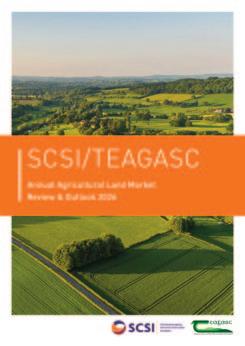
Ireland’s agricultural land market remains a defining feature of the rural economy, shaped less by short-term cycles than by enduring structural forces. The SCSI/Teagasc ‘Annual Agricultural Land Market Review & Outlook 2026’, now in its 13th year, confirms that despite rising uncertainty around farm incomes, regulation and geopolitics, demand for land remains strong, supply remains constrained, and land values continue to edge upwards.
Only a very small proportion of Ireland’s farmland is transacted in any given year, and this structural scarcity continues to underpin land values. In 2025, agricultural land sales activity increased modestly, while leasing activity remained strong, albeit at a more mature pace than in recent years. Probate sales and intergenerational transfers continue to be the main routes through which land comes to market, reinforcing the long-term and deeply personal nature of land ownership in Ireland.
This scarcity, combined with gradual farm consolidation, has kept competition intense, particularly for larger, contiguous blocks of land.
Survey responses indicate that while smaller parcels remain active, larger holdings experienced comparatively strong value growth in 2025. This reflects the operational efficiencies that scale can provide, especially within modern grass-based dairy systems.
Land values: continued growth, with regional variation
Nationally, agricultural land values rose across most plot sizes and land qualities in 2025. Average values for good-quality land remain highest in Leinster, reflecting a concentration of intensive farming systems and a location where there is some of the strongest competition. Wexford and Kildare again recorded the highest average values for good-quality land. However, the strongest growth rates in 2025 were recorded in Connacht and Ulster. While values in these regions remain lower in absolute terms, growth of 17-20% reflects a combination of improving
returns in non-dairy livestock farming, lower historical base values, forestryrelated demand in some areas and, in certain counties, cross-border purchasing activity.
Looking beyond year-on-year changes, three-year rolling averages show a more even and sustained upward trend across all provinces. This reinforces the finding that Ireland’s land market is primarily driven by long-term structural dynamics rather than short-term price volatility.

Long-term leasing: now central, not peripheral
One of the clearest structural shifts identified in the report is the central role of long-term leasing in land mobility. Leasing has moved decisively away from short-term conacre arrangements towards longer agreements that provide security for both landowners and farmers. In 2025, 84% of SCSI agents reported that farmers typically paid higher rents per acre for long-term leases than for short-term lets. This premium reflects the certainty that long-term access provides, allowing farmers to invest in reseeding, soil fertility, and infrastructure. Policy measures, including income tax reliefs for longer leases, have reinforced this trend.
Farm performance and emerging constraints
Edward McAuley SCSI Director of Practice & Policy

The land market does not operate in isolation from farm economics. Agricultural performance in 2025 was strong overall, particularly in the dairy and cattle sectors. However, the outlook for 2026 is more challenging. Lower milk prices, rising fertiliser and energy costs, and increased weather variability are expected to place downward pressure on farm margins. As a result, SCSI agents anticipate a more cautious

investment environment in 2026, especially within the dairy sector. Despite this, demand for land has not dissipated. Instead, it is adapting. Leasing continues to offer a flexible, lower-capital route to meeting land requirements arising from nitrates compliance, stocking rates, and grassbased production systems.
Outlook: resilient, but more measured Looking ahead to 2026, SCSI agents expect agricultural land values and rents to continue rising modestly, by around 4% nationally. This reflects the fundamental characteristics of the Irish land market: limited supply, enduring demand, and the strategic importance of land to farm viability.
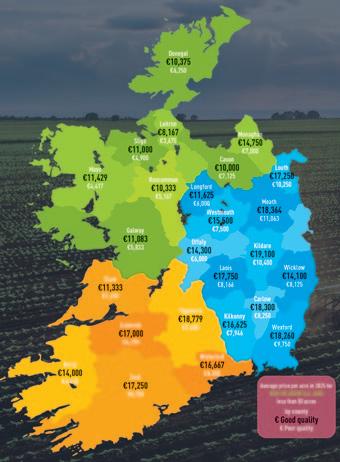
However, the tone of the outlook is notably more cautious than in recent years. Rising costs, softer output prices, and regulatory uncertainty are likely to temper expansion plans, particularly in the dairy sector. Even so, land remains a long-term asset, and Ireland’s agricultural land market continues to demonstrate resilience in the face of changing economic and policy conditions.
(2025, 2024, 2023, 2022).

THE POWER OF DISCOURSE
RESEARCH DEMONSTRATES HOW MEDIA NARRATIVES SHAPE IRISH REAL ESTATE BEHAVIOUR.
Public perception of Ireland’s property market is shaped as much by narrative as by numbers. My own research has shown that repeated rhetoric and emotionally charged narratives can subtly shape behaviour across the sector. This influence operates not only on individual decision-making, but also on institutional policy and investment sentiment. What is often underappreciated is that the market is not just economic, it is discursive. How housing is written about – its tone, frequency, and framing – feeds directly into transactional behaviour, political pressure, and ultimately the reality of access to housing in Ireland.
Market psychology
At its core, the Irish real estate market is a social system governed by human behaviour as much as by supply and demand. Using behavioural economics and discourse analysis, my research found that media narratives can activate what is called ‘System 1 thinking’: fast, intuitive, emotionally charged responses that favour imitation and urgency over reflection.
Hilary Herlihy MSc Pg Dip BSc MCIOB FEATURE

When sensationalist language such as ‘crisis’, ‘warning’, ‘shortage’, and ‘boom’ are repeated frequently, it produces a psychological feedback loop. Readers internalise the language, shaping expectation and sentiment. In turn, sentiment drives behaviour, fear of missing out accelerates purchases, pessimism stalls transactions, and both behaviours amplify short-term volatility.
Respondents in my research (some 49 professionals from within the property sector) acknowledged that while they recognised the media’s influence on “others”, most underestimated its influence on themselves. Yet their reported behaviours contradicted that perception. Over half admitted acceleration of a property purchase when media reports predicted price rises. This gap between perceived and actual influence underscores the subtle power of discourse.
Erosion of objectivity
Interviews with commentators and academics pointed to a common pattern of “ethical drift”, where biased or commercially influenced reporting gradually becomes normal and largely unquestioned. Irish property journalism, perhaps constrained by time and funding, increasingly reproduces corporate press releases and market updates with minimal apparent interrogation. The line between independent journalism and corporate communication has become
blurred. As one interviewee observed, “What begins as a PR release often becomes the story”.
This practice is seldom malicious, but is symptomatic of structural pressures such as
“ PUBLIC PERCEPTION OF IRELAND’S PROPERTY MARKET IS SHAPED AS MUCH BY NARRATIVE AS BY NUMBERS.
smaller editorial teams, advertiser reliance, and commercial interests. The result is an ecosystem where repetition substitutes for investigation and balanced critique is sacrificed for speed
For practitioners, understanding this environment is vital. Market narratives are rarely neutral, often being shaped within commercial settings that both reflect and reinforce existing economic interests. Recognising these dynamics allows professionals to read more critically, communicate more responsibly, and advise clients with greater contextual awareness.
Ownership identity
Beyond market mechanics, Irish attitudes to property are steeped in cultural memory. From historic eviction narratives to modern homeownership aspirations, land and identity have long been intertwined. Research suggests that this emotional inheritance predisposes Irish society to interpret housing discourse through a moral rather than a purely financial lens. Ownership equals independence, and renting implies vulnerability.






Media narratives actively mobilise this sentiment. Headlines emphasising limited supply and fierce competition play directly into concerns about access to housing. The outcome is a psychological environment in which property becomes a marker of security and status, as well as an expression of conspicuous consumption. For real estate professionals navigating public communication or policy consultation, recognising this cultural subtext aids in understanding client motivations and community reactions to development.
Industry lessons
To address communication bias, the research draws parallels with scaled and complex sectors such as aviation, renowned for its safety culture and procedural discipline. The aviation principle of crew resource management (CRM) explicitly counters groupthink by encouraging dissent, documentation, and shared responsibility. Similarly, healthcare benefits from structured checklists developed by the World Health Organization to reduce cognitive error. Transposed to real estate, the lesson is clear: if communication failures in safety-critical industries cause accidents, unexamined rhetoric in property markets can distort perceptions and policy. From my research, a ‘Real Estate Media Objectivity Assessment’ (REMOA) has been developed. Adapting principles offer a straightforward framework to assess narrative bias in property reporting. REMOA invites both journalists and readers to evaluate five dimensions of objectivity:
1. Source transparency.
2. Balance of perspectives.
3. Emotional language.
4. Evidenced citation.
5. Commercial context.
Writing that scores heavily on the “subjective” side signals potential bias or rhetorical framing. As a professional tool, it promotes critical literacy and supports evidence-based engagement with market commentary.
The benefits in practice
The professional significance of this research
“ WHEN
DISCOURSE SKEWS PERCEPTION BY OVERSTATING CRISIS OR PROMISING RECOVERY, IT INFLUENCES VALUATIONS, CLIENT CONFIDENCE, POLICY DIALOGUE, AND SOCIAL TRUST.
lies in its call for awareness and accountability. Surveyors, valuers, planners, and agents operate at the intersection of public expectation and expert reality. When discourse skews perception by overstating crisis or promising recovery, it influences valuations, client confidence, policy dialogue, and social trust. Three actions can be implemented:
1. Integrate discourse awareness into professional training
As practitioners interpret and communicate market data, one should recognise narrative framing as a market variable. Embedding this awareness into CPD programmes could strengthen analytical rigour and resilience against behavioural bias.
2. Promote transparent methodology in public communication
When publishing research, forecasts, or commentary, disclose data sources and limitations. Clarity about assumptions not only
builds credibility, but directly counters the opacity driving public mistrust.
3. Adopt a ‘no blame’ learning culture
Inspired by aviation’s ‘Maintenance Error Decision Aid’, the sector can foster open discussion of misjudged forecasts or flawed narrative cycles. Treating discourse errors as opportunities for collective learning reduces defensiveness and improves ethical standards.
Rebuilding trust
Real estate is an information environment
“
where urgency and repetition often outweigh reflection. Through evidencebased interpretation, transparent valuation practice, and client education, surveyors can counter distorted narratives and rebuild trust. My research did not suggest that media influence is inherently negative. Rather, it highlighted the importance of conscious engagement, of slowing the pace of reaction to question not only what is reported but how it is reported. Understanding its mechanisms is integral to professional judgement and public interest.
REAL ESTATE IS AN INFORMATION ENVIRONMENT WHERE URGENCY AND REPETITION OFTEN OUTWEIGH REFLECTION.





DELIVERING FOR TRANSPORT
AS PUBLIC TRANSPORT PROVISION INCREASES IN IRELAND, THE RESPONSIBILITIES OF A SURVEYOR IN CIÉ GROUP PROPERTY MANAGEMENT ARE BROADENING.
Córas Iompair Éireann (CIÉ) Group Property Management (GPM) holds and manages the property assets of the CIÉ Group of Companies, comprising CIÉ, Irish Rail, Bus Éireann, and Dublin Bus. The work of a Chartered Surveyor in CIÉ GPM is broad and varied – no two days are ever the same. This article provides a high-level look at the diverse roles, responsibilities and challenges undertaken at GPM, from the monetisation of the property asset to the provision of transport infrastructure, and everything in between.
Development sites
CIÉ has considerable landholdings associated with the transport activities of the CIÉ Group, including train stations and yards, works depots, bus garages and station facilities. One of GPM’s main priorities is the development of these sites in line with the principles of transit-oriented development (TOD). This involves the creation of mixed-use communities within walking and cycling distance of public transport nodes. It requires linkage with alternative public transport providers to encourage sustainable travel. Naturally, this requires collaboration with various stakeholders such as the transport provider, local authorities, the National Transport Authority and the Land Development Agency.
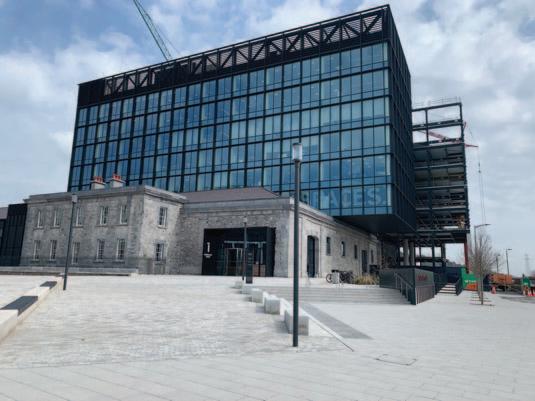
A prime example is the multi-faceted Heuston Masterplan, incorporating Conyngham Road Dublin Bus Depot. This presents a 16-hectare site with the potential for in excess of 210,000m2 of mixed-use development, including approximately 1,000 residential units. Exploiting this potential requires unlocking the lands from their current operational usages, providing alternative locations for these operations, and building new linkages into the site, including new cross-Liffey connections.
The Heuston Masterplan aligns with the ambitions of Strategic Development Regeneration Area 7 of the Dublin City Development Plan 2022-2028, and has the potential to provide a new gateway into the Dublin Metropolitan Area from the city’s western edge. Further TOD is underway at a 2.5-hectare site at
FEATURE
Peter Cunningham
MRICS ASCS
Chartered Surveyor, CIÉ

Horgan’s Quay, Cork, which will include in excess of 300 apartments, a new public realm, and office space of 29,000m2. The Dean Hotel has been trading at this site since 2020. In addition, substantial retail and residential development is planned for Ceannt Station beside Eyre Square in Galway.
TODs completed to date include sites at Spencer Dock and Boston Sidings in Dublin, and MacDonagh Junction Shopping Centre in Kilkenny.
Infrastructure projects
As Ireland looks to become more sustainable, CIÉ and its subsidiaries are playing a vital role in delivering an expanding, improving, and increasingly efficient infrastructure system. Major projects like DART+ (with the electrification of suburban lines) will deliver cleaner, enhanced services to the wider Dublin area, providing highdensity sustainable transport options. GPM is involved in many such large projects, including DART+, BusConnects, the Glounthaune to Midleton Twin Track Project, the Navan Railway, the Western Rail Corridor, and the Limerick to Foynes rail line.
As the transport network is dispersed across the country, the type of property interface varies greatly, from built-up urban environs to rural locations, and from corporate
property managers to individual owners, which all present their own unique set of issues and complexities.
Infrastructure projects require a wide range of property-related inputs through many stages of the delivery process: pre-planning, planning and implementation. GPM provides property services as part of a Project Delivery Team, which includes Group companies, with legal, engineering and communications inputs. The main GPM involvement includes:
n title referencing, establishing ownership of particular unregistered lands, utilising our specialists in unregistered property title;
n providing evidence at oral hearings and arbitrations;
n liaising with landowners, developers, elected representatives and State bodies;
n advice, valuation, and negotiation on both compulsory and noncompulsory acquisitions; and,
n legal instruction and compliance with corporate governance structures.
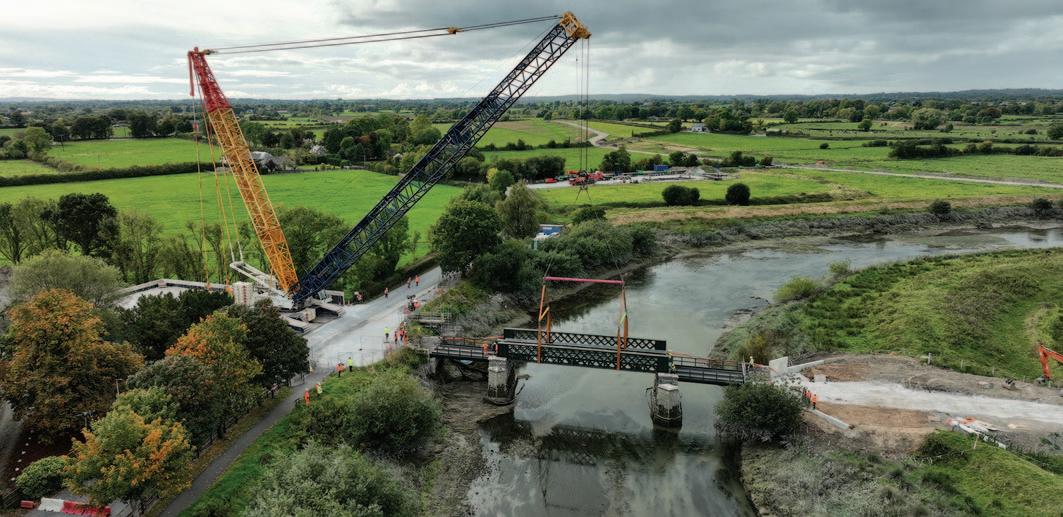
Smaller railway infrastructure projects, such as the delivery of new stations and bridges and the closure of level crossings, are ongoing. These all feed into the incremental improvement of the transport network.
A focus on sustainability has resulted in major changes to how Ireland’s bus services operate. A growing fleet of battery-charged buses has necessitated an overhaul of the organisation of bus depots, with substantially increased space required to accommodate charging infrastructure. This has resulted in the purchase of a new depot in Cork, and a lease of further space at Tivoli, also in Cork. Strategy considerations are underway in respect of bus depot requirements in the Greater Dublin Area.
Retail
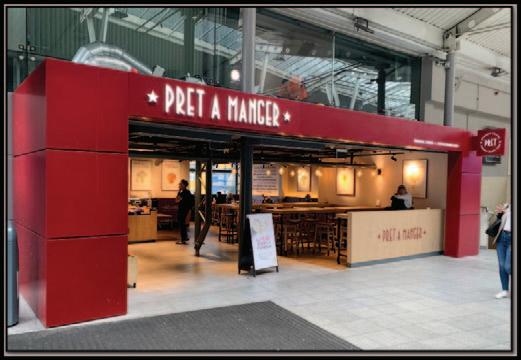
The GPM retail portfolio extends to circa 100 tenants and licensees, from large shops in main city stations to coffee trucks at smaller stations. Lettings are negotiated and all stages, including marketing, tenant
“ THE WORK OF A CHARTERED SURVEYOR IN CIÉ GPM IS BROAD AND VARIED – NO TWO DAYS ARE EVER THE SAME.
Retail offering at Connolly Station in Dublin.
The Maigue River Bridge at Adare, part of the Foynes railway project.

selection, user clause curation, solicitor instruction, fit-out approval, construction oversight, financial reporting, and lease compliance supervision are covered by a small team of surveyors in GPM. Liaison with the operating company (Irish Rail/Bus Éireann) to ensure effective property management is required across the term of the lease/licence.
Telecoms and miscellaneous
While some of the work of a GPM Chartered Surveyor may appear obvious, other functions are also important. Substantial revenue is generated from property arrangements with telecoms companies, including trackside fibre and signal mast infrastructure. Aside from revenue, these arrangements contribute to digital connectivity nationwide. Additionally, Irish Rail has a portfolio of arches, generally in the Greater Dublin Area, which also generates income from otherwise unusable space.
Of course, it isn’t all about development, revenue and projects, as costs also have to be managed. In this regard, significant time is spent challenging the rates liability applicable to rail and bus companies.
Graduates and junior surveyors are given intense training and, with manager oversight and accessibility, can progress quickly, which aids in meeting the APC compliance requirement.
Summing up
Public transport provision is increasing in Ireland, with significant projects being ‘green
lit’. This is resulting in increased work for the coming years in transforming the transport network for the Irish community at large. In tandem, the responsibilities within GPM and the property development and management aspects of this work are growing, with new challenges emerging.
Ireland is purposefully advancing the sustainability agenda with initiatives in active travel and associated infrastructure. CIÉ, Irish Rail, Dublin Bus and Bus Éireann will continue to be at the heart of this cultural and developmental shift.
“ IRELAND IS PURPOSEFULLY ADVANCING THE SUSTAINABILITY AGENDA WITH INITIATIVES IN ACTIVE TRAVEL AND ASSO CIATED INFRASTRUCTURE.



The development at Horgan’s Quay in Cork will include in excess of 300 apartments, a new public realm, and office space of 29,000m2
TIME TO ACT: CREATING THE CONDITIONS FOR HOUSING INVESTMENT
THIS ARTICLE IS ADAPTED FROM A RECENT SPEECH BY MICHAEL O’FLYNN TO THE SCSI’S SOUTHERN REGION CONNECTIONS CONFERENCE.
Ireland requires a fundamental reset in housing policy and delivery. Current output levels remain significantly below actual demand, and we now face a structural deficit of approximately 300,000 homes. This is not just a social issue. The housing shortage is now constraining economic competitiveness, labour mobility, and regional growth.
There is, albeit belatedly, a recognition that we need to deliver between 50,000 and 60,000 homes annually. Yet under the current approach, we are delivering just over 30,000 homes per year. And that has largely been achieved on what could be described as the ‘low-hanging fruit’.
We need to be clear about the scale of the challenge. A national deficit of 300,000 homes translates into a significant shortfall in regions such as Cork. Addressing this will require not only a sustained increase in output, but also a system capable of delivering at pace and scale over the remainder of this decade.
A blueprint for change
There is no shortage of analysis. The Housing Commission, of which I was a member, produced a comprehensive set of recommendations in 2024. A central proposal was the creation of a Housing Delivery Oversight Executive, with legislative authority, tasked with identifying and removing the barriers to housing supply. It would have brought together expertise from across the public and private sectors, and focused squarely on delivery.
That proposal has not been implemented. The reality is that our existing planning and delivery systems are not capable of achieving the required output. We continue to rely on short-term, reactive measures rather than adopting a long-term, plan-led approach.
The scale of the deficit is now fully evidenced – particularly following the 2022 Census and the work of the Housing Commission. What is required now is not further analysis, but execution.
Economic and regional growth
Michael O’Flynn CEO and Chairman of O’Flynn Group

The Housing Commission estimated that approximately €20bn per annum will be required to deliver the level of housing needed. The State cannot fund this alone. Collaboration between the public and private sectors is essential, as is a greater ability to attract international capital. Regional dimensions are particularly important. Areas such as Cork are facing acute viability pressures, often more so than the Greater Dublin Area. Housing supply must align with economic and employment growth. Otherwise, regions will struggle to realise their full potential. We are
already seeing the consequences. Housing shortages are starting to affect investment decisions and companies’ ability to expand. That is a critical risk to Ireland’s economic model.
At the same time, home ownership continues to decline, falling from 79% in 1991 to 66% in Census 2022. This trend is deeply concerning, particularly in regions where alternatives to ownership are more limited.
Zoning, land and viability
There has been some progress by local authorities in zoning additional land, particularly in response to Ministerial guidelines. However, this is inconsistent. Some authorities are actively resisting additional zoning or failing to respond adequately to national housing requirements. We must ensure that all major urban centres have adequate pipelines of serviced land. This requires alignment between land use policy, population growth, and economic expansion. Crucially, viability must be part of the conversation. Past planning decisions were closely aligned with economic realities. Today, zoning decisions are often made without proper viability analysis. This has resulted in an over-reliance on certain types of zoned land – particularly brownfield sites – that are often not deliverable in practice. If land is not viable, it will not be developed. That is a simple reality.
Planning system reform
Planning reform is central to unlocking supply. We need a system that is faster, more predictable, and focused on delivery. Planning legislation should facilitate housing rather than act as a barrier.
Local authorities must be properly resourced, and there needs to be far stronger alignment across departments and statutory bodies. Too often, applications are subject to conflicting inputs and excessive requests for further information, even where there has been extensive prior engagement. A more corporate, executive-led approach is required to ensure consistency and accountability.
The move towards a plan-led system, including longer-term development plans, is welcome, but it must be accompanied by full alignment across all relevant bodies at the plan-making stage. If that alignment is achieved early, it should eliminate later blockages and objections.
Infrastructure as a constraint
Infrastructure remains one of the most significant barriers to housing delivery. While there has been progress, including the work of the Accelerating Infrastructure Taskforce, delivery timelines remain too long, leaving projects exposed to escalating costs. We must ensure that key infrastructure, such as roads, water, wastewater, electricity and public transport, is delivered ahead of housing, not after. Without infrastructure, land is effectively undeliverable. This is not theoretical; it is a reality experienced across multiple sites where delays have stretched into decades. A plan-led, co-ordinated approach to infrastructure is essential if we are to deliver housing at scale.
Density and the National Planning Framework
There are also concerns regarding the current reliance on apartment-led development models. Higher-density strategies do not always reflect market demand, particularly in regional and suburban areas and, in many cases, are not viable to implement. While compact growth remains an important objective, we need a more flexible approach that allows for viable alternatives, such as well-designed own-door housing at higher densities. Policy must be grounded in deliverability. If a model cannot be delivered economically, it will not contribute to supply.
Affordability and cost pressures
Construction and delivery costs have increased significantly in recent years. This has widened the affordability gap for first-time buyers and risks placing home ownership beyond reach for many working households. Supports such as the Help to Buy and First Home schemes play an important role, but they must be regularly reviewed and adjusted to reflect market conditions. At present, key thresholds have not kept pace with inflation, undermining their effectiveness. If supports become outdated, they fail to achieve their purpose.
Taxation and development
The cumulative impact of taxation and levies on housing delivery must also be addressed. Measures such as the Residential Zoned Land Tax, VAT, development levies, and Part V obligations all add to the cost of housing. While some of these policies are well intentioned, their combined effect can discourage investment and reduce supply. Policy should incentivise delivery, not hinder it. There is a clear case for reform, including ensuring that taxes such as the Residential Zoned Land Tax do not penalise active development or delay site activation. Equally, targeted, time-limited supports, such as development levy and infrastructure charge waivers, should be considered to support the delivery of housing at scale.
The rental sector
A balanced and functioning rental sector is essential to Ireland’s housing system. Small landlords, in particular, play a critical role in supporting labour mobility and providing rental supply across regions. However, increasing regulatory and tax pressures have led many to exit the market. This is reducing supply at a time when it is most needed. A more balanced and stable policy framework is required, one that supports long-term investment while maintaining necessary protections. Measures to encourage retention and reinvestment should be a priority.
Acting with leadership and ambition
Ireland’s housing crisis is severe, but it is solvable. The sector has demonstrated in the past that it can deliver at scale, and it is willing to do so again. However, delivery depends on the right conditions being in place. That means:
n proper and sufficient zoning;
n a plan-led approach to planning and infrastructure;
n policy certainty;
n faster decision-making;
n supportive investment conditions; and,
n clear alignment between Government and industry.
Above all, it requires leadership and ambition. It is time to act.
SURVEYING TEMPLE BAR: PART 1
PART 1 OF THIS PRACTICAL GUIDE, USING TEMPLE BAR SQUARE AS A TEMPLATE, DEMONSTRATES THE VALUE OF GEOMATICS SURVEYING FOR URBAN ROAD IMPROVEMENT SCHEMES.
Local authorities across Ireland are undertaking significant urban street and public realm improvement schemes involving resurfacing, drainage upgrades, accessibility works, and full civic-space redesign. These projects aim to improve public safety, enhance accessibility, support the long-term economic vitality of town centres, and generally make them aesthetically pleasing, through infrastructure that is durable, maintainable and fit for everyday use.
Major improvements to urban centres are often delivered through multiple schemes progressing at different stages of development. In Dublin, the Temple Bar Square Area Improvement Scheme, which is the subject of this article, is one such example. As it is adjacent to the subsequently designed Grow College Green Public Realm Project, co-ordination of levels, drainage and pavement construction alignments as part of the survey was essential to ensure continuity and uniformity at construction stages.
The Temple Bar Square Area Improvement Scheme is used as the primary case study in this article as it has progressed through design, construction and post-completion verification, allowing the role of the geomatics surveyor to be assessed across the full project life cycle. The survey function extended beyond measurement alone, incorporating control establishment, accurate capture of existing features, digital model provision, design, and construction verification. These elements directly influence safety, buildability, co-ordination and long-term asset performance. Using Temple Bar as a completed reference project, this article sets out a clear and practical methodology for surveyors involved in urban road and public realm schemes, with lessons that are transferable to similar projects across Ireland.
Temple Bar Square – why is it a useful template?
Temple Bar Square was upgraded by Dublin City Council under Part 8 of the Planning and Development Regulations 2001. The works covered approximately 2,550m2 within
Conor O’Reilly MSCSI Chartered Geomatics Surveyor and Civil Engineer
Assistant Project Manager –Design & Construction, Iarnród Éireann Capital
Investments – Network
Enhancements section

a dense urban setting characterised by narrow streets, active shopfronts and constant pedestrian movement. The scheme involved a full redesign and reconstruction to improve accessibility and public use, including removal of existing steps, introduction of new gradients and drainage solutions, installation of granite paving, and sensitive reinstatement of historic cobblestones (Figures 1-3). The design was carried out in house by Dublin City Council’s Road Design and Construction Division in accordance with the Design Manual for Urban Roads and Streets (DMURS).
The project combines many conditions typical of Irish town centres: subtle gradients, numerous thresholds, heritage materials, buried services, and very limited tolerance for defects affecting pedestrian safety or drainage performance.
Public safety, claims cost and misfeasance/ nonfeasance risk
There is a clear relationship between the quality of surveying on urban street schemes and both public safety and the cost of subsequent claims. Recent reports have shown that Dublin City Council paid in excess of €18m in compensation for footpath-related injuries between 2023 and 2025. While not every claim arises from survey-related issues, many are linked to uneven surfaces, small but critical level differences, misaligned joints, poor crossfalls, and ineffective drainage. Irish case law distinguishes between nonfeasance, where
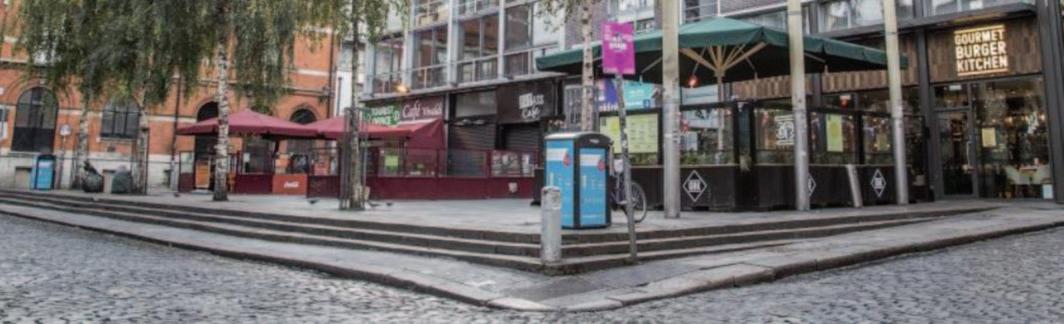
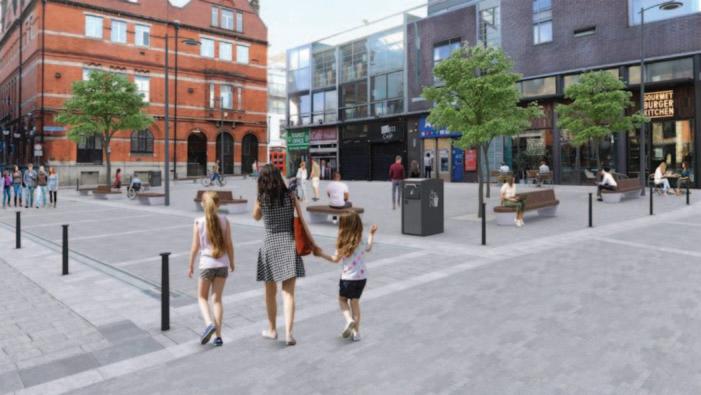

defects develop over time through wear or weathering, and misfeasance, where defects arise directly from substandard repair or construction. Once improvement works are undertaken, the importance of competent delivery increases significantly, and the surveyor plays a central role in reducing both the risk to safety and exposure to litigation.
What controls ‘what is possible’ on urban drainage and resurfacing schemes?
In urban streets, design options are constrained by existing features that are fixed. These include building lines, back-of-path
levels, building entrance thresholds and specific drainage connections. Geospatial errors in recording these features can lead to ponding, water ingress, trip hazards and rework. For the Temple Bar Scheme, particular emphasis was placed on accurately surveying back-of-path levels and thresholds, as these directly governed achievable gradients and surface profiles.
Common challenges identified on the Temple Bar Scheme
One key challenge was replacing existing steps with a continuous, accessible gradient while
meeting drainage and accessibility requirements, and accommodating new features such as tree pits and street furniture (Figure 4).
A second challenge arose from narrow, busy pedestrian streets with tall buildings and multiple entrances at varying levels, where small level differences and reverse falls can easily be introduced, making accurate surveying and rigorous verification essential.
A practical survey methodology for urban street improvement schemes
Temple Bar Square provides a practical
FIGURE 1: Temple Bar Square viewed from north-west corner showing historic cobblestones and granite paving.
FIGURE 2: Concept for Temple Bar Square – image generated by computer, viewed from north-west corner.
FIGURE 3: Temple Bar Square following completion of construction work viewed from north-west corner.
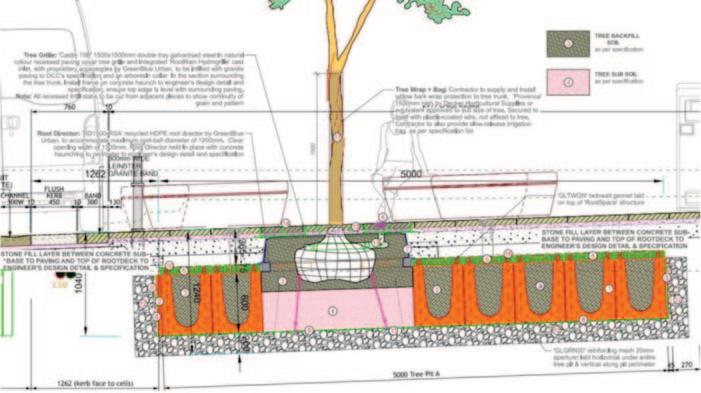
reference for surveyors involved in resurfacing, drainage and excavation works in constrained urban streets. While every town centre is different, the steps outlined here reflect a repeatable approach that can be adapted to similar schemes elsewhere.
Stage 1 – defining the purpose of the survey
Early engagement with the design engineers is essential. These are the people who will rely most heavily on the survey outputs. Time spent understanding how they design, what information they need, and how they interrogate models will pay dividends later. For the Temple Bar Scheme, direct and ongoing discussions with the design engineers helped to identify which features significantly influenced the design, allowing survey effort to be focused where it mattered. Where advanced survey outputs are proposed, such as 3D models or point clouds, it is also worth offering short familiarisation or training sessions. This helps to ensure that the design team can use the data efficiently and confidently, rather than defaulting to simplified extracts that lose value. It is also important to get agreement on output file formats.
The survey was undertaken to be fully Building Information Modelling (BIM) compatible in line with the Capital Works Management Framework (BIM adoption confirmed in mid2023), which is driving the integration of BIM across public works in Ireland. This means that survey data can no longer be treated as standalone drawings but must be structured, georeferenced and interoperable for use within co-ordinated digital models and common data environments.
Stage 2 – public consultation and advance communication
Public consultation is often seen as a planning or management function, but on schemes like this it has a direct impact on survey productivity. In busy urban streets, ease of access is crucial. Early, visible communication with businesses and the public improves cooperation and reduces friction when survey and construction work reaches shopfronts and entrances.
Stage 3 – meeting survey standards and accuracy requirements
The survey specification was developed with reference to the Royal Institution of Chartered Surveyors (RICS) Measured Surveys of Land, Buildings and Utilities professional standard and the Topographical Survey Specifications issued by the Quality Bus Network (QBN) Project Office. In accordance with RICS guidance, the survey was undertaken to meet Accuracy Band C2 (+/-5mm in height), which is appropriate for detailed engineering design and construction in constrained urban environments where small level differences directly affect drainage performance and pedestrian safety.
The QBN specification requirements relating to control quality, co-ordinate consistency, georeferencing in Irish Transverse Mercator (ITM), and the provision of structured 3D survey outputs were also adhered to. This ensured that the survey data were suitable not only for design development, but also for BIMcompatible workflows, setting out and post-construction verification. By formally aligning the survey with recognised
FIGURE 4: Design and construction: section indicating design detail including levels, based on initial survey, showing underground drainage including attenuation details, pavement material layers, surface gradients, interface points, tree pits.
RICS and QBN standards, the dataset could be relied upon by designers and contractors as a defensible and fit-for-purpose foundation for detailed urban design and construction, particularly in a high-footfall environment with tight tolerances such as Temple Bar.
Stage 4 – instrument selection
Accuracy considerations for the project directly lead into the instrument selection stage. Dense urban environments impose real constraints on survey methods. Narrow streets, relatively tall buildings, tree cover, pedestrian traffic, restricted daylight hours and drone regulations all influence what equipment can be used, when, and what accuracy is achievable. Before fieldwork began, the proposed methods were reviewed against site conditions and accuracy requirements. This ensured that the instrument assessment and selection could achieve the required tolerances in the conditions that would actually be encountered, and that realistic contingencies were built into the programme.
Stage 5 – risk assessment and health and safety
A project-specific risk assessment identified high-risk activities including working in live pedestrian areas, interaction with traffic and plant, working near excavations, interference with survey equipment, laser safety, and drone operations. A colour-coded risk register helped to ensure that risks were actively managed and reviewed as conditions changed.
Part 2 of this article will look in further detail at the survey methodology, and final results.
THE TROUBLESHOOTER
CHARTERED VALUATION SURVEYOR CORMAC MEEHAN TALKS ABOUT RUNNING HIS FAMILY BUSINESS IN DONEGAL, AND THE VA LUE OF A SUPPORT NETWORK.
In August 2025, Cormac Meehan ceased trading and retired from Sean Meehan & Co Chartered Valuation Surveyors, a general practice estate agency and retail travel agency established in Bundoran in 1954 by his late father. Cormac is also one of five independent State Property Arbitrators appointed by the Land Values Reference Committee, with a warrant to serve until 2028. Since retiring, he has remained involved with contentious valuations: “I’d be known as sort of an independent troubleshooter. I have an absolute passion for what I do, and can say hand on heart that after 40 years in practice, I’ve enjoyed every day”. Cormac began his career as a lecturer in the business school of Letterkenny Institute of Technology, mere months after graduating from his own business degree: “It was a tremendous challenge. There was a great emphasis on entrepreneurship and the growth of small businesses. Having come from a small rural family business, it was close to my heart”.
When Sean Meehan died suddenly in 1986, his family had a decision to make. They agreed that Cormac would assume control of the business: “I was thrown into banks negotiating overdraft positions. There were challenges facing the economy at that stage – banks were squeezing credit, interest rates were rising, and the environment was not conducive to taking over a small property business. But I was energetic, young, interested, and I could see the potential”.
Caoimhe Coolican Copy editor and journalist, Think Media Ltd SURVEYOR PROFILE

This professional pivot necessitated additional training. Without the time to attend a full degree programme, Cormac approached the Irish Auctioneers and Valuers Institute (IAVI, a precursor to the SCSI), and they granted subject exemptions based on his degree from the University of Limerick. After nine months of attending Bolton Street at weekends, he achieved membership of the IAVI: “It was a very exciting time. Because I was so fresh out of university, I was quite prepared for challenges”. The move to valuation did not mark a complete divorce from education, as Cormac found the time to act as an external examiner on the property economics degree in Bolton Street, write research papers, and set up an enterprise module in a local school: “It kept me intellectually challenged on top of my business. Bear in mind, my wife stayed with me all through that – I’m still happily married!”
People and place
Connecting with peers is a prominent thread running through Cormac’s professional life. His support network was cultivated through training, involvement with societies, and the nature of maintaining an independent rural practice over decades, and Cormac is in no doubt that it has been essential to the business’s survival: “In Bolton Street, I was with peers who were working in different types of practice all over the country. I had tremendous support from them. Referrals between agents were very important at the time, when the big practices didn’t have regional representation. As the business model evolved, I loved working with the franchises. I operated an open-door policy, and maintained good relationships with them all”.
Cormac served as President of the IAVI in 19961997, just 10 years after leaving academia to
enter the valuation profession: “I was head of an organisation that had 2,000 members around Ireland, north and south. I probably gave a disproportionate amount of time to the organisation because I felt it was just as important as my business”.
Bundoran is a seaside town just nine miles from the border with Northern Ireland, and Cormac says that there are nuances to be accommodated when operating in such a setting: “Everything in Bundoran is tied to tourism. One of the big property markets is second homes, and the vast majority of property dealings I had were with people from outside the jurisdiction, where the dynamics and regulation of property transfer are slightly different. Being close to the border has had a tremendously positive impact on business because it’s a natural hinterland. There is a very strong bond between the communities, north and south”.

Cormac enjoys walking by the sea and cooking with Maureen, his wife.
Two of his passions –running and travel –united when he embarked on a challenge to run a 5k in a different country every month for one year. When it came to the 12th run, Cormac found himself in Istanbul, where he managed to run a 5k on both the Asian and European sides of the city – ticking off two continents in one day!
Cormac is also a “news junkie”, and regularly has letters to the editor published in the Financial Times and The Irish Times: “All told, I have about 17 years of letters done. I did actually make it every month for a year”.
FROM VACANCY TO VIBRANCY
THERE IS A SOLUTION TO THE HOUSING CRISIS, AND IT’S STARING US IN THE FACE.
In 2024 Scotland, with a 100,000-home shortfall, declared a housing emergency. Ireland has a backlog of over 250,000 houses, and this is growing year on year. Housing demand is 44,000 new homes per year – we have not yet hit 35,000. This is a national emergency impacting over 600,000 people. However, we can deliver homes where existing infrastructure already exists, namely in towns and cities. This is where the demand lies. We can shrink the backlog if, in addition to new builds, we drive adaptive reuse of vacant buildings. These premises:
n are not dependent on new infrastructure; n can be brought back in a short space of time; n will bring vibrancy and safety to towns and cities; and, n will reduce our carbon footprint.
Towns and cities are where people want to live. If we fail to bring vibrancy back, we leave a generation stranded without a home or handcuffed to a life of long commutes. There are in excess of 170,000 vacant buildings throughout the country and more than 100,000 under-used ‘above the shop’ spaces. While there are schemes in place to encourage conversion, these are insufficient. With the help of the SCSI, the Vacant to Vibrant Building Alliance (VVBA) was formed in 2024 to devise proposals that would deliver on this potential.
Philip Lee Chair, Vacant to Vibrant Building

Regeneration of towns and cities is like apple pie and motherhood: everybody believes it is wonderful. However, it is not happening and instead dereliction grows and cities die.
Priority actions
1. Fund the establishment or co-ordination of multidisciplinary teams in local authorities, to support owners re-adapting properties. Projects can be bundled, supporting at scale the rejuvenation of towns and cities. This is consistent with the EU Commission guidance on ‘one stop shop’ initiatives to assist renovation and adaptive reuse.
2. Allow small businesses to access the grants. The properties may be owned by your local convenience shop or hairdresser. Make the grants proportionate to the number of units being provided. It makes no sense that a grant facilitating five residential units is capped at the same level as a grant for one unit. We sought a feasibility grant for above the shop conversions. The €5k feasibility grant is a welcome start; however, it should be adjusted upwards.
3. Incentivise regeneration with tax relief against rental or sales income, as recommended by the EU. There is no lost income to the State, as these buildings have been vacant for decades. They will not be converted without tax incentives. We propose tax relief based on the principle of use it or lose it. We need homes today – not in 10 years.
4. The Technical Guidance documents must be reviewed, as they are drafted for new builds. They need to be redrafted or interpreted with greater
flexibility to facilitate regeneration. Requirements must be adapted in a proportionate, reasonable and practicable way. Other EU member states have pragmatically overcome similar hurdles.
Tackling these issues is a matter of social justice. We have a moral duty to provide homes today and to reduce carbon emissions. We do not have the right to deprive the next generation of suitable housing. The lack of infrastructure will constrain housing targets over the next 10 years. By scaling up the adaptive reuse of vacant and underused buildings, we can create a robust parallel housing delivery pillar that is sustainable, more cost-effective and speedier than a business-as-usual scenario.
Some progress has been made. Recent Government decisions to continue, extend and increase the vacant property refurbishment grants help. However, it is not enough. Adopting all four proposals is essential to unlock the enormous potential. It remains the only hope for the hundreds of thousands of young people looking to make a proper life and family in Ireland.
About the VVBA
The VVBA is a cross-sectoral forum bringing together all key stakeholders to tackle vacancy, dereliction, and under-used buildings. It is a collaboration of business, civic, and built environment experts set up to create evidence-based solutions that make renovating these units viable, and in doing so, ensure the delivery of residential properties at speed and in the right locations.
Alliance