








As my presidency draws to a close, I have been reflecting on the work we have done together over the past year. Throughout my time as President, I have sought to increase recognition of the SCSI and our profession, support better housing and infrastructure policy through data-driven insight, and ensure that Chartered Surveyors are at the forefront of the industry’s sustainability and digitisation agenda.
Ours is a profession that offers a unique perspective on the built environment across its full life cycle, and the importance of that insight has never been greater. The Society’s guidance, research, education and public engagement sit at the heart of members’ collective contribution to society, and that contribution deserves to be recognised. Such recognition not only helps clients and the public to better understand the value of a Chartered Surveyor, but also supports our efforts to attract students and trainees into the profession. Travelling around Ireland to speak with students is something I take great pride in. Supporting the next generation is essential if surveying is to continue to thrive, and it is work that any member can help with. The SCSI has continued to demonstrate the value of data-driven research in shaping policy in the public interest. At a time when debate is often dominated by opinion rather than evidence, Chartered Surveyors play a vital role in grounding discussion in professional expertise and real-world data. I want to thank every member involved in our research, reports and submissions. These are not produced for their own sake, but to bring clarity to often complex issues, and
Gerard O’Toole SCSI President

to help policymakers better understand how systems operate on the ground. Our contributions have spanned housing, infrastructure, planning, development viability, skills shortages, sustainability, and digitisation.
The launch of the SCSI Digitisation Strategy this year provides a clear basis for embedding technological innovation alongside the sustainability requirements of our profession. Fully embracing sustainable practice is no longer optional; it is central to the future of the built and natural environment. By linking digitisation and sustainability, we aim to support members in increasing client value through more efficient, informed and innovative practice, underpinned by the right skills, standards, data and professional leadership. Chartered Surveyors have a critical role to play in this transition, and the Society will continue to support members as these areas become embedded in everyday professional practice.
Another important milestone was the recent launch of the Workplace Culture Survey, which is the first of its kind for a professional membership body. This captured the lived experiences of those at every level across the profession, serving as a benchmark, which the industry has embraced. We are committed to continue this work, which will further support members and employers. Serving as President of the Society has been a great privilege. I am grateful to the many members, volunteers and staff who give their time and expertise in support of the profession, often quietly and without recognition. As I finish, I do so confident in the strength of the SCSI, the ongoing relevance of our profession, and the continued value that Chartered Surveyors provide across Ireland.

ADDRESSING OUR INFRASTRUCTURE DEFICITS IS CRUCIAL TO TACKLING THE HOUSING CRISIS.
The panel on this page compares Government expenditure on investment in infrastructure against other OECD-EU countries. At 2.6%, the Irish figure is less than the average of 3.6%. Accordingly, it will not be surprising to read that, in 2025, when the IMF benchmarked Ireland against comparable countries on basic infrastructure, we had a 32% deficit. The Government now has this as a priority. In the interview in this edition of the Surveyors Journal (page 14), Sean O’Driscoll, Chair of the ESRI, talks about his role as an independent member of the Accelerating Infrastructure Taskforce established by the Government Expenditure Minister, Jack Chambers. This independent body has been set up to support infrastructure provision by identifying the key barriers impacting delivery and advising how they can be overcome.
I think all surveyors will agree with O’Driscoll when he says that we can never fix our housing crisis unless we fix our infrastructure crisis. He notes that the amount of time it takes to deliver infrastructure in Ireland has doubled over the last two decades, grinding delivery to a halt. Clearly, there is a lot to do and it appears from the interview that much work has already been done identifying important issues. Looking forward, O’Driscoll says that he is confident that the work of the Taskforce should lead to surveyors working in a different world, and that they should plan accordingly.
On a different note, it is heartening to read on page 8 of the success of the ‘Give to Gain’ event held on March 5 to mark International Women’s Day. A large number of members (over 100) heard interesting presentations, including one from Therese Coveney, founder of the Together Academy, about the work being done to create pathways to employment for young adults with Down syndrome. The session was evidently very successful and emphasised the theme of giving to gain, and the value of giving back through advocacy, mentorship and leadership.
Tom Dunne Editor

Source: https://www.oecd.org/en/publications/government-at-aglance-2025_0efd0bcd-en/full-report/government-investment-spendi ng_023c3a29.html
This March, the SCSI launched a refreshed and enhanced version of Elevate, its leadership and professional development programme for members. Redesigned to better reflect sur veyors’ evolving professional needs, the updated programme places a strong emphasis on flexibility, inclusivity and practical leadership development across the surveying profession. Open to all members, Elevate supports inclusive and effective workplace practices while recognising the varied career stages, roles and responsibilities that exist across the profession. The programme has been adapted to allow members to engage in a way that suits their individual circumstances, whether they are early in their careers, progressing into leadership roles, or seeking to further develop established expertise.
At the core of the refreshed Elevate offering is a flexible, on-demand leadership development programme. This enables members to access learning at a time and pace that works for them, making it easier to balance professional development with work and personal commitments. The on-demand format also allows participants to revisit content as their careers evolve, supporting long-term learning and reflection.
The programme is complemented by a series of live workshops delivered throughout the year as part of the Elevate Series: Championing an Inclusive Workplace. These sessions are facilitated by Tréasa Fitzgibbon of The Career Activist, and explore a range of leadership and workplace themes relevant to the profession. While the workshops are connected in focus, each session stands alone, allowing members to attend those most relevant to their own interests and professional context.
In addition to structured learning, Elevate offers mentoring and peer learning opportunities designed to support professional development and strengthen connections across the SCSI community. These elements provide space for knowledge sharing, discussion and collaboration, helping to build networks while supporting learning beyond formal sessions.
Through the relaunch of Elevate, the SCSI aims to provide a leadership development programme that is practical, inclusive and adaptable, while also supporting positive workplace cultures across the profession. Members are encouraged to engage with the programme and take advantage of the range of learning and development opportunities now available at https://scsi.ie/elevate/


Building Surveying Vendor and Purchaser Technical Due Diligence Measured Surveys and Floor Area Reporting Project Management
Architectural Design Schedule of Condition
Dilapidations and lease advice Assigned Certifier and employer’s agent Energy/BER Improvement Pathways
Andrew Ramsey: 087 125 9386 | andrew@modulegroup.ie
Approval (Licences to Alter)
Compliance/Fire Safety Certificates
Shane Hynes: 086 012 6820 | shane@modulegroup.ie
Tony Grant: 089 439 7688 | tony@modulegroup.ie
Commercial and valuation surveyors expect Ireland’s commercial property market to enter a new phase of “cautious recovery” in 2026, according to the SCSI’s ‘Annual Commercial Property Market Monitor Review and Outlook 2026’. The report indicates that capital value and rental expectations across the office, retail and industrial sectors are positive for the year ahead, reflecting improving sentiment and more stable market conditions.
The survey found that almost half of respondents consider the commercial property market to be in some phase of recovery or upswing, supported by clearer pricing signals and stabilising financing conditions. Prime industrial assets continue to perform most strongly, with survey participants forecasting average increases of 4% in capital values and 4.4% in rents over the next 12 months. Prime office markets are expected to record moderate growth, with capital values forecast to rise by 2.4% and rents by 2.9% on average. Prime retail performance remains more restrained, with values and rents expected to increase by just over 1%.
While sentiment has improved, the report highlights ongoing structural constraints across all sectors, including limited availability of prime stock, a constrained development pipeline and extended planning
timelines. These factors are contributing to increased competition for high-quality assets, particularly in the industrial sector. Survey respondents also reported a continued shift in occupier demand towards ESG-focused, high-quality and amenity-rich buildings, further widening the gap in performance between prime and secondary assets.
Overall, the report suggests that while challenges remain, the commercial property market is showing signs of stabilisation, with a measured and uneven recovery expected through 2026. The report was launched only days after the start of the conflict in Iran, and the SCSI noted the potential impact on its findings. The full ‘Annual Commercial Property Market Monitor Review and Outlook 2026’ is available from the SCSI’s website.


The SCSI is calling on quantity surveying employers nationwide to register as apprentice employers for the Advanced Quantity Surveyor Apprenticeship. With the next intake commencing this September, employer participation is critical to ensuring strong numbers for the upcoming programme cycle, and to supporting the long-term development of the quantity surveying profession in Ireland. The two-year master’s-level Advanced Quantity Surveyor Apprenticeship combines structured academic learning with workplace-based training, enabling apprentices to earn while they learn. Employers can register via the national apprenticeship portal, after which the SCSI will arrange a short approval meeting. Once approved, companies may nominate an existing staff member or recruit a new employee to undertake the programme. Further information is available at scsi.ie, and queries can be directed to education@scsi.ie


International Women’s Day 2026 was marked by the SCSI on March 5 with a hybrid event themed ‘Give to Gain’. Over 100 members came together to hear from a carefully curated panel of speakers, followed by networking over a light lunch.
The event was thoughtfully chaired by Lily Ellis FSCSI FRICS, who welcomed the first guest speaker, Therese Coveney. Therese, founder of Together Academy, shared the powerful work being carried out by the Academy to create pathways to employment for young adults with Down syndrome in Ireland. As part of her presentation, Therese played a video featuring Together Academy graduate Charlie and his family, who spoke about the positive impact the Academy had on their lives and the opportunities it provided to Charlie. The audience was visibly moved, responding to the video with a warm round of applause.
Following Therese’s presentation, Fionnuala O’Buachalla MSCSI MRICS joined the panel to speak about the mutual positive impact of hiring a Together Academy graduate, as her organisation, JLL, has done. She shared first-hand experiences of collaborating with the Academy, offering practical insight into the benefit to both employer and employee, such as a notable increase in morale and community.
Next, Tréasa Fitzgibbon of The Career Activist spoke about Elevate, the SCSI leadership development programme that she facilitates. She focused on the importance of mentorship throughout one’s career, the soft skills required for success, and the role of leadership in fostering a positive workplace culture. The final speaker, Emer Byrne FSCSI FRICS, reflected on her experiences as an SCSI member and surveyor, highlighting the value of the Society’s cultural initiatives, and encouraging people to get involved.
The session concluded with a Q&A, during which some attendees shared personal experiences, while others took the opportunity to acknowledge and thank their mentors. Collectively, the speakers embodied the ‘Give to Gain’ theme, emphasising the value of giving back through advocacy, mentorship and leadership. The number of guests who remained to socialise after the event was a clear testament to the open and encouraging atmosphere created on the day.
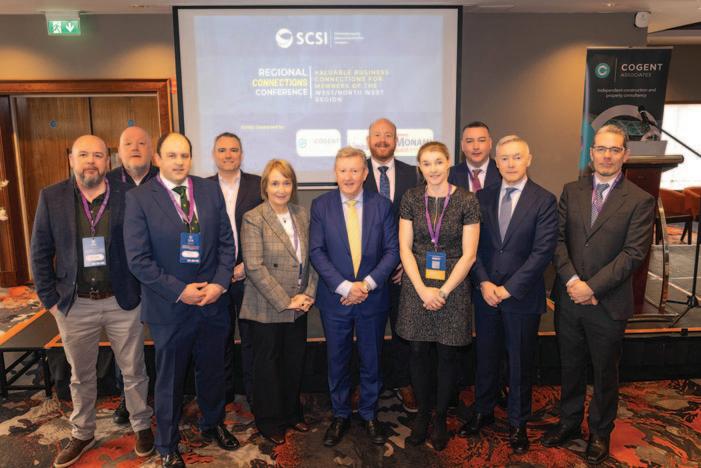
The SCSI West/North West Regional Connections Conference was held on February 26 in the Clayton Hotel in Galway. It presented an ideal opportunity for surveyors based in Donegal, Sligo, Mayo, Leitrim, Roscommon and Galway to gather, with over 100 members in attendance. The conference provided insights from leaders in the region across the surveying profession. We were privileged to hear from guest speaker Minister Sean Canney TD, a native of Belclare in Tuam, who addressed those in attendance about some of the key infrastructure projects planned for the West and Northwest, which will involve collaboration between the Government, semi-State bodies, and those in the surveying profession to deliver. This investment will benefit the western corridor and create opportunities for professionals, a move that was widely welcomed.
Attendees at the event also heard from: Gerard O’Toole, SCSI President; Patricia Staunton, Regional Director, Cushman & Wakefield; David Rowe, Chair of the SCSI WNW Regional Committee; Tomas Kelly, Director of Aecom; Brendan Dooley, Director of Cogent Associates; and, Brian Morrow, QS and life coach, who provided their insights and updates on a range of activities across the region’s built environment. The conference also facilitated an open panel discussion on the challenges surveyors in the region face, including a
welcome insight into the importance of wellbeing. The insight and updates from the different surveying disciplines were very informative and representative of the range of expertise. This conference also provides a welcome opportunity for professionals who typically rely on virtual communications to meet and catch up face to face, a sentiment shared by those in attendance. The strong turn-out of surveyors at the conference displays the common goal
Sixty-one attendees gathered for the SCSI’s Alternative Dispute Resolution Seminar, which explored the growing importance of dispute resolution as a core competency for Chartered Surveyors. Speakers emphasised its role not only in resolving disputes efficiently, but also in dispute avoidance and the preservation of commercial relationships across the property and construction sectors.
An engaging panel discussion examined recent adjudication case law, with particular focus on three landmark enforcement refusals that continue to influence current practice: Tender Bids 1; Connaughton v Timber Frames; and, Tender Bids 2. The panel considered the implications of these decisions for contractual compliance and subcontractor vulnerability, alongside wider concerns around a potential chilling effect on the use of adjudication, and the broader issue of access to justice within the construction industry.
across the profession and region to maintain high standards and stay informed on the many challenges that the ever-evolving industry faces.
The SCSI West/North West Regional Committee worked hard to ensure that the conference was a positive, valuable experience for all attendees, and looks forward to hosting future events for the SCSI in the region.
By David Rowe, Chair, SCSI WNW Regional Committee.
The seminar also featured an in-depth exploration of mediation, from the legislative framework under the Mediation Act 2017 to its practical application in property and commercial disputes. Speakers highlighted the importance of active listening and confidentiality in achieving meaningful outcomes, with mediation strongly positioned as a first-resort mechanism rather than an alternative one. Practical insights were shared by both legal and surveying professionals who have incorporated mediation training into their day-to-day practice.
The event also outlined the SCSI’s ongoing work in this area, including the establishment of specialist panels, pupillage schemes, and contributions to major standard form contracts, all aimed at supporting members and attracting new entrants to meet rising demand for dispute resolution expertise.
Construction tender prices rose by 2.5% nationally in 2025, according to the SCSI’s latest ‘Tender Price Index’ report, representing the lowest annual rate of construction inflation since 2020. The report also shows that tender prices increased by just 1% in the second half of the year, down from 1.5% in the first six months, pointing to a continued easing in construction cost inflation. It is important to note that the report was launched prior to the outbreak of the conflict in Iran, and the survey data were collected from the end of 2025.
Responses from Chartered Quantity Surveyors indicate a broadly stable market across regions, with Dublin and Leinster recording no inflation in the latter half of 2025, while modest increases were reported in
Connacht/Ulster and Munster. Commenting on the findings, SCSI Vice President Tomás Kelly noted that tender prices have stabilised following previous disruption, stating that “after a number of years of disruption caused by Covid and the Ukraine war, the last three years have seen a stabilisation and a return to business as usual”.
Looking ahead, the majority of Chartered Quantity Surveyors expect tender prices to remain steady or rise only modestly during the first half of 2026. While risks remain, including labour availability, infrastructure capacity, and current geopolitical uncertainty, the report suggests that market conditions are now more predictable for the commercial construction sector. The full ‘Tender Price Index’ report is available from the SCSI’s website.
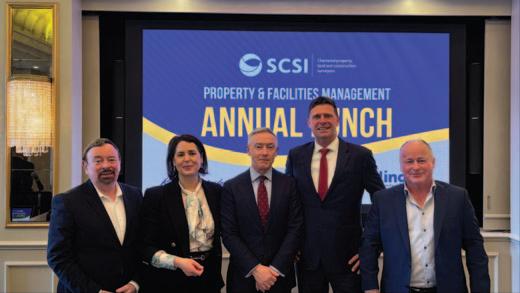
The annual PMFM lunch took place on March 27 in The Westbury Hotel, Dublin. This event always promises an enjoyable afternoon, bringing together property managers and facilities managers, along with other SCSI members and stakeholders. It’s a gathering that throws CPD caution to the wind and focuses on networking and a much-needed catch-up among industry peers. SCSI President Gerard O’Toole opened the event with a warm address to the crowd, an acknowledgement of the ongoing hard work done by the PMFM members and, lastly, a gentle nod to the elephant in the room that was the Irish football team’s loss against Czechia in Prague the night before.
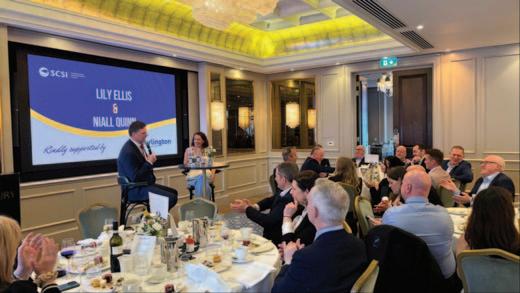
After the speeches, attendees enjoyed a sit-down meal followed by an amusing discussion between Niall Quinn, former Irish international football player, and Lily Ellis FSCSI FRICS. Laughter could be heard throughout, as Niall charmed the crowd with stories of a young man hazed into the world of football, and fond memories of colleagues, friends and family that were along for the journey. The discussion wrapped with a tale of the only two penalties Niall Quinn ever took, leaving a palpable buzz in the room, and a perfect atmosphere for guests to linger and mingle post event.

Job description: Opportunity for a QS with 3+ years’ experience to join a leading provider of engineering services to the utility sector in Ireland. This is a hybrid role, with 2-3 days/week in Naas required. Knowledge of current construction legislation, experience with FIDIC forms of contract, and full driver’s licence are essential. Contact: +353 86 412 0107 or sinead.larkin@ktl.ie.
Deadline for applications: April 30, 2026. For further information on the role, please see https://www.ktl.ie/careers.

THE SCSI’S NEW STUDENT AND EDUCATION ENGAGEMENT CO-ORDINATOR IS FOCUSING ON BUILDING PATHWAYS AND REPRESENTATION FOR SURVEYORS.
Acareer is not a destination, but a journey we all embark on. For some, the path was clear, a passion we found or a tradition we followed, but for others, it was a leap of faith into the unknown, an unfamiliarity driven by curiosity.
My own journey began with a Bachelor of Science in Education Studies from Marino Institute of Education, and I left with an ambition to work with young people in education. I took a leap of faith and began working in an area of education not known to many but so important. Over the past two years, I have worked with Trinity Access Programmes in Trinity College Dublin, as an Educational Support Officer. My work supported alternative entry routes to education for individuals from underrepresented groups and socioeconomic backgrounds. This experience has been invaluable, highlighting the power of opening doors through alternative entry routes, and the impact of information and encouragement when it comes to young people making decisions about their future. It made me realise the value in representation and support in education, particularly for those who may not see themselves reflected in the traditional pathways.
Ellen O’Connell SCSI Student & Education Engagement Co-ordinator NEWS FEATURE

Recently, I have started a new role with the Society of Chartered Surveyors Ireland (SCSI) as the Student and Education Engagement Co-ordinator. Here, my passion for working with and supporting young people into education continues, as I work alongside the education team at the SCSI to inform, guide, and inspire students across Ireland to consider a career in surveying.
Through school outreach and engagement, we can inspire and ignite a passion for surveying in young people, whether their hearts are already set or they are still exploring their options. The SCSI’s (and surveying’s) presence in schools and the wider community can be the push for young people to explore surveying, which, as SCSI members know, is a profession rich with opportunity. Supporting SCSI student members is also an important agenda item for me in this role: helping them to create strong
networks, develop their skills, and better understand what it means to be part of the SCSI’s inclusive professional community. As I embark on this new chapter, I recognise the crucial role played by you, the professionals, in the industry. I have seen firsthand how role models can influence a young person’s decision-making. I encourage you to talk about your profession, highlight the variety and scope that surveying offers, and show the young people around you why they should choose this profession. Your presence in education and in the community is fundamental to nurturing the next generation of surveyors.
Connect with your community and take part in a school talk or careers fair with SCSI support, and together we can shape the future of the profession. Contact me at ellen@scsi.ie to work together and make a difference.
Chartered Surveyors – members of the Royal Institution of Chartered Surveyors (RICS) and the Society of Chartered Surveyors Ireland (SCSI) – who undertake written valuations must be members of the RICS Valuer Registration Scheme (VRS). The VRS is a fundamental element of professional assurance for valuation services provided by members of the RICS and SCSI. It reinforces confidence in valuation practices among clients, lenders, regulators, and the public, while serving as evidence that RICS/SCSI valuers consistently adhere to global standards. The scheme is the RICS’s quality assurance mechanism, which monitors members’ compliance with the RICS Valuation – Global Standards (commonly known as ‘The Red Book’), and RICS Rules. Fundamental to the VRS is the monitoring of members’ compliance that is provided for in the RICS Monitoring and Investigation Rules. The SCSI is supporting the RICS with the undertaking of VR monitoring in Ireland.
NEWS FEATURE
Paddy
Darmody FSCSI FRICS
Profession Support and Assurance Technical Specialist (Surveying)
RICS Valuer Registration
Scheme

Supporting high standards
Participation in VRS is not optional; it is a mandatory condition of providing Red Book valuations. Importantly, the Scheme is not intended to be punitive. Its primary purpose is to support high standards, identify risk early, and promote continuous improvement in valuation practice by ensuring:
n compliance with the Red Book and relevant professional statements; n consistent application of valuation standards; n robust quality assurance and risk management; and, n ongoing competence and ethical practice.
For individual valuers, being notified of selection for a VRS review may initially appear challenging, but being selected does not imply wrongdoing or poor practice. Reviews may arise for a number of reasons, including:
n routine monitoring, where a valuer or firm has not been reviewed for a period of time; n risk indicators, such as the nature or volume of valuations undertaken; n changes in practice, for example moving into a new asset class; or, n intelligence-led triggers, including returns and complaints or regulatory concerns.
Most valuers selected for review are experienced, conscientious practitioners. The RICS is clear that reviews are a normal and expected part of professional regulation.
Preparing for review
If you are selected for review, the current format for monitoring is what is known as a Valuer Registration Support Review (VRSR). These are conducted digitally. You will first receive a
notification email confirming selection and setting out the procedure that will be adopted. Once notified, it is important to read the correspondence carefully and to note the deadlines. If you have any immediate concerns, such as availability due to leave or illness, these should be communicated promptly to the reviewer. In responding to the notification, you should:
n review your files before submission – while files should not be retrospectively amended, it is sensible to familiarise yourself with the selected valuations so you can clearly explain your approach if asked;
n ensure that documentation is complete – missing terms of engagement, incomplete inspection notes or poor record-keeping are common issues – check that all supporting documentation is included;
n be transparent – if there are aspects of a valuation that were challenging, such as market volatility or limited comparables, acknowledge this – reviewers understand that valuation is not a mechanical exercise;
n respond on time – failure to meet deadlines can escalate regulatory concern unnecessarily – if an extension is genuinely required, request it early; and,
n engage professionally – the review is a professional dialogue – clear and courteous engagement helps the process run smoothly.
Documentation
You will be requested to upload, to a supplied secure SharePoint folder, certain documentation, including a valuation file. The email will contain a link to that SharePoint folder and an invite to a Teams meeting to take place after the file and documents have been reviewed. The documentation sought includes:
1. One recent sample file that falls within the scope of the current edition of the Red Book Global Standards PS 1, PS 2, and VPS 1 to VPS 6 (for example, a valuation for assessment of taxation (Transfer and Probate), a Fair Deal Scheme valuation, or other free-text Red Book Global Standards valuation report, but not an Expert Witness/Matrimonial Report or similar).
To come under the current edition of Red Book, the valuation should have been undertaken post Janaury 31, 2025. The file should include:
n record of conflict of interest checks;
n terms of engagement;
n site inspection notes;
n notes of desktop enquiries;
n comparables/comparable analysis, reasoning and valuation calculation;
n final, signed report (not a draft); and,
n any relevant correspondence.
2. Any templates used for:
n taking/receiving instructions;
n recording conflict of interest checks;
n terms of engagement;
n site inspection notes;
n recording desktop enquiries;
n noting comparables, their analysis and valuation reasoning;
n valuation calculation, if relevant; and,
n standard report template.
3. A copy of your current professional indemnity insurance schedule and policy documents.
4. A copy of your complaint handling procedure.
5. A copy of your complaints log.
The documents will be reviewed by the reviewer prior to the Teams meeting. At that meeting, the reviewer will conduct a brief conversation regarding how you/your firm operates, specifically in relation to your valuation processes and procedures. Following that discussion, the reviewer will provide feedback and tools to support the steps to be undertaken to improve compliance, where needed. The Teams meeting should take somewhere between one and two hours.
The valuation file provided for review may be redacted but, assuming that you have compliant terms of engagement, the client will have acknowledged that your files may be subject to monitoring under the RICS’s conduct and disciplinary regulations (VPS 1.3.1.q).
Following the review, you will be issued with a Findings Report. Possible outcomes include:
n no further action – the reviewer is satisfied that standards are met; n advice or recommendations – minor improvements are suggested, often relating to documentation or consistency;
n monitoring or follow-up review – used where improvements are required but concerns are not serious; or,
n regulatory action – reserved for significant or systemic non-compliance and may involve escalation within RICS Regulation.
While a review may feel intrusive, the VRS plays a vital role in protecting the credibility of the valuation profession. In a market environment where valuations are increasingly relied upon for lending, investment and regulatory purposes, consistent standards are essential. For individual valuers, successful participation in the Scheme demonstrates professionalism, competence and commitment to ethical practice. For clients and stakeholders, it provides reassurance that valuations can be trusted.
Finally, receiving notification of a VRS review should not be viewed as a cause for alarm. It is a routine aspect of professional regulation and, for many valuers, an opportunity to reflect on practice, reinforce good habits, and demonstrate compliance with global standards. Preparation, transparency and engagement are key. By understanding what the review involves and what reviewers are looking for, valuers can approach the process with confidence and professionalism – secure in the knowledge that the Scheme exists to support, not undermine, highquality valuation practice. As reviewers, we are here to help.
Sean O’Driscoll is an independent member of the Accelerating Infrastructure Taskforce that was established by Minister Jack Chambers TD in May 2025. This non-statutory body was set up to support the Minister and the Department of Public Expenditure, Infrastructure, Public Service Reform and Digitalisation (DPER) in improving infrastructure delivery by identifying the key barriers impeding that delivery, and advising on how these can be overcome. Sean is Chairperson of the Economic and Social Research Institute (ESRI), and former chair and chief executive of the Glen Dimplex Group. He has been involved in public service work for 30 years, having sat on numerous governing bodies, including the National Competitiveness and Productivity Council, the Project Ireland 2040 Delivery Board, and the Action Plan for Jobs 2012. When it came to infrastructure, Sean says that his enthusiasm was no secret: “I had pretty strong views on our infrastructure deficit, which I made the political parties aware of in the lead-up to the last election”. That Ireland has a critical shortfall in housing and infrastructure development is not news.
Caoimhe Coolican Copy editor and journalist, Think Media Ltd INTERVIEW


The problem to be addressed, says Sean, is acute: “We can never fix our housing crisis unless we fix our infrastructure crisis. They’re inextricably linked. Even if you have zoned land and the capacity in the construction sector to build homes in our capital city, there is not sufficient water, electricity or transport to enable those homes to be built. Over the last two decades, the amount of time it takes to deliver infrastructure in Ireland has doubled, and that’s through a combination of Government
policies and legal involvement in every stage of planning. This ground delivery of infrastructure to a halt. When the IMF benchmarked Ireland against equivalent countries on basic infrastructure in 2025, we had a deficit of 32%”.
The task at hand
Sean says that the Taskforce’s objective was straightforward: “To remove all roadblocks to rolling out and accelerating the delivery of infrastructure across water, energy, and
transport”. In its first meeting, the group agreed to open a 30-day public consultation on infrastructure delivery, to which Sean says there was a comprehensive response: “We got 170 substantive submissions during that process. We also held approximately 50 engagements – either public meetings or meetings with chambers of commerce, county councils or city councils. Then, 14 days after closing the consultation, DPER issued a summary of those submissions that identified 12 themes, and they were called barriers to delivery. What I found remarkable was the huge level of consistency in the submissions, and that gave great confidence that if we fix these, we will go a long way to fixing the overall problem”.
Over the following three months, Sean says that the members of the Taskforce worked to identify time-bound solutions to these barriers. Their work culminated in the ‘Accelerating Infrastructure Report and Action Plan’, which was published in December: “There are 138 solutions in total, and each of those sub-actions has a date by which it has to be completed, and a lead Government Department that’s responsible for ensuring that it’s completed. When we finished the Action Plan, it was submitted to and approved by Government, so it is now Government policy”.
Sean reports that the group’s efforts have already borne fruit: “Of the 138 sub-actions, 35 were to be completed by March 31, and they have been completed. Approximately 70% of the sub-actions have to be completed by June 30 this year, with the remaining 30% to be completed in the second half of 2026 and the first quarter of 2027. I’m really confident that we will hit the 70% figure by the end of June”.
What’s changing?
Judicial review in planning and environmental matters has been a subject of significant debate, and its reform is a focus of the Action Plan. The General Scheme of the Civil Reform Bill, published in January, outlines an overhaul of the judicial review mechanism. Sean is supportive of the reforms, which are based on the recommendations of the ‘Review of the Administration of Civil Justice: Review Group Report’ (the Kelly Report): “I believe in the principle of judicial review; it’s enshrined in our Constitution. It’s a legal instrument of last resort, but it’s there to challenge a decision. It’s now being weaponised to challenge the process – there’s a big difference”.
Sean feels that there has been a marked, and predominantly positive, response to the Action Plan: “I don’t think it’s a coincidence that within a number of days, and certainly within weeks, a number of high-profile judicial reviews were withdrawn. I think that was people reflecting on
public opinion, and the public won’t accept this anymore. I think the number of judicial reviews was up by 50% for 2025 over 2024, and in the first two months of this year, it was down by 50% against the same two months last year”.
Sean uses the Greater Dublin Drainage (GDD) Project as an example of a key infrastructural project delayed by judicial review, with costly implications. The GDD Project received planning permission in 2019, but has been held up by legal challenges for several years: “An Coimisiún Pleanála’s overall budget is €55 million, and 30% of that is going to legal costs. That’s only part of it – inflation increases the cost of construction of the water facility in North County Dublin by €5 million per month”.
Delays in utility connection for housing developments have also been well documented. Sean explains how the Taskforce approached this challenge: “Uisce Éireann, ESB Networks, and EirGrid have to upgrade their infrastructure, and they weren’t properly capitalised up to now to do that. Uisce Éireann was funded on a year-to-year basis, when some of their projects last five to seven years. So, Uisce Éireann has been put on multi-annual funding – it is now guaranteed funding for five years. EirGrid and ESB Networks are getting, in one case, €2.5 billion, in another case, €1.5 billion of additional equity from the State, so they will be able to leverage that, go into the international bond markets and raise even more money. It gives them the capital to actually go and do it”.
“ I DON’T THINK IT’S A COINCIDENCE THAT WITHIN A NUMBER OF DAYS, AND CERTAINLY WITHIN WEEKS, A NUMBER OF HIGH-PROFILE JUDICIAL REVIEWS WERE WITHDRAWN.
“ IN THE PAST, WHEN IT CAME TO SERVICING ZONED LAND, WE HAD A COMPLETE SCATTERGUN APPROACH. THERE MIGHT BE ELECTRICITY THERE, BUT THERE WAS NO WATER, OR NO TRANSPORT THERE. SO, THERE IS NOW A CO-ORDINATION OFFICE SET UP, WHERE ALL OF THE UTILITIES WILL WORK IN UNISON WITH LOCAL AUTHORITIES.
Another significant development, says Sean, is the establishment of the new Joint Utilities and Transport Clearing House: “In the past, when it came to servicing zoned land, we had a complete scattergun approach. There might be electricity there, but there was no water, or no transport there. So, there is now a coordination office set up, where all of the utilities will work in unison with local authorities. It will be very clear where the land is zoned, and that’s where the different utilities will work in a co-ordinated way with a relevant local authority to make sure services are provided to that zoned land”.
Where does sustainable development fit into this picture? To Sean, our climate targets and infrastructure goals are not mutually exclusive: “They’re fellow travellers. We have a Climate Action Plan with very clear targets, and part of the reason we’re not meeting them is the issues that have been addressed in the [Taskforce’s] Action Plan. We’re not hitting our renewable targets because they’re being subjected to judicial reviews and legal challenges”. He cites the GDD Project again: “The irony is, while this has been tied up on ‘environmental grounds’, there was wastewater going into our water streams and the sea. That’s affecting the environment, quality of life, the common good. The sooner we get on with it, the better we protect our environment”.
Another area the Action Plan targets for reform is project risk. Sean points out that a lot of Ireland’s regulatory framework took
shape in the aftermath of the financial crash, and thus tended to the extreme: “The system went into complete risk aversion, but you can never eliminate risk; you manage risk. That’s where the recalibration of regulation comes into play”. He adds that risk aversion has been extremely expensive: “On some significant infrastructure projects, it could have taken two to three years to get through the approvals process. In the case of the Shannon to Dublin water pipeline, it’s costing €7.5 million per month”.
Sean has already noticed a change in attitudes to risk, and offers construction beginning at the former Central Mental Hospital in Dundrum, despite a threat of judicial review, as evidence of this: “That would not have happened a year ago. They would have waited until the judicial review was heard in the High Court”.
Surveyors can expect to be operating in a very
different world, and should plan business accordingly, says Sean: “They will not be hamstrung by regulation, legal challenges, planning, etc. Lots of red tape has been cut away, and the working assumption has to be that the capital plan funding of €104 billion between now and 2030 will be available. There will be lots of opportunity to deliver accelerated infrastructure that’s required”. The Taskforce has an ongoing role to monitor implementation of the Report and Action Plan. Sean emphasises the importance of accountability to the Plan’s success: “Not only is there a lead Department with responsibility for each sub-action, but the Minister and Secretary General have ultimate responsibility for delivery of their Department’s actions. So, there’s no hiding place, there’s complete transparency, and our Taskforce remains in place to oversee delivery. In the event that it’s not being done, we will call it out. But I am really, really confident that it’s all going to get done”.
“ NOT ONLY IS THERE A LEAD DEPARTMENT WITH RESPONSIBILITY FOR EACH SUB-ACTION, BUT THE MINISTER AND SECRETARY GENERAL HAVE ULTIMATE RESPONSIBILITY FOR DELIVERY OF THEIR DEPARTMENT’S ACTIONS.
For the first time in working history, we have three, four, and even five generations working side by side –this is creating lots of exciting opportunities, but also significant challenges.
What is a ‘workplace generation’?
According to Pew Research Center, a workplace generation is “a cohort of individuals born during a specific time period who share common experiences, values, and cultural influences that shape their attitudes and behaviours in the workplace”.1 During my time as Head of Talent Development in Deloitte, I started to notice general differences in the drives and motivations of the graduates at the
Dr Mary E. Collins EdD Senior Executive Development Specialist Graduate School of Healthcare Management, RCSI

time (Gen. Y) and realised that we needed to adapt our approach if we wanted to get the best from this powerful young generation. I went on to complete my doctoral studies in this topic and developed a framework to engage the youngest workplace generations. Over the last 10 years, I have been researching and writing about this topic, and the challenges seem to amplify year on year as organisations face managing multiple generations under one roof, with the added challenge of the hybrid workplace for most organisations.
The workplace has evolved into a melting pot of generations, each with its own unique set of drives, motivations, and values. To harness the strengths of this intergenerational workplace, it is essential to first comprehend the distinct characteristics and expectations of each generation. In this article, we will delve into the four primary workplace generations: Baby Boomers; Generation X; Generation Y (commonly known as Millennials); and, Generation Z (also known as Centennials). We will explore their respective values,
motivations, and how organisations can leverage their strengths to create a harmonious and productive work environment.
Understanding the generations Baby Boomers (born 1946-1964)
Baby Boomers are the generation that witnessed significant historical events, such as the civil rights movement, the moon landing, and the rise of personal computing. They are known for their strong work ethic, dedication, and loyalty to their employers. Job security and financial stability are essential motivators for this generation. Baby Boomers value experience and appreciate traditional, face-toface communication. The number of workers in Europe over 50 years of age has increased by 32% from 2010 to 2019, and this trend continues in an upward trajectory.
To leverage the strengths of Baby Boomers in the workplace, organisations should provide opportunities for mentorship and knowledge sharing. Their wealth of experience can be invaluable in helping younger generations to
“
FOR THE FIRST TIME IN WORKING HISTORY, WE HAVE THREE, FOUR, AND EVEN FIVE GENERATIONS WORKING SIDE BY SIDE – THIS IS CREATING LOTS OF EXCITING OPPORTUNITIES, BUT ALSO SIGNIFICANT CHALLENGES.
navigate the complexities of the professional world. Encouraging cross-generational teams and acknowledging their contributions can help to foster a sense of belonging and purpose for Baby Boomers.
Generation X (born 1965-1980)
Generation X is often characterised by its self-reliance, independence, and adaptability. This generation grew up during the era of latchkey kids and experienced the introduction of personal computers and the internet. They tend to value work–life balance and appreciate flexibility in their work arrangements. Job satisfaction, opportunities for advancement, and recognition for their efforts are crucial motivators for Generation X. This generation is often referred to as the ‘sandwich generation’, as they are often juggling lots of life demands, such as caring for children and elderly parents.
To capitalise on the strengths of Generation X, organisations should emphasise a results-oriented approach and provide opportunities for personal and professional development. Offering flexible work schedules and the freedom to explore innovative solutions can help to retain and motivate this generation.
Generation Y (Millennials; born 1981-1995)
Millennials, often seen as the first digital natives, are known for their tech-savviness, social consciousness, and desire for meaningful work. They value work that aligns with their personal values, and expect a collaborative and inclusive work environment. Opportunities for growth, work–life balance, and recognition for their contributions are important motivators for Millennials.
To harness the strengths of Generation Y, organisations should invest in technology, foster a collaborative culture, and provide opportunities for skill development. They respond well to feedback and appreciate open communication. Embracing their desire for purpose-driven work can lead to increased engagement and retention.
Generation Z (born 1995-2010)
Generation Z, the most recent entrants into the workforce, are characterised by their digital nativism, entrepreneurial spirit, and diversity. They have grown up in an age of rapid technological advancement and often exhibit strong independent thinking. Job security, flexibility, and a supportive work environment are key motivators for Generation Z.
To maximise the potential of Generation Z, organisations should emphasise technological innovation, offer opportunities for personal growth, and create a diverse and inclusive workplace. They thrive on constructive feedback and appreciate a sense of belonging. Organisations that adapt to their expectations will likely attract and retain this generation more effectively.
The presence of multiple generations in the workplace can lead to several challenges, including differences in communication styles, values, and work habits.
Baby Boomers may prefer face-to-face meetings, while Millennials and Generation Z may opt for digital communication channels. These disparities can lead to misunderstandings and potential conflicts. Additionally, variations in work styles and expectations can result in tension.
One common stereotype is the perception of older generations as resistant to change and younger generations as entitled. To bridge these gaps, organisations should prioritise open communication and encourage mutual understanding. Crossgenerational mentorship programmes can provide an excellent platform for knowledge transfer and relationship building. Emphasising the shared values and goals of different generations can also help to foster a more cohesive and cooperative work environment.
“ TO THRIVE IN SUCH AN ENVIRONMENT, ORGANISATIONS MUST RECOGNISE THE DISTINCT DRIVES, MOTIVATIONS, AND VALUES OF EACH GENERATION, AND CREATE STRATEGIES THAT ALLOW THEM TO COLLABORATE EFFECTIVELY.
Strategies for leveraging the strengths of an intergenerational workplace
1. Encourage cross-generational collaboration: Foster a culture that values and promotes intergenerational teamwork. By creating opportunities for different generations to collaborate on projects, share their experiences, and learn from one another, organisations can harness the unique strengths of each generation.
2. Provide training and development: Recognise that each generation has different skills and knowledge to offer. Offering training programmes and development opportunities tailored to individual needs can ensure that employees of all ages feel empowered to enhance their skills and contribute effectively.
3. Flexibility and work–life balance: Accommodate the varying work preferences of different generations. Offering flexible work arrangements and promoting work–life balance can attract and retain a diverse workforce while increasing overall job satisfaction.
4. Effective communication: Encourage clear and open communication within the organisation. Consider hosting workshops or training sessions on effective communication across generations, focusing on active listening and mutual respect.
5. Mentorship programmes: Establish formal mentorship programmes that connect experienced Baby Boomers with younger employees. This not only facilitates knowledge transfer but also helps to build stronger bonds between generations.
6. Recognise and reward contributions: Implement recognition programmes that acknowledge and celebrate the achievements of employees from all generations. Different generations may have varying expectations when it comes to recognition, so tailor rewards and incentives accordingly.
7. Embrace technology: Invest in technology that appeals to the preferences of
younger generations, while ensuring that older employees have the training and support needed to adapt to new tools and platforms.
8. Diversity and inclusion: Foster a diverse and inclusive workplace where employees of all ages feel valued and included. This not only enhances productivity, but also creates a more vibrant and engaging work environment.
Conclusion
The intergenerational workplace is a rich tapestry of talents, experiences, and perspectives. To thrive in such an environment, organisations must recognise the distinct drives, motivations, and values of each generation, and create strategies that allow them to collaborate effectively. Encouraging cross-generational teamwork, providing development opportunities, promoting flexibility, and ensuring effective communication are essential steps in bridging generational gaps and maximising the potential of all employees. By understanding and embracing the diversity of the intergenerational workplace, organisations can create a harmonious and productive environment that benefits employees of all ages and, in turn, the company itself.
Reference
1. Pew Research Center. Defining generations: where Millennials end and Generation Z begins. 2020. Available from: https://www.pewresearch.org/facttank/2019/01/17/where-millennials-end-and-generatio n-z-begins/
The Solar and Luna development at Wembley Park in London stands as one of the most ambitious demonstrations of modern methods of construction (MMC) in a major London residential scheme. Delivered between January 2025 and 2026, the project shows how MMC, when embedded from the outset, can fundamentally reshape the carbon profile, efficiency and quality of high-rise construction. Sisk, along with its client Quintain, used the scheme as a proving ground for a new model of delivery, one where offsite manufacture, low-carbon materials and precision-engineered components work together to achieve measurable environmental gains at scale.
A defining achievement of the project is its embodied carbon performance. Independent assessments by Buro Happold confirm that Solar achieves 473kg CO₂e/m², representing a 16,500-tonne CO₂ saving compared with earlier phases of the Wembley Park estate. These reductions were not the result of isolated interventions but of a co-ordinated MMCdriven strategy that influenced every stage of design, manufacture and construction.

One of the clearest examples of MMC’s impact is the project’s façade strategy. Earlier phases of the estate relied on brick slip systems, a traditional approach that carries a high embodied carbon cost due to the combination of brick over concrete. Solar and Luna replaced this with precast concrete façade panels, eliminating the ‘double carbon’ effect and delivering substantial savings. Manufactured offsite using detailed moulds and acid etch finishes, the panels achieved a highquality architectural appearance without the carbon intensity of brick. Windows were pre-installed in the factory, improving airtightness, reducing onsite labour and minimising rework. The precision of factory production reduced waste, ensured consistent quality and cut vehicle movements, easing congestion around the busy Wembley Park site.
MMC were equally central to the building’s internal components. Factory-built bathroom pods were used extensively, each delivered fully finished with mechanical, electrical and plumbing
Daniel Mackell
Project Director at John Sisk & Son Ltd




(MEP) connections ready for rapid and convenient installation. This approach reduced the number of trades required onsite, improved dimensional accuracy, and eliminated the waste typically associated with traditional bathroom construction. Prefabricated risers further streamlined MEP installation, improving safety by reducing work at height and enabling earlier commissioning. The project also trialled prefabricated internal partitions across 10% of apartments, demonstrating significant potential for future phases by reducing installation time, improving acoustic performance, and minimising material waste.
One of the most innovative MMC elements was the introduction of a clipon balcony system. Manufactured offsite and installed using a co-ordinated crane strategy, the balconies reduced onsite welding, hot works and temporary edge protection requirements. This not only improved safety but also accelerated the programme and reduced the carbon associated with prolonged site operations. The system also improved quality control, as balcony components were produced in controlled factory conditions rather than exposed to weather-dependent onsite construction. This system was the first of its kind, eliminating the weathering complexities traditionally associated with projecting balconies, thereby enhancing onsite construction efficiency and delivering markedly improved thermal performance across the building envelope.
The project’s structural strategy also benefited from MMC-aligned thinking. Concrete mixes incorporating ground granulated blast-furnace slag (GGBS) achieved up to 40% cement replacement in slabs, columns and core walls during favourable weather periods. This required careful sequencing, extended curing strategies and close collaboration between Sisk, the client and supply chain partners. The predictability of offsite manufactured components allowed the team to plan pour sequences more accurately, extend formwork retention where necessary, and
intensify GGBS use during summer months. This dynamic, data-driven approach ensured that carbon savings were maximised without compromising programme certainty.
MMC also transformed the construction programme. The combination of precast façades, offsite windows and the Bomecon I-Boom lifting system enabled cladding to progress at one floor per week, a significant improvement over traditional methods. Faster envelope completion reduced temporary works, scaffolding requirements, site energy use and weather-related delays. Offsite manufacture across multiple elements, façades, pods, risers, balconies and partitions reduced vehicle movements, noise and waste, contributing to a cleaner, safer and more efficient site environment. These efficiencies directly supported the project’s carbon reduction goals by shortening the overall construction period and reducing the intensity of onsite operations.
Solar also became one of the first major residential towers to secure Gateway 3 approval under the new Building Safety Regulator regime. This achievement demonstrates that MMC-led, low-carbon design can co-exist with the highest standards of safety, compliance and long-term performance. The project’s digital quality assurance processes, enabled by offsite manufacturing, provided robust traceability and documentation to support regulatory approval.
The Solar and Luna development ultimately stands out not only for its measurable carbon reductions but for its demonstration of how MMC can redefine high-rise residential delivery in London. By combining innovative façade systems, extensive offsite manufacture, low-carbon materials and a collaborative delivery model, Solar and Luna show what is possible when MMC are treated not as an add-on but as a core design and construction philosophy. The result is a landmark scheme that sets a new benchmark for low-carbon urban regeneration and provides a replicable model for the future of sustainable high-rise development in the UK.
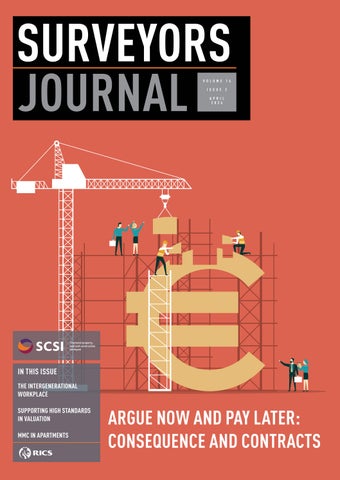
A RECENT HIGH COURT DECISION HAS REVEALED A GAP IN THE CONSTRUCTION CONTRACTS ACT 2013, AND HIGHLIGHTS WHY A CONSEQUENCE MATTERS IN RELATION TO A FAILURE TO ISSUE A RESPONSE TO A PAYMENT CLAIM NOTICE.
Aconsequence is described in the Cambridge Dictionary as a result, effect, or outcome directly following an action, decision, or set of conditions. While consequences can be positive, the term frequently denotes negative, unintended, or serious outcomes. They are essential feedback mechanisms for behaviour shaping and decision-making. In the absence of a consequence for an action, there is often no control on behaviour, which historically, in the construction industry, led to financial hardship for those in the supply chain.
In the recent Irish High Court decision in Tenderbids Ltd trading as Bastion and Electrical Waste Management Ltd, 1 the issue of the existence or otherwise of a consequence for the failure of a paying party under a Construction Contract to issue a response to a Payment Claim Notice, issued under s.4 of the Construction Contracts Act 2013 (the Act), came sharply into focus.
The fundamental question before the Court was whether the sanction for a failure to respond to a valid payment claim was that the paying party forgoes a right to defend a claim for payment on its merits, and that by default the full value of the Payment Claim Notice falls due. In the UK,2 this type of claim is often referred to as a ‘smash and grab’ or ‘default’ claim, where a party seeks payment on a technical issue and not on the merits of the underlying issues.
At this stage I would trust that it is not necessary to issue a spoiler alert that the Court decided in the Tenderbids case that the Act contains no stated consequence for the failure to issue a response, and that a paying party is not required to pay the
FEATURE
Keith Kelliher
BSC (Const Econ) Dip Con Tech
Dip Arb Dip Adj Dip Insurance
MSCSI MRICS FCIArb AMICE
Accredited Mediator, Accredited Adjudicator
Kelliher & Associates
Quantity Surveyors

full amount of a Payment Claim Notice that they did not respond to under the legislation. The Court ruled that it is not for anyone other than the legislature to define a consequence, and in the absence of any stated consequence, one cannot simply be inferred.
Whatever view one takes in respect to the decision, it must be accepted as the stated law on the issue and brings a well-highlighted lacuna in the legislation to an end. The issue for the construction industry now is how it seeks to deal with the decision and the practicalities that arise from it.
Much debate in the aftermath of the decision has been given over to the positive impact of adjudication in the marketplace through the legislation, and how it is assisting in the resolution of disputes. While there is no doubt that adjudication is welcome as an additional and more cost-effective dispute resolution tool than was otherwise available, we cannot lose sight of the fact that any party that is forced to rely on the use of adjudication in order to be paid will already be at a loss as a result of the process.
While the legislation provides a party who has not been paid with the right to refer a dispute to adjudication,3 if that same party is found to be owed a sum of money at the end of that process, they cannot seek to recover any of the cost of their requirement to go to adjudication to enforce that position, as under s.6(15) of the Act, each party shall bear his or her own legal and other costs incurred in connection with the adjudication.
The party that is therefore found to be owed a sum of money is actually penalised, in that they will receive less than they would have received through the legislation if the paying party had simply paid what they were due to pay under the Contract. In addition, a party who must rely on adjudication to enforce a right of payment, must continue to carry out their work under the Contract (if still live), and they must also fund the cost of the dispute for the entire period, often for many months,4 while that process is completed. While many will refer to the benefit of having adjudication available at all through the legislation, and the cost of the alternatives if it was not, that position misses the point of what the remainder of the Act was initially envisaged as providing to the industry.
The Construction Contracts Act 2013 is titled “An Act to regulate payments under Construction Contracts and to provide for related matters”. Taken as a whole, the Act was always viewed as having two main purposes.5 The first purpose was to set in place a statutory payment process for the market, which worked to identify differences, and provide transparency on positions and payments in a clear process of claim and response. This by its very
nature would allow parties to deal with their identifiable differences through what could otherwise be known as a process of dispute avoidance.
The second purpose of the Act was to introduce rights of suspension and adjudication for parties in the case of disputes that the parties themselves could not resolve. The introduction of these processes sought to provide clear dispute resolution mechanisms that operate more quickly, and with a more cost-efficient model, than those already available in the marketplace.
As a result of the Tenderbids decision, the industry must now deal with the reality that the Act does not do what was envisaged, and that the opportunity provided by a dispute avoidance process is not provided under Irish legislation. While parties are clearly free to have clear and transparent best practice payment processes in place, the decision confirms that there is no legal or statutory requirement on any party to actually do so. This is a long way from what the industry had sought, understood and needed arising out of the 2007 economic crash, and the impact on the many businesses that collapsed as a result of non-payment.
The legislation that became the Construction Contracts Act 2013 was first introduced to Seanad Éireann in May 2010 by the late Senator Fergal Quinn. The legislation was somewhat unique in that it was introduced by an independent Senator, but met with complete support across all parties in the Oireachtas.
In presenting the legislation to the Seanad,6 Senator Quinn stated: “The main purpose of this Bill is to provide for a mechanism whereby prior notice of an intention to withhold sums from payments otherwise due to contractors must be given. Otherwise, payments must be made in full and/or the payee may suspend the provision of works and/or services under the construction contract until payment is made in full”. The Tenderbids decision has confirmed that the intent expressed by Senator Quinn as the main purpose of his legislation never made its way into the final law.
It is probably not surprising that a piece of legislation that took over six years to travel from its introduction to its enactment contains some changes from the initial intent and content, but for the legislation to be confirmed as failing to meet the main purpose on which it was drafted can only be seen as speaking volumes for the failure on the part of the legislature to properly deal with the issue that the Bill initially sought to address.
The failure of the legislature to provide a consequence for a failure to respond to a valid Payment Claim Notice has, in practical terms, rendered the use of s.4 of the Act pointless. The notion of a party seeking payment, issuing a valid
Payment Claim Notice under the Act, and allowing for all the required strict compliance with timelines and content, when the paying party can simply ignore the document without consequence is, at best, illogical.
While it is clearly best practice for both the paying and payee parties in any contract to have a clear and transparent payment process7 that identifies and resolves issues between them, the absence of a statutory requirement on them to do so clearly allows those who have no intention of following best practice, or dealing with their supply chain in a fair and reasonable manner, to do so without repercussion.
While it is noted that the Act requires a paying party who does provide a response to make payment of the value noted in their response by the day on which the amount is due,8 it makes no such requirement on a paying party who offers no response. The question therefore arises as to why, outside of best practice, any party would offer a response at all.
By offering a response, a paying party confirms where they stand on all issues, and they therefore provide an identification of outstanding issues, which creates an environment for the parties to engage directly on disputed items in the hope of finding a resolution. In circumstances where the parties cannot find agreement, they can refer those specific items to adjudication in what will likely be a simple and clear process. While the parties will incur the costs of the process, the process is confined only to those items identified as in dispute.
The same logical approach does not exist, however, for a party that does not receive a response to a payment request. Where a party receiving payment claims a sum of money in an application, and they receive a payment for a different sum but with no response, the process of seeking to resolve the difference in the account is clearly more difficult. Instead of having a clear understanding of what is actually in dispute, in the absence of sight of a response, not only is a party unaware as to what is in dispute, that party also does not have knowledge of what is actually even accepted. A referral to adjudication in these circumstances will therefore require a full supporting back-up for every single item in the account, which will result in substantial additional cost compared to the circumstance where the dispute items are clearly and transparently identified in a response. The absence of a response will therefore cost the party that is found to be owed a payment even more, over and above what they would be required to spend had they received a response, in circumstances where they again have no way of recouping it due to exclusion of the right to claim for costs of adjudication under s.6(15) of the Act.
Following the Tenderbids decision, Minister Peter Burke TD9 outlined that he was “satisfied that the adjudication process under the Construction Contracts Act, 2013, is providing effective solutions to parties who have been denied full payment or part payment”. While stating that the operation of the legislation will be kept under review, the response indicated a clear lack of any desire on the part of the Department to amend the legislation in the near future. In the absence of an amendment to the legislation to correct the omission of a consequence for a failure to provide a response to a Payment Claim Notice, the only alternative for parties in the interim is
to ensure that their contracts include a stated consequence for a failure to provide a response.
It is noted that the recently issued standard subcontract for use with the new 2025 RIAI forms of contract includes, at clause 6.2.3(b), a requirement that if a response is not issued, the full amount of a payment claim shall be paid. It is noted that the new RIAI Main Form of Contracts includes no such provision to protect Main Contractors. This issue therefore makes reading, understanding and amending your contract as required an extremely important step in any contract, as otherwise, in the event that the parties do not agree on payment values, parties will be left with no alternative option but to spend the time and cost of arguing every single item, which may well seek to change the “pay now, argue later” principle well associated as a benefit of adjudication, to “argue now and pay later” as a result of the failure to include a consequence under the Irish legislation.
References
1. [2026] IEHC5.
2. Where their legislation under The Housing Grants, Construction and Regeneration Act 1996 (HGCRA), as amended, does include for a stated consequence requiring the payment in full of a payment claim that is not responded to.
3. Which is welcomed and offers a real tool in resolving the dispute that might otherwise not exist.
4. While the period of adjudication is a statutory 28 days, this can be extended, but there is also a period of pre-adjudication required, including for the pre-appointment period, and then the postadjudication period awaiting payment or if enforcement is required.
5. The Act also introduces many positive aspects, including fixed periods of payment for subcontractors, the abolition of paid when paid clauses, and the likes.
6. Construction Contracts Bill 2010: Second Stage, Seanad Eireann debate, May 19, 2010.
7. And in most circumstances companies who operate clear and transparent payment practices do not have regular payment disputes and are generally not the companies the legislation was aimed at seeking to correct.
8. Section 4(3)(b).
9. Minister for Enterprise, Tourism and Employment, whose Department manages the legislation.
After 35 years in the property business, Tony Grant decided to retire last year. Now he’s back working as a consultant at Module Group – a move that Tony feels just made sense: “I think everyone knew I wasn’t going to stop working forever. It was nice to have the break, take time to re-evaluate what’s important and get the focus back. A consultancy was the ideal opportunity, especially in strategic business development, which is my forte and comfort zone”.
It all began with a Saturday job in an estate agency in Tony’s native Surrey: “I enjoyed holding the ladder, going up into the roof spaces, and basically shadowing the building surveying partner. I was the inquisitive young boy saying, ‘Why are you taking a picture of that?’, then helping compile the reports. I found the technical side interesting: what’s caused that crack and how does it get fixed?”
So, after A Levels it was off to South Bank Polytechnic for a sandwich degree course in building surveying: “Third year was at work, and I was fortunate to secure a position at Drivers Jonas. I was fascinated at the wide reach, the scale of instructions, and the mechanics of a large multidisciplinary practice. In the late 80s, there was significant development going on in London, and it was terrific to be involved with some of those projects as not even a graduate”. When he did graduate in 1990, Tony joined Matthews and Goodman in the City of London, where he focused on his APC and achieved Chartered status. After a brief interlude in Hong
Caoimhe Coolican Copy editor and journalist, Think Media Ltd SURVEYOR PROFILE
Kong, Tony spent the next eight years in the UK, with stints working with the Bedford Estates and the Grosvenor Estate. In 1999, he relocated to Dublin with his Irish partner and new baby daughter, and joined the building surveying team at Hamilton Osborne King. A series of commercial surveying roles followed with Gunne Commercial and Malcolm Hollis, before Tony moved to GIA: “I was responsible for the Dublin, Manchester and London building surveying teams, as well as the geomatics and measured survey teams. Somewhat burnt out, I had the stability and confidence, thanks to financial advice from Fairstone Ratoath, to take a beat in May 2025 – rest, travel, family focus”.
Moving into strategic business development has provided a fresh challenge: “It has been a natural evolution, and has allowed me to leverage my contacts and experiences to open new doors for Module Group, and align business opportunities and resources with real estate demands. My strategic focus is very refreshing, as I am no longer accountable for technical reports, budgets and other managerial matters, and can provide a seasoned helicopter view, focusing on broader solutions and helping navigate the more complex regulatory landscapes”.
Day to day, Tony spends most of his time networking and keeping up to date with current trends, colleagues and contacts: “I enjoy coming into the office to see my new colleagues – to get the buzz and interaction. Being asked questions, asked to help, makes me feel valued. I don’t necessarily do surveys anymore, but I’m happy to help on a survey and be the extra pair of eyes and ears. I might not be writing a report, but I can proofread that report. I can help on some of the more complex dilapidations discussions”.
Tony’s enthusiasm for property is palpable: “It’s such a people business and that’s what I love most – no two days are the same. You are always learning and encountering new things: materials, techniques, and interactions between people, and the built environment itself. That’s part of the fun – that complete mix”.
Tony is also involved with young surveyors, having sponsored Nexus events and acted as an assessor for the RICS and SCSI APC: “It is terrific to see the new wave of surveyors come through the ranks and work their way to Chartered. I think the profession is certainly in safe hands with the youngsters coming through”. He sees this phase of his career as an opportunity to give back through mentorship, and has plenty of advice to share: “Don’t be afraid to follow your instincts. If an opportunity comes, take it. Enjoy joining the dots, shaking the trees, and seeing where the work can come from. There’s always something for building surveyors to do, whether it’s boom time or downtime – try and find the angle. Be collaborative with colleagues as much as competitors, because you’re all in the same boat”.

Finding a balance between professional satisfaction and personal freedom is important to Tony, and his new role affords him the flexibility to travel and spend time with his family: “Life is too short not to have that freedom”.
After several turbulent years marked by global supply chain shocks, spiralling inflation, and pandemic-related disruption, Ireland’s construction sector finally appeared to be experiencing something it desperately needed: stability.
The SCSI’s latest Tender Price Index (TPI), issued in February, showed a market that has settled into a more predictable rhythm, with 2025 recording a modest 2.5% annual increase, the lowest since 2020, and just 1% growth in the latter half of the year. Even where increases existed, such as Connacht/Ulster (1.8%) and Munster (1.5%), they remained modest by recent standards. This relative alignment signals a sector returning to normality and gives greater confidence to those planning and procuring work at scale.
In an industry where volatility can delay or even derail projects, this matters. A stabilising tender environment is not simply an economic indicator, it is an opportunity. For Government Departments with multi-year capital programmes – housing, transport, education –this predictable environment is invaluable. When tender prices stabilise, so does the risk profile of major projects, creating a more reliable basis for scheduling, budgeting, and delivery. Ireland had not enjoyed a long stretch of price predictability in over a decade. From the rebound
Bryn Griffiths Director, Turner & Townsend Limited THE


of recovery from the global financial crisis, through Covid-19, to geopolitical conflict and the ongoing reshaping of global logistics, construction inflation has often been unpredictable and sharp. Against that backdrop, the picture at the end of 2025 told a different story.
A different landscape
However, as Q1 of 2026 has seen serious conflict in the Middle East, driving up the cost of fuel and causing serious concern for markets globally, energy price shocks could influence construction inputs like steel, cement, and aggregates. We are yet to feel the impact on tender pricing, and whether it does impact will depend on the length and intensity of the conflict.
These risks may strengthen the case for acting now, while the domestic tender landscape is still stable, and while competition levels are high and order books need to be filled. Mechanisms for share of inflation risk have been incorporated into the Public Works Contract forms to deal with such risks. Delaying major capital investment until volatility returns would potentially drive up costs, but more crucially slow delivery of critical infrastructure.
Government should seize the moment
Ireland’s National Development Plan is ambitious, but ambition is only as strong as the conditions that support it. Stable construction costs provide an environment in which large infrastructure programmes can advance with confidence and reduced exposure to inflationary shocks. Investing during periods of stability is not merely prudent, it is strategic. When tender inflation moderates:
n budgets stretch further, enabling more projects to proceed within existing allocations; n competition improves, with contractors bidding in markets where risk is lower and pricing is more predictable; and, n long-term procurement becomes more viable, giving certainty to public bodies.
Put simply, when the market offers a window of stability, it makes sense to build.
Strengthening capacity for the decade ahead
A stable tender environment also boosts the sector’s ability to deliver. Firms are better positioned to plan, invest in skills, and grow their workforce. This strengthens the entire construction ecosystem, essential for achieving the Government’s goals. Ireland’s construction industry has already demonstrated resilience. Today’s conditions offer something much more favourable: a platform for sustained growth.
Conclusion: build while conditions allow
Ireland is at a critical point where tender prices are stable, predictable, and supportive of strategic investment. This is a window that does not open often, and rarely stays open for long. The Government should capitalise on this. By accelerating the planning and delivery of major capital projects, Ireland can get better value for money, strengthen the construction sector’s capacity, and ensure that national infrastructure keeps pace with economic and social needs. The message is simple: in a stable tender environment, the smartest decision is to build, not to wait.

Simplifying o昀er management for agents and giving buyers a secure and transparent tool to place o昀ers on their dream home.
Book a 20 minutes MyHome O昀ers
Demo with our team today by emailing property@myhome.ie