Journal of the Irish Dental Association
Cumainn Déadach na hÉireann


Journal of the Irish Dental Association
Cumainn Déadach na hÉireann
Ebola virus disease: review and implications for dentistry in Ireland



111 PRESIDENT’S NEWS
113 NEWS
118 QUIZ
120 FEATURE: New Code of Practice on infection prevention and control
124 FEATURE: IDA commentary on new codes
125 FEATURE: New Dental Council guidelines on CPD
127 INTERVIEW: Former FDI President Dr Michèle Aerden
129
IDA advocates on behalf of members; Report on the IDA Annual Conference 2015; Managing and preventing underperformance
EDITOR Professor Leo F.A. Stassen FRCS (I), FDSRCS, MA, FTCD, FFSEM, FFDRCSI, FICD
DEPUTY EDITOR Dr Dermot Canavan BDentSc, MGDS(Edin), MS(UCalif)
EDITORIAL BOARD Dr Iseult Bouarroudj BDS NUI
Dr Michael Crowe BSc BDentSc DPDS (Bristol)
Tina Gorman RDN, FAETC, Cert Conscious Sed.
Dr Peter Harrison BDentSc MFD DChDent
Dr Mark Kelly BA BDentSc
Dr Christopher D. Lynch BDS PhD MFDRCSI FDS (RestDent)RCSI FACD FHEA
Donna Paton RDH
Dr Ioannis Polyzois DMD, PhD, MDentCh, MMedSc
Dr Ciara Scott BDS MFD MDentCh MOrth FFD (RCSI)
Dr Seamus Sharkey BDS NUI FRACDS (Syd) MFDSRCS DChDent (Prosthodontics) FFDRCSI
Dr Simon Wolstencroft BDS FDSRCS MScD MOrth FDSOrth
Dr Alastair Woods BA BDentSc
Irish Dental Association Unit 2 Leopardstown Office Park, Sandyford, Dublin 18.
Tel: +353 1 295 0072 Fax: +353 1 295 0092 www.dentist.ie
Follow us on Facebook (Irish Dental Association) and Twitter (IrishDentists).




134 PRACTICE MANAGEMENT: Timing is everything
136 BUSINESS NEWS: Business in brief
138 PEER-REVIEWED
138A frontal swelling with a cautionary tale
M Connolly, I Siddique, M Nusrath
141Ebola virus disease: review and implications for dentistry in Ireland
S Galvin, SR Flint, CM Healy
144Mandibular implant-supported overdentures: attachment systems, and number and locations of implants – Part II
A Warreth, C Byrne, AF Alkadhimi, E Woods, A Sultan
150 ABSTRACTS
152 CLASSIFIEDS
154 DATES FOR YOUR DIARY
IDA PRESIDENT Dr Anne Twomey
IDA CHIEF EXECUTIVE Fintan Hourihan
CO-ORDINATOR Fionnuala O’Brien

Independently audited by the Audit Bureau of Circulation, London.

is circulated to 3,383 dentists on the island of Ireland

The Journal of the Irish Dental Association is the official publication of the Irish Dental Association. The opinions expressed in the Journal are, however, those of the authors and cannot be construed as reflecting the Association’s views. The editor reserves the right to edit all copy submitted to the Journal. Publication of an advertisement does not necessarily imply that the IDA agrees with or supports the claims therein.
For advice to authors, please see: www.dentist.ie/resources/jida/authors.jsp
Published on behalf of the IDA by Think Media, 537 NCR, Dublin 1
T: +353 1 856 1166 www.thinkmedia.ie
EDITORIAL Ann-Marie Hardiman, Paul O’Grady
DESIGN/LAYOUT Tony Byrne, Tom Cullen, Ruth O’Sullivan
ADVERTISING Paul O’Grady paul@thinkmedia.ie
D T A
Total average net circulation 01/01/14 to 31/12/14: 3,383 copies per issue. Circulated to all registered dentists in the Republic of Ireland and Northern Ireland.


Two new codes of practice from the Dental Council and an interview with an international leader in our profession are among the highlights of this edition.
The new Codes of Practice from the Dental Council cover the vital areas of infection prevention and control, and continuing professional education. They are the product of significant work by colleagues with expert knowledge, and have also been subject to considerable consultation. The result of that consultation has been a noticeable improvement in the focus, and therefore the likely effectiveness, of the Codes. We are fortunate to have excellent articles relating to both new Codes of Practice in this edition of the Journal
The President of the Dental Council, Dr Eamon Croke, has written a superb article describing the evolution of the new Code of Practice relating to: Infection Control and Prevention from the 2005 Code. In it, he summarises the contents and states: “The new Code is the ground on which a culture of patient safety can be built in every dental premises – a culture of shared attitudes, values and practices by all in dental healthcare. It is a culture that places patient and staff safety centrally; it is a culture that allows dentistry consistently to say “we care for you!””
Dr Marielle Blake gave an interview to the Journal on the other new Code launched by the Dental Council – that relating to the requirements for continuing professional development (CPD). The important point is that the Council has identified seven core areas of verifiable CPD, each with a recommended time allocation. Dr Blake is direct in her explanation of why the Council has moved in this direction: “In reviewing the Council’s fitness to practise cases, certain areas were identified, which were causing difficulties with our registrants –these involved communication, record-keeping and conflict resolution. these topics are now included in the core subjects”.
The Council has identified seven core areas of verifiable CPD, each with a recommended time allocation.
The Association is robust in its support of the Codes – having been concerned in its critique of the initial draft of the Code on infection prevention and control. Our Chief Executive Fintan Hourihan outlines that support in his article on the subject, noting that: “Setting out acceptable standards rather than unattainable doctrines will be shown to produce a better mitigation of risk in years to come, I have no doubt.” These are wise words and show the extent to
CALL FOR PAPERS
which the profession is succeeding in listening to each other’s representatives in the process of developing best practice. And he has committed the Association to support for members: “Again, we will be redoubling our efforts to assist dentists to meet their CPD requirements, taking account of the new guidance from the Dental Council”.
The Women in Dentistry Network (WiDEN) scored a notable coup by getting the first female President of the FDI, Dr Michèle Aerden, to address their recent meeting in Dublin. With their assistance, the Journal secured an interview with this outstanding leader of our profession. Dr Aerden’s work at the World Health Organisation (WHO) to integrate oral health with overall heath was recognised when the WHO passed a resolution acknowledging the intrinsic link between oral health, general health and quality of life. The fact that Dr Aerden came to dentistry a little later than normal in life only adds to the impressiveness of her achievements and her story is captured well by our colleague Ann-Marie Hardiman. It’s the second major interview with an international leader in our profession in two editions, coming immediately after our interview last edition with the President of the ICD, Dr Joe Kenneally.
In our peer-reviewed section, we have a cautionary tale about a frontal swelling; a review of the implications of the Ebola virus outbreak for Ireland; and, the second part of the article on mandibular implant-supported overdentures. Our thanks as always to Dr Ioannis Polyzois for the excellent abstracts in the Journal
In the members only section, Fintan Hourihan reports on the recent stakeholders’ consultation day on the National Oral Health Policy; there is a report and photographs from the Annual Conference; and, Sarah Gill writes on managing and preventing underperformance. Dr Martin Foster of DPL also gives us an interesting perspective on the importance of timing in responding to patients. Even if you read only one of the many articles in this edition, we hope that it will enhance your work and your knowledge – and if you manage to read several, that you will be very well informed on latest developments in dentistry in Ireland.
The Editorial Board of the Journal has decided to open its pages to interesting, successful or difficult case studies encountered by readers in their normal working life. Further details in the next edition.

Dr Anne Twomey IDA President

Our new IDA President sets out her priorities for the coming year.
Having only just recovered from the whirlwind that was the 2015 Annual Conference in Cork, let me begin by thanking you all for the honour you have bestowed on me by nominating me as President of the IDA. It truly is a wonderful privilege and I am grateful to everyone who has helped me in so many different ways throughout my time in the Association and indeed throughout my career as a dentist.
It would be remiss not to pay tribute to my predecessor Dr Peter Gannon, who was an outstanding President and who has left me with a tough act to follow. I know I can count on Peter’s sage advice in the coming year. Likewise, there are many colleagues and friends in the Munster Branch, in my practice and throughout the profession and the Association as a whole to whom I owe a deep debt of gratitude.
I would like to congratulate all those who helped to make the Annual Conference such a great success, particularly our organising committee, who played such a huge role in preparing and for such a well-received conference. I know that our newly appointed Vice-president Dr PJ Byrne will make sure that the same high standard is maintained at the 2016 Conference in Galway. I also want to thank the departing members of the Board of Directors, Drs Sean Malone and Nuala Carney, for their outstanding service to the Association, and to welcome our newly appointed members, including Drs Frances O’Callaghan and Gillian Smith.
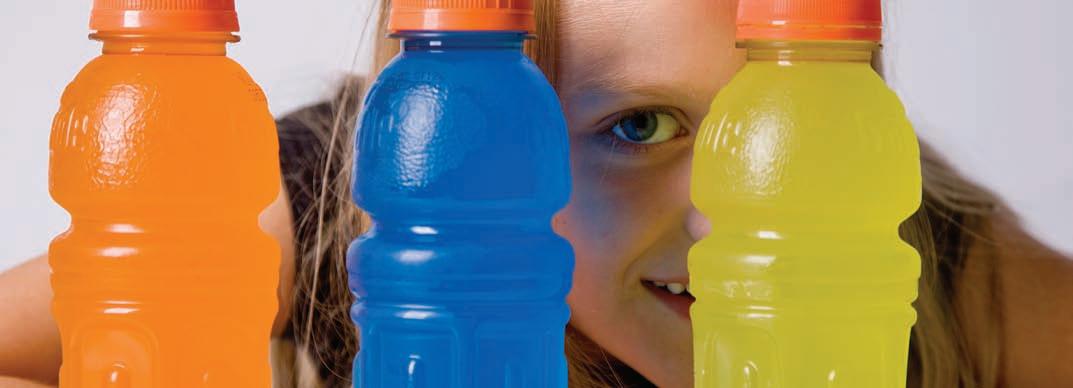
A very positive feature of the Conference was the strong media interest shown in the concerns we voiced in regard to hidden sugars in sports drinks and this is an area I feel needs to be prioritised in the year ahead. I am keen to promote links with the sports governing bodies and all who have an interest in promoting oral health but who may not be fully aware of the extent of the hidden sugars in so many so-called energy drinks. It was truly shocking to learn that as many as 54 alternatives to sugar are listed on labelling for sports drinks and clearly there needs to be a huge investment in education and awareness.
It has been notable that with a general election imminent there is a discernible change in the air as regards the interest of politicians in dental health. I have had a number of very encouraging discussions already with the Minister for Health Dr Varadkar, and with representatives from other political parties, which suggest to me that we really now have an opportunity to push the oral health agenda and to ensure that it receives its rightful place in the manifestos of the political parties in the coming months. As an Association we are taking steps to bolster our public affairs resources and I will be seeking the assistance of as many members as possible when election time nears.
One of my first official engagements was to attend the WiDEN seminar, where Dr Michèle Aerden was a compelling speaker who offered inspiration to us all.
Soon after, I was on the road again to attend the stakeholders’ consultative conference organised by the Department of Health in Thomond Park. It was a very stimulating and interesting day and it was certainly encouraging and refreshing to see members of the dental profession from so many different backgrounds involved and their views sought on the day. Obviously, we all want to see the fruits of the exercise and will continue to engage with the Chief Dental Office, Dr Kavanagh, and her advisers.
On a separate note, members will have received a letter encouraging their participation in a survey in relation to corporate governance. With a rapidly changing environment we need to ensure that our governance arrangements are fit for purpose and we should aspire to be best in class as regards the running of the organisation in a fair, transparent and effective manner. Finally, I am looking forward to meeting plenty of members in the coming year and to representing the Association and the profession with many other interest groups. We are acutely aware of the benefit of building alliances with other organisations outside oral health and this will be very much a priority for the new Board of Directors and for myself as President.
The CEO of the Irish Dental Association, Fintan Hourihan, recently wrote to the Minister for Health, Dr Leo Varadkar TD (right), to seek his support in the Association’s call on the Government to reinstate benefits previously available under the PRSI and medical card schemes.
Mr Hourihan drew attention to new research indicating a notable rise in the number of people with severe dental infections requiring hospital admissions since the State made savage cuts to the PRSI dental scheme in 2010. The research shows a 38% increase in the number of patients admitted to hospital with severe infections in 2011 and 2012, and indications are that there has been a further 400% increase in the nine months since July 2014.
The letter emphasises that a focus on prevention and early treatment has always been critical to maintaining good oral health, and pleads once again for the restoration of essential treatments available under the DTBS.
Patient safety
The letter also made reference to patient safety concerns related to dental treatment obtained outside this jurisdiction, or from dentists not registered to practise here. He stated the Association’s concern that the Dental Council does not appear to have the powers to regulate and, if
Dental Protection has announced increases of less than 3% in professional indemnity subs for dentists in Ireland from April 1, 2015.
DPL has also confirmed that significant discounts will be offered to dentists who can prove they hold membership of the Irish Dental Association. Furthermore, dentists who engage in DPLapproved CPD/risk management activities can also save a further 15% in their subscriptions. For dentists in general practice for at least three years post graduation, annual savings of up to ¤1,700 are available to IDA members who avail of the full 15% discount available for risk credits. For dentists working in the HSE, where indemnity is provided by the Clinical Indemnity Scheme (CIS),
necessary, sanction dentists where standards of care are far below those practised by the majority of the profession. He pointed out that these controversies add urgency to the call for early publication of new dental legislation.
Minister’s response
In his response to the Association, Dr Varadkar agreed that a restoration of the DTBS for people who pay PRSI would be desirable, stating that the DTBS for PRSI contributors is a form of universal health insurance, and thus is in keeping with Government policy. He undertook to discuss the issue with Minister Lynch in the Department of Health and Minister for Social Protection Joan Burton, as the Minister with responsibility for the scheme, to see what can be achieved in this matter.
and in membership of the IDA, total savings can range from ¤124 to ¤268 per annum (for dentists who work up to 150 hours privately) and up to ¤663 where they also work between 150 and 500 hours in settings not covered by the State’s CIS. In response to concerns expressed by dentists, and indeed the IDA, a simplified claim form has been devised by DPL for dentists seeking to claim risk credits.
Meanwhile, we understand that DPL subscriptions for dentists in the UK are set to increase by around 21% on average.
The fact that there has been a stabilisation of the number of negligence claims in Ireland explains the smaller rate of increase here. Moreover, the success of the IDA Dental Complaints Resolution Service is seen as having made a significant contribution to the fall in claims and litigation, and ultimately in the rate of increase in subscriptions for Irish dentists.

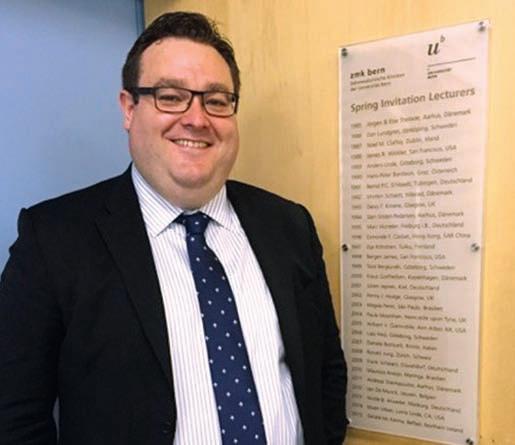
Dr Gerry McKenna of Queen’s University Belfast delivered the 2015 Spring Invitational Lecture at the University of Bern on May 28. He was invited by Prof. Martin Schimmel, Head of Gerodontology and Removable Prosthodontics, and Prof. Adrian Lussi, Director of the Faculty of Dentistry. The title of his presentation was ‘Managing the Ageing Population: an EvidenceBased Approach to Gerodontology’. Gerry is current President of the European College of Gerodontology, and discussed a range of issues including dental management of older patients, nutritional outcomes and health economics.
The Dental Outreach Programme of Chernobyl Children International had a very successful trip to Vesnova Orphanage in Belarus during Easter this year. This project was started in 2006 by Kerry-based dentist Dr Marcas Mac Domhnaill and dental nurse Mary Sugrue. The project has gone from strength to strength, having included many volunteer dentists and dental nurses from Ireland in the past nine years. 2016 will mark the 30th anniversary of the Chernobyl nuclear accident and the 10th anniversary of the dental project. There is still a need for dental care in the institutions and orphanages in Belarus. The children and teenagers in these institutions are most grateful for the dental care provided to them by Irish volunteers. Indeed, every volunteer states that they receive much more themselves as volunteers, than they could ever give to these children. During the most recent dental trip, 180 children were treated within the orphanage. Priority was given to scaling teeth to improve oral hygiene, along with educating the carers and nurses. It is hoped that this will reduce the need for fillings and extractions in the future.
Dental volunteers are always welcome. For those interested in volunteering or in organising a fundraising event for the dental project, please contact Marcas Mac Domhnaill at fiacloir@gmail.com, or Mary Sugrue, Tel: 087-373 3566.
Talks have commenced between the Government and public service unions on unwinding the severe pay cuts imposed following the collapse of the public finances in 2009.
The Irish Dental Union is representing members employed in the public service and also those contracted to provide services to the State as part of this process.
At their recent meeting, the IDU sought reversal of the pension levy and pay cuts imposed on our public service members. With specific reference to dental reforms, we highlighted the unacceptable delays and non-implementation of the agreement we reached with the HSE in 2011 as part of the movement from 32 community care areas to 17 integrated service areas. The 20% net reduction in dental staff positions and the absence of a job evaluation scheme to take account of the extra responsibilities assumed by members who took on significantly enhanced roles in recent years were also highlighted by the Union.
The Union has separately been representing the concerns of its members in general practice who were also adversely affected by cuts to their professional fees as part of the FEMPI process. We wrote to the Minister for Public Expenditure and Reform recently, insisting that our general practitioner members should also have the benefit of an unwinding of the FEMPI cuts on a basis no less favourable than that which emerges for public servants.
In response, we have been advised that “the intention is that the Department of Health will put in place a process involving the representatives of contracted professionals in the health sector who have been affected by FEMPI; following on from the DPER engagement with the public sector unions. A formal communication will follow in due course.”
Further updates on the progress of talks for IDU members will issue in due course.


This
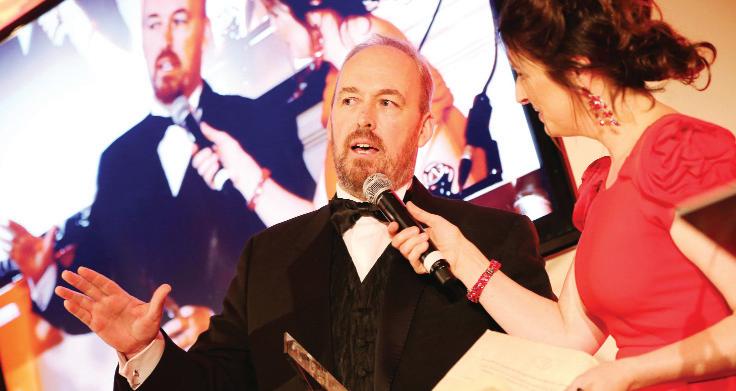
Sensodyne and the Journal of the Irish Dental Association are, once again and together with the Irish Dental Association, organising the Sensodyne Sensitive Dentist of the Year Awards. Last year for the first time, the Awards were
presented at a Gala Ball in December. It was such a success, with demand significantly greater than we could accommodate, that we are moving venue. The RDS in Ballsbridge can take a greater number of people and so that is where we – and we hope you – will be on Saturday, December 5. Put it in your diary today. The closing date for the Awards this year is a month earlier at September 30. You are encouraged to send back the postcard that is attached to the wrap around this edition of the Journal so that you can receive the necessary materials for your surgery.



Friday October 2 will see our bi-annual Retirement Day Seminar take place at the Radisson Hotel, Dublin Airport. This is a very popular event with those members who are thinking of or intending to retire in the next while. The day, which is only open to IDA members, will cover topics such as 'Looking after your health in retirement', 'Selling on a dental practice', 'Legal requirements on retiring, including employment law and wills and property law', 'Planning your finances for retirement', and 'How will retirement change my life?' as well as the opportunity to meet with colleagues and experts on the day. Booking forms will be issued shortly. For further information, contact Elaine at IDA House.

Submitted by Dr Sheila Galvin.
1
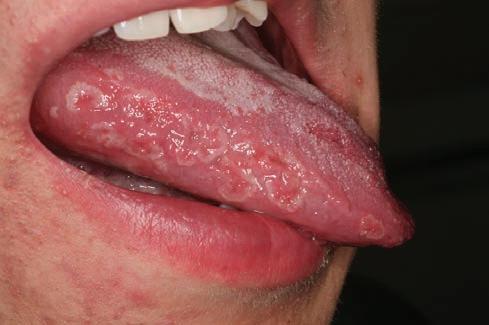
1. What is the diagnosis of these red patches with white borders on the tongue, which move around and are occasionally symptomatic?
2. Does this condition need any further investigation or treatment?
3. This condition is often associated with what other tongue changes?
The Association is actively involved with the Council of European Dentists in organising an event in the European Parliament in June entitled Oral Cancer: Dentists Saving Lives. The success of Mouth Cancer Awareness Day is reflected in the fact that Dr Conor McAlister and mouth cancer survivor Lia Mills will be making contributions on their experiences and lessons that can be learned from increasing awareness of mouth cancer. The event will feature a number of other renowned speakers and will hopefully attract a significant number of MEPs and their representatives.
WiDEN welcomes former FDI President
Questions (answers on page 151)
Photo 2
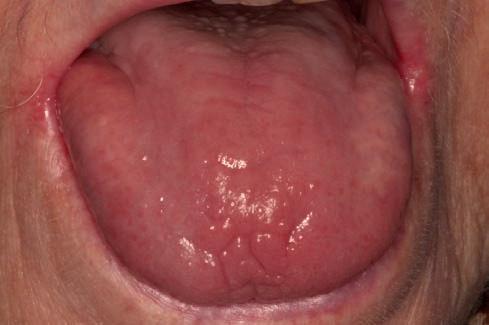
1. What is the abnormality of the tongue shown?
2. What are the most common underlying causes?
Governance requires the nomination of a Decontamination Lead from within the DHCWs in each workplace and the development of an IPC policy. The Decontamination Lead role carries great responsibility for the practice, as the Lead will establish safety procedures, document them, initiate, and then audit and ensure compliance with the established IPC system (Governance section). A procedure for adverse event reporting must be established also (see Code of Practice relating to: Professional Behaviour and Ethical Conduct (8.1 – 8.5) and Code of Practice relating to: Infection Prevention and Control (5.6)).
4 Immune status – the employer is still responsible for recommending vaccinations to employees based on risk assessment, but now it is recommended that all staff know their own immune status with regard to diseases to which they may be occupationally exposed.
4 The advice to any DHCW who has the misfortune to be infected by bloodborne viruses to seek medical advice remains the same, but the new Code sets out the criteria by which they can continue clinical practice, if that is appropriate.
The new Code does not have a section on the treatment of patients who are infected by blood-borne viruses, as this is covered in the Code of Practice relating to: Professional Behaviour and Ethical Conduct (3.1 – 3.3), as is practices’ responsibility to protect patient confidentiality (10.1 - 10.3).
4 Risk management – DHCWs are expected by the public to have the required knowledge, as professionals, to minimise risk. The new Code, at the outset, sets squarely the responsibility of each DHCW to acquire the knowledge to be able to assess risk in the workplace and to be able to manage risk appropriately thereafter. The Code gives direction in that regard but it is not a step-by-step manual. Advice in the 2005 Code relating to laboratory and radiological procedures is still accurate but gets minimum space in the new Code, not because they have become less important (certainly not), but as part of the evolutionary process. This is previous knowledge that continues to withstand examination; it is not old but remains contemporaneous.
4 There was some surprise expressed that amalgam should be included in an IPC document. However, amalgam is a hazardous material and waste amalgam from the mouth is clearly contaminated material, so it is appropriate and helpful that the Council should give guidance on its disposal in the risk waste section.
4 The new Code gives guidance on the retention of records in keeping with advice the Dental Council received previously from the Office of the Data Protection Commissioner.
4 Who or what is a Competent Person? A Competent Person is one who has been trained and is qualified to undertake a given procedure, whether it is the validation of decontamination equipment or pressure vessel checks.

DHCWs are trained to be responsible people. Part of those responsibilities include the need to be certain that anyone employed to carry out a task on the premises is trained and competent. It is an ethical requirement but, primarily and most clearly, common sense. Undoubtedly, the person who undertakes a pressure vessel check should not masquerade under false pretences. They are competent to fulfill their legal duty or they are not. Do not hesitate to seek proof of competency. Pressure vessels, compressors and autoclaves can cause great damage and harm if they malfunction; this danger is recognised in Safety, Health and Welfare at Work legislation (S.I. 445 of 2012).
4 Validation relates to two distinct processes in the Codes: validation of the correct functioning of decontamination equipment; and, validation of procedures undertaken by DHCWs, for example the IPC system or healthcare risk waste management. Both types of validation are functions of governance; both require training, competence, audit and documentation.
The new Code will allow continued development of IPC practice from the IPC practices established by the 2005 Code. However, the Dental Council does recognise that the new Code will present challenges in implementation, and


has provided practice owners and DHCWs the time to develop their IPC practice and to plan to upgrade, and then to continue to upgrade, their practice to evolving standards. Any aspect of dental healthcare practice that fails the basic (“must do”) standards of the Code today must be addressed immediately.
The Dental Council expects essential changes to occur around risk-riddled practice such as manual cleaning. Ideally, manual cleaning should only take place after diminution of the risk of infection following ultrasonic cleaning or, ideally, following the use of a washer-disinfector. It is the least acceptable of the three methods of cleaning instruments. This should be part of a coordinated plan to prevent sharps injuries and, simultaneously, allow clarity in the validation of an IPC system.
All current dental practices must have a suitable local decontamination area (LDA). The new Code supports the attainment of best practice. All registrants are advised that existing practices should, where not prevented by the physical restrictions of the premises, plan for the establishment of a local decontamination unit (LDU) and the installation of a washer-disinfector. The washer-disinfector is the preferred method of cleaning instruments.
The new Code will require review and renewal in the light of continued developments in the area and one can expect this to be done within the term (five years) of the next Council. The long-overdue Dental Act will hopefully have been enacted in that time. It is expected that it will contain provision for the licensing and inspection of dental premises.
Auditors, Tax Advisers and Business Consultants
81/82 North Strand Road Dublin 3 www.bkrm.ie
MANAGEMENT ACCOUNTING
FULL BOOK-KEEPING AND PAYROLL
TAXATION ADVICE AND PLANNING COST MANAGEMENT ANNUAL ACCOUNTING


At BKRM we have extensive experience servicing the specific needs of the dental profession. We offer advice for general practitioners, orthodontists, periodontists, and other specialists. We can offer advice and support in relation to cost cutting, lab costs, remuneration and sliding scales for hygienists and associates, IDA best practice, the latest updates from Revenue with regard to the dental sector and any other issues specific to the dental sector. We pride ourselves on a customer centred approach and believe in delivering real savings to our clients.
CONTACT US FOR A FREE, NO OBLIGATION CONSULTATION info@bkrm.ie | 01-836 5522
Irrespective, it would be very advisable for dental practice owners to plan for the development of their IPC system now. Not to do so may leave their employees and patients exposed to avoidable risk, leaving you, the dentist, open to civil or criminal challenge and fitness to practise proceedings. None of those risks are worth a gamble.
The Dental Council, in setting the essential standards of IPC, is also acknowledging best practice standards to which all DHCWs should aspire. To progress from the 2005 Code is manageable but will require careful planning prior to implementation. Assess, plan, implement, audit; it is an interlocking cycle and is worth the effort. Set your own timetable but today is the time to start.
The Dental Council is greatly encouraged by the response of the profession to the new Code and the recognition that it is a constructive progression from the 2005 Code. The Council is further encouraged by the plans of professional groups to aid their members to make the required changes. This aid will require both training and the development of governance structures and audits. These are tasks that are regularly rewarded by community spirit.
It is intended that all information provided on the new Code, including this article, are adjuncts to reading the Code.
The new Code is the ground on which a culture of patient safety can be built in every dental premises – a culture of shared attitudes, values and practices by all in dental healthcare. It is a culture that places patient and staff safety centrally; it is a culture that allows dentistry consistently to say “we care for you!”
The Dental Council wishes the profession and everyone working in dental healthcare settings well in their endeavours to fulfill their responsibilities in IPC.
The Irish Dental Association welcomes the Dental Council’s new Codes of Practice on infection prevention and control and continuing professional development.

The Dental Council’s new guidance regarding infection prevention and control (IPC) and continuing professional development CPD deserve careful and critical examination by all dentists.
In our rush to judgment, we can often lose sight of the fact that this is guidance for the profession that is intended to reflect best practice and scientific progress. We can argue whether guidance ought to be evidence based or evidence informed, but at the very least dentists should be satisfied that regard has been had to known risk and to a lesser extent there has been some anticipation of possible risk.
This was very much the concern reflected in the searing and lengthy IDA critique of the initial November 2013 draft IPC code of practice circulated by the Dental Council. And while reservations remain, today we must acknowledge that the Dental Council has responded to many of our chief concerns. These include the provisions relating to decontamination units, the use of washer-disinfectors, autoclaves, and changes as regards infected staff receiving treatment. Setting out acceptable standards rather than unattainable doctrines will be shown to produce a better mitigation of risk in years to come, I have no doubt.
We make no apology for supporting regulation of the highest standards of dental care where such standards are appropriate, proportionate and where due account is taken of the cost of implementation as against the likely level of risk. It is also vital that the Dental Council takes seriously its responsibility to pursue those who seek to sell the profession and our patients short at the expense of the overwhelming majority of the profession who are committed to bearing the
Fintan Hourihan Chief Executive, Irish Dental Association
cost associated with regulation. That is why new legislation is required to give the Council powers to tackle the small number who tarnish the good name of dentistry in Ireland.
“Setting out acceptable standards rather than unattainable doctrines will be shown to produce a better mitigation of risk in years to come…”
Support warranted
Equally, the State must be brought to task for affording no assistance to dentists who comply with standards set by the Dental Council. Why, for example, will the HSE arrange to collect clinical waste from a doctor in general practice but not the dentist treating medical card patients next door? We will be seeking financial support towards the cost of implementation from the State in forthcoming discussions.
As an Association, we will assist members through the dissemination of best practice and the provision of appropriate education and training. The new guidance on CPD from the Dental Council should also be studied closely, given that all dentists are obliged to engage in CPD and this will be the subject of further new legislation shortly. The new core competencies are appropriate and, in fact, members who have been attending IDA programmes in recent years have been provided with support in most if not all these areas prior to their formal recognition by the Council. Again, we will be redoubling our efforts to assist dentists to meet their CPD requirements, taking account of the new guidance from the Dental Council.
Our Board and Council will be studying the new guidance from the Dental Council, and members should expect to receive further updates and news of more assistance being made available to IDA members in the coming months.
Dr Marielle Blake of the Dental Council outlines what’s new about the Council’s new guide to CPD requirements.
FIGURE 1: Dental CPD – the requirements
By now, every dentist registered to practise in Ireland should have received a copy of the Dental Council’s document, Your guide to the Dental Council’s Continuing Professional Development requirements. While the new Dental Act is still awaited by the profession, it is expected that the Act will make continuing professional development (CPD) mandatory for continued registration. In order to prepare dentists for this change, the Council has been engaged in an ongoing process of updating guidelines and setting out what dentists should be doing now, and what they will be expected to do to maintain registration in the future. Dr Marielle Blake is Chairperson of the Council’s Education and Training Committee, and she explains the thinking behind the document. “At present, all dentists are ethically obliged to maintain their skills. CPD is currently obligatory rather than mandatory, as dentists are obliged to maintain their skills under the Council’s ethics guidelines. Within the new Dental Act, it is likely that mandatory CPD will be in place. The Council formulated an introductory CPD document five years ago. The current Education Committee has been working on the principles and the consequential categorisation of required CPD, which is outlined in the new document.”
The new document sets out the CPD requirement in some detail. Over a fiveyear cycle, dentists will be expected to complete 250 hours of CPD (approximately 50 hours each year). Of these 50 hours, 20 should be verifiable and 30 general CPD.
What is perhaps most significant about these updated guidelines is that the Council has now identified seven ‘core’ areas of verifiable CPD, each with a recommended time allocation, which together make up 50% of the required verifiable hours (Figure 1). The other 50% is structured learning CPD, which can cover any area of specific (reasonable) interest to the dentist.
Dr Blake explains the rationale behind this decision:
SEVEN CORE SUBJECTS:
Infection prevention and control
Radiology informatics and radiation protection
Professional communication
Medical emergencies (excluding basic life support)
Audit
Record keeping Governance
“In reviewing the Council’s fitness to practise cases over the last few years, certain areas were identified, which were causing difficulties with our registrants –these involved communication, record-keeping and conflict resolution. these topics are now included in the core subjects.
“The area of communication, in particular, was generating frequent complaints and is therefore weighted in the new system.” (Dentists must complete 10 hours of CPD on communications over a five-year cycle.)
Obviously, these guidelines are a starting point, and will change over time, with the allocated hours increasing or decreasing as the Council deems appropriate. Other core areas that Dr Blake identifies as crucial are record keeping and governance.
“The governance of dentistry has changed and clinicians are now expected to have all the necessary practice documentation to hand. A lot of people may not know the level expected of them. The requirements just for radiology and infection prevention and control alone are significant and have changed greatly in recent years. We need to compile a sample folder and say to people: ‘This is what you need to have: your health and safety documents, your fire safety, employee contracts, training records, record-keeping in relation to decontamination, etc’.”
In addition to the CPD requirements, dentists are required to maintain CPR
Ann-Marie Hardiman Journalist and sub-editor with Think Media, with an interest in further education and CPD.

certification to BLS (Basic Life Support) level. The time taken to maintain this certification is not included in the 50 hours per year, and it is likely in the future that ongoing Dental Council registration may require proof of CPR certification.
The 30 general hours can include, for example, journal reading, attending a trade show or study club, or any other activity that adds to a dentist’s knowledge or skills, but does not meet the criteria for verification.
The Council has also tightened its approach to approving verifiable CPD courses. Course organisers will need to apply to the Council three months in advance and, to be deemed verifiable, programmes must meet four specific criteria:
1.Concise educational aims and activities.
2. Clear anticipated outcomes.
3. Quality control (e.g., opportunity for feedback).
4. Proof of attendance and participation.
Dr Blake draws particular attention to the need for clear and realistic outcomes.
“An example of an unrealistic outcome would be the statement that participants in a four-hour introductory course in implant dentistry would be proficient in placement of implants following the course.”
Those who are planning courses will now have a strong incentive to target the seven core areas.
“These are the areas that every single dentist in Ireland has to cover on an annual basis so, presumably, course organisers will now identify courses specifically related to these core subjects. Specific training in some of the core courses is not currently available. There is definitely a market for people to come in and deliver this sort of training.”
Dr Blake mentions the new infection prevention and control guidelines (see page 120) as an area that will require specific training. She acknowledges that the protection societies are addressing elements of communication and record keeping in their CPD courses, but says that there is scope for a lot more specific training, particularly in the area of governance.
Obviously, in the absence of a mandatory requirement, there will be no formal monitoring of dentists’ CPD as yet, but that doesn’t mean that there is no need for dentists to keep their own records.
“At the moment the dentist is obliged to keep the records themselves,” says Dr Blake.
“There’s a simple pro-forma document that can be downloaded from the Dental Council website. As practitioners attend a course, or go to a conference, the details should be filled in. Two different folders are recommended – one for verifiable CPD and one for general CPD.”
Once CPD becomes mandatory, the issue of audit and monitoring will have to be placed on a more formal footing, perhaps as part of renewal of registration. Dr Blake draws comparisons to the Medical Council, which already has systems in place.
“Medical CPD is managed through the various Colleges, for example the ICGP,
College of Physicians, etc. These have specific CPD websites and part of their annual fee goes to the maintenance of that website. It’s all centrally stored so from an audit point of view it’s much easier to identify clinicians who are falling behind in their CPD requirements.
“Once the new Dental Act is passed, appropriate funding and staffing will be necessary to put equivalent dental CPD structures and monitoring in place.”
The other key message that the Dental Council wishes dentists to take on board is that from now on they will need to plan their CPD as a five-year cycle, with specific requirements and objectives.
“Dentists need to plan their CPD over the five-year period, and address the core areas within that. To date there were fewer specific areas to be covered, so dentists could choose to complete the verifiable hours in any other areas they wished. The new recommendations specify seven core subjects with defined times over the five-year period.”
There are no exceptions – dentists who are working part-time, or who are not working but wish to remain on the dental register, must still complete the full five-year cycle. There is flexibility in when a dentist may engage in CPD, which may help, for example, a dentist on maternity leave, but everyone must complete 250 hours over five years.
The new document offers advice on how to do this in three steps:
Step 1 Make sure you understand the time requirement in hours.
Step 2 Plan your CPD activities to fulfil your anticipated professional requirements.
Step 3 Record your CPD.
Dr Blake reiterates that these core requirements have been developed on foot of identifying deficits in dentists’ knowledge, which have led in some cases to Fitness to Practise hearings, or to cases going to the Dental Complaints Resolution Service.
“We would anticipate significant benefits to dentists from increasing their skills in these areas. People who keep up with their CPD do not tend to appear in front of Fitness to Practise hearings. Training and education and furthering yourself are hugely important. If a dentist was called to attend Fitness to Practise proceedings, the fact that they were not up to date with CPD would count against them.”
While the Dental Act may still be some way off, Dr Blake feels that these guidelines give dentists a strong starting point to begin to fulfill their CPD requirements and to record them accurately.
“Lots of people are probably doing a lot of CPD, but in their areas of interest, so now they will have to plan to cover the core areas as well.”
The IDA launched a new CPD Online Learning Management System at the recent AGM in Cork. This will mean that IDA members will be able to book and pay for CPD courses online, record their own CPD activities, and read and record IDA Journal articles. Non-IDA events can also be recorded by members onto the system. To access the system, just log on to the members’ section of www.dentist.ie and click on CPD. A full, detailed ‘How to Use’ instruction manual will be forwarded to all members in the coming weeks.
DR MICHÈLE AERDEN, the first female President of the FDI, recently visited Dublin to address the WiDEN group, and spoke to Ann-Marie Hardiman about her career, her views on women in dentistry and her work in developing countries.
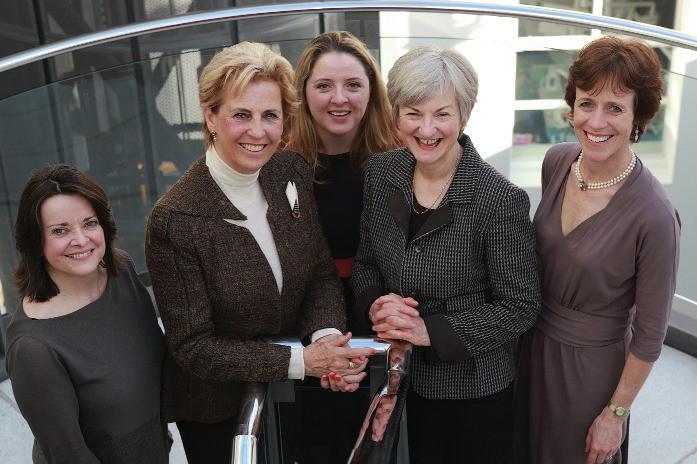
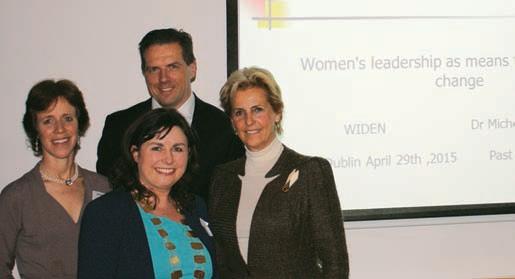
At the recent WiDEN meeting were (from left): Dr Clodagh McAllister; Dr Michèle Aerden; Dr Doireann Ridge; Professor June Nunn, Dean of the Dublin Dental University Hospital; and, Dr Nuala Carney.
‘From haute couture to President of the FDI’ was the intriguing title of Dr Michèle Aerden’s recent lecture to the Women in Dentistry Network and is, in fact, an accurate description of her fascinating career trajectory. After quitting her science degree to get married, Michèle started a successful fashion business in her native Brussels, before selling up to spend time with her children. It was only when she reached her 30s that she decided to return to her first love and embark on a more science-based career. Even then, she felt that dentistry had the potential to be an ideal career for a woman.
“I had a younger sister who became a dentist. I saw the flexibility of the job, and I like science so I decided to go for that. You can fit it with your schedule. You can decrease [your hours] when you have little children and increase when they grow up.”
She studied while the children were at school, and after graduation she joined a group practice, before setting up on her own. A GDP with an interest in aesthetic dentistry, she still practises, fitting a core group of loyal patients around her travels.
“I will never give it up because I think [it helps] you to keep contact with reality – keep your feet on the ground. And because I practise I have to do continuing education – otherwise I would lose my licence.”
Worried that, as a comparatively late starter, she needed to learn more about her new profession, Michèle got involved in her national scientific association almost immediately, attending CPD courses at every opportunity. This led to involvement at committee level in first the scientific, and then the national, association. Her commercial experience was a big part in her progression, and she became the first female President of the Belgian Dental Association. Her
knowledge of languages, in turn, led to her being asked to represent the Association at the CED and FDI.
At the FDI, Michèle sat on the committees for ethics and for developing countries, and was eventually invited to apply for a place on the Council. Two Council terms made her eligible to run for President. However, her first attempt to be elected was unsuccessful. She persevered, running again two years later, and became the first female President in the 105-year history of the FDI in 2005. The FDI is a huge organisation, representing over one million dentists in 134 countries, and politics inevitably plays a major role at election time, so Michèle’s achievement as a woman from a small country with only one vote cannot be overstated. She relishes the challenges, however.
“I work very hard but I get results – and that gives you a lot of energy.”
Michèle felt that her first defeat was related to her gender, and her determination to try again two years later was very much influenced by her conviction that women in dentistry must advance themselves in the profession.
“I felt that at least if I lost again it would make it harder for them to defeat another female candidate next time.”
A strong believer in the power of information, of “facts and figures”, Michèle’s conviction was based on research she had already carried out in 1996 into the growing feminisation of the dental profession. The results were telling: women, despite making up an increasing number of the profession, held a maximum of 12% of leadership positions, such as committee memberships, etc., within professional organisations. This led her to establish the Working Group on Women in Dentistry to try to address this deficit. The Working Group became Women Dentists Worldwide in 2001, and is now a full section of the FDI.
Michèle’s message is simple but powerful: “Only by taking a leadership position can you achieve sustainable change”.
She cites as an example the struggle she had as President of the Belgian Association to change the days when CPD was held. CPD was always held on Saturdays, and female dentists were not attending due to family commitments. Thanks to Michèle’s efforts, the association began to hold CPD on Thursdays, during school hours, to address this.
“This was a little thing that showed me that you have to be where decisions are made.”
These ‘little’ things made Michèle feel all the more strongly the need to run for President again.
“I had those facts and figures showing that you had no women at a decisionmaking level. That gave me more legitimacy to apply. I thought: ‘You have to do it’ – I felt I had a duty.”
Given that female members of the profession have the same education, and the same competence as their male colleagues, the question arises as to why more women do not take up these leadership positions. Michèle feels that lack of confidence is a huge part of this.

Leaving a patient in discomfort while they wait for an appointment can carry risks.
A dentist had treated an adult patient for almost a year.
Recently the patient had attended with pain when biting on the right side of her mouth. No caries or fractured restorations were evident, and the radiographs didn’t allow the clinician to make a definitive diagnosis.
A provisional diagnosis of localised periodontitis was made and the dentist proceeded to treat the patient on this basis, with root surface debridement under local anaesthetic. This treatment was undertaken two weeks after the initial appointment. Two weeks after the second visit, the patient returned, having had no resolution of the symptoms and reporting that she had been in pain for a month. Indeed, the pain was increasing in severity to the point where it was described as excruciating, and she was unhappy.

would be difficult and would need a long appointment, and this had proved not to be the case.
The patient wrote to the dentist complaining that she had been left in pain for more than a month and that he was uncaring.

With Dental Protection’s assistance, the dentist apologised to the patient and thanked her for making him aware of her concern. Having investigated the situation, he established that there had been a lack of communication between the receptionist and himself, which, in turn, left him unaware of the patient’s long wait for a further appointment.
After a further review it was discovered that a premolar had suffered a vertical fracture and needed to be removed. The dentist decided that the extraction was potentially difficult and advised the patient that he could not carry out the extraction the same day and that a longer appointment would be needed.
Unfortunately, the dentist’s appointment list was full and the next available “long appointment” was two weeks away. The receptionist explained this to the patient, who reluctantly agreed to wait a further two weeks for an appointment of the right length. The patient had now been in discomfort for several weeks but, as she trusted the dentist, she accepted that the wait was unavoidable.
The situation deteriorated and a few days later the patient called the practice in severe pain. She was seen by a colleague of the original dentist, who removed the fractured tooth the same day, without any difficulty.
The patient was relieved that her tooth had been successfully removed and that her toothache had resolved. However, she was unhappy about the delay in receiving treatment, particularly as her dentist had advised that the extraction

Dr Martin Foster BDS MPH DipHSM
Martin is a dento-legal adviser for Dental Protection and is part of the team supporting members in Ireland.
He also explained the potential difficulty with the extraction and his reasons for seeking a longer appointment slot. He explained that he fully understood the patient’s concerns and that he would take steps to ensure that such a situation would not arise again. The patient accepted the apology and explanation, and this concluded the complaint.
She was particularly happy that her complaint had been taken seriously and that changes would be made at the practice, which meant that another patient would not have the same unsatisfactory experience.
The dentist in this case had been unaware that the patient would have to wait so long for an appropriate appointment slot, and when her letter of complaint drew this to his attention he was disappointed by the level of service that his practice had provided to the patient.
It was clear that the receptionist had not realised that the patient was in pain, and the dentist had not realised that his next available appointment was a matter of weeks away. There had certainly been a communication gap, and a conversation with his dental nurse and receptionist produced the necessary changes in the way that patients were prioritised.
Patients in pain who are treated as soon as possible are inevitably very grateful and can become amazing ambassadors for your practice. Patients who appear to be left in pain are never grateful and often feel the need to tell their story to other people.
A patient who has their complaint resolved can often go on to become one of the dentist’s greatest supporters. A patient is often looking for an explanation and, where appropriate, an apology. The “wow” factor can be created by feeding back to the patient any changes that have been made as a result of the complaint.
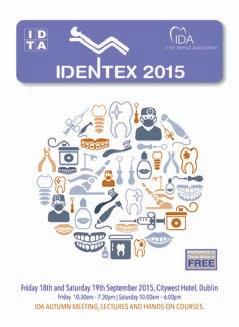
Friday and Saturday, September 19 and 20, are the dates for this year’s Identex 2015 and the Autumn Meeting of the Irish Dental Association. Entry to Identex is free and as always, there will be a strong display of the latest products and technology from the members of the Irish Dental Trade Association (IDTA). The IDA’s Autumn Meeting will be a comprehensive lecture programme, with lecturers discussing employment law, communication, oral radiology and infection control.

The World Dental Hygienist Awards, sponsored by the Sunstar Foundation, recognise dental hygienists who have made significant contributions to the dental and dental hygiene communities, their profession, or to the general public. Licensed/certified dental hygienists and students of dental hygiene are eligible to enter. Winners receive cash prizes ranging from $5,000 to $2,000 and a commemorative trophy, as well as travel to the 2016 International Symposium on Dental Hygiene. Further details are on www.sunstarawards.com.
The award ceremony will take place at the 20th Symposium of the International Federation of Dental Hygienists (IFDH), June 23-25, 2016, in Basel, Switzerland.
For the fifth year running, Omega Financial Management has announced a 100% payment record on claims made under its Day 1 income protection product from DG Mutual for 2014.
Overall there was a significant increase in both the number of claims and the amount paid to each member in the year. There was a wide range of claims – from cancer claims, one of which continued for the whole year – to injuries from sporting accidents, to shorter claims for viral and bacterial infections.
The majority of dentists who are covered have a Day 1 policy, meaning that they can claim for anything that keeps them out of work from the very first day of illness. The average weekly amount that dentists are covered for is just over ¤1,100 per week. Currently, the

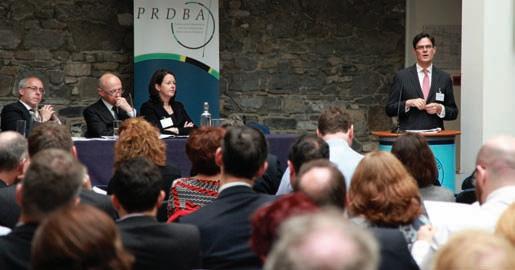
LEFT: The PRDBA’s first meeting was held in the Distillery Building on May 22.
RIGHT: Patrick Leonard SC addresses the PRDBA Annual Conference, while speaker Simon Mills BL, Chairman Nicholas Butler SC and Ciara McGoldrick BL look on.
The Professional, Regulatory and Disciplinary Bar Association of Ireland (PRDBA) held its first annual conference recently at the Distillery Building in Dublin 7. The PRDBA is a specialist bar association for Irish barristers who practice before professional regulatory tribunals (such as Fitness to Practise Committees of the Medical and Dental Councils) and who are interested in professional regulatory and disciplinary law. The association was officially launched by the Hon. Mr Justice Nicholas Kearns, President of the High Court,
longest claim has been payment for over two years and unlike many plans that are only written to age 60 (particularly for dentists), this will be paid out to age 65 or until the client is fit enough to return to work.
Announcing the claims details, Omega’s Managing Director John O’Connor said that the 100% claims record that DG Mutual has in Ireland emphasises its commitment to their mutuality and their members.
“We deal with all income protection providers in the Irish market and in our experience, DG Mutual is the quickest and easiest in terms of making payments to clients when they need it. As DG Mutual underwrites all new members so well, when it comes to them claiming, they pay people very promptly and usually without discussion.”
in November 2014, and now has over 40 members drawn from the Law Library of Ireland.
The conference featured fascinating presentations from a number of speakers with particular expertise in the area of professional regulatory and disciplinary procedures. Topics included 'Reflections on the role of the legal assessor to professional regulatory tribunals', 'Publicity and the role of the media in professional regulatory tribunals', and Differences between various professional regulatory schemes in the heath sector and the UK proposals for reform'.
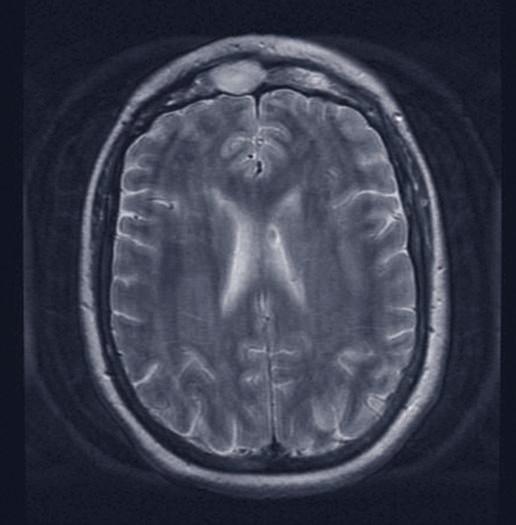
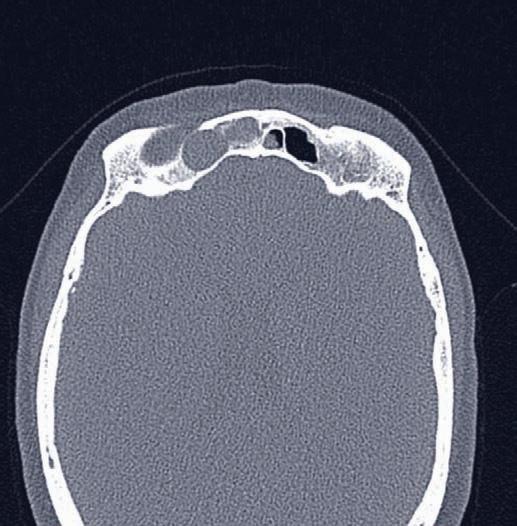
computed tomography (CT) scan was requested due to persistence of her symptoms. This demonstrated expansion of the right frontal sinus and bony erosion of the anterior and posterior cortices. A right frontal mucocele was evident expanding inferiorly into the orbit, posteriorly into the anterior cranial fossa and anteriorly into the soft tissues of the forehead (Figure 2). However, before she attended her planned ENT outpatient review appointment with the results of her CT scan, she presented to an emergency department at another hospital complaining of a constant throbbing frontal headache and an associated tender swelling on her forehead (Figure 3). The swelling was clinically diagnosed as an infected sebaceous cyst and immediately incised and drained under local anaesthetic. Pus discharge was noted with no subsequent microbiological growth. On her subsequent scheduled ENT clinic review, the frontal cortex dehiscence caused by the frontal sinus mucocele was noted on her CT scan. The incision and drainage previously carried out effectively converted the condition from a mucocele to a fistula. An endoscopic procedure was planned to establish drainage of the frontal sinus. Surgical intervention was offered to the patient; however, she declined surgery and is therefore under regular clinical review.
Discussion
The frontal sinus is funnel shaped with a central septum. Its floor slopes inferiorly to the midline where the ostium is located. An hourglass shaped narrowing called the frontal recess is located between the frontal sinus and anterior middle meatus. Obstruction at this narrowing results in loss of ventilation and mucus drainage from the frontal sinus. Obstruction can be caused by congenital abnormalities, allergy, infections, trauma, previous surgery and neoplasms.3
Frontal sinus mucoceles are the most common paranasal mucoceles. Expansion of the frontal mucocele can be inferior (into the paranasal sinuses, nose and orbits), posterior (into the anterior cranial fossa) or anterior (into the forehead skin). Therefore, in some instances, an infected frontal mucocele may present as a localised tender forehead swelling masquerading as an infected sebaceous cyst.
In this case, a 56-year-old lady with radiological evidence of a frontal sinus mucocele involving both the inner and outer tables of the frontal cortex presented to another hospital where clinicians were unfamiliar with her primary diagnosis. A misdiagnosis of an infected sebaceous cyst was reached and a surgical intervention was carried out, which could have been potentially harmful to the patient. In this case, however, the intervention was therapeutic to the patient and she was relieved of her constant throbbing headache with no untoward neurological sequelae.
It is important to be cautious when presented with swellings involving the midline of the forehead, lateral canthus or over the cranium near the suture lines. These may represent swellings with intracranial extension, or dehiscence of the brain or its surrounding structures. Clinicians need to be aware of this and need to investigate this further, either with an MRI or a CT scan before a biopsy.
Clinical features of frontal sinus mucoceles depend upon the specific location and growth behaviour. Visual disturbances represent the most common complaint.3 Pain is suggestive of an infection (mucopyocele).4 Inferior extension into the orbits can lead to ocular disturbances including diplopia, proptosis and ophthalmoplegia. Posterior extension into the anterior cranial fossa can lead to neurological complications, including a cerebrospinal leak, meningoencephalitis and pneumocephalus.5
The diagnosis of mucoceles is aided with CT scanning6 combined with MRI.7 CT scanning is utilised to define the regional anatomy and presence of bony erosion. This allows accurate lesion localisation and degree of extension to be determined. Bone erosion can be detected and the surgeon gains invaluable insight on frontal sinus anatomy required for surgical planning. MRI scanning is useful for differentiating mucoceles from tumours. It also aids in demarcating mucoceles from other soft tissue structures in cases with intracranial or intraorbital spread.7
The primary management of mucoceles is surgery, which ranges from functional endoscopic sinus surgery to open procedures.8 As surgical instrumentation has developed, the surgical treatment of mucoceles has developed into less invasive procedures with emphasis on drainage over ablation. This is less invasive, preserves sinus architecture and leaves no facial scarring.9 Complex cases with intracranial or orbital extension require an open procedure involving a craniotomy in order to remove the entire cyst lining and establish a drainage pathway to prevent recurrence.10 Recurrence rates have been variably reported as between 0.9 and 23%.11
We highlight the importance of evaluating patient symptoms with the clinical presentation, and the need to review previous related investigations to be aware of potential pitfalls in the differential diagnosis. This allows the condition to be treated in the most appropriate manner, and encourages safer and more effective practice.
References
1. McHenry, L.C., Sullivan, J.F., Ryan, H.J., Miller, D. Mucocele of sphenoid sinus. A benign lesion simulating a malignant process. N Engl J Med 1960; 262: 549-551.
2. Natvig, K., Larsen, T. Mucocele of the paranasal sinuses: retrospective clinical and histological study. J Laryngol Otol 1978; 92: 1075-82.
3. Stiernberg, C.M., Bailey, B.J., Calhoun, K.H., Quinn, F.B. Management of invasive frontoethmoidal sinus mucoceles. Arch Otolaryngol Head Neck Surg 1986; 112: 10601063.
4. Lund, V.J., Henderson, B., Song, Y. Involvement of cytokines and vascular adhesion receptors in the pathology of fronto-ethmoidal mucoceles. Acta Otolaryngol (Stockh) 1993; 113: 540-546.
5. Koike, Y., Tokoro, K., Chiba, Y., Susuki, S., Murai, M., Ito, H. Intracranial extension of paranasal sinus mucocele: two case reports. Surg Neurol 1996; 45: 44-48.
6. Mafee, M.F., Valvassori, G.E., Becker, M. Imaging of the Head and Neck. George Thieme Verlag, 2004, ISBN:1588900096.
7. Van tassel, P., Lee, Y.Y., Jing, B.S., et al Mucoceles of the paranasal sinuses: MR imaging with CT correlation. AJR Am J Roentgenol 1989; 153 (2): 407-412.
8. Galie, M., Mandrioli, S., Tieghi, R., Clauser, L.J. Giant mucocele of the frontal sinus. J Craniofac Surg 2005; 16 (5): 933-935.
9. Kuhn, F.A., Javer, A.R. Primary endoscopic management of the frontal sinus. Otolaryngol Clin North Am 2001; 34 (1): 59-75.
10. Delini, R., Missori, P., Lanetti, G., Ciapetta, P., Cantore, G. Mucoceles of the paranasal sinuses with intracranial and intraorbital extension: report of 28 cases. Neurosurgery 1993; 32 (6): 901-906.
11. Devars du Mayne, M., Moya-Plana, A., Malinvaud, D., Laccourreye, O., Bonfils, P. Sinus mucocele: a natural history and long-term recurrence rate. Eur Ann Otorhinolaryngol Head Neck Dis 2012; 129 (3): 125-130.
Précis: The current Ebola virus outbreak has attracted worldwide attention. This article will cover the oral manifestations and dental implications of Ebola virus infection.
Abstract: The current Ebola outbreak in West Africa is a global health emergency with implications for all healthcare professionals. This article will review the clinical features, transmission and oral manifestations of Ebola virus infection, and discuss the implications of the current outbreak for dental practices in Ireland. Guidance for managing suspected cases and contacts is also provided.
Conclusions: Although Ebola is an alarming disease with a very high mortality rate, it is extremely unlikely that the dental team will encounter a new presentation of Ebola or that it will pose a significant transmission risk. The dental team should be aware of the Health Protection Surveillance Centre (HPSC) Algorithm for Ebola Virus Disease Risk Assessment, and it should be followed as necessary. It is advised to defer dental treatment for 21 days after possible exposure to the Ebola virus.
Journal of the Irish Dental Association 2015; 61 (3): 141-143.
Introduction
The current Ebola outbreak in West Africa has developed into a global healthcare emergency with implications for all healthcare professionals. This article will review the clinical features, transmission and oral manifestations of Ebola virus infection, and discuss the implications of the current outbreak for dental practices in Ireland.
The Ebola virus is an RNA virus belonging to the Filoviridae family that was first recognised after two outbreaks of viral haemorrhagic fever in the Democratic Republic of Congo (previously Zaire) and Southern Sudan in 1976.1 The former occurred in a village near the Ebola River, after which the virus was named. Five


Sheila Galvin
BDentSc MFDS MB BAO BCh MRCPI
Dublin Dental University Hospital
different species of Ebola virus are now recognised: Bundibugyo, Sudan, Zaire, Reston and Tai Forest. The Zaire strain remains the most lethal, with a mortality rate of 76%, and is the cause of the current, twenty-fifth Ebola epidemic.1,2 The current outbreak in West Africa, which began in Guinea in March 2014, is the largest and most complex since the virus was first recognised, involving more infections and deaths than all previous outbreaks combined, and involving capital cities and major urban centres for the first time. To date, there have been 25,855 cases and 10,717 deaths3,4 (correct on April 17, 2015), with the vast majority of cases in Guinea, Liberia and Sierra Leone. There have also been cases in Nigeria, Senegal, Mali, Spain, the United States and United Kingdom.
Stephen R Flint
MA PhD BDS FDS RCSEng FFD RCSI MBBS (Hons) FICD FTCD
Dublin Dental University Hospital
Claire M Healy
MB BCh BDentSc FDS RCSEng (OM) FFD RCSI (OM) PhD
Dublin Dental University Hospital
Corresponding author:
Sheila Galvin, Department of Oral Medicine, Dublin Dental University Hospital, Lincoln Place, Dublin 2. T: 01-612 7314 F: 01-612 7296
E: sheila.galvin@dental.tcd.ie
Fruit bats of the Pteropodidae family are thought to be the natural Ebola virus hosts.5 Animal to human transmission occurs through close contact with the blood, secretions, organs or other bodily fluids of infected animals. Human-tohuman transmission occurs through direct contact with the bodily fluids of infected individuals and through contact with contaminated materials and surfaces. Traditional burial and funeral ceremonies in West Africa, where mourners have direct contact with the bodies of the deceased, are thought to have contributed to the rapid spread of disease in this outbreak. Large numbers of healthcare workers, in a part of Africa unaccustomed to dealing with Ebola, have also been affected.5
The incubation period for Ebola is two to 21 days, although typically symptoms appear eight to ten days after infection.1,2 First symptoms include sudden onset of high fever, fatigue, myalgia, headache and sore throat. These are then followed by vomiting, diarrhoea and abdominal pain. Around the fifth to seventh day of illness, patients develop thrombocytopaenia leading to severe bleeding from many sites including nose, gingiva, gastrointestinal and genital tracts, and conjunctiva.5,6 Treatment involves good supportive clinical care, including rehydration and treatment of organ dysfunction. There is no proven

effective treatment available for Ebola as yet, although a wide range of treatments and vaccines are currently being tested.1
The virus is only detected in blood after the onset of symptoms. Diagnostic tests include antigen-capture enzyme-linked immunosorbent assay (ELISA)
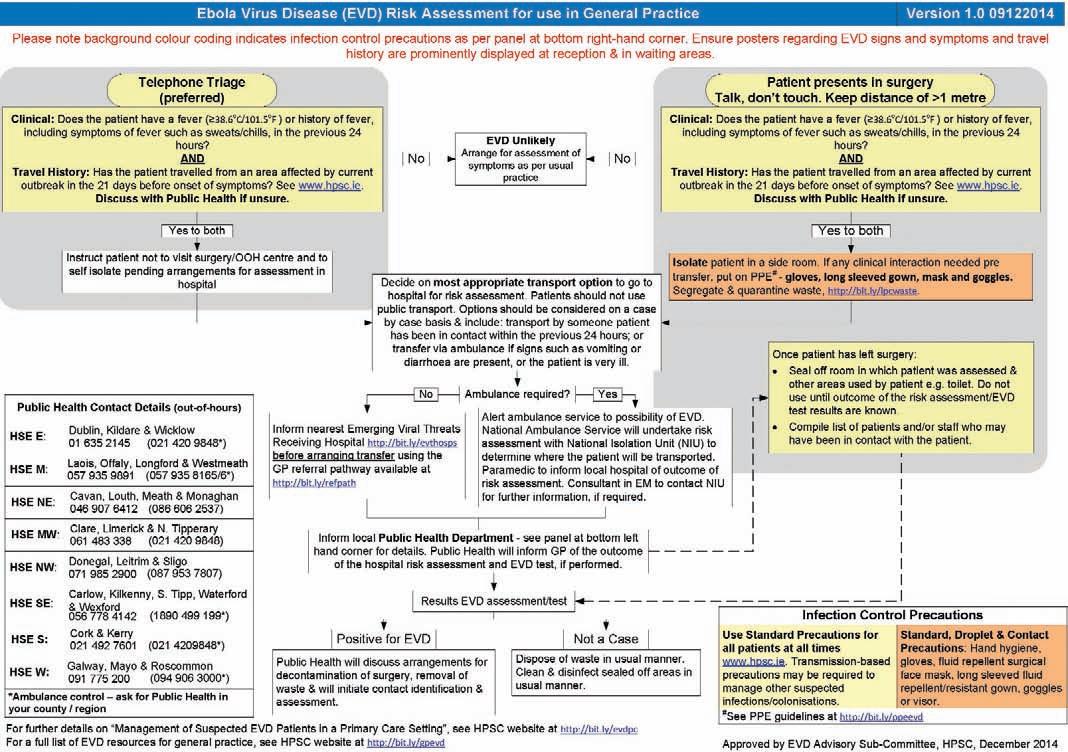
FIGURE 2: HSPC Algorithm for Ebola Virus Disease Risk Assessment for use in General Practice: http://www.hspc.ie/A-Z/Vectorborne/ViralHaemorrhagicFever/ Ebola/EbolaInformationforGeneralPractitioners/File,14977,en.pdf.
2. Shape of the dental arch
When the residual alveolar ridge is narrow and has a v-shape, the use of two splinted implants is not recommended because the bar may encroach upon tongue space and interfere with function and speech (Figure 2). If the bar is placed more labially, it may interfere with the lower lip and also affect the denture stability, and may have a negative impact on the aesthetic outcome. Therefore, individual attachments are ideal for such clinical problems when an adequate space between the implants can be granted. Three splinted implants may also provide a good alternative (Figure 2B). With three splinted implants, biomechanical risk may be increased, particularly when the implants are short and narrow. In such a situation, the denture should be totally tissue supported whenever possible.
A U-shaped residual ridge with adequate bone permits placement of four implants that are connected with three bar segments (Figure 1). However, the inter-implant distances should be wide enough to accommodate the bar and the clips in order to avoid distortion and unsatisfactory retention. The distance between the most anterior implants and the most posterior implant (anteroposterior spread) dictates the cantilever extension if required.
3. Angle between implants
There is general agreement that when individual (non-splinted) attachments, such as a ball system, are used, implants should be installed parallel to each other to gain the best retention and to reduce the wear rate of the matrices. If this is not possible, other options such as the use of angled abutments or bars may provide an alternative solution. Furthermore, Locators and magnet attachments may also provide a solution when the implants are not parallel.
4. Amount of required retention
Bar attachments usually provide more retention than individual attachments. Thus, in patients who require maximum retention, bar attachments may fulfil this requirement and represent the most ideal option. A bar that has multiple segments can be combined with individual attachments in order to maximise the degree of retention, support and stability. Also, an FISO may be an alternative.
When a single bar is used with two implants, its length should be between 20 and 22mm to obtain good retention and stability. In this case, one or two clips can be used to gain the optimal retention. When the bar is too short, stability and retention are not achievable. If the bar is too long, it may bend when it is loaded and consequently is distorted and may be broken.
5. Restorative space
Restorative space is a three-dimensional space that is available to accommodate various parts of the overdenture and its attachment system. This space is surrounded bucco-lingually by cheek, lips and tongue, and vertically by the edentulous ridge and the occlusal plane of the prospective overdenture. Therefore, it should be appreciated in vertical and horizontal dimensions. Hence, room for the attachment, the superstructure, the acrylic and the teeth is required. If this room is not available, the outcome is negatively affected and, for example, mechanical failure of the denture is a possibility.
The aesthetic requirement of the final restoration (overdenture) is significantly influenced by the available restorative space, as well as by the used attachment system. As an example, when vertical space is limited, the use of a bar attachment may violate the inter-occlusal (free-way) space to accommodate
the restoration, which results in an inferior aesthetic outcome of the overdenture, as well as possibly leading to other complications that arise as a result of this error. In such a case the attachments with a low profile are the best option; however, other factors should also be considered.
A minimum of 12mm of vertical restorative space from the crest of the ridge to the incisal edge is usually required with the bar system. This distance consists of 4mm for the bar, at least 1mm for the space between the inferior surface of the bar and the ridge, and 7mm for the teeth, the acrylic and the clip. A space between the bar and the tissue is required to facilitate oral hygiene, and reduce the possibility of plaque and calculus deposition. When the Locator attachment is used, a minimum of 8.5mm is required, while the ball attachment requires 1012mm.
The horizontal restorative space in the bucco-lingual direction should also be considered, and the attachment should be placed on the crest of the ridge to achieve the best biomechanical advantages of the attachment. As well as this, the horizontal space in the mesio-distal direction should also be considered. Thus, a good distance between the adjacent implants, which provides a good biomechanical advantage and facilitates oral hygiene, should be considered.
Treatment and repair costs should be considered when the treatment plan is made, and the patient should be made aware of these costs. For instance, a bar or telescopic attachment is more expensive when compared with other attachment systems. Furthermore, when bar repair or replacement is required, they cannot be carried out clinically and, therefore, laboratory work will be needed. This is a lengthy and expensive process. Also, the denture will be held for some time and the patient may have to leave without the denture. Also, when an implant tissue-supported overdenture is considered, bone resorption of the tissue-borne regions will continue. Therefore, relining and occlusal adjustments are needed on a regular basis.
The cost of treatment and its inter-relationship with other factors should be investigated and considered. However, the treatment cost may compromise and interfere with providing the best treatment option.
7. Other factors
Factors such as the patient’s expectations of the prosthetic, personal choice, and knowledge and skills of the dentist and laboratory technicians, as well as opposing (maxillary) arch, may play a role in the selection of a specific attachment system and type of overdenture. All of these factors are interrelated, and their individual and combined effects should be considered and appreciated when the treatment plan is made.
The anterior region of the mandible is an ideal site for implants
There is strong evidence indicating that implant success is highly reliant on the volume and quality of the peri-implant bone. Bone quality in the anterior area of the mandible is much better than that in the posterior region,15 and implant failure rate in this site is lower than in any other site in the mandible, as well as in the maxilla.23 Implant placement in the inter-foraminal area is less critical than in other areas of the mandible, and a success rate of ≥95% was reported for implants placed in this region.10 Furthermore, after tooth extraction, bone resorption in this area is usually less than that in the posterior region, which gives an opportunity for installing the implants without the need for other surgical methods such as ridge augmentation and the use of graft materials.
Therefore, the mandibular anterior area represents an ideal site for placement of dental implants in the edentulous mandible with a high success rate.
Two-implant RISOs as a first choice standard of care for the edentulous mandible
The decision on the number of implants that suits a particular clinical situation is to some extent subjective and depends on the clinician’s knowledge and experience, as well as on many other factors. However, two consensus statements on the number of implants to be used with RISOs were published in 2002 and 2009, respectively. Both consensus statements recommended that RISOs with two implants should be considered as the first-choice standard of care for an edentulous mandible.24,25 A more recent survey was carried out by an expert panel of 16 representatives of academic prosthodontists to investigate if there was agreement on the gold standard for an edentulous mandible between the two-implant-supported mandibular overdentures and a conventional mandibular complete denture.26 The survey results concurred with the two consensus statements of 2002 and 2009.
Even though the RISO with two implants is a reliable clinical decision and is considered as the minimum standard that should be appropriate for most patients, it does not suit all patients and the abovementioned factors should be taken into account when planning for mandibular RISOs.24,25
As a general guide, two implants of 4mm diameter and a minimum of 8mm length are sufficient in order to obtain satisfactory retention and stability. The two implants are preferably located in the lateral incisor areas and not in the canine region.27-29 This location is regarded as the best site for installation of the implants for several reasons. For instance, if a removable RISO is supported by two implants that are placed in the canine regions, and the RISO then needs to be altered into a fixed one where five implants are considered essential, placement of three additional implants between the two existing implants may not be possible as the space would be insufficient. Additionally, it has been suggested that the anterior mandibular area should be divided into five equal spaces, in which prospective implants may be positioned.15 By this strategy, more implants may be installed if the overdenture needs to be changed from a two-implant-supported overdenture to a four-implant-supported overdenture. Furthermore, if four implants were installed with an equal distance between each, placement of an additional implant when it is required is not possible, as there will be insufficient space to accommodate the fifth implant.
In general, when two or more implants are used to retain an RISO, two basic techniques are described and widely used: connecting the implants to each other (splinted); or, using them individually (non-splinted) (Figures 1, 2 and 3). For example, two implants may be joined together with a straight bar that has an ovoid/circle cross-section, which permits denture movement vertically; thus, the implants as well as the mucosa will be involved in the dissipation of the occlusal force.5,15 Two implants can also be used individually in a nonsplinted fashion with a ball, Locator, magnetic or telescopic attachment (see later). However, patient satisfaction regarding retention and stability of the RISO declined significantly with the use of the two non-splinted ball attachments, while patient satisfaction with single-bar and triple-bar (two and four implants) attachments did not change with time.30 When two implants are used in the construction of the RISO and to reduce mechanical failures of the prosthesis and/or implants, the overdenture should
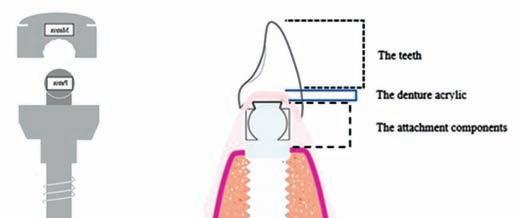
FIGURE 3: A schematic representation of the ball attachment system showing the vertical restorative space required when a ball attachment system is used. Room for the attachment components, denture acrylic base and the denture teeth is needed.
have a single axis of rotation during function. This rotation will allow the alveolar ridge to take part in dissipation of the occlusal loadings. This design requires that the denture base be extended in a similar fashion, as in the case of a conventional complete denture. This allows a maximum area of tissue to support the denture. However, when a bar with multiple axes is used, the denture is exposed to torque that consequently leads to damage of the attachment and the denture, in addition to overloading of the implants.11,31
In an attempt to simplify the technique while still maintaining denture stability, retention, and patient comfort and satisfaction, a single implant mandibular complete overdenture can be used.32 In this case only one implant was installed in the midline of the mandible with a ball, a Locator or a magnet attachment. However, because of a limited number of well-controlled clinical studies, it is difficult to draw a sound conclusion regarding the viability of one-implantsupported overdentures.33
Mini dental implants (MDIs) are one-piece implants with a diameter of less than 3mm (range from 1.8mm to 3mm). They may be used as an alternative option when a conventional implant is not possible, as when the alveolar ridge is severely resorbed or in systemically compromised patients. The advantages of using mini-implants include relatively low cost, simplicity of placement, minimally invasive surgery and significantly shorter healing periods than those for conventional implants.34 However, mini-implants have a reduced diameter and surface area; therefore, they are subjected to greater occlusal loading, which may lead to mechanical failure, such as deformation and fracture. Nevertheless, when four mini-implants were used to support and retain the RISO for three years, high survival rates were reported irrespective of whether mini-implants were immediately or early loaded (91.7% and 96.7%, respectively).35 Nevertheless, well-controlled randomised clinical studies are required.
RISO failure is most commonly of a mechanical nature.18 Types of failure include: fracture of the acrylic base, teeth and retentive clip; reduction of retention as a result of wear of the retentive elements or loosening of matrices and screws; fracture or wear of the clip and matrix; fracture of solder joints; and, dislodgement of the attachments. Complications as a result of plaque
TABLE 3:A summary of the results of several laboratory studies on attachment systems.
1.Irrespective of the material used (with the exception of magnetic attachments), the majority of attachment systems show a degree of wear with use.
2. As a result of the wearing process, a decrease or complete loss of retention is usually seen after use; the exception is telescopic systems.
3. The telescopic crown attachment system shows an increase in retention with use, which is explained as a result of wear. This leads to an increase in the mechanical adaptation between the matrix and the patrix.
4. The magnetic system shows the lowest retention capacity but the least wear.
5. The magnetic system shows a low percentage of retention loss after use.
6. A high percentage of retention loss was seen with ball, Locator and Extra-coronal Resilient Attachment (ERA) systems.
7. When one attachment element is made of plastic and the other is made of metal, such as in the Locator and ERA systems, the decrease in retention seen is a result of distortion of the plastic patrix, as insignificant wear was detected in the metal matrix.
8. The decrease in retention that is seen with the other attachment systems is believed to be due to wear of the matrix or patrix, or both attachment parts.
9. Clinical performance of the Locators and ERAs are similar, as both consist of plastic patrices and metal matrices.
accumulation, such as mucosal enlargement and peri-implantitis, are also reported.34,36 Relining of the denture is also required regularly and may need to be carried out every four years37 to compensate for the changes in the alveolar ridge that may occur. A summary of several laboratory studies on attachment systems is presented in Table 3
Conclusion
There is a general consensus that RISOs provide significantly greater patient satisfaction than conventional complete dentures. The use of two implants to support a mandibular complete denture is a reliable solution to resolve problems that are associated with conventional complete dentures. A comprehensive and careful treatment plan, which begins with the construction of a complete denture even before placement of the implant, is a wise approach to obtain the greatest benefit from the attachment systems. As maintenance and aftercare are more frequently required in RISO wearers than in patients with conventional complete dentures, and elderly patients are more susceptible to oral diseases, the possibility of detecting oral disease in its early stages would be an additional important advantage in the use of RISOs.
Acknowledgement
The authors would like to thank Dr Osama Omar for Figures 4 and 5
References
1. Vecchia, M.P., Regis, R.R., Cunha, T.R., de Andrade, I.M., da Matta, J.C., de Souza, R.F. A randomized trial on simplified and conventional methods for complete denture fabrication: cost analysis. J Prosthodont 2014; 23 (3): 182-191.
2. Carlsson, G.E., Omar, R. The future of complete dentures in oral rehabilitation. A critical review. J OralRehabil 2010; 37 (2): 143-156.
3. Sohrabi, K., Mushantat, A., Esfandiari, S., Feine, J. How successful are smalldiameter implants? A literature review. Clin Oral Implants Res 2012; 23 (5): 515-525.
4. Massad, J.J., Ahuja, S., Cagna, D. Implant overdentures: selections for attachment systems. Dent Today 2013; 32 (2): 128, 130-132.
5. Burns, D.R. Mandibular implant overdenture treatment: consensus and controversy. J Prosthodont 2000; 9 (1): 37-46.
6. Hillerup, S. Preprosthetic mandibular vestibuloplasty with buccal mucosal graft. A 2year follow-up study. Int J Oral Surg 1982; 11 (2): 81-88.
7. Hochstedler, J.L., Finger, I.M. Preprosthetic surgery. Gen Dent 1998; 46 (6): 626630.
8. Matras, H. A review of surgical procedures designed to increase the functional height of the resorbed alveolar ridge. Int Dent J 1983; 33 (4): 332-338.
9. Doundoulakis, J.H., Eckert, S.E., Lindquist, C.C., Jeffcoat, M.K. The implantsupported overdenture as an alternative to the complete mandibular denture. J Am Dent Assoc 2003; 134 (11): 1455-1458.
10. Chee, W., Jivrai, S Treatment planning of the edentulous mandible. Br Dent J 2006; 201: 337-347.
11. Hoffmann, O., Beaumont, C., Tatakis, D.N., Zafiropoulos, G.G. Telescopic crowns as attachments for implant supported restorations: A case series. J Oral Implantol 2006; 32 (6): 291-299.
12. Mericske-Stern, R. Prosthodontic management of maxillary and mandibular overdentures. In: Feine, J.S., Carlsson, G.E. Implant Overdentures: The standard of care for edentulous patients (1st ed.). Quintessence Publishing, 2003: 83-98.
13. Simon, H., Yanase, T.R. Terminology for implant prostheses. Int J Oral Maxillofac implants 2003; 18 (4): 539-543.
14. Tomasi, C., Idmyr, B.O., Wennström, J.L. Patient satisfaction with mini-implant stabilised full dentures. A 1-year prospective study. J Oral Rehabil 2013; 40 (7): 526534.
15. Misch, C.E. An organised approach to implant-support overdenture. In: Misch, C.E. Contemporary Implant Dentistry (3rd ed.). St Louis, Mo: CV Mosby; 2008: 293-313.
16. Naert, I., Alsaadi, G., Quirynen, M. Prosthetic aspects and patient satisfaction with two-implant-retained mandibular overdentures: a 10-year randomized clinical study. Int J Prosthodont 2004; 17 (4): 401-410.
17. Lee, J.Y., Kim, H.Y., Shin, S.W., Bryant, S.R. Number of implants for mandibular implant overdentures: a systematic review. J Adv Prosthodont 2012; 4 (4): 204-209.
18. Alsabeeha, N.H., Payne, A.G., Swain, M.V. Attachment systems for mandibular twoimplant overdentures: a review of in vitro investigations on retention and wear features. Int J Prosthodont 2009 (5); 22: 429-440.
19. Kleis, W.K., Kämmerer, P.W., Hartmann, S., Al-Nawas, B., Wagner, W. A comparison of three different attachment systems for mandibular two-implant overdentures: one-year report. Clin Implant Dent Relat Res 2010; 12 (3): 209-218.
20. Riley, M.A., Williams, A.J., Speight, J.D., Walmsley, A.D., Harris, I.R. Investigations into the failure of dental magnets. Int J Prosthodont 1999; 12 (3): 249-254.
21. Allen, P.F., Ulhuq, A., Kearney, J. Strategic use of a new dental magnet system to