Journal of the Irish Dental Association
Iris Cumainn Déadach na hÉireann
Journal of the Irish Dental Association
Iris Cumainn Déadach na hÉireann
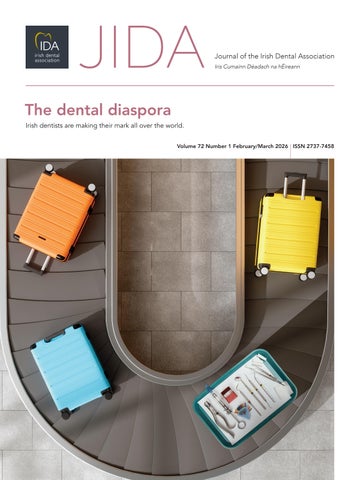
Irish dentists are making their mark all over the world.

Honorary Editor Dr Cristiane da Mata
IDA President Dr Will Rymer
IDA Chief Executive Fintan Hourihan
Director of Advocacy Roisín Farrelly & Communications
Journal Co-ordinator Liz Dodd liz@irishdentalassoc.ie
Irish Dental Association
Unit 2 Leopardstown Office Park, Sandyford, Dublin 18.
T: +353 1 295 0072
F: +353 1 295 0092 www.dentist.ie
The Journal of the Irish Dental Association is the official publication of the Irish Dental Association. The opinions expressed in the Journal are, however, those of the authors and cannot be construed as reflecting the Association’s views. The editor reserves the right to edit all copy submitted to the Journal. Publication of an advertisement or news item does not necessarily imply that the IDA agrees with or supports the claims therein. For advice to authors, please see: https://jida.scholasticahq.com/for-authors.
This Journal supports sustainable forestry/forest management and is printed using vegetablebased environmentally friendly inks. Every mode of communication necessitates the consumption of energy and resources. It is crucial to consider the comprehensive effects throughout the lifecycle, including the production, storage, duplication, transmission, printing, and disposal of this Journal. These actions can potentially influence the economy, the environment, and society. The path towards a sustainable future entails making prudent decisions in communication to ensure its viability for the wellbeing of all.


at the Oireachtas Annual Conference 2026
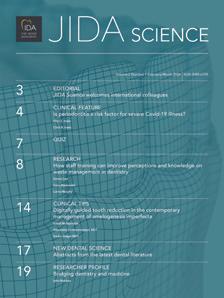
the JIDA Science International
The latest edition of JIDA Science is available free and exclusively to IDA members.
In this edition:
n Is periodontitis a risk factor for severe Covid-19 illness?
n How staff training can improve perceptions and knowledge on waste management in dentistry
n Digitally guided tooth reduction in the contemporary management of amelogenesis imperfecta
n Researcher profile: Dr John Macken
Managing Editor Ann-Marie Hardiman ann-marie@thinkmedia.ie Editorial Caoimhe Coolican
Advertising Paul O’Grady paul@thinkmedia.ie
Design Rebecca Bohan, Tony Byrne



Imminent legislative change is a positive development for dentistry.
The last year marked two significant advances for the dental profession in Ireland: the enactment of the Regulated Professions (Health and Social Care) (Amendment) Act 2020 and the decision to proceed with amendments to the Dentists Act 1985 to provide for statutory professional competence. Together, these developments bring dentistry into alignment with other regulated healthcare professions and signal a more modern, coherent approach to professional regulation. In particular the amendment of the Dentists Act represents a decisive and welcome step in the evolution of dental regulation and oral health governance. It formalises what responsible practitioners have long recognised: that competence is not static, but a continuing obligation grounded in lifelong learning, reflective practice, and accountability.
For practitioners, statutory professional competence affirms dentistry as a contemporary, evidence-led profession. It aligns regulatory expectations with clinical reality, where advances in materials, technologies, prevention science, and patientcentred care demand continuous skills development. Crucially, it reframes competence not as punitive, but as a structured and supportive framework, enabling dentists to maintain exacting standards while adapting safely to change. For patients, it strengthens public trust, enhances transparency, safeguards quality, and supports informed consent.
Importantly, the amended Act also creates an opportunity for more effective oral health policy implementation, provided it is underpinned by constructive engagement. Regulation alone cannot deliver population oral health gains. Success depends on genuine partnerships between the State, the dental profession, and patients. The State must recognise dentists as essential delivery partners, engaging meaningfully in policy design, funding structures, and service reform. Dentists must engage constructively with policy objectives, contributing clinical insight and leadership to ensure that policies are workable in practice. Patients must be empowered through prevention-focused messaging and improved access to care. If approached collaboratively rather than defensively, the amended Act can function as a catalyst for coherent oral health policy and resilient professional practice. However, a critical concern remains: patients, particularly children, continue to suffer the consequences of decades of policy neglect. Meaningful engagement must translate into timely action, ensuring that those most affected are no longer le to fester in a health inequality crevasse.
Dr Will Rymer IDA President
As Smile agus Sláinte implementation approaches, the IDA will stand firm in negotiating on behalf of the profession.
The most recent Oireachtas Committee hearing on oral health was seen as a bruising affair for the HSE and the Department of Health, while the analysis provided by the IDA team gained greater favour.
The pressure faced by the official side means that the roll-out of the oral health reform programme signalled in Smile agus Sláinte will now be expedited.
Confirmation that the Minister for Health would open the IDA National GP Meeting only underscored the sense that the Association will be called to the talks table very soon.
The strong advocacy and media work by our representatives means that the Association can enter discussions with a firm sense of confidence and resolve. But we are ready to be tested in a way the profession has never been challenged before. The Association has assembled a strong team of advocates committed to defending the profession and promoting the highest standards of healthcare. Only the Association can point out what is possible given the capacity available in Irish dentistry, what is viable for practices, and what is in the best interest of patients. We have spent huge amounts of time in preparing realistic proposals for reform informed by a huge swathe of professional expertise from working dentists.
There is no doubt that difficult negotiations lie ahead and we will not abandon our members by taking the easy way out when times get tough. That is why the support of all dentists for the Association and its representatives has never been more important.
Likewise, we need as many dentists as possible to join the Association to copperfasten our position as the voice of Irish dentistry and the only representative body dedicated exclusively to representing dentists. Becoming a member means that you are protected by your union, you get to influence change, and will be kept informed throughout the negotiations process.
As the feature on page 15 of this edition shows, representing our members is perhaps the most vital but also the least understood service we offer. Hopefully this feature will show the breadth and scope of the service offered by our small but dedicated team of experienced executives and committed volunteers.
United we stand, divided we fall. If you care about your profession, join us today and get behind your Association.
Fintan Hourihan IDA CEO
The Irish Dental Association delivered a powerful and united message about the urgent need to reform Ireland’s failing dental system at a hearing of the Oireachtas Joint Committee on Health in January.
The IDA highlighted decades of underinvestment that has le children, medical card patients and vulnerable groups without adequate care. Seven years aer the publication of Smile agus Sláinte, the State has yet to produce an implementation plan – an unacceptable delay with real consequences for public health. The Association urged Government to deliver: n a new, modern Dental Treatment Services Scheme (DTSS); n restoration of the school screening programme; n investment in workforce expansion; n legislative reform and updated standards; and, n immediate publication of the Smile agus Sláinte implementation plan.
Key comments from the Committee hearing
“If I were Judge Judy and were assessing what I believe, I would honestly fall down on the side of the Irish Dental Association because it very eloquently demonstrated or explained where the issues lie.”
Deputy Peter Roche, Fine Gael
“Oral health has never received the priority it deserves – and we are now seeing the consequences.”
Fintan Hourihan
“The public dental service has moved from poor, to bad, to worse, to shocking.”
Deputy Michael Cahill, Fianna Fáil
“This is Groundhog Day. The same crises, the same explanations, and no meaningful improvement.”
Deputy David Cullinane, Sinn Féin
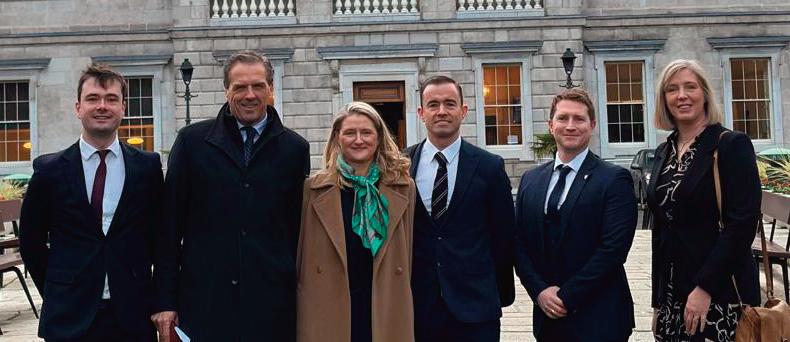
Members of the IDA delegation at the recent Oireachtas Health Committee hearing (from left): Dr Daniel Merrick; Fintan Hourihan, IDA CEO; Dr Will Rymer, IDA President; Dr Bridget Harrington Barry, IDA President Elect; Dr Daniel Linden; and, Dr Sarah Edgar.
“I cannot understand why we have a health service that facilitates implants for hips and knees, but when it comes to teeth, we are happy to leave people with inadequate care.”
Dr Will Rymer
“We are returning to a poor law system – where access to dental care feels like a charity, not a public service ... it beggars belief that with a population increase of 1.2 million, we now have fewer dentists providing public care than 20 years ago.”
Deputy Martin Daly, Fianna Fáil
“No child in any part of the country is being seen three times in primary school, even though that has been official policy for 30 years.”
Fintan Hourihan
“The DTSS has collapsed – barely one in four private dentists is now participating.”
Fintan Hourihan
Preliminary findings of a new IDA survey of general dental practitioners (GDPs) has found that most dentists think it is unlikely that the aims of the National Oral Health Policy (NOHP), Smile agus Sláinte, will be realised.
Over half of the respondents said they were very familiar (11%) or somewhat familiar (44%) with Smile agus Sláinte and its recommendations. However, nearly half (45%) were not familiar with it. In addition, 46% had not read the main recommendations. Eight in 10 GDPs surveyed think it is unlikely/very unlikely that the NOHP aim of a State scheme for under sevens will be realised (62% said this was very unlikely). Nearly nine in 10 believe it is unlikely/very unlikely that a viable scheme for medical card patients will be introduced. Three-quarters think it is unlikely/very unlikely that the NOHP will result in better workforce planning. Over two-thirds think it is unlikely/very unlikely that enhanced and clear care pathways for complex and vulnerable patients will be introduced. Approximately 30% think it is likely/very likely that a new Dentists Act will be introduced and 36% think it is likely/very likely that there will be recognition of more dental specialties.
Dentists believe that the biggest obstacles to implementing the NOHP are lack of Government funding, capacity constraints, and insufficient political will.
Most general dentists continue to work more than 30 hours per week, but a significant minority (33%) reported working fewer than 30 hours per week. Significantly, practice owners work more excessive hours than associates, with 74% of practice owners working 30 or more hours per week and 26% working fewer than 29 hours per week. This is compared to 46% of associates who work more than 30 hours per week, while 54% of associates work fewer than 29 hours per week.
The top priorities for GDPs are patient-centred care, followed by work–life balance, the financial viability of the practice, and staff recruitment and retention.
GDPs surveyed identified their biggest challenge as rising practice costs. This is followed by recruitment and retention of dental staff, and regulatory/ compliance burden.
Some 45% of respondents said they felt moderately to extremely professionally isolated, with a further 25% saying they felt slightly isolated in their profession. Nearly 60% said they would value a formal mentorship programme for dentists.
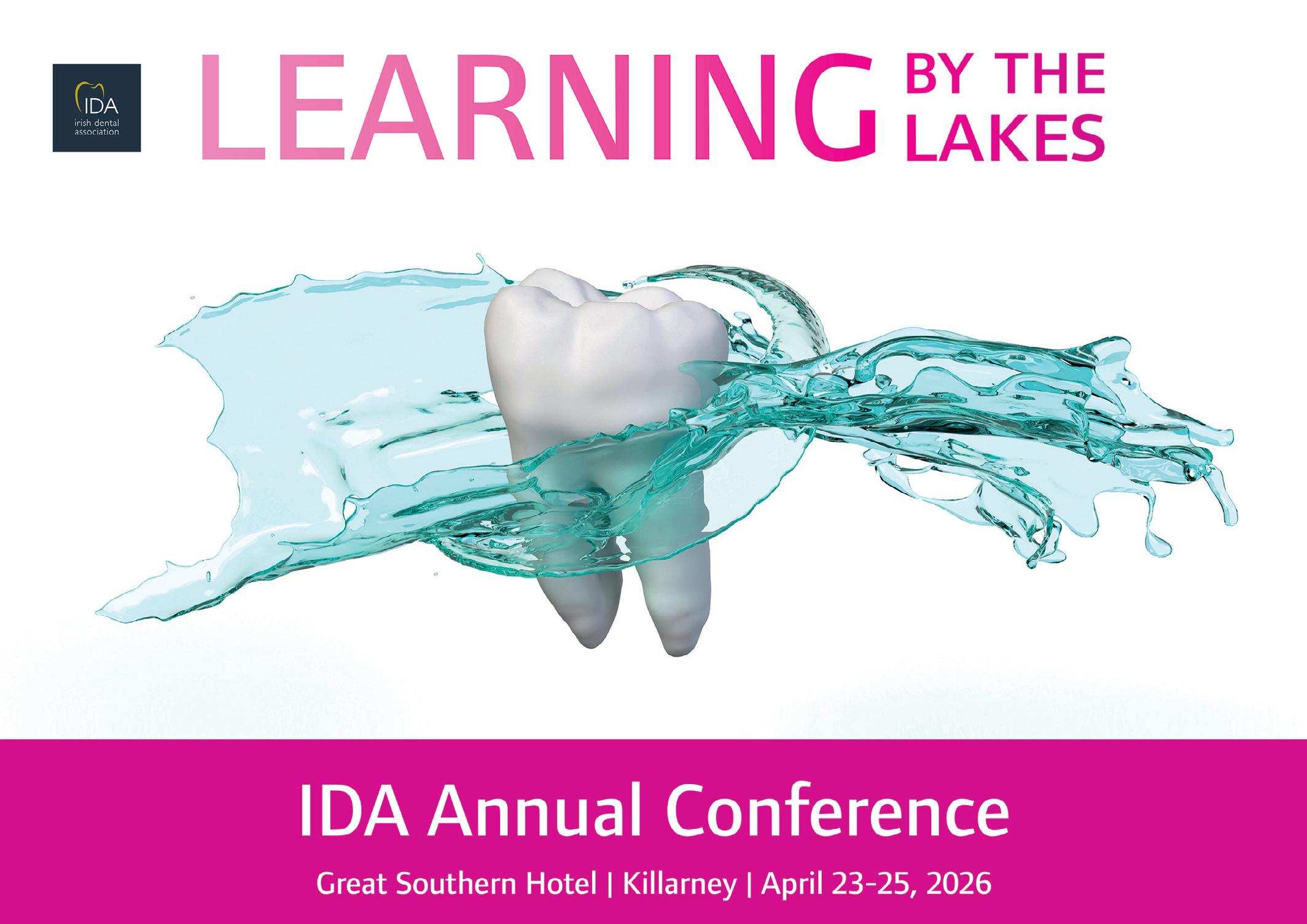
The IDA is delighted to be returning to the Kingdom and to the magnificent Great Southern Hotel Killarney from April 23-25.


Dr
Dr
Celine Higton and David Gerdolle join forces for hands-on restorative day
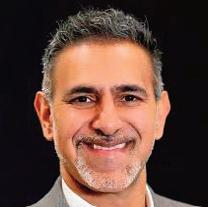
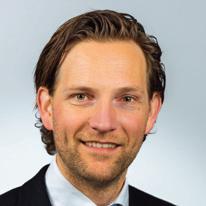
The organising committee is thrilled to have the everpopular Dr Celine Higton AND Dr David Gerdolle come together to give a unique two-handed, hands-on course: ‘The indirect restoration of a carious tooth’.
David and Celine, who are world-renowned presenters in restorative dentistry, will talk about the newest and best restorative materials, and look at the newest trends in bonding materials and how they can be more effective. Labelled as the ‘Queen of Rubber Dam’ Celine’s courses always sell out, and her style and expert advice on restorative dentistry is always very well received. Aer visiting us in 2023, David Gerdolle returns, and this time we just had to have him give a
Prof.

3 5 11
DAYS OF LEARNING & NETWORKING HANDS-ON COURSES TO CHOOSE FROM MINIMUM OF 11 CPD HOURS – SATURDAY –PRACTICE MANAGERS DAY – SATURDAY –DENTAL TEAM DAY FULL TRADE SHOW
hands-on course aer a thought-provoking and fascinating presentation last time around. Don’t miss this rare opportunity to see both these leading experts present a hands-on course, and they will also give two lectures on Friday at the main conference.
New additions to this year’s programme
Hands-on course – Saturday, April 25: Ortho-restorative practical course with Tif Qureshi
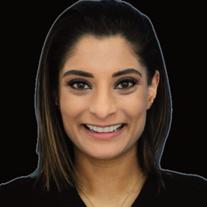
The IDA is delighted to present a full-day hands-on course on Saturday, April 25, with Dr Tif Qureshi.
Many of you said you’d like the opportunity to do a hands-on course on the Saturday aer a day of lectures on Friday, and so this year we have delivered! Tif Qureshi, known for his ‘Align, Bleach and Bond’ courses all over the UK and Europe, will give a oneday hands-on course on ortho-restorative dentistry for everyday patients.
A wonderful teacher, Tif will cover how to integrate the Dahl principle into everyday ortho-restorative cases. A great opportunity to learn from one of the best! Don’t miss him on Saturday, April 25, in Killarney.
Practice managers’ certificate – Saturday, April 25
Introducing the first full-day course for practice managers in Ireland. Saturday, April 25, will see the very first dedicated programme for practice managers take place in Killarney. Topics will include: life as a practice manager; HR issues; conflict management; social media; and, what to expect from inspections. This is a day not to be missed by senior dental nurses and practice managers alike. Dentists are also welcome to register for this course.
The IDA is offering a MASSIVE discounted price until Monday, March 2, for all dental team members to register for only €100. Don’t delay, this offer must end on Monday, March 2, so register TODAY. This offer is open to those doing the Dental Team Day OR the Practice Managers’ Day.
Go to www.dentist.ie or email linda@irishdentalassoc.ie
The year 2025 was one of significant progress for the Irish Dental Association (IDA), marked by growing membership, strengthened advocacy, and increased national visibility for the issues affecting the dental profession.
Supported by a community of over 1,700 members, including 155 new members welcomed this year, the Association has continued to build a strong, united voice for dentistry across Ireland.
Advocacy remained at the heart of the Association’s work throughout the year. Between January and early September, dental issues were raised 179 times in the Oireachtas, with 98 Parliamentary questions submitted by TDs on key areas such as access to care, workforce planning, and public dental services.
Eleven Oireachtas members spoke directly on dental matters, reflecting growing political awareness of the challenges facing the profession.
A major milestone was the national Oireachtas debate on oral health services, where IDA briefings directly informed contributions across the chamber, ensuring that the voice of dentists was central to the discussion. Alongside political engagement, the Association significantly increased its
Support and peace of mind
“Being a member gives me peace of mind – I know there’s always support there when I need it.”
“You don’t realise how valuable the IDA is until you need them –and then you’re very glad you’re a member.”
“Having the IDA behind you makes a huge difference, especially when things get challenging.”
public profile through national and local media. Over 300 media pieces highlighted dental issues, creating more than 60 million opportunities for the public to see or hear about the work of the Association and the realities facing dental professionals.
IDA representatives featured prominently across broadcast, print, and online media, reinforcing the Association’s role as the authoritative voice for dentistry in Ireland. Direct engagement with policymakers remained a priority.
The Association met with the Minister for Health and maintained ongoing dialogue with the Oireachtas Health Committee, including engagement with all 14 members of the newly appointed Committee.
Targeted outreach continued on critical issues such as workforce sustainability, recruitment of public dentists, reform of dental legislation, and the inclusion of dental professionals on the Critical Skills List. This year’s progress reflects the power of collective membership. Together, the profession is shaping the conversation on oral health, influencing policy, and strengthening the future of dentistry in Ireland.
Value and benefits
“Membership pays for itself with the benefits available.”
“From advice to discounts, it’s excellent value.”
“There’s so much support and guidance that you just don’t get elsewhere.”
CPD and development
“The CPD opportunities alone make membership worthwhile.”
“The quality and value of the CPD is excellent.”
“It’s easy to stay up to date through the IDA – everything is in one place.”
Community and belonging
“You don’t feel like you’re on your own – there’s a real sense of community.”
“Being a member connects you with other dentists who understand the realities of the job.”
“It’s more than membership –it’s being part of the profession.”
Advocacy and representation
“The IDA represents dentists at a national level – that voice is incredibly important.”
“It’s reassuring to know the profession is being represented properly.”
“They speak up for us when it really matters.”
Support for new dentists
“As a young dentist, having the IDA there is incredibly reassuring.”
“You’re starting out, and it’s good to know you’re supported from day one.”
“It gives you confidence knowing you can ask questions and get proper advice.”
The fee paid to dentists for the scale and polish under the Dental Treatment Benefit Scheme (DTBS; the PRSI scheme) increased from €42 to €50 from January 31, 2026. Dentists will still be able to charge patients a co-payment of up to €15 on top of the State payment.
The State payment for the protracted periodontal treatment will remain at €42 to dentists with no limit on the level of co-payments to be decided by the dentist. The Scheme allows the dentist to decide on the total fee to be paid where pocketing exceeds 3.5mm.
The Association had spent 18 months campaigning for a decision on the fees review under the DTBS and pushed hard for increases.

At the end of December, the Government approved policy proposals from the Minister for Health, Jennifer Carroll MacNeill TD, to amend the Dentists Act 1985 in order to introduce statutory CPD obligations for dentists. The changes will provide a new framework for the obligations and powers of dentists, the regulator, and employers. The changes are intended to recognise and support dentists in their commitment to ethical obligations and lifelong professional development.
IDA President Dr Will Rymer welcomed the news, stating: “It is long overdue, and we wish to thank
the Minister for Health and her officials for delivering on an important promise contained within the Programme for Government, designed to bring dentistry in line with other healthcare professions.
This will enhance patient safety as well as promoting the highest standards of care in dentistry.
The IDA looks forward to collaborating positively with the Department of Health and the Dental Council as the roll-out of new systems of professional competence for dentists begins”.

Essential compliance and business advice webinars for dentists.
€50 per webinar or €250 for all six webinars. Make sure you’re up to date with your requirements for dental and business regulations by watching our new series of Practice Plus webinars.
Webinars will be broadcast on the third Wednesday of each month until March 2026 and can be purchased to watch back.
Topics covered by our experts will include HR and employment law, cybersecurity, Children First, medical emergencies, and tax matters.
Please log on to www.dentist.ie and choose ‘Book CPD’ from the menu bar to register.
The IDA is delighted to bring the following CPD/ educational events to members for the coming months. We look forward to seeing you at your local event.
FEBRUARY
February 18 – Webinar: Medical emergencies –updated guidelines with Dr Michaela Dalton
February 20 – Digital photography course, Radisson Hotel, Golden Lane, Dublin 2, 2.00pm


A one-day practical, hands-on course covering photography concepts and the essential equipment required to implement photography into daily practice with Dr Hamza Malik.
February 25 – Webinar with Dr Ambrish Roshan
February 26 – IDA Regional meeting, Clanree Hotel, Letterkenny
To book any of these events, go to www.dentist.ie and click on ‘BOOK CPD’.
IDA CEO Fintan Hourihan will speak on ‘Dental practice in the north west: challenges, supports and next steps – an IDA update’.
IDA President Dr Will Rymer will also address the meeting.
The Irish Dental Association has submitted a comprehensive proposal to the Irish Committee for Specialist Training in Dentistry advocating for statutory recognition of additional dental specialties beyond oral surgery and orthodontics. This initiative supports the National Oral Health Policy, Smile agus Sláinte, by promoting prevention, integrated care, and equitable access. The submission highlights three key benefits:
1. Patient protection – a regulated specialist register will safeguard patients, ensure transparency, and reduce financial and legal risks.
2. Improved oral health – aligning Ireland with international standards will strengthen workforce planning and public health policy.
February 27 – South East Region ASM, Faithlegg House Hotel, Waterford
March 6 – Restorative implant dentistry: foundations, digital workflows, and modern impression techniques, Crowne Plaza, Blanchardstown, Dublin, 9.00am
March 18 – Business webinar on HR issues with Voltedge
March 25 – Webinar
APRIL
April 16 – IDA AGM, Dublin
A practical and accessible introduction to restorative implant dentistry, with Dr David Murnaghan.

March 12 – Kerry Region meeting, Great Southern Hotel Killarney, 7.30pm
Dr Kate Counihan will speak on ‘Orthodontic and cosmetic considerations with congenitally missing and peg-shaped lateral incisor teeth’, followed by an address from IDA CEO Fintan Hourihan.
April 23-25 – Learning by the Lakes – IDA Annual Conference, Great Southern Hotel Killarney Join us in Killarney for a fantastic line-up of Irish and international speakers, all the latest from our dental suppliers, and a wonderful social programme. All dentists and dental team members welcome.
MAY
May 15 – HR in a day for dental practices, full-day course, Dublin
May 27 – Webinar
* Details are correct at time of going to print.
3. Professional development –recognition will enhance referral pathways, CPD, and collaboration within the profession.
Recommendations include establishing specialist registers for periodontics, prosthodontics, endodontics, paediatric dentistry, special care dentistry, dental public health, oral radiology, oral medicine, and oral pathology.

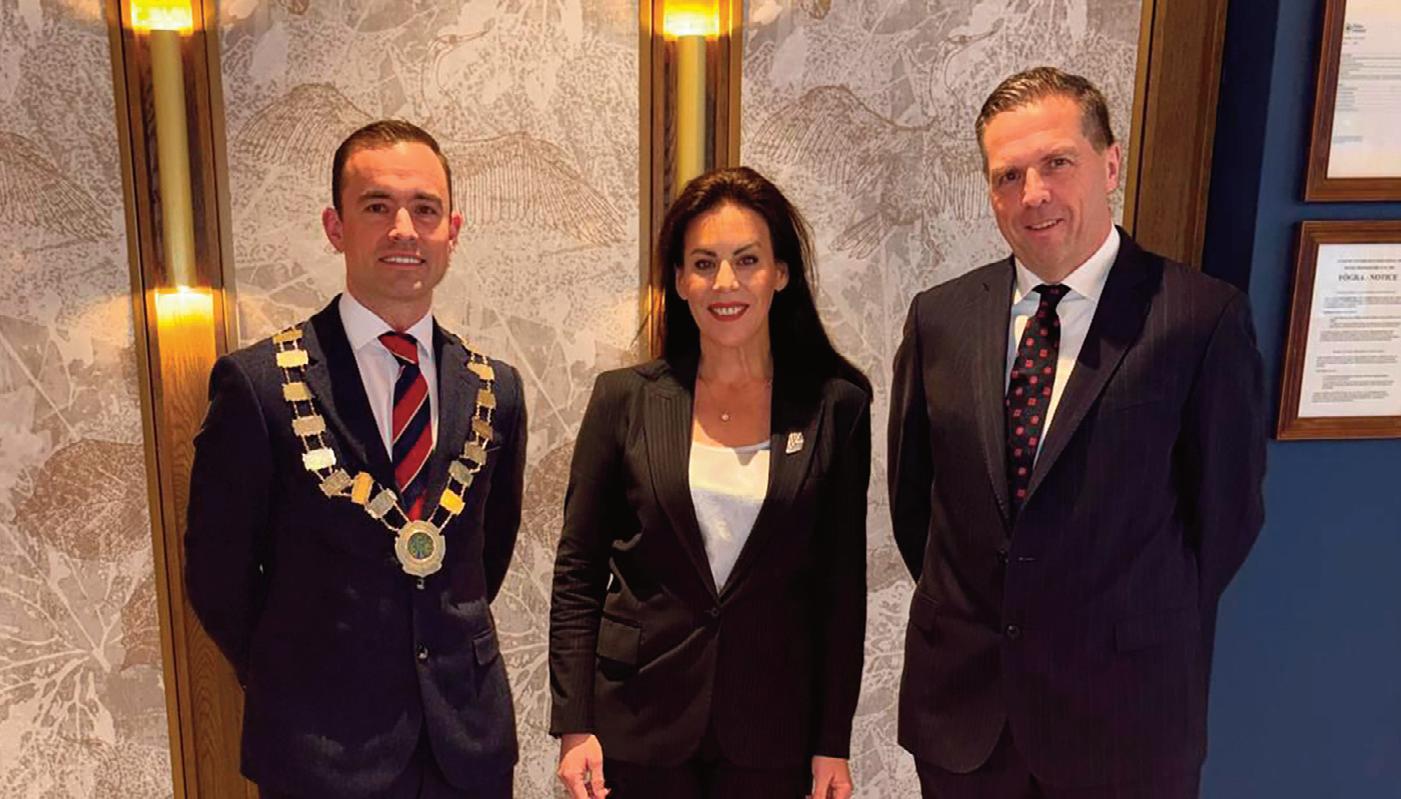
The Minister for Health, Jennifer Carroll MacNeill TD, addressed the National GP Meeting of the Irish Dental Association in Dublin on January 31. In her address, the Minister acknowledged the need to work “as a genuine collective” with dentists in order to achieve the shi from treatment to prevention envisaged by the National Oral Health Policy, Smile agus Sláinte. Minister Carroll MacNeill pointed out that while the policy has attracted “a lot of discussion, criticism and analysis”, the World Health Organization has lauded the plan, which it says is aligned with best international standards. The difficulty of course is in implementation and the implementation document is due to be published soon. In a wide-ranging speech, the Minster also spoke about the DTSS, access to care, workforce numbers, dental education, the skills mix and scope of practice of oral health professionals, the health workforce imbalance being created for the global south, workforce capacity, investment in dental education, a statutory basis for dental CPD, and the new Dentists Act. In finishing, she said: “We have quite a lot of work to do together”.
Dr Will Rymer, IDA President, replied on behalf of the members. He thanked the Minster for her willingness to engage with the profession, but warned that she was coming to them at a fragile moment, with many exhausted from the challenges they face daily in their practices. However, he said, dentists “are tired but not cynical”. Their commitment to care of their patients is given every day and, despite everything,
The Association has lodged ‘local bargaining’ pay claims on behalf of members employed by the HSE. The IDA has sought an enhancement in the value of long service increments for general dental surgeons, senior dental surgeons and principal dental surgeons. A separate claim has been lodged on behalf of specialist orthodontists seeking the introduction of a new long service increment. Talks with the HSE will commence shortly. Separate claims will be served on behalf of dentists employed in the dental schools and other public service agencies covered by the pay agreement.
dentists care profoundly for their patients. “The reality is that dentists are trying to care despite the failure of the system within which they work. We deserve recognition not blame.”
He said that workforce capacity is not just about headcount and that there has been policy failure for dentistry going back to the financial crisis. He continued: “We agree with you Minister about prevention, but we are deeply sceptical about the implementation of Smile agus Sláinte. Our latest survey of GP members showed that 85% of our members think it is unlikely it will be implemented”. He finished by saying: “We want to participate in reform that is real. We want to engage on the DTSS,
The Dublin class of 1982 met in Kerry recently to honour their friend and classmate, Dr Kieran Fanning, who passed away 30 years ago.
Aer a moving ceremony in Camp Graveyard, the class assembled in the Kells Bay Hotel for a long night of good company and happy memories. Special thanks are due to Dr Niall O’Connor and Dr Tony Coughlan for their superb organisational skills.
training places for dental professionals, a vocational training pathway, the Dentists Act, and many more vital issues. We care deeply and we will not accept an unfair system”.
Catherine Rogers of Crowe Advisory spoke about the results of a survey of dental practice costs in Ireland, while Dr Paul Leavy of the RCSI shared his PhD research on the reasons why State schemes have lost the confidence of dentists in Ireland.
In the aernoon, Dr Caroline Robins handed over as GP Committee Chair to Dr Grainne Kieran, an associate dentist based in Cork.
A new GP Committee took office for what promises to be a busy year.
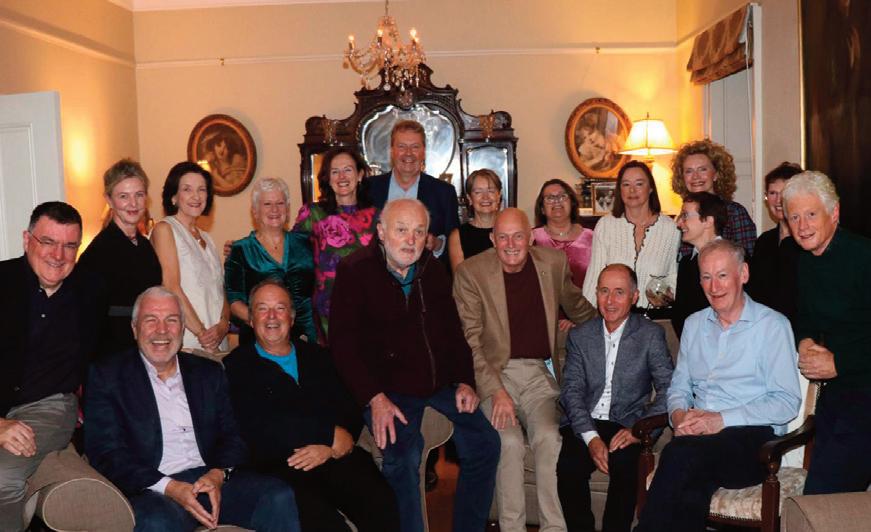
Seated (from left): Dr Frank Burke; Dr Tony Coughlan; Dr Mike Drury; Dr Bill Cleary; Dr Eugene Hanna; Dr Ivan L’Estrange, all the way from Norway; and, Dr Philip O’Brien. Standing (from left): Dr Anne O’Donoghue; Dr Elizabeth Joyce; Dr Ann Cunningham; Dr Josepha McDermott; Dr Niall O’Connor; Dr Sylvia Coyle; Dr Bernie Courtney; Dr Olwyn O’Connor; Dr Mary McConnell; Dr Thérèse Garvey; Dr Ann Behan; and, Dr Gerry Cleary. The class of 1982 is honoured to have provided two Presidents of the Dental Council, Dr Gerry Cleary (2020-25) and Dr Frank Burke (2025- ).
We are delighted to announce the appointment of the JIDA Science International Editorial Board. International Editorial Board members will provide guidance on editorial direction and policy for JIDA Science, participating in annual meetings, reviewing manuscripts within their area of expertise, promoting the Journal within their professional networks, and encouraging quality submissions from researchers and clinicians internationally.


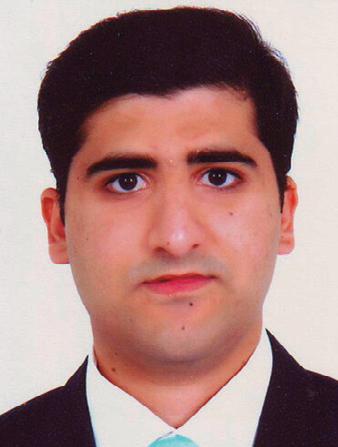
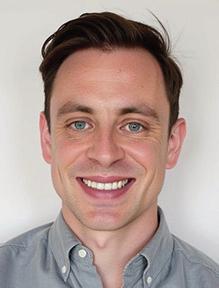
Prof. Lamyia Anweigi
Associate Professor of Prosthodontics, College of Dental Medicine, Qatar University
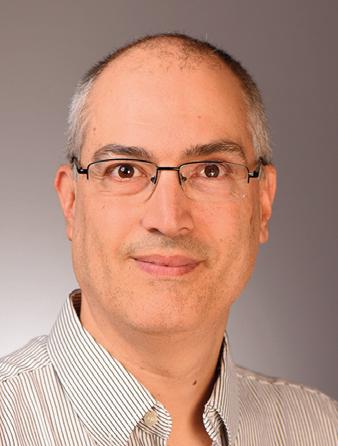
Prof. Ana Cecilia Diniz
Professor in Restorative Dentistry, Universidade Federal de Minas
Gerais Dental School, Brazil

Dr Ramiar Karim
Paediatric dentist and research assistant, Department of Paediatric Dentistry, University of Greifswald, Germany
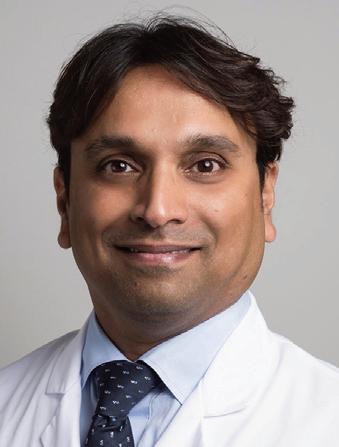
Dr John Macken
Academic Clinical Lecture/Oral Medicine, Institute of Dentistry, Barts and The London School of Medicine and Dentistry, Queen Mary University of London, UK
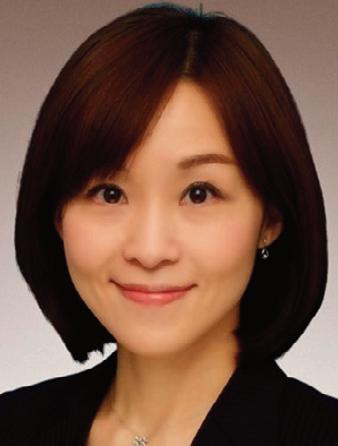
Prof. Leo Marchini
Professor of Preventive and Community Dentistry, College of Dentistry and Dental Clinics, University of Iowa, USA
Dr Elaine Smyth
Paediatric dentist at Boston Children’s Hospital, and Instructor in Developmental Biology, Harvard School of Dental Medicine, USA
Prof. Murali Srinivasan
Professor and Clinic Director of Clinic of General, Special Care and Geriatric Dentistry, Universitat Zurich, Switzerland
Prof. Sayaka Tada
Associate Professor of Prosthodontics/Gerodontology, National University of Singapore
Henry Schein recently opened its new premises, including offices, a showroom, an education centre, and significant warehouse space, in Avonbeg Industrial Estate, Dublin 12. Pat Bolger, outgoing Managing Director of Henry Schein Ireland, said that the company continues to grow and the new premises will help the company to achieve its strategic goals over the coming years.
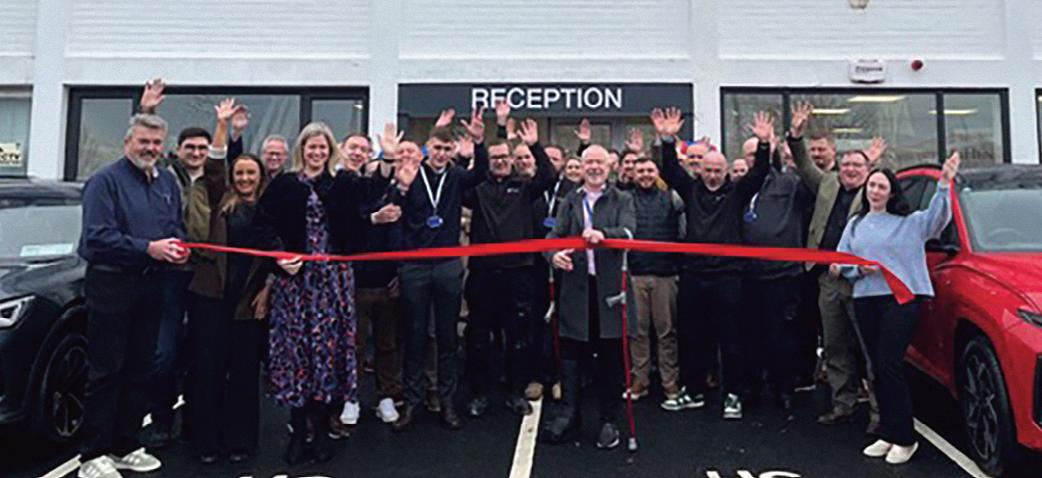
on the day of the official opening are (from left): Carlos Bolou, Security Manager; Emil Asenov, eCommerce Analytics Manager; Christina Guildea, Optident Specialist; Eamonn Devlin, Service Technician; Vikki Goodall, Managing Director, UK and Ireland; Andrew Troy, Field Sales Consultant; Alex Murphy, Endodontic Specialist; Chris Briggs, Service Technician; Pat Bolger, outgoing Managing Director, Ireland; Colin McCarthy, Field Sales Consultant; Barry McAleer, Service Technician; John Rice, Service Manager; and, Sophie Mullans, Telesales and Customer Service Agent.
Aer 31 years of service to Henry Schein, with the best part of two decades as Managing Director for Ireland, Pat Bolger has told the JIDA that he has retired from the business. He led a period of significant expansion for the company in Ireland, culminating in the move to the new headquarters in December. Siobhan Cleary will now lead the merchandise side of the business, while John Rice will lead the equipment business.
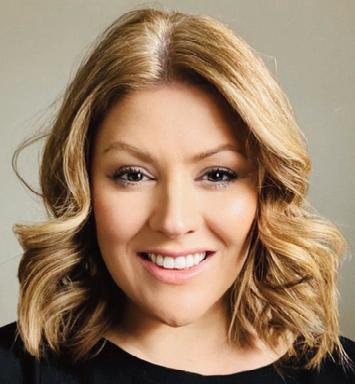
Fiona Considine has been appointed as Oral Care Consultant at Colgate. Fiona has over 20 years’ experience in the dental industry and is delighted to be supporting dental professionals with trusted, evidence-based oral care solutions. She says that she will work closely with practices to provide product information, clinical support, and patient resources to support everyday dentistry.
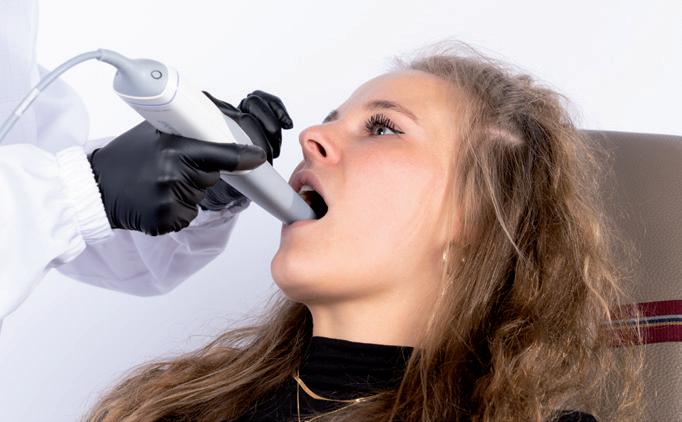
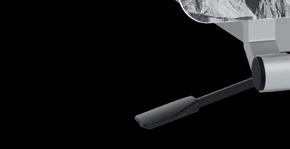
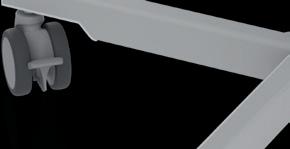
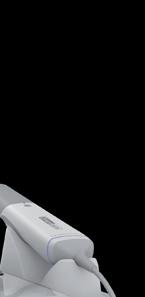
Zirkonzahn states that its Detection Eye intra-oral scanner allows a patient’s jaw to be easily digitised in under 60 seconds, and that the choice of two tips makes the impression-taking more comfortable for the patient. According to the company, the scanner has been designed to be lightweight and compact, and the scanning areas don’t need to be pre-treated with powder, which simplifies the acquisition process. Its cart – with a drawer for accessory storage – can be rotated by the user to reach the most ergonomic posture.
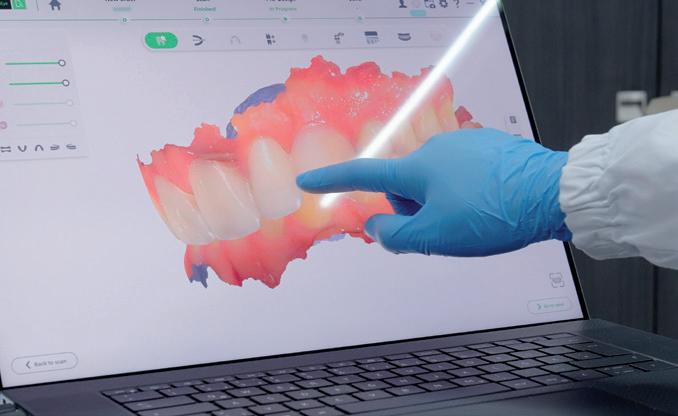
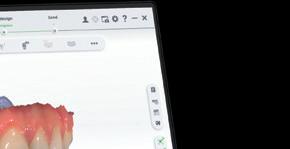
Once the data has been captured, it can be loaded into the Model Maker soware module to proceed with the design process. The produced model may then be transferred to the Zirkonzahn.Slicer soware and placed on the virtual printing platform. According to Zirkonzahn, the soware is conceived for the dental workflow and is supplied with pre-configured settings for a seamless and wellcalibrated printing process.
The generated 3D printing data can be transferred to Zirkonzahn’s P4000 printer via USB, LAN, or WiFi. The company adds that the large printing volume permits the simultaneous production of, for instance, up to 15 dental arches, depending on their structure and dimensions.
Ireland’s long-anticipated auto-enrolment pension scheme has formally commenced, marking a major step in addressing the country’s projected retirement savings shortfall. Eligible workers are automatically enrolled in a pension arrangement funded by a 1.5% employer contribution, a 1.5% employee contribution and a 0.5% top-up from the State.
However, unlike traditional pension schemes, the employee contribution is calculated as a percentage of gross pay but is deducted from net income, with no associated tax relief. This design feature has prompted concern among financial advisors, particularly for higher-rate taxpayers. According to Colm Moore of Moore Wealth Management, whose firm has advised dentists for 20 years, employees paying income tax at the 40% rate will be disadvantaged in the autoenrolment system.
“The consensus view is that any employee paying tax at 40% who ends up relying on auto-enrolment has made a mistake”, Moore said. He added that such individuals would typically be better served by a traditional pension arrangement, which offers tax relief at the marginal rate, a wider range of investment options, and greater flexibility and tax-efficient options at retirement.











SCANNING
NEW! Detection Eye
DIGITAL MODEL MANUFACTURING
NEW! Zirkonzahn.Modifier and Zirkonzahn.Slicer software





PRINTING
NEW! P4000 Printer and Printer Resin Waterbased Beige CURING NEW! L300


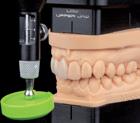
Post-Curing Lamp PLASTER-FREE
NEW! JawAligner PS1 and ZS1
- Intraoral scanner with realistic colours and detailed visualisation of preparation margins; now also available in a wireless version
- High real-time scanning accuracy and scanning speed: jaw digitisation in less than 60 seconds
- Specific settings for extra-oral use (e.g. models) and dedicated workflows for edentulous patients; possibility to perform additional scans (e.g. Transfer Fork, abutments) and to acquire multiple occlusions
- Through a QR code, the clinician can share with patients 3D scans and recommendations for a better understanding of the treatment plan
- Optional: Cart Basic with adjustable height and drawer for tidy storage of all scan tips and accessories
- Open output formats: export as STL, OBJ and PLY


















Representing dentists, both individually and collectively, is a core function of the IDA, and an indispensable benefit of membership.
Ann-Marie Hardiman Managing Editor at Think Media Ltd
As is the case in any profession, there are times in dentistry when things go wrong. Disputes with colleagues or employers, or with the Government Departments that administer State contracts, can be difficult, lengthy, and immensely stressful. Just knowing where to begin can be challenging and, if matters escalate to legal action, the process can be extremely costly. Fortunately for members of the IDA, this is not a process you need to go through alone. A team of staff and volunteers is on hand to support and advise you, all covered by your IDA membership subscription. The core personnel at IDA House responsible for representing members are CEO Fintan Hourihan and Director of Communications and Advocacy Roisín Farrelly. Each brings a range of qualifications and a breadth of experience to their role (see panel). As Fintan says, this service is perhaps little known by dentists who have never had to use it, but is a priceless benefit to those who do: “It’s a really vital part of what we do. It’s hard to overstate the benefit of professional representation by people who are dedicated solely to representing dentists”. Roisín and Fintan represent individual dentists in both the private and public sectors. They support practice owners and employees or associates, and dentists in both small privately owned practices and the larger corporate practices that are an increasing feature of the dental landscape in Ireland. In fact, Fintan says: “We are seeing a notable increase in the number of requests for representation from associates and dentists working in corporate and large dental clinics. That’s very much part of what we offer”. Dentists needing support might be experienced practice owners, young dentists at the start of their career, or dentists who are new to Ireland, but all members of the Association have access to this free and completely confidential service whenever they need it.
By the time they contact the IDA, a dentist may already be under significant stress, but picking up the phone is an important first step. It’s also important to note that
“We are seeing a notable increase in the number of requests for representation from associates and dentists working in corporate and large dental clinics. That’s very much part of what we offer.”
doing so does not automatically begin a formal process; Roisín says that her first role is to provide a listening ear: “I think what’s really important is that as well as offering advice or representation, I listen and validate what they’re saying, and together we can come up with a plan. Sometimes that plan might be: ‘This doesn’t seem like a good fit for you – maybe you might think about moving on’. I hope that when they finish the conversation with me, they feel better, that there is somebody there for them, and that things aren’t quite as bleak as when they picked up the phone”. If the dentist wishes to progress their issue formally, Fintan and Roisín have a unique knowledge of dentistry in Ireland that enables them to offer the best possible support, and that support and advice will continue through the entire process, no matter how long it takes. As this is a benefit of membership, there’s no cost involved, unlike for example taking the legal route. As Roisín says, “Dentists do sometimes choose to go to a solicitor. The cost of that is multiples of the cost of IDA membership. Fintan and I are not ‘on the clock’. When I’m talking to those members and they’re distressed and upset, I’m not charging them an hourly rate. It’s part of their IDA membership”. It has happened on occasion that the IDA is approached by both parties to a dispute, for example a practice owner and an associate. To avoid any conflict of interest, Fintan and Roisín act in accordance with strict standards and procedures. Says Fintan: “We
Roisín Farrelly has a degree in business, and a master’s in employee relations, as well as a postgraduate diploma in conflict resolution: “My background is very firmly in employee relations. I previously worked for a secondary school teacher trade union, and also did a lot of HR consulting before I came to the IDA. I’ve been with the IDA now for over a decade, and while I have a very strong role in the communications and advocacy side of the house, the core of my job is representing members, both collectively and individually, and both public and private sector”. Fintan has over 26 years’ experience representing doctors and dentists: “I worked previously with the Irish Medical Organisation between 1999 and 2008. I have also worked with a teachers’ union. In addition to my academic qualifications and experience, the core of what I’ve learned has been in my work with the IMO and the IDA, and it’s an important part of what I do in the Association”.
They are also supported, where appropriate, by an experienced team of dentist volunteers and committee members, who lend their expertise to such issues as public service pay negotiations and contract talks.
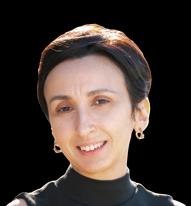
Roisín Farrelly Director of Advocacy & Communications
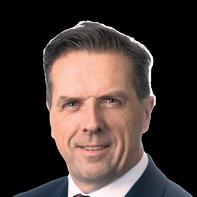
Fintan Hourihan IDA CEO
put measures in place to ensure that there’s a strict ‘Chinese wall’ between us, as we could end up with one of us advising one party and the other representing or advising the other”. For dentists in the public service, there is the added issue of negotiating oen-Byzantine workplace policies and procedures. Once again, Fintan and Roisín have the experience and the skillset to assist. These procedures mean that even a relatively minor issue can take a long time to resolve, but once again, the IDA team is there for the long haul, helping members to gather the necessary documents, acting as a point of contact, and ensuring that the issue is progressed.
The power of the collective
As the only recognised representative body and trade union for dentists in Ireland, the IDA also engages in collective representation on behalf of members. For private sector dentists, the IDA represents members in discussions on the two State schemes, and their position and experience are essential in this process, as Fintan explains: “Competition law sets the parameters for our engagement with the HSE and the Departments of Health and Social Protection. And while we’re representing selfemployed people, and there are restrictions that mean the rules are different to representing employees, ultimately the Department of Social Protection and the HSE are aware that the advice that we give to dentists and the representations we make will make or break whether those schemes get the level of support that they need”. The team has had some notable successes. For dentists in the private sector, the IDA succeeded in negotiating fee reviews, and indeed fee increases, with the Department of Social Protection for the PRSI scheme. Fintan explains the process: “The biggest job is usually to ensure that the review takes place, and we’ve had to fight hard on that in recent times. When those reviews take place, we assemble a team. We would have a number of dentists drawn usually from our GP Committee or our HSE Dental Surgeons Committee, to supplement the work that Roisín and I do. Our role is to
So what happens when you make that initial phone call? Roisín says they approach each case on an individual basis: “There is no set process as such. The dentist will generally call with the issue and we talk through it in detail and decide a plan of action – addressing it informally or going through a formal process. If there is a formal process, then I ask that they outline the main issue and/or incidents in writing. I use this to dra the formal submission. Once this is submitted there is usually a hearing/meeting where we present the case. The member does most of the talking and I accompany and support them, stepping in to represent them or add points where needed. A recommendation/outcome is then issued in writing, and we decide whether to accept or appeal”.
assemble and prepare the team, and to glean from the team their expert insights and opinions on preparing a case. There are usually a series of meetings or written submissions, and then there’s a lot of contact with senior officials from the Department. All of that goes on behind the scenes”.
Fintan in particular has also represented a number of dentists who were the subject of probity investigations by the HSE in regard to the medical card contract. These can be particularly difficult and stressful cases, but in all instances, with the IDA’s help, they were able to reach agreement.
For the public service, the IDA team represents dentists in public sector pay negotiations, as Fintan explains: “Roisín and I attend as representatives of our public service members. There are probably nearly 200,000 people working in the health service, so we’re a very small cohort of members, less than 1%. But we make sure that the concerns and demands of dentists are at the table”.
They also work hard on behalf of both individuals and smaller groups of public service dentists. Says Roisín: “We fought very vigorously to get the lower principal dental surgeon salary scale abolished. We got all of the principal dental surgeons placed onto the higher scale. We also got all of the pay agreement pay increases retrospectively applied to the voluntary sessional rate, and got a big increase for dentists there”.
They’ve also had a significant success recently on behalf of staff in the Dublin Dental School, and as Roisín says, this is a great example of the IDA’s role in both informing and acting on behalf of members: “Fintan had been contacted by some members and there were a couple of issues, so we held a meeting of members, and Fintan set out a presentation on what their terms and conditions should be, the different salary scales that they had, the different points they should be on, that they had a right to a particular CPD allowance, etc. They then went to their head of HR, and I accompanied a member to a meeting with management. As a result, the School is now doing an audit of all of our part-time tutor members, and to date, we know of at least two or three who have gotten substantial back pay and been placed on different salary scales”.
The team is about to enter negotiations on sectoral bargaining for public service members, and will be seeking increases to the last points on the salary scale and a new incremental pay point for specialist orthodontist members. Dentistry can be an isolated profession, and never more so than when something goes wrong. IDA membership has many well-known benefits, from access to excellent CPD to cost savings on professional indemnity insurance. But perhaps the most valuable benefit of all is knowing that if you ever need it, dedicated, professional, and confidential support is just a phone call away.

Like many professionals, Irish dentists are making their mark all over the world. We spoke to four of them about their life and work, and the dental care systems they work in.

Ann-Marie Hardiman
Managing Editor,
Think Media Ltd

New Zealand – Riana Clarke
Riana has lived in New Zealand for over 20 years, and since 2016 has been the Clinical Chief Advisor Oral Health (equivalent to the Chief Dental Officer in Ireland) with the New Zealand Ministry of Health.
A family connection led Riana to first consider dentistry: “My sister was a dental assistant, first in practice, and then in the Dental Hospital in Dublin. I loved going in and seeing her workplace and meeting the dental students. This led me to think a career in dentistry would be a good one and I’ve never looked back”.
Aer qualification, Riana worked in Northern Ireland, and then took a job with the United Arab Emirates Ministry of Health, where she met her husband, who is a New Zealander. Aer working in Ireland and the UK, she says: “He said he couldn’t stick the Irish weather anymore and wanted to go ‘home’! So, in 2004, we moved to Auckland, New Zealand. I soon started in two jobs, one for the ‘School Dental Service’ as a part-time community dentist, and the other working in private practice”.
Riana’s role with the Ministry puts her at the centre of dental health policy in New Zealand: “We have been through a few changes in the Ministry, including the creation of Health New Zealand (HNZ) in 2022 (the equivalent to Ireland’s HSE). At that point, anything operational was moved across to HNZ, including some of my favourite projects such as distribution of free toothbrushes and toothpaste to preschoolers and their families. One of the projects I continue to
work on is the extension of water fluoridation. Since 2022, an extra 500,000 New Zealanders have gained access to fluoridated water, meaning that 60% of the population now has access”. She also continues in private practice one day a week, and works with the New Zealand Dental Council as a professional advisor on a competence review committee.
Riana says that New Zealanders are proud that the School Dental Service started in 1921 was the first of its kind in the world, and that the ‘dental nurse’ (therapist) role was created there. Today, Government-funded oral health focuses on prevention and treatment for 0-17s: “For 0-12s, basic dental care is available mainly through the Community Oral Health Service (COHS) run out of HNZ in mobile and fixed clinics. Services are mainly provided by dental and oral health therapists. For 13-17s, services are mainly provided by private practices who hold contracts with HNZ. There are also some Māori and Pasifika providers delivering this care. For 18+, it is mostly ‘user-pays’. Hospital dental services are staffed by general dentists and dental specialists provide specialist-level oral healthcare, and dental services for people with disabilities, medical complications or behavioural problems. Emergency treatment is funded by HNZ Districts for eligible low-income adults with Community Services Cards (like a medical card), with user part-charges. Publicly funded orthodontics is only provided for those with craniofacial anomalies”.
She says that New Zealand is also experiencing workforce issues, but has diversified its dental team: “There are 3,381 dentists/dental specialists registered in New Zealand. Dentists are in short supply in rural and remote areas particularly. The number who can enter training annually is Government capped at 60 and there is only one university where you can study dentistry. The ‘school
dental nurse’ evolved to become a dental therapist and then around 2008, the universities combined the training of therapists and hygienists into one profession called oral health therapists, who can provide hygiene treatment to people of all ages and can now also treat adults restoratively if they have completed the extra training required”.
While the fact that New Zealand is a long way from home is definitely a challenge, Riana loves the culture and lifestyle: “New Zealanders have a similar sense of humour to Irish people. The lifestyle is very outdoorsy and the dress style tends to be quite casual! We live really close to multiple stunning beaches on the Hibiscus Coast, about 35km north of Auckland. It is not as hot as Australia, and we don’t have snakes here! There is less of a pub culture and more of a ‘BBQ at someone’s place’ culture. The day starts earlier and finishes earlier – and unlike home, you would never think to ring anyone aer 9.30pm”.
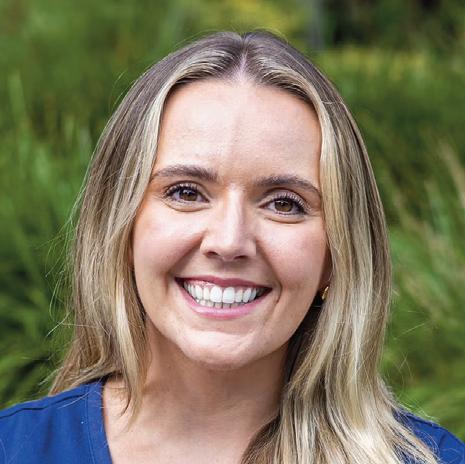
Originally from Cork, Lonnóg is now based in Sydney, Australia, where she works in general dental practice.
Dentistry is something Lonnóg was interested in from an early age: “Our dentist was a family friend, and I have only ever had positive dental experiences. I was always interested in healthcare. UCC was the obvious choice of university for me, and I had a great experience at CUDSH. I enjoy the practical aspects of dentistry as I can work with my hands, and I like to meet new people. My favourite aspect is building relationships with patients and putting them at ease”.
Aer spending time in practices in Wexford and Cork, Lonnóg and her partner wanted to experience living and working abroad, and Australia seemed the perfect choice: “We both love the heat, it is English speaking, and AHPRA, the equivalent of the Irish Dental Council, recognises our degree. There are no further exams required for Irish graduates to practice in Australia, which was also a deciding factor. There is great respect for an Irish dentistry degree in Australia. They highly value our training and experience. We chose Sydney to maximise the city and coastal style of living”.
Lonnóg is currently based in a corporate practice, National Dental Care (NDC) in Barangaroo, close to Darling Harbour, and says her scope of practice is very similar to her Irish experience: “I am one of a team of three dentists, three dental assistants and a practice manager. The other dentists at the practice are Scottish and English, and we practice and treat very similarly. We are situated in Tower 3 of the International Towers, and the patients I treat are predominantly working in the city. Patients are well educated and happy to undergo most recommended treatment”.
While dental care is similar, there are notable differences in the dental care systems in Australia: “There is very little available in the public system. Children are covered, and there are dedicated dental centres for the Aboriginal community. Dental hospitals also treat under the public system, but there is a long waiting list in Sydney. Some practices/practitioners accept vouchers from the dental hospitals to allow patients to access care quicker. Medicare, which every Australian citizen is entitled to, does not cover dental care, which is a bone of
contention. Dentistry is highly privatised and can be very expensive. The Australian Government offers tax incentives to have private healthcare, which most patients have. The practice claims directly from this, and the patient pays the out-of-pocket expenses at the end”.
Like Ireland, Lonnóg says that Australia also has workforce issues: “There seems to be an oversaturation of dental practices and dentists in metropolitan areas. There is an overall shortage of dentists, but these are in the regional areas. There is some debate currently, as AHPRA is considering reducing/easing the requirements for international dentists from certain countries, to address this shortage”.
The dental team is also slightly different: “Many practices also have oral health therapists, who can provide basic restorative treatment and periodontal treatment. There seems to be a greater use for these practitioners in more regional areas, where there are fewer dentists. It allows the principal dentist to focus on more complex restorative treatments”.
Lonnóg and her partner are loving life in Australia: “Sydney is very multicultural and diverse. In general practice I have been exposed to all walks of life, and it is very beneficial to my practice to deal with different types of patients. The work–life balance is unmatched. The Aussie lifestyle maximises the mornings and evenings, and many social events are dictated by sunrise and sunset. In comparison to regional areas of Australia, Sydney is very busy and fast paced, but there is still a great appreciation and great value placed on holidays, travel and lifestyle”.
“For me, the major benefit of living abroad and in Sydney, is the lifestyle. From a career perspective, in my opinion, the pathways for career progression seem more accessible in Ireland. I love the life we have built in Sydney, and the opportunities we have had to travel this side of the world at ease. The grass is always greener but nowhere is as green as home”.
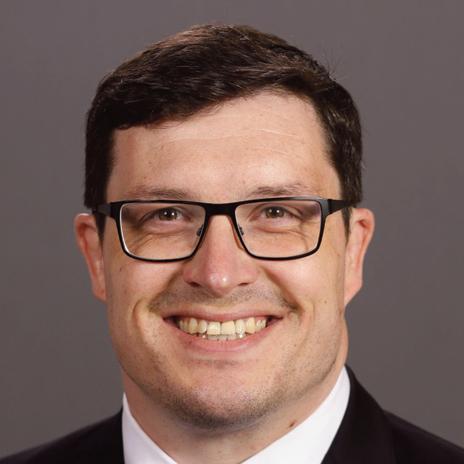
Neil is a Dublin graduate, and is a Boardcertified prosthodontist, currently working in private practice in Chicago.
For Neil Griseto, dentistry was something of a family business, as both his grandfather and great-grandfather were dentists. Born in Chicago to an Irish mother and American father, he grew up in Ireland and went to dental school here, before working as a general dentist in both Ireland and Australia. When it came to postgraduate study, however, he found himself heading back to the US: “I wanted to specialise in prosthodontics. A couple of people suggested that I should go to the States for training. I did the interview tour, I made applications, and I went around to various different programmes in the States, and ended up in San Antonio, Texas”.
When he graduated in 2019, family circumstance, and the vagaries of the American licensing system, dictated the next moves: “My wife originally trained as a dentist and then switched to medicine. She came to the States and matched into a programme for anaesthesiology in Boston. Due to the quirks of the licensure system here, I couldn’t get a licence to practise in Massachusetts, even
though I was US trained in prosthodontics, because of my Irish primary training, but I was allowed to teach, so I ended up at Harvard teaching dental students. When my wife finished her programme, we decided we would try and find a US state that was friendly to foreign-trained dentists. Illinois was one, and that was where I was born. I have family in Chicago, and my brother’s here. My wife got a really good job, so we moved here in 2023”.
Neil works in private practice as a prosthodontist, and is currently dividing his time between two practices in the city: “Interestingly, in Chicago, there are very few prosthodontists. There’s a high proportion of dentists, a low patient number per provider. What happens in those competitive markets is that dentists tend to take on more complexity, and that means that there are fewer specialists. It’s particularly prostho, because dentists get proportionately more training in restorative dentistry. A fair amount of what I’ve been doing is revision, people who’ve already been treated, perhaps abroad, and are coming for round 2”.
Neil says that the standard of dental training and dental care in the US is broadly similar to that in Ireland, with the obvious exception that all dental care in the US is private, with no equivalent to the PSRI or medical card schemes. He says that issues with third-party schemes are similar: “Lots of people are leaving the insurance-based system here because of remuneration limits. It’s impossible to make a living doing high-quality work”.
He’s conscious of the inequalities caused by the lack of schemes for those on low incomes: “A big difference here would be the demand for complex treatment, which I think is higher here. There’s a lot more disposable income and it’s something that people choose to spend their money on. Our fees are very high, and a lot of patients don’t even baulk at it. But that’s just based on where I am geographically. There’s also extreme poverty. I’m not seeing those patients where they’ve got a sore tooth and they want it pulled. Here, if that’s the case, you’re on your own”.
Neil and his wife have three young children, so life is busy at the minute. He says that the US is a very expensive country to live in, and the only thing that seems to be more expensive at home is houses! He acknowledges that they are among the more fortunate, but says the current political situation in the US is a cause for concern, particularly as he and his wife are both healthcare professionals: “It’s difficult to be here and see what’s going on and see the way people are being treated and the divisions here, for example on the medical side when you have the Secretary of Health and Human Services being an anti-vaccination conspiracy theorist. They’ve eviscerated the National Institutes of Health. We’ve had measles outbreaks here, fluoride is under threat. It doesn’t affect us directly because we live in that bubble, but it’s hard to square the circle when we’re paying taxes and that money is going to things that we strongly don’t agree with”.
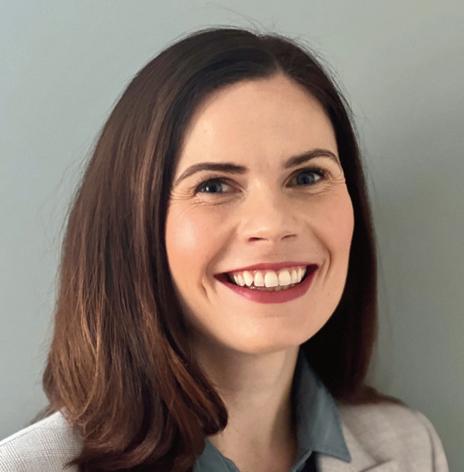
Originally from Galway, Ciara trained in Dublin before moving to Norway in 2015. She works as a paediatric specialist, and is currently undertaking postgraduate training in orthodontics.
Ciara’s mum is a science teacher, and she says she wanted a career in a healthcare
science, so after doing some work experience in a dental practice she decided that dentistry was for her: “I liked the idea of working with people, working as part of a team, and hopefully, trying to make a difference. I’m very happy with the choice”.
While she was studying, Ciara spent a lot of time in Norway with her Norwegian boyfriend, and says she really liked the lifestyle there, but it was the opportunities for postgraduate study that helped her to decide on a move: “I wanted to specialise in paediatric dentistry, and in Norway you don’t have to pay postgraduate fees. I also qualified for a State-funded student loan while I was studying in Oslo. I just loved it here, so while I thought hard when I finished the three-year specialisation about whether to go back to Ireland or stay, in the end, I decided to stay”.
The course was taught through Norwegian, so Ciara also had to learn the language: “I was a little bit naïve I think, but also very determined. I went to an English-speaking primary school, and then an Irish-speaking secondary school. I remember that being so difficult in the beginning, but you learn quite fast when you’re totally immersed. I did a six-week summer school, an intensive course, and then I decided to start working and just not to speak English. When I did the interview for the paediatric programme, it was November, and it was starting the following August. They said, you have a place as long as you speak Norwegian, so I had a goal, and I just kept at it”. When she finished her studies, Ciara moved from Oslo to Stavanger, where she works as a paediatric specialist, caring for children with complex needs in a publicly funded clinic: “In Norway, they have regional specialist clinics around the country to try and spread out the available dental services because Norway is a large country. This is one of those clinics. You work in a very interdisciplinary way with the other specialists, and you have in-house general anaesthetic and sedation, CBCT, everything you need. It’s really interesting and challenging. You get a lot of difficult cases, but it’s fun. You’ve got a great group around you”.
This summer Ciara has begun studying four days a week in orthodontics, also sponsored by the Norwegian State: “I’m getting paid while I’m studying, and I’ll go back and work for the public system when I’m done. It’s a fantastic opportunity, so I’m really grateful for that”.
She says that public dental care in Norway is very well established, and well resourced: “About a third of all of dental employment is in the public sector, so there’s good access to the public dental system and a high standard of services provided. Dentistry is free for all children up to the age of 18, and from 19-28 years, 75% of the cost of care is subsidised by the State. Then most adults will become private paying patients, but if you fall into certain high-risk categories, e.g., xerostomia patients, you can still get subsidised treatment in private or public clinics. It encourages people to go to the dentist regularly because they know that they’re oen only paying a percentage of the total cost”.
Ciara still loves the lifestyle, particularly the work–life balance: “It’s already getting a bit dark outside because it’s winter now, but because of that, most people work a short day, so I usually have patients from 8.00am till 3.00pm. I think because of that, there’s a lot of balance. People are very invested in their pastimes and their family life, and there’s a lot of respect for that. Norway is an easy place to live, very stable, safe, and there’s a lot of outdoor activities if you’re into the outdoors. It’s also quite common to take a month off in July, which is nice because you get really long days, and the time to make the most of the beautiful nature”.

Join a global research community backed by The MPS Foundation – an initiative committed to investing in research, analysis, education, and training.
We focus on research that prevents harm before it happens – every project that we fund is designed to protect the wellbeing of healthcare professionals and support and strengthen the future of healthcare practice.
Since 2022, we have supported over 60 innovative projects, with grants ranging from £2,500 to £199,000, funding vital areas of research often overlooked by traditional research councils and funders.
Submit your Expression of Interest today at thempsfoundation.org Closing date – 1 May 2026 at 17.00 BST

860 39 53
086 380 18 68
Your income pays for life’s essentials — food, heat, shelter and security. All of this depends on your ability to earn. Over a working lifetime, your income is your most valuable asset — and it has to be protected
We have a 20% discount available only for IDA members which is unique in the marketplace.
1 Up to 75% of Your Income Replaced
2 Tax-Relief on Premiums further reduces cost

Obtain 40% tax relief through revenue-approved plans
3 Customisable Cover
Choose when the benefit starts and for how long it lasts
4 Own Occupation Cover The cover is specific to your occupation
5 Best Doctors
Access to world leading second opinion service as standard for you and your family along with priority GP care within 4 hours

Maintain the ability to meet your commitments and not be reliant on state help



























Some lessons gleaned from martial arts practice may also be helpful in dentistry.
Dr Colm Harney
Dentolegal Consultant at Dental Protection
I have been practising martial arts for over 25 years – long enough to achieve a relative degree of competence, start to teach (as well as remain a student), and recognise patterns both in the art, and how participants evolve and progress.
To most practitioners (and indeed non-practitioners) of martial arts, the recognised symbol of achievement and mastery is the mythical black belt. The specific origin story of the black belt is unclear – my favourite is the simple story that when you’ve worn your beginner’s white belt long enough it becomes frayed and marked, organically turning brown and eventually black over years of training and wear.
The ‘black belt paradox’ in martial arts refers to the idea that achieving a black belt, while a monumental milestone, doesn’t signify the end of learning, but rather a new beginning. The black belt is not the ultimate achievement but rather a foundation upon which further development begins.
Indeed, in the Japanese martial arts I have participated in, the term Shodan (for a first-degree black belt), means literally ‘the first step’, and the next grades, Nidan and Sandan, are numbered as Ni (two) and San (three) – meaning second step and third step (going all the way up to 10). So, the apparent pinnacle of achievement, the black belt, is effectively an advanced beginner.
A lesson for dentists?
I can’t help but see the parallels with graduating from dental school – a significant milestone no doubt, but also a recognition that the real-world journey is just beginning, and the qualification is a launchpad for a lifelong journey of education and growth from a base of competence in fundamental techniques. In dentistry, it is so important to keep seeking out opportunities to progress and maintain interest – otherwise we become stale and at risk of fatigue, disinterest and burnout. The most obvious path to ongoing growth is further formal training such as postgraduate studies or completing CPD. There are many other areas for growth such as mentoring, volunteering, study groups, and engaging with professional associations. For others, it might be the rewards and challenges of practice ownership. Ideally that professional growth should be supplemented by balance and a healthy interest in growth beyond our career, whether that be learning the guitar, taking up yoga, or focusing on family.
If I had to pick the most important qualities for long-term success in martial arts, it is not strength or speed, or being able to break wooden boards with your bare hands. Instead, it is broader and more fundamental, and I strongly believe these qualities are also applicable to the successful practice of dentistry.

The first is perseverance. “It’s not who is good on the mats, it’s who’s le on the mats – a black belt is a white belt that didn’t quit” is a cornerstone of martial arts. I’ve been injured, got frustrated with lack of progress (especially when my competitive self perceives others to be progressing faster than me), and on many winter nights it is hard to leave a warm house to go training. However, I know I never regret it when I’m there. A big part of perseverance is learning to fail and make mistakes, especially in front of other people. I have now reached a point in life where I can recognise that within this space of mistakes and mishaps lie the best lessons. Dentists usually leave dental school as over-achievers, oen never having failed at anything in our lives. It is important to seek out opportunities to practise failure in a safe, less consequential environment – whether that be the sporting arena, a cooking class, or simply being by far the worst artist at the Christmas ‘paint and sip’ party (ask me how I know). Getting comfortable with failure gives perspective – it’s not the end of the world, it will pass and nobody is looking anyway. In dentistry, one sure thing is that if you practise long enough there will be times when things go well and times when you feel like you want to quit. It is how you respond that is key, and this includes finding the learning opportunity and knowing when or how to reach out for help – that is what Dental Protection is here to help with too. It is important to maintain perspective by looking forward, eyes on the long game of a career, and continuing to develop and engage with your profession.
The second quality is something that the martial arts really sharpen – humility. In every martial arts space I’ve trained, the experienced practitioners are usually the most humble and down-to-earth human beings. The reality is that there is always someone bigger, stronger and faster. It pays to be humble as martial arts have a way of pressure testing you into your place if you get too far above your station. It is important to find the balance between confidence and humility, especially in the early days, because if not, practice will also pressure test you to your limits –when you soon realise you don’t know it all, that sometimes things go wrong, that it is okay to ask questions (or for help) and ultimately, that we need to be open to learning from everyone around us, even from our patients.
The last words go to my teacher’s teacher from Japan, who has accumulated more than 30 black belt grades in multiple martial arts over his lifetime. He perfectly summed up the concept of not having too grand an opinion of one’s own importance or ability by pointing to his own black belt: “Belt: it’s just for holding up trousers”.
Classified advertisements are accepted via the IDA website – www.dentist.ie – only, and must be prepaid. The deadline for receipt of advertisements for inclusion in the next edition is Friday, March 6, 2026. Classified ads placed in the Journal are also published on www.dentist.ie for 12 weeks.
Please note that all prices are inclusive of VAT.
Advert size Members Non-members up to 25 words €135.30 €270.60 26 to 40 words €161.70 €330.65
The maximum number of words for classified ads is 40. If the advert exceeds 40 words, please contact: Think Media, The Malthouse, 537 North Circular Road, Dublin 1.
Tel: 01-856 1166
Fax: 01-856 1169
Email: paul@thinkmedia.ie
Please note that all classified adverts MUST come under one of the following headings:
4 Situations wanted 4 Situations vacant
4 Practices for sale/to let 4 Practices wanted
4 Equipment for sale/to let
Classified adverts must not be of a commercial nature. Commercial adverts can be arranged by contacting Paul O’Grady at Think Media.
Associates
Enthusiastic associate required for progressive Cork (Douglas) dental practice. Supportive principal and excellent ancillary staff. Successful candidate must be committed to continued professional development and enjoy working as part of a team.
Contact sjjcurtin@gmail.com
Associate required for newly renovated four-chair busy practice in beautiful Boyle, Co. Roscommon. Enjoy a relaxed lifestyle in the west of Ireland! Parttime roles available. Would consider locum. Excellent remuneration. Great support staff. Irish Dental Council registration essential.
Contact Boyledental@hotmail.com
Associate wanted for modern practice. 30 minutes’ commute from Galway/Limerick. Mentoring and support guaranteed, fantastic principal dentist. Good English and Irish Dental Council registration required. Ideally start February/March but flexible. Contact: dentistkris@gmail.com
Experienced associate required to join practice in Kilkenny two to three days per week. Modern, supportive, friendly practice with strong focus on patient care. Fully digitalised, computerised/OPG. Strong hygiene service. Private/PRSI. Excellent remuneration. Must be eligible to work in Ireland. Contact dentistkilkenny24@gmail.com
Part-time associate required to replace departing dentist in a busy mixed dental practice in Tallaght, Dublin. Fully digital practice. Friendly and
experienced support team. Please email CV to drgiri26@gmail.com
Dental associate required for family practice in Athboy, Co. Meath. Three to four days, flexible hours, no weekends. Excellent team support, hygienist, digital practice, busy established book. Two years’ experience preferred.
CVs to anfiacloirdeirdrejob@gmail.com
We are seeking dental associates to join our busy, modern, fully private practices in Enfield, Co. Meath, Mullingar, Co. Westmeath and Ferbane, Co. Offaly. The practice is equipped with state-of-the-art technology, including CEREC and CBCT, and offers a supportive, progressive working environment. This position would suit an enthusiastic and motivated clinician who is keen to develop their skills as part of a forward-thinking team. Excellent remuneration is available for the right candidate.
Contact deirdre@thejamesclinic.com.
Great opportunity for a highly motivated dentist to join an established family practice in Co. Limerick. Fully computerised, in-house prosthodontist happy to mentor a suitable applicant. Must be Irish Dental Council registered and living in Ireland. Contact info@mullanedental.ie.
We are looking for a general dentist to join our practice in north Dublin. Private/PRSI. Two to four days/week. Immediate start available. 45% remuneration. Also seeking orthodontist. Must be Irish Dental Council registered and ideally have experience. Contact Dublinsmilecenter@gmail.com
Join our modern multidisciplinary clinic near Galway City. Seven surgeries, digital equipment, and strong support. We seek a motivated general dentist to take over an established patient base and collaborate with in-house specialists.
Contact amy-galway@3dental.ie
Join our remarkable ethical practice with outstanding reputation for patient care. Longstanding staff, modern facilities, excellent remuneration.
CV to kingscourtdentalpractice@gmail.com.
Dentist required for modern well-equipped multisurgery clinic. Onsite specialists and hygienists. Long waiting lists for general dental treatments. Fantastic earning potential. Would welcome additional skills such as Invisalign or facial aestheticians. Full or parttime.
Contact tomas.allen@kingdomclinic.ie.
Clinician wanted for our busy Kerry clinic with OPG, digital x-rays and excellent support. Suitable for postgraduate-trained clinicians. Please send CVs to jobs@cubedental.ie
Experienced dentist required to cover maternity leave from March 2026. Part-time hours – Tuesdays 8.00am-2.00pm, Thursdays 8.00am-5.00pm. Wellestablished book in state-of-the-art, fully private practice in Dublin 4. CEREC experience preferable. Contact office@pembrokedentist.ie
Locum dentist required full/part-time for very busy multi-award-winning mixed private and PRSI practice in Tralee, Co. Kerry. Specialist interest desirable but not essential. Immediate start. Option for permanent position.
Enquiries to info@creandental.ie or call Susan on 086-356 1042.
Dentists: full-time and part-time positions available, 30 minutes from Galway and Limerick. Excellent remuneration. Fully digitalised practice with CBCT, excellent support staff, and a strong patient base. Minimum six months’ experience required, though the role suits an experienced clinician best. Contact dr.odonovan@cubedental.ie
Part-time dentist required for a busy surgery in Dublin 15. Scope to become full-time. Great support staff. In-house dental technician. Please respond via email to info@chadental.ie
Specialist/limited practice
Specialist oral surgeon required to join our multidisciplinary team, in a beautiful state-ofthe-art Dublin clinic with CBCT. This position is replacing a departing colleague who has built up a three-day practice of oral surgery.
Contact hrmanager@ncdental.ie
Are you a passionate paediatric dentist looking for a part-time role that truly fits around your life?
At our busy, multidisciplinary, fully private practice in Dublin we can offer you flexible shift(s), excellent remuneration, and access to state-ofthe-art facilities including nitrous oxide sedation. We have a collaborative team culture and experienced dental professionals including specialists in other areas of dentistry. All specialist paediatric dental materials provided. Excellent nursing and administrative support. Taking over from a colleague who is returning home.
Contact dublindentalassociateposition@gmail.com.
Experienced restorative/cosmetic dentist required to join modern, digitalised, fully private Dublin practice. Experience with bonding, veneers, crown and bridge work. Full support team, lab, co-ordinators. Strong record in delivering cosmetic patients. Excellent remuneration potential.
Contact shauna@3dental.ie
Implant dentist required to join modern, digitalised, fully private Dublin practice. Fully digital workflow, CBCT, 3D printers and scanners. Further training and development opportunities. Excellent remuneration potential.
Contact shauna@3dental.ie.
Specialist registered orthodontist required to join modern, digitalised, fully private Dublin practice. Potential to work in multiple chair set-up supported by multiple therapists, assistants and co-ordinators. Excellent remuneration potential.
Contact shauna@3dental.ie
A busy, modern, eight-chair dental practice in Limerick city centre is seeking an endodontist or a dentist with a specialist interest in endodontics to join our professional and supportive team. We offer excellent facilities, a strong referral base, flexible sessions, and competitive remuneration. Email endodontistlimerick@gmail.com
Dental specialist, endodontist or oral surgeon required for modern dental practice in Rathfarnham, part-time. Lovely patients and excellent support staff. Also, hygienist position available for Saturdays. Tel: 085-267 2611 between 9.00am and 5.00pm Monday to Friday or email your CV, including days available, to dentalvacancy67@gmail.com
Hygienists
Hygienist needed to replace longstanding colleague who is relocating. Fully booked until March 2026 currently. Two days per week/hours flexible. Excellent remuneration. Newly refurbished practice. Contact kingscourtdentalpractice@gmail.com
Join our modern well-equipped clinic and existing busy hygiene team. Over €60 per hour earning potential. Long waiting list. Private-only treatments.
Contact tomas.allen@kingdomclinic.ie.
Dublin 3 practice. Locum hygienist required for February 2026. Two days per week, excellent remuneration, fully private/PRSI.
Email CV please to info@howthroaddental.ie or phone 087-790 2546.
Hygienist required two days per week at Rogers Dental New Ross. Long-established, busy hygiene book. Excellent remuneration. Flexible hours. Sterilisation nurse. Modern dedicated hygiene surgery. Fully digital. Cavitron and Woodpecker. Irish Dental Council registered. Contact info@rogersdental.ie
Part-time dental hygienist position available to join our existing experienced team. Busy private practice, newly renovated, computerised and Cavitron. Contact office@renmoredental.ie.
We are looking for a dedicated dental hygienist for maternity cover at Corabbey Dental, Midleton, Co. Cork. Five-chair practice, excellent support. Permanent potential if interested.
Please contact us for more information. Contact carmel@corabbeydentalclinic.ie.
We are looking for a dental hygienist to cover maternity leave at Bernard Twomey Dental, Ballina, Co. Mayo. Full book in a well-run practice. Attractive locum rates on offer. Please email bernard@btdental.ie for more information.

Optimal Bio-adhesiveness
Chlorhexidine DG: 0.20%

Hyaluronic acid: 1%
Oral Hygiene in the cases of:
Post-surgery
Implants

Pericoronitis or localised periodontitis
Post-extractions


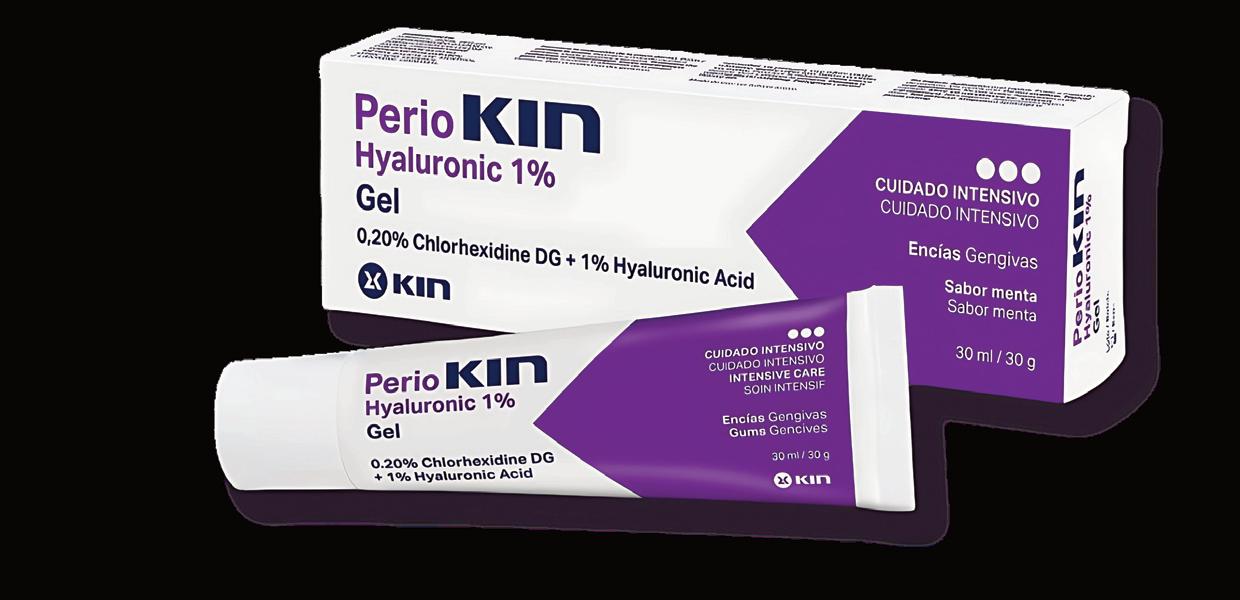





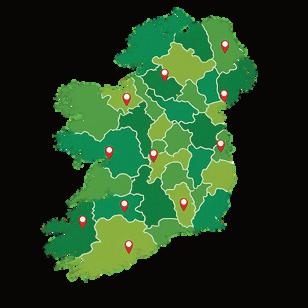

Experienced hygienist required to join our busy, well-established and modern dental practice in Dublin 4.
Initially Thursdays 2.00pm-8.00pm – may have scope to add Saturdays in the future. Excellent remuneration.
Contact office@pembrokedentist.ie
Orthodontic therapists
Specialist orthodontic practice in north Dublin seeks a passionate and enthusiastic orthodontic therapist to join our expanding orthodontic team. Competitive remuneration, part-time/full-time, flexible working hours, recognition offered and stateof-the-art facilities.
Contact hrmanager@ncdental.ie
Dental nurses/receptionists/practice managers/treatment co-ordinators
Dental nurse required (trainee applications accepted) for full-time position, Stillorgan, Dublin. An enthusiastic individual required to fit in with our team.
Contact infosvdservice@gmail.com
Dental nurse required for a busy, friendly practice in Dublin 16. Full-time position. Reception and surgery experience is preferred.
Please send CV to woodstowndental@gmail.com.
Dublin: two-chair dental practice looking for a fulltime dental nurse to support the principal dentist. We are well equipped and digitised, with a loyal clientele.
Contact ildiko@rathgardental.ie
Dental nurse required to join endodontic team in Oranmore, Co. Galway.
Four-day week.
Trainee applications accepted. Contact eoinomorain@gmail.com
Dental nurse position available in a busy general practice in Naas, Co. Kildare, commencing February 2026.
Hours and days flexible. Experience/qualification preferred but not essential.
Please email your CV to hello@platinumdental.ie
Friendly, longstanding two-chair Dublin practice looking for a full-time dental nurse, starting as soon as possible.
Apply by sending your CV to ildiko@rathgardental.ie
Dental nurse required for busy mixed general and specialist practice in Douglas, Cork. Experience preferred but not essential. Part-time position, three days per week. Email CV to jtb.endodont@gmail.com.
Qualified dental nurse required to join our highperforming team at our Ballina clinic. We are looking for a friendly, professional, and motivated individual.
Modern surgery with a supportive, professional team. Full-time position with excellent working conditions. Part-time also considered. Contact practice.westcoastortho@gmail.com
Experienced dentist seeking to purchase an established dental practice with 2+ surgeries in Ireland. Open to various locations and practice sizes Confidential enquiries welcome. Contact wisdomtooth111@gmail.com
UK-qualified implant/oral surgery (OS) team seeking good general practices to introduce dental implants/OS as a service.
Nurse and all equipment provided. Requires 10 implant/OS referrals per month. CBCT preferred but not essential.
Contact drjamesparish@outlook.com
South Tipperary practice available. Owner retiring. Private/PRSI only, single surgery with modern equipment, separate decontamination and OPG rooms. Room to expand. Reasonable rent. Contact Tippwestdental@gmail.com
Cork south city dental practice premises, two surgeries fully equipped, walkinable modern premises, ground floor, full planning permission.
Access to N40, CDH 10-minute drive. Bright ambiance. Good parking on site. Freehold/leasehold flexible. Confidentiality assured.
Contact niall@innovativedental.com.
Two-surgery ground floor unit/planning permission (1999). Fully/part equipped as required, modern premises. Good parking close by, two permits for parking, other permits available. 650sq , freehold/leasehold, flexible. Confidentiality assured. Email niall@innovativedental.com
Established practice Dublin 3, 4km from city centre. Private/PRSI, well cared for patients. Equipment good including digital radiograph, scanner and microscope. Reasonable lease and plentiful parking.
Text for prompt reply to 085-109 2564.
Unique opportunity for endodontist/dentist with a special interest to join an established expanding practice limited to endodontics in Ireland. Beautiful location, growing population and outstanding quality of life. Modern practice: refurbished and computerised with CBCT, experienced staff and strong referral base.
Contact niall@innovativedental.com
Cork south city: orthodontic practice for sale. Two surgeries, fully equipped, walkinable modern premises, ground floor, full planning permission. Bright ambience. Excellent parking. Access to N40, CDH 10-minute drive. Freehold/leasehold flexible. Confidentiality assured.
Contact niall@innovativedental.com
Two Fona chairs, excellent condition, professionally maintained by Irish firm.
We can recommend an installer. Email today for more details.
Contact: info@denticare.ie
As a member of the Irish Dental Association you can use this logo on your website and other practice material.
Contact molly@irishdentalassoc.ie for details.
Frank Burke retired from Cork University Dental School in 2025, where he was Senior Lecturer/Consultant in Restorative Dentistry. He was recently elected President of the Dental Council of Ireland.
Ann-Marie Hardiman Managing Editor at Think Media Ltd
Why did you choose dentistry as a career?
It was 1977 and the first year of CAO. I was filling out the form, and it just seemed like a neat idea at the time, the ability to have a scientific background, and to work with people without the responsibilities of life or death associated with medicine.
What prompted the move from general practice to education and academia?
I worked in general practice in England for a couple of years, then went back to Dublin to the Dental School as an SHO/Registrar. Then I did a master’s in gerodontics at the London Hospital in Whitechapel. I went for two years and ended up staying there for over 11. It was a very happy time for me. I developed a lot as an academic, as a dentist, but also as a person. In 1997, a senior lecturer/consultant post came up in UCC, so I applied for the post, and got it.
What did you enjoy about teaching? What was challenging?
You’re taking people who’ve come from school, which rewards a specific way of learning. To be a dentist requires a different type of learning. There’s more social skills involved, problem-solving, manual dexterity, and applied knowledge, so the challenge is guiding them to develop these other skill sets. The best part tended to be the last six months of final year, where you can see everything coming together.
When did you first become involved in the Dental Council and what prompted that?
In 2010, the call went to UCC looking for people to volunteer to be on Council, and I put my hand up because I was interested in the regulation of dentistry and also impacting on policy. I did two five-year stints as a member of Council from 2010-2015 and 2015-2020. I became Chair of the Education and Training Committee on my second stint. I really enjoyed both terms.
What made you decide to seek the position of President of the Council?
In 2015, one or two people suggested to me that I go for President, but it’s a huge commitment. I retired last year, and I felt this time, I had the time and the energy to give to the job. I’d done 10 years on Council, so I knew how the wheels turned.

What do you think the Council’s priorities will be during your term?
I think there are three ‘big ticket’ issues. The first is ensuring a system of fair delivery and accreditation of CPD.
There is a new Dental Act promised in the Programme for Government and we’re more than happy to support the Department of Health in progressing this.
The third is the new undergraduate dental programme at the RCSI. Our aim is to support them in delivering a programme that addresses the needs of students and the public.
What do you think are the big issues for dentistry in Ireland?
When I started as a dental student, we had just over three million people, and most older people had no teeth.
Now, we’re topping five million, and the vast proportion of the population have teeth. We have more people with more teeth, and the workforce isn’t currently matching that.
So I think workforce planning is a big issue. I believe social media is an issue in terms of what information patients can access and the validity of that information, and also that the feedback mechanisms available about dentists aren’t really regulated. On top of that, and it’s a bit of an imponderable, is the impact AI will have on the whole landscape.
You recently retired from UCC. What are your plans for your retirement?
I was working part-time in 2025, so there is a transition. I’m jointly supervising two PhDs, I’m chairing a committee in UCC on rewriting their fitness to practise regulations, and I’m also on the committee for the Dental Benevolent Society. Outside of that, I’m the Treasurer of the East Cork Cinema Club, which shows arthouse films in Cobh.
I like travelling by train, so I have a few rail journeys planned, inter-railing around Europe. I’m a voracious reader, especially crime fiction. I’m a supporter of Manchester United, Leinster, and Dublin, and I’m trying to visit every GAA county ground and rugby club ground in Ireland!

Say hello to an evolution in ultrasonic and powder therapy. Gentle yet powerful, reliable and exceptionally durable, Varios Combi Pro2 has a host of advanced features designed to improve efficiency, control and enhance patient comfort.
Engineered with meticulous attention to detail, Varios Combi Pro2 is an investment in clinical excellence and in the health of your patients.



















































State-of-the-art restorations with our intelligent composite system: maximum control, impressive aesthetics and seamless processing.





















Excellent polishability & handling multiple awards from Dental Advisor


Individual possibilities of application thanks to a wide range of viscosities

High resilience due to optimally matched spherical fillers

Deep & fast curing through controlled refractive indices & RAP-Technology