The Journal of the Irish Dental Association is the official publication of the Irish Dental Association. The opinions expressed in the Journal are, however, those of the authors and cannot be construed as reflecting the Association’s views. The editor reserves the right to edit all copy submitted to the Journal. Publication of an advertisement does not necessarily imply that the IDA agrees with or supports the claims therein.
For advice to authors, please see: www.dentist.ie/resources/jida/authors.jsp
Published on behalf of the IDA by Think Media, 537 NCR, Dublin 1
T: 01-856 1166 www.thinkmedia.ie
EDITORIAL
Ann-Marie Hardiman, Paul O’Grady, Róisín Treacy
DESIGN AND LAYOUT
Tony Byrne, Tom Cullen, Ruth O’Sullivan
ADVERTISING
Paul O’Grady
DID
178 INTERVIEW
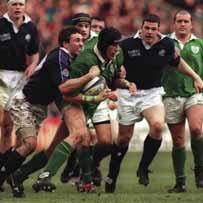
We speak with former Irish rugby player Dr Paddy Johns
181 MEMBERS' NEWS
181 Hold what you have
184 Managing absenteeism
PRACTICE MANAGEMENT
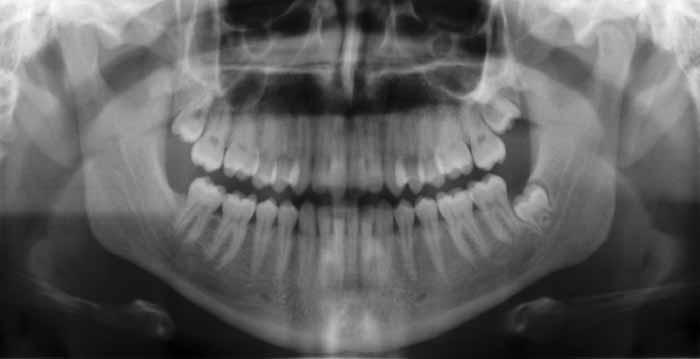
Reading a panoramic radiograph
Dental
Accused of undertreatment
Ethics, dentistry and business
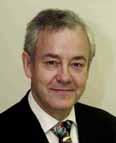
Honorary Editor, Professor Leo Stassen, reflects on ethics, science, business and awards in this edition.
Dr Eleanor O’Higgins of UCD School of Business is an expert in the area of ethics and she has provided an outstanding interview for this edition of the Journal. She observes that professions should lead the way in the drive to improve integrity in society. Her comments on ethics in dentistry are excellent and her warning that this is a small country where cosy relationships still hold considerable sway is frightening in the context of the financial implosion experienced here since 2008. I would go so far as to say that her interview should studied be by all dental students before they enter the profession.
Scientific content
Drs Mary McGeown and Anne O’Connell have provided the Journal with an excellent paper on management of primary molar infraocclusion in general practice, with a recommendation that all children in the mixed and primary dentition should be assessed. Likewise, Dr Andrew Bolas has produced a three stage guide to reading a panoramic radiograph, which will be of use to all practitioners and is a great addition to our series of clinical features.
Identex and the IDA Autumn Meeting
It is significant and welcome that the Association and the Irish Dental Trade Association (IDTA) have joined forces in the presentation of Identex and the IDA Autumn Meeting. CPD points will be on offer to those dentists that attend the IDA lectures, which are being staged in conjunction with Identex at Citywest Hotel in Dublin in September. The trade show itself also provides the opportunity for learning through the presentation of new products and technologies. The lectures will run throughout the two days so that those who attend can benefit from attending the trade show and availing of formal CPD.
Sensodyne Sensitive Dentists Awards Ceremony
It has been a privilege for the Journal to celebrate the outstanding work of dentists over the last six years through the Sensodyne Sensitive Dentist of the Year competition. When we started, we didn’t know what level of testimony we would receive from patients. It has been fantastic and it is wholly appropriate that we move up from our luncheon ceremony to a Gala Awards Dinner in the Royal Hospital Kilmainham on December 6 next. Invitations will be extended to those who have been nominated and I look forward to seeing as many of you as possible for the big occasion.
Victory for IDU
The team in IDA House, under the Union banner this time, succeeded in getting the HSE to remove the details of payments made to dentists under the public health schemes from its website. At no point had dentists agreed to the publication of such figures and the Union’s appeal to the Office of the Data Protection Commissioner was successful in getting the payments from 2009-2011 removed from the HSE website.
Foundation training
I wish to echo the call by our President, Dr Peter Gannon, on the urgent need for a new foundation training scheme for recent dental graduates. It has been wrong that we have been relying on our graduates gaining entry into the British training scheme. As the UK authorities have now restricted entry to graduates from UK universities only, the onus is firmly on our Government to provide similar opportunities here.
Mouth Cancer Awareness Day
Naturally, given my daily work, I appeal to as many of you as possible to play an active part in the forthcoming Mouth Cancer Awareness Day on Wednesday, September 17. The difference in outcome for those who benefit from early detection is enormous. Please be vigilant always and take part in the Awareness Day.
Prof. Leo F. A. Stassen Honorary Editor
Urgent need for FT scheme
Dr Peter Gannon highlights significant initiatives and important issues for dentists, among them the urgent need for a new foundation training (FT) scheme in Ireland.
I hope you all are having a good summer. I would like to highlight some significant initiatives and some important issues for the Association at the moment.
Mouth Cancer Awareness Day
MCAD takes place this year on Wednesday, September 17. This is still a very worthwhile initiative, raising the awareness of mouth cancer among the general public, but also reminding dentists of the need for careful soft tissue examination during routine dental visits. Personally, I am more thorough and more confident about what I find as a result of the educational lectures that have preceded previous mouth cancer awareness days. Several hundred dentists and their staff will once again take part.
Oral health and diabetes - European Oral Health Day
Oral health and diabetes is the theme for this year’s European Oral Health Day, which takes place on September 12. The IDA has made contact with the Diabetes Federation of Ireland and discussed the possibility of forming an allegiance to promote oral health awareness amongst members of the Federation and subsequently with the large numbers of people in Ireland affected by diabetes.
Dental graduates 2014
The British Government has decided that entry to foundation training (FT) schemes across the UK is to be confined to graduates from British dental schools. This means that graduates from Irish dental schools will effectively be denied the chance to take up positions in NHS practices, which require completion of foundation training in the UK.
The IDA and the deans of the dental schools in Ireland have campaigned for the past few years to have an FT scheme introduced in Ireland, which would enjoy recognition by the British authorities and enable Irish dental graduates access to NHS dental positions in the UK as has traditionally been the practice. In spite of putting together a detailed and costed submission, the Department of Health has thus far refused to support the introduction of an FT scheme here. The immediate consequences are that 2014 graduates are likely to face unprecedented difficulty in securing positions this summer. The Association is determined to escalate its efforts to see the introduction of an FT scheme, but in the meantime, in order to assist graduates, we are putting them in touch with dentists here in Ireland who have offered opportunities for work in their practice. We are very grateful to our colleagues for their assistance with this matter.
IDU Trade Union Licence
I am pleased to advise you that on July 7, 2014 we received formal notification that the Irish Dental Union has been granted a negotiation licence by the Minister for Jobs, Enterprise and Innovation, Mr Richard Bruton.
Established in 2011, the Union’s aim was to secure the rights and protections afforded to licensed trade unions involved in representing their members in negotiations with the state and other employers, whether those members are public service employees or selfemployed contractors.
Securing a trade union licence should ensure that we are afforded the same rights as other licensed trade unions, such as the IMO, and will have the right to engage in collective bargaining on behalf of members contracted to provide services under state schemes.
It will also mean that we are now entitled to organise our public service employee members in industrial action legitimately where such action is necessary. Securing this power can only serve to strengthen our role in defending and representing members employed by public service agencies.
This only adds to the traditional roles that the IDA continues to fulfil, including educational, scientific and advocacy and, most importantly, the provision of opportunities to meet fellow members.
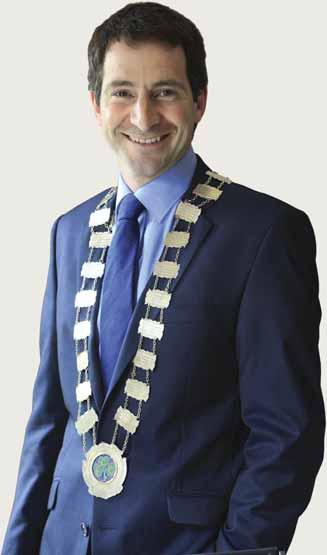
Dr Peter Gannon IDA President
Mouth, Head and Neck Cancer Awareness Campaign in Ireland
Dear Sir,
A campaign to promote awareness of mouth, head and neck cancer in Ireland began in 2010. This campaign was initiated primarily by a group of cancer survivors, the Irish Dental Health Foundation, Irish Cancer Society and the university dental schools in Cork and Dublin. The first Mouth Cancer Awareness Day (MCAD) was held at the Cork and Dublin Dental University Hospitals in September 2010. In order to make the free examinations more accessible throughout the country, the Irish Dental Association became a partner in the campaign in September 2011. The objective was to further increase awareness in the general public and the dental profession – see website for details www.mouthcancerawareness.ie. To date, 70% of dental practices countrywide have offered free mouth cancer examinations in addition to the two dental schools in 2010, ’11, ‘12 and ‘13.
Mouth, Head and Neck Cancer Awareness Ireland (MHNCAI) has promoted increased public and professional awareness of the warning signs of this disease, stressing the importance of early referral for these patients. We, of course, stress that a check for changes in the oral soft tissues is provided at every dental visit but increased awareness in the public arena means that individuals seek help early. Self examination is also encouraged and supported. Early detection of mouth cancer will result in better treatment outcomes - early detection saves lives. On MCAD, mouth cancer check-ups and information are provided free of charge in dental practices around the country. The two dental hospitals, as well as providing check-ups, have provided support and immediate follow-up for any cases considered to be urgent by the examining dentists. As a result of this campaign, we have established a clear referral pathway.
Since the campaign began, approximately 20,000 free examinations have been carried out and 22 cases of oro-pharyngeal cancer have been detected. More importantly perhaps, awareness of this ‘Cinderella cancer’ has been significantly increased in the general public and in the dental profession. The challenge now is to increase awareness in the medical and other healthcare professions.
The favourable media response, which has been the oxygen of this campaign, has been a very important part of the success of this initiative. The partnership is convinced that an awareness day, rather than a week or a month, has been a key factor in attracting media coverage. Recent statistics indicate a rise in the incidence of mouth, head and neck cancer in the UK (www.cancerresearchuk.org). In September 2013, a number of dentists in the UK participated in Mouth Cancer Awareness Day and we made our data collection and information material available. Our experience in Ireland has shown that this campaign has not only saved lives and increased awareness about this disease, but has also highlighted the important role of the dentist as oral physician.
The next MCAD (Ireland) is on Wednesday, September 17, 2014.
Yours sincerely,
Dr Denise MacCarthy Senior Lecturer Consultant in Restorative Dentistry, Dublin Dental University Hospital and present Chair of Mouth Cancer Awareness Ireland
Mouth Cancer Awareness Days (MCAD) in Ireland 2010 - 2013
Patients examined in Dublin Dental University Hospital
Patients
in
Dental University Hospital
Dr Conor McAlister Irish Dental Association
Dr Eleanor O’Sullivan Lecturer in Oral Surgery, Cork University Dental School
*NOTE: Urgent referrals are recorded as patients seen in DDUH and CDUH and patients referred to DDUH and CDUH on the emergency phone line immediately following the MCAD.
Further GDP referrals were received by various clinicians via multiple pathways over a protracted period of time and it was not possible to accurately track these referrals as related to the MCAD.
**Ref: The Development of Mouth, Head and Neck Cancer Awareness in Ireland (MHNCAI) and Results of the 2011 Mouth Cancer Awareness Day (MCAD). Denise MacCarthy, Eleanor O’Sullivan, Conor McAlister, Claire Healy, Stephen Flint, June Nunn, Finbar Allen, Tina Gorman, Michael O’Sullivan, Leo Stassen. JIDA 2012
Mouth Cancer Awareness Day
Mouth Cancer Awareness Day will take place this year on Wednesday, September 17. You can register your interest to participate online at www.mouthcancerawareness.ie.
As you know, Mouth Cancer Awareness Day 2011, 2012 and 2013 were an outstanding success, with over 700 dentists taking part in the initiative each year. Over 23,000 people have availed of the free mouth cancer exam around the country and 23 cancers were detected. We are appealing to as many dentists as possible to sign up for the day in 2014. Without the support of the dental profession this very worthwhile initiative would not be possible.
Please register today and remember, you decide how long you dedicate to the initiative on the day. You do not have to commit to the entire day. This is up to each practitioner to decide what best works for them in their surgery. We need your help. Information packs will be sent to all participating dentists over the next few weeks.
Identex/IDA Autumn Meeting
IDA is delighted to announce that we will be running educational workshops alongside Identex in September (see preview on pages 171-174).
The event takes place at Citywest, Dublin on Friday and Saturday, September 19 and 20 next. Workshops are open to all attendees and can be booked in advance. Team members are also welcome. Subject areas covered include: infection control; clinical audit in oral radiology; employment law; waste management; taxing and pension issues; communication skills; local anaesthesia; and, posterior composites. All workshops will be CPD accredited.
*Dental Protection will be providing an hour-long workshop, which will offer risk credits to all DPL members. These risk credits will go towards up to 15% discount on your DPL membership.
A full trade show (Identex) will run on both days with over 35 trade companies in attendance. Entry to Identex is free. Workshops are €20 to attend for IDA members and €50 for non-IDA members.
Staff retirement
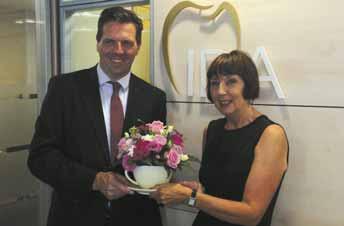
Popular staff member at IDA House, Mary Graham retired recently after over 16 years of service. She was presented with a bouquet of flowers by Chief Executive Fintan Hourihan and departs with the good wishes of all the members of the Association.
Quiz
Submitted by KELLIE O’SHAUGHNESSY
Dental decay levels appear to be high with children visiting your dental practice. You want to make your dental practice more health promoting, but all your staff are needed within their current roles. However, following current media coverage on sugar, many parents are now asking about sugar. What measures can you take to address the situation and provide advice in a cost-effective way?
Answers on page 200
CPD Roadshow
September will see the start of the final year of this cycle of the ever-popular CPD Roadshow. Roadshows will take place at Dublin, Cork, Limerick, Galway, Sligo and Kilkenny on Saturday mornings from 10.00am to 1.00pm. Each event will consist of four lectures of 40 minutes covering topics including: medical emergencies, oral radiology, endodontics, orthodontics, restorative, periodontics, etc. See www.dentist.ie for a full range of topics and dates and venues. This is a fantastic opportunity for members and their team to avail of top class educational programme in their areas. Don’t miss out!
Orthodontics book for charity
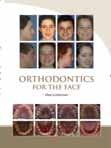
Dr Dan Counihan, who practises in Tralee, has recently published a textbook Orthodontics for the Face and President of the Orthodontic Society, Dr Katherine Condren, was delighted to receive a copy. It can be purchased at www.orthodonticsfortheface.com, with all the proceeds going to Our Lady’s Hospital, Crumlin.
IDA Seminar for HSE members
The Annual Seminar for the HSE Group of IDA will take place from Thursday and Friday, October 16 and 17 at the magnificent Mount Wolseley Hotel and Country Club, Tullow Co. Carlow. Dr Frances O’Callaghan, Senior Administrative Dental Surgeon in south Dublin will be taking over as President at the event. Lectures on such topics as fluoride, special needs dentistry, composites and caries will be presented. A full programme will be published shortly.
Victory for IDU over payments
The HSE has been forced to remove details of state payments to dentists from its website following a complaint from the Irish Dental Union. The Union has been vehemently against the online publication of payment details to individual dentists under the Primary Care Reimbursements Service and has been campaigning for its removal. In a letter to the HSE, Chief Executive of the Union, Fintan Hourihan outlined members' argument that there was no statutory basis for the publication of such details, and that members were "concerned that they have not given consent".
Following this complaint, the Data Protection Commission threatened enforcement action against the HSE unless they removed the details of the payments made to dentists under the medical card scheme from the website.
The HSE confirmed on July 23 that they had removed the details of payments to dentists, as well as other health professionals contracted
to them, for the years 2009 to 2011.
Commenting on the breakthrough, Fintan Hourihan said: “The IDU welcomes the HSE’s decision to cease publication of payments made to dentists participating in the dental treatment services scheme. The Union had raised its concerns with the Office of the Data Protection Commissioner as we believe that publication of payments represented a breach of privacy as recognised by law internationally and was made without the consent of the dentists concerned.
“The publication of payments also presented a misleading impression when viewed in isolation and suggested dentists were earning inflated levels of income, when in fact the payments were to cover the cost for treatments already dispensed. In addition the vast bulk of these payments relate to practice running costs, materials used and everyday overheads with the payment to dentists comprising a very small portion.
“The HSE also failed to consider whether the publication on a single, freely-consultable website updated by name relating to all of the beneficiaries concerned went beyond what is necessary for achieving the HSE's legitimate aims.”
New Minister for Health
In the recent Cabinet reshuffle, Leo Varadker TD was appointed to the position of Minister for Health.
Minister Varadker was elected to the Dáil in 2007 as a TD for Dublin West, and served as Minister for Transport, Tourism and Sport from March 2011. The Association has sought and obtained a meeting with Minister Varadker and it will take place in September.
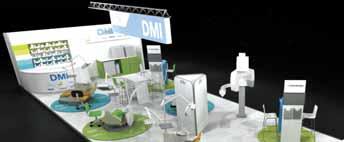
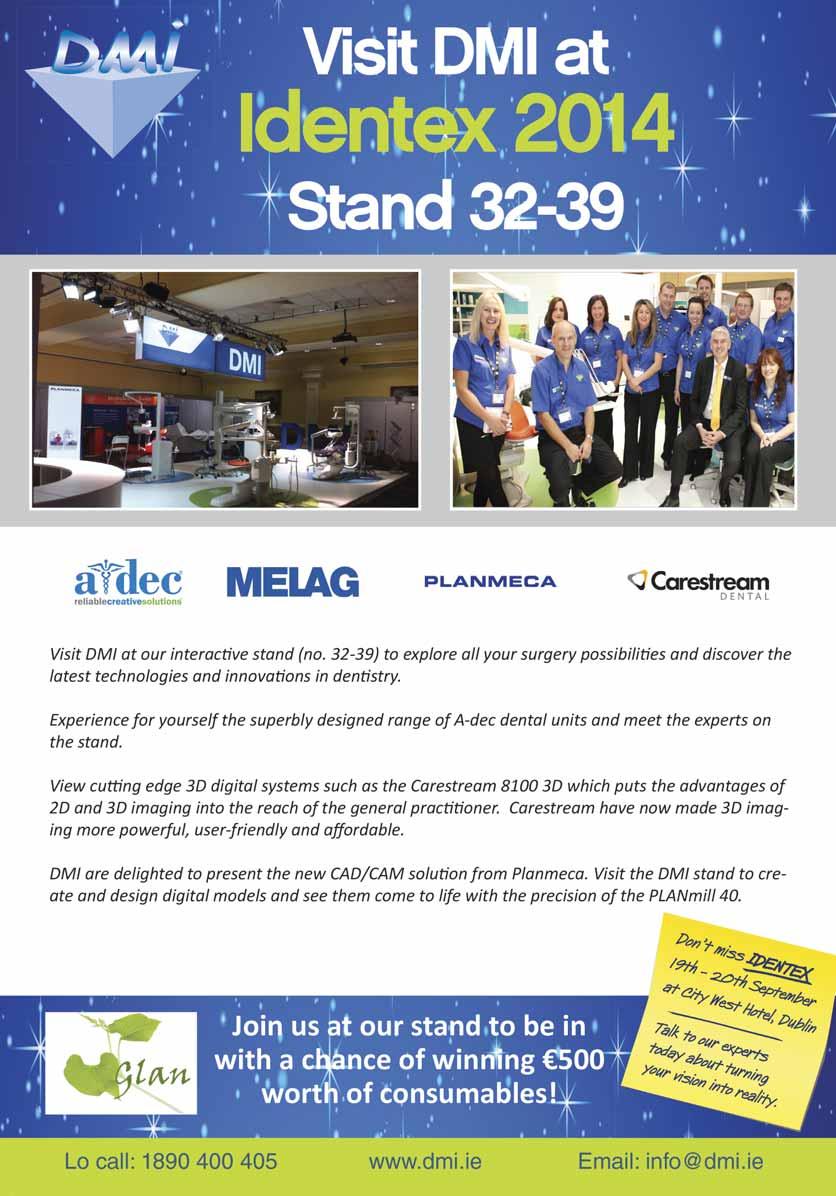
Interactive DMI
DMI will have an interactive stand at Identex designed to explore all surgery possibilities and demonstrate the latest technologies in dentistry. Dentists will be able to experience the range of A-dec dental units and meet the experts on the stand. The Carestream 8100 3D which puts the advantages of 2D and 3D imaging into the reach of the general practitioner will also be on show.
DMI is also presenting the new CAD/CAM solution from Planmeca. Dentists can visit the DMI stand to create and design digital models and see them come to life with the precision of the PLANmill 40. There will be special exhibition only offers and a chance to win €500 worth of consumables.
An artist’s impression of the DMI stand for Identex.
Come to Identex and the IDA Autumn Meeting
The Irish Dental Trade Association and the Irish Dental Association have joined forces to present both Identex and a series of lectures in September.
In an exciting development for the dental profession, the Irish Dental Trade Association’s national dental trade exhibition, Identex, will take place for the first time in conjunction with the Irish Dental Association’s Autumn Meeting. The dates for your diary are Friday and Saturday, September 19 and 20 in Citywest Hotel, Saggart, Co. Dublin.
As is normal at Identex, leading manufacturing companies and dental innovators from around the world will showcase and demonstrate their latest products at the exhibition, which has been in existence for 30 years. This year, the exhibition will be augmented by the Irish Dental Association’s Autumn Meeting.
At that Meeting, the IDA will host a comprehensive lecture programme with lecturers discussing current dental topics including: employment law; communication; oral radiology; and, infection control, amongst others.
This year’s trade show will take place in Citywest Hotel in Saggart, Co. Dublin.
List of exhibitors
Aerona
Ardagh Dental
BA International
Clinical Cabinets
Coltene
Dental Practice Systems
Dental Protection
Dentech
Dentsply
DMES
DMG
DMI
Edenta
GC UK
Handpiece Harry
HDMS
Initial Medical Services
Ivoclar Vivadent
Kerr
McDowell+Service
Microminder
Miele
Morris Dental
BF Mulholland
Murray Woods
Odontological Supplies
Optident
Perfection Plus
Premier Dental Products
Henry Schein
SDI
Septodont
Software of Excellence
Swordfish Medical
Tepe
Vatech
Voco
W&H
Zhermack
3m
IDA AUTUMN MEETING – LECTURE SCHEDULE
The IDA Autumn Meeting is a programme of lectures taking place over the two days of Identex in two lecture halls inside the show. Topics covered range from practice management to clinical, and all are designed to be CPD for which attendees will obtain credit. The cost is ¤20 per lecture or ¤30 for two.
Friday, September 19
LECTURE HALL 1
11.00am Tax and pension issues for the dental practitioner
David McCaffery, MedAccount and John O’Connor, Omega Financial Management
12.00noon Working within the law
Breda O’Malley, Hayes Solicitors
2.30pm Local anaesthesia
Dr Dermot Canavan
4.00pm Dental radiology clinical audit –it’s easy and it’s fun!
Dr Brendan Fanning
LECTURE HALL 2
11.00am Getting consent and record keeping
Dr Hugh Harvey, DPL
12.00pm Infection control - what’s changed, what’s new?
Dr Nick Armstrong
2.30pm Brushing up on motivation
Dr Brid Hendron
4.00pm Safe management of hazardous medical waste
Brian Rodgers
Dentists and team members attending the show and lectures will be able to:
4 meet face to face with the specialists responsible for the state-ofthe-art dental equipment, materials, products, techniques and solutions that save time, improve productivity and reduce longterm costs;
Saturday, September 20
LECTURE HALL 1
11.00am Tax and pension issues for the dental practitioner
David McCaffrey, MedAccount and John O’Connor, Omega Financial Management
12.00noon Working within the law
Ms Breda O’Malley – Hayes Solicitors
2.30pm Safe management of hazardous medical waste
Mr Brian Rodgers
4.00pm An introduction to clinical photography
Dr PJ Byrne
LECTURE HALL 2
11.00am Infection control - what’s changed, what’s new?
Dr Nick Armstrong
12.00pm Posterior composites
Dr Una Lally
2.30pm Local anaesthesia
Dr Dermot Canavan
4.00pm Dental radiology clinical audit –it’s easy and it’s fun!
Dr Brendan Fanning
4 explore the widest selection of products and equipment in one place;
4 research and learn about the latest developments;
4 take advantage of the multitude of exclusive show offers from exhibitors; and,
4 invest a day in planning for your practice and gain CPD credits.
Leaders encourage attendance
Commenting on the announcement of the details, the President of the Irish Dental Trade Association, Gerard Lavery, said: “We look forward to welcoming you to Identex 2014. Bring your team along as the show offers a fantastic chance to get together and it can be a springboard for fresh ideas for your practice. It’s also a great place to network with colleagues, professional associations and key opinion leaders.”
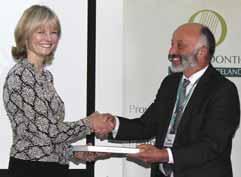
The President of the Irish Dental Association, Dr Peter Gannon, said: “We are delighted to present the IDA Autumn Meeting at Identex 2014. It represents an ideal way for the trade and the profession to cooperate. We hope dentists will take away a greater knowledge of legislation and how it affects them, plus an update on new materials and equipment. I look forward to seeing as many of our members there as possible.”
Gerard Lavery, President, Irish Dental Trade Association. Dr Peter Gannon, President, Irish Dental Association.
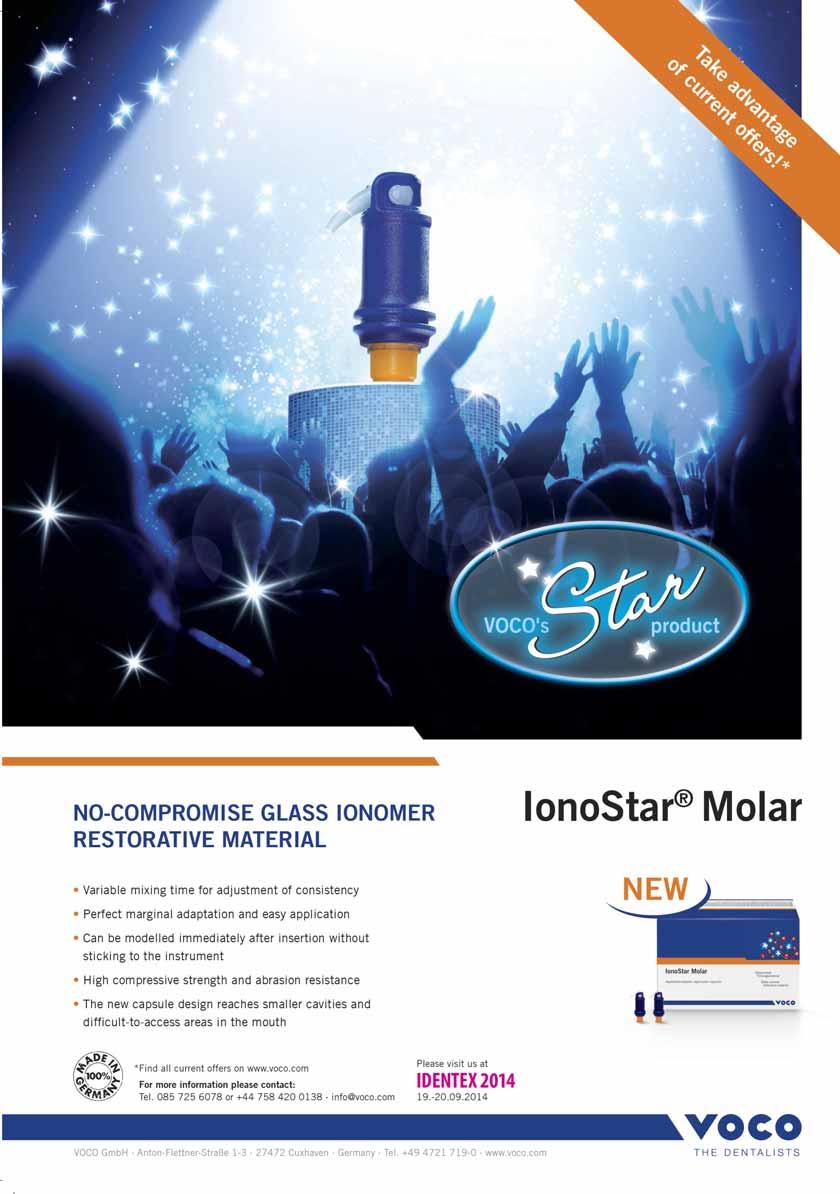
Voco at Identex
Voco will present several products at Identex including Futurabond M+, a universal one-component adhesive in bottles. According to Voco, Futurabond M+ offers the user flexible solutions for every bonding situation. Total-etch, selective-etch or self-etch – the dentist is free to choose and apply the etching technique depending on indication or according to personal preference. Thanks to a new type of monomer technology, overetching of the dentine is impossible. The company says that Futurabond M+ is more flexible than conventional bottled bonding agents with regard to its spectrum of application. It offers secure adhesion to various materials such as metals, zirconium or aluminium oxide, as well as silicate ceramics –and it requires no additional primer. Another product being featured at the Voco stand is IonoStar Molar, a new glass ionomer restorative material in innovative application capsule. The material is applied without conditioner or adhesive and scores particularly highly thanks to its non-sticky consistency and perfect marginal adaptation. IonoStar Molar can be modelled immediately after insertion and cures within four minutes. Its lastingly high level of fluoride release counteracts postoperative sensitivity.
New Sirona chair from Henry Schein
The new Sirona Intego chair: made in Germany and available from Henry Schein.
Henry Schein is launching the new Sirona Intego chair at Identex. The launch includes a special finance deal, offering the chair to dentists for as little as €256 inclusive of VAT per month for 60 months. Intego is described by its maker, Sirona, as the best treatment centre in its class. Its ergonomic design perfectly combines appearance and functionality, while its outstanding German-made quality doesn’t just satisfy – it impresses. The two designs, Intego and Intego pro, can be flexibly configured for surgery requirements. Dentists can select the whip arm or the hanging hoses design, while the company says that every option delivers optimal performance at a fair price – offering great value in every respect.
Swapping scrums for scrubs
Former Irish rugby player and current Southern Trust dentist Dr Paddy Johns spoke to our reporter RÓISÍN TREACY about rugby, dentistry, and his work for Plan Ireland.
He may be best known for manning the second row for Ireland throughout the 90s, winning 59 caps for his country and playing in two World Cups, but many may not realise that among his other accomplishments, Paddy Johns is also a dentist.
Two personal experiences with the dentist as a young boy pushed Paddy to consider a career in dentistry. “When I was about 12, I had four teeth out, and it didn’t go too well for me. So it put me off going back [to the dentist] for four or five years, until another dentist gave me a filling, which didn’t really hurt at all. That was always in the back of my head, and the idea that if I could be a dentist, I could be like the second dentist, not the first one.” This, coupled with a talent for science in school, saw Paddy travel to Newcastle to study dentistry, where he spent two years, before transferring to Trinity College Dublin.
Upon graduating from Trinity in 1991, the six foot six Northern Irish man spent a year in private practice in Carrickfergus. However, working in private practice meant often having to see patients on evenings and weekends, which clashed with rugby training and matches. This is what gave Paddy the push towards public dentistry: “It was really a colleague that suggested the community dentistry because it was more nine to five and it suited better with the rugby commitments I had. I tried it for six months and I really enjoyed it, so I stuck with it, but then I took six years out to play rugby.”
Following his retirement from professional rugby, Paddy returned to dentistry and began working with the Southern Trust, the authority with responsibility for healthcare in the southern region of Northern Ireland. It’s a job which is not without its challenges: “We are the community dental service, so we treat priority groups – patients with special needs, patients who have learning and physical difficulties,
Background
Paddy was born and raised in Dungannon. He is married and has four children –Christopher (19), Emily (17) and twins Megan and Hannah (14). He spends much of his spare time following his children to their various sporting matches: Christopher is a professional football player and plays with Southampton under-21s, while the girls of the family all play hockey.
Outside of rugby, Paddy enjoys competing in triathlons, and enters about four events per year in a bid to keep himself fit. He’s currently training for a triathlon, which takes place in Athlone in August.
August/September 2014 178 : VOLUME 60 (4)
those who are housebound, in nursing homes, etc. We also run the children’s general anesthetic list, so we take out children’s teeth in hospitals.”
“The young patients are often very anxious kids who won’t sit for a general dentist. Generally, our patients wouldn’t be suitable for practice for various reasons and that makes them a bit more challenging to work with. They’re more time-consuming. In practice, they don’t need somebody coming in who’s not able to lie back in the chair, or isn’t able to open up their mouth too wide for very long.”
The now 46-year-old is based in the Health and Social Services Centre in Banbridge, Co. Down, and admits that he enjoys the challenge and variety that comes with community dentistry. When asked what his favourite part of the job is, he replies with a laugh: “I quite like taking out teeth.” Of course that’s not the only enjoyable part of his job: “I do like relieving pain. If someone comes to you in a lot of pain and you can help that, it’s quite satisfying. And if someone comes in and they’re embarrassed about their teeth, you can help them so they’re no longer embarrassed and give them a smile.”
Returning to the rugby pitch
After hanging up his rugby boots in 2002, Paddy stayed away from the rugby spotlight for 10 years. However, following the 2011 Rugby World Cup, he felt it was a good time to get back on the pitch and try his hand at coaching. For this, he returned to his home club of Dungannon, where he spent the past two years as head coach. Since re-immersing himself in the sport, Paddy has found that there’s a huge difference between coaching rugby and playing it: “It can be a lot more frustrating to coach a team than to play in one. You have a lot less control of the outcome of the game. You can’t always ensure they [the players] do what you want them to do, but it can be very satisfying too when a plan comes to fruition.”
Dungannon had a disappointing year in 2013, and were relegated to Division 2A. However, Paddy says, despite this, he enjoyed his time coaching the team: “The players are all good lads. Just being in a team environment and on the bus and the pitch; it’s the closest thing you
can get to playing, without actually having to play.”
Paddy admits he underestimated the mammoth effort that goes into coaching an amateur team. He reckons his work with Dungannon rugby club was taking up about 20 to 30 hours of his time a week between training, planning, matches and everything else that goes with it. “You play a match on a Saturday – you might be gone by 8.00am, and not back until 6.00pm or 7.00pm. After the game itself then you watch the video, that’ll take an hour or two, then analyse it. After that you sit down and plan your training sessions for the next week. During the week you have training, making your phone calls to people who aren’t going to be on the team, and so on.”
This time pressure and family commitments has driven Paddy to take a step back from the helm of Dungannon rugby club: “This year there’s a new coaching team coming in, so I may help out in the background without committing a lot of time, and hopefully they will bounce back [following relegation].
“My kids are at the stage where in another couple of years, they’ll all be gone, so when that happens, I plan to get back into it. I underestimated the time commitment, and at the moment I need more time with my family.”
Giving back
Paddy also does his bit for charity, and spent some time in Ethiopia last year with community-development organisation Plan Ireland. Although he had known about Plan prior to his trip (he and his wife have sponsored children under Plan UK for about 14 years), it was fellow rugby player and friend Malcolm O’Kelly who got Paddy directly involved in the organisation’s work.
Malcolm is ambassador for Plan Ireland and when the 2013 Ethiopia trip clashed with the birth of his twins, he asked Paddy to take his place. With little hesitation, Paddy agreed to go: “It was nice to go and see what Plan actually do on the ground. I knew I was giving to sponsor a child, but I didn’t know what was happening at the end of it. It was really good to see that every penny is put to good use. Plan’s strategy is very good, they don’t just go in and throw money at communities; they put a scheme in place, they’ve got an exit strategy, and what they do really makes a big difference. They enable the local community to manage the project themselves.”
In Ethiopia, the delegation visited the projects that Plan had put together. One of them was a solar water project in a community in the middle of Ethiopia. Before the water pump was installed, the children
Rugby career
Paddy began playing rugby from an early age; he recalls he was around six or seven-years old when he and his two brothers first became regular faces around his local rugby club in Dungannon.
in the community would have to make a two-mile walk to the water twice a day to gather enough for the family. This task usually fell to the girls, who were as young as eight years of age.
Paddy explains how Plan’s simple project has helped the village to become more self-sufficient: “Plan got solar panels and put them in a pump and installed two miles of piping to pump the water up to the village. Now the villagers distribute water – they pay something like 2p for the water – and the money collected goes to the locals to fix anything that needs to be fixed – so it’s all self-funding now. Once they have somebody that they can teach to fix any troubleshooting problems with the pump, Plan can step out.
“So now the kids don’t have to collect water: they can go to school, they no longer need to get married at 12, they can get married at 16
Paddy had his international debut as a lock against Argentina in October 1990 at the age of 22. He played in both the 1995 and 1999 Rugby World Cups, and has won 59 caps for Ireland. Paddy retired from rugby in 2002.
and stay in school until that time, so it’s starting to improve their lives. Something as simple as that has made a huge difference in that whole community.”
The highlight of the trip for Paddy was seeing how happy and grateful the children they met were to Plan and its representatives. He’s eager to encourage people to get involved with the charity, if only to sponsor a child themselves: “I really see the value in Plan, and if people reading this could think about sponsoring a child, I could certainly validate that it’s worthwhile. Having been out there, I see they make a huge difference, and it’s not a whole lot of money either.”
If you are interested in sponsoring a child with Plan Ireland, visit www.plan.ie/sponsor-a-child/sponsor-a-child-today.
Ethics and dentistry
DrELEANOR O’HIGGINSanswers questions from the Journal about ethics and dentistry.
What sets a profession apart from other groupings in society?
A profession is identified by four interrelated hallmarks.
■ A common body of knowledge which characterises the unique domain of expertise of the profession: this body of knowledge has to be updated continually through ongoing professional education.
■ A registration system which offers a licence to practice the profession or admission into the profession: the register is maintained by a recognised body, such as the Dental Council, and is usually based on fulfilment of stipulated educational requirements accredited by the competent authority, the Council. The attainment of educational standards must be from a recognised institution. Therefore, the integrity of the registration system depends on verification that the educational institutions where members obtained their qualifications are recognised in the profession nationally and where there is agreement internationally.
Eleanor is on the faculty of the UCD School of Business, with interests in business ethics, corporate governance, corporate social responsibility and strategic management.
■ Service of the public good: in contrast to commercial interests, professionals are expected to serve the public benefit, so professional values and standards are placed ahead of individual interests. In particular, the patient’s or client’s interests (the convention is to refer to recipients of professionals as ‘clients’, whilst in health related professions, such recipients are referred to as ‘patients’) take precedence over those of the professional. The Dental Council Code presents various elements of acting in the public interest, both through relationships with and the welfare of individual patients, as well as responsibilities to the community as a whole.
■ A code of ethics/conduct: this is a shared code which stipulates a higher level set of principles or ethical tenets, and expected standards of conduct that reflect the stipulated principles. Professional codes go beyond what is legal. A code is of no use unless it is enforced, so the certifying body may monitor adherence to the code by members, and impose sanctions when expected standards are not maintained, up to expulsion from the register, even if the individual has not been found legally liable for any transgression. The classical example of a breach of ethics in dentistry and medicine is overtreatment.
How does judgment play a role in a profession?
Professionalism depends on more than possession of knowledge and clinical competence. It depends on the ability to apply that knowledge and competence appropriately, based on experience. Judgment relies on the integration of formal facts and tacit knowledge. Tacit
knowledge may be seen as ‘unspoken knowledge that people draw on from within themselves: observations, ingrained habits, inspirations, hunches, and other forms of awareness that are typically not written down or codified, but that live in people’s minds and bodies’, defined by Ikujiro Nonaka, a Japanese guru in knowledge management. Therefore, good judgment is learned, but cannot be taught explicitly.
What ethical dilemmas are faced by business people, including health professionals who provide a service to patients, in relation to the idea of public good?
There are countless ethical dilemmas in both business and the professions, but I would like to mention one that is very important and common to both. This is the inequality in knowledge frequently found between sellers and buyers in business paralleled by inequality between professionals and clients. Thus, the client is highly dependent on the professional who could use his/her superior knowledge to mislead or take advantage of the client, e.g., a dentist recommending unnecessary treatments. In commercial transactions, this would correspond to the doctrine of caveat emptor – let the buyer beware. This was a doctrine that banks used when they gave out unsustainable loans to borrowers in the housing boom. However, with professionals, it should be different. One would expect training on professional ethics to be a key part in the education and formation of dental students. Therefore, their pledge to act in the public interest and adhere to a code would prevent untrustworthy actions. It means that ethical behaviour does not have to be constantly enforced by law, which would be costly and largely impossible. Instead, we can reasonably expect that the members of the profession will instinctively do the right thing, even if they could get away with transgressions.
There is an understandable temptation for all of us to be swayed by self-interest as exemplified by more profitable treatment modalities over equally-effective, less-expensive interventions, or adopting a minimally invasive approach. The latter choices would make dental treatment more accessible to those in greatest need.
Why is a code of ethics or conduct so important for a profession?
It is not just important – it is a moral responsibility. As mentioned in response to the previous question, obedience to a professional code allows clients and the public generally to trust the members of the profession. This enhances the relationship between the professional and the client for the benefit of the client. Of course, the spirit as well as the letter of the code has to be upheld, just as law cannot in itself prescribe virtue, if people are determined to circumvent it. This is where a strong competent registration body is important in ensuring that the code is a living document to its members, not something to be got around.
What is your assessment of the Code of Professional Behaviour and Ethical Conduct published by the Dental Council of Ireland in February 2012?
It appears to be a helpful document covering the high level aspirations
of the profession, as well as the expected standards of day-to-day behaviour of dentists in relation to various stakeholders, like clients, fellow practitioners, and the community. However, it is important that practitioners use it in combination with The Code of Practice pertaining to Public Relations and Communications, The Code of Practice Related to the Display of Private Fees in Dental Practices, and The Code of Practice Relating to Non-Surgical Cosmetic Procedures, as all of these codes cover interrelated ethical issues.
What is trust and what are the important components of trust?
Trust is a core concept in professional practice. When you trust someone, you allow yourself to be vulnerable to that individual, even when you have no way of monitoring or controlling him/her, as you believe s/he will act in your interests even when s/he could get away with it if s/he took advantage of you. In that sense, you are willing to take a risk by exposing your vulnerability.
We trust those whom we consider to be trustworthy. So, that raises the question of how, or when, we consider someone to be trustworthy. Trustworthiness depends on three necessary components. One is ability or competence, i.e., that the person is competent, has the knowledge to do the job, so a dentist who is properly registered with the Dental Council would be considered competent. Another component of trustworthiness is benevolence, so we believe that a professional is putting a patient’s real needs first. Then, integrity is a component of trustworthiness, the perception that the trustee adheres to a set of principles, consistent with the values and needs of the truster. This can be an issue of character. All three components of trustworthiness must be present for an individual to be trusted. So, I would not trust Mother Teresa to perform a tooth extraction on me, even if I were convinced of her benevolence and integrity.
Can you describe the relationship between risk and trust for a patient of a dentist?
Patients are able to trust dentists and put themselves into their hands when they believe the dentist is trustworthy, i.e., possesses all three components of trustworthiness. Competence would usually be ensured by the certification process. Belief of the patient in the benevolence and integrity of the dentist is usually built on a developing relationship, but before the patient visits a particular dentist, the benevolence and integrity of the dentist may be known to the prospective patient through word-of-mouth from other patient experiences and general reputation. Of course, nowadays, the internet and social media allow for speedy word-of-mouth reporting of experiences with particular professionals. Isn’t there a website called, ‘rate my dentist’? Of course, such websites are not always influenced by high-minded moral principles and are unfortunately open to abuse, so we have to be careful about trusting those websites themselves!
Why is integrity such an important concept for a profession? Integrity and moral behaviour are inseparable. Integrity is a cornerstone of positive human interaction, especially where trust is necessary. Genuine relationships are based on integrity, and
Dr Andrew Bolas
BDS FFDRCSI FDSRCS(Ed) MSc
Oral surgeon
Part-time lecturer in dental radiology
Dublin Dental Hospital
Address for correspondence:
Dr Andrew Bolas
HSE West Dental Department
Markievicz House, Sligo
Reading a panoramic radiograph
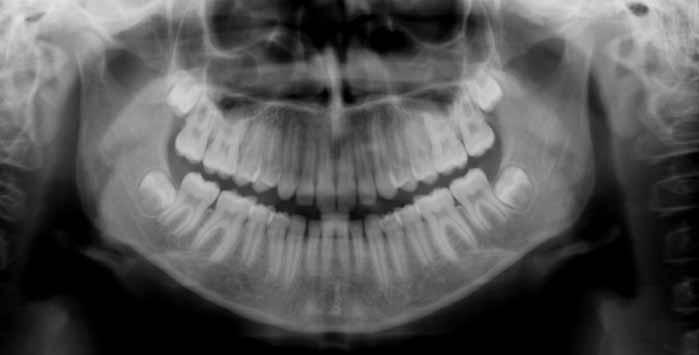
Poor-quality radiographs make diagnosis difficult or sometimes impossible. Rather than try and formulate a diagnosis or treatment plan from a poor radiograph, a decision should be made at an early stage to assess whether the exposure needs to be repeated or not. Panoramic radiographs have a number of inherent faults due to the mechanism by which the image is created, they are also hugely reliant on the positioning of the patient.
STAGE 1:Assess the quality of the radiograph
Figure 1 shows a number of indicators that
can help in assessing the image quality of a radiograph. The red line indicates the occlusal plane, this should follow a shallow arc, too flat and the patients’ chin is too high; and too deep (or “smiley”) and the patients’ chin is down on their chest. The blue arrows indicate the widths of the right and left ascending rami, these should be approximately the same size; a difference may indicate the patient is rotated in the machine, causing more magnification on one side. The third indicator is the ghost shadows of the angles of the mandible, again these should be at approximately the same level. In this example the line on the left is
FIGURE 1:Indicators for assessing image quality.
FIGURE 2: Assess the radiograph in an ‘ever-decreasing’ spiral.
1. Shadow of the hard palate
2. Lacrimal duct
3. Inferior orbital margin
4. Pterygopalatine fissure
5. Lateral pterygoid plate antrum
6. Hard palate
7. Zygomatic buttress
8. Zygomatic arch
9. Soft palate
10. Styloid process
11. Dorsum of the tongue
12. Inferior dental canal
13.Mental foramen
14.Body of the hyoid
15. Greater wing of hyoid
higher that the line on the right, indicting that the head is tilted to the left. Finally, the green highlighted area shows an area of the image that is much darker than its surroundings; this is an air space shadow caused by air between the hard palate and the dorsum of the tongue. As can be seen, this often lies over the apical area of the maxillary teeth, making diagnosis difficult. By getting the patient to push their tongue against the roof of their mouth during exposure, this shadow can be reduced or eliminated. Exposure factors should be assessed, and be such that the contrast levels allow enamel. Dentine and bone should be distinguishable.
STAGE 2:Assess the whole radiograph in a logical fashion
One approach to assessing the radiograph is what could be described as the ‘windscreen wiper’ method, whereby the clinician casts their eyes from left to right and right to left, in an attempt to cover all the detail. A preferred method, as illustrated in Figure 2, is to assess the radiograph in an ‘ever-decreasing spiral’. Starting at the right condyle, the assessment progresses along the lower border of the mandible, right round to the left condyle. From here, the assessment crosses the maxilla taking in the maxillary antra and the hard palate. The next
16. Nasal septum
17. Inferior concha
18. Anterior nasal spine
19. Shadow of nasal cartilage
20.Medial wall of the
21. Floor of the antrum
22. Posterior antral wall
23. Hamulus
24. Coronoid process
25. Maxillary tuberosity
26. Articular eminence
27. Condylar head
28. Mandibular foramen
29. Earlobe
30. Shadow of the angle of the mandible
sweep starts at the right sigmoid notch and carries around the mandible again, this time assessing the periapical tissues and the alveolar bone. From the left sigmoid notch, the eye is then cast across the peri-apical tissues of the maxillary teeth back to the starting point. The final sweep involves looking at each of the teeth and the alveolar bone.
STAGE 3:Remember the normal anatomy
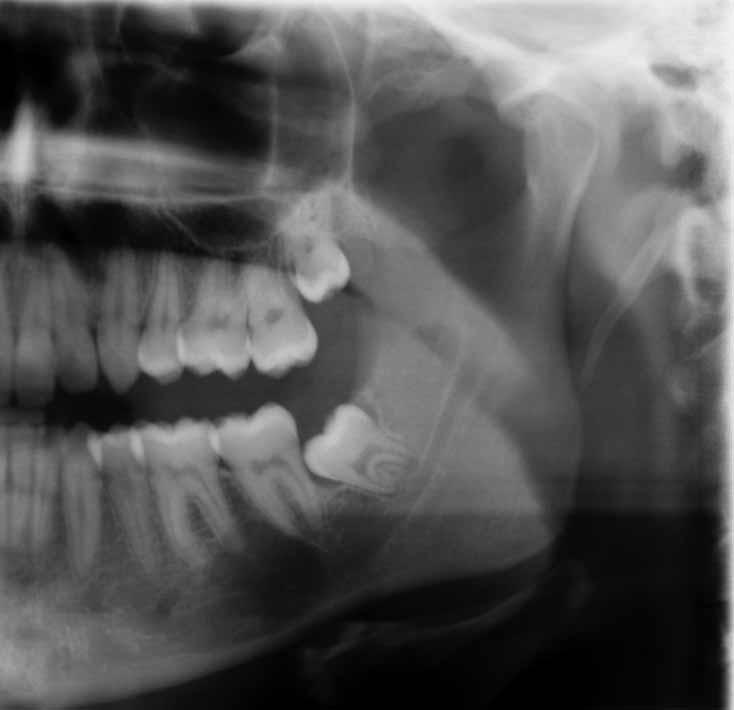
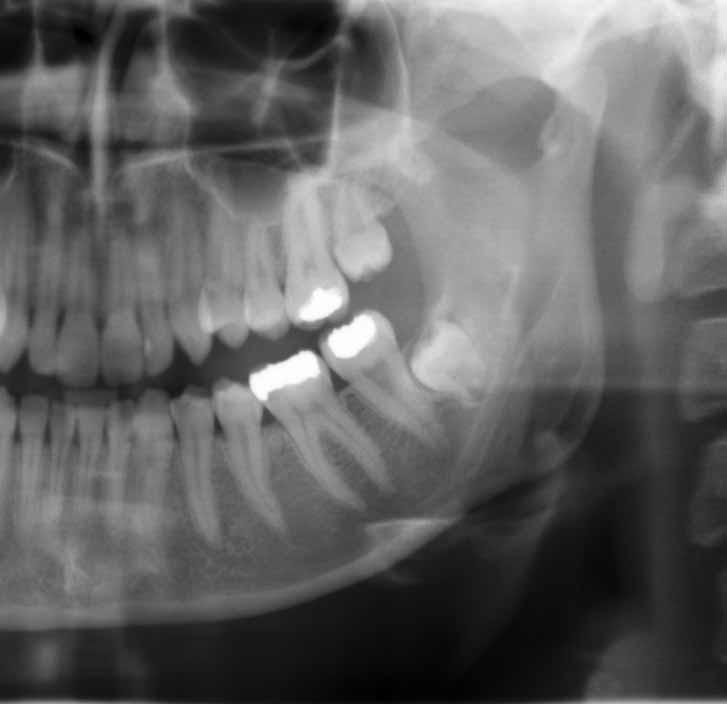
Figures 3 and 4 (cropped panoramic images) show some of the normal anatomy seen on a panoramic radiograph. There are also a number of soft tissue shadows that appear on the image, and also a number of ‘ghost shadows’ that appear as a result of how the panoramic image is captured.
Conclusion
One of the main problems with panoramic radiographs is that often normal anatomy or one of these ‘ghost shadows’ can look like pathology. By assessing the quality of the radiograph, reading the radiograph in a logical fashion and remembering the normal anatomical images, it is possible to get the most from the radiograph.
FIGURE 3:Normal anatomy seen on a panoramic radiograph (1-15). FIGURE 4:Normal anatomy seen on a panoramic radiograph (16-30).
Dr Mary McGeown BA BDentSc
Department of Public and Child Dental Health
Dublin Dental Hospital
Lincoln Place
Dublin 2
Dr Anne O’Connell BA, BDentSc, MS
Department of Public and Child Dental Health
Dublin Dental Hospital
Lincoln Place
Dublin 2
Address for correspondence:
Dr Mary McGeown
Department of Public and Child Dental Health
Dublin Dental Hospital
Lincoln Place
Dublin 2 mary.mcgeown@dental.tcd.ie
Tel: 087 211 2507
Management of primary molar infraocclusion in general practice
PRECIS
Infraocclusion of primary molars is common. Appropriate management will be dictated by the patient’s age, presence of a permanent successor, severity, and rate of progression.
ABSTRACT
Statement of the problem: Infraoccluded primary molars can be managed in general dental practice but clinicians need to understand when intervention is necessary.
Purpose of the study: To review the current literature on infraocclusion in primary molars, and to demonstrate diagnosis and management strategies for general dental practitioners. Methods and materials: Current literature was sourced via PubMed search using multiple key words. Relevant articles are summarised within the article. Different management strategies will be illustrated using a section of cases of differing severities and age at diagnosis. All interventions, including conservative management, restorative, and surgical management will be reviewed. The importance of early diagnosis, continued monitoring, and interdisciplinary team work will be emphasised.
Results: Infraocclusion of primary molars is a common clinical finding, which can be diagnosed both clinically and radiographically. The severity of infraocclusion is classified according to the relationship of the occlusal surface of the tooth relative to adjacent teeth. The age of the child at diagnosis and rate of infraocclusion play a pivotal role in case management. The majority of primary molar teeth exfoliate naturally when the permanent successor is present, however active intervention may be required in some cases. Possible management techniques include extraction, restoration, and luxation of these teeth.
Conclusions: All children in the mixed and primary dentition should be assessed for infraocclusion of primary molars, particularly mandibular molars. Accurate dental records are essential to assess the severity and monitor the rate of progression of infraocclusion so that the condition can be appropriately managed.
Journal of the Irish Dental Association 2014; 60 (4): 192-198
Table 2: Consequences of infraocclusion of primary molars and their implication for the patient.13,17,21
Consequences of infraocclusion of primary molars
Tipping of adjacent teeth
Overeruption of opposing teeth
Lateral open bite or crossbite
Caries of infraoccluded teeth or adjacent teeth
Hypoplasia or deflection of successor tooth
Impaction of successor tooth
Delayed exfoliation of primary tooth
Progression of infraocclusion
Early extraction of severely infraoccluded primary molar
Increased difficulty of extraction
Implication for patient
4 Orthodontic treatment to upright tooth.
4 Risk of caries.
4 Increases need for active intervention.
4 Orthodontic treatment.
4 Increased need of orthodontic treatment.
4 Restorative dental treatment.
4 Extraction if causing pain or infection.
4 Restorative dental treatment.
4 Extraction if severe.
4 Delay in commencing orthodontic treatment.
4 Possible need for extraction if rapid.
4 Space maintenance.
4 Orthodontic treatment to correct space loss.
4 Fracture of primary molar tooth/retained roots.
4 Surgical extraction.
clinically with direct measurement using adjacent teeth as reference or with clinical photographs. Many clinicians also use study models already available for orthodontic treatment planning.
Diagnosis
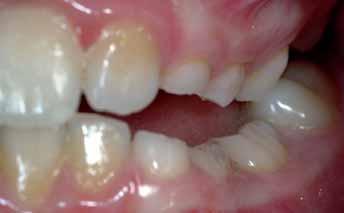
A diagnosis of infraocclusion is made by clinical examination where a disturbance in the occlusal plane is evident. The infraoccluded primary molar tooth will lie apical to the occlusal plane (Figure 4).16 These teeth have the classical, high-pitched, ‘cracked-teacup’ sound of ankylosis when percussed with a metal instrument.12 Radiographs are required to verify the presence or absence of the permanent successor.
Radiographs also illustrate a step in the occlusal plane and there is often an angular defect of alveolar bone which is angled towards the ankylosed tooth ( Figure 5 ). 16 Many clinicians will take an orthopanograph radiograph rather than periapicals, due to the association of infraocclusion with bilateral presentation and other dental anomalies and to determine any orthodontic treatment need. A combination of a clinical and radiographic assessment is advised to rule out other causes, such as primary failure of eruption, impaction or other pathology.17
Consequences
The potential consequences of infraoccluded teeth have been widely reported in the literature and are summarised in Table 2 14,18,19 Several of these consequences are clearly illustrated in Figure 6
Treatment planning
There are several different factors that will influence the management of infraoccluded teeth. These factors must be considered when a patient presents to general practice with infraocclusion to determine if they can be managed appropriately or require referral on for specialist management. These include the presence or absence of a permanent successor, age of onset and severity, rate of progression of infraocclusion, tipping of adjacent teeth, presence of other anomalies and other concurrent dental needs of the patient.
FIGURE 4: A clinical photograph of an altered occlusal plane due to infraocclusion.
FIGURE 5: An OPG radiograph of an altered occlusal plane due to infraocclusion.
adjacent teeth and overeruption of the opposing dentition, however it is impossible to predict when these teeth will exfoliate, or if they will be retained indefinitely. Alternatively extraction may be warranted in crowded arches which require orthodontic treatment; this should only be completed as part of an orthodontic treatment plan.
Age of onset and severity
While the peak age of infraocclusion has been reported to be around eight to nine-years old2 with most ankylosed primary molars showing slight-moderate infraocclusion,21 it can be seen in younger children. As infraocclusion is often progressive,21 its presentation in a younger child can lead to a more severe infraocclusion, leading to an absence of vertical alveolar development at that site and possibly deflection of the permanent successor.
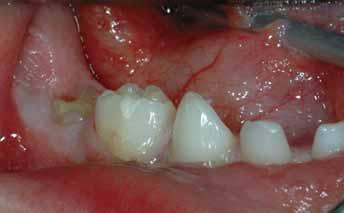
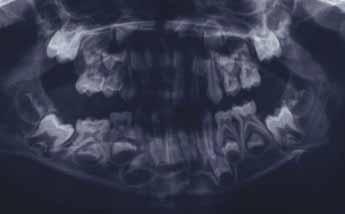
Figure 8 shows an intraoral image of a five-year-old child who presented with a severely infraoccluded 85. Clinically, there was distal tipping of tooth 84 towards the infraoccluded tooth. Radiographic examination showed the presence of all permanent successors (Figure 9). Clinically and radiographically caries were observed. The decision to extract this tooth was made due to the severity of infraocclusion at a young age and the evidence of caries in the tooth. On-going monitoring of the eruption of 46 and 45 will be required with the likelihood of space maintenance.
Rate of progression of infraocclusion
The rate of infraocclusion can vary from slow to fast and will dictate the likelihood for intervention. Late onset cases usually show milder infraocclusion and can often be managed more conservatively.19 If the tooth shows a rapid rate of infraocclusion, particularly at an early age,
there is a greater potential for disruption of alveolar development, whether or not there is a permanent successor. Teeth exhibiting rapidly progressive infraocclusion are usually extracted to limit the extent of vertical defect of bone. The younger the age at diagnosis and the more severe classification, the increased likelihood of intervention.
Tipping of adjacent teeth
Severe infraocclusion of a primary molar tooth can lead to tipping of adjacent teeth and subsequent loss of arch length. Infraocclusion may also lead to food impaction at the site, which may increase caries risk in the infraoccluded tooth or adjacent teeth.14
It is important for the general practitioner to be vigilant for signs of a food trap or poor oral hygiene in the area of infraocclusion. Appropriate oral hygiene advice should be given regularly to the patient and their parents to prevent the development of carious lesions and the regular use of topical fluoride will aid in caries prevention.
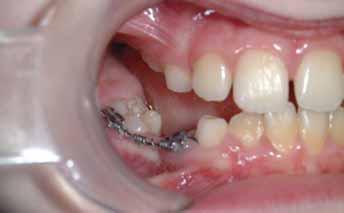
When extraction is the preferred treatment choice for an infraoccluded primary molar, it is important to note that such teeth are more prone to fracture due to ankylosis. Atraumatic extraction technique, including luxation to disrupt the bony union between the alveolus and ankylosed tooth, should be considered before forceps extraction. Surgical extraction may be necessary in teeth with severe infraocclusion, or where access is impeded. Extraction of infraoccluded teeth may be warranted if it is felt that the tipping will cause significant loss of arch length, overeruption of opposing teeth and prevent the eruption of the successor tooth.21 Space can be created to improve access by the use of an orthodontic appliance so that management of infraocclusion can be incorporated into an
FIGURE 8: A clinical photograph of a severely infraoccluded mandibular right second molar in a five-year old.
FIGURE 9: An OPG radiograph of a severely infraoccluded mandibular right second molar in a five-year old.
overall treatment plan (Figure 10). This can allow for a more straightforward extraction of the infraoccluded tooth, or even promote eruption of the infraoccluded tooth and prevent the need for further intervention.
Luxation is a treatment that has been discussed in the literature. The tooth is luxated to break the ankylosis and the tooth is retained following luxation to allow continued eruption of the tooth. This technique has had some success.6,14 A recent case reported an infraoccluded primary molar in a five-year old, which was luxated twice over a one-month period.24 The tooth subsequently erupted, reaching the occlusal level of the primary dentition.24 While such results are encouraging, further research is required to determine the success rate of this treatment modality.
Presence of other infraoccluded teeth
Children with one infraoccluded tooth frequently have other teeth that subsequently present with infraocclusion.5 Infraocclusion is often bilateral with the teeth showing similar degrees of infraocclusion.5,8,9 This is likely to be the most common clinical scenario presenting to general practice and when a child presents with an infraoccluded primary molar tooth it is important to regularly review this patient to monitor for infraocclusion at other sites. The number of infraoccluded teeth can impact on the decision to extract or monitor as having multiple infraoccluded teeth can increase space loss or play a role in patient management if multiple extractions are required.
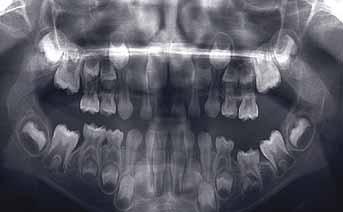
Figure 11 shows an OPG radiograph of a nine-year-old boy who presented with infraoccluded 55, 75 and 85. Teeth 55 and 85 were moderately infraoccluded and tooth 75 classified as slight infraocclusion. All these teeth were caries-free, had permanent
successors and there was no clinical evidence of tipping or space loss. The decision was made to place this child on a three-monthly review schedule to monitor the infraocclusion. None of the teeth progressed beyond moderate infraocclusion and all teeth subsequently exfoliated naturally and the permanent successors erupted as anticipated.
Conclusion
1.All children in the primary and mixed dentition should be examined for infraocclusion at their routine dental visits, as early diagnosis can simplify treatment.
2.If an infraoccluded tooth is noted, the remaining primary molars should be monitored, as they are at a higher risk of infraocclusion.
3.Accurate dental records describing the severity of infraocclusion in relation to adjacent teeth are essential to monitor the rate and severity of the infraocclusion.
4.Clinical diagnosis of infraocclusion and radiographic determination of the presence or absence of a permanent successor are prognostic factors for management.
5.An assessment of the severity and rate of progression of infraocclusion, in addition to the child’s other dental needs, are important to determine if the patient can be appropriately managed in a general-practice setting or if referral for specialist treatment is advisable.
6.Oral hygiene instruction should be stressed and preventative regimes implemented to reduce the risk of caries in either the infraoccluded or adjacent teeth.
7.Space maintenance and/or an orthodontic consultation is advised when permanent successors are absent, multiple teeth are involved or where there is rapid progression of infraocclusion.
FIGURE 10: A clinical photograph of a sectional fixed-orthodontic appliance to correct a tipped mandibular molar.
FIGURE 11: An OPG radiograph of a nine-year-old boy with infraoccluded deciduous molars and the presence of permanent successors.
References
1. Andlaw, R.J., Rock, W.P. A Manual of Paediatric Dentistry. Fourth Edition. 1996. Churchill Livingstone, New York, 1996.
2. Kurol, J. Infraocclusion of primary molars: an epidemiologic and familial study. Community Dent Oral Epidemiol. 1981; 9 (2): 94-102.
3. Steigman, S., Koyoumdjisky-Kaye, E., Matrai, Y. Submerged deciduous molars in preschool children: an epidemiologic survey. J Dent Res. 1973; 52 (2): 322-6.
10. Darling, A.I., Levers, B.G. Submerged human deciduous molars and ankylosis. Arch Oral Biol. 1973; 18 (8): 1021-40.
11. Kurol, J., Magnusson, B.C. Infraocclusion of primary molars: a histologic study. Scand J Dent Res. 1984; 92 (6): 564-76.
12. Biederman, W. Etiology and Treatment of Tooth Ankylosis. AM J Orthod. 1962: 48: 670-84.
13. Baccetti, T. A controlled study of associated dental anomalies. Angle Orthod. 1998; 68(3): 267-74.
14. Jenkins, F.R., Nichol, R.E. Atypical retention of infraoccluded primary molars with permanent successor teeth. Eur Arch Paediatr Dent. 2008; 9 (1): 51-5.
15. Lai, P.Y., Seow, W.K. A controlled study of the association of various dental anomalies with hypodontia of permanent teeth. Pediatr Dent. 1989; 11 (4): 291-6.
17. American Academy of Pediatric Dentistry. Guideline on Management of the Developing Dentition and Occlusion in Paediatric Dentistry. Reference Manual V35/No 6 13/ 14. Available from: http://www.aapd.org/media/ Policies_Guidelines/G_DevelopDentition.pdf.
18. Teague, A.M., Barton, P., Parry, W.J. Management of the submerged deciduous tooth: I. Aetiology, diagnosis and potential consequences. Dent Update. 1999; 26 (7): 292-6.
19. Ekim, S.L., Hatibovic-Kofman, S. A treatment decision-making model for infraoccluded primary molars. Int J Paediatr Dent. 2001; 11 (5): 340-6.
20. Kurol, J., Thilander, B. Infraocclusion of primary molars with aplasia of the permanent successor. A longitudinal study. Angle Orthod. 1984; 54 (4): 283-94.
21. Tieu, L.D., Walker, S.L., Major, M.P., Flores-Mir, C. Management of ankylosed primary molars with premolar successors: a systematic review. J Am Dent Assoc. 2013; 144(6): 602-11.
22. Bjerklin, K., Kurol, J., Valentin, J. Ectopic eruption of maxillary first permanent molars and association with other tooth and developmental disturbances. Eur J Orthod. 1992; 14 (5): 369-75.
24. Parisay, I., Kebriaei, F., Varkesh, B., Soruri, M., Ghafourifard, R. Management of a severely submerged primary molar: a case report. Case Rep Dent. 2013; 2013: 796242.
initially did not respond was associated with the type of injury, as displaced teeth tended to develop necrosis (P = 0.008). The accuracy of each sensibility test at the initial and final appointments was, respectively, 55.1% and 67.8% for the heat test, 55.9% and 77.9% for the cold test, and 57.6% and 89% for the electrical test.
Conclusions: A temporary loss of sensibility was a frequent finding during post-traumatic pulpal healing, especially after luxation injuries. All sensibility tests presented low accuracy shortly after trauma. The electrical test provided the best support for pulpal diagnosis after long-term follow up. The clinician must be aware of additional signs of crown discoloration and radiographic changes before initiating endodontic treatment.
Dental Traumatology. 2014; 30 (3): 188–192.
A comparison of cone beam computed tomography and periapical radiography for the detection of vertical root fractures in nonendodontically treated teeth
Brady, E., Mannocci, F., Brown, J., Wilson, R., Patel, S.
Aims: To compare in an ex vivo model, the diagnostic accuracy of periapical radiography and cone beam computed tomography (CBCT) for the detection of artificially induced incomplete and complete vertical root fractures (VRFs), and to determine whether the width of the VRFs had an impact on the diagnostic accuracy of the imaging systems.
Methodology: Incomplete VRFs were induced in 30 nonendodontically treated human mandibular premolar and molar teeth. VRF widths were measured using optical coherence
Quiz answers
(Questions on page 166)
ASSESSMENT: Use methods to risk assess, such as a caries riskassessment checklist. This would enable the practice to establish a need for prevention methods and determine high-risk patients.
CREATE PRACTICE POLICY/UPSKILL: Using the dental teams existing skills, upskilling and training programmes and setting clear practice policies. Communication is key, it starts within the dental team.
PREVENTION ADVICE: By informing parents on changes in delivery of prevention, this can accommodate an extra fee for going that extra mile. This could be added to the price of an examination or set as a fee for a separate oral health education session.
PREVENTION TREATMENTS: Levels of fluoride toothpaste and mouthwash to meet caries risk. Once parents are informed on the importance of prevention and understand what it actually is, they
tomography. Complete VRFs were induced in 15 of these teeth. 3D Accuitomo and i-CAT CBCT scans and periapical radiographs were taken prior to and after fracture induction. Receiver operating characteristic (ROC) analysis was carried for each imaging technique. In addition, values for sensitivity, specificity, positive and negative predictive values, inter- and intra-examiner agreement were calculated.
Results: In the ROC analysis, both CBCT scanners were significantly more accurate than periapical radiography for the detection of incomplete VRFs (P < 0.05). The overall area under the ROC curve (AUC) values for 3D Accuitomo, i-CAT and periapical radiography were 0.687, 0.659 and 0.540, respectively. The sensitivity of 3D Accuitomo, i-CAT and periapical radiography was 27%, 28% and 3% respectively. Interexaminer agreement for the detection of incomplete fractures with periapical radiographs, 3D Accuitomo and i-CAT was 0.020, 0.229 and 0.333, respectively. Both CBCT scanners were significantly more accurate (P < 0.01) in detecting VRFs of ≥50 m compared with VRFs of <50 m. 3D Accuitomo was significantly better than i-CAT in detecting VRFs of <50 m (P < 0.05). For complete fractures, the AUC values for 3D Accuitomo (0.999) and i-CAT (0.998) were significantly higher (P < 0.05) than for periapical radiography (0.724).
Conclusions: Under the conditions of this ex vivo study, periapical radiographs and CBCT were unreliable for the detection of simulated incomplete VRFs. The widths of the fractures appeared to have an impact on the diagnostic accuracy of CBCT as the detection of VRFs of ≥50 m was significantly higher than those of <50 m. The detection of complete fractures was significantly higher for all systems than that of incomplete fractures.
International Endodontic Journal. 2014; 47 (8): 735–746.
are more likely to want to invest in prevention treatments such as fluoride varnish application and fissure sealants.
SOCIAL NETWORKING: Advice and advertisement via social media.
COMMUNITIES: Involving local businesses, schools and communities.
POLICY: As health professionals, individuals, and families, we can play a vital part in shaping our future. Highlighting issues for the political agenda and being part of our dental associations and dental councils can make us a stronger unit.
BELIEF AND PASSION: If the dental team believes in the advice we give, in turn we can enable and empower our patients.
For more information on oral health promotion please feel free to contact Kellie at: oralhealth@idha.ie or thedentalden@gmail.com.