ASTIR is published five times annually by the Association of Secondary Teachers, Ireland The opinions expressed in ASTIR are those of individual authors and are not necessarily endorsed by the ASTI While every reasonable effor t has been taken to ensure information published is accurate, the ASTI cannot accept responsibility for ar ticles or adver tisements
The ASTI reserves the right to edit all material submitted for publication
Focal ón Uachtarán A pulverised system
“Anois teacht an Earraigh, beidh an lá ag dul chun síneadh, Is tar éis na Féile Bríde, ardóidh mé mo sheol” Sin mar a bhraitheann an-chuid againn an tráth seo den bhliain Ag smaoineamh siar ar fhilíocht Antaine Uí Raifteirí braithimid dóchasach agus tuigimid gur féidir linn constaic a shárú
At this time of the year as Annual Convention, the biggest event in the ASTI calendar, approaches we feel a sense of optimism because we know that when we work together as a trade union we make progress in the interest of our members and of education The teachers’ voice is powerful and we will have it heard through debating our strongly-held views on many seriously important issues over the Convention period Among the motions which will dominate Convention are those concerning the grossly inequitable and totally unacceptable situation regarding teachers on different pay scales Casualisation in our profession shamefully disimproves the pay situation even further Three motions which will be debated at Convention demand the restoration of one common pay scale for all teachers
I am delighted to see that a motion regarding the full restoration of guidance counselling hours in all second-level schools will also be debated Ongoing issues regarding the proposed Junior Cycle Profile of Achievement will form part of the debate at Convention
All information pertaining to motions is available in the Convention Special NUACHT published in February
As Annual Convention this year is taking place on the 100th anniversary of the 1916 Rising, it is appropriate that the occasion will be commemorated at Convention We have already given recognition to 1916 by holding the January CEC meeting in the Mansion House where the foundation meeting of the ASTI was held in 1909 Two ASTI members involved in that meeting also played very significant roles in 1916 – they were Thomas MacDonagh and Éamonn de Valera The sense of history was palpable in the Mansion House on January 23 as we acknowledged not only the founding members of this Association but the thousands of ASTI members who paved the way for us I would like to thank CEC members for the hugely positive feedback following the meeting and Standing Committee for taking the decision to hold the first CEC meeting of 2016 in such a historic venue Bhí sé an-tráthúil
Gúim gach rath ar obair bhaill uile an ASTI agus sinn ag féachaint ar aghaidh ar an gComhdháil Críochnóidh mé le píosa filíochta le Tomás Mac Donncha, muinteoir a léirigh tionscnaíocht agus é mar dhuine de bhunaitheoirí an ASTI
“But, when the rain is o’er, Sunlight comes back once more”
Bímis dóchasach agus sinn ag obair go dearfach le chéile!
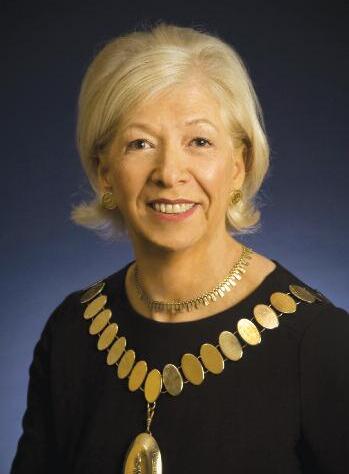
Máire G. Ní Chiarba ASTI President
s a v a g e o f c u t s m u s t b e t h e to p p r i o r i t y I n e d u c a t i o n , t h e s t r i p p i n g
f ro m s c h o o l s o f a d e q u a te te a c h e r n u m b e r s , a n e x - q u o t a g u i d a n ce
co u n s e l l o r s e r v i ce a n d u n re a l i s t i c c a p i t a t i o n g ra n t s h a v e p u l v e r i s e d t h e
s y s te m to a p o i n t t h a t i t i s c re a k i n g a t t h e s e a m s T h e d e c i m a t i o n o f
t h e p o s t s o f re s p o n s i b i l i t y s t r u c t u re , n o t w i t h s t a n d i n g s o m e l i m i te d
a l l e v i a t i o n , h a s to r n t h e h e a r t o u t o f s c h o o l s ’ c a p a c i t y to a d e q u a te l y
f u l f i l m a n y e s s e n t i a l a d m i n i s t ra t i v e , p a s to ra l a n d c u r r i c u l a r f u n c t i o n s
W h a te v e r i t s co m p l e x i o n , t h e A ST I w i l l v i g o ro u s l y i n
Wage recover y must remain at the ver y top of our agenda too
Removal of the public ser vice pensions lev y should be the first step
But the most galling of all provisions that has to be tackled is the tiered salar y scales for teachers that have developed over the last decade It is simply a disgrace that some teachers are paid a higher rate than others and some are entitled to qualification allowances while others are not Notwithstanding that some limited progress was made in par tial restoration of this appalling imbalance within the Haddington Road Agreement, the inequity simply has to be addressed It is hear tening that motions on this issue figured prominently in the prioritisation process for Annual Convention this year and will form the centrepiece of our platform of issues for debate Ever y effor t will be made to restore the common basic scale in the shor test time possible
I n co m e p o v e r t y o f te n l i n ke d to p re c a r i o u s e m p l o y m e n t a re o t h e r
i s s u e s t h a t w i l l fe
m e n t , i n c l u d i n g u n d e r t h e te r m s o f t h e Wa rd re p o r t , t h e p e r i o d re q u i re d to q u a l i f y fo r a C I D h a s b e e n re d u ce d
f ro m fo u r y e a r s to t w o T h i s h a s re s u l te d i n s e v e ra l h u n d re d o f o u r
m e m b e r s s e c u r i n g s e c u r i t y o f te n u re i n re ce n t y e a r s B u t i t i s
n o te w o r t h y t h a t a p a r t i c u l a r e m p h a s i s t h i s y e a r w i l l b e p u t o n
h i g h l i g h t i n g t h e p l i g h t o f t h o s e o f o u r m e m b e r s t h a t a re p r i v a te l y p a i d
b y s c h o o l s I t m u s t b e s t re s s e d t h a t m a n y o f t h o s e s c h o o l s w h o a re i n
a p o s i t i o n to p r i v a te l y e m p l o y te a c h e r s d o s o i n a n e xe m p l a r y m a n n e r
H o w e v e r, i t i s s i m p l y a d i s g ra ce t h a t s o m e o f o u r m e m b e r s t h a t s u f fe r
t h e m o s t i n te r m s o f i n co m e p o v e r t y a n d a l a c k o f s e c u r i t y o f te n u re
a re t h o s e e m p l o y e d b y s c h o o l s w h o c a n w e l l a f fo rd to e m p l o y t h e i r
p r i v a te l y p a i d te a c h e r s o n p ro p e r te r m s a n d co n d i t i o n s
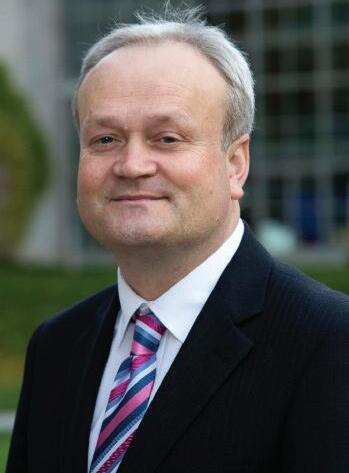
Kieran Christie ASTI General Secretary
Bursary Award
e
AVC Annual Scheme Report
A STI members who are members of the A STI AVC Plan should note that, in accordance with pension scheme regulations, a full copy of the Irish Life Trustee Ser vices annual repor t for the year ending March 31, 2015, is available for examination by contacting the Honorar y Treasurer of the A STI
Seminar for principals and deputy principals 2016
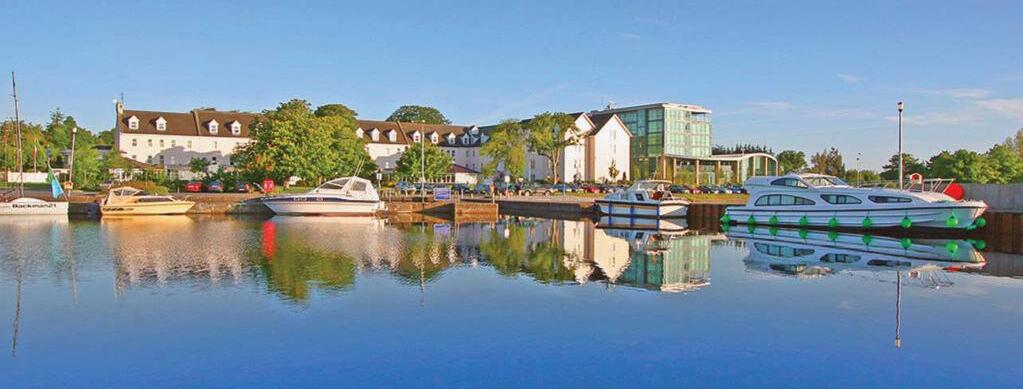
This year’s seminar for principals and deputy principals will take place in the Hodson Bay Hotel, Athlone, on Wednesday, April 27
Topics to be covered include:
n suppor ting LGBT students and staff in schools
n posts of responsibility appeals
n dealing with social media – schools' legal responsibilities
The Principals’ and Deputy Principals’ Advisory Committee for 2016-18 will be elected at the seminar
The seminar is open to all ASTI principals and deputy principals, who should have received registration forms and nomination papers for the Committee If you are an ASTI principal or deputy principal, and have not received this correspondence, please contact Danielle Cullen, on 01604 0160, or via email at dcullen@asti ie
A STI President representing the Association
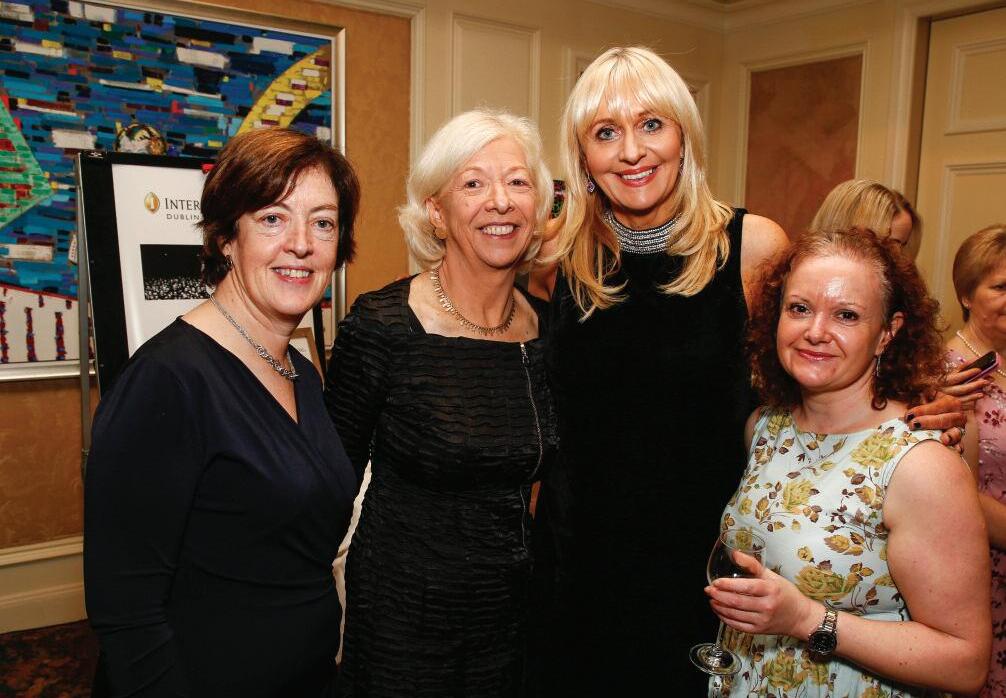
ASTI President Máire G Ní Chiarba recently attended a function in aid of the Children's Hospital From left: Breda Lynch (Standing Committee), Máire G Ní Chiarba (President, ASTI), Miriam O'Callaghan (broadcaster) and Nadia Johnston (TUI Administrative Of ficer)
Two generations of teaching
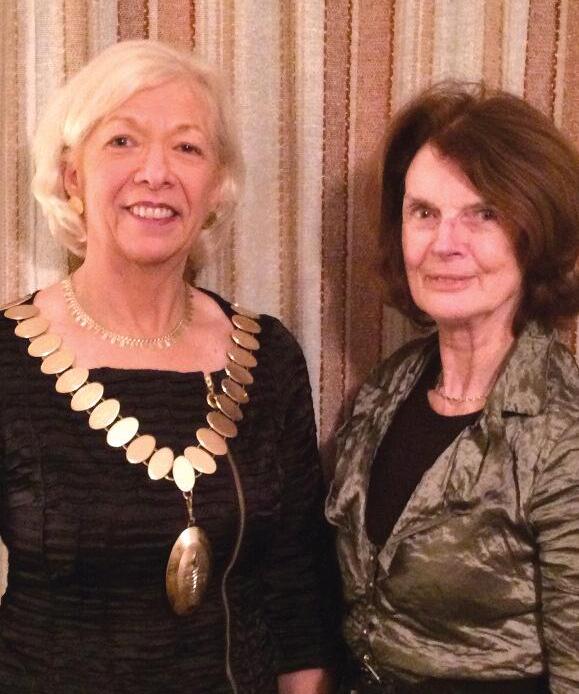
ASTI President Máire G Ní Chiarba pictured with a former teacher of hers, Gabrielle Wallace O'Donnell
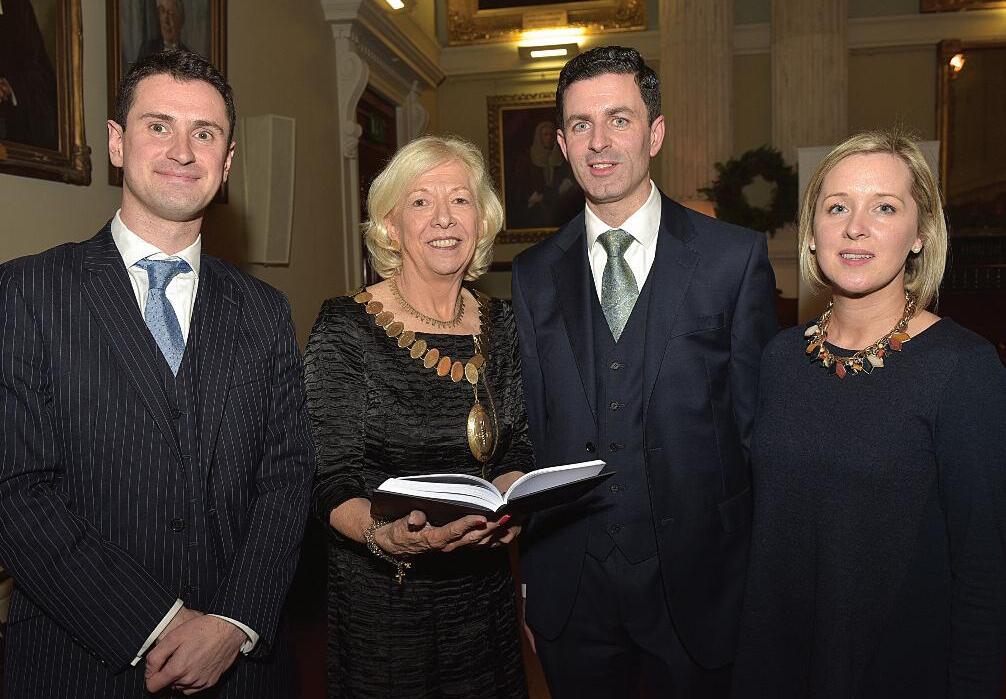
ASTI President Máire G Ní Chiarba is pictured with two of her past pupils at the launch in King's Inns of the book Damages, of which Tadhg Dorgan BL, past pupil of Coláiste an Phiarsaigh, Gleann Maghair, Co Chorcaí, is coauthor From left: Peter McKenna BL (co-author), Máire G Ní Chiarba (President, ASTI), Tadhg Dorgan BL (co-author) and Elaine Troy, past pupil of Coláiste an Phiarsaigh and ASTI member
Refund of fees scheme
Did you complete an in-career development course of study between September 1, 2014, and August 31, 2015? You may be eligible for a partial refund of course or examination fees through the Teacher Fee Refund Scheme
Courses that qualify should be of benefit to schools, school management and the improvement of teaching and learning Courses must lead to an award from an appropriate accreditation authority approved by the Department of Education and Skills
Please note that this scheme excludes courses that result in a qualification in respect of which an allowance is payable Serving teachers who are fully registered with The Teaching Council are eligible to apply under the scheme
The closing date for applications is Friday, April 8, 2016
Application forms and further information are available on www mie ie/refundoffees
AVERAGE PERCENTAGE OF GDP spent on education in the EA-12 countries in 2013 (P 10) 5 . 2
Leitrim teacher guides students to global success
Two students from Leitrim with a unique cow manure briquette business will represent Ireland at a global showcase in New York celebrating youth entrepreneurship
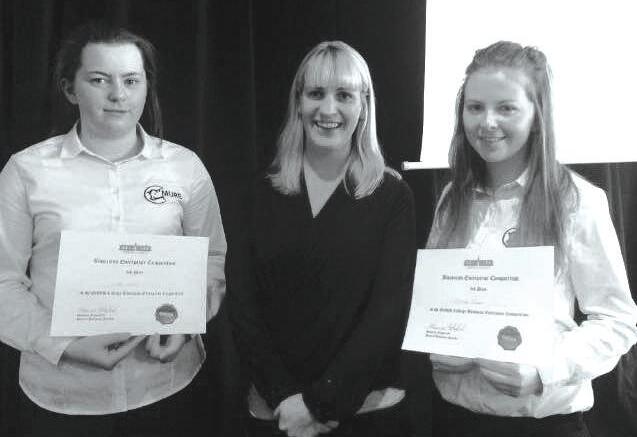
Cousins Linda Dolan (17) and Clare Dolan (16), students in St Clare’s Comprehensive School, Manorhamilton, set up their business, MURE, which offers odourless briquettes made from dried cow manure, through the Foróige Network for Teaching Entrepreneurship (NFTE)
A year-long study carried out by the girls in conjunction with their school and Sligo Institute of Technology found that their product is more efficient than its peat counterparts
Their Certified Entrepreneur Teacher (CET) is Claire Gallagher, who teaches in St Clare's Claire was heavily involved in the project and provided support to the girls when they set up their business last year As a CET, Claire is trained to deliver the Foróige NFTE to young people, helping and supporting them to create and develop their own business
Linda and Clare will now represent Ireland at NFTE’s Global Showcase in New York, which celebrates the power of entrepreneurship education
There they will rub shoulders with Chelsea Clinton, as well as young entrepreneurs from the United States, Australia, China, Mexico, Singapore, Israel, Germany and Belgium
New Leaving Cer tificate subject launched
Phase 1 of the implementation of a new Leaving Certificate subject, Politics and Society, was launched in February Politics and Society is organised in four strands: n power and decision-making n active citizenship
n human rights and responsibilities n globalisation and localisation
The subject will follow on from what students learn in CSPE at Junior Cycle and has been launched this year to mark the centenary of the 1916 Rising
A total of 115 schools expressed interest in offering the subject from September 2016; however, only 41 will offer the subject during Phase 1
All other interested schools will be able to offer the subject from September 2018 Politics and Society will be a full Leaving Certificate examination subject in 2018, at higher and ordinary levels
The launch event was organised by the National Council for Curriculum and Assessment, and featured workshops and information sessions for participating schools
Dr Roland Tormey, Head of the Department of Education and Professional Studies, University of Limerick, and chief architect of the subject specification, said: “Politics and Society is about giving students the opportunity and the ability to question the things that are often taken for granted, but which have an important impact on their lives: things like their school rules, their leisure activities, the information they are given and the products they buy It will teach them how to be active in their community in ways that are informed by their learning and debates, and by the evidence available”
Politics and Society is seen as a subject to help build on and learn from past events to better equip students to make progress in the future
For more information, see http://www ncca ie/en/Curriculum and Assessment/PostPrimary Education/Senior Cycle/Politics and Society/Politics and Soc iety html
NUMBER OF CIVILIANS killed during the 1916 Rising (P 22) 2 6 2
NUMBER OF EUROPEAN schools (P 26) 1 4
ASTI member Claire Gallagher with her students Linda Dolan and Clare Dolan, who founded MURE
Schools need investment, not increased autonomy
e
S k i l l s
a
d a m a g e d b y a u s te r i t y m e a s u re s
A
T
D e ce m b e r 2 0 1 5 T h e p ro ce s s w a s i n i t i a te d i n t h e co n te x t o f t h e
co m m i t m e n t s i n t h e P ro g ra m m e fo r G o v e r n m e n t o n a d v a n c i n g s c h o o l
a u to n o m y T h e D E S p u b l i s h e d a re s e a rc h p a p e r a n d a d i s c u s s i o n
p a p e r to f a c i l i t a
t h e e n d o f Fe b r u a r y
I n i t s s u b m i s s i o n to t h e D e p a r t m e n t , t h e A ST I p o i n t s to t h e s t ro n g
e v i d e n ce t h a t s c h o o l a u to n o m y d o e s n o t i m p ro v e t h e q u a l i t y o f
e d u c a t i o n I t a l s o s t a te s t h a t I r i s h s c h o o l s a l re a d y e n j o y h i g h d e g re e s
Sexting and the Consequences for Schools
o f a u to n o m y i n te r m s o f o w n e r s h i p , g o v e r n a n ce , m a n a g e m e n t , e t h o s , c u r r i c u l u m , a n d i n t h e e m p l o y m e n t o f te a c h e r s “ T h e b i g g e s t
c h a l l e n g e f a c i n g s c h o o l s i n I re l a n d i s n o t t h e d e g re e o f a u to n o m y
t h e y e n j o y, b u t t h e i r l a c k o f c a p a c i t y to p ro v i d e g re a te r c h o i ce fo r
s t u d e n t s , ” s t a te s t h e re p o r t
I t a l s o s a y s t h a t w h i l e s c h o o l s i n I re l a n d c a n m a ke u s e o f t h e b ro a d
c u r r i c u l u m to m e e t t h e d i v e r s e n e e d s o f t h e i r s t u d e n t s , t h i s h a s b e e n
s e v e re l y u n d e r m i n e d b y a u s te r i t y m e a s u re s , w h i c h h a v e re s u l te d i n
s u b j e c t s a n d p ro g ra m m e s b e i n g d ro p p e d b y s c h o o l s
T h e s u b m i s s i o n w a r n s o f “ t h e i d e o l o g i c a l n a t u re
To find out about the consultation and the A STI’s submission visit w w w.asti.ie.
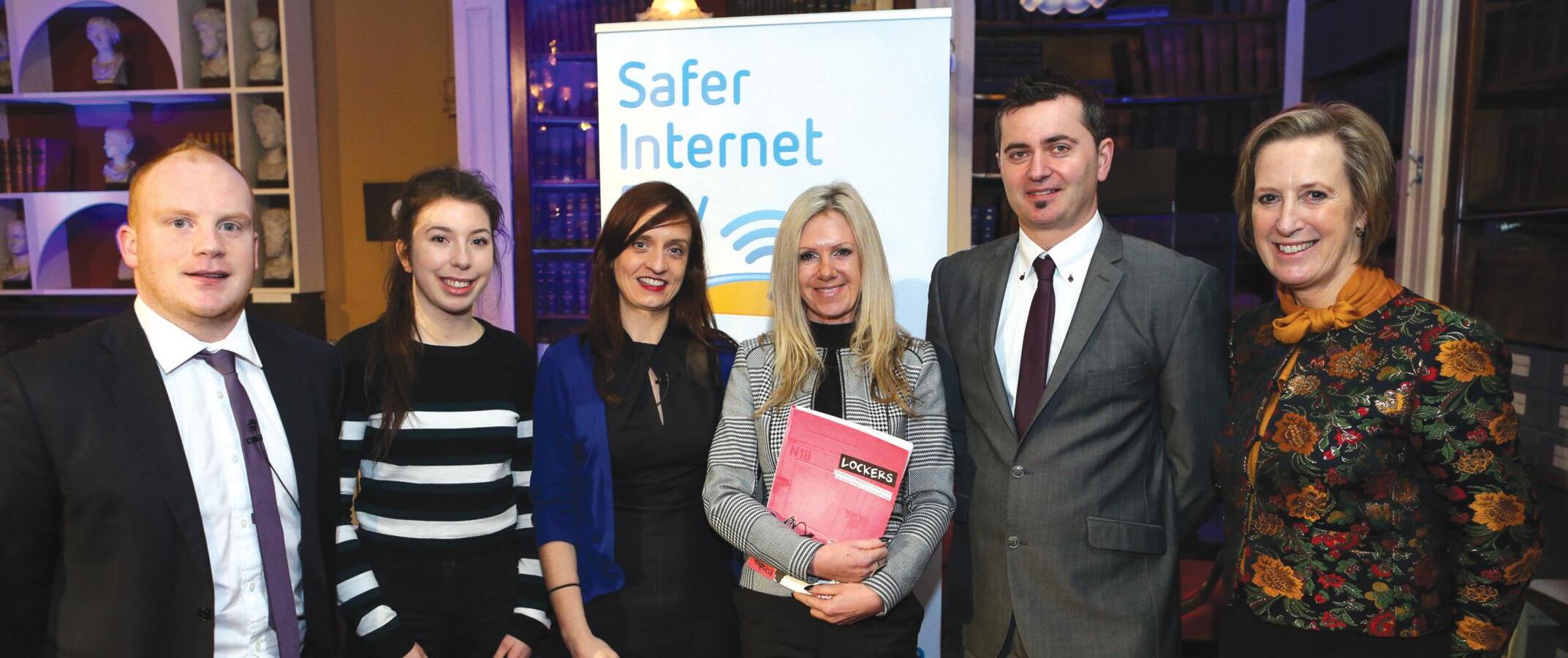
Pictured at the ‘Sexting and the Consequences for Schools’ seminar are (from left): Brian Hallissey BL, Helen Ryan (Irish Second-Level Students' Union), Orla Barry (Newstalk presenter), Ciara O'Donnell (PDST), Brian Murray (PDST) and Finola Flanagan (Law Reform Commissioner)
To mark the launch of Safer Internet Day 2016, Webwise, the internet safety initiative of the Professional Development Ser vice for Teachers (PDST), hosted a symposium on ‘Sexting and the Consequences for Schools’ The aim of this event was to suppor t schools dealing with the complex issues around explicit self-generated images of minors
Topics discussed at the symposium included:
n launch of 'Lockers', a new resource to assist schools in coping with and preventing the sharing of explicit self-generated images of minors
n the law on sexting: impor tant considerations for schools
n how the law is enforced in cases of sexting involving minors
n the information and suppor t that young people need on sexting
n dealing with sexting in schools n does criminal and civil law need to be adjusted to deal with sexting? n awareness and prevention of sexting through the SPHE curriculum
Safer Internet Day is an EU-wide initiative to promote a safer internet for all users, especially young people It is promoted in Ireland by the PDST Technology in Education and Webwise A total of 463 schools and organisations took par t in Safer Internet Day events where they discussed how to use the internet safely and highlighted the risks of sharing personal information or photographs online
The symposium is available to watch online at www saferinternetday ie
Spending on education as a propor tion of GDP is relatively low in Ireland compared to other European countries, according to a research paper by the Nevin Economic Research Institute
While education is the third largest item of public spending in Ireland (after social protection and health), the 4 1% of GDP spent in 2013 was significantly lower than the EA-12 average of 5 2% This is in spite of Ireland having the area’s largest propor tion of children aged 14 years and under
Repor t
The Nevin Institute's research paper, which looks at trends in education spending, finds that the recession and the austerity measures designed to address it had a substantial impact on investment in education In the years immediately preceding the crisis, nominal spending increased from ¤6 3 billion to ¤9 billion in 2008 This subsequently declined by ¤1 billion in 2014
The repor t states that capitation grant cuts have made primary and second-level schools increasingly reliant on voluntary contributions and resource fees Students’ families now spend in the region of ¤127 50 per annum on these expenses
Demographic stresses
The repor t also warns that the Irish education system will come under fur ther strain in years to come from increases in the student population Enrolment at second and third level in par ticular is expected to continue to see significant increases over the next decade
Low levels of expenditure in education raises questions as to how the current funding can be reconciled with the provision of effective educational services in the coming years, states the repor t
Depar tment of Education and Skills full-time student enrolment projections
“Trends in Education Spending – NERI Research in Brief ” is available from www nerinstitute net
The Nevin Institute for Economic Research is an economic think tank funded by a number of Irish trade unions, including the ASTI It aims, through the provision of exper t research and analysis, to contribute towards the construction of alternative perspectives and possibilities, which will lead to the development of an economy that suppor ts a better, fairer society For information, visit www nerinstitute net
UK union fights “draconian” anti-union bill
The ASTI supports its fellow trade unions in Ireland and abroad in defending workers' rights.
Trade unions in Britain are fighting back against what they describe as a vindictive and draconian Trade Union Bill from their government
The Bill demands that in “important public services” such as health and education, at least 50% of union members must vote in a ballot on strike action, and at least 40% of the total unionised workforce must vote in favour of strike (e g , if a trade union holds a ballot, and 50% of the membership vote, in order for the strike to be legal, 80% of those who participated in the ballot must have voted in favour of the action) A mandate for strike action will only be valid for four months under the proposed new law
The Bill also seeks to abolish “check-off”, whereby trade union members can have their membership fees deducted directly from their salary following agreement between their trade union and their employer Other provocative aspects include the proposed removal of a ban on using agency workers to break strikes, and a requirement that picket leaders wear identifying armbands and provide their contact details to the police
A bizarre requirement that unions advise the police and employers of their social media strategies has been dropped from the Bill
The Bill has been described as “extraordinarily partisan, vindictive and selective”, and as an attack on trade unions and democracy
The Bill has gone through the initial legislative stages of the British Parliament In a move welcomed by the Trade Unions Congress, the House of Lords voted earlier this year to set up a cross-party committee to scrutinise aspects of the Bill before it proceeds to enactment
Meanwhile the Trade Unions Congress and its member unions continue to campaign to keep the pressure on British politicians to oppose the Bill and ensure that workers in the UK maintain their democratic right to organise, campaign and strike
hours and compulsory supervision and substitution are using up time previously available for teaching-related work (e g , marking and lesson preparation), pastoral care activities and extra-curricular activities
Junior Cycle update
In September 2015, ASTI members voted to reject the document entitled Junior Cycle Reform – Joint Statement on Principles and Implementation (including the appendix) by 55% to 45% ASTI members also voted to continue industrial action up to and including strike action by 70% to 30%
The ASTI has communicated the outstanding concerns of second-level teachers to the Department of Education and Skills These include: n the impact of the proposals on teaching time n increased workload/bureaucratic pressure on teachers n the absence of State-assessed oral exams in Gaeilge and modern European languages
n the lack of an ordinary/higher level option in most subjects
At the time of going to print, plans are in place for an ASTI conference on Junior Cycle reform in March The Conference proceedings are available on the ASTI’s Junior Cycle web page at www asti ie
Other key issues
n Public sector pension levy n Financial Emergency Measures in the Public Interest legislation n Teachers and CPD
Log on to Convention
The ASTI website and social media pages mean that you can experience Convention vir tually as well Even if you aren’t attending Convention, you can keep up with what’s happening and share your views – so log on and join in!
Web
Log on to www asti ie for the latest updates from Convention and a list of the key media coverage each day You can also watch key speeches live from 4 15pm on the ASTI website The text of key speeches will also be available online
Facebook
Log on to ‘like’ the ASTI facebook page –https://www facebook com/astiteachers/ – for photos from Convention and repor ts on decisions made
Twitter
Follow the A STI twitter account – @astiunion – to find out what’s happening, as it happens, at Convention 2016 Don’t forget to use the hashtag #asti16 to see all the latest tweets from Convention and to join in the discussion
Future trends in education
An OECD study has identified five global trends that have the potential to influence the future of education around the world.
Trends Shaping Education 2016 discusses these trends in terms of their potential both to influence education and to be influenced by it Each of the headings below will have resonance for teachers in Ireland, who will already have encountered these issues both inside and outside the classroom
1 Globalisation
Individuals now move more freely than ever across countries and continents, bringing greater ethnic , linguistic and cultural diversity Economically, this is reflected in the rise of international trade, foreign direct investment, and the spread of multinational companies Among the challenges created is the need to address rising inequality Education has a role to play in providing the skills and competencies to operate in this new world Teachers in Ireland have already seen the impact of these issues, from increasing multiculturalism, to the pressures to adapt curriculums to prepare students for globalised workplaces
2 The future of the nation-state
The repor t also addresses the central role the state still plays in ensuring the well-being and security of its citizens One of the major challenges facing most countries is how to balance public spending in difficult economic times How will rising health and pension costs affect budgets for other areas, such as education? Educators need to be aware of the advanced skills students will need to flourish in more knowledgeintensive labour markets In Ireland, the debate about adequately funding public services has been a contentious one that teachers are all too familiar with
3 Are cities the new countries?
The rise of the megacity is identified as a significant trend But urban environments face their own challenges: they concentrate productivity and employment oppor tunities, but can also host high levels of pover ty and labour market exclusion Education can and does play a role in this,
4 Family matters
by teaching civic literacy, providing the skills needed for community engagement, and suppor ting creativity and innovation While Ireland is a small island with a relatively small population, the increasing gaps between urban and rural communities have long been identified as significant social and political issues
The dominant family model in the twentieth century – the breadwinning father, with a mother taking care of household and children – has changed Governments increasingly play a role in supporting families: public spending on family benefits such as parental leave has increased across most OECD countries The modern world is also seen as having created new stresses for our children, from child obesity to online bullying Serious questions remain as to how education can best support children and families, especially the poorest and most disadvantaged These are stresses that now form part of the day-to-day workload for Irish teachers
5 A brave new world – technological transformation
Increasingly mobile and adaptive technologies allow us to buy our groceries, pay our bills, watch films and attend meetings without leaving our homes Yet new technology can also give rise to previously unknown risks As adolescents and children are the most frequent users of online services and social networks, schools and teachers are increasingly faced with the challenges of educating and guiding students through the advantages and disadvantages of the vir tual world, without always having the necessary skills themselves
The repor t emphasises that these trends are themselves shaped by education, and is intended to stimulate debate among all stakeholders in education
OECD (2016), Trends Shaping Education 2016, OECD Publishing, Paris http://dx doi org/10 1787/trends edu-2016-en
Supporting LGBT students
A new publication has been launched with the aim of guiding school communities in suppor ting LGBT students and teachers. DIARMAID DE PAOR explains.
2015 was a very significant year for Ireland’s LGBT community In May, the Marriage Equality Amendment was passed by the people of Ireland, making Ireland the first country in the world to allow same-sex marriage as a result of a popular vote
In July the Gender Recognition Act (2015) was passed into law This legislation provides a process enabling transgender people to achieve full legal recognition of their preferred gender and allows for the acquisition of a new bir th cer tificate that reflects this change The Gender Recognition Act will allow all individuals over the age of 18 to self-declare their own gender identity Young people aged 16-17 can also apply to have their gender identity legally recognised
Finally, in December, the Equality (Miscellaneous Provisions) Act 2015 was passed by the Oireachtas This legislation, inter alia, amended the infamous section 37 1 of the Employment Equality Act 1998, making it much more difficult for an employer to use this section of the Act against an employee The A STI, while maintaining its position of outright opposition to Section 37 1, welcomed this amendment
Seeking guidance
All of these changes have improved the atmosphere and climate for LGBT people in Ireland, including LGBT students and teachers in our schools A consequence of this improvement is that many more students are coming out while they are still in school, and this has led teachers, principals and school managements to seek guidance on how to suppor t these students In this context, the publication of the resource 'Being LGBT in School' is very much to be welcomed Published by the Gay + Lesbian Equality Network (GLEN) and the Depar tment of Education and Skills (DES), this booklet provides advice and guidance to teachers, school principals, guidance counsellors and those involved in Homeschool Community Liaison and School Completion Programmes
The resource is intended to replace previous publications by GLEN, together with the DES, the A STI, the National Association of Principals and Deputy Principals (NAPD) and the Institute of Guidance Counsellors It reflects the specific requirements of the 2013 DES AntiBullying Procedures for Post-Primary Schools, along with other relevant policy changes
The new publication includes a section addressing the specific suppor t needs of students who identify as transgender This section is par ticularly to be welcomed, as the increase in enquiries to the A STI on issues relating to transgender, gender fluid and gender non-binary students attests to the growing awareness in schools of these students – whether or not they have come out Suppor t for transgender students provides par ticular challenges for schools in such areas as the provision of appropriate toilet and changing facilities, the use of terminology and language, and choices in school uniforms It is also impor tant to note
that the Gender Recognition Act allows any young person over the age of 16 to apply for legal recognition of their self-identified gender
'Being LGBT in School' is published in association with the A STI, as well as the TUI, ACCS, ETBI, JMB, NAPD, the Transgender Equality Network, TUSLA and the National Centre for Guidance in Education
Diarmaid de Paor
A STI Deputy General Secretary
Highlighting the important issues
A STI officers and members continue to speak out for students and teachers.
“There’s a huge rise in anxiety levels, in lack of self-esteem, and it comes from the complex issues that are now in the world that we live in, and these all come in to school Students as well are experiencing loss at a very early age, whether it be through bereavement or separation, and they need help to get over these issues in their life One-to-one counselling is needed for that There’s no point in a child coming to me and telling me ‘I’m crying, I’m down, I’m depressed' I can’t say to that student ‘wait now until I see if I can get somebody free next week to deal with you’ ” Mary Keane, ASTI member, Morning Ireland, RTÉ Radio One, January 29, 2016
"There remains a considerable range of important outstanding issues, which is why our members haven’t been able to sign up for it [Junior Cycle] Many of your listeners mightn’t know that higher and lower level is going to be abolished, in most subjects immediately and in Irish, English and Maths in a few years’ time They will be common level subjects and that would be something we’d have major concerns about because it would mean that to some extent there would be a targeting of the centre, and students of higher abilities and those that would be particularly challenged would find that a difficult environment in a classroom I know that from my own experience of many years as a teacher That’s not our only concern; for instance, there’ll be no external oral exam in Gaeilge and modern languages Think about that: people studying languages for three years and no external oral language certification at the end of it "
Kieran Christie, ASTI General Secretary, The Last Word, Today FM, January 25, 2016
“Specific measures to broaden programme choice at senior cycle would be more influential in retaining young people in school than merely raising the school leaving age ESRI research demonstrates that one of the main reasons disadvantaged young people leave early is the non-availability of non-academic programmes ”
ASTI spokeswoman, Irish Independent, January 25, 2016
“I’ve been working as a history and geography teacher in Blackrock in Co Dublin for the past 14 years, and I commute every day from Portlaoise As a teacher you do not get bonuses or big promotions, but you expect
your pay packet will remain set But teachers’ take home pay is down about 20% since the recession
I am a member of ASTI and so I am in favour of education reform, but it must be the right type It is hard to understand why the Government insists on a steroidal reform agenda when schools are haemorrhaging from cutbacks and teacher morale is very low as a result
Cuts to guidance counsellors have also had a huge impact on students, and on teachers too If you have a student with any sort of a mental [health] issue, from just having a bad day up to suicidal tendencies, the person you would send them to is now gone
Another big issue for me is the fact that new teachers have to start on a different salary scale I do not think that is fair and it has to be addressed Now that the economy is growing, it is time to give people back what they deserve ”
Enda Whelton, ASTI Standing Committee, The Irish Times, February 11, 2016
“We do all the talk about mindfulness and student well-being but we can’t actually give to students what we could a few years ago Common level examinations proposed for all subjects except Gaeilge, English and Maths and the Government’s refusal to invest in externally assessed oral examinations in languages are not acceptable and will not advance students’ learning experience," she said A reduction in growing class sizes would also have to be addressed to make any new system work efficiently
"It isn’t even a want, it would have to be a requirement," she said
Since 2009, a moratorium on posts of responsibility has been in place, meaning that when teachers in a managerial post retire, they are not replaced This "short-sighted" cutback has made it difficult for schools to function, and in some areas, forces them to operate inefficiently, according to Noelle In relation to teacher remuneration, the repeal of Financial Emergency Measures in the Public Interest (FEMPI) legislation and the removal of the pension levy are both critical Noelle also believed that the inferior pay scale of teachers entering the profession, as well as the practice of having teachers contracted for a few hours every day and earning partial salaries, are areas that need to be addressed immediately
Noelle Moran, ASTI Standing Committee, Galway City Tribune, February 12, 2016
CEC pays tribute to ASTI founding member Thomas MacDonagh
Central Executive Council meets at historic venue, site of the foundation meeting of the A STI
In order to celebrate Thomas MacDonagh’s role in the foundation of the ASTI, and to commemorate the 1916 Rising, the Central Executive Council held its January meeting in the Mansion House, Dublin The Mansion House was the venue for the foundation meeting of the ASTI in July 1909
In her opening remarks at the meeting, ASTI President Máire G Ní Chiarba stated:
“Is ocáid stairiúil í a bheith anseo i dTeach an Árd-Mhéara i gcóir an chéad chruinniú i 2016 de Choiste Láirneach Chumann na Meanmhuinteóirí Éire Táimid anseo inniu chun aitheantas a thabhairt do na muinteóirí cróga a léirigh tionscnaíocht sa bhliain 1909 nuair a bhunaigh siad ár gCeardchumannn, an ASTI, as a bhfuilimid ana bhródúil Na muinteóirí a léirigh an tionscnaíocht chun an ASTI a bhunú ná – PJ Kennedy, Tomás Mac Donncha, Micheál Ó Sé agus Cormac Ó Cadhlaigh Agus sinn ag comóradh 1916 i mbliana tá sé an-tráthúil go smaoineoimis ar bheir t iarbhall den ASTI go raibh ról suantasach acu in Eirí Amach 1916 – is iad san Tomás Mac Donnacha agus Éamonn de Valera
It is indeed an honour for me as A STI President to open proceedings here today in the Mansion House, where the foundation meeting of the A STI was held in 1909 Two A STI members involved in that meeting also played very significant roles in 1916 – they were Thomas MacDonagh and Éamonn de Valera It is, therefore, significant, that we are holding the first meeting of our Central Executive Council in 2016 in this historic building
The records show that PJ Kennedy of St Colman’s College, Fermoy, Co Cork, opened the meeting at which the ASTI was founded here in the Mansion House in July 1909 Éamonn de Valera also attended the historic meeting and was a steward on the day
Six months later PJ Kennedy was elected the first President of the ASTI and Éamonn de Valera was elected chairman of the ASTI’s Leinster Provincial Council in 1910
It is indeed a historic day for us today, as Members of the Central Executive Council of the ASTI, as we remember those who went before us, who took the initiative to form this highly respected Association
I want to acknowledge, as ASTI President, the thousands of ASTI members who have over the years contributed to the Association and who have paved the way for us the current activists I always thought it very symbolic that the torch of learning/lóchrann an eólais is the ASTI emblem, as that is what an Association such as ours embodies – the acknowledgement that the teacher facilitates learning and education which should be the cornerstones of any society and in the words of PJ Kennedy, the first President of the ASTI “ an education system which ignores the teacher is radically unsound”
And as your current President, I would like to say that any country that undervalues its teachers and its education system, undervalues itself and its citizens
Gúim gach rath ar obair an lae agus sinn ag tabhair t aitheantas go speisialta do laochra 1916 agus iarbhaill an ASTI ”
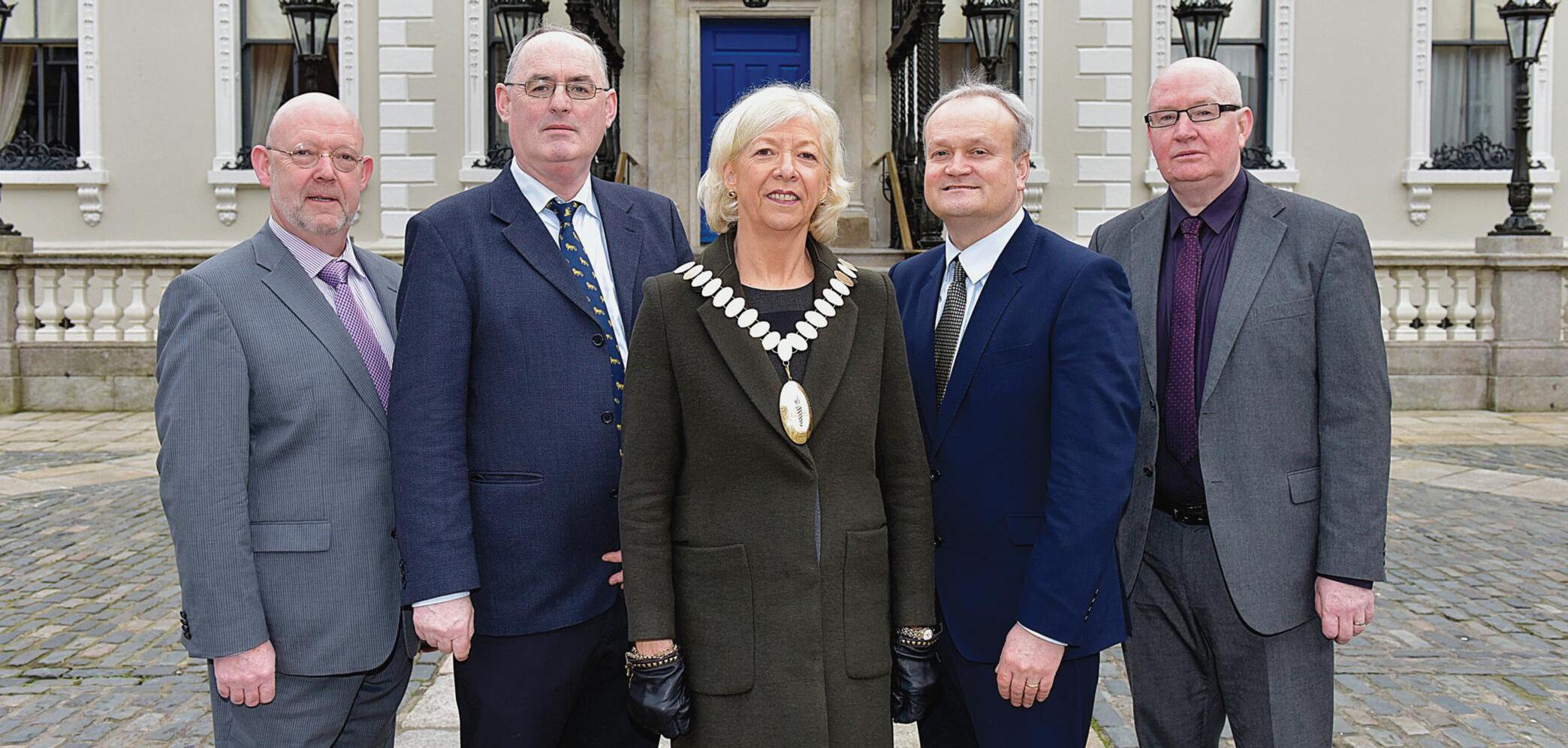
From left: Ray St John (Honorary Treasurer), Philip Irwin (Immediate Past President), Máire G Ní Chiarba (President), Kieran Christie (General Secretary) and Ed Byrne (Vice President) outside the Mansion House at the January meeting of CEC
The playwright
That same year the Abbey Theatre produced his first play, When The Dawn is Come, poignantly based upon the theme of a rebellion led by a council of seven His protagonist was a rebel poet, Turlough, who in a complicated narrative attempts to trick the British Government into believing he was a spy Extensively criticised by the media, his opening night was regarded as a failure This was no fault of MacDonagh’s; pre-production had been blighted by several factors, including poor management on the Abbey Theatre’s behalf and the fact that the main actor, Ambrose Power, had refused to learn his lines Disappointed by failure, he remained committed to fur ther theatre work and produced two fur ther plays, including Metempsychosis, in which he lampooned Yeats, whom he par tly blamed for the failure of his first play, and Pagans, his only play to have strong, believable protagonists showing tangible human emotion In this play, a married couple eventually par t due to irreconcilable differences, followed by a throwaway remark where the main character announces to his former wife: “You will not know yourself in the Ireland that we shall make”
MacDonagh and Gifford wed on January 3 in a small informal wedding
The new couple moved into an apar tment in Dublin City Centre at 32 Baggot Street and by November of that year had their first son Donagh He would later be joined by Barbara, who was born in March 1915
A new theatre
Around this time of When the Dawn is Come, MacDonagh met Joseph Plunkett, a fellow poet, albeit more bohemian in character, who, desirous of entry to UCD, had adver tised for an Irish tutor to improve his chances Hiring MacDonagh the two developed an instant friendship through a mutual love of poetry, history, language and ar t Both poets offered constructive criticism on each other’s work and Plunkett dedicated his first book of poetry, The Circle and the Sword, to MacDonagh in 1911 Teaching Plunkett the Irish language MacDonagh threw himself into linguistic studies and, following advice from Plunkett, he accepted a position lecturing in UCD where he taught English literature in 1912 Here he had earlier completed an MA thesis on the works of the English writer Thomas Campion and strongly considered a PhD on the theme of language in Ireland, which he worked on until his death in 1916 This PhD was published posthumously under the title Literature in Ireland, where MacDonagh asser ted that the English language, as spoken in Ireland, was a new form of Irish and that a national literary culture could be written in English
Marrying Muriel
In 1911 MacDonagh proposed to Muriel Gifford, who he had earlier met at St Enda’s Writing to Muriel he humorously described his proposal was a “testament of intentions” from a “bachelor of ar ts and ar tfulness, being in a state of perfect pover ty and health (barring a slight cold)”
The following year MacDonagh and Gifford wed on January 3 in a small informal wedding Celebrating his new wife, he joyfully wrote:
Now no bitter songs I sing: Summer flows for me now; For the spirit of the Spring; Breathes upon the living bough; All poor leaves of why and how? Fall before this wonder, dead: Joy is given to me now, In the love of her I wed
By 1914 MacDonagh and Plunkett had formed a par tnership with Edward Mar tyn to establish a new theatre in Dublin The three were eager to counter the influence of the Abbey Theatre, which they believed gave too much emphasis to peasant plays and a stereotypical view of rural Irish life Their new venture, the Irish Theatre, was located at Hardwicke Street, with MacDonagh as its manager, and listed a troupe of actors including Frank Fay, Máire Ní Shuibhlaigh and Una O’Connor According to Fay, MacDonagh had desired a company of young actors who would assist in staging avant-garde plays written by Irish and European playwrights Such was MacDonagh’s dream of an avant-garde theatre, the par tnership became the first theatre in Ireland to perform Chekov’s Uncle Vanya in June 1915, followed by August Strindberg’s Easter and Henrik Ibsen’s An Enemy of the People Serendipitously, the Ireland that the Irish Theatre was created in was politically changing and the project was operating in a new political environment
Political events
Inspired by political events in Ireland and abroad, notably the Ulster crisis and the first world war, MacDonagh was swept in a prevailing current of militancy and found himself elected to the the provisional committee of the Irish Volunteers By March 1915 he was appointed commandant of the 2nd Battalion of the Dublin Brigade and regularly produced headquarters orders and notes for the training of volunteers This was alongside a series of lectures and rallies, which he addressed on military themes MacDonagh insisted upon a programme of regular training including drilling, scouting, ambushes and fieldwork, often involving two companies of Volunteers in manoeuvres with the object of war games, skirmishing and seizing strategic points This, MacDonagh speculated, would familiarise the Volunteers with discipline and obedience to their senior officers, company formation, tracking advance guard and frontal assault strategies In his training style MacDonagh also favoured the establishment of instruction centres and rifle ranges parallel to inter-company rifle competitions as a means of “stimulating healthy rivalry in what is after all the most important part of [Volunteer] training”
In April 1915 he was sworn into the Irish Republican Brotherhood and he recruited Eamonn de Valera into the conspiracy Discussing this with Eamonn Ceannt, who was skeptical about de Valera, MacDonagh prophetically commented: “Don’t you worry about de Valera, he always lands on his feet” The last man to be co-opted onto the military council, it is wrongly assumed that MacDonagh knew nothing of the Rising until a few weeks beforehand This is not a correct assumption MacDonagh was aware of the plans for the rising and the evidence indicates that he had been working on these plans with Joseph Plunkett prior to his co-option to the military council Such was the demand of his Volunteer work that his work at UCD and the Irish Theatre was greatly hindered, and meeting his friend Edward Martyn for one final time, he explained to Martyn his belief
that Ireland would change forever due to the Volunteers Almost prophetically, Martyn warned him: “Remember, dear boy, you’ll be shot”
The Rising Martyn’s prediction was eerily correct and when the Easter Rising began MacDonagh found himself in charge of Jacobs Factory An impregnable fortress with two large towers, it is assumed that MacDonagh’s garrison saw little action This is not entirely correct While the garrison was isolated, they were regularly engaged in sorties, sniper fire with Dublin Castle, and provided relief to Michael Mallin in the Royal College of Surgeons and de Valera at Boland’s Mills While the atmosphere in the Jacobs garrison was tense, there were moments of levity too, with assembled volunteers organising ceillis and reading circles Here the rebels found a gramophone, but to their horror the only record they could find was God Save the King As the Easter week wore on the Jacobs garrison was wholeheartedly dejected and it was recalled that MacDonagh, disheveled and worn looking, had become more of a figurehead within the garrison, with real authority passing to his second in command John MacBride By Wednesday the garrison stood on top of the roof of Jacobs and saw the city ablaze, watching in horror as the British used heavy artillery to pound the distant GPO Throughout the course of the week MacDonagh wrote extensive propaganda to keep the rebels’ spirits up, and rumours of German landings and national uprisings spread through the garrison Resultant from this, when MacDonagh eventually agreed to a surrender, the garrison collapsed into visible pandemonium amidst calls of “fight it out, fight it out”, while one rebel, Peader Kearney, recalled men were in tears and others had become
“Remember, dear boy, you’ll be shot ”
prostrate with disbelief Addressing his men for the last time, he lamented: “We have to give in Those of you in civilian clothes go home Those of you in uniform stay on, you cannot leave”
He died like a prince
Thomas MacDonagh was was sentenced to be executed in the Stone Breakers Yard at Kilmainham Gaol on May 3, 1916 Unable to see his wife Muriel, MacDonagh wrote to her hours before his execution, holding: “I am ready to die, and I thank God that I am to die in so holy a cause My country will reward my deed richly I counted the cost of this, and I am ready to pay it” In what would become the most iconic execution of the Easter Rising, he addressed the firing squad, and offering them a cigarette he lamented: “I know this is a lousy job, but you’re doing your duty - I do not hold this against you” Turing to the officer in charge of the firing squad, he offered him his silver cigarette case saying: “I wont be needing this would you like to have it” Shot shor tly afterwards, the British commented: “They all died well, but MacDonagh, he died like a Prince”
Dr Shane Kenna
Dr Shane Kenna is a historian specialising in modern Irish history and author of Thomas MacDonagh: 16 Lives available to buy in all good bookshops
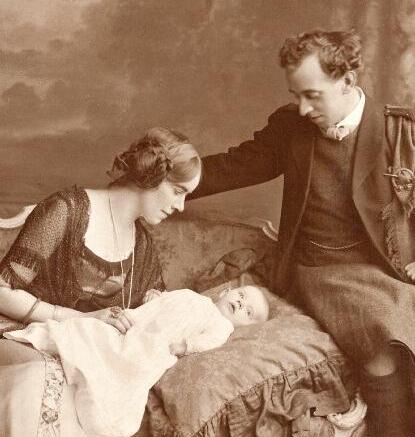
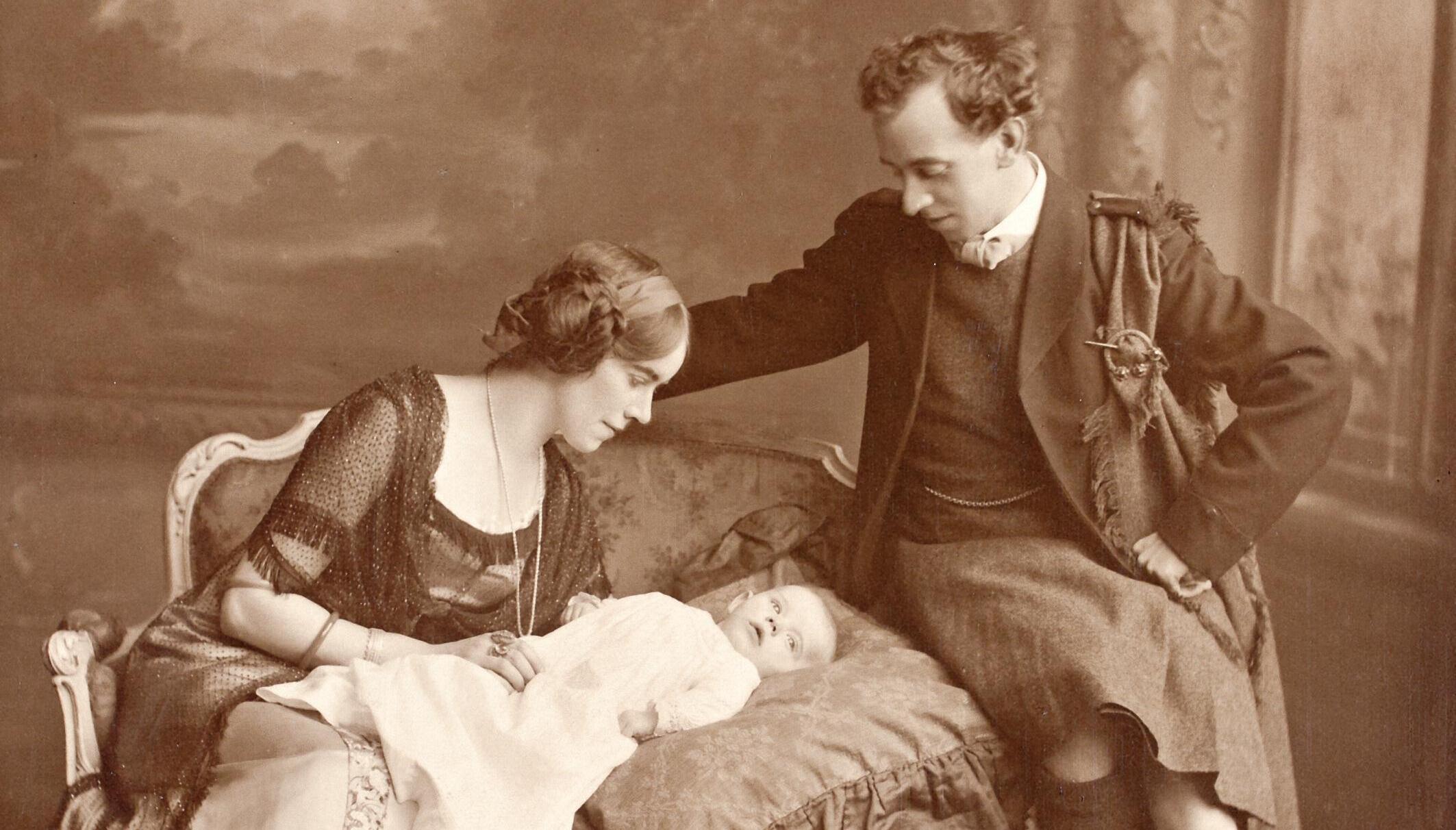
Thomas MacDonagh and Muriel Gif ford MacDonagh with their son Donagh MacDonagh Image cour tesy of the National Library of Ireland
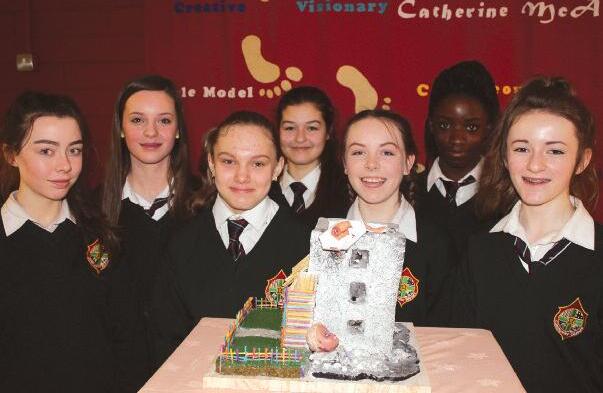
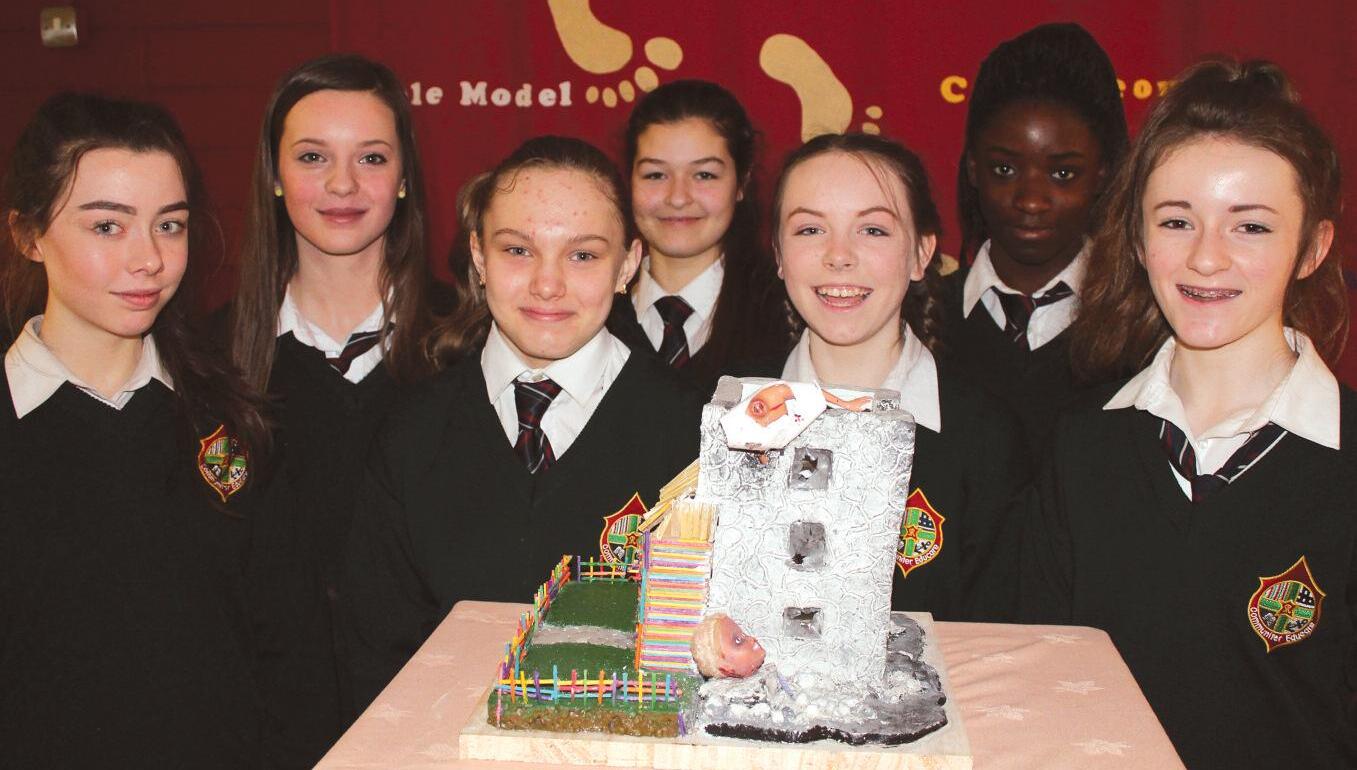
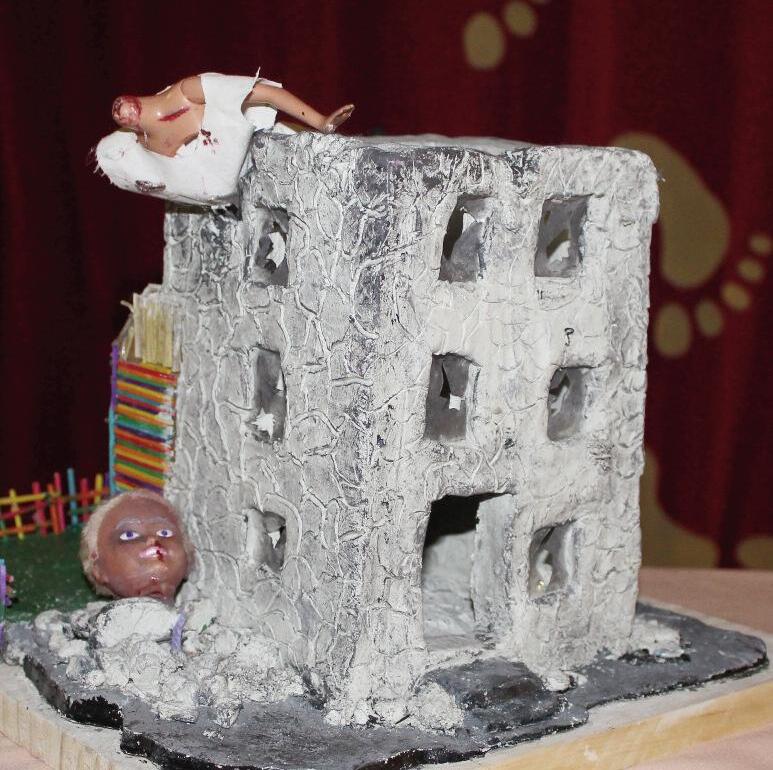
"Christopher’s house is quite dark, evoking feelings of loss and sadness, whereas Margaret’s house is bright and colourful, representing her young, short, innocent life When we researched Christopher's background, we found a memorial mass card featuring a picture of the father and son together We thought that it would be poignant to use this image on
their house, so one side of the house will display intricate detailing on cardboard and wood, and another will show the image of Christopher and his father Margaret’s house is very colourful and open so you get a glimpse of the interior The front half is curved and yellow, with coloured balls glued to the wall representing the number of bullets "
Students from Árdscoil na Tríonoide, Athy, Co Kildare with their house: Mariela Scutaru, Helen Babyuk, Gloria Dibenzi, Maeve Doyle, Donna Juric, Amy Kelly-Gorman and Grace McGuinness Right: Close-up of the house
day, staff and students will dress up in the clothing of the period, and our school hall will be handed over to local historians and re-enactors, who will bring the Rising to life with memorabilia and primary footage A céilí will take place in the schoolyard Students will be drilled with their hurleys as they might have been both in preparation for the Rising and for the Western front Mar scoil lán-Ghaeilge beidh ar teanga, ár gceol agus ár gcultúr mar mhór-pháirt den cheiliúradh Students will listen to the radio documentary and those involved will have the opportunity to exhibit some personal memorabilia Students will sing and play music, and a quiz based on the events of 1916 will be held Mar aitheantas ar an Eírí Amach mar bhunchloch de bhunú an Stáit, árdófar brat na hÉireann mar bhuaicphointe an lae Beidh daltaí ag canadh an Amhrán Náisiúnta in éineanacht le banna píobaire Ar an lá, cuirfear lipéid le hainmneacha láthair chogaidh I rith deireadh seachtane na Cásca ar fhoirgnimh na scoile Seo ócáid a bhaineann linn go léir mar Eireannaigh agus tugann sé seans duinn macnamh a dhéanamh ar an tabhacht a bhaineann linn mar phobal Agus ag féachaint siar ar an saol sin, táimid ag súil go gcothóidh sé bród agus freagracht saorantachta in san Óige agus go mbeidh nasc níos láidre acu siúd leis an tír agus an cultúr
School Principal Mícheál O Tuama says of the proposed celebrations: "‘Sé Lá an Phiarsaigh buaicphointe na scoilbhliana dúinn go léir I gColáiste an Phiarsaigh Táimid ag ullmhú le fada chuige agus ag tnúth go mór leis" He
The Gaelic Revival and 1916
This year, delegates at Annual Convention will have the chance to visit a fascinating mobile exhibition created by Conradh na Gaeilge Cuan Ó Seireadáin is the exhibition's co-ordinator, and says that it's a key part of the organisation's 1916 commemorations
"The exhibition is particularly special because it gives an indication of just how rich our archives are and how rich the history of the Gaelic Revival movement is The broad historical record of that period is well established but there are many details which remain to be explored by historians, and the foundation and early history of the Gaelic League is one of them "
So what can delegates expect to see in Cork?
"The exhibition features primary source material from our own archives –excerpts from newspapers, Ard Fheis booklets, and old images of our buildings, and of important personalities in the history of the movement "
The exhibition consists of 13 panels, exploring personalities who were involved in Conradh na Gaeilge and who were also involved in the Rising or connected with it, with the addition, of course, of Gaelic League founder and first President of Ireland Douglas Hyde The panels set the Rising in the context of national and international cultural change and upheaval, as Cuan explains: "There's a panel called 'Reimagining Ireland', which is about the conversation they were trying to have with the Irish people about what was going on culturally in Ireland: was Ireland going to become completely subsumed into a kind of British Imperial culture, or was it going to reconnect with its traditions and try to maintain a separate identity?"
The exhibition will of course feature Padraig Pearse and Eoin MacNeill, both leading figures in both Conradh na Gaeilge and the Rising There is also a panel about the role of women in the organisation, which is a fascinating and little-known story, according to Cuan: "Conradh na Gaeilge was quite progressive There was no issue with women serving on
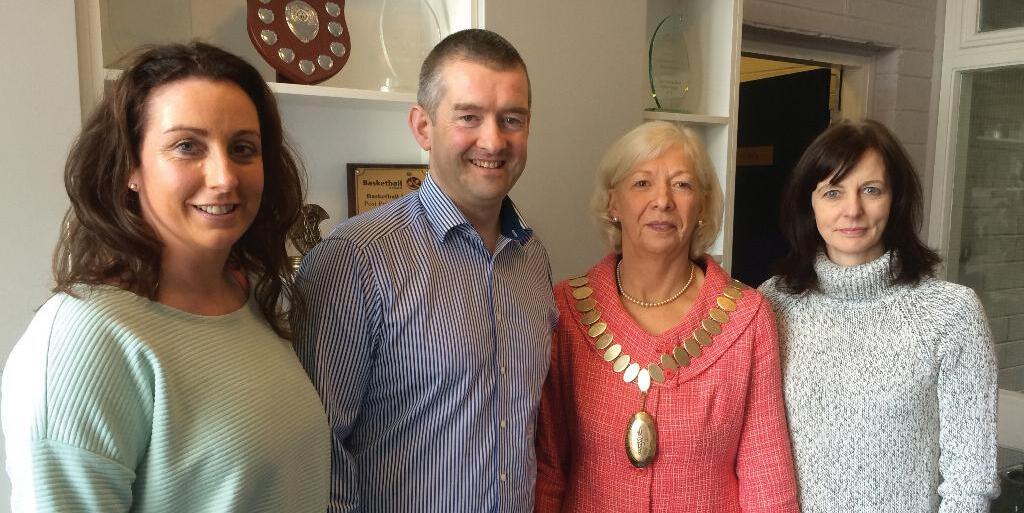
ASTI President Máire G Ní Chiarba recently visited her school, Coláiste an Phiarsaigh, Gleann Maghair, Co Chorcaí The President is pictured with ASTI Members Maebh Ní Chionnaith, Micheál Ó Tuama (Príomhoide) and Bernie Ní Dhonnchú
thanked the history department, Gillian Ní Mhathúna, Seán O Colmáin, Seán O Céilleachair, Rosailín Ní Dhonnchú and Cian O Coigligh, and all the staff of the school for helping to organise the events He paid special tribute to the students on ‘Coiste 1916’ for their interest, energy and enthusiasm He also wished to acknowledge the parents on Coiste na dTuismitheoirí for their continued help and suppor t
A commemoration event by Coláiste an Phiarsaigh will take place before the President's Address at ASTI Convention.
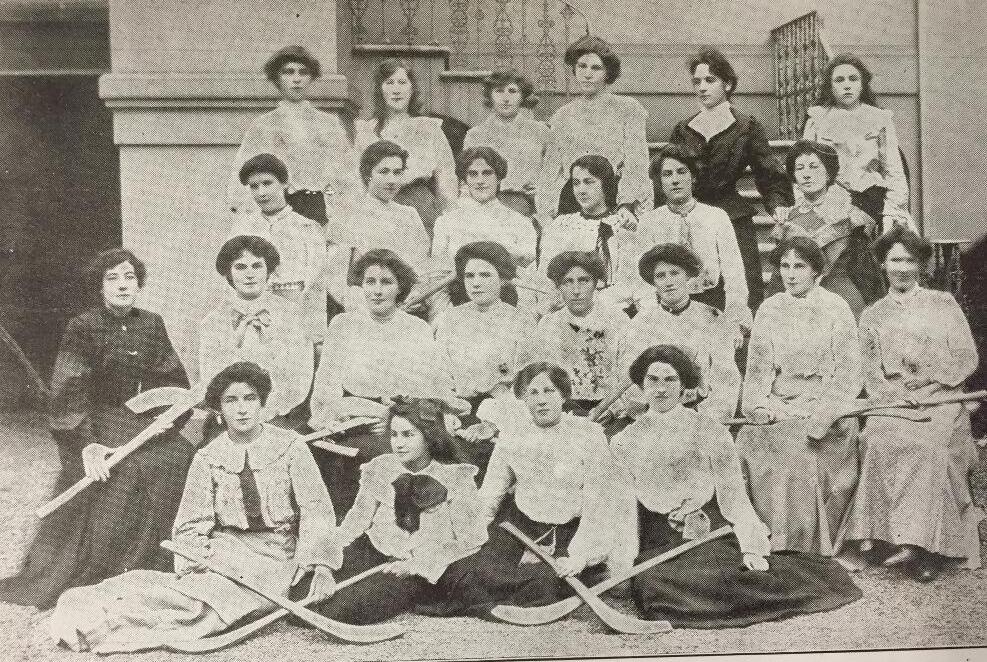
committees, being Presidents of branches, or teaching classes Also, women ' s sport was something that started with the Gaelic League because the GAA wasn't facilitating women who wanted to play sports Cait Ní Dhonnacha and Máire Ní Chinnéide of the Keating Branch decided to start playing and they invented camogie "
Details of venues and dates for this fantastic exhibition will be available on the Conradh na Gaeilge website –https://cnag ie/en/2016-commemoration/archiving-exhibiting html
Copies will also be on display in libraries around the country, and a set of posters featuring the exhibition text in English and Irish is available for sale from Conradh na Gaeilge for interested schools
The first ever camogie team, formed in 1904 by members of the Keating Branch of the Gaelic League
Supporting Community and Comprehensive teachers
The A STI Community and Comprehensive Committee highlights issues of impor tance to teachers in the Community and Comprehensive sector to A STI Standing Committee
Current Committee members
n Eveline Holderick
n Declan McInerney
n Ian McColgan
n Mary Lyndon
n Anne Taylor
n Dermot Brennan
n Geraldine O'Neill
n Mar tin Talbot – Chairperson
n Gerard Doher ty
n Liam McHugh
n Máire G Ní Chiarba – President
n Ed Byrne – Vice President
n Mary Ohle – Honorary National Organiser
n Kieran Christie – General Secretary
Ann Marie Ryan, Industrial Relations Officer, provides professional support to the Committee
There are currently approximately 3,500 ASTI members teaching in community and comprehensive schools and community colleges The ASTI Community and Comprehensive Committee advises Standing Committee on issues affecting members in these schools The Committee is made up of members representing all of the regions of the country, and meets three to five times a year to consider the concerns of members in their regions who teach in community and comprehensive schools and community colleges These concerns are then passed on to Standing Committee
Differences in terms and conditions
When the Community and Comprehensive Committee was first established, there were a number of differences between terms and conditions for teachers in community and comprehensive schools and community colleges and teachers in voluntary secondary schools These differences included differences in pay and sick leave allowances, and the Committee had an important role to play in highlighting these issues to Standing Committee
Dual union schools
Current issues of importance to the Committee include: the experiences of members teaching in dual union schools; and, recruitment Schools in the community and comprehensive sector may have teachers who are members of both the TUI and ASTI (dual union schools) and this can cause difficulties for teachers in these schools For example, at the moment TUI members in these schools are attending CPD for the proposed changes to the Junior Cycle, while ASTI members are not The Committee would raise concerns expressed about this by ASTI members in dual union schools to Standing Committee
Growing sector
The community and comprehensive sector is growing, as most new schools fall under this sector The number of members in these schools is increasing, and the Committee has an important role to play in representing the views of members in these schools to Standing Committee They also have a role in recruiting ASTI members from these schools, particularly dual union schools
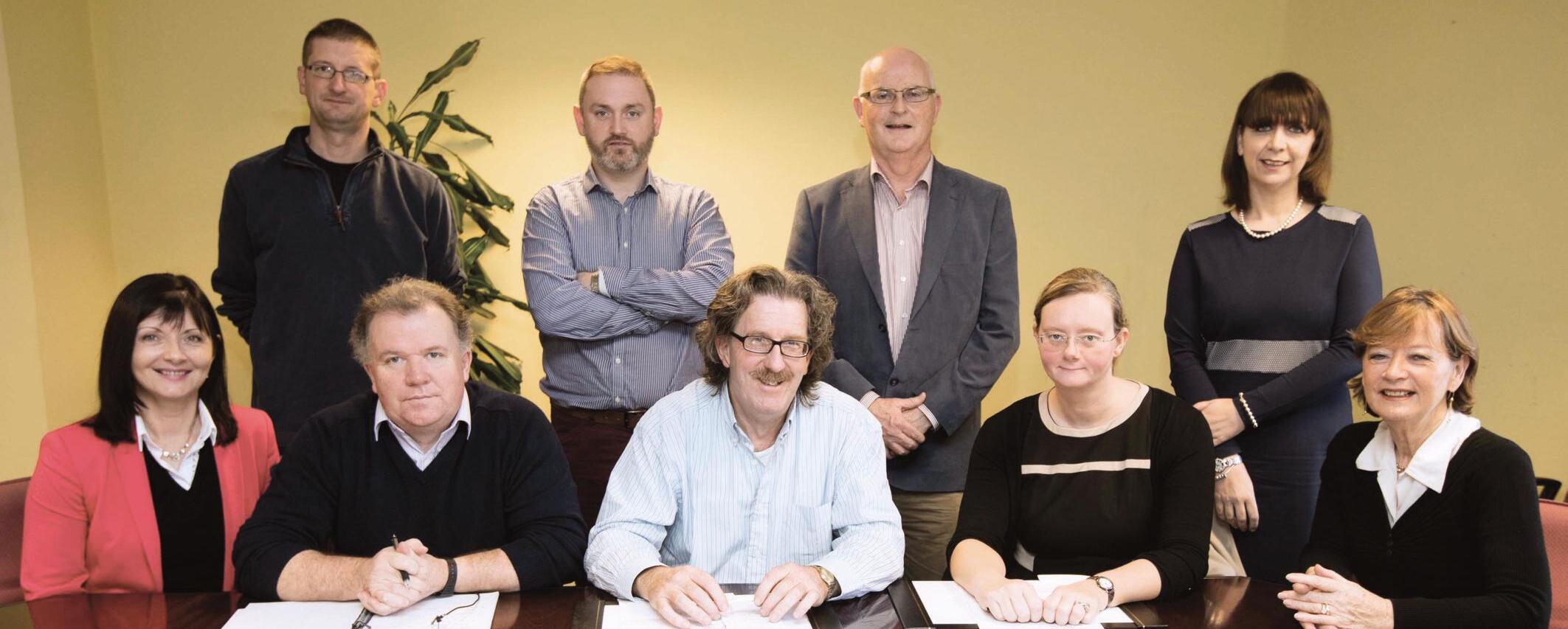
The Communit y and Comprehensive Committee Back row (from left): Declan McInerney, Dermot Brennan, Gerard Doher t y and Anne Taylor Front row (from left): Mary Ohle, Liam McHugh, Mar tin Talbot (Chairperson), Eveline Holderick and Mary Lyndon Not pictured: Máire G Ní Chiarba (ASTI President), Ed Byrne (ASTI Vice President), Kieran Christie (ASTI General Secretary), Ian McColgan and Geraldine O’Neill
Volunteers needed for research project
Are you a qualified primary/post-primary teacher who taught overseas for a minimum of one year? Have you been teaching in Ireland since September 2015 at least? If so, are you interested in being interviewed as par t of PhD research being under taken at NUIG examining the experiences of Irish teachers who have returned from teaching abroad? Please email M NAGLE4@nuigalway ie for fur ther information
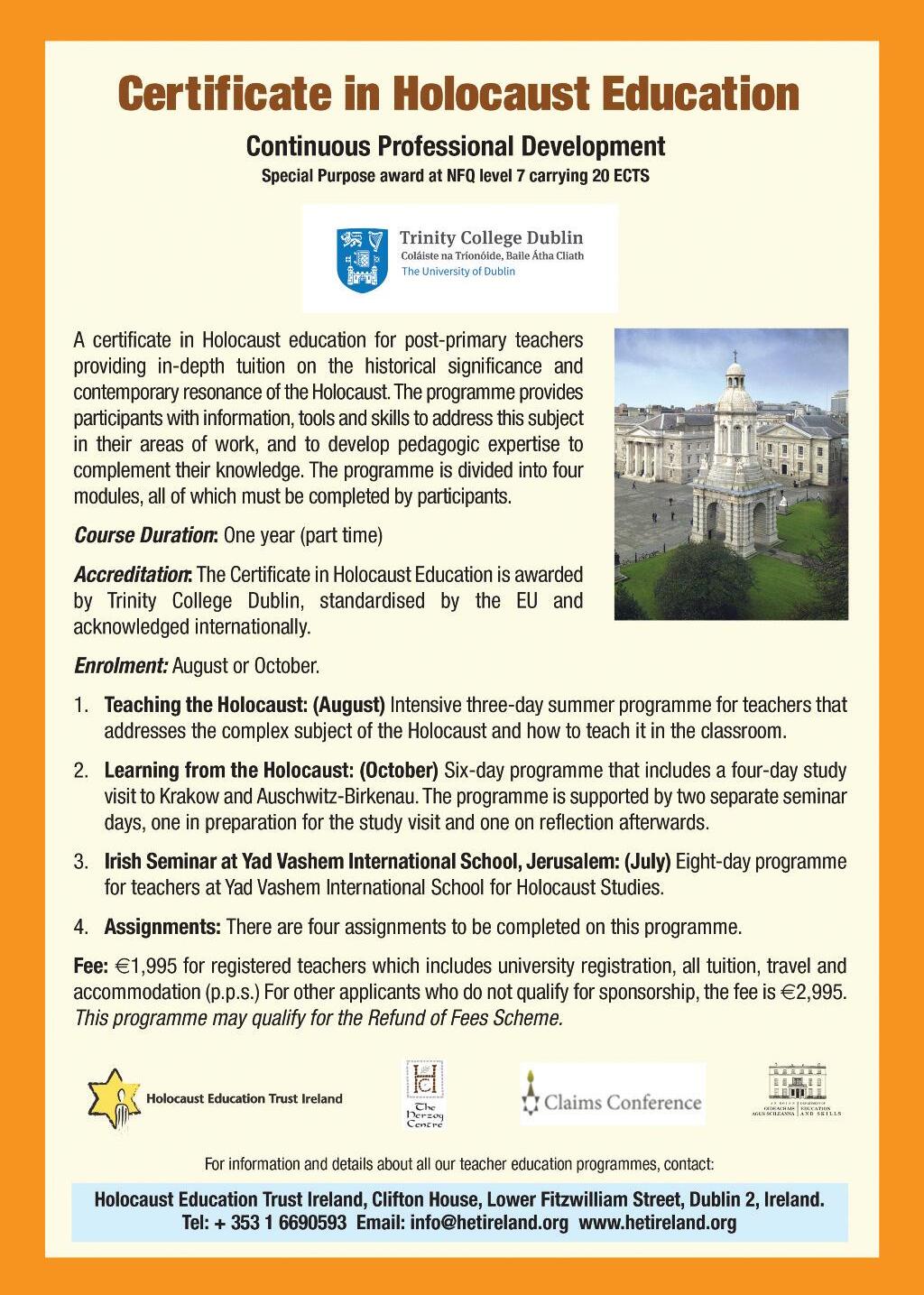
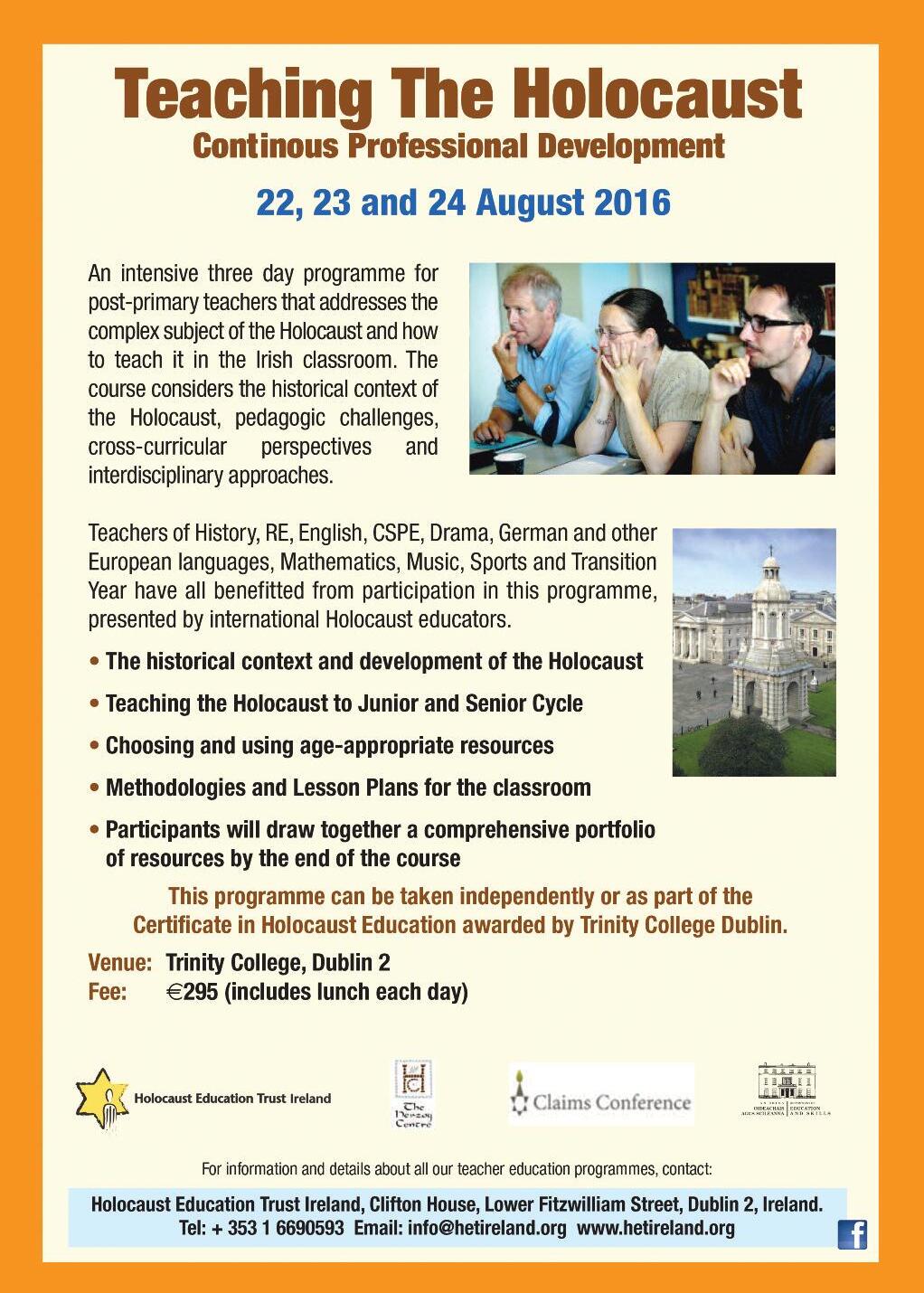
Teaching the Holocaust summer school for post-primar y teachers
M a t h s C o u n t s 2 0 1 6
The Project Maths Development Team will host its third annual mathematics conference – Maths Counts – for post-primary teachers and those involved in initial teacher education, in UCD on April 22 and 23 The keynote speaker will be Prof Akihiko Takahashi, an internationally acclaimed expert in facilitating teachers to develop their ability to teach through problem solving Prof Takahashi will teach three problem-solving lessons to a group of students live at the conference on Friday evening and Saturday morning In addition, a series of parallel workshops and presentations will be provided by practising teachers The conference aims to disseminate teachers’ strategies and real classroom experiences for postprimary maths teachers and personnel involved in initial teacher education
CLASSIFIED
i n to t h e I r i s h
c l a s s ro o m , i r re s p e c t i v e o f t h e i r s u b j e c t o r d i s c i p l i n e D i f fe re n t
a p p ro a c h e s a n d p e r s p e c t i v e s a re i n co r p o ra te d i n to t h e s e s s i o n s , a n d
e xce l l e n t
co u r s e ' Te a c h i n g t h e H o l o c
Volunteer with VLM Teacher s are invited to par ticipate in our four-week summer progr ammes for 7-15 year olds in Ethiopia this July-August Visit www.vlm.ie/summer2016/ or contact Mar y Anne Stokes on 087-139 7069
If you wish to keep your copy of ASTIR intact you may send a photocopy of the crossword One entry
Name School Address
to: ASTIR Crossword No 1602, Think
The Malthouse, 537 NCR, Dublin 1 To arrive by: Friday, April 22, 2016
Crossword
1 Last month (6)
4 See 1 down
9 Put the vessel to sea (6)
10 Dupe the soup on a clear river in France (8)
12 1997 treaty city (5)
13 See 18 down
14 Verdi's " Miller" (5)
15 Goldsmith's deser ted village (6)
20 Does this dairy product always bring a smile? (6)
21 Earns a trapping device (5)
24 With optimism (9)
27 Come together with an itune! (5)
28 A UN memorial erected in a shor t space of time (8)
29 Par ts of the act! (6)
30 Make a mistake in the heavens in this seaside town in Nor th Dublin (8)
31 The Old Testament provides relief as an after thought (6)
CLUES DOWN:
1 down and 4 across: Title of John Cunningham's book about the ASTI (8,8)
2 Into cute German of old (8)
3 See 22 down
5 Mixed with (5)
6 Is Ben a Norwegian playwright? (5)
Just about (6)
8 Looks with disdain (6)
Quantum of , a James Bond film (6)
Farewell informally (6)
Cure roses if you have the means (9) 18 down & 13 across: ASTI General Secretary formerly held this office (8,9)
19 Breaks in nooks or alcoves! (8)
22 & 3 down A 1916 signatory and one of the founding members of the ASTI (6,3,6)