

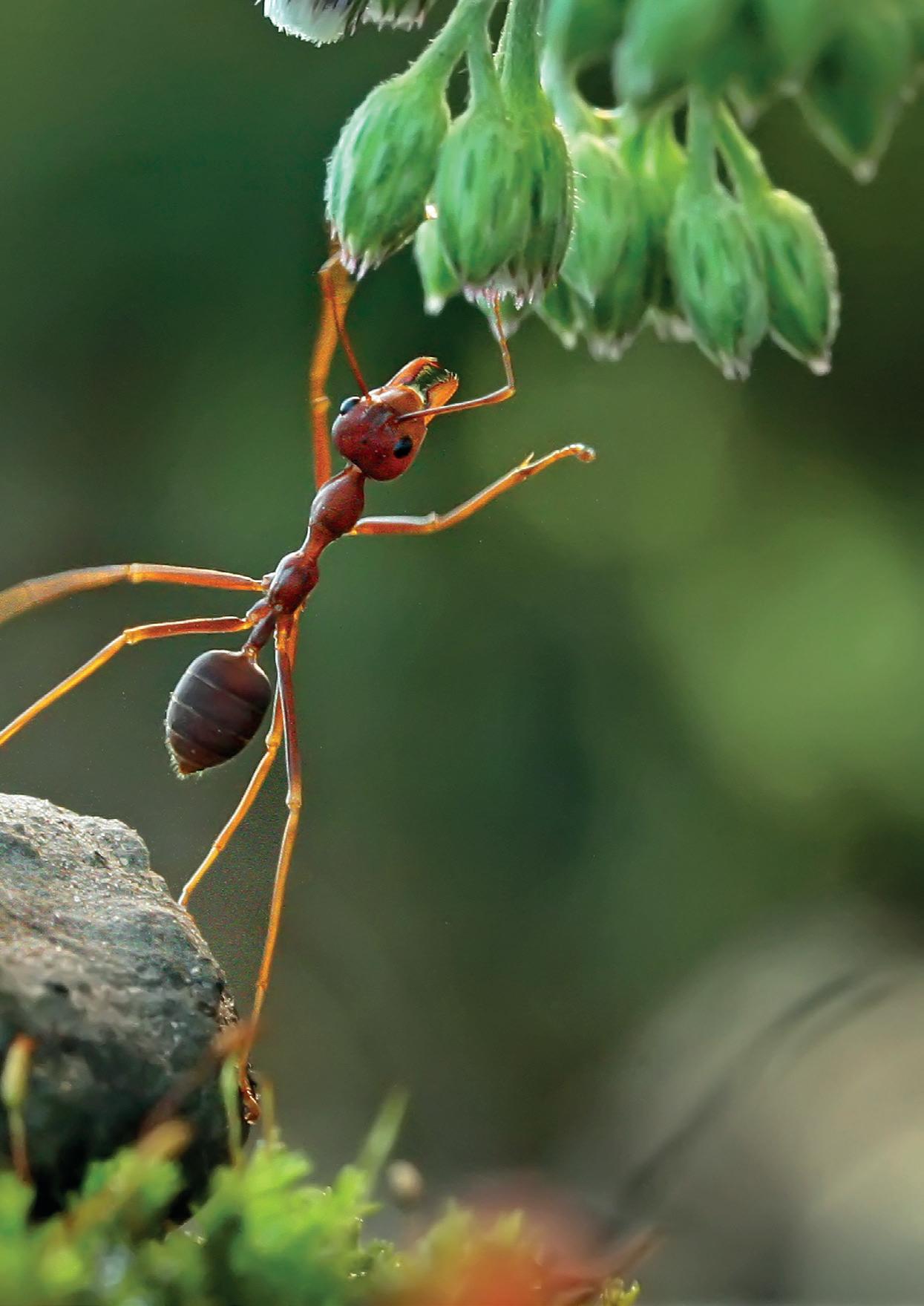

Biology is all about life. Not just your life, but all life on Earth. But what is life, actually? Everyone knows that a stone is not alive and a frog is. Even so, it isn’t easy to describe exactly what life is. This chapter is about life and research, the two main aspects of biology.

Biology: what use is it?
Biology is about all life on Earth
In biology, everything is connected
Biology helps you make your own choices
Biological research makes new solutions possible

At the end of this section, you can
• explain why biology is important in your life.
• explain what biology is about and how it is related to other subjects.
• describe discoveries by biologists that you come across in your life.
1 Your idea of biology
All the words below are related to biology. Which words do you think belong together?
Combine the following words: motion - animal - climate - agriculture - life - humans - plant - food - disease
Compare your combinations with those of a classmate. You can make as many combinations as you like (there is more than one correct answer for each combination). Explain to each other why you think these words belong together.
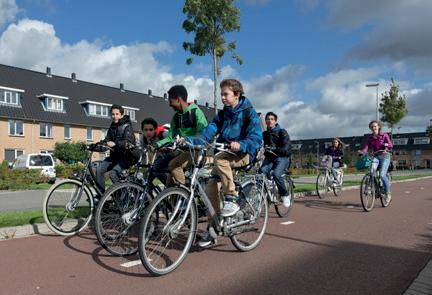
In fact, you have been involved with biology your whole life, often without knowing it. You are involved with it when you water a plant or walk the dog. You’re even involved with biology when you cycle to school (see Figure 1). And that’s not all: your life involved biology even before you were born! That’s because biology is about life. Biology literally means: the study (logos) of life (bios). In biology, you study everything that has to do with life. The more you know about biology, the more you can understand about your own life and everything living around you.
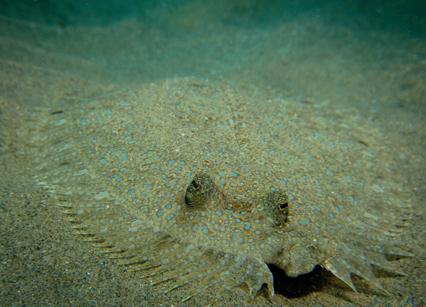
You live in a world with many different species of living things, from plants, animals and humans to fungi and bacteria. There is enormous variation between living things. There are very large animals made up of billions of cells, but also very small lifeforms, such as bacteria. They are unicellular organisms: they consist of just one cell. There are colourful animals, such as the peacock with its beautiful and striking feathers. However, there are also animals that try hard not to stand out, such as the stick insect, which is almost indistinguishable from its environment. There are also animals that change their colours to match their environment, such as the Bothus mancus fish (see Figure 2).
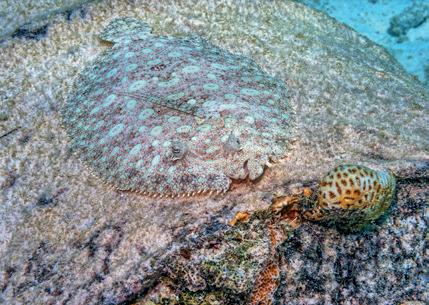
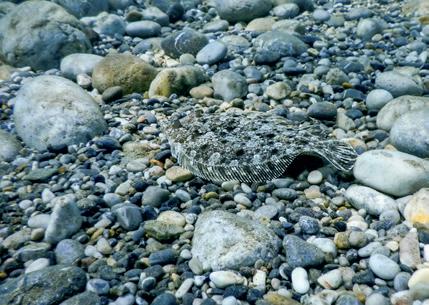
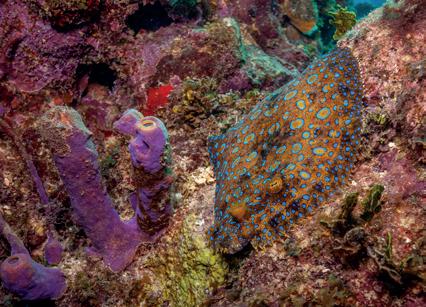
All these living things have their own feeding habits. There are carnivores (meat eaters), herbivores (plant eaters) and omnivores (which eat both). They also have their own habitats. Some animals mostly live in the air, such as birds and bats. Others live in the water, such as orcas, sponges and algae. There are also animals that can only survive on land. Camels, giraffes and rhinos cannot swim, for example.
In biology, you learn a lot about living things, how they live, what happens before life is formed, reproduction and how all those living things do their best to stay alive.
All living things do their best to stay alive. They depend on their bodies to stay alive. That is why in biology you study the structure of the body and how it works. Once you know that, you can understand what changes in the body in the event of disease, and how diseases can threaten life. You also learn how the body tries to protect itself and the effects of nutrition and motion on the body.
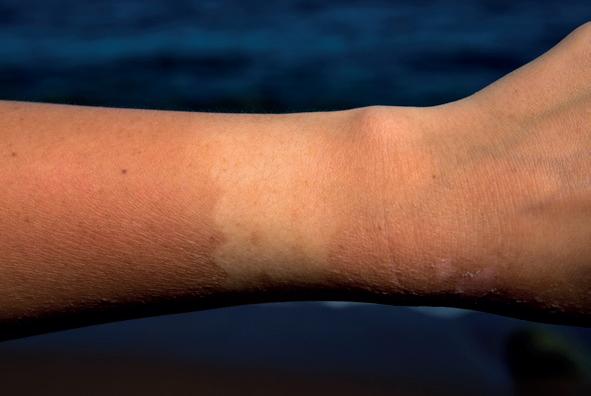
A living thing can only stay alive in the right environment. We call this its habitat (or living environment). You habitat is also vitally important to you. For example, it must not be too hot or too cold. There must be sufficient water and food. A human can only survive for an average of three to four days without water, and three weeks without food.
Humans have adapted their habitat to survive. For example, you live in a well-insulated house with heating. Your clothes protect you from cold, or from intense sunlight. You buy your food in the supermarket. To make sure they have enough food, humans began growing crops and breeding animals. Crop farming and livestock farming now occur on a large scale.
Your habitat determines whether you can survive and how you do it. That’s why in biology you don’t just study living things themselves, but also their habitats.
Biology, physics and chemistry are three natural sciences. Geography is sometimes included in the same group. In all of these subjects, you study natural phenomena. But what is the difference between them, actually?
In biology, you mostly learn about living nature. You study living things, the environments they live in and how they live. In physics, you study the laws of nature. For example, you learn about gravity and sound waves. In chemistry, you learn about the structure of substances and how they react with each other. And in geography, you learn about topics such as the climate and soil. In these three subjects, you learn about non-living nature. Each subject approaches the study of nature from a different perspective.
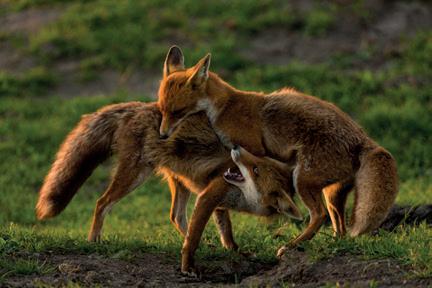
Figure 4 In biology, you study living things, including their behaviour.
There are also connections, because living and non-living nature are closely related. For example, in biology you learn how living things respond to heat and drought.
In your daily life, you regularly come into contact with discoveries made by biologists. For example, why are the fries you eat so tasty? Biologists studied which potatoes are best for making fries and how they become crispy.
Biologists also study medicines. This means that you benefit from the work of biologists when you take a paracetamol to fight a headache or when you are vaccinated against a disease such as the corona virus or HPV (see Figure 5).
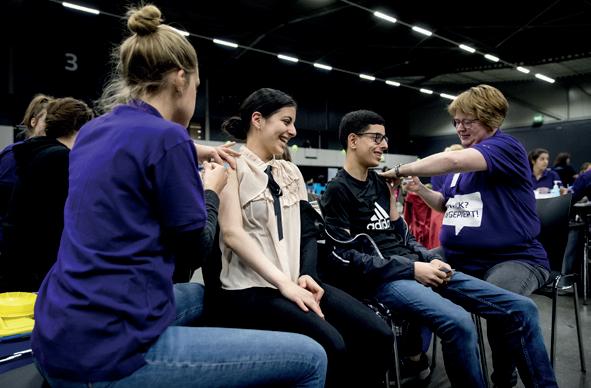
Figure 5 Thanks to biological research, there is a vaccine against HPV
There are many different types of biologists. They all carry out different types of research, such as DNA research or research into viruses. Microbiologists study very small living things. They use microscopes. Ecologists study something much bigger: habitats. For example, they study the effects of climate change on living things. Toxicologists study a specific aspect of habitats, namely the effects of toxic substances on living things.
Vertical agriculture
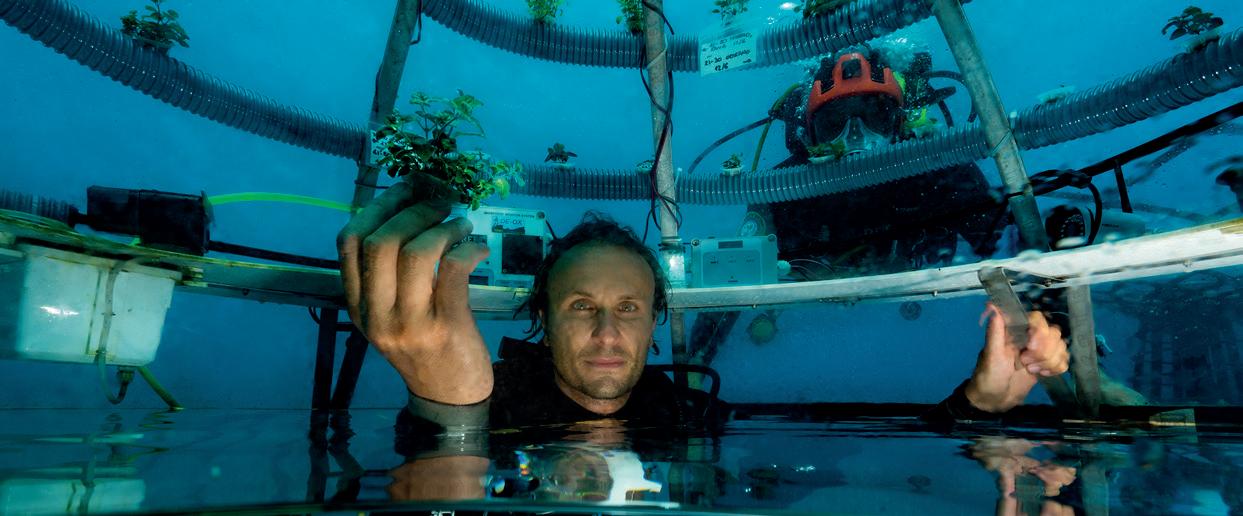
There are expected to be 10 billion people on Earth by 2050! All those people need to eat to stay alive. That’s why biologists are studying how you can grow as much food as possible in the smallest possible area. Researchers at Wageningen University are studying how crops grow in buildings, such as empty offices. The crops are grown in layers on top of each other, as shown in the figure. They call this “vertical agriculture”.
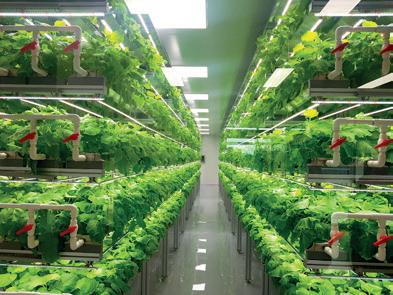
With vertical agriculture, you don’t need much space to grow food.
a Look out the window. What can you see happening outside that is related to biology?
b Take a look around the classroom. What can you see happening indoors that is related to biology?
a In this assignment, you will think about biology. What is it, actually? What is biology all about?
b Do this assignment with a classmate. Read through the course material together. Discuss the following questions.
• Which topics do you think are interesting to learn about? Why?
• What questions come to mind when you read the course material?
There are many different types of life on this planet. In this assignment, you will think about all the different lifeforms.
a Make a mind map about the variation in lifeforms on Earth.
Consider, for example, the existence of large, small, coloured, camouflaged and green lifeforms. Also consider lifeforms that live in the water, on land and in the soil.
There are very small lifeforms, such as bacteria, and very large lifeforms, such as animals and humans. Or are animals and humans the same lifeforms?
b ”People and animals should be regarded as two different lifeforms.”
Discuss this statement with a classmate.
Explain why you agree or disagree with this statement.
Biology is all about life. But what exactly is life? In this assignment, you will discuss this with your classmates. Study the photo and read the text about Aibo, the robot dog.
Sony’s robot dog Aibo walks naturally. He eats and consumes energy, just like a real dog. By using artificial intelligence, Aibo can even learn from his master and develop his own personality. The robot dog develops based on when his master rewards, pets or punishes him. He can also learn to recognize you and will return to his charging basket all by himself.
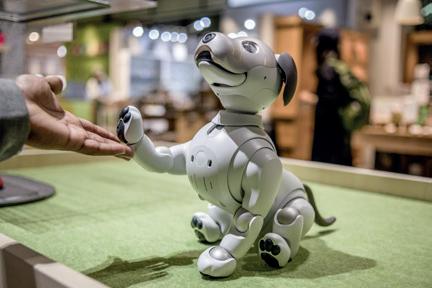
Discuss the following question with your classmates. What determines whether the robot dog is alive or not?
You don’t have to be a biologist to use biology. You may use biology in other professions as well. Read the profiles of people with other professions.
Pierre Wind is a famous TV chef. He uses as many fresh products and vegetables as possible in his recipes.
Bertie Steur has a crop farm in the province of Zeeland. She grows crops including wheat, flax, grass seed, chicory and sugar beets. There are also pigs, chickens and horses on her farm.
Diederik Gommers is a doctor in the Erasmus hospital. He treats patients in the intensive care department. During the corona crisis, he informed people about the corona virus and his experiences in the intensive care unit.
Hanne Tersmette is a forest ranger. Using social media, she tells viewers about her work. She makes videos about spotting kingfishers, helping insects and other topics. She also shows unique aspects of Dutch natural environments, such as the Dwingelderveld national park.
Describe the connection with biology for each profession.
Biology is a natural science. It is related to other natural sciences, such as physics and chemistry, and also geography.

By drawing overlapping circles, you can clearly show the connections and differences between the subjects.
In this assignment, you will show the connections and differences between biology and other subjects.
Take a large piece of paper. Draw two overlapping circles as shown in the example. In the overlapping areas, write keywords that apply to both subjects. In the outside areas, write the differences between the two subjects.
Draw two overlapping circles three times, and clearly show the connections and differences between:
• biology and physics;
• biology and chemistry;
• biology and geography.
8 Biology: what use is it?
The big question in this section is “Biology: what use is it?”
How would you answer this question?
Use the information you learned in this section to provide your answer.
At the end of this section, you can
• explain the difference between living, non-living and dead.
• name the seven characteristics of life.
• explain what biotic and abiotic factors are and how they affect organisms.
This section has the following practical assignment:
• The slug
Discuss with your teacher whether you will be doing this practical.
Do this assignment together.
A spaceship with creatures from another planet lands on Earth. Explorers set out to determine whether there are living things on Earth. They encounter animals and quickly inform their commander that there is life on Earth.
a What things might the explorers have been paying attention to when they thought they saw living things?
Discuss in a group of 2-4 people. State at least five things that they looked for.
b When humans send a rocket to another planet to discover whether life can exist there, which materials or conditions will they be studying?
Name two.
In biology, we call a living thing an organism. But what determines whether something is alive? Something is alive if it shows characteristics of life. Some characteristics of life are essential for the organism to stay alive. Others are essential for the species to survive.
There are seven characteristics of life:
• Organisms grow. You are still growing yourself.
• Organisms feed themselves by absorbing nutrients from their habitats. You absorb nutrients by eating and drinking.
• Gas exchange occurs in organisms. This means that they absorb oxygen and release carbon dioxide. You do this when you breathe (inhaling and exhaling).
• Organisms can reproduce and generate offspring. This allows the organism to survive as a species.
• Organisms can perceive their environment. This is necessary to respond to what happens around them. Your perception involves using your eyes, nose and ears, for example.
• Organisms can react to changes in their environment (mainly by moving). For example, you might see a car coming from the right, so you brake to stop on time. A woodlouse will look for a humid, dark place. A plant will grow towards the light.
• Organisms can excrete substances. Substances that the body doesn’t need are discharged. Your body discharges most substances when you pee or poo.
If you want to know whether something is a living organism, you examine whether it shows characteristics of life. An organism doesn’t need to show all characteristics of life at the same time to be alive.
If you look at a water flea using a microscope (Figure 1), you can observe almost all characteristics of life.
• The water flea uses its legs to bring food to its mouth.
• The water flea’s heart is beating.
• There are eggs in the breeding pouch at the water flea’s back.
• The water flea swims around.
• Small droppings come from its anus.
• The water flea’s black eye turns.
eye (perception)
mouth (feeding)
eggs (reproduction)
legs and feelers (reaction)
intestine (excretion)
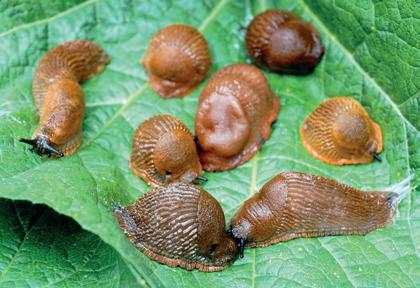
A slug (Figure 2) can lay 400 eggs a year. Imagine what would happen if every slug that hatched from those eggs also laid 400 eggs, and the generations after that did the same. What would our planet look like after a few years if all those slugs survived?
That can’t happen, because in nature many organisms die, for example from disease or old age, or because they are eaten. A dead organism once lived and no longer shows the seven characteristic of life.
The difference between alive and dead is sometimes hard to tell (Figures 3 and 4).
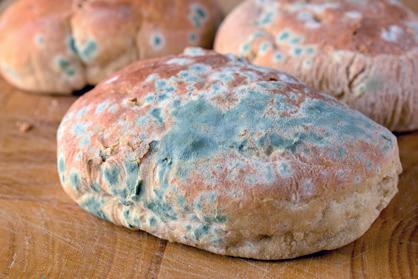
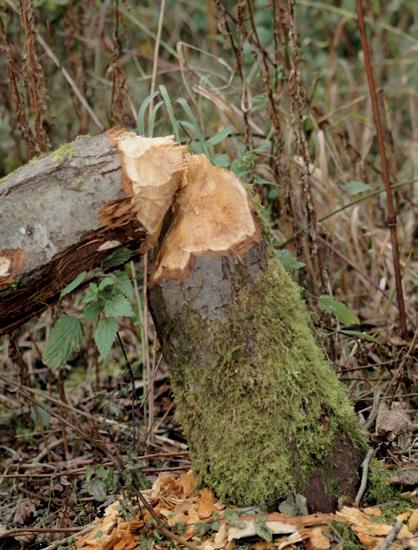
If something has never shown any characteristics of life, you call it non-living. Examples of non-living things include a glass vase, the TV and your telephone. You can ask two questions to determine whether an object is living, dead or non-living (Figure 5).
Question 1
Do you see characteristics of life?
Question 2 yes
Then it is living. Does the object consist of cells, or remains of cells?
Then it is
Then it is non-living.
Figure 5 Living, dead of non-living? Ask yourself these questions.
It is hard to see from the outside whether something has cells or remains of cells. To find out, you must examine the object. Remains of cells can often still be found after hundreds of years, but this is only possible if the dead organism (or part of it) is well preserved.
Doctors must clearly understand the difference between living and dead. In the past, doctors decided whether someone was still alive based on various characteristics of life. They checked whether the person was breathing and whether their heart was beating. If the heart stopped beating for some time, there was nothing they could do and the person was declared dead. With today’s medical knowledge and equipment, a stopped heart can often be restarted. The person usually ends up in intensive care (Figure 6). The characteristics of life are closely monitored there.
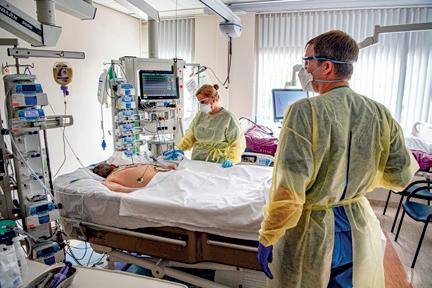
In nature, you often come across non-living things, such as air, stones, sand and water. Nonliving things are called abiotic. Everything that lives, or once lived, is called biotic. Almost all of nature consists of a combination of abiotic and biotic things (Figure 7). If you examine the soil, you will find living organisms, the remains of dead organisms, and non-living soil made up of sand, clay and stones. The abiotic and biotic elements of nature affect one another. Together they form the living environment, or habitat.
Many objects that are made by humans consist of a combination of abiotic and biotic materials. Examples include a wooden chair (biotic) with legs made of iron (abiotic), or a wooden door with an iron handle.
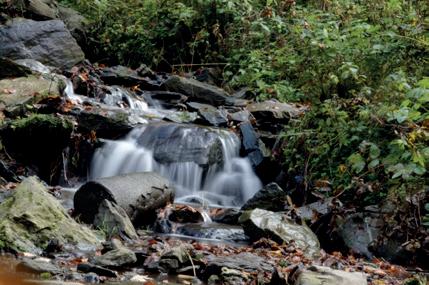

Organisms are dependent on the habitat in which they live. They are affected by various environmental factors. These include biotic factors, such as members of the same species, prey animals and plants. A dead tree is also a biotic factor. There are also many abiotic factors, such as temperature, water and nutrients in the soil.
deer/competitor
Rising from the dead
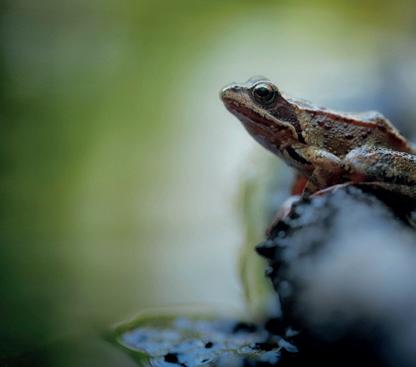
Frogs take on the same temperature as their environment. If the environment is 15 degrees, then the frog’s body temperature will also be around 15 degrees. In winter, most frogs burrow into the soil so they don’t freeze completely.
The wood frog behaves differently. When the temperature drops below freezing, its entire body freezes. Its heart even stops beating. If you examined the wood frog in this state, it would appear to be dead. When spring comes and the temperature rises, something very special happens. The frog unfreezes and its heart begins to beat again. It is as if it rises from the dead.
In the picture you can see several of the seven characteristics of life. Make the right combinations.
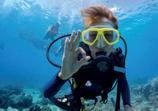

• • reproduction • • gas exchange • • perception • • nutrition
You can recognize a living thing by the characteristics of life.
Is an organism dead if you can’t see one or more of the characteristics of life?
◯ Yes, because you must be able to see all the characteristics of life at all times.
◯ No, because a living organism does not have to show all the characteristics of life at the same time.
◯ No, as long as the organism is moving.
Are these objects living, dead or non-living? Fill in the correct word.
• a tinned peach
• the tin containing the peaches
• apple syrup
• a leather shoe
• a raw steak
• a woollen sweater
• a snail’s shell
Which characteristics of life are you currently showing? 6 Temporary characteristics of life
Which characteristics of life do most organisms only show some of the time? Explain why.
7 Badger and environmental factors
Look at the picture. You will make a similar picture for a badger.
deer/competitor
rabbit/member of same species
A rabbit surrounded by biotic and abiotic factors
Make a drawing of a badger with biotic and abiotic factors. Write a short explanation next to each factor.
Discuss your work with a classmate.
TIP Use the site zoogdierenvereniging.nl to learn more about badgers.
Explain how you can detect the seven characteristics of life of an elephant and of a carnivorous plant.
Discuss your work with a classmate.
“A non-living body was found in a ditch.” Someone says that a “non-living body” has been found.
Choose the correct words. One word is used twice.
Kies uit: correct | dead | dead | incorrect | living | non-living
• If something shows characteristics of life, it is
• If something has never shown characteristics of life, you call it .
• If something lived once, but no longer shows characteristics of life, you call it
• The expression “A non-living body was found in a ditch” is , because it shows characteristics of life. This means it is a body.
Which environmental factors are biotic and which are abiotic?
• snow
• rocks
• members of the same species
• pathogenic bacteria
• a dead tree
• prey animals
Would you like to practise more with the contents of this section? Choose Revision or Plus online.
At the end of this section, you can
• explain the four main groups into which organisms can be categorized.
• explain whether an organism is a plant, animal, bacterium or fungus.
• recognize whether a drawing of an organism is true-to-life or schematic.
• explain that there are bacteria that are “good” or “bad” for you and giving an example of each.
This section has the following practical assignment:
• The magnifying glass
Discuss with your teacher whether you will be doing this practical.
1 Which animal is that?
In 1735, the Swedish researcher Carl Linnaeus (1707-1778) published a book in which he distinguished three groups: minerals, plants and animals. He classified things based on their external characteristics. Today, organisms are generally divided into four groups: bacteria, fungi, plants and animals.
Instructions:
1 Work in pairs.
2 One of you will think of an organism from one of the four groups and the other will ask questions.
3 You may only ask questions that the other can answer with “yes” or “no”.
4 If the organism still hasn’t been guessed after ten questions, reveal the answer and swap roles.
5 Each of you should complete the assignment at least twice. Which two questions gave the most information?
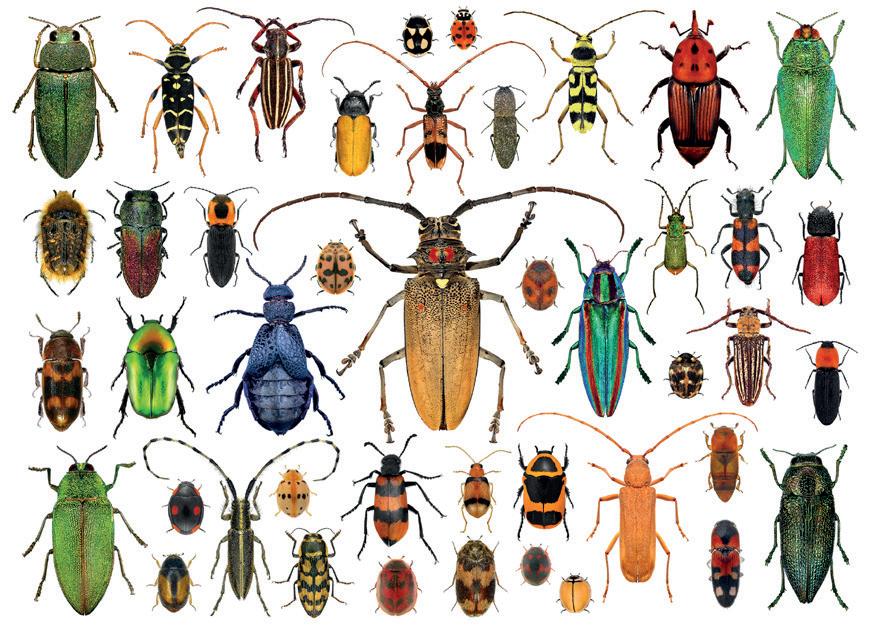
Many different organisms live around you. Sometimes you can clearly see them: a cow in a field, a tall tree, a bird in the air or a fly on the window. Organisms come in many different shapes and sizes. There is a huge amount of variation. The number of beetle species alone is gigantic. They differ in colour, shape and size (Figure 1). There are also organisms that are invisible to the naked eye. You can see these organisms using a microscope.
For centuries, people have been fascinated by all the different organisms around them. All that time, scientists have tried to sort them into groups. You can categorize them based on their characteristics, including their colour or shape or whether or not they have hair, blood and/or legs.
In the past, scientists could only categorize organisms based on what they could see with the naked eye. No one had ever heard of bacteria. They simply couldn’t be seen. Mushrooms were long considered to be plants. People couldn’t see that mushrooms grow from a mycelium (a network of fungal threads) under the ground. It wasn’t known yet that fungi are a separate group of organisms.
Thanks to the invention of the microscope, we now know that many small organisms also exist. Through microscopic investigation, numerous characteristics of bacteria and fungi were discovered. Plants and animals did not have these characteristics. This is why we now categorize organisms into four main groups: bacteria, fungi, plants and animals (Figure 2).
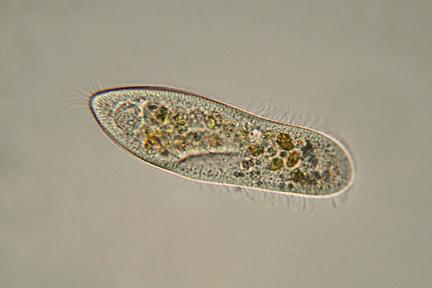
The main groups plants, animals and fungi include unicellular organisms and multicellular organisms. This means there are multicellular plants, animals and fungi, but also species that consist of just one cell. Examples of unicellular organisms include yeast cells (a fungus) and the paramecium (Figure 3). Bacteria are always unicellular.
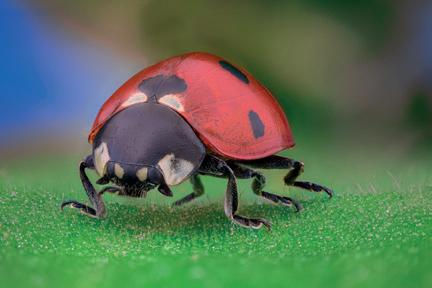
Multicellular organisms consist of many cells that together form a single body. Although a ladybird (Figure 4) is small, it still consists of a huge number of cells.
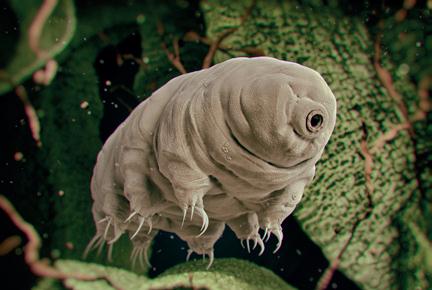
You might think that unicellular organisms would always be smaller than multicellular organisms, but that isn’t always the case. The multicellular tardigrade is just a twentieth of a millimetre across, which makes it much smaller than most unicellular organisms (Figure 5).
Bacteria are the smallest organisms known to exist. Bacteria are unicellular. They can be found everywhere on Earth. It doesn’t matter if it’s humid, dry, cold or hot.
There are also many bacteria living in and on your body, about 100,000 million in fact. Together they weigh one kilogramme! Almost all of them are “good” bacteria. These are essential for your health. The gut bacteria help you digest food. There are around eight million bacteria on every square centimetre of your skin. They protect you against pathogenic bacteria from outside the body.
Some bacterial species can make you ill (Figure 6). These bacteria destroy or poison cells in your body. Your body can usually fight these bacteria itself. If it can’t, you may become ill. Sometimes your doctor will prescribe an antibiotic that kills pathogenic bacteria.
Viruses are not bacteria
If you catch a virus and become ill, your doctor will not prescribe an antibiotic, because antibiotics cannot kill viruses. There are medicines that reduce symptoms caused by viruses. Viruses penetrate human cells and multiply inside the cell. This makes it difficult to fight them without harming the human cells.
Viruses are not bacteria. Officially, they are not even organisms. This is because they do not show all the characteristics of life. For example, they do not eat or breathe. Well-known illnesses caused by viruses include cold sores, HIV, COVID, chickenpox and colds.
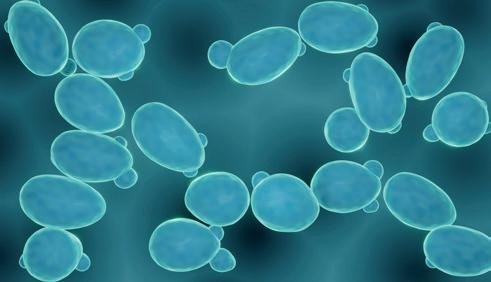
Some fungi are microscopically small, while others are so large that they cover an area of 4 billion square metres. Although some fungi resemble plants, fungi are a separate group with their own characteristics. Examples of fungi include the unicellular yeasts (Figure 7) and the multicellular species from which mushrooms grow (Figure 8). Multicellular fungi species consist of long, branched fungal threads (mycelium).


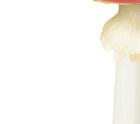
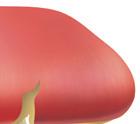

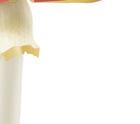

A fairy ring (see Figure 9) is a circle of mushrooms. There is a large mycelium (network of fungal threads) under the ground below the fairy ring.
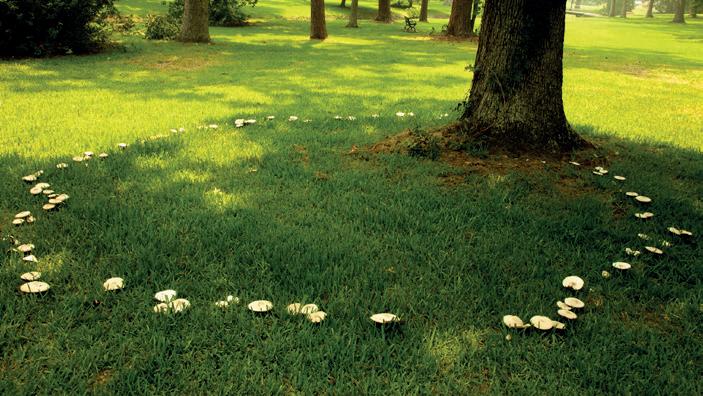
Figure 9 A fairy ring is a circle of mushrooms.
Fungi can be found everywhere: in the air, in the water, in the soil and in and on plants and animals. You can even find them on and in your body. Harmful fungi can cause infection of the nails, itching or flaking skin.
Fungi can also be very useful to humans. For example, there are fungi that we can use to make food such as blue cheese and bread. Other fungi are used to make antibiotics, which can be used to cure diseases.
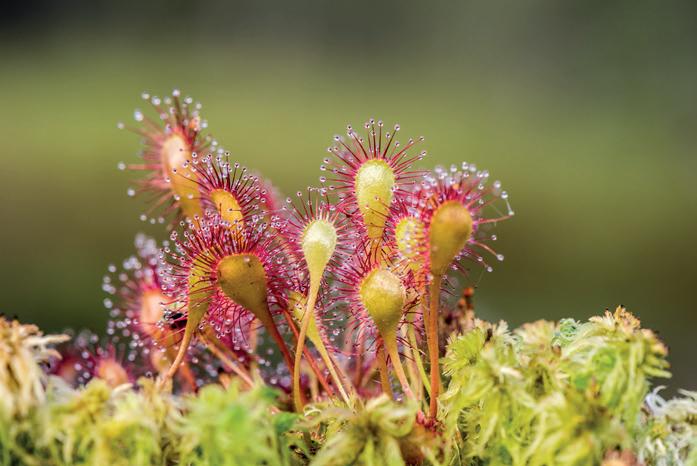
Plants and animals are the organisms that you notice most clearly in nature. They come in all sizes, from extremely large to microscopically small. There is a huge amount of variation within both groups (Figure 10). There are plants with flowers, plants without leaves or stalks and plants that are poisonous. Some plants even eat meat (Figure 11). Some animals are carnivores, others are herbivores or omnivores, and they come in many shapes and sizes.
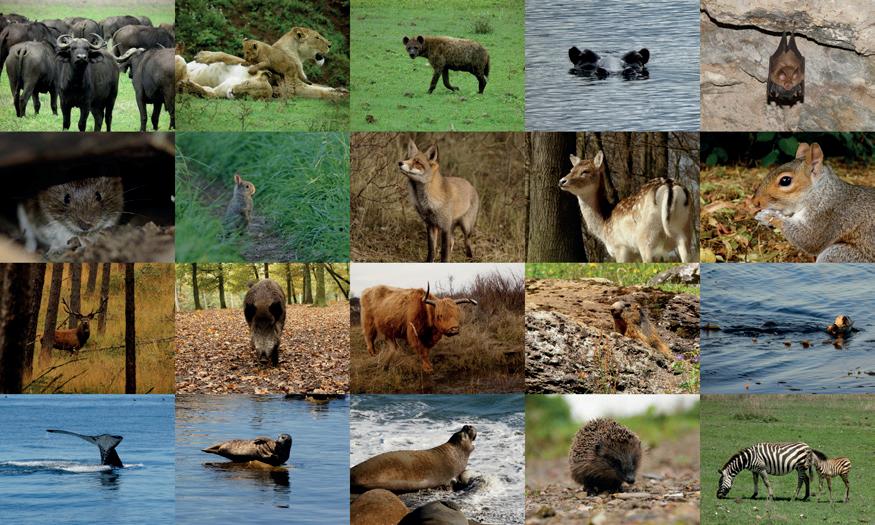
For centuries, humans have used plants and animals for food, clothing, tools, defence, furniture, decoration and much more. In biology, humans are categorized as animals. Humans, including you, are part of nature.
So far, scientists have identified around 2.1 million species, of which 1.5 million are animals, 380,000 are plants and 140,000 are fungi (such as mushrooms). These 2.1 million species don’t even include bacteria! There are many more species to be discovered. There are plants in places on Earth that researchers have never visited, including impenetrable rainforests and deep oceans.
2 Fungi
Fungi play a key role in nature. They ensure that plants always have access to food.
In what ways are fungi useful to us?
☐ Fungi can be found everywhere.
☐ You can eat fungi.
☐ You can use fungi to make food.
☐ You can use fungi to make medicines.
☐ Fungi on your body can cause infection of the nails, itching or flaking skin.
The figure shows a fantasy animal. It shows characteristics of several different species.
Write down the most important characteristics of this animal. Next to each characteristic, write the name of an animal species that shows the same characteristic.
Compare and discuss your answers with a classmate.




Certain pathogenic bacteria can cause pneumonia. To fight these bacteria, your doctor may give you an antibiotic. An antibiotic kills the bacteria, but does not distinguish between pathogenic bacteria in your lungs and the “good” bacteria in your intestines.
How can taking an antibiotic affect the digestion of food?
◯ You will digest the food better, because the bad as well as the good bacteria will die.
◯ You will digest the food worse, because the bad bacteria will die.
◯ You will get a stomach ache and diarrhoea, which removes the bad bacteria from your body.
◯ You will get a stomach ache and diarrhoea, because the medicine also kills the good bacteria in your intestines.
Bacteria are really everywhere: in the air, on your hands, on food, in your body. They can be killed by exposing them to a temperature of around 100 degrees Celsius. Food that is first heated and then stored in an air-free environment does not go bad.
You want to keep the foods listed below for at least a week. State whether they are well protected or poorly protected against harmful bacteria.
1 tinned pineapples in a closed tin well protected | poorly protected
2 chopped liver sausage from the butcher in a paper bag well protected | poorly protected
3 raw chicken breast packed in plastic well protected | poorly protected
4 vacuum packed boiled potatoes (“vacuum” means without air) well protected | poorly protected
5 dried beans or peas in cardboard packaging well protected | poorly protected
In the past, people sometimes made mistakes when drawing organisms. For example, Cornelis Saftleven drew this lion around 1626. The artist had probably never seen a real lion. He based his drawing on stories and paintings.
a Can you see all the things that are wrong with this lion?
Name at least two things.
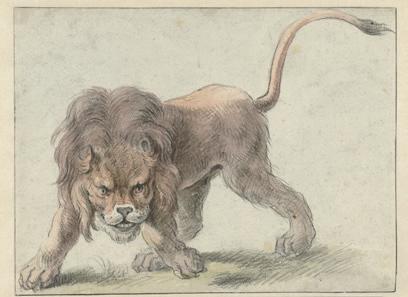
b Explain whether or not this is a true-to-life drawing.
7 Virus or bacterium?
Watch this video from Schooltv: What is the difference between a bacterium and a virus? Name three differences between a bacterium and a virus.
8 Bacteria around you
Bacteria are all around you. Here are a few moments in Naomi’s morning:
• Moment 1: Naomi drinks water from the tap.
• Moment 2: Naomi eats a bowl of yoghurt.
• Moment 3: Naomi eats a banana and throws the skin into the organic waste bin.
Describe what bacteria play a role in each moment.
TIP You may use the internet.
There is a main group of organisms that you can find in the air, in the water, in the soil and on other organisms. Some are multicellular and others are unicellular. Some form a fairy ring. Humans use some organisms from this main group to make food and medicines. Which organisms is the text about?
bacteria
animals
plants
fungi
Organisms can be classified (sorted into groups) by closely examining their characteristics.
a Are the butterflies in the drawing shown trueto-life or schematically?
◯ true-to-life
◯ schematically
b Into what groups can you sort the animals? Write down the common characteristics for each group. Compare and discuss your answers with a classmate.


Would you like to practise more with the contents of this section? Choose Revision or Plus online.
At the end of this section, you can
• explain that organisms are adapted to their habitat.
• specify various ways in which organisms live together.
• explain how various species live together and/or are dependent on one another.
1 A perfectly adapted dromedary
Plants and animals have adapted to their habitat. A good example is the dromedary (Camelus dromedarius). Humans use this one-humped camel to move across the desert. The dromedary is very well suited to this task. This is because it is well adapted to the extreme conditions in the desert, such as dryness, large changes in temperature, sand, dust and lack of food.
Work in pairs.
Which adaptations help the dromedary survive in the desert? Take 5 minutes to write down as many adaptations as possible. These may include external characteristics as well behavioural characteristics (what the dromedary does). Which pair will find the most adaptations?
TIP You may use the internet.
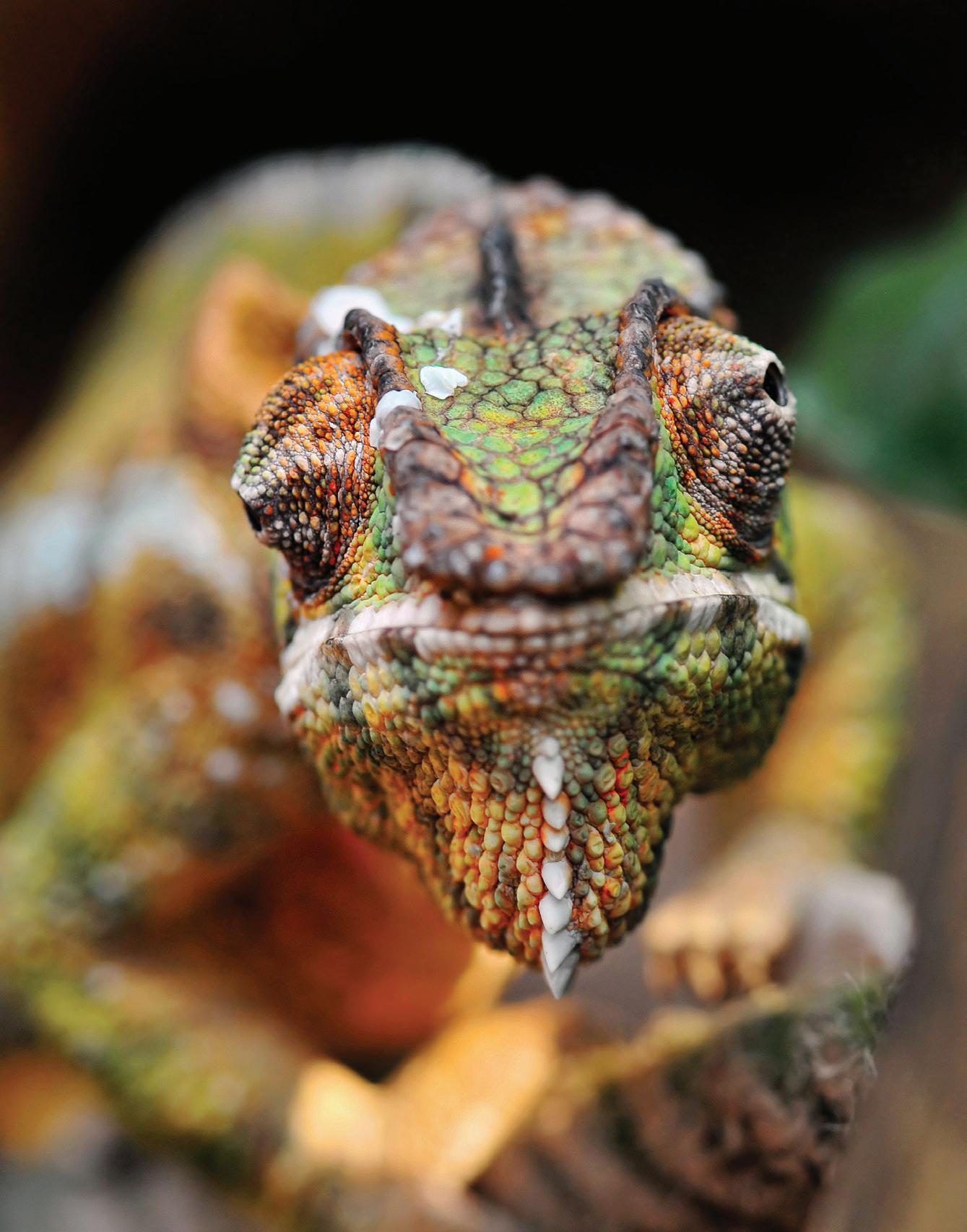
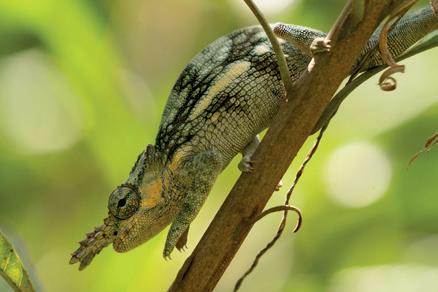
The chameleon is good at camouflaging itself: its skin can quickly change colour to match its surroundings (Figure 1). This helps the animal avoid being noticed by predators. Its feet have exactly the right shape to hold on to branches. Its eyes can look in all directions independently. This allows it to see prey and predators (snakes, birds of prey) approaching from any direction. It can roll out its tongue to catch grasshoppers, stick insects and other insects. In the event of danger, it falls down and pretends to be dead. The chameleon has characteristics and behaviour that are well adapted to its habitat. The same applies to almost all organisms in nature.
There are many different landscapes on our planet, from humid jungles and hot deserts to deep oceans and high mountains. You can find organisms almost everywhere, and they are different in all these places. Organisms are adapted to the environment where they live. A species of hare that lives in very cold areas looks different from a species that lives in the desert (Figures 2 and 3).
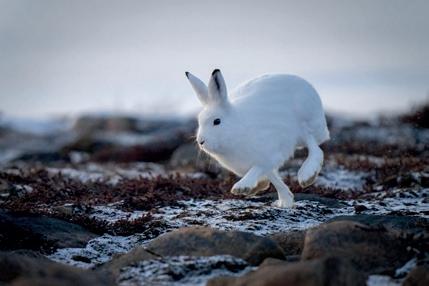
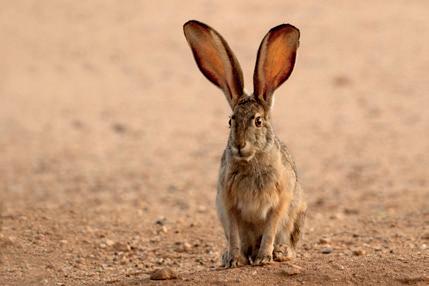
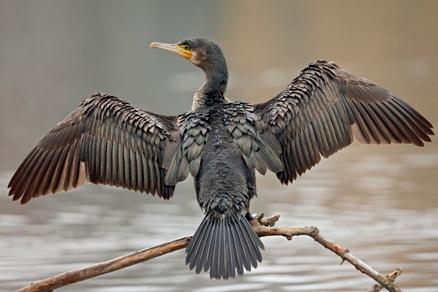
Water birds rub fat into their feathers. This causes the water to roll off the feathers when the birds have been underwater to look for fish. The cormorant (Figure 4) does not rub fat into its feathers. When it dives into the water, its feathers become wet. After fishing, the cormorant lets its feathers dry, because flying with wet feathers requires a lot of energy. You might think the cormorant is not well adapted to its habitat.
Watch the video about cormorants.
And yet, the lack of fat on its feathers gives it an advantage. Because the cormorant is heavy and does not have fatty feathers, it can dive much deeper than other water birds. This allows it to catch fish that other birds can’t reach. This means that it does not have much competition from other birds. This is the case everywhere in nature: every organism is adapted to the biotic and abiotic environmental factors in its habitat.
Different species sometimes spend their whole lives together, such as the lanternfish and a luminous bacterial species (Figure 5). The lanternfish and the luminous bacteria are adapted to each other, which makes this cooperation possible. Lanternfish live deep in the ocean or in dark caves that light cannot reach. The bacteria live in special organs under the eyes of the lanternfish. The fish uses the luminous bacteria to find other lanternfish in the dark. The bacteria also benefit from this cooperation, as they receive nutrients from the lanternfish.
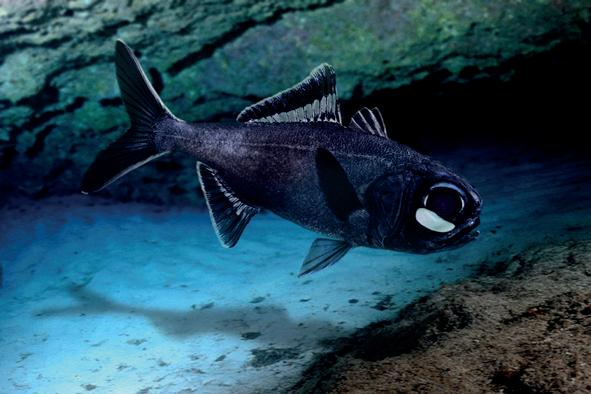
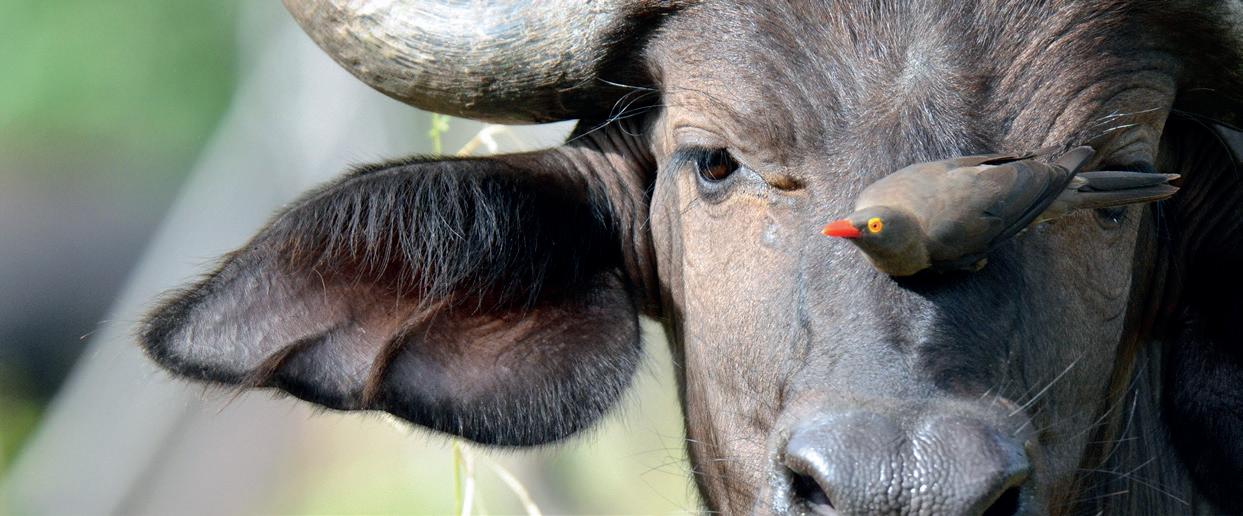
When two different species live together in some way for a longer period, this is known as symbiosis. Symbiosis exists if at least one of the two organisms benefits from the situation. Living together may also be harmful for one of the species.
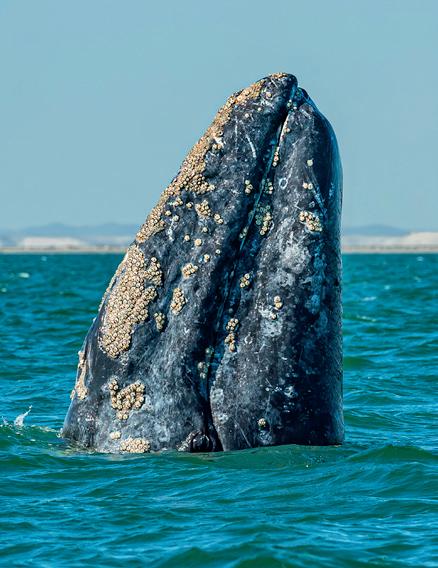
With some types of symbiosis, it isn’t totally clear whether both organisms benefit. The barnacles that live on the skin of whales are an example (Figure 6). The barnacles benefit, because they have a place to live and they travel along with the whale, which means that they constantly enter new waters and can spread over a larger area. However, this symbiosis may be harmful to the whale. Perhaps the barnacles make it more difficult for the whale to swim. Research will have to provide an answer.
A very common form of symbiosis is parasitism. In this case, only one of the species benefits. The other species suffers or may even die. A parasite is an organism that lives on or in another organism and usually also reproduces there. There are very many parasitic species. The organism that carries the parasite is called the host. You may also have been a host – of head lice, mosquitoes or the wart virus.
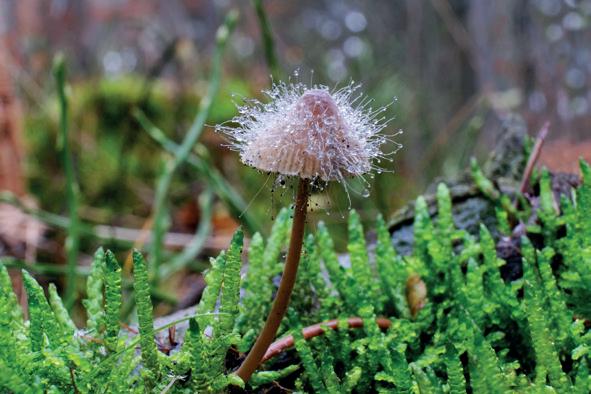
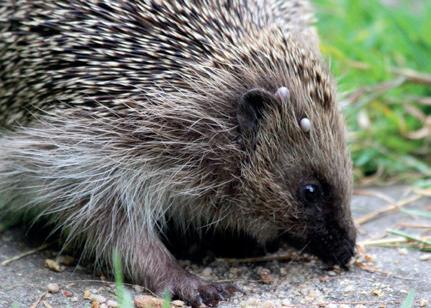
Fleas and ticks are also parasites. They feed on the blood of other organisms. Usually the host only feels an itch or does not even notice. Despite this, ticks can still make the host ill, because some are infected with a bacterium. It enters their body when they suck blood from infected rodents or hedgehogs (Figure 8). The tick can transmit the bacterium to the organism from which it sucks blood. The bacterium can cause Lyme disease in humans. This means that you don’t become ill from the tick itself, but from the bacterium that it transmits to your blood. The tick is a parasite that transmits a parasite.
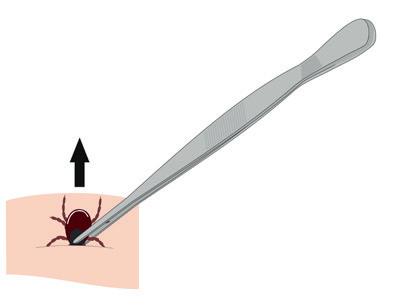
Ticks live in forests, dunes, parks and gardens, in tall grass or in dead leaves. After going for a walk, it is a good idea to check for ticks on your body and to remove them correctly (Figure 9).
Many parasites are pathogens, meaning that they make their host ill. Most parasites make sure their host doesn’t die, because then they wouldn’t have access to food and a place to live. However, parasites can still be deadly. For example, the toadfly lays eggs next to the nose of a toad. The larvae that emerge from the eggs first eat the toad’s nose, then its eyes and then its brain. The toad does not survive this. Once they have finished eating, the larvae stay on the ground for some time, pupate and re-emerge as flies.
Trees communicate with one another
When you take a walk in the forest, something remarkable is happening under your feet.
Trees and fungi work together under the ground. The tree roots and mycelium (fungal threads) exchange nutrients with each other and are dependent on one another. It was recently discovered that trees also use the fungi to communicate. If insects eat all the leaves on a tree in a forest, that tree will give a signal to the fungus under the ground. The chemical signals reach neighbouring trees through an extensive network of fungal threads. Once they receive this signal, the other trees change the composition of their leaves, for example to make them taste bitter. This causes the insects to leave them undisturbed.
2 Environmental factors
Some zoos have a large aquarium. Various environmental factors plays a role in aquariums.
Are the environmental factors in an aquarium abiotic or biotic?
1 The air is a/an abiotic | biotic environmental factor.
2 The salt water is a/an abiotic | biotic environmental factor.
3 The bacteria are abiotic | biotic environmental factors.
4 The sand is a/an abiotic | biotic environmental factor.
5 The light is a/an abiotic | biotic environmental factor.
6 The algae are abiotic | biotic environmental factors.
7 The fish feed is a/an abiotic | biotic environmental factor.
Read the list of organisms and their characteristics.
• Blue poison dart frog: Its habitat must be warm enough and its skin must remain sufficiently moist. It eats small insects.
• Great grey owl: Well adapted to the cold and needs trees to build nests in.
• The brown long-eared bat: Mostly lives in open deciduous and coniferous forests, where it can hunt between the trees. It cannot handle extreme cold or heat.
• European hare: Well adapted to wind and rain. Cannot handle extreme cold or heat.
Study the picture, circle the habitats of the animals in the picture and write the name of each animal next to them.


Leafcutter ants live in an underground “garden”, where they bring living leaves. They allow fungi to grow on these leaves. The fungi are food for the ants. Research has shown that the ants carry a bacterium that fights other, unwanted bacteria that attack the fungal garden.
Which types of symbiosis between the various organisms are described in the text? Choose the correct answers.
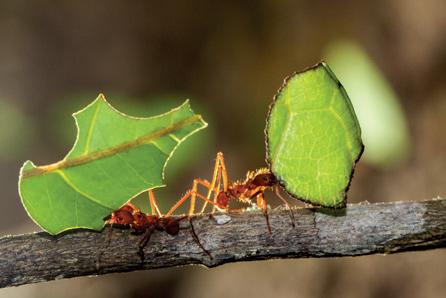
• Leaf + fungus: one benefits, the other does not suffer | parasitism | both organisms benefit
• Ant + fungus: one benefits, the other does not suffer | parasitism | both organisms benefit
• The ants have bacteria | leaves | fungi in them than ensure that thebacterium | leaves | fungal garden is/are not attacked by other bacteria.
In a ditch, the abiotic factors are very favourable for a frog species. Despite this, a study found few frogs of this species.
Name three biotic factors that may be the cause of the small number of frogs in this ditch.
Animals that live in the desert often have several distinctive characteristics. Complete the sentences.
• A desert animal produces a lot of | not much urine.
• A desert animal is active at night | during the day
• A desert animal gets moisture from drinking water | food.
• Many desert animals have large | small ears to help them get rid of a lot of heat.
Watch this video. Are the statements correct or incorrect?
1 The fungus in the video is a parasite.
2 The fungus makes mushrooms.
3 The behaviour of the ant is affected by the fungal infection, which causes the ant to spread the fungus better (by climbing upwards).
4 The ant is called a zombie ant because a stalk grows out of its head.
The malaria parasite is a unicellular organism that can cause malaria, a serious illness, in humans. The malaria mosquito is an intermediate host for the malaria parasite. This means that the mosquito is infected with the parasite, but does not become ill as a result. If an infected malaria mosquito stings a human, it will transmit the malaria parasite to that human. Humans are the hosts for the parasite. The malaria parasite is very species-specific: only humans become ill and only the malaria mosquito can transmit the parasite.
a Which organism causes the disease malaria?
◯ malaria parasite
◯ malaria mosquito
◯ humans
b Which two hosts does the malaria parasite have?
c Answer the two questions with “yes” or “no”.
• Can the malaria parasite spread in an area where no humans live?
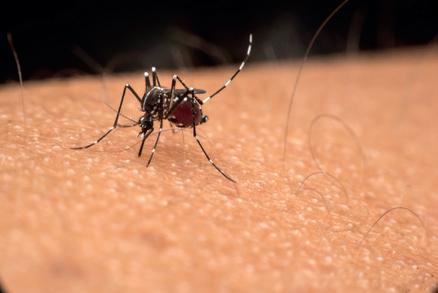
• Can the malaria parasite spread in an area where no malaria mosquitoes live?
In the table you can see six possibilities (a to f) for the effects that two species X and Y can have on one another. A species can benefit (+), suffer (-), or neither benefit nor suffer (0) due to the effects.
For each relationship, state which row in the table (a to f) applies.
benefits and the other does not suffer
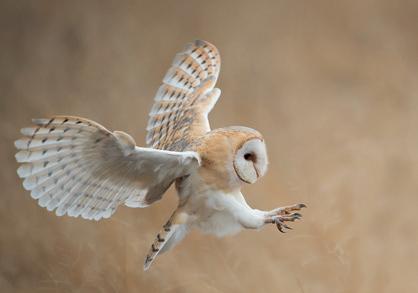
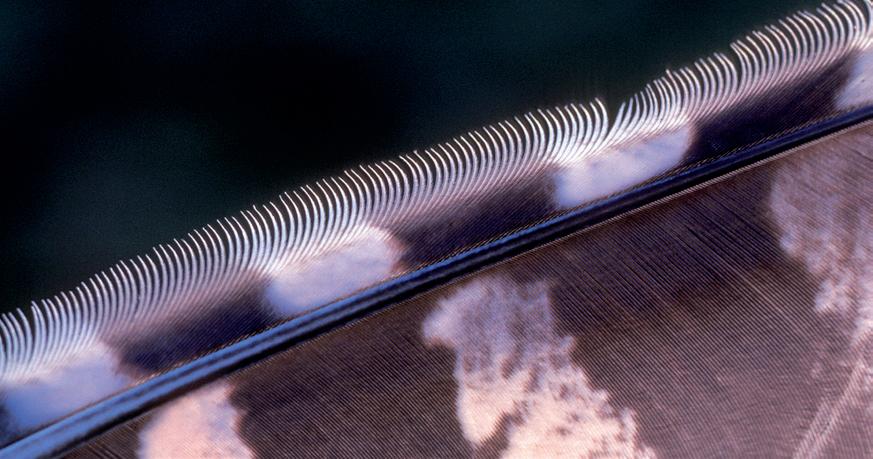
Mice are the main source of food for the barn owl. The barn owl makes almost no noise as it moves, so mice cannot hear it approach. The barn owl can fly without making much noise thanks to its specially adapted feathers. The front wing feather has a row of small hooks that muffle the sound.
People who live near wind turbines sometimes complain about the noise they make.
What shape could the turbine blades have to minimize the noise? Draw the shape that you think the blades should have.
Would
At the end of this section, you can
• explain that you can examine nature at various levels.
• explain how these levels are related to one another.
• explain what an ecosystem is and giving examples.
• explain what a nutrient cycle is and giving examples.
This section has the following practical assignments:
• The microscope (1)
• The microscope (2)
Discuss with your teacher which practical you will be doing.
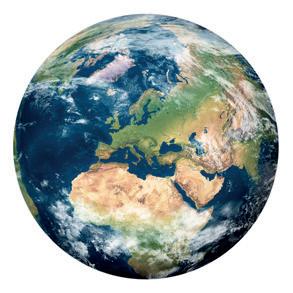
Our planet is only a tiny piece of the universe. In biology, you study the organisms on Earth. This involves zooming in on smaller and smaller parts.
Materials needed for this assignment:
• internet connection
• telephone
• app for making a photo collage
Instructions:
1 Search for a photo of Earth seen from space.
2 Search for other photos that zoom in further and further.
3 Make a photo collage. Start with the photo of Earth.
4 Your photos should include a photo of an organism and a photo of a cell.
5 Use at least eight photos.
Make the photo collage.
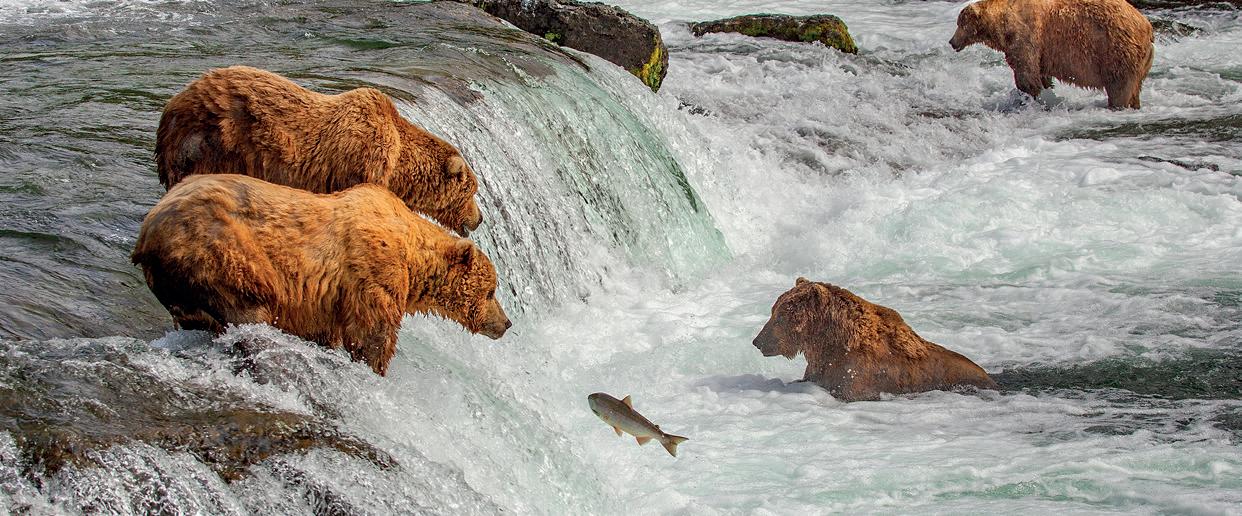
Imagine you are watching a nature video about the brown bear. The video starts with the habitat of brown bears: a large forest in North America. Many species live in the forest and affect one another. All these organisms and the abiotic factors collectively form the ecosystem.
Examples of other ecosystems include a desert, a pasture and a sea. All ecosystems together form the biosphere. The biosphere is the habitat of all organisms on Earth (Figure 1).
The video now zooms in on the bears and the other species that live in the forest. You see their ecological community. An ecological community is made up of all the organisms that live together in an area.
The video then follows a male bear and a mother bear with three cubs. This bear family is part of a larger group of bears living in the area. A group of organisms of the same species that live in a particular area is called a population
Zooming out, you encounter five levels: organism, population, ecological community, ecosystem and biosphere. These levels are closely interdependent (Figure 2). For example, if the abiotic factors change permanently, the entire ecosystem will change and species will disappear from the ecological community. This may mean that the bears’ food sources disappear, which will cause the bear population to become smaller and smaller. Eventually, there will be no more bears in the area.


















The climate and soil determine what kind of ecosystem can exist in an area. Tropical rainforests are found in areas where it is always very warm and it rains a lot. This ecosystem is characterized by thick vegetation, tall trees and very many organisms. In other places on Earth, with different climates and different soils, other ecosystems can be found, such as deserts, coniferous forests, steppes and savannahs.

There are several different ecosystems in the Netherlands. Most of these are strongly affected by humans. Pastures with cows and sheep are one example. These are humid areas, where a lot of fertilizer ends op on the ground and the grass is mowed. Pastures are a suitable habitat for waders, such as the peewit and black-tailed godwit.
Other ecosystems, such as dunes, are less affected by humans so the natural environment can develop undisturbed. Important abiotic environmental factors in the dunes include the soil, the salt and the dry environment. The soil consists mostly of sand that is salty due to the presence of the sea. Rainwater quickly seeps down into the subsoil, which means that the top layer is often very dry. Few species live there (Figure 3). The further you move from the coast, the more bushes and trees you will see (Figure 4).
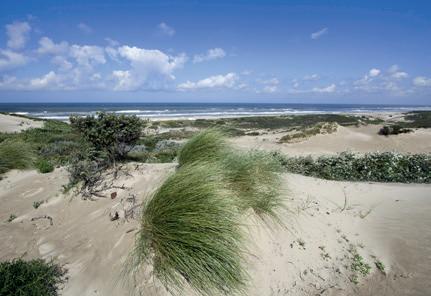
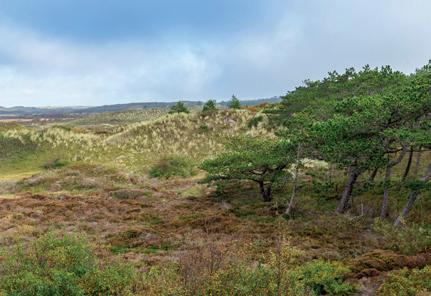
3 Ecosystem in the dunes close to the sea Figure 4 Ecosystem in the dunes further from the sea Seas and rivers are also ecosystems. The Wadden Sea is an important area for young sea fish to grow. This is due to the movement of the tides and large volumes of nutrient-rich seawater. Ecosystems are not always large. Examples of small ecosystems include ditches and small swamps. The aquatic animals and plants and the soil, water and air collectively form an ecosystem there (Figure 5).
The organisms in an ecosystem are dependent on one another. The organisms in the system eat or are eaten by other organisms. Herbivores eat plants and absorb nutrients from those plants. The herbivores are eaten by carnivores, which causes nutrients to be passed on again. The same happens when carnivores eat other carnivores.
Plants, herbivores and carnivores eventually die and become dead remains. These dead remains serve as food for the bacteria and fungi in the soil. These fungi produce substances that plants use as nutrients. In this way, nutrients are continually passed on. This is known as a nutrient cycle (see Figure 6).


dead remains dead remains dead remains

Sometimes the balance of an ecosystem can be disrupted, for example if humans use pesticides to protect crops against disease. Many of these pesticides are harmful to insects. They can kill them. Insects are food for birds and small animals, such as mice and hedgehogs. If these animals cannot find enough insects, there will be fewer of them. This means that birds of prey that eat these animals will not have enough to eat. Their numbers will also decrease. This shows how the use of pesticides disrupts the nutrient cycle. This affects the entire ecosystem negatively.
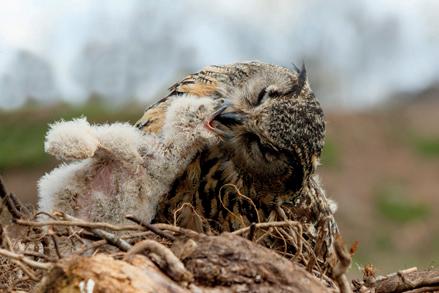
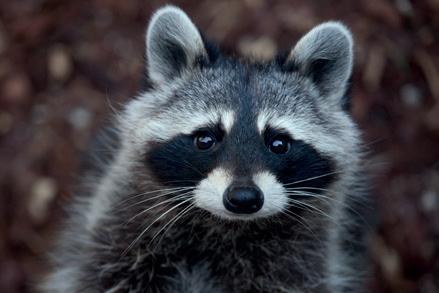
Raccoons were brought from North America to Germany. There are already around 1.5 million of them in Germany, and they are increasingly seen in the east of the Netherlands. As raccoons are not native to these countries, they have no natural enemies there. If their numbers greatly increase, they will compete with the polecat and marten, which are native species. The raccoon can drive them out by taking over their place in the ecosystem.
Organisms that have moved here from a distant country and have found a place in the natural environment are called exotics. There are also plants that have come from very far away and live successfully here. One example is Japanese knotweed. It grows quickly and drives out other plant species. The Japanese knotweed psyllid is now being used to fight Japanese knotweed. One exotic is being fought using another exotic!
2 Levels in biology
Arrange the levels in biology in the correct order, from small to large. ecosystem ecological community organism population biosphere
3 Part of the biosphere?
Is a city part of the biosphere? Choose all correct answers.
☐ Yes, because the city is the habitat of humans.
☐ Yes, because there are living organisms in the city.
☐ No, because there are only abiotic environmental factors in the city.
☐ No, because the city is not a natural environment.
4 Biodegradable?
Fungi are very important for breaking down all the dead material on Earth. Without fungi, we would be living on top of a thick layer of poo, bones, branches, hair and skin.
Fungi ensure that this natural waste disappears almost completely. Everything is reused. Substances that are made in living natural environments are biodegradable. However, humans make substances that do not break down at all, or only very slowly.
Which substances are biodegradable and which are either not or only poorly biodegradable?
not or poorly biodegradable
Scientists have the following questions and carry out research to answer those questions.
For each research question, choose the levels at which the research takes place.
Why is the number of wolves in the Netherlands increasing?
What is the best water temperature when keeping goldfish in an aquarium?
Why does the number of wild bees in the Netherlands keep falling?
What are the effects of a major volcanic eruption into the atmosphere on plant growth across the globe?
Why do trees die if you prune them too much?
6
Companies that make products are called producers. People who buy and use those products are called consumers. The terms “producer” and “consumer” are also used in biology.
a Why are the plants in the nutrient cycle sometimes called producers?
b Why are herbivores and carnivores sometimes called consumers?
In the ecosystem of the sea, various organisms are dependent on one another. Which positions in the nutrient cycle do the following organisms have?
Which factors in an ecosystem are biotic and which are abiotic?
bushes
heat from the sun
members of the same species
predators
Are the large, hard rocks from which mountains are formed part of the biosphere? Choose all correct answers.
☐ Yes, because organisms live on the rocks.
☐ No, because there are no organisms in the rocks.
☐ Yes, because the rocks are part of the surface of the Earth.
☐ No, because the rocks are only an abiotic environmental factor.
This diagram shows a nutrient cycle in an ecosystem. This nutrient cycle consists of four interdependent populations. What will happen if a disease kills many organisms in population 2? Choose all correct answers.
☐ The number of organisms in population 1 will decrease.
☐ The number of organisms in population 1 will increase.
☐ The number of organisms in population 3 will decrease.
☐ The number of organisms in population 3 will increase.
At the end of this section, you can
• explain that you can carry out biological research in various ways.
• explain which steps are followed in a biological study.
• explain which charts you use to clearly show the results of a study.
This section has the following practical assignments:
• Table and bar chart
• Table and line graph
• Seeds
• Tadpoles
Discuss with your teacher which practical you will be doing.
Your classmates’ shoe sizes are not all the same. Which shoe sizes does your class have? What is the largest and the smallest size? You will investigate this.
Materials needed for this assignment:
• sheet of A3 paper
• marker
Instructions:
1 Work in groups of four.
2 Discuss how to carry out your research.
3 Carry out the research.
4 Present your results clearly.
5 Compare the presentation of your results with the other groups. Which results are easiest to understand?
Give two arguments.
Biological research in the Netherlands
Wolves are in the news almost every day. Wolves disappeared from the Netherlands, but have returned after 150 years (Figure 1). Wageningen University carries out a lot of research into wolves. They closely monitor the wolf population. They study where they now live, whether their numbers are growing and which prey they eat. Sometimes wolves kill sheep. When this happens, the farmers receive compensation.
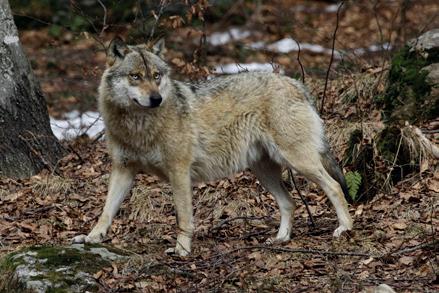
There are one or more packs (families of wolves) in the Veluwe area. Research in Germany has shown that families of wolves mostly eat wild animals in their own territories, and that they do not often kill sheep. That is good news for farmers. Biologists are studying how the ecosystem in the Netherlands may change if several wolf packs live there. These studies are important to protect wolves. Research is also being carried out into ways of minimizing disruptions to humans from wolves, as some people are unhappy that wolves have returned to the Netherlands.
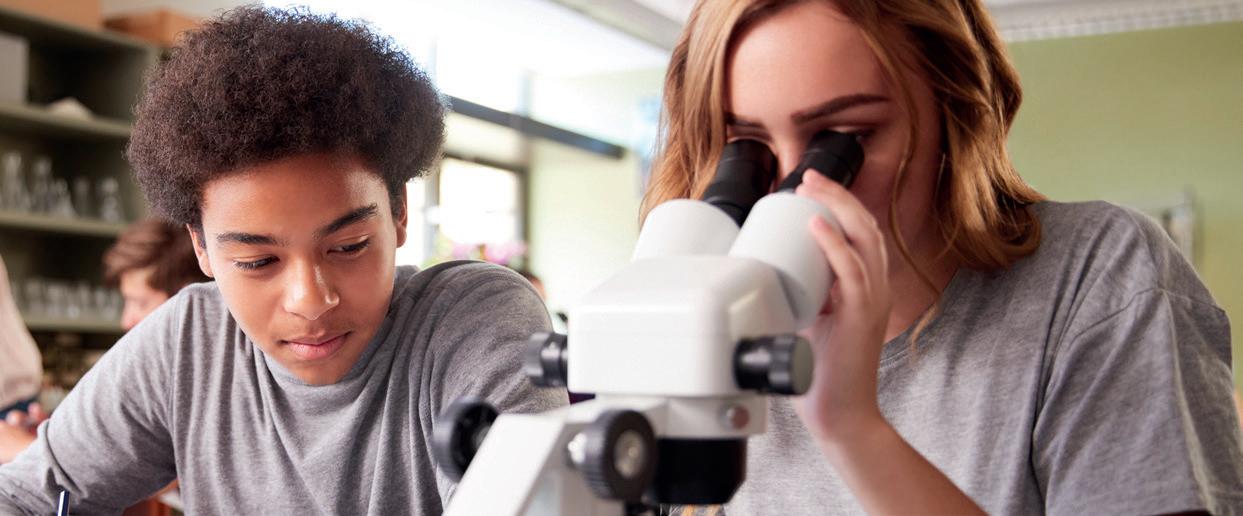
At the start of this section, you studied the shoe sizes of your classmates. There are many different ways of doing research. If you use a magnifying glass to look at a leaf of a plant and make a drawing, you are also doing research. You make an observation and you record it in a drawing. This often happens during practical activities and when you carry out your own research. You can think up your own questions and answer them yourself by doing research. This is a fun and exciting part of biology.
When carrying out biological research, you always follow the same steps. Each step begins with a question that you ask yourself. The steps are listed below. An example of a study is also given: how cut flowers (for example tulips in a vase) absorb water.
Step 1. Which question do I have about a particular topic?
Write a question that is as precise as possible and can be answered by your research. This is your research question.
Example: Cut flowers in a vase need extra water now and then. You ask yourself how the cut flowers can absorb water, even though they don’t have roots. You formulate the following research question: How do cut flowers absorb water when they are in a vase?
Step 2. What do I need to know about this topic before I can start the research?
Seek out data about this topic, for example in the library, on the internet or in biology books. This is called source research.
Example: What is already known about how plants absorb water? For example, you read that water evaporates through the leaves and that this affects how the plant absorbs water.
Step 3. What do I think the answer to my research question will be?
This is called the hypothesis
Example of a hypothesis: The presence of leaves causes the cut flower to absorb water from the vase.
Step 4. How will I carry out the study?
Think about how you want to carry out the study and what materials you need. This is called the method and materials.
Example: I will take two glasses or test tubes containing equal volumes of water. I will take two cut flowers of the same species and size. I will remove the leaves from one of the stalks. I will put each stalk in the glass or test tube with water (Figure 2). After a day has passed, I will check which cut flower has absorbed the most water.
Step 5. Execution
You will now carry out the study by following the method you described and using the materials you need.
Step 6. What will I observe and measure while carrying out the study and afterwards?
This is called the results
It is important that you write down your results and organize them neatly (for example in a table and a chart). This allows you to present large numbers of results clearly. It also allows you to come to better conclusions.
Example: You write down by how many centimetres the water has dropped for both cut flowers (see Figure 2).
- Cut flower with leaves: 1.5 cm
- Cut flower without leaves: 0.5 cm
Step 7. Which conclusion (or conclusions) can I draw from my study?
You note which conclusion or conclusions you can draw from this experiment.
Example: A cut flower with leaves absorbs more water than a cut flower without leaves.
Step 8. After you have completed it, you formulate questions about your study.
Did it go according to plan? Did the results agree with my expectations? Did anything go wrong? Do I want to do more research? This is called the discussion
Example: The cut flower without leaves also absorbed water. Why might that be? This is a good subject for a follow-up study.
water level at the start
Put the steps followed during scientific research in the correct order carrying out research results hypothesis discussion conclusion research question method and materials
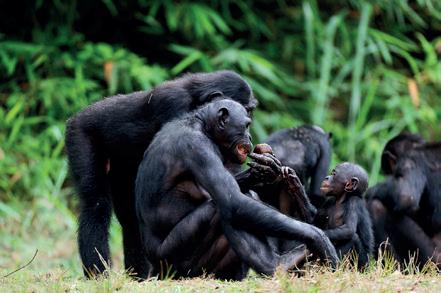
3 Enclosure for bonobos
You will be taking part in a competition organized by a zoo. Your task is to design an enclosure for the bonobos.
Prepare a brief work plan that explains all the things you will do to create and present a winning design.
Use the skills card that explains how to make a work plan. The work plan should be around 100 words long.
Following a study, you have reached the conclusion that a cut flower (a tulip) with leaves absorbs more water than a cut flower without leaves. During the discussion at the end of your study, you get an idea for a follow-up study. During the study, you observed that even the flower without leaves absorbed some water. You ask yourself why that happens.
a What will your research question be?
b You notice that the various parts of a tulip flower have many similarities with the normal leaves. What will your hypothesis be?
c Which experiment will you carry out?
During a study into the effectiveness of a painkiller, several people with a headache are given a painkiller. The amount of time after which the painkiller starts working is recorded. It turns out that half the people no longer have a headache after half an hour. The conclusion of the study is that the medicine works well. What is wrong with this study and the conclusion?
A researcher counts the numbers of breeding birds of various species in an area. He counts 15 coal tits (a), 10 treecreepers (b), 4 great spotted woodpeckers (c) and 2 sparrowhawks (d) in the area.
treecreepers great
woodpeckers sparrowhawks =
coal tits treecreepers great spotted woodpeckers sparrowhawks =
Four charts for the bird count
What is the best way to show these numbers in a chart?
◯ chart 1
◯ chart 2
◯ chart 3
◯ chart 4
= coal tits treecreepers great spotted woodpeckers sparrowhawks =
= coal tits treecreepers great spotted woodpeckers sparrowhawks =
Karel wants to study whether woodlice prefer to be in the light or the dark. The experimental environment has an dark part (area A) and an illuminated part (area B). He lets the woodlice crawl around the space and records where the woodlice are every five minutes (Table 1).
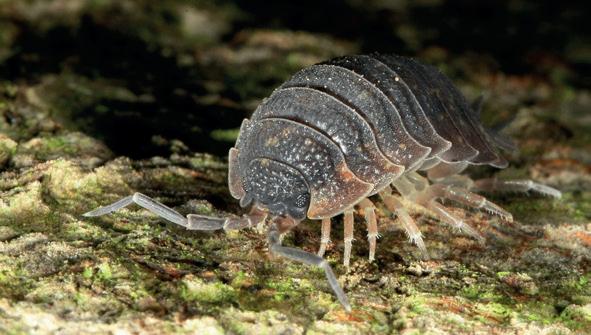
Table 1
Halfway through the experiment, he turns off the light in area B and records where the woodlice are in the same way. When he looks at the results, something catches his attention (see Table 2).
Table 2
Karel’s classmate Eline has a few ideas as to why this may be.
Which causes are probable?
☐ Many woodlice now went to inspect area B.
☐ Area B was attractive because of the heat of the lighting that had been turned on there.
☐ The woodlice are looking for food.
☐ The woodlice wanted to spread out across both areas.
You can also carry out research without an experiment. For example, you can count birds in an area, or you can compare several studies by other people. This type of research is called descriptive research. Companies that build new equipment employ designers. They do design research.
For each research question, state which type of research is required.
pothesis
How much water does my hamster drink each day?
How should I rearrange my room?
Why have my beautiful plants died?
What fun things will I do during my holiday?
Why did my friend Sonja get a better mark for her test paper?
Which plants shall I plant in the garden and where?
Karel has studied whether woodlice prefer to be in the dark part of the test environment (area A) or the illuminated part (area B). The result of the study shows that the woodlice are in the dark part of the test environment (area A) more often. Karel comes to the conclusion that the woodlice have a preference for the dark area A. His classmate Eline says that he should also do the experiment with the light turned off in both area A and area B. Karel says that isn’t necessary.
Who is right and why?
◯ Karel is right, because the woodlice would be unable to choose.
◯ Karel is right, because the same number of woodlice will move to both areas.
◯ Eline is right, because you must test whether the woodlice have a preference for area A for another reason.
◯ Eline is right, because you must always repeat an experiment several times.
The torch is broken
Look at the picture. Place Tim’s thoughts in the correct order.
If I put in a new bulb, the light will shine.
If I put in a new battery, the light will shine.
The torch still isn’t working.
Hey, the torch is broken!
Because the battery is dead.
That is because the bulb is broken.
Why isn’t the torch working?
I put a new bulb in the torch.
I put a new battery in the torch.
Yes! The torch is working!
At the end of this section, you can
• give several important breakthroughs in scientific research and stating why they are, or were, so important.
• state what people’s opinion of scientific research was throughout history.
• explain why a revival in scientific research could occur in certain periods.
Since around the year 1500, many biological discoveries have been made. Each new discovery led to new insights, which in turn led to more new discoveries and inventions. In this assignment, you will analyse the history of biological discoveries.
Materials needed for this assignment:
• cut-out sheet with biological discoveries
• scissors
Instructions:
1 Work in pairs.
2 Cut out the 15 cards.
3 Discuss how they should be ordered logically.
4 Place the cards in that order.
5 Compare your solution with that of another pair.
6 Try to find the correct solution by working with the other pair.
7 Check your answer.
In which order did the discoveries, breakthroughs and inventions since 1500 occur?
Discovery of human egg cell
Invention of CRISPR-Cas (cutting and pasting of DNA)
Discovery of hormones
Discovery of living cells
First correct description of the structure of the human body
Publication of theory of evolution First heart transplant
Discovery of blood circulation
Invention of microscope
Discovery of inheritance of characteristics
Discovery of pathogenic bacteria
Discoveries, breakthroughs and inventions. See also the cut-out sheet.
TIP You may use the internet.
Invention of birth control pill
Discovery of how antibiotics work
Invention of ECG (electrocardiogram, graph of heartbeat)
Discovery of structure of DNA
People have studied the natural environment around them for thousands of years. Hunters studied the behaviour of prey to discover the best way to approach them without being noticed. To harvest as many plants as possible, farmers knew exactly when to sow seeds and in which type of soil. In prehistoric times, people used medicinal plants. Back then, their knowledge of nature was mostly practical knowledge that they needed to survive. There was often a village chief or medicine man with a lot of important knowledge, for which people respected him.
Through the centuries, scientists have discovered more and more knowledge. This allowed biology to develop as a science. We know more and more about the structure and functioning of the human body. We have invented many medicines and know much more about healthy eating. In the past, many babies died of disease in their first year. Today, thanks to the invention of vaccines, childhood diseases need not be fatal. In this section, you will read about the development of biology, including several examples of important breakthroughs.
Aristotle was one of the first biologists. He studied and described all the plants and animals that he encountered. Aristotle lived in Greece in the fourth century BC. We call this period classical antiquity. Aristotle is considered to be the founder of the natural sciences.
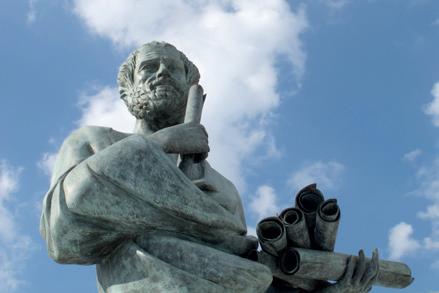
Aristotle (Figure 1) was a philosopher who didn’t just think about nature, but also made many observations during his travels. Aristotle saw the connection between the shape and function of organs. He wrote many books. After his death, his books were used at universities until the 18th century. Because people believed that his writings were the only truth, they didn’t carry out much research of their own. For a long period, biology developed slowly.
Knowledge of the human body was primary developed by a Roman, Claudius Galenus (Galen) (Figure 2). He lived in the second century AD. Galen studied the circulation of the blood and did many experiments on animals. He carried out research by dissecting dead human bodies. He described the organs in the human body, but he didn’t know how they worked. For example, he didn’t understand how blood flows through the body. Despite this, his books continued to play an important role in science for almost fifteen centuries.
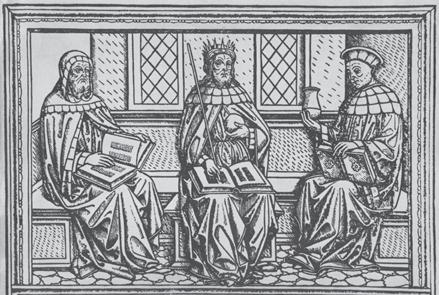
After Galen, research into the human body stood still for a long time. This was mainly because it was forbidden to dissect dead bodies for almost two centuries.
In the Middle Ages, people began to appreciate the importance of knowledge and science more and more. Major cities founded their own universities. These centres of knowledge created prosperity and progress.
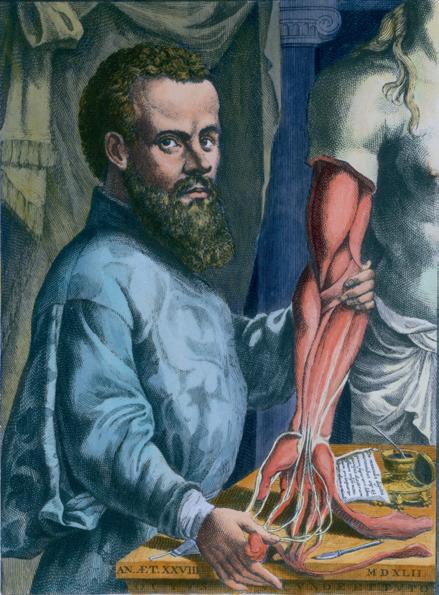
Research into the structure and functioning of the human body took off again in the 16th century. Major figures in that time included Andreas Vesalius (Figure 3). He was familiar with Galen’s books and also studied dead human bodies himself (which was by then permitted). He discovered that Galen had described many organs incorrectly.
Vesalius wrote the first complete books about the structure and functioning of the human body. Many scientists read his books. Thanks to the invention of the printing press, large numbers of his books could be printed and distributed. The invention of the printing press was an important reason for the revival in the sciences in the 16th and 17th centuries.
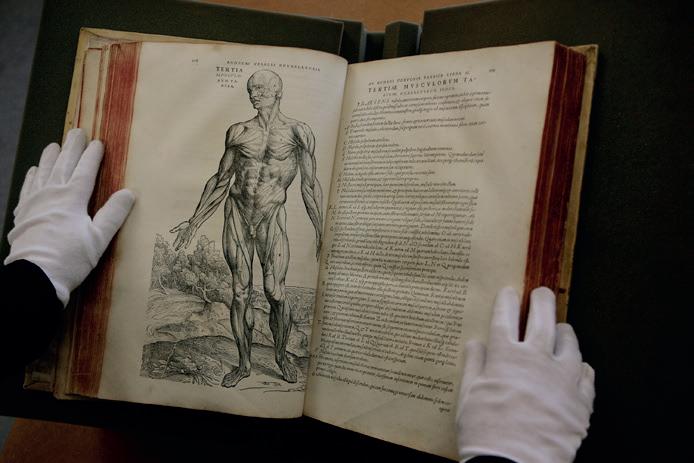
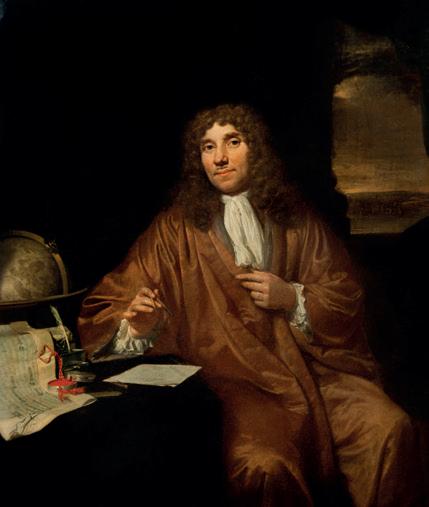
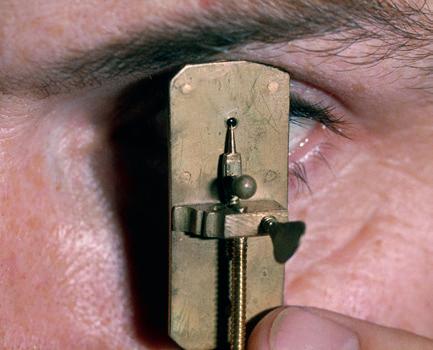
From the 17th century, major progress was made in scientific research. This is called the scientific revolution. People studied nature by doing their own experiments and making their own observations. Old books such as those by Aristotle and Galen were no longer used. Antoni van Leeuwenhoek (Figure 5) made the first observations with a microscope that he built himself around 1670. From that moment, things that had previously remained hidden could be seen. Old theories about the structure and functioning of organs and organisms were shown to be incorrect. Van Leeuwenhoek discovered and drew many small organisms, including unicellular organisms and bacteria. He also studied the structure of muscle fibres and insect eyes. He kept the design of his microscope a secret until his death. Several of his microscopes have been preserved (Figure 6).
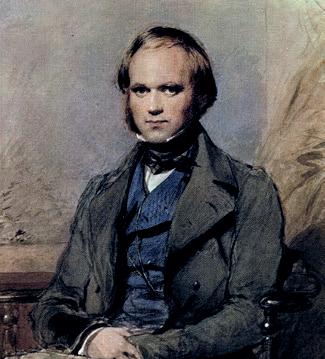
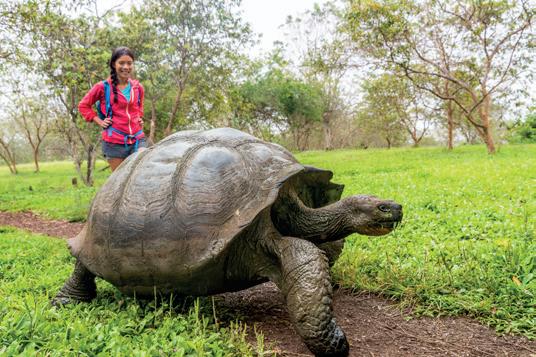
The book that Charles Darwin wrote in 1859 proved to be a milestone in biology. It described the theory of evolution. He showed how new species emerge from existing species. His theory explained many biological phenomena that people did not previously understand. Darwin studied many species, including various giant tortoise species on the Galápagos islands (Figure 8).
People discovered more and more about the human body, but it took quite a while before this also led to improvements in medical science. At the end of the 19th century, more and more pathogenic bacteria were discovered. The fight against disease accelerated when Alexander Fleming discovered how penicillin, an antibiotic, works in 1928. This substance fights pathogenic bacteria. In the 20th and 21st centuries, the fight against many diseases was won in Europe and North America. This led people to appreciate scientific research more.
Since 1900, a lot of research into how characteristics are inherited has been carried out. This has steadily increased our knowledge of genetics and DNA. This knowledge is also used in agriculture and healthcare, which has led to an increase in prosperity and improved health in many parts of the world.
In the future, new biological knowledge will continue to be necessary for food production, to protect essential biodiversity and to limit global heating.
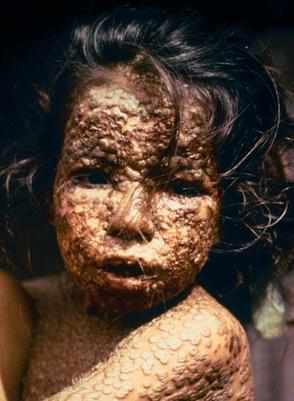
Smallpox eradicated
Smallpox is a serious illness caused by the smallpox virus. Before vaccination campaigns started, epidemics with huge numbers of victims regularly occurred across the globe. Up until the 18th century, one in ten children died of smallpox. The WHO (World Health Organization) began vaccinating people across the globe in 1967. The goal was to eradicate the disease. The last natural smallpox infection occurred in Africa in 1977. Since then, the virus has not returned. Smallpox was the first virus to be eradicated by modern science.
2 Study of nature
Give three reasons why it was useful for humans to study nature in ancient times.
3 Scientific progress
What contributed to the scientific progress that was made in the 16th and 17th centuries?
More than one answer may be correct.
☐ Scientists no longer made their own observations.
☐ Scientists had the courage to doubt the observations and ideas presented in books from classical antiquity.
☐ Large cities founded their own universities.
☐ The printing press
☐ Scientists began to do their own experiments again.
☐ The discovery and development of aids to scientific research
Antoni van Leeuwenhoek kept the way he made lenses secret. Even today, the results of research are also not always immediately shared with other scientists.
Why would scientists want to keep their results secret?
More than one answer may be correct.
☐ Some results of research can be used to earn money.
☐ To encourage other scientists to carry outresearch.
☐ This research isn’t complete yet, which means that the conclusions are uncertain.
☐ There is competition between scientists belonging to different research institutions.
Which scientist made which statement?
Motion is a function that is carried out in numerous ways, including flying, swimming, walking and crawling.
I discovered living things in ordinary rainwater. I made various observations about their colour, shape and the parts that made up their bodies.
Like Aristotle, I see that the human heart is made up of two chambers.
I discovered that Galen had incorrectly described many organs.
We can explain these factors if we assume that species slowly change; I kept thinking about this.
• • Antoni van Leeuwenhoek
• • Aristotle
• • Darwin
• • Galen
• • Vesalius
Darwin’s evolutionary theory claimed that humans do not occupy an exceptional position compared to animals. He also claimed that apes and humans have the same remote ancestors.
TIP You may use the internet.
From which group of people in particular did Darwin expect major criticism of his theory?
◯ the king and the government
◯ the leaders of the church
◯ most scientists
People believe that science is important, because many devices and technologies that you use every day are only possible thanks to scientific research. Give two examples of devices or technologies that were only possible after a lot of scientific research had been carried out.
At the end of this section, you can
• specify which organism is largest, which is the oldest, which is the most venomous and which is the fastest in the world.
• explain what extremophiles are and giving a few examples.
• explain how the organism may benefit from extreme adaptations.
Animals sometimes have exceptional abilities or sizes.
a Estimate which number should be filled in for each animal.
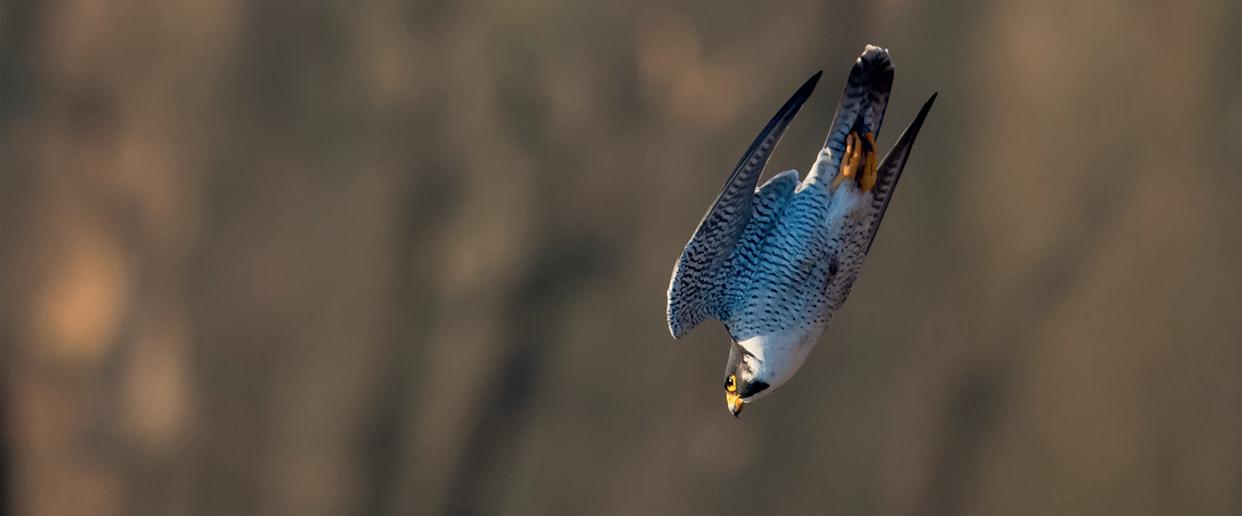
• The peregrine falcon, the fastest animal on Earth, can dive at a speed of km/h.
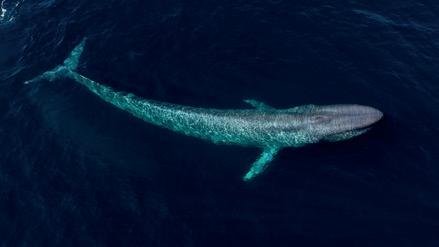
• The blue whale, the largest animal ever to have lived, has a mass of tonnes. (A tonne is 1000 kg.)
• With a mass of tonnes, the African elephant is the heaviest land animal.
• The millipede Illacme plenipes, the insect with the most legs, has legs.
• The spittlebug can jump the farthest in relative terms, times the length of its own body.
• The Onthophagus taurus, a beetle, can pull times its own weight.
• An electric eel can give off an electric shock of volts.
b Now add all the numbers together. Who has the most correct answers and who is the closest to the correct total?
c How far could someone who is 160 cm tall jump if they had the same power as the spittlebug?
◯ 160 metres ◯ 16 metres
1600 centimetres
1600 metres
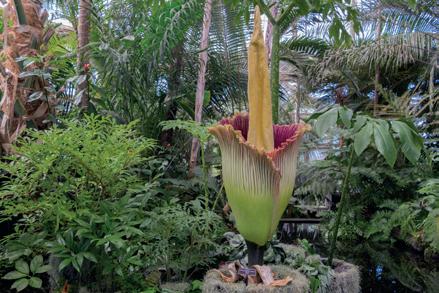
There are bacteria that are smaller than a thousandth of a millimetre. There are also fungi that cover an area of dozens of square kilometres. Some organisms are so extreme that they are included in the Guinness World Records. There are many record holders with extreme characteristics. The record for the strongest smell is held by the titan arum (Figure 1). The flower gives off a scent similar to the smell of rotting flesh. This attracts carrion flies and carrion beetles, which spread its pollen.
Some organisms live to be very old – more than 1000 years. There is also a record holder for the largest eyes: the eyes of the colossal squid can be up to 60 centimetres wide. This helps the squid find prey in the dark in the deep sea.
In this section, you will learn about extreme organisms.
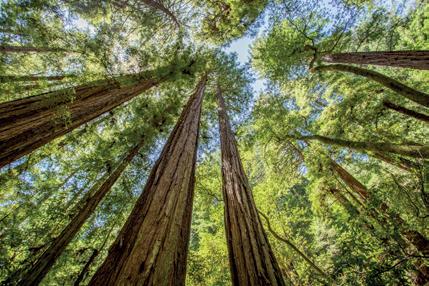
What is the largest organism? Your answer to this question could be: the blue whale (Figure 2). This animal is around 28 metres long and weighs around 140,000 kilogrammes. However, the largest giant sequoia, a coniferous tree species in North America, is even larger (Figure 3). This tree weighs 1,500,000 kg (1.5 million kg). The largest giant sequoias are 110 metres tall. If you only consider dimensions, the largest organism is probably a fungus.
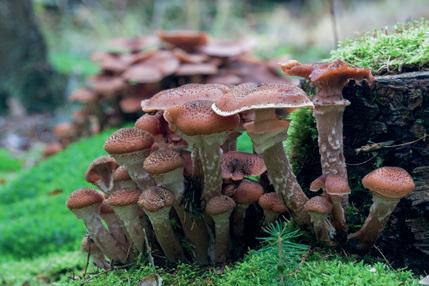
In America, a honey fungus (Figure 4) was discovered with underground mycelium (fungal threads) that cover an area of almost 9 square kilometres (km2).
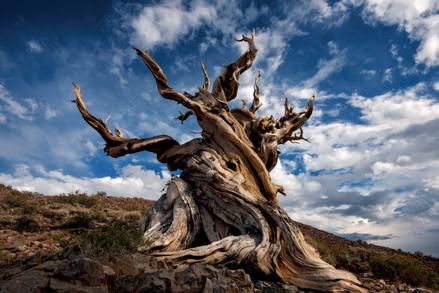
A bristlecone pine (a coniferous tree species) lives on the tree line in the Rocky Mountains in the United States (Figure 5). The oldest individual is around 4,500 years old. This tree was already 100 years old when the pharaohs ruled ancient Egypt!
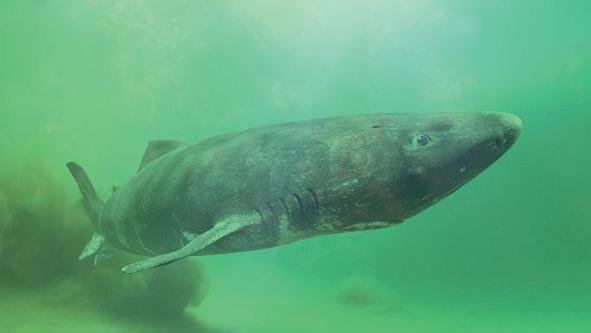
The oldest living fish ever found was a Greenland shark (Figure 6). It was a female. It is difficult to measure the age of this shark. Scientists think that this female was almost 400 years old. These sharks live in very cold water and the processes in their bodies are very slow. This means that their bodies last for a long time so these sharks can grow very old.
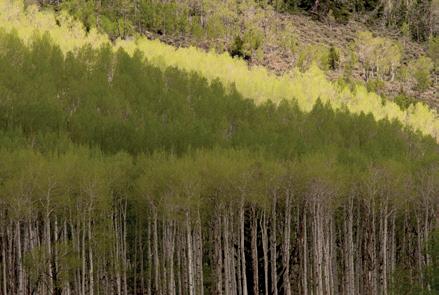
The American aspen has a network of roots. New trees keep growing from these roots. All the trees are clones of each other. They are connected through their roots. This means that they are actually one organism. This large group of trees weighs some 6 million kilogrammes. This old group of trees is estimated to be 80,000 years old. The group can live to be so old because an old part can die off without the whole group dying. New trees keep growing and the organism continues to survive.
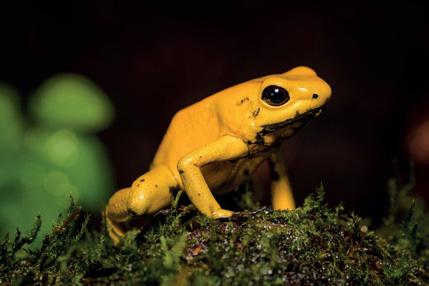
Many organisms are poisonous to stop them from being eaten. They use the poison to protect themselves. One example is the poison dart frog (Figure 7). There is a very strong poison in and on its skin. Its bright colours are intended to scare away predators, saying: “Watch out! I am poisonous!” The native population in South America would rub the heads of their darts over the skin of the poison dart frogs. If one of these poisoned darts struck an animal or another person, they would die very quickly. Poison dart frogs are so poisonous because they eat many poisonous ants and beetles.
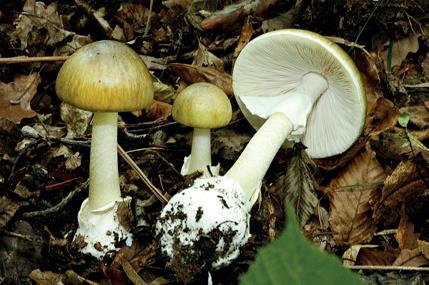
In the Netherlands, you can find one of the most poisonous mushrooms in the world: the death cap (Figure 8). It resembles an edible sort, the field mushroom. This makes it even more dangerous, because it’s easy to confuse them. Eating 30 grammes of death cap can be enough to kill you!
Some organisms use venom to kill their prey. The inland taipan, a species of snake, produces the strongest and deadliest venom of all snakes (Figure 9). The taipan is very shy and is more likely to slither away than bite.
Another poisonous snake is the black mamba (Figure 10). It is slightly less venomous than the inland taipan, but it kills more victims, as it is much faster and more aggressive. That is why more people are bitten by black mambas than by inland taipans. This means that the black mamba can be classed as the deadliest snake species.
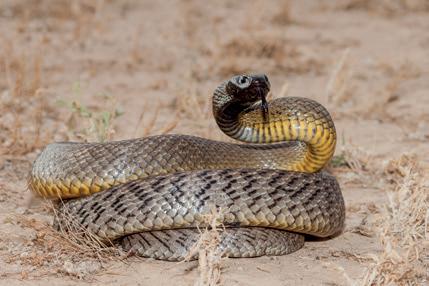
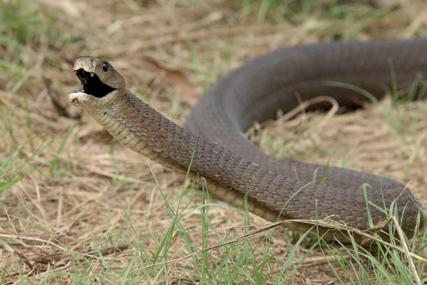
Some animals stand out due to their speed. They use that speed to catch prey. The fastest animal in the world can be found in the Netherlands, even in cities! It is the peregrine falcon (Figure 11). This can bird can fly at speeds of more than 350 kilometres per hour. The fastest animal in the water is the black marlin (Figure 12). It can reach a speed of 129 kilometres per hour. On land, the cheetah is the fastest, with a speed of 100 kilometres per hour (Figure 13).
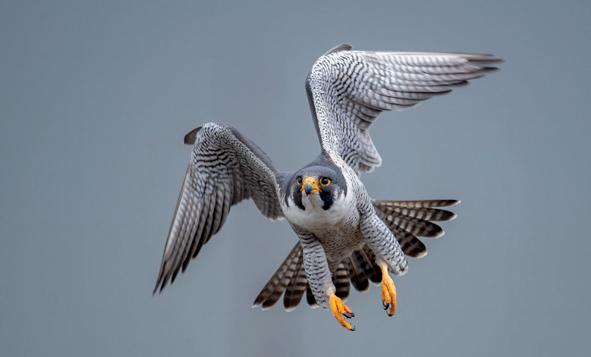
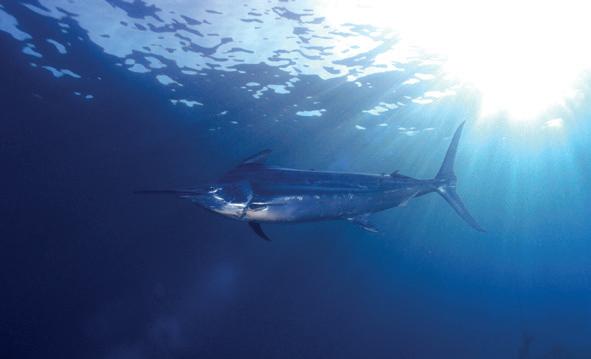
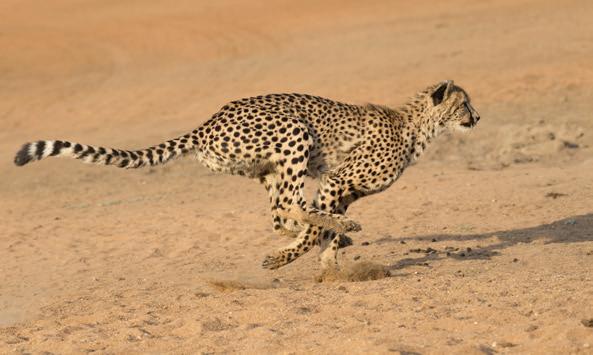
Life can be found everywhere on Earth, even in extreme conditions. Organisms that live in extreme conditions are called extremophiles. Often they are bacteria. They are adapted to a habitat in which almost all other organisms would die. Extremophiles can be found in hot geysers and hot mud pools, for example in Iceland and in Yellowstone National Park in the US (see Figure 14). Certain species of bacteria grow in an environment with a temperature of some 120 °C.
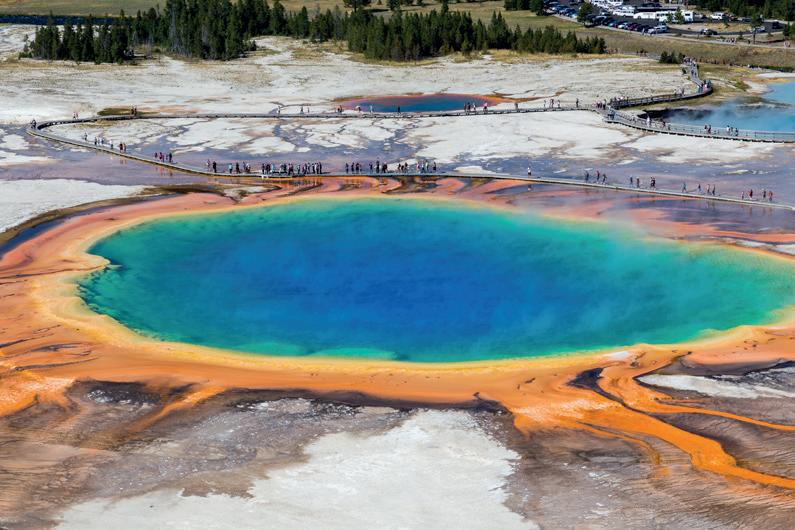
Figure 14 The orange border of this hot spring in Yellowstone Park is made up of extremophile bacteria. Some bacteria will also grow very well in very cold water, while other bacterial species are comfortable in dilute sulphuric acid (which is even more acidic than lemon juice) or water that is ten times saltier than seawater. These bacterial species may be survivors from a time in which the conditions everywhere on Earth were very extreme and life was just beginning to develop on Earth. In that time, the Earth resembled an uninhabitable planet.
The bacterial species Clostridium botulinum is also capable of something extreme. It produces the strongest poison in the world: botulinum (see Figure 15). It is so poisonous that 0.00000003 grammes per kilo of body weight is enough to kill a human. Botulinum affects the nervous system, which can kill you. But by strongly diluting it, you can use it to get rid of wrinkles. Botox is dilute botulinum!
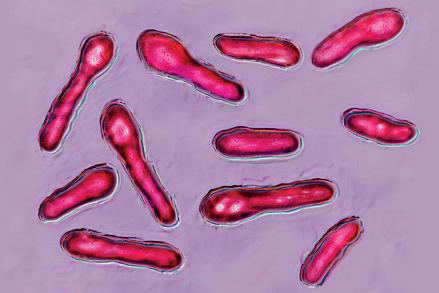
In the theory, you can read about organisms with extreme capabilities. Which organism do you think is most extreme? Put the organisms in the right order, with the organism that you think is most extreme at the top. Then compare your list with that of a classmate.
American aspen
black mamba
black marlin
blue whale
bristlecone pine
cheetah
Clostridium botulinum bacterial species
death cap
giant sequoia
Greenland shark
inland taipan
peregrine falcon
poison dart frog
Some animals hold records for speed, distance travelled, volume, mass etc. Which organism holds the record for which quantity?
TIP You may use the internet.
furthest distance travelled in a year
Arctic tern
greater slow loris
nano chameleon
ostrich
sloth
One interesting application of our knowledge of extremophiles is the development of detergents that work efficiently at low temperatures.
Can you think of another possible application of knowledge of extremophiles? Discuss your answers with a classmate.
TIP You may use the internet.
The tardigrade is not classed as an extremophile. Despite this, this small animal has some extreme capabilities.
Watch the video “How does the tardigrade move?” and look for more information about the tardigrade on the internet.
Make a comic strip in which the main character is a tardigrade. Your comic strip should show the extreme things that the tardigrade is capable of and the extreme habitats it can survive in.
6 Slide show
Make a presentation with five slides about records held by plants and animals. In the five slides, you should show the quantities and units associated with each record holder. Show the PowerPoint to your classmates.
Scientists study bacteria that are smaller than a thousandth of a millimetre. Read the four statements about three units: the nanometre (nm), micrometre (µ) and millimetre (mm).
Which statement is correct?
◯ 1 nm = 1000 µm = 1 mm
◯ 1,000,000 nm = 1000 µm = 1 mm
◯ 1 mm = 100 µm = 10,000 nm
◯ 1/1000 mm = 1000 nm = 100 µm
How will you learn the theory and terms in the chapter? And how will you make the right connections? Choose an assignment from Active learning at the back of the book to help you learn.
1 Why study biology?
Here you can see “the big picture” from the chapter opening once again.
a On the left you can see the connections between this chapter and the other chapters. Explain these connections. Write down your answers in the boxes.
b On the right you can see icons that indicate what the chapter is about. In your own words, explain what you see and what you have learned in this chapter. Write down your answers in the boxes.
c You answered the big question Biology: what use is it? in Section 1. Now look back at what you wrote then.
Would you change your answer after completing this chapter? If so, what would you say now?
Your answer should include the connections and the points referred to in the big picture.
Make your final product for the Challenge online.
Do the practice test for this chapter online.
2 You can...
Place a cross to indicate how well you have mastered each learning objective. If you haven’t yet achieved all the learning objectives, read through the relevant sections again.
a Biology: what use is it? You can...
explain why biology is important in your life.
explain what biology is about and how it is related to other subjects.
describe discoveries by biologists that you come across in your life.
b Living things. You can...
explain the difference between living, nonliving and dead.
name the seven characteristics of life.
explain what biotic and abiotic factors are and how they affect organisms.
c Various organisms. You can…
explain the four main groups into which organisms can be categorized.
explain whether an organism is a plant, animal, bacterium or fungus.
recognize whether a drawing of an organism is true-to-life or schematic.
explain that there are bacteria that are “good” or “bad” for you and giving an example of each.
d Organisms and their habitat. You can...
explain that organisms are adapted to their habitat.
specify various ways in which organisms live together.
explain how various species live together and/ or are dependent on one another.
e Everything is connected. You can...
explain that you can examine nature at various levels.
explain how these levels are related to one another.
explain what an ecosystem is and giving examples.
explain what a nutrient cycle is and giving examples.
f Biological research. You can...
explain that you can carry out biological research in various ways.
explain which steps are followed in a biological study.
explain which charts you use to clearly show the results of a study.
© Shutterstock / Henk Bogaard 2
© Marjolein Luiken 4
© Shutterstock / teguh santosa kedua 4
© Shutterstock / Panumas Yanuthai© Getty Images / E+ /
PeopleImages 4
© Marjolein Luiken 5
© Shutterstock / Panumas Yanuthai 6
© Marjolein Luiken 6
© Marjolein Luiken 6
© Marjolein Luiken 6
© Marjolein Luiken 6
© ANP / David Rozing 7
© Shutterstock / Panumas Yanuthai© Getty Images / Thomas M. Barwick INC 7
© Shutterstock / Madelein Wolfaardt 8
© Shutterstock / John A. Anderson 8
© Shutterstock / Allexxandar 8
© Shutterstock / John A. Anderson 9
© Shutterstock / Davdeka 9
© EMS 10
© ANP / Koen van Weel 11
© Shutterstock / YEINISM 11
© Getty Images / NurPhoto / Oleksa 13
© Shutterstock / Sophia Floerchinger 15
© Marjolein Luiken 15
© Rogier Trompert 17
© Getty Images / iStock / gegeonli 17
© Shutterstock / AJSTUDIO PHOTOGRAPHY 17
© Shutterstock / JRJfin 18
© Shutterstock / Panumas Yanuthai© Getty Images / E+ / Imgorthand 18
© Marlies van den Hurk - Bakker 19
© Marjolein Luiken 20
© Getty Images / LightRocket / SOP 20
© Marlies van den Hurk - Bakker 21
© Shutterstock / gowithstock 21
© Gemma Stekelenburg 21
© Shutterstock / Marek Mierzejewski 22
© Gemma Stekelenburg 24
© Getty Images / iStockphoto 26
© Marjolein Luiken 26
© Marjolein Luiken 26
© Shutterstock / Protasov AN 27
© Gemma Stekelenburg 28
© Shutterstock / Panumas Yanuthai© Getty Images / iStock / mr.suphachai praserdumrongchai 28
© Getty Images / E+ / Nancy Nehrin 29
© Getty Images / 500px Prime 29
© Shutterstock / 3Dstock 30
© Rogier Trompert 30
© Shutterstock / ART-ur 31
© Rogier Trompert 31
© Getty Images / iStock / NajaShot 32
© Marlies van den Hurk - Bakker 32
© Shutterstock / krstrbrt 33
© WESTON, J.N.J. et al. 2020 33
© Rogier Trompert 34
© Rijksmuseum 35
© Shutterstock / Bradley Marshall 38
© Marjolein Luiken 38
© Shutterstock / Dominyk Lever 39
© Shutterstock / nwdph 40
© Shutterstock / J Curtis 40
© Shutterstock / Bouke Atema 41
© Imageselect / Paulo de Oliveira 41
© Getty Images / iStock / erald an 42
© Shutterstock / iwciagr 42
© Getty Images / iStock / mtreasur 43
© Shutterstock / Soleil Nordic 43
© Gemma Stekelenburg 44
© Getty Images / Moment RF 47
© Marjolein Luiken 47
© Shutterstock / oksana.perkins 50
© Marjolein Luiken 50
© Marjolein Luiken 50
© Shutterstock / max dallocco 51
© Gemma Stekelenburg 52
© Shutterstock / jan kranendonk 53
© Shutterstock / INTREEGUE Photography 53
© Gemma Stekelenburg 53
© Rogier Trompert 54
© Shutterstock / Henk Bogaard 54
© Shutterstock / Vladimir Wrangel 55
© Shutterstock / Monkey Business Images 60
© Marjolein Luiken 60
© Marjolein Luiken 60
© Shutterstock / Bildagentur Zoonar GmbH 62
© Gemma Stekelenburg 63
© Getty Images / Alexis Rosenfeld 70
© Marjolein Luiken 70
© Shutterstock / thelefty 72
© Shutterstock / Everett Collection 73
© Shutterstock / Everett Collection 74
© Getty Images 74
© Imageselect / Alamy / Peter Horr 75
© Imageselect / Science Source / F 76
© Wikipedia / George Richmond 76
© Shutterstock / Maridav 77
© Wikipedia / CDC/James Hicks 78
© Shutterstock / Harry Collins Photography 81
© Marjolein Luiken 81
© Shutterstock / Isabelle OHara 83
© Shutterstock / Chase Dekker 83
© Shutterstock / Oleg Bakhirev 84
© Shutterstock / Matauw 84
© Getty Images / Moment RF / Piriy 84
© Shutterstock / Dotted Yeti 85
© Shutterstock / Danita Delimont 85
© Shutterstock / Thorsten Spoerlein 86
© Shutterstock / el_cigarrito 86
© Shutterstock / Ken Griffiths 87
© Shutterstock / NickEvansKZN 87
© Shutterstock / Harry Collins Photography 88
© Getty Images / iStock / VSpiller 88
© Shutterstock / Stu Porter 88
© ANP / BSIP 89
© Marjolein Luiken 92

In biology, you learn about all living things. About how plants, animals, and humans are built and how they live together. You are alive too. So biology is also about you. With Vivo, you will find out everything about the life within you and around you.