je vak leren verstaan
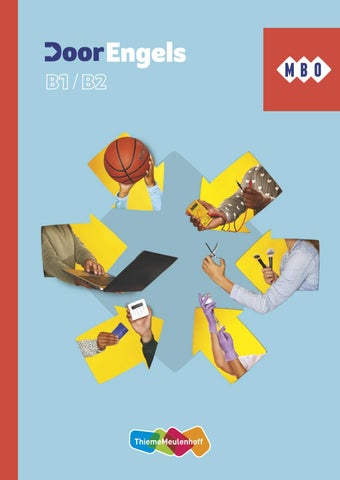
DoorEngels laat je zien hoe relevant taal is. Niet alleen in het dagelijks leven, maar juist als je straks je diploma op zak hebt en taal het verschil kan maken tussen wel of niet die baan. Tussen fijne en frustrerende vergaderingen. Tussen precies het juiste of juist het verkeerde zeggen tegen die collega, klant, cliënt of patiënt. DoorEngels focust daarom op jouw toekomst, met thema’s en taken die aansluiten bij jouw beroepspraktijk. Zodat je leert hoe je met Engels kunt werken. En hoe de taal voor je kan werken. Dit leerwerkboek gebruik je in combinatie met de online studentomgeving. Je vindt daar niet alleen alle taken uit het boek met interactieve feedback, maar ook taken op een ander niveau, extra oefeningen voor grammatica, vocabulaire, handige zinnen voor spreken, schrijven en gesprekken voeren, zelftoetsen en audio- en videobestanden.
Auteurs: Jantine Broek Julia van Eekelen Jessica Hak-Viveen Robert Hempelman Gelly Henderson Mark de Jong Sonia Martinez H. Ozguc-Kayer Milou Paulissen Lidija Pomper Amber van der Stelt Hedwig Suurmeijer Ezra van Wilgenburg Eindredactie: Ellis de Bresser Joke Noordegraaf
9 789006 105247
MBO_DoorEN_COVER_B1/B2_LWB_210x297mm.indd All Pages
4/07/19 15:36
D DoorEngels D
B1/B2
Auteurs Jantine Broek Julia van Eekelen Jessica Hak-Viveen Robert Hempelman Gelly Henderson Mark de Jong Sonia Martinez H. Ozguc-Kayar Milou Paulissen Lidija Pomper Amber van der Stelt Hedwig Suurmeijer Ezra van Wilgenburg Eindredactie Ellis de Bresser Joke Noordegraaf Vormgeving Buro de Kuijper, ’s-Hertogenbosch Omslag + omslagfoto’s Studio Fraaj, Rotterdam Peter Bak, Rotterdam Opmaak Imago Mediabuilders, Amersfoort Fotografie taakopeners Charlotte Bogaert Fotografie, Haarlem Met dank aan: Angel Agudo Hair & Fashion, Amsterdam; Bakker van Vessem, Haarlem; Bibliotheek Huizen; Bloemenshop van Vliet, Zutphen; Buuffie’s, Heino; Buurtzorg Schalkwijk, Haarlem; Garage Houtwal, Zutphen; Haarlems Timmerfabriek, Haarlem; Hemubo, Almere; Huizer apotheek, Huizen; MBO College Centrum, Amsterdam; Mooi, Heino; Ouderenfonds, Amersfoort; Pointen Hairstyling, Huizen; ROC RijnIJssel, Arnhem; Transportbedrijf Beentjes, Haarlem; Zorgwinkel Hulpmedi, Heino.
Fotografie overig © Shutterstock, iStock Tekeningen Tiekstra Media, Groningen
Over ThiemeMeulenhoff ThiemeMeulenhoff ontwikkelt zich van educatieve uitgeverij tot een learning design company. We brengen content, leerontwerp en technologie samen. Met onze groeiende expertise, ervaring en leeroplossingen zijn we een partner voor scholen bij het vernieuwen en verbeteren van onderwijs. Zo kunnen we samen beter recht doen aan de verschillen tussen lerenden en scholen en ervoor zorgen dat leren steeds persoonlijker, effectiever en efficiënter wordt. Samen leren vernieuwen. www.thiememeulenhoff.nl ISBN 978 9006 10524 7 DoorEngels Studentlicentie A2 + B1 + B2 1 jaar plus Leerwerkboek B1/B2 ISBN 978 9006 10525 4 DoorEngels Studentlicentie A2 + B1 + B2 2 jaar plus Leerwerkboek B1/B2 ISBN 978 9006 10526 1 DoorEngels Studentlicentie A2 + B1 + B2 3 jaar plus Leerwerkboek B1/B2 Eerste druk, eerste oplage, 2019 © ThiemeMeulenhoff, Amersfoort, 2019 Alle rechten voorbehouden. Niets uit deze uitgave mag worden verveelvoudigd, opgeslagen in een geautomatiseerd gegevensbestand, of openbaar gemaakt, in enige vorm of op enige wijze, hetzij elektronisch, mechanisch, door fotokopieën, opnamen, of enig andere manier, zonder voorafgaande schriftelijke toestemming van de uitgever. Voor zover het maken van kopieën uit deze uitgave is toegestaan op grond van artikel 16B Auteurswet 1912 j° het Besluit van 23 augustus 1985, Stbl. 471 en artikel 17 Auteurswet 1912, dient men de daarvoor wettelijk verschuldigde vergoedingen te voldoen aan Stichting Publicatie- en Reproductierechten Organisatie (PRO), Postbus 3060, 2130 KB Hoofddorp (www.stichting-pro.nl). Voor het overnemen van gedeelte(n) uit deze uitgave in bloemlezingen, readers en andere compilatiewerken (artikel 16 Auteurswet) dient men zich tot de uitgever te wenden. Voor meer informatie over het gebruik van muziek, film en het maken van kopieën in het onderwijs zie www. auteursrechtenonderwijs.nl. De uitgever heeft ernaar gestreefd de auteursrechten te regelen volgens de wettelijke bepalingen. Degenen die desondanks menen zekere rechten te kunnen doen gelden, kunnen zich alsnog tot de uitgever wenden. Deze uitgave is volledig CO2-neutraal geproduceerd. Het voor deze uitgave gebruikte papier is voorzien van het FSC®-keurmerk. Dit betekent dat de bosbouw op een verantwoorde wijze heeft plaatsgevonden.
Zo werk je met DoorEngels Met DoorEngels kun je alleen online werken of online met een leerwerkboek. Alles uit je leerwerkboek vind je ook online. Met directe feedback. Maar dat is niet alles: online kun je taken op een ander niveau maken. En extra oefenen. Of zelftoetsen maken om te kijken of je al klaar bent voor de volgende stap.
Zie uitwerking thema’s op de volgende pagina
THEME ONG LEARNING LIFEL TH PL W AC O E
IN L AL P DE O M H E C T
T LL O G E M EA ET E GUE HER S
DoorEngels focust op jouw toekomst, met thema’s die aansluiten bij de beroepspraktijk.
G A I W IT M NT H E S
IN
L STE
L I N GS E XAM
EN
THEME UCTIONS INSTROCEDUREAND S PR
THEME ING FOR A JOB APPLY
EX T AM H T E
E T EM K R EN M
G E M ININ RA
DEA LING WITH YOUR TARGET GROUP THEME
G IN O K R C H WOWITH T
speak ing A2/B1
co
1 /B
G
IN /
ng
te
B1
di
TRAIN
B2
wr i t
A2
/B1
at ion
A2
M
A B2
/
lis
B1
CE
e rs
i ng
nv
EX nin
g
NTR
rea
AAL EXAM
EN
DoorEngels focust op je toekomst. Maar voordat je klaar bent voor de beroepspraktijk, moet je examen doen. DoorEngels bereidt je ook daarop voor. Met een apart thema met uitgebreide training voor je centraal examen (niveau B1 en B2) en instellingsexamens (niveau A2 en B1). Bovendien sluit je iedere lees- en luistertaak op niveau B1 en B2 ook af met examentraining. Zo kom je er wel!
Alle thema’s zijn op dezelfde manier opgebouwd. Ze bestaan altijd uit vijf taken. Deze taken zijn flexibel. Ze zijn thematisch met elkaar gelinkt, maar je kunt ze ook los van elkaar uitvoeren. In de volgorde die jou het best past. En op je eigen niveau.
wri ti
1
ET
/B2
g
spe
TO G
A2/B1
TA S K
readin
HE WO R KIN G E L RW I TH C O L
aking
/B
TA S K
THEME
A2
B1
2
S
1/B
UE
B 2/
AG
A
li
TA
TA ng SK
A2/
ing n e st SK
A2/B1
TA S K
c o nve r s a t i o n
1
2
3
4
5
6
1
2
3
4
5
6
Introduction
In daily life
At work
Exam practice
Self-test
Extra practice
Om een taal goed te kunnen leren, moet je die van A tot Z bestuderen en zoveel mogelijk in de praktijk brengen. Je moet veel zelf doen, maar DoorEngels ondersteunt je in alles wat je doet met Language support:
hulp bij het correct schrijven, spreken en gesprekken voeren in het Engels vertalingen van woorden Nederlands-Engels of Engels-Nederlands, in een zin zodat je ziet hoe het woord gebruikt wordt handige zinnen om je geschreven en gesproken teksten snel op een hoger niveau te brengen ondersteuning bij het lezen en luisteren en voorbeelden van teksten die je zelf moet kunnen schrijven
1
In de ‘Introduction’ kun je lezen je waarom deze taak belangrijk is voor je toekomstige beroep. vind je de leerdoelen van de taak. zie je een overzicht van de Language support die je nodig hebt om de taak te maken. lees, beluister of bekijk je een bron die je voorbereidt op de taak. maak je een praktijkgerichte startopdracht.
2
In het onderdeel ‘In daily life’ zijn alle opdrachten gericht op maatschappelijk relevante situaties en situaties waar je in het dagelijks leven mee te maken kunt krijgen. zie je aan de titels van de opdrachten wat het (leer)doel van de opdracht is. oefen je met de Engelse woorden, zinnen en grammatica die je nodig hebt om in ‘At work’ de praktijkopdracht te kunnen maken. kun je aan de gekleurde verwijsblokjes bij de opdrachten zien welke Language support je helpt bij het maken van de opdracht. De uitleg vind je achter in het leerwerkboek.
3
In het onderdeel ‘At work’ pas je de kennis en vaardigheden waarmee je hebt geoefend in ‘In daily life’ toe in een praktijksituatie. beoordeel je je resultaat van de praktijkopdracht met behulp van feedback- en beoordelingsformulieren en een rubric. Zo weet je op welke punten je je nog verder kunt ontwikkelen.
4
In de ‘Exam practice’ kun je bij de taken Reading en Listening op niveau B1 en B2 oefenen met opdrachten zoals je die tegen gaat komen op het centraal examen.
5
Met de digitale ‘Self-test’ kun je beoordelen of je de Language support bij de taak voldoende beheerst. De Self-test vind je in de digitale leeromgeving.
6
In de digitale ‘Extra practice’ kun je extra oefenen met de Language support. De extra oefeningen vind je in de digitale leeromgeving.
Betekenis iconen 1
Bij deze opdracht werk je samen met anderen. Bij deze opdracht hoort een audio- of videofragment. Dit kun je vinden in de digitale leeromgeving. Ga naar de digitale leeromgeving.
12 20
5
verwijzing naar de Grammar achter in het leerwerkboek verwijzing naar de Vocabulary achter in het leerwerkboek verwijzing naar de Useful phrases achter in het leerwerkboek verwijzing naar de Strategies & examples achter in het leerwerkboek
Table of contents Theme 1 Lifelong learning
9
Task 1 Task 2 Task 3 Task 4 Task 5
10 24 36 46 54
Developing yourself by reading - B2 Learning from online tutorials - B2 Summarising a performance review - B1 Sharing know-how with colleagues - B1 Asking your colleagues questions - B1
Theme 2 Work placement
65
Task 6 Task 7 Task 8 Task 9 Task 10
66 83 93 103 112
Reading in preparation for a work placement - B2 Getting the most out of your work placement - B2 Writing a self-assessment report on your work placement - B1 Talking about your work placement - B1 Shadowing a colleague - B1
Theme 3 Instructions and procedures Task 11 Task 12 Task 13 Task 14 Task 15
Reading instructions - B2 Listening to instructions - B2 Claiming your expenses - B1 Instructing your colleagues - B1 Finding your way around in a new workplace - B1
Theme 4 Working together with colleagues Task 16 Task 17 Task 18 Task 19 Task 20
Researching topics and sharing information - B2 Listening in a meeting - B2 Reporting a concern - B1 Taking part in a stand-up meeting - B1 Expressing yourself to colleagues - B1
Theme 5 Dealing with your target group Task 21 Task 22 Task 23 Task 24 Task 25
Reading about dealing with your target group - B2 Listening to your target group - B2 Reporting back on contact with your target group - B1 Speaking to your target group - B1 Talking to your target group on the phone - B1
6
123 124 136 146 161 172
183 184 198 207 218 227
237 238 253 263 276 285
Theme 6 Dealing with complaints Task 26 Task 27 Task 28 Task 29 Task 30
Reading a complaint - B2 Listening to someone making a complaint - B2 Writing a letter of apology - B1 Making a complaint - B1 Complaining about and resolving an issue - B1
Theme 7 Applying for a job Task 31 Task 32 Task 33 Task 34 Task 35
296 314 325 335 344
353
Reading a job advertisement - B2 Finding the right company - B2 Writing a letter of application - B1 Giving an elevator pitch - B1 Doing a job interview - B1
354 368 377 389 397
Theme 8 Exam training Task 36 Task 37 Task 38 Task 39
295
409
Centraal examen Lezen en Luisteren/kijken - B2 Instellingsexamen Schrijven - B1 Instellingsexamen Spreken - B1 Instellingsexamen Gesprekken - B1
Language support
410 422 433 443
455
Vocabulary Useful phrases Grammar Strategies and examples
458 484 493 528
Rubrics
538
Writing B1 Speaking B1 Conversation B1
538 540 542
7
Theme 1
Lifelong learning Perhaps you can’t wait to graduate, say goodbye to school and start your working life. That would be good news, actually – because it means that you are excited about your career! However, just because your time at school has ended, doesn’t mean that learning has too. You will keep learning throughout your adult life. You will learn new skills at work, but also in daily life. If you continue to learn, you will continue to grow. Employers will be happy to welcome a graduate who is happy to learn – but they will also be happy in twenty years’ time to hire a professional who is still up-to-date in their field. So, keep up the good work and keep learning!
Task 1
Developing yourself by reading
B2
Task 2 Learning from online tutorials
B2
Task 3 Summarising a performance review
B1
Task 4 Sharing know-how with colleagues
B1
Task 5 Asking your colleagues questions
B1
Lifelong learning – 1 Developing yourself by reading
B2 l
Task 1
B2
Developing yourself by reading Many people believe that learning stops once you leave school, when learning is actually something we continue to do every day of our lives, whether at school, work, or at home. Learning new skills at work, like calling a customer for the first time or learning to use a new piece of equipment, technique, or software, is often called ‘learning on the job’. Especially in fastchanging industries, it can be challenging to keep up with new developments. To deal with this, you have to keep learning and developing yourself. In this task, you will see that there are many different ways to do this.
10
In daily life
You will practise:
• • • •
finding and understanding important information, ideas and opinions in specialised texts within your own field of expertise; reading long, complex texts and finding relevant details. writing short, simple essay on a subject of importance. preparing and giving a presentation about a subject you are familiar with and answering relevant questions afterwards.
Language support 1 40 33
Vocabulary in daily life Vocabulary at work How to form words with prefixes and suffixes
4 Exercise 1 Warming up Watch Video 1 ‘Connected Tablets in Construction – Telstra Enterprise’ and answer the questions. 1 According to the video, tablets and mobile apps can be very useful on a construction site. Do you use any mobile apps at your job? Why (not)? 2 Now make a list of apps that are available for workers in your field and could make your work easier. If you regularly use apps, write down their names; if you don’t use any apps, go online and look up which apps are out there for people in your role. Write down three you find useful and explain why you picked them. 1 2 3 3 Do you think using apps could help you to learn on the job? Explain your answer.
4 Do you think learning to use apps should be obligatory for people working in your future profession? Why or why not?
In daily life Without a personal motivation for doing so, many people find it hard to get started with learning something new. An important question to ask yourself is: would it be useful to me if I learnt this? It is key to make what you are learning relevant to you, otherwise the new knowledge will not stick. In this task, you are going to read more about how learning works in daily life, and also write and talk about your own skills and hobbies.
11
Lifelong learning – 1 Developing yourself by reading
B2 l
Text 1
HOW TO BE A BEGINNER
Most people have a ‘one-day list’ of skills they would love to learn – like playing the piano, scuba diving, or learning to cook – but somehow never get around to. So, what’s holding them back from learning a new skill? Most people give a lack of talent or time as an excuse. Let’s start by debunking the ‘talent myth’. Yes, talent comes in handy, but it doesn’t necessarily bring success. Dedication and willingness to learn, however, do. If talent was enough, then why would all these athletes practise every day of their lives? And do you really think that any of the great musicians suddenly woke up with the ability to play an instrument? No, they were once beginners, like the rest of us. This brings us to the second excuse, which is time, or rather, the lack thereof. But is lack of time really a valid excuse when we spend an average of three-plus hours every day following what other people are doing on social media? So, if it isn’t a lack of time or talent that stops people from following their dreams, what is it? I think it’s insecurity. Most people are afraid of failure and looking dumb – in short, of being a beginner. To be fair, it isn’t easy to be bad at something. If you’re anything like me, having to do something you’re bad at gives you terrible anxiety, especially in a classroom or in a situation where someone is teaching you to do something. I always feel like they are wasting their time with me, getting more and more frustrated with every mistake I make. But really, I’m just getting frustrated with myself. Why? Because in our society, people are obsessed with the final product and tend to disregard the time and effort that went into making it. This leads people to give up if they can’t immediately get the perfect result they hoped for – forgetting that talent takes work. So, if you are finding it hard to be a beginner, here are a few things to keep in mind. First of all, as a beginner, know that you are expected to fail. After all, you don’t know anything yet, and making mistakes is natural. Embrace this and be kind to yourself when you mess up: you did something wrong, and now you know how to do it right. No one expects you to start doing backflips in your first gymnastics class – so don’t expect it of yourself. Don’t expect your teacher to get angry when you mess up, either. Have you ever gotten furious at someone while teaching them something because they made a mistake? Probably not: you just helped them figure out what the problem was. Teachers won’t get upset if you make the same mistake a million times; rather, they may get annoyed with themselves because they don’t know how to help you. Don’t be afraid to talk to them: telling them where you got stuck will help them to help you. The learning process is a twoway street. Another hang-up for beginners is the fear of judgement, especially if they’re surrounded by people who are more experienced than they are. They imagine everyone else is paying as close attention to their work as they are, when actually, people are usually absorbed in their own work. They don’t care if it’s your first class or if you’re practising the basics of something. And even if they do look at you, they’re probably remembering what it was like to be a struggling beginner, rather than judging you. Lastly, remind yourself that the reason why you started learning a new skill is because you wanted to. Don’t let your fears or anxieties get in the way; go at your own pace and you 12
In daily life
won’t regret it. You can look back and feel proud for not giving into your beginner’s fears. Being a beginner is nothing to be ashamed of – it should be praised. It’s easy to be experienced at something after years of training and practising, but what if everybody was too afraid to take the first step and create, design, or invent something new? The world needs beginners!
Exercise 2
Reading about being a beginner
Read Text 1 ‘How to be a beginner’ and answer the questions. 1 Why do many people never get around to learning a new skill? They get discouraged by seeing people on social media doing the same thing, but better. They find it hard to discover their natural talents because they rarely try anything new. They believe they need more time and talent to achieve their goals.
○ ○ ○
2 Why is the learning process called a two-way street? Because teachers and students can successfully solve problems if they do it together. Because teachers and students can both learn something at the same time. Because teachers don’t just blame students for making mistakes, but themselves as well.
○ ○ ○
3 Where does the fear of judgement come from for many beginners? They compare their own work to that of more experienced people to see if they got the basics right. They get nervous when they know more experienced people are watching them while they practise their new skill. They think more experienced people are as critical of their work as they are themselves.
○ ○ ○
4 What is meant by ‘the world needs beginners’? Beginners are people who are very motivated to learn – so they will most likely be successful. Beginners are people who aren’t held back by their fears and anxieties – and these are the kind of people the world needs. Beginners are people who will eventually do great things – they are just at the beginning of that road.
○ ○ ○
Exercise 3
Reflecting on your own experiences as a beginner
Read Text 1 ‘How to be a beginner’ again and answer the questions. 1 Are you a beginner at something right now or have you been a beginner at something in the past? Write down what skill you began to learn and if you are better at it now. If you have given up on it, explain why.
2 Write down two feelings you recognise from the text about being a beginner. Explain how you dealt with them.
13
Lifelong learning – 1 Developing yourself by reading
B2 l
3 If you were to start learning a new skill right now, what would it be? Would you do it differently after reading the tips in this text? Explain your answer using examples from the text.
4 The text states that the world needs more beginners. Do you agree? Discuss this with a classmate. Write down your conclusions.
Exercise 4
1
Learning new words
Study the Language support. Fill in the correct words. Choose from: act as – anxiety – be linked to – contrary to popular belief – hone your skills – impair – notable – outline – stimulate – struggle – tend to How to study last-minute Time management is something lots of students (1) with, especially when it comes to exams. Many students start preparing for their exams too
(2)
late. The result: last-minute cramming on a diet of coffee and sugary snacks, all of which will your memory and ability to focus
(3)
during the exam. Rather than freak out, use these tips and techniques to make the best of a bad situation and still get a decent grade. , it is counterproductive to study on
1 (4)
the day of the exam. The best thing you can do on the day of the exam is make sure that you are well-rested and relaxed. Minimise your by avoiding caffeine and getting
(5) enough sleep.
2 If you struggle to make a start with studying, focus on your weak spots. You won’t have enough time to go through all your notes, so focus on the most topics you know the least about.
(6)
3 Use flashcards to test yourself on terms and definitions. Even the act of writing them will and help you to memorise the
(7) information.
4 If you find a concept unclear while you’re reading about it, try watching or listening to somebody explaining it. Videos or audio recordings can (8) triggers to (9)
different areas in your brain,
helping you learn more quickly and effectively. 5 Making a mind map of the material helps you to (10) what you’ve learnt and which concepts and definitions can one another. By organising the
(11)
material, you’ll be able to recall it more easily during the test. Good luck! 14
In daily life
TIP Some prefixes and suffixes are used to make a word positive or negative. If you don’t know a word, a prefix or suffix can give you a clue about its meaning. But you should always look at the context; a prefix or suffix can have different meanings depending on the sentence.
Exercise 5
33
Learning how to use prefixes and suffixes
Study the Language support and read the Tip. Read the sentences carefully. Do the prefixes and suffixes make the words in bold have a positive or a negative meaning? Choose ‘Positive’ or ‘Negative’ and explain your answers. 1 My father dislikes it when people leave muddy footprints on his carpet. Positive / Negative Because 2 There is a homeless cat in my garden that doesn’t seem to have anywhere to go. Positive / Negative Because: 3 She can be a bit antisocial and difficult to talk to. Positive / Negative Because 4 The website he bought the concert ticket from overcharged him by twenty euros. Positive / Negative Because 5 She was undeterred from her dream of becoming a scuba diving instructor. Positive / Negative Because 6 The anti-dirt spray I used on my sneakers works perfectly. Positive / Negative Because 7 Sarah is unable to go on holiday with us because she has to work. Positive / Negative Because 8 I left the apples in the fruit bowl until they were overripe and full of spots. Positive / Negative Because 9 My headache disappeared after I took an aspirin this morning. Positive / Negative Because 10 Chris thinks Casablanca is a timeless film. He’s watched it many times. Positive / Negative Because:
Exercise 6
33
Learning how to use prefixes and suffixes
Study the Language support. Look at the definitions. Fill in the correct prefixes and suffixes. Choose from: Prefixes: co-, de, dis, il, in, over, un, re Suffixes: able, ish, ful, less, ness, ous, tion 1 someone you work with
-worker
2 a time to celebrate
celebra 15
Lifelong learning – 1 Developing yourself by reading
B2 l
3 when you are feeling sad, you experience …
sad
4 to break a connection
to
connect correct
5 wrong 6 something you enjoy is …
enjoy
7 to become less
to
8 against the law
crease legal
9 without a job
job
10 to do something again
to
11 the opposite of safe
danger
12 when there is no solution
do
solved
13 something that has bright colours is …
colour
14 too late
due
15 around seven
seven
Exercise 7 Writing a short essay about study habits
7
There are many different opinions about study habits. What works for one person does not work for everyone. You are going to write a short essay about study habits in which you explain which study habits work and which don’t work, in your opinion. First, look up articles online that discuss good and bad study habits. Look for tips you have tried out yourself. Which ones would you recommend to a classmate? Which don’t work for you at all? Make notes and pick two good habits and two bad habits to discuss in your essay. Next, summarise the information you have found about the two good habits and the two bad habits. Then describe why you feel they are or aren’t effective in your essay. Type your essay or write it in your notebook. Use 200-250 words in total. You can use the Language support to help you structure your writing. Text 2
FEEL LIKE YOU’VE STOPPED LEARNING AT WORK? ELON MUSK JUST NAILED THE REASON WHY If you were anything like me, math class was painful, on a good day. I can vividly recall discussions with my mom revolving around the question, “When am I ever going to use this stuff?” Fast forward to today’s math students and they may be as disinterested and annoyed as I was. Elon Musk knows why. The CEO of Tesla and SpaceX was speaking recently at the International Space Station Research & Development conference in Washington, D.C. (a conference at which I’m probably not even smart enough to work the coat check room), and had this to say about why students are so bored by math: ‘You just sort of get dumped into math. Why are you learning that? It seems like, “Why am I being asked to solve these strange problems?” Our brain has evolved to discard information that it thinks has irrelevance.’
16
In daily life
His insight for how to fix this problem has relevance well beyond that of ninth grade geometry. He went on to explain that schools are not doing enough to teach why students are learning math. Schools should be providing context by teaching math within the context of solving a problem, like building a rocket, constructing a bridge, or taking an engine apart. Then students understand, and this is the key, why they are learning math or physics (and will learn how to use a screwdriver and a socket wrench along the way). And that may be precisely why you aren’t learning much at work. How many times has a leader put you into a new situation in which you were forced to learn, but the “why” was either non-existent or uninspiring? Learning how to run that new equipment, how to use that new software, or how to call a customer for the first time just isn’t as compelling when the why is “so we can hit our numbers.” As a leader, you have the opportunity to provide the context and the purpose for why you ask your employees to learn something (or to do anything, for that matter). While children tend to be focused on more extrinsic factors for learning, such as being able to do what their friends do or to avoid being reprimanded by parents, for adults the motivation to learn is intrinsic. Adults learn new skills to make them more promotion-worthy, to learn how to solve a specific problem (problems that you can clearly outline for them), to feed a desire for an increased sense of competency and self-esteem, or to nurture a love for continual learning in and of itself. The point of learning for adults has to be clear and linked to their selfinterests and/or what really matters to them. In other words, learning should be linked to a purpose. So if you want to turn your conference room into a classroom, share thoughtful reasons why. Ask for it if you’re the student/employee, and provide it if you’re the teacher/boss. Retrieved from: www.inc.com
Exercise 8
Reading a text about learning
Read Text 2 ‘Feel Like You’ve Stopped Learning …’. Select the statements that are true. Students are often bored by math because they don’t think they will need this information further on in life. Most schools teach students about the practical purposes of math in addition to the theory. Combining learning math with a physical activity, like working with tools, helps students to remember new information better. Putting an employee in a new situation is usually enough motivation to get them to learn a new skill. For adults, pressure from their environment often does not motivate them to pick up new skills.
□ □ □ □ □
Exercise 9
Analysing a text about learning
Read Text 2 ‘Feel Like You’ve Stopped Learning …’ again. Answer the questions. 1 According to Elon Musk, why are so many students bored by math?
17
Lifelong learning – 1 Developing yourself by reading
B2 l
2 What is the benefit of teaching students math by having them build a rocket or construct a bridge?
3 Why does being forced to learn often not work for adults? 4 Why should employers make an effort to ‘turn the conference room into a classroom’?
3 Exercise 10 Giving a presentation
13
Study the Language support. You are going to give a three-minute presentation about something you are good at. First, think of a skill or an activity that you are good at. This could be a hobby, such as drawing, playing football or making music, or a school-related activity, such as communicating, writing, creative thinking, or looking up new information. Prepare your presentation. Include the following points: • what your skill is and why you picked it; • where you first learnt it and how you found out you were very good at it; • what you do regularly to practise or get better at it; • what the secret is to becoming very good at your chosen skill. Now pair up with another student. Present your skill to the other person and let them ask questions if they have any. When you have finished, switch roles.
5
Go to DoorEngels online Do the ‘Self-test’ for this Task. If your score is lower than expected, you can do the Extra practice exercises there as well.
18
At work
At work In this task, you have read about how learning works in everyday life, focusing on the personal development and informal learning that takes places daily, outside the classroom. At work, informal learning is often called ‘learning on the job’: by doing your work, you continue to pick up skills and gain knowledge that you need on the work floor. You have also learnt how to find and understand important information online, to summarise that information and to present it to someone else. Now you are going to use these skills to find more ways to expand your knowledge and skills in your field.
Situation You have started your career. You are well aware how important it is to stay up-to-date in your field of work. Together with some colleagues, you have taken the initiative of finding out about some of the interesting developments in your field. You are each going to research a topic and then share that information with each other. 40
Preparation Step 1 Study and review the Language support Study the Language support. Review the following Language support if necessary 1 33 13
Step 2 Study the evaluation criteria Make sure you know what is expected of you by reading the evaluation criteria in Step 7.
3 Step 3 Brainstorm in groups of three
In groups of three, brainstorm about trends in your field. Which developments or exciting changes can you expect in the next ten years? Make notes.
Practical assignment Step 4 Find articles Individually, choose one development you want to focus on. Go online and collect at least three articles written in English about this topic. Try to find articles that have information about how professionals can stay up-to-date or the skills professionals will need in the future. Summarise the articles and write down their sources. Use no more than 100 words per article. You can use 11 .
Step 5 Find activities and courses Search the internet again for activities, courses and other educational opportunities that could help you learn or improve on these skills. Pick one that you think suits you best. Summarise the information in no more than 100 words and write down your source.
3 Step 6 Prepare and then give your presentation
Prepare a 4-5 minute presentation in which you will explain: • what development you will be talking about; • why this is an important development in your field of work;
19
Lifelong learning – 1 Developing yourself by reading
• •
B2 l
which skills you need to keep up with this development or what you can do to keep up with it (Step 4); how you would prefer to learn or improve on these skills (Step 5).
Give your presentation to two other students or record your presentation and have two other students listen to it.
Evaluation
3 Step 7 Have a classmate or teacher review your work
Did you meet all of the criteria? Have a classmate or teacher review your work. ‘Yes’ to all means that your goal has been accomplished. Yes
No
1 You picked a development that is relevant to you. You could explain why this development is relevant to you. 2 You used factual information in your presentation, coming from the articles and websites that you read. 3 You discussed three different articles in your presentation. 4 You presented at least one possibility of how to keep up with this development / learn new skills. 5 The presentation/video was between 4 and 5 minutes long.
Step 8 Evaluate your work process 1 Reflect on this practical assignment. Rate the level of difficulty of each task for you. 0 stars = very difficult, 5 stars = very easy. – Finding good articles and websites ☆☆☆☆☆ – Summarising the information I found ☆☆☆☆☆ – Preparing my presentation ☆☆☆☆☆ – Giving my presentation ☆☆☆☆☆ 2 Discuss your results from question 1 with another student. Discuss: – why was this easy/difficult? – what would you do differently next time?
20
Exam practice
Exam practice You are going to read a text about how to keep your brain healthy. Read the text ‘Three ways to boost your brain’. There are five questions about this text.
THREE WAYS TO BOOST YOUR BRAIN Everybody knows that it’s important to look after your body, but few of us give much thought to taking care of our brain. Here are some aptitude-boosting tips on how to keep your grey matter in great shape. LEARNING AND PLAYING There are plenty of activities you can do to keep your brain in good condition. Adults learn new skills differently to children, but contrary to popular belief, this doesn’t mean your ability to learn new skills declines as you age. Researchers from Tel Aviv University in Israel have shown that adults have great potential for learning new languages, as long as they can hone their skills by using the language for a realistic purpose. For example, by learning the local language at your favourite holiday spot, you’ll stimulate the frontal lobes of your cerebrum — the part of your brain responsible for your short-term memory. Similarly, playing video games, which is popularly thought to ruin young people’s brains, can actually help improve your memory and speed up your reaction time. For a study from the University of Illinois, researchers asked a group of over-60s to play a computer game called Rise of Nations every day for eight weeks. Compared to people of the same age who had not taken part, the first group scored higher in tests of what scientists call executive functions: the ability to plan, multitask, reason and solve problems. DEALING WITH STRESS Brain health is affected greatly by external factors in daily life, mainly stress. The physical effects of stress are numerous and range from headaches and chest pain to extreme behaviour, such as overeating. But constant stress can also impair your brain health and affect your mental performance. Stress does have certain positive short-term effects: it makes you think more clearly and quickly, and improves your ability to remember details. But in the long run, chronic stress kills brain cells and shrinks parts of the brain that control emotions, lowering the brain’s defenses against future stress. Several studies have shown that cortisol, one of the body’s main stress hormones, can damage the area of your brain called the hippocampus long-term, affecting your ability to learn and memorise things. A great way to combat stress is meditation – and you don’t have to be a Tibetan monk to reap the benefits. Taking just five minutes out of your day to embrace stillness is good for your brain and can have a major impact on the way you deal with life and interact with others. Notable benefits include feeling calmer and kinder, as well as the ability to see things more clearly (including yourself). A 2011 study that was carried out in Germany and the US has shown that regular meditation practice can actually change the structure of your brain and repair stress-related damage. By giving people brain scans before and after a programme of weekly group meetings and daily meditation exercises, the researchers found, among other things, increased volume grey-matter density in the hippocampus.
21
Lifelong learning – 1 Developing yourself by reading
B2 l
TAKING CARE OF YOUR BODY Then there are the factors we tend to take for granted, such as food, laughter, and sleep, which affect not only our bodies, but our brains, too. Eating healthily isn’t just in the interest of losing weight. There’s a growing amount of evidence that following a Mediterranean diet helps protect the mind against the effects of ageing, including some forms of dementia. The diet is based on a decreased sugar consumption and an increased intake of healthy fats, particularly those found in olive oil and fatty fish, like salmon. Other staples are vegetables, whole grains, seafood, nuts, and cheese. A 2010 review from the University of Florence, combining results from countries like Greece, Italy and Croatia, found that eating the Mediterranean way for most of a person’s life was linked to a 13 per cent lower risk of brain diseases. “Laughter is the best medicine”, as the old saying goes, and according to researchers in South Korea, this holds true for both body and brain. Laughter has the physical benefits of burning calories, lowering blood pressure and increasing the number of immune cells, which boosts your resistance to disease. As for the brain, laughing it up produces hormones called endorphins, which make you happy and relaxed and can even act as a short-term anaesthetic. Laughter also helps to activate areas of the brain linked to creativity and learning. The same is done by getting a good night’s sleep. Though many people say they don’t need a lot of sleep to function, not getting enough shut-eye can negatively impact your mental health and work rate. A 2010 US study has shown that while you’re dreaming away, the brain is hard at work, consolidating your memories, organizing them and picking out the most salient information, which likely aids creative thinking. A lack of sleep disrupts this process, affecting your ability to make decisions, solve problems, deal with change and control your behaviour during the day. In the long run, this could cause depression. A good night’s sleep sees you better able to focus, learn and absorb information during the day, decreasing stress about unimportant things. 1 According to the text, are these statements True or False? Choose the correct answers. True
False
1 You can stimulate your short-term memory by making an effort to learn new skills at a later age. 2 Playing a video game trains abilities and areas of the brain you don’t often use in daily life. 3 Meditation can undo damage done by stress to the areas of your brain for learning and memory. 4 By following a healthy diet, you are less likely to get brain diseases at a later age. 5 Laughing often makes you more resistant to feeling physical pain.
2 What is said about the effect of playing video games on 60+-year-olds? Their executive functions stopped improving when they stopped playing the video game every day. Their executive functions improved compared to those of young people playing the same game. Their executive functions improved compared to those of other 60+-year-olds who didn’t play the video game.
○ ○ ○
22
Exam practice
3 What is said about the long-term effects of chronic stress on the brain? Chronic stress makes you more emotional when responding to future stress. Chronic stress changes your brain structure to make it more resistant to future stress. Chronic stress has a negative impact on the areas of your brain used for learning and memory.
○ ○ ○
4 According to the text, why is getting enough sleep so important for the brain? It helps you to become more organized, helping you to avoid future stressful situations. It helps you to deal with new information and situations without getting stressed out. It helps you to solve problems you’ve been stuck on that have made you stressed or depressed.
○ ○ ○
23
Lifelong learning – 2 Learning from online tutorials
B2 l
Task 2
B2
Learning from online tutorials When starting at your future job, you will have to pick up new skills and information quickly. A lot of it you will learn ‘on the job’; you will learn as you go, and your colleagues will be there to help you out. You might be offered training sessions or online courses. But as a professional, you will also have to take some initiatives to learning yourself. Ultimately, it is your responsibility to stay up to date in your field of work. The good thing is: you can learn a lot in just five minutes! You can find great tutorials online on many subjects. The only things you need are curiosity and an internet connection, so let’s get started.
24
In daily life
You will practise:
• • •
understanding the speaker’s opinions and attitudes in audio recordings; giving a presentation; understanding the main theme and most important arguments in texts in magazines, newspapers or online.
Language support 2 40 20 21 11
Vocabulary in daily life Vocabulary at work How to use the right word order in sentences How to use adverbs of place and time How to write a summary
4 Exercise 1 Warming up Watch Watch video 1: ‘Blacksmith: The most future-proof profession?’. 1 Why does the man think being a blacksmith is ‘future-proof’?
2 Do you agree with him? Explain your answer.
3 Think of three skills that you have that are future-proof. Write them down and explain how they are future-proof. 1 2 3
3
4 Pair up with a classmate. Discuss the following questions. • Do you think that, at school, you are learning everything you need to be future-proof in your job? Explain your answer. • Which of your skills or what part of your knowledge do you think will be outdated very soon? Why do you think that is? • What is the best way to stay updated on new developments in your industry?
In daily life In this task, you are going to practise looking up audio sources that can help you solve a real-life problem, and communicating and presenting this information to others. In addition, you are going to read about the skills that can make you future-proof nowadays. But first, let’s listen to a podcast!
25
je vak leren verstaan
DoorEngels laat je zien hoe relevant taal is. Niet alleen in het dagelijks leven, maar juist als je straks je diploma op zak hebt en taal het verschil kan maken tussen wel of niet die baan. Tussen fijne en frustrerende vergaderingen. Tussen precies het juiste of juist het verkeerde zeggen tegen die collega, klant, cliënt of patiënt. DoorEngels focust daarom op jouw toekomst, met thema’s en taken die aansluiten bij jouw beroepspraktijk. Zodat je leert hoe je met Engels kunt werken. En hoe de taal voor je kan werken. Dit leerwerkboek gebruik je in combinatie met de online studentomgeving. Je vindt daar niet alleen alle taken uit het boek met interactieve feedback, maar ook taken op een ander niveau, extra oefeningen voor grammatica, vocabulaire, handige zinnen voor spreken, schrijven en gesprekken voeren, zelftoetsen en audio- en videobestanden.
Auteurs: Jantine Broek Julia van Eekelen Jessica Hak-Viveen Robert Hempelman Gelly Henderson Mark de Jong Sonia Martinez H. Ozguc-Kayer Milou Paulissen Lidija Pomper Amber van der Stelt Hedwig Suurmeijer Ezra van Wilgenburg Eindredactie: Ellis de Bresser Joke Noordegraaf
9 789006 105247
MBO_DoorEN_COVER_B1/B2_LWB_210x297mm.indd All Pages
4/07/19 15:36