

A Collaboration Between The Yale Politic and IE University’s International Policy Review

Dear readers,
We are pleased to announce the publication of the articles born out of the collaboration between The Yale Politic and International Policy Review. This unique transatlantic exchange brought together students from Yale University and IE University to share their perspectives on the challenges facing liberal democracy across Europe and the United States today.
Federica Iannó and Nataliia Shuliakova open the issue by examining contemporary democratic backsliding through the dual erosion of civic space and press freedom. Nataliia compares Serbia and Hungary to demonstrate how “state capture” can hollow out democracy both outside and within the EU through media control, institutional capture, and weakened accountability, while Federica focuses on the U.S. and Eastern Europe, showing how media restriction and shrinking civic space reinforce one another.
Andrea Urso and Cade Winter focus on the concept of technocratic drift, in which executive authority is justified through efficiency and expertise, displacing democratic deliberation. Through a comparative analysis of the French and U.S. models, they show how political debate is increasingly redirected into technical channels that are difficult to contest.
Lukas Koutsoukos and Guillermo Romero turn to the integrity of political parties as democratic institutions. Romero analyzes how the internal organization of political parties can undermine democratic representation and accelerate democratic backsliding. Koutsoukos explores Donald Trump’s populism, noting how loyalty has shifted from a matter of policy to one of personal identity.
Hiroka Watanabe Yasui explores the weakening of judicial independence and media pluralism, comparing Poland’s structural reforms with the growing partisan politicization of the U.S. Supreme Court. Leo Greenberg argues, through the concept of “Fortress Liberalism,” that many European leaders now practice a form of militant democracy, governing as if the liberal order is permanently under threat and must be defended through exceptional measures.
David Dumontet and Elena Panté examine the securitization of the digital sphere following Russia’s invasion of Ukraine in 2022. Dumontet studies Ukraine’s information doctrine, which rejects traditional censorship in favor of citizen, and military, generated content, using visibility as a source of international legitimacy. Panté analyzes how Western democracies have embraced extraordinary measures that risk normalizing restrictions on freedoms in the name of democratic defense.
Finally, Carlota Cañadas Latorre investigates the impact of ethnopopulism in the European Union on migration procedures and asylum policies. Warmly,
The
Yale:
Editor-in-Chief - Eliza Daunt
Editor-in-Chief - Nicole Chen
Collaboration Chair - Benjamin Nuland
Creative Chairs - Rory Schoenberger and Hanna Klingbeil Canale
IE:
Editor-in-Chief - Matilde Romagnoli
Head of External Relations and Innovation - Henri Klein
Head of International Relations Chapter - Agustín Plaza de los Reyes Álvarez Officer of External Relations and Innovation - Kaya Schmidt
State Capture: When EU Membership Can’t Save Democracy
How Does Ethnopopulism’s Impact on the Migration Crisis Influence the Trend Towards Democratic Backsliding in Europe?
Politics and Trumpist Populism
The Democratic Costs of Political Parties
Illiberalism without Democratic Breakdown: Judicial Independence and Media Freedom Erosion in Poland and the United States
Under Siege: The Rise of Europe’s Fortress Liberals
Securing the Narrative: Digital Securitisation and the Politics of Visibility in Ukraine’s Information War
of Kyiv: The Politics of Visibility in Ukraine’s Information War
Lukas Koutsoukos
Guillermo Romero Hiroka Watanabe Yasui
Leo Greenberg
Elena Panté
By Nataliia Shuliakova
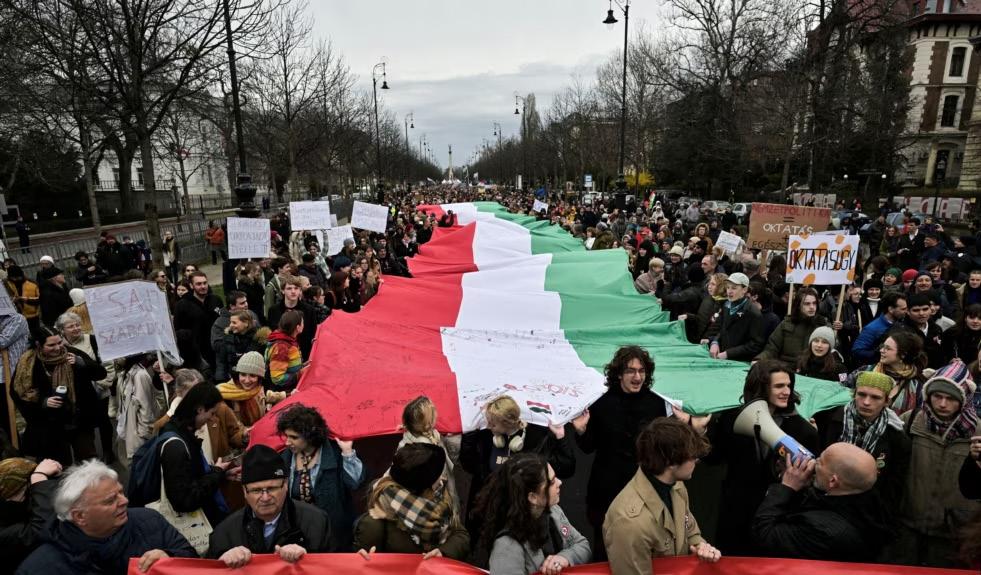
On November 1, 2023, the concrete canopy of Novi Sad’s central railway station in Serbia collapsed, killing 16 people and injuring dozens. Evidence soon emerged linking the tragedy to renovation contracts awarded to firms with ties to President Vučić’s Serbian Progressive Party (SNS). The mass protests that started in late 2023 and continue to this day show how democracies can die from within—not only in post-Milošević Serbia, a country still grappling with authoritarian legacies two decades after the fall of its autocratic leader—but also in seemingly democratic, Western-belonging spaces.
What makes Serbia’s authoritarian drift unsurprising is that it’s not in the European Union or the North Atlantic Treaty Organization. What makes Hungary’s trajectory alarming is that it is. Comparing these two cases reveals the limits of institutional membership as a democratic safeguard: Serbia demonstrates how authoritarian consolidation proceeds unchecked in a candidate state dangling on the EU’s periphery, while Hungary exposes how the same consolidation can hollow out democracy from within the bloc itself.

When Viktor Orbán consolidated control over Hungarian institutions despite EU membership, he proved that belonging to Western democratic institutions offers no guarantee against state capture. The failure lies not in understanding how these regimes operate, but in the powerlessness of international institutions ostensibly designed to constrain them.
Throughout the 1990s and early 2000s, center-right parties rose to power in both countries—Fidesz in Hungary and the Serbian Progressive Party (SNS) in Serbia. What initially appeared as moderate conservatism gradually revealed more authoritarian inclinations, with both parties shifting rightward once in office. Having obtained parliamentary majorities, they systematically rewrote election laws to institutionalize their advantages. Gerrymandered districts, manipulated voter registration, and media dominance produced even larger majorities in subsequent cycles.
These expanded margins enabled constitutional amendments and judicial appointments that cemented party control. Constitutional courts, now staffed with loyalists, became instruments of the executive rather than checks against it. Some refuse to comply—judges who resign rather than bend, bureaucrats who leak documents, journalists who keep reporting despite pressure—but they remain exceptions. Most institutions fall into line, creating what scholars term a captured state, where the state apparatus itself becomes an instrument of the ruling party rather than a neutral arbiter. The regime that emerges is hybrid: neither fully democratic nor straightforwardly authoritarian. Democratic institutions remain in place, providing a convincing facade of legitimacy. Elections still happen; courts still issue rulings; and legislatures still pass laws. The formal architecture persists while its democratic function has been hollowed out.
In Serbia, this erosion proved difficult to pinpoint. As activists Jana Krstić and Bojana Vuletić—who work on media literacy and democratic education through the Critical Education Centre and contribute to the independent media portal Mašina—observed, the downslide started before Aleksandar Vučić became president, beginning in 2012 when his Serbian Progressive Party (SNS) secured a parliamentary majority. Aleksandar Vučić’s political trajectory traces a remarkable arc of reinvention. Originally a nationalist figure in the 1990s, Vučić repositioned himself as a proEuropean modernizer, co-founding the Serbian Progressive Party (SNS) in 2008 and presenting it as a centrist force dedicated to EU accession and economic reform. Following the party’s 2012 parliamentary victory, he served as Prime Minister from 2014 to 2017 before ascending to the presidency, a position he has held ever since. Unlike abrupt authoritarian takeovers, Serbia’s transformation unfolded gradually through small acts not necessarily registered by the wider public.
“It seems like there were so many things going on in all areas of life that activists and journalists could not put down every fire,” Krstić explained. “We were being cooked slowly but consistently.”
In 2014, several media shows that offered critical coverage of the ruling SNS party were banned or moved to cable providers, an act flagged as problematic by media workers and associations, but largely ignored by the public. That same year, the ruling Serbian Progressive Party established a new Regulatory Body for Electronic Media, shaped by the party through both member selection and operational control. Similar changes spread across economic life: from foreign investments to public works and special legislation for specific infrastructure projects like Belgrade Waterfront and Expo 2027. These megaprojects operated outside normal procurement rules, enriching party allies while establishing parallel power structures that weakened institutional checks.
As a rule, state capture operates on multiple fronts simultaneously through what might be termed dual erosion: regimes move against media and civil society in tandem, each sector’s weakening amplifying the other’s vulnerability. As independent journalism is squeezed by advertising boycotts and legal harassment, attacks on civil society go undocumented, while NGOs weakened by foreign agent laws and punitive taxes lose the capacity to mobilize against media capture. Each restriction reinforces the others, opposition fragments, and eventually, resistance becomes structurally impossible.
When Hungary joined the EU in 2004, it appeared to represent a post-communist transition done right, having peacefully dismantled singleparty rule in 1989 and navigated the economic turbulence of the 1990s to emerge as a stable democracy.
Two decades later, Freedom House rates it as Partly Free—the only EU member with that designation. Press freedom rankings place it alongside Balkan countries still struggling toward EU candidacy.
Viktor Orbán has dominated this transformation. A liberal student activist who helped dismantle communism in 1989, Orbán founded Fidesz (Alliance of Young Democrats) as a liberal party before pivoting sharply rightward in the 1990s. After losing power in 2002, he spent eight years in opposition studying how to ensure he would never lose again. When Fidesz returned to government in 2010 with a constitutional supermajority, Orbán, now Prime Minister, embarked on what he openly termed building an “illiberal democracy.”
The most striking part is that this democratic collapse happened entirely within the framework of EU membership, exposing fundamental weaknesses in the Union’s ability to prevent democratic backsliding.
Media consolidation provides the clearest example. Through the Central European Press and Media Foundation, established in 2018, the Hungarian government orchestrated the absorption of approximately 500 media outlets into a single pro-government structure.
Banks connected to the government financed purchases by oligarchs loyal to Fidesz, enabling legally defensible consolidation. The end result was an information environment as tightly controlled as any state-run media system, but technically private. None of these actions alone constituted obvious censorship, but together they made independent journalism economically untenable.
Civil society organizations received similar treatment. Hungary initiated civil society restrictions through two sequential legislative campaigns. In July 2017, the “Transparency of Organizations Supported from Abroad” law required NGOs receiving more than €24,000 annually from foreign sources to register as “foreign-supported organizations” and publicly disclose this status on all materials.
Building on this, the June 2018 “Stop Soros” package imposed a 25% special tax on foreign donations supporting migrationrelated work, required organizations to obtain government licenses, and criminalized activities deemed to “support illegal migration.”
While framed as transparency measures, these provisions functioned as deliberately punitive barriers.
The law’s effectiveness is that organizations aren’t banned outright, but they are forced to comply with complex administrative demands while being publicly labeled as foreign agents. For many small organizations, the legal and financial burden alone is enough to force closure.
Higher education came under fire as well. In April 2017, parliament passed what critics called “Lex CEU,” a law widely seen as written to push Central European University—an American-accredited school founded by George Soros in 1991—out of Hungary.
The law required foreign universities to operate a physical campus in their home country and to have that country sign a bilateral agreement with Hungary, conditions CEU could not immediately meet, since it was chartered in New York but operated primarily in Budapest, with no U.S. campus and no U.S.-Hungary bilateral agreement. Framed as a measure for educational equality, the law effectively targeted a single institution known for critical scholarship. Despite international backlash and a 2020 European Court of Justice ruling against Hungary, it was too late: in 2019, CEU moved most of its programs to Vienna, losing its physical presence in Budapest.
The timing of these reforms suggests a coherent long-term strategy. Fidesz consolidated control over the media between 2010 and 2014 before moving to restrict civil society. By neutralizing independent journalism first, the government ensured that later restrictions faced little scrutiny or organized resistance. By the time Stop Soros laws were passed, independent media lacked the capacity to mobilize opposition or challenge the government’s foreign agents narrative.
Elections in this environment become performances of democracy rather than genuine contests. District boundaries are drawn to favor the ruling party. Election laws are quietly rewritten to give Fidesz additional advantages. Budapest, the opposition stronghold, is carved up on maps so its political weight is diluted.
Despite this, people still turn out to protest. In July 2020, between 10,000 and 15,000 people gathered in front of Orbán’s office to protest the collapse of Index.hu—Hungary’s largest independent news portal, after more than 80 journalists resigned when their editor-in-chief was fired for warning that the outlet’s independence was under threat. In October 2024, thousands again took to the streets to condemn government constraints on press freedom, denouncing the state broadcaster as a pro-Fidesz “propaganda factory” and calling for an independent public media service. Protestors fill the streets, then return home to media environments saturated with pro-government messaging. They wait for the next election, one they suspect is rigged before it even begins.
Even if opposition parties manage to win, they inherit a system designed to constrain them. Courts are filled withFidesz appointed judges. Major media is controlled by government allies. The civil service is packed with party loyalists. Undoing this kind of institutional capture takes years, maybe decades. In the meantime, the former ruling party continues to exert power within the institutions it controls, limiting what any future government can realistically accomplish.
The EU technically has all the tools to stop Hungary’s democratic backsliding. Article 7 of the Treaty on European Union allows sanctions against member states that violate EU values. The European Court of Justice can strike down abusive laws. Brussels can tie funding to respect for the rule of law.
In practice, these mechanisms have proven to be inadequate.
Article 7 turned out to be almost unusable. It requires all other member states to agree before sanctions can be imposed. Hungary and Poland quickly realized this and formed a mutual protection pact: each government blocked action against the other. That shield stayed in place for years, until Poland’s recent democratic turnaround. For years, two governments drifting away from democracy blocked enforcement mechanisms designed under the assumption that all members would act in good faith.
The courts did not fare much better. The European Court of Justice can rule against Hungarian legislation, but it cannot directly enforce compliance. Orbán’s government has learned how to play for time: delay implementing rulings, launch procedural challenges, or pass slightly tweaked laws that appear to fix the problem while keeping the core restriction intact.
The monitoring machinery works flawlessly. International organizations document every decline in meticulous detail, issuing reports and recommendations that accumulate without consequence. No institution within the system possesses both the authority and political will to force reversal. Hungary’s democratic backsliding proceeds through parliamentary votes and formally legal changes, preserving democratic procedures while destroying their meaning.
Western institutions were built to respond to overt authoritarian seizures of power. They are poorly equipped to confront leaders who dismantle democracy slowly, legally, and from within.
By contrast, Serbia’s slide toward authoritarianism is less surprising. The country never joined NATO, and EU accession talks have dragged on for more than a decade. Belgrade and Brussels keep up the ritual of negotiations, communiqués, and progress reports, but neither is seriously working toward membership. Serbia remains formally sovereign and largely unconstrained, free to choose its political path without the kind of binding accountability that comes with being inside Western institutions.
What makes Serbia revealing is not that institutional capture occurred, but how clearly its mechanics appear when EU guardrails are absent. When Belgrade University students organized blockades after the Novi Sad railway collapse, they confronted a government that had spent years perfecting control over information, institutions, and mobilization.
The protests took on a revolutionary character, led by students who created coalitions across society. Belgrade University students initiated daily blockades that expanded through systematic coalition-building across professional sectors, from teachers and lawyers to medical workers and engineers. This strategic move turned a student protest into a broad-based social mobilization that directly challenged the regime’s extensive control apparatus.
In 2000, mass protests forced authoritarian president Slobodan Milošević from power after he refused to accept election results, briefly opening space for democratic reform. Yet many of the political networks and power structures from his era remained intact. The movement invoked this unresolved democratic transition. Slogans referenced the 2000 Milošević overthrow, positioning the movement as a continuation of the unfinished transformation. Accountability, rule of law, and democratic legitimacy resurfaced as central demands.
Yet activists’ relationship to this historical legacy varied by generation. Older activists who participated in the 2000 revolution drew parallels almost immediately. Younger protesters took a different view.
“We always stressed how specific this point in time for young people in Serbia is and how different our methods are,” Vuletić explained. Krstić added: “History is there to remind us of what we had to go through to come where we are today, and to learn from the mistakes of previous generations. Had the revolution of the early 2000s been successful and transformative for Serbian society, maybe we would not have to protest again today.”
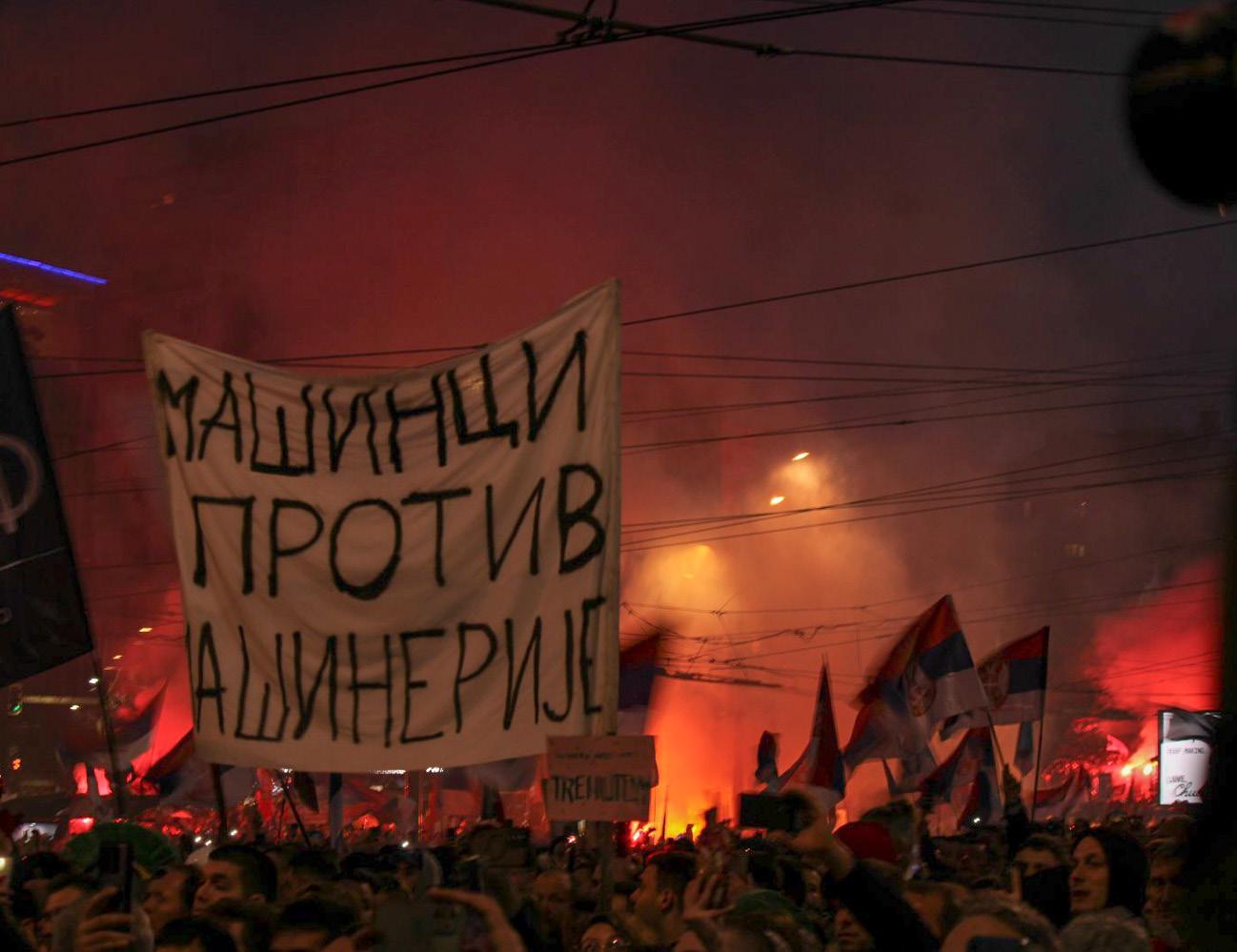
The student response demonstrated how resistance evolves under these conditions. Traditional protest tactics proved insufficient against a regime deploying surveillance, technology, and spyware. Engineering students responded accordingly. Mechanical engineers adopted the slogan “mašinci protiv mašinerije,” or “engineers against the machine,” signaling both technical expertise and opposition to authoritarian machinery.
The media infrastructure emerged organically from the protests themselves. Students started using Instagram from the very beginning. Individual faculties created accounts as blockades began, communicating directly with the public. Soon, a unified account—Students in Blockade (@studenti_u_blokadi)—emerged to represent the entire movement, while individual faculty accounts continued posting decisions from their respective plenums.
Faculties organized through working groups for recruitment, media, activities, and security. Media working groups wrote, designed, and published announcements from student assemblies. They decided who could speak to traditional media outlets.
“No student could speak in the name of the plenum if they had not been confirmed by the working group and the plenum,” Krstić noted. Some faculties required that students appearing in traditional media use only first names, emphasizing they were representatives, not individually significant leaders.
Internal communication relied on encrypted platforms such as Signal, Telegram, WhatsApp, and Viber. When one organizer was detained, others immediately filled the gap.
The government’s response followed a familiar pattern. First, independent media faced lawsuits and economic strangulation. Only after securing control over information flows did physical repression escalate. Police detained protesters in vehicles stripped of seats, creating mobile spaces for beatings.
The violence eventually became indiscriminate and collapsed into pure intimidation. According to Krstic, who is involved in the movement, one protester spent five months in prison and four months under house arrest for being in a room adjacent to where others discussed protest strategies for a March 15th demonstration. Yet each wave of repression only drew more people to the protests. As arrests mounted, a parallel infrastructure of legal solidarity emerged. Organizations such as CRTA (Center for Research, Transparency and Accountability), YUCOM (Lawyers’ Committee for Human Rights), Advokatska komora Srbije (Serbian Bar Association), and initiatives like “My Voice, My Choice” began coordinating legal aid, offering pro bono representation, and assisting students facing lawsuits, detention, or the need to flee temporarily to neighboring countries like Croatia.
State capture has become one of the defining threats to democracy in the twenty-first century. Hungary shows that EU membership offers no protection when leaders learn to use elections, courts, and legal reforms to hollow out institutions from within. Serbia’s path, less surprising given its position outside Western structures, makes the mechanics of capture even clearer. Together, they reveal a playbook of techniques spreading across countries of Central and Eastern Europe facing similar international scrutiny.
Hungary demonstrated that democratic backsliding could succeed within Western institutional frameworks and is not confined to so-called “transitional” states. Long-term judicial capture in the United States, far-right gains across Western Europe, and coordinated media pressure follow similar patterns—proving that no democracy is inherently immune to techniques Hungary showed were viable.
The Serbian student movement demonstrates that resistance is still possible— but it now demands far more. Effective opposition requires technical skills, secure communication, new media ecosystems, and alternative structures of support when official institutions fail. Marches and petitions alone are not enough against regimes with deep surveillance capacities and tight control over information.
The toughest challenges remain unresolved. EU membership alone offers no protection against state capture. Governments can manipulate democratic procedures while preserving the appearance of elections and courts, leaving minimal institutional safeguards. International bodies document decline and issue statements, but lack mechanisms to compel reversal. Understanding state capture today means recognizing how easily it can take root anywhere—and accepting that our existing defenses are ill-equipped to stop this quiet, legalistic dismantling of democracy.
By Federica Iannó
Abstract:
Over the past decade, countless studies, surveys, polls, and reports have consistently depicted democracy as fragile and at risk of collapsing. Empirical evidence reveals that more countries are currently undergoing autocratization than democratization, signaling a concerning shift toward authoritarian governance on a global scale. Recent years have seen even solid democracies display signs of backsliding, while already critical situations continue to deteriorate. Contemporary democratic backsliding operates through the coordinated erosion of multiple democratic safeguards. While existing scholarship often treats press freedom and civic space as separate indicators, this research argues that authoritarian consolidation functions through their simultaneous restriction, creating a mutually reinforcing cycle where media capture limits mobilization and civic space closure limits documentation.
1. Defining the scope of analysis
The perception that democracies worldwide are experiencing backsliding is now ubiquitous among laypersons and scholars alike. Evidence supporting this view emerges daily, painting an increasingly grim picture.
Claims of a large-scale wave of democratic backsliding rest on empirical observations of relatively small changes in key indicators. However, “minor differences even in a few countries can translate to consequential differences in the lives of billions of people.” Diagnosing backsliding is often only possible once the point of no return has been surpassed. Its symptoms are rarely sufficient on their own, and only acquire conclusive significance when they all manifest.
Today, an additional challenge is the absence of a distinct point of rupture, that marks a “before” and “after” in the history of these democracies. Instead, attacks are carried out against the fundamental principles that characterize democracies (such as free and fair elections, freedom of speech and assembly, and due process), making it harder for the underlying patterns to stick out. This is how the erosion of democracies at the hands of the few goes unnoticed by most.
Vigilance is essential, and contemporary society can boast an unprecedented array of tools to successfully counter this threat.
Any attempt at defining democratic backsliding, without taking the time to define democracy first, is futile.
Aristotle was one of the first to offer a systemic view of democracy as the rule by the people, as opposed to control by the few.
Then came Rousseau, whose analysis of direct democracy ultimately led him to conclude that “true democracy tends to destabilize into anarchy, it is an unsuitable form of government for human beings.” John Stuart Mill considered that “democracy forces decision-makers to take into account the rights and interests of a wider range of subjects than are taken into account under aristocracy or monarchy.” These early definitions are still relevant today, especially when read as mutually-reinforcing, complementary components of a broader definition: none is exhaustive when read individually.
In fact, no matter how nuanced, no definition has ever been deemed a generally accepted definition for democracy as a notion and a form of government.
While this remains true, it is necessary to outline a tentative, context-specific definition for this article, namely, one that treats changes in press freedom not merely as consequences of democratic backsliding but as catalysts in their own right.
James Druckman considers that, among all the possible propositions, the most fitting for our purposes is the one advanced by Robert Dahl in 1971, which characterizes pure democracy as an unattainable ideal.
Dahl suggests that, since direct democracy is not achievable, the closest empirical representation we can observe is “polyarchy”, which is “not rule by the majority but rather rule by coalitions of minorities.”
The most important features in Dahl’s definition of democracy are participation and contestation. Contestation refers to the extent to which a given political system enables citizens to form (political) preferences without undue interference, which they may share freely with peers. They may also have said preferences taken into consideration by powerholders. On the other hand, participation refers to how much of the population is eligible to participate in the political process as previously described.
Having identified a conceptualization for democracy for the purposes of the analysis, democratic backsliding can now be defined. Democratic backsliding can be described as the “hollowing out of democratic institutions, processes, practices, and/or norms.” Thus, for democratic backsliding to occur, there must be a democracy. This is not an irrelevant consideration, obvious though it may seem.
There are contrasting opinions as to whether democratic backsliding is truly occurring, on a global scale, to the extent scholars allege it is occurring: some argue that findings are biased due to the reliance on context-specific measures and data that cannot truly explain systemic changes on a global scale, thereby overor underestimating the actual significance of observed changes.
Despite the scholarly disagreement, recent years have seen concerns about even longstanding democracies, with the United States as a striking example.
The main criticism is that claims of backsliding are hard to verify because the criteria used are subjective and prone to bias.
The difficulty in identifying a single authoritative definition of democracy further complicates the analysis of its erosion: doubts range from whether one should consider a thick or thin definition of democracy to which are the characteristics that an appropriate sample should display for any findings to be relevant.
A data-driven approach is likely to offer the most rigorous analysis to address our query, though it is self-evident that if the data, too, is biased the resulting inferences will be inaccurate in the same way as conjectures based on subjective criteria and observations would be.
Several studies confirm that between 2012 and 2021 the number of liberal democracies decreased from 42 to 34, with such a reduction affecting 36% of the world’s population. This change also entails that “the number of people that have democratic rights has recently plummeted: between 2016 and 2024, this number fell from 3.9 billion to 2.3 billion people. Similarly, the number of people living in liberal democracies fell from 1.2 billion in 2012 to 1 billion a decade later.”
Data from the V-Dem (Varieties of Democracy) index, a widely used measure of democracy quality, shows that the number of democratic countries has dropped significantly, to the point that autocracies (91) now outnumber democracies (88), while countries undergoing autocratization (45) outnumber those undergoing democratization (19).
The 2025 edition of the yearly V-Dem Report on the State of Democracy in the world is unsurprisingly titled “25 years of Autocratization”, and it unequivocally affirms that “the global democratic decline deepens, regardless of how we slice the data and whichever measure we use.”
Even accounting for bias, error, and other types of miscalculation, the arguments and the data presented seem to shift the focus of the debate from whether backsliding exists to its extent and potential trajectory in the near future.
It has been suggested that the lack of consensus among scholars as to whether observed patterns of backsliding should be a reason for concern may be due to the changing nature of the phenomenon, insofar as “leaders may be strategically shifting to more subtle means of backsliding that are more difficult to detect with objective measures.”
Democracy is also difficult to operationalize, and yet its existence cannot be denied. By the same token, it would be unconscionable to dismiss any claims of a largescale wave of backsliding simply because we have yet to identify a proper way to measure it.
Rather, we may be using the wrong indicators, or outdated ones that are no longer fit to capture the evolving traits of backsliding in its current nuances.
The V-Dem report also reveals that freedom of expression has been facing an alarming decline for the past decade, and in 2024 it was the single indicator that registered the steepest worsening.
The erosion of the freedom of expression inevitably includes and impairs journalistic freedoms, resulting in an increase of attacks on journalists, censorship and polarization of media, with the above worsening during key phases of the electoral cycle.
Indeed, restrictions of press freedom often accompany shifts toward authoritarian governance, and the United States provides a useful case, having experienced dramatic changes in press freedom under recent administrations, where the press was a primary target.
Data shows that press freedom has worsened during the first Trump administration, saw only marginal improvements under Biden, and had largely declined again by the second Trump Administration, with the RSF World Press Freedom Index placed the United States in the 45th place in 2023; it fell to the 57th place in 2025.
Under the Biden Administration, the then-Attorney General Merrick Garland introduced policies set to better regulate the “obtaining information from, or records of, members of the news media acting within the scope of newsgathering is prohibited except under limited, specified circumstances.”
Such a measure prevents prosecutors from compelling journalists to cooperate in leak investigations by surrendering their materials, enabling professionals to operate without the looming threat of strategic subpoenas and undue interference.
The Trump Administration repealed the policies in April 2025, reversing nearly three years of protections. Ironically, the memo issued by Attorney General Pam Bondi, acknowledged that “without question, it is a bedrock principle that a free and independent press is vital to the functioning of our democracy. The Department of Justice will defend that principle, despite the lack of independence of certain members of the legacy news media.”
It is then further clarified that the DOJ will endeavor to limit the use of previouslyinadmissible materials protected by the Garland policies, citing “enhanced approval and advance-notice procedures” as strategies that will be implemented to continue offering some procedural protections.
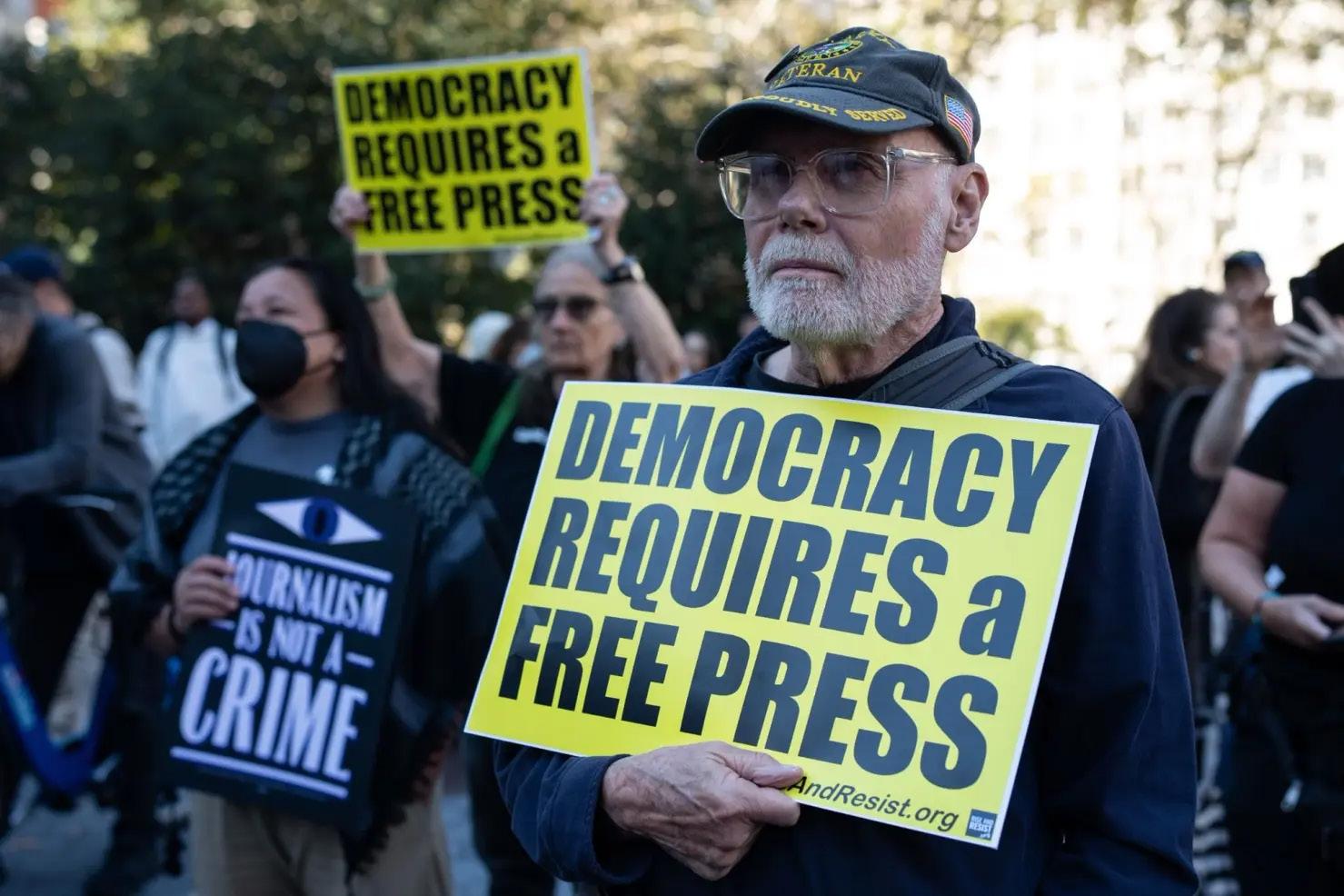
Now, a year into the second Trump Administration, several troubling incidents cast doubts as to whether journalists and professionals of the media sectors are truly given the protections that the craft requires. Outspoken hosts face retaliation and suspensions. Advocacy groups file lawsuits against the government for violations of constitutional protections. Federal agencies and non-profit organizations are defunded and dismantled.
In the wake of these developments, the American press is confronting its own vulnerabilities: “our free press sits atop an increasingly fragile edifice. This edifice is supported by a number of legal and nonlegal pillars [...]. Each of these supports, however, has weakened substantially in recent years.”
When the government questions the legitimacy of the press, the media either starts to lose traction altogether or reluctantly adjusts its tone, language, and coverage, hoping to navigate decisions that could threaten its survival. This is evidenced by an increase of self-censorship among journalists in at least 32 countries, also documented in the V-Dem 2025 Democracy Report.
Though the situation is concerning, democracy in the United States has not completely backslid. It is, however, beginning to display signs of partial democratic decay. These processes hardly ever happen overnight, even after a single trigger; they result from small, often seemingly trivial changes that accumulate over time.
When rights are restricted for seemingly arbitrary reasons and fundamental freedoms are denied, it is crucial to be aware of what legal safeguards are in place and the extent to which they entitle their beneficiaries to protection from wrongdoing.
The legal framework in the US
In the United States, the protections afforded to journalists and other professionals of the media sector stem from a complex, multilevel legal framework that includes constitutional, federal, and state statutory provisions and case law. Nevertheless, the overall body of guarantees and privileges is lacking at best: instead of offering complementarity, their fragmented structure creates ambiguity and undermines effectiveness.
At the constitutional level, the First Amendment enshrines the freedom of speech and freedom of the press. The Supreme Court, in clarifying the scope of the Amendment, has concluded that “speakers are protected against all government agencies and officials: federal, state, and local, and legislative, executive, or judicial. [...] The First Amendment restrains only the government. The Supreme Court has interpreted “speech” and “press” broadly as covering not only talking, writing, and printing, but also broadcasting, using the Internet, and other forms of expression.”
Thanks to the First Amendment, the government cannot impose content-based sanctions, save for a selected list of cases where free speech needs to be balanced with other competing interests.
Aside from the First Amendment, there are limited protections at the federal level designed specifically to protect journalists and most of them stem from landmark cases and judicial interpretation of adjacent provisions.
For instance, in New York Times Co. v. United States (1971), the Supreme Court famously held that “any system of prior restraints of expression comes to this Court bearing a heavy presumption against its constitutional validity”, barring the government from blocking a priori the publication of classified information.
Other important precedents include New York Times Co. v. Sullivan (1964), which established “the extent to which the constitutional protections for speech and press limit a State’s power to award damages in a libel action brought by a public official against critics of his official conduct”, unless “actual malice” is proved.
In Hustler Magazine v. Falwell (1988), the Supreme Court clarified that public officials may not “recover damages for emotional harm caused by the publication of an ad parody offensive to him”, unless “the damage to reputation caused by publication of a defamatory falsehood, but only if the statement was made ‘with knowledge that it was false or with reckless disregard of whether it was false or not.’”
At the state-level, shield laws may be enacted to “facilitate the news gathering process by excusing journalists from disclosing confidential sources or information obtained from these sources.” However, states have the authority to establish the scope of the protection, the only requirement being that it is not in contravention to the First Amendment, rendering the overall framework fragmented and uneven.
The state of Wyoming is the only US State not to have any provisions, statutory or otherwise, providing for such protections, thereby constituting an undesirable gap in the legal framework regulating the privileges and protections for the press.
4. What happened at the Pentagon?
The resilience of press freedom in the U.S. has been tested recently by the Department of Defense’s review of access conditions for the press corps, which led the majority of correspondents to relinquish their credentials, thereby losing all access to the Pentagon.
Riley Martinez, a national security reporter at the Yomiuri Shimbun and former Pentagon correspondent for the same outlet, shared a first-hand account of the implications of the newly established access rules issued by the Department of Defense.
Martinez shared that long before the new contracts were rolled out in October, the press had already registered a broad shift: under the Biden administration, press corps were briefed three times a week, in addition to informal and virtual briefings in response to significant developments. In the nine months that Martinez covered the second Trump administrations, press corps were briefed three times in total.
“They started chipping away at our access in the building. In order to be part of the Pentagon Press Corps, and to report from the Pentagon, you have to go through a pretty rigorous screening. Within the building, we had a lot of access.
Then they slowly started to chip away at that.
And so, by the time October came, our physical access within the building had already been severely restricted and we were basically relegated to this one press wing, which is where our offices were and where the briefing room was.”
Martinez remarked that, as is customary, they were expecting change in the wake of the transition between administrations, but they had not anticipated such an abrupt decision: “In October, they rolled out a new contract that the press corps had to sign in order to get our badges to enter the building renewed, and they redrafted one of the stipulations that was in the original contract, that all of us pretty much said we cannot sign. We were basically asked to make sure we had explicit permission from the Department [of Defense] to publish information. Pretty much all credible journalists were unable to sign the contract, which meant that we do not have regular access to the building.”
The Pentagon incident has prompted much debate about what such a measure might entail for media plurality and government accountability moving forward: “It is still being determined whether this is legal or not. The way that I come at it is just that it is very troubling. Because you have to have a government that values free speech and acts like they value free speech and that currently does not seem to be the case. To have the accountability of the press corps, physically, inside the building was a source of pride for the Department, but now that no longer exists.”
Another point of discussion was the link between the rise of alternative media and the circumvention of intermediaries from the news sector. When asked about whether alternative media posed a precipitating threat fostering democratic backsliding, Martinez remained constructive: “I don’t think it necessarily has to. I view alternative media by and large as somewhat of a positive thing, but I think it’s incumbent on people to want to get their news from credible sources.”
Once the legacy resident press corps left the Pentagon, access was primarily reallocated to alternative media, TikTokers, conservative influencers, and the like. Martinez underlines that digital platforms ensure access to political information that has previously only been reserved for legacy media organizations. “I think that there’s a benefit to this new age that we have entered of social media giving access to politicians that only would have been reserved for the New York Times in the past, or CBS, so I think there is some benefit in that, however, what happens is the the burden of credibility and factchecking is no longer there.”
The importance of media literacy is a recurring theme in Martinez’s testimony: “As an audience, you have to want the information you consume to be credible.”
According to the News Literacy Project, a recent survey found that 94% of teenagers would welcome the addition of media literacy education in schools. Implementing similar initiatives may prove difficult due to a number of challenges, and while the National Association for Media Literacy Education emphasizes that “media literacy education is not partisan,” the politicization of education remains hard to overcome.
The lack of a cohesive codification of legal protections for journalists allowed the ongoing drift towards authoritarian governance to exploit the gaps in the current legal framework, significantly impairing the ability of the press to operate under the basic assumptions it is expected to rely on.
This article demonstrates the need for federal shield-laws to be implemented, to strengthen the framework outlined above. An option would be reintroducing the Protect Reporters from Exploitative State Spying (PRESS) Act, which, despite receiving unanimous support in the House of Representatives, failed to reach a vote in the Senate.
The extraordinary outcome in the House and the underlying bipartisan support prompted the then-Senate majority leader Ron Wyder to submit a unanimous consent (UC) request, which enables the Senate to approve acts through a streamlined procedure that “supplants the standing rules of the Senate”. For a UC request to succeed, no Senators must object.
In this case a UC request was submitted to dispense with debate and enter directly into voting procedure, but it failed due to the objection of Sen. Tom Cotton, who cited “national security concerns” as a justification for his objection.
It must be noted, however, that the failure of a UC agreement does not imply the failure of the bill the Senate seeks to vote on: it merely means that the chamber reverts to default procedures. Thus, Sen. Cotton’s objection did not singlehandedly determine the failure of the PRESS Act. Notwithstanding the wide approval it secured, the Bill was tabled and never reexamined, only to expire at the end of the 118th Congress.
It would also be advisable to reconsider the new Department of Defense rules for access issued by Secretary Hegseth to encourage plurality of media and foster enhanced transparency.
While it is unlikely to happen under the Trump Administration, responsible for its recent downsizing, a full reinstatement of the US Agency for Global Media to its maximum operational capacity would bolster the role of independent federal agencies.
By Carlota Cañadas Latorre
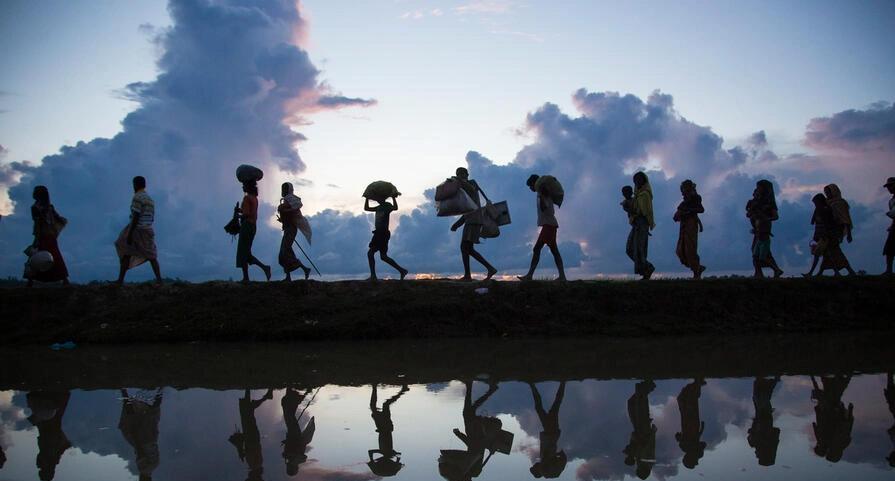
In recent years, the EU has been going through an increase in popularity of far-right parties appealing to populist ideals, specially concerning the topic of immigration. This has been the case in countries which have suffered deeply the consequences of the previous immigration crisis, such as Italy or Hungary. However, other European crises have also played a role in the rising influence of these parties, which has had considerable repercussions on the continent’s foreign policy, particularly concerning European integration. More specifically, within the strand of populism, the role of ethnopopulism is crucial for understanding this. It is defined as a specific branch of populism where “the people” are defined in ethnic or cultural terms, drawing a clearer boundary between in-group and outgroup collective identities in society.
Thus, in order to rise to power, political parties may use narratives concerning minorities to gain popularity and ensure governance claiming to defend the traditional values and economic integrity against the impositions of globalized elites. The 2015 refugee crisis has provided these parties to legitimise their actions and a base for grounding their policies in order to address ongoing concerns.
Often, these parties associate migration with terrorism or criminal activity, which prompts citizen hatred towards them and aim for a divide between the nationals and these targeted groups, and them as their protectors and acting in their best interest. The propaganda and frame elaborated by these governments promote public distrust not only between individuals but also in institutions. This raises the question of the extent to which the efficiency of application of migration measures and derogations justify undermining the rule of law and individual rights.
Firstly, there will be a historical context providing insight on countries such as Poland, Hungary, Italy and Spain. This will be followed by an analysis of how ethnopopulist governments mobilize the masses and gain supporters. After that, the role of emergency situations as legitimate justifications for undermining democracy will be taken into account, as well as current legislation and stances of European institutions. Finally, policy recommendations will be made for future reference.
As a consequence of crises in Europe during the early 2000s including the Eurozone’s 2008 financial crisis and the 2015 migration crisis, together with the growing effects of globalization, Europe underwent a wave of popularity among far-right, and to a lesser extent left-right parties across the continent.
These groups directly appealed to the concerns of citizens in the face of the emerging threats of the century through the form of ethnopopulism.
Even though there are differences in its emergence and development across countries, this political approach uses similar strategies to mobilise support. One of its central drivers has been the categorization of migration as a structural threat to the national order rather than a policy challenge. This mechanism has enabled parties to reconstruct the narrative around it and challenge pre-existing notions of national identity among groups, framing migrants as threats to security, welfare and identity notwithstanding the actual levels of migration. Populism per se is not necessarily an instrument for democratic backsliding (Bonikowski 2017) because it is merely a way of doing politics. Outcomes depend on institutions, and though it is a risk factor that could trigger democratic erosion depending on the context and circumstances where it emerges, populist rhetoric by itself does not automatically dismantle democracy. Thus, ethnopopulism’s anti-pluralist essence of defending the people against dangers can bring about democratic erosion. In this sense, since ethnopopulist incumbents are the only ones who represent the interests of the “true” people, opposition parties and leaders are illegitimate and dangerous.
In countries like Hungary, Poland and the Czech Republic which previously were liberal democracies, ethnopopulist appeals took root. The Law and Justice Party (PiS) in Poland, the Fidesz government in Hungary with Viktor Orbán, or the Czech President Miloš Zeman use this narrative to present themselves as protectors of traditional values and the people, defined not in terms of a nation but including many different values including culture, religion, ethnicity, etc. The racialization of the immigrant threat in this region was targeted towards brown Muslim refugees in the aftermath of the 2015 refugee crisis of Muslims.
In this context, leaders saw an opportunity to delegitimize domestic opponents and international organizations arguing that they favoured the Muslim migrants’ welfare to the detriment of ordinary citizens. Moreover, they took advantage of the lack of previous experience on the managing of the crisis to deceive the population.
In the 2018 elections, Orbán built his campaign around the slogan of “Stop Soros” alluding to the opposition leader George Soros, who was working alongside EU institutions to bring Muslims into Europe to “destroy European culture” and ground for terrorism.
In Southern Europe, Italy, with the power vacuum left after the 2018 coalition of the Five Star Movement and the Lega, Giorgia Meloni’s right-wing Fratelli d’Italia (FDI) secured the highest vote share. Meloni’s government is characterized by anti-immigrant rhetoric and Euroscepticism.
Nevertheless, since after the COVID-19 crisis and war in Ukraine, ethnopopulist countries had to cooperate with recovery plans of the EU and refugee management, allowing a distinction between refugees and illegal immigrants as the external menace. This moderation in the external threat was countered by a radicalization of the internal political opponents.
With respect to Spain, the ethnopopulist wave arrived later on with the rapid growth in popularity of the far-right, in part as a reaction to internal Catalan nationalist secession attempts in 2017 with an illegal referendum. Moreover, Spain was, in 2022 according to the Eurostat, one of the countries with the biggest populations of foreign-born citizens. Most of the irregular flow of refugees access Spain either: through the ‘Western Mediterranean route’, crossing the Gibraltar Strait, reaching the Canary Islands; or reaching Spain by land, through its cities in North African territory, Ceuta and Melilla.
As previously mentioned, the spread of new technologies and the reach of news and media is a factor worth bearing in mind for the development of ethnopopulism which strengthened its power, especially due to the ease in manipulation of the information. During the financial crisis, investors sold local media outlets to local oligarchs, concentrating it in the hands of politically connected elites, which made small media markets in Eastern Europe susceptible to manipulation (Štetka 2019) due to its alignment to the government and provided a tool for broadcasting a favourable rhetoric to their interests.
Beyond domestic politics, ethnopopulism has also had systemic consequences for European foreign policy and EU cohesion. The European Council on Foreign Relations shows that populist parties increasingly act as “challengers” to EU foreign policy consensus, particularly on Russia, migration governance, and multilateralism, even when they do not hold executive power.
Overall, ethnopopulism since 2015 has reshaped European politics not only by mobilising voters, but by altering institutional practices, policy agendas, and the normative foundations of liberal democracy and European integration.
3.1
In this sense, they use these past examples as tools to turn the population against liberal economic policies and depict irregular immigrants as a threat. They redirect social frustration towards a group, favouring social polarization and exclusion, especially prejudicing regular migrants in these affected countries.
Some of the main arguments that are used which favor democratic erosion and bolster social unrest include mainly:
Firstly, redistribution of resources in areas with limitations or shortages. In situations with scarce resources, they are often portrayed as undeserving beneficiaries of social service who make use of them without contributing proportionally and taking advantage of those who are.
Closely related to this, is the fiscal burden argument, claiming that they might have a negative impact because they might consume more social benefits than contribute to the payment of taxes, which reinforces the resentment toward migrants, while also justifying restrictive welfare policies that may weaken democratic governance. Research shows that during economic uncertainty this assumption is amplified, which results in immigrants being classified as economic burdens that the rest of society has to endure, and scapegoats for more structural problems such as job scarcity and wage stagnation.
Moreover, security regarding border control of irregular migration and rhetoric that immigrants contribute to higher crime rates. They let the population rely on assumptions rather than facts to instigate fear and distrust among the population. In Belgium, the politician Bart De Wever has publicly related immigration with criminality and social disorder and called for a stricter migration policy.
Additionally, the threat to national cultural identity. By redefining citizenship and political legitimacy in ethnical parameters or values, it is an issue that transcends material concerns and reinforces ethnopopulist conceptions of belonging. Terms such as ‘foreign infiltration’ have been used to challenge national unity, particularly in Muslim communities of Western European countries.
Finally, labor market competition, especially for low-skilled national workers. The migrant influx allows local companies to undercut wages and give them a comparative advantage over nationals, at the risk of increasing unemployment or degrading work conditions. These governments, with their strict immigration policy proposals, provide a sense of ease and symbolic recognition of the concerns of the people and a feeling of representation of their fears for which they are granted protection. In this sense, it is not posed as an administrative challenge, but as a structural threat to public order and national identity. In this context, rights may be undermined justifiably to guarantee security and normalize executive discretion.
We all have that five-year-old girl in us, who’s confident, knows what she wants, is interested in the world, is excited to be in kindergarten, and wants to learn everything. We all have that little girl in us. Remember who you were, because that’s who you still are. What interests you as a child will still interest you as you enter your 60s. It’s all a single journey. You might have different ways of expressing those interests, needs, and questions, but you are who you always have been.
Leaders in different countries or parties gaining influence take advantage of the situation of vulnerability in a country and frame the narrative to fit their interests, not only to gain favor and votes among the population but also to justify a series of acts that undermine democracy without being held accountable. Ethnopopulism allows them to be flexible in identifying those who belong to the group vs. those who are outsiders. Moreover, with the new developments and reach of the media through globalization, this amplifies their ability to racialize the situation, benefiting from the outcomes of past crises such as the 2015 refugee crisis.
BY POLA JANCEWICZ
How are these governments able to translate in-group concerns into durable institutional support? Governance relies on establishing a structural moral hierarchy exacerbating the distinction between deserving insiders and undeserving outsiders. This creates a political ground that rewards loyalty. Nevertheless, studies show differences in these incentives according to the different types of political systems in a country.
There are three main types of logics describing voting to a certain block: policybased logic, when individuals vote a certain party to develop policies that provide benefits for them as a group; grievance-based logic, mobilizing deprived groups; and clientelismbased logic, in which members of a group may support a particular party due to the expectation of receiving direct benefits. Even though policybased and grievance-based logics are more powerful in democracies than autocracies, clientelism is a critical determinant for ethnic voting in autocratic governments. However, political context matters in establishing this claim. This is because in democracies clientelism is merely used to build support, while on the other hand, in autocratic regimes, it is used as a mechanism to establish social and economic dependencies that sustain the regime, rewarding supporters through the manipulation of formal resource distribution mechanisms, due to the greater hold and discretion they have over them. The promise of policies targeting the preferences of the in-group identity with leaders who represent a similar background to which citizens relate to, is crucial for a party’s ethnic mobilization strategy.
Following this train of thought, emergency situations and crises contribute greatly to the weakening of democratic institutions and work in favor of populist parties. These circumstances can call to legitimize assaults to formal or informal democratic standards as a means to debilitate the enemies of the true people (Grzymala-Busse 2019). And it is this sense of uncertainty and urgent necessity that validates actions against the non-well performing institutions which do not live up to their expectations.
Nevertheless, this does not mean that they will necessarily perform better than democratic governments, especially regarding exogenous crises that they have not created. This is because coming from outside, it is more challenging for them to control the rhetoric and blame the opposition for the issues arising from its poor management. It is a strategy which would otherwise be exploited, as it happened with the COVID-19 crisis.
Also, using their usual modus operandi would be, in terms of healthcare, much more costly, so they had to rely on the knowledge of experts to avoid criticism. Nonetheless, they still managed to politicise the situation, link it to existing grievances and deepen polarization, as well as construct artificially a political crisis deriving from it, even if it was not initially originated within the country. Moreover, they may use these emergencies to justify power grabs to counterbalance and provide a harsher response to the effects of the pandemic, such as in Slovakia, or the Czech Republic. In these countries, the pandemic allowed for the establishment of technocratic populism and in both, populists used emergencies to weaken institutional accountability.
Within the context of asylum and migration law in the EU, the EU Crisis and Force Majeure Regulation (Regulation EU 2024/1359) adopted by the Council on May 14th 2024 will enter into force in 2026. It provides flexibility within the Dublin System during situations of crisis. This regulation, more specifically Article 11(1) of the Regulation, provides for derogation regimes in cases of ‘force majeure’, which allows for extension of asylum registration deadlines by an additional period of maximum 6 weeks. It provides leeway and a discretion which allows for a ‘reasonable’ justification of violations under certain circumstances. Though, the question whether efficiency outweighs the respect of the rule of law is contested. The regulation frames crisis in a very narrow way and provides for three main criteria to determine a crisis and force majeure, which could give grounds for derogations. The situation has to involve large-scale arrivals of third-country nationals or stateless persons entering a Member State. Secondly, these arrivals must be provided with the necessary asylum reception services of said Member State as well as special treatment to those who require it.
As for force majeure, these are unforeseeable consequences out of the Member State’s control which prevent the Member State from complying with its obligations under Asylum and Migration Management Regulation (EU) 2024/1351 and Asylum Procedures Regulation (EU) 2024/1348.
It is worth differentiating these exceptional circumstances to those the State faces as a result of the cumulative effect of arrivals without reaching the level of mass arrivals, in which measures for dealing with this are portrayed under Regulation (EU) 2024/1351. The regulation also includes rules for the improvement of solidarity and safeguards such as information in their language about the derogations, the duration, and how to appeal asylum applications. Moreover, special needs for international protection of applicants must be addressed, and derogations can not last longer than 12 months. With this, there is the constant monitoring of the Commission and the Council who address the proportionality and necessity of these derogations and the possibility for prima facie recognition.
Moreover, the solidarity rules introduced raise concerns, since extending the deadline of border procedures to 18 weeks during a crisis of force majeure could cause further gridlock and excessive periods of detention in border areas. Furthermore, even if there exist special considerations for those with special needs and vulnerable asylum seekers, identifying them amongst the mass of the influx appears not to be very feasible in practice.
However, when such derogations become the default procedure and are repeatedly relied upon as an ordinary tool for migration governance, and deadlines are extended instead of offering protection and reception, this becomes a concern. This mechanism can lead to undermining State’s obligations under international law, and the problem of mass influx remains unsolved.
Having this in mind, it is worth analysing the outcomes of populist governance for human rights, democratic institutions and the attitudes towards international organizations.
Dissatisfied voters in several Eastern European countries have been more likely to vote for a larger number of completely new parties to punish incumbent parties (Pop-Eleches 2010; Haughton and Deegan Krause 2015; Aha 2019). This volatility made ethnopopulists rise and are willing to make considerable efforts to reduce electoral turnover and consolidate power.
Once in power, populist governments prioritize short-term quick wins over long-term unpopular policies and use the media and means of communication to influence the behaviour of citizens.
In Poland and Serbia during the COVID-19 pandemic, populist leaders initially acknowledged scientific expertise to counter the threat and present themselves as ‘defenders of the people’, but at the same time, this allowed them to hold back from following these recommendations when they became politically inconvenient. This shows how ethnopopulism can undermine evidence-based decisionmaking and the effectiveness of emergency risk communication, as well as the capacity of society to move the population towards a consensus in solidarity for an efficient action plan.
There can also be gradual redefinitions of the “other” under the populist rule, it is a dynamic and evolving concept. In countries like Italy, Fratelli d’Italia, with a long history of populism, have shifted their stances on topics regarding the EU, migration and national politics. This change has become more noticeable, as previously mentioned, with the course of international crises such as the COVID-19 pandemic, the war in Ukraine and the 2022 Italian Government Crises.
The definition of the party’s “other” primarily identifies the party’s internal political enemy, that is the Italian left, rather than the external threat. It has targeted national opposition much more aggressively and has adopted a more moderate stance towards migration and EU integration.
Regarding institutions, populists weaken judicial independence and undermine other constitutional checks. Constitutional reforms in Hungary with Fidesz and Poland with the Law and Justice (PiS) party have loosened constraints on executive power, reducing protection of individual rights and undermining the rule of law and separation of powers.
These events and clashing ideals have raised concerns within the EU which have led to the opening of procedures under Article 7(1) TEU to suspend certain membership rights from these member states for serious and persistent breaches of the core values of the EU including: human dignity, the rule of law, freedom, democracy, equality, and respect for human rights including minorities.
Poland’s procedure was officially closed in 2024, though Hungary’s procedure triggered in 2018 is still ongoing. Nevertheless, the determination of the suspension of voting rights under Article 7(2) TEU requires unanimous decision by the European Council, which so far has not yet been acquired.
In order to mitigate this situation that is extending throughout the continent, the EU has to focus on achieving the following main goals to strengthen democracy and prevent democratic backsliding.
Firstly, it is necessary to strengthen the role of the courts to act as guardians against executive aggrandizement, through judicial review, the imposition of party-financing rules and constitutional scrutiny and oversight. Additionally, support political party system development in countries like Slovakia to make them more compatible with key principles of European ideologies pertaining to the same wing. Moreover, media pluralism and independence is crucial for providing diverse sources of reliable information criticizing those in power and holding them accountable for their actions. Without independent broadcasters or transparency of ownership, media is a powerful tool for populist governments to advertise false information favouring their rhetoric, as happened in Hungary during 2015 refugee crisis, where the government spent around 28M euros on an anti-immigrant campaign and protection against ‘terrorists’ to Christianity and national values. It can also help to provide a narrative for the necessity of supporting refugees to reduce polarization and support integration measures among the population.
What is more, independent oversight in migration governance is crucial to ensure that decisions are made on long-term policy goals. Studies show that long-term reception policies, which include central and local governments, are better equipped to meet local necessities and benefit both host communities and immigrants. It is also necessary to make key policy documents more practical and with alternative approaches to different scenarios.
The COVID-19 pandemic further stressed the need to maintain autonomy of science, public health and ability to communicate with the public in order to avoid excessive politicization in emergency communication in the face of common threats and erosion of trust. It is necessary for health communicators to achieve this by anticipating these situations and incorporating political contention and transparent responses with the public.
There is a need for an administrative reform through digitalisation of processes and improvement of democratic resilience. Though the administration cannot act alone in the fight against these challenges, the involvement of the citizens, political parties, academia and state actors is of most importance.
To sum up, this paper has shown that ethnopopulism has become a central force in reshaping European politics, particularly through the instrumentalisation of migration and emergency narratives. Through the dynamic definition of “the people” according to specific cultural and national values, migrants are perceived as external actors endangering the community. In this context, extreme and restrictive lengths will be reached to safeguard the population, even if that means weakening democracy and undermining human rights. The examples of Hungary, Poland, Italy and Spain have portrayed how these narratives are translated in practice and how the different actors intervening, such as the media or the judiciary, are slowly corrupted.
International emergencies such as the 2015 refugee crisis, the COVID-19 pandemic, as well as the war in Ukraine have provided parties with further opportunities to increase discretionary measures in derogations of asylum procedures, raising questions concerning the respect of the rule of law. Moreover, the procedure under Article 7 TEU and the new Crisis Regulation have been analysed, though their effectiveness remains somewhat limited.
Finally, policy recommendations include strengthening the role of courts, plural and independent media, promoting multiparty systems, evidence-based policymaking, longterm policy goals, and the inclusion of society along with the administration and European institutions as safeguards towards democratic resilience.

By Lukas Koutsoukos
Unlike today, early Americans were discouraged from showing loyalty to political parties—a reflection of the Founders’ deep suspicion that factions could threaten the republic as a whole. This stemmed largely from the Founders’ dissatisfaction with party systems in general, given their antidemocratic potential to produce a tyranny of the majority. James Madison, in Federalist No. 10, described how a majority faction can arise in a republican system as a “form of popular government,” yet also presents an alarming danger of “sacrific[ing] to its ruling passion or interest both the public good and the rights of other citizens”. The risk of this tyranny arising, he argued, diminishes if factions are made smaller, their agenda narrowed, and their popular adherence ultimately diminished. The Founders, then, sought to cultivate not party loyalty, but loyalty to democracy itself.
Madison’s optimism, however, did not transpire as he intended. On the popular level, this failure largely occurred through the spoils system, in which government jobs were awarded to political supporters. Andrew Jackson, a key proponent of patronage, justified the practice by arguing that “any government that aspires truly to serve the people will appoint and rotate its staff rather than create a permanent bureaucracy in which civil servants view their positions as property”. Rather than viewing party loyalty and democracy as opposites, the Jacksonian Democrats mixed the two together by proclaiming that the former helps develop the latter.
Even so, the moral promise of a stable republic began to erode. The spoils system encouraged partisanship through personal profit, leading to ideological adherence at the expense of the system’s democratic foundations.

Even after its abolition through the Pendleton Act of 1883 and the adoption of a merit-based system nationwide, party loyalty still prevailed at the local level through political machines, in which the local political leader—the ‘boss’—“dominated government and politics by building a community of supporters”. Money and power, evidently, assisted in normalizing popular factionalism.
Among elected officials, party loyalty became more consequential through the establishment of House and Senate whips, who facilitate communication between party leadership and lower-ranked officials by tallying and rallying party members during votes. The role emerged from the need to track voting positions during a narrow Republican margin, cementing the whip’s role as an enforcer of a united party agenda. While this boosted partisan efficiency, it also affirmed some of Madison’s worst fears.
The prioritization of party over country, whether enforced through financial incentives or top-down loyalty, turned partisan shifts into a test of American democracy itself. This dynamic intensified with rising polarization since the 1970s, largely driven by a turn towards identitybased politics following the social movements of the prior decade. Civil rights legislation championed by President Lyndon Johnson’s liberal Democrats prompted many Southern Democrats to flock to the Republican Party. From this point on, the complex economic disputes that had once split the two-party system became simplified into an equation of conservatism with Republicans and liberalism with Democrats, a dichotomy that Gideon Rose argues led to “the basis of political identification shift[ing] from policy to identity”.
This change arguably made party loyalty more personalized. What once had to be supplied externally—through incentives or coercion—could now be found in internal psychologies that “triggers basic human instincts, [...] increases the perceived stakes of the game and reduces the possibilities of compromise across the divide”. In simpler terms, voting behavior became less dependent on how Americans think, but on who they are.
Political attacks no longer discuss certain principles, so much as they target one’s character. American voters, after the mid-20th century, now “see the costs of the other party’s success as unacceptable” since “many different actors across institutions see their interests as dependent on the success of their party”. This grants leaders great leverage to advance their own agenda.
Over time, this trend has resulted in affective polarization: voters consistently praising their own party while increasingly disliking their opponents beyond their political differences. According to Alan Abramowitz, between 1968 and 2008, percentage approval of the opposing party had declined from the mid- to high-40s down to the low 30s, while support for one’s own party remained steady at around 60 percent. Thus, whereas “defection rates generally ranged between 15-20% between 1952 and 1980, they have been consistently below 10% since 2000”. Identity politics has thus made it more difficult for voters to envision voting for a different party, as doing so increasingly felt like self-betrayal. As a result, common ground between parties became increasingly difficult to envision.
This adhesion to party loyalty grew markedly during the rise of populism in the 2010s, but in a new form. Whereas party loyalty had previously developed from the bottom-up, as voters personally identified with one party or another, the rise of Donald Trump fueled a top-down loyalty centered on an individual and his ideology. Among Republicans, this process began after their landslide loss in the 2008 election and the party’s fervent opposition to Barack Obama. With Democrats controlling both the executive branch and a “79-seat advantage in the House”, Republicans believed they “saw a path out of the political wilderness” if they remained unified and fought Obama on everything. This led to their portraying Obama “not just as a president from the opposing party but an extreme threat to the American way of life”,” fueling concerted opposition to policies like Obamacare and promoting conspiracy theories such as birtherism.
The result of this was a nearly 10-degree drop in opposite-party approval in the 2012 elections and a sudden heightening of the electoral divide (Abramowitz).
When Trump won in 2016 by “embodying [the] anti-Obama playbook so convincingly that he managed to seize the Republican Party from loyal Republicans,” party loyalty began transitioning to personal allegiance. As the leader of a populist faction within the party, Trump was able to exert control through vehement criticism of both the common enemy, Obama, and those judged insufficiently aggressive against him. His rhetorical boldness guaranteed his nomination and was legitimized through his victory in the general election.
During his first term, Trump’s approach to party control was unprecedented in its fusion of public and political loyalty through social media. His direct criticism of officials online created the impression that he was holding politicians directly accountable to the American people, while allowing him to disseminate his agenda more forcefully to his supporters. Over time, Trump’s direct messages to the American people came to be seen by many on the right as fresh and unprecedented, an improvement upon the more bureaucratic Republican party before 2015. Disloyalty or conciliation with the Democrats was framed as bureaucratic inefficiency, making moderation less tenable. Any attempt at conciliation was punished by public shame on social media, including being labeled a ‘RINO’ (Republican in Name Only). The growing use of this acronym reveals the diminishing importance of the term ‘Republican’ in favor of genuine loyalty to the figure of Trump. Indeed, Trump’s aggressive command of social media and his disregard for the norms of political politeness online made resistance incredibly challenging. Those who embraced Trumpism after initial hesitation are often described through monarchical rhetoric as having “kissed the ring” of the populist ideology. Name-calling further enables Trump supporters to associate their opponents with a negative adjective that simplifies the complexity of that individual’s political scandals. For instance, “Crooked Hillary” encompassed multiple scandals—such as misuse of her private email, as well as her mismanagement of the Benghazi crisis—while also trivializing them. The use of first names personalized the attacks, while also reducing his opponents to one-dimensional caricatures for the general public. Ultimately, when these simple yet effective taunts are repeated incessantly, the president’s ad hominem attacks become normalized.
Opponents have shown little leniency toward Democrats, whose support during the Trump era has largely been characterized as a reaction against the Republican narrative rather than by independent ideas. A look at the Democratic Party platforms from 2016 and 2020 reveal a growing focus on opposing Trumpist policies In 2016, Trump is not mentioned in the preamble and appears only 32 times in the entire document; by 2020, he is referenced eight times in the preamble and 120 times throughout the platform.
What’s more, the language of the Democrats’ accusations grew increasingly pessimistic throughout Trump’s first term. In 2016, the Democrats argued that they “will not stand for the divisive and derogatory language of Donald Trump” and that “this kind of rhetoric must be rejected”, while accusing Trump of having “denigrated virtually every segment of American society—and in so doing, [having] insulted the very idea of America itself”. This, rather than an impulse intrinsic to the party history, explains why the 2020 Democrats “believe in bringing the American people together, not stoking division and distrust”. In many ways, the party has shifted from being the faction of Obama to the faction against Trump, with persistent Republican attacks leaving little space for original, non-reactionary ideas, or any sort of unique leadership.
Polarization over loyalty—or disloyalty—to Trump fuels democratic backsliding in America. Leaders’ growing refusal to communicate has pushed both parties away from the political center, turning them into echo chambers. This effect is amplified by the sequential nature of party action, stemming from a growing inability to cooperate simultaneously: Trumpist Republicans move first, and antiTrump Democrats responding in reaction.
This notably occurred last year when some of Trump’s followers in Texas pursued redistricting efforts “mid-decade rather than after a census,” as is typically the norm. As a result, California Democrats campaigned for the passage of Proposition 50, or the “Election Rigging Response Act”, which replicated the same questionable act that the Texans promoted to offset Republican gains, abandoning the state’s independent redistricting commission in the process.
Each side justified its actions as serving the voters—that is to say, their own voters—while they undermine the integrity of census-based maps and weaken the democratic principle of independent redistricting. The Republicans’ outright support for gerrymandering in Texas “to try to add five Republican congressional seats that will be won in the 2026 congressional election” further underscores their disregard for American electoral integrity. Meanwhile, the Democratic approach of ‘fighting-populismwith-populism’ celebrates a desirable outcome —nullifying the Texas gerrymandering—while simultaneously normalizing the very tactics they publicly condemn.
Democratic backsliding has been further magnified by the erosion of truth, especially through developments in artificial intelligence. This problem has been largely onesided: just two days into Trump’s first term, Republicans sowed doubt by promoting vague ‘alternate facts’, claiming that Trump’s 2017 inauguration drew a larger crowd than Obama’s in 2009. The rejection of fact-checkers and journalists, the questioning of election legitimacy, and the frequent walk-backs by President Trump on certain policies such as tariffs have led to great uncertainty about the Republican agenda and the state of American politics.
When coupled with generative AI’s ability to produce deepfakes and misinformation, the public increasingly lacks a trusted source of objective information. Nowadays, many follow cues from party loyalists rather than independently evaluating claims. In a sense, allegiance to the party line now outweighs the objectivity of the information the party provides. Ultimately, party loyalty in the Trump era represents a reversal of its historical function. What was once determined by the diversity of the voters has now transformed into a system of partisan, and often personal, allegiance. Democratic institutions cannot function without the public’s willingness to stand up for democratic principles over their party leaders and to recognize that what benefits the party does not always benefit the nation. .
The Founders were right to recognize the potential for a tyranny of the majority in the United States, but their warning assumed that the factions could still communicate with one another. If the parties now perceive each other as the enemy, and consequently disregard the preferences of nearly half the country, can this truly be called ‘rule by the people’—or democracy—at all?

By Guillermo Romero
In 1989, Francis Fukuyama famously declared the end of history. He claimed that the ideological development of political systems had reached an endpoint—liberal democracies no longer had any scalable competition. Fastforward to 2024: Fukuyama publishes an article in the Financial Times titled “It’s not too late to reverse America’s political decay.” Nowadays, history certainly seems far from over.
Filled with regret about the persistent signs of democratic backsliding in the United States, Fukuyama protests in the article about unrepresentative electoral laws, obstructive constitutional design, and increasing polarization and misinformation amongst the electorate. It is not difficult to recognize such problems in most other liberal democracies. However, while these factors are certainly important, addressing them seems implausible when political parties (the actors in charge of addressing them) operate according to a completely unrelated set of incentives.
According to the widely accepted and foundational cleavage theory posited by Seymour M. Lipset and Stein Rokkan, parties organize themselves along the socio-economic and political cleavages that their electorate represents. Initially, this seems fairly common-sensical and even conducive of basic democratic principles. Nevertheless, a closer look at the implications this model has on intra-party dynamics, particularly on inner party discipline, may actually reveal fundamental flaws about political parties as democratic institutions. While democratic backsliding cannot be explained away with such a narrow scope, any proposal intending to structurally safeguard democracy must confront internal party structures with the same rigor as any other elementary democratic institution.
If Lipset and Rokkan’s hypothesis that parties originate as a result of the socio-economic and political cleavages of their time holds true, then political parties must be consistently and cohesively structured to effectively represent a given side of a cleavage.
After all, parties would not be useful without their ability to express and bargain on behalf of a coherent set of interests for them to gain practical political relevance. This implies that parties must be capable of enforcing this consistency internally, especially if they wish to maintain their natural share of the electorate loyal. Therefore, parties will often set up disciplinary incentives (both reward and punishment) to keep their individual representatives in line and establish an efficiently organized political unity. There is an indispensable amount of inner party discipline for this model to hold true. However, while party discipline is not inherently negative—it can very reasonably serve the purposes already outlined—there is a fine line between political cohesion and coercion. Hierarchical structures, which are intrinsic to parties, often create incentives that tip this balance toward coercion. This risk was first identified by sociologist Robert Michels in 1911, as famously formulated in the iron law of oligarchy. Through his research of party systems and organizations such as unions, he found that all forms of hierarchical organization tend to develop oligarchic leadership structures, posing an existential dilemma for the role of party systems in democratic regimes.
Echoing this view in an interview conducted for this collaboration, the academic director of the political science program at IE University, Professor Oscar Martínez, says that “if you run an organization, like a political party, eventually, there is an inertia towards dictatorship, eliminating competition and voices.” Indeed, when power within parties concentrates in elite leadership, lower-ranking legislators become mere instruments of that central authority; their duty as democratic representatives is essentially revoked. This poses very serious questions for fundamental democratic principles such as separation of powers. Take the case of an electoral result in which the governing party also has an absolute majority in the legislative body. Can the claim be made that there is an effective separation of powers between the executive and the legislative?
Overall, the tendency of parties to become oligarchic structures is revealing of a deep internal contradiction of modern democracies which propels its backsliding.
Such centralized power intrinsically lacks any form of direct accountability, meaning that the oligarchy will only serve its own interests; it is only effectively limited by competition from other oligarchies and entrenched constitutional and legal norms. In turn, parties fail to faithfully represent their voters, who are relegated to simple means for the survivorship of the party oligarchy. A robustly established oligarchy has no incentive to structurally protect democracy from erosion (much less internally) unless it is a relevant factor for its reelection. Under such circumstances, Joseph Schumpeter’s rather cynical definition of democracy can be well understood: “that institutional arrangement for arriving at political decisions in which individuals acquire the power to decide by means of a competitive struggle for the people’s vote.”
A pragmatic account of the mechanisms behind the iron law of oligarchy in modern party systems can be found through A.C. Grayling’s account of party discipline and whips. Within a whipping system, and any other comparable non-formalized method for party discipline, Grayling finds three particular practices used by whips that cross the line from cohesion into coercion.
First, bribery, where promotions and list placements are used as incentives to comply with orders by the head of the party. Bribery rewards those who are supportive of the central authority and brings them closer to power; it can be a tool to determine trustworthy internal allies. Second, blackmail, threatening use of incriminating or politically damaging personal information if such orders are not abided by. Through blackmailing, relevant political figures in a party that are not immediately electorally disposable can be kept obedient, maintaining their high political value while diminishing their internal influence.
And lastly, bullying, referring to a direct reprisal through the use of peer pressure or criticism and isolation. Bullying can be used to strike down more harshly on less relevant party members that behave against their central government, purging internal dissidence and acting as a deterrent for others.
The combined total of these practices, known as the ‘Three Bs’, is a clear coercive strategy within parties that shifts the focus away from issue-based voting; self preservation within the oligarchic structure becomes the legislator’s new objective.
In other words, dissenters can be either driven out or made irrelevant in their internal affairs, while those who obey become more powerful, reinforcing the oligarchic tendency in an almost Darwinian manner. For example, when speaking of parties such as Podemos in Spain, Movimento 5 Stelle in Italy, or Syriza in Greece, which intended to brand themselves as internally democratic, Professor Martínez said that “that very same democracy probably diminishes the likelihood of those political parties actually reaching power.”
Parties cease to be democratic as control becomes more important than internal deliberation. In this regard, Grayling points to the United Kingdom’s 2017 parliamentary voting to trigger Article 50 of the Treaty on European Union (TEU) to proceed with Brexit. Many Members of Parliament had expressly stated that they were against such a decision yet voted in favour of it anyway due to the threat of their party’s disciplinary measures. Here, the tradeoff between control and democratic principles is clearly visible. Ultimately, voters inevitably pay the price. According to Professor Martínez, “the fact that political parties are tremendously leadership dependent erodes the capacity of implementing good, medium and long-run policies that will actually favour the people.”
As previously outlined, another issue is the real possibility of a fusion between executive and legislative powers, where individual legislators’ decision making power becomes merely symbolic. Naturally, the resulting effects of these changes are not only relevant to the internal dynamic of parties, but also to the electorate, who have no easy way of responding. Wherever a closed list system is in place, people are already voting for preemptive party decisions by the time they get to the ballots; one cannot choose specific legislators that might represent them best. Consequently, instead of obtaining relevance through the political value that they may provide citizens, legislators can only do so by climbing the ladder of their party ranks according to the rules set out by its central powers. This leaves little to no room for democratic competition and inner party democracy. As Professor Martinez points out, this contributes towards a feeling of distance between parties and citizens, who “struggle to understand how these organizations that are supposed to be promoting democracy are so not democratic.” Ultimately, popular sovereignty is undermined in favour of the outcomes that central party authorities impose, clearly affecting a core pillar of democratic quality.
Overall, the encouragement of executive dominance through the ‘Three Bs’ can rapidly turn into a negative feedback loop that creates incentives for such inner party dynamics to remain in place.
Despite the fact that this paper has painted a rather bleak picture for the democratic integrity of party systems, it is unclear whether Michels’ iron law can sustain the weight of its own claim. Instead of observing an inevitable move towards oligarchy, it seems more plausible to attribute this undeniably strong tendency to fixable institutional design flaws. After all, there is a clear variance in degree of party discipline and oligarchic structures amongst different party systems. For this reason, it seems like the iron law is more so a rectifiable tendency that can be circumvented when the right rules are in place.
In particular, the democratic design of Switzerland might be taken as an example of a party system that is largely free from such tendencies. While it would be unfeasible to put forth a generalized policy recommendation to import the Swiss direct democracy model due to the heterogeneity of different systems and the magnitude of the reform, there are several specific institutional design pillars in the Swiss system which may help avoid leadership domination in most party systems.
When it comes to constitutional design, if the problem of oligarchic structures is excessive centralized control, diffusing the power of party leadership through regional decentralization will necessarily pose a structural obstacle to the iron law of oligarchy. By allowing smaller administrative regions within a country to have more political and legislative power, parties at those lower levels will be forced to be better suited to the precise needs of their region. In this regard, the power balance between the party leadership and its lower levels is significantly evened out due to the electoral pressure to act in accordance with tight-knit regional needs. If their further proximity to the electorate allows parties to be held accountable more rigorously in a country where regions can compete with each other, as Swiss cantons do, it is only natural that MPs and regional governments will favour being more representative of those regional interests over centralized commands that do not respond to immediate electoral pressures. While this may cause less harmonization at the federal level, it is precisely such discord that fosters genuine internal deliberation instead of the oligarchic puppeteering that follows from centralized decision making.
Within electoral law, a good way of ensuring that elected legislators represent the people who elected them, rather than the whims of their party leads, is by establishing an open lists system; allowing people to choose the specific legislator within a party that they want elected. This idea should not be troublesome for anyone wishing to secure a party system with democratic integrity—you simply give voters the option (not the obligation) to be more specific in their vote. In the case of Switzerland, one may cross-out specific candidates they do not like, give a candidate more than one vote, or even add candidates from other parties to their list.
Such an easily implementable mechanism, which merely reinforces democratic ideals by giving people more power over who they can vote for and may foster competition not only between parties, but within them. As a result, the way for legislators to gain relevance shifts from appeasing the head of their party to representing voters with fidelity.
Finally, the ways in which political parties are financed can be consequential in determining inner party incentives. If parties are publicly financed, financial resources will be distributed in a top-down manner that essentially makes local branches (and individual candidates within those branches) dependent on their higher-ups. Furthermore, when the survivorship of parties is dependent on past electoral performance through stable publicly sourced finances, parties lose their reliance on members and grassroots mobilizations. This creates the professionalization of political careers that bring about party cartelization. A system like Switzerland’s largely avoids these dynamics by relying on private party financing, member contributions, and volunteer-based campaigning.
In this regard, leadership control over money is limited and legislators are not prompted to see politics as a personal professional endeavour (most Swiss MPs have other jobs), but as a means to upkeep genuine democratic representation.
From a legislative perspective, some of these policy recommendations may be easier to implement than others. However, when it comes to their political feasibility, the incentives that parties have to pursue these legal reforms comes back into play, further complicating their implementation. As aforementioned, insofar as parties are oligarchic, they will act in their own interest. Consequently, it is not to be expected that such oligarchies will dissolve themselves of their own volition, even if it looks good on a Freedom House report. Instead, their willingness to adopt these measures will depend on whether it is a competitive strategy in the struggle for the people’s vote. Of course, whether this matter ever gains sufficient relevance amongst voters will also largely depend on how (and if) parties compete, meaning that party systems with already deeply entrenched parties or high levels of party cartelization are less likely to see progress—emphasizing the negative feedback loop present in these dynamics. Regardless, the possibility (although unlikely) of these ideas spreading bottom-up remains open, highlighting the importance of also protecting democracy at the cultural level.
The persistence of democratic backsliding in liberal democracies cannot be adequately understood without turning attention toward the internal functioning of political parties themselves. Contemporary debates often emphasize constitutional design, electoral rules, or the informational environment in which citizens make political choices. While these factors are undeniably relevant, they presuppose that parties—the primary agents through which democratic competition is organized—are capable of translating popular will into political action. This paper has argued that such an assumption is increasingly difficult to sustain. The internal incentives, power structures, and disciplinary mechanisms that define parties frequently distort representation and weaken accountability, producing outcomes that can be incompatible with democratic principles.
Nevertheless, the tendency toward oligarchy need not be interpreted as an immutable law. As the comparative example of Switzerland suggests, institutional design can meaningfully constrain leadership domination by redistributing power through decentralization, increasing electoral accountability through open lists, and weakening hierarchical dependence within parties with alternative financing structures and rules. These policies recalibrate incentives in ways that make legislators’ focus be the voters, not party elites. In doing so, they restore space for internal deliberation and reduce the coercive role of discipline that currently defines many party systems.
Ultimately, the endurance of democratic quality depends not only on formal institutions, but on whether parties can be reshaped to serve as genuine intermediaries between citizens and power. As long as party survival and leadership control outweigh representational fidelity, democratic erosion will remain a rational outcome of political competition. Confronting this reality requires abandoning the assumption that parties are inherently democratic and instead treating them as institutions in need of the same scrutiny as any other pillar of democracy.
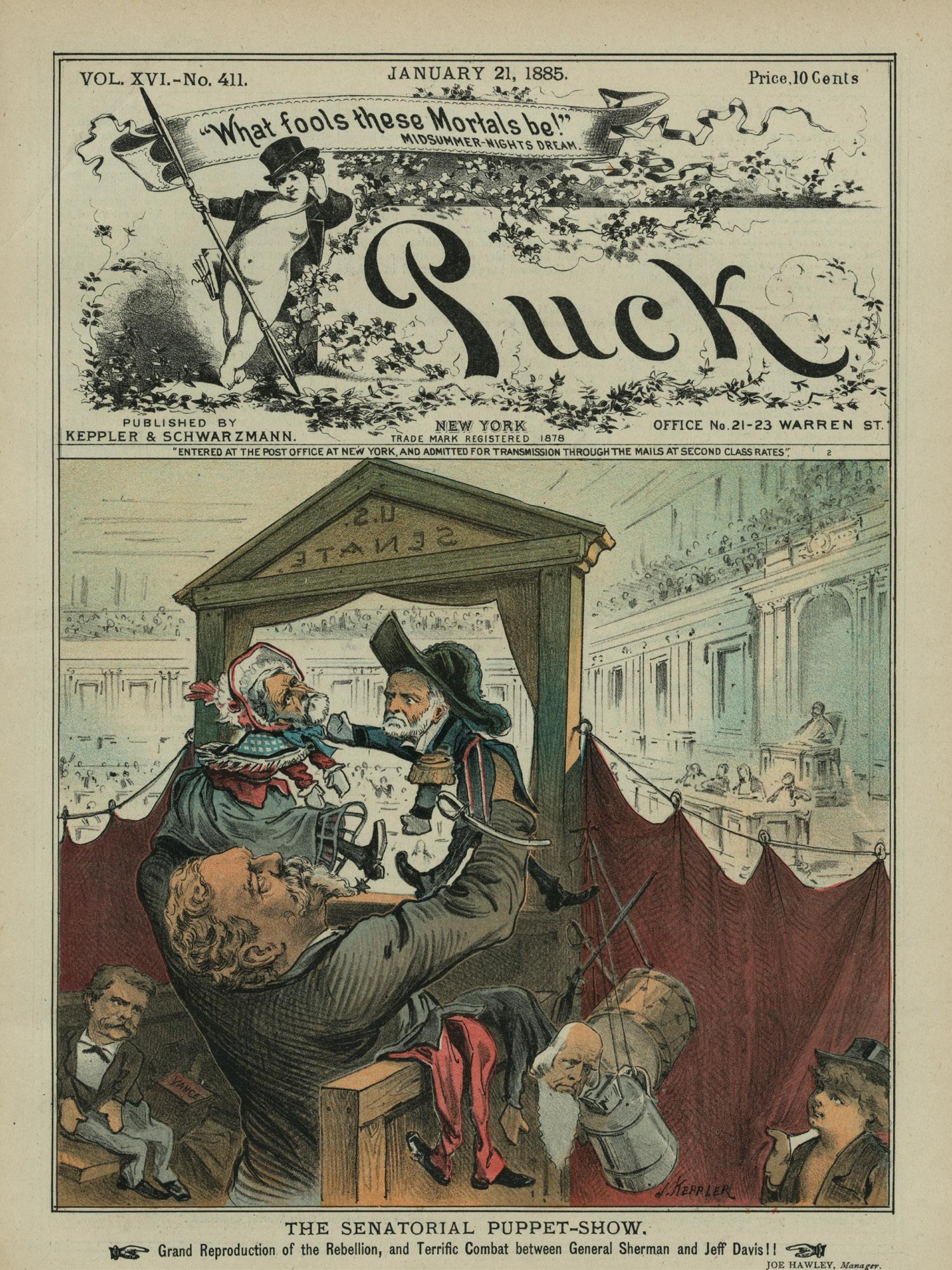
By Hiroka Watanabe Yasui
It can be argued that illiberalism manifests both from the erosion of democratic institutions and through broader political strategies. Together, they reflect a common trend of illiberalism even within formal democratic systems. The articles offer two lenses on these radical challenges to liberalism. Throughout the first section, Hiroka Watanabe examines the challenges to sustaining core democratic norms by comparing the United States and Poland. This issue is approached from two democratic norms: judicial independence and media freedom and pluralism to later propose policy recommendations. Leo Greenberg then examines the response of European liberals to rising populism, backlash against migration, and a changing international order, introducing the term “Fortress Liberalism” to suggest that mainstream European leaders can best be understood as operating as if in a state of siege.
Although centuries have passed since the first introduction of modern democracy, the world is facing challenges to its core institutions sustaining it. Countries who are supposed to be the anchors of liberal democracy have been facing the gradual weakening of democratic norms. In fact, what is common across countries experiencing backsliding through the erosion of fundamental norms is its fragile nature. Both the European Union (EU) and the United States (US) have had recent developments that alter their democratic balance whether through an erosion of checks and balances, the decline of trust from the governed, or populist challenges. There has been a clear and ongoing pattern of democratic decline that has started around the same time yet at a different pace. For such analysis, it is important to take into account the empirical data of democratic performance, such as the V-Dem, an index which collects data, conceptualizes and measures the strength of democracy on a scale from 0 to 1.
Since 2015, the V-Dem score, particularly the Liberal Democracy Index (LDI), has been declining for some EU Member States. Notable examples can be seen in Hungary, going from 0.48 to 0.32, and Poland, from 0.78 to 0.62. This is particularly relevant as their V-Dem scores illustrate a decay of freedom of expression, transparent elections, judicial constraints on the executive, among other components. Nevertheless, despite the fact that the US has also been declining, it has slightly performed better, decreasing from 0.85 to 0.75 since 2015. This can mainly be attributed to the worsening of freedom of discussion and media as well as decline in the quality of elections and potential executive overreach but not as quite explicit as Hungary or Poland. In fact, as per a V-Dem Report, it has raised concerns for ‘autocratization’, adding the country into a potential democratic watchlist.
However, these trends are to be interpreted as evidence of an erosion of democratic norms, in a slow, gradual and incremental regression. Despite the fact that such countries cannot be equalized due to their difference in nature, it serves to demonstrate a trend of illiberal pressure causing the weakening of democratic norms, manifested in decline of democracy indicators such the LDI, especially judicial constraint and freedom of expression. For the purposes of this article, democratic norms shall be defined as procedural and substantive standards based on shared expectations that sustain the fabrics of a democratic system. In order to assess its decline, two main features will be taken into account: judicial independence and the media press. As it will be explained later, these are treated as core democratic norms because they function as essential safeguards against arbitrary governance and play a central role in sustaining liberal democratic order. Thus, this section will delve into their decline as it merits analysis for its implications in sustaining democracy before situating it within the broader political framework of illiberalism.
Among the different components of a democratic system, one of the core pillars is the judicial branch and its ability to act without any political influence or pressure. It serves as a way to execute impartial decisions to safeguard all individual rights, to protect the separation of powers doctrine and to hold the government in power accountable and therefore, it is widely regarded as a cornerstone of democracy.
Yet, a continuous erosion of judicial independence has become evident during the past decade. Empirical data such as the V-Dem have continuously shown a decline of judicial constraints and the respect of rule of law. Moreover, other indicators such as the World Justice Project’s Rule of Law Index publish their findings and scores for each country according to different factors including constraints on executive power, civil justice, order and security, among others. It is worth mentioning that when it comes to their overall score, the difference between the US and some EU Member States is barely noticeable. For instance, the US ranks 27 out of 143 with a score of 0.68 while Poland, a country known for notable erosion of its rule of law, ranks 32nd with a score of 0.66.
Within the EU, Hungary and Poland are often referred to as the ‘leaders of democratic backsliding’, with the independence of the judiciary being the main target. Prior to the 2024 attempts of reforms, Poland exemplifies one of the most salient cases of how its judicial system, especially its independence, declined. Starting in 2015, the Polish Law and Justice Party (PiS) began introducing legislative initiatives that systematically weakened the ability of existing courts, problem: the political pressure and intervention in the judicial branch, including the
appointment and removal of justices, politicisation of judicial oversight bodies and “court-packing”.
“I
don’t have a choice but to understand that I have these rights that I need to give to others. I need to give other people the comfort of a protected space and a protected work environment, regardless of how they identify or whatever reality they choose for themselves.”
As part of their illiberal agenda, the judiciary became the central focus through pressure and coercion towards the judges to rule favoring political authorities who sought to consolidate power and through the creation of judicial bodies such as the National Council on the Judiciary. Hence, courts became politicized under the control of the ruling party rather than institutional independence. In fact, according to the Rule of Law Index, Poland has consistently scored low for indicators for their judicial performance, for instance Civil Justice (0.60) and Criminal Justice (0.58) as of 2025.
Given this, it raised concerns of the weakening of democratic norms both on national and EU level as it breached EU standards. The fact that its judicial independence declined not through an autocratic dismantling of its institutions but rather through legal reforms within a democratic framework really demonstrates that such erosion may happen under lawful mechanisms while undermining the very base of what it is supposed to sustain: democracy.
Similar to Poland, the US judicial system has increasingly been subject to politicization. However, contrary to Poland, it has not been done through formal reforms. Instead, its erosion has been a consequence of becoming more partisan, which results in the drop of confidence by the people. The difference lies in history: American democracy has been developing for more centuries and hence provides stronger constitutionally provided judicial bodies, while Poland’s safeguards for the judiciary provided in its Constitution are new.
Therefore, the current debate among scholars is whether judicial decisions in the US are based on political alignments rather than their impartiality, resulting in the drop of 35% of trust by the governed in its judiciary. However, since this branch serves as a check on both the executive and the legislative, its legitimacy is essential in maintaining a democratic government. Yet, it cannot be upheld if judges are ‘partisan actors’. Surveys demonstrate that around 2019, 64% of Americans believed that Supreme Court Judges were motivated by the law but it shifted to political motivation around 2022 and by 2025, 54% believe they are mainly motivated by politics.
The most common thought for politicization is the judicial confirmation process in which during the last decade, the Senate has used the ‘nuclear option’ on three occasions to change the requirement of a supermajority for a cloture to a simple majority for judicial confirmation. Nevertheless, the biggest threats would be the continuing pressure and even threat towards the judges when ruling in a case, for instance, Minority Leader of the Senate Chuck Schumer pressuring Supreme Court Justices to make the ‘right’ decision.
Furthermore, judicial politicization can be illustrated through the Supreme Court rulings that have challenged its existing limits by bypassing procedure standards and even precedents and norms. Contrary to unanimous decisions, there has been a concerning increase of polarized decisions emphasizing the partisan differences between voting judges. This conservative and partisan pattern in the Court has led to an increase in its control and authority on elections but has reduced its scope for protecting voting rights. The most notable example is the highly debated overturn of Roe v. Wade regarding abortion rights. To illustrate this, a poll has demonstrated an overall decrease of the trust in the judicial system, particularly a decrease of Democrats’ trust in the Court from 34% to 24% and hence raises concerns since similar decreases are in countries such as Myanmar, Venezuela and Syria.
Nevertheless, since it is already heavily influenced by the current government’s political party, recent developments aim to undermine the courts’ legitimacy and credibility. Instead of making structural changes, it has opted to avoid, ignore or even attack judicial limits and rulings. It is no more a matter of independence as the line is blurred: it is about the institution itself as a whole to constrain the executive and uphold the rule of law.
Alongside judicial independence, the freedom of media and pluralism are essential democratic norms that sustain the very basic democratic governance. International organizations, including the EU itself, consistently emphasize media freedom as a cornerstone of a democratic society. This entails freedom of expression, media independence and flow and access to information for civic participation and active engagement or to what Habermas conceptualizes as the common public sphere. Without media independence and pluralism such a public sphere would become unilateral by blocking equal representation of any other perspective different from the dominant one and preventing meaningful discourse. As a result, it leads to the weakening of democratic accountability and has recently become more challenging due to the new technological advancements.
Traditionally, media freedom serves as an additional watchdog of the democratic system by identifying any possible threats to its equilibrium and by being the ‘first line of defence’ against any possible abuse. Nevertheless, some scholars have increasingly associated the continuous erosion of democracy to occur simultaneously with the deterioration of freedom of press as exemplified over the past decade in both emerging and established democracies. Common patterns have been found in which the media and press become politically constrained to the executive branch’s agendas.
As explained earlier, with the election victory of PiS in Poland, the weakening of democratic norms extended from the judicial branch’s erosion to also gradually consolidating control over public media spheres. Most importantly, some authors describe that around 2023, public media broadcasters such as Telewizja Polska, Polskie Radio, and Polska Agencja Prasowa became the government’s outlet for narrative dominance under the mask of restoring legal order and ensuring judicial legitimacy. Yet, the main concern is not the government’s desire to take over the media but rather procedural means resorted to do so. The executive, in order to capture the media and press, bypassed their powers, usually reserved for the National Media Council, by seizing it by force. However, some independent reports, such as the International Press Institute, have acknowledged that independence of media and pluralism had improved and an end of abuses to influence them.
Furthermore, it implemented legal and regulatory reforms to its copyright law, added TVN and Polsat (TV companies in Poland) into a ‘strategic entities’ list entitling them protection of officials and exemption of government approval for structural changes. More concerning, these concrete actions undermined the fragile independence of Public Service Media, leading to a deepening of the lack of journalists’ autonomy. For instance, in 2024, a journalist was fined under the grounds of defamation or the news programmes were not impartial, although they were less partisan after such reforms.
Data such as the Media Pluralism Monitor (MPM) assesses media pluralism through various factors such as market plurality, fundamental protections, political independence, among others. As for Poland, the MPM 2025 report showed the country has a 53% risk score for media freedom and pluralism, placing it in a medium-high level of risk. Broadly speaking, this percentage of risk represents a cumulation of recent attempts to restore media independence and of remaining problems but also new challenges. Despite the fact that it has been attempting to improve its independence, reflected in the decrease in Political Independence, there are still persistent risks such as ownership concentration, illustrated in the decline in Market Plurality. And yet, Poland was able to place 31st in the World Press Freedom Index, increasing its overall score from 69.17 to 74.79.
If a specific moment were to be pinpointed in which freedom of press started to decline, it would be post 2016 elections. Even after centuries of the first introduction of press rights, media freedom in the US has been gradually decaying and will most likely continue worsening. According to the World Press Freedom Index, the US has placed 57th with a score of 65.48 whereas Norway, placed 1st, obtained a score of 92.31.
The report further explains that, in this sphere, the US has a high concentration of media ownership where profits are prioritised over genuine public journalism.
“I don’t have a choice but to understand that I have these rights that I need to give to others. I need to give other people the comfort of a protected space and a protected work environment, regardless of how they identify or whatever reality they choose for themselves.”
Moreover, in the political context, Donald Trump’s second term was marked by a serious set of ‘war on the press’: from the politicization of the Federal Communications Commission to the banning certain news agencies from the White House and defunding public media. Legally speaking, the First Amendment already provides robust safeguards for the press itself by preventing the government from controlling the media and yet, it may not be sufficient to counter the threats posed on them. Different from Poland, the US exemplifies how the erosion of democratic norms can happen without necessarily having formal legal changes to consolidate control over the media and press. Instead it has unfolded through political pressure and delegitimization of independent journalism rather than a direct capture. On the one hand, the President himself has filed a suit for a broadcasting network to lose its license as they portrayed him negatively and the Administration has filed complaints against several TV networks, excluding Fox. On the other hand, news agencies have faced criticism from choosing not to support a presidential candidate to having editors’ resignations and unnecessary departures of news anchors, leading to a crisis in this sphere. In other words, the media’s ability to function independently has been weakened in practice: instead of operating autonomously, it falls under the pressure from partisan actors seeking to shape the discourse and diminishing its capacity to react.
“I don’t have a choice but to understand that I have these rights that I need to give to others. I need to give other people the comfort of a protected space and a protected work environment,
In terms of timeline, it is worth noting that post-2023, reforms aiming to reestablish the democratic order in Poland have been attempted to be implemented. Even though it has faced many obstacles and has failed, it appears to have slowed down such decline. Meanwhile, the US takes a different trajectory as it is gradually increasing.
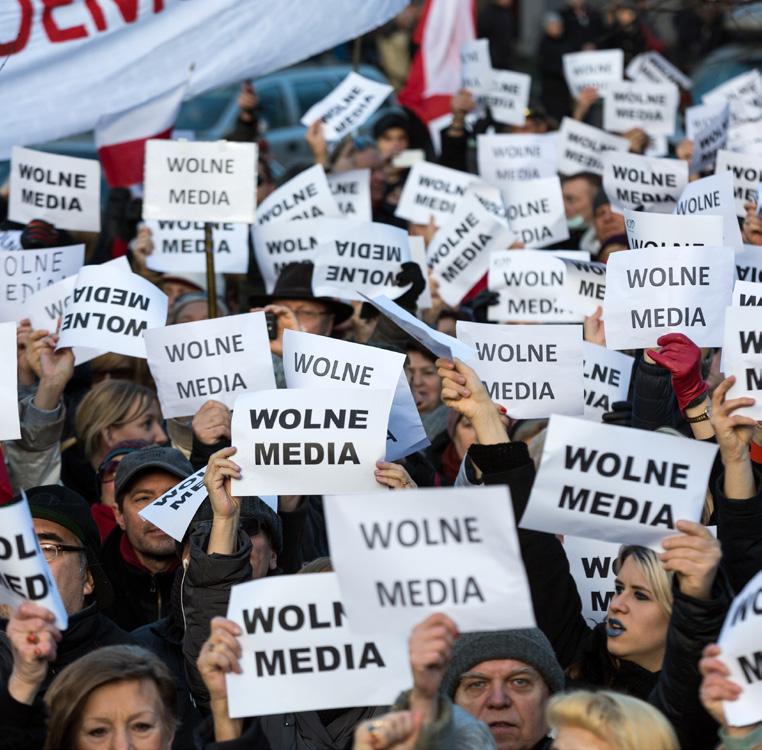
Creator:
Still, this should not be interpreted as if such erosion is irreversible but it calls for coordinated policy responses to strengthen democratic resilience.
When it comes to the core pillars of the judiciary, in this case its independence, it is rather challenging to rehabilitate and restore it once power has been consolidated or politicalized by the executive power. As a result, such effects cannot be fully reversed neither straightforward nor immediate reforms as democratic erosion is not easily reversible once taken hold. In fact, recent attempts in Poland demonstrate that once judicial independence has been eroded through structural reforms and direct political intervention, its reconstitution will take more than one attempt.
Therefore, Poland has already taken a step forward to restore its rule of law through its post-2023 reforms. Since judicial erosion stemmed through the legislative initiatives granting the political party control over both the composition and functioning of the courts, its restoration must be addressed through a depoliticization of the judiciary, especially its appointment procedure, and overseeing bodies. If partisan judges remain on the bench, any attempt to reform such a system would be void. Furthermore, a rehabilitation mechanism should be implemented in order to strengthen the judiciary’s ecurity against any future threats. Taking into account the developments of the past decade, it is understood how fragile the judiciary can be and thus, stronger tenure protections as well as limits on executive discretion and influence over the procedures may be necessary. It will also need to simultaneously be implemented with broader initiatives to rebuild the trust from the governed.
Although the US resorted to a different approach, the primary policy recommendation is similar to Poland’s: the depoliticization of judges. Cases in the US tend to reveal a growing perception of judges as partisan actors instead of being impartial. Yet, contrary to Poland, the US context stems from a politicized use of constitutionally granted appointment procedures. One method would be constraining the use of the ‘nuclear option’ requiring always the Senate supermajority, at least for the Supreme Court. Since the public trust and belief in their judiciary has declined throughout the years and therefore, it must be addressed and reinforced. Moreover, a mechanism that strengthens judicial statutory protection by preventing any external threat, intimidation or influence must be implemented.
As mentioned in earlier sections, Poland has experienced an increase post-2023 in media freedom indicators. This can be mainly attributed to the reforms being implemented quite successfully despite the fact that some scholars describe this as an unlawful take over. Nevertheless, the editorial independence of Public Service Media (PSM) must be guaranteed and strengthened through reforms.
As for the United States, for the freedom of media and pluralism, it is important to reiterate the limits and safeguards that the Constitution itself imposes. Even though initiatives such as the Protect Reporters from Exploitative State Spying Act (PRESS Act) of 2024 have been attempted to be implemented and yet failed, it is of paramount importance to have a ‘federal shield law’. Instead of the PRESS Act, a ‘Media Freedom Protection Act’ could be proposed and be implemented in order to constrain the power and influence of the executive on the media and to be able to foster meaningful discussions. In addition, the promotion of media and journalist independence must be encouraged.
Recent trends demonstrate that countries are facing pressure from concrete political and legal actions that undermine longestablished constitutional and institutional frameworks. Both the United States and Poland share similar patterns of a downfall of the quality of their democratic norms: from an erosion of judicial independence to a blurry media freedom and pluralism. Since these two factors are considered to be pillars of democratic norms, any decline either in judicial independence or in media freedom contributes to the weakening of said norms. This dynamic is exemplified through empirical evidence that demonstrates that the trend of decline of democratic norms are attributed to the erosion of, in this instance, judicial independence and of media freedom and pluralism.
Therefore, throughout this section, an assessment of these norms was conducted to finalize with policy recommendations. For the case of Poland, its judicial system must be restored through the depoliticization of its judges, their protection in maintaining its independence and a rehabilitation mechanism. In terms of their media freedom, Poland must depoliticize some of its bodies, revoke the ‘strategic entities’ and provide for a statutory framework in order to sustain its freedom and pluralism.
F or the case of the US, it must restore its judicial resilience, particularly its Supreme Court in order to safeguard fundamental rights and not allow for justice to be a consequence of partisan actors’ decisions. Moreover, a mechanism for statutory protection and limitations to the nuclear option are further recommended. For media freedom, an overall promotion of independence is highly encouraged in addition to legal frameworks to be implemented. As it will be further examined in the next section, illiberalism cannot fully be understood in the context of institutional erosion alone, but it must also examine the political and geopolitical framework.

protected work environment, regardless of how they identify or whatever reality they choose for themselves.”
While the weakening of democratic norms, such as judicial independence and media freedom, illustrate its erosion in practice, these are embedded with political dynamics that shape illiberalism. Thus, it is not only the institutional erosion but the combined shift towards illiberalism that demonstrates that democratic recovery has become increasingly difficult.

BY POLA JANCEWICZ
BY POLA JANCEWICZ
By Leo Greenberg

It has become hard to avoid the feeling that Europe’s leaders are losers. When Politico summarizes the make-or-break EU summits as “Friedrich’s flop,” the Financial Times explains “why voters hate Starmer,” and Reuters declares Emmanuel Macron’s legacy “evaporated,” one gets a flavor of how it feels to be a European liberal in 2026.
In Europe’s capitals, partisans of the old order—liberal institutionalists like Merz, Starmer and Macron—have woken up in a world they did not prepare for. Russian aggression, American hostility, backlash against mass migration, and the persistence of right-wing populism have presented radically new challenges to Europe’s mainstream. Each of these threats, unforeseen just a few years ago, have swirled together in European liberals’ worldview, creating the idea that European liberalism is under one great state of siege.
Liberal leaders have turned into immigration restrictionists, justifying the compromise of generous asylum policies with appeals to protect liberal values at home. They have become security hawks, spending more on defense and calling for tight European collaboration to resist Russian invasion and American needling. Many are now practitioners of what Karl Loewenstein called “militant democracy,” with the rise of right-wing populism leading liberal institutions to surveil, prosecute, and bar their political opponents from office, purge judges, and re-run elections.
The adaptations of Europe’s liberals share a core character: in each case, liberal leaders have concluded this is not a time to extend liberalism—not to the foreign adversary, not to the needy of the developing world, and not even to the large parts of their own population that vote for the populist right. The language of European liberals today is a defensive one: liberal leaders speak of firewalls, militancy, restrictions, defense, and pragmatism. It is a liberalism designed to hold out: one which can be preserved for its remaining adherents but has, at least for the time being, given up dreams of extending itself further. Today, the European mainstream have become Fortress Liberals.
Just twelve years ago, a casual glance at Europe’s party politics showed a landscape that had been familiar since the Second World War. Within Europe’s largest democracies, the political center-right of David Cameron and Angela Merkel was friendly to business, firmly supportive of the European project and the Atlantic alliance, and open to immigration. The other camp, center-left leaders like Francois Hollande or Edward Miliband, worked to balance traditional social democracy with the innovations of “Third Way” liberals like Tony Blair. Center-left heads of state challenged their opponents on welfare and labor issues, but joined the center-right in supporting the European common market and NATO interventions aimed at protecting human rights.
From the Tories and Labour in Britain to Greece’s PASOK and New Democracy, most European countries long had a solid center. In the 2009 EU-wide elections, the center-right European People’s Party (EPP) and the centerleft Socialists and Democrats combined to win 61% of the seats in the European Parliament. The two parties to the right of the EPP—clusters of Euroskeptics and nationalists—won just 11% of the seats.
By 2024, the forces to the right of the EPP more than doubled their share to 26% of voting seats in Europe’s common legislature. Polls suggest that today they’d capture one-third of those seats. As the populist right has become Europe’s opposition, the center-right and centerleft have converged into an uncomfortable ruling coalition.
These changes have taken place at the national level, too: in the United Kingdom, France, Germany, Austria, and Norway, parties to the right of the EPP consistently poll first. In Hungary, Belgium, Czechia, and Italy, further-right parties have taken command of government.
In 2016, the populist explosion raised a question of whether Europe’s fundamental political divides might change. In 2026, that question has been answered. National and continental politics are now better understood as a battle between a populist, Eurosceptic, and illiberal right against those who remain committed to the liberal order. There remain differences between socialists like Spain’s Pedro Sanchez and conservatives like Friedrich Merz; there are also gaps between moderate nationalists like Italy’s Giorgia Meloni, who has committed herself to the Western alliance, and more radical figures such as Hungary’s Viktor Orban, who embrace the mantle of illiberalism. But those divisions are now subfactional. As a video of Meloni and other right-wing leaders endorsing Viktor Orban’s reelection campaign confirmed, the major contest for Europe’s future is between an ascendant right-wing that is opposed to liberal institutions, and a broad camp of everyone else.
The single biggest driver of this rapidly-changed political order is immigration. Asylum seekers have flowed into Europe in the past ten years. Between 1994 and 2013, the annual number of people seeking EU asylum never reached north of half a million. That number ballooned to 1.3 million during the 2015-16 migration crisis, and has remained elevated: over 900,000 first-time asylum seekers arrived in Europe in 2024. Much of the refugee influx has come from the Muslim world: data suggest Muslims represent about 70% of Germany’s post-2015 refugee wave, for example. European populations have become hostile to large-scale migration: a YouGov survey at the end of last year found that across seven European countries, respondents supported immigration moratoria and mass deportations.
BY POLA JANCEWICZ
BY POLA JANCEWICZ
These views prevailed in countries where large numbers of migrants have actually arrived, like Spain, and in places where migration has been far more limited, like Poland. In all seven countries, pluralities of those surveyed agreed that even legal migrants did not share their values, with less than 10% of respondents feeling legal immigrants were being integrated “very successfully.”
Popular anxieties allowed the populist right to break through; research has shown that in Germany, for example, voters long held more restrictionist views than politicians in the CDU, Germany’s major conservative party. The populist right exploited this gap and profited: polling suggests that voters’ views of immigrants and religious minorities have far more power to explain votes for right-wing parties today than they did in 2008.
Conspicuous displays of openness— Merkel embracing millions of Syrian refugees and declaring “wir schaffen das” (“we can do this”) or the swelling of net migration under Britain’s Boris Johnson—allowed the populist right to depict mainstream parties as more committed to a humanitarian ideology than to addressing voters’ preferences for controlled borders.
Answering this challenge, Denmark’s Mette Frederiksen was the first conspicuous model of Fortress Liberalism. Elected in 2019, Frederiksen came from Denmark’s Social Democratic Party. But she shifted her party right on immigration, coming to power on a promise of a “zero refugee” policy and implementing an aggressive assimilation plan, even planning to send asylum seekers for processing in Rwanda. Frederiksen’s policies, though still controversial, have allowed her survival, with her party poised to win its third consecutive election next year. Once an outlier, Frederiksen has now become a model. Poland’s liberals won their 2023 election by outflanking hard-right opponents on immigration. Keir Starmer and Greek Prime Minister Kyriakos Misotakis have both decried boats of migrants rafting through the sea; Starmer has warned of Britain becoming an “island of strangers.”
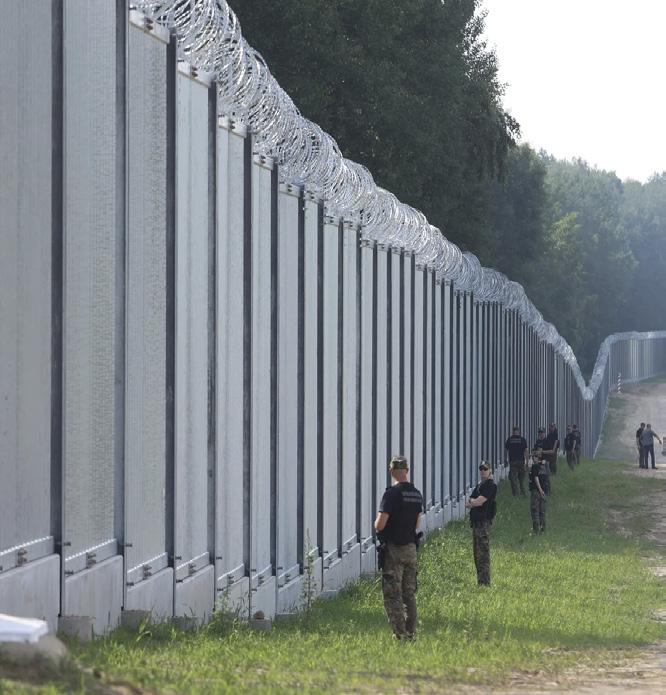
Following Frederiksen’s lead, most major European politicians have articulated a new approach: for liberal values to be safe, newcomers must accept them. Europe’s mainstream now emphasizes elements of immigrant culture which are seen to threaten liberal values like gender tolerance, secularism, and non-violence.
For Fortress Liberals, a secular society cannot accommodate those who view politics through a religious lens: Sweden’s center-right Deputy Prime Minister sparked controversy after declaring that “Islam must adapt to Swedish values.” Merz, when pushed on his increasingly restrictive line, defended his policy by saying: “Ask your daughters.” France’s Interior Ministry warned of the Muslim Brotherhood’s infiltration of French politics, with the goal of advancing “political Islam” against French laïcité. It was long a right-wing argument that immigrants endangered secularism, non-violence, gender rights, and sexual tolerance: the mainstream has become comfortable with this logic.
These changes have remade Europe: where cars once zipped between Schengen Area states, liberal leaders have reintroduced border inspections and waiting lines. In December, the member states of the European Convention on Human Rights unanimously agreed to revisit expansive interpretations of prohibitions on degrading treatment and mandates for family reunification which have made deportations extremely difficult. In 2014, five EU and Schengen countries had physical barriers at their borders; today that number is 19.
There are some caveats. For Fortress Liberals, groups already accustomed to European norms—such as the four million Ukrainian refugees in EU member states—are largely given an exemption from the migration crackdown.
Similarly, liberals have sought to be clear that their policies are not racialized; liberal parties have increasingly found politicians with immigrant backgrounds who push restrictionist policies. Starmer’s crackdown is being led by Pakistani-British Shabana Mahmood. Denmark’s Frederiksen made Matias Tesfaye, born to an Ethiopian refugee, her Minister for Immigration. Sweden’s Social Democrats, looking to regain power in 2026, made a Kurdish-Swede their spokesperson on the question of assimilation. The leader of Germany’s Green Party, TurkishGerman Cem Özdemir, called for asylum restriction, appealing to his daughter’s experience being “stared at or sexualized by men with migrant backgrounds.”
This has served to staunch the bleeding for some liberal parties: Frederiksen has held on, Poland’s liberals remain competitive, and establishment coalitions in Germany and Austria have clung on against a rising far-right. But it has not solved their problems—in all these countries and more, the combined voting share for populist-right parties continues to rise. Progressives have critiqued Frederiksen or other Fortress Liberals for “legitimizing the right-wing narrative,” arguing that emphasizing the issue amounts to seeking to fight the populists on their home turf.
The rhetoric of a people and continent under siege—small boats and smuggling routes, the threat of retrograde values, political infiltration, and sexual crime, the construction of border barriers third-party processing hubs, and the basic underlying premise that it is simply impossible to extend Europe’s openness to large numbers of people from the developing world—has rightly given rise to the term “Fortress Europe.” But rather than the fantasy of a rightist fringe, Fortress Europe is now a liberal concession to reality. ***
As Europe’s liberals have adapted to a migrant surge, they have also come to grips with a much more powerful and aggressive invasion.
We must strain to remember now how different the European security situation was in the early 2010s: just over a decade ago, and NATO held joint fighter jet exercises with Russia (then a member of the G8), European Security conferences were spent discussing the drawdown in Afghanistan and the coup in Mali, and the EU spent just 1.3% of its combined GDP on defense.
More so, the spirit of Europe was still defined by the most optimistic visions of democracy spreading to neighboring regions: the Arab Spring had not yet soured beyond recognition, NATO and EU expansion into Eastern Europe remained fresh, and protests and dissidents like the Pussy Riot band in Russia gave the impression that democracy might advance further still.
Europe then came under literal and rhetorical attack. Terror attacks at the Bataclan in Paris and bombings in Brussels and Manchester unsettled Europe and the Arab Spring had chilled into Winter; the last hopes of democratizing Russia slipped away with Putin’s 2014 invasion of Crimea. Brexit, Trump, China’s economic aggression, and Putin’s ultimate invasion of Ukraine in 2022 and the return of war to the European continent have created a familiar story of Europe’s fronts all growing weaker. The unique development of the past year is the radical change in America’s posture. The Oval Office confrontation with Ukraine’s Zelensky and the unveiling of a National Security Strategy which decried “civilizational erasure” in Europe served as prelude for January’s Greenland saga, which led European politicians to new heights of shock and fear, contemplating the long-unthinkable possibility of armed conflict with America. French politician Raphael Glucksmann was left to sum it up: “we are the free world.” Now in military conflict with Russia, economic competition with China, and political confrontation with the United States, Europe finds itself a single bloc in need of reform.
Poland’s leaders, for example, now regularly refer to their country as holding up the “Eastern Front” of Europe against Russia’s onslaught; in the past month alone, Poland has scrambled fighter jets and pledged to build antidrone infrastructure on their Eastern borders. France’s government has taken the threat of imminent war seriously, distributing a “survival manual” to their citizens. Germany’s Merz has explicitly recognized the end of continental peace, declaring the “Pax America” over and Europe on its own.
Europe’s newfound sense of siege has led Europe’s Defense Commissioner to call for a 100,000 strong European army. The liberal party which came first in the Netherlands long supported cuts to the defense budget—in last year’s campaign, they proposed cutting healthcare benefits to fund defense and create an EU-wide army.
NATO Secretary-General Mark Rutte typifies the Fortress Liberal transformation: as Dutch Prime Minister, he kept his country’s defense spending minimal, calling instead for NATO to ensure the Dutch contribution was spent well. In 2025, he made almost every NATO commit to spend 5% of GDP on defense—far more than the 2% President Trump called for in 2017, all the while working overtime to placate Trump on Greenland and restore any sense of normalcy.
Europe has recognized its defense siesta as a historical anomaly. Of the rapidlychanged political issues, defense has generated the broadest consensus within Europe—and rightly so. One sees the change in the army recruitment ads which now plaster bus stops in Paris or Warsaw, declines in the numbers of German, Dutch, and French visitors to American cities, and polls suggesting that half of Europeans view President Trump as an “enemy” of their continent and that 60% of European citizens want even greater increases in defense spending. European leaders have cast threats to Greenland, for example, as a threat to an entire international order: the collapse of that order has fostered a greater unity in the European mainstream than ever before.
The fortress mentality is something new. As long as Europe has had liberal democracies, they have had America to protect them: in two World Wars and against Soviet communism. The world has not yet known liberal Europe that has no Uncle Sam to lean on.
For as much time as they spend worrying about immigration and the challenge from Russia and America, Europe’s liberal leaders are most concerned not to hand power to the populist right at home.
In most countries, institutionalists perceive the populist right as an existential threat to their values: extremists who would destroy Europe’s commitments to peaceful collaboration, human rights, judicial independence, and open society. In light of that, Fortress Liberals now filter every move through the question: how does this affect support for the populists?
Debates within the institutionalist camp are now held on these grounds: those who seek immigration restriction argue it is necessary to prevent backlash from helping the populist right, while those who seek open borders argue that restrictionism legitimates the populist narrative, seeking to present a stark moral alternative instead. Welfare cuts are condemned not for hurting the poor, but for aiding the populists. All over Europe, institutionalists cling to power while polls promise they will lose the next election: this has made government terms feel like a race against time, and justified exceptional measures.
Increasingly, attempts at persuasion have given way to forceful tactics aimed at preventing populists from taking power. Europe’s institutional leaders bear a special historical awareness of the threat of right-wing populism: every European liberal is terrified to be a doormat for disaster. Accordingly, liberals have embraced the concept and mechanisms of “militant democracy,” the idea that laws and institutions must sometimes restrict some political freedoms in order to protect the core of a democratic state
In Poland, Donald Tusk’s liberal government used the idea to justify extralegal removals of judges and charge former nationalist government officials with abuses of power (one has now received asylum in Orban’s Hungary).
Marine Le Pen, longtime leader of France’s National Rally and two-time opponent of Macron, has been banned from running for office in France’s 2027 presidential election on charges of using EU Parliament funds to boost her party. Romania’s Constitutional Court and Permanent Electoral Authority barred multiple candidates from running on charges that their Russophilia would make them unable to uphold the rule of law; they did this after annulling a presidential election on charges of Russian interference.
To keep the populists out, liberal parties have embraced the idea of the “firewall.”
The German mainstream has its famous firewall against the AfD, with every political party pledging not to join the party in coalition governments at the national, state, or local level. In Austria, France, and the Netherlands, right-wing parties have been excluded from government even after placing first in national or regional elections.
The firewall against the right has meant increasingly unwieldy combinations within the fortress: to stop Marine Le Pen’s party from obtaining a parliamentary majority, the French Communist Party teamed up with center-right Macronists to drop out of races and urge voters to vote for candidates with whom they had no shared ideology—except opposition to Le Pen. Merz’s governing agenda has found itself dependent on German leftists; in one region, his CDU formed a three-party “Blackberry coalition” with social democrats and the Euroskeptic left-wingers to keep the doors barred to AfD entry. The cost of this collaboration is that the unwieldy majorities disagree about policy; once they stop the right, there exists no agreed path forward.
As firewalls have been harder to maintain, Fortress Liberals have taken a twotrack approach. Some once-taboo groups, like the Sweden Democrats Party or the rightist group in the European Parliament led by Giorgia Meloni, have been sufficiently tamed to become potential partners in support for NATO or Ukraine. In other places, like the Netherlands and Austria, cooperation with the hard-right has failed dramatically, and normal battle lines have resumed. A hard policy of noncooperation, increasingly bolstered by the legal power of the state, remains the norm.
Institutionals feel besieged in part because these strategies have not reduced farright support: no matter how clear mainstream parties make it that they will not admit populists into government, their support does not dissipate. This has created a feeling of inevitability surrounding right-wing ascent in Europe’s biggest countries: the firewalls, bans, and restrictions increasingly seem like last-ditch tactics of delay.
Silver Iocovozzi is the chef-owner of the Filipinx restaurant Neng Jr.’s in Asheville, North Carolina. Neng Jr. has been nominated for a James Beard Award and recognized as one of the Best Restaurants by The New York Times and Bon Appétit. A secondgeneration Filipinx and Southern native, Silver blends Filipinx flavors with Southern barbecue traditions. Also a 2023 Time100
Germany has labelled its right-wing AfD an extremist group, justifying extensive surveillance, and continues to mull a total ban on the party. At the continental level, liberal leaders have given up trying to woo Viktor Orban and have instead levied heavy penalties on Hungary and sought to abolish his country’s veto power.
Next honoree, Silver has cooked in cities worldwide and has held roles at acclaimed spots including Asheville’s Buxton Hall Barbecue and Palm Heights Grand Cayman.
As Europe’s liberals have felt the walls closing in, they have drawn connections between these three threats. It is not only immigration restriction that is couched in the language of thwarting the right, but their approach to foreign powers.
Russia and America are charged with fueling the far-right: Britain has investigated Russian influence on elections, and Romania cited Russian interference in cancelling their 2024 election.
JD Vance’s Munich invective, Elon Musk’s rallying for the AfD, Trump’s endorsement of Viktor Orban, and the National Security Strategy’s praise of “patriotic European parties” have given European institutionalists good reason to believe Trump’s America is not on their side. The connection goes both ways: think tanks and research groups from Europe’s mainstream constantly warn that the populist surge threatens the continent’s military preparedness, while right-wing leaders in Brussels and Rome thwarted a plan to hand frozen Russian assets to Ukraine.
The connection between the migration and Russia—perhaps the most tangential of the three—has become surprisingly palpable. Poland has dealt with Russia and Belarus sending poor migrants to illegally cross her borders, and new research has shown that as early as 2015, Russia was instrumentalizing migration to destabilize its borders with Norway and Finland.
Increasingly, Fortress Liberals understand these three fronts as one collected threat: Poland’s liberal candidate in last year’s presidential election argued the populists would jeopardize necessary support from the EU that was necessary for Poland to be a strong “Eastern shield”—protecting Europe’s borders from both the Russian security threat and illegal immigration, thwarting populists in the meantime.
The leader of the Netherlands’ liberal center-right connected domestic populism, Islamic influence, America, and Russia under the banner of unfreedom: “Unfree ways of thinking,” she declared, “are being spread in the Netherlands from Islamic countries, but also from the Kremlin and from American Christian groups.” She blamed these “unfree ways of thinking” for violence against women, gay couples, and a broader challenge to the Netherlands’ century-old liberal traditions.
“I don’t have a choice but to understand that I have these rights that I need to give to others. I need to give other people the comfort of a protected space and a protected work environment,
Some liberal theorists have tried to find comfort in the Fortress idea: Michael Ignatieff argues that liberal societies fight better when they understand that they are in danger. Drawing on Isaiah Berlin, Ignatieff argues “it will be up to the embattled fortresses of liberal democracy, and the conviction of their peoples, if liberty is to prevail.” History remains a contest of wills, and the reality of illiberal threats should strengthen the liberal resolve to make hard choices.
Indeed, Fortress Liberals like Starmer and Macron can be sympathetic because they are clear-eyed about the challenges and distrust of their worldview. The continuing European support for Ukraine and the EU’s ability to temper moderate populists like Meloni commend Ignatieff’s view that liberalism sometimes needs a wake-up call to work well.
Fortress Liberalism also has its place in the liberal inheritance: early liberal theorists grappled with the limits of universalizing their own principles. Baruch Spinoza, in suggesting a liberal ethos of tolerance, demanded liberal societies restrict teachings or religions which “tend to produce obstinacy, hatred, strife or anger.” When Jean-Jacques Rousseau imagined society coming together around a civil religion of enlightenment, he said such a religion would only be intolerant of just one thing: intolerance. When courts restrict democracy in the name of the rule of law or liberals insist on fast-paced assimilation, they draw on a tradition which has recognized that liberalism relies on basic shared principles to work—it has always been idealistic to suppose such principles can thrive and extend based on their intrinsic righteousness.
Yet Enlightenment-era liberals and Cold War Western Europeans shared an advantage which even the most abstractlyminded liberals today do not have: a clear future project. Spinoza and Rousseau were hoping for something altogether new: secular, modern, and rational government. Similarly, nineteenthcentury liberals like Tocqueville and Mill saw growing social equality as a providential fact; while they may not have invited the world’s poor in, they believed liberalism was the ultimate end of every nation. Cold War liberals like Berlin were at once determined to resist the Soviet threat and saw the promise of liberalism extending to new reaches of the world were the communist system to fall. Institutions of 1945 (the UN, the Refugee Convention) and 1989 (the WTO, an expanded EU) were premised on the idea that liberalism could work for everyone.
For all its limitations, the predecessor of Fortress Liberalism—the universalizing, overconfident liberalism of Fukuyama’s “End of History”—contained a strong aesthetic promise of the future: high-rises shooting up in Belgrade or Bucharest, McDonalds in Moscow, women, minorities, and others advancing in society, travel and cooperation between nations becoming more commonplace. The fall of Soviet communism promised the triumph of liberal democracy in the parts of the world which had been most hostile to it. The admission that some ethnic groups or countries are inadmissible to the liberal project is tragic.
The practical strategy of reinventing liberalism as the preserve of besieged, sensible, Europeans is a difficult balancing act because it takes an ideology which has always relied on the promise of future extension to rally its adherents. Similarly, if liberalism disclaims the advantage of being universalized by democratic, nonviolent means, it relies instead on the same “might makes right” approach as illiberal ideologies.
A ban on the AfD is so hard to imagine for this reason—can a liberal state actually restrict an idea out of the political arena? What if all the AfD’s leaders simply reconstituted themselves in a different form? A liberal state can only restrict political action or claim to operate in a state of emergency for so long before its claim to liberalism slips away.
Today, the stronger future project belongs to Viktor Orban, Marine Le Pen, and Nigel Farage. Their common vision is identifiable: a more homogeneous, child-rearing, religious, and nationalistic Europe. While these politicians have their own foibles, their adherents have a common confidence that Europe’s mainstream has sorely lacked for almost a decade. Even if largely nostalgic, the populist vision of the future offers something crisp and responsive to the lived experiences of Europeans today—it is easier to believe in this vision than in a fortress under siege.
Indeed, others point out that defenders of a fortress can lose sight of their own purpose: Nadia Urbinati, in a 2024 article, drew an analogy to soldiers preparing their own defense against an enemy. Relying on external motivations deprives the soldiers of an identity: “Where could the defenders of the garrison find the necessary strength to become and effective fortress if the only energy they relied on came from outside, from opposing an extensive enemy?” This captures much of why Starmer, Merz, or Macron seem to be tragic figures: without history on their side, it is easier to note what they are against than with what they are for. A coalition stretching from communists to conservatives cannot present a unified, compelling vision to their populations.
Some have tried to reject the Fortress mentality: efforts like the “Abundance” idea and its adaptations in Europe, or the effort to make affordability the central promise of a populist left are groping for a positive vision—but these movements have not had large electoral breakthroughs, in part because they have not gone beyond the Fortress Liberals on fundamental questions. Mark Carney predicted last week that “fortress nations” will fail. He spent the rest of the week inside a fortress, perhaps working on his policies to increase defense spending, reduce immigration, or to “buy Canadian.” On defense, immigration, and the threat of the far-right, Abundance liberals and populist leftists remain cadets within the Fortress.
“I
don’t have a choice but to understand that I have these rights that I need to give to others. I need to give other people the comfort of a protected space and a protected work environment, regardless of how they identify or whatever reality they choose for themselves.”
Fortress Liberalism lens is most useful in illuminating that European leaders still imagine the present challenges to be temporary. They now understand this period as uniquely challenging— but ultimately likely to abate. Our leaders and our societies have not yet internalized the possibility of a return to the constant warring or the ceaseless inter-ethnic violence that defined pre-20th century Europe. In the minds of the world’s most powerful liberals, their task is to survive the siege day-to-day, whatever adaptations it requires. The fortress has mugged them of any vision of what to create next if “normalcy” returns. Practicing this lost art of imagination may make for a stronger defense than Europe’s liberals have yet been able to muster.

Abstract
The full-scale invasion of Ukraine by Russia in February 2022 had a profound impact on the information environment across the Atlantic. The arena transitioned from a regulatory context to one characterised by contention over national and collective security. The present article employs policy analysis and field-informed reportage to demonstrate how ‘information war’ is governed from above and experienced from within. The first part looks at how the EU and US have quickly adopted digital securitisation since 2022. It says Russia’s authoritarian model is spreading indirectly, comparing the EU’s suspension of RT and Sputnik to the US Department of Justice’s disruption of the ‘Doppelgänger’ influence network. The second part of the study examines the politics of visibility in Ukraine’s information war. The section is grounded in interview-based reflections and wartime media dynamics, and demonstrates how visibility (presidential messaging, citizen footage, and platform circulation) becomes a resource for legitimacy, mobilisation, and external support.
Sputnik, explicitly defining the Kremlin’s “disinformation and manipulation of information” as an operational tool of war and a “direct threat” to public order and security in the Union. This decision was not merely symbolic, it represented a more extensive shift in which digital governance tools, often associated with media regulation or privacy, were reinterpreted through the lens of security and emergency.
Silver Iocovozzi is the chef-owner of the
Filipinx restaurant Neng Jr.’s in Asheville, North Carolina. Neng Jr. has been nominated for a James Beard Award and recognized as one of the Best Restaurants by The New York Times and Bon Appétit. A secondgeneration Filipinx and Southern native, Silver blends Filipinx flavors with Southern barbecue traditions. Also a 2023 Time100
The Russian full-scale invasion of Ukraine, which began in February 2022, is now widely perceived as a watershed moment for European security. Since the invasion began, information infrastructure, platforms and data flows have increasingly been regarded as strategic terrain—assets to be defended, controlled and, on occasion, weaponised. In the days following the invasion, the European Union took the decision to suspend the broadcasting activities of RT and
Next honoree, Silver has cooked in cities worldwide and has held roles at acclaimed spots including Asheville’s Buxton Hall Barbecue and Palm Heights Grand Cayman.
The purpose of this study is to examine how Russia’s full-scale invasion of Ukraine functioned as a catalyst for the securitisation of digital space in transatlantic democracies, and what the implications for democratic oversight and civil liberties are. In the discipline of international relations theory, securitisation is defined as the political process that transforms an issue, regardless of its nature, into an existential threat to the state. This rhetorical strategy is then followed by the implementation of extraordinary measures that would be difficult to justify in a non-emergency situation. Given these assumptions, the present article posits that the Russian invasion of 2022 precipitated an acceleration in the securitisation of the digital domain among western democracies. This has been possible due to the alignment of three elements: firstly, a clearly identified aggressor, namely Russia; secondly; a rapidly expanding repertoire of hybrid tools, including cyber operations, information manipulation and digital infrastructure leverage; finally, greater public and institutional willingness to accept extraordinary measures in the name of democratic defence.
The present study observes qualitative mapping of securitisation moves in order to analyse how decision-makers interpreted the post-2022 digital threat environment.
It builds on extant research concerning the securitisation of foreign disinformation in the Russia-Ukraine war, demonstrating how democratic governments can adopt “partial securitisation” with rhetoric and ad hoc measures. Finally, the paper examines the trajectories of the EU and the US after February 2022, highlighting both the convergences in securitisation logics and the divergences in the institutional safeguards. The conclusion of the article summaries the implications for democratic oversight and proposed policy principles to strengthen resilience without normalising the exception.
“I don’t have a choice but to understand that I have these rights that I need to give to others. I need to give other people the comfort of a protected space and a protected work environment,
In this study, digital space is conceptualised as the socio-technical environment in which political communication, information flows and governance are mediated by networks, cloud services and critical information systems. It includes platform ecosystems, such as social media, search engines and messaging applications, along with their content governance. Lastly, it also covers data and surveillance architecture, which includes the collection, storage, analysis and exchange of personal and behavioural data by public and private actors. This definition purposefully conceptualises the digital dimension as both a technical domain and a governance domain, wherein authority is conducted through code, regulation and institutional coordination. With regard to the conceptualisation of digital securitisation, however, the article draws on the theory of securitisation first formulated by the Copenhagen School. This theoretical framework treats security not as an objective condition, but rather as a political process.
Within this paradigm, an issue is framed as an existential threat, thereby allowing for extraordinary measures that can circumvent ordinary constraints. It is important to note that, according to this approach, digital securitisation refers to the process by which elements of the digital space, such as disinformation, cyber vulnerabilities or data access, are reframed as urgent security concerts that justify exceptional policy responses.
In terms of operations, digital securitisation is observable through three indicators. Firstly, the framing of threats, that is to say, the speech act that identifies digital risks as existential threats. Secondly, exceptional measures, such as accelerated, restrictive, or emergency policies affecting information flows, platforms or surveillance. Thirdly, the reconfiguration of authority, implemented through changes in institutional competences, including the intensification of public-private enforcements and the reduction of transparency.
In the context of this study, the relevance of Russia is twofold. Firstly, it is essential to acknowledge the role of Russian cyber operations as a source of threat. The context of war has brought these operations to the fore as central components of hybrid warfare, rather than as peripheral information policy. Secondly, the Russian Federation is regarded as an exemplar of authoritarian and coercive governance in the digital domain. Analyses of Russian digital authoritarianism highlight a set of tools that combine large-scale surveillance capabilities, limited independent oversight and legal mechanisms that restrict expression and mobilise private intermediaries to enforce state priorities, including service providers and platforms. This is important in the context of a study on Russian cyber influence, as Russia’s internal model demonstrates the potential for digital infrastructures and intermediaries to be transformed into instruments of strategic control. This operational logic subsequently prompts Western democracies to adopt a securitisation approach in regard to elements of their own information environment.
Comparative work on digital authoritarianism further places Russia within a wider range of control practices, from surveillance to information manipulation, while also highlighting variation in the implementation and justification of such practices across different political regimes and state contexts. These premises are relevant to the analysis of transatlantic democracies, as they demonstrate that policy responses may be influenced not only by the action of the Russian state, but also by the manner in which such actions are rendered politically legible and publicly acceptable as necessary measures. In this sense, Russia’s war posture can contribute to the spread of digital authoritarianism and securitisation practices through a combination of demonstrative effects, threat emulation and the internationalisation of justificatory frames.
Prior to 2022, transatlantic democracies had already developed governance repertoires that addressed cybersecurity and foreign interference. However, academic work on the securitisation of foreign disinformation suggest that, even in democratic contexts, such issues can be progressively inserted into the security register through threat rhetoric and ad hoc measures, sometimes producing a “partial securitisation” that blurs the boundaries between public communication, platform governance and security policy. Concurrently, deliberations concerning surveillance prerogatives illustrate how security frameworks can legitimize augmented data accumulation or diminished constraints, frequently substantiated by allusion to adversarial competencies and strategic competition.
The full-scale invasion of 2022 acted as a catalyst, compressing decision-making times, refining attribution and increasing tolerance for restrictive tools in the name of democratic defence. In the European Union, for instance, the decision to suspend broadcasting activities with Russia Today and Sputnik was explicitly justified as a response to Russian “disinformation and manipulation of information” that poses a threat to public order and security. This episode provides a concrete point of departure for examining how war can accelerate digital securitisation in democratic contexts, while raising questions about proportionality and longterm normalisation of exceptional measures.
On the 2nd of March, 2022, the Council of the European Union adopted restrictive measures that led to the urgent suspension of the broadcasting activities of RT (Russia Today), a television network, and Sputnik, a statecontrolled media outlet. The Council linked its decision directly to Russia’s ‘unprovoked and unjustified military aggression against Ukraine’, and presented these channels as ‘essential and instrumental’ in supporting the invasion and destabilising neighbouring states, arguing that the Kremlin was implementing a ‘systematic’ campaign of disinformation. The press release elucidates the securitising claim by stating that ‘The Kremlin’s systematic manipulation of information and disinformation are applied as an operational tool in its assault on Ukraine. It is also a significant and direct threat to the public order and security of the Union.’
In relation to the theoretical underpinnings of securitisation, the Council’s methodology establishes a nexus between the referent objects (comprising EU public order and security) and an external threat actor— namely, the Russian state and its affiliated media networks. This connection serves to legitimize the implementation of extraordinary measures, which in turn result in the suspension of conventional standards within the domain of the information environment.
Furthermore, the EU’s decision to impose a ban on RT and Sputnik sheds light on its hard-line securitisation pathway. Contrary to the conventional approach, that relies primarily on domestic executive powers, the EU employed a multifaceted strategy that entailed the implementation of restrictive measures and a sophisticated sanctions structure, resulting in the enforcement of information controls on a large scale.
“I don’t have a choice but to understand that I have these rights that I need to give to others. I need to give other people the comfort of a protected space and a protected work environment, regardless of how they identify or whatever reality they choose for themselves.”
This securitising move revealed an implementation pathway where the Union translated its threat framing into EU-wide restrictive measures with immediate cross-border effect. “Suspension or restriction” entailed an absolute prohibition not only on broadcasting, but also on operators’ ability to “enable, facilitate, or otherwise contribute to broadcast any content,” placing enforcement pressure on intermediaries and distribution chokepoints.
The measure was rapidly litigated. RT France challenged the Council’s competence and alleged violations of the Charter of Fundamental Rights of the European Union (including freedom of expression, the freedom to conduct a business, and rights of defence). The General Court of the European Union rejected the appeal and applied a structured Charter test (legality; essence of the right; legitimate aim; proportionality), emphasising public order/security objectives and the “narrow scope” of the intervention (including that certain journalistic activities were not fully prohibited).
In its public reasoning, the Court treated the measure as a security-related restriction adopted in response to Russia’s aggression, while insisting that interference with rights must remain legally justified and proportionate. The narrow framing of the legal issue is of particular pertinence in this case, as it functions as a means for the Court to safeguard the fundamental rights in question. The Court’s position in this regard is that the imposed restrictions were directed towards the transmission and distribution of content by the recognised media outlets, as opposed to the practice of journalism itself. This interpretation is consistent with the architecture of the restrictive measure itself, which prohibits operators from broadcasting content by the listed entities on multiple distribution channels. In assessing proportionality, the Court balanced the severity of the interference with the stated objective of protecting public order and security in an exceptional context of war. This approach translated the logic of security into a rights-based justificatory framework.
The RT/Sputnik ban can be interpreted as an “ideal case-study” of EU collective securitisation of disinformation, since it translated a wartime threat narrative into EU’s restrictive measures, and immediately generated contestation over legal basis and proportionality. The democratic tension is that securitisation may be pursued in the name of defending democracy, yet political legitimacy depends on whether exceptional restrictions remain bounded by transparent justification.
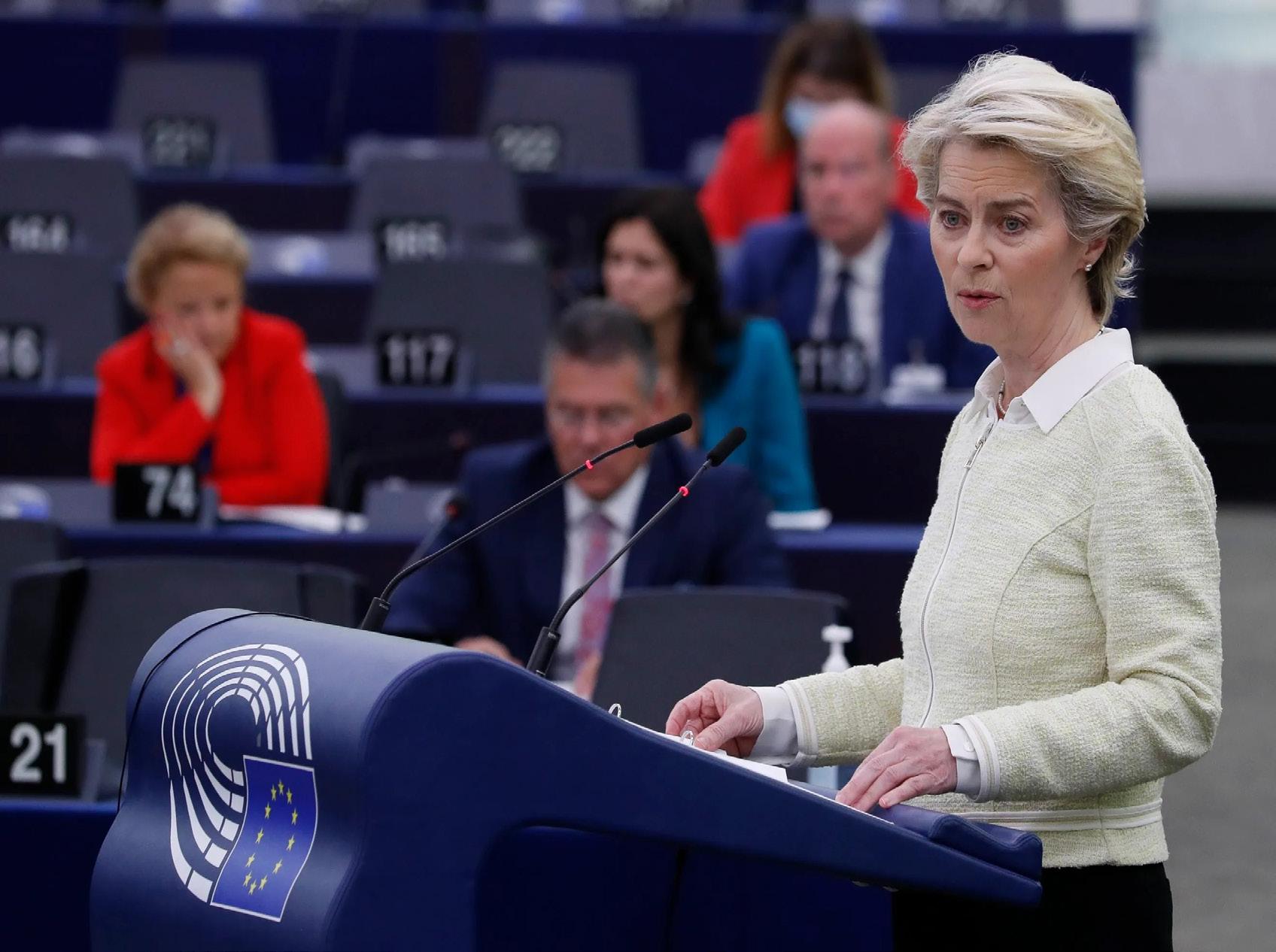
The case illustrates this duality concretely: on the one hand, operators were prohibited not only from broadcasting but also from enabling or facilitating distribution across channels; on the other hand, judicial review (RT France) upheld the measure through a structured Charter assessment, framing it as proportionate and “narrow in scope” because it targeted distribution rather than journalism as such. The case demonstrates a distinctly “democratic” securitisation pathway that is rapid, supranational, law-based, and subject to judicial review. However, the case also discloses the risk that exceptional restrictions on information access become normalised, generating recurring disputes over proportionality, safeguards and transparency.
and cyber and surveillance as the infrastructural backbone through which security agencies claim capacity to detect and mitigate hostile activity.
Silver Iocovozzi is the chef-owner of the
Filipinx restaurant Neng Jr.’s in Asheville, North Carolina. Neng Jr. has been nominated for a James Beard Award and recognized as one of the Best Restaurants by The New York Times and Bon Appétit. A secondgeneration Filipinx and Southern native, Silver blends Filipinx flavors with Southern barbecue traditions. Also a 2023 Time100
The EU case demonstrates a securitising logic centred on defending democratic stability and public order against Russian information manipulation. This section analyses the US case, as it shares this core threat framing of Russia as a hostile actor exploiting digital space, but employs different instruments and constraints. This is attributable to the existence of stronger constitutional barriers to direct speech restrictions, as well as a more pronounced role for oversight contestation.
The US case can be framed as a twotrack securitisation: foreign disinformation/ influence as a security threat to democratic stability,
Next honoree, Silver has cooked in cities worldwide and has held roles at acclaimed spots including Asheville’s Buxton Hall Barbecue and Palm Heights Grand Cayman.
A notable parallel can be drawn between the post-2022 United States and the EU’s RT/Sputnik move in terms of the disruption, in September 2024, of Russia’s “Doppelgänger” foreign malign influence operation. Instead of restricting access to a single media outlet, the US Department of Justice announced the seizure of 32 internet domains used to impersonate t rusted news brands and spread pro-Russian content. This course of action was presented as a law enforcement response based on criminal statutes, including money laundering and trademark offences. The intervention is centred on the distribution infrastructure and intermediaries involved, including misleading branding and online dissemination, rather than imposing a direct broadcasting ban. The logic employed in this action mirrors the EU’s approach to framing threats. It is evident that both episodes perceive the information environment to be a domain of conflict, wherein Russian state-affiliated actors leverage digital platforms to subvert democratic stability.
“I don’t have a choice but to understand that I have these rights that I need to give to others. I need to give other people the comfort of a protected space and a protected work environment,
Instead of restricting access to a single media outlet, the US Department of Justice announced the seizure of 32 internet domains used to impersonate trusted news brands and spread pro-Russian content. This course of action was presented as a law enforcement response based on criminal statutes, including money laundering and trademark offences. The intervention is centred on the distribution infrastructure and intermediaries involved, including misleading branding and online dissemination, rather than imposing a direct broadcasting ban.
The logic employed in this action mirrors the EU’s approach to framing threats. It is evident that both episodes perceive the information environment to be a domain of conflict, wherein Russian state-affiliated actors leverage digital platforms to subvert democratic stability. Nevertheless, the distinction resides in the selection of the tool. In the case of Washington, the response is channelled through enforcement and disruption measures, supplemented by sanctions. These instruments regard foreign information manipulation as a matter of national security, addressed through inter-agency coordination.
In this case, the democratic friction point lies less in the fact that a disruption occurs and more in the way in which securitisation measures are limited and legitimised in a rights-constrained system.
This constraint is evident in the selection of the instrument itself: the response is directed through law enforcement disruption of specific distribution networks and infrastructure, as opposed to general restrictions on media outlets. This shows how America’s securitisation process uses intermediate leverage and infrastructural control, while legitimacy depends on legal authorisation, transparency about objectives, and challenges if measures go beyond specific networks.
In contrast to the EU’s RT/Sputnik case, where the emphasis is on proportionality review before the General Court, the US accountability landscape is characterised by its greater complexity and systemic nature. This phenomenon is indicative of constitutional barriers to direct speech restrictions and ongoing debates surrounding surveillance and stateplatform relations. In practice, the phenomenon of opposition manifests through a variety of channels, including legislative oversight, judicial scrutiny, and civil society mobilisation. The extent to which securitising measures can be implemented without jeopardising democratic legitimacy is influenced by each of these factors.
The Doppelgänger disruption illustrates this constraint indirectly. Because the intervention is channelled through lawenforcement action against a specific network’s distribution infrastructure, it appears more compatible with a rights-constrained system than a blanket outlet restriction; yet its legitimacy still depends on whether objectives are narrowly defined, authorisations remain transparent, and measures do not expand into broad, discretionary control over information flows.
This is where accountability tensions become analytically central rather than incidental. As Ünver’s account of US surveillance politics shows, national-security arguments can make expanded digital-security capacities politically attractive, while opposition focuses on scope limits, oversight, and safeguards to prevent abuse and normalise public consent. Scholarships on digital authoritarianism warns that democracies may adopt tougher digital governance tools under competitive threat perceptions, making it crucial to distinguish security-driven capacitybuilding from the erosion of democratic checks. With regard to securitisation, the case of the United States lends support to the thesis on post2022 acceleration. Concurrently, it elucidates its democratic cornerstone: securitisation progresses more plausibly where exceptional measures remain contestable. It is only when a new normality has become customary that it can be considered to be verified.
4. Discussion of Findings and Policy Recommendations
The analysis of the RT/Sputnik and Doppelganger cases, which can be traced back to digital securitisation in the EU and the US
respectively, demonstrates an indirect spread of Russian digital authoritarianism practices. This indicates that the transatlantic democracies under scrutiny have not adopted a process of emulating Russian strategies; rather, the influence of the latter has exerted indirect repercussions through the mimicry of the threat, i.e. adversarial tactics that compel democracies to re-evaluate the concept of digital governance as a security practice. Furthermore, there is emulation of crisis policies, i.e. emergency conditions that compress deliberation and broaden the range of politically feasible restrictions. The tendency for practices to disseminate is attributable to the capacity of the relevant actors to derive substantial insights from disruptive occurrences, notwithstanding their repudiation of the prevailing normative principles initially instituted by the regime in question.
A further complicating factor is present in circumstances where digital control is not static. In such cases, repressive capacity may be shaped by infrastructural dependencies and disruptive pressures. Consequently, the conditions of war do not inherently r esult in enhanced linear control. This is a salient consideration within the paradigm of democratic policy design. In the event that democracies are characterised by control-based solutions, there is a risk of the normalisation of extraordinary restrictions without the achievement of enduring resilience against adaptive adversaries. The prevailing lesson to be drawn from the examination of both EU and US cases is that the legitimacy of emergency measures is contingent upon their contestability and limitation. In practical terms, transatlantic democracies should incorporate sunset clauses and renewal thresholds, minimum transparency standards (i.e. the threats invoked, the measures employed and the rights affected) and an independent review capacity capable of operating at the pace of the crisis. The implementation of such measures serves to mitigate the potential for securitisation to evolve into a long-term exception, thereby averting the democratic concerns that have been accentuated in the context of the EU-level debate surrounding collective securitisation.
The tendency of the United States to disrupt distribution infrastructure, and the European Union’s experience with rapid restrictions, both point to a practical principle: whenever possible, it is desirable to focus on the architecture of manipulation (domains, coordinated inauthentic behaviour, monetisation channels, bot infrastructure) rather than on general access restrictions that directly reduce information pluralism. This assumption is consistent with the findings of studies on securitisation, which consider government practices and emergency actions to be central to risk management. The issue at hand pertains not solely to the actions of states, but also to the modes and forms of authority that regulate their actions.
“I
The enhancement of institutional resilience and response capacity serves to diminish the perception of the necessity for democracies to resort to drastic restrictive measures as a primary recourse. Consequently, a transatlantic approach should prioritise joint attribution and coordinated public disclosure, in conjunction with precisely targeted disruption measures and evidence-based, time-limited compliance requirements for platforms.
don’t have a choice but to understand that I have these rights that I need to give to others. I need to give other people the comfort of a protected space and a protected work environment, regardless of how they identify or whatever reality they choose for themselves.”
In conclusion, this article has examined the impact of Russia’s full-scale invasion of Ukraine on the securitisation of digital spaces across transatlantic democracies, with a view to its implications for democratic oversight and civil liberties. The events that transpired in February 2022 functioned as a catalyst, resulting in a more precise attribution of threats to Russia, the elevation of the information environment to a strategic security domain, and the expansion of politically feasible “exceptional” responses in the digital realm. Case studies of the EU and the US demonstrate that securitisation manifests in a distinct manner in democratic contexts.
The EU’s approach, as exemplified by measures undertaken by RT/Sputnik, represents a collective securitisation pathway that is legally anchored and subject to judicial contestation. However, this pathway faces ongoing challenges regarding proportionality and freedom of information. Conversely, the US’s Doppelgänger response is characterised by its indirect nature, being influenced by constitutional constraints, and is oriented towards the targeted disruption of distribution infrastructure and interagency enforcement, as opposed to the imposition of outlet bans.
The findings suggest that the diffusion of securitisation measures is not a direct adoption of Russia’s authoritarian model, but rather a crisis-driven emulation and threat mimicry that can normalise emergency logics even within rights-constrained systems.
The policy implications of this approach are evident: transatlantic democracies can safeguard the information domain without compromising democratic legitimacy, provided that securitising measures are constrained, transparent, and subject to review, and resiliencebuilding initiatives effectively mitigate the reliance on exceptional responses.
By David Dumontet
A fire thrives when steadily fueled in balance as to be neither starved nor smothered.
Statecraft, like this voraciously uncontrollable element, lives in similar tension of information set free and information silenced. The oracles of ancient Greece, the pamphleteers of the European Reformation, the propaganda machinery of World War II. The agitprop propellant of today, however, is cheaper than ever before, and it exists in unfathomable excess. The ballad of this age tells of a propagandist who has become as ordinary as the vandal. He trades his spray paint for cellphones and streaming platforms.
The Russia-Ukraine war is defined by social media, being fought as much on fields of information as it is on the frontlines. It is one of attrition wherein the modern sovereign has learned, that to curry favor and gain aid from foreign egos, they must weaponize visibility as much, if not more than, conventional arms. What is hidden, what is seen, and who controls that distinction is brought into sharp relief.
On February 24 of 2022, “The Content Mines” podcast called the invasion of Ukraine “The Most Online War of All Time Until the Next One.” A corps of cellphone journalists, both citizen and soldier alike, ensure that every gruesome detail of war is laid before the public to dissect and annotate, transforming visibility itself into a form of regime legitimacy. In this the individual has become a compress of the world, burdened not necessarily with knowing everything, but with seeing, consuming, and producing as much information as possible.
Ukraine has developed a complex information scaffold across networks, both domestic and global, centering especially young diasporic global, centering especially young diasporic communities in Western countries and platforms.
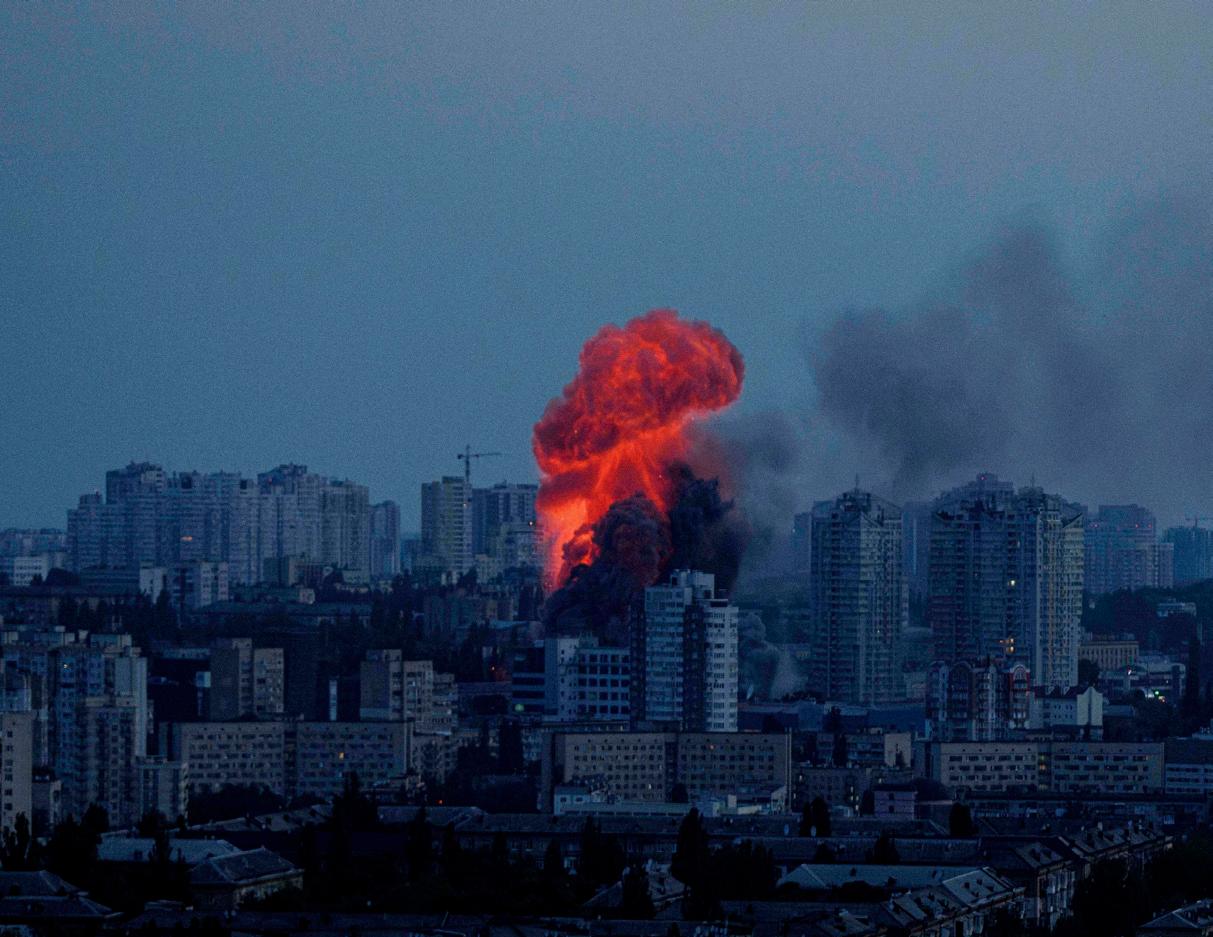
Driven in part by clever organization and in other by luck, it has become the most successful modern doctrine for the small, embattled democracy to popularize its message.
From the outset of Russia’s invasion, Ukraine rejected the dogma of wartime information. Conventional wisdom holds that states ought to centralize messaging, restrict imagery, and manage panic through a deliberate silence. World War II showed this tight grip. The U.S. and British governments operated expansive censorship offices. Images of dead soldiers were suppressed in favor of tidied, well-fed propaganda drawings and publicity stunt photos. Battlefield losses were delayed,softened, and in some cases not published at all. Journalists embedded within the Allied forces were subject to military review while their company’s films, radio broadcasts, and newspapers were filtered to maintain morale and avoid public panic. The logic was simple: to defend democracy, it must be suspended. Too much visibility risked dissent and thus information discipline was what would keep a united home front. This approach persisted deep into the late twentieth century. During the U.S. Vietnam War (1955-1975), the relative openness of media access was later blamed, fairly or not, for eroding public support. Politically explosive images like the execution photographs taken by Eddie Adams during the 1968 Tet Offensive, images showing a South Vietnamese officer shooting a Viet Cong prisoner at point-blank range, became published arguments of the wartime opposition.
The photos’ shock value became a unique shorthand for the brutality of a war, one with massively eroding support. And so by the 1991 Gulf War, the lesson had been internalized: Press access was to be tightly controlled through reporter embedding programs, systems designed expressly for agencies like the Pentagon to manage media coverage. Of the roughly 1,500 journalists who operated in Saudi Arabia and in theater during the war, only around 180-190 at a time were embedded with coalition forces and permitted into frontline zones. The rest were constrained to hotels or filtered reporting posts. Broadly speaking, whether operating inside the country or stranded in journalistic limbo, reporters were constrained by the conditions of their protection. Access came with limits on movement and speech. The alternatives like embedding with Iraqi forces or operating independently carried extreme security risk. A 2006 study of 452 articles from American national daily newspapers showed embedded coverage was significantly more positive about the military and “implied a greater trust toward military personnel” than reporters who were not supported by the offensive force. The nature of war meant much of the footage was sanitized and often abstract: green night-vision strikes, grainy missile cameras, bloodless and faceless explosions. War was rendered distant and technical. The state spoke; the public watched from afar. In later writings this form of reporting was deemed “soda-straw journalism”.
Ukraine rejected all existing models outright. The presidential war face was unscripted and handheld as Zelensky spoke to the world and its leaders through livestreamed addresses and social media blasts. Since the start of 2022, his tens of thousands of posts across platforms have made him one of the most interactedwith public figures in social media history. On Facebook alone, his account has generated over 280 million interactions in the form of likes, comments, and shares, the highest engagement of any sitting world leader. Beyond functioning as simple proof of presence, Zelensky’s remarkable digital output collapses executive authority and status to a national identity centered around a shared risk and responsibility.
“We’re all here. Our military is here. Citizens in society are here. All of us are here, protecting our independence of our country.”

Outside of the president’s verified channels, the aperture immediately widened into an information deluge. Smartphone footage from bomb shelters, shattered apartments, hastily dug trenches, and hospital corridors flooded public platforms in real time. Ukrainian Telegram channels moved media content out of country and offloaded onto Western platforms. Within hours, platforms like Instagram, Facebook, X (formerly Twitter), and WhatsApp seemingly carried information that was more immediate, granular, and at times more accurate than what circulated through pundits or studios.The problem then and remaining: What appears are vivid and compelling, yet fragmented moments without context, truths without totality, snapshots mistaken for the whole. The testimony of the nation became the journalism. Witnessing replaced reporting as the boundary between subject and source collapsed into a single, continuous stream of lived evidence. Live news showed not the eye of a reporter, but the footage of the soldier. Oftentimes giving little thought to bias or source credibility.
Life and death found its way out of Ukraine and on to the little screen. The war was made visible at an individual scale. This was not simply transparency for its own sake; what was spurred was a recalibration of legitimacy and of effect. Rather than compelling citizens and foreign audiences to trust official statements, Ukraine asked for witnesses. To see the cost. To feel proximity. Legitimacy emerged not from restraint, but from near total exposure. What was once hidden became central and what was once managed became ubiquitous and widespread.
A TikTok from February 12th, 2023 shows an Ukrainian soldier moonwalking to Michael Jackson’s “Smooth Criminal” in an empty field. At the time of writing, this Tik-tok had more than 12 million likes. Heroism by no means in the traditional sense. There is no battlefield spectacle, no explicit violence, no appeal to nationalism. Instead, the clip humanizes the war, through levity. It reframes the soldier not as an icon of sacrifice but as a recognizable peer, fluent not solely in wartime abbreviations and talking air support on to targets, but also in global pop culture and digital humor.
In August of 2023, Clemson News’ investigative piece How Ukraine’s Savvy Official Social Media Rallied the World and Raised the Bar for National Propaganda studied all of the posts that the Ukrainian government and the city of Kyiv posted to their official Twitter accounts during the first days of the Russian invasion. It notes a “distinctly violent tone,” across these posts, emphasizing Russian brutality as well as a religious reference to frame Ukrainian resistance as both morally justified and existentially necessary.
On March 9th, 2022, the City of Kyiv posted a photograph of a woman breastfeeding an infant against an urban background, known now as the Madonna of Kyiv or Madonna from the Metro.
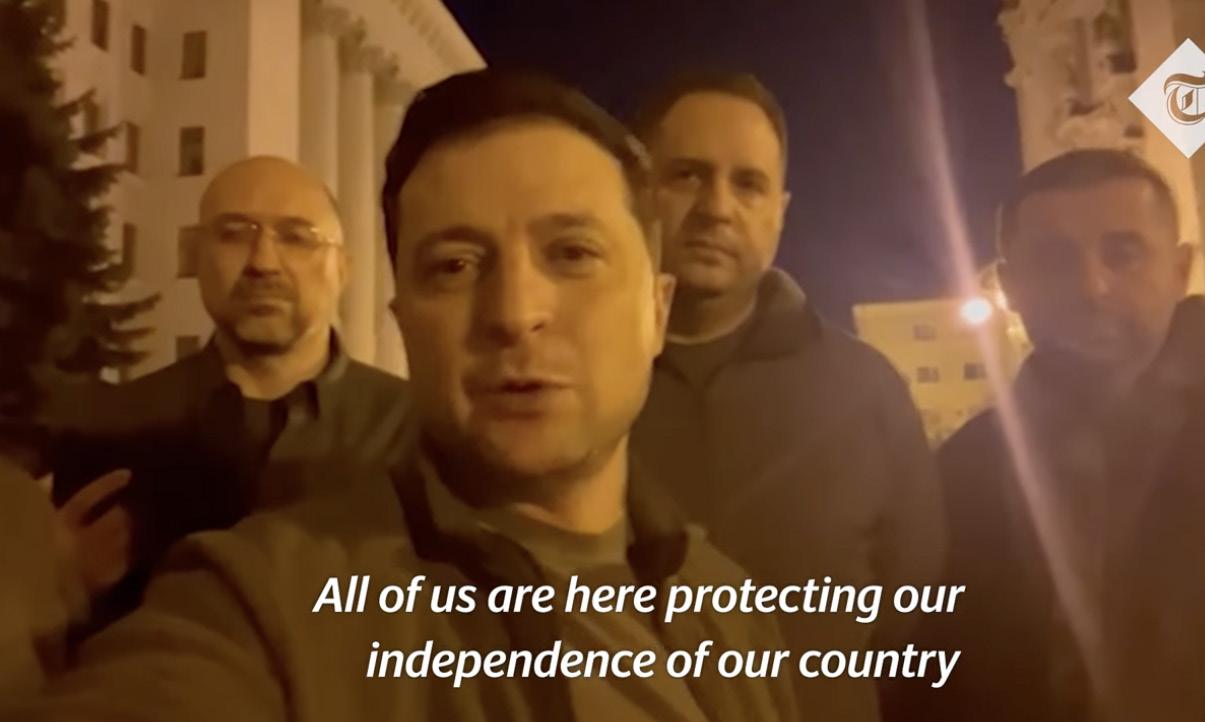

This sort of content resonates most strongly with a core audience whose personal ties or emotional proximity to the conflict make them especially receptive to its framing. If the algorithm is accurate, as most have learned to become, individuals feel engaged rather than irritated or alienated by the volume of posts. For some, they may even be compelled to action.
Core users amplify favorite content by sharing them with a wider, more passive audience of sympathetic secondary viewers. The dynamic echoes multi-step flow communication, where information travels through engaged intermediaries before reaching the broader public. This cycle continues in a cascading model of diminishing returns alongside an everexpanding pseudo-moral zeitgeist. In a study of ~1.6 million Ukraine-Russia war related posts done by Cambridge in October of 2024, Ukrainian social media was revealed to garner 92 % more engagement on Facebook and 68 % more on Twitter after the invasion compared with similar content pre-war. Conversely, hostile posts about Russia gained only ~1 % more engagement on Facebook and no significant uplift on Twitter. Using the same dataset of posts and a geolocated sample of 149,000 Ukrainian tweets, the researchers found that after the invasion, ingroup-solidarity language emerged as the strongest factor associated with both domestic and foreign engagement.
Trust no longer flows through institutions; algorithms decide what gains prominent.
What began as improvisation has since hardened into structure.
As Steven Feldstein, Senior Fellow at the Carnegie Endowment for Peace, observes, “I think we’re at an inflection point where trust in the digital realm and more broadly within society is starting to shift. In the (near) past, people had a strong belief in the legitimacy of institutions and gatekeepers.” This reorientation comes with structural consequences. Algorithms now mediate, shaping visibility based not in line with public benefit or democratic responsibility, but on simple engagement metrics.
Feldstein continues, “Their reliance on platforms is mediated by opaque algorithms that guide them towards particular influencers and sources based not on credibility or legitimacy but on the potential for those sources to generate clicks and hold attention.” Within this incentive structure “information in the digital age has become perverted where news credibility/legitimacy is subservient to revenue generation. I think this has dire implications for the future state of democracy.”
Institutions in Ukraine have moved more dynamically than most other nations. The Centre for Strategic Communication and Information Security (CSCIS) operates under the Ministry of Culture and Information Policy, billy-clubbing at the far reaches of the internet domain and countering Russian disinformation. It is reflective of what makes the Ukrainian structure so successful, a sober recognition: the government no longer controls the infrastructure through which its war is narrated.
This logic extends out of country and into diasporic spaces.
The Yale Ukraine House is a premier example, broadcasting in fifteen-second clips or in short carousels of photos, the emotional side of the war. And it is when this footage from Ternopil launches itself from between birthday posts or when one scrolls past club flyers to see the obituaries of three soldiers, that this war leaves its borders, ferried by student social media curators, and becomes personally moving.
In a few short thumb-scrolls, in that whiplash, the audience goes from superficiality to the front lines of Donetsk and back; we stumble into a trip guided not by journalists but by students our own age. These posts, with order, tone, and a strange mixture of intimacy and formality, seemingly reject the usual performative aesthetic of political Instagram stories. It is this rawness, paired with the near-total absence of any comparable Russian presence in a digital diet, that made the subject especially notable. The January 2024 peer-reviewed study The Russian War in Ukraine Increased Ukrainian Language Use on Social Media, published in Communications Psychology, analyzed millions of geo-tagged tweets and found that Ukrainian posts outnumbered and outperformed Russian-aligned content by about five to one, with Ukrainian posts drawing far more engagement while Russianaligned content saw little to no increase.
This asymmetry is hard-won, produced through personal, intimate acts of, through the circulation of individual stories across national and language barriers.
acts of, through the circulation of individual stories across national and language barriers. “We have a big community of Ukrainians on campus, 40+ people. We are all constantly cocreating new ways to keep Ukraine on the front page…” says student leader Natalia Shuliakova. To the many Ukrainian students who are almost 5,000 miles from home, a post can be a political and self-affirming action taken to preserve their diasporic identity. To post is to be seen. The work is not simply about sharing information, perhaps it actually fails in this regard with such brevity, but it’s about calibrating relevancy. “The ‘how’ again depends on who we’re talking to.” Sometimes that means vigils framed around solidarity. Sometimes fundraisers. Film screenings. Roundtables that deliberately break from familiar narratives. Shuliakova writes from her place of leadership, “Leading Ukraine House means understanding that we can’t just show up with the same message every time and expect people to keep listening. The war is entering its fourth year, and attention spans are finite. We have to be creative, strategic, and, honestly, sometimes exhausting in how we keep Ukraine visible.”
The stakes are explicit, Shuliakova continues, “Making Ukrainian media visible at Yale matters because this is a space that trains future policymakers, journalists, lawyers, and leaders,” Shuliakova notes. “If people graduate having never seriously engaged with Ukraine beyond headlines, that’s a failure.”
The long-term fight, then, is not simply for sympathy. It is for memory. For what remains seen, and what is unknowingly or apathetically allowed to slip back into obscurity. Ukraine’s information doctrine has reshaped narrated conflict across Eastern Europe and beyond the region. The world now knows that war will be experienced in real time, both by domestic publics and foreign audiences alike. Silence is no longer neutrality nor stately stoicism; it is interpreted as absence, weakness, and even complicity. The Ukrainian model demonstrates that smaller states can overcome apparent asymmetries by controlling narrative tempo, not the narrative itself, often eclipsing the rigidity of larger media units in the marketplace of ideas.
For other democracies, the lesson is not that exposure guarantees legitimacy, for visibility without structure risks exhaustion, and exhaustion can allow for capture by hostile or commercial forces. The Ukrainian case instead suggests that democracy in the digital age requires institutional humility and even explicit requests––not demands––of the vox populi. The state doesn’t beg, per se. Or at least, it doesn’t not beg. States must accept that they no longer control information environments; they must pivot to a new role investing in verification, framing, and facilitating civic participation within quasi-public private spaces.
The task is not to restore old gatekeeping regimes, but to design systems where citizens can act as credible intermediaries without collapsing into discordant noise or falling into adversarial manipulation. Citizens are no longer just audiences; they are vectors. When people are treated as co-producers of meaning rather than passive recipients, unity strengthens even under extreme strain. It is unclear whether democracies can endure without hollowing themselves out, whether politics that depend on constant exposure can survive fading attention, or whether being seen, liked, shared, and reposted is enough to keep a country free.

By Andrea Urso
Abstract
This article examines the drift toward technocratic forms of governance, where executive authority is increasingly justified through expertise, efficiency, and crisismanagement claims rather than sustained democratic deliberation. It argues that this “executive expertise” logic can consolidate power without overt constitutional rupture, by shifting key decisions away from legislatures and into faster, more technical pathways that are harder to contest in real time. The article combines two complementary lenses. The first section provides a comparative framework centered on France and the United States, showing how different institutional architectures can produce similar political effects. The second section adopts a human rights–focused perspective, using a rights-sensitive policy domain to illustrate how technocratic rationales translate into concrete governance choices that shape lived outcomes. The article concludes with policy recommendations aimed at preserving executive capacity while rebuilding democratic conditions of visibility, timely contestability, and clear political attribution.
In the twenty-first century, the rhetoric of governance shifted from political representation to administrative competence. This shift has made expertise a central language of executive legitimacy. This paper frames technocratic governance as a broader pattern of democratic drift and analyzes executive expertise as a key justificatory narrative enabling expanded discretion. Through a comparative focus on France and the United States, it shows how administrative and crisisgovernance mechanisms can weaken effective parliamentary or congressional oversight.
2. Conceptual framework: what counts as “technocratic drift”
For the purposes of this article, “technocratic governance” refers to a mode of rule in which executive authority is legitimated primarily through claims of expertise, efficiency, and crisis-management capacity, rather than through political contestation and deliberation.
As a political logic, it shifts the basis of legitimacy from representation and contestation to performance and problemsolving, making disagreement easier to reframe as “inefficiency” rather than democratic dissent. Classic accounts of technocracy emphasize the figure of the “technocrat” as a political actor whose authority rests on non-party expertise. McDonnell and Valbruzzi, for instance, associate technocracy with governing authority grounded in recognized expertise rather than party-based representation.
Building on this insight, the article treats technocracy less as a sociological label and more as a political strategy of legitimation: executives can consolidate discretion by presenting contested choices as matters of expert necessity. Democratic government conventionally grounds legitimacy in representation, an “identity” between rulers and ruled, whereas technocratic rationales justify decision-making authority by reference to competence and administrative capacity. This tension becomes particularly salient in contexts of crisis and complex governance,
where executives can present policy choices as technical necessities and, in doing so, narrow the space for parliamentary or congressional scrutiny. The mechanism is an arena shift. Conflict does not disappear; it is displaced from legislatures to more technical venues such as administrative drafting, accelerated procedures, emergency governance, and litigation. This shift raises a representation problem: actors with legal and technical capacity tend to gain influence, while parliamentary minorities and diffuse publics face higher barriers to intervene before the executive sets the policy baseline. Against this background, the following sections examine France and the United States as two consolidated democracies in which executive discretion is increasingly defended through expertise-based narratives and administrative tools.
To operationalize this concept, the analysis uses legal vehicles and accountability constraints as proxies for two political variables: (i) how executives compress contestation by translating urgency and expertise into binding action, such as ordonnances and accelerated legislative procedures in France, and delegated agency rulemaking (under the Administrative Procedure Act or APA) and emergency-based executive action in the United States; and (ii) how—and how quickly—oversight institutions can impose accountability limitations that should discipline these tools, including parliamentary/ congressional oversight and the intensity of judicial review. The next section turns to France as a paradigmatic case of executive agility embedded in constitutional form.
Article 38 of the French Constitution allows Parliament to authorize the government to legislate through ordonnances in areas normally reserved to statute law, within a defined scope and a precise time limit. Formally, this is a constitutional delegation mechanism, but politically it is attractive in situations where governing coalitions are fragile or when reforms are framed as urgent and technically complex. In those settings, ordonnances shift the practical center of policy design from parliamentary deliberation to executive drafting.
This matters for technocratic drift because Article 38 makes it easier to present major policy choices as questions of implementation. The government’s justification is typically managerial. Indeed, speed, coherence, and operational expertise are treated as prerequisites for effectiveness, while ordinary legislative bargaining is portrayed as delay. Parliament still “authorizes” the direction ex ante, but the executive controls the content, sequencing, and trade-offs ex post. The accountability cost is subtle, because the locus of contestation moves away from open debate and toward technical monitoring after the decisive choices have already been made.
Oversight under Article 38 also reflects this displacement. Before ratification, ordonnances generally operate as regulatory acts and can be challenged through administrative-law review. After explicit ratification, they acquire legislative value, narrowing avenues of challenge and pushing conflict toward constitutional channels. Explicit ratification is a safeguard, but it does not fully solve the core problem. Indeed, when delegation becomes routine, the most consequential decisions are often settled outside the most visible deliberative arena. In that sense, Article 38 is legally orthodox yet politically consequential—an institutionalized shortcut that compresses parliamentary contestation and relocates scrutiny to more technical, ex post forums. Beyond delegated legislation, French constitutional practice offers procedural devices that allow executives to govern through speed—especially when reforms are framed as urgent, technical, or crisis driven. One key tool is the procédure accélérée (Art. 45), which shortens the legislative timetable and reduces opportunities for amendment and sustained parliamentary bargaining. The political payoff is clear: when time is compressed, the executive can frame deliberation itself as a cost, turning “efficiency” into a legitimating argument rather than a mere preference.
An even more consequential instrument is Article 49(3), which allows the government to secure adoption of a bill unless an absolute parliamentary majority is willing to bring it down. This shifts the conflict from the substance of the text to a high-stakes confidence test, raising the threshold for effective opposition. In practice, it enables executives to present contested measures as “unavoidable” managerial necessities, while forcing critics into an all-or-nothing institutional response.
Crisis governance amplifies these dynamics. Emergency frameworks preserve formal legality, but they frontload executive discretion and often leave meaningful accountability to ex post controls, parliamentary review after the fact and judicial scrutiny once measures are already in force. The broader implication is not that crisis tools suspend democracy outright, but that repeated reliance on accelerated and emergency procedures normalizes executive-centered governance and relocates contestation away from ordinary parliamentary politics. The French framework does not abolish checks on executive-led lawmaking; it changes their timing and political function.
Parliamentary control is formally concentrated at the authorization stage for ordonnances (Art. 38), where the legislature sets the scope and deadline of delegation. Since the 2008 reform, ratification must be express, a safeguard meant to prevent executive legislation from becoming routine by default. Yet the core trade-off remains: when delegation is repeatedly used, Parliament may retain formal gatekeeping while losing leverage over the substantive design and sequencing of policy, which are largely set within the executive.
Acceleration tools intensify this displacement. By shortening the legislative timetable, they reduce amendment opportunities and deepen informational asymmetries, making it easier for executives to justify constrained debate as the “price” of effective governance. In political terms, scrutiny shifts from open-ended bargaining to constrained moments of approval, often under time pressure and with limited capacity to reshape the text.
Judicial and administrative review provide an additional channel of constraint, but it is typically reactive and technical. Ordonnances can be challenged as long as they have not been expressly ratified, yet such review usually occurs after the executive has already set the policy baseline. The broader implication is that French checks remain real but increasingly operate ex post, relocating contestation away from visible parliamentary deliberation and toward procedural oversight mechanisms that are less accessible to ordinary democratic politics.
4. United States: administrative power and executive discretion
Unlike France’s constitutionally codified channels for delegated legislation, the United States expands executive capacity primarily through the administrative state. In a context of polarization and recurring legislative gridlock, agencies become an attractive venue for policy delivery. In fact, agencies can act under broad statutory mandates while presenting outcomes as technically grounded solutions and much of this authority is exercised through APA rulemaking, which confers legitimacy via procedure and expertise rather than through ordinary congressional bargaining. For the purposes of technocratic drift, the point is not that rulemaking is inherently undemocratic, but that it can convert contestable political choices into technical determinations. When agencies rely on economic modeling, risk methodologies, and expert assessments, disagreement is easier to recast as a dispute over competence rather than a conflict over values and distribution.
A second channel of executive expansion operates through presidential directives and emergency powers, which enable rapid action when policy is presented as urgent or security-sensitive. The political incentives are straightforward, giving that in a polarized system, unilateral tools allow presidents to show decisiveness, set the agenda, and avoid the transaction costs of congressional compromise. Emergency governance, in particular, tends to concentrate discretion at the front end, while meaningful contestation is displaced to oversight battles and litigation after measures are already underway.
Even outside formally declared emergencies, executive orders and centralized White House coordination can institutionalize technocratic rationales in “complex governance” domains, and even though Executive Order 14110 (2023) was later rescinded under President Donald Trump, it remains a useful example of this dynamic. Rather than legislating directly, it orchestrates an expert-driven federal program by tasking agencies with standards, risk mitigation, and governance measures for “safe, secure, and trustworthy” AI. Politically, such directives operate as agenda-setting instruments. They frame the policy problem in managerial terms, channel decision-making through administrative implementation, and allow the executive to claim competence and control, even where durable legislative agreement is absent.
The U.S. system has institutionalized formal checks, such as congressional oversight and judicial review, but in practice they are often operative after the formation of policies through administrative channels. Congress can hold hearings and impose budgetary constraints, yet the day-to-day formation of rules is frequently insulated within expert institutions. The political consequence is an arena shift: conflict moves from representative bargaining to procedural oversight and litigation, where influence tends to track organizational capacity and legal resources.
Courts therefore play an outsized role in disciplining expert governance. Agencies must justify their choices in a way that can survive review under the APA, which encourages policy-making through technical records rather than legislative compromise. Recent Supreme Court doctrine has further tightened this judicial backstop. The major questions doctrine, articulated in West Virginia v. EPA, signals skepticism toward agencies asserting sweeping authority in the absence of a clear congressional authorization. And in Loper Bright Enterprises v. Raimondo (2024), the Court rejected Chevron deference, instructing judges to exercise independent legal judgment rather than defaulting to agency interpretations. Taken together, these changes promote judicial control while maintaining the political dynamic in that the power of the executive is wielded through administrative knowledge and the accountability that increasingly takes an ex post form.
In both the French and the American systems, the dynamic is the same despite differences in the institutional arrangements: the power of the executive is wielded through expertise-driven, while democratic contestation shifts from legislatures to more technical venues.
5. Comparative synthesis: same logic, different constitutional architecture
Across France and the United States, a common justificatory pattern emerges. Executives increasingly frame high-salience decisions as matters of technical competence, efficiency, and crisis management rather than as contestable political choices. This rhetoric rarely attacks democracy head-on; it works by shrinking the arena in which disagreement can bite—deliberation becomes “delay,” and dissent is recast as managerial obstruction. The drift is therefore cumulative: executive-centered governance becomes normal through legally ordinary tools, even as the space for visible, sustained contestation narrows.
The main divergence lies in how each system converts expertise claims into binding outcomes. Within the French system, the flexibility of the executive is channeled through constitutionally explicit shortcuts such as Article 38 ordonnances and timecompressing parliamentary procedures, well-suited to governing under fragile or contested majorities. Within the American system, the same impulse is routed through the administrative state, which employs broad statutory mandates, agency rulemaking, and centralized executive coordination that move policy-making into technical procedures rather than durable legislative compromise. The institutional pathways differ, but the political function is comparable: executives gain room to act while the main sites of contestation shift away from ordinary parliamentary or congressional bargaining. Both models retain checks, but they increasingly operate in different arenas and on delayed timelines. In France, oversight is concentrated at authorization and ratification, while much substantive contestation is displaced to ex post review, typically in technical legal form. In the United States, Congress remains an oversight actor in theory, yet the most effective discipline often occurs after the fact through administrative procedure and litigation once agencies have already set the policy baseline. The common outcome is an arena shift: scrutiny moves away from open-ended legislative bargaining toward procedural and judicial channels, where influence tends to favor organized actors with legal and technical capacity.
France routinizes executive agility constitutionally; the United States routinizes it administratively—but both risk normalizing reactive accountability.
Technocratic drift does not require illegality. It emerges when executives rely on lawful instruments that reward speed, complexity, and expert framing, while legislatures cannot offer scrutiny that is equally timely or politically costly. Over time, accountability shifts in practice: decisions are made earlier and more internally, contestation moves into procedural channels, and responsibility becomes easier to diffuse.
If ordinary legal tools—used aggressively or repeatedly—can generate this drift, the policy challenge is to preserve executive capacity without letting urgency become a standing justification for weaker oversight, lower transparency, and reduced contestability.
The comparative picture developed above points to a narrow—but politically consequential—problem. Neither France nor the United States is “lawless” in its reliance on executive expertise. Both channel discretion through ordinary instruments—delegation, acceleration, administrative governance, and executive coordination. The policy task is therefore not to prohibit expertise, but to prevent “necessity” and “complexity” from becoming standing justifications for weaker accountability. In practice, that means rebuilding three democratic conditions: visibility (what was decided and why), contestability (a real chance to challenge before baselines harden), and attribution (clear political ownership rather than diffuse responsibility).
Delegation can be democratically defensible, but only when it is genuinely bounded. In France, this means treating Article 38 authorizations as targeted mandates rather than open-ended licenses: clearer objectives, tighter scope, and a ratification moment that cannot be reduced to a procedural formality. In the United States, the parallel move is to draft statutory mandates with clearer guardrails and structured review triggers for highimpact rules. Across both systems, however, boundedness is not only a matter of formal powers: legislatures need the capacity to evaluate expertise in real time. Without staff, data access, and routine information channels, oversight becomes a matter of formal powers: legislatures need the capacity to evaluate expertise in real time. Without staff, data access, and routine information channels, oversight becomes symbolic and reactive, while executive expertise becomes a one-way narrative.
A recurring driver of technocratic drift is rhetorical: speed is framed as necessity. A modest but effective safeguard is to require a short, standardized “urgency record” whenever accelerated procedures or crisis powers are activated. Executives should state why ordinary routes are inadequate, what evidence they rely on, and what foreseeable rights and distributional impacts are at stake. This does not meaningfully slow action, but it makes urgency contestable and auditable. The same logic supports tight default expiration dates for emergency measures, with renewal conditioned on an updated necessity assessment and a genuinely deliberative vote. The aim is not to moralize emergencies, but to prevent “exceptional” tools from becoming the default operating system of governance.
In both countries, accountability often arrives too late: by the time scrutiny occurs— through courts, oversight hearings, or procedural review—the executive has already set the policy baseline. The answer is not permanent litigation, but earlier, structured opportunities for challenge in high-stakes contexts: brief hearing windows, access to the key technical assumptions, and plain-language explanations of trade-offs when policy is justified as “technical.”
Participation matters here as a democratic corrective. If decisions are continually framed as expert administration, the public risks being treated as a managed object rather than a political subject. Making the reasoning legible and opening narrow channels for early contestation can counter depoliticization without paralyzing action.
Crisis tools are where technocratic drift hardensfastest, because the language of necessity can turn extraordinary measures into routine governance. The most effective guardrail is temporal and political: short default expiration dates, renewal conditioned on an updated necessity assessment, and a genuine vote that forces executives to restate tradeoffs in public. At the same time, accountability must arrive while it can still matter. Narrow, early contestation windows—paired with access to the core technical assumptions and plainlanguage explanations—help prevent urgency from becoming a procedural shield. Finally, participation needs to remain meaningful even when policy is framed as “technical”: if citizens and affected groups cannot understand the assumptions, they cannot contest them, and expert governance becomes insulation rather than capacity.
The France–United States comparison suggests that technocratic drift is less an abrupt constitutional break than the cumulative use of ordinary tools in ways that reallocate democratic accountability. Delegation, acceleration, administrative rulemaking, and emergency action can all be defended as responses to complexity, yet their combined effect often compresses deliberation and pushes contestation into technical, ex post arenas. The risk is not expertise itself, but the normalization of expertise as a substitute for political justification and legislative scrutiny. The recommendations above aim to preserve executive capacity while restoring visibility, contestability, and responsibility. The next section turns to immigration governance, where these dynamics become especially concrete and high-stakes.
By Cade Winter
1. Introduction
Human survival depends on a set of basic necessities: food, water, shelter, security, and access to medical care. When these essentials are denied or withdrawn from a population, humanitarian crises emerge. A humanitarian crisis is commonly defined as a situation in which there is a dire emergency threatening the health, safety, or wellbeing of a group. While these types of crises are often associated with areas engulfed in military conflicts or low-income countries, they are not confined to a fixed political or economic zone. Even among the wealthiest states, humanitarian crises persist, taking new forms shaped by governance structures, political incentives, and institutional design. Nowadays, two of the most economically powerful liberal democracies in the world, France and the United States, are confronting multiple humanitarian crises within their borders.
A humanitarian crisis may be defined as a situation in which the health, safety, or basic living conditions of a population face severe threats that exceed the capacity of the ordinary government. These crises commonly involve shortages of food, water, housing, healthcare, or protection from violence.
Oftentimes, they require collective state intervention or external assistance. Yet humanitarian crises demand rapid action while implicating fundamental rights such as life, liberty, family unity, and access to justice.
A tension forms between urgency and rights during humanitarian crises, which leads to technocratic drift. Technocratic drift is the gradual transformation of politically contested questions, particularly those involving rights and accountability, into technical problems of administration, efficiency, expertise, and emergency. Rather than being debated openly through democratic deliberation, these questions are reframed as matters best resolved by specialists, agencies, and executive authorities. While technocratic governance can enhance capacity and coordination, it often diminishes political responsibility and narrows the space for democratic contestation. Thus, governments confronted with humanitarian crises frequently justify the repression of rights by emphasizing administrative competence and necessity to act.
In this article, I will examine how technocratic drift operates in practice across humanitarian crises in France and the United States. By focusing on migration, protest policing, and homelessness, I will show how executive authorities in both countries increasingly
rely on expertise, emergency rationales, and administrative procedures to justify action, or omissions, while limiting legislative involvement. Across both systems, humanitarian crises become administrative battlegrounds where individual rights are formally preserved but substantially constrained and where political accountability is contested.
2. Humanitarian Crisis and Governance in France
Over the past two decades, France has experienced a steady increase in immigration and asylum applications. Despite being interrupted by the COVID-19 pandemic, the number of individuals seeking asylum has risen since 2006. In the years following the pandemic, asylum applications rebounded to almost compensate for the period of restricted immigration. These trends have placed significant pressure on France’s asylum system and intensified political polarization surrounding migration. In response, French lawmakers have increasingly framed asylum governance as a problem of administrative overload and procedural inefficiency. Legislative and executive politicians have emphasized accelerating asylum determinations, shortening appeal timelines, expanding detention capacity, and increasing removals of rejected applications.
However, French politicians mask their true intentions by justifying these reforms through humanitarian language. Officials argue that creating a more efficient system allows the state to protect true people in need and lessen stress. Ultimately, parliamentary policies prioritize the “control of immigration and improve integration.” Recent legislation, like the “Loi pour Contrôler l’Immigration et Améliorer l’Intégration” emphasizes expedited procedures and administrative discretion. As a result, questions regarding due process, access to legal counsel, and individualized assessment are increasingly delegated to administrative agencies and courts rather than debated in Parliament.
Technocratic drift is evident in how asylum seekers’ rights are processed. Parliamentary debates over asylum standards have diminished as executive reliance on accelerated legislative procedures minimizes deliberations and limits scrutiny. Courts are left to adjudicate individual claims, which transforms rights protection into a case-by-case process. Asylum seekers rights are primarily through procedural legality rather than democratic accountability. Ultimately, this individualized approach prevents the collective expansion of rights. By resolving disputes through administrative review or judicial appeal, the state avoids acknowledging asylum as a broader humanitarian obligation. While these asylum seekers do have guaranteed rights, these liberties only exist to enable these individuals to navigate complex, foreign legal systems. Thus, humanitarian protection is both formally preserved and constrained.
The governance of protest in France further displays technocratic drift in a humanitarian context. On May 25, 2020, American George Floyd was stopped by Minneapolis police over the suspected use of a counterfeit $20 bill. Less than two hours later, Floyd would be pronounced dead due to complications from cardiopulmonary arrest after law enforcement officers knelt on his neck for nearly ten minutes . Despite pleading with the officers to disengage from his neck, he was ultimately ignored. Initially, the Minneapolis Police Department claimed Floyd resisted and that he was in medical distress when officers arrived. However, a video from a nearby bystander shattered the Department’s claim A day later, mass demonstrations erupted across the world. In France, 91,000 protestors march in response to police brutality, systemic racism, and state violence.
Aside from Floyd, French protestors also protested the death of Adama Traoré, who died in police custody in 2016. When the police, who were looking for Adama’s brother, asked to see his ID, Traoré unsuccessfully attempted to flee. Sometime while in police custody, Traoré died with only the arresting officers as witnesses.
Since there was no footage or immediate bystander, it is unclear exactly what happened. However, his family alleges he died of asphyxia, which was challenged by French officials. Despite years of legal proceedings, none of the officers involved in Traroé’s death were criminally charged with a crime. During these 2020 protests, French authorities relied heavily on crowd control expertise and predictive policing tools to justify restrictions on assembly. Police used tear gas, kettling tactics, and aggressive dispersal methods, resulting in numerous injuries. Yet these injuries were framed as unfortunate but necessary to maintain order. Instead of parliamentary debate over policing doctrine or the use of excessive force, the French government said these measures were justified by emergency situations. Allegations of excessive force entered judicial proceedings with no longlasting change being made. Humanitarian critiques, particularly those concerning bodily integrity and democratic participation, were evaluated as technical questions of compliance and procedures. Executive authorities continuously invoke expertise while accountability remains diffused. Once again, rights are preserved in principle but diluted in practice through technocratic governance.
Across the world, homelessness and poverty remain a persistent humanitarian crisis. In France, over 330,000 people were considered homeless and nearly 10% of the country lived below the poverty line in 2023 alone. Even though hundreds of thousands are currently exposed to severe health and safety risks, government responses have prioritized management over assistance. Despite housing insecurity, mental health challenges, high living costs, and barriers to education and employment, homelessness is frequently treated as an administrative problem. Executive ministries, like the Ministère du Travail, de la Santé et des Solidarités, approach homelessness through technocratic instruments that emphasize program efficiency, budgetary control, and short-term capacity management. Even initiatives prompted as reform, including President Emmanuel Macron’s 2018 “Housing First” agenda, have been implemented largely through centralized executive planning with limited democratic deliberation.
A clear illustration of technocratic drift in France is the national Plan Hiver, which temporarily expands emergency homeless shelter capacity during colder months. However, it doesn’t focus on durable housing outcomes or long-term social integration. Enforcement often falls to police and social services tasked with relocating homeless individuals.
Shortly before the 2024 Olympic Games, Parisian police officers loaded hundreds of homeless people onto government buses bound for other French cities. France was accused by humanitarian organizations, news outlets, and protestors of intentionally displacing homeless individuals to embellish the city’s wealth, cleanliness, and poverty management. Yet, this strategy reinforces administrative containment as accountability is measured through regulatory compliance and performance indicators. Ultimately, the French government has narrowed homeless governance to technical management and has obscured its deeper social, economic, and democratic dimensions. The national legislative bodies have focused their efforts on accepting the executives’ plans. For example, the second five-year housing plan, an extension of Macron’s 2018 “Housing First” framework, was devised primarily by Prime Minister Elizabeth Borne and Minister for Urban Affairs and Housing Oliver Klein.
In the United States, immigration has become one of the most visible and politically charged humanitarian crises. The “border crisis” has dominated political discourse for over a decade, but recent developments have emphasized the effects of technocratic drift. Following Donald Trump’s re-election in 2024, immigration enforcement intensified dramatically. Throughout both his campaigns, Trump emphasized border security, mass deportations, and the expansion of executive authority. These policies were justified through claims of national security and public safety. Over the years, Trump has consistently portrayed illegal immigrants as deadly criminals who are bringing drugs, rape, and murder. Trump’s administration has enacted Executive Order 14159, expanded funding for border infrastructure, broader enforcement authority for Immigration and Customs Enforcement (ICE), and expanded use of expedited removals. While there have been protests and legislative efforts to combat ICE, none have halted or deterred Trump’s persistence.
Since Republicans control all three branches, these resistance movements are ultimately disregarded and enable Trump to further his agenda.
However, during these changes, congressional involvement was minimal. Legislative bodies largely functioned as oversight mechanisms rather than active participants in shaping policy. Rights protection shifted toward administrative procedures and litigation. Thus, affected individuals were forced to seek relief through courts rather than political processes. By 2025, thousands of children had been separated from their parents and U.S. citizens were mistakenly detained for illegal immigrants. Technocratic drift has occurred through executive optimization and a majority obsequious legislature. Immigration enforcement is treated as a logistical challenge to be solved through data analysis and efficiency-driven strategies. Yet this removes all humanitarian dimensions, such as family separation, psychological trauma, and legal vulnerability.
Following the 2020 killing of George Floyd, who was killed in police custody, over 15 million people participated in demonstrations across the country to protest institutionalized racism, policing methods, and violence. Despite evidence that over 93% of these protests were peaceful, executive authorities responded with curfews, emergency declarations, and mass deployment of National Guard forces. Federal, state, and local executives justified these actions through claims of disorder management and public safety. Instead of federal or state legislators devising response plans, executive authorities issued their own. As a result, legislative bodies become weakened as the executive acts alone.
Moreover, President Trump urged governors to “dominate the streets,” claiming protest governance was a matter of forceful control rather than democratic negotiations. Legislative bodies were largely absent during this period with the majority of decisions concentrated in executive hands. Allegations of excessive force, unlawful arrests, and militarized policing were addressed primarily through after-the-fact investigations and litigation. Courts evaluated individual cases but lacked the capacity to address systemic issues. Additionally, technical systems have been installed to prolong the legal process and fill the courts. Thus, without proper legislative discourse, these issues are hard to adequately resolve. Moreover, legislative bodies become weakened and permit the rise of executive reliance.
Homelessness represents a quieter but equally profound humanitarian crisis in the United States. With over 770,000 individuals experiencing homelessness and nearly 11% of the population living below the poverty line, destitution poses severe threats to health and safety. Yet government responses frequently prioritize removal over assistance.

Despite housing insecurity, mental health, high costs of living, and lack of education, homelessness is considered by executives to be a management problem rather than a humanitarian disaster. Executive authorities centralize decision-making while local legislatures are sidelined. A notable example is Oklahoma Governor Kevin Stitt’s Operation SAFE (Swift Action for Families Everywhere), which authorizes Oklahoma Highway Patrol to dismantle encampments near highways and targets Tulsa County. Even though local officials, including Tulsa’s mayor Monroe Nichols, were quick to criticize the Operation, executive authority prevailed. Accountability has shifted toward administrative compliance and judicial review. Unfortunately, humanitarian outcomes have become shaped by technical criteria rather than moral decisions or democratic debate.
Humanitarian crises are shaped by urgency and political forces. Decisions about migration, public safety, and poverty are deeply influenced by electoral pressures, party ideology, and public opinion. In both France and the United States, lawmakers are forced to strike the difficult balance of acting decisively to address urgent humanitarian needs while avoiding political backlash from constituents. Many believe these humanitarian interventions are costly, threatening, or ideologically controversial. Due to ideological alignment and inaction, executives, including Presidents, Governors, and agencies under the direct discretion of these individuals, are enabled to frame decisions as matters of technical expertise, efficiency, or emergency necessity. Only intensifying technocratic drift is political polarization. In France, asylum qualifications and policing provoke sharp partisan divides, while in the United States, public safety and immigration remain highly politicized. When decisions could alienate voters or provoke criticism, executives often centralize authority and rely on agencies or courts to implement policy. Framing crises as administrative challenges allows leaders to act decisively while avoiding direct political responsibility. In both countries, legislatures formally retain oversight, but are unstable.
Additionally, international pressures also influence technocratic governance. France and the United States are both bound by international human rights laws and face scrutiny from global organizations. Politicians can use technical or procedural justifications to demonstrate compliance with international standards while minimizing domestic controversy. For instance, accelerated asylum procedures, policing measures, or homelessness interventions are justified as operational necessities rather than ideological or political choices. By explaining their decisions through stats and bipartisan statements, executives make their decisions appear correct based on facts and data. In reality, their decisions are usually made to expand executive power.
Humanitarian crises in France and the United States show how executives expand their power during urgent situations and treat difficult decisions as technical problems instead of political choices. While both nations have different systems, they both result in technocratic drift. In France, executive power is built into the constitution. Article 38 ordonnances, accelerated legislative procedures, and emergency laws let the president act quickly with little parliamentary input. French presidents have relied extensively on emergency legislation, executive decrees (décrets), and ordonnances under Article 38 of the Constitution to govern by executive instruction. President Emmanuel Macron’s administration invoked the “État d’Urgence Sanitaire” to centralize decisionmaking, suspend ordinary parliamentary procedures, restrict movement, and impose public health mandates. While these measures were justified as necessary to protect public health, they significantly expanded executive discretion and reduced legislative scrutiny. Parliamentary involvement was often limited to authorization or procedural oversight. Much like the United States, normalized executive government has been justified by expertise and crisis management. The French case displays how constitutional mechanisms designed for exceptional circumstances can facilitate technocratic drift, transforming humanitarian emergencies into enduring expansions of executive authority and further marginalizing democratic deliberation.
In the United States, executive power grows mostly through administrative agencies and coordination. Departments like Homeland Security and ICE expand authority through rules, enforcement, and emergency measures. Presidents also use executive orders to act quickly. Under Trump, immigration policies were justified as public safety measures, while Congress mainly acted as an overseer. As of January 1, 2026, President Donald Trump has issued a combined total of 445 executive actions across his terms, which is more than any president since Dwight D. Eisenhower. Both Trump and Joe Biden demonstrate how executive authority can grow regardless of partisan ideology.
Trump recently set a record for the most executive orders signed within the first one hundred days of entering office. Their presidencies show how a global humanitarian phenomenon, such as the COVID-19 pandemic, can accelerate technocratic drift by legitimizing executive action through claims of urgency and expert necessity. Throughout the COVID-19 pandemic, both Trump and Biden claimed broad executive authority to manage public health and economic issues.
Despite their differences, legislatures have formal power but often play a minor role in humanitarian crises in France and the United States. Executives dominate humanitarian governance and justify decisions using expertise, efficiency, and urgency. Technocratic drift also turns rights issues into technical problems. In immigration, France accelerates asylum processes while the United States expands deportations and border enforcement. In protests, both countries justify restrictions using crowd-control methods and safety models. Rights like freedom of movement or assembly exist legally, but their practical exercise depends on executive discretion.
Thus, courts become the main way to challenge executive action. Judges focus on legality and procedure, but not on broad policy choices. As a result, successes rarely trigger systemic change. Overall, technocratic drift changes how democracy works. Decisions are justified through expertise and efficiency. Vulnerable groups, like migrants, detainees, protestors, and the homeless, are most affected. Rights remain on paper, but primarily limit executive actions instead of guiding policy. Humanitarian priorities are often secondary to urgent actions aimed to help or stop a humanitarian crisis. Technocratic drift arises and operates through institutional practices in desperate, multifaceted situations. France uses constitutional mechanisms and the United States relies on administrative expansion. However, in both countries, democratic accountability exists in weaker, indirect forms. Additionally, humanitarian crises are treated more as management problems than political or moral choices.
Humanitarian crises expose the limits of contemporary democratic governance. Despite global wealth exceeding $360 trillion, the highest level in human history, millions remain without food, shelter, safety, or dignity. These crises reveal the erosion of democratic accountability through technocratic drift. France and the United States are both examples displaying how legality and humanitarian concern can coexist with diminished democratic responsibility. When executives govern through expertise and urgency, rights are viewed as administrative variables rather than political commitments. The challenge moving forward is to bring humanitarian governance back into democratic politics. Decisions about humanitarian trade-offs should be openly discussed, challenged, and decided through meticulous debate. Without deliberation, accountability will remain weak and limited to technical problems or individual cases. Furthermore, it will also be disconnected from broader collective responsibility.