The Yale Journal of Politics and Culture





MANAGING BOARD
Editors-in-Chief
Eliza Daunt
Nicole Chen
Managing Editors
Hanna Klingbeil Canale
Rory Schoenberger
EDITORIAL BOARD
Associate Editors
Aubrie Williams
Conor Webb
Logan Day-Richter
MANAGING BOARD
Editors-in-Chief
Eliza Daunt
Nicole Chen
Managing Editors
Hanna Klingbeil Canale
Rory Schoenberger
Associate Editors
Aubrie Williams
Conor Webb
Logan Day-Richter
Natalia Armas Perez
Nicole Manning
Phoenix Boggs
Lucy Dreier
Sheena Bakare
Jaeha Jang
Contributing Editors
Beatrice Formenton
Mattie Epstein
CREATIVE TEAM
Creative Director
Katerina Matta
Design Editors
Ainslee Garcia
Ruth Gulilat
BOARD OF ADVISERS
John Lewis Gaddis
Publisher
Suren Clark
Contributing Writers
Baala Shakya
Brandon Gerosa
Chantal De Macedo Eulenstein
Eleanor Belinfanti
Isa Nascimento Silva Pinto
Katerina Matta
Kellin Henry
Kushan Mahesh
Vivian Quint
William Shiu
Staff Writers
Pola Jancewicz
Sarah Jacobs
OPERATIONS BOARD
External Affairs Director
Conor Webb
Communications Director
Abyssinia Haile
Business Director
Sheena Bakare
Robert A. Lovett Professor of Military and Naval
History, Yale University
Ian Shapiro
Henry R. Luce Director of the MacMillan Center for International and Area Studies at Yale
Mike Pearson
Features Editor, Toledo Blade
Gideon Rose
Former Editor-in-Chief of Foreign Affairs
John Stoehr
Editor and Publisher, The Editorial Board
Dear readers,
We are thrilled to share Issue II, the third publication from the 2025–2026 Managing Board. In this edition, we explore regions and crises that are frequently overlooked, in addition to addressing the urgent questions facing our own university.
Opening with an investigation into El Salvador’s régimen de excepción, Kushan Mahesh follows those living under President Nayib Bukele’s new order, showing how mass incarceration and vanishing due process have forged a nation with sharply reduced crime yet enduring trauma.
Turning to Yale, Katerina Matta examines how the national retrenchment around diversity, equity, and inclusion resonates on our campus, capturing the precarity—and enduring power—of Yale cultural centers as they navigate federal pressure, shrinking resources, and rising ideological backlash.
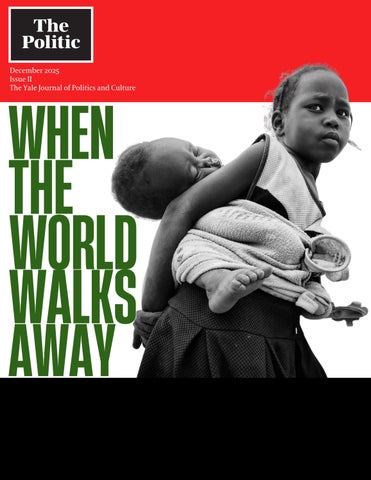
Our cover story by Pola Jancewicz, drawing on voices from Sudan and international leaders, confronts one of the world’s most urgent humanitarian catastrophes by tracing both the failures of global leadership and the resilience of those fighting to survive.
Kellin Henry takes us to Nepal, where a social-media ban sparked a Gen-Z uprising that torched parliament and the Supreme Court as the military stood by, revealing social media’s role in anti-corruption resistance amid a deeper democratic crisis.
William Shiu investigates a medical reality in sub-Saharan Africa that begins not in the operating room but in the marketplace, revealing how the desperate hunt for scarce surgical supplies lets chance and poverty decide who lives and who dies.
Finally, in an intimate interview, Chantal de Macedo Eulenstein speaks with Honduran photojournalist Tomas Ayuso, whose images of forced displacement, the drug war, and fleeting joy recast migration as a profoundly human story.
These pieces reckon with political power, corruption, and democratic backsliding, but they also insist on empathy: the lives behind the headlines and the ways we might learn from them. This issue is a testament to the remarkable work of our writers, editors, and designers. We hope you find meaning in these stories, just as we did in bringing them to you.
Warmly,
The 2025–2026 Managing Board
contributing writer
THE STRONGMAN AND THE CELLBLOCK
El Salvador Under Bukele
AS DEI RECEDES NATIONWIDE
Yale’s Cultural Centers Navigate an Uncertain Future
WHEN THE WORLD WALKS AWAY
Sudan and the Failures of Global Leadership
AFTER THE UPRISING
How Social Media Is Reshaping Nepal’s Democracy
OPERATIONS THAT START IN THE MARKET
Surgical Survival in Sub-Saharan Africa
PORTRAITS OF DISPLACEMENT
Photojournalist Tomas Ayuso on Capturing Violence and Joy in Latin America
*This magazine is published by Yale College students, and Yale University is not responsible for its contents. The opinions expressed by the contributors to The Politic do not necessarily reflect those of its staff or advertisers.
BY KUSHAN MAHESH
In a small town in central El Salvador, thirty minutes from the capital, a young deportee says he can finally leave his motorcycle outside without fear—something unthinkable just a few years ago. He remembers when stepping out of his home meant living in constant worry, when gangs like Mara Salvatrucha (MS-13) patrolled the streets and demanded loyalty or violence. When the gang tried to recruit him in 2022, during his senior year of high school, he fled to the United States to seek the safety his own country could not offer. Now, back home, he said the change feels surreal, “The gangs are gone in this neighbourhood, just gone.”
In another town not far away, Maribel Amaya, still waits for her 18-year-old son Jorge, who never came back from school—one of many detentions now familiar to families across El Salvador amid the country’s sweeping security crackdowns since early 2022. Jorge was wearing his school uniform when the police stopped him on his walk home from school in May 2022. Since then, she has carried folders of papers from court hearing after court hearing—letters from teachers, proof of grades—each stamped and ignored. In January this year, a court once again denied his release, offering no explanation. Jorge will remain imprisoned until 2026.
In Ilopango, an hour from the capital, Alexander Guzmán, a high school teacher and owner of a small taxi business, was arrested on the morning of March 27, 2022. He had been meeting his drivers for their weekly breakfast when police arrived. Both Guzmán and one of his drivers, Marco Tulio, were detained on charges of illicit association. After three days crammed “like sardines” in a local jail, they were transferred to Izalco Prison.
At Izalco, guards ordered the prisoners to strip, forced them to squat in the sun, and beat them as they ran between two lines of truncheons.
Guzmán recalled the guards’ taunts: “You have come to hell.” Tulio was beaten so severely that he bled out internally. He died just two months later. Guzmán’s cell—split between MS-13, Barrio 18, and civilians like himself—had no running water, no toilet paper, and no space to lie down. When prisoners prayed or sang, guards answered with tear gas. “Torture happened every day,” Guzmán said.
He kept track of the dead: 25 in Izalco alone, and 10 more in his sector in Quetzaltepeque. Some died from beatings, others from disease. Six months later, despite losing more than a hundred pounds, Guzmán walked out alive, making him one of the lucky ones.
This present situation can be traced back to the civil war that began in 1979, when the country first entered the cycle of violence and state power that shapes it today.
The civil war did not end until 1992, eventually leaving over 75,000 and deeply fragmenting the nation’s social and political livelihood. The Peace Accords offered a hopeful democratic transition, especially through the development of democratic institutions, but they failed to address the roots of the conflict: widespread poverty, limited education, inadequate healthcare, and mass unemployment. New institutions absorbed old habits, including the police force, composed primarily of former military officers.
In the postwar era, the Nationalist Republican Alliance (ARENA)—the right-wing party that dominated politics until 2009— entrenched economic divides, while the Farabundo Martí National Liberation Front (FMLN)—the former guerilla movement turned left-wing party—struggled to deliver social reform amid political polarization and the rise of gangs. What was meant to be a democratic reset slowly moved towards disillusionment with the parties, rising insecurity, and crumbling institutions.
American researcher Doctor Tommie Sue Montgomery, a long-time analyst of El Salvador, noted that the gangs that would come to define everyday life in El Salvador did not originate there. Montgomery described how in the 1990s, thousands of young male deportees with ties to Los Angeles-based MS-13 and Barrio 18 arrived
in El Salvador. With no support from the U.S., El Salvador was unprepared to absorb them. The gangs organized quickly, controlling neighbourhoods, extorting businesses, and enforcing their own borders. “By 2010, they controlled the vast majority of the country… as reflected in the number of homicides,” Dr Montgomery said. The gangs began to fill the power vacuum neither ARENA or FMLN were able to contain.
By the late 2010s, El Salvador had reached a breaking point. “The gangs were running at least 90% of the country on a daily basis,” Doctor Montgomery said. MS-13 and Barrio 18 controlled nearly every aspect of life for most working-class communities. The gangs were extorting families, recruiting teenagers, and enforcing invisible borders through brutal violence. Homicide rates were among the highest in the world. After decades of disillusionment under ARENA and FMLN, trust in institutions collapsed; fear became the rule of law.
In her 46 years documenting El Salvador, Doctor Montgomery has seen the country transform through civil war, political turmoil, and gang violence. Recently, she has spoken to hundreds of voices along both sides of President Nayib Bukele’s new order, from communities freed from gang extortion to families torn apart by the régimen de excepción, the state of exception that grants the government extraordinary powers including detention without cause and pre-trial incarceration. The stories above are drawn from her interviews, which chronicle a nation that feels safer than ever yet more wounded than it dares to admit.
Yet since 2022, people are starting to disappear again. In Montgomery’s reports lie a man who has never seen a judge, a woman who gave birth in her cell, and families who still do not know where their relatives are held. These individual stories are not isolated, they sit within a much larger pattern of abuses that journalists have begun to uncover. “The documentation [by journalists] is now so thorough and so extensive,” she added.
Systemic abuse, erosion of due process, and the violation of human rights under the Bukele administration stand in stark contrast to the polished image of El Salvador that it aims to project over-

seas.
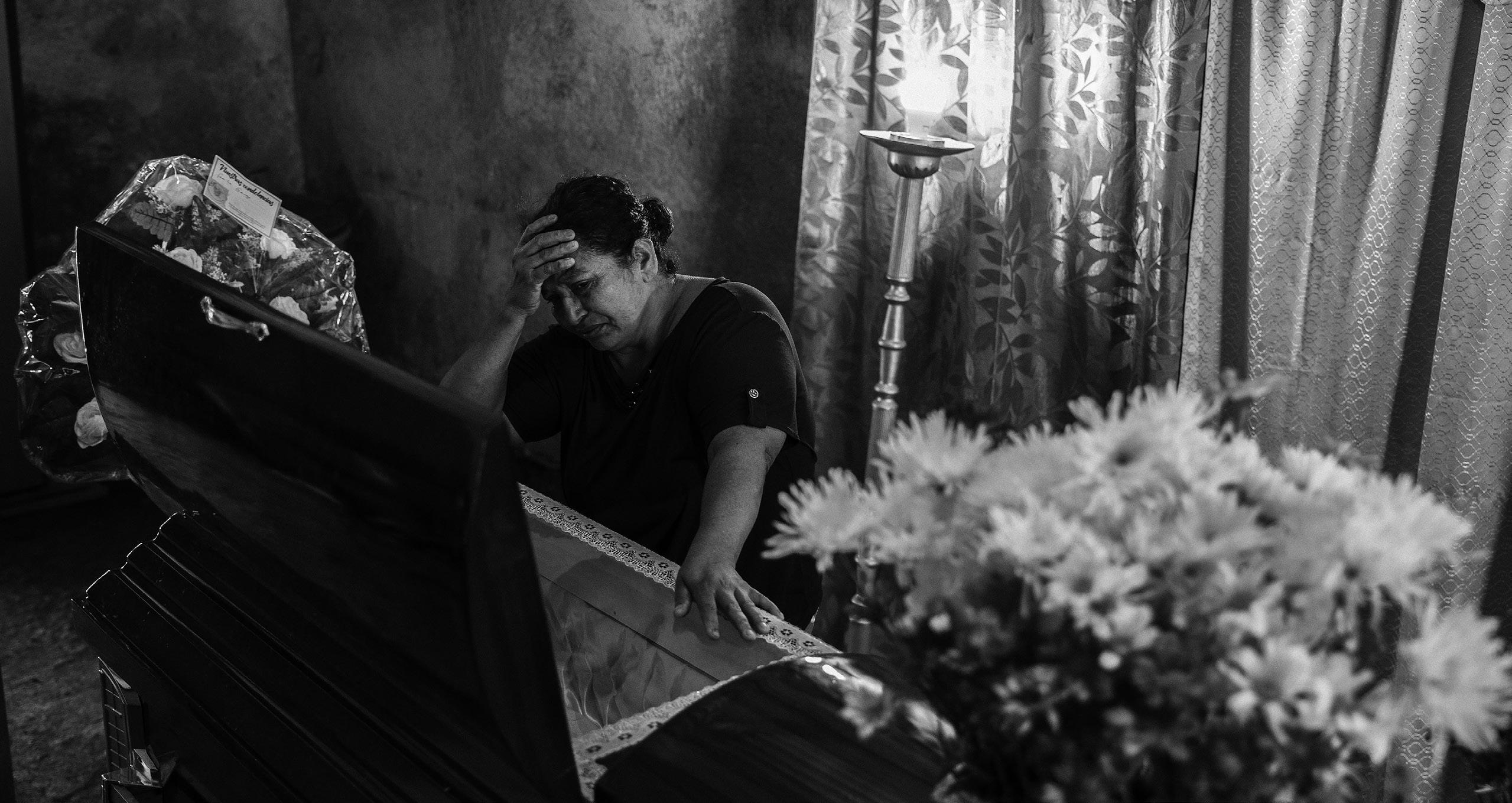
The photojournalist Carlos Barrera, who has covered the régimen de excepción for El Salvador’s only remaining independent investigative publication, El Faro, echoed this contradiction. “Poor neighbourhoods no longer live under the fear of gang violence… That space has been taken over by another kind of violence: violence exercised by the state,” he said.
Photographing the régimen de excepción since its earliest days, Barrera often is reminded of a quote by Russian writer Fyodor Dostoevsky: “The degree of civilization in a society can be judged by entering its prisons.” Barrera added, “That may be one of many conclusions to draw when observing what is happening in El Salvador today.”
The scenes Barrera documents are inseparable from the political figure who engineered the systems they originate from, President Nayib Bukele.
The only leader with fresh ideas and momentum in a political landscape eroded by ARENA and FMLN, Bukele seemed like the solution. His platform promised modernization, employment, and investment, which he sold through tweets, livestreams, and an intentionally approachable persona. Behind this image, he built what Doctor Montgomery labelled as a “social media ministry,” hiring young people to promote his image online and “disparage his opposition.” “They often played fast and loose with the truth,” she added.
Bukele’s Bitcoin experiment, making Bitcoin legal tender and stockpiling it in the national reserves, garnered international attention, and his bold ideas evoked a concrete move forward towards social and political reform in the minds of Salvadorans. His gang policies were successful, systematically dismantling the leadership of MS-13 and Barrio 18, drastically reducing violent crime in the country. After decades of institutional inertia, Bukele seemed beyond the old political binary: a leader who could finally change the nation.
Yet the authoritarian turn came quickly. Months into his presidency, supported by soldiers and police, Bukele stormed the legislative assembly to demand support for his budget that they refused to pass. His online machinery—amplified with troll networks, doctored narratives, and harassment campaigns— helped cement his victory and win his party a supermajority in the 2021 elections. The institutions that once constrained presidential power collapsed overnight, with the Supreme Court and Attorney-General first to go.
Reflecting on the contrast between Bukele’s pre-election promises and post-election actions, Doctor Montgomery offered two words: “He lied.”
For many Salvadorans, this concentration of power felt like a necessary evil. Ana Perez, a Salvadoran student studying abroad (The Politic agreed to use a pseudonym for her safety), said Bukele’s dominance has erased any meaningful opposition. “We’re on the road to authoritarianism,” she said. “Any political rival he may have, he’ll attack it. Any potential threat to his throne, he’ll attack it before it can grow.”
She understands why many ignore this shift. “If you’re living in poverty, extreme poverty, and you lived through the gangs, what is democracy to you?” she asked. “It’s not that people don’t understand, it’s that they don’t care.”
As Perez put it, Bukele had become Hobbes’ Leviathan—a ruler trusted with absolute authority in exchange for security. After decades in which fear dictated the boundaries of daily life, many Salvadorans eagerly accepted Bukele as their sovereign. For a society once governed by warring gangs, the concentration of power by a single figure felt less like a threat and more of a relief.
Barrera agreed, yet he warned that this stability is built on a grand illusion, “There is no peace if thousands are suffering in prisons, and there is no freedom if El Salvador is one of the
countries with the highest incarceration rate in the world.” For him, the calm does not eliminate violence but enables it under the régimen de excepción—from the streets to the prisons, from the gangs to the state.
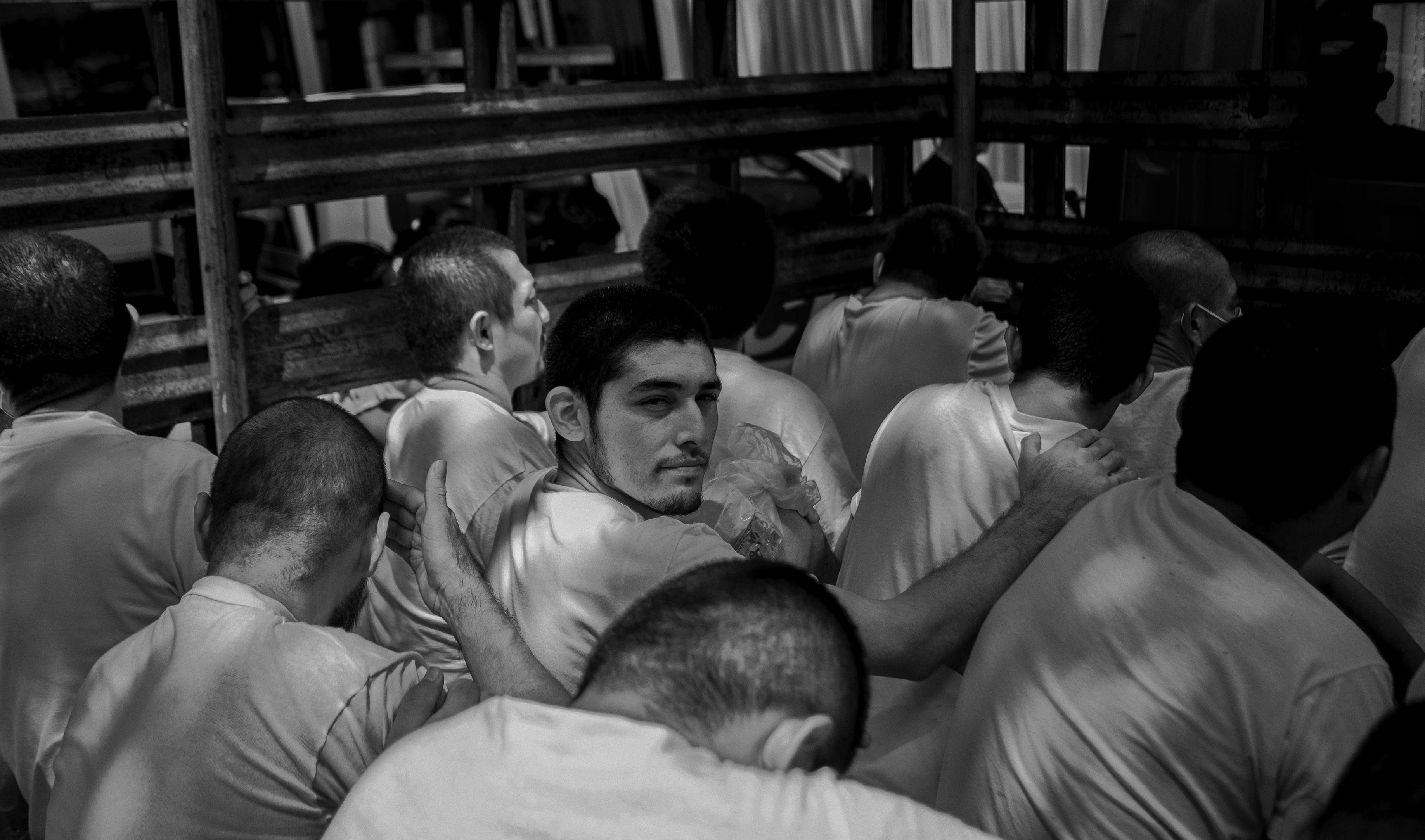
The régimen de excepción, declared in March 2022, suspended the constitutional rights that once limited state power in order to enable Bukele’s hardline anti-gang policies. Under the decree, police can arrest people without evidence, hold people without official charges, and prolong pre-trial detention. Habeas Corpus disappeared overnight. Trials are now rarely held, and if they are, they are almost always collective: trials with over a hundred defendants tried at the same time. With over 80,000 arrests, El Salvador has the highest incarceration rate in the world.
Prisoners’ accounts of incarceration are strikingly consistent: overcrowding, starvation, beatings, and systemic torture. Hundreds of detainees have died in captivity, with many families not knowing whether their relatives are alive—let alone where they are held. Dozens have simply disappeared.
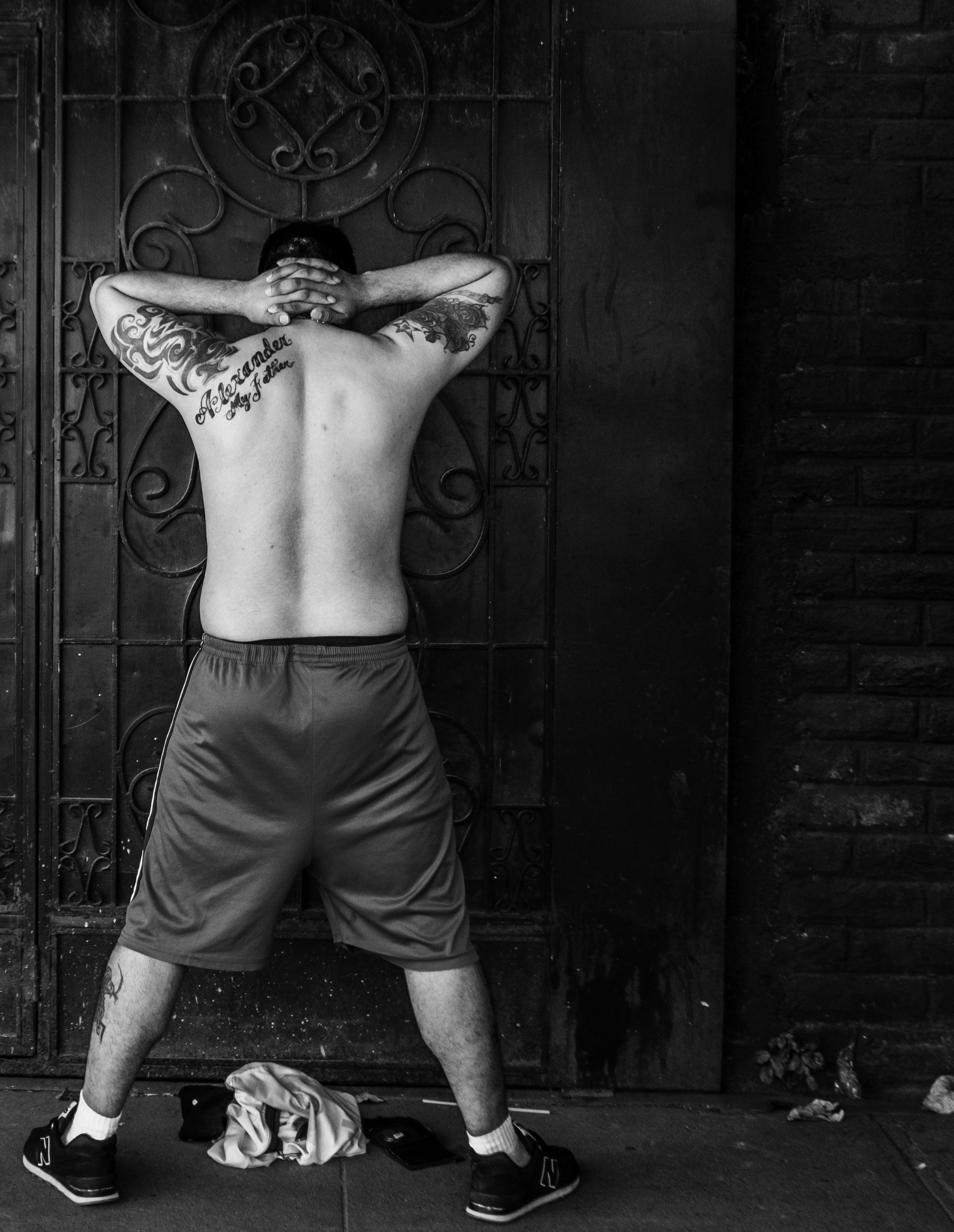
Barrera has reported consistently on the state of exception. “My main goal was to give a name and a face to those detained, those tortured, and those murdered.” One of the earliest photos he took captures this reality with brutal clarity: a shirtless man kneeling, surrounded by five soldiers, soon to be taken to jail. “The man is subdued; he can do nothing,” Barrera recalled. “He looks like prey that has surrendered and is about to be devoured.”
Still, for many Salvadorans, this violence coexists with another difficult truth. Perez told me she feels torn when she sees photos from the prisons. “These people were monsters when they were out of prison,” she said. “They raped people, they killed people, they had no concern for human life. I have no pity for them.”
But even she draws a line, “It’s inhumane. I have no pity for them, but I do think it’s inhumane.”
What complicates this dichotomy further is that not everyone inside the prisons committed a crime. Thousands, like Jorge, have been arrested on false or flimsy accusations, detained simply for being in the wrong place at the wrong time. Perez’s words capture a tension felt across the country: relief at the disappearance of gangs, tempered by the growing awareness that the state’s newfound power may not stop at the prison gates.
Barrera sees this tension in external international perceptions of El Salvador, especially compared to internal perceptions of the state. “Many abroad think everyone arrested is a gang member, that the country is free,” he said. “In reality, it has the highest incarceration rate in the world and constant abuses of human rights.”
As the allegations of torture and deaths in custody become undeniable, more and more Salvadorans are approaching the regime with caution. Carlos Salamanca, director at Cristosal, a Central American human rights organization, echoed this change. “The state of exception, as a concept in general, is still popular, but not as popular as it used to be a year ago,” he said. “Because there are many reports now … about tortures, deaths in public custody, and corruption.”
Regardless, he warned, the core tenets of democracy are quietly crumbling away.
Nearly half the country is afraid to express an opinion about the government, according to Barrera. With courts neutralized, opposition parties disbanded, and public dissent shrinking, El Salvador now functions less like a democracy and more like a state governed by a permanent emergency.
The political culture of El Salvador has shifted as much as its political institutions. “There are no political parties left,” said Perez. “[Bukele] is very Machiavellian.”
No institution has felt the democratic collapse more

than the press. Between 2020 and 2021, 22 El Faro journalists were spied on using Pegasus, a spyware system available only to governments. The outlet further faced weaponized audits and smear campaigns, Barrera added, aimed solely at discrediting its reputation.
After El Faro published evidence of secret negotiations between Bukele and Barrio 18 in May 2025, seven arrest warrants were issued for their staff. Barrera and his colleagues fled the country and have spent the last six months living in exile across Central America. “This has radically changed the way journalism is done,” Barrera noted.
Salamanca and his colleagues at Cristosal are similarly located outside El Salvador. He told The Politic that after his colleague Ruth Lopez was arrested on false charges in May of this year, Cristosal realised the political environment was too hostile for them to survive in the country. “If Ruth, one of the most respected voices of human rights defenders, was detained…what would happen with us, who don’t have that kind of protection?” Salamanca added. “Organized civil society is either outside El Salvador or… operating more clandestinely in El Salvador.”
Even amid this landscape, small forms of resistance have begun to surface. The most visible is Movement of Victims of the Regime (MOVIR), a grassroots network of families whose relatives have been detained under the régimen de excepción. They have no office and no formal structure—just four coordinators, organized entirely by cell phone. Even so, they have been able to mount demonstrations demanding information about the disappeared.
On her most recent visit, Dr. Montgomery saw the movement growing. “It’s mushrooming,” she said. “They don’t keep records, but I look at the pictures, and there are hundreds [of members].”
She sees MOVIR as the first seed of a fragmented opposi-
tion to Bukele. She recalled a saying from the 80s, “Salvadoreños son tan tercos como las mulas”––Salvadorans are as stubborn as mules. For her, it’s a reminder that civil society, no matter how battered, refuses to disappear.
Regardless, Bukele remains overwhelmingly popular. For many, the dismantling of Salvadoran gang violence trumps all other concerns. And yet, security without justice is meaningless. The human cost of his regime is impossible to ignore. The same policy that emancipated neighbourhoods from gang control has filled prisons with thousands of innocent people who were taken on suspicion, denied counsel, and held without trial. In prison, starvation, beatings, and torture are routine. Hundreds have died in custody: Alexander Guzmán, who survived six months of starvation and abuse; Marco Tulio, beaten so badly he bled to death; Jorge Amaya, a student who has still not come home. For every Salvadoran that sleeps restfully, another awakes to a nightmare. “It would be logically contradictory to consider it a free and peaceful country,” Barrera reflects.
Salamanca is worried about the future. “The structural conditions that generated gangs have not been addressed at all,” he said. “Eventually when the régimen de excepción finishes, I think there will be some kind of mutation.” From young kids with parents incarcerated to widespread youth unemployment, he is afraid that gangs may begin to regenerate. “There’s a lot of anger with young people,” he added.
Beyond the gangs, Salamanca is most concerned about the abuses of state power when Bukele’s support fades. “I don’t think that the worst things have happened yet, and the worst things will happen when Bukele still has all the power, but he does not have the same popularity as he has now. Then I think things will get much worse. And I think they have to get worse in order to return to democracy.”
As DEI recedes nationwide,
BY KATERINA MATTA
In 424 colleges across 47 states— including over half of the Ivy Leagues—Diversity, Equity, and Inclusion (DEI) initiatives have been revised, reduced, and called into question over the past two years. From the renaming of affinity spaces to the removal of resources and faculty entirely, these changes largely result from the anti-DEI pressure of the Trump administration, not official legislation. Although Yale contin-
ues to evade Trump’s crosshairs, especially compared to peer institutions like Columbia or Harvard, the deteriorating national landscape leaves student leaders concerned for the futures of the affinity spaces and cultural centers that they hold dear.
“We are living in an existential moment,” said Birikti Kahsai, president of the Black Students Alliance at Yale (BSAY). “There’s a level of scrutiny as a result of the federal environment that we are in, and it definitely has an impact on operations and funding. It has been a very tight balancing act.”
“We are living in an existential moment.”
Many consider higher education to be broadly at risk under the current administration. Retaliatory restrictions on federal funding have impacted universities nationwide, with Columbia University and Johns Hopkins University alone facing a combined $1.2 billion lost in federal support. Government bodies like the U.S. Department of Education face similar financial pressure and downsizing, hindering them from continuing the research and dayto-day operations which American universities rely on to thrive.
Amid these attacks, DEI has emerged as one of the easiest areas for the Trump administration to target, according to Dr. Archie Ervin, former chief diversity officer for both the Georgia Institute of Technology and the University of North Carolina at Chapel Hill, and former president of the National Association of Diversity Officers in Higher Education (NADOHE).
“Our nation is more than 250 years old, and only in the last 60 years has it been a legal principle that education is supposedly available irrespective of race, creed, color, and national origin,” Ervin said. “But in today’s climate…DEI is now defined as discrimination…By having this devil called DEI, there has been a lot of success in reframing these concepts as illegal. There’s nothing illegal about any of them.”
The backlash from students has been swift and resounding. At institutions like the University of Michigan, which once prided itself on its reputation as a staunch defender of DEI, university president Santa Ono’s rapid reversal left students feeling betrayed and outraged. Ono ultimately resigned upon the conclusion of the 2024-25 academic year. Schools like Kent State University––whose history as the site of the murder of anti-war student protestors in 1970 stands as a troubling backdrop to the ideological battle waged today––staged a “funeral” march in all black for their LGBTQ+ Center, Women’s Center, and Multicultural Center after administrators announced they would shutter their doors.
“To lose those resources can feel very hurtful,” The Chronicle of Higher Education journalist Kate Hidalgo-Bellows said. “When I’ve spoken to students, they’re concerned about whether they’re going to be able to
express their identity to the fullest extent on their campus…It just feels like the rug is being pulled from under them, after, especially since 2020, colleges and universities had rapidly expanded their DEI infrastructure, in part to student demands. Now it’s just going away in many places.” As schools
“By having this devil called DEI, there has been a lot of success in reframing these concepts as illegal. There’s nothing illegal about any of them.”
nationwide grapple with the impacts of this legislation, Yale’s position appears tenuous. Though Yale has remained largely untouched in terms of funding cuts and other demands from the Trump administration, Yale’s broader history as a site of social conservatism in tense political moments may concern underrepresented students. Recall the establishment of the American Eugenics Society at Yale by faculty in the 1920s amid a time of sweeping nativism, or the establishment of the conservative Federalist Society at Yale during the Reagan Era in 1982. In line with this history, it might seem all too easy for Yale to capitulate in advance to anti-DEI pressures, as many of its peer institutions have done. But could Yale feasibly square
one such move with the prominence of its cultural centers on campus, and its current identity as an institution?
In many ways, the cultural centers— the Afro-American Cultural Center or “The House”, the Asian American Cultural Center (AACC), La Casa Cultural (La Casa), the Native American Cultural Center (NACC), and the Middle Eastern and North African Cultural Community (MENACC)—are some of Yale’s most distinctive student resources. No other institution within the Ivy League has physical, designated cultural spaces to the extent of those lining Crown St, and many Yalies—including every student interviewed for this article—point to these resources as one of their driving motivations in applying to and eventually matriculating to Yale.
“Probably the only thing that I remember about Bulldog Days was that BSAY and The House had this event,” Kahsai said. “It was a game night, and I got to meet a lot of different upperclassmen who continued to serve as mentors for me throughout my time here. Ultimately, it was the reason why I decided to commit to Yale. I felt like the community here was unmatched compared to a lot of other options.”
For Yale ‘25 Alum Ethan Estrada, who worked as a student coordinator and peer liaison for La Casa and received the Nakanishi Prize for race relations upon his graduation, La Casa helped combat feelings of insecurity as an underrepresented student on campus.
“Especially when entering spaces that often felt unwelcoming or that there was something I was missing, [at La Casa] I always felt welcome and part of something,” Estrada said. “Yale can make you feel very disposable or exchangeable with another student, and to a degree, that’s true. But at the Cultural Centers, students are empowered to make the changes they want to see. You feel not only welcome, but empowered in this space.”
Empowerment proves key to the missions of the cultural centers, which emphasize not only “multicultural education” but also “student leadership development” in their offerings, according to the AACC’s website, for example. Taylor Dineyazhe, who serves as both a Peer Liaison for the NACC and the president of the Native and Indigenous Students at Yale (NISAY), said the visible models of Native success she found at the NACC inspire her outside of the classroom.
“Having that one specific community that you can tie back to your home and where you’re from, that makes you the person that you are…it really defines your time here at Yale,” Dineyazhe said. “Being in that kind of space is what inspired me to go out and do all the things that I’ve done so far. Seeing other Natives who have done amazing things…it’s inspirational to see and it’s
something that continues to motivate me as a student to this day.”
Students like Miya Zhao, who works on the Historical, Artistic, and Cultural Resources Team of the AACC and serves as co-president of the Chinese-American Students Association (CASA), said that the cultural centers provided opportunities to both reflect on her own identity and learn more about others.
“People here are inherently curious, [and] it’s made me think more and be more prideful of my heritage and of my community,” Zhao said. “Sometimes, when we are minoritized, we focus on conserving our own culture,” Zhao said. “[Since] we each have our own spaces and can feel more secure within our own identities, [Yale] has now allowed us the privilege to understand other cultures so much better. Within our own informedness, we can inform others, and we build such a strong interconnected network that wants to help each other.”
Though students have expressed an understanding of the value of the cultural
“To be able to do any type of intellectual work, you have to feel like you have a community, like you belong. That’s why cultural spaces are so important.”
centers, recent developments may reveal that the administration places less emphasis on these merits. Multiple student representatives stated that they were aware of budget cuts at their respective cultural centers, though the Provost’s Office did not respond to a request for comment. Director of Multicultural Recruitment Dara Norwood stated that she “was not able to comment at this time,” and Dean of Student Engagement Burgwell Howard did not reply to multiple emails requesting comment. Associate Vice President for Institutional Equity and Accessibility, and University Title IX Coordinator Elizabeth Conklin said in an emailed statement that: “While we continuously monitor and comply with all federal and state laws, the core of our work and our commitment to supporting students is longstanding and remains steadfast.”
However, pressures are evidently mounting university-wide: Yale College Dean Pericles Lewis publicly announced
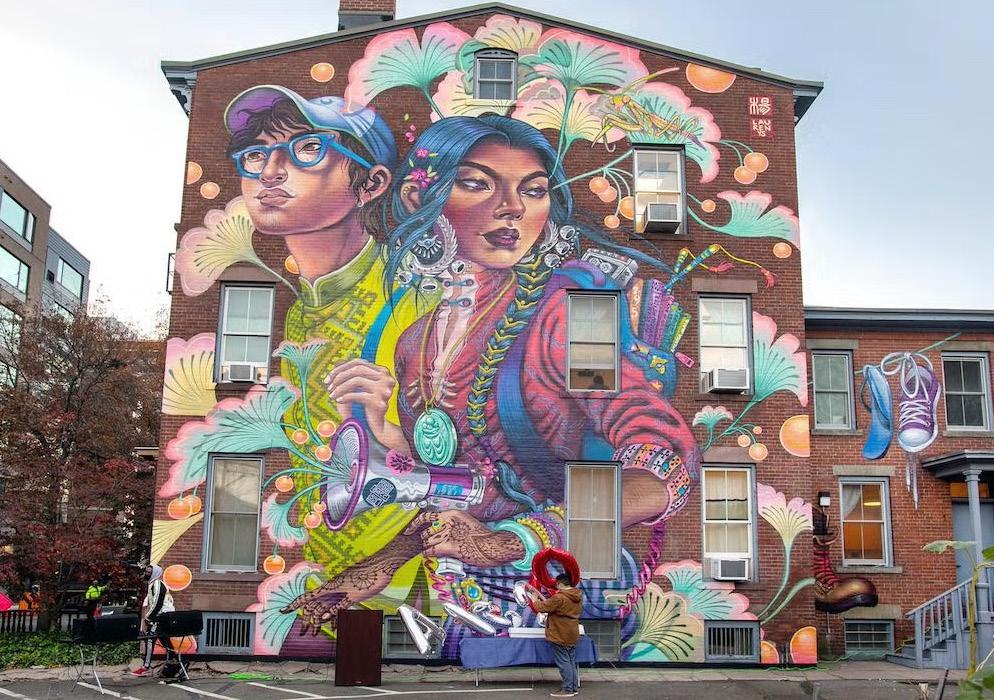
reductions in Yale’s summer grants for students on financial aid, a move which was met with reproach from Yale College Council President and Vice President Andrew Boanoh and Jalen Bradley on November 12 in back-to-back email announcements.
“When compromises have to be made, who are the people or students that they’re willing to compromise the most?” Estrada asked. “It always seems to be that students of color and FGLI students are always the first under threat. How does that make a stable place for learning? To be able to do any type of intellectual work, you have to feel like you have a community, like you belong. That’s why cultural spaces are so important—because they provide forms of engagement, or modes of communities where students who did not feel so welcomed begin to engage with the group and feel, ‘Maybe there is a place for me.’”
Amid these challenges, students have already begun working within their organizations to protect their communities, according to Kahsai.
“All of us firmly believe that there is a need for the continued existence of affinity spaces, but it is also not lost on us that our presence is feeling more tenuous,” Kahsai said. “[We] know that we have a responsibility to preserve these spaces, and that is going to mean sometimes making tough decisions about the way that we operate. But as long as it keeps our end goal of surviving, it’s worth it.”
Students are not only organizing for the preservation of their individual communities. Dineyazhe explained that affinity stu-
dent leaders from the Class of 2027 formed an “Intercultural Coalition” over the past summer, and began meeting with administrators this semester to express their concerns over the general state of DEI at Yale.
“Our main goal was to have these monthly meetings with administrators…and voice our concerns about how we felt like we were in the dark as student leaders about the issues that were going on,” Dineyazhe said. “A lot of us were in dialogues already beforehand about [it], but we weren’t ever encouraged to do something about it.”
Dineyazhe applauded the group for its commitment to cross-cultural advocacy.
“We’ll do whatever it [takes] to get the answer and the response that we want, which is something really inspirational to see,” said Dineyazhe. “Especially being a part of the NACC and being a part of a smaller community, because you see these people advocating for not only their community’s issue specifically, but [for] the broader community as well.”
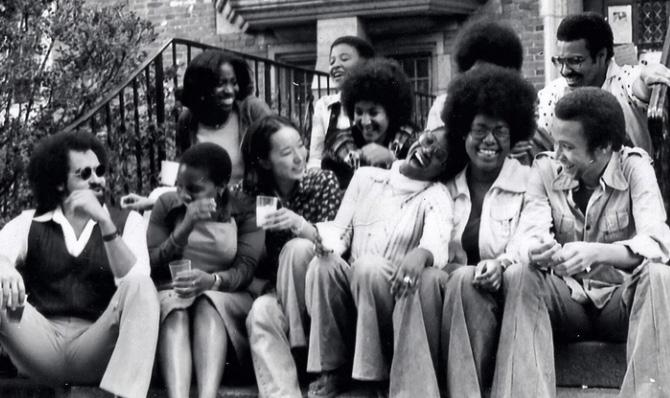
Student activism led to the establishment of the cultural centers in the first place: BSAY proposed the creation of The House in 1967 as part of a broader reforms campaign, and the Asian American Students Alliance and Movimiento Estudiantil Chicano de Aztlán jointly organized for the creation of their spaces, which first emerged as a combined house in 1981. For MENA students, this history feels especially recent: the administration only answered student demands to create the MENACC a year ago, in 2024. MENACC Peer Liaison Basma Elbagory emphasized that despite this progress,
many MENA issues continue to go unaddressed by the Yale administration today, from data collection inequities to a lack of adequate response to student harassment.
“I’ve seen how deeply impactful [the cultural centers] are when I experienced my first year without any, and how much better my life was at Yale during my sophomore and junior year, when I did have this space,” Elbagory said. “We’re not fully a cultural house yet, it’s still a cultural community. I would love to see Yale make that happen…It is vital for MENA students on campus to feel safe and supported, and there’s still a lot of work to be done to fulfill that.”
The cross-community organizing that students are engaging in today points to a long history of intersectional activism at Yale, according to LGBTQ Center Peer Liaison Diego Paz.
“It’s always been inherent in the cultural centers to find those solidarities,” Paz said. “As students today who inherit that history, I, for one, am always looking for ways to reach out and connect with all of the different centers, whether that’s the Office for International Students (OISS), the LGBTQ Center, or the Center for Students with Disabilities. [It’s about] bringing in these spaces that have always allowed underrepresented students to have a place and a voice in this university’s campus, and finding ways to bring us together to amplify that.”
spaces, it really compromises the intellectual and academic lives for students of color at large—and not only for them, but for the entirety of Yale.”
CASA Co-President and AACC Peer Liaison Sophia Li also emphasized that any restrictions at the administrative level will only result in a cheapening of the gathering that students already participate in.
“The alternative world is that there are [still] going to be events,” Li said. “[They’re] not going to be as well-marketed, and [they’re] not going to be as well-supported. So, how much of the culture is going to be shared, without that type of support and backing from other funding sources or groups?”
Just as each student interviewed for this piece said they chose Yale at least in part because of its robust cultural resources, they each also expressed a commitment to fighting for them.
“If you’re compromising these spaces, it really compromises the intellectual and academic lives for students of color at large—and not only for them, but for the entirety of Yale.”
“Whatever direction this university goes, there will always exist communities of people that you will find a shared identity and a sense of community with,” Paz said. “[Moving forward] without a physical space is something that none of us want to be the future. But if it is, there will always be an opportunity to find others of a similar identity and community to you, even outside of those structured spaces, as historically we have done as queer people, as Latine people, as people who have been sidelined in that way.”
Whether administrators will listen to students remains to be seen. Regardless, students and alumni like Estrada warned against the tragedy that it would be to erase these spaces for not only students who call them home, but the campus community as a whole.
“There’s not a cultural self that [students] inhabit, and leave at the door,” Estrada said. “They bring that everywhere, and they’re able to enrich the intellectual life just as much as the cultural life of this space. If you’re compromising these
Estrada echoed Paz’s sentiment when looking to the uncertain future for students at Yale.
“The cultural centers allow the fullness of who someone is to be present,” Estrada said. “[Yale has] all these spaces that might fracture you into components of yourself, but I’ve always felt, making that long walk from Murray to La Casa that I made hundreds, maybe thousands of times, that it was a space where I could just be me. That’s so powerful. It’s something to fight for.”
BY POLA JANCEWICZ

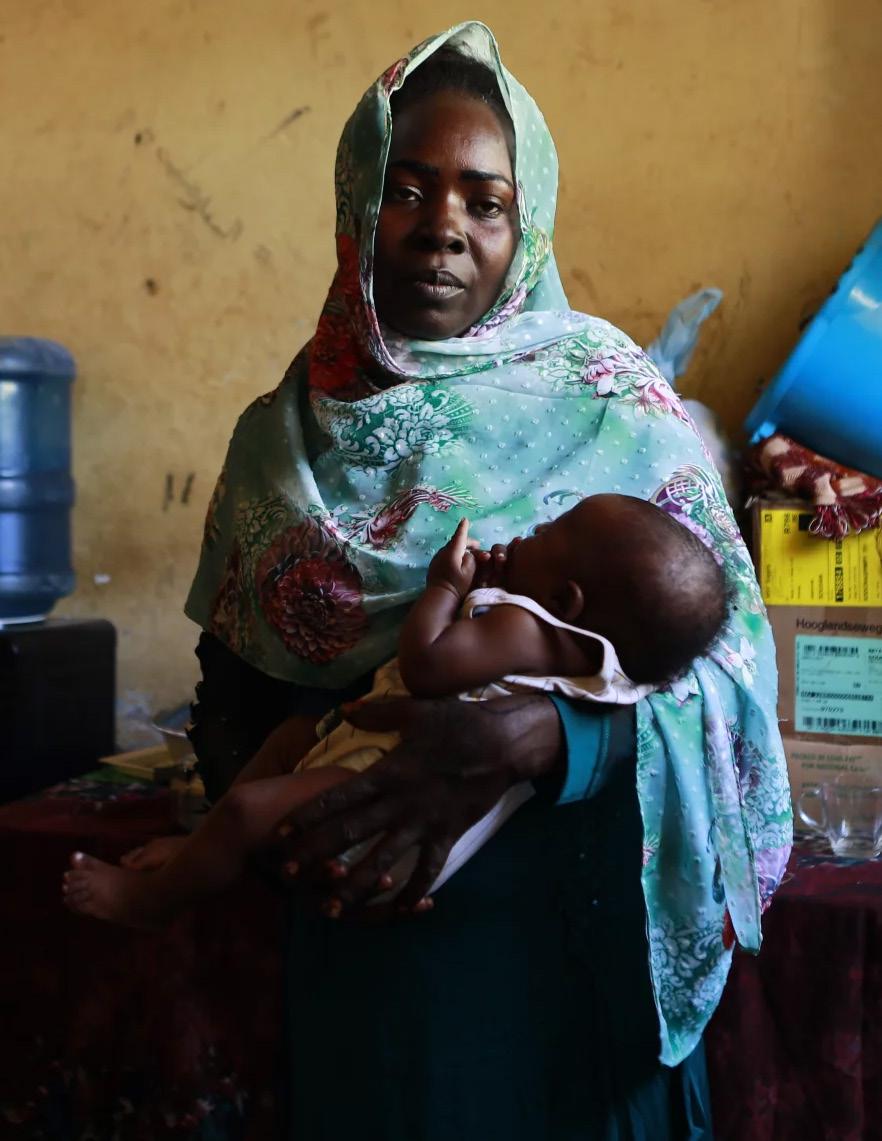
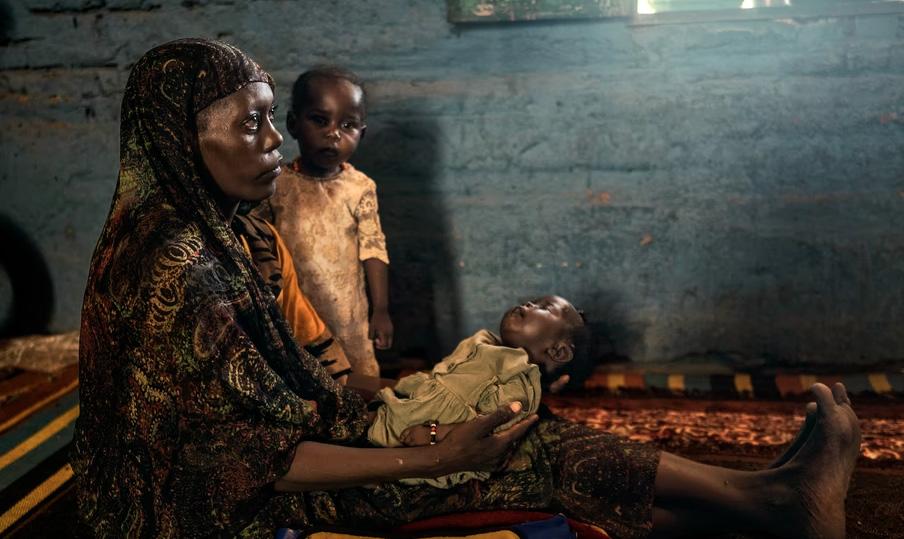
“I met so many mums who just feel like they are watching their children starve and die. There’s nothing that they can do to help, and they feel forgotten,” said Meghan Greenhalgh, Director of International Programs at the International Medical Corps, who recently visited Sudan to report on the war.
The conflict, which has left more than 30 million people in need of relief assistance, is now one of the largest humanitarian crises in the world. It is a stark reminder of the tragedies civilians face, conflicts refugees flee, and the need for international organizations—systems created precisely for moments like this.
It is also a sign of changing times: diminished Western engagement and rising influence of middle powers.
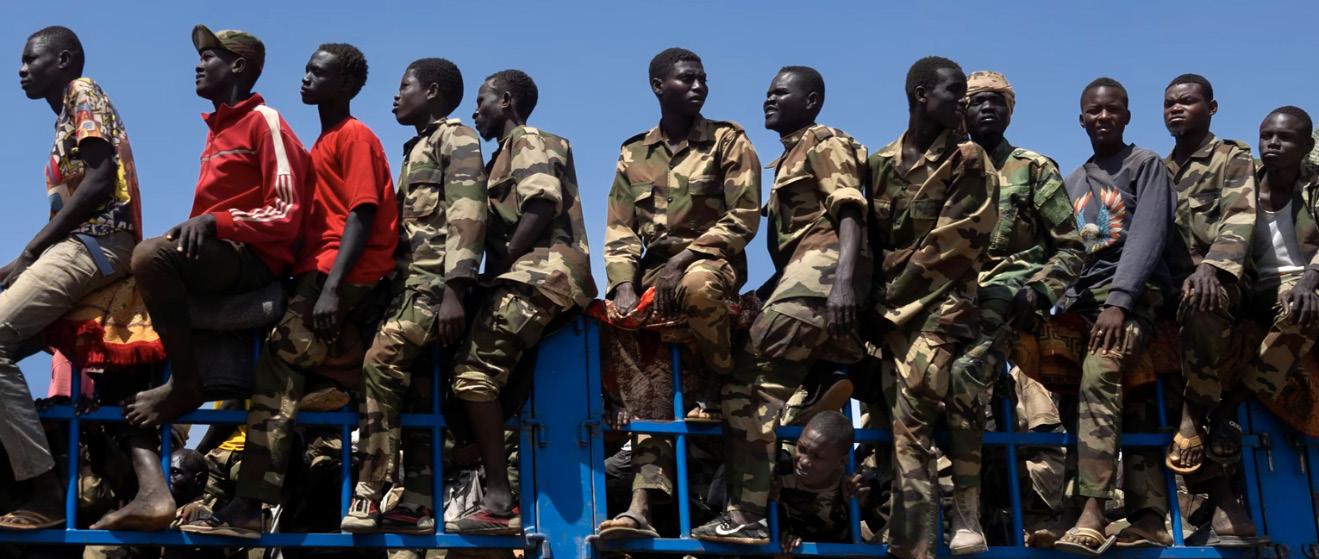
Blood on the sand is visible in satellite images of El Fasher, captured by the Rapid Support Forces (RSF) —a paramilitary group and one of the warring parties—on October 26, 2025. The seizure ended an 18-monthlong siege of the city, marking a turning point in the war. As David Simon, a Yale Professor and Director of the Genocide Studies Program, put it, “It was the last battle of the genocide.”
Multiple international organizations, including Refugees International and the Sudan Rights Watch Network—and, as of January this year, the U.S. government—have described the RSF’s actions as genocide. “The RSF has been specifically persecuting the non-Arab Fur, Zaghawa, and Masalit ethnicities in western Sudan,” Simon explained. In the outskirts of El Fasher, the RSF burned only Zaghawa households— an action that fits the definition of a genocide—the deliberate, systematic destruction of an ethnic group.
Nathaniel Raymond, Director of the Yale Humanitarian Lab, which uses satellite images to monitor the conflict, said that as early as March 2025, his team was able to “raise warnings that [the genocide] was underway.” Using thermal signatures, they observed that in four tribal villages supplying El Fasher, the RSF were burning crops intended to feed the city.
In an interview with The Politic, Declan Walsh, a Pulitzer-Prize-winning New York Times Africa correspondent, noted that, “The RSF has been accused of the most serious crimes.” He mentioned numerous reports of sexual violence, rape, and massacres, many of which were ethnically targeted killings.
The RSF grew out of a paramilitary group, the Janjaweed, a title they adopted for themselves, which literally translates to “Devils on Horseback.” From 2003 to 2005, they committed genocide against Darfur’s Fur, Zaghawa, and Masalit ethnicities as
called out by President George W. Bush, the U.S. Congress, and the International Criminal Court. Now, “The RSF are using the civil war to complete the genocide against the non-Arab populations that they began twenty years ago,” Raymond said.
While the Sudanese Armed Forces (SAF) are often characterized as the “lesser of two evils,” Walsh, the Times correspondent, warned that the “Sudanese military has been accused of sexual assault, rape, and extrajudicial executions.” Most of the war crimes attributed to the SAF, however, involve indiscriminate bombings of civilians.
Munira Elbashir, a Sudanese Yale student, pointed out that “The revolution in 2019 was against the SAF, the military that brutally repressed the Sudanese people for decades.” Omar El-Bashir ruled Sudan until 2019, when civilian protests led to the overthrow of his regime.
After months of civil unrest and violent repression, “the military and security apparatus removed Bashir from office,” said Alden Young, a Yale History Professor specializing in Sudan. After months of demonstrations as well as violent massacres, in 2019, the military and protest leaders reached an agreement. “The civilian Prime Minister Abdullah Hamdok was supposed to rule for two years, until civilians would take over the Sovereign Council and prepare for elections,” Young said.
But the transition was fragile. “We often think that democratic transition will happen sort of automatically,” Young commented. “But Sudan has been sanctioned since the 1990s, and those countries need significant support in transitioning out of sanctioned regimes. I think in 2018 and 2019 the United States needed to rally financial and other types of support to the Sudanese state if democratic transition was going to be made possible.”
By that point, the RSF had been incorporated into the army as an autonomous unit. In 2021, the RSF and SAF jointly carried out a coup. In 2022, the civilian Prime Minister Hamdok resigned. “The military was governing by itself, without civilian participation.”
By 2023, the two military groups were negotiating a plan for the future form of government. “The sticking point became the integration of the RSF and the SAF into a single force,” Young added.
Amid the power struggle, fighting broke out in Khartoum. “We don’t know exactly who shot who first,” said Young. Since then, the RSF and SAF have been at war with each other, with the SAF capturing the capital, Khartoum, and the RSF pushing into Western Kordofan and Darfur.
The conflict in Sudan has contributed to a humanitarian crisis of staggering proportions: half of Sudan’s population—30 million—urgenty require aid.
“Food is a massive need,” Greenhal-
gh said. “The population is starving.” Even compared to other humanitarian crises, the rates of moderate acute malnutrition and severe acute malnutrition in young children under the age of 5 are exceptionally high. In El Fasher and Kadugli, the conflict-affected regions, food insecurity and malnutrition are at the highest levels of need, according to the World Food Programme, UNICEF, and the Food and Agriculture Organization of the United Nations.
Conditions in El Fasher are particularly dire. New York Times journalist Declan Walsh recalled his conversation with Dr. Omer Selik, a doctor working in the last hospital in Darfur. Walsh detailed, “He said that food supplies had effectively run out, and people were being reduced to eating animal feed. Anyone who attempted to smuggle food or medicine into the city was being stopped, harassed, or killed by the fighters who surrounded the city.”
A few days after that conversation, Doctor Selik was a victim of a mass attack. “He went to attend prayers at a mosque near his house,” Walsh recalled, “And there was a drone strike. About 75 people were killed, including him.”
Access to safe water is limited in most regions in Darfur. Greenhalgh reported, “I heard stories of people who were trying to truck in water. A lot of those drivers were shot, and then the water was looted.”
Commenting on the healthcare system, she said, “The healthcare system was barely functioning for a long time. The health facilities were all looted as part of that initial stage of the conflict, and probably for twelve months, humanitarian partners did struggle to get access.”
Even as needs soar, global institutions are losing influence and power. Still, Sudan underscores their importance and the catastrophic impact of withdrawing support.
“Sudan became the largest UN operation because we had to respond to the largest humanitarian crisis in the world, in terms of people in need, the increased food insecurity, and the almost total disruption of services across the country,” said Luca Renda, the United Nations Development Programme (UNDP) Resident Representative in Sudan. He further elaborated that the United Nations High Commissioner for Refugees is “assisting both refugees and internally displaced people with shelter, health care, psychosocial support, protection, cash assistance and nonfood items, as the security situation allows.”
The World Food Programme and UNICEF are delivering nutrition support where accessible. The UNDP administers grants for HIV, TB, and malaria programs, while the International Medical Corps runs health and nutrition services.
Greenhalgh warned that hunger will have long-term consequences, like stunting, for younger children. Still, the Sudanese
population is not at a stage where the consequences will be irreversible.
“Closing down USAID and freezing vast amounts of American aid has made the capabilities of humanitarian agencies even harder,” said Declan Walsh. “In Sudan alone, at one point, 80 percent of all emergency feeding programs were affected,” Raymond asserted.
Confusion over which funds had been cut proved deadly. “Kids have literally died because of the confusion about what money has been cut and what money hasn’t.” In areas under integrated face classification level five, the most severe level of food insecurity, any disruption is catastrophic. “It takes about two weeks for people to die, especially when they’re already weak,” Raymond commented.
Renda confirmed that UNDP lost $35 million in funding, part of a broader drop in contributions from the U.S. and other Western countries. Programs for unaccompanied children—designed to prevent trafficking— were also affected.
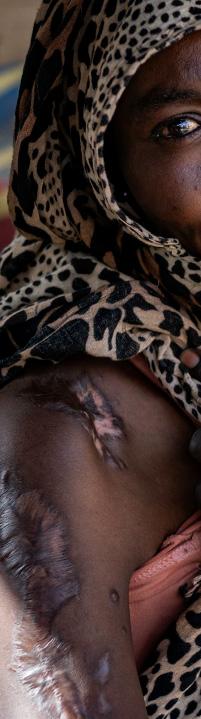
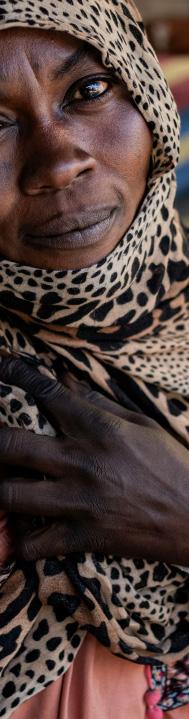
Greenhalgh underscored the widespread use of sexual violence. “In the last twelve months, the IMC has done a lot of work on mental health and gender based violence programming,” she said. For many women fleeing El Fasher, “the violence has been a really horrific thing, especially in cases where it was mass gang rape,…they are very much struggling to recover…because you can’t.”
As Nicholas Kristof reported, clinics in South Sudan helping Sudanese rape survivors have closed. While nonprofits temporarily reopened a facility, “there is immense uncertainty…about whether they will be paid for their work and whether such operations can continue.”
The conflict has led to the largest displacement in modern history. As of October 2025, 14 million people had to flee their homes, with 11 million people internally displaced within the country and three million refugees outside Sudan, mainly in Egypt, South Sudan, and Chad, and some in Ethiopia, Libya, and Uganda. Five million people left Khartoum, the capital that previously housed nine million.
“In Darfur, camps and all the services were set up for 50,000 people, and we’ve seen that number then come up to around 125,000; in one of the camps, it jumped to 220,000 people,” said Greenhalgh. She explained that the high demand for shelter has led to the construction of more haphazard sites, which are neither fully adequate nor safe. It also places an increased burden on essential services, including the water network, health delivery, and nutrition programming.
To support internally displaced people, the UNDP has deployed mobile health clinics and expanded micro-lending programs, particularly for women’s associations.
Many families have been displaced several times. Elbashir described how her relatives,
now in Uganda, moved four times—from Khartoum, to Kosti, to the South Sudan border, to Juba, and then to Uganda.
Since November, however, more people have been returning, as some areas have fallen under the control of the army and the conflict has begun to stabilize there. “Two million people have gone back, first to Gezira, and now to Khartoum,” said Renda, “And this is another big issue, because a humanitarian system is needed for a short time, but then you need to come up with more investments like service rehabilitation and access to livelihoods, and de-mining.”
“The predominating way that the war is referred to is a civil war, but a lot of Sudanese scholars and activists take issue with this framing, because it grossly understates the level of external intervention in Sudan,” Elbashir told The Politic. Numerous other countries are involved in the war, including Egypt, Turkey, Iran, Russia, Chad, Kenya, South Sudan, Saudi Arabia, and most importantly, the United Arab Emirates.
Egypt, Turkey, and Iran have been providing direct support to the SAF. Egypt has increased its support for the SAF due to its interest in ensuring that its neighbor is not run by leaders hostile to Cairo. Regarding Iran, Walsh explained, “It’s unclear whether Iran supplies drones purely on a commercial basis, as the Sudanese military claims, or whether there’s an element of the Iranian state providing support.”
Russia’s Wagner group, a state-funded paramilitary group, has aided the RSF, and Russia is developing ties with the SAF, as Moscow seeks Red Sea access and mining opportunities. Regional powers have also become engulfed in the war: Chad hosts refugees and enables the RSF to smuggle
weapons into Sudan, and formally neutral Kenya has allowed for the RSF to organize on its territory.
UAE, the Foreign Enabler
Yet, it is the Emirates that is the most consequential foreign actor. “Without the UAE’s military and intelligence support, the war would not have continued as the RSF would not have been a competitive fighting force,” said Nathaniel Raymond, head of the Yale Humanitarian Lab.
When explaining the transformational impact of the UAE’s support on the RSF, he said, “Their technological capacity has gone from using Enfield Rifles, AK-47’s, and riding on horseback twenty years ago, to having increasingly sophisticated drone technology, artillery communications, electronic intelligence capabilities, and advanced forms of command and control through encrypted communication.”
Just before the seizure of El Fasher, the RSF received an increase in supplies from the UAE. “So it’s reasonable to assume that that made at least some difference” commented John McDermott, The Economist’s
Chief Africa Correspondent.
No one is certain what the main driver of the UAE’s involvement is. Historian Alden Young pointed to a personal relationship between the head of the RSF, Hemedti, and powerful members of the royal family. “Also, the Emiratis do not wish to see the SAF become the sole hegemonic power in Sudan, because they believe that they are still tied, however loosely, to the Muslim Brotherhood. And Emirati policy is to contain and defeat the Muslim Brotherhood throughout the region.”
Young also highlighted the UAE’s economic self-interest: the SAF and RSF are buying gold from the UAE, and Sudan’s middle and upper middle class has increasingly moved its banking to the UAE. Moreover, due to migration, labor is cheaper. “A lot of my contacts tell me the price of professional labor keeps plummeting, in Doha and Dubai and other cities across the Gulf, “ explained Young, “Now, the Sudanese are working at much lower wages.”
Professor David Simon highlighted the UAE’s transactional agenda: “The UAE wants greater access to African resources
and influence over the countries that control those resources.” He continued that this comes as the United States pulls back, “closing down embassies, shuttering U.S. aid, and leaving space for actors like the UAE to provide security or arms in return for access.”
The UAE’s support is now so crucial that many believe the RSF could not fight without it. “Many Sudanese analysts would say that if the Emiratis wanted to stop the war tomorrow, they probably could,” said Declan Walsh.
Yet, “Until recently, many Western countries have been accused of being reluctant to put pressure on the Emirates because of their reliance on investment,” Walsh observed. Reflecting on U.S. involvement, he said, “It sees the Emirates as a major security partner in the region against Iran and in relation to Israel.”
A Different Decade
\The world responded very differently to the crisis in Sudan two decades ago—“in the 2000s, the international community could take some credit for stopping a genocide,” Simon concluded. The 2000s saw coordinated international pressure, ICC warrants, and successful efforts to isolate the Sudanese government.
Simon recalled that, before the 2008 Beijing Olympics, civil society groups pressured anyone associated with the Games, threatening to call them the “Genocide Olympics.” Ultimately, China did not obstruct the UN in the Security Council and distanced itself from the Sudanese government. In effect, the Janjaweed were sidelined, and the Sudanese government was weakened.
Simon believes that the international community could now do something similar, this time putting pressure on the UAE. “If countries got together and said, ‘Hey,
“The violence has been a really horrific thing, especially in cases where it was mass gang rape,…they are very much struggling to recover… because you can’t.”
UAE, you’d better show you’re opposed to genocide or we won’t do business with you,’ ” he said.
Because the UAE is economically powerful but reputation-dependent, Simon argued, targeted pressure — boycotts affecting sports partnerships, for example— could be effective. Such action, however, must come from civil society.
In the 2000s, civil society was significantly more concerned about the crisis in Sudan and involved in addressing it. A total of 190 religious and human rights organizations came together to create the Save Darfur Coalition, organizing mass protests and concerts to pressure policymakers. Famously, George Clooney visited Darfur to bring international attention to the genocide at the time. Eventually, an arms embargo was imposed, and African Union peacekeepers were sent to the region.
Simon argued that, comparatively, the international community has done little in the current conflict.
“They have issued an arms embargo with zero enforcement, had no meaningful Security Council discussion, and haven’t targeted the UAE, giving it a total free hand to run weapons,” he said.
The African Union, too, has played a comparatively limited role., despite its anti-coup policies and institutions that were instrumental in past Sudanese conflicts.
“This time, they’ve done very, very little,” McDermott commented.
While historian Alden Young expressed skepticism over whether the UAE alone could make the war stop, he acknowledged that “Political pressure and boycotts that hurt the UAE’s reputation might force it to engage constructively in a peace plan.” He added, “One of the problems a few years ago was that the UAE was absent from the Jeddah and other peace talks.”
The prospects for ending the conflict remain uncertain. Any arrangement would require engagement of the SAF, RSF, UAE, Gulf states, and African countries.
So far, a group consisting of the U.S., UAE, Egypt, and Saudi Arabia have come together as “the Quad” to discuss the future of the conflict. They met in September
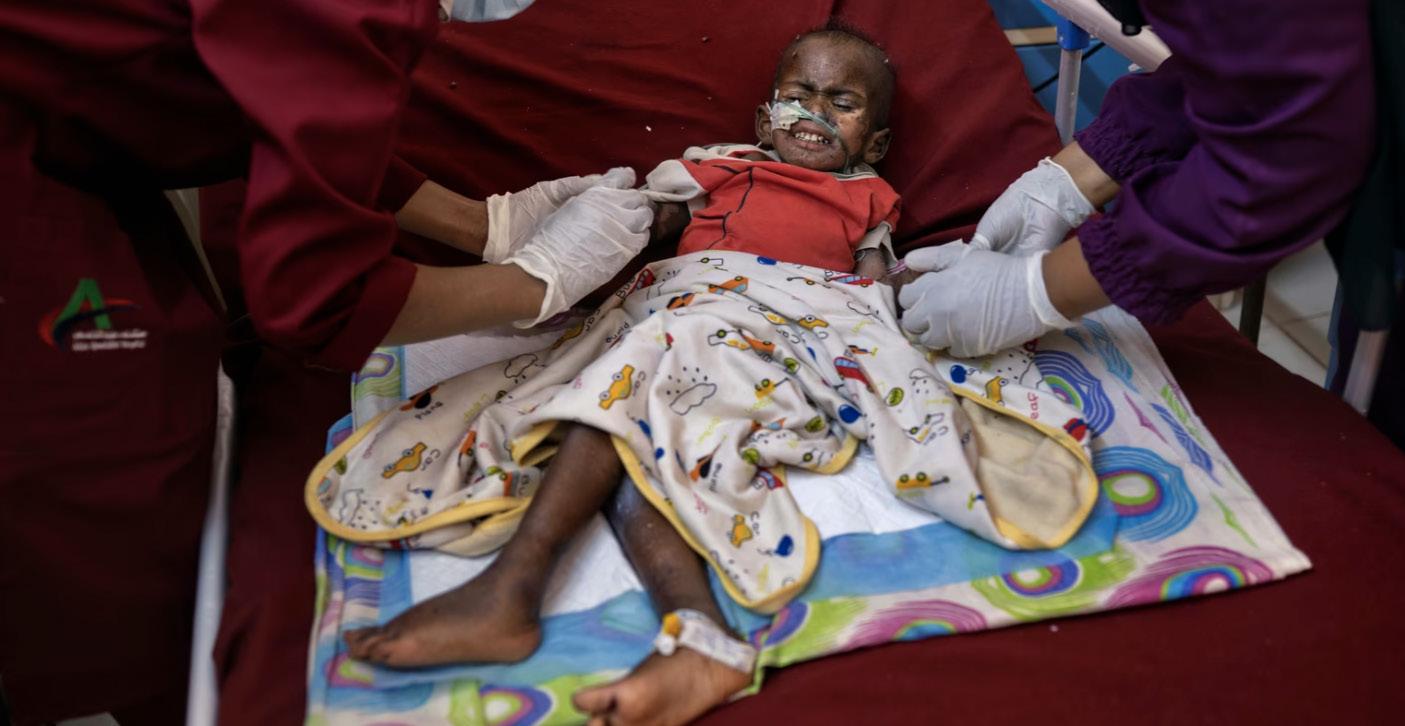
Doctors treat a Khartoum toddler for severe malnutrition.
The International Rescue Committee reports that 30 million people in Sudan are in “urgent” need of humanitarian aid, after the collapse of the health care system and widespread famine.
2025 and released a statement on “Restoring Peace and Security in Sudan”.
“Because it includes Egypt, which is more closely aligned with the Sudanese military, and the Emirates, it’s a little bit like the foxes being in the hen house,” Declan Walsh commented on the group.
Alden Young expressed that both sides may be more willing to negotiate after the SAF capture of Khartoum and the RSF capture of El Fasher, which happened in recent weeks.
John McDermott cautioned that RSF has national ambitions, but agreed that the taking of El Fasher does not show that they’ve given up in negotiations. Commenting on the likelihood of RSF seeking negotiations, he said, “It depends chiefly whether it feels that the costs of stopping the war are greater than the benefits—costs that come not only on the battlefield, but also in its relationships with the conflict’s sponsors.”
Young raised the potential power of sanctions: “If they do multilateral sanctions and demands on the two actors, I think it is possible that we could get to a peace agreement.”
“Any peace agreement,” as David Simon pointed out, “is going to require some sort of security guarantees.” He went on, “It depends on what the proposed end state is. Is it the return of surviving Masalit, Zaghawa, and Fur back to their original homesteads, or at least to the cities of Darfur? Is it some sort of protection or new construction for them some-
where?” McDermott added other unknowns: “Would it be the SAF that takes over entirely? Would it be a civilian-led government? What happens to Darfur?”
Regardless, any post-conflict context will require money, the commitment of all countries involved, and the work of international institutions. The work, that is, of rebuilding, de-mining, post-conflict reconciliation, and addressing the humanitarian needs of the Sudanese people—the population that will come back and those who were forced to stay and live through the horrific war and its brutal consequences. ***
The resilience of the Sudanese people coupled with the international community finally mobilizing after the wake up call of the siege of El Fasher, provides a renewed sense of hope.
Speaking about the women, who fled El Fasher and are now in Tawilan refugee camps, UN Under-Secretary-General for Humanitarian Affairs Tom Fletcher said, “For now, they found a place of hope and refuge… but they don’t know how long it will last.”
How long it lasts, he emphasized, ultimately depends on the international community: “It depends on the world being ready to listen and to offer them the protection… that we should have given them before.”
BY KELLIN HENRY
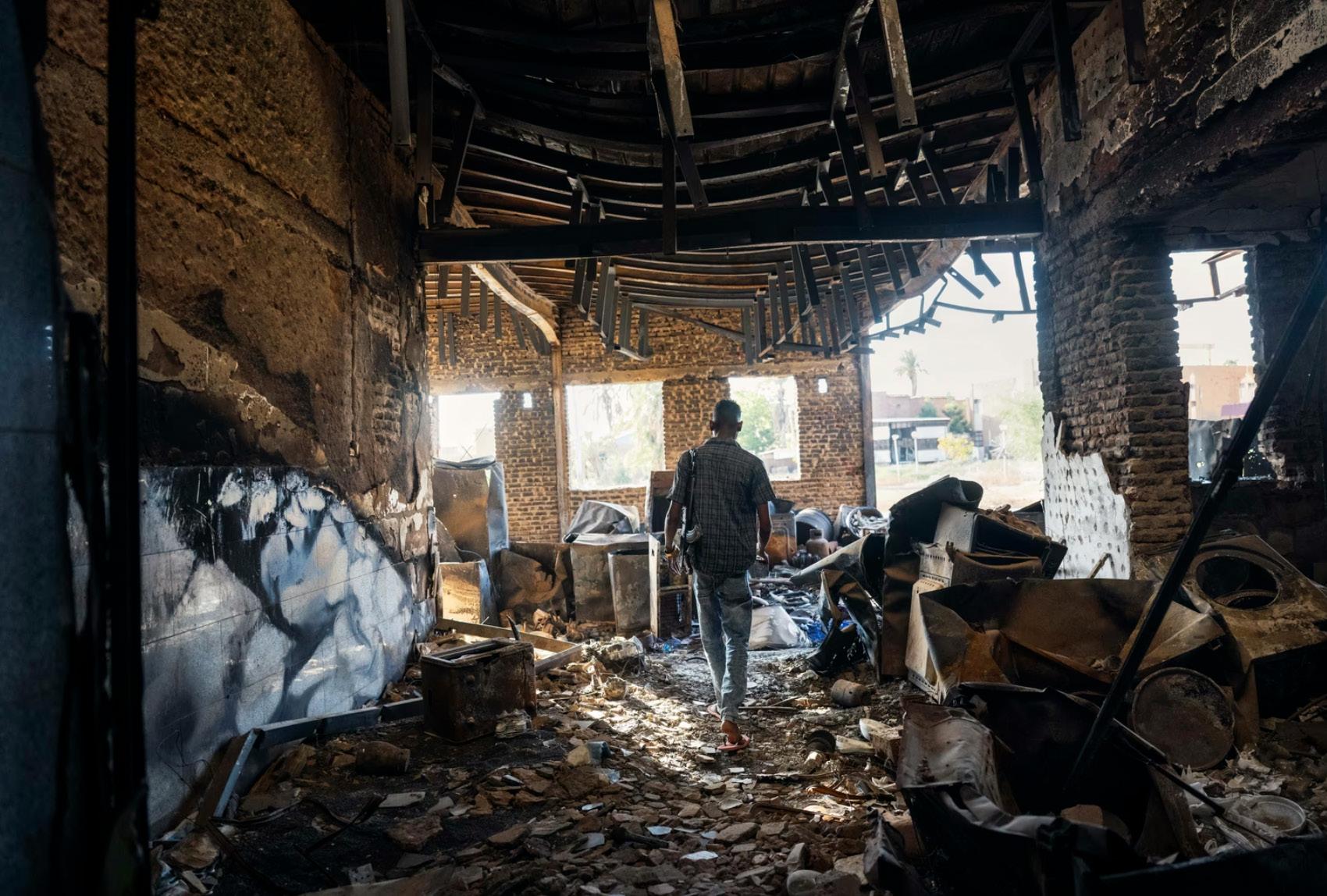
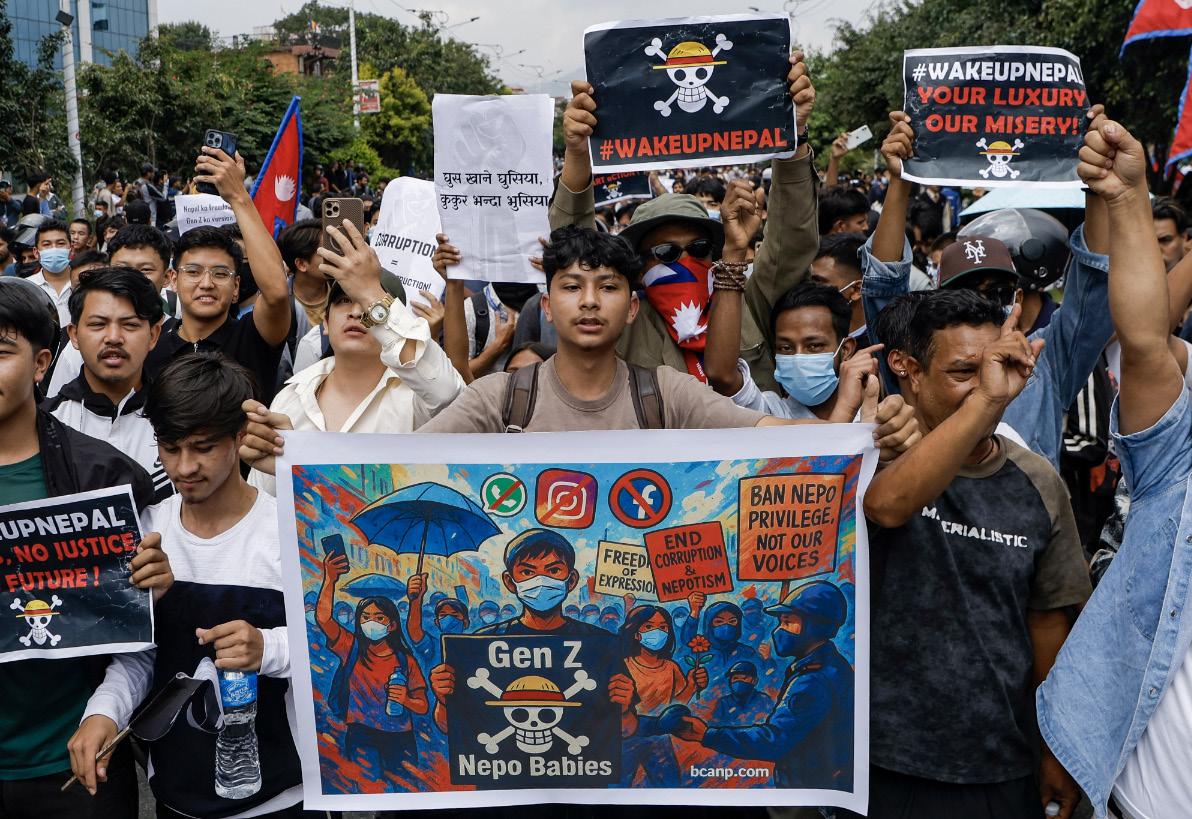
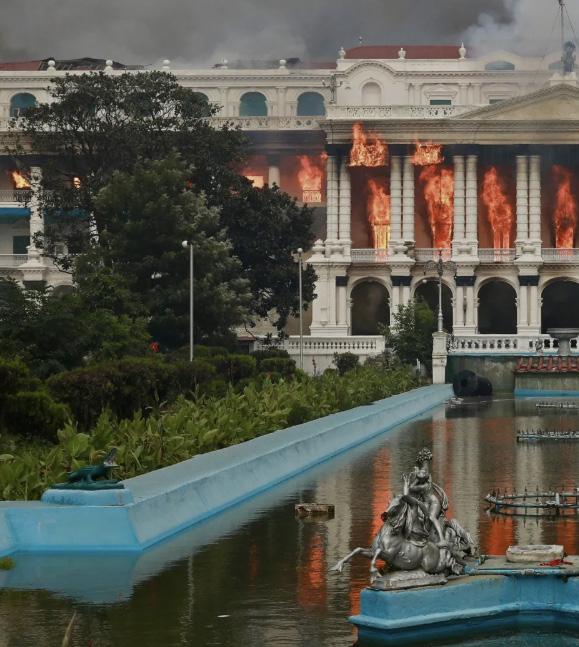
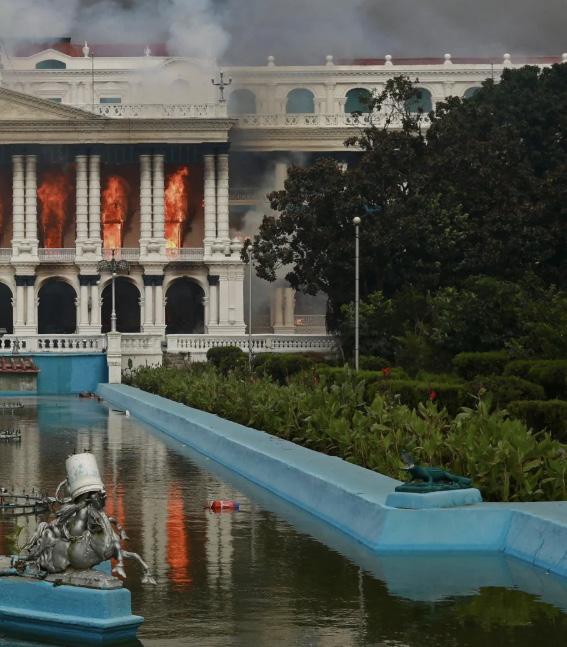
In September 2025, instead of taking selfies at a concert or a soccer match, Nepali Instagram was full of teenagers taking photos in front of the burning ruins of their country’s parliament.
Nepal has a long history of both economic and political instability, leading to large amounts of both internal and external migration. In the fiscal year 2023-2024, 741,000 Nepalis obtained authorization to work overseas, joining the millions already working outside the country. Anusha Khanal was one of the many youth who left Nepal for a better life in Europe, only to return nine years later and find the country still plagued by economic and political issues. A year after her return, on September 4th, 2025, the government of Nepal shut down
access to many social media platforms due to their failure to register for a program that would increase the government’s ability to regulate what was shown on the companies’ platforms.
After the ban was implemented, widespread youth protests broke out across Nepal, to which the government often responded with brutal force, killing dozens, including several children, and injuring over 2,000 people. As an additional measure to quell the protests, the government lifted the ban on social media. However, this move backfired as renewed access to social media allowed the protestors to increase coordination and popular mobilization. The protestors did not capitulate, setting ablaze the national parliament, the Supreme Court, mainstream journalism
agencies, and other symbols of the Nepali establishment as the military looked on. On September 9th, with the army’s assistance, the protestors forced the prime minister to resign and flee the country, and the unrest subsided as demonstrators declared victory and a transitional government was established. Elections will be conducted in March 2026.
Social media has increasingly become a conduit through which Nepalis express their long-running discontent with government corruption and the country’s perennial economic crises. Since the decade-long Maoist insurgency that started in 1996, the economy has consistently experienced low growth due to a myriad of factors. Khanal stresses the importance of social media as a tool for self-ex-
pression, remarking that “social media provides that space for everyone to tell their own story,” which has revolutionized politics in the landlocked country she calls home. She works at Gen Z Alliance, which coordinates Gen Z advocacy groups and utilizes social media as a tool to promote government accountability and political awareness. Social media’s presence in all aspects of Nepali life cannot be understated: it is utilized not just for personal enjoyment and political organization but is also vital in work life. Dr. Kathryn March, a Professor Emerita at Cornell and an expert on Nepal, notes that social media is important to Nepali migrant workers, who make up 14% of Nepal’s population, in two ways. First, it proved invaluable “for communicating and keeping abreast of
where people and opportunities [for work] are.” In addition to helping secure employment, social media helps migrant workers, who are often susceptible to stress and mistreatment, connect with their family members back home. March continues, “the conversation that they can have with their wife or their mother or their brother or their school friend is often the most important moment of their day.” Many Americans have been raised to believe that social media often detaches youth from their communities; however, for Nepali youth, who have no other alternative, social media is the only thing connecting them to their community after economic factors have forced them to live in a foreign country.
Social media, while presenting an opportunity for Nepali youth to connect with their communities and express their frustrations, does come with its downsides for both democracy and press freedom. Merlyna Lim, a professor of Communication and Media Studies at Carleton University in Toronto, notes how “there are a lot of steps towards installing a democratic system…You need more than social media,” She continues, “Deliberation is slow, not rapid, which is the antithesis of social media.” The 2006 protests that followed the end of a decade-long Maoist insurgency and led to the reinstatement of parliament, eventually culminating in the abolition of the monarchy, were fundamentally different in nature from the contemporary youth movement. While the protests in 2006 were supported by exiled organized republican parties, the recent demonstrations in Nepal lacked the same degree of centralized leadership. Consequently, it remains uncertain how the protestors will ensure their demands are met now that they have dispersed.
Dr. Richard Bownas, a Professor of Political Science and International Affairs, postulates that the sheer numbers of different movements may cripple the reform movement: “Inevitably, what we already see is these groups trying to form their own parties…because they’re all forming these little clusters of mini parties, that’s going to open a way for the old traditional parties.” He even questions the motivations of some of the protest leaders themselves: “It’s very naive to suppose there’s a bunch of idealistic young people who are just fighting for justice.” In actuality, he argues, many of the leaders of the protestors often appear no more altruistic in their motivations than the members of the political establishment they fought to replace.
Khanal is wary of how the social media ban has been portrayed as the sole cause of the protests, which she views as “a very reductionist way of thinking about it.” She rejects the claim that people came into the streets merely because of the recent restrictions on social media. She does, however, note that “the social media ban was a reflection of her country’s transition into autocratic tendencies.” She points out a variety of issues that plague the country’s youth: “the basic infrastructure and services that a citizen requires to live in a country are problematic. Inflation is really high. There’s low employment, and …com-
pensation is an issue. People hold multiple jobs to make a living…in general, there is a sense of deep dissatisfaction towards the state and those who run the state.” She goes on to stress how “the unrest that brought us to the streets was not temporary or a recent thing. It was a compounding effect of all these years,” She emphasized that the root cause of the protests is what the media has ignored, namely “the years and years of struc-
mean, especially when we talk about social [media], but any kind of knowledge about the outer world.” Nepali DW correspondent Lekhanath adds that the introduction of free media did not necessarily mean information was fully depoliticized. In email correspondence with The Politic, he writes that “Many journalists are directly affiliated to one or another political party, promoting the politicization of media institutions and
tural violence, the inequality that is rampant, the corruption that is rampant, and how difficult it is for an ordinary person to have a decent quality of life.”
Dr. March also notes how social media was not the first medium to facilitate the spread of radical new ideals. She explains that for most of the 20th century in Nepal, “all forms of media were state-controlled…People had very little idea about the rest of the world until…after 1990.” The introduction of foreign free media was revolutionary. “When we talk about the media explosion in Nepal, it’s not just what many Americans
shaping the media content.” Despite this, he explains that social media “democratized access to information and opened new spaces for citizen voices—especially for younger generations who felt excluded from traditional media.” ***
In addition to some media outlets misrepresenting the protests as being solely caused by the social media ban, many outlets depicted the protests as a result of a mix of Hindu nationalism and pro-monarchy sentiment—another worrying trend in disinformation. After the abolition of the monarchy, reactionary Hindu nationalism
has surged in Nepal, which has proven a threat both to Nepal’s significant non-Hindu minority and to members of traditionally marginalized ethnic groups. Dr. March notes that: “[Before the 2008 elections that led to the abolishment of the monarchy], high-caste Hindu communities constituted about 10 to 12% of the population, and they literally had 99% of the teaching positions and 100% of the government ministerial
frames—seeing them as either a pro-monarchy backlash or a rise in Hindu nationalism or a Western-backed color revolution…The movement is better understood as a post-establishment revolt than a reactionary one.”
Ujjwal Acharaya, a former BBC correspondent and the director of CMR Nepal Journalism Academy, concurs that India is trying to push a false narrative: “We see this kind of information
positions.” As a result of the upset victory of the Maoists in the 2008 elections, high-caste Hindus began to see their traditionally privileged status challenged. While some people harbor pro-monarchy sentiments in Nepal, it is far from the majority, and its prevalence in reports on the protests may even be the result of foreign influence.
Dr. March notes that “there is some support for the monarchy…according to some sources, it is directly funded by Narendra Modi [the prime minister of India].” Pandey agrees that some foreign outlets “misread the protests through familiar ideological, geopolitical & conspiracy
is spreading in Indian media, where they try to project this Gen Z protest as pro-monarchy, a pro-Hindu kingdom, or a pro-Hindu nation. There were even some social media users in India who tried to portray it as a pro-Modi protest.”
While noting that social media has been a tool of information democratization, Pandey also points out that it has its downsides. In email correspondence with The Politic, he wrote, “It has also made journalism more fragile. The speed of virality often outpaces verification, pushing newsrooms toward sensationalism and clickbased metrics.”
He is not the only Nepali journalist who views social media as a double-edged sword. Acharaya, who also serves as the Project Lead of NepalFactCheck, an organization dedicated to fighting online disinformation, believes that social media is a boon for democracy in Nepal. Still, he also fears the rising amount of misinformation he has encountered in his work. He notes that while he is concerned about malevolent actors abusing social media to spread information and propagate false narratives, he believes that if the right steps are taken, social media can remain a positive tool for organizing. However, Lim demurs in his assessment of social media as fundamentally democratic, arguing that social media can just as easily be used in anti-democratic ways, “especially in places that are authoritarian…[while] the Nepali government is weak right now, very soon they might begin to work with platform companies, like how the Indonesian government worked with Tiktok to get database of activists and do some legal cracking.”
***
Beyond Nepal, Dr. Lim worries about how the very algorithms behind social media are responsible for amplifying populist and extremist movements across the world. “You need to hate something in the populist playbook. You need to have an enemy in order to be unified. With the emotional exploitation of market branding, you still have to use populist language, a populist strategy, and populist campaigns to be visible and popular on social media.” She further explains how this has led to politicians gearing their political messages to cater to algorithms, which she views as “not good for the public’s discourse. It means that it only amplifies the most extreme, oversimplified narratives, rather than reason, logic, and complex thinking.” Due to these worrying effects, the algorithm’s role of pushing extreme viewpoints raises questions of whether the introduction of social media into the political sphere is beneficial for countries that already have established democratic systems, and if more traditional ways of political dialogue are indeed less effective in promoting good and popular governance.
Despite Nepal’s precarious state, Khanal believes that the proper use of the media will be vital in creating a new Nepal better suited to serving its people’s interests. She notes how one symbol, a pirate flag taken from a Japanese anime, can be seen as emblematic of the overall spirit of the protest movement. “The idea of using the one-piece flag came from the characters in this anime. It’s about friendship, it’s about freedom, it’s about them pursuing a dream, and how each character is fighting for their objective.” The adoption of this symbol is a testament to the popular and bottom-up approach that these protests have taken. It also reveals the unifying force the media has on people. “In countries like Nepal, where government bodies are captured by very small groups of political elites, this symbol of resistance showed that if you trust in your work, if you have passion, and if you’re true to yourself, then anything is achievable.”
BY WILLIAM SHIU


“We can resuscitate her. But first, find these materials and bring them back.”
In typical Western hospitals, locating equipment for a surgical operation entails a short walk to the supply closet. In sub-Saharan Africa, however, it is a scavenger hunt—in which surgeries are delayed for hours, days, and even indefinitely.
It was 1:15 p.m. when Professor Sisay Ade, identified by a pseudonym, received a call from Mbale Regional Hospital that his sister, Kofi, also a pseudonym, 58, had gone into cardiac arrest. With a history of end-stage renal failure and diabetes, Kofi had checked into the Msaba Wing that morning to undergo routine dialysis treatment. Thirty minutes later, her heart abruptly ceased to function.
With only one doctor on duty, Ade and his nephew rushed through unpaved terrain—arms filled with borrowed medical supplies—to join the rescue team. Ade’s nephew had been stationed at a surgical camp in Kolony several miles away that had the resources to treat patients. Yet, on the outskirts of Uganda, hospitals were seldom stocked with enough equipment.
During resource shortages, the responsibility falls on family members to scour town markets for life-saving equipment. In critical conditions, where mere seconds could be the difference between life and death, outcomes depend less on a doctor’s performance than on the ability of those around the patient to mobilize resources. Kofi’s cardiac arrest was one such case.
Over the next three hours, the trauma team at Mbale improvised every conceivable solution. An Ambu bag could have delivered automatic ventilation, yet none were stocked. A mask could have delivered assisted breaths, but none were in sight. Suction to clear the airway? A laryngoscope to secure the trachea? Cardioversion to restore a heartbeat? Here, none of it existed.
While Ade squeezed unsterile air from the room into his sister’s lungs, relatives took turns sprinting to nearby pharmacies for drugs and medical centers for supplies. At last, they procured an oxygen cylinder, but with no connector or atropine, the team decided to take her to the high-dependency unit. To their dismay, there were no available beds or alternative units.
Deeming any future attempts medically futile, Ade made the painful decision to pronounce his sister dead. His colleagues, though disappointed, reacted with the quiet resignation of people accustomed to working without the tools they need. For doctors, it was merely another day as “magicians who work without anything to use,” Ade reflected. “Despite the grief I felt at the time, I also felt for the doctor and his team.”
Physicians everywhere are taught to improvise, to make do with the little they often have. But how can the magicians of sub-Saharan Africa improvise without even a wand?
Ade’s experience is far from obsolete, yet remains invariably as harrowing. Underdeveloped medical infrastructure has turned trauma care into a desperate search for life-saving equipment across much of sub-Saharan Africa. To illustrate this fragmented procurement process, consider a patient in Mulago, just south of the incident described. After fracturing his femur in a traffic accident, he was admitted to Mulago National Hospital. The standard treatment for this injury is a plaster or fiberglass casting. In this case, where the bone undergoes extreme trauma, treatment is typically coupled with traction and surgical immobilization using orthopedic implants. But, instead of receiving a sterile surgical plate from the hospital, the patient was handed a prescription to purchase it himself.
The patient’s wife had to contact “hawkers,” medical device vendors lingering around the ward. Upon browsing the “hawker’s” catalog of medical devices, she spontaneously conjured up enough funds necessary for the operation, only to realize that the specialized implant they needed was unavailable. She trav-
eled across several villages and procured it from a more developed city.
Seeing families of victims crowd outside pharmacies, timidly clutching prescriptions in their hands, is a heartbreaking sight. “You have to steer your heart away. Against it all, otherwise you’d go mad and rush back to the airport,” noted Professor Richard Lilford, a leading researcher in health economics at the University of Birmingham. Despite returning to these same wards and slums countless times per year, he still feels an irresolvable tug when he sees that a surgical treatment is unavailable despite being widely accessible—almost taken for granted—by those in the UK, his home country.
His work in slums over the past three decades afforded him a degree of emotional fortification, but such strength only went so far. “Some little things I just wasn’t prepared for. And suddenly I did get upset,” Lilford described.
On one trip to Ethiopia, he recalled a boy, around the age of his own son, who experienced restricted shortness of breath and circulation. The boy had developed post-rheumatic mitral stenosis after a strep infection that was left unattended. He was meant to have a routine operation, in which he was “in for a few days and then back out playing soccer a few weeks later.”
But, without access to a valve replacement, “this child was just going to die.” “It’s just not the right thing,” said Lilford.
The typical implant required for a fracture case costs between $120-$300, depending on the supplier and origin. More advanced implants, such as a mitral valve
per capita of $1,506, these price tags are inhibitively high. After summing up the costs of required materials, patients chip in every favor to pool whatever money is available. Still, with 47% of patients facing impoverishing health expenditures (defined as a cost pushing a patient below the World Bank’s extreme poverty line) and about 80% vulnerable to such ruin, it is often insufficient.
“In a country with no insurance model, catastrophic spending is what has to happen,” said Lilford, whose current project with the Gates Foundation involves collaborating with African governments attempting to implement more inclusive insurance policies.
While current plans do provide some coverage for surgeries, insurance has not historically covered the total cost of materials like implants, resulting in hefty copayments that only a wealthy minority can afford. “What we’re [now] worrying about is that these insurance systems will produce perverse effects, sometimes vitiating the very problems that they were designed to solve,” he explained.
Those effects are already visible. In regions with limited government regulation, clinics have strategically maximized revenue by prioritizing billable procedures over proper diagnostic care. “She doesn’t need an injection. She needs to go have a scan of the uterus and someone to look at her cervix,” Lilford said, recalling a patient with post-menopausal bleeding. “It’s hard to imagine that this is necessary because they put a charge in for those services.”
In unpublished findings, he found that over 40% of patients presenting with cancer and rectal bleeding were prescribed nothing more than antibiotics. “Do the doctors know that this [bleeding] is not a sign of infection?” he asked. Presumably, many do.

According to Stella Itingu, an executive officer at The College of East, Central, and Southern Africa (COSECSA)—this grim reality is why examiners from Western countries are often brought in to reaffirm quality standards of care are upheld. And, yet, many examiners have found that doctors’ training is not the issue. Doctor Sarah Khormaee, a former orthopedic surgeon at the Hospital for Special Surgery (ranked first in the world for specialized care) corroborates. She said she was struck by the ingenuity of surgeons in the region, who achieved strong results with a fraction of the resources.
They understand that procedures are not clinically necessary, but the poorly-regulated insurance landscapes enable and even nurture unethical doctoral practices—where doctors maximize billing profits at the expense of patients. “That’s
the business model,” Lilford explained. Additionally, some clinics that accept insurance charge patients twice––once upfront and second by billing the insurer––effectively doubling their revenue. As a result, insured patients who cannot pay upfront fees are turned away. As such, a system meant to provide reassurance and expand access has the opposite effect: insured patients end up excluded from care or are left paying even more than the uninsured.
The economic burden is only exacerbated by what Khoramaee calls a “double cost;” weak labor protections and a lack of traffic regulations leave workers disproportionately vulnerable to injury. Construction laborers work without harnesses, and motorcycle taxi drivers navigate unpaved roads without helmets. Many injured patients are their families’ primary earners. With employers rarely providing compensation or medical leave, treatment brings not only high medical bills but also lost income. Patients face a stark choice: incur years of debt for care, or forgo treatment, risk permanent disability, and endanger their family livelihood.
*** The burden is not merely financial but one of extreme psychological distress. An injury that could be fixed within hours may be postponed for weeks or longer. During that window, patients confront the added guilt of troubling their loved ones to fund their operating costs.
“In a country no insurance catastrophic what has to
Medically, delays in treatment quickly lead to complications. In fracture cases, bones begin to heal incorrectly. “Surrounding muscles may contract and pull the bone fragments past each other,” which encourages infections and makes surgery more difficult, explained Khormaee. When extreme bone malunion has occurred, treatment may no longer become plausible altogether.
This danger is most prominent in regions lacking efficient transportation. Doctor Tim Pohlemann, a trauma surgeon and the former president of AO Alliance, remembers rural patients traveling “three, four, sometimes five days just to reach a basic hospital.” This is largely because only 43% of roads across Africa are paved,
a large share of those—approximately 30%— lying in South Africa. For the vast majority of patients who already face delays due to country-wide equipment stock-outs, these added travel delays mark the end of the road. Even “the best surgeons can’t do much if the patients come too late,” Pohlemann expressed.
Of the few patients who reach hospitals in time, a number are fortunate to receive pro-bono equipment from visiting surgical missions or charitable nonprofit organizations, such as SIGN Fracture Care. Khoramee, the CEO, explained that SIGN manufactures an FDA-approved intramedullary nail designed for low-resource settings. It requires no electricity for implantation and fits a wide range of sizes. Still, such donations only fill short-term gaps. Supplies are limited and distributed on a first-come, first-served basis— and once they run out, patients must return to buying from “hawkers.”
Families who struggle to afford medicine and are not recipients of pro-bono resources often turn to
black-market pharmacies for substandard implants. The higher complication rate of operations involving such equipment potentiates the need for future corrective surgeries that families will certainly be unable to afford.
When asked about his conflicting ethical obligations to treat and simultaneously to do no harm, Pohlemann, who has witnessed this situation first-hand, said “The medical intuition is, of course, to act.” It is “difficult to get the best results, but you will avoid the worst.”
Pohlemann added that, “the danger won’t so much be with the operation itself” but the post-operative complications a patient might face when receiving a substandard implant. Albeit flawed, there are improvised methods for molding an implant into position. During many visits, Pohlemann witnessed physicians malleate surgical plates, modifying their shape by brute force to tailor them to human anatomy. “They are just metals with holes,” he explained. “Many local manufacturers are al-
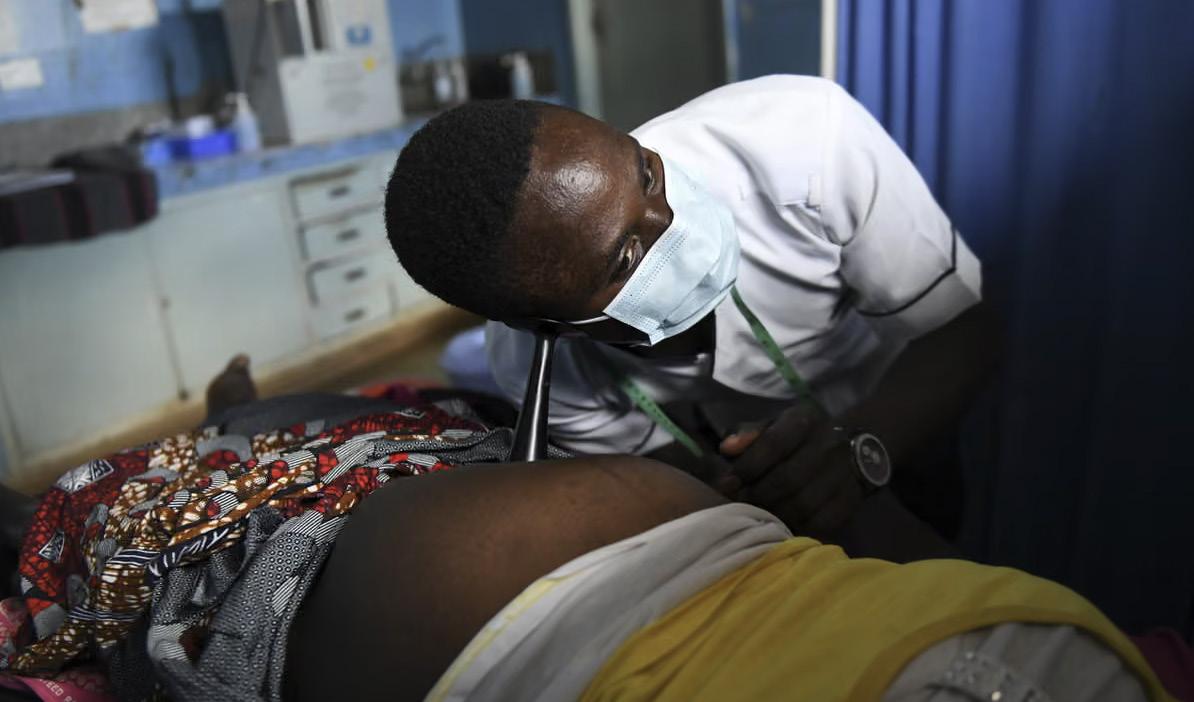
ready able to copy the part and sell products for a fraction of the name-brand.”
But surgical risk does not stop when patients receive the implants. The fit of an implant means little if the material harbors contaminants. Black-market implants are rarely manufactured in sterile conditions. This counterfeiting exposes patients to high rates of surgical site infections, up to 41.9% in Tanzania, compared with 1.2% in the United States.
Additionally, a piece of equipment passes through many intermediaries—from manufacturers to transporters to “hawkers”—who are often unequipped to handle fragmented procurement conditions, such as dust levels and temperature. A set of screws and plates might fit the bone perfectly, but whether it was manufactured and transported in a controlled manner can mean the difference between recovery and life-threatening sepsis.
Pohlemann noted that low- and middle-income countries in Africa are at a stage similar to where Europe was 40 years ago. Growing up in Germany, he witnessed how, even without major surgical breakthroughs, progress could be made in the prognosis of trauma patients through policy. He is adamant that the next generation of trauma care will improve not “through technologies so novel that nobody has been able to replicate it today,” but through systemic policy reforms in education, infrastructure, and basic standards like sterility.
Lilford echoed the need for infrastructural development, arguing that the automotive, mechanical focus of current nonprofits is one that sub-Saharan Africa cannot maintain—it must be replaced with more organic efforts. “A device’s utility cannot be easily separated from the socioeconomic conditions under
which it was defined,” he warned.
Touring a cancer clinic in Africa, he once found “some bloody great linear accelerator…too heavy to carry, sitting in the basement,” and contaminated with dust. “It was donated,” but they did not have the patient population to afford such high-tech care. For Lilford, progress does not hinge on exorbitant equipment but on the surgical training of primary healthcare workers, technicians, and administrators. “Education trumps implants,” he said. The principle is captured in the old cliché: “Teach a person to fish rather than giving them the fish.” The more organic the change, the more sustainable the outcome.
This philosophy also resonates with Itungu, who directs operations at The College of East, Central, and Southern Africa (COSECSA), the region’s leading surgical training institution. To her, the continent’s greatest need is investment in human, not mechanical, capital. Separately, Itungu underscored one of the continent’s most pertinent obstacles, the practice of skilled graduates following the “brain drain.” Regions that are the most medically dire are often the most politically unstable and dangerous. Khormaee, who has overseen SIGN Fracture’s surgical training in some of Africa’s most volatile settings, recalled that kidnapping and armed conflict often forced her teams to conceal their names or locations for safety. Many of the best clinicians left for safer, better-resourced countries, perpetuating a cycle of medical inequity.
To begin addressing sub-Saharan Africa’s medical infrastructure, experts like Itungu agree that the region’s internal priorities must evolve. Before she transitioned to medicine, Itungu worked at the World Bank under the East Africa Community for a decade, witnessing the continent’s humanitarian leaders direct nations’ focus towards negotiations with international financial institutions in
an effort to further assert Africa into the global market. These engagements seek debt relief, currency stabalization, and foreign investment, all legitimate goals. But, recognizing the limited administrative capacity of sub-Saharan nations, they also inadvertently divert attention and resources from the development of distressed local systems, systems that have a tangible daily impact on their citizens. “Stocks should not be the priority; we have to look at the health of our people,” Itungu asserted.
She adds that “of 650 applicants to COSECSA medical school each year, over half of the candidates cannot afford it.” To bridge this financial gap and allow more applicants to receive an internationally standardized medical education, COSECSA has reduced the cost of tuition by hiring trainers on a pro-bono basis and funding more than 125 scholarships per year.
***
There are still many reasons to be optimistic about the future of sub-Saharan African healthcare. Economically, strides have been taken to widen the country’s tax base–promoting public welfare spending. Estimates from the UN Trade and Economic Development (UNCTAD) Africa Report suggest that illicit financial outflows like tax evasion are at nearly $89 billion per year—a sum that far exceeds the $60 billion Africa receives in foreign aid yearly and one that could drastically transform healthcare infrastructure. While this shadow economy has remained persistent in the last decade, Lilford is hopeful that the continent’s recent push for digital economies will shrink it. He believes that their ability to scrutinize bank accounts, however small, will finally make auditing and prosecuting financial crimes commonplace.
Professor Lilford also cites the formalization of informal actors in the economy as a crucial way to expand the tax base. Over 90% of sub-Saharan Africa’s labor force––which accounts for 62% of the region’s GDP––is employed informally. However, 40 countries have begun to chip away at this, reducing the informal sector by an average of 9% through digitized tax systems. In one estimate, the formalization of enterprises in Africa could generate additional revenue of $125.3 billion annually for public expenditure. If such fiscal reforms continue, sub-Saharan Africa may proceed towards a future of self-sufficently funding its healthcare.
yet his uncle had “his own children, too,” Lilford explained. After due time, the uncle was no longer willing to continue the search.
“This would be the boy’s last session before he was sent home to die. He knew exactly what the situation was, and he looked absolutely terrified.”
Standing beside their respective patients, Lilford and Ade both understood that they were not dying of merely kidney failure or cardiac arrest; they were dying because of a system that cannot deliver modern medicine nor the tools to apply it.
Ade’s failed yet formidable mission to resuscitate his sister is an age-old narrative. And Liliford observed a similar case soon after. A man in his mid-20s received dialysis for chronic kidney disease. He had received a kidney transplant earlier in his life, but his kidneys were failing again because post-operative care was inaccessible. He needed dialysis to live and had always relied on his uncle to find the equipment for his treatment,
Despite the commendable efforts of international organizations to fill shortterm gaps in hospital stockouts, much progress still needs to be made in solving sub-Saharan Africa’s equipment infrastructure. “You might put in more oil, more petrol, but that machine won’t put out anything,” in the long run, insisted Lilford.
Without investment in the foundations of a functional society, every donated device, every trained surgeon, and every act of dire improvisation to meet the unfulfilled needs of a patient will remain a temporary fix to a permanent problem.
“This would be the boy’s last session before he was sent home to die. He knew exactly what the situation was, and he looked absolutely terrified.”
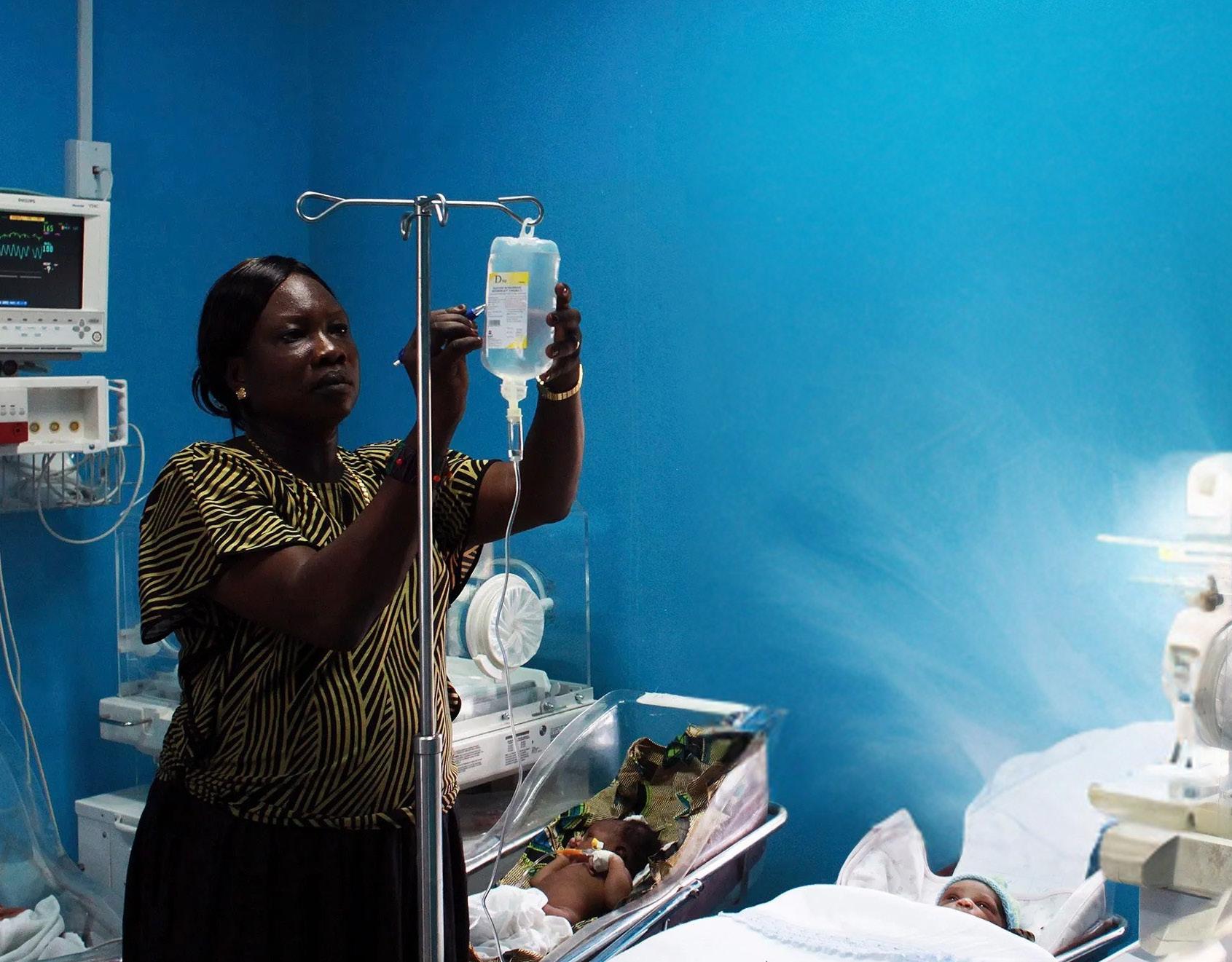
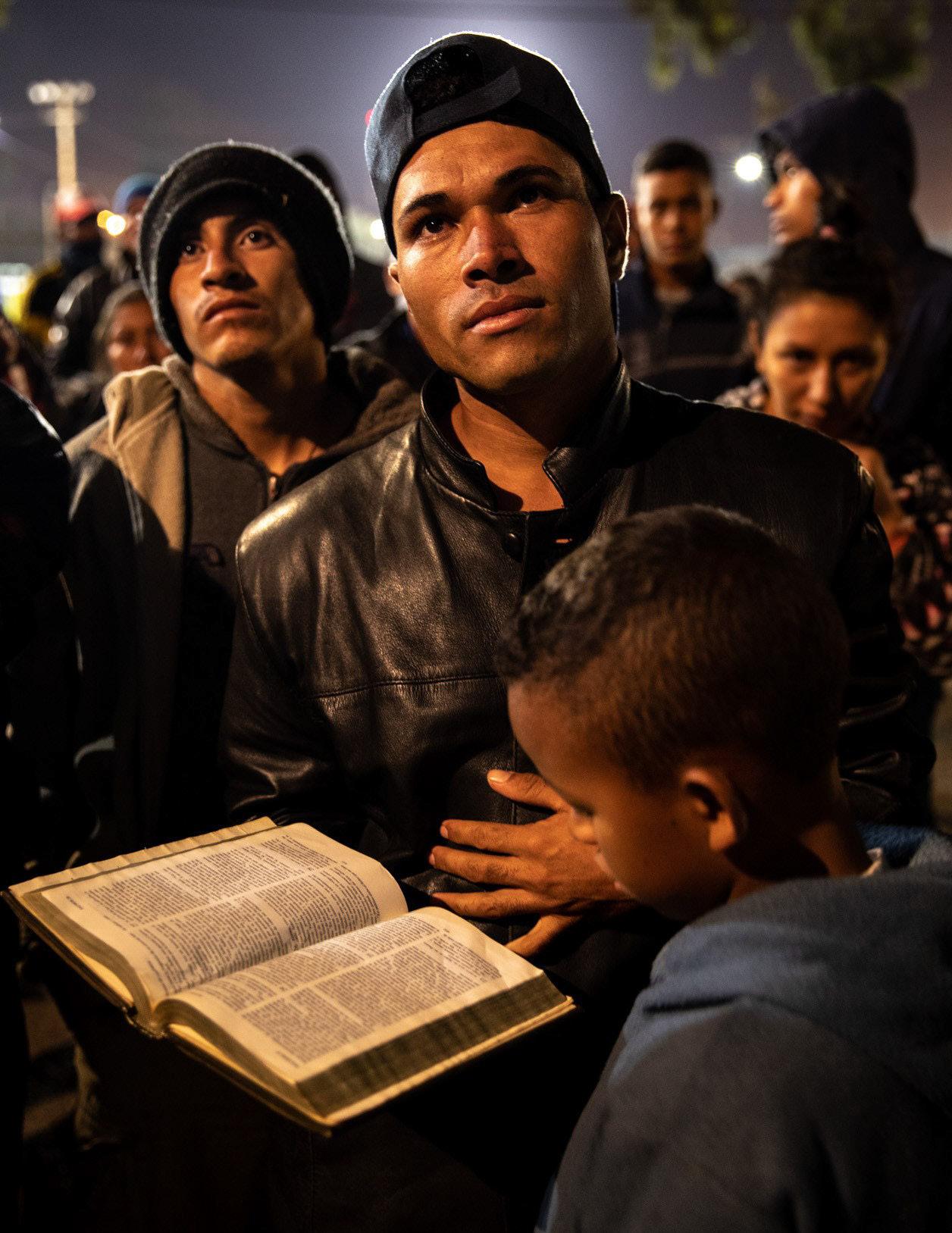
BY CHANTAL DE MACEDO EULENSTEIN
Tomas Ayuso’s images are jarring distillations of humanity. His pictures are reflections of intense violence, depicting machine guns, police, and bullet wound scars. Yet his photos also contain something unexpected: joy. A couple looking at memes together on the way to the US-Mexico border, a family laughing together as they eat, a little girl dancing with glee. The Honduran documentary photojournalist presents a fundamentally human portrayal of forced displacement and conflict in relation to the drug war in Latin America, one that reshapes the narrative of migration. Ayuso’s work has been featured in National Geographic, The New Yorker, The New York Times, and The Washington Post, among other publications. Currently, Ayuso is collecting Honduran stories for publication as part of a project called “The Right to Grow Old,” and continuing to report on the Palestinian diaspora in Latin America.
This interview has been edited lightly for clarity. All photos are courtesy of Tomas Ayuso.
When and why did you first decide to pick up the camera? What are some of the stories and photos that have stuck with you the most during your time reporting on forced displacement in Latin America?
Photojournalism was never the plan. I never considered myself a photographer, other than taking little flicks here and there with my phone. My plan was to work for something like the UN regarding conflict resolution, but I had to more or less abandon that dream and go back to Honduras. When I went back home, there was nothing I could do with the degree that I had, and I didn’t want to work in government, because the government is incredibly corrupt.
So, I was overeducated, and there wasn’t much that I could do. But I was driven to do something with what I had learned. So a friend of mine told me at some point, “Why don’t you just do the typical policy and white paper reports that you would have done for the UN, but make it more friendly for the general public?” I said to myself, “Why not?” So I started doing that, and I found that I was fortunate enough to gain the good graces of people who often are reluctant to be photographed. Ultimately, the reason why I made the decision to go from writing policy to being a journalist was that I did not like how Western media would depict Honduras in the crudest, most reductionist, and frankly racist terms. So I thought there needed to be a Honduran voice for the people.
There’s a picture of two boys sitting on a hill. They’re both looking toward an informal neighborhood in San Pedro Sula. That
picture really represents what Latin America is about for me. The color, for example, feels very ethereal, the lights barely look like street lights––they look more like a starscape fell on land. The line between reality and the surreal is barely there, and that relates to magical realism—the endless hope that comes with being Latin American. Everything’s rotting away, there’s corruption and there’s moral decay––but there is an unyielding hope that guides everything, which is what the picture reflects because the boys in that photo are being forced into displacement by armed groups. And they were sad, they were scared, they were everything.”
“And as they were looking into the last scattered rays of sun after the sunset on the horizon, they were accepting their fate. They were saying, “I guess I’ll leave, but I will leave on my own terms, because I reject this society and the life that has been extended to me on account of being born where I was born.” And I’m happy to say that both of those boys are doing so well.
Walk me through how you took that picture. How do you capture photos while in the middle of an active conflict?
Ultimately, my method involves how I’m able to get close to the people, not only physically, but socially as well. Before I even
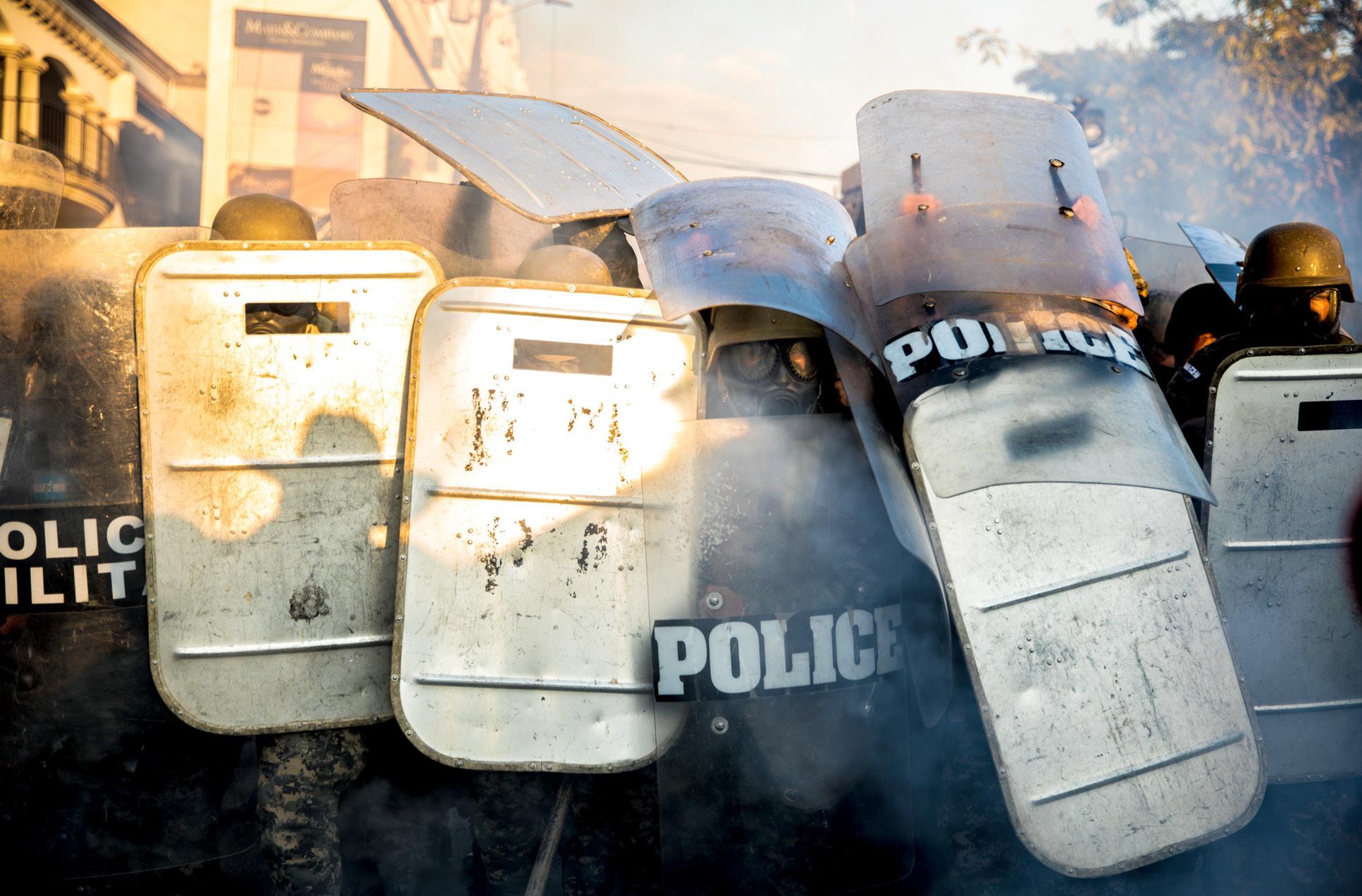
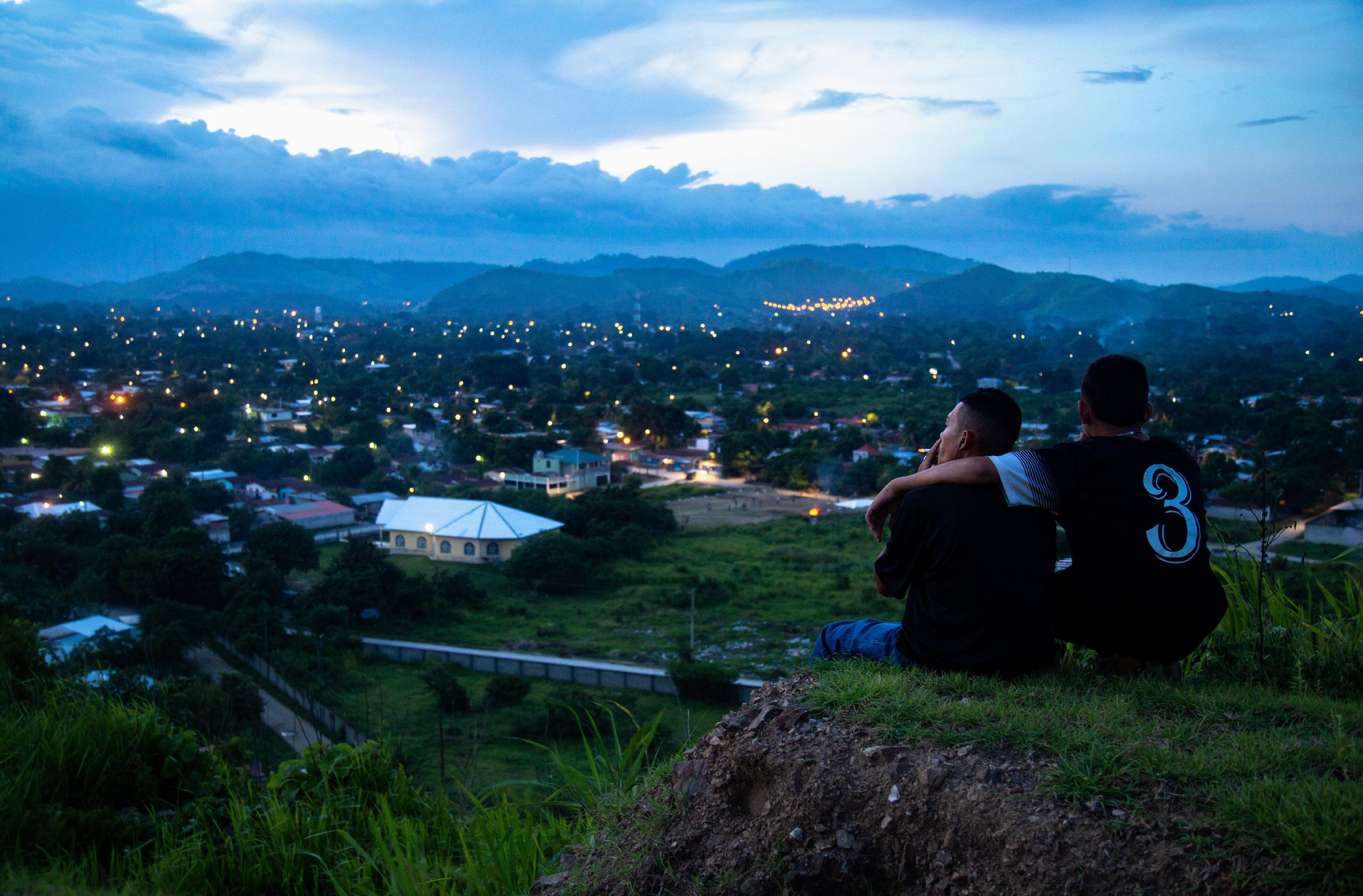
took any pictures of the boys, I had spent a few days in that neighborhood living with them— no camera was taken out. I believe that if you’re going to share your story with me, you should know who I am, and you should trust me. I can’t pretend. I cannot write anything about these people if I don’t feel that they know that.
After two days, we all trusted each other and grew to become friends. One of the boys caught wind of the threat [of gang recruitment], so we went up to that hill, which was the only other safe space in the neighborhood besides their home, and in the middle of the exasperation of asking, “What do we do?”, we all sat down under the ledge where they are in the picture. I could feel the light changing. It was during hurricane season, so it had just rained, and there was a lot of blue. It was twilight hour, and it was very clear. I realized, damn, people should feel what I’m feeling right now. So I stood up, took five or four paces back and took that one picture all with the purpose of, “I want to convey exactly what is being felt right now.”
A photography mentor once told me that the difference between a writer and a photographer is that when it comes to documenting conflict, a writer can work from the hotel room, interviewing people here and there, and they can get close, very close, to a story. But a photographer has to be there.
That’s the whole point of photography—to reduce the buffer between the viewer and the event itself. You have to be smart and not put yourself in unnecessary risk, but you also have to accept that in choosing to cover these kinetic moments, you could be hurt or worse. There has to be a degree of acceptance and caution. This is something I learned later, but some people never learn whether or not a picture is worth it.
[For example,] the picture I took with the police officers and the shields was a moment in which Honduran democracy was being supplanted by an anti-democratic force. It was the first interruption of democracy in Honduras in decades. It was also important to capture that it was a move done in collusion with America, because the shields used by the police had been donated by the Obama administration. But other times, it’s just not worth it at all to be photographing some moment of violence, so there is a certain calculus that is done.
Your photos depict more than simply violence and despair. Can you discuss balancing both the brutality of conflict and surprising moments of joy? What is it like showing these contrasting elements?
Latin America has so many different issues––extreme inequality, poverty, disease,
war, conflict, or insecurity––it’s hard to live. Nothing is easy, everything is a challenge, everyone is mad, and there is just no light at the end of the tunnel.
And, for whatever reason, those situations produce an excellent sense of humor. You just have to make light of how bad things are. Otherwise, you’ll lose your mind.
All over Latin America, people find ways to make light and laugh. Even though they don’t have a lot of food, they pull food together and share and enjoy it. Sometimes they don’t even make light of how bad the situation is; they just enjoy themselves, because what is the alternative? It’s to live permanently in misery, and they have plenty of that. So why not make the best of it?
Some people are shocked when I show them moments of joy of people who are in the process of being displaced. It’s like they can’t understand it—that joy is possible in that moment. Really, I think the opposite is more difficult to understand: the belief that people are incapable of finding time to smile, even when they are surrounded by misery. I believe that if you’re going to show how people live in these extreme circumstances, you can’t just show the misery or the sadness or whatever is making it bad.
For instance, like the picture of the two boys looking from the hill and facing gang recruitment, there were times in which his
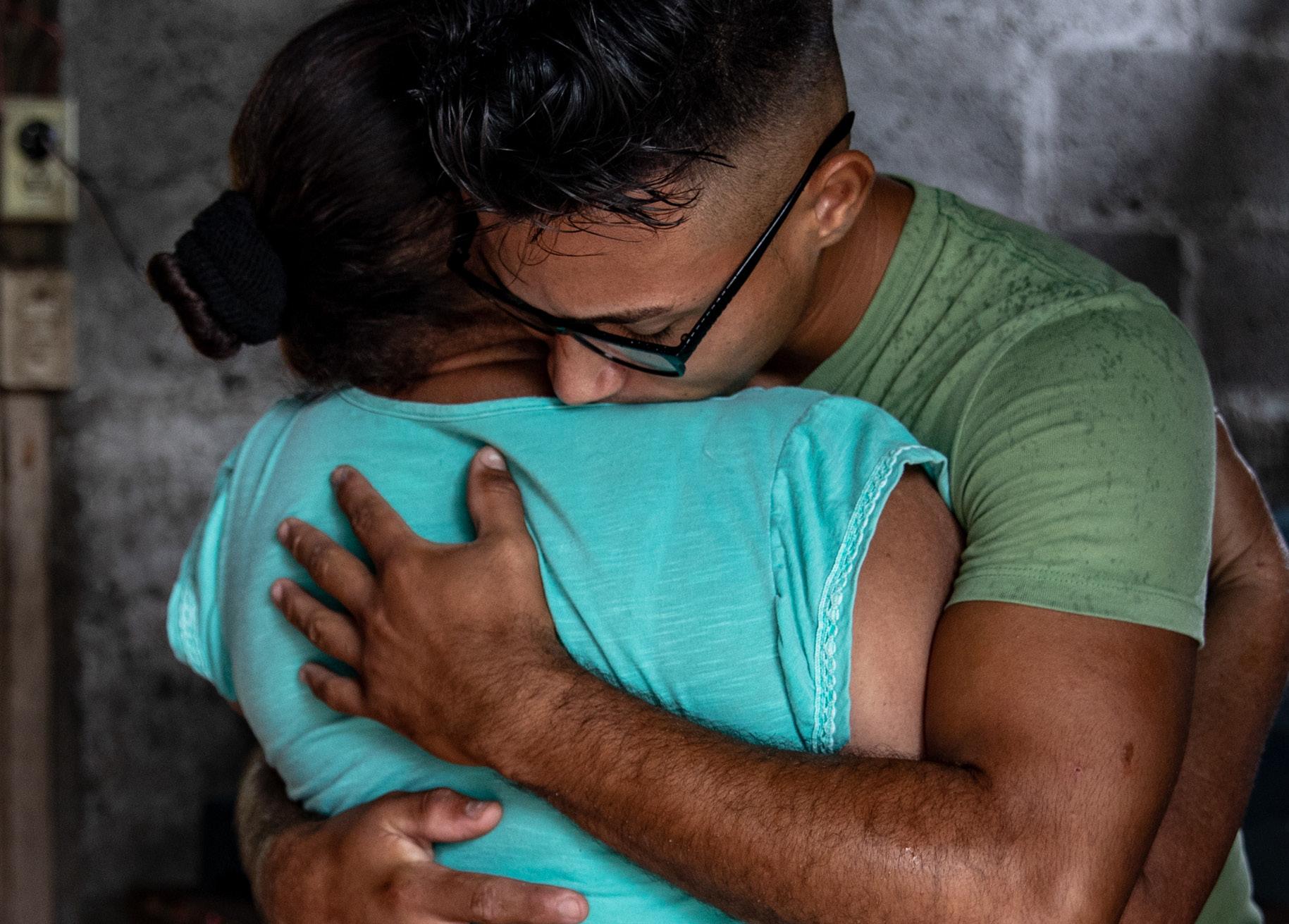
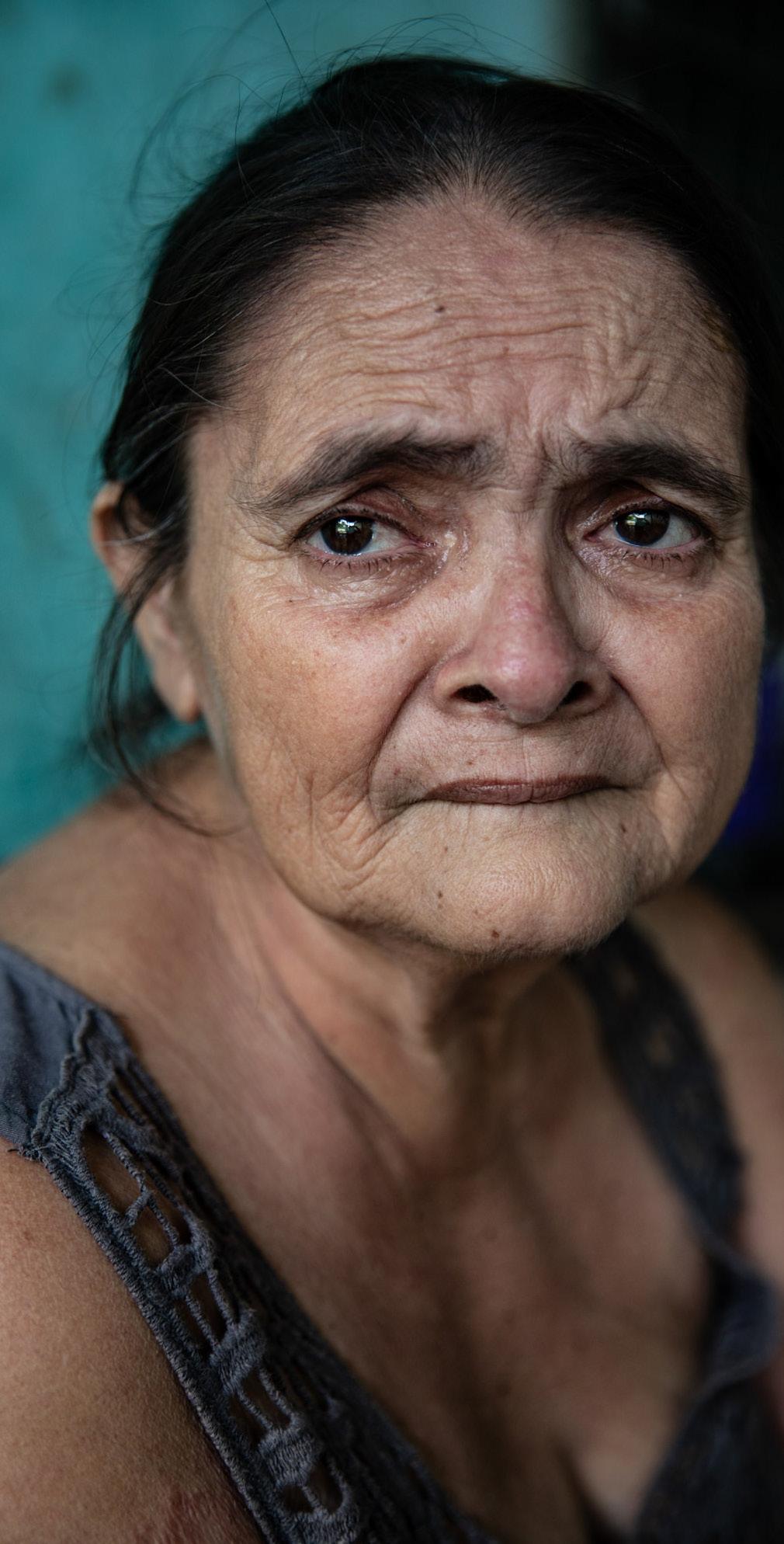
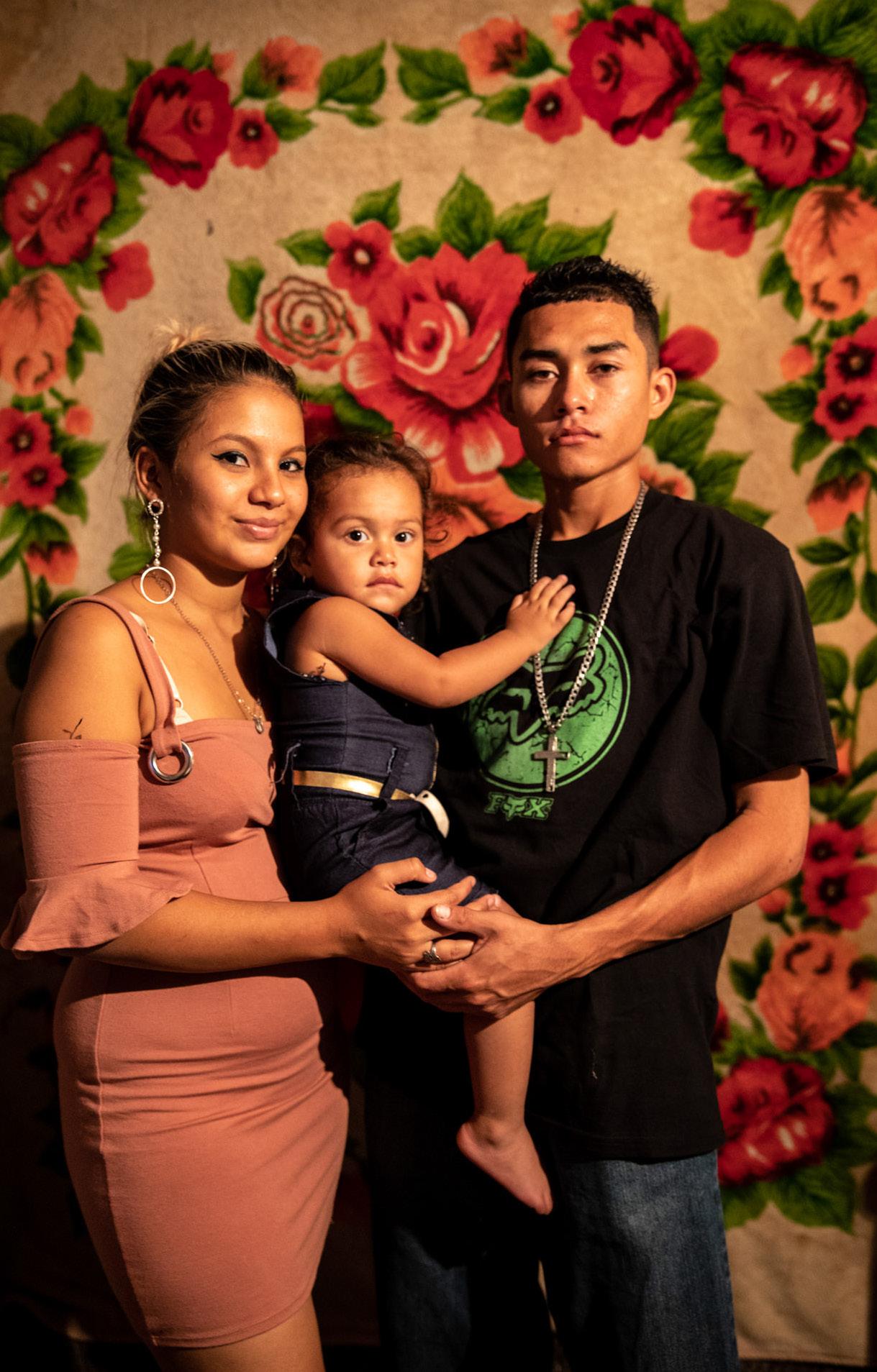
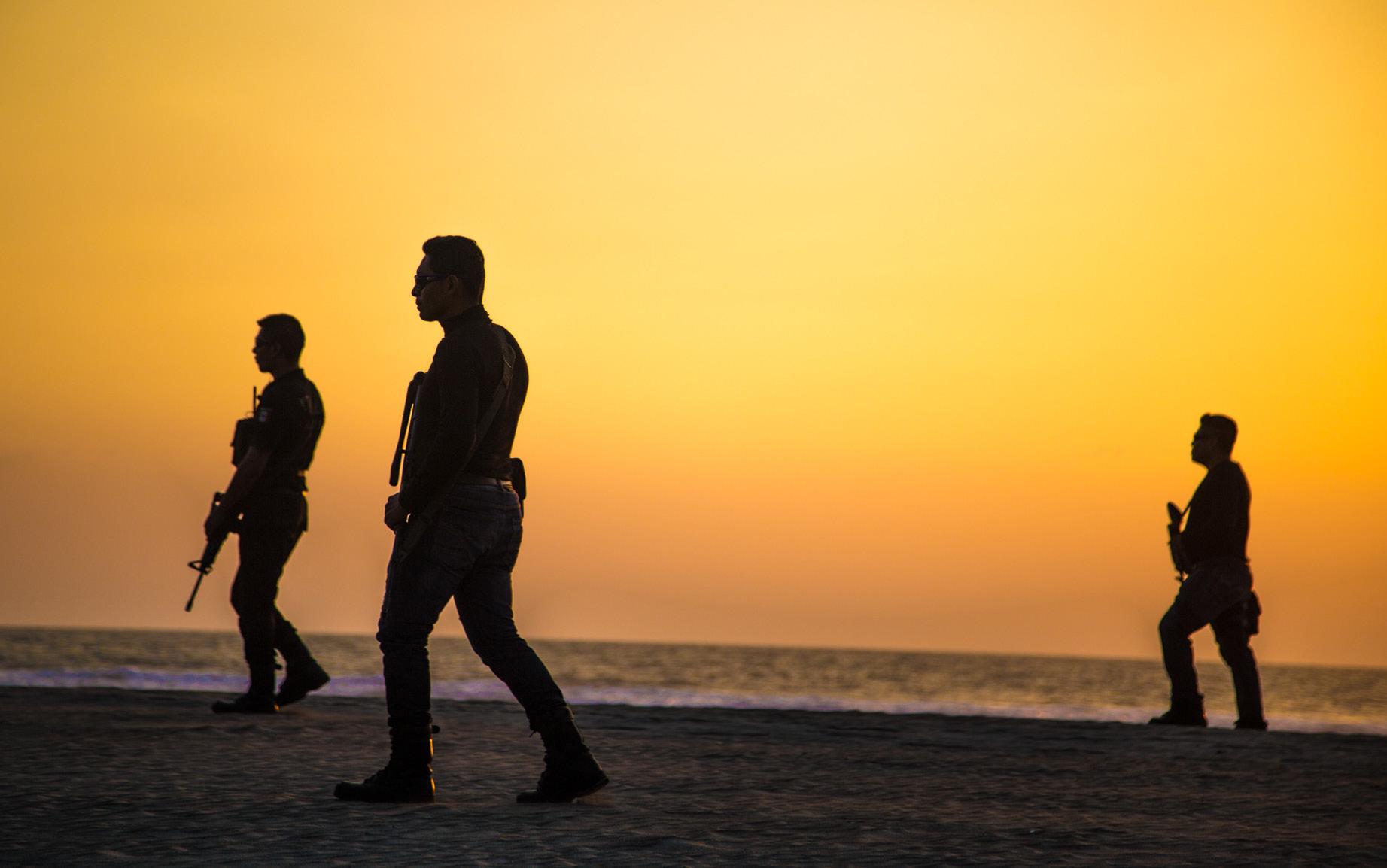
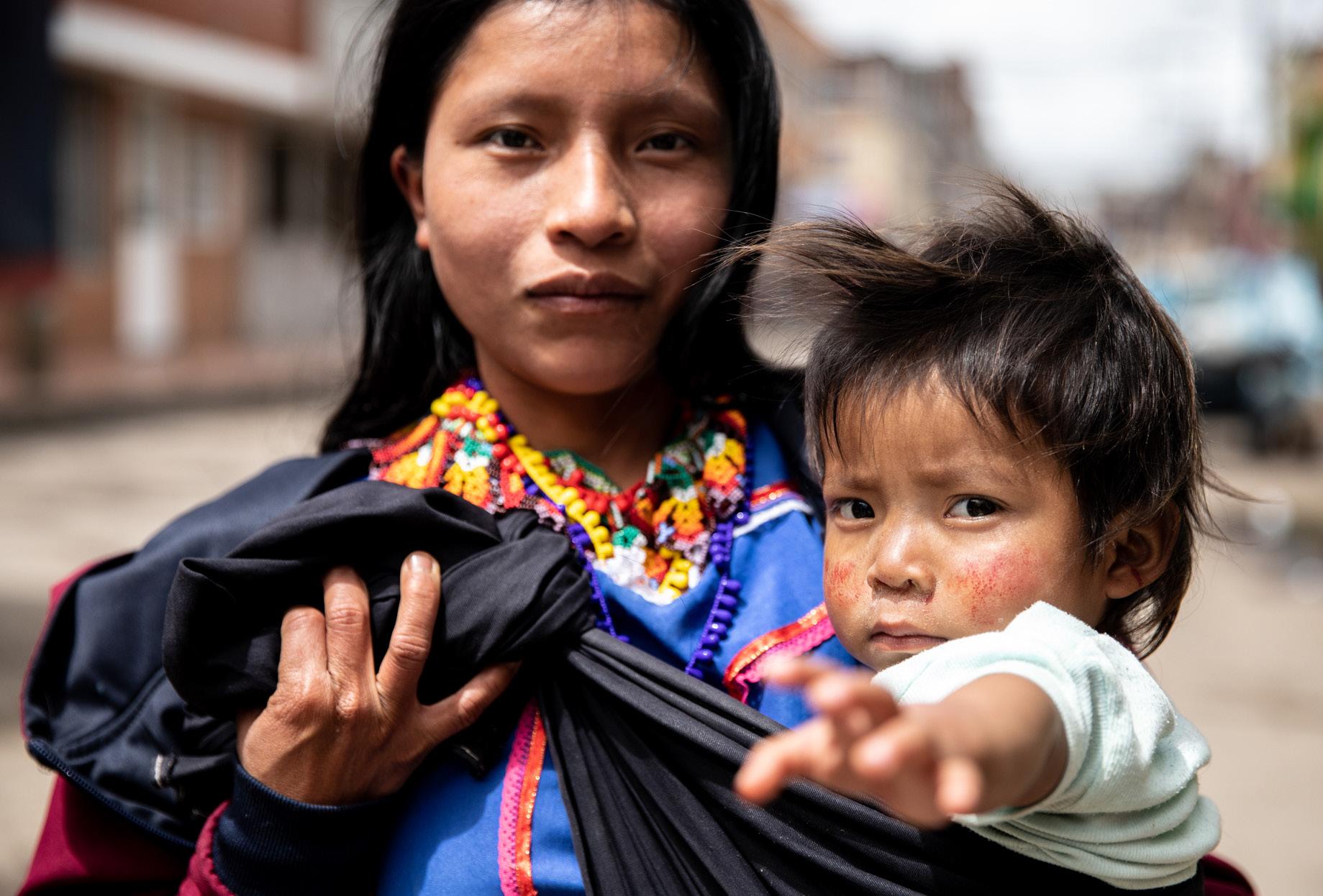
mom would make tortillas and beans, and recall moments in which he did something embarrassing when he was in first grade, and we all laughed. Or, I remember this girl brought her boyfriend to the house to meet the parents for the first time. These are moments of tenderness that everyone understands. So I don’t think I’d be doing my job if I just showed everyone being sad, because it’s not the truth. Even when you are in places where there is conflict and people live their lives in a limited way due to their circumstances, it’s important to remember that they’re still people. They still enjoy the whole spectrum of their emotional range.
Your work deals a lot with how people maintain their cultures in the face of forced displacement, particularly with the Palestinian diaspora in Latin America—how do you approach capturing that drive to hold on to a cultural identity?
The Palestinian diaspora is unique in more ways than this conversation could cover. My work follows several waves of Palestinian displacement: starting with those who left in the 1900s for Chile, those who fled after the Nakba and settled in Honduras from Bethlehem, and those who migrated in the 1960s and ‘70s to Brazil. Mostly, it was a large number of people from Hebron who relocated to Brazil.
So I’m focusing on those communities that have been living there for two to three generations. You know, being Muslim, speaking Arabic, having a different culture in a country with an overwhelming Christian majority, they decided to build different cultural centers, mosques, and schools. Now, they have built a replica of the Al Aqsa dome in the middle of Manaus, which is insane, because it’s in the middle of the Amazon. The whole purpose [of this work] is to show the presence of
Palestinian people, because no one thinks about Palestinians in Latin America, but it is quite a large diaspora.
What do you think is something that is fundamentally misunderstood about migration? Where does the media fail in its coverage?
With migration and displacement, very few people do it because they want to do it. They do it because they’ve been left with no choice, and they want to live. They don’t want to abandon their parents; they don’t want their children to starve. Every person who was displaced has dreams, aspirations, and yearning. And oftentimes, when people talk about migration and the border, that’s just lost.
I don’t like to say that the media portrays them in a way that doesn’t humanize them, because by what right can the media strip them of their humanity, their peoplehood? But their uniqueness and individuality, and stories are lost, and they’re spoken about in bulk, and it doesn’t serve the public interest. They are shown as numbers. It’s hard to understand a number; you just don’t see them for what they are. If their state of hardship isn’t explained or shown, then it’s easier to just see these people as a problem that needs to be dealt with. That is a slippery slope that leads us to where we are today.
American and European media don’t really show how much suffering drugs incur. Sometimes drugs are shown as glamorous or without any consequences. In the 90s, for example, if you got a diamond from Liberia or Cote d’Ivoire, it was clear you were financing warlords. But drugs aren’t described that way. I understand that in the U.S., for example, drugs are talked about along with health issues, but that ignores all of the people who need to die in Latin America before that one person overdoses. The drug war results
in bloodshed before it even gets to the people doing drugs.
How do you continue to work in the face of constant trauma and violence? Does it ever become too difficult, and if so, what keeps you going in those moments?
I firmly believe that the way things are in Honduras currently is unacceptable. A society that tolerates children who are starving to death and being brutally murdered has failed. It’s this abhorrence of injustice that I have that motivates me the most. I know I’m just one person, but if one person’s life can be improved as a result of the reporting I do, then that is a good thing. What I bet on is that this has a multiplying effect.
For example, I was posting stories about this single father who was making it to the U.S.-Mexico border to escape because his and his daughter’s lives were threatened. I followed this young father for several months and posted about him every so often on Instagram. I have fairly dedicated hecklers who would email or comment the most hateful nonsense. I’m not affected by it, but it really shows the depth of misinformed misanthropes that exist out there. I kept posting him, and there was one guy who kept commenting reductive things like, “He wants a handout,” or “He’s another parasite in the system.” I just ignored it and kept posting about the man––how he would play with his daughter, how he would do everything he could to get her food, how he would never let her sleep in any place that would be undignified for her, and so on. Then, I noticed that the heckler started liking the posts instead of hating on them. Then, one day, he messaged me and told me that he had to apologize––he had been wrong. Due to experiences in the past, he had become very hateful of immigrants of all kinds until he saw this story, and he realized that this was
just a father who was looking after his daughter.
When he saw that, it all clicked with him, and he felt this horrible remorse and guilt. He apologized to me for being a racist, and he said that he will no longer do this, and I could tell that it was a big paradigm and spiritual shift for him, which was heartening. That’s why I keep doing it—because things like that happen, and comments like that have happened fairly frequently, both regarding Palestine and Latin America as a whole. So it is very gratifying, because most journalists don’t ever see the outcome of their reporting firsthand.
Today, what makes you pick up the camera?
I feel despair and rage all the time. It’s my fuel to fight against it. I know people who are being directly affected, and it’s infuriating, it’s maddening, but that’s why I do it. Why do I get close to the charging police officers to take the picture? Because it’s important to take that picture. Why do I do the work right now, especially at a time of crisis and tumult in the United States? Because it’s important to do it now. I know what happens to people, vulnerable people, when they’re deported. I know what happens when people are persecuted and show back up in the places they were fleeing from. I know what happens in some of these detention centers. The U.S. is just eating itself alive. And so many people, the people who are the most vulnerable, who have zero advocates, who have zero power, the people who are at the bottom of society, the undocumented, the people in the process of achieving asylum, are suffering. And journalism works in the service of justice, of the truth, and the truth is always going to be the truth, no matter if it’s good or bad or who says it. That’s what motivates me to keep going, the truth just has to be told.