Dear Readers,
We are thrilled to share our special issue, Politics in the Arts, written, edited, and designed by Managing Editors for 2025–2026, Rory Schoenberger and Hanna Klingbeil Canale. In this edition, we interview ten artists who are pushing the political boundaries of their respective fields. From culinary chefs to visual artists to photojournalists, we ask a central question: How do you use your art to make a political statement?
Some of the interviews include Dread Scott, whose work “What Is the Proper Way to Display a U.S. Flag?” reached the Supreme Court and made legislation such as the Flag Protection Act of 1989 unconstitutional. Scott reflects on the inherent power of art—how, when it enters the halls of the nation’s most influential institutions, it can push debates forward and galvanize people to act.
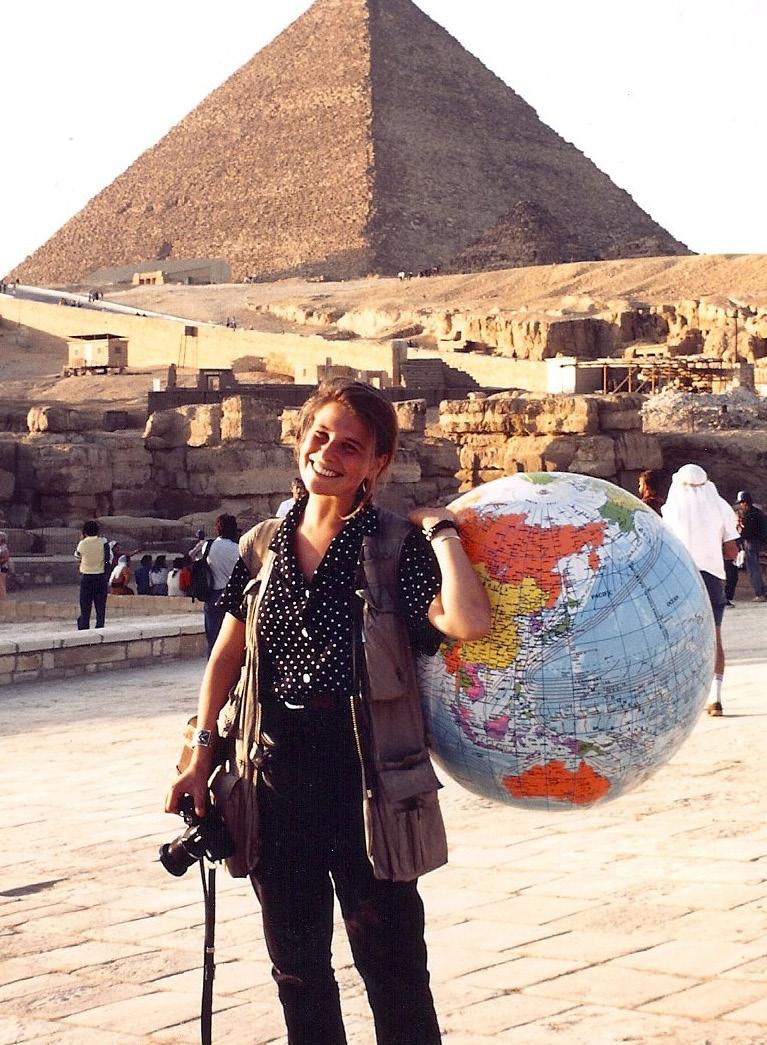
Following Scott, Deborah Copaken takes us through her career, beginning as an undergraduate finding her footing in the world. Copaken’s path spans multiple dimensions: from photojournalist covering major war zones, to journalist at leading news outlets, to becoming an independent author. Throughout her journey, she reflects on her experiences as a woman in corporate America and her unshakeable commitment to capturing the female experience through her work.
Ari Weinzweig brings us into his gourmet food business group in Ann Arbor, where he implements anarchist principles within his restaurants. Silver Iocovozzi, another culinary chef, blends Southern barbecue traditions with Filipinx flavors, exploring how identity and background shape both art and food.
Javier Manzano, a Pulitzer Prize–winning photojournalist and filmmaker, takes us to Afghanistan, Syria, and the U.S.–Mexico border. He reflects on the ethical implications of his work and its impact on the world.
We close with Mark Seliger, an acclaimed photographer and former chief photographer of Rolling Stone. He speaks about the power of photography—its ability to evoke empathy, convey truth, and capture moments of profound honesty.
We hope this issue invites you to consider the ways art not only reflects politics, but actively shapes it.
Warmly, Hanna and Rory
Editors-in-Chief for this edition
Hanna Klingbeil Canale
Rory Schoenberger
RORY SCHOENBERGER DREAD SCOTT
HANNA KLINGBEIL CANALE
RORY SCHOENBERGER
RORY SCHOENBERGER
RORY SCHOENBERGER
RORY SCHOENBERGER
HANNA KLINGBEIL CANALE
HANNA KLINGBEIL CANALE
HANNA KLINGBEIL
RORY SCHOENBERGER
DEBORAH COPAKEN
JODY QUON
CRAIG COSTELLO & LEE QUINONES
ARI WEINZWEIG
JANEIL ENGELSTAD
RAYE ZARAGOZA
SILVER IOCOVOZZI
JAVIER MANZANO
MARK SELIGER
*This magazine is published by Yale College students, and Yale University is not responsible for its contents. The opinions expressed by the contributors to The Politic do not necessarily reflect those of its staff or advertisers.
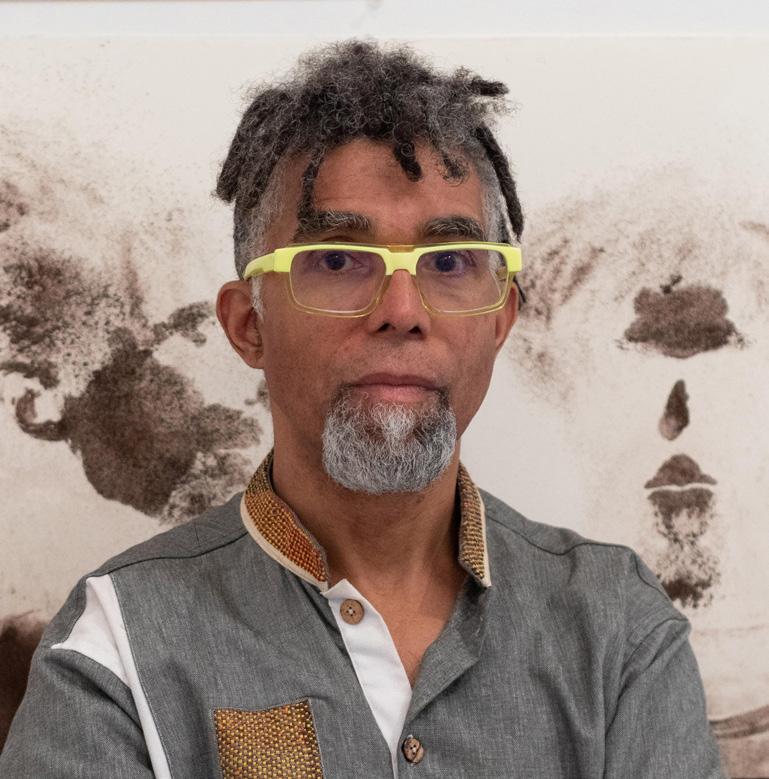
Born in Chicago, Illinois, in 1965, Dread Scott would become an artist whose work would ignite national outrage, reach the Supreme Court, and redefine the limits of political art in America. He attended the School of the Art Institute of Chicago and works in a variety of media—including performance, photography, painting, and printmaking. He is focused on creating revolutionary art to “propel history forward.” His work has been shown in exhibitions at museums such as MoMA PS1 and Cristin Tierney Gallery, and is part of the collections of institutions including the Whitney Museum, the Metropolitan Museum of Art, and Washington D.C.’s National Gallery of Art.
Somewhat by accident. I’ve been an artist for years. I grew up in a household where my dad, before I was born, was a professional photographer, and in my lifetime, was a really serious amateur. So, I grew up around cameras—my parents gave me a good camera when I was about 12. I was also a terrible high school student. I was smart, but I didn’t do very well, and so I couldn’t get into MIT or Caltech. So, I thought, “Well, I’ll be a photographer.” I ended up at the School of the Art Institute of Chicago, and I fell in love with photography. Not doing well in high school was a great accident that set my life on a path that I’ve been walking since then.
Your art is centered around community engagement and participation: how does this focus relate to your beliefs about the purpose and power of art?
The majority of my work is displayed in galleries and museums, but a lot of it has been communityengaged in some way. All of my work, regardless of whether it’s community-engaged, involves big questions confronting humanity and trying to help people see the world in new and radically different ways; hopefully, how the world could be far better. In addressing these big social questions, I’m trying to help people connect with a movement for revolution in a certain sense. And so in that context, there’s a lot that people in an ordinary community, as opposed to just me as an individual artist or even the art community, know. So, working together, we could both learn something. I can make art about some of these big questions in ways that I couldn’t just on my own.
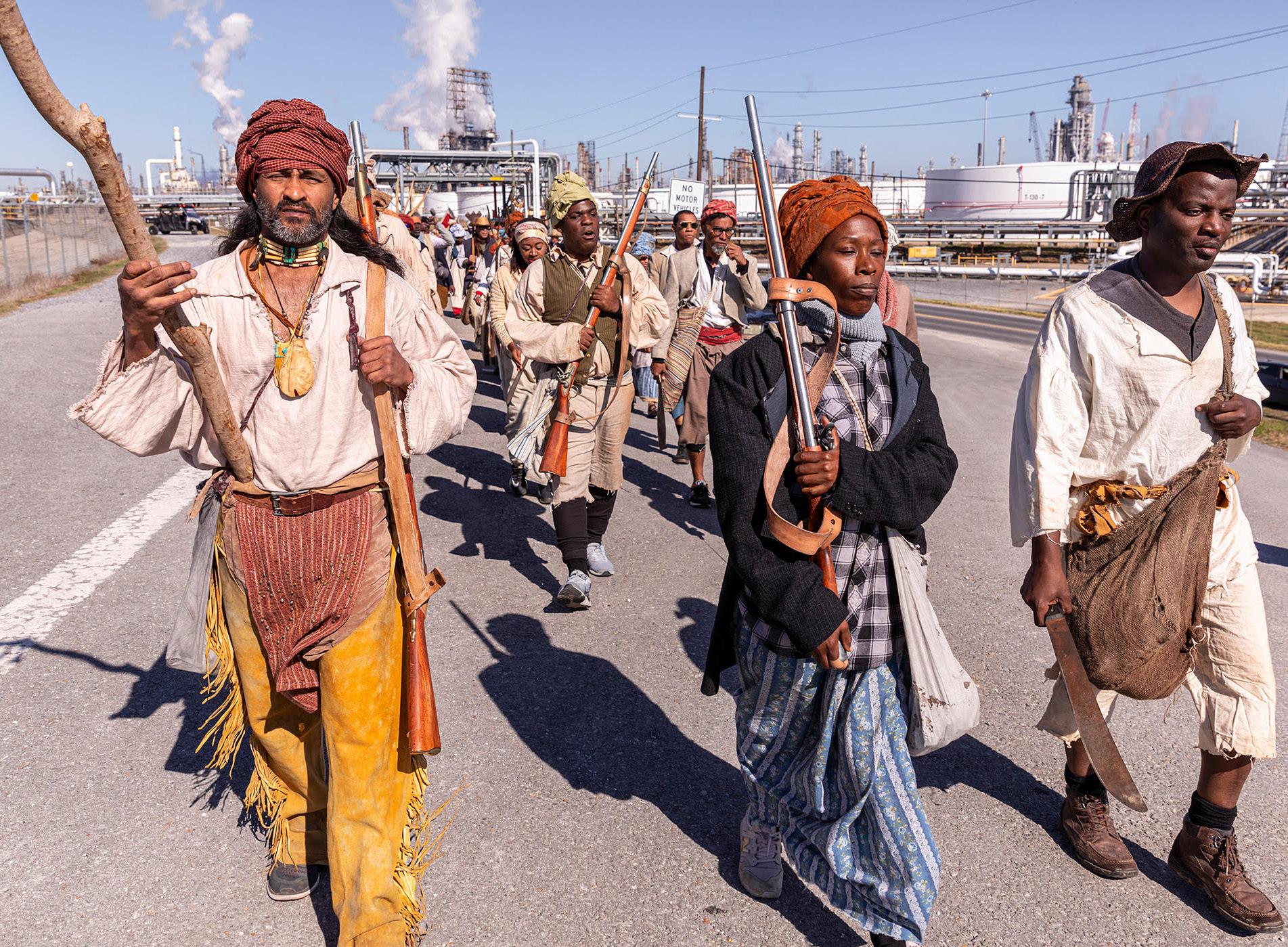
For example, a project like Slave Rebellion Reenactment, which was presented publicly in 2019, reenacted the largest slave rebellion in the history of the United States in 1811. It involved 350 people. Part of doing that was to connect with all sorts of ordinary folk who had a tremendous reason to want to embody a history of freedom and emancipation. Some of the people were relatively recently in prison, and said afterwards, “I was a prisoner, and now I’m embodying freedom. I’m fighting for emancipation.” How does a slave revolt from 1811 connect to our present? How does somebody who was locked down by this system see that differently than somebody who might not have that experience?
There was a group of virtually homeless people who participated, and it was deeply meaningful for them to embody fighting against the system. There was the aunt and uncle of Oscar Grant, who became known to the world because he was killed by the police in Oakland, and shot while handcuffed, lying face down—it was one of the first recorded cell phone videos of the police murdering somebody. They are activists who are fighting for justice against police violence, but it was really important for them to bring that experience into this slave rebellion.
There are people in my projects that have a life experience and an understanding that is different to mine, so my thinking about these questions on my own is different than when I’m talking with people, some of whom have caught hell under this system, which is a system that is based on oppression and exploitation, and was founded on slavery and genocide. Drawing on the diverse, complex, varied life experiences of other people is important to my art.
How has audience participation or feedback changed your understanding of your work?
I think that a good artist should pay attention to how the public and audience engage in response to their work. It doesn’t mean that we are a Gallup poll, or we’re just taking a litmus test of what people think, but it is important to listen to people. The first project that I did that had national attention was called What Is the Proper Way to Display a U.S. Flag? It was an installation for audience participation that focused on what the United States, patriotism, and the flag represent.
That piece was both loved and hated. When it was shown at the School of the Art Institute of Chicago, where I was an undergraduate student at the time, it got bomb threats. I got death threats. There were laws passed to outlaw it both at the time and then shortly thereafter, on a federal level. The President of the United States, George H. W. Bush called the work “disgraceful,” which I thought was a tremendous honor. It was like, “Wait, the President knows I exist, and he doesn’t like what I’m doing. Well, this is a great career. I want to do this for the rest of my life.”
There were people who were demonstrating for the work, including Vietnam veterans, who were really in support of what I was doing because their experience of being sent to fight a U.S. war of occupation and domination was not something that they were proud of—at least the Vietnam vets that I was meeting. A lot of people in the arts saw that and saw the people who were calling for my death, who were very vocal but also openly racist about it, and said, “Oh, these people don’t understand the work. This is about freedom of expression and the First Amendment.” It was not. The work was about U.S. patriotism, what the United States represents, and what the U.S. flag represents. So the people who were calling for my death, they didn’t like the work, but they understood it in a way that some in the art world didn’t understand. In the end, it was really important for me to listen to both of those experiences.
But also, again, to the people who catch some of the hardest hell under the system—people in housing projects who were calling into radio talk shows and not only giving me political support, but also giving art criticism and telling me how they understood the work, and how it made them feel. Just to be clear, people in housing projects don’t normally think about what contemporary conceptual artwork is, and especially not by an unknown undergraduate art student.
But when they are presented with this work, they can engage with it. They’re like, “Oh, this is actually interesting. This is talking about ideas that matter to us.”
Some of the people could say things like, I came to see this artwork, and it made me think of how the police shot my brother and then walked over to kick over his body “to make sure the n****** was dead.” Then said, “That cop was wearing a flag patch on their arm,” and thanked me for the opportunity to engage that question and stand on the flag. Having my feet and my heart planted in those types of understandings is important to me. To really try to separate out what people are saying about my work, and not just say, “Oh, I did this. I don’t care what people think,” is important to me. But, no, this is hitting a nerve in society on our important social question, and I thought I was doing it quite successfully.
How do you determine which medium to prioritize for a specific project?
It occurs for two reasons. One, if I do the same type of art over and over and over again, I’m bored with it. I also think my audience would be bored with it. So, part of it is just keeping my intellectual curiosity. I also think about what the best way to address a particular question is.
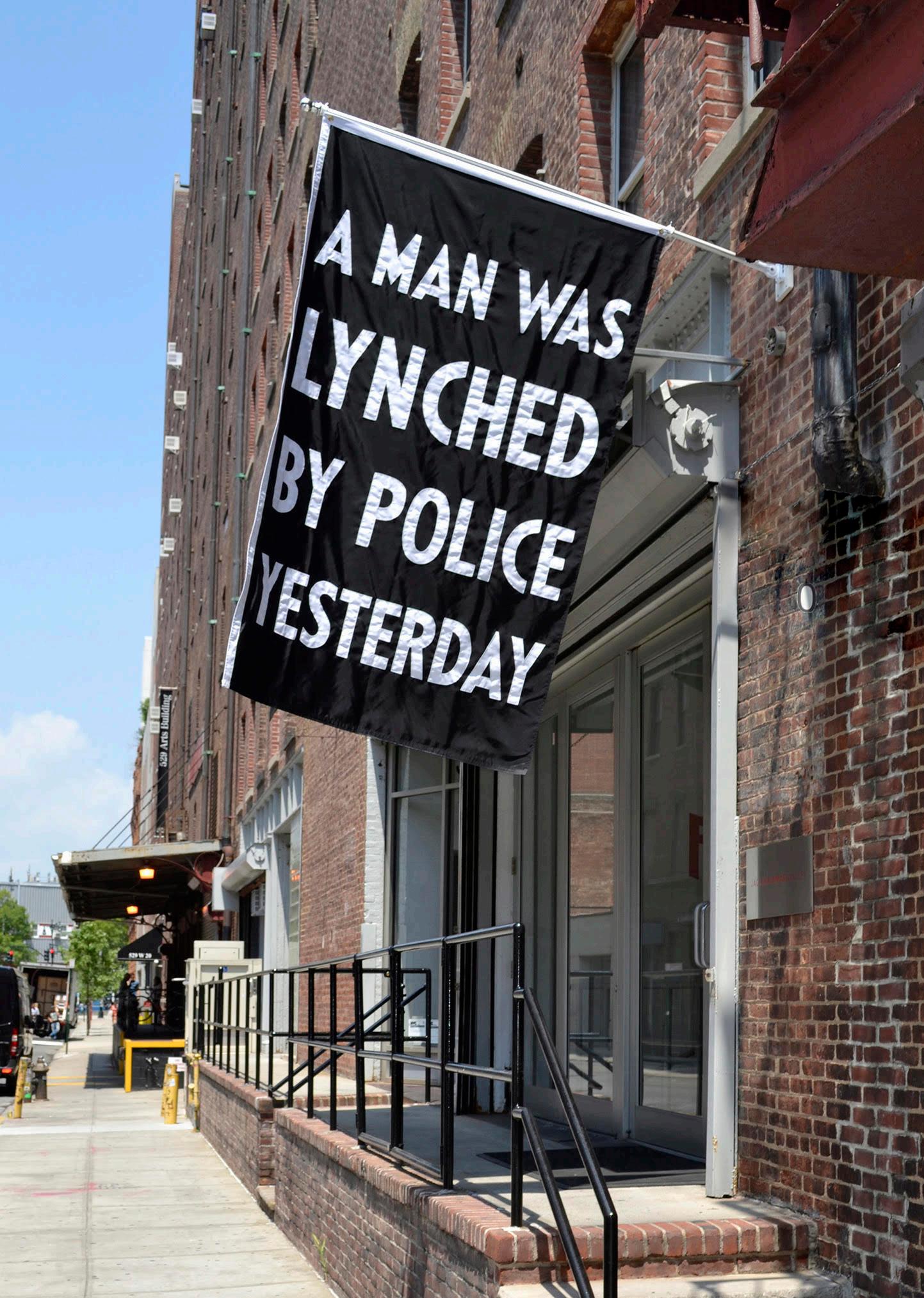
When I wanted to do Slave Rebellion Reenactment, I thought the best way to address this major historic and hidden event would be to reenact it, to actually engage with the public, and not hire a bunch of actors, but to do something site responsive in the same location as the rebellion that actually happened. That would be better than doing a screen print of it, because I could bring community into the project, whereas, something like A Man was Lynched by Police Yesterday, which is a banner that draws on the history of the National Association for the Advancement of Colored People (NAACP), a national civil rights organization that, in the 1920s and 1930s, used to fly a banner that said, “a man was lynched yesterday” anytime anybody was lynched.
I made an artwork that added the words “by police” to the NAACP banner that they made in the context of the civil rights movement. I was bringing their banner into a fine art context, but also a public fine art context. It wasn’t communityengaged. I just made this banner; it was initially put inside a gallery and then outside of a New York gallery, right at the time that the police had killed two people, and it intersected with the Black Lives Matter movement in a really interesting way.
The police had just killed Alton Sterling and Philando Castile in two separate incidents about 36 hours apart, and people were really upset about it. I didn’t know how the piece was going to intersect with that political movement [and moment], but I did know that this was something that would touch on a really important social issue, and that putting it outdoors in the midst of this sudden upheaval was something that would resonate with people.
You make the work thinking, “How is this going to be perceived?” Sometimes I’m more directly trying to speak to a traditional art audience, and sometimes I’m trying to speak to a broader audience. Sometimes my work shifts back and forth between audiences based on where the work is shown, but it is really about thinking of the best way to address a question. I don’t think there is one medium that is the best. Some artists feel they can do what they do best through painting, for example, and spend their whole career doing that—and some of that work is fantastic. I have a wider palette.
Do you see dissension as an essential component of your art?
In a broad context, yes, but I’m largely making work for the majority of humanity, and for their deepest interest. Many of those people don’t live within the borders of the United States. It’s not the venture capitalists and titans of industry. It’s people who grow food and build houses and make art. It’s a broad range of people—middle class, down to the working poor or unemployed. It includes undocumented people. It includes people of all genders and ethnicities. I’m trying to make work that, when they see it, they see their world reflected. I also want to make work that brings hope and joy.
It is sometimes very much [about] dissenting on a particular social question, because my work challenges a world based on capitalism—a world where a small handful of people control the wealth and the knowledge that humanity as a whole creates. My work asks questions such as: why is it that a president on one side of the ocean can drop bombs on a country that hasn’t even threatened them? Was it because they were going to get nuclear weapons? Well, the United States has nuclear weapons, and it’s the only country that has bombed a civilian population and did it twice. And yet, the United States [selfimposes] the moral authority to determine who else should have the right to do that. My work challenges that framework.
Some of my work is very much about dissent, but a lot of it is also calling on people to imagine how the world could be different and better. So, with Slave Rebellion Reenactment, that wasn’t dissenting. It was just talking about history and people getting free. That’s not dissenting in the same way, but it is calling on people to dream about what the world could be if there were no America—if it didn’t have the disproportionate influence that it does in the world. So, there’s dissent, but there’s also joy and hope.
A project that I did recently at the Venice Biennale was called the All African People’s Consulate, and it basically created a council embassy of sorts for an imaginary Pan-African, Afro-futurist union of countries. Like any consulate, we issued passports and visas. If you were African—meaning a citizen of one of the 54 countries of Africa, regardless of your race or ethnicity—or, if you were black, Afro descended, living anywhere in the world, you qualified for and could apply for a passport.
If you didn’t meet that criterion, you could apply for a visa to visit this imaginary place. That was posing a question. People in Europe could cross borders all the time. Within Europe, you don’t need a passport at all to go from France to Belgium. It’s easy for Europeans to travel to Africa; often easier for somebody from Portugal to go visit Kenya or Nigeria than it is for a Nigerian to visit Kenya or a Kenyan to visit Nigeria. And so, my work was posing questions about belonging, about travel, about migration, about who determines these borders. It’s dissenting in the sense of why is it that it’s easier for some to travel? For Africans and Afro descendant people, it was forging community in a very special way. It was a very hopeful piece, and it wasn’t dissenting in a traditional sense.
Tell me about your work, What is the Proper Way to Display a U.S. Flag?, and its resulting legal complications with the Flag Protection Act and the Supreme Court case United States v. Eichman? How did that experience change your understanding of your role as an artist?
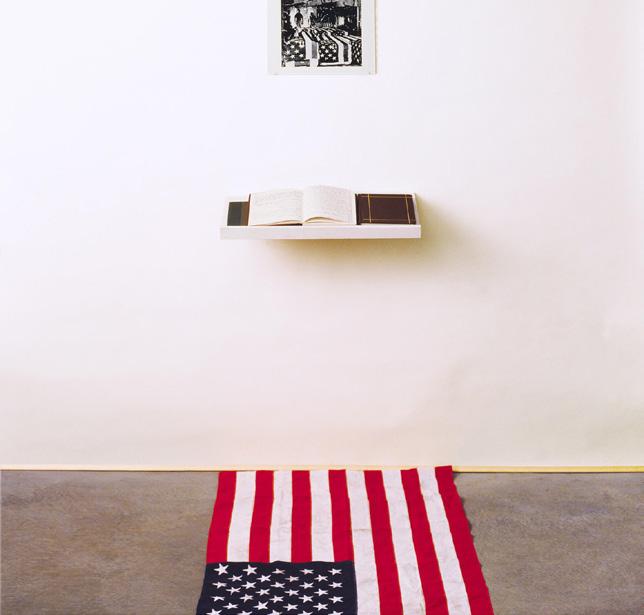
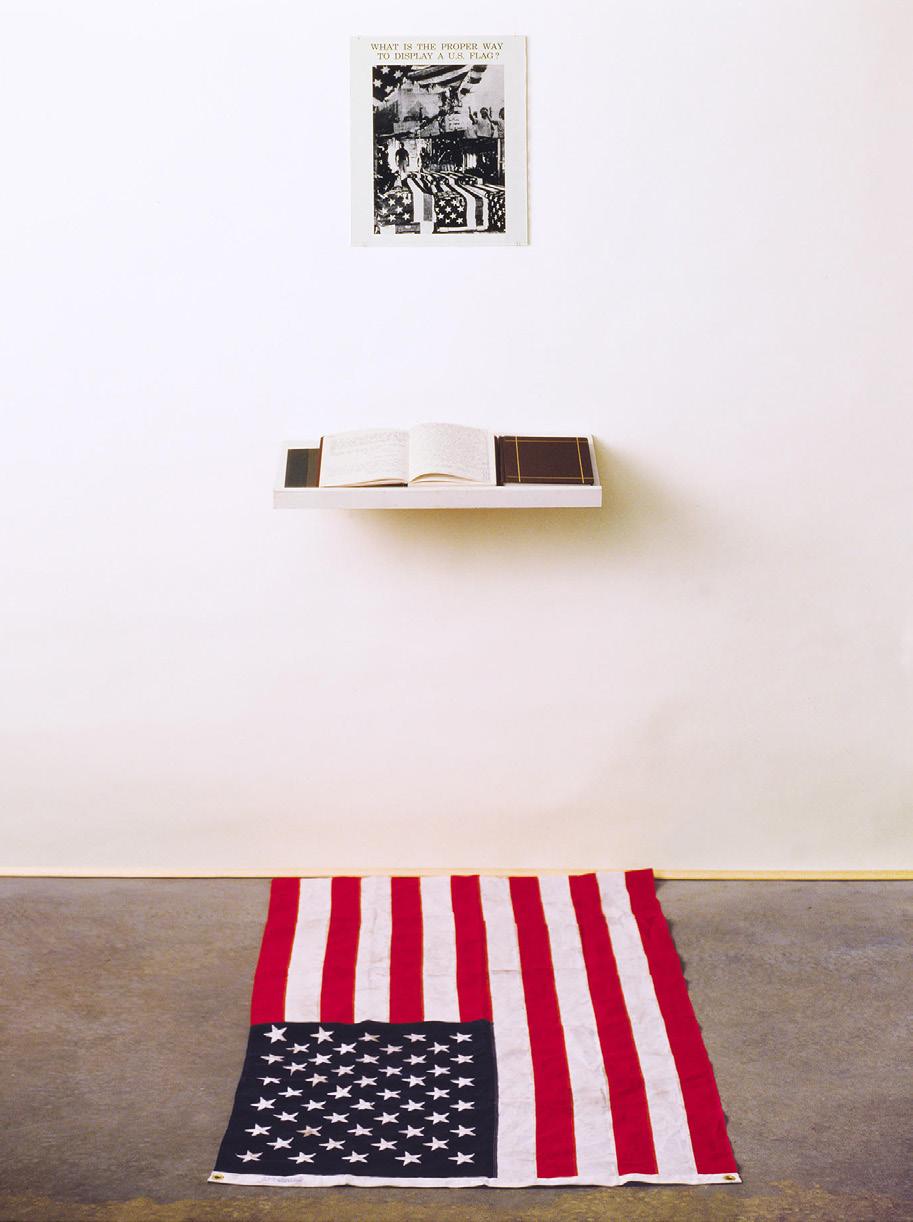
So, the artwork is conceptual. It was an installation for audience participation—a simple work that consisted of three key elements. The first was a 20 by 16 inch photomontage on the wall and had text that said “What is the proper way to display a U.S. flag?” on it. Below that was a shelf with three books on it, where the audience could respond to that question. On the floor was a three-by-fivefoot American flag that people had the option of standing on as they wrote their responses to the question. The photo montage, in addition to the text, had images of South Korean students burning American flags, holding signs saying, “Yankee, go home, son of a bitch.” And below that were coffins draped in an American flag coming back from Vietnam in a troop transport.
The work was simple, asking the audience to engage with the question. And they did. There were hundreds and hundreds of pages of people responding across several shows. But, when it was shown at the School of the Art Institute of Chicago, where I was an undergraduate student, there were many protests for and against it, and bomb threats and death threats. There were laws passed to outlaw it, both at the time the work was on display, and then afterwards, the Flag Protection Act of 1989 was passed, but when it was being discussed on the floor of Congress, they specifically cited my work as a reason why they needed the law.
The history is a little complicated. There was a flag burning that happened in 1984 in Texas that went to the Supreme Court, and because of the political battle that was waged around that case, called Texas v. Johnson, the Supreme Court ruled that flag burning was protected speech, covered by the First Amendment, [and thus, that state laws prohibiting it were unconstitutional].
That Texas law [challenged in Texas v. Johnson] was written in a very weird way; it allowed a civilian to bring criminal prosecution against somebody if they were offended by seeing the flag burn—there are many ways that that law would be unconstitutional.
So, Congress tried to pass what they pretended was a content-neutral legislation with the Flag Protection Act of 1989, which was trying to overturn that Supreme Court decision and specifically included wording that would have outlawed my artwork.
For me, it was an indication of the power of art. People from the housing project waited in line for an hour to see the artwork, and then called a talk radio show to give feedback. That’s amazing. And the President of the United States called it disgraceful.
Also, seeing Congress effectively tear up the
First Amendment
to
try to suppress an artwork by a previously unknown undergraduate art student from a Midwestern art school actually showed that the powerful could be threatened by artwork and the powerless could be inspired by artwork
If you previously had asked me whether art could matter or change the world, I would have said yes. But, if you really pressed me on it, I would have qualified that by saying yes—if you are Steven Spielberg or Chuck D, the leader of Public Enemy—because they reached millions of people, and fine art, on a good day, was only seen by a few hundred people. But then, here was the President calling it disgraceful, people lining up to see it, and Congress outlawing it. [I realized], “Wait, fine art can matter too, if it’s really good.” I’ve been trying to make art that matters that much ever since.
How involved were you with the Supreme Court Case itself? How did you respond to it?
The law passed, and then several others, and I burned flags all across the country the second the law went into effect because the government was saying that the Flag Protection Act was needed because there were “five or six nasty, terrible flag burners,” and that the whole country was demanding that they be protected from that. So, the second the law went into effect, people all over the country burned flags, and the government didn’t arrest anybody, in part because they previously said that the public was demanding this law, and yet, the public was dissenting. So, others and I said, “If they didn’t arrest us for that, let’s go to a place that they can’t ignore. We’ll burn flags on the steps of the Capitol.” And that happened two days later.
They did arrest us for that, and it went straight to the Supreme Court. So, that was a huge political battle that the other people and I who burned flags on the Capitol, as well as people from a separate case from Seattle, really waged. We were on TV talk shows; we were speaking on college campuses and in high schools; we were doing radio interviews; we were going to rallies.
One of the people was Joey Johnson, who was a defendant in the 1984 flag-burning case, Texas v. Johnson, but also Shawn Eichman and Dave Blalock. Shawn Eichman was another radical artist, and Dave Blalock was a Vietnam vet. We all burned flags on the steps of the Capitol. We were part of an activist organization that was leading people to say, “Look, this is not a few nasty flag burners against the American public. This is all people who don’t want to live in a country where you can’t criticize the flag or the government.” The government was trying to make patriotism mandatory, where there was only one permissible view of the flag. So, we were going to fight that. We had a great legal team, which included the legendary Bill Kunstler, who defended all sorts of people that had gotten into trouble with the U.S. government in various cases, but also Ron Kuby and David Cole, who would later become the National Legal Director for the ACLU.
We were all in the court during the oral arguments, and then continued our activism, because we realized this wasn’t going to be decided on the question of law, but largely on public opinion. They ruled that this [federal] law was unconstitutional because criticizing the flag or using it in artwork or burning the flag is protected by the First Amendment.
What are the strengths and weaknesses of art and performance as a method for political expression compared to more traditional practices?
I think that you need both. There hasn’t been any social change—at least that’s been for the better— that I know of, that hasn’t had some sort of art that is a part of it.
Art is tremendously important for people to hope, but also to find enjoyment, and to understand the world. But it’s not the same as the demonstrations or the organizing. If there weren’t people getting on buses to break the back of Jim Crow, that wouldn’t have happened. Yet, if there weren’t people singing, “change is going to come,” those people wouldn’t have been as inspired to be on those buses and felt the strength and solidarity to continue the movement in the face of having fire hoses turned on or having their bus fire bombed. Would Mamie Till-Mobley have decided to have an open casket of her son Emmett Till, showing her son’s bruised and battered face to really depict the horror of lynching and put a national spotlight on that, if Strange Fruit weren’t part of the zeitgeist?
There
is a real relationship between art and culture and the broader political movement.
I don’t think art by itself changes the world, but there won’t be any good social change if there isn’t art talking about these profound questions.
What do you consider to be the role of the artist during times of political uncertainty?
I think that’s a real litmus test for those artists who are thinking about the world; this is a world with profound injustice, inequality, and exploitation. Artists are typically part of the section of society that has the relative freedom to work with our heads and with ideas. We aren’t showing up at a factory 16 hours a day to try to put food on the table. We are, in a broad sense, middle class, even if we didn’t come from that. By the time our art is out there, we have the relative freedom and luxury to do that. If you have that freedom, do you reinforce the division in society? Or, do you try to say, I want to make work so that there isn’t a world where some people are condemned to work with their hands in back-breaking conditions all day and all night, while others are benefiting from that.
Right now, we’re living in a time where the President of the United States is saying that immigrants are the problem in American society. But undocumented immigrants pick our food. They build the buildings we live in. They do the work that a lot of other Americans don’t want to do. They’re the lowest rung of the construction industry. They clean the toilets, they bus the tables, and they are in the back of the kitchen. They’re a vital part of society and yet terrorized and attacked by the President of the United States, and their families are being split up.
The question is where artists stand in the midst of this. Do people say, “I’m just happy they’re not coming for me,” and make whatever art they want? Or, do they say, “I’ve got a responsibility because they aren’t coming for me right now, and I’ve got the relative protection of society as a whole that believes that art should be critical.” So, I will sing songs about this. I will paint pictures about this. I will write poetry about this.
Those are choices that we have as artists, and I hope that increasingly, artists decide to put their heart and their feet planted with the people.
Could you tell us about how your career began?
When I got to college, I wanted to be an English major, but at the time, deconstructionism and Jacques Derrida were huge, and I didn’t like only reading for subtext. I wanted to take the text at face value. I wanted to create art and write, not constantly think about literature as an entity. Harvard had one creative writing class I applied to, and I didn’t get in. So I was like, “Oh, well, I guess I’m not a good writer.” And then I got a C+ on my first freshman expos paper. I was like, “Oh, I guess I’m definitely not a good writer. Well, what can I do here at this college?”
There’s a department at Harvard called Visual and Environmental Studies (VES). So I said to myself, “Well, let me just take a class in VES and see what’s what.” And I loved it. I made a documentary about the Boston Ballet, and then I started making fiction films. Then I realized that if I wanted to switch my major to VES, I had to take a class in a different art medium. So I looked through the course catalog, and I saw that there was a photography class. I’ve always felt like a little bit of a loner. And with filmmaking, I had to be collaborative. I had to find people to do the sound and the lighting, I had to have actors, and I had to be organized. I’m not organized. It did not speak to the parts of me that were creative. I realized that I preferred doing creative work alone.
Deborah Copaken is a New York Times bestselling author of seven books, including Shutterbabe, The Red Book, Between Here and April, and Ladyparts. A contributing writer at The Atlantic, she has also written for Emily in Paris. Her work as a photojournalist and Emmy Award–winning news producer has appeared in Time, Newsweek, and The New York Times. Her essays have been published in The New Yorker, The Guardian, The Financial Times, and The Wall Street Journal. Her New York Times column “When Cupid Is a Prying Journalist” inspired an episode of the Modern Love series. She currently leads the Webby Award-winning Substack newsletter Ladyparts as its founder, writer, and publisher.
So, I took an introduction to photography class, and I fell massively in love at first sight.
Christopher James, my photography professor at the time, said, “I want you to do a photo essay that scares you.” So I decided to go to a strip joint. I didn’t want to cover the men in the front of the house because not only did I think that would be too dangerous and weird, but I also just wanted to bond with the strippers backstage, behind the scenes. And so that’s what I did. I ended up doing this year-long photo project on what was then called the Pussycat Lounge.
Gilles Peress, who is a photographer at Magnum Photos, took an interest in my work, and he said, “Do you want to come work at Magnum this summer? There’s an unpaid internship.” So I worked as a waiter at night and at Magnum during the day. While at Magnum, I got to see everything. My job was to take the photographs back from the magazines, record their return, and then refile them. That was my job, all day long. I got to see history every day in the palm of my hand. Beautifully rendered history, shot by photographers whose work was in museums. I just thought, “Okay, this is it. That’s what I want to do. I want to be a war photographer. I want to experience that.”
As both an artist and writer, how did you transition from photography to journalism?
I think that we should go back to the beginning and say that I never planned to be multifaceted. Each industry I entered subsequently died, so I had to adapt. I’m not saying that photojournalism is dead. I am saying I, as someone without a trust fund, realized I was not going to be able to support myself anymore as a photojournalist. When I started, you used to be able to get $10,000 to publish a few photos in a magazine. Then, suddenly, a few years later, just as digital cameras came on the scene, and the magazine industry started to lose advertising dollars, it was down to $400. It was an unsustainable career.
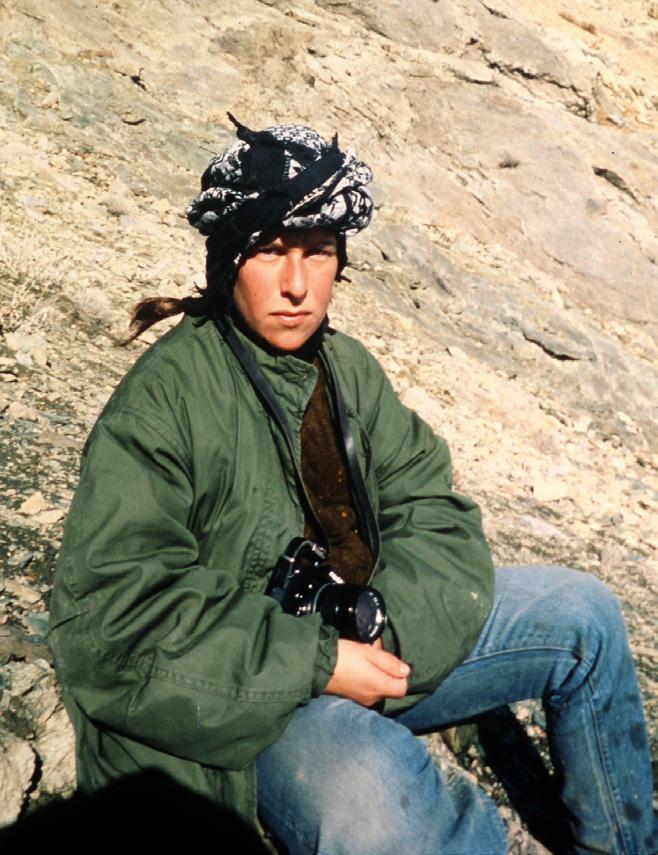
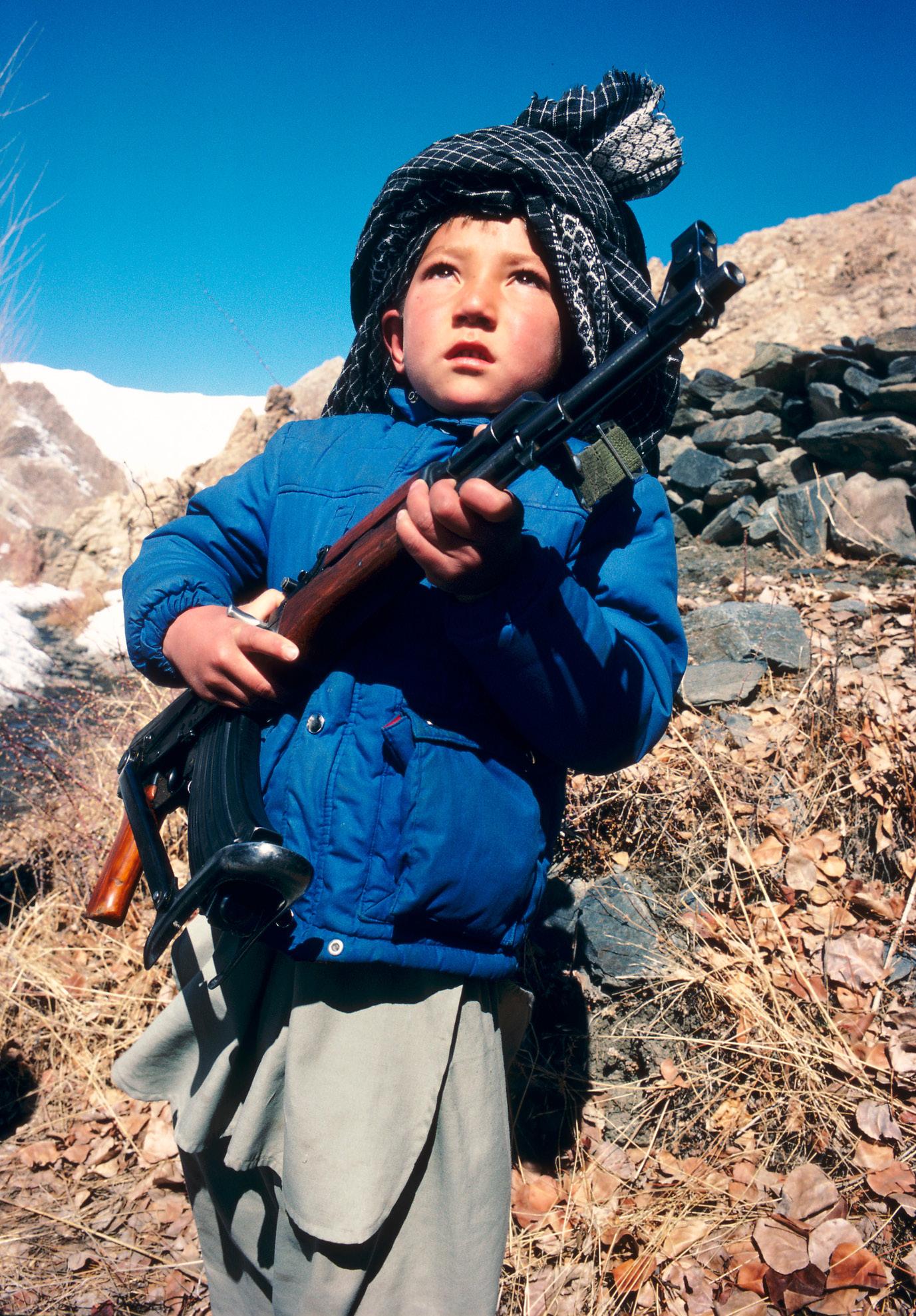
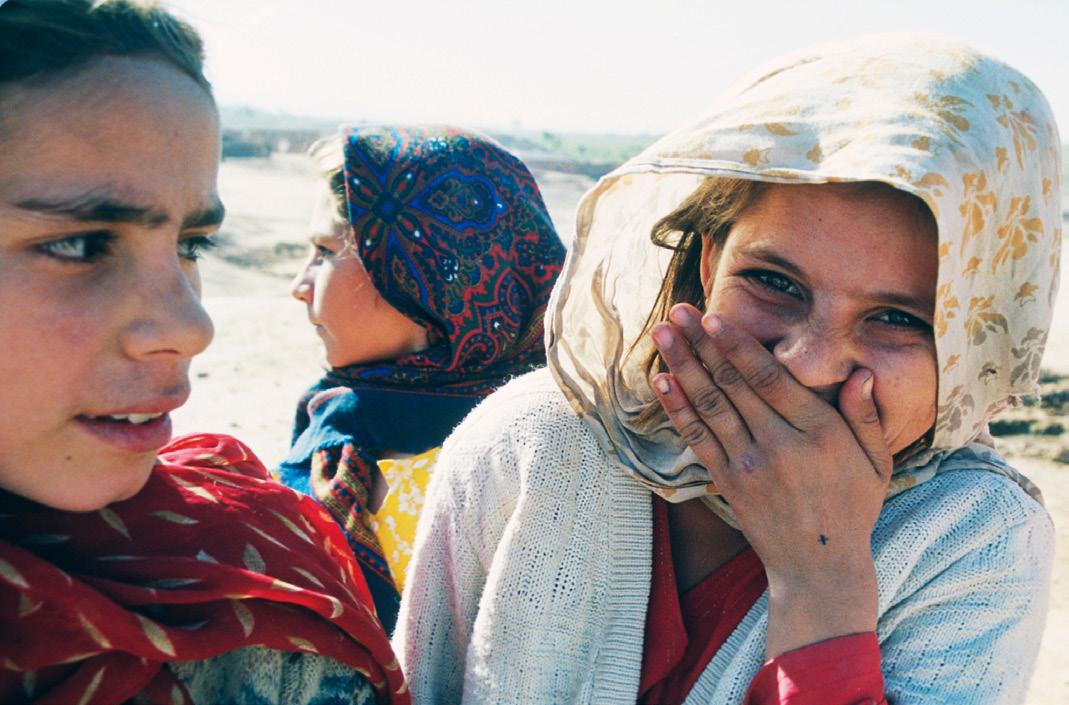
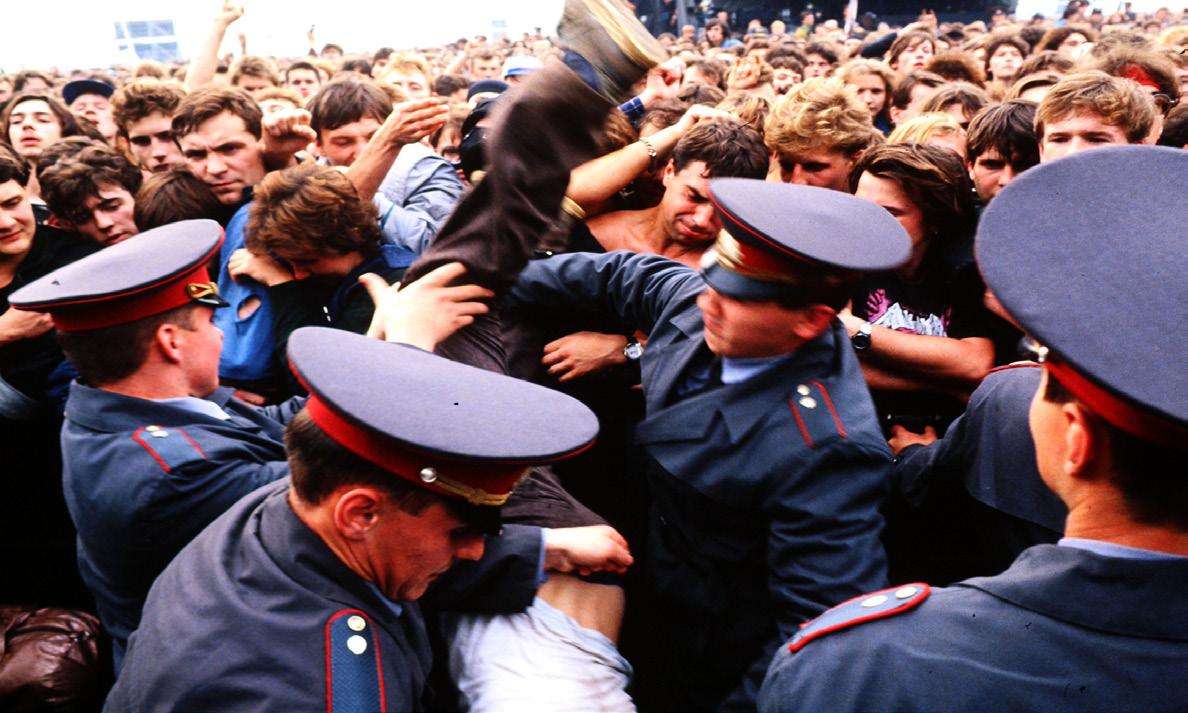
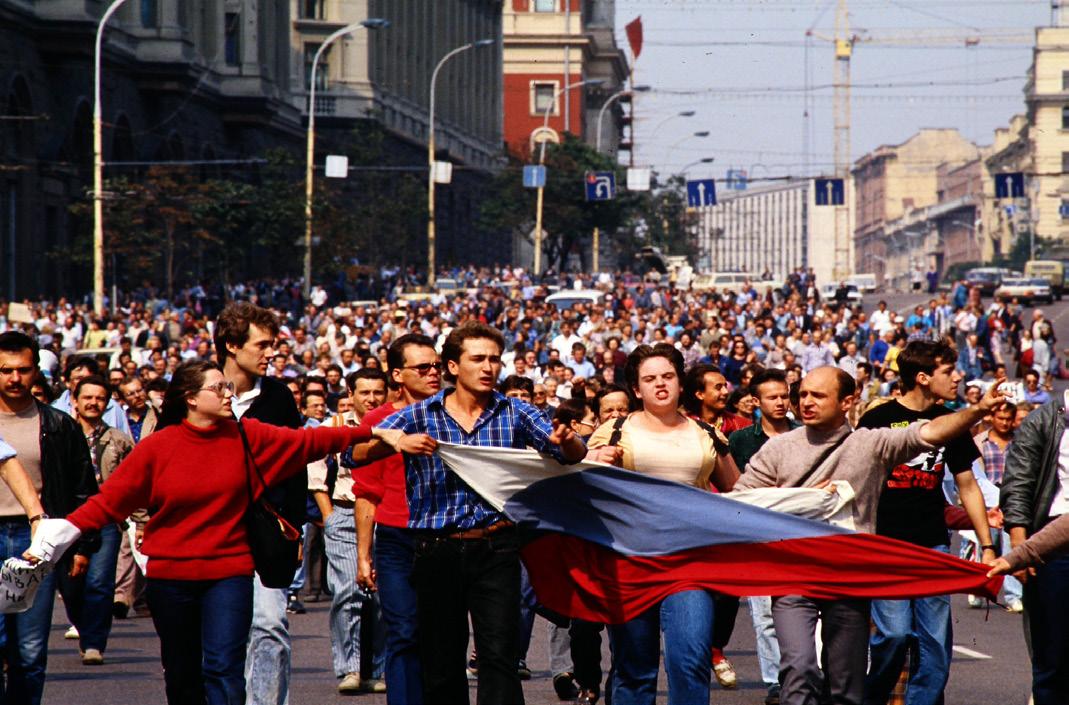
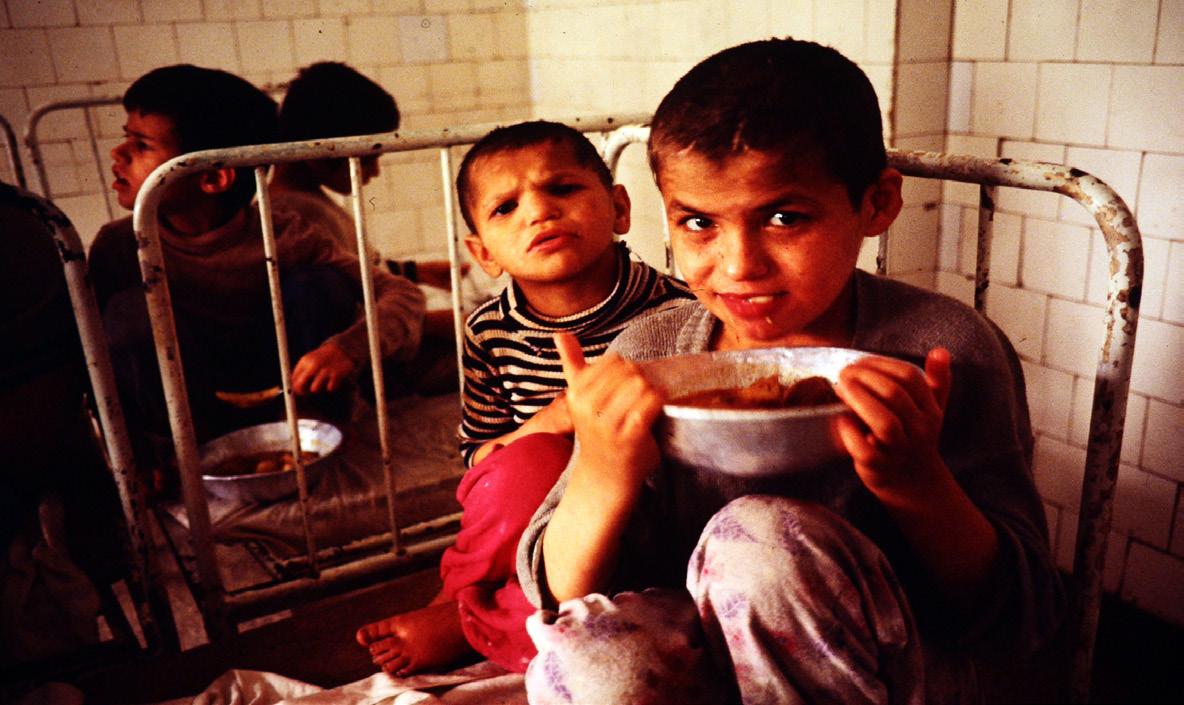
I lived in Paris for four years to have easier access to the world’s hotspots at the time. I covered Afghanistan in 1989. I covered Israel during the First Intifada in 1988 and 1989. I covered the Romanian Revolution, and then I moved to Moscow and covered the Soviet Union during the coup; anyway, a lot of stories between 1988 and 1992. Then, I decided to move back to the States. I worked at ABC News for two years, at a magazine show called “Day One,” and then I got a job at Dateline NBC. So, for six years, I was working in a very highly corporate structure with 401Ks, health insurance, and all the benefits, which I needed if I wanted to give birth and have kids. In the beginning, I felt that I was making some sort of a difference, because I was doing stories on Chinese dissidents sneaking back into China. I was doing stories on Ibogaine, which was being used to treat drug addiction. 7
I was doing stories, particularly at ABC, that I felt had a greater purpose, and then suddenly that industry, too, had to adapt to the juggernaut of the internet and the attention economy, which forced it to become much more sensationalist.
When did you first realize that your own art could make a political statement?
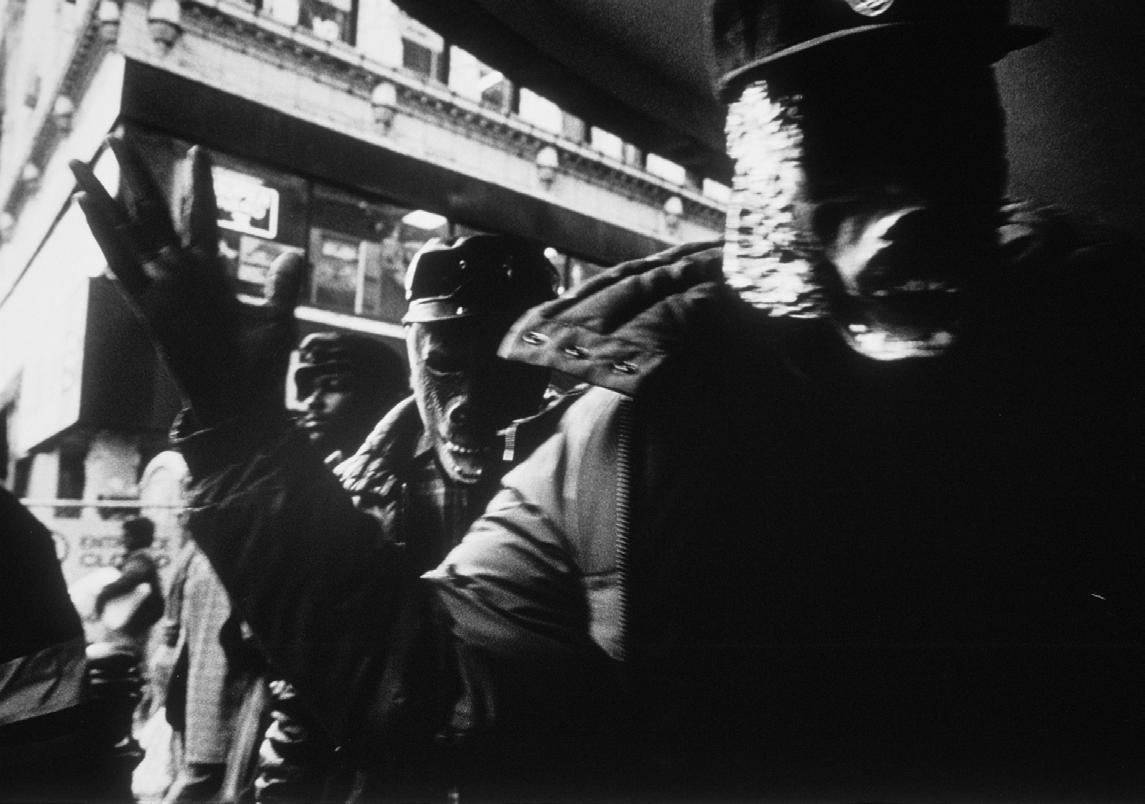
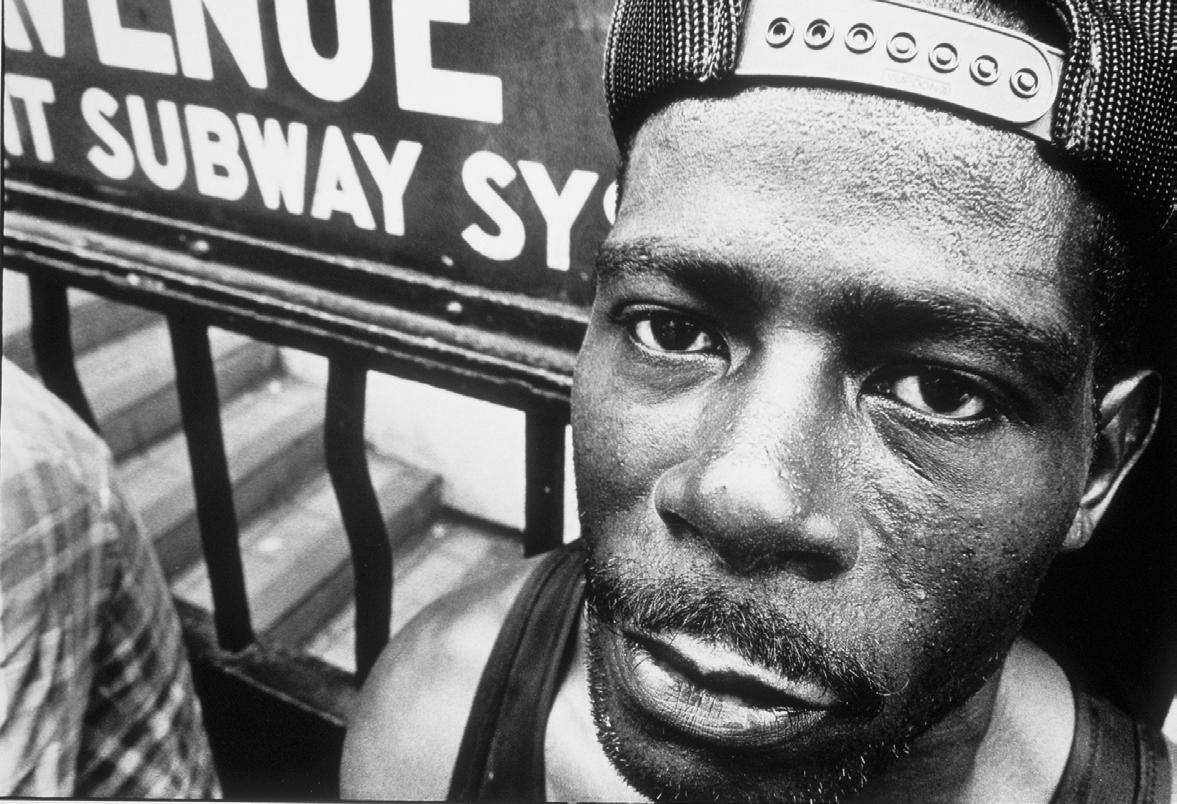
There was a moment in college. It was the crack era, and there was a lot more crime in the streets. I had been a victim of several violent crimes. A man kicked me unconscious in the middle of Harvard Square, I was robbed at gunpoint coming out of a Chinese restaurant, and then later in a New York City taxi. I was working on a Shakespeare paper in my dorm room, and an unhoused man broke in and threatened to rape me. I was date-raped on another occasion. So, for my senior thesis, I wanted men to understand what it feels like to be a woman in the world. To be preyed upon, constantly. So I deliberately chose to go out into areas that were specifically thought to be dangerous for women—red light districts, etc.—and if a man came up to me in those areas and said, “Hey baby, want to get it on?” instead of simply passing him by and sucking it up, I would stop, turn around, and say, “Hey, no, but I have this camera, and I would love to take your photograph.”
This did two things. One, it changed the dynamic of that predator-prey relationship—suddenly, I was the predator, and they were the prey. Also, I shot them with a 28 millimeter lens super close to their faces, so that their faces were kind of distorted and bizarre-looking. Two, the impression this gave when I had them up on the wall, a man walking into that exhibit would think, “Oh, this is what it feels like to be preyed on lasciviously. Here’s what it’s like to be a woman in the world.”
This was the first time that I realized you can use art to make political statements that don’t hit you over the head, but are more subtle. I called it Shooting Back.
And it was with Shooting Back that I was able to get a foot in the door in Paris when I moved there because that work made me a finalist in the W. Eugene Smith Award, and then it was published in PHOTO and Photo Magazine, which was a big deal at the time. That thesis kick-started my career.
What inspired you to write your first book?
I had two kids while working at Dateline: my son in 1995 and my daughter in 1997. I went back to work each time after short maternity leaves that were unpaid, which I still think was insane. My son just turned 30, and I cannot believe that after screaming about this, both publicly and privately, for 30 years, we still don’t have paid maternity leave in the U.S. I went into debt to breastfeed my children!
I was the primary wage earner in my marriage. I was not even back to work yet after my second child, but then Princess Diana died, and I was taken off leave and sent back to Paris to cover the fiasco because I knew all those photographers in Paris who’d been arrested, and our executive producer knew that. In the rush to get to the airport from a family vacation in Delaware, I didn’t have time to retrieve my breast pump back home. I was still breastfeeding full-time, hadn’t weaned my daughter off it at all, and the pain of that buildup in Paris was excruciating. That’s when I had this moment of “I don’t know if I can do this job anymore. It’s not what I got into journalism to do.” I didn’t feel that I was creating art with a capital A. I was chasing stories the same way the paparazzi were chasing Diana: as a means to garner money, advertising dollars. It wasn’t working for my moral compass. It also wasn’t working with motherhood.
So I took a risk. I took a leave of absence from NBC and decided to write a few chapters of Shutterbabe to see if I could sell it and start a new career. I sold those chapters and a proposal for the rest of the book for $175,000, which was twice my Dateline salary at the time.
I suddenly bought myself two years of working on that book and being my own boss. I really enjoyed writing my first book, but again, I had this nagging voice in the back of my head from my college days of getting that C+ on a paper and of not getting into a creative writing class. Am I a real writer? Can I do this? Suddenly, I was just learning on the job; I had a contract to fulfill and a book that I was passionate about writing.
As someone who has navigated journalism, television, publishing, and memoir, how do you handle the tension between personal truth and public reception, especially as a woman telling politically or emotionally charged stories?
When Shutterbabe came out, it was a far more sexist era, and the reception to that book was insanely misogynistic. One journalist from a national magazine asked me, “Are you worried that your frankness is going to get you labeled a slut?” That would not fly in 2025, but back then, it not only flew, she put her question and my answer into her article! I know that kind of sexism also harmed book sales. That’s the real crime of sexism in literary criticism, right? It takes away my ability to earn a living doing what I feel that I’m best at doing, and it denigrates my voice. I am all for criticism of a book that you don’t like—that happens naturally when you write a book. But when the attacks become ad hominem and are just sickeningly laced with sexism, that’s when I want to scream. I have learned to ignore it and rise above the noise, but that doesn’t mean it doesn’t still hurt. I’m turning 60 next year. If I didn’t have a tough shell, there’s no way I would have made it this long and still be doing what I do. But it still irks me and makes me feel like we have so much work to do.
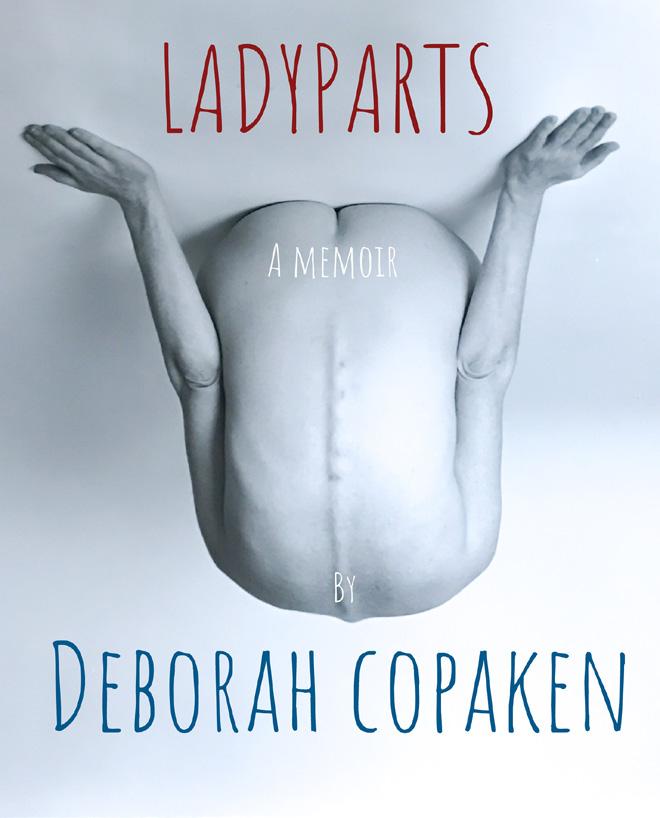
Even the review of Ladyparts was fascinating in terms of, again, the subtle sexism. Ladyparts begins with my near-death from vaginal cuff dehiscence. People with vaginal cuff dehiscence don’t often live to tell the tale. In my work, I’m trying to highlight issues that are dismissed but are important.
BY POLA JANCEWICZ
Nobody talks about vaginal cuff dehiscence— there’s not even a national registry for it, like most diseases. People who die of it often die at home. Or they’re never diagnosed. So I’m trying to highlight this very rare, bizarre, post-operative trauma that happened to me—and could happen to somebody else—and so I start the book on this very dramatic note. The New York Times reviewer (a woman, I should add, because we women can be some of the worst tools of the patriarchy) wrote, “If you are squeamish, you might consider skipping the first section of Deborah Copaken’s Ladyparts, which describes the bleeding out of her vagina due to cuff dehiscence.” (Also it’s called vaginal cuff dehiscence, not cuff dehiscence, they even got the name of the disease wrong) “Don’t bother googling that. But let’s just say it was a near-death experience that involved kidney-sized blood clots splattering on the floor, which she collected in a Tupperware container…Is it sexist of me to be grossed out by such an image?” Yes, New York Times reviewer! It is not only sexist of you to be grossed out by such an image, it is truly sexist, misogynistic, and wrong to suggest to the 70 million monthly readers of the New York Times, via the trickery of rhetorical query, that they should be grossed out by my near-death.
What I’ve noticed with all these female journalists who take other women to task is that they often reframe their criticism inside a rhetorical query. They “innocently” ask the question that others might make, like the question I was asked [about being a slut]. This reframes their opinion that I am a slut, or that my near death was gross, as a question they are not really asking—though of course that’s exactly what they are doing. I would be lying to you if I said I was fine with that review. I was crying my eyes out. So yes, I can rise above it. I can talk to you about it now, and understand it in the context of centuries of misogyny about women’s sexuality and our vaginal blood, but I can even feel myself getting enraged all over again as I’m talking to you about it. And each time this happens, it makes you think, “I can never do that again. I can never spend another two to three years alone in a room, writing another book, only to be slapped in the face by my fellow woman.” But if I do that, if I give up, then I’m actually allowing sexism to win. And I won’t do that. Ever.
How do you see gender politics playing out in the media industry today? Has there been any meaningful change since you first entered the fields of journalism and entertainment?
I have seen meaningful changes. I think today, if somebody tried to call me a “slut” in a national magazine, as one journalist did, an editor would be like, “What are you doing? You can’t do that.” Still, there is ample evidence and studies that show that women in their 50s are pushed out of the corporate world way more and earlier than men, and they are still paid a lot less than men. And look: not everybody wants to be a “girl boss,” but everyone wants to be paid fairly or at least as much as a man for their work. Not every woman wants to be a leader. Some women just want to do their job, be proficient at it, and go home.
We should be accepting of that path, and we should give women the tools they need to work, no matter their career goals: paid maternity leave, health care, affordable child care, good public schools, and affordable college tuition. Also, the assumption in corporate America has always been and still is that a man has a woman at home to take care of things like grocery shopping, doctor’s appointments, childcare, etc. And don’t get me started on today’s government administration, which is trying to kick us back to the 1950s.
In Ladyparts, you use your body as a narrative “skeleton” to explore everything from illness and motherhood to systemic failure. Looking back, what inspired you to write this book? What did it mean to you, and what do you feel that structure allowed you to say or reveal that a more traditional memoir format might not have?
I turned to writing from TV journalism because I didn’t like the direction that my industry was going, and I wanted to keep pushing forward with the female gaze agenda that I have. That’s been my whole forward propulsion since that first college thesis; I want the world to see what it’s like to be a woman in the world. To see the world through women’s eyes. I was happily writing books for a while, and I was getting good advances. Then, again, suddenly, the publishing industry became much more about celebrity culture. Celebrity books were getting all the publicity budgets. It became much harder to make a splash in the book world or even sell a book.
My second novel was a bestseller and landed me on The New York Times list. But again, being a New York Times bestseller doesn’t necessarily translate into sustainable income. I got divorced in 2013, and then I realized how much capitalist America still favors the man in divorce versus the woman financially. I was suddenly poor because I was on my own. I ended up having to take a number of different jobs. Sometimes several at once. I even tried to get a job at The Container Store. I got rejected, even though I told them I would do anything for health insurance and an income. I was “overqualified”: a term I heard often. It was really bad for a while. I was also getting sick. I had my uterus out after a diagnosis of adenomyosis, then I nearly died from vaginal cuff dehiscence following a cervix removal, due to pre-cancer, five years later.
It all kind of percolated inside, and that’s when I realized I needed to write Ladyparts. I was looking at my body in the shower, and I saw all the different scars, and I thought, “Oh, this is from that surgery, and this is from that other surgery, and each of these marks a body part—an organ—that’s now gone, right?”
We don’t know where these political messages are going to come from. We don’t always know, even as the artist, what form these messages should take or are going to take, but somehow, if we’re doing our job well, we land on the correct medium for the message.
BY POLA JANCEWICZ
And I realized that each body part could easily serve as a narrative metaphor for each period of time during which they were taken out: as I was going through divorce, and having these really hard times with corporate America, and being sexually harassed by a man who then ended up getting nominated to the first Trump White House. He ended up not getting that job because of the testimony that I gave to the FBI. In fact, he ended up getting arrested for cyberstalking another woman. But then he was pardoned by Trump on his last day in office.
So all this stuff became the book Ladyparts. I’ve now started a completely different career: I’m working on the Substack that grew out of Ladyparts and is also called Ladyparts, which is self-sustaining with subscriptions and just won a Webby! When I was freelancing for The Atlantic or for the New York Times, pre-2021, oftentimes I would pitch a story about women’s issues—recurring UTIs, menopause, those kinds of things—and they were all kind of, “ooh, gross, yuck.” Now, I am able to write what I want, when I want, and earn a living while doing it.
How does the medium you choose to tell your story through impact the overall message and storytelling? For example, do you see television reaching people in a different way than a memoir or a photo essay? Along the same lines, which medium is most effective for political and even emotional expression?
I don’t think that there’s a specific medium that is more effective than another. Each has its advantages and disadvantages. Let’s not talk about me for a second. I’m going to talk about other artists who have moved me to change, politically or personally. For example, when I watched the movie Take This Waltz by Sarah Polley, I was considering getting divorced because my marriage was just not working out. That film presented a woman who’s married to somebody she could probably stay married to if she forced herself, but she would ultimately be unhappy because they’re just not connecting sexually or on a spiritual level. That movie was really one of the first impetuses for me to take a long look at my marriage and realize I could leave it. I hold it ultimately responsible for my current joy and happiness in a relationship with a man who is equal, full of kindness and love, and works beautifully. Every single day.
We don’t know where these political messages are going to come from. We don’t always know, even as the artist, what form these messages should take or are going to take, but somehow, if we’re doing our job well, we land on the correct medium for the message.
If you could give one piece of advice to a young writer or artist, or even your younger self, what would it be?
Know where your moral line in the sand is, what you are and are not willing to do in the name of art, in the name of getting a message out there. The times that I have run into problems in my life have always been when I stood outside that line, when I felt like I was not being true to myself, who I am, and what I believe in. We all have that five-year-old girl in us, who’s confident, knows what she wants, is interested in the world, is excited to be in kindergarten, and wants to learn everything. We all have that little girl in us. Remember who you were, because that’s who you still are. What interests you as a child will still interest you as you enter your 60s. It’s all a single journey. You might have different ways of expressing those interests, needs, and questions, but you are who you always have been.
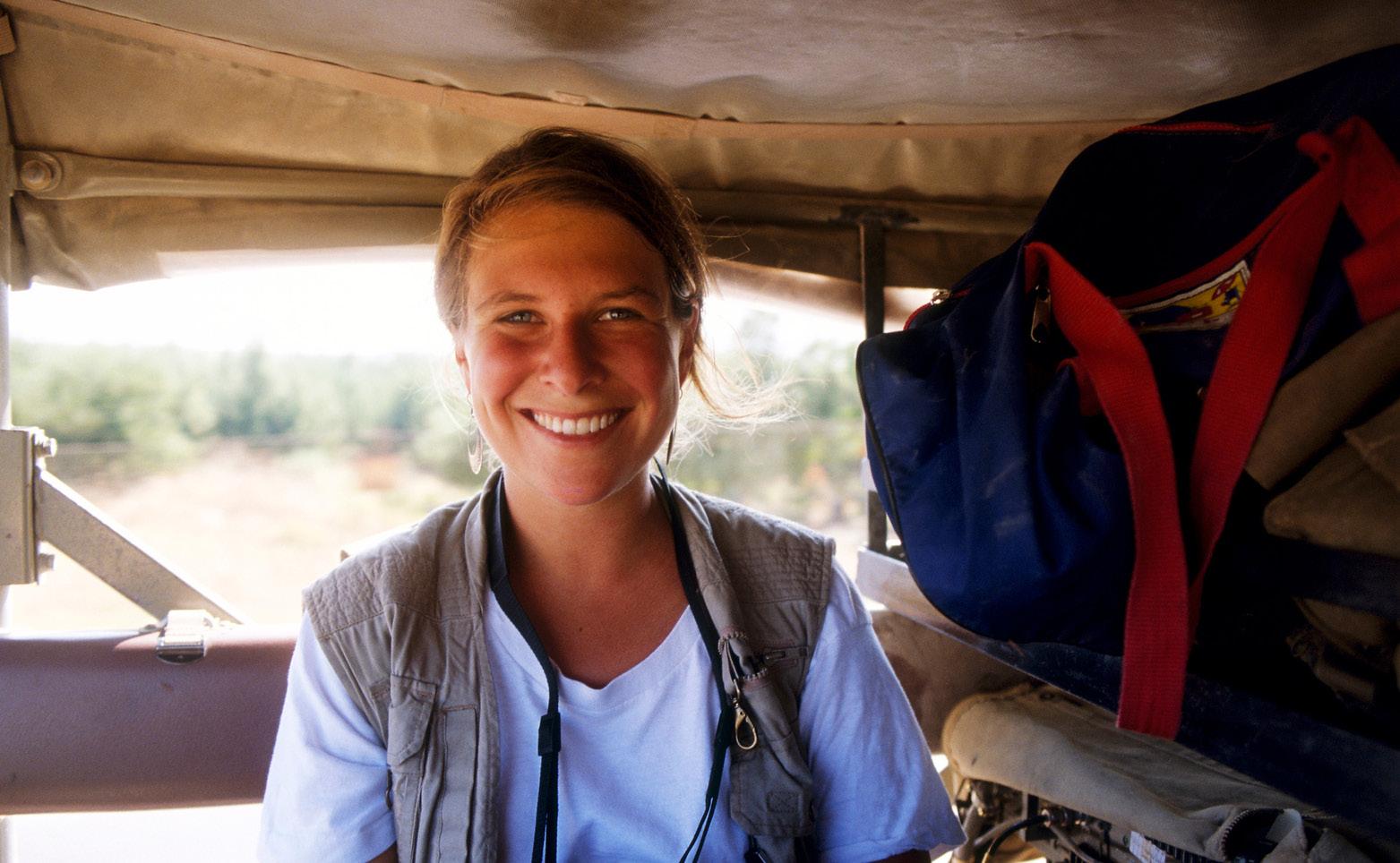
We all have that five-year-old girl in us, who’s confident, knows what she wants, is interested in the world, is excited to be in kindergarten, and wants to learn everything. We all have that little girl in us. Remember who you were, because that’s who you still are. What interests you as a child will still interest you as you enter your 60s. It’s all a single journey. You might have different ways of expressing those interests, needs, and questions, but you are who you always have been.
BY POLA JANCEWICZ
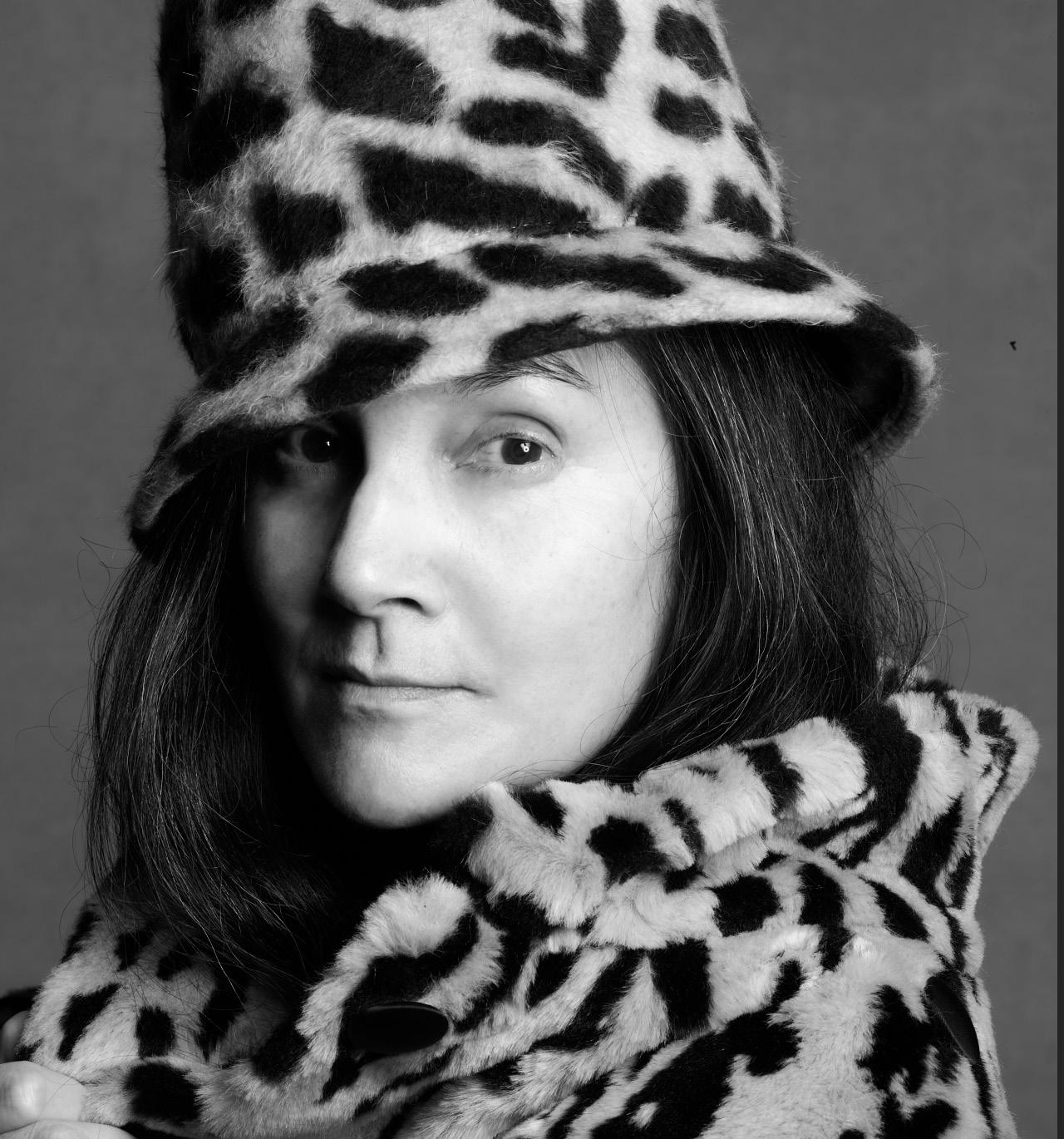
Jody Quon, born in Montreal, Canada, in 1966, studied art and fashion at the Rhode Island School of Design before transitioning to the worlds of photography and journalism. She began at The New York Times Magazine as a photo researcher and became Deputy Photo Editor, working under their renowned photography director, Kathy Ryan. In 2004, she joined New York Magazine as Photo Director. During her time there, she won numerous awards, including the National Magazine Award for photography, a Robert F. Kennedy Journalism Award, and a George Polk Award, and in 2025 she became the magazine’s Creative Director.
What sparked your interest in the arts and how did that lead to your transition from fashion to photo direction?
Since I was in high school, I’ve loved art. On Saturdays, I used to take the metro from the suburban town where I lived to downtown Montreal, and I would typically go to the Montreal Museum of Fine Arts and a slew of interesting galleries on Crescent Street.
I went to art school and I studied fashion design, but my interests were always in the intersection of art and fashion. When I graduated from college, I realized I was never going to be as good a designer as the designers that I really respected. I worked for Rei Kawakubo, [a Japanese fashion designer], doing fashion research for five years. After those five years, I felt that I had served my time.
I thought it could be interesting to work at The Costume Institute at the Metropolitan Museum of Art (The MET), so I reached out to the co-curators there, with whom I had built a relationship with, but they told me that to work at the MET, I needed a master’s degree. They were at a dinner with Carrie Donovan, the fashion editor for The New York Times Magazine at the time, and Carrie needed a young photo researcher to help her with digging up a lot of the old photographs that were made for the fashion supplement of The New York Times Magazine to celebrate its 50th anniversary, so they referred me to her.
I worked for six months on this project, and met with Kathy Ryan every Friday for her to edit the research. We developed this rapport, so when I finished my six months of the research project, she asked me if I would be interested in joining her department as a junior photo editor.
On the one hand, we’re doing a cover story on Bill Clinton, who was the president at the time. On the other hand, we’re doing a story on Bruce Springsteen or Stevie Wonder or on risotto being the food of the moment. It was all over the place, but so fantastic. We always asked, “What are the stories we can tell that say something about who we are right now across all disciplines—politics, business, art, culture, movies, and television? What is happening and what does it say about who we are as a people?” That’s what I’m interested in. It took me many years to figure that out.
I joined New York Magazine in 2004 to become the photo director. I worked there from 2004 to 2010, and left in 2010 to become creative director of W Magazine. I realized W Magazine was not the right fit for me, and then I came back to New York Magazine in the spring of 2011. It was when I returned that I realized my heart was not actually in fashion, or even in fashion photography. My heart is in news and journalism in general— telling stories about who we are.
Which story are you most proud of working on throughout your career?
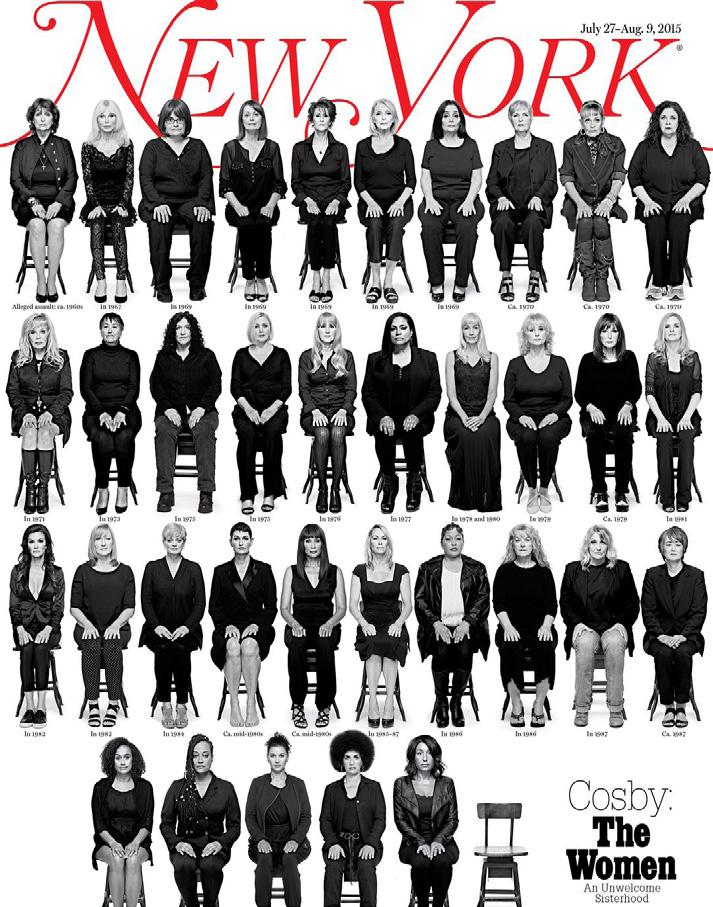
I’m proud of many stories. I’m in a privileged place where there are so many important stories to tell, and we can recognize them and dive into them. The Cosby story was really important. It was a hunch that I had when women were starting to come forward about their alleged sexual assaults by Bill Cosby, while traditional and more serious news outlets were not paying attention to those stories. The only people who were listening were publications like E! Entertainment, Entertainment Tonight, or lower-tier celebrity publications.
There were maybe eight women who I was seeing telling their stories on these news outlets. I brought the idea to my editor-in-chief in January of 2015. I said, “I feel like there’s a story to tell with these women who are accusing Bill Cosby of sexual assault.” And my editor said to me, “There’s no story if you don’t get Bill Cosby.” I disagreed. I told him that these women were all telling a similar story and that we needed to listen to that, and there were so many of them. I gathered the information properly and made a presentation. I gathered as many names as I could. I figured out their ages, when they were allegedly assaulted, and where they lived in the United States.
I came up with over 20 names, just for the initial meeting. Their ages ranged from 27 to 80. I said, “There’s a pattern here. We can’t ignore this.” He asked me to get a read from other people on the staff. I go to the managing editor. She’s like, “Isn’t it a little bit exploitative if we do this?” I said, “I don’t think so.” As a mother, if one of those women were my daughter, I would want that story to come forward. We need to make this story public so that it doesn’t happen to the next woman.
Finally, my boss said, “Let’s do it, but you can’t spend a lot of money on this. Maybe at most, we’ll give it four pages in the magazine. Make sure you shoot it so you can run it in a compact way.
The first photographer I went to was a male photographer. He told me he was not sure he saw the potential of the pictures. Then, a light bulb went off in my head. A woman needs to shoot this story, and it needs to be a woman who is of a certain age so that these women [allegedly assaulted by Cosby] feel comfortable around her. That’s when I assigned it to Amanda Demme, and we shot it in three different cities.
We wanted the photos to be as elastic as possible, so we decided that we would photograph the women in the studio and they would all wear white, so that we could focus on them as opposed to their fashion choices. We shot them all in pairs, but there was an odd number of people in different cities, so sometimes only one is sitting on the chair, and there’s an empty chair next to them. The empty chair symbolized all the other women who hadn’t come forward, because there were many more than just the ones that we photographed.
We ended up putting it on the cover because, all of a sudden, Cosby was in the news again, before one of the depositions was happening. It became a huge thing even before the MeToo movement. This predated the MeToo movement. The cover went viral worldwide. It became one of our biggest stories ever.
That story is important because it was something where I had a hunch, and my hunch paid off. Once my editor decided that we should go all in, we had the reporter interview all the women. We did videos of some of the women telling their stories. It changed the conversation. It was the first time that we were able to take down such a famous person, someone who was like America’s father.
Frankly, the Harvey Weinstein story that the New Yorker did and that the New York Times broke couldn’t really have been achieved if the Cosby story hadn’t been done. There’s a kind of trickledown effect that happens.
As a photo director, what do you think of the relationship between the photographs and the written text? Is one medium more effective for political expression than the other?
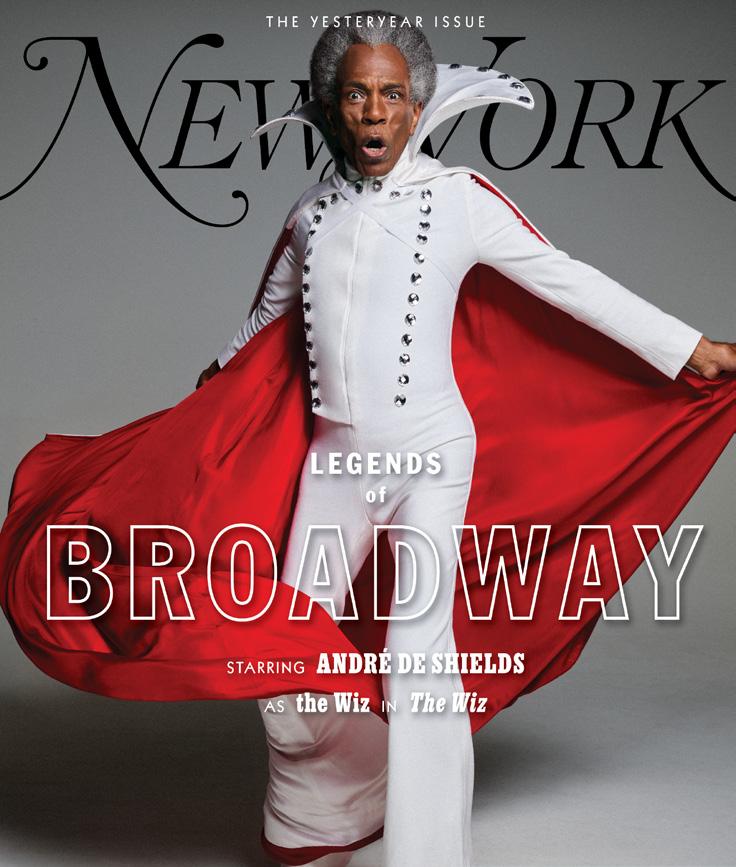
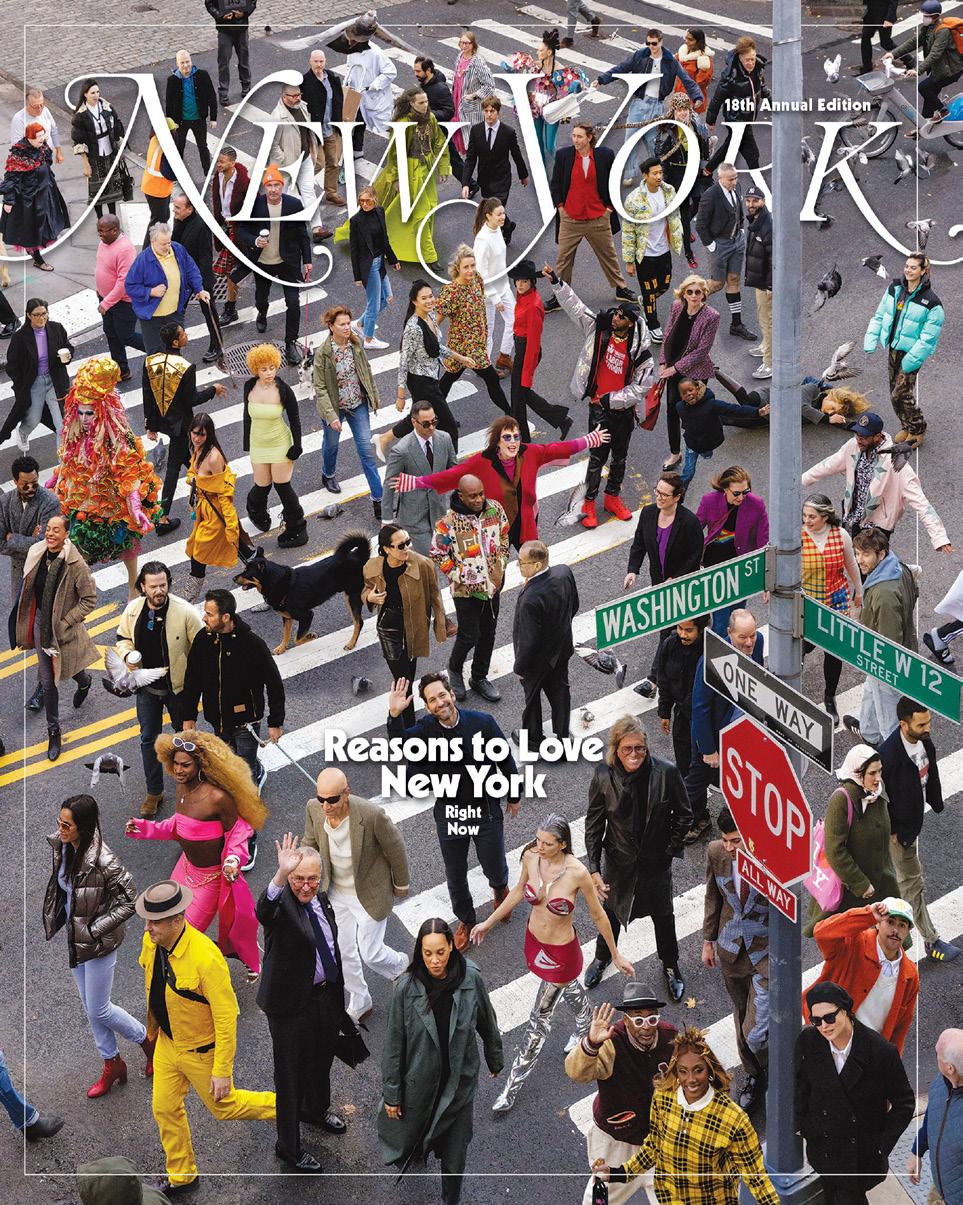
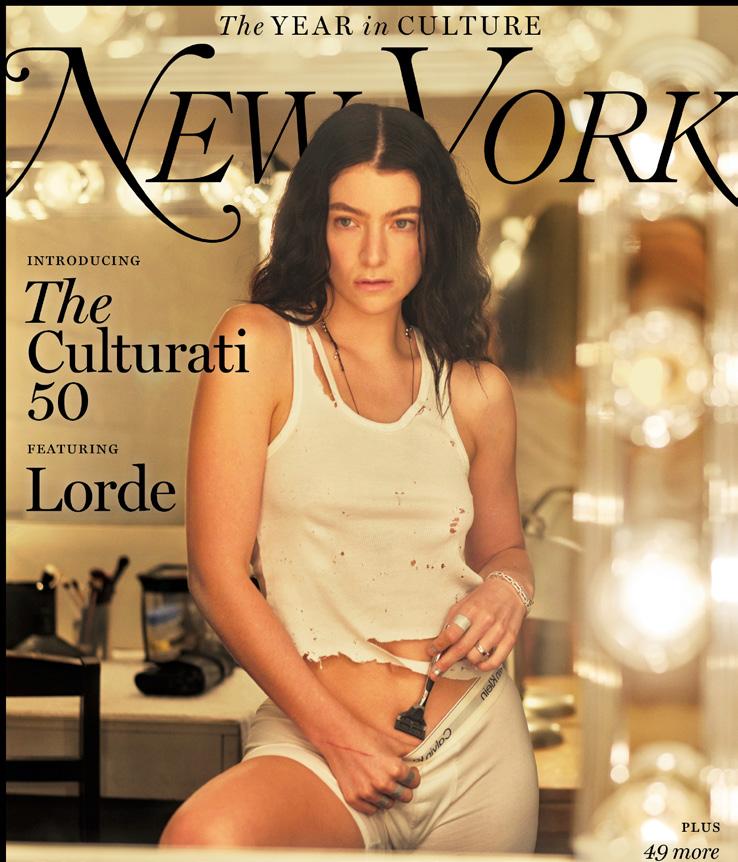
We make a magazine, and the magazine has words and it has pictures. The pictures make the words better, and the words make the pictures better, and they work with each other—that’s what makes an extraordinary magazine. It’s all about context. You need the two to get the reader to pay attention. The visuals team has a very close working relationship with the editors and the writers, as everything has to click together.
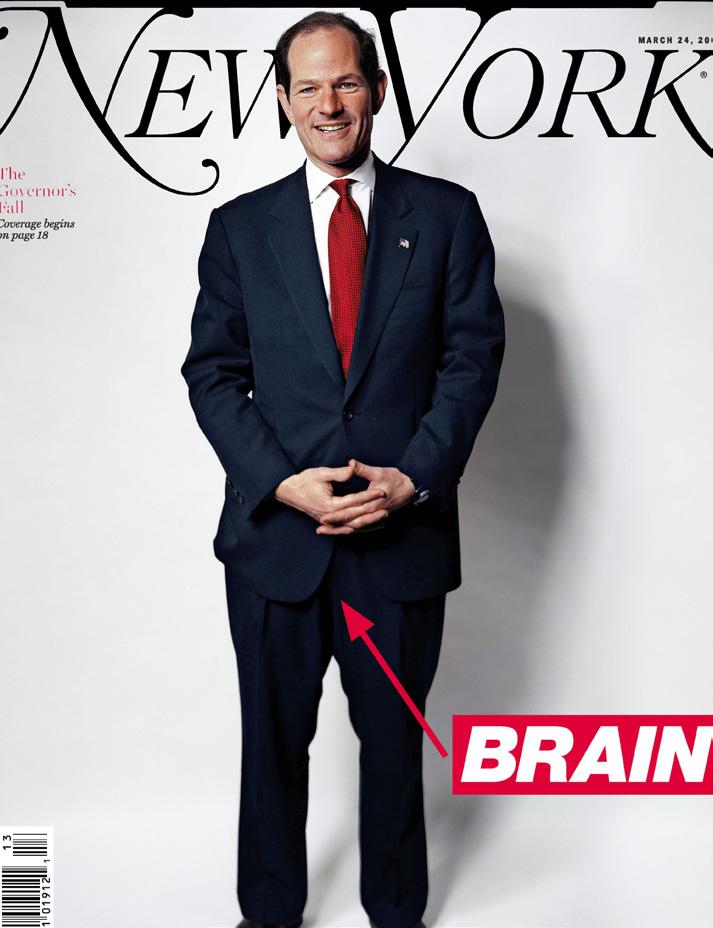
It’s all about the language that you put next to an image. For example, you have an artist like Barbara Kruger, who did one of our most iconic covers, the Eliot Spitzer cover. Eliot Spitzer was the governor of New York from 2007 to 2008.
We published this cover of him after it came out that he was involved in a high-end prostitution scandal and was forced to resign. I called Barbara Kruger and asked, “What is your reaction to this?” I sent her a picture of Spitzer, and then she sent me back [that picture with] the word “brain” pointing towards his penis. The picture is nothing without the language. That’s an extreme case, but they work together, hand-in-hand.
What is the responsibility of people working in magazines and other storytellers to speak on major but sometimes controversial political issues and tell those stories properly?
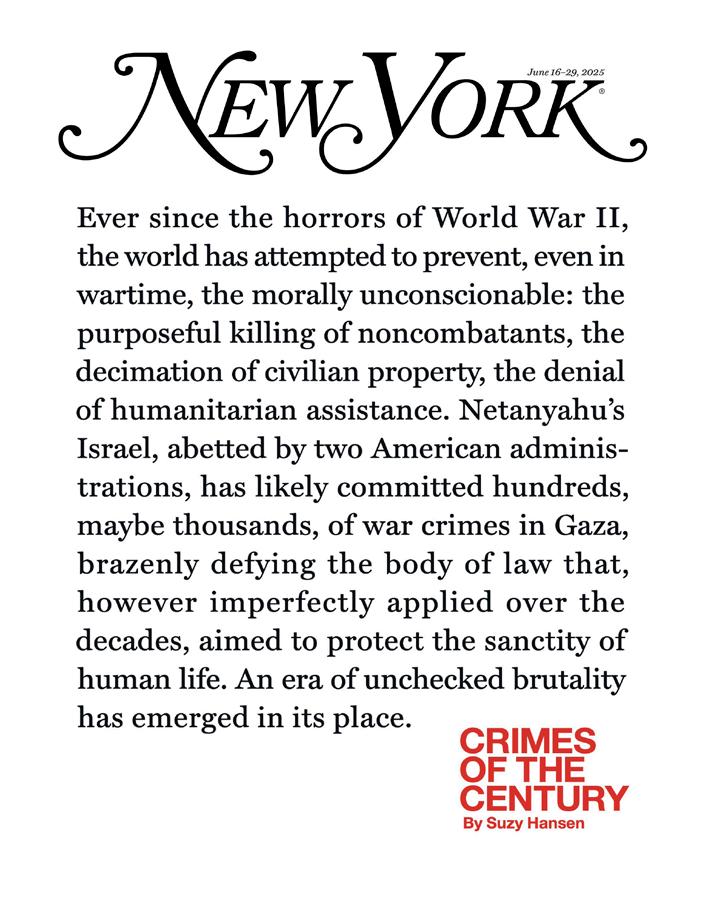
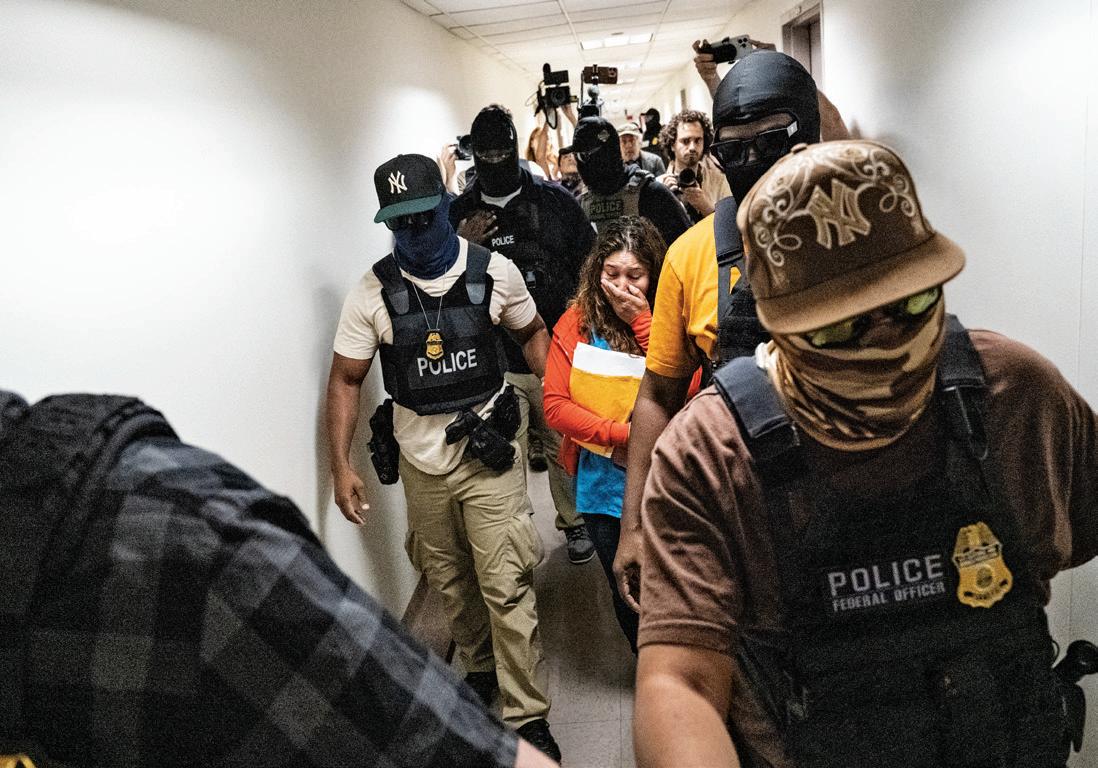
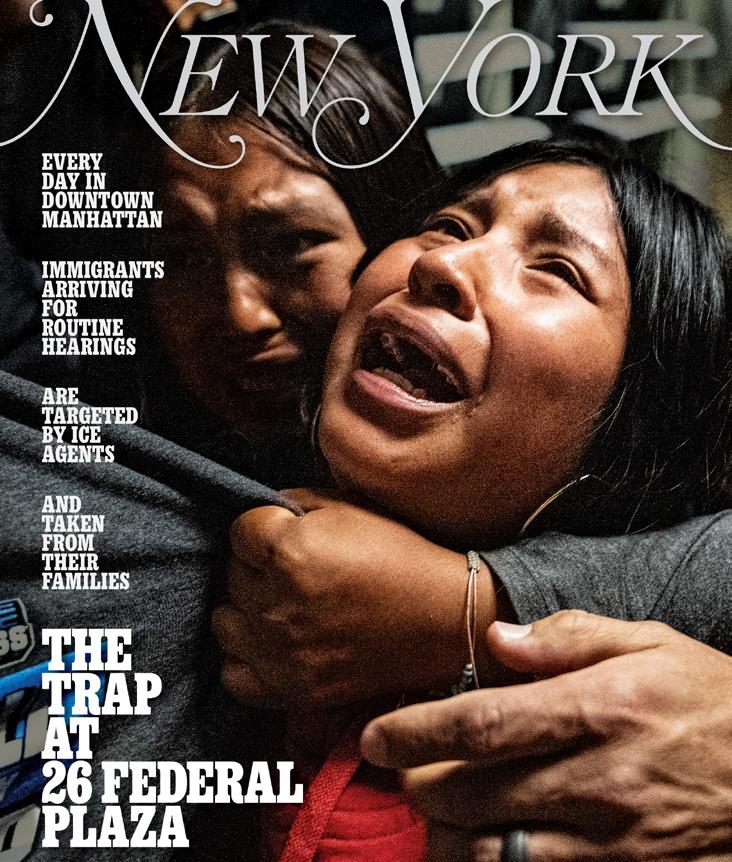
Huge—and we don’t take it lightly. We always try to be as thoughtful and considerate as possible. We talk about being neutral all the time. We did “Crimes of the Century,” a cover story in June on the Israeli government’s attacks on Gaza and how they would be tried in an international tribunal, and what constitutes a war crime. We were very careful about the kind of imagery we were using, so that anybody looking at these pictures could not accuse us of taking one side or another.
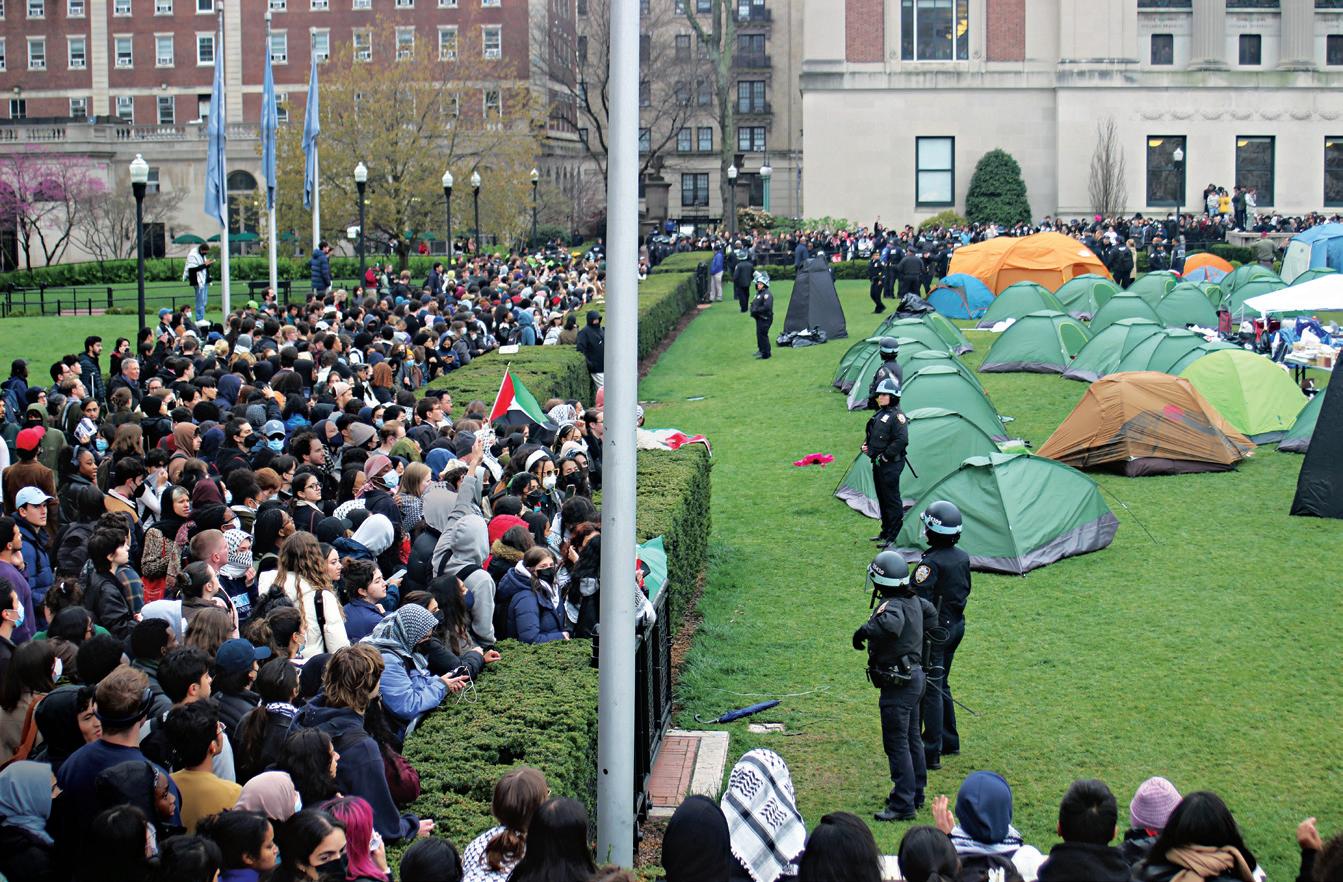
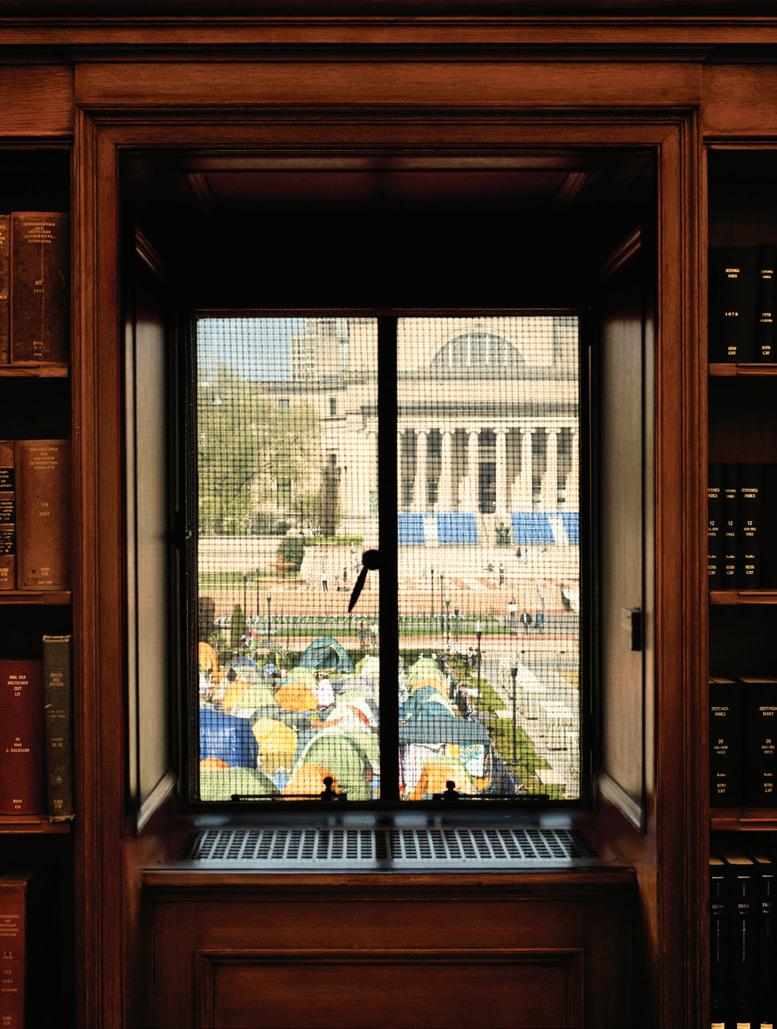
What was it like to collaborate with a student newspaper during the Palestine Protests at Columbia University?
We were working with the editors, writers, photographers, and photo editors of the Columbia Spectator to report on what was happening on campus at that very fraught time in the spring of 2024. We tried to be very neutral. It was interesting, because I was working with the acting photo editor of the Columbia Spectator, because the original photo editor had decided to recuse themselves from reporting on what was happening on campus altogether, because they didn’t feel comfortable. It was a really thrilling project for me to work on professionally. I basically worked out of the Columbia campus for a week straight because I decided immediately that I couldn’t do my job properly sitting at my desk in my office; I needed to see what was happening for myself. I was going to campus every day, working with the photo editors and the photographers directly on hand to figure out how to tell that story.
I felt that the outside press wasn’t getting the story right because they weren’t allowed onto campus. The world at large didn’t see what was going on on campus, and it was very different from what people were reporting. I think that we reported something very fair: just purely reporting what was happening on the ground. I’m sure that we probably alienated some readers, but I think people generally felt that we handled that fairly.
Do you ever want to make a more subjective argument but feel prevented from doing so by the responsibilities of a magazine?
No, as a journalist, I have to put my personal issues aside. Objectivity is the most important thing; our objective is to tell our stories fairly. I think it’s important to share different points of view, but you have to tell them fairly and within the right context. I’m editing stories all the time where I don’t necessarily agree with one’s point of view, but I ask myself, “Do I agree that the story is being told fairly? Do I believe that the accompanying photography or art treatment is correct and appropriate?” It’s all about separating your personal feelings and making sure that you’re doing justice to the story.
How do you choose which stories to tell?
We’re not going to tell the daily breaking news story, because that’s not our lane. Leave that to the New York Times. We’re constantly trying to figure out what the story is that we can tell about a national issue that has its own personality and contains that “nugget” in there that feels very us. We only have so many stories we can tell, and it’s up to the editor-inchief to figure out what stories in a given year will best express a point of view about what happened that year and about where our culture is right now.
We ask ourselves, “How do we tell the story about the crisis in the Middle East right now?” It’s being told in so many different ways. We have to figure out, “What is our special nugget in this crisis where we have something new to tell that’s going to add to the conversation?”
We don’t just want to report the same thing over and over again. In the case of the Israeli-Palestinian conflict, that’s why we did that cover story on war crimes. We got Suzy Hansen, this very scholarly writer, to do an incredible analysis and figure this whole thing out, to make people read and stop. That’s what we’re always trying to figure out—what is the singular idea within the whole bigger picture, where we have something new to tell.
Are magazines past their prime? How has the rise in technology and polarized media changed the industry?
I don’t think so. I think that there’s still room for what magazines do—they give you distance from a story. Jeffrey Epstein goes to jail, and the newspapers are going to report that instantly. Bloggers are going to write something online. But, there is something special about the packaging of stories in long-form journalism, where you have a writer who spends three months researching an article, interviewing people, formulating a story, and then figuring out the accompanying photography. A reader can really digest it. They can read a cover story, turn the page, read it at their leisure, look at the photographs, put it down, and pick it up again. I think that people will always enjoy that.
We have a very strong print readership; people still love getting our magazine in the mail. Are people consuming a ton of news online? Yes—but people still have a thirst for old school, thoughtful, in-depth journalism with beautiful sentences and packaging. The elegance and the rhythm of turning pages is very different than when you’re scrolling on your phone. If this is how we’re going to be reduced to consuming news, fine, but that’s not what we’re doing. We’re not delivering news. We’re delivering feature stories that people have crafted. People have considered the paper, the typography, the photograph, and the layouts.
The level of work that goes into all of our stories is so that we can deliver something special to the reader, and I think that readers will always have an appetite for that. There are not a lot of magazines out there because they’re very expensive to produce. So, the playing field is much smaller. I think that there will always be a market for the magazine.
Craig Costello (CC):
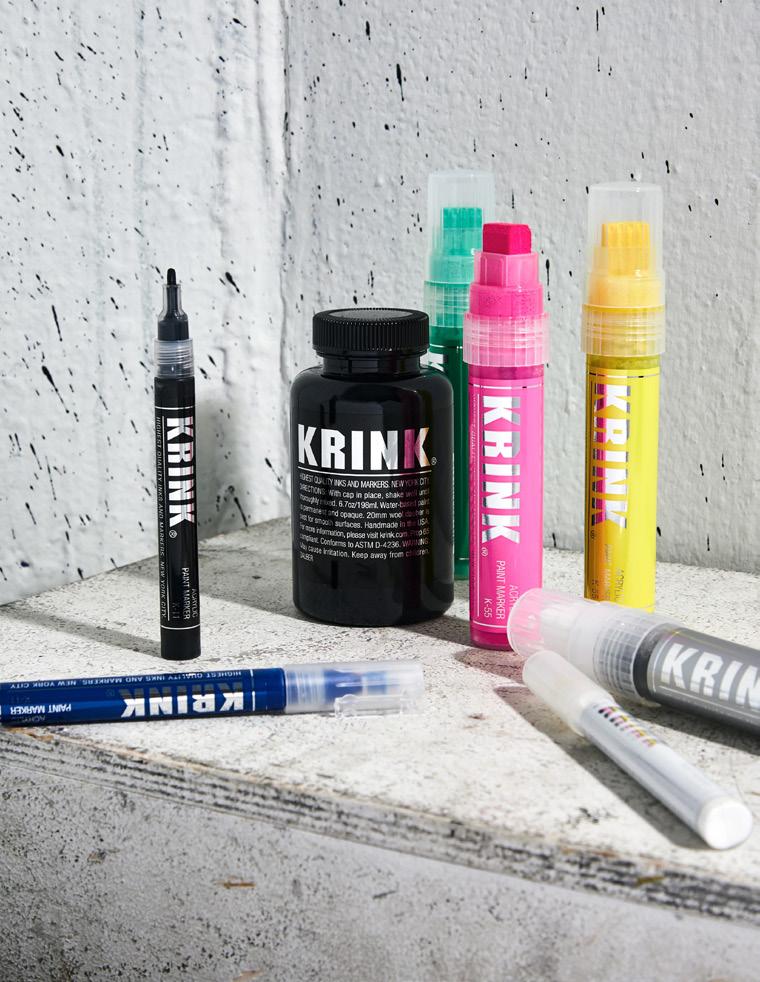
Craig Costello was born in 1971 and grew up in Queens, New York, immersed in the graffiti, skate, and punk scenes. After moving to San Francisco for art school, he became interested in photography and conceptual art, beginning a transition away from “classic graffiti ‘tags’” and towards more abstract drips of ink. Costello is well known for creating his own twists on classic graffiti instruments, modifying traditional paint markers such as the UNI PX70 and creating his own inks, often silver inks. In 1998, Costello moved back to New York and began to sell his ink and markers at the Lower East Side design shop Alife. His brand, Krink, is the first ink and marker company targeted toward graffiti writers. Since its inception nearly three decades ago, Krink has grown into a global brand that also sells apparel and accessories and has collaborated with brands like Nike, Vans, and Tiffany & Co. In addition to running Krink, Costello continues to create independent artwork which has been exhibited at museums including the Palais De Tokyo and the Museum of Contemporary Art.
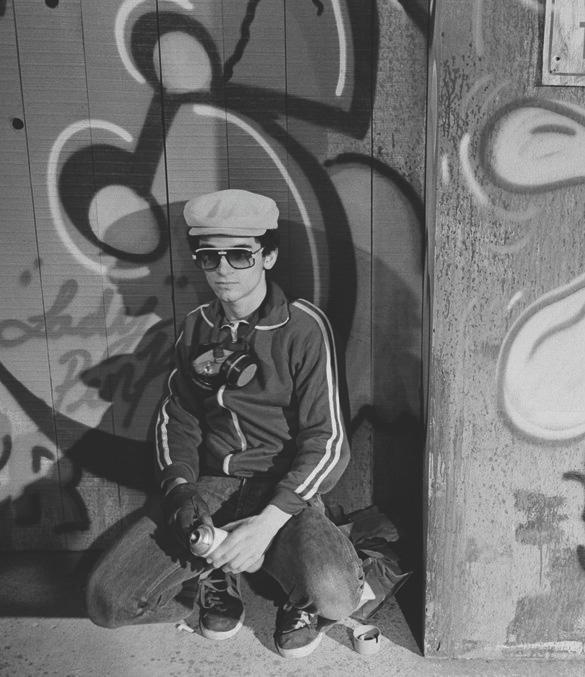
Note: The interviews with Craig Costello and Lee Quinoñes were conducted separately.
Lee Quinoñes (LQ):
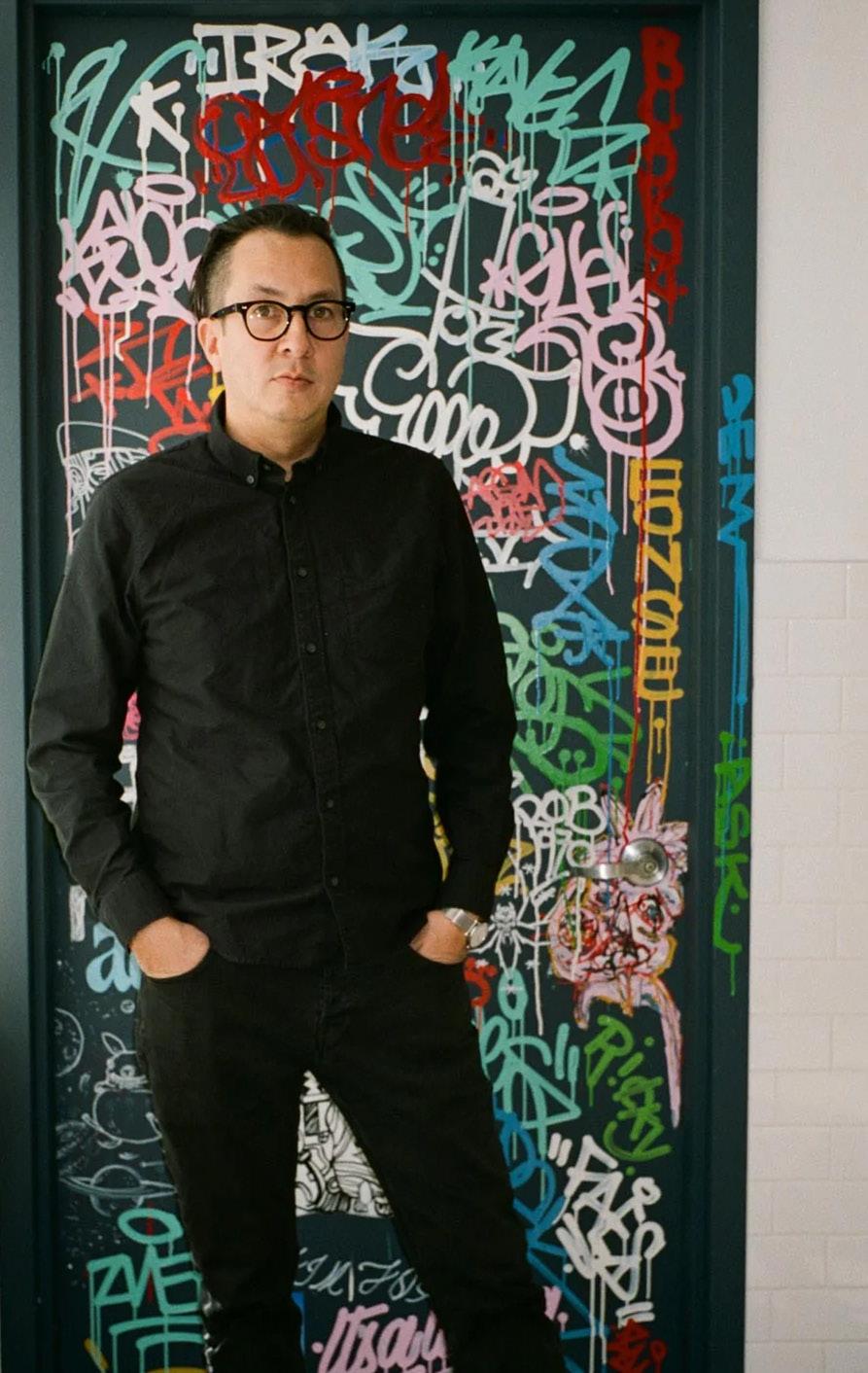
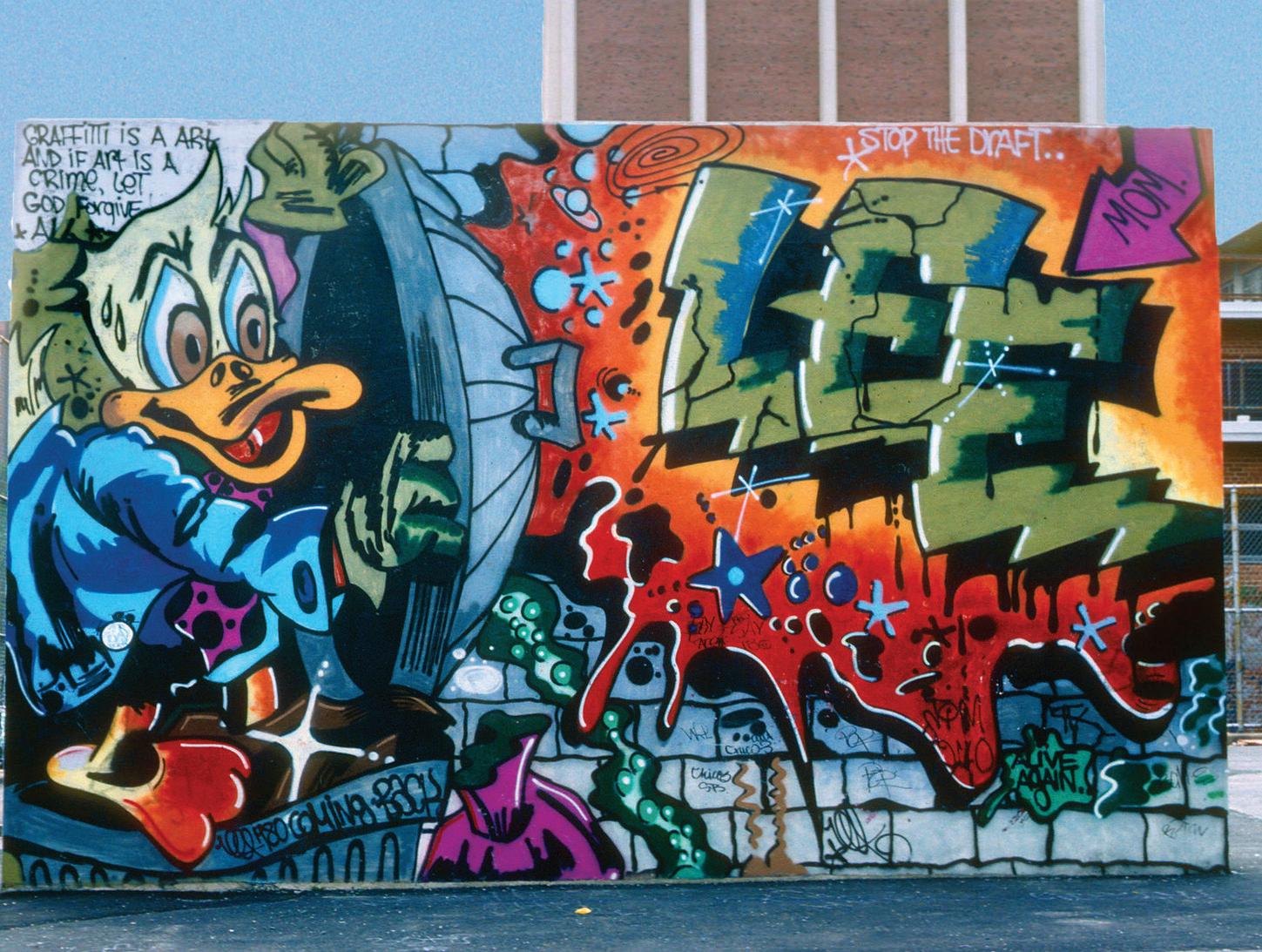
Lee Quinoñes was born in Puerto Rico in 1960 and raised in New York’s Lower East Side in the Alfred E. Smith Projects. He began subway graffiti in 1974 at just thirteen years old and quickly became well-known for painting whole subway cars. In 1978, Quinoñes painted the first handball court mural “Howard the Duck” at Corlears Junior High School, his old school, featuring the slogan “Graffiti is a art and if art is a crime, let God forgive all.” This mural had an immense impact on the movement to bring graffiti above ground. In 1980, Quinoñes held his first gallery show at White Columns, an alternative NYC gallery. This show is recognized by the art world for sparking a trend towards painting graffiti on canvas. Quinoñes has since transitioned to a studio based practice, and his work has been displayed in museums like the Whitney Museum of Art, the Museum of Modern Art, the Museum of National Monuments, and MoMA PS1.
What sparked your interest in graffiti?
CC: I’m from an era where I feel like every kid dabbled in graffiti. It was just part of growing up in New York. It was common and fun and goofy. Some people took it really seriously and some people didn’t, but it was just kind of a thing that was around. I think graffiti has a lot of different personalities, but the creative types are more exposed to and more interested in it. And, I was a creative type.
LQ: What sparked my interest in art is a better question, because graffiti to me is a state of mind, an attitude, an urgent moment. I was living in a very challenged environment 50 years ago, and art was the only thing that I felt belonged to me but also belonged to everyone outside of myself.
What are your other artistic interests and inspirations besides graffiti?
CC: For me, creativity is a lot of things. For example, I cook, and I think cooking can scratch that creative itch. I’m interested in music, architecture, and design. Design has become really relevant to me in the past twenty or so years since having the Krink brand. I’ve learned a lot from it, and it has been really interesting. I also think production is really interesting—with production there is both thinking about making something and bringing it into the real world. This is especially true when discussing collaborative projects. There are a lot of limitations: budget, minimum orders, a minimum number you can produce. And so production is really interesting as far as asking yourself just how you can make something happen.
LQ: I love performance art, whether it’s dancing or acting. I love film, it was one of my first draws. I’ve been involved in films both behind and in front of the camera over the years. I’m always fascinated by that medium and how it’s used to portray a time and a feeling in the air. Obviously, it’s the most attractive out of most mediums because it’s both visual and auditory. It’s a very visceral experience to see a film.
Are there other people in the graffiti scene that have taught you or inspired you?
CC: A lot of my friends are graffiti writers. If you’re the creative type, you end up running with creative people, and, through the years, we all morphed into fine artists, designers, fashion designers, and musicians. I get a lot of inspiration from people. In New York, it’s super cutthroat and you really have to hustle, and I think that that’s a big inspiration to maintain my art and business.
LQ: I’m inspired by people that are curious and daring. When I first started back in 1974, I was only about 14 years old. I looked up to just a few characters that were painting bigger and broader pieces at that time: Cliff 159 and Blade, who I would not meet until years later.
Cliff 159 was a Bronx-based artist who started writing graffiti in 1970 and specialized in tagging whole subway cars. Steven Ogburn, known as Blade, began graffiti in 1972 and is one of the most prolific NYC graffiti artists, also famed for painting whole subway cars. He later transitioned to gallery works.
Imagine having a hero you look up to who is anonymous. Your only perception of who they are is their name and the way they paint. Witnessing others’ work was a very spiritual experience for me as a child. Now, I’m inspired by many artists across the spectrum. Most are not graffiti artists and don’t come from a graffiti-inspired background; they’re just incredible artists. Currently, some of my favorites are Jenny Holzer, Francis Bacon, and John Michel Basquiat, who was a dear friend that I shared a studio with back in the 70s. Nowadays, some of my contemporaries are people like Mare 139, Mickalene Thomas, and Derrick Adams.
Do you consider all graffiti to be political?
CC: I don’t think a lot of graffiti writers are being intentionally political, but I think what they’re doing does end up being political because they’re not fitting into what you should be doing as a kid, or as an adult—they’re bending and breaking the rules. I think that some people, regardless of the law, might look down on graffiti artists because they feel graffiti is a waste of time. Graffiti artists are often disenfranchised, on the fringe, and trying to find their voice. I think that in itself is a pretty big act, one that leaves a mark that then inspires others, and I think that therein lies some sort of political force.
LQ: I think all art is political. The act of creating art is political in itself because you’re taking life by the horns. Whether it’s directly political or indirectly/subliminally political, it’s still a political act to actually pick up a medium and exercise your right to express something. Writing “I love John” on a tree trunk is proclaiming your love for someone right there for the world to see, and that in itself is a political act. Many people never find their voices in their lifetime—they live under the cloak of fear, resentment, and denial. In society, we all have our little speed bumps and points of paralysis where we feel we can’t move forward, but art is what allows us to, whether it’s in the privacy of your studio, your home, or in a subway yard.
How has society’s attitude towards graffiti changed over the years?
CC: I think that there has definitely been a major uptick in the past 25 years of graffiti being more accepted as art. People have had pretty significant careers that have started in graffiti—careers in fine art, in design, in running businesses. Back in the day, graffiti was a symbol of lawlessness and a bad economy, so the perception of graffiti has changed a lot. I also think that there are a lot of people who grew up with graffiti art and are more accepting of it today because of that. So, there has been a natural progression of acceptance and openness about graffiti and recognizing its value.
LQ: Usually, art movements, controversial or not, have to create a skin for themselves right from the start in order to survive the court of public opinion. If the Evening News tells you that a set of people are misdirected and disenfranchised and have no love for their own society, of course most are going to believe that. Fifty years ago, people were saying that graffiti artists were scoundrels and wild teenagers, but young people were just reacting to the circumstances in our society. When a city forgets its young and then beats its young, the young stand up. The young want to change the world and start on an even platform. There are sleeping giants in every generation, and this movement was and is a sleeping giant.
Do you feel that graffiti is respected artistically? Does putting graffiti in galleries ruin its intended purpose?
CC: Is graffiti respected by academics? No, it’s not. Are you going to have some graffiti writer getting his MFA at Yale? I don’t think so. So, no, I don’t think that it’s reached that point. I think it might take one more generation of people who have grown up with graffiti art and understand the aesthetic of it before graffiti can be translated to the high-minded, white, MFA world. I don’t think that those people really understand or can speak on it yet, but I do think that graffiti one hundred percent belongs in a museum. It’s fine if graffiti is in a gallery; it doesn’t disrupt the point. Graffiti is an inherently American art, and there’s a lot being missed there by the greater academic, fine art world.
LQ: I think it’s taking its time. Movements usually take time to manifest themselves and actually mature—between 10 and 50 years. People look back and go, “Oh, my God, there was something there” only because they’ve had time to reflect. When we reflect, we start to see the workings and the politics behind things and then we start to understand why people reacted the way they did. In the case of the graffiti movement 50 years ago, you have to remember: in the midst of so much rebellion, turmoil, war, inequality, and racial injustice—in the midst of all that—about 50,000 young souls picked up cans of spray paint and proceeded to change the world. When I picked up my first cans of spray paint, I was already on a mission to change the movement itself.
Do you think that graffiti is in any way immoral? Do you think that there is a problematic aspect of graffiti given that you’re inherently putting art in spaces where it’s not intended to be?
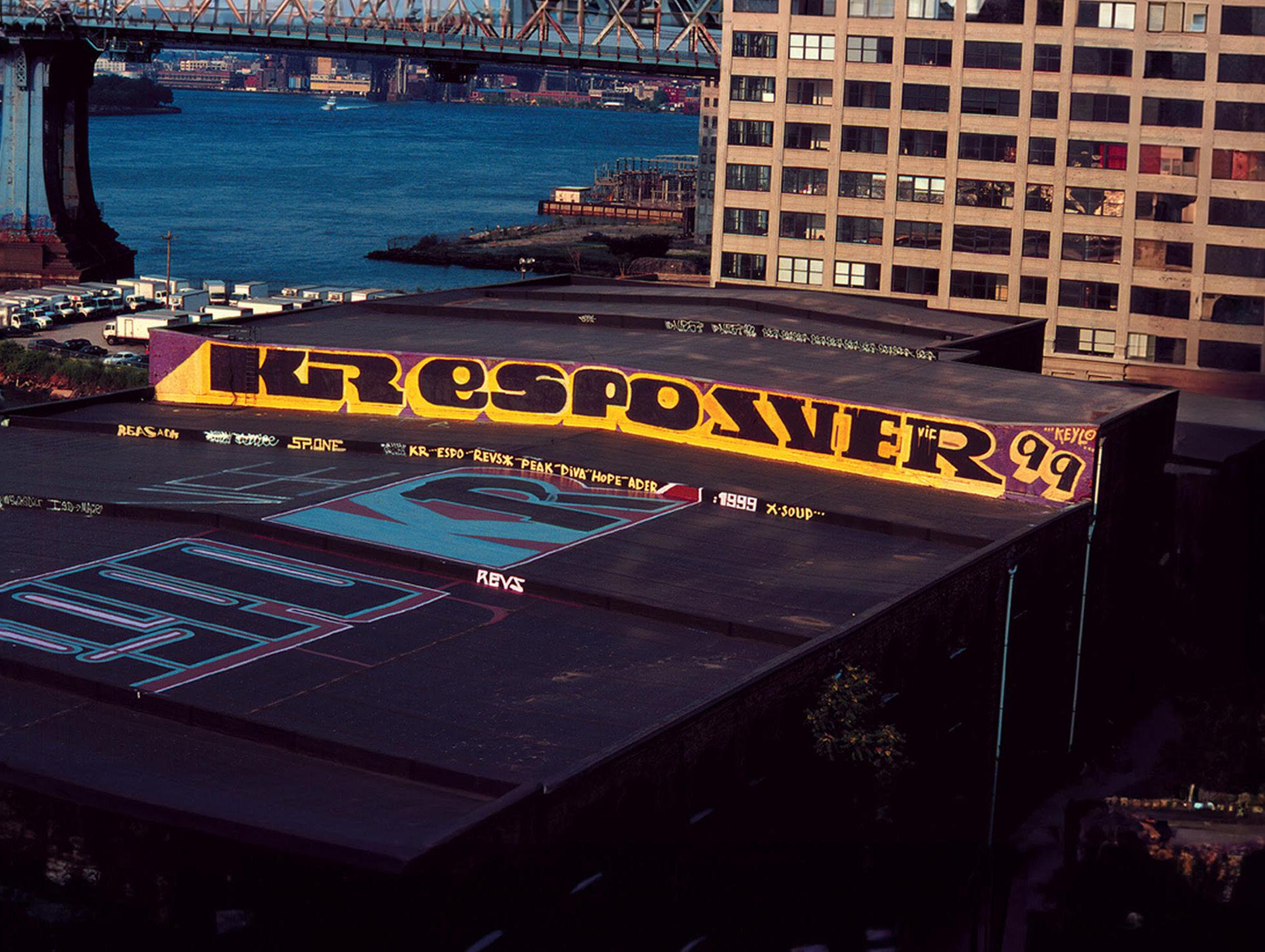
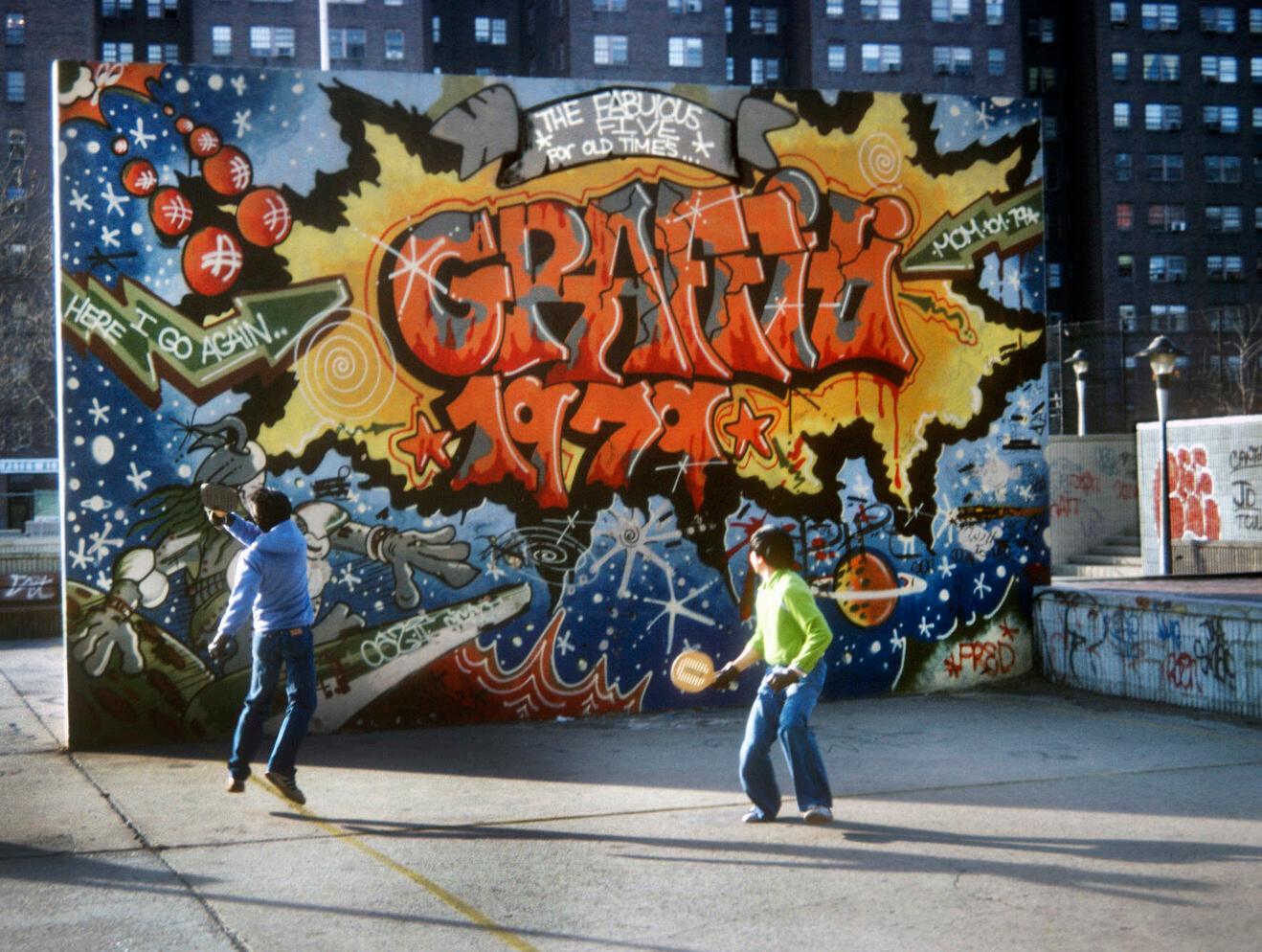
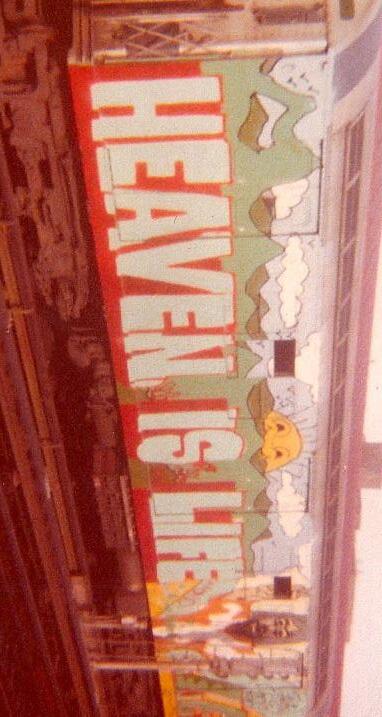
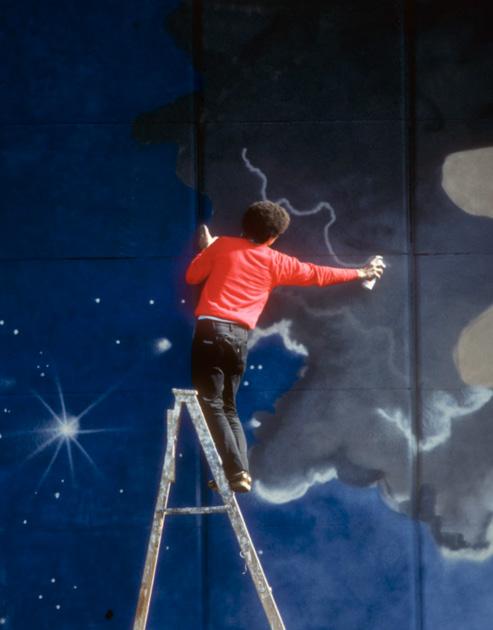
CC: No, I don’t think so. I can see why people get upset, but immoral just seems like a strong word. It’s a tough one because, yes, it is invasive. It touches on all kinds of property issues and ownership. I understand that that’s an issue. I understand why people would be upset. However, treating everyone who writes graffiti like a criminal and condemning them, locking them up, and telling them what they do is worthless has a fundamentally different effect than praising them and giving them space and some kind of agency or nurturing them. For example, there are parts of Europe where, as graffiti grew, people said, “Wow, look, they’re doing art in the streets.” That is very different than saying, “Hey, they’re all criminals. We need to stop this and arrest them.”
LQ: It’s all about product placement. Do you want to go and paint on somebody’s private car? No. Should you paint over existing art? Absolutely sacreligious. Do you want to touch a church? No. How do you draw the line? There’s already a problem in society with people being inundated with information. You’re in a subway car, or a bus, or you’re driving down the highway, and you see ads for things that someone is trying to sell you that you don’t need, or you don’t want. Why am I having to hear ads about how to fix my tax problems or how to grow hair when you’re going bald? That is a problem in society already. Graffiti showcases the existence of these problems as well as the predatory forces out there that take advantage of people; not only of people of color, but with different genders and sexual orientations. The fact that graffiti was in Pompeii, in 79. AD. and even before shows that the political system there probably was not working for the masses either.
Is Graffiti past its prime? How has increased legislation changed the graffiti scene?
CC: Absolutely not. I think about increased legislation often. The early to mid 1980s was a high point of really classic New York City subway graffiti. People could go in and paint a train that was eight feet by forty feet. They could take their time; nobody was chasing them. You can see the time if you look at the painting itself—at the size of it, the colors. Somebody would have had to bring thirty to fifty cans with them and take 4-5 hours to do it. Because of the crackdown, today, graffiti writers can bang something out in twenty minutes maximum and three to four colors. That’s due to legislation and the environment and structure that has been built around graffiti. So, if people again were afforded some kind of space and opportunity, I think graffiti would go in a different direction. A lot of the graffiti that you see today was created without space or time. Artists are just trying to make the simplest mark that’s gonna get buffed in less than a week. There’s no time and little opportunity. And then people say, “Oh, this is all garbage. This is all terrible,” and, yeah, it’s not that great because they don’t have the time and energy to put into it like they did before when there was essentially no economy to fund the war on graffiti.
Before 1972, New York City did not have a law against graffiti and the Metropolitan Transit Authority’s rule treated it as an offense about as serious as eating on a train. However, in 1972 New York City Mayor John Lindsay declared a war on graffiti, passing legislation that defined graffiti as a crime subject to legal penalty.
LQ: No, graffiti will never pass its prime. If it does, we’re all dying. Graffiti is a state of mind and a true testimony to the people of a certain time and circumstance. Legislation can come and go and is often used as an object to boost morale or a politician’s likeability. But what is legislation doing for the community? What are legislators actually sacrificing to make the community better? In my case, I sacrifice my life, my dignity, and my persona in the court of public opinion. I sacrificed unapologetically because I knew that what I was doing was the right thing. I love the saying: “Just because things are right now, doesn’t mean they were wrong back then.” That’s how I navigate around all the naysayers, whether they’re heads of state or rolling heads in the hood. I know my lane, and I’m comfortable in exercising my practice. What’s beautiful about this movement is that it is a very democratic movement. There are also many women artists in this movement. My sister herself painted trains back in the 1970s with me, and she was one of the first to actually take that pilgrimage into those very dreadful subway tunnels and subway yards. Women of all ages can have a voice through this art form that accepts them both for the heroism it takes to create work in the public eye and the skill it takes to work with a very difficult tool: the spray can.
How have your roots in graffiti informed your current work?
CC: I was a very active graffiti writer, and I learned a lot from it. I developed a lot of style and aesthetics from graffiti that still inform me today. They worked for me in the graffiti world, and, as I took them out of the graffiti world, they continue to work for me. I feel like these aesthetics are still interesting to me and a part of what I do. So, that’s just been really natural for me, and I think I’ve been very fortunate to have those things work in a broader world.
LQ: My roots in graffiti inspire poetry. Resilience and resistance. TwentyFour-Eight. Eight ball corner pocket. That’s just my poetry coming out. I love poetry. I write poetry in my work. I wrote poetry on my subway cars fifty years ago. I’ve been painting longer than you’ve been living, most likely. And it’s amazing. Fifty years. Five decades. It’s crazy.
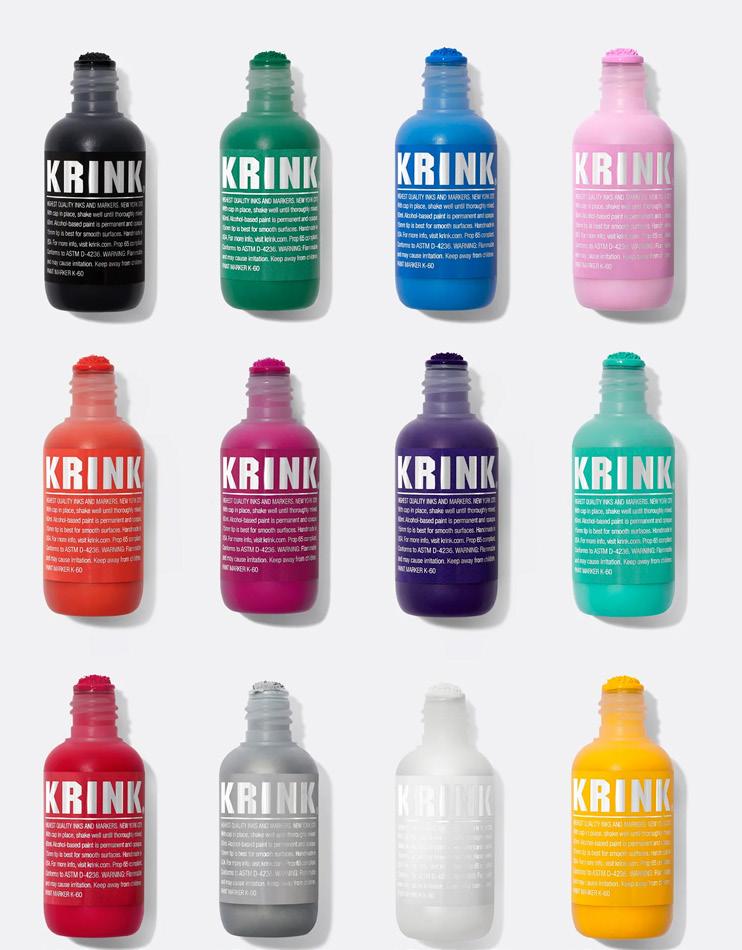
[To CC] Why did you develop the Krink brand?
CC: I started making Krink to write graffiti. Krink as a product was great—it was very successful and it allowed me to stand out and have this lore around who I was and what I did—the guy that makes his own ink and makes his own markers. I was prolific, but I think the aesthetic was a big part of it. That was in San Francisco, but when I moved back to New York, because New York is just so commercial, people already knew who I was through graffiti and pushed me to make Krink. So I made it as a creative project and to sell. I didn’t think anybody would want to buy it, but it did quite well. And then people showed more and more interest, so it was a natural progression. I was never sure about Krink as a business. But it was one of those things where the phone kept ringing. Making ink helped me make a living, and then it just grew and grew.
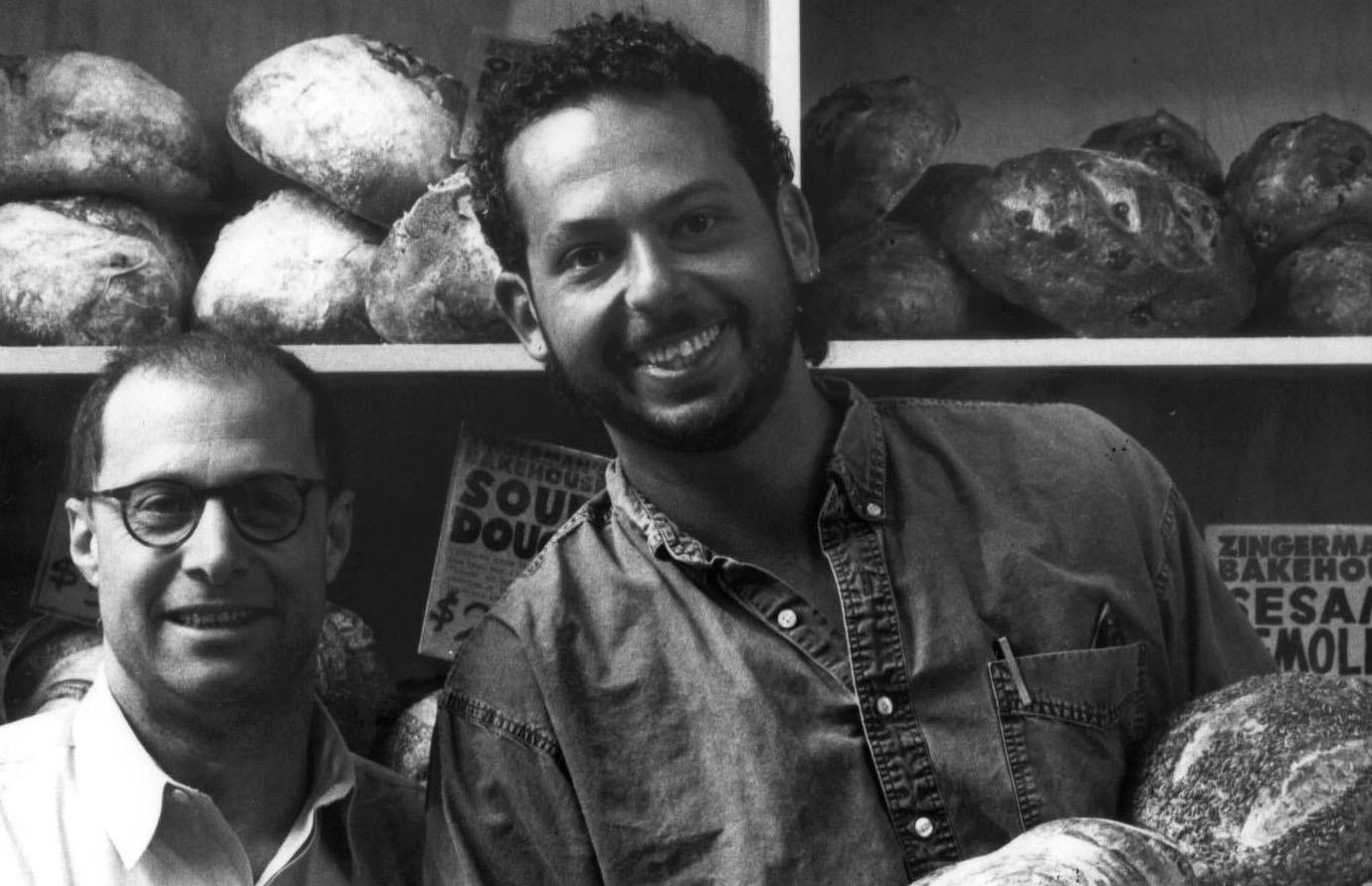
Ari Weinzweig was born in 1956 in Chicago, Illinois. He is a cofounder of Zingerman’s, a gourmet food business group in Ann Arbor, Michigan, comprising eateries such as Zingerman’s Delicatessen, Miss Kim, and Zingerman’s Bake House. He is also an entrepreneur, author, and speaker, having published books including A Lapsed Anarchist’s Approach to Building a Great Business: Zingerman’s Guide to Giving Great Service and A Lapsed Anarchist’s Approach to the Power of Beliefs in Business. He was recognized as the “Who’s Who of Food & Beverage in America” by the James Beard Foundation in 2006 and received the Lifetime Achievement Award from Bon Appétit magazine in 2007.
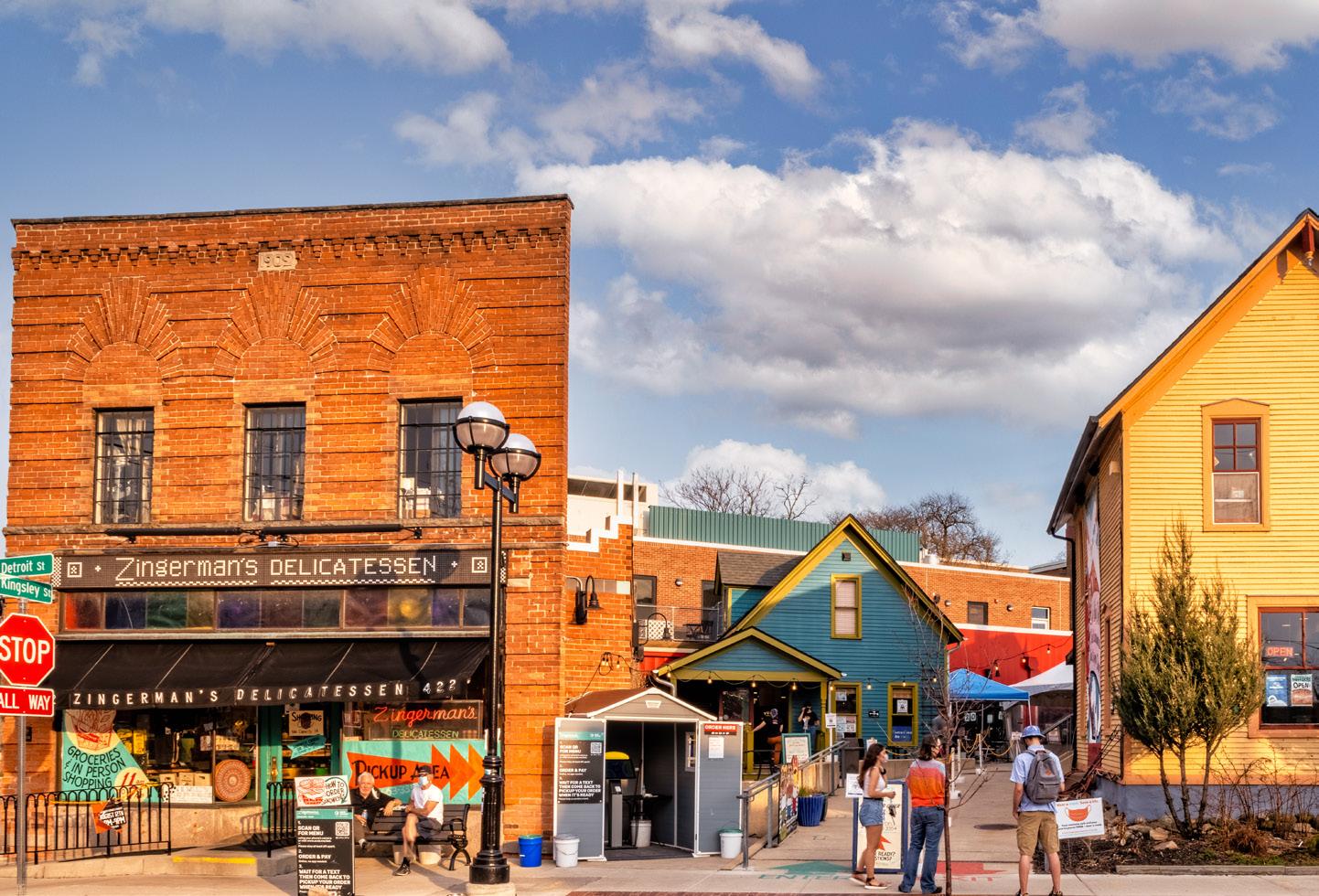
How did you become involved in the food industry, and why did you decide to open Zingerman’s?
I came to Ann Arbor from Chicago, where I grew up. I studied Russian history and anarchism [at the University of Michigan]. Then, I graduated and didn’t want to go home, so I decided to stay here. One of my college roommates was waiting tables at a restaurant, so I decided to apply for the same job he had. They interviewed me and said they’d call, but they didn’t. After two weeks or so, I went back and reapplied as a busboy. Once again, they didn’t call. I was running out of money, so I went and offered to do anything, and they offered me a job washing dishes. My business partner, Paul Saginaw, was the general manager—it was his first day and mine. I really just lucked out because I stumbled into work that I love and met great people. I started [washing dishes], then prepping and line cooking, and then I ran kitchens for a few years. Then, in the fall of 1981, I reached a point where work was less inspiring, and I could sense it wasn’t going where I wanted it to go. So, I gave two months’ notice with no clue what I was going to do next. Paul had left and opened a fish market. He didn’t know I had given my notice, but he called me two days later, and he said that there was this little building coming open near the fish market that we should go check out together, and we did. Four and a half months later, we opened Zingerman’s.
How did you become interested in anarchism, and how do your principles influence your business and leadership practice?
I studied anarchism a lot. I liked it, and the University of Michigan has the largest anarchist collection [of historical documents] in the country. When I started to manage people at Zingerman’s, I tried leaving them all alone in the naive belief that they would do the right thing, which didn’t work out. Then, I started to study the progressive leadership thinkers of that era—Max DePree, Margaret Wheatley, Robert Greenleaf, and Peter Drucker. For years, when I would speak or introduce myself, I would say I was a lapsed anarchist because I still believed in it, but I didn’t practice it, and everybody would laugh because nobody really knows what anarchism is.
Fast forward to 2008 or 2009, I was working on what became A Lapsed Anarchist’s Approach to Building a Great Business, which is the first book in my leadership series. Deborah Dash Moore, who was the head of Jewish Studies at UMich at the time, invited me to speak there. I had just written this long essay on the history of Jewish rye bread—she’s like, “I want to call it Anarchism and Rye.” When I got three months out from the talk, I had this realization that I hadn’t looked at my anarchist books in 25 years. At most business conferences, nobody knows what it is, so it doesn’t make any difference—I’m the most knowledgeable one in the room. But in the Jewish Studies Department at UMich, they all know who these [anarchists] are.
So, I got all my books out and started to reread everything, and it blew my mind: 1) because so much of what we had created was unconsciously aligned with a lot of what was in there, and 2) because so much of what is anarchism is now looked at as progressive business, but nobody makes that connection. Self-organizing work teams, flattening hierarchy, employee engagement, and purpose—these are all common themes in the modern progressive business world—often done disingenuously—but when done sincerely, they’re a lot aligned with anarchism. I realized that I was the only one weird enough to be reading Emma Goldman and Peter Drucker at the same time, so that parallel started to show in ways that nobody else would have noticed. Then, I just did what awkward, introverted history majors do best, which is to start reading more books. I started studying and studying, and I haven’t stopped since. There are just a lot of really important principles, and I try to keep putting them into practice. I’m the only one here who’s going to bring them up. It’s not like the rest of Zingerman’s talks about anarchism, but it’s really just trying to apply it in a meaningful, down-to-earth, imperfect way.
Does implementing anarchist principles within your restaurants impact the food itself?
One of the key beliefs of anarchism that informs my work is the belief that your means need to be congruent with the ends that you want to achieve. So, in other words, you need to behave in ways that are aligned with what your desired outcomes are. That idea came from the schism between Marx and Bakunin in the 19th century, where the Bakunin-led anarchists asked: “How can you have a dictatorship over a proletariat and achieve freedom?” If you want freedom, you have to start with freedom, not dictatorship.
That principle informs everything. If we want dignity, then we need to treat everything with dignity, including the food. If we want great service from the people who are working at the front door or the counter, then we need to give them service. Everything needs to be aligned. The food is treated with dignity. From the beginning, we’ve always been focused on full flavor, which we define as complexity, balance, and finish, and also on traditional food. We’re always trying to go back to the old ways, but not in lieu of appropriate uses of technological improvements (some things, such as coffee, chocolate, wine, and olive oil, have been improved by technology). However, most food in the 20th century was demeaned by technological means in the interest of a lower price and a longer shelf life.
And I’m a history major, so I’m always asking, “Where did this come from?” Everything includes everything. So, the food includes its race, gender, religion, economics, globalization—they’re all coming alive.
Are anarchist principles more suited to some industries than others?
I’m not in other industries, so it’s speculation, but my belief is that anarchism is really aligned with human nature. It was presented as a reaction to the dehumanization of the Industrial Revolution. So, I think it’s aligned with just being a person, too. I’ve realized long ago that a lot of our approaches work because they’re actually aligned with human nature and with how people want to live outside of work. I didn’t go to business school, but my takeaway from being around a lot of [the anarchist literature] is that it is antithetical to how you want to live your life. You’re learning there that you need to invert [your behavior and beliefs] when you go home. When you learn about beliefs at work and how much impact they’re having, it changes the relationships you have. When you learn about compassion, kindness, and dignity, it’s the same at home, and people, in a good way, use it with their kids. They use it with their significant other. These principles are trying to help people be true to who they are, as opposed to the pressure to conform and be something they aren’t.
In Going into Business with Emma Goldman, you discuss the importance of designing work that brings joy, purpose, and creative passion. How do you ensure that everyone at Zingerman’s truly loves their work?
You can’t, and I’m not here to tell you that everyone loves their job every day. It’s a lot on the organization, but it’s equally on us as participants in the organization. If you’re not looking for joy and you don’t want to find it, you won’t. Of course, there are healthier and less healthy workplaces. But, the idea is to create a culinary ecosystem where joy is more easily found, where it’s talked about, and people are encouraged to pay attention to it, as opposed to a more industrial setting where it’s like, “shut up and do your work” then go home and enjoy what you do with your kid only on a Sunday instead of understanding—back to anarchism—that you’re human and everything should have some joy in it. Everything should be purposeful. It’s not only about finding purpose on your day off.
What was your favorite Jewish food to eat growing up? What is your favorite thing to eat at Zingerman’s now?
Growing up, potato latkes, maybe chopped liver. Now, I eat a lot of olive oil, bread, vegetables, fish, and pasta. Zingerman’s makes and sells all of that. I’m looking right now at bags of pasta from the Mancini family in the Marche region of Italy. They’re the only farmstead pasta maker in Italy. They grow wheat and make the pasta all organic with it, and it’s old school, bronze dye extruded, so you get a rough, sandpapery surface. The modern ones are all through Teflon, which is faster and cheaper but makes super slick pasta, which is why your sauce at home is always at the bottom of a bowl. That’s what I cooked at home last night at about midnight because it’s so awesome.
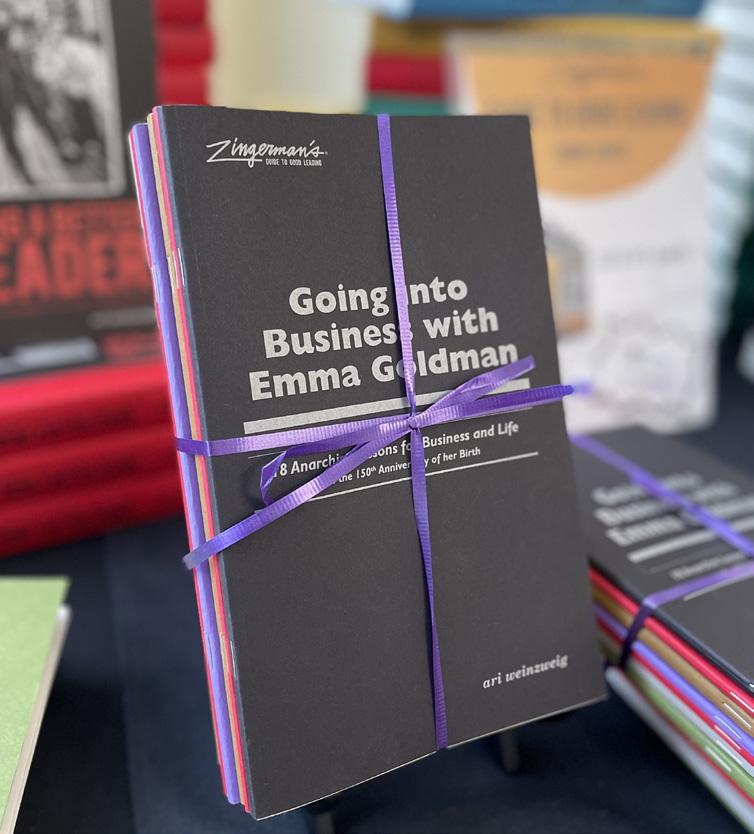
Do you see food as an effective medium for political expression?
One of the many interesting things that became clear to me as I did this second round of anarchist stuff came from a quote from Gustav Landauer, a German, Jewish, pacifist anarchist who was kicked to death by the German Army in 1919 when they overthrew the progressive government. I couldn’t read his work when I was in school because it was still only in German. But, in the meantime, [Landauer’s work] got translated by Gabriel Kuhn into English. When I read it, there was a lot in his work that really informed my thinking. One thing he said was, “We have no political beliefs. We have beliefs against politics.” It helped me understand that anarchism—and obviously, there are a million interpretations of it—is not a political system; it’s a belief system. It’s really about day-to-day human interaction, not about taking charge. It’s the opposite of taking charge. I think everything is related to everything. So food is art, food is politics, food is human life. Food is history. It just depends on what part of your brain you want to view it through.

Janeil Englestad was born in Seattle, Washington, in 1961. She has an MFA in photography from New York University and the International Center of Photography’s dual program. Her work spans different media and is focused upon making “a generative and positive contribution to people and the planet.” Her art has been both exhibited in and produced in partnership with institutions such as the California Museum of Photography, the U.S. Department of State, and the International Center of Photography. Alongside creating artworks of her own, in 2010, she founded Make Art with Purpose (MAP), an organization centered around artists producing collaborative projects that explore social and environmental issues.
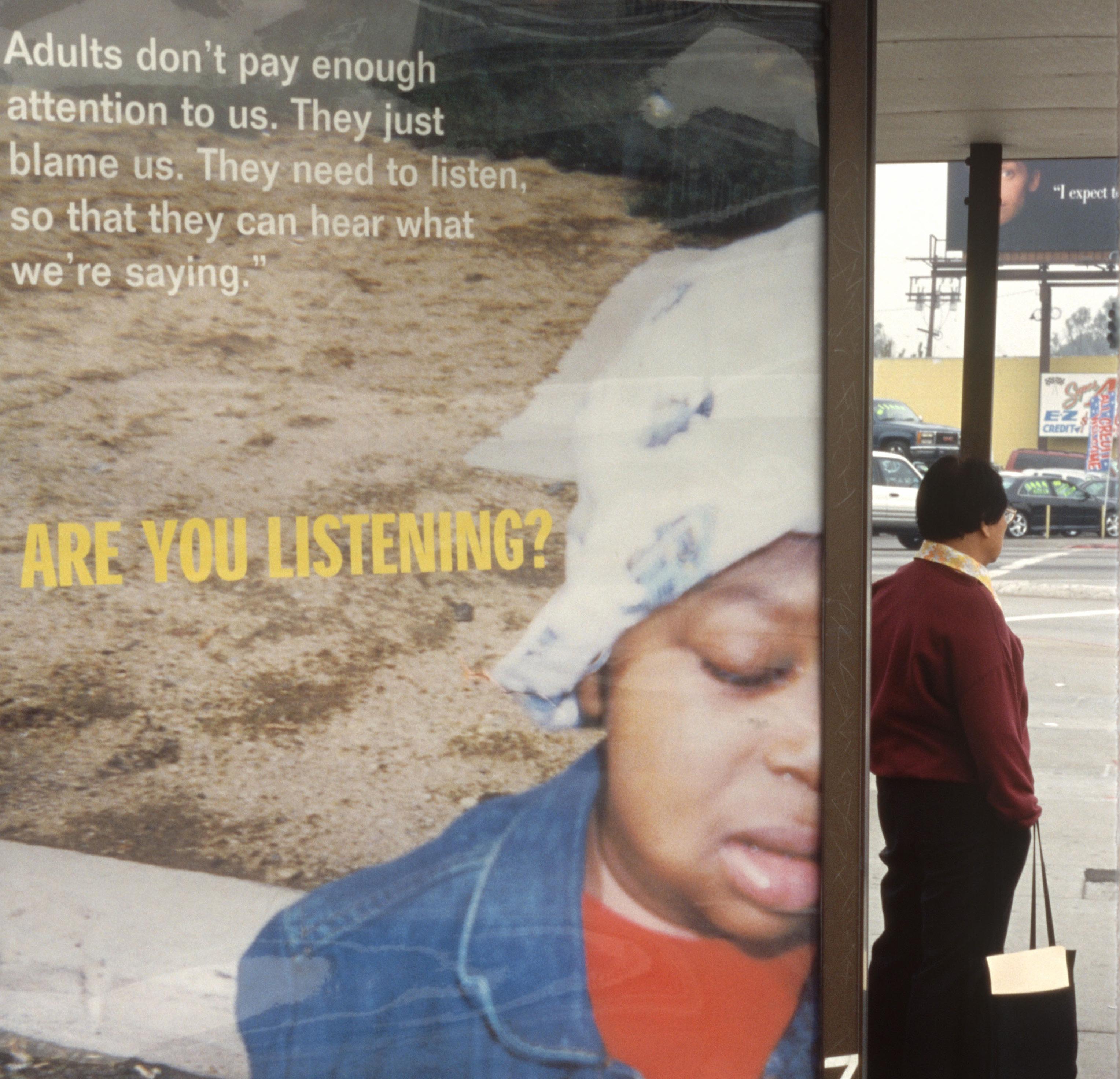
What sparked your interest in creating art?
I think it began with my parents. It was a creative household. My mother was an artist, and my father created and built things just because he did. We were encouraged to explore art and take art classes. Although in school, I leaned more towards literature, history, and even politics. These two [interests] finally merged, but initially, it just came from being around creative people and having stuff to make stuff with as a child.
Why did you create Make Art with Purpose (MAP), and how does it help you work towards your artistic mission?
MAP produces projects that use arts and design to engage social and political themes. Our projects range from very small, grassroots projects that are very community-oriented to widespread projects that involve government, university, and foundation partners. It can also include many artists or designers and span multiple media over several years. It could be a zine that tells stories, a mural, or even a theater project. We are working on one now that looks at the stories of women of color who have survived breast cancer, which are very different from what Caucasian women usually experience due to access to treatment and information.
I created MAP as a structure to bring people, organizations, ideas, and positive action together. I was doing that work as an independent artist, and in order to fund the projects I was creating, I needed to ensure that one of the partners could act as a nonprofit sponsor. I found that having a structure [through MAP] allowed me to still work with partnership, but not with the logistics part of it.
MAP helps me work towards my mission because it creates a space for people to come together and collaborate who might not otherwise come together, and in that process, it builds community and offers places for engagement that might not otherwise happen.
What are the strengths and weaknesses of art as a method for political expression compared to more traditional practices?
Artists are storytellers. No matter what medium or what they’re expressing, they’re telling some sort of story that’s personal or just observational or, sometimes, a combination of both. All of us carry stories, and we often connect with other people through stories. So, this is really the strength of political art, or of working on political ideas or activism through or with the arts. I think if you look back at the most recent presidential campaign, one of the challenges faced by Kamala Harris was getting her story out in such a truncated time frame, as she was running against someone who had already gained so much media exposure and had a known story. The idea of storytelling is key when it comes to political art, but all artists are also creative thinkers, idea-generators, and problemsolvers. Some of the most political art also considers aesthetics. If you have training, aesthetics, and an understanding of art history, you can make your art stronger and perhaps more impactful.
I think that a weakness would be to look at art as a way to directly solve political problems. Artists are the ones who are going to save us in some situations, but [generally] I think art is part of a larger movement.
What political themes are you most interested in addressing and exploring through your work?
That changes all the time. It depends on what’s going on in the world. Often, I think, “Oh, I could have an impact here.”
I can remember when gun violence exploded in schools across the United States with Columbine in the late 90s, and I was watching the news. This was before social media; it was still very traditional: radio, TV, cable news. I was looking at the news, and I realized that the students at the school were never asked, “Why do you think this happened?” Rather, it was the media talking or others who were asked, and they were like, “Well, this is the problem. It’s too many guns, or it’s video games.” And I thought, “Wow, what are the students thinking?” They’re the ones that are experiencing this— their peers are the ones who took up the guns and began shooting. So I realized in that case, I could create a project where we brought in teenagers, partnered them with artists, and had them create some kind of work where they tell their story and express why they think this is happening. It became a media project: videos, billboards, photographs, and exhibitions. They did a radio show—I started it in San Francisco, and then I went to Los Angeles, DC, and Chicago. I can remember walking down the street—back then, we had those metal newspaper stands—and there it was on the front page of the newspaper. I saw the billboards that everyone had created, and then it was on NBC Nightly News with Tom Brokaw. So, it became national and gained a lot of media exposure. At the same time, we had gun violence prevention classes and a peace parade, where tens of thousands of people marched through Chicago with homemade peace signs. It ended in a festival where we had a barbecue and kids’ games, and a street festival. A lot of the people who participated in the project were able to go on to launch careers or take that work and do other things.
Often, [my projects are] inspired by what is going on politically in the moment. But, I’ve turned certain things down because not every political cause is a connecting point for me or somewhere where I can see myself truly having some sort of impact.
What project are you most proud of throughout your career? Have you had an experience where you felt like your art tangibly impacted a community or sparked needed dialogue?
Projects that stand out for me include Voices from the Center—it’s an oral history project I did in Central Europe. I was on a Fulbright scholarship, teaching a class at the Academy of Fine Arts and Design, about how to produce a social practicebased arts management, the real technical aspects of doing this kind of work. The course had its own interesting political output from the students.
I had both graduate and undergraduate students, and they were creating very big projects in the city of Bratislava. At the same time, I was talking to my peers, my neighbors, and my new friends about growing up during the Cold War—about what it was like on the other side of the wall because on both sides, there was propaganda about the other. After hearing those stories, I started to diary them, and the project started to grow. That’s how a project can grow organically. Over time, I ended up expanding this project to three other countries in the region, known as the Visegrad countries: Poland, Hungary, and Czechoslovakia (now the Czech Republic and Slovakia). Because they had different flavors of communism or socialism, the stories were different and reflected the impact of the regime that was ruling in those countries.
It had an impact, because I was told by people there that it would take an American or someone from the outside to do this. This is something I’m very conscious of when I’m working: to be really careful with the role of the insider and the outsider. In this case, being from the outside granted me a sort of movement as an educated outsider—an outsider who attempted to speak all the languages, even though I always had a translator with me, as I started to not just talk to friends, but make appointments. There was real value in that. Then, that project went on to be an education program in schools, in colleges, in K-12s, and came to the States. It’s been exhibited throughout the States. I’ve gone back and re-interviewed people 10 years later about how their lives are now, 25 years after the wall fell. It’s really instructive, actually, for our current political moment, especially with the conflict in Ukraine. I also brought in a lot of other artists when the project expanded and helped to create platforms for their work to tell these stories.
Is political meaning in art always intentional?
No, because interpretation is subjective. The viewer brings their politics to the art, and then it might become political. Some people view other things through political lenses all the time; other people don’t have a political bone in their body, and context matters. Art doesn’t exist in a vacuum, so the cultural moment can influence how we might view or experience art.
For you, is the art and the meaning that comes with it integrated? Are you ever making art just to make art, or, for you, is making art centered around being able to spread these messages that you’re passionate about?
That’s changed, and still changing. When I was living in New York, I was working in art and activism as a volunteer. I had my day job as a photo editor, and, as a young artist in New York, I was making work and starting to exhibit it in museums and galleries. That was going well, but it was the political activism where my heart started to sing, [especially] when I saw the impact that the work I was doing was having with people. At one point, I started doing less studio-based work and more project-based work that’s very collaborative, much more my vision, and very process-oriented.
When doing this work, you need to be open and listen to the community and the people you’re working with—and that is process—and then the project changes and grows depending on their expertise, knowledge, and what they’re bringing to the project. Now, I have started to go back into the studio a little bit and work on multimedia pieces. That’s something that I’m doing again, because I’ve come to a place where there are things I want to explore, express, and discover that I can only do with my hands in my own work.
What do you consider to be the role of the artist during times of political uncertainty?
I don’t believe the artist has a role per se. There are artists who engage politically through their art and throughout their careers, and there are artists who are called to political action during times of political uncertainty, and that could be through art making or contributing to politics and society through their actions outside of their art-making, such as protesting and volunteering. And then there are those whose art becomes political in the moment, who all of a sudden realize [their power]. I think, certainly we saw that in the middle of the last century with the rise of fascism and during World War II, when many non-political artists became political. So, I think it’s very individual, and that the artist doesn’t have to play a role, but I sure admire the heck out of those who do.
Does an artist have a distinct responsibility in activism, or is that responsibility the same for every community member?
I think ideally every community member should be active. I was talking to someone, who is the CFO of a pretty big company the other day, and they said, “What are you doing the rest of the day?” I said, “We’re going to the “No Kings” march.” And they said, “What’s that?” This really showed me just how out of it people can be—how nonpolitical or non-engaged, and why we’re in the place we are right now in this country. To me, it’s really sad that people are so detached from what is happening—even someone who’s intelligent and holds a position of power and responsibility in the business world. It would be a utopia if, in all political persuasions, we could come together as activists and start to work together. Maybe we’d evolve a little bit as humans.
Raye Zaragoza is a singer-songwriter and proud JapaneseAmerican and Indigenous artist based in Los Angeles. Her music challenges traditional expectations of women and explores themes of self-discovery, strength, and joy. Her latest album, Hold That Spirit, explores the female experience and emotional healing, featuring collaborations exclusively with female artists. Zaragoza writes for Netflix’s Spirit Rangers, a Native-led animated series, and recently toured nationally in the reimagined Broadway production of Peter Pan
Tell me a little bit about yourself and your journey: what first drew you to using music as a tool for activism and self-expression?
I’ve been doing music full-time for almost 10 years, but I started writing songs when I was 17. I’m 32 now, so it’s been a while. When I first started writing music, I was only writing love songs. But I was so passionate about other things in my life, like activism and fighting for the rights of marginalized people, especially being the daughter of an immigrant and an indigenous person. Once I started to realize that I could use music as a vehicle for expressing my anger in life and about the world around me, it definitely opened up this kind of portal—I can use this as a way to help people and make them feel more seen, especially people of color.
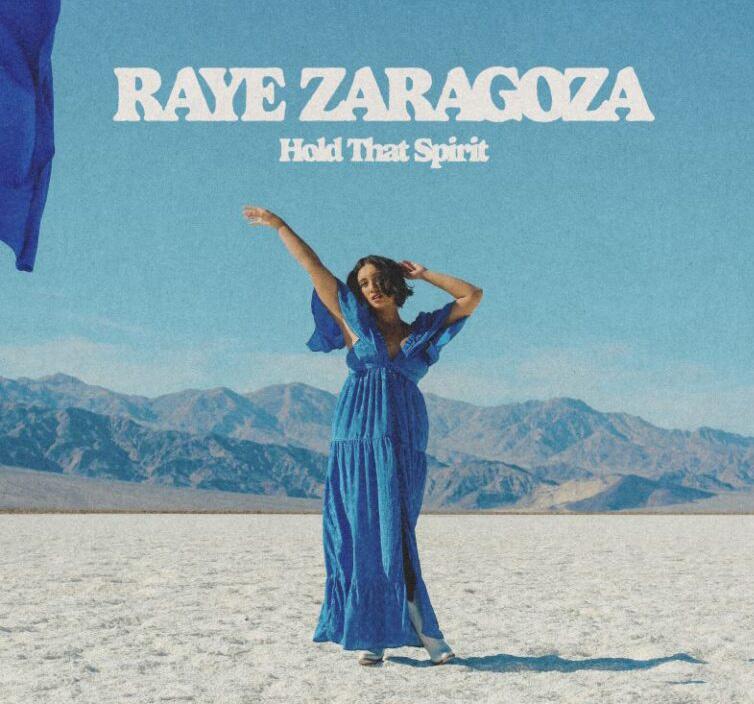
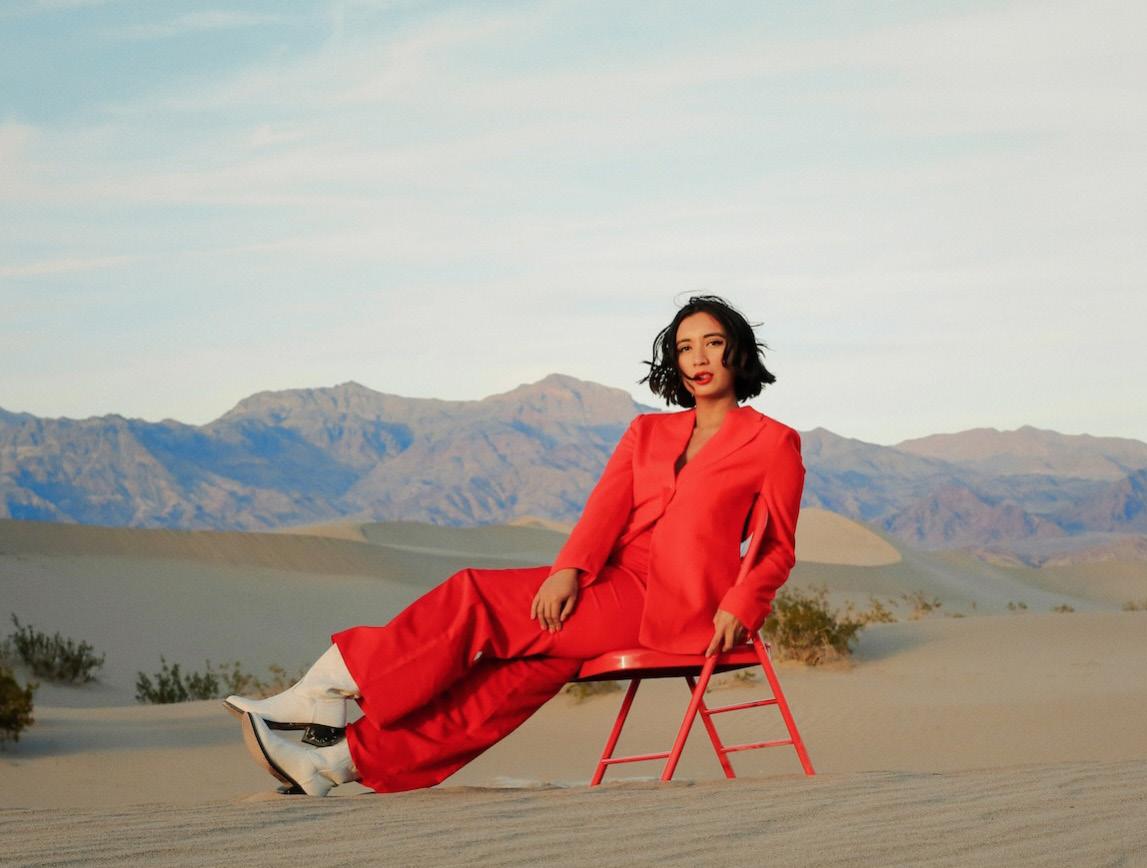
In 2016, I wrote the song “In The River” for Standing Rock. It took off from there. My first album was Fight for You in 2017, and it was a collection of songs that were about fighting for indigenous rights. It all just came together from there. I realized that music is very powerful, and I never want to shy away from speaking truth to power in my music.
How has your identity shaped your path as an artist, and what parts of that story do you feel still aren’t told enough in the music industry?
I think that when you’re mixed race, you see the world through the lens of a lot of different perspectives— from both my mom’s and my dad’s perspectives.
This has given me a very well-rounded view of the world. I’m sure I have my blind spots; we all do. Still, I really take pride in the fact that I have a unique perspective because of my identity. I think that has greatly influenced my music, and has also made it so that my music can relate to a lot of people, not only indigenous people or children of immigrants, but also women and people who just need an artist to echo back to them their discontent with the world around them, or their stressors, or the things that make them angry. My identity has a big, big part in that.
Have you found a community within the music industry that you feel like you connect with?
The folk community has been the most amazing place for me—it’s the wholesome part of the music industry. We play shows that start at 7 pm and end at 10 pm, and it’s not as much of a party culture. We still like to have fun, we like quiet music and sitting on the floor, and lighting candles. We like talking about how songs make us feel, dissecting every lyric, and getting really nerdy with songs. There’s this thing called Folk Alliance, which is a conference of folk musicians. All the folk nerds come together and nerd out about lyrics and the nuances of every note in the song. And a lot of times it’s just guitar and vocals. I love my community and the music industry, and being a part of the folk Americana scene. It’s really, really wonderful.
Your album Hold That Spirit explores the joy of reclaiming your own story. What did you discover about yourself while writing these songs?
Honestly, sometimes, my songs can be my teachers, because I will not be able to put words to how I’m feeling about something, and then I write a song, and I’m like, “Oh, that’s how I felt.” I recently wrote a song called “Who Says That’s Not American?” I was feeling so consumed with everything happening with the ICE raids and all of our immigrant neighbors being so at risk in California, and I didn’t know what to do. So, I wrote the song, which helped me put that anger outside of myself and then use it as a way to spread awareness, to shed light on an issue through social media and through a song. So for me, it’s a way of processing, for sure, and putting my pain outside of me instead of keeping it in.
You chose to work exclusively with women on this album. What does feminist collaboration mean to you in practice — and what did it teach you about making art in community?
It was almost a coincidence that this whole record was made by women. I was working with a lot of women at the time, and I thought, “Whoa. What if I made an album with all women?” I’m not sure of the updated statistics, but I know, maybe 10 years ago, 2% of producers were women. And so I’m like, “Let’s make it, let’s make an album with the 2%.” And it was just so fun. I love so many of those collaborators. It was such a safe space to write songs and create with women.
A lot of times, as women in the music industry, we have stories of being unsafe in writing sessions or in production sessions, because there was a man making advances on us. It felt like a reclamation of the divine feminine in music, and to show ourselves and the world that it’s not just a boy’s club, and that we are also good at what we do. We can do everything that the boys can do. The album was very well received. I was really grateful. My favorite part is the one-on-one responses I get from people.
As an artist, do you feel the music industry is making real progress toward more Indigenous and female representation? What changes would you like to see?
I think so. I’m a part of the Cohort Coalition with the Recording Academy for Indigenous Voices. I think that a lot of these big, major machines that are a part of the music industry, like the Recording Academy, are making an effort to make sure that native voices are heard and that we’re being represented: that we can feel like we have a seat at the table.
I definitely feel like there’s been a lot of progress there, but we still have a long way to go. I would like to see more people of color in leadership roles. It’s not just about having people of color as the artist or the talent. It’s also having them in places where they get to make the calls. Same thing, more women in power.
I think it’s kind of embedded in all of us to have this competitive streak with other women, but in reality, we’re not fighting against each other. We’re actually fighting together. And so, to look at our fellow women as allies and as people who can lift us up. We’re on a team with our girls. It’s not like we’re fighting for that one seat at the table anymore.
Labels and companies are being challenged to make sure that their rosters are diverse, to make sure that their business practices are better. There was so much violence against women in the music industry. Now that’s being handled or stopped, or at least, more people are being outed for being bad people. There’s not as much normalization of violence and discrimination. So that’s good. It’s the first step. We’re on our way, but there’s still more to do.
Your career spans powerful protest songs, children’s TV, and reimagined theater. Working across so many different media and projects, do you think that there’s a specific one that is the most effective at conveying a political message?
I think that they’re all super important—between television, film, and music—to convey political messages. But, I think that music is such an amazing one, because we have so much freedom with music. We can write a song and upload it, and there aren’t many hoops to jump through, especially if you’re an independent artist. So, I think that being able to truly speak your mind is such a liberating thing in music. There aren’t really many people who can censor you—unless Instagram takes it down.
As an artist, what do you think most journalists miss when interviewing you?
I think it’s important to continue to ask, “How do you take care of yourself when you’re posting things that are political?” Or, “When the world is getting you down, how do you stay grounded? How do you stay centered? ” Because I think a lot of times, as artists, we’re so prone to burnout. What I would say is that I cannot be a good vehicle and vessel for a message and for my music if I’m not taking care of myself and getting good rest, meditating, and making sure that my mind and body are well.
What responsibility do you feel that artists have right now in driving cultural and political conversations, especially in times of political uncertainty?
I think that artists have a huge responsibility because people look to artists. I don’t know why. It’s not like we have all the answers, but a lot of times, people look to us as influencers. I think it’s very important for artists to really think about their imprint on the world. It’s very important to me to be seen as someone that the youth can look up to.
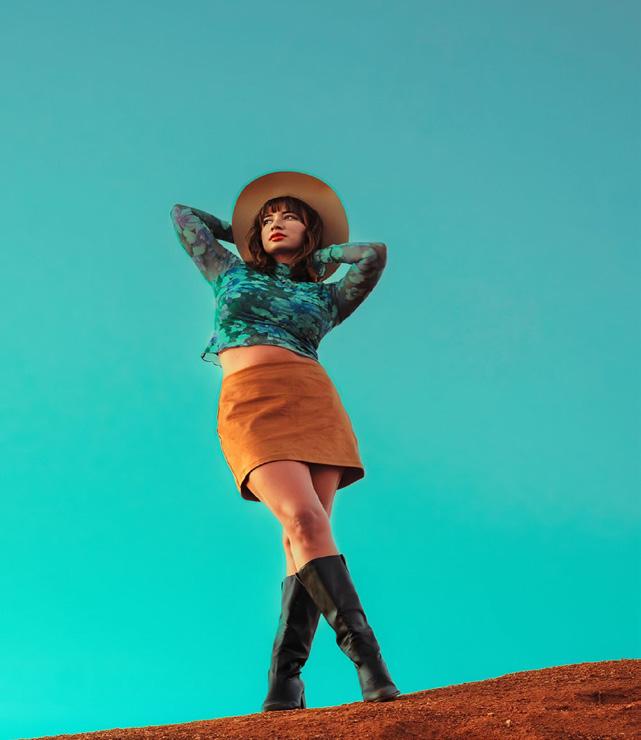
I try to be a role model. I respect when artists want to stay silent about certain things, but I also have so much respect for artists who aren’t afraid to speak up.
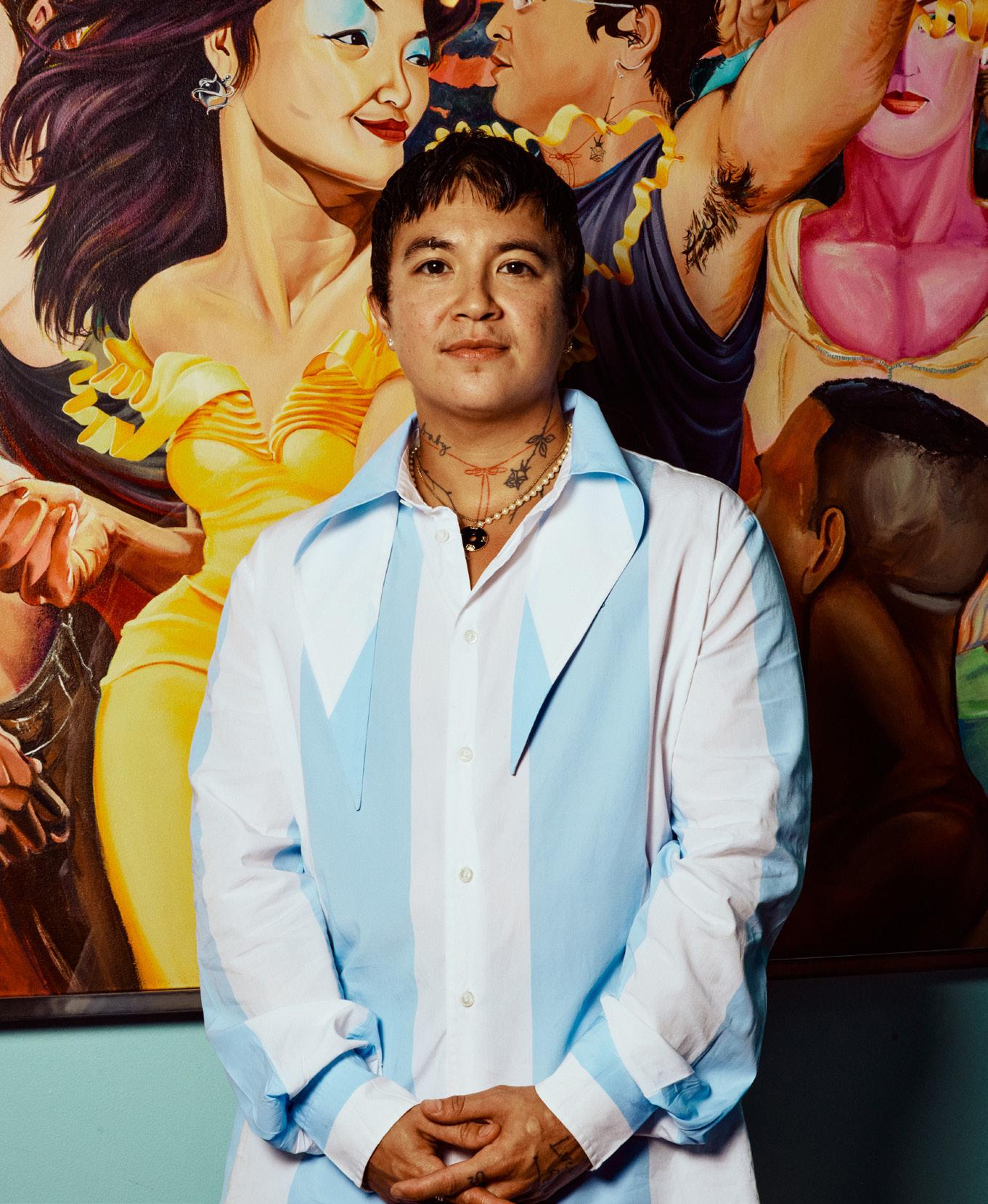
Silver Iocovozzi is the chef-owner of the Filipinx restaurant Neng Jr.’s in Asheville, North Carolina. Neng Jr. has been nominated for a James Beard Award and recognized as one of the Best Restaurants by The New York Times and Bon Appétit. A secondgeneration Filipinx and Southern native, Silver blends Filipinx flavors with Southern barbecue traditions. Also a 2023 Time100
Next honoree, Silver has cooked in cities worldwide and has held roles at acclaimed spots including Asheville’s Buxton Hall Barbecue and Palm Heights Grand Cayman.
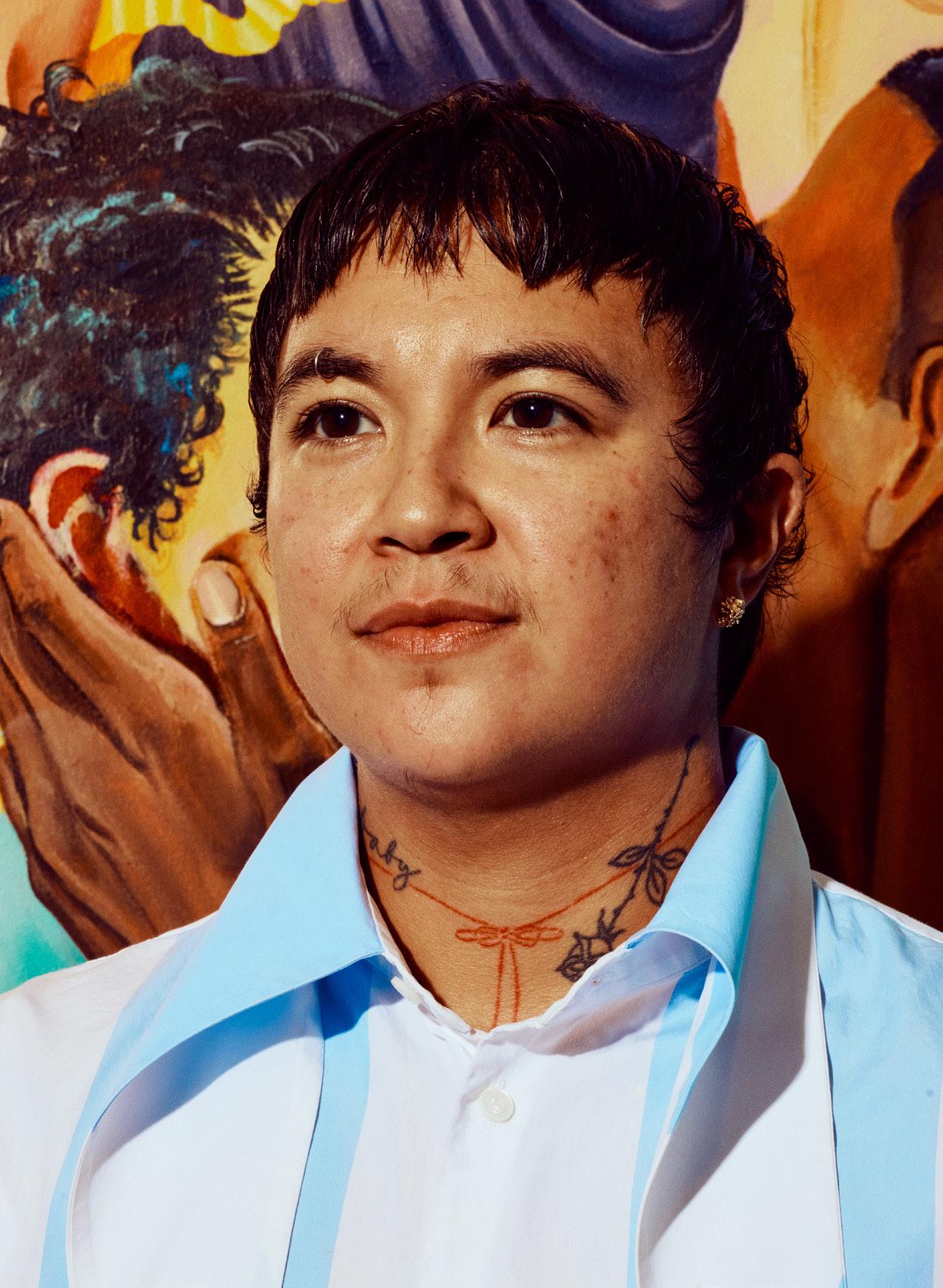
Can you tell us a little bit about yourself and your journey—how did you go from growing up in the South to becoming a chef and opening Neng Jr.’s?
My parents met in the 80s in Japan and Yokohama. My dad was a Marine, and my mom moved from the Philippines to work in Japan. They met, fell in love, and then I was created. I was born on Parris Island, a military base in South Carolina. We moved to a small town called Apex, North Carolina—their town is “the peak of good living.”
It’s a suburban haven now, but when I grew up there, it was very rural, and there wasn’t much to do. I spent a lot of time walking on the side of the road and exploring abandoned houses––I was really curious about everything, and the slowness helped me be curious.
My mom was missing home when we moved, trying to recreate these dishes that she didn’t know how to cook, because it’s very common for Filipino families to have a maid who cooks for them. My grandma was the person who did that, as well as their maid. So, she watched a lot of cooking shows and was really inspired to cook for herself. I grew up watching her cook, and that had a huge impact. I was her number one fan, and I still am. There’s a huge painting of my mom in the dining room of my restaurant that a friend of mine painted.
Overall, I had a second-gen lens growing up in the American South. It’s a very specific place; it has its own reputation, but I’m really grateful to have grown up there.
Your food fuses Filipinx cuisine with Southern barbecue. How did you come to see the connection between those two culinary worlds?
I grew up visiting the Philippines when we could. There was a place that we would visit outside of Manila, called Batangas. They call it the province where there isn’t a lot going on, and it’s very country—their version of country. There’s not a lot of gas cooking. It’s all by fire. That was the first time I saw a pig get sacrificed—I don’t know why I said sacrifice, but that’s what it felt like. It was a whole ceremony. I felt like I was getting embedded into this experience as someone who is Filipino, but doesn’t live there, and I’m clearly of the American wealth variety. They were all looking at me while they were sacrificing this pig. They ended up cooking it in many different ways.
A couple of years later, I was working at a barbecue restaurant. I think it was easy for me to find where the circles overlapped in the Venn diagram, because there’s not a big difference between eastern North Carolina barbecue and Filipino lechon—the difference being the style in which you cook it. Lechon is more of a spit roast, and usually it’s a smaller suckling pig. The pigs that we were smoking there were massive, massive pigs that were just butterflied.
I have this crazy obsession with barbecue. American cuisine really starts with the South, and with the history of chattel slavery. When we are able to think about history as a tool, it’s important for us to figure out what our connection is to that. I was cooking so much of other people’s food, and I think it takes a while to understand, as a chef, what is going to bring you the most purpose. What I found is that my lineage gives me the most purpose, because I have so much connection to it, cosmically and in my soul. Working at the barbecue restaurant just helped me fuse all of the things that were Southern. I probably won’t ever work at that kind of barbecue restaurant again. It was just really American, but I also am not separate from being American.
Food and Wine Magazine has described your food as a “deeply personal exercise in storytelling.” What stories are you trying to tell with each dish?
I’m going to talk about the painting in the dining room. The painting is a portrait of my mother in the center, and she’s wearing this yellow dress, and there’s a ribbon that’s kind of unraveling; I’m in the background holding the top of it. When I was talking to the artist, he had this idea of a dress and me holding the ribbon. The ribbon is symbolic of passing on my mother’s story and her cooking ability. The restaurant is a lot of different love stories. It’s my love story with my mother. It’s my mom and dad’s story of how they met. It’s my love story with my husband. The creation of the restaurant itself is this dedication to them and the people who helped it come to fruition, because it was such a difficult project.
I wish I could say that they could be separate. I wish identity were separate from what I do, but it’s part of everything I do.
How has your identity shaped your approach to both your culinary art and your role as a leader?
I wish I could say that they could be separate. I wish identity were separate from what I do, but it’s part of everything I do.
conversation, but it was a conversation between two white cis men. How much can you really learn from a conversation between two white cis men when they have all of the privilege in the world? I have a lot of respect for both of them, but I think we need to create spaces where people can relate to these speakers.
My identity pushed me into a corner of having to act politically because of who I am.
I don’t have a choice but to understand that I have these rights that I need to give to others. I need to give other people the comfort of a protected space and a protected work environment, regardless of how they identify or whatever reality they choose for themselves.
Identity is inherent in everything I do. Identity is part of the food that I cook and the dishes I create. It’s not easy for me to come up with ideas about what a dish is, because I’m often looking inward to what feels meaningful for me—that’s where I’ve found the most success. When you are able to articulate what the story is, it’s inherently political, and it’s not without the things that I’ve had to go through as a chef or as a trans person in the South.
I cooked for a while as a woman in kitchens. That was just so difficult and also a different experience than being a trans person. As a trans person opening a restaurant, I did maybe one interview relating to my identity, and then I realized I don’t want people to think I’m pigeon-holing my identity as a means for success, to catapult myself because of my marginalized identity. I would rather just be known for how good a chef I am, not because I’m this trans chef.
When you live in a small town, people feel like they know you. It’s been an interesting experience as a successful chef. It’s interesting to walk alongside some of my neighbors who misgender me. It’s a little different for me if I’ve known you before, and I can have a very tiny, tiny margin of understanding. But it makes it difficult to be a leader when you have neighbors who misgender you and do not understand who you are. They don’t see me. There are many facets to that.
I was thinking about this over the past week, because I went to a symposium called the MAD Symposium, which is a global foodways multiday gathering of sorts, with back-to-back MAD talks, similar to TED talks. I had some pretty rough moments as an audience member. There were these conversations between heroes of mine, people I really respect, and still respect–Thomas Keller and René Redzepi–two icons in food, and they were really flippant about saying, “We can do whatever we want.” It was a great
BY POLA JANCEWICZ
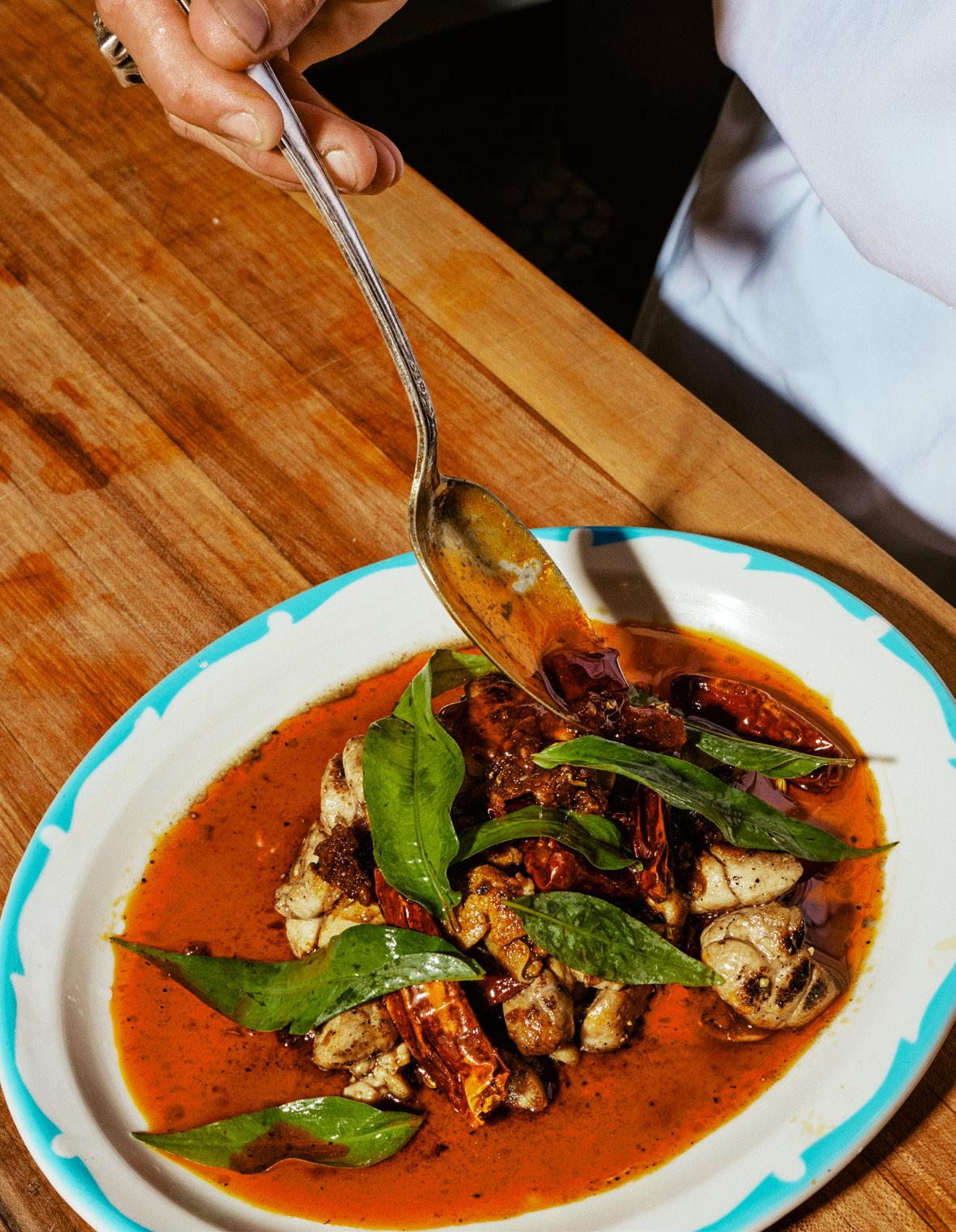
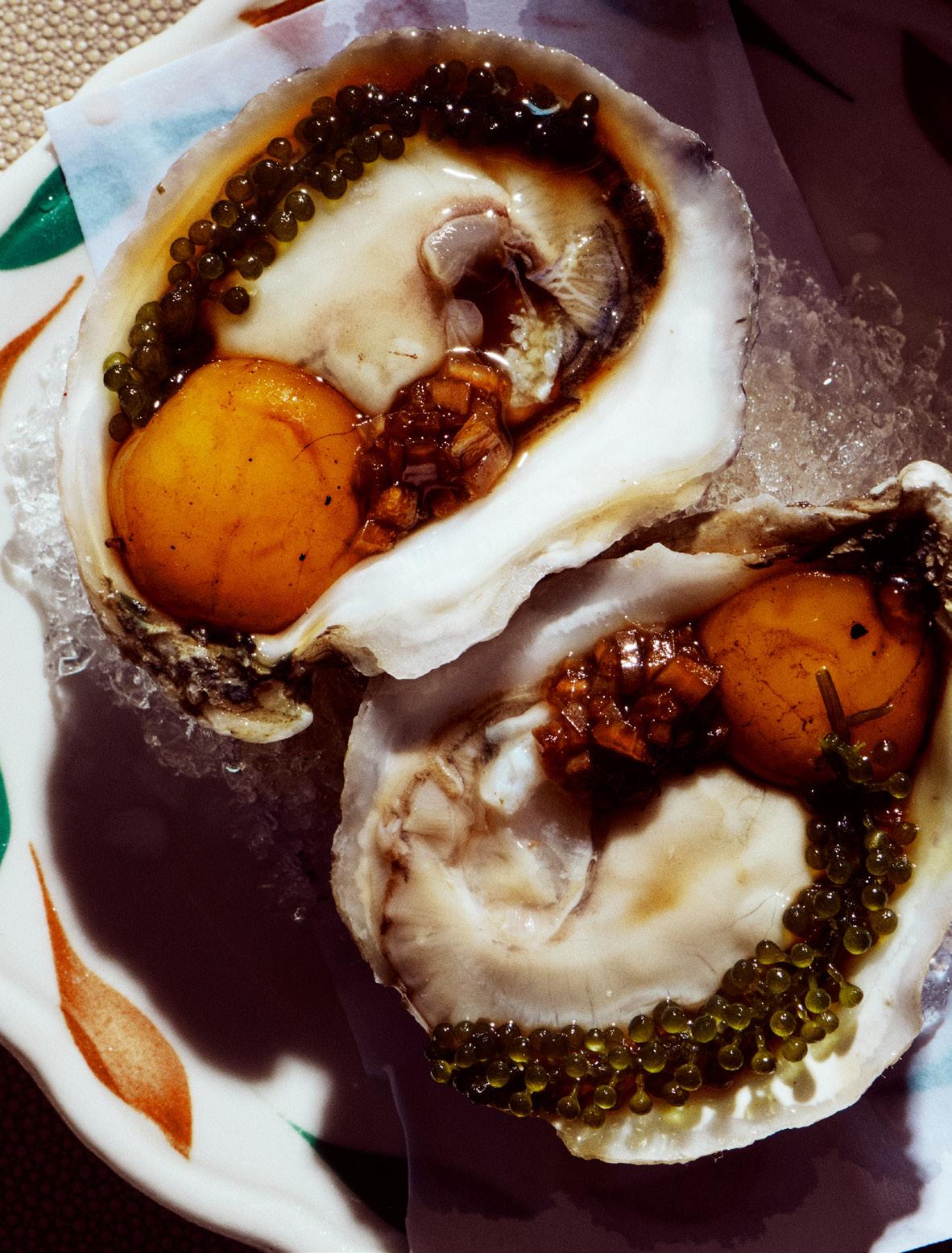
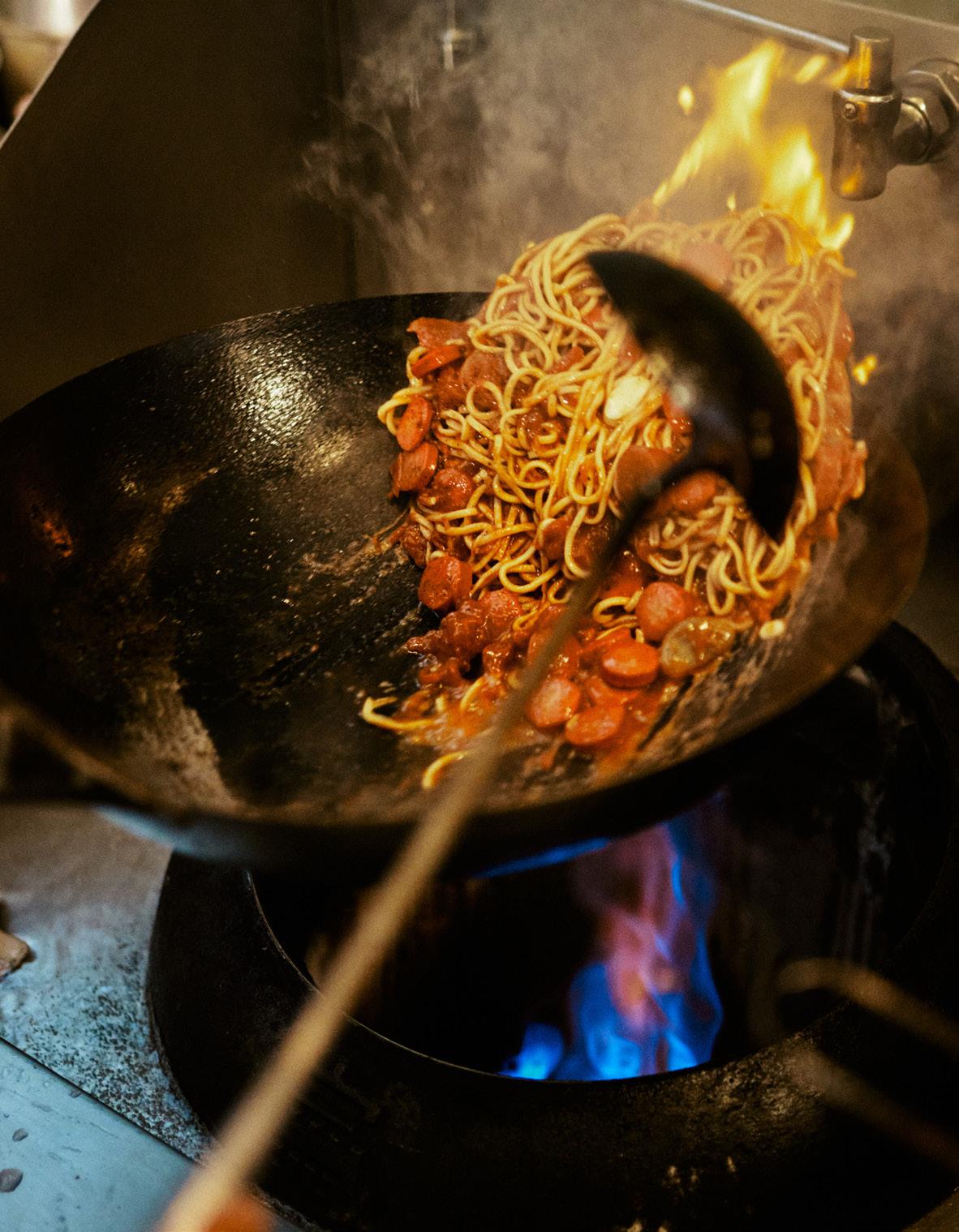
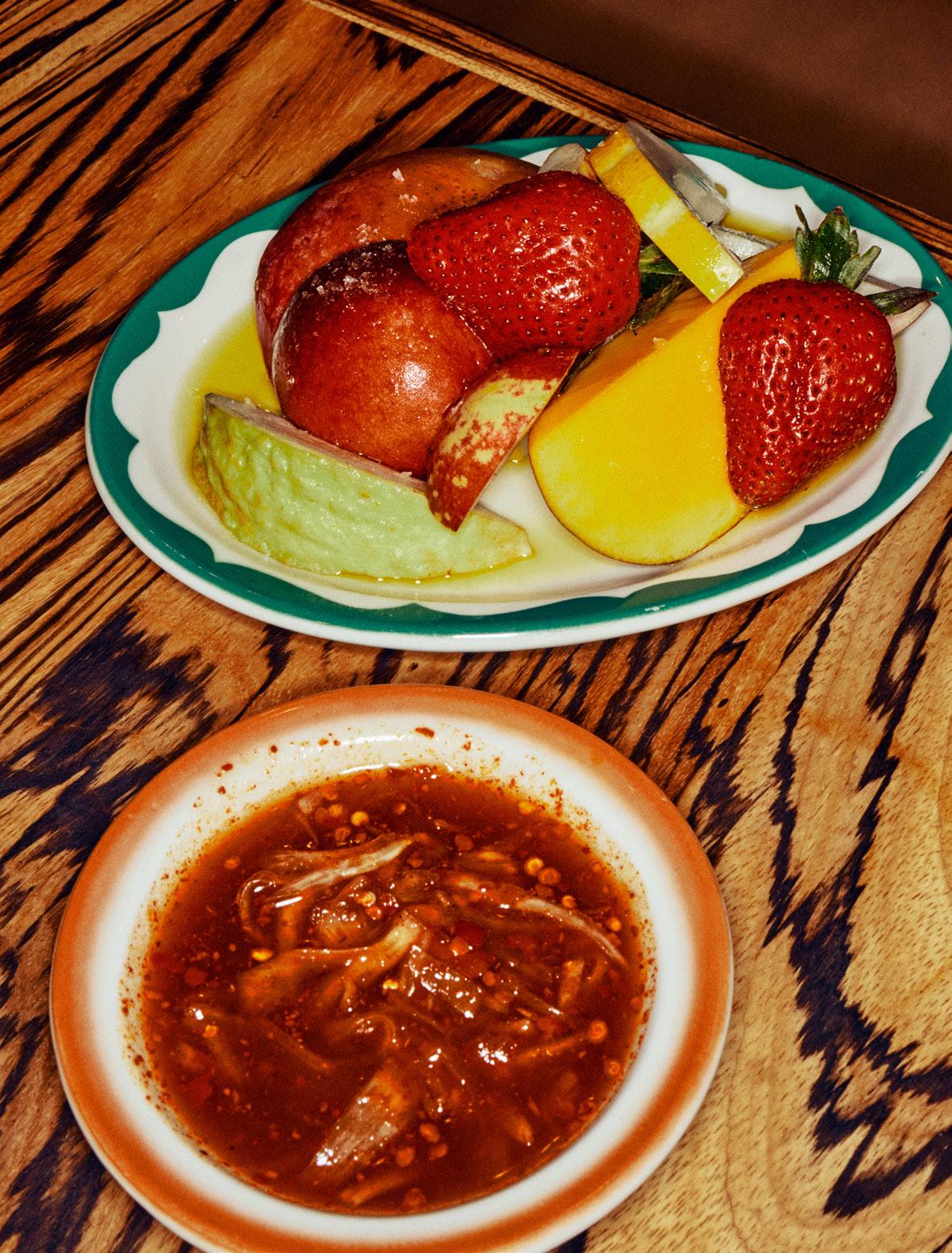
Could you describe your creative process— how do you go about creating a novel dish?
I like to think about a lot of things when I cook— probably too many. I do a lot of reference-based cooking. I’ve always said I’m a “stuff” person—I love diving into magazines, cookbooks, and old techniques. I went to culinary school, so I have a lot of reverence for traditional French technique. When I think about a dish, I often start with what my farmers tell me is coming in that week. That becomes the base, and then I ask myself, “What makes sense on the menu?”
Take laing, for example—a dish made with dried taro leaves stewed in coconut milk, Thai chili, and fermented shrimp paste. Traditionally, it’s cooked down into this thick, dark green mixture—it almost looks like artichoke dip, but with really spicy Thai chili and fermented shrimp paste.
For a long time, even up to now, I’ve been cooking my version à la minute, without the shrimp paste, because I love the brightness of fresh greens. And as anyone who’s cooked greens knows, if you cook them for too long, they kind of disappear and shrink, and shrink and shrink. At the beginning of the restaurant, I was like, “Oh, I’m spending so much money on everything. Let me try to just cook this all à la minute, so the greens don’t disappear.” But the more I think about the dish, the more I come back to its roots.
I went to the Philippines recently, and we drove through all of the streets and saw taro leaves hanging outside sari-sari stores to dry. And I was like, “Oh, that’s brilliant.” This helped me remember the taste of the traditional version of the dish.
Now, I’ve been getting all these collard greens from my farmer, Evan Tender, and I’ve been thinking about how I might smoke and dry them—kind of creating a 2.0 version of something that’s really close to my heart. When I’m creating a dish, I use my experiences as references… It’s really all about memory for me.
Do you see food as an effective medium for political expression?
1,000%, because it’s history. You can’t deny a root that is indigenous to its soil. That is my biggest drive right now: food being political. I recently read a food essay on an ingredient called freekeh, a Palestinian wheat berry that was discovered because the Israeli occupation was burning their crops. It became this amazing by-product, even though it was supposed to be destroyed.
When I’m thinking about cooking, I’m thinking about what I have the easiest access to in Appalachia. There are so many things—it’s such fruitful soil, and there are so many amazing farmers. I pulled my focus into what’s going to benefit the farmer, what’s closest to me, and how can I make that a Filipino dish? It feels like the hardest puzzle on Earth.
There’s this Hmong family that has been growing rice here, and they’re the only people growing rice in western North Carolina, and I try to take their simple ingredient and not manipulate it too much, because good cooking, to me, just focuses on the simplicity of the few things that you want to include. As a person who has been a maximalist for most of my life, I’ve tried dialing it back and focusing in, and working on quality versus quantity.
I’ll try my best to get some ingredients that sing to the cuisine, too, and that indigenize the menu. There have been times when I have tried to take out fish sauce or a fermented shrimp paste to appease the general public. Now, I try not to trim the cuisine itself to make it more palatable for everyone. I’m trying to diffuse my willingness or need to please everyone. I’ve let go of a lot of that, but I think the last thing I have to let go of is the food part. I don’t want to make it hard for people to eat at the restaurant, but I do think there’s a certain level of trimming down that you just can’t do, because it changes what the food really is.
You can’t deny a root that is indigenous to its soil.
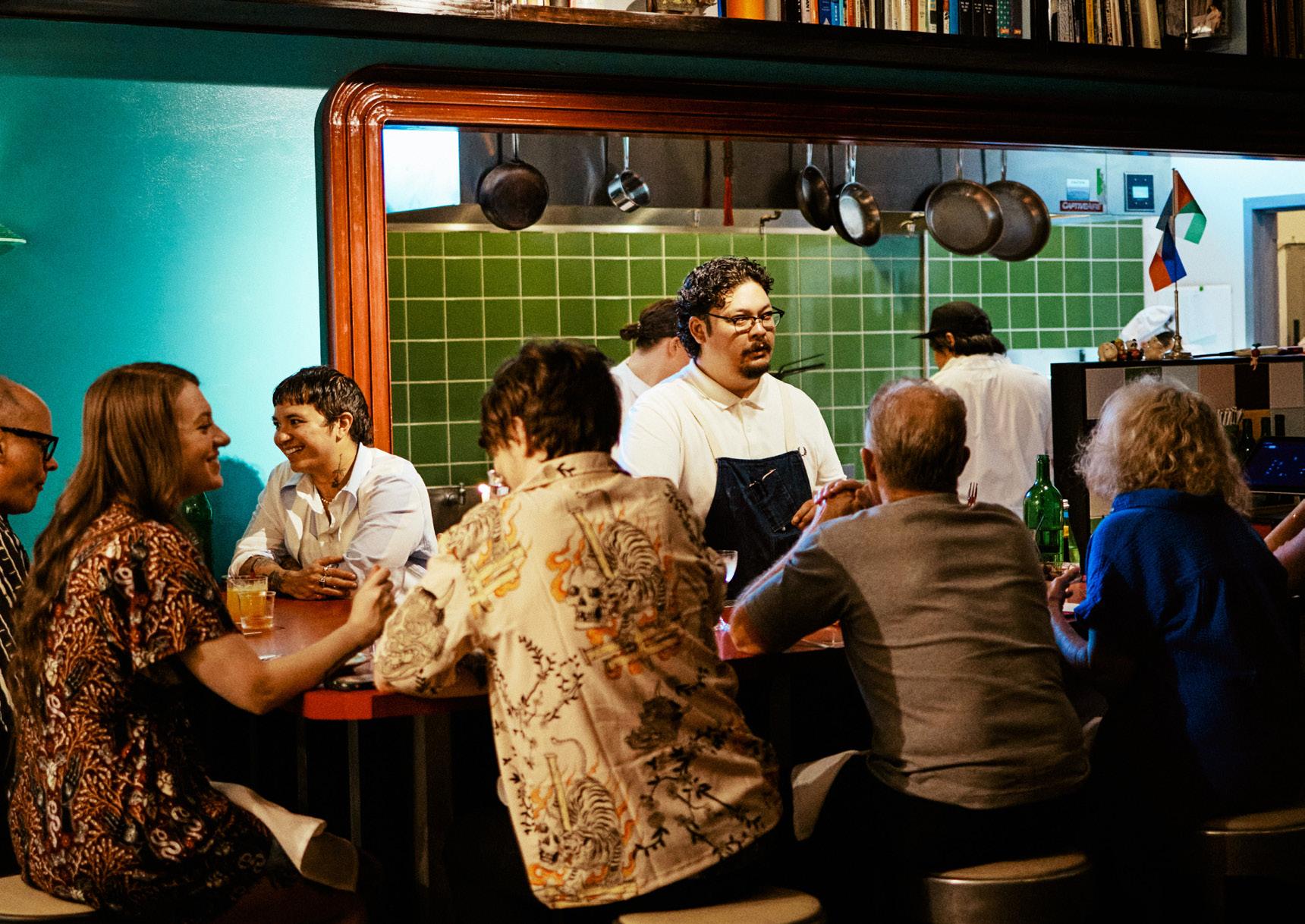
BY POLA JANCEWICZ
Photo Credit: Pulitzer Center
Can you tell me about your upbringing and what drew you to photojournalism?
I was born and raised in a middle-class family in Mexico City. Growing up in Mexico City, I didn’t know many photographers, and certainly not any photojournalists. Education here tends to follow a very linear path. If you can afford to become a doctor, you go into medicine. If you can afford to study law, you become a lawyer. It’s a very traditional set of social expectations so I didn’t explore photojournalism until later in life.
My mother is American. When I was 18, I left for the US. I went to college in the U.S., where I studied economics and international business. After that, I worked for a bank, then returned to Mexico and started work at an ad agency. It was there that I first met other photographers. We were working on commercials, and one project took me to northern Mexico, to the Copper Canyon. It was a social program for building schools in rural areas. The photographer on that project was also a journalist and, after talking to him, I was inspired to take black-and-white photography courses. That’s when I started learning about the old masters—the classic photographers of the early 20th century. Many of them were Eastern European and French. Robert Capa, of course, was a major influence, and that’s when I started getting into photography. There were also a few documentaries that stuck with me. One was about the ICC case against war criminals from the former Yugoslavia. A photographer from Khabib had taken an image that was used as evidence in the ICC trials.
Javier Manzano is a Mexican-American cinematographer, producer, and photojournalist focusing on Latin America and the Middle East. An independent filmmaker in over 50 countries, he has earned eight Emmy Awards and two BAFTA nominations. His work has appeared on National Geographic, HBO, and the BBC. His raw and intimate photojournalism has won him a Pulitzer Prize, the Bayeux-Calvados Normandy Award, and two World Press Photo Awards. Most famously, Manzano’s Pulitzer Prize-winning photograph, taken in Aleppo, Syria (2012), captures two Free Syrian Army soldiers in a sniper’s nest as light filters through bullet holes behind them. He was the first freelance photographer to win the award in 17 years.
That completely blew my mind—to see how photography could enact real change, could help put war criminals in prison.
That’s what every photojournalist aspires to do: to seek justice through their work. Of course, that kind of impact
is
rare—one in a million—but that’s what everybody aspires to do.
How do you mentally and physically prepare for your work, both before, during, and after being in conflict zones?
In the beginning, it was difficult because I didn’t know what I was doing. I was freelancing on top of already having a fulltime job at a few newspapers.
At the time, I was based in Denver and trying to decide whether to return to Mexico. I ended up taking a trip to Ciudad Juárez in mid-2010. Juárez, in the state of Chihuahua, is a border city directly across from El Paso, Texas. At that point, the city was at the peak of the drug war. The Juárez Cartel was being overtaken by the Sinaloa Cartel. It was a war zone.
I had been covering immigration for about four years by then, so I was familiar with the border. But things escalated after 2006 when President Calderón took office.
Two years into his presidency, he launched a war on the cartels, and the result was a massive spike in violence, especially in key border crossings like Juárez. It was such a contentious spot. Everybody wants to control it in the illegal trade.
That’s where I was in 2010—covering the conflict for most of the year. And that’s when I saw real violence. I remember the first few times that I was exposed to that. I had trouble sleeping, and I couldn’t unsee some of the things that I saw. It takes a while. You try to seek some of the counsel of the older journalists who have been doing it for longer than you have. They give you some advice, but at the end of the day, it’s just journalists taking care of journalists, and none of that involves professional psychologists or psychiatrists.
Over time, you do get desensitized to some of it, but hopefully not completely. The same thing goes for EMTs and ER doctors and surgeons, except they’re actually doing an amazing job with their hands and their knowledge, and we’re just taking pictures, or we’re taking video. The same goes for the activists and the homegrown social movements. That’s the difference. They’re saving lives. We’re just documenting. We just take images, we take video, and we just take from them, and we try to justify in our minds that our information is going to enact some change. That’s something that has never really sat well with me, as long as I’ve been doing this. You always have all these ethical dilemmas. I don’t think they get any easier, to be honest. And so, of course, it’s hard to grapple with that. I don’t do news that much anymore, and I certainly don’t do photojournalism. I stopped taking photos 10 years ago.
How do you see the role of Latin American journalists in global conflict reporting? Do you think they bring a different perspective compared to their American or European counterparts?
Where we are from, there’s very little to lose. We don’t have the opportunities that other, more developed regions of the world have. So it’s all or nothing. I really admire that from Latin American photojournalists.
There are a few photojournalists from Peru who are good because they go after it. There was one who was hanging out with the Taliban going to Kandahar before Kabul fell. Some of the work he did was phenomenal, and no one in their right mind would have done that except for him. The threshold for risk is probably bigger. I admire their work but unfortunately, I don’t see that many Latin American journalists out there. There are so many barriers to entering this industry because of the lack of opportunities in their home countries from local networks or media organizations; they don’t have the deep pockets that maybe American, British, or European networks have.
What was your experience like in the Middle East? What were some of the biggest challenges you faced?
The entire Middle East is a region where what happens on the ground is completely different from what was being reported. I covered Afghanistan. I lived there from the end of 2010 to 2012. And I always kept going back. At times, we’d get into the country through the mountains, or, whenever some roads opened up. When ISIS took over, we would smuggle ourselves into some of these countries.
Afghanistan has also always been really close to me. I was there when the Taliban came into Kabul.
We’ve all covered this. We’ve all written the words or made the documentaries that recount what’s happened. And you know, nothing really changes in U.S. foreign policy. Every four years, there’s a wild swing from one side to the other, leaving U.S. allies looking at themselves and asking ‘who do we trust now?’ I don’t know what good our work has done over the last 15 years covering the Middle East, if, at the end of the day, Americans only want to vote for less taxes and cheaper gas. American voters have an outsized representation in what happens across the planet because of their votes. That vote is going to affect someone in the West Bank. It’s going to affect someone in Bangladesh. It’s going to affect someone in Iran, Africa, Mexico.
I
wish that Americans exercised their vote with an equal amount of informed responsibility, which I don’t see, and that’s where we have failed as the media.
How do you think photojournalism shapes public perception and policy?
The real truth is that local journalism is what really enacts change. I remember the Children’s Hospital of Orange County in California got a $2 million donation because of some of the stories that we did.
When you’re doing international work, you are rubbing against other country’s interests. A lot of the networks are not going to give you the complete story. Take CNN. You have CNN Domestic, and you have CNN International. It’s as if we were living in completely different galaxies. What’s being offered to a national audience? It’s a very distilled, simplified, sanitized version of what really goes on out in the world. CNN International has reporters who are trying to get to the bottom of things, and the audience is completely different.
Change, positive change, is very hard unless you come across something massive.
What led you to transition from photography to documentary filmmaking?
When I won the Pulitzer, I had already decided to move on to video. I knew that photojournalism would face some real economic pressures in the industry. I didn’t think it was worth exposing myself for the prices that they paid, especially since I was working a lot for wire services, which is very badly paid work. Video was more involved. I’m not gonna say it is an art form because that’s giving it too much credit, but it’s more involved, and you have to crop the story in your mind, visually. So I thought, for me, it was more of a challenge than taking photographs.
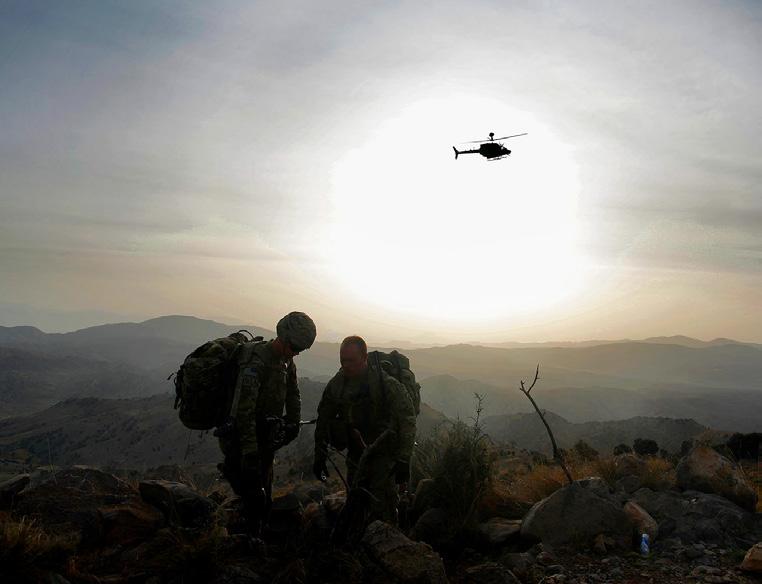
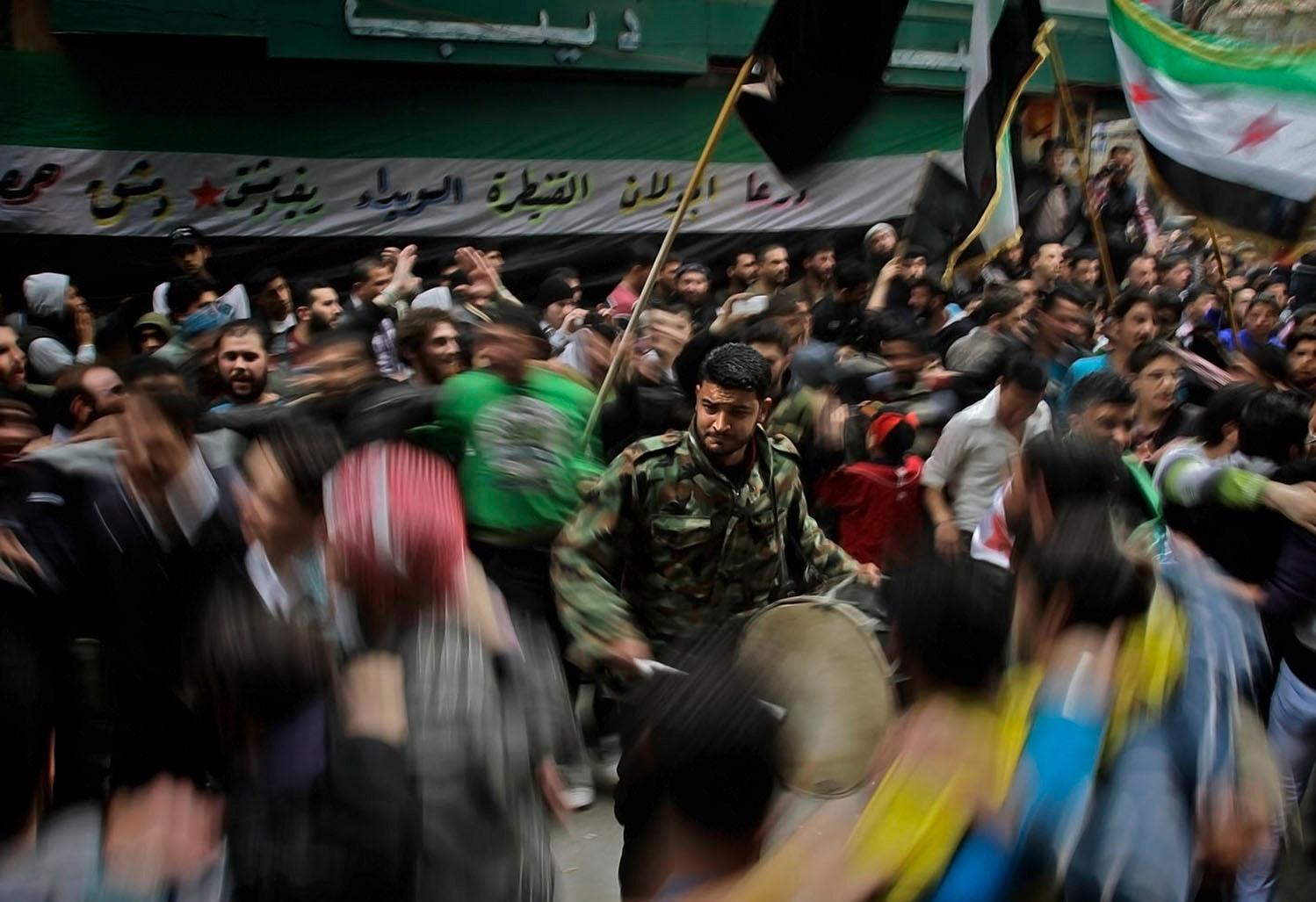
Is photojournalism a dying field?
I don’t think it’s dying. There’s gonna be fewer people doing it and I think it’s gonna shift more into local journalists. It’s not necessarily a bad thing
In terms of the future of photojournalism, I worry that, with the pressures of AI, it’s going to suffer. AI recently made some photographs from D-Day, and they are amazing; the level of perfection that AI has achieved in mimicking a photojournalistic image is incredible. The 20th century was the golden age for photojournalism. The 80s, 60s, 70s; Vietnam, El Salvador, Nicaragua, and the Cold War. I just don’t see photojournalists being able to make a living the way they did in the past. I also don’t see ad revenue or the budgets for photojournalists to continue working. And so it’s going to become more of the responsibility of local photojournalists to tell their own stories, whether it’s with a camera or with an iPhone.
We have this arrogance that only Western journalists have the monopoly of truth, and they are the only ones who can look at a situation objectively. That’s really arrogant on our part, and we’ve been doing that for decades, descending on countries that don’t speak our language and believing that we’re better than local journalists. We’re obviously not.
I do see a resurgence in local photojournalists in the Middle East, Africa, and Latin America. They’re fantastic, and they have amazing eyes. I love to see their work, and I love to see them being recognized.
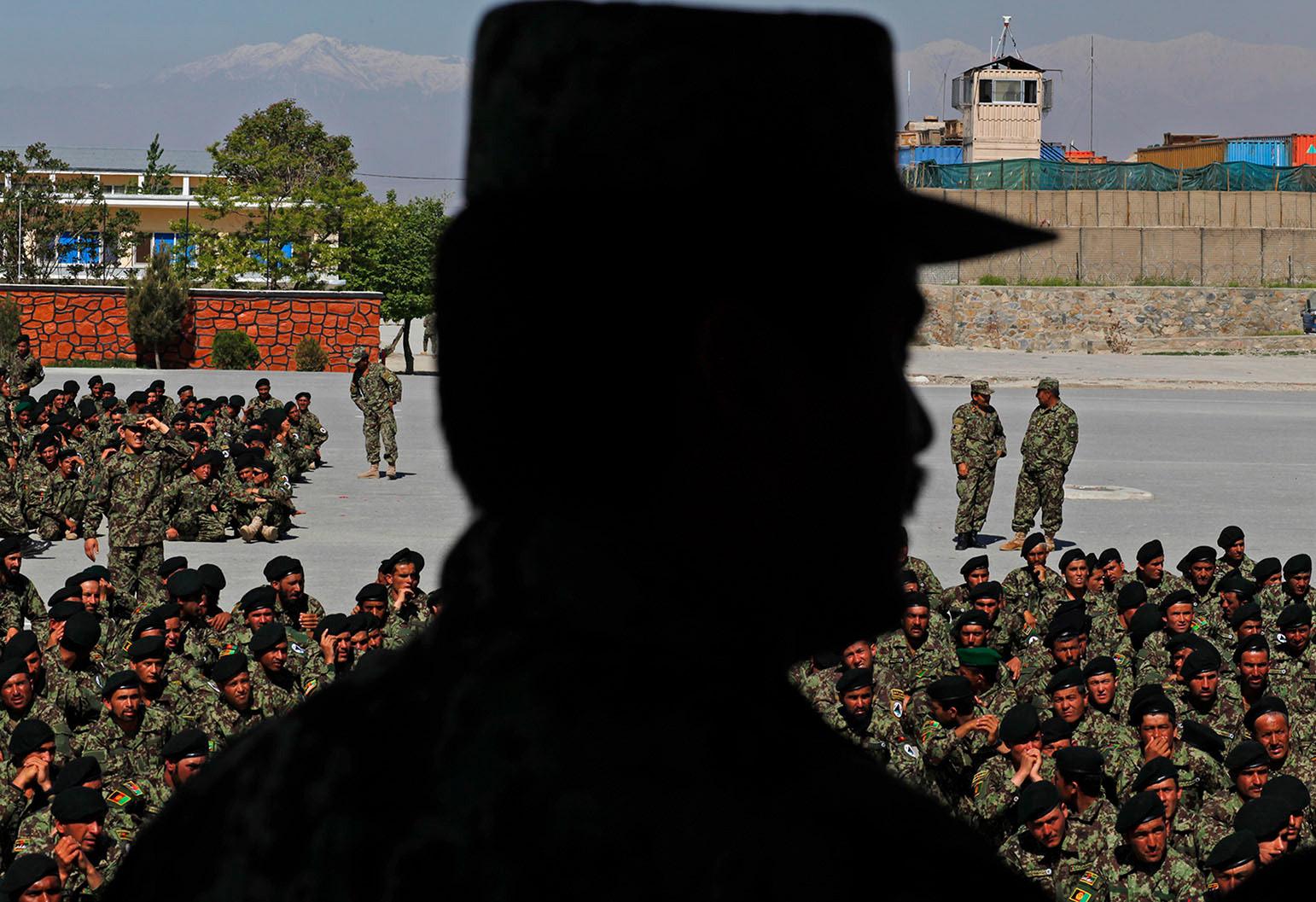
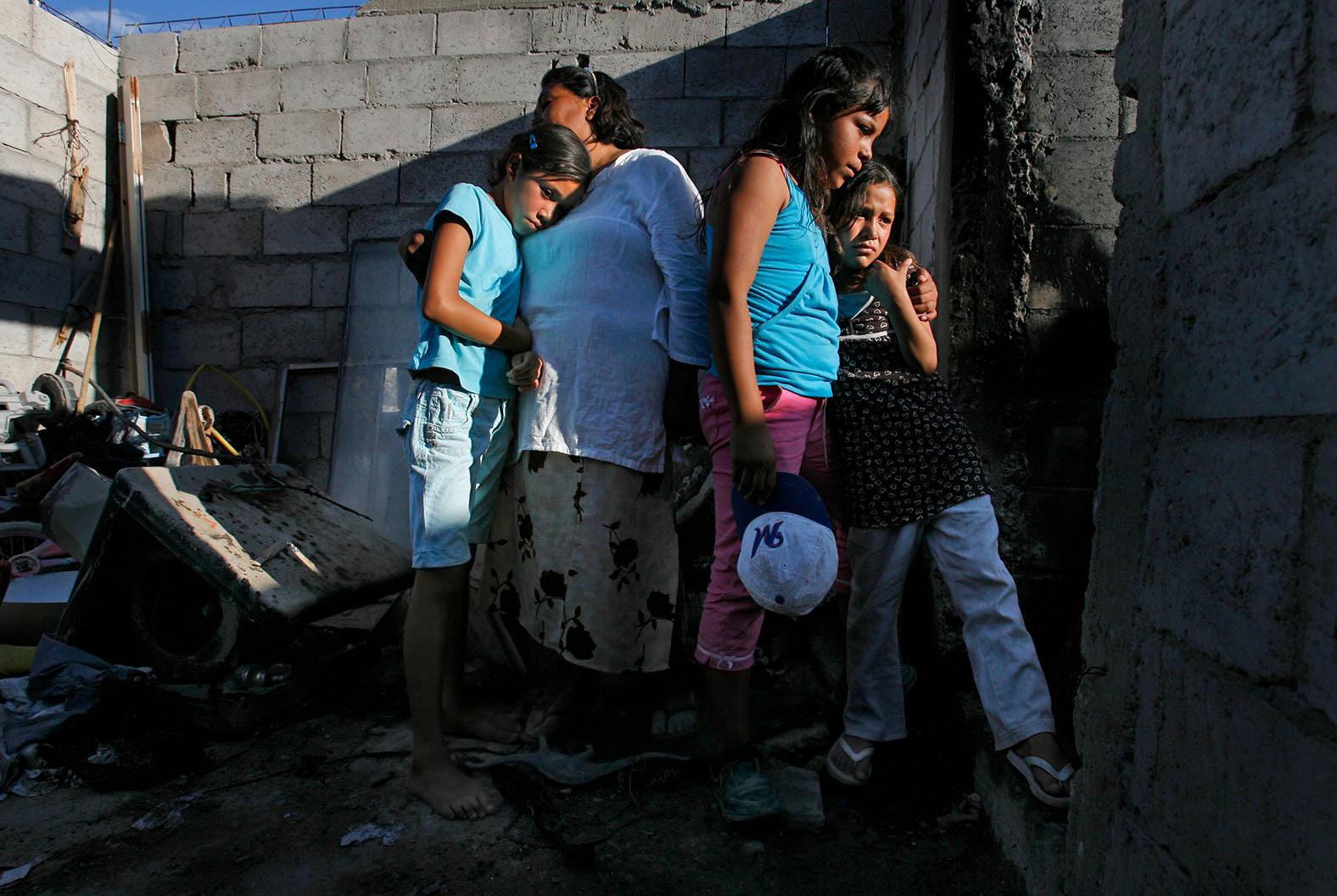
No one can tell a story better than the people from the region. Nobody can talk about themselves better than they can.
We have this arrogance that only Western journalists have the monopoly of truth, and they are the only ones who can look at a situation objectively. That’s really arrogant on our part, and we’ve been doing that for decades, descending on countries that don’t speak our language and believing that we’re better than local journalists. We’re obviously not.
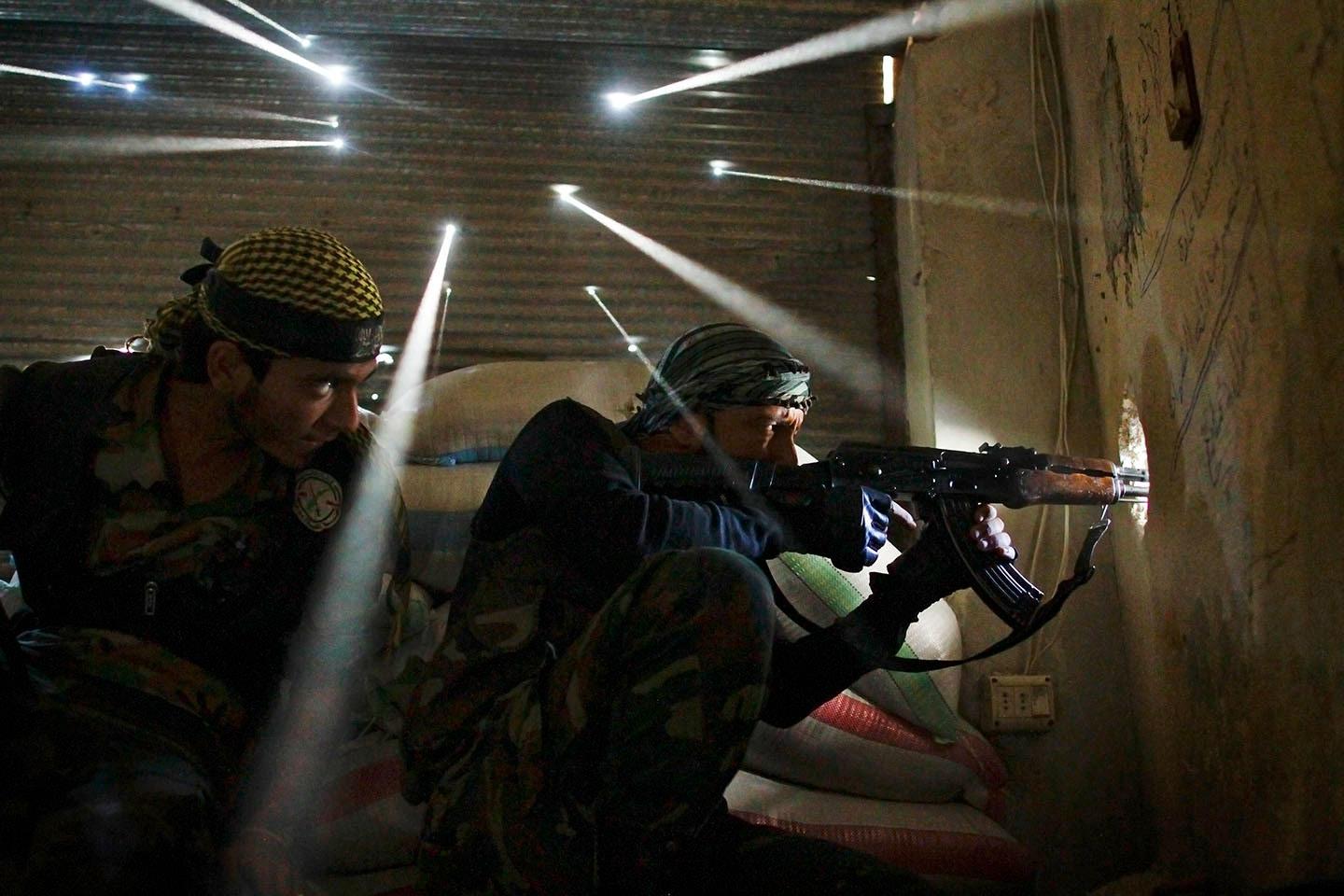
Mark Seliger was born in Amarillo, Texas, in 1959. He is an acclaimed photographer, most recognized for his portraiture, and was the chief photographer for Rolling Stone from 1992 to 2002. Afterwards, he worked at GQ and Vanity Fair until 2012. In addition to his editorial work, he has published several books, including When They Came to Take My Father: Voices of the Holocaust and On Christopher Street: Transgender Stories. His photographs have been showcased at the Smithsonian Institution in Washington, D.C. and the National Portrait Gallery in London, among other museums.
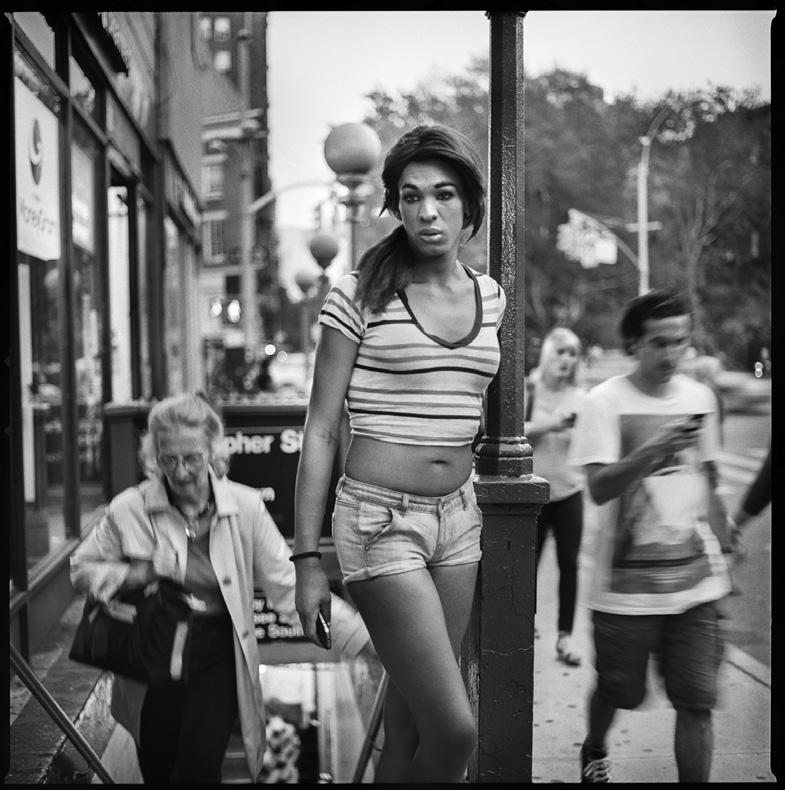
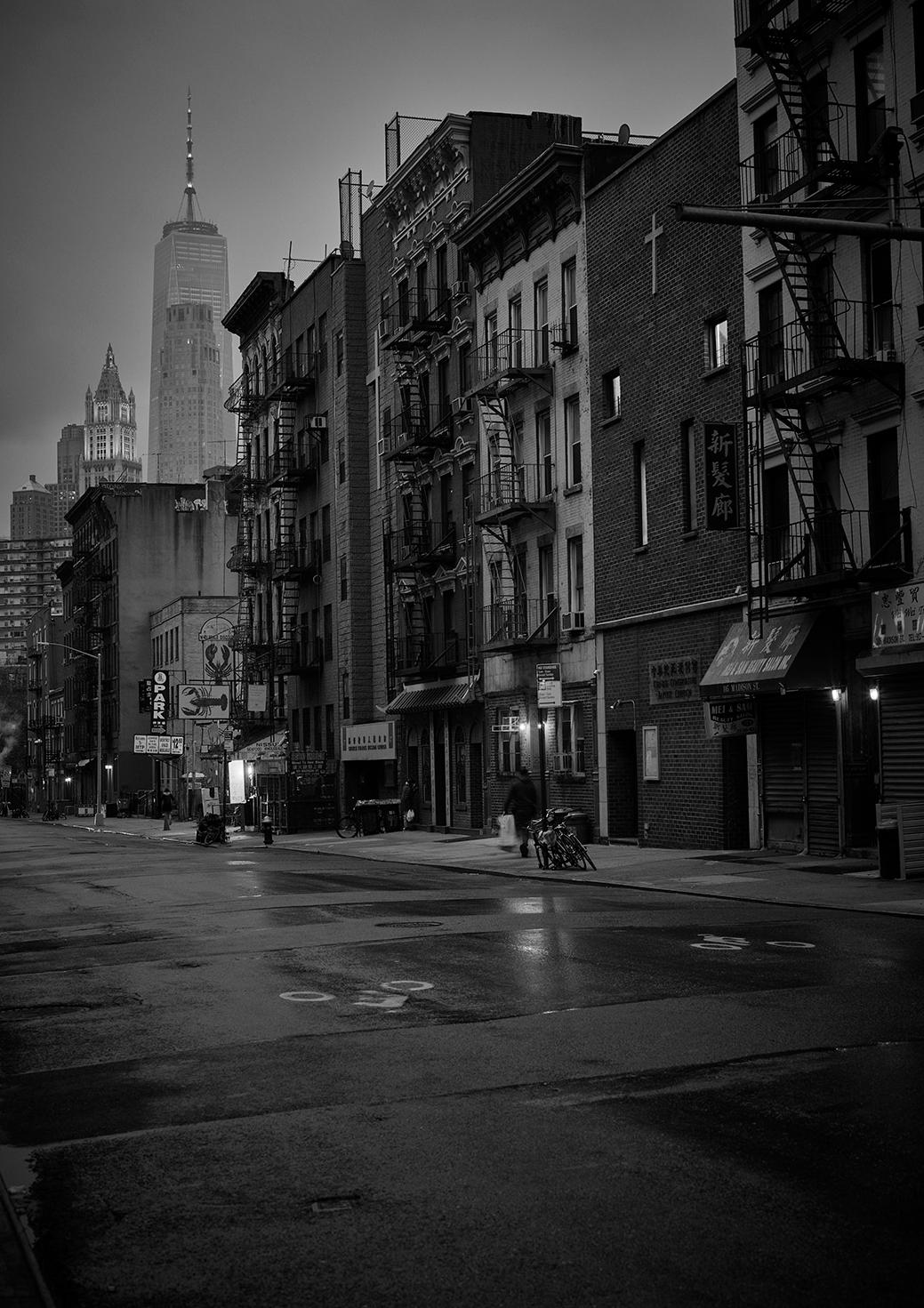
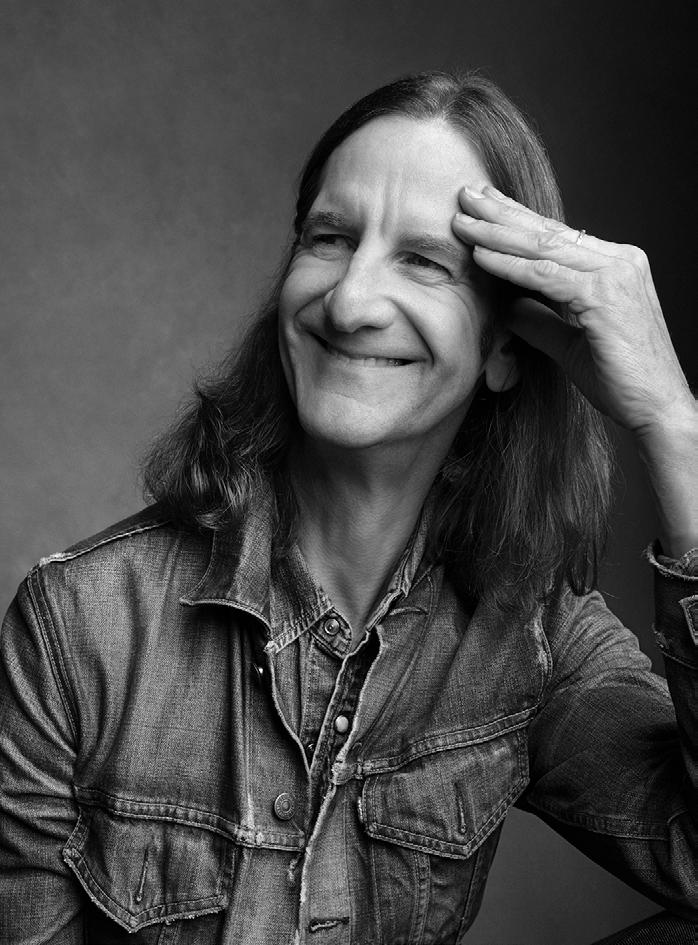
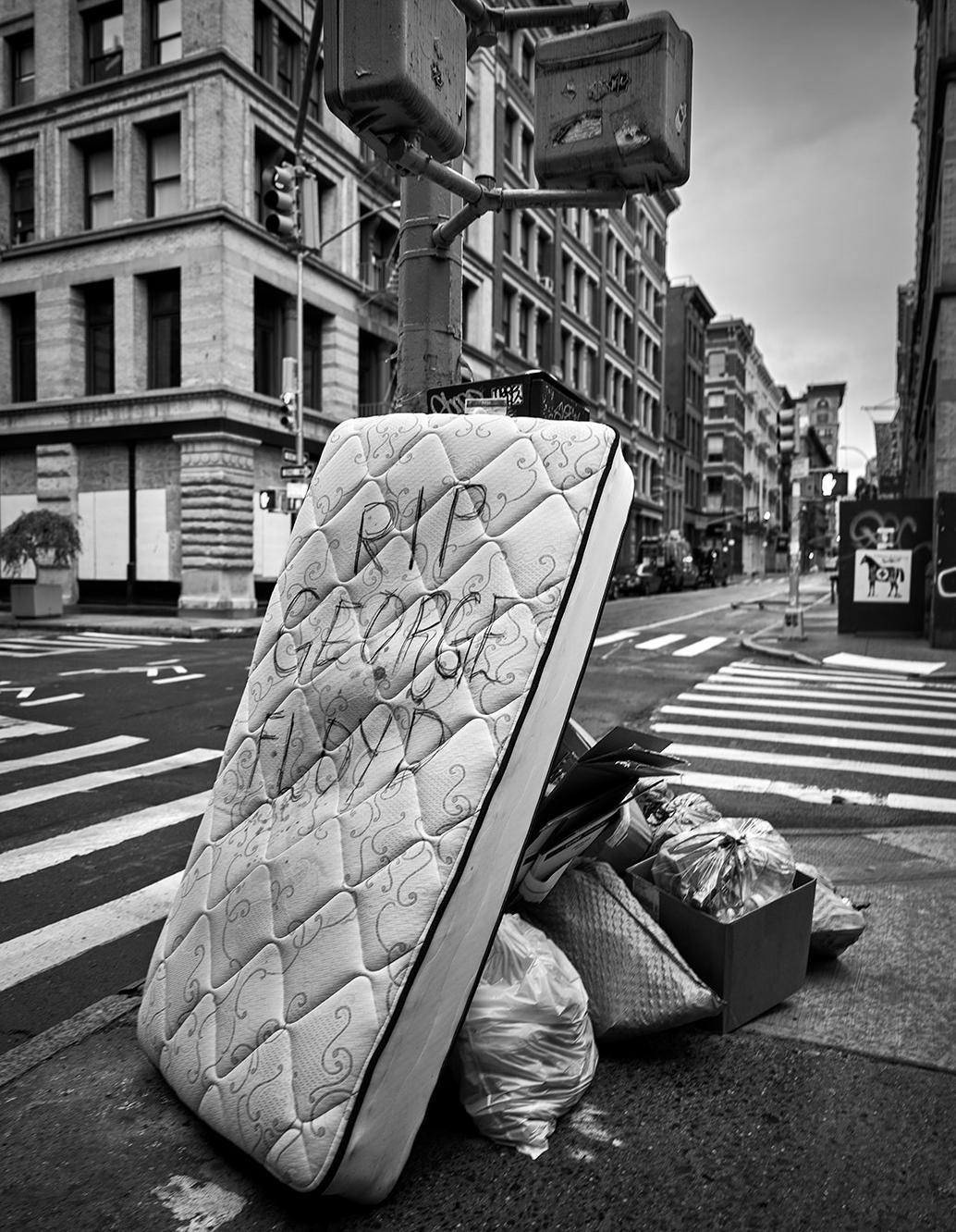
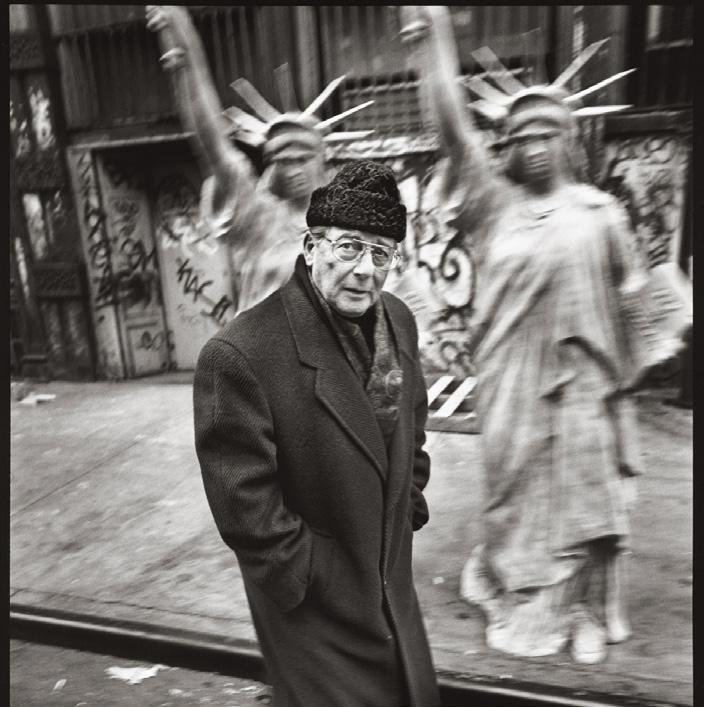
What sparked your interest in photography, and how did you enter the field? Why are you especially drawn to portraiture?
When I was a teenager, my mom and dad signed me up for a darkroom class at the Jewish Community Center in Houston, Texas. [At first], I fell in love with the idea of being in the darkroom, but I didn’t really care much about taking pictures. That’s where I started, but then I finally figured out how to take pictures. I enjoy the process of working and collaborating with people I find. There’s a very deep well of different approaches I can take with portraiture, whether it be in the studio or environmental, whether it’s documentary or entertainment. So, it just opens up a wider door for me.
Could you please describe your book, On Christopher Street— how did you come upon the idea, and what were your hopes in capturing it?
Christopher Street came from the simple idea of noticing that my neighborhood, specifically on Christopher Street, was evaporating and being gentrified. In my opinion, Christopher Street is almost like Ellis Island for blurry gender lines. Once I went out and started to talk to people and photograph them, many of my subjects revealed that they were transgender. Then, through interviews and getting to know them a little bit better, I felt like that was more of an interesting story to tell.
The Christopher Street project, as a whole, is something I’m really proud of because it was something that I didn’t know anything about. By taking the time and getting to know my subjects, I was able to really understand a lot of the journey that they’re going through. What you first see isn’t necessarily what it is. Exploring their stories with them and finding a way to express who they were made me want to focus on the idea of them being seen for the very first time as their authentic self. To me, that was the biggest part of a successful experience—to be able to tell that story to other people.
In “The City That Finally Sleeps,” people are almost entirely absent. How did the shift to landscapes alter the impact and perception of your photographs?
That was a real departure for me because I’m typically known for photographing people. But what I loved about this project was that New York City and these destinations were very iconic, and yet there were no people. I felt as if it was my obligation to go out and record, probably the only time in my lifetime, hopefully, the city in that state of rest. I didn’t have to ask anyone any questions. I just went and took the picture, and it was like a movie set because nobody was around. I had a chance to really experience the stillness. It was a record, but it was also almost like a portrait of the city without people in it, the city being the portrait.
How does your creative process change between your editorial/ fashion work and documentary projects?
It’s all paintbrush in terms of the tools that you use. Portraiture is more about my subject matter, so I do a lot of studying and preplanning on the front end, then getting to know who my characters are, and finally, concepting. Sometimes, it’s a very reductive moment, and sometimes, it’s a very involved moment of creating a scene. For my fashion work, it’s not dissimilar. But, instead of people being the hero, fashion is the hero. My documentary work more so relies on a common thread of a storyline—getting to know what the story is on the front end so that I have a directive and a direction of where the entire piece is going to go, and then thinking in terms of that being a bigger body of work and documenting more of a culture.
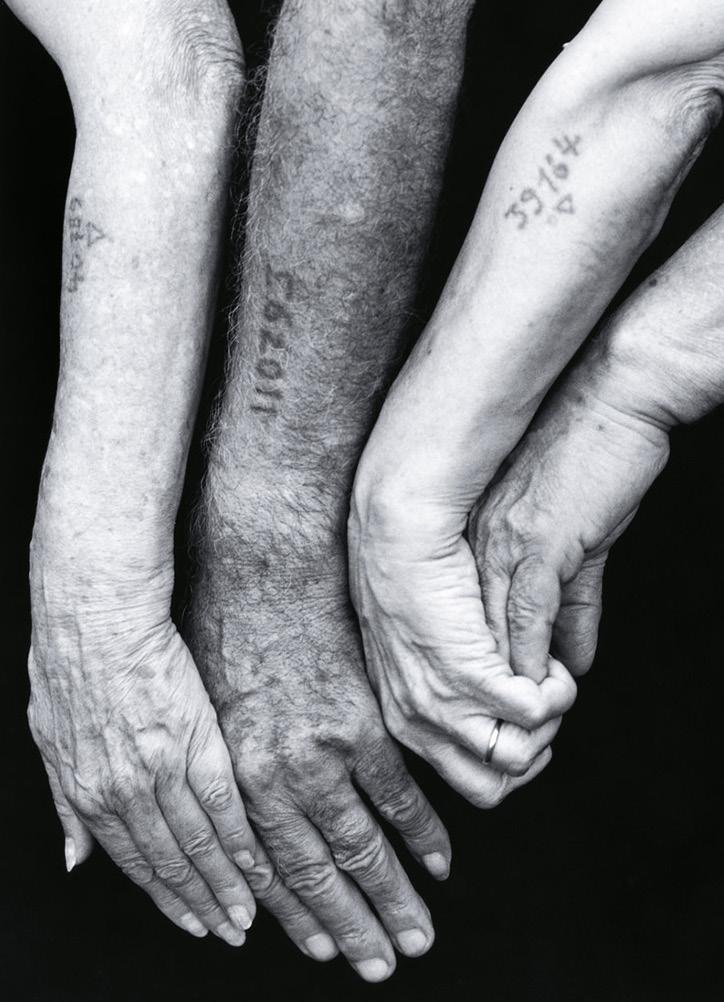
In When They Came to Take My Father: Voices of the Holocaust, you portray a wide range of emotions in your subjects. What guided that choice, and do you believe that photography can serve as a more humanistic retelling of history?
That was my first book. It was inspired by three brothers who owned a bakery where I grew up. I was definitely very aware of the Holocaust through my early Jewish education. When I would go in with my folks to pick up food or bread, I noticed the tattoos on the brother’s arms, and I thought, one day, if I ever have an opportunity, I’d really like to be able to tell their story and other people’s stories of what it was like to go through something like that.
I think we’re all very visual, and, especially now, more visual than ever. Photography gives you a door to open to be able to start the process of empathy, whether it shocks you, greets you, smiles upon you, or disgusts you. You need that immediacy to evoke a certain interest, and so it’s the preemptive entry into whatever story is being told. It works as a companion piece to a story in order to be able to illustrate a point more honestly and truthfully.
Do you see photography as an effective medium for political expression?
Absolutely. Even though there are new forms of ways you can manipulate a photograph, the potential of photography remaining an immediacy to truth is still prevalent. It really is up to the photographer to make the decision of how they want to present it, but I like and prefer the honesty of an image. I don’t mind theatrical or fantastical, but I feel like, in a day and age where there’s a lot of ability to change the way a photograph looks, keeping it in camera and trying to do less with it instead of radically changing what you have is my preference.
I think [political meaning in art] can be a very subtle experience. I think it can be abstracted in terms of more of an observation rather than a direct opinion. In photography, we tend to focus more on observation and less on personal opinion, but I think it can help establish a greater understanding of the political landscape.
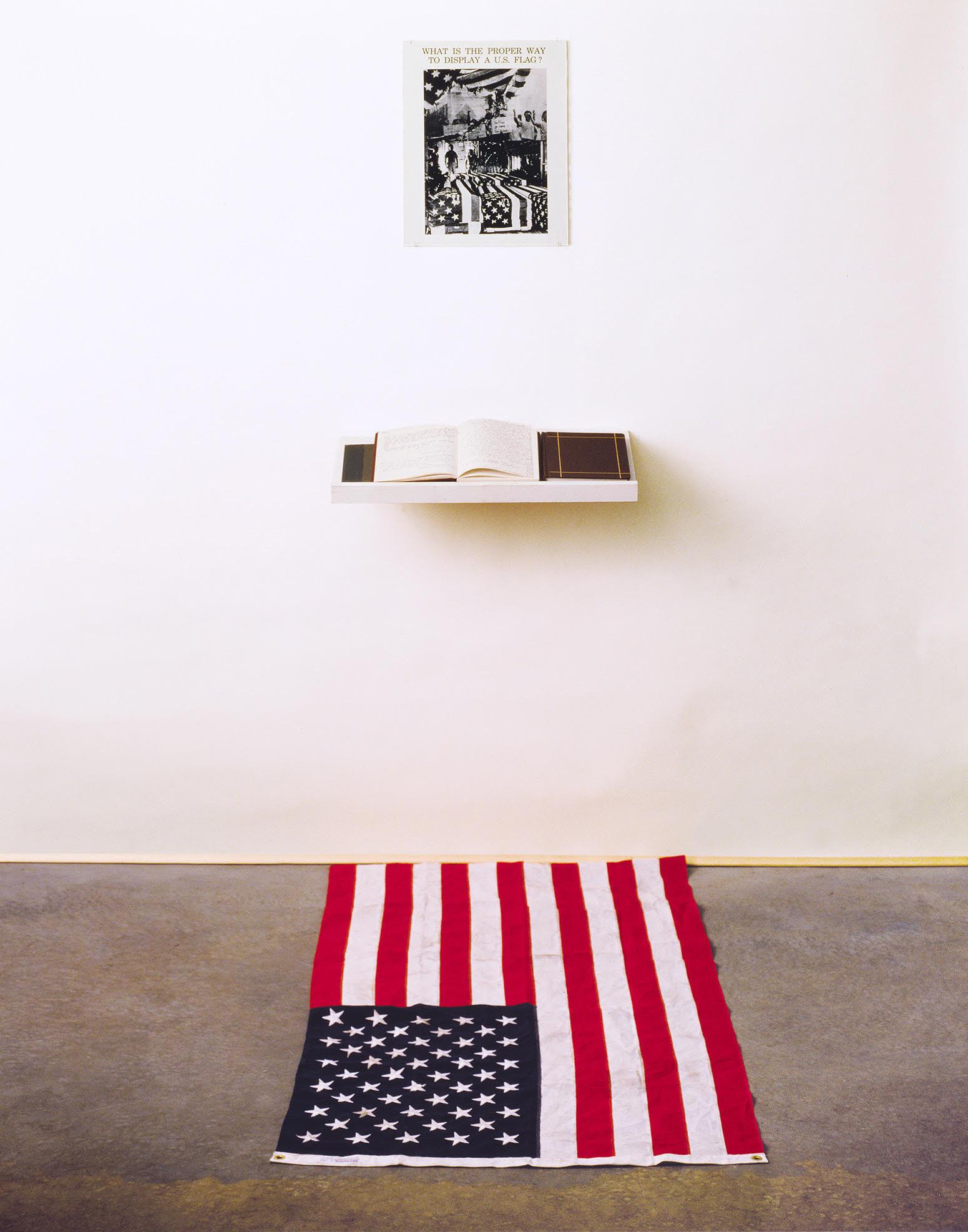
Dread Scott
Jody Quon
Silver Iocovozzi
Craig Costello
Lee Quinones
Deborah Copaken