

Game Changer
Third Candidate Enters Race for Ward 1


Editors-in-Chief
Aaron Mak
David Steiner
Publisher Derek Soled
Managing Editors
Kohler Bruno
Samantha Gardner
Senior Editors
Justin Schuster
Eric Stern
Associate Editors
Zack Austin
Yuval Ben-David
Alex Cooley
Rhys Dubin
Katherine Fang
Charlotte Finegold
Blog Editor
Azeezat Adeleke
Online Editors
Anthony Kayruz
Salaar Shaikh
Business Manager
Jacek Oleszczuk
Graphic Designer
Ana Barros
Board of Advisors
John Lewis Gaddis
Robert A. Lovett Professor of Military and Naval History, Yale University
David Gergen
Editor-at-Large, U.S. News and World Report
Anthony Kronman
Former Dean, Yale Law School
Ian Shapiro
Director, Yale Center for International and Area Studies
This magazine is published by Yale College students, and Yale University is not responsible for its contents. The opinions expressed by the contributors to The Politic do not necessarily reflect those of its staff or advertisers.





Equal Dignity, Equal Justice
Examining Unorthodox Orthodox Jewish Feminism
By Gabrielle Deutch
When walking the halls of the local orthodox synagogue in my hometown of Boca Raton, I can’t actually see the wall; every square inch, at least at eye level, is covered with a collage showcasing work done by congregants. There are several sets of pictures capturing events held with lawmakers and politicians. There is documentation of this year’s Purim carnival. There are framed photographs of celebrated Jewish spiritual leaders. A couple of the displays depict rallies held by congregants, usually a showing of solidarity celebrating these Jews’ connection to Israel.
In between all of these overwhelming spectacles of joy and happiness and celebration, there is a photo of the congregants engaging in a communitywide protest about Jewish divorce law. The men in the photograph have their shirtsleeves rolled up with grimacing mouths, their yarmulkes almost flying off their heads. In an unusual showing of equality for the typically modest orthodox Jews, the women in calf-length skirts with scarves covering their heads are interspersed in the crowd, also indignant as they, too, hope for justice. The egalitarianism in the picture is striking. The women are not the only ones who hold babies, and the action is not left to the men. For a community in which women often remain in the background while men hold leadership roles, this is markedly unique.
Very few issues would elicit such a response from a modern orthodox synagogue. Most questions are resolved by looking to halacha—Jewish law— for the answer. In this case, though, halacha creates the problem. What do the protesters—indeed, the entirety of my hometown synagogue—want? Their signs say: “Give a gett.” A gett is a special
Orthodox Jews join together in protest against this injustice, but mass demonstration is not the only step they take. Within the orthodox community— bound by tradition and law, God and spirituality, prescribed gender roles—a growing feminist movement is taking shape.
document written by a rabbinic council that is necessary for a couple to have a halachic divorce. The concept seems simple enough: when civil divorces occur, all that is required are some signed papers. But for orthodox Jews, who apply halacha to their daily lives, it does not quite work that way. The problem is that only the husband can “give” a gett. This leaves the wife fully submissive to her husband. An initial response might be to go on with the divorce without the gett; after all, no one can stop a woman from moving out and living alone. She would still receive a civil divorce, and in the eyes of the American legal system, she would be freed from her marriage. But to a woman who believes fully in the power of Jewish law and whose community does so as well, it is not enough to have a judge declare the couple divorced. No, in the orthodox world, a woman whose husband does not grant her a gett is, in a sense, chained to him—she is an agunah (or agunot, if referring to more than one). Agunot, left in a state of limbo, cannot ever remarry. Regardless of the clarity of a wife’s case against her husband as abusive or guilty of a crime, or of the urging of the community’s rabbi for the man to acquiesce, or of the status of the couple’s civil divorce, no one can force a husband to give this gett.
Orthodox Jews join together in protest against this injustice, but mass demonstration is not the only step they take. Within the orthodox community— bound by tradition and law, God and spirituality, prescribed gender roles—a growing feminist movement is taking shape. Organizations such as the Jewish Orthodox Feminist Alliance (JOFA) in America and its Israeli equivalent, Kolech, are growing. But with the increasing prominence of these organizations comes a crucial question: in a world dominated by religion, in which halacha and the Torah set a limit on the place of women in traditional Judaism, do feminists have a place? The answer is unequivocally yes. The term “feminism” is fraught with controversy. Every dictionary, political organization, and person has a different definition for the word. These definitions vary in terms of subtleties and nuances, but they ultimately seem to agree on one thing: equality for men and women. If this is the case, what kind of feminism do orthodox women practice if their glass ceiling might be just out of reach due to the bounds of halacha?
Sharon Weiss-Greenberg, Executive Director of JOFA, sees feminism as especially important for religious Judaism. The purpose of JOFA, she says, is “to create gender balance and gender equity within the orthodox community.” WeissGreenberg argues, “there is a disparity inherent in halacha.” Although there are distinctive roles for men and women, “there is a set of restrictions that have been
placed over time on women that don’t have anything to do with halacha.” This is where JOFA steps in: to empower women to discern the difference between what roles are actually unavailable to them according to religious law, and which constraints have been placed on them by religious interpretations over the years. According to Weiss-Greenberg, JOFA serves two main purposes: to expand the role of women in professional and lay leadership positions, and to expand opportunities for women in orthodox ritual. The plight of agunot and Jewish divorce both factor largely into the work of JOFA. Both Jewish feminists and traditionalists agree on this controversy. Yocheved Goldberg, the wife of a prominent orthodox rabbi in Boca Raton, Florida, works together with her husband to help resolve the problem of the agunah. She disagrees with JOFA’s belief that “women [should be] more in the forefront,” although she does collaborate with them on this issue—because to Goldberg, Jewish divorce is not a feminist issue but an important issue regarding tradition that happens to involve women.
But the tensions between feminism and current interpretations of Judaism extend beyond divorce. Blu Greenberg, referred to as the “founder of orthodox Jewish feminism” by Mark Oppenheimer of the New York Times, sees in her tradition many other issues that must be addressed. Greenberg turned to feminism in the 1970’s after her husband bought her a copy of Betty Friedan’s The Feminine Mystique, although she did clarify in a conversation with The Politic, “I don’t hold [Judaism and feminism] as equal[…] Judaism is my identity.” But this did not mean that she was content with her religion exactly as it was taught to her. “I thought in terms of justice,” Greenberg says. For her, justice meant “equal value, equal merit, equal dignity” for women.
It seems simple, this idea that women in the orthodox Jewish community and their ideas should be afforded merit, value, and dignity. Goldberg is “very comfortable with the role women play in Judaism,” and she does not view herself as a feminist. But she still recognizes that “we’re all finding our own paths, finding what works for us, and it is not fair to judge.” It seems only natural, then, that women in orthodox Judaism be given respect as they follow their own paths, but criticism may follow if their paths push the boundaries of tradition.
Sarah Hurwitz is one of many women trying to challenge both the gap in female leadership in orthodox Judaism as well as the criticism that often accompanies this goal. Hurwitz was ordained in 2009, meaning she underwent all necessary training and studying to become a rabbi—a title that had never yet been bestowed upon an orthodox woman. First she was given the title “Maharat,” a
Hebrew acronym signifying the actions and responsibilities of a rabbi. Later, she was given the title “Rabba,” a feminized version of “Rabbi.” At this point great controversy arose. This title was “a touchy topic to people,” Hurwitz told The Politic. Being called a rabba, although fully compatible with Jewish law, elicited such a strong response because rabbinic positions have only ever been open to men. Hurwitz’s previous title of Maharat hardly caused a stir, so she reports, “there is more and more acceptance for women” once it becomes clear that “they want to serve the Jewish community and do the work of God.” Simply put, the disputes stemmed from the title rather than the essence of the work Hurwitz was doing. If the problem is one of nomenclature, she seems to think, then it can be fixed. Hurwitz, and indeed the whole of JOFA, believe that feminism is not contradictory to orthodoxy.
Of course, there is a broad spectrum of orthodox feminist beliefs. Goldberg points out that there is some variation in the extent to which people want to promote women in leadership: some are moderate, with the goal of putting “women on [synagogue] boards, involved behind the scenes in leadership roles,” and others are staunch in advocating
for women “leading prayers, even being rabbis, being presidents of [synagogues].” JOFA does support all of these positions, which would put it at odds with many women within the orthodox world. However, JOFA and essentially the whole of Jewish orthodoxy unite about the aforementioned agunot—the wives who are held in limbo, tripped by unrelenting husbands. But feminists claim it as a women’s issue while others simply call it a halachic debate. Blu Greenberg sees this as “a problem of real injustice and imbalance,” since only the husband can grant the divorce, and as such it is a necessary and crucial cause of Jewish feminists. However, because it is codified in Jewish law, it is especially hard to create the profound change needed to benefit these women.
This dichotomy is implicit in all that orthodox feminists do. Greenberg concedes that JOFA has lost supporters because it holds halacha as supreme to all other principles and thus its unwillingness to work contrary to religious law. But JOFA has similarly lost supporters because it seeks to empower women in a way not traditionally practiced in the orthodox world; it faces criticism on both ends of the ideological spectrum. At its core, Jewish orthodox feminism is a battle of

certain traditions under the confines of a broader traditional framework. It could be argued that as such, orthodox feminism cannot ever succeed. But just because the feminism practiced by orthodox Jews may not mirror the feminism in Blu Greenberg’s copy of The Feminine Mystique does not mean it is any less legitimate than secular feminism. Ultimately, orthodox feminism will have limitations. Women and men in orthodox Judaism will never be allowed to do all the exact same things. This, though, is not what Blu Greenberg wants, or Sharon Weiss Greenberg as director of JOFA, or even Sarah Hurwitz, the first ordained female orthodox rabbi. In fact, they, too, define feminism in the context of equality. Hurwitz calls it “equality for women: the right to strive for what they hope and dream of doing.” For Blu Greenberg, it is “equal dignity and equal justice, and to remove discrimination and injustice.” If feminists see their movement as empowering women, they must accept feminists in whichever way they view their own individual movements. After all, Friedan wrote, “Women quite simply were stopped at a state of evolution far short of their human capacity.” Anyone who wants to bridge that gap should be empowered and encouraged to do so.
In response to the viral “Who Needs Feminism” blog, the Jewish Orthodox Feminist Alliance (JOFA) started a Tumblr blog called, “Who Needs ... Jewish Feminism? Orthodox Feminism?” in 2012. Here, Orthodox Jews of both genders post pictures with their thoughts on the impact of feminism in their daily lives.

CLAY Breaks the Mold
Choose Life At Yale Re-Ignites the Abortion Debate
By Zach Cohen
It’s hard to spot Saint Gianna at first. The pregnancy center is tucked away in the basement of a small building on the corner of Whitney and Trumbull, across the street from the cheese bistro, Caseus. The building includes several apartments and a psychologist’s office. The only indication that the center exists is a small sign that reads: “Pregnant? We Can Help.”
This year, CLAY, or Choose Life At Yale, sent volunteers to the Saint Gianna center every Saturday. Unless you’re one of its active members, you may not have seen much of them. You probably haven’t volunteered with them at Saint Gianna’s, where women can seek assistance before and after giving birth. You probably didn’t walk by their recent photo exhibit in Bass Café, which featured the various stages of fetal development. And you probably didn’t go to their big conference in the fall, Vita et Veritas. For many Yalies, CLAY is just a name, one synonymous with “that pro-life group.” But on campus, CLAY’s label as “that group” does not imply contempt. Rather it gives people a quick, albeit simplistic, way of knowing who they are and what they represent.
CLAY’s mission is to make the pro-life vision “intelligible on college campuses.” For too long, its website states, pro-life
organizations at liberal universities have felt marginalized for beliefs that are “hardly in vogue within society.” CLAY members describe their group as a community for pro-life students on campus. While Yale may be considered a liberal campus, it has always had a small but vocal share of conservatives. A group of students founded CLAY in 2003 as a way to consolidate conservative opinion in response to the 30th anniversary of Roe v. Wade. Part of the organization focuses on advocacy; it strives to share its members’ perspectives on a belief they hold dear. The other part seems motivated by preservation; it wants to ensure its values are not lost on Yale’s campus. CLAY’s focus therefore is both promotional and practical.
The group is known more, however, for the controversy it creates. Last April, CLAY applied for membership in Dwight Hall, an independent student-run organization that coordinates social justice work in New Haven and beyond. Dwight Hall had granted the group provisional membership, temporary yearlong status and requirement for full membership. Last spring, however, the Dwight Hall cabinet ultimately denied membership to CLAY. The meeting in question drew attention for its lack of transparency. CLAY representatives were given a short amount of time to address the Dwight Hall board, after which the motion for membership immediately went to a vote. CLAY was rejected and the meeting was quickly dismissed with questions about the decision-making process—how the vote had been split and the particular rationale for CLAY’s denial— left unanswered.
The decision angered some members and prompted a campus-wide debate in the opinion pages of the Yale Daily News. Conversations about abortion seem quite abstract, far removed from the realities of life at Yale. But the pro-life community consists of people from different backgrounds with different values. Some students derive their views from a strong religious background rooted in their childhood. For Gabriel Ozuna ’16, his prolife views come from a Christian brand of social justice, an “understanding that human beings are created in the image of God.” Every single human being from conception, he says, is endowed with an innate dignity and personhood. Others understand the issue in more recent, secular terms. Elizabeth Tokarz ’17 had “never considered [herself] pro-life” until coming to college. She had volunteered for an emergency pregnancy clinic back home in Chicago where women who were pregnant or had a child could come for support in their lives. It was at Yale, Elizabeth says, that she met some very passionate and well-spoken people within CLAY, who prompted a reevaluation of where she stood on abortion and pro-

and Columbia—that’s not the case. People here are so open about discussing even unpopular ideas.” Others were more ambivalent about their experiences as a pro-lifer at a liberal university. They qualified their support for Yale, acknowledging that our school may be tolerant but only to a certain point. “Yale is pretty ‘accepting’” said Tokarz, making air quotes. “They usually don’t shut you down. They’ll give you a forum, but they may not agree with you and your opinions.”
Yale has a long way to go before instilling a truly open culture of acceptance. For many CLAY members, their Dwight Hall rejection serves as a painful reminder of the road ahead. As Ozuna describes, “We had assumed Yale was more open to dialogue. But we hope this is an isolated incident and won’t be repeated in the future.” The incident wasn’t isolated; tensions between the pro-life and pro-choice groups on campus have steadily increased.
After a period of inactivity beginning in 2010, the Reproductive Rights Action League at Yale (RALY) reemerged this past October. Some CLAY members take responsibility for this revival; they claim their efforts have made abortion a topic worth debating. RALY President Isabella D’Agosto ’16, who could not be reached for comment, told the YDN in October that she did not reinstate the group as a counter to CLAY. Rather, she said that she sought to create an outlet for pro-choice activism that she otherwise had trouble finding on campus.
The two groups originally operated in separate spheres, but relations reached a boiling point in January, when RALY hosted a closed event to celebrate the 42nd anniversary of Roe v. Wade. RALY’s event was held in Dwight Hall—the same organization that had denied CLAY entry into its social justice network. This time, RALY physically denied CLAY entrance into Dwight Hall. A Yale security guard and RALY member stood at the door monitoring the entrance. The RALY member asked each person about any affiliation with CLAY. When one CLAY member—Evelyn Behling—confirmed her membership, she was not allowed to enter Dwight Hall for the event. “My friend and I just wanted to go and hear what they were discussing,” described Evelyn in greater detail. “But once we approached the door, a girl asked us if we were from CLAY. [My friend] said ‘Yes,’ and then we couldn’t go in.”
Why was CLAY there? Once members got wind of the event, they had resolved to silently protest RALY’s public demonstration. Each CLAY member interviewed emphatically denied any intention to disrupt the event. About twenty members held signs outside, singing songs like “Amazing Grace” and “We Shall Overcome.” Evelyn acknowledged that RALY couldn’t have
known that CLAY only wanted to make its presence felt. Nevertheless, it troubled her that “the event was so closed off to people they knew would have an opposing view.”
Whether Dwight Hall can actually restrict student access to Yale-sponsored events raises complicated legal and ethical questions. In a lunch with Dean Holloway several weeks later—as part of his yearlong initiative called “Lunches with Dr. J”—Evelyn learned that Dwight Hall is technically not Yale property. Therefore, not all Yale students can enter— that decision is left to the discretion of the students hosting Dwight Hall events.
CLAY has overcome challenges at Yale that few other student groups have faced. Its members struggle to address pervasive stereotypes that persist among many college-educated liberals. “We’re smart people, but we become ‘unintellectual’ or ‘overly religious’ as soon as we identify as pro-life,” explains Gabriel Ozuna. “It doesn’t come up all the time, but I do feel like I’m in the minority,” Tokarz said of her pro-life views. She is quiet and careful with her words. “I feel like I have to speak well to try to not give a bad impression.”
“People tend to write you off,” adds Victoria Campbell ’16, who is not a CLAY member, but remains careful about how she presents her pro-life views. “Some people are like, ‘Oh, so you hate women.’ I feel the tenor of the debate can put prolife people at a disadvantage because of their status as an ideological minority.” Campbell sees a culture at Yale that largely assumes conformity in thought among its students. While everyone may have different ideas, it is generally believed that all students identify with a set of core, basic tenets—principles that seem at odds with pro-life sentiment.
Nevertheless, CLAY takes its setbacks in stride. The group has grown stronger, perhaps, in spite of its challenges. Molly Michaels, for example, notes that a lot of her work, was inspired by Dwight Hall’s initial pushback. But CLAY’s goal remains unchanged. We still want to stir up some discussion, stresses Evelyn Behling, to help people realize there is a discussion worth having about this topic. The group’s goals on campus are cooperative rather than combative. Evelyn hopes to foster a relationship with the Women’s Center. Such cooperation, while noble in spirit, is difficult to achieve. The Women’s Center, as its Outreach Coordinator, Isabel Cruz ’17, stresses, is “firmly and proudly prochoice because all women—of all races, ethnicities, sexualities, socioeconomic statuses, and religions—should have the right to make their own reproductive choices and have access to all services that empower them to do so.”
It is because of the Women’s Center’s core values, Cruz adds, that past collaboration with CLAY has been “difficult and often unproductive.” Although some members like Evelyn
Behling have expressed a desire to work with the Women’s Center, Cruz notes that CLAY has often been openly hostile to some of their events and work. She highlighted in particular CLAY’s protest of the RALY event in January.
The two camps also disagree on the work and methods of pregnancy care centers like Saint Gianna. According to Cruz, these centers are “notorious for pressuring women to keep their pregnancies through dubious means.”
Cruz refers to CLAY and Saint Gianna not as “pro-life” but as “anti-choice.” Cruz asserted that these pregnancy centers reportedly showed women unsolicited sonograms, provided false information about abortion, and even extended women’s decision processes to exceed legal deadlines for terminating pregnancies. In doing so, Cruz suggested, these centers removed important elements of choice for women.
Nevertheless, Cruz indicated some areas of possible cooperation between the two groups. “Not all of our principles and work are incompatible,” she says. “One clear point of agreement is that pregnant women should have full control over their decisions to keep a pregnancy.” Pro-choice and pro-life arguments align in that they both believe women should be able to decide whether or not to keep a child and receive full support for their decision. “We are happy to collaborate with [CLAY],” said Cruz, “to ensure Yalies are aware of all of their options and to advocate for quality advising and support resources to aid in the decision making process.”
As of mid-April, tangible collaboration seems within reach: CLAY invited the Women’s Center and other prochoice Yalies to engage in a conversation about pregnancy at Yale. CLAY cares more about talking to our campus, it seems, than opposing it. Being pro-life is more than anti-abortion, Behling emphasizes. “If you believe in social justice and human dignity,” she claims, “then there will always be sufficient common ground to bridge our differences.” Cruz echoed Behling’s sentiment, adding that she hoped “this will be the beginning of a productive collaboration that gives Yalies comprehensive options and the support necessary to exercise full agency in their reproductive and sexual choices.”
Historical precedent has established abortion as a taboo topic, argues Gabriel Ozuna, in the same realm of religion and politics. It therefore becomes our obligation as Yale students, he says—as the country’s future leaders—to talk about these politicized topics and break into their underlying issues. Because at the center of the abortion debate lies a deeper philosophical question of how we define our own personhood. Whatever reason we may have for terminating a pregnancy reflects how we view ourselves as a society and understand our humanity.
Minor Crime Major Time
When Probation Becomes a Jail Sentence
Incarceration for inability to pay a debt or fine is illegal in the United States, so why do thousands of Americans each year spend time behind bars for falling behind on payments to fund their own probation?
By Ben Della Rocca
Attorney John Long of Georgia once worked with a client who faced jail time for his inability to pay his probation officer $6 a day. Placed on what is colloquially called “pay-only probation,” his client was, according to Long, one of “tens of thousands” in the state of Georgia who found themselves unable to pay a fine for a misdemeanor—subsequently compelled to enter into a contract with a private probation company. The client, like most people on pay-only probation, was very poor, living off Supplementary Security Income (SSI) disability payments of a few hundred dollars a month and suffering from a debilitating autoimmune disease. For him, $6 a day was a lot of money.
Incarceration of a criminal offender for the inability to pay a fine has been illegal since the 1980s. The landmark Supreme Court case Bearden v. Georgia (1982) mandated that courts must investigate whether criminal offenders legitimately have the means to pay criminal fines levied against them. If they do not, they must pursue measures other than incarceration to exact payment. Such measures may include community service or simply waiting for the offender to obtain the necessary funds. In light of this decision, the experiences of Long’s clients seem strange.
Long has worked with individuals who have been threatened with and even experienced incarceration—he recalls one woman who spent twenty days in
Continued on p. 10
prison waiting for her husband to cobble together funds to pay her probation fee.
Some Georgia courts, however, place petty offenders like Long’s client on payonly probation. Pay-only probation, also known as offender-funded probation, is a practice adopted by some U.S. local courts in which courts outsource the task of probation to private companies rather than appointing public officials. Offenders themselves bear responsibility for paying the fees associated with their probation to private probation officers, and the government generally pays nothing for the services.
In theory, this method of probation should never end in jail time—at least as long as the ruling in Bearden holds. Nevertheless, organizations like Human Rights Watch (HRW) have found that individuals on pay-only probation frequently receive threats of incarceration from private companies and occasionally serve jail time if they fall behind on payments. An extensive report on payonly probation released by HRW in early 2014 details multiple cases that echo the circumstances of some of Long’s clients.
In Mississippi, one middle-aged woman “called the court in tears because her company probation officer was threatening to have her jailed over $500;” in Georgia, a man initially fined $200 for stealing a beer can “was ultimately jailed for failing to pay over a thousand dollars in fees to his probation company;” in Alabama, a man’s judge told him “that he would go to jail unless he came up with $500 by the end of the day to pay part of what he owed in fines and probation company fees.”
These anecdotes do not represent isolated instances, as the HRW report illustrates. According to a 2007 report published in the journal Criminal Justice Review by C. Schloss and L. Alarid, the scale of the private probation industry has grown significantly in the last two decades, catalyzed by a Georgia law passed in 1991 permitting private probation. Florida, however, was the first state to adopt the system in the 1970s. Although the practice now occurs on such a large scale that calculating the exact number of offenders subject to pay-only probation nationally is difficult, the HRW report finds that 648 different courts in Georgia alone placed over 250,000 offenders on pay-only probation in 2012. In fact, Georgia puts more offenders on pay-only probation than any other state, and in general the practice seems to occur most frequently in the South. Private probation companies in Tennessee also oversaw over 50,000 offenders in 2012, and those same companies work with more than 100 different courts in Alabama. Nevertheless, non-southern states have also turned to pay-only probation, including Montana, Washington, Michigan, and Utah.
Moreover, the private probation
industry is lucrative in addition to being widespread. The HRW report estimates that from operations within Dekalb County, GA alone, private probation company Judicial Correction Services (JCS) probably receives more than $1 million in revenue from thousands of clients each year. The scale of private probation operations varies significantly by region, however, with some counties like Dekalb placing thousands on pay-only probation each year and other counties using the process only a few times. In total, the report estimates that 30 companies within Georgia collected a total of more than $96 million in revenues in 2012.
So why do these seemingly illegal situations arise? As Sam Brooke, the Deputy Legal Director for Economic Justice at the Southern Poverty Law Center, explained, people often do not understand their rights. For example, Bearden entitles indebted offenders to a court assessment of whether they can actually afford to pay their fines. As a result, individuals who cannot make probation payments have the right to return to court, explain their circumstances, and appeal to have their payment plan adjusted. According to Brooke, when offenders unable to pay actually return to court, they often do not end up in jail if they appeal their payment plan. “Oftentimes, the judge does listen” and will not hold them in contempt. But JCS and other private probation companies sometimes neglect to communicate this to their clients and instead threaten them with incarceration to exact payment.
“JCS actually has a form—it’s called an affidavit of substantial hardship—and on that form it states explicitly that if you’re having trouble paying the money, we’ll go back to the judge, and we’ll talk about it, and we’ll figure out what makes sense,”
that Brooke said “really does cross the line.” The Alabama lawsuit also accuses JCS and local government of violating other state laws that are specific to Alabama, including a law against charging someone fees when assigning them to probation in state court.
While preparing the SPLC lawsuit, Mr. Brooke stated that his organization interviewed over 100 people on pay-only probation across Alabama. All of them report similar threats and treatment from their probationers.
Beyond extortion, however, advocates have leveraged further criticisms against pay-only probation. According to Chris Albin-Lackey of HRW, local courts are “using probation as just kind of a legal fiction to facilitate debt collection.” According to Albin-Lackey, local governments only put offenders on pay-only probation to collect money from them, rather than actually using pay-only probation to supervise people who would otherwise behave badly.
‘They’re poor people. They don’t have anyone speaking up for their rights.’
John Long, attorney
Mr. Brooke explained. “The problem is that they don’t give them [their clients] the form if asked.”
Brooke continued: “Everything works when people can afford to pay, but when people cannot afford to pay, they [the private probation companies] start to threaten them.” Both JCS and Sentinel Offender Services—another major private probation company—made no representatives available for comment.
Last March, these practices spurred the Southern Poverty Law Center (SPLC) to file a lawsuit against JCS in the state of Alabama titled Roxanne Reynolds, et al., v Judicial Correction Servics, Inc, et al. The lawsuit alleges that JCS broke federal law by extorting money from offenders by threatening them with jail time, a practice
Albin-Lackey observed that the people subject to pay-only probation are generally “people who don’t need any kind of supervision at all” to ensure good behavior. “Generally, they won’t even be required to meet with a probation officer,” he continued. Both Albin-Lackey and Brooke agreed that the portion of the fees that probation companies collect often pays them to perform few of the services that one would normally associate with probation, like meeting regularly with offenders, drug testing, or monitoring offenders electronically (though courts mandate that companies do provide these services in some cases). For Albin-Lackey, the problem with the payonly probation systems lies not in ensuring that offenders repay debts they owe, but rather in putting “in place a system where people have to pay a probation fee when they’re not on probation in any sense of the word. They just have to pay down a debt.”
Mr. Brooke from SPLC agreed with Albin-Lackey’s assessments and characterized the impact of pay-only probation on society as “troubling.” “What this is really doing is setting up a twotiered system of justice,” Brooke said.
Courts only resort to putting offenders on pay-only probation when they cannot pay an initial court fine for a crime committed. If an offender can afford to pay an initial fine, therefore, they can avoid probation altogether. As a result, only the poorest Americans—those who lack the means to pay small penalties for misdemeanor crimes—experience this
kind of probation. The individual cases cited from the HRW report, in which offenders ended up owing thousands to probation companies after receiving tiny initial fines, may be extreme scenarios— but offenders on pay-only probation still routinely end up paying much more than they originally owed.
“The poorer people are, the more they end up having to pay,” confirmed Albin-Lackey. Someone who has the money to pay their initial fine will end up paying much less “than someone who has to be put on a payment plan where it takes them three, four months to pay down the fee. They end up paying hundreds of dollars when they don’t have the money to begin with.” In this respect, pay-only probation resembles other widespread phenomena like student loan systems, which often draw criticism for burdening the poorest students with the greatest amount of debt for their education.
As for the question of why local governments turn to private probation in the first place, Long suspects that tolerance of pay-only probation arises in part from an increasing desire to offset government expenditures when officials are unable or unwilling to acquire money by raising taxes. Brooke agreed that public officials are “not entirely immune or innocent in this process either,” hypothesizing that in many instances, officials use pay-only probation to increase municipal revenues. These officials, he continued, “have to realize that what they’re doing is having the people who have the hardest time making the money to pay [undergo] a coercive mechanism to get them to pay.”
Unlike Long, Brooke does not see privatization as necessarily bad in cases of probation. “Where the problem exists, it’s less about privatization and more about forcing the individuals who go through the system to be the ones who have to pay for it all,” he said. “In general, I think privatization creates adverse incentives, and that’s where you have to be careful. I wouldn’t say [privatization is] always wrong… it’s more nuanced than that.” Brooke did note that a probation official paid by the city has very different incentives with respect to probation fees than an employee of a private probation corporation.
Advocates for change like HRW and SPLC are groups that many would place squarely on the left side of the political spectrum. But pay-only probation draws criticism from the right, too. Long, a lawyer and longtime advocate against payonly probation, is one such critic, claiming that he is “considered by [his peers] to be a very conservative person.” Having spent eight years working on various cases related to pay-only probation, he quickly makes clear his view that it should not be a partisan issue.
“This has nothing to do with being
liberal and conservative, Republican and Democratic. It’s about right and wrong,” Long emphasized. “The judicial system does not need to be privatized, and you do not need to allow people to make money off the criminal justice system.”
Long represented the plaintiffs in the Georgia Supreme Court case Sentinel Offender Services, LLC v. Glover (2014). This case represented a victory for those opposing pay-only probation: the Court invalidated many of Sentinel’s probation contracts that lacked authorization from appropriate municipal officials and deemed illegal the practice of tolling—placing individuals who cannot pay criminal fines on probation for an indeterminate period of time. The case resulted in the recall of “130,000 traffic and misdemeanor probations.”
Developments like Glover make Long optimistic about the future of payonly probation. He believes that courts will eventually rule the practice to be “completely on-face unconstitutional.” Still, for advocates like him, the legal battle is an uphill one. In addition to his time, Mr. Long has invested “thousands of dollars [into cases] because most of the clientele don’t have the money to pay the
fees.” He continued, “They’re poor people. They don’t have anyone speaking up for their rights.”
Glover is only one of a few examples of increased resistance to pay-only probation in recent years. Some counties have opted to dismantle private probation practices and to institute governmentoperated probation offices out of concern for the profit motives of private companies—Athens-Clark county in Georgia made exactly that decision in 2009. In Burdette v. Town of Harpersville (2012), a county court ruled against a municipal court’s use of private probation in the town of Harpersville, AL. As a result of the decision, the Town Council voted to abolish the municipal court and place the county court in charge of hearing cases. Without a doubt, pay-only probation is a practice deeply engrained in many communities today. After the 2012 ruling, the Harpersville government found itself with a significant budget shortfall, as it had come to depend upon probation revenue for spending. However, as these cases reveal, speaking up for the rights of offenders, as Long and others do on a daily basis, does seem to be making an impact.
States with pay-only probation



Herald of the Apocalypse


By Justin Katz


“Dabiq begins at the end.”
As the opening lines of ISIS’s periodical magazine reveal, the name Dabiq refers to the supposed battle at the end of days, when the armies of Islam will defeat the armies of Rome and bring about the apocalypse.
Yet the magazine looks like anything but an apocalyptic messenger. Dabiq crams breathtaking images, stunning graphic design, and carefully-crafted, elegant rhetoric between its glossy covers. The surprisingly high production value supplements the publication’s content, which explains ISIS’s ideological tenets, provides military news, and justifies the group’s horrific actions.
Dabiq is not just a forum for rousing polemics aimed at stirring up bloodthirsty followers, however. Its authors try to legitimize their views with meticulous reasoning that works through the religious and political issues at stake. They might start with the apocalypse, but they reach back to the beginnings of ISIS and seek to account for all of its actions since then. Their justification collapses the political, religious, and military elements of jihad into a single, cohesive narrative. For that reason, the magazine is an effective propaganda tool: while defending its hardline, monolithic concept of Islam, it manages to style itself as defending a unified faith. Tracing the construction of this narrative through Dabiq reveals its foundation and exposes ISIS’s strategic future. ***
When I opened the first issue of Dabiq, I had no trouble finding the organization that publishes the magazine: Al-Hayat Media Center. The public relations arm of ISIS that popped up last May, Al-Hayat is heir to two older ISIS media outlets, the Islamic State News and the Islamic State Report. Al-Hayat, which also regularly distributes Englishlanguage recruiting and propaganda videos geared toward Westerners, is a shadowy organization that gives little indication of where its content originates.
Harleen Gambhir, a counterterrorism analyst at the Institute for the Study of War, informed The Politic that Al-Hayat is just the polished face of a much larger media operation. “ISIS has provincespecific media publishing in its more than a dozen provinces declared within Iraq and Syria,” she said. “Each of those to a
varying degree has their own media, and it’s actually federalized so that you see the provinces reporting to representatives in a coordinated way.” That content works its way up to Dabiq, where it is consolidated into a comprehensive outreach tool.
Issue One, “The Return of the Khilafa,” was published just after ISIS’s leader, Abu Bakr al-Baghdadi, declared the Islamic State a caliphate in June of 2014. The issue’s two features explain why the group established the caliphate.
The first feature reaches its conclusions in a seemingly roundabout way. It starts by discussing “The Concept of Imamah,” or leadership, which the author claims has vanished from the souls of Muslims in modern times. Citing hadith, which are narrations of the Prophet Muhammad, and passages from the Quran, the article argues for a connection between Islamic religious and political leadership. It warns that anything short of an international union behind a single spiritual leader marks a departure from the true tenets of Islam and turns the Quran from a book of law and governance to a “book of chanting.” The separation of religious and state authority, plus the democratic outlets that other Muslim groups like the Muslim Brotherhood have adopted, indicate a descent into secularism. “Imamah in religious affairs cannot be properly established,” they write, “unless the people of truth first achieve comprehensive political imamah over the lands and the people.” Only after laying out the markers of legitimate religious leadership does the article claim that ISIS fits the mold most closely. The group holds territory where it exercises religious authority, and, according to the article, has fighters with steadfast devotion to the pillars of Islam. Anyone, Muslim or not, who opposes the caliphate inside its territory opposes the legitimate caliphate and can be righteously killed.
of the context of recent Middle Eastern history. “Because of the breakdown and reign of terror that’s been thrown upon people in the region, groups like ISIS actually provide a ray of hope for those who view ISIS as defending legitimate religious claims against a foreign invader, who might be seen as re-establishing some sort of nostalgic, romanticized group.” ISIS capitalizes on that nostalgia when it presents a stylized history of the organization, from the mujahideen fighting in Afghanistan in the 1980s to its involvement in the Syrian Civil War.
The article glorifies Abu Musab al-Zarqawi, who founded the group that became ISIS and led the Iraqi branch of al-Qaeda until he was killed in an airstrike in 2006. The article presents insurgency under al-Zarqawi as the first stage in a grand strategic plan to establish an caliphate. After driving out governmental authority, al-Baghdadi enforced Sharia law, recruited internationally, and trained fighters to expand the group’s authority. Dabiq makes a point to paint the caliphate as the culmination of decades of efforts to achieve their ultimate goal, explicitly claiming that the path carved out by ISIS “has always been the roadmap towards Khilafah for the mujahideen.”
The article reads as anything but fanatical. The tone is academic, polished, and at some parts outright dull. The author barely acknowledges the modern geopolitical climate, making ISIS’s authority as a caliphate seem unconditional.
I noticed that the article attributed all the military setbacks of both ISIS and previous terrorist groups to nationalism, factionalism, and secularism. In Afghanistan, the mujahideen failed because fighters retained national ties; in Iraq and other unstable regional powers, Islamist organizations abandoned violence in favor of democratic governance.
Despite its dramatic conclusions, however, the article reads as anything but fanatical. The tone is academic, polished, and at some parts outright dull. The passages cited from religious texts are long-winded and difficult to parse, and paragraph-long footnotes line the bottom of the page. The author barely acknowledges the modern geopolitical climate, making ISIS’s authority as a caliphate seem unconditional.
Yasir Kazi, M. Phil. ’05, dean of academic affairs at the AlMaghrib Institute and professor of Islamic theology at Rhodes College, told The Politic that the origins of ISIS can’t be understood outside
The historical account therefore expresses ISIS’s desire for unity: unity among terrorist groups, and, more specifically, unity behind ISIS. By presenting ISIS as the direct heir to early terrorist movements, Dabiq makes the caliphate look like the ultimate goal of all jihadist organizations, one that can and should lead all of Islam. Graeme Wood, a lecturer in political science at Yale University, and writer of “What ISIS Really Wants,” an investigative report that became the most-read Atlantic story of all time, told The Politic how this call for unity hints at a broader trend. The magazine “promotes a view of the caliphate as the one true representative of Islam and of the world divided not into countries but into caliphate and non-caliphate. They want to show what they do is not just something that they’re making up as they go along, but is something Islamic.”
*Dabiq magazine issue covers (in order from top to bottom) I, V, VII, VI, II, III, IV
‘Because of the breakdown and reign of terror that’s been thrown upon people in the region, groups like ISIS actually provide a ray of hope for those who view ISIS as defending legitimate religious claims against a foreign invader, who might be seen as re-establishing some sort of nostalgic, romanticized group.’
Yasir Kazi, professor of Islamic theology at Rhodes College
“ISIS does not have a single reputable scholar that agrees with its interpretation of Islam,” says Kazi of the AlMaghrib Institute. “ISIS’s [scholars are] very young age wise, very inexperienced and very immature, and nobody has ever heard of them.” If the group wants its declaration of a caliphate to mean anything, then its leadership has to work particularly hard to build even a semblance of legitimacy under religious law.
The longer pieces in Dabiq try to do just that. Gambhir of the Institute for the Study of War says that to beat back mainstream criticism of its religious doctrine, “especially in Dabiq, ISIS will use texts that are already widely respected and vetted, so it isn’t an argument on the basis of the reliability of the narrations. They use texts that are reliable, but impose arguments on that text that other groups disagree with.”
The magazine goes even further to stress the legitimacy of its interpretations. In issue four, “The Failed Crusade,” Dabiq published an article justifying its enslavement of the Yazidi people. The author highlighted how, before deciding to enslave the Yazidi, “Sharī’ah students in the Islamic State were tasked to research” how to legally categorize the ethnic minority. The article makes it seem like ISIS came to the decision after rigorous scholarly examination of the subject. In issue six, an article giving advice to ISIS soldiers told them to stay “well informed regarding the issues that the practicing scholars have differed over” and to not kill “without first knowing why you’re doing so.” By framing the advice as geared towards current fighters, the article
suggests that members of the caliphate’s army are willing to kill and die because Dabiq’s version of Islam is so compelling. Beyond religious legitimacy, Dabiq also serves as a forum for ISIS to espouse its military might. “The magazine has tended more towards highlighting high priority battles,” says Gambhir. “Now, the military propaganda effort is ‘here’s a long and detailed account of how great we are in these specific areas that are strategically important to us.’” In each issue, the authors praise two or three important military victories, making sure to accompany the articles with images of ISIS fighters with advanced military equipment. In issue four, a statement in the first few pages belittles the West’s material superiority, noting that the caliphate has flourished even in light of relentless airstrikes.
Highlighting victories helps ISIS convince its followers that Allah endorses its strategy. From the first issue, Dabiq holds that the constant military success is “not just a random sequence of victories. [...] The storm raging through Iraq [...] [is] simply the help of Allah.” ***
“With each edition out of the seven published so far, there actually has been a progression of the central arguments they push,” says Gambhir, the analyst at the Institute for the Study of War. “The theme of each issue reflects the central problem that ISIS has at any given time, and the magazine is the vehicle by which ISIS can address that problem.” Since June, Dabiq has modified its message to mesh with the on-the-ground reality the group faces.
Most dramatically, the magazine


discusses ISIS’s evolving hostage situation. In numerous issues, Dabiq publishes articles purported to be written by various hostages, including James Foley and John Cantlie. In most of the messages, the prisoners lambast both American foreign policy in the region and US policies when it comes to negotiating with terrorists.
Dabiq also publishes explanations after the hostages are executed, justifications with either overt or covert political messages. In issue three, “A Call to Hijrah,” the magazine holds the US accountable for Foley’s execution, stating “The Obama administration ultimately hit the last nail in James’s coffin and killed him by bombing Iraq.” Even when the magazine tries to justify a different incident, the burning of the Jordanian pilot, using historical and theological precedent, the event reeks of politics. Kazi casts doubt on this pious justification because “It is unprecedented in the history of Islam that a prisoner should be burned to death. ISIS does not care about the normative principles of following Islamic law, they’re more interested in political expediency, and they’re more interested in the sensationalist factor. Then they try to justify post hoc what they do, rather than to argue it from an organic Islamic perspective.” Frank Griffel, professor of religious studies and international affairs at Yale University, agrees: “It was a pure act of public relations; they justified it after the fact.”
Around 2006, proto-ISIS organizations determined that Arab countries in the Middle East posed the greatest threat to the creation of

a caliphate, making attacks against Western homelands irrelevant. “ISIS is not interested in lone wolf attacks. That is a strategic decision that was made during the formation of ISIS – they put their focus on the creation of a caliphate,” says Griffel. Al-Qaeda’s magazine, Inspire, publishes articles that describe how to make pipe bombs and establish terrorist cells inside Western countries. ISIS rejects that approach. “The real enemies of the caliphate are not the West, but the Muslims who reject it,” Griffel notes. This is why ISIS attacks Arab governments as opposed to encouraging bombings on foreign soil. This is also why it urges its followers to immigrate to the caliphate.
In its call for immigration, or hijrah, Dabiq takes a theological approach. Instead of making a pragmatic argument about how military engagement in Iraq and Syria is more likely to realize the goals of the jihadi movement than a strategy centered on creating worldwide terrorist franchises, the magazine appeals to religious principles that ISIS believes mandates hijrah.
In two articles in issue three, the magazine calls on all Muslims with the means to do so to leave their homes and fight for the caliphate. Citing historical precedent as presented in various hadiths, the first article argues that Muslims who leave their homelands to fight for the khilafah will be admitted into paradise at the end of days. The general thrust of the argument, as Griffel described it to me, is “‘come to us, and you will get God’s reward for it.’ When you fight, and when you die in that fight, that will give a reward.”
Even though Dabiq’s call for immigration seems absolute in issue
three, the message evolves along with the changing international landscape, demonstrating the connection in ISIS ideology between religious and political considerations. Despite originally discouraging lone wolf attacks on Western targets in early issues, Dabiq endorsed them when doing so bolstered their public relations clout. Griffel explains that Dabiq’s backing of the attacks on Charlie Hebdo in issue seven “doesn’t fit very well” with ISIS’s broader strategic narrative, “which is evident by the fact that they didn’t really have contact with those people, and they only forged contacts after the fact. It’s a typical public relations stunt to take credit for something you’re not really involved in.” And the impulse makes sense: taking credit, or at the very least supporting, the Charlie Hebdo shootings allows ISIS to fold any supporters of the attacks under its wing.
Once again, Dabiq projects a shifting message under the guise of ideological purity. The justifications stand independently on firm enough ground so that potential tensions between them seem unimportant. The principles stand; the propaganda spreads.
***
In issue two, a piece titled “It’s Either the Islamic State or the Flood” describes how anyone who does not embrace the full force of ISIS’s ideology will be destroyed by the wrath of God. The article uses the story of Noah’s Ark as scriptural evidence that Allah greets religious deviance with vengeance. The followers of the caliphate have an obligation to prove that belief in anything but ISIS is a path to damnation. The article concludes with the following passage:
“We must confront [the nonbelievers] with the fact that they’ve turned away from the religion, while we hold onto it, grasping its purity, its clarity, its comprehensiveness […] and that we’re completely ready to stand in the face of anyone who attempts to divert us from our commitment to making the religion of Allah triumphant over all other religions, and that we will continue to fight the people of deviation and misguidance until we die trying to make the religion triumphant.”
Al-Hayat Media Center, in addition to publishing Dabiq magazine, also runs ISIS’ greater media relations strategy. A year ago, they released recruitment videos (left) that featured Western jihadis explaining why they left their homes to fight with ISIS and encouraging other Muslims to join them.
It’s ISIS or nothing. Dabiq wants to convince the reader to pick the best choice for the caliphate– allegiance with ISIS. Through endless justification of ISIS, the magazine massages its narrative to cast a wide net. People of all persuasions, whether they are searching for a political figurehead, a religious guide, or a military protector, can fit their own beliefs into Dabiq’s argumentative arc. ISIS’s message is therefore adaptable and widely applicable, upping its global appeal and guaranteeing that it will persist into the future.

The Silent Anniversary Four Years On, Why Have We Forgotten About Syria?
By Jacqueline Salzinger
The fourth anniversary of the Syrian civil war passed by in silence while the world and its leaders looked on. As Syria’s fifth year of violent turmoil began, the New York Times’ Michael Gordon described the country as “dismembered” and lamented “a Syrian peace process that no longer exists.” The paper then accused the United States of having “no clear strategy.” Al Jazeera published a retrospective piece but followed it with a subsequent headline: “You probably won’t read this piece about Syria.” The piece’s editor Barry Malone commented: “as we watched the analytics, tracked our traffic, that stinging accusation of apathy seemed justified.”
Gathe Kiwan ’16, a Syrian student at Yale, told The Politic: “What Syria is suffering is heartbreaking, inhumane, and will eventually hurt the whole world.” While the fate of millions of displaced and endangered Syrians remains in the hands of international political bodies and warring domestic organizations, the furtive passing of the fourth anniversary allows us to reflect. It also allows us to ask why the media, policymakers, and even our fellow Yale students seem to have forgotten about the Syrian crisis.
Over 200,000 Syrians have lost their lives and nearly twelve million have been forced to flee since violence broke out in March 2011. And the four-year-old conflict shows no signs of slowing down. The non-governmental Syrian Observatory

for Human Rights declared 2014 to be the deadliest year of the conflict so far, claiming the lives of 76,000 Syrians. The methods have been just as horrifying as the outcomes – the most attention Syria has received thus far concerned allegations that President Bashar AlAssad used chemical weapons against his own people in 2013. Analysts suspect the regime still uses these weapons in the war today.
On April 17 of this year, several Syrian doctors presented to the UN Security Council with videos and first-hand accounts of chlorine gas attacks by the Assad regime. Current U.S. Ambassador to the United Nations Samantha Power said that there was not a single “dry eye in the room.” Furthermore, regime defectors have shed light on the torture of over 11,000 prisoners that international prosecutor Sir Desmond de Silva called “industrial-scale” in an article in The Guardian. Human rights groups lament the deadly reign of barrel bombs over civilian areas. The enormity of this violence has uprooted millions of Syrians—roughly half of the country’s population—from their homes. UN High Commissioner for Refugees António Guterres told the UN Security Council in 2013 that the world had “not seen a refugee outflow escalate at such a frightening rate since the Rwandan genocide almost twenty years ago.”
Despite the magnitude and longevity of the conflict, Syria has largely slipped from public consciousness while politics has shifted American attention elsewhere. Malone claimed, “The people we should pay attention to fade into the background, bit players in a narrative wrongly and unfairly dominated by the grotesque.”
In February of 2014, United States Ambassador to Syria Robert Ford resigned out of frustration that “we have been unable to address either the root causes of the conflict in terms of the fighting on the ground and the balance on the ground.”
He told CNN frankly, “I was no longer in a position where I felt I could defend the American policy.” Ambassador Power, who started her career as a reporter desperately trying to draw attention to the Bosnian War, wrote that she realized after her time there that the United States had actually “never in its history intervened to stop genocide and had in fact rarely even made a point of condemning it as it occurred.”
This trend continued into the 21st century. Power’s book, The Problem from Hell: America in the Age of Genocide, outlines a specific American political pattern that has obscured genocide in the past. Power writes, “American leaders played up the likely futility, perversity, and jeopardy of any proposed intervention […] and they took solace in the normal operations of the foreign policy bureaucracy, which permitted an illusion of continual deliberation,
complex activity, and intense concern.”
The “illusion” persists in the White House and the United Nations today. The United States’ shift in focus from Assad to ISIS— the regime’s concurrent fight against ISIS makes opposing Assad a conflict of interest for the U.S.—and our blindness to root causes due to Obama’s “Iraq First” anti-ISIS strategy have clouded the vision of American leaders. It has gotten to the point that some, like President Emeritus of the U.S. Council on Foreign Relations Leslie Gelb, have argued that “cooperating with Assad is also the only feasible way, at present, to lessen the humanitarian nightmare in Syria.” The United States has moved from supporting a democratic revolution against Assad’s violent, oppressive dictatorship to fighting a war in Iraq with a terrorist group whose dynamic rise owes so much to the power vacuum in Syria in the first place. Along the way, the millions of Syrians forced from their homes and hundreds of thousands who perished were lost in the fray of international politics. In a political sense, “genocide” described as “war” is less compelling.
If Ambassador Ford, who was at the forefront of this conversation, could not justify the American policy on Syria, how do Americans justify it? They ignore it. In his indignant editorial levying accusations of American apathy, Malone writes that Al Jazeera’s website has experienced “stagnation in traffic to our Syria conflict stories since 2012.” ISIS now dominates America’s attention as a separate issue, while Syria remains a side-story, the dismissed last letter in the acronym. “We find that stories about the suffocating grind and everyday hardship of war don’t do as well,” writes Malone. “Stories about the almost four million Syrians who have been forced to flee their country, the same.” Americans are “fatigued” from hearing about such conflict, especially another war in the Middle East. Gathe Kiwan ’16 from Syria feels a trend in the American perspective about the area, commenting, “Americans’ image of the third world is as a burnt-up, exploding region that we should turn down by military force rather than extending a helping hand.”
Despite the scale of the humanitarian disaster in Syria, the American public has not paid commensurate attention, and this includes students and administrators on Yale’s very own campus. Kiwan also lamented, “It’s sad that people in the top one percent of educated Americans can’t even place Syria, probably even Iraq, on a map.” For a place said to be full of future world leaders and progressive international engagement, Yale has not yet turned its attention to the largest humanitarian disaster of the 21st century. The University hosted Syrian peace activist Rami Nakhla as a World Fellow last semester, but only after a year of silence
on the subject. The last event focused on Syria was a chemical weapons panel in the fall of 2013 and there has not been a formal Yale discussion on Syria since Nahkla’s departure from campus. Kiwan, who fled the war with his family and now studies here, commented, “I always thought that if I moved to a school as prestigious as Yale, especially considering the amount of people that study politics and foreign affairs, more people would know about the issue. Awareness on campus about the Syrian conflict, however, is disappointingly low on every measure.”
Four years later, just as the complex, wide-reaching crisis remains, so too does the problem of building public awareness of it. Activists despair that the Syrian country’s rich historical treasures lie beneath rubble, while others grieve for the children lost in the same place. The past, present, and future of Syria have been, and will continue to be, tarnished by this war. In this sense and in terms of sheer numbers, it is hard to wrap one’s mind around the magnitude of the issue at hand. In the harrowing words of journalist Arthur Koestler in the 1940s, who was then trying to turn Americans’ attention towards the Holocaust: “statistics don’t bleed.” The statistics gathered by the United Nations and independent organizations reveal that the Syrian civil war is of the same scale as major humanitarian disasters in the past. The responsibility falls to the American public, and especially to a body of students such as Yale’s, to give these statistics their humanity by paying attention to the blood, tears, and personal stories of Syrians caught in this deadly mess.
‘What Syria is suffering is heartbreaking, inhumane, and will eventually hurt the whole world.’
Gathe Kiwan, Syrian student at Yale, ’16
Game Changer
ByAnthony Kayruz &Jillian Kravatz &Aaron Mak
On April 12, Fish Stark ’17 arrived at High Street Gate followed closely by his campaign team. They crowded around the table set up by the Yale College Democrats, making small talk and stooping over to pick up blank voter registration forms. A few minutes later, Sarah Eidelson ’12—who represents Ward 1 on New Haven’s Board of Alders—walked toward the table too.
Eidelson said nothing to Stark, and Stark said nothing to Eidelson. The two may have been united in their effort to register Yale students to vote in Connecticut, but the tension between them was palpable.
Stark had announced his candidacy for Ward 1 alder on March 3, challenging Eidelson for her seat, but Eidelson was not going to back down. Both progressive Democrats agreed to run as Independents to avoid a primary; both assumed they were each other’s only competition.
Yet while Stark was gathering his campaign team—mostly members of the Yale Dems—for a picture by the High Street Gate, and while Eidelson was visiting students in Calhoun to encourage registration, a third contestant was gearing up to vie for the seat.
Ugonna Eze ’16 has informed The Politic that he will be running for Ward 1 alder as a Republican candidate.
Unaware of this announcement, Tyler Blackmon ’16, president of the Yale College Democrats, told The Politic, “It’s really, really unlikely for a Republican to come in [to the alder race]. I’d be very surprised if the Republicans ran someone. They just don’t have the infrastructure right now.”
But according to Eze’s campaign manager, Amalia Halikias ’15, “the Republicans” are not running Eze. In his candidacy statement, Eze praised the diversity of his campaign staff, a group “composed of Democrats and Republicans, YCC representatives and environmental advocates, a capella
singers and rap artists, journalists and local activists.” Already, Eze’s team includes Halikias, who also serves as the Communications Director of the Yale College Republicans, and Sterling Johnson ’15, the former Legislative Coordinator of the Yale College Democrats and the treasurer for Eidelson’s 2013 campaign.
The last time three candidates ran for Ward 1 in 2009, they all leaned left. Minh Tran ’09, Katie Harrison ’11, and Mike Jones ‘11 ran as Democrats, but the race only lasted a few short months as they decided to compete for the Democratic nomination in April. In 2015, however, all three candidates are committed to running in the general election. Given the unusual factors at play, this race could shape up to be one of the messiest and most exhilarating that Ward 1 has ever seen.
With just under a month to go before her first Election Day, Sarah Eidelson sat down in the Yale Daily News (YDN) newsroom with then-opinion editor Julia Fisher ’12 for a taped interview. The issues in 2011 were largely the same as they are today—crime, student involvement,
unions, education. Eidelson was composed, didn’t need the water sitting on the table in front of her, and answered the questions with a smile.
It was October 2011, and Eidelson was a senior American Studies and Art double major at Yale with a progressive platform to revive the economy of downtown New Haven, “build a bridge” between town and gown, and strengthen grassroots community engagement.
Eidelson’s earnestness and a 164vote margin of victory over opponent Democrat Vinay Nayak ’12 carried her into the alder seat. Since then, reactions to Eidelson’s work in the city have ranged from enthusiastic applause to lukewarm skepticism—few, if any, have condemned her performance as the chair of the city’s Youth Committee. When asked about the proudest accomplishments of her last term, Eidelson pointed to the Youth Map, an interactive online database that connects students with afterschool programs, and a fund that has provided $1.25 million to expand dozens of youth violence prevention programs in New Haven. And on April 20, she was elected the Board of Alders’ Third Officer, a position that ensures she will have weekly, one-on-one meetings with Mayor Toni
Harp and plum committee assignments.
The son of former U.S. Representative Fortney “Pete” Stark Jr., who served in various California districts from 1973 to 2013, Fortney “Fish” Stark III started his political activism early. In high school, he was elected president of the Princeton Model Congress and founded Teaching Peace Initiative, a nonprofit that stresses the value of teaching young students nonviolence and compassion.
At Yale, Stark can be found at debates of the Independent Party and meetings of the Yale Dems, an organization he helped lead as Membership Coordinator. His campaign’s website and Facebook page testify to his active involvement in the New Haven community: his time volunteering at Squash Haven, in New Haven schools, and on the city’s Peace Commission. This summer, too, Stark will be in New Haven, working at the Calvin Hill Day Care Center. Sergio Lopez ’18, Stark’s campaign manager, told The Politic that Stark intends to expand his voter base by meeting with Ward 1 residents outside of Yale during the summer.
The son of Nigerian immigrants, Ugonna Eze spent the first eight years of his life in the north side of the Bronx in New York City. His family had little, and


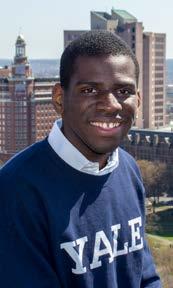
basic accommodations like electricity were no guarantee. He recalls having trouble with the poor public school system and avoiding the crosshairs of violent crime, but credits his parents with placing him in charter school and supplementing his education with what the community had to offer, such as afterschool programs at the local YMCA.
Eze is now the Speaker of the Yale Political Union (YPU), a brother of the Black Men’s Union, a co-founder of the Yale Freestyle Collective, a courier at the Yale Law School, and a contributing columnist for the YDN. He has advised students at Hillhouse High School on issues affecting black youth, such as stop and frisk policies. “I interact with New Haven in a bunch of different ways,” Eze told The Politic. “Tomorrow I’m going to go play chess with this lady Monique who works at HGS. I take drives through the city in my Zipcar. I like to have conversations with random New Haven residents.”
The three candidates’ backgrounds are different. Their experiences are varied. They have different visions for the city and different plans for convincing Yale they can deliver that vision. But they all share the same hope: to be elected the alder of Ward 1.
Ward 1 stretches from the bottom of the New Haven Green on Church Street to the Pierson College Gate on Park Street. Covering Old Campus and eight of Yale’s residential colleges, it’s the only ward in New Haven that is comprised almost entirely by Yale students.
“As residents of New Haven, we all have a responsibility to our new home city, and Ward 1 is our vehicle for fulfilling that,” Jacob Wasserman, the current Ward 1 Democratic co-chair, explained to The Politic. For Wasserman, this requires an alder who can “facilitate student interaction with the city, while recognizing that student needs are both legitimate and compatible with those of most everyone else in New Haven.”
Yet many feel that Eidelson, now in her second term as Ward 1 alder, has not done enough to reach out to current students and establish a presence on campus. “You only see Sarah during an election year between the months of April and November. That’s just a fact,” Johnson, Eidelson’s former treasurer and a member of Eze’s campaign team, told The Politic, “In terms of being a bridge [between Yale and New Haven], she has not done that.”
Sam Sussman ’16, a member of the YPU with Eze, was even blunter. “Eidelson’s time in office might best be characterized by her absenteeism. Where is she around campus?” he wrote in the YDN.
When asked about the criticism she has received over her supposed truancy,
Eidelson responded, “I’ve taken a lot of different approaches like physical newsletters, email newsletters, Facebook, Twitter, events. I’ve held office hours every week for three years now. But I’ve found that the most effective thing tends to be the actual conversations with people. I try to have as many conversations as I can.”
Of course, some Ward 1 residents continue to laud Eidelson, claiming that the alder’s presence on campus is not a good indication of her impact on the greater New Haven community. “Quality of interaction is more important than quantity of interaction,” Sarah Giovanniello ’16, the other Democratic Ward 1 co-chair, told The Politic. “From what I’ve seen, Sarah’s interactions [with students] are very high quality.”
Giovanniello pointed to Eidelson’s leadership in the final stages of the New Haven Board of Education reforms, noting that the alder brought in Yale students who had been members of their high school education boards to testify on behalf of adding student board members in New Haven.
Stark, too, has faced criticism. Johnson called Stark a “budding politician” and worried, “Fish [Stark] will just show up when the sun’s shining to shake hands.” Stark told the The Politic that he understands why people might be concerned about his intentions, but directed his critics to focus on his track record in New Haven instead of his political pedigree.
So far, Stark’s campaign seems to be geared toward filling the perceived desire for a more involved representative. Stark is indeed a presence on campus, organizing meetings with an array of progressive student groups and hosting Friday night dinners to share his ideas for New Haven with fellow students.
“The reason I am running is because I treasure the experiences I’ve had, the folks I’ve met, and what I’ve been able to do in this city,” he said. To Stark, his experiences working in New Haven have done more than earn him a good track record; they’ve also given him insight into where Yale needs to improve its outreach. For example, although Dwight Hall currently serves to promote student involvement in New Haven, Stark thinks that “it can’t do everything on its own.”
Eze agrees that Dwight Hall needs help, recalling a time when the Black Men’s Union volunteered in the city, but was given tasks that did not best suit the group’s abilities. He also feels that Stark’s campaign, while well intentioned, suffers from a “White Knight complex” common among Yale students. He explained to The Politic, “Oftentimes we [Yale students] may even feel like we’re doing a favor to the residents of New Haven, which is not the way we should be thinking about these issues.”
“My background is not all that
This race could shape up to be one of the messiest and most exhilarating that Ward 1 has ever seen.
different from most New Haven residents,” Eze added, explaining that his platform was informed by more than just good intentions. “I lived in a part of the Bronx where I faced many of the same challenges that New Haveners face. Local public schools were crappy. There was violence on the streets. There was a big divide between the wealthier parts of the city [...] and the parts where I lived.” It is this background, he said, that will motivate him to tackle problems that other alder candidates may overlook.
Eze’s involvement in New Haven, however, is neither as visible nor as celebrated as Stark and Eidelson’s efforts. “As opposed to Fish, who is very involved with the city, [...] I am more involved with Yale’s campus proper and student life here at Yale,” Eze said. Regardless, Eze hopes to leverage his relationships with campus leaders to connect Yale students to the New Haven community. Eze observed, “You have to understand the organizations that you’re interacting with, and you have know that an organization like Black Men’s Union will be able to bring out 20 people versus a random group at Yale that may have looser ties and won’t be able to bring people in the same numbers.”
In terms of goals and ideology, Stark and Eidelson are almost identical. “Sarah and I are both progressive Democrats,” Stark said. “We both have pretty similar visions for the city. I doubt there are substantive differences.” Stark’s main selling point, then, is that he is far more involved in student life than Eidelson and can “work to bridge the divide between Yalies and the city.”
On matters of policy, none of the candidates has yet rolled out a concrete platform. It remains to be seen whether Eze’s relative conservatism will result in any substantive differences from Stark’s and Eidelson’s unabashedly progressive agendas. Still, he focuses more on the attitudinal difference he would make as an alder. “The issue right now is that there hasn’t been any debate,” said Eze. “A lot of what’s been going on with the campaign so far is each person is trying to size themselves up and portray themselves in one light versus the other rather than from the get-go talking about certain issues that really affect the student body.”
Eze has made it clear that he is not afraid to hold Eidelson accountable for what he sees as the missteps of her last term, something that he asserts Stark is neglecting. For example, when asked about the Q House, a former community center that has been awaiting a restoration with Eidelson’s vocal support, Eze exclaimed, “Oh my God, it’s absolutely ridiculous!” He decried what he sees as incompetence in the process, highlighting the “rising cost of consultants.” He added, “These are the kinds of things that we should be pushing candidates on, and we haven’t seen it yet come from Fish. This
is not negative campaigning, this is just accountability.”
Three very different candidates guarantees that the debate on campus will be more charged than it was during the last two aldermanic elections. How these debates play out, however, remains to be seen.
***
The next time Yalies will trek to the New Haven Public Library to cast a ballot is seven months away, but already Eidelson, Stark, and Eze are seeking to lock down support for their candidacies.
Stark’s outsized presence and work with the Yale College Democrats—the university’s largest activist organization— has swung a large contingent of Dems in his favor. Every member of the Dems’ executive board has endorsed Stark except for the president, vice president, and elections coordinator. These three leaders decided to abstain from endorsements, they said, to ensure that the organization remains neutral.
The Dems have a policy of not supporting one candidate over another when multiple Democrats run, so the organization is not officially endorsing any candidates in this race. “We never want to endorse one Democratic candidate over another because we have a very diverse membership,” Blackmon told The Politic. “We don’t want to alienate certain parts of the membership.” Instead, he sees his role in this race as a neutral arbiter, ensuring that debates between Eidelson and Stark “stay above the belt.”
Of course, the Dems are far from the only activist group on campus. Many members of Students United Now (SUN), for instance, are already firmly in the Eidelson camp. (The Politic approached a SUN leader three times in person, and emailed other leaders eight times in total, but the organization made no representatives available for comment.)
Eidelson works for Yale’s unions Local 34 and Local 35 as a graphic designer and is listed as the press contact on their website. In her previous two elections, the unions threw their endorsements and manpower behind Eidelson’s campaign. “The unions will obviously being doing a lot of work in this race,” Blackmon said.
With progressive organizations divided between Stark and Eidelson, some campus activists openly worry that a split vote could throw the election to a Republican. “ If there are two competitive Democrats running against each other, the Republicans would be crazy not to run someone,” said Jackson Beck ’17, the Legislative Coordinator for the Yale Dems. While Blackmon doubts that a Republican challenger would garner much support on campus, he nonetheless noted, “If it became obvious that a Republican was really going to spoil the election and one
of the [Democratic] candidates started fading, we might bolster one [Democratic] candidate and push the other one out.”
But even with a potential vote and resource split on the Democrats’ side, Eze’s decision to run as a Republican could seriously hamstring his campaign. According to a survey of 437 students conducted by The Politic on April 18, only 10 percent of Yale undergraduate students in Ward 1 identify as Republican, while 60 percent identify as Democrat. Whereas the Yale Dems count more than 150 students as active members, the Yale College Republicans often struggle to attract double-digits to their meetings.
In order to win, Eze will have to convince a sizeable number of Democrats and Independents that he deserves their votes. Eze acknowledges the potential downsides of his party affiliation. “I know I would probably have a better chance as an Independent,” he admitted. “But this goes back to what I said earlier— raising the level of discussion.” Eze later wrote in an email, “Growing up, I saw that many Democratic policies, though well intentioned, had negative effects on the people and neighborhoods they were supposed to help.” He imagines a New Haven in which “the communities themselves dictate what kind of policies they want from city government.”
Eze’s political ideology is difficult to pin down, but he believes his views on national partisan issues are irrelevant to his campaign for alder. “I would like to differentiate between the reputation of the Republican Party on the national level and my choice to identify as a Republican on an individual level,” he told The Politic via email. “I firmly believe that the Republican institution has room to grow with regard to its views on racial politics and climate change.”
In an attempt to shed associations with the national GOP, the campaign will promote the pragmatic advantages of the Republican label. Eze pointed out that he will most likely be the only Republican on the board if elected, making him the de facto leader of a minority party. According to the New Haven charter, minority leaders get first choice for any committees they would like to sit on and are entitled to weekly meetings with the mayor. Eze argued that an amplified voice on the board would allow him to better serve the constituents in Ward 1.
On April 20, however, Eidelson was voted in as Third Officer by the board, which gives her the same privileges. Due to a charter provision in 2013, the board is now allowed to pick a member of the majority party to fill the role of the minority leader. Since the board is entirely Democratic, Eidelson’s voice is also amplified. Her remarks before the board bidding for the position read, “There are over 50,000 people in New Haven my age or younger, under the age of 25. Often
youth voices are overlooked.” She went on to say that she would work to harness those voices.
When asked for a comment on the recent development, Halikias said, “It is clear that the appointment of Alder Eidelson to [Third Officer] is not a meaningful advancement that has been earned through merit, but rather a Machiavellian statement of support for the absent Democrat incumbent, whom the establishment supports because she serves as a mouthpiece for the unions rather than her constituents.”
The last Ward 1 Republican candidate also argued that he would take advantage of minority privileges in Ward 1, but to no avail. In 2013, Paul Chandler ’14, then an economics major and a star pole vaulter for Yale’s track team, challenged Eidelson in her bid for a second term. For the first time in 26 years, a Republican tried to end the Democrats’ reign in the ward. With a campaign team consisting of leaders of the Yale College Republicans, Chandler built a vague platform of fiscal responsibility and revamping public schools; his signature proposal to build a crosswalk connecting the New Haven Green and Phelps Gate was widely mocked.
Ultimately, Chandler received 37 percent of the vote in the predominantly Democratic ward. Ben Mallet ’16, Chandler’s campaign manager, sees these numbers as a sign that they “won the argument, but lost the election.” However, Blackmon argued, “People who voted for Chandler were not voting because they hold Republican ideals. It was because they were frustrated with Sarah [Eidelson].” Going into the next election, he predicts many of most of these voters will be attracted to Stark instead.
Mallet admitted that the Republican label was a considerable obstacle in the 2013 race. “We didn’t do a good enough job of overcoming [party affiliations],” he said, noting that freshmen in particular tended to vote along party lines. “Those students are more likely to vote on labels because they haven’t been in New Haven long enough to understand the issues affecting New Haven and the role of the alderman.” Alders, after all, do not often handle many of the partisan issues that are contested on the national stage, such as abortion and gay marriage—but according to campus political leaders on the left and the right, many students don’t consider this distinction between national politics and local policies.
Eze acknowledges this potential knowledge gap. “It’s a barrier, absolutely,” he said. “In a lot of the conversations I want to have with student groups and in common rooms, I will be explaining what this thing is and why it’s important.”
Halikias, who was Chandler’s communications director, believes that Eze’s base of support is more diverse and
more excited than Chandler’s campaign was. “Paul wasn’t particularly involved on campus outside of his circles. I think that’s one area where Ugonna and Paul are completely different,” she said. “Ugonna has this huge laundry list of extra curriculars and Paul was a varsity athlete, which is a pretty huge time commitment.”
Though they stress that this is a completely new campaign, Eze and Halikias are also applying the power of hindsight, drawing and discarding elements from the Chandler campaign. For one, they plan to be much more aggressive. “Every time someone puts out a policy proposal or statistic, we’re going to call them on it and say, ‘We don’t actually think that’s correct,’ or, ‘That’s not how you read that statistic,’” Halikias said.
Halikias also told The Politic that the campaign plans to actively reach out to freshmen in the first few weeks of the 2015 fall semester. “We’re going to come out swinging,” Eze agreed. Stark’s campaign is looking to curry favor with the incoming class, too. “We’ll plan a lot of events specifically targeted towards freshmen. We’re going to have a big presence on move-in days,” said Lopez, Stark’s campaign manager. Though the Eidelson campaign could not be reached for comment, if her two last two runs for office are any indication, she will likely be present at the beginning of next year as well.
In addition to the usual bombardment of a cappella groups looking to recruit new vocalists and publications vying for talented writers, then, the Class of 2019 may be greeted to campus in the fall with an insistent knock by a canvasser at the door. But those who have lived through an alder race before know they can expect more than just a flood of campaign pamphlets and posters.
“Regardless of the outcome of the election, there will be some good that comes out of this,” Eze told The Politic. “People will think about Ward 1 differently. That much I can promise you.”
Editors’ Note: Two members of The Politic’s editorial board, Eric Stern ’15 and Azeezat Adeleke ’17, have publicly endorsed Fish Stark. They did not contribute to the writing of this piece.
Survey of Ward 1 Yalies
What should the Ward 1 alder’s top qualifications be?
Percentage of respondents that correctly identified Sarah Eidelson as the current alder of Ward 1:
Are you satisfied with the performance of the current Ward 1 alder? (of those who correctly identified Sarah Eidelson as the alder of Ward 1)
How do you identify politically?
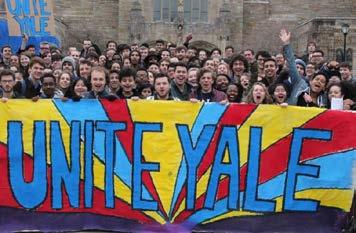
Whose Side Are You On?
The Renaissance in Student Activism
By Jonathan Coutinho
Some students sang, “Whose Side Are You On, Yale?” Others sat on the staircase inside Woodbridge Hall, simultaneously drafting essays and social media updates. The atmosphere grew tenser as 5:00 PM approached. Checking their watches, students put away their laptops and prepared to stand their ground. Outside, others formed a human chain around the building.
The Yale Police asked those inside to disband or face arrest. Meanwhile, Fossil Free Yale (FFY) members and supporters marched and cheered outside. News cameras clicked away and reporters hovered, waiting for updates from inside the Hall.
What happened between the threat of arrest and the student walkout is unclear; the University maintains that the students were not arrested but only fined $92 for “infraction”; FFY insists that 19 students were placed under non-custodial arrest. But perhaps more importantly, their sit-in raises larger questions about Yale’s response to student movements, in the form of both student government and activism.
Yale has always been a focal point for student activism: in 1970, when the Black Panthers were on trial in New Haven, students joined 15,000 Black
Panther members to protest the trial. Cross Campus, Commons, and the New Haven Green were hotbeds of anger and frustration.
In a speech last year at Yale Law School, Justice Sonia Sotomayor recalled her alarm at being invited by her Yale hosts to join their protests against post-Vietnam America when she visited campus as a high schooler. Bemused, Sotomayor promptly retreated to the more conservative Princeton.
In the 1980s, students lobbied the university to divest from apartheid South Africa. Lou Weeks ’88 and Elizabeth Juviler ’89, two leaders of this movement, vividly remember the shantytown constructed on Beinecke Plaza to express solidarity with the oppressed in South Africa. Juviler recalls the sit-ins and marches, which gained strength after the administration arrested dozens of students. “Most people were uninvolved,” said Juviler, “until suddenly, your roommate was arrested. Then you had a personal connection.” Antagonism toward the administration was prevalent among students. According to Weeks, “the administration wasn’t interested in representing their students’ wishes.”
In recent years, such tension between the administration and students has flared up again. In 2005, students from the activist Undergraduate Organizing Committee (UOC) staged a sit-in in the financial aid office to protest rises in the student income contribution. These tactics
resurfaced in FFY’s Woodbridge Hall sit-in on Apr. 9, 2015.
***
Even in the ’80s, students disagreed on advocacy strategy. Weeks told The Politic that protests were the only way to get the anti-apartheid message heard and visible, even though many of his friends continued to work through the Yale College Council (YCC). Tristan Glowa ’18, a spokesman for FFY, agreed, insisting that “climate action requires a similar moral imperative as anti-apartheid activism,” and that “it would be great if we could resolve all our problems in respectful, peaceful ways, but power doesn’t concede itself in peaceful ways.”
Weeks emphasized that such activism requires patience and persistence. “When we were organizing the anti-apartheid movement, we used to say that the first couple of “no’s” [by the administration] were just requests for more information.” It also entails sacrifices: the university suspended Weeks and Juviler for a semester for their part in a sit-in. But the day their suspension took effect, Congress approved sanctions on South Africa. Weeks said, “We lost at Yale, but we won overall,” and concluded, “Student activism has made Yale a better institution by far.”
Michael Herbert ’16, YCC President, wants a “more institutionalized student government so that more students work through us.” Echoing Herbert, YCC member and Yale College Democrats president Tyler Blackmon ’16 told The Politic, “We don’t want to control the decision-making process; we just want to be a part of it.”
Much of students’ frustration and anger is directed at the university’s governing body, the Yale Corporation. Yale Daily News (YDN) op-eds, dining hall conversations, and student rallies have all singled out this 19-member group as not prioritising Yale’s students. Scott Stern ’15, who criticised the Corporation in many of his YDN op-eds, said that its “corporate philosophy means that it thinks big business can do whatever it wants to make money.”
No students are present at the Corporation’s five annual meetings. Both Herbert and YCC Vice President Maia Eliscovich Sigal ’16 argue that the Corporation needs to involve students. To Eliscovich Sigal, it is strange that “students, who are most in touch with the issues are not in the room” when the Corporation is making important decisions for the student body. To Herbert, the current extent of contact between the entire student body and the Corporation—a ninety-minute
meeting between a few members of the Corporation and a couple student YCC representatives—is “abnormal,” compared to other American universities. According to him, “In 70 percent of public schools and 20 percent of private schools, not only do students have regular meetings with the corporation, but you have students on the corporation.”
However, Yale Corporation Secretary and Yale University Secretary and Vice President for Student Life Kimberly GoffCrews YC ’83, LAW ’86 contends that some of students’ frustration comes from a misunderstanding of the Corporation’s function. Said Goff-Crews, “It is the role of the Corporation to think of the institution [Yale] on a medium and long-term basis, taking into account everybody’s thought and expertise.” She stresses that she and other members of the Corporation were also activists in their college days and thus can understand students’ frustrations. But with the “advent of experience and responsibility, we are now working for the best solution that makes sense for the institution, while responding respectfully.”
However, Herbert says that frustration sets in among students when administrators, instead of giving students clear answers, use “constructive dialogue to obfuscate [issues].” Herbert reported that the administration has called recommendations of the YCC “logistically infeasible.” To Herbert, such language has “no real meaning.” When students receive such ambiguous responses, they are left feeling that administrators are trying to sidestep the issue under the guise of engagement.
Moreover, according to Blackmon, even when administrators do engage with student representatives and enact policies based on supposed student input, they are often “acting on misinformation.” This is especially true for financial aid, he said, arguing that the YCC discussions he has been a part of reveal that the administration does not “understand how decisions are affecting students’ lives.” Secretary Goff-Crews admits that communication “is a problem,” but is adamant that only “continuing, constant conversations” can help the administration respond better to students.
Regardless, the responsiveness of the university following such dialogue is ambiguous. As made clear by Eliscovich Sigal’s questions, responsiveness can refer to many things: “Is it what they actually implement, or if they listen to our claims, or even if they take into consideration what we say at their next meetings?” Secretary Goff-Crews makes the distinction. “There’s a difference between constructive dialogue and getting absolutely everything you want. When we don’t agree with students, then we explain why we don’t.”
Yet, sometimes the perceived lack
of response from the administration antagonizes many students. Glowa said that the November 2013 student referendum on divestment, in which 83 percent of students who participated voted for divestment (excluding abstentions), and FFY’s “close work” with the Committee on Investor Responsibility, did not prompt the university to change its policies. In a report released in 2014, the administration formally rejected FFY’s demands for changes to Yale’s position as an institutional investor with regards to fossil fuel companies, insisting that the demands are “neither the right means of addressing this serious threat nor would they be effective.”
The administration has responded postitively to other student movements, however. Recently, it hired five new faculty members for the long understaffed Computer Science department after students started a campus-wide petition. Moreover, the university permitted mixed-gender housing for sophomores this year, introduced a “popular” alcohol policy last year, and retracted a grading proposal that would have replaced letters with numbers. Scott Greenberg ’15, another YDN columnist, called the administration “largely benevolent” for agreeing to these student demands. However, both Stern and Glowa say these responses are not representative of the administration’s overall tone in its responses to students’ desires. To Stern, money is always the deciding factor: “The administration is terrified of articles that say, ‘If you want to work for Apple, don’t go to Yale,’ whereas there is no money in the four issues at the [Unite Yale] Rally (financial aid reform, the condition of the cultural houses, divestment, mental health reform).” Glowa agreed and said that the university’s responsiveness depended on who was making the petition.
Recent protests and YCC efforts show us two methods of effecting student change: activism and institutional change through student government. Blackmon stressed, “It is necessary to start with activism as we did with financial aid, while the YCC tries to institutionalize some of the activism.” But Blackmon also urged the YCC to be “more forceful.”
Yet others in student government disagree. Although Herbert admitted that activism around mental health provided leverage and more of an imperative to change, it also made it difficult to submit concrete proposals. Gregg Castellucci, president of the Graduate and Professional Student Senate (GPSS), highlighted a related disadvantage of activists: “They don’t have access to information that student governments have, which gives us a realistic view of what’s going on.”
However, Castelluci also insisted, “Even if the demands aren’t realistic, the administration needs to be shown the feeling among the people.” But he also
stressed, “You need to have reports— pieces of data you can point to every time—so that no one can deny that they don’t know the issue.” He underlined the importance of “institutional memory” and emphasized that if activism were to go away, the pressure on the administration would disappear, so activists need to create systems to “keep issues alive.” Castelluci presented a model of collaboration: “On specific issues, student government can help activist groups fashion their ideas and tone to make it more accessible to administrators, who might otherwise be drawn to dismiss unrealistic signs they see” in an event such as a rally. Eliscovich Sigal suggested that if the organizers of Unite Yale: Rally for Student Power had offered to co-host with the YCC, it would have been a “very powerful move.”
Secretary Goff-Crews thinks that Yale’s student-administration relations are “uniquely good.” She elaborated, “Having been at other institutions, I’m sure we do it more than our peers—it is unusual for the President and the Provost to talk to students fairly consistently [as they do at Yale].” Weeks urges that any debate about the structure of the university administration must be nuanced. “It is a lot more complicated than it seems, and the administration is not monolithic.”
Secretary Goff-Crews is adamant that she doesn’t “see any scope for change in our [administration’s] structures” in terms of the Corporation, because “there will always be one small group that’s trying to weigh issues and make reasonable decisions.” Yet administrators themselves are changing. Yale College Dean Jonathan Holloway in particular was praised by almost every student interviewed for his receptiveness to student input and genuine desire to involve students in the decision-making process. Herbert, while calling Holloway “exceptional,” said that although Yale had good administrators, the system as a whole needs to change while the Corporation shows no signs of change, student activism is certainly evolving. Blackmon said, “There has been a major change among students who were not willing to go out on a limb and stand up for their convictions.” Stern agreed that his past four years at Yale have seen “more sustained student activism.”
In her conversation with The Politic in early April, Juviler thought that the administration in the ’80s “lacked foresight” when it came to apartheid divestment. In 20 years, will we say the same of the way the Corporation responded to fossil fuel divestment, mental health, cultural houses, and financial aid activists? If we do not collectively decide how Yale can better incorporate student opinion into its decision-making, it will seem more and more difficult to say that Yale is on our side.
The Tourist’s Gaze Looking Into the Slum Tourism Industry
By Riddhima Yadav

Inquisitive eyes stare back at me as I make my way through narrow streets lined by makeshift homes with tin roofs and cramped shops selling everything from herbal medicines to fly swatters. Vendors’ cries break through the hustle and bustle of the morning. I dodge an unmarked manhole as my tour guide announces, “Here we are, Madam! Welcome to the Happy Community School!” The “slum tour” had just begun.
Last winter I read about this rapidly growing tourism phenomenon and decided to sign up for one of these tours with a local operator in Delhi. I wanted to not just explore the slums, but also to explore the concept of these slum tours.
To say that the term “slum tourism” is heavily loaded would be a polite understatement. Slum tourism, otherwise known as “poorism” or “poverty tourism,” has become a contentious facet of the global tourism industry. The controversy is exacerbated by the fact that it is also one of the fastest growing niches in tourism. Slum tours are feeding the growing demands of tourists who are searching for something that they cannot experience at the top of the Eiffel Tower or at the foot of Christ the Redeemer—a glimpse into an utterly foreign socio-economic situation. The United Nations defines a slum as a “run-down area of a city characterized by substandard housing and squalor and lacking in tenure security.” More broadly, slum tourism refers to the organization of tours to underdeveloped areas. Starting first in London in the late 1800s when groups of wealthy Victorians ventured into poor neighbourhoods like Whitechapel and Shoreditch out of curiosity, the idea was soon picked up by New Yorkers who trickled into the city’s lesser developed suburbs.
Since then, the industry has grown exponentially in places like Brazil, South Africa, and India, where slums make up a significant portion of urban areas. Today, tourists are drawn to a number of such
slumming experiences around the globe, from favela tours in Rio de Janeiro to “colonia excursions” in Mexico or Kibera trips in Kenya. These visits represent a break from conventional tourism, which often concentrates on the four S’s: sun, sand, sea, and sex.
Slum tours, however, have stirred up a hornet’s nest of criticism. They are sometimes accused of turning poverty into entertainment. Others decry them as voyeuristic and exploitative, while still some furiously defend them as ethical and responsible. Regardless of which perspective tourists and critics have, slum tourism is in the middle of a debate that shows no sign of abating.
There is one crucial catalyst that has fueled public discourse about slum tourism and brought it under immense scrutiny: the media. On Feb. 22, 2009, the spotlight was turned on Mumbai’s Dharavi, one of the largest slums in Asia. That night, Slumdog Millionaire, set in Dharavi, dominated the Academy Awards. Not only was the shantytown suddenly the focus of international attention, it also experienced a spike in what was hitherto a budding phenomenon: slum tourism.
Media, whether through movies or debates on primetime television, has greatly affected the trajectory of slum tourism. As more and more tourists flock to under-developed areas to get a taste of what it is like to live in the slums, local tour operators are thriving. “We definitely saw an increase in our profits,” said Paul Whittle, CEO of Reality Tours and Travels, a company started in 2005. Since then, the famed yet controversial tour operator has led hundreds of visitors through the streets of Dharavi to get a glimpse of life in those slums. The financial success of tour operators compared to the squalor that slum residents face every day has created a stark duality, one which has embroiled
advocates and opponents of slum tourism alike in an argument over proverty, the issue at the crux of these tours.
Proponents of slum tourism defend the practice by noting the importance of its role in alleviating poverty. They also point to the fact that the greater understanding of poverty created by the tours causes the participants to advocate for positive change. There are two sides to this argument: one economic, the other moral. Economically, supporters of the tours argue that funds collected from operators ultimately trickle down to the community to boost regional commerce and local businesses. According to Whittle, “Our company is a social business that gives 80% of all its profits back to the community.”
Yet many supporters of slum tourism miss a crucial paradox resulting from the proposition that slum tourism aids in poverty alleviation. The catch-22 is that if slum tourism were a successful strategy of poverty alleviation, would it not undermine its own premise? In other words, slum tourism can only exist if the slums exist. This is especially true because in slum tourism, poverty is not just an accidental condition of the locale. Instead, poverty itself becomes the main attraction of the destination. The idea of poverty and its consequences is central to the experience of a slum tour.
In making poverty the central focus of slum tours, are we turning it into something valuable? If so, is it morally justifiable to commoditize poverty like this? These questions point to a generally overlooked aspect about the nexus of tourism and poverty; that is, poverty is a problem about the politics of representation. When poverty is commoditized on tours, it complicates the representation of slums by romanticizing them. The complex phenomenon of poverty in a slum in Nairobi, for example, is translated into a readily consumable story which can be neatly told in three
This is the view from Hostel Alto Vidigal. Vidigal is a favela—a Brazilian slum—in Rio de Janeiro. Down the shore from Rio’s famous Ipanema Beach, Vidigal has been gaining popularity among tourists for its unrivaled views of the sunset and late-night favela parties.

hours. The slum becomes an abstraction as its nuances give way to the trademark slum trope that resurfaces again and again in movies, novels, literature, and popular perception. “Slum tourism is a one-way street,” said Kennedy Odede, the executive director of Shining Hope for Communities, a social service organization. “[The tourists] get photos; we lose a piece of our dignity.”
But must it be this way? Is slum tourism actually effective at raising awareness for the conditions on the ground? Absolutely, said Professor Kevin Outterson from Boston University, who takes his students to Rio de Janeiro and Mexico on slum tours in order to illustrate the developmental issues faced by the people in those areas. “We must resist the categorical condemnation of poverty tours. They generate understanding, not pity,” Outterson said in a phone conversation with The Politic. Whittle, the Reality Tours and Travels CEO, agreed: “All tourists are different, and they are typically very surprised by how much more complex and entrepreneurial Dharavi is, as compared to what they thought.” Both Outterson and Whittle advance the point that while slum tourism may not be the magic bullet that will end poverty, it can indirectly contribute to its downfall by fostering awareness of conditions in the slums among those poised to help.
***
Harold Goodwin, a director at the International Centre for Responsible Tourism, echoes the sentiment that slum tourism can be a force for good. “The crucial question,” he said, “is not whether slum tours should exist or not, but how they should be conducted. Do [operators] limit the excursions to small groups, interacting respectfully with residents? Or do they travel in buses, snapping photos from the windows as if on a safari?”
Understanding tourists’ motivations is crucial if we want to evaluate the relevance and significance of slum tourism’s moral critiques, namely claims of voyeurism and exploitation.
A 2010 University of Pennsylvania study explored tourists’ rationales for visiting the Dharavi slum in Mumbai. The researchers concluded that visitors were motivated primarily by curiosity, as opposed to factors like social comparison, entertainment, and education. For adversaries of slum tourism, one of the most potent criticisms centers on potential voyeurism by tourists. For the slum residents who feel demeaned, objectified, or humiliated, one can ask whether all forms of poverty tours would elicit equally antagonistic reactions; are locals objecting to the very idea of poverty tours, or just badly executed ones? This is an important distinction to make because it helps to pinpoint which particular aspects of poverty tourism generate the strongest negative responses among local communities. If the tourists’ gaze reduces lives to mere commodities, then this voyeurism can be dehumanizing and simplify the diverse culture of the local communities.
The intentions of the tour operators are just as important as the motivations of the tourists themselves. In the absence of regulation, it is difficult to ensure local slum tourism companies are not taking undue advantage of these tours for excess personal gain. This problem is further exacerbated as tour companies continue to push the envelope to deliver ever more ethically questionable excursions. For example, in the aftermath of the 2004 Indian Ocean tsunami, many people offered tourists a chance to see the extent of the damage up close. Similarly, individuals are beginning to offer war zone tours in the Middle East. While these extreme forms of tourism may not last, “slum tourism is here to stay,” Professor Outterson asserted. “We need to increase
public discourse about it. I mean, we need this on Oprah or Ellen!”
If the slum tourism hype will not fade, it is worth considering how the tours could be modified to reduce or eliminate the harm they may cause. One contentious assumption in this discussion is that the local slum communities all react in the same way to slum tourism operations. Perhaps most residents of Dharavi are indifferent about the tourists; perhaps some are even pleased to see them. But what if just one person is terribly, or even only mildly, annoyed by it? Is that enough to veto the visit? Advocates would argue that the consent of the community matters greatly, and suggestions from residents of the slum and their community leaders should shape poverty trip practices. The absence of formal consent should not hinder the tourism, however, so long as the community does not openly object. But a genuine community decision to ban tourists should be respected, and a visit in violation of that ban would certainly be unethical.
***
Beyond the pragmatic and moral challenges highlighted here, there are questions about the future of slum tourism that both sides must answer. Advocates of slum tourism must respond to skeptics’ retort that it objectifies the lives of slum residents while dramatizing social differences between the tourists and the residents of slums. Proponents of this form of tourism also need to reply to the objection that transferring money directly to a local community is better than going on a poverty tour. Conversely, detractors who advocate an end to the practice must demonstrate that the harm caused by slum tourism is strong enough that eliminating it, instead of regulating it, is the best solution.
Despite its ethical ambiguity, some instances of poorism may be morally permissible. If this is so, both tourists and operators must play a proactive role in advancing, not preventing, the growth of local communities. Tourists should choose operators with caution and adhere to the guidelines of the slum trips to respect residents. Meanwhile, operators can take efforts to demonstrate that their profits contribute to the community’s well being. Ultimately, curious travellers will continue to flock to these places to observe lives that are markedly different from theirs. It is possible to ensure that this is not a uniquely destructive social encounter. I often go back to the Happy Community School to spend time with the kids there. Every now and again, a slum tour stops by the school as the guides point it out. Inquisitive eyes of tourists stare back at me. I can only hope that they see the same beautiful community that I do.
A Lunch in Chongqing
Photo essay by Joey Ye
“I don’t know what environmental pollution is,” said Qing Ping, 49, a close friend of my mother.
To celebrate the Chinese New Year, a large group of my mother’s friends went out for lunch in their hometown of Chongqing, a city of 30 million in southwest China. Loud voices drifted across the restaurant while we waited for our food to come. At a separate table sat Ping, dressed in a brand new black longsleeve shirt and matching black leather skirt for the occasion. She looked her age, but her hands were rough from the farm work she had done growing up as a child.
After I explained to Ping what environmental—air, water, land, and noise—pollution is, she maintained that she was not aware that any of these things were happening in China. Before opening a restaurant in the city, she grew up in the rural countryside, where she only graduated from middle school. The discussion continued for a few minutes until Ping said that, having never been interviewed before, she began to feel awkward answering the questions. Then I struck up a conversation with her father, Qing Changling, 70.
The only elderly person at the event, Changling sat in a corner of the restaurant alone, smoking a cigarette. His hunched back, a result of both age and years of farm work, remained prominent even while he was sitting. He shared the same opinion as his daughter, saying that he was not aware of any environmental pollution in China. He did concede that the Dongfanghong Reservoir near his home, which used to supply drinking water to the nearby countryside, had been contaminated by car manufacturers upstream. But, he added, a wastewater treatment station further downstream had solved the problem.
“In my village, I did not notice any problems,” Changling said. “The air and everything else has stayed the same and is still good around here.”
On the other hand, when I asked him to talk about how his lifestyle has changed over the past decade, Changling said the change was like “heaven and earth.” As a
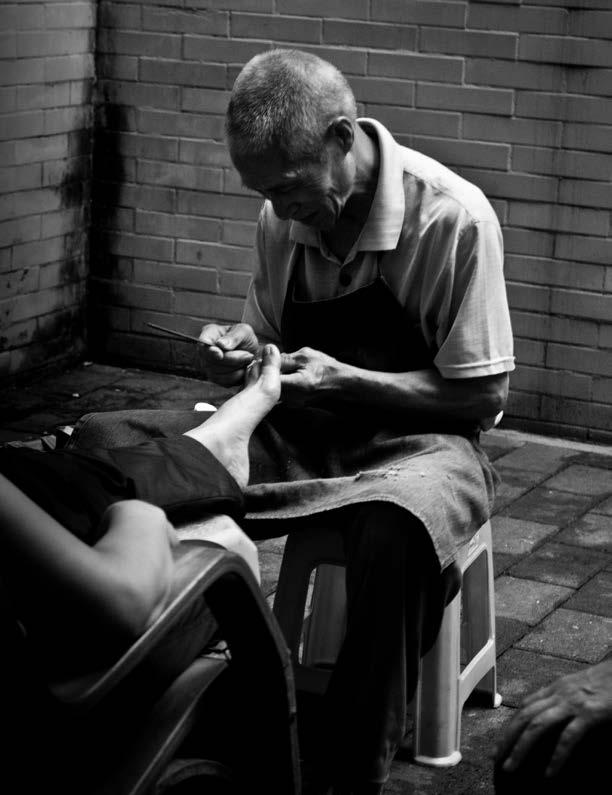
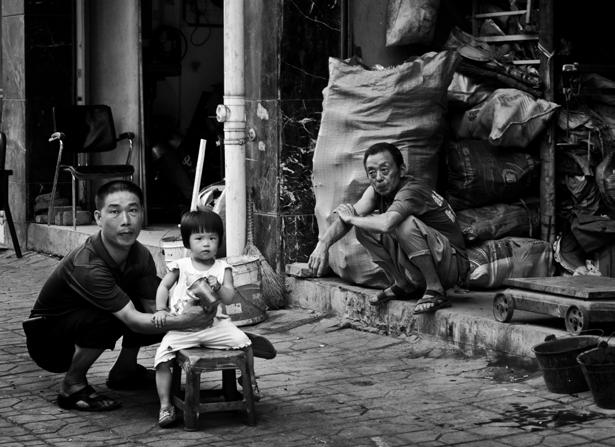

result of Deng Xiaoping’s market-opening economic reforms, production capacity increased and many Chinese citizens were able to make greater profits and leave the countryside. Food like this, he added, with a slight indication of his hand, was very hard to come by until recent years.
Changling said both the Chinese Communist Party and the President of China, Xi Jinping, are leading the country in the right direction, citing their policies against government corruption as an example. Jiang Zhiling, Changling’s former landlord, agreed. He said compared to the past, his current quality of life has improved “tenfold.”
“Life was incredibly difficult during the Great Leap Forward and the three year famine period that resulted,” Changling explained. “People had no food to eat so we resorted to eating sand, grass roots, and tree bark. It’s frightening to even think about it. Life now is good.”
Others admitted that they were aware of the environmental degradation brought on by China’s growing industry. With slicked back hair, slacks, and a button down shirt in the trademark
Burberry pattern, Dong Jian, 49, is a successful construction contractor who also grew up in the countryside and attended college in Chongqing. He said the air pollution made it hard to breathe at times and even worsened his mood.
Still, like most of the population, Jian believes the benefits of a rapidly expanding economy far outweigh the dangers of environmental pollution. While the government has to control pollution so conditions remain habitable, he said that he does not see the current situation as “threatening.” He added that the results of government projects trying to fight pollution are not proportional to their cost. Pollution has been a necessary byproduct in every country’s development, he said, and is an unavoidable sacrifice.
“This is the only way and there is no other choice,” Jian claimed. “If your country is poor, you won’t be able to enjoy the environment even if it’s healthy because you will be forcefully beaten or invaded by a developed country. The natural resources in your country will be robbed, and this has happened a lot in China’s history.”

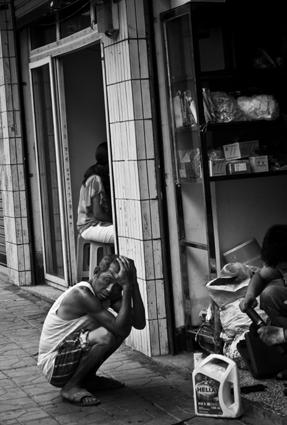

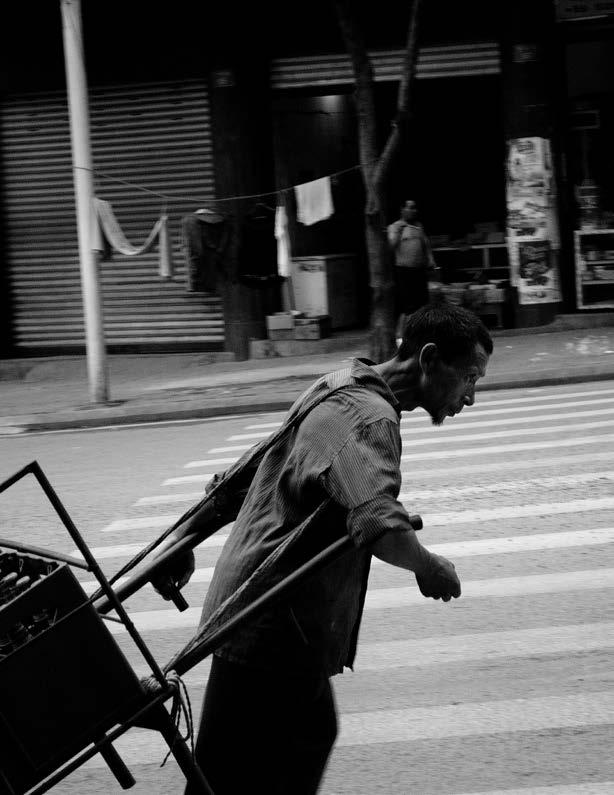
‘This is the only way and there is no other choice. If your country is poor, you won’t be able to enjoy the environment even if it’s healthy because you will be forcefully beaten or invaded by a developed country.’
Black Gold Politics
Oil and
Chavismo
in Maduro’s Venezuela
By Pranav Bhandarkar
“Fewer countries are more indebted to the science of geology than Venezuela is, yet it is in its geologic bounty that it might find its undoing.”
“Venezuela could be considered a gigantic oil well,” says Javier Corrales, professor of political science at Amherst College. Last year, Venezuela overtook Saudi Arabia to become the country with the greatest quantity of proven oil reserves, with 46.6 billion tons of oil located within its borders. Ever since the first barrel of Venezuelan oil was sent to Spain in 1539, this fossil fuel has become Venezuela’s lifeblood, the one commodity around which the entire country revolves. Data from the Organization of the Petroleum Exporting Countries (OPEC)— the 12 member organization of petroleum exporting countries—shows that oil revenues account for 95% of Venezuela’s export earnings, and oil industry production contributes to 25% of gross domestic product.
This geologic bounty, however, might be Venezuela’s undoing. Since the summer of 2014, global oil prices have plummeted, their descent driven by OPEC members’ lack of cooperation and reduced demand from the United States. The going rate for oil reached an incredible low of less than $45 a barrel this past January.
This sudden drop will impact few countries’ economies harder than Venezuela’s. The country’s president of nearly fourteen years, Hugo Chávez, reaped a windfall from high oil prices, using them to fund social programs and poverty reduction, obtain access to foreign markets, and gain diplomatic leverage abroad. He did so all while expanding his sphere of executive influence and power. Since ascending to the presidency after
Chávez’s death in 2013, however, President Nicolás Maduro has presided over an intensifying economic crisis. Shortages of basic goods, rampant capital flight, and runaway inflation have become mainstays of Venezuelan life.
Meanwhile, Maduro has faced heavy public resistance, and he responded by brutally cracking down on mass demonstrations, censoring media, and jailing opposition leaders. Dr. David Mares, professor of political science at the University of California, San Diego, says that while the “deterioration of democracy is happening across many countries in the region, [it] is most evident in Venezuela.” The situation in Venezuela raises the question of who will ultimately hold the reins once the smoke clears. Could the economic contractions from this drop in oil prices spell the end for Maduro, or can he continue to cling to power? In contrast to the heyday of Chavismo, Venezuela’s political future has never been more in flux.
Venezuela’s leaders have long seen oil as a means of improving the country’s domestic conditions and economic standing. Seizing on the high oil prices following the 1973 OPEC embargo, President Carlos Andrés Pérez nationalized the oil industry in 1976. His objective, says Mariana Rodríguez, program coordinator for the Latin American Public Opinion Project (LAPOP) at Vanderbilt University, was to create a Gran Venezuela capable of charting its own destiny. Chávez, who perceived the elite-controlled oil industry as one that had “stopped benefitting the majority of people,” embraced similar arguments. This new tension between the elites of PDVSA, Venezuela’s nationalized oil
Timeline
1908 Concessions
President Juan Vicente Gómez granted concessions to produce oil—mainly to his closest friends, who in turn gave them to foreign companies.
corporation, and Chávez culminated in 2002, when 90% of all PDVSA employees went on strike, attempting to undermine the regime. This move crippled the Venezuelan economy and ultimately turned against the PDVSA strikers: Chávez fired around 19,000 PDVSA employees; regime loyalists took their place, limiting the autonomy PDVSA once had. Rodríguez says that this strike “proved to be the biggest mistake the opposition could ever [make]. [PDVSA] is now there to support the Chavista government.”
Nevertheless, the mid-2000s boom in Venezuela’s oil sector, now effectively under Chávez’s control, allowed for a large-scale expansion of Venezuela’s social programs. These became the hallmark of the “Bolivarian Revolution” he hoped to foster. Chávez redirected these funds towards education, health care services, and consumer goods subsidies. According to the World Bank, these policies, between 1998 and 2012, led to a 20% reduction in poverty and Gini coefficient levels (the latter a measure of a country’s income inequality). According to Rodríguez, these programs owed their existence to the astronomical oil prices of the mid-2000s, sometimes up to $100 a barrel or more. “These programs,” she says, “were really… [the basis for] people [saying], ‘This is what...Chávez’s democracy is doing for me.’”
Oil in Venezuela had become so influential that the country was able to base its foreign policy on the commodity. Oil has been used to forge both regional economic and political alliances and convince foreign governments to rubber stamp Venezuelan domestic policy. As Corrales notes, Venezuela’s “petrodiplomacy” led it to form PetroCaribe, an organization offering highly subsidized oil with generous financing to Central American and Caribbean countries.
1929
The Dutch Disease
1922
Barroso No. 2
The blowout of Barroso No. 2 in Cabimas marked Venezuela’s rise a major oil producer. By 1928, it became the world’s leading oil exporter.
The sudden increase in oil production caused the Venezuelan economy to suffer from the “Dutch Disease,” which occurs when a commodity substantially increases income in one sector of the economy, leading the currency to appreciate in value and harming exports in manufacturing and other sectors.
1941
On the Road to Nationalization
The government, upon enactment of the Hydrocarbons Law of 1943, began to take 50% of the profits of oil companies.
1945
Hitting A Million Venezuela was a major provider of oil to the Allies in World War II, and by 1945, it was producing close to one million barrels a day.
Oil revenues were also used to alleviate Argentina’s debt with the International Monetary Fund (IMF), and Venezuelanowned Citgo even offered large oil shipments in the wake of Hurricane Katrina in 2005.
Corrales says this ultimately built an “Alliance of Toleration” with respect to Venezuela, where countries refrained from critiquing Venezuelan domestic policy in exchange for benefitting from the gains of the Venezuelan petro-state. In fact, Rodríguez explains that this “Alliance of Toleration” persists even to this day. Few Latin American countries have called Maduro’s repressive policies into question out of fear of betraying their common ideological bond. Now, the countries’ continued silence has put leftist Latin American countries with purportedly democratic ideals at odds with international condemnation of Venezuela, leading to what Rodríguez calls “hypocrisy” in the region. “To me, it’s surprising that, standing on the soapbox of ‘we’re democratic,’ presidents like Dilma Rousseff or Rafael Correa are not condemning the use of force against peaceful protestors or jailing of opposition leaders, but [are] silently acquiescing to these actions,” she says.
Dr. Mares, the professor from the University of California, San Diego, agrees, saying that all eyes are on Latin America to “see how the region prioritizes its new claims to defend democracy and human rights.” He notes that “the arrest of opposition leaders under dubious charges is an affront to Latin America’s commitment to democracy.”
Venezuelan oil’s international clout may have seen its limits with OPEC. In fact, it is this lack of influence that contributed
to Venezuela’s current economic situation. Until 2013, Venezuela, along with its key OPEC ally Iran, pursued a policy strictly focused on maximizing oil prices through depressing refinery quantity. Corrales notes that Venezuela and Iran did not share this policy with other OPEC states. “Saudi Arabia and the more efficient oil producers are not interested in always maximizing the price of oil. They are often interested in keeping a price of oil that is affordable, not so exorbitantly high that they curtail demand.”
Given how divergent these two policies were, a clash was inevitable. In mid-2014, Saudi Arabia decided to drastically increase production levels, flooding the market and driving down prices. “Because Saudi Arabia is such a major producer in the world,” says Corrales, “whatever Saudi Arabia wants to do, that’s what ends up happening.”
Meanwhile, according to the US Energy Information Administration, US imports of Venezuelan oil declined by 49% over a decade. This was due to part to higher domestic production, in conjunction with increased reliance on Alberta’s bitumen oil sands and natural gas from shale fracking, effectively ending Venezuela’s days of high oil prices. In desperation, Maduro embarked on a world tour, appealing to OPEC Gulf States to bolster prices. Despite winning some investment loans from Russia and China, however, his tour “failed,” says Corrales. This inability to maintain the same level of oil revenue has led to economic contraction as the government attempts to maintain Chavismo-era policies amid depleting coffers. “The Chávez regime and now the Maduro regime have tried to spend as much money on these social welfare programs as they did when the price [of oil] was around $100 a barrel,” says Rodríguez. In light of deficits caused
Especially in light of the mass crackdowns on protesters, which have included jailing opposition leaders and press restrictions, Maduro’s legitimacy as a liberal democratic leader is now questioned by a wide swath of the population.
1960
Birth of OPEC
In response to low oil prices in the mid 1950s, Venezuela, Iran, Saudi Arabia, Iraq and Kuwait formed OPEC in order to stabilize oil prices, mainly via export quotas that prevented the global overproduction of oil.
1973
Oil Crisis of 1973
Venezuela experienced a significant increase in oil profits after OPEC member states in the Persian Gulf embargoed countries friendly to Israel.
1976
La Gran Venezuela
La Gran Venezuela, the economic plan of President Carlos Andrés Pérez, called for the nationalization of the oil industry. Petróleos de Venezuela S.A. (PDVSA) became the Venezuelan state-owned petroleum company, and all foreign oil companies that once did business in Venezuela were replaced by Venezuelan companies.
1980s
Oil Glut
OPEC members violated their assigned production quotas, leading to excess supply and falling oil prices, pushing Venezuela deep into debt.
2002
Oil Strike
Hugo Chávez reinstated quotas, changed tax policies, and revamped the oil revenue collection process, largely in an effort to exert more control over PDVSA. The company’s workers went on strike, creating a near-complete halt on oil production. The government ended up firing close to 20,000 workers and replacing them with loyal Chávez supporters. This brought the country to a national unemployment peak of over 20 percent in 2003.
2013
After Chávez Hugo Chávez died, after which his foreign minister, Nicolás Maduro, assumed his responsibilities. A special election was held to elect a new president a month later, and Maduro won by a 1.5% margin.
by declining oil revenues, the Maduro government has been forced to pursue two incredibly detrimental policies: drastic spending cuts, which have brought Venezuela to recessionary conditions, and rapid money printing in order to make up for the deficit, plaguing the country with high inflation.
The philosophy of Chavismo prides itself as a vanguard for Venezuela’s working class, yet these mismanaged economic policies are likely to hit that group the hardest. Recessionary and inflationary pressures from declining oil revenues in Venezuela’s heavily pricecontrolled economy have resulted in cuts to social programs, declining purchasing power, and shortages of consumer goods that have worsened life for Venezuela’s poor. This is exacerbated by the lack of oversight, says Corrales, in the way social programs are funded. While the funding “[appears] as social spending, it gets diverted to other resources, and money doesn’t end up where [it should].” All of this, he argues, combined with excessive growth-stifling government regulation, “has got to be the worst possible economic policy when dealing with poverty alleviation.”
jailing opposition leaders and imposing press restrictions, a wide swath of the population now questions Maduro’s legitimacy as a liberal democratic leader. Even many former Chávez loyalists see Maduro failing to execute Chávez’s vision. His approval ratings fell from 50% following his election to 22% in January.
Can we then expect Venezuela’s economic tailspin to turn the public against Maduro and spell the end of his time in power? Given the illiberal nature of Venezuelan democracy, we can’t jump to that conclusion so fast, says Corrales, who is “not convinced that the government’s days are counted.”
The philosophy of Chavismo prides itself as a vanguard for Venezuela’s working class, yet these mismanaged economic policies are likely to hit that group the hardest.
Even Venezuelan government sources confirm this: poverty data from the Instituto Nacional de Estadística (INE), the Venezuelan government’s office of statistics, shows that among households, the percentage of those living in poverty jumped from 25.4% to 32.1% between the end of 2012 and 2013.
Venezuela faces uniquely dire economic circumstances. Other Latin American states with economies based on commodity trades have followed comparatively smart policies, allowing them to endure these types of price shocks. According to Corrales, “The economic crisis in Venezuela is occurring in a petro-state, but not because it is a petro-state, but the result of a mismanaged petro-state.”
As a result of these developments, Maduro’s popularity in Venezuela has taken a serious nosedive. And to begin with, Maduro was not nearly as secure as Chávez. “Maduro is obviously not Chávez, he doesn’t amount to the leadership skills, charisma, and sort of following that he had,” says Rodríguez. This was made apparent in the 2013 election between Maduro and opposition leader Henrique Capriles Radonski. A mere 1.59 percentage points and 235,000 votes separated the two candidates.
Especially in light of the mass crackdown on dissent, which has included
Moreover, “If this were a real democracy with free elections, where the ruling party does not have a stranglehold over institutions, everyone can predict that, ‘No, they’re not going to survive politically.’”
But, as Corrales explains, Venezuelan institutions lack a true sense of autonomy from the executive branch, which commands control over the judiciary, the legislature, labor unions, the press, a new bourgeois class of boliburgueses that thrive off of executive favoritism, and even the Consejo Nacional Electoral (CNE), Venezuela’s national election commission. The government, he says, has successfully used its control over the latter to indefinitely stall parliamentary elections slated to be held this year. “There’s no question [that] the decline in popularity has been enormous. But…[Maduro has the] institutional means to hang on to power.”
Rodríguez, however, seems more optimistic about the opposition’s chances to unseat Maduro given the gravity of Venezuela’s economic crisis. She suggests that if the opposition were to gain a majority in the legislature, they could hold a recall election that may oust Maduro. She emphasizes, however, that it all hinges on the opposition’s ability to succeed and ensure that elections slated for this year actually happen. “I don’t see how [to predict Maduro’s days in power]” says Rodríguez. “I can just tell you right now that all indicators of political stability, social stability, economic stability are in the red zone.” ***
So how would Venezuela, ideally, undo this crisis? Given how ingrained Chavismo ideology is, Rodríguez believes that the opposition would face an uphill battle to implement anti-Chavismo reforms. “The transition of power from anything other than someone loyal to the Chavista regime is going to be very difficult” she says. “In order to remedy the issues that are going on in Venezuela,
they would have to deviate from what the Bolivarian Revolution stands for.”
Regardless of the difficulty of reforms, Corrales stressed the need for Venezuela to modernize its wells and equipment in order to stay competitive. Similarly, Rodríguez claims that Venezuela’s drop in industry productivity is due in large part to the mass firings after the 2002 oil strike because the replacement Chávez loyalists did not necessarily possess high-level qualifications.
As a result, in addition to Venezuela’s decreased output, fatal accidents at oil refineries are becoming increasingly common due to poor maintenance and decaying refinery infrastructure. Corrales did note that Maduro opened the door to some reforms, namely reducing taxes on foreign oil companies in Venezuela, allowing more foreign direct investment in the oil industry, and engaging in foreign joint ventures, including a $2 billion joint venture between PDVSA and Chevron for development in the Orinoco Oil Belt in 2013. However, he believes these reforms have not gone far enough to engender the productivity reversal he views as so crucial.
Both Corrales and Rodríguez also look to Brazil as a potential model for Venezuela. Despite economic issues of its own, both agree that it hasn’t fallen into the same commodity reliance that Venezuela has. “Brazil is not a commodity economy anymore. It has joint-cap stocks and it has managed deficits better. It has been praised by the IMF. It doesn’t have a policy of punishing the private sector at all,” says Corrales. Furthermore, says Rodríguez, while the Brazilian leadership likewise faces a “crisis of legitimacy,” it has invested in technology and social capital to the point where it can enjoy some self-sufficiency from imports and trade imbalances.
Simón Bolívar, leader of the Latin American Wars of Independence and the ideological hero of the 21st century Latin American left, remarked in his “Jamaica Letter” that “A state, too large of itself...ultimately falls into decay. Its free govemment becomes a tyranny. The principles that should preserve the government are disregarded, and finally it degenerates into despotism.” In so many ironic ways, the quote encapsulates Venezuela under Chavismo. A combination of unsustainable economic policies, executive overreach, and increasingly repressive measures have caused the very people that the Chavismo governments claim to protect to suffer the most. “On a day-to-day basis, Venezuela has become more of a subsistence economy,” says Rodríguez. “The squeeze is felt by every single person. No matter what socioeconomic class you belong to, the mentality of living in Venezuela has become desperate. Something needs to change.”
Want to get involved in The Politic?
Email us at: editors.thepolitic@gmail.com
The End of an Era: Jon Stewart Steps Down
By David Shimer
What does it mean when America’s most trusted newscaster rarely talks with a straight face? David Shimer ’18 reflects on what Jon Stewart’s Daily Show has meant to the news business, the political sphere, the comedy world, and his most faithful audience: us.
A Case for National Unity: Curriculum Development
By Edgar Avina
Education reform is in vogue and the plans to fix our failing schools seem to change with the seasons. But, as Edgar Avina ’18 explains, our school curricula are still a patchwork of contradictory standards, frayed at the edges. How do we get out of this mess?
Double Time:
Building a Lasting Legacy for U.S. Cybersecurity
By Erwin Li
The Sony hack wasn’t just a field day for gossip columnists and celebrity watchers; it was a giant wake up call for American policymakers. What does it mean to provide for the common defense when the playing field is online? Erwin Li ’16 explores the state of American cybersecurity.
Deadlock:
Inaction Bests Executive Action on Immigration
By Lauren Davila & Gaby Viera
In February, President Obama made a move in the deadlocked debate over immigration reform. Under his plan, up to five million undocumented immigrants would receive a temporary reprieve. Lauren Davila ’18 and Gaby Viera ’18 describe what the policy, and the blockbuster court case surrounding it, mean for the Elm City.