It’s been a rough month for political engagement. Despite the unflagging work of groups such as the Yale College Democrats, voter turnout for the 2014 midterm elections was at a 72-year low. Nationally, 36.4% of the electorate turned out at the polls. Even in Connecticut, despite the intensity of the gubernatorial race, just 42% of eligible voters made it to the polls.
Criticism of low turnout frequently targets our generation: we are constantly hearing tirades against the apathy of the millennials, censures of our Instagram activism. Was the Climate Change March more than a chance for thousands of new profile pictures? Have Twitter campaigns such as #bringbackourgirls made any difference? It’s hard to say, but whether or not the blame is ours, the reality is that it’s easy to be apathetic—to justify not voting, to run from class to class thinking only of homework, to shelter from the long-awaited wintery gusts in bed while watching Netflix.
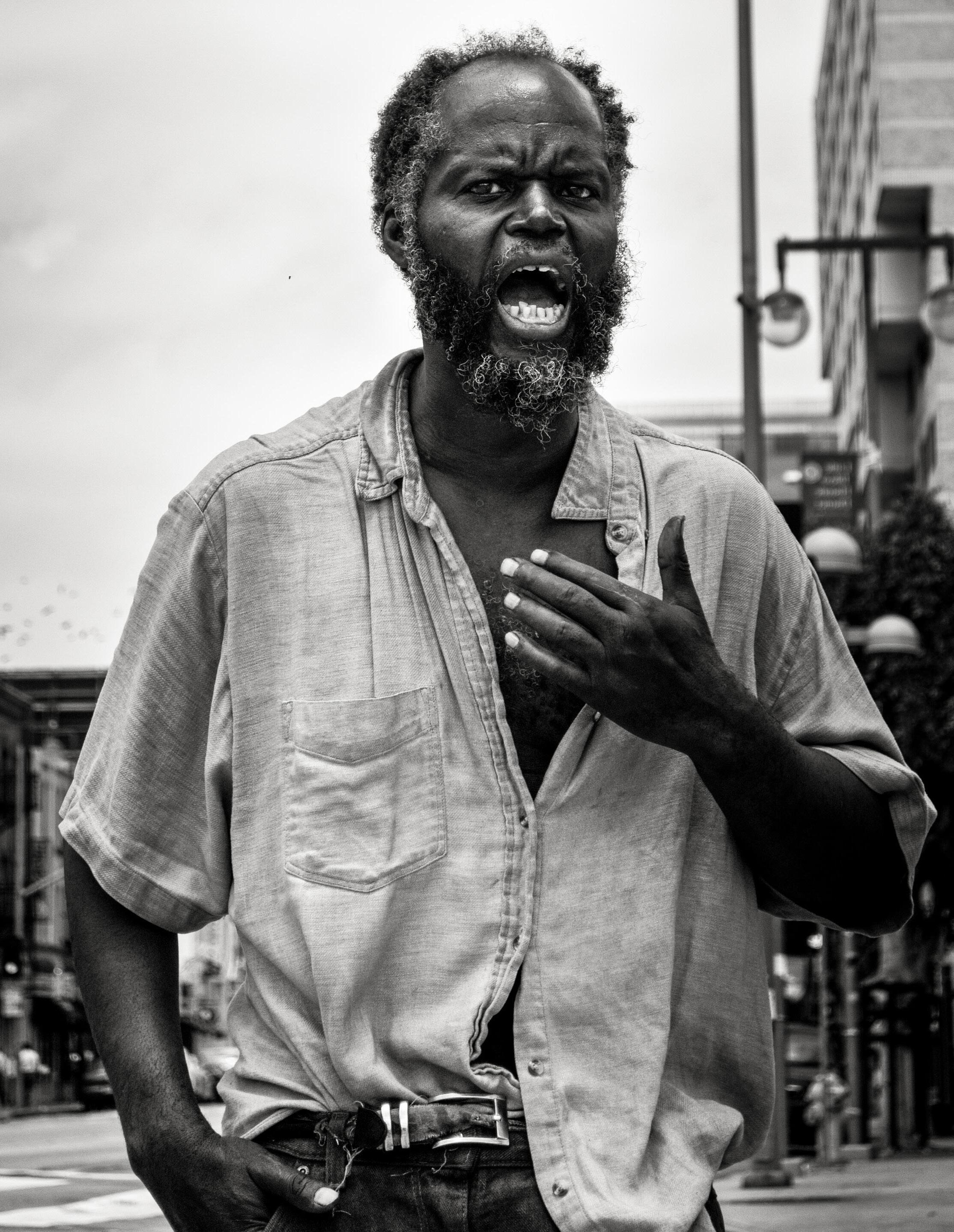
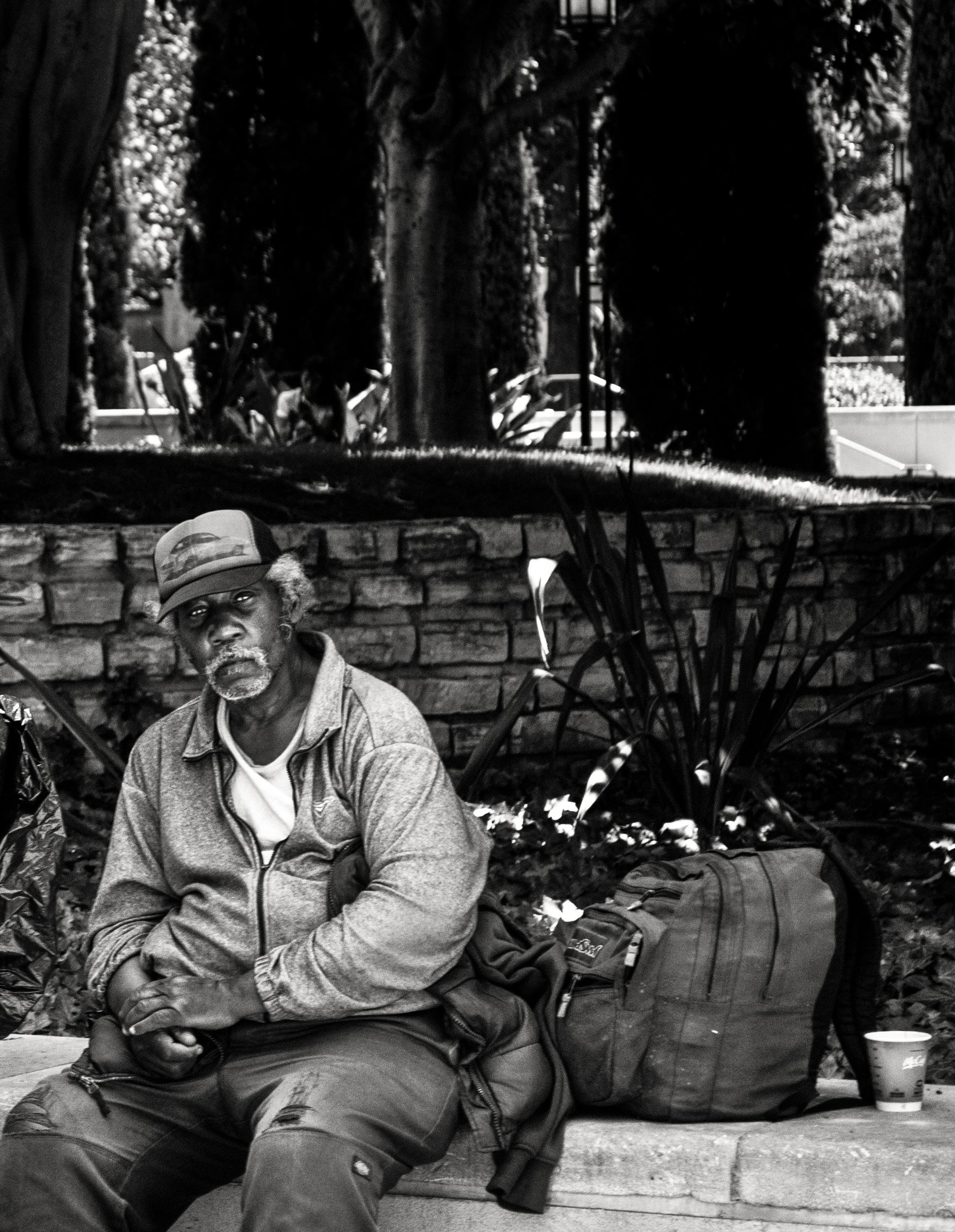
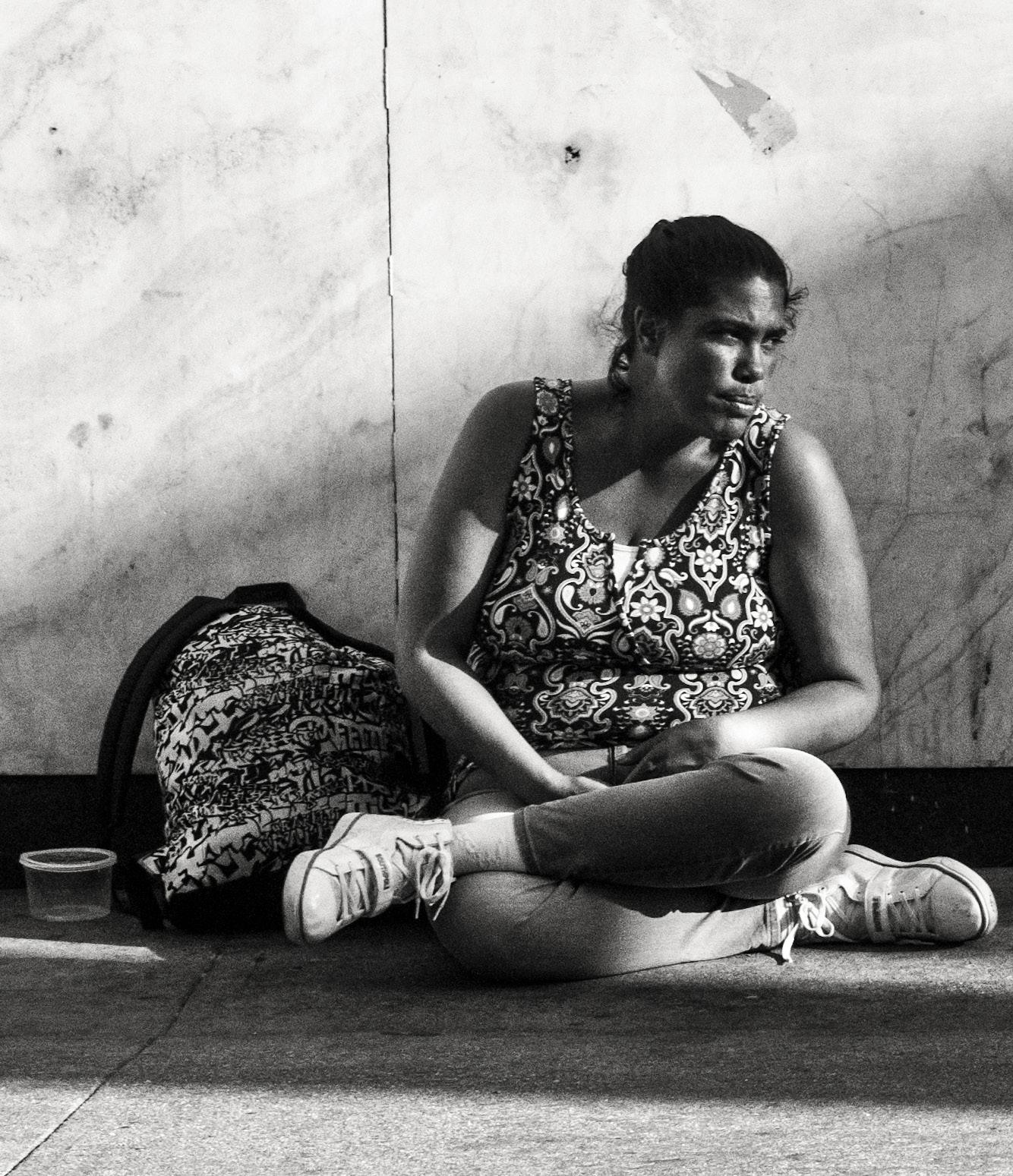
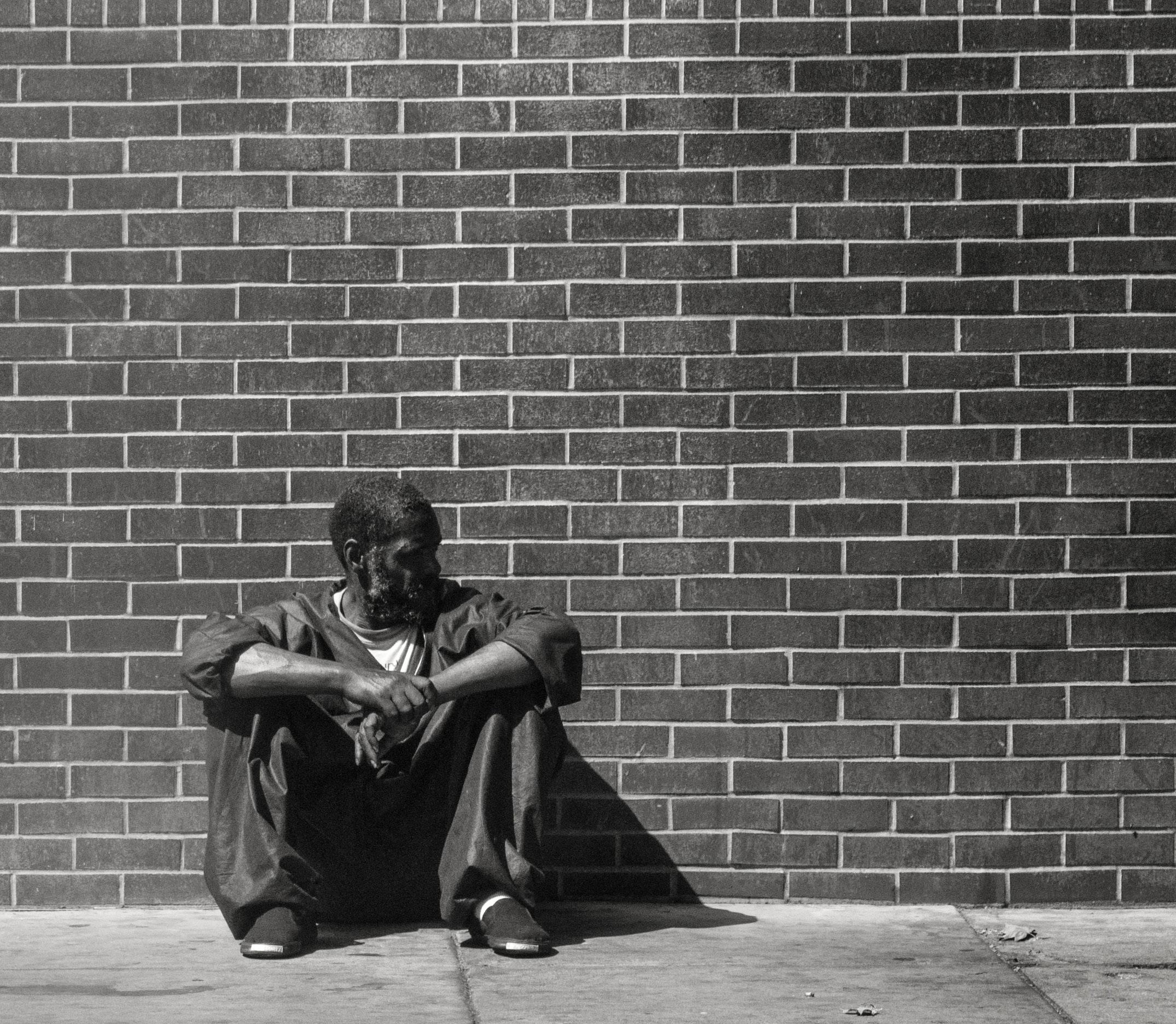
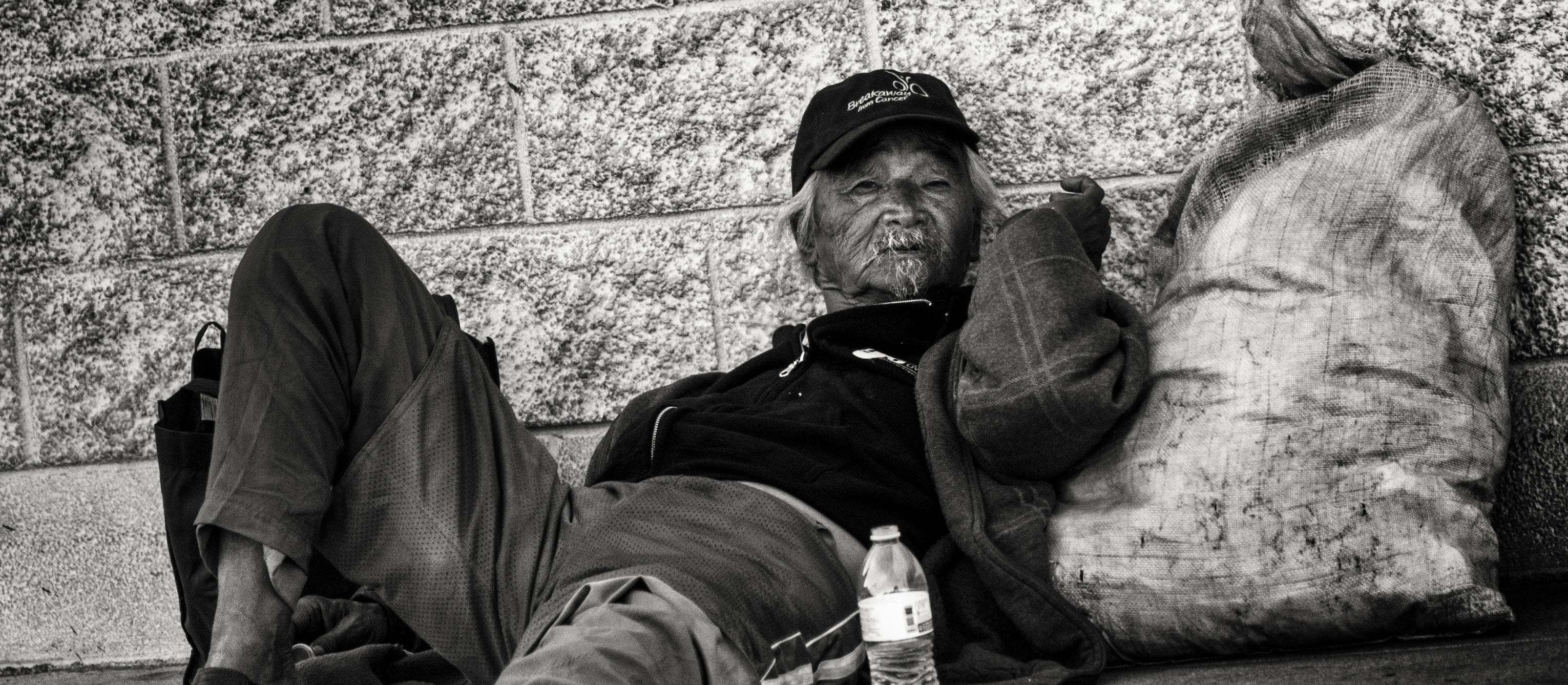
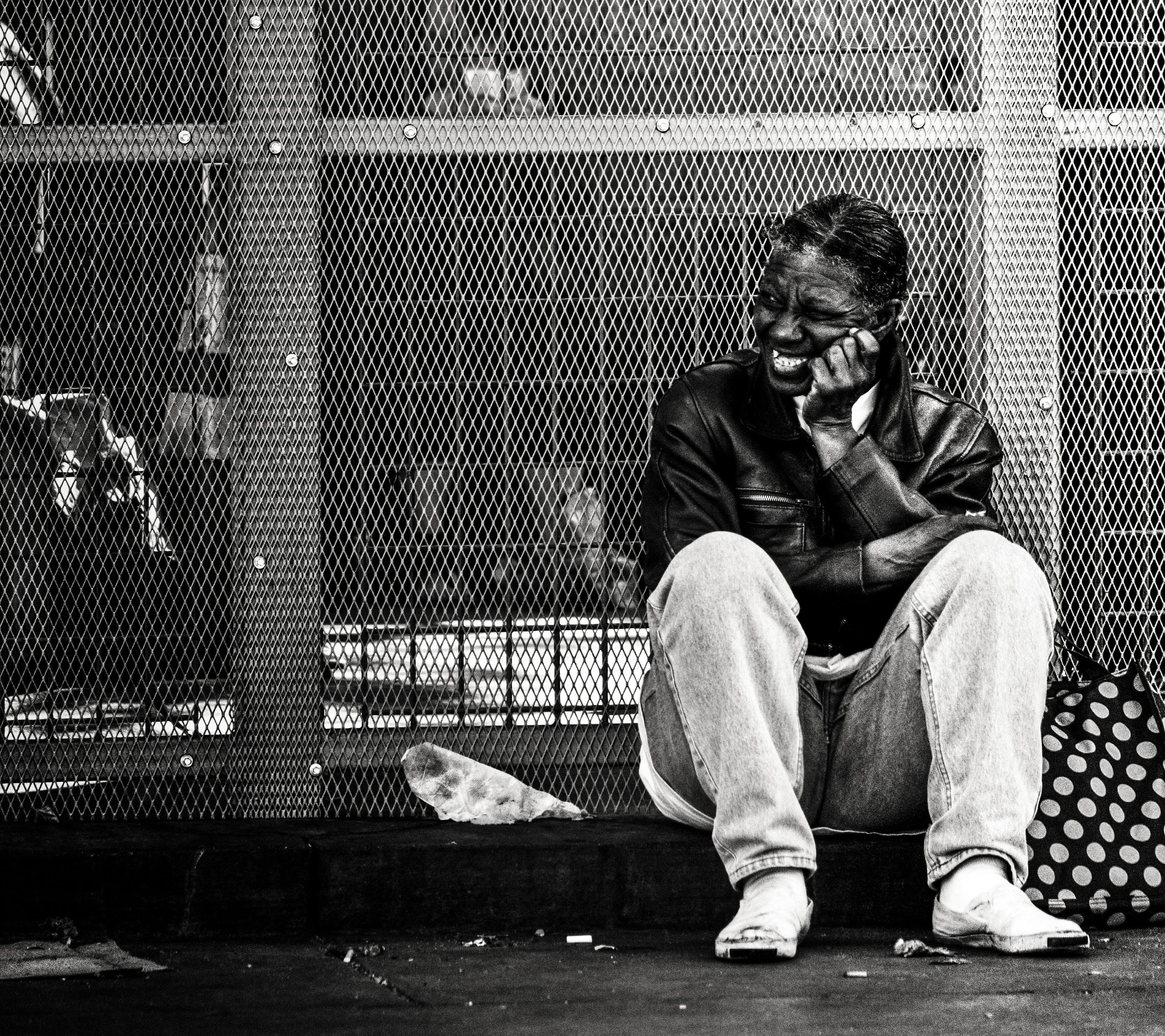
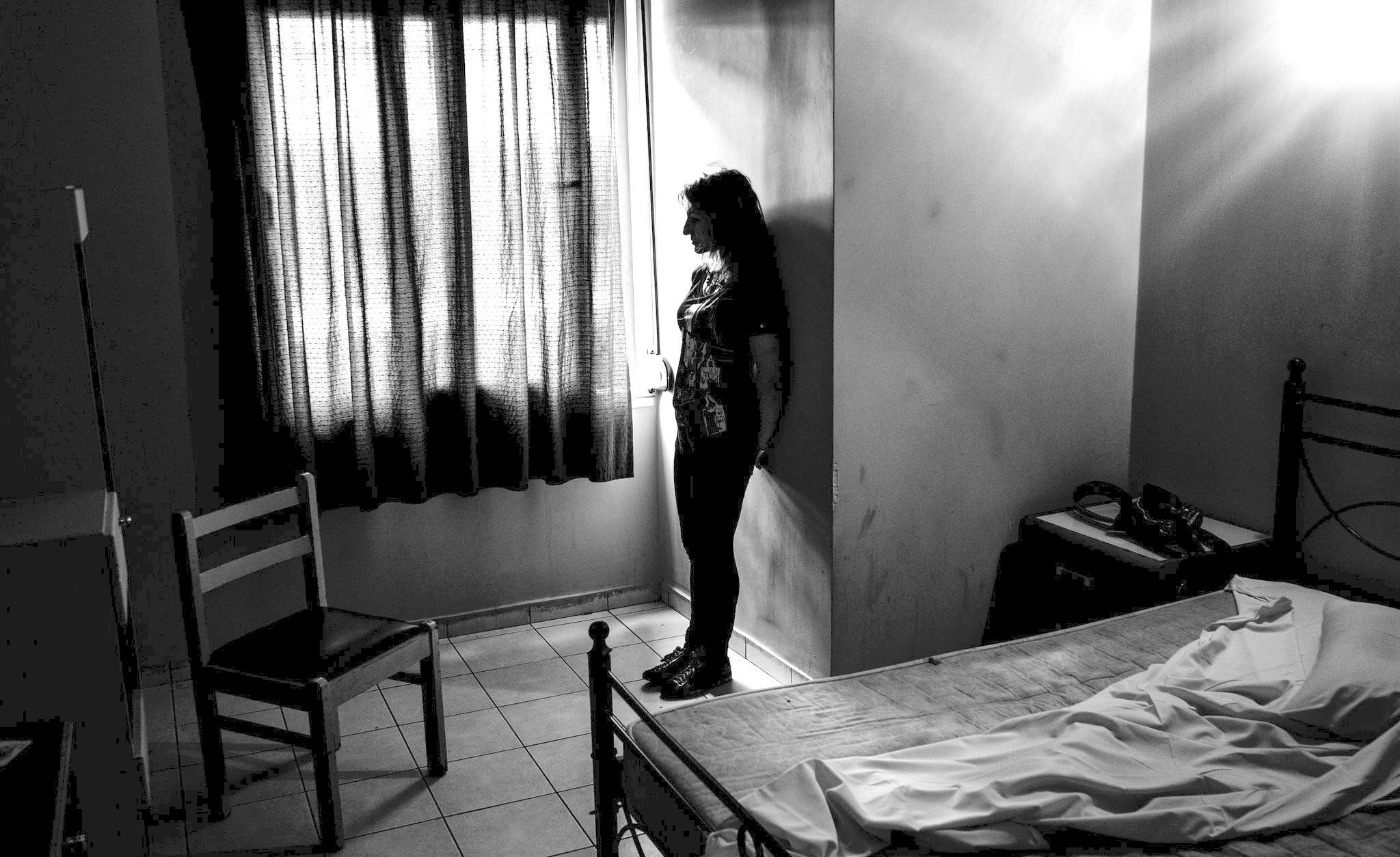
We fervently support curling up under the covers, but we hope that after finishing that fifth episode of Parks and Recreation, you’ll read through this issue of The Politic. Peel back the cover, and we believe in some small way you’re becoming a part of important conversations. Joey Ye ’18 in “Strife in the City of Angels” unveils the faces of one of the most overlooked urban communities in American history. Ye’s photo essay, which accompanies the article, reveals Skid Row’s paradoxes: the coexistence of hope and depression, of energy and malaise. In “An Inconvenient Future,” Diego Fernandez-Pages ‘18 examines the Department of Defense climate change report that boldly links climate change to national security concerns. Kelsi Caywood ’18 with “Pick Your Poison” follows anti-marijuana activists, who worry that legalizing pot will only decrease millennials’ productivity.
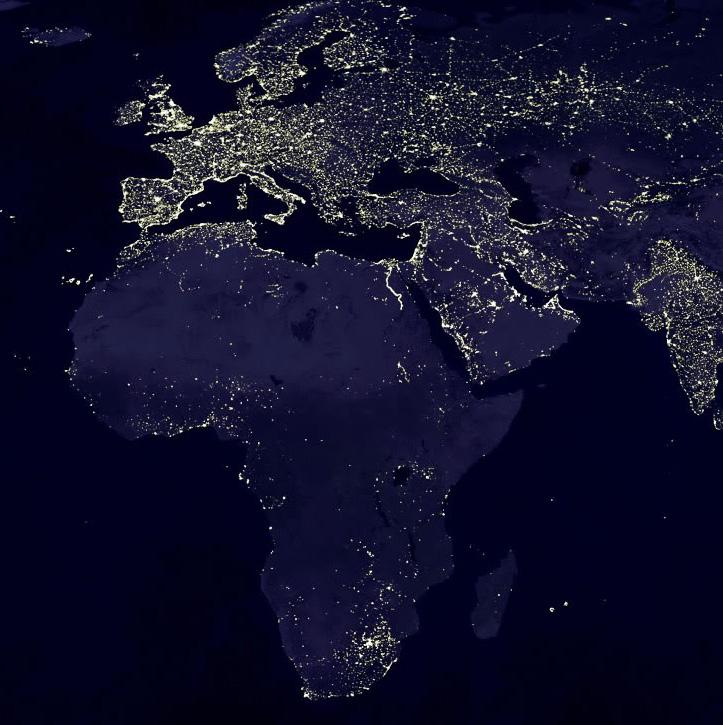
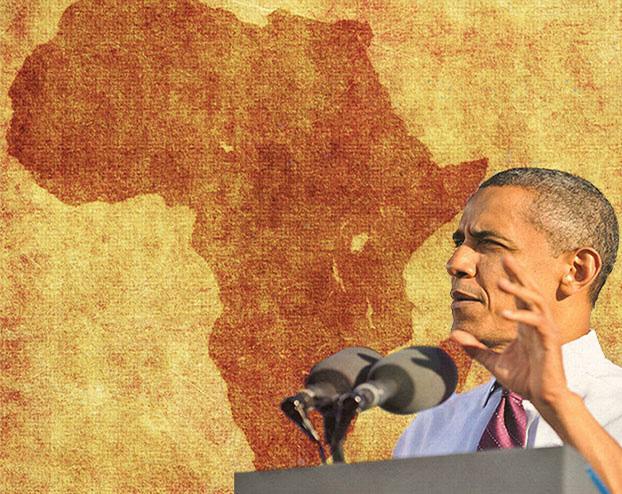
We explore efforts, big and small, that attempt to solve these issues. Rhys Dubin ‘16 and Brandon Marks ‘18 detail the public-private partnerships that underlie President Obama’s new Power Africa initiative in “Power Africa.” Writing from France, Emma Dougall ‘16 relates how a group of students refused to stay quiet when their classmate was harassed for wearing religious clothing in a French classroom.
By reading an article or reading them all, we hope you’ll feel engaged in political discourse. Thank you for your readership and your feedback.
Faithfully,
Aaron Mak ’16 and David Steiner ’16 Editors-in-Chief
Board of Advisors
John Lewis Gaddis
Robert A. Lovett Professor of Military and Naval History, Yale University
David Gergen
Editor-at-Large, U.S. News and World Report
Anthony Kronman
Former Dean, Yale Law School
Ian Shapiro
Business Manager
Jacek Oleszczuk
Graphic Designer
Ana Barros
Director, Yale Center for International and Area Studies
Disclaimer
This magazine is published by Yale College students, and Yale University is not responsible for its contents. The opinions expressed by the contributors to The Politic do not necessarily reflect those of its staff or advertisers.
L’affaire du voile
France’s Strict Separation of Church and State Divides a Campus
Emma Dougall
Out of the Red
Examining Mayor Harp’s First Year
Carter Helschien
An Interview with Patrick Murck
Executive Director of The Bitcoin Foundation Conducted by Justin Schuster
Unpacking Tom Wolf’s
Matthew Nussbaum
Pick Your Poison Can
Kelsi Caywood
A War on
Twitterbots Expose Government Manipulation of Information Online
Ian Garcia-Kennedy
Column:
Don’t Give Up on Brazil
Renata Rique
COVER
Strife in the City of Angels
The View From Inside
Skid Row
Joey Ye
Concussion Crisis Addressing Safety in America’s Most Popular Sport
Eleanor Runde
Power Africa
Laying the Grid to Electrify a Continent
Rhys Dubin and Brandon Marks Blinded
Anna Lee
L’Affaire du Voile France’s Strict Separation of Church and State Divides a Campus
By Emma Dougall
“You are the Trojan Horse of Islam.”
« Vous êtes le cheval de Troie de l’islamisme, » a professor proclaims to a lecture hall of 150 students. He speaks specifically to a freshman girl attending his history course, who wears a long veil and dress, leaving only her face exposed. The professor implies that the Muslim girl attempts to silently usurp the French idea of la laïcité, or separation of church and state, through her religious garb. A ripple of shock runs through the Amphiteatre Bruno Etienne. It is a large lecture hall that ironically has two Christian crosses decorating the walls; even more ironically, its namesake, Bruno Etienne, was a scholar and sociologist specializing in Islam. After a few moments of uncertainty, a group of students stands up and leaves the class in protest and in solidarity with their classmate.
She is the first Muslim student at the Institute d’Etudes Politiques in Aix-en-Provence, France, to wear a full veil to class.
“La laïcité” is a cornerstone of La Republique, and yet one of the most polemic aspects of the nation. In 2004, the government passed a law banning religious symbols that are shown “ostensiblement” – or conspicuously – in all public schools. Notably, while the law tolerates a simple cross on a chain, headscarves worn by Muslim females are unequivocally banned.
That same fateful year, 3,000 miles away, the Constitution of the United States led the American government to the exact opposite conclusion. This time, the girl in question was Nashala Hearn, she was 12 years old, and she wanted to wear a headscarf to public school. After wearing the veil for several weeks, she was eventually suspended for violating the dress code of the Muskogee, Oklahoma
public school she attended. In this case, the Justice Department’s Civil Rights Division decided to act to protect Nashala’s rights.
The White House’s official website, which features the story, writes that, “This degree reflects the principle that children should not have to choose between following the requirements of their faiths and their right to a public education.” So how can the French rationalize a law that seems to uphold the exact opposite principle? After all, France is a developed and democratic country, responsible for the groundbreaking revolution of “Liberté, Egalité, et Fraternité” – freedom of religion shouldn’t be a question up for debate.
The answer to this question lies in a certain French mentality, one which stems from France’s unique historical and cultural experience.
Since 1905, France has had a strict law declaring the country to be laique – that is, secular. The tradition of secularism didn’t first appear in 1905. It was sparked as early as the 1789 Revolution, where revolutionaries promoted enlightened thinking over traditionalism and a Catholic monarchy.
In the 1980s and 1990s, following many controversies which mirrored Nashala Hearn’s case, the French government realized that something concrete needed to be done. Following an investigation by a task force named the “Stasi Commission” after Bernard Stasi, the chief investigator, they reached the conclusion that ostensibly religious symbols violated the laique principles of the country. Their reasoning centered around testimonies from young Muslim women in immigrant communities who felt pressured to wear headscarves, as well as a desire to uphold gender equality and equal protection and opportunity for all citizens. An organization central to this debate was the feminist group “Ni putes Ni Soumises” (“Neither whores nor submissives”), founded in 2003. The group was a strong supporter of the proposed law, as its members believed the proposed law prevented the subjugation of women – in this case, primarily young students. Its website describes their actions to promote this law as “fighting against all those who exploit religions.” The group was also a strong proponent of the 2010 law that banned full burqas – veils that cover women entirely, including their face – in all public spaces in France. Their justification as a feminist group was that the ban is a “resistance against fundamentalists who want to imprison women and exclude them from our society.”
A crucial link, therefore, between the controversial 2004 law
and laïcité is attempts by the French to uphold their essential value of equality – here, between genders. “The French justification of this law comes from the desire to promote and protect French values,” comments Jean Michel Cosse, a professor of French language and culture at the American University Center of Provence. “The lawmakers felt that an oppression can never be accepted, even if it comes from a religious motivation. In the case of incompatibility between the values of a country and religion, the morals of the country must prevail.”
So how does this investigation, and its conclusion, mirror the French mentality in general? It’s impossible to understand this attitude and promotion of values that are inherently “French” without understanding the French historical context – that is, the Revolution – and this history’s massive repercussions on modern society. The Revolution of 1789 obliterated the entrenched idea of “Trois Ordres,”or the “Three Estates,” which once divided the clergy, the nobility, and the commoners. The eradication of these ingrained estates resulted in a feverish desire to promote the citizenship of the people of France above all else. Consequently, the French have a very different outlook on “communautarisme,” or the promotion of separate cultural communities, than other countries might. The idea of cultural groups living together and closing themselves off from integrating into French society is seen as contrary to core republican values. “The dynamic of modern France consists of cultivating a common denominator. The state protects its citizens, who all have the same rights, and not any specific groups,” explains Professor Cosse. Yet the French antagonism towards Islamic religious expression stems from more than just an avoidance of promoting one group over another. It also derives from a different outlook on individualism versus the collective rights of an entire country. “The French have a different attitude towards promoting individual differences than Americans do,” comments Professor Cosse. “In the Hofstede ranking of the individualist vs. collectivist of countries around the word, the United States ranks number one for individualism. France is much lower, at eleventh.”
***
The controversy at Sciences Po highlights a complex and controversial aspect of the French laws on laïcité. The law does not specifically ban religious symbols at universities, though for some,
the wearing of a full veil in a scholarly institution undermines fundamental French values.
Yet for many students at IEP Aix, their classmate has the liberty to wear a veil if she wants. Following the professor’s comment in the middle of class, many chose to leave the lecture hall as a sign of protest.
Gabriela de Frutos, a SpanishChilean exchange student studying at Sciences Po for the semester, was “shocked” when she heard about the incident. Raised in the United States in a “multicultural household,” she expressed her agreement with the French values of providing an “education that is equal and secular,” but also emphasizes that “it was unacceptable for the professor to single her out in front of a whole lecture class. If he really had a problem with it, he should have called her aside after class.”
***
So where will France go from here? With ten years of perspective on the law banning religious symbols in schools, opinion is still divided whether the government’s attempts to give equal protection to French children have succeeded. In the United States, too, we constantly witness struggles over the separation of church and state. While students are at liberty to wear whatever religious symbols they desire, school curricula featuring creationism and Christianity are constantly debated. Interestingly, this issue isn’t a problem for the French, as the government sets their curriculum.
It is important to note too, that for the French, the law is seen as a big compromise. “The veil is authorized in private spaces and many public spaces,” explains Professor Cosse. “France respects people who are Muslim, and they in turn must respect French institutions – in this case, school and its values.”
Laicité and its values have many positives, too. Jihane Zhr, a student at the prestigious engineering university Ecole Nationale Supérieure d’Arts et Métiers, was raised in Morocco until high school, where “Islam is the national religion.” For her, a country without laïcité means, “students have difficulties accepting others’ beliefs. Laïcité helps young people to find their way without social pressures.” However, she is eager to underline the lack of law regarding universities. “The law is very clear. Students have the right to express their beliefs in a free way…I’m really happy that students reacted to the teacher’s hateful words. That means that they are convinced of the real meaning of laïcité, which is respecting others and accepting different opinions and beliefs.” P
Out of the Red Examining Mayor Harp’s First Year
By Carter Helschien
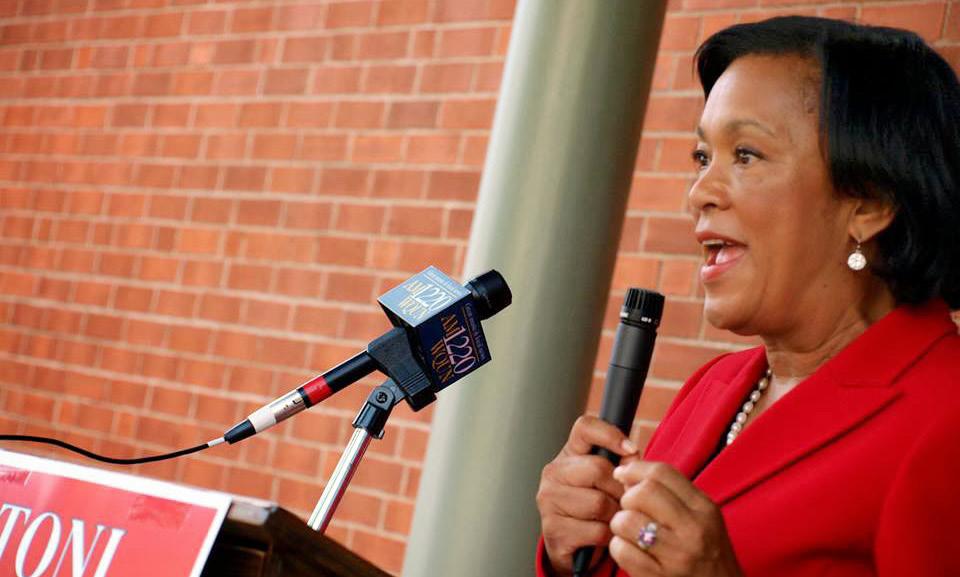
On January 1 of this year, Toni Harp stood in the auditorium of Career High, a school her late husband Wendell Harp built, to recite the mayoral oath of office. Looking out at the audience of 700 plus attendees, Harp was probably focused on maintaining a friendly demeanor for the cameras and mentally rehearsing the steps of the ceremony, which would mark the first transfer of power in New Haven in 20 years. While the ceremony unfolded without a hitch, the same cannot be said for Mayor Harp’s first year in office, in which she has sought to rectify the longstanding problems of New Haven’s past. As we approach the one-year mark in Toni Harp’s term as mayor, we should look back at the progress she has made so far on some of her more prominent campaign promises, which included improving New Haven’s financial situation and strengthening its social fabric.
In October 2014, Mayor Harp announced that the city had finished
its fiscal year with an operating budget surplus of $4.7 million. For a city that has been plagued by more than $500 million in outstanding debt and that has witnessed its credit rating cut to an A- a few months before Harp took office, this feat is commendable. But how was this surplus produced? Laurence Grotheer, Director of Communications for the Office of the Mayor, explained, “The mayor was able to win some additional state aid in what’s called the PILOT (Payments in Lieu of Taxes) program.”
This program reimburses cities for taxfree properties. In New Haven, 45 percent of property is tax-exempt—and much of it owned by Yale University. Grotheer commented that the surplus was also a result of Harp’s decision to restructure debt and raise property taxes. While the PILOT funding and debt restructuring do not have any direct negative effects, the increase in property taxes has significantly impacted local businesses. New Haven’s property taxes are higher than those of other Connecticut cities. Hartford, which is comparable to New Haven in terms of
population and demographics, has a mill rate (the property tax rate measured in per thousand dollar values called mills) of 27.68. In comparison, for the 2014-2015 fiscal year, New Haven’s mill rate is 42.36. Mayor Harp increased the mill rate by 3.61 percent, up from 41.88 mills last year.
A former member of the Yale College Democrats Board, who asked to speak anonymously, detailed the adverse effects of this increase, stating that some businesses have been forced to move in light of these new levies. “Panorama Education, a really popular and really successful startup at Yale, moved to Boston,” he said. That the founders of this startup viewed Boston as a more attractive place to work is not surprising. In addition to its burgeoning tech scene, Boston has a mill rate of only 31.18 mills for commercial, industrial, and personal property—a stark difference from New Haven’s. For New Haven, a city whose reputation still recalls high crime rates and a stagnant economy, this property tax increase serves as another reason for businesses and startups to choose
another location.
According to the anonymous source in the Yale College Democrats, the consequences for small businesses in New Haven have been equally dire. Elm City Market, for example, is struggling, and high property taxes have only exacerbated the situation. In 2010, developer Bruce Becker reached out to Whole Foods and Trader Joe’s to invite them to lease the ground floor of his building. Both refused to move to New Haven however, and many people point to the property’s unusually high projected taxes—about $1.4 million for the building—as the likely reason for this decision. Elm City Market won the space, but it has faced financial headwinds, resulting in the store being sold in auction last month.
Harp nonetheless defends the mill rate increase as a necessary response to the constantly changing financial affairs of the city. In an interview with The Politic, Mayor Harp explained, “New Haven’s mill rate differs from other cities and towns just as the total value of state assistance varies. The value of each grand list [the list of taxable and exempt property] is different, [and] each municipality has a different subset of tax exempt property.” Yale University in particular makes New Haven’s situation unique: the university, spread throughout much of the city, is tax exempt, and therefore greatly diminishes New Haven’s tax base. With this context, Harp said, “New Haven’s mill rate compares favorably with Connecticut’s other large cities.”
A former staffer for the Harp administration, who insisted on speak on background, further explained that most of the factors that drove the mill rate increase were fixed variables and contractually obligatory expenditures. The one decision over which the city did have control was the balancing of the rainy day fund (money set aside for natural disasters or other miscellaneous emergency expenses) and addressing a couple of shortfalls in the accounts to get the city out of debt and back in the black. The source went on to emphasize that the Harp administration was tasked with rectifying the mistakes of its predecessors: “The city had basically been using tricks and gimmicks to balance its budget for the last six years. They would literally sell off a school or sell streets to Yale as way of patching holes.” Because the previous budget was not sustainable under the last administration, the Harp administration had to seek alternative measures, like raising the mill rate, to improve city finances.
Although this higher mill rate was seemingly inevitable, Grotheer points out that Harp is also taking steps to offset its potential negative
consequences. According to Grotheer, the city is attempting to entice startups to stay by providing new resources for them to use. Harp is working with the mayors of West Hartford and Stamford on an early-stage proposal to create a 1-gigabyte per second open access fiber network. Mayor Harp explained the progress so far on this idea to The Politic: “New Haven was joined by Stamford and West Hartford in September [2014] and issued a joint Request for Qualifications (“RFQ”) seeking information and dialogue with parties interested in building the next generation broadband network with capacity of one gigabit.” This network would provide speeds close to a hundred times faster than the average home Internet speed. Grotheer emphasized that this upgrade would benefit tech firms and research companies that required enhanced connectivity. In a West Hartford Patch article, Consumer Counsel Elin Swanson Katz explained the vital role faster internet speeds could play in a city like New Haven: “We heard from businesses, universities, high-tech start-ups, mayors and first selectmen… about how greater Internet speeds at lower costs are essential to their functioning.” At the same time, Alexion, a major pharmaceutical company, very recently moved to New Haven, a further indication that Harp’s policies have not completely decreased the Elm City’s image in the eyes of businesses.
Although the reaction to Harp’s economic policies has been mixed, community members have applauded Harp for her strong social agenda, particularly her effort to reopen the Q House, a local community center that closed in 2003. During her campaign, Harp made reopening the Q House a priority. Yale College Democrats President Becca Ellison ’15 commended Mayor Harp’s work so far, saying that Harp is “fighting to secure funding and support for reopening the Q House as a community center.” Although Harp emphasized that the new Q House is still in its design phase, the blueprints contain a fitness room, outdoor recreational facilities, a community kitchen, a library, a health clinic, and a senior center. In the past, the community center provided a beneficial social environment for Dixwell’s youth while also tying the community together with a common recreational area.
The Dixwell community is not the only group with which Harp has engaged. During her first year, Harp has made strides to improve the city’s relationship with Yale. Because Yale plays such a large role in the New Haven community, it is important that Mayor Harp has taken steps to be more involved with students. Ellison commended Harp’s increased presence on campus.
“She came to a meeting with the Dems at the beginning of the semester to welcome new freshmen to campus and talked to us about what she’s been doing for New Haven.” The anonymous former Yale Dems member applauded the improvements Harp made in interacting with Yale. According to the source, during the mayoral election, “Harp almost never engaged with students. She showed up on campus exactly once before the primary election.” Over the past year, her interactions have increased significantly, the source continued. “She comes to meetings on campus for different groups, and she returns our calls, which is always helpful.”
City Controller Daryl Jones further emphasized the effort that Harp is making to partner with the university. Jones explained Harp’s willingness to use outside resources to find solutions for problems. “The mayor always asks the question, ‘What are other people doing that we can then use in the city?’” Following this philosophy, Jones went on to describe Harp’s intent “to build a really good relationship with Yale.” Already, the city has profited from this partnership. The Yale IT department has shared valuable information with Jones, who has used the new knowledge to improve the city’s computer systems. After learning how Yale handles maintenance contracts, Jones initiated renegotiations of all city maintenance contracts.
While Harp is certainly guiding the city in the right direction in these aspects, the question remains: how should New Haven relieve its financial pressures while strengthening its social progress? The way Harp has chosen to rein in the city’s excessive debt may attract criticism now, but the full consequences of this policy remain to be seen. Harp has three more years to fulfill her vision of a revitalized New Haven. Who knows what three more years can bring?
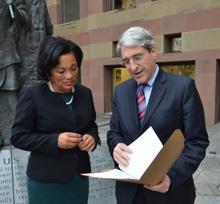
Mayor Harp discusses New Haven-Yale relations with President Salovey P
An Interview with Patrick Murck Executive Director of The Bitcoin Foundation
Conducted by Justin Schuster
Transcribed and condensed by The Politic
Something that distinguishes Bitcoin is its anonymity. What are your thoughts on the emerging cryptocurrencies like Darkcoin and Zerocoin that offer almost perfect levels of anonymity?
I am always a little hesitant when people start throwing around the “A-word:” anonymity. It’s not because I’m opposed to anonymity online. I’m not. It’s because, generally speaking, those systems are not actually anonymous. It’s very dangerous to tell people that they can be anonymous in their dealings online whether its communication or in their financial transactions if that’s not actually true. What you are doing is setting people up to do stupid things that they are going to later regret because they believed falsely that what they were doing was going to be anonymous. Whether something like Darkcoin or Zerocoin can truly provide an anonymous service to people is up for debate. I don’t think that’s a given. I would caution people. People used to say that Bitcoin is anonymous too. It’s not. Usually what I tell people is that Bitcoin is as anonymous as surfing the Internet. The same subset of people who claim some level of anonymity surfing the Internet are probably the same ones who can claim some sort of anonymity using Bitcoin. It is generally the same skillset. It is a very, very small group of people who can do that effectively, and it is always questionable how effective they can be at it. Anytime that you leave a digital paper trail, it’s hard to see how at some point down the road, people won’t figure out a way to connect those dots back together. What I like to think about with Bitcoin is not anonymity, which I just think is dangerous to sell that to people when it’s not that true, is this idea of user-defined privacy – the idea that, as a consumer, I can decide how private I want my information to be on the network.
Patrick Murck is a founding member and Executive Director of the Bitcoin Foundation. His expertise as an executive in a number of digital currency companies extends across the legal and regulatory issues governing the use of bitcoin, decentralized financial systems, virtual economies, alternative payment systems, and social loyalty and reward programs. He has appeared before numerous agencies, testified on Bitcoin’s social and economic benefits before the U. S. Senate and has received the distinction of being named among “America’s Outstanding General Counsel” by ALM in the National Law Journal. P
How have you seen Congress and the U.S. Government receiving cryptocurrencies over the past two or three years, and what are your thoughts on the regulatory landscape of virtual and crypto currencies?
When I first went to D.C., it was pretty hostile. It was all about Silk Road. The worst of the worst stuff was being peddled by certain interest groups in DC at the time. After we hit the ground in DC, and it was me and Gavin [Andresen], Jim Harper, Jerry Brito and some others. We very effectively changed that narrative pretty quickly. It might have been as simple as a bunch of Bitcoin people who looked like responsible adults showing up in suits and ties. We did, and it made a big difference. The capstone on that were the Senate hearings that happened in November. There were people in the community who said, “Be careful, they might walk you out of the hearings in handcuffs.” Fortunately, the hearings went a little differently, and they were very positive. That changed everything, and shifted the tone completely. We took some hits after that, but it has recovered, and the general climate is positive.
There are a few reasons for that. The biggest reason is that people in the regulatory community understand the inevitability of these technologies, and they want to preserve a place in them. Also, what you are seeing is a recognition of the benefits of these technologies. As I elaborated on earlier, there is a huge public good with Bitcoin, and people really get that. Government in regulatory circles is not all gloom and doom. They would love to be a part of the story that says we helped bring Bitcoin to the world, and it helped improve everybody’s lives. The government and a lot of the regulatory community want to be a part of that positive narrative too.
What do you see as your threat or risk assessment of hardened illicit actors, such as violent extremist organizations, gravitating towards Bitcoin and cryptocurrency to conduct illicit transactions?
Organizations like that will gravitate towards anything that allows them to fund their activities. Anything. There is nothing special about Bitcoin in that context. If they feel like that helps them fund their activities, then they will use it. If they feel like stealing credit card numbers and selling them on the black market will help them, then they will do that too, which they do. If they want to use pre-paid access cards, they will use them. Of course, they will use cash. Cash is king because that is a truly anonymous currency. It doesn’t do anybody any favors to say that we need to stop terrorist financing, so let’s look at Bitcoin. It’s always going to be that we need to look holistically at the global financial system; let’s see how people are channeling their money and figure out how to follow it and how to conduct investigations. Do we, as a law enforcement community, need to adjust our methodologies to fit some of the new emerging technologies?
The Democrats’ White Knight Unpacking Tom Wolf’s Landslide Victory
By Matthew Nussbaum
Democrats entered the midterm elections hoping to dethrone four infamous, budget-cutting, laborbashing governors: Sam Brownback in Kansas, Scott Walker in Wisconsin, Rick Scott in Florida, and Rick Snyder in Michigan. All of these races were considered toss-ups, and Democrats delighted at the prospect of capturing four more governorships. Instead, as Election Day drew to a close, it became increasingly evident that the Democrats would be disappointed. The four Republican governors that Democrats attempted to unseat were re-elected and, to add insult to injury, Republicans also seized the liberal bastions of Maryland and Massachusetts.
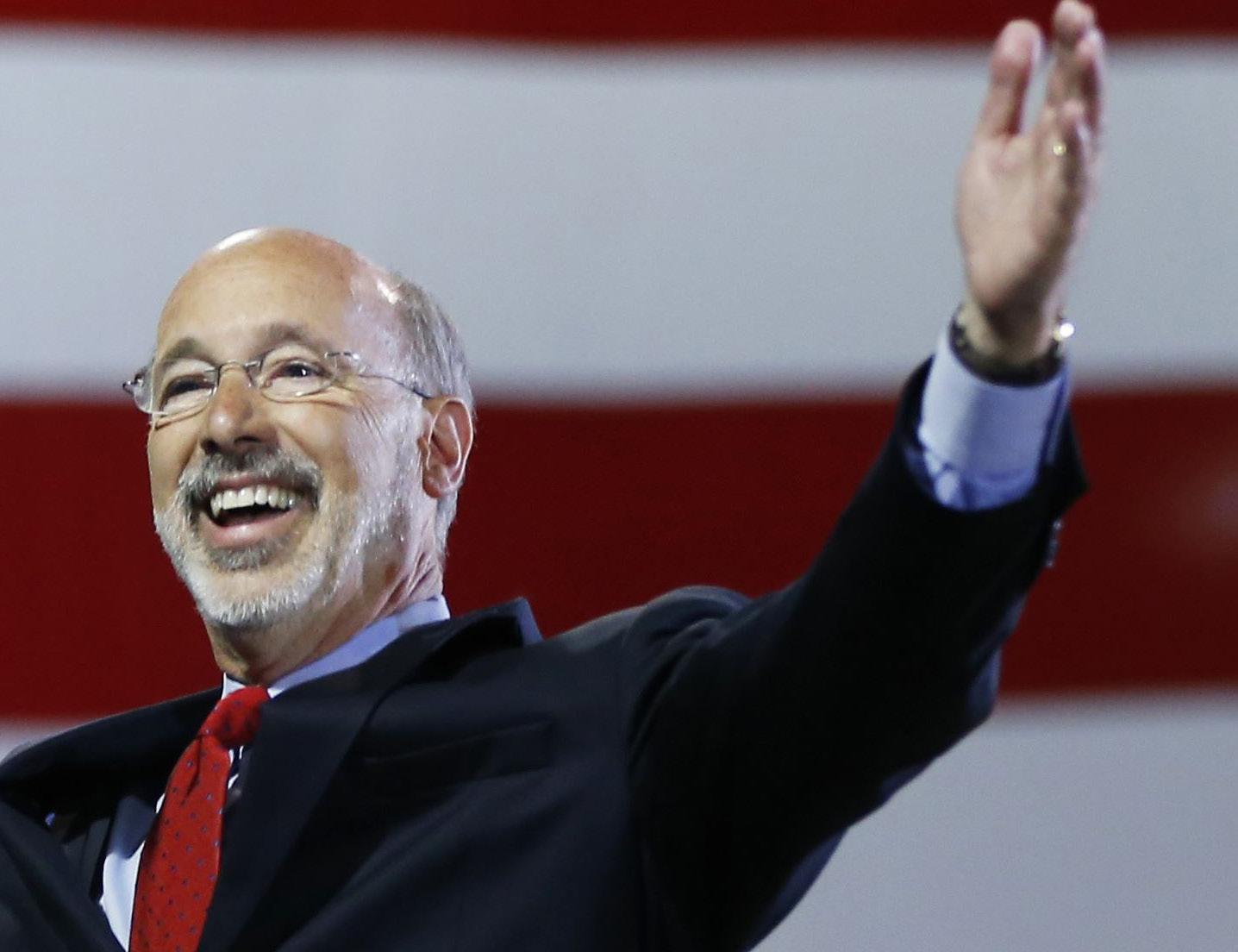
The one state that got lost amid the Republican clamor was Pennsylvania, where voters emphatically threw out the Republican incumbent in favor of a Democrat making his first run for elective office. Tom Wolf, the CEO of a kitchen cabinet company and former state Revenue Secretary, captured almost 55 percent of the vote
Wolf is a bald, spectacled, 65year old with a soft-spoken, professorial nature. But don’t let his appearance fool you. With 58 percent of the vote, Wolf – a $10 million self-funded candidate – easily crushed his more prominent Democratic opponents in the primary. Crushed might even be an understatement. The runner up, US Rep. Allyson Schwartz, received only 18%. Now, Wolf is preparing to take the reins
of Pennsylvania, the sixth most populous state in the nation.
Gov. Tom Corbett, the Republican who Wolf beat (or, as headlines liked to cleverly say, “devoured”), was deeply unpopular in Pennsylvania for doing much of what he pledged to do, a strategy that closely mirrored what Republicans were doing in states across the country: cutting spending, refusing to raise taxes (except the gas tax), and passing strict antiabortion and voter ID laws.
Corbett, a life-long prosecutor, never had Chris Christie-esque political charisma. He struggled to justify to voters why education funding never reached the levels it had during Gov. Ed Rendell’s last year in office, and Democrats slammed him for four years over the “one billion dollar education cut.” The attacks stuck. It’s something of a messy topic, but Rendell was able to pad the education budget with federal stimulus money. Of course, Corbett could have replaced that money when it ran out, but that might have required a tax increase.
Education funding became the main issue of the campaign. Wolf pledged to restore it, and Corbett foolishly tried (and failed) to argue that he had increased education funding. Corbett did allocate more money toward education, but without the federal stimulus money, the overall total was less. Coupled with the perceived education cuts, steady property tax increases led to rising levels of dissatisfaction amongst the
electorate And if this wasn’t enough to doom Corbett then the state’s stagnant economy was: Pennsylvania’s economic growth ranked forty-seventh in 2013. While Wolf brought his likability, proven business acumen, and gleaming résumé to the table for voters, his greatest asset was perhaps Tom Corbett.
“It’s almost as if the ballot said ‘Tom Corbett, yes or no?’” said Thomas Fitzgerald, a longtime politics reporter for the Philadelphia Inquirer.
James O’Toole, the politics editor at the Pittsburgh Post-Gazette echoed the point, framing the election as a referendum on the Republican incumbent. Wolf, he pointed out, was beating Corbett in the polls before people even knew who Wolf was.
Republicans actually increased their majorities in both houses of the state legislature – further indicating that Corbett, not the Republican Party, was the problem. Wolf may have been a good candidate, but he could not have picked a better opponent than Corbett.
“He was not a good communicator,” said O’Toole of Corbett. “He had no friends in the legislature.”
That’s not exactly a winning formula for a sitting governor.
Wolf’s team, however, maintains that their candidate was more than the anti-Corbett.
“Not any Democrat would have beaten Tom Corbett, and certainly not any Democrat would have beaten him by ten points,” said Jeffrey Sheridan, press secretary for the Wolf campaign.
Wolf is, in many ways, not only
a model Democratic candidate, but a model candidate in general. Soft-spoken, disarming, and instantly likeable, he brought to the table the kind of résumé political strategists dream about.
On his way to a B.A. at Dartmouth, Wolf took a two-year break to serve in the Peace Corps in India. He went on to earn his M.Phil. at the University of London and a Ph.D. in political science at the Massachusetts Institute of Technology. His dissertation, which examined structural changes in the House of Representatives from 1878-1921, was awarded a national
prize. Harvard offered him a tenuretrack position, but Wolf declined and returned home to York, Pennsylvania where he joined the family business, Wolf Organization Inc., and started by driving a forklift. He ran the company from 1985 to 2006. After a two-year stint as Revenue Secretary, Wolf prepared to run for governor in 2010. But news came that the business his family had built, and sold in 2006, faced bankruptcy. Wolf terminated his plans to run, and instead went back to the company to try to save it from collapse. Today, Wolf Organization, Inc., is the largest U.S.
The chart below shows a year-by-year comparison of vote totals from the major Pennsylvania counties.
Note: Philadelphia County is the same as the City of Philadelphia. Montgomery, Chester, Delaware and Bucks are home to the main Philadelphia suburbs. Allegheny County is home to Pittsburgh and its major suburbs.
distributor of kitchen cabinets.
So when he spoke about fostering manufacturing, raising incomes, and restoring middle class prosperity and opportunity, he actually had a point. His story resonated with voters, especially in the crucial suburban counties in southeast Pennsylvania, where Wolf won by large margins.
Wolf’s main campaign pledge was to place a 5 percent severance tax on natural gas extraction to restore education funding. Pennsylvania is one of the only states in the nation without such a tax, and analysts said passage is likely. However, the easy part ends there. Corbett’s last budget was “balanced” in name only, and relied on a number of gimmicks. Instead of increasing education funding it is quite likely that any revenue from the severance tax will be used to fill a budget hole. Wolf will then have to try to find money elsewhere, since Republicans in the legislature won’t be eager to raise taxes on high earners as Wolf has suggested.
But all those problems can wait until January. For now, Wolf holds the perhaps unenviable position as a Democratic white knight. He handily won a swing state during a bad year for Democrats, dominating cities and suburbs alike, and performing well in conservative rural areas. Moreover, he did it all while talking about a new tax and increased education spending. In this man, Democrats might easily see the anti-Chris Christie: soft-spoken where Christie is loud, pragmatic where Christie is ideological, and state-focused where Christie has national ambitions.
“He is a mystery in a lot of ways,” said Fitzgerald of Wolf. “I’m sure that Hillary is trying to lock up his support as we speak.”
By Kelsi Caywood
Carla Lowe was working as a substitute teacher in California when she began her crusade. “I got started quite innocently about thirty-seven, almost thirty-eight years ago,” Lowe recalled. She’d been asked to take a turn as the president of the Parent-Teacher Association, a position that involved surveying parents about their concerns. The top concern, by far, was drugs, which prompted Lowe to start writing to legislators in the state house. When she soon realized that many of her students (and her son) were using marijuana, the issue became one that extended beyond a single school district and a one-year PTA obligation—it penetrated her conscience, her classrooms, and other schools across California. After visiting the East Coast to write a white paper, a government report giving insight on an issue, she was motivated to continue legislative work centered on kids and drug use. She became a full-time antimarijuana activist. She quit teaching to become a full-time citizen legislator, traveling “around the world on behalf of Mrs. Reagan,” coordinating national conferences, and heading a speakers’ bureau.
Following the midterm elections, the ballot box returns disappointed not only Democrats, but also groups that advocate for relatively conservative approaches to marijuana policy. Most states with referenda for cannabis reform saw those legalization initiatives pass. “The second you change the stereotype of a marijuana user from a 40-year-old stoner living in his mom’s basement to an 80-year-old grandma with cancer, you give people permission to be okay with marijuana,” laments Kevin Sabet, a former advisor to the Obama administration and co-founder of Smart Approaches to Marijuana
(SAM). In a media conversation heavily centered on the proponents for national legalization policies, Sabet and other anti-legalization advocates appear peripheral to both constituents and the broader national consensus. This lack of stature is not indicative of any absence of passion for their cause. There are numerous individuals and organizations dedicated to counter-lobbying these upcoming ballot measures. But, when it comes to compelling a diversified America, many are left wondering if anti-legalization advocates’ fervor is enough in the face of the numerous challenges confronting them.
The handful of organizations at the forefront of anti-legalization advocacy have similar motivations, concerns, and methodologies. Amy Ronshausen, the Deputy Director of the Drug Free America Foundation and Save Our Society From Drugs (SOS), explains their operational approach: “SOS works at both the national and state levels to educate, mobilize, and share resources with like-minded groups and individuals.” The anti-legalization front is not just dependent on its throng of dedicated individuals and rosters, however. It frequently relies on medical research done by third parties, another force for giving their stance authority. This approach is apparent in their promotional and educational materials where nearly every sentence cites sources like Office of National Drug Control reports, National Institute on Drug Abuse statements, and prominent medical researchers from around the globe.
Though they share coherent and coordinated visions, opponents of marijuana legalization are by no means uniform. Many come from public
service backgrounds, but others point to alternative origins. Carla Lowe, the former substitute teacher, is just one example. Sabet, an advocate of particular prominence in the media and among his colleagues, echoed his peers’ sentiments about marijuana’s public health connotations and organizational approaches to advocacy. Sabet’s organization, SAM, has an advisory board that serves as an index of leaders for the anti-legalization cause. On its honorary advisory board, for example, SAM touts politician Patrick J. Kennedy and Canadian-American journalist David Frum. Kennedy, taking a respite from political life, has centered his energy and influence on creating public conversation around mental health issues and recently published a short piece disparaging marijuana on OZY, a micro-news website and platform. Frum also hasn’t hesitated to put his doubts about legalization into words. As a senior editor for The Atlantic, he lends an authoritative voice for conservative thought on marijuana and wrote about the serious risks of marijuana for CNN. Frum, Kennedy, and other advocates predict the drastic commercialization of pot, spurring another “Big Tobacco.” Kennedy used this possibility as a slant for his recent commentary published by National Public Radio (NPR). Kennedy foresees legalization as a “[marijuana] marketing machine that will spring up.” He describes Big Tobacco’s marketing focus as “hook them young, and they have a customer for life.” He fears that a marijuana reincarnation of Big
A legal marijuana store in Colorado. Advocates against the legalization of pot fear it will be commercialized at the expense of youth.
Tobacco would similarly exploit youth for profit. Anti-marijuana advocates scorn addiction driven by marijuana distributors’ desire for profit and the influence of marketing techniques. Bob DuPont, a leader in drug abuse prevention and treatment at the Institute for Behavior and Health, encourages others to consider the dangers of a society with pot vendors lining the streets like McDonald’s or Starbucks. If people are given the liberty and access to marijuana, will they abuse these freedoms? If marijuana is legalized, what is next? Though a dystopian lens, it is a thought experiment showing how legalization, brought to its extreme, may cripple society.
Many anti-legalization arguments, however, are not grounded in fear or theoretical conceptions of an America where weed is legalized. Colorado, unlike DuPont’s thought experiment, has been a tangible case study for many advocates’ concerns with permitting recreational use. To most anti-legalization organizations, it is a particularly powerful indication that legalization is neither economically nor socially profitable. While prolegalization advocates endorse expected increases in state tax revenues from marijuana, the opposition undercuts the new legislation’s economic utility. “It’s a dangerous human experiment that has resulted in a failed policy. The idea of legalization sounded better to voters than the actual implementation; they didn’t realize what they were getting into,” Ronshausen said.
Studying Colorado, through a catalog of applicable facts and relevant anecdotes, is not the only way antilegalization advocates seek to validate their arguments. Frum’s columns are often noted for excluding fear-based arguments and follow a prevent-notpunish logic. His arguments correlate with the larger aims of SAM. It’s not a strictly anti-marijuana approach; the organization suggests that people should not be stigmatized for casual use while also asserting that smoking marijuana is not a productive decision. Following this, Frum suggests that law should be responsible for preventing the vulnerable from being overwhelmed or coerced by their circumstances into making risky decisions. This is where marijuana—deemed a risky decision by Frum and SAM—comes into play. He does see the trade-offs of opposing legalization, but grounds himself in the belief that preventing legalization will halt long-term increase in unstable drug use that compromises the well-being of vulnerable constituents.
Frum’s pairing with Kennedy, a notable Democrat, on the SAM honorary board is a gesture for antilegalization advocates’ push for
bipartisan appeal. This bipartisanship prevents reliance on heavily politicized arguments and marks the adoption of a more balanced approach. At the same time, it is appropriate to be skeptical of the earnestness and depth of the contributions made by high-profile public faces. There is a difference between pairing marijuana legalization with other issues forming a political platform, as opposed to focusing on it as the centerpiece of someone like Carla Lowe’s life work.
Like any vaguely political issue, funding is a crucial part of being effective for advocates on both sides of the debate. Part of why the widespread push for anti-legalization has not been as effective is its lack of comparative capital. When asked about issues with the push for anti-legalization, money was a common denominator among all anti-legalization advocates interviewed. “It’s simple,” Lowe observed, “We don’t have the money to do the ads. In the recent election, the druggies put ten million dollars into the states--Florida, and Alaska, and D.C., and Oregon.” The anti-legalization advocates were outspent 20-1 during the midterms. Pro-legalization proponents have collected contributions from a wide range of sources like investors and the burgeoning marijuana industry. According to Daily Mail, liberal tycoon George Soros has spent at least $80 million to get pot legalized in the U.S. and Uruguay.
One group that could be better engaged to provide additional funding is young adults. Advocates knew of few college-age groups actively engaged in anti-legalization activism. This is indicative of the need to craft effective communication strategies across demographic sectors. Save Our Society From Drugs’ Ronshausen reflected, “Traditionally we have found the college population to be the most difficult to engage as its an ever-changing population. Groups that focus on policy actions rather than prevention and education efforts seem to be more successful with this demographic. Rather than focusing on the anti-drug movement, college groups have been more successful when they focus more on a public health/healthy choices perspective.”
In terms of changing the paradigms surrounding marijuana, Sabet and DuPont also recognize that intergenerational understandings of marijuana differ. Dupont explains the difficulty of broad communication: “There are a lot of different people, and a lot of different opinions.” Today’s drug is fundamentally different than what many Americans, especially those of the baby boomer generation, perceive it to be. Both Sabet and DuPont
discuss significant increases in the tetrahydrocannabinol (THC) levels in marijuana. THC is the component of marijuana that causes a “high.” According to Lowe, “the potency of the THC is key” and legalizing marijuana would be unacceptable when considering what “THC does to our adolescents’ developing brains.” She also described THC’s fat solubility and bioaccumulation--meaning that it it builds up with continued smoking and most affects the brain and sexual organs. “The marijuana today...the street pot in California is somewhere around 15-18% THC, the good grass is 37%, and then you go and look at the oil that is smoked--it’s as high as 98% THC.”
Moreover, an increase in THC overdose hospitalizations has been recorded in Colorado. Anti-legalization advocates add to this claim with statistics about the effects of marijuana impairment as a risk for traffic deaths. The efficacy of medical reports and statistics as part of the anti-legalization campaign repertoire is dubious because both sides have different numbers in their favor. If reports and statistics were uniformly supporting one side, the current debate would be unnecessary. There is a body of advocates pushing a public health perspective that bolsters legalization campaigns and actively relays this perspective to both baby boomers and college-age youth. This perspective posits that marijuana use is less harmful than alcohol. Among a legion of other organizations, Safer Alternative For Enjoyable Recreation (SAFER) maintains that marijuana use is safer for the consumer. Their arguments, like those of the broader antilegalization campaign, are supported by a constellation of reports from U.S. Centers for Disease Control and Prevention (CDC), American Scientists, and other such organizations. Baby boomers trying to corroborate personal experience with conflicting medical accounts find difficulty asserting an opinion about marijuana ballot measures. If empowered, this faction of Americans could make for a substantial showing at the voting booths. Advocates themselves are grappling with their own doubts--not in their message, but in its delivery to those that might make the difference. It’s not simple. Advocates, like Lowe, suspect that anti-legalization and broader anti-marijuana advocate aims will not be achieved until the Millennials--the currently unengaged college students--recognize the impact it is having on the teenagers that preceded them. In Lowe’s words, “we are growing diminished adolescence and I think that does not bode well for the future of our country. A diminished adolescence equals a diminished America.” P
Defense Secretary Chuck Hagel has made climate change an issue of national security.
An Inconvenient Future Department of Defense Combats Global Warming
By Diego Fernandez-Pages
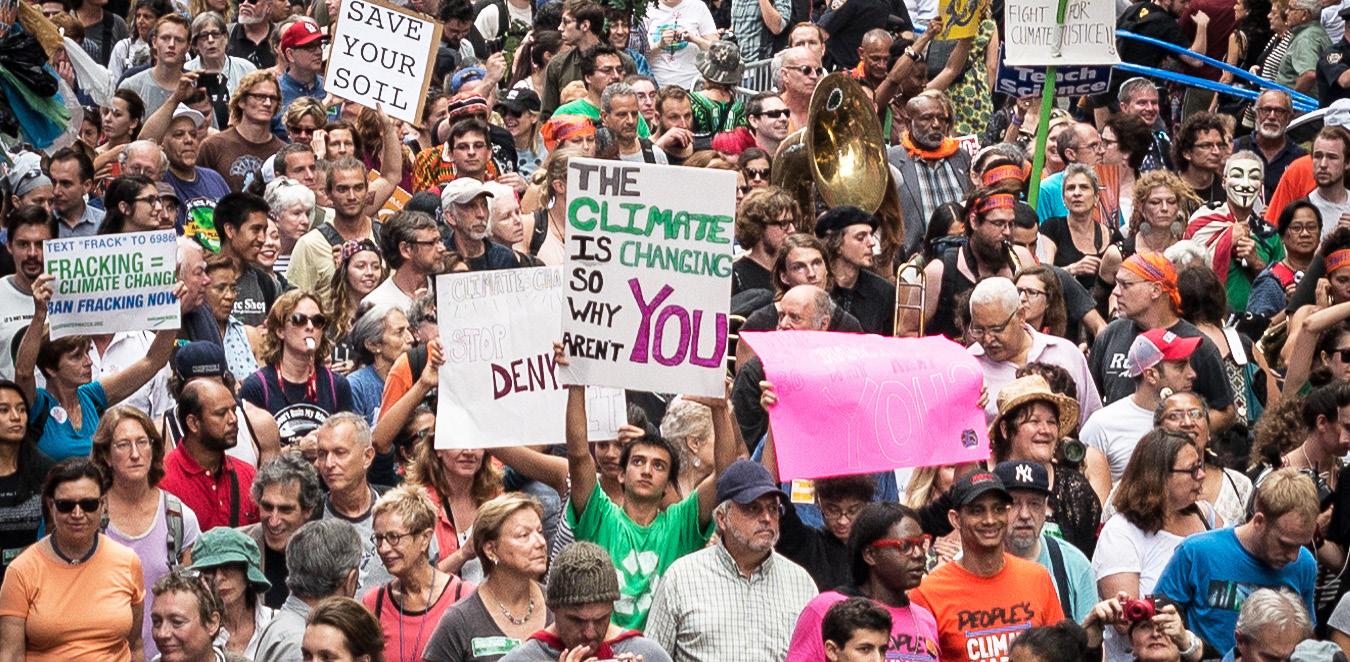
On a smoggy day in September 2014, 300,000 people filled the streets of Manhattan from Columbus Circle to 86th and Central Park West, shouting slogans of unity and solidarity. Students and teachers, activists and politicians, actors and artists, community organizers and community members, had come together—all 300,000 of them—to protest one issue: climate change.
A few things are politically significant about the People’s Climate March. It effectively used climate change as a vehicle for political organization in an apathetic age—and did so in numbers similar to the March on Washington of 1963, and far surpassed the Occupy Wall Street movement of 2011. Perhaps more importantly, the march showed how important climate change has become to ordinary citizens and the extent to which it is becoming not just a hot-button issue, but also something that many citizens want politicians and government agencies to address immediately.
But is that the right response to climate change? Should we be acting against it or preparing for it as best we can? On Monday, October 13, the United States (U.S.) Department of Defense (DOD) released a report on global
warming titled “The Climate Change Adaptation Roadmap.” “Adaptation” seems to be key to the Department’s approach to climate change: the report does not seek to manage the problem, control it, or allocate relief. As Professor Joshua Busby of the University of Texas at Austin’s Lyndon B. Johnson School of Public Affairs described, the report “focuses on adaptation [to climate effects] rather than mitigation [of emissions].” In other words, the report suggests that the Pentagon is preparing for a future in which the effects of climate change manifest daily. The Pentagon modifies its structures to suit what is increasingly appearing to be the unavoidable onset of global warming.
In the introduction to the report, Secretary of Defense Chuck Hagel wrote, “By taking a proactive, flexible approach to assessment, analysis, and adaptation, the Defense Department will keep pace with a changing climate, minimize its impacts on our missions, and continue to protect our national security.” Climate change, it seems, is inevitable. Now, the Pentagon’s job is to ease its effects as much as possible.
This document is not the only report that has been issued by a government agency regarding climate change. The Department of Homeland Security has an entire office dedicated
to Climate Change Adaptation and Emergency Management. The Department of the Treasury analyzed the economic effects of climate change in a 2012 report, and the Department of Agriculture released documentation of the impacts of global warming on farmers in 2013. The trend is clear: the government doesn’t seem to be trying to prevent climate change. Rather, it seems to be accepting climate change as a given and working as hard as possible to protect itself in a changing environment. So, what is the relationship between climate change and national defense? What do storms have to do with terrorism? What do deserts have to do with war? What is the relationship between melting ice caps and extremism? As it happens, global warming is not necessarily going to directly affect the armed forces’ ground operations. Instead, it will exacerbate volatile situations and catalyze conflicts. Shiloh Fetzek, a consulting research associate for climate change and security at the International Institute for Strategic Studies, said, “Climate change may interact with other stressors— poverty, environmental degradation, political instability, and social tensions— to accelerate conflict and instability detrimental to U.S. interests.” Taking terrorism as an example, it is possible
that climate change-induced drought in a volatile region will lead to political instability significant enough to push individuals to extremism—as was perhaps the case with the drought that occurred in Syria in the years before its civil war began.
Fetzek goes on, however, explaining, “In order for climate impacts to increase the risk of terrorism, many other drivers would need to be present, and climate impacts would by no means be the most significant of these.”
Still, global warming seems to be at the forefront of consideration for many government agencies. Although it may not be the direct cause of conflict, the government portrays climate change as the source of what apparently is a growing series of humanitarian and national security disasters. In the future, climatic catastrophes as diverse as Superstorm Sandy and Typhoon Haiyan may be common occurrences. Fluctuating dependence on oil reserves often fuels conflict in the petroleumrich countries of the Middle East. In turn, the financial fortunes of these countries’ citizens depend on trade that is inextricably tied to the political responses to climate change. Frank Verrastro, senior vice president and chair for Energy and Geopolitics at the Center for Strategic and International Studies, gave an example: “Lower oil and gas prices will make moves to renewable energy and efficiency improvements more difficult to justify on economic grounds.” The changing environment is becoming a powerful force, influencing political, economic, and social values around the world. By publishing this report, the Pentagon is trying to address issues without precedent in human history.
The climatic effects that the Roadmap tries to address will necessitate changes to the military’s infrastructure and a fundamental shift in the DOD’s attention. For example, the report outlines greater resources that will be allocated to Arctic missions. As the ice caps melt, the Arctic will represent new trade routes, a front for oil extraction, and a theater of territorial expansion. Already, companies and countries have been jostling to make legitimate claims
on Arctic resources, and the military is beginning to consider it an area of interest for the Navy (particularly now that Russia is becoming more prominent as a potential enemy). The report also tries to evaluate how rising sea levels pose a potential hazard for military training grounds. From Guam to Virginia Beach, the military needs to build new infrastructure to protect its assets and train its recruits to face different, harsher environments. These goals, however, will take time to implement. Apart from affecting the internal structure of the military, it does not look like the report will significantly affect the daily lives of the general public.
The publication of the Roadmap suggests that officials are beginning to recognize climate change as a major issue. This acknowledgement flies in the face of climate change deniers, some of whom hold positions in Congress. Senator James M. Inhofe (R-OK), a vehement campaigner against anti-climate change legislation, dismissed the report as unnecessary and said he hoped that the administration would focus on “other, legitimate threats.” Individuals like Inhofe view the report as a political tool used by the Obama administration to draw resources away from what they consider to be more “legitimate” issues.
Climate change and defense experts, however, laud the Roadmap as a necessary and apolitical review of a real threat. Francesco Femia, co-founder and director of the Center for Climate and Security, callEd the report a “practical blueprint for making the military a more effective war-fighter in a changing operational landscape.” Busby noted that, as part of a series, it “demonstrates the military’s efforts to take this problem more seriously.” Fedzek celebrated it as something that can “move climate change out of the partisan deadlock space, to where it’s accepted as fact and also as something that’s happening now and requires action immediately.” One other thought is common among most experts: the political clout and pragmatic influence of the report depends upon bipartisan acceptance of climate change as a real and urgent
concern.
The extent to which public opinion and bipartisan efforts support measures to act on climate change, however, is tenuous at best. Media attention on the report, said Fedzek, is especially “sensationalist,” and media outlets “grossly oversimplify the complex ways in which climate impacts can affect the broader strategic context.” The fact of the matter is that a changing climate will have much more nuanced effects than most threats the U.S. has previously faced. We cannot fight climate change directly; it is an invisible enemy. All we can do is change our own structures to fit an environment that is constantly in flux.
Although the DOD’s Roadmap has gotten significantly more media attention than most of the other reports issued by federal organizations, its political clout and practical impact remain uncertain. Beyond some intramilitary structural modifications, there seems to be little movement toward state- or national-level reforms. Verrastro contended, “Without budget movement, the Department of Defense is unlikely to be able to take on major new efforts.” In addition, he asserted, “Regrettably, I don’t see this report materially impacting public attitudes.” The report is just a report, and a relatively obscure one at that.
Ultimately, the report’s repercussions are generally limited to the DOD, although the report will perhaps foster discussion in Congress around other preparation for a future dominated by climate change. Despite protests like the People’s Climate March, the report does not indicate significant change on government policy. As scary as the prospect might be, it does not look like levels of carbon dioxide in the atmosphere will go down anytime soon, and civilians are going to have to keep pushing for significant reform. Still, the DOD’s Roadmap provides sensible advice. “Politics and ideology must not get in the way of sound planning,” wrote Secretary Hagel in the report. In the face of a rapidly changing environment, sensible advice and sound planning seem to be the least we can do to prepare for the future. P
A War on Wikipedia Twitterbots Expose Government Manipulation of an Online Source
By Ian Garcia-Kennedy
Never cite Wikipedia as a source Teachers repeated these words so often in high school that they became stuck forever in the grooves of our brains, like the Pledge of Allegiance or the alphabet song. We nodded along in class, but we mined Wikipedia for information anyway, letting it shape our research by pointing us in the right direction. Yet, recent developments suggest that our teachers may have been right to distrust an online encyclopedia that anyone can edit. An increasing number of reporters and programmers have taken to Twitter to expose how government agencies regularly doctor Wikipedia’s content. The Twitterbot government monitoring movement was pushed into the spotlight on September 22 of this year, when the Twitter page, “Gov. of Canada edits” (@gccaedits) sent out a tweet reading: “Mass Surveillance in the United States Wikipedia article edited anonymously from Canadian Department of National Defense.” This short description was followed by a link to the “Mass Surveillance in the United States” Wikipedia page’s edit history. Someone using the Canadian Department of National Defense’s network was changing Wikipedia’s
information about American mass surveillance.
In spite of the rather sensational lead-in, the changes were fairly harmless. The technical phrase for describing surveillance systems, “Wide Area Motion Imagery” had been abbreviated to “WAMI.” While one could argue that the less descriptive acronym could possibly hurt a layperson’s understanding of the article, it is difficult to build much of a government censorship conspiracy theory around the minor edit. However, the question remains, just how often do government offices edit Wikipedia entries?
Wikipedia is a poster child for the digital age. It’s fast, reliable, easy to use, and, in theory, objective. A massive online database that boasts over 4.6 million articles, Wikipedia certainly has no shortage of information. However, in addition to being one of the most massive sources of information in the world, Wikipedia is also one of the most referenced. According to a University of Washington study, 82% of students in higher education use Wikipedia at some point during their research. What people tend to forget is that anyone can
edit any article at any time, making the website a potentially powerful tool for propaganda and information control. A small group of government watchdogs have responded to the vulnerabilities of Wikipedia editing by taking to Twitter to track just who is making what edits. The first of their kind came in the form of “Parliament WikiEdits” (@parliamentedits). The account was created on July 8 by Tom Scott, a British journalist and web developer. The Twitter page is run remotely by something called a Twitterbot. These Twitterbots are programs that are able to automatically post on Twitter in response to specific stimuli. In the case of “Parliament WikiEdits,” the stimuli are Wikipedia page edits by someone using a United Kingdom Parliament IP address. Scott quickly shared his bot by fitting it with an open-source code. This means its program is accessible to anyone and only has to be tweaked slightly in order for others to redirect its point of focus. Within days, the “Parliament WikiEdit” format was duplicated in Canada, the United States (@congressedits) and a host of other countries. The communal spirit of the internet has continued to shine through in these online watch groups, with “Gov.
of Canada edits” recently tweeting out the specific government IP addresses that were used to edit the article on surveillance.
While “Parliament WikiEdit” may have developed the idea, its successors have far surpassed its monitoring abilities. Since its first tweet, “Parliament WikiEdits” has detected 61 cases of Parliamentary editing. By comparison, @congressedits has reported 339 such cases and @gccaedits has reported a stunning 751 cases of governmental editing. People inside various political offices are editing Wikipedia with an alarming frequency, but just how much of what is being edited should be described as political censorship?
John Stoehr, managing editor of the Washington Spectator and a lecturer at Yale University, claims it would be difficult to call any editing of Wikipedia censorship, asserting that “Wikipedia has mechanisms in place to advance the cause of transparency.” The fact that government editing is so transparent proves that these mechanisms are working. According to Stoehr, as long as the government editing “is abiding by rules of law that Wikipedia enforces” it cannot truly be called censorship.“Censorship is fundamentally about power,” he notes. “Only if Wikipedia administrators were prevented from doing their jobs by government threat or force would I call that censorship.” Stoehr made it clear, though, that he is unaware of the specific edits that the Twitter bots have reported. Indeed, the majority of these cases of governmental interference have turned out to be fairly inconsequential. Several edits from IP addresses of computers in the U.S. Capitol Building have been made to the page for the television show “It’s Always Sunny in Philadelphia,” and a series of edits coming from the Canadian government had to do with inside jokes involving maple syrup. Government employees, like any office workers, have some free time during which they use the Internet for personal interests and entertainment.
The danger of governmental editing of Wikipedia pages lies in the potential for political agenda-pushing. Twitterbots have reported a number of changes to biographical information on politicians. While impossible to track just who is making the edits, these changes seem to be biased toward improving public image. In one such example, the page of Michigan Congressional Representative Justin Amash’s underwent changes regarding his pre-political career, from describing him as a “corporate lawyer” to an “attorney.” Of course, “corporate lawyer” carries a Big Business connotation that could potentially harm Rep. Amash in
election season. It is impossible to tell definitively whether or not someone in Amash’s camp made the change, for a major shortcoming of the Twitterbots is that they can only trace to government IP addresses, not specific people. Nonetheless, this change seems to be one that was politically motivated. Other editing crusades have had a more nefarious agenda. The Wikipedia page for the “Death of Jean Charles de Menezes,” which describes the accidental killing of a misidentified bombing suspect by London police, underwent substantial edits from a Parliament computer. The user of this computer deleted an entire section containing possible issues with the Independent Police Complaints Commission’s (IPCC) investigation. Perhaps this could be excused with the reasoning that the investigation was secondary to the facts of the killing themselves. Another series of edits attempting to discredit the victim, however, are harder to justify. Suggestions that he was on heavy drugs at the time of the shooting were added, while information that he was in the United Kingdom legally at the time of the killing was entirely removed. Through a few clicks and some typing, a sober, legal immigrant had been transformed into a drug-addled miscreant.
Similarly, numerous articles about potential misconduct by the American government were heavily cut. Of particular note is the deletion of information about the FBI’s Counterintelligence Program, which ran from 1956 to 1971 and involved spying on several domestic political groups like the Black Panthers and the Klu Klux Klan. While the program engaged in illegal and unconstitutional activities at several junctures, all references to any illegality were deleted from the opening paragraph.
The editing process can also be used to bolster a government figure’s image through omission. The Canadian Twitterbots in particular encountered multiple removals of information on controversial missteps. On Patrick Brown’s page, a conservative member of parliament (MP) , the lengthy “Controversies” section was deleted. The section detailed his highly contentious stance on reproductive rights and abortion, a position that openly broke with members of his own party. Edits on MP Shelly Glover’s page also raised concerns over the expungement of several campaign overspending allegations and a full-blown call for her suspension from Parliament. But far from simply deleting potential controversies in politicians’ careers, government Wikipedia editing has occasionally crossed over into covering
up criminal indiscretion. Pamela Wallin, a member of the Canadian Senate, had a checkered history wiped from the record. She had been accused of using government money for personal travel expenses, at one point charging an expense account for traveling to a conference and arriving at her destination hours after the conference had ended. She was also found to have several inconsistencies in her stated place of residence. Wallin was ultimately suspended from the senate and ordered to reimburse the government $120,000. After government editing, the entire section devoted to covering Wallin’s expense scandal was deleted. The anonymous editor gave no reason for the deletion on the editing comments section.
Again, the weakness of the Twitterbots is that they are only able to track edits back to IP addresses, not to individual employees or offices. As such, it seems extremely unlikely that those attempting to skew public information will ever be held accountable in a tangible way. The public, however, does have an advantage in the relative transparency of the Wikipedia editing system.
The various Twitterbots are by no means the first systems to monitor government editing of Wikipedia
articles. Scott himself had been tracking these manually for several years by using Wikipedia’s system of storing editors’ IP addresses. Since almost all web traffic coming out of the Houses of Parliament was limited to two proxy servers, tracking where the edits were coming from was not difficult. Surprisingly, the majority of references to these pre-Twitter Wikipedia editing campaigns have been confined to tech and alternative blogs. This was the revolutionary coup of the Twitter feeds. Despite their relatively small following, they are getting mainstream attention in a way that previous attempts at exposure have been unable to get. Since all previous edit monitoring had to be done manually, the automated Twitterbots provide a new perspective on just how widespread and frequent this type of government editing of public information has become.
The governments now under surveillance have responded to the Twitter feeds in various ways. Canada’s parliament has mostly responded on a case-by-case basis, giving stock answers to questions about widespread interference. Congress initially attempted to take a similarly passive course of action until Wikipedia itself put a 10-day ban on Congress IP addresses editing Wikipedia articles. Since that initially promising stand against government editing, the ban has been lifted and widespread modification has continued as before.
The only government to tackle the issue head-on has been the British government, although their method has been to attempt to censor all coverage of the issue. After the debut of Parliament WikiEdits, the IP addresses used by the Internet proxies in Parliament were all changed. A Freedom of Information request for the new IP addresses was turned down, with the reasoning that “releasing the information would be likely to prejudice the prevention or detection of crime”—language from the Freedom of Information Act of 2000. This statement was made in spite of the fact that Parliament IP addresses had been previously disclosed with no apparent concern for detection of crime. The fact that nothing was done about a government’s attempt to silence watchdogs is unfortunately symptomatic of a bureaucracy whose primary goal is self-preservation, and may actually be more troubling than the edits themselves.
Wikipedia page editing could be considered in line with a recent authoritarian bent in the behaviors of democratic governments across the globe. From NSA wiretapping to CCTV surveillance, the gulf between the people and the governments that are supposed to represent them has
continued to grow. Recent accusations of governmental mishandling and police brutality in a series of high profile protests have further cemented the us-versus-them mentality that has come to define government-civilian relations. Growing mistrust could have potentially dire consequences for the public. As Sterling Professor of Political Science and Director of the MacMillan Center for International and Area Studies Ian Shapiro states, “it is a failure of government if people lose their trust in it. In the limiting case it makes a country ungovernable, since compliance cannot be compelled indefinitely.”
Despite the apparent surplus of mistrust in government, the Wikipedia edit Twitter watchdogs remain painfully overlooked. “Gov. of Canada edits,” the feed covering the most widespread, or at least most poorly covered up, censorship has a paltry 5,672 followers. For a point of comparison, Canadian pop singer Justin Bieber has 55.9 million followers.
Perhaps part of the reason that government editing is receiving so little attention is that people are actually aware of the very serious limitations of Wikipedia. As Andrew Sable, UCLA professor of public policy and political science put it, “the first thing this reveals is how foolish it is for anyone to rely on Wikipedia in the first place, precisely because anyone can edit the entries.” Further, he believes that “the capacity of private actors to alter and distort information to their hearts’ content completely overwhelms the cuts of the government.” If the government is changing articles that it considers slanted, that is tantamount to a “press conference or a press release,” simply attempting to control the tone of a story. The furor the edits have raised in certain corners of the internet also raises some uncomfortable questions about why some are so troubled by Wikipedia editing, while wars and drone strikes and arguably more consequential overreaches of power seem to go unnoticed.
Ultimately, the question of the Wikipedia editing wars comes down to a bit of a stalemate. On one hand, people within the government are changing public information. On the other, the source they are editing is, by its nature, unreliable and open to manipulation. Indeed, Wikipedia only exists because people are so willing to edit and alter information to constantly keeps its pages updated. While the Twitterbots may not have exposed an earthshattering conspiracy like their creators had hoped, they have served as another reminder that everyone should be aware of not just the content of what they read, but of who wrote it and why. Especially when it comes to Wikipedia.
No Taxpayer Funding for Abortion Act article edited anonymously from the US House of Representatives
Revision added:
The above text is incredibly biased, as evidenced by only citing liberal news sources, and using such inflammatory language as “Anti-abortion.” If anybody is serious about this issue, they should take the time to examine both sides. :
Kenny Rogers article edited anonymously from US Senate
Revision added:
He also sang that one “Meet Me Halfway Across the Sky” song. :
Transatlantic Trade and Investment Partnership article edited anonymously from US House of Representatives
Revision added:
TTIP is part of a plot by the Bilderberg Group to impose the New World Order. :
Love Games: Bad Girls Need Love Too article edited anonymously from US Senate
Changed (in bold):
Thirteen bachelors compete for the love of three “bad girls.” They would compete in series of challenges to be deemed “trophy winner.” As “trophy winner,” the bachelor could pick dates, have vunerability from elimination, alone time with a “bad girl.”
To:
Thirteen bachelors compete for the love of three “bad girls.” They would compete in series of challenges to be deemed “trophy winner.” As “trophy winner,” the bachelor could pick dates, have invulnerability from elimination, alone time with a “bad girl.” : P
US Congress Wikipedia Revisions
Column: Don’t Give Up on Brazil
By Renata Rique
“I am definitely not going back to Brazil upon graduation.” I told my roommate after one of the most nervewracking hours of my life. Like roughly 48% of Brazilians, I had nervously waited for the results of Brazil’s 2014 presidential election in the hopes that the candidate that I was endorsing, Aecio Neves, would win. By about 8.10pm local time in the capital, Brasilia, however, it was indisputable that our incumbent President, Dilma Rouseff of the Worker’s Party (PT), had been re-elected. My Facebook homepage suggested that many of my acquaintances shared my bitter thoughts and feelings. Those that study or live abroad posted comments about being thankful that they no longer lived in Brazil. A slogan started to gain prominence: “Brazil: a country without a future.”
We, Brazilians who voted for Neves and, by extension, against the Worker’s Party, have every right to be disappointed, ashamed, and enraged. The Worker’s Party has held office for 12 years in Brazil, capitalizing on the impressive growth period and steep fall in poverty seen under the presidency of Luiz Inacio Lula da Silva, Rouseff’s predecessor and mentor. Yet during Rouseff’s four-year term, expectations surrounding Brazil’s huge potential have been grossly unfulfilled. Her interventionism, irresponsible macroeconomic policy and inability to tackle Brazil’s poor public services, impeditive bureaucracy, and punitive tax system have led to a stalled economy and minimal social progress. To make matters worse, Rouseff’s government
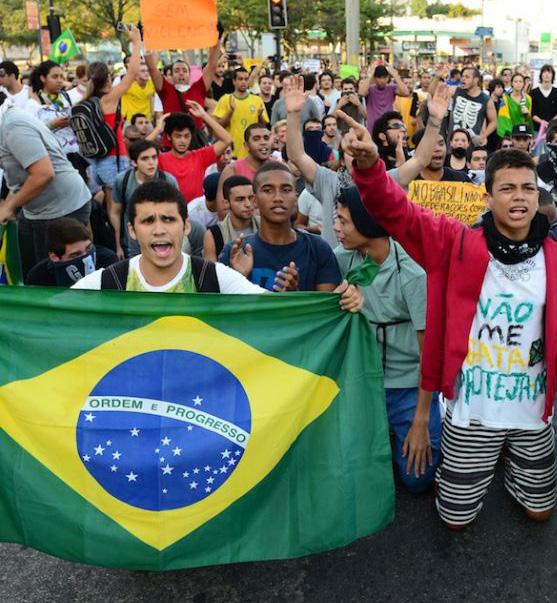
is tainted by corruption scandals characterized by bribery and moneylaundering schemes. In June 2013, Brazilians had enough. They took to the streets to protest against precarious public services, rising prices, and political corruption. Claiming that the “the giant had awoken,” these millions of Brazilians seemed to jeopardize Rouseff’s re-election. In a dramatic and surprising turn of events, the results of the firstround of the presidential elections called for a second one, with Aecio Neves of the center-right Party of Brazilian Social Democracy (PSDB) capturing almost 35% of the votes.
For the first time in years, those that were tired of the Worker’s Party mismanagement and corruption schemes felt that they had a shot at electoral victory. Neves, who promised to simplify the tax system, cut down red tape by reducing the number of ministries, boost foreign investment, and to adopt sound market-friendly policies, seemed to be gaining momentum. In the runoff, polls indicated a possibility of victory. In addition, allegations of corruption linking Rouseff’s government to a bribery scandal in Petrobras, the state-controlled oil giant, began to surface. Three days before the election date, the magazine Veja published an article revealing Rousseff and Luiz Inacio Lula da Silva’s involvement in an alleged bribes-for-votes scheme at Petrobras. Neves also rightly emphasized that Rouseff had had the chance to deliver the quality public services that she had promised and had failed to do so. Meanwhile, Rouseff continually alleged that “the inflation is under control,” a statement that has become a source of mockery among Brazilians, whose rising cost of living implies a different reality from the one that the President seems to be living in.
Whether one endorsed Neves or not, the Worker’s Party inability to address the problems that have been plaguing Brazil and its involvement in corruption schemes are facts that can only be denied by those who refuse to acknowledge reality. In this context, upon seeing their incumbent president re-elected, the Brazilians who had so vigorously hoped for change seem to have lost all hope in their country. They, like me, are enraged and ashamed at the ballot’s inability to reflect a willingness to mitigate the down spiral that our country currently finds itself in. Instead, the electoral result seems to indicate that despite overwhelming corruption and poor economic growth, the majority of Brazilians are still subject to the Worker’s Party clientelist politics and afraid of change.
Yet, upon further consideration, I began to look at the electoral outcome from a different perspective. Once my
initial rage had died down, I realized that it compels me to return to Brazil and fight for change. In many ways, the numbers indicate that, despite the northeast’s allegiance to the Worker’s Party, support for Neves broke through class divisions. Both the rich and poor of Brazil called for change.
It may seem naïve and idealistic to see hope in such a disappointing turn of events, but the alternative is bleak and unproductive. Claiming, as some currently do, that Brazil is mostly comprised of an ignorant population that deserves its discouraging fate or moving from Brazil at such a trying time fosters a self-perpetuating culture of acceptance and resignation. It undermines the great leap forward that the voters made in political consciousness and awareness in this election. Most importantly, it undermines our capacity to promote change and empowers the class of corrupt and incapable politicians that currently plagues our government. Those that affirm that Brazil is “a country without a future” claim that it can never be a great nation as long as 52% of the population votes for corruption, precarious education and health care, and violence by supporting the current government. Indeed, that is probably true. That does not mean that our country does not have a promising future. Rather that it is up to us, my generation, to make sure that our population is well informed and equipped to vote consciously. In my 21 years of life I have been lucky enough to come across innumerous politically-aware, intelligent, and educated Brazilians from different social backgrounds and with very different life stories. Some study abroad and some in Brazil. It is disheartening to see so many of them disillusioned with our country and demotivated to the point of wanting to escape from it or not partake in its future.
I do not know what lies in store for Brazil’s future, but I know that my generation can help decide it. Instead of exporting our talents abroad or shying away from politics, we should find courage in this moment and now, more than ever before, awake a political conscience within us. Let us capitalize on social media and mobilize public support to hold our government to its promises, let us expose its shortcomings and, most importantly, let’s reach out to those that fail to realize that they deserve more than social programs from their government: they deserve quality public services, security, accountability, and transparency. Despite the disappointing result, the presidential election shows that there is hope for tomorrow. My hope lies in my generation and I call out to it with a plea: do not “let Brazil go.”
Cover story
Strife in the City of Angels
The View From Inside Skid Row
PHOTOGRAPHY AND ARTICLE BY JOEY YE
“Skid Row is not a poverty problem. It is a drug, alcohol abuse, and mental illness problem.”
“It doesn’t matter who you are. It’s about what you want and who has it.” Such are the words of James, the first person I meet on Skid Row in Los Angeles. I tell him I am here to take documentary photos, and he tells me he is here to recover. Skid Row is a world of its own. People litter the sidewalks, their bodies stretched out across the concrete as they lie in makeshift shelters of clothes, cardboard boxes, and shopping carts. With thousands of homeless inhabitants condensed into just four square miles, Port A Potties are sites for prostitution, drugs are used in the open, and crime is everywhere.
Divorced from his wife and separated from his nine children, James says he used to be a teacher but has now been living on the streets for three years while battling mental illness. Every morning he leaves Skid Row, begging for money and searching for discarded food in trash bins, scavenging just enough for the next meal. While he is gone, dealers scout out the street corners, watching for potential addicts and the police. Children run by as brawls break out. Gang members rob crippled war veterans. At night James heads toward the Mission, Skid Row’s largest shelter, hoping to get a bed in a room shared with over 50 other people.
“You don’t know the hell I have to go through in order to reach the Mission,” James says. But that scene is just the surface. Amidst the constant struggle, many homeless people choose to stay on Skid Row—the area north of Seventh Street, east of Main Street, south of Third Street, and west of Alameda Street— because it is a refuge where residents are offered comfort and support. Even as politicians and community activists debate Skid Row and its future, they remain, continuing to fight, to survive, to live. For James and thousands of others like him, Skid Row is home. ***
Originally a hub of agricultural activity, Skid Row began to industrialize in the late 19th century after railroads were constructed through the area into the rest of Los Angeles. During the subsequent decades, migrants from across the world came to Skid Row to find temporary work. The area was home to seasonal laborers, the majority of whom were single and male, and lived in the various hotels. As a result, bars and whorehouses began to proliferate, and by the 1930s, the area already housed thousands of people who lived on the fringes of society.
Today, Central City East (Skid Row) contains a population of about 12,000 people, according to the Los Angeles Chamber of Commerce.
Approximately half of that number still lives in single room occupancy hotels, rooms only big enough for sleeping, with a shared bathroom and no kitchen—much like a college dorm. With no other place to stay, the rest live out on the streets. Homeless people are so common in the area that hospitals use to dump homeless patients on Skid Row.
When I asked, many people from other parts of downtown Los Angeles claim to have very little knowledge of Skid Row, but that is to be expected. With the majority of the business and bank buildings located farther north in the financial district of Los Angeles, outsiders have no reason to venture into the area.
As one moves south toward Skid Row, the difference in the nature of commerce is palpable. Clean streets give way to cracked sidewalks, and banks and commercial storefronts transition into small immigrant-owned shops, which then give way to redeveloped homeless housing.
With so many street dwellers located in such a small area, gangs from East Los Angeles are able to actively conduct business—taking advantage of the addiction and mental illness that run rampant on the streets. Heather MacDonald, a John M. Olin fellow at the Manhattan Institute and a contributing editor to City Journal, says that one of Los Angeles’s biggest gangs distributes heroin on the western side of Skid Row; dealers sell narcotics in warehouses and dilapidated homes, and even from out of wheelchairs.
“People who are able to work, work, and people who are living on the streets taking drugs do not interact with the rest of the population much because they are living in a self-enclosed bubble,” MacDonald tells The Politic. “Skid Row is not a poverty problem. The encampments on the street are not a poverty problem. It is a drug, alcohol abuse, and mental illness problem.” ***
During much of the 20th Century, the police department conducted sweeps and crackdowns on Skid Row. More recently, in September 2006, the Los Angeles Police Department (LAPD) launched the Safer City Initiative, a program to implement Broken Windows policing. Broken Windows is a theory promoting the strict enforcement of low-level misdemeanor laws, holding that if minor violations—such as throwing a rock through a window—are allowed to persist, they will eventually lead to more serious crimes.
MacDonald asserts that when the Safer City Initiative was implemented, Skid Row became a safer and more orderly place for residents.
Locals did not have to worry about being accosted by drug dealers and prostitutes, the elderly could go out without fear of being threatened, and there was a decrease in drug overdoses, she claims. She adds that immigrant entrepreneurs and small manufacturers no longer have to worry about cleaning up piles of feces and smashed vials of crack that were once left in front of their stores.
“We had a tremendous reduction in crime,” says Andrew Smith, Commander of the Los Angeles Police Department. “There used to be 40 or 50 homicides a year, and one of the [more recent] years we were there we saw just 12 homicides. We also decreased the amount of people living on the streets from about 1600 at one point to just a few hundred.”
Under the Safer City Initiative, Police Chief William Bratton assigned more police officers to the area. With more officers in Skid Row, more “quality of life” crimes could be addressed: people drinking and behaving drunkenly in public, among other minor crimes. Smith explains that with more officers paying attention to these infractions, the number of homicides, drug sales, and assaults would drop. Since 2006, these results have indeed materialized.
Smith says the Department’s goal was never to arrest the homeless population, but rather the criminal element that was hiding within the community. He noted that homelessness is not something the police are supposed to handle—while officers may address crime and criminal behavior, they do not want to arrest homeless people.
Nevertheless, the Los Angeles Community Action Network (LA CAN), a poverty rights organization, asserts that the Skid Row community is bristling under overly aggressive officers. “The cops are still beating and shooting people,” says General Dogon, community organizer for LA CAN. “They just shot and killed an unarmed man on [Sunday,] June 1 at Fifth and San Pedro.”
The deceased man, nicknamed Mucky Man, reportedly liked to sleep on a store roof at the corner of one intersection. According to Dogon, officers depicted the incident as if it were a suicide attempt and became frustrated when the man would not come down. Instead of bringing in a specialized psychiatric unit, the police chose to call in Special Weapons and Tactics (SWAT), Dogon says. This frightened the man, prompting him to climb from the roof onto a billboard 50 feet in the air. While the original intent was to shoot the man so that he would fall on a large, blowup mattress below the building, Dogon says the police ended up shooting him in the head, after which he fell, missed the mattress, and broke his neck. Dogon,
himself a native of Skid Row, remains convinced that homelessness in the area is being criminalized.
Although Los Angeles has been called the homeless capital of the nation, efforts to offer affordable housing have been made in recent years to help the people of Skid Row. Just recently, the Conrad N. Hilton Foundation donated $12 million in support of housing development for the city’s homeless population. Sources interviewed say stable housing is the primary restriction in helping the homeless population off the streets.
“It’s virtually impossible for someone to deal with their health care needs, mental health needs, or anything else while they’re also trying to figure out where they’re going to sleep the next night,” says Gary Blasi, professor of Law Emeritus at the University of California, Los Angeles, “Providing legal services to people while they’re homeless is extremely difficult. Therefore what medical, legal, or mental health people should primarily do is to try to help people get housed.”
Yet in order to receive housing,
applicants must first pass various drug and mental health tests before being considered eligible. Without a permanent address, it becomes difficult to meet these demands, as candidates are unable to maintain a stable line of communication. Many of the homeless people are lost somewhere along the process and ultimately end up right where they started. In other words: the homeless industrial complex.
Most experts interviewed say that the best strategy for helping the homeless is to guarantee them housing regardless of other concerns, and prior to drug and mental health tests. It remains to be seen, however, whether or not enough housing can be built to accommodate the homeless. Even then, other potential shortfalls in the social safety net must also be addressed. For instance, Social Security disability benefits, a major source of income on Skid Row, are around $800 per month, which is not commensurate with the cost of living in even some of the lowest income neighborhoods in L.A.
The solution may not be as simple as it seems, the experts add. While for most of its history, Skid Row has housed single males, the recession of the early 1990s brought women
“It’s virtually impossible for someone to deal with their health care needs, mental health needs or anything else while they’re also trying to figure out where they’re going to sleep the next night.”
Gary Blasi, Professor of Law Emeritus at the University of California, Los Angeles
and children in need of shelter to the area. Laura Barraclough, a professor of American Studies and Ethnicity, Race, and Migration at Yale University, says that the fastest growing demographic of homeless people is actually families with young children, specifically women with young children. In this situation, single occupancy rooms may not be enough.
“We could think of variations on single occupancy rooms like community-oriented structures, but those would all require a lot of subsidies from the government, and at this point, a lot of city governments are strapped financially,” Barraclough says. “They don’t have the money, but even more so, they don’t have the political will to put their money into subsidizing poor people more than they’re already doing.”
Carla Guerrero, Advocacy and Media Coordinator of the L.A. Downtown Women’s Center, says that one of the biggest obstacles to getting people off the streets is simply the lack of housing. The Downtown Women’s Center’s most frequently asked question is how long their waiting list is for permanent supportive housing.
“Our case managers do their best to work with the resources they have in order to help women into more
stable housing,” Guerrero says. “The fact of the matter, though, is that there is just not enough affordable housing or permanent housing options in L.A. The lack of housing is the biggest barrier.” Rents in L.A. have always been high. Gale Holland, a reporter for the Los Angeles Times who covers homelessness and poverty, says that housing has always been the largest problem at the heart of homelessness, adding that the rents within the limits of L.A. have increased dramatically. In 2013, L.A. had the largest increase in rent, $1,435, in all of Southern California. The University of Southern California’s “Casden Real Estate Economist Forecast” report predicts that rent in L.A. will go up another 3.8 percent from the spring of 2013 to the spring of 2015.
“We have next to zero resources,” Dogon says. “We need more resources to be put on our side. All we have right now are temporary solutions that drain resources and money while recycling the process.”
Yet while the experts continue to push for accessible housing, many people have different plans for the future of Skid Row. When the Skid Row Housing Trust first built the New Genesis Apartments, in 2012, thee group was under pressure from developers to place a restaurant with a liquor license on the ground floor, even though many residents were recovering from drugs and alcohol. More than 50 members of the Skid Row community testified against the permit for a liquor license in hearings for the case. In the end, the license was denied.
“The developers claim they are the community, but they do that [while] trying to ignore the fact [that] there is a real community which has interests of [its] own, different from those of the developers,” says John Malpede, vice president and director of the L.A. Poverty Department.
Many L.A. residents living outside of Skid Row have also been advocating for more middle- and upperlevel income housing. While the rest of the city continues to industrialize and grow, an increasing number of people are looking to construct new buildings on Skid Row to attract more new businesses, such as lofts, bars, and restaurants. As a result, a new concern is the displacement of Skid Row’s inhabitants. On one side of the street on one edge of Skid Row are newly painted intersections, art galleries, and restaurants; the other side has abandoned buildings and run-down shops. Holland says that Skid Row has slowly been receding and gentrifying, with parts of the area being transformed into salons and cafes. The block between Fourth Street and Fifth Street is now a cupcake shop, a high-end salon, and
an internationally heralded ethnic restaurant.
Los Angeles today contains some of the richest and poorest people in the nation. Yet while the two populations live just miles apart, they also inhabit entirely different worlds.
The public’s portrait of the homeless tends to rely on stereotypes about individuals who have severe, invisible mental health and other problems, Blasi says. Individuals afflicted by these issues are certainly the most
visible, but they are also only a minority. Although much of homelessness is criminalized, and the perception is that the homeless routinely abuse drugs and alcohol, not all of the lives on Skid Row revolve around substance abuse. Many on Skid Row are there because of purely economic circumstances, and many more are trying to get back on their feet. With so many specialized social services located on Skid Row, the structure of the area is unlike that of other homeless communities around the nation. “They concentrated resources for the homeless and low-income in that area and created a unique place with a lot of support
for homeless people,” Malpede says of past mayoral administrations. “There is a permanent population living in downtown who reknit the social fabric of the neighborhood by engaging and doing various things for the community. It’s the biggest recovery community anywhere.”
In light of the gentrification of L.A., many of Skid Row’s inhabitants want to preserve the area’s unique culture. Holland says that when she first went to Skid Row, she did not realize that many of its residents consider it a vibrant low-income community. But there has been significant grass roots
development of Skid Row in the past decade, including the growth of art festivals and a theater scene.
“There is a substantial productive community in Skid Row,” Malpede says. “Recently we hosted an art show featuring works from members of the community, people who actively contribute and pursue a career as an artist. It tells a different story than what most people think.”
One resident of Skid Row began a 3-on-3 basketball league, Malpede continues, adding that others sweep the streets and provide trashcans for the area when the city will not. “Right now,
there’s a homeless person sleeping in the park who has the keys to the park and opens it while another guy in the neighborhood keeps it clean,” Malpede notes. “Between the two of them, they make the park available to the neighborhood.”
Guerrero says that some of the bigger misconceptions paint Skid Row as nothing more than a horrible place, rife with open drug use and other criminal activity. She emphasizes that a number of people who have moved to the area out of necessity have also formed friendships and discovered a vibrant, supportive community. These
organic connections are significantly more effective than any other top-down solutions. Today, the community’s homeless residents take care of each other. Skid Row itself has rewoven the social safety net.
Before we part ways, James, the first man I meet here, shares that he teaches other homeless people and hopes to one day be employed as a teacher again. He tells me that countless stories are still waiting to be told. “There are thousands of us out here. You should take pictures,” he tells me. Countless stories are waiting to be told. P
Want to get involved in The Politic?
Email us at: editors.thepolitic@gmail.com
THEPOLITIC.ORG
online preview The Politic National
The Pragmatist: A Ten Year Review of the Roberts Court
By Elena Vazquez
Chief Justice John Roberts began his tenth Supreme Court term on Monday, October 6, 2014. This anniversary may mark nine years of Roberts as Chief Justice, but some court observers question whether these past years should be labeled the “Roberts Court” at all.
World
Passports, Power, and Politics: The Jerusalem Question in a Word
By Zach Cohen
The author follows the story of Menachem Zivotofsky, a proud Israeli born in Jerusalem. By the age of three, he was a plaintiff in a Supreme Court case about the legal uncertainty surrounding his place of birth. His family wanted the word “Israel” on his passport, but the State Department declared that any person born in Jerusalem must put “Jerusalem” on their passport. Neither “Palestine” nor “Israel” is an option.
Opinion
Tug of War: Is Obama’s Campaign Against ISIS Illegal?
By Robbie Flatow
The authority of the presidency in the realm of war-making has grown inexorably in the last century. Whether the Constitution granted more war-making authority to the President or to Congress is an open question. Since the United States first launched an attack against ISIS three months ago, scholars, commentators, and academics have once again revived the debate.
Interview
An Interview with David Cay Johnston: Recipient of the Pulitzer Prize for Beat Reporting
By Hedy Gutfreund
David Cay Johnston is a journalist who was awarded the Pulitzer Prize in 2001 for his investigative reporting. He has written for the Los Angeles Times, The New York Times, and The Nation, among other publications. Johnston is well known for exposing the loopholes in the U.S. tax code and economic system in his writing, and for discussing the effects these have on American citizens and society.
Concussion Crisis Addressing Safety in America’s Most Popular Sport
By Eleanor Runde
If baseball was once rightly known as America’s pastime, those days have ended. Today football has risen to the forefront of the American consciousness; the NFL is king. In 2013, the 26 most widely viewed sporting events in the United States were all NFL games, and last year’s Super Bowl attracted 111 million viewers. The average value of an NFL team is a whopping $1.4 billion, compared with a $634 million price tag on average for an NBA team. NFL Commissioner Roger Goodell has made deals left and right to maximize the value of the league. Goodell’s goal, he told league owners in 2010, is for the league to reach $25 billion in revenue by 2027, but the profitability of the league is threatened by the growing issue of head trauma, which poses an almost existential dilemma for the league by fostering reluctance among parents and young players to participate in the sport. It seems that for Goodell to continue to attract the most talented athletes to the NFL the league will need to address the problem of multiple concussions and head trauma. Concussions are known to cause chronic traumatic encephalopathy (CTE), a degenerative disease that affects brain function as well as emotional regulation.
The NFL has acknowledged that three in ten professional football players will eventually develop symptoms of dementia and Alzheimer’s, but the issue may be even more severe than the league has acknowledged.
In the last 15 years a string of former NFL players have committed suicide, including Mike Webster, Terry Long, Andre Waters, Junior Seau, and Dave Duerson. Many of them suffered from dementia-like symptoms, from short-term memory loss and confusion to violent mood swings and persistent anxiety. They were all diagnosed postmortem with CTE.
High-profile cases of CTE have raised concerns for coaching staffs and within locker rooms at all levels of football, from the coaching staff for the New York Giants to administrators in the athletics department here at Yale. Steve Conn, associate athletics director of sports publicity at Yale, told the Politic he is “extremely concerned about the safety of the players.”
Many collegiate footballers, who might otherwise have gone on to play professionally, have quit the sport after sustaining multiple or severe concussions. David Ash and Casey Cochran, quarterbacks for Texas and
UConn, respectively, both stopped playing this fall due to multiple concussions. Christopher Coyne ’15 quit playing football for Yale in 2011 after sustaining his fifth concussion, three of which were football-related. Yale trainers told him a few months after the concussion occurred that he wouldn’t be returning to the field.
After the last concussion, Coyne said, he “had a lot of academic difficulties. My concentration was completely gone.” During high school, when he sustained injuries, he visited doctor after doctor until someone cleared him to play. Coyne said that he thought about doing that again to get back on the field. “I flirted with the idea of transferring to a Division-3 school to let me play,” Coyne said, explaining that even after Yale prohibited him from playing, he yearned to return to football. “I was entranced with the idea of playing college football. It had been a dream of mine since I was a child. It took me until Christmas to finally give up and accept that this decision was made in my best interest. If I continued to play, it would have been bad news for me and my health.”
Potential future recruits will determine the league’s success in years
to come, and the number of NFL recruits could decrease dramatically, Conn said, unless there are big changes in the protection of the athletes. “There’s a trickle-down effect,” he said. “You won’t know it next year or the year after that, but in five or ten years you may see fewer parents letting their kids play football.” Even John Madden, the face (or voice) of football for many Americans, argued last year that kids shouldn’t play tackle football until high school. Critiques from insiders like Madden suggest that the game will have to undergo fundamental changes to reduce danger and maintain popularity.
Possible rule changes might include something along the lines of the bans on headers that have been implemented widely in youth soccer. But the issue can only be fully addressed once awareness of the risks of brain injury has increased. When asked if he would let his own kids play football in middle school, Coyne said he would do so only if the culture of the sport had changed. “I dream of a time when football players recognize the severity of concussions and act appropriately,” he said.
Part of the problem, said Patrick Bellgowan, the program director
of the National Institute of Neurological Disorders and Stroke (NINDS), is that “because it’s an invisible injury, people don’t take it as seriously as they should.” Symptoms disappear before the brain has recovered, so it is often difficult to tell when the brain has actually healed, Bellgowan said. Moreover, efforts to reduce concussions are complicated by the problem of underreporting, particularly in collegiate and professional programs. Coyne noted: “Concussions aren’t like a torn ACL. They’re pretty easy to hide. You really can’t regulate it if these guys don’t report [the concussions] themselves.”
Both professional and college programs are funding research on concussion prevention and diagnosis. Ivy League and Big 10 programs alike are working with medical professionals to come up with solutions, Conn said. Furthermore, the NFL recently donated $31 million to brain research by NINDS. Bellgowan told the Politic that money had already been granted to two proposals, one headed by Mount Sinai and the other led by Boston University. The research is attempting to define the characteristics of the neurological changes in the brains of people diagnosed with CTE. Once the properties
of CTE have been defined, further research will be funded to apply the information collected in postmortem studies to living subjects.
One of the ultimate goals of this line of research is to create a clear, simple diagnostic test for concussions, ideally something that can be done without the help of medical professionals. “There is no doctor or athletics trainer at kids’ sports games the way there is at the collegiate or professional level,” Bellgowan said. Parents on the sidelines at youth football games could perform a balance test or eye examination, thereby preventing kids with concussions from playing.
Recent changes by the league have had dubious effects on the safety of football players. Beefing up head protection with bigger helmets has made players feel safer, but the players then use the protection to tackle at higher speeds and with more abandon, said Conn. “The helmet is like a weapon itself,” he explained. However, the protective strength of the helmets can’t be lessened now, Conn said, because players are so big and strong and fast that such a change could be extremely dangerous.
In its most recent negotiations
with players, the league created a policy that allows players to participate in only one full-contact practice per week. The policy is meant to decrease the total number of head hits accumulated over the course of the season. However, this policy change does not prevent coaches from lengthening and intensifying the full-contact practice in order to comply with the new rule while maintaining players’ exposure to full-contact training.
It is clear that the league is trying to address the issue of mental trauma in its players without altering the game too extensively. The NFL’s efforts are complicated by the fact that the results of most of the concussion research currently being conducted won’t be in for years, and until then, the NFL will have to muddle through without clear data. Once the data is in, the NFL will need to do everything in its power to keep its players, present and future, healthy and concussion-free. The league is too lucrative an enterprise not to change, and as the NFL grows, team owners, with their eyes set on Goodell’s goal of $25 billion in yearly revenue, will likely become increasingly responsive to threats to its success, including concussions. P
Laying the Grid to Electrify a Continent Power Africa
By Rhys Dubin and Brandon Marks
Every day, local residents of the area surrounding the Corbetti Caldera travel long distances to gather water from the natural steam rising from the ground of the collapsed volcano. Underneath their feet lies one of the world’s most significant sources of geothermal energy. The land that provides their water may also provide the key to expanding access to electricity in Ethiopia and sub-Saharan Africa. Reykjavik Geothermal, a US-Icelandic company, is looking to capitalize on this untapped source of energy, and is currently developing the Corbetti Geothermal Power Plant, which will harness the 1000 megawatt geothermal capacity of the caldera. As Ethiopia’s largest foreign direct investment and its first independent power project, the geothermal plant will hopefully deliver clean, reliable, and sustainable energy to the local population. The project has received strong support from local and national political actors in Ethiopia, which hopes to become carbon neutral by 2025.
If we look closely at the specifics of Reykjavik Geothermal’s project, we see the beginnings of a new model of development that is taking hold across many parts of Africa.
Currently, 600 million people lack access to electricity in sub-Saharan Africa. This lack of electricity restricts their access to adequate medical treatment and hinders African countries’ entry into the global economic market.
Power Africa, a program announced on June 30, 2013 by President Obama, seeks to address these problems through what Don Niss, Power Africa Deputy Coordinator for USAID calls “a new model of development.” The program aims to add 60 million additional households or businesses to the electrical grid – double the current amount – in Ethiopia, Ghana, Kenya, Liberia, Nigeria, and Tanzania. Its goal is to increase electrical capacity by 30,000 megawatts.
***
Power Africa is more than just an attempt to increase access to electricity throughout Africa. It is the most potent manifestation of a new trend in how the United States engages with the idea of international development. The program doesn’t provide monetary aid towards a single goal. Nor does it cater to an organization’s donors. Instead, according to Andrew Herscowitz, the US Agency for International Development’s (USAID) director of Power Africa, it
brings together multiple US government organizations, international actors, private investors, and domestic governments to align “our many public and private sector partners’ interests to achieve sustainable development through job creation and economic reform.”
Niss explained that, unlike previous US government aid initiatives which focused primarily on public funding, Power Africa aims to leverage outside financial sources that incentivize and facilitate private corporate investments – in government parlance, “public-private partnerships.” According to Niss, the question was: “How do we as the US government, with all [our] tools and sourcing, come together as one to work with the private sector, the countries themselves, and donors?”
On paper, Power Africa is a consortium of twelve different US agencies coordinated by USAID. It is designed to facilitate private corporations’ entry into individual countries’ energy markets. The government’s primary role is to address a company’s specific needs and resources or help them find the tools that they need to enter a new region. The program acts as what Niss and Adi Raval, Communications Spokesperson for Power Africa at USAID, called a “one-stop shop” that allows companies
interested in infrastructure investment to find the right contact for a specific need. Its goal is to provide a “structure so that private lenders are attracted to put money towards projects in Africa,” said Daniel Esty, Hillhouse Professor of Environmental Law and Policy at Yale University.
Staff members at USAID work directly with corporations to identify roadblocks to specific transactions, help countries put in place favorable economic frameworks to encourage investment, and coordinate donors on a single project. According to several sources interviewed, this transactional method is designed to increase public accountability and private investment, while decreasing the need for continued foreign involvement and intervention.
As Niss explained, “We may have someone who has a wind project in Kenya and there are different steps in the process, so he needs to help make the banks feel more comfortable with lending to a wind project.” On a more technical level, “USAID may also bring in technical assistance to work with the regulator and utility to make sure the grid is managed properly.”
Thus far, the private sector has eagerly engaged with the project. To date, it has committed $4 for every $1 from the US government. With a total of $28 billion donated or contributed by the private sector, Power Africa’s model appears to be working, at least from a monetary perspective.
Public-private partnerships, and their large-scale implementation in a program like Power Africa, represent a paradigm shift in the flexibility and adaptability of foreign development projects. According to Esty, this was a matter of necessity. “There is no question that the past development model that relied on government assistance needs to be restructured and reframed.”
Niss agreed. “Each country is different and each project has different needs. Power Africa allows us to tap into that very flexibly and quickly. It creates a framework where we can mobilize resources in a quicker time span than we might have otherwise.”
Moreover, in Niss’s opinion, private sector investment is simply the only possible model for growth that is capable of achieving near-universal access to electricity in the region. “When you look at the scale of the problem, with estimates from 300 billion to a trillion dollars of investment needed to bring about universal access in subSaharan Africa, looking at a 25-35 year time frame. As you look at that level of investment, it is beyond the resources of those countries and donors themselves.
The only way to bridge the divide of the needed investment is to not only bring projects on board, but also to create the environment where investors are attracted to putting money into the energy sector.” Raval agreed, saying, “Energy poverty is so extreme that it needs to be private sector- led.”
Most sources interviewed agreed that, from a purely economic perspective, infrastructure investment of this kind is essential to jumpstart economic growth in key countries identified in Power Africa’s framework. According to Christopher Udry, professor of economics at Yale University, the dearth of reliable energy sources is one of the crucial sources of higher manufacturing costs in Africa. “The availability and reliability of electricity supplies is one of the key constraints on firm growth in the region,” he explained. “Firms have to invest heavily in alternative power supplies, and smaller, less wellcapitalized firms suffer from frequent outages and face heavy losses associated with equipment damage from power fluctuations.” By Niss’ account, the US government’s involvement can help eliminate precisely these issues, ultimately creating an environment for businesses to cost-effectively invest in sustainable and profitable enterprises. In terms of the Corbetti Geothermal Power Plant and Ethiopia’s hope to diversify its power resources, he explained that, “You do this initial project, the government builds the capacity and understanding, and then they want to do that again. That sets the stage, context, and framework for additional projects in that space.”
Esty refers to this process as “de-risking.” Rather than relying upon the US government to step in with taxpayer money to fund projects overseas, Niss explained that USAID’s plays a holistic role within the process. “Our job is to deal with some of those issues or risks that are difficult to address.” He explained that “we also partner with the World Bank and African Development Bank, who bring large resources to the table. We work with them to identify what the policy issues are and how we can structure a project more effectively to mitigate risk.” Esty echoed this claim, explaining that, “The key to success in Africa for development is using limited government resources to leverage private capital.” Importantly, this implies “de-risking” projects to the greatest extent possible. “In short, local governments gain knowledge and expertise; companies gain confidence and can take advantage of previous strides made in regulations and institutions.”
***
Given the extraordinary developmental circumstances of subSaharan Africa, Power Africa represents a serious attempt to creatively deal with unusual situations. More than just cultivating increased access to potential African energy markets, the program is also implicitly designed to look beyond large-scale grid-based energy projects. Much of this emphasis is a matter of necessity: according to Udry, “Africa’s relatively low population density and dispersed population centers, coupled with severe deficiencies in complementary infrastructure and a relative lack of sources of hydroelectric power present difficult challenges.”
In this way, Power Africa’s plan for Sub-Saharan Africa is essentially the first test of the economic viability of investing in clean energy on a massive scale as a means toward holistic development. The idea proposed by many policy makers is that companies and governments can stop “aiding” and start investing if renewable energy is given the opportunity to compete in the marketplace. This, according to Daniel Esty, represents the transition from what he called the “20th century model of economic development that relied on governments doing projects to a 21st century approach where governments help steer where projects go, but the goal is not for them to do the project, but rather to make it attractive to private developers and private capital.” The Corbetti geothermal plant serves as a good example. According to Niss, if successful, “Corbetti sets the stage for the government of Ethiopia to replicate that and do another geothermal transaction.”
Renewable energy can then act as an economic incentive: many international companies are increasingly investing in sub-Saharan Africa not for humanitarian purposes, but purely economic ones. According to Niss, “Whenever you can help a country and a private-sector partner identify and mitigate risks associated with a projects, that helps build credibility and reduces costs. I think there is a huge amount of interest and potential.”
African communications essentially skipped landlines and moved straight to cell phones. The hope is that a similar move might happen in the field of energy. Power Africa has been viewed as an opportunity for many countries in Africa to bypass an inefficiency inherited from the developed world, skipping over the age of expansive and expensive power lines, supplied by dirty coal fired plants and diesel generators. “I think you have this opportunity, you are seeing it across the world, in Asia, India, Bangladesh: interesting models with respect to small-scale renewables,” said Niss. Nevertheless, Esty expressed only cautious optimism: “The key to success
in that regard is to ensure that renewable energy projects are being done in a costeffective way that competes ever more closely with the fossil fuel alternative.”
On a practical level, both Niss and Raval pointed to an example of how the program’s public-private partnership model has yielded surprising successes.
One of the first recipients of a grant, Mibawa Suppliers, came up with a competitive solution to a local problem. By selling their solar system of two lights and a cell phone charger for an initial $14 and an additional charge of $1.60 a week until consumers fully owns the charging system, Mibawa Suppliers drives down costs and makes a profit. Residents in the area used to spend an average of $4 per week on kerosene lighting.
In the program as a whole, fourteen solar, six biogas, one wind turbine and one small hydro project have been built. Collectively, they will contribute 3.4 megawatts to the continental power grid, a minimal portion of the overall initial 10,000, but a start nonetheless. To date, Power Africa has contributed to adding 2,800 megawatts to the grid, marking 28% progress over the course of a year. Another 5,000 megawatts have been identified, and deals are pending.
Using Mibawa as an example, Niss highlighted the important potential ability of Power Africa to serve as a test case for new technologies. He explained that, “one of the things Power Africa is doing with respect to renewables is not so much looking at new technologies, which is obviously helpful, but we look at how we can scale up some of these models which have already proven themselves.” The question of scale is incredibly important, given the size of the project. Niss went on to explain some of the questions officials are trying to address: “how do you scale [these projects up to a scale that has broader geographic coverage? What kind of financing is needed, how can we channel them?”
The sources I interviewed hope that African developers can learn from the mistakes and experiences of those who came before them. Market share can go directly to renewables and off-grid solutions. If these products are in fact able to compete effectively, local regions can serve as incubation spaces for companies to expand their production and interact with a large base of consumers. With each new wind farm, solar product, or geothermal plant, corporations may learn more and eventually provide the same or better products for a cheaper price. Small energy projects have the
potential to provide cheaper and more reliable energy to individual villages and areas that are far from major cities. However, Esty provided a note of caution, explaining that “much more important than piloting new technology is bringing innovation to bear in the financing of power projects in Africa.” Udry agreed, explaining that “smallscale decentralized power sources for light domestic use, often reliant on solar energy, are spreading and will be important sources for many, but I am skeptical that these will turn out to be cost-effective alternatives to developing a networked grid.” Only time will tell whether this kind of decentralization will be effective or merely a drop in the barrel of the desired increase in electrical capacity.
“Innovation” is one of the words that was continually used to describe Power Africa. Raval and Niss pointed to a government collaboration with GE to begin the Off Grid Challenge – a program that has already provided 22 project grants worth up to $100,000 to African owned and managed projects. Adi Reval, the communications spokesperson, explained that in the run up to the project announcement, “we went to Silicon Valley, had meetings at Stanford University and brought investors over to the White House. It is unusual for the government to be so forward-leaning in terms of being at the forefront, but we are certainly at the tip of the spear.”
Nevertheless, according to Molly Offer-Westort, a PhD candidate in political science at Yale University, there are concerns associated with the “innovative” financing models put forward by USAID. “There are concerns that a lot of financing will go to foreign companies, such as G.E., and so will not directly benefit local economies. There is always a tradeoff in financing large companies that are able to do things very efficiently, but that might not have much investment in local economies.” However, Esty and Udry seemed to put a large amount of stock in the model.
The program certainly faces challenges in scale, ideology, and ambition. Offer-Westort explained that “to improve sustainable access to electricity for a larger share of Africa’s population, there will have to be a lot of hard work done to develop infrastructure – and then cost and effort expended to maintain it.” She also highlighted some of the challenges faced by ambitious development programs in the past. “Sometimes aid programs focus on stop-gap solutions to achieve short term impact, but here there will need to be a lot of local buy-in to ensure infrastructure is maintained.” Questions remain about the feasibility of the model, its true commitment to renewable energy and “off the grid” solutions, and the US government’s commitment to it after President Obama leaves office, but it does represent a start. Power Africa’s ambitious aims will be difficult to accomplish, but if done right, the payoffs in economic development on the continent will be massive.
P
Blinded by Fear How Politics Influenced Medical Policy in Greece
By Anna Lee
In her mugshot, she wore a faded pink hoodie emblazoned with a cartoon dwarf from Disney’s Snow White. Her hair was ruffled and her eyes dull. In 2012, the Greek media plastered this image of a woman at her lowest across the Internet. The police encouraged the public abuse, publishing her name, birthplace, and the names of her parents. She was one of twenty-six young women whom Greek authorities had forcibly tested and diagnosed as HIV-positive. The women were subsequently imprisoned, accused of being prostitutes, and charged with risking “bodily harm” to others. Because of this and other incidents, the international community has accused Greece of mistreating and stigmatizing citizens with HIV over the last few years. There is no one particular reason for Greece’s stringent policies on HIV. Rather, the combination of political power plays, economic instability, and societal fear planted the seeds for criminalization of the disease.
Greece has historically had very low rates of HIV. However, The Guardian reported that new cases of HIV had risen by over 1,450% from 2011 to 2012. While the number of new cases was still relatively low for the nation (12,000 people in a nation of 11 million), the alarming spike left Greek officials and civilians scrambling to contain the
disease. Unlike most Western countries, Greece lacked a clear policy on how to handle patients with HIV.
Edward Bernard, an expert in HIV/AIDS policy, explained, “Every country, even different jurisdictions within the same country, can have different laws and policies around what exactly is a crime in regards to HIV/AIDS. What [governments] have done is to try to fit different general laws around assault, bodily harm, or even attempted murder into being applicable to cases where people haven’t disclosed [that they have the virus] or transmission is […] alleged or a person is exposed. Through a series of court rulings in each country, that’s sort of what creates the law.” Greece, in particular, was one of those nations that lacked direct laws about HIV/AIDS until the recent spike in transmission forced officials to acknowledge the problem. Increasing HIV rates resulted in the passage of Provision No 39A, which allows the police to detain and test people suspected of having HIV under the pretext of preventing bodily harm to others. It was under this law that the twenty-six women in 2012 were imprisoned. Zoe Mavroudi, a young Greek screenwriter and director, was particularly unnerved when she witnessed the personal lives of these individuals being paraded across the news. She went on to document the lives of those involved in the affair, creating the documentary, “Ruins: Chronicle of an HIV Witch-hunt.”
“Mandatory tests are a violation of a person’s human rights,” Mavroudi asserted in an interview with The Politic. “This is something that happens in conditions where the person is not in a position to offer an informed consent about the reasons behind the test. In many cases for the women, the diagnosis was given to the police officers. The women had no idea what was happening to them until a month after when they were already in prison. This is a grievous violation of their rights and their dignity, as well as their medical confidentiality.”
Despite criticism from international actors such as UNAIDS and the European Human Rights Court, who called these tests a violation of international conventions, Greek officials did not change their policies. Former Health Minister Andreas Loverdos, who created and implemented Provision No 39A, claimed that he was protecting the Greek people. However, many believe Loverdos used the aggressive containment of HIV to gain public support for his reelection. After protests by NGOs and activist groups, Provision No 39A was repealed in 2013. Nevertheless, in the summer of the same year, newly-appointed Health Minister Adonis Georgiadis reinstated the policy.
“When the case in ‘Ruins’ happened, it was six days before the national elections in which a Neo-Nazi party was voted as the third largest party in Greece,” Mavroudi explained. In her documentary, Mavroudi closely examined the relationship between politics and the attitude towards HIV. “The far-right politicians and the three consecutive health ministers hold extreme, far-right views in all fronts, such as public health, immigration, HIV/AIDS, and human rights. They used the disease, which was becoming a real problem among certain vulnerable groups, particularly injecting drugs users in Athens, as a pretext to a political campaign. HIV/AIDS sort of offers itself as a modern plague that will allow these measures to be accepted by the population because of how easy it is for politicians to fearmonger and terrorize people with the threat of an epidemic.”
This political shift towards the right has been prompted by Greece’s struggling economy. In the past few years, the nation has seen a
financial collapse, and subsequent austerity measures put pressure on its economy just as it was recovering. Thus, paradoxically, the international community has on the one hand pressured Greece to give up its stringent HIV policies, and on the other hand, it has imposed austerity measures on the nation, measures that have severely undercut public healthcare budgets.
“The recession basically closed down a lot of the support and harm reduction tactics, such as needle exchange programs. That’s when there was a spike in HIV among people who used drugs in the last few years,” Bernard said. Several organizations have noted the relationship between the decrease in harm reduction programs and the increase in HIV transmission among drug users. The European Center for Disease Prevention and Control reported in 2012 that the outbreak in HIV infections among drug users was from a combination of a lack of needle exchange programs and methadone programs. It addressed the financial
Far right groups such as Gold Dawn advocate for oppressive HIV/AIDS laws.
crisis as a key factor in the disruption of critical health programs and concluded, “The current economic turmoil will continue to have adverse effects on HIV prevention.”
The continued enforcement of the provision is also worrisome because of its strong language targeted towards minority populations, such as immigrants, homeless people, and sex workers. Policy 39A identifies these groups as a priority for mandatory testing under the assumption that these populations have lower standards of hygiene. HIV/AIDS policy experts worry that this has created an ‘other-ing’ effect.
“That’s part of the stigmatization of HIV/AIDS, the ‘othering’ which is the idea that it only affects other people and certainly it doesn’t affect me,” Bernard explained. “The idea of using sex workers wasn’t the issue in 2012, as the men were never perceived to be the problem. Instead, it was the idea that these women with HIV were infecting the men who would then take back the disease to the unsuspecting Greek family.” The fight against HIV/ AIDS often takes an accusatory tone, especially towards women.
Mavroudi agreed that the current laws around the disease have perpetuated stereotypes and discrimination against minority groups. “When you hear about the need to impose measures to protect the public, you have to be very suspicious of that kind of rhetoric,” she said. “The only way to prevent the spread of HIV/AIDS is to respect human rights and give these vulnerable groups support and proper care through outreach programs.”
The future of the population of Greek civilians with HIV/AIDS remains
unclear. International bodies, such as Amnesty International, Human Rights Watch, and the European AIDS Treatment Group, swiftly decried Provision 39A as ineffective and a violation of basic human rights. Nikos Dedes is the president of Positive Voice, an activist organization composed of people with HIV living in Greece. In an interview with The Politic, Dedes discussed the work done by international organizations: “The international response was swift and harsh. The Health Regulation 39A has been universally condemned by local and international organizations, from human rights organizations, feminists, LGBTQ organizations to scientific societies and media.” Despite the mounting international pressure to respect the medical rights of targeted minorities, Greek politicians as well as the Greek public have made it clear that the issue is domestic. Furthermore, the current political landscape makes it unlikely that HIV/AIDS policies will become more progressive. Conservative, nationalist parties in Greece continue to gather momentum as austerity and bailouts from other European Union nations frustrate Greek citizens. Dedes explains that this radical, conservative nationalism has made individuals with infectious diseases, especially HIV, an easy scapegoat. “A society that has a thirty percent unemployment rate, a decrease of twenty-five percent in its GDP, and around forty percent in the salaries and pensions of citizens needs to blame someone for their ills and pain,” said Dedes.
This makes it unlikely that the government will find either the time or money to invest in a stronger health program to treat current HIV/ AIDS-positive individuals and prevent transmission. Still, organizations and individuals remain hopeful that the current atmosphere around HIV/AIDS will become more accepting. Small victories are currently being won by individuals. For example, in 2013, the European Court of Human Rights ruled in favor of an HIV-positive Greek citizen who was fired after colleagues objected to his presence after finding out about his status. The ruling stated that the Greek state had violated the right to respect for one’s private life as well as the prohibition of discrimination, and Greece had to pay the man in question more than 14,000 euros. Cases such as these are small but crucial victories in the fight to change stringent policies and correct stereotypes about people with HIV/AIDS, and activists continue to play their part. As Bernard urged, “There are a lot of good people doing good work on procuring rights for individuals with HIV/AIDS, but there are always more people needed.”
“Mandatory tests are a violation of a person’s human rights.”
26 alleged prostitutes were forcibly tested for HIV and arrested when the results came back positive.