






ENTERTAINMENT &SOCIETY WEEKLY I Remain Committed to Raising Awareness of Brain Tumour, Supporting Victims – Chika Okwuolisa World Brain Tumour Day observed every June remind the global healthcare community and the world at large of the need for consistent efforts in educating people and supporting those affected by brain tumours. And who better to shed more light on this disease, in this interview with IVORY UKONU, than Engr Chika Okwuolisa who has committed her valuable resources these past few years to raising awareness of this debilitating disease. Excerpts: Considering the state our healthcare system and funding. Securing adequate funding for our this country more than 230 million people. diagnoses and treatment.Another huge problem spiritual causes rather than medical issues. and seminars educate people about the medical access specialized neurological care due lack healthcare infrastructure. We also provide system. Overall, witnessing draining. keep your work your on my engineering company, airtime on African Independent Television,AIT seek help. However, recently dedicate both ventures.This why we are urgently calling philanthropists We need their help to continue our mission and expand our reach those Unless you understand what neurological conditions entail, it's hard grasp the YWhat is the story behind this? brain and spinal cord conditions and emergencies.There's significant lack to check for breast cancer cervical issues. However, it's only recently, thanks people struggle differentiate between medical and spiritual conditions. neurologist getting neuroimaging the brain and spine. My passion for sister suffered brain haemorrhage. Being her primary caregiver through five through what we experienced. My sister suffered brain haemorrhage 2012, and caring her through actually know what they were being treated for, including their caregivers wasn't just about me, but about fulfilling God's purpose. went on my knees for neurological conditions. Well, first off, Brain and Spine Foundation Africa's aim advance neurological raising public awareness, providing information, advocating funding and significant impact several areas like awareness campaigns which have public about neurological conditions, we have established Patient/Survivor better healthcare policies, funding for neurological research and treatment, for surgeries and treatments.This support has been crucial saving lives and funding emergency surgeries and rehabilitation are enough keep me general.The truth this, this territory not for the fainthearted. Some of the difficult times.This perspective helps me find meaning and purpose the work motivates you to keep going? and that this mission not about me. One my coping mechanisms Whenever remember that someone, somewhere, might experiencing 18 ENTERTAINMENT &SOCIETY WEEKLY Egemba • Agwu • Craig • Orji SUNDAY, JUNE 9, 2024 • VOL . 4 NO. 35 THEWILLNIGERIA THEWILLNG THEWILLNIGERIA WITH EYES ON 2027 ELECTIONS: www.thewillnews.com ContentCreatorLeadingtheWay CHINONSO EGEMBA PAGE 14 PAGE 18 ... AMCON Debt Perishes in Liquidated Heritage Bank Obi, LP, Group Battle For Soul of ‘Obidient Movement’ Edo 2024: Akpata Tackles Edo Govt Over Campaign ... PAGE 14 BRAIN TUMOUR SURVIVORS
Digital

The Nigerian content creation industry has experienced growth and development in recent times. From its early days, it has become a vibrant field showcasing the country’s creativity. Nigerian creatives are becoming popular not only on a local scale but internationally, using their voices to inspire, educate, and entertain. Due to the growth of digital platforms, Nigerian content creators are pushing themselves and reaching new benchmarks in the industry.
Many content creators are significantly impacting their respective fields in Nigeria. One such creative is Chinonso ’Aproko Doctor’ Egemba, a global health advocate, medical doctor, and health content creator who simplifies complex medical topics through storytelling. He shares his story on pages 8-10 of this week’s issue.


Our fashion pages are not just about trends; they empower you to mix and match colours like a pro. You’ll find practical advice on pages 4 and 5, while the beauty page is all about helping you choose the right makeup remover for your skin type on page 11.
The travel page shares different tips for navigating a new environment. That’s on page 7.
Conflicts are inevitable in relationships; what truly matters is how we resolve them. Downtown Confidential empathizes with this and shares six valuable tips for fighting fairly on page 15.
Our review page isn’t just for reviews; it’s an experience. Click on the instructions below the QR codes to download our playlist. I promise you’ll enjoy the selection. Scroll on to page 16 for this.
Until next week, enjoy your read.


SUNDAY, JUNE 9, 2024 THEWILL NEWSPAPER • www.thewillnews.com PAGE 2 THEWILLNIGERIA THEWILLNG THEWILLNIGERIA
Photo:
Kola Oshalusi
@insignamedia Makeup: Zaron
OnahNwachukwu
@onahluciaa +2349088352246
OnahNwachukwu Editor, THEWILL DOWNTOWN
Content Creator Leading theWay CHINONSO EGEMBA Scan the QR Code to Download current edition Scan The QR Code to Read on Website Or Visit www. thewilldowntown.com Scan The QR Code to Read on Issuu New Edition Available Every Sunday @ 6am Nigerian Time

SUNDAY, JUNE 9, 2024 THEWILL NEWSPAPER • www.thewillnews.com
SUNDAY, JUNE 9, 2024 THEWILL NEWSPAPER • www.thewillnews.com


PAGE 4
THEWILLNG THEWILLNIGERIA
THEWILLNIGERIA

SUNDAY, JUNE 9, 2024 THEWILL NEWSPAPER • www.thewillnews.com PAGE 5 THEWILLNIGERIA THEWILLNG THEWILLNIGERIA


COVER WITH EYES ON 2027 ELECTIONS:
Obi, LP, Group Battle For Soul of ‘Obidient Movement’
BY AMOS ESELE
At the formal inauguration of the ‘Obidient Movement,’ which was renamed ‘Directorate of Mobilisation and Integration,’ by the Julius Abure led-National Working Committee, NCW, of the Labour Party, last Saturday, at its National Secretariat in Utako, Abuja, the presidential candidate of the party in the 2023 general election, Peter Obi, was conspicuously absent, though he was said to have approved the change of nomenclature.
The party’s National Publicity Secretary, Obiora Ifoh, who told THEWILL that Obi did not say he would attend the inauguration, even though he advised the party to “enlarge the scope of the directorate,” also disagreed with the suggestion that the party was on a wild goose chase because it was under the receivership of a restructuring committee of the Nigeria Labour Congress, NLC, which sacked the Abure-led NCW after the controversial Anambra March 27, 2024 national convention.
Instead, Ifoh insisted that the new body would assist the party to mobilise and integrate members of the party and the general public, especially the youth, across the 36 states and the Federal Capital Territory,
Abuja, towards achieving the party’s goals.
“The NLC and its committee are not card-carrying members of the Labour Party, so they are just entertaining themselves,” he said, in disapproval of the suggestion that the Abure-led NCW was politically non-existent.
BEGINNING OF THE SCRAMBLE
THEWILL recalls that Abure triggered the current scramble for the Obidient Movement on Wednesday, May 15, 2024 when he expressed concern that the ruling oligarchy and suspected saboteurs had infiltrated the ranks of the Movement to pull down the party.
Smarting from the internal criticism of the controversial national convention that threw him and the NWC up, as well as the ensuing crisis of confidence, following allegations of corruption in the party under his watch, Abure told journalists at a briefing held on that day that the attitude of some Obidient members had given “the notion that the movement might have been penetrated by the ruling
oligarchy to erode all the gains they made in the past year.”
He appealed to the Obidient Movement to remain in the party and be patient to learn the rudiments of politics, find time to read its Constitution, the Electoral Act and the 1999 Constitution as this would enable them to “make a well-informed opinion about the activities of the party.”
Abure agreed that some of the complaints from the Obidients were correct and then he went on to announce the creation of a directorate to attend to the affairs of the Obidient Movement, coordinate the registration of members and integrate them fully into the structure of the party.
According to him, the directorate will also ease Diasporan participation, bring complaints to the attention of the party’s leadership, coordinate the collection of dues and donations to the party and ensure that all Obidients are financial members, working closely with the National Youth Leader, National Women Leader and the National Organising Secretary to create programmes that will fully and
PAGE 6 THEWILLNIGERIA THEWILLNG THEWILLNIGERIA


COVER ...Soul of ‘Obidient Movement’
effectively assimilate all members of the Obidient family to the party.
A NEW GROUP EMERGES
Apart from the party, which is seeking the integration of the movement, a new body called Obidient Movement Council, comprising support groups, which campaigned endlessly in cash and kind for Obi and LP during the 2023 general election, has initiated moves to rally other members of the movement and “get more organised, ahead of the 2027 election, with no strings attached,” according to Comrade March Oyinki, President of the Movement for Change Worldwide.
Mr Oyinki, Chairman of the council’s Board of Trustee, told THEWILL on Friday that the group has offices in the United Kingdom, France, the United States and Abuja headed by individuals who are conveners of the support groups. The groups were literally active everywhere, home and abroad, during the last general election.
He disclosed that his group had nothing to do with the LP and its new directorate:
“LP has some members of the Obidient Movement, who are party supporters, even card carrying members. So, if they organise or change a directorate, that is only a fraction of the Obidient Movement. They are free to make that claim, but it is only those within the party that are in control.”
Oyinki maintained that Obi, in his recent statement, defined the Obidient Movement, thus clarifying issues that were still vague to the Obidients.
He said, “He also has ascertained in strong terms the multifarious nature of the Obidient Movement, upon which hinges the highly critical role of the support groups. They are the pivot upon which the entire movement revolves and that no one can wish away.
“The support groups are well structured bodies as demonstrated throughout the 2023 electioneering campaigns and polls, until they were destabilised by internal wrangling within the Labour Party.
“The Obidient Movement Council is established to fill that vacuum and provide a common front for the support groups and not for the entire Obidient Movement as mostly misunderstood by many.
“This is to prevent the kind of nuisance that occurred during the last general election, which left the support groups in disarray till this moment. That is why we should all embrace this new non-partisan and neutral group and work together to build a strong unified force that will provide the required leadership for the support groups in the Obidient Movement.”
He disagreed with Abure’s position that there was a crisis within the movement, necessitating some reconciliation and instead, contended that the party mismanaged the huge political capital freely given by the movement during last year’s general election, vowing that the support groups will still rally round Obi, but not for free anymore.”
According to him, the movement has different departments consisting of different classes of people spread across party members, non-party members, Nigerians in the diaspora, market women and men and youths generally.
“Nobody, not even Peter Obi, can control the group. What he says cannot be binding on every member
of the group. Obi just happens to champion the new Nigeria as desired by the movement, where transparency, accountability and due process governance should hold sway. That is all,” he said.
THEWILL investigation shows that many members of the movement are still aggrieved over the shabby treatment meted out to those who became LP agents during the polls. They were never paid for it. In addition, none of them was made a member of the Presidential Campaign Committee, despite successfully embarking on a membership drive and recruitment at the grassroots level towards the victory of the party at the 2023 polls.
For its efforts, the party is reckoned with in the politics of the country today; it has one elected governor, Alex Otti of Abia State, 35 Representatives and seven senators in the National Assembly.
PETER OBI
The Presidential candidate of the party in the 2023 general election last Wednesday sparked a fresh debate about the movement with a post on his X handle where he defined the character, affiliation and composition of the Obidient Movement. He had declared: “The Obidient Movement is not a directorate of any particular political party. Any individual or individuals claiming to be leaders of this non-existent directorate are simply not members of the broader Obidient Movement.”
He said that as a diverse and inclusive global group with no religious, political and ethnic affiliation, the Obidient movement is “far beyond a particular political party, united by a shared vision for a new and better Nigeria, with an accountable and responsible code of government.”
Speaking on his relationship with LP, Obi added, “I remain a committed and loyal Labour Party member working closely with other leaders to reconcile our valued members and partner with like minds and political parties all over the country to build a strong and better party that will catalyse and commence the building of a new Nigeria.”
“Nobody, not even Peter Obi, can control the group. What he says cannot be binding on every member of the group. Obi just happens to champion the new Nigeria as desired by the movement, where transparency, accountability and due process governance should hold sway. That is all
He confessed on Thursday that since he issued the statement, many concerned party members, Nigerians and journalists had besieged him to seek clarification of his intentions.
The spokesperson of the party’s Presidential Campaign Council, Tanko Yinusa, on Friday joined issue with LP on its new directorate,
“It is (Obidient Movement) bigger than the Labour Party. It is so because it is a movement of its own that has a life of its own. What they are interested in is good governance. Even if His Excellency [Peter Obi], does something that is not aligned with good governance, we will challenge it,” he said.
According to him, Obidients are loyal to the messages that connect to good governance and Peter Obi is championing that particular good governance.
Speaking with THEWILL on Friday, activist and staunch member of the Obidient Movement, Aisha Yesufu, said that there is no way LP can take ownership of the movement because there are many members who are not members of the party and they are not interested in being card carrying members of LP or any other political party in the country.
Harping on the sustainability of the movement, she agreed with Oyinki that the movement’s philosophy is not centred on Obi because it originated with the 2020 EndSARS youth protest against police brutality.
“After the killings that attended that protest, many youths who had never participated in governance realised the relationship between governance and their lives and how brutal government can be. Many politicians did not help matters when they openly mocked the youths and dared them to “change us if you do not like us.”
“At the end of the day, Obi became the beneficiary of the collective anger of the youth who had already started mobilising to register to vote. So, the movement was already building up and when Obi came up to run for office on the platform of the LP, he struck a chord with the youths who yearned for transparency and governance.”
ANY FUTURE FOR THE MOVEMENT?
Oyinki and Yesufu have said the movement has come to stay. The latter said that although Obidient Movement has no formal structure, it has worked well.
“It is like with EndSARS which had a vertical leadership structure that had many leaders across board as against the traditional, horizontal form of leadership structure. In the Obidient Movement, people are working together on the basis of their yearning for accountability, transparency and good governance. That is how it is; it cuts across Nigeria, it is global. There is a future for it because of the commitment of the people who want the country to work.”
Oyinki said that with the Obidient Movement Council compromising most of the support groups, the shared ideals of transparency, justice, equity and due process can only wax stronger within the rank and file of the groups as it expands globally.
“With the sustained yearning for good governance among the citizenry, particularly the youths, the movement can only wax stronger with the passage of time,” he said.
PAGE 7 THEWILLNIGERIA THEWILLNG THEWILLNIGERIA

L-R: Special Adviser to the Governor on Housing, Barr. Barakat Odunuga-Bakare; Governor of Lagos State, Mr. Babajide Sanwo-Olu; his Deputy, Dr. Obafemi Hamzat; Chairman, APC Lagos, Hon. Cornelius Ojelabi and the Commissioner for Housing, Mr. Moruf Akinderu-Fatai, during the commissioning of 270 units of two-bedroom flats at Egan-Igando Housing Scheme, Ignado on June 6, 2024.

After Chinua Achebe
BY FELIX IFIJEH, THEWILL
President Bola Tinubu has named the M18 Road infrastructure in Guzape District, Abuja, after the renowned novelist and poet, Professor Chinua Achebe.
The President announced this during his address at the road’s inauguration in Abuja on Saturday.
The Special Assistant to the President on Social Media, Olusegun Dada, confirmed the development in a post on X.
"President Bola Ahmed Tinubu commissions the M18 Road infrastructure in Guzape District of Abuja, naming the road after the late Nigerian novelist and poet, Professor Chinua Achebe", the post read.
Support Fubara or Wike - Amaechi Declares
Aformer Governor of Rivers State and immediate-past Minister of Transportation, Rotimi Amaechi, says he will not support either Governor Siminalaya Fubara or the Minister of Federal Capital Territory (FCT), Nyesom Wike amid the current political crisis in the State.
Amaechi had remained silent since the beginning of the political impasse between Fubara and the FCT Minister. But speaking on Friday, during his visit to a leader of the All Progressives Congress (APC), Okorinama West, at his private residence in Port Harcourt, he said the popularity Governor Fubara appears to enjoy in Rivers State is the result of his public backlash against Wike.
“I can’t stand and join either Sim or Wike. I will not join Sim; I will not join Wike. But don’t forget that the two are not big without you people, I hope you know that.
“What Sim thinks is popular today, is because he is antiWike. That’s his popularity, not that Sim is the best man on earth. It’s because he is anti-Wike and because the state is tired of Wike", he said.
Collapsed Mine: Alake Announces N50m Donation to Assist Patients, Families
The Minister of Solid Minerals Development, Dr Dele Alake, has reaffirmed the Federal Government's commitment to enforcing insurance policy for mine workers in Nigeria.
Representing President Bola Tinubu on a condolence visit to Niger State Governor, Umar Bago, in Minna, Alake, conveyed the President's sympathy, following the recent mine pit collapse in Galadima Kogo, Shiroro Local Government Area.
"I bring the condolences and sympathies of Mr. President to the families of victims, those injured, the entire community, and the government and people of Niger state on the mine pit collapse. It is unfortunate and avoidable. Though we learned the disaster was due to heavy downpour, we are committed to intensifying the monitoring of mining operations to ensure conformity to environmental standards," Alake stated.
The Minister commended the state government for swiftly mobilizing emergency rescue operations in collaboration with federal agencies, stressing that all efforts must be made to rescue those still trapped.
To enhance safety measures and provide relief to miners and their families in the event of accidents, Dr. Alake declared that insurance policies for miners across the country will be enforced. He also emphasised the Federal Government's stance that remediation plans must accompany mining license applications, stating that irresponsible mining operations posing threats to the environment and communities will no longer be tolerated.
"We must also put in place contingency plans to mitigate the impact of natural disasters on mining sites. For instance, making the installation of support pillars under shafts mandatory. This practice is common in other countries," he added.
Governor Bago expressed gratitude to President Tinubu for the condolence visit and emphasized the need for a concerted effort between the federal government and sub-nationals to ensure mining companies comply with safety standards.
He advocated the strengthening of collaborative measures to enhance periodic monitoring and evaluation of the environmental impact of mining operations to minimize recurrence of the unfortunate incident.
Kano State Amirul Hajj Arrives Saudi Arabia to Lead Pilgrims in Hajj Exercise
BY ABDULLAHI YUSUF
In a remarkable display of dedication and devotion, 3,110 pilgrims from Kano State, have embarked on the journey of a lifetime to perform the sacred Hajj ritual in Saudi Arabia. Led by the Deputy Governor of Kano State Comr. Aminu Abdussalam Gwarzo, who also serves as the Amirul Hajj is accompanied by top government officials, including the Director General of the State Pilgrims Welfare Board, Alhaji Lamin Rabiu Danbappa, the Speaker of the State House of Assembly, Hon. Yusuf Jibril Falgore, and other dignitaries.
Ibrahim Garba Shuaibu, the Head of the Media Team for Kano State pilgrims and also the spokesperson of the Deputy Governor of Kano State, revealed that the pilgrims are being supported by the Kano State government to ensure a seamless and spiritual experience.
According to Garba, the Kano pilgrims, who were airlifted to Saudi Arabia via Max Air, with the last batch departing from Mallam Aminu Kano International Airport (MAKIA), last Saturday, were seen off by management and board members of the pilgrims board, as well as team leaders of various communities constituted by Governor Abba Kabir Yusuf.
The pilgrims are being provided with comfortable accommodation and meals in Mecca.
The Kano State government has also established a medical team to provide healthcare services to the pilgrims as needed.
According to Shuaibu the pilgrims are in high spirits and are eager to perform the Hajj rituals.
The Kano pilgrims spent four days in Medina, where they visited important sites, including the Prophet's Mosque and the tomb of the Prophet Muhammad (peace be upon him). They have since departed for Mecca, where they will perform the Umrah and await the Arafat exercise, which will take place next week.
This year's Hajj exercise is particularly significant for Kano State, as it marks a major milestone in the state's efforts to support its citizens in performing this important religious duty.
The Kano State government has demonstrated its commitment to the well-being of its citizens and this gesture is a testament to that commitment.
Amaechi, who encouraged young supporters to take an active role in shaping the leadership of the State, lamented that some politicians, who were his supporters, had switched allegiance due to personal interests.
The pilgrims, who come from all walks of life, are united in their quest for spiritual enlightenment and a deeper connection with their faith. They are being led by a team of experienced officials, who are dedicated to ensuring their safety and wellbeing throughout the journey. Tinubu Names Abuja
Citing the preponderance of commercially viable critical minerals in the state, Gov. Bago appealed to the Federal Government to focus on making the state the pivot of developing the nation's mining sector.
THEWILLNIGERIA THEWILLNG THEWILLNIGERIA
Expressway
I Can’t
SUNDAY, JUNE 9, 2024 WWW.THEWILLNEWS.COM 8 NEWS
Director General, National Youth Service Corps (NYSC), Brig. -Gen. Yusha'u Ahmed (5th Right); representative of the Minister of FCT, Dr Udo Samuel Atang (5th Left); Minister of State for Youth Development, Mr Ayodele Olawande (4th Left); Permanent Secretary, Federal Ministry of Youth Development, Dr Umar Ahmed (3rd Left); Director of Corps Mobilisation, NYSC, Hajiya Walida SiddiqueIsa and others, during the opening ceremony of the NYSC 2024 Batch 'B' Pre-Mobilization Workshop in Abuja on June 6, 2024.

NEWS

NNPP/Kwankwasiyya Movt Holds Stakeholders
Meeting Across 17 LGAs Ahead of 2027 Polls
BY YAKUBU BUSARI, JOS
The New Nigeria Peoples Party, (NNPP) and the Kwankwasiyya Movement in Plateau State has commenced stakeholders meeting in the 17 Local Government Councils, LGCs in the state ahead of the 2027 general election.
The Plateau State Coordinator of the party, Abdulrahman Muhammad Maikadama, disclosed that the NNPP is commencing early consultations to harness lessons learnt from the 2023 general election and plan ahead.
Abdulrahman Muhammad made this disclosure at a town hall meeting held at Sharna Hotel in Jos North Local Government Council of Plateau State at the weekend.
He stressed that the stakeholder’s meeting was organized by State Chapter to drum up support in Plateau State for its presidential candidate in the 2023 general poll, Rabiu Kwankwaso, whom he described as a man of integrity and a respecter of common people.
He said the meetings would be held across the three senatorial districts of the state to assess its strengths and weaknesses during the last election and proffer solutions to the challenges. Muhammad in his welcome address said the meeting was called to look into challenges during and after the conduct of the 2023 election and to harvest experiences that will form part of advocacy campaigns for winning elections in the future.
According to him, “Elections are essentially anchored in law. It is therefore important that we analyze the past election vis-à-vis the provisions of the Electoral Act 2022.”
While highlighting the loss, gains from the election, Muhammad noted that the NNPP is prepared to build synergy to Clinique the state in 2027 .
In his contribution, a NNPP/Kwankwasiyya Contact Committee member in the state, Sule Yau Tariwa harped on the contributions of their political leader, Kwankwaso and his impact in repositioning democracy in Nigeria.
“The truth is that the Kwankwasiyya Movement is everywhere in Nigeria and the masses are willing to support him to become the next president of Nigeria owing to the projects executed during his tenure in office as governor of Kano state.

Cross River Cracks Down on Unregistered Health Facilities
BY BASSEY ANIEKAN
The Cross River State Government has sealed an unregistered health facility, the Ben Damare Clinic and Maternity at Ekori community in Yakurr Local Government Area.
The government said the facility was unfit to deliver health services by state health authority. The Coordinator of the State’s Taskforce on Health Quality and Anti-Quackery, Dr. Dan Abubakar said the closure became necessary after the State Ministry of Health confirmed that the clinic was not on the list of registered facilities in the state.
Dr Abubakar said the Taskforce, alongside a team of policemen from Ekori Police Station, carried out the operation after the community. This he said followed an alarm raised on increasing maternal and infant mortality rates in the facility.
He maintained that medical practice in Cross River State must be done in strict compliance to laid down rules and regulations However, the proprietor of the clinic, Dr Olisa Obi, said his facility is duly registered and will provide documents to this effect. On the spate of maternal and infant deaths in the facility, the embattled clinic owner cited complications as the major pointer to those occurrences, adding that in such a situations, regrettable as they seem, death could occur.
NHRC Laments Increasing Rate of Rights Violation
The Executive Secretary of the National Human Rights Commission, Anthony Ojukwu (SAN), has lamented the increase in human rights violations in the country.
He said on Friday that a total of 55,218 human rights violation complaints were received by the Commission in May alone, and painted a worrying trend in violations of economic, social, and cultural rights.
Among violations on the increase in the country, according to him deal with violations of child’s rights, child abduction, harmful traditional practices, child marriage, violent assault, torture, child abandonment, rape and defilement of minors among others.
Speaking to law enforcement agents in Abuja, he warned then to stop engaging in the abuse of the rights of citizens in the process of carrying out their duties, while equally condemning the increasing spate of violence against police and army personnel.
He said, “This is a distressing indication that despite our efforts, there are still instances where those entrusted with upholding the law become violators of human rights. We must emphasize the importance of accountability and the reasonable use of force by law enforcement agencies.
“While it is essential to maintain law and order, it must be done in a manner that respects the dignity and rights of every individual. Any abuse of power or excessive force must be met with swift and impartial justice.”
“This penchant for killing law enforcement agents, the commission condemns it and urges the culprit to desist from it. The month under review also witnesses significant and troublesome escalation in the activities of non-state armed groups across the country. Our Human Rights Observatory recorded 298 killings and 360 abductions largely attributed to terrorists and bandit groups.
“The northwest continues to be a region of concern for us in this regard. We continue to see the worrisome trends of killings of men of our armed forces and the Police. This for us constitutes a threat to security and the defence of human rights and we continue to call on all relevant authorities at the state and national levels to stem this tide.”
He charged the government to take concrete steps to address the violations and ensure that all citizens enjoy their economic, social, and cultural rights without discrimination or impediment.
PAGE 9 THEWILLNIGERIA THEWILLNG THEWILLNIGERIA
POLITICS
Edo 2024: Akpata Tackles Edo Govt Over Campaign Billboards Vandalisation
BY FELIX IFIJEH
The Labour Party (LP) candidate for the September 21 governorship election in Edo State, Barr. Olumide Akpata, at the weekend raised the alarm over alleged destruction of his billboards across the state, particularly in Benin city, by suspected agents of the Edo state government.
Akpata, who raised the alarm at a press conference in Benin City on Friday, described the action, as a coordinated, premeditated and insidious assault on his constitutionally guaranteed rights to free speech, political expression, and the fundamental tenets of democracy itself.
Titled “Pulling Down of My Billboards by Agents of Governor Obaseki: The Clouds Are Gathering”, Akpata said, “This is a desperate, undemocratic, and fascistic action being employed by the incumbent administration to undermine our campaign and silence our voice—the voice of the people.”
According to him, “Over the past few days, we have witnessed a coordinated, premeditated, and insidious assault on our constitutionally guaranteed rights to free speech, political expression, and the fundamental tenets of democracy itself.
“Billboards that I, as a law-abiding citizen and a gubernatorial candidate, legally paid for and erected across the length and breadth of Benin City have come under attack from the Local Government Areas, who are agents of the incumbent governor, Mr Godwin Obaseki.
“In Oredo Local Government Area, two of my billboards were viciously vandalised, defaced, and ultimately torn down, with explicit threats of more removals to come.
“The situation is equally dire and unacceptable in Ovia North East, where two more billboards bearing my visage and campaign messages were mindlessly destroyed by these merchants of anti-democratic forces.
“In Ikpoba Okha, my campaign team has received unambiguous threats that our billboards in that area will also be targeted for elimination. Let me be absolutely crystal clear: these are not the actions of a democratic government secure in its mandate, popular goodwill, and record of accomplishments in office.
“No, these are the desperate, last-ditch tactics of an intolerant regime terrified of the winds of change blowing across our dear state—a regime paralysed by the fear of the people’s burgeoning yearning for a new direction, a new vision, and a new era of progressive and inclusive governance.
“By resorting to the unbridled destruction of my campaign materials — materials that I have legally and legitimately paid for with hard-earned resources—Governor Obaseki and his handlers have clearly shown themselves to be anti-democratic forces intolerant of divergent voices, dissenting opinions, and the fundamental principles of pluralism that undergird any true democracy worth the name”, he said.
Akpata, a former president of the Nigeria Bar Association (NBA), noted that by this action, "the state and its agents are laying bare, for all to see, their disdain for the rights and freedoms that generations of Nigerians have fought, bled, and died for—the sacrosanct rights and freedoms that serve as the bedrock upon which our democratic edifice is erected.
“By their actions, they have demonstrated a callous disregard for the rule of law, due process, and the sanctity of our democratic institutions.
“To the perpetrators of this undemocratic brigandage— the faceless, shadowy minions deployed to carry out these nefarious acts under the cover of darkness—let this serve as a solemn warning:
“We, the Labour Party, and indeed all well-meaning citizens of Edo State who cherish our hard-won democracy, shall not be cowed, intimidated, or browbeaten into silence.
“We shall unapologetically and robustly defend our
constitutional right to freely campaign, share our vision, and interface with the good people of Edo State without let or hindrance.
“To the agents deployed to carry out these dastardly acts of impunity, I urge you to search the depths of your conscience and desist from further enabling this descent into the abyss of undemocratic totalitarianism.
“You are not just vandalising mere billboards; you are vandalising the sacred tenets and ethos of our democracy. You are urinating on the graves of the martyrs whose sacrifices paved the way for the democratic freedoms we enjoy today, albeit imperfectly.
“The people of Edo State, long-suffering and resilient though they may be, deserve a free, fair, credible, and transparent election premised on the robust exchange and marketplace of ideas, not desperate acts of vandalism, repression, and violence from those terrified of their dwindling popular mandate.
“The clouds may be gathering; the ill winds of anti-democratic perfidy may be howling; but our resolve, our determination, and our commitment to the cause of democratic rejuvenation in our beloved state remain unshaken, unwavering, and inscribed in indelible ink. We shall overcome these anti-democratic forces through the sheer power of the people’s will and our unshakable faith in the democratic process.

“
No, these are the desperate, last-ditch tactics of an intolerant regime terrified of the winds of change blowing across our dear state—a regime paralysed by the fear of the people’s burgeoning yearning for a new direction, a new vision, and a new era of progressive and inclusive governance
“We shall campaign—lawfully, vigorously, and indefatigably—until the last day, taking our message of renewed hope, sustainable prosperity, and progressive governance to every nook and cranny, every village and hamlet, of this state.
“Our campaign is not a jamboree; it is a revolutionary struggle to emancipate our people from the asphyxiating grip of malgovernance, mediocrity, and the crass debasement of democratic values.
“The struggle continues, but rest assured, the Labour Party, drawing strength and sustenance from the people, will match every act of desperation with greater determination until light overpowers the forces of darkness in our dear state.
“We will rise like the Phoenix from the ashes of despair and despondency to enthrone a new era of accountable, responsive, and people-centric governance in the hallowed lands of Edo.
“To the masses—the downtrodden and the oppressed of Edo State—I say to you: Be not afraid! The Labour Party is your party, the party of the people, the party that will banish the spectre of poverty, underdevelopment, and lack of opportunity from our horizons. We are the vehicle through which your longsuppressed yearnings and aspirations will find vent and expression."
In its reaction, the Edo State Government described the allegation as false and urged Akpata to liaise with relevant agencies responsible for the management of signage to settle any outstanding bills or disputes.
While it condemned any form of vandalism, the government through the Commissioner for Communication and Orientation, Chris Nehikhare, also advised Akpata to address the internal crisis in his party.
The Edo Commissioner urged Akpata to prioritise addressing the internal challenges within his party and work towards fostering its unity and stability rather than accusing the state government of vandalizing billboards.
He said, "We acknowledge the concerns raised by Mr Olumide Akpata, regarding the removal of his campaign billboard.
The Edo State Government condemns any form of vandalism and urges all parties involved to address such issues through proper channels.
"While we understand Mr Akpata's frustration, we encourage him to engage with the relevant agencies responsible for the management of signage to settle any outstanding bills or disputes. Threats of violence or disobedience have no place in our democratic process, and all parties should conduct themselves with decorum and respect for the law.
"It is essential that we focus on constructive dialogue and peaceful engagement rather than resorting to tactics that may incite division or unrest. The government remains committed to upholding the rule of law and will address any disruptive behaviour, regardless of one's status or affiliation.
"We encourage Mr Akpata to prioritise addressing the internal challenges within his party and work towards fostering unity and stability. Let us all strive to promote a peaceful and inclusive electoral process for the benefit of all citizens."
THEWILLNIGERIA THEWILLNG THEWILLNIGERIA
SUNDAY, JUNE 9, 2024 WWW.THEWILLNEWS.COM 10


SUNDAY, JUNE 9, 2024 THEWILL NEWSPAPER • www.thewillnews.com PAGE 11 THEWILLNIGERIA THEWILLNG THEWILLNIGERIA TIME DON REACH EDO PEOPLE MUST TO MATTER Join the movement @olumideakpata.com L ABOUR PARTY OLUMIDE AKPATA FOR GOVERNOR OSAIGBOVO
If
Adelabu has gone this far in his revelation, we encourage him to go deeper and ensure that those involved, either directly or indirectly, in assisting the
‘powerful’ woman and her company to rip off Nigerian electricity consumers are brought to book

A Blow to Due Process
The Minister of Power, Adebayo Adelabu’s revelation that his ministry recovered the sum of N12.7 billion out of N32 billion paid by the Federal Government to a local supplier for 3 million pre-paid meters since 2003, beggars belief. Worse still, the company did not supply a single pre-paid meter till this day, 21 years after.
According to Adelabu, the Federal Government entered a tripartite agreement with the company, Messrs Ziklagsis Network Limited and Unistar International in 2003 for the supply of 3 million pre-paid meters to power distribution companies in the country, within three years.
The sum, a revolving metering loan, was released to Messrs Ziklagsis. All through the intervening years, the company supplied no meters. Instead, it kept moving the money from Prudent Bank to Skye Bank, Polaris and then, Providus Bank, until the minister got wind of it and sought the intervention of President Bola Tinubu.
Even so, only N12.7 billion has been released by the company, a sum that the Adelabu quickly deployed for metering of an army barracks at the cost of the recovered amount. Indeed, it was the army that was recently scandalised by the exposure of its huge electricity debts to the Abuja Electricity Distribution Company, AEDC, which brought
everything into the open through a petition to the government, soliciting assistance to offset its debt to the AEDC.
To understand the magnitude of this apparent mischief to the metering process in the country and how successive governments have deliberately turned a blind eye to this obvious fraud, read the minister's statement: “After 21 years, not a single meter has been procured. When I came into the office, I said this was not possible. All past administrations have tried to retrieve this fund, but they did not succeed because the supplier was powerful. When I got to the office, I told Mr President that we would have to request this woman to return the money. The first thing I did was to ensure she returned N12.57 billion to those who were supposed to meter all military formations. The balance is yet to be released by the company.”
We praise the minister for not only recovering part of the fund but also for going further to reveal the company behind this shady deal amidst complaints and public outcry against the slow metering process in the country beside the low wattage in place.
We however suggest that the company should be blacklisted, the so-called powerful woman behind the deal charged with fraud and handed to the police for investigation and possible prosecution.
The hackneyed wisdom that says,
every day for the thief and one day for the owner, should apply.
If Adelabu has gone this far in his revelation, we encourage him to go deeper and ensure that those involved, either directly or indirectly, in assisting the ‘powerful’ woman and her company to rip off Nigerian electricity consumers are brought to book.
This country has hit rock bottom in the corruption index, such that even private companies that are often held up as models of excellence to public companies have become conduits for siphoning tax payers’ money. N32 billion is a huge sum of money by all standards.
The fact that only N12 billion has been recovered from the company calls to question the due process attached to the metering process in the country.
This is the main reason we are calling for the prosecution of the company and its allies involved in this clear racket and disservice to the Nigerian consumers.
Prosecuting the company will not only serve as a deterrent to others but also send a strong message to both the wary public and relevant companies that the government means business with power generation, distribution and consumption.
Enough of a slap-on-the-wrist treatment of glaring cases of corruption in this country.

THEWILLNIGERIA THEWILLNG THEWILLNIGERIA
36AA
info@thewillnews.com +234
@THEWILLNG LETTERS/OPINIONS: opinion.letters@thewillnews.com Publisher/Editor-in-Chief Austyn Ogannah
Editor
Editor
Editor
Cartoon Editor – Victor Asowata Entertainment/Society Editor – Ivory Ukonu Photo Editor
Head,
–
Circulation Manager – Victor
Guest Art Director – Sunny
NIGERIA BUREAU:
Remi Fani-Kayode Street, GRA, Ikeja. Lagos, Nigeria.
810 345 2286, +234 913 333 3888
Ag.
– Amos Esele Business
– Sam Diala Copy
– Chux Ohai
– Peace Udugba
Graphics
Tosin Yusuph
Nwokoh
Hughes
SUNDAY, JUNE 9, 2024 WWW.THEWILLNEWS.COM 12 EDITORIAL THEWILL NEWSPAPER TEAM

OPINION
Bayo Onanuga‘s Atavistic Longing For Military Rule
he arrogance, Insensitivity and total lack of democratic reflex of the Bola Tinubu Administration and its eagerness to constrict civic spaces has been further evidenced by the indecorous and intolerant language used against organised labour, since negotiations for workers minimum wage increase began. Bayo Onanuga, spokesperson to President Tinubu, who has been leading the offensive against organised labour and everyone who dares take a contrary position to the all-knowing Tinubu administration, raised his rhetoric to unacceptable and distasteful levels when he excoriated organised Labour for shutting down the national grid in the course of their legitimate protest for
As if that was not bad enough, Onanuga proudly boasted in a threatening manner that they should “be thankful that Nigeria is not under a military regime.”
To be clear, I am not in support of shutting down the national grid, airports and other such critical infrastructures. But Bayo Onanuga should understand that those who make peaceful change impossible make hostile change
Onanuga and his pay masters have had months to demonstrate empathy for the plight of Nigerian workers and come up with a policy position that is agreeable to both parties. But the Tinubu administration chose to play to the gallery until labour went on strike as a last resort to press home the urgency and importance of their demands. Must government always
To remind labour and by extension Nigerians that they should “be thankful that we are not in a military regime” is the height of irresponsibility and provocation. Such an anti-democratic statement should not come from any public service official in a democratic setting let alone the spokesperson of the President. Is Onanuga longing for a return to the days of military dictatorship? Is he glorifying
the inhuman and horrible atrocities of the military against Nigerian workers? Is he aware that the history of the struggle for democracy in Nigeria cannot be written without a generous mention of the invaluable contributions of organized Labour? Is he aware of the years of sustained repression the Nigerian labour movement endured during the military era ‘when the state took punitive measures to rein in workers protests and struggles for socio-economic and political justice?’
Is Bayo Onanuga also aware that the Nigerian Labour Congress (NLC) has as part of its mission to “lead the struggle for the transformation of Nigeria into a just, humane and democratic society?” With all the hardship that Nigerian workers are currently undergoing, do they still have to be subjected to threatening reminders of the inhumane treatment they suffered under military dictatorship?
Bayo Onanuga should tell us: if Nigerian workers should also be thankful that they have been receiving a paltry minimum wage of N30,000 since 2019 while just 469 members of the National Assembly alone appropriate N344.9billion as their budget, as the data for 2024 shows?
If Nigerian workers also should be thankful that they now buy a bag of rice in excess of N80,000 when the same bag of rice sold for less than N8,000 a few years ago?
If Nigerian workers should also be thankful that electricity and transportation costs alone now take over 60 percent of their monthly income? Perhaps, they should be thankful that at a time when extreme poverty, hunger and insecurity have them in a stranglehold, government is busy fiddling with the banal politics of a new national anthem.
Should the workers continue to suffer and live in abject poverty to keep Bayo Onanuga and his ilk happy? President Bola Tinubu should call him to order. Nigerian workers are already going through more than enough suffering and hardship to be shot in the face with the saber-rattling-tongue of an over excited and misguided Presidential aide.
Nigerian workers are not a conquered people. They deserve more than a modicum of respect and civility when public service officials engage them. Disagreements over policy or political positions are invaluable for a healthy democracy. These disagreements must not however provoke disagreeable language. Public service officials like Onanuga who are paid with tax payers’ money should be circumspect, respectful, decorous, prudent conciliatory and measured in their choice of words while addressing any section of the Nigerian public. That, I believe is not too much to ask for in this seamy season of monopoly democracy in Nigeria.
•Ubani, Executive Director, #FixPolitics Africa, wrote in from Abuja.
Sylva: Still Chasing Shadows Since 2012
BY SAVIOUR
Since 2012, when the Supreme Court sacked Chief Timipre Sylva from office as Governor of Bayelsa State for staying longer than the constitutionally mandated four-year term, he has remained unelectable.
He had attempted to cheat the constitution when he refused to submit himself to a fresh election in 2011 alongside other state governors during the general election on the account that he had not complete his first term in office. Subsequently, every attempt on his part to return to power was rejected by the people of Bayelsa.
Sylva contested the 2015 Senatorial Election in Bayelsa East against a newcomer in politics, Ben Murray-Bruce of the PDP and he was trounced in the three local government areas that make up the senatorial district.
Sylva again arm-twisted all other aspirants of the APC to emerge as the party’s flag bearer in the December 2015 Governorship Election, despite making a vow not to contest. He apparently deceived other aspirants, who eventually left the party in protest.
He stood against the then incumbent Governor of Bayelsa, Henry Seriake Dickson of the People’s Democratic Party (PDP) and Bayelsans widely rejecting his bid to return to power.
Sylva allegedly deployed infamous electoral tactics to undo the incumbent who had the support of the people. He managed to win only in Brass Local Government Area, his home LGA, after manipulating the electoral process. And a failed attempt to forcefully input bogus southern Ijaw results eventually led to a re-run election.
After that electoral process, it became very clear that Chief Sylva could no longer win any election in Bayelsa State. However, he proceeded to the tribunal to demand that certain “cooked” votes in the Southern Ijaw Local Government Area be accepted. But such results and false claims were turned down.
How can a governorship aspirant, such as Timipre Sylva, ask the Independent National Electoral Commission, INEC, to declare him winner with victories in only Brass and Southern Ijaw out of eight LGAs?
He forgot that INEC had cancelled voting in Southern Ijaw LGA on Saturday and Sunday, 5th and 6th, respectively, for alleged irregularities perpetrated by his agents.
As expected, INEC, stood by its declared result in favour of Sen. Dickson and the tribunal dismissed Sylva’s petition for lacking in merit.
Backed by a deluded few and not done with seeking a return to power, Sylva, after serving as Minister of State, Petroleum Resources, with no remarkable impact in the state, boastfully picked the APC governorship ticket against sitting Governor Douye Diri. Backed by his known rhetoric, he repeatedly told Bayelsans that the people were owing him a second term in office, as if the mandate was available on the market shelf for the highest bidder to purchase. His political journey again ended with a heavy defeat in the face of massive rejection by key leaders and members of his party, APC. Sylva, entrenched division and factions among members and party faithful, hence, he lost their support. The rest is now history.

From the beginning of the campaigns in 2023, it was clear that Sylva was destined to lose in the November 11 Governorship election. Pro-Sylva APC supporters and agents polluted the political arena
with their ranting and boasted they would manipulate the election and generate results to achieve victory, even in this modern age where INEC had deployed technology in the electoral process.
Foolishly, some of Sylva’s deluded loyalists were celebrating their false victory, long before the election, saying, “This election has been won by Sylva. We have concluded the arrangement. We are just waiting for the day to come. Before 6pm, the results will be ready. We will chase all PDP supporters out of Bayelsa State.”
THE TRIBUNAL HAS DONE ITS JOB BY DELIVERING A VERY SOUND JUDGEMENT IN FAVOUR OF INCUMBENT GOVERNOR DIRI, WHO WON MAJORITY OF VOTES IN THE ELECTION AND DISMISSED SYLVA’S PETITION FOR LACKING IN MERIT
INEC and security agents were fixed.
This was childish and unintelligent talk in the face of reality where INEC insisted it would guarantee credible election and that was just it across polling units in the eight LGAs except a few places where Sylva’s agents compromised the process. But INEC, backed by the security agents, rose to the occasion to checkmate glaring election malpractices and threats to peace being perpetrated by a few members of Bayelsa APC and Sylva, in certain polling units.
While Sylva, again succeeded in his own community and ward, OkpoamaEwoama, in Brass LGA and in NembeBassambiri, through intimidation and manipulations, returning over 90 percent votes for himself, he failed in other places where the eagle’s eyes of
It is incredible to note that Sylva orchestrated his agents to manipulate the process in many places and wrote results in 184 polling units in Nembe, Ogbia and Southern Ijaw LGAs.
Having been roundly defeated by Governor Diri, Sylva proceeded to the Election Petition Tribunal to request that he be declared winner after presenting the fake results they wrote for themselves.
He, however, doubted himself and his false claims by questioning the integrity of the members of the Tribunal. Many attributed such self-questioning to fear and inner doubt.
But INEC, as the constitutionally recognised umpire, promptly denounced the “cooked” results brought before the tribunal and declared the forms EC8A filed by Sylva as fake as it did not bear the security features placed on such original documents used for the election.This desperate move by Bayelsa APC and Sylva, is a clear case of forgery, perjury and election fraud!
The Tribunal has done its job by delivering a very sound judgement in favour of incumbent Governor Diri, who won majority of votes in the election and dismissed Sylva’s petition for lacking in merit.
The implications of the Tribunal’s ruling is that Sylva has become unelectable, having consistently lost his attempts to return to Creek Haven. The people are done with Sylva. And Governor Douye Diri, alongside key leaders and members of the opposition APC, has retired him politically.
THEWILLNIGERIA THEWILLNG THEWILLNIGERIA
13
ANTHONY UBANI
IGBANIBO
Long, Tough Journey to ASAP Destination

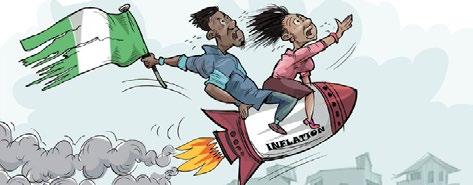
In what appears to be another “bold” move to restore the economy on the path of sustainable growth and guarantee quality leaving standard for the citizens, the Federal Government recently unveiled two major policy initiatives it believes will help to achieve the objectives.
These are the Accelerated Stabilisation and Advancement Plan (ASAP) and the Inflation Reduction and Price Stability (Fiscal Policy Measures Etc) Order 2024. While ASAP implies a journey towards the realization of President Bola Tinubu’s 8-Point Agenda instituted at the inception of his administration in May 2023.
The inflation reduction and price stability Order addresses current macroeconomic challenges bedeviling the economy.
The reality about these measures is that they imply long, tough and uncertain journeys that will drain the people and businesses of energy. Coming midday after several miscalculations had been made in running the country the adjustment which will follow in writing the wrongs will spell pains and agony. The measures in ASAP aimed at tackling food insecurity, for instance do not address the worsening insecurity challenges in the food producing areas. Residents of states like Niger, Borno, kastina, Zamfara, Plateau, Benue, among others who are predominantly farmers have abandoned their farms to seek protection in IDP Camps where they have become vulnerable to poverty, diseases and rapidly dwindling quality of life.

The structural challenges entailed in addressing the situation that has lasted for almost a decade cannot be achieved through policy finesse contained in ASAP. For instance, the policy expectation of achieving increased output of staple crops grown by individual farmers by 6.0 percent from 127 million MT in 2023 to 135 million MT in 2024 does not envisage the challenges of insecurity the food producing communities face.
Continues on page 15
EDITOR Sam Diala
Disputed Multi-million Naira AMCON Debt Perishes in Liquidated Heritage Bank
– Solicitors to Approach NDIC For Recovery
 BY SAM DIALA
An account-holder with Heritage Bank Plc, Frontel Nigeria Limited, who had bemoaned the non-settlement of a N200 million judgment debt decided in its favour by the Lagos Court of Appeal on March 30, 2022, has eventually lost his life investment, following the recent liquidation of the bank.
The judgment was on an appeal brought by Heritage Bank challenging the June 1, 2018 decision of a Lagos High Court which was in favour of Frontel Nigeria Limited.
The Story
Frontel had in 2009 sought legal redress over a loan facility it claimed was wrongfully ascribed to it by Heritage Bank. Frontel Nigeria Limited, which has Alhaji Samsudeen Owonifari as its Managing Director, won the case at the Lagos High Court on June 1, 2018. Heritage Bank went on an appeal and lost.
Speaking through their Counsel, Victor Ukutt, the account-holder lamented that the non-settlement of the judgment debt had exacerbated the misfortunes of Owonifari and his company since 2008 when their ordeal began. He disclosed that Heritage Bank (then Spring Bank) had wrongfully classified Frontel Nigeria Limited as a debtor and cleared the balance in his personal account.
Ukutt told THEWILL that Alhaji Owonifari had descended into unimaginable penury and his business had totally crumbled, following the wrongful classification of his account as a debtor and a bad debtor to the bank and the illegal debit of the accounts of the firm and its managing director.
“Alhaji Owonifari is now a ghost of himself. He is on life support, depending on friends and family members for survival. His workers have all left since

the collapse of his business. I can tell you that the man has relapsed into penury with his family in extreme poverty. His condition is pitiable; he cannot meet basic financial obligations in any way,” Ukutt, principal partner at Victor Ukutt & Co, told THEWILL in his Surulere, Lagos Chambers.
According to Ukutt, the matter stemmed from a loan facility which Heritage Bank claimed to have extended to his client but had been pronounced as fictitious and non-existent by the court.
The Genesis
Sometime in 2008, Alhaji Owonifari applied for a credit facility of N200 million from the defunct Spring Bank (now acquired by Heritage Bank) to enable it to finance the business of lifting one million litres of Automotive Gas Oil (AGO), also called Diesel, from a supplier, Rahammaniyya Global Resources Limited. Some documentations and activities were spelt out as condition precedent for the granting and draw down of the credit facility. This includes executing a tripartite agreement with the owner of a warehouse facility. When the loan was not forthcoming, Alhaji Owonifari sourced the product from another supplier to meet the demand of his customer.
Without granting the credit facility, the bank deducted about N1 million “loan fee” from the Frontel account on July 15, 2008. The bank did not stop there. It went further to wipe out the balance of N15 million in the account on condition of the alleged credit facility.
Following the bank consolidation of 2009, Frontel Nigeria Limited was published in the national newspapers as a bad debtor that contributed significantly to the distress of Spring Bank with N170 million nonperforming loan, The bank engaged the services of the Economic and
Continues on page 15
PAGE 14 THEWILLNIGERIA THEWILLNG THEWILLNIGERIA
WWW.THEWILLNEWS.COM
ThewillnigeriaThewillngthewillnigeria 14
SUNDAY, JUNE 9, 2024 • VOL . 4 NO.35 FirstBank Wins 2024 Best SME Bank In Nigeria And Best SME Bank in Africa By Asian Banker Awards / PAGE 15
B C D A 0 100 200 500 1000 No. of Employees Branches ATM E Source; Internet Automated Banking Centres 2000 HERITAGE BANK PLC PoS 1900 130 350 200 2000 Bello
BUSINESS WEEKLY
...Perishes in Liquidated Heritage Bank
In one day, the bank transferred the whole money, both the N137 million it claimed to have credited to my client’s account, and N15 million in my client’s personal account to an unknown destination
Financial Crimes Commission (EFCC) to arrest Alhaji Owonifari and recover the alleged debt. This move compelled the account-holder to seek redress, sparking off a 14-year legal tussle that culminated in the Appeal Court’s judgment in March 2022.
Giving further details, Ukutt said his firm demanded a comprehensive statement of Frontel’s account which contained startling revelations: the sum of N136 million was credited to the account of Frontel Nigeria Limited and, instantly, transferred to another account, later identified as Energy Factor Marine Oil Services Limited without the knowledge, instruction or consent of Alhaji Owonifari. The bank claimed that out of the sum, N14 million was 10 percent equity contribution of Alhaji Owonifari, as agreed in the contract of credit facility.
However, Energy Factor Marine Oil Services Limited was unknown to Owonifari and his company; and was never a party to the loan contract. The bank’s claim that the transfer was based on the instruction of Owonifari could not be supported with any documentary evidence. Besides, the bank alleged that Frontel had refused to pay the indebtedness despite repeated demands, which had accumulated to N183.3 million.
Ukutt told this newspaper that before the revelation, his client had requested his account statement several times, but it was not provided.
Ukutt explained further: “When Sanusi (Sanusi Lamido Sanusi, former CBN governor) dissolved the boards of the insolvent banks, Spring Bank claimed that my client contributed to the collapse of that bank and that it was heavily indebted to it. The CBN published the name of our client as among those responsible for the distress of Spring Bank.”
According to Ukutt, there were terms and conditions for the facility. One was that there had to be a tripartite warehousing agreement and with this, the bank would be the one to take over the responsibility of appointing the warehousing agents, take an insurance policy and confirm whether the supplier had the product.
“Until the confirmation of availability of the product, they cannot execute the warehousing agreement. The bank did not do that. The warehousing agreement was not executed. The bank did not even sign the warehousing agreement. The bank did not even confirm whether there was a product or not. The bank claimed to have released the sum of N137 million, into my client’s account.
“In one day, the bank transferred the whole money, both the N137 million it claimed to have credited to my client’s account and N15 million in my client’s personal account to an unknown destination.
“My client did not give instruction to transfer; he was not even informed about any amount being credited to his account. It was when EFCC started chasing him about, that he invited us.”
Ukutt disclosed that both EFCC and AMCON had to withdraw from being party to the matter when they saw the nature of the case. He said the N200 million judgment debt was calculated on the basis of the N15 million personal money of Owonifari, which the bank wrongfully transferred to an unknown beneficiary and the accumulated interest at prevailing rate at the time the trial court delivered its judgment. He explained that the amount would continue to rise as long as the matter lingers. The Judgment
The copy of the Appeal Court Judgment seen by THEWILL showed a unanimous decision of threeman Justices, Obande Festus Ogbuinya who delivered the judgment, Muhammad Ibrahim Surajo and Peter O. Affen.
The lead Justice combed the legal firmament to distill, in granular, extensive facts in support of the Justices’ decision to uphold the judgment of the trial court to the effect that Heritage Bank did not grant a credit facility to the account-holder, Frontel Nigeria Limited.
*Continues online at www. thewillnews.com

Journey to ASAP Destination
Similarly the expectation of achieving improved access to mechanization, increased efficiency and productivity of farm operations remain a tall dream.
On the part of Inflation Reduction and Price Stability Order which entails the suspension of import duty and other tariffs for a period of six months on staple food items, raw materials and other direct inputs used for manufacturing among others, will require genuine commitment on the part of the implementing authorities.
It therefore follows that government must seriously address the culture of profligacy which remains the Achilles hells of governance. Indulging in wasteful spending, mismanagement, corruption and misplaced priorities as a way of life will definitely scuttle the attainment of the objectives of these “bold” reforms.
Meanwhile recent data from the UN Humanitarian Aid shows that at least 18 crisis locations—which are already experiencing food insecurity—may experience a "acute food insecurity" if help is not delivered quickly.
The report noted that since October 2023, Nigeria and some other countries have joined a host of others on the list of hunger hotspots where acute food insecurity is likely to deteriorate further in the coming months.
Although many “hunger hotspots” are in Africa, fears of famine persist in Gaza and Sudan, where conflict continues to rage, fueling the regional risk of new hunger emergencies, warned the Food and Agriculture Organization (FAO) and the World Food Programme (WFP).
“Once a famine is declared, it is too late – many people will have already starved to death,” said Cindy McCain, WFP Executive Director.
“In Somalia in 2011, half of the 250,000 people who died of hunger perished before famine was officially declared. The world failed to heed the warnings at the time and the repercussions were catastrophic. We must learn the lesson and act now to stop these hotspots from igniting a firestorm of hunger.”
The devastating hunger crisis underway in South Sudan is so severe that the number of people facing starvation and death there is projected to almost double between April and July 2024, compared to the same period in 2023.
“Tight domestic food supplies and sharp currency depreciation are driving food prices to soar, compounded by likely floods and recurrent waves of subnational conflict,” the report explained. “A projected further rise of returnees and refugees from Sudan is likely to increase acute food insecurity among both new arrivals and host communities.”
Chad, the Democratic Republic of Congo, Myanmar, the Syrian Arab Republic, and Yemen are also hotspots of “very high concern,” the report noted. “A large number of people” in these countries face critical acute food insecurity, coupled with worsening drivers that are expected to further intensify life-threatening conditions in the coming months.
Since October 2023, the Central African Republic, Lebanon, Mozambique, Myanmar, Nigeria, Sierra Leone, and Zambia joined Burkina Faso, Ethiopia, Malawi, Somalia, and Zimbabwe on the list of hunger hotspots, where acute food insecurity is likely to deteriorate further in the coming months.
Turning to the potential impact and “looming threat” of La Niña between August and February 2025, the UN agencies’ assessment is that it is expected to “significantly” influence rainfall. This could lead to a climate shift with “major implications” in several countries, including flooding in South Sudan, Somalia, Ethiopia, Haiti, Chad, Mali, and Nigeria, as well as Sudan.
Both weather phenomena could bring further climate extremes “that could upend lives and livelihoods,” the UN-partnered report warned, in support of calls for immediate humanitarian action delivered at scale “to prevent further starvation and death.”
This data and the pressing call for action highlight the urgent need for international cooperation and rapid response to prevent further deterioration of food security in these critical regions. The window to avert catastrophe is narrow, and the world must act swiftly to provide the necessary aid and support to those in desperate need.
FirstBank Wins 2024 Best SME Bank In Nigeria And Best SME Bank in Africa By Asian Banker Awards

Nigeria’s premier financialinstitution and financial inclusion services provider has bagged two awards: Best SME Bank in Africa and Best SME Bank in Nigeria at the highly converted Asian Banker Global Excellence Retail Awards 2024.
Th Excellence in Retail Finance Awards Programme, which includes the Global Excellence in Retail Finance Awards and The Annual Digital Bank Awards, is one of the most established awards of its kind, recognising exceptional innovation, leadership, management, and performance in the financial sector.
The 130-year-old institution bagged these two awards because of its full suite of solutions across its franchise to serve the needs of medium and small enterprises in regard to core financial needs and offer flexible financing options across the entire lifecycle needs of customer's business.
According to The Asian Banker’s Strategic Business Intelligence for the Financial
Services Community “FirstBank demonstrated exceptional performance, notably in its SME sector, by achieving more than 100% revenue growth while maintaining a reduced cost-to-income ratio of 16.5%. Small and medium-sized enterprises contributed 26% of overall bank revenue. Furthermore, the institution's SME customer base grew by 7%, reaching a total of more than one million. For its significant growth in the SME business, the award for Best SME Bank in Nigeria and in Africa goes to FirstBank”.
FirstBank supports its customer by providing exceptional value proposition around Innovation of the bank’s processes and financing options, and a strong relationship banking approach to create best in class customer engagement.
The Bank’s integrated platform not only help businesses grow and reduce operational costs but also facilitates expansion into regional and overseas markets through its Sub-Saharan Africa subsidiaries.
Expressing her delight on the recognition, the Group Head, Marketing & Corporate Communications, Ms. Folake Ani-Mumuney said: “We thank the Asian Banker Awards for the recognition and dedicate these awards to our esteemed SME customers that have progressively impacted the socio-economic growth of not just Nigeria but also the African continent given their critical role as the engine of any economy.
“For 130 years, FirstBank has continued to enable the giants in our customers including our SMEs as well as other stakeholders, and we remain committed to delivering the ultimate ‘gold standard’ of value and excellence.” she concluded.
Amongst other awards, FirstBank recently added to its awards kitty, Best Private Bank in Nigeria and Best Private Bank for Sustainable Investment in Africa by Global Finance, for its exceptional leadership in integrating sustainable practices into its banking operations.
SUNDAY, JUNE 9, 2024 THEWILL NEWSPAPER • www.thewillnews.com PAGE 15 THEWILLNIGERIA THEWILLNG THEWILLNIGERIA












SUNDAY, JUNE 9, 2024 THEWILL NEWSPAPER • www.thewillnews.com PAGE 17 VOL 3 NO. 47 • NOVEMBER 19, 2023 Experience Fashion Like Never Before NOVEMBER 26, 2023 • VOL 3 NO. 53 CONTR OV ERSIAL JUDGM EN TS: Price: N250 www.thewillnews.com Judiciary, INEC as Cogs in Wheel of Democracy TOLU EROS Devaluation Erodes 10 Banks’ Assets by $24.73bn — Investigation PAGE 10 Akeredolu’s Continuous Absence Still Raises Dust in Ondo PATRICIA ONUMONU The Timeless Designer VOL 3 NO. 20 MAY 14 MAY 20, 2023 Will Not Stop Telling Impactful African Stories IDIA AISIEN IDIA AISIEN OCTOBER 15, 2023 • VOL 3 NO. 47 PREVAILING ECONOMIC HARDSHIP: Price: N250 www.thewillnews.com More Nigerians Becoming Mentally Unstable 2024 Edo Gov Election: The Top Six Aspirants ● Skyrocketing Cost of Living Tipping People Over the Edge ● Strange, Weird Behaviours, Tendencies on the Rise ● Over 40m Nigerians Depressed, Mentally Ill – WHO ● Implement National Mental Health Act Now – Experts BANKE PAGE 32 PAGE 38 ... FBN Limited Dethrones Key Players, Emerges Top Investment Channel in Q2’23 PRINCESSKELECHIOGHENE Reaching For The Stars VOL 3 NO. 38 • SEPTEMBER 17, 2023 CHINONSO ARUBAYI on How Demanding Acting Can be Price: N250 AUGUST 20, 2023 • VOL 3 NO. 37 www.thewillnews.com THEWILLNIGERIA THEWILLNG THEWILLNIGERIA New Ministers Take Oath, Face Daunting Challenges HIGH EXPECTATIONS PAGE 38 $3bn Afreximbank Loan: Mixed Reactions Trail NNPCL’s Search for Stable Naira Light, Camera, Action! Influential Female Filmmakers in Nollywood Anxiety as Tinubu, Atiku, Obi Await Election Tribunal’s Verdict UBOSI’S CHRISTOPHER • Tinubu Pins Renewed Hope Agenda on Cabinet •Top Likely Performers – Pate, Alausa, Keyamo, Fagbemi, Wike, Edun, Umahi, Anite, Musawa, Mamman, Tijani, Tuggar • Ministers to Watch – Idris, Utsev, Tunji-Ojo, Alake, Edu, Adelabu • Gbajabiamila, Ribadu Emerge President’s Most Influential Political Appointees www.thewillnews.com NIGERIA @ 63: Unforced Errors Dwarf National Development Time to Create Constitutional Role For Traditional Rulers Politicians Without Vision Hold Nigerians Hostage FG, State Govts Order Low Key Celebrations as Economy Tanks, Hunger Bites In National Broadcast, President Tinubu Pledges Additional N25K Monthly Wage For Six Months to Low-Grade Workers 15 Million More Vulnerable Households to Benefit from Expanded Conditional Cash Transfer Programme Subsidy, Says 'Reforms May be Painful, But What Greatness ...Require' Assures FG 'Doing All ... to Ease Today's Difficulties' Access Corporation Consolidates Grip on Industry Leadership, Grows Assets to Premier League 2023-2024 Top Hopefuls, Relegation Candidates Price: N250 AUGUST • 37 www.thewillnews.com THEWILLNG THEWILLNIGERIA NewMinistersTakeOath, HIGHFaceDauntingChallenges EXPECTATIONS $3bnAfreximbank Loan: Mixed Reactions Trail NNPCL’s Search for Stable Naira Light,Camera,Action! InfluentialFemaleFilmmakersinNollywood Anxietyas Tinubu,Atiku,Obi AwaitElection Tribunal’sVerdict UBOSI’S CHRISTOPHER •TinubuPinsRenewedHopeAgendaonCabinet •TopLikelyPerformers–Pate, Alausa,Keyamo,Fagbemi,Wike,Edun,Umahi,Anite,Musawa,Mamman,Tijani, Tuggar •MinisterstoWatch–Idris,Utsev,Tunji-Ojo,Alake,Edu,Adelabu •Gbajabiamila,RibaduEmergePresident’sMostInfluentialPoliticalAppointees THEWILLNIGERIA PREVAILING ECONOMIC HARDSHIP: Price: N250 www.thewillnews.com MoreNigeriansBecoming MentallyUnstable 2024 Edo G Elect The Top Six Aspirants ● Skyrocketing Cost of LivingTipping People Over the Edge ● Strange,WeirdBehaviours,TendenciesontheRise ● Over40mNigeriansDepressed, MentallyIll – WHO ImplementNationalMentalHealthActNow – Expert ...FBNLimitedDethronesKey Players,EmergesTopInvestment ChannelinQ2’23 PRINCESSKELECHIOGHENEReachingForTheStars *** ALL ADVERTISEMENTS MUST BE PREPAID *** ALL RATES ARE VAT INCLUSIVE *** ALL COLOUR ADVERTS MUST COME WITH COLOUR GUIDES +234 810 345 2286, +234 913 333 3888 E: info@thewillnews.com Remi Fani-Kayode, GRA, Ikeja, Lagos Full Page N600, 000 Half Page N400, 000 Quarter page N300, 000 10X6 N500, 000 10X5 N480, 000 10X4 N470, 000 10X3 N460, 000 9X6 N400, 000 9X5 N390, 000 9X4 N380, 000 9X3 N370, 000 8X6 N300, 000 8X5 N250, 000 7X5 N240, 000 7X4 N190, 000 6X5 N150, 000 6X3 N95, 000 6X2 N70, 000 5X2 N50, 000 4X4 N80, 000 4X3 N60, 000 4X2 N40, 000 3X3 N50, 000 3X2 N30, 000 2X2 N20, 000 2X1 N10, 000 1X1 N5, 000 Under Masthead – N4, 000, 000 Full Wrap Around – N26, 000, 000 Half Wrap Around – N14, 000, 000 10x6 Front Page – N13, 000, 000 Half Page Front – N10, 000, 000 Front Page 5X6 – N5, 000, 000 Front Page Strip– 4x6 – N1, 400, 000 Front Page Strip 3x6 – N800, 000 Change of Name (Classified) N5, 000 Page/Column Branding – Negotiable 5-10 insertions 2.5% 11-20 insertions 7.5% 21 insertions and above10% 10% BLACK AND WHITE SPECIAL SPOTS SERIES DISCOUNT A D V E R T I S E M E N T R A T E EFFECTIVE APRIL 1, 2024

ENTERTAINMENT &SOCIETY WEEKLY


18 SUNDAY, JUNE 9, 2024 WWW.THEWILLNEWS.COM ThewillsocietythewillngThewillsociety
•
•
•
• Egemba
Agwu
Craig
Orji
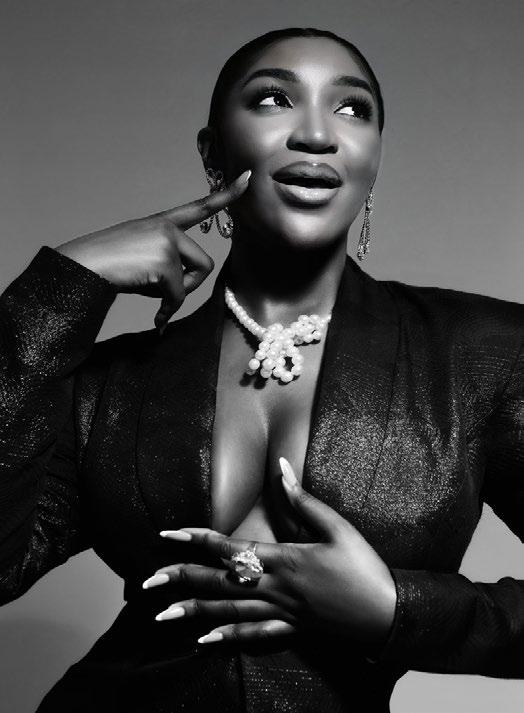
I Remain Committed to Raising Awareness of Brain Tumour, Supporting Victims – Chika Okwuolisa
World Brain Tumour Day is observed every June 8 to remind the global healthcare community and the world at large of the need for consistent efforts in educating people and supporting those affected by brain tumours. And who better to shed more light on this disease, in this interview with IVORY UKONU, than Engr Chika Okwuolisa who has committed her valuable resources these past few years to raising awareness of this debilitating disease. Excerpts:
Youare so passionate about raising awareness of brain tumour.
What is the story behind this?
Thank you so much for this incredible opportunity. It is important to understand that our advocacy isn't limited to brain tumors alone; it encompasses the entirety of our neurological health, though we tend to focus more on brain and spinal cord conditions and emergencies. There's a significant lack of awareness of brain, spine and spinal cord health. Everywhere you look, there's abundant information on how to take care of your heart, eyes and lungs, or how to check for breast cancer or cervical issues. However, it's only recently, thanks to the work we and other specialty healthcare advocates have been doing behind the scenes, that people have begun to consider the importance of their brain and spinal cord health. We live in a cultural and religious society where many people struggle to differentiate between medical and spiritual conditions. Some diseases that people claim have no diagnosis after visiting multiple hospitals and doctors are actually neurological conditions in most cases. The problem often lies in not having healthcare personnel who recommend seeing a neurologist or getting a neuroimaging of the brain and spine. My passion for creating awareness about brain conditions which obviously stems from personal experience was driven by a desire to improve support and outcomes for those affected by neurological conditions. I was exposed to this issue when my younger sister suffered a brain haemorrhage. Being her primary caregiver through five brain surgeries and her survival of two strokes made it clear to me that our entire healthcare system was lagging, especially in neurological healthcare. I had to suspend all other ambitions because I couldn't bear to see anyone else go through what we experienced.
How long have you been at this?
My sister suffered a brain haemorrhage in 2012, and caring for her through recovery and rehabilitation took almost four years. During this period, I spent a lot of time sharing our story and visiting hospital wards where patients were admitted. I began to notice that many patients lying in hospital beds didn't actually know what they were being treated for, including their caregivers or the people looking after them. Some were unknowingly overdosing on their prescribed medications. I continued this work and much more until 2017, when the burden to help more people became intense. It became clear that this wasn't just about me, but about fulfilling God's purpose. I went on my knees and committed it to God, and in 2017, Brain and Spine Foundation Africa was registered. Since then, I've been actively involved in advocacy, driven by the Foundation's mission to create awareness, enhance understanding and support for neurological conditions.
What are some of the projects your foundation accomplished in the past?
Well, first off, Brain and Spine Foundation Africa's aim is to advance neurological healthcare and enhance the quality of life for individuals affected by neurological conditions in Nigeria and Sub-Saharan African countries. Our mission includes raising public awareness, providing information, advocating for funding and better treatment options, facilitating access to quality and emergency care, and offering financial assistance to indigent individuals affected by brain and spinal cord emergencies and conditions. Through our work, we have made a significant impact in several areas like in awareness campaigns which have reached thousands of people, helping them understand the importance of early diagnosis and treatment, we organize workshops, seminars, and community outreach programs to educate both healthcare professionals and the general public about neurological conditions, we have established a Patient/Survivor Support Group that offers emotional and practical support to individuals and families affected by neurological conditions. This includes counselling services, support group meetings, and access to resources. Presently, active advocacy for better healthcare policies, funding for neurological research and treatment, for improved healthcare services and greater public awareness about the needs of those with neurological conditions is ongoing. We try to provide financial assistance when we can, to individuals who cannot afford the cost of emergency surgeries and treatments. This support has been crucial in saving lives and
improving the quality of life for many patients. What challenges did you encounter along the way and how were you able to surmount them?
Considering the state of our healthcare system and also the economic situation, we encounter a lot of challenges daily. Top on the list of the challenges is funding. Securing adequate funding for our initiatives has been a constant challenge, limiting our ability to expand our programs and reach more people for extensive awareness campaigns across this country of more than 230 million people. Without enough funding we can’t do much, but we are not giving up. Many people do not understand the importance of brain health leading to delayed diagnoses and treatment. Another huge problem is stigma and misconceptions. In many cultures, neurological conditions are often misunderstood or stigmatized, with some people attributing them to spiritual causes rather than medical issues. We address this by partnering with religious and community leaders to provide accurate information and reduce stigma and also conduct workshops and seminars to educate people about the medical nature of these conditions. There is a lack of access to specialized care. Many patients struggle to access specialized neurological care due to lack of facilities and trained professionals in their areas. We established referral networks with neurologists and neurosurgeons, and we advocate for better healthcare infrastructure. We also provide support and guidance to patients seeking specialized care, helping them navigate the healthcare system. Overall, witnessing the struggles and suffering of patients and their families can be emotionally draining.
If funding is difficult, how are you able to keep your work at your foundation going?


For a long time, I relied heavily on my engineering company, Hogrago Engineering Co Ltd as well assistance from friends and the general public. We also utilized Corporate Social Responsibility airtime on African Independent Television, AIT to seek help. However, recently it has been heartbreaking to watch patients die because we lack the resources to help them. Obtaining projects for my engineering company has become increasingly difficult, and I no longer have the same strength and time to dedicate to both ventures. This is why we are urgently calling on philanthropists and politicians who have amassed significant wealth to consider supporting our cause. Their contributions can make a profound difference in saving lives and improving the quality of care for those affected by neurological conditions. We need their help to continue our mission and expand our reach to those in desperate need.
Can you recall an incident that made you reach a breaking point? Unless you understand what neurological conditions entail, it's hard to grasp the
constant pressure. Every case, including my younger sister's, has driven me to a breaking point. Currently, the patients in our Patient Support Group waiting for funding for emergency surgeries and rehabilitation are enough to keep me at my breaking point for the next one or two years if we don’t get an intervention soon. I rely daily on the grace of God and His constant strength, which He generously provides.
It can be emotionally draining, seeing people who suffer from brain tumour pass away. What is your coping mechanism?
Generally, not just for brain tumor victims, neurological emergencies in general. The truth is this, this territory is not for the fainthearted. Some of the neurosurgeons we work with often say ‘Chika is not a ‘normal’ human being’. So, it’s just by the grace of God and my coping mechanism is rooted in gratitude. I am thankful to God for the privilege of being part of their journey during such difficult times. This perspective helps me find meaning and purpose in the work we do daily, despite the emotional toll it takes.
This is a lot. Were there times you felt like giving up? And what motivates you to keep going?
Absolutely. No one can undertake this work without divine support. Countless times, I have felt like giving up, but each time, God reminds me why I started and that this mission is not about me. One of my coping mechanisms is to incorporate laughter into my routine, because there are days when there is nothing to laugh about. The challenges can be overwhelming, but the resilience and courage of the individuals we support inspire me to keep pushing forward. Whenever I remember that someone, somewhere, might be experiencing a brain emergency with a higher chance of dying than surviving, and no emergency number to call or ambulance to expect, I am driven to continue. When I think about a family member caring for a loved one with a brain injury,


ENTERTAINMENT &SOCIETY WEEKLY
Okwuolisa
Okwuolisa
without any hope of comprehensive rehabilitation, and the higher chance that the caregiver might die from stress and frustration before the patient, I am compelled to persist. Each time I recall someone receiving a devastating diagnosis of a brain tumor or aneurysm and having no hope of emergency lifesaving surgery due to financial constraints, I am motivated to keep going. Many patients and families face these situations helplessly and hopelessly, unable to continue because they are exhausted emotionally, physically, psychologically, and financially. These are the realities that fuel my determination to never give up.
For the benefit of many who know next to nothing about brain tumour, could you explain in a layman’s terms what it is and why it is important for all to take this seriously?
A brain tumor occurs when cells in the brain begin to grow uncontrollably, forming a mass of abnormal cells. These tumors can be classified into two main types: primary and secondary. Primary Brain Tumors originate within the brain itself. They can be benign (non-cancerous) or malignant (cancerous). Examples of primary brain tumors include gliomas, meningiomas, and pituitary adenomas. The exact cause of primary brain tumors is often unknown, but genetic factors and exposure to radiation may increase the risk like I mentioned earlier. Secondary Brain Tumors also known as metastatic brain tumors occur when cancer cells from another part of the body spread to the brain. Common cancers that can metastasize to the brain include lung, breast, kidney, and melanoma (skin) cancers. Secondary brain tumors are always malignant. Indeed, brain tumors are a serious concern due to its impact on brain function. Remember that the brain is the control centre of our body. It controls critical functions such as thought, memory, movement, and sensation. So, tumors can disrupt these functions, leading to neurological deficits. Symptoms of a brain tumor can vary widely depending on the tumor's location, size, and growth rate. Common symptoms include persistent headaches, nausea, vomiting, vision problems, changes in behavior or personality, and difficulty with balance or coordination. Early detection and diagnosis are crucial for effective treatment. Treating brain tumors is challenging due to the brain's delicate and complex nature. The prognosis for brain tumor patients can vary greatly. Benign tumors may be successfully treated and have a good prognosis, while malignant tumors can be aggressive and difficult to treat. Quality of life considerations are paramount, as treatments can have significant side effects. Increased awareness about brain tumors can lead to earlier diagnosis, better treatment options, and more support for patients and their families. Being aware of the symptoms and seeking medical attention promptly can lead to earlier detection and better treatment outcomes. Understanding brain tumors helps in providing better support and resources for those affected. This includes emotional, psychological, and financial support. In summary, brain tumor is a serious medical condition that requires attention and awareness. Is there a cure for brain tumour? Are there preventive measures? Since it’s World Brain Tumour Day, this June 8. Let me dwell on it for now. There isn't a universal cure for brain tumors, but treatment options have significantly advanced. These options include surgery, radiation therapy, chemotherapy, targeted therapy, and immunotherapy. The effectiveness of these treatments depends on the type, location, and stage of the tumor, as well as the patient's overall health. In some cases, especially with benign tumors, a combination of treatments can lead to a complete cure or excision. While there's no guaranteed way to prevent brain tumors, because it can happen to anyone, even babies, meaning it could be congenital, some measures may reduce the risk. Things like limiting one's exposure to radiation and certain chemicals known to be associated with cancer risk, maintaining a healthy lifestyle, avoiding smoking, regular medical/neurological check-ups can help in the early detection allowing for timely intervention. While these measures can help reduce risk, it is important to note that brain tumors can still occur due to genetic and environmental factors beyond our control. Continuous research is essential to better understand brain tumors and develop more effective treatments and preventive strategies.
ENTERTAINMENT &SOCIETY WEEKLY

“
In what ways can people support the incredible work that you do? I breathe Nigeria. I go to bed thinking about Nigeria, and I wake up thinking about Nigeria. I don't dwell on problems; when I see one, my immediate thought is, 'How can this be solved?' To make a meaningful impact, we need an investment of hundreds of billions of naira. So, people’s substantial contributions can save lives, provide emergency services, and help us bring to life our dream of a Non-profit Comprehensive Rehabilitation/Awareness Center/ Institute for patients affected by neurological conditions. Businesses can partner with us through corporate sponsorships and Corporate Social Responsibility (CSR) initiatives. These partnerships not only provide essential funds but also help raise awareness about our cause within the corporate community and beyond. We will appreciate support from philanthropic foundations and grant-making organizations. This can enable us to launch new projects, conduct vital research, and reach more individuals in need. We also call on Survivors of some of these neurological emergencies to come on board and participate by sharing their stories and helping to organize large-scale fundraising events like it’s done in the developed world. Donations of medical supplies, equipment, cars, emergency vehicles, rehabilitation equipment and other resources can help reduce our operational costs and ensure that more funds are directed toward patient care and support service. Skilled volunteers, and networking partners who can advocate for our cause, spreading the word, and connecting us with potential donors and partners are welcomed. We are calling on individuals and entities with the capacity to support us to come on board. Together, we can make a significant difference for our people and bring neurological healthcare to the forefront. Let’s make it happen.
Do you think enough is being done at the national level in terms to raise awareness of brain tumour? How best do you think government can get involved?
No, not enough is being done at the national level to create awareness not just about brain tumors, but neurological emergencies as a whole. The truth is, we have a long way to go, and the government cannot solve all our problems. From my perspective, addressing brain and spinal cord health is unlikely to
Each time I recall someone receiving a devastating diagnosis of a brain tumor and having no hope of emergency life-saving surgery due to financial constraints, I am motivated to keep going. Many patients and families face these situations helplessly and hopelessly, unable to continue because they are exhausted emotionally, physically, psychologically, and financially. These are the realities that fuel my determination to never give up
make it onto the government's agenda in the nearest future. That's why our organization is dedicated to filling this gap. The most impactful way to support us is through significant financial donations. In the developed world, billions of dollars are set aside yearly for brain and spinal cord treatment and research. Here, however, these issues are often overlooked and not prioritized on the national agenda. The government can get more involved by allocating funds for public education campaigns, enhancing hospital capabilities, especially theatres and equipping our ICUs to effectively handle neurocritical cases, develop strategies to mitigate the brain drain of healthcare professionals specializing in neurological care, ensuring adequate staffing and expertise in hospitals and clinics, allocate funding for research into neurological conditions and support initiatives aimed at advancing treatment options and outcomes. Create dedicated funds to provide financial support for patients facing the high costs of treatment and rehabilitation for brain and spine injuries by establishing a Brain and Spine Injury Trust Fund. Finally, establish robust emergency response systems tailored to neurological emergencies, including efficient ambulance services and streamlined hospital protocols.
You seem to be a 'one man army' in your advocacy work. Have you tried to seek co-operation or partnership with government? While the advocacy work can sometimes feel like a one-person effort, considering it’s a pioneering organization for issues like this in Nigeria and Africa, there is no doubt that the scale of our mission surpasses what any individual or even an organization can handle alone. We have actively sought cooperation and partnership with the government, and we are registered partners with the


PAGE 20 THEWILLNIGERIA THEWILLNG THEWILLNIGERIA
Okwuolisa
Celebrities who Are Brain Tumour Survivors
Brain tumour is a serious health challenge. These survivors below serve as a testament to the strength of the human spirit and the importance of early detection and treatment.
CHINONSO EGEMBA
Amedical doctor cum influencer, Chinonso Egemba, more popularly known on social media as Aproko Doctor, is a brain tumour survivor. He battled for his life throughout December 2021 after he got diagnosed with the disease on December 5. Thereafter, he went partially blind. Detailing the experience and the surgery he had to undergo, Aproko Doctor, who is loved for his entertaining way of sharing health tips, revealed that rather than opt for a brain surgery abroad, he chose to undergo the surgery in Nigeria because, according to him, he believed in the medical abilities of the doctors in Nigeria. He also revealed that neurosurgeon, Dr Tayo Ojo, a consultant with the Lagos University Teaching Hospital, LASU and Lagoon Hospital,

N


ABIMBOLA CRAIG
ollywood actress, Abimbola craig, is also a brain tumour survivor. As a young lady, going about her regular activities, she noticed some changes in her body. Further investigation revealed she had a Benign Neoplasm of Pituitary Gland and Craniopharyngeal Duct, more easily described as ‘Pituitary Tumour’ of the brain. A lawyer, Abimbola said she was constantly having severe headaches for about a year, and she kept on taking painkillers. Headaches that hurt from the frontal part of her head all the way to the back of her head and neck. Another major symptom that sent off alarm bells in her head was when her breast started to lactate. That was a major indication that something was off, because according to her, she knew for a fact that she was not pregnant. The decision to do the surgery was very practical to her as opposed to being on pills for the rest of her life to reduce the tumour, seeing as she had no idea how long the term 'rest of her life' was. Luckily, she had the resources to travel out of the country to do the surgery and today, she is a thriving young lady.

JULIUS AGWU
C
omedian, Julius Agwu's case was one that was well known as most of the details of his health challenge ditto, brain tumour, was in the public domain. He was diagnosed in 2015 and he not only experienced a drastic weight loss, but he also experienced paralysis and memory loss. The traumatic experience almost ended his life.
"I never realized what was happening, I just noticed that at some point, I was losing weight. Initially, I was working out trying to look shapely, because as soon as you clock 40 you begin to take some of those things seriously. I just noticed the over-work, stress and everything. I had been very busy at that period shooting my new TV series, when I started to have strange headaches. I just realised that once in a while, I would have a headache, take the normal pain relievers and it would go down until I had a seizure and was rushed to the hospital. That was the beginning of the story. When I eventually regained consciousness, I lost all my memory and I couldn’t walk properly. My ex-wife and I had to go to Houston (USA), because we had to find out what was really happening to me. That was how through an MRI, it was discovered that I had tumours in my brain. A large tumour was located at the back of my head that was already like the size of a golf ball, full-grown and very big. An emergency surgery was advised. So, I thank God it went well, and God has been perfecting my healing," he said.
ZACK ORJI
Veteran Nollywood actor, Zack Orji's brain tumour journey began when he slumped in his bathroom earlier in the year, leading to a critical medical emergency. He passed out for over five hours and when he came to, he was incoherent. Soon his colleagues came to his aid and rushed him to the National Hospital, Abuja where the first surgery was performed on him by Dr Biodun Ogungbo, a neurosurgeon. A month later, after scans revealed a residual blood clot, Orji underwent a second surgery by the same doctor and after his recovery in Nigeria, he sought post-surgery assessment in the United Kingdom. It is important to note that Orji was lucky because he received support from prominent figures, including the President of Nigeria, Bola Tinubu; the President’s wife, Remi Tinubu; the Vice President’s wife, Nana Kashim Shettima; the President’s son, Seyi Tinubu and various federal ministers, being a prominent member of the ruling All Progressives Congress, APC.
EARLY WARNING SIGNS OF A BRAIN TUMOR TO NEVER IGNORE
Brain tumor is one form of diagnosing cancer but people tend to ignore the tell-tale signs that might signal a dangerous disease with possibly fatal coincidences. Immediately get in touch with a doctor if you exhibit one of the following hidden symptoms.
1. Headaches: This is the most often dismissed symptom of brain cancer, just because it is so prevalent in daily life. In fact, severe headaches that cause nausea, dizziness, and other symptoms are one of the most common signs of a brain tumor. Those headaches don’t respond to painkillers for normal headaches or migraines.
2. Unexplained nausea or vomiting: A stomach upset, a common symptom of a brain tumor, can often be dismissed for something like food poisoning or other generic feelings of nausea.
3. Loss of balance or coordination: People with a brain tumor often first start noticing balance problems before anything else. They start tripping for no apparent reason or misjudging the distance between objects.
4. Personality changes: This is one of the hardest ones to diagnose because there can be a multitude of reasons why someone’s personality would change but when combined with other symptoms, they can also signal a brain tumor. Someone may experience confusion, difficulty remembering simple tasks, or recalling the names of everyday objects.
5. Seizures: Seizures are a very important symptom and one of the easiest to recognize, especially in people with no history of seizure-inducing conditions such as epilepsy. They range from mild loss of control and consciousness to violent bursts of shaking.
6. Loss of sensation in limbs: Many confuse it with normal muscle spasms or with another musclerelated injury, but the fact remains that unresponsive limbs are one of the first symptoms of a brain tumor.
7. Changes in the ability to hear, smell or see: This includes double or blurred vision
8. Changes in speech: Trouble finding words, talking incoherently, inability to express or understand language
9. Change in feeling different temperatures or reflexes: Inability to feel heat, cold, pressure, a light touch or sharp objects
10. Changes in pulse and breathing rates
ENTERTAINMENT &SOCIETY WEEKLY
10
SHOTS OF THE WEEK
Photo Editor: Peace Udugba [08033050729]

L-R: The Chancellor, Lagos State University (LASU), Prof. Gbolahan Elias; presenting an award to Governor of Lagos State, Mr. Babajide Sanwo-Olu, while the Vice Chancellor, Prof. Ibiyemi OlatunjiBello and Pro Chancellor and Chairman of the Governing Council, Sir David Sunmoni, watch, during the 27th Convocation ceremony of LASU at the Buba Marwa Auditorium, Ojo Campus on June 6, 2024

L-R: Minister of State for FCT, Dr Mariya Mohmoud; Representative of the President, Federal Republic of Nigeria, Sen. Godswill Akpabio; Minister of FCT, Nyesom Wike and the National Chairman of All Progressives Congress (APC), Abdullahi Ganduje, during the Presidential Commission ceremony of the completion of roads B6, B12, and circle road Abuja Central Area in Abuja on May 6, 2024.

and Minister of Environment, Malam Babarebe Abass-Lawal, at the 2024 World Environment Day, in Abuja on June 5, 2024.

Front row, Second from Left to Right: the Deputy Chairman, House Committee on NASENI, Hon. Abdulmalik Zubairu Bungudu; the Executive Vice Chairman/CEO National Agency for Science and Engineering Infrastructure NASENI, Mr. Khalil Suleiman Halilu; Chairman, House Committee on NASENI, Hon. Taofik Ajilesoro and other Committee members, during an oversight visit to the NASENI Headquarters on June 6, 2024.


CSR, Airtel Nigeria, Chioma Okolie; Director, Corporate Communications and CSR, Airtel Nigeria, Femi Adeniran; Environmental scientist and Advocate, Dr. Eugene Itua; Director, Internal Audit & Risk, Airtel Nigeria, Ngozi Akamelu and GM, Customer experience, Oluwabunmi Abejirin, during an insightful employee session in commemoration of World Environment Day at Airtel Head Office, Lagos on June 4, 2024.

L-R: Founder, Eleven Eleven Twelve Foundation, Adetunji Lam-Adesina; his wife, Tolu and Head of School, Ibadan International School, Mrs Motunrayo Ige, at a one-day symposium to mark the 2024 World Environment Day in Ibadan on June 6, 2024.
SUNDAY,
2024 THEWILL NEWSPAPER • www.thewillnews.com PAGE 22
THEWILLNG THEWILLNIGERIA
JUNE 9,
THEWILLNIGERIA
L-R: Chairman, Senate Committee on Environment, Sen. Akitunde Yunus-Abiodun; Minister of State for Environment, Dr Iziaq Adekunle-Salaco
L-R: Head,


Nigeria's World Cup Qualifying Campaign: Addressing The Concerning Slump
BY JUDE OBAFEMI
The road to 2026 FIFA World Cup, to be hosted jointly by the United States, Mexico and Canada, has been a treacherous one for the Nigerian national football team, the Super Eagles. Three consecutive draws against Lesotho, Zimbabwe and South Africa have left the country's hopes of securing a spot in the prestigious

The draw against Lesotho was compounded by another disappointing 1-1 stalemate against Zimbabwe
tournament hanging by a thread, with the team currently languishing in fifth place in the six-team Group C.
The disappointment of failing to qualify for the 2022 World Cup in Qatar was a bitter pill to swallow for Nigerian football fans, but the current qualifying campaign has been nothing short of a nightmare. The team has struggled to assert its dominance against opponents they were expected to comfortably dispatch.
Under the supervision of former head coach, Jose Peseiro, the Super Eagles kicked off their qualifying campaign with a lacklustre 1-1 draw against Lesotho at home. Despite efforts from Kelechi Iheanacho and Taiwo Awoniyi going close, and Semi Ajayi's eventual equaliser, this result was met with widespread criticism and disbelief, as the team's performance fell well short of expectations. The Minister of Sports Development, Sen. John Owan-Enoh, expressed his dissatisfaction with the result, highlighting the importance Nigeria places on qualifying for the 2026 tournament.
The draw against Lesotho was compounded by another disappointing 1-1 stalemate against Zimbabwe in Rwanda. Despite making several changes to the starting lineup, including introducing substitutes Bright Osayi-Samuel, Iheanacho and Victor Boniface, the Super Eagles struggled to impose themselves on the game, failing to capitalise on their possession and failing to create clear-cut chances. Joe Aribo's assist for Moses Simon, who set up Iheanacho's equaliser, was a rare bright spot. This result left the team tied on two points with Zimbabwe in the group standings, setting the stage for a challenging road ahead.

The appointment of Finidi George as the new head coach brought a glimmer of hope for a resurgence, but the 1-1 draw against South Africa in the team's most recent qualifier has only deepened the concern surrounding the team's performances.
Falling behind early through Themba Zwane's strike, the Super Eagles were unable to exert control and were salvaged by Fisayo DeleBasiru's equalizer, ultimately ensuring a
share of the
Several key factors have contributed to this concerning slump. First, the lack of cutting edge has been a glaring issue. Despite boasting a talented squad with the likes of Iheanacho, Awoniyi, Boniface, and Onuachu, the Super Eagles have struggled to translate their quality into clinical finishing and decisive moments in front of goal. Missed chances and a lack of killer instinct have plagued the team, allowing lesser opponents to capitalise on their wastefulness.
Secondly, defensive lapses have been a recurring decimal. While the Nigerian defence has shown resilience in patches, individual errors and lapses in concentration have cost the team dearly. Conceding soft goals against opponents they should be dominating has been a concerning trend, highlighting the need for greater focus and discipline at the back to help goalkeeper Stanley Nwabali maintain his stance in between the sticks.
Thirdly, questions have been raised about the tactical approach adopted by both Peseiro and George. While the team has enjoyed spells of possession, they have often lacked the creativity and incisiveness to break down organised defences. A more dynamic and adaptable game plan may be required to unlock stubborn opposition, potentially involving players like Samuel Chukwueze and Moses Simon more effectively.


Lastly, the inclusion or exclusion of certain players has been a topic of debate, with some questioning the rationale behind certain selections or substitutions. Finding the right balance and maximising the team's potential by getting the best out of players like Iheanacho, Awoniyi, Boniface, and Onuachu will be crucial moving forward.
As the qualifiers resume against Benin Republic, the pressure is mounting on Finidi George and his squad to shed the shackles of these 1-1 draws and return to winning ways. Failure to do so could potentially consign Nigeria to the unthinkable – missing out on consecutive World Cup tournaments, a scenario that would be a devastating blow to the nation's footballing pride and reputation.
*Continues online at www. thewillnews.com
PAGE 23 THEWILLNIGERIA THEWILLNG THEWILLNIGERIA
spoils. Opportunities for Samuel Chukwueze and Paul Onuachu, who was started over Victor Boniface, were squandered.
“ SUNDAY, JUNE 9, 2024 WWW.THEWILLNEWS.COM 23 SPORTSLIVE
George
Super Eagles
Iheanacho
Dele-Basiru
Ajayi


ogannah@thewillnews.com
Halting The Rise in Theft, Vandalism of Public Infrastructure
As Nigerians, we've grown accustomed to a disturbing reality - the rampant vandalism and theft of public infrastructure across the country. From railway tracks and power transmission equipment to streetlights, road signs, even the newly constructed Second Niger Bridge, nothing seems sacred anymore. This insidious problem has reached a worrying stage, threatening to spiral out of control the same way kidnapping has become a monstrous issue plaguing our nation.
The motives behind these acts are as simple as they are selfish – to make money at the expense of the greater good. Every new piece of infrastructure erected for public benefit becomes a target, with some individuals hell-bent on stripping it bare, hindering its smooth operation and depriving citizens of the very amenities meant to improve their lives.
The statistics are staggering. According to the Nigerian Railway Corporation, over 150,000 rail clips were stolen by vandals along railway tracks across the country between 2022 and 2023 alone. The Transmission Company of Nigeria (TCN) revealed that 109 transmission towers were destroyed by vandals in just nine months, with incidents reported in Abuja, Lagos, Kano, Enugu and Benin.
In one particularly egregious case, a video circulating on social media showed suspected vandals uprooting and selling the railings installed on the Second Niger Bridge, a vital infrastructure project costing around N336 billion.
These acts of sabotage have far-reaching consequences. The Nigerian National Petroleum Corporation (NNPC) has warned of potential fuel scarcity due to rampant pipeline vandalism in areas like Idimu, Lagos. The TCN has been forced to divert funds earmarked for grid expansion to repair vandalised power equipment, setting back the nation's efforts to improve electricity supply. Worse still, the lives of citizens are being endangered, with incidents like the recent train derailment near Kaduna caused by the removal of track fastening clips by vandals. The question that begs to be answered is: Why? Why are people so willing to destroy the very infrastructure meant to benefit them and their communities? The answers are complex, but a few key factors stand out.
lions struggle to make ends meet, the temptation to resort to illegal activities like vandalism can be overwhelming, especially when the perceived rewards seem so lucrative.
However, we cannot ignore the role of greed and opportunism. For some, the act of vandalising public infrastructure is simply a business – a way to make quick money by exploiting the vulnerabilities in our security systems and selling off the stolen goods to
greater good, it fosters a sense of national pride and discourages the kind of selfish behaviour that fuels vandalism.
Concurrently, we must invest in robust security measures to safeguard our infrastructure. This includes deploying advanced surveillance technologies, increasing patrols, and implementing stringent penalties for those caught engaging in acts of vandalism.

Firstly, there is a pervasive lack of patriotism and civic responsibility. Too many Nigerians have grown disillusioned with the state, viewing public property as fair game for personal gain. This attitude is exacerbated by the widespread corruption and mismanagement that has plagued our nation for decades. When citizens witness those in power enriching themselves at the expense of the public, it breeds a dangerous sense of entitlement and disregard for the common good.
Secondly, poverty and unemployment remain major drivers of criminal behaviour. In a nation where mil-
willing buyers.
Regardless of the motivations, the consequences are clear: The destruction of public infrastructure impedes economic growth, hampers development and erodes the social fabric that binds us as a nation.
So, what can be done? The solution lies in a multifaceted approach that addresses the root causes while strengthening our defences against these nefarious acts.
At the core, we need a renewed commitment to good governance, transparency, and accountability. When the citizens see their leaders upholding the highest ethical standards and working tirelessly for the
The recent call by the Niger Delta Development Commission (NDDC) for security agencies to go after criminals destroying economic assets in the oil-rich region is a step in the right direction.
However, addressing the socio-economic factors that drive people toward crime is equally crucial. We need comprehensive programs aimed at alleviating poverty, creating job opportunities, and providing vocational training – particularly in the communities most affected by these issues. Education and public awareness campaigns are also essential, instilling a sense of civic responsibility and highlighting the far-reaching consequences of vandalism.
One promising solution that has been proposed is the implementation of a communitybased policing model, where local vigilante units are empowered and integrated into a national security framework. By leveraging the intimate knowledge and investment of local communities, we can create a formidable deterrent against those who would seek to harm public property.
Additionally, we must explore technological solutions that can aid in identifying and tracking perpetrators. The use of biometric data, facial recognition systems, and advanced surveillance cameras can help us attribute acts of vandalism to specific individuals, making it harder for them to remain anonymous and evade justice.
Ultimately, solving this problem requires a collective effort – from the highest echelons of government to the grassroots level. It demands a cultural shift, where we as Nigerians embrace a newfound respect for public property and a genuine desire to protect the infrastructure that serves us all.
Each piece of infrastructure we allow to be vandalised or stolen represents a missed opportunity to uplift our communities and pave the way for a brighter future. It is a stark reminder of our collective failure to safeguard the common good.
The time has come for us to say, "enough is enough." We must stand united against those who seek to undermine our progress and work tirelessly to create a Nigeria where public infrastructure is respected, protected, and allowed to fulfil its purpose – improving the lives of all our citizens.
To not do anything about this problem we leave us with an untannable menace to society in no time.
When citizens witness those in power enriching themselves at the expense of the public, it breeds a dangerous sense of entitlement and disregard for the common good
www.thewillnews.com • Sunday, June 9, 2024
