
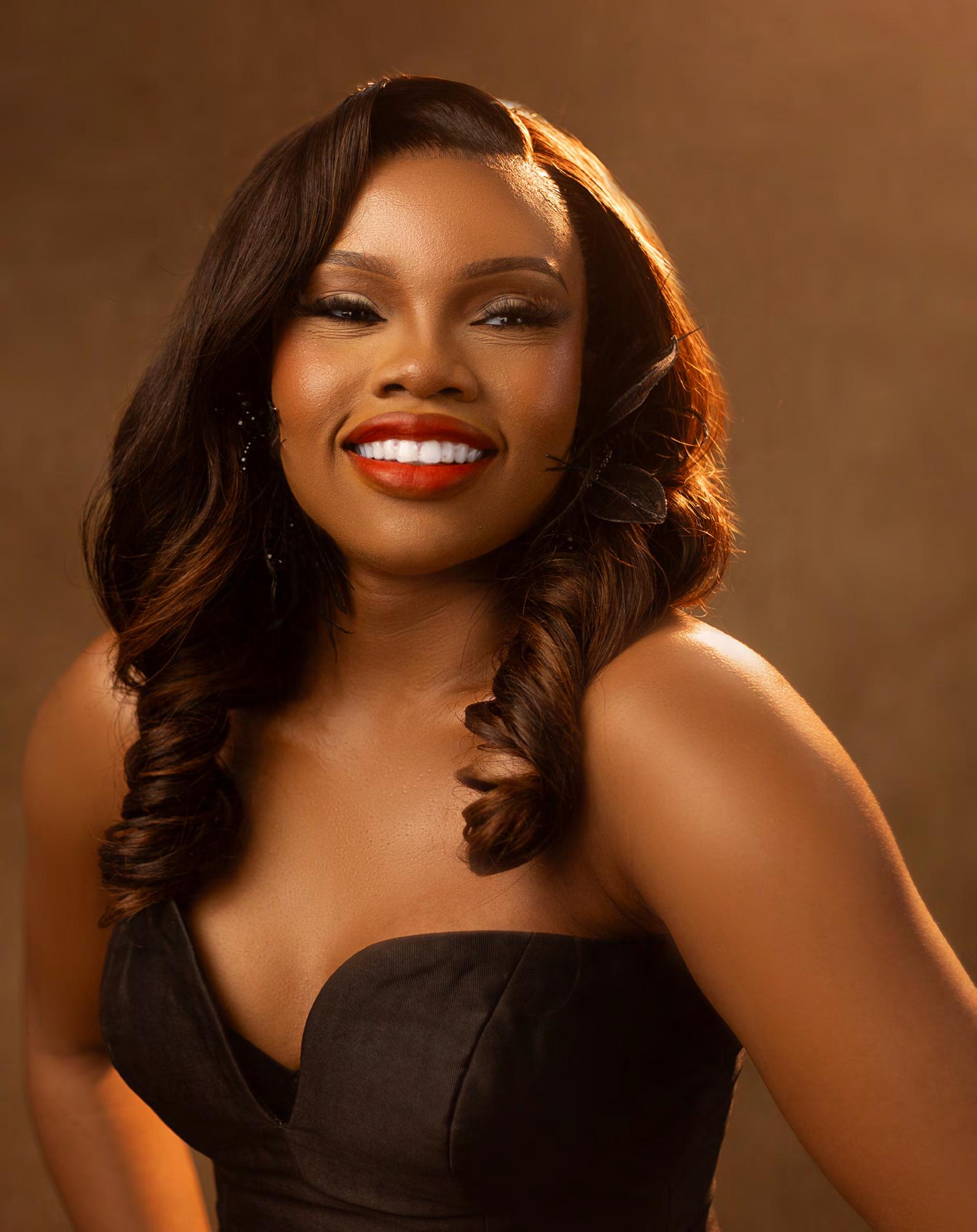






CPhoto: Kola Oshalusi @insignamedia Makeup: Zaron
hy Nwakanma studied abroad and returned to Nigeria to pursue a career in acting. Trained on stage, she was used to building a character for weeks or months, but in film, here, actors rarely get that luxury.
Nwakanma notes that actors often receive impromptu scripts, leaving little time to connect with their roles. She stopped trying to fit in when she realised she couldn’t play every character believably. From Nwakanma’s perspective, you naturally want to be cast in everything possible because you believe you’re a good actor, but she has come to realise that it’s not about your talent or your acting range—sometimes, you just don’t look the part. Besides acting.
Nwakanma is involved in the business of agriculture. Initially, she feared having to quit acting to focus on her business, but advice from an older actor encouraged her to pursue both. Now, she acts and runs her agricultural business.
If you’d like to learn more about her journey, be sure to read Chy Nwakanma’s story on pages 8 to 10.
Speaking of how our choices shape us, beyond taste and satisfaction, our daily food choices also shape how we feel physically and mentally throughout the day. The meals we rely on can either support our productivity or quietly drain it. Scroll to page 14 to read our article on whether your diet is fueling you or slowing you down.
On a lighter note, have you downloaded the playlist on page 20? If not, now is a great time to start. I promise you'll enjoy the music selection.
Until next week, enjoy your read.

Chy Nwakanma From The Big Screen to Agribiz
The Art of Saying "Let's Plan Something"
Gym Culture in Lagos Trend or Transformation? Simple Ways to Make Your Silk Press Last Longer



Boluwatife Adesina @bolugramm
- Contributing Writer
Boluwatife Adesina is a media writer and the helmer of the Downtown Review page. He’s probably in a cinema near you.

AUSTYN OGANNAH
PUBLISHER/EDITOR-IN-CHIEF
Executive Editor: Onah Nwachukwu @onahluciaa
Writers: Johnson Chukwueke & Dorcas Akintoye Design & Layout: Hogan Effiom
Digital Media: Oladimeji Balogun
Consulting Art Director: Sunny Hughes ‘SunZA’


Sally Chiwuzie @unshakable.is.a.state.of.mind
- Contributing Writer
Sally Chiwuzie is a non-practising barrister who owns the brand #Unshakable. She is the author of Silent Symphonies, a fictional love story, and the creator of the podcast Chronicles of #Unshakable Truths.
Ada Obiajunwa @aaddaahh - Contributing Writer
Ada Obiajunwa writes from Lagos about the big truths tucked inside ordinary moments — friendship, self-discovery, and the quiet revolutions of everyday life. She believes in the power of presence, good banter, and decoding the unsaid. Through her fragrance studio, WhiffWonders, she also crafts scents that weave memory and emotion into experiences that feel like home.
5 Tips for a Bedroom Upgrade Without Renovating Cities Worth Visiting For Cuisine Alone
Networking Without Feeling Fake
Tips on Improving Organisational Skills
Dangerous Comfort Is Your Diet Fueling You or Slowing You Down?
Project Hail Mary


BY DORCAS AKINTOYE
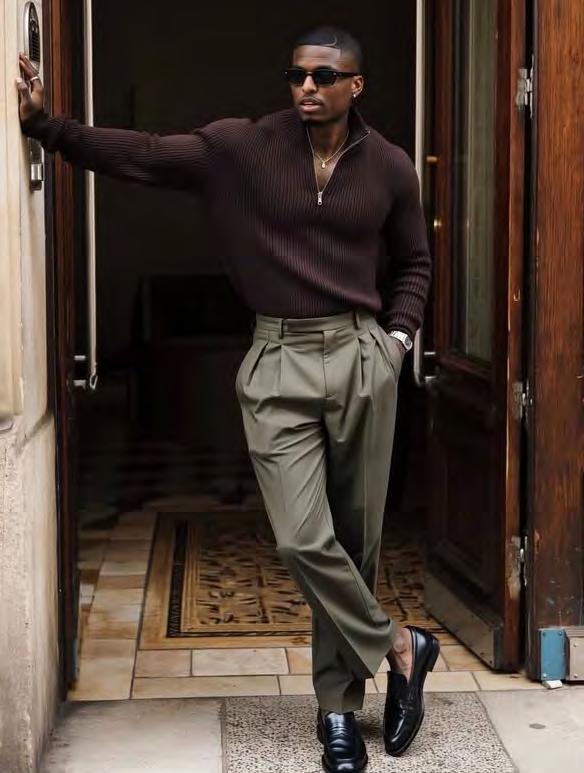
When people talk about fashion, they often focus only on clothes. But accessories also play a very important role in how a man looks, and they can make a simple outfit look more polished and stylish. In this article, we will show you four accessory rules every Nigerian man should know.
One important rule for accessories is to keep things simple. Many men believe that wearing many accessories at once will make them look more stylish, but this is not always true.When you wear too many accessories like big necklaces, bracelets, rings, sunglasses, and caps at once, the outfit can start to look crowded and confusing. Instead of improving your look, it can make it look messy. A better approach is to choose one or two accessories that stand out.When accessories are used simply and in balance, they help your outfit look neat and confident.

A wristwatch is one of the most useful and stylish accessories a man can wear. Even though many people now check the time on their phones, a watch still adds a touch of class to an outfit.Wearing a good watch shows that you pay attention to detail and value personal style.The watch does not have to be very expensive, but it should look clean and wellmade. A simple design is often better because it can work with many different outfits.

Matching your belt with your shoes is a classic fashion rule that many stylish men follow. Even though it may seem like a small detail, it can make your outfit look more organised and wellput-together.When your belt and shoes are the same colour, your outfit flows better and looks more intentional.
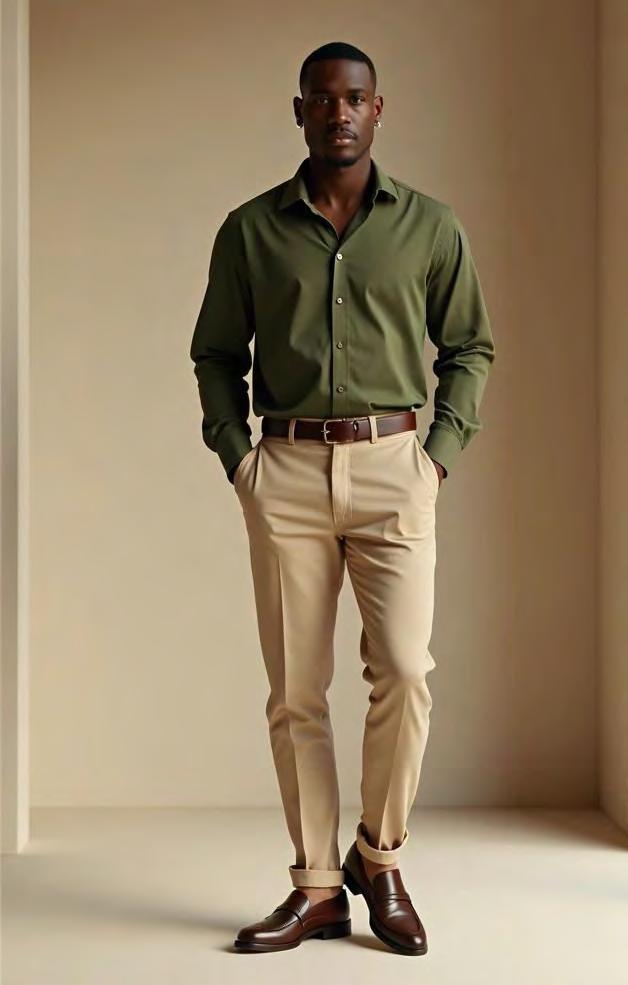
Another important rule is to make sure your accessories match the occasion. Different events call for different styles, and the accessories you wear should reflect that. For example, loud necklaces, flashy sunglasses, or heavy bracelets may look fine at a party or social gathering, but they may not be suitable for the office or a formal meeting.When your accessories match the setting and occasion, you naturally look more appropriate and well- dressed.




SALLY CHIWUZIE @unshakable.is.a.state.of.mind
It’s probably fair to describe me as about 88% extrovert. Don’t ask how we arrived at that very precise statistic; it’s not particularly scientific. What it does mean is that I move through a lot of social circles.
My friendships include the rich, the poor, the beggars and the thieves. Some are casual acquaintances, some are people I have known for decades, and a few of them have become my favourites. Those favourites often give me the most potent material for storytelling because, let’s be honest, real life is often far stranger than fiction.
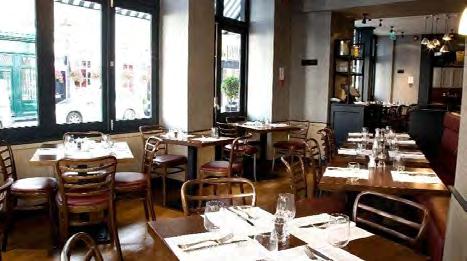
Recently, I found myself in Covent Garden having lunch with a random selection of my female friends. It was one of those gatherings where the group doesn’t usually exist together in the same room. They came from different lives and backgrounds and carried very different stories.
Perhaps it was the French restaurant we had chosen, because there is something about French cuisine that seems to seduce the senses into confession, or perhaps it was simply the autumn air, that season of quiet shedding and subtle new beginnings.


not in anger but in a strangely calm and practical way. They had looked at each other and wondered aloud whether it might be better for both of them.
She would smoke half a packet of cigarettes in her ensuite bathroom, something she had never been allowed to do before.
The house that had once been 50 percent hers was now, quietly and undeniably, 100 percent hers.
And slowly she realised something that surprised even her.
Over the years, she had grown to dislike him.
It might have been the champagne as well, and by the end of the afternoon, it was quite clear that the champagne had a great deal to do with it.
By the time we were a few glasses in, stories began to spill out across the table. There were tales of sadomasochism, Tinder disasters, luxury love affairs and complicated entanglements that would make a television producer rub their hands with delight.
Of all the stories I heard that afternoon, one stayed with me.
One of the women began describing what had once been the love story of her life. She told us that she had been married for a quarter of a century. The early years had been beautiful and full of the kind of romance people like to believe will last forever, but over time, something quietly disappeared. By her own admission, she had not slept with her husband for nearly half of those twenty-five years. He, she suspected, had not been quite as restrained. She confessed that she herself had crossed that line only once, and the guilt had nearly finished her, so she never bothered again. Like many marriages, the relationship had slowly faded, not because of betrayal or scandal alone, but through the long erosion that time, resentment, and familiarity sometimes bring. Loneliness, she said, had crept into their home long before either of them was willing to admit it.
They had spoken about divorce more than once,
But leaving turned out to be far more complicated than staying.

There were children to consider. Finances. Family ties. Social expectations. Politics within extended families. The logistics of dismantling a life that had taken decades to build.
In the end, they stayed.
They stayed perhaps out of laziness, perhaps out of fear, or perhaps because, in truth, many marriages operate on the quiet understanding that "not divorced" is sometimes the working definition of being married.
Then one day, he had a heart attack and died. She told us she had been genuinely sad. Of course, she had. They had shared a life. They had raised children. They had loved each other once, deeply.
But after six bottles of very expensive champagne and what I can only describe as a light dusting from the truth fairy floating somewhere in the room, something else slipped out.
She told us that when the mourners would leave at night, she would run herself a bubble bath.
She would blast music from her playlist — music he had always hated.
Did she wish him dead?
Of course not.
She had loved him once. That part was real.
But the truth, she admitted, was that his death had lifted a weight she hadn’t even fully realised she was carrying.
She told the story and then looked around the table, waiting for reactions.
The strange thing was that earlier in the afternoon, we had spent far more time debating the ethics of sadomasochism than we did responding to this confession.
When she finished speaking, we were stunned into silence.
I decided not to judge her.
“I’ve never been in your shoes,” I told her quietly. “So I can’t imagine how much they pinch.”
It was the only honest response I had.
Sometimes people come to you looking for wisdom. A neat conclusion. A moral lesson wrapped in a bow.
But the truth is that some human experiences refuse to fit neatly into categories of right or wrong.
Sometimes they simply exist.
And perhaps the #Unshakable truth is this:
Not every untold truth comes with a lesson.
Sometimes it simply reminds us that life and love are far more complicated than the stories we prefer to tell about them.
See you next week.

For many creatives, the path is filled with moments of uncertainty, quiet growth, and the courage to explore new possibilities. In an industry that often moves fast and demands constant visibility, staying true to one’s purpose can be both challenging and rewarding. Yet, some individuals choose to build their careers with patience, authenticity, and a willingness to grow beyond expectations.
Chy Nwakanma has steadily carved a space for herself in Nollywood with talent, dedication, and resilience. Known for her thoughtful performances, she has continued to grow as an actress while navigating the realities of a competitive industry. But her ambitions do not stop on screen. In recent years, she has also stepped into agriculture, embracing her role as an agripreneur and exploring the opportunities to build something lasting beyond the film industry.
In this interview with THEWILL DOWNTOWN’s Dorcas Akintoye, Chy Nwakanma discusses her journey in Nollywood, the challenges of finding her place in the industry, and why she believes authenticity matters more than visibility. She also opens up about her journey into agriculture, what she has learned about patience and timing over the years, and why she believes her identity is bigger than just one career path.
After studying theatre overseas and relocating to Nigeria to pursue acting, what was the most significant creative and personal adjustment you had to make when stepping into Nollywood?
Creatively, the biggest one was how quickly we have to step into characters and how quickly we also step out. I was trained on stage, so I was used to building a character for weeks or months, discovering the different layers and depth, but we don’t have that luxury of time in film here. Sometimes we get impromptu scripts, so you don’t get to really sit in and enjoy the character. Before you know it, you have to get into another character, sometimes in a matter of days. So I had to learn how to hold on to depth while working within speed. Personally, I was coming into a new space. I didn’t know anyone in the industry, so humility played a major role. I had to prove myself and earn trust. I went to
every audition I heard of and built relationships from there. Then my big break happened with This is it, which I auditioned for three times before I got it.
Many actors talk about “finding their voice” in the industry. At what point did you feel like you stopped trying to fit in and started owning your unique identity on screen?
I stopped trying to fit in when I realised that I couldn’t fit into every character believably. Naturally, you want to be cast in everything possible because you believe you’re a good actor. But it’s not about your talent or your acting range. Sometimes you just don’t look the part. Even as an actor, there are some scripts I’d get, and I’m like, “Are you sure this character is for me?”, and there are scripts that I get, and I know it’s for me. See, once you understand this as an actor, you’ll stop being so hard on yourself.
authenticity, and I’d rather build something sustainable…even if it’s slower.
From your perspective, how has Nollywood evolved since you joined, and where do you think it still needs improvement?
"That was the clarity I needed. That conversation gave me the confidence to pursue both. Now I’m Chy, the actress and Agripreneur."
Nollywood can be competitive and demanding. What has been the hardest season of your career so far, and how did you navigate it?
I think I’m in my hardest season right now, and I’m still trying to navigate it. The “in-between” phase can be daunting. It’s almost like you’re invisible. I'm not new anymore in the industry, but I also don't believe I'm fully established yet. It’s like I’m working, but I'm still trying to build credibility. What's helping me navigate is honestly just accepting that my path is different and unique and staying focused on building my capacity and selfdevelopment. Also expanding beyond acting into business and agriculture. I strongly believe my identity is bigger than a single industry. That shift gave me a bit of stability. I’m no longer just sitting at home idle, waiting for the phone to ring.
Personally, I was coming into a new space. I didn’t know anyone in the industry, so humility played a major role. I had to prove myself and earn trust. I went to every audition I heard of and built relationships from there.
Nollywood has grown in bounds since I joined. We’ve grown in global visibility and production quality. There’s more experimentation, international collaborations, and interests now. Where we still need improvement is in structure. From actors and crews’ welfare to project development processes. Stronger systems will allow creatives to focus more on the craft and less on survival.
What kind of stories do you believe Nigerian filmmakers are not telling enough of?
We’re not telling enough stories about our history. We have hundreds of languages, cultures, traditions and origin stories in Nigeria, and every culture has its own mythologies, heroes, villains, love stories, etc. There are histories within villages and ethnic groups that have never been told on screen. This is truly who we are, and that’s what makes us different.
Agriculture is not a glamorous industry, especially compared to entertainment. What fears did you have before fully stepping into agribusiness, and how did you overcome those fears?
I believe creativity and business go hand in hand, because running a business requires you to be creative in order to solve problems.
My greatest fear was that I’d have to give up one for the other. Then one day, while we were shooting ELJ, I had a conversation with aunty Funke, and she told me that whatever I do, I shouldn’t leave acting (she probably will not remember this conversation). Then she asked me why I can’t do both? I didn’t have an answer. That was the clarity I needed. That conversation gave me the confidence to pursue both. Now I’m Chy, the actress and Agripreneur. I think I’m wearing both caps well…don’t you think?
What part of agribusiness excites you the most?
The entertainment industry can sometimes reward visibility over depth. Have you ever struggled between staying authentic and doing what is necessary to remain relevant?
Definitely! We’re often told that you need to do more work so you’re visible. Don’t turn down work; do all the work you can get because the more visible you are, the more you’re remembered and the more work you’ll get. They’re not necessarily wrong. The more visible you are, the more your name comes up in rooms and conversations. There’s always pressure to be constantly seen. But I’ve learned that longevity favours
The possibilities and opportunities in agribusiness. It’s endless. The transformation. Taking something as simple as land and seeing it become productive by feeding people, creating income, and building systems. It’s like being a creator. It’s exciting. Agriculture is long-term, it’s legacy work. That’s what’s inspired me.
Agriculture requires patience, strategy, and resilience. Has being an agripreneur changed the way you approach your film career?
Definitely! In agriculture, you plant, nurture and wait. If you plant a palm tree, for
example, you have to wait at least three years for it to start fruiting, and layers can only lay eggs for a certain number of weeks or months. You can’t rush these things; they have their times and seasons. I now approach my film career this same way. I no longer chase every opportunity. Seasons are different; some are dry, and some come with plenty. It has nothing to do with me specifically. I now just focus on alignment and timing.
You seem to balance creativity and business so well. Would you say you are more of a dreamer or a strategist? And has that answer changed over the years?
I believe creativity and business go hand in hand, because running a business requires you to be creative in order to solve problems. But between a dreamer and a strategist, I used to be a dreamer till I went to business school; now I’m a strategic dreamer (laughs). I don’t feel humans are meant to be one thing, and that’s why God gave us the ability to build capacity. However, your creativity needs a strategy, and your strategy needs vision.





ADA OBIAJUNWA
@aaddaahh
plan something.
Four words that sound spontaneous and require three calendars, two reminders, and at least one "Sorry, this week is a bit crazy."
There was a time when planning meant calling someone and leaving the house.
Now, planning is a minor administrative project.
"Are you free next weekend?"
"Which one?"
"The 14th."
"Morning or evening?" "Evening."
"I have something at 5."
"What about 7?"


"I might be tired by then."
Joy now comes with conditions.
And the conditions have sub-conditions.
Because it is not just about finding a free slot. It is about finding a free slot where both of you have enough energy to be present. Not just physically there, but actually there. The version of you that laughs easily, asks real questions and does not check your phone every seven minutes because three things are unresolved at work.
That version of you requires notice.
Sometimes, a week's notice. Sometimes, a recovery day beforehand.
Adulthood did not eliminate friendship. It introduced logistics.
You can genuinely want to see someone and still need to cross-reference three commitments, one recovery day, and the fragile state of your own energy.
And the strange thing is, wanting to see them has never been the problem.
The wanting is always there.
It is the calendar that has opinions.
Spontaneity still exists.
It just requires notice.
Group chats are where optimism goes to stretch. "Dinner next week?"
Immediate reactions.
Fire emojis. Heart eyes. "Yesss.
" Then silence.
Not because no one cares. You have been silent too. You saw the message. You felt the intention. And
then Tuesday happened.
Because everyone is checking a calendar that looks like it belongs to a small corporation.
The group chat is a remarkable document of adult friendship.
It contains seventeen unacted plans, four voice notes nobody has listened to, two photos from an event three months ago, and one pinned message that says "dates that work for everyone" above a poll that closed without a winner.
And yet nobody leaves.
Because the chat itself is proof that everyone still wants to be there.
So we keep trying.
We say, "Let's definitely fix a date."
We mean it.
But we also know that adulthood has turned time into currency.
And everyone is budgeting like rent is due.
Time used to be something you spent carelessly with the people you loved.
You just showed up. They were there. Nobody planned it.
Now time is one of the most honest things adults can give each other.
When someone rearranges a calendar for you, moves the meeting, skips the gym, says no to something else, that is not a small thing.
That is love in the only language adulthood left us with.
And we recognise it even when we forget to say so. There is something quietly funny about how adults try.
We send calendar invites for birthdays. We schedule catch-ups two weeks out. We block time to "rest" like it's a board meeting.
At some point, someone says: "Let's lock it in."
Which is adult for: before something else takes the slot. And somehow, despite all this coordination, the best plans still begin with:
"Sorry I disappeared."
"It's been mad."
"We really need to do this more often." And then you sit down together. And within four minutes, it is like no time passed at all.
Everyone is genuinely happy to connect. Like it didn't take 10 years to schedule. The laughter just comes.
Someone says something, and you both know exactly why it is funny without explaining it.
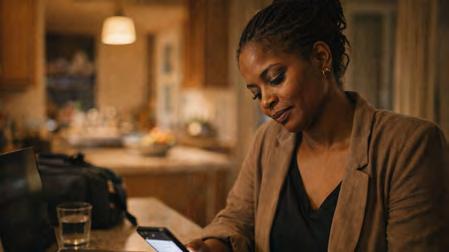
The friendship held, even when the calendar could not.
You pick up mid-sentence on a conversation you started six weeks ago over voice notes. Like no inbox ever got in the way. And just like that, the gap closes.
Because real friendship does not need you to have been present every day.
It just needs you to show up when you finally can.
Even when it took three weeks to find the date. Even when someone had to move a thing. Even when the first ten minutes were spent saying sorry for the silence.
The surprising part?
It still works.
Every time.
The gap doesn't feel dramatic.
It feels like life.
Sometimes "Let's plan something" doesn't mean we're flaky.
It means we're full.
Full calendars. Full inboxes. Full minds.
And yet still trying.
Still showing up when the date finally locks. Maybe adulthood is not less spontaneous.
Maybe it is just more negotiated.
Planning is not the opposite of connection. It is proof that connection still matters enough to schedule.
And maybe that is the Luxury Silk.
BY DORCAS AKINTOYE
Asilk press is a beautiful way to enjoy your natural hair in a smooth, straight, and shiny form without using chemicals. However, one common problem is that it does not always last as long as expected. Sometimes, after just a few days, the hair starts to lose its smoothness. With the right steps, your silk press can stay fresh, neat, and beautiful for up to two or even three weeks. Let us show you simple and effective ways to help your silk press last longer.

Wrapping your hair every night helps to keep it smooth, straight, and neat. When you sleep without wrapping your hair, it rubs against your pillow as you move. This rubbing creates friction, which can make your hair rough, frizzy, and tangled. Over time, your silk press will begin to lose its shape. Wrapping your hair protects it from this friction and helps it stay in place. Making this a nightly habit will make a big difference in how long your silk press stays fresh.


Using a silk or satin scarf and pillowcase helps to protect your hair while you sleep. Unlike cotton, silk and satin have smooth surfaces that do not drag on your hair. Cotton pillowcases can dry out your hair and cause frizz because they absorb moisture and create friction. Silk and satin help your hair maintain its natural shine and softness. Even if your scarf comes off during the night, sleeping on a silk or satin pillowcase will still reduce damage.

AVOID WATER AND MOISTURE
Water and moisture can quickly ruin a silk press because they cause the hair to return to its natural texture. Things like rain, sweat, and even steam from hot showers can make your hair puffy, especially at the roots. Once this happens, the smooth look starts to disappear. To prevent this, you should always cover your hair with a shower cap when bathing. It is also helpful to avoid places with too much heat and steam.


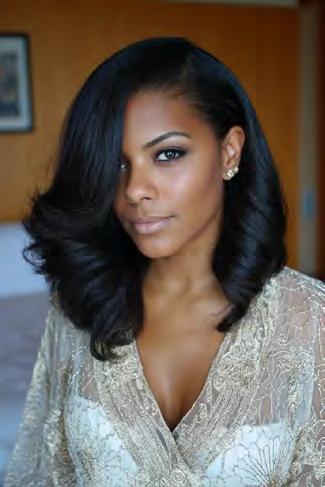

Using heat tools too often can damage your hair and reduce the life of your silk press. Although it may be tempting to keep straightening your hair to maintain the look, too much heat can dry out and weaken your strands. This can lead to breakage and thin ends. Constant heat can also make your hair lose its natural strength. It is best to avoid using straighteners frequently.

AVOID TOUCHING YOUR HAIR TOO MUCH
Touching your hair too often can make it lose its freshness. Your hands carry natural oils and sometimes sweat, and when you constantly touch your hair, these oils transfer onto it. This can make your hair look greasy and flat. It can also cause your hair to lose volume and movement. The more you touch your hair, the faster it becomes dirty. Leaving your hair alone as much as possible will help it stay neat and beautiful.


Maintaining your silk press is all about protecting your hair and handling it with care. Small habits like wrapping your hair, avoiding moisture, and reducing heat can make a big difference. When you are consistent, your silk press will stay smooth, shiny, and beautiful for longer.
BY JOHNSON CHUKWUEKE
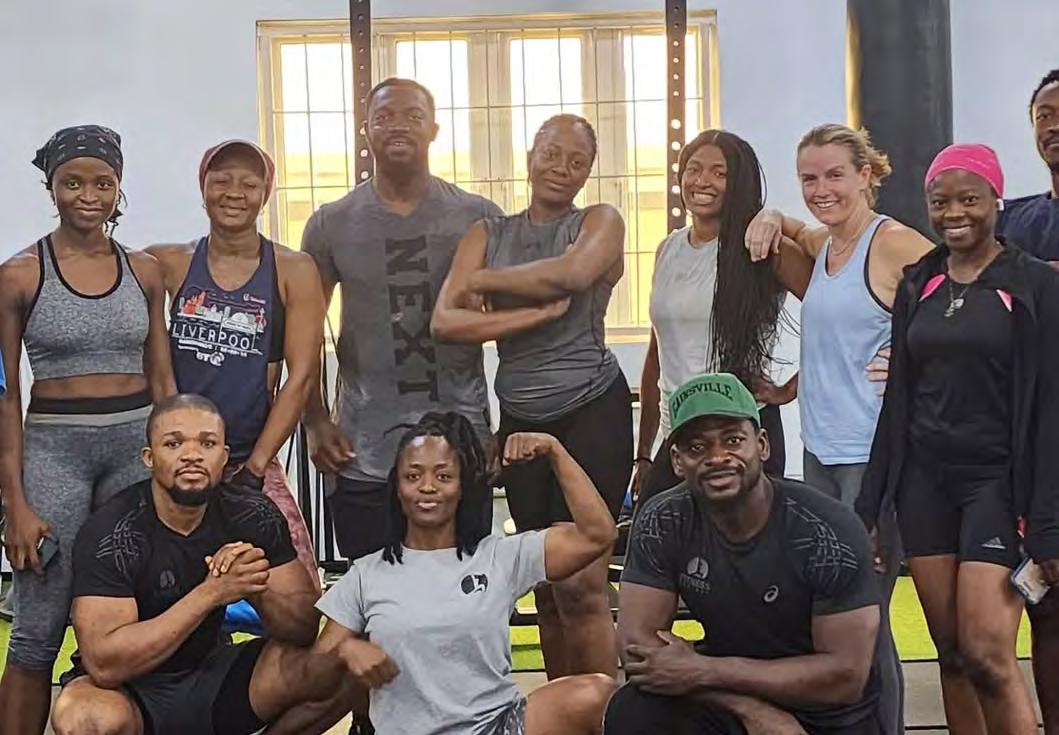
In a city that never slows down, fitness is becoming part of the lifestyle. Lagos is known for many things: ambition, energy, hustle, and an almost relentless pace of life. But in recent years, another culture has quietly taken root across the city: gym culture. From upscale fitness studios in Victoria Island to estate gyms in Lekki and Surulere, more Lagosians are embracing structured workouts as part of their daily routine. Social media feeds are filled with early morning treadmill selfies, post-workout glow, and the occasional “leg day” confession. But beyond the aesthetics and trending hashtags, an important question remains: is this fitness wave just another lifestyle trend, or is Lagos truly becoming a health-conscious city?
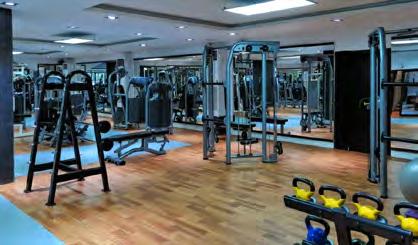
Fitness centres across Lagos are evolving rapidly. Gyms are no longer just rooms with dumbbells and treadmills. Today’s spaces are curated experiences, clean interiors, professional trainers, personalised fitness programs, and community-driven classes. Boutique fitness studios offering yoga, pilates, spinning, and high-intensity interval training are gaining popularity among young professionals. For many members, the gym has become a third space.

AS A LIFESTYLE STATEMENT
In Lagos, image and identity often intersect with lifestyle choices, and fitness has become part of that conversation. Being fit is increasingly seen as a marker of discipline, self-investment, and personal ambition. For some, the motivation begins with aesthetics, toned bodies, visible strength, and confidence. But for many others, the gym has become a space to manage stress, improve energy levels, and escape the pressures of daily life.

Still, the question remains: is Lagos embracing fitness for the long term, or simply responding to a temporary lifestyle trend? The answer may lie in how people approach consistency. A true transformation goes beyond January resolutions and Instagram updates. It requires routine, patience, and a shift in how health is prioritised.

Interestingly, gyms are also becoming social hubs. Friendships form during group classes. Business connections sometimes begin on the weight floor. Early morning runners and evening lifters recognise each other like members of a quiet club. In a city where schedules can be overwhelming, the gym provides structure and community. It’s not unusual for gym partners to motivate each other, celebrate progress, and create a sense of accountability that keeps the habit alive.

THE FUTURE OF FITNESS IN THE CITY
One thing is clear: Lagos is paying more attention to health than ever before. The city’s growing fitness scene reflects a broader awareness that success means little without wellbeing. Whether driven by aesthetics, ambition, or the simple desire to feel better, the movement is real. And if the early morning gym lights across Lagos are any indication, this culture may be more.
Whether this movement continues to grow will depend on consistency and mindset. But one thing is certain: in a city known for its relentless hustle, the idea of making time for health is gaining ground. And that may be the most powerful transformation of all.
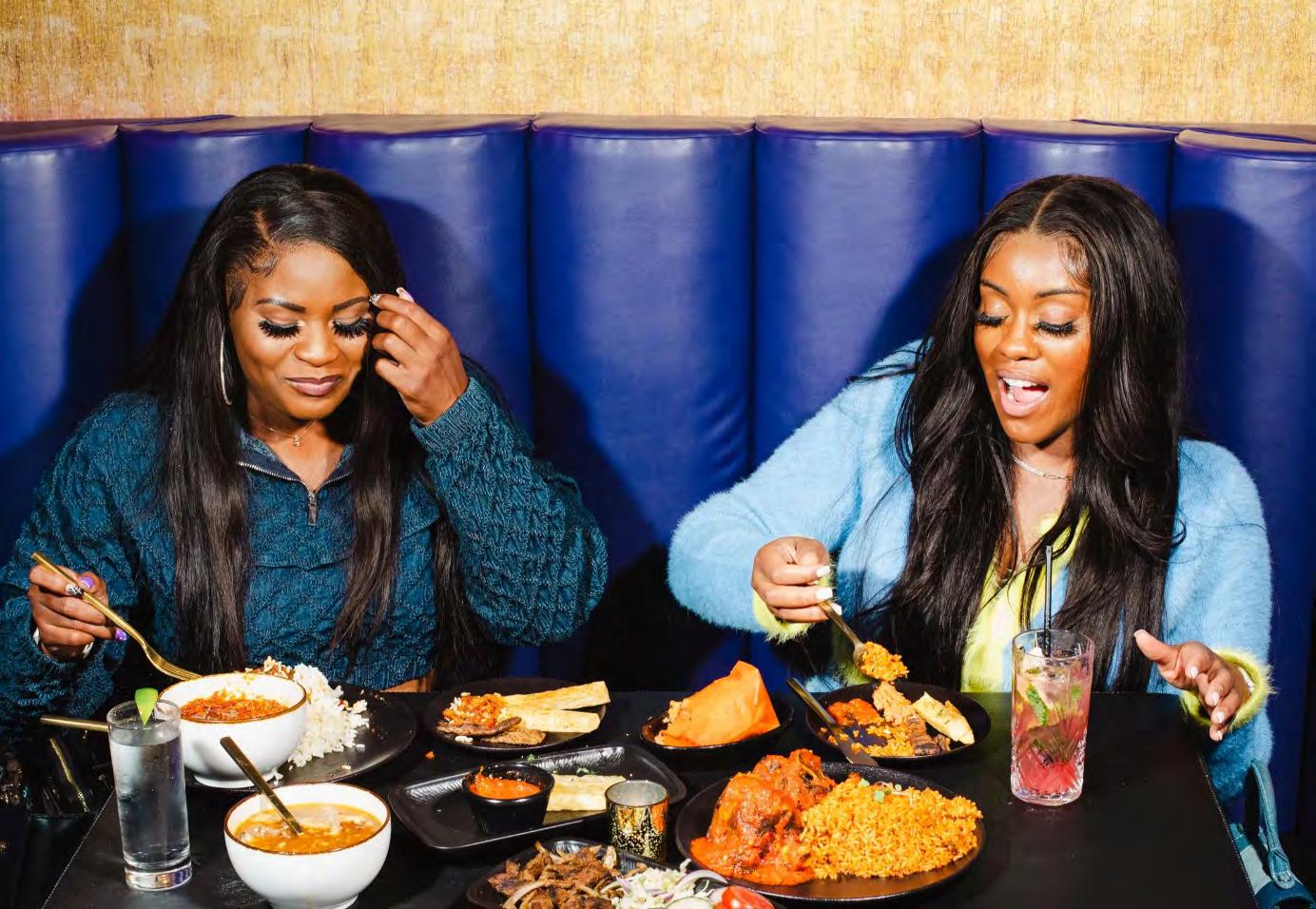

Image @kikifoodies
Rice is easily one of Nigeria’s most popular staples. Now, while rice provides carbohydrates that supply energy, large portions without enough protein or vegetables can leave you feeling sluggish later in the day. Pairing rice with beans, grilled chicken, fish, or vegetables helps create a more balanced meal that sustains energy rather than causing a quick crash.

@wave917fm
Traditional meals like pounded yams, eba, or amala served with soups such as egusi, ogbono, or vegetable soup are staples across Nigerian households. These meals can be satisfying and nourishing, especially when soups are rich in vegetables, fish, and lean proteins. However, very large portions of swallow late in the day can sometimes leave people feeling heavy and lethargic.

Image: @kikifoodies
Beans may not always receive the excitement that jollof rice does, but nutritionally, they are one of the most powerful foods in Nigerian cuisine. Rich in protein, fibre, and complex carbohydrates, beans release energy slowly into the bloodstream. Meals like beans and plantain, or the popular akara and pap combination, can provide longlasting fuel that keeps you full and focused for hours.

Image: @0nyixakeenzya
Plantain sits comfortably between indulgence and nourishment. Fried plantain, often paired with rice or beans, adds flavour and natural sweetness to many Nigerian meals. While it contains natural sugars and carbohydrates, plantain also provides fibre, vitamins, and minerals. When eaten in moderate portions, especially boiled or grilled, it can be a nutritious addition to a balanced meal.
BY JOHNSON CHUKWUEKE
Food is deeply woven into Nigerian culture. From quick roadside lunches to elaborate Sunday meals, what we eat often reflects comfort, tradition, and convenience. But beyond taste and satisfaction, our daily food choices also shape how we feel physically and mentally throughout the day. The meals we rely on can either support our productivity or quietly drain it. The difference is not always about eating less or more; it is about understanding how certain foods affect the body. Interestingly, many of the meals Nigerians eat every day reveal the balance between nourishment and fatigue.

Image: @mealswithabi
Nigeria’s street food culture is vibrant and irresistible. From meat pies to shawarma and deep-fried snacks, quick bites often become the easiest option during a busy workday. While convenient, relying heavily on highly processed or fried foods can lead to fluctuating energy levels and fatigue. These meals tend to satisfy hunger quickly but may not provide the sustained nourishment the body needs.
The truth is, the meals we eat every day shape how we perform, think, and feel. By combining traditional foods with mindful portion sizes, more vegetables, and adequate hydration, everyday meals can become powerful tools for sustained energy and better health. Because sometimes the key to feeling better isn’t a complicated diet. It’s simply learning how to eat the foods we already love, a little more wisely.


In Bangkok, the streets double as kitchens. From sunset until well past midnight, roadside vendors transform sidewalks into bustling culinary stages. The scent of grilled meats, stir-fried noodles, and spicy herbs fills the air as locals and tourists gather around plastic tables. The city’s famous Pad Thai, spicy Tom Yum soup, and mango sticky rice are only the beginning. What makes Bangkok unforgettable is the sheer energy of its street food culture, quick, bold, and bursting with flavour.

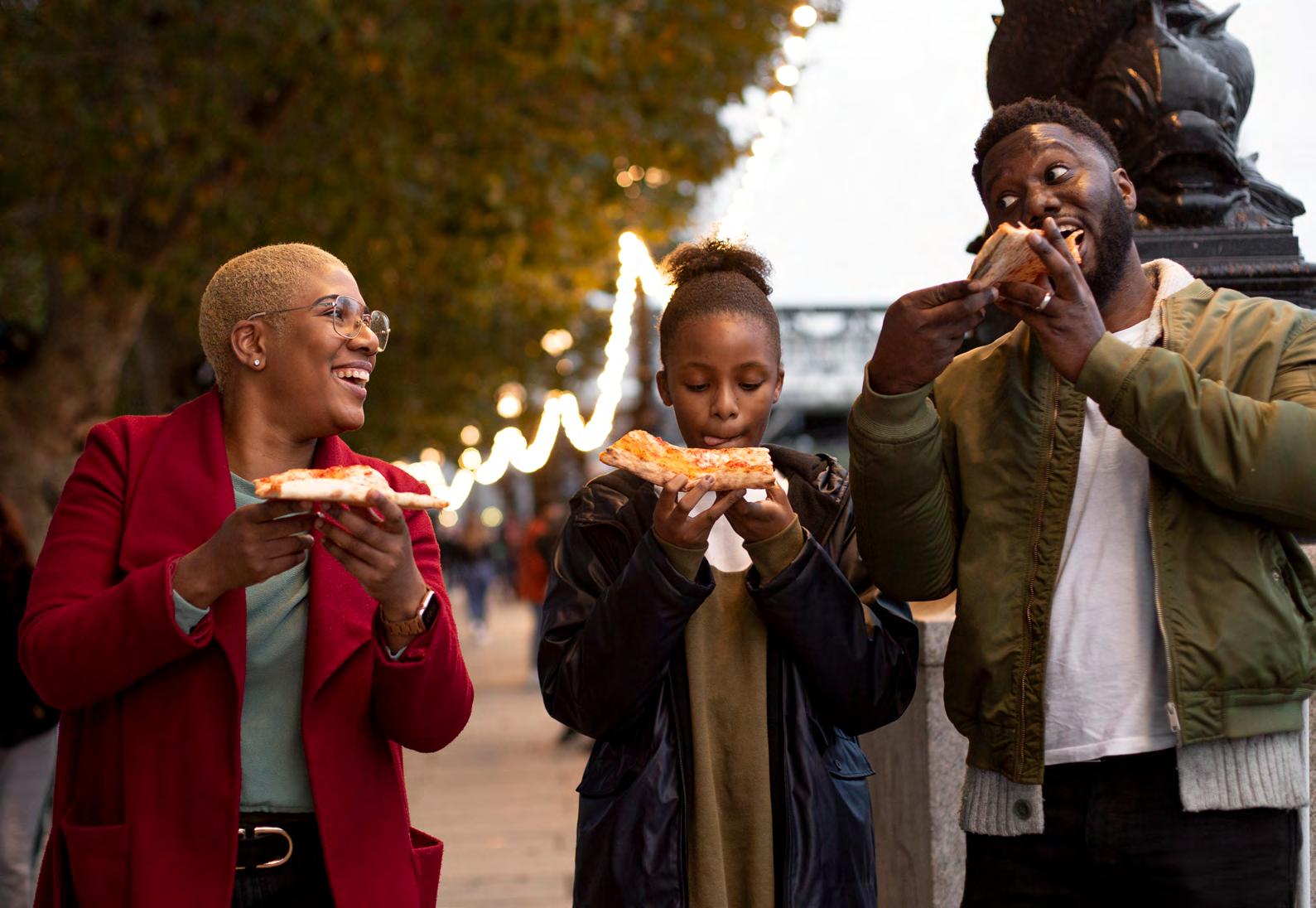
Few foods are as universally loved as pizza, and in Naples, it reaches near-sacred status. This historic Italian city is the birthplace of the classic Neapolitan pizza, known for its soft crust, simple tomato sauce, fresh mozzarella, and basil. But Naples offers far more than pizza. Local pastries, fresh seafood, and rustic pasta dishes showcase the deep culinary heritage of southern Italy.
Located between Europe and Asia, Istanbul is a culinary bridge between continents. The city’s cuisine blends Middle Eastern, Mediterranean, and Central Asian influences into a rich tapestry of flavours. From sizzling kebabs to delicate baklava layered with pistachios and honey, Istanbul offers a sensory adventure at every corner. The bustling Grand Bazaar cafés, waterfront seafood restaurants, and traditional tea houses all contribute to a vibrant food culture that feels timeless.
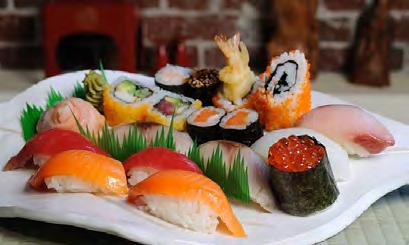
Few cities treat food with as much reverence as Tokyo. With thousands of restaurants ranging from humble ramen counters to Michelin-starred establishments, Tokyo has one of the most diverse dining scenes in the world. Here, food is artistry. Sushi chefs train for years to perfect technique, and even a simple bowl of ramen is crafted with meticulous care. Fresh seafood, delicate flavours, and impeccable presentation define the experience.
BY JOHNSON CHUKWUEKE
Sometimes the best souvenir from a trip is the taste you can’t forget. People travel for many reasons: iconic landmarks, cultural festivals, and beautiful landscapes. Yet for a growing number of travellers, food stands above the rest as a motivation. The aroma of sizzling spices pulls you in. Then you discover a dish you’ve never tasted before. Sitting in a small restaurant where locals gather, you realise an ordinary trip can become unforgettable. Around the world, some cities are destinations where cuisine alone justifies the journey.

Vibrant, colourful, and endlessly exciting, Mexico City is a paradise for food lovers. Street vendors serve some of the most beloved dishes in Mexican cuisine, from sizzling tacos filled with seasoned meats to complex sauces like mole, which combine dozens of ingredients into one unforgettable flavour. Markets, food stalls, and contemporary restaurants coexist beautifully, reflecting both the country’s culinary history and its modern creativity.
For travellers willing to follow their curiosity and their appetite, the world becomes a map of flavours waiting to be discovered. Sometimes, the best reason to book a flight isn’t the destination itself. It’s what’s waiting on the plate when you arrive.
BY DORCAS AKINTOYE
Whenit comes to making your bedroom look fresh and inviting, many people think of renovations such as repainting walls, replacing flooring, or even knocking down walls. But truthfully, you don’t need to renovate to give your bedroom a brand-new feel. With the right upgrades, you can completely transform your space without spending too much or stressing yourself. In this article, we will share tips for upgrading your bedroom without a full renovation.
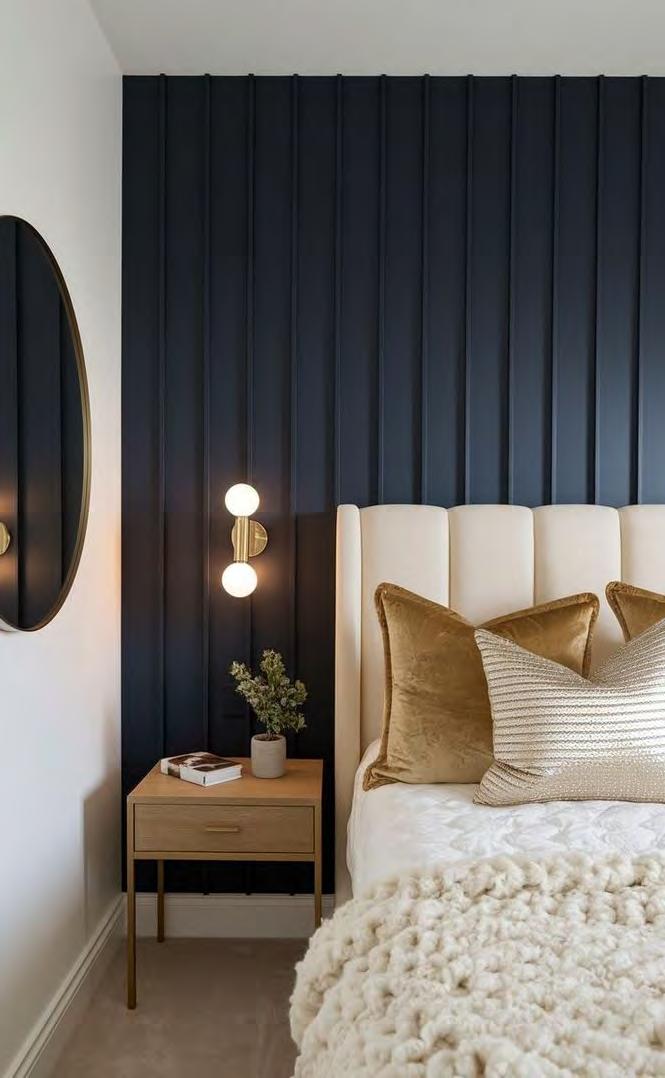
Lighting can completely change the mood of your bedroom. Instead of sticking to one overhead light, bring in different types of lighting. A bedside lamp with a soft glow, string lights for a cosy touch, or even LED strip lights under your bed frame can make your space feel more stylish and relaxing. Warm lighting makes your bedroom feel calm, while brighter lighting helps when you need to read or work. By mixing different light sources, you create a versatile space without any major renovation.
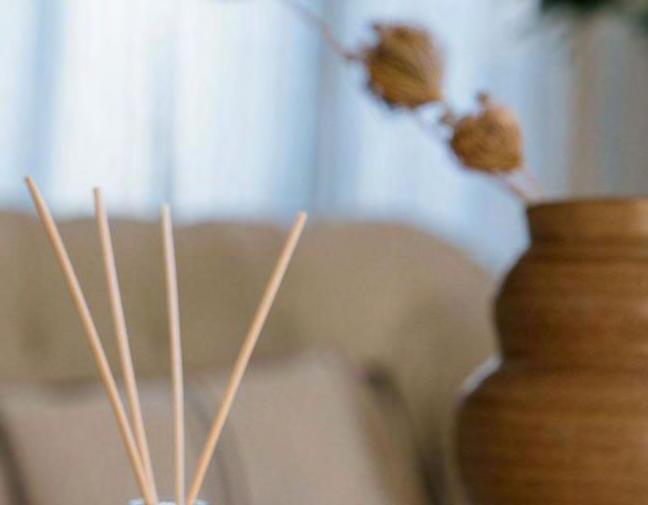
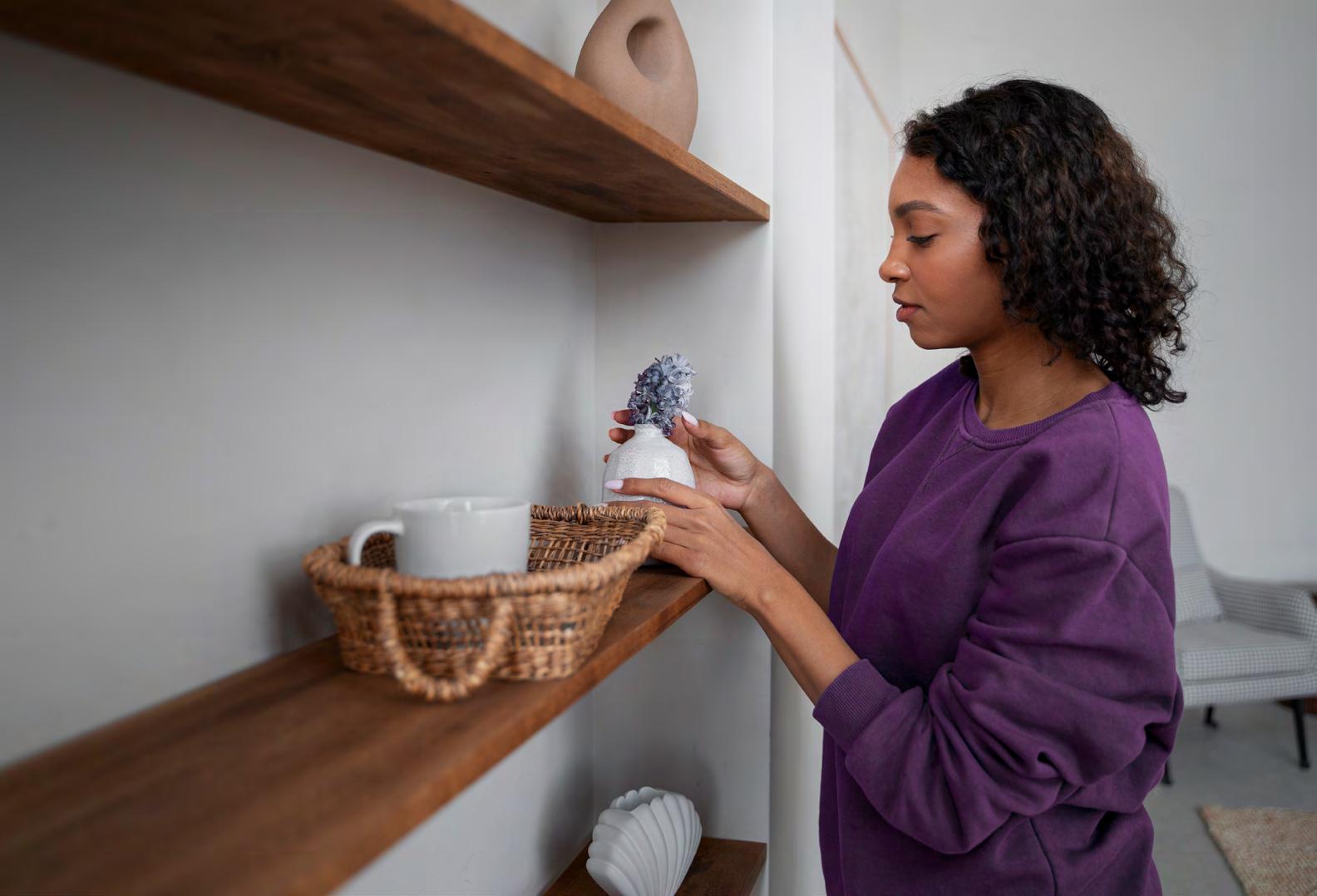
Adding decorative items such as throw blankets, rugs, wall art, or even plants can elevate your bedroom’s appearance. Accessories help you express your style without the need for renovations. The key is to keep it balanced, don’t overcrowd the room, but add just enough to give it character.

Sometimes the best way to refresh your bedroom is to move things around. If your bed has always been in the same spot, try placing it against another wall or centring it differently. Rearranging your furniture can make the room feel bigger, more organised, or even cosier.
Your bed is the centrepiece of your bedroom, and one of the easiest ways to upgrade the overall look is to change your bedding. Fresh sheets, a stylish duvet cover, or a cosy comforter can instantly make your room feel new. Don’t forget your pillows; layering them in different sizes and textures makes your bed look more inviting and luxurious. This simple change alone can give your bedroom a hotel-like upgrade.
Sometimes the best upgrade isn’t adding new things but removing unnecessary ones. A cluttered bedroom feels stressful, no matter how beautiful the furniture is. Start by sorting your clothes, books, and random items, and keep only what you truly need. A clean and organised bedroom always looks bigger, fresher, and more peaceful. It’s one of the most effective upgrades you can do, and it costs little to nothing.




Upgrading your bedroom doesn’t require breaking walls or spending too much money. Try these simple changes today and start transforming your space into a comfortable and stylish retreat you’ll love coming home to.

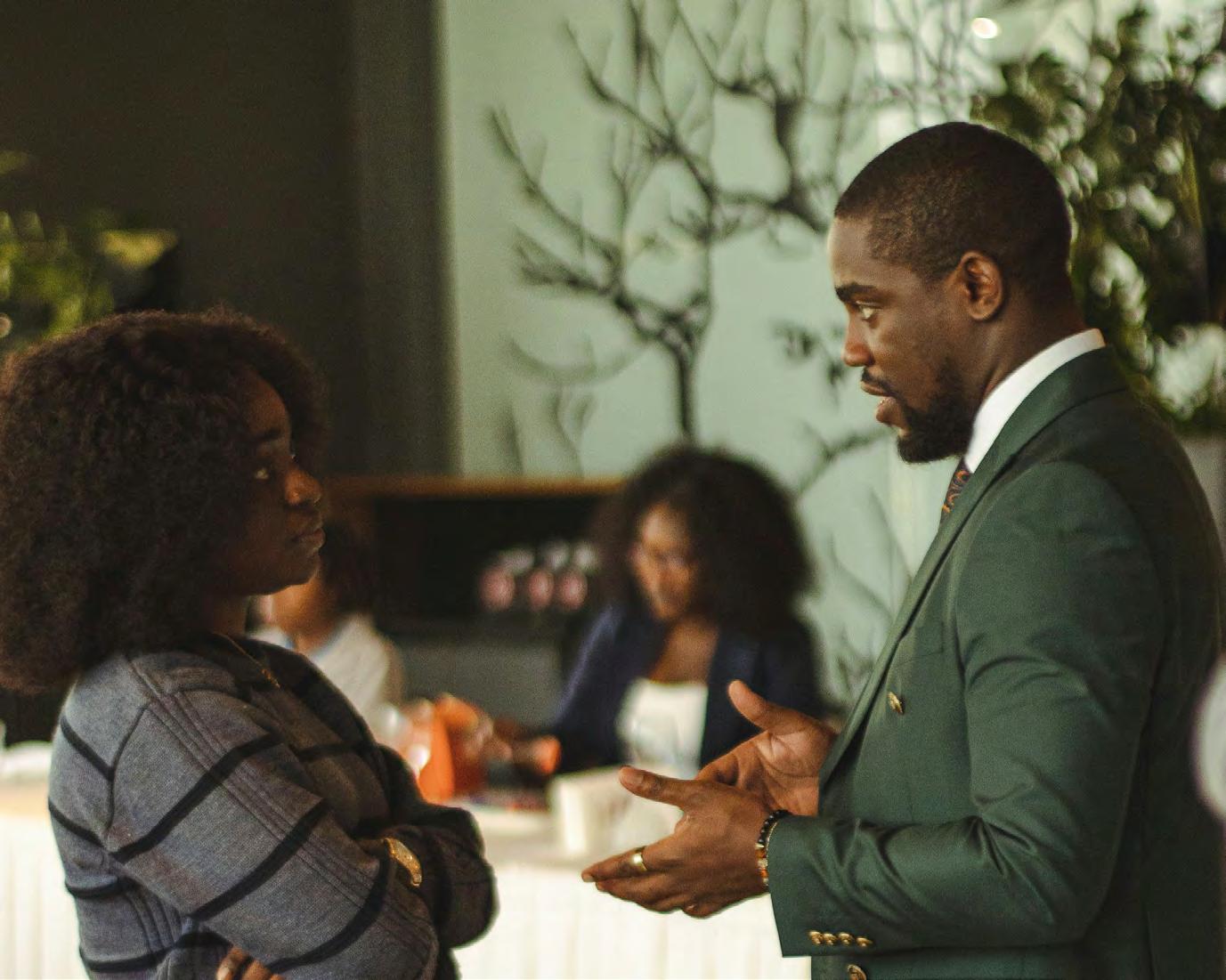

Many people approach networking with a rigid agenda, who they need to meet, what they hope to gain, and how quickly they can move on to the next person. Ironically, this often makes conversations feel mechanical. A more effective approach is simple curiosity. Ask thoughtful questions about what people do, what they enjoy about their work, and what challenges they’re navigating. When conversations flow naturally, connections become memorable.

Real networking is not about collecting contacts like trophies. It’s about building relationships that evolve over time. The colleague you meet at a conference today might become a collaborator next year. The person you casually reconnect with at a dinner might later recommend you for an opportunity. These moments rarely happen instantly.
One of the easiest ways to stand out professionally is by being genuinely helpful. Share useful information, recommend someone for an opportunity, or offer a thoughtful introduction when you can. Acts like these may seem small, but they build trust and credibility over time. Networking becomes less about asking for favours and more about creating value within your professional circle. The people who build strong networks are often the ones who give first.

A meaningful conversation should not end the moment an event is over. Following up is where many connections either deepen or disappear. A simple message saying you enjoyed the conversation, sharing an article related to something discussed, or congratulating someone on a professional milestone can keep the connection alive.
BY JOHNSON CHUKWUEKE
Meaningful connections shouldn’t feel like a performance. For many professionals, the word “networking” often evokes a wave of discomfort. The image is familiar: crowded events, forced smiles, quick introductions, and business cards exchanged with people you may never speak to again. It can feel transactional, awkward, and sometimes even exhausting. Yet, in today’s professional world, relationships remain one of the most powerful drivers of career growth. The good news is that networking does not have to feel like a staged performance. When approached with authenticity, curiosity, and intention, it becomes less about impressing people and more about building genuine connections.

Ultimately, networking works best when it stops feeling like networking. When you focus on being present, curious, and generous with your time and attention, conversations become easier and more enjoyable. People gravitate toward authenticity. They remember those who are genuine, approachable, and respectful.
In a professional world often filled with competition and performance, the most refreshing thing you can bring into a room is simply yourself. The professionals who thrive are not always the loudest in the room, but often the most genuine. They listen well, stay connected, and treat relationships with care. Because in the end, networking isn’t about pretending to be impressive. It’s about being memorable for the right reasons.
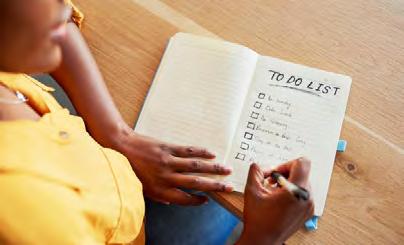
Probably the simplest and most effective way to stay organised is by creating a daily or weekly to-do list. A well-detailed list not only helps you keep track of tasks but also provides a sense of accomplishment as you check off completed items. To improve your list’s effectiveness, prioritise tasks by importance or deadline. You can use apps like Todoist or Microsoft To-Do for digital lists, or stick to traditional pen-and-paper methods if that works best for you.

Messiness is a major distraction and reduces your ability to stay organised. A disordered space can lead to a disordered mind, making it difficult to focus on tasks. Use your time to regularly tidy up your work or living space. Start by getting rid of items you no longer need, then organise your belongings by categorising them. For example, keep office supplies, personal items, and electronics in designated areas. A clean, organised space improves productivity, reduces stress, and promotes a sense of calm.
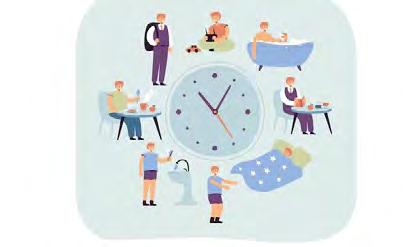
Sticking to a routine is another great way to maintain organisation in your daily life. Routines help you create a sense of order and predictability, reducing the need for constant decision-making throughout the day. Begin by setting fixed times for your morning and evening activities, such as exercising, reading, or preparing meals. By infusing activities that you repeat into your day, you ensure you don’t have to think about what comes next— it becomes automatic.
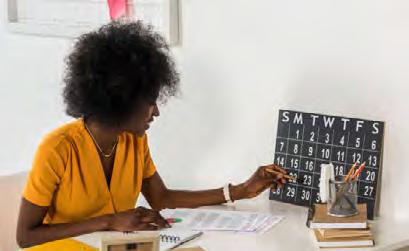
Having a well-maintained calendar helps manage your time effectively. Whether digital or physical, a calendar helps you keep track of important dates, deadlines, meetings, and personal events. Apps like Google Calendar or Apple Calendar make it easy to schedule reminders, set alarms, and even share events with others. By assigning time slots for tasks or appointments, you can plan your day or week efficiently.
BY JOHNSON CHUKWUEKE
You wouldn’t be wrong to say we live in a fast-paced world, where being organised is important for personal and professional success. Without good organisational skills, it’s easy to feel overwhelmed by daily tasks, deadlines, and responsibilities. Fortunately, these organisational skills can be developed and honed over time. Here are a few practical ways to improve your organisational abilities and bring more structure into your life.
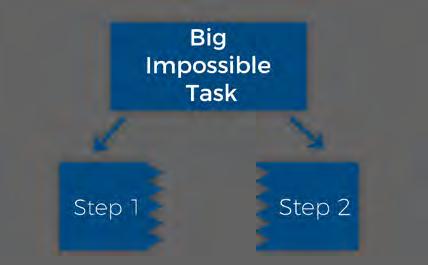
Large projects or tasks can feel overwhelming, leading to procrastination or disorganisation. To avoid this, break down big tasks into smaller, more manageable steps. For example, if you need to complete a complex work assignment, divide it into stages—research, outline, draft, and review. Each step should be specific and achievable, allowing you to make steady progress without feeling overwhelmed.
Improving your organisational skills is a never-ending process that requires consistent effort and a commitment to maintaining structure in your daily life. By implementing these strategies, you can enhance your productivity, reduce stress, and maintain greater control.



There are days when you do certain things on impulse without really thinking about it. You just do them in that moment.
Sometimes nothing happens. But sometimes the memory stays with you longer than you expect.
This didn’t exactly put me in trouble. But my conscience still reminds me of it from time to time.
I remember the night very clearly. I was visiting my brother at his apartment for a few days. That evening, he had gone out with his friends, so I was the only one at home.
Not long after he left, there was a knock on the door.
I already had a feeling who it was. It was Jude.
My brother’s best friend.
He had been coming to our house for years. Even now that my brother had his own place, I would still see Jude whenever I came to visit.
I try not to think too much about how I used to crush on him when I was younger. Even when I got into university, I still liked him a little.
But when I heard he was getting married, I pushed those thoughts away. That chapter was supposed to be closed.
Lately, though, something about him had changed.
Maybe it was the way he had become quieter. Maybe it was the tired look on his face.
His marriage was not going well. Everyone knew it, even though nobody really talked about it.
I opened the door.
“Your brother around?” he asked. I shook my head. “No. He went out.”
He sighed and leaned on the door frame for a second, like he was deciding if he should leave.
“You can come in if you want,” I said. He hesitated a little before walking in. We sat in the living room and started
talking about normal things. Work. The hot weather. My brother being stubborn as usual.
After a while, the conversation slowly changed.
He started talking about his marriage. Not too much, but enough for me to hear the pain in his voice.
“It’s funny,” he said quietly. “You can love someone and still feel completely alone.”
I didn’t really know what to say.
So, I just listened.
Sometimes that’s all someone needs.
He rubbed his face with both hands and gave a small laugh.
“Sorry,” he said. “I didn’t mean to dump my problems on you.”
“It’s okay,” I said.
And it really was.
There was a short silence between us.
“Do you need a hug?” I asked.
He laughed a little, like he wasn’t expecting that question.
But I didn’t wait for him to answer.
I moved closer and hugged him.
For a second, he didn’t move.
Then he hugged me back.
Tighter this time.
Suddenly, I became very aware of how close we were standing.
My heart started beating faster, and I didn’t even know why.
Maybe it was the way his body felt against mine.
“You don’t always have to be strong,” I said quietly.
He pulled back slightly and looked at me for a moment.
Then he shook his head.
“This is a bad idea,” he said softly.
Maybe it was.
But before I could think too much about it, I kissed him.
For a second, he didn’t respond.
Then he kissed me back.
One thing led to another, and we crossed a line we probably shouldn’t have crossed.
That night, we didn’t talk much after that.
The next morning felt strangely normal, like nothing had happened.
Later that day, I left for my place.
We never talked about that night again.
Life just moved on.
Sometime later, I heard that he and his wife had worked things out and were back together.
Sometimes when I think about that night, I still don’t know exactly what it was.
Maybe it was just two people feeling lonely at the same time.
Or maybe it was simply a moment of dangerous comfort.
BY BOLUWATIFE ADESINA

When it was first published in 2021, Andy Weir’s Project Hail Mary quickly cemented his reputation as one of the most entertaining voices in modern science fiction. Weir had already captivated audiences with The Martian, a gripping survival story famously adapted into a hit film starring Matt Damon. Like its predecessor, Project Hail Mary combines rigorous science with humour, optimism, a hugely likeable protagonist and a universal message of hope and unity.
The cinematic version is directed by the energetic filmmaking duo Phil Lord and Christopher Miller, with a screenplay by Drew Goddard. Their collaboration brings a lively tone to the story, balancing large-scale spectacle with surprisingly intimate character development. The film stars Ryan Gosling as Dr Ryland Grace, with Sandra Hüller, Lionel Boyce, Ken Leung, and Milana Vayntrub rounding out a strong supporting cast.
The story begins as Dr Ryland Grace awakens alone aboard a spacecraft millions of miles from Earth. He has no memory of who he is or why he is there. Gradually, through fragments of recollection and careful deduction, he realises he is an astronaut sent on a desperate mission to the Tau Ceti system to save humanity from a catastrophic cosmic threat. As the only surviving member of the crew, Grace must rely entirely on his intelligence and determination to complete the mission.
What follows is an absorbing mixture of scientific puzzles and emotional discovery. The film cleverly unravels Grace’s memories, revealing how the mission came
together under the authority of Eva Stratt, played with commanding intensity by Hüller. As the head of the Hail Mary project, Stratt is the driving force behind Earth’s desperate attempt to avert extinction.
The film’s emotional core emerges when Grace encounters an unexpected ally: a rock-like alien he nicknames ‘Rocky’ (voiced perfectly by James Ortiz). Their unlikely friendship becomes the centre of a story that slowly transforms into a heartwarming buddy movie. The bond between human and extraterrestrial transforms what could have been a straightforward survival adventure into something far more touching. Their relationship is inventive, funny, and surprisingly moving.
Gosling knocks it out of the park once again. The La La Land and First Man alum is incredibly likeable here, delivering what many will likely regard as one of the most appealing performances of his career. Ryland Grace is brilliant but also goofy, frightened, and occasionally overwhelmed; Gosling plays these contradictions with great warmth.
Visually, the film is stunning. Lord and Miller balance grand spectacle with meticulous storytelling, capturing the vastness of space with breathtaking scale while keeping the focus firmly on the characters. Despite its ambitious ideas and lengthy runtime, the film moves at a brisk pace and maintains a sense of humour throughout.
In short, Project Hail Mary is a triumphant science fiction adventure. It manages to be smart without alienating those less familiar with the science, and heartfelt without falling into the overly sentimental.
Rating:9/10

Scan this with your camera or click to access the playlist (Youtube Music)
In its second season, Netflix’s One Piece continues to staunchly refuse to tone down the preposterousness of Oda Eiichiro’s wildly popular pirate manga. That means, yes, that Marine Captain Smoker (Callum Kerr) not only transforms his entire body into a plume of smoke, but also has two cigars in his mouth at the same time. One Piece continues to embrace theatricality and artifice on a grand scale, and it’s even more joyously assured than ever.

Scan this with your camera or click to access the playlist (Spotify)

The new season picks up with the Straw Hat pirates stopping to resupply at Loguetown before they enter the fearsome waters of the Grand Line. The settlement is one of great historical importance, as it’s where the former pirate king declared that his treasure (and therefore his crown) was up for grabs, prompting countless pirate crews to scour the fantastical seascape. One such aspirant is Monkey D. Luffy (Iñaki Godoy), who’s oafish and childlike yet so relentlessly determined and kind-hearted that he’s won over a small yet loyal group of big dreamers.
It helps, too, that Luffy’s rubber limbs make him a creative and powerful fighter, though he starts to feel the real magnitude of what he’s up against. (How, for one, can rubber fists take down a marine made of smoke?) Furthermore, the Straw Hats have run afoul of a shadowy organisation called Baroque Works, whose codenamed agents all have similarly esoteric abilities and report to a smirking, sinister woman named Ms. All-Sunday (Lera Abova).
Still, Luffy isn’t one to let defeat and probable death get him down. One Piece
continues to follow an island-hopping structure, with the Straw Hats travelling from one location to the next in a way that evokes the appeal of episodic TV. It’s a veritable onslaught of imagination, each new location reliably providing some of the most bizarre visuals on TV today.
Ms. All-Sunday can make arms sprout from any surface, and her powers aren’t even the strangest sight of the season: There are dinosaurs, giants, and a Wild West town with mountain-sized cacti on the horizon. One wax-spewing Baroque Works assassin (David Dastmalchian) has his hair






curled up in the shape of the number three.
Yet even as the oddities multiply, One Piece is admirably committed to practical effects. The series knows that there’s no substitute for hooking a stunt person to some wires and shooting them through the air, and the proof is best seen in a lively, chaotic fight between Straw Hat swordsman Roronoa Zoro (Mackenyu) and 100 Baroque Works agents across a multi-story saloon. One villain, Wapol (Rob Colletti), has a metal jaw whose movements don’t always sync up perfectly to his dialogue, but the fact that it’s so clearly, tangibly there on the actor’s face gives the scene a tactile charm. In short, One Piece remains a bottomless fount of imagination.