

EVANS AKERE
Talks Fashion, Growth And The Future of Vanskere




EDITOR’S NOTE

EPhoto: Kola Oshalusi @insignamedia Makeup: Zaron
vans Akere, creative director of the fashion brand Vanskere, trained as a lawyer but did not practise. Right after his call to the Nigerian Bar, he realised that his passion for creativity and design was far stronger than any desire to pursue a legal career. So, he went straight into fashion and hasn’t looked back since. He says it wasn’t a difficult decision for him because he knew, with absolute clarity, that fashion was where his true purpose and fulfilment were waiting. Vanskere wasn’t always intended to be a luxury menswear brand; Akere’s vision was to create unique, high-quality menswear that stood out for its craftsmanship and identity. However, as the brand evolved, he recognised a deeper calling to position it as a true luxury menswear house; a shift which inspired him to further his expertise at the London College of Fashion. There, he studied Luxury Brand Management and Product Design. His experience at The London College of Fashion refined the vision and equipped him with the tools to build the brand into what it is today.
Read Evans Akere’s story on pages 8 to 10. Some people find the gym to be too much for them to handle. The good news for such people is that fitness isn’t about where you work out; it’s about how consistently you move your body. And for people who genuinely hate the gym, the key is finding movement that fits naturally into everyday life. Read our article about fitness for people who hate the gym on page 13.
First-time solo travellers can have as much fun as people who travel in groups. They may even have more fun. The trick is in the destinations you choose. Our travel page suggests destinations to visit as a first-time solo traveller. Check out page 14.
Until next week, enjoy your read.


@onahluciaa +2348033239132

The Ultimate Guide to Smart Office Dressing for Women
Untold Truths You You Don’t Owe Everyone An Explanation
COVER Evans Akere Talks Fashion, Growth And The Future of Vanskere
When You No Longer Need to be Understood
Fitness for People Who Hate the Gym 5 Everyday Habits That Can Make Eczema Worse
CONFIDENTIAL

Boluwatife Adesina @bolugramm - Contributing Writer
Boluwatife Adesina is a media writer and the helmer of the Downtown Review page. He’s probably in a cinema near you.

AUSTYN OGANNAH PUBLISHER/EDITOR-IN-CHIEF
Executive Editor: Onah Nwachukwu @onahluciaa
Writers: Johnson Chukwueke & Dorcas Akintoye
Design & Layout: Hogan Effiom
Digital Media: Oladimeji Balogun
Consulting Art Director: Sunny Hughes ‘SunZA’


Sally Chiwuzie @unshakable.is.a.state.of.mind - Contributing Writer
Sally Chiwuzie is a non-practising barrister who owns the brand #Unshakable. She is the author of Silent Symphonies, a fictional love story, and the creator of the podcast Chronicles of #Unshakable Truths.

Ada Obiajunwa @aaddaahh
- Contributing Writer
Ada Obiajunwa writes from Lagos about the big truths tucked inside ordinary moments — friendship, self-discovery, and the quiet revolutions of everyday life. She believes in the power of presence, good banter, and decoding the unsaid. Through her fragrance studio, WhiffWonders, she also crafts scents that weave memory and emotion into experiences that feel like home.
Everything You Need to Know About House Hushing How Music Tech is Reshaping the Sound Experience
Skyline Views Rooftop Dining in Lagos and Abuja
Broken Friday Perfect Destinations for First-Time Solo Travellers Pisces The Dreamer Who Feels Everything
Good Luck, Have Fun, Don’t Die


MEG OTANWA
THE ULTIMATE GUIDE TO SMART OFFICE DRESSING FOR WOMEN FASHION
BY DORCAS AKINTOYE
For women, office dressing can sometimes feel confusing. You want to look stylish, but still professional. You want to be comfortable, but also look put together. The good news is that smart office dressing does not have to be hard. With the right basics and simple styling choices, you can look polished every day without overdoing it. Let us show you four easy, practical ways to effortlessly pull off smart office dressing as a woman.
INVEST IN WELL-FITTED BASIC PIECES
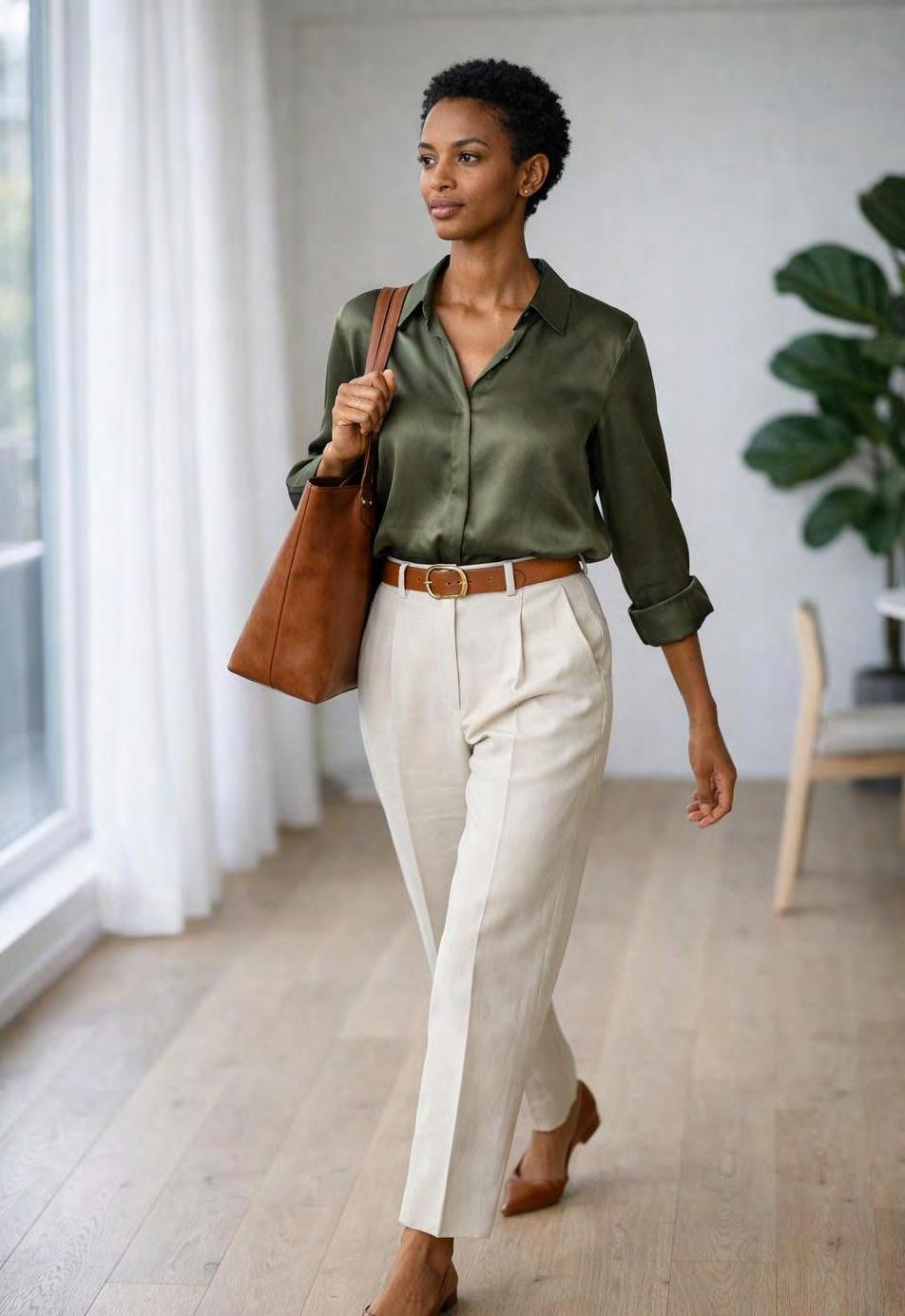
The foundation of smart office dressing is fit. Even the most beautiful outfit will look messy if it does not fit well. Clothes that are too tight, too loose, or awkwardly shaped can ruin your look. Focus on simple office basics like tailored trousers, pencil skirts, blazers, button- down shirts, and midi dresses.These pieces do not need loud designs. What matters is that they sit well on your body. Your shoulders should sit properly in blazers, your trousers should not drag on the floor, and your skirts should be a comfortable length.
CHOOSE COMFORTABLE BUT PROFESSIONAL SHOES
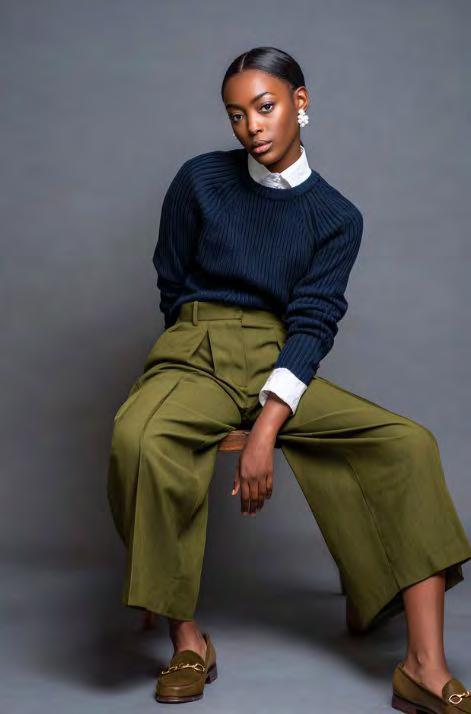
Your shoes can either complete or spoil your outfit. Smart office shoes should be neat, comfortable, and workappropriate. Low heels, block heels, loafers, ballet flats, and clean sandals (if allowed in your office) are great options. Avoid shoes that are too flashy, too high, or difficult to walk in. If you are uncomfortable, it will show in how you move and carry yourself.
STICK TO NEUTRAL COLOURS
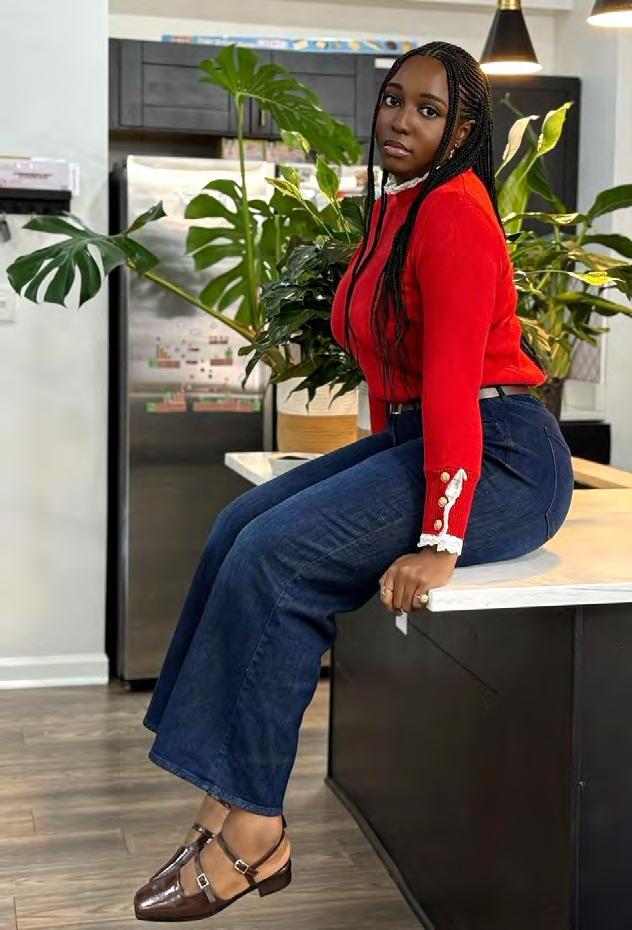
Neutral colours make office dressing easy. Colours like black, navy blue, grey, beige, white, and brown are safe and professional.They are also easy to mix and match.You can wear neutral outfits and add life with small touches like a colored bag, a simple scarf, or subtle jewellery.This way, your outfit stays professional but does not look boring.

KEEP
ACCESSORIES
SIMPLE AND PROFESSIONAL
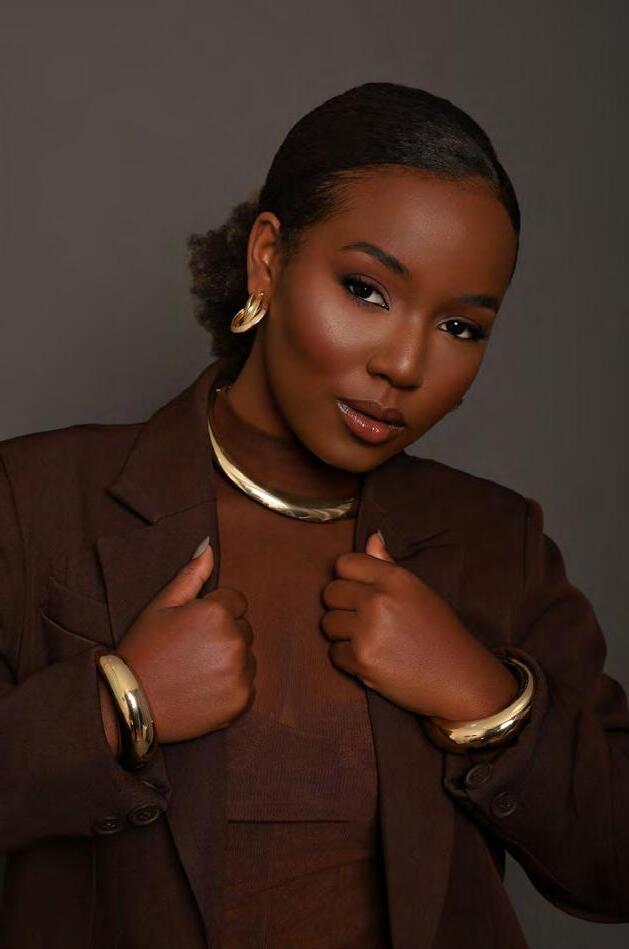
Accessories are meant to support your outfit, not fight for attention. In an office setting, less is more. Choose simple earrings, a wristwatch, a neat handbag, or a slim belt.These small details pull your look together and make it look intentional. Avoid too many accessories at once, loud jewellery, or items that make noise when you move.



SALLY CHIWUZIE @unshakable.is.a.state.of.mind
#UNSHAKABLE TRUTHS
UNTOLD TRUTHS
You Don’t Owe
Everyone An Explanation
Last week, we talked about feeling two things at once. We talked about Brioche’s husband, who was grieving and rebuilding. He was loving and mourning, being happy, yet haunted.
If you didn’t read it, it’s one to go back to, because what stayed with me wasn’t just his grief. It was this: no matter how much he explained himself, someone somewhere would still decide he was the villain; and the thing is, maybe in their version of the story, he actually was.
Did he deserve a custodial sentence because he loved for a quarter of a century and it went tits up? Should anyone get to vote on how he moves on, with whom, or how quickly? Did he need to justify why, every time he picked up his guitar, all he could see was Brioche’s smile? Would there be a crowd ready to crucify him for that? Absolutely. There would also be another crowd ready to defend him just as loudly.
That’s the thing about people. Those who get it, get it. Those who don’t… don’t.
…and somewhere in the middle of unpicking his story, I realised something uncomfortable. I have been guilty of overexplaining my life. I have been guilty of explaining why I missed a call. Why I couldn’t talk. Why I attended. Why I declined. Why I am leaner. Why I am thicker. Why I wore red. Why I wore black. Where I went. With whom. For how long. It is as though I owed a public relations statement every time I made a decision, and as though transparency was the same thing as permission. It isn’t.

So, I ran an experiment. I stopped explaining. I didn’t justify missed calls. I didn’t soften my no with a thesis. I didn’t offer disclaimers before setting boundaries. I didn’t provide footnotes for my growth. And do you know what happened? Some people filled in the gaps anyway. Some assumed. Some speculated. Some created entire narratives out of silence. And I let them. Because here is a truth that took me too long to learn: Not everyone deserves a front row seat with popcorn while your life plays on their big screen. And if they insist on watching from the balcony, interpreting your choices through their own lens, that is also absolutely fine. What they conclude is
their responsibility. What I choose is mine.
The only person I owe justification to is myself. Am I acting in integrity? Am I aligned with my values? Am I at peace with the decision? That is the only courtroom that matters.
Brioche’s husband likely reached that place long before I did. He would always be someone’s villain. Too soon. Too public. Too human. Too close to home. Too flawed. And perhaps in certain chapters he was.
But living your life trying to edit yourself into everyone else’s comfort zone is a slow death. You shrink. You hesitate. You dilute your own story. So I sent him a message.
The week before, it had been a long epistle. Careful. Considered. Explained.
This week, it simply said: “I hope you are ok.”
There was no justification, no disclaimers, no positioning. Because everyone — you, me, all of us — deserves to be ok. Not perfect, approved or universally understood.

Just ok. And maybe that is the next step after feeling two things at once. You stop trying to reconcile yourself for public consumption. You stop auditioning for sympathy. You stop explaining why you chose what you chose. You let people misunderstand you if they must. You let silence do the work.

The #Unshakable truth is this: Peace does not come from being explained correctly. It comes from being aligned internally. You will be the villain in someone’s story. You will be the hero in someone else’s. You will be misunderstood in rooms you once tried to impress. Let them. Your life is not a press conference. It is yours. And you do not owe everyone an explanation.
See you next week.

EVANS AKERE
Talks Fashion, Growth And The Future of Vanskere
Menswear fashion has changed a lot over the years. What used to be simple and traditional has grown into something more expressive, more personal, and more global. Designers across the continent, especially in Nigeria, are redefining what it means to dress the modern African man. Among the brands leading this shift is Vanskere, a luxury menswear label that has become a strong voice in African fashion. With its clean cuts, bold use of colour, and deep respect for African identity, the brand is proudly shaping how contemporary African menswear is seen, both in Nigeria and around the world.
Behind the brand is Evans Akere, a man whose journey into fashion did not begin in a design studio. Trained as a lawyer, he made the bold decision to follow his passion for creativity and design, choosing purpose over comfort. Since then, he has built one of the most respected menswear brands in the country, dressing some of Nigeria’s most influential figures and showcasing African excellence on global platforms. His work stands out for its strong identity and attention to detail. Recently, he expanded his vision even further with the debut of his womenswear line, marking a new chapter for the brand.
In this interview with THEWILL DOWNTOWN's writer, Dorcas Akintoye, Evans Akere discusses the story behind Vanskere, his transition from law to fashion, the lessons he has learned over the years, and his vision for the future. He also opens up about growth, global exposure, mentorship, and what it truly takes to build a lasting brand in today’s fashion industry.
You trained as a lawyer before fully embracing fashion. What was the exact moment you realised that law could no longer contain your creative expression, and how difficult was it to walk away from that stability?
I was actually trained as a lawyer, but I never practised. Right after my call to the Nigerian Bar, I realised that my passion for creativity and design was far stronger than any desire to pursue a legal career. So I went straight into fashion and haven’t looked back since. It wasn’t a difficult decision for me because I knew, with absolute clarity, that fashion was where my true purpose and fulfilment were waiting.
Vanskere has become synonymous with luxury menswear in Nigeria and beyond. What was the original vision behind the brand, and how close or far are you from that vision today?
The original vision was simple: to create unique, high-quality menswear that stood out in craftsmanship and identity. As the brand evolved, I recognised a deeper calling to position Vanskere as a true luxury menswear house. That shift inspired me to further my expertise at the London College of Fashion, where I studied Luxury Brand Management and Product Design. That experience refined the vision and equipped me with the tools to build Vanskere into what it is today, a leading voice in African luxury fashion, proudly shaping how contemporary African menswear is perceived both in Nigeria and on the global stage.
Luxury often means different things in
different markets. What does 'luxury' truly mean to you as an African designer, and how do you communicate that value to your clients? Luxury means different things across markets, but for me, as an African designer, luxury means one thing: quality. One of my college professors taught me that true luxury isn’t just about price or exclusivity, it’s about craftsmanship that stands the test of time. I’ve held on to that principle ever since. So, no matter the style or category of clothing we produce, our commitment is the same: to deliver pieces that are beautifully made, durable, and worthy of our clients’ investment. For us, luxury is the feeling of confidence a client has when they wear something that fits perfectly, looks exceptional, and lasts. That is the value we communicate through our choice of fabrics, our attention to detail, our finishing, and the overall experience we give our clients. When people choose our brand, they’re choosing quality, integrity, and the assurance that they’re getting true value for their money.
employer of labour and a strong source of potential foreign exchange. With the right support, it could help diversify the African economy far beyond oil.
As the brand evolved, I recognised a deeper calling to position Vanskere as a true luxury menswear house. That shift inspired me to further my expertise at the London College of Fashion, where I studied Luxury Brand Management and Product Design.
Colour, cut and fabric are central to your work. Which of these elements do you find most challenging to master and why? Colour, cut and fabric are the core elements that make fashion exciting for me. I genuinely enjoy working with colour palettes, and over the years we’ve remained very consistent with our cuts and fabric choices. Because of this passion and consistency, none of these elements has been particularly challenging to master. They are all essential components of the craft, and embracing them fully has always been a natural part of our design process.
Menswear in Africa still receives less attention than womenswear. What unique challenges have you faced building a luxury menswear brand, and what needs to change for the space to grow?
I actually stand to disagree that menswear in Africa receives less attention. While that may have been the perception in the past, today African menswear is enjoying just as much visibility and appreciation as womenswear. In Nigeria, especially, men’s kaftans are gradually replacing formal suits, and African men are becoming more colourful, expressive, and fashion-forward, just like African women. Building a luxury menswear brand, however, comes with its own set of challenges. Some of the major ones I’ve encountered include inadequate infrastructure, a shortage of highly skilled workers, high import duties on quality raw materials, currency fluctuations, and the ever-growing issue of counterfeiting. Economic instability also makes long-term planning more difficult for emerging and established brands. For the space to truly grow, structural support is essential. Government investment in the fashion sector through better policies, funding, training centres, and manufacturing facilities would transform the industry. Fashion is a massive
The Nigerian fashion industry is vibrant but demanding. What are the biggest structural or systemic issues designers face today, and how do you think the industry can improve?
The biggest structural and systemic challenges Nigerian designers face today stem largely from infrastructure deficits. One of the most critical is the unreliable power supply. Many designers are forced to depend on expensive, unsustainable diesel generators, which significantly increase production costs and limit scalability. Another major challenge is the lack of access to funding. Traditional banks and investors often set requirements that small and emerging designers cannot meet, making it difficult to expand operations or invest in better equipment. Additionally, government support remains minimal. Although there is growing interest in the creative economy, policies targeted at the fashion sector are rarely implemented effectively or consistently. For the industry to improve, a steady and uninterrupted power supply is essential. The creation of dedicated manufacturing hubs, specifically designed for the fashion industry, would also help reduce production costs and improve efficiency. Lastly, meaningful government support and well-implemented policies that strengthen the textile and garment value chain would go a long way in elevating the entire ecosystem.
Vanskere has received multiple awards over the years. Which recognition meant the most to you personally, and why?
It’s difficult for me to single out just one award, because each recognition came from a different category and at different stages of my journey. Every award reflected a unique aspect of our work and growth, so they all hold a special place for me. In their own way, each one meant a lot personally, because they validated the passion and consistency we’ve poured into the brand over the years.
Colour, cut and fabric are the core elements that make fashion exciting for me. I genuinely enjoy working with colour palettes, and over the years we’ve remained very consistent with our cuts and fabric choices.
Since debuting your women's line, what has the response been like, and what lessons has the transition from exclusively menswear to a broader fashion taught you?
The response has been truly overwhelming, far beyond my expectations. It almost feels like I’ve been creating womenswear for years. Before launching the Vanskere women’s line, we tested the market through our diffusion brand, Signore Fusion, and the success we recorded there gave us the confidence to take this bold step into womenswear under the main brand. One major lesson the transition has taught me is that you can achieve anything when you’re fully committed to it. We spent a long time developing and refining our approach to womenswear, and although the process was challenging, I was determined not to give up. Today, I’m glad that persistence and faith in the vision have paid off. The reception from women has been both humbling and energising, and it has opened up a whole new creative world for the brand.
COVER
As someone deeply rooted in menswear, what excites and challenges you most about designing for women?
Menswear naturally leans toward conservative designs, darker colour palettes, structured silhouettes, and durable fabrics. Womenswear, on the other hand, embraces trend-driven styles, brighter colours, and softer, more delicate fabrics. Transitioning after two decades of designing menswear came with its own learning curve, especially adapting to lighter, more sensitive materials. But that challenge also became my biggest excitement. Designing for women gives me the freedom to explore any colour, experiment with fluidity, and create without the traditional restrictions that often guide menswear. It’s a space that pushes my creativity further and allows me to express a different side of my design philosophy.
If you were starting today with everything you know now, what would you do differently, and what advice would you give young creatives afraid to bet on themselves? If I were starting today with everything I know now, I would begin by undergoing a proper internship and mentorship program with an established brand. Gaining hands-on experience early would have made my journey smoother, faster, and far less costly. Learning directly from people who have already mastered the craft helps you avoid mistakes that can slow you down later. For young creatives who are afraid to bet on themselves, my advice is simple: pursue your dream. Don’t wait for the perfect moment, because it will never come. Use what you already have: your phone, your voice, your skill. Start now. Start small. Start messy if you must. Start scared, it’s okay. What matters is that you start.


Every major brand you admire began exactly the same way, with courage, consistency, and a first step.
Vanskere's showcase at London Fashion Week last year brought African luxury menswear to a global audience. How do you see this influencing perceptions of African fashion internationally, and what opportunities has it opened for the brand?
Firstly, it was an honour and a privilege to showcase at one of the world’s most prestigious runways. I have always been deeply passionate about sharing my creative vision with the world, and London Fashion Week offered the perfect platform to highlight not only my work but also the artistry and cultural richness of
Africa. Our showcase helped shift global perceptions of African fashion, from a rigid, traditional viewpoint to one that recognises it as diverse, luxurious, and powerfully contemporary. We were able to challenge outdated stereotypes by presenting pieces that were avant-garde, culturally grounded, and boldly modern. This reinforced the message that African luxury menswear is a global force, driving conversations around innovation, sustainability, and high-end craftsmanship. The exposure has also opened new doors for international recognition and collaboration across Europe, America, and even within Africa. It has strengthened our global presence and created fresh opportunities for partnerships, retail expansion, and cross-cultural creative exchange.

ADA OBIAJUNWA
@aaddaahh
WHEN YOU NO LONGER NEED TO BE UNDERSTOOD
You say something simple. It lands differently than you meant it to.
There’s a pause. A look. A slight shift in the room.
There was a time you would have rushed to fill that space. Clarified your tone. Added context. Smoothed the edges. Not because you were unsure of yourself. Because you cared about being accurate. Fair. Clear.
You used to adjust before anyone asked you to. You would replay the conversation later. Rewrite it in your head. Think of better phrasing. Softer phrasing. More complete phrasing.
You called it communication. And it was.
But it was also management. Of tone. Of perception. Of how you might be received.
You didn’t even notice you were doing it.
It felt responsible. Mature. Considerate. And then, somewhere along the way, something changed.
You said what you meant.
It landed the way it landed.
And you didn’t move to rescue it. Not out of defiance. Not out of coldness.
You just… didn’t feel the rush. No internal scramble. No silent editing. No need to add a second paragraph to a one-line sentence.

How often you pre-empt reactions that haven’t happened yet.

You notice it in the moment. Not later. There’s space where tension used to be.
You’re not rehearsing while you talk. You’re not correcting mid-sentence. You’re not scanning the room for signs of misunderstanding. You’re simply there.

Saying what you mean. Letting it land.
And if it lands imperfectly, you trust that the right people will ask. Or listen. Or clarify. Without you carrying the entire weight of it.
You realised how often you had been negotiating your own words before anyone else did. And when you stopped, something in you felt lighter. Adulthood does that. Not loudly. Quietly.
You begin to see how much energy goes into being correctly understood by everyone in the room.
You soften before you’re accused of being sharp. You explain before you’re questioned. You defend before anyone attacks. And then one day you don’t. You speak.
You let it sit.
If someone truly wants to understand, they lean in.
If they don’t, you don’t chase. It isn’t a power move. It doesn’t feel dramatic. It doesn’t even feel brave. It just feels easier.
You don’t stop caring about communication. You stop over-carrying it. That’s the difference.
You realise that being understood by everyone was never the goal. Being honest was.
And honesty doesn’t require performance. It requires steadiness.
So you say what you mean.
You let it land.
You don’t chase. And your body feels different. Lighter.
And maybe that’s the Luxury Silk.
5 EVERYDAY HABITS THAT CAN MAKE ECZEMA WORSE
BY DORCAS AKINTOYE
Eczema is more than just dry skin. It can be itchy, painful, embarrassing, and very frustrating to live with. Many people try creams and treatments, but still struggle because some everyday habits quietly make eczema worse. The tricky part is that these habits often feel normal and harmless. You might not even realise they are affecting your skin. In this article, we will show you five everyday habits that can worsen eczema.

TAKING VERY HOT SHOWERS OR BATH
Hot water may feel relaxing, especially after a long day, but it is not kind to eczema-prone skin. Hot water strips the skin of its natural oils. These oils are what help your skin stay moist and protected. When those oils are washed away, the skin becomes dry, tight, and itchier. For someone with eczema, this dryness can quickly lead to flare-ups, redness, and skin cracks. Long showers make it even worse because the skin stays wet for too long.

USING HARSH SOAPS AND SKINCARE PRODUCTS
Many soaps, body washes, and creams smell nice and foam a lot, but they are often too strong for sensitive skin. Products that contain perfume, alcohol, or strong chemicals can irritate the skin and trigger eczema. These products damage the skin barrier, which is already weak in people with eczema.

SCRATCHING THE SKIN TOO OFTEN
Eczema itches a lot. Scratching may feel good for a moment, but it causes more harm than relief. When you scratch, you damage the skin and create tiny wounds. These wounds can become infected, prolonging eczema flare-ups. Instead of scratching, try pressing or gently rubbing the area. Moisturising can also reduce itching.



WEARING ROUGH OR TIGHT CLOTHING
Clothing can affect eczema more than people realise. Tight clothing rubs against the skin, causing friction that can irritate eczema patches. Rough fabrics, such as wool and some synthetic materials, can also trigger itching and redness. Wearing loosefitting clothes made from soft fabrics like cotton can help. Also, wash new clothes before wearing them to remove any chemicals left from production.

IGNORING STRESS AND POOR SLEEP

Stress does not just affect the mind; it also affects the skin. When you are stressed, your body releases hormones that can increase inflammation and itching. This can cause eczema to flare up or become harder to control. Try to rest well and manage stress in simple ways, like deep breathing, light exercise, or quiet time. Even small changes can help calm your skin.

FITNESS FOR PEOPLE WHO HATE THE GYM
BY JOHNSON CHUKWUEKE
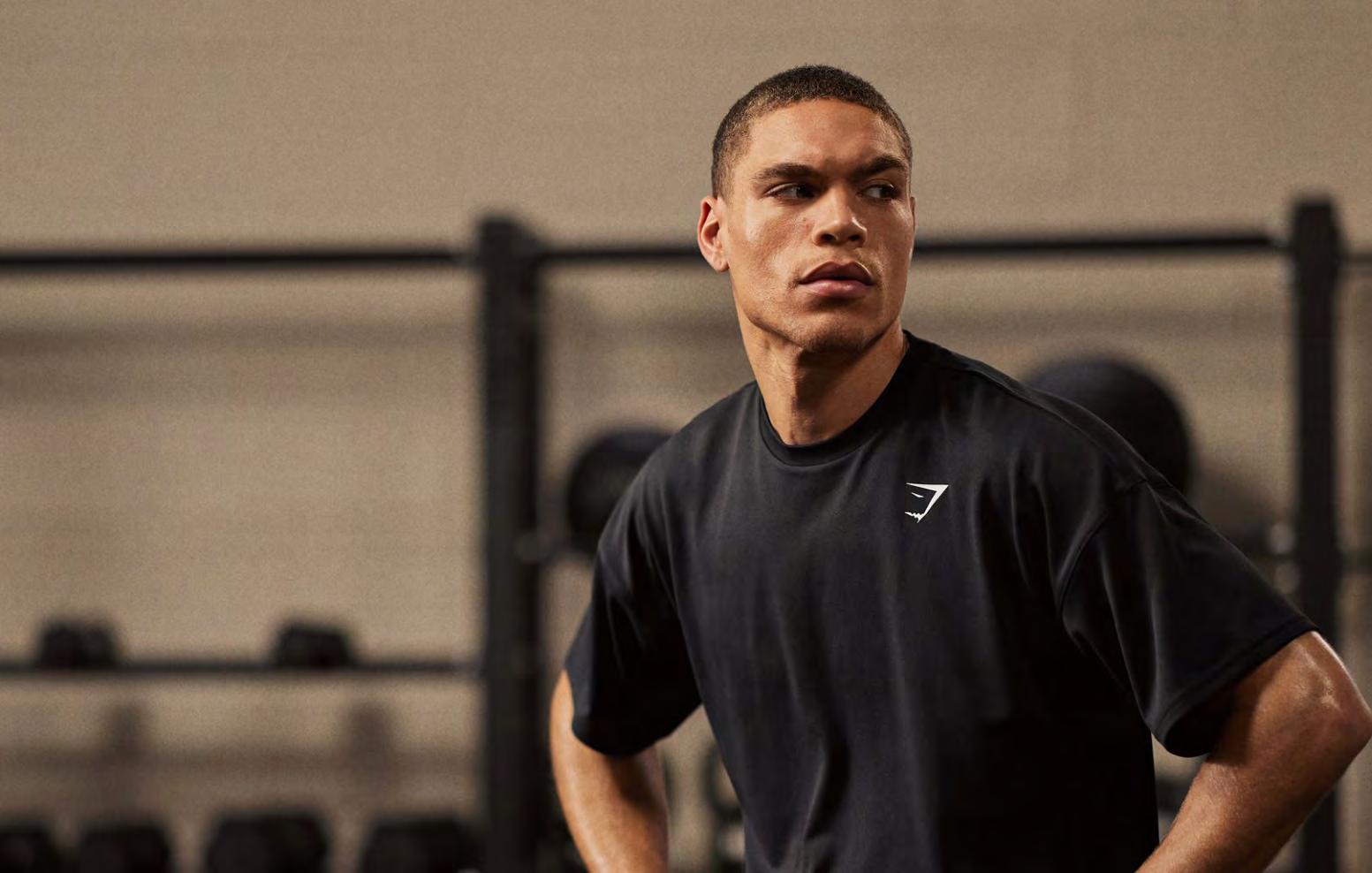
For some people, the gym is motivating. For others, it’s overwhelming, boring, or simply not their vibe. The mirrors, the machines, the noise, the pressure to “perform”- it can all make fitness feel like something you endure rather than enjoy. If that sounds familiar, here’s the truth: you don’t need a gym to be fit. Fitness isn’t about where you work out; it’s about how consistently you move your body. And for people who genuinely hate the gym, the key is finding movement that fits naturally into everyday life.
Exercise doesn’t have to be formal. Walking long distances, taking the stairs, cycling to nearby places, cleaning your house with intention, or dancing in your living room all count. When movement becomes part of your routine instead of a separate “task,” it stops feeling like work and starts feeling normal. Here are some tips for getting your muchneeded fitness routine without the hassle of the gym.

YOUR HOME IS ALREADY A GYM
You don’t need expensive equipment to build strength or improve fitness. Bodyweight exercises like squats, lunges, push-ups, wall sits, and planks are effective and easy to modify for any level. Add a chair, a wall, or a mat, and you have everything you need. Online workout videos also make it easier to stay motivated. Whether it’s a 10-minute stretch, a low-impact workout, or a high-energy dance routine, variety keeps things interesting.

CHOOSE ENJOYMENT OVER INTENSITY
One of the biggest reasons people quit fitness is choosing workouts they hate. If you dislike running, don’t force it. Try swimming, skipping rope, hiking, yoga, Pilates, or even recreational sports. The best workout is the one you’ll actually do, and repeat. When exercise feels fun, consistency stops being a struggle.

SHORT WORKOUTS STILL COUNT
You don’t need an hour. Fifteen to twenty minutes of focused movement is enough to build strength, improve endurance, and boost mood. Short workouts are easier to fit into busy schedules and remove the pressure of “finding time.” Consistency beats duration every time.

MAKE IT SOCIAL, NOT COMPETITIVE
Fitness doesn’t have to be solitary or intimidating. Walk with friends, join outdoor fitness groups, try virtual challenges, or work out with family members at home. Accountability and connection make movement more enjoyable, without the competitive energy some gyms bring.

SHIFT THE FOCUS FROM LOOKS TO FEELING
When fitness is only about appearance, motivation fades quickly. Instead, pay attention to how movement improves your energy, sleep, mood, and confidence. Feeling stronger, less stressed, and more active is a better measure of progress than numbers on a scale.
You don’t hate fitness, you just haven’t found your version of it yet. Once you remove gym pressure, comparison, and rigid rules, movement becomes flexible, personal, and sustainable. Fitness should blend into your life, not force you to rearrange it.
TRAVEL

PERFECT DESTINATIONS FOR FIRSTTIME SOLO TRAVELLERS
BY JOHNSON CHUKWUEKE
Taking your first solo trip can feel like jumping into the deep end, exciting, nerve-bracing, and strangely liberating. But with the right destination, solo travel becomes less about fear and more about finding your rhythm, your confidence, and a version of yourself you didn’t know you needed. There’s something transformative about stepping into a new city, especially doing it alone. No group schedules, no debates over where to eat, no compromises on what to see. Just you, your curiosity, and the world unfolding at your pace. Solo travel is no longer a trend. Now, it’s a lifestyle shift. More people, especially millennials and Gen Z, are choosing independence, self-discovery, and adventure over waiting for friends or partners to be “available.”
Still, your first solo trip has to be the right one. Safety, friendliness, accessibility, and activities play huge roles in shaping your experience. The good news? The world is full of cities designed to welcome first-time solo travellers with open arms, cities where the culture is warm, the streets are safe, and the adventures are endless.
Here are some friendly destinations that turn the idea of travelling alone into something bold, beautiful, and absolutely unforgettable.

LISBON, PORTUGAL
With its pastel-coloured streets, charming trams, and ocean views, Lisbon is one of Europe’s warmest cities, emotionally and climatically. It’s safe, affordable, and full of communal spaces like miradouros (viewpoints) where solo travellers naturally blend in. The locals are friendly, English is widely spoken, and the food scene is an absolute dream.

Bali is the spiritual capital of solo travel. From beach clubs in Canggu to serene rice fields in Ubud, the island feels tailor-made for solo explorers. It’s incredibly safe, affordable, and packed with yoga retreats, cooking classes, and hiking groups that make meeting people effortless.
TORONTO, CANADA
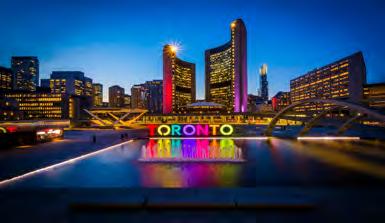
Clean, multicultural, and endlessly welcoming, Toronto is one of the easiest cities for firsttime solo travellers. Whether you’re wandering through Kensington Market, relaxing by Lake Ontario, or visiting world-class museums, the city offers comfort and culture in equal measure.

KYOTO, JAPAN
If you want calm, beauty, and structure, Kyoto is your city. Known for its stunning temples, tea houses, and quiet streets, it’s a haven for solo travellers. Japan’s impeccable public transport and low crime rate make navigation stress-free, even if you don’t speak the language.

CAPE TOWN, SOUTH AFRICA
For adventure lovers, Cape Town delivers big. Table Mountain hikes, serene beaches, world-class seafood, penguins at Boulders Beach, the experiences are endless. The city is buzzing with digital nomads and solo travellers, making it easy to blend in and connect.
Your first solo trip doesn’t have to be scary; it just has to be intentional. Choose a destination that empowers you, welcomes you, and gives you the space to explore who you are when no one else is leading the way. Pack light, trust your instincts, and step into the world with courage. Adventure is waiting, and this time, it’s all about you.

HOW MUSIC TECH IS RESHAPING THE SOUND EXPERIENCE


Vinyl Comeback: Nostalgia Meets Quality
Vinyl, once thought to be extinct in the face of CDs and MP3s, has made a roaring return. Collectors and music lovers alike are once again flocking to record stores and weekend vinyl fairs. For many, the appeal lies in the ritual: pulling a record from its sleeve, placing it gently on the turntable, and hearing that analogue warmth that digital sometimes misses. Beyond sound quality, vinyl has become a lifestyle statement—a mix of nostalgia, artistry, and the joy of slowing down in a fast-paced world.

The Streaming Revolution
If vinyl is slow food for the ears, streaming is the ultimate fast food buffet—available anytime, anywhere. Platforms like Spotify, Apple Music, Boomplay, and Tidal have democratised access to music, allowing listeners to discover artists across continents without leaving their couch. Algorithms now know your moods better than some of your friends, curating playlists for every emotion, workout, or Sunday morning coffee. But while we may no longer “own” music in the traditional sense, the trade-off is convenience and endless variety.

Immersive Audio: Surround And Beyond
Technology has taken us from simple stereo to a full-blown sensory experience. Dolby Atmos, 3D audio, and hi-res streaming are creating music that feels like it’s happening all around you. Artists are experimenting with spatial mixes that make you feel like you’re standing in the middle of the band. It’s not just about hearing the song anymore—it’s about being inside it. Even films, video games, and concerts are adopting this tech, blurring the lines between entertainment mediums.

Smart Devices And AI DJs
The modern listening experience is increasingly hands-free and hyper-personalised. Smart speakers can play your favourite song when you walk into the room, wireless earbuds adapt sound to your environment, and some streaming platforms, such as Spotify’s DJ X, now use AI to go through your algorithm to play some of your favourite tracks as well as let you make requests for the song you want to listen to next. Virtual DJ tools allow performers to mix for audiences across the globe without leaving their homes. Some wearables even track your heart rate and adjust the music’s tempo to match your workout pace.
BY JOHNSON CHUKWUEKE
There’s something magical about the soft crackle of a vinyl record just before the first note drops. It’s a sound that feels warm, tangible, and real—like a gentle handshake from music itself. Fast forward to now, and we live in a world where a single tap on a smartphone can summon millions of songs instantly. From the bulky gramophones of yesteryear to sleek wireless earbuds and immersive audio, music tech has been on quite the journey—and it’s changing not just how we listen, but what the listening experience means.

Social Sharing And Virtual Concerts
Music has always been social, but platforms like TikTok and Instagram have turned it into a global conversation. A single viral clip can catapult an unknown artist to fame overnight. At the same time, virtual concerts and VR experiences are redefining live performance—letting fans from Lagos to Los Angeles watch the same show in real time. Artists are interacting directly with fans during livestreams, making the experience more intimate despite the physical distance.
Every era leaves its fingerprint on how we experience music, and the current wave is all about integration—where nostalgia and innovation coexist. Your vinyl collection might sit proudly next to your VR headset, and your playlist could include both 1970s classics and AI-composed beats. Whether you drop a needle or tap a screen, the essence remains the same: music is about connection, and the beat will always go on.
EVERYTHING YOU NEED TO KNOW ABOUT HOUSE HUSHING
BY DORCAS AKINTOYE
House hushing means preparing your home to feel calm, clean, peaceful, and welcoming. It is not just about cleaning. It is about creating a quiet, soft, and comfortable space where you and others can relax. House hushing is often done before guests arrive, but you can also do it for yourself. It helps reduce stress, clears your mind, and makes your home feel fresh again. Here are four important steps to house hushing.


START BY DECLUTTERING YOUR SPACE
The first step to house hushing is removing things that make your space look crowded or messy. Clutter can make your home feel loud, even when nobody is talking. Too many items on tables, chairs, or floors can make it hard for your mind to rest. Start small. You can begin with your living room or bedroom. Remove things you don’t need. For example, old papers, empty bottles, dirty clothes, or things you no longer use. Arrange your important items neatly. This is the foundation of house hushing.
CLEAN EVERY SURFACE PROPERLY
After decluttering, the next step is cleaning. This is more than just sweeping. House hushing involves thorough cleaning to make your home feel fresh. Wipe your tables, shelves, and TV stand. Clean your kitchen counters. Sweep and mop the floor. Clean your bathroom and mirrors. Remove dust from surfaces. Cleaning also removes bad smells and replaces them with freshness, which is very important in house hushing.
FIX AND ARRANGE THINGS NEATLY
House hushing also means putting things in their proper place. When items are scattered, your home feels disorganised and stressful. Arrange your pillows properly. Fold your blankets. Arrange your chairs well. Make your bed neatly. Align items on your table. These small details make a big difference.
PREPARE YOUR HOME WITH INTENTION
The final step is preparing your home with love and care. This means thinking about comfort. For example, arrange your sitting area properly so people can sit comfortably. Make sure your space smells nice. Ensure important areas like the bathroom and living room are clean. House hushing is about being thoughtful. It is about creating a space that feels safe and welcoming.




House hushing is important because your environment affects your mood. When your home is messy and noisy, you may feel stressed and uncomfortable. But when your home is clean, organised, and peaceful, you feel relaxed and happy. Most importantly, house hushing helps you enjoy your own space more. House hushing is more than cleaning. It is about creating peace in your home. It involves decluttering, cleaning, arranging, creating calm, and preparing your space with care.
Skyline Views
ROOFTOP DINING IN LAGOS AND ABUJA

THE VUE, NOVARE MALL (ABUJA)
Minimalist yet chic, The Vue takes Pan-Asian dining to new heights—literally. Sushi, dim sum, and more are served against the backdrop of Abuja’s serene skyline. It’s a hotspot that blends sophistication with simplicity, and always leaves guests craving a return visit.

SKY RESTAURANT & LOUNGE, EKO HOTEL (LAGOS)
Few places capture Lagos from above quite like Sky Restaurant. Sitting at the top of Eko Hotel, the views sweep across the Atlantic Ocean and the buzzing cityscape. Add in an international menu and ambient lighting, and you’ve got one of Lagos’ most iconic rooftop dining spots.

KALY EXPERIENCE, VICTORIA ISLAND (LAGOS)
Perched elegantly above the bustle of Victoria Island, Kaly Experience combines Mediterranean flair with an unmistakable Lagos luxury. With its chic décor, curated cocktails, and postcard-worthy views of Eko Atlantic, it’s a favourite for upscale dates, birthdays, or simply those nights when only glamour will do.

THE VIEW ROOFTOP LOUNGE, LEKKI (LAGOS)
For something coastal and breezy, The View at Twinwaters delivers. With the Atlantic just beyond, cocktails in hand, and music setting the mood, this rooftop feels like a slice of Miami transported to Lagos. Perfect for sunset hangouts with friends or stylish weekend escapes.
BY JOHNSON CHUKWUEKE
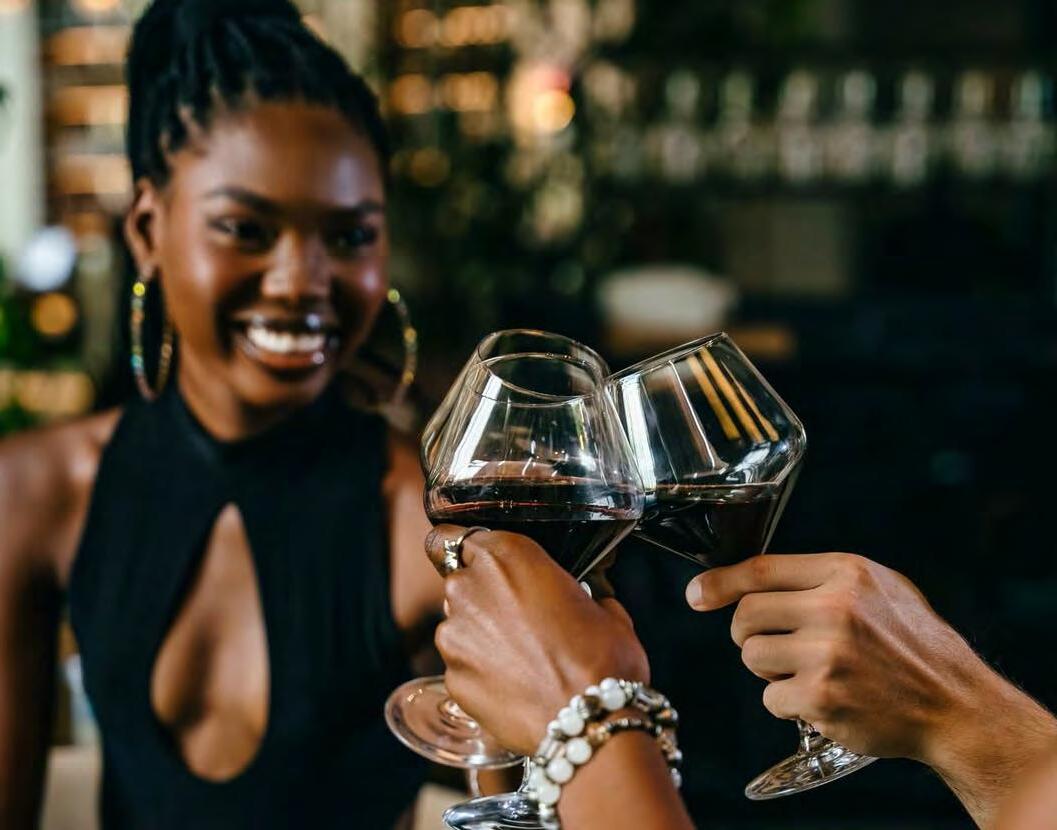
There’s something magical about dining above the city, the skyline stretching out like a canvas, lights glittering like stars, and the breeze carrying with it a sense of freedom. Rooftop restaurants have become the ultimate hotspot for foodies, romantics, and city explorers looking to elevate their dining experience, literally. Lagos and Abuja, with their ever-growing cosmopolitan vibes, boast some of the finest rooftops in Africa. Here are five must-visit destinations where dining meets dazzling views.

CILANTRO ROOFTOP LOUNGE (ABUJA)
If you’re looking for a blend of elegance and laid-back charm, Cilantro Rooftop Lounge in Maitama ticks all the right boxes. Known for its eclectic menu that spans from rich Indian curries to Mediterranean bites, the lounge doesn’t just offer great food; it delivers an atmosphere. Its rooftop view captures the greenery and serenity of Abuja’s upscale Maitama district, creating a calming backdrop for both daytime brunches and evening cocktails. Cilantro is especially loved for its cosy seating, stylish lighting, and that perfect rooftop breeze, making it a go-to for those who want a balance of fine dining and chill vibes.
Whether it’s the pulse of Lagos or the calm sophistication of Abuja, rooftop dining offers more than just a meal; it’s an experience. These hotspots prove that when food, ambience, and skyline collide, you get unforgettable moments that linger long after the last sip of wine.
DOWNTOWN ZODIAC
PISCES
The Dreamer Who Feels Everything
FEBRUARY 19TH - MARCH 20TH

ELEMENT: WATER
RULING PLANET: NEPTUNE SYMBOL: THE FISH FLOWER: WATER LILY BIRTHSTONES: AQUAMARINE

BY JOHNSON CHUKWUEKE
Soft doesn’t mean weak. Emotion doesn’t mean unstable.
Born between February 19 and March 20, Pisces is the last sign and quiet force of the zodiac.
They are the most spiritually layered, deeply intuitive, and creatively gifted. Ruled by emotion and imagination, they move through life guided less by logic and more by instinct. And more often than not, that instinct is right.
Represented by two fish swimming in opposite directions, this water sign lives between two worlds: reality and imagination, logic and emotion, strength and vulnerability.
And in today’s loud, chaotic world, Pisces might just be the quiet power we underestimate.
Emotionally Intelligent, Not Overly Emotional Pisces feels everything: the room, the tension, the unsaid words. They can sense shifts before anyone speaks. This emotional depth makes them compassionate friends, attentive partners, and natural healers. While others react, Pisces absorbs, processes, and responds with empathy. Their sensitivity is not a flaw; it is their superpower.
Creative Without Trying
Art, music, storytelling, fashion, Pisces energy thrives where imagination lives. Even the most

corporate Pisces has a creative streak. They think in pictures, in feelings, in possibilities. This makes them visionaries. They don’t just see what is; they see what could be. And when they channel that properly, they create magic.
The Escapist Who Needs Boundaries
Because they feel deeply, Pisces sometimes retreats. When reality becomes overwhelming, they escape into work, into love, into fantasy. Their lesson in life is balance. Protect your energy. Guard your heart. Not everyone deserves access to your softness.
In a world that rewards hardness, Pisces reminds us that gentleness is strength, and feeling deeply is not a weakness, but a rare and powerful gift.
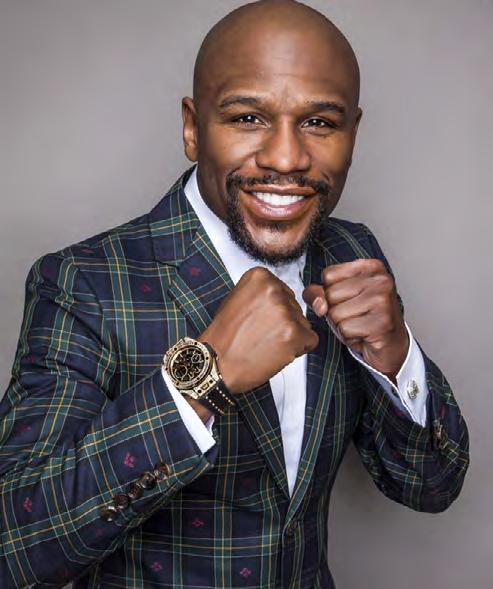
ADESU ETOMI WELLINGTON, FEBRUARY 22
OLAMIDE, MARCH 15
FLOYD MAYWEATHER, FEBRUARY 24

cassy’s chronicles
BROKEN FRIDAY


Ididn’t tell Gabriel I was coming. It was one of those Fridays that felt heavier than normal. Work was stressful, my head was pounding, and all I wanted was comfort. His comfort. I missed him, even though we spoke just an hour ago. He told me he was home, working on some project.
I smiled after the call ended.
I decided to surprise him.
I packed a small bag. Just a few clothes. Nothing serious. I was already imagining how he would smile when he saw me. Maybe he would carry me. Maybe he would laugh and say, “You didn’t tell me you were coming.”
The thought made me happy. When I got to his house, I didn’t knock. I had a key.
I opened the door quietly.
The first thing I noticed was the smell. I froze. The house smelled different. It wasn’t bad. It was just… not me. It smelled like perfume. Something soft
and feminine.
My heart started beating fast, but I tried to ignore it.
Then I heard a sound.
A low grunt.
It was Gabriel’s voice.
I frowned.
Then I heard it again. This time, it was a moan.
My body went cold immediately.
I don’t even remember walking. I just remember pushing his bedroom door open.
And there he was. Naked and on top of her. On top of the same girl he told me was his cousin.
Everything inside me shattered at once. They both turned and looked at me. Shock on their faces.
I couldn’t breathe.
“Is this the project you are working on?” I asked.
My voice was shaking.
He rushed up. “Cassy, wait!”
I didn’t wait.
I turned and walked out.
I don’t know how I got home. I don’t remember the drive. All I remember was the sound of my heart breaking.
What hurt the most wasn’t even what I saw.
It was what I heard. I waited for him to run after me. To call me. To beg.
But instead, I heard him tell her, “Just calm down. She will be fine.”
"She will be fine."
That sentence kept repeating in my head.
By the time I got home, I felt empty. I sat on my chair and stared at the wall.
Then I heard a knock.
My heart jumped.
I stood up quickly, anger rushing through me. I was ready to scream at him. Ready to pour everything out.
I opened the door. But It wasn’t Gabriel.
It was Yinka. My colleague.
I completely forgot we had a meeting.
He looked at me and immediately knew something was wrong.
“Are you okay?” he asked gently.
I forced a smile. “Yes. Come in.”
He brought out the documents, and I tried to focus. I really tried. But I wasn’t seeing anything.
He suddenly closed the file.
“What’s wrong?” he asked.
“Nothing.”
He looked at me like he didn’t believe me.
“Cassy, talk to me.”
And that was it.
The tears came, and I told him everything.
When I finished, there was silence.
I looked up at him, and our faces were close. He looked at me in a way nobody had ever looked at me before.
Like I mattered. Like I was enough.
He touched my face gently. And then he kissed me.
Then I paused, just for a second.
Then I kissed him back. I didn’t want to think. I didn’t want to remember Gabriel. I just wanted to feel safe.
One thing led to another, and I let myself forget everything else.
We had sex.
When we were done, I lay beside him, staring at the ceiling.
He held my hand.
I love you, Cassy,” he said softly.
I didn’t reply.
Not because I didn’t hear him.
But because I was scared.
Gabriel once said he loved me, too.
And look how that ended.
I turned and looked at Yinka. He smiled at me.
He was a good man.
But I had learned something that night.
Sometimes, good men still break your heart. And sometimes, healing doesn’t come as fast as you want it to.
BY BOLUWATIFE ADESINA
Good Luck, Have Fun, Don’t Die

AI is a plagiarism machine that can only ‘create’ by reconfiguring preexisting materials. So it only makes sense that director Gore Verbinski uses the same tactic to skewer the technology taking over our world in Good Luck, Have Fun, Don’t Die.
A biting sci-fi adventure that interjects a handful of Black Mirror-esque vignettes into a narrative indebted to the works of Terry Gilliam (12 Monkeys), Night of the Living Dead, Ready Player One, and Groundhog Day; the last of which it overtly references. This new film is a caustic call to arms against our ArtificialIntelligence future.
Verbinski has long been one of Hollywood’s most inventive directors, bringing elastic, cartoony verve and imagination to films such as Pirates of the Caribbean: The Curse of the Black Pearl (and its two sequels), Rango, and The Lone Ranger.
Nine years after his last film (A Cure for Wellness), he proves that he’s lost little madcap inspiration with Good Luck, Have Fun, Don’t Die, whose Frankenstein-ian construction is an inherent expression of its witty censure. His camera imbued with Looney Tunes-like vitality, and his whiplash pacing attuned to his frantic characters, the director rarely lets his foot off the gas, careening wildly from hostile confrontations and do-or-die chases to flashbacks to the recent past.
As with much of his previous output, his latest goes on too long, sabotaging some of its climactic oomph. Yet with Oscar-winner Sam Rockwell as its tempestuous engine, it’s a captivatingly silly saga about the pitfalls of our modern techno-
obsessiveness.
At a diner, 47 patrons have their dinners rudely interrupted by the appearance of an unnamed Man From the Future (Rockwell), whose transparent raincoat, wool hat decorated with messy wires, children’s backpack (upgraded with hoses and cables), and scruffy goatee all suggest he’s an unstable vagrant. He’s not, or so he says, claiming that he’s actually from a not-too-distant future in which AI has destroyed the world.
Unsurprisingly, nobody takes him seriously, and most are pretty annoyed by this intrusion. Nonetheless, with rapid-fire belligerence, Rockwell’s stranger, racing around booths and stomping across tables, demonstrates that he knows everyone in the place—a consequence of this being his 117th attempt at trying to save humanity via a trip back in time to this very diner.
To keep his captives compliant, the Man reveals that his torso is wrapped in explosives and he’s not averse to sending them all to kingdom come with a press of the trigger button in his hand. What he prefers, however, is these diners’ help, believing that if he can find the correct combination of individuals from this group, he can avert the forthcoming AI disaster.

Scan this with your camera

Plus, despite its finale boasting trace elements of myriad predecessors’ MOVIE REVIEW:
Thus, he selects a motley crew of seven accomplices to aid him in his quest, including schoolteacher couple Mark (Michael Peña) and Janet (Zazie Beetz), single mom Susan (Juno Temple), and princess dress-wearing depressive Ingrid (Haley Lu Richardson). No sooner have they been chosen than things go to hell, forcing the Man
to determine the most advantageous means of exiting the diner—the problem being that, thanks to his prior experiences, he knows that all three options invariably lead to failure.
As it charts these disparate souls’ confused and harried attempts to escape their confines, Good Luck, Have Fun, Don’t Die looks back on the daysearlier exploits of its main players. This begins with Mark and Janet at a high school where she’s a staffer, he’s a new substitute, and the kids are all rude, entitled cretins with their faces permanently in their screens. The bedlam that ensues speaks amusingly to the way technology saps us of our humanity. That notion is furthered by a second rewind focused on Janet, who loses her son in a school shooting and, in the midst of grieving, is granted a second chance, albeit with more than one glaring catch.
With a little additional development, both these tales might have served as cheeky Black Mirror episodes (one even shares direct similarities to last season’s Common People episode). And Verbinski smoothly threads them into his big picture, as he also does with Ingrid’s backstory: a young woman whose bizarre nosebleed-y allergy to technology marks her as a societal black sheep.
Verbinski keeps the momentum brisk. His camerawork is dynamic and ingenious, and he stages one elaborate sequence—in which his protagonists flee gun-toting villains in pig masks— with the dervish ingenuity that has long been his trademark.
Good Luck, Have Fun, Don’t Die never quite feels like it’s breaking new ground, but the more it channels its ancestors, the less accidental that feels. Instead, it resonates as a sly poke at AI’s own mixand-match regurgitation. Rockwell’s performance as the crusading Man From the Future is so humorously shambolic that it rarely matters that much of this has been done before.



DNA (including Ghostbusters and The Matrix), it still concocts a few memorable sights, all while keeping its urgent anti-AI fervour at a fever pitch.
Good Luck, Have Fun, Don’t Die recognises the tantalising allure of Artificial Intelligence but posits it as a fundamentally false promise. And in its chaotic close, its critique extends, subtly, to cinema itself, whose placating truths and comforting happily-ever-afters are viewed with a wary eye.
Verbinski undercuts his wrap-up’s wild forward thrust by distending things almost past their breaking point. Even so, there are enough comical details scattered throughout the conclusion that the film’s energy never totally flags.
Moreover, the director largely pulls off a lastsecond detour into poignancy, delivering a sneaky emotional punch that ends his rambling odyssey on a sweet note.
Since 1984’s The Terminator, the movies have envisioned technological innovation as a one-way ticket to the apocalypse, and Good Luck, Have Fun, Don’t Die doesn’t deviate from that worldview. If that means Verbinski’s feature is merely covering well-worn ground, however, it’s also an indication that, perhaps, people have yet to heed such warnings—thus making them all the more urgent.
Rating: 7.5/10
Fun with a messily poignant ending.






DJ Tunez; Wizkid; ODUMODUBLVCK - EASY WITH ME
IDK - STiGMA J. Cole; Future; Tems - Bunce Road Blues (with Future & Tems)
KAYTRANADA; Mach-Hommy - $payforhaiti (feat. MachHommy)
Isaiah Rashad; Zacari; Kendrick Lamar - Wat's Wrong (feat. Zacari & Kendrick Lamar)
Blvck Svm hyogo
Wande Coal; DJ Tunez - Iskaba Sarz; WurlD - SWEAT
Lodù - Run Off