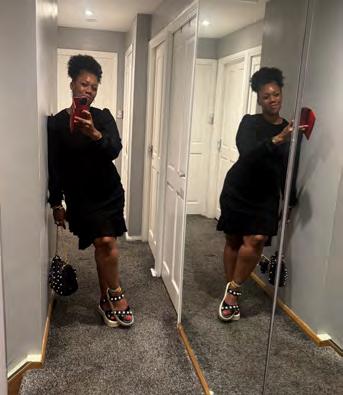
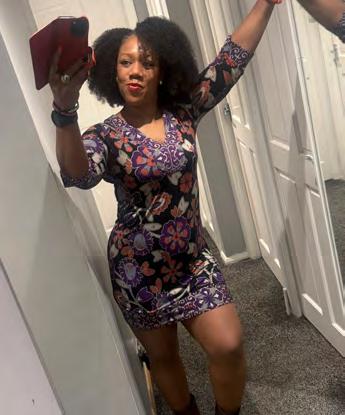
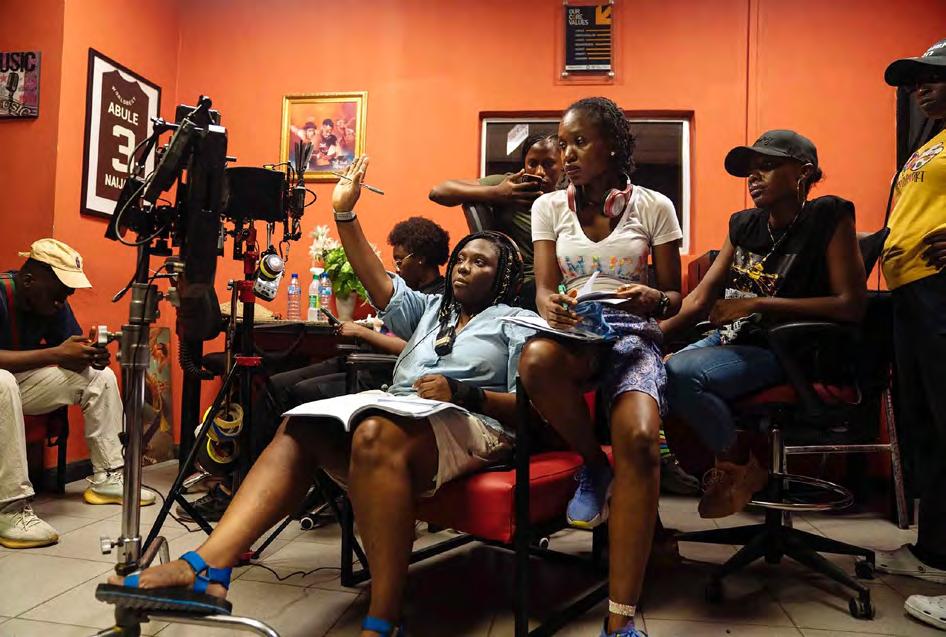
Yetunde “Yetty” Ogunnubi, founder of the YD Company, celebrates 10 years in the PR space. Prior to that, she gained experience in the fashion, art, and corporate sectors, which gave her a competitive edge by exposing her to different perspectives from each. She learnt that while industries change, the basic human desire for connection doesn’t.
According to Ogunnubi, back in 2016, when she started YD Agency, which has now been rebranded as YD Company, PR was reactive. It mostly entailed getting a client’s photo in a print newspaper or on a billboard and calling it a day, without any real data tracking or deep, digital storytelling. 10 years on, she says she is incredibly proud of how they have consistently pioneered tech-driven communication without losing their edge. As well as being proud of the brands they’ve helped scale from total obscurity into global household names.
When asked for advice on balancing visibility and credibility in a fast-paced world, she said, "Visibility will get you noticed, but credibility is what actually keeps you in business."
Read Yetty Ogunnubi’s interview on pages 8 through 10; you’ll enjoy it.
Our living page covers how to reset after bad days. You may feel tired or unmotivated at a certain time of the day, but that shouldn’t ruin your whole day. A bad day doesn’t need a big solution; what you need is a small reset that helps you slow down, clear your mind, and regain balance. Scroll to page 17 to learn how you can do this.
Many people make decorating choices that make their homes appear smaller. Creating a spacious-looking room doesn't always require knocking down walls or spending a fortune on renovations. We highlight decorating mistakes that could cause your space to seem smaller than it is on page 16.
Until next week, enjoy your read.
Untold Truths When Captain Jarvis Crowed
Yetty Ogunnubi Redefining Communications in Africa
The Parts That Stayed Anyway
Boluwatife Adesina @bolugramm - Contributing Writer Boluwatife Adesina is a media writer and the helmer of the Downtown Review page. He’s probably in a cinema near you.
AUSTYN OGANNAH PUBLISHER/EDITOR-IN-CHIEF
Executive Editor: Onah Nwachukwu @onahluciaa
Writers:Dorcas Akintoye, Johnson Chukwueke & Evi-Ben Ezaga
Design & Layout: Hogan Effiom
Digital Media: Oladimeji Balogun, Victoria Dairo & Olamide Abolarin
Consulting Art Director: Sunny Hughes ‘SunZA’
Photo: Kola Oshalusi @insignamedia Makeup: Zaron @ewemadetake
Sally Chiwuzie is a non-practising barrister who owns the brand #Unshakable. She is the author of Silent Symphonies, a fictional love story, and the creator of the podcast Chronicles of #Unshakable Truths.
Ada Obiajunwa @aaddaahh - Contributing Writer
Ada Obiajunwa writes from Lagos about the big truths tucked inside ordinary moments — friendship, self-discovery, and the quiet revolutions of everyday life. She believes in the power of presence, good banter, and decoding the unsaid. Through her fragrance studio, WhiffWonders, she also crafts scents that weave memory and emotion into experiences that feel like home.
Common Decorating Mistakes That Make Rooms Feel Smaller Hollywood’s Growing Interest in AI
Cancer: The Heart Behind the Hard Shell
Broken Trust Change of Scenery Destinations That Spark Creativity
WAYS TO WEAR A MESH DRESS
BY DORCAS AKINTOYE
Mesh dresses are very stylish and popular in fashion today. They are made from light, see-through fabric that creates a bold yet beautiful look. Some mesh dresses are fully sheer, while others only have mesh parts in certain areas. The best thing about a mesh dress is its flexibility. You can wear it casually, to parties, on vacation, or even for a more classy event. The key is how you style it underneath or with other clothing pieces. Here are some simple and stylish ways to wear a mesh dress.
WITH A SLIP DRESS UNDERNEATH
One of the most common ways to wear a mesh dress is with a slip dress underneath.This helps cover your body while still showing the design of the mesh fabric. A slip dress makes the outfit look neat, simple, and elegant.You can choose a black slip for a bold look or a nude slip for a more natural style.
AS A BEACH COVER-UP
Mesh dresses are also perfect for the beach. You can wear them over your swimsuit as a cover-up. Because mesh fabric is light and airy, it is very comfortable in hot weather. It also makes your beach outfit look stylish without much effort.White or colourful mesh dresses work well for this look. You can add slippers, sunglasses, and a beach hat to complete the style. It is simple, relaxed, and perfect for holidays.
OVER A BODY SUIT AND JEANS WITH A JACKET OR BLAZER
Another stylish way to wear a mesh dress is by layering it over a bodysuit and jeans. This gives a modern street-style look that is trendy and easy to wear. A fitted bodysuit keeps everything smooth, while jeans make the outfit more casual and practical. Skinny or straight-leg jeans work best for this style.You can finish the outfit with sneakers for a casual vibe or heels if you want something more dressed up.This look is great for outings, shopping, or hanging out with friends.
If you want a more covered and classy look, you can wear your mesh dress with a jacket or blazer. A blazer lends a smart, elegant look, while a leather jacket adds a bold, edgy touch. This makes the outfit suitable for dinners, events, or stylish night outings.You can also wear heels depending on your mood.This style helps balance the see- through nature of the mesh dress and makes it more versatile.
Mesh dresses are very flexible and can be styled in many ways. Whether you wear them with a slip dress, jeans, as a beach cover-up, or with a jacket, they can always look stylish when done right. The most important thing is to wear what makes you feel confident and comfortable.
SALLY CHIWUZIE @unshakable.is.a.state.of.mind
TRUTHS
UNTOLD TRUTHS
When Captain Jarvis Crowed
Astory about bitter leaf, retirement, twin ducks, and the luxury of smaller problems. My mama is with me for a couple of weeks and, as usual, she did not arrive empty-handed.
She arrived with bitter leaf from her garden in Oba, Anambra State, as if she had transported a small portion of the village in her luggage, presenting it with pride.
If you know my mother, you will understand that this is perfectly on brand.
In Oba, she has built a life that involves crops, poultry, village children, and very specific concerns. Her chickens are not just chickens. They are personalities, some with names, some with reputations, and some with more emotional investment than certain human beings deserve.
There was Captain Jarvis, the legendary lead cockerel, and there was Captain Jarvis Junior, who inherited both responsibility and family anxiety.
There have been enough poultry dramas to justify their own Nollywood spin-off.
One morning, a few years ago, my phone rang at around 5.02am. No decent phone call comes at 5.02am, and as such, my heart did not assume gist. It assumed disaster. I answered half-asleep, already preparing myself for bad news.
his poultry responsibilities, but perhaps my own retirement drama will involve twin ducks waddling around with names my children will pretend not to find funny.
The point is not whether the dream comes with champagne, bitter leaf, chickens, or ducks.
The point is peace.
It is the possibility of reaching an age when the drama in your life is no longer a threatening letter, a rising interest rate, or a business problem. It is the luxury of caring whether a cockerel has crowed, whether the garden survived the storm, or whether your twin ducks have decided to behave like respected members of the household.
unnecessary enthusiasm, the silence of a cockerel felt slightly outside my top ten concerns.
Mama was in Oba. There had been a thunderstorm, and Captain Jarvis had not crowed. To her, this was an emergency.
To me, lying in bed in England with mortgage interest rates threatening to finish my bloodline, entrepreneurial teething problems biting my ankles, bills behaving like generational curses, and adulthood adulting with
I reassured her that Captain Jarvis was probably fine. Perhaps he was sheltering. Perhaps he had decided that after surviving a storm, he was entitled to a lie-in. Perhaps even cockerels occasionally review their employment contracts.
At 7.02am, the phone rang again.
“Hurrah!” Mama announced. Captain Jarvis had crowed. All was well with the world.
I remember laughing, but I also remember that somewhere between her relief and my own chaos, I saw the shape of a life I wanted.
Of course, I still have my extravagant fantasies. Somewhere in the theatre of my imagination, older me is sipping cocktails on a yacht, wearing oversized sunglasses, ignoring stressful emails, and pretending not to know the price of diesel. Still, another version of that dream has started to look equally beautiful: solitude in a garden, good health, produce from soil I understand, and peace spacious enough for small things to matter. Mama may have her chickens, Captain Jarvis, and all
That is the part we often miss when we talk about success. We imagine money, travel, houses, applause, and legacy. All valid. All desirable. Poverty is not poetic, and survival is not a personality trait, but there is another layer of success we rarely discuss: waking up without dread and caring deeply about something small because the bigger things have finally stopped chasing you.
That is what the bitter leaf represents to me. A life cultivated after years of work, sacrifice, migration, motherhood, and resilience. So soon, I will eat the soup, record the moment, and probably create a podcast, a monologue, or a dramatic tribute to Captain Jarvis, patron saint of poultry-related panic.
Beneath the humour, though, is something serious. We spend so much of adulthood praying for a breakthrough, chasing stability, holding families together, starting again, and recovering from one thing while managing another. We rarely stop to ask what kind of older life we are building.
Perhaps the #Unshakable truth is this: the goal is not a life without concern. The goal is a life where the concerns become gentler.
May we live long enough, work wisely enough, heal deeply enough, and plan honestly enough for our emergencies to become smaller. May our storms pass. May our gardens grow. May our bitter leaf travel safely. May the twin ducks arrive in due season.
When the cockerel finally crows, may someone we love be there to hear us say, “Hurrah.”
See you next week.
YETTY OGUNNUBI
Redefining Communications in Africa
Communication has become one of the most powerful tools shaping how businesses grow, how culture is shared, and how influence is built. In Africa, especially, a new generation of leaders is redefining what it means to build brands that are not only visible but meaningful and lasting.
At the centre of this shift is Yetunde (Yetty) Ogunnubi, a business development and communications expert with over 20 years of experience across public relations, brand management, fashion, arts, and corporate communications.
She is the CEO of YD Company, an awardwinning PR and brand management firm celebrating its 10th anniversary this year, a major milestone that reflects a decade of innovation, consistency, and impact. She is also the Founder and Creative Director of FashionEVO, a platform that bridges African creativity with global conversations in fashion, culture, beauty, art, and technology. Beyond her companies, she is a respected industry leader, mentor, community advocate, and a driving force in shaping how African stories are told and seen globally.
In this interview with THEWILL DOWNTOWN's Executive Editor, Onah Nwachukwu, Yetunde Ogunnubi discusses her journey in building YD Company into a leading communications powerhouse, the lessons from a decade of shaping brand narratives in Africa, the evolution of public relations in a digital-first world, and her vision for the future of storytelling, creativity, and African influence on the global stage.
You have worked across fashion, arts, lifestyle, and corporate sectors. How has operating in such diverse industries influenced your approach to communication and brand-building?
It’s given me a massive competitive edge, honestly. Operating in such wildly different worlds has taught me that while industries change, the basic human desire for connection doesn’t.
Corporate taught me data, compliance, and rigorous structure. Fashion and lifestyle taught me soul, emotion, and visual storytelling. By blending the two, I don’t just build brands that look incredibly chic on the outside; I build brands that are structurally sound and highly profitable on the inside. It allows me to bring corporate discipline to creative spaces and creative, out-of-the-box thinking to corporate giants.
When you founded YD Agency in 2016, what gap did you identify in the market, and what challenges did you face while building the business into the award-winning company it is today?
Back in 2016, local PR was stuck in a very traditional rut. The gap was a distinct lack of digital-first, tech-forward brand architecture. PR back then was incredibly reactive, getting a client’s photo in a print newspaper or on a billboard and calling it a day, without any real data tracking or deep, digital storytelling. I wanted to shake up that narrative and build an agency that was tech-driven from day one.
The early challenges were real! A decade ago, convincing traditional clients to value digital PR, online perception, and data metrics over standard print was a tough sell. Add to that the everyday hurdles of building a business in Nigeria, like infrastructural deficits and training a world-class digital team from scratch. But we stuck to our digital guns, and pushing through those challenges is exactly what made us the awardwinning powerhouse we are today.
YD Company is celebrating its 10th anniversary this year. Looking back on the journey from its founding to where it stands today, what moments are you most proud of?
Hitting our 10th anniversary this June 26th is a beautiful, deeply emotional milestone for me. Surviving and thriving for a decade in a market as volatile as ours is a massive feat. Looking back, my proudest moments are wrapped up in our consistency and our impact. I am incredibly proud of how we have consistently pioneered tech-driven communication without losing our edge. I’m also intensely proud of the brands we’ve helped scale from total obscurity into global household names. Watching an SME we anchored years ago command respect on the world stage is the ultimate reward. And finally, I’m proud of my team; they are the heartbeat of YD Company's decade of excellence.
PR back then was incredibly reactive, getting a client’s photo in a print newspaper or on a billboard and calling it a day, without any real data tracking or deep, digital storytelling. I wanted to shake up that narrative and build an agency that was techdriven from day one.
savvy Gen Z audience using the same rigid, formal communication style you’d use for a government ministry. Lastly, brands often forget to listen. True PR is a two-way conversation, not a megaphone. You have to listen to your community to manage your reputation effectively.
The PR industry has undergone significant changes due to social media, artificial intelligence, and changing consumer behaviour. How do you see the communications industry evolving over the next five to ten years?
We are heading straight into an era of hyper-personalisation and immersive tech. Over the next five to ten years, AI is going to effortlessly handle the heavy lifting, predictive analytics, basic content drafting, and data monitoring. Because of that, the role of the PR expert is going to shift entirely toward high-level strategy, cultural nuance, and deep emotional intelligence, things a machine simply cannot replicate.
We’re going to see communication expand into virtual spaces and digital-twin experiences. Consumers are also getting incredibly smart; they see right through traditional ads. The future belongs to communicators who can master tech and data while keeping the human heartbeat of storytelling completely alive.
In today's highly digital and fast-paced world, many brands struggle to maintain authenticity. What advice do you give clients about balancing visibility with credibility? My advice is always simple: "Visibility will get you noticed, but credibility is what actually keeps you in business."
We live in a hyper-digital, fast-paced world where everyone is obsessed with chasing algorithms, going viral, and racking up cheap clicks. But you cannot compromise long-term trust for a shortterm trend. I tell my clients to ground their brands in true, unshakeable values first. Don’t jump on every internet trend if it doesn't align with who you are. Authenticity means your internal reality matches your public projection. True PR is a marathon; build credibility steadily, and the right kind of visibility will naturally follow.
FashionEVO has become a respected platform at the intersection of fashion, culture, art, beauty, and technology. What inspired you to create FashionEVO, and what impact were you hoping to make when you started?
While YD Company continues to dominate the corporate and lifestyle PR spaces, FashionEVO was born strictly out of my passion to elevate the creative ecosystem. I saw an explosion of brilliant African fashion and lifestyle talent that was completely held back by a lack of digital infrastructure to scale globally.
"My advice is always simple: Visibility will get you noticed, but credibility is what actually keeps you in business."
Having worked with SMEs, multinational brands, government institutions, and lifestyle businesses, what common mistakes do organisations make when it comes to public relations and reputation management?
The absolute biggest mistake? Treating PR like an afterthought or using it as a "fire extinguisher." Too many brands only call a publicist when there’s a massive crisis to clean up or a product launch happening the very next morning. PR is a proactive, long-term build; it's about banking reputation equity before you need it. Another common slip-up is ignoring audience segmentation; you simply cannot pitch a tech-
I was inspired to create a tech-driven platform that went way beyond just pretty runway shows. I wanted to build an interactive space that supported the entire lifestyle vertical: fashion, beauty, art, and culture, using digital tools to drive actual creative education. My goal from day one was to shift global perception: to move African fashion away from being labelled as just "indigenous clothing" and get it recognised as global luxury, wearable art, and a highly lucrative business sector. And we are just getting started! In the next couple of months, we are launching a brand-new, game-changing product under FashionEVO that is going to completely revolutionise how the industry operates and scales. Keep your eyes peeled for that—it’s going to be massive!
African fashion and creative industries are receiving increasing global attention. In your view, what still needs to happen for Africa to fully maximise its creative and cultural influence on the world stage?
We have the world's attention; now we need a world-class infrastructure, strict intellectual property laws, and massive institutional funding.
COVER
Attention doesn’t pay the bills or build factories.
We have to formalise our supply chains, upgrade our production capacities, and streamline capital for creative entrepreneurs. More importantly, as a fierce champion for Made in Nigeria, I believe we must fiercely own and control our narratives. We have to protect our intellectual property so that the financial rewards of our cultural export actually come back to boost our local economy. We need to stop exporting raw, unrefined talent and start exporting highly structured, finished luxury platforms.
As someone who has received numerous awards and recognitions, including Female Entrepreneur of the Year and recognition among Nigeria's leading CEOs, how do you personally define success today compared to when you first started your career? When I first started my career, success for me was fueled entirely by raw passion and an obsession with delivering the absolute best results. I was and still am all about results. Back then, success meant making tangible changes that would better position my clients, elevating their visibility, and proving that our strategies could move the needle in a major way. Today, that foundational drive hasn't changed, but my definition of success has expanded from pure client results to legacy, impact, and peace of mind. Success to me now is about how many doors I can open for the next generation of female leaders, how sustainably my businesses run, and the tangible value I bring to my community. If my awards don't make the path smoother for the next person, they are just empty
that same passion for excellence alive, while living purposefully, serving authentically, and keeping my peace intact.
Beyond your professional achievements, you are deeply involved in mentorship, women’s empowerment, and community leadership. What motivates your commitment to these causes, and what impact do you hope to leave through them?
I am driven by the absolute truth that we rise by lifting others. True leadership isn't about being at the top; it’s about service. My participation in the Academy for Women Entrepreneurs (AWE) over six years ago really opened my eyes to how structured mentorship can scale a female-led business, and I've vowed never to pull up the ladder behind me. My civic work as the General Secretary of Lekki Phase 1, Lagos, is a direct, hands-on extension of that philosophy; it is my way of actively giving back and ensuring my immediate community thrives. The impact I want to leave is all about execution and empowerment. I want to be remembered as a builder, someone who didn't just talk about the future, but actually constructed the digital bridges, mentored the game-changers, and advocated for the infrastructure that allowed African creativity and community leadership to command global respect.
THE PARTS THAT STAYED ANYWAY
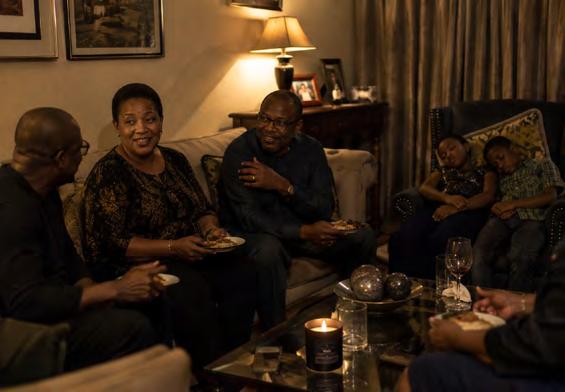
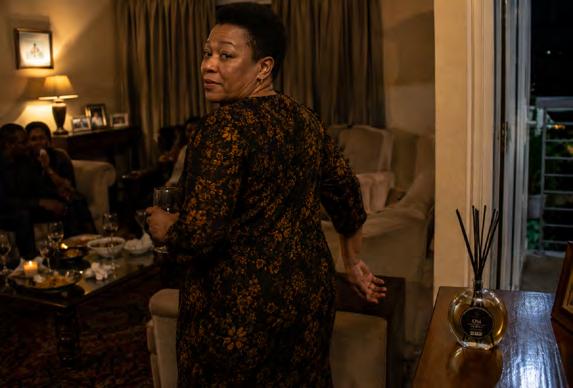
The kitchen was too small for the number of people standing in it.
Somebody had said something about Yetunde's husband. The way he announces himself before he has fully entered a room.
And she laughed.
Not the laugh she keeps for other people's stories. The other one. The one that comes up from somewhere lower and arrives before she has agreed to it. It was in the room before she could shape it.
Across the counter, Folake looked over. Not surprised. Pleased, almost. As though she had been waiting for that particular sound and had begun to wonder where it went.
The light had gone before any of them arrived.
The generator next door was talking for the whole street. Someone propped the back door open for air that did not come.
She had not planned to stay this long. She had sat in go-slow (traffic)for an hour on the way, telling herself she would greet people and leave. The flat smelled of pepper and candle wax and somebody's perfume. Plates balanced on knees. Two children asleep across one armchair.
Ireti was telling them about the man. The one who sends good morning and then nothing else, all day. Should she answer? Should she leave it? What did it mean?
And before the room could gather its usual soft committee of opinions, she heard herself say, He is bored, not interested.
Flat. Out before she had checked it against anyone's face.
A small silence. Then Ireti laughed, because it was true, and because she had known it was true, and had only wanted someone to say it without filing down the edges first. She had not filed it down. She had not even
reached for the kinder version.
The evening, someone asked what she would do if money were not the question, and she answered before she could make it modest, that she would have left the job years ago, and felt the table go quiet around the size of it.
The time she told Obioma his plan would not last the year, and it did not,
She noticed it afterwards. Not in the moment. The moment had already moved on. Later, scraping the last of the jollof into a cooler for someone to carry home, she thought: this was not
and he stopped speaking to her, and then, after a while, started again.
These were not the things she had protected. She had spent years trying to manage them more quietly.
They survived the managing.
the first time.
That even in the years when she watched every sentence to the door, something had kept slipping out behind her back.
The afternoon, she said, too loudly at a naming ceremony, that she did not want to hold the baby, and meant it, and everyone agreed to find it funny so it would not have to mean anything.
The careful one was real. It had kept friendships; the blunt sentences would have ended. It had carried her through rooms that would not have held the other version. It still arrives first, most days. It is arriving even now, half a second behind the laugh, ready to account for it.
But underneath it, the whole time, something had refused to be fully smoothed.
Not louder than the carefulness. Older than it. There before it ever learned to be careful.
She put the lid on the cooler. Someone called her name from the balcony.
She went. Both of them went.
The one who would have weighed the words on the way out. And the one who had already spoken, and stayed.
5 SURPRISING BENEFITS OF GINGER FOR SKIN
BY DORCAS AKINTOYE
When most people think about ginger, they think about tea, cooking, or treating a cold. But ginger is not just good for the body; it can also work wonders for the skin. What makes ginger even more interesting is that many people do not realise how helpful it can be for common skin problems like acne, dullness, uneven skin tone, and early signs of ageing. Whether you use it in homemade face masks, skincare products, or include it in your diet, ginger can improve your skin in surprising ways. In this article, we will show you five surprising benefits of ginger for the skin.
GINGER HELPS FIGHT ACNE
One of the biggest skin struggles many people face is acne. Ginger helps because it contains natural antibacterial and antiinflammatory properties. When used carefully, ginger can help the skin feel cleaner and fresher. Although ginger is helpful, it is important not to apply too much directly to the skin because it can be strong. Mixing it with honey or yoghurt is usually a gentler option.
GINGER BRIGHTENS DULL SKIN
Sometimes the skin can look tired, dry, or lifeless. This may occur due to stress, lack of sleep, dehydration, or dead skin buildup. Ginger helps bring back a healthy glow to the skin. Ginger improves blood circulation, which can help the skin look fresher and more alive. It also contains vitamin C and antioxidants that support brighter-looking skin.
GINGER CAN SLOW DOWN SIGNS OF AGEING
Ageing is natural, but many people want to keep their skin looking firm and youthful for as long as possible. Ginger may help with this because it contains powerful antioxidants. Antioxidants help fight free radicals. Using ginger in skincare or eating it regularly may help the skin maintain a healthier and younger appearance for longer. While it will not completely stop ageing, it can help the skin age more gracefully.
GINGER HELPS REDUCE SKIN INFLAMMATION
Skin inflammation can appear in different ways. It may look like redness, irritation, puffiness, or sensitive skin. Ginger contains anti-inflammatory compounds that help calm the skin. This is why some people use ginger in natural face treatments to soothe irritation. Because of its calming properties, ginger is often included in skincare products meant for sensitive or stressed
GINGER HELPS FADE SCARS AND DARK SPOTS
Another surprising benefit of ginger is its ability to improve uneven skin tone. Ginger may help gradually reduce the appearance of marks. Ginger also helps improve the overall texture of the skin, making it look smoother and healthier. While results may not happen overnight, regular use can make a noticeable difference.
Ginger is much more than a kitchen ingredient. It is a natural skincare powerhouse with benefits that many people do not know about. From fighting acne and brightening dull skin to reducing inflammation and helping with signs of ageing, ginger offers several surprising benefits for healthy skin.
Chest Training Mistakes Beginners Often Make
BY JOHNSON CHUKWUEKE
Awell-developed chest is one of the most sought-after fitness goals for many gym-goers. Whether the objective is to build strength, improve posture, enhance athletic performance, or simply achieve a more balanced physique, chest training often becomes a major focus in fitness routines. However, many beginners unknowingly make mistakes that limit their progress, increase their risk of injury, and prevent them from getting the results they want.
The good news is that building a stronger chest is not about spending endless hours in the gym. It is about training smarter, using proper technique, and understanding how the muscles work. By avoiding common errors, beginners can maximise their workouts and see better results in less time.
LIFTING TOO HEAVY TOO SOON
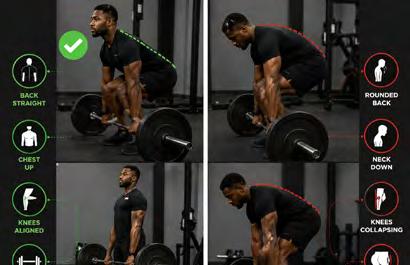
One of the biggest mistakes beginners make is loading the bar with more weight than they can properly control. While heavy lifting may look impressive, poor form often follows when the weight becomes excessive. Instead of focusing on the chest muscles, the shoulders and joints end up taking unnecessary stress. Starting with manageable weights and mastering proper technique is far more effective for long-term growth and injury prevention.
IGNORING PROPER FORM
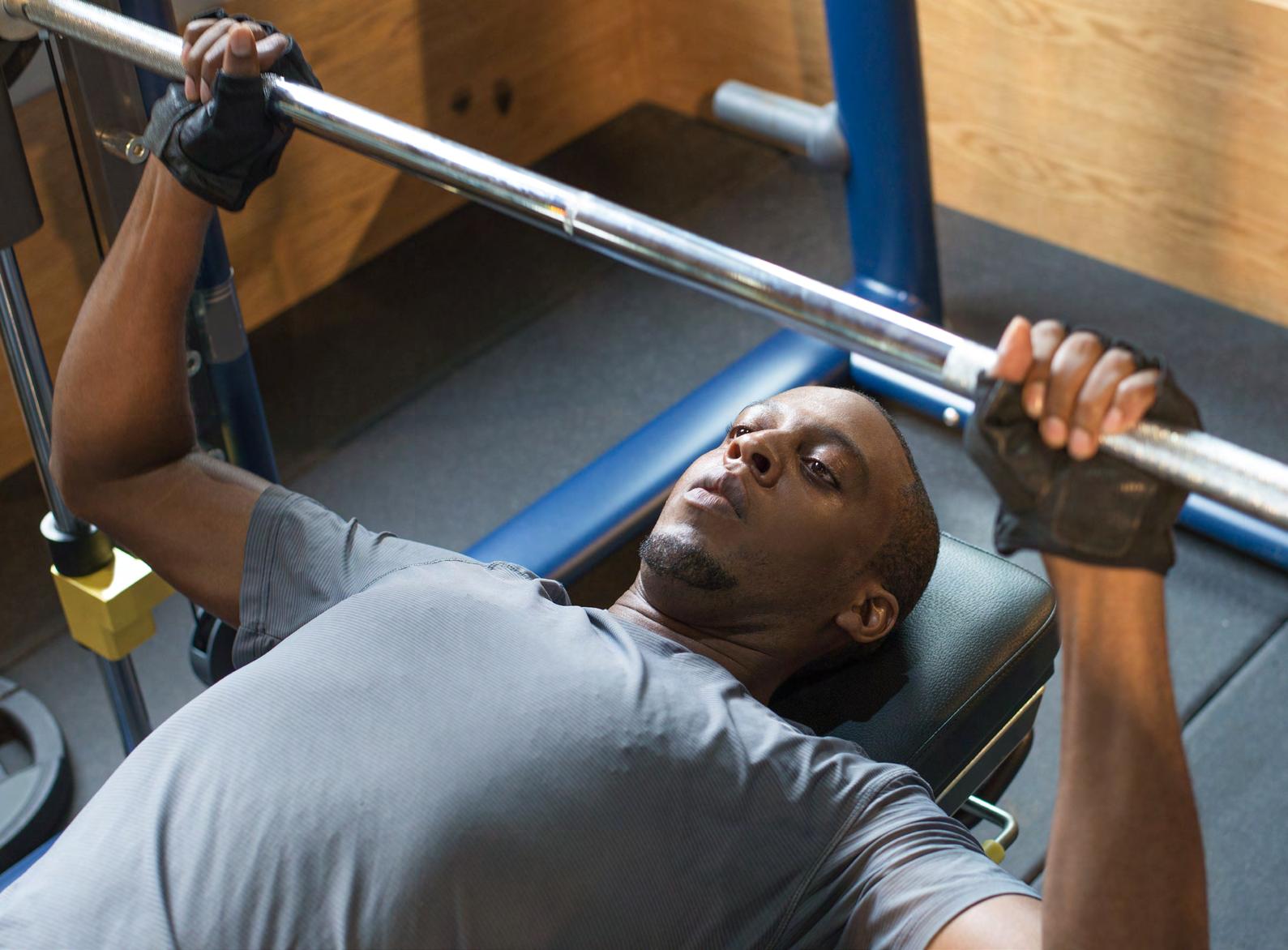
Many people rush through chest exercises without paying attention to their movement. Bouncing the bar off the chest during bench presses, using momentum, or performing half-reps reduces muscle engagement and increases the risk of injury. Controlled movements with a full range of motion allow the chest muscles to work harder and develop more effectively.
TRAINING ONLY FLAT BENCH PRESS
The bench press is a great exercise, but it should not be the only chest movement in a workout routine. The chest consists of different muscle fibres that benefit from a variety of angles. Incorporating incline presses, decline movements, push-ups, and chest flyes helps create balanced development and prevents training plateaus.
NEGLECTING RECOVERY
Many beginners believe that training the chest every day will speed up results. In reality, muscles grow during recovery, not during workouts. Overtraining can lead to fatigue, reduced performance, and even injury. Allowing adequate rest between chest sessions gives the muscles time to repair and become stronger.
FORGETTING MIND-MUSCLE CONNECTION
Simply moving weight from one point to another is not enough. Successful chest training requires focusing on feeling the chest muscles contract and stretch throughout each repetition. Developing this mind-muscle connection improves muscle activation and ensures the target muscles do the work rather than surrounding muscle groups.
Building an impressive chest is not just about lifting heavier weights or spending more time in the gym. Success comes from avoiding common mistakes, using proper technique, training with purpose, and giving the body time to recover. By focusing on form, variety of exercises, recovery, and muscle engagement, beginners can build strength, improve performance, and achieve better results while reducing the risk of injury.
CHANGE OF SCENERY DESTINATIONS THAT SPARK CREATIVITY
Matera, Italy
Matera feels like stepping into another time. With its stone-carved homes and quiet, layered streets, the city moves at a pace that almost forces you to slow down. There’s no pressure to rush from one place to another. Instead, you find yourself walking without a plan, noticing textures, light, and silence in a way you normally wouldn’t. That stillness gives your thoughts room to expand, and in that space, ideas begin to form naturally.
Valparaíso, Chile
Valparaíso is the kind of place that feels alive with expression. Colourful houses climb steep hills, murals cover walls, and every corner seems to tell its own story. It’s not perfect or overly polished, and that’s exactly what makes it inspiring. There’s a raw, creative energy in the air that reminds you that ideas don’t have to be neat to be powerful. Sometimes, they just need to be honest.
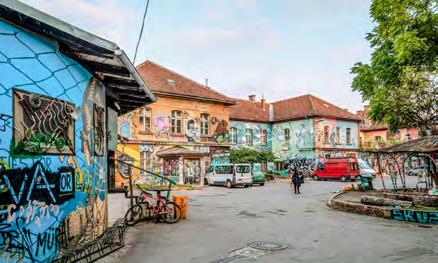
Ljubljana, Slovenia
If your mind feels cluttered, Ljubljana offers a different kind of reset. Calm, clean, and easy to move through, the city gives you space to think without distractions pulling at you. You can sit by the river, take slow walks, and let your thoughts settle. It’s in that quiet rhythm that clarity often shows up, the kind that’s hard to find when everything around you is noisy.
New York City, USA
Then there’s New York, where everything moves fast, and nothing waits. It’s loud, energetic, and constantly shifting. But that intensity has its own kind of inspiration. Being surrounded by so much ambition and movement pushes you to think bigger. It challenges you to stretch your ideas beyond what feels safe or familiar.
BY NATO CHIMA
Sometimes, the problem isn’t that you’ve run out of ideas; it’s that everything around you feels the same. The same routine, the same streets, the same environment. After a while, your mind stops reaching for anything new because nothing around you is asking it to.
That’s where a real change of scenery comes in. Not the rushed kind of travel where you’re trying to see everything at once, but the kind that lets you slow down, notice things, and think differently.
If you’re looking to reset your thinking and spark something fresh, sometimes the best places to go are not the obvious ones, but the ones that feel a little different from what you’re used to.
Ubud, Indonesia
Ubud offers a softer, more grounded kind of inspiration. Surrounded by greenery and rooted in culture, it creates an environment where you can slow down without feeling disconnected. There’s a calm, steady energy here that helps you reconnect with your thoughts. And when your mind isn’t rushing, ideas tend to come together in a more natural, effortless way.
Creativity doesn’t always come from trying harder. More often, it comes from stepping away long enough to see things differently. A new environment won’t do the work for you, but it can shift something in you. And sometimes, that small shift is all you need to start thinking clearly again.
EZAGA EVI-BEN
HOLLYWOOD’S GROWING INTEREST IN AI CULTURE
For generations, filmmaking has been driven by human creativity. From the first idea for a script to the final scene on screen, movies have always relied on people bringing stories to life.
Today, however, a new creative tool is becoming part of that process: artificial intelligence(AI).
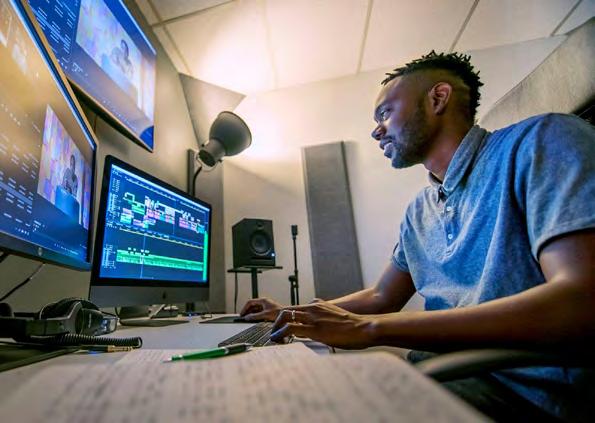
Once reserved for science fiction films, AI is now finding its way into realworld filmmaking. Across Hollywood, studios and filmmakers are exploring how it can support visual effects, editing, dubbing, translation and even early idea development before production begins.
Some filmmakers in Hollywood see it as a practical assistant rather than a creative threat, handling technical work while they focus on storytelling.
Tyler Perry, for instance, has spoken about how AI could reduce production costs and speed up processes such as digital de-aging and cosmetic adjustments.
Supporters argue that every major shift in cinema, from sound and colour films to computer-generated imagery (CGI), was first met with resistance before becoming standard. To them, AI is simply the next stage in that evolution.
Not everyone agrees.
Some filmmakers and actors worry that AI could blur the line between technology and creativity. Director James Cameron, known for pushing technological boundaries with films such as “Avatar” and “Titanic”, has warned against a future where AI-generated actors replace human performers. Actor Tom Hanks has also raised concerns about digital replicas being used without consent and the wider impact on creative work.
Even those who acknowledge AI’s benefits argue that it should remain a tool rather than the driving force behind storytelling. At the heart of the debate is a simple question: can a machine truly replicate human creativity? Critics say no, since films connect with audiences through real emotions, lived experience and cultural perspective, qualities technology cannot
reshape storytelling.
For Nollywood, the shift is equally important.
As one of the world's most productive film industries, Nollywood has built its reputation on strong storytelling despite limited budgets. That spirit of innovation is now extending to AI, with filmmakers exploring tools for visual effects, faster postproduction, and automated dubbing and
genuinely reproduce.
So why is Hollywood paying so much attention to AI?
Part of the answer is efficiency. Streaming platforms and rising demand for content have
subtitling that can help indigenous-language films reach wider audiences.
pushed studios to produce more in less time. AI offers ways to save time, reduce costs and streamline production.
There is also the growing reality that AI is not a passing trend. Major tech companies are investing heavily in its development, and entertainment companies are paying attention to how it could
Projects like Makemation show how African creators are already engaging with the tech era, both in the stories they tell and the tools they use to tell them.
Still, Nollywood faces the same question as Hollywood: how can the industry embrace innovation without losing the human touch that makes stories meaningful?
The future of filmmaking will likely be a collaboration between humans and machines. AI may speed up production and support technical work, but storytelling remains rooted in emotion, culture and lived experience.
For now, Hollywood’s interest in AI is less about replacing filmmakers and more about reshaping how films are made. The real challenge will be finding the right balance between innovation and imagination, qualities that remain uniquely human and at the heart of every great story.
DÉCOR
Common Decorating Mistakes That Make Rooms Feel Smaller
BY JOHNSON CHUKWUEKE
Aroom does not have to be physically small to feel cramped. In fact, many people unknowingly make decorating choices that reduce the sense of space in their homes, making rooms feel tighter, darker, and more crowded than they actually are. The good news is that creating a spacious-looking room doesn't always require knocking down walls or spending a fortune on renovations. Sometimes, a few simple design adjustments can completely change how a room feels.
If your space feels smaller than it should, one of these common decorating mistakes could be the reason.
USING FURNITURE THAT IS TOO LARGE
One of the biggest mistakes people make is choosing furniture that overwhelms the room. A massive sofa, oversized coffee table, or bulky storage unit can dominate the available space, making movement difficult. While large furniture may seem luxurious, it can quickly make a room feel crowded if the proportions are not right. Choosing furniture that fits the scale of the room often creates a more balanced, spacious appearance.
PUSHING ALL FURNITURE AGAINST THE WALLS
Many people believe that placing every piece of furniture against the wall automatically creates more space. Surprisingly, this can sometimes have the opposite effect. Pulling certain pieces slightly away from the wall can create better flow and make the room feel more intentional and open. A little breathing room can make a significant difference.
POOR LIGHTING CHOICES
Dark rooms often feel smaller than they really are. Relying on a single light source can leave corners looking gloomy and confined. Layering lighting through floor lamps, table lamps, wall lighting, and natural light helps brighten the space and create a more open atmosphere. Good lighting can completely transform how a room feels.
TOO MUCH CLUTTER ON DISPLAY
Decorative items can add personality, but too many competing accessories can create visual chaos. Overcrowded shelves, excessive ornaments, and cluttered surfaces can make a room feel busy and restricted. Keeping displays intentional and organised allows the eye to move more freely through the space. Sometimes, editing your decor creates a bigger impact than adding more of it.
IGNORING MIRRORS AND VISUAL DEPTH
Mirrors are one of the simplest tools for making rooms feel larger. They reflect light, create depth, and visually open up smaller spaces. Many homeowners overlook this easy solution, missing an opportunity to make rooms feel brighter and more expansive. Strategically placed mirrors can instantly improve the perception of space.
Creating a spacious-looking home is often less about square footage and more about smart decorating decisions. The right furniture, lighting, layout, organisation, and visual elements can dramatically change how a room feels. Sometimes, a room does not need more space; it simply needs better design choices to help that space shine.
5 SIMPLE RESET ROUTINES FOR BAD DAYS
TAKE A 10-MINUTE RESET
When your mind feels overwhelmed, forcing yourself to “push through” can make things worse. Instead, pause for about 10 minutes and allow yourself to reset. Sit somewhere quiet, breathe slowly, or listen to calm music. You are not trying to fix anything in that moment; you are just giving your mind space to settle. This short break helps interrupt overthinking and emotional overload. After it, things often feel a bit lighter and easier to handle.
WRITE DOWN WHAT IS BOTHERING YOU
Keeping everything in your head can make a bad day feel heavier. Thoughts repeat, mix up, and grow bigger than they really are. Writing helps release that pressure. Take a notebook or your phone and write freely about what you’re feeling. Don’t overthink it. Just put it down as it comes. When your thoughts are on paper, they become clearer and less overwhelming. You may even realise the situation is not as big as it felt in your mind.
DO ONE SMALL TASK YOU CAN FINISH
On bad days, motivation is low, so big tasks feel impossible. Instead, choose one small thing you can complete quickly, like making your bed, taking a shower, replying to a message, or tidying a small space. Doing this reminds you that you are still capable of doing things, even on a difficult day, and that alone can slightly shift your mood.
TALK TO SOMEONE YOU CAN TRUST
Bad days feel heavier when you go through them alone. You don’t always need advice; sometimes, you just need to be heard. Talking to someone you trust can help you release what you’re carrying inside. Sharing your feelings out loud helps reduce the emotional weight and reminds you that you are not alone.
BY DORCAS AKINTOYE
Bad days are normal. Some days you wake up feeling off, and other days something stressful happens that affects your mood for hours. You may feel tired, unmotivated, distracted, or emotionally heavy. When that happens, it can feel like the whole day is already ruined. But a bad day doesn’t need a big solution. Most of the time, what you need is a small reset that helps you slow down, clear your mind, and regain balance. Here are five ways to reset routines for bad days to help you feel in control again.
PERMIT YOURSELF TO SLOW DOWN
Many people make bad days worse by trying too hard to act normal. They keep pushing even when they are drained. But sometimes, the real reset is allowing yourself to slow down. You don’t need to be at your best every day. You don’t need to do everything perfectly. Reducing pressure on yourself helps your mind relax, and when the pressure drops, you naturally begin to feel better.
Bad days will always come, but they don’t have to take over your entire life. Small resets can help you breathe again, think more clearly, and regain control.
DOWNTOWN ZODIAC
BY NATO CHIMA
CJUNE 22ND - JULY 22ND
ELEMENT: WATER
RULING PLANET: THE MOON SYMBOL: THE CRAB FLOWER: WHITE ROSE BIRTHSTONES: MOONSTONE, EMERALD, RUBY, PEARL.
ancer is often described as one of the most emotional signs of the zodiac, but there is far more to this water sign than sensitivity. Born between June 21 and July 22, Cancers are known for their deep loyalty, strong intuition, and ability to care for the people they love. While they may appear reserved or cautious at first, those who earn their trust often discover some of the most supportive and dependable individuals in the zodiac. Like the crab that represents them, Cancers possess a protective outer shell that hides a compassionate and caring heart.
They Care Deeply About The People They Love
Cancer individuals are known for forming strong emotional connections. Family, friendships, and meaningful relationships are extremely important to them. They often go out of their way to support loved ones, offering encouragement, advice, and a listening ear whenever needed. Their nurturing nature makes them the people many turn to during difficult times.
Their Intuition Is Usually Spot On H.E.R, June 27th
One of Cancer's greatest strengths is their ability to sense things that others may overlook. They are highly intuitive and often pick up on emotions, moods, and situations before anyone says a word. This emotional awareness helps them build strong relationships and navigate life with a unique sense of understanding.
Burna Boy, July 2nd
The Heart Behind the Hard Shell
CANCER
They Are Stronger Than People Think
Because Cancers are sensitive, they are sometimes mistaken for being fragile. In reality, they are remarkably resilient. They may feel things deeply, but they also possess the determination to overcome challenges and protect what matters most to them. Their strength often comes from their ability to persevere through life's ups and downs while remaining compassionate.
Cancer is a sign defined by loyalty, intuition, and emotional strength. While their caring nature is often what people notice first, their resilience and dedication are what truly set them apart. Beneath the protective shell is a person who values connection, stands by loved ones, and possesses a quiet strength that deserves admiration.
Johnny Drille, July 5th
cassy’s chronicles
BROKEN TRUST
Iused to think love meant sticking with someone no matter what. Like, once you’ve given your heart, you just don’t take it back. He was my first for a lot of things. And I don’t just mean physically. I mean, emotionally too. The first person I trusted. The first person I believed when he said I was “the only one.” In my head, I had already built a future around him. I literally gave him everything, my trust, my heart, my
virginity and three years of my life I would never get back.
That night, everything felt normal between us. We had just had sex, the kind that usually made me feel closer to him, like nothing could break us. He went to the bathroom after, leaving his phone on the bed.
I don’t even know what made me pick it up. Maybe it was just habit at this point. Maybe I already had small doubts I was ignoring. A message popped up.
I remember just staring at it for a second before opening it.
It was from a girl.
And once I opened the chat, I saw more. Different girls. Same kind of words he used to say to me. “I miss you.” “When are you coming?” “I can’t wait to see you.”
My chest just dropped. It didn’t even feel like full shock. It felt like something I already knew but didn’t want to accept, finally becoming real.
When he came back and saw my face, he knew immediately.
And instead of asking what was wrong, he asked why I was on his phone.
That question alone changed something in me.
I remember laughing slightly, like I couldn’t believe it. “So that’s your concern right now?”
He started talking fast after that. Saying it wasn’t serious. Saying it was just “talk.” Saying I was the one he cared about.
But honestly, I wasn’t even hearing him properly anymore.
Because I had heard all of that before. Maybe not in those exact words, but the meaning was always the same.
I just sat there for a while. Looking at him. And it felt weird because I suddenly felt like I was seeing him properly for the first time.
Not the version I had in my head. The real one.
I got up and started packing my things. Quietly. No big scene.
He kept talking, trying to explain, trying to stop me. But I wasn’t responding much. Not because I wanted to act strong, but because I was tired in a way I can’t really explain.
Tired of forgiving. Tired of pretending I didn’t see things clearly. Tired of being the only one holding on.
When I finished, I just stood there for a second.
Then I told him, “I wanted you to be my last person.”
My voice was shaking a bit, but I said it anyway.
“And you couldn’t even be my only one.” He didn’t respond.
I walked out before I could change my mind. Outside, the night air hit me differently. It didn’t feel like heartbreak anymore.
It felt like freedom, even though I was shaking. I didn’t know what came next. I just knew I wasn’t going back to where I was treated like an option. For the first time in a long time, I chose myself.
BY BOLUWATIFE ADESINA
MOVIE REVIEW:
Disclosure Day
The summer movie season has suffered a gut punch with Disclosure Day, one of the dopiest, messiest movies that Steven Spielberg has ever made.
He made one of my all-time favourite movies, Catch Me If You Can. But he’s now directed 37 movies, so of course he’s made some clunkers along the way, like Hook, The BFG and a couple of others.
Disclosure Day is now the worst movie he’s ever made. And by quite a distance, too.
The film posits itself as a return to the “aliens are among us” heyday of Spielberg’s Close Encounters of the Third Kind and E.T. the Extra-Terrestrial. Aliens were also part of his excellent adaptation of War of the Worlds and the rather unpopular Indiana Jones and the Kingdom of the Crystal Skull (which I kind of liked despite the silly alien stuff). The problem here is that Disclosure Day is 95% a lame chase movie that hardly has anything to do with aliens.
A woefully miscast Josh O’Connor plays Daniel, a former employee of a nefarious agency that has been protecting secrets about Earth’s possible interactions with aliens for 80 years. He’s stolen some important materials, and now he’s running away.
Colin Firth is his former boss, and he’s pissed. Employees aren’t supposed to steal the secrets of Roswell, so he’s determined to get them back. He’s so determined that he psychically enters the brain of Daniel’s girlfriend, Jane (Eve Hewson), to coax locations out of her. He even tries to manipulate her arms in an attempt to stab and kill Daniel. This is one super pissed off former employer.
This psychic/supernatural element is entirely unwelcome. Those of you eager to see Spielberg and screenplay writer David Koepp tackling the world’s handling of UFO secrets are probably looking for some speculation regarding what could be in those files. Instead, you get a dopey movie where a guy is messing with people’s heads from afar.
When a TV meteorologist named Margaret (an otherwise excellent Emily Blunt) starts speaking in presumably alien tongues during a local broadcast,
she becomes involved in the chase to reveal the covered-up secrets, or something like that. Apparently, she’s been “activated,” whatever the hell that means. Besides alien tongues, she can speak other languages like Russian, and she can read your mind! Again, this veers into the supernatural, which destroys the intrigue of trying to reveal a supposed conspiracy about UFOs.
All of the psychic stuff feels like it should be in another movie. Yes, Close Encounters and E.T. each had a psychic element, but those approaches blended well into the films. In Disclosure Day, the psychic element feels forced, as if Koepp was backed into a corner on how to push the plot forward. (If you are keeping score, Koepp was also the writer responsible for the much-maligned alien stuff in Crystal Skull.)
It all builds up to a final five minutes or so where you can see how most of the film’s semi-meager (by today’s blockbuster standards) budget of $115 million was spent. I won’t give anything away, but there are basically two payoffs. One of them is semi-interesting but rushed; the second is absolutely ridiculous.
I wish this were a spoiler review, because I really want to go off on how the last note of this movie is so incredibly stupid. I can't remember the last time I rolled my eyes and audibly hissed at a movie cutting to the credits, but I definitely did here.
Because most of the money went into the final few minutes, the Computer Generated effects of animals are abysmal. They look like cartoon characters rather than real beings, and this is in a movie by a guy who made CGI dinosaurs look realistic more than 30 years ago. A raccoon in this movie looks like it was lifted from a children’s colouring book.
Emblematic of how…odd the rhythm of this movie is, there’s a sequence in which a crop circle magically forms around Daniel. Why does this happen?
Absolutely no reason is given. He is on his phone; tensions are heightening; the crop circle forms. No great theory about the origins of crop circles is offered … it just happens and is never mentioned again.
If you are eying this movie because you dig UFO conspiracy theories and old-school Spielberg alien-movie vibes, you will be severely let down.
I’m going to let Elliott looking into the sky and crying, as E.T. leaves him to return home, be the final, defining moment of Spielberg’s alien films. As for Disclosure Day, I’m going to purge this whole misguided mess from my brain.
Rating:4/10
Went into this one wanting to love it, nearly ended up dozing off near the end. Yikes.
Scan this with your camera or click to access the playlist (Youtube Music)
WATCH OF THE WEEK
HOUSE OF THE DRAGON SEASON 3
Sitting on a beach filled with wood from shattered ships, watching smoke from a fire still raging in the distance, a survivor from “the bloodiest naval battle ever fought in the history of Westeros” tells his broken but breathing companions, “If this be victory, I hope I never see another.”
The sentiment is typical for those who’ve waged war first-hand, including the sagest players from Game of Thrones, but what makes the statement stand out in House of the Dragon Season 3 is how fitting the words would’ve felt even before the Battle of the Gullet. Regrets are common enough after lives are lost; when the cost of conflict is staring you right in the face, dead-eyed and countless; and yet this specific contrition persists long before the ships crash, the arrows fly, and the dragons roar. It lingers over the Targaryen dynasty, tarnishing the family crest and spoiling whatever victory is left to be had.
And they know it. Some of them, anyway. Having already faced considerable losses and staring down more to come, many of the prominent combatants spend Season 3 in an existential crisis, lending the series a similar atmosphere. Instead of looking over an ocean of floating corpses and asking, “What have we done?” they’re in the midst of those stormy seas, wondering, “What are we doing?” The cycle of vengeance is unbroken, but now it’s nearly running on its own accord.
On the one hand, self-reproach is a convenient stance for showrunner Ryan Condal to take. Just like its predecessor, the prequel series is dedicated to a violent, world-tilting war for the Iron Throne. Making clear the series doesn’t endorse
Scan this with your camera or click to access the playlist (Spotify)
such cutthroat conflicts, no matter how many are featured or how thrilling they are to behold, is morally paramount.
But in Season 3, the pervasiveness of best laid plans gone predictably awry can’t be overstated. Viewers looking to disconnect and appreciate the sheer spectacle in the premiere may find it difficult to enjoy a battle that almost no one onscreen wants a part of, and those that do offer zero rooting interest. (They’re unambiguous bad guys.) Once the oceans are no longer battlefields, the spoils prove to be either marred or more trouble than they’re worth. A member of royalty, ostensibly someone who pursued these exact ends, instead muses on trading it all to “keep chickens.” Another conqueror can barely bring themself to carry out the duties required of a victor.
In terms of broader commentary, there are still class wars brewing (Episode 3 offers a fun “eat the rich” scene), patriarchal undoings in the offing, and dragons threatening to break containment (the names of which — “Sheepstealer”?! — are beyond terrible). Condal regularly compares the titular beasts to nuclear weapons, creating “a classic cold war stand-off of mutually assured
destruction,” which you can read into as much, or as little, as you please. Such interpretations help sustain a story that still feels like a reinterpretation of the original series, providing outlets for original thought in a quagmire of iteration.
As House of the Dragon nears its peace treaty (Season 4 is slated to be the final season), the biggest questions aren’t how it will end but what will be left when it does. Barring a time jump, the series is still constrained by the fates of its source material (although author George R.R. Martin is none too happy with the minimal changes already made) and televised predecessor.
Through two-and-a-half seasons, there have been a few thrills and plenty of Visual Effects wizardry, but little innovation in storytelling or relevance. Regret may be an honest takeaway for a war of succession that leaves its house (and the surrounding world) worse off than when the fighting began. But it’s also too simple an idea for an epic tale to rest upon.
If the victories aren’t worth witnessing, what is?